Source: The Conversation – USA – By Paul Shafer, Assistant Professor of Health Law, Policy and Management, Boston University
Speaker of the House Mike Johnson addresses the media on Feb. 25, 2025, after the House narrowly passed his budget resolution calling for big spending cuts. Kayla Bartkowski/Getty Images
The Conversation U.S. asked Paul Shafer and Nicole Huberfeld, Boston University health policy and law professors, to explain why cutting Medicaid spending would be difficult and what the consequences might be.
What is Medicaid’s role in the health care system?
Created in 1965 along with Medicare, the public health insurance program for older Americans, Medicaid pays for the health care needs of low-income adults and children, including more than 1 in 3 people with disabilities. It also covers more than 12 million who qualify for both Medicare and Medicaid because they are both poor and over 65.
In addition, this safety net program pays the health care costs of more than 2 in 5 U.S. births. Medicaid is a joint federal/state program, driven by federal funding and rules, with the states administering it.
So far, 40 states – as well as Washington, D.C. – have participated in Medicaid expansion. The program’s growth has reduced the number of Americans without health insurance and narrowed coverage gaps for people of color and those with low-wage jobs who typically do not get employer-sponsored coverage.
Hundreds of studies have found that Medicaid expansion has improved access to care and the health of the people who gained coverage, while reducing mortality and bolstering state economies, among other positive outcomes.
Bishop Ronnie Crudup Sr., center, seen in May 2024, has called for the Mississippi Legislature to expand Medicaid in the state. AP Photo/Rogelio V. Solis
In an interesting coincidence, Medicaid itself costs around $880 billion a year between federal and state government spending. That suggests Republicans are aiming for an approximately 10% cut.
How does the program work?
If you’re eligible for Medicaid, by law you can enroll in the program at any time and get health insurance coverage.
If you require treatment for a condition Medicaid covers, whether it’s breast cancer or the flu, that happens with no – or low – out-of-pocket costs. Being enrolled in Medicaid means your medical treatment is covered and cannot be denied for budgetary reasons. The federal government contributes a share of what states pay for the health care of residents who enroll, but it can’t decide how much to spend on Medicaid – states do.
The federal match rate is linked to the per capita income of each state. That means a state with lower per capita income gets a higher federal match, with all states getting at least 50%. For states that participate in the Medicaid expansion, the federal match is 90% across the board for that population.
A dozen states have so-called trigger laws on their books that could automatically revoke Medicaid expansion if this enhanced match rate is lowered.
How can the federal government reduce its Medicaid spending?
The federal government could simply adjust the match rate, shifting more of the cost of Medicaid to states. But prior proposals have suggested a larger change, either through per capita caps or block grants.
Per capita caps would place a per-person cap on federal funding, while block grants would place a total limit on how much the federal government would contribute to a state’s costs for Medicaid each year. In turn, the states would likely cover fewer people, reduce their benefits, pay less for care, or some combination of such cost-cutting measures.
Either per capita caps or block grants would require a massive transformation in how Medicaid operates.
The program has always provided open-ended funding to states, and both states and beneficiaries rely on the stability of federal funds to make the program work. Imposing caps or block grants would force states to contribute significantly more money to the program or cut enrollment drastically. Assuming a substantial cut in federal funding for Medicaid, millions could lose health insurance coverage they cannot afford to get elsewhere.
Speaker Mike Johnson said that per capita caps and changing the federal match rates are not on the table, but they were included in the earlier House Republican memo detailing potential cuts.
House Minority Leader Hakeem Jeffries, a New York Democrat, flanked by his fellow House Democrats, criticizes the House Republicans’ budget bill at the U.S. Capitol on Feb. 25, 2025. Saul Loeb/AFP via Getty Images
What else could happen?
Another idea many Republicans say they support is to add what are known as “work requirements.” The first Trump administration approved state proposals for Medicaid beneficiaries to complete a minimum number of hours of “community engagement” in activities like work, job training, education or community service to enroll and maintain Medicaid eligibility. This is despite the fact that the majority of Medicaid enrollees already work, are disabled, are caregivers for a loved one, or are in school.
Some politicians argue that making people work to receive Medicaid benefits would help them transition to employer-based coverage, so adding that restriction may sound like common sense. However, the paperwork this requires can lead to lots of working people getting kicked out of the program and is very costly to implement. Also, job training programs, volunteering and education, unless in a degree program, generally don’t come with health insurance coverage, making this reasoning faulty.
When Arkansas implemented Medicaid work requirements in 2018, despite the majority of enrollees already working, about 18,000 people lost coverage. The policy was poorly understood, and enrollees had trouble reporting their work activity. What’s more, the employment of low-income adults didn’t grow.
The Government Accountability Office – an independent, nonpartisan government agency – has estimated that preventing payments which shouldn’t be made, or overpayments, could lead to $50 billion in federal savings per year. The GAO cautions that “not all improper payments are the result of fraud.” This significant sum is still nowhere near the scale of the cuts Republicans apparently want to make.
Should Medicaid be cut by anything close to $880 billion over the next decade, we’d expect to see millions of America’s poorest and most vulnerable people kicked out of the program and wind up uninsured. But that would only be the beginning of their problems. Uninsured people are more likely to wait too long before seeing a doctor when they get sick or injured, leading to worse health outcomes and widening the gaps in health between haves and have-nots.
Paul Shafer receives research funding from the National Institutes of Health, Agency for Healthcare Research and Quality, and Department of Veterans Affairs. The views expressed in this article are those of the authors and do not necessarily reflect the position or policy of these agencies or the United States government.
Nicole Huberfeld does not work for, consult, own shares in or receive funding from any company or organization that would benefit from this article, and has disclosed no relevant affiliations beyond their academic appointment.
Tibor (Papp, Chair of APLMA), distinguished guests, ladies and gentlemen,
Let me first thank APLMA for inviting me here today. The loan markets were full of challenges in 2024. Geopolitical conflicts, high interest rate environment and uneven economic performances across regions have put pressure on loan demand in the Asia Pacific. Despite the uncertain environment, 2024 will probably be remembered as the starting point of mass adoption of Generative A.I. (GenA.I.) technologies. A few market statistics for putting this into perspective. Globally, fueled by the GenA.I. race, syndicated loans surged 35% to roughly USD 6 trillion, marking the highest volume on record. There was a 70% increase in syndicated loans in the high technology industry1.
The spike in loan demand last year was mostly observed in the North American market. But we have also seen more GenA.I. innovations in other parts of the world, such as the sudden emergence of the cost-effective DeepSeek last month. To support GenA.I. development, large investments will be required for data centers and communication technology. We are probably still in the first inning of what is to come from GenA.I., and GenA.I. related syndicated loan transactions will likely be a running theme in the loan market for years to come.
Harnessing Gen A.I.: A Smarter, Data-Driven Future
With GenA.I.’s unique capabilities in processing vast amounts of documents and unstructured data, as well as its ability to handle cross-media inputs and outputs, such as text, audio and graphics, the technology has the potential to revolutionise the operation of financial institutions, from customer-facing functions such as remote account onboarding and customer chatbots, to middle and back-office operations for risk management, fraud detection and automation of work processes.
At the HKMA, we are committed to promoting responsible GenA.I. adoption, and ensuring that innovation aligns with ethical standards and regulatory requirements. As a banking regulator, we are tasked not only with safeguarding the integrity and stability of financial systems but also with fostering an environment where innovation can flourish.
Regulatory innovation is more than just introducing new rules; it involves creating an adaptable framework that encourages experimentation while ensuring consumer protection and market integrity. By collaborating with the industry, we aim to better understand the application of emerging technologies in the financial sector. We have adopted an “explorer” mindset, embracing innovative thinking even at an early stage.
We have recently launched our GenA.I. Sandbox in collaboration with the Cyberport2. Within that, banks may partner with technology companies to test new ideas that leverage the latest GenA.I. technologies, refine innovative strategies and obtain early supervisory feedback.
A total of 15 use cases from 10 banks and 4 technology partners have been selected as the inaugural participants in the GenA.I. Sandbox. Notable use cases include augmenting credit assessment and fraud detection by automated processing of unstructured data, and enhancing customer service to handle more personalised and complex enquiries. This initiative ensures that we harness the benefits of A.I. while mitigating potential risks, facilitating innovation in a controlled environment.
Sustainability: The New Frontier in Finance
Development of GenA.I. goes hand-in-hand with increase in power demand. In addition to investments in digital infrastructure, we will also see increase in investments for power generation and transmission. With rising temperatures and a rapidly changing global climate, it is imperative such increase in power demand is met in a sustainable manner.
Our Sustainable Finance Action Agenda outlines a vision for integrating sustainability at the core of our financial system. It calls on all banks to strive to achieve Net Zero in their operations by 2030 and in their financed emissions by 2050, reflecting Hong Kong’s commitment to a greener economy.
Green and sustainable finance is closely tied to financial innovation. For instance, tokenisation technology could help solve long-standing challenges such as double counting in carbon credits, a key issue in carbon trading. This could unlock new business models and create opportunities for businesses and investors to engage in sustainable practices. We have also assisted the HKSAR Government in issuing two tokenised green bonds, creating demonstrative effect and promoting broader technology adoption in the capital market.
As announced by the Financial Secretary in his Budget Speech this morning, the Government will regularise the issuance of tokenised bond. So the HKMA is preparing for issuing the third tranche and will also continue to encourage private issuances through the Digital Bond Grant Scheme.
At the same time, the Financial Secretary also announced a bond issuance programme of $150 billion to $195 billion per year in the next five years. The Government debt-to-GDP ratio will remain at manageable levels of 12 to 16.5%. The proceeds will be used to invest in infrastructure but not fund Government recurrent expenditure. So this would bring more opportunities to the debt capital market and provide good quality assets for investors.
On the investment front, the HKMA is prioritising ESG investments across all asset classes under the Exchange Fund, striving toward the Net Zero target by 2050 while contributing to a sustainable economy. Our investment approach integrates both quantitative indicators and the long-term sustainable value of investments.
Infrastructure Financing for a Sustainable and Digital Future
Even with its vast scale, funding raised from the syndicated loan market may not be enough to support the global transition to a digital and sustainable future. More needs to be done to channel market capital into high-quality infrastructure development. In 2019, the Hong Kong Mortgage Corporation (HKMC) entered the infrastructure financing business, aiming to address the funding gap in the infrastructure market through securitisation.
So far, the HKMC has successfully issued two series of infrastructure loan-backed securities in the institutional market, with total value of over US$800 million. The securitisation issues received a strong response from investors, and promoted the development of local debt market.
In alignment with our vision for Hong Kong to play a central role in supporting green and sustainable financing needs in Asia and globally, both securitisation issues include sustainability tranches which are backed by sustainable, green and social assets, and issued in accordance with the HKMC’s Social, Green and Sustainability Financing Framework.
Conclusion
Looking ahead, we envision a future where new technologies will not only enhance connectivity among users, data, and services but also drives economic progress across sectors.
As we continue to evolve as regulators, it is imperative that we remain agile and responsive to the changing landscape. The journey of regulatory innovation and market transformation is one of immense opportunity and responsibility. By working together, we can create a financial ecosystem that is innovative, sustainable, and inclusive.
Thank you for your attention. I look forward to engaging with you in meaningful discussions that will shape our collective future. Once again, I thank APLMA for today’s invitation.
Ground-breaking research has found that hosting the Eurovision Song Contest 2023 delivered a £54million economic boost to the Liverpool City Region.
In a first for any Eurovision Song Contest host city, a Multi-Agency Evaluation Steering Group led by Liverpool City Council, has commissioned five in-depth, independent evaluations – the interim results of which will be announced today (Thursday 26 October) by Leader of Liverpool City Council, Councillor Liam Robinson and Liverpool City Region Mayor, Steve Rotheram.
The reports looked at the economic and social impact of staging the event on behalf of Ukraine, as well as the influence on cultural relations; the impact on wellbeing in the city and the wider city region; the visitor experience and the effectiveness of the strategic collaboration between delivery agencies.
Key data highlights include:
The Big Numbers
Eurovision boosted the Liverpool City Region economy by £54.8million (net) with restaurants, accommodation providers, shops, bars and transport networks all benefitting.
In total 473,000 people attended Eurovision events in the city, with 306,000 additional visitors heading to Liverpool to be part of the celebrations.
In May, 175,000 city centre hotel rooms were sold – the best month on record since 2018. (STEAM data)
Culture Counts
The education and community programmes, EuroStreet and EuroLearn, engaged with 367organisations and directly with 50,000 people, young and old. The overall programme is estimated to have reached 2 million people.
EuroFestival – the Culture Liverpool curated two-week culture festival – presented 24 brand new commissions, 19 of which were in collaboration with Ukrainian artists. A huge 328,346people engaged with this programme – 557 artists, 1,750 participants involved in a commission and an audience number of 326,039.
The official Eurovision Village, located at the Pier Head attracted 250,000 visitors across the ten days it was open, with the ticketed final selling out within hours.
Visitor’s Views
Visitors to Liverpool reported an overwhelmingly positive experience. In a survey, 89 per cent of those questioned, felt it was a safe event and 88 per cent praised its inclusivity. A whopping 96 per cent of those surveyed would recommend Liverpool as a destination to visit and 42 per cent of overseas visitors said the city’s staging of the event had a positive impact on how they viewed the UK.
The official Eurovision Fan Club – the OGAEs – carried out a survey and found that 99 per cent of their members felt welcomed in the city and 98 per cent loved the undeniable festival atmosphere.
Resident’s Reaction
There was a huge amount of pride around Liverpool being the host city, with 80 per cent of residents noting how important it was for Liverpool and a further 93 per cent saying they were pleased with how the city delivered the event.
Of those questioned, 74 per cent were enthusiastic about Liverpool hosting on behalf of Ukraine and 71 per cent felt that the city’s leading role promoted positive feelings across all of the participating nations.
People Power
An impressive 475people provided 12,000 hours of volunteering, covering 350shifts. The majority (90 per cent) were from the North West of England, and 30 were Ukrainian.
A Eurovision job recruitment fair saw 394 jobs offered in one day.
A partnership between the BBC and Liverpool Institute for Performing Arts saw 145students become part of the Eurovision production – in roles such as on stage dancers in the live shows, costume makers or in the TV production team.
Read all about it
Between the period of October 2022, when Liverpool was announced as host city, until end of May 2023, more than 280,000 pieces of global news coverage were generated.
The three live BBC shows were watched by 162 million people.
Keep Liverpool Tidy
More than 50,000 tonnes of waste was collected throughout the Eurovision period, 80 per cent of which could be recycled.
The independent reports were:
Economic Impact – Commissioned by Liverpool City Region Combined Authority and funded by Arts and Humanities Research Council. The research was compiled by AMION Consulting.
Community and Wellbeing – Commissioned by Liverpool City Council and funded by Spirit of 2012 and the Department of Culture, Media and Sport (DCMS). The research was carried out by University of Liverpool.
Cultural Diplomacy – Commissioned by Liverpool City Council and funded by British Council and DCMS. The British Council led on the research along with the University of Hull, and consultants from Universities of Brighton, Southampton and Royal Holloway (University of London).
Nightlife – Funded and compiled by Liverpool John Moores University.
Multi–Agency Working – Led by Edge Hill University.
Along with these reports, the BBC has commissioned its own Eurovision Highlights Report.
To bring together the findings of the reports, Liverpool City Council’s Public Health team commissioned The Heseltine Institute for Public Policy, Practice and Place to compile the headline findings. This comprehensive overview can be found at the Heseltine Institute website.
The interim findings of these reports will be discussed at a special one-day Eurovision event taking place at ACC Liverpool today (Thursday 26 October).
Head to the official Liverpool Calling website for full details of the day which will include panels with the Liverpool Host City team who will give an insight into the complexities of staging an event of this scale. This is a Liverpool City Council event supported by the Liverpool BID Company and The ACC Liverpool Group.
Follow @CultureLpool on Twitter, @CultureLiverpool on Facebook and @culture_liverpool on Instagram for the latest updates as well as using #LiverpoolCalling on social media.
Reaction
Leader of Liverpool City Council, Councillor Liam Robinson, said:
“The whirlwind that was Eurovision, gave this city an unparalleled stage where it could showcase not just its organisational prowess, but also its heart and soul.
“From the outset, we put plans in place to evaluate everything we programmed in order to have a thorough understanding of the impact of major events.
“The visitor and economic figures speak for themselves – jobs were created, local businesses were on the receiving end of a much-needed boost and hundreds of thousands of people came to the city, had a great time and are more than likely to return again.
“My mantra is proud but never satisfied. These comprehensive reports give us the opportunity to reflect on what was achieved over an incredibly short period of time, but more importantly we can look at lessons learnt for the next time we host a major event. And this is Liverpool, so there will definitely be a next time.
“Knowing the financials and the visitor numbers is always a great indicator of success, but with Eurovision we wanted to do more. As the first host city ever to introduce a school and community programme dedicated to Eurovision, we needed to drill into what that really meant for people – did it make a positive difference to their lives and as a result to our city? Never before has any other location commissioned such a detailed analysis, and it goes without saying that our methodology can be adopted by locations across the world which is a real badge of honour for Liverpool.
“This collective research proves that events like Eurovision can transcend boundaries, leaving a legacy of inspiration and goodwill. It was a milestone moment in our city’s history, and now we’re more than ready for the next one.”
Liverpool City Region Mayor Steve Rotheram said: “There was never a doubt in my mind as to whether our region was up to the challenge of hosting a global spectacle like Eurovision on behalf of our friends in Ukraine – because nowhere does culture bigger or better than the Liverpool City Region. From the hundreds of thousands of visitors who flocked to our region for a fortnight of fun and frivolity, to the tens of millions around the world who tuned in, we gave millions of people a Eurovision they will never forget.
“While that’s an incredible result in itself, the contest was also a vital shot in the arm for our local economy, bringing in more than £54m, creating thousands of jobs and opportunities for local people and showcasing our brand to an international audience. None of this would have been possible without the hard work of everyone who truly embraced the Eurovision spirit and made our visitors feel so welcome. I said all along that nowhere can throw a party quite like us – and now we have the results to prove it!”
Liverpool’s Director of Culture, Claire McColgan CBE, said:
“We experienced this Eurovision-high as a result of cultural back catalogue.
“We have spent years working towards what we all experienced in May – we cut our teeth during our European Capital of Culture year and from that point we have grown exponentially in confidence and ability as year-on-year we continue to deliver events that rival any other on the world stage.
“The pandemic was a real line in the sand for us, and undoubtedly Liverpool’s role in leading the charge on the reopening of venues nationwide made us stand out from the crowd – we are recognised as a city that can deliver unforgettable moments, safely, quickly and with a scouse panache that simply can’t be replicated anywhere else.
“Quite simply, it was an honour to deliver Eurovision on behalf of Ukraine and the UK. I’ve never known time move so fast as it did across those seven months and it has been a real pleasure to digest these impact reports and relive the experience once again and reassure myself it wasn’t just a crazy dream! They underline the fact Liverpool has the skill, agency-wide teamwork and the creativity to deliver time and time again.
“So I’d like to say to everyone – whether you worked on the event, donned those iconic yellow hoodies and volunteered, performed on stage or on our streets, danced at the Village, sang along at the arena or perhaps you discovered more about Ukraine in the classroom or even helped evaluate the event – thank you. You made Eurovision. Liverpool made Eurovision. We were all united by music.”
Eurovision Minister Stuart Andrew said:
“It is fantastic to see the impact that hosting the Eurovision Song Contest has had on Liverpool. The city put on a fantastic display of culture and creativity, showing solidarity with our friends in Ukraine and highlighting what unites us all.
“This research demonstrates the positive impact of hosting major events and I hope that we can continue to build on this success.”
Tim Jones, the University of Liverpool’s Vice-Chancellor said:
“Today’s announcement gives us much to be proud of. It was the University’s Heseltine Institute that compiled the data that this success is judged on and it was our academics who played an important role in carrying out a key strand of research. But as a civic institution, we are immensely proud of the city of Liverpool. Our city put on a show like no other and I am delighted to see these positive results that I’m sure will have a lasting legacy for those who live, work, study and do business here.”
Rhiannon Corcoran, Professor of Psychology and Public Mental Health University of Liverpool said:
“Our survey was designed to understand Eurovision’s impact on the wellbeing and sense of community of local residents. The data we collected shows overwhelmingly positive feelings of pride in the city. I’m sure many people will recognise and understand how this is hugely beneficial to wellbeing.”
Sue Jarvis, Co-Director at the Heseltine Institute said:
“At the Heseltine Institute we were delighted to work with partners across the city to publish this summary of the comprehensive evaluation of what Eurovision achieved for our city.
“Liverpool has a long history of hosting and learning from major events, and these evaluations will help developing understanding of the key lessons from Eurovision 2023.
“While the full legacy will emerge over time, it was fantastic to see that the positive impacts of Eurovision exceeded expectations. Eurovision not only brought immense financial and cultural benefits to the city but also enhanced the view of Liverpool across the UK, Europe and the world.”
Phil Harrold, BBC Chief of Staff and Chair of 2023 City Selection Group, said: “When the BBC selected Liverpool to host the Eurovision Song Contest 2023 we knew that the city would deliver with a passion and enthusiasm that was second to none. The incredible numbers proven in this research, coupled with our own record-breaking audience figures, demonstrate that 2023 was indeed the most successful Eurovision ever and is testament to all who played a part in bringing this year’s Song Contest to life.”
Amy Finch – Head of Policy & Influencing, Spirit of 2012, said:
“We are proud to see the headline statistics from the Eurovision evaluations show tremendous benefits for Liverpool. Particularly, we are delighted to see the amazing reach of EuroLearn and the effects of cultural engagement inspiring civic pride in Liverpool residents. Liverpool has once again proven itself to be a world class host city and we must ensure that the impact of Eurovision in communities will endure for years to come.”
Dr Rebecca Phythian, Reader in Policing at Edge Hill University, said:
“Having behind the scenes access to see first-hand the partnership working that goes into staging multi-agency operations like Eurovision was incredible. Since then, we’ve been working with practitioners from Merseyside Police, Culture Liverpool, BBC and many of the other organisations involved to identify what worked well and what could be done differently, all to inform future large-scale operations.”
Mike Smith, Edge Hill University’s Senior Lecturer in Policing, said:
“We found that trust and co-location were key to effective information sharing and multi-agency working. This was supported by building new, and strengthening existing, relationships, and ensured a joint understanding of risk and situational awareness.”
Timor-Leste presents a unique mix of strengths and weaknesses that shape its development trajectory.
Youth and labor supply. The country’s youthful population is part of its strength, with a median age of 20.7 years and 64.6% of its citizens under 30. By 2037, the labor forces is expected to grow by 34.8% compared to the 2022 population. Depending on various population growth scenarios, the labor force will increase by at least 26% to 27% over the next 15 years based on the latest population census (Figure 1). This increase in the working-age labor force presents a significant opportunity to boost employment prospects and sustain higher economic growth.
Figure 1: Supply of Labor Force
Source: The National Institute of Statistics (INETL). 2023. Timor-Leste Population and Housing Census 2022; Author’s estimate.
Strategic location and vibrant democracy. Geographically situated in Southeast Asia, Timor-Leste holds a strategic position at the intersection of key sea lines in the Indo-Pacific region—giving it an advantage in terms of regional investments, maritime trade, and security. Benefitted from a robust electoral process, pluralism, and civil liberties, Timor-Leste is ranked 45th out of 167 countries in the 2023 Democracy Index, surpassing the average indices of the Association of Southeast Asian Nations (ASEAN), Asia and the Pacific, and the world (Figure 2).
Figure 2: Democracy Index
Source: The Economist Intelligence Unit (EIU). 2024. Democracy Index 2023-Age of Conflict.
Resource endowment and savings. The country boasts significant oil and gas reserves in the Timor Sea, especially in the Greater Sunrise gas and condensate field. In 2005, it established a petroleum fund as a sovereign wealth fund, primarily sourced from petroleum revenues from the Bayu-Undan field and investment income from the petroleum fund. By the end of 2024, the petroleum fund’s balance has reached nearly $18.3 billion, exceeding the non-petroleum gross domestic product (GDP) by more than tenfold (Figure 3).
Figure 3: The Petroleum Fund
Source: The Central Bank of Timor-Leste (BCTL). 2024. The Petroleum Fund Reports; Author’s estimate.
High poverty and food and nutrition insecurity. Despite its strengths, Timor-Leste faces significant challenges with poverty and food insecurity. Issues—such as poverty rate standing at 41.8% based on the national poverty line and 48.3% when measured using the multidimensional poverty, over 62.5% of the population experiencing food insecurity, 42% of households dealing with acute food insecurity, and half of the children under five years old are stunted—represent major barriers to development. Malnutrition, reduced cognitive development, impaired learning ability, and low productivity have limited human capital development.
Narrow economic base and high dependence on the petroleum fund. The economy remains undiversified and highly susceptible to domestic and external shocks, including disasters from natural hazards and trade fluctuations. GDP growth has been low and volatile, heavily reliant on public expenditures and the petroleum fund, projected to be depleted by 2035 based on current spending. From 2009 to 2023, the average annual real GDP growth was 2.9%, but it decelerated to just 1% over the past decade, highly correlated with the growth in budget expenditure and withdrawals from the petroleum fund (Figure 4).[1]
Figure 4: GDP Growth and Public Spending
Source: Ministry of Finance of Timor-Leste. 2009-2024. Budget Transparency Portal; Author’s estimate.
Lack of competitiveness and budget deficit. The high cost of doing business stems from challenges related to connectivity, land title issues, limited electricity and clean water supply, and low labor productivity—contributing to lack of competitiveness. The underdeveloped private sector contributes to a low domestic revenue base, averaging only 12.3% over the past 15 years. In contrast, total spending has been exceedingly high, averaging 90.5% of GDP. This imbalance has resulted in a significant government budget deficit, averaging 35.4% of GDP over the same period, primarily financed through persistent and excessive withdrawals from the petroleum fund (Figure 5).[2] As of 2023, GDP per capita and gross national income per capita remained low at $1,324 and $1,294 respectively. This current economic structure underscores the urgent need for economic diversification and development of a robust private sector to ensure sustainable growth and resilience against economic shocks.
Figure 5: Government Budget
ESI = estimated sustainable income, GDP = gross domestic product, PF = petroleum fund. Source: Ministry of Finance of Timor-Leste. 2009-2024. Budget Transparency Portal; Author’s estimate.
Infrastructure gaps and limited basic services. In addition to underdeveloped human, institutional, and private sector capacities, Timor-Leste faces significant gaps and challenges in infrastructure development and provision of basic services. The country was ranked 46th out of 50 in terms of facilities supporting regulatory compliance and institutions and infrastructure enabling business activities. Due to inadequate infrastructure connectivity, access to markets and essential services—such as healthcare, education, and clean water—is limited, particularly in rural areas where 71.4% of the population resides. Significant investment in human capital, institutional strengthening, and infrastructure and logistics is crucial to support development and improve living standards.
Lack of policy continuity. New administrations often bring changes in policies and program orientations, along with high staff turnover in the public sector. To advance ongoing priority initiatives and achieve development goals, it is crucial to strengthen institutions and ensure policy continuity and certainty.
Suboptimal allocation of government resources to social sectors. Over the past 15 years, the compound annual growth rate of current budget expenditures in Timor-Leste was 8.9%, significantly outpacing the 4.2% compound annual growth rate of capital expenditures. Consequently, the share of current spending in the total budget has risen to 79% in 2024 from 65% in 2009. Despite the increase, there remains a persistent misallocation of resources, particularly in health and education. This misallocation leads to intergenerational human capital issues and economic disparity. Notably, the planned spending from the veterans’ fund for 2025 is nearly double the annual healthcare budget. Education spending has remained low at 7.6% of total government expenditure, significantly below the ASEAN historical average of 13.8%. Similarly, healthcare expenditure per capita in Timor-Leste is only $59, starkly contrasted with the ASEAN average of $630.
The value of total retail sales for January, provisionally estimated at $35.3 billion, was 3.2% less than in the same month a year earlier, the Census & Statistics Department announced today.
After netting out the effects of price changes over the same period, the provisional estimate represents a 5.2% year-on-year decrease.
Online sales accounted for 6.9% of January’s total retail sales value. Provisionally estimated at $2.4 billion, the value of this segment rose 3.5% from the same month a year earlier.
The value of sales of jewellery, watches, clocks and valuable gifts dropped by 17.9%.
Meanwhile, decreases were likewise seen in sales of electrical goods and other consumer durable goods not elsewhere classified (down 10.5%); fuels (down 4.3%); motor vehicles and parts (down 52.6%); books, newspapers, stationery and gifts (down 15.1%); furniture and fixtures (down 26.4%); Chinese drugs and herbs (down 4.6%); and optical shops (down 4.4%).
On the other hand, the value of sales of other consumer goods not elsewhere classified increased by 6.6% in January 2025 over a year earlier. This was followed by sales of commodities in supermarkets (up 4.9%); food, alcoholic drinks and tobacco (up 10.9%); wearing apparel (up 1.2%); medicines and cosmetics (up 4.3%); commodities in department stores (up 0.5%); and footwear, allied products and other clothing accessories (up 7.1%).
The Government commented that the value of total retail sales recorded a much narrower year-on-year decline in January, and turned to an increase on a seasonally adjusted month-to-month comparison, possibly due in part to the early arrival of the Lunar New Year this year.
It would thus be more meaningful to examine the figures for January and February combined, when available, to assess the latest retail sales performance.
Looking ahead, it said that the retail sector’s near-term performance will continue to be affected by changes in the consumption patterns of visitors and residents.
However, it added that increasing earnings from employment, and the introduction of various measures by the central government to boost the Mainland’s economy and benefit Hong Kong, together with proactive efforts by the Hong Kong Special Administrative Region Government to promote tourism and boost market sentiment, will benefit the sector.
These statistics are based on detection alerts from Kaspersky products, collected from users who consented to provide statistical data to Kaspersky Security Network. The statistics for previous years may differ from earlier publications due to a data and methodology revision implemented in 2024.
The year in figures
According to Kaspersky Security Network, in 2024:
A total of 33.3 million attacks involving malware, adware or unwanted mobile software were prevented.
Adware, the most common mobile threat, accounted for 35% of total detections.
A total of 1.1 million malicious and potentially unwanted installation packages were detected, almost 69,000 of which associated with mobile banking Trojans.
The year’s trends
In 2024, cybercriminals launched a monthly average of 2.8 million malware, adware or unwanted software attacks targeting mobile devices. In total, Kaspersky products blocked 33,265,112 attacks in 2024.
Attacks on Kaspersky mobile users in 2024 (download)
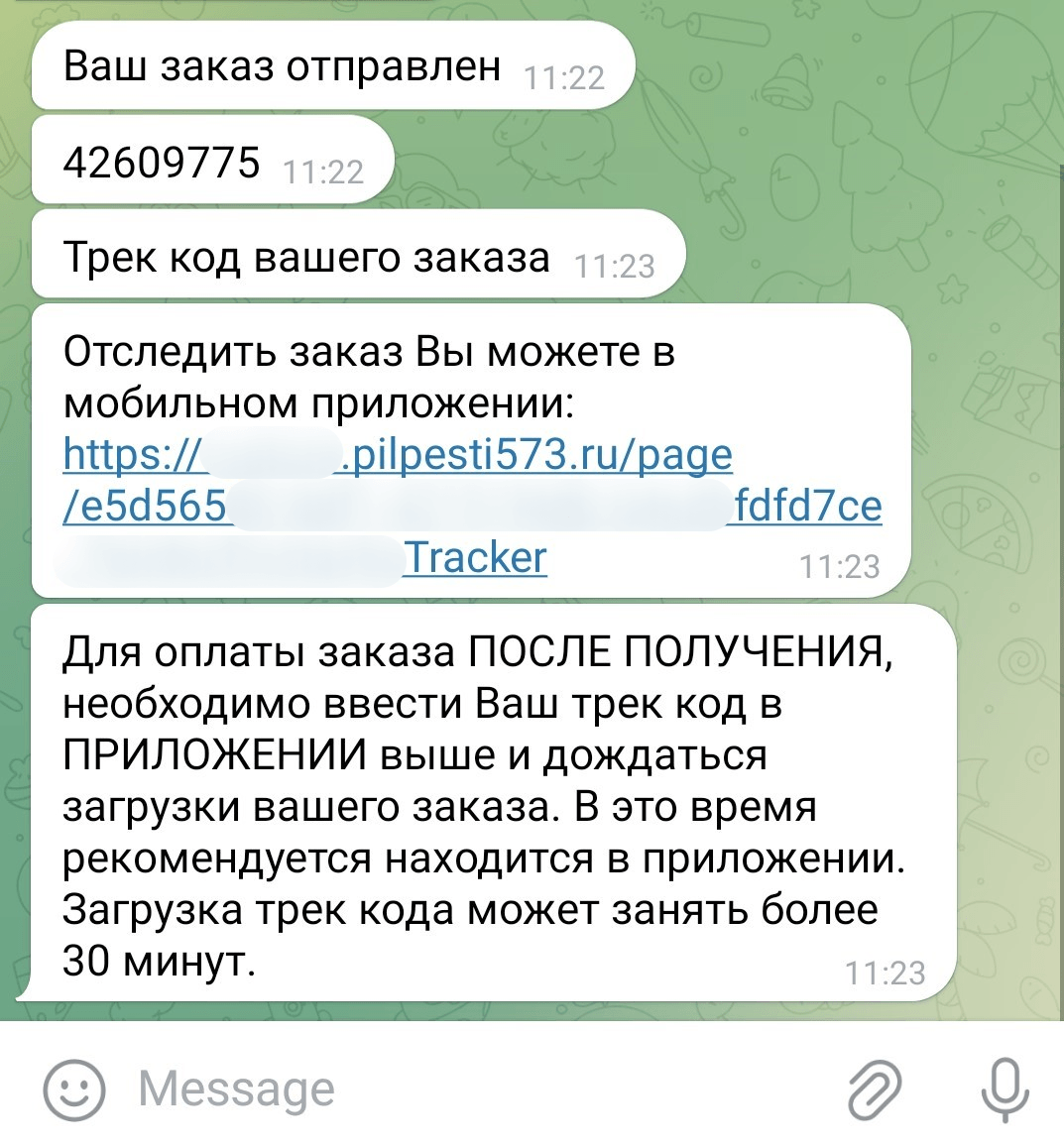
At the end of 2024, we discovered a new distribution scheme for the Mamont banking Trojan, targeting users of Android devices in Russia. The attackers lured users with a variety of discounted products. The victim had to send a message to place an order. Some time later, the user received a phishing link to download malware disguised as a shipment tracking app.
The phishing link as seen in the chat with the fraudsters
See translation
Your order has shipped. 42609775 Your order tracking code. You can track your order in the mobile app: https://.pilpesti573.ru/page/e5d565fdfd7ce Tracker To pay for your order AFTER YOU RECEIVE IT, enter your tracking code IN THE APP above and wait for your order details to load. We recommend keeping the app open while you are doing so. Loading the track code may take more than 30 minutes.
In August 2024, researchers at ESET described a new NFC banking scam discovered in the Czech Republic. The scammers employed phishing websites to spread malicious mods of the legitimate app NFCGate. These used a variety of pretexts to persuade the victim to place a bank card next to the back of their phone for an NFC connection. The card details were leaked to the fraudsters who then made small contactless payments or withdrew money at ATMs.
A similar scheme was later spotted in Russia, where malware masqueraded as banking and e-government apps. The SpyNote RAT was occasionally used as the malware dropper and NFC activator.
A screenshot of the fake mobile app
See translation
Hold your card against the NFC contactless payment module for verification. Ready to scan
Also in 2024, we detected many new preinstalled malicious apps that we assigned the generalized verdict of Trojan.AndroidOS.Adinstall. A further discovery, made in July, was the LinkDoor backdoor, also known as Vo1d, installed on Android-powered TV set-top boxes. It was located inside an infected system application com.google.android.services. The malware was capable of running arbitrary executables and downloading and installing any APKs.
On top of the above, we discovered several apps on Google Play, each containing a malicious SDK implant named “SparkCat”, which began to spread at least as early as March 2024. Infected apps were deleted by the store in February 2025: nevertheless, our telemetry data shows that other apps containing SparkCat are distributed through unofficial sources.
This SDK received a C2 server command with a list of keywords or dictionaries to search the gallery on the device for images to exfiltrate. Our data suggests that the Trojan was aimed at stealing recovery phrases for cryptocurrency wallets of Android users primarily in the UAE, Europe and Asia.
It is worth noting that the same implant for iOS was delivered via the App Store, which makes it the first known OCR malware to sneak into Apple’s official marketplace. Apple removed the infected apps in February 2025.
Mobile threat statistics
We discovered 1,133,329 malicious and potentially unwanted installation packages in 2024. This was below the 2023 figure, but the difference was smaller than the year before. The trend in the number of new unique malware installation packages appears to be plateauing.
Detected Android-specific malware and unwanted software installation packages in 2021–2024 (download)
Detected packages by type
Detected mobile apps by type in 2023 and 2024 (download)
Adware and RiskTool apps continued to dominate the rankings of detected threats by type. The BrowserAd (22.8%), HiddenAd (20.3%) and Adlo (16%) families accounted for the largest number of new installation packages in the former category. RiskTool’s share grew largely due to an increase in the number of Fakapp pornographic apps.
Share* of users attacked by the given type of malware or unwanted software out of all targeted Kaspersky mobile users in 2023–2024 (download)
*The total may exceed 100% if the same users experienced multiple attack types.
Banking Trojans gained three positions as compared with 2023 to occupy fourth place, following the usual leaders: adware, Trojans, and RiskTool.
TOP 20 most frequently detected types of mobile malware
Note that the malware rankings below exclude riskware and potentially unwanted apps, such as adware and RiskTool.
Verdict
%* 2023
%* 2024
Difference in p.p.
Change in ranking
Trojan.AndroidOS.Fakemoney.v
11.76
16.64
+4.88
+2
DangerousObject.Multi.Generic.
14.82
11.13
–3.70
–1
Trojan.AndroidOS.Triada.ga
0.00
6.64
+6.64
Trojan-Banker.AndroidOS.Mamont.bc
0.00
5.36
+5.36
Trojan.AndroidOS.Boogr.gsh
6.81
4.71
–2.10
–3
Trojan.AndroidOS.Triada.fd
1.16
4.45
+3.29
+19
DangerousObject.AndroidOS.GenericML
2.39
4.35
+1.96
+3
Trojan-Downloader.AndroidOS.Dwphon.a
0.77
3.59
+2.82
+26
Trojan-Spy.AndroidOS.SpyNote.bz
0.43
3.40
+2.97
+48
Trojan-Spy.AndroidOS.SpyNote.bv
0.37
2.69
+2.32
+57
Trojan.AndroidOS.Fakeapp.hk
0.00
2.51
+2.51
Trojan.AndroidOS.Triada.gs
0.00
2.50
+2.50
Trojan.AndroidOS.Triada.gn
0.00
2.02
+2.02
Trojan-Downloader.AndroidOS.Agent.mm
1.46
1.91
+0.45
+6
Trojan.AndroidOS.Triada.gm
0.00
1.84
+1.84
Trojan.AndroidOS.Generic.
3.63
1.83
–1.80
–8
Trojan.AndroidOS.Fakemoney.bw
0.00
1.82
+1.82
Trojan-Banker.AndroidOS.Agent.rj
0.00
1.63
+1.63
Trojan.AndroidOS.Fakemoney.bj
0.00
1.61
+1.61
Trojan-Spy.AndroidOS.SpyNote.cc
0.06
1.54
+1.47
* Share of unique users who encountered this malware as a percentage of all attacked Kaspersky mobile users
Fakemoney, a family of investment and payout scam apps, showed the highest level of activity in 2024. Third-party WhatsApp mods with the Triada.ga embedded Trojan were third, following the generalized cloud-specific verdict of DangerousObject.Multi.Generic. Many other messaging app mods in the same family, namely Triada.fd, Triada.gs, Triada.gn and Triada.gm, hit the TOP 20 too.
Mamont banking Trojans, ranking fourth by number of attacked users, gained high popularity with cybercriminals. These malicious apps come in a multitude of variants. They typically target users’ funds via SMS or USSD requests. One of them spreads under the guise of a parcel tracking app for fake online stores.
Various malware files detected by machine learning technology ranked fifth (Trojan.AndroidOS.Boogr.gsh) and seventh (DangerousObject.AndroidOS.GenericML). They were followed by the Dwphon Trojan that came preinstalled on certain devices. The SpyNote RAT Trojans, which remained active throughout the year, occupied ninth, tenth and twentieth places.
Region-specific malware
This section describes malware types that mostly affected specific countries.
Verdict
Country*
%**
Trojan-Banker.AndroidOS.Agent.nw
Turkey
99.58
Trojan.AndroidOS.Piom.axdh
Turkey
99.58
Trojan-Banker.AndroidOS.BrowBot.q
Turkey
99.18
Trojan-Banker.AndroidOS.BrowBot.w
Turkey
99.15
Trojan.AndroidOS.Piom.bayl
Turkey
98.72
Trojan-Banker.AndroidOS.BrowBot.a
Turkey
98.67
Trojan-Spy.AndroidOS.SmsThief.wp
India
98.63
Trojan-Banker.AndroidOS.Rewardsteal.fa
India
98.33
Trojan.AndroidOS.Piom.bbfv
Turkey
98.31
Trojan-Banker.AndroidOS.BrowBot.n
Turkey
98.14
HackTool.AndroidOS.FakePay.c
Brazil
97.99
Backdoor.AndroidOS.Tambir.d
Turkey
97.87
Trojan.AndroidOS.Piom.bcqp
Turkey
97.79
HackTool.AndroidOS.FakePay.i
Brazil
97.65
Backdoor.AndroidOS.Tambir.a
Turkey
97.62
Trojan-Banker.AndroidOS.Coper.b
Turkey
97.45
HackTool.AndroidOS.FakePay.h
Brazil
97.39
Trojan-Spy.AndroidOS.SmsThief.ya
India
97.09
Trojan-Spy.AndroidOS.SmsThief.wm
India
97.09
Trojan-Banker.AndroidOS.Rewardsteal.hi
India
96.68
* Country where the malware was most active * Share of unique users who encountered the malware in the indicated country as a percentage of all Kaspersky mobile security users attacked by the malware
Turkey and India accounted for the majority of region-specific threats in 2024. A variety of banking Trojans continued to be active in Turkey. Piom Trojans were associated with GodFather and BrowBot banker campaigns.
Users in India were attacked by Rewardsteal bankers and a variety of SmsThief SMS spies. Our quarterly reports have covered FakePay utilities widespread in Brazil and designed to defraud sellers by imitating payment transactions.
Mobile banking Trojans
The number of new banking Trojan installation packages dropped again to 68,730 as compared to the previous year.
The number of mobile banking Trojan installation packages detected by Kaspersky in 2021–2024 (download)
The total number of banker attacks increased dramatically over 2023’s level despite the drop in the number of unique installation packages. The trend has persisted for years. This may suggest that scammers began to scale down their efforts to generate unique applications, focusing instead on distributing the same files to a maximum number of victims.
TOP 10 mobile bankers
Verdict
%* 2023
%* 2024
Difference in p.p.
Change in ranking
Trojan-Banker.AndroidOS.Mamont.bc
0.00
36.70
+36.70
Trojan-Banker.AndroidOS.Agent.rj
0.00
11.14
+11.14
Trojan-Banker.AndroidOS.Mamont.da
0.00
4.36
+4.36
Trojan-Banker.AndroidOS.Coper.a
0.51
3.58
+3.07
+30
Trojan-Banker.AndroidOS.UdangaSteal.b
0.00
3.17
+3.17
Trojan-Banker.AndroidOS.Agent.eq
21.79
3.10
–18.69
–4
Trojan-Banker.AndroidOS.Mamont.cb
0.00
3.05
+3.05
Trojan-Banker.AndroidOS.Bian.h
23.13
3.02
–20.11
–7
Trojan-Banker.AndroidOS.Faketoken.z
0.68
2.96
+2.29
+18
Trojan-Banker.AndroidOS.Coper.c
0.00
2.84
+2.84
* Share of unique users who encountered this malware as a percentage of all users of Kaspersky mobile security solutions who encountered banking threats
Conclusion
The number of unique malware and unwanted software installation packages continued to decline year to year in 2024. However, the rate of that decline slowed down. The upward trend in mobile banking Trojan activity persisted despite the years-long decrease in unique installation packages.
Cybercriminals kept trying to sneak malware into official app stores like Google Play, but we also discovered a fair number of diverse preinstalled malicious apps in 2024. Speaking of interesting techniques first spotted last year, the use of NFC for stealing bank card data stands out.
49th Civil Accounts Day celebrated to mark the 49th foundation day of Indian Civil Accounts Service (ICAS) in New Delhi In a journey from departmentalisation to digitalisation, ICAS has brought a silent revolution through Public Financial Management System (PFMS): Union Finance Minister Smt. Nirmala Sitharaman
Expenditure Secretary Dr. Manoj Govil emphasises need of harmonisation of Union and State Accounts including Urban, Rural and Local Bodies
CGA Shri Shyam Dubey outlined CGA’s demonstrated robustness, especially during the COVID-19 pandemic, transferring over Rs. 22.85 lakh crore, including DBT schemes
PFMS acts as a critical digital infrastructure to enable transactions between different economic entities efficiently and transparently: Dr. Panagariya
Posted On: 01 MAR 2025 6:29PM by PIB Delhi
The Civil Accounts Day 2025 was celebrated in New Delhi today to mark the 49th foundation day of Indian Civil Accounts Service (ICAS) with the Union Minister for Finance and Corporate Affairs, Smt. Nirmala Sitharaman, presiding over as Chief Guest.
Dr. Manoj Govil, Secretary, Department of Expenditure, Ministry of Finance; and Shri Shyam S. Dubey, Controller General of Accounts (CGA), were also present on the occasion. Officers and staff of the Indian Civil Accounts Organisation, Financial Advisers of Government of India, other Senior Officials of Department of Expenditure and other Ministries /Departments of Government of India, retired ICAS Officers, senior officers from Banks and State Governments, among others, were also part of the celebrations.
During the inaugural function, the Union Finance Minister also released a compendium on the Public Financial Management System (PFMS), titled “Digitalisation of Public Financial Management in India: The Transformative Decade (2014-24)”.
During the Foundation Day, a short film on the evolution and achievements of the Indian Civil Accounts Organisation (ICAO) was also screened.
In her address on the occasion, the Union Finance Minister recognised therole played by PFMS in achieving the key goals of governance which included: reaching the last mile benefitting 60 crore beneficiaries, direct delivery of more than 1200 central and state schemes which includes 1100 DBT schemes, end-to-end digitization through integration with 250 plus external systems such as GeM, GSTIN, TIN 2.0, PM Kisan and many more.
Smt. Sitharaman said that PFMS has led to strengthening of cooperative federalism through integration of 31 state treasuries and 40 lakh programme implementing agencies enabling seamless financial management for millions of citizens ensuring timely and transparent disbursement of government funds.
The Union Finance Minister underlined PFMS as the network of networks with 650 financial institutions – RBI, NPCI, Public and Private sector banks – facilitating seamless fund transfers, with the volume of PFMS transactions has gone up exponentially from 2 crore payments in 2015 to 250 crore in 2024.
Referencing the July 2024 Union Budget, Smt. Sitharaman underlined the suggestion with respect to “improving data governance, collection, processing and management of data and statistics, different sectoral databases, including those established under the Digital India mission, could be utilized with active use of technology tools”, and added that CGA has the potential to work in this regard as the custodian of huge database. The Union Finance Minister emphasised on sharing India’s digital public finance expertise globally, and urged the CGA to collaborate with other countries to leverage PFMS’s technology to enhance their financial governance systems. Smt. Sitharaman also encouraged CGA to make efforts to create public awareness among citizens and taxpayers on how transparent financial systems operate.
In his address on the occasion, Dr. Manoj Govilrecognised the efforts made by CGA and the team of officers towards timely laying of annual accounts, digitisation of accounts and timely discharge of payments and various achievements of PFMS bringing in efficient Public Financial Management. Dr. Govil emphasised on the need of harmonisation of Union and State Accounts including the Urban, Rural and Local Bodies so as to facilitate better financial reporting.
Earlier, in his welcome address, Shri Shyam S. Dubey gave details of the achievements of the organisation during the year in the area of accounts, Public Financial Management and capacity building. Shri Dubey outlined the organisation’s demonstrated robustness during the COVID-19 pandemic, transferring over Rs. 22.85 lakh crore, including DBT schemes.
Shri Dubey further informed the gathering of the recently developed functionality of electronic utilisation certificate (e-UC) and e-Asset module of PFMS-SAMPATI, enabling digital recording, tracking and management of capital physical assets as mandated by the FRBM Act.
The inaugural session was followed by keynote address by Dr. Arvind Panagariya, Chairman, 16thFinance Commission, on “India in the Global Economy: The Next Decade.”
Calling PFMS as “incredible”, Dr. Panagariya stated that PFMS acts as a critical digital infrastructure to enable transactions between different economic entities efficiently and transparently. Dr. Panagariya stated that UPI & PFMS should be part of India’s international diplomatic outreach and global relationship, and called for greater integration of PFMS with the State Governments and Urban and Rural Local Bodies.
Despite the periodic global and domestic economic crises, Dr. Panagariya stated that the factual data of economic growth of the last two decades, starting from 2003-2004, shows the plausibility and the feasibility of the growth potential of the Indian economy in the coming decade being able to reach the 10 trillion dollar GDP mark, as well as the 2047 target of “Viksit Bharat” set by the Prime Minister, Shri Narendra Modi.
Fostering Growth and Inclusivity The Strategic Impact of GeM on India’s Economy
Posted On: 02 MAR 2025 1:53PM by PIB Delhi
Introduction
Public procurement plays a crucial role in a nation’s economic growth, directlyimpacting the lives of its citizens.When governments purchase goods and services efficiently and transparently, it not only ensures the effective use of public funds but also stimulates economic opportunities for businesses of all sizes. This, in turn,drives employment, promotes innovation, and contributes to overall societal development. In India, theGovernment e-Marketplace (GeM)has emerged as a game-changer in public procurement, creating an open and inclusive platform that benefits not just government buyers but alsolocal entrepreneurs, startups, and small businesses.
In alignment with the societal development of the nation, GeM has enabled startups to fulfil orders worth ₹ 35,950 Crore. Women entrepreneurs comprise 8% of the total seller base on GeM, with cumulative 1,77,786 Udyam-verified women micro, and small enterprises (MSE) registered on the GeM portal, having fulfilled a cumulative order value of ₹46,615 Crore.
What is GeM?
Government e-Marketplace (GeM) is an online platform for public procurement in India which was envisaged by Prime Minister Narendra Modi. The initiative was launched onAugust 09, 2016by the Ministry of Commerce and Industry with the objective to create an open and transparent procurement platform for government buyers.
Core Principles of GeM
GeM is characterized by three core elements:
Openness:GeM shall be an open marketplace wherein it promotes access to information and transparency. Relevant information on sellers, goods, and services shall be easy to find and readily available for users. GeM shall provide databased insights to help users in decision-making and ascertaining price reasonability.
Fairness:One of the platform’s key objectives is to allow sellers, big and small, to gain direct access to Government buyers. In doing so, all sellers shall be treated fairly and GeM shall not offer promotional treatment to one seller over the other. GeM shall support the intentions behind the preferential market access policies and ensure that all sellers are provided with a level playing field. This will ensure the health and competitiveness of the marketplace.
Inclusiveness:GeM shall promote inclusiveness, which means that all Government buyers and sellers shall be accepted on the platform. GeM shall aspire to create a robust seller base and all sellers interested in conducting business with the Government shall be welcomed on the platform. For buyers and sellers that do not have the know-how of using GeM, additional assistance in the form of focused training, onboarding sessions and continued feedback and support shall be provided.
Key Features of GeM
SWAYATT: Promoting Ease of Doing Business
SWAYATT is portal’s commitment to enhance ease of doing businessand establish direct market linkages to annual public procurement for startups, women entrepreneurs, Micro & Small Enterprises (MSEs), Self Help Groups (SHGs) and youth, especially those from backward sections of the society. Since inception, the initiative is focused at facilitating the training and onboarding of last-mile sellers, developing women entrepreneurship and encouraging participation and small-scale businesses in government procurement.
Startup Runway 2.0 is an opportunity for Startups to showcase their innovative products and services to Government buyers and engage in public procurement. GeM has created a dedicated marketplace category for all Startups to list their products and services, irrespective of their DPIIT-certification. The platform offers Startups all the marketplace functionalities that are available to regular sellers and the objective is to spur “Make In India” procurement from India Startups.
“Womaniya” initiative seeks to showcase products made by women entrepreneursand women self-help groups [WSHGs], and spur Women entrepreneurship by aligning them with opportunities to sell their products to various Government ministries, departments and institutions. GeM has specially categorized products such as handicrafts and handloom, accessories, jute and coir products, bamboo products, organic foods, spices, home décor and office furnishings for ease-in-procurement. Womaniya aligns with Government’s initiative of reserving 3 percent in public procurement from women MSME entrepreneurs and this offers immense potential for procurement.
GeM is collaborating with various stakeholders from the Micro, Small and Medium Enterprises [MSME] ecosystem with special focus on entrepreneurs from the Scheduled Caste/ Schedule Tribes [SC/ ST]. The partnership is based on the objective of achieving the mandatory procurement goal of 25 percent from MSMEs and a sub target procurement of 4 percent goods and services from MSME entrepreneurs within SC/ ST communities, by all government departments and public sector enterprises [PSE]. This initiative seeks to encourage active participation of MSE sector in public procurement.
The Saras Collection: Celebrating Handcrafted Excellence
The SARAS Collection is a pristine handcrafted collection ofhandicrafts, handloom textiles, office décor, furnishings, accessories, event souvenirs, personal hygiene and care productsfrom top of the line SHGs in India.
GeM Statistics: A Snapshot of Growth and Impact
The latest statistics reveal significant activity in the marketplace, showcasing a robust ecosystem with 162,985 primary buyers, 228,754 secondary buyers, and a diverse range of 11,006 product categories and 332 service categories. In the last financial year, the order volume reached 62,86,543, with an order value of ₹4,03,305 Crore. Continuing its momentum, the current financial year has already recorded 61,23,691 orders worth ₹4,52,594 Crore. Notably, 37.87% of the total order value is attributed to Micro and Small Enterprises (MSEs), underscoring GeM’s role in empowering local businesses and fostering inclusive economic growth.
Data as on 28 February 2025
Conclusion
Government e-Marketplace (GeM) has transformed public procurement in India by promoting transparency, efficiency, and inclusiveness. By empowering startups, women entrepreneurs, and MSMEs, GeM fosters economic growth and social equity. The platform’s strategic initiatives, such as SWAYATT, Startup Runway 2.0, and Womaniya, have significantly contributed to the ease of doing business and enhanced participation in government procurement. As GeM continues to evolve, it remains committed to its vision of creating a sustainable, open, and competitive marketplace, driving India’s progress towards inclusive and transparent public procurement practices.
“By making small changes in our food habits, we can make our future stronger, fitter and disease-free.”
Prime Minister, Shri Narendra Modi
Introduction
Obesity has become a major public health challenge in India, affecting people across all age groups and increasing the risk of non-communicable diseases (NCDs) such as diabetes, heart disease, and hypertension. Driven by unhealthy diets, sedentary lifestyles, and environmental factors, obesity is rising at an alarming rate, impacting both urban and rural populations. The shift towards processed foods, reduced physical activity, and lifestyle changes has further contributed to this growing crisis.
Recognizing the urgency of this issue, Prime Minister Narendra Modi, in his recent Mann Ki Baat address, emphasized the need for nationwide awareness and collective action to reduce obesity, particularly through lower edible oil consumption. He nominated prominent individuals across India to lead an awareness movement. This call for collective action highlights the importance of tackling obesity at both individual and community levels, reinforcing the need for a fitter and healthier India. The Government of India has launched several initiatives, including the Fit India Movement, NP-NCD, POSHAN Abhiyaan, Eat Right India, and Khelo India, to promote healthier lifestyles, better nutrition, and physical activity. These programs aim to encourage long-term behavioural change, ensuring a healthier future for all. As India moves towards Amrit Kaal, a whole-of-government and whole-of-society approach is being adopted to tackle obesity through policy reforms, community engagement, and regulatory measures. Strengthening public health systems, promoting sustainable food habits, and increasing awareness are key to reversing this trend and safeguarding future generations from obesity-related health risks.
Understanding Obesity: Definition and Causes
What is Obesity?
According to the World Health Organization (WHO), obesity is defined as an abnormal or excessive fat accumulation that presents a risk to health. The commonly used metric to classify obesity is Body Mass Index (BMI), where a BMI of 25 or above is considered overweight, and a BMI of 30 or above is classified as obese. In India, a person is considered overweight if their Body Mass Index (BMI) is between 23.0 and 24.9 kg/m², and obese if their BMI is 25 kg/m² or higher. Morbid obesity occurs when a person’s BMI is 35 or more.
What is BMI?
Body Mass Index (BMI), previously known as the Quetelet index, is a simple way to check if an adult has a healthy weight. It is calculated by dividing a person’s weight in kilograms by their height in meters squared (kg/m²). To find BMI, take a person’s weight (kg) and divide it by their height (m) squared.
Healthy BMI Range A normal BMI falls between 18.5 and 24.9, based on the World Health Organization (WHO) guidelines.
Global Statistics
The prevalence of overweight and obesity has been rising steadily among both adults and children worldwide. Between 1990 and 2022, the percentage of children and adolescents (aged 5–19 years) with obesity increased fourfold, from 2% to 8%. During the same period, the proportion of adults (aged 18 and older) with obesity more than doubled, rising from 7% to 16%.
India’s Obesity Statistics
As per the National Family Health Survey (NFHS)-5 (2019-21), overall, 24% of Indian women and 23% of Indian men are overweight or obese
As per the NFHS-5, (2019-2021) in the category of ages 15-49 years, 6.4 % of women and 4.0% of men, are obese.
There has also been an increase in the percentage of children under 5 years who are overweight (weight-for-height) from 2.1 percent in NFHS-4 (2015-16) to 3.4 percent in NFHS-5 (2019-21) at All-India level.
Key Factors Driving the Rise of Obesity in India
Government of India’s Strategic Framework for Obesity Prevention
Policy Innovations and Measurable Outcomes
Recognizing obesity as a critical public health concern, the Government of India has launched comprehensive, multi-pronged initiatives to prevent, manage, and reduce obesity at all levels. The interventions are strategically designed by multiple ministries to promote a holistic approach that integrates health, nutrition, physical activity, food safety, and lifestyle modifications. These efforts can be categorized under the following key intervention areas:
1. Ministry of Health and Family Welfare (MoHFW) – Strengthening Public Health Responses
1.1 National Programme for Prevention and Control of Non-Communicable Diseases (NP-NCD)
In India, non-communicable diseases (NCDs) cause 63% of all deaths, according to WHO’s 2018 – NCD India profile. The leading causes are cardiovascular diseases (27%), followed by chronic respiratory diseases (11%), cancers (9%), diabetes (3%), and other conditions, including obesity (13%).
Non-communicable diseases (NCDs) such as cardiovascular diseases, cancers, diabetes, and chronic respiratory diseases are largely driven by modifiable lifestyle factors, including tobacco use, unhealthy diets, physical inactivity, and alcohol consumption. Air pollution further increases the risk. These factors contribute to obesity, high blood pressure, elevated blood sugar, and raised cholesterol levels, all of which significantly increase the likelihood of developing NCDs. Since many of these risk factors are preventable, addressing obesity and unhealthy habits can play a crucial role in reducing the burden of NCDs.
The Department of Health and Family Welfare under the National Programme for Prevention and Control of Non-Communicable Diseases (NCDs) (NP-NCD) through the National Health Mission (NHM), aims to promote health through behaviour change by engaging communities, civil society, media, and development partners. It focuses on screening, early diagnosis, management, referral, and follow-up at all healthcare levels to ensure continuous care. The program also strengthens the capacity of healthcare providers for prevention, treatment, rehabilitation, awareness (IEC/BCC), monitoring, and research. Additionally, it enhances supply chain management for essential drugs, equipment, and logistics while ensuring effective supervision, evaluation, and nationwide implementation through a uniform ICT system.
Mortality due to Non Communicable Diseases in India
Key Components
Facilities Established Under NPCDCS – 682 District NCD Clinics, 191 District Cardiac Care Units, 5,408 CHC NCD Clinics.
Preventive Care & Awareness – Implemented through Ayushman Bharat HWCs with wellness activities & community outreach.
2. Ministry of AYUSH: Promoting Traditional & Holistic Wellness Practices
The Ministry of Ayush has implemented several initiatives to address obesity and promote effective weight management through Ayurveda:
Specialized Ayurvedic Care: The All India Institute of Ayurveda (AIIA) in New Delhi offers specialized treatments for obesity and related lifestyle disorders. These treatments combine Panchakarma therapies, Ayurvedic medications, personalized dietary guidelines, and yoga therapy. To date, approximately 45,000 patients with diabetes and metabolic disorders have benefited from these services.
Research and Evidence Generation: The Central Council for Research in Ayurvedic Sciences (CCRAS) conducts research to validate the safety and efficacy of Ayurvedic interventions for lifestyle disorders, including obesity. Studies have demonstrated that practices such as Dincharya (daily regimen),Ritucharya (seasonal regimen), Ahara (dietary guidelines), and Yoga are effective in maintaining overall health and preventing conditions like obesity.
Ayurswasthya Yojana: This Central Sector Scheme, operational since FY 2021-22, includes the ‘Ayush and Public Health’ component aimed at promoting AYUSH interventions in community healthcare. The scheme supports projects focused on managing lifestyle disorders and non-communicable diseases (NCDs), with 11 projects currently addressing issues such as obesity, diabetes, hypertension, and osteoporosis.
Collaborative Research Efforts: The Ministry has partnered with the Council of Scientific and Industrial Research (CSIR) to enhance scientific research in Ayurveda. This collaboration focuses on developing and implementing research programs that integrate traditional Ayurvedic knowledge with modern science, particularly in managing lifestyle disorders like obesity.
Through these comprehensive measures, the Ministry of Ayush is actively contributing to the prevention and management of obesity, promoting a holistic approach to health and well-being.
3. Ministry of Women and Child Development:
POSHAN Abhiyaan : Preventing Childhood Obesity
POSHAN Abhiyaan, launched on 8th March 2018, is the Government of India’s flagship initiative for holistic nourishment. It aims to improve nutritional outcomes for children, adolescent girls, pregnant women, and lactating mothers by fostering a convergent ecosystem that enhances nutrition content, delivery, and awareness to combat malnutrition and promote overall wellness.
Key Components of POSHAN Abhiyaan & Poshan 2.0
POSHAN Abhiyaan adopts a holistic approach to tackle malnutrition through technology-driven monitoring, multi-ministerial collaboration, and community engagement under the Jan Andolan Movement. It promotes Poshan Vatikas (Nutri-Gardens) for homegrown nutrition, strengthens Anganwadi services and adolescent health under Mission Saksham Anganwadi & Poshan 2.0 (2021), and integrates AYUSH-based wellness practices. The program emphasizes maternal and child nutrition, dietary diversity, and food fortification, encouraging millet consumption and nutrient-rich diets to combat anemia and deficiencies.
4. Ministry of Youth Affairs and Sports: Fostering a Culture of Physical Fitness
4.1 Fit India Movement: A Mass Fitness Revolution
Launched by PM Narendra Modi in 2019, the Fit India Movement promotes active lifestyles and encourages individuals to incorporate fitness into daily routines.
Key Components:
Fit India School Certification for schools incorporating physical activity in their curriculum.
Fit India Sundays on Cycle initiative promoting cycling and walking in urban spaces
Dr. Mansukh Mandaviya, Union Minister of Youth Affairs and Sports, inaugurated the ‘Fit India Cycling Drive’
Community-led fitness programs such as mass yoga sessions, running clubs, and workplace fitness challenges.
4.2 Khelo India Programme: Building an Active Generation
The Khelo India – National Programme for Development of Sports was launched in 2016-17 to promote sports participation at all levels, from schools to elite competitions, by fostering a culture of athletic excellence across the country. It focuses on providing top-notch training and world-class infrastructure to young athletes, ensuring they receive the necessary resources to excel in their respective sports. The scheme ensures equal sports opportunities across rural and urban India.
Major Achievements:
5. Food Safety and Standards Authority of India (FSSAI): Regulating Food for Public Health
5.1 Eat Right India Movement (FSSAI): Reforming Food Choices for a Healthier Future
The Eat Right India movement, initiated by the Food Safety and Standards Authority of India (FSSAI), encompasses several key initiatives aimed at ensuring safe, healthy, and sustainable food for all. Below are the primary initiatives:
Key Initiatives of Eat Right India
Supply-Side Initiatives:
Food Safety Training and Certification (FoSTaC): The Food Safety Training and Certification (FoSTaC) certificate is issued by FSSAI, certifying food safety supervisors in every food business.
Certification Programs: Ensures hygiene in street food hubs, markets, stations, and places of worship.
Hygiene Rating: Rates restaurants, catering services, sweet shops, and meat vendors on hygiene standards.
Demand-Side Initiatives:
Consumer Awareness: Promotes food safety through Eat Right Campus & Eat Right School programs.
Adulteration Detection: Provides DART Book & Magic Box for home and school food testing.
Food Safety DART Book– The Detect Adulteration with Rapid Test (DART) booklet provides over 50 easy household tests to detect food adulteration using simple solutions. Freely downloadable for public awareness, it cannot be used for commercial purposes or imply FSSAI endorsement.
Food Safety Magic Box– FSSAI’s Food Safety Magic Box-Companion Book is a learning tool for schools, teachers, and parents, featuring 102 simple tests to detect food adulterants, along with a companion guidebook.
FOOD SAFETY-MAGIC BOXFOOD SAFETY – DART BOOK
Mobile Testing: Deploys Food Safety on Wheels for remote-area testing & training.
Food Fortification: Promotes fortified staples to tackle micronutrient deficiencies.
The Food Safety & Standards Authority of India (FSSAI) plays a pivotal role in guiding public dietary choices and regulating food safety standards to combat obesity and lifestyle-related diseases.
5.2 Nationwide Awareness Campaign – ‘Aaj Se Thoda Kam’ To encourage healthier eating habits, FSSAI launched the ‘Aaj Se Thoda Kam’ campaign, urging consumers to gradually reduce their intake of fat, sugar, and salt. This multimedia campaign includes:
Short educational videos with subtitles in 12 languages to reach a diverse audience.
Flyers, banners, and audio clips reinforcing the message of mindful eating.
A dedicated ‘Eat Right India’ website, offering valuable resources for making informed dietary changes.
5.3 Regulating High Fat, Salt, and Sugar (HFSS) Foods FSSAI, in collaboration with the ICMR-National Institute of Nutrition (NIN), has recommended mandatory labeling of High Fat, Salt, and Sugar (HFSS) foods. This initiative aims to:
Ensure clear front-of-pack labeling on ready-to-eat foods.
Help consumers make informed choices and moderate their intake of unhealthy foods.
5.4 Multi-Platform Public Awareness Initiatives The Government, with FSSAI’s leadership, has been actively spreading awareness through:
a. Print, electronic, and social media campaigns educating the public on healthier food choices.
b. Integration with the National Programme for Prevention and Control of Cancer, Diabetes, Cardiovascular Diseases, and Stroke (NPCDCS), which supports state-level awareness activities on obesity prevention and healthy living.
5.5 RUCO Initiative
FSSAI’s RUCO (Repurpose Used Cooking Oil) initiative ensures that used cooking oil is not re-entered into the food chain but is safely repurposed. When oil is repeatedly used for frying, harmful Total Polar Compounds (TPC) form, increasing the risk of diseases like hypertension, atherosclerosis, and liver disorders. To protect public health, FSSAI has set a 25% TPC limit beyond which oil must not be used. Under the EEE Strategy (Education, Enforcement, Ecosystem), used cooking oil is collected by aggregators from food businesses and redirected for biodiesel or soap production, promoting health, energy security, and environmental sustainability.
Conclusion
Obesity is a pressing public health challenge in India, but the nation is actively addressing it through a comprehensive, multi-sectoral approach. Under the leadership of Prime Minister Narendra Modi, the Government of India has launched strategic interventions integrating health, nutrition, fitness, and regulatory measures. Initiatives such as the Fit India Movement, NP-NCD, POSHAN Abhiyaan, Eat Right India, and Khelo India are fostering a culture of health consciousness, preventive care, and active living. As India moves towards Amrit Kaal, the vision of a Fit and Healthy India is becoming a reality. With sustained commitment, cross-sector collaboration, and active citizen participation, the country is well-positioned to reverse obesity trends and safeguard future generations. By prioritizing awareness, lifestyle changes, and policy-driven action, India can set a global example in tackling obesity—building a nation that thrives on wellness, vitality, and holistic well-being.
Source: The Conversation (Au and NZ) – By Mary Louise Stewart, Senior Career Medical Officer, Northern Sydney Local Health District; PhD Candidate, University of Sydney
An estimated one in five women and one in 16 men in Australia have experienced sexual violence.
After such a traumatic experience, it’s understandable many are unsure if they want to report it to the police. In fact, less than 10% of Australian women who experience sexual assault ever make a police report.
In Australia there is no time limit on reporting sexual assault to police. However, there are tight time frames for collecting forensic evidence, which can sometimes be an important part of the police investigation, whether it’s commenced at the time or later.
This means the decision of whether or not to undergo a medical forensic examination needs to be made quite quickly after an assault.
I work as a medical forensic examiner. Here’s what you can expect if you present for a medical forensic examination after a sexual assault.
A team of specialists
There are about 100 sexual assault services throughout Australia providing 24-hour care. As with other areas of health care, there are extra challenges in regional and rural areas, where there are often further distances to travel and staff shortages.
Sexual assault services in Australia are free regardless of Medicare status. To find your nearest service you can call 1800 RESPECT (1800 737 732) or Full Stop Australia (1800 385 578) who can also provide immediate telephone counselling support.
It’s important to call the local sexual assault service before turning up. They can provide the victim-survivor with information and advice to prevent delays and make the process as helpful as possible.
The consultation usually occurs in a hospital emergency department which has a designated forensic suite, or in a specialised forensic service.
The victim-survivor is seen by a doctor or nurse trained in medical and forensic care. There’s a sexual assault counsellor, crisis worker or social worker present to support the patient and offer counselling advice. This is called an “integrated response” with medical and psychosocial staff working together.
In most cases the victim-survivor can have their own support person present too.
Depending on what the victim-survivor wants, the doctor or nurse will take a history of the assault to guide any medical care which may be needed (such as emergency contraception) and to guide the examination.
Sexual assault services are always very aware of giving victim-survivors a choice about having a medical forensic examination. If a person presents to a sexual assault service, they can receive counselling and medical care without undergoing a forensic examination if they do not wish to.
Sexual assault services are inclusive of all genders.
Collecting forensic samples
Samples collected during a medical forensic examination can sometimes identify the perpetrator’s DNA or intoxicating substances (alcohol or drugs that might be relevant to the investigation). The window of opportunity to collect these samples can be as short as 12 hours, or up to 5–7 days, depending on the nature of the sexual assault.
In most of Australia, an adult who has experienced a recent sexual assault can be offered a medical forensic examination without making a report to police.
Depending on the state or territory, the forensic samples can usually be stored for 3 to 12 months (up to 100 years in Tasmania). This allows the victim-survivor time to decide if they want to release them to police for processing.
The doctor or nurse will collect the samples using a sexual assault investigation kit, or a “rape kit”.
Collecting these samples might involve taking swabs to try to detect DNA from external and internal genital areas and anywhere there may have been DNA transfer. This can be from skin cells, where the perpetrator touched the victim-survivor, or from bodily fluids including semen or saliva.
The doctor or nurse carrying out the examination do their best to minimise re-traumatisation, by providing the victim-survivor information, choices and control at every step of the process.
During the consultation, the doctor or nurse will address any concerns about sexually transmitted infections (STIs) and pregnancy, if applicable.
In most cases the risk of STIs is small. But follow-up testing at 1–2 weeks for infections such as chlamydia and gonorrhoea, and at 6–12 weeks for infections such as syphilis and HIV, is usually recommended.
Emergency contraception (sometimes called the “morning after pill”) can be provided to prevent pregnancy. It can be taken up to five days after sexual assault (but the sooner the better) with follow-up pregnancy testing recommended at 2–3 weeks.
Things have improved over time
When I was a junior doctor in the late 90s, taking forensic swabs was usually the responsibility of the busy obstetrics and gynaecology trainee in the emergency department, who was often managing multiple patients and had little training in forensics. There was also usually no supportive counsellor.
Anecdotally, both the doctor and the patient were traumatised by this experience. Research shows that when specialised, integrated services are not provided, victim-survivors’ feelings of powerlessness are magnified.
But the way we carry out medical forensic examinations after sexual assault in Australia has improved over the years.
With patient-centred practices, and designated forensic and counselling staff, the experience for the patient is thought to be empowering rather than re-traumatising.
Our research
In new research published in the Australian Journal of General Practice, my colleagues and I explored the experience of the medical forensic examination from the victim-survivor’s perspective.
We surveyed 291 patients presenting to a sexual assault service in New South Wales (where I work) over four years.
Some 75% of patients reported the examination was reassuring and another 20% reported it was OK. Only 2% reported that it was traumatising. The majority (98%) said they would recommend a friend present to a sexual assault service if they were in a similar situation.
While patients spoke positively about the care they received, many commented that the sexual assault service was not visible enough. They didn’t know how to find it or even that it existed.
We know many victim-survivors don’t present to a sexual assault service or undergo a medical forensic examination after a sexual assault. So we need to do more to increase the visibility of these services.
The National Sexual Assault, Family and Domestic Violence Counselling Line – 1800 RESPECT (1800 737 732) – is available 24 hours a day, seven days a week for any Australian who has experienced, or is at risk of, family and domestic violence and/or sexual assault.
Mary Louise Stewart receives funding from the Ramsay Research and Education Grant and from the University of Sydney via the Postgraduate Research Support Scheme. Mary Louise Stewart works as a medical forensic examiner where her research is being undertaken.
Despite community resistance and legal push-back, the government isn’t slowing down on its plan to roll back speed limit reductions on many roads. In the process, it’s going against expert advice from transport officials and solid economic evidence showing the benefits of slower speeds.
Documents recently released quietly by the New Zealand Transport Agency (NZTA) show Land Transport Director Brent Alderton raised serious concerns in 2024 about the proposed speed limit changes and urged decision makers to rely on evidence rather than ideology:
There is well founded evidence, nationally and internationally, that establishes the link between vehicle speed and the likelihood of a crash occurring, as well as the severity and consequences of any crash.
But the government is also bypassing evidence that contradicts its own justification that raising some speed limits will help increase productivity.
A comprehensive economic assessment prepared by engineering consulting firm WSP for the NZTA in March 2024 (later released under the Official Information Act) analysed the impact of previous speed limit changes implemented between 2020 and 2023 (with one dating back to 2011). It found the reductions delivered substantial economic benefits to New Zealand.
For road corridors with reduced speed limits, nearly 27 fewer deaths and serious injuries per year were recorded: “The crash cost savings generally outweigh the travel time disbenefits by a factor of 2 to 10 (or more).”
In other words, for every dollar lost in slightly increased travel times, the report estimates New Zealand gains between NZ$2 and $10 in reduced crash costs.
Economic benefits of lower speeds
All the road corridors with reduced speed limits in the WSP assessment showed positive benefit-cost ratios using NZTA’s standard methodology. Even under various sensitivity tests, including if crash benefits were reduced or project costs increased, most speed reductions maintained positive ratios.
But despite the local and international evidence showing lower speed limits save lives and money, the government persists in claiming raising some limits will reduce travel times and therefore increase productivity.
In fact, everything points to any productivity gains from faster travel being significantly outweighed by increased crash costs. As of 2023, the Ministry of Transport estimates those costs at $769,400 per serious injury and $14,265,600 per fatality.
When the WSP report was released, it projected traffic would experience mean speed reductions of between 5% and 9% on roads with lowered limits. This projection was based on actual changes in driving speeds recorded using GPS-based traffic data.
The data showed these reductions resulted in actual death and injury savings “much greater than predicted”. While the observed speed reductions aligned with expectations, the projected safety benefits significantly underestimated the actual harm reduction.
For example, on the Blenheim to Nelson stretch of State Highway 6, the predicted death and injury reduction was 22%, but the actual reduction was 82%. On State Highway 51, the reduction was 100% compared to an expected 31%.
Conversely, where speed limits were increased from 100 km/h to 110 km/h, as on the Cambridge section of the Waikato Expressway in December 2017, deaths and serious injuries rose by 133% compared to pre-increase levels.
In Auckland, dozens of urban corridors will soon see speed limits rise from 50 km/h to 60 km/h. The Auckland Transport agency will also raise the limit on one stretch of Te Irirangi Drive from 60 km/h to 80 km/h – exactly the kind of substantial increase the WSP report linked to dramatically higher crash risks.
Expediency vs evidence
Overall, the WSP report shows speed limit reductions worked better than expected at preventing harm, with significantly lower numbers of deaths and serious injuries annually across the studied corridors.
It is likely the number of lives saved from these speed limit reductions are reflected in the 2024 road fatality statistics, where road deaths across New Zealand were below 300 for the first time in a decade.
The director of land transport can only promise to “monitor” the impacts of the speed limit increases. In reality, there has been sufficient monitoring and measuring already to show speed limit reductions reduce harm as well as deliver economic benefits.
But the speed limit issue fits within a broader pattern of transport policy where ideology or political expediency appear to trump expert advice and economic analysis.
The government has frozen funding for cycling and walking projects, cancelled Auckland’s light rail plan, abandoned regional passenger rail initiatives and prioritised new highway construction over maintenance of existing roads.
This is despite economic assessments consistently showing better benefit-cost ratios for public and active transport investments than for new road projects.
Similarly, economic assessment shows unequivocally that the financial benefits of lower speeds and safer roads far outweigh the costs. If economic rationality were the driving force behind transport policy, speed limit reductions would be expanded rather than rolled back.
Timothy Welch does not work for, consult, own shares in or receive funding from any company or organisation that would benefit from this article, and has disclosed no relevant affiliations beyond their academic appointment.
Flags of European Union (EU) and Ukraine are seen at the EU headquarters in Brussels, Belgium, Feb. 24, 2025. [Photo/Xinhua]
French President Emmanuel Macron proposed on Sunday that the European Union (EU) member states should raise their defense spending to 3 to 3.5 percent of the EU’s total gross domestic product (GDP).
Speaking to the French daily Le Figaro after participating in a defense summit in London, Macron said EU member states should invest “heavily” in European defense to prepare for America’s eventual disengagement and to ensure Europe’s security.
The French president suggested raising considerable amounts together through joint loans or even the European Stability Mechanism. “We probably need initially 200 billion euros (208 billion U.S. dollars) to kick off,” he added.
According to statistics published by the European Council, in 2024, the EU member states’ total defense expenditure reached an estimated 326 billion euros (338 billion U.S. dollars), about 1.9 percent of the EU’s gross domestic product (GDP).
Regarding Ukraine, Macon told Le Figaro that he didn’t believe in the possible ceasefire signed by the Americans and Russians.
He, along with British Prime Minister Keir Starmer, had proposed a one-month “truce” in Ukraine, he said.
Macron stressed again that the European troops would only be deployed to Ukraine after the peace should be established.
The total estimated assets of SMSFs are $1.02 trillion.
The top asset types held by SMSFs (by value) are:
listed shares (26% of total estimated SMSF assets)
cash and term deposits (17%)
53% of SMSF members are male and 47% are female
85% of SMSF members are 45 years or older.
Read the full report for further statistics about:
SMSF fund and member demographics
estimates on SMSF asset holdings
annual ‘flows’ in and out of SMSFs.
Looking for the latest news for SMSFs? – You can stay up to date by visiting our SMSF newsroom and subscribingExternal Link to our monthly SMSF newsletter.
Source: The Conversation (Au and NZ) – By Adrian Beaumont, Election Analyst (Psephologist) at The Conversation; and Honorary Associate, School of Mathematics and Statistics, The University of Melbourne
A poll of 20 marginal seats by Redbridge and Accent Research was conducted for the News Ltd tabloids on February 20–25, from a sample presumably over 1,000. The Coalition led by 50.5–49.5, a 1.5-point gain for Labor since the February 4–11 marginals poll.
Labor won the 2022 election by 52–48 and won the marginal seats polled by 51–49, implying a 1.5-point swing to the Coalition across these seats since the last election. If this poll were applied nationally, it suggests a Labor lead of 50.5–49.5.
Primary votes were 41% Coalition (down two), 34% Labor (up one), 12% Greens (steady) and 13% for all Others (up one). Anthony Albanese’s net favourability was up five points to -11 while Peter Dutton’s was down two to -13. By 50–33, voters thought things were headed in the wrong direction (55–27 previously).
While Labor improved overall in this poll, their position in the Victorian seats polled was dire, with an 8.4% two-party swing to the Coalition across the first two waves of this poll. State Labor is dragging down federal Labor.
Labor gains lead in Morgan poll
A national Morgan poll, conducted February 17–23 from a sample of 1,666, gave Labor a 51–49 lead by headline respondent preferences, a 2.5-point gain for Labor since the February 10–16 poll. This poll contrasted with the Resolve poll taken February 18–23 that gave the Coalition a 55–45 lead.
Primary votes were 36.5% Coalition (down three), 31.5% Labor (up 3.5), 13.5% Greens (up one), 5% One Nation (down 0.5), 10% independents (steady) and 3.5% others (down one). By 2022 election preference flows, Labor led by 53–47, a four-point gain for Labor.
By 49.5–34.5, voters said the country was going in the wrong direction (52.5–32.5 previously). The 15-point lead for wrong was the lowest since January 2024. Morgan’s consumer confidence measure jumped 4.7 points to 89.8.
The Morgan poll and the Redbridge marginal seats poll both suggest movement to Labor since the Reserve Bank reduced interest rates on February 18. While the Coalition retained a narrow lead in YouGov, the primary votes implied a little movement to Labor.
The graph below shows Labor’s two-party estimated vote in national polls, so the Redbridge marginals poll is excluded.
Labor has not recovered the lead in a polling average, but the latest polls are far better for them than the Resolve poll last week.
Coalition narrowly ahead in YouGov poll
A national YouGov poll, conducted February 21–27 from a sample of 1,501, gave the Coalition a 51–49 lead by preference flows from YouGov’s MRP polls, in which Greens and One Nation preferences are both weaker for Labor than at the 2022 election. There was no change from YouGov’s last MRP poll, conducted from late January to mid-February.
Primary votes were 37% Coalition (steady since the MRP poll), 28% Labor (down one), 14% Greens (up one), 8% One Nation (down one), 1% for Clive Palmer’s Trumpet of Patriots, 10% independents (up one) and 2% others (down one). By 2022 election preference flows, Labor would lead by about 50.5–49.5, a 0.5-point gain for Labor.
Albanese’s net approval was up three points since YouGov’s last non-MRP poll in January to -12, with 52% dissatisfied and 40% satisfied. Dutton’s net approval was up four points to -2. Albanese led Dutton as better PM by 42–40 (44–40 previously).
By 60–8, voters supported the government operating the Whyalla steelworks through a publicly owned company if no suitable private investor was found.
Additional Resolve questions and seat polls
The Resolve poll for Nine newspapers asked whether Donald Trump’s policies should be applied to Australia. Question wording has an impact: for example, “cutting waste from the public service” is a pro-Trump framing. A question that asked whether Australians approved or disapproved of Trump’s performance as US president would be preferable.
In past elections, seat polls have been unreliable. The Poll Bludger reported last Wednesday that three polls of Western Australian federal seats had been conducted by JWS Research for Australian Energy Producers from a combined sample of 2,529.
In Curtin, held by teal independent Kate Chaney, the Liberals held a huge primary vote lead of 56–28 over Chaney. In Bullwinkel, a new federal WA seat that is notionally Labor, Labnr’s primary vote had slumped 21 points to 15%, putting them in third place behind the Nationals and Liberals. However, there were only modest primary vote swings in Tangney, with Labor looking competitive to hold.
There were also two uComms NSW federal seat polls. In Wentworth, held by teal independent Allegra Spender, Spender held a 57.2–42.8 lead over the Liberals. This poll was taken for Climate 200 on February 12 from a sample of 1,068. In Labor-held Gilmore, the Liberals led by 52.8–47.2. This poll was taken for the Australian Forest Products Association February 17–20 from a sample of 684.
NSW Resolve poll: Labor’s primary vote slumps
A New South Wales state Resolve poll for The Sydney Morning Herald, conducted with the federal January and February Resolve polls from a sample of over 1,000, gave the Coalition 38% of the primary vote (up one since December), Labor 29% (down four), the Greens 14% (up three), independents 11% (down two) and others 8% (up one).
No two-party estimate was reported, but The Poll Bludger estimated a Coalition lead of about 51–49 from these primary votes. Labor incumbent Chris Minns led Liberal Mark Speakman by 35–14 as preferred premier (35–17 in December).
On the rail dispute between the NSW government and the train union, 43% wanted the government to negotiate a better deal with the union, 26% wanted the government to refuse the union’s demands and 16% thought they should agree to the union’s demands in full.
EMRS Tasmanian poll has little change
An EMRS Tasmanian state poll, conducted February 11–18 from a sample of 1,000, gave the Liberals 34% of the vote (down one since November), Labor 30% (down one), the Greens 13% (down one), the Jacqui Lambie Network 8% (up two), independents 12% (up one) and others 3% (steady). Tasmania uses a proportional system, so a two-party estimate is inapplicable.
Liberal Premier Jeremy Rockliff’s net favourability dropped five points to +10, while Labor leader Dean Winter was down eight to +6. Rockliff led Winter by 44–34 as preferred premier (43–37 in November).
Adrian Beaumont does not work for, consult, own shares in or receive funding from any company or organisation that would benefit from this article, and has disclosed no relevant affiliations beyond their academic appointment.
Source: People’s Republic of China – State Council News
China’s central bank, together with other top financial regulators, convened a high-level symposium on Friday to discuss measures for boosting private enterprise development, which analysts said signaled bigger steps in facilitating the financing of private enterprises as their role in innovation becomes increasingly significant.
Jointly convened by the People’s Bank of China, All-China Federation of Industry and Commerce, National Financial Regulatory Administration, China Securities Regulatory Commission and State Administration of Foreign Exchange, the symposium stressed supporting private businesses as an inherent priority for financial services and a manifestation of upholding the political and people-centered nature of financial work.
“We will proactively strengthen policy frameworks, enhance supervision and implementation and provide strong financial support for the healthy development of the private economy, helping private enterprises grow stronger, better and bigger,” said a meeting statement released by the PBOC on Sunday.
Analysts said it is not the first time for the PBOC to convene symposiums on supporting private enterprises, with similar meetings in 2018 and 2023. However, Friday’s meeting features a wide participation by various financial authorities, indicating that all-out, coordinated efforts to strengthen financial support for private enterprises are underway.
“The joint meeting reflects the central government’s strong commitment to fostering private sector growth,” said Yang Weiyong, an associate professor at the University of International Business and Economics, expecting significant financial measures, including expanded lending for private enterprises.
The meeting called for a solid implementation of an accommodative monetary policy, a good use of structural monetary policy tools, increased credit access for private and small businesses and equal treatment of all ownership types by financial institutions.
Specific measures stressed at the symposium include a full implementation a previously-launched 25-point plan to strengthen financial support for the private economy, improvements to credit enhancement systems for smaller businesses and accelerated rollout of supply chain finance regulations.
The meeting also emphasized strengthening bond market innovation, reaffirming boosting private enterprise financing through capital markets, including support for tech-driven firms, mergers and acquisitions and industrial upgrades.
Attendants of the meeting also included leaders from fashion and apparel company EVE Group, automotive company Geely Holding Group, artificial intelligence company SenseTime, express delivery company YTO Express and dairy company Yili Group.
Lou Feipeng, a researcher at Postal Savings Bank of China, emphasized the need for stronger financial support for the private sector, particularly as the latest wave of technological revolution continues to advance.
“Private and small businesses, known for their flexible structures, play a crucial role in driving technological innovation,” Lou said.
In terms of direct financing, eligible private enterprises should be supported in raising funds through bond issuance and IPOs, he said. On the indirect financing front, banks should improve first-time loan services for private bushiness, expand access to credit-based lending, implement loan renewals without principal repayment and develop supply chain finance.
Data from the National Bureau of Statistics showed on Saturday that the purchasing managers index for the manufacturing sector — where private enterprises play a significant role — came in at 50.2, standing above the 50-mark that separates expansion from contraction and up from 49.1 in January.
Higher meat export prices boost terms of trade–3 March 2025 –Export prices increased more than import prices in the December 2024 quarter, which led to a 3.1 percent rise in the terms of trade, according to figures released by Stats NZ today.
The terms of trade represent the ratio of export prices to import prices. They can be interpreted as a measure of New Zealand’s purchasing power on the international stage and as an indicator of the relative strength of the New Zealand economy.
The total export price index rose 3.2 percent and the import price index rose 0.1 percent in the December 2024 quarter, compared with the September 2024 quarter.
Export prices for meat products, which are New Zealand’s second largest export commodity by value, rose 6.8 percent in the December quarter. Lamb prices rose 7.0 percent, while beef and veal prices rose 6.1 percent.
Higher meat export prices boost terms of trade – 3 March 2025 – Export prices increased more than import prices in the December 2024 quarter, which led to a 3.1 percent rise in the terms of trade, according to figures released by Stats NZ today.
The terms of trade represent the ratio of export prices to import prices. They can be interpreted as a measure of New Zealand’s purchasing power on the international stage and as an indicator of the relative strength of the New Zealand economy.
The total export price index rose 3.2 percent and the import price index rose 0.1 percent in the December 2024 quarter, compared with the September 2024 quarter.
Export prices for meat products, which are New Zealand’s second largest export commodity by value, rose 6.8 percent in the December quarter. Lamb prices rose 7.0 percent, while beef and veal prices rose 6.1 percent.
Some come to university to pursue a passion, others to discover one, and some aren’t quite sure why they’re here. Whatever their reason, it can take time to adjust and feel comfortable at uni, and some students decide studying is not for them. In their first year, around 14% of Australian students will choose to leave.
What do you do if you get to uni and it isn’t quite what you expect?
Expectations versus reality
The transition from high school to university can be a big adjustment, especially for Year 12 students who are used to structured learning and clear guidance. Suddenly, you’re managing a new timetable, deadlines, and navigating new places and possibly new subjects on your own.
While university social clubs and campus activities can help you settle in, your first year at university can be a lonely time. You are away from familiar school friends and in classes full of people you don’t know.
Mature-aged students (anyone over 21) face their own challenges when life experience does not always translate to confidence in academic skills.
Juggling study, work and personal commitments isn’t easy. Fitting university in around other life pressures can feel overwhelming.
University is often more independent than high school, which can be a big change for students. Neon Wang/Unsplash
If you’re not enjoying yourself, try to work out exactly what it is you don’t like: is it university itself? Is it your course? Or just a particular subject?
If your current degree isn’t working, you could consider switching degrees or the mix of subjects you are studying. Switching to another degree or discipline may come with credit for prior study. Remember, no learning is ever wasted, and many skills are transferable. You can talk to your university admissions team to see what’s possible.
Or perhaps part-time study would be a better option for you. This is very common among uni students. Only 40% complete their degree within four years.
Universities often allow up to ten years for a bachelors’ degree, so you have time to rethink and adjust. Chat with an academic advisor or student services to understand your options.
If university isn’t working at all, remember there are many other options post-school. This includes vocational education and training courses (some of which are free) that provide practical skills, geared towards a job. It is OK to change your mind.
Key dates to know
Timing is important. You need to be aware of the “census date” for your particular uni. This is the deadline when your fees are locked in.
Before then, you can drop courses without financial or academic penalties.
Think of the time before the census date as a “try-before-you-buy” period. While dates vary between universities, the first few weeks give you a chance to experience course content and decide if it’s the right fit for you.
Remember you are going through a big change – so go easy on yourself. And speak to academic, career, and wellbeing supports at your university if you think you need to make a change.
The authors do not work for, consult, own shares in or receive funding from any company or organisation that would benefit from this article, and have disclosed no relevant affiliations beyond their academic appointment.
Source: The Conversation – Canada – By Mahtot Gebresselassie, Assistant Professor, Environmental and Urban Change, York University, Canada
In late 2024, the Ontario legislature passed Bill 212 giving the provincial government significant control over municipal bike lanes. The law requires municipalities to ask the province for its approval to install bike lanes if they would remove a lane for other vehicular traffic. The legislation also allows for the removal of three major bike lanes in Toronto.
Supporters of such moves argue that bike lanes worsen traffic congestion, negatively impact local businesses and delay emergency vehicles from getting where they need to go. However, research shows that bike lanes improve transportation infrastructure, including preventing injuries.
One of the main values of bike lanes is that they promote safety for all road users. Many cities around the world install bike lanes to wholly or partially separate cyclists from larger vehicles. This separation limits the interaction with cars and makes cycling safer.
A 2016 paper that looked at data on bike networks and injuries in 10 Canadian and U.S. cities between 2000 and 2015 showed that an increase in bike networks led to a decrease in fatal and serious injuries.
The safety associated with bike lanes can also encourage more people to take up cycling. A 2020 poll from the Canadian Automobile Association indicates that 40 per cent of Canadians reported they would feel encouraged to cycle on bike lanes physically separated from other vehicles.
More inclusive roads
Bike lanes can make cycling more inclusive for women, children, older adults, people with disabilities and those with limited transportation options.
Fewer women bike compared to men. A 2014 study that surveyed cyclists in five U.S. cities found that more women than men strongly agreed that protected bike lanes made them feel safe and new ones increased how often they cycled.
Older adults and people with disabilities also benefit from bike lanes, as they provide a more suitable cycling environment for riding with limited physical acuity and slower speeds.
Some argue that bike lanes reduce street parking, which can lead to lower economic activity. However, a 2012 study showed that people who cycle, walk and use transit frequent local businesses more and spend the same or more than those who use private cars.
When it comes to congestion, a 2018 study on the impact of installing bike lanes on arterial roads in Toronto found that the most affected street segments would only result in an estimated one-minute delay.
A 2022 study from Melbourne showed a minor effect on traffic when bike lanes were added to residential streets with low speed limits. It also found the “selective inclusion” of safe cycling lanes, in the worst cases, leads to a delay of less than 10 seconds per kilometre for drivers.
In New York, a 2016 study found that adding bike lanes reduced the average time for car travel on major thoroughfares from an average of 4.5 minutes to 3 minutes.
Examples from elsewhere indicate that removing bike lanes would not bode well for Toronto. A well-used bike lane in London, England was removed in December 2020 following residents’ complaints that they caused traffic congestion. A study found that the removal resulted in longer travel time on the street compounded by cars illegally parking in the space previously reserved for the bike lane.
Toronto Fire Services (TFS) response time increased by 30 seconds within the same corridor compared to a two-second increase for the entire city. However, these evaluations were for two months in 2023. In October 2024, TFS Chief Jim Jessop said the Bloor Street West bike lanes did not lead to an increase in response time.
If these bike lanes are removed and replaced with others elsewhere, it could create a poorly connected bike network. The safety and convenience associated with connected bike networks will be lost as a result.
Based on what research tells us, Toronto’s bike lanes should stay. Bike lanes provide various benefits, including making our streets more inclusive of more people.
Bike lanes offer safety on the roads by reducing the risk of fatal or non-life-threatening injuries on roads, and are a tremendous gain for transportation infrastructure.
Even in cases where a bike lane causes a few seconds of delay, politicians and city planners must consider the trade-off — especially if it means saving a person’s life.
The authors do not work for, consult, own shares in or receive funding from any company or organisation that would benefit from this article, and have disclosed no relevant affiliations beyond their academic appointment.
The value of exports and imports of services during January 2025 is given in the following table.
International Trade in Services
(US$ million)
Month
Receipts (Exports)
Payments (Imports)
October – 2024
34,309 (22.3)
17,215 (27.9)
November – 2024
32,014 (13.9)
17,229 (26.0)
December – 2024
36,857 (16.5)
17,781 (13.8)
January – 2025
34,726 (12.0)
16,706 (12.6)
Notes: (i) Figures in parentheses are growth rates over the corresponding month of the previous year which have been revised on the basis of balance of payments statistics.
Ajit Prasad Deputy General Manager (Communications)
The purchasing managers’ index (PMI) for China’s manufacturing sector came in at 50.2 in February, up 1.1 percentage points from the previous month and bouncing back to the expansion zone, official data showed on Saturday.
A reading above 50 indicates expansion, while a reading below 50 reflects contraction.
National Bureau of Statistics (NBS) statistician Zhao Qinghe said the PMI data in February was influenced by factors including enterprises resuming production after the Spring Festival holiday .
NBS data also revealed that the sub-indices of production and new orders came in at 52.5 and 51.1, respectively.
The February PMI for the equipment manufacturing sector and high-tech manufacturing sector stood at 50.8 and 50.9, respectively, according to the NBS.
China’s total number of copyright registrations in 2024 surpassed 10.63 million, up 19.13 percent year on year, the National Copyright Administration (NCA) announced Friday. According to the administration, 7.8 million works were registered for copyright in last year, a 21.39 percent year-on-year growth rate. The majority of these works were artworks, accounting for more than half of the total registrations. This was followed by photographic works, which accounted for 31.77 percent of the total number. Written works came in third, representing 9.33 percent of the total number. Other types of registered works included films, video, music, modeling, opera and architecture works. The NCA statistics also revealed that in 2024, nearly 2.83 million registrations for computer software copyright were completed, up 13.31 percent year on year.
A homeless man asleep in Edinburgh, where the author carried out research into the link between drug use and exploitation.Serge Bertasius Photography/Shutterstock
All names have been changed to protect the identities of interviewees.
Patrick is 32 years old and has been homeless on and off in Edinburgh since growing up in care. He speaks with a rasping quality due to the ravages of sleeping outdoors in cruel Scottish winters. Until recently, he was one of thousands of people in the UK trapped in exploitation, often referred to as modern slavery.
In the UK over the past five years, more than 59,000 people have been identified as possible victims of exploitation – sometimes having been trafficked into the country for this express purpose. Some are forced into criminal forms of labour, like growing marijuana, or put to work in agriculture, hospitality, care or construction in illegal conditions. Still more are trapped in private homes in what is termed “domestic servitude”.
And there is Patrick’s category, which is sexual exploitation.
Patrick began taking drugs at 14 years old while in care. Two years later, he was kicked out of the children’s home and met an older man who introduced him to gammahydroxybutrate, or “G” as Patrick calls it. This is known as a “chemsex” drug due to its ability to induce arousal and reduce inhibitions.
The dealer began having sex with him and taking him to sex parties with other men. Soon, Patrick was addicted to G and, over time – the precise length is unclear as, like many people who’ve experienced trauma and addiction, his memories are highly fragmented – the man began to control him. If Patrick wanted more G, he had to have sex with the older man or with other people he selected. Specific sex acts were demanded, regardless of Patrick’s consent.
This controlling behaviour escalated: if Patrick wanted heating in the room in which he slept, if he wanted access to electricity to charge his phone, if he wanted clean clothes or food, if he wanted to avoid being hit, sex was required.
“I never had a choice,” Patrick tells me about his time living in that house. “If I hadn’t got the drugs, I’d die.”
The man kept him on a chemical leash for years. He was not physically restrained in the house, and he had access to his own bank account and benefits payments. Sometimes he slept rough to escape the abuse – but he always returned, because he lived in fear of “rattling”, as he calls withdrawal.
It wasn’t just fear of the physical suffering involved in going without the drug. Patrick’s father murdered his mother when he was a small child. He describes his addiction as a chance to feel free of that trauma – to feel “like superman, like flying”.
Addiction was a driving force in Patrick’s exploitation. And he isn’t alone: several court cases involving the exploitation of homeless people have acknowledged the role of addiction in their victimisation.
In 2013, R v Connors found that the Connors family, which ran a casual construction business in Bedfordshire, had recruited homeless men into their service. The men were promised accommodation, food and reasonable wages, only to receive “something like £10 per day” – if they were paid at all. They worked long hours in poor conditions without necessary equipment or clothing, and “on occasion they were subjected to violence or the threat of violence”.
As a result, three members of the Connors family received custodial sentences of between four and 14 years. The court judgement noted that their victims “were chosen deliberately. Usually they were homeless, addicted to alcohol, friendless and isolated.”
Three years later, the case of R v Rooney found that 11 members of the Rooney family had victimised at least 18 people in Lincolnshire, forcing them to work without pay and to live in squalid conditions for up to 26 years. In one instance, they made a victim dig his own grave to force him to sign a contract of lifelong servitude. Nine members of the family were sentenced to jail, with most receiving sentences of five years or more.
After a subsequent unsuccessful appeal, the judge drew a direct link between victimisation, addiction and homelessness, stating: “The appellants were said to have manipulated and controlled these men by withholding pay [and] feeding their vulnerabilities and addictions, such as to alcohol or cannabis.”
It didn’t end there. In 2020, the office of the UK’s Independent Anti-Slavery Commissioner examined Operation Fort, “the UK’s largest anti-slavery prosecution”, which took four years to conclude. It found that some of the victims had been recruited from homeless shelters and were addicted to drugs or alcohol.
Illicit drug use is damaging large parts of the world socially, politically and environmentally. Patterns of supply and demand are changing rapidly. In our longform series Addicted, leading experts bring you the latest insights on drug use and production as we ask: is it time to declare a planetary emergency?
The role of addiction in all these cases is important to acknowledge – as is recognising that homelessness isn’t a singular thing. Some people experience homelessness only once; others are homeless repeatedly and for years. There are people for whom lacking shelter is the main measure by which they are disadvantaged, which differs to those who are “multiply excluded” or who have “severe and multiple disadvantages” – including histories of institutional care, substance dependency, and criminal records. And that’s without layering on additional factors such as race, ethnicity, sexuality and gender.
As part of my PhD research, I spent several months investigating Edinburgh’s street community, delving into homeless people’s experiences of exploitation, and finding out how and why these experiences occurred.
I chose to work exclusively with people who, like Patrick, were either British or had migration statuses that afforded them the same rights as British people (such as access to benefits). Other statuses – like being an asylum seeker, being on highly restrictive work visas or being undocumented – are widely recognised to make people more vulnerable to being exploited. Removing this factor enabled me to focus on victimisation that could not be explained by immigration policy, and which might point to new or under-explored territories.
I uncovered many cases like Patrick’s: homeless British people who had been exploited. But I also met people who were homeless and had not been exploited. And one of the main differences was addiction. Everyone who had been exploited while homeless had a substance dependency. And it seemed to be this, more than homelessness, which had put them in harm’s way.
Debt bondage on the streets of Edinburgh
Like Patrick, Paul is a white Scottish man in his 30s. He began sofa-surfing at the age of 11 after leaving his abusive family home. Since then, his life has been chronically chaotic: rough sleeping, prison, time in hostels, social housing and back again. Addiction has been the sole stable feature – in his case, a heroin habit which started “when I was 22, in prison”.
Paul has done various things for money over the years: begging (but only once because “I couldn’t deal with the shame of sitting down with people I knew walking past”); house-breaking (“shit stuff I wish I could take back”); shoplifting and reselling (“bacon, cheese, booze, anything that was more expensive”); and also drug running. It was this last method where he got into trouble.
A homeless man sleeping outside a branch of Barclays bank in Princes Street, central Edinburgh. Serge Cornu/Shutterstock
Paul was shoplifting and wasn’t making much money when he “got an offer” to become a drug runner instead. Although movies would have us believe that most modern slavery is the result of kidnapping or abduction, it’s usually the result of a subtler process. The potential victim is offered something they need, such as money or passage to a different country, and it goes wrong.
For Patrick and Paul, what they needed was drugs. Paul accepted the offer and began working as a runner, taking drugs from the dealer’s house to the customers and risking arrest on the way. He was paid in small amounts of heroin for his personal use. Looking back, he sees the dealer as “basically getting me deeper and deeper into trouble”, by escalating his addiction and using it as a control mechanism to keep him working – like the chemical leash experienced by Patrick.
For Jack, a third Scottish homeless man, it was worse. Initially, he bought drugs (both heroin and crack cocaine) using cash, but then a dealer began giving him more than he could afford. “I’d say I only want a half-ounce … and he’d say nah, he’s gonna give me the full one.”
Over time, Jack’s debt grew. He tried to repay it by working as a drug runner for the man, but the money could never be paid off. This was partly because he always needed his next hit, but also because the dealer was inflating the debt each time. There was no way out.
The dealer was also, according to Jack, “quite a fuckin’ scary bloke” – which turned out to be Jack’s way of disclosing that he had been threatened when he tried to leave for a different dealer. At least once, he had been hit.
The Gangmasters and Labour Abuse Authority describes debt bondage as when “an employer or controller will use different tactics to trap the victim in an endless cycle of debt which can never be repaid”. In Jack’s case, as with others in my investigation, it was a particular instrumentalisation of that chemical leash.
“We call it ‘in your pocket’,” Jack explains. “That’s what they say: ‘I’ve got him in my pocket now.’”
Paul and Jack had experienced localised permutations of what government and police call county lines – the transporting of drugs by children or vulnerable adults under coercion.
It may have a special label, but this is a normal part of the drug dealing business model. When I recount Paul’s and Jack’s experiences to Ryan, another homeless Scottish man who is familiar with the drug economy thanks to his dealer dad, he snorts: “Well aye, obviously.”
Into the arms of would-be exploiters
Patrick, Paul and Jack had all been exploited within the drug economy in one way or another, and this is where government-approved county lines strategies are focused. But addiction drives exploitation more broadly than the drug sector itself; as in the Rooney and Connors cases, legal employment sectors including construction and farmwork are subject to addiction-fuelled exploitation too.
When Jack was approached to paint scaffolding poles for £80 a day, he jumped at the chance – it looked like good money for an easy task. But the job wasn’t what it seemed. The recruiter knew Jack was an addict and dropped him off alone at a warehouse with a bag of speed, so he would work through the night with no sleep. This happened for four weekends in a row, with the man alternating between treating Jack well (“made me feel like I was ‘the man’”) and frightening him (“he pure intimidated me”). The £80 per day never materialised.
In Paul’s case, he was offered farmwork by a man outside a soup kitchen he frequented. Paul says he didn’t trust the guy “just from looking at him … and the way he went about it, like strolling up to a homeless place. That’s where most serial killers go to get victims.”
Paul was warned off by street acquaintances who’d heard of people being treated badly at the farm. “They were living in, basically, homeless situations – in a barn or something with no heating and stuff like that, being worked when the guy says … You’ve no money to get home, you don’t know where you are.”
Yet even with this information, when it happened a second time, Paul decided to go. He needed money for his heroin habit. Thankfully, he was too slow to say yes and he lost out to two other men. He doesn’t know what happened to them.
When Paul and I met, he was staying off heroin, thanks to methadone and various other prescription drugs. I asked what he’d do if someone approached him with the same kind of job offer now. He said he’d decline; he no longer needs the money for heroin.
Video: BBC Scotland.
Lorraine, in her 40s and also Scottish, spent years doing sex work. She’d been in various situations during that time, including being deceived into brothel work based on potential earnings which turned out to be untrue, and being pimped by someone who “was supposed to be a friend”.
When we met, Lorraine was no longer doing sex work for anyone but herself. I asked what had changed. Along with getting a place in an emergency shelter, she said it was “because I’m not using [drugs], you know; I’m not using any more. I used to be a prolific crack and heroin addict.”
Paul and Lorraine aren’t alone. Nearly everyone I’ve interviewed draws a direct line between the high cost of illegal drugs and the likelihood of being exploited. In contrast, those who’ve got clean are free from coercion and able to get by on their benefits – benefits they receive, in general, for severe mental health conditions and learning disabilities.
Can criminals be victims too?
Ryan was right when he snorted “aye, obviously” to me: the link between addiction and exploitation should be plain to see. There are passing mentions of addiction issues among homeless survivors peppered in the Rooney, Connors, Operation Fort and other case documents. So why had all bar one of the people whom I met, and who shared their stories of exploitation with me, not been flagged as possible victims by services?
The one exception to this rule offers some answers.
Piotr came to the UK after seeing an advert for a job in a car garage. He liked that first job. Even though it paid lower than the minimum wage, it was enough to meet his needs and the boss was reasonable. But when that garage closed and his long-distance marriage broke down, Piotr relapsed into alcoholism. He needed to find a new job so he could fund his daily intake.
Another garage owner who was aware of Piotr’s dependency offered him work. They didn’t make an agreement about money, but Piotr told me he’d hoped to get around £20 a day plus some food or cigarettes. That may sound bad to people accustomed to legal minimum wages, but the reality turned out much worse.
Piotr wasn’t paid at all. He slept in a caravan on the garage site, and if he wanted to use gas or electricity, he had to pay for it … with no wages. He told me how the boss would shout at him, and sometimes hit him too.
Thankfully, after around a year, Piotr was able to leave and, during the period we met, he was working somewhere that treated him better and paid him consistently – though still below the legal minimum.
It was while Piotr was working at this new and better place that homelessness support workers encountered him and began to wonder whether he’d been exploited. The fact they were correct isn’t the point here; rather, why had they flagged his victimisation but not Patrick’s, Paul’s, Lorraine’s or Jack’s? And what might this tell us about homelessness and exploitation more broadly?
The Insights section is committed to high-quality longform journalism. Our editors work with academics from many different backgrounds who are tackling a wide range of societal and scientific challenges.
The answer may lie in a concept introduced nearly 40 years ago by criminologist Nils Christie. The “ideal victim” is the notion that we’re more willing to view some people as victims than others. Christie suggested various criteria that make people more likely to receive the social label of “victim”: including that they’re weaker than the perpetrator; that they’re carrying out a respectable project at the time of the harm occurring; and that their general behaviour is blameless – namely, they were doing nothing illegal nor putting themselves at risk.
In this analysis, it should be obvious that Patrick, Paul, Lorraine and Jack are all non-ideal victims. Most have been in prison, some multiple times, and all regularly commit crimes by taking drugs or earning money in illegal (drug running, stealing) or semi-legal (sex work) ways. In contrast, Piotr does none of these things.
But while social bias goes against viewing Patrick, Paul, Lorraine and Jack as victims, empirical data tells us otherwise. Studies show that “engagement in offending behaviour is one of the strongest correlates of victimisation”. Substance abuse in particular is recognised to put people at greater risk of becoming victims of crime.
Yet the support workers I interviewed make it clear that, in general, their homeless clients are not asked about their various criminal activities. Their rationale varied: some felt that asking probing questions about these activities might harm their relationship, making clients suspicious of their motives and damaging their ability to support them. Others felt it was simply none of their business how or whether clients earned money illegally, either because of their perceived remit of their work, or because they viewed the activities as distasteful or shameful.
Drinking alcohol was safe to ask about, as was working in legal sectors like car garages – but not heroin, not crack cocaine, not G, not sex work, not drug running, and so on.
Paradoxically, then, the very aspects of someone’s life which may instinctively put off support workers, police, medical professionals and others from viewing them as possible victims are the same aspects which make them more at risk of victimisation.
Compounding this, Piotr is not British while all the others are. There is very limited data on exploitation in the homelessness community but, according to information published by the charities Unseen and The Passage, most people who are identified as victims of exploitation have been migrants. Two-thirds of those highlighted by the latter have “no recourse to public funds”, a particularly precarious form of migration status which bans people from accessing benefits and other forms of social assistance.
In theory, this should have meant that my investigation – which excluded anyone in that precarious category, solely interviewing British people or migrants who have the same protections as UK citizens – wouldn’t have easily found victims. But when I spent lots of time getting to know people living on the streets of Edinburgh, I found this wasn’t the case.
That doesn’t mean Unseen or The Passage are wrong in their activities or data, far from it. Victimisation is not a zero-sum game: multiple categories of homeless people can be at especially high risk. Rather, it brings an additional population into view for deeper consideration.
A tent pitched in New Calton burial ground in Calton Hill, Edinburgh. Fotokon/Shutterstock
Following Christie’s concept, academics have considered how migration and victimhood intersect, noting that migrants’ perceived “weakness, frailty and passivity” aligns with the ideal victim idea. On exploitation specifically, a great deal of research and action has taken place to highlight the ways in which the UK’s “hostile environment” migration policy renders migrants vulnerable to exploitation.
This combination of perception and policy makes it plausible that homeless people of foreign origin are more easily recognised as victims than people who have remained in the area in which they grew up, like the Scottish people encountered in my investigation – and especially those exhibiting some of the other “unideal” factors I’ve described.
What does this mean?
The finding that addiction is an important driver of exploitation among the homeless community offers guidance for targeted intervention. People who are homeless and have substance dependencies should be considered higher risk for exploitation than people who are homeless without addictions.
While there are many factors which contribute to victimisation, and this article is the product of a broader body of research, it does offer a strong indication of one place we should look for harm.
Second, police and other frontline services should consider biases that may be blinding them to some victims, specifically British people with offending records.
Third, my investigation points to a broader question: if addiction is driving vulnerability to exploitation, what does this mean for drug and alcohol policy? In England, funding of local council addiction services has halved over the past ten years; while in Scotland as well as England and Wales, the high rate of drug-related deaths demonstrates a desperate need for more intervention.
Meanwhile, the National Police Chiefs’ county lines policing strategy for 2024-2027 doesn’t mention addiction even once. There is a glaring need for a better-funded, more joined-up approach to understanding and addressing addiction, thereby reducing exploitation crimes.
Going further, one useful response could be the UK-wide introduction of “safe consumption rooms”, whose main purpose is to reduce drug-related harms including contamination and overdose. After much political debate, the first such facility in Scotland, called the Thistle and located in Glasgow, opened on January 13 2025.
Video: Channel 4 News.
In the context of exploitation, these safe consumption rooms could remove the obstacle of illegality from identification. In a space in which drug-taking is explicit, people may feel safer to disclose harm, and support workers may feel safer to probe into people’s lifestyles.
This builds on my forthcoming study, to be published in a collection from Amsterdam University Press. It shows how health clinics and social spaces that are explicitly run by and for sex workers, and which have no links to policing, are able to identify victims of exploitation who have otherwise gone unnoticed or avoided sharing their victimisation out of fear of being criminalised, because of their involvement with the sex industry or their migration statuses. By creating safe spaces free from judgement or criminalisation, we open new opportunities for support.
Being able to regulate drugs by decriminalising them may also be beneficial. It would not remove the problem – alcohol is legal and Piotr was still exploited – but it could blunt the instrumentalisation of addiction by would-be exploiters, making it harder to construct “drug debt bondage” like that experienced by Jack, and more difficult to hold the threat of imposed withdrawal over victims, as experienced by Patrick.
So far, the Labour government appears to be continuing this disappointing track record. In its election manifesto, it pledged to introduce “a new offence of criminal exploitation of children, to go after the gangs who are luring young people into violence and crime”. But this reinforces the “ideal victim” problem: children are innocents, but what of their adult, addicted counterparts? And what about the drug policies underlying this illicit economy?
Since taking office, and as we approach the ten-year anniversary of the UK’s “world-leading” Modern Slavery Act, the government has committed to a “holistic victim-centred approach”, but there is no indication that this will include people like Patrick, Paul and Jack.
We have known the factors driving modern slavery for years. This investigation provides more evidence that we must address drug policy and addiction support as part of any effective strategy to reduce the deeply damaging effects of exploitation.
To hear about new Insights articles, join the hundreds of thousands of people who value The Conversation’s evidence-based news. Subscribe to our newsletter.
Emily Kenway receives funding from the University of Edinburgh and is on the boards of National Ugly Mugs (trustee) and the New Economy Organisers Network (chair). She is the author of Who Cares: The Hidden Crisis of Caregiving, and How We Solve It (Headline, 2023), which was a finalist for the Orwell Prize for Political Writing.
Priority question for written answer P-000848/2025 to the Commission Rule 144 Alexander Bernhuber (PPE)
Referencing by the Commission in its reporting focuses on the United Nations’ Sustainable Development Goals, in particular in the area of ‘safety and health at work’. The questioner has noticed inconsistencies in published occupational-accident statistics, however, which raise questions as to quality assurance relating to the underlying data, as there are also extreme fluctuations in values within the EU. With regard to United Nations data, information is needed on verification, on quality (about which there are doubts) and on how discrepancies are dealt with.
1.Does the Commission, in particular Eurostat, independently verify the data provided by the United Nations and, if so, are the verification results made publicly available?
2.In the specific case of ‘Occupational Accident Statistics’, has the Commission ever identified discrepancies or voiced the suspicion that the published data may be incorrect or incomplete, and how can the Commission explain the fact that in Romania, for instance, there are only 71 ‘non-fatal occupational injuries per 100 000 workers’ and in France 2 800 and in Denmark over 3 000 ‘non-fatal occupational injuries per 100 000 workers’?
3.How does the Commission intend to proceed in this case in order to ensure the quality and plausibility of the data, and what measures are in place for verification or for coordination with data providers, e.g. with national statistical offices, the ILO or the United Nations?
1. The Commission is not aware of any specific request from the Portuguese Government for the deployment of additional EU resources related to spread of bluetongue virus.
As referred to in reply to Written Questions E-001845/2024, E-002156/2024, E-002019/2024 and E-001850/2024 bluetongue virus being a subject to optional eradication, EU funding for Bluetongue Virus, including vaccination, is not planned for the 2025-2027 period for eradication programmes in accordance with EU rules[1], nor for emergency measures. Financial resources are allocated to the control and eradication of other major priority animal diseases.
As mentioned in reply to Written Questions E-001819/2024, P-002410/2024; E-002019/2024 and E-002156/2024 , support to farmers can be provided under the common market Organisation, Common Agricultural Policy (CAP) Strategic Plans, rural development programmes, and in line with Union state aid rules.
2. CAP financial rules[2] already allow farmers who have been unable to fulfil all their CAP requirements due to exceptional and unforeseeable events outside their control not to lose CAP support. The application of this concept is decided by Member States based on relevant evidence and the legal requirements for its application.
[1] Regulation (EU) 2021/690 of the European Parliament and of the Council of 28 April 2021 establishing a programme for the internal market, competitiveness of enterprises, including small and medium-sized enterprises, the area of plants, animals, food and feed, and European statistics (Single Market Programme) and the work programmes (adopted as Commission Implementing Decision C(2024) 2098 of 2.8.2024 for 2025-2027).
[2] Articles 3(2) and 59(5)(a) of Regulation (EU) 2021/2116 of the European Parliament and of the Council of 2 December 2021 on the financing, management and monitoring of the common agricultural policy and repealing Regulation (EU) No 1306/2013, OJ L 435, 6.12.2021, p. 187.
The IMF Executive Board completed the Third Review under the 48-month Extended Fund Facility with Sri Lanka, providing the country with immediate access to SDR 254 million (about US $334 million) to support its economic policies and reforms.
Performance under the program has been strong. All quantitative targets for end-December 2024 were met, except the indicative target on social spending. Most structural benchmarks due by end-January 2025 were either met or implemented with delay. The recent successful completion of the bond exchange is a major milestone towards restoring debt sustainability.
Reform efforts are bearing fruit with the recovery gaining momentum. As the economy is still vulnerable, sustaining the reform agenda is critical to put the economy on a path towards lasting recovery and debt sustainability.
Washington, DC: The Executive Board of the International Monetary Fund (IMF) completed the third review under the 48-month Extended Fund Facility (EFF) Arrangement, allowing the authorities to draw SDR 254 million (about US$334 million). This brings the total IMF financial support disbursed so far to SDR 1.02 billion (about US$1.34 billion).[1]
The EFF arrangement for Sri Lanka was approved by the Executive Board on March 20, 2023 (see Press Release No. 23/79) in an amount of SDR 2.286 billion (395 percent of quota or about US$3 billion. The program supports Sri Lanka’s efforts to restore and maintain macroeconomic stability and debt sustainability while protecting the poor and vulnerable, rebuild external buffers, and enhance growth-oriented structural reforms including by strengthening governance.
Following the Executive Board discussion on Sri Lanka, Mr. Kenji Okamura, Deputy Managing Director, issued the following statement:
“Reforms in Sri Lanka are bearing fruit and the economic recovery has been remarkable. Inflation remains low, revenue collection is improving, and reserves continue to accumulate. Economic growth averaged 4.3 percent since growth resumed in the third quarter of 2023. By end-2024, Sri Lanka’s real GDP is estimated to have recovered 40 percent of its loss incurred between 2018 and 2023. The recovery is expected to continue in 2025. As the economy is still vulnerable, it is critical to sustain the reform momentum to ensure macroeconomic stability and debt sustainability, and promote long-term inclusive growth. There is no room for policy errors.
“Program performance has been strong with all quantitative targets met, except for the indicative target on social spending. Most structural benchmarks due by end-January 2025 were either met or implemented with delay.
“Sustained revenue mobilization is crucial to restoring fiscal sustainability and ensuring that the government can continue to provide essential services. Boosting tax compliance and refraining from tax exemptions are key to maintaining support for economic reforms. To ease economic hardship and ensure the poor and vulnerable can participate in Sri Lanka’s recovery it is important to meet social spending targets and continue with reforms of the social safety net. Going forward, social support needs to be well-targeted towards the most disadvantaged so as to promote inclusive growth with limited fiscal space. Restoring cost-recovery electricity pricing without delay is needed to contain fiscal risks from state-owned enterprises. A smoother execution of capital spending within the fiscal envelope would foster medium-term growth.
“The progress to advance the debt restructuring to restore Sri Lanka’s debt sustainability is noteworthy. The recent successful completion of the bond exchange is a major milestone towards restoring debt sustainability. Timely finalization of bilateral agreements with creditors in the Official Creditor Committee and with remaining creditors is a priority now.
“Monetary policy should prioritize maintaining price stability, supported by sustained commitment to prohibit monetary financing and safeguard Central Bank independence. Continued exchange rate flexibility and gradually phasing out the balance of payments measures remain critical to rebuild external buffers and facilitate rebalancing.
“Resolving non-performing loans, strengthening governance and oversight of state-owned banks, and improving the insolvency and resolution frameworks are important priorities to revive credit growth and support the economic recovery.
“Prolonged structural challenges need to be addressed to unlock Sri Lanka’s long-term potential, including steadfast implementation of the governance reforms.”
Sri Lanka: Selected Economic Indicators 2022-2030
2022
2023
2024
2025
2026
2027
2028
2029
2030
Act.
Proj.
Projections
GDP and inflation (in percent)
Real GDP
-7.3
-2.3
4.5
3.0
3.0
3.1
3.1
3.1
3.1
Inflation (average) 1/
45.2
17.4
1.2
3.8
5.4
5.2
5.0
5.0
5.0
Inflation (end-of-period) 1/
58.6
3.0
-1.5
7.8
5.4
5.2
5.0
5.0
5.0
GDP Deflator growth
47.5
17.5
3.5
4.9
5.5
5.3
5.2
5.1
5.0
Nominal GDP growth
36.6
14.8
8.2
8.1
8.7
8.5
8.5
8.4
8.3
Savings and investment (in percent of GDP)
National savings
27.6
33.8
34.0
31.7
31.9
32.1
31.9
31.7
31.7
Government
-6.4
-6.0
-3.2
-1.8
-0.7
0.0
0.1
0.3
0.5
Private
34.0
39.8
37.2
33.5
32.6
32.1
31.7
31.4
31.2
National investment
28.6
30.8
32.1
32.2
32.5
32.9
32.7
32.6
32.5
Government
5.5
3.7
3.6
4.4
4.6
4.7
4.6
4.6
4.6
Private
23.1
27.1
28.5
27.7
27.9
28.2
28.1
28.0
28.0
Savings-Investment balance
-1.0
3.1
1.8
-0.4
-0.6
-0.8
-0.9
-0.9
-0.8
Government
-11.9
-9.6
-6.8
-6.2
-5.3
-4.7
-4.5
-4.3
-4.1
Private
10.9
12.7
8.6
5.8
4.7
3.9
3.6
3.4
3.2
Public finance (in percent of GDP)
Revenue and grants
8.4
11.1
13.7
15.1
15.3
15.3
15.2
15.3
15.3
Expenditure
18.6
19.4
19.3
20.4
19.8
19.2
19.1
19.0
18.8
Primary balance
-3.7
0.6
2.2
2.3
2.3
2.3
2.3
2.3
2.3
Central government balance
-10.2
-8.3
-5.6
-5.4
-4.6
-4.0
-3.8
-3.7
-3.5
Central government gross financing needs
34.1
27.6
22.1
22.8
19.7
15.7
13.2
11.8
11.6
Central government debt
115.9
109.5
99.5
105.7
106.4
103.5
100.2
97.0
93.9
Public debt 2/
126.3
115.8
104.6
110.7
110.9
107.4
103.7
100.1
96.8
Money and credit (percent change, end of period)
Reserve money
3.3
-1.5
10.3
9.7
8.7
8.5
8.5
8.4
8.3
Broad money
15.5
7.3
10.0
9.7
8.7
8.5
8.5
8.4
8.3
Domestic credit
18.8
-1.2
6.1
3.3
2.8
3.3
4.0
4.3
4.9
Credit to private sector
6.4
-0.8
7.9
7.5
9.5
9.5
9.4
9.4
9.4
Credit to private sector (adjusted for inflation)
-38.8
-18.2
6.6
3.7
4.1
4.3
4.3
4.3
4.3
Credit to central government and public corporations
31.1
-1.6
4.7
-0.1
-3.1
-2.9
-2.2
-2.2
-1.5
Balance of Payments (in millions of U.S. dollars)
Exports
13,107
11,911
12,772
13,446
14,090
14,795
15,638
16,397
17,192
Imports
-18,291
-16,811
-18,841
-21,718
-22,668
-23,410
-24,105
-25,109
-26,026
Current account balance
-737
2,582
1,824
-409
-538
-751
-864
-952
-922
Current account balance (in percent of GDP)
-1.0
3.1
1.8
-0.4
-0.6
-0.8
-0.9
-0.9
-0.8
Current account balance net of interest (in percent of GDP)
0.1
4.2
3.8
1.7
1.6
1.5
1.5
1.3
1.3
Export value growth (percent)
4.9
-9.1
7.2
5.3
4.8
5.0
5.7
4.9
4.9
Import value growth (percent)
-11.4
-8.1
12.1
15.3
4.4
3.3
3.0
4.2
3.7
Gross official reserves (end of period)
In millions of U.S. dollars
1,898
4,392
6,122
7,056
9,303
13,118
14,710
14,875
15,175
In months of prospective imports of goods & services
1.2
2.4
2.9
3.2
4.1
5.5
5.9
5.8
5.7
In percent of ARA composite metric
16.6
37.5
50.3
58.3
75.4
100.1
108.8
108.5
108.7
Usable Gross official reserves (end of period) 3/
In millions of U.S. dollars
462
2,956
4,686
7,056
9,303
13,118
14,710
14,875
15,175
In months of prospective imports of goods & services
0.3
1.6
2.2
3.2
4.1
5.5
5.9
5.8
5.7
In percent of ARA composite metric
4.0
25.3
38.5
58.3
75.4
100.1
108.8
108.5
108.7
External debt (public and private)
In billions of U.S. dollars
57.4
54.1
53.9
54.9
57.2
61.2
62.9
63.3
65.6
As a percent of GDP
77.0
64.1
54.4
56.1
62.9
65.9
64.0
60.4
58.9
Memorandum items:
Nominal GDP (in billions of rupees)
24,064
27,630
29,893
32,309
35,123
38,113
41,343
44,819
48,551
Exchange Rate (period average)
322.6
327.5
302.0
…
…
…
…
…
…
Exchange Rate (end of period)
363.1
323.9
293.0
…
…
…
…
…
…
Sources: Data provided by the Sri Lankan authorities; and IMF staff estimates.
1/ Colombo CPI.
2/ Comprising central government debt, publicly guaranteed debt, and CBSL external liabilities
(i.e., Fund credit outstanding and international currency swap arrangements). The debt statistics
currently assume the external debt restructuring to have been completed at end 2023.
3/ Excluding PBOC swap ($1.4bn in 2022) which becomes usable once GIR rise above 3 months
of previous year’s import cover.
[1] SDR figures are converted at the market rate of U.S. dollar per SDR on the day of the Board approval.
When The Highland Council’s Harbours Management Board met earlier today, (Friday 28 February) members expressed their delight that two projects are bringing benefits to the council, the fishing industry and their local communities.
The Highland Council manages approximately ninety ports, harbours and marine facilities, ten of which provide Marine Gas Oil (MGO) bunkering facilities. There has been a notable increase in the size of commercial vessels using these facilities over the last few years, putting an increasing demand on the existing systems.
A new faster fuel pump installed at Kyle Harbour in October 2024 is proving to be a great success, with fuel sales up and for the time it takes for vessels to refuel cut, making a stop to take on fuel far more attractive for all forms of boats.
The previous pumps at Kyle had a maximum output of 15,000 litres an hour which was too low for some of the larger vessels due to strict turnaround times set by the contracting companies. The new pump has an output of between 24,000-28,000 litres per hour.
Average monthly sales of fuel have increased:
• 2022/23 = 378,698 litres;
• 2023/24 = 558,303 litres; and
• 2024/25 to date = 626,698 litres
Chair of the Board, Councillor Michael Green said: “The income generated from fuel sales at our ports and harbours is an important income source for the Council. We are delighted that since the pump went into operation on 16 October 2024 there has been a total of 1,115,638 litres sold. By investing in modern infrastructure , such as the high-capacity fuel pump at Kyle Harbour, the Council is not only meeting the evolving needs of the maritime industry but also driving economic growth. The Harbours Board, along with the Highland Council is embracing a new entrepreneurial spirit, demonstrating a dynamic customer-led approach to business that prioritises efficiency, innovation and community benefit.
Another important source of income are fish landings at council run harbours and the Board discussed figures that put Kinlochbevie to the fore of harbours across Scotland.
Details of fish landings into all Scottish Harbours are collected by the Scottish Government and published is detailed within Appendix 1. The information provides useful and interesting information on the health of the fishing industry and harbours.
Although the full report for individual harbours is not yet available on the Scottish Government website, statistics for Kinlochbervie have been published.
The report ranks the council-run harbour as 6th overall in landings by tonnage with 7,923T landed. The total tonnage landed in 2024 was up by 30% compared to 2023, making it the highest % increase for tonnage in Scotland. Also ranked 6th overall in value of landings, the total value of landings last year was up by 21% compared to 2023, again, the highest % increase for value in Scotland.
Councillor Green said: “Successful fishing harbours are at the heart of the communities where they are located, offering employment, income and sales opportunities for the local economies. The figures for Kinlochbervie are excellent and show a thriving busy fishing harbour, very much at the heart of the local community. I want to thank everyone working at the harbour and everyone who supports it for their hard work. We look forward to seeing figures for our other harbours when they are published.”
The IMF Executive Board completed the Third Review under the 48-month Extended Fund Facility with Sri Lanka, providing the country with immediate access to SDR 254 million (about US $334 million) to support its economic policies and reforms.
Performance under the program has been strong. All quantitative targets for end-December 2024 were met, except the indicative target on social spending. Most structural benchmarks due by end-January 2025 were either met or implemented with delay. The recent successful completion of the bond exchange is a major milestone towards restoring debt sustainability.
Reform efforts are bearing fruit with the recovery gaining momentum. As the economy is still vulnerable, sustaining the reform agenda is critical to put the economy on a path towards lasting recovery and debt sustainability.
Washington, DC: The Executive Board of the International Monetary Fund (IMF) completed the third review under the 48-month Extended Fund Facility (EFF) Arrangement, allowing the authorities to draw SDR 254 million (about US$334 million). This brings the total IMF financial support disbursed so far to SDR 1.02 billion (about US$1.34 billion).[1]
The EFF arrangement for Sri Lanka was approved by the Executive Board on March 20, 2023 (see Press Release No. 23/79) in an amount of SDR 2.286 billion (395 percent of quota or about US$3 billion. The program supports Sri Lanka’s efforts to restore and maintain macroeconomic stability and debt sustainability while protecting the poor and vulnerable, rebuild external buffers, and enhance growth-oriented structural reforms including by strengthening governance.
Following the Executive Board discussion on Sri Lanka, Mr. Kenji Okamura, Deputy Managing Director, issued the following statement:
“Reforms in Sri Lanka are bearing fruit and the economic recovery has been remarkable. Inflation remains low, revenue collection is improving, and reserves continue to accumulate. Economic growth averaged 4.3 percent since growth resumed in the third quarter of 2023. By end-2024, Sri Lanka’s real GDP is estimated to have recovered 40 percent of its loss incurred between 2018 and 2023. The recovery is expected to continue in 2025. As the economy is still vulnerable, it is critical to sustain the reform momentum to ensure macroeconomic stability and debt sustainability, and promote long-term inclusive growth. There is no room for policy errors.
“Program performance has been strong with all quantitative targets met, except for the indicative target on social spending. Most structural benchmarks due by end-January 2025 were either met or implemented with delay.
“Sustained revenue mobilization is crucial to restoring fiscal sustainability and ensuring that the government can continue to provide essential services. Boosting tax compliance and refraining from tax exemptions are key to maintaining support for economic reforms. To ease economic hardship and ensure the poor and vulnerable can participate in Sri Lanka’s recovery it is important to meet social spending targets and continue with reforms of the social safety net. Going forward, social support needs to be well-targeted towards the most disadvantaged so as to promote inclusive growth with limited fiscal space. Restoring cost-recovery electricity pricing without delay is needed to contain fiscal risks from state-owned enterprises. A smoother execution of capital spending within the fiscal envelope would foster medium-term growth.
“The progress to advance the debt restructuring to restore Sri Lanka’s debt sustainability is noteworthy. The recent successful completion of the bond exchange is a major milestone towards restoring debt sustainability. Timely finalization of bilateral agreements with creditors in the Official Creditor Committee and with remaining creditors is a priority now.
“Monetary policy should prioritize maintaining price stability, supported by sustained commitment to prohibit monetary financing and safeguard Central Bank independence. Continued exchange rate flexibility and gradually phasing out the balance of payments measures remain critical to rebuild external buffers and facilitate rebalancing.
“Resolving non-performing loans, strengthening governance and oversight of state-owned banks, and improving the insolvency and resolution frameworks are important priorities to revive credit growth and support the economic recovery.
“Prolonged structural challenges need to be addressed to unlock Sri Lanka’s long-term potential, including steadfast implementation of the governance reforms.”
Sri Lanka: Selected Economic Indicators 2022-2030
2022
2023
2024
2025
2026
2027
2028
2029
2030
Act.
Proj.
Projections
GDP and inflation (in percent)
Real GDP
-7.3
-2.3
4.5
3.0
3.0
3.1
3.1
3.1
3.1
Inflation (average) 1/
45.2
17.4
1.2
3.8
5.4
5.2
5.0
5.0
5.0
Inflation (end-of-period) 1/
58.6
3.0
-1.5
7.8
5.4
5.2
5.0
5.0
5.0
GDP Deflator growth
47.5
17.5
3.5
4.9
5.5
5.3
5.2
5.1
5.0
Nominal GDP growth
36.6
14.8
8.2
8.1
8.7
8.5
8.5
8.4
8.3
Savings and investment (in percent of GDP)
National savings
27.6
33.8
34.0
31.7
31.9
32.1
31.9
31.7
31.7
Government
-6.4
-6.0
-3.2
-1.8
-0.7
0.0
0.1
0.3
0.5
Private
34.0
39.8
37.2
33.5
32.6
32.1
31.7
31.4
31.2
National investment
28.6
30.8
32.1
32.2
32.5
32.9
32.7
32.6
32.5
Government
5.5
3.7
3.6
4.4
4.6
4.7
4.6
4.6
4.6
Private
23.1
27.1
28.5
27.7
27.9
28.2
28.1
28.0
28.0
Savings-Investment balance
-1.0
3.1
1.8
-0.4
-0.6
-0.8
-0.9
-0.9
-0.8
Government
-11.9
-9.6
-6.8
-6.2
-5.3
-4.7
-4.5
-4.3
-4.1
Private
10.9
12.7
8.6
5.8
4.7
3.9
3.6
3.4
3.2
Public finance (in percent of GDP)
Revenue and grants
8.4
11.1
13.7
15.1
15.3
15.3
15.2
15.3
15.3
Expenditure
18.6
19.4
19.3
20.4
19.8
19.2
19.1
19.0
18.8
Primary balance
-3.7
0.6
2.2
2.3
2.3
2.3
2.3
2.3
2.3
Central government balance
-10.2
-8.3
-5.6
-5.4
-4.6
-4.0
-3.8
-3.7
-3.5
Central government gross financing needs
34.1
27.6
22.1
22.8
19.7
15.7
13.2
11.8
11.6
Central government debt
115.9
109.5
99.5
105.7
106.4
103.5
100.2
97.0
93.9
Public debt 2/
126.3
115.8
104.6
110.7
110.9
107.4
103.7
100.1
96.8
Money and credit (percent change, end of period)
Reserve money
3.3
-1.5
10.3
9.7
8.7
8.5
8.5
8.4
8.3
Broad money
15.5
7.3
10.0
9.7
8.7
8.5
8.5
8.4
8.3
Domestic credit
18.8
-1.2
6.1
3.3
2.8
3.3
4.0
4.3
4.9
Credit to private sector
6.4
-0.8
7.9
7.5
9.5
9.5
9.4
9.4
9.4
Credit to private sector (adjusted for inflation)
-38.8
-18.2
6.6
3.7
4.1
4.3
4.3
4.3
4.3
Credit to central government and public corporations
31.1
-1.6
4.7
-0.1
-3.1
-2.9
-2.2
-2.2
-1.5
Balance of Payments (in millions of U.S. dollars)
Exports
13,107
11,911
12,772
13,446
14,090
14,795
15,638
16,397
17,192
Imports
-18,291
-16,811
-18,841
-21,718
-22,668
-23,410
-24,105
-25,109
-26,026
Current account balance
-737
2,582
1,824
-409
-538
-751
-864
-952
-922
Current account balance (in percent of GDP)
-1.0
3.1
1.8
-0.4
-0.6
-0.8
-0.9
-0.9
-0.8
Current account balance net of interest (in percent of GDP)
0.1
4.2
3.8
1.7
1.6
1.5
1.5
1.3
1.3
Export value growth (percent)
4.9
-9.1
7.2
5.3
4.8
5.0
5.7
4.9
4.9
Import value growth (percent)
-11.4
-8.1
12.1
15.3
4.4
3.3
3.0
4.2
3.7
Gross official reserves (end of period)
In millions of U.S. dollars
1,898
4,392
6,122
7,056
9,303
13,118
14,710
14,875
15,175
In months of prospective imports of goods & services
1.2
2.4
2.9
3.2
4.1
5.5
5.9
5.8
5.7
In percent of ARA composite metric
16.6
37.5
50.3
58.3
75.4
100.1
108.8
108.5
108.7
Usable Gross official reserves (end of period) 3/
In millions of U.S. dollars
462
2,956
4,686
7,056
9,303
13,118
14,710
14,875
15,175
In months of prospective imports of goods & services
0.3
1.6
2.2
3.2
4.1
5.5
5.9
5.8
5.7
In percent of ARA composite metric
4.0
25.3
38.5
58.3
75.4
100.1
108.8
108.5
108.7
External debt (public and private)
In billions of U.S. dollars
57.4
54.1
53.9
54.9
57.2
61.2
62.9
63.3
65.6
As a percent of GDP
77.0
64.1
54.4
56.1
62.9
65.9
64.0
60.4
58.9
Memorandum items:
Nominal GDP (in billions of rupees)
24,064
27,630
29,893
32,309
35,123
38,113
41,343
44,819
48,551
Exchange Rate (period average)
322.6
327.5
302.0
…
…
…
…
…
…
Exchange Rate (end of period)
363.1
323.9
293.0
…
…
…
…
…
…
Sources: Data provided by the Sri Lankan authorities; and IMF staff estimates.
1/ Colombo CPI.
2/ Comprising central government debt, publicly guaranteed debt, and CBSL external liabilities
(i.e., Fund credit outstanding and international currency swap arrangements). The debt statistics
currently assume the external debt restructuring to have been completed at end 2023.
3/ Excluding PBOC swap ($1.4bn in 2022) which becomes usable once GIR rise above 3 months
of previous year’s import cover.
[1] SDR figures are converted at the market rate of U.S. dollar per SDR on the day of the Board approval.
A Concluding Statement describes the preliminary findings of IMF staff at the end of an official staff visit (or ‘mission’), in most cases to a member country. Missions are undertaken as part of regular (usually annual) consultations under Article IV of the IMF’s Articles of Agreement, in the context of a request to use IMF resources (borrow from the IMF), as part of discussions of staff monitored programs, or as part of other staff monitoring of economic developments.
The authorities have consented to the publication of this statement. The views expressed in this statement are those of the IMF staff and do not necessarily represent the views of the IMF’s Executive Board. Based on the preliminary findings of this mission, staff will prepare a report that, subject to management approval, will be presented to the IMF Executive Board for discussion and decision.
San José:An International Monetary Fund (IMF) staff team, led by Mr. Ding Ding, held the 2025 Article IV consultation with the Costa Rican authorities during February 18-28. At the conclusion of the discussions, Mr. Ding issued the following statement:
Costa Rica is one of the fastest-growing economies in the Western Hemisphere, achieving notable economic success in recent years. GDP growth has averaged above 5 percent since 2021, outpacing regional peers and contributing to lower poverty and unemployment. Over the same period, public debt fell by an impressive 8 percentage points of GDP to below 60 percent of GDP. These successes are fruits of good macroeconomic policies, wide-ranging reforms in the context of becoming a member of the OECD, two successfully completed IMF-supported programs, and a strategic focus on exports and economic diversification. Growth is projected to remain strong at about 4 percent for 2025.
Inflation is showing encouraging signs of returning towards the inflation target,following decisive monetary policy easing by the BCCR. Having been near zero since mid-2024, headline inflation has begun to rise and is projected to reach the BCCR’s tolerance band in mid-2025 and the 3 percent target within a year. However, core inflation remains subdued and there are downside risks, primarily stemming from low inflation expectations becoming entrenched below the target. Upside risks could arise from possible commodity price increases and/or supply-side disruptions.
The BCCR’s forward-looking data-dependent approach has proven effective and its inflation targeting regime is working well. At the current monetary policy rate, inflation is expected to be 3 percent by 2026Q1. If the convergence of inflation to the 3 percent target weakens in the coming months, there is room for the BCCR to cut the policy rate further. Credit growth has been strong. If there are signs of excess credit growth especially associated with FX loans, macroprudential measures should be tightened to mitigate potential risks to financial stability.
It is important to further strengthen the BCCR’s autonomy, governance, and operational framework. This would be achieved by approving legislative proposals to improve BCCR governance, transparency, and accountability, and institutionalize the central bank’s de facto autonomy.
The exchange rate should be allowed to adjust more flexibly to market conditions. The BCCR accumulated US$ 920 million in international reserves during 2024, and reserve coverage is now comfortable by multiple metrics. A further accumulation of international reserves is unwarranted and would impose unnecessary costs over time. Moreover, frequent foreign exchange intervention can weaken monetary policy transmission and hinder foreign exchange market development. Concerted efforts including legal reforms are needed to deepen FX markets and strengthen the non-financial public sector’s ability to manage currency risks, reducing its reliance on the BCCR as an intermediary for FX transactions. Alongside the planned reform to restructure existing pension funds into generational funds, regulatory limits on foreign investments by local pension funds need to be updated. Adjustments to these limits should be phased in and supported by FX market development.
There is scope to further capitalize on the significant progress on financial sector oversight. Indicators of financial soundness remain comfortable, notwithstanding the resolution of two small non-bank financial institutions last year. These episodes highlighted the importance of a strong supervisory and resolution framework. The Legislative Assembly should, therefore, pass the proposed amendments to the bank resolution and deposit insurance law that would further strengthen supervisory and resolution powers and enhance the crisis management framework.
Although public debt fell to below 60 percent of GDP in 2024, the task of rebuilding fiscal space is not yet complete. The debt ratio fell in part due to some drawdown of cash balances and transfers of cash balances by decentralized and autonomous entities to the Treasury Single Account (which lowered financing needs). However, the primary surplus fell in 2024 due to temporary factors and the regrettable reductions of the vehicle property tax (marchamo) and corporate tax base. An unwinding of temporary factors is expected to help the primary balance rise to around 1½ percent of GDP this year. A higher primary balance is essential to bring debt down further, reduce interest costs, and create room for additional spending. While spending should be less than the ceiling permitted by the fiscal rule, the higher primary balance should still allow for some increases in priority areas like infrastructure, child and adult care (which will help boost female labor market participation), and investments in skills training for vulnerable groups (which will help reduce dependency on social assistance).
Tax reforms could improve the fairness and efficiency of the system while raising resources for both debt reduction and somewhat higher spending. However, revenue-increasing bills presented over the last five years that would also have increased progressivity and bolstered dynamism have not been viewed favorably by legislators. These have included proposals to reduce VAT and income tax exemptions (such as on the salario escolar and for lottery winnings) and to bring income from self-employment, salaries, and pensions under a single threshold while raising the top marginal rate. These bills warrant renewed consideration as higher revenues would allow faster increases in social and capital spending. At the same time, we are worried that various Legislative Assembly bills are reducing revenues.
Full implementation of the public employment bill and debt management reforms would improve spending quality and reduce interest costs. Legislative proposals aimed at amending the public employment law could significantly undermine progress in containing the public-sector wage bill. Institutions that have not yet fully implemented the public employment law should do so without further delay to ensure its benefits are broadened to beyond the central government. Legal reforms to permit access to international sovereign debt markets and grant the executive branch more flexibility in issuing external debt would also be valuable. There have been welcome improvements in the quality of government finance statistics, which are expected to be used in the setting of fiscal policies.
A comprehensive solution is needed to resolve the dispute between Caja Costarricense de Seguro Social (CCSS) and the Ministry of Finance (MoF) over social security claims. The outstanding claim is due to an unfunded expansion of beneficiaries and CCSS’s unilateral decisions to raise the government’s contribution. Addressing this issue requires urgent improvements in the CCSS’s registry systems so as to allow for an accurate tracking of outlays and beneficiaries. Moreover, the CCSS and the MoF should clarify the scope of healthcare services and pension benefits that are currently covered by the budget while identifying additional funding sources as needed to ensure that the healthcare and pension systems are actuarially sound. Strengthening CCSS governance will be essential to ensure that any future changes to the social security system include a thorough assessment of the fiscal and labor market implications of such changes. There is also scope to enhance the accountability of the CCSS, the transparency of their operations, and the simplicity of the system, in line with international best practice. These reforms will be critical to safeguard the long-run sustainability of the social security system as the population ages.
Advancing supply-side reforms can help sustain Costa Rica’s impressive economic performance by addressing key bottlenecks to growth. To tackle skill shortages, particularly in high-tech industries, it is essential to accelerate efforts to reduce skills mismatches, align school curricula with industry needs, promote dual education (including apprenticeship programs) and bilingual education, and improve adult secondary education graduation rates. The recent reduction of the minimum contribution base for part-time workers has helped encourage formal employment but there is scope to lower the high tax wedge on labor, substituting for alternative revenue sources. Enhancing infrastructure quality and maintenance would further strengthen potential growth. In this regard, integrating climate considerations into public investment decisions is already making infrastructure more resilient against natural disasters. Given the substantial additional funding needed to upgrade infrastructure, approving and implementing the new legislation on public private partnerships is critical. Additionally, ongoing reforms to facilitate private-sector electricity provision, including diversification into non-hydroelectric renewables, will make electricity more affordable and less vulnerable to fluctuations in rainfall.
The IMF team is grateful to the Costa Rican authorities and other counterparts for the productive discussions and hospitality during the mission.
Costa Rica: Selected Economic and Financial Indicators
Projections
2022
2023
2024
2025
2026
2027
Output and Prices
(Annual percentage change)
Real GDP
4.6
5.1
4.3
3.9
3.8
3.6
GDP deflator
6.3
-0.1
0.0
2.9
3.2
3.2
Consumer prices (period average)
8.3
0.5
-0.4
2.0
3.0
3.0
Savings and Investment
(In percent of GDP)
Gross domestic saving
14.4
13.8
14.3
14.1
14.1
14.3
Gross domestic investment
17.7
15.3
15.7
15.7
15.7
15.8
External Sector
Current account balance
-3.3
-1.4
-1.4
-1.6
-1.6
-1.5
Trade balance
-6.7
-3.7
-2.7
-3.0
-2.8
-3.1
Financial account balance
-2.5
-0.7
-0.7
-1.6
-1.5
-1.5
Foreign direct investment, net
-4.4
-4.3
-4.0
-5.3
-5.5
-5.4
Gross international reserves (millions of U.S. dollars)
8,724
13,261
14,181
15,056
16,077
16,827
External debt
50.7
43.3
38.6
35.5
33.3
30.9
Public Finances
Central government primary balance
2.1
1.6
1.1
1.5
1.6
1.7
Central government overall balance
-2.8
-3.2
-3.8
-3.0
-2.7
-2.3
Central government debt
63.0
61.1
59.8
59.4
58.4
57.1
Money and Credit
Credit to the private sector (percent change)
3.3
1.9
6.4
7.5
7.0
7.0
Monetary base 1/
8.0
7.9
8.0
8.0
8.0
8.0
Broad money
47.5
47.4
49.4
50.1
50.3
50.9
Memorandum Items
Nominal GDP (billions of colones) 2/
44,810
47,059
49,116
52,531
56,237
60,132
Output gap (as percent of potential GDP)
-0.3
1.0
0.6
0.5
0.4
0.2
GDP per capita (US$)
13,240
16,390
17,901
19,013
20,009
21,045
Unemployment rate
11.7
7.3
6.9
8.0
8.5
9.0
Sources: Central Bank of Costa Rica, and Fund staff estimates.
1/ Includes currency issued and required reserves.
2/ National account data reflect the revision of the benchmark year to 2017 for the chained volume measures, published in January 2021.