Category: terrorism

  • MIL-OSI Asia-Pac: National Security Education Day cum Police Museum Open Day held today (with photos)

    Source: Hong Kong Government special administrative region

    To echo the National Security Education Day on April 15, the Hong Kong Police Force (HKPF) held the “National Security Education Day cum Police Museum Open Day” today (April 13) to enhance public awareness of national security, foster their sense of national identity and offer an opportunity for the community to learn more about the history and work of the HKPF.

    Addressing at the opening ceremony, the Deputy Financial Secretary, Mr Michael Wong, said that safeguarding national security is everyone’s responsibility. The HKSAR Government has always been committed to promoting national security education to enhance public awareness and foster a sense of responsibility in protecting national security. He praised the HKPF for their crucial role in safeguarding national security. He said that Hong Kong has long been regarded as one of the safest cities in the world. This reassures investors and tourists to visit and should never be taken for granted; rather, it is the result of concerted efforts, with significant contributions from the HKPF.

    The Commissioner of Police, Mr Chow Yat-ming, in his opening remarks, said that national security is the cornerstone of prosperity and stability for a society. He added that the HKPF will continue its unwavering efforts to prevent, suppress, and impose punishment for acts endangering national security. Stressing that community support and participation are essential elements for safeguarding national security, he hoped the public would remain vigilant at all times and work together to safeguard national security.

    At the opening ceremony, the officiating guests were accompanied by children in mini police uniforms to display the 20 key areas of national security, symbolising the Police and the public’s concerted efforts to convey the message of “national security, a mission we share”.

    To commemorate the 5th anniversary of the implementation of the National Security Law, the 5th anniversary of the establishment of the National Security Department of the HKPF, the 1st anniversary of the implementation of the Safeguarding National Security Ordinance, and the 10th anniversary of the National Security Education Day, the open day featured the “National Security Express – Police Museum Station”, which showcased the Force’s efforts in safeguarding national security. The advanced equipment of various units, including the Police Dog Unit, the Explosive Ordnance Disposal Bureau and the Counter Terrorism Response Unit, were also on display, providing the public with an opportunity to learn about the work of the Force.

    In addition, officers dressed in police uniforms from different generations were present to take photos with the public, showcasing the evolution of police uniforms. In addition to the interactive technology elements in the Police Museum’s exhibitions, retired police officers and civilian staff also provided guided tours to the visitors, enabling them to have a better understanding of the history of the Force. The open day also featured a “drone football” experience game, an anti-drug publicity vehicle and a number of check-in spots where the public could take photos and have fun.

    MIL OSI Asia Pacific News

  • MIL-OSI USA: Homeland Security Ranking Members Magaziner, Thompson Write DHS & FBI on Trump Administration Weakening Domestic Terrorism Programs

    Source: US Representative Seth Magaziner (RI-02)

    WASHINGTON, D.C. — U.S. Rep. Seth Magaziner (RI-02), Ranking Member of the Subcommittee on Counterterrorism and Intelligence, joined Rep. Bennie G. Thompson (MS-02), Ranking Member of the Committee on Homeland Security, in a letter to Homeland Security Secretary Kristi Noem and Federal Bureau of Investigation Director Kash Patel regarding reports that DHS and FBI are scaling back efforts to counter domestic terrorism, including by firing personnel and canceling programs dedicated to addressing this deadly threat.

    Since 2010, there have been over 200 domestic terrorism plots and attacks, with more than 154 people killed. And between 2016 and 2021, FBI’s domestic terrorism cases have increased by nearly fivefold – up to 2,700 pending investigations at the end of FY 2022.

    “Given the continued increase in domestic terrorism cases, we are baffled by the Trump administration’s recent actions, including the termination of 30 percent of DHS’s terrorism prevention personnel, transfer of FBI agents and intelligence analysts out of the Domestic Terrorism Operations Section, and cancellation of a national domestic terrorism incident database,” the Ranking Members wrote in the letter.

    Canceling the Terrorism and Targeted Violence database is particularly concerning as compiling this data is required by law. Federal and local law enforcement have used this information to assist them in thwarting nearly 80 percent of domestic terrorism and targeted violence plots targeting schools. 

    “[D]ata and intelligence should drive policy decisions, and the data and intelligence from your agencies is clear – domestic terrorism is a grave threat to Americans’ safety. Yet, your policy decisions indicate that you have decided to ignore the threat – risking American lives – in fear of running afoul of President Trump’s executive orders to disregard racism and racial inequities in America, which experts have warned fuel domestic terrorism,” the Ranking Members added.

    The full text of the letter is available here

    MIL OSI USA News

  • MIL-OSI Africa: International Monetary Fund (IMF) Staff Completes 2025 Article IV Mission to Mauritius

    Source: Africa Press Organisation – English (2) – Report:

    WASHINGTON D.C., United States of America, April 11, 2025/APO Group/ —

    • The Mauritian economy continues to exhibit resilience with growth at 4.7 percent in 2024 and contained inflation. The growth outlook remains favorable, though risks are to the downside.
    • Mauritius needs to recalibrate the macroeconomic policy mix to rebuild fiscal space. The monetary policy framework needs to be strengthened while continued monitoring of macro-financial risks is essential to maintain financial stability.
    • Advancing key reforms to foster external competitiveness and private sector-led growth while enhancing climate resilience will reduce external imbalances.

    An International Monetary Fund (IMF) mission led by Mariana Colacelli visited Mauritius from March 31 to April 11, 2025, to conduct the 2025 Article IV Consultation.

    At the conclusion of the visit, Ms. Colacelli issued the following statement:

    “Real GDP grew by a robust 4.7 percent in 2024, driven by services, construction, and tourism. The growth outlook is favorable, supported by the services sector. However, real GDP growth is projected to soften to 3.0 percent in 2025 due to weakening external demand, easing tourism activity, and the severe drought.

    “Headline inflation is projected to remain contained in 2025. Inflation eased in 2024 to 3.6 percent from 7.0 percent in 2023. Inflation was 2.5 percent in March, remaining within the Bank of Mauritius’ (BOM) target range of 2-5 percent, driven by declining international food and energy prices, and lower fuel excise duties.

    “The external current account deficit is estimated to have widened in 2024 while foreign reserves increased to US$ 8.4 billion at end-2024.

    “A deterioration in global growth and higher uncertainty in trade and financial markets could dampen growth. Delays in recalibrating the macroeconomic policy mix could lead to a disorderly adjustment. Extreme climate events could damage infrastructure and agriculture, weakening tourism and growth.

    “Policy discussions centered on recalibrating the macroeconomic policy mix to rebuild fiscal space, strengthening the monetary policy framework, and maintaining financial stability.

    “As in fiscal year 2023/24, the fiscal policy stance in fiscal year 2024/25 is expected to be expansionary—with the primary fiscal deficit projected to widen to 6.6 percent of GDP, excluding grants. Public debt is projected to reach almost 90 percent of GDP at end-June 2025. Implementing an ambitious medium-term growth-friendly fiscal consolidation plan, starting in fiscal year 2025/26, is critical to help rebuild fiscal space and support fiscal sustainability. Boosting tax revenue and reducing current spending while protecting the most vulnerable, and strengthening fiscal governance, are needed.

    “Since 2023, the monetary policy stance has become less accommodative, and inflation has decreased to BOM’s target range. The BOM should remain ready to further tighten the monetary policy stance should inflationary pressures revive. The implementation of the monetary policy framework should be strengthened, and BOM independence must be safeguarded. Conserving foreign reserves will enhance the resilience of the economy in the face of external shocks. We support the authorities’ plans to gradually phase out the BOM’s ownership of the Mauritius Investment Corporation.

    “Continued monitoring of macro-financial risks, including those associated with global business companies operating in the Mauritius International Financial Center and the real estate sector, will maintain financial stability.

    “Advancing structural reforms to foster external competitiveness and private sector-led growth while enhancing climate resilience will reduce external imbalances. Key reforms would improve governance, sustain compliance with Anti Money Laundering/Combating the Financing of Terrorism (AML/CFT) standards, boost private sector competitiveness, and enhance labor supply and skills.

    “The IMF team extends its thanks to the Mauritian authorities and people for the constructive and open dialogue and warm hospitality.”

    MIL OSI Africa

  • MIL-OSI Security: Steven J. Jensen Named Assistant Director in Charge of the Washington Field Office

    Source: Federal Bureau of Investigation (FBI) State Crime Alerts (b)

    Director Kash Patel has named Steven J. Jensen as the Assistant Director in Charge of the Washington Field Office. Mr. Jensen most recently served as the special agent in charge of the Columbia Field Office in South Carolina.

    Mr. Jensen joined the FBI as a special agent in 2006. He was first assigned to the New York Field Office, where he investigated health care fraud, domestic terrorism, and Asian organized crime. Mr. Jensen also served on the SWAT team and as a firearms and defensive tactics instructor.

    In 2012, Mr. Jensen was promoted to supervisory instructor at the FBI Academy in Quantico, where he was a firearms instructor. He moved in 2014 to the Rockford Resident Agency of the Chicago Field Office to serve as the supervisory senior resident agent. The office covered the 10 northwestern counties outside of Chicago.

    Mr. Jensen was named assistant special agent in charge for the Jackson Field Office in 2017 and oversaw the National Security, Criminal, and Administrative branches. In 2020, Mr. Jensen reported to the Counterterrorism Division at FBI Headquarters in Washington as the section chief of the Domestic Terrorism Operations Section.

    In 2021, Mr. Jensen was promoted to deputy assistant director of the Training Division, where he oversaw all basic field training programs and the National Academy training programs. He was named special agent in charge of the Colombia Field Office in South Carolina in 2023.

    Mr. Jensen also served temporary duty assignments to the Attorney General Protection Detail, the Safe Streets Gang Program, and as the director of the High Value Interrogation Group.

    Prior to joining the FBI, Mr. Jensen was a police officer with the Colorado Springs Police Department. He earned a bachelor’s degree in biochemistry from Stony Brook University in New York and a master’s degree in leadership studies from Northeastern University.

    MIL Security OSI

  • MIL-OSI Security: Phillip E. Bates Named Special Agent in Charge of the Counterterrorism Division at the Washington Field Office

    Source: Federal Bureau of Investigation (FBI) State Crime Alerts (b)

    Director Christopher Wray has named Phillip E. Bates as the special agent in charge of the Counterterrorism Division at the Washington Field Office. Mr. Bates most recently served as section chief of the Inspection Division’s Internal Affairs Section.

    In July 2008, Mr. Bates began his career at the FBI as a special agent. He reported to the Seattle Division’s Everett Resident Agency, where he worked on their Joint Terrorism Task Force (JTTF) and covered Indian country matters.

    In 2013, he transferred to the Phoenix Field Office, where he was a member of the Violent Street Gang Task Force. He was promoted to supervisory special agent (SSA) in the Weapons of Mass Destruction Directorate at FBI Headquarters in 2014. During his time in WMDD, he oversaw weapons of mass destruction (WMD) investigations in the western United States and Asia before returning to Phoenix in 2016 to serve as the primary WMD coordinator. 

    In 2018, he was promoted to supervisor of the Phoenix JTTF, where he led the Threat Assessment and Mitigation squad, moving to lead the Domestic Terrorism and WMD squad in May 2019. In April 2021, he was promoted to assistant special agent in charge over the counterterrorism program at the Phoenix Field Office.

    Prior to becoming a special agent, Mr. Bates served for six years as a police officer and a member of the special weapons and tactics team for the City of Mesa, Arizona Police Department. Mr. Bates graduated from Northern Arizona University in 2006 with a bachelor’s degree in education and graduated in 2012 from Norwich University with a master’s degree in organizational leadership.

    MIL Security OSI

  • MIL-OSI USA: ICYMI: Migrants on Terror Watchlist Received Medicaid

    US Senate News:

    Source: The White House
    From the Department of Government Efficiency:
    “Under the Biden administration, it was routine for Border Patrol to admit aliens into the United States with no legal status and minimal screening. So far, CBP identified a subset of 6.3k individuals paroled into the United States since 2023 on the FBI’s Terrorist Screening Center watchlist or with criminal records. These paroles have since been terminated with immediate effect.
    Despite having no other legal status, paroled aliens are able to file for work authorization and receive social security numbers. Among these 6.3k paroled aliens with criminal or terrorist records (all have a social security number):
    – 905 collecting Medicaid (including 4 on the terrorist watch list). $276k was paid out– 41 collecting Unemployment Insurance, receiving $42k in benefits– 22 received federal student loans totaling $280k– 409 received {net} tax refunds (2024 only) for $751k– Several (final number TBD) received SNAP (food stamp) benefits”
    Click here to see @DOGE’s X post.

    MIL OSI USA News

  • MIL-OSI Europe: OSCE trains Uzbek border and customs officers in identifying suspected foreign terrorist fighters

    Source: Organization for Security and Co-operation in Europe – OSCE

    Headline: OSCE trains Uzbek border and customs officers in identifying suspected foreign terrorist fighters

    The OSCE Transnational Threats Department, in co-operation with the Border Troops and Customs Committee of Uzbekistan, held a national training course on identifying suspected foreign terrorist fighters and other criminals at border crossings in Tashkent, Uzbekistan from 4 to 7 April.
    Twenty-two first- and second-line border and customs officers sharpened their skills through practical exercises on identity management, detecting illicit small arms and light weapons (SALW), profiling techniques, risk analysis, and methods for preventing trafficking in human beings.
    The training course was delivered by seven members of Uzbekistan’s National Mobile Training Team as part of their third deployment mission since they completed their advanced training with support of the OSCE-led Mobile Training Team in 2023. International experts from Belgium, North Macedonia and the United Kingdom as well as the United Nations Office of Counter-Terrorism and the OSCE also contributed with their expertise and provided training materials.
    The course was followed by an official opening of the OSCE classroom at the Advanced Training Faculty under the Customs Committee of Uzbekistan. This included a handover ceremony of two servers to improve the video surveillance system at Uzbek border checkpoints as well as 100 copies of Frontex guidebooks on SALW in the Uzbek language. The classroom and donations are expected to enhance the effectiveness of local customs and border officers’ daily work.
    These activities are part of the OSCE extrabudgetary project “Strengthening the resilience of Uzbekistan to address cross-border challenges emanating from Afghanistan” funded by Germany, Sweden and the United States of America. Further training courses are scheduled in 2025.

    MIL OSI Europe News

  • MIL-OSI Africa: Sudan’s war isn’t nearly over – armed civilian groups are rising

    Source: The Conversation – Africa – By Mohamed Saad, Researcher, Charles University

    Sudan’s war, now entering its third year, has taken another unexpected turn. In March 2025, the Rapid Support Forces (RSF), also known as the Janjaweed, withdrew from Khartoum, abandoning the presidential palace and airport.

    This retreat marks a significant contrast to the paramilitary group’s earlier victory when troops stormed the capital in April 2023.

    The fall of Khartoum is a turning point. But, based on my research into Sudan’s political turmoil over the past three decades, I don’t believe recent developments mark the war’s final chapter.

    What began as a power struggle between two military factions is now transforming into a much wider conflict, marked by deepening fragmentation and the rise of armed civilian groups. Across the country, new militias are emerging, many formed by civilians who once had no part in the war.

    The army encouraged civilians to fight, but now it faces a growing number of independent armed groups. In cities and rural areas alike, civilians have taken up arms.

    Some are fighting alongside the army, answering calls from the military leadership, including army chief Abdel Fattah al-Burhan, to defend their neighbourhoods and families. Others have formed self-defence units to protect against looting and violence. Some have joined breakaway militias that have their own agendas.

    These groups don’t share a single goal. Some fight for self-defence, others for political power. Some for revenue and wealth. Others are seeking ethnic control – Sudan’s population has 56 ethnic groups and 595 sub-ethnic groups. This is what makes Sudan’s war even more dangerous: fragmentation is creating multiple mini-wars within the larger conflict.

    How the Rapid Support Forces lost Khartoum

    Several key factors forced the RSF to retreat from Khartoum after it claimed control of the Sudanese capital city two years earlier.

    • Internal fractures: The RSF, built on tribal loyalty, struggled to hold together as the war dragged on. Many factions felt sidelined by its leader, Mohamed Hamdan Dagalo, known as Hemedti.

    • Civilian resistance: The RSF’s reliance on brutality backfired, alienating even those who might have supported them. Instead of consolidating control, they turned civilians into enemies. The RSF relied on terror – looting, mass killings and sexual violence. Instead of gaining control, they provoked fierce resistance. Armed civilians, originally taking up arms in self-defence, have become an informal militia network working against the RSF.

    • Foreign intervention: Reports suggest Egyptian airstrikes and tactical support helped the army take Khartoum. Additionally, Turkish-made Bayraktar drones weakened RSF positions. With supply lines cut, the RSF had no choice but to retreat.

    Khartoum was not just a battlefield defeat for the RSF. It was a turning point in how the war is fought – it’s no longer a military struggle but a battle involving armed civilians across Sudan.

    Based on reports from humanitarian organisations, conflict monitors and local testimonies, a clearer picture has emerged of a growing number of armed groups operating across Sudan. These groups have formed in response to the escalating conflict.

    Recent analyses highlight that arms trafficking and intensified community mobilisation have accelerated within the past two years.


    Read more: Omar al-Bashir brutalised Sudan – how his 30-year legacy is playing out today


    Neighbourhood defence units have emerged in urban areas like El-Gezira in central Sudan, El-Fasher in North Darfur, Al-Dalang in South Kordofan, El-Obeid in North Kordofan, Babanusa in West Kordofan and Khartoum. They were initially formed to protect residential zones from the RSF but have since expanded their roles and increasingly operate outside the oversight of the army.

    Tribal and regional militias have also become more prominent, particularly in Darfur and Kordofan. In these regions, entrenched ethnic and political rivalries have intertwined with the current war. Some of these militia groups have aligned with the army. Others remain independent, pursuing their own agendas, which include securing territory.

    In Darfur, growing anger at Hemedti’s favouritism towards his own tribe (Rizeigat) led to defections. Internal divisions within the RSF have played a major role in its recent losses. Some former RSF fighters have formed their own militias. The RSF was never a unified force, but a tribal alliance dominated by the Dagalo family and Rizeigat elites. Initially, gold revenues secured loyalty, but as the war has dragged on, internal fractures have deepened.

    Another ethnic-linked group is the Sudan People’s Liberation Movement-North. It has expanded its control in Kordofan and Blue Nile, two resource-rich regions in southern Sudan. The group allied with the RSF to push its own agenda, which includes securing greater autonomy for these regions and promoting a secular political framework that challenges Khartoum’s Islamist-leaning governance. Other ethnic militias also operate in eastern Sudan, supported by neighbouring countries such as Eritrea, further escalating the situation.

    Islamist-linked militias are also on the rise. The main example of these groups is El Baraa Ibn Malik Brigade, which emerged as a key player supporting the army against the RSF. Reports link the group to remnants of the Omar al-Bashir regime (1993-2019) – the dissolved Popular Defence Forces. This was a paramilitary group established in the mid-1980s to defend Arab tribes and support the military. It flourished under the al-Bashir regime.

    What next?

    While the RSF’s retreat from Khartoum is a major victory for the Sudanese army, it doesn’t mean stability is returning. Instead, Sudan is now facing a dangerous new reality: the rise of civilian militarisation.

    If not reined in, these groups could evolve and establish de facto warlord-run territories where local commanders wield unchecked power. This would undermine any prospects for centralised governance in Sudan.


    Read more: Sudan is burning and foreign powers are benefiting – what’s in it for the UAE


    With militias multiplying and no clear political solution, Sudan risks becoming a battlefield of warring factions.

    Meanwhile, international mediators are struggling to find a solution while foreign interference continues. The United Arab Emirates, a major RSF backer, still supports Hemedti financially, ensuring he remains active in Sudan’s gold trade.

    – Sudan’s war isn’t nearly over – armed civilian groups are rising
    – https://theconversation.com/sudans-war-isnt-nearly-over-armed-civilian-groups-are-rising-254100

    MIL OSI Africa

  • MIL-OSI Global: Sudan’s war isn’t nearly over – armed civilian groups are rising

    Source: The Conversation – Africa – By Mohamed Saad, Researcher, Charles University

    Sudan’s war, now entering its third year, has taken another unexpected turn. In March 2025, the Rapid Support Forces (RSF), also known as the Janjaweed, withdrew from Khartoum, abandoning the presidential palace and airport.

    This retreat marks a significant contrast to the paramilitary group’s earlier victory when troops stormed the capital in April 2023.

    The fall of Khartoum is a turning point. But, based on my research into Sudan’s political turmoil over the past three decades, I don’t believe recent developments mark the war’s final chapter.

    What began as a power struggle between two military factions is now transforming into a much wider conflict, marked by deepening fragmentation and the rise of armed civilian groups. Across the country, new militias are emerging, many formed by civilians who once had no part in the war.

    The army encouraged civilians to fight, but now it faces a growing number of independent armed groups. In cities and rural areas alike, civilians have taken up arms.

    Some are fighting alongside the army, answering calls from the military leadership, including army chief Abdel Fattah al-Burhan, to defend their neighbourhoods and families. Others have formed self-defence units to protect against looting and violence. Some have joined breakaway militias that have their own agendas.

    These groups don’t share a single goal. Some fight for self-defence, others for political power. Some for revenue and wealth. Others are seeking ethnic control – Sudan’s population has 56 ethnic groups and 595 sub-ethnic groups. This is what makes Sudan’s war even more dangerous: fragmentation is creating multiple mini-wars within the larger conflict.

    How the Rapid Support Forces lost Khartoum

    Several key factors forced the RSF to retreat from Khartoum after it claimed control of the Sudanese capital city two years earlier.

    • Internal fractures: The RSF, built on tribal loyalty, struggled to hold together as the war dragged on. Many factions felt sidelined by its leader, Mohamed Hamdan Dagalo, known as Hemedti.

    • Civilian resistance: The RSF’s reliance on brutality backfired, alienating even those who might have supported them. Instead of consolidating control, they turned civilians into enemies. The RSF relied on terror – looting, mass killings and sexual violence. Instead of gaining control, they provoked fierce resistance. Armed civilians, originally taking up arms in self-defence, have become an informal militia network working against the RSF.

    • Foreign intervention: Reports suggest Egyptian airstrikes and tactical support helped the army take Khartoum. Additionally, Turkish-made Bayraktar drones weakened RSF positions. With supply lines cut, the RSF had no choice but to retreat.

    Khartoum was not just a battlefield defeat for the RSF. It was a turning point in how the war is fought – it’s no longer a military struggle but a battle involving armed civilians across Sudan.

    Based on reports from humanitarian organisations, conflict monitors and local testimonies, a clearer picture has emerged of a growing number of armed groups operating across Sudan. These groups have formed in response to the escalating conflict.

    Recent analyses highlight that arms trafficking and intensified community mobilisation have accelerated within the past two years.


    Read more:
    Omar al-Bashir brutalised Sudan – how his 30-year legacy is playing out today


    Neighbourhood defence units have emerged in urban areas like El-Gezira in central Sudan, El-Fasher in North Darfur, Al-Dalang in South Kordofan, El-Obeid in North Kordofan, Babanusa in West Kordofan and Khartoum. They were initially formed to protect residential zones from the RSF but have since expanded their roles and increasingly operate outside the oversight of the army.

    Tribal and regional militias have also become more prominent, particularly in Darfur and Kordofan. In these regions, entrenched ethnic and political rivalries have intertwined with the current war. Some of these militia groups have aligned with the army. Others remain independent, pursuing their own agendas, which include securing territory.

    In Darfur, growing anger at Hemedti’s favouritism towards his own tribe (Rizeigat) led to defections. Internal divisions within the RSF have played a major role in its recent losses. Some former RSF fighters have formed their own militias. The RSF was never a unified force, but a tribal alliance dominated by the Dagalo family and Rizeigat elites. Initially, gold revenues secured loyalty, but as the war has dragged on, internal fractures have deepened.

    Another ethnic-linked group is the Sudan People’s Liberation Movement-North. It has expanded its control in Kordofan and Blue Nile, two resource-rich regions in southern Sudan. The group allied with the RSF to push its own agenda, which includes securing greater autonomy for these regions and promoting a secular political framework that challenges Khartoum’s Islamist-leaning governance. Other ethnic militias also operate in eastern Sudan, supported by neighbouring countries such as Eritrea, further escalating the situation.

    Islamist-linked militias are also on the rise. The main example of these groups is El Baraa Ibn Malik Brigade, which emerged as a key player supporting the army against the RSF. Reports link the group to remnants of the Omar al-Bashir regime (1993-2019) – the dissolved Popular Defence Forces. This was a paramilitary group established in the mid-1980s to defend Arab tribes and support the military. It flourished under the al-Bashir regime.

    What next?

    While the RSF’s retreat from Khartoum is a major victory for the Sudanese army, it doesn’t mean stability is returning. Instead, Sudan is now facing a dangerous new reality: the rise of civilian militarisation.

    If not reined in, these groups could evolve and establish de facto warlord-run territories where local commanders wield unchecked power. This would undermine any prospects for centralised governance in Sudan.


    Read more:
    Sudan is burning and foreign powers are benefiting – what’s in it for the UAE


    With militias multiplying and no clear political solution, Sudan risks becoming a battlefield of warring factions.

    Meanwhile, international mediators are struggling to find a solution while foreign interference continues. The United Arab Emirates, a major RSF backer, still supports Hemedti financially, ensuring he remains active in Sudan’s gold trade.

    Mohamed Saad does not work for, consult, own shares in or receive funding from any company or organisation that would benefit from this article, and has disclosed no relevant affiliations beyond their academic appointment.

    ref. Sudan’s war isn’t nearly over – armed civilian groups are rising – https://theconversation.com/sudans-war-isnt-nearly-over-armed-civilian-groups-are-rising-254100

    MIL OSI – Global Reports

  • MIL-OSI Global: What the Supreme Court’s ruling on man wrongly deported to El Salvador says about presidential authority and the rule of law

    Source: The Conversation – USA – By Jean Lantz Reisz, Clinical Associate Professor of Law, Co-Director, USC Immigration Clinic, University of Southern California

    People hold signs on April 4, 2025, supporting Kilmar Abrego Garcia, who was mistakenly deported to El Salvador. AP Photo/Jose Luis Magana

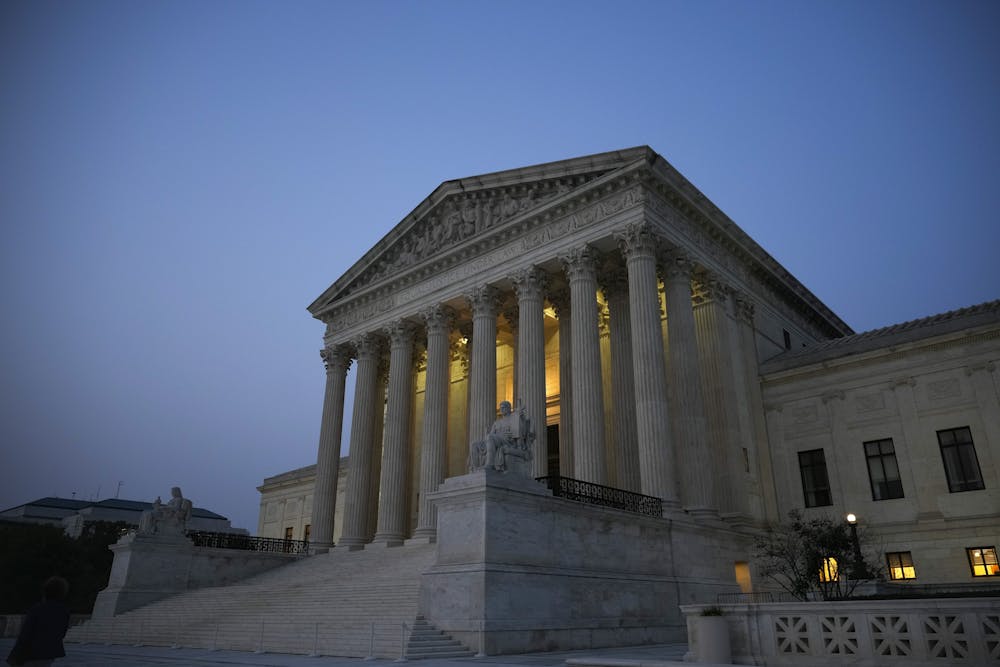
    The Supreme Court on April 10, 2025, unanimously upheld the lower court order directing the Trump administration to “facilitate” the return of Kilmar Abrego García, a Maryland man who was wrongly deported to a maximum security prison in El Salvador.

    The Supreme Court also directed the lower court to clarify aspects of the order.

    “The order properly requires the Government to ‘facilitate’ Abrego García’s release from custody in El Salvador and to ensure that his case is handled as it would have been had he not been improperly sent to El Salvador,” the Supreme Court order states.

    It is undisputed that the Trump administration made a mistake.

    The Justice Department admitted to deporting Abrego García to a maximum security prison in El Salvador even though an immigration judge in 2019 ordered that he not be deported. The judge did so under an immigration law called “withholding of removal,” which is a protection, like asylum, for people facing persecution in their home country.

    But the Trump administration has said a court cannot order it to fix its mistake and bring Abrego García back to the United States.

    According to the Trump administration, such an order would be “constitutionally intolerable.” The government has compared the court order to return Abrego García to an order to “‘effectuate’ the end of the war in Ukraine or return hostages from Gaza.”

    Abrego García should not have been deported

    Abrego García received this protective legal status six years ago. That’s when he proved to the court he was highly likely to be persecuted by the government or gangs in El Salvador due to a specific reason, as required under immigration law.

    Unlike asylum or refugee status, the status known as “withholding of removal” is not a pathway to citizenship. It allows a person to live and work in the U.S. indefinitely and not be deported to their country of nationality if they face persecution there.

    The government states it arrested and deported Abrego García on March 15 because he is a gang member. When Abrego García appealed his deportation, the federal district and appellate courts determined that the government provided no credible evidence of gang membership.

    That’s important, because the government failed to follow proper procedure to deport Abrego García based on gang membership. When someone is in “withholding of removal” status, the law requires the government to reopen immigration proceedings based on new evidence and seek to formally terminate the legal withholding status.

    Abrego García should have been notified of the government’s desire to deport him, and he should have had the opportunity to make his case at a court hearing. His summary deportation to El Salvador likely violated his right to due process under immigration law and the Constitution.

    Balance of powers are at stake

    The government did not follow the law, but it argues that the court cannot do anything about it.

    The crux of the government’s position is that a court does not have the power to order the release of a person in a foreign prison. That would interfere with the separation of powers among the executive and judicial branches. The president has the sole power to conduct foreign relations with El Salvador, and the government has argued that ordering the return of Abrego García interferes with that power.

    Prisoners watch as U.S. Secretary of Homeland Security Kristi Noem visits the Terrorist Confinement Center in Tecoluca, El Salvador, on March 26, 2025.
    Alex Brandon/Pool/AFP via Getty Images

    The court cannot order the Salvadoran government to do anything, but it can order the U.S. government to take steps to return García Abrego if he was unlawfully arrested and deported. That’s because the judiciary has the power to determine whether the president’s actions are lawful.

    The district court’s order was based on its determination that the president has likely violated immigration law and the Constitution in arresting and deporting Abrego García. The appellate court agreed.

    The Supreme Court has now said the order to facilitate Abrego García’s return is proper. But the high court also said the district court judge should further clarify its order, being mindful of the president’s authority when it comes to conducting foreign relations.

    Who is detaining Abrego García?

    The Salvadoran government seems to be imprisoning Abrego García at the request of the U.S. government.

    Trump administration lawyers have suggested in their briefing to the Supreme Court that there could be reasons under El Salvador law for Abrego García’s imprisonment. The government has not identified any reasons and has not provided any evidence that Abrego García is charged with a crime in El Salvador, or that he is being held under Salvadoran law.

    The Department of Homeland Security routinely contracts with local jails and for-profit prison corporations to temporarily house immigrant detainees in the U.S. The government has reportedly agreed to pay El Salvador US$6 million to imprison certain U.S. immigrant detainees for one year. The details of this agreement are not known.

    Kristi Noem, the Homeland Security secretary, has said that the Salvadoran megaprison is “one of the tools in our tool kit that we will use.”

    The district and appellate courts determined in this case that the U.S. is using the Salvadoran prison like any other detention facility. Under those circumstances, the U.S. government, not El Salvador, has ultimate control over Abrego García.

    The Supreme Court ruled that the government should facilitate Abrego García’s return.
    Drew Angerer/Getty Images

    As an immigration law scholar, I believe that the government can take steps to return Abrego García.

    In fact, other appellate courts have ordered the government to return immigrants who had been removed from the U.S. but later won their appeals of their removal orders. Those people were not in foreign prisons.

    U.S. Immigration and Customs Enforcement has created a formal policy for aiding the return of immigrants who were deported while their appeals were pending and then subsequently won their appeals.

    The government has argued that those situations are different. Here, it claims the court cannot demand the return of Abrego García, who is imprisoned in another country. The problem with the government’s argument is that it is the Trump administration that put Abrego García in a foreign prison.

    The Trump administration has also argued that Abrego García is not entitled to return to the U.S.. It has argued that even though it was a mistake to deport him to El Salvador under his withholding of removal status, Abrego García could have been removed to another country and has no right to return to the U.S..

    This would be true if Abrego García voluntarily left the U.S. or was deported to a country other than El Salvador, but that is not what happened. The government removed Abrego García to El Salvador in violation of U.S. law.

    The White House’s position in this matter is troubling because the president is supposed to enforce the law, not circumvent it.

    As Justice Sonia Sotomayor wrote in a separate statement published with the order and joined by Justices Elena Kagan and Ketanji Brown Jackson: “The Government’s argument, moreover, implies that it could deport and incarcerate any person, including U.S. citizens, without legal consequence, so long as it does so before a court can intervene.”

    What steps the government will take to return Abrego García is unclear. The Supreme Court’s decision leaves open the question of how far the court can go to enforce his return.

    Jean Lantz Reisz does not work for, consult, own shares in or receive funding from any company or organization that would benefit from this article, and has disclosed no relevant affiliations beyond their academic appointment.

    ref. What the Supreme Court’s ruling on man wrongly deported to El Salvador says about presidential authority and the rule of law – https://theconversation.com/what-the-supreme-courts-ruling-on-man-wrongly-deported-to-el-salvador-says-about-presidential-authority-and-the-rule-of-law-254037

    MIL OSI – Global Reports

  • MIL-OSI Security: Christopher G. Raia Named Assistant Director in Charge of the New York Field Office

    Source: Federal Bureau of Investigation (FBI) State Crime Alerts (c)

    Director Kash Patel has named Christopher G. Raia as the assistant director in charge of the New York Field Office. He most recently served as a deputy assistant director in the Counterterrorism Terrorism Division at FBI Headquarters in Washington, D.C.

    Mr. Raia joined the FBI as a special agent in 2003 and reported to the Texas City Resident Agency, a satellite office of the Houston Field Office. Mr. Raia spent 10 years investigating violent crime, gangs, drugs, and white-collar crime at the resident agency and served as the coordinator of the Safe Streets Task Force.

    In 2012, Mr. Raia reported to FBI Headquarters as a supervisory special agent to serve as a program manager in the International Terrorism Operations Section of the Counterterrorism Division. Mr. Raia oversaw all international terrorism cases in the Atlanta, Georgia; Dallas, Texas; Jackson, Mississippi; and Mobile, Alabama, field offices.

    Mr. Raia was promoted in 2014 to senior supervisory resident agent at the Bryan/College Station Resident Agency of the Houston Field Office, where he oversaw all national security and programs. In 2020, he was named the assistant special agent in charge of the Houston Field Office’s Violent Crime Branch and then of its National Security Branch in 2021.

    In 2023, Mr. Raia was selected to serve as the chief of staff for the executive assistant director of the National Security Branch at FBI Headquarters. Mr. Raia managed strategic initiatives, supervised executive staff, and directed communications projects. In addition, he coordinated major projects for external entities, such as Congress and the White House.

    Mr. Raia was promoted to deputy assistant director in the Counterterrorism Division at Headquarters in 2024 and oversaw all international counterterrorism program-management for the FBI.

    Mr. Raia graduated from the U.S. Coast Guard Academy and served as a Coast Guard officer in Florida before joining the FBI.

    MIL Security OSI

  • MIL-OSI NGOs: Israel/OPT: Ahmad Manasra’s release from prison is long overdue after a decade of ‘injustice, abuse and trauma’

    Source: Amnesty International –

    Manasra was interrogated aged 13 without a lawyer or parent present

    ‘The shocking ill-treatment of Manasra and cruelty exhibited towards him by the Israeli prison authorities and the Israeli justice system is an illustration of broader patterns of abuse against Palestinian detainees, especially children’ – Heba Morayef

    Responding to the release after nine and a half years imprisonment in an Israeli prison of Ahmad Manasra, a Palestinian arrested at the age of 13, Heba Morayef, Amnesty International’s Director for the Middle East and North Africa, said:

    “Ahmad Manasra’s release today is a huge relief for him and for his family, but nothing can undo the years of injustice, abuse, trauma and ill-treatment he endured behind bars.

    “Instead of releasing him on medical grounds years earlier when his mental health conditions significantly deteriorated, the Israeli parole committee invoked a provision in the abusive Counter-Terrorism Law to block his early release.

    “Manasra was interrogated at the age of 13 without a lawyer or parent present. Video footage of his interrogation showed interrogators shouting at him and insulting him as he became increasingly distressed.

    “Despite mounting calls for his release, Israeli authorities placed him under solitary confinement for nearly two years which significantly worsened his conditions. Solitary confinement longer than 15 days violates the prohibition of torture.

    “We express our deepest hope for Ahmad’s recovery from the profound trauma he has suffered. He must be granted adequate access to the healthcare he needs in his native East Jerusalem without any discrimination and he and his family must be protected from any form of intimidation and abuse.

    “The shocking ill-treatment of Manasra and cruelty exhibited towards him by the Israeli prison authorities and the Israeli justice system is an illustration of broader patterns of abuse against Palestinian detainees, especially children. Three weeks ago, a 17-year-old Palestinian detainee, Walid Khalid Abdullah Ahmad, died in Israeli custody likely due to a combination of starvation and extreme medical neglect and abuse, as evidenced by his autopsy.

    Ahmad Manasra’s release comes at a time when thousands of Palestinian prisoners and detainees face unprecedented levels of torture and other ill-treatment and denial of their most basic rights, such as food and healthcare. Israeli authorities repeatedly claimed that Manasra’s prolonged and cruel solitary confinement was aimed at protecting him, but in fact it subjected him to immense suffering.

    Human rights violations

    Ahmad Manasra was arrested in October 2015 in connection with a stabbing incident in occupied East Jerusalem. Despite evidence suggesting he did not participate in the stabbings, and despite his young age, he was subjected to harsh interrogation without legal representation or the presence of his parents. Footage of his interrogation, showing him distressed and injured, sparked international concern.

    In 2016, Manasra was convicted of attempted murder in proceedings that raised serious concerns about due process and his rights as a child. He was initially sentenced to 12 years in prison, later reduced to nine-and-a-half years in prison. His request for early release on medical grounds were rejected by the Israeli parole committee in 2022, decisions which the Israeli courts upheld. 

    During his years of incarceration, Manasra’s mental health significantly deteriorated, particularly during nearly two years spent in solitary confinement beginning in November 2021. Medical professionals diagnosed him with severe psychiatric conditions, including schizophrenia and severe depression, leading to hospitalisation within the prison system. Amnesty repeatedly raised concerns about his well-being and the detrimental impact of prolonged solitary confinement, which violates international law.

    Amnesty has consistently highlighted Manasra’s case as emblematic of the systemic human rights violations faced by Palestinian children within the Israeli military justice system.

    MIL OSI NGO

  • MIL-OSI NGOs: Israel/OPT: Long overdue release of Ahmad Manasra marks the start of a long and difficult path to recovery

    Source: Amnesty International –

    Responding to the release of Ahmad Manasra, a Palestinian arrested at the age of 13, from Israeli prison after nine and a half years imprisonment, Heba Morayef, Amnesty International’s Regional Director for the Middle East and North Africa said:

    “Ahmad Manasra’s release today is a huge relief for him and for his family, but nothing can undo the years of injustice, abuse, trauma and ill-treatment he endured behind bars. Instead of releasing him on medical grounds years earlier when his mental health conditions significantly deteriorated, the Israeli parole committee invoked a provision in the abusive Counter-Terrorism Law to block his early release. Ahmad Manasra was interrogated at age 13 without a lawyer or parent present. Video footage of his interrogation showed interrogators shouting at and insulting him as he became increasingly distressed. Despite mounting calls for his release, Israeli authorities placed him under solitary confinement for nearly two years which significantly worsened his conditions. Solitary confinement longer than 15 days violates the prohibition of torture.

    “We express our deepest hope for Ahmad’s recovery from the profound trauma he has suffered. He must be granted adequate access to the healthcare he needs in his native East Jerusalem without any discrimination and he and his family must be protected from any form of intimidation and abuse.

    Ahmad Manasra’s release today is a huge relief for him and for his family, but nothing can undo the years of injustice, abuse, trauma and ill-treatment he endured behind bars.

    Heba Morayef, MENA Regional Director

    “The shocking ill-treatment of Ahmad Manasra and cruelty exhibited towards him by the Israeli prison authorities and the Israeli justice system is an illustration of broader patterns of abuse against Palestinian detainees, especially children. Three weeks ago, a 17-year-old Palestinian detainee, Walid Khalid Abdullah Ahmad, died in Israeli custody likely due to a combination of starvation and extreme medical neglect and abuse, as evidenced by his autopsy.

    Ahmad Manasra’s release comes at a time when thousands of Palestinian prisoners and detainees face unprecedented levels of torture and other ill-treatment and denial of their most basic rights, such as food and healthcare. Israeli authorities repeatedly claimed that Manasra’s prolonged and cruel solitary confinement was aimed at protecting him, but in fact it subjected him to immense suffering.

    Background:

    Ahmad Manasra was arrested in October 2015 in connection with a stabbing incident in occupied East Jerusalem. Despite evidence suggesting he did not participate in the stabbings, and despite his young age, he was subjected to harsh interrogation without legal representation or the presence of his parents. Footage of his interrogation, showing him distressed and injured, sparked international concern.

    In 2016, Ahmad Manasra was convicted of attempted murder in proceedings that raised serious concerns about due process and his rights as a child. He was initially sentenced to 12 years in prison, later reduced to nine and a half years in prison. His request for early release on medical grounds were rejected by the Israeli parole committee in 2022, decisions which the Israeli courts upheld.  

    During his years of incarceration, Ahmad Manasra’s mental health significantly deteriorated, particularly during nearly two years spent in solitary confinement beginning in November 2021. Medical professionals diagnosed him with severe psychiatric conditions, including schizophrenia and severe depression, leading to hospitalization within the prison system. Amnesty International repeatedly raised concerns about his well-being and the detrimental impact of prolonged solitary confinement, which violates international law.

    Amnesty International has consistently highlighted Ahmad Manasra’s case as emblematic of the systemic human rights violations faced by Palestinian children within the Israeli military justice system.

    MIL OSI NGO

  • MIL-OSI NGOs: Yemen: US abrupt and irresponsible aid cuts compound humanitarian crisis and put millions at risk   

    Source: Amnesty International –

    The United States government’s abrupt and irresponsible termination of foreign assistance is putting the health and human rights of millions of people in Yemen who depend on humanitarian aid at risk, Amnesty International said today.   

    After a decade of a devastating conflict, Yemen continues to face one of the world’s worst humanitarian crises.   

    Aid workers described to Amnesty International how President Donald Trump’s decision to cut US aid funding has led to the shut-down of lifesaving assistance and protection services, including malnutrition treatment to children, pregnant and breastfeeding mothers, safe shelters to survivors of gender-based violence, and healthcare to children suffering from cholera and other illnesses.   

    The abrupt and irresponsible cuts in US aid will have catastrophic consequences on Yemen’s most vulnerable and marginalized groups.

    Diala Haidar, Amnesty International’s Yemen Researcher  

    “The abrupt and irresponsible cuts in US aid will have catastrophic consequences on Yemen’s most vulnerable and marginalized groups, including women and girls, children, and internally displaced people, jeopardizing their safety, dignity, and fundamental human rights,” said Diala Haidar, Amnesty International’s Yemen Researcher.  

    “Unless the US immediately reinstates sufficient funding for lifesaving aid to Yemen and ensures the money is disbursed expeditiously, an already devastating humanitarian situation will further deteriorate and millions of people in Yemen are going to be left without desperately needed support.  

    “Other donor states must also act urgently to uphold their human rights obligations by providing humanitarian assistance and supporting human rights in Yemen.”  

    After years of conflict and compounding crises, an estimated 19.5 million people, over half the population, are dependent on aid in Yemen. Yemen has the fifth-largest displacement crisis globally, with an estimated 4.8 million internally displaced people, most of whom are women and children, according to the UN Office for the Coordination of Humanitarian Affairs (OCHA). Over the last five years, during both President Trump’s first term and President Biden’s, the US has consistently been Yemen’s largest donor, providing $768 million dollars’ worth of support in 2024, comprising half of Yemen’s coordinated humanitarian response plan.  

    Amnesty International interviewed 10 humanitarian experts and aid workers with direct knowledge of the situation on the ground and six representatives of local human rights organizations, five of which provide direct services to vulnerable groups, all of whom said the impact of the cuts will be devastating, leading to suffering, death and more instability for an already fragile country. All of those interviewed requested to remain anonymous.  

    The manner in which the US State Department designated the Huthis a Foreign Terrorist Organization (FTO) has further compounded the humanitarian situation. The difficulty for aid organizations to certify compliance with the designation in the complex humanitarian environment in northern Yemen forced several international humanitarian organizations to suspend operations in Huthi-controlled territories.  The designation created significant confusion and concern, aid workers told Amnesty International. An executive order initiating the designation process did not reference any humanitarian exemptions and ordered that funds be cut off to any organization that “criticized international efforts to counter Ansar Allah [the Huthis] while failing to document Ansar Allah’s abuses sufficiently”.   

    “US measures targeting the Huthi de facto authorities should provide clear and effective exemptions for humanitarian aid operations and the delivery of life-saving supplies. The majority of civilians in critical need of aid live in Huthi-controlled areas in northern Yemen. The US’s designation of the Huthis as a terrorist organization should not obstruct aid and other supplies indispensable for keeping people alive, in good health and in safety,” said Diala Haidar.  

    Since 15 March, the US has also intensified its military operations in Yemen, carrying out several waves of air strikes against Huthi targets, including air strikes on Sana’a, Sa’adah, Hodeidah and other governorates under Huthi control.   

    “Hungry, displaced, and exhausted by violence, people in Yemen already lived in one of the most dire humanitarian crises in the world. The military escalation in Yemen, along with the US aid cuts, will compound the humanitarian disaster already facing a population still reeling from the long-standing conflict. it doesn’t have to be this way—the US should restart funding to these programmes immediately,” said Diala Haidar.   

    ‘We have been forced to make life and death decisions’  

    On 20 January, US President Donald Trump signed a presidential executive order, ordering that all foreign aid be paused during a 90-day review to ensure alignment with his administration’s foreign policy. On 24 January, US Secretary of State Marco Rubio issued a stop work order to those delivering assistance worldwide. The US said some exemptions would be granted, including to “life-saving humanitarian assistance”. On 10 March, only six weeks after the review was ordered, Rubio wrote on X that 83% of the foreign aid programmes at USAID had been officially cancelled.   

    Humanitarian organizations were left with impossible decisions to make on life-saving services while lacking clear communication from US agencies, such as USAID, multiple aid workers told Amnesty International.   

    One aid worker said: “We’ve been forced to make life and death decisions on little to no information. Often there is no one to speak to because USAID has been gutted. People you are emailing are not there. This is impacting our Yemen grant as well as many others elsewhere.”  

    On 28 March, the US State Department formally notified Congress it is dissolving USAID, eliminating some functions and moving the remainder under the State Department.  

    Devastating impact on women and girls  

    Women and girls across Yemen have long faced systemic discrimination and gender-based violence. Yemen has no legal minimum age of marriage, and almost one third of women are married before the age of 18. Child marriage is associated with a life-time of human rights harms. Yemen also has one of the highest maternal mortality rates in the Middle East and North Africa, with nearly 200 women dying for every 100,000 births, according to UNFPA.  

    According to experts and aid workers interviewed by Amnesty International, by March 2025, the US aid funding cuts had already forced the shutdown of dozens of safe spaces—designed to prevent or respond to gender-based violence—for women and girls across Yemen. They warned that if funding was not restored, dozens of health facilities and reproductive health and protection clinics would shut down, denying hundreds of thousands of women and girls, including survivors of gender-based violence, access to life-saving healthcare, psychosocial support and legal aid.  

    A representative of a local organization that provides a range of services to survivors of gender-based violence, including safe shelter, legal aid, and psychosocial support, said the US aid cuts had severely impacted more than half of their programmes. She told Amnesty International:   

    “Hundreds of women will be impacted… We are no longer providing psychological support, which is a crucial service for women survivors of gender-based violence. Legal aid counselling will also stop.”   

    In addition to the funding cuts, the US designation of the Huthis as an FTO led international organizations running lifesaving programmes that provided support to malnourished children and pregnant and breast-feeding mothers to suspend operations in Huthi-controlled areas. 

    The US is weakening years-long efforts by Yemeni women-led organizations to support and empower other women.

    Diala Haidar, Amnesty International’s Yemen Researcher

    “The US is weakening years-long efforts by Yemeni women-led organizations to support and empower other women,” said Diala Haidar. “When survivors of gender-based violence lose access to shelters, psychosocial support, referrals to health centres, legal aid and other critical services, they face life-threatening consequences. Funding cuts risk dismantling the existing network of protection and support that has been built over years by Yemeni women human rights defenders and humanitarian organizations, which in turn makes girls increasingly vulnerable, including to child marriage, human trafficking, begging and child labour.”   

    US policies on Yemen have also impacted other vulnerable groups, including children and the internally displaced. Approximately 2.3 million children in Yemen, nearly half of children under five, are acutely malnourished according to OCHA. A number of organizations have had to pause or end protection, health and nutrition services they were providing for infants and young children. Hundreds of thousands of internally displaced people are also projected to lose access to life-saving emergency relief as a result of the funding cuts.   

    ‘Funding cuts silence victims’ voices and weaken justice’  

    Representatives of local human rights organizations in Yemen also described how the abrupt US funding cuts jeopardized their work monitoring human rights violations and abuses whilst also undermining the rights of hundreds of the people they have been helping to find shelter, legal aid, and safety, including survivors of gender-based violence, women human rights defenders, and families of victims of enforced disappearance. They described how the move undermined their efforts to pursue justice and accountability in Yemen and feared that it will further embolden perpetrators of abuses   

    In describing the cuts, one human rights defender said: “We are already facing restrictions on our [human rights] work by the different authorities [in Yemen], so this felt as if the international community has abandoned us.”   

    A woman human rights defender explained that the US funding cuts would have a direct impact on victims of human rights violations, including the arbitrarily detained and forcibly disappeared because their documentation work and legal aid services will end. She said: “These victims and their families right to truth and justice is at stake.”  

    Another human rights defender said: “Funding cuts do not just end projects, funding cuts silence victims’ voices and weaken justice in Yemen.”  

    Background  

    Over the last five years, the United States has consistently been Yemen’s largest humanitarian donor. Other major donors to the humanitarian response include the United Kingdom, the European Commission, Saudi Arabia and Germany. Even before the US aid cuts, Yemen’s humanitarian response plan was consistently and severely underfunded for years. As of April 2025, the plan was only 6.9% funded.  

    The Huthis have also exacerbated the humanitarian crisis, targeting aid workers and other international staff working to deliver life-saving services in northern Yemen. Starting on 31 May 2024, they conducted a series of raids in areas under their control, arbitrarily detaining 13 UN staff and at least 50 staff from Yemeni and international civil society organizations. Between 23 and 25 January 2025, the Huthis conducted another wave of arrests arbitrarily detaining eight UN staff. On 11 February, one of the eight detained UN staff members died in Huthi custody. Many of those arrested were working to provide assistance or protection to those most in need, and the arrests prompted the UN to announce the suspension of all official movements into and within areas under Huthi control in January 2025.  

    MIL OSI NGO

  • MIL-OSI NGOs: Yemen: US military escalation and aid cuts will have ‘catastrophic consequences’ for millions of people – aid worker testimonies

    Source: Amnesty International –

    An estimated 19.5 million people are dependent on aid in Yemen

    Yemen has the fifth-largest displacement crisis globally and most are women and children

    Funding cuts makes girls increasingly vulnerable to child marriage, human trafficking, begging and child labour

    ‘We’ve been forced to make life and death decisions on little to no information. Often there is no one to speak to because USAID has been gutted’ – Aid worker

    ‘Hungry, displaced, and exhausted by violence, people in Yemen already lived in one of the most dire humanitarian crises in the world’ – Diala Haidar

    The United States government’s abrupt and irresponsible termination of foreign assistance is putting the health and human rights of millions of people in Yemen who depend on humanitarian aid at risk, Amnesty International said today.    

    After a decade of a devastating conflict, Yemen continues to face one of the world’s worst humanitarian crises.   

    Aid workers described to Amnesty how President Donald Trump’s decision to cut US aid funding has led to the shut-down of life-saving assistance and protection services, including malnutrition treatment to children, pregnant women and breastfeeding mothers, safe shelters to survivors of gender-based violence, and healthcare to children suffering from cholera and other illnesses.   

    After years of conflict and compounding crises, an estimated 19.5 million people – over half the population – are dependent on aid in Yemen. It has the fifth-largest displacement crisis globally, with an estimated 4.8 million internally displaced people, most of whom are women and children, according to the UN Office for the Coordination of Humanitarian Affairs. Over the last five years, during both President Trump’s first term and President Biden’s presidency, the US has consistently been Yemen’s largest donor, providing $768 million dollars’ worth of support in 2024, comprising half of the country’s coordinated humanitarian response plan.  

    Diala Haidar, Amnesty International’s Yemen Researcher, said:

    “The abrupt and irresponsible cuts in US aid will have catastrophic consequences on Yemen’s most vulnerable and marginalised groups, including women and children, and internally displaced people, jeopardising their safety, dignity, and fundamental human rights.

    “Unless the US immediately reinstates sufficient funding for life-saving aid to Yemen and ensures the money is disbursed expeditiously, an already devastating humanitarian situation will further deteriorate and millions of people will be left without desperately needed support.   

    “Other donor governments must also act urgently to uphold their human rights obligations by providing humanitarian assistance and supporting human rights in Yemen.”  

    Aid workers on the ground

    Amnesty interviewed 10 humanitarian experts and aid workers with direct knowledge of the situation on the ground and six representatives of local human rights organisations, five of which provide direct services to vulnerable groups, all of whom said the impact of the cuts will be devastating, leading to suffering, death and more instability for an already fragile country. All of those interviewed requested to remain anonymous.   

    The US State Department designating the Houthis as a Foreign Terrorist Organisation has further compounded the humanitarian situation. The difficulty for aid organisations to certify compliance with the designation in the complex humanitarian environment in northern Yemen forced several international humanitarian organisations to suspend operations in Houthi-controlled territories. The designation created significant confusion and concern, aid workers told Amnesty. An executive order initiating the designation process did not reference any humanitarian exemptions and ordered funds be cut off to any organisation that “criticised international efforts to counter Ansar Allah [the Houthis] while failing to document Ansar Allah’s abuses sufficiently”.   

    Since 15 March, the US has also intensified its military operations in Yemen, carrying out several waves of air strikes against Houthi targets, including air strikes on Sana’a, Sa’adah, Hodeidah and other governorates under Houthi control.   

    Diala Haidar added:

    “The majority of civilians in critical need of aid live in Houthi-controlled areas in northern Yemen. The US’s designation of the Houthis as a terrorist organisation should not obstruct aid and other supplies indispensable for keeping people alive, in good health and in safety.

    “Hungry, displaced, and exhausted by violence, people in Yemen already lived in one of the most dire humanitarian crises in the world. The military escalation in Yemen, along with the US aid cuts, will compound the humanitarian disaster already facing a population still reeling from the long-standing conflict. It doesn’t have to be this waythe US should restart funding to these programmes immediately.”  

    USAID gutted

    On 20 January, Donald Trump signed a presidential executive order ordering that all foreign aid be paused during a 90-day review to ensure alignment with his administration’s foreign policy. On 24 January, US Secretary of State Marco Rubio issued a stop work order to those delivering assistance worldwide. The US said some exemptions would be granted, including to “life-saving humanitarian assistance”. On 10 March, only six weeks after the review was ordered, Rubio wrote on X that 83% of the foreign aid programmes at USAID had been officially cancelled.   

    Humanitarian organisations were left with impossible decisions to make on life-saving services while lacking clear communication from US agencies, such as USAID, multiple aid workers told Amnesty.   

    One aid worker said:

    “We’ve been forced to make life and death decisions on little to no information. Often there is no one to speak to because USAID has been gutted. People you are emailing are not there. This is impacting our Yemen grant as well as many others elsewhere.”  

    On 28 March, the US State Department formally notified Congress it is dissolving USAID, eliminating some functions and moving the remainder under the State Department.  

    Devastating impact on women and girls  

    Women and girls across Yemen have long faced systemic discrimination and gender-based violence. Yemen has no legal minimum age of marriage, and almost one third of girls are married before the age of 18. Child marriage is associated with a lifetime of human rights harms. Yemen also has one of the highest maternal mortality rates in the Middle East and North Africa, with nearly 200 women dying for every 100,000 births, according to UNFPA.  

    According to experts and aid workers interviewed by Amnesty, by March 2025, the USAID funding cuts had already forced the shutdown of dozens of safe spaces designed to prevent or respond to gender-based violence for women and girls across Yemen. They warned that if funding was not restored, dozens of health facilities and reproductive health and protection clinics would shut down, denying hundreds of thousands of women and girls, including survivors of gender-based violence, access to life-saving healthcare, psychosocial support and legal aid.  

    A representative of a local organisation that provides a range of services to survivors of gender-based violence, including safe shelter, legal aid, and psychosocial support, said the US aid cuts had severely impacted more than half of their programmes. She told Amnesty:   

    “Hundreds of women will be impacted… We are no longer providing psychological support, which is a crucial service for women survivors of gender-based violence. Legal aid counselling will also stop.”   

    Diala Haidar, added:

    “The US is weakening years-long efforts by Yemeni women-led organisations to support and empower other women. When survivors of gender-based violence lose access to shelters, psychosocial support, referrals to health centres, legal aid and other critical services, they face life-threatening consequences. Funding cuts risk dismantling the existing network of protection and support that has been built over years by Yemeni women human rights defenders and humanitarian organisations, which in turn makes girls increasingly vulnerable, including to child marriage, human trafficking, begging and child labour.”   

    US policies on Yemen have also impacted other vulnerable groups, including children and the internally displaced. Approximately 2.3 million children in Yemen, nearly half of children under five, are acutely malnourished according to the UN Office for the Coordination of Humanitarian Affairs. Several organisations have had to pause or end protection, health and nutrition services they were providing for infants and young children. Hundreds of thousands of internally displaced people are also projected to lose access to life-saving emergency relief because of the funding cuts.   

    Restrictions on human rights work

    Representatives of local human rights organisations in Yemen also described how the abrupt cuts jeopardised their work monitoring human rights violations and abuses whilst also undermining the rights of hundreds of the people they have been helping to find shelter, legal aid, and safety, including survivors of gender-based violence, women human rights defenders, and families of victims of enforced disappearance. They described how the move undermined their efforts to pursue justice and accountability in Yemen and feared that it will further embolden perpetrators of abuses   

    One human rights defender said: 

    “We are already facing restrictions on our [human rights] work by the different authorities [in Yemen], so this felt as if the international community has abandoned us.”

    A woman human rights defender explained that the US funding cuts would have a direct impact on victims of human rights violations, including the arbitrarily detained and forcibly disappeared because their documentation work and legal aid services will end. She said: “These victims and their families right to truth and justice is at stake.”  

    Another said:

    “Funding cuts do not just end projects, funding cuts silence victims’ voices and weaken justice in Yemen.”  

    UN workers detained    

    The Houthis have also exacerbated the humanitarian crisis, targeting aid workers and other international staff working to deliver life-saving services in northern Yemen. Starting on 31 May 2024, they conducted a series of raids in areas under their control, arbitrarily detaining 13 UN staff and at least 50 staff from Yemeni and international civil society organisations. Between 23 and 25 January this year, the Houthis conducted a wave of arrests arbitrarily detaining eight UN staff. On 11 February, one of the eight detained UN staff members died in Houthi custody. Many of those arrested were working to provide assistance or protection to those most in need, and the arrests prompted the UN to announce the suspension of all official movements into and within areas under Houthi control in January.  

    Humanitarian donors

    Over the last five years, the US has consistently been Yemen’s largest humanitarian donor. Other major donors to the humanitarian response include the United Kingdom, the European Commission, Saudi Arabia and Germany. Even before the US aid cuts, Yemen’s humanitarian response plan was consistently and severely underfunded for years. As of this month, the plan is only 6.9% funded.  

    MIL OSI NGO

  • MIL-OSI United Nations: In Dialogue with Mauritius, Experts of the Committee against Torture Praise the Prohibition of Corporal Punishment, Ask about the Minimum Penalty for Torture and Prison Conditions

    Source: United Nations – Geneva

    The Committee against Torture today concluded its consideration of the fifth periodic report of Mauritius, with Committee Experts praising the prohibition of corporal punishment through the children’s act of 2020, and raising questions about the minimum penalty for torture offences, prison conditions and the treatment of prisoners.

    Naoko Maeda, Committee Expert and Country Co-Rapporteur, commended the children’s act of 2020, which prohibited corporal punishment in all settings and established a special court for children.  Would the State party establish a time limit for pre-trial detention of children that was in accordance with the Beijing Rules?  How many children were in pre-trial detention?

    Bakhtiyar Tuzmukhamedov, Committee Expert and Country Co-Rapporteur, said the section of the Criminal Code on police brutality had been amended to increase the upper threshold of fines and prison sentences for the offence.  However, it did not set lower thresholds for these punishments. Would this section apply to acts of torture and were the punishments sufficient?

    Ms. Maeda expressed concern regarding reports of inadequate food and material conditions in prisons, insufficient access to medical and rehabilitation services and family visits, and the number of detainees who died in police custody. How were these issues being addressed?

    She further noted with concern that the provisional charges system was still in place, under which persons could be detained on suspicion of commission of a serious offence. How did the State party ensure detainees’ rights from the moment of detention, including the right to be presented before a judge?

    Introducing the report, Gavin Patrick Cyril Glover, Attorney-General of Mauritius and head of the delegation, said the children’s act of 2020 prohibited the infliction of corporal or humiliating punishment on a child as a discipline measure.  The act also set the age of criminal responsibility at 14 years and stressed that the detention of a juvenile suspected of having committed a criminal offence was imposed only as a measure of last resort.

    On the minimum penalty for torture, the delegation said prosecutors typically called for the highest penalty in cases of torture, but judges had the ability to issue lesser penalties.  The State party would address the lack of minimum penalties for torture crimes in its legislation.

    Mr. Glover said Mauritius’ Constitution, the reform institutions act, and prison regulations provided for the safe and humane treatment of prisoners.  The National Preventive Mechanism Division examined the treatment of persons deprived of their liberty, and police and prison officers received training on international and regional human rights standards prohibiting torture.

    The delegation added that there had been some worrying reports of abuse of authority by police officers.  The Independent Police Complaints Commission had taken on the burden of investigating these cases and determining accountability.  The delegation cited four cases of deaths in custody for which judicial inquiries had been launched.

    The police and criminal evidence bill had yet to be adopted, the delegation said, but it would likely be adopted within a year. It set a time limit for the detention of persons awaiting trial, and stated that arrests could not be carried out without sufficient evidence.

    In closing remarks, Claude Heller, Committee Chair, said the Committee was encouraged by the dialogue and expressed hope that the rule of law was being strengthened in the State.  The Committee hoped that its recommendations would have a positive impact on the human rights situation in Mauritius.

    In his concluding remarks, Mr. Glover said that the Committee’s review would help to ensure that deficiencies in Mauritius’ legal and policy framework would be addressed.  The State party would ensure that the winds of change that started to blow with the election of the new Government in November 2024 would continue.

    The delegation of Mauritius consisted of representatives from the Attorney-General’s Office; Ministry of Foreign Affairs, Regional Integration and International Trade; and the Permanent Mission of Mauritius to the United Nations Office at Geneva.

    The Committee will issue concluding observations on the report of Mauritius at the end of its eighty-second session on 2 May.  Those, and other documents relating to the Committee’s work, including reports submitted by States parties, will be available on the session’s webpage.  Summaries of the public meetings of the Committee can be found here, and webcasts of the public meetings can be found here.

    The Committee will next convene in public on Monday, 14 April at 11 a.m. to hear the presentation of the annual report of the Chair of the Subcommittee on Prevention of Torture.

    Report

    The Committee has before it the fifth periodic report of Mauritius (CAT/C/MUS/5).

    Presentation of Report

    GAVIN PATRICK CYRIL GLOVER, Attorney-General of Mauritius and head of the delegation, said Mauritius had always strived to uphold its obligations under international law.  This could be seen through the ratification of seven core United Nations human rights treaties and five Optional Protocols to these treaties, including the Optional Protocol to the Convention against Torture.  The provisions of these instruments had been incorporated in the domestic legislative framework through various legislation.  The provisions of the Rome Statute had also been domesticated, thus providing national courts with universal jurisdiction over war crimes, including torture.

    Last December, the Government translated the Convention into the widely spoken dialect of Kreol Morisien and published this translation online to raise awareness about its content.  Police and prison officers were directed to ensure compliance with the provisions of the Convention.  In addition, in order to promote the universal accession of the Convention, Mauritius had joined the Convention against Torture Initiative.

    Last year’s general elections in Mauritius demonstrated the vibrancy of the State’s democracy, with a very high turnout of almost 80 per cent of voters.  The new Government, under the leadership of Prime Minister Navinchandra Ramgoolam, had embarked on a mission to strengthen democratic principles and access to justice.  The new Government would set up a Constitutional Review Commission to make recommendations for constitutional reforms that enhanced the protection of fundamental rights.

    On 4 April 2025, the Cabinet agreed to the introduction of the Constitution (amendment) bill and the Criminal Code (amendment) bill into the National Assembly. The first bill aimed to repeal section 7 (2) of the Constitution to ensure the absolute prohibition of torture in all circumstances, and the second bill would bring the Criminal Code provisions on homicide, wounds and blows under lawful authority in line with the absolute ban on torture.  The Cabinet had also approved an amendment to the Criminal Code that removed provisions excusing manslaughter committed on spouses found committing the act of adultery. These revisions were in line with Committee recommendations.

    The police and criminal evidence bill would soon be adopted. This would become one of the most significant pieces of legislation in the criminal justice system, impacting the work of the Independent Police Complaints Commission.  Additionally, the Government would adopt a zero-tolerance policy and a victim-oriented approach to domestic abuse and human trafficking. Consultations were ongoing for the introduction of a new domestic abuse bill, which would define marital rape as a specific criminal offence with appropriate penalties.

    The children’s act of 2020 promoted the best interests of the child and prohibited the infliction of corporal or humiliating punishment on a child as a discipline measure. The offence carried, as penalty, a fine not exceeding 200,000 rupees and a prison term not exceeding five years. The act also set the age of criminal responsibility at 14 years and stressed that the detention of a juvenile suspected of having committed a criminal offence was imposed only as a measure of last resort.  A Children’s Court had been set up and was operational.  The 2020 child sex offender register act aimed to reduce and prevent the risk of sexual offences against children, as recommended by the Committee.

    Mauritius had developed a National Action Plan on Trafficking in Persons 2022-2026, in collaboration with the International Organization for Migration.  Following amendments in 2023, the combatting of trafficking in persons act provided for a victim-centred approach, allowing for more rigorous identification and prosecution of cases of trafficking in persons. It established an effective institutional framework and provided additional legal powers to the police to protect victims.

    The Constitution of Mauritius, the reform institutions act, the prison regulations, and the prison standing orders provided for the safe and humane treatment of prisoners in Mauritius.  The Mauritius Prison Service adhered to the Nelson Mandela Rules.  The National Preventive Mechanism Division examined the treatment of persons deprived of their liberty with a view to ensuring their protection against torture and made recommendations regarding the improvement of prison conditions.  Officers from police and prison departments regularly received training courses on international and regional human rights standards prohibiting torture, and national and international codes of conduct for law enforcement.

    Mauritius was committed to upholding its obligations towards human rights treaty bodies, including the Convention, as demonstrated by its serious endeavours to comply with the Committee’s recommendations.

    Questions by Committee Experts

    BAKHTIYAR TUZMUKHAMEDOV, Committee Expert and Country Co-Rapporteur, said the State’s Constitution upheld the right to be free from “torture or inhuman or degrading punishment or other such treatment” but did not mention “cruel” treatment.  Why was this?  The Committee hoped that the planned amendments to the Constitution were successful. Was the right to be free from torture non-derogable and absolute, including in states of emergency?  Did the Convention take precedence over domestic legislation?  Were the provisions of the Convention that referenced “cruel treatment” deemed to be contrary to the Constitution?

    The definition of torture in the Criminal Code made exceptions for offences committed by public officials carrying out punishments determined by law.  Why was this?  Did the State’s legislation address the offence of planning to commit torture? Could the Convention be invoked in domestic courts?  Why was the Supreme Court reluctant to cite applicable provisions of the African Charter?

    The section of the Criminal Code on police brutality had been amended to increase the upper threshold of fines and prison sentences for the offence.  However, it did not set lower thresholds for these punishments.  Would this section apply to acts of torture and were the punishments sufficient?  The penalty for acts of corporal torture in the Code was far higher.  Why was this?  If police officers committed acts of torture, under what provision were they investigated?

    Who appointed judges in Mauritius, how were they selected and how independent and impartial was the process? Were judges required to continue their education throughout their careers?  How ethnically diverse was the judiciary and law enforcement?  How were elements of traditional justice harmonised with the ordinary legal system?

    The displacement of the inhabitants of the Chagos islands amounted to inhuman treatment by a foreign State. What measures were in place to support them?  What were their chances of obtaining full redress and compensation, including relocation to their native islands?

    What measures had the State party taken under the Prevention of Terrorism Act?  How did the Government ensure that these measures complied with its obligations under international law, including the Convention?  Would the State party consider acceding to the 1951 Convention Relating to the Status of Refugees?  Mauritius was not a party to the Second Optional Protocol to the International Covenant on Civil and Political Rights, aiming at the abolition of the death penalty, or to the Optional Protocol to the International Covenant on Economic, Social and Cultural Rights, the International Convention on the Protection of the Rights of All Migrant Workers and Members of their Families, and the International Convention for the Protection of All Persons from Enforced Disappearance.  Did Mauritius intend to complete accession to those instruments?

    Did the Constitution allow for the potential reinstatement of capital punishment?  What percentage of police and prison officers completed training programmes on preventing torture?  Did this training address the revised Istanbul Protocol of 2022?

    NAOKO MAEDA, Committee Expert and Country Co-Rapporteur, said the National Human Rights Commission of Mauritius had “A” status under the Paris Principles.  How was the State party promoting the participation of civil society in the Commission and ensuring that the appointment process for members was transparent?  What resources were provided to the Commission over the reporting period?

    The Committee was concerned that the police and criminal evidence bill had yet to be introduced in the National Assembly and the provisional charges system was still in place, under which persons could be detained on suspicion of commission of a serious offence.  How did the State party ensure detainees’ rights from the moment of detention, including the right to be presented before a judge and the right to access a lawyer and free legal aid where applicable?

    The Committee commended increases in the numbers of judges and magistrates and measures to reduce lengths of trials and pre-trial detention.  However, there was still a high rate of lengthy pre-trial detention. What measures were in place to reduce the length and use of pre-trial detention, and to introduce alternatives to detention, in accordance with the Tokyo Rules?

    The Committee commended the creation of the Independent Police Complaints Commission, which investigated complaints against the actions of police officers.  However, the three members of this body continued to be appointed by the President.  What measures were in place to ensure the independence of this Commission?  How did the State party ensure that the Commission’s investigations were conducted in a timely manner?  There was a low rate of investigated and prosecuted cases as of 2021. How many investigations had resulting in findings of torture by the police?  How did the State party ensure that complainants did not face reprisals?

    The Committee welcomed training for police officers on topics such as the inadmissibility of evidence obtained under duress.  How many officials had been prosecuted for extracting evidence under duress, and in how many cases had courts rejected such evidence?

    The Committee was concerned by reports of inadequate food and material conditions in prisons, as well as insufficient access to medical and rehabilitation services and family visits. How were these issues being addressed? The Committee was concerned by the number of detainees who died in police custody.  What measures were in place to investigate and prevent such deaths? The National Human Rights Commission had also raised concerns about remand detainees being held with convicted detainees, contrary to the Mandela Rules.  What measures were in place to address this?  There were 140 women in prison in Mauritius, the majority of whom were foreigners.  What were foreign detainees charged with?  How did the State party ensure that prison conditions for women detainees were appropriate?

    The Subcommittee on Prevention of Torture and Other Cruel, Inhuman or Degrading Treatment or Punishment’s report on its last visit to Mauritius had not been made public by the State party. The Committee called on the State party to do so, and to present measures taken to address the report’s recommendations.

    The Committee commended the children’s act of 2020, which prohibited corporal punishment in all settings and established a special court for children.  However, the Committee was concerned about the lack of progress in establishing the juvenile justice system prescribed by the Act.  Would the State party establish a time limit for pre-trial detention of children that was in accordance with the Beijing Rules? How many children were in pre-trial detention?  Could children be tried in the absence of their legal guardian?

    There were no legal provisions banning marital rape.  What steps had been taken to develop such provisions?  There had reportedly been an increase in sexual and gender-based violence in the State and under-reporting of such cases by victims due to fear of stigmatisation.  Had the State party taken actions to improve the mechanism for reporting violence against women?  What support services were available for victims?  The Criminal Code criminalised all acts related to the provision of abortions, even in cases of sexual violence.  Would the State party reconsider its blanket ban?

    What policy reforms were being made to protect asylum seekers from non-refoulement and create a more supportive environment for asylum seekers?  The State party did not have an established procedure for dealing with statelessness.  Did it plan to accede to international conventions on statelessness?

    Another Committee Expert asked how asylum seekers were treated while waiting for processing of their asylum applications.  Were they detained and did they have access to healthcare and education services?

    One Committee Expert noted the steps taken to amend the Constitution and the Criminal Code, including to set the age of minimum criminal responsibility to 14 years.  What steps had been taken to enable victims of torture to access redress and rehabilitation programmes?  Could the delegation provide statistics on court cases concerning redress and alleged violations of rights under article 14 of the Convention?  Had measures been taken to incorporate elements of the Convention on redress into domestic legislation?

    Another Committee Expert said it was commendable that in October 2023, the Supreme Court made a historic decision to decriminalise same-sex relations between consenting adults.  However, there were still reports of hate crimes against individuals based on their perceived sexual orientation and gender identity, and a lack of investigations into such cases.  How was the State party addressing this issue?

    Responses by the Delegation

    The delegation said the 2024 elections gave the Government the majority in the National Assembly needed to push through amendments to the Constitution and the Criminal Code related to torture. The State party aimed to completely overhaul its justice system to enhance access to justice.  The Constitutional Review Commission would consider revising the Constitution to address acts of cruelty.  The State party aimed to bring the Constitution and its legislative framework in line with the international treaties to which Mauritius was a party.

    Criminal Code provisions on “conspiracy offences” specified that there was a possibility to prosecute for “wrongful” acts that did not breach specific laws.  Planning to commit serious offences such as torture could be prosecuted under this provision.  Prosecutors typically called for the highest penalty in cases of torture, but judges had the ability to issue lesser penalties.  The State party would address the lack of minimum penalties for torture crimes in its legislation.

    There was a case concerning a death in detention that was before the Supreme Court, and three other cases on deaths in custody before other courts.  There had been some worrying cases of abuse of authority by police officers. The Independent Police Complaints Commission had taken on the burden of investigating these cases and determining accountability.  The Public Prosecutor had opened a judicial inquiry to find out the facts in one case, responding to the recommendations of the Commission.

    Judges of the Supreme Court were appointed from State Law Offices based on seniority.  Judges typically had at least 20 years of experience at the time of their appointment.  This system did not involve the executive; the chief judges of the Supreme Court were responsible for appointments.  There were no ethnicity considerations in appointments.  Continuous training on human rights was provided to members of the judiciary.  The State party was considering opening a magistracy school, but this had not been achieved yet.

    The death penalty was abolished in the Criminal Code in 1995, but a motion to amend the reference to the death penalty in the Constitution was rejected by the Parliament at that time. This was why the State party had not ratified the Second Optional Protocol to the International Covenant on Civil and Political Rights.  All death sentences were commuted to life imprisonment after the abolition.  The Constitutional Review Committee would consider amending the Constitution to remove the reference to the death penalty.

    The police and criminal evidence bill had yet to be adopted, but it would likely be adopted within a year. Its name would be changed to the police and criminal justice bill.  The bill would regulate police officers’ powers to investigate, arrest and detain suspects, set a time limit for the detention of persons awaiting trial, and guarantee the human rights of detainees.  The bill stated that arrests could not be carried out without sufficient evidence and had provisions to govern the admissibility of confessions. The limit for pre-trial detention was set by the bill at 48 hours but could be extended to a maximum of 72 hours for serious offences.

    Domestic courts had not cited recent international court cases related to the Chagos islands.  Mauritius’ position was that the United Kingdom owed redress and compensation to native Chagossians and their descendants.  The Government of Mauritius had developed measures to promote the integration of the Chagossian community into Mauritius, including scholarships, housing services, food distribution, and recreational activities.  Negotiations related to sovereignty of the islands and resettlement were ongoing with the United Kingdom, but the Government believed that the relocation of Chagossians had to occur at some point in time.

    Mauritius was previously a French and English colony, and its laws on human rights were inspired by the European Convention of Human Rights.  This was why courts often referenced this Convention.  However, many courts had also referred to the African Charter on Human and Peoples’ Rights.

    Current thresholds for legal aid were ridiculous; legal aid was currently only available to persons who earned less than 15,000 rupees a month, even though the minimum wage was 20,000 rupees a month.  The Government was reviewing legislation to promote better access to legal aid for persons with low incomes.  The Criminal Procedural Act and other legislation had also been amended to ensure that courts gave persons full credit for time spent in pre-trial detention when issuing prison sentences.

    The delegation cited four cases of deaths in custody for which judicial inquiries had been launched.  In one case, the inquiry found that blows to the victim were not made to extract a confession, while in another, nine police officers were being prosecuted for offences including bodily harm to the victim and the hiding of evidence.  In a 2022 case, a citizen was reportedly taken to a police station and tasered while completely naked.  The police officers who allegedly engaged in this act were now being prosecuted. There were several cases of victims seeking damages for alleged human rights violations by public officials that were pending before the Supreme Court.  One case had been settled out of court without an admission of guilt by the State.

    There were currently 18 refugees and 80 asylum seekers in Mauritius.  Persons who were not lawful residents of Mauritius did not have access to public education services.  However, Caritas provided private education to the children of asylum seekers.  The previous Government had decided in 2023 not to implement an asylum processing system proposed by the United Nations High Commissioner for Refugees.  Mauritius had not ratified international conventions on statelessness or refugees, as doing so would have serious implications on the State’s limited resources. The Prime Minister had the authority to grant nationality to any stateless persons; currently, the State was not aware of any stateless persons on its territory.

    The Criminal Code provided for a minimum period of three years imprisonment for unlawful arrests.  The probation of offenders act was last amended 15 years ago, and there was a need to modernise it.  Probation was currently rarely used in Mauritius, but courts had alternatives to detention such as community service.

    There was legislation that allowed for lawful abortions when specialists determined that the pregnancy endangered the mother’s life, would result in malformation of the foetus, resulted from rape, or when the mother was aged 16 or under.  The Minister of Gender Equality and Family Welfare conducted awareness raising campaigns on domestic violence.  There were around 500 cases of domestic violence reported in the past few weeks thanks to efforts to raise awareness of reporting channels.  Victims were supported by the State and non-governmental organizations to access temporary shelter, legal advice, psychosocial support, and other services.  In 2024, the Government introduced a policy on workplace sexual harassment.

    Children aged 14 and under who were in conflict with the law were not detained but could be placed in “places of safety” if necessary.  The criminal division of the Children’s Court had exclusive jurisdiction over cases involving child offenders aged 14 to 17.  If the detention of juveniles was necessary, they were detained in the youth detention centre, where juveniles under pre-trial detention were separated from those serving sentences.  While there were over 50 arrests of children in 2022, there were only 12 in 2024 and thus far four in 2025.  This demonstrated that the new laws were working.

    A digital interview recording system was operational in eight places of deprivation of liberty in Mauritius. Interviewees had the right to refuse digital recording of statements.  Thus far, courts had found evidence to be inadmissible in only a small number of cases, due to legal limitations.  The police did not work within a rigid protocol and had pushed back against the police and criminal justice bill.  The new police and criminal justice bill would address these issues.

    Questions by Committee Experts

    NAOKO MAEDA, Committee Expert and Country Co-Rapporteur, said the involuntary hospitalisation of persons with disabilities, including children, was still allowed in Mauritius.  How many cases of involuntary hospitalisation had oversight bodies reviewed and what were their outcomes?  Could the national preventive mechanism conduct unannounced visits to residential care homes and hospitals?  Had there been reports of ill-treatment in these institutions?

    Could the delegation comment on reports of increased arbitrary arrests, threats and attacks experienced by human rights defenders, a worsening environment for human rights lawyers, and intimidation and harassment of journalists?

    Despite the State party’s efforts, including through training for police officers and the 2023 amendments to the combatting in trafficking persons act, human trafficking was reportedly still prevalent, notably sex trafficking of women and children and trafficking for the purpose of labour exploitation in the manufacturing and construction sectors. What measures were in place to tackle difficulties in gathering evidence of trafficking and to provide support services to all victims?

    The presence of civil society from Mauritius in the reporting process was relatively low.  How did the State party encourage civil society organizations to participate and disseminate the Convention and the Committee’s recommendations?

    BAKHTIYAR TUZMUKHAMEDOV, Committee Expert and Country Co-Rapporteur, welcomed that the State party was seemingly preparing to make constitutional amendments to address the issues raised in the dialogue.  Was the minimum punishment for police brutality three years imprisonment? Persons under suspicion of an offence relating to terrorism could be detained for a period of up to 36 hours, which could amount to incommunicado detention.  Was the denial of bail act still being applied? 

    The Committee welcomed that Mauritius was participating in the Convention against Torture Initiative. Was it taking measures to prevent the trade of equipment solely used for torture?

    Another Committee Expert asked if the State party had taken initiatives such as training to better control the police.

    Responses by the Delegation

    The delegation said the last 10 years in Mauritius had been very difficult for its citizens.  The resounding victory of the current Government in the most recent elections was evidence that things were changing in the country.  The Government was working to strengthen training for police officers on human rights and regulation of the police force.  It would push for the adoption of the police and criminal justice bill as quickly as possible.

    The National Human Rights Commission had the power to conduct unannounced visits of residential homes. The Government would call on the Commission to exercise this power to protect the rights of the elderly.

    There were around 10 human rights lawyers in Mauritius, who had had great difficulty in accessing their clients. Some had been arrested in the exercise of their duties.  The police now knew that they needed to respect the rights of these human rights defenders.  Since November 2024, human rights lawyers had not complained about their treatment by police officers.  Planned legislation would prevent police from obstructing human rights defenders.

    The Government had a zero-tolerance policy to trafficking in persons.  Much had been done to fight trafficking, underpinned by the national action plan on trafficking, which was developed in collaboration with the International Organization for Migration.  The Director of Public Prosecutions had set up a taskforce to investigate trafficking cases and support victims. There were 48,000 migrant workers in Mauritius, many of whom were working without permits.  The Government aimed to protect these workers from trafficking and ensure that employers educated workers on their rights.

    Suspects could be held under the terrorist act in incommunicado detention for up to 36 hours.  There were only two drug-related cases in which suspects had been held in incommunicado detention in the last 10 years.  The denial of bail act had been declared unconstitutional but was still on the law books; it needed to be removed.

    Mauritius did not trade in goods for capital punishment.  It imported equipment for police officers that was meant exclusively to protect police officers when they were being violently attacked.  The firearms act prohibited the manufacturing or purchase of noxious liquids.

    Concluding Remarks

    CLAUDE HELLER, Committee Chair, said that the Committee appreciated the delegation’s frank approach to the dialogue.  It was encouraged by the winds of change described by the delegation and expressed hope that the rule of law was being strengthened in the State.  The Committee would consider the difficulties faced by the State party in changing the mindsets of law enforcement officials. Based on the dialogue, it would select priority recommendations that the State party could implement within a year. It hoped that these recommendations would have a positive impact on the human rights situation in Mauritius.

    GAVIN PATRICK CYRIL GLOVER, Attorney-General of Mauritius and head of the delegation, said the Committee’s review would help to ensure that deficiencies in the State’s legal and policy framework would be addressed.  Mauritius looked forward to the Committee’s observations.  The dialogue had been frank and positive.  The State party would work to ensure that the winds of change that started to blow with the election of the new Government in November 2024 would continue.

    ___________

    Produced by the United Nations Information Service in Geneva for use of the media; 
    not an official record. English and French versions of our releases are different as they are the product of two separate coverage teams that work independently.


    CAT25.003E

    MIL OSI United Nations News

  • MIL-OSI Asia-Pac: Naxalmukt Bharat Abhiyan: From Red Zones to Growth Corridors

    Source: Government of India

    Naxalmukt Bharat Abhiyan: From Red Zones to Growth Corridors

    India’s Decisive Battle Against Left Wing Extremism

    Posted On: 10 APR 2025 7:49PM by PIB Delhi

    “It is true that Maoist violence had stalled the progress of many districts in central and eastern India. That is why in 2015, our government formulated a comprehensive ‘National Policy and Action Plan’ to eradicate Maoist violence. Along with zero tolerance towards violence, we have also focused on a massive push to infrastructure and social empowerment to bring a positive change in the lives of the poor people in these regions.”

    – Prime Minister Narendra Modi

    Introduction

    Left Wing Extremism (LWE), often referred to as Naxalism, is one of India’s most serious internal security challenges. Rooted in socio-economic inequalities and fueled by Maoist ideology, LWE has historically affected some of the most remote, underdeveloped, and tribal-dominated regions of the country. The movement has aimed to undermine the Indian state through armed rebellion and parallel governance structures, particularly targeting security forces, public infrastructure, and democratic institutions. Originating from the Naxalbari movement of 1967 in West Bengal, it spread primarily across the “Red Corridor,” affecting states like Chhattisgarh, Jharkhand, Odisha, Maharashtra, Kerala, West Bengal, Madhya Pradesh, and parts of Andhra Pradesh and Telangana. The Maoist insurgents claim to fight for the rights of the marginalized, particularly tribal communities, but their methods include armed violence, extortion, destruction of infrastructure, and recruitment of children and civilians.

    However, in recent years, India’s multidimensional counter-LWE strategy – combining security enforcement, inclusive development, and community engagement – has delivered significant success. The movement has been systematically weakened, violence has drastically declined, and many LWE-affected districts are being reintegrated into the national mainstream. The government of India is committed to completely eliminate Naxalism by 31st March 2026, since Naxalism is seen as the biggest obstacle in the development of remote areas and tribal villages, as it prevents education, healthcare, connectivity, banking, and postal services from reaching these villages.

    The number of LWE affected districts reduced from 126 to 90 in April 2018, 70 in July 2021 and further to 38 in April-2024. Out of total Naxalism-affected districts, number of most affected districts has been reduced from 12 to 6, which include four districts from Chhattisgarh (Bijapur, Kanker, Narayanpur, and Sukma), one from Jharkhand (West Singhbhum), and one from Maharashtra (Gadchiroli). Similarly, out of the total 38 affected districts, the number of Districts of Concern, where additional resources need to be intensively provided beyond the severely affected districts, has reduced from 9 to 6. These 6 districts are: Andhra Pradesh (Alluri Sitarama Raju), Madhya Pradesh (Balaghat), Odisha (Kalahandi, Kandhamal, and Malkangiri), and Telangana (Bhadradri-Kothagudem). Due to persistent action against Naxalism, number of Other LWE-affected Districts has also decreased from 17 to 6. These include districts from Chhattisgarh (Dantewada, Gariaband, and Mohla-Manpur-Ambagarh Chowki), Jharkhand (Latehar), Odisha (Nuapada), and Telangana (Mulugu). In the last 10 years, over 8,000 Naxalites have abandoned the path of violence, and consequently, the number of Naxal-affected districts has reduced to fewer than 20.

    The most affected Districts and Districts of Concern are given financial assistance of Rs. 30 crore and Rs. 10 crore, respectively, by the Government of India under a special scheme, Special Central Assistance (SCA), to fill the gaps in public infrastructure. Apart from this, special projects are also provided for these districts as per the need.

    Incidents of violence by LWE which reached its highest level of 1936 in 2010 have reduced to 374 in 2024 i.e. a reduction of 81%. The total number of deaths (civilians + security forces) has also reduced by 85% during this period from 1005 deaths in 2010 to 150 in 2024.

    State-wise details of LWE perpetrated violence (number of deaths recorded) in the last 3 years are as given under:

    State

    2022

    2023

    2024

    Andhra Pradesh

    3

    3

    1

    Bihar

    11

    4

    2

    Chhattisgarh

    246

    305

    267

    Jharkhand

    96

    129

    69

    Kerala

    0

    4

    0

    Madhya Pradesh

    16

    7

    11

    Maharashtra

    16

    19

    10

    Odisha

    16

    12

    6

    Telangana

    9

    3

    8

    West Bengal

    0

    0

    0

    TOTAL

    413

    485

    374

    Government Strategy: National Policy and Action Plan (2015) and other Key Initiatives

    The government of India has adopted a zero-tolerance approach towards left-wing extremism and with 100% implementation of government schemes, it seeks to fully develop the LWE-affected areas. The government had laid down two rules of law to fight left wing extremism. First, to establish the rule of law in Naxalism-affected areas and completely stop illegal violent activities. Second, to quickly compensate for the loss in those areas which were deprived of development due to the long Naxalite movement.

    To address the LWE menace holistically, a National Policy and Action Plan to address LWE was approved in 2015. It envisages a multi-pronged strategy involving security related measures, development interventions, ensuring rights and entitlements of local communities etc.

    The Central Government closely monitors the situation and supplements and coordinates their efforts in several ways. These include providing the Central Armed Police Forces (CAPFs); sanction of India Reserve (IR) battalions, setting up of Counter Insurgency and Anti-Terrorism (CIAT) schools; modernisation and upgradation of the State Police and their Intelligence apparatus; reimbursement of security related expenditure under the Security-related Expenditure (SRE) Scheme; providing helicopters for anti-LWE operations, assistance in training of State Police through the Ministry of Defence, the Central Police Organisations and the Bureau of Police Research and Development; sharing of Intelligence; facilitating inter-State coordination; assistance in community policing and civic action programmes etc. On development side, apart from flagship schemes, Government of India has taken several specific initiatives in LWE affected States, with special thrust on expansion of road network, improving telecommunication connectivity, skilling and financial inclusion.

    • Security Related Expenditure (SRE) Scheme: This Scheme is being implemented as a sub-scheme of the umbrella scheme ‘Modernization of Police Forces’. Under the SRE Scheme, the Central Government reimburses security related expenditure for LWE affected districts and districts earmarked for monitoring. The reimbursement includes the expenditure relating to training and operational needs of security forces, ex-gratia payment to the family of civilians/security forces killed/injured in LWE violence, rehabilitation of surrendered LWE cadres, community policing, village defence committees and publicity materials. The SRE Scheme aims at strengthening of the capacity of the LWE affected States to fight the LWE menace effectively. During 2014-15 to 2024-25, Rs. 3260.37 crore has been released under this Scheme.
    • Special Central Assistance (SCA) for most LWE affected districts: This Scheme was approved in 2017 and is being implemented as a sub-scheme of the umbrella scheme ‘Modernization of Police Forces’. The main objective of the Scheme is to fill the critical gaps in Public Infrastructure and Services in most LWE affected districts, which are of emergent nature. Till now, Rs 3,563 crore have been released since the inception of Scheme in 2017.
    • Special Infrastructure Scheme (SIS): This Scheme is being implemented as a sub-scheme of the umbrella scheme ‘Modernization of Police Forces’. Under Special Infrastructure Scheme, funds are provided for strengthening of State Intelligence Branches (SIBs), Special Forces, District Polices and Fortified Police Stations (FPSs). Under the SIS, Rs. 1741 crore have been sanctioned. 221 Fortified Police Stations have been constructed under the Scheme.
    • Scheme of Fortified Police stations: Under the scheme 400 Fortified Police Stations have been constructed in 10 LWE affected States. Put together 612 Fortified Police Stations have been constructed in LWE affected areas in the last 10 years. This is in contrast to 2014, when there were only 66 fortified police stations.
    • Assistance to Central Agencies for LWE management Scheme: This Scheme is being implemented as a sub-scheme of the umbrella scheme ‘Modernization of Police Forces’. Under the Scheme, assistance is provided to Central Agencies (CAPFs/IAF etc.) for strengthening of infrastructure and hiring charges for Helicopters. Rs. 1120.32 crore have been given to Central Agencies during the period 2014-15 to 2024-25.
    • Civic Action Programme (CAP): This Scheme is being implemented as a sub-scheme of the umbrella scheme ‘Modernization of Police Forces’ to bridge the gaps between Security Forces and local people through personal interaction and bring the human face of SFs before the local population. The Scheme has been very successful in achieving its goal. Under the Scheme, funds are released to the CAPFs, deployed in LWE affected areas, for conducting various civic activities for the welfare of the local people. Rs. 196.23 crore has been released to CAPFs since 2014-15.
    • Media Plan: The Maoists have been misguiding and luring the innocent tribals/ local population in LWE affected areas by their so-called poor-friendly revolution through petty incentives or by following their coercive strategy. Their false propaganda is targeted against the security forces and the democratic setup. Therefore, the Government is implementing this Scheme in LWE affected areas. Under the scheme activities like Tribal Youth Exchange programmes, radio jingles, documentaries, pamphlets etc. are being conducted. Rs. 52.52 crore have been released under the scheme since 2017-18.
    • Road Requirement Plan-I (RRP-I) for LWE affected areas and Road Connectivity Project for LWE affected areas (RCPLWE): The RRP-I Scheme is being implemented by Ministry of Road Transport & Highways for improving road connectivity in Andhra Pradesh, Bihar, Chhattisgarh, Jharkhand, Madhya Pradesh, Maharashtra, Odisha and Uttar Pradesh. The RCPLWE scheme was launched in the year 2016 to improve the road connectivity in 44 worst affected LWE districts and some adjoining districts in 9 States, viz. Andhra Pradesh, Bihar, Chhattisgarh, Jharkhand, Madhya Pradesh, Maharashtra, Odisha, Telangana and Uttar Pradesh. The scheme has twin objectives of enabling smooth and seamless anti-LWE operations by the security forces and also ensuring socio-economic development of the area. 17,589 km of roads have been sanctioned under these two schemes. Of these, 14,618 km have been constructed.
    • Telecom Connectivity: 3 telecom projects, namely, Mobile Connectivity Project Phase-I & Phase-II, Provision of 4G mobile services in uncovered villages of Aspirational Districts and Saturation of 4G mobile services, are being implemented in LWE affected areas to improve telecom connectivity. A total of 10,505 mobile towers have been planned, of which 7,768 towers have been commissioned. The entire Naxal-affected region will be equipped with mobile connectivity by December 1, 2025.
    • Aspirational District: The Ministry of Home Affairs has been tasked with the monitoring of Aspirational districts programme in 35 LWE affected districts.
    • Financial Inclusion: For financial inclusion of the local populace in these areas, 1,007 bank branches and 937 ATMs in 30 Most LWE affected districts and 5,731 new post offices have been opened in LWE affected districts since April 2015. 37,850 Banking Correspondents (BCs) have been made operational in Most LWE affected districts.
    • Skill Development and Education: For Skill development 48 Industrial Training Institutes (ITIs) and 61 Skill Development Centres (SDCs) have been made functional in LWE affected districts.  For quality education in tribal blocks of LWE affected districts 178 Eklavya Model Residential Schools (EMRSs) have been made functional in LWE affected districts. The Skill Development Scheme reached all 48 districts, and a strong vertical of the National Investigation Agency (NIA) was created. 1,143 tribal youths were recruited into the security forces.

    Since 2019, to fill the security vacuum, 280 new camps have been established, 15 new Joint Task Forces have been created, and 6 CRPF battalions have been deployed to assist state police in various states. Along with this, an offensive strategy has been adopted by activating the National Investigation Agency to choke the financing of Naxalites, which has resulted in a shortage of financial resources for them. Multiple long-duration operations were conducted, ensuring that the Naxalites are surrounded, leaving them with no opportunity to escape.

    October 2, 2024, PM Narendra Modi launched the ‘Dharti Aaba Janjatiya Gram Utkarsh Abhiyan’ from Jharkhand. This campaign will be a milestone in providing personal amenities for achieving full saturation in rural areas in over 15,000 villages, benefiting nearly 1.5 crore people in LWE affected areas. The government is strengthening 3-C i.e., Road connectivity, Mobile connectivity and Financial connectivity in the LWE affected areas.

    Success Stories

    As part of zero-tolerance policy against Naxalism, 90 Naxals have been killed, 104 arrested, and 164 have surrendered in the year, by March 2025. In 2024, 290 Naxalites were neutralized, 1,090 were arrested, and 881 surrendered.

    Recently on 30th March 2025, 50 Naxalites in Bijapur (Chhattisgarh) surrendered. On 29th March 2025, our security agencies neutralised 16 Naxalites and recovered a massive cache of automatic weapons in an operation in Sukma (Chhattisgarh). On 20th March 2025, in two different operations by our security forces in Bijapur and Kanker, Chhattisgarh, 22 Naxals were killed, achieving another major success in the ‘Naxalmukt Bharat Abhiyan’.

    As per the information shared by the honourable Home Minister, for the first time in 30 years, the number of casualties due to LWE was below 100 in 2022, which is a significant achievement. From 2014 to 2024, there has been a substantial decline in Naxal-related incidents. 15 top Naxal leaders have been neutralized, and the government welfare schemes have been better implemented to reach to the last man in the queue. Areas like Buddha Pahad and Chakarbandha have been completely free from the grip of Naxalism. 85% of the LWE cadre strength in Chhattisgarh has been eliminated. Since January 2024, a total of 237 Naxalites have been killed, 812 arrested, and 723 have surrendered in Chhattisgarh. More than 13,000 people from the Northeast, Kashmir, and LWE affected areas have renounced violence and joined the mainstream.

    In 2014, there were 330 police stations where Naxal incidents occurred, but now this number has reduced to 104. Earlier Naxal-affected area was spread in more than 18,000 square kilometers, now only span 4,200 square kilometers. Between 2004 and 2014, there were a total of 16,463 incidents of Naxal violence. However, during 2014 to 2024, the number of violent incidents decreased by 53%, dropping to 7,744. Similarly, the number of causalities of security forces decreased by 73%, from 1,851 to 509. By 2014, there were a total of 66 fortified police stations, but over the past 10 years, their number has increased to 612. In the past 5 years, a total of 302 new security camps and 68 night landing helipads have been established.

    To financially choke the Naxalites and break their financial backbone, National Investigation Agency (NIA) and Enforcement Directorate were used, seizing several crores of rupees from Naxalites. Under the Prevention of Money Laundering Act (PMLA), cases were filed, and those who funded the Naxalites were sent behind bars. To bring development to Naxal-affected areas, the budget allocation for these regions was increased by 300%.

    In December 2023, within a single year, 380 Naxalites were killed, 1,194 were arrested, and 1,045 surrendered.

    Conclusion

    India’s multi-pronged strategy against Left Wing Extremism has significantly weakened the insurgency, both territorially and operationally. The government’s focus on a blend of security, development, and rights-based empowerment has transformed the landscape in previously affected areas. With sustained political will, administrative commitment, and people’s participation, the vision of a LWE-free India is closer than ever.

    References

    https://pib.gov.in/PressReleaseIframePage.aspx?PRID=2062905

    https://www.mha.gov.in/en/divisionofmha/left-wing-extremism-division

    https://www.mha.gov.in/sites/default/files/2025-01/QuestionFaqEng_16012025.pdf

    https://pib.gov.in/PressReleaseIframePage.aspx?PRID=2042128

    https://sansad.in/getFile/loksabhaquestions/annex/183/AU3524_Vx5iCE.pdf?source=pqals

    https://sansad.in/getFile/loksabhaquestions/annex/182/AU2378_awyJFP.pdf?source=pqals

    https://www.narendramodi.in/our-prime-role-is-to-ensure-good-governance-harness-aspirations-of-those-who-have-reposed-faith-in-us-pm-540680

    https://pib.gov.in/PressReleasePage.aspx?PRID=2112250

    https://sansad.in/getFile/annex/267/AU2951_bVSJLP.pdf?source=pqars

    https://sansad.in/getFile/loksabhaquestions/annex/184/AU3989_Tr9MsC.pdf?source=pqals

    https://x.com/amitshah/status/1909881269950853260?s=48&t=TYQpZk9GYbxE_Un686FYnA
    https://pib.gov.in/PressReleasePage.aspx?PRID=2117140

    https://pib.gov.in/PressReleasePage.aspx?PRID=2113303

    https://pib.gov.in/PressReleasePage.aspx?PRID=2113902

    https://pib.gov.in/PressReleseDetailm.aspx?PRID=2042680

    https://pib.gov.in/PressReleaseIframePage.aspx?PRID=2101652

    https://pib.gov.in/PressReleasePage.aspx?PRID=2116756

    https://pib.gov.in/PressReleasePage.aspx?PRID=2116853

    https://www.youtube.com/watch?v=ILUCYOQpDTc

    https://pib.gov.in/PressReleseDetailm.aspx?PRID=2115170 

    See in PDF

    ***

    Santosh Kumar | Sarla Meena | Rishita Aggarwal

    (Release ID: 2120771) Visitor Counter : 74

    MIL OSI Asia Pacific News

  • MIL-OSI USA: Velázquez and Ramirez Press Rubio for Answers on Human Rights Abuses at El Salvador Mega-Prison

    Source: United States House of Representatives – Representative Nydia M Velázquez (D-NY)

    WASHINGTON– Today, Congresswomen Nydia Velázquez (D-NY) and Delia C. Ramirez (D-IL) led 21 House Democrats in sending a letter to Secretary of State Marco Rubio demanding answers and accountability for the transfer of individuals from U.S. custody to the Terrorism Confinement Center (CECOT) in El Salvador, a prison widely condemned for human rights abuses.
     
    “We write to you with the utmost urgency and grave concern regarding the forced transfer of individuals from United States custody to a state of imprisonment in El Salvador, where they face a well-documented and imminent risk of torture, abuse, and other egregious human rights violations at CECOT,” the lawmakers wrote. “These transfers not only violate fundamental principles of international law, but they also violate U.S. laws and our nation’s commitment to human rights.”
     
    The letter cites serious concerns about violations of the Foreign Affairs Reform and Restructuring Act of 1998 and the Convention Against Torture, which prohibit the U.S. from sending individuals to countries where they face a real risk of torture or inhumane treatment.
     
    Velázquez and Ramirez point to extreme overcrowding, the absence of due process, and the systematic use of torture and cruel, inhuman, and degrading treatment inside CECOT, as reported by human rights organizations and journalists.
     
    They also directly challenge Secretary Rubio’s recent claim that El Salvador complies with all the international requirements for imprisonment. The letter demands written proof from El Salvador that CECOT meets international human rights standards and calls for an immediate halt to additional transfers.
     
    The letter includes a series of detailed questions for the Department, including whether the U.S. has paid El Salvador to imprison people, what legal authority supports such actions, what safeguards exist for those detained in error, and whether the Office of the Legal Adviser reviewed the legality of the transfers.
     
    “The United States has a solemn legal and moral duty to uphold international law and the U.S. Constitution,” the lawmakers continued. “Anything less would constitute an unconscionable abdication of our nation’s commitment to human rights and the rule of law.”
     
    In addition to Velázquez and Ramirez, the letter was also signed by Reps. Eleanor Holmes Norton (D-DC), Alexandria Ocasio-Cortez (D-NY), Maxine Waters (D-CA), Lloyd Doggett (D-TX), John Garamendi (D-CA), Darren Soto (D-FL), Maxine Dexter (D-OR), Ayanna Pressley (D-MA), Rashida Tlaib (D-MI), Greg Casar (D-TX), Jennifer McClellan (D-VA), Jim McGovern (D-MA), Sylvia Garcia (D-TX), Yassamin Ansari (D-AZ), Ilhan Omar (D-MN), Robert Garcia (D-CA), Chuy Garcia (D-IL), Lori Trahan (D-MA), Bonnie Watson Coleman (D-NJ).
     
    For a full copy of the letter, click here.
     

    ###

    MIL OSI USA News

  • MIL-OSI United Kingdom: Change of His Majesty’s Ambassador to the Kingdom of Saudi Arabia: Stephen Hitchen

    Source: United Kingdom – Executive Government & Departments 3

    Press release

    Change of His Majesty’s Ambassador to the Kingdom of Saudi Arabia: Stephen Hitchen

    Mr Stephen Hitchen has been appointed His Majesty’s Ambassador to the Kingdom of Saudi Arabia.

    Mr Stephen Hitchen has been appointed His Majesty’s Ambassador to the Kingdom of Saudi Arabia, in succession to Mr Neil Crompton. Mr Hitchen will take up his appointment during August 2025.

    Curriculum vitae

    Full name: Stephen Charles Hitchen

    Year Role
    2023 to 2025 Baghdad, His Majesty’s Ambassador
    2019 to 2023 FCO, Director, Counter Terrorism Department
    2016 to 2019 FCO, Director, Middle East and North Africa Directorate
    2013 to 2016 Amman, Counsellor Regional Affairs
    2012 to 2013 FCO, Head of Middle East Reporting, Middle East and North Africa Directorate
    2009 to 2012 FCO, Head of Iran Political Team, Middle East and North Africa Directorate
    2006 to 2009 Kuwait, Head of Regional Affairs
    2004 to 2006 Cairo, First Secretary, Political
    2004 Joined FCO
    1996 to 2004 Ministry of Defence, including 18 months full time Arabic Language Training

    Media enquiries

    Email newsdesk@fcdo.gov.uk

    Telephone 020 7008 3100

    Contact the FCDO Communication Team via email (monitored 24 hours a day) in the first instance, and we will respond as soon as possible.

    Updates to this page

    Published 10 April 2025

    MIL OSI United Kingdom

  • MIL-OSI United Kingdom: Change of His Majesty’s Ambassador to the Kingdom of Saudi Arabia

    Source: United Kingdom – Executive Government & Departments

    Press release

    Change of His Majesty’s Ambassador to the Kingdom of Saudi Arabia

    Mr Stephen Hitchen has been appointed His Majesty’s Ambassador to the Kingdom of Saudi Arabia.

    Mr Stephen Hitchen has been appointed His Majesty’s Ambassador to the Kingdom of Saudi Arabia in succession to Mr Neil Crompton. Mr Hitchen will take up his appointment during August 2025.

    Curriculum Vitae

    Full name: Stephen Charles Hitchen

    Year Role
    2023 to 2025 Baghdad, His Majesty’s Ambassador
    2019 to 2023 FCO, Director, Counter Terrorism Department
    2016 to 2019 FCO, Director, Middle East and North Africa Directorate
    2013 to 2016 Amman, Counsellor Regional Affairs
    2012 to 2013 FCO, Head of Middle East Reporting, Middle East and North Africa Directorate
    2009 to 2012 FCO, Head of Iran Political Team, Middle East and North Africa Directorate
    2006 to 2009 Kuwait, Head of Regional Affairs
    2004 to 2006 Cairo, First Secretary, Political
    2004 Joined FCO
    1996 to 2004 Ministry of Defence, including 18 months full time Arabic Language Training

    Media enquiries

    Email newsdesk@fcdo.gov.uk

    Telephone 020 7008 3100

    Contact the FCDO Communication Team via email (monitored 24 hours a day) in the first instance, and we will respond as soon as possible.

    Updates to this page

    Published 10 April 2025

    MIL OSI United Kingdom

  • MIL-OSI Security: Illegal money mule network grinds to a halt with Eurojust support

    Source: Eurojust

    By sending fake emails from legitimate enterprises, the scammers managed to defraud both individual customers and entire companies. This was mainly done by sending them genuine-looking emails with falsified invoiced that led the victims to pay into the perpetrators’ accounts. Currently there are 113 victims identified from several European countries, in particular from the United Kingdom.

    To launder the profits of this fraudulent scheme, the Romanian-based criminal group recruited hundreds of money mules. The recruits were sent to the United Kingdom to open bank accounts and further launder money by transferring the proceeds of the online fraud to the newly opened accounts. Some of the proceeds were also laundered remotely from Romania through the use of UK SIM cards, VPN connections and forged UK residence documents.

    From the UK accounts, the illegal proceeds were transferred to accounts in other countries or used for fake payments to UK companies. The money was also used to buy jewellery and other luxury items.

    Romanian authorities began investigating the criminal group in 2020, after noticing the online fraud, which dated back to 2018. Given the criminals’ connection to the United Kingdom, collaboration with the UK authorities was necessary.

    Through Eurojust, a cross-border investigation was initiated and a joint investigation team was set up. By organising coordination meetings with the authorities and providing financial support, Eurojust ensured that the cross-border investigation progressed smoothly. Europol provided extensive analytical, organisational and financial support in hosting several operational meetings at Europol’s headquarters. Experts from the European Financial and Economic Crime Centre (EFECC) also facilitated the exchange of information and participated in the JIT at Eurojust.

    The Romanian, British and French authorities, together with Eurojust and Europol, started planning the action day to take down the criminal group. The action day took place on 9 April. Authorities took preventative measures against 13 suspects, searched 31 places and took freezing measures on several properties in Romania. In the United Kingdom, seven suspects were arrested and five houses were searched. The investigation into the criminal group continues. On the action day, a Europol analyst was deployed on the spot in Romania to provide forensic and analytical support.

    The actions were carried out at the request of and by the following authorities:

    • Romania: Prosecutor’s Office attached to the High Court of Cassation and Justice; Directorate for Investigating Organised Crime and Terrorism; Buzau Territorial Service; Police Service of Combating Organised Crime Buzau
    • France: Regional Financial Crime Unit Court of Nanterre – Gendarmerie Nationale (SR Pau)
    • United Kingdom: Crown Prosecution Service; National Crime Agency

    MIL Security OSI

  • MIL-OSI Security: ISIS Supporter Sentenced to 230 Months’ Imprisonment for Recruiting for ISIS, Obstruction, and Attempting to Flee Justice

    Source: Office of United States Attorneys

    Sinmyah Amera Ceasar, also known as “Umm Nutella,” Initially Cooperated with Law Enforcement, but then Secretly Contacted ISIS Supporters, Deleted Evidence, Lied to Investigators, and Tried to Flee the Country Rather than Face Prison

    Earlier today, in federal court in Brooklyn, Sinmyah Amera Ceasar, a U.S. citizen, was sentenced to a total term of 230 months’ imprisonment by United States District Judge Kiyo A. Matsumoto for three separately charged crimes: conspiring to provide material support and resources to the Islamic State of Iraq and al-Sham (ISIS), a foreign terrorist organization; obstructing justice while released on bail pending sentencing; and failing to appear before the court as required when she attempted to flee the United States.  Ceasar pleaded guilty to the material support charge in February 2017, to the obstruction charge in March 2019, and to the failure to appear charge in October 2022.

    John J. Durham, United States Attorney for the Eastern District of New York, Sue Bai, head of the Justice Department’s National Security Division, Christopher G. Raia, Assistant Director in Charge, Federal Bureau of Investigation, New York Field Office (FBI), and Jessica S. Tisch, Commissioner, New York City Police Department (NYPD), announced the sentence.

    “With today’s sentence, Sinmyah Amera Ceasar, an unrepentant ISIS recruiter, will be incarcerated for a significant period of time to protect Americans here and abroad from her violent extremism,” stated United States Attorney Durham.  “Even after pleading guilty to providing material support to ISIS, the defendant continued to support terrorists, obstructed justice and fled from prosecution.  This Office, together with the FBI, the NYPD, and all the members of the FBI Joint Terrorism Task Force, work tirelessly to pursue and hold accountable all those who support terrorism.”

    “Today’s re-sentencing marks the end of a righteous journey that began a decade ago,” stated Sue J. Bai, head of the Justice Department’s National Security Division.  “Terrorist organizations like ISIS rely on recruiters like Ceasar to attract, indoctrinate, and enlist new followers.  The Department is committed to holding accountable those who seek to follow a similar path.  Today was made possible by our prosecutors, staff, and members of the Joint Terrorism Task Force.  We are grateful for their tireless pursuit of justice in this case.”

    “Sinmyah Amera Ceasar flagrantly ignored conditions of her prior arrest by rekindling former relationships with ISIS members and implementing a plan to personally abscond the country to join their cause,” stated FBI Assistant Director in Charge Raia.  “Her actions demonstrate little remorse for radicalizing other United States citizens and promoting ISIS’s heinous ideologies. May today’s sentencing reflect the FBI JTTF’s relentless pursuit of any individual conspiring to participate in terrorist organizations.”

    “This sentence is a fitting and meaningful outcome for a woman who assisted ISIS in recruiting, squandered the chance for redemption by exposing herself as cooperating with the U.S. government, and persisted in promoting extremist ideologies to potential new recruits online,” stated NYPD Commissioner Tisch.  “I commend our diligent NYPD investigators and all members of the FBI Joint Terrorism Task Force for their unwavering commitment to public safety.  The level of teamwork they demonstrate each day is crucial in ensuring the security of New York City and our nation.”

    Between January 2016 and November 2016, Ceasar used numerous social media accounts to praise, promote, and support ISIS and violent jihad and to disseminate ISIS propaganda.  Ceasar posted under a variety of names, including her nom de guerre, or war name, “Umm Nutella,” which translates to “Mother of Nutella.”  Ceasar developed contacts with ISIS members overseas, recruited individuals in the United States to travel overseas to join and fight for ISIS, and used her contacts with ISIS facilitators to attempt to help at least five people from the United States join ISIS abroad.  Ceasar also expressed her own desire to travel to ISIS-controlled territory to join the group and die as a martyr.

    In November 2016, Ceasar was arrested at John F. Kennedy International Airport as she prepared to board an international flight, which was to be the first leg of her journey to join ISIS.  Ceasar pleaded guilty in February 2017 to conspiring to provide material support and resources to ISIS, and agreed to cooperate with the government’s investigations of ISIS members and supporters.

    In April 2018, Ceasar was released on bail, subject to court-ordered conditions of release.  However, she violated those conditions, and her cooperation agreement with the government, by reconnecting with individuals she had identified to the government as supporters of ISIS.  Ceasar attempted to conceal these communications from the government and from the court, attempted to delete more than 1,000 of her electronic communications, and lied to the government about her conduct.  The court revoked Ceasar’s bail in July 2018.  Ceasar pleaded guilty to obstructing an official proceeding in March 2019.

    In June 2019, the late United States District Judge Jack B. Weinstein sentenced Ceasar to 48 months’ imprisonment for the material support and obstruction offenses, and the government appealed.  In August 2021, the United States Court of Appeals for the Second Circuit vacated the sentence imposed by Judge Weinstein, calling it “shockingly low, and unsupportable as a matter of law,” and sent the case back to the district court for resentencing.

    While the appeal was pending, however, Ceasar completed serving the 48-month sentence in July 2020, and began serving an eight-year term of supervised release.  Almost immediately after her release, Ceasar began to repeatedly violate the conditions of her supervision by downloading and using phone apps that she failed to report to the Probation Department, recontacting and communicating with ISIS supporters, soliciting funds from ISIS supporters, communicating with convicted felons, using extremist language, and deleting the evidence of her violations of these conditions of supervision.

    In August 2021, after the Second Circuit issued its decision remanding her case for resentencing, Ceasar fled.  On the day she was scheduled to appear before the Court, Ceasar removed her ankle bracelet location monitoring device, and fled New York City on a cross-country bus trip to New Mexico, setting off a nationwide fugitive investigation that led to her arrest in New Mexico two days later.  The evidence established that Ceasar intended to escape the United States and travel to Russia, and that while fleeing, she used an Internet-based messaging application to contact an individual in Afghanistan to seek assistance to travel there.  She sought assistance from the individual in Afghanistan in the hours after ISIS Khorasan carried out a bombing at Hamid Karzai International Airport in Kabul that killed hundreds, including 13 members of the U.S. Armed Forces.  In connection with her flight from prosecution, Ceasar ultimately pleaded guilty to her third separate felony offense, a charge of failing to appear before the Court as required, in October 2022.

    After being returned to custody at the U.S. Bureau of Prisons’ Metropolitan Detention Center in Brooklyn to await sentencing, Ceasar routinely violated Bureau of Prisons institutional rules, circumvented telephone and email monitoring and use restrictions, and continued to communicate and associate with other ISIS supporters.

    The government’s case is being handled by the Office’s National Security and Cybercrime Section.  Special Assistant United States  Attorney Ian C. Richardson and Assistant United States Attorney Andrew Reich are in charge of the prosecution.

    The Defendant:

    SINMYAH AMERA CEASAR (also known as “Rita Daoudii,” “Qeuz,” “Umm Nutella,” “Amera Dawah Shakir,” “Bint Dawah Muslimah,” and “Qulli Allahu Akbar”)
    Age: 30
    Brooklyn, New York

    E.D.N.Y. Docket Nos. 17-CR-48 (KAM), 19-CR-117 (KAM), and 22-CR-459 (KAM)     

    MIL Security OSI

  • MIL-OSI Security: ISIS Supporter Sentenced to Over 19 Years in Prison for Recruiting for ISIS, Obstruction, and Attempting to Flee Justice

    Source: United States Attorneys General 7

    Sinmyah Amera Ceasar, also known as ‘Umm Nutella,’ Initially Cooperated with Law Enforcement, but then Secretly Contacted ISIS Supporters, Deleted Evidence, Lied to Investigators, and Tried to Flee the Country Rather than Face Prison

    A Brooklyn woman, Sinmyah Amera Ceasar, 30, a U.S. citizen, was sentenced today to serve 230 months in prison for three separately charged crimes: conspiring to provide material support and resources to the Islamic State of Iraq and al-Sham (ISIS), a foreign terrorist organization; obstructing justice while released on bail pending sentencing; and failing to appear for court as required when she attempted to flee the United States. Ceasar pleaded guilty to the material support charge in February 2017, to the obstruction of justice charge in March 2019, and to the failure to appear charge in October 2022.

    “Today’s re-sentencing marks the end of a righteous journey that began a decade ago,” said Sue J. Bai, head of the Justice Department’s National Security Division. “Terrorist organizations like ISIS rely on recruiters like Ceasar to attract, indoctrinate, and enlist new followers. The Department is committed to holding accountable those who seek to follow a similar path. Today was made possible by our prosecutors, staff, and members of the Joint Terrorism Task Force. We are grateful for their tireless pursuit of justice in this case.”

    “With today’s sentence, Sinmyah Amera Ceasar, an unrepentant ISIS recruiter, will be incarcerated for a significant period of time to protect Americans here and abroad from her violent extremism,” said U.S. Attorney John J. Durham for the Eastern District of New York. “Even after pleading guilty to providing material support to ISIS, the defendant continued to support terrorists, obstructed justice and fled from prosecution. This office, together with the FBI, the NYPD, and all the members of the FBI Joint Terrorism Task Force, works tirelessly to pursue and hold accountable all those who support terrorism.”

    “Ceasar pleaded guilty to helping ISIS, yet she continued on the same path by communicating with other ISIS supporters, “said Assistant Director David J. Scott of the FBI’s Counterterrorism Division. “Her actions demonstrate a failure to truly accept responsibility for her actions, and she ultimately cut off her electronic monitoring device and went on the run. Ceasar’s efforts failed and with today’s sentencing she is being held accountable for her criminal actions.”

    Between January 2016 and November 2016, Ceasar used numerous social media accounts to praise, promote, and support ISIS and violent jihad and to disseminate ISIS propaganda. Ceasar posted under a variety of names, including her nom de guerre, or war name, “Umm Nutella,” which translates to “Mother of Nutella.” Ceasar developed contacts with ISIS members overseas, recruited individuals in the United States to travel overseas to join and fight for ISIS, and used her contacts with ISIS facilitators to attempt to help at least five people from the United States join ISIS abroad. Ceasar also expressed her own desire to travel to ISIS-controlled territory to join the group and die as a martyr.

    In November 2016, Ceasar was arrested at John F. Kennedy International Airport as she prepared to board an international flight, which was to be the first leg of her journey to join ISIS. Ceasar pleaded guilty in February 2017 to conspiring to provide material support and resources to ISIS and agreed to cooperate with the government’s investigations of ISIS members and supporters.

    In April 2018, Ceasar was released on bail, subject to court-ordered conditions of release. However, she violated those conditions, and her cooperation agreement with the government, by reconnecting with individuals she had identified to the government as supporters of ISIS. Ceasar attempted to conceal these communications from the government and the court, attempted to delete more than 1,000 electronic communications, and lied to the government about her conduct. The court revoked Ceasar’s bail in July 2018. Ceasar pleaded guilty to obstructing an official proceeding in March 2019.

    In June 2019, the late U.S. District Judge Jack B. Weinstein sentenced Ceasar to 48 months in prison for the material support and obstruction offenses, and the government appealed. In August 2021, the U.S. Court of Appeals for the Second Circuit vacated the sentence imposed by Judge Weinstein, calling it “shockingly low, and unsupportable as a matter of law,” and sent the case back to the district court for resentencing.

    While the appeal was pending, however, Ceasar completed serving this 48-month sentence in July 2020, and began serving an eight-year term of supervised release. Almost immediately after her release, Ceasar began to repeatedly violate the conditions of her supervision by downloading and using phone apps that she failed to report to the Probation Department, recontacting and communicating with ISIS supporters, soliciting funds from ISIS supporters, communicating with convicted felons, using extremist language, and deleting the evidence of her violations of these conditions of supervision.

    In August 2021, after the Second Circuit issued its decision remanding her case for resentencing, Ceasar fled. On the day she was scheduled to appear before the Court, Ceasar removed her ankle bracelet location monitoring device, and fled New York City on a cross-country bus trip to New Mexico, setting off a nationwide fugitive investigation that led to her arrest in New Mexico two days later. The evidence established that Ceasar intended to escape the United States and travel to Russia, and that, while fleeing, she used an internet-based messaging application to contact an individual in Afghanistan to seek assistance to travel there. She sought assistance from the individual in Afghanistan in the hours after ISIS Khorasan carried out a bombing at Hamid Karzai International Airport in Kabul that killed hundreds, including 13 members of the U.S. Armed Forces. In connection with her flight from prosecution, Ceasar ultimately pleaded guilty to her third separate felony offense, a charge of failing to appear before the court as required, in October 2022.

    After being returned to custody at the U.S. Bureau of Prisons’ Metropolitan Detention Center in Brooklyn to await sentencing, Ceasar routinely violated Bureau of Prisons institutional rules, circumvented telephone and email monitoring and use restrictions, and continued to communicate and associate with other ISIS supporters.

    The government’s case is being prosecuted by Special Assistant U.S. Attorney Ian C. Richardson, currently of the National Security Division, and Assistant U.S. Attorney Andrew D. Reich of the Eastern District of New York’s National Security and Cybercrime Section.

    MIL Security OSI

  • MIL-OSI USA: ISIS Supporter Sentenced to Over 19 Years in Prison for Recruiting for ISIS, Obstruction, and Attempting to Flee Justice

    Source: US State Government of Utah

    Sinmyah Amera Ceasar, also known as ‘Umm Nutella,’ Initially Cooperated with Law Enforcement, but then Secretly Contacted ISIS Supporters, Deleted Evidence, Lied to Investigators, and Tried to Flee the Country Rather than Face Prison

    A Brooklyn woman, Sinmyah Amera Ceasar, 30, a U.S. citizen, was sentenced today to serve 230 months in prison for three separately charged crimes: conspiring to provide material support and resources to the Islamic State of Iraq and al-Sham (ISIS), a foreign terrorist organization; obstructing justice while released on bail pending sentencing; and failing to appear for court as required when she attempted to flee the United States. Ceasar pleaded guilty to the material support charge in February 2017, to the obstruction of justice charge in March 2019, and to the failure to appear charge in October 2022.

    “Today’s re-sentencing marks the end of a righteous journey that began a decade ago,” said Sue J. Bai, head of the Justice Department’s National Security Division. “Terrorist organizations like ISIS rely on recruiters like Ceasar to attract, indoctrinate, and enlist new followers. The Department is committed to holding accountable those who seek to follow a similar path. Today was made possible by our prosecutors, staff, and members of the Joint Terrorism Task Force. We are grateful for their tireless pursuit of justice in this case.”

    “With today’s sentence, Sinmyah Amera Ceasar, an unrepentant ISIS recruiter, will be incarcerated for a significant period of time to protect Americans here and abroad from her violent extremism,” said U.S. Attorney John J. Durham for the Eastern District of New York. “Even after pleading guilty to providing material support to ISIS, the defendant continued to support terrorists, obstructed justice and fled from prosecution. This office, together with the FBI, the NYPD, and all the members of the FBI Joint Terrorism Task Force, works tirelessly to pursue and hold accountable all those who support terrorism.”

    “Ceasar pleaded guilty to helping ISIS, yet she continued on the same path by communicating with other ISIS supporters, “said Assistant Director David J. Scott of the FBI’s Counterterrorism Division. “Her actions demonstrate a failure to truly accept responsibility for her actions, and she ultimately cut off her electronic monitoring device and went on the run. Ceasar’s efforts failed and with today’s sentencing she is being held accountable for her criminal actions.”

    Between January 2016 and November 2016, Ceasar used numerous social media accounts to praise, promote, and support ISIS and violent jihad and to disseminate ISIS propaganda. Ceasar posted under a variety of names, including her nom de guerre, or war name, “Umm Nutella,” which translates to “Mother of Nutella.” Ceasar developed contacts with ISIS members overseas, recruited individuals in the United States to travel overseas to join and fight for ISIS, and used her contacts with ISIS facilitators to attempt to help at least five people from the United States join ISIS abroad. Ceasar also expressed her own desire to travel to ISIS-controlled territory to join the group and die as a martyr.

    In November 2016, Ceasar was arrested at John F. Kennedy International Airport as she prepared to board an international flight, which was to be the first leg of her journey to join ISIS. Ceasar pleaded guilty in February 2017 to conspiring to provide material support and resources to ISIS and agreed to cooperate with the government’s investigations of ISIS members and supporters.

    In April 2018, Ceasar was released on bail, subject to court-ordered conditions of release. However, she violated those conditions, and her cooperation agreement with the government, by reconnecting with individuals she had identified to the government as supporters of ISIS. Ceasar attempted to conceal these communications from the government and the court, attempted to delete more than 1,000 electronic communications, and lied to the government about her conduct. The court revoked Ceasar’s bail in July 2018. Ceasar pleaded guilty to obstructing an official proceeding in March 2019.

    In June 2019, the late U.S. District Judge Jack B. Weinstein sentenced Ceasar to 48 months in prison for the material support and obstruction offenses, and the government appealed. In August 2021, the U.S. Court of Appeals for the Second Circuit vacated the sentence imposed by Judge Weinstein, calling it “shockingly low, and unsupportable as a matter of law,” and sent the case back to the district court for resentencing.

    While the appeal was pending, however, Ceasar completed serving this 48-month sentence in July 2020, and began serving an eight-year term of supervised release. Almost immediately after her release, Ceasar began to repeatedly violate the conditions of her supervision by downloading and using phone apps that she failed to report to the Probation Department, recontacting and communicating with ISIS supporters, soliciting funds from ISIS supporters, communicating with convicted felons, using extremist language, and deleting the evidence of her violations of these conditions of supervision.

    In August 2021, after the Second Circuit issued its decision remanding her case for resentencing, Ceasar fled. On the day she was scheduled to appear before the Court, Ceasar removed her ankle bracelet location monitoring device, and fled New York City on a cross-country bus trip to New Mexico, setting off a nationwide fugitive investigation that led to her arrest in New Mexico two days later. The evidence established that Ceasar intended to escape the United States and travel to Russia, and that, while fleeing, she used an internet-based messaging application to contact an individual in Afghanistan to seek assistance to travel there. She sought assistance from the individual in Afghanistan in the hours after ISIS Khorasan carried out a bombing at Hamid Karzai International Airport in Kabul that killed hundreds, including 13 members of the U.S. Armed Forces. In connection with her flight from prosecution, Ceasar ultimately pleaded guilty to her third separate felony offense, a charge of failing to appear before the court as required, in October 2022.

    After being returned to custody at the U.S. Bureau of Prisons’ Metropolitan Detention Center in Brooklyn to await sentencing, Ceasar routinely violated Bureau of Prisons institutional rules, circumvented telephone and email monitoring and use restrictions, and continued to communicate and associate with other ISIS supporters.

    The government’s case is being prosecuted by Special Assistant U.S. Attorney Ian C. Richardson, currently of the National Security Division, and Assistant U.S. Attorney Andrew D. Reich of the Eastern District of New York’s National Security and Cybercrime Section.

    MIL OSI USA News

  • MIL-OSI USA: Chairman Mast, GOP Send No Tax Dollars for Taliban Bill to House Floor

    Source: US House Committee on Foreign Affairs

    Media Contact 202-321-9747

    WASHINGTON, D.C. – Today, the House Foreign Affairs Committee voted in favor of a bill sponsored by Rep. Tim Burchett (R-TN) to ensure no more U.S. tax dollars fall into the hands of the Taliban after the Biden administration paid the terrorist regime millions of dollars following the disastrous withdrawal from Afghanistan.

    This issue has been a key focus for House Republicans since last Congress when lawmakers were made aware that weekly cash shipments of nearly $40 million were being sent to Afghanistan’s Taliban-controlled Central Bank.

    Additionally, the Special Inspector General for Afghanistan Reconstruction reported in May 2024 that more than $10 million had been paid to the Taliban in the form of taxes since the they over Afghanistan in August 2021. Secretary of State Antony later admitted that around $10 million had been paid to the Taliban in the form of taxes after testifying before the committee in December 2024.  

    “The United States has sent over $5 billion in cash to Kabul,” Rep. Burchett said. “This money has been taxed and stolen by the Taliban, yet we continue to send it oddly enough. That definitely needs to end. The State Department needs to ensure that that any aid, whether financial or material, does not go to terrorists in Afghanistan. We need to have a clear understanding of the influence the Taliban has on, not just international aid, but the Afghan banking system as well.”

    Republicans, led by Rep. Burchett, introduced H.R. 6586 last Congress to oppose financial and material support from falling into the hands of the Taliban. The measure passed unanimously both in committee and on the House floor, but Senate Democrats refused to bring the bill up for final passage.

    This Congress, Republicans introduced H.R. 260 –  No Tax Dollars for Terrorist Act which builds upon H.R. 6586 to ensure no U.S. taxpayer dollars end up in the hands of the Taliban.

    “This bill requires the Department of State to develop and implement a strategy to discourage foreign countries and non-government organizations, NGOs, from providing financial and material support to the Taliban,” House Foreign Affairs Committee Chairman Brian Mast said. “That’s important for the United States of America. We don’t have an embassy there. We don’t have diplomatic relations with the Taliban – they are a terrorist organization.

    “This includes by using U.S.-provided foreign assistance to discourage countries and organizations from providing support to the Taliban,” Chairman Mast added. “We don’t want American tax dollars, in any way, shape or form, going to the Taliban.”

    The bill, which has 23 co-sponsors, advanced to the House floor alongside several other measures during the House Foreign Affairs Committee’s first full committee markup of the 119th Congress.

    ###

    MIL OSI USA News

  • MIL-OSI Global: Supreme Court’s decision on deportations gave both the Trump administration and ACLU reasons to claim a victory − but noncitizens clearly lost

    Source: The Conversation – USA – By Rebecca Hamlin, Professor of Legal Studies and Political Science, UMass Amherst

    A prison officer guards a gate at the Terrorism Confinement Center in El Salvador, where hundreds of migrants from the United States were deported by the Trump administration. Alex Pena/Anadolu via Getty Images

    President Donald Trump has claimed victory at the Supreme Court in his campaign to deport Venezuelan migrants accused by the government of being part of a foreign terrorist organization.

    “The Supreme Court has upheld the Rule of Law in our Nation by allowing a President, whoever that may be, to be able to secure our Borders, and protect our families and our Country, itself,” Trump posted on April 7, 2025, calling it, “A GREAT DAY FOR JUSTICE IN AMERICA!”

    A 5-4 majority of the U.S. Supreme Court had just overruled a lower court that had temporarily barred the deportations, deciding the U.S. could move ahead with its plans to send those Venezuelans to a prison in El Salvador.

    Eight minutes after Trump’s post, the American Civil Liberties Union, Democracy Forward and the ACLU of the District of Columbia, three advocacy groups that represented the Venezuelan nationals in the case, also claimed the decision was a win.

    In a press release, lawyers from these organizations said that the case was “an important victory” in which the court determined that the “Trump administration acted unlawfully when it removed people from this nation with no process.”

    Can both sides legitimately say they won a Supreme Court victory?

    As professors of legal studies, we study the Supreme Court, including how the court approaches cases involving immigration law and presidential power.

    Here’s why both sides are claiming a win in the case known as Trump v. J.G.G., what the court’s opinion actually said, and what you can take away from it.

    The Supreme Court decision lifted the temporary restraining order blocking the deportations imposed by James Boasberg, chief judge of the U.S. District Court for the District of Columbia.
    Drew Angerer/AFP via Getty Images

    Why both sides are claiming victory

    The complexity of the court’s per curiam opinion – an unsigned opinion of a majority of the court – allows the Trump administration and the ACLU to view the ruling in Trump v. J.G.G. from different perspectives.

    This has led them both to claim victory.

    Trump sees the case as a win because the justices vacated a lower court decision that had temporarily barred the deportation of the Venezuelans. This means that the federal government was victorious in the case: His administration does not have to immediately stop deporting Venezuelan nationals.

    At the same time, the ACLU claims the case is a victory for them because the Supreme Court’s opinion said that the government must give people the opportunity to challenge their removal under the Alien Enemies Act – which the government had not done. The Venezuelans’ right to due process was one of the key arguments advanced by the ACLU and its partners.

    On April 9, judges in New York and Texas agreed, just two days after the Supreme Court’s decision, temporarily halting the deportation of five Venezuelans until the government can clarify what type of notice it will be giving to people it intends to deport.

    Eventually, the Supreme Court will need to speak definitively about whether the Trump administration can use the Alien Enemies Act to deport those it alleges to be part of a foreign terrorist organization. The court has not yet addressed that issue.

    This means the court will have to deal with some tricky questions down the road. These include whether a drug cartel can be said to be engaging in an “invasion” or “predatory incursion” into the United States, which the Alien Enemies Act requires if it is to be invoked. Another issue is the extent to which the Alien Enemies Act can be used when Congress hasn’t declared war.

    And a big unanswered question is whether the Supreme Court, or any court, should even answer these questions at all. The political questions doctrine, which dates to 1803, is a principle saying that courts should avoid tackling thorny political questions that are best left to Congress or the president.

    Venezuelans deported from the U.S. sit aboard the plane as they arrive at Simon Bolivar International Airport in Maiquetia, Venezuela, on March 28, 2025.
    Jesus Vargas/picture alliance via Getty Images

    What the court decided and what it means for noncitizens’ rights

    The court’s brief opinion, to which five members signed on, repeats the very basic constitutional premise that noncitizens are entitled to due process of law, even as they are being removed from the United States. Most significantly, due process includes the ability to protest their deportations before a court of law.

    Justice Brett Kavanaugh’s concurrence emphasized the idea that the disagreement between the majority and the dissents is not about whether the noncitizens should have the opportunity to challenge their removal; all nine justices agree they have that right. Rather, Kavanaugh said, the justices disagreed on the question of venue, meaning the location in which these challenges should occur.

    Kavanaugh’s focus on venue obscures the fact that what the justices granted to potential deportees is a significantly less robust type of judicial review than the one they were asking for.

    The Venezuelans were challenging their removal as a class, because Trump had declared in a presidential proclamation that all Venezuelans over the age of 14 who were believed to be members of the Tren de Aragua cartel “are subject to immediate apprehension, detention, and removal.”

    The Supreme Court majority made a group-based approach much more difficult in its April 7 ruling. It allowed for only individual, case-by-case appeals in which each potential deportee must retain legal counsel, file what’s known as a habeas corpus petition challenging their detention, and then try to convince a judge in the district where they are being held that they are not a member of Tren de Aragua in order to prevent their removal.

    For most detainees, that would mean filing a petition in the Southern District of Texas, in the 5th U.S. Circuit Court of Appeals, known as the most conservative federal circuit in the country.

    Unless more courts step in to prevent it, the impact of the decision will be more removals to El Salvador’s notorious CECOT prison, perhaps of people who are not actually gang members, or even Venezuelan. This has already happened in the previous round of removals under this program.

    Further, at least 200 people have already been flown out of the U.S. to CECOT. Because they’ve been accused of no crime in El Salvador, they have no right to due process or legal counsel there, and no trial date set where they might prove their innocence. A recent CBS exposé also found that three-quarters of them had no criminal record in the United States either.

    In the meantime, there is a separate but related case of a man, Kilmar Abrego Garcia, wrongly deported to El Salvador, despite having legal protection in the U.S. preventing his removal to his home country of El Salvador. The Trump administration is currently arguing before the Supreme Court that when it makes an error in the process of carrying out these removals, it does not have to correct it.

    Not all due process is created equal. The court’s April 7 decision allowing the bare minimum process protecting people being removed makes errors more likely and thus raises the stakes for the outcome of the Abrego Garcia case tremendously.

    Many parties have claimed victory in the Trump v. J.G.G. decision, but one thing is clear: It was a defeat for the rights of noncitizens in the United States.

    The authors do not work for, consult, own shares in or receive funding from any company or organization that would benefit from this article, and have disclosed no relevant affiliations beyond their academic appointment.

    ref. Supreme Court’s decision on deportations gave both the Trump administration and ACLU reasons to claim a victory − but noncitizens clearly lost – https://theconversation.com/supreme-courts-decision-on-deportations-gave-both-the-trump-administration-and-aclu-reasons-to-claim-a-victory-but-noncitizens-clearly-lost-254153

    MIL OSI – Global Reports

  • MIL-OSI Europe: Answer to a written question – Worrying rise in terrorism threat level in Europe – E-003072/2024(ASW)

    Source: European Parliament

    While national security is a competence of the Member States[1], the Commission has supported the Member States to counter terrorism as regards the protection of public spaces[2] and countering threats posed by non-cooperative drones[3].

    Considering the high and fast evolving security threat in the EU, the Commission has adopted a new Internal Security Strategy[4] and is preparing a new Agenda on Preventing and Countering Terrorism and Violent Extremism[5].

    The Commission will also propose to strengthen the EU Agency for Law Enforcement Cooperation (Europol), whose mandate was already reinforced in 2022[6].

    The Pact on Migration and Asylum[7] entered into force in June 2024 and will enter into application in June 2026. This will ensure that the EU has strong and secure external borders, that people’s rights are guaranteed, and that no EU country is left alone under pressure.

    The status of churches and religious associations is defined by the national laws of Member States[8] thus matters concerning the foreign funding of religious associations fall within their competence.

    The Commission is supporting Member States to develop and implement policies and strategies to prevent and counter violent extremism at national level through the EU Knowledge Hub on Prevention of Radicalisation[9] with particular attention paid to youth.

    Furthermore, the EU Internet Forum[10] brings together technology companies, Member States, and other relevant actors to develop concrete actions to address violent extremist and terrorist content online.

    The regulation on addressing the dissemination of terrorist content online[11] requires Member States to issue removal orders of terrorist content to online service providers offering services in the EU.

    • [1] Article 4(2) of the Treaty of the European Union.
    • [2] https://home-affairs.ec.europa.eu/policies/internal-security/counter-terrorism-and-radicalisation/protection_en
    • [3] Communication from the Commission to the Council and the European Parliament on countering potential threats posed by drones, COM(2023) 659 final.
    • [4] https://ec.europa.eu/commission/presscorner/detail/en/ip_25_920
    • [5] Announced in the Political Guidelines for the next European Commission (2024-2029), https://commission.europa.eu/document/download/e6cd4328-673c-4e7a-8683-f63ffb2cf648_en?filename=Political%20Guidelines%202024-2029_EN.pdf
    • [6] Regulation (EU) 2022/991 of the European Parliament and of the Council of 8 June 2022 amending Regulation (EU) 2016/794, as regards Europol’s cooperation with private parties, the processing of personal data by Europol in support of criminal investigations, and Europol’s role in research and innovation.
    • [7] Communication from the Commission to the European Parliament, the Council, the European Economic and Social Committee and the Committee of the Regions on a New Pact on Migration and Asylum, COM(2020) 609 final.
    • [8] Article 17 of the Treaty on the Functioning of the European Union.
    • [9] https://home-affairs.ec.europa.eu/networks/eu-knowledge-hub-prevention-radicalisation_en
    • [10] https://home-affairs.ec.europa.eu/networks/european-union-Internet-forum_en
    • [11] Regulation (EU) 2021/784 of the European Parliament and of the Council of 29 April 2021 on addressing the dissemination of terrorist content online.
    Last updated: 9 April 2025

    MIL OSI Europe News

  • MIL-OSI USA News: ICYMI: President Trump Is “President for Main Street, Not Wall Street”

    Source: The White House

    Last night, President Donald J. Trump made clear whose side he is on — everyday Americans, not the globalist politicians who have spent decades selling out American workers to foreign countries.

    Here’s what you missed during President Trump’s speech:

    • President Trump on his motivations: “I’m proud to be the president for the workers, not the outsourcers; the president who stands up for Main Street, not Wall Street; who protects the middle class, not the political class; and who defends America, not trade cheaters all over the globe.”
    • President Trump on the America First agenda: “Our opponents are not afraid that our America First policies will fail, they’re terrified that our strategy will succeed and we’re going to get bigger and stronger and better … and that is what’s happening … We’re going to prove that all of their treasonous years of betrayal will not be forgotten.”
    • President Trump on trade: “The shrill voices that you’re hearing this week about tariffs are the same scoundrels and frauds who never thought twice about when the United States lost 90,000 factories and plants … since NAFTA.”
    • President Trump on deporting foreign terrorists: “Last month, we officially designated Tren de Aragua, MS-13 and the Mexican drug cartels as Foreign Terrorist Organizations. And thanks to the Supreme Court yesterday … We will continue to deport these monsters under the Alien Enemies Act.”
    • President Trump on his second term: “I had somebody say the most successful first month in the history — now they say the most successful 100 days in the history of our country, and I believe that’s right, and we’re going to continue that way, if not more so.”
    • Keith Siegel, an American held hostage by Hamas, delivered moving remarks: “I am here and I am alive. President Trump, you saved my life. You saved the life of 33 hostages because of your efforts.”

    MIL OSI USA News

  • MIL-OSI Russia: Telephone scammers and online extremism: Polytechnic University held training for students

    Translartion. Region: Russians Fedetion –

    Source: Peter the Great St Petersburg Polytechnic University – Peter the Great St Petersburg Polytechnic University –

    On April 8, a training session for students entitled “Counteracting telephone scammers, measures to prevent the spread of terrorist and extremist manifestations through telecommunications networks among university students” was held in the White Hall of SPbPU.

    Currently, telephone fraud is one of the most common forms of cybercrime in the modern world. Every year, the number of such scams increases, and the methods of attackers become more sophisticated. According to experts, the number of cybercrimes, as well as the number of fraudulent schemes, will grow. The training was dedicated to the methods and techniques of counteracting telephone scammers.

    We already held a similar event for the staff of our university a month ago. Today we appeal to young people. Our task is to know the tactics, methods and ways of action of fraudsters and intruders. This topic is very relevant, so we must be extremely attentive. Listen thoughtfully to our experts to help your friends and family, – said Vice-Rector for Security of SPbPU Alexander Airapetyan.

    The presentation was made by the Director of the Higher School of Jurisprudence and Forensic Science, Dmitry Mokhorov.

    Terrorism is a threat to the national security of the Russian state, and cyber fraud has become one of the tools used by criminals. Fraud is evolving along with technology, acquiring a transnational character. Digital scams and corruption crimes dominate, which have become more complex, larger-scale and more sophisticated. The fight against them requires not only tightening laws, but also increasing the financial and legal literacy of the population. Caution and critical thinking are the main methods of protection in the era of digital risks, – emphasized Dmitry Mokhorov.

    Tatyana Kalyamina, representative of the North-West Bank of Sberbank, shared the organization’s experience in the field of security. Lyudmila Tikhonova, head of the coordination center for issues of developing an active civic position among young people, preventing interethnic and interfaith conflicts, countering the ideology of terrorism and preventing extremism at the St. Petersburg State University of Industrial Technologies and Design, gave parting words.

    The event was also attended by representatives of the FSB of Russia, employees of the departments of the Center for Combating Extremism of the Main Directorate of the Ministry of Internal Affairs of Russia for St. Petersburg and the Leningrad Region, the Main Directorate of the Russian Guard for St. Petersburg and the Leningrad Region, the UMVD of Russia for the Kalininsky District of St. Petersburg, and the chairman of the veteran organization OMON “Baltika” (on transport).

    The experts shared information about common telephone fraud schemes and methods of criminals, told how to act to prevent extremist activity, showed video materials. Particular emphasis was placed on the need to conduct educational and explanatory work among young people and the elderly. In conclusion, the polytechnicians asked questions.

    Please note: This information is raw content directly from the source of the information. It is exactly what the source states and does not reflect the position of MIL-OSI or its clients.

    MIL OSI Russia News

  • MIL-OSI USA: Office of the Governor – News Release – First Hawaiʻi Measles Case of 2025 Confirmed; Gov. Green, Health Leaders Urge Vaccination Amid National Crisis

    Source: US State of Hawaii

    Office of the Governor – News Release – First Hawaiʻi Measles Case of 2025 Confirmed; Gov. Green, Health Leaders Urge Vaccination Amid National Crisis

    Posted on Apr 8, 2025 in Latest Department News, Newsroom, Office of the Governor Press Releases

    STATE OF HAWAIʻI 
    KA MOKU ʻĀINA O HAWAIʻI 

     
    JOSH GREEN, M.D. 
    GOVERNOR
    KE KIAʻĀINA 


    GOVERNOR GREEN AND HEALTH LEADERS URGE VACCINATION AMID NATIONAL MEASLES CRISIS

    FOR IMMEDIATE RELEASE
    April 8, 2025

    HONOLULU In response to Hawai‘i’s first confirmed case of measles in years, Governor Josh Green, M.D., joined Department of Health Director Dr. Kenneth Fink and The Queen’s Health Systems Clinical Chair of Pediatrics Dr. Nadine Tenn Salle, to issue an urgent call to action: protect Hawai‘i’s communities through vaccination.

    The confirmed case involves an unvaccinated child under age 5 who recently returned to O‘ahu from international travel. The child is recovering at home. A household member with similar symptoms is under evaluation. The Department of Health is actively investigating, issuing flight notifications, contacting those who may have been exposed and alerting healthcare providers statewide.

    Today, Governor Green signed emergency rules to help prevent a measles outbreak in Hawai‘i. The rules allow children with religious exemptions to receive the MMR vaccine while still retaining their exemption to other vaccines and staying in school.

    “There’s no need to panic — but there is a need to act,” said Governor Green. “Measles isn’t just a rash and a fever — it’s one of the most contagious viruses known. We’ve already seen what happens when vaccination rates drop: more cases, more outbreaks, more lives at risk. The best thing you can do to protect your family, your community and our keiki is to get vaccinated. It’s simple, it’s safe and it saves lives.”

    Measles, declared eliminated in the United States in 2000, is resurging. In 2025, more than 600 cases have already been reported across 22 states. Globally, cases have surged, with the World Health Organization estimating 10.3 million cases in 2023.

    “We have a new confirmed case of measles in Hawai‘i,” said Dr. Kenneth Fink, Director of the Hawai‘i Department of Health. “The last confirmed case occurred in 2023, and additional travel-related cases are not unexpected. Our goal is to prevent cases from becoming outbreaks. The best way to prevent an outbreak is to have at least a 95% community vaccination rate. The MMR vaccine is safe and effective. If you or a family member are not up to date, please talk with your healthcare provider about getting vaccinated against measles to protect your ʻohana and our community.”

    Statewide, Hawai‘i’s MMR vaccination rate stands at 89.8% — below the 95% threshold needed for community (or herd) immunity. Some schools have dangerously low coverage, especially on the Neighbor Islands.

    “Hospitals and clinics across Hawai‘i are on high alert,” said Dr. Nadine Tenn Salle, Clinical Chair of Pediatrics at The Queen’s Health Systems. “We’re ready to identify and isolate cases, but our best defense is prevention. That means vaccination — not just for your child, but to protect newborns, the immunocompromised, and others who cannot be vaccinated. This is a community effort, and the medical community is here to help every step of the way.”

    The best protection against measles is the MMR (measles, mumps, rubella) vaccine. All children should receive two doses of the MMR vaccine. The first dose is given at age 12-15 months and the second dose at 4-6 years of age. If you are planning travel, consult your healthcare provider to determine whether an additional or earlier dose of MMR is recommended.

    All adults born during or after 1957 should also have documentation of at least one MMR vaccination, unless they have had a blood test showing they are immune to measles or have had the disease. Certain adults at higher risk of exposure to measles (e.g., post-secondary school students, international travelers, and healthcare personnel) need a second dose of MMR vaccine, at least four weeks after the first dose.

    Contact your health care provider to get the MMR vaccine, or locate a vaccine provider at https://www.vaccines.gov/en/.

    For more information about measles, visit:

    DOH measles information website

    CDC measles website

    MMR vaccine factsheet

    Photos from today’s news conference can be found here.

    Video from today’s news conference can be found here.

    # # #

    Media Contacts:   
    Erika Engle
    Press Secretary
    Office of the Governor, State of Hawai‘i
    Office: 808-586-0120
    Email: [email protected] 

    Makana McClellan
    Director of Communications
    Office of the Governor, State of Hawaiʻi
    Cell: 808-265-0083
    Email: [email protected]

    Stephen J. Downes
    Director of Communications
    Hawaiʻi State Department of Health
    Office: 808-586-4417
    Email: s[email protected]

    MIL OSI USA News