Category: Tourism

  • MIL-OSI Russia: Marat Khusnullin: Thanks to the national project “Safe High-Quality Roads”, about 460 km of approaches to airports have been updated

    Translartion. Region: Russians Fedetion –

    Source: Government of the Russian Federation – An important disclaimer is at the bottom of this article.

    Previous news Next news

    Access to the airport in Bratsk district, Irkutsk region

    Over the past six years, 457 km of regional and local roads leading to airports have been put into operation in the regions participating in the national project “Safe High-Quality Roads” after repair, reconstruction and construction. This was reported by Deputy Prime Minister Marat Khusnullin.

    “Currently, large-scale work is underway in the country to develop airports: new airport complexes are being built and existing ones are being reconstructed, and airfield infrastructure is being modernized. At the same time, we are bringing access roads to air harbors into compliance with regulations. Over the six years of implementing the national project “Safe High-Quality Roads”, more than 120 sections of the regional and local road network leading or included in the routes to airports have been commissioned. Their total length is 457 km. In 2025, we will continue this work thanks to the new national project “Infrastructure for Life”, – said Marat Khusnullin.

    A unified, comfortable transport system for everyone allows us to solve social problems, improve the quality of logistics and strengthen interregional ties.

    “Recently, there has been an increase in passenger traffic on domestic routes, and the national air transportation route network is growing. At the same time, the road transport infrastructure is also developing, which in combination makes travel to other regions safer and more comfortable. In 2024 alone, 21 km of routes to airports were brought up to standard under the national project “Safe High-Quality Roads”. In 2025, repair work is planned for 16 such facilities of the national project “Infrastructure for Life”, their total length will be about 44 km,” said Transport Minister Roman Starovoit.

    The development of roads to airports and transport infrastructure in general also influences the development of domestic tourism. This is another important aspect of the work to improve the quality of life of Russians.

    “Over the six years of implementation of the national project “Safe High-Quality Roads”, more than 2 thousand sections of the regional and local road network leading to unique natural complexes, architectural monuments, religious buildings, historical landmarks have been repaired, reconstructed and built. As a rule, work on such sites was carried out in a comprehensive manner: in addition to the roadway, elements of safety and road infrastructure were installed. As a result, every year travel around Russia is becoming more comfortable, and the increase in tourist flow ensures investment in the regions, contributes to the creation of new jobs, and forms new spaces for business development,” said Igor Kostyuchenko, Deputy Head of the Federal Road Agency.

    Thus, in 2024, a four-kilometer approach to the Krasnoyarsk International Airport was repaired, and in 2023, a section of the highway in the Irkutsk Region was updated – an approach to the Bratsk International Airport, the second largest air harbor in the region. The length of the section is 2.8 km.

    In 2023, the Tomsk-Airport highway leading to the Tomsk International Airport named after Nikolai Kamov was renovated in the Tomsk Region. In total, more than 8 km were repaired during the implementation of the national project. In particular, on the section from Basandayskaya Street in Tomsk to the village of Klyuchi, the road surface was renewed, public transport stops were repaired, and markings were applied. In 2020, about 0.8 km of access road to the airport terminal was built with a ring road and free parking for 226 spaces.

    In 2020, the Airport Yuzhny – Stankostroiteley Street (western bypass of Ivanovo) highway was built in the Ivanovo Region. The new 2.8 km long section connected the federal highway R-132 “Golden Ring” with the existing section of the western bypass and allowed transit transport to bypass the regional center.

    Please note: This information is raw content directly from the source of the information. It is exactly what the source states and does not reflect the position of MIL-OSI or its clients.

    MIL OSI Russia News

  • MIL-OSI Economics: Asian Development Blog: Preparing the Nation for Integration: Timor-Leste’s Path to ASEAN

    Source: Asia Development Bank

    Timor-Leste has taken major steps toward joining the Association of Southeast Asian Nations, but challenges remain. Strengthening governance, promoting investments, expanding trade, and enhancing human capital are still needed

    Timor-Leste is a young democracy facing significant development challenges. The poverty rate remains high at 41.8% and economic growth has been volatile, affected by both external and domestic shocks.

    The economy relies heavily on public spending and petroleum revenues. Long-standing structural challenges such as a weak private sector, inadequate infrastructure, a lack of skilled labor, and a challenging business environment, present daunting obstacles to economic diversification and long-term growth.

    Recognizing the role that regional cooperation and integration can play in addressing these challenges, Timor-Leste has long pursued membership in the Association of Southeast Asian Nations (ASEAN). This has been a strategic priority and a cornerstone of its economic development and foreign policy.

    ASEAN membership is expected to drive domestic policy and institutional reforms while expanding markets and reduce costs. It should also diversify the economy, attract trade and investments, and improve access to technology and skills.  

    Since applying for ASEAN membership in 2011, Timor-Leste has undertaken significant reforms, investments, and policy alignments—establishing a Directorate-General for ASEAN Affairs, modernizing customs, and engaging the private sector—to meet the requirements for full membership.

    Supported by partners like the Asian Development Bank, the country has accelerated capacity-building initiatives and advanced infrastructure, trade, renewable energy, and agriculture to foster broader economic opportunities.

    But more needs to be done for Timor-Leste to reap the full benefits of ASEAN.

    Timor-Leste requires comprehensive capacity-building initiatives to enhance the technical knowledge and skills of government officials and stakeholders. Developing and implementing targeted training workshops and seminars in key areas, especially those focused on specialized areas and sectoral drivers of growth, such as tourism or agriculture, will be crucial. Establishing mentorship programs that pair ASEAN expertise with Timor-Leste sectoral counterparts will provide knowledge transfer.

    Timor-Leste has made significant progress toward ASEAN accession, but continued collaboration, investment in human capital, and infrastructure improvements remain crucial for fully integrating into the region and maximizing economic opportunities.

    To ensure harmonization with ASEAN standards, expert guidance will be needed to assist in the review and improvement of government legislation, rules, and procedures. Facilitating peer-to-peer learning opportunities and best practices exchanges with other ASEAN member states that have successfully implemented core provisions will be beneficial. Providing resources and tools to assist in drafting and updating legislation to ensure compliance with core provisions is essential.

    Upgrading transport infrastructure is also crucial, requiring a strategic approach involving the development of comprehensive transport plans, substantial financial investments, and the engagement of specialized transport engineering expertise.

    Key areas of support include sustainable financing for road maintenance, capacity building, and technical assistance to strengthen planning, monitoring, and project supervision. Enhancing border protection and monitoring, improving equipment and resource allocation, and incorporating environmentally sustainable practices are also key elements.

    By aligning with international standards and focusing on regional integration, Timor-Leste can foster connectivity, streamline trade processes, and contribute significantly to overall economic growth and regional integration. Furthermore, developing ICT infrastructure is vital. Assisting in the design and implementation of automation and digitization projects for public services and trade facilitation measures will enhance efficiency.

    Timor-Leste requires comprehensive support to address its human capital challenges and improve labor force participation and food security. Key initiatives from ASEAN member states and other partners include promoting higher education through international education fairs, prioritizing Timorese students for university admissions, and establishing student and labor exchange programs.

    For basic education, creating teacher training centers and improving English language proficiency is a key priority. Online learning platforms will ensure continuous skill development and retention. The government has renewed focus on early childhood development, supported by the 2024 general state budget.

    Additional initiatives like the Inter-Ministerial Taskforce and the National Health Sector Nutrition Strategic Plan (2022-2026) target stunting and malnutrition, with the goal to reduce stunting from 47% to 25% by 2030. Promoting sustainable agricultural practices and strengthening healthcare infrastructure are also crucial.

    Timor-Leste is committed to modernizing its financial systems, developing e-payment solutions, and enhancing financial literacy and inclusion. Strengthening the business sector will create more opportunities for trade and investment.

    Supporting local businesses through capacity-building training focused on ASEAN trade, marketing, financial access policies, connectivity, and digital skills will ease integration barriers. Improving infrastructure and internet access through financial assistance will help businesses overcome critical barriers. Connecting with the ASEAN Business Advisory Council and other ASEAN members will boost trade and investment linkages.

    Timor-Leste aims to establish strong connections with ASEAN officials, stakeholders, and bodies, such as central banks and national statistics institutes. Government agencies represent Timor-Leste’s interests at ASEAN meetings and working groups. On the private sector side, Timor Leste’s Chamber of Commerce and Industry has participated in meetings with the ASEAN Business Advisory Council as an observer.

    Timor-Leste has made significant progress toward ASEAN accession, implementing key reforms and strengthening its economic and institutional frameworks. However, continued collaboration with ASEAN member states and development partners is crucial to overcoming remaining challenges.

    By sustaining momentum in governance, trade, and infrastructure improvements, Timor-Leste can fully integrate into the region and unlock new opportunities for growth. Stakeholders must remain engaged in supporting this journey, ensuring that the country maximizes the benefits of ASEAN membership for its people and economy.

    Bold Sandagdorj, country economist at ADB’s Timor-Leste Resident Mission, contributed to this blog post.
     

    MIL OSI Economics

  • MIL-OSI China: The Spring Festival: A global gateway to understanding China

    Source: People’s Republic of China – State Council News

    BEIJING, Feb. 7 — As the world ushers in the Year of the Snake on the Chinese lunar calendar, the Spring Festival has expanded beyond its traditional roots to become a global phenomenon, offering a window through which people around the world can learn about China’s cultural ethos and contemporary dynamism.

    To mark the Chinese New Year, the London Eye was lit up in auspicious red, while Dubai’s Burj Khalifa dazzled with festive projections. Global iconic landmarks joined China in celebrating a millennia-old tradition. Additionally, the festival’s global imprint extends beyond the lights: dragon dances, temple fairs and other activities were held across the world.

    This year’s Spring Festival is the first since its inscription on the UNESCO intangible cultural heritage list. The Chinese New Year is becoming a festival celebrated across the world. As nearly 20 nations recognize the Spring Festival as an official holiday and some 200 countries hold celebrations, this cultural event reflects humanity’s shared yearning for renewal and connection.

    China’s expanded visa-free travel policies have amplified this cultural exchange, enabling more international travelers to visit China and immerse themselves in the festival’s rich customs.

    Foreign visitors have experienced not just festive fireworks, but the profound values embedded in the tradition: familial bonds that transcend borders, the harmony between humanity and nature, and an emphasis on social cohesion. These values resonate across cultures, dismantle stereotypes and nurture mutual cultural appreciation.

    “The Spring Festival Gala,” an annual TV program broadcast live and watched by billions worldwide, epitomizes China’s cultural appeal. The 2025 gala featured the performances of U.S. band OneRepublic and Peruvian artists, demonstrating artistic dialogue between East and West.

    The televised extravaganza also offers a glimpse of the integration of tradition and modernity as well as technological progress in the country. AI-powered robots performed a synchronized dance in embroidered jackets during the show, showcasing China’s fusion of heritage and cutting-edge technology, and the openness, inclusiveness and innovation of Chinese culture.

    Beyond culture, this year’s Spring Festival illuminated China’s economic resilience amid global economic headwinds.

    The eight-day holiday saw year-on-year increases in tourist numbers and expenditure, as well as record box office revenue. Boosted by trade-in programs and other policies, the sales of home appliances and communication equipment at key retailers jumped during the festival, reflecting the vibrancy of China’s consumption market.

    In Chinese culture, the snake symbolizes agility, wisdom and vitality. As the world is fraught with growing uncertainties and regional frictions, the Spring Festival, an age-old tradition that perpetually rejuvenates itself, serves as a unique portal to a dynamically evolving China.

    Moreover, the values enshrined within the Spring Festival not only act as a guiding light for individuals, but also hold the potential to foster deeper mutual understanding among different cultures and promote world peace and prosperity.

    MIL OSI China News

  • MIL-OSI China: Xi Jinping’s vision drives China’s winter sports boom

    Source: People’s Republic of China – State Council News

    BEIJING, Feb. 6 — As winter settles across China, excitement for winter sports is in full swing, with skiers carving down slopes and ice skaters gliding across rinks from north to south. Enthusiasm is especially high as the 9th Asian Winter Games opens Friday in Harbin, marking another milestone for China’s winter sports development.

    At the heart of this movement is Chinese President Xi Jinping, whose lifelong passion for sports has fueled the rapid expansion of winter activities nationwide.

    The foundation for this boom was laid more than a decade ago when Xi, attending the Sochi Winter Olympics, met with International Olympic Committee (IOC) President Thomas Bach. During their meeting, Xi set an ambitious goal: to engage 300 million people in winter sports. That vision has since become a reality.

    By April 2024, following the Beijing 2022 Winter Olympics, around 313 million people – over 22% of China’s population – had actively participated in ice and snow activities.

    FROM CHILDHOOD PASSION TO NATIONAL LEGACY

    Xi’s love for winter sports dates back to his childhood. In the 1950s and 1960s, skating on Beijing’s Shichahai Lake was a popular winter pastime. Young Xi often rushed home from school to skate on the frozen lake.

    That early connection to winter sports evolved into a national mission. Historically, winter sports in China were largely confined to the colder northern regions and were practiced in harsh conditions. Xi sought to change that.

    From the successful bid for the 2022 Beijing Winter Olympics to the Games’ execution, Xi played a leading role. Between 2015 and 2022, he visited Olympic venues in Beijing and Zhangjiakou five times, overseeing venue construction, management, and volunteer operations. During a 2021 inspection visit, he emphasized using the Winter Olympics as a catalyst to elevate the nation’s ice and snow sports culture.

    Beijing’s hosting of the Winter Games proved transformative. Today, seniors and children alike are skating and skiing in places where snow was once rare. Increased investment in facilities has made winter sports more accessible and affordable.

    By the end of 2023, the number of winter sports venues in China had reached 2,847, a 16.1% year-over-year increase, with new facilities even emerging in southern regions.

    Xi’s vision for China’s winter sports development has reshaped the landscape. From his childhood struggles to afford skates to today’s youth training in state-of-the-art facilities, the progress is evident.

    “You now have excellent training facilities and a wonderful environment to strengthen your bodies and foster teamwork and bravery,” Xi told young ice hockey players in 2017. “The future of China’s ice and snow sports depends on your generation.”

    RISE OF ICE AND SNOW ECONOMY

    The 9th Asian Winter Games, running from February 7 to 14 in Harbin, highlights China’s growing influence in global winter sports.

    Xi has described the ice and snow industry as a “mountain of gold and silver,” emphasizing the need to leverage natural winter resources. His vision includes a comprehensive winter sports economy encompassing equipment manufacturing, tourism, and cultural industries.

    China’s ice and snow economy is projected to exceed 1 trillion yuan (about 138 billion U.S. dollars) in 2025, with estimates reaching 1.2 trillion yuan by 2027 and 1.5 trillion yuan by 2030.

    Last winter, China recorded more than 385 million winter leisure visits, a 38% year-over-year increase, with related revenue rising 50%.

    Harbin, one of China’s top winter tourism destinations, welcomed 87 million visitors – up 300% year-over-year – generating 124.8 billion yuan in tourism revenue, a 500% increase.

    China’s winter sports equipment industry is also expanding, bolstered by advancements in 5G, artificial intelligence, and virtual reality. The country now produces a full range of 15 ice and snow equipment categories, with innovations such as smart ski insoles, heated snow boots, and VR skiing simulators.

    In 2023, Xi visited a village in Mohe, China’s northernmost city, and emphasized the importance of utilizing snow and ice resources for economic growth. Today, the village has become a top destination for southern tourists, reflecting a broader trend across the country.

    Chongli, Hebei province, is a prime example of this transformation. Once a poverty-stricken area, it has become a world-renowned ski resort, with one in four locals now employed in winter sports-related jobs.

    “The ultimate goal of building a sporting powerhouse and a healthy China is to strengthen people’s fitness,” Xi said. “This is also an essential part of China’s effort to build a modern socialist country in all respects.”

    STRONGER GLOBAL TIES THROUGH WINTER SPORTS

    Xi’s leadership in winter sports has not only transformed China’s ice and snow culture but has also fostered international cooperation. Through strategic policies and personal commitment, he has positioned sports as a bridge for global friendship and mutual understanding.

    In August 2023, Xi wrote to the U.S.-China Youth and Student Exchange Association and friendly personages in the U.S. state of Washington, stating, “Sport is a bond that promotes friendship among peoples.” This principle has guided China’s efforts to use winter sports as a tool for diplomacy.

    During a 2017 visit to Finland, Xi and then-Finnish President Sauli Niinisto met with Chinese and Finnish winter athletes, highlighting the role of sports in strengthening bilateral relations. Similarly, in 2018, Xi and Russian President Vladimir Putin watched a youth ice hockey match in Tianjin, reinforcing China-Russia ties.

    Beyond individual partnerships, China has collaborated with multiple Asian nations to promote winter sports by sharing expertise, resources, and experiences. The upcoming Asian Winter Games exemplifies this spirit of unity and cooperation, with Cambodia and Saudi Arabia making their debut at the Games.

    At the 2022 Beijing Winter Olympics, Xi underscored how the Games fostered global unity during challenging times. “It has also brought confidence and hope to a world overshadowed by instability,” he said, reinforcing the Games’ motto: “Together for a Shared Future.”

    Xi’s contributions have long been recognized by the international sports community. IOC Vice President Juan Antonio Samaranch Jr. praised his leadership, saying, “It’s great to have such an important partner for sports and international Olympic matters.”

    Bach also commended Xi as a “true champion” with a clear vision for the role of sports in society.

    MIL OSI China News

  • MIL-OSI United Kingdom: Dates revealed as Coventry City Council hosts Godiva Festival 2025

    Source: City of Coventry

    Godiva Festival is set to make a triumphant return in 2025 as organisers reveal the awaited dates.

    The festival will take place over three days in the summer from Friday 4 – Sunday 6 July 2025.

    The event will see a weekend of music, entertainment and family-friendly fun in the city’s War Memorial Park.

    Renowned for showcasing a diverse line-up of top-tier musical acts alongside the best of Coventry’s local talent, Godiva Festival is the highlights of the city’s event calendar.

    Past line-ups have featured unforgettable performances from big name artists such as The Enemy, Mel C, Richard Ashcroft and Rudimental.

    Tickets are set to go on sale in March. Details about ticket prices and the eagerly awaited line-up will be unveiled in the coming weeks, ensuring festival goers have time to plan for what promises to be a fantastic weekend.

    Councillor Abdul Salam Khan, Deputy Leader of Coventry City Council and Cabinet Member for Events, said: “I’m delighted to announce that Godiva Festival will be returning in 2025 and will be taking place in July.

    “Last year we hosted an unforgettable 25th Godiva Festival and we hope to build on that by putting the well-known names on stage alongside our fantastic local talent.

    “As we eagerly anticipate the festival, it’s important to acknowledge the economic benefits it brings to Coventry, particularly in terms of tourism.

    “We also recognise the financial pressures faced by our attendees and with that in mind, we remain committed to keeping prices as low as possible whilst delivering a high quality event.

    “The festival continues to be fuelled by the incredible support and love from Coventrians and those who travel to the festival alike. It remains a pivotal part of our city’s cultural landscape and I hope both residents and visitors to the city see that it reflects the spirit of Coventry.

    “We will be back soon with more information on ticket breakdown and pricing and of course to start sharing some of our line-up.”

    Godiva Festival received an Improvers Certification from A Greener Future for sustainability measures in place at last year’s event.

    Coventry College will again be the proud sponsors of the festival’s Family Field.

    As the festival gears up for another amazing year, stay connected with the latest updates by visiting www.godivafestival.com.

    Sign up for the free festival newsletter to be the first to find out about the line-up or follow us on Facebook, X, Instagram and TikTok.

    MIL OSI United Kingdom

  • MIL-OSI Russia: Polytechnic engineers create caterpillar track for all-terrain wheelchair

    Translartion. Region: Russians Fedetion –

    Source: Peter the Great St Petersburg Polytechnic University – Peter the Great St Petersburg Polytechnic University –

    At the Polytechnic University, a durable and quick-release track for an all-terrain wheelchair was created by order of the Observer Factory company. Before being handed over to the customer, the design was tested in real off-road conditions. The work was carried out with the support of the Priority-2030 strategic academic leadership program.

    Engineers from Peter the Great St. Petersburg Polytechnic University have created a simple and reliable caterpillar track for the electric wheelchair “Maximus” so that it can be used in difficult-to-reach places. According to the engineers, this is especially important for improving the quality of life of people with special needs: the all-terrain wheelchair will allow them to move independently, for example, on a sandy beach, forest paths and snowy roads.

    The customer of the work was the Kaliningrad manufacturer of wheelchairs “Observer Factory”. The engineers of the Polytechnic University faced a difficult task: to develop a durable and quickly removable track for an all-terrain wheelchair that would withstand the full weight of the wheelchair with a passenger and ensure the safety of the trip.

    The Polytech Voltage Machine engineering team, with the support of experienced colleagues from the Automobiles and Tracked Vehicles department of the Higher School of Transport of the Institute of Mechanical Engineering, Materials and Transport of SPbPU, developed a rubber track with a metal embedded element inside. Together with partners, Polytech established a production chain: now such products can be mass-produced.

    The track is track-type, meaning that each track is manufactured separately and then assembled together using special “fingers” with locks. The track is only 100 mm wide, which makes it unique, since tracks of such a width are currently not mass-produced. And the high ridges allow it to be used with pneumatic tires without the risk of the wheel coming off the track. Tensile tests have shown that the track can withstand a force of three tons.

    Before handing over the product to the customer, the team conducted full-scale tests in real operating conditions. The operator sat in the stroller and, controlling the joystick, overcame the most difficult route. The stroller confidently passed through rough terrain, including swampy areas, muddy roads and different levels of roads.

    We confidently passed all the declared tests and handed over the caterpillar to the customer. Thanks to our development, the wheelchair will be able to overcome almost any difficult terrain without outside help. This is especially important for people who want to lead an active lifestyle. It should be noted that a wheelchair with a caterpillar track is also relevant for moving around the city, especially in the spring and autumn periods, – noted the project manager, engineer of the Higher School of Transport of the Institute of Mechanical Engineering, Materials and Transport of SPbPU Stepan Pichakhchi.

    “Observer Factory” has been a partner of the Polytechnic University for more than two years. In 2023, the university and the company developed a universal tracked platform “Zhuk” for wheelchair owners. The wheelchair drives onto the platform, after which the user controls its movement with a joystick. The project is designed to develop inclusive tourism in Russia.

    Please note: This information is raw content directly from the source of the information. It is exactly what the source states and does not reflect the position of MIL-OSI or its clients.

    MIL OSI Russia News

  • MIL-OSI China: Foreigners enjoy China’s improved mobile payment

    Source: China State Council Information Office 3

    Tourists from France enjoy a soup dumpling at Yuyuan Garden Mall in Shanghai, east China, Jan. 21, 2025. [Photo/Xinhua]

    Foreign visitors in China experienced a smoother, more convenient travel environment during this year’s Spring Festival, thanks to improvements to the country’s mobile payment systems.

    The latest data from the People’s Bank of China shows that the volume of transactions made by international tourists during the Chinese New Year holiday, which ran from Jan. 28 to Feb. 4 this year, surged significantly from last year. The total number of cross-border transactions processed by China UnionPay and NetsUnion Clearing Corporation increased 124.54 percent, and the total transaction value grew 90.49 percent.

    This jump in payment activity reflects not only the growing appeal of China as a travel destination but also the seamless integration of mobile payment systems for foreign visitors.

    In cities like Shanghai, foreign tourists can now use international credit cards or mobile payment apps such as Alipay for shopping, dining and sightseeing, which allowed tourists to enjoy the cultural experiences on offer fully during the Chinese New Year.

    German tourist Carla Uhrmacher, who visited the famous Yuyuan Garden in the eastern Chinese metropolis of Shanghai, was impressed by the ease with which she could use her mobile payment app to buy traditional Chinese crafts and souvenirs. “Whether using Visa or Mastercard, or mobile payment systems, it’s all very seamless,” she noted, highlighting how accessible these payment methods are for international visitors.

    This Spring Festival saw an increase in payment transactions and a significant rise in the number of foreign visitors to China. Inbound arrivals during this year’s Spring Festival hit a record high, with a 150 percent year-on-year leap reported, Lin Jian, a spokesperson for China’s foreign ministry, told a press conference on Wednesday, citing data from third-party platforms.

    While popular destinations such as Beijing, Shanghai and Guangzhou continued to attract large numbers of foreign travelers during the holiday, cities like Suzhou, Xi’an, Chengdu and Xiamen emerged as new favorites for international tourists using mobile payment services, Alipay data shows.

    This surge in international visitors can be largely attributed to China’s ongoing efforts to enhance its payment services for foreigners. The country has made it easier for international travelers to use their foreign credit cards by allowing them to link these cards directly to popular Chinese mobile payment platforms like Alipay and WeChat Pay.

    An increasing number of international e-wallets are now also supported for use in China. Alipay, for example, now allows users to link 13 different overseas e-wallets from countries like the Philippines, Thailand and Singapore.

    Though cashless payment services have improved significantly, foreign tourists can also take advantage of a network of nearly 70,000 bank branches, 320,000 ATMs, and currency exchange facilities across the country.

    This year’s Spring Festival also saw a notable increase in foreigner spending, particularly in cities like Beijing, where tourists from various countries flocked to shopping areas such as Qianmen Street to purchase souvenirs, local teas and trendy clothing.

    This spending boom is backed by figures, with the number of transactions made by foreign visitors on WeChat increasing 134 percent compared to last year’s Spring Festival, and with the total spent via Alipay rising 150 percent during the first five days of the holiday. These figures reflect not only the convenience of mobile payments but also the growing enthusiasm of foreign tourists to purchase Chinese goods and immerse themselves in local culture.

    An increasingly open China is becoming an even more attractive destination for international tourists as Chinese New Year is celebrated globally, and as payment services continue to improve, analysts in China have noted. And these improved payment experiences will make China travel even smoother and more enjoyable for international visitors.

    MIL OSI China News

  • MIL-OSI China: Foreign visitors experience China’s mobile payment environment

    Source: China State Council Information Office

    Tourists from France enjoy a soup dumpling at Yuyuan Garden Mall in Shanghai, east China, Jan. 21, 2025. [Photo/Xinhua]

    Foreign visitors in China experienced a smoother, more convenient travel environment during this year’s Spring Festival, thanks to improvements to the country’s mobile payment systems.

    The latest data from the People’s Bank of China shows that the volume of transactions made by international tourists during the Chinese New Year holiday, which ran from Jan. 28 to Feb. 4 this year, surged significantly from last year. The total number of cross-border transactions processed by China UnionPay and NetsUnion Clearing Corporation increased 124.54 percent, and the total transaction value grew 90.49 percent.

    This jump in payment activity reflects not only the growing appeal of China as a travel destination but also the seamless integration of mobile payment systems for foreign visitors.

    In cities like Shanghai, foreign tourists can now use international credit cards or mobile payment apps such as Alipay for shopping, dining and sightseeing, which allowed tourists to enjoy the cultural experiences on offer fully during the Chinese New Year.

    German tourist Carla Uhrmacher, who visited the famous Yuyuan Garden in the eastern Chinese metropolis of Shanghai, was impressed by the ease with which she could use her mobile payment app to buy traditional Chinese crafts and souvenirs. “Whether using Visa or Mastercard, or mobile payment systems, it’s all very seamless,” she noted, highlighting how accessible these payment methods are for international visitors.

    This Spring Festival saw an increase in payment transactions and a significant rise in the number of foreign visitors to China. Inbound arrivals during this year’s Spring Festival hit a record high, with a 150 percent year-on-year leap reported, Lin Jian, a spokesperson for China’s foreign ministry, told a press conference on Wednesday, citing data from third-party platforms.

    While popular destinations such as Beijing, Shanghai and Guangzhou continued to attract large numbers of foreign travelers during the holiday, cities like Suzhou, Xi’an, Chengdu and Xiamen emerged as new favorites for international tourists using mobile payment services, Alipay data shows.

    This surge in international visitors can be largely attributed to China’s ongoing efforts to enhance its payment services for foreigners. The country has made it easier for international travelers to use their foreign credit cards by allowing them to link these cards directly to popular Chinese mobile payment platforms like Alipay and WeChat Pay.

    An increasing number of international e-wallets are now also supported for use in China. Alipay, for example, now allows users to link 13 different overseas e-wallets from countries like the Philippines, Thailand and Singapore.

    Though cashless payment services have improved significantly, foreign tourists can also take advantage of a network of nearly 70,000 bank branches, 320,000 ATMs, and currency exchange facilities across the country.

    This year’s Spring Festival also saw a notable increase in foreigner spending, particularly in cities like Beijing, where tourists from various countries flocked to shopping areas such as Qianmen Street to purchase souvenirs, local teas and trendy clothing.

    This spending boom is backed by figures, with the number of transactions made by foreign visitors on WeChat increasing 134 percent compared to last year’s Spring Festival, and with the total spent via Alipay rising 150 percent during the first five days of the holiday. These figures reflect not only the convenience of mobile payments but also the growing enthusiasm of foreign tourists to purchase Chinese goods and immerse themselves in local culture.

    An increasingly open China is becoming an even more attractive destination for international tourists as Chinese New Year is celebrated globally, and as payment services continue to improve, analysts in China have noted. And these improved payment experiences will make China travel even smoother and more enjoyable for international visitors.

    MIL OSI China News

  • MIL-OSI China: Duty-free sales enjoy Spring Festival boost

    Source: China State Council Information Office

    This aerial photo taken on April 4, 2023 shows the Haikou International Duty-Free Shopping Complex in Haikou, south China’s Hainan Province. [Photo/Xinhua]

    During the Spring Festival holiday spanning from Jan 28 through Tuesday, Haikou Customs recorded transactions totaling 2.09 billion yuan ($287 million) in duty-free shopping, with 240,500 travelers departing from Hainan province engaging in duty-free purchases, averaging 8,706 yuan per person, surpassing last year’s figure of 8,358 yuan.

    Noteworthy was the achievement of 1.44 billion yuan in duty-free sales in Sanya. From Saturday to Tuesday, duty-free sales in the city exceeded 200 million yuan for four consecutive days. As of Wednesday, duty-free sales in Sanya had risen by 18.1 percent year-on-year, with shopping and foot traffic increasing by 21.9 percent and 13.8 percent, respectively, setting a new high.

    “There are many more brands than the last time I visited, and the products are very comprehensive. I also used government consumption vouchers,” said a tourist surnamed Zhang from Beijing, at Sanya International Duty Free City on Tuesday, as she took advantage of her vacation to buy the coat and skincare products she had been eyeing.

    Throughout this year’s Spring Festival holiday, the diverse tourism resources across Hainan attracted visitors from outside the island, propelling duty-free consumption.

    Sanya International Duty Free City organized a range of events that capitalized on this momentum by blending intangible cultural heritage with duty-free offerings. “We established five major intangible cultural heritage experiential zones featuring calligraphy, sugar painting, lacquer fans, rubbings and paper-cutting, which were warmly received by tourists, especially families,” said Fu Bing, the mall’s event planner.

    Collaborating with over 900 brands and offering 45 major duty-free product categories, Sanya International Duty Free City introduced promotions like gifts with purchases, multiple membership reward points and exclusive Chinese New Year Zodiac products for the Year of the Snake, complemented by government consumption vouchers and subsidies for digital product purchases.

    To attract consumers, Sanya and Haikou distributed over 67 million yuan in offshore duty-free shopping vouchers, which can be stacked with in-store discounts.

    At Global Premium Duty Free Plaza in Haikou, products are available starting from a minimum of 70 percent off. Liu Jia, assistant to general manager of the plaza, said that foot traffic increased by around 55 percent compared to the eight days prior to the Spring Festival holiday, leading to a significant boost in sales performance and marking a prosperous start of the year in terms of sales.

    A salesperson from a fragrance and cosmetics brand at Haikou International Duty-Free City said that all items are discounted to a minimum of 20 percent off for every three items purchased. A tourist surnamed Chen from Guangdong province bought a bottle of concentrated repair essence, saying, “The original price was 3,920 yuan. After the discount, it was only 2,548 yuan. Such a good deal.”

    At the Haikou Xinhai Ro-Ro Passenger Terminal hub, adjacent to Haikou International Duty Free City, a steady stream of tourists queue at the port channel’s off-island duty-free pickup point.

    “We have dispatched personnel to duty-free shopping malls to promote and educate on offshore duty-free policies and shopping procedures, fully supporting duty-free sales,” said Wang Yang, head of the duty-free product supervision department at Haikou Port Customs.

    Huang Jing, deputy head of the duty-free supervision department at Sanya Customs, said, “To address difficulties faced by travelers due to changes in off-island information for pickup and verification, we have developed a passenger rebooking information comparison system and an off-island duty-free verification application mini-program, enabling passengers to self-enter rebooking information, providing convenience to many travelers.”

    Guo Jianmeng, director of the port supervision division of Haikou Customs, emphasized the commitment to exploring innovative pathways for intelligent supervision of offshore duty-free in Hainan Free Trade Port, aiming to boost the consumer market’s vitality and contribute to the development of offshore duty-free industries, aligning with Hainan’s vision of becoming an international tourism consumption center.

    MIL OSI China News

  • MIL-OSI China: Year of the Snake starts with travel, spending boom

    Source: China State Council Information Office 3

    Passengers are seen at the waiting hall of Beijing South Railway Station in Beijing, capital of China, Feb. 4, 2025. [Photo/Xinhua]

    As China celebrated the arrival of the Year of the Snake, the festive atmosphere was reflected in a surge in travel and consumer spending. With tourism booming, restaurants bustling, and box offices setting new records, the festivities showcased China’s economic vitality.

    The Spring Festival, China’s most important festival, sparked a nationwide travel surge as families reunited and celebrations took place across the country. Official data showed that more than 2.3 billion passenger trips were made nationwide during the eight-day Spring Festival holiday, which concluded on Tuesday.

    Official projections estimated over 9 billion passenger trips during the 40-day Spring Festival travel rush that officially began on Jan. 14.

    The annual migration — once dominated by homebound travelers — now sees a growing number of people opting for holiday getaways, filling train stations, highways, and airports in celebration of the Year of the Snake.

    Tourism soars on heritage charm

    With China’s Spring Festival now on the UNESCO Representative List of the Intangible Cultural Heritage of Humanity, cultural exploration-centered tours have become increasingly popular.

    Online searches for “intangible cultural heritage tourism” jumped 174 percent since the beginning of this year, while folk craft-related searches spiked 321 percent, according to Meituan Travel. On the popular video-sharing platform Douyin, demand for intangible cultural heritage tours led to a 462 percent year-on-year rise in group tour bookings for folk fairs.

    According to the Ministry of Culture and Tourism, China saw a record 501 million domestic tourist trips during the just-concluded holiday, up 5.9 percent year on year. Tourist spending reached a record high of over 677 billion yuan (94.43 billion U.S. dollars) during the period, a 7 percent increase from the previous year.

    The cultural allure extended beyond domestic travelers, attracting visitors from around the globe. The latest data from the National Immigration Administration showed about 14.37 million cross-border trips were made during the holiday, up 6.3 percent from last year’s Spring Festival holiday. Of these, 958,000 trips were made by foreign nationals, marking a 22.9 percent increase.

    Foreign tourists try to make tofu during a folk celebration of the Spring Festival in Wayaogang Village, Yongding District of Zhangjiajie City, central China’s Hunan Province, Jan. 24, 2025. [Photo/Xinhua]

    According to Chinese online travel service giant Trip.com Group, inbound travel orders during the Spring Festival holiday rose 203 percent year on year, underscoring the growing international appeal of China’s cultural and natural landmarks.

    Among the top destinations was Zhangjiajie in Hunan Province, renowned for its spectacular mountain scenery that inspired scenes in global blockbusters. Malaysian tourist Vincent Koh Swee Sam was among the many international visitors drawn to cultural heritage in Zhangjiajie. Immersing himself in local festivities, Sam joined villagers in writing Spring Festival couplets, pounding glutinous rice cakes, and making tofu.

    Sam’s hands-on experience with Chinese calligraphy deepened his appreciation for the art. “I used to know China only through textbooks and maps,” he said. “But now that I have stepped into it myself, it feels so good.”

    Dining boom feeds festive spirit

    No Spring Festival is complete without a grand feast, and this year, more families chose to dine out for ease and variety, driving a surge in restaurant bookings.

    In Shanghai’s bustling city center, all 91 tables at the renowned Cantonese restaurant Xinya were packed with diners on Chinese New Year’s Eve, according to executive chef Huang Renkang.

    People have a reunion meal at a restaurant in Nanjing City, east China’s Jiangsu Province, Jan. 28, 2025. [Photo/Xinhua]

    According to the Ministry of Commerce (MOC), the revenues of key restaurants tracked by the ministry climbed 5.1 percent year on year in the first four days of the holiday.

    Online platforms saw a similar rise. Meituan reported a 305 percent year-on-year increase in online bookings for Chinese New Year’s Eve dinners, while high-end restaurants featuring Chinese culinary experiences saw significant growth.

    Notably, orders for “intangible cultural heritage” meal packages searched on Meituan soared over 12 times year on year since the beginning of this year.

    Box office hits record high

    From Chinese mythology to homegrown animation, this year’s Spring Festival film lineup drew massive crowds and posted record-breaking sales.

    China’s box office sales jumped to an all-time high of 9.51 billion yuan over the holiday period, while attendance also set a new record, with 187 million moviegoers packing theaters.

    People watch a film at a cinema in Feidong County, Hefei City, east China’s Anhui Province, Feb. 3, 2025. [Photo/Xinhua]

    Leading the charge was the animated feature “Ne Zha 2,” which grossed around 4.84 billion yuan.

    “The moviegoers’ enthusiasm indicates vibrant consumption during the holiday as well as the consumers’ confidence in domestic productions,” said Rao Shuguang, president of the China Film Critics Association.

    Experts attributed the success to strong audience anticipation, beloved characters and stories, and high-quality storytelling.

    “The strong performance of these films lays a solid foundation for the steady growth of China’s film market in 2025,” noted Chen Jin, a data analyst from box office tracker Beacon.

    Policy boost sparks shopping spree

    Festive cheer and consumer enthusiasm energized the market even before the holiday began. With the country’s trade-in program driving demand, shoppers eagerly seized the opportunity to upgrade cars, home appliances, and digital devices, ushering in a vibrant holiday shopping season.

    People visit a flower market in Yuexiu District, Guangzhou, south China’s Guangdong Province, Jan. 27, 2025. [Photo/Xinhua]

    The MOC reported receiving subsidy applications for 10.79 million electronic devices over a four-day period starting Jan. 20. This follows the inclusion of mobile phones, tablets, and smartwatches in the trade-in subsidy program, marking a significant expansion of the initiative launched in March last year.

    Moreover, according to the ministry, automobile trade-ins reached 34,000 while home appliance trade-ins reached 1.04 million units as of Jan. 23.

    Building on this momentum, online retail sales grew by 5.8 percent during the eight-day holiday, while sales of home appliances and communication equipment at key retailers jumped by over 10 percent.

    “Spring Festival offers a glimpse into the year’s economic trends,” said Chen Lifen, a researcher at the Development Research Center of the State Council.

    In this holiday season, a blend of cultural experiences and new consumption scenarios has helped reinforce the economic recovery momentum, injecting confidence into the economy and setting a strong foundation for the year ahead, Chen noted.

    MIL OSI China News

  • MIL-OSI China: Archaeologists restoring gallery at temple in Cambodia’s Angkor Park

    Source: China State Council Information Office 3

    Archaeologists have been restoring the third gallery at the west side of Ta Prohm temple in the UNESCO-listed Angkor Archaeological Park in northwest Cambodia, an APSARA National Authority (ANA)’s news release said on Thursday.

    Started last month, the one-year project has been carried out by ANA’s archaeologists in partnership with the Archaeological Survey of India (ASI), the news release said.

    Chitranjan Kumar, head of the Ta Prohm temple restoration site for ASI, said the gallery was at risk of collapse and required urgent repairs.

    “The project will focus on repairing and reinforcing the foundation, restoring broken stones, and ultimately reassembling them in their original positions,” he said.

    Built in the late 12th century under the reign of King Jayavarman VII, Ta Prohm is among the key temples in the Angkor Archaeological Park, which is the most popular tourist destination in the Southeast Asian nation. 

    MIL OSI China News

  • MIL-Evening Report: An ‘earthquake swarm’ is shaking Santorini. It could persist for months

    Source: The Conversation (Au and NZ) – By Dee Ninis, Earthquake Scientist, Monash University

    Greece’s government has just declared a state of emergency on the island of Santorini, as earthquakes shake the island multiple times a day and sometimes only minutes apart.

    The “earthquake swarm” is also affecting other nearby islands in the Aegean Sea. It began gradually with numerous very minor (less than magnitude 3) and mostly imperceptible earthquakes in late January. However, at the start of February, the seismic activity intensified as the quakes became larger and more frequent.

    So far, several thousand quakes have been recorded in the last two weeks. As many as 30 a day have been above magnitude 4.0 – most of them at less than 10km depth, which is large and shallow enough to be felt by people living on local islands.

    These larger earthquakes have resulted in rock falls along the islands’ coastal cliffs, as well as minor damage to vulnerable buildings. The largest earthquake so far was magnitude 5.1 on February 6, which was also felt in the capital city, Athens, as well as in Crete and in parts of Turkey more than 240km away.

    Usually a popular tourist destination, Santorini is now virtually empty. Over the past week, some 11,000 holidaymakers and locals have left the island, with many fearing the seismic activity may presage a volcanic eruption.

    So how exactly does an “earthquake swarm” happen? And what might happen in the coming days and weeks?

    No stranger to earthquakes

    This area of the world is no stranger to earthquakes. Greece is one of the most seismically active regions in Europe.

    The current seismic activity is located near Anydros, an uninhabited islet about 30km northeast of Santorini. This region lies within the volcanic arc of the “Hellenic subduction zone”, where the African tectonic plate is slowly sliding beneath the Eurasian plate (and specifically the Aegean microplate). The region hosts volcanoes as well as numerous weak zones in the crust – what earth scientists often call “faults”.

    Santorini itself is a mostly submerged caldera – a crater formed as a result of volcanic activity over the past 180,000 years, with its last eruption in the 1950s. Earthquakes can be connected to volcanic activity – specifically, the movement of magma beneath the surface.

    However, this earthquake sequence is not located beneath Santorini. And local scientists monitoring Santorini have reported no change to indicate the current seismic activity is a forerunner of another Santorini eruption. Instead, the earthquakes appear to align with faults lying between Santorini and the neighbouring island Amorgos.

    Nearby faults are known to have produced earthquakes before. For example, in 1956, a 7.8 magnitude earthquake here also produced a damaging tsunami and was soon followed by a magnitude 7.2 aftershock. More than 53 people died as a result of this earthquake and the aftershock and tsunami. Many more were injured.

    Earthquakes, shown as coloured circles, of the January-February 2025 Anydros swarm, near Santorini, Greece (Source: seismo.auth.gr) and known active faults, depicted as black lines (Source: https://zenodo.org/records/13168947).
    Dee Ninis & Konstantinos Michailos

    No single stand-out event

    Tectonic earthquakes occur when accumulating stress in Earth’s crust is suddenly released, causing a rupture along a fault and releasing energy in the form of seismic waves.

    Typically, moderate to major earthquakes (known as mainshocks) are followed by smaller quakes (known as aftershocks) that gradually diminish in magnitude and frequency over time. This is what seismologists call the mainshock–aftershock sequence.

    Some sequences behave differently and do not exhibit a single stand-out event. Instead, they involve multiple earthquakes of a similar size that take place over days, weeks, or even months. These types of sequences are what seismologists call “earthquake swarms”.

    The 1956 earthquake was a mainshock–aftershock sequence, with aftershocks lasting at least eight months after the mainshock. However, the current ongoing seismic activity near Santorini, at least as of February 7, features thousands of earthquakes, many with magnitudes ranging between 4.0 and 5.0.

    This suggests it is most likely an earthquake swarm.

    Earthquake swarms are often associated with fluid movement in the earth’s crust and the resulting seismic activity is usually less dramatic than the sudden movement of a strong mainshock.

    Seismologists are interested in distinguishing between mainshock–aftershock sequences and earthquake swarms as it can help them better understand the processes that drive these phenomena.

    A larger quake is still possible

    We cannot predict exactly what will come from the earthquake activity near Santorini. Global observations of earthquakes tell us that only a small fraction (about 5%) of earthquakes are foreshocks to larger earthquakes.

    That said, there could still be a possibility that a larger and potentially damaging earthquake could occur there soon.

    Although swarms typically involve earthquakes of lower magnitudes, they can last for days to weeks, or persist for months. They can even slow down, and then intensify again, unsettling locals with intermittent ground shaking.

    Dee Ninis works at the Seismology Research Centre, is Vice President of the Australian Earthquake Engineering Society, and a Committee Member for the Geological Society of Australia – Victoria Division.

    Konstantinos Michailos does not work for, consult, own shares in or receive funding from any company or organisation that would benefit from this article, and has disclosed no relevant affiliations beyond their academic appointment.

    ref. An ‘earthquake swarm’ is shaking Santorini. It could persist for months – https://theconversation.com/an-earthquake-swarm-is-shaking-santorini-it-could-persist-for-months-249278

    MIL OSI AnalysisEveningReport.nz

  • MIL-OSI China: Over 11,000 suspects arrested in 2024 investigation of major cross-border gambling cases

    Source: China State Council Information Office 2

    Chinese police arrested more than 11,000 suspects in the course of the investigation of 45 major cross-border gambling cases in 2024, the Ministry of Public Security announced on Thursday.
    Public security authorities across China investigated and handled a total of 73,000 cases related to cross-border gambling and associated crimes last year, with over 4,500 online gambling platforms dismantled in the process, according to the ministry.
    The ministry added that these efforts had further strengthened the “overwhelming crackdown” on cross-border gambling activities — as the police had eradicated multiple recruitment networks and underground financial channels operated by major overseas gambling syndicates within China.
    In response to certain overseas cities luring Chinese tourists for gambling activities, relevant Chinese authorities introduced a tourism destination blacklist targeting cross-border gambling risks, imposing restrictions on listed destinations such as the suspension of outbound group tours.
    Restrictive measures targeting the first batch of blacklisted destinations were implemented in August 2020.

    MIL OSI China News

  • MIL-OSI Global: An ‘earthquake swarm’ is shaking Santorini. It could persist for months

    Source: The Conversation – Global Perspectives – By Dee Ninis, Earthquake Scientist, Monash University

    Greece’s government has just declared a state of emergency on the island of Santorini, as earthquakes shake the island multiple times a day and sometimes only minutes apart.

    The “earthquake swarm” is also affecting other nearby islands in the Aegean Sea. It began gradually with numerous very minor (less than magnitude 3) and mostly imperceptible earthquakes in late January. However, at the start of February, the seismic activity intensified as the quakes became larger and more frequent.

    So far, several thousand quakes have been recorded in the last two weeks. As many as 30 a day have been above magnitude 4.0 – most of them at less than 10km depth, which is large and shallow enough to be felt by people living on local islands.

    These larger earthquakes have resulted in rock falls along the islands’ coastal cliffs, as well as minor damage to vulnerable buildings. The largest earthquake so far was magnitude 5.1 on February 6, which was also felt in the capital city, Athens, as well as in Crete and in parts of Turkey more than 240km away.

    Usually a popular tourist destination, Santorini is now virtually empty. Over the past week, some 11,000 holidaymakers and locals have left the island, with many fearing the seismic activity may presage a volcanic eruption.

    So how exactly does an “earthquake swarm” happen? And what might happen in the coming days and weeks?

    No stranger to earthquakes

    This area of the world is no stranger to earthquakes. Greece is one of the most seismically active regions in Europe.

    The current seismic activity is located near Anydros, an uninhabited islet about 30km northeast of Santorini. This region lies within the volcanic arc of the “Hellenic subduction zone”, where the African tectonic plate is slowly sliding beneath the Eurasian plate (and specifically the Aegean microplate). The region hosts volcanoes as well as numerous weak zones in the crust – what earth scientists often call “faults”.

    Santorini itself is a mostly submerged caldera – a crater formed as a result of volcanic activity over the past 180,000 years, with its last eruption in the 1950s. Earthquakes can be connected to volcanic activity – specifically, the movement of magma beneath the surface.

    However, this earthquake sequence is not located beneath Santorini. And local scientists monitoring Santorini have reported no change to indicate the current seismic activity is a forerunner of another Santorini eruption. Instead, the earthquakes appear to align with faults lying between Santorini and the neighbouring island Amorgos.

    Nearby faults are known to have produced earthquakes before. For example, in 1956, a 7.8 magnitude earthquake here also produced a damaging tsunami and was soon followed by a magnitude 7.2 aftershock. More than 53 people died as a result of this earthquake and the aftershock and tsunami. Many more were injured.

    Earthquakes, shown as coloured circles, of the January-February 2025 Anydros swarm, near Santorini, Greece (Source: seismo.auth.gr) and known active faults, depicted as black lines (Source: https://zenodo.org/records/13168947).
    Dee Ninis & Konstantinos Michailos

    No single stand-out event

    Tectonic earthquakes occur when accumulating stress in Earth’s crust is suddenly released, causing a rupture along a fault and releasing energy in the form of seismic waves.

    Typically, moderate to major earthquakes (known as mainshocks) are followed by smaller quakes (known as aftershocks) that gradually diminish in magnitude and frequency over time. This is what seismologists call the mainshock–aftershock sequence.

    Some sequences behave differently and do not exhibit a single stand-out event. Instead, they involve multiple earthquakes of a similar size that take place over days, weeks, or even months. These types of sequences are what seismologists call “earthquake swarms”.

    The 1956 earthquake was a mainshock–aftershock sequence, with aftershocks lasting at least eight months after the mainshock. However, the current ongoing seismic activity near Santorini, at least as of February 7, features thousands of earthquakes, many with magnitudes ranging between 4.0 and 5.0.

    This suggests it is most likely an earthquake swarm.

    Earthquake swarms are often associated with fluid movement in the earth’s crust and the resulting seismic activity is usually less dramatic than the sudden movement of a strong mainshock.

    Seismologists are interested in distinguishing between mainshock–aftershock sequences and earthquake swarms as it can help them better understand the processes that drive these phenomena.

    A larger quake is still possible

    We cannot predict exactly what will come from the earthquake activity near Santorini. Global observations of earthquakes tell us that only a small fraction (about 5%) of earthquakes are foreshocks to larger earthquakes.

    That said, there could still be a possibility that a larger and potentially damaging earthquake could occur there soon.

    Although swarms typically involve earthquakes of lower magnitudes, they can last for days to weeks, or persist for months. They can even slow down, and then intensify again, unsettling locals with intermittent ground shaking.

    Dee Ninis works at the Seismology Research Centre, is Vice President of the Australian Earthquake Engineering Society, and a Committee Member for the Geological Society of Australia – Victoria Division.

    Konstantinos Michailos does not work for, consult, own shares in or receive funding from any company or organisation that would benefit from this article, and has disclosed no relevant affiliations beyond their academic appointment.

    ref. An ‘earthquake swarm’ is shaking Santorini. It could persist for months – https://theconversation.com/an-earthquake-swarm-is-shaking-santorini-it-could-persist-for-months-249278

    MIL OSI – Global Reports

  • MIL-OSI China: Chinese ring in Year of the Snake with travel, spending boom

    Source: China State Council Information Office 2

    Passengers are seen at the waiting hall of Beijing South Railway Station in Beijing, capital of China, Feb. 4, 2025. [Photo/Xinhua]
    As China celebrated the arrival of the Year of the Snake, the festive atmosphere was reflected in a surge in travel and consumer spending. With tourism booming, restaurants bustling, and box offices setting new records, the festivities showcased China’s economic vitality.
    The Spring Festival, China’s most important festival, sparked a nationwide travel surge as families reunited and celebrations took place across the country. Official data showed that more than 2.3 billion passenger trips were made nationwide during the eight-day Spring Festival holiday, which concluded on Tuesday.
    Official projections estimated over 9 billion passenger trips during the 40-day Spring Festival travel rush that officially began on Jan. 14.
    The annual migration — once dominated by homebound travelers — now sees a growing number of people opting for holiday getaways, filling train stations, highways, and airports in celebration of the Year of the Snake.
    Tourism soars on heritage charm
    With China’s Spring Festival now on the UNESCO Representative List of the Intangible Cultural Heritage of Humanity, cultural exploration-centered tours have become increasingly popular.
    Online searches for “intangible cultural heritage tourism” jumped 174 percent since the beginning of this year, while folk craft-related searches spiked 321 percent, according to Meituan Travel. On the popular video-sharing platform Douyin, demand for intangible cultural heritage tours led to a 462 percent year-on-year rise in group tour bookings for folk fairs.
    According to the Ministry of Culture and Tourism, China saw a record 501 million domestic tourist trips during the just-concluded holiday, up 5.9 percent year on year. Tourist spending reached a record high of over 677 billion yuan (94.43 billion U.S. dollars) during the period, a 7 percent increase from the previous year.
    The cultural allure extended beyond domestic travelers, attracting visitors from around the globe. The latest data from the National Immigration Administration showed about 14.37 million cross-border trips were made during the holiday, up 6.3 percent from last year’s Spring Festival holiday. Of these, 958,000 trips were made by foreign nationals, marking a 22.9 percent increase.

    Foreign tourists try to make tofu during a folk celebration of the Spring Festival in Wayaogang Village, Yongding District of Zhangjiajie City, central China’s Hunan Province, Jan. 24, 2025. [Photo/Xinhua]
    According to Chinese online travel service giant Trip.com Group, inbound travel orders during the Spring Festival holiday rose 203 percent year on year, underscoring the growing international appeal of China’s cultural and natural landmarks.
    Among the top destinations was Zhangjiajie in Hunan Province, renowned for its spectacular mountain scenery that inspired scenes in global blockbusters. Malaysian tourist Vincent Koh Swee Sam was among the many international visitors drawn to cultural heritage in Zhangjiajie. Immersing himself in local festivities, Sam joined villagers in writing Spring Festival couplets, pounding glutinous rice cakes, and making tofu.
    Sam’s hands-on experience with Chinese calligraphy deepened his appreciation for the art. “I used to know China only through textbooks and maps,” he said. “But now that I have stepped into it myself, it feels so good.”
    Dining boom feeds festive spirit
    No Spring Festival is complete without a grand feast, and this year, more families chose to dine out for ease and variety, driving a surge in restaurant bookings.
    In Shanghai’s bustling city center, all 91 tables at the renowned Cantonese restaurant Xinya were packed with diners on Chinese New Year’s Eve, according to executive chef Huang Renkang.

    People have a reunion meal at a restaurant in Nanjing City, east China’s Jiangsu Province, Jan. 28, 2025. [Photo/Xinhua]
    According to the Ministry of Commerce (MOC), the revenues of key restaurants tracked by the ministry climbed 5.1 percent year on year in the first four days of the holiday.
    Online platforms saw a similar rise. Meituan reported a 305 percent year-on-year increase in online bookings for Chinese New Year’s Eve dinners, while high-end restaurants featuring Chinese culinary experiences saw significant growth.
    Notably, orders for “intangible cultural heritage” meal packages searched on Meituan soared over 12 times year on year since the beginning of this year.
    Box office hits record high
    From Chinese mythology to homegrown animation, this year’s Spring Festival film lineup drew massive crowds and posted record-breaking sales.
    China’s box office sales jumped to an all-time high of 9.51 billion yuan over the holiday period, while attendance also set a new record, with 187 million moviegoers packing theaters.

    People watch a film at a cinema in Feidong County, Hefei City, east China’s Anhui Province, Feb. 3, 2025. [Photo/Xinhua]
    Leading the charge was the animated feature “Ne Zha 2,” which grossed around 4.84 billion yuan.
    “The moviegoers’ enthusiasm indicates vibrant consumption during the holiday as well as the consumers’ confidence in domestic productions,” said Rao Shuguang, president of the China Film Critics Association.
    Experts attributed the success to strong audience anticipation, beloved characters and stories, and high-quality storytelling.
    “The strong performance of these films lays a solid foundation for the steady growth of China’s film market in 2025,” noted Chen Jin, a data analyst from box office tracker Beacon.
    Policy boost sparks shopping spree
    Festive cheer and consumer enthusiasm energized the market even before the holiday began. With the country’s trade-in program driving demand, shoppers eagerly seized the opportunity to upgrade cars, home appliances, and digital devices, ushering in a vibrant holiday shopping season.

    People visit a flower market in Yuexiu District, Guangzhou, south China’s Guangdong Province, Jan. 27, 2025. [Photo/Xinhua]
    The MOC reported receiving subsidy applications for 10.79 million electronic devices over a four-day period starting Jan. 20. This follows the inclusion of mobile phones, tablets, and smartwatches in the trade-in subsidy program, marking a significant expansion of the initiative launched in March last year.
    Moreover, according to the ministry, automobile trade-ins reached 34,000 while home appliance trade-ins reached 1.04 million units as of Jan. 23.
    Building on this momentum, online retail sales grew by 5.8 percent during the eight-day holiday, while sales of home appliances and communication equipment at key retailers jumped by over 10 percent.
    “Spring Festival offers a glimpse into the year’s economic trends,” said Chen Lifen, a researcher at the Development Research Center of the State Council.
    In this holiday season, a blend of cultural experiences and new consumption scenarios has helped reinforce the economic recovery momentum, injecting confidence into the economy and setting a strong foundation for the year ahead, Chen noted.

    MIL OSI China News

  • MIL-OSI China: Chinese police arrest over 11,000 suspects in 2024 investigation of major cross-border gambling cases

    Source: China State Council Information Office 2

    Chinese police arrested more than 11,000 suspects in the course of the investigation of 45 major cross-border gambling cases in 2024, the Ministry of Public Security announced on Thursday.
    Public security authorities across China investigated and handled a total of 73,000 cases related to cross-border gambling and associated crimes last year, with over 4,500 online gambling platforms dismantled in the process, according to the ministry.
    The ministry added that these efforts had further strengthened the “overwhelming crackdown” on cross-border gambling activities — as the police had eradicated multiple recruitment networks and underground financial channels operated by major overseas gambling syndicates within China.
    In response to certain overseas cities luring Chinese tourists for gambling activities, relevant Chinese authorities introduced a tourism destination blacklist targeting cross-border gambling risks, imposing restrictions on listed destinations such as the suspension of outbound group tours.
    Restrictive measures targeting the first batch of blacklisted destinations were implemented in August 2020.

    MIL OSI China News

  • MIL-OSI New Zealand: Universities – Green light for remote tech to sort the wood from the trees – Flinders

    Source: Flinders University

    New Zealand and Flinders University experts have deployed artificial intelligence and 3D laser scanning to accurately map planted pine (radiata) forests for most of NZ’s North Island.  

    The results, which distinguish planted large estates, small woodlots and newly established stands as young as three years old, showcase a new way of using remote sensing with other technology to reveal forest growth and update growth information.

    This approach is just as relevant for Australia, where radiata pine is also widely grown, says Dr Grant Pearse, Senior Lecturer in Remote Sensing and Geographic Information Systems (GIS) at Flinders University.

    “In New Zealand, where radiata pine plantations dominate the forestry sector, the current national forest description lacks spatially explicit information and struggles to capture data on small-scale forests,” says Dr Pearse, from the College of Science and Engineering at Flinders University in Adelaide, South Australia.

    “We combined deep learning-based forest mapping using high-resolution aerial imagery with regional airborne laser scanning data to map all planted forest and estimate key attributes.”

    The spatially explicit forest description provides wall-to-wall information on forest extent, age, and volume for all sizes of forest. This facilitates stratification by key variables for wood supply forecasting, harvest planning, and infrastructure investment decisions – applications equally valuable for other forestry industries.

    The research, with New Zealand timber industry researchers from Rotorua, Christchurch and Auckland, was carried out on planted forests in the Gisborne region, which has publicly available aerial imagery and airborne laser scanning data.

    This region is particularly significant as it was severely impacted by Cyclone Gabrielle in early 2023, which caused widespread landslides and forest debris flows.

    For such vulnerable terrain, knowing exactly where forests are located in the landscape, their age and condition is key to managing the risks of harvesting operations on the region’s steep slopes.

    “We propose satellite-based harvest detection and digital photogrammetry to continuously update the initial forest description. This methodology enables near real-time monitoring of planted forests at all scales and is adaptable to other regions with similar data availability,” researchers say in a new article.

    Along with the economic importance of NZ’s 1.8 million hectares of radiata pine forestry for export timber and fibre, these planted forests are a key part of the country’s emission trading scheme and are expected to play a significant role in achieving the government’s target of net-zero emissions by 2050.

    The forest map derived from artificial intelligence can be viewed at: www.forestinsights.nz

    In South Australia, plantation estates covering about 40,000 hectares support a $3 billion industry and employ 18,000 people as well as construction, manufacturing, tourism and regional communities.

    The article. ‘Developing a forest description from remote sensing: Insights from New Zealand’ (2024) byGrant D Pearse (Flinders University), Sadeepa Jayathunga, Nicolò Camarretta, Melanie E Palmer, Benjamin SC Steer, Michael S Watt (all Scion), Pete Watt and Andrew Holdaway (both Indufor Asia Pacific)  has been published in the journal Science of Remote Sensing. DOI: 10.1016/j.srs.2024.100183. (ref. https://www.forestinsights.nz/ )

    Acknowledgements: This project was funded through the Ministry of Business, Innovation and Employment (MBIE) Strategic Science Investment Fund (administered by Scion, the New Zealand Forest Research Institute Ltd) and through the MBIE Programme (grant number C04X2101).

    MIL OSI New Zealand News

  • MIL-OSI Australia: Sacred Aboriginal site and habitat for threatened species among additions to NSW national parks

    Source: New South Wales Government 2

    Headline: Sacred Aboriginal site and habitat for threatened species among additions to NSW national parks

    This is one of 12 land acquisitions made in 2024 to expand the network of national parks in NSW by just over 36,000 hectares. It makes more of our natural environment available to the public and delivers on the Minns Labor Government’s commitment to turn around biodiversity loss and restore habitats and ecosystems.

    The 31,500-hectare Broughton Vale Station includes the Kukirrka or Burkes Cave, a sacred Aboriginal birthing cave used for more than 2,000 years, and other significant cultural sites containing artworks and engravings.

    The cave and a nearby freshwater spring were also used by Burke and Wills during their 1860 expedition from Melbourne to the Gulf of Carpentaria, and as a Cobb and Co stopover between Broken Hill and Wilcannia.

    At least 70 threatened species have been recorded close to Broughton Vale Station including purple-wood wattle, Barrier Range dragon, pink cockatoo, Stimson’s python and the creeping Darling pea. It also includes vegetation types and landscapes not found in any other national park in NSW. More than half the property supports the Threatened Ecological Community Neila (Acacia loderi) tall shrubland.

    The property adjoins the recently created Langidoon-Medford State Conservation Area. Together these reserves will permanently protect around 92,000 hectares conserving threatened plant and animal species and cultural landscapes.

    NSW National Parks and Wildlife Service (NPWS) will work with Aboriginal communities to ensure the protection of important cultural sites. NPWS will also carry out feral animal and weed control and ensure fire trail access. Future visitor facilities could include a campsite and walking trails.

    In 2024, the NSW Government secured more than 36,000 hectares to expand existing parks, create new ones and protect critical habitats. Six acquisitions directly protect koala habitat, as part of the Minns Labor Government’s action to save koalas from extinction in NSW.

    The national parks estate covers about 10% of NSW and contains a diverse range of landscapes. NSW records more than 53 million domestic visits to national parks a year, plus many more by international travellers.

    Quote attributable to Minister for the Environment, Penny Sharpe:

    “The sacred site on Broughton Vale Station holds significant cultural and spiritual meaning for Aboriginal communities and we have taken action to preserve it for generations to come.

    “Adding this land to the national parks network is an important step forward in environmental and cultural conservation in NSW. It will also greatly enhance ecological, educational, cultural and tourism opportunities in our Far West.

    “The Minns Labor Government is committed to turning around the loss and restoring habitats, ecosystems and biodiversity, and expanding our national parks is one way we are delivering on that commitment.”

    Quote attributable to Minister for Aboriginal Affairs and Treaty, David Harris:

    “It cannot be understated how fundamental the preservation of this sacred land is for Traditional Owners and the broader community.

    “The Broughton Vale Station contains sites of enormous cultural significance to the local Aboriginal community and I am proud the Minns Labor Government has taken the steps to ensure this Country will be protected for generations to come.”

    Quote regarding Burkes Cave/Kukirrka, attributable to Barkandji elder, Dot Stephens:

    “We haven’t had access to Burkes Cave in many years and being able to return to the site I helped assess in the early 90s is so important in us being able to look after country.

    “When I was told that the Minister had purchased Burkes Cave, I burst into tears. The site is a spiritual place, a woman’s site, and it connects our country from Mutawintji to the Menindee Lakes and beyond.”

    Quote regarding Burkes Cave/Kukirrka, attributable to Barkandji elder, Feona Bates:

    “It is so important that National Parks purchase places like Broughton Vale as it allows us to look after the place.

    “There are men’s and women’s sites on the property, and we need to protect them.”

    Additional land added to the national park system in 2024:

    Koala habitat:

    • Addition to Guula Ngurra National Park

    589 hectares, 25km northwest of Mittagong, to connect Guula Ngurra National Park to Bangadilly National Park. It is in a stronghold area of a known high priority koala population. It is suitable habitat for 30 locally-threatened species including glossy black cockatoo and southern greater glider.

    • Addition to Nymboi-Binderay National Park

    40 hectares, 45km northwest of Coffs Harbour, which provides habitat for 21 threatened fauna species including koala, rufous bettong, gliders, bats, other mammals and birds.

    • Addition to Khatambuhl National Park

    Two areas totalling 1259 hectares, 50km northwest of Taree, linking Bretti Nature Reserve with Khatambuhl Nature Reserve. It is located in a corridor between three koala Priority Population Areas and 70% of the property contains koala feed trees. The habitat is suitable for more than 20 other threatened species including the Manning River helmeted turtle, southern greater glider, white-flowered wax plant, craven grey box, scrub turpentine and stuttering frog.

    • Addition to Cottan-Bimbang National Park

    Two areas, 398 hectares and 487 hectares, 45km northwest of Wauchope have been added to the national park. The land includes 4km of Ralfes Creek, a major tributary of the Hastings River. It is suitable for 22 threatened species, notably koala, southern greater glider, scrub turpentine, magenta lilly pilly and giant barred frog.

    • Addition to Dangelong Nature Reserve

    784 hectares, 20km southeast of Cooma, featuring high to very high-quality koala habitat in the Kybeyan Range, a Southern Tablelands koala hot spot. It is suitable habitat for 25 other threatened species including gang-gang cockatoo, little eagle, hooded robin, dusky woodswallow, spotted-tailed quoll and pale pomaderris.

    • Addition to Barrington Tops National Park

    867 hectares, 60km northeast of Muswellbrook, featuring koalas and glossy black cockatoos as well as habitat for 22 other threatened fauna species including the specked warbler and Davies tree frog which occurs only above 400m in the region.

    Highland wetlands:

    • Addition to Doodle Comer Swamp Nature Reserve

    41 hectares, 60km south of Wagga Wagga, featuring a wetland of national significance. Doodle Comer Swamp is a Declared Aboriginal Place with cultural significance to the Wiradjuri People. The acquisition protects cultural heritage sites, two threatened ecological communities and seven threatened species including the endangered Australasian bittern and Bush stone-curlew.

    • Addition to Little Llangothlin Nature Reserve

    18 hectares, 39km south of Glen Innes, which protects the remainder of the Ramsar-listed wetland Billy Bung Lagoon and its catchment. It contains four Threatened Ecological Communities.

    Cultural Heritage:

    • Butterfly Cave

    26 hectares at West Wallsend which protects the sacred Butterfly Cave and the surrounding cultural landscape, including vital aquifers, traditional journey paths, creeks, stone arrangements and food source areas.

    MIL OSI News

  • MIL-OSI Economics: IMF Press Briefing Transcript – Julie Kozack

    Source: International Monetary Fund

    February 6, 2025

    INTERNATIONAL MONETARY FUND PRESS BRIEFING

    Washington, D.C. Thursday, February 6, 2025

    P R O C E E D I N G S

    1. KOZACK: Good morning, everyone. It’s great to see you all, here in person and online. Welcome to the first IMF press briefing for 2025. I’m Julie Kozak, Director of the Communication Department. As usual, this briefing is embargoed until 11:00 a.m. U.S. Eastern Time. I’ll start with a few announcements and then I’ll move to take your questions in person, on WebEx, and via the Press Center.

       First, Managing Director Kristalina Georgieva will travel to Ethiopia, the United Arab Emirates, and Saudi Arabia. The Managing Director will visit Ethiopia on February 8th and 9th to meet Prime Minister Abiy and his team, and this visit will take stock of the economic reforms and progress that is being made by the country. She will also meet with stakeholders, including representatives of the private sector.

    The Managing Director will also travel to the United Arab Emirates to participate in the Arab Fiscal Forum on February 10th and the World Government Summit on February 11th where she will deliver keynote remarks. On February 16th and 17th, the Managing Director will participate in a two-day conference in Saudi Arabia on building resilience of emerging market economies. The conference is co-organized by the IMF and the Saudi Finance Ministry.

    The First Deputy Managing Director Gita Gopinath will travel to Japan to join the Article IV mission. She will participate in meetings with the authorities and hold a press conference on February 7th at 10:30 a.m. Tokyo time.

    Finally, Deputy Managing Director Okamura will travel to Japan to participate in a jointly organized IMF-JICA conference on Economic and Fiscal Policy Challenges and Prospects for Asia. And this is scheduled for February 12 and 13.

    And with that I will now open the floor for your questions. For those connecting virtually, please do turn on both your camera and the microphone when speaking. Let’s get started.

    QUESTIONER: Hi,I was just wondering, you mentioned Ethiopia. How concerned are you about sort of countries with large IMF programs which also receive a substantial amount of support from USAID, considering the recent executive order, countries like Ethiopia and Ukraine, for example. Thanks.

    KOZACK: Thanks very much. So with respect to your question, you know we are closely following the announcements and developments regarding USAID. At this stage it’s too early to gauge the precise impact on the countries that it supports. We’ll wait for clarity on the next steps, including any changes to the scope of the work of USAID.

    QUESTIONER: So, the IMF mission is going to start working in Ukraine this month. Could you specify please what main issues will the Fund plan to focus on during the Seventh Review of the EFF program. And the second question is about the pension reform in Ukraine. Ukrainian government committed to starting this reform this year. Could you elaborate on what key changes the IMF expects from Ukraine on this area? Thank you.

    KOZACK: Are there any other questions on Ukraine?

    QUESTIONER: So, according to latest information, the review of the EFF is scheduled to begin this month. When the decision on the disbursement is going to be made and what amount of funds are going to be provided with this fund? And the follow-up, how much money is left in the EFF according to the current situation? Are there any plans to expand this program? Thank you.

    QUESTIONER: Just to follow up on the question about Ethiopia. Obviously, the USAID cuts also affect Ukraine pretty significantly. And I wonder, you know, both in those cases and in all cases involving USAID funding, whether you are working with the US ED here and sort of sending a message about the impact. So, whether you’ve kind of figured it out across the enterprise and across all the countries that the IMF works with as well. Thanks.

    KOZACK: Anything else on Ukraine online? Okay. So, on Ukraine, just to remind everyone of the context. So, on December 20th, the IMF’s Executive Board approved the Sixth Review of the EFF program. That enabled the disbursement of $1.1 billion and that brought total disbursements under the program to $9.8 billion. And the total size of the program, I believe, was $15.6 billion. So, the difference between those two is what would be remaining. At that time, the Board assessed that program performance remained strong. The authorities had met all of the benchmarks and prior actions for the review.

    With respect to the next mission, the technical work for the upcoming review is underway. The mission dates are in the process of being finalized, and once we have them, we’ll be sure to communicate that. During this upcoming mission, the IMF staff will engage with the authorities on fiscal policy, including progress on revenue mobilization, monetary policies for 2025, and also progress in ensuring that debt sustainability and fiscal sustainability are restored. Staff will also be reviewing governance reforms, which remain a key pillar for the program. Based on the approved calendar of disbursements, subject to completion of the next review and, of course, subject to Board approval, Ukraine would have access to about $900 million for that next review.

    With respect to pension reform, the government has committed to launch pension reforms this year in 2025, and they would be spearheaded by the Ministry of Social Policy. And those reforms are supported by external partners, notably the World Bank. What I can also add is that the authorities are in the process of developing a comprehensive set of proposals for pension reforms, but it’s too early to tell exactly what will be included in those proposals and what the changes may be.

    And on the second question, I don’t really have much to add to what I already said, other than obviously we’re paying close attention and we’re awaiting further details.

    QUESTIONER: Hi, good morning. Thank you for taking my question. Just on Syria, can you give us an update if the IMF has made any contact with the new government and if there are any plans to provide a loan package to the country? Thank you.

    KOZACK: We’re closely monitoring, obviously, the situation in Syria, and we stand ready to support the international community’s efforts to assist Syria’s reconstruction as needed and when conditions allow. With respect to our engagement, we have not had a meaningful engagement with Syria since 2009, which was the time of the last Article IV Consultation, and this has been due to the difficult security situation in the country.

    QUESTIONER: I have two questions, and they’re Caribbean-related questions. Can you provide a breakdown of the growth projections for the Caribbean region, more specifically, focusing on St. Kitts and Nevis, and what factors are driving the projected growth or decline outlook for the region, more specifically, the Caribbean region?

    KOZACK: Okay. All right, let me step back and give a little bit of an overview of where we stand, what our view is on the Caribbean. So, following the rapid recovery after the Pandemic, real GDP growth in the region has normalized in recent years. Average GDP growth for the region, and this is excluding Guyana and Haiti, is estimated at 2.2 percent for 2023, 2.4 percent for 2024. And growth, our projection is for growth to remain relatively stable at 2.4 percent in 2025.

    Broadly speaking, there are sort of two groups of countries in the Caribbean. So, we look at tourism-dependent economies, and there we see that growth in tourism economies has slowed as tourism arrivals have returned to pre-Pandemic levels. And then for commodity-exporting countries, they have faced challenges in the energy sector but have overall benefited from robust performance in their non-energy sector, and that has been driven by supportive and economic policies.

    I can also add that inflation in most Caribbean countries has moderated significantly over the past few years, and the decline was due to lower global commodity prices and easing of supply chain disruptions. And we expect inflation to remain moderate in the years to come.

    QUESTIONER: My question is on the comment by Managing Director Georgieva in Davos. MD mentioned in Davos clearly that more cooperation in the regional levels might be needed in the future in such a fragmented world and IMF would support such a movement. And could you give me some more detailed plans?

    KOZACK: Thanks very much for the question. What the Managing Director noted in Davos is that we are seeing shifting patterns in global cooperation, in trade, and in other areas, including financial and capital flows. And of course, as a global institution, what will be important for us is as we engage with our membership, right, to take all of this into account to ensure that we can give our members the best policy advice within our mandate of economic and financial stability.

    QUESTIONER: Thanks so much, Julie. I wanted to ask you very broadly about the changes that are happening in the United States and the tariffs that President Trump has announced. Now the implementation of the tariffs on Canada and Mexico has been delayed to March 1st. And, you know, it’s not clear what will happen there exactly. But one of the, you know, the tariffs on China have stayed in place. China has now announced tariffs that will kick in on February 10th. The IMF has warned repeatedly against rising protectionism and also kind of cataloged the thousands of trade restrictions that have been put in place and growing over time since COVID. Can you just walk us through what your perception is right now? The markets have been really all over the place, you know, sort of up and down depending on the day’s mood. Do you see this period of trade uncertainty that you warned about in the WEO, kind of really affecting and dampening global growth prospects? Thanks.

    KOZACK: Thanks very much. Let me see if anyone else has questions on this broad topic.

    QUESTIONER: Thank you. Yeah, I was just wondering, just to follow on the previous question, how you sort of think about the unpredictability of of these tariffs or the discussions around the tariffs, the uncertainty that that kind of brings up, and potentially how that could affect monetary policy. We’ve seen a lot of analysts talking about how they no longer expect the Fed to cut, or they expect the Fed to cut maybe only once this year. I’m just sort of wondering how you’re kind of in real time or as close to real time as you can, sort of taking on board that unpredictability when you think about the U.S. economy and the impacts for global growth. Thanks.

    KOZACK: Great. And you also had a question.

    QUESTIONER: Yes. Just following up with my colleagues. What sort of study, if any, has the IMF undertaken to better understand the global ramifications of these tariffs? We know they’re on pause for another 30 days or so or less. And what sort of impact would small states that are heavily dependent on the United States feel going forward?

    KOZACK: And let me go online to see if anyone online has a question along these lines.

    QUESTIONER: It is very similar. Just wondering the fact that it’s not just tariffs that have imposed on China, but the threat of tariffs on countries across the EU, Canada, and Mexico, and what effect that has on the global outlook. Thank you.

    KOZACK: Okay. Thank you. Anyone else online want to come in on this topic? Okay. So, what I can say on this issue is we’re following the announcements by the U.S. with respect to tariffs on Chinese goods and potentially Canadian and Mexican goods. We’re following these announcements. We believe that it’s in the interest of all to find a constructive way forward to resolve this issue.

    With respect to the assessment, assessing the full impact of these measures of tariffs, it’s actually going to depend on several factors, and let me lay those out. One of those factors is going to be the responses of the countries concerned. Another factor will be how firms and consumers react. And finally, how the measures evolve over time will also have an impact.

    So, at this stage, that’s what I can share with you. We will, of course, have more information over time and in due course as the situation evolves.

    QUESTIONER: Julie, I’m sorry, I think the question is, like, can you say something about what uncertainty does to the global economy? I mean, you’ve talked about this in WEO’s before, but do you see this as a period of heightened uncertainty now that Trump has taken office? And, you know, what is the impact of that uncertainty on things like investment and all this, you know, the sort of categories of economic indicators that we look at?

    KOZACK: So, I think what I can say is, of course, I would refer you to the WEO for some of those analysis. And again, assessing the full impact of this will include all of the factors that I just laid out. And we would take into account issues related to uncertainty, market reactions, et cetera, in an assessment that we will ultimately undertake as the situation evolves and once we have more information.

    Let me now go online. I see a couple of hands up. So, if you’re online, please go ahead and jump in.

    QUESTIONER: Hi, good morning. Thank you for taking my question. Well, has the letter of intent between the IMF and Argentina been prepared? Or let me ask in a different way. Are the negotiations between Argentina and the IMF already in the final stage?

    KOZACK: Thanks. Other questions on Argentina?

    QUESTIONER: Could you give me any updates on the negotiations of the new agreement and what are the most challenging issues they are facing right now? And also yesterday, Minister Luis Caputo said a new agreement will not imply a devaluation of the peso or the exit of the exchange restrictions the next day. Does the IMF agree with this statement?

    KOZACK: Thanks. Others on Argentina?

    QUESTIONER: Hi, Julie. I was wondering also if you could give some input regarding the meetings that the mission in Buenos Aires had, if they have only been talking to government officials or if they are also contacting unions and other opposition representatives. And also, the new crawling peg of 1 percent has started this February. I was wondering if that was a matter of discussion between the staff and the government.

    KOZACK: Thanks, other questions?

    QUESTIONER: Yes, thank you, Julie. So, my question is also on the crawling peg. So, is the IMF concerned about the greater exchange rate delay generated by this reduction of the crawling peg from 2 percent to 1 percent started the 1st of February?

    KOZACK: Any other questions on Argentina? Okay, I hear two more. Please go ahead.

    QUESTIONER: Hi, Julie, I wanted to know if Argentina has already paid a debt due on February 1st or when is it expected to do so? And if there is a meeting plan between Argentina authorities and the IMF network staff in Washington.

    KOZACK: Thank you. Next.

    QUESTIONER: Good morning. The question is if Argentina and the IMF comes to a new agreement, should it be like we are talking here in Argentina about $5 million? It will be for anything special, for example, to leave what we call cepo, or it depends on the Argentine authorities.

    KOZACK: Any other questions on Argentina? Okay, I do not see anyone coming in.

    So, on Argentina, what I can share is first that, as the Managing Director highlighted after her meeting with President Milei last month, we recognize Argentina’s tremendous progress in reducing inflation, stabilizing the economy, returning to growth, and with poverty finally starting to decline. We continue to engage constructively with the Argentine authorities. And a staff mission did recently visit Buenos Aires to advance discussions on a new program. The new program will aim to build on the gains that have been achieved so far, while also addressing the remaining challenges that the country faces. Constructive and frequent discussions continue, and we will provide further details on next steps when we have them.

    I can also just add that to sustain early gains, there is a shared recognition between the Fund staff and the Argentine authorities about the need to continue to adopt a consistent set of fiscal, monetary, and foreign exchange policies while furthering growth-enhancing reforms. I also know that you have a lot of interest, and there were a lot of detailed questions here, but given that the discussions are continuing and there has been good progress so far, we do want to ensure that there is space for staff and the authorities to continue these constructive discussions. And of course, we will communicate more when we have further details.

    Okay, let us go online because I see a few hands up.

    QUESTIONER: My question is, when do we expect Board of Directors to discuss Egypt Fourth Review?

    KOZACK: Do we have other questions on Egypt?

    QUESTIONER: Hi, I’d like to ask, in addition to that, when the board does discuss Egypt’s Fourth Review, will it also be discussing an additional RSF for Egypt? There have been some reports that Egypt is in line to receive as much as $1 billion.

    KOZACK: Other questions?

    QUESTIONER:  I just wanted to ask, in terms of the assessment of Egypt, but also other countries in the region, to what extent you are calculating additional costs and spending needs that have to do with Gaza and with the potential absorption of Palestinian refugees that has been proposed.

    KOZACK: Okay, any other questions on Egypt? I see I have two questions that have come through the press center, which I will read aloud. So, the first is when will the IMF’s Executive Board complete the Fourth Review of the Extended Arrangement under the Extended Fund Facility for Egypt?

    The second question is regarding the Executive Board’s approval of the Fourth Review of Egypt’s program, could it be this month? Does the IMF have updates on your projections for Egypt’s economy in light of regional updates?

    Let me share with you where we are on Egypt. On December 24, the IMF staff and the Egyptian authorities reached a staff-level agreement on the Fourth Review of the EFF. This review is subject to approval of our Executive Board and subject to that approval, Egypt would have access to about $1.2 billion. Preparations for Board consideration are underway, and the Board meeting is expected to take place in the coming weeks.

    In light of the difficult external conditions and challenging domestic environment, the IMF staff and the Egyptian authorities agreed to recalibrate the fiscal consolidation path, and this was agreed in December, I would highlight, to create fiscal space for critical social programs benefiting vulnerable groups and the middle class while ensuring debt sustainability.

    Looking forward, reform priorities comprise lowering inflation, sustaining exchange rate flexibility, and liberalized access to foreign exchange. In addition, the program aims to boost domestic revenues. It aims to improve the business environment. It aims to accelerate disinvestment or divestment rather and leveling [of] the playing field between state-owned enterprises and the private sector. And of course, it also aims to enhance governance and transparency.

    With respect to the question on the RSF, a policy package of reforms will be considered by the Fund’s Executive Board along with the Fourth Review of Egypt’s program.

    And lastly, there is no connection at the moment between some of the announcements in Gaza and the and the Egypt program.

    QUESTIONER: Hi, I wonder if I can just clarify. On the RSF, you say a policy package of reforms that also presumably comes with some additional funding. Can you confirm whether the amount of up to $1 billion is accurate?

    KOZACK: I can’t confirm now the precise amount of the RSF, but of course as we have more information, we will provide that.

    QUESTIONER: Thank you so much.

    KOZACK: Let us go online. I see another hand online and then we will come back. Just one follow up, a follow up. Go ahead.

    QUESTIONER: You cannot confirm the amount of the RSF. So just so we are clear, are you confirming that there are discussions around an RSF? Thanks.

    KOZACK: Yes, there’s discussions on an RSF and the intention is to present the RSF with its package of reforms to our Executive Board at the same time as we present the Fourth Review of the EFF.

    QUESTIONER: Question about Rwanda and Eastern Congo. I wanted to know, I know that the IMF has programs with both Rwanda and the DRC. And I wanted to know, you know, given the M23 incursion, the fall of Goma, how the programs can react to it, if there is anything you can say about that. And also, obviously, in El Salvador, they changed their cryptocurrency law, but it is also reported that they recently bought 50 bitcoins. So, some people are for the kind of national treasury. Some people are confused in terms of what the contours of the limitations put on. And I wonder if you could comment on that. Thanks a lot.

    KOZACK: Okay, thank you. Any other questions on these countries? DRC, Rwanda, El Salvador?

    Okay, let me start with DRC and I want to start by saying that, you know, we are deeply saddened by the loss of lives and the humanitarian crisis in the Eastern part of DRC. We are closely monitoring the situation, including its potential impact on neighboring countries and the region. And of course, we are also closely monitoring with respect to potential impact on our program.

    With respect to Rwanda, what I can say on Rwanda is simply that the country continues to demonstrate a robust commitment to advancing policy reforms. And In December of 2024, our Executive Board concluded the Fourth Review of Rwanda’s programs.

    With respect to El Salvador, just to step back and remind, IMF staff and the Salvadorian authorities reached a staff-level agreement on December 18th for a new arrangement, a new EFF arrangement. The arrangement would be for about $1.4 billion to support the government’s reform agenda, and this agreement is subject to approval by the IMF’s Executive Board.

    I can also add that as explained in the press release that we issued following the staff-level agreement, the new Fund supported program aims to reduce the potential risks of the bitcoin project. Once in place, purchases of bitcoin will be confined under the program as agreed.

    QUESTIONER: Thank you, Julie. Good morning, everyone. A few things. In Zimbabwe, when you expect a deal for the Staff Monitored Program? And on Lebanon, have you had any contact with the new government? Are there any signs that you are going to be able to work with them? Also on Senegal, can you give us any update on the resolution of the suspension of the financing program there? And lastly, are there any concerns of a drop in the commitment of funding from the U.S.? The 2025 project calls for the U.S. to stop putting money into the World Bank and the IMF. So, are you guys concerned about that?

    KOZACK: Okay, thanks. Starting with Zimbabwe, I do not have an update for you for today on Zimbabwe, but we will come back to you bilaterally.

    On Lebanon, what I can share is that, you know, we welcome the election of General Aoun as president of Lebanon, and we look forward to working with him and his new government to address the challenges facing the Lebanese economy. And just to remind, Lebanon continues to face profound economic challenges, and the conflict had exacerbated an already fragile macroeconomic and social situation. The election of the president, the formation of a new government, as well as the ceasefire, are critical to support policy actions and reforms that would allow the gradual return to the normalization of economic activity in Lebanon.

    And what I can share on Senegal is that we are actively engaged in discussions with the authorities on addressing the misreporting case. Senegal’s Court of Auditors is expected to issue its final report this month. In parallel, IMF staff are working closely with the authorities to identify their capacity development needs and to implement corrective measures needed to address the root causes of the misreporting. These efforts are aimed at enhancing transparency, strengthening accountability, and preventing a recurrence of similar misreporting in the future.

    And I think, on your final question, all I can say here is that the United States is the IMF’s largest shareholder, and it plays an extremely valuable role in helping ensure global financial stability. We have a long history of working with successive U.S. administrations, and we look forward to continuing to do so.

    QUESTIONER: Thanks, Julie. Thank you for taking my question. When do you think we can expect the Executive Board’s approval on the next tranche for the Island Nation? And if there is any delay, what sort of reason is there? Is there more for the government to do? And secondly, the budget for the country is expected in a few weeks. Has the IMF given any input on preparing this budget, given the fact that the country is still in the EFF program?

    KOZACK: Thanks. So, your question was on Sri Lanka? And yes, I see you nodding. So, if anyone else has questions on Sri Lanka, I can take them now. Okay. If not, let me go ahead with Sri Lanka.

    So, on Sri Lanka on November 23rd, IMF staff and the Sri Lankan authorities reached a staff-level agreement on the Third Review of Sri Lanka’s EFF program. Once approved by the IMF’s Executive Board, Sri Lanka will have access to about $333 million in financing. And we expect the Board meeting to take place in the coming weeks.

    Here, I would also just like to take the opportunity to emphasize that Sri Lanka’s ambitious reform agenda is delivering commendable outcomes. The economy expanded by 5.5 percent in the fourth — third quarter of 2024. Average headline and core inflation remain contained well below the target during the fourth quarter of 2024. And international reserves increased to $6.1 billion at the end of 2024.

    With respect to the specific question on the budget, what I can share is that the staff-level agreement that I mentioned, which was reached in November, will be presented to the Executive Board or is subject to Executive Board approval, but it’s also contingent upon, among other things, implementation by the authorities of prior actions, including submission of the 2025 budget that is consistent with parameters identified under the program.

    QUESTIONER: Most of the questions we had have been touched upon, and I would just reinforce as well what colleagues had said earlier about trying to get a sense of what all this uncertainty around tariffs will mean. I know there is a tendency to talk about the policies once they are implemented and the impact. But given the fact that policies get announced and withdrawn and swung around, it seems like the uncertainty has more of the impact than the actual policy. But all that seems to be covered. I will get to — actually, the only outstanding question we have now is if you could update us on the status of the Mozambique program and if there is a risk to that program’s existence right now, given what is going on. That is for our Africa colleagues. Everything else was covered. Thank you so much. I appreciate it.

    1. KOZACK: Thank you very much. So, on Mozambique, what I can share is that the Article IV Consultation and the Fourth Review of the Extended Credit Facility, or ECF, were completed back in July of 2024. An IMF team will visit Maputo in the coming weeks to engage with the new government. We do remain engaged to support the country’s efforts toward remaining macroeconomic stability, accelerating growth and making growth more inclusive, in line with the arrangements. But given that there is a mission in the coming weeks, we will have more to report toward the end of that engagement.

    QUESTIONER: Julie, regarding Russia, are there any developments concerning the postponed mission to Russia to evaluate progress in economy that was stopped in September due to necessity to gather additional information and make additional analysis. Anything we should expect this year, probably? Thank you.

    KOZACK: Unfortunately, I don’t yet have an update for you or a timeline for the Article IV.

    QUESTIONER: One final question. Thank you. Sorry, Julie, I’m going to try again with a sort of a similar question. But, you know, we are seeing a fundamental shift in the global and potentially in the support that is available for developing countries. The United States has ended foreign assistance. It has frozen funding for the World Food Program. It is pulling out of and talking about pulling out of the World Health Organization. These are institutions that are part, writ large, of the Bretton Woods system in which the IMF is such a key player.

    So, I do not think it’s unfair of us to be asking for some guidance from you about how you at an institution like the IMF are approaching this period of time that is marked by uncertainty, not just for the markets or for global trade, but also for the institutions themselves. And, you know, we have seen some initial reports that Elon Musk’s DOGE employees or people who work with DOGE are starting to look at the World Bank and other institutions.

    And I, you know, so I guess we want to hear something from you that is a little bit broader about the time that we’re in and what it means, because it obviously has implications for other countries, too, if they’re going to fill the gap in the developing thing. And, you know, you have been warning for years that the developing economies face a kind of perfect storm of different difficult circumstances. This seems like it adds to, to it. Thanks.

    KOZACK: Thanks very much. Look, what I can say now is really what I’ve been saying. I really do not have much to add other than that we are a global institution. We have a clearly defined mandate to support economic and financial stability globally and just ultimately support growth and employment in the world economy. We are continuing as an institution to remain laser-focused, of course, on that mandate. And we, as a global institution, take our responsibility to serve our membership very, very seriously. And we will continue to do everything that we need to do to serve our membership in the best possible way. You know, we do, as I said, have a long history of working with successive U.S. administrations, and we look forward to continuing to do so as an institution for which the U.S. is our largest shareholder.

    And with this, I’m going to bring this press briefing to an end. Thank you all for your participation today. As a reminder, this briefing is embargoed until 11:00 a.m. Eastern Time today. A transcript will be made available later on IMF.org, and as usual, in case of clarifications, additional queries, or anything else, please reach out to my colleagues at media@mf.org.

    This does conclude our first press briefing of the year. I wish everyone a wonderful day and I do look forward to seeing you next time. Thank you all so much for joining, and please be safe given the weather outside here in D.C. Thank you, everyone.

    * * * * *

    IMF Communications Department
    MEDIA RELATIONS

    PRESS OFFICER:

    Phone: +1 202 623-7100Email: MEDIA@IMF.org

    MIL OSI Economics

  • MIL-OSI Russia: IMF Press Briefing Transcript – Julie Kozack

    Source: IMF – News in Russian

    February 6, 2025

    INTERNATIONAL MONETARY FUND PRESS BRIEFING

    Washington, D.C. Thursday, February 6, 2025

    P R O C E E D I N G S

    1. KOZACK: Good morning, everyone. It’s great to see you all, here in person and online. Welcome to the first IMF press briefing for 2025. I’m Julie Kozak, Director of the Communication Department. As usual, this briefing is embargoed until 11:00 a.m. U.S. Eastern Time. I’ll start with a few announcements and then I’ll move to take your questions in person, on WebEx, and via the Press Center.

       First, Managing Director Kristalina Georgieva will travel to Ethiopia, the United Arab Emirates, and Saudi Arabia. The Managing Director will visit Ethiopia on February 8th and 9th to meet Prime Minister Abiy and his team, and this visit will take stock of the economic reforms and progress that is being made by the country. She will also meet with stakeholders, including representatives of the private sector.

    The Managing Director will also travel to the United Arab Emirates to participate in the Arab Fiscal Forum on February 10th and the World Government Summit on February 11th where she will deliver keynote remarks. On February 16th and 17th, the Managing Director will participate in a two-day conference in Saudi Arabia on building resilience of emerging market economies. The conference is co-organized by the IMF and the Saudi Finance Ministry.

    The First Deputy Managing Director Gita Gopinath will travel to Japan to join the Article IV mission. She will participate in meetings with the authorities and hold a press conference on February 7th at 10:30 a.m. Tokyo time.

    Finally, Deputy Managing Director Okamura will travel to Japan to participate in a jointly organized IMF-JICA conference on Economic and Fiscal Policy Challenges and Prospects for Asia. And this is scheduled for February 12 and 13.

    And with that I will now open the floor for your questions. For those connecting virtually, please do turn on both your camera and the microphone when speaking. Let’s get started.

    QUESTIONER: Hi,I was just wondering, you mentioned Ethiopia. How concerned are you about sort of countries with large IMF programs which also receive a substantial amount of support from USAID, considering the recent executive order, countries like Ethiopia and Ukraine, for example. Thanks.

    KOZACK: Thanks very much. So with respect to your question, you know we are closely following the announcements and developments regarding USAID. At this stage it’s too early to gauge the precise impact on the countries that it supports. We’ll wait for clarity on the next steps, including any changes to the scope of the work of USAID.

    QUESTIONER: So, the IMF mission is going to start working in Ukraine this month. Could you specify please what main issues will the Fund plan to focus on during the Seventh Review of the EFF program. And the second question is about the pension reform in Ukraine. Ukrainian government committed to starting this reform this year. Could you elaborate on what key changes the IMF expects from Ukraine on this area? Thank you.

    KOZACK: Are there any other questions on Ukraine?

    QUESTIONER: So, according to latest information, the review of the EFF is scheduled to begin this month. When the decision on the disbursement is going to be made and what amount of funds are going to be provided with this fund? And the follow-up, how much money is left in the EFF according to the current situation? Are there any plans to expand this program? Thank you.

    QUESTIONER: Just to follow up on the question about Ethiopia. Obviously, the USAID cuts also affect Ukraine pretty significantly. And I wonder, you know, both in those cases and in all cases involving USAID funding, whether you are working with the US ED here and sort of sending a message about the impact. So, whether you’ve kind of figured it out across the enterprise and across all the countries that the IMF works with as well. Thanks.

    KOZACK: Anything else on Ukraine online? Okay. So, on Ukraine, just to remind everyone of the context. So, on December 20th, the IMF’s Executive Board approved the Sixth Review of the EFF program. That enabled the disbursement of $1.1 billion and that brought total disbursements under the program to $9.8 billion. And the total size of the program, I believe, was $15.6 billion. So, the difference between those two is what would be remaining. At that time, the Board assessed that program performance remained strong. The authorities had met all of the benchmarks and prior actions for the review.

    With respect to the next mission, the technical work for the upcoming review is underway. The mission dates are in the process of being finalized, and once we have them, we’ll be sure to communicate that. During this upcoming mission, the IMF staff will engage with the authorities on fiscal policy, including progress on revenue mobilization, monetary policies for 2025, and also progress in ensuring that debt sustainability and fiscal sustainability are restored. Staff will also be reviewing governance reforms, which remain a key pillar for the program. Based on the approved calendar of disbursements, subject to completion of the next review and, of course, subject to Board approval, Ukraine would have access to about $900 million for that next review.

    With respect to pension reform, the government has committed to launch pension reforms this year in 2025, and they would be spearheaded by the Ministry of Social Policy. And those reforms are supported by external partners, notably the World Bank. What I can also add is that the authorities are in the process of developing a comprehensive set of proposals for pension reforms, but it’s too early to tell exactly what will be included in those proposals and what the changes may be.

    And on the second question, I don’t really have much to add to what I already said, other than obviously we’re paying close attention and we’re awaiting further details.

    QUESTIONER: Hi, good morning. Thank you for taking my question. Just on Syria, can you give us an update if the IMF has made any contact with the new government and if there are any plans to provide a loan package to the country? Thank you.

    KOZACK: We’re closely monitoring, obviously, the situation in Syria, and we stand ready to support the international community’s efforts to assist Syria’s reconstruction as needed and when conditions allow. With respect to our engagement, we have not had a meaningful engagement with Syria since 2009, which was the time of the last Article IV Consultation, and this has been due to the difficult security situation in the country.

    QUESTIONER: I have two questions, and they’re Caribbean-related questions. Can you provide a breakdown of the growth projections for the Caribbean region, more specifically, focusing on St. Kitts and Nevis, and what factors are driving the projected growth or decline outlook for the region, more specifically, the Caribbean region?

    KOZACK: Okay. All right, let me step back and give a little bit of an overview of where we stand, what our view is on the Caribbean. So, following the rapid recovery after the Pandemic, real GDP growth in the region has normalized in recent years. Average GDP growth for the region, and this is excluding Guyana and Haiti, is estimated at 2.2 percent for 2023, 2.4 percent for 2024. And growth, our projection is for growth to remain relatively stable at 2.4 percent in 2025.

    Broadly speaking, there are sort of two groups of countries in the Caribbean. So, we look at tourism-dependent economies, and there we see that growth in tourism economies has slowed as tourism arrivals have returned to pre-Pandemic levels. And then for commodity-exporting countries, they have faced challenges in the energy sector but have overall benefited from robust performance in their non-energy sector, and that has been driven by supportive and economic policies.

    I can also add that inflation in most Caribbean countries has moderated significantly over the past few years, and the decline was due to lower global commodity prices and easing of supply chain disruptions. And we expect inflation to remain moderate in the years to come.

    QUESTIONER: My question is on the comment by Managing Director Georgieva in Davos. MD mentioned in Davos clearly that more cooperation in the regional levels might be needed in the future in such a fragmented world and IMF would support such a movement. And could you give me some more detailed plans?

    KOZACK: Thanks very much for the question. What the Managing Director noted in Davos is that we are seeing shifting patterns in global cooperation, in trade, and in other areas, including financial and capital flows. And of course, as a global institution, what will be important for us is as we engage with our membership, right, to take all of this into account to ensure that we can give our members the best policy advice within our mandate of economic and financial stability.

    QUESTIONER: Thanks so much, Julie. I wanted to ask you very broadly about the changes that are happening in the United States and the tariffs that President Trump has announced. Now the implementation of the tariffs on Canada and Mexico has been delayed to March 1st. And, you know, it’s not clear what will happen there exactly. But one of the, you know, the tariffs on China have stayed in place. China has now announced tariffs that will kick in on February 10th. The IMF has warned repeatedly against rising protectionism and also kind of cataloged the thousands of trade restrictions that have been put in place and growing over time since COVID. Can you just walk us through what your perception is right now? The markets have been really all over the place, you know, sort of up and down depending on the day’s mood. Do you see this period of trade uncertainty that you warned about in the WEO, kind of really affecting and dampening global growth prospects? Thanks.

    KOZACK: Thanks very much. Let me see if anyone else has questions on this broad topic.

    QUESTIONER: Thank you. Yeah, I was just wondering, just to follow on the previous question, how you sort of think about the unpredictability of of these tariffs or the discussions around the tariffs, the uncertainty that that kind of brings up, and potentially how that could affect monetary policy. We’ve seen a lot of analysts talking about how they no longer expect the Fed to cut, or they expect the Fed to cut maybe only once this year. I’m just sort of wondering how you’re kind of in real time or as close to real time as you can, sort of taking on board that unpredictability when you think about the U.S. economy and the impacts for global growth. Thanks.

    KOZACK: Great. And you also had a question.

    QUESTIONER: Yes. Just following up with my colleagues. What sort of study, if any, has the IMF undertaken to better understand the global ramifications of these tariffs? We know they’re on pause for another 30 days or so or less. And what sort of impact would small states that are heavily dependent on the United States feel going forward?

    KOZACK: And let me go online to see if anyone online has a question along these lines.

    QUESTIONER: It is very similar. Just wondering the fact that it’s not just tariffs that have imposed on China, but the threat of tariffs on countries across the EU, Canada, and Mexico, and what effect that has on the global outlook. Thank you.

    KOZACK: Okay. Thank you. Anyone else online want to come in on this topic? Okay. So, what I can say on this issue is we’re following the announcements by the U.S. with respect to tariffs on Chinese goods and potentially Canadian and Mexican goods. We’re following these announcements. We believe that it’s in the interest of all to find a constructive way forward to resolve this issue.

    With respect to the assessment, assessing the full impact of these measures of tariffs, it’s actually going to depend on several factors, and let me lay those out. One of those factors is going to be the responses of the countries concerned. Another factor will be how firms and consumers react. And finally, how the measures evolve over time will also have an impact.

    So, at this stage, that’s what I can share with you. We will, of course, have more information over time and in due course as the situation evolves.

    QUESTIONER: Julie, I’m sorry, I think the question is, like, can you say something about what uncertainty does to the global economy? I mean, you’ve talked about this in WEO’s before, but do you see this as a period of heightened uncertainty now that Trump has taken office? And, you know, what is the impact of that uncertainty on things like investment and all this, you know, the sort of categories of economic indicators that we look at?

    KOZACK: So, I think what I can say is, of course, I would refer you to the WEO for some of those analysis. And again, assessing the full impact of this will include all of the factors that I just laid out. And we would take into account issues related to uncertainty, market reactions, et cetera, in an assessment that we will ultimately undertake as the situation evolves and once we have more information.

    Let me now go online. I see a couple of hands up. So, if you’re online, please go ahead and jump in.

    QUESTIONER: Hi, good morning. Thank you for taking my question. Well, has the letter of intent between the IMF and Argentina been prepared? Or let me ask in a different way. Are the negotiations between Argentina and the IMF already in the final stage?

    KOZACK: Thanks. Other questions on Argentina?

    QUESTIONER: Could you give me any updates on the negotiations of the new agreement and what are the most challenging issues they are facing right now? And also yesterday, Minister Luis Caputo said a new agreement will not imply a devaluation of the peso or the exit of the exchange restrictions the next day. Does the IMF agree with this statement?

    KOZACK: Thanks. Others on Argentina?

    QUESTIONER: Hi, Julie. I was wondering also if you could give some input regarding the meetings that the mission in Buenos Aires had, if they have only been talking to government officials or if they are also contacting unions and other opposition representatives. And also, the new crawling peg of 1 percent has started this February. I was wondering if that was a matter of discussion between the staff and the government.

    KOZACK: Thanks, other questions?

    QUESTIONER: Yes, thank you, Julie. So, my question is also on the crawling peg. So, is the IMF concerned about the greater exchange rate delay generated by this reduction of the crawling peg from 2 percent to 1 percent started the 1st of February?

    KOZACK: Any other questions on Argentina? Okay, I hear two more. Please go ahead.

    QUESTIONER: Hi, Julie, I wanted to know if Argentina has already paid a debt due on February 1st or when is it expected to do so? And if there is a meeting plan between Argentina authorities and the IMF network staff in Washington.

    KOZACK: Thank you. Next.

    QUESTIONER: Good morning. The question is if Argentina and the IMF comes to a new agreement, should it be like we are talking here in Argentina about $5 million? It will be for anything special, for example, to leave what we call cepo, or it depends on the Argentine authorities.

    KOZACK: Any other questions on Argentina? Okay, I do not see anyone coming in.

    So, on Argentina, what I can share is first that, as the Managing Director highlighted after her meeting with President Milei last month, we recognize Argentina’s tremendous progress in reducing inflation, stabilizing the economy, returning to growth, and with poverty finally starting to decline. We continue to engage constructively with the Argentine authorities. And a staff mission did recently visit Buenos Aires to advance discussions on a new program. The new program will aim to build on the gains that have been achieved so far, while also addressing the remaining challenges that the country faces. Constructive and frequent discussions continue, and we will provide further details on next steps when we have them.

    I can also just add that to sustain early gains, there is a shared recognition between the Fund staff and the Argentine authorities about the need to continue to adopt a consistent set of fiscal, monetary, and foreign exchange policies while furthering growth-enhancing reforms. I also know that you have a lot of interest, and there were a lot of detailed questions here, but given that the discussions are continuing and there has been good progress so far, we do want to ensure that there is space for staff and the authorities to continue these constructive discussions. And of course, we will communicate more when we have further details.

    Okay, let us go online because I see a few hands up.

    QUESTIONER: My question is, when do we expect Board of Directors to discuss Egypt Fourth Review?

    KOZACK: Do we have other questions on Egypt?

    QUESTIONER: Hi, I’d like to ask, in addition to that, when the board does discuss Egypt’s Fourth Review, will it also be discussing an additional RSF for Egypt? There have been some reports that Egypt is in line to receive as much as $1 billion.

    KOZACK: Other questions?

    QUESTIONER:  I just wanted to ask, in terms of the assessment of Egypt, but also other countries in the region, to what extent you are calculating additional costs and spending needs that have to do with Gaza and with the potential absorption of Palestinian refugees that has been proposed.

    KOZACK: Okay, any other questions on Egypt? I see I have two questions that have come through the press center, which I will read aloud. So, the first is when will the IMF’s Executive Board complete the Fourth Review of the Extended Arrangement under the Extended Fund Facility for Egypt?

    The second question is regarding the Executive Board’s approval of the Fourth Review of Egypt’s program, could it be this month? Does the IMF have updates on your projections for Egypt’s economy in light of regional updates?

    Let me share with you where we are on Egypt. On December 24, the IMF staff and the Egyptian authorities reached a staff-level agreement on the Fourth Review of the EFF. This review is subject to approval of our Executive Board and subject to that approval, Egypt would have access to about $1.2 billion. Preparations for Board consideration are underway, and the Board meeting is expected to take place in the coming weeks.

    In light of the difficult external conditions and challenging domestic environment, the IMF staff and the Egyptian authorities agreed to recalibrate the fiscal consolidation path, and this was agreed in December, I would highlight, to create fiscal space for critical social programs benefiting vulnerable groups and the middle class while ensuring debt sustainability.

    Looking forward, reform priorities comprise lowering inflation, sustaining exchange rate flexibility, and liberalized access to foreign exchange. In addition, the program aims to boost domestic revenues. It aims to improve the business environment. It aims to accelerate disinvestment or divestment rather and leveling [of] the playing field between state-owned enterprises and the private sector. And of course, it also aims to enhance governance and transparency.

    With respect to the question on the RSF, a policy package of reforms will be considered by the Fund’s Executive Board along with the Fourth Review of Egypt’s program.

    And lastly, there is no connection at the moment between some of the announcements in Gaza and the and the Egypt program.

    QUESTIONER: Hi, I wonder if I can just clarify. On the RSF, you say a policy package of reforms that also presumably comes with some additional funding. Can you confirm whether the amount of up to $1 billion is accurate?

    KOZACK: I can’t confirm now the precise amount of the RSF, but of course as we have more information, we will provide that.

    QUESTIONER: Thank you so much.

    KOZACK: Let us go online. I see another hand online and then we will come back. Just one follow up, a follow up. Go ahead.

    QUESTIONER: You cannot confirm the amount of the RSF. So just so we are clear, are you confirming that there are discussions around an RSF? Thanks.

    KOZACK: Yes, there’s discussions on an RSF and the intention is to present the RSF with its package of reforms to our Executive Board at the same time as we present the Fourth Review of the EFF.

    QUESTIONER: Question about Rwanda and Eastern Congo. I wanted to know, I know that the IMF has programs with both Rwanda and the DRC. And I wanted to know, you know, given the M23 incursion, the fall of Goma, how the programs can react to it, if there is anything you can say about that. And also, obviously, in El Salvador, they changed their cryptocurrency law, but it is also reported that they recently bought 50 bitcoins. So, some people are for the kind of national treasury. Some people are confused in terms of what the contours of the limitations put on. And I wonder if you could comment on that. Thanks a lot.

    KOZACK: Okay, thank you. Any other questions on these countries? DRC, Rwanda, El Salvador?

    Okay, let me start with DRC and I want to start by saying that, you know, we are deeply saddened by the loss of lives and the humanitarian crisis in the Eastern part of DRC. We are closely monitoring the situation, including its potential impact on neighboring countries and the region. And of course, we are also closely monitoring with respect to potential impact on our program.

    With respect to Rwanda, what I can say on Rwanda is simply that the country continues to demonstrate a robust commitment to advancing policy reforms. And In December of 2024, our Executive Board concluded the Fourth Review of Rwanda’s programs.

    With respect to El Salvador, just to step back and remind, IMF staff and the Salvadorian authorities reached a staff-level agreement on December 18th for a new arrangement, a new EFF arrangement. The arrangement would be for about $1.4 billion to support the government’s reform agenda, and this agreement is subject to approval by the IMF’s Executive Board.

    I can also add that as explained in the press release that we issued following the staff-level agreement, the new Fund supported program aims to reduce the potential risks of the bitcoin project. Once in place, purchases of bitcoin will be confined under the program as agreed.

    QUESTIONER: Thank you, Julie. Good morning, everyone. A few things. In Zimbabwe, when you expect a deal for the Staff Monitored Program? And on Lebanon, have you had any contact with the new government? Are there any signs that you are going to be able to work with them? Also on Senegal, can you give us any update on the resolution of the suspension of the financing program there? And lastly, are there any concerns of a drop in the commitment of funding from the U.S.? The 2025 project calls for the U.S. to stop putting money into the World Bank and the IMF. So, are you guys concerned about that?

    KOZACK: Okay, thanks. Starting with Zimbabwe, I do not have an update for you for today on Zimbabwe, but we will come back to you bilaterally.

    On Lebanon, what I can share is that, you know, we welcome the election of General Aoun as president of Lebanon, and we look forward to working with him and his new government to address the challenges facing the Lebanese economy. And just to remind, Lebanon continues to face profound economic challenges, and the conflict had exacerbated an already fragile macroeconomic and social situation. The election of the president, the formation of a new government, as well as the ceasefire, are critical to support policy actions and reforms that would allow the gradual return to the normalization of economic activity in Lebanon.

    And what I can share on Senegal is that we are actively engaged in discussions with the authorities on addressing the misreporting case. Senegal’s Court of Auditors is expected to issue its final report this month. In parallel, IMF staff are working closely with the authorities to identify their capacity development needs and to implement corrective measures needed to address the root causes of the misreporting. These efforts are aimed at enhancing transparency, strengthening accountability, and preventing a recurrence of similar misreporting in the future.

    And I think, on your final question, all I can say here is that the United States is the IMF’s largest shareholder, and it plays an extremely valuable role in helping ensure global financial stability. We have a long history of working with successive U.S. administrations, and we look forward to continuing to do so.

    QUESTIONER: Thanks, Julie. Thank you for taking my question. When do you think we can expect the Executive Board’s approval on the next tranche for the Island Nation? And if there is any delay, what sort of reason is there? Is there more for the government to do? And secondly, the budget for the country is expected in a few weeks. Has the IMF given any input on preparing this budget, given the fact that the country is still in the EFF program?

    KOZACK: Thanks. So, your question was on Sri Lanka? And yes, I see you nodding. So, if anyone else has questions on Sri Lanka, I can take them now. Okay. If not, let me go ahead with Sri Lanka.

    So, on Sri Lanka on November 23rd, IMF staff and the Sri Lankan authorities reached a staff-level agreement on the Third Review of Sri Lanka’s EFF program. Once approved by the IMF’s Executive Board, Sri Lanka will have access to about $333 million in financing. And we expect the Board meeting to take place in the coming weeks.

    Here, I would also just like to take the opportunity to emphasize that Sri Lanka’s ambitious reform agenda is delivering commendable outcomes. The economy expanded by 5.5 percent in the fourth — third quarter of 2024. Average headline and core inflation remain contained well below the target during the fourth quarter of 2024. And international reserves increased to $6.1 billion at the end of 2024.

    With respect to the specific question on the budget, what I can share is that the staff-level agreement that I mentioned, which was reached in November, will be presented to the Executive Board or is subject to Executive Board approval, but it’s also contingent upon, among other things, implementation by the authorities of prior actions, including submission of the 2025 budget that is consistent with parameters identified under the program.

    QUESTIONER: Most of the questions we had have been touched upon, and I would just reinforce as well what colleagues had said earlier about trying to get a sense of what all this uncertainty around tariffs will mean. I know there is a tendency to talk about the policies once they are implemented and the impact. But given the fact that policies get announced and withdrawn and swung around, it seems like the uncertainty has more of the impact than the actual policy. But all that seems to be covered. I will get to — actually, the only outstanding question we have now is if you could update us on the status of the Mozambique program and if there is a risk to that program’s existence right now, given what is going on. That is for our Africa colleagues. Everything else was covered. Thank you so much. I appreciate it.

    1. KOZACK: Thank you very much. So, on Mozambique, what I can share is that the Article IV Consultation and the Fourth Review of the Extended Credit Facility, or ECF, were completed back in July of 2024. An IMF team will visit Maputo in the coming weeks to engage with the new government. We do remain engaged to support the country’s efforts toward remaining macroeconomic stability, accelerating growth and making growth more inclusive, in line with the arrangements. But given that there is a mission in the coming weeks, we will have more to report toward the end of that engagement.

    QUESTIONER: Julie, regarding Russia, are there any developments concerning the postponed mission to Russia to evaluate progress in economy that was stopped in September due to necessity to gather additional information and make additional analysis. Anything we should expect this year, probably? Thank you.

    KOZACK: Unfortunately, I don’t yet have an update for you or a timeline for the Article IV.

    QUESTIONER: One final question. Thank you. Sorry, Julie, I’m going to try again with a sort of a similar question. But, you know, we are seeing a fundamental shift in the global and potentially in the support that is available for developing countries. The United States has ended foreign assistance. It has frozen funding for the World Food Program. It is pulling out of and talking about pulling out of the World Health Organization. These are institutions that are part, writ large, of the Bretton Woods system in which the IMF is such a key player.

    So, I do not think it’s unfair of us to be asking for some guidance from you about how you at an institution like the IMF are approaching this period of time that is marked by uncertainty, not just for the markets or for global trade, but also for the institutions themselves. And, you know, we have seen some initial reports that Elon Musk’s DOGE employees or people who work with DOGE are starting to look at the World Bank and other institutions.

    And I, you know, so I guess we want to hear something from you that is a little bit broader about the time that we’re in and what it means, because it obviously has implications for other countries, too, if they’re going to fill the gap in the developing thing. And, you know, you have been warning for years that the developing economies face a kind of perfect storm of different difficult circumstances. This seems like it adds to, to it. Thanks.

    KOZACK: Thanks very much. Look, what I can say now is really what I’ve been saying. I really do not have much to add other than that we are a global institution. We have a clearly defined mandate to support economic and financial stability globally and just ultimately support growth and employment in the world economy. We are continuing as an institution to remain laser-focused, of course, on that mandate. And we, as a global institution, take our responsibility to serve our membership very, very seriously. And we will continue to do everything that we need to do to serve our membership in the best possible way. You know, we do, as I said, have a long history of working with successive U.S. administrations, and we look forward to continuing to do so as an institution for which the U.S. is our largest shareholder.

    And with this, I’m going to bring this press briefing to an end. Thank you all for your participation today. As a reminder, this briefing is embargoed until 11:00 a.m. Eastern Time today. A transcript will be made available later on IMF.org, and as usual, in case of clarifications, additional queries, or anything else, please reach out to my colleagues at media@mf.org.

    This does conclude our first press briefing of the year. I wish everyone a wonderful day and I do look forward to seeing you next time. Thank you all so much for joining, and please be safe given the weather outside here in D.C. Thank you, everyone.

    * * * * *

    IMF Communications Department
    MEDIA RELATIONS

    PRESS OFFICER:

    Phone: +1 202 623-7100Email: MEDIA@IMF.org

    https://www.imf.org/en/News/Articles/2025/02/06/020625-tr-imf-press-briefing-julie-kozack

    MIL OSI
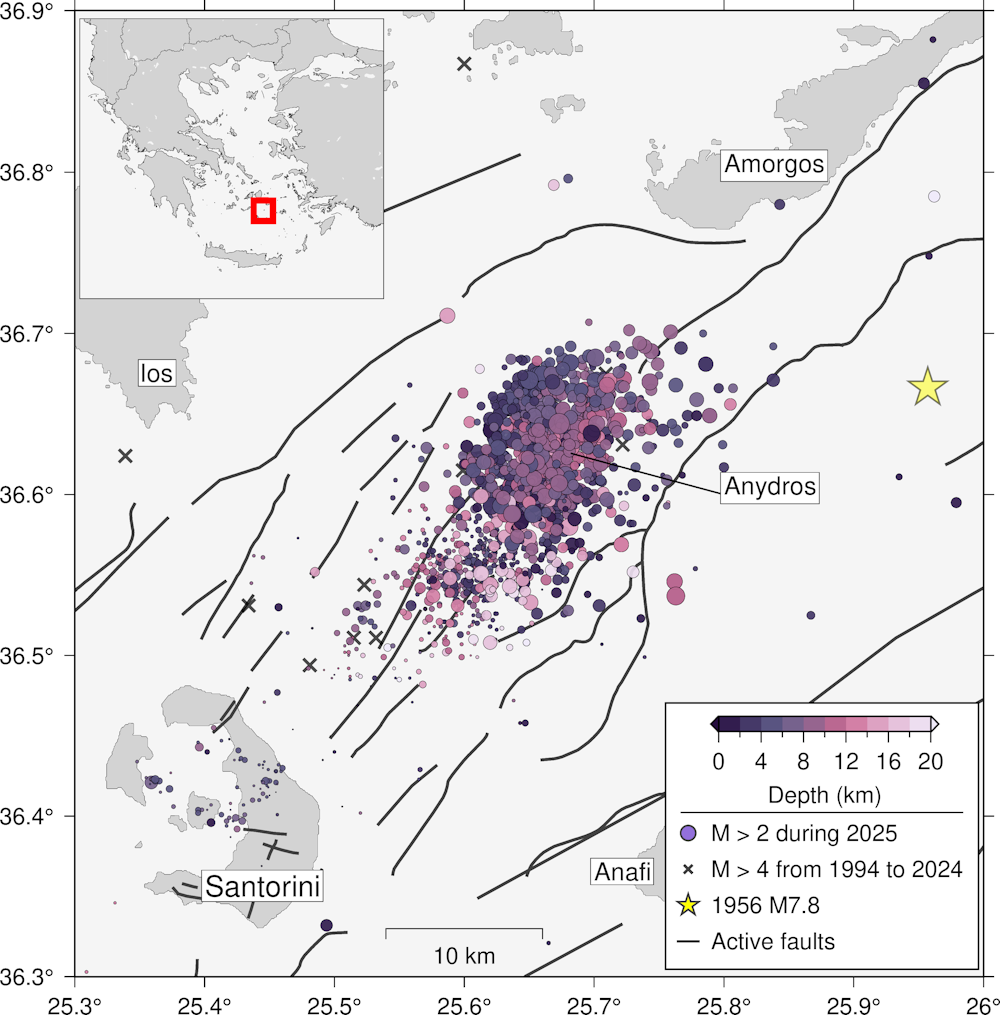
    MIL OSI Russia News

  • MIL-OSI Russia: The Institute of Physical Culture, Sports and Tourism celebrated its 10th anniversary

    Translartion. Region: Russians Fedetion –

    Source: Peter the Great St Petersburg Polytechnic University – Peter the Great St Petersburg Polytechnic University –

    On February 5, the Institute of Physical Culture, Sports and Tourism (IPCST) of Peter the Great St. Petersburg Polytechnic University celebrated its tenth anniversary.

    Over the years, the Institute has become a true center of attraction for all who strive for an active sports life and professional development in the field of physical culture and tourism. It trains highly qualified specialists who are able to make a significant contribution to the development of sports and an active lifestyle. Over 10 years, 11 departments have been formed at the IPCST, each of which occupies an important place in the educational process.

    The Department of Physical Fitness and Sport offers elective courses and online learning to over 9,000 students in 10 specializations. The online courses developed by the department are hosted on major educational platforms, making them accessible to a wide audience.

    The Higher School of Sports Education trains qualified personnel, offering more than 20 disciplines and actively cooperating with European universities. Particular attention is paid to the development of competencies in the use of technical means in sports.

    The student sports club “Black Bears-Polytech” is the pride of the institute. With 73 sports, 40 masters of sports and 1250 athletes, the club annually holds about 50 events and has won first place in St. Petersburg student competitions for ten years in a row.

    The Center for Continuing Education organizes the educational process according to general education programs, advanced training programs and professional retraining, ensuring continuous development and updating of knowledge.

    The GTO Standards Testing Center holds festivals twice a year, attracting thousands of participants. Each year, more than 2,000 people receive distinctions through our Center.

    The Center for Physical Culture and Health Services offers a wide range of opportunities for training on the Institute’s sports grounds.

    The Scientific and Educational Center for Computer Sports is actively developing digital sports based on the first university phygital center in Russia, Berloga. The center’s athletes achieve high results in games such as Counter-Strike, DOTA 2, League of Legends, etc.

    The Polytechnic sports complex, with an area of over 32.5 thousand square meters, includes two swimming pools, a multifunctional stadium and over 20 sports halls, providing students with all the necessary conditions for training and competitions.

    “The decade of the IPCST is not only about achievements, but also about plans for the future. We strive to continue developing our programs, introducing new technologies into education and expanding international cooperation,” says IPCST Director Valery Sushchenko. “We thank all teachers, students and partners for their contribution to the development of our institute. Together we create a unique atmosphere for education and sports achievements. Let the next ten years be no less successful and full of new achievements!”

    Please note: This information is raw content directly from the source of the information. It is exactly what the source states and does not reflect the position of MIL-OSI or its clients.

    MIL OSI Russia News

  • MIL-OSI Asia-Pac: Prime Minister Shri Narendra Modi’s reply to the Motion of Thanks on the President’s Address in Rajya Sabha

    Source: Government of India

    Prime Minister Shri Narendra Modi’s reply to the Motion of Thanks on the President’s Address in Rajya Sabha

    Sabka Saath, Sabka Vikas is our collective responsibility: PM

    The people of the country have understood, tested and supported our model of development: PM

    Santushtikaran over Tushtikaran, After 2014, the country has seen a new model and this model is not of appeasement but of satisfaction: PM

    The mantra of our governance is – Sabka Saath, Sabka Vikas: PM

    India’s progress is powered by Nari Shakti: PM

    We are Prioritising the welfare of the poor and marginalised: PM

    We are Empowering the tribal communities with PM-JANMAN: PM

    25 crore people of the country have moved out of poverty and become part of the neo middle class, Today, their aspirations are the strongest foundation for the nation’s progress: PM

    The middle class is confident and determined to drive India’s journey towards development: PM

    We have focused on strengthening infrastructure across the country: PM

    Today, the world recognises India’s economic potential: PM

    Posted On: 06 FEB 2025 8:41PM by PIB Delhi

    The Prime Minister, Shri Narendra Modi replied to the Motion of Thanks on the President’s Address to Parliament in the Rajya Sabha today. Addressing the House, the Prime Minister remarked that the President’s address covered India’s achievements, global expectations from India, and the confidence of the common man in building a developed India. He remarked that the President’s speech was inspiring, impactful, and provided guidance for future work. He expressed his gratitude to the President for the address. 

    Shri Modi said that over 70 honorable MPs have enriched the motion of thanks with their valuable thoughts. He noted that discussions took place from both sides, with everyone explaining the President’s address based on their understanding. The Prime Minister mentioned that a lot has been said about Sabka Saath, Sabka Vikas, and he found it difficult to understand the complexities involved. He emphasized that Sabka Saath, Sabka Vikas is our collective responsibility, and that’s why the country has given them the opportunity to serve. 

    Thanking the people of India for giving them the opportunity to serve them continuously since 2014, Shri Modi said this was a testimony to our model of development which has been tested, understood and supported by the people. He added the phrase ‘Nation First’ signified their model of development and this was exemplified in the policies, schemes and actions of the Government.  Noting that there was a need of alternate model of governance and administration after a long hiatus of 5 – 6 decades after independence, Shri Modi said that country has received an opportunity to witness a new model of development, since 2014, based on satisfaction (Santushtikaran) over appeasement (Tushtikaran). 

    “It has been our earnest effort to ensure optimum utilization of the resources in India”, said the Prime Minister. He added that to ensure that the time of India was also not wasted but utilized for the development of the nation and the welfare of the people. Therefore, he added, “We have adopted the Saturation Approach”. He remarked that the motive behind the approach was to ensure 100% benefits to the true beneficiaries of the scheme. Highlighting that the true spirit of “Sabka Saath, Sabka Vishwas” has been implemented on the ground in the past decade, Shri Modi said that it is now evident as the efforts have led to the fruition in the form of development and progress. “Sabka Saath, Sabka Vishwas is the main mantra of our Governance”, he added. The Prime Minister emphasized that the Government had shown its commitment by strengthening the SC, ST Act which would empower the poor and the tribals by enhancing their respect and security. 

    Lamenting that there is a lot of effort being made in today’s time to spread the poison of casteism, the Prime Minister reminded that  for the past three decades, OBC MPs from various parties of both houses have been demanding constitutional status for the OBC Commission. He added that it was their Government that granted constitutional status to the OBC Commission. He highlighted that the respect and honour of the Backward Classes was also important for their Government as they worship 140 crore Indians. 

    Remarking that whenever the topic of reservation has arisen in the country, efforts to solve the problem in a robust manner have not been undertaken, Shri Modi highlighted that in every instance, methods to divide the country, create tension, and foster enmity against each other were adopted. He emphasized that similar approaches were used even after the country attained independence. The Prime Minister highlighted that for the first time, his government presented a model inspired by the mantra of Sabka Saath, Sabka Vikas, providing nearly 10% reservation for the economically weaker sections without any tension or deprivation. He stated that this decision was welcomed by the SC, ST, and OBC communities, with no one expressing any discomfort. The Prime Minister noted that the implementation method, based on the principle of Sabka Saath, Sabka Vikas, was carried out in a healthy and peaceful manner, leading to nationwide acceptance of the decision.

    Highlighting that Divyangs or specially-abled individuals in the country have not received the attention they deserve, the Prime Minister highlighted that under the mantra of Sabka Saath, Sabka Vikas, his Government has extended reservation for the differently-abled and worked in mission mode to provide facilities for them. He mentioned that numerous welfare schemes have been created and implemented for the benefit of specially-abled individuals. Furthermore, Shri Modi emphasized the efforts made for the legal rights of the transgender community, highlighting the commitment to ensuring their rights through robust legal measures. He remarked that the Government’s approach to Sabka Saath, Sabka Vikas is demonstrated through their compassionate consideration towards marginalized sections of society.

    “India’s progress is powered by Nari Shakti”, exclaimed Shri Modi. He highlighted that if women are given opportunities and become part of policy-making, it can accelerate the country’s progress. He remarked that this is why the Government’s first decision in the new Parliament was dedicated to the honor of Nari Shakti. Shri Modi pointed out that the new Parliament will be remembered not just for its appearance but for its first decision, which was a tribute to the Nari Shakti. He stated that the new Parliament could have been inaugurated differently for the sake of praise, but instead, it was dedicated to the honor of women. He highlighted that the Parliament has commenced its work with the blessings of Nari Shakti.

    Remarking that Dr. Babasaheb Ambedkar was never considered worthy of the Bharat Ratna by the previous Governments, Shri Modi highlighted that despite this, the people of the country have always respected Dr. Ambedkar’s spirit and ideals. He emphasized that due to this respect from all sections of society, everyone from all parties are now compelled to say “Jai Bhim,” albeit reluctantly. 

    Shri Modi said that Dr. Babasaheb Ambedkar deeply understood the fundamental challenges faced by the SC and ST communities, having personally experienced the pain and suffering. He highlighted that Dr. Ambedkar presented a clear roadmap for the economic upliftment of these communities. Reading a quote from Dr. Ambedkar, stating that “While India is an agrarian country, agriculture cannot be the main livelihood for Dalits”, the Prime Minister noted that Dr. Ambedkar identified two reasons: first, the inability to purchase land, and second, even with money, there were no opportunities to buy land. He emphasized that Dr. Ambedkar advocated for industrialization as a solution to this injustice faced by Dalits, tribals, and marginalized groups. He highlighted that Dr. Ambedkar believed in promoting skill-based jobs and entrepreneurship for economic self-reliance. He mentioned that the vision of Dr. Ambedkar was not considered and completely dismissed for many decades after independence. He emphasized that Dr. Ambedkar aimed to eliminate the economic hardships of the SC and ST communities.

    Pointing out that in 2014, his Government prioritized skill development, financial inclusion, and industrial growth, the Prime Minister highlighted the introduction of the PM Vishwakarma Yojana, aimed at traditional artisans and craftsmen like blacksmiths and potters, who are essential to society’s foundation and scattered across villages. He emphasized that for the first time, there was concern for this section of society, providing them with training, technological upgrades, new tools, design assistance, financial support, and market access. He remarked that his government launched a special campaign to focus on this neglected group, acknowledging their significant role in shaping society.

    “Our Government introduced the MUDRA scheme to invite and encourage first-time entrepreneurs”, said Shri Modi and highlighted the large-scale campaign of providing loans without guarantees to help a significant section of society achieve their dreams of Atmanirbharta (self-reliance), which has seen great success. He also mentioned the Stand Up India scheme, aimed at providing loans of up to ₹1 (one) crore without guarantees to SC, ST, and women from any community, to support their enterprises. He noted that this year, the budget for this scheme has been doubled. The Prime Minister observed that millions of young people from marginalized communities and many women have started their businesses under the MUDRA scheme, not only securing employment for themselves but also creating jobs for others. He highlighted the empowerment of every artisan and every community, fulfilling Dr. Babasaheb Ambedkar’s dream through the MUDRA scheme.

    Emphasising his commitment to the welfare of the poor and marginalized, stating that those who were ignored are now being prioritized, Shri Modi highlighted that the current budget has touched upon various small sectors such as the leather and footwear industries, benefiting the poor and marginalized communities. Citing an example, the Prime Minister mentioned the toy industry, noting that many people from marginalized communities are involved in toy making. The Government has focused on this sector, providing various forms of assistance to poor families. The result is a significant increase in toy exports, which have tripled, benefiting the underprivileged communities that rely on this industry for their livelihood.

    Highlighting the significant contribution of the fishing community in India, the Prime Minister remarked that the Government has established a separate ministry for fishermen and extended the benefits of the Kisan Credit Card to them. He noted that around ₹40,000 crore have been included in the fisheries sector. He emphasized that these efforts have doubled fish production and exports, directly benefiting the fishing community. The Prime Minister reiterated the Government’s priority to work for the welfare of the most neglected sections of society.

    Remarking that there are new efforts to spread the poison of casteism, which affects our tribal communities in various levels, the Prime Minister highlighted that some groups have very small populations, spread across 200-300 places in the country, and are highly neglected. He expressed gratitude for the guidance from the President, who has close knowledge of these communities. Shri Modi noted that special efforts have been made to include these particularly vulnerable tribal groups in specific schemes. He mentioned the introduction of the PM Janman Yojana, with an allocation of ₹24,000 crore, to provide facilities and welfare measures for these communities. The goal is to elevate them to the level of other tribal communities and eventually bring them on par with the entire society.

    “Our Government has also focused on different regions of the country that face significant backwardness, such as border villages”, said Shri Modi. He highlighted the psychological shift brought about by the Government, ensuring that border villagers are prioritized. He emphasized that these villages, where the first and last rays of the sun touch, have been given special status as “first villages” with specific development plans. The Prime Minister noted that ministers were sent to remote villages to stay for 24 hours, even in extreme conditions like minus 15 degrees, to understand and address the villagers’ problems. He mentioned that village leaders from these border areas are invited as guests on national celebrations like Independence Day and Republic Day. He stressed on the Government’s commitment to Sabka Saath, Sabka Vikas and the ongoing efforts to reach every neglected community. Shri Modi highlighted the importance and utility of the Vibrant Villages program for the nation’s security, emphasizing the government’s continued focus on it.

    The Prime Minister noted that the President in her address, on the occasion of 75 years of the Republic, urged everyone to take inspiration from the constitution makers. He expressed satisfaction that the Government is moving forward with respect and inspiration from the sentiments of the constitution makers. Addressing the topic of the Uniform Civil Code (UCC), Shri Modi remarked that those who read the debates of the Constituent Assembly would understand the efforts to bring forth those sentiments. He acknowledged that some might have political objections, but the Government is committed to fulfilling this vision with courage and dedication. 

    Emphasizing the importance of respecting the constitution makers and drawing inspiration from their words, the Prime Minister expressed regret that the sentiments of the constitution makers were disregarded immediately after independence. He highlighted that an interim arrangement, which was not an elected government, made amendments to the constitution without waiting for an elected Government to do so. He remarked that the freedom of speech was curbed and restrictions were imposed on the press while claiming to uphold democracy, by the then Government. He stated that this was a complete disregard for the spirit of the constitution.

    Shri Modi highlighted that during the tenure of the first government of independent India, led by Prime Minister Jawaharlal Nehru, there were instances of suppression of freedom of speech. He mentioned that during a workers’ strike in Mumbai, renowned poet Shri Majrooh Sultanpuri sang a poem criticizing the Commonwealth, which led to his imprisonment. He also pointed out that famous actor Shri Balraj Sahni was jailed merely for participating in a protest march.  He further highlighted that Lata Mangeshkar’s brother, Shri Hridaynath Mangeshkar, faced repercussions for planning to present a poem by Veer Savarkar on All India Radio. He remarked that merely for this reason, Hridaynath Mangeshkar was permanently dismissed from All India Radio. 

    Touching upon the experiences in the country during the period of Emergency, during which the constitution was crushed and its spirit trampled upon for the sake of power, Shri Modi emphasized that the nation remembers this. He highlighted that during the Emergency, the renowned senior actor Shri Dev Anand was requested to publicly support the Emergency. Shri Dev Anand showed courage and refused to support it, leading to a ban on all his films on Doordarshan. The Prime Minister criticized those who talk about the constitution but have kept it in their pockets for years, showing no respect for it. He highlighted that Shri Kishore Kumar refused to sing for the then ruling party and as a consequence, all of his songs were banned on All India Radio.

    Remarking that he cannot forget the days of the Emergency, the Prime Minister emphasized that those who talk about democracy and human dignity are the same people who, during the Emergency, handcuffed and chained great personalities of the country, including Shri George Fernandes. He highlighted that even members of Parliament and national leaders were bound in chains and handcuffs during this period. He stated that the word “constitution” does not suit them. 

    Shri Modi remarked that, for the sake of power and the arrogance of a royal family, millions of families in the country were devastated, and the nation was turned into a prison. He emphasized that a long struggle ensued, forcing those who considered themselves invincible to bow down to the people’s strength. The Prime Minister noted that the Emergency was lifted due to the democratic spirit embedded in the veins of the Indian people. Remarking that he holds senior leaders in high regard and respects their long public services, the Prime Minister noted the achievements of leaders like Shri Mallikarjun Kharge and former Prime Minister Shri Deve Gowda. 

    Highlighting that the empowerment of the poor and their upliftment has never been as extensive as it has been during his Government’s tenure, Shri Modi remarked that the Government has designed schemes aimed at empowering the poor and enabling them to overcome poverty. He expressed his faith in the potential of the country’s poor, stating that given the opportunity, they can overcome any challenge. He emphasized that the poor have demonstrated their capability by taking advantage of these schemes and opportunities. “Through empowerment, 25 crore people have successfully risen out of poverty, which is a matter of pride for the Government”, he added. The Prime Minister noted that those who have emerged from poverty have done so through hard work, trust in the Government, and leveraging the schemes and today, they have formed a neo-middle class in the country.

    Emphasising the Government’s strong commitment to the neo-middle class and middle class, the Prime Minister remarked that their aspirations are a driving force for the country’s progress, providing new energy and a solid foundation for national development. He highlighted efforts to enhance the capabilities of the middle class & neo-middle class. He noted that a significant portion of the middle class has been exempted from taxes in the current budget. In 2013, the income tax exemption limit was up to ₹2 lakh, but it has now been increased to ₹12 lakh. The Prime Minister mentioned that individuals over 70 years of age, from any class or community, are benefiting from the Ayushman Bharat scheme, with significant advantages for the elderly in the middle class.

    “We have built four crore houses for citizens, with over one crore houses constructed in cities”, said Shri Modi. He remarked that there used to be significant fraud affecting home buyers, making it essential to provide protection. He emphasized that the enactment of the Real Estate (Regulation and Development) (RERA) Act in this Parliament has become a crucial tool in overcoming obstacles to the dream of home ownership for the middle class. The Prime Minister noted that the current budget includes the SWAMIH initiative, which allocates ₹15,000 crore to complete stalled housing projects, where the middle class’s money and facilities were stuck. He highlighted that this initiative aims to fulfill the dreams of the middle class.

    Pointing to the startup revolution, which has gained global recognition, the Prime Minister said that these startups are primarily driven by young people from the middle class. He remarked that the world is increasingly attracted to India, especially due to the G20 meetings held in 50-60 locations across the country. He emphasized that this has revealed the vastness of India beyond Delhi, Mumbai, and Bengaluru. He pointed out that the growing global interest in Indian tourism brings numerous business opportunities, greatly benefiting the middle class by providing various income sources.

    “The middle class today is filled with confidence, which is unprecedented and greatly strengthens the nation”, said Shri Modi. He expressed his firm belief that the Indian middle class is determined and fully prepared to realize the vision of a developed India, standing strong and moving forward together.

    Highlighting that the youth play a crucial role in building a developed India, the Prime Minister emphasized the demographic dividend, noting that students currently in schools and colleges will be the primary beneficiaries of a developed nation. He remarked that as the youth age, the country’s development journey will progress, making them a significant foundation for a developed India. He underscored that, over the past decade, strategic efforts have been made to strengthen the youth base in schools and colleges. He pointed out that for the past 30 years, there was little thought given to 21st-century education, and the previous attitude was to let things continue as they were. Shri Modi highlighted that the new National Education Policy (NEP) was introduced after almost three decades to address these issues. He mentioned that various initiatives under this policy, including the establishment of PM Shri Schools, aim to revolutionize education. He noted that approximately 10,000 to 12,000 PM Shri Schools have already been established, with plans to create more in the future. He also emphasized an important decision regarding the changes in the education policy which now includes provisions for education and examinations to be conducted in the mother tongue. Underlining the lingering colonial mindset regarding language in India, he stressed the injustice faced by children from poor, Dalit, tribal, and marginalized communities due to language barriers. The Prime Minister remarked on the necessity of education in one’s mother tongue, enabling students to pursue careers as doctors and engineers irrespective of their proficiency in English. He emphasized the significant reforms undertaken to ensure that children from all backgrounds can dream of becoming doctors and engineers. Furthermore, the Prime Minister underscored the expansion of Eklavya Model Residential Schools for tribal youth, noting the increase from around 150 schools a decade ago to 470 schools today, with plans to establish over 200 more.

    Further elaborating on the education reforms, Shri Modi said major reforms in Sainik Schools, introducing provisions for girls’ admission were undertaken. Emphasizing the importance and capability of these schools, he highlighted that hundreds of girls are currently studying in this patriotic environment, naturally fostering a sense of devotion to the country.

    Highlighting the significant role of the National Cadet Corps (NCC) in youth grooming, the Prime Minister remarked that those who have been associated with NCC know that it provides a golden opportunity for comprehensive development and exposure at a crucial age. He emphasized the unprecedented expansion of NCC in recent years, noting that the number of cadets has increased from approximately 14 lakh in 2014 to over 20 lakh today. 

    Emphasising the enthusiasm and eagerness of the country’s youth to achieve something new, even beyond routine tasks, Shri Modi remarked on the Swachh Bharat Abhiyan, observing that youth groups in many cities continue to advance the cleanliness campaign with their self-motivation. He noted that some young individuals work towards education in slums and various other initiatives. Seeing this, the Prime Minister highlighted the need to provide organized opportunities for the youth, leading to the launch of the “MY Bharat” or Mera Yuva Bharat movement. Today, over 1.5 crore youths have registered and are actively participating in discussions on contemporary issues, raising awareness in society, and pursuing positive actions with their own capabilities, without the need for spoon-feeding, he added.

    Touching upon the importance of sports in fostering sportsmanship and how a nation’s spirit flourishes where sports are widespread, the Prime Minister remarked that numerous initiatives have been launched to support sports talent, including unprecedented financial support and infrastructure development. He highlighted the transformative power of the Target Olympic Podium Scheme (TOPS) and the Khelo India initiative on the sports ecosystem. He added that over the past decade, Indian athletes have showcased their prowess in various sports events, with India’s youth, including young women, demonstrating the country’s strength on the global stage.

    Prime Minister emphasized the significance of infrastructure in transforming a developing nation into a developed one. He highlighted that both welfare schemes and infrastructure are crucial for a country’s growth, and underscored the need for timely completion of infrastructure projects. He noted that delays lead to wastage of taxpayers’ money and deprive the nation of benefits. Criticising the previous dispensations for its culture of delays and political interference in project execution, Shri Modi mentioned the establishment of the PRAGATI platform, which he personally reviews, for detailed monitoring of infrastructure projects, including real-time videography using drones and live interaction with stakeholders. He stated that projects worth approximately ₹19 lakh Crore were stalled due to coordination issues between the state and central governments or different departments. He highlighted a study by Oxford University that praised PRAGATI and suggested other developing countries could benefit from its experiences. Citing an example from Uttar Pradesh to illustrate past inefficiencies, the Prime Minister mentioned the Saryu Canal Project, approved in 1972, which remained stalled for five decades until it was completed in 2021. Highlighting the completion of the Udhampur-Srinagar-Baramulla railway line in Jammu and Kashmir, the Prime Minister remarked that the project was approved in 1994 but remained stalled for decades. Finally, after three decades, it was completed in 2025, he added. Shri Narendra Modi highlighted the completion of the Haridaspur-Paradip railway line in Odisha. He remarked that the project was approved in 1996 but remained stalled for years which was finally completed in 2019 during the current administration’s tenure. Elaborating further, the Prime Minister highlighted the completion of the Bogibeel Bridge in Assam, approved in 1998 and completed by his Government in 2018. He remarked that he could provide hundreds of examples illustrating the detrimental culture of delays prevalent in the past. He emphasized the need for a change in culture to ensure the timely completion of such vital projects and said that the significant setbacks caused by this culture during the previous dispensation, depriving the nation of its rightful progress. Underscoring the importance of proper planning and timely execution of infrastructure projects, the Prime Minister said to address this, the PM Gati Shakti National Master Plan was introduced. He encouraged states to utilize the PM Gati Shakti platform, which includes 1,600 data layers, to streamline decision-making and accelerate project implementation. The platform has become a vital foundation for expediting infrastructure work in the country, he added.

    Emphasising the necessity for today’s youth to understand the hardships their parents faced and the reasons behind the nation’s past condition, the Prime Minister remarked that without proactive decisions and actions over the past decade, the benefits of Digital India would have taken years to materialize. He highlighted that proactive decision-making and actions have enabled India to be timely and, in some cases, ahead of time. He further noted that 5G technology is now more widely available in India at one of the fastest rates globally. 

    Shri Modi drew attention to past experiences, highlighting that technologies such as computers, mobile phones, and ATMs reached many countries well before India, often taking decades to arrive. He remarked that even in the health sector, vaccines for diseases like smallpox and BCG were available globally while India lagged due to systemic inefficiencies.  The Prime Minister attributed these delays to poor governance of the past, where critical knowledge and implementation were tightly controlled, resulting in a “license permit raj” that stifled progress. He emphasized to the youth the oppressive nature of this system, hindering the nation’s development.

    Remarking on the early days of computer imports, highlighting that obtaining a license to import computers was a lengthy process that took years, the Prime Minister noted that this requirement significantly delayed the adoption of new technology in India.

    Pointing to the bureaucratic challenges of the past, the Prime Minister said that even obtaining cement for house construction required permission and during weddings, even getting sugar for tea required a license. He emphasized that these challenges occurred in post-independence India and pointed that the youth of today can understand the implications, questioning who was responsible for the bribes and where the money went.

    Highlighting the bureaucratic hurdles of the past, noting that purchasing a scooter required booking and payment, followed by a wait of 8-10 years, the Prime Minister remarked that even selling a scooter needed government permission. He emphasized the inefficiency in obtaining essential items, such as gas cylinders, which were distributed through coupons to MPs, and the long queues for gas connections. He noted the lengthy process for obtaining a telephone connection, stressing that today’s youth should be aware of these challenges. He remarked that those delivering grand speeches today should reflect on their past governance and its impact on the nation.

    “The restrictive policies and license raj that pushed India into one of the slowest economic growth rates globally”, said Shri Modi. He remarked that this weak growth rate came to be known as the “Hindu rate of growth,” which was an insult to a large community. He emphasized that the failure was due to the incompetence, lack of understanding, and corruption of those in power, which led to the mislabeling of an entire society as responsible for the slow growth.

    Criticizing the economic mismanagement and flawed policies of the past, which led to blaming and tarnishing an entire society, the Prime Minister remarked that historically, India’s culture and policies did not include restrictive license raj while Indians believed in openness and were among the first to engage in free trade globally. Shri Modi highlighted that Indian merchants traveled to distant lands for trade without any restrictions, which was part of India’s natural culture. He noted that the current global recognition of India’s economic potential and rapid growth brings pride to every Indian. “India is now seen as one of the fastest-growing countries, and the nation’s economy is expanding significantly”, he emphasised.

    Underlining that the nation is now breathing easy and soaring high after breaking free from the clutches of restrictive license raj and flawed policies, the Prime Minister remarked on the promotion of the “Make in India” initiative, aimed at boosting manufacturing in the country. He mentioned the introduction of the Production Linked Incentive (PLI) scheme and reforms related to Foreign Direct Investment (FDI). He emphasized that India has become the world’s second-largest mobile phone producer, transitioning from being predominantly an importer to an exporter of mobile phones.

    Emphasising India’s achievements in defense manufacturing, noting that defense product exports have increased tenfold over the past decade, the Prime Minister also highlighted the tenfold increase in solar module manufacturing. He stated “India is now the world’s second-largest steel producer” while machinery and electronic exports have seen rapid growth over the past decade. He also noted that toy exports have more than tripled, and agrochemical exports have increased significantly. “During the COVID-19 pandemic, India supplied vaccines and medicines to over 150 countries under the “Made in India” initiative”, said Shri Modi. He highlighted the rapid growth in exports of AYUSH and herbal products as well.

    Remarking on the lack of efforts by the previous Government to promote Khadi, stating that even the movement started during the freedom struggle was not advanced, the Prime Minister highlighted that the turnover of Khadi and Village Industries has surpassed ₹1.5 lakh Crore for the first time. He noted that production has quadrupled in the last decade, significantly benefiting the MSME sector and creating numerous employment opportunities across the country.

    Underscoring that all elected representatives are servants of the people, Shri Modi remarked that the mission of the country and society is paramount for public representatives, and it is their duty to work with a spirit of service. 

    Stressing on the collective responsibility of all Indians to embrace the vision of a developed India, the Prime Minister remarked that this is not just the resolve of a government or an individual but the commitment of 140 crore citizens. He warned that those who remain indifferent to this mission will be left behind by the nation. He highlighted the unwavering determination of India’s middle class and youth to propel the country forward.

    Underlining the importance of everyone’s role in the nation’s progress as it reaches new heights of development, Shri Modi remarked that opposition in Government is natural and essential in a democracy, as is opposition to policies. However, he warned that extreme negativism and attempts to diminish others instead of enhancing one’s own contributions could hinder the development of India. He stressed the need to free ourselves from such negativity and engage in continuous self-reflection and introspection. He expressed confidence that the discussions in the House would yield valuable insights that will be taken forward. He concluded by acknowledging the continuous inspiration derived from the President’s address and expressed heartfelt gratitude to the President and all honorable Members of Parliament. 


    ***

    MJPS/SR

    (Release ID: 2100467) Visitor Counter : 67

    MIL OSI Asia Pacific News

  • MIL-OSI Asia-Pac: HKETO Jakarta celebrates Year of Snake in Brunei

    Source: Hong Kong Government special administrative region

    HKETO Jakarta celebrates Year of Snake in Brunei
    HKETO Jakarta celebrates Year of Snake in Brunei
    ************************************************

         The Hong Kong Economic and Trade Office, Jakarta (HKETO Jakarta) hosted a Chinese New Year dinner in Brunei, today (February 6) to celebrate the Year of the Snake. Some 130 guests from the local government, business, academic, cultural and media sectors attended the event.      In her welcome speech, the Director-General of the HKETO Jakarta, Miss Libera Cheng, said that commercial and people-to-people ties between Hong Kong and Brunei continued to be robust. Bilateral trade in goods amounted to US$67 million in 2023, representing an annual average growth of over 11 per cent since 2019. High-level exchanges also remained active.      “Our shared common law legacy has laid a solid foundation for legal co-operation. During his visit to Brunei in September 2024, the Secretary for Justice met with leaders of the legal sector to advance collaboration on dispute avoidance and resolution pursuant to the Memorandum of Cooperation signed earlier. With the establishment of the Hong Kong Legal International Talents Training Academy in November 2024, we welcome legal talent from Belt and Road countries including Brunei to leverage this platform for deepening exchanges with Hong Kong and other jurisdictions.”      Miss Cheng also introduced measures under the 2024 Policy Address for strengthening people-to-people connection between Hong Kong and the Association of Southeast Asian Nations (ASEAN), such as cultivating a Muslim-friendly tourism environment and providing self-service immigration clearance for invited persons from ASEAN countries.      “We will continue to maintain close liaison with ASEAN countries including Brunei to facilitate bilateral flow of our peoples.”      Dignitaries attending the dinner included the Chargé d’Affaires of the Chinese Embassy in Brunei, Mr Wang Haitao; the former Consul-General of Brunei in Hong Kong, Mrs Ainatol ZahayuMohammad; and the Director of Malaysia of the Hong Kong Trade Development Council, Ms Hoh Jee Eng.            Also joining the event were the President of the Law Society of Brunei Darussalam, Haji Muhammad Zainidi bin Haji Abdul Hamid; the Secretary General of the National Chamber of Commerce and Industry of Brunei Darussalam, Haji Abdul Halim bin Haji Saim;the President of the Hong Kong-Malaysia Business Association, Dato’ Dixon Chew; and senior representatives from other major local business chambers.     The HKETO Jakarta will continue to host events in the ASEAN countries under its purview to celebrate Chinese New Year in the coming weeks.

     
    Ends/Thursday, February 6, 2025Issued at HKT 20:51

    NNNN

    MIL OSI Asia Pacific News

  • MIL-OSI Asia-Pac: Heritage Conservation

    Source: Government of India (2)

    Posted On: 06 FEB 2025 5:52PM by PIB Delhi

    There are Three Thousand Six Hundred Ninety Eight (3698) centrally protected monuments/sites in the country under the jurisdiction of Archaeological Survey of India (ASI). The conservation and maintenance of these centrally protected monuments/sites is a regular process and is taken up as per the requirement and availability of resources.

    Government takes all necessary measures to protect and preserve the cultural heritage from the growing pressures of commercialization and urbanization under the provisions contained in the Ancient Monuments and Archaeological Sites and Remains Act, 1958 and Rules framed thereunder. In order to contain the encroachments and removing them, the Superintending Archaeologist in charge of the Circles have been vested with the powers of an Estate Officer to issue eviction notices/orders to the encroachers under Public Premises (Eviction of Unauthorised Occupants) Act, 1971. They are also authorised to issue show cause notices under the provisions of Ancient Monuments and Archaeological Sites and Remains Act, 1958 and Rules 1959 followed by a direction to the District Collector/Magistrate by Central Government to remove such encroachment. Assistance in containing and removing encroachments is also sought from the respective State Government/police authorities from time to time. Further, in addition to the regular watch and ward staff, private security personnel and CISF have also been provided for the safety and security of selected monuments/sites across the country.

    ASI maintains and conserves monuments under its jurisdiction following the National Conservation Policy, 2014 and as per requirement and availability of resources.  ASI also ensures the provision of visitor amenities at its monuments for the comfortable and authentic experience of tourists.

    This information was given by Union Minister for Culture and Tourism Shri Gajendra Singh Shekhawat in a written reply in Rajya Sabha today.

    ***

    Sunil Kumar Tiwari

    E-mail: – pibculture[at]gmail[dot]com

    (Release ID: 2100364) Visitor Counter : 25

    MIL OSI Asia Pacific News

  • MIL-OSI Asia-Pac: Promotion of Kumbh Mela in the Country

    Source: Government of India (2)

    Posted On: 06 FEB 2025 5:50PM by PIB Delhi

    Kumbh Mela, 2025 is being organized at Prayagraj, Uttar Pradesh from 13.01.2025 to 26.02.2025 by the State Govt. of Uttar Pradesh. Ministry of Tourism, Government of India has set up an Incredible India Pavilion in Mela area to provide information and to engage tourists including foreign tourists, media, influencers etc. A digital brochure of various tour packages, flight & accommodation options etc. for Maha Kumbh have been prepared. Besides, a dedicated Maha Kumbh Tourist Infoline (1800111363) has been established for tourists.

    The promotion of Kumbh Mela is also being done through social media handles of Ministry of Tourism, Ministry of Culture and various other Departments of Govt. of India.

    India Tourism Development Corporation (ITDC), a PSU of Ministry of Tourism, has setup 80 luxury tents for accommodation at Tent City, Prayagraj.

    Ministry of Railways is running more than 13,000 trains including 3,000 special trains for the Maha Kumbh-2025. Besides, Ring Rail services connecting Prayagraj with key religious sites like Ayodhya, Varanasi and Chitrakoot are also operational on daily basis during the Mela.  

    Ministry of Culture has set up a cultural village viz. Kalagram in Sector-7 of Maha Kumbh district through North Central Zone Cultural Centre, an autonomous organization of the Ministry. The main features of Kalagram are:


    • Main Entrance: 635 ft wide, 54 ft high, depicting 12 Jyotirlingas and the story of Lord Shiva consuming Halahal, a confluence of art and spirituality.
    • A stage 104 feet-wide & 72 feet-depth on the theme of Char-Dham.
    • Artist and Performance: 14,632 artists will perform on various stages including Kalagram.
    • Anubhut Mandapam: 360° immersive experience narrating Ganga descent from heaven to earth.
    • Aviral Shashwat Kumbh: Digital display by Archaeological Survey of India (ASI), National Archives of India (NAI) and Indira Gandhi National Centre for the Arts (IGNCA).
    • Food Zone: Satvik cuisine from all Zonal Cultural Centres apart from the local cuisine of Prayagraj.
    • Sanskriti Angans: Display and sale of traditional Indian handicrafts and handlooms in the courtyards by 98 artisans of the seven Zonal Cultural Centres.


    A 118-member delegation of diplomats and dignitaries including Heads of Mission from 77 countries took a holy dip at the Triveni Sangam on 1stFebruary, 2025 during the Maha Kumbh Mela. Ministry of Culture is also collaborating with the Culture & Tourism Department of Govt. of UP to present cultural programmes by engaging 15,000 artists across various stages of the Maha Kumbh.

    This information was given by Union Minister for Culture and Tourism Shri Gajendra Singh Shekhawat in a written reply in Rajya Sabha today.

    ***

    Sunil Kumar Tiwari

    E-mail: – pibculture[at]gmail[dot]com

    (Release ID: 2100362) Visitor Counter : 23

    MIL OSI Asia Pacific News

  • MIL-OSI Asia-Pac: Sanctioning of Projects Under Swadesh Darshan Scheme

    Source: Government of India

    Posted On: 06 FEB 2025 5:48PM by PIB Delhi

    Ministry of Tourism revamped the Swadesh Darshan scheme as Swadesh Darshan 2.0 (SD2.0) with the objective to develop tourism destinations in the country. The details of the projects sanctioned under SD 2.0 in the State of Karnataka is as under:


    S. No.

    Destination

    Interventions Name

    Cost (in ₹ crore)

    1

    Hampi

    Setting up of ‘Traveller nooks’

    25.64

    2

    Mysuru

    “Tonga ride Heritage experience zone”

    2.72

    3

    Mysuru

    “Ecological Experience Zone”

    18.47

    The projects under the Swadesh Darshan scheme are sanctioned in consultation with the concerned State Government / Union Territory Administrations, in synergy with the scheme guidelines and subject to availability of budget etc. As of now, there is no proposal to consider the project “Dharmasthala-Kukke-Udupi-Murudeshwar-Gokarna-Kollur-Sringeri-Horanadu” under Swadesh Darshan 2.0 during the year 2025-26. However, the Ministry of Tourism under its ‘Challenge Based Destination Development (CBDD)’ has identified Bidar (Culture & Heritage) and Udupi (Ecotourism and Amrit Dharohar Sites) in Karnataka for development.

    This information was given by Union Minister for Tourism and Culture Shri Gajendra Singh Shekhawat in a written reply in Rajya Sabha today.


    ***

    Sunil Kumar Tiwari

    E-mail: – tourism4pib[at]gmail[dot]com

    (Release ID: 2100359) Visitor Counter : 9

    MIL OSI Asia Pacific News

  • MIL-OSI Asia-Pac: Dekho Apna Desh initiative

    Source: Government of India

    Ministry of Tourism

    Dekho Apna Desh initiative

    Posted On: 06 FEB 2025 5:47PM by PIB Delhi

    The Ministry of Tourism had launched the Dekho Apna Desh initiative in January 2020 for promotion of domestic tourism in the country. Under this initiative, the Ministry promotes tourism destinations and products of India through various activities such as Webinars, Quiz, Pledge, Seminars, Tourism Promotional Events, Fam tours, Website, Social media etc.

    Ministry of Tourism launched Dekho Apna Desh People’s Choice poll with aim to engage with citizens to identify most preferred tourist attractions. The Ministry is promoting the People’s choice poll through various platforms, including Digital, social media, events, print, Outdoor, SMS and WhatsApp campaign etc.

    Details of State-wise Domestic Tourist Visits (DTV) is at ANNEXURE.

    This information was given by Union Minister for Tourism and Culture Shri Gajendra Singh Shekhawat in a written reply in Rajya Sabha today.


    ***


    ANNEXURE


    List of States/UTs wise Domestic Tourists Visit (DTV)


    S.No.

    States/UTs

    DTV 2020

    DTV 2021

    DTV 2022

    DTV 2023

    1

    Andaman & Nicobar Islands

    1,91,207

    1,26,238

    2,35,061

    3,23,189

    2

    Andhra Pradesh 

    7,08,28,590

    9,32,77,569

    19,27,16,721

    25,47,06,328

    3

    Arunachal Pradesh

    42,871

    1,02,915

    2,22,437

    10,40,601

    4

    Assam

    12,66,898

    14,09,161

    83,82,003

    76,12,720

    5

    Bihar 

    56,38,024

    25,01,193

    2,53,30,364

    8,15,85,701

    6

    Chandigarh

    4,17,953

    2,28,809

    30,27,165

    3,65,591

    7

    Chhattisgarh

    28,10,227

    47,47,417

    2,36,36,291

    2,60,22,069

    8

    UT of Dadra & Nagar Haveli and Daman and Diu

    4,02,395

    6,61,222

    7,99,602

    10,04,327

    9

    Delhi*

    95,83,671

    1,06,42,477

    2,71,86,209

    3,94,14,622

    10

    Goa

    32,58,715

    33,08,089

    70,11,992

    81,75,460

    11

    Gujarat

    1,94,64,517

    2,45,25,210

    13,58,11,325

    17,80,66,579

    12

    Haryana

    21,14,731

    20,25,450

    21,08,496

    20,12,162

    13

    Himachal Pradesh 

    31,70,714

    56,32,270

    1,50,70,944

    1,59,42,118

    14

    Jammu & Kashmir

    25,19,524

    1,13,14,920

    1,84,99,332

    2,06,79,336

    15

    Jharkhand

    25,74,704

    33,83,642

    3,82,84,379

    3,57,76,102

    16

    Karnataka

    7,74,53,339

    8,13,33,659

    18,24,13,203

    28,41,20,502

    17

    Kerala

    49,88,972

    75,37,617

    1,88,67,414

    2,18,71,641

    18

    Lakshadweep

    3,462

    13,500

    22,844

    45,796

    19

    Ladakh

    6,743

    3,03,023

    5,10,137

    7,59,369

    20

    Madhya Pradesh

    2,35,19,632

    2,55,54,067

    3,58,48,781

    11,19,46,409

    21

    Maharashtra*

    3,92,34,591

    4,35,69,238

    11,12,97,624

    16,13,59,527

    22

    Manipur 

    49,669

    49,371

    1,39,518

    57,701

    23

    Meghalaya

    24,734

    1,54,409

    9,37,091

    13,71,674

    24

    Mizoram

    30,890

    87,232

    2,18,420

    2,09,087

    25

    Nagaland

    10,979

    23,968

    97,431

    99,720

    26

    Odisha

    46,22,273

    37,42,221

    78,67,909

    97,25,184

    27

    Puducherry

    11,14,942

    12,53,213

    17,60,480

    20,92,076

    28

    Punjab

    1,66,92,197

    2,66,40,429

    2,60,89,425

    3,57,07,600

    29

    Rajasthan 

    1,51,17,239

    2,19,88,734

    10,83,28,156

    17,90,51,925

    30

    Sikkim

    3,16,408

    5,11,669

    16,25,573

    13,21,169

    31

    Tamil Nadu

    14,06,51,241

    11,53,36,719

    21,85,84,846

    28,60,11,515

    32

    Telangana

    3,99,97,001

    3,20,00,620

    6,07,48,425

    5,84,47,573

    33

    Tripura

    1,27,815

    1,77,816

    2,35,600

    3,66,104

    34

    Uttar Pradesh

    8,61,22,293

    10,97,08,435

    31,79,13,587

    47,85,25,688

    35

    Uttarakhand

    70,05,264

    1,94,34,475

    5,46,42,559

    5,81,40,578

    36

    West Bengal

    2,88,41,732

    2,43,25,984

    8,45,42,195

    14,56,69,292

    Grand Total

    61,02,16,157

    67,76,32,981

    1,73,10,13,539

    2,50,96,27,035

    *Estimated Data

    Source: States/UTs Tourism Department

    ****

    Sunil Kumar Tiwari

    E-mail: – tourism4pib[at]gmail[dot]com

    (Release ID: 2100357)

    MIL OSI Asia Pacific News

  • MIL-OSI Europe: Answer to a written question – Beach concessions – E-002323/2024(ASW)

    Source: European Parliament

    1. The applicability of Directive 2006/123/EC[1] (the Services Directive) to authorisations for the use of state-owned coastal properties for leisure and touristic activities (so called beach concessions) was clarified by the Court of Justice of the European Union on 14 July 2016[2] and, more recently, on 20 April 2023[3]. No amendments or supplements to the Services Directive are foreseen in this respect.

    2. It should be recalled, first, that, in accordance with Article 12(2) of the Services Directive, no advantage to incumbents shall be provided at the moment of assigning beach concessions, whatever their size. However, the Commission is of course in support of small and medium-sized enterprises (SMEs), in general, and will therefore monitor that the application of the national laws in this sector does not pose barriers that could prevent all interested providers, particularly SMEs, from taking full advantage of economic opportunities in the internal market.

    • [1] https://eur-lex.europa.eu/legal-content/EN/TXT/HTML/?uri=CELEX:32006L0123
    • [2] Judgment of 14 July 2016, Promoimpresa srl and Others v Consorzio dei comuni della Sponda Bresciana del Lago di Garda e del Lago di Idro and Others, Joined Cases C-458/14 and C-67/15, EU:C:2016:558.
    • [3] Judgment of 20 April 2023, Autorità Garante della Concorrenza e del Mercato (Commune de Ginosa), C-348/22, EU:C:2023:301.
    Last updated: 6 February 2025

    MIL OSI Europe News

  • MIL-OSI Europe: Highlights – Study: Role of the longevity economy in the tourism sector – Committee on Transport and Tourism

    Source: European Parliament

    Two old persons on Train Station © Image used under the license from Adobe Stock

    This study offers a comprehensive overview of silver tourism in the EU, detailing the sector’s current state and otential growth opportunities. It establishes a conceptual framework that categorises key areas within silver tourism and examines specific challenges and opportunities within each. The study concludes with targeted recommendations to address these challenges.

    MIL OSI Europe News

  • MIL-OSI USA: News 02/6/2025 Blackburn Celebrates Her Legislation Passing Out of Commerce Committee

    US Senate News:

    Source: United States Senator Marsha Blackburn (R-Tenn)

    WASHINGTON, D.C. – U.S. Senator Marsha Blackburn (R-Tenn) released the following statement after five bills that she sponsored or co-sponsored passed out of the Senate Committee on Commerce, Science, and Transportation. This includes the American Music Tourism Act, the Promoting Resilient Supply Chains Act, the Strengthening Support for American Manufacturing Act, the She DRIVES Act, and the TORNADO Act.

    “The 119th Congress is already off to a productive start, and I am pleased that five of my bills have moved forward out of the Commerce Committee to the full Senate for a vote,” said Senator Blackburn. “I urge my Senate colleagues to support this legislation, which will promote American music tourism, strengthen U.S. supply chains for emerging technologies, boost domestic manufacturing, enhance vehicle safety standards, and improve the forecasting of hazardous weather.” 

    BACKGROUND:

    See below for more information on each piece of legislation.

    • The American Music Tourism Act, sponsored by Senator Blackburn, would leverage the existing framework within the Department of Commerce to highlight and promote music tourism in the United States. It would require the Department of Commerce’s Assistant Secretary for Travel and Tourism to implement a plan to support and increase music tourism for both domestic and international visitors as well as a report to Congress on the successes and vulnerabilities of the Assistant Secretary’s goals to increase travel and tourism.
    • The Promoting Resilient Supply Chains Act, co-led by Senator Blackburn, would authorize the Department of Commerce to strengthen American supply chains for critical industries and emerging technologies by working with the private sector and U.S. government partners to anticipate and prevent future supply chain disruptions before they happen.
    • The Strengthening Support for American Manufacturing Act, co-led by Senator Blackburn, would streamline federal efforts to boost domestic manufacturers and support workers. It would also assess the Department of Commerce’s efforts to support manufacturers and suggest solutions to improve the Department’s manufacturing programs to better serve manufacturers – many of which are small businesses.
    • The She Develops Regulations in Vehicle Equality and Safety (She DRIVES) Act, co-led by Senator Blackburn, would enhance passenger vehicle safety by updating U.S. crashworthiness testing procedures. It would require the use of the most advanced testing devices available, including a female crash test dummy.
    • The Tornado Observation Research Notification and Deployment to Operations (TORNADO) Act, co-sponsored by Senator Blackburn, would improve the forecasting of tornadoes and other hazardous weather by requiring the National Oceanic and Atmospheric Administration to prepare and submit an action plan for the national implementation of high-resolution probabilistic guidance for tornado forecasting and prediction. 

    MIL OSI USA News