Category: Transport

  • MIL-OSI Security: New Hampshire Doctor Pleads Guilty to Illegally Prescribing Opioids

    Source: United States Attorneys General

    A New Hampshire doctor pleaded guilty today to unlawfully distributing a controlled substance. This is the first conviction of a doctor in the District of New Hampshire from a joint investigation by the New England Strike Force and the U.S. Attorney’s Office.

    According to court documents, Robert G. Soucy Jr., D.O., 72, of Columbia, New Hampshire, illegally prescribed opioids from his home in Columbia, New Hampshire. Dr. Soucy knew that pharmacies in and around Colebrook, New Hampshire, would not fill his prescriptions for several of his patients. To have the unlawful prescriptions filled, Dr. Soucy specifically instructed a patient to bring his prescriptions to a pharmacy in another location. Dr. Soucy also continued to prescribe opioids to the patient, who the defendant knew had a substance-abuse disorder, without conducting any medical evaluation or testing and after the patient had moved out of New England.

    Dr. Soucy faces a maximum penalty of 20 years in prison. He surrendered his DEA registration and is no longer authorized to prescribe controlled substances.

    Matthew R. Galeotti, Head of the Justice Department’s Criminal Division, Acting United States Attorney Jay McCormack for the District of New Hampshire, Acting Special Agent in Charge Stephen Belleau and Acting Diversion Program Manager George Lutz of the Drug Enforcement Administration (DEA) New England Division, and Special Agent in Charge Roberto Coviello of the Department of Health and Human Services Office of Inspector General (HHS-OIG) Boston Region made the announcement.

    The DEA and HHS-OIG investigated the case.

    Trial Attorneys Thomas D. Campbell and Danielle H. Sakowski of the Criminal Division’s Fraud Section are prosecuting the case.

    The Fraud Section leads the Criminal Division’s efforts to combat health care fraud through the Health Care Fraud Strike Force Program. Since March 2007, this program, currently comprised of nine strike forces operating in 27 federal districts, has charged more than 5,800 defendants who collectively have billed federal health care programs and private insurers more than $30 billion. In addition, the Centers for Medicare & Medicaid Services, working in conjunction with HHS-OIG, are taking steps to hold providers accountable for their involvement in health care fraud schemes. More information can be found at www.justice.gov/criminal-fraud/health-care-fraud-unit.

    Anyone needing access to opioid treatment services can contact HHS-OIG’s Substance Abuse and Mental Health Services Administration 24/7 National Helpline for referrals to treatment services at 1-800-662-4359. 

    MIL Security OSI

  • MIL-OSI Security: Sinaloa Cartel Leaders Charged with Narco-Terrorism, Material Support of Terrorism and Drug Trafficking

    Source: United States Attorneys General

    SAN DIEGO — An indictment unsealed today is the first in the nation to charge alleged leaders of the Sinaloa Cartel with narco-terrorism and material support of terrorism in connection with trafficking massive amounts of fentanyl, cocaine, methamphetamine and heroin into the United States.

    Pedro Inzunza Noriega and his son, Pedro Inzunza Coronel, are charged with narco-terrorism, drug trafficking and money laundering as key leaders of the Beltran Leyva Organization (BLO), a powerful and violent faction of the Sinaloa Cartel that is believed to be the world’s largest known fentanyl production network. Five other BLO leaders are charged with drug trafficking and money laundering. The indictment is a direct result of President Trump’s Executive Order 14157 which designated the Sinaloa Cartel as a Foreign Terrorist Organization and the Secretary of State’s subsequent designation of the same on February 20, 2025.

    “The Sinaloa Cartel is a complex, dangerous terrorist organization and dismantling them demands a novel, powerful legal response,” said Attorney General Pamela Bondi. “Their days of brutalizing the American people without consequence are over — we will seek life in prison for these terrorists.”

    “Operation Take Back America initiatives reflect the reality that narco-terrorists operate as a cancer within a state,” said U.S. Attorney Adam Gordon for the Southern District of California. “They metastasize violence, corruption and fear. If left unchecked, their growth would lead to the death of law and order. This indictment is what justice looks like when the full measure of the Department of Justice along with its law enforcement partners is brought to bear against the Sinaloa Cartel.”

    “These charges highlight the unwavering efforts of transnational criminal organizations like the Sinaloa Cartel to flood our communities with deadly drugs,” said Special Agent in Charge Shawn Gibson of U.S. Immigration and Customs Enforcement (ICE) Homeland Security Investigations (HSI) San Diego. “HSI and our law enforcement partners will not allow cartel-driven drug trafficking to threaten the safety and stability of our neighborhoods. We are all lasered focused on a unified effort to dismantling these networks and their factions in bringing those responsible to justice.”

    “BLO, under the leadership of Inzunza Noriega, is allegedly responsible for some of the largest-ever drug seizures of fentanyl and cocaine destined for the United States,” said Acting Special Agent in Charge Houtan Moshrefi of the FBI San Diego Field Office. “Their drugs not only destroy lives and communities, but also threaten our national security. The law enforcement efforts against the Noriegas reaffirms our commitment to dismantling and disrupting this very dangerous narco-terrorist group and combating narco-trafficking.”

    According to court documents, since its inception the Beltran Leyva faction has been considered one of the most violent drug trafficking organizations to operate in Mexico, engaging in shootouts, murders, kidnappings, torture and violent collection of drug debts to sustain its operations. The Beltran Leyva faction controls numerous territories and plazas throughout Mexico – including Tijuana – and operates with violent impunity, trafficking in deadly drugs, threatening communities, and targeting key officials, all while making millions of dollars from their criminal activities.

    Pedro Inzunza Noriega works closely with his son, Pedro Inzunza Coronel, to produce and aggressively traffic fentanyl to the United States, the government has alleged. Court documents indicate that together the father and son lead one of the largest and most sophisticated fentanyl production networks in the world. Over the past several years, they have trafficked tens of thousands of kilograms of fentanyl into the United States. On Dec. 3, 2024, Mexican law enforcement raided multiple locations in Sinaloa that are controlled and managed by the father and son and seized 1,500 kilograms (more than 1.65 tons) of fentanyl – the largest seizure of fentanyl in the world.

    These indictments follow a notable tradition in the Southern District of California for targeting leadership and operations of powerful Mexican cartels – from the dismantling of the Arellano Felix Cartel to major strikes against today’s most dangerous, powerful and violent cartels, including the Sinaloa Cartel, Cartel de Jalisco Nueva Generación (CJNG), and now the Beltran Leyva Organization. It is the first indictment from the newly formed Narco-Terrorism Unit in the Southern District of California which was established upon the swearing in of U.S. Attorney Gordon on April 11.

    The indictment of Pedro Inzunza Noriega reflects the Southern District of California’s pursuit of the Sinaloa Cartel. Federal drug trafficking indictments are pending against all alleged leaders of its Beltran Leyva faction, including:

    • Fausto Isidro Meza Flores aka “Chapo Isidro,” case number: 19-CR-1272 in the Southern District of California and 12-116BAH in the District of Columbia
    • Oscar Manuel Gastelum Iribe aka “El Musico,” case number 19-CR-3736 in the Southern District of California; 09-CR-00672 in the Northern District of Illinois; 15-CR-00195 in the District of Columbia, and
    • Pedro Inzunza Noriega aka “Sagitario,” case number 25cr1505.

    The Southern District of California also has indictments pending against other leaders of the Sinaloa Cartel, including:

    • Ivan Archivaldo Guzman Salazar aka “El Chapito,” case number 14-cr-00658 in the Southern District of California and 09-CR-383 in the Northern District of Illinois
    • Ismael Zambada Sicairos aka “Mayito Flaco,” case number: 14-cr-00658 in the Southern District of California; and
    • Jose Gil Caro Quintero aka “El Chino,” case number 22-cr-00036 in the District of Columbia

    1,500 kilogram fentanyl seizure on December 5, 2024

    1,680 kilogram cocaine seizure in Mexico City

    Cocaie seizure with the “Incredibles” brand and “R” brand

    Rainbow colored fentanyl pills and fentanyl bricks with “Louis Vuitton” and “Rolls Royce” stamps

    Pedro Inzunza branded hat with Fausto Isidro Meza Flores, aka, “Chapo Isidro” and Oscar Manuel Gastelum Iribe aka, “El Musico” symbols

    This case is being prosecuted by Assistant U.S. Attorneys Joshua Mellor and Matthew Sutton for the Southern District of California.

    DEFENDANTS                                 Case Number: 25cr1505                                          

    Pedro Inzunza Noriega                                     Age: 62              Los Mochis, Sinaloa, Mexico

    aka “Sagitario,” aka “120,” aka “El De La Silla”

    Pedro Inzunza Coronel                                     Age: 33              Los Mochis, Sinaloa, Mexico

    Aka “Pichon,” Aka “Pajaro,”  Aka “Bird”

    David Alejandro Heredia Velazquez                Age: 50              Guadalajara, Jalisco,

    Aka “Tano,” Aka “Mr. Jordan”                                                     Mexico, and Culiacan,                                                                                                                                                           Sinaloa, Mexico          

    Oscar Rene Gonzalez Menendez                       Age: 45             Guatemala City, 

    Aka “Rubio”                                                                                         Guatemala

    Elias Alberto Quiros Benavides                        Age: 53              San Jose, Costa Rica

    Daniel Eduardo Bojorquez                                Age: 47              Nogales, Sonora, Mexico

    Aka “Chopper”

    Javier Alonso Vazquez Sanchez                       Age: 31               Los Mochis, Sinaloa, Mexico

    Aka “Tito”, Aka “Drilo”

    SUMMARY OF CHARGES

    Title 21, U.S.C., Secs. 960a and 841 – Narco-Terrorism

    Maximum penalty: Life in prison, mandatory minimum 20 years in prison; $20 million fine

    Title 18, U.S.C. Sec. 2339B – Providing Material Support to Terrorism

    Maximum penalty: Twenty years in prison and $250,000 fine

    Title 21, U.S.C., Sec. 848(a) -Continuing Criminal Enterprise

    Maximum penalty: Life in prison, mandatory minimum 20 years; $10 million fine

    Title 21, U.S.C., Secs. 952, 959, 960, and 963 – International Conspiracy to Distribute Controlled Substances

    Maximum penalty: Life in prison, mandatory minimum 10 years; $10 million fine

    Title 21, U.S.C., Secs. 841(a)(1) and 846 – Conspiracy to Distribute Controlled Substances

    Maximum penalty: Life in prison, mandatory minimum 10 years in prison; $10 million fine

    Title 21, U.S.C., Secs. 952, 960 and 963 – Conspiracy to Import Controlled Substances

    Maximum penalty: Life in prison, mandatory minimum 10 years; $10 million fine

    Money Laundering Conspiracy – Title 18, U.S.C., Section 1956(h)

    Maximum penalty: Twenty years in prison and a fine of the greater of $500,000 or twice the value of the monetary instrument or funds involved

    INVESTIGATING AGENCIES

    HSI

    FBI

    This case is part of Operation Take Back America, a nationwide initiative that marshals the full resources of the Department of Justice to repel the invasion of illegal immigration, achieve the total elimination of cartels and transnational criminal organizations (TCOs), and protect our communities from the perpetrators of violent crime. Operation Take Back America streamlines efforts and resources from the Department’s Organized Crime Drug Enforcement Task Forces (OCDETFs) and Project Safe Neighborhood (PSN).

    This case is the result of ongoing efforts by the Organized Crime Drug Enforcement Task Force (OCDETF), a partnership that brings together the combined expertise and unique abilities of federal, state and local law enforcement agencies. The principal mission of the OCDETF program is to identify, disrupt, dismantle and prosecute high-level members of drug trafficking, weapons trafficking and money laundering organizations and enterprises.

    The charges and allegations contained in an indictment or complaint are merely accusations, and the defendants are considered innocent unless and until proven guilty.

    MIL Security OSI

  • MIL-OSI USA: 05.13.2025 Sen. Cruz Announces Key Senior Staff Hires and Promotions

    US Senate News:

    Source: United States Senator for Texas Ted Cruz
    WASHINGTON, D.C. – U.S. Sen. Ted Cruz (R-TX) announced key senior staff hires and promotions in his Washington, D.C. office.
    OMRI CEREN promoted to Senior Advisor for Policy and Communications. Omri previously served as National Security Advisor and then Legislative Director for Senator Cruz. Before joining Sen. Cruz’s staff, he was programmatic director at The Israel Project, a nonprofit focused on working with journalists and the public on Middle East issues, and before that was a political blogger and writer. He received his doctorate from the University of Southern California’s Annenberg School for Communication.
    PRESTON HOWEY promoted to Legislative Director. A proud native of the Permian Basin, Preston began his Capitol Hill career with Chairman Kevin Brady (TX-08) and later served as Legislative Director for Representative August Pfluger (TX-11). He went on to work with the natural gas markets team at the American Petroleum Institute before joining Senator Cruz’s office as Domestic Policy Advisor. Preston is a graduate of Texas A&M University.
    MIKE BERRY hired as Chief Counsel. Mike joins Sen. Cruz’s office after 7 years on active duty as a U.S. Marine, and more than a decade of litigation experience in the non-profit sector. During his time in the Marines, Mike deployed to Afghanistan and taught law at the U.S. Naval Academy. Mike also served in senior litigation roles at First Liberty Institute and America First Policy Institute, during which he successfully led the litigation efforts on some of the nation’s most high-profile religious liberty and election integrity cases. Mike received his undergraduate degree from Texas A&M University, and his law degree from The Ohio State University.
    BRANDON GINDT hired as National Security Advisor. A Texas native, Brandon joins Sen. Cruz’s office from the Defense Intelligence Agency (DIA) where he served in the Directorate for Operations since 2018, predominantly working on Middle East and strategic competition issues. During his tenure at DIA, he deployed to Afghanistan and managed crisis operations on the Joint Staff and served as the Israel and Lebanon Country Director in the Office of the Under Secretary of Defense for Policy. He received his undergraduate and graduate degrees from Texas A&M University. 
    MACARENA MARTINEZ promoted to Communications Director. A native of Houston, Macarena has served as Senator Cruz’s communications advisor since 2023. Before her work with Senator Cruz, Macarena served as the Texas Communications Director for the Republican National Committee. Prior to that, she was a War Room Analyst on President Donald Trump’s 2020 campaign. Macarena holds a double bachelor’s degree from the University of Texas at Austin.

    MIL OSI USA News

  • MIL-OSI USA: Padilla, Young Introduce Bipartisan Bill to Expedite Access to Innovative Medical Technologies

    US Senate News:

    Source: United States Senator Alex Padilla (D-Calif.)

    Padilla, Young Introduce Bipartisan Bill to Expedite Access to Innovative Medical Technologies

    WASHINGTON, D.C. — U.S. Senators Alex Padilla (D-Calif.) and Todd Young (R-Ind.) introduced the Ensuring Patient Access to Critical Breakthrough Products Act, bipartisan legislation that would enable millions of older Americans to receive quicker access to life-changing medical innovations.

    Currently, seniors wait an estimated 5.7 years from when the Food and Drug Administration (FDA) authorizes a breakthrough technology until Medicare covers the technology. The legislation would create a faster pathway for the Centers for Medicare & Medicaid Services (CMS) to provide transitional coverage for certain new and emerging medical device innovations to Medicare beneficiaries.

    “Timely access to lifesaving breakthrough medical advancements protects millions of patients in need,” said Senator Padilla. “This critical bipartisan legislation would ensure Medicare covers cutting-edge devices shortly after FDA authorization to better diagnose, prevent, and treat life-threatening illnesses. I will keep working across the aisle to support health care innovation and expand access to care for rural and underserved communities.”

    “Bureaucratic red tape is preventing millions of seniors in America from accessing medical advancements that have the potential to reduce health care costs, cure diseases, and save lives. Our bill would streamline Medicare coverage of these advancements to better ensure patients receive timely access to breakthrough technologies,” said Senator Young.

    More specifically, the Ensuring Patient Access to Critical Breakthrough Products Act would:

    • Provide temporary Medicare coverage for medical devices and diagnostic tests approved or cleared under the FDA Breakthrough Devices Program.
    • Allow technology developers to work with CMS during the temporary coverage period on a proposal for permanent Medicare coverage.
    • Grant CMS permission to immediately suspend or terminate Medicare coverage if subsequent clinical evidence demonstrates the technology causes harm or provides no clinical benefit to Medicare beneficiaries. 

    Senator Padilla has long been a leader in the fight to make health care more equitable, affordable, and accessible in the United States. Earlier this year, Padilla introduced the bipartisan Health Accelerating Consumers’ Care by Expediting Self-Scheduling (ACCESS) Act to improve digital health services by allowing patients to easily search for and book health care appointments online while protecting personal health information. Last year, Padilla, Senator Mazie Hirono (D-Hawaii), and Senator Cory Booker (D-N.J.) introduced the Health Equity and Accountability Act (HEAA) of 2024 to address health disparities among racial and ethnic minorities as well as women, the LGBTQ+ community, rural populations, and socioeconomically disadvantaged communities across the United States. Additionally, Padilla and Booker introduced the Equal Health Care for All Act, bicameral legislation that would make equal access to medical care a protected civil right to help address the racial inequities and structural failures in America’s health care system. He also recently joined Senator Bernie Sanders (I-Vt.) and over 100 lawmakers in reintroducing the Medicare for All Act, historic legislation that would guarantee health care as a fundamental human right to all people in the United States regardless of income or background.

    Full text of the bill is available here.

    MIL OSI USA News

  • MIL-OSI USA: Padilla, Schatz, Wyden Lead Push Warning Trump Admin of Harmful Impacts of SAVE Act, Anti-Voter Executive Order in Native Communities

    US Senate News:

    Source: United States Senator Alex Padilla (D-Calif.)

    Padilla, Schatz, Wyden Lead Push Warning Trump Admin of Harmful Impacts of SAVE Act, Anti-Voter Executive Order in Native Communities

    WASHINGTON, D.C. — Today, U.S. Senators Alex Padilla (D-Calif.), Ranking Member of the Senate Committee on Rules and Administration with oversight over elections, Brian Schatz (D-Hawaii), Vice Chairman of the Senate Committee on Indian Affairs, and Ron Wyden (D-Ore.) led 11 Senators in sounding the alarm on the devastating impacts of President Trump’s anti-voter “election integrity” executive order and the SAVE Act on Native American voting rights. In a letter to Secretary of the Interior Doug Burgum, the Senators specifically warn about the challenges Native communities will face with the proposed requirements of documentary proof of citizenship and restrictions on mail-in voting.
    “Enactment of new voter registration policies under the Executive Order and the SAVE Act would lead to mass disenfranchisement of eligible Native voters and further depress the Native vote,” wrote the Senators. “Tribal IDs generally lack place of birth information required by the legislation, and the vast majority of these IDs lack the specific U.S. citizenship documentation required by the Executive Order. And the SAVE Act’s in-person requirement would exacerbate existing barriers, such as requiring IDs that list residential mailing addresses, by forcing many Native voters to travel great distances, including costly flights or multi-hour drives, to reach their local elections office or polling place.”
    “As Secretary of the Interior, you have a special moral and legal responsibility to uphold our nation’s trust and treaty obligations,” continued the Senators. “If implemented, the sweeping federal mandates included in the Executive Order and the SAVE Act would disenfranchise eligible Native voters who are following state laws. We encourage your active engagement with the White House and the Department of Justice to ensure that Native communities are able to exercise the franchise fully and have their voices heard at the ballot box.”
    Tribal IDs are currently an acceptable form of documentation to register to vote in nearly every state, but the SAVE Act and Trump executive order require that an ID must show place of birth and citizenship, which the majority of Tribal IDs lack, adding another barrier to the ballot box for many Native American communities. The Senators underscored that if enacted, these provisions would force Tribal voters who live in rural and remote locations to travel significant distances to prove their citizenship in order to register to vote.
    The Senators also emphasized the disproportionate impact the vote-by-mail restrictions would have on Native communities, which often rely more on mail-in voting because of a lack of infrastructure and transportation access. Trump’s executive order penalizes states that accept absentee or mail-in ballots received after Election Day, harming Native voters in states like Alaska, North Dakota, Oregon, and California that process ballots as long as they are postmarked by Election Day. In Alaska specifically, which has 229 federally recognized Tribes, vote-by-mail is essential because polling sites can be hundreds of miles away for villages that are not on the road system.
    Only 66 percent of Native Americans eligible to participate in elections are currently registered to vote, leaving more than 1 million eligible voting-age Native Americans unregistered. Creating further obstacles to register to vote would likely reduce these numbers even further.
    In addition to Senators Padilla, Schatz, and Wyden, the letter was also signed by Senators Catherine Cortez Masto (D-Nev.), Kirsten Gillibrand (D-N.Y.), Mazie Hirono (D-Hawaii), Tim Kaine (D-Va.), Amy Klobuchar (D-Minn.), Edward J. Markey (D-Mass.), Jeff Merkley (D-Ore.), Jacky Rosen (D-Nev.), Tina Smith (D-Minn.), Chris Van Hollen (D-Md.), and Elizabeth Warren (D-Mass.).
    Senator Padilla has led the charge opposing President Trump and Republicans’ reckless attempts to restrict the right to vote. As President Trump marked 100 disastrous days in office, he recently led his Democratic colleagues on the Senate floor to speak out against the SAVE Act and attacks on election integrity. Last month, Padilla warned Secretaries of State, Lieutenant Governors, and Chief Election Officials across the country of the devastating potential impacts of Republicans’ SAVE Act, concerns that have been echoed by top election officials across the country. He also led 11 Senators in introducing the Defending America’s Future Elections Act to repeal Trump’s illegal anti-voter executive order and prevent the Department of Government Efficiency (DOGE) from accessing sensitive voter registration data and state records. Padilla previously led 14 Democratic Senators in calling on Trump to revoke his illegal anti-voter executive order and issued a statement slamming the order when it was announced.
    Full text of the letter is available here and below:
    Dear Secretary Burgum:
    We write to express our serious concern over the impact of the Administration’s March 25 Executive Order 14284 “Preserving and Protecting the Integrity of American Elections” on Native communities. As former Governor of North Dakota, and now as Secretary of the Interior, you must appreciate that Indian Country faces voting challenges unique to the rest of the country, including remote locations, limited resources, and a legacy of legal discrimination. Unfortunately, both this Executive Order, and the related Safeguard American Voter Eligibility (SAVE) Act (H.R. 22) recently passed by the House of Representatives, would represent the largest steps backwards for Native American voting rights in many decades. We urge you to ensure that the federal government meets its trust responsibility to safeguard Native American voting rights and to engage in Tribal consultation on any new policies that impact the Native vote.
    Enactment of new voter registration policies under the Executive Order and the SAVE Act would lead to mass disenfranchisement of eligible Native voters and further depress the Native vote. For example, both the Executive Order and the SAVE Act include a requirement for voters to provide documentary proof of citizenship when registering or re-registering to vote. Tribal IDs generally lack place of birth information required by the legislation, and the vast majority of these IDs lack the specific U.S. citizenship documentation required by the Executive Order. And the SAVE Act’s in-person requirement would exacerbate existing barriers, such as requiring IDs that list residential mailing addresses, by forcing many Native voters to travel great distances, including costly flights or multi-hour drives, to reach their local elections office or polling place.
    What’s more, under the Executive Order, the Attorney General is directed to take action against states with laws that accept absentee or mail-in ballots received after Election Day. This directive will have a disproportionate impact on Native communities, given the remote locations of many Native communities, along with a general lack of infrastructure and transportation access. As a result, Native voters often must rely on vote-by-mail systems to cast their ballots, but extremely long distances and unpredictable weather can result in mail delays that impact the arrival times of ballots. For example, in states like Alaska, which is home to 229 federally recognized Tribes, voters must rely on mail-in ballots due to the lack of local polling sites in Native villages, the majority of which are not on the road system; in fact, the nearest polling site might be hundreds of miles away by plane or boat. So, it is standard practice for many states to allow ballots to be counted for several days following the federal election as long as they were postmarked before or on election day. Of note, no state allows hand-delivered ballots to be returned after Election Day. If the Executive Order’s provision were enforced, it risks further disenfranchisement of Native voters in states like Alaska, North Dakota, Oregon, and California that accept absentee or mail-in ballots postmarked by the day before Election Day.
    As Secretary of the Interior, you have a special moral and legal responsibility to uphold our nation’s trust and treaty obligations. If implemented, the sweeping federal mandates included in the Executive Order and the SAVE Act would disenfranchise eligible Native voters who are following state laws. We encourage your active engagement with the White House and the Department of Justice to ensure that Native communities are able to exercise the franchise fully and have their voices heard at the ballot box.
    Thank you for your attention to this matter and we welcome the opportunity to further discuss these concerns with you.
    Sincerely,

    MIL OSI USA News

  • MIL-OSI Global: ‘The pope is Peruvian!’ How 2 decades in South America shaped the vision of Pope Leo XIV

    Source: The Conversation – USA – By Matthew Casey-Pariseault, Associate Clinical Professor of History, Arizona State University

    Faithful hold a photo of Robert Prevost, who was elected Pope Leo XIV, in front of the Cathedral of Chiclayo, Peru, where he served as bishop for several years. AP Photo/Manuel Medina

    In his first appearance as Pope Leo XIV on the balcony of St. Peter’s Basilica, the man born Robert Francis Prevost spoke for 10 minutes in Italian. Then he transitioned to Spanish and, with a big grin, gave a greeting to his “beloved diocese of Chiclayo in Peru.”

    Many Peruvians were overjoyed with the election of Leo, whom they are proud to claim as a fellow citizen. “The Pope is Peruvian!” reported the live coverage on Latina Noticias, one of the main national networks. Other news outlets around Lima, where I live, shared similar headlines. Within minutes, all of Peru knew that the new pope, who was born and raised in Chicago, had served in Peru for over two decades and was nationalized as a citizen in 2015.

    During his time in the South American nation, he lived alongside his parishioners through a bloody civil war, a decade-long dictatorship and an unstable post-dictatorship period that has so far led to three former presidents being handed prison sentences. Amid these challenges, Prevost became part of Peruvian society – and, eventually, a leader within it.

    Prevost’s leadership roles in Chicago and Rome were essential in his formation. But as a scholar of religion in Latin America, I believe that it is his time in Peru that has best prepared him to take on the challenges of directing the global Catholic Church. In Peru, where Catholicism permeates public life, Prevost encountered deep social and political challenges in ways that bishops in many other countries may never face so directly.

    Missionary during war and dictatorship

    Prevost first arrived in Peru in 1985. A member of the Order of St. Augustine, the young man had been sent to its mission in Chulucanas, in the northern province of Piura. Chulucanas is about 30 miles east of the regional capital, where the desert coast begins to rise up into the Andes.

    After a year, Prevost left to finish his doctoral degree and serve briefly in Illinois. But he soon returned to Peru, serving as a missionary in the northern city of Trujillo. He stayed there through the remainder of the 1980s and 1990s, amid civil war between the government and various militant groups – primarily the Maoist guerrillas of Sendero Luminoso, or “Shining Path,” who aimed to install a communist state.

    The violence hit other regions more severely, but Trujillo and the surrounding area were home to car bombs, sabotaged electrical grids and brutal military dragnet operations. Prevost accompanied Peruvians through some of the darkest days of the country’s history.

    During these years, Prevost trained future clergy and served as a parish priest. One fellow Augustinian recalled that Prevost played a key role in recruiting and training Peruvian candidates to the priesthood. Prevost also founded the Trujillo parish of Nuestra Señora de Montserrat, where his parishioners knew him as “Padre Roberto.”

    As the country transitioned away from the civil war period, which ultimately left nearly 70,000 dead, Prevost remained in Peru. During the 1990s, President Alberto Fujimori’s government built a polarizing legacy by undermining democracy and citizenship rights while capturing the two most powerful guerrilla leaders.

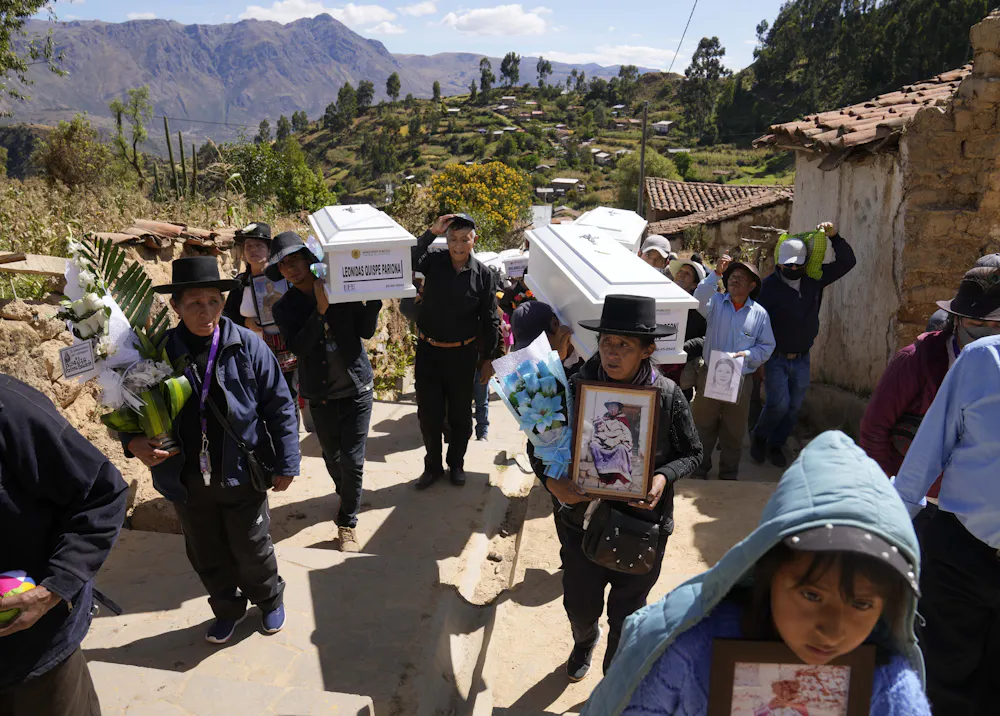
    Peruvian families carry remains of recently identified relatives who were killed years ago, during the insurgency, to the cemetery for burial in 2022.
    AP Photo/Martin Mejia

    As I show in my research, religion and politics are deeply intertwined in Peru. By the 1990s, the Peruvian Catholic Church was divided between members who spoke out in defense of human rights and those who defended the often brutal tactics of the government. Juan Luis Cipriani Thorne, who was then the archbishop of Ayacucho – the Andean stronghold of Sendero Luminoso – became a spokesperson for the pro-state faction, framing defenders of human rights as apologists for terrorism.

    Prevost was among those who maintained a critical view of any party, including the government, that committed human rights abuses. Diego Garcia-Sayan, the country’s former minister of justice and foreign affairs, recently wrote an op-ed praising Prevost’s willingness to speak out against attempts to legalize the death penalty and to defend embattled human rights organizations.

    From Chiclayo to the Vatican

    After returning to the United States in 1999, Prevost rose through the leadership ranks of the Augustinian order. He was sent back to Peru in 2014, when Pope Francis named him the apostolic administrator, and later bishop, of the northern diocese of Chiclayo.

    As bishop, Prevost emerged as a voice for democracy and justice. In a 2017 public statement to national media, he urged former President Fujimori to “personally ask forgiveness for the great injustices that were committed and for which he was prosecuted.”

    During his tenure as bishop, Prevost helped guide his community through the COVID-19 pandemic. He also played a key role ministering to Chiclayo’s growing population of Venezuelan migrants.

    Venezuelan Betania Rodriguez on May 10, 2025, shows a photo taken with Pope Leo XIV at a migrant shelter in Chiclayo, Peru.
    AP Photo/Guadalupe Pardo

    Meanwhile, he was gaining the confidence of his peers, as well as Pope Francis. Prevost was given a leadership role in the Peruvian Conference of Bishops and played a central role during Francis’ 2018 visit to Peru. In 2023, Francis named Prevost prefect of the Dicastery of Bishops, the oversight body for naming new bishops across the world.

    Prevost took the position in Rome but was sad to leave Peru again. “This time, again, it will be hard for me to leave here,” Prevost told Peruvian media.

    In recent years, Prevost has taken on causes central to Francis’ papacy. He was a key actor in the Vatican investigations of a Peruvian organization, Sodalicio de Vida Cristiana, which was found to have committed dozens of sexual and psychological abuses dating back to the 1970s. Francis dissolved the organization in 2025. Prevost has also developed an increased focus on Indigenous and environmental rights, in line with Francis’ 2015 encyclical Laudato Si and 2019 conference for bishops in the Amazon.

    Local celebrations

    Photographs and memes celebrating the Peruvian pope have flown around social media and WhatsApp groups in Peru. The photos of Prevost eating traditional dishes from the north coast are especially popular. AI-generated memes of the pope wearing the Peruvian national soccer jersey or eating ceviche with an Inca Kola soda are making the rounds.

    In Chicalayo and Trujillo, in addition to official church celebrations, thousands have taken to the streets to express their joy with placards and chants.

    Leo XIV has clearly brought the memory of his years in Peru with him to the Vatican. He has chosen Edgard Rimaycuna, a Peruvian priest whom the pope knew from his time in Chiclayo, as his personal secretary.

    I believe the challenges that Leo guided his parishioners through in two decades in Peru should offer valuable lessons for the new pope to build on the legacy of Francis, the first Latin American pope.

    Matthew Casey-Pariseault does not work for, consult, own shares in or receive funding from any company or organization that would benefit from this article, and has disclosed no relevant affiliations beyond their academic appointment.

    ref. ‘The pope is Peruvian!’ How 2 decades in South America shaped the vision of Pope Leo XIV – https://theconversation.com/the-pope-is-peruvian-how-2-decades-in-south-america-shaped-the-vision-of-pope-leo-xiv-256415

    MIL OSI – Global Reports

  • MIL-OSI Video: Department of State Press Briefing – May 13, 2025

    Source: United States of America – Department of State (video statements)

    Department Press Briefing with Principal Deputy Spokesperson Tommy Pigott at the Department of State.

    ———-
    Under the leadership of the President and Secretary of State, the U.S. Department of State leads America’s foreign policy through diplomacy, advocacy, and assistance by advancing the interests of the American people, their safety and economic prosperity. On behalf of the American people we promote and demonstrate democratic values and advance a free, peaceful, and prosperous world.

    The Secretary of State, appointed by the President with the advice and consent of the Senate, is the President’s chief foreign affairs adviser. The Secretary carries out the President’s foreign policies through the State Department, which includes the Foreign Service, Civil Service and U.S. Agency for International Development.

    Get updates from the U.S. Department of State at www.state.gov and on social media!
    Facebook: https://www.facebook.com/statedept
    X: https://x.com/StateDept
    Instagram: https://www.instagram.com/statedept
    Flickr: https://flickr.com/photos/statephotos/
    Rumble: https://rumble.com/c/StateDept
    Substack: https://statedept.substack.com

    Watch on-demand State Department videos: https://video.state.gov/
    Subscribe to The Week at State e-newsletter: https://public.govdelivery.com/accounts/USSTATEBPA/signup/32562

    State Department website: https://www.state.gov/
    Careers website: https://careers.state.gov/
    White House website: https://www.whitehouse.gov/
    Terms of Use: https://state.gov/tou

    #StateDepartment #DepartmentofState #Diplomacy

    https://www.youtube.com/watch?v=sPZF3_WCRhg

    MIL OSI Video

  • MIL-OSI USA: Governor Newsom’s budget to help lower drug costs, expand authority to access medication abortion through CalRx

    Source: US State of California 2

    May 13, 2025

    What you need to know: Governor Newsom will take action tomorrow to lower drug prices, increase transparency for PBMs, and expand authority for the state to acquire medication abortion.

    Sacramento, California – As part of the 2025-26 May Revision, Governor Gavin Newsom will propose two major actions to reduce prescription drug costs and safeguard reproductive freedom by expanding access to medication abortion.

    “Prescription drug prices are out of control and we’re shining a light on hidden costs — while also giving CalRX more tools to respond to supply chain disruptions, market manipulation, or politically motivated abortion restrictions.”

    Governor Gavin Newsom

    Pharmacy Benefit Managers: Pharmacy Benefit Managers (PBMs) act as middlemen between drug manufacturers, pharmacies, and insurers — often driving up costs in the process. The Governor’s May Revision proposes new state oversight to increase transparency and cut costs. Under this proposal:

    • PBMs must be licensed and regulated by the Department of Managed Health Care (DMHC).

    • They must report operational and financial details, including audited statements and will have a fiduciary duty to clients, holding PBMs to a higher ethical standard.

    • DMHC will review PBM contracts and perform regular financial audits.

    • As part of licensure, PBMs must report detailed drug pricing data to the Department of Health Care Access and Information (HCAI), the state’s health data agency.

    • DMHC will have clear authority to enforce rules and penalize violations.

    Expanding CalRx for brand-name drugs: The May Revision proposes expanding the authority of CalRx to purchase brand-name drugs. This change gives the state more tools to respond to supply chain disruptions, market manipulation, or politically motivated restrictions that could threaten access to essential medications — including medication abortion.

    By expanding CalRx’s scope, California will be better positioned to:

    • Secure affordable supply of both generic and brand-name drugs.

    • Maintain uninterrupted access to medications at risk of shortage or political interference.

    • Strengthen the state’s ability to protect reproductive health care options, including mifepristone and other medications under attack in other states.

    Members of the press who wish to attend tomorrow’s release of the revised budget plan can learn more HERE.

    Recent news

    News What you need to know: California today filed a request for a preliminary injunction to immediately stop President Trump’s unlawful tariffs while the state’s lawsuit proceeds. Tariffs are not only expected to impact trade, but the upcoming state revenues and…

    News What you need to know: Sacramento’s Monarch housing project is the latest affordable housing site brought to fruition under Governor Newsom’s executive order to develop excess and underutilized state lands into affordable new homes. SACRAMENTO — Governor Gavin…

    News What you need to know: Thanks to Prop 1, today’s funding is estimated to create over 5,000 residential treatment beds and more than 21,800 outpatient treatment slots for behavioral health and will build upon other major behavioral health initiatives in…

    MIL OSI USA News

  • MIL-OSI USA: InCHIP Supports Principal Investigators Amid Uncertainty in Federal Research Funding

    Source: US State of Connecticut

    On Friday, May 30, UConn’s Institute for Collaboration on Health, Intervention, and Policy (InCHIP) will hold a virtual coffee break for faculty to receive updates on the evolving federal research funding landscape and guidance for writing competitive grant applications in the current climate.

    The event will feature a panel of InCHIP principal investigators (PIs) who have submitted a federal funding proposal this year. In addition, leaders from InCHIP and the Office of the Vice President for Research will share advice from program officers at the National Institutes of Health and answer questions about the impact of federal funding on the university.

    Information for the upcoming coffee hour can be found on InCHIP’s website, chip.uconn.edu.

    This event is part of InCHIP’s recurring coffee hours, which provide faculty a space to informally discuss their experiences with federal funding changes and create a network of support.

    Caitlin Caspi, Director of Food Security Initiatives at the UConn Rudd Center for Food Policy and Health, and Associate Professor of Allied Health Sciences

    “These events are important for us to get an idea of how changes in federal funding are affecting faculty and how InCHIP can support PIs and their research,” says Caitlin Caspi, associate director of InCHIP and director of Food Security Initiatives at the UConn Rudd Center for Food Policy and Health.

    Faculty from UConn Storrs, UConn Health, regional campuses, and various schools and colleges have participated, highlighting strong interest and demand for these events.

    Caspi spearheaded the coffee hours in response to unprecedented funding cuts at the National Institutes of Health (NIH). According to the Association of American Medical Colleges (AAMC), about $1.9 billion in research and career development funding to U.S. institutions has been terminated. AAMC data shows that Connecticut has lost more than $12 million in NIH funding.

    Scientific research is a core component in the economic engine of Connecticut and the United States. Government-funded research also fuels cures for debilitating diseases and innovation.

    A 2019 study published in Science by researchers at the University of California, Berkely, the University of Connecticut, Boston University, and Harvard University quantified the impact of federal research dollars on patents. The authors found that nearly one-third of U.S. patents rely on federal research dollars and established that corporations have become more reliant on government investment.

    In addition to the impacts on innovation, the cuts have socioeconomic implications. As the largest public funder of biomedical research, the NIH provided key support for research that improves public health and well-being, especially for historically understudied populations and fields.

    Grant terminations have most heavily impacted research areas like HIV/AIDS, sexual and gender minorities, COVID-19, and climate science – many of which are InCHIP priorities. In response, leadership is working to expand support for investigators beyond the coffee hours.

    First, InCHIP continues to offer seed grant funding to support innovative pilot research that will serve as the foundation for future external funding proposals.

    Tricia Leahey of the Department of Allied Health Sciences (AHS) in the College of Agriculture, Health and Natural Resources (CAHNR), and director of the UConn Institute for Collaboration on Health, Intervention, and Policy (InCHIP)

    “InCHIP seed grants support innovative pilot research in emerging areas and PI career growth. In unstable financial times, these internal funding opportunities can act as lifelines to keep research moving forward,” says Tricia Leahey, director of InCHIP.

    For the Spring 2025 semester, InCHIP offered internal funds for projects that aim to address health challenges and concerns affecting understudied populations in Connecticut and the United States.

    Specifically, InCHIP has partnered with the UConn Gladstein Family Human Rights Institute to fund projects that explore the areas of health equity, human rights, and social justice. InCHIP expects to fund 2 projects under this opportunity.

    InCHIP also offered seed grants in environment and health, community-engaged research, and women’s health, along with core funding for career development, and team formation, bridge funding, and project completion.

    The spring application cycle has closed, but investigators are encouraged to check InCHIP’s website during the fall semester.

    InCHIP is also supporting PIs who received award termination from the NIH, from navigating logistics to providing financial support. In addition, InCHIP is helping PIs navigate the changing funding landscape through grant writing workshops and identifying non-federal funding sources.

    Next semester, InCHIP will offer a grant writing workshop focused on foundation opportunities. The goal of the workshop is to help PIs learn best practices for crafting competitive proposals. Modeled after InCHIP’s Spring 2025 NIH grant writing bootcamp, the workshop builds on this semester’s successful bootcamp and follow-up seminar, which is providing researchers hands-on experience and in-depth feedback on their grant proposals.

    Details about the foundation grants workshop will be announced on InCHIP’s website.

    MIL OSI USA News

  • MIL-OSI United Nations: Experts of the Committee on the Rights of the Child Commend Norway on Child Welfare Act, Raise Questions on Proposed Increased Use of Force in Schools and Data on Children with Disabilities

    Source: United Nations – Geneva

    The Committee on the Rights of the Child today concluded its review of the seventh periodic report of Norway, with Committee Experts commending the State on the new child welfare act, while raising questions about the proposed increased use of force in schools and the lack of data on children with disabilities. 

    Bragi Gudbrandsson, Committee Expert and Taskforce Member, commended Norway for the child welfare act which was a wonderful piece of legislation. 


    Mr. Gudbrandsson said the Committee was concerned that Norway planned to use stronger force and constraints.  How had the country reached this situation?

    Faith Marshall Harris, Committee Expert and Taskforce Member, also emphasised her concern, stating that instead of teachers being trained to de-escalate violence, they were given the power to use more force than police officers.  It seemed that the Government had responded in a knee-jerk reaction to media pressure; however, the situation was more about training teachers to deal with these situations in a non-violent way.  Norway was encouraged to rethink this approach. 

    Thuwayba Al Barwani, Committee Expert and Taskforce Member, said Norway had excellent data but when it came to disability, there was no disaggregated data to better understand the situation of children with disabilities in the country.  How many of these children lived with their families? How many lived in residential care? How many were receiving support services?  What awareness raising campaigns were in place to remove stigma and educate about disability? 

    What measures were in place to provide quality psychological care for children with mental health disabilities in all municipalities?   

    The delegation said the new education act introduced a broader scope for exercising force and restraint.  Employees could now intervene against pupils when necessary.  Norway shared the Committee’s concerns and had tried to state explicitly in the provision that this was a last resort, with strict measures for physical restriction to take place.  The Government and municipalities focused on the competence of the staff to put pre-emptive measures in place so that physical interventions were a last resort and only used when necessary. 

    The delegation said the Norwegian strategy for equality for all ran until 2030, with an important competence to increase the visibility of the Convention on the Rights of Persons with Disabilities in all municipalities.  In 2025, the Government allocated 280 million kroner for grants for people with disabilities.  Norway could not definitively say how many people with disabilities were living in the country.  A recent report by Statistic Norway, focused on the different definitions of disability, which would hopefully assist the State in future.

    Introducing the report, Lene Vågslid, Minister of Children and Families of Norway and head of the delegation, said since the last dialogue with the Committee in 2018, Norway had taken significant steps to further strengthen children’s rights. 

    Last month, the Government presented a proposal for a new children’s act to Parliament, which included a new provision on the child’s right to privacy, and the parents’ responsibility in this regard.  Norway had introduced a range of measures in recent years to develop and improve the child welfare sector, including the new child welfare act, which entered into force in 2023, placing greater emphasis on prevention and helping children and parents as early as possible.  For the first time, a white paper on “Safe digital upbringing” would soon be presented to Parliament to develop policies that empowered and protected children in their digital lives. 

    In closing remarks, Mr. Gudbrandsson said it was clear Norway was on an exciting journey in revisiting the fundamental principles of the Convention, which was reflected in the new legislation, guidelines and action plans; the Committee was very impressed and appreciated these efforts. 

    In her closing remarks, Ms. Vågslid thanked the Committee for the important questions and the dialogue.  Norway aimed to highlight that all sectors were working towards the best possible outcomes for children. 

    The delegation of Norway was comprised of representatives from the Ministry of Children and Families; the Ministry of Culture and Equality; the Ministry of Education and Research; the Ministry of Justice and Public Security; the Ministry of Health Services; the Ministry of Labour and Social Inclusion; and the Permanent Mission of Norway to the United Nations Office at Geneva. 

    Summaries of the public meetings of the Committee can be found here, while webcasts of the public meetings can be found here. The programme of work of the Committee’s ninety-ninth session and other documents related to the session can be found here.

    The Committee will next meet in public at 3. pm on Wednesday, 14 May to begin its consideration of the combined fifth and sixth periodic reports of Indonesia (CRC/C/IDN/5-6).

    Report

    The Committee has before it the seventh periodic report of Norway (CRC/C/NOR/7).

    Presentation of Report

    LENE VÅGSLID, Minister of Children and Families of Norway and head of the delegation, said since the last dialogue with the Committee in 2018, Norway had taken significant steps to further strengthen children’s rights.  Fundamental children’s rights were included in the Norwegian Constitution, including that the best interests of the child must be a key consideration, and that children had a right to be heard regarding issues affecting them.  Moreover, the Convention was implemented through the human rights act, meaning it was applied as Norwegian law and prevailed if in conflict with other legislation. 

    Last month, the Government presented a proposal for a new children’s act to Parliament, which included a new provision on the child’s right to privacy, and the parents’ responsibility in this regard.  There were also several amendments to strengthen children’s rights when parents separated, including mandatory mediation for the parents and children. Additionally, the new education act of 2023 applied to all public primary and secondary education and contained general provisions stating that the best interests of pupils should be a fundamental consideration in actions and decisions concerning them. 

    Norway had introduced a range of measures in recent years to develop and improve the child welfare sector, including the new child welfare act, which entered into force in 2023, placing greater emphasis on prevention and helping children and parents as early as possible.  Last month, the Government launched the Quality Improvement Initiative, to give children relying on child welfare services greater predictability and stability. 

    It was only in exceptional cases, and as a matter of last resort, that the best interest of the child could lead to children being separated from their parents.  From 2023, children in health institutions had the right to be accompanied by a parent or guardian throughout their stay.  Families who had a child with a serious illness, injury or disability now had a right to a coordinator.  The Government also recently decided to incorporate the Convention on the Rights of Persons with Disabilities into the human rights act. 

    Since 2022, Norway had offered collective protection to around 90,000 refugees from Ukraine, many of them children.  The State had also increased the earmarked budget line for strengthened child expertise in asylum reception centres, and the County Governor’s supervision of unaccompanied minors was increased.  A national strategy for children in low-income families (2020-2023) was put forward in 2020 and renewed in 2024, aiming to strengthen the economy of low-income families and reduce economic barriers to kindergartens and after-school programmes. 

    In 2023, the Government introduced a “youth guarantee” which ensured young people close follow-up and individual support.  Since 2022, a cross-sector initiative called the Core Group for Vulnerable Children and Youth coordinated efforts across eight ministries and 14 agencies to address the needs of at-risk children.  Two weeks ago, Norway launched a national mission on the inclusion of children in education, work and societal life, with the key goal of reducing exclusion among children by 2035. 

    For the first time, a white paper on “Safe digital upbringing” would soon be presented to Parliament to develop policies that empowered and protected children in their digital lives.  Norway had also, for the first time, established a Ministry of Digitalisation, working closely together on children’s behalf.  Norway had high ambitions for all its children and was committed to advancing their well-being.  Ms. Vågslid concluded by commending the important role played by the United Nations treaty bodies in improving States’ implementation of human rights. 

    TORMOD C. ENDRESEN, Permanent Representative of Norway to the United Nations Office at Geneva, said Norway was looking forward to doing a deep dive with the Committee on the Rights of the Child in the country.  He then introduced the Norwegian delegation. 

    Questions by Committee Experts

    BRAGI GUDBRANDSSON, Committee Expert and Taskforce Member, said the Committee was aware of Norway’s exemplary record in children’s rights, being the first country to incorporate the Convention into domestic legislation, and the first in the world to establish the position of Ombudsman for children.  For this reason, the Committee would do its best to give Norway a critical appraisal. 

    The Government of Norway had been criticised in the law-making process, including the lack of a child rights assessment impact, and that children’s views were not included in the process of lawmaking.  It was understood that steps had been taken to address this; could the delegation share these with the Committee?  Could some examples be provided?  How was it ensured that the public administration act contributed to strong policies for children?  It was interesting that Norway had not yet formulated a comprehensive implementation plan for the Convention on a national, regional or sectoral basis. Could the delegation comment on this? 

    Norway was commended for collaboration between the Ministries and the Core Group for Vulnerable People.  Had it addressed the discrepancies in resources between the different municipalities? Had a strategy been devised in this regard?  Were children regularly consulted by the Core Group?  Norway currently did not collect disaggregated data which was of concern to the Committee.  Could the State use a safeguard strategy, rather than simply not collecting the statistics?  How did the State address the concerns of unaccompanied minors in reception centres? What was the status of amendments to the legal aid act?  To what extent were local politicians aware of the Committee’s observations since 2018? What was being done to improve this situation?  How were the concluding observations applied in the Government? 

    Mr. Gudbrandsson commended Norway for the child welfare act which was a wonderful piece of legislation.  The lack of participation of children in Norway was of concern, with many pieces of legislation being implemented without children having a chance to provide their views.  Were steps being taken to follow-up the child welfare act to ensure children were heard? Was there a possibility to accommodate the views of the children during child abuse cases through the Barnahus model? Would the State consider the age limit for accessing Barnahus services to 18?  It was important to provide young offenders with inappropriate sexual behaviour with good therapy, and Norway was commended for thinking about this.  The Committee welcomed the State’s action plan to address violence against children.  Had an evaluation of the previous plans been conducted?  How had this impacted the new plan? 

    The Committee was concerned that Norway planned to use stronger force and constraints.  How had the country reached this situation? Would Norway ban child marriages completely without any exceptions?  There was a lack of specific prohibition of the sale and sexual exploitation of children; could this be explained? 

    MARY BELOFF, Committee Vice-Chair and Taskforce Member, said Norway’s high-level delegation present before the Committee highlighted the country’s commitment to human rights.  Norway was an exemplary country in so many ways.  Why did discrimination still persist in such an egalitarian community, particularly when it came to Sami, migrant, asylum and refugee children? Where did the root causes lie? Were there any plans to diminish the levels of discrimination seen against children? 

    All State practices in Norway kept the best interests of the child in mind.  However, there were certain cases where questions arose. Was there an instrument for local and national authorities for this purpose?  How could the best interest of the child be reconciled with chemical restraints or practices of confinement?  How was it assessed whether the best interests of the children involved were satisfied? 

    If a child needed to be removed from their family, was there a protocol in place to ensure that the best interests of the child were still respected?  How was the situation of brothers and sisters assessed and the impact on children’s mental health?  Was there sufficient information to provide a solution to deportation or family reunification as it pertained to refugees?  How did “extended detention” reconcile with the best interests of the child?

    Responses by the Delegation 

    The delegation said the proposed children’s act strengthened the rights of all children in Norway and put their safety first, with the best interests of the child always considered most important.  The act aimed to facilitate the child’s contact with both parents and reduce conflict in situations of separation of parents.  The new act also included special provisions for cases of abuse of children.

    Norway placed a great emphasis on human rights and had implemented human rights conventions in the national law; in case of conflict, the conventions would prevail.  Norway’s Parliament had considered the ratification of the third Optional Protocol on several occasions, most recently in 2022, but given several reservations expressed, had voted not to implement it by an 80 per cent majority.  Given that recent decision, the Government was currently not considering ratifying the third Optional Protocol.  The Government remained adamant to develop a national complaints procedure and had taken steps in this regard.  A child-friendly website had been designed, allowing children to access the complaints procedure more easily. 

    The participation of children was becoming an increasingly valued part of Norway’s decision-making process.  The right to be heard was enshrined in the Constitution, and there were now established youth councils and mandated conversations with the Government and youth-oriented non-governmental organizations.  In March this year, the Government developed and clarified the role of the Norwegian Directorate for Children, Youth and Family which would now oversee all aspects pertaining to children and participation, and provide guidance to the public sector in this regard. 

    There were many national complaints bodies in Norway which had the competence to handle complaints concerning children.  Several measures had been taken to strengthen children’s right to complain. Politicians at all levels were responsible for following Norwegian law in all their decisions, and the Convention was part of Norwegian law.  Politicians received a copy of the Convention on the first day of work and an informative poster.  All general comments made by the Committee were published on the Government’s website in Norwegian and English. 

    The Norwegian Human Rights Institution had created a guide on children’s rights which was available online.  Since 2018, it was forbidden to enter a marriage with someone under 18 in Norway, and from this year, foreign marriages of a person under the age of 18 were not recognised. 

    In April, a bill was submitted to parliament for a new administrative procedural act.  The legal aid act stipulated the right to free legal aid for natural citizens, including minors.  The Norwegian Barnahus model was evaluated in 2021, with the system seeming to work well and in accordance with international conventions.  The Government aimed to strengthen the legal protection of child suspects, including around interrogation of minors. The evaluation of the Barnahus model did not delve further into the proposal to raise the age for access to services to 18. 

    Residents in asylum reception centres took part in an information programme about the Norwegian society and its fundamental values.  The objective was to help residents take care of their own living situations and also inform them of their rights.  In cases of expulsion, an extended right to free legal aid was granted. 

    In recent years, Norway had taken significant steps to strengthen the child welfare services through policies, research, and financial commitments.  The child welfare services aimed to do everything within their power to allow children to live at home.  The municipalities were vital in this regard.  In Norway, around 54,000 children and adolescents received help from child welfare services annually.  The new child welfare act entered into force in 2023, and children were provided with additional rights, including speaking to child welfare authorities without parental consent.  The new participation regulation came into force in 2024 and clarified the duty of the child welfare services to provide child participation in cases.  Norway was working to improve the system, including through evaluating the new rules, developing more child friendly processes, and ensuring access to qualified legal representation to children, among other measures.   

    Norway had been working hard on foster homes; nine out of 10 children living in alternative care lived in foster homes.  Several measures had been launched to improve the situation of foster parents, including for them to be given clearer decision-making authority.  Children who had lived in a foster home for at least two years could be proposed a permanent residence in the home, if the aim of reunification had been abandoned.  The State was currently investing in models for foster homes for siblings. 

    The responsibility of the treatment and follow-up of intersex children was assigned to two hospitals, and necessary medical treatment was initiated when relevant. Treatment practices in Norway were aligned with the rest of the Nordic countries.    Norway did not collect any data or statistics based on the ethnicity of the population.  The Government was strengthening and renewing its efforts to combat hate and discrimination based on ethnicity and religion, and had delivered four action plans, including against anti-Semitism and anti-Muslim racism and hate speech, as well as discrimination against the Sami.  A study showed that a high number of children with ethnic backgrounds had experienced racism. 

    The kindergarten act and education act stated that children had the right to an education free from discrimination.  The new education act introduced a broader scope for exercising force and restraint. Employees could now intervene against pupils when necessary.  Norway shared the Committee’s concerns and had tried to state explicitly in the provision that this was a last resort, with strict measures for physical restriction to take place.   

    Several guidelines had been produced by the immigration service and the appeals board on how to hear children in the case-handling process.   

    Questions by Committee Experts

    THUWAYBA AL BARWANI, Committee Vice-Chair and Taskforce Member, acknowledged the hard work Norway had put into the strategy of equality for persons with disabilities 2020 to 2030.  How had the strategy helped mitigate the discrimination of vulnerable children? What interventions were envisaged to address access to services for children with disabilities to ensure their rights were upheld?  The Committee had heard reports of abuse of children with psychosocial disabilities, particularly girls.  What measures had been taken to address this problem?  To what extent did these children know their rights?  Was the State party making efforts to give them opportunities to be heard and their views taken into account? 

    There had been violations found in 76 per cent of respite homes; how was the Government planning to regulate these homes?  Were there efforts to reduce and phase out these institutions and replace them with more community-based care? 

    Norway had excellent data but when it came to disability, there was no disaggregated data to better understand the situation of children with disabilities in the country. How many of these children lived with their families?  How many lived in residential care?  How many were receiving support services?  What awareness raising campaigns were in place to remove stigma and educate about disability? 

    What measures were in place to provide quality psychological care for children with mental health disabilities in all municipalities?   

    The Committee had received reports that children without resident permits could not be seen by a general practitioner, and could only receive emergency health care, which was of concern.  Was the Government planning to change this practice?  The Committee welcomed Norway’s commitment to protect intersex children from violence; however, it was concerned that unnecessary irreversible surgeries had been performed on intersex children without their informed consent.  Was this the case?  Had data been collected on these practices?  Had there been redress for these children?  How was the Government planning to protect children from these practices?  What measures did the Government have to combat family poverty?  What additional measures were in place to improve the living conditions of children in municipal housing? 

    FAITH MARSHALL HARRIS, Committee Expert and Taskforce Member, said Norway had been the envy of the world in terms of the environment and had an incredible record. Why was the State now granting more licenses for gas and extraction and exports?  The Committee was concerned about this change of direction.  Why was the State turning its back on the commitments made in the Paris Agreement?  Why was Norway undermining its incredible heritage in this direction?  Given the fact that this was so important to the lives of children, was there a mechanism in place for consulting them on these major decisions?

    Children with disabilities in Svalbard could not receive special education and had to move with their parents to the mainland; could more information be provided on this? The use of force by teachers in the classroom against disruptive pupils was concerning and seemed to escalate violence. Instead of teachers being trained to de-escalate violence, they were given the power to use more force than police officers.  It seemed that the Government had responded in a knee-jerk reaction to media pressure; however, the situation was more about training teachers to deal with these situations in a non-violent way.  Norway was encouraged to rethink this approach. 

    Could Norway provide more information about programmes and strategies for the Sami people?  Had Norway developed a national referral mechanism for trafficking?  Was legal representation available to children from the very start of an investigation?  How were children who had come out of warzones being rehabilitated? 

    BRAGI GUDBRANDSSON, Committee Expert and Taskforce Member, asked what services children with challenging behaviours were entitled to by law? 

    MARY BELOFF, Committee Vice-Chair and Taskforce Member, asked how children were heard in cases where the State legally granted a sex change?  Had a legal definition of statelessness been adopted? What mechanisms existed to protect children who had been exposed on the internet?  Did children deprived of liberty receive information on their rights?

    A Committee Expert said Norway did not participate in the ministerial conference on ending violence against children; was there a specific reason for this? 

    Another Expert asked about the Norwegian children’s act.  When would this be finished?  How much were children involved in that act? 

    An Expert asked what was being done to prevent violence against children, including risks in the digital environment?  How was the birth declaration of refugee or stateless individuals conducted?  What was being done to support those parents?

    Responses by the Delegation

    The delegation said children’s rights would always be work in progress; it was important to evolve and improve.  Children in Norway were among the highest users of screens, social media and digital technology globally.  How could the State protect them in their everyday life?  This was a difficult problem to solve. 

    The work with the Core Group for Vulnerable Children and Youth started in 2021.  There was a need for a better cross-sectoral collaboration to ensure children, youth and their families received the necessary support and follow-up.  The Core Group was comprised of representatives from seven ministries. Last year, the Core Group was evaluated, with conclusions finding that it was well established.  The Core Group did not consult children directly in its work. 

    To combat complex forms of discrimination, it was important to apply a cross-sectional approach when developing legislation.  The action plan to combat hate speech and discrimination against the Sami was launched in January this year, and included 32 measures under headings such as dialogue, democracy, safety and security, among others.  Many valuable inputs from those concerned had been received, including from young people, as well as the Sami Parliament, which was actively involved in the development of the plan.

    The Norwegian strategy for equality for all ran until 2030, with an important competence to increase the visibility of the Convention on the Rights of Persons with Disabilities in all municipalities.  In 2025, the Government allocated 280 million kroner for grants for persons with disabilities.  Norway could not definitively say how many persons with disabilities were living in the country.  A recent report by Statistic Norway focused on the different definitions of disability, which would hopefully assist the State in the future.

    Every year, the Government submitted a forward-looking white paper to the Sami Parliament.  The Government aimed to get more qualified teachers in Sami schools and kindergartens.  The lack of Sami language competence was the biggest challenge to provide good services to the Sami population.  The Government had financed a school programme to assist students with a Roma background to complete primary and secondary education.  The unique framework of the Svalbard community determined what services could be provided.  It was not possible to ensure all needs could be met in the archipelago as on the mainland, including the educational offering, particularly special education, which required a tailored, individual approach.  Any additional needs needed to be met on the mainland. 

    The education act and the private school act that clarified employees to use physical interventions, included an obligation to prevent physical intervention from occurring. The Government and municipalities focused on the competence of the staff to put pre-emptive measures in place so that physical interventions were a last resort and only used when necessary. Schools should have an environment where all students thrived and benefited from education, including those who exhibited disruptive behaviours.  The solutions for these students needed to be adapted to each individual pupil.  This year, the Norwegian Government had allocated money to municipalities to address these issues.   

    Minors who came to Norway alone were a particularly vulnerable group and given high priority. In 2022, an independent evaluation of minors in asylum reception centres was conducted to ensure they received the necessary care, and violations were detected in several centres.  In 2025, the Government increased the funding of independent supervision and funding in several reception centres.  Norway worked systematically to improve the care provided to children in reception centres.  It was mandatory for reception centres to have routines in place to handle violence against children, with staff required to report any violent behaviour to relevant authorities.  The Norwegian Directorate of Immigration had instructed follow-up procedures for minor asylum seekers who may be victims of human trafficking, violence or child marriage. The Directorate of Immigration had developed specific action cards for the reception centres, for each of these specific issues.

    The Directorate of Immigration required that cooperation resident councils were established within asylum centres to ensure residents could express their views on the operation of the centre.  When applying for protection, all unaccompanied asylum-seeking minors were offered an asylum interview, either in person or online.  Clear child-friendly guidelines had been prepared on interviewing children which needed to be followed by police units.  The Immigration Appeal Board heard children orally if deemed necessary.  It was rare for children to be involved in the Board meetings.  Child hearings were conducted orally by the local police in Norway. The police had received guidance on how to hear children in a child-friendly manner. 

    A person charged with a criminal offence who was under the age of 18 at the time of the offense would only be sentenced to preventive detention in extraordinary circumstances. Unfortunately, there were cases where the court had found there were no alternative ways to safeguard public security. In light of the recommendation from the Committee, the Norwegian Government was monitoring this situation. 

    Human trafficking was a grave violation of human rights and a crime with serious consequences. The level of trafficking was low in Norway.  The Government had decided to release a strategy on trafficking in human beings which would be presented in 2025.  Training to detect victims of torture and trafficking was of utmost importance; a national guideline was published in this regard in 2023.  There were several provisions in the criminal procedure act which granted the right to a publicly appointed defence council, which was an unconditional right if the individual was a minor at the time of the offence. 

    More than 89 per cent of children in Norway participated in kindergartens.  The Government’s strategy to 2030 aimed to ensure all children could participate in high quality kindergartens, regardless of where they lived and their financial situation.  The Government had taken steps in 2024 to reduce the price of kindergarten places, significantly lowering barriers for families to enrol their children in kindergartens.  Children of minority backgrounds had lower levels of enrolment.  Children in asylum reception centres were not entitled to a place in kindergarten, but grants were provided to assist them in this regard. 

    Municipalities were strengthening formal competence in education.  School absenteeism could have many different courses and the severity of cases varied.  Absenteeism early in the school year could have significant consequences for pupils. The Government was strengthening efforts to prevent students from developing school absenteeism.

    The Convention on the Rights of Persons with Disabilities’ project was an important measure to ensure the Convention was implemented throughout the whole country. A guide had been created to help the municipalities understand and implement the Convention, and films and other materials had been made to increase the understanding of using the Convention in practice. 

    Children and young people would have to live with the climate, and the decisions made today would affect their future.  It was crucial to limit the global temperature increase to 1.5 degrees Celsius. Norway was contributing to this effort by striving to complete its own climate goals and it collaborated with the European Union in this regard.  The Government involved children and young people in the development of the climate policy.  An agreement had been reached which safeguarded the rights of reindeer herders. The State had taken a responsibility to ensure that reindeer herders could utilise additional land for winter grazing.  Following the full-scale invasion of Ukraine, the supply of gas from Norway to Europe had helped free Europe from Russian gas.

    Questions by Committee Experts

    FAITH MARSHALL HARRIS, Committee Expert and Taskforce Member, congratulated Norway on the outcome for the reindeer herders.  The issues of violence and bullying in schools was an increasing worldwide phenomenon which had reached even Norway.  Did Norway consider that the socialisation in schools needed to increase?  What would be done about this?  Was the issue of displacement among indigenous peoples being addressed?  Was their free, prior and informed consent being obtained for development activities? 

    A Committee Expert asked if the Immigration Appeals Board had an administrative and judicial competency?  What kind of appeals did it hear?  Were there age assessment appeals before this Board?  How was the right of children to be heard guaranteed if the Board did not hear children directly?  Did the Board hear appeals from detention conditions?  Was there mandatory reporting with regards to the best interest of the child?  Did permanency only apply to children in residential care or those in all care settings?

    Another Expert said developing countries were most vulnerable to the impact of greenhouse gases. What was Norway doing for those countries? 

    A Committee Expert asked if children in Norway had been consulted regarding the ratification of the third Optional Protocol?  Norway should be commended regarding its commitment to the landmine treaty, as landmines were some of the worst arms affecting children.  Did the State plan to take a stronger stance?

    Another Committee Expert asked if there were positive parenting programmes in place in Norway? How was artificial intelligence used in Norway and how did the State protect children from its threats? 

    MARY BELOFF, Committee Vice-Chair and Taskforce Member, asked why Norway did not feel the need to have a differentiated response between the ages of 15 to 18? 

    Responses by the Delegation

    The delegation said three quarters of the country’s child and adolescent mental health services had implemented cognitive behaviour therapies to address trauma.  The Norwegian Board of Health Supervision conducted nationwide inspections of children in respite homes between 2022 and 2023, and had provided several recommendations, with follow-up measures now initiated.  Since 1991, Norway had implemented a reform for the care of people with developmental disabilities, with the goal to phase out institutional care.  Data showed that almost 20,000 children had received one or more municipal care services. 

    Children with disabilities should be treated equally and protected against discrimination. The Ombudsman for Children played an important role in raising awareness about children’s rights.  Illegal substance use among children and young people in Norway was relatively low.  However, there had been a concerning increase in cocaine use among young men and boys.  The Government was particularly focused on preventing substance use among children and young people.  Most children and young people in Norway reported a good quality of life and satisfaction; however, there had been an increase of poor self-mental health diagnosis among young people in Norway, particularly after the COVID-19 pandemic. The Government aimed to ensure that everyone had access to good quality, low-threshold mental health services, and municipal capacities had been developed in this regard.

    Combatting violence against children was a high priority for the Norwegian Government and a national action plan had been developed.  A whitepaper on safe digital upbringing would soon be submitted to Parliament.  The development of social media was being debated, and Norway was assessing an age limit for social media services.  Most social media services were not developed with children’s wellbeing in mind. Children of any age could refuse a parent sharing videos or photos of them on social media.

    In cases of separation, parents should have shared daily authority as a general rule, to safeguard the child’s right to family life and reduce conflict.  Norway had a free and low threshold counselling service for families to prevent disputes.  The Norwegian Directorate of Children and Youth offered a wealth of online resources for parents to help them navigate different aspects of parenting. 

    The Government had proposed legislative amendments to ensure foster parents could be given direct authority to make decisions on behalf of the child.  Foster parents were given the right to appeal the decision to move a child.  The child welfare act regulated follow-up between parents and monitored the child’s development. 

    Children could be placed in child welfare institutions if they had serious behavioural problems; this was the case for approximately 20 per cent of children residing in these institutions.  The State had a duty to ensure these children received the necessary care and help required. 

    Norway’s housing allowance had been strengthened in 2024 and 2025 to help those struggling in the housing market.  The Government had strengthened the grants scheme for the inclusion of children and youth. Policies targeted newly arrived refugees and immigrants who had lived in Norway for years, to increase their access to the labour market.   

    The Government had initiated a series of measures to improve the school environment and was further strengthening this effort.  Studies showed that pupils who did not use their phones in school hours experienced less bullying, and for this reason there was a directive for schools to keep school-hours mobile free.  Schools and kindergartens had an obligation to act if a child was experiencing bullying.

    An age assessment was considered during the asylum decision.  It was not the case that the Immigration Appeal Board never heard the child. When it was assessed that the case was sufficiently informed, the Board could decide on the case without a hearing. Usually, it was assessed that the case was sufficiently informed, as the child had previously been heard through an asylum-seeking interview.  The detention of children was only used to carry out an immediate pending return. Minors above 16 years old could be granted a resident permit if they reached the age of 18.  This was important to reduce the number of asylum-seeking minors embarking on dangerous journeys to Norway and Europe.  There were special penal sentences in place for juvenile offenders.

    Norway regretted the decision of some countries to withdraw from the mine ban treaty and had no plans to withdraw. 

    Gender affirming treatment was not provided to intersex children based on this diagnosis alone; it was only after a diagnosis of gender dysmorphia where treatment could be received, following years of monitoring.  Surgeries were not performed on the psychosocial indications of intersex children.  The last time this occurred was several decades ago. 

    When giving birth in Norway, most births took place in a hospital, where the birth was then registered.  If the birth took place at home without a doctor or midwife present, it was up to the mother to report the birth within one month. 

    Closing Remarks

    BRAGI GUDBRANDSSON, Committee Expert and Taskforce Member, appreciated the rich, comprehensive information shared by the delegation.  It was clear Norway was on an exciting journey in revisiting the fundamental principles of the Convention, which was reflected in the new legislation, guidelines and action plans; the Committee was very impressed and appreciated these efforts.  The proposal to expand the use of force in schools and residential care was of concern to the Committee and it was hoped this would be carefully considered before being enacted. 

    LENE VÅGSLID, Minister of Children and Families of Norway and head of the delegation, thanked the Committee for the important questions and the dialogue.  Norway had seen a rise in the exclusion of children which it wished to turn around.  The proposed children’s act aimed to secure the child’s right to family life, provided it was in their best interest.  Norway aimed to highlight that all sectors were working towards the best possible outcomes for children.  Norway looked forward to receiving the Committee’s concluding observations.

    SOPIO KILADZE, Committee Chair, thanked Norway for the dialogue and for acknowledging the challenges faced by the country.  The concluding observations would contain recommendations to make Norway a better place for children.  Ms. Kiladze extended warm regards on behalf of the Committee to the children of Norway.

    ___________

    Produced by the United Nations Information Service in Geneva for use of the media; 
    not an official record. English and French versions of our releases are different as they are the product of two separate coverage teams that work independently.

    CRC25.010E

    MIL OSI United Nations News

  • MIL-OSI Video: Peacekeeping, Palestine & other topics – Daily Press Briefing (13 May 2025) | United Nations

    Source: United Nations (Video News)

    Noon Briefing by Stéphane Dujarric, Spokesperson for the Secretary-General.

    Highlights:
    Secretary-General/UN Peacekeeping
    Occupied Palestinian Territory
    Sudan
    South Sudan
    Libya
    UN Women
    Financial Contribution

    SECRETARY-GENERAL/UN PEACEKEEPING
    Earlier today, the Secretary-General spoke at the Opening Ceremony of the UN Peacekeeping Ministerial Meeting taking place in Berlin. He reasserted that in trouble spots around the world, our Blue Helmets can mean the difference between life and death, adding that they are a clear demonstration of the power of multilateral action to maintain, to achieve and to sustain peace.
    Mr. Guterres spoke about the challenges that we are now facing, including having the highest number of conflicts since the foundation of this organization. On top of that, we face dramatic financial constraints across the board.
    During his speech, and in honour of the 4,400 peacekeepers who have died in the line of duty since the start of UN Peacekeeping, Mr. Guterres asked the attendees of the meeting to join him in a moment of silence.
    Also, in Berlin, the Secretary-General met separately with Germany’s Ministers of Foreign Affairs – Johann Wadephul – as well as the Minister of Defence, Boris Pistorius. Among other topics, they discussed the importance of Germany’s role in peacekeeping. And I just to flag, as a sign of the importance of this meeting, we have more than 130 delegations in Berlin at this Peacekeeping conference.
    On the sidelines of the Ministerial Meeting, the Secretary-General also held bilateral meetings with Ministers and officials of other countries, including Italy, Finland and China.
    He is ending the day with a visit to an exhibit on UN Peacekeeping in action which has been held at the German Ministry of Defense in Berlin. The event features display on mine action, women in peacekeeping, renewable energy and the United Nations Police.
    Tomorrow, he will meet with Friedrich Merz, the Federal Chancellor of Germany, and he will also have a couple of press engagements.

    OCCUPIED PALESTINIAN TERRITORY  
    The Office for the Coordination of Humanitarian Affairs (OCHA) warns that no aid or commercial supplies have entered Gaza now for more than 70 days. The ongoing, full-scale blockade of the Strip is taking a disastrous toll on the population.  
    Meanwhile, hospitals continue to come under attack. Today, in Khan Younis, Israeli forces hit the surgical department of Nasser Medical Complex, and several casualties were reported. The complex is one of only eight public hospitals that are still partially operating across Gaza.  
    Following the attack, the Deputy Humanitarian Coordinator for Gaza, Suzanna Tkalec – together with an OCHA team – visited the hospital, where she spoke with staff and a team of international doctors that are there. She said she was appalled by yet another attack on this hospital, which is the fourth since the beginning of this conflict.
    Ms. Tkalec stressed that these attacks are unacceptable and must stop, adding that healthcare facilities and those serving them must always be protected.  
    UN humanitarian partners on the ground report that only five hospitals across the Gaza Strip are still providing maternity care. Midwives lack medical supplies, they lack equipment, with our partners reporting that some 17,000 pregnant and breastfeeding mothers are suffering from malnutrition and need urgent support.  
    OCHA reports that the Israeli authorities continue to deny and impede attempts by humanitarians to carry out critical missions in Gaza. Today, out of 11 requests by the United Nations for coordinated humanitarian movements, five were denied outright, including one planned mission to retrieve fuel from Rafah to supply hospitals, ambulances and water, sanitation and hygiene facilities. The other six missions, which included the rotation of staff, were facilitated.
    With both supplies and time running out, OCHA says that principled humanitarian assistance and other essential supplies must be allowed into Gaza to save lives – and humanitarians’ work to reach people across the Strip must be facilitated. Israel, as the occupying power, must abide by international humanitarian law and facilitate aid for people in need, wherever they are.  
    And at 3:00 p.m. this afternoon, the Security Council will hold an open meeting on Gaza. Tom Fletcher, the Under-Secretary-General for Humanitarian Affairs and Emergency Relief Coordinator, will brief.

    Full Highlights: https://www.un.org/sg/en/content/noon-briefing-highlight?date%5Bvalue%5D%5Bdate%5D=13%20May%202025

    https://www.youtube.com/watch?v=imRKMtBjfEg

    MIL OSI Video

  • MIL-OSI Video: 10 to 1 Deregulatory Agenda

    Source: United States of America – Federal Government Departments (video statements)

    If you know a regulation that’s making our health system worse, not better—tell us. Submit your ideas at https://www.regulations.gov/deregulation. We’re listening.

    In order to Make America Healthy Again, providers and caretakers must have the critical opportunity to focus on preventing and treating chronic diseases. Their time and talent should not be spent doing unnecessary or burdensome paperwork.

    U.S. Department of Health and Human Services (HHS) | http://www.hhs.gov

    http://www.Twitter.com/HHSGov | http://www.Facebook.com/HHS http://www.Instagram.com/HHSGov
    http://www.LinkedIn.com/company/us-department-of-health-and-human-services

    HHS Privacy Policy: http://www.hhs.gov/Privacy.html

    https://www.youtube.com/watch?v=N9UlvlegUhE

    MIL OSI Video

  • MIL-OSI Security: U.S. Attorney’s Office Filed 176 Border-Related Cases

    Source: Federal Bureau of Investigation (FBI) State Crime Alerts (b)

    SAN DIEGO – Federal prosecutors in the Southern District of California filed 176 border-related cases this week, including charges of assault on a federal officer, bringing in aliens for financial gain, reentering the U.S. after deportation, and importation of controlled substances.

    The U.S. Attorney’s Office for the Southern District of California is the fourth-busiest federal district, largely due to a high volume of border-related crimes. This district, encompassing San Diego and Imperial counties, shares a 140-mile border with Mexico. It includes the San Ysidro Port of Entry, the world’s busiest land border crossing, connecting San Diego (America’s eighth largest city) and Tijuana (Mexico’s second largest city).

    In addition to reactive border-related crimes, the Southern District of California also prosecutes a significant number of proactive cases related to terrorism, organized crime, drugs, white-collar fraud, violent crime, cybercrime, human trafficking and national security. Recent developments in those and other significant areas of prosecution can be found here.

    A sample of border-related arrests this week:

    • On May 8, Ismael Castro-Gonzalez, a Mexican national, was arrested and charged with Assault on a Federal Officer and Attempted Entry of a Removed Alien. According to a complaint, two Border Patrol agents were attacked by Castro and others when they attempted to rescue Castro, who was hanging from barbed wire on the border wall with a broken ladder nearby. The agents were pelted with rocks by other immigrants, including one who was sitting atop the wall. One agent grabbed Castro’s right hand and forced him to release the wire. Once he broke Castro’s grip, the agent was able to pull Castro from the wire and take him to the ground, where Castro continued to struggle and attempted to tackle the agent. As they fell to the ground, Castro started reaching for the agent’s gun and collapsible steel baton.  The two agents were able to subdue Castro and arrest him. Castro was previously deported to Mexico on June 29, 2022, through the San Ysidro Port of Entry.
    • On May 6, Rosa Cervantez, a U.S. citizen, was arrested and charged with Importation of a Controlled Substance. According to a complaint, Cervantez attempted to cross the border in the SENTRI lane at the Calexico West Port of Entry but a Customs and Border Protection officer discovered 36 plastic-wrapped packages hidden in a spare tire well of her car containing 85 pounds of fentanyl and more than 2 pounds of cocaine.
    • On May 7, Salvador Hernandez, a U.S. citizen, was arrested and charged with Importation of a Controlled Substance. According to a complaint, Hernandez attempted to smuggle three pounds of methamphetamine through the pedestrian lanes of the Otay Mesa Port of Entry. Customs and Border Protection officers found three packages concealed in Hernandez’s waistline secured with Saran Wrap.
    • On May 7, Jose Tomas Lopez-Navarro of Honduras was arrested and charged with Attempted Entry after Deportation. According to a complaint, Lopez-Navarro submitted a counterfeit passport to a Customs and Border Patrol officer when asking to be admitted to the U.S. at the San Ysidro Pedestrian East Port of Entry. Lopez-Navarro had been previously removed from the U.S. to Honduras on February 4, 2025.

    Also recently, a number of defendants with criminal records were convicted by a jury or sentenced for border-related crimes such as illegally re-entering the U.S. after previous deportation. Here are a few of those cases:

    • On April 30, Abner Leon-Mote, a Mexican national who was previously convicted of felony Assault with a Deadly Weapon in April 2018, was found guilty by a jury of Attempted Reentry of Removed Alien for again entering the U.S. illegally. Sentencing is scheduled for July 29, 2025 and Leon-Mote faces a maximum sentence of 20 years in prison.
    • On May 5, Omar Laveaga-Flores, a Mexican national who was previously convicted of an illegal entry offense in Arizona in 2022, was sentenced in federal court to 60 days in custody for again entering the U.S illegally.
    • On May 8, Juan Melgoza-Soto and Santiago Alfredo Gonzalez Hara, previously removed Mexican nationals, were sentenced in federal court to 73 days in custody for bringing an undocumented alien into the United States from Mexico.
    • On May 9, Martin Josue Gutierrez, a U.S. citizen, was sentenced to six months in custody for Transportation of Certain Aliens. The defendant had seven undocumented individuals in a truck, including several under a tarp in the bed of the truck, and failed to yield during an attempted vehicle stop by law enforcement.

    Pursuant to the Department’s Operation Take Back America priorities, federal law enforcement has focused immigration prosecutions on undocumented aliens who are engaged in criminal activity in the U.S., including those who commit drug and firearms crimes, who have serious criminal records, or who have active warrants for their arrest. Federal authorities have also been prioritizing investigations and prosecutions against drug, firearm, and human smugglers and those who endanger and threaten the safety of our communities and the law enforcement officers who protect the community.

    The immigration cases were referred or supported by federal law enforcement partners, including Homeland Security Investigations (HSI), Immigration and Customs Enforcement’s Enforcement and Removal Operations (ICE ERO), Customs and Border Protection, U.S. Border Patrol, the Drug Enforcement Administration (DEA), the Federal Bureau of Investigation (FBI), the U.S. Marshals Service (USMS), and the Bureau of Alcohol, Tobacco, Firearms and Explosives (ATF), with the support and assistance of state and local law enforcement partners.

    Indictments and criminal complaints are merely allegations and all defendants are presumed innocent until proven guilty beyond a reasonable doubt in a court of law.

    MIL Security OSI

  • MIL-OSI Security: Former State Employee Pleads Guilty to Unemployment Insurance Fraud Scheme

    Source: Federal Bureau of Investigation (FBI) State Crime News

    DETROIT – A Southfield woman pleaded guilty to stealing over $250,000 as part of an extensive unemployment fraud and identity theft conspiracy while working for the State of Michigan Unemployment Insurance Agency, announced United States Attorney Jerome F. Gorgon Jr.

    Joining in the announcement were Joseph Cuffari, Inspector General, Department of Homeland Security—Office of Inspector General; Megan Howell, Special Agent-in-Charge, Great Lakes Region, U.S. Department of Labor-Office of Inspector General; Cheyvoryea Gibson, Special Agent in Charge of the Detroit Field Office of the Federal Bureau of Investigation; and Jason Palmer, Director of the State of Michigan Unemployment Insurance Agency

    Timeka Johnson, 43, pleaded guilty before United States District Judge Stephen J. Murphy, III.

    Johnson was an employee for the State of Michigan Unemployment Insurance Agency (MUIA). Her duties included reviewing, processing, and verifying the legitimacy of unemployment insurance claims.

    According to court records, Johnson used her insider access to fraudulently process claims in the names of third parties. As part of the scheme, Johnson personally:

    • accessed third-party unemployment insurance assistance claim information without authorization;
    • dismissed and improperly closed fraud prevention triggers and information requests relating to third-party unemployment insurance assistance;
    • uploaded false and fraudulent documentation to support illegitimate unemployment insurance assistance claims, including false and fraudulent personal identifying information in the names of third parties;
    • falsely and fraudulently certified the entitlement of third-party claims as being eligible to receive unemployment insurance assistance funds;
    • caused at least one other Michigan Unemployment Insurance Agency employee to fraudulently access and alter third-party unemployment insurance assistance claim information for Johnson’s benefit in exchange for financial compensation from Johnson;
    • caused unauthorized debit cards to be issued in the names of third-party unemployment insurance assistance claimants;
    • caused improper payments to be issued in connection with unemployment insurance assistance claims; and
    • conducted unauthorized cash withdrawals of unemployment insurance assistance issued in the name of a third party.

    As a result of the conspiracy, over $250,000 in fraudulent unemployment assistance payments were made by the State of Michigan.

    Sentencing is set for August 19, 2025 before Judge Murphy. Johnson faces a mandatory two-year sentence of imprisonment for having engaged in aggravated identity theft. She also faces up to 20 years in prison for having conspired to engage in wire fraud.

    “Timeka Johnson abused her position of trust to steal from hard-working American taxpayers. In doing so, she also made it more difficult for legitimate claimants to receive unemployment insurance assistance to which they are entitled. My office is committed to aggressively prosecuting government employees who use their positions to illicitly enrich themselves rather than serve the public,” stated U.S. Attorney Gorgon.

    “Former Michigan Unemployment Insurance Agency employee Timeka Johnson engaged in an unemployment insurance (UI) fraud scheme by facilitating the approval of UI claims filed in the names of identity theft victims who were not entitled to such benefits.  Johnson abused her position by misusing her access to sensitive employment information and state data systems for her own personal financial gain. We will continue to work with our law enforcement partners to investigate those who seek to exploit this critical benefit program, particularly when an insider threat is involved,” said Megan Howell, Acting Special Agent-in-Charge, Great Lakes Region, U.S. Department of Labor, Office of Inspector General.

    “The guilty plea of Timeka Johnson, a former employee of the State of Michigan’s Unemployment Insurance Agency, represents a serious betrayal of public trust,” said Cheyvoryea Gibson, Special Agent in Charge of the FBI Detroit Field Office. “By abusing her position, she exploited a critical safety net relied upon by countless residents of Michigan. Let this serve as a warning: those who attempt to defraud public assistance programs will face a determined and coordinated response from law enforcement. I want to thank the FBI Detroit Area Public Corruption Task Force, our partners at the Department of Homeland Security Office of Inspector General, the Department of Labor Office of Inspector General, and the State of Michigan Unemployment Insurance Agency. The FBI is committed to protecting public resources and holding accountable those who undermine them.”

    “It is unacceptable when the person stealing taxpayer money is someone within UIA who is entrusted to faithfully safeguard taxpayer money meant for those who find themselves out of a job,” said Jason Palmer, Director of the Michigan Unemployment Insurance Agency. “UIA will aggressively pursue every fraudster, including insiders, who saw an opportunity to steal for their own financial gain. We work closely with our legal partners to make sure every fraudster faces the consequences of their shameful schemes.”

    The case is being prosecuted by Assistant United States Attorney Andrew J. Yahkind. The investigation is being conducted jointly by the Department of Homeland Security—Office of Inspector General, Department of Labor—Office of Inspector General, the Federal Bureau of Investigation, and the Unemployment Insurance Agency, Michigan Department of Labor and Economic Opportunity

    MIL Security OSI

  • MIL-OSI Security: Memphis Men Sentenced to Federal Imprisonment for Participation in 2021 Business Robbery

    Source: Federal Bureau of Investigation (FBI) State Crime News

    Memphis, TN – Three Memphis men have been sentenced to a total of over 30 years in federal prison after being convicted of a business robbery that occurred in the fall of 2021. Joseph C. Murphy, Jr., Interim United States Attorney for the Western District of Tennessee, announced the sentences today.

    According to the information presented in court, Anthony Lewis, 36Kyle Walker, 22, and Aramis Smith, 34, participated in an armed robbery in the early morning of November 10, 2021.  Walker and Lewis entered a gas station on Summer Avenue in Memphis, while Smith waited outside in the getaway car.  Walker and Lewis approached the lone clerk as she was stocking the shelves. Walker grabbed her and brandished a firearm as he made threats and pushed her to the registers.  Lewis moved to the doorway and stood as a lookout as Walker forced the clerk to empty the register.  The trio fled with approximately $100.  

    Unbeknownst to the robbers, a good Samaritan saw the robbery in progress, called 911 and provided a description of the getaway vehicle.  Dispatchers relayed the robbery in progress call to Memphis Police Department officers; and undercover officers with the Violent Crime Unit (VCU) observed the suspect vehicle fleeing the scene.  VCU officers followed the suspect vehicle on I-240 as they coordinated additional units to arrive and make a traffic stop. When marked units were in place, officers attempted to stop the suspect vehicle with lights and sirens; but the vehicle fled.  Ultimately, the suspect vehicle wrecked on the off-ramp immediately before the Hernando DeSoto Bridge; and officers engaged in a brief foot pursuit with two of the suspects before they were all taken into custody.

    All three men pled guilty to one count of business robbery. Walker and Lewis also pled guilty to one count of aiding and abetting the brandishing of a firearm during a crime of violence.   

    Senior United States District Court Judge John T. Fowlkes, Jr. sentenced Walker to 125 months of imprisonment on August 31, 2023, and Smith to 120 months of imprisonment on February 21, 2024.  Lewis was sentenced to 147 months on May 1, 2025 by United States Court of Appeals for the Sixth Circuit Judge Andre B. Mathis.  Additionally, on May 8, 2025, Judge Fowlkes sentenced Lewis to an additional 24 months in federal prison as a result of his Supervised Release Violation based on this case and a prior federal conviction.   There is no parole in the federal system.

    The Federal Bureau of Investigation’s Safe Streets Task Force and the Memphis Police Department investigated this case.

    Assistant United States Attorneys Greg Wagner and Lynn Crum prosecuted this case on behalf of the government.  Former Assistant United States Attorney Courtney Lewis also assisted in prosecuting this case on behalf of the United States.

    ###

    For more information, please contact the media relations team at USATNW.Media@usdoj.gov. Follow the U.S. Attorney’s Office on Facebook or on X at @WDTNNews for office news and updates.

    MIL Security OSI

  • MIL-OSI USA: Sacramento breaks ground on project to transform underutilized state land into affordable housing community

    Source: US State of California 2

    May 13, 2025

    What you need to know: Sacramento’s Monarch housing project is the latest affordable housing site brought to fruition under Governor Newsom’s executive order to develop excess and underutilized state lands into affordable new homes.

    SACRAMENTO — Governor Gavin Newsom today announced the groundbreaking of Monarch in Sacramento – the city’s third affordable housing community created on excess state land. The Monarch community will transform a former state-owned storage warehouse into 241 homes for low- to extremely low-income Sacramentans and is made possible by Governor Newsom’s executive order to identify and prioritize underutilized state property for clean, innovative, and cost-effective housing.

    “Today’s groundbreaking in Sacramento illustrates the life-altering possibilities of converting excess and underutilized state lands into thriving local communities. With 32 housing developments currently awarded, California’s Excess Sites program provides the innovative boost needed to help alleviate the state’s affordable housing shortage.”

    Governor Gavin Newsom

    First-in-the-nation program

    Governor Newsom’s Excess Sites Program was the first housing initiative nationwide to release all state land identified as suitable and available for affordable housing development.

    The Department of General Services (DGS) and the California Department of Housing and Community Development (HCD) partner to administer the Excess Sites Program, identifying state-owned land available and suitable for housing, and making a public digital inventory of these properties. In February 2025, Governor Newsom revamped and streamlined the Excess Sites Program by announcing a Developer Interest Submission Portal, making it easier for developers to submit proposals on state excess sites projects – improving the speed and efficiency with which state land is leased for affordable housing.

    “Thanks to California’s Excess Sites Program, 20 previously under-utilized state properties will soon be transformed into 4,300 housing units, including the 241 homes at the Monarch,” said Business, Consumer Services and Housing Agency Secretary Tomiquia Moss. “Through continued investments in the Excess Sites program, the state is encouraging infill development, building affordable homes, and promoting healthier communities for future generations of Californians.”

    About the project

    Monarch will bring much-needed affordable housing to a vibrant and growing mixed-use neighborhood in close proximity to transit, parks, restaurants, and shopping. 20 units will be reserved for people exiting or at risk of homelessness, with supportive services provided by Lutheran Social Services. 

    Rendering of the Monarch housing development

    “Monarch will ensure a safe haven for hundreds of Sacramentans whose access to secure housing is especially needed,” said Government Operations Agency Secretary Nick Maduros. “A stable home and proximity to amenities will allow Monarch’s residents to thrive and contribute to the renaissance taking place in this area of downtown.”

    Monarch will include 3,428 square feet of retail space, 264 secured bicycle parking spaces, and 33 vehicle parking spots.

    “Projects like Monarch are helping to breathe new life into city centers,” said HCD Director Gustavo Velasquez. “It is extremely gratifying to help make the Governor’s vision for state lands a reality, as properties that are not needed for a government purpose can advance the greater good of making affordable housing available in high-resource areas that connect Californians to opportunity and community.” 

    Monarch received $10 million in funding from HCD’s Local Government Matching Grant program to match the $3.3 million in funding from the City of Sacramento, waived impact fees from the City and County of Sacramento, and an $8 million gap loan from CADA, one of the site’s developers. Another $4 million was contributed by the California Housing Finance Agency through its Mixed-Income Program. The community is expected to welcome residents in the Spring of 2027.

    “This is yet another significant partnership between DGS and CADA to create an affordable housing project here in Sacramento under the Governor’s Executive Order,” said DGS Director Ana M. Lasso. “It is so inspiring to see excess state-owned property repurposed to create living spaces that strengthen the local community here in the capital city.”

    Since Governor Newsom launched the Excess Sites Program through his executive order, 32 housing development projects have been awarded totaling 4,300 homes in various phases of development. This pipeline includes 234 homes that are already constructed and occupied with another 424 homes currently under construction. 

    Transforming underutilized state land

    In 2019, Governor Gavin Newsom issued an executive order calling on HCD and DGS to address the state’s affordable housing crisis by identifying underutilized state-owned sites for the development of affordable housing, taking into account factors such as proximity to job centers, amenities, and public transit. The order has since been utilized to create hundreds of affordable homes, including:

    Recent news

    News What you need to know: Thanks to Prop 1, today’s funding is estimated to create over 5,000 residential treatment beds and more than 21,800 outpatient treatment slots for behavioral health and will build upon other major behavioral health initiatives in…

    News What you need to know: Governor Newsom today released a model ordinance for cities and counties to immediately address dangerous and unhealthy encampments and connect people experiencing homelessness with shelter and services. Backed in part by $3.3 billion in…

    News Sacramento, California – Governor Gavin Newsom today issued a proclamation declaring May 2025 as “Older Californians Month.”The text of the proclamation and a copy can be found below: PROCLAMATIONCalifornia is home to nearly nine million older residents who…

    MIL OSI USA News

  • MIL-OSI USA: Travel Advisory: RIDOT to Shift Travel Lanes on I-95 at Route 10 in Cranston

    Source: US State of Rhode Island

    On Friday night, May 16, the Rhode Island Department Transportation (RIDOT) will shift all travel lanes on I-95 North and South to the right, at the Route 10 interchange in Cranston. The change is related to the ongoing I-95 15 Bridges project and is being done in advance of work to rebuild the Huntington Viaduct that carries Route 10 over I-95.

    Lanes will be narrowed but all on- and off-ramps will remain open. RIDOT encourages drivers to reduce their speed, avoid distractions, and drive carefully through the work zone. The change will be effect into the 2026 construction season, followed by additional lane shifts RIDOT will announce well in advance.

    The I-95 15 Bridges project will remove 15 bridges from the state’s backlog of poor and fair to poor condition bridges along I-95 and Route 10 between Providence and Warwick. Nine of the 15 bridges are structurally deficient. Three are rated among the top five most traveled structurally deficient bridges in Rhode Island. At the Huntington Viaduct, RIDOT will redesign the entire interchange of Route 10 with I-95. More details are available at www.ridot.net/The-I-95-15.

    All construction projects are subject to changes in schedule and scope depending on needs, circumstances, findings, and weather.

    The I-95 15 Bridges project is made possible by RhodeWorks. RIDOT is committed to bringing Rhode Island’s infrastructure into a state of good repair while respecting the environment and striving to improve it. Learn more at www.ridot.net/RhodeWorks.

    MIL OSI USA News

  • MIL-OSI Russia: Chairman of the NPC Standing Committee meets with Zimbabwe National Assembly Speaker

    Translation. Region: Russian Federal

    Source: People’s Republic of China in Russian – People’s Republic of China in Russian –

    Source: People’s Republic of China – State Council News

    BEIJING, May 13 (Xinhua) — Zhao Leji, chairman of the Standing Committee of the National People’s Congress (NPC), met with Jacob Mudenda, speaker of the National Assembly (lower house of parliament) of Zimbabwe, in Beijing on Tuesday.

    Zhao Leji noted that over the 45 years since the establishment of diplomatic relations between China and Zimbabwe, the two countries have always maintained mutual trust and support for each other, and bilateral relations have successfully stood the test of time and changes in the international situation.

    The NPC Standing Committee Chairman recalled that last year, the two heads of state held in-depth friendly exchanges in Beijing and reached an important consensus, outlining a new plan for the development of interstate relations and mutually beneficial cooperation. According to Zhao Leji, China is willing to work with Zimbabwe to implement the consensus reached by the two leaders and jointly build a high-level China-Zimbabwe community with a shared future.

    He stressed that China stands ready to make joint efforts with Zimbabwe to maintain and develop high-level political mutual trust, continue to provide firm mutual support on issues concerning each other’s core interests, strengthen the synergy of development strategies and enhance international cooperation.

    The NPC is willing to expand friendly exchanges at all levels with the Zimbabwean parliament and carry out exchanges and mutual learning on issues such as lawmaking, supervision, improving people’s livelihood, social governance and combating cross-border crime, so as to create a favorable legal environment for practical bilateral cooperation, Zhao Leji added.

    J. Mudenda, for his part, noted that under the leadership of the two leaders, the Zimbabwe-China comprehensive strategic partnership of cooperation has been continuously deepened. Zimbabwe, he continued, firmly adheres to the one-China principle and is grateful to the Chinese government and people for their long-term and valuable support. According to him, Zimbabwe hopes to expand practical cooperation with China in such areas as trade, energy, agriculture, artificial intelligence and cultural and people-to-people exchanges.

    The Zimbabwe National Assembly is willing to expand friendly exchanges with the NPC and exchange views on issues such as promoting socio-economic development through lawmaking so as to make legislative contributions to building a high-level Zimbabwe-China community with a shared future, Mudenda added. –0–

    MIL OSI Russia News

  • MIL-Evening Report: The pay equity puzzle: can we compare effort, skill and risk between different industries?

    Source: The Conversation (Au and NZ) – By Gemma Piercy, Lecturer, Sociology, Social Policy and Criminology, University of Waikato

    Getty Images

    Last week’s move by the government to amend pay equity laws, using parliamentary urgency to rush the reforms through, caught opposition parties and New Zealanders off guard.

    Protests against the Equal Pay Amendment Bill have continued into this week, driven to some extent by disappointment that an apparent political consensus on the issue has broken down.

    In 2017, the National-led government passed a forerunner to the current legislation for the health sector only, the Care and Support Workers (Pay Equity) Settlement Act. Later, in opposition, National also supported the Labour government’s Equal Pay Act in 2018, as well as the Equal Pay Amendment Act in 2020.

    That legislation was designed to extend a pay equity process to all occupations and create a clearer pathway for making pay equity claims. With both major parties seemingly aligned, some 33 pay equity claims were under way.

    Those claims – all halted now – involve the education, health and social services sectors. As such, the government would have to meet the costs of successful claims.

    This explains why one rationale for the law change has been that the claims were potentially too expensive. The other rationale (preferred by Finance Minister Nicola Willis and Workplace Relations Minister Brooke van Velden) is that the existing policy wasn’t sufficiently rigorous in determining the validity of some claims.

    In reality, both the cost and the policy framework allowing equity claims to proceed are interrelated: the more permissive the framework, the higher the potential cost to the government and employers.

    But while equal pay for equal work is the goal, it’s important to understand that equal pay and pay equity are not the same thing.

    Equal pay is about making sure men and women are paid at the same rate in a specific occupation.

    Pay equity, on the other hand, involves a more complex process. It aims to establish pay relativities between famale-dominated industries and other sectors using specific criteria. And herein lies the core of the argument.

    Comparing different work sectors

    According to van Velden, the framework for comparing different kinds of work was too loose, or simply not realistic:

    You have librarians who’ve been comparing themselves to transport engineers. We have admin and clerical staff […] comparing themselves to mechanical engineers. We don’t believe we have that setting right.

    On the surface, this may seem logical. And previous policy advice provided to the government suggests the recent law change will move New Zealand’s framework into line with other countries.

    But using a proxy method of comparison between types of work in different industries or sectors remains central to any pay equity claim.

    That’s because pay equity seeks to make visible and fix the deep, structural inequalities that have historically seen women’s work undervalued compared to men’s work. It’s about ensuring jobs that are different but of equal value are paid similarly, as a way to achieve gender equality.

    Women’s employment is still concentrated in lower-paying industries and occupations, so comparisons have to be made with other sectors.

    The factors used to measure that relativity are known as “comparators”. Rather than using tools developed and tested under the previous legislation, the new system will introduce “a hierarchy of comparators”, with a preference for comparators to be chosen within the same industry or occupation making the pay equity claim.

    Comparators are selected to help compare the nature of different kinds of work in male-dominated and female-dominated industries. This is based on an assessment of skills, experience and qualifications, level of responsibilities, types of working conditions and degree of effort.

    The assessment is completed through in-depth interviews with workers in comparison occupations. It uses resources such as Employment New Zealand’s skills recognition tool to evaluate the validity of those comparators.

    Different kinds of cost

    The subjective nature of valuing different kinds of work is part of the problem, of course. But New Zealand research shows only part of the gender pay gap can be attributed to objectively measurable pay differences within specific industries. Pay equity is about addressing both the objective and subjective elements contributing to that gap.

    We’ll need to carefully monitor the new system to see whether its narrower comparator requirements affect its capacity to close the gender pay gap.

    Treasury’s concerns also need to be considered. The former budget allocation of NZ$17 billion over four years suggests the costs of settling pay equity claims may be considerable.

    On the other hand, they may be bearable. Last year in the United Kingdom, for example, Birmingham City Council was effectively bankrupt and feared pay equity claims might be a final straw. In the end, the costs were not as high as initially anticipated.

    Finally, focusing exclusively on reducing fiscal cost risks other costs rising instead. Women who are paid less than they should be will struggle to put food on the table, pay back student loans, get onto the property ladder, contribute to Kiwisaver and afford their retirement.

    Without pay equity, in other words, there is less economic activity in general.

    Gemma Piercy received funding from the Pay Equity Unit (2004-2009), part of the former Department of Labour, now Ministry of Business, Innovation and Employment.

    Bill Cochrane and Suzette Dyer do not work for, consult, own shares in or receive funding from any company or organisation that would benefit from this article, and have disclosed no relevant affiliations beyond their academic appointment.

    ref. The pay equity puzzle: can we compare effort, skill and risk between different industries? – https://theconversation.com/the-pay-equity-puzzle-can-we-compare-effort-skill-and-risk-between-different-industries-256464

    MIL OSI AnalysisEveningReport.nz

  • MIL-OSI USA: ICE Houston arrests 422 illegal aliens, deports 528 during week-long operation aimed at bolstering public safety

    Source: US Immigration and Customs Enforcement

    HOUSTON – U.S. Immigration and Customs Enforcement arrested 422 illegal aliens, including 296 criminal aliens, and deported 528 aliens during a seven-day operation from May 4 – May 10 focused on bolstering public safety in the Houston area.

    “In recent years, some of the world’s most dangerous fugitives, transnational gang members and criminal aliens have taken advantage of the crisis at our nation’s southern border to illegally enter the U.S.,” said ICE Enforcement and Removal Operations Houston Field Office Director Bret Bradford. “After illegally entering the country, these violent criminal aliens have infiltrated our local communities and reigned terror on law-abiding residents leaving countless innocent victims in their wake. Fueled by our unwavering commitment to protect the public from harm, and united in our determination to re-establish sovereignty over our southern border, the law enforcement community in Texas has banded together to remove these dangerous criminals from our country and restore law and order in our communities.”

    Among the criminal aliens arrested during the operation included:

    • A 46-year-old criminal alien from Colombia arrested May 7 who has been convicted in Colombia of homicide and providing false information to law enforcement.
    • A 40-year-old three-time deported criminal alien from Mexico arrested May 8 who has been convicted three times for possession of a controlled substance, twice for illegal discharge of a firearm, and once each for arson, aggravated assault with a deadly weapon, illegal entry, criminal mischief, and driving while intoxicated.
    • A 32-year-old five-time deported criminal alien from Mexico arrested May 7 who has been convicted twice for burglary, larceny, and illegal reentry, and once for aggravated assault.
    • A 45-year-old criminal alien from Mexico arrested May 5 who has been convicted of sexual exploitation of a minor.
    • A 72-year-old criminal alien from Mexico arrested May 6 who has been convicted of homicide, robbery, shoplifting, assault, and carrying a prohibited weapon.

    The operation also prioritized removing aliens from the U.S. who have exhausted due process and been ordered removed from the country. To expedite the removal of these aliens, ICE Houston leveraged an initiative established under the current administration to funnel aliens to designated hubs on the southern border where they are quickly processed and removed to their country of origin within 24-72 hours of their arrest.

    “This initiative will save taxpayers millions of dollars each year by significantly reducing the time that aliens who have exhausted due process and been ordered removed from the U.S. need to be in ICE custody,” said Bradford.

    Numerous law enforcement agencies assisted ICE during the operation including U.S. Customs and Border Protection; the Drug Enforcement Administration, the Bureau of Alcohol, Tobacco, Firearms and Explosives; the Diplomatic Security Service; the FBI; the U.S. Marshals Service; and the Texas Department of Public Safety. Following the operation, several of their leaders explained why it’s important for area law enforcement agencies to work together.

    “Illegal activities breed further crime, and our collaborative efforts through these enforcement operations have allowed us to do what the DEA does best, remove drugs off the streets that are devastating lives and dismantle drug networks, safeguarding our communities,” said DEA Houston Division Acting Special Agent in Charge William Kimbell. “These operations have allowed us to share our resources with our federal partners and expand our scope of DEA drug trafficking investigations to achieve the common goal of making communities safer.”

    “The Diplomatic Security Service plays a critical role in the United States’ efforts to combat illegal immigration and dismantle those who seek to exploit the U.S. travel system.” said DSS Houston Field Office Acting Special Agent-in-Charge Joseph Burnette. “As a key partner in these operations, DSS works closely with domestic and international law enforcement agencies to investigate transnational crimes and apprehend fugitives who violate U.S. law—efforts that align directly with our mission and operational priorities.”

    “This operation underscores the vital importance of collaboration across federal, state, and local agencies in protecting our communities,” said ATF Houston Special Agent in Charge Michael Weddel. “By working together, we were able to identify and remove individuals who posed a clear threat to public safety. Our unified efforts send a strong message: dangerous criminal aliens will be held accountable, and public safety remains our top priority.”

    “As part of our commitment to national security and lawful immigration enforcement, the CBP Air and Marine Operations Houston Air Branch is supporting the President’s executive order by transporting individuals subject to removal,” said CBP Air and Marine Operations Houston Air Branch Acting Director Jeremy D. Battenfield. “Our team is ensuring these operations are carried out safely, efficiently, and in full coordination with our federal partners.”

    “FBI Houston has surged quite a bit of resources in the form of agents and intelligence to support and assist DHS/HSI/ICE in identifying and arresting violent and wanted individuals,” said FBI Houston Special Agent in Charge Douglas Williams. “Our intel support is as strong as our tactical support. By working together and sharing what we know with our partners, we have been able to prioritize the worst of the worst criminals, and that’s what we will continue to do.”

    Members of the public can report crime and suspicious activity by calling 866-347-2423 or completing the online tip form.

    To learn more about ERO’s missions and operations, follow us on X: @ICEgovERO.

    Download b-roll of an arrest made during the operation. Download b-roll of removal flights carried out during the operation.

    MIL OSI USA News

  • MIL-OSI USA: US Army specialist from Puerto Rico arrested for child exploitation

    Source: US Immigration and Customs Enforcement

    PONCE, Puerto Rico — A U.S. Army specialist from Ponce was arrested on criminal charges related to his alleged child exploitation conduct. Special agents with U.S. Immigration and Customs Enforcement arrested 24-year-old Derek Orengo Delgado May 8.

    A federal grand jury indicted Orengo Delgado May 7 with five counts for coercion and enticement of a minor, transportation of a minor to engage in criminal sexual activity, sexual exploitation of children, receipt of child exploitation material, and transfer of obscene material to a minor.

    According to court documents, on or about January 2025, Orengo Delgado used a cellphone, online instant messaging services and social media to knowingly persuade, induce, entice, and coerce a 15-year-old female minor to engage in sexual activity and to produce a visual depiction of such conduct.

    From Jan. 11 to Jan. 12, Orengo Delgado knowingly transported a 15-year-old female minor with the intent of engaging in sexual activity. During the same period, Orengo Delgado used his computer to produce and transmit the sexually explicit conduct and knowingly received child pornography. He also used an electronic device to transfer obscene material to an individual who had not attained the age of 16 years.

    “No child should be deceived by a public servant whose pledge is to defend and protect with honor and integrity,” said ICE Homeland Security Investigations San Juan Special Agent in Charge Rebecca González-Ramos. “This individual does not represent the honorable members of the U.S. Army. This case underscores the importance of zero-tolerance approach toward crimes against children. Our HSI agents are relentless and will continue to work with law enforcement partners to identify and prevent child exploitation in Puerto Rico.”

    Timothy Henwood, chief of the Criminal Division, and Assistant U.S. Attorney Jenifer Hernández-Vega, chief of the Crimes Against Children, Human Trafficking and Immigration Unit, are prosecuting the case.

    An indictment is merely an allegation, and all defendants are presumed innocent until proven guilty beyond a reasonable doubt in a court of law.

    For more information about HSI’s efforts to protect children from sexual predators, visit Know2Protect.gov. To report suspicious activities, call 787-729-6969 or send an email to IntelHSISanJuan@hsi.dhs.gov.

    MIL OSI USA News

  • MIL-OSI NGOs: Amnesty response to London High Court hearing on UK arms exports to Israel

    Source: Amnesty International –

    Photo featuring a masked figure of Keir Starmer holding a placard denying the mass atrocities in Gaza © Marie-Anne Ventoura/Amnesty International

    Amnesty International UK spokesperson available for interviews throughout the week

    Images available here: striking photos featuring a masked figure of Keir Starmer holding a placard denying the mass atrocities in Gaza © Marie-Anne Ventoura/Amnesty International

    Today (13 May) is the first day of a four-day hearing where the UK government will appear at the High Court to defend its ongoing licensing of arms exports to Israel. These exports have been linked to potential war crimes in Gaza, including bombings in Al-Mawasi, a designated safe zone where at least 90 people were reported to have been killed in a single attack.  

    Amnesty International UK staged a visual protest featuring a masked figure of Keir Starmer holding a placard denying the mass atrocities in Gaza, emblazoned with the words: ‘What Genocide?’ – a visual critique of political silence amid mass civilian suffering. Images available here © Marie-Anne Ventoura/Amnesty International.

    Amnesty International UK and Human Rights Watch have intervened in the case to submit evidence that demonstrates the Israeli authorities’ lack of commitment to international humanitarian law, and legal argument regarding the UK government’s failure to properly implement its obligations to prevent genocide, under Article 1 of the Genocide Convention.

    Commenting on the first day of the hearing, Sacha Deshmukh, Amnesty International UK’s Chief Executive, said:

    “Under the Genocide Convention, the UK has a clear legal obligation to do everything within its power to prevent genocide. Yet the UK government continues to authorise the export of military equipment to Israel – despite all the evidence that genocide is being committed by Israel against the Palestinian people in Gaza. This is a fundamental failure by the UK to fulfil its obligations.

    “What is unfolding in Gaza is not hidden – it is being broadcast to the world in real time. Entire Palestinian families are being wiped out in their homes. Civilians are being targeted in what should be safe spaces. Gaza’s medical system has been systematically dismantled, its water and sanitation infrastructure destroyed, and its population subjected to starvation and siege. Over a million people have been forcibly displaced, with no safe place to go. These acts are not accidental and there’s only one conclusion that can be reached: this is genocide.

    “The time for equivocation is over. The UK must immediately suspend all arms exports to Israel and uphold its obligations under international law. Anything less makes a mockery of the UK’s stated commitment to human rights, the rule of law, and the principles of the Genocide Convention.”

    View latest press releases

    MIL OSI NGO

  • MIL-OSI Banking: Thales launches TRAC SIGMA – an innovative multi-mission Primary Surveillance Radar for Approach and Long-Range Air Surveillance

    Source: Thales Group

    Headline: Thales launches TRAC SIGMA – an innovative multi-mission Primary Surveillance Radar for Approach and Long-Range Air Surveillance

    • Thales unveils its new multi-mission Primary Surveillance Radar, the TRAC SIGMA with simultaneous capacity for Approach and Long-Range Air surveillance for both civil and military Air Traffic Control.
    • In an increasingly congested air traffic environment, the new TRAC SIGMA L-Band radar ​ is the only radar of its class to discriminate small aircraft at an extended range (300KM), helping ensure the 3NM distance separation over the entire airspace and not just for final approach.
    • Inheriting technology from the TRAC family, the TRAC SIGMA offers higher availability, resistance to jamming and radar interferences, extended coverage, improved discrimination and accuracy, as well as full 3D air picture ensuring smoother coordination between Civil and Military missions.
    SIGMA ​ © Julien Lutt / CAPA Pictures” id=”image-03c809b7-a804-42fc-9940-94a1bc2f607d” data-id=”03c809b7-a804-42fc-9940-94a1bc2f607d” data-original=”https://cdn.uc.assets.prezly.com/03c809b7-a804-42fc-9940-94a1bc2f607d/-/inline/no/234.jpg” data-mfp-src=”https://cdn.uc.assets.prezly.com/03c809b7-a804-42fc-9940-94a1bc2f607d/-/format/auto/” alt=”TRAC SIGMA © Julien Lutt / CAPA Pictures”/>
    TRAC SIGMA ​ © Julien Lutt / CAPA Pictures

    With more than 1,200 Air Traffic Control radars installed in over 100 countries, Thales is a leader in this market and today unveils TRAC SIGMA, its new Primary Surveillance Radar, helping to ensure faster coordination between military and civil operations in an ever-congested airspace.

    With the increasing congestion of airspace due to the growing number of aircraft, military aircraft will need to fly at lower and higher altitudes, and the minimum distance between aircraft will become ever more crucial. In line with ICAO recommendations, it will become essential for both civil and military air traffic controllers to optimize the minimum horizontal separation between aircraft to three Nautical Miles (NM) across the entire airspace – not just during final approach.

    The TRAC SIGMA, the latest product from Thales’s worldwide field proven TRAC Primary Surveillance Radar family, leverages the latest in digital technologies; bringing to the market outstanding performances with enhanced detection capabilities at an extended coverage. It is the only radar of its class to discriminate small targets with precision at an extended range (300KM), helping ensure the 3NM distance separation over the entire airspace, while also ensuring approach surveillance.

    This radar inherits advanced 3D detection capabilities and unmatched discrimination of small aircraft wherever they are flying whether at high altitude, low altitude or long distance, a high availability/reliability due to full redundancy and hot swap component replacement, jamming/interference resistance, as well as compliance with international standards and regulations. The 2 in 1 radar also helps improve life-cycle costs with optimized infrastructure and resources.

    Eric HUBER, Vice President Surface Radars, Thales, said, “With over 50 years’ experience in this field, Thales is continuously investing to lead the latest innovations in the Air Traffic Control radar market, helping ensure safer skies. TRAC SIGMA offers a single sensor for simultaneous approach and long-range surveillance supporting all air traffic control missions, and enables ATCOs to meet the challenges related to optimizing an increasingly congested airspace.”

    MIL OSI Global Banks

  • MIL-OSI USA: NASA Enables Construction Technology for Moon and Mars Exploration

    Source: NASA

    One of the keys to a sustainable human presence on distant worlds is using local, or in-situ, resources which includes building materials for infrastructure such as habitats, radiation shielding, roads, and rocket launch and landing pads. NASA’s Space Technology Mission Directorate is leveraging its portfolio of programs and industry opportunities to develop in-situ, resource capabilities to help future Moon and Mars explorers build what they need. These technologies have made exciting progress for space applications as well as some impacts right here on Earth. 
    The Moon to Mars Planetary Autonomous Construction Technology (MMPACT) project, funded by NASA’s Game Changing Development program and managed at the agency’s Marshall Space Flight Center in Huntsville, Alabama, is exploring applications of large-scale, robotic 3D printing technology for construction on other planets. It sounds like the stuff of science fiction, but demonstrations using simulated lunar and Martian surface material, known as regolith, show the concept could become reality. 

    With its partners in industry and academic institutions, MMPACT is developing processing technologies for lunar and Martian construction materials. The binders for these materials, including water, could be extracted from the local regolith to reduce launch mass. The regolith itself is used as the aggregate, or granular material, for these concretes. NASA has evaluated these materials for decades, initially working with large-scale 3D printing pioneer, Dr. Behrokh Khoshnevis, a professor of civil, environmental and astronautical engineering at the University of Southern California in Los Angeles.  
    Khoshnevis developed techniques for large-scale extraterrestrial 3D printing under the NASA Innovative Advanced Concepts (NIAC) program. One of these processes is Contour Crafting, in which molten regolith and a binding agent are extruded from a nozzle to create infrastructure layer by layer. The process can be used to autonomously build monolithic structures like radiation shielding and rocket landing pads. 
    Continuing to work with the NIAC program, Khoshnevis also developed a 3D printing method called selective separation sintering, in which heat and pressure are applied to layers of powder to produce metallic, ceramic, or composite objects which could produce small-scale, more-precise hardware. This energy-efficient technique can be used on planetary surfaces as well as in microgravity environments like space stations to produce items including interlocking tiles and replacement parts. 
    While NASA’s efforts are ultimately aimed at developing technologies capable of building a sustainable human presence on other worlds, Khoshnevis is also setting his sights closer to home. He has created a company called Contour Crafting Corporation that will use 3D printing techniques advanced with NIAC funding to fabricate housing and other infrastructure here on Earth.  
    Another one of NASA’s partners in additive manufacturing, ICON of Austin, Texas, is doing the same, using 3D printing techniques for home construction on Earth, with robotics, software, and advanced material.  

    [embedded content]
    Construction is complete on a 3D-printed, 1,700-square-foot habitat that will simulate the challenges of a mission to Mars at NASA’s Johnson Space Center in Houston, Texas. The habitat will be home to four intrepid crew members for a one-year Crew Health and Performance Analog, or CHAPEA, mission. The first of three missions begins in the summer of 2023.

    The ICON company was among the participants in NASA’s 3D-Printed Habitat Challenge, which aimed to advance the technology needed to build housing in extraterrestrial environments. In 2021, ICON used its large-scale 3D printing system to build a 1,700 square-foot simulated Martian habitat that includes crew quarters, workstations and common lounge and food preparation areas. This habitat prototype, called Mars Dune Alpha, is part of NASA’s ongoing Crew Health and Performance Exploration Analog, a series of Mars surface mission simulations scheduled through 2026 at NASA’s Johnson Space Center in Houston.  
    With support from NASA’s Small Business Innovation Research program, ICON is also developing an Olympus construction system, which is designed to use local resources on the Moon and Mars as building materials. 
    The ICON company uses a robotic 3D printing technique called Laser Vitreous Multi-material Transformation, in which high-powered lasers melt local surface materials, or regolith, that then solidify to form strong, ceramic-like structures. Regolith can similarly be transformed to create infrastructure capable of withstanding environmental hazards like corrosive lunar dust, as well as radiation and temperature extremes.  
    The company is also characterizing the gravity-dependent properties of simulated lunar regolith in an experiment called Duneflow, which flew aboard a Blue Origin reusable suborbital rocket system through NASA’s Flight Opportunities program in February 2025. During that flight test, the vehicle simulated lunar gravity for approximately two minutes, enabling ICON and researchers from NASA to compare the behavior of simulant against real regolith obtained from the Moon during an Apollo mission.    
    Learn more: https://www.nasa.gov/space-technology-mission-directorate/  

    MIL OSI USA News

  • MIL-OSI USA: FDA 101: Product Recalls

    Source: US Food and Drug Administration

    Image

    What Is a Recall?
    A recall is an action taken by a company to correct or remove from the market an FDA regulated product that violates U.S. laws and regulations. Recalls may be initiated voluntarily by a company, or at the request of the FDA.
    Recalls are important because they protect the public from products that may cause injury, illness or even death. More than 83,000 FDA regulated products were recalled between 2014 and 2024.
    Most recalls involve removing violative FDA regulated products from the market, but there are instances where a violation can be corrected without removing the products from distribution. For example:

    An MRI machine or other equipment may be too large to remove from a medical facility to correct a violation and the issue could be corrected on-site.
    Affixing updated labeling on a food product, prior to retail sale, to declare an ingredient previously not listed on the product’s labeling – such as wheat, milk or peanuts.

    FDA-Regulated Products

    Human food products
    Animal food and feed
    Cosmetics
    Human drugs
    Animal drugs
    Medical devices
    Radiation-emitting products
    Vaccines
    Blood and blood products
    Transplantable human tissue
    Tobacco products

    Common reasons a product may be recalled are:

    Manufacturing defects;
    Contamination with disease causing microorganisms such as Salmonella, E. coli, etc.;
    The presence of foreign objects such as broken glass, metal fragments or plastic;
    Failure to list a major allergen;
    Failure to list a certain ingredient;
    Risk of erroneous results when a product is used as directed, e.g., diagnostic testing product results being inaccurate;
    Non-sterile product intended to be sterile;
    Adverse event reports;
    Software corrections or updates.

    Where Can Consumers Find Information About Recalls?
    Enforcement Report: The FDA provides the public a descriptive listing of each new recall and, if classified, sorted by the recall’s classification in the FDA’s Enforcement Report.
    Subscribe: The FDA offers a recall subscription service where users can sign up to receive daily or weekly notification of all FDA recalls.
    Public Warnings: are an effective way for companies or the FDA to alert the public that a product being recalled presents a serious health hazard. The FDA maintains a site, Recalls, Market Withdrawals, & Safety Alerts, of public warnings about certain recalls of FDA-regulated products. When a company announces a recall, market withdrawal, or safety alert, the FDA typically posts the company’s announcement on its website as a public service. The FDA does not endorse either the product or the company.
    Recalling Company: The company initiating the product removal or correction generally issues a recall notification to their direct distributors or customers. This notification contains information to help identify recalled products, such as the product description, brand or name; size and type of packaging; UPC (universal product code); other product codes, such as lot codes, sell-by dates, or use-by dates; pictures of the packaging and labels; and distribution information (e.g., the states and/or stores in which they were sold). The notification may also explain the reason for the recall and instruct the company’s direct customers what actions to take including notifying their customers if they have further distributed the product.
    Other government agencies: A consolidated list of recalls from six federal agencies can be found at www.recalls.gov.
    What Should Consumers Do if They Believe They Have a Recalled Product in Their Possession?
    Follow recall notification instructions: Read the recall notice carefully and verify the product description such as brand name, packaging size, and codes such as expiration or best by dates to determine whether your product has been recalled. Be sure to follow any product-specific instructions. Additionally, contact the company for further information.

    Often, recalled products can be returned to the store where they were purchased.
    A medical device recall does not always mean that you must stop using the product or return it to the company. A recall sometimes means that the medical device needs to be checked, adjusted, or fixed. Contact your health care provider for additional guidance.
    If you cannot return a product, dispose of the product properly.  If it’s contaminated, ensure it is in a secure container and place the item in a covered trash can or dumpster so no people or animals can access it. Be sure to follow your local disposal laws.
    Clean the area where the product was stored.
    Do not give the product to others, such as a food bank or a pet.

    Product-specific information about recalls and enforcement actions can be found at FDA center webpages responsible for that product:
    The Human Foods Program
    Center for Devices and Radiological Health
    Center for Drug Evaluation and Research
    Center for Veterinary Medicine
    Center for Tobacco Products
    Center for Biologics Evaluation and Research
    What Should Consumers Do if They Suspect an FDA Regulated Product Made Them or Their Pet Sick or Injured?
    Consumers experiencing an illness, injury, allergic reaction, or other adverse event should contact their health care provider or veterinarian.  Consumers can also report product issues to the FDA and the company that distributed the product.
    Consumers are encouraged to report issues involving FDA regulated products through FDA’s SmartHub. Additional guidance on how to report issues with products can be found here: https://www.safetyreporting.fda.gov/smarthub.
    FDA also encourages reporting by health professionals, patients and consumers about a product via MedWatch — The FDA Safety Information and Adverse Event Reporting Program. Reporting can be done online, by phone, or by submitting the MedWatch 3500 form by mail or fax. Visit the MedWatch How to Report page for more details.
    Recalls are put in place to keep you and your family safe. If you think you have a recalled product, don’t use it. Check the instructions and take action! If you feel sick after using a product, contact your doctor and report the issue to the FDA.

    MIL OSI USA News

  • MIL-OSI USA: Aubrie Henspeter: Leading Commercial Lunar Missions 

    Source: NASA

    As NASA partners with American industry to deliver science and technology payloads to the Moon, a dedicated team behind the scenes ensures every mission is grounded in strategy, compliance, and innovation. Leading that effort is Aubrie Henspeter, who advises all aspects of procurement for NASA’s Commercial Lunar Payload Services (CLPS) initiative—one of the cornerstone projects supporting the Artemis campaign. 

    With 20 years at NASA, Henspeter brings multifaceted experience to her role as CLPS procurement team lead in the Lunar & Planetary Exploration Procurement Office at Johnson Space Center in Houston. Her job is equal parts problem-solving, mentoring, and strategizing—all focused on enabling commercial partners to deliver NASA payloads to the lunar surface faster, more affordably, and more efficient than ever before. 
    “It’s been a great experience to see the full lifecycle of a project—from soliciting requirements to launching to the Moon,” said Henspeter. “We work to continuously adjust as the lunar industry grows and improve procurement terms and conditions by incorporating lessons learned.” 
    Henspeter leads a team of six contracting officers and contract specialists, managing workload priorities and supporting the continuity of seven commercial missions currently on contract. She also helps shape upcoming contract opportunities for future lunar deliveries, constantly seeking creative procurement strategies within a commercial firm-fixed-price framework. 
    NASA launched the CLPS initiative in 2018 to create a faster, more flexible way to partner with commercial companies for lunar deliveries. Thirteen vendors are participating as part of a multi-award contract, each eligible to compete for individual task orders to deliver NASA science and technology payloads to the Moon. These deliveries support Artemis goals by enabling new discoveries, testing key technologies, and preparing for long-term human exploration on the lunar surface. 

    In May 2023, Henspeter received the NASA Exceptional Service Medal for her leadership on CLPS from 2018–2023. For her, the recognition reflects the team’s spirit and collaboration. 
    “I genuinely enjoy working on this project because of its lean, adaptable approach and the amazing team involved,” she said. “When all of us across NASA work together we are the most successful and can achieve our mission.” 
    That sense of collaboration and adaptability has shaped many of the insights Henspeter has gained throughout her career—lessons she now applies daily to help the team stay aligned and prepared. 
    One of those key lessons: always keep the contract current. 
    “It’s all good until it isn’t, and then everyone asks—what does the contract say?” she said. “Open communication and up-to-date documentation, no matter how minor the change, are essential.” 
    Over the course of her career, Henspeter has learned to prioritize preparation, adaptability, and strong working relationships. 
    “Preparation in procurement is conducting thorough market research, understanding the regulations, finding the gray areas, and developing a strategy that best meets the customer’s needs,” she said. “Adaptability means staying committed to the goal while remaining open and flexible on how to get there.” 
    That philosophy has helped her navigate everything from yearlong international contract negotiations with foreign partners to pivoting a customer from a sole-source request to a competitive procurement that ultimately saved costs and expanded opportunity. 
    “NASA is full of brilliant people, and it can be challenging to present alternatives. But through clear communication and data-driven recommendations, we find solutions that work,” Henspeter said. 

    As she looks to the Artemis Generation, Henspeter hopes to pass along a deep respect for teamwork and shared purpose. 
    “Every contribution matters. Whether it seems big or small, it makes a difference in achieving our mission,” she said. “I take pride in my role and in being part of the NASA team.” 

    MIL OSI USA News

  • MIL-OSI USA: Governor Newsom seeks injunction to immediately stop Trump tariffs

    Source: US State of California 2

    May 13, 2025

    What you need to know: California today filed a request for a preliminary injunction to immediately stop President Trump’s unlawful tariffs while the state’s lawsuit proceeds. Tariffs are not only expected to impact trade, but the upcoming state revenues and budget.

    SACRAMENTO – Governor Gavin Newsom and Attorney General Rob Bonta today will file a motion for a preliminary injunction to stop the Trump Administration’s illegal tariffs. The injunction was filed as part of California’s lawsuit challenging President Trump’s use of emergency powers to enact broad-sweeping tariffs that hurt states, consumers, and businesses. 

    The tariffs challenged under California’s lawsuit are projected to, at a minimum, cost California consumers $25 billion and result in the loss of over 64,000 jobs. However, the total cost of President Trump’s tariffs is projected to cost California households upwards of $40 billion. 

    “President Trump has overstepped his authority, and now families, businesses, and our ports are literally paying the price. As the largest economy in the nation, California has the most to lose from President Trump’s weak and reckless policies.”

    Governor Gavin Newsom

    “Last fall, Americans at the voting booth demanded lower prices. Now, Trump’s chaotic tariff war is threatening to skyrocket the cost of living for families, lower wages, slash jobs, and throw business owners and innovators into a spiral of uncertainty,” said Attorney General Rob Bonta. “Let me be clear, uncertainly and unpredictability are bad for business, bad for the economy, and bad for California. California is set to experience an outsized share of losses due to our larger economy, workforce, and exposure to trade. We are pulling out all the stops and will today ask the court to immediately halt these illegal tariffs while California argues it’s case.”

    Attorney General Rob Bonta

    As the largest economy in the nation — and the fourth largest in the world — President Trump’s illegal tariffs are having a profound impact on California’s budget and how the state can meet the needs of its residents.

    Economic dominance threatened by recklessness

    California is the backbone of the nation’s economy. California’s gross domestic product was $4.1 trillion in 2024. The state drives national economic growth and also sends over $83 billion more to the federal government than it receives in federal funding. California is the leading agricultural producer in the country and is also the center for manufacturing output in the United States, with over 36,000 manufacturing firms employing over 1.1 million Californians. The Golden State’s manufacturing firms have created new industries and supplied the world with manufactured goods spanning aerospace, computers and electronics, and, most recently, zero-emission vehicles.

    Impacts on trade and ports 

    California engaged in nearly $675 billion in two-way trade in 2024, supporting millions of jobs throughout the state. The impacts of the President’s tariff policies are already having an outsized impact on the state’s nation-leading ports, leaving California workers with fewer shifts unloading and transporting the goods. A decline of just 1% in cargo to the Ports of Los Angeles and Long Beach would wipe away 2,769 jobs and endanger as many as 4,000 others, one study found.  

    The increased costs associated with these tariffs will also have ripple effects throughout the supply chain, impacting not only longshoremen but also truckers, manufacturers, and retailers throughout the state and nation.

    Impacts on the state budget 

    California is expected to lose a staggering $7.8 billion in tax revenue from personal income tax, capital gains, and corporate revenue as a result of the tariffs’ impact on California taxpayers. This extraordinary loss of essential revenue is exacerbated by the unpredictable and chaotic approach to imposing tariffs, which has made it extremely difficult for California and its agencies to effectively budget, plan for the future, and properly serve Californians.

    The harms from the current tariffs and their uncertain nature are reflected in California’s recently downgraded economic projection for the 2025-2026 Governor’s Budget.  Specifically, this forecast projected increased unemployment and near-term inflation and considerably downgraded projected wage and business income growth, as well as job and personal income growth. These fiscal impacts from tariffs have immediate and devastating effects on California’s budget, which in turn could yield deep cuts to the state’s programs and services.

    Impacts on state services 

    Additionally, many agencies, including the California Department of Health Care Services and California Department of Public Health, contract with vendors to purchase critical goods which were manufactured outside the United States, including over $8 billion in pharmaceuticals, $300 million in diabetes related supplies, $3 million in pediatric and adult flu vaccines, $700,000 in disease testing kits, among other critical goods.  The President’s tariffs confront California with significantly increased costs to retain access to these essential goods through its contracts. 

    In addition to the forthcoming preliminary injunction, California will also be filing an amicus brief as early as today in the Court of International Trade in the case Oregon v. Trump, a case challenging President Trump’s illegal imposition of so called “emergency” tariffs.

    Recent news

    News What you need to know: Sacramento’s Monarch housing project is the latest affordable housing site brought to fruition under Governor Newsom’s executive order to develop excess and underutilized state lands into affordable new homes. SACRAMENTO — Governor Gavin…

    News What you need to know: Thanks to Prop 1, today’s funding is estimated to create over 5,000 residential treatment beds and more than 21,800 outpatient treatment slots for behavioral health and will build upon other major behavioral health initiatives in…

    News What you need to know: Governor Newsom today released a model ordinance for cities and counties to immediately address dangerous and unhealthy encampments and connect people experiencing homelessness with shelter and services. Backed in part by $3.3 billion in…

    MIL OSI USA News

  • MIL-OSI Global: Trump moves to gut low-income energy assistance as summer heat descends and electricity prices rise

    Source: The Conversation – USA – By Conor Harrison, Associate Professor of Economic Geography, University of South Carolina

    Cities like Houston get high humidity in addition to the heat, making summer almost unbearable without cooling. Brandon Bell/Getty Images

    The U.S. is headed into what forecasters expect to be one of the hottest summers on record, and millions of people across the country will struggle to pay their power bills as temperatures and energy costs rise.

    A 2023 national survey found that nearly 1 in 4 Americans were unable to pay their full energy bill for at least one month, and nearly 1 in 4 reported that they kept their homes at unsafe temperatures to save money. By 2025, updated polling indicated nearly 3 in 4 Americans are worried about rising energy costs.

    Conservative estimates suggest that utilities shut off power to over 3 million U.S. households each year because the residents cannot pay their bills.

    This problem of high energy prices isn’t lost on the Trump administration.

    On the first day of his second term in 2025, President Donald Trump declared a national energy emergency by executive order, saying that “high energy prices … devastate Americans, particularly those living on low- and fixed incomes.”

    Secretary of Energy Christopher Wright raised concerns about utility disconnections and outlined a mission to “shrink that number, with the target of zero.”

    Yet, the administration’s 2026 budget proposal zeros out funding for the Low Income Home Energy Assistance Program, or LIHEAP, the federal program that administers funding to help low-income households pay their utility bills. And on April 1, 2025, the administration laid off the entire staff of the LIHEAP office.

    During the hottest periods, even nighttime temperatures might not drop below 90 in Phoenix. Without air conditioning, homes can become dangerously hot.
    Patrick T. Fallon/AFP via Getty Images

    Many people already struggle to cobble together enough help from various sources to pay their power bills. As researchers who study energy insecurity, we believe gutting the federal office responsible for administering energy bill assistance will make it even harder for Americans to make ends meet.

    The high stakes of energy affordability

    We work with communities in South Carolina and Tennessee where many residents struggle to heat and cool their homes.

    We see how high energy prices force people to make dangerous trade-offs. Low-income households often find themselves choosing whether to buy necessities, pay for child care or pay their utility bills.

    One elderly person we spoke with for our research, Sarah, explained that she routinely forgoes buying medications in order to pay her utility bill. Another research participant who connects low-income families to energy bill assistance in Tennessee said: “I’ve gone into these homes, and it’s so hot. Your eyes roll in the back of your head. It’s like you can’t breathe. How do you sit in here? It’s just unreal.”

    Unfortunately, these stories are increasingly common, especially in low-income communities and communities of color.

    Electricity prices are predicted to rise with worsening climate change: More frequent heat waves and extreme weather events drive up demand and put pressure on the grid. Furthermore, rising energy demand from data centers – supercharged by the increasing energy use by artificial intelligence – is accelerating price increases.

    Shrinking resources for assistance

    LIHEAP, created in 1981, provides funding to states as block grants to help low-income families pay their utility bills. In fiscal year 2023, the program distributed US$6.1 billion in energy assistance, helping some 5.9 million households avoid losing power connections.

    The program’s small staff played critical roles in disbursing this money, providing implementation guidelines, monitoring state-level fund management and tracking and evaluating program effectiveness.

    A long line of utility customers wait to apply for help from the Low-Income Energy Assistance Program in Trenton, N.J., in 2011. In 2023, around 6 million households benefited from LIHEAP.
    AP Photo/Mel Evans

    LIHEAP has historically prioritized heating assistance in cold-weather states over cooling assistance in warmer states. However, recent research shows a need to revisit the allocation formula to address the increasing need for air conditioning. The layoffs removed staff who could direct this work.

    It is unlikely that other sources of funding can fill in the gaps if states do not receive LIHEAP funds from the federal government. The program’s funding has never been high enough to meet the need. In 2020, LIHEAP provided assistance to just 16% of eligible households.

    Our research has found that, in practice, many households rely on a range of local nonprofits, faith-based organizations and informal networks of family and friends to help them pay their bills and keep the power on.

    For example, a research participant named Deborah reported that when faced with a utility shut-off, she “drove from church to church to church” in search of assistance. United Way in South Carolina received over 16,000 calls from people seeking help to pay their utility bills in 2023.

    These charitable services are an important lifeline for many, especially in the communities we study in the South. However, research has shown that faith-based programs do not have the reach of public programs.

    Without LIHEAP, the limited funds provided by nonprofits and the personal connections that people patch together will be stretched even thinner, especially as other charitable services, such as food banks, also face funding cuts.

    What’s ahead

    The $4.1 billion that Congress allocated to LIHEAP for the 2025 fiscal year, which ends Sept. 30, has already been disbursed. Going forward, however, cuts to LIHEAP staff affect its ability to respond to growing need. Congress now has to decide if it will kill the program’s future funding as well.

    Maricopa County in Arizona, home to Phoenix, illustrates what’s at stake. Annual heat-related deaths have risen 1,000% there in the past decade, from 61 to 602. Hundreds of these deaths occurred indoors.

    Cooling becomes essential during Arizona’s extreme summers. Maricopa County, home to Phoenix, reported more than 600 heat-related deaths in 2024.
    AP Photo/Ross D. Franklin

    We believe gutting LIHEAP puts the goal of energy affordability for all Americans – and Americans’ lives – in jeopardy. Until more affordable energy sources, such as solar and wind power, can be scaled up, an expansion of federal assistance programs is needed, not a contraction.

    Increasing the reach and funding of LIHEAP is one option. Making home weatherization programs more effective is another.

    Governments could also require utilities to forgive past-due bills and end utility shut-offs during the hottest and coldest months. About two dozen states currently have rules to prevent shut-offs during the worst summer heat.

    For now, the cuts mean more pressure on nonprofits, faith-based organizations and informal networks. Looking ahead to another exceptionally hot summer, we can only hope that cuts to LIHEAP staff don’t foreshadow a growing yet preventable death toll.

    Etienne Toussaint, a law professor at the University of South Carolina, and Ann Eisenberg, a law professor at West Virginia University, contributed to this article.

    Conor Harrison receives funding from the National Science Foundation and the Alfred P. Sloan Foundation.

    Elena Louder receives funding from the Alfred P. Sloan Foundation.

    Nikki Luke receives funding from the Alfred P. Sloan Foundation. She previously worked at the U.S. Department of Energy.

    Shelley Welton receives funding from the Alfred P. Sloan Foundation.

    ref. Trump moves to gut low-income energy assistance as summer heat descends and electricity prices rise – https://theconversation.com/trump-moves-to-gut-low-income-energy-assistance-as-summer-heat-descends-and-electricity-prices-rise-256194

    MIL OSI – Global Reports

  • MIL-OSI Global: How redefining just one word could strip the Endangered Species Act’s ability to protect vital habitat

    Source: The Conversation – USA – By Mariah Meek, Associate Professor of Integrative Biology, Michigan State University

    Green sea turtles, like this hatchling in Florida, are endangered due in part to habitat destruction and fishing nets. Keenan Adams/USFWS

    It wouldn’t make much sense to prohibit people from shooting a threatened woodpecker while allowing its forest to be cut down, or to bar killing endangered salmon while allowing a dam to dry out their habitat.

    But that’s exactly what the Trump administration is proposing to do by changing how one word in the Endangered Species Act is interpreted.

    For 50 years, the U.S. government has interpreted the Endangered Species Act as protecting threatened and endangered species from actions that either directly kill them or eliminate their habitat.

    Most species on the brink of extinction are on the list because there is almost no place left for them to live. Their habitats have been paved over, burned or transformed. Habitat protection is essential for their survival.

    The golden-cheeked warbler breeds only in Texas, primarily in Texas Hill Country. It has been losing habitat as development expands in the region.
    Steve Maslowski/USFWS, CC BY

    As an ecologist and a law professor, we have spent our entire careers working to understand the law and science of helping imperiled species thrive. We recognize that the rule change the Trump administration quietly proposed could green-light the destruction of protected species’ habitats, making it nearly impossible to protect those endangered species.

    The public, which has long supported the Endangered Species Act, has until May 19, 2025, to comment on the proposal.

    The legal gambit

    The Endangered Species Act, passed in 1973, bans the “take” of “any endangered species of fish or wildlife,” which includes harming protected species.

    Since 1975, regulations have defined “harm” to include habitat destruction that kills or injures wildlife. Developers and logging interests challenged that definition in 1995 in a Supreme Court case, Babbitt v. Sweet Home Chapter of Communities for a Great Oregon. However, the court ruled that the definition was reasonable and allowed federal agencies to continue using it.

    In short, the law says “take” includes harm, and under the existing regulatory definition, harm includes indirect harm through habitat destruction.

    Critical habitat throughout the U.S., including many coastlines and mountain areas. Note: Alaska is not to scale.
    U.S. Fish and Wildlife Service

    The Trump administration is seeking to change that definition of “harm” in a way that leaves out habitat modification.

    This narrowed definition would undo the most significant protections granted by the Endangered Species Act.

    Why habitat protection matters

    Habitat protection is the single most important factor in the recovery of endangered species in the United States – far more consequential than curbing direct killing alone.

    A 2019 study examining the reasons species were listed as endangered between 1975 and 2017 found that only 17% were primarily threatened by direct killing, such as hunting or poaching. That 17% includes iconic species such as the red wolf, American crocodile, Florida panther and grizzly bear.

    In contrast, a staggering 81% were listed because of habitat loss and degradation. The Chinook salmon, island fox, southwestern willow flycatcher, desert tortoise and likely extinct ivory-billed woodpecker are just a few examples. Globally, a 2022 study found that habitat loss threatened more species than all other causes combined.

    As natural landscapes are converted to agriculture or taken over by urban sprawl, logging operations and oil and gas exploration, ecosystems become fragmented and the space that species need to survive and reproduce disappears. Currently, more than 107 million acres of land in the U.S. are designated as critical habitat for Endangered Species Act-listed species. Industries and developers have called for changes to the rules for years, arguing it has been weaponized to stop development. However, research shows species worldwide are facing an unprecedented threat from human activities that destroy natural habitat.

    Under the proposed change, development could be accelerated in endangered species’ habitats.

    Gutting the Endangered Species Act

    The definition change is a quiet way to gut the Endangered Species Act.

    It is also fundamentally incompatible with the purpose Congress wrote into the act: “to provide a means whereby the ecosystems upon which endangered species and threatened species depend may be conserved [and] to provide a program for the conservation of such endangered species and threatened species.” It contradicts the Supreme Court precedent, and it would destroy the act’s habitat protections.

    Northern spotted owls, like these fledglings, living in old growth forests in the Pacific Northwest are listed as threatened species because of habitat loss.
    Tom Kogut/USFS, CC BY

    Secretary of the Interior Doug Burgum has argued that the recent “de-extinction” of dire wolves by changing 14 genes in the gray wolf genome means that America need not worry about species protection because technology “can help forge a future where populations are never at risk.”

    But altering an existing species to look like an extinct one is both wildly expensive and a paltry substitute for protecting existing species.

    The Catalina Island fox is endemic to Catalina Island. Habitat loss, diseases introduced by domestic dogs, and predators have diminished the population of these small foxes to threatened status.
    Catalina Island Conservancy/Wikimedia Commons, CC BY-SA

    The administration has also refused to conduct the required analysis of the environmental impact that changing the definition could have. That means the American people won’t even know the significance of this change to threatened and endangered species until it’s too late, though if approved it will certainly end up in court.

    The ESA is saving species

    Surveys have found the Endangered Species Act is popular with the public, including Republicans. The Center for Biological Diversity estimates that the Endangered Species Act has saved 99% of protected species from extinction since it was created, not just from bullets but also from bulldozers. This regulatory rollback seeks to undermine the law’s greatest strength: protecting the habitats species need to survive.

    Congress knew the importance of habitat when it passed the law, and it wrote a definition of “take” that allows the agencies to protect it.

    Mariah Meek has received funding from the National Science Foundation, the US Fish and Wildlife Service, and several state agencies. In addition to being a professor, she is also the Director of Research for The Wilderness Society.

    Karrigan Börk receives grant funding from the U.S. Bureau of Reclamation and several California state agencies. He is on the Advisory Board of Water Audit California, an organization that works to protect California’s public trust resources.

    ref. How redefining just one word could strip the Endangered Species Act’s ability to protect vital habitat – https://theconversation.com/how-redefining-just-one-word-could-strip-the-endangered-species-acts-ability-to-protect-vital-habitat-256424

    MIL OSI – Global Reports

  • MIL-OSI USA: May 13, 2025 ATU Slams WMATA for Full Automation Plans for Metro Trains

    Source: US Amalgamated Transit Union

    Union Calls Plan to Remove Human Operators Dangerous, Expensive, and Reckless

    Silver Spring, MD — Calling the Washington Metropolitan Area Transportation Authority’s (WMATA) plans to fully automate trains without a human operator in the cab dangerous, expensive, and irresponsible, the Amalgamated Transit Union (ATU) eviscerated the agency for turning its back on both the real heroes who keep Metro moving every day and their riders.

    This $5.65 billion proposal to remove human operators from Metro trains comes at a time when WMATA continues to overlook valid safety concerns and the core needs of the system. Eliminating train operators—the first responders during emergencies and the frontline defenders of passenger safety—ignores the critical human element that cannot be replaced by machines.

    “Let me be clear: we are not against technological advancements. We just want to ensure they are implemented safely and responsibly,” said ATU International President John Costa. “WMATA’s intention to completely remove human operators from Metro trains is dangerous, expensive, and reckless. Our ATU Local 689 members are the eyes and ears of the transit system keeping, Metro safe and reliable.”

    ATU’s WMATA members are more than just operators—they are trained safety professionals, who are often the first to respond to smoke, derailments, medical emergencies, and other dangerous situations. In times of crisis, these skilled professionals act quickly, reassure passengers, and help guide them to safety.

    Inexplicably, Metro management has now taken the insulting and irresponsible step of publicly releasing its plan for fully automated trains without human operators and attempting to strongarm this flawed proposal through the DMV Moves initiative. The ATU has zero confidence in WMATA’s ability to install or maintain such a system, given its history of mismanagement.

    “At a time when WMATA is set to be short millions of dollars both on its operations and capital budgets, it should be focused on securing dedicated funding to upgrade the system, not selling the media and public on laying off hundreds of frontline workers,” Costa continued. “Instead, the agency should work with our Local 689 and regional partners to improve the current Metro system—to keep our trained, dedicated members operating, and to ensure a safe Metro train system our riders can rely on and trust.”

    “Train operators are heroes—plain and simple,” Costa concluded. “They’re not expendable. They’re essential.”

    MIL OSI USA News