NewzIntel.com

    • Checkout Page
    • Contact Us
    • Default Redirect Page
    • Frontpage
    • Home-2
    • Home-3
    • Lost Password
    • Member Login
    • Member LogOut
    • Member TOS Page
    • My Account
    • NewzIntel Alert Control-Panel
    • NewzIntel Latest Reports
    • Post Views Counter
    • Privacy Policy
    • Public Individual Page
    • Register
    • Subscription Plan
    • Thank You Page

Category: Transport

  • MIL-OSI Global: How Captain Planet cartoons shaped my awareness of the nature crisis

    Source: The Conversation – UK – By Muzammal Ahmad Khan, Lecturer in Business and Management, University of the West of Scotland

    Captain Planet is set to return more than three decades since it first broadcast on TV. A new comic book series by Dynamite Entertainment promises to bring the 1990s environmental hero to a new generation.

    For those of us who grew up watching the original show, the message feels just as urgent today as it did then. As a researcher in sustainability and education, I often reflect on how early experiences shape our environmental values. Captain Planet was one of the first moments that made me think about our responsibility to the world around us.

    Writer of the new series David Pepose has said he wants to stay true to the original, while updating the story for today’s world. He stressed: “The reason Captain Planet fights for the environment is because he doesn’t want to see anyone die, and that’s something really powerful and timeless.” The villains, still driven by greed and destruction, seem even more real now than they did in the early 1990s.

    At the time, my family lived in a small village in rural Punjab, Pakistan, a place untouched by city life or the concept of climate change. Life was calm and slow. Each morning started with the call to prayer. Most evenings ended in darkness due to regular power cuts. As children, we had few distractions, playing cricket or hide-and-seek in the street.

    But in one corner of our living room stood something that connected us to a different world – a colour television. It was rare in the village, and it quickly became a shared object of wonder. Children from the neighbourhood would gather in our home during the brief hours when state television allowed Cartoon Network to air, around 3pm to 5pm. Among all the shows, one cartoon series stood out: Captain Planet and the Planeteers.

    The plot was simple but powerful. Captain Planet is a superhero fighting pollution, corporate greed and environmental destruction. He could only be summoned by the Planeteers, a group of five internationally diverse teens with magical rings: Kwame (Africa, Earth), Wheeler (North America, Fire), Linka (Eastern Europe, Wind), Gi (Asia, Water) and finally Ma-Ti (South America, Heart). With all those powers combined, Captain Planet would rise majestically into the air, ready to do battle with pollution-spreading villains.

    The executive producer of the original 1990 series, Barbara Pyle, said the goal was to inspire and teach young people about protecting the environment. Pyle mentioned that the show’s success was not about selling toys, but about including real environmental issues in the storylines. In my view, they achieved their goal.


    Read more:
    Why ocean pollution is a clear danger to human health


    None of us understood English well enough to follow every word, but we understood the energy and emotions. Rage when forests were burned. Sadness when oceans were poisoned. Joy when villains were defeated. Above all, a sense that the natural world mattered.

    I remember the day I was walking with my father past the fields near our village. A newly built factory was releasing black smoke into the sky, and its pipes discharged foul-smelling water into a stream used by some animals. I felt uneasy, even angry. It reminded me of the villains from the show’s characters such as Hoggish Greedly and Dr. Blight who treated the Earth like something disposable. I asked my father why nobody could stop this. He was surprised. I wished I were a Planeteer with a magic ring to call Captain Planet.

    That cartoon did more than entertain. It gave names and faces to ideas we had never heard in school. Our textbooks did not talk about pollution. Nobody taught us the value of trees or clean water. But Captain Planet made those things feel important. It suggested that someone should care. That maybe, that someone could be you.

    The show’s message stayed with me. Today, my research focuses on sustainability and education. I often reflect on how a cartoon played a part in shaping that interest. I did not realise it then, but those glowing rings and the famous line “the power is yours” planted an idea that never left me.


    Read more:
    Five satellite images that show how fast our planet is changing


    Captain Planet’s message still matters

    Children today grow up surrounded by technology. They scroll before they can cycle. The connection to nature that felt instinctive in our childhood is fading. And yet, the message of Captain Planet is still relevant. Perhaps more than ever.

    Children who watched the original series are now adults. We have careers, votes and voices. We understand that the threat is not fictional. The planet is under the same threats – pressure from rising temperatures, deforestation, polluted oceans and the relentless push for profit over preservation – only now the stakes are much higher.

    The message remains the same – small actions matter. Our choices can combine to create something powerful. The power to care, to act and to inspire others never disappeared. It was passed to us.


    Read more:
    Deforestation is causing more storms in west Africa, finds 30-year satellite study


    I often think about the importance of early environmental messages. Captain Planet did that in the 1990s for me. We cannot expect people to care about the future of the planet if they have never been encouraged to think about it. Now, with the return of Captain Planet, there is a chance to inspire a new generation to believe that the power is theirs.


    Don’t have time to read about climate change as much as you’d like?

    Get a weekly roundup in your inbox instead. Every Wednesday, The Conversation’s environment editor writes Imagine, a short email that goes a little deeper into just one climate issue. Join the 45,000+ readers who’ve subscribed so far.


    Muzammal Ahmad Khan does not work for, consult, own shares in or receive funding from any company or organisation that would benefit from this article, and has disclosed no relevant affiliations beyond their academic appointment.

    – ref. How Captain Planet cartoons shaped my awareness of the nature crisis – https://theconversation.com/how-captain-planet-cartoons-shaped-my-awareness-of-the-nature-crisis-255161

    MIL OSI – Global Reports –

    May 8, 2025
  • MIL-OSI Global: By VE Day in 1945, Stalin had got what he wanted in Poland – now Putin may get what he wants in Ukraine

    Source: The Conversation – UK – By Wendy Webster, Professor of Modern Cultural History, University of Huddersfield

    Sell out: most Polish people felt they had been abandoned by their allies in the US and Great Britain at the Yalta Conference. US government

    As Britain celebrated Victory in Europe (VE) Day on May 8 1945, the Polish airmen of RAF 305 Bomber Squadron captured a starkly different sentiment in their diary. “‘Victory!’ every Anglo-Saxon says in greeting instead of the traditional ‘Hello!’. The word ‘Victory!’ is devoid of meaning, power and any sense today only for the Poles.”

    Despite their critical contributions to the allied war effort, from the Battle of Britain to Monte Cassino, Polish forces felt isolated and betrayed, their hopes of a free Poland crushed by the Yalta agreement. On that first VE Day, many Poles who fought with the allied forces recorded feeling sad, isolated or bitter.

    Tadeusz Szumowski, who served in the RAF in Britain found it almost impossible to join in the celebrations. He wrote in his diary: “Our war is lost, the war which we fought so hard and so long to win … It is a very long time since I felt so alone.”

    A Polish soldier in Italy wrote: “The war is over – but not for us. The population of the greater part of the world are happy, in consequence; but we are sad. I am afraid that we have lost so many of our best men all for nothing.”


    Get your news from actual experts, straight to your inbox. Sign up to our daily newsletter to receive all The Conversation UK’s latest coverage of news and research, from politics and business to the arts and sciences. Join The Conversation for free today.


    What made “victory” devoid of meaning for Poles? In her study of Poland during the second world war, historian Halik Kochanski quotes the famed American journalist Martha Gellhorn, who reported from Italy: “All the Poles talk about Russia all the time. The soldiers gather several times a day around the car which houses the radio and listen to the news.”

    Many of these soldiers came from eastern Poland, which was invaded by the Soviet Union in 1939. Along with their families, they had been deported to Siberia or Kazakhstan and came out only under a so-called “amnesty” after Russia entered the war on the allied side. Gellhorn reported: “They follow the Russian advance across Poland with agonized interest.”

    As I found when researching my book about the diverse nationalities fighting alongside Britain in the second world war, Polish soldiers wrote about Russia all the time as well as talking about it. Their letters were censored and quoted in censorship reports.

    As they watched the Russian advance and heard news of the Yalta agreement which consigned Poland to the Soviet sphere of influence, they express anger, fear, bitterness, desolation, a sense of loss and betrayal, shock, bewilderment.

    The letters are striking for the many words which take on meanings that demonstrate a gulf that opens up, separating Poles from other allied soldiers. Victory belongs to others while Poles have gone down to a catastrophic defeat.

    Russia, widely regarded as a valued ally, is the enemy of Poles. The Polish slogan “For our freedom and yours” is rewritten in one letter: “We are fighting for yours and our freedom, but now I think rather only for yours.” Another letter asks: “What are we fighting for if Poland is to be enslaved?”

    Polish pilots of RAF 303 (Polish) Fighter Squadron during the second world war.
    Imprial War Museum

    Poles find it unbearable to be told that Russia is liberating Poland, using heavy irony. “The ‘liberation’ of Poland by our so-called Allies is causing us great anxiety. Probably my own home will soon be ‘liberated’.”

    Another soldier cautions: “Never, never congratulate our people of Warsaw and Poland being ‘liberated’. This sounds like the most cruel irony and is deeply resented by every Pole. You could speak about a lamb being liberated from a bear by a tiger.”

    The concept of “home” also acquires new meanings that are devoid of any association with pleasure or belonging. As the war ends, allied soldiers’ thoughts are increasingly about the prospect of returning home – but censors reported in 1944: “Thousands of letters written by Polish soldiers in the last days repeat as a cardinal topic that to Poland governed by communists they won’t return.”

    One soldier writes: “It would be better to be killed here on the battlefield than to be alive in the new ‘Red Paradise’ in Poland.” Another writes: “There is no return for us to the Soviet republic of Poland which seems to be the newest invention of our Allies.”

    Echoes of Yalta

    The Yalta agreement of February 1945 between America, Britain and Russia, the “Big Three” powers, confirmed Poles’ worst fears. Censors report that in the soldiers’ letters, it “overshadows all other topics”, and has “evoked a terrible shock amongst the Polish troops … they find that they are lost and betrayed”.

    One soldier writes: “For the last few days I have been in a state of dumb bewilderment. Occasionally I ask myself, ‘Can it be true?’ … I cannot believe that it has really happened.”

    Another soldier writes to his “Britisher friend” about his feelings of betrayal: “When this morning we heard the news about the statements from the Big Three meeting we got deadly silent … We sacrificed most of all countries – more than you even. We trusted you so much, and what have we got. Our biger [sic] friend let us go down.”

    Yalta is in Crimea – part of the territory annexed by Russia before its full-scale invasion of Ukraine in 2022. The Russian president, Vladimir Putin, has made it clear he will offer no concessions on Ukraine, which he has argued all along he sees as an inalienable part of Russia. This is a stark reminder of Yalta when Josef Stalin made concessions on other matters, but none on Poland.

    Trump’s administration has offered Ukraine no security guarantees. Its framework to end the war will allow Russia to retain the territory it has seized. There are now echoes of what one Polish soldier wrote in 1945 of the Yalta agreement: “This business smells and no high-sounding words can disguise the stench of a bad deed.”

    Wendy Webster receives funding from the Arts and Humanities Research Council

    – ref. By VE Day in 1945, Stalin had got what he wanted in Poland – now Putin may get what he wants in Ukraine – https://theconversation.com/by-ve-day-in-1945-stalin-had-got-what-he-wanted-in-poland-now-putin-may-get-what-he-wants-in-ukraine-255982

    MIL OSI – Global Reports –

    May 8, 2025
  • MIL-OSI Global: Italy’s areas of wartime fascist resistance remain less susceptible to the far right today

    Source: The Conversation – UK – By Juan Masullo, Assistant Professor, Institute of Political Science, Leiden University

    Across Europe, far-right parties are making unforeseen breakthroughs – from local councils to national and supranational parliaments. As their presence becomes normalised, these parties promote nationalist rhetoric, challenge democratic institutions, and attempt to reshape a political present rooted in hard-won struggles against authoritarianism.

    Yet, not all communities are equally permeable to these growing forces. Some actively resist, mobilising to block authoritarian ideologies and defend democratic values.

    Our recent research in Italy offers one explanation as to why some communities are less easily enticed into far-right politics than others. Local histories of wartime resistance continue to shape political cultures in ways that, even generations later, inspire people to push back against the resurgence of fascist and neo-fascist ideologies.

    In areas where anti-fascist resistance movements were active during the second world war, civic engagement to defend democratic values is stronger. In these communities, support for far-right parties is weaker.


    Get your news from actual experts, straight to your inbox. Sign up to our daily newsletter to receive all The Conversation UK’s latest coverage of news and research, from politics and business to the arts and sciences. Join The Conversation for free today.


    These legacies aren’t accidental. They are cultivated, reinforced, and passed on through intensive and continuous local memory work.

    During Italy’s civil war (1943–1945), students, workers, farmers and clergy mobilised into bands of resistance to fight the Nazi-fascist regime. Their efforts were central to Italy’s liberation and the establishment of its democratic republic. While this story is often told at the national level, our research examines its enduring local consequences.

    Using an original dataset mapping resistance activity across about 8,000 Italian municipalities, we compared places with strong partisan mobilisation to those without. Even today, eight decades later, residents of areas with a resistance past are more likely to support initiatives that counter far-right ideologies.

    This was especially evident in the response to a recent initiative. In 2020 and 2021, a grassroots campaign proposed a law to ban the public glorification of fascism. To bring it for discussion before parliament, the campaign needed 50,000 signatures.

    Despite the pandemic, it collected over 240,000 within a few months. While support was widespread, municipalities with strong resistance histories were significantly more likely to participate. Our estimates show roughly 40% more signatures in these places.

    These patterns suggest that wartime resistance can leave legacies that translate into contemporary political behaviour. But data alone can’t explain how these legacies endure. That’s where our fieldwork comes in.

    We have been closely studying towns with deep resistance roots and strong support for the 2021 initiative to see how they keep these legacies alive and who is involved.

    We have followed (and participated in) memorialisation efforts in the Cuneo region, one of the main centres of wartime resistance, and in areas deeply affected by Nazi violence and known for creating some of the strongest partisan brigades. These include villages around Stazzema in Tuscany and Marzabotto in Emilia.

    The main insight is that remembrance isn’t just ceremonial – it’s part of daily life. Schools, hiking clubs, cultural associations, and city halls all contribute to preserving and activating the memory of resistance.

    One public elementary school in the rural hills around Bologna, for example, created a “memory garden” to honour local residents who died fighting fascism. Through interviews, art and storytelling, students have engaged directly with their community’s past, creating not only a commemorative space but a living bridge between generations.

    The memorial garden planted by students in.
    J Masullo, CC BY-ND

    Similarly, local Alpine clubs in Emilia Romagna and Piedmont restored partisan trails through the mountains, now used for memory treks. These hikes attract people who might not otherwise engage politically but who, by walking the paths of wartime partisans, connect with stories of sacrifice and solidarity. What begins as recreation becomes an encounter with democratic values.

    These deeply localised memory efforts – anchored in the names, stories and spaces of the community – often intensify during democratic threats. The 2021 campaign emerged amid growing support for parties like Lega and Fratelli d’Italia (Brothers of Italy).

    Related studies show that when exclusionary welfare policies gain ground, local communities sometime organise in defence of vulnerable groups. In towns with a resistance past, local “memory entrepreneurs” doubled their efforts in response to far-right victories.

    Memory as a political battle

    This is not just an Italian phenomenon. Across Europe, historical memory is a political battleground. In Germany, the Stolpersteine – brass plaques in sidewalks commemorating Nazi victims – serve as grassroots reminders that shape civic attitudes. In Hungary, activists have created “living memorials” to Holocaust victims, directly contesting government efforts to whitewash fascist collaboration.

    These commemorations also have measurable political effects. In Berlin, neighbourhoods where one or more Stolpersteine was placed before an election saw fewer votes for the far-right AfD (a 0.96%-point decrease) compared to those with no Stolpersteine. This happened across federal, state and EU elections between 2013 and 2021.

    A stolperstein in Berlin.
    Wikipedia/Drrcs15, CC BY-SA

    What unites these efforts is a belief that remembering the past matters – not only to honour it, but to shape the future. Local narratives of wartime resistance and victimisation help instil democratic values and inoculate communities against authoritarianism.

    But this doesn’t happen automatically. It requires effort. Teachers, students, parents, associations, and local councils all play a role in keeping memory alive and politically meaningful.

    Recognising this is especially vital today, when the meaning of anti-fascism itself is a polarising subject. Far-right leaders, including those in office, downplay and discredit the resistance’s legacy, replacing it with revisionist myths.

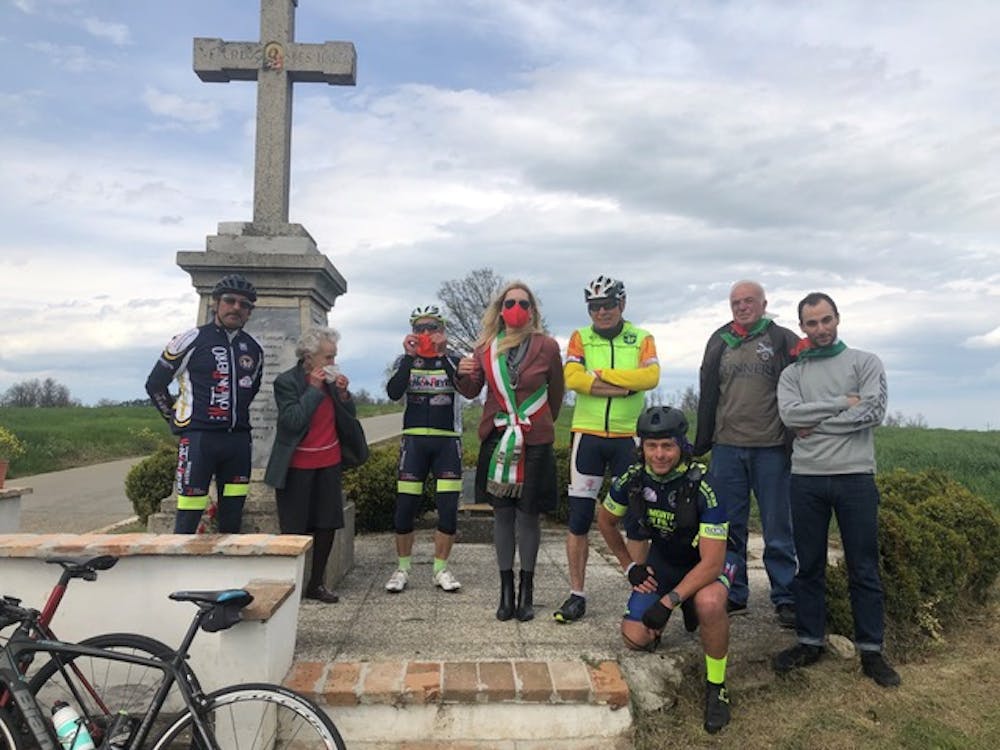
    A local cycling club marks liberation day with a tour of monuments dedicated to partisans.
    J Masullo, CC BY-ND

    When communities take ownership of their histories, they are more likely to uphold democratic principles not only in ceremonies, but at the ballot box and in everyday actions. The past is never just the past. The legacies of wartime resistance continue to shape how people view democracy, justice, and belonging. In times like these, remembering the resistance is more than homage – it is civic defence.

    Juan Masullo has received funding for this research from UNUWIDER and Leiden University.

    He is affiliated with the University of Milan.

    Simone Cremaschi has received funding for this research from UNUWIDER, the European Research Council (grant number 864687), and Leiden University.

    – ref. Italy’s areas of wartime fascist resistance remain less susceptible to the far right today – https://theconversation.com/italys-areas-of-wartime-fascist-resistance-remain-less-susceptible-to-the-far-right-today-255859

    MIL OSI – Global Reports –

    May 8, 2025
  • MIL-OSI Global: Conclave: the chemistry behind the black and white smoke

    Source: The Conversation – UK – By Mark Lorch, Professor of Science Communication and Chemistry, University of Hull

    White smoke from the chimney on top of the Sistine Chapel (Vatican City) indicates that the Pope has been elected. MartiBstock/Shutterstock

    This week, 133 cardinals have gathered in the Vatican to elect a new leader of the Catholic church. During their deliberations, the only indications of their progress are the regular plumes of smoke wafting from a freshly installed chimney perched on the roof of the Sistine Chapel.

    Tradition holds that black smoke indicates the cardinals have not yet agreed on a new leader, while white smoke signals that a new Pope has been elected. But what kind of smoke is it exactly? Let’s take a look at the science.

    The tradition of cardinals burning their ballot papers to maintain secrecy dates back to at least the 15th century. However, it wasn’t until the 18th century — when a chimney was installed in the Sistine Chapel to protect Michelangelo’s frescoes from soot — that the resulting smoke became visible to anyone outside the chapel.

    At the time, the smoke was not intended as a public signal, but once it was visible, onlookers began interpreting it as an indicator of the voting outcome.


    Get your news from actual experts, straight to your inbox. Sign up to our daily newsletter to receive all The Conversation UK’s latest coverage of news and research, from politics and business to the arts and sciences. Join The Conversation for free today.


    By the 19th century, it had become customary to use smoke deliberately: if smoke was seen, it meant no Pope had been elected, whereas no smoke indicated a successful election. This of course lacked clarity and often caused confusion.

    The Vatican eventually sought to clarify matters by formalising the practice of fumata nera (black smoke) and fumata bianca (white smoke). Initially, damp straw and tar were added to the burning ballots. As anyone who has tried to light a damp bonfire knows, wet oily fuel can be difficult to ignite, but once it gets going, it produces plenty of dark smoke.

    This is the result of incomplete combustion: the energy from the flames is initially used to evaporate the water, which keeps the fire’s temperature low. As a result, many of the larger molecules in the tar do not fully combust, leading to the production of soot and dark smoke.

    However, once the moisture is driven off, the fire burns more efficiently, producing mainly steam and carbon dioxide. At that stage, the smoke diminishes and becomes much lighter.

    This fluctuating fumata — combined with the subjective interpretation of its colour — caused considerable confusion, particularly during the 1939 and 1958 conclaves. It wasn’t clear whether grey smoke was closer to black or white, for example. By the 1970s, the straw method had been abandoned in favour of more controllable chemical mixtures. This has since evolved into an unambiguous method for generating the required smoke signals.

    Current recipe

    In 2013, the Vatican confirmed that their fumata recipes now consist of a clear black smoke recipe: potassium perchlorate (KClO₄), an “oxidising substance” that provides oxygen to the reaction; anthracene, a hydrocarbon derived from coal tar that serves as a heavy smoke-producing fuel; and sulphur, added to adjust the burn rate and temperature.

    The result is a deliberately inefficient combustion reaction, producing a high volume of unburnt carbon particles. This abundance of carbon (soot) makes the smoke thick and black — akin to the smoke you might see from burning oil or rubber, which is rich in carbon-based particles.

    Black smoke from the Sistine Chapel, indicating that there was not a two-thirds majority in the papal election at the Conclave.
    wikipedia

    Meanwhile, white smoke is produced using a much cleaner fuel mix and a more powerful oxidiser. Potassium chlorate (KClO₃) — even more reactive than perchlorate — ensures a hot, vigorous burn. Lactose acts as the fuel, burning quickly and cleanly into water vapour and carbon dioxide.

    The rapid combustion of sugar yields large amounts of gaseous output (steam and CO₂), generating a voluminous white cloud. The final ingredient, pine rosin, produces thick white smoke when heated – releasing tiny droplets and light-coloured ash that appear whitish. It also contains terpenes that burn to yield a pale, visible smoke.

    When combined, the oxidising power of potassium chlorate allows the lactose and rosin to burn hot and fast, yielding mostly clean combustion products along with a cloud of vapour and resin particles.

    Rather than soot, the smoke contains microscopic droplets and fine solids that are transparent or white. The result is a mixture of steam and white or light gray smoke that contrasts sharply with the dark, carbon-rich black smoke.

    Over the years, the papal conclave smoke signal has evolved from an incidental byproduct of burning ballots into a carefully engineered communication tool.

    Today, thanks to modern chemistry, the smoke is unmistakable — thick black billows for inconclusive votes, or a bright white plume when a new pope is elected.

    Mark Lorch does not work for, consult, own shares in or receive funding from any company or organisation that would benefit from this article, and has disclosed no relevant affiliations beyond their academic appointment.

    – ref. Conclave: the chemistry behind the black and white smoke – https://theconversation.com/conclave-the-chemistry-behind-the-black-and-white-smoke-255980

    MIL OSI – Global Reports –

    May 8, 2025
  • MIL-OSI Europe: Written question – Strengthening workplace health and safety to prevent sudden cardiac arrest deaths – E-001716/2025

    Source: European Parliament

    Question for written answer  E-001716/2025
    to the Commission
    Rule 144
    András Tivadar Kulja (PPE)

    The EU’s Occupational Safety and Health (OSH) Directive (89/654/EEC), establishing minimum workplace safety requirements, has remained unchanged since 1989. However, over the past three decades, the work environment and its risks have continued to evolve. The World Health Organization and the International Labour Organization have reported that work-related deaths fell by 14 % from 2000 to 2016, yet heart disease fatalities related to long working hours saw a rise of 41 % in that same period. It is thus crucial to mitigate the risks associated with health emergencies, such as sudden cardiac arrests. EU legislation can be updated to meet this risk by improving access to cardiopulmonary resuscitation (CPR) training and automated external defibrillators (AEDs). By strengthening workers’ ability to respond to medical emergencies, the EU can promote a culture of preparedness within the workplace and beyond.

    In this context:

    • 1.Does the Commission intend to revise the OSH Directive to include mandatory CPR training and AED availability in workplaces, ensuring a harmonised approach to emergency preparedness across the Member States?
    • 2.How does the Commission intend to integrate the Council conclusions of 3 December 2024 on cardiovascular health into occupational health and safety legislation, given its focus on making AEDs publicly available and ensuring individuals are properly trained to use them?

    Submitted: 29.4.2025

    Last updated: 7 May 2025

    MIL OSI Europe News –

    May 8, 2025
  • MIL-OSI Europe: Minutes – Tuesday, 6 May 2025 – Strasbourg – Final edition

    Source: European Parliament

    PV-10-2025-05-06

    EN

    EN

    iPlPv_Sit

    Minutes
    Tuesday, 6 May 2025 – Strasbourg

     Abbreviations and symbols

    + adopted
    – rejected
    ↓ lapsed
    W withdrawn
    RCV roll-call votes
    EV electronic vote
    SEC secret ballot
    split split vote
    sep separate vote
    am amendment
    CA compromise amendment
    CP corresponding part
    D deleting amendment
    = identical amendments
    § paragraph

    IN THE CHAIR: Martin HOJSÍK
    Vice-President

    1. Opening of the sitting

    The sitting opened at 09:02.


    2. Request for an urgent decision (Rule 170)

    The President had received two requests for urgent decisions in accordance with Rule 170(5):

    – REGI Committee – Amending ERDF, Cohesion Fund and Just Transition Fund as regards specific measures to address strategic challenges in the context of the mid-term review ***I (COM(2025)0123 – C10-0063/2025 – 2025/0084(COD))

    – EMPL Committee – European Social Fund (ESF+): specific measures to address strategic challenges ***I (COM(2025)0164 – C10-0064/2025 – 2025/0085(COD))

    The votes on both requests would be taken on Wednesday 7 May 2025.

    The agenda was amended accordingly.


    3. A unified EU response to unjustified US trade measures and global trade opportunities for the EU (debate)

    Council and Commission statements: A unified EU response to unjustified US trade measures and global trade opportunities for the EU (2025/2657(RSP))

    Adam Szłapka (President-in-Office of the Council) and Maroš Šefčovič (Member of the Commission) made the statements.

    The following spoke: Jörgen Warborn, on behalf of the PPE Group, Iratxe García Pérez, on behalf of the S&D Group, Jordan Bardella, on behalf of the PfE Group, Nicola Procaccini, on behalf of the ECR Group, Valérie Hayer, on behalf of the Renew Group, Bas Eickhout, on behalf of the Verts/ALE Group, Martin Schirdewan, on behalf of The Left Group, René Aust, on behalf of the ESN Group, Michał Szczerba, Kathleen Van Brempt, Jorge Buxadé Villalba, Adam Bielan, Karin Karlsbro, Anna Cavazzini, Manon Aubry, Petr Bystron and Fabio De Masi.

    IN THE CHAIR: Esteban GONZÁLEZ PONS
    Vice-President

    The following spoke: Lukas Sieper, to put a question to Fabio De Masi, who answered it, Juan Ignacio Zoido Álvarez, Bernd Lange, Anna Bryłka, Daniele Polato, Svenja Hahn, Saskia Bricmont, Lynn Boylan, Lukas Sieper, Eva Maydell, Brando Benifei, Enikő Győri, Jaak Madison, Benoit Cassart, Virginijus Sinkevičius, Pasquale Tridico, Željana Zovko, who also answered a blue-card question from Petras Gražulis, Yannis Maniatis, Isabella Tovaglieri, Rihards Kols, Ľubica Karvašová, Vicent Marzà Ibáñez, Li Andersson, Angelika Niebler, Camilla Laureti, Sebastian Kruis, Kris Van Dijck, Barry Cowen, Isabella Lövin, Lídia Pereira, who also answered a blue-card question from João Oliveira, Javier Moreno Sánchez, Petra Steger, Adrian-George Axinia, Marie-Pierre Vedrenne, Bogdan Andrzej Zdrojewski, Raphaël Glucksmann, Jean-Paul Garraud, Marion Maréchal, Paulo Do Nascimento Cabral, Francisco Assis, Alexandr Vondra, Mika Aaltola, Evin Incir, Francesco Torselli, Jüri Ratas, Andi Cristea, Maria Walsh, Tonino Picula, Borja Giménez Larraz, Aodhán Ó Ríordáin, Michał Wawrykiewicz, Nina Carberry, Salvatore De Meo, Carmen Crespo Díaz, Luděk Niedermayer, Ingeborg Ter Laak and Miriam Lexmann.

    The following spoke under the catch-the-eye procedure: Francisco José Millán Mon, Maria Grapini, Sebastian Tynkkynen, Hilde Vautmans, Jaume Asens Llodrà, Marc Botenga, Kostas Papadakis, Diana Iovanovici Şoşoacă, João Oliveira, Ana Miranda Paz, Juan Fernando López Aguilar, Lucia Annunziata, Vytenis Povilas Andriukaitis and Dariusz Joński.

    The following spoke: Maroš Šefčovič and Adam Szłapka.

    The debate closed.


    4. CO2 emission performance standards for new passenger cars and new light commercial vehicles for 2025 to 2027 (debate)

    Statements by Parliament: CO2 emission performance standards for new passenger cars and new light commercial vehicles for 2025 to 2027 (2025/2700(RSP))

    The following spoke: Jens Gieseke, on behalf of the PPE Group, Mohammed Chahim, on behalf of the S&D Group, Jordan Bardella, on behalf of the PfE Group, Carlo Fidanza, on behalf of the ECR Group, Gerben-Jan Gerbrandy, on behalf of the Renew Group, Kai Tegethoff, on behalf of the Verts/ALE Group, Per Clausen, on behalf of The Left Group, and Siegbert Frank Droese, on behalf of the ESN Group.

    The debate closed.

    (The sitting was suspended for a few moments.)


    IN THE CHAIR: Younous OMARJEE
    Vice-President

    5. Resumption of the sitting

    The sitting resumed at 12:05.


    6. Voting time

    For detailed results of the votes, see also ‘Results of votes’ and ‘Results of roll-call votes’.


    6.1. CO2 emission performance standards for new passenger cars and new light commercial vehicles for 2025 to 2027 ***I (vote)

    Amending Regulation (EU) 2019/631 to include an additional flexibility as regards the calculation of manufacturers’ compliance with CO2 emission performance standards for new passenger cars and new light commercial vehicles for the calendar years 2025 to 2027 [COM(2025)0136 – C10-0062/2025 – 2025/0070(COD)] – ENVI Committee

    REQUEST FOR AN URGENT DECISION from the ECR Group, and jointly from the PPE, S&D and Renew groups (Rule 170(6))

    Approved

    The following tabling deadlines had been set:

    – amendments: Wednesday 7 May 2025 at 13:00
    – requests for separate votes and split votes: Wednesday 7 May 2025 at 19:00

    Vote: 8 May 2025.

    The following had spoken:

    Ondřej Krutílek, on behalf of the ECR Group (author of the request), before the vote.

    Detailed voting results


    6.2. The protection status of the wolf (Canis lupus) ***I (vote)

    The protection status of the wolf (Canis lupus) [COM(2025)0106 – C10-0044/2025 – 2025/0058(COD)] – ENVI Committee

    REQUEST FOR AN URGENT DECISION from the ENVI Committee (Rule 170(6))

    Approved

    The following tabling deadlines had been set:

    – amendments: Wednesday 7 May 2025 at 13:00
    – requests for separate votes and split votes: Wednesday 7 May 2025 at 19:00

    Vote: 8 May 2025.

    The following had spoken:

    Sebastian Everding, against the request, before the vote.

    Detailed voting results


    6.3. Amendments to the Capital Requirements Regulation as regards securities financing transactions under the net stable funding ratio ***I (vote)

    Amendments to the Capital Requirements Regulation as regards securities financing transactions under the net stable funding ratio [COM(2025)0146 – C10-0059/2025 – 2025/0077(COD)] – ECON Committee

    REQUEST FOR AN URGENT DECISION from the ECON Committee (Rule 170(6))

    Approved

    The following tabling deadlines had been set:

    – amendments: Wednesday 7 May 2025 at 13:00
    – requests for separate votes and split votes: Wednesday 7 May 2025 at 19:00

    Vote: 8 May 2025.

    Detailed voting results


    6.4. Request for the waiver of the immunity of Petr Bystron (vote)

    Report on the request for waiver of the immunity of Petr Bystron [2024/2047(IMM)] – Committee on Legal Affairs. Rapporteur: Pascale Piera (A10-0077/2025)

    (Majority of the votes cast)

    PROPOSAL FOR A DECISION

    Adopted (P10_TA(2025)67)

    Detailed voting results


    6.5. Request for the waiver of the immunity of Petras Gražulis (vote)

    Report on the request for waiver of the immunity of Petras Gražulis [2024/2089(IMM)] – Committee on Legal Affairs. Rapporteur: Pascale Piera (A10-0078/2025)

    (Majority of the votes cast)

    PROPOSAL FOR A DECISION

    Adopted (P10_TA(2025)68)

    Detailed voting results


    6.6. Request for the waiver of the immunity of Grzegorz Braun (vote)

    Report on the request for the waiver of the immunity of Grzegorz Braun [2024/2102(IMM)] – Committee on Legal Affairs. Rapporteur: Dainius Žalimas (A10-0081/2025)

    (Majority of the votes cast)

    PROPOSAL FOR A DECISION

    Adopted (P10_TA(2025)69)

    Detailed voting results


    6.7. Border regions’ instrument for development and growth (BRIDGEforEU) ***II (vote)

    Recommendation for second reading on the Council position at first reading with a view to the adoption of a proposal for a regulation of the European Parliament and of the Council on a mechanism to resolve legal and administrative obstacles in a cross-border context [17102/1/2024 – C10-0057/2025 – 2018/0198(COD)] – Committee on Regional Development. Rapporteur: Sandro Gozi (A10-0058/2025)

    The President informed the House that no proposals for rejection or amendment had been tabled in accordance with Rules 68 and 69 with regard to the Council’s position.

    The Council position was therefore deemed approved.

    The proposed act was thus adopted (P10_TA(2025)70)

    The following had spoken:

    Before the President’s announcement, Sandro Gozi (rapporteur), to make a statement under Rule 165(4).

    Detailed voting results


    6.8. Amending Regulation (EU) 2016/1011 as regards the scope of the rules for benchmarks, the use in the Union of benchmarks provided by an administrator located in a third country, and certain reporting requirements ***II (vote)

    Recommendation for second reading on the Council position at first reading with a view to the adoption of a regulation of the European Parliament and of the Council amending Regulation (EU) 2016/1011 as regards the scope of the rules for benchmarks, the use in the Union of benchmarks provided by an administrator located in a third country, and certain reporting requirements [05123/1/2025 – C10-0055/2025 – 2023/0379(COD)] – Committee on Economic and Monetary Affairs. Rapporteur: Jonás Fernández (A10-0060/2025)

    The President informed the House that no proposals for rejection or amendment had been tabled in accordance with Rules 68 and 69 with regard to the Council’s position.

    The Council position was therefore deemed approved.

    The proposed act was thus adopted (P10_TA(2025)71)

    Detailed voting results


    6.9. European Union labour market statistics on businesses ***II (vote)

    Recommendation for second reading on the Council position at first reading with a view to the adoption of a regulation of the European Parliament and of the Council on European Union labour market statistics on businesses, repealing Council Regulation (EC) No 530/1999 and Regulations (EC) No 450/2003 and (EC) No 453/2008 of the European Parliament and of the Council [17082/1/2024 – C10-0054/2025 – 2023/0288(COD)] – Committee on Economic and Monetary Affairs. Rapporteur: Irene Tinagli (A10-0057/2025)

    The President informed the House that no proposals for rejection or amendment had been tabled in accordance with Rules 68 and 69 with regard to the Council’s position.

    The Council position was therefore deemed approved.

    The proposed act was thus adopted (P10_TA(2025)72)

    Detailed voting results


    6.10. Amendments to the International Health Regulations contained in the Annex to Resolution WHA77.17 and adopted on 1 June 2024 *** (vote)

    Recommendation on the draft Council decision inviting Member States to accept, in the interest of the European Union, the amendments to the International Health Regulations (2005) contained in the Annex to Resolution WHA77.17 and adopted on 1 June 2024 [17046/2024 – COM(2024)0541 – C10-0005/2025 – 2024/0299(NLE)] – Committee on Public Health. Rapporteur: Adam Jarubas (A10-0064/2025)

    (Majority of the votes cast)

    DRAFT COUNCIL DECISION

    Approved (P10_TA(2025)73)

    Detailed voting results


    6.11. Mobilisation of the European Globalisation Adjustment Fund for Displaced Workers: application EGF/2024/003 BE/Van Hool – Belgium (vote)

    Report on the proposal for a decision of the European Parliament and of the Council on the mobilisation of the European Globalisation Adjustment Fund for Displaced Workers following an application from Belgium – EGF/2024/003 BE/Van Hool [COM(2025)0001 – C10-0056/2025 – 2025/0061(BUD)] – Committee on Budgets. Rapporteur: Janusz Lewandowski (A10-0080/2025)

    (Majority of the votes cast)

    MOTION FOR A RESOLUTION

    Adopted (P10_TA(2025)74)

    Detailed voting results


    6.12. Protection of the European Union’s financial interests – combating fraud – annual report 2023 (vote)

    Report on the protection of the European Union’s financial interests – combating fraud – annual report 2023 [2024/2083(INI)] – Committee on Budgetary Control. Rapporteur: Gilles Boyer (A10-0049/2025)

    The debate had taken place on 5 May 2025 (minutes of 5.5.2025, item 19).

    (Majority of the votes cast)

    MOTION FOR A RESOLUTION

    Adopted (P10_TA(2025)75)

    Detailed voting results


    6.13. Control of the financial activities of the European Investment Bank – annual report 2023 (vote)

    Report on the control of the financial activities of the European Investment Bank – annual report 2023 [2024/2052(INI)] – Committee on Budgetary Control. Rapporteur: Ondřej Knotek (A10-0068/2025)

    The debate had taken place on 5 May 2025 (minutes of 5.5.2025, item 21).

    (Majority of the votes cast)

    MOTION FOR A RESOLUTION

    Adopted (P10_TA(2025)76)

    Detailed voting results

    13

    (The sitting was suspended for a few moments.)


    7. Resumption of the sitting

    The sitting resumed at 12:28.


    8. Approval of the minutes of the previous sitting

    The minutes of the previous sitting were approved.


    9. A revamped long-term budget for the Union in a changing world (debate)

    Report on a revamped long-term budget for the Union in a changing world [2024/2051(INI)] – Committee on Budgets. Rapporteurs: Siegfried Mureşan and Carla Tavares (A10-0076/2025)

    Siegfried Mureşan and Carla Tavares introduced the report.

    The following spoke: Piotr Serafin (Member of the Commission).

    The following spoke: Hilde Vautmans (rapporteur for the opinion of the AFET Committee), Barry Andrews (rapporteur for the opinion of the DEVE Committee), Dirk Gotink (rapporteur for the opinion of the CONT Committee), Damian Boeselager (rapporteur for the opinion of the ECON Committee), Romana Tomc (rapporteur for the opinion of the EMPL Committee), Michalis Hadjipantela (rapporteur for the opinion of the ENVI Committee), Christian Ehler (rapporteur for the opinion of the ITRE Committee), Aura Salla (rapporteur for the opinion of the IMCO Committee), Rosa Serrano Sierra (rapporteur for the opinion of the TRAN Committee), Dragoş Benea (rapporteur for the opinion of the REGI Committee), Stefano Bonaccini (rapporteur for the opinion of the AGRI Committee), Hannes Heide (rapporteur for the opinion of the CULT Committee), Loucas Fourlas (rapporteur for the opinion of the LIBE Committee), Sven Simon (rapporteur for the opinion of the AFCO Committee), Alexandra Geese (rapporteur for the opinion of the FEMM Committee), Karlo Ressler, on behalf of the PPE Group, Jean-Marc Germain, on behalf of the S&D Group, Julien Sanchez, on behalf of the PfE Group, Bogdan Rzońca, on behalf of the ECR Group, Fabienne Keller, on behalf of the Renew Group, Rasmus Nordqvist, on behalf of the Verts/ALE Group, João Oliveira, on behalf of The Left Group, Milan Uhrík, on behalf of the ESN Group, Danuše Nerudová, Gabriele Bischoff, Jana Nagyová, Johan Van Overtveldt, Lucia Yar, Rasmus Andresen, Alexander Jungbluth, Isabel Benjumea Benjumea and Jens Geier.

    IN THE CHAIR: Roberts ZĪLE
    Vice-President

    The following spoke: Annamária Vicsek, who also answered a blue-card question from Gabriella Gerzsenyi, Ruggero Razza, Joachim Streit, Maria Ohisalo, Janusz Lewandowski, Sandra Gómez López, Dick Erixon, Anouk Van Brug, Hélder Sousa Silva, Dario Nardella, Fernand Kartheiser, Moritz Körner, who also answered a blue-card question from Rasmus Andresen, Georgios Aftias, Estelle Ceulemans, Laurence Trochu, Charles Goerens, Nina Carberry, René Repasi, Kristoffer Storm, Katri Kulmuni, Herbert Dorfmann, Victor Negrescu, Sebastian Tynkkynen, Vlad Vasile-Voiculescu, Andrey Novakov, Giuseppe Lupo, Antonella Sberna, Péter Magyar, Marcos Ros Sempere, Elena Nevado del Campo, Evin Incir, Thomas Bajada, Matjaž Nemec and André Rodrigues.

    The following spoke under the catch-the-eye procedure: Paulo Do Nascimento Cabral, Juan Fernando López Aguilar, Lukas Sieper, Nikolina Brnjac, Vytenis Povilas Andriukaitis and Nils Ušakovs.

    The following spoke: Piotr Serafin, Siegfried Mureşan and Carla Tavares.

    The debate closed.

    Vote: 7 May 2025.


    10. Discharge 2023 (joint debate)

    Discharge 2023: EU general budget – Commission, executive agencies and European Development Funds
    Report on discharge in respect of the implementation of the general budget of the European Union for the financial year 2023, Section III – Commission, executive agencies and the ninth, tenth and eleventh European Development Funds [COM(2024)0272 – C10-0067/2024 – 2024/2019(DEC)] – Committee on Budgetary Control. Rapporteur: Niclas Herbst (A10-0074/2025)

    Discharge 2023: EU general budget – European Parliament
    Report on discharge in respect of the implementation of the general budget of the European Union for the financial year 2023, Section I – European Parliament [COM(2024)0272 – C10-0068/2024 – 2024/2020(DEC)] – Committee on Budgetary Control. Rapporteur: Monika Hohlmeier (A10-0062/2025)

    Discharge 2023: EU general budget – European Council and Council
    Report on discharge in respect of the implementation of the general budget of the European Union for the financial year 2023, Section II – European Council and Council [COM(2024)0272 – C10-0069/2024 – 2024/2021(DEC)] – Committee on Budgetary Control. Rapporteur: Joachim Stanisław Brudziński (A10-0052/2025)

    Discharge 2023: EU general budget – Court of Justice of the European Union
    Report on discharge in respect of the implementation of the general budget of the European Union for the financial year 2023, Section IV – Court of Justice [COM(2024)0272 – C10-0070/2024 – 2024/2022(DEC)] – Committee on Budgetary Control. Rapporteur: Cristian Terheş (A10-0050/2025)

    Discharge 2023: EU general budget – Court of Auditors
    Report on discharge in respect of the implementation of the general budget of the European Union for the financial year 2023, Section V – Court of Auditors [COM(2024)0272 – C10-0071/2024 – 2024/2023(DEC)] – Committee on Budgetary Control. Rapporteur: Dick Erixon (A10-0047/2025)

    Discharge 2023: EU general budget – European Economic and Social Committee
    Report on discharge in respect of the implementation of the general budget of the European Union for the financial year 2023, Section VI – European Economic and Social Committee [COM(2024)0272 – C10-0073/2024 – 2024/2025(DEC)] – Committee on Budgetary Control. Rapporteur: Joachim Stanisław Brudziński (A10-0054/2025)

    Discharge 2023: EU general budget – Committee of the Regions
    Report on discharge in respect of the implementation of the general budget of the European Union for the financial year 2023, Section VII – Committee of the Regions [COM(2024)0272 – C10-0074/2024 – 2024/2026(DEC)] – Committee on Budgetary Control. Rapporteur: Joachim Stanisław Brudziński (A10-0046/2025)

    Discharge 2023: EU general budget – European Ombudsman
    Report on discharge in respect of the implementation of the general budget of the European Union for the financial year 2023, Section VIII – European Ombudsman [COM(2024)0272 – C10-0075/2024 – 2024/2027(DEC)] – Committee on Budgetary Control. Rapporteur: Joachim Stanisław Brudziński (A10-0055/2025)

    Discharge 2023: EU general budget – European Data Protection Supervisor
    Report on discharge in respect of the implementation of the general budget of the European Union for the financial year 2023, Section IX – European Data Protection Supervisor [COM(2024)0272 – C10-0076/2024 – 2024/2028(DEC)] – Committee on Budgetary Control. Rapporteur: Joachim Stanisław Brudziński (A10-0053/2025)

    Discharge 2023: EU general budget – European External Action Service
    Report on discharge in respect of the implementation of the general budget of the European Union for the financial year 2023, Section X – European External Action Service [COM(2024)0272 – C10-0072/2024 – 2024/2024(DEC)] – Committee on Budgetary Control. Rapporteur: Joachim Stanisław Brudziński (A10-0069/2025)

    Discharge 2023: European Public Prosecutor’s Office
    Report on discharge in respect of the implementation of the budget of the European Public Prosecutor’s Office for the financial year 2023 [COM(2024)0272 – C10-0077/2024 – 2024/2029(DEC)] – Committee on Budgetary Control. Rapporteur: Tomáš Zdechovský (A10-0051/2025)

    Discharge 2023: Agencies
    Report on discharge in respect of the implementation of the budget of the European Union Agencies for the financial year 2023 [COM(2024)0272 – C10-0078/2024 – 2024/2030(DEC)] – Committee on Budgetary Control. Rapporteur: Erik Marquardt (A10-0065/2025)

    Discharge 2023: Joint Undertakings
    Report on discharge in respect of the implementation of the budget of the EU joint undertakings for the financial year 2023 [COM(2024)0272 – C10-0079/2024 – 2024/2031(DEC)] – Committee on Budgetary Control. Rapporteur: Michal Wiezik (A10-0056/2025)

    Niclas Herbst, Joachim Stanisław Brudziński, Cristian Terheş, Dick Erixon, Monika Hohlmeier, Tomáš Zdechovský, Erik Marquardt and Michal Wiezik introduced the reports.

    The following spoke: Adam Szłapka (President-in-Office of the Council), Piotr Serafin (Member of the Commission) and Tony Murphy (President of the Court of Auditors).

    The following spoke: Michael Gahler (rapporteur for the opinion of the AFET Committee).

    IN THE CHAIR: Martin HOJSÍK
    Vice-President

    The following spoke: Romana Tomc (rapporteur for the opinion of the EMPL Committee), Antonio Decaro (rapporteur for the opinion of the ENVI Committee), Gheorghe Falcă (rapporteur for the opinion of the TRAN Committee), Giuseppe Lupo (rapporteur for the opinion of the PECH Committee), Nela Riehl (rapporteur for the opinion of the CULT Committee), Sven Simon (rapporteur for the opinion of the AFCO Committee), Tomáš Zdechovský (rapporteur for the opinion of the LIBE Committee), Lina Gálvez (rapporteur for the opinion of the FEMM Committee), Dirk Gotink, on behalf of the PPE Group, Mohammed Chahim, on behalf of the S&D Group, Julien Sanchez, on behalf of the PfE Group, Marco Squarta, on behalf of the ECR Group, Olivier Chastel, on behalf of the Renew Group, Daniel Freund, on behalf of the Verts/ALE Group, Jonas Sjöstedt, on behalf of The Left Group, Sarah Knafo, on behalf of the ESN Group, Kinga Kollár, Carla Tavares, Angéline Furet, Bert-Jan Ruissen, Gilles Boyer, Pasquale Tridico, Arno Bausemer, who also answered a blue-card question from Lukas Sieper, Céline Imart, José Cepeda, Anders Vistisen, Marion Maréchal, Gerben-Jan Gerbrandy, Marit Maij, Nikola Bartůšek, Maciej Wąsik, Christophe Clergeau, Fabrice Leggeri, Gheorghe Piperea, Evin Incir and Tiago Moreira de Sá.

    IN THE CHAIR: Pina PICIERNO
    Vice-President

    The following spoke: Fernand Kartheiser, Nils Ušakovs and Csaba Dömötör.

    The following spoke under the catch-the-eye procedure: Juan Fernando López Aguilar, Sebastian Tynkkynen and Lukas Sieper.

    The following spoke: Tony Murphy, Piotr Serafin, Adam Szłapka, Niclas Herbst, Monika Hohlmeier, Joachim Stanisław Brudziński, Cristian Terheş, Dick Erixon, Tomáš Zdechovský, Erik Marquardt and Michal Wiezik.

    The debate closed.

    Vote: 7 May 2025.


    11. Protecting Greenland’s right to decide its own future and maintain the rule-based world order (debate)

    Statement by the Vice-President of the Commission/High Representative of the Union for Foreign Affairs and Security Policy: Protecting Greenland’s right to decide its own future and maintain the rule-based world order (2025/2689(RSP))

    Kaja Kallas (Vice President of the Commission / High Representative of the Union for Foreign Affairs and Security Policy) made the statement.

    The following spoke: Henrik Dahl, on behalf of the PPE Group, Christel Schaldemose, on behalf of the S&D Group, Anders Vistisen, on behalf of the PfE Group, Kristoffer Storm, on behalf of the ECR Group, Stine Bosse, on behalf of the Renew Group, Villy Søvndal, on behalf of the Verts/ALE Group, Emma Fourreau, on behalf of The Left Group, Niels Flemming Hansen, Yannis Maniatis, Pierre-Romain Thionnet, Urmas Paet, Ignazio Roberto Marino, Per Clausen, David McAllister, Niels Fuglsang, Morten Løkkegaard, Michael Gahler, Tonino Picula, Michał Szczerba, Mika Aaltola and Jüri Ratas.

    The following spoke under the catch-the-eye procedure: Juan Fernando López Aguilar, Pernando Barrena Arza and Lukas Sieper.

    The following spoke: Kaja Kallas.

    The debate closed.


    12. An urgent assessment of the applicability of the Political Dialogue and Cooperation Agreement (PDCA) with Cuba (debate)

    Statement by the Vice-President of the Commission/High Representative of the Union for Foreign Affairs and Security Policy: An urgent assessment of the applicability of the Political Dialogue and Cooperation Agreement (PDCA) with Cuba (2025/2697(RSP))

    Kaja Kallas (Vice President of the Commission / High Representative of the Union for Foreign Affairs and Security Policy) made the statement.

    The following spoke: Gabriel Mato, on behalf of the PPE Group, Leire Pajín, on behalf of the S&D Group, Hermann Tertsch, on behalf of the PfE Group (the President reminded the speaker of the rules on conduct), Arkadiusz Mularczyk, on behalf of the ECR Group, Oihane Agirregoitia Martínez, on behalf of the Renew Group, Ana Miranda Paz, on behalf of the Verts/ALE Group, Irene Montero, on behalf of The Left Group, and Elena Nevado del Campo.

    IN THE CHAIR: Antonella SBERNA
    Vice-President

    The following spoke: Nacho Sánchez Amor, Nora Junco García, who also answered a blue-card question from Anthony Smith, Pernando Barrena Arza, Ľuboš Blaha, who also answered blue-card questions from Arkadiusz Mularczyk and Anthony Smith, Alice Teodorescu Måwe, Francisco Assis, Mariusz Kamiński, Martin Sonneborn, Antonio López-Istúriz White and Francisco José Millán Mon.

    The following spoke under the catch-the-eye procedure: Jaume Asens Llodrà, João Oliveira, Maria Zacharia, Leila Chaibi, Lefteris Nikolaou-Alavanos, Kateřina Konečná and Lukas Sieper.

    The following spoke: Kaja Kallas.

    The debate closed.


    13. The European Water Resilience Strategy (debate)

    Report on the European Water Resilience Strategy [2024/2104(INI)] – Committee on the Environment, Climate and Food Safety. Rapporteur: Thomas Bajada (A10-0073/2025)

    Thomas Bajada introduced the report.

    The following spoke: Jessika Roswall (Member of the Commission).

    The following spoke: Michal Wiezik (rapporteur for the opinion of the AGRI Committee), Carmen Crespo Díaz, on behalf of the PPE Group, Christophe Clergeau, on behalf of the S&D Group, Mireia Borrás Pabón, on behalf of the PfE Group, Alexandr Vondra, on behalf of the ECR Group, Grégory Allione, on behalf of the Renew Group, Jutta Paulus, on behalf of the Verts/ALE Group (the President reminded the House of the rules on conduct), Giorgos Georgiou, on behalf of The Left Group, Anja Arndt, on behalf of the ESN Group, Peter Liese, Annalisa Corrado, André Rougé, Anna Zalewska, Ana Vasconcelos, Tilly Metz, Emma Fourreau, Ingeborg Ter Laak, César Luena, Rody Tolassy, Claudiu-Richard Târziu, Emma Wiesner, Pär Holmgren, Dimitris Tsiodras, Heléne Fritzon, Mathilde Androuët, Paolo Inselvini, Jeannette Baljeu, Cristina Guarda, Lídia Pereira, Antonio Decaro, Esther Herranz García, Günther Sidl, Dan-Ştefan Motreanu, András Tivadar Kulja, Stefan Köhler and Sander Smit.

    The following spoke under the catch-the-eye procedure: Krzysztof Hetman.

    IN THE CHAIR: Nicolae ŞTEFĂNUȚĂ
    Vice-President

    The following spoke under the catch-the-eye procedure: Viktória Ferenc, Sebastian Tynkkynen, Ana Miranda Paz, Lukas Sieper, Kostas Papadakis and Maria Zacharia.

    The following spoke: Jessika Roswall and Thomas Bajada.

    The debate closed.

    Vote: 7 May 2025.


    14. 2023 and 2024 reports on Türkiye (debate)

    2023 and 2024 Commission reports on Türkiye [2025/2023(INI)] – Committee on Foreign Affairs. Rapporteur: Nacho Sánchez Amor (A10-0067/2025)

    Nacho Sánchez Amor introduced the report.

    The following spoke: Marta Kos (Member of the Commission).

    The following spoke: Isabel Wiseler-Lima, on behalf of the PPE Group, Yannis Maniatis, on behalf of the S&D Group, Nikola Bartůšek, on behalf of the PfE Group, Geadis Geadi, on behalf of the ECR Group, Malik Azmani, on behalf of the Renew Group, Vladimir Prebilič, on behalf of the Verts/ALE Group, Giorgos Georgiou, on behalf of The Left Group, Tomasz Froelich, on behalf of the ESN Group, Emmanouil Kefalogiannis, Joanna Scheuring-Wielgus, Afroditi Latinopoulou, Emmanouil Fragkos, Lucia Yar, Mélissa Camara, Özlem Demirel, Kostas Papadakis, Loucas Fourlas, Vivien Costanzo, Matthieu Valet, Tineke Strik, Jonas Sjöstedt, who also answered a blue-card question from Beatrice Timgren, Maria Zacharia, Alice Teodorescu Måwe, Evin Incir, Silvia Sardone, Fidias Panayiotou, Łukasz Kohut, Andreas Schieder, Elissavet Vozemberg-Vrionidi, Davor Ivo Stier, who also answered a blue-card question from Geadis Geadi, Reinhold Lopatka and Michalis Hadjipantela.

    The following spoke under the catch-the-eye procedure: Costas Mavrides, Sebastian Tynkkynen, Sebastian Everding and Nikolas Farantouris.

    The following spoke: Marta Kos.

    IN THE CHAIR: Younous OMARJEE
    Vice-President

    The following spoke: Nacho Sánchez Amor.

    The debate closed.

    Vote: 7 May 2025.


    15. Welcome

    On behalf of Parliament the President welcomed a group of young people from Serbia who had taken their seats in the distinguished visitors’ gallery.


    16. 2023 and 2024 reports on Serbia (debate)

    Report on the 2023 and 2024 Commission reports on Serbia [2025/2022(INI)] – Committee on Foreign Affairs. Rapporteur: Tonino Picula (A10-0072/2025)

    Tonino Picula introduced the report.

    The following spoke: Marta Kos (Member of the Commission).

    The following spoke: Davor Ivo Stier, on behalf of the PPE Group, Kathleen Van Brempt, on behalf of the S&D Group, Kinga Gál, on behalf of the PfE Group, Stephen Nikola Bartulica, on behalf of the ECR Group, Helmut Brandstätter, on behalf of the Renew Group, Vladimir Prebilič, on behalf of the Verts/ALE Group, Danilo Della Valle, on behalf of The Left Group, Michał Szczerba, Thijs Reuten, who also answered a blue-card question from Tomislav Sokol, António Tânger Corrêa, Cristian Terheş, Irena Joveva, Gordan Bosanac, Liudas Mažylis, Andreas Schieder, Annamária Vicsek, Matej Tonin, Thierry Mariani and Tomislav Sokol.

    The following spoke under the catch-the-eye procedure: Loucas Fourlas, Matjaž Nemec, Kristian Vigenin and Sebastian Tynkkynen.

    The following spoke: Marta Kos and Tonino Picula.

    The debate closed.

    Vote: 7 May 2025.


    17. 2023 and 2024 reports on Kosovo (debate)

    Report on the 2023 and 2024 Commission Reports on Kosovo [2025/2019(INI)] – Committee on Foreign Affairs. Rapporteur: Riho Terras (A10-0075/2025)

    Riho Terras introduced the report.

    The following spoke: Marta Kos (Member of the Commission).

    The following spoke: Davor Ivo Stier, on behalf of the PPE Group, Elio Di Rupo, on behalf of the S&D Group, Matthieu Valet, on behalf of the PfE Group, Ivaylo Valchev, on behalf of the ECR Group, Ilhan Kyuchyuk, on behalf of the Renew Group, Thomas Waitz, on behalf of the Verts/ALE Group, Merja Kyllönen, on behalf of The Left Group, Stanislav Stoyanov, on behalf of the ESN Group, Liudas Mažylis, Matjaž Nemec and Alexander Sell.

    The following spoke under the catch-the-eye procedure: Thijs Reuten and Sebastian Tynkkynen.

    The following spoke: Marta Kos and Riho Terras.

    The debate closed.

    Vote: 7 May 2025.


    18. Explanations of vote


    18.1. Written explanations of vote

    Explanations of vote submitted in writing under Rule 201 appear on the Members’ pages on Parliament’s website.


    19. Agenda of the next sitting

    The next sitting would be held the following day, 7 May 2025, starting at 09:00. The agenda was available on Parliament’s website.


    20. Approval of the minutes of the sitting

    In accordance with Rule 208(3), the minutes of the sitting would be put to the House for approval at the beginning of the afternoon of the next sitting.


    21. Closure of the sitting

    The sitting closed at 22:29.


    ATTENDANCE REGISTER

    Present:

    Aaltola Mika, Abadía Jover Maravillas, Adamowicz Magdalena, Aftias Georgios, Agirregoitia Martínez Oihane, Agius Peter, Agius Saliba Alex, Alexandraki Galato, Allione Grégory, Al-Sahlani Abir, Anadiotis Nikolaos, Anderson Christine, Andersson Li, Andresen Rasmus, Andrews Barry, Andriukaitis Vytenis Povilas, Androuët Mathilde, Angel Marc, Annemans Gerolf, Annunziata Lucia, Antoci Giuseppe, Arias Echeverría Pablo, Arimont Pascal, Arłukowicz Bartosz, Arnaoutoglou Sakis, Arndt Anja, Arvanitis Konstantinos, Asens Llodrà Jaume, Assis Francisco, Attard Daniel, Aubry Manon, Auštrevičius Petras, Axinia Adrian-George, Azmani Malik, Bajada Thomas, Baljeu Jeannette, Ballarín Cereza Laura, Bardella Jordan, Barna Dan, Barrena Arza Pernando, Bartulica Stephen Nikola, Bartůšek Nikola, Bausemer Arno, Bay Nicolas, Bay Christophe, Beke Wouter, Beleris Fredis, Bellamy François-Xavier, Benea Dragoş, Benifei Brando, Benjumea Benjumea Isabel, Beňová Monika, Berendsen Tom, Berger Stefan, Berlato Sergio, Bernhuber Alexander, Biedroń Robert, Bielan Adam, Bischoff Gabriele, Blaha Ľuboš, Blinkevičiūtė Vilija, Blom Rachel, Bloss Michael, Bocheński Tobiasz, Boeselager Damian, Bogdan Ioan-Rareş, Bonaccini Stefano, Bonte Barbara, Borchia Paolo, Borrás Pabón Mireia, Borvendég Zsuzsanna, Borzan Biljana, Bosanac Gordan, Boßdorf Irmhild, Bosse Stine, Botenga Marc, Boyer Gilles, Boylan Lynn, Brandstätter Helmut, Brasier-Clain Marie-Luce, Bricmont Saskia, Brnjac Nikolina, Brudziński Joachim Stanisław, Bryłka Anna, Buchheit Markus, Buczek Tomasz, Buda Daniel, Buda Waldemar, Budka Borys, Bugalho Sebastião, Buła Andrzej, Bullmann Udo, Burkhardt Delara, Buxadé Villalba Jorge, Bystron Petr, Bžoch Jaroslav, Camara Mélissa, Canfin Pascal, Carberry Nina, Cârciu Gheorghe, Carême Damien, Casa David, Caspary Daniel, Cassart Benoit, Castillo Laurent, del Castillo Vera Pilar, Cavazzini Anna, Cepeda José, Ceulemans Estelle, Chahim Mohammed, Chaibi Leila, Chastel Olivier, Chinnici Caterina, Christensen Asger, Cifrová Ostrihoňová Veronika, Ciriani Alessandro, Cisint Anna Maria, Clausen Per, Clergeau Christophe, Cormand David, Corrado Annalisa, Costanzo Vivien, Cotrim De Figueiredo João, Cowen Barry, Cremer Tobias, Crespo Díaz Carmen, Cristea Andi, Crosetto Giovanni, Cunha Paulo, Dahl Henrik, Danielsson Johan, Dauchy Marie, Dávid Dóra, David Ivan, Decaro Antonio, de la Hoz Quintano Raúl, Della Valle Danilo, Deloge Valérie, De Masi Fabio, De Meo Salvatore, Demirel Özlem, Deutsch Tamás, Devaux Valérie, Dibrani Adnan, Diepeveen Ton, Dieringer Elisabeth, Dîncu Vasile, Di Rupo Elio, Disdier Mélanie, Dobrev Klára, Doherty Regina, Doleschal Christian, Dömötör Csaba, Do Nascimento Cabral Paulo, Donazzan Elena, Dorfmann Herbert, Dostalova Klara, Dostál Ondřej, Droese Siegbert Frank, Dworczyk Michał, Ecke Matthias, Ehler Christian, Ehlers Marieke, Eriksson Sofie, Erixon Dick, Eroglu Engin, Estaràs Ferragut Rosa, Everding Sebastian, Falcă Gheorghe, Falcone Marco, Farantouris Nikolas, Farreng Laurence, Farský Jan, Ferber Markus, Ferenc Viktória, Fernández Jonás, Fidanza Carlo, Fiocchi Pietro, Firea Gabriela, Firmenich Ruth, Fita Claire, Fourlas Loucas, Fourreau Emma, Fragkos Emmanouil, Freund Daniel, Frigout Anne-Sophie, Fritzon Heléne, Froelich Tomasz, Fuglsang Niels, Funchion Kathleen, Furet Angéline, Furore Mario, Gahler Michael, Gál Kinga, Galán Estrella, Gálvez Lina, Gambino Alberico, García Hermida-Van Der Walle Raquel, Garraud Jean-Paul, Gasiuk-Pihowicz Kamila, Geadi Geadis, Gedin Hanna, Geese Alexandra, Geier Jens, Geisel Thomas, Gemma Chiara, Georgiou Giorgos, Gerbrandy Gerben-Jan, Germain Jean-Marc, Gerzsenyi Gabriella, Geuking Niels, Gieseke Jens, Giménez Larraz Borja, Girauta Vidal Juan Carlos, Glavak Sunčana, Glück Andreas, Glucksmann Raphaël, Goerens Charles, Gomes Isilda, Gómez López Sandra, Gonçalves Bruno, Gonçalves Sérgio, González Casares Nicolás, González Pons Esteban, Gori Giorgio, Gosiewska Małgorzata, Gotink Dirk, Gozi Sandro, Grapini Maria, Gražulis Petras, Grims Branko, Griset Catherine, Gronkiewicz-Waltz Hanna, Grossmann Elisabeth, Grudler Christophe, Gualmini Elisabetta, Guarda Cristina, Guetta Bernard, Győri Enikő, Gyürk András, Hadjipantela Michalis, Hahn Svenja, Haider Roman, Halicki Andrzej, Hansen Niels Flemming, Hauser Gerald, Häusling Martin, Hava Mircea-Gheorghe, Heide Hannes, Heinäluoma Eero, Henriksson Anna-Maja, Herbst Niclas, Herranz García Esther, Hetman Krzysztof, Hohlmeier Monika, Hojsík Martin, Holmgren Pär, Hölvényi György, Homs Ginel Alicia, Humberto Sérgio, Imart Céline, Incir Evin, Inselvini Paolo, Iovanovici Şoşoacă Diana, Jamet France, Jarubas Adam, Jerković Romana, Jongen Marc, Joński Dariusz, Jouvet Pierre, Joveva Irena, Juknevičienė Rasa, Junco García Nora, Jungbluth Alexander, Kabilov Taner, Kalfon François, Kaliňák Erik, Kaljurand Marina, Kalniete Sandra, Kamiński Mariusz, Karlsbro Karin, Kartheiser Fernand, Karvašová Ľubica, Katainen Elsi, Kefalogiannis Emmanouil, Kelleher Billy, Keller Fabienne, Kelly Seán, Kennes Rudi, Khan Mary, Kircher Sophia, Knafo Sarah, Knotek Ondřej, Kobosko Michał, Köhler Stefan, Kohut Łukasz, Kokalari Arba, Kolář Ondřej, Kollár Kinga, Kols Rihards, Konečná Kateřina, Kopacz Ewa, Körner Moritz, Kountoura Elena, Kovařík Ondřej, Kovatchev Andrey, Krištopans Vilis, Kruis Sebastian, Krutílek Ondřej, Kubín Tomáš, Kuhnke Alice, Kulja András Tivadar, Kulmuni Katri, Kyllönen Merja, Kyuchyuk Ilhan, Lakos Eszter, Lalucq Aurore, Lange Bernd, Langensiepen Katrin, Laššáková Judita, László András, Latinopoulou Afroditi, Laurent Murielle, Laureti Camilla, Laykova Rada, Lazarov Ilia, Le Callennec Isabelle, Leggeri Fabrice, Lenaers Jeroen, Leonardelli Julien, Lewandowski Janusz, Lexmann Miriam, Liese Peter, Lins Norbert, Loiseau Nathalie, Løkkegaard Morten, Lopatka Reinhold, López Javi, López Aguilar Juan Fernando, López-Istúriz White Antonio, Lövin Isabella, Lucano Mimmo, Luena César, Łukacijewska Elżbieta Katarzyna, Lupo Giuseppe, McAllister David, Madison Jaak, Maestre Cristina, Magoni Lara, Magyar Péter, Maij Marit, Maląg Marlena, Manda Claudiu, Mandl Lukas, Maniatis Yannis, Mantovani Mario, Maran Pierfrancesco, Marczułajtis-Walczak Jagna, Maréchal Marion, Mariani Thierry, Marino Ignazio Roberto, Marquardt Erik, Martusciello Fulvio, Marzà Ibáñez Vicent, Mato Gabriel, Mavrides Costas, Maydell Eva, Mayer Georg, Mazurek Milan, Mažylis Liudas, McNamara Michael, Mebarek Nora, Mehnert Alexandra, Meimarakis Vangelis, Meleti Eleonora, Mendes Ana Catarina, Mendia Idoia, Mertens Verena, Mesure Marina, Metsola Roberta, Metz Tilly, Mikser Sven, Milazzo Giuseppe, Millán Mon Francisco José, Minchev Nikola, Miranda Paz Ana, Molnár Csaba, Montero Irene, Montserrat Dolors, Morace Carolina, Morano Nadine, Moratti Letizia, Moreira de Sá Tiago, Moreno Sánchez Javier, Moretti Alessandra, Motreanu Dan-Ştefan, Mularczyk Arkadiusz, Müller Piotr, Mullooly Ciaran, Mureşan Siegfried, Muşoiu Ştefan, Nagyová Jana, Nardella Dario, Navarrete Rojas Fernando, Negrescu Victor, Nemec Matjaž, Nerudová Danuše, Nesci Denis, Neuhoff Hans, Neumann Hannah, Nevado del Campo Elena, Nica Dan, Niebler Angelika, Niedermayer Luděk, Niinistö Ville, Nikolaou-Alavanos Lefteris, Nikolic Aleksandar, Ní Mhurchú Cynthia, Noichl Maria, Nordqvist Rasmus, Novakov Andrey, Nykiel Mirosława, Obajtek Daniel, Ódor Ľudovít, Oetjen Jan-Christoph, Ohisalo Maria, Oliveira João, Olivier Philippe, Omarjee Younous, Ondruš Branislav, Ó Ríordáin Aodhán, Ozdoba Jacek, Paet Urmas, Pajín Leire, Palmisano Valentina, Panayiotou Fidias, Papadakis Kostas, Pappas Nikos, Pascual de la Parte Nicolás, Paulus Jutta, Pedro Ana Miguel, Pedulla’ Gaetano, Pellerin-Carlin Thomas, Peltier Guillaume, Penkova Tsvetelina, Pennelle Gilles, Pereira Lídia, Peter-Hansen Kira Marie, Petrov Hristo, Picaro Michele, Picierno Pina, Picula Tonino, Piera Pascale, Pietikäinen Sirpa, Pimpie Pierre, Piperea Gheorghe, de la Pisa Carrión Margarita, Pokorná Jermanová Jaroslava, Polato Daniele, Polfjärd Jessica, Popescu Virgil-Daniel, Pozņaks Reinis, Prebilič Vladimir, Princi Giusi, Protas Jacek, Pürner Friedrich, Rackete Carola, Radev Emil, Radtke Dennis, Rafowicz Emma, Ratas Jüri, Razza Ruggero, Rechagneux Julie, Regner Evelyn, Repasi René, Repp Sabrina, Ressler Karlo, Reuten Thijs, Riba i Giner Diana, Ricci Matteo, Ridel Chloé, Riehl Nela, Ripa Manuela, Rodrigues André, Ros Sempere Marcos, Roth Neveďalová Katarína, Rougé André, Ruissen Bert-Jan, Ruotolo Sandro, Rzońca Bogdan, Saeidi Arash, Salini Massimiliano, Salis Ilaria, Salla Aura, Sánchez Amor Nacho, Sanchez Julien, Sancho Murillo Elena, Saramo Jussi, Sardone Silvia, Šarec Marjan, Sargiacomo Eric, Satouri Mounir, Saudargas Paulius, Sbai Majdouline, Sberna Antonella, Schaldemose Christel, Schaller-Baross Ernő, Schenk Oliver, Scheuring-Wielgus Joanna, Schieder Andreas, Schilling Lena, Schneider Christine, Schnurrbusch Volker, Schwab Andreas, Scuderi Benedetta, Seekatz Ralf, Sell Alexander, Serrano Sierra Rosa, Sidl Günther, Sienkiewicz Bartłomiej, Sieper Lukas, Simon Sven, Singer Christine, Sinkevičius Virginijus, Sippel Birgit, Sjöstedt Jonas, Śmiszek Krzysztof, Smith Anthony, Smit Sander, Sokol Tomislav, Solier Diego, Solís Pérez Susana, Sommen Liesbet, Sonneborn Martin, Sorel Malika, Sousa Silva Hélder, Søvndal Villy, Squarta Marco, Staķis Mārtiņš, Stancanelli Raffaele, Ştefănuță Nicolae, Steger Petra, Stier Davor Ivo, Storm Kristoffer, Stöteler Sebastiaan, Stoyanov Stanislav, Strack-Zimmermann Marie-Agnes, Strada Cecilia, Streit Joachim, Strik Tineke, Strolenberg Anna, Sturdza Şerban Dimitrie, Stürgkh Anna, Sypniewski Marcin, Szczerba Michał, Szekeres Pál, Szydło Beata, Tamburrano Dario, Tânger Corrêa António, Tarczyński Dominik, Tarquinio Marco, Tarr Zoltán, Târziu Claudiu-Richard, Tavares Carla, Tegethoff Kai, Teodorescu Georgiana, Teodorescu Måwe Alice, Terheş Cristian, Ter Laak Ingeborg, Terras Riho, Tertsch Hermann, Thionnet Pierre-Romain, Timgren Beatrice, Tinagli Irene, Tobback Bruno, Tobé Tomas, Tolassy Rody, Tomac Eugen, Tomašič Zala, Tomaszewski Waldemar, Tomc Romana, Tonin Matej, Toom Jana, Topo Raffaele, Torselli Francesco, Tosi Flavio, Toussaint Marie, Tovaglieri Isabella, Tridico Pasquale, Trochu Laurence, Tsiodras Dimitris, Tudose Mihai, Turek Filip, Tynkkynen Sebastian, Uhrík Milan, Ušakovs Nils, Vaidere Inese, Valchev Ivaylo, Vălean Adina, Valet Matthieu, Van Brempt Kathleen, Van Brug Anouk, van den Berg Brigitte, Vandendriessche Tom, Van Dijck Kris, Van Lanschot Reinier, Van Leeuwen Jessika, Vannacci Roberto, Van Overtveldt Johan, Van Sparrentak Kim, Varaut Alexandre, Vasconcelos Ana, Vasile-Voiculescu Vlad, Vautmans Hilde, Vedrenne Marie-Pierre, Verougstraete Yvan, Veryga Aurelijus, Vicsek Annamária, Vieira Catarina, Vigenin Kristian, Vilimsky Harald, Vincze Loránt, Vind Marianne, Vistisen Anders, Vivaldini Mariateresa, Volgin Petar, von der Schulenburg Michael, Vondra Alexandr, Voss Axel, Vozemberg-Vrionidi Elissavet, Vrecionová Veronika, Vázquez Lázara Adrián, Waitz Thomas, Walsh Maria, Walsmann Marion, Warborn Jörgen, Warnke Jan-Peter, Wąsik Maciej, Wawrykiewicz Michał, Wcisło Marta, Wechsler Andrea, Weimers Charlie, Werbrouck Séverine, Wiesner Emma, Wiezik Michal, Winkler Iuliu, Winzig Angelika, Wiseler-Lima Isabel, Wiśniewska Jadwiga, Wölken Tiemo, Wolters Lara, Yar Lucia, Yon-Courtin Stéphanie, Yoncheva Elena, Zacharia Maria, Zalewska Anna, Žalimas Dainius, Zan Alessandro, Zarzalejos Javier, Zdechovský Tomáš, Zdrojewski Bogdan Andrzej, Zijlstra Auke, Zīle Roberts, Zingaretti Nicola, Złotowski Kosma, Zoido Álvarez Juan Ignacio, Zovko Željana, Zver Milan

    Excused:

    Verheyen Sabine

    MIL OSI Europe News –

    May 8, 2025
  • MIL-OSI Europe: Written question – Commission proposal for mandatory annual periodic technical inspections for vehicles older than 10 years – E-001707/2025

    Source: European Parliament

    Question for written answer  E-001707/2025
    to the Commission
    Rule 144
    Ondřej Dostál (NI)

    The Commission’s recently announced[1] proposals for amendments to EU roadworthiness legislation include a provision for bringing in mandatory annual periodic technical inspections for vehicles that are more than 10 years old, as opposed to the current bi-annual requirement.

    In Czechia alone, there are 6.7 million registered cars that are, on average, 17 years old. Due to this proposal, many of these cars will require twice as many inspections, amounting to millions of additional checks per year. This will cost between EUR 50 and EUR 100 each, and will result in additional costs to motorist households worth several EUR billion a year, without even counting the cost to society of additional infrastructure, additional administrative burdens and the diversion of qualified members of the workforce from more productive activities.

    • 1.Has the Commission taken the above into consideration on a Member State-by-Member State basis? Has there been an assessment of the proportionality of the proposed measure, weighing benefits against costs, and will the Commission publish the results from any such assessment?
    • 2.If the objective is maximising the number of life years saved, has the Commission considered whether the indicated resources might be better invested in healthcare or the design of healthy cities?

    Submitted: 29.4.2025

    • [1] https://ec.europa.eu/commission/presscorner/detail/en/ip_25_1083.
    Last updated: 7 May 2025

    MIL OSI Europe News –

    May 8, 2025
  • MIL-OSI Europe: Highlights – Structured dialogue with Commissioner Magnus Brunner, Internal Affairs and Migration – Committee on Civil Liberties, Justice and Home Affairs

    Source: European Parliament

    On 13 May, Commissioner Brunner will appear before the LIBE Committee for the Structured Dialogue regarding the work and initiatives within his portfolio.

    The matters that will be discussed will be around his area of responsibility: the new European internal security strategy, the fight against serious and organised crime and the new action plan against drug trafficking, firearms and the fight against cybercrime.

    The discussion may also cover the protection of children against sexual abuse, the new counter-terrorism agenda and the future revision of the mandates of Europol and Frontex.

    MIL OSI Europe News –

    May 8, 2025
  • MIL-OSI United Kingdom: Affordable and accessible childcare must not be added to the scrapheap of government’s broken election promises – Claire Kerrane TD

    Source: Sinn Féin

    Sinn Féin spokesperson on Children, Claire Kerrane TD has said that the delivery of affordable and accessible childcare education cannot be allowed to be added to the scrapheap of Fianna Fáil and Fine Gael’s broken election promises.
    She added that the government must urgently give a timeline to deliver affordable, high-quality and accessible early childhood education, and add state-led capacity where needed.
    Speaking ahead of her party’s Dáil motion, to be debated this evening, which highlights the impact the crisis in the Early Years Sector is having on parents when it comes to the cost of childcare and difficulties in accessing a place for their child, Deputy Kerrane said that the time for talk is over and that parents now urgently want to see delivery.
    Sinn Féin’s motion is supported by the 43 organisations and trade unions who have come together to form the Together for Public Alliance for a Public System of Early Childhood Education & Care, and also has widespread support across the Opposition.
    Teachta Kerrane said:
    “Fianna Fáil and Fine Gael talked the talk before the election, now is the time to act.
    “We are now over 100 days into the lifetime of this government, and we still haven’t seen any action on childcare.
    “Instead, Fianna Fáil and Fine Gael, backed up by the Michael Lowry independents, have been ditching election promises like there’s no tomorrow.
    “They have abandoned the Occupied Territories Bill, delayed increasing sick day entitlement, delayed pension auto-enrolment scheme and backtracked on increasing the minimum wage.
    “Affordable and accessible childcare simply cannot be allowed to be added to the scrapheap of Fianna Fáil and Fine Gael’s broken election promises.
    “That is why Sinn Féin is this week bringing forward a Dáil motion this week that calls on government to honour their commitments to parents and to the Early Years Sector.
    “Ahead of the General Election, Simon Harris spoke a number of times of his commitment to a public childcare model, and it being a ‘key priority’ if Fine Gael were returned to government.
    “The Programme for Government commits the government to undertake a broad consultation and publish a detailed Action Plan to build an affordable, high-quality, accessible early childhood education and to add state-led capacity where needed.
    “Meanwhile, waiting lists for childcare places continue to grow and costs continue to put huge pressure on parents.
    “These parents and their families cannot afford to wait any longer. We need to see a willingness from the Minister, in particular to engage with the Together for Public Alliance on the Terms of Reference for the consultation, and provide a detailed timeframe for the Action Plan.”

    MIL OSI United Kingdom –

    May 8, 2025
  • MIL-OSI: Valour Launches Curve DAO (CRV) and Litecoin (LTC) ETPs on Spotlight Stock Market, Expands Nordic Presence and Reveals New Products in Roadmap to 100 ETPs

    Source: GlobeNewswire (MIL-OSI)

    • Valour Launches CRV and LTC ETPs on Spotlight: Valour, a subsidiary of DeFi Technologies, has listed the Valour Curve DAO (CRV) and Valour Litecoin (LTC) SEK ETPs on Sweden’s Spotlight Stock Market, further expanding its Nordic footprint.
    • Comprehensive Digital Asset Exposure: With over 65 ETPs live, Valour is advancing toward its 100 ETP goal with new single-asset, thematic basket, and leveraged products—including upcoming listings for Tron (TRX), Stellar (XLM), BTC 2x, and ETH 2x.
    • Continued Product Innovation Across Europe: Valour’s growing pipeline of regulated digital asset ETPs reinforces its leadership in Europe, offering investors diversified access to blockchain assets through familiar and secure investment structures.

    TORONTO, May 07, 2025 (GLOBE NEWSWIRE) — DeFi Technologies Inc. (the “Company” or “DeFi Technologies”) (CBOE CA: DEFI) (GR: R9B) (OTC: DEFTF), a financial technology company that focuses on the convergence of traditional capital markets with the world of decentralised finance (“DeFi”), is pleased to announces that its subsidiary Valour Inc. (“Valour“), a leading issuer of exchange-traded products (“ETPs“) providing simplified access to digital assets, has launched two new ETPs on the Spotlight Stock Market in Sweden: the Valour Curve DAO (CRV) SEK ETP (ISIN: CH1108679064) and the Valour Litecoin (LTC) SEK ETP (ISIN: CH1108679072).

    These new listings expand Valour’s presence in the Nordics and reinforce its mission to offer regulated, easy-to-access digital asset investment products globally.

    Valour Curve DAO (CRV) ETP
    Curve is a decentralized exchange (“DEX”) tailored for stablecoin and low-slippage trading. The CRV token governs the Curve DAO and plays a central role in DeFi infrastructure through liquidity provisioning, governance, and incentive mechanisms. The CRV ETP provides straightforward exposure to this protocol without the complexities of self-custody. Curve (CRV) currently holds a market capitalization of $940 million, placing it among the top 75 digital assets globally.

    Valour Litecoin (LTC) ETP
    Litecoin is one of the longest-standing cryptocurrencies and a foundational layer-1 blockchain. Known for its fast settlement times and low transaction costs, it has long been considered the “digital silver” complement to Bitcoin. The LTC ETP offers investors direct access to Litecoin through a secure, exchange-traded structure. Litecoin (LTC) has a market capitalization of $6.6 billion, ranking it among the top 25 digital assets worldwide.

    Each product carries a 1.9% management fee and provides seamless access through traditional brokerage accounts.

    Johanna Belitz, Head of Nordics at Valour, commented:
    “Nordic investors are increasingly seeking regulated and transparent ways to access the digital asset market. The region has a mature and engaged trading community that’s now looking beyond Bitcoin and Ethereum toward altcoins with strong use cases. By launching ETPs on Curve and Litecoin on the Spotlight Stock Market, we’re meeting that demand and expanding access to a broader range of digital assets. These additions reflect our commitment to leading in product innovation and staying responsive to investor needs.”

    Elaine Buehler, Head of Products, added:
    “When developing new ETPs, we look closely at assets that combine strong market fundamentals with real-world utility. Curve and Litecoin both meet those criteria — one driving innovation in decentralized finance, the other proving itself over a decade as a fast and efficient payment network. These ETPs are built to give investors simple, regulated access to these assets through platforms they already trust, aligning with Valour’s goal of removing complexity from digital asset investing.”

    With these new additions, Valour now offers over 65 unique digital asset ETPs—the most comprehensive lineup of its kind globally. This expansion marks continued progress toward Valour’s strategic goal of launching 100 ETPs by the end of 2025, with product rollouts planned not only across existing European exchanges like Spotlight, Börse Frankfurt, and Euronext but also in upcoming jurisdictions across the Middle East, Asia, and Africa.

    Upcoming Product Releases

    Valour continues to advance its mission to provide secure, regulated, and diversified digital asset exposure through traditional financial infrastructure. As part of its strategic roadmap to launch 100 ETPs by the end of 2025, the company is actively developing a range of new offerings, including:

    Planned Single-Asset ETPs

    • Valour Tron (TRX) ETP
      Tron is a high-throughput blockchain optimized for decentralized applications. It consistently ranks among the top digital assets by market capitalization and transaction volume, making it a compelling addition to Valour’s expanding lineup.
    • Valour Stellar (XLM) ETP
      Stellar enables fast, low-cost cross-border payments and asset transfers. Its strong adoption in financial infrastructure use cases positions it well for institutional and retail investor interest.
    • Valour OM SEK, MOVE SEK, and MOVE EUR ETPs
      These upcoming single-asset listings will offer exposure to the emerging digital assets MANTRA (OM) and Move (MOVE), in both SEK and EUR denominations.

    Thematic Basket ETPs in Development

    • Real-World Asset (RWA) & Tokenization Basket
      This basket will include leading projects focused on asset tokenization and on-chain financial infrastructure, such as Mantra, Ondo, Paxos Gold (PAXG), Tether Gold (XAUt), BUIDL, Centrifuge, Maple, and Polymesh.
    • Digital Gold Basket
      Combining traditional and digital store-of-value assets, this product will feature Bitcoin (BTC), Paxos Gold (PAXG), and Tether Gold (XAUt), offering investors a diversified hedge against inflation and currency devaluation.
    • Institutional Layer-1 Basket
      This basket will highlight blockchain networks with strong enterprise and government partnerships, including Avalanche, Algorand, Hedera, Polkadot, Sei, and BUIDL.

    Leveraged ETPs

    • Valour BTC 2x and ETH 2x ETPs
      These leveraged products are designed to provide 2x daily exposure to the price movements of Bitcoin and Ethereum, catering to investors pursuing high-conviction or tactical trading strategies.

    Continued Product Innovation

    In addition to these forthcoming launches, Valour is actively progressing on additional products across a wide range of digital assets. This continued innovation underscores Valour’s position as a leader in the European digital asset ETP market and further accelerates its progress toward the 100-ETP milestone by year-end.

    About DeFi Technologies
    DeFi Technologies Inc. (CBOE CA: DEFI) (GR: R9B) (OTC: DEFTF) is a financial technology company that pioneers the convergence of traditional capital markets with the world of decentralized finance (DeFi). With a dedicated focus on industry-leading Web3 technologies, DeFi Technologies aims to provide widespread investor access to the future of finance. Backed by an esteemed team of experts with extensive experience in financial markets and digital assets, we are committed to revolutionising the way individuals and institutions interact with the evolving financial ecosystem. Follow DeFi Technologies on Linkedin and X/Twitter, and for more details, visit https://defi.tech/  

    About Valour
    Valour Inc. and Valour Digital Securities Limited (together, “Valour”) issues exchange traded products (“ETPs”) that enable retail and institutional investors to access digital assets in a simple and secure way via their traditional bank account. Valour is part of the asset management business line of DeFi Technologies Inc. (CBOE CA: DEFI) (GR: R9B) (OTC: DEFTF). For more information about Valour, to subscribe, or to receive updates, visit valour.com.

    Cautionary note regarding forward-looking information:
    This press release contains “forward-looking information” within the meaning of applicable Canadian securities legislation. Forward-looking information includes, but is not limited to the the listing of Valour Curve DAO (CRV) and Valour Litecoin (LTC) ETPs; the development of the Curve DAO and Litecoin blockchains; development of additional ETPs and the number of ETPs anticipated by end of 2025; investor confidence in Valour’s ETPs; investor interest and confidence in digital assets; the regulatory environment with respect to the growth and adoption of decentralized finance; the pursuit by the Company and its subsidiaries of business opportunities; and the merits or potential returns of any such opportunities. Forward-looking information is subject to known and unknown risks, uncertainties and other factors that may cause the actual results, level of activity, performance or achievements of the Company, as the case may be, to be materially different from those expressed or implied by such forward-looking information. Such risks, uncertainties and other factors include, but is not limited the acceptance of Valour ETPs by exchanges; growth and development of decentralised finance and cryptocurrency sector; rules and regulations with respect to decentralised finance and cryptocurrency; general business, economic, competitive, political and social uncertainties. Although the Company has attempted to identify important factors that could cause actual results to differ materially from those contained in forward-looking information, there may be other factors that cause results not to be as anticipated, estimated or intended. There can be no assurance that such information will prove to be accurate, as actual results and future events could differ materially from those anticipated in such statements. Accordingly, readers should not place undue reliance on forward-looking information. The Company does not undertake to update any forward-looking information, except in accordance with applicable securities laws.

    THE CBOE CANADA EXCHANGE DOES NOT ACCEPT RESPONSIBILITY FOR THE ADEQUACY OR ACCURACY OF THIS RELEASE

    For further information, please contact:

    Olivier Roussy Newton
    Chief Executive Officer
    ir@defi.tech
    (323) 537-7681

    The MIL Network –

    May 8, 2025
  • MIL-OSI: EAT & BEYOND COMPLETES THE ACQUISITION OF 100% OF MILO MEDIA TECHNOLOGIES INC.

    Source: GlobeNewswire (MIL-OSI)

    VANCOUVER, BC, May 07, 2025 (GLOBE NEWSWIRE) — Eat & Beyond Global Holdings Inc. (CSE: EATS) (OTCPK: EATBF) (FSE: 988) (“Eat & Beyond” or the “Company”), an investment issuer focused on incubating first-mover opportunities in emerging markets, is pleased to announce, further to its news release of January 31, 2025, that the Company has completed the acquisition of 100% of the issued and outstanding common shares in the capital of Milo Media Technologies Inc. (“Milo Media”) in exchange for securities of Eat & Beyond pursuant to the terms and conditions of a securities exchange agreement dated January 31, 2025 (the “Definitive Agreement”) among the Company, Milo Media, the shareholders and the warrant holders of Milo Media (the “Transaction”).

    Transaction Terms

    Pursuant to the terms of the Definitive Agreement and in consideration for 100% of the issued and outstanding shares, Eat & Beyond has issued an aggregate of 15,000,000 common shares of Eat & Beyond (the “Payment Shares”) to Milo shareholders at a deemed price of $0.185 per Payment Share and issued 15,000,000 common share purchase warrants (the “Replacement Warrants”) as consideration for the disposition of all of the warrants of Milo (the “Milo Warrants”). Each Replacement Warrant permits the holder thereof to acquire one common share in the capital of Eat & Beyond (a “Share”) at a price of $0.075 per Share on or before January 30, 2025, the same exercise price and expiry date of the original Milo Warrants surrendered for cancellation.

    There is no statutory hold period for the Payment Shares or the Replacement Warrants pursuant to applicable securities laws, however, the Payment Shares are subject to voluntary hold periods as follows: 10% of the Payment Shares will become freely tradable upon the Company filing a Business Acquisition Report for the Transaction (the “BAR”), and the remaining 90% of the Payment Shares will be subject to a hold period expiring four months after the BAR is filed.

    The Transaction is an arms-length transaction and there is no change in management or the Board of Directors of Eat & Beyond.

    Strategic Significance of the Acquisition

    The acquisition of Milo Media has provided Eat & Beyond with a first-mover advantage as the first publicly traded company – to the best of the Company’s knowledge – to actively participate in the XRPL ecosystem. Milo Media’s financial infrastructure solutions are expected to enable Eat & Beyond to acquire Ripple (XRP) through active participation on the XRP network, akin to how Bitcoin miners earn Bitcoin. This unique model is expected to position Eat & Beyond to generate value directly from the network’s growth and adoption.

    “With the acquisition complete and Liquid Link now officially launched, we’re entering a new era, one where everyday users, developers, and institutions can interact with the XRPL and beyond in ways never before possible. The XRP Army has always believed in utility. Now, we’re helping deliver it” said Young Bann, CEO of Eat & Beyond.

    About Milo Media

    Milo Media is a private company existing under the laws of the Province of British Columbia. Following the closing of the Transaction, Milo Media Technologies will now operate under the trade name Liquid Link and is proud to unveil its new home at www.liquidlink.ai.

    Introducing Liquid Link: Built for the Web3 Era

    Liquid Link is developing Xrpfy, a next-generation discovery and analytics platform purpose-built for the XRP Ledger (XRPL). Designed for client-side transitions and as a self-custody-first interface, Xrpfy enables users to:

    • Search for real-world assets (RWAs), stablecoins, and the full spectrum of Web3 tokens on the XRPL ledger.
    • Discover the least-cost trading routes and identify arbitrage opportunities across the XRPL decentralized exchange (DEX).
    • Navigate the XRPL with no middlemen — Liquid Link does not facilitate trades or custody funds, but instead empowers users with powerful analytics and user-friendly tools.

    Future versions of the platform may incorporate AI agent capabilities, providing even smarter, faster ways to interact with the XRPL.

    Expanding Beyond XRPL

    While Liquid Link is laser-focused on unleashing the full potential of the XRP Ledger, it is also charting a bold multi-chain future. The company plans to build and support tools for emerging Bitcoin Layer 2 ecosystems, including:

    • The Lightning Network
    • Liquid Network
    • RGB
    • Taproot Assets

    Additionally, support for Axelar and the broader Web3 ecosystem is being actively considered, with timelines to be determined.

    These integrations will enable enterprise-grade adoption of RWAs, stablecoins, and Web3 applications across the decentralized economy.

    The Opportunity Ahead

    The global market for tokenized assets — from real estate to carbon credits, commodities to currencies — is projected to exceed $16 trillion by 2030, according to a report by Boston Consulting Group and ADDX¹1. With its ultra-fast, low-cost transaction environment, the XRP Ledger is uniquely positioned to lead this revolution.

    Liquid Link’s Xrpfy platform is built to be the gateway to this future.

    By combining intelligent search, seamless discovery, and powerful routing tools, Xrpfy will give individuals and businesses the tools they need to build, trade, and scale confidently in the Web3 economy.

    Launch Timeline

    The Xrpfy platform is currently in active development and is scheduled to launch by the end of Q2 2025.

    Join the Movement

    For updates, partnerships, and early access to Xrpfy, visit www.liquidlink.ai and follow us on social media.

    Marketing Agreements

    The Company is also pleased to announce the following marketing service agreements. The Company’s engagement of the service providers is intended to improve the Company’s visibility and prominence in the capital markets.

    On May 1, 2025, the Company entered into a marketing agreement with an arm’s length firm, Senergy Communications Capital Inc. (“Senergy”). Senergy has agreed to provide content development and digital marketing services. The agreement will remain in effect for one month with the option to renew. The Company has agreed to pay an aggregate cash fee of $150,000, plus applicable taxes. Senergy does not have any interest, directly or indirectly, in the Company or its securities, or any right or intent to acquire such an interest. Senergy’s business is located at 122 Mainland Street (Suite 228) Vancouver, BC, V6B-5L1. The contact person is Aleem Fidai, email: info@senergy.capital.

    On May 1, 2025, the Company has entered into a marketing agency agreement (the “Marketing Agreement”) with an arm’s length firm, Global One Media Limited (“Global One”) to provide, among other things, social media management, marketing and distribution services to the Company. The Marketing Agreement has an initial term of six months, and the Company will pay Global One a monthly retainer fee of US$4,500. Global One Media does not have any interest, directly or indirectly, in the Company or its securities, or any right or intent to acquire such an interest. Global One’s business is located 100 Tras Street #16-01, 100 AM Singapore, 079027. The contact person is Bastien Boulay, email: bastien@globalonemedia.com.

    On May 1, 2025, the Company has entered into a marketing consultant agreement with an arm’s length firm, Bergskogar Limited (“Bergskogar”) to provide marketing services to the Company. The agreement commences May 1, 2025 and continues to April 30, 2026, except if terminated or extended by mutual written agreement. The Company will pay Bergskogar an aggregate cash fee of EUR 75,000. Bergskogar does not have any interest, directly or indirectly, in the Company or its securities, or any right or intent to acquire such an interest. Bergkogar’s business is located 1203, 12/F, Tower 3, 33 Canton Road, Tsimshatsui, Hong Kong. The contact person is Paul Druce, tel: +44 20 3290 3801.

    The Company has engaged with an arm’s length firm, Aktien Check (“Aktien”) to provide European marketing awareness services to the Company. Aktien will provide its services for a period of three months commencing on May 1, 2025 and ending on July 31, 2025. The Company will pay Aktien a cash fee of EUR 50,000. Aktien does not have any interest, directly or indirectly, in the Company or its securities, or any right or intent to acquire such an interest. Aktien’s business is located at Bad Marienberg, Rheinland-Pfalz, Germany. The contact person is Mr. Stefan Lindam, email: Stefan.lindam@aktiencheck.de.

    About Eat & Beyond

    Eat & Beyond (CSE: EATS) is a publicly traded investment issuer that identifies and makes equity investments in global companies that are developing and commercializing innovative food tech, sustainability and technology. Led by a team of industry experts, Eat & Beyond provides retail investors with the unique opportunity to participate in the growth of a broad cross-section of opportunities in the alternative food, sustainability and technology sectors.   Through its wholly owned subsidiary, Liquid Link, the Company is entering the blockchain technology sector with a focus on real-world asset tokenization, decentralized infrastructure, and advanced trading analytics.

    Learn more: https://eatandbeyond.com/

    The Canadian Securities Exchange does not accept responsibility for the adequacy or accuracy of this release and has neither approved nor disapproved the contents of this press release.

    For further information: For further information, please contact Young Bann, CEO, young@purposeesg.com.

    Caution Regarding Forward-Looking Information

    This press release includes certain “forward-looking information” within the meaning of applicable Canadian securities legislation. All statements herein, other than statements of historical fact, constitute forward-looking information. Forward-looking information is frequently, but not always, identified by words such as “expects”, “anticipates”, “believes”, “intends”, “estimates”, “potential”, “possible”, and similar expressions, or statements that events, conditions, or results “will”, “may”, “could”, or “should” occur or be achieved.

    Forward-looking information in this press release includes, but is not limited to, statements relating to the Company’s business plans and expected future growth, the expected benefits of the Transaction, the Company’s future cryptocurrency plans and strategies, the Company’s proposed strategic expansion and growth strategies, the Company’s ability to provide investors with exposure to digital assets, the potential success of the Company’s business and its brand, the growth of XRP and other digital assets and the mainstream adoption of various cryptocurrencies. Forward-looking information reflects the beliefs, opinions and projections on the date the statements are made and are based upon a number of assumptions and estimates that, while considered reasonable by the Company, are inherently subject to significant business, technical, economic, and competitive uncertainties and contingencies, including the speculative nature of cryptocurrencies. Many factors, both known and unknown, could cause actual results, performance or achievements to be materially different from the results, performance or achievements that are or may be expressed or implied by such forward-looking information. Such risks, uncertainties and other factors include, without limitation, the Company’s ability to execute on its business plans; the Company’s ability to raise debt or equity through future financing activities; the Company’s ability to increase its business in cryptocurrency-based technologies; any adverse changes and developments regarding XRP, XRPL or the cryptocurrency ecosystem; the growth and development of decentralized finance and the digital asset sector; any new rules and regulations with respect to decentralized finance and digital assets; the inherent volatility in the prices of certain cryptocurrencies including XRP; increasing competition in the crypto and blockchain industries; general economic, political and social uncertainties in Canada and the United States; currency exchange rates and interest rates; the limited resources of the Company; the Company’s reliance on the expertise and judgment of senior management and the Company’s ability to attract and retain key personnel; the speculative nature of cryptocurrencies in general; and the Company’s ability to continue as a going concern.

    There can be no assurance that such forward-looking information will prove to be accurate, as actual results and future events could differ materially from those anticipated in such information. Accordingly, readers should not place undue reliance on forward-looking information. Forward-looking statements are made based on management’s beliefs, estimates and opinions on the date that statements are made and the Company undertakes no obligation to update forward-looking statements if these beliefs, estimates and opinions or other circumstances should change, except as required by law. Investors are cautioned against attributing undue certainty to forward-looking statements.


    1   BCG & ADDX Report: “Relevance of On-Chain Asset Tokenization in ‘Traditional Finance’” — Boston Consulting Group, 2022

    The MIL Network –

    May 8, 2025
  • MIL-OSI: Abaxx Announces First Carbon Futures Delivery on Abaxx Exchange

    Source: GlobeNewswire (MIL-OSI)

    TORONTO, May 07, 2025 (GLOBE NEWSWIRE) — Abaxx Technologies Inc. (CBOE:ABXX)(OTCQX:ABXXF) (“Abaxx” or the “Company”), a financial software and market infrastructure company, majority shareholder of Abaxx Singapore Pte Ltd., the owner of Abaxx Commodity Exchange and Clearinghouse (individually, “Abaxx Exchange” and “Abaxx Clearing”), and producer of the SmarterMarkets™ Podcast, today announced the successful first delivery under a carbon futures contract on Abaxx Exchange.

    The delivery, involving 50 lots of May 2025 CORSIA¹ Phase 1 Carbon Offset Unit Futures (“CP1”) priced at USD $24.25/tCO₂e², validates the clearing, delivery, and settlement processes underpinning Abaxx Exchange’s physically-deliverable futures contracts. It marks the first live exercise of Abaxx’s end-to-end infrastructure for managing the transfer of environmental assets through a regulated futures market.

    The transaction was completed between Mercuria Energy Trading SA (METSA) and a U.S. based counterparty, with Eagle Commodities, a division of Marex, facilitating the original trade. Clearing services were provided by KGI Securities, Marex, and another bank clearing firm.

    The delivery involved the transfer of eligible CORSIA Phase 1 carbon units from Mercuria to a registry account established for the buyer, fulfilling the delivery obligations under the May 2025 CP1 futures contract.

    “This marks the first delivery through Abaxx’s carbon futures infrastructure, a contract structure designed to support price formation, risk management, and forward planning,” said Alasdair Were, Head of Environmental Markets at Abaxx Exchange. “These are the functions needed to make environmental markets investable and connect capital to climate-linked exposures.”

    “We are proud to support the execution, clearing and delivery of the May 2025 CORSIA Phase 1 Carbon Offset Unit Futures,” said Ken Ong, CEO of KGI Securities. “This transaction underscores the strength of Abaxx Exchange’s infrastructure and our commitment to sustainable finance, empowering clients in the evolving environmental asset landscape.”

    The CORSIA Phase 1 Carbon Offset Unit Futures contract, launched in June 2024, is part of Abaxx Exchange’s growing suite of physically-deliverable products across energy, environmental, battery materials, and precious metals markets.

    Abaxx’s full suite of futures contracts is open for trading 14 hours a day, Monday through Friday. For a full list of clearing firms and execution brokers, visit our market directory.

    About Abaxx Technologies

    Abaxx Technologies is building Smarter Markets: markets empowered by better tools, better benchmarks, and better technology to drive market-based solutions to the biggest challenges we face as a society, including the energy transition.

    In addition to developing and deploying financial technologies that make communication, trade, and transactions easier and more secure, Abaxx is the majority shareholder of Abaxx Singapore Pte. Ltd., the owner of Abaxx Exchange and Abaxx Clearing, and the parent company of wholly owned subsidiary Abaxx Spot Pte. Ltd., the operator of Abaxx Spot.

    Abaxx Exchange delivers the market infrastructure critical to the shift toward an electrified, low-carbon economy through centrally-cleared, physically-deliverable futures contracts in LNG, carbon, battery materials, and precious metals, meeting the commercial needs of today’s commodity markets and establishing the next generation of global benchmarks.

    Abaxx Spot modernizes physical gold trading through a digitally integrated, physically-backed gold pool in Singapore. It is set to become the first market infrastructure to align spot and futures gold markets in the same location—enabling secure electronic transactions, efficient OTC transfers, and physical delivery for Abaxx Exchange’s gold futures contracts to deliver smarter gold markets.

    For more information, visit abaxx.tech | abaxx.exchange | abaxxspot.com | basecarbon.com | smartermarkets.media

    For more information about this press release, please contact:

    Steve Fray, CFO
    Tel: +1 647-490-1590

    Media and investor inquiries:

    Abaxx Technologies Inc.
    Investor Relations Team
    Tel: +1 647-490-1590
    E-mail: ir@abaxx.tech

    ¹ Carbon Offsetting and Reduction Scheme for International Aviation
    ² Tonne of carbon dioxide equivalent

    Cautionary Statement Regarding Forward-Looking Information

    This press release includes certain “forward-looking statements” which do not consist of historical facts. Forward-looking statements include estimates and statements that describe Abaxx’s future plans, objectives, or goals, including words to the effect that Abaxx expects a stated condition or result to occur. Forward-looking statements may be identified by such terms as “seeking”, “should”, “intend”, “predict”, “potential”, “believes”, “anticipates”, “expects”, “estimates”, “may”, “could”, “would”, “will”, “continue”, “plan” or the negative of these terms and similar expressions. Since forward-looking statements are based on current expectations and assumptions and address future events and conditions, by their very nature they involve inherent risks and uncertainties. Although these statements are based on information currently available to Abaxx, Abaxx does not provide any assurance that actual results will meet respective management expectations. Risks, uncertainties, assumptions, and other factors involved with forward- looking information could cause actual events, results, performance, prospects, and opportunities to differ materially from those expressed or implied by such forward-looking information.

    Forward-looking information related to Abaxx in this press release includes, but is not limited to: the business plans and objectives of Abaxx; the development of new products, futures contracts, markets and technologies and associated benefits. Such factors impacting forward-looking information include, among others: the inability to receive regulatory approvals in connection with financings or inability to finalize transaction documentation; risks relating to the global economic climate; dilution; Abaxx’s limited operating history; future capital needs and uncertainty of additional financing; the competitive nature of the industry; currency exchange risks; the need for Abaxx to manage its planned growth and expansion; the effects of product development and need for continued technology change; protection of proprietary rights; the effect of government regulation and compliance on Abaxx and the industry; acquiring and maintaining regulatory approvals for Abaxx’s products and operations; the ability to list Abaxx’s securities on stock exchanges in a timely fashion or at all; network security risks; the ability of Abaxx to maintain properly working systems; reliance on key personnel; global economic and financial market deterioration impeding access to capital or increasing the cost of capital; and volatile securities markets impacting security pricing unrelated to operating performance. In addition, particular factors which could impact future results of the business of Abaxx include but are not limited to: operations in foreign jurisdictions; protection of intellectual property rights; contractual risk; third-party risk; clearinghouse risk; malicious actor risks; third-party software license risk; system failure risk; risk of technological change; dependence of technical infrastructure; changes in the price of commodities; capital market conditions; restriction on labor and international travel and supply chains; and the risk factors identified in the Company’s most recent management discussion and analysis filed on SEDAR+. Abaxx has also assumed that no significant events occur outside of Abaxx’s normal course of business.

    Abaxx cautions that the foregoing list of material factors is not exhaustive. In addition, although Abaxx has attempted to identify important factors that could cause actual results to differ materially, there may be other factors that cause results not to be as anticipated, estimated, or intended. When relying on forward- looking statements and information to make decisions, investors and others should carefully consider the foregoing factors and other uncertainties and potential events. Abaxx has assumed that the material factors referred to in the previous paragraphs will not cause such forward-looking statements and information to differ materially from actual results or events. However, the list of these factors is not exhaustive and is subject to change and there can be no assurance that such assumptions will reflect the actual outcome of such items or factors. The forward-looking statements and information contained in this press release represents the expectations of Abaxx as of the date of this press release and, accordingly, is subject to change after such date. Abaxx undertakes no obligation to update or revise any forward-looking statements and information, whether as a result of new information, future events or otherwise, except as required by law. Accordingly, readers are cautioned not to place undue reliance on these forward-looking statements and information. Cboe Canada does not accept responsibility for the adequacy or accuracy of this press release.

    The MIL Network –

    May 8, 2025
  • MIL-OSI: Best Crypto Casinos: JACKBIT Rated As Top Crypto Casino with BTC Bonuses & No KYC Policy

    Source: GlobeNewswire (MIL-OSI)

    RUSSELLVILLE, Ark., May 07, 2025 (GLOBE NEWSWIRE) — With the surge in popularity of cryptocurrency, the number of crypto gambling sites has skyrocketed, offering players a blend of anonymity, rapid transactions, and diverse gaming options. However, navigating this crowded market to find the best crypto casino can be challenging.

    After an exhaustive review of numerous platforms, our team has identified JACKBIT as the top crypto casino for 2025. Renowned for its no KYC policy, extensive game library, and lightning-fast payouts, JACKBIT stands out among the best crypto casinos.

    PLAY SECURELY AND PRIVATELY WITH JACKBIT – JOIN TODAY!

    Whether you’re spinning slots, betting on sports, or enjoying live dealer games, JACKBIT delivers an unparalleled experience that sets it apart from other crypto gambling sites. In this detailed review, we explore the factors that make JACKBIT the best crypto casino, including its bonuses, game variety, payment methods, and commitment to player satisfaction.

    This article covers why JACKBIT is our favorite, its pros and cons, how to join, our selection process, available games, supported payment methods, and responsible gambling tools.

    A Closer Look At The Best Crypto Casino: JACKBIT

    JACKBIT has earned its place as the leading crypto casino through a combination of innovative features and player-focused services. Here’s why it’s the top choice among the best Bitcoin casinos:

    • No KYC Policy: JACKBIT allows players to register and play without identity verification, ensuring privacy and quick access.
    • Massive Game Library: With over 7,000 games, including slots, table games, live dealer options, and a comprehensive sportsbook, JACKBIT caters to all preferences.
    • Instant Payouts: Cryptocurrency withdrawals are processed in under 10 minutes, making it a leader among top crypto casinos.
    • Generous Bonuses: New players receive 100 free spins with no wagering requirements, and existing users benefit from reload bonuses, rakeback, and tournaments.
    • Flexible Payments: Supports over 17 cryptocurrencies and fiat methods like Visa and Apple Pay, ensuring seamless transactions.
    • 24/7 Support: Round-the-clock customer support via live chat and email ensures prompt assistance.

    CLAIM YOUR 100 FREE SPINS BONUS

    These features make JACKBIT a standout in the realm of new crypto casinos, offering a seamless and rewarding experience.

    JACKBIT Casino – Our Favorite Crypto Casino

    JACKBIT tops our list of the best crypto casinos due to its exceptional offerings. The no KYC policy allows players to dive into gaming without delays, a significant advantage for those valuing privacy. The welcome bonus of 100 free spins on Book of Dead provides a risk-free way to explore the platform. Regular promotions, such as weekly giveaways and a VIP rakeback program, keep players engaged.

    The game selection is a major draw, with thousands of slots, table games, and live dealer options from top providers like NetEnt and Evolution Gaming. The sportsbook covers over 140 sports, appealing to betting enthusiasts.

    Payment flexibility, with support for cryptocurrencies like Bitcoin and Ethereum, ensures fast and secure transactions. Coupled with responsive customer support, JACKBIT delivers a comprehensive gaming experience.

    Pros And Cons

    Pros Cons
    Over 7,000 games from leading providers Not regulated by the UKGC
    Instant crypto withdrawals (under 10 minutes) No dedicated mobile app (mobile-optimized site available)
    No KYC for enhanced privacy Limited fiat withdrawal options
    Supports 17+ cryptocurrencies and fiat methods  
    24/7 multilingual customer support  
    Generous bonuses with no wagering requirements  

    While the lack of UKGC licensing may concern some, JACKBIT’s Curacao license ensures a regulated and fair environment, making it a compelling choice among crypto gambling sites.

    How To Join JACKBIT Casino? Step By Step Guide

    Joining JACKBIT is simple and designed for ease, especially for players new to crypto casinos:

    1. Visit JACKBIT: Go to the JACKBIT sign-up page.
    2. Create Account: Click “Register” and enter your email and password.
    3. No KYC Required: Skip identity verification for instant setup.
    4. Make First Deposit: Choose a payment method (crypto or fiat) and deposit at least $50 to claim the welcome bonus.
    5. Claim Bonus: The 100 free spins are credited automatically for use on Book of Dead.
    6. Start Playing: Explore the game library and sportsbook with your funds and bonus.

    Ensure accurate details during registration to avoid issues. The no KYC policy makes JACKBIT one of the best no KYC casinos, ideal for quick access.

    How We Selected JACKBIT as The Best Crypto Casino

    Our team followed a rigorous evaluation process to identify the top crypto casino, focusing on:

    • License and Security: A valid license and robust encryption are essential. JACKBIT’s Curacao license and SSL encryption ensure safety.
    • Bonuses and Promotions: We prioritized casinos with fair and generous offers. JACKBIT’s no-wagering bonuses stood out.
    • Game Variety: A diverse library from reputable providers is key. JACKBIT’s 7,000+ games cover all categories.
    • Game Providers: Partnerships with top developers ensure quality. JACKBIT works with NetEnt, Pragmatic Play, and others.
    • Banking Methods: Flexible and fast payment options are crucial. JACKBIT supports multiple cryptocurrencies and fiat methods.
    • Customer Support: 24/7 availability and responsiveness are vital. JACKBIT’s multilingual support excels.

    JACKBIT met and exceeded these criteria, earning its place as the best crypto casino for 2025.

    License and Security

    JACKBIT operates under a Curacao Gaming License, ensuring compliance with fair gaming standards. Advanced SSL encryption protects player data and transactions. Provably fair games allow outcome verification, enhancing transparency. These measures make JACKBIT a trusted choice among new crypto casinos.

    Bonuses and Promotions

    JACKBIT offers a range of bonuses to maximize player value:

    • Best Bonus: 30% Rakeback + 100 Wager Free Spins + No KYC
    • Welcome Bonus: 100 free spins on Book of Dead with no wagering requirements ($50 minimum deposit).
    • Sports Welcome Bonus: 100% cashback on a losing first sports bet (minimum $20).
    • Weekly Giveaways: Compete for $10,000 cash and 10,000 free spins.
    • VIP Rakeback: Up to 30% rakeback through the Rakeback VIP Club.
    • Pragmatic Drops & Wins: Tournaments with a €2,000,000 prize pool.
    • Social Media Bonuses: Exclusive rewards via X engagement.

    These promotions position JACKBIT among the best crypto casinos for rewarding experiences.

    JOIN JACKBIT NOW AND ENJOY 30% RAKEBACK + WAGER-FREE SPINS!

    Best Crypto Casino Games

    JACKBIT’s game library is a cornerstone of its appeal, offering over 7,000 titles across multiple categories:

    Online Slots

    Slots dominate with thousands of options, from classic 3-reel games to modern video slots. Popular titles include:

    • Book of Dead (Play’n GO): High-volatility slot with up to 5,000x stake wins.
    • Starburst (NetEnt): Low-volatility slot with vibrant graphics and expanding wilds.
    • Gates of Olympus (Pragmatic Play): Features tumbling reels and multipliers up to 500x.
    • Mega Moolah (Microgaming): Progressive jackpot slot with massive payout potential.

    Slots offer diverse themes, bonus rounds, and high RTPs, making them a favorite among players.

    Blackjack

    Blackjack combines skill and luck, with players aiming to beat the dealer by reaching 21. JACKBIT offers variants like:

    • Classic Blackjack
    • European Blackjack
    • Multi-hand Blackjack

    These options cater to different strategies and preferences.

    Roulette

    Roulette is a classic game of chance where players bet on a spinning wheel’s outcome. JACKBIT provides:

    • European Roulette (2.7% house edge)
    • American Roulette
    • French Roulette (1.35% house edge with La Partage)

    Each variant offers unique betting options and excitement.

    Poker

    Poker variants at JACKBIT include:

    • Texas Hold’em
    • Caribbean Stud
    • Three Card Poker
    • Video Poker (e.g., Jacks or Better)

    These games appeal to strategic players seeking to outsmart the house.

    Live Dealer Games

    Powered by Evolution Gaming, JACKBIT’s live dealer section delivers an authentic casino experience:

    • Live Blackjack: Multiple tables with varying limits.
    • Live Roulette: Interactive gameplay with real dealers.
    • Live Baccarat: Fast-paced action.
    • Game Shows: Crazy Time, Monopoly Live, and Deal or No Deal.

    Live games stream in real-time, allowing player-dealer interaction.

    Sportsbook

    JACKBIT’s sportsbook covers over 140 sports, including:

    • Football: Major leagues and international tournaments.
    • Basketball: NBA, EuroLeague, and more.
    • Tennis: Grand Slams and ATP/WTA events.
    • eSports: Dota 2, League of Legends, CS:GO.
    • Live Betting: Real-time wagering with dynamic odds.

    With over 82,000 live monthly events, the sportsbook is a major draw.

    Specialty Games

    For casual play, JACKBIT offers:

    • Lottery: Instant-result games.
    • Scratch Cards: Quick wins with simple mechanics.
    • Virtual Sports: Simulated events for continuous betting.

    This diversity ensures JACKBIT remains a top crypto casino for all players.

    Casino Game Providers

    JACKBIT partners with 85 leading providers to deliver its extensive library:

    • NetEnt: Renowned for Starburst and Gonzo’s Quest.
    • Evolution Gaming: Leader in live dealer games.
    • Pragmatic Play: Offers Gates of Olympus and Drops & Wins.
    • Microgaming: Pioneer with Mega Moolah and more.
    • Play’n GO: Creator of Book of Dead.
    • Others: Yggdrasil, Betsoft, Red Tiger, and more.

    These partnerships ensure high-quality, fair, and engaging games, reinforcing JACKBIT’s status among the best Bitcoin casinos.

    READY TO WIN? JOIN JACKBIT NOW AND GAMBLE WITH CONFIDENCE!

    Best Crypto Casino Payment Methods

    JACKBIT supports a wide array of payment methods, prioritizing speed and security:

    Cryptocurrencies

    Over 17 cryptocurrencies are accepted, including:

    • Bitcoin (BTC): Secure and widely used, with instant deposits.
    • Ethereum (ETH): Fast transactions via smart contracts.
    • Litecoin (LTC): Low fees and quick confirmations.
    • Ripple (XRP): Ideal for cross-border payments.
    • Tether (USDT): Stablecoin for reduced volatility.
    • Solana (SOL): High-speed blockchain with minimal fees.
    • Others: Dogecoin, Cardano, Binance Coin, and more.

    Advantages Of Crypto:

    • Anonymity: No personal details required.
    • Speed: Instant deposits; withdrawals in under 10 minutes.
    • Low Fees: Minimal transaction costs.
    • Global Access: No geographic restrictions.

    Debit Card / Credit Card

    JACKBIT accepts Visa and MasterCard for secure deposits. These methods are familiar but may involve longer processing times for withdrawals.

    E-Wallets

    While PayPal is not supported, JACKBIT offers Google Pay and Apple Pay for quick, mobile-friendly deposits. These e-wallets provide convenience without sharing bank details.

    Bank Transfer

    Bank transfers are available for larger transactions, ideal for high rollers. However, they may incur higher fees and take several days to process.

    Cryptocurrency vs. Fiat

    Cryptocurrencies are the preferred choice at JACKBIT due to their speed and privacy. Fiat methods are reliable but slower, catering to players not yet using crypto.

    This flexibility ensures JACKBIT meets the needs of all players, solidifying its place among top crypto casinos.

    Customer Support at JACKBIT

    JACKBIT’s customer support is a hallmark of its reliability:

    • Live Chat: Available 24/7, with agents fluent in English, Spanish, French, and more. Response times are typically under a minute.
    • Email Support: Contact support@jackbit.com for detailed inquiries, with replies within hours.
    • FAQ Section: Covers registration, payments, bonuses, and technical issues, allowing self-service solutions.
    • Multilingual Support: Caters to a global audience with multiple language options.

    The support team’s professionalism and accessibility enhance the player experience, making JACKBIT a trusted crypto gambling site.

    User Experience And Mobile Compatibility

    JACKBIT’s website is designed for ease of use:

    • Intuitive Navigation: Clear menus for games, promotions, and support.
    • Search Functionality: Quickly find specific games or providers.
    • Game Filters: Sort by type, popularity, or provider.
    • Mobile Optimization: Fully responsive site works seamlessly on smartphones and tablets, no app required.
    • Fast Loading: Optimized for quick access, even for graphics-heavy games.
    • Language Options: Supports English, French, German, Japanese, and more.

    This user-centric design ensures a smooth experience, whether on desktop or mobile, positioning JACKBIT among the best crypto casinos.

    VIP Program And Loyalty Rewards

    JACKBIT rewards loyalty through its Rakeback VIP Club:

    • Rakeback: Earn up to 30% rakeback based on wagering activity.
    • VIP Levels: Higher tiers unlock better rakeback and perks.
    • Exclusive Bonuses: Personalized offers, free spins, and cashback.
    • Priority Support: Dedicated account managers for top-tier players.
    • Tournaments: Events like the Grand Holidays Tournament ($500,000 prize pool).

    Additional promotions include:

    • Weekly Giveaways: $10,000 cash and 10,000 free spins.
    • Drops & Wins: €2,000,000 prize pool.
    • Social Media Rewards: Bonuses via X engagement.

    These incentives make JACKBIT a rewarding choice for long-term players.

    Security Measures

    JACKBIT prioritizes player safety:

    • Curacao License: Ensures regulatory compliance.
    • SSL Encryption: Protects data and transactions.
    • Provably Fair Games: Allows outcome verification.
    • Two-Factor Authentication: Optional for enhanced account security.
    • Responsible Gambling Tools: Deposit limits, session reminders, self-exclusion.

    These measures create a secure environment, reinforcing JACKBIT’s credibility.

    Responsible Gambling At Crypto Casinos

    JACKBIT promotes responsible gambling with tools to manage gaming:

    • Deposit Limits: Cap spending to control budgets.
    • Loss Limits: Restrict losses over a period.
    • Wagering Limits: Set betting caps.
    • Session Time Limits: Monitor gaming duration.
    • Cooling-Off Periods: Temporary account suspension.
    • Reality Checks: Notifications about playtime.

    These features align with industry standards, ensuring player well-being at one of the best crypto casinos.

    JACKBIT Conclusion: The Best Crypto Casino

    After evaluating numerous crypto gambling sites, JACKBIT emerges as the best crypto casino for 2025. Its vast game library, instant payouts, no KYC policy, and generous bonuses create an unmatched experience. The support for multiple cryptocurrencies and fiat methods ensures accessibility, while 24/7 customer support and robust security measures build trust. The mobile-optimized platform and rewarding VIP program further enhance its appeal.

    Whether you’re a slot enthusiast, table game strategist, or sports bettor, JACKBIT delivers. Join today at JACKBIT to experience the future of crypto gambling.

    UNLOCK 30% RAKEBACK AND 100 WAGER-FREE SPINS – SIGN UP NOW!

    FAQs About The Best Crypto Casinos

    Is JACKBIT safe to use?

    JACKBIT’s Curacao license and SSL encryption ensure a secure environment. Provably fair games add transparency, making it a trusted crypto casino.

    What cryptocurrencies does JACKBIT support?

    JACKBIT accepts over 17 cryptocurrencies, including Bitcoin, Ethereum, Litecoin, Ripple, Tether, Solana, and Dogecoin, for instant deposits and withdrawals.

    Does JACKBIT require KYC verification?

    No, JACKBIT’s no KYC policy allows anonymous registration and play, enhancing privacy and speeding up the process for new crypto casino users.

    What is JACKBIT’s welcome bonus?

    New players get 100 free spins with no wagering requirements on a $50 minimum deposit, usable on Book of Dead.

    How fast are withdrawals at JACKBIT?

    Cryptocurrency withdrawals are processed in under 10 minutes, making JACKBIT a leader in payout speed among top crypto casinos.

    Can I play on JACKBIT from my mobile?

    Yes, JACKBIT’s mobile-optimized site offers seamless gameplay on smartphones and tablets via web browsers, no app needed.

    What games are available at JACKBIT?

    JACKBIT offers over 7,000 games, including slots, table games, live dealer options, sports betting, and specialty games like lottery.

    Is there a VIP program at JACKBIT?

    Yes, the Rakeback VIP Club offers up to 30% rakeback, exclusive bonuses, and priority support for loyal players.

    Can I use fiat currency at JACKBIT?

    Yes, JACKBIT supports Visa, MasterCard, bank transfers, Google Pay, and Apple Pay for secure fiat transactions.

    How do I contact JACKBIT support?

    Support is available 24/7 via live chat or email at support@jackbit.com, with prompt, multilingual assistance.

    EMAIL: support@jackbit.com

    Disclaimer and Affiliate Disclosure

    General Disclaimer

    This article is for informational and entertainment purposes only and does not constitute legal or financial advice. The content is based on research and user reviews, but no warranties are made. Players must verify all information before acting, as online gambling carries inherent risks. Ensure you meet your jurisdiction’s legal gambling age before participating.

    Casino and Gambling Disclaimer

    Online gambling involves risks and may not be suitable for everyone. Gambling laws vary by jurisdiction, and compliance is your responsibility. We do not promote gambling, and participation is at your own risk. JACKBIT is a third-party platform, and we are not liable for any losses or disputes arising from its use. Always gamble responsibly and seek professional advice if needed.

    Affiliate Disclosure

    This article may contain affiliate links, which earn us a commission at no additional cost to you for qualifying actions. These links help support our content creation. Our reviews remain unbiased, and we only recommend products and platforms we believe offer genuine value. Conduct your own research before signing up or making deposits to ensure JACKBIT meets your needs.

    A photo accompanying this announcement is available at https://www.globenewswire.com/NewsRoom/AttachmentNg/b39b2889-fe38-4424-8931-e5912e823686

    The MIL Network –

    May 8, 2025
  • MIL-OSI Australia: ATO unveils ‘wild’ tax deduction attempts and priorities for 2025

    Source: New places to play in Gungahlin

    The Australian Taxation Office (ATO) has today revealed some of the ‘wild’ work related expense tax claims people have tried to put past the ATO, and spoiler alert: an air fryer generally won’t make the cut.

    Some of the most outrageous deduction attempts the ATO saw last year included:

    • A mechanic tried to claim an air fryer, microwave, 2 vacuum cleaners, a TV, gaming console and gaming accessories as work-related. The claim was denied as these expenses are personal in nature.
    • A truck driver tried to claim swimwear because it was hot where they stopped in transit and they wanted to go for a swim. The claim was denied as these expenses are personal in nature.
    • A manager in the fashion industry tried to claim well over $10,000 in luxury-branded clothing and accessories to be well presented at work, and to attend events, dinners and functions. The clothing was all conventional in nature and was not allowed.

    ATO Assistant Commissioner Rob Thomson reminded taxpayers that the ATO’s role is to collect the correct amount of tax that is owed, and exaggerated deduction attempts would not be tolerated.

    ‘While some people have tried their luck with unusual work-related deduction claims, most people realise to be able to claim an expense, it needs to meet strict criteria.

    ‘While a lunchtime dip might clear your head for work, swimwear for a truck driver is clearly not deductible.’

    ‘We know in many instances mistakes relating to work-related expenses could be avoided with a little time and effort,’ Mr Thomson said.

    This tax time the ATO will be focused on areas it sees frequent errors, including work-related expenses, working from home deductions and in respect to multiple income sources.

    ‘Work-related expenses must have a close connection to your income earning activities, and you should be prepared to back it up, with records like a receipt or invoice.’

    ‘If your deductions don’t pass the ‘pub test’, it’s highly unlikely your claim would meet the ATO’s strict criteria’.

    ‘Don’t fall into the trap of thinking you can claim expenses like travel to and from work and childcare costs. These expenses are personal in nature and cannot be claimed. When in doubt look for guidance on the ATO website or speak with your registered tax agent.’

    ‘If you’re anything like me, a paper receipt will get lost almost immediately. The myDeductions tool on the ATO app allows you to keep records of your work and general expenses to make lodging your tax return easier,’ Mr Thomson said.

    When you are ready to lodge your tax return you can easily share your saved deductions with your registered tax agent or upload them to myTax to make tax time simple.

    ‘If you’re not sure what you can or can’t claim, check the ATO website for detailed guidance, or ask your registered tax professional, if you have one. Don’t just claim it and hope for the best as penalties and interest may apply.’

    One of the most-claimed work-related expense each year is a working from home deduction. In 2024 more than 10 million people claimed a work-related deduction, and many of those claimed a deduction related to working from home. 

    There are 2 ways you can calculate your deduction for additional expenses you incur by working from home – the fixed rate method or the actual cost method.

    In order to claim a working from home deduction, you must be working from home to fulfil your employment duties (not carrying out minimal tasks) and you have to have records to prove you incurred additional expenses due to working from home.

    Using the fixed rate method allows you to claim 70 cents for every hour you work from home and covers your additional running expenses that are often difficult to apportion, like internet, phone usage, electricity and stationery.

    ‘Remember that you can’t then claim these items separately elsewhere in your tax return – no double dipping!’ Mr Thomson warned.

    To claim using the actual cost method, you must have records of all the expenses you claim, and the work-related use of your expenses to back up your deduction.

    The ATO is also reminding Australians to declare all sources of income, and make sure they are included on their tax return. This includes side-hustles, for example if you are providing ride sourcing services or selling services via an app.

    Each source of income you have will have different deductions available to you, depending on the nature of the income and your occupation.

    More information on specific deductions for different jobs is available in the ATO’s occupation and industry specific guides.

    Notes to journalists

    MIL OSI News –

    May 8, 2025
  • MIL-OSI United Kingdom: Cyber is a poster child for growth

    Source: United Kingdom – Executive Government & Departments

    Speech

    Cyber is a poster child for growth

    The Chancellor of the Duchy of Lancaster spoke about the cyber threat landscape and how the government is using cyber to drive economic growth in a speech at CyberUK 2025 in Manchester.

    Introduction:

    Good morning everyone, 

    It’s really great to be here with you in Manchester.

    This is one of Britain’s great cities.

    From music to sport to industry, Manchester has made its mark on the world in so many ways…

    And today I want to talk to you about an area where I believe Manchester, the North West, the whole country can grow in strength in the future.

    There might have been times when a government minister making a speech about cyber security was thought to be something routine. 

    Ritual calls for preparedness, and it might not seem to have much connection to the real world.

    But not today. Not this time. Not this week. Not with what we have been seeing happening over the past few weeks. 

    Great British businesses. Household names like M&S, the Co-op, Harrods, all the subject of serious cyber incidents.

    These cyber attacks are not a game. They’re not a clever exercise. They are serious organised crime.

    The purpose is to damage and extort good businesses. It’s the digital version of an old-fashioned shake down. Either straight theft or a protection racket where your business will be safe as long as you pay the gangsters.  

    And what we’ve seen over the past couple of weeks should serve as a wake-up call for everyone – for government and the public sector, for businesses and organisations up and down the country, as if we needed one, that cybersecurity is not a luxury – it’s an absolute necessity. 

    Whether it is a system failure or a deliberate attack, no organisation can afford to treat cyber security as an afterthought.

    So it’s not routine. It’s a good time to be gathering today, to discuss what we can do to make our defences as strong as possible.

    Now it’s one of the paradoxes of modern life: technology brings huge benefits, and there’s no going back – but it also brings risks.  

    The internet is one of the greatest engines for creativity and innovation in modern history. It has transformed the way we live, work and learn. 

    Just think of the applications. Busy parents who can save so much time by ordering goods online, students with an unfathomable range of knowledge at their fingertips, families all around the world able to share pictures of those precious moments – birthdays, christenings, weddings – just at the press of a screen. All of us benefit from this astounding level of connectedness.

    Yet the technology that underpins it can be weaponised by those who want to destabilise our infrastructure, our information systems, or our industrial base.

    The UK’s critical infrastructure is now more interconnected than ever. That is empowering…

    But it also carries risks, because there are vulnerabilities –  and more than we had years ago. Right down to the household level.

    As the cost of the tech has plummeted, and broadband speeds have risen, more and more devices are connected online. In 2020, it was thought to be about 50 billion. By 2030 – which isn’t that far away now – it will be 500 billion, according to projections. 

    More connections, more interconnectedness. 

    Technological leaps are rarely born in comfort; more often, they are forged during conflict, or competition or by sheer necessity. And history shows us that innovation always accelerates when the stakes are highest, from nuclear energy to the space race.

    The stakes are high right now. And we are in the middle of another huge technological leap – a “technology shock” if you like – with AI and other emerging technologies developing at breakneck speeds. 

    It’s a duty for Government and all of us to keep up. 

    Because in the modern world, where everything is connected, and so much of it’s online, it doesn’t take much if that is attacked to cause serious disruption. 

    Just ask anyone in Spain or Portugal who went through the power outage last week. Passengers stuck in underground trains. Payment systems disabled and suddenly, for a day, cash is king again. And a host of other effects. 

    I experienced last July, just a couple of weeks after the general election, the CrowdStrike incident. We worked closely with one of the sponsors of this conference, CrowdStrike, to manage the fallout of that.

    That wasn’t a cyber attack but it did cause ripples right across the country and the world. 

    Flights grounded. Hospital appointments disrupted. Holidays cancelled. GP services cut off.

    We worked closely with the company to resolve it. But what did we learn?

    Lessons:

    First, you’ve got to bring people together and coordinate. We had the National Cyber Security Centre, the Cabinet Office – the department I lead – Microsoft and CrowdStrike, all the different parts of government to understand what the incident was. 

    Secondly, Government cannot do it alone. You have to have good partnerships between the public and private sector. 

    And thirdly, even though it exposed a responsibility, there is also a prize to be grasped here. 

    Because if interconnectedness that I’ve spoken about requires greater protection and powers of recovery, then those countries that think about this, that invest in the cybersecurity services, will be able to offer those services to those that need them. 

    Just think about previous waves of interconnectedness and how the UK led the way in protecting them. Think about how Lloyds of London, for example, insured shipping right across the globe, well so too can the UK play a major role in cyber security. A new kind of technological insurance.

    We are already the third largest exporter of these products and services in the world.

    And as the technology continues to develop, I believe that our cyber companies and start-ups can use that current competitive advantage as a launchpad for greater success – for the benefit of the entire UK economy.

    So my message this morning to you is that it’s not just about vulnerability and risk – it’s about economic growth too.  

    Later this year, we’ll publish a new National Cyber Strategy that will set out how we want to approach these challenges and opportunities in the years to come. 

    Today I want to touch on three aspects of that today: threats, security and growth.

    Threat landscape

    Scale of activity:

    The threat is growing. 

    Last year the NCSC received almost 2,000 reports of cyber attacks – of which 90 were deemed significant, and 12 at the top end of severity. 

    That is three times the number of severe attacks compared to the year before (2023).

    They’re targeted both Government and private systems.

    Combatting it is a constant challenge. I can’t stand here this morning and tell you that Government systems are bombproof. That is not the case.

    These are new systems, built on top of legacy systems, and we’re doing everything in our power to modernise the state, and to upgrade those core systems . But the Government, and the country as a whole, has to take this seriously if we’re going to do it securely in the future.

    Artificial Intelligence:

    It’s our strong conviction that Artificial Intelligence will bring huge opportunities to the UK. We want this country to be a good home both for investment and adoption in this field. But like all general purpose technologies, it can be used for good or ill.

    And just as people and businesses across the country are using AI in all sorts of applications, so too are our adversaries. 

    Today, we are declassifying an intelligence assessment that shows AI is going to increase not only the frequency, but the intensity, of cyber attacks in the coming years.

    Our security systems will only remain secure if they keep pace with what our adversaries are doing. 

    And that’s why it’s imperative to understand what they’re doing and why.

    State-actors:

    And today state-backed cyber hacking has become the new normal.

    Hostile states constantly working to degrade our military advantage. With cyber criminals who will routinely sell their services to other states. These cyber mercenaries can cause huge harm.

    Sometimes to steal money. For example, it is thought that North Korea stole $1.34bn through cryptocurrency theft last year, causing US officials to describe their hackers as the “world’s leading bank robbers”.

    The cyber activity we are seeing in countries like North Korea reflects that grey area that exists between some states and cyber criminals. 

    My colleagues at the Home Office, under the leadership of the Home Secretary and the Security Minister, are working hard to strengthen our overall response to cyber crime. They have been consulting on a number of ransomware proposals designed to thwart our enemies.

    Other state-backed hacking is done as part of a wider war – and we’ve seen that with Russia’s illegal invasion of Ukraine. 

    How Ukraine is putting up an incredibly brave fight against cyberwarfare unleashed by the Russians, and we have vowed to stand shoulder-to-shoulder with Ukraine for as long as it takes to defend their sovereignty. 

    And so we’re going to invest £8 million in the Ukraine Cyber Programme over the next year to counter the Kremlin’s cyber aggression.

    What Russia is doing doesn’t stop in Ukraine. There have been a number of other attacks and disinformation campaigns in other countries.

    For example, in Moldova’s presidential election last year. And we know that they will keep trying. So we will be investing £1 million in cyber capabilities in Moldova, to help give that country the tools to combat Russian cyber attacks and ensure their upcoming parliamentary election can be as democratic, fair and open as possible.

    Our country has always defended freedom.

    This is part of the defence of freedom and democracy that has been part of our country’s history.

    But defence today is not just about troops and missiles.

    It’s also about this cyber realm, too – and this Government is absolutely committed to making sure we and our allies are strong in this domain. 

    China:

    And let me say a word about China.

    When we think about international activity in cyberspace, we need to be clear-eyed about the challenge posed by China. 

    It is well on its way to becoming a cyber superpower. It has the sophistication. The scale. And the seriousness.

    It’s one of the world leaders in AI, as the world’s second largest economy it’s deeply embedded in global supply chains and markets.

    We need to view China’s approach to cyberspace with open eyes. Disengagement economically from China is not an option. Neither’s naivety. 

    The job of a responsible Government is to protect our people and constructively engage with the world as it is.

    “Stop the world I want to get off” is not in the United Kingdom’s interests.

    Rather, our approach should be to engage constructively and consistently with China where it is in the UK’s economic interests, but also to be clear that we will robustly defend our own cyberspace.

    Bolstering our defences

    And I want to thank the organisations that do that. GCHQ, NCSC, the National Cyber Force – they keep watch, working tirelessly with our allies, with the Five Eyes alliance, to stay ahead of our competitors.

    Our intelligence agencies also play a key role in growing our overall cyber ecosystem – acting as a training bed for all kinds of experts who go on to be successful cyber entrepreneurs.

    LASR:

    And we’re investing in new capabilities in this regard. 

    Last year, I launched a new public-private partnership to keep the UK on top of some of the risks emerging on how we harness AI.

    The idea behind the Laboratory for AI Security Research – or LASR, as we’ve come to call it – is simple: accelerate innovation and research into how AI can protect our national security.

    Since November, its funded 10 PhDs at Oxford University; funded an in-house team of 9 researchers at The Turing Institute; and its funded research at 8 other leading UK universities including Queen’s University Belfast and Lancaster University.

    And we are committing an extra £7million to LASR’s research over the next financial year. 

    And I’m pleased to announce it has agreed a new partnership with one of the biggest tech companies in the world, Cisco.

    They are going to be collaborating with GCHQ and the NCSC, and other partners to expand the research and innovation capacity of the Lab.

    They will be running challenges across the UK, and build a demonstrator here in the North West to showcase how our scientists and entrepreneurs can work together to manage the risks, build the skills and grasp the opportunities of AI security.

    This is the first collaboration of its kind with LASR, and will be a trailblazer and it will help LASR drive cutting-edge research into the impact of AI on national security.

    Cyber Security and Resilience Bill:

    We’re also modernising the way the state approaches this, through the Cyber Security and Resilience Bill. 

    That legislation will bolster our national defences. It will grant new powers to the Technology Secretary to direct regulated organisations to reinforce their defences.

    And as we begin scrutiny of that Bill in Parliament, we will be launching a new Software Security Code of Practice – to help all organisations take the measures they need to embed security and resilience. 

    And the prize of all this is growth. Safe economic growth. 

    Growth

    When we’re talking about cyber, it’s easy to focus on the risks and threats. 

    But we also need to think about the reward. There is enormous potential for cyber security to be a driving force in our economy. 

    We already have over 2,000 businesses across the UK. An estimated 67,000 jobs – with an increase of 6,000 in the last 12 months.

    Revenue of more than £13billion.

    And as I said, we’re exporting this across the world.
    But there is still potential on the table.
    So we’re supporting an independent report from Imperial College and Bristol University, who are going to apply their knowledge and expertise to help us establish which levers we need to pull, and how we do that.

    And ahead of the report, we are already making some big investments like the £1billion going into a new state-of-the-art Golden Valley campus near GCHQ’s Cheltenham office.

    That site alone is expected to create 12,000 jobs and be home to hospitality, retail businesses, as well as 3,700 new homes. It is all growth. 

    Industrial Strategy:

    And that is why cyber is part of our Industrial Strategy too. It is a significant part of our economic future.

    Conclusion:

    So as I said at the start of my remarks, we are in a new world.

    In fact, it’s incredible to think it’s been only 36 years since Tim Berners Lee invented the World Wide Web. 

    I have teenage children and sometimes I try to explain to them the world before the internet. It’s not something they find easy to understand. The pace of change that we have seen during that time is unlikely to slow down.

    So we have got to take the long view: not just think about the technologies of today, but what it might look like in 10 or 20 years.

    Cyber attacks and cyber hacking are likely to be permanent features of this new global order – there is no point in pretending otherwise.

    But the opportunities are also huge, and I believe that this country, in its position of creativity and innovation, will be at the vanguard of cyberspace and cybersecurity for decades to come.

    Seizing the opportunities to grow the sector, protecting and defending other parts of the economy.

    Standing by our allies in an ever changing world, and defending democracy right across the world.

    It is at once one of the challenges and opportunities of our time, and we have to work together to meet it. 

    –ENDS–

    Updates to this page

    Published 7 May 2025

    MIL OSI United Kingdom –

    May 7, 2025
  • MIL-OSI United Nations: 7 May 2025 Departmental update Low-cost, quality-assured HIV tests to sustain access to life-saving services

    Source: World Health Organisation

    HIV testing is an essential health service and is the critical gateway to both prevention and treatment. With several countries facing significant financial uncertainty, it is urgent for countries to adopt pragmatic cost-saving measures. By prioritizing low-cost and effective differentiated HIV testing solutions, countries can ensure continuity of services for people living with HIV on life-saving treatment and protect hard-won public health gains.

    To adapt to this new environment, WHO encourages countries to adopt low-cost WHO pre-qualified HIV rapid tests as the first test in their testing strategy and update their national algorithms accordingly. This also applies to the HIV syphilis dual tests in antenatal care. Adopting a high quality and low-cost first test in a national HIV testing algorithm will result in an immediate and substantial reduction in testing costs for countries. Countries can refer to WHO’s Toolkit to optimize HIV testing algorithms to select a listed low-cost product and to be able to rapidly transition their testing programmes. 

    WHO recommends flexible algorithms and supports verification studies during or after the algorithm transition, using multiple WHO prequalified products as the first test. 

    For additional savings, WHO urges countries to adopt low-cost and quality-assured HIV self-tests (blood or oral). Programmes with limited health workers and testing capacity may also consider using HIV self-tests as an alternative first test, especially in contexts where gaps in maintaining service delivery remain. Further guidance on using HIV self-tests can be found in the 2024 WHO Consolidated guidelines on differentiated HIV testing service. This includes a recommendation on facility-based self-testing. It also aims to help countries sustain and expand HIV testing coverage amid constrained budgets.  

    “The global HIV response and epidemic control is at risk,” said Dr Meg Doherty, Director of WHO Global HIV, Hepatitis and STI Programmes. “We must continue to do everything we can to support countries in delivering life-saving HIV services. Providing countries flexibility and shifting to low-cost, quality-assured HIV rapid tests  , dual HIV/syphilis and self-tests will ensure impact, quality and allow more resources to reach people living with HIV and prevent new infections.”

    WHO can support countries to expedite product availability in countries, such as through waivers to expedite regulatory approvals, which are needed to make this rapid transition. Existing national regulatory pathways can also help fast-track the introduction and registration of new products.

    There is a wide selection of low-cost, WHO-prequalified HIV tests available. Countries can use the WHO diagnostic catalogue and product selection tool to review these options and optimize their national testing strategies. “This guidance is only possible thanks to   WHO’s Prequalification (PQ) Programme, which ensures that quality-assured diagnostics are accessible and affordable for all low- and middle-income countries,” said Dr Rogerio Gaspar, Director of WHO Department of Regulation and Prequalification. 

    The WHO PQ Programme evaluates HIV in vitro diagnostics against international standards of quality, safety and performance. It plays a crucial role in ensuring that countries can provide high-quality diagnosis, effective prevention, and access to treatment for those who need it.

    Engagement with procurers and those hosting pooled procurement mechanisms is critical as well. 

    “The Global Fund welcomes this important guidance from the World Health Organization, which will help countries sustain life-saving HIV services,” said Marijke Wijnroks, the Global Fund’s Head of Strategic Investment and Impact. “We look forward to working with countries to support adoption and implementation of this guidance to both minimize the costs of HIV tests and ensure sustained provision and access to HIV testing services.”

    With support from global partners,  WHO continues to work to secure access to HIV diagnostics in all countries and across all settings to ensure life-saving services continue and no one is left behind.

    MIL OSI United Nations News –

    May 7, 2025
  • MIL-OSI Australia: Arrests – Aggravated assault and aggravated robbery – Jingili

    Source: Northern Territory Police and Fire Services

    The Northern Territory Police Force has arrested two males in relation to an aggravated assault and aggravated robbery that occurred in Jingili on Sunday 20 April.

    Around 8:15pm, the Joint Emergency Services Communication Centre received a report that a male and female had been assaulted while at a service station on McMillans Road.

    It is alleged that as the male victim returned to his vehicle from the service station, an alleged offender approached him aggressively before punching him to the back of the head. The offender then damaged the victim’s vehicle before assaulting him again. 

    A second male offender, known to the first, then approached and allegedly threw a rock through the vehicle’s window, striking the female, who was seated inside. The victims then drove away to avoid further assault and contacted police.

    During the incident, a female customer at the service station attempted to leave the location; however, one of the offenders opened her vehicle door and took the keys out of the ignition.

    The offender demanded money in exchange for the keys before pushing the victim to the ground and returning her keys.

    Both alleged offenders subsequently fled the location.

    On Tuesday 6 May, Detectives from Strike Force Trident arrested two males, aged 25 and 37-years-old, at a shopping centre on Trower Road.

    The 25-year-old male was identified in connection to a separate aggravated assault that occurred in Palmerston and had been actively evading police.

    The 25-year-old male has been charged with:

    • Aggravated assault x 2
    • Recklessly endanger serious harm
    • Endanger occupants of vehicle or vessel
    • Theft
    • Engage in violent conduct
    • Going armed in public

    And the 37-year-old has been charged with:

    • Recklessly endanger serious harm x 2
    • Endanger occupants of vehicle or vessel
    • Engage in violent conduct
    • Going armed in public

    Police urge anyone with information about the incident to make contact on 131 444. Anonymous reports can be made via Crime Stoppers on 1800 333 000 or via https://crimestoppersnt.com.au/.

    MIL OSI News –

    May 7, 2025
  • MIL-OSI Australia: Firearm seizure – Moil

    Source: Northern Territory Police and Fire Services

    The Northern Territory Police Force has seized a homemade firearm and other firearm equipment following an incident in Moil on Sunday.

    About 4:10am, the Joint Emergency Services Communications Centre (JESCC) received multiple calls in relation to the discharge of a firearm at a residence. As part of these calls, a 43-year-old male called to self-report that he had unintentionally shot himself in the foot.

    Police deployed and applied first aid to the male at the residence before he was conveyed to Royal Darwin Hospital by St John Ambulance in a serious but stable condition. Police seized a privately manufactured firearm following the incident.

    Yesterday, members from the Firearms Audit and Enforcement Unit conducted a lawful search at the residence and subsequently seized a partially manufactured firearm, an electronic firing device for explosives and other equipment used in the manufacturing of firearms.

    Investigations remain ongoing and the male is expected to be charged at a later date.

    Police urge the public to be aware of the serious risks posed by illegal and privately manufactured firearms. These weapons are often unreliable and can cause severe injury or death. The illegal manufacturing of firearms is an offence against the Northern Territory Firearms Act 1997 and carries penalties up to 10 years imprisonment.

    Anyone with information regarding illegal firearms, their misuse, or individuals involved in manufacturing firearms is strongly encouraged to report it to the police on 131 444. Reports can also be made anonymously through Crime Stoppers on 1800 333 000 or via Crime Stoppers NT.

    MIL OSI News –

    May 7, 2025
  • MIL-OSI Australia: Call for information – Crime series – Alice Springs

    Source: Northern Territory Police and Fire Services

    The Northern Territory Police Force is calling for information in relation to a crime series overnight.

    About 8pm, police received reports of an alleged aggravated robbery along Stephens Road, where a vehicle pulled up alongside the male and two unknown offenders with machetes threatened him and demanded cash and his backpack. As a result, the male’s backpack and wallet containing $100 were stolen and the youths fled in the vehicle.

    Shortly after, police received reports of an alleged aggravated robbery on Larapinta Drive, where two males with machetes confronted a male who was walking. The victim ran from the alleged offenders and dropped his phone. The youths picked up his phone; however, upon the victim asking for it back they demanded money in return. The victim handed over $300 before they gave his phone back and fled the scene in the vehicle.

    At 8:17pm, police received reports of an alleged aggravated robbery on Dixon Road, where a female was pushed off her e-scooter and threatened by four unknown offenders who alighted from a vehicle. One was allegedly holding a knife while they threatened the victim for money. The victims e-scooter and purse was stolen and the offenders fled the scene in the vehicle.

    Police attended to the three victims and obtained statements. Later in the night, police CCTV operators observed the vehicle travelling along Barrett Drive before it fled South of the Gap. Police were called to the scene; however, the vehicle fled before police arrival.

    About 11:20pm, police located the vehicle abandoned on a dirt track near Karnte Camp.

    The vehicle has been seized for forensic testing and the Crime command have carriage of the investigation.

    Anyone with information in relation to the crime series, particularly anyone with CCTV or dashcam footage from the area at the time of the incidents, is urged to contact police on 131 444. You can anonymously report crime via Crime Stoppers on 1800 333 000 or on https://crimestoppersnt.com.au/.

    MIL OSI News –

    May 7, 2025
  • MIL-OSI Asia-Pac: MOFA congratulates Friedrich Merz on appointment as German chancellor and formation of new government

    Source: Republic of China Taiwan

    MOFA congratulates Friedrich Merz on appointment as German chancellor and formation of new government

    Date:2025-05-07
    Data Source:Department of European Affairs

    May 7, 2025  
    No. 142  

    The Bundestag officially elected Friedrich Merz of the Christian Democratic Union (CDU) as the new federal chancellor of Germany in a vote on May 6. The new government of Germany was formed by a coalition comprising the CDU/Christian Social Union faction and the Social Democratic Party of Germany. The new cabinet was sworn in on the same day. 
     
    On behalf of the government of the Republic of China (Taiwan), the Ministry of Foreign Affairs extends sincere congratulations to the people and government of Germany. It has also instructed the Taipei Representative Office in Germany to promptly forward a congratulatory letter from President Lai Ching-te conveying expectations for even closer and more cordial relations between Taiwan and Germany. 
     
    In the new government’s coalition agreement, the chapter on foreign relations, national defense policy, development cooperation, and human rights states that Germany will continue to foster relations with Taiwan and reiterates that any change to the status quo regarding Taiwan must be carried out in a peaceful manner. It further maintains that a free, stable, and secure Indo-Pacific is in Germany’s fundamental interests. Such content underlines the new German government’s high regard for Taiwan-Germany relations and peace and stability in the Indo-Pacific.
     
    Taiwan and Germany share the core values of freedom, democracy, human rights, and the rule of law. Taiwan looks forward to building on the existing solid foundation to steadily deepen comprehensive collaboration with the new German government and to jointly advance peace, stability, and prosperity in the Indo-Pacific. (E)

    MIL OSI Asia Pacific News –

    May 7, 2025
  • MIL-OSI China: MOFA congratulates Friedrich Merz on appointment as German chancellor and formation of new government

    Source: Republic of Taiwan – Ministry of Foreign Affairs

    MOFA congratulates Friedrich Merz on appointment as German chancellor and formation of new government

    • Date:2025-05-07
    • Data Source:Department of European Affairs

    May 7, 2025  

    No. 142  

    The Bundestag officially elected Friedrich Merz of the Christian Democratic Union (CDU) as the new federal chancellor of Germany in a vote on May 6. The new government of Germany was formed by a coalition comprising the CDU/Christian Social Union faction and the Social Democratic Party of Germany. The new cabinet was sworn in on the same day. 


    On behalf of the government of the Republic of China (Taiwan), the Ministry of Foreign Affairs extends sincere congratulations to the people and government of Germany. It has also instructed the Taipei Representative Office in Germany to promptly forward a congratulatory letter from President Lai Ching-te conveying expectations for even closer and more cordial relations between Taiwan and Germany. 


    In the new government’s coalition agreement, the chapter on foreign relations, national defense policy, development cooperation, and human rights states that Germany will continue to foster relations with Taiwan and reiterates that any change to the status quo regarding Taiwan must be carried out in a peaceful manner. It further maintains that a free, stable, and secure Indo-Pacific is in Germany’s fundamental interests. Such content underlines the new German government’s high regard for Taiwan-Germany relations and peace and stability in the Indo-Pacific.


    Taiwan and Germany share the core values of freedom, democracy, human rights, and the rule of law. Taiwan looks forward to building on the existing solid foundation to steadily deepen comprehensive collaboration with the new German government and to jointly advance peace, stability, and prosperity in the Indo-Pacific. (E)

    MIL OSI China News –

    May 7, 2025
  • MIL-OSI Europe: Other events – Waste trafficking: MEPs and law enforcement on the need for a coordinated EU approach – 13-05-2025 – Committee on Civil Liberties, Justice and Home Affairs

    Source: European Parliament

    Waste Shipment © Image used under the license from Adobe Stock

    In an exchange of views to take place on Tuesday, 13 May, MEPs will address the fight against trafficking of hazardous waste with representatives of public authorities and NGOs.

    Environmental crime, and waste trafficking in particular, is a serious threat to our environment, health and economies. The criminal trafficking of hazardous waste is intensifying in many Member States, growing in scale and sophistication.
    This exchange of views will start off with a discussion with representatives of the judicial and police cooperation EU agencies, Europol and Eurojust. In the following panel, MEPs and representatives of the Polish government and of the World Wide Fund for Nature (WWF), an NGO, will assess the current situation of this criminal phenomenon, including the need for a reinforced coordinated approach at EU level.

    MIL OSI Europe News –

    May 7, 2025
  • MIL-OSI Europe: Highlights – Presentation of the the Road Worthiness Package by the European Commission – Committee on Transport and Tourism

    Source: European Parliament

    Road transport © Image used under license from Adobe Stock

    The Director of directorate C (land transport), Mr Kristian Schmidt will present the Roadworthiness package the European Commission published on 24 April 2025. The package comprises two directives that amend or replace several directives of the 2014 roadworthiness package. The first directive focuses on vehicle registration requirements while the second covers roadworthiness tests and technical roadside inspections.

    The exchange of views will take place on Wednesday 14th May 2025 in room ANTALL 4Q2 from where it will be webstreamed.

    MIL OSI Europe News –

    May 7, 2025
  • MIL-OSI Europe: Commission decides to refer HUNGARY to the Court of Justice of the European Union for failing to ensure independence of its rail regulatory body

    Source: European Commission

    European Commission Press release Brussels, 07 May 2025 Today, the European Commission decided to refer Hungary to the Court of Justice of the European Union for failing to comply with the Single European railway area Directive (Directive 2012/34/EU) related to the status of the national regulatory body responsible for the Hungarian railway market. According to the Directive, Member States must establish a rail regulatory body to ensure the correct application of EU rules on rail market access.

    MIL OSI Europe News –

    May 7, 2025
  • MIL-OSI Europe: Commission decides to refer BULGARIA, GREECE, and POLAND to the Court of Justice of the European Union for failing to transpose EU rules on tolls and vignettes levied for road infrastructure use

    Source: European Commission

    European Commission Press release Brussels, 07 May 2025 Today, the European Commission decided to refer Bulgaria, Greece and Poland to the Court of Justice of the European Union for failing to transpose EU rules on the charging of vehicles for the use of certain infrastructures.

    MIL OSI Europe News –

    May 7, 2025
  • MIL-OSI: Sprott Announces First Quarter 2025 Results

    Source: GlobeNewswire (MIL-OSI)

    TORONTO, May 07, 2025 (GLOBE NEWSWIRE) — Sprott Inc. (NYSE/TSX: SII) (“Sprott” or the “Company”) today announced its financial results for the quarter ended March 31, 2025.

    Management commentary

    “Sprott’s Assets Under Management (“AUM”) ended the first quarter of 2025 at $35.1 billion, up 11% from $31.5 billion as at December 31, 2024,” said Whitney George, Chief Executive Officer of Sprott. “Our AUM growth during the quarter was driven by surging gold prices and strong inflows to our physical gold and silver strategies. During the first three months of the year, we benefited from over $3.1 billion of market value appreciation. We also delivered approximately $407 million of net flows. Subsequent to quarter-end, we generated another $816 million of net flows, primarily into our flagship Sprott Physical Gold Trust and benefited from $629 million of market value appreciation, bringing our AUM to $36.5 billion as at May 2, 2025, up 4% from March 31, 2025”.

    “While financial markets have been volatile in 2025, at Sprott we are fortunate to be extremely well positioned with an asset base divided between precious metals and critical materials. We have a balanced product suite that offers both safe havens and growth opportunities – all of which offer some inflation protection. We are in a strong position to create value for our clients and shareholders in any environment,” continued Mr. George.

    Key AUM highlights1

    • AUM was $35.1 billion as at March 31, 2025, up 11% from $31.5 billion as at December 31, 2024. On a three months ended basis, we benefited from strong market value appreciation and net inflows to our precious metals physical trusts which were partially offset by weaker market valuations of our critical materials products.

    Key revenue highlights

    • Management fees were $40 million for the quarter, up 9% from $36.6 million for the quarter ended March 31, 2024. Net fees were $35.6 million for the quarter, up 9% from $32.7 million for the quarter ended March 31, 2024. Our revenue performance in the quarter was primarily due to higher average AUM on strong market value appreciation and inflows to our precious metals physical trusts, partially offset by ongoing weaker market valuations of our critical materials product offerings.
    • Commission revenues were $0.3 million for the quarter, down 73% from $1 million for the quarter ended March 31, 2024. Net commissions were $0.2 million for the quarter, down 64% from $0.5 million for the quarter ended March 31, 2024. Commission revenue was lower in the quarter mainly due to a lack of at-the-market (“ATM”) activity in our critical materials physical trusts.
    • Finance income was $1.4 million for the quarter, down 23% from $1.8 million for the quarter ended March 31, 2024. The decrease in the quarter was due to lower income generation in co-investment positions we hold in our LPs managed in our private strategies segment.

    Key expense highlights

    • Net compensation expense was $17.5 million for the quarter, up 8% from $16.1 million for the quarter ended March 31, 2024. The increase in the quarter was primarily due to higher incentive compensation on increased net fee generation. Our net compensation ratio was 47% in the quarter, unchanged from this same time last year (March 31, 2024 – 47%).
    • SG&A expense was $4.1 million for the quarter, down 1% from $4.2 million for the quarter ended March 31, 2024. The decrease in the quarter was primarily due to lower marketing costs.

    Earnings summary

    • Net income for the quarter was $12 million ($0.46 per share), up 3% from $11.6 million ($0.45 per share) for the quarter ended March 31, 2024. Our earnings in the quarter benefited from higher average AUM on strong market value appreciation and inflows to our precious metals physical trusts partially offset by ongoing weaker market valuations of our critical materials product offerings.   
    • Adjusted EBITDA was $21.9 million ($0.85 per share) for the quarter, up 11% from $19.8 million ($0.78 per share) for the quarter ended March 31, 2024. Adjusted EBITDA in the quarter benefited from higher average AUM on strong market value appreciation and inflows to our precious metals physical trusts partially offset by ongoing weaker market valuations of our critical materials product offerings.

    Subsequent events

    • Subsequent to quarter-end, as at May 2, 2025, AUM was $36.5 billion, up 4% from $35.1 billion as at March 31, 2025. Our performance subsequent to quarter-end was the result of $0.8 billion of net inflows and $0.6 billion of market value appreciation, primarily in our physical gold trust.
    • On May 6, 2025, the Sprott Board of Directors announced a quarterly dividend of $0.30 per share.

    1 See “non-IFRS financial measures” section in this press release and schedule 2 and 3 of “Supplemental financial information”

    Supplemental financial information

    Please refer to the March 31, 2025 quarterly financial statements of the Company and the related management discussion and analysis filed earlier this morning for further details into the Company’s financial position as at March 31, 2025 and the Company’s financial performance for the three months ended March 31, 2025.

    Schedule 1 – AUM continuity

    3 months results              
    (In millions $) AUM
    Dec. 31,
    2024
    Net
    inflows
    (1)
    Market
    value
    changes
    Other net
    inflows (1)
    AUM
    Mar. 31,
    2025
      Net management
    fee rate (2)
    Exchange listed products              
    – Precious metals physical trusts and ETFs              
    – Physical Gold Trust 8,608 475 1,649 – 10,732   0.35%
    – Physical Silver Trust 5,227 80 928 – 6,235   0.45%
    – Physical Gold and Silver Trust 5,013 (162) 913 – 5,764   0.40%
    – Precious Metals ETFs 354 43 119 2 518   0.28%
    – Physical Platinum & Palladium Trust 168 14 14 – 196   0.50%
      19,370 450 3,623 2 23,445   0.39%
    – Critical materials physical trusts and ETFs              
    – Physical Uranium Trust 4,862 – (600) – 4,262   0.31%
    – Critical Materials ETFs 2,020 90 (403) – 1,707   0.50%
    – Physical Copper Trust 90 – 10 – 100   0.33%
      6,972 90 (993) – 6,069   0.37%
                   
    Total exchange listed products 26,342 540 2,630 2 29,514   0.38%
                   
    Managed equities (3) 2,873 7 525 (27) 3,378   0.82%
                   
    Private strategies 2,320 (115) (20) – 2,185   0.83%
                   
    Total AUM (4) 31,535 432 3,135 (25) 35,077   0.46%
                   
    (1) See “Net inflows” and “Other net inflows” in the key performance indicators and non-IFRS and other financial measures section of the MD&A.
    (2) Net management fee rate represents the weighted average fees for all funds in the category, net of fund expenses.
    (3) Managed equities is made up of primarily precious metal strategies (56%), high net worth managed accounts (37%) and U.S. value strategies (7%).
    (4) No performance fees are earned on exchange listed products. Certain managed equities products earn either performance fees based on returns above relevant benchmarks or earn carried interest calculated as a predetermined net profit over a preferred return. Private strategies LPs primarily earn carried interest calculated as a predetermined net profit over a preferred return.


    Schedule 2 – Summary financial information

    (In thousands $) Q1
    2025
    Q4
    2024
    Q3
    2024
    Q2
    2024
    Q1
    2024
    Q4
    2023
    Q3
    2023
    Q2
    2023
    Management fees 39,989   41,441   38,968   38,325   36,603   34,485   33,116   33,222  
    SG&A recoveries from funds (279 ) (280 ) (275 ) (260 ) (231 ) (241 ) (249 ) (282 )
    Fund expenses (2,464 ) (2,708 ) (2,385 ) (2,657 ) (2,234 ) (2,200 ) (1,740 ) (1,871 )
    Direct payouts (1,602 ) (1,561 ) (1,483 ) (1,408 ) (1,461 ) (1,283 ) (1,472 ) (1,342 )
    Carried interest and performance fees –   2,511   4,110   698   –   503   –   388  
    Carried interest and performance fee payouts –   (830 ) –   (251 ) –   (222 ) –   (236 )
    Net fees 35,644   38,573   38,935   34,447   32,677   31,042   29,655   29,879  
                     
    Commissions 286   819   498   3,332   1,047   1,331   539   1,647  
    Commission expense – internal (52 ) (146 ) (147 ) (380 ) (217 ) (161 ) (88 ) (494 )
    Commission expense – external (47 ) (290 ) (103 ) (1,443 ) (312 ) (441 ) (92 ) (27 )
    Net commissions 187   383   248   1,509   518   729   359   1,126  
                     
    Finance income 1,402   1,441   1,574   4,084   1,810   1,391   1,795   1,650  
    Co-investment income 151   296   418   416   274   170   462   1,327  
    Less: Carried interest and performance fees (net of payouts) –   (1,681 ) (4,110 ) (447 ) –   (281 ) –   (152 )
    Total net revenues (1) 37,384   39,012   37,065   40,009   35,279   33,051   32,271   33,830  
    Add: Carried interest and performance fees (net of payouts) –   1,681   4,110   447   –   281   –   152  
    Gain (loss) on investments 1,534   (3,889 ) 937   1,133   1,809   2,808   (1,441 ) (1,950 )
    Fund expenses (2) 2,511   2,998   2,488   4,100   2,546   2,641   1,832   1,898  
    Direct payouts (3) 1,654   2,537   1,630   2,039   1,678   1,666   1,560   2,072  
    SG&A recoveries from funds 279   280   275   260   231   241   249   282  
    Total revenues 43,362   42,619   46,505   47,988   41,543   40,688   34,471   36,284  
                     
    Compensation 19,597   19,672   18,547   19,225   17,955   17,096   16,939   21,468  
    Direct payouts (3) (1,654 ) (2,537 ) (1,630 ) (2,039 ) (1,678 ) (1,666 ) (1,560 ) (2,072 )
    Severance, new hire accruals and other (52 ) (166 ) (58 ) –   –   (179 ) (122 ) (4,067 )
    Market value fluctuation on cash-settled equity plans (412 ) 71   (114 ) (252 ) (155 ) (157 ) 79   151  
    Net compensation 17,479   17,040   16,745   16,934   16,122   15,094   15,336   15,480  
    Net compensation ratio 47 % 44 % 46 % 44 % 47 % 47 % 50 % 48 %
    Fund expenses (2) 2,511   2,998   2,488   4,100   2,546   2,641   1,832   1,898  
    Direct payouts (3) 1,654   2,537   1,630   2,039   1,678   1,666   1,560   2,072  
    Severance, new hire accruals and other 52   166   58   –   –   179   122   4,067  
    Market value fluctuation on cash-settled equity plans 412   (71 ) 114   252   155   157   (79 ) (151 )
    SG&A 4,127   4,949   4,612   5,040   4,173   3,963   3,817   4,752  
    Interest expense 280   613   933   715   830   844   882   1,087  
    Depreciation and amortization 541   600   502   568   551   658   731   748  
    Foreign exchange (gain) loss 554   (2,706 ) 1,028   122   168   1,295   37   1,440  
    Other (income) and expenses –   –   –   (580 ) –   3,368   4,809   (18,890 )
    Total expenses 27,610   26,126   28,110   29,190   26,223   29,865   29,047   12,503  
                     
    Net income 11,957   11,680   12,697   13,360   11,557   9,664   6,773   17,724  
    Net income per share 0.46   0.46   0.50   0.53   0.45   0.38   0.27   0.70  
    Adjusted EBITDA (4) 21,901   22,362   20,675   22,375   19,751   18,759   17,854   17,953  
    Adjusted EBITDA per share 0.85   0.88   0.81   0.88   0.78   0.75   0.71   0.71  
    Total assets 386,131   388,798   412,477   406,265   389,784   378,835   375,948   381,519  
    Total liabilities 59,986   65,150   82,198   90,442   82,365   73,130   79,705   83,711  
                     
    Total AUM 35,076,761   31,535,062   33,439,221   31,053,136   29,369,191   28,737,742   25,398,159   25,141,561  
    Average AUM 33,265,327   33,401,157   31,788,412   31,378,343   29,035,667   27,014,109   25,518,250   25,679,214  
                     
    (1) Prior period net revenues excludes revenues from non-reportable segments of: Q4 2024 – $406, Q3 2024 – $497, Q2 2024 – $650, Q1 2024 – $465, Q4 2023 – $749, Q3 2023 – $1,517 and Q2 2023 – $1,589.
    (2) Includes fund expenses and commission expense – external. Together, these amounts are included in “Fund expenses” on the income statement.
    (3) Includes direct payouts, external carried interest and performance fee payouts and commission payouts – internal. Together, these amounts are included in “Compensation” on the income statement.
    (4) Effective Q1 2025, we changed the name of one of our key non-IFRS measures: “adjusted base EBITDA” to “adjusted EBITDA”. This was made to simplify wording and there was no impact to its calculation.


    Schedule 3 – EBITDA reconciliation

      3 months ended
    (in thousands $) Mar. 31, 2025 Mar. 31, 2024
    Net income for the period 11,957   11,557  
    Net income margin (1) 28 % 28 %
    Adjustments:    
    Interest expense 280   830  
    Provision for income taxes 3,795   3,763  
    Depreciation and amortization 541   551  
    EBITDA 16,573   16,701  
    Adjustments:    
    (Gain) loss on investments (2) (1,534 ) (1,809 )
    Stock-based compensation 6,256   4,691  
    Foreign exchange (gain) loss 554   168  
    Severance, new hire accruals and other 52   –  
    Carried interest and performance fees –   –  
    Carried interest and performance fee payouts (3) –   –  
    Adjusted EBITDA (4) 21,901   19,751  
    Adjusted EBITDA margin (5) 59 % 58 %
     
    (1) Calculated as IFRS net income divided by IFRS total revenue.
    (2) This adjustment removes the income effects of certain gains or losses on short-term investments, co-investments, and private holdings to ensure the reporting objectives of our adjusted EBITDA metric are met.
    (3) Includes both internal and external carried interest and performance fee payouts.
    (4) Effective Q1 2025, we changed the name of one of our key non-IFRS measures: “adjusted base EBITDA” to “adjusted EBITDA”. This was made to simplify wording and there was no impact to its calculation.
    (5) Prior period adjusted EBITDA margin excludes adjusted EBITDA from non-reportable segments of ($461).
     

    Conference Call and Webcast

    A webcast will be held today, May 7, 2025 at 10:00 am ET to discuss the Company’s financial results.

    To listen to the webcast, please register at: https://edge.media-server.com/mmc/p/s9sms3g4

    Please note, analysts who cover the Company should register at: https://register-conf.media-server.com/register/BIa4daf41d0475486f809eb3c63ce3096d

    This press release includes financial terms (including AUM, net commissions, net fees, expenses, adjusted EBITDA, adjusted EBITDA margin and net compensation) that the Company utilizes to assess the financial performance of its business that are not measures recognized under International Financial Reporting Standards (“IFRS”). These non-IFRS measures should not be considered alternatives to performance measures determined in accordance with IFRS and may not be comparable to similar measures presented by other issuers. Non-IFRS financial measures do not have a standardized meaning prescribed by IFRS and are therefore unlikely to be comparable to similar measures presented by other issuers. Our key performance indicators and non-IFRS and other financial measures are discussed below. For quantitative reconciliations of non-IFRS financial measures to their most directly comparable IFRS financial measures please see schedule 2 and schedule 3 of the “Supplemental financial information” section of this press release.

    Net fees

    Net fees are calculated as: (1) total management fees net of SG&A recoveries from funds, fund expenses and direct payouts; and (2) carried interest and performance fees, net of their related payouts. Net fees is a key revenue indicator as it represents revenue contributions after directly associated costs in managing our AUM.

    Net revenues

    Net revenues are calculated as the total of: (1) net fees, excluding carried interest and performance fees, net of their related payouts; (2) net commissions; (3) finance income; and (4) co-investment income.

    Net commissions

    Net commissions are calculated as total commissions, net of commission expenses. Net commissions primarily arise from the purchase and sale of critical materials in our exchange listed products segment.

    Net compensation & net compensation ratio

    Net compensation is calculated as total compensation expense before: (1) commission expenses paid to employees; (2) direct payouts to employees; (3) carried interest and performance fee payouts to employees; (4) severance and new hire accruals; and (5) market value fluctuations on cash-settled equity plans. Net compensation ratio is calculated as net compensation divided by net revenues.

    EBITDA, adjusted EBITDA and adjusted EBITDA margin

    Effective in the first quarter of the year, we changed the name of one of our key non-IFRS measures: “adjusted base EBITDA” to “adjusted EBITDA”. The change was made to simplify wording and there was no impact to the underlying calculation.

    EBITDA in its most basic form is defined as earnings before interest expense, income taxes, depreciation and amortization. EBITDA (or adjustments thereto) is a measure commonly used in the investment industry by management, investors and investment analysts in understanding and comparing results by factoring out the impact of different financing methods, capital structures, amortization techniques and income tax rates between companies in the same industry. While other companies, investors or investment analysts may not utilize the same method of calculating EBITDA (or adjustments thereto), the Company believes its adjusted EBITDA metric results in a better comparison of the Company’s underlying operations against its peers and a better indicator of recurring results from operations as compared to other non-IFRS financial measures. Adjusted EBITDA margins are a key indicator of a company’s profitability on a per dollar of revenue basis, and as such, is commonly used in the financial services sector by analysts, investors and management.

    Forward Looking Statements

    Certain statements in this press release contain forward-looking information and forward-looking statements (collectively referred to herein as the “Forward-Looking Statements”) within the meaning of applicable Canadian and U.S. securities laws. The use of any of the words “expect”, “anticipate”, “continue”, “estimate”, “may”, “will”, “project”, “should”, “believe”, “plans”, “intends” and similar expressions are intended to identify Forward-Looking Statements. In particular, but without limiting the forgoing, this press release contains Forward-Looking Statements pertaining to: (i) our positioning will benefit from a highly constructive operating environment for precious metals, critical materials and their related equities; and (ii) the declaration, payment and designation of dividends and confidence that our business will support the dividend level without impacting our ability to fund future growth initiatives.

    Although the Company believes that the Forward-Looking Statements are reasonable, they are not guarantees of future results, performance or achievements. A number of factors or assumptions have been used to develop the Forward-Looking Statements, including: (i) the impact of increasing competition in each business in which the Company operates will not be material; (ii) quality management will be available; (iii) the effects of regulation and tax laws of governmental agencies will be consistent with the current environment; (iv) the impact of public health outbreaks; and (v) those assumptions disclosed under the heading “Critical Accounting Estimates and significant judgments” in the Company’s MD&A for the period ended March 31, 2025. Actual results, performance or achievements could vary materially from those expressed or implied by the Forward-Looking Statements should assumptions underlying the Forward-Looking Statements prove incorrect or should one or more risks or other factors materialize, including: (i) difficult market conditions; (ii) poor investment performance; (iii) failure to continue to retain and attract quality staff; (iv) employee errors or misconduct resulting in regulatory sanctions or reputational harm; (v) performance fee fluctuations; (vi) a business segment or another counterparty failing to pay its financial obligation; (vii) failure of the Company to meet its demand for cash or fund obligations as they come due; (viii) changes in the investment management industry; (ix) failure to implement effective information security policies, procedures and capabilities; (x) lack of investment opportunities; (xi) risks related to regulatory compliance; (xii) failure to manage risks appropriately; (xiii) failure to deal appropriately with conflicts of interest; (xiv) competitive pressures; (xv) corporate growth which may be difficult to sustain and may place significant demands on existing administrative, operational and financial resources; (xvi) failure to comply with privacy laws; (xvii) failure to successfully implement succession planning; (xviii) foreign exchange risk relating to the relative value of the U.S. dollar; (xix) litigation risk; (xx) failure to develop effective business resiliency plans; (xxi) failure to obtain or maintain sufficient insurance coverage on favorable economic terms; (xxii) historical financial information being not necessarily indicative of future performance; (xxiii) the market price of common shares of the Company may fluctuate widely and rapidly; (xxiv) risks relating to the Company’s investment products; (xxv) risks relating to the Company’s proprietary investments; (xxvi) risks relating to the Company’s private strategies business; (xxvii) those risks described under the heading “Risk Factors” in the Company’s annual information form dated February 25, 2025; and (xxviii) those risks described under the headings “Managing Financial Risks” and “Managing Non-Financial Risks” in the Company’s MD&A for the period ended March 31, 2025. In addition, the payment of dividends is not guaranteed and the amount and timing of any dividends payable by the Company will be at the discretion of the Board of Directors of the Company and will be established on the basis of the Company’s earnings, the satisfaction of solvency tests imposed by applicable corporate law for the declaration and payment of dividends, and other relevant factors. The Forward-Looking Statements speak only as of the date hereof, unless otherwise specifically noted, and the Company does not assume any obligation to publicly update any Forward-Looking Statements, whether as a result of new information, future events or otherwise, except as may be expressly required by applicable securities laws.

    Normal Course Issuer Bid

    Sprott also announced today that the Toronto Stock Exchange (“TSX”) has approved the Company’s notice of intention to amend its previously announced normal course issuer bid (as amended, the “NCIB”) that commenced on March 11, 2025 and expires on March 10, 2026. The amendment provides that purchases for cancellation may also be made through alternative U.S. trading systems.

    Pursuant to the terms of the NCIB, Sprott may purchase its own common shares for cancellation through the facilities of the TSX, alternative Canadian trading systems, the New York Stock Exchange and/or alternative U.S. trading systems, in each case in accordance with the applicable requirements, through open market purchases at market price and as otherwise permitted under applicable securities laws. The maximum number of common shares which may be purchased by Sprott during the NCIB will not exceed 645,333 common shares being approximately 2.5% of 25,813,335 (representing the number of issued and outstanding common shares as of February 28, 2025). The average daily trading volume (the “ADTV”) of the common shares on the TSX for the six-month period ended February 28, 2025 was 26,765. Under the rules of the TSX, Sprott is entitled to repurchase during the same trading day on the TSX up to 25% of the ADTV of the common shares, being 6,691 common shares, except where such purchases are made in accordance with the “block purchase” exemption under applicable TSX policy. Sprott will effect purchases at varying times commencing on March 11, 2025 and ending on March 10, 2026. In addition to providing shareholders liquidity, Sprott believes that the common shares have been trading in a price range which does not adequately reflect the value of such shares in relation to Sprott’s business and its future prospects.

    About Sprott

    Sprott is a global asset manager focused on precious metals and critical materials investments. We are specialists. We believe our in-depth knowledge, experience and relationships separate us from the generalists. Our investment strategies include Exchange Listed Products, Managed Equities and Private Strategies. Sprott has offices in Toronto, New York, Connecticut and California and the Company’s common shares are listed on the New York Stock Exchange and the Toronto Stock Exchange under the symbol (SII). For more information, please visit www.sprott.com.

    Investor contact information:

    Glen Williams
    Senior Managing Partner
    Investor and Institutional Client Relations
    (416) 943-4394
    gwilliams@sprott.com

    The MIL Network –

    May 7, 2025
  • MIL-OSI: TransAlta Reports First Quarter 2025 Results and Reaffirms Annual Guidance

    Source: GlobeNewswire (MIL-OSI)

    CALGARY, Alberta, May 07, 2025 (GLOBE NEWSWIRE) — TransAlta Corporation (TransAlta or the Company) (TSX: TA) (NYSE: TAC) today reported its financial results for the first quarter ended March 31, 2025.

    “Our business delivered strong operational performance across the fleet during the first quarter. While the Company’s merchant portfolio in Alberta was partially impacted by softer power prices, our hedging strategy and active asset optimization continued to generate realized prices well above spot prices,” said John Kousinioris, President and Chief Executive Officer of TransAlta.

    “We have a unique and diversified generating fleet that is complemented by a highly skilled energy marketing and trading team. Though we are operating within a challenging pricing environment in Alberta, our assets continue to perform well, and we remain confident in our 2025 Outlook,” added Mr. Kousinioris.

    “During the quarter, we executed and progressed multiple strategic initiatives. We advanced our growth plan by securing a strategic partnership with Nova Clean Energy, LLC, which grants the Company the exclusive option to purchase late-stage development projects in the western United States. Nova’s team has a successful track record of developing projects across the U.S. and has a development portfolio of over four GW. We continued to advance our data centre strategy in Alberta by moving into the commercialization phase. Negotiations on repowering opportunities at our Centralia facility continue to progress. And, finally, we successfully issued $450 million of medium-term notes and repaid our $400 million term loan that was due later this year, maintaining our financial strength and capital discipline.”

    First Quarter 2025 Highlights

    • Achieved strong operational availability of 94.9 per cent in 2025, compared to 92.3 per cent in 2024
    • Adjusted EBITDA(1) of $270 million, compared to $342 million for the same period in 2024
    • Free Cash Flow (FCF)(1) of $139 million, or $0.47 per share, compared to $221 million, or $0.72 per share, for the same period in 2024
    • Adjusted earnings before income taxes(1) of $28 million, or $0.09 per share, compared to $144 million, or $0.47 per share, for the same period in 2024
    • Cash flow from operating activities of $7 million, compared to $244 million from the same period in 2024
    • Net earnings attributable to common shareholders(1) of $46 million, or $0.15 per share, compared to $222 million, or $0.72 per share, for the same period in 2024
    • Declared quarterly dividend of $0.065 per share common share, an increase of eight per cent

    Key Business Developments

    Nova Clean Energy, LLC

    During the first quarter of 2025, the Company made a strategic investment in Nova Clean Energy, LLC (Nova), a developer of renewable energy projects. The investment includes a US$75 million term loan and US$100 million revolving facility. At closing of the transaction, US$74 million was drawn by Nova under the credit facilities. The outstanding principal under the term loan and the revolving facility bear interest of seven per cent per annum with interest due quarterly. The terms of the term loan and the revolving facility are six and five years, respectively, unless accelerated. The term loan is convertible to a minority equity interest at any time, prior to maturity, at the option of the Company and any remaining unused term loan commitments at the time of conversion would be terminated. This investment provides the Company with the exclusive right to purchase Nova’s late-stage development projects in the western U.S.

    Annual Shareholder Meeting

    On April 24, 2025 at TransAlta’s Annual and Special Meeting of Shareholders, the Company received strong support on all items of business, including the election of all 11 director nominees, re-appointment of auditors, Say-on-Pay, and approval of the Company’s Amended and Restated Shareholder Rights Plan.

    Two directors did not stand for re-election and the Board would like to extend its gratitude to Mr. Harry Goldgut and Ms. Sarah Slusser for their service.

    The Company welcomed Mr. Brian Baker to the Board who brings extensive experience in strategic direction, risk management and growth alongside his extensive background in infrastructure.

    Mothballing of Sundance 6

    As previously communicated, the Company mothballed the Sundance Unit 6 facility on April 1, 2025. The Company initially provided notice to the Alberta Electric System Operator (AESO) on Nov. 4, 2024, that Sundance Unit 6 would be mothballed on April 1, 2025, for a period of up to two years depending on market conditions. TransAlta maintains the flexibility to return the mothballed unit to service when market fundamentals improve or opportunities to contract are secured.

    Senior Notes Offering

    On March 24, 2025, the Company issued $450 million of senior notes with a fixed annual coupon of 5.625 per cent, maturing on March 24, 2032. The notes are unsecured and rank equally in right of payment with all existing and future senior indebtedness and senior in right of payment to all future subordinated indebtedness. Interest payments on the notes are made semi-annually, on March 24 and Sept. 24, with the first payment commencing Sept. 24, 2025.

    On March 25, 2025, the Company repaid its $400 million variable rate term loan facility in advance of the scheduled maturity date of Sept. 7, 2025, with the proceeds received from the $450 million senior notes offering.

    Normal Course Issuer Bid (NCIB) and Automatic Securities Purchase Plan (ASPP)

    TransAlta remains committed to enhancing shareholder returns through appropriate capital allocation such as share buybacks and its quarterly dividend.

    On May 27, 2024, the Company announced that it had received approval from the Toronto Stock Exchange to purchase up to 14 million common shares during the 12-month period that commenced May 31, 2024, and terminates May 31, 2025. Any common shares purchased under the NCIB will be cancelled.

    On Feb. 19, 2025 the Company announced it was allocating up to $100 million to be returned to shareholders in the form of share repurchases.

    On March 25, 2025, the Company entered into an ASPP to facilitate repurchases of TransAlta’s common shares under its NCIB. Under the ASPP, the Company’s broker may purchase common shares from the effective date of the ASPP until the termination of the ASPP. All purchases of common shares made under the ASPP will be included in determining the number of common shares purchased under the NCIB. The ASPP will terminate on the earliest of: (a) May 8, 2025; (b) the date on which the maximum purchase limits under the ASPP are reached; or (c) the date on which the Company terminates the ASPP in accordance with its terms.

    As of May 6, 2025, the Company has purchased and cancelled a total of 1,932,800 common shares, at an average price of $12.42 per common share, for a total cost of $24 million, including taxes.

    Declared Increase in Common Share Dividend

    On Feb. 19, 2025, the Company’s Board of Directors approved a $0.02 annualized increase to the common share dividend, an eight per cent increase, and declared a dividend of $0.065 per common share payable on July 1, 2025 to shareholders of record at the close of business on June 1, 2025. The quarterly dividend of $0.065 per common share represents an annualized dividend of $0.26 per common share.

    First Quarter 2025 Operational and Financial Highlights

      Three Months Ended
    $ millions, unless otherwise stated March 31, 2025 March 31, 2024
    Operational information    
    Availability (%) 94.9 92.3
    Production (GWh) 6,832 6,178
    Select financial information    
    Revenues 758 947
    Adjusted EBITDA(1) 270 342
    Adjusted earnings before income taxes(1) 28 144
    Earnings before income taxes 49 267
    Adjusted net earnings after taxes attributable to common shareholders(1) 30 128
    Net earnings (loss) attributable to common shareholders 46 222
    Cash flows    
    Cash flow from operating activities 7 244
    Funds from operations(1) 179 254
    Free cash flow(1) 139 221
    Per share    
    Adjusted net earnings attributable to common shareholders per share(1) 0.10 0.41
    Net earnings per share attributable to common shareholders, basic and diluted 0.15 0.72
    Funds from operations per share(1) 0.60 0.82
    FCF per share(1) 0.47 0.72
    Dividends declared per common share 0.07 —
    Weighted average number of common shares outstanding 298 308

    Segmented Financial Performance

      Three Months Ended
     
    $ millions  March 31, 2025   March 31, 2024  
    Hydro 47   87  
    Wind and Solar 102   89  
    Gas 104   125  
    Energy Transition 37   27  
    Energy Marketing 21   39  
    Corporate (41 ) (25 )
    Total adjusted EBITDA(1) 270   342  
    Adjusted earnings before income taxes(1) 28   144  
    Earnings before income taxes 49   267  
    Adjusted net earnings attributable to common shareholders(1) 30   128  
    Net earnings attributable to common shareholders 46   222  

    First Quarter 2025 Financial Results Summary

    For the three months ended March 31, 2025, the Company delivered strong operational performance, while financial performance was partially impacted by softer power prices in Alberta. The Company remains confident in its ability to achieve results within its previously stated guidance range. On Dec. 4, 2024, the Company completed the acquisition of Heartland Generation, which added 1,747 MW to gross installed capacity, excluding the Poplar Hill and Rainbow Lake facilities, (collectively, the Planned Divestitures). IFRS financial statements include the results attributable to the Planned Divestitures, which the Company agreed to divest pursuant to a consent agreement entered into with the Commissioner of Competition for Canada. Our non-IFRS measures and operational KPIs exclude the results of the Planned Divestitures.

    Availability for the three months ended March 31, 2025, was 94.9 per cent, compared to 92.3 per cent in the same period 2024, an increase of 2.6 percentage points, primarily due to:

    • The addition of new facilities, including the Heartland gas facilities in the fourth quarter of 2024 and the White Rock and Horizon Hill wind facilities in the first and second quarters of 2024, which operated at higher availability during the first quarter of 2025;
    • Lower unplanned outages at the Centralia facility in the Energy Transition segment; and
    • Lower planned major maintenance outages in the Hydro fleet.

    Total production for the three months ended March 31, 2025, increased by 654 GWh, or 11 per cent, compared to the same period in 2024, primarily due to:

    • Production from the Heartland gas facilities acquired in December 2024;
    • Production from new wind and solar facilities, including the White Rock West and East wind facilities commissioned in January and April 2024, respectively, and the Horizon Hill wind facility commissioned in May 2024;
    • Improved availability at the Centralia facility due to lower unplanned outages; and
    • Higher wind resource across all regions; partially offset by
    • Higher dispatch optimization in Alberta due to lower market prices; and
    • Lower production in Australia due to lower customer demand.

    Adjusted EBITDA for the three months ended March 31, 2025, was $270 million, compared to $342 million in the same period last year, a decrease of $72 million, or 21 per cent. The major factors impacting adjusted EBITDA include:

    • Hydro adjusted EBITDA decreasing by $40 million, or 46 per cent, compared to 2024, primarily due to lower spot power prices and ancillary services prices in the Alberta market, partially offset by higher merchant and ancillary services volumes due to higher water reserves in the first quarter of 2025 and favourable hedging positions settled, which generated positive contributions over settled spot prices in the first quarter of 2025;
    • Gas adjusted EBITDA decreasing by $21 million, or 17 per cent, compared to 2024, primarily due to higher OM&A related to the addition of the Heartland facilities, lower merchant volumes due to lower market prices driven by milder weather and new gas generation in Alberta and lower spot power prices in Alberta, partially offset by favourable hedge positions settled, and the addition of the Heartland facilities;
    • Energy Marketing adjusted EBITDA decreasing by $18 million, or 46 per cent, compared to 2024, primarily due to comparatively muted market volatility across North American natural gas and power markets and lower realized settled trades in the first quarter of 2025 compared to the same period in 2024;
    • Corporate adjusted EBITDA decreasing by $16 million, or 64 per cent, compared to 2024, primarily due to increased spending to support strategic growth projects and the addition of corporate costs related to the acquisition of Heartland;
    • Wind and Solar adjusted EBITDA increasing by $13 million, or 15 per cent, compared to 2024, primarily due to higher revenues from the Horizon Hill and White Rock West and East wind facilities due to full first quarter production in 2025 and higher production volumes across all regions, partially offset by lower Alberta pool prices and higher OM&A from the addition of new wind facilities; and
    • Energy Transition adjusted EBITDA increasing by $10 million, or 37 per cent, compared to 2024, primarily due to lower fuel and purchased power costs; partially offset by increased economic dispatch driven by lower market prices, which negatively impacted merchant revenues.

    Cash flow from operating activities totalled $7 million for the three months ended March 31, 2025, compared to $244 million in the same period in 2024, a decrease of $237 million, or 97 per cent, primarily due to:

    • Unfavourable change in non-cash operating working capital balances due to lower accounts payable and accrued liabilities, higher accounts receivable, higher income taxes receivable and higher collateral provided;
    • Lower gross margin due to lower revenues, excluding the effect of unrealized losses from risk management activities, partially offset by lower fuel and purchased power;
    • Higher OM&A due to increased spending on strategic and growth initiatives, the addition of the Heartland facilities and associated corporate costs, the addition of the White Rock and Horizon Hill wind facilities in the first and second quarters of 2024 and higher spending related to the planning and design of an upgrade to our ERP system; and
    • Higher interest expense primarily due to lower capitalized interest resulting from lower construction activity in the first quarter of 2025 compared to 2024; partially offset by
    • Lower current income tax expense due to lower earnings before income taxes in the first quarter of 2025 compared to 2024.

    FCF totalled $139 million for the three months ended March 31, 2025, compared to $221 million for the same period in 2024, a decrease of $82 million, or 37 per cent, primarily driven by:

    • The adjusted EBITDA items noted above;
    • Higher sustaining capital expenditures due to the receipt of a lease incentive related to the Company’s head office during the first quarter of 2024 and higher major maintenance during the first quarter of 2025 at our Canadian gas fleet, including at the gas facilities acquired from Heartland; and
    • Higher net interest expense due to lower capitalized interest resulting from lower construction activity in the first quarter of 2025 compared to the same period in 2024; partially offset by
    • Lower distributions paid to subsidiaries’ non-controlling interests relating to lower TA Cogen net earnings resulting from lower merchant pricing in the Alberta market;
    • Lower current income tax expense due to lower earnings before income taxes in 2025 compared to the same period in 2024; and
    • Lower provisions accrued in the current period compared to the same period in prior year resulting in higher FCF.

    Earnings before income taxes totalled $49 million for the three months ended March 31, 2025, compared to $267 million in the same period in 2024, a decrease of $218 million, or 82 per cent.

    Adjusted earnings before income taxes for the three months ended March 31, 2025 decreased by $116 million, or 81 per cent, compared to the same period in 2024, primarily due to:

    • The adjusted EBITDA items noted above;
    • Higher depreciation and amortization due to the addition of the Heartland gas facilities and White Rock and Horizon Hill wind facilities; and
    • Higher interest expense due to lower capitalized interest resulting from lower construction activity in the first quarter of 2025 compared to the same period in 2024.

    Net earnings attributable to common shareholders for the three months ended March 31, 2025 decreased to $176 million, or 79 per cent, compared to the same period in 2024, primarily due to:

    • The factors causing lower adjusted earnings before income taxes noted above;
    • Higher unrealized mark-to-market losses recorded in the Wind and Solar segment primarily related to long-term wind energy sales related to the Oklahoma facilities;
    • Lower unrealized mark-to-market gains recorded in the Gas segment primarily related to lower volumes hedged in the current period;
    • Higher asset impairment charges on the Planned Divestiture assets classified as Assets Held for Sale, offset by a fair value gain on the contingent consideration payable in the first quarter of 2025 driven by updated expectations of the fair value less costs to sell on the Planned Divestitures;
    • Higher asset impairment charges due to an increase in decommissioning and restoration provisions on retired assets driven by a decrease in discount rates and revisions in estimated decommissioning costs; impairment charges related to development projects that are no longer proceeding, partially offset by an impairment reversal related to certain energy transition assets reclassified to assets held for sale; and
    • Higher spending relating to planning and design work on a planned upgrade to our ERP system; partially offset by
    • Higher unrealized mark-to-market gains recorded in the Hydro segment primarily related to the favourable changes in forward prices;
    • Lower current income tax expense due to lower earnings before income taxes in 2025 compared to the same period in 2024; and
    • Net loss attributable to non-controlling interests compared to net earnings in the same period in 2024, primarily due to lower net earnings for TA Cogen resulting from lower merchant pricing in the Alberta market.

    Optimization of the Alberta Portfolio

    For the three months ended March 31, 2025, the Alberta electricity portfolio generated 3,195 GWh compared to 3,173 GWh in the same period in 2024. The production increase of 22 GWh, or one per cent, was primarily due to:

    • Higher contract production in the Gas segment due to the addition of gas facilities from the acquisition of Heartland in the fourth quarter of 2024;
    • Higher production volumes in the Wind and Solar segment due to higher wind resources in the first quarter of 2025; and
    • Higher production from the Hydro segment due to higher water resource compared to the prior year; partially offset by
    • Lower merchant production in the Gas segment due to higher dispatch optimization driven by lower market prices.

    Adjusted gross margin for the Alberta portfolio for the three months ended March 31, 2025, was $162 million, compared to $223 million in the same period of 2024. The decrease of $61 million, or 27 per cent, was primarily due to

    • The impact of lower Alberta spot prices and ancillary services prices;
    • Higher fuel costs in the Gas segment due to higher natural gas prices and the addition of the Heartland facilities; and
    • An increase in the carbon price per tonne from $80 in 2024 to $95 in 2025; partially offset by
    • Higher gains realized on financial hedges settled in the period;
    • Positive contribution from the addition of the Heartland facilities in the Gas segment;
    • Lower purchased power due to lower Alberta spot prices;
    • Lower carbon compliance costs due to lower production in the Gas segment; and
    • Higher hydro ancillary services volumes due to increased demand by the AESO.

    The average spot power price per MWh for the Alberta portfolio for the three months ended was $40, compared to $99 in the same period in 2024. This was primarily due to milder weather and the addition of increased supply from new renewables and combined-cycle gas facilities into the market compared to the same period in 2024.

    Hedged volumes for the three months ended March 31, 2025, were 2,273 GWh at an average price of $71 per MWh, compared to 1,908 GWh at an average price of $88 per MWh in 2024.

    Liquidity and Financial Position

    We maintain adequate available liquidity under our committed credit facilities. As at March 31, 2025, we had access to $1.5 billion in liquidity, including $238 million in cash, which exceeds the funds required for committed growth, sustaining capital and productivity projects.

    2025 Outlook

    We remain confident in our ability to meet our 2025 Outlook.

    The following table outlines our expectations on key financial targets and related assumptions for 2025 and should be read in conjunction with the narrative discussion that follows and the Governance and Risk Management section of TransAlta’s first quarter 2025 MD&A for additional information:

    Measure 2025 Target
    Adjusted EBITDA $1,150 to $1,250 million
    FCF $450 to $550 million
    FCF per share $1.51 to $1.85
    Annual dividend per share $0.26 annualized

    The Company’s outlook for 2025 may be impacted by a number of factors as detailed below.

    Market 2025 Assumptions
    Alberta spot ($/MWh) $40 to $60
    Mid-Columbia spot (US$/MWh) US$50 to US$70
    AECO gas price ($/GJ) $1.60 to $2.10

    Alberta spot price sensitivity: a +/- $1 per MWh change in spot price is expected to have a +/-$2 million impact on adjusted EBITDA for the balance of the year.

    Other assumptions relevant to the 2025 outlook

      2025 Assumptions
    Energy Marketing gross margin $110 to $130 million
    Sustaining capital $145 to $165 million
    Current income tax expense $95 to $130 million
    Net interest expense $255 to $275 million
    Hedging assumptions Q2 2025 Q3 2025 Q4 2025 2026
    Hedged production (GWh) 1,809 2,139 1,848 6,432
    Hedge price ($/MWh) $69 $68 $71 $68
    Hedged gas volumes (GJ) 7 million 8 million 7 million 19 million
    Hedge gas prices ($/GJ) $3.25 $3.22 $3.57 $3.65

    Refer to the 2025 Outlook section in our 2024 Annual MD&A for further details relating to our Outlook and related assumptions.

    Conference call

    TransAlta will host a conference call and webcast at 9:00 a.m. MST (11:00 a.m. EST) today, May 7, 2025, to discuss our first quarter 2025 results. The call will begin with comments from John Kousinioris, President and Chief Executive Officer, and Joel Hunter, EVP Finance and Chief Financial Officer, followed by a question-and-answer period.

    First Quarter 2025 Conference Call

    Webcast link: https://edge.media-server.com/mmc/p/wzq2tgtc

    To access the conference call via telephone, please register ahead of time using the call link here: https://register.vevent.com/register/BI863e6b314dbc4284ae19fafc47eca7ac. Once registered, participants will have the option of 1) dialing into the call from their phone (via a personalized PIN); or 2) clicking the “Call Me” option to receive an automated call directly to their phone.

    Related materials will be available on the Investor Centre section of TransAlta’s website at https://transalta.com/investors/presentations-and-events/. If you are unable to participate in the call, the replay will be accessible at https://edge.media-server.com/mmc/p/wzq2tgtc. A transcript of the broadcast will be posted on TransAlta’s website once it becomes available.

    Notes

    (1)These items (Adjusted EBITDA, adjusted earnings (loss) before income taxes, adjusted net earnings (loss) after income taxes attributable to common shareholders, funds from operations, free cash flow, adjusted net earnings attributable to common shareholders per share, funds from operations (FFO) per share and free cash flow (FCF) per share) are non-IFRS measures, which are not defined, have no standardized meaning under IFRS and may not be comparable to similar measures presented by other issuers. Presenting these items from period to period provides management and investors with the ability to evaluate earnings (loss) trends more readily in comparison with prior periods’ results. Please refer to the Non-IFRS financial measures section of this earnings release for further discussion of these items, including, where applicable, reconciliations to measures calculated in accordance with IFRS.

    Accounting Changes

    The accounting policies adopted in the preparation of the unaudited interim condensed consolidated financial statements are consistent with those followed in the preparation of the Company’s annual consolidated financial statements for the year ended Dec. 31, 2024.

    Non-IFRS financial measures

    We use a number of financial measures to evaluate our performance and the performance of our business segments, including measures and ratios that are presented on a non-IFRS basis, as described below. Unless otherwise indicated, all amounts are in Canadian dollars and have been derived from our consolidated financial statements prepared in accordance with IFRS. We believe that these non-IFRS amounts, measures and ratios, read together with our IFRS amounts, provide readers with a better understanding of how management assesses results.

    Non-IFRS amounts, measures and ratios do not have standardized meanings under IFRS. They are unlikely to be comparable to similar measures presented by other companies and should not be viewed in isolation from, as an alternative to, or more meaningful than, our IFRS results.

    We calculate adjusted measures by adjusting certain IFRS measures for certain items we believe are not reflective of our ongoing operations in the period. Except as otherwise described, these adjusted measures are calculated on a consistent basis from period to period and are adjusted for specific items in each period, unless stated otherwise.

    Adjusted EBITDA

    Each business segment assumes responsibility for its operating results measured by adjusted EBITDA. Adjusted EBITDA is an important metric for management that represents our core operational results.

    During the first quarter of 2025, our adjusted EBITDA composition was amended to remove the impact of realized gain (loss) on closed exchange positions, which was included in adjusted EBITDA composition until the fourth quarter of 2024. The adjustment was intended to explain a timing difference between our internally and externally reported results and was useful at a time when markets were more volatile. The impact of realized gain (loss) on closed exchange positions was removed to simplify our reporting. Accordingly, the Company has applied this composition to all previously reported periods.

    During the first quarter of 2025, our adjusted EBITDA composition was amended to remove the impact of Australian interest income, which was included in adjusted EBITDA composition until the fourth quarter of 2024. Initially, on the commissioning of the South Hedland facility in July 2017, we prepaid approximately $74 million of electricity transmission and distribution costs. Interest income, which was recorded on the prepaid funds, was reclassified as a reduction in the transmission and distribution costs expensed each period to reflect the net cost to the business. The impact of Australian interest income was removed to simplify our reporting since the amounts were not material. Accordingly, the Company has applied this composition to all previously reported periods.

    Interest, taxes, depreciation and amortization are not included, as differences in accounting treatment may distort our core business results. In addition, certain reclassifications and adjustments are made to better assess results, excluding those items that may not be reflective of ongoing business performance. This presentation may facilitate the readers’ analysis of trends. The most directly comparable IFRS measure is earnings before income taxes.

    Adjusted Revenue

    Adjusted Revenues is Revenues (the most directly comparable IFRS measure) adjusted to exclude:

    The impact of unrealized mark-to-market gains or losses and unrealized foreign exchange gains or losses on commodity transactions.

    Certain assets that we own in Canada and Western Australia are fully contracted and recorded as finance leases under IFRS. We believe that it is more appropriate to reflect the payments we receive under the contracts as a capacity payment in our revenues instead of as finance lease income and a decrease in finance lease receivables.

    Revenues from the Planned Divestitures as they do not reflect ongoing business performance.

    Adjusted Fuel and Purchased Power

    Adjusted Fuel and Purchased Power is Fuel and Purchased Power (the most directly comparable IFRS measure) adjusted to exclude fuel and purchased power from the Planned Divestitures as it does not reflect ongoing business performance.

    Adjusted OM&A

    Adjusted OM&A is OM&A (the most directly comparable IFRS measure) adjusted to exclude:

    Acquisition-related transaction and restructuring costs, mainly comprised of severance, legal and consultant fees as these do not reflect ongoing business performance.

    ERP integration costs representing planning, design and integration costs of upgrades to the existing ERP system as they represent project costs that do not occur on a regular basis, and therefore do not reflect ongoing performance.

    OM&A from the Planned Divestitures as it does not reflect ongoing business performance.

    Adjusted Earnings (Loss) before income taxes

    Adjusted earnings (loss) before income taxes represents segmented earnings (loss) adjusted for certain items that we believe do not reflect ongoing business performance and is an important metric for evaluating performance trends in each segment.

    For details of the adjustments made to earnings (loss) before income taxes (the most directly comparable IFRS measure) to calculate adjusted earnings (loss) before income taxes, refer to the Reconciliation of Non-IFRS Measures on a Consolidated Basis by Segment section of the MD&A.

    Adjusted Net Earnings (Loss) attributable to common shareholders

    Adjusted net earnings (loss) attributable to common shareholders represents net earnings (loss) attributable to common shareholders adjusted for specific reclassifications and adjustments and their tax impact, and is an important metric for evaluating performance. For details of the reclassifications and adjustments made to net earnings (loss) attributable to common shareholders (the most directly comparable IFRS measure), please refer to the reconciliation of net earnings (loss) to adjusted net earnings (loss) attributable to common shareholders in the Reconciliation of Non-IFRS Measures on a Consolidated Basis by Segment section of the MD&A.

    Adjusted Net Earnings (Loss) per common share attributable to common shareholders

    Adjusted net earning (loss) per common share attributable to common shareholders is calculated as adjusted net earnings (loss) attributable to common shareholders divided by a weighted average number of common shares outstanding during the period. The measure is useful in showing the earnings per common share for our core operational results as it excludes the impact of items that do not reflect an ongoing business performance. Adjusted net earnings (loss) attributable per common share is a non-IFRS ratio and the most directly comparable IFRS measure is net income (loss) per common share attributable to common shareholders. Refer to the reconciliation of earnings (loss) before income taxes to adjusted net earnings (loss) attributable to common shareholders in the Reconciliation of Non-IFRS Measures on a Consolidated Basis by Segment section of the MD&A.

    Funds From Operations (FFO)

    Represents a proxy for cash generated from operating activities before changes in working capital and provides the ability to evaluate cash flow trends in comparison with results from prior periods. FFO is calculated as cash flow from operating activities before changes in working capital and is adjusted for transactions and amounts that the Company believes are not representative of ongoing cash flows from operations.

    Free Cash Flow (FCF)

    Represents the amount of cash that is available to invest in growth initiatives, make scheduled principal debt repayments, repay maturing debt, pay common share dividends or repurchase common shares and provides the ability to evaluate cash flow trends in comparison with the results from prior periods. Changes in working capital are excluded so that FFO and FCF are not distorted by changes that we consider temporary in nature, reflecting, among other things, the impact of seasonal factors and timing of receipts and payments.

    Non-IFRS Ratios

    FFO per share, FCF per share and adjusted net debt to adjusted EBITDA are non-IFRS ratios that are presented in the MD&A. Refer to the Reconciliation of Cash Flow from Operations to FFO and FCF and Key Non-IFRS Financial Ratios sections of the MD&A for additional information.

    FFO per share and FCF per share

    FFO per share and FCF per share are calculated using the weighted average number of common shares outstanding during the period. FFO per share and FCF per share are non-IFRS ratios.

    Reconciliation of these non-IFRS financial measures to the most comparable IFRS measure are provided below.

    Reconciliation of Non-IFRS Measures on a Consolidated Basis by Segment

    The following table reflects adjusted EBITDA and adjusted earnings (loss) before income taxes by segment and provides reconciliation to earnings (loss) before income taxes for the three months ended March 31, 2025:

      Hydro Wind &
    Solar(1)
    Gas Energy
    Transition
    Energy
    Marketing
    Corporate Total Equity-
    accounted
    investments(1)
    Reclass
    adjustments
    IFRS
    financials
    Revenues 86   107   390   154   27   1   765   (7 ) —   758  
    Reclassifications and adjustments:                  
    Unrealized mark-to-market (gain) loss (21 ) 36   (32 ) (1 ) 1   —   (17 ) —   17   —  
    Decrease in finance lease receivable —   1   7   —   —   —   8   —   (8 ) —  
    Finance lease income —   1   5   —   —   —   6   —   (6 ) —  
    Revenues from Planned Divestitures —   —   (4 ) —   —   —   (4 ) —   4   —  
    Adjusted revenue 65   145   366   153   28   1   758   (7 ) 7   758  
    Fuel and purchased power 4   10   163   98   —   2   277   —   —   277  
    Reclassifications and adjustments:                  
    Fuel and purchased power related to Planned Divestitures —   —   (2 ) —   —   —   (2 ) —   2   —  
    Adjusted fuel and purchased power 4   10   161   98   —   2   275   —   2   277  
    Carbon compliance —   1   49   —   —   (1 ) 49   —   —   49  
    Adjusted gross margin 61   134   156   55   28   —   434   (7 ) 5   432  
    OM&A 13   29   59   17   7   49   174   (1 ) —   173  
    Reclassifications and adjustments:                  
    OM&A related to Planned Divestitures —   —   (2 ) —   —   —   (2 ) —   2   —  
    ERP integration costs —   —   —   —   —   (4 ) (4 ) —   4   —  
    Acquisition-related transaction and restructuring costs —   —   —   —   —   (4 ) (4 ) —   4   —  
    Adjusted OM&A 13   29   57   17   7   41   164   (1 ) 10   173  
    Taxes, other than income taxes 1   5   5   1   —   —   12   —   —   12  
    Net other operating income —   (4 ) (10 ) —   —   —   (14 ) —   —   (14 )
    Reclassifications and adjustments:                  
    Insurance recovery —   2   —   —   —   —   2   —   (2 ) —  
    Adjusted net other operating income —   (2 ) (10 ) —   —   —   (12 ) —   (2 ) (14 )
    Adjusted EBITDA(2) 47   102   104   37   21   (41 ) 270        
    Depreciation and amortization (9 ) (53 ) (64 ) (15 ) (2 ) (5 ) (148 ) 2   —   (146 )
    Equity income —   —   —   —   —   (1 ) (1 ) —   3   2  
    Interest income —   —   —   —   —   5   5   —   —   5  
    Interest expense —   —   —   —   —   (94 ) (94 ) 1   —   (93 )
    Realized foreign exchange loss —   —   —   —   —   (4 ) (4 ) —   —   (4 )
    Adjusted earnings (loss) before income taxes(2) 38   49   40   22   19   (140 ) 28        
    Reclassifications and adjustments above 21   (36 ) 20   1   (1 ) (8 ) (3 )      
    Finance lease income —   1   5   —   —   —   6   —   —   6  
    Skookumchuk earnings reclass to Equity income(1) —   (3 ) —   —   —   3   —   —   —   —  
    Fair value change in contingent consideration payable —   —   34   —   —   —   34   —   —   34  
    Asset impairment (charges) reversals —   —   (34 ) 24   —   (5 ) (15 ) —   —   (15 )
    Loss on sale of assets and other —   —   —   —   —   (1 ) (1 ) —   —   (1 )
    Earnings (loss) before income taxes 59   11   65   47   18   (151 ) 49     —   49  

    (1)  The Skookumchuck wind facility has been included on a proportionate basis in the Wind and Solar segment.
    (2)  Adjusted EBITDA, adjusted earnings (loss) before income taxes are not defined and have no standardized meaning under IFRS. During the first quarter of 2025, our Adjusted EBITDA composition was amended to exclude the impact of realized gain (loss) on closed exchange positions. Refer to the Non-IFRS financial measures and other specified financial measures section in this earnings release and may not be comparable to similar measures presented by other issuers.

    The following table reflects adjusted EBITDA and adjusted earnings (loss) before income taxes by segment and provides reconciliation to earnings (loss) before income taxes for the three months ended March 31, 2024:

      Hydro Wind &
    Solar(1)
    Gas Energy
    Transition
    Energy
    Marketing
    Corporate Total Equity-
    accounted
    investments(1)
    Reclass
    adjustments
    IFRS
    financials
    Revenues 112   139   433   217   52   —   953   (6 ) —   947  
    Reclassifications and adjustments:                  
    Unrealized mark-to-market (gain) loss (5 ) (21 ) (91 ) (6 ) (3 ) —   (126 ) —   126   —  
    Decrease in finance lease receivable —   1   4   —   —   —   5   —   (5 ) —  
    Finance lease income —   1   1   —   —   —   2   —   (2 ) —  
    Unrealized foreign exchange gain on commodity —   —   (1 ) —   —   —   (1 ) —   1   —  
    Adjusted revenue 107   120   346   211   49   —   833   (6 ) 120   947  
    Fuel and purchased power 6   9   142   166   —   —   323   —   —   323  
    Carbon compliance —   —   40   —   —   —   40   —   —   40  
    Adjusted gross margin 101   111   164   45   49   —   470   (6 ) 120   584  
    OM&A 13   20   46   18   10   28   135   (1 ) —   134  
    Reclassifications and adjustments:                  
    Acquisition-related transaction and restructuring costs —   —   —   —   —   (3 ) (3 ) —   3   —  
    Adjusted OM&A 13   20   46   18   10   25   132   (1 ) 3   134  
    Taxes, other than income taxes 1   4   3   —   —   —   8   —   —   8  
    Net other operating income —   (2 ) (10 ) —   —   —   (12 ) —   —   (12 )
    Adjusted EBITDA(2)(3) 87   89   125   27   39   (25 ) 342        
    Depreciation and amortization (7 ) (43 ) (55 ) (16 ) (1 ) (4 ) (126 ) 2   —   (124 )
    Equity income —   —   —   —   —   (2 ) (2 ) —   3   1  
    Interest income —   —   —   —   —   7   7   —   —   7  
    Interest expense —   —   —   —   —   (69 ) (69 ) —   —   (69 )
    Realized foreign exchange gain (loss)(4) —   —   —   —   —   (8 ) (8 ) —   —   (8 )
    Adjusted earnings (loss) before income taxes(2) 80   46   70   11   38   (101 ) 144        
    Reclassifications and adjustments above 5   19   87   6   3   (3 ) 117        
    Finance lease income —   1   1   —   —   —   2   —   —   2  
    Skookumchuk earnings reclass to Equity income(1) —   (3 ) —   —   —   3   —   —   —   —  
    Asset impairment charges —   (4 ) —   3   —   —   (1 ) —   —   (1 )
    Gain on sale of assets and other(4) —   —   —   —   —   2   2   —   —   2  
    Unrealized foreign exchange gain(4) —   —   —   —   —   3   3   —   —   3  
    Earnings (loss) before income taxes 85   59   158   20   41   (96 ) 267   —   —   267  

    (1) The Skookumchuck wind facility has been included on a proportionate basis in the Wind and Solar segment.
    (2) Adjusted EBITDA, adjusted earnings (loss) before income taxes are non-IFRS measures, are not defined, have no standardized meaning under IFRS and may not be comparable to similar measures presented by other issuers.
    (3) During the first quarter of 2025, our Adjusted EBITDA composition was amended to exclude the impact of realized gain (loss) on closed exchange positions and Australian interest income. During the second quarter of 2024, our Adjusted EBITDA composition was amended to exclude the impact of acquisition-related transaction and restructuring costs. Therefore, the Company has applied this composition to all previously reported periods. Refer to the Additional Non-IFRS and Supplementary Financial Measures section of the MD&A
    (4) Foreign exchange loss and other of $3 million reported in the first quarter of 2024 was broken down to conform to the current period presentation.

    Reconciliation of Earnings Before Income Taxes to Adjusted Net Earnings attributable to common shareholders

    The following table reflects reconciliation of earnings before income taxes to adjusted earnings attributable to common shareholders for the three months ended March 31, 2025 and March 31, 2024:

      Three months ended March 31
     
      2025   2024  
    Earnings before income taxes 49   267  
    Income tax expense 7   29  
    Net earnings 42   238  
    Net (loss) earnings attributable to non-controlling interests (4 ) 16  
    Net earnings attributable to common shareholders 46   222  
    Adjustments and reclassifications (pre-tax):    
    Adjustments and reclassifications to Revenues (7 ) (120 )
    Adjustments and reclassifications to Fuel and purchased power 2   —  
    Adjustments and reclassifications to OM&A 10   3  
    Adjustments and reclassifications to Net other operating expense (income) (2 ) —  
    Fair value change in contingent consideration payable (gain) (34 ) —  
    Finance lease income (6 ) (2 )
    Asset impairment charges 15   1  
    Loss (gain) on sale of assets and other 1   (2 )
    Unrealized foreign exchange (gain) —   (3 )
    Calculated tax recovery on adjustments and reclassifications(1) 5   29  
    Adjusted net earnings attributable to common shareholders(2) 30   128  
    Weighted average number of common shares outstanding in the period 298   308  
    Net income per common share attributable to common shareholders 0.15   0.72  
    Adjustments and reclassifications (net of tax) (0.05 ) (0.31 )
    Adjusted net earnings per common share attributable to common shareholders(2) 0.10   0.41  

    (1) Represents a theoretical tax calculated by applying the Company’s consolidated effective tax rate of 23.3 per cent for the three months ended March 31, 2025 (March 31, 2024 — 23.3 per cent). The amount does not take into account the impact of different tax jurisdictions the Company’s operations are domiciled and does not include the impact of deferred taxes.
    (2) Adjusted net earnings attributable to common shareholders and Adjusted net earnings per common share attributable to common shareholders are non-IFRS measures, are not defined, have no standardized meaning under IFRS and may not be comparable to similar measures presented by other issuers. The most directly comparable IFRS measures are net earnings attributable to common shareholders and net earnings per share attributable to common shareholders, basic and diluted. Refer to the Non-IFRS financial measures and other specified financial measures section in this earnings release and may not be comparable to similar measures presented by other issuers.

    Reconciliation of cash flow from operations to FFO and FCF

    The table below reconciles our cash flow from operating activities to our FFO and FCF:

      Three months ended March 31
     
      2025     2024  
    Cash flow from operating activities(1) 7     244  
    Change in non-cash operating working capital balances 117     (7 )
    Cash flow from operations before changes in working capital 124     237  
    Adjustments      
    Share of adjusted FFO from joint venture(1) 2     2  
    Decrease in finance lease receivable 8     5  
    Brazeau penalties payment 33     —  
    Acquisition-related transaction and restructuring costs 6     3  
    Other(2) 6     7  
    FFO(3) 179     254  
    Deduct:      
    Sustaining capital(1) (23 )   1  
    Dividends paid on preferred shares (13 )   (13 )
    Distributions paid to subsidiaries’ non-controlling interests —     (19 )
    Principal payments on lease liabilities (1 )   (1 )
    Other (3 )   (1 )
    FCF(3) 139     221  
    Weighted average number of common shares outstanding in the period 298     308  
    FFO per share(3) 0.60     0.82  
    FCF per share(3) 0.47     0.72  

    (1) Includes our share of amounts for the Skookumchuck wind facility, an equity-accounted joint venture.
    (2) Other consists of production tax credits, which is a reduction to tax equity debt, less distributions from an equity-accounted joint venture.
    (3) These items are not defined and have no standardized meaning under IFRS and may not be comparable to similar measures presented by other issuers. During the first quarter of 2025, our Adjusted EBITDA composition was amended to exclude the impact of realized gain (loss) on closed exchange positions and Australian interest income. During the second quarter of 2024, our Adjusted EBITDA composition was amended to exclude the impact of acquisition-related transaction and restructuring costs. Therefore, the Company has applied this composition to all previously reported periods. Refer to the Non-IFRS financial measures and other specified financial measures section in this earnings release and may not be comparable to similar measures presented by other issuers.

    The table below provides a reconciliation of our adjusted EBITDA to our FFO and FCF:

      Three Months Ended March 31
    $ millions, unless otherwise stated March 31, 2025   2024  
    Adjusted EBITDA(1)(4) 270   342  
    Provisions 8   —  
    Net interest expense(2) (72 ) (48 )
    Current income tax recovery (expense) (13 ) (27 )
    Realized foreign exchange gain (loss) (2 ) (8 )
    Decommissioning and restoration costs settled (9 ) (7 )
    Other non-cash items (3 ) 2  
    FFO(3)(4) 179   254  
    Deduct:    
    Sustaining capital(4) (23 ) 1  
    Dividends paid on preferred shares (13 ) (13 )
    Distributions paid to subsidiaries’ non-controlling interests —   (19 )
    Principal payments on lease liabilities (1 ) (1 )
    Other (3 ) (1 )
    FCF(3)(4) 139   221  

    (1) Adjusted EBITDA is defined in the Additional IFRS Measures and Non-IFRS Measures of this earnings release and reconciled to earnings (loss) before income taxes above. During the first quarter of 2025, our Adjusted EBITDA composition was amended to exclude the impact of realized gain (loss) on closed exchange positions and Australian interest income. During the second quarter of 2024, our Adjusted EBITDA composition was amended to exclude the impact of acquisition-related transaction and restructuring costs. Therefore, the Company has applied this composition to all previously reported periods.
    (2) Net interest expense is a non-IFRS measure, is not defined and has no standardized meaning under IFRS and may not be comparable to similar measures presented by other issuers. Refer to the table below for detailed calculation.
    (3) These items are not defined and have no standardized meaning under IFRS and may not be comparable to similar measures presented by other issuers. FFO and FCF are defined in the Non-IFRS financial measures and other specified financial measures section of in this earnings release and reconciled to cash flow from operating activities above.
    (4) Includes our share of amounts for Skookumchuck wind facility, an equity-accounted joint venture.

    TransAlta is in the process of filing its unaudited interim Consolidated Financial Statements and accompanying notes, as well as the associated Management’s Discussion & Analysis (MD&A). These documents will be available today on the Investors section of TransAlta’s website at www.transalta.com or through SEDAR at www.sedarplus.ca.

    About TransAlta Corporation:

    TransAlta owns, operates and develops a diverse fleet of electrical power generation assets in Canada, the United States and Australia with a focus on long-term shareholder value. TransAlta provides municipalities, medium and large industries, businesses and utility customers with affordable, energy efficient and reliable power. Today, TransAlta is one of Canada’s largest producers of wind power and Alberta’s largest producer of thermal generation and hydro-electric power. For over 114 years, TransAlta has been a responsible operator and a proud member of the communities where we operate and where our employees work and live. TransAlta aligns its corporate goals with the UN Sustainable Development Goals and the Future-Fit Business Benchmark, which also defines sustainable goals for businesses. Our reporting on climate change management has been guided by the International Financial Reporting Standards (IFRS) S2 Climate-related Disclosures Standard and the Task Force on Climate-related Financial Disclosures (TCFD) recommendations. TransAlta has achieved a 70 per cent reduction in GHG emissions or 22.7 million tonnes CO2e since 2015 and received an upgraded MSCI ESG rating of AA.

    For more information about TransAlta, visit our web site at transalta.com.

    Cautionary Statement Regarding Forward-Looking Information

    This news release includes “forward-looking information,” within the meaning of applicable Canadian securities laws, and “forward-looking statements,” within the meaning of applicable United States securities laws, including the Private Securities Litigation Reform Act of 1995 (collectively referred to herein as “forward-looking statements”). Forward-looking statements are not facts, but only predictions and generally can be identified by the use of statements that include phrases such as “may”, “will”, “can”, “could”, “would”, “shall”, “believe”, “expect”, “estimate”, “anticipate”, “intend”, “plan”, “forecast”, “foresee”, “potential”, “enable”, “continue” or other comparable terminology. These statements are not guarantees of our future performance, events or results and are subject to risks, uncertainties and other important factors that could cause our actual performance, events or results to be materially different from those set out in or implied by the forward-looking statements. In particular, this news release contains forward-looking statements about the following, among other things: the strategic objectives of the Company and that the execution of the Company’s strategy will realize value for shareholders; our capital allocation and financing strategy; our sustainability goals and targets, including those in our 2024 Sustainability Report; our 2025 Outlook; our financial and operational performance, including our hedge position; optimizing and diversifying our existing assets; the increasingly contracted nature of our fleet; expectations about strategies for growth and expansion, including expected outcomes related to our investment in Nova Clean Energy, opportunities for Centralia redevelopment, and data centre opportunities; expected costs and schedules for planned projects; expected regulatory processes and outcomes, including in relation to the Alberta restructured energy market; the power generation industry and the supply and demand of electricity; the cyclicality of our business; expected outcomes with respect to legal proceedings; the expected impact of future tax and accounting changes; and expected industry, market and economic conditions.

    The forward-looking statements contained in this news release are based on many assumptions including, but not limited to, the following: no significant changes to applicable laws and regulations; no unexpected delays in obtaining required regulatory approvals; no material adverse impacts to investment and credit markets; no significant changes to power price and hedging assumptions; no significant changes to gas commodity price assumptions and transport costs; no significant changes to interest rates; no significant changes to the demand and growth of renewables generation; no significant changes to the integrity and reliability of our facilities; no significant changes to the Company’s debt and credit ratings; no unforeseen changes to economic and market conditions; and no significant event occurring outside the ordinary course of business.

    These assumptions are based on information currently available to TransAlta, including information obtained from third-party sources. Actual results may differ materially from those predicted. Factors that may adversely impact what is expressed or implied by forward-looking statements contained in this news release include, but are not limited to: fluctuations in power prices; changes in supply and demand for electricity; our ability to contract our electricity generation for prices that will provide expected returns; our ability to replace contracts as they expire; risks associated with development projects and acquisitions; any difficulty raising needed capital in the future on reasonable terms or at all; our ability to achieve our targets relating to ESG; long-term commitments on gas transportation capacity that may not be fully utilized over time; changes to the legislative, regulatory and political environments; environmental requirements and changes in, or liabilities under, these requirements; operational risks involving our facilities, including unplanned outages and equipment failure; disruptions in the transmission and distribution of electricity; reductions in production; impairments and/or writedowns of assets; adverse impacts on our information technology systems and our internal control systems, including increased cybersecurity threats; commodity risk management and energy trading risks; reduced labour availability and ability to continue to staff our operations and facilities; disruptions to our supply chains; climate-change related risks; reductions to our generating units’ relative efficiency or capacity factors; general economic risks, including deterioration of equity and debt markets, increasing interest rates or rising inflation; general domestic and international economic and political developments, including potential trade tariffs; industry risk and competition; counterparty credit risk; inadequacy or unavailability of insurance coverage; increases in the Company’s income taxes and any risk of reassessments; legal, regulatory and contractual disputes and proceedings involving the Company; reliance on key personnel; and labour relations matters.

    The foregoing risk factors, among others, are described in further detail under the heading “Governance and Risk Management” in the MD&A, which section is incorporated by reference herein.

    Readers are urged to consider these factors carefully when evaluating the forward-looking statements and are cautioned not to place undue reliance on them. The forward-looking statements included in this news release are made only as of the date hereof and we do not undertake to publicly update these forward-looking statements to reflect new information, future events or otherwise, except as required by applicable laws. The purpose of the financial outlooks contained herein is to give the reader information about management’s current expectations and plans and readers are cautioned that such information may not be appropriate for other purposes.

    Note: All financial figures are in Canadian dollars unless otherwise indicated.

    For more information:

    The MIL Network –

    May 7, 2025
  • MIL-OSI Canada: Outstanding B.C. lawyers receive King’s Counsel designation

    Source: Government of Canada regional news

    The following King’s counsel appointees are listed alphabetically by surname, with the year they were called to the B.C. bar:

    Peter Ameerali (2005) is a leading public law litigator and has been a constitutional expert with the B.C. Ministry of Attorney General since 2005. He pioneered B.C.’s civil forfeiture regime and has argued at all court levels. A recognized mentor and trainer, Ameerali has shaped the careers of dozens of lawyers and articled students. He is a respected leader in legal ethics, equity and inclusion, serving in senior advisory roles within and outside government.

    Morgan Camley (2006) is a nationally recognized barrister known for her excellence in complex litigation and regulatory matters. With a practice rooted in advocacy, she has appeared at all levels of court in B.C. and beyond. A dedicated mentor and leader, Camley is a champion for 2SLGBTQ inclusion in law and a respected voice in legal education and access to justice. Her practice spans commercial, Aboriginal, public and municipal law. She is widely regarded for her strategic, principled and community-centred approach to litigation and dispute resolution.

    Michelle Casavant (2010) has made a profound impact on legal education in British Columbia, particularly through her leadership on the Truth and Reconciliation Committee during her six years on the Continuing Legal Education Society of British Columbia’s board of directors. A gifted educator and respected legal practitioner, Casavant shares her knowledge to elevate the profession and foster lifelong learning. Her work co-drafting complex land transaction regulations under the Indian Act and First Nations Commercial Industrial Development Act earned her a 2024 Excellence Award from the Community of Federal Regulators.

    Nikki Charlton (2004) is one of British Columbia’s leading family law practitioners, recognized by Lexpert and Best Lawyers Canada for her expertise and advocacy. A partner at Farris LLP and a bencher of the Law Society since 2024, she is also an accredited mediator, arbitrator and parenting co-ordinator. Nikki has shaped precedent-setting case law and is a respected educator, author, and conference leader. She is deeply committed to access to justice, providing pro-bono services and supporting vulnerable populations. She is a prolific contributor to continuing legal education and access to justice.

    Mary Childs (1989) is general counsel for the Tsawwassen First Nation, where she leads the legal department for the Nation’s self-governing authority. Her legal career has focused on corporate law, specializing in charities, and not-for-profit and co-operative groups. She has been an active public servant, serving as governor and chair of the Law Foundation of B.C., advancing Indigenous justice and legal services. She is also engaged in legal education and has served on various boards, including the B.C. Passenger Transportation Board, contributing significantly to public and Indigenous law.

    Beverly Churchill (1988) is a leader in family law and consensual dispute resolution. Practising in the Interior, she specializes in mediation, arbitration and collaborative law. With more than 37 years of experience, she has trained more than 350 professionals across Canada in non-evaluative child interviews. She chaired the BC Hear the Child Society and has contributed to multiple family-law organizations. A passionate advocate for children, she strives to support families through less adversarial processes, enhancing access to justice and promoting child-centred practices in the family justice system.

    Christina Cook (2010) founded the Indigenous Lawyer History website and has held key leadership roles, including as an elected bencher for the Law Society of BC and chair of the Canadian Bar Association BC (CBABC) Aboriginal Lawyers Forum. She is a recognized advocate for diversity and inclusion, having received awards such as the UBC Indigenous Law Students Association’s Courage in Law Award and the Philippa Samworth Award for the Advancement of Women in Law. Serving as senior policy lawyer at BC First Nations Justice Council. She continues to influence national legal initiatives and mentor the next generation of Indigenous lawyers.

    Barbara Cornish (1992) is a nationally and internationally recognized mediator and arbitrator, specializing in commercial, insurance and regulatory disputes. A partner at Cornish Margolis Boyd, she focuses exclusively on alternative dispute resolution (ADR) and has been named a Global Elite Thought Leader in ADR. A distinguished fellow and governor of the International Academy of Mediators, she contributes to the development of ADR practices through her leadership roles and educational initiatives. Her work in access to justice, mentorship and contributions to legal education make her a prominent figure in her field.

    Vincent Critchley (1997) is a highly regarded professional liability lawyer and the managing partner at QA Law. With more than 25 years of experience, he is the go-to lawyer for repairing legal errors, particularly on behalf of the Lawyers Indemnity Fund. He has been at the forefront of developing the law in areas that affect legal malpractice. Critchley has appeared as lead counsel in precedent-setting cases at the Court of Appeal. He is also a committed educator, regularly lecturing on professional liability, litigation strategy and contributing to legal organizations such as the Continuing Legal Education Society of British Columbia (CLEBC) and ICBC.

    Michaela Donnelly (1997) is senior trial counsel with the BC Prosecution Service (BCPS), specializing in major crime prosecutions, such as homicide and dangerous-offender applications. She is a recognized expert on issues related to not criminally responsible by reason of mental disorder, providing training for prosecutors and police. Donnelly regularly appears before the BC Review Board and is deeply committed to legal education, mentorship and community service. She also serves on the BCPS Gender Equity and Advancement Committee, focusing on improving equity and opportunities for women in the legal profession.

    Stephanie Fabbro (1999) is a leading family lawyer, mediator and parenting co-ordinator. Practising at Hamilton Fabbro, the firm she co-founded in 2008, she is recognized annually by Best Lawyers in Canada and the Canadian Lexpert Directory. A tireless advocate for non-adversarial family law, she leads the BC Collaborative Roster Society and Parenting Coordinators Roster Society. She has been instrumental in advancing parenting co-ordination standards in B.C. and developing accessible family law resources. In addition, she serves as a mentor and a community volunteer.

    Grant Haddock (1992) is the founder of Haddock and Company, specializing in housing law, including non-profit housing, strata property, residential tenancy and co-op housing. He has created a discounted legal services program for the housing sector, increasing access to justice. A sought-after speaker, he regularly delivers seminars for BC Non-Profit Housing Association and LandlordBC. His advocacy for affordable housing and mentoring of young lawyers has made a significant impact on B.C.’s housing sector. He also contributes to legal publications and continues to champion legal education and access to justice.

    Kevin Kohan (2003) is chief legislative counsel and registrar of regulations for British Columbia and has played a pivotal role in shaping provincial legislation for more than two decades. Known for his legal precision, leadership and integrity, Kohan has drafted landmark laws, such as emergency COVID-19 legislation and the Declaration on the Rights of Indigenous Peoples Act. He leads a team of more than 50 professionals and has modernized legislative drafting to reflect inclusive and transparent governance. He is a adviser to cabinet and a two-time Premier’s Award recipient.

    Andrew MacDonald (1989) is a deputy regional Crown counsel with the BCPS, after stepping down as regional Crown counsel for the Fraser region in 2024. Known for his integrity and exceptional judgment, he has mentored young lawyers and contributed to legal education. He is recognized for his commitment to justice and volunteer work in the community. His leadership within the BCPS has made a lasting impact on the prosecution service.

    Andrea MacKay (2000) is one of British Columbia’s top trial and appellate litigators, with a practice spanning complex civil, criminal and administrative law. MacKay has appeared in numerous landmark cases, including at the Supreme Court of Canada, and has also made a significant contribution to the bench and bar through her extensive work on criminal ineffective assistance appeals. She frequently assists the Law Society of B.C. and colleagues in challenging matters and provides pro-bono representation in cases of public importance. She has taught at the national criminal law program and has been an instructor at the McEachern advanced trial advocacy course.

    Anne MacKenzie (1979) has had a distinguished career, including 34 years as a judge, serving as Associate Chief Justice of the Supreme Court of B.C. and as a Court of Appeal justice. Recently returning to practice at Hira Rowan LLP, she has presided over significant civil, criminal and family trials, including in French. As a mentor, she has played a key role in judicial education. She retired from the bench in 2024 and continues to contribute to the legal community through practice and educational initiatives.

    Raji Mangat (2011) is a respected non-profit leader and litigator with 20 years of experience working to improve access to justice for marginalized communities through systemic change efforts. She is a strong advocate for equity and inclusion in the legal profession and has donated her time to several legal organizations, including Access Pro Bono, Health Justice, and Federation of Asian Canadian Lawyers BC.

    Suzette Narbonne (1995) is the managing lawyer at the Society for Children and Youth Legal Centre in Vancouver. Her legal career began in 1989 with Legal Aid Manitoba, where she served in remote areas and First Nations communities. After moving to B.C. in 1995, she focused on legal-aid clients before joining the Society for Children and Youth in 2017. She is an advocate for children’s legal rights, leading initiatives to ensure children’s voices are heard in legal matters.

    Emily Ohler (2001) is a respected human rights leader known for her innovative, values-driven approach to complex challenges. As chair of the BC Human Rights Tribunal, she led a turnaround during a period of crisis, securing critical funding, restructuring operations and launching reforms that reduced delays and restored public confidence. With a global background in international law and United Nation’s reparations, Ohler combines legal expertise with strategic vision, equity and integrity.

    Mark Oulton (2000) has long been recognized as one of B.C.’s leading public law, natural resource and commercial law barristers. His unique background has allowed him to develop a multi-disciplinary litigation practice that sits at the intersection of forestry, commercial and Indigenous law, and engages challenging and important issues at the centre of reconciliation and its intersection with the provincial economy. Beyond the courtroom, Oulton is a director with VanIAC and Brockton school, and an author for CLEBC.

    David Paterson (1985) is a prominent litigator in Aboriginal law and reconciliation, currently practising at Paterson Law Office. He played a key role in landmark cases and negotiated the historic Haida Title Lands Agreement. His contributions to residential school litigation were instrumental in the Indian Residential Schools Settlement Agreement. He is a leader in public service and legal organizations, such as Reconciliation Canada. His integrity and expertise have earned him widespread recognition for his dedication to justice and reconciliation in Canada.

    Georges Rivard (1992) practises criminal law in Fort St. John, defending cases in English and French. Of French Canadian Métis heritage, he advocates for marginalized communities in northern B.C., particularly First Nations clients. He is committed to language rights, advancing these causes in court and mentoring young lawyers. As a bencher for the Law Society of BC, he contributes to ethics and complaints review. His fierce advocacy and dedication to diversity and justice have earned him respect in the legal community, particularly in the northern and rural regions of B.C.

    Salima Samnani (2008) is the director of legal services at the Indigenous Community Legal Clinic and a lecturer at Peter A. Allard school of law at the University of British Columbia. She is the principal of Salima Samnani Law Corporation, where she practices in family law and employment law, providing legal expertise to individuals, community organizations, non-profit legal services and marginalized communities. She has served as the counsel for the Union of BC Indian Chiefs at the National Inquiry into Missing and Murdered Indigenous Women and Girls and commission counsel for the Missing Women Commission of Inquiry (B.C.). She received her J.D. from the University of Victoria and a master’s degree in law and international business from the University of Fribourg in Switzerland.

    Kate Saunders (2007) leads one of the largest litigation teams in British Columbia’s Ministry of Attorney General, serving as supervising counsel since 2018. She provides strategic leadership on more than 5,000 active cases and oversees the Province’s settlements under the Crown Proceeding Act. She has worked on landmark cases involving the public health-care system, safe-injection sites and free speech. Saunders’ commitment to public service further extends to serving as an adjudicator on the Law Society of B.C.’s tribunal, advocating for lawyer wellness, volunteering as an instructor at universities and promoting access to justice through pro-bono initiatives.

    Jon Sigurdson (1974) has had a distinguished career as a lawyer, judge and educator. After practising with Bull Housser Tupper, he became a partner at Fraser Kelleher Sigurdson Watts and Gudmundseth. Serving as a Supreme Court Justice from 1994 until 2017, he contributed to judicial education and legal education as an instructor at UBC’s Allard school of law. He was also a contributing editor for The Advocate. His leadership in legal education and commitment to justice and mentorship have made him a highly respected figure in B.C.’s legal community.

    Thomas Spraggs (2003) is a respected civil litigator, legal innovator and dedicated leader in British Columbia’s legal community. He owns Spraggs Law and has championed technology to modernize legal practice. A bencher for Westminster County since 2020 and the Law Society of B.C.’s second vice-president for 2025, Spraggs is widely recognized for his integrity, mentorship and commitment to professional wellness, access to justice and reconciliation. He contributes to legal education through CLEBC and CBABC and has served on numerous boards, reflecting his deep commitment to public service and the advancement of the legal profession.

    Karen Tse (2012) is a rural family lawyer, family law mediator, Legal Aid BC duty counsel and civil litigator. As the first female and IBPOC partner at Rockies Law LLP and first Asian female to serve as vice-president and president-elect of the Kootenay Bar Association, she is dedicated to promoting access to justice in rural communities and providing mentorship to the Kootenay bar. Tse was named volunteer of the year by the Fernie Chamber of Commerce. Her work with the Fernie Women’s Resource Centre and Fernie Child Care Society continues to support rural families accessing child care and women and children in crisis.

    John Tuck (1995) is the acting assistant deputy attorney general in the Legal Services Branch at B.C.’s Ministry of Attorney General. With nearly 30 years of experience specializing in information and privacy law, he provides strategic advice to government, including premiers and senior officials. He has appeared at all levels of court, including in front of the Supreme Court of Canada. In addition to his legal practice, he is an adjunct professor at the University of Victoria law school, where he teaches privacy law.

    Gaynor Yeung (1996) is a partner at Whitelaw Twining in Vancouver, specializing in insurance law and mediation. She has appeared before all levels of B.C. courts and is widely respected by plaintiff and defence counsel. She is regularly recognized by Best Lawyers in Canada and is a member of the Canadian Academy of Distinguished Neutrals. Elected a bencher in 2021, she chairs the practice standards committee and serves as vice-chair of the EDI Committee, demonstrating her leadership, commitment to ethics and integrity within the legal community.

    MIL OSI Canada News –

    May 7, 2025
  • MIL-OSI Asia-Pac: LCQ21: Measures to support the agriculture and fisheries industry

    Source: Hong Kong Government special administrative region

         Following is a question by Professor the Hon Priscilla Leung and a written reply by the Secretary for Environment and Ecology, Mr Tse Chin-wan, in the Legislative Council today (May 7):

    Question:

         It has been reported that the traditional agriculture and fisheries industry is facing the challenges of transformation and sales promotion. Regarding the measures to support the agriculture and fisheries industry, will the Government inform this Council:

    (1) given that the Government currently assists fishermen and farmers in overcoming the problem of capital shortfall through various measures (e.g. the Sustainable Fisheries Development Fund and the Farm Improvement Scheme), which enable them to enhance production efficiency and product quality with the use of modernised equipment or technologies, whether the Government has assessed the effectiveness of such measures; if so, of the details;

    (2) as there are views pointing out that fishermen and farmers generally lack market information and marketing skills to sell agricultural and fisheries products, whether the Government has, apart from organising the FarmFest annually and developing the “Local Fresh” mobile app and shopping website, considered providing them with training related to sales and promotion, as well as establishing more platforms and channels for selling agricultural and fisheries products; and

    (3) as there are views that the supply chain of local agricultural and fisheries products is plagued by the problem of insufficient preservation and transportation facilities, how the Government improves the logistics infrastructure in areas for agriculture and fisheries uses, especially the cold chain logistics and transport network; of the Government’s plans in place to assist fishermen and farmers in setting up a modern storage and distribution system, thereby reducing the loss of and damage to their products and expand their sales network?

    Reply:

    President,

         The Government is actively taking forward the various initiatives under the Blueprint for the Sustainable Development of Agriculture and Fisheries, with a view to promoting the upgrading and transformation of the agriculture and fisheries industries towards modernisation and sustainable development. Such initiatives include providing financial support and technical support, as well as improving the marketing environment, thereby meeting the development needs of the industries on various fronts.

         The reply to the question raised by Professor the Hon Priscilla Leung is as follows:

    (1) In terms of financial support, the Agriculture, Fisheries and Conservation Department (AFCD), through the Sustainable Fisheries Development Fund and the Sustainable Agricultural Development Fund (SADF) of HK$1 billion each, assists the local agriculture and fisheries industries to switch to sustainable and high value-added mode of operations, thereby boosting the overall competitiveness of the industries. The Equipment Improvement Project and the Farm Improvement Scheme under the two respective Funds have also been providing financial assistance to eligible local fishermen/farmers for purchasing modernised and mechanised operational equipment and materials to enhance their competitiveness.

         Since the establishment of the two Funds, progress has been made with initial achievements, benefitting more than 4 570 fishermen/farmers. The AFCD reviews from time to time the effectiveness of approved or completed projects under the two Funds in fostering the sustainable development of the agriculture and fisheries industries. Upon project completion, the grantee should submit a final report and an audited account, specifying the project’s financial position and benefits brought to the industry, and should share the achievements with the industries. In addition, the AFCD will also organise seminars and sharing sessions for the trade.

         Besides, the Government, through the AFCD, the Fish Marketing Organization (FMO) and the Vegetable Marketing Organization (VMO), manages six fisheries and agricultural loan funds which provide fishermen/farmers with low-interest loans to help them switch to more sustainable operations or further enhance and expand their business. The AFCD and the FMO/VMO have been monitoring the operation of these funds on a continuous basis. Over the past five years, a total of about HK$500 million of loans were approved under these fisheries and agricultural loan funds, benefitting more than 1 660 fishermen/farmers.

    (2) The AFCD and the FMO/VMO have been providing proactive assistance to the industries to promote their local premium agricultural and fisheries products, including the organisation of major events such as the 75th National Day Farm and Gourmet Festival and the FarmFest, participation in food exhibitions (e.g. Vegetarian Food Asia, Food Expo, HOFEX and Organic Aquaculture Festival), development and setting up of the “Local Fresh” e-commerce platform and a physical store, collaboration with retailers to establish regular sales channels, and organisation of holiday bazaars and thematic sales activities in supermarket chains. The AFCD and the FMO/VMO will continue to explore online and offline sales channels, identify more partners for collaboration and step up the promotional efforts. We are also actively promoting leisure farming and fisheries, including allowing the public to taste fresh local agricultural and fisheries products at farms and fish farms, which will help publicise and promote the products.

         To further enhance the competitiveness of local agricultural and fisheries products and strengthen sales and promotion, the AFCD plans to establish a unified new brand for safe, low-carbon and premium local agricultural and fisheries products covering various locally produced agricultural and fisheries products, and to establish production standards, farming methods as well as a certification and traceability system for these products to ensure that the quality is up to standard. The AFCD is carrying out preparatory work with the local certification body, agricultural and fishermen organisations and other stakeholders. The AFCD and the certification body will make reference to international experiences when formulating a certification system that applies to the local agricultural and fisheries products and will fully consult the industries and relevant stakeholders before launching the new brand to ensure that the system standards are widely accepted by the industries. The AFCD is actively striving to build the unified new brand in 2025/26.

         In addition, the AFCD has in recent years offered courses on practical skills, such as business start-up, business operation, simple clerical and accounting processing, to fishermen with a view to enhancing their marketing and administrative knowledge. The AFCD also plans to organise training courses related to brand building and online marketing in future to enhance farmers and fishermen’s knowledge and understanding of various marketing practices, tools, sales channels, etc, so as to assist the industries in enhancing the competitiveness and market visibility of their agricultural and fisheries products.

    (3) The FMO/VMO have established a fish processing centre and the Premium Vegetables Section respectively to provide processing, freezing and packaging services for local agricultural and fisheries products, enhancing product value and extending shelf life of the products. In recent years, the FMO has actively introduced the vacuum skin packaging technology to enhance the freshness and appearance of products and facilitate logistics and transportation. For agricultural products, the “Pilot Scheme on Marketing and Branding of Graded Local Vegetables”, which is financially supported by the SADF, has been launched to grade local “accredited vegetables” and establish regional packaging and distribution centres with a view to providing a steady supply of premium vegetables and enhancing the consumers’ awareness of and demand for “accredited vegetables”. In addition, the FMO/VMO will review the utilisation and planning of existing wholesale markets, such as studying the feasibility of expanding the processing and cold storage facilities at Tai Po Wholesale Fish Market and other suitable locations.

         Regarding logistics, the existing logistics distribution services in Hong Kong can generally meet the needs of the local agriculture and fisheries industries. Local farms and fish farms usually arrange their own logistics and distribution services to deliver the harvested agricultural and fisheries products to customers or sell them through wholesale markets. Meanwhile, the FMO/VMO also provide logistics, delivery and marketing support to some farmers and fishermen.

    MIL OSI Asia Pacific News –

    May 7, 2025
  • MIL-OSI Asia-Pac: LCQ7: Combating phishing

    Source: Hong Kong Government special administrative region

    LCQ7: Combating phishing 
    Question:
     
         The Hong Kong Computer Emergency Response Team Coordination Centre handled a total of 12 536 security incidents last year, with phishing accounting for over half of all cases, marking a 108 per cent increase from 2023. In addition, between January and February this year, the Hong Kong Monetary Authority (HKMA) posted on its website press releases on phishing instant messages and fraudulent websites related to banks for more than 50 times. Regarding combating phishing, will the Government inform this Council:
     
    (1) of the respective numbers of fraud cases involving phishing and the losses incurred in each of the past five years, together with a breakdown by industry;
     
    (2) among the phishing websites reported by members of the public on the public intelligence platform since the launch of “Scameter”, of the proportion of those that have actually been added by the Police to the scam database; whether a mechanism for immediate takedown of the reported phishing websites has been put in place; if so, of the average time taken to take down such websites;
     
    (3) as it has been reported that in view of the susceptibility of SMS messages issuing an SMS one-time password (OTP) to interception by hackers, the HKMA has requested that banks implement measures by the end of last year requiring customers to authenticate online credit card transactions using the banking applications in their mobile phones instead of using an SMS OTP for authentication, whether the HKMA will formulate a specific timetable for phasing out OTP authentication; if so, of the details; if not, the reasons for that; and
     
    (4) as the Office of the Communications Authority has launched the SMS Sender Registration Scheme for companies or organisations that have registered as Registered Senders to use SMS messages with the prefix “#” in order to help members of the public ascertain the authenticity of SMS messages, but it has been reported that some fraudsters use fraudulent mobile base stations, which are illegal radio devices, to circumvent the existing mechanism, impersonating official or financial institutions to send fraudulent SMS messages, whether the authorities will study the formulation of measures to address the aforesaid situation, and at the same time step up publicity to raise the public’s anti-deception awareness; if so, of the details; if not, the reasons for that?
     
    Reply:
     
    President,
     
         Deception is a serious crime. Regardless of the tactics used by criminals, we will take stringent combat actions as long as illegal activities are involved. Phishing scams as mentioned in the question generally refers to a crime where illegal elements sent out through SMS messages, emails, voice messages, QR codes, etc, to potential victims en masse, impersonating organisations such as banks, telecommunication service providers (TSPs) or even government departments. Alleging that irregularities in the recipients’ accounts are detected or account verification is needed, criminals lure recipients of the messages into clicking on an embedded link and entering a fake website to provide their account login credentials, credit card information, personal information, etc. The criminals will then use such information to make purchases with credit cards or transfer the bonus points out of the recipients’ accounts. The Police have been making every effort to combat various types of fraud cases, including phishing scams, in collaboration with different government departments. Apart from taking intelligence-led enforcement actions, the Police are raising public awareness against this type of crime through public education and promotional activities.
     
         In consultation with the Financial Services and the Treasury Bureau and the Commerce and Economic Development Bureau, the reply to the Member’s question is as follows:
     
    (1) The Police have maintained statistics on phishing scam cases since 2023. In 2023 and 2024, 4 322 and 2 731 cases on phishing scam were received respectively. The monetary losses involved were $102.4 million and $53.5 million respectively. In the first two months of 2025, the Police received a total of 242 phishing scam reports, a decrease of 347 cases (58.9 per cent) as compared with the same period last year. The monetary loss involved decreased by 54.2 per cent to $4.9 million.
     
         The Police do not maintain any breakdown by industry in relation to phishing scams.
     
    (2) “Scameter” has yielded remarkable results since its launch in September 2022. As at February 2025, more than 7.60 million searches had been recorded and about 950 000 alerts on frauds and cyber security risks had been issued. Members of the public had also reported over 355 000 suspicious phone calls and over 38 000 suspicious websites through the public intelligence platform of “Scameter”.
     
         In February 2023, the Police launched a mobile application version, “Scameter+”, to help members of the public distinguish suspicious online platform accounts, payment accounts, phone numbers, email addresses, websites, etc, and to provide the public with anti-fraud tips. “Scameter+” has now been upgraded and is equipped with automatic detection functions, namely the Call Alert function and the Website Detection function, which will automatically identify scam calls and fraudulent websites. If potential fraud or cyber security risk is detected, “Scameter+” will issue a real-time notification, reminding users not to answer the call or browse the website. There is also a public intelligence platform in “Scameter+” for members of the public to report frauds and pitfalls, thereby further enriching its database.
     
         The Police update the database of “Scameter” on a daily basis and will continuously review and enhance its functions, while strengthening other anti-fraud measures in a proactive manner. The database of “Scameter” comprises information collected from reports made by members of the public and obtained by the Police from other channels, including criminal investigations and intelligence. We do not maintain statistics on the percentage of phishing websites reported by the public that have actually been added by the Police to the scam database.
     
         Moreover, under the co-ordination of the Office of the Communications Authority (OFCA), the Police and major TSPs have established a mechanism where TSPs will, based on the fraud records provided by the Police, block the telephone numbers suspected to be involved in deception cases and intercept suspicious website links as soon as possible. As at end February 2025, the TSPs had successfully blocked about 40 000 website links involved in fraud cases and more than 8 600 suspected fraudulent phone numbers at the Police’s request. The OFCA does not maintain any record of the average time required for relevant actions by TSPs.
     
    (3) The Hong Kong Monetary Authority (HKMA) has been closely monitoring the trend of digital frauds and actively encouraging banks to implement effective anti-fraud measures. In line with the HKMA’s guidelines, card-issuing banks have gradually started providing customers with more secure authentication methods since late 2024. Customers can authenticate online payment card transactions through their bank’s mobile application (App) instead of using SMS One-Time Passwords (OTPs). According to banks’ statistics, the related fraud rate has decreased by nearly 80 per cent.
     
         In response to the latest modus operandi of digital frauds, the HKMA announced three new measures in April 2025, and which are succinctly referred to as E-Banking Security ABC. The measures require banks to strengthen E-banking security to further enhance customers’ fraud prevention capabilities.
     
         Firstly, banks are required to implement (A) a new measure called Authenticate in-App by Q4 2025 or earlier. Thereafter, when customers log into Internet banking and conduct high-risk transactions (such as adding new payees, increasing transfer limits, changing the phone number for receiving bank notifications, or binding Internet banking accounts to mobile devices), they will need to conduct authentication through their bank’s mobile App instead of using SMS OTPs. Furthermore, starting in Q3 2025, when customers bind or rebind their mobile devices, they will have to conduct authentication via facial recognition or similarly stringent authentication methods (such as visiting a branch in person), replacing the current practice of using SMS OTP for two-factor authentication. If customers insist on using SMS OTPs for authenticating transactions or device binding, banks will need to follow the HKMA’s requirements, and implement effective risk management measures for those transactions or binding requests, such as enhancing the monitoring of related transactions and deferring the execution of higher-risk transactions. These measures will help gradually phase out the use of SMS OTPs for authentication purposes.
     
         Additionally, banks will also need to implement the remaining two new measures, namely (B) “Bye to unused functions” and (C) “Cancel suspicious payments”, during Q2 2025. The former will give customers the option to deactivate Internet banking functions like increasing transfer limits and adding new payees, to better suit their personal needs while strengthening risk management. The latter will further enhance the effectiveness of the Suspicious Account Alert mechanism, and provide customers with sufficient time to review the alert content.
     
         Together, the three new measures referred to as E-Banking Security ABC mentioned above will offer more comprehensive fraud prevention and protection coverage for bank customers.
     
    (4) The SMS Sender Registration Scheme (the Scheme) was implemented on December 28, 2023, and was fully opened to all industries in February 2024. As at end March 2025, over 495 public and private organisations (including the Immigration Department, the Department of Health, the Police and the Consumer Council) have participated in the Scheme. Under the Scheme, only those companies or organisations qualified as Registered Senders are able to send SMS messages using their Registered SMS Sender IDs with the prefix “#”. TSPs will block fraudulent SMS messages sent by non-Registered Senders via the Internet. In addition, to enhance the implementation effectiveness of the Scheme, the OFCA will, after obtaining the consent of the Registered Senders, request TSPs to prohibit non-“#” SMS messages suspected to impersonate identities of a Registered Sender, further safeguarding the public’s interest. An SMS Sender Registry is available on the OFCA’s website for the public to verify registered companies, and efforts will continue to engage more organisations to participate in the Scheme.
     
         In mid-February this year, there were public enquiries about suspected fraudulent SMS messages with the prefix “#”. The Police and the OFCA were highly concerned. Of the 31 reports received by the Police, two involved monetary losses, totalling about $30,000. The Police subsequently arrested a male and seized illegal radiocommunications apparatus. A joint press briefing with the OFCA was held to brief the public on how to stay vigilant against this type of fraud. The incident was an isolated case, and the relevant apparatus could only affect mobile phones within a limited area without undermining the overall implementation effectiveness of the Scheme. The OFCA has requested all TSPs to enhance monitoring of abnormal network signals, and has established a reporting mechanism. If similar cases are detected in future, the OFCA will promptly co-ordinate with the Police to take follow-up actions.
     
         In response to these illegal activities, the Police will continue to adopt a multipronged approach, including use of technology in fraud prevention and enhanced enforcement actions, to combat fraud on all fronts. Regarding use of technology in fraud prevention, the Police will collaborate with other departments to step up interception of suspicious transactions and fraudulent phone calls. Anti-scam applications will also be upgraded to provide immediate alerts. Enforcement-wise, the Police will carry out rigorous investigation on money laundering activities and stooge accounts, and will work with overseas law enforcement agencies to combat cross-border fraud syndicates.
     
         Apart from resolute law enforcement actions, the Government has adopted a multipronged publicity strategy to enhance public awareness of fraud. The Police will continue to work jointly with the OFCA and the industry in stepping up publicity and education, with a view to raising the public’s anti-deception awareness. The OFCA and TSPs will strengthen monitoring on network signals and take timely response measures when abnormalities are found.
     
         Specifically, in January 2025, the OFCA launched the District Anti-Phone Deception Ambassador Scheme, which received support from more than 150 District Council (DC) members’ ward offices covering 18 districts in Hong Kong with the participation by more than 300 DC members and their staff members, to promote anti-phone scam messages at district level. The OFCA will continue to step up publicity and public education in the community through issuing press releases, broadcasting TV and radio announcements, publishing social media posts, producing and distributing promotional leaflets and posters, and organising various different community activities to deliver anti-phone scam messages to the public more comprehensively. Since 2023, the OFCA has conducted a total of 21 roadshows with Legislative Council Members and DC members, and organised 182 public education and publicity programmes. 
     
         To combat the rampant phishing scams, the Police have increased publicity efforts. Through the Police electronic platform, the website CyberDefender as well as traditional media, the Police have educated the public about common and new tactics used by fraudsters. The Police have warned members of the public not to click onto any hyperlink embedded in messages of unknown sources or suspected to contain phishing websites. Instead, they should contact the relevant institution directly for verification, or carry out risk assessment and fact checking using the “Scameter” or “Scameter+”. For assistance, they are advised to call the Anti-Scam Helpline 18222.
    Issued at HKT 12:20

    NNNN

    CategoriesMIL-OSI

    MIL OSI Asia Pacific News –

    May 7, 2025
←Previous Page
1 … 1,089 1,090 1,091 1,092 1,093 … 2,663
Next Page→
NewzIntel.com

NewzIntel.com

MIL Open Source Intelligence

  • Blog
  • About
  • FAQs
  • Authors
  • Events
  • Shop
  • Patterns
  • Themes

Twenty Twenty-Five

Designed with WordPress