Category: Transport

  • MIL-OSI Asia-Pac: ‘Harit Yoga’ nurtures both personal and planetary health: Union Minister Shri Prataprao Jadhav

    Source: Government of India

    ‘Harit Yoga’ nurtures both personal and planetary health: Union Minister Shri Prataprao Jadhav

    One of the Signature Events, ‘Harit Yoga’ launched by Union Minister of State (I/C), Ministry of Ayush, Shri Prataprao Jadhav along with other dignitaries today on the occasion

    Harit Yoga Launched: Yoga unites personal health with planetary health on 75th Countdown to IDY 2025

    Odisha Yoga Connect: More than 6000 Yoga enthusiasts practiced CYP at Kalinga Stadium in Bhubaneshwar

    More than 5000 medicinal plants were distributed among the Yoga enthusiasts

    Posted On: 07 APR 2025 11:58AM by PIB Delhi

    Bhubaneshwar witnessed a grand celebration as more than 6000 Yoga enthusiasts practiced Common Yoga Protocol at Kalinga stadium today. One of the Signature Events, ‘Harit Yoga’ launched as Union State Minister of Ayush Shri Prataprao Jadhav along with other dignitaries planted medicinal plants to mark the launching of the signature event. Medicinal plants were distributed to all the Yoga enthusiasts.

    While addressing the gathering, Hon’ble minister said, “Yoga has gained unprecedented popularity in last 10 years and now it has become a global phenomenon. In his Mann ki Baat address on 30 March, 2025 Prime Minister Sh. Narendra Modi emphasised the importance of fitness in daily life and praised initiatives like International Yoga Day. While sharing India’s vision for a healthier world population, the PM mentioned the theme of IDY 2025 as ‘Yoga for one earth One health’. The theme ensures holistic health for whole world.”

    Speaking about the ‘Harit Yoga’ initiative, the Hon’ble Minister emphasised: “Our health is inextricably linked to the health of our planet. Just as Yoga nourishes our mind and body, tree plantation nourishes the Earth, ensuring a greener and healthier future for generations to come.”

    With this the Union State Minister of Ayush Shri Pratap Rao Jadhav announced the launching of ‘Harit Yoga’ and said that Harit Yoga is part of the 10 Signature Events of IDY 2025. Union State Minister Shri Jadhav planted medicinal plants along with other dignitaries to mark the launch of Harit Yoga.

    Mentioning about sustainability and environmental aspect of Yoga, the Union Minister of State aligned Harit Yoga with Prime Minister Narendra Modi’s vision of ‘Ek Ped Maa Ke Naam’ and said, “This initiative encourages individuals to plant trees as a symbolic act of nurturing both personal and planetary health.”

    Hon’ble Minister also highlighted the success of the ‘Prakruti Parikshan Abhiyan’ in which Prakruti Parikshan of more than 1.29 crore people was conducted earning a place in the Guiness Book of World Records.

    Deputy Chief Minister of Odisha, Ms. Pravati Parida thrusting on the power of Yoga said, “Yoga inspires us to adopt healthy lifestyle. Let us integrate Yoga into our daily lives and draw strength from the divine energy of Lord Jagannath. On behalf of Odisha Government, we expressed gratitude to Government of India and Ministry of Ayush for giving Odisha and opportunity to become part of IDY 2025 in organizing 75th day countdown in Bhubaneshwar.”

    While acknowledging the success of Yoga as a soft power at global scale, Member of Parliament, Puri Lok Sabha, Sh. Sambit Patra said, Thanks to the vision of our Hon’ble PM, 177 countries unanimously adopted India’s proposal to declare 21st June as International Day of Yoga in 2014.”

    Vaidya Rajesh Kotecha, Secretary, Ministry of Ayush praised the enthusiastic turnout and noted that the 11th edition of IDY is poised to witness record-breaking global participation.

    The event was also witnessed the auspicious presence of Monalisa Dash, Joint Secretary, Ayush; Ms Sulochna Das, Mayor, Bhubaneshwar, Nishant Mehra, OSD to Ayush Minister and several other distinguished guests.

    After the addresses, the demonstrators of Morarji Desai National Institute of Yoga, under the leadership of Dr. Kashinath Samagandi, Director MDNIY, performed a live demonstration of the Common Yoga Protocol. More than 6000 Yoga enthusiasts performed the Common Yoga Protocol under the ambience of Kalinga Stadium. The programme was streamed through various social media platforms of the Ministry of Ayush, MDNIY, and other Yoga institutions.

    Common Yoga Protocol (CYP) was given a huge importance in today’s Yoga Mahotsav. CYP is designed with inputs from experts as it comprises day-to-day Yoga practice to reap all the benefits of Yoga. The protocol is intended to popularise Yoga practices like Yoga Nidra, Pranayama, Dhyan, etc. Each Yogic activity is key to improving flexibility, strength, balance, and harmony. Yoga Portal by the Government of India is a platform to help people embrace, practice, and enjoy Yoga every day.

    To mark the launch of Harit Yoga more than 5000 medicinal plants were distributed amongst the Yoga enthusiasts. This initiative integrates Yoga with environmental consciousness.

    The Yoga Mahotsav in Bhubaneswar marked a significant step towards IDY-2025, reinforcing the Government of India’s commitment to promoting holistic health and environmental sustainability through Yoga.

    10 unique signature events to guide events to International Day of Yoga 2025

    This year IDY activities will revolve around 10 unique signature events to mark the 11th edition of the global event, which makes it the most expansive and inclusive:

    Yoga Sangama – A synchronised Yoga demonstration at 1,00,000 locations, aiming for a world record.

    Yoga Bandhan – Global partnerships with 10 countries to host Yoga sessions at iconic landmarks.

    Yoga Parks– Development of 1,000 Yoga Parks for long-term community engagement.

    Yoga Samavesh – Special Yoga programs for Divyangjan, senior citizens, children, and marginalised groups.

    Yoga Prabhava – A decadal impact assessment on Yoga’s role in public health.

    Yoga Connect – A Virtual Global Yoga Summit featuring renowned Yoga experts and healthcare professionals.

    Harit Yoga – A sustainability-driven initiative combining Yoga with tree planting and clean-up drives.

    Yoga Unplugged– An event to attract young people to Yoga

    Yoga Maha Kumbh – A week-long festival across 10 locations, culminating in a central celebration led by the Hon’ble Prime Minister.

    SamYogam – A 100-day initiative integrating Yoga with modern healthcare for holistic wellness.

    Annexure

    The International Day of Yoga (IDY) has become a global wellness movement, uniting millions across countries. Here’s a brief look at its key milestones:

    IDY 2015 – New Delhi: The first IDY at Rajpath saw 35,985 participants, setting two Guinness World Records.

    IDY 2016 – Chandigarh: 30,000+ participants gathered at Capitol Complex, including 150 Divyangjan performing Yoga Protocol for the first time. The Prime Minister emphasised Yoga’s role in treating ailments like diabetes.

    IDY 2017 – Lucknow: 51,000 participants joined at Ramabai Ambedkar Maidan, with Yoga highlighted as affordable ‘health insurance’.

    IDY 2018 – Dehradun: 50,000+ participants at Forest Research Institute, with the theme “Yoga for Public Health”. ISRO launched BHUVAN-YOGA and Yoga Locator apps.

    IDY 2019 – Ranchi: Focused on ‘Yoga for Heart Care’, with eco-friendly Yoga accessories benefiting Khadi artisans.

    IDY 2020 – Virtual: Amid the pandemic, 12.06 crore people joined online. The “My Life, My Yoga” contest attracted entries from 130 countries.

    IDY 2021 – Virtual: Themed “Yoga for Wellness”, reaching 496.1 million people globally. Iconic celebrations occurred at Times Square, the Eiffel Tower, and Tokyo Sky tree.

    IDY 2022 – Mysuru: 15,000 participants at Mysore Palace, with a ‘Guardian Ring’ global Yoga relay and VR-powered digital exhibition.

    IDY 2023 – Jabalpur & UN HQ, New York: With 23.44 crore participants, this IDY set two Guinness World Records, including the most significant Yoga session (1.53 lakh participants in Surat). The ‘Ocean Ring of Yoga’ covered 35,000 km.

    IDY 2024 – Srinagar: Held at SKICC, Srinagar, with 7,000 participants braving the rain. The ‘Yoga for Space’ initiative saw ISRO scientists join in. A Guinness World Record was set in Uttar Pradesh, with 25.93 lakh people pledging to Yoga. 24.53 crore global participants marked this as a historic celebration.

    ***

    MV/SB/AR

    (Release ID: 2119672) Visitor Counter : 33

    MIL OSI Asia Pacific News

  • MIL-OSI Asia-Pac: WAM!: India’s Manga & Anime Boom

    Source: Government of India

    Posted On: 07 APR 2025 9:54AM by PIB Delhi

    Resham Talwar had always believed in the power of voice. As a visually challenged artist, she knew that her voice carried more than just words, it carried emotion, expression, and the ability to bring characters to life. She didn’t let her disability define her. Instead, she carved a space for herself in the highly competitive world of voice acting. Winning the Voice Acting category at WAVES Anime & Manga Contest (WAM!) in Delhi elevated her journey, proving her artistry could break through any barrier. Resham’s expertise in radio jockeying, voice-overs, and audio editing had already proven her capabilities, but WAM!! put her on a bigger stage. Her talent resonated with industry leaders, opening doors that had remained closed for far too long. It’s stories like hers that highlight why WAM!! isn’t just a competition, it’s a movement that’s shaking up the creative industry.

    This dynamic initiative, organised by the Ministry of Information & Broadcasting in collaboration with the Media & Entertainment Association of India (MEAI), aims to harness India’s growing enthusiasm for anime and manga by providing a platform for creators to showcase their talent. WAM!! encourages artists to develop localised adaptations of popular Japanese styles, catering to both Indian and global audiences, with opportunities for publishing, distribution, and industry exposure that foster artistic expression and nurture emerging talent. The competition will feature state-level contests across 11 cities, culminating in a grand national finale at World Audio Visual Entertainment Summit (WAVES) 2025 in Mumbai.

    WAM! is a cornerstone of the broader WAVES 2025, an ambitious event set to unfold at the Jio World Centre in Mumbai from 1st to 4th May. WAVES aims to position India as a global powerhouse in media and entertainment, drawing inspiration from iconic gatherings like Davos and Cannes. It’s a first-of-its-kind summit, uniting films, OTT platforms, gaming, comics, digital media, AI, and the burgeoning AVGC-XR (Animation, Visual Effects, Gaming, Comics, and Extended Reality) sector under one roof. With India’s media and entertainment industry poised for massive growth, targeting a $50 billion market by 2029, WAVES is set to be the catalyst that propels the nation to the forefront of global storytelling.

    At the heart of WAVES lies the Create in India Challenges (CIC), a series of competitions designed to unearth and nurture talent across diverse creative fields. Season 1 of CIC has already sparked a frenzy, attracting over 77,000 entries, including more than 500 participants from 35 countries. From this vast pool, over 725 top creators will converge at the grand finale during WAVES 2025, showcasing their work and vying for global recognition. The challenges celebrate India’s rich tapestry of regional storytelling, reflecting the country’s linguistic and cultural diversity. WAM!!, as one of the standout initiatives under CIC, zeroes in on the anime and manga domains, offering a stage for both amateurs and professionals to shine. It’s a movement that not only discovers hidden gems but also bridges the gap between raw talent and industry opportunity, transforming dreams into tangible careers.

    To appreciate why WAM!! matters, it’s helpful to explore what manga and anime are, especially for people in India. Manga is simply a type of comic book or graphic novel that started in Japan. It’s like the comics you might read, but it covers all sorts of stories, think exciting adventures, sweet love tales, spooky horrors, or magical fantasies. What makes manga special is its look: the characters often have big, lively eyes and the drawings can be super simple or packed with detail, depending on the story. Unlike most books, you read manga from right to left, and it usually starts as short pieces in magazines before being put together into books called “tankōbon.” Anime, on the other hand, is like manga brought to life—it’s the cartoon version you watch on a screen, with movement and voices added to the same kinds of stories. There’s something for everyone: ‘shonen’ is for young boys and full of action and friendship, ‘shojo’ is for young girls and focuses on romance, ‘seinen’ is for grown-up men with deeper or darker ideas, and ‘josei’ is for adult women with everyday life or love stories that feel real.

    In India, manga and anime have become incredibly popular over the last ten years, thanks to how easy they are to find and the excited fans who love them. There are around 180 million anime fans in the country, making India the second-biggest anime market in the world, just behind China. These fans are expected to play a huge part in making anime even more popular globally, driving 60% of its growth. Shows like “Naruto,” “Dragon Ball,” “One Piece,” “Attack on Titan,” and “My Hero Academia” have become huge hits, winning over massive followings across India and showing just how much people here love these stories.

    The anime market in India was worth $1,642.5 million in 2023, and it’s set to grow to $5,036.0 million by 2032. Platforms like Netflix, Amazon Prime Video, Crunchyroll, and Disney+ Hotstar have made it simple for people to watch anime, adding subtitles so Indian viewers can enjoy them. Manga is also getting easier to find, with e-commerce giants like Amazon and Flipkart selling these comic books, and some special shops popping up too. Yet, despite this boom, India faces a critical shortage of skilled talent in the anime and manga industry, a gap that WAM is determined to bridge by fostering homegrown creators.

    Resham’s win is just one of many amazing stories coming out of WAM!. Take Angel Yadav, a high school student from Sunbeam Varuna in Varanasi, who stunned judges in the Manga (Student Category) at WAM Varanasi. Her artwork impressed Vaibhavi Studio in Kolkata so much that they offered her a job, showing that even young people can make a big impact in this field. Another success is Randeep Singh, a professional manga artist who entered WAM! Bhubaneswar. The judges loved his work, calling it good enough to be printed, and while he keeps working on his own manga, he’s already getting paid projects from Vaibhavi Studio. These examples show how WAM! changes lives, helping people turn their love for creating into real careers, with big names in the industry supporting them along the way.

    The support for WAM! extends far beyond individual triumphs, drawing in some of the biggest names in the business. Srikkanth Konatham, Director of BOB Pictures, has pledged to attend every future WAM! event, eager to scout talent ready to hit the ground running. Navin Miranda of ToonSutra is offering distribution deals in the webtoon space to winners, while Rajeswari Roy from eTV Bal Bharat is providing pitching opportunities in anime. Nilesh Patel, founder of central India’s largest animation studio, has gone further, promising placements for winners and internships for finalists. This industry backing isn’t just lip service, it’s a lifeline, ensuring that WAM! participants don’t just compete but thrive in a competitive global market.

    What sets WAM! apart is its ability to democratise creativity. It’s a platform where a visually challenged voice actor like Resham can stand shoulder-to-shoulder with a teenage manga artist like Angel or a seasoned professional like Randeep. As part of WAVES 2025, WAM! is more than a contest, it’s a revolution, reshaping how India’s creative talents are discovered, nurtured, and celebrated. With the summit on the horizon, the world will watch as India’s storytellers, rooted in a legacy of folklore and now embracing modern mediums like anime and manga, take centre stage. For Resham and countless others, WAM! isn’t just a win, it’s the beginning of a legacy, one that promises to burn brighter with every passing year.

    Source: Ministry of Information and Broadcasting

    WAM!: India’s Manga & Anime Boom

    ****

    Santosh Kumar/ Ritu Kataria/ Saurabh Kalia

    (Release ID: 2119648) Visitor Counter : 64

    MIL OSI Asia Pacific News

  • MIL-OSI Asia-Pac: Prime Minister reaffirms commitment to build a healthier world on World Health Day

    Source: Government of India

    Posted On: 07 APR 2025 9:07AM by PIB Delhi

    The Prime Minister, Shri Narendra Modi has reaffirmed commitment to build a healthier world on World Health Day. Shri Modi said that government will keep focusing on healthcare and invest in different aspects of people’s well-being. Good health is the foundation of every thriving society.

    The Prime Minister wrote on X;

    “On World Health Day, let us reaffirm our commitment to building a healthier world. Our Government will keep focusing on healthcare and invest in different aspects of people’s well-being. Good health is the foundation of every thriving society!”


    ***

    MJPS/ST

    (Release ID: 2119639) Visitor Counter : 89

    MIL OSI Asia Pacific News

  • MIL-OSI USA: At Yellowstone’s edge: The Beartooth Mountains and the Stillwater Complex

    Source: US Geological Survey

    Yellowstone Caldera Chronicles is a weekly column written by scientists and collaborators of the Yellowstone Volcano Observatory. This week’s contribution is from Stanley Mordensky, geologist with the U.S. Geological Survey.

    Granite Peak (center) as seen from the north flank of Tempest Mountain. Note: The photographer did not approach this mountain goat. Instead, the mountain goat, which has likely learned to associate human behavior as a source of sodium (a common problem throughout the region), approached the photographer. USGS photo by Stanley Mordensky, August 2020.

    Before any volcanic material could erupt at what is now Yellowstone National Park, the Yellowstone hotspot had to melt through a diverse sequence of rocks including Absaroka volcanic deposits (53 to 43 million years old), Mesozoic (251 to 65 million years old) and Paleozoic (542 to 251 million years old) sedimentary rocks, and crystalline granites and gneisses (4 to 2 billion years old). These older rocks, which were brought to the Earth’s surface by the flat-slab subduction during the Laramide Orogeny—a mountain building event about 70 to 40 million years ago—are visible throughout the region, including in the Beartooth Mountains. 

    The Beartooth Mountains are renowned for allowing visitors to drive amidst alpine tundra and towering peaks soaring above 3,650 meters (12,000 feet), including Montana’s highest point, Granite Peak, which reaches an elevation of 3,900 meters (12,799 feet) along the Beartooth Highway (US 212). Although the high elevation elicits many to celebrate the Beartooth Mountains as the “Top of the World”, the age of the rocks in these mountains creates even greater distinction—some of these crystalline rocks constitute not just the oldest rocks of the Greater Yellowstone Ecosystem, but the second oldest rocks yet found in North America and the third oldest in the world.

    Map of the geologic domains of the Greater Yellowstone Ecosystem (GYE). Boundaries are approximate.

    The Beartooth Mountains consist of four distinct blocks of rock: 1) the South Snowy Block; 2) the North Snowy Block; 3) the Plateau Block; and 4) the Stillwater Block. The South Snowy Block is found along the northern boundary of Yellowstone National Park. The North Snowy Block defines the northeastern side of Paradise Valley and extends east to, and is separated from, the Plateau Block by the Mill Creek-Stillwater Fault System. The Stillwater Block shares its southern boundary with the northern extent of the North Snowy and Plateau blocks. The North Snowy, Plateau, and especially South Snowy blocks are probably buried in part by younger Absaroka volcanism. 

    The South Snowy and North Snowy blocks are composed of metamorphosed oceanic sedimentary deposits and igneous rocks ranging from 2.8 to 2.5 billion years old and indicate the presence of an ancient ocean basin. Much like the South Snowy and North Snowy blocks, the Plateau Block is composed of metamorphosed sedimentary rock, but the Plateau Block appears to be older in age than the Snowy blocks. At Quad Creek, where the Beartooth Highway climbs up to the Beartooth Mountains from the east, age estimates of some zircon crystals are as old as 3.96 billion years. Only two other places in the world (western Australia and northern Canada) have ages older than this. By way of comparison, the youngest Yellowstone caldera-forming eruption is 0.016 % the age of the oldest dated zircon crystals in the Beartooth Mountains.

    The Stillwater Block shares some qualities with the South Snowy, North Snowy, and Plateau Blocks, like having > 2.5 billion year old crystalline rock, but the Stillwater Block also has the notable distinction of hosting an exceptionally large volume of crystalized magma called the Stillwater Complex.  The complex intruded into the crystalline rock around 2.7 billion years ago. The magma crystallized as layers, earning a special classification as a geologic formation  known as a layered mafic intrusion. Large layered mafic intrusions often host important ore types. The Stillwater Block contains the nation’s largest reserves of platinum, palladium, and chromium. Because of its distinction of having some of the highest-grade metal ore deposits in the world, as well as containing some remarkable layered igneous features, the International Union of Geological Sciences (IUGS) designated the Stillwater Complex as a ‘key place with geological elements and/or processes of international scientific relevance, used as a reference, and/or with a substantial contribution to the development of geological sciences through history’, a distinction held by only 99 other locations around the world.

    View of Twin Peaks (left-most prominent peak), Mt. Hague (second-left-most prominent peak), and Mt. Wood East (second-right-most prominent peak, center of frame) from the appropriately named Frozen to Death Plateau (a sub-region of the Beartooth Plateau Block). The Bull Lake and Pinedale glaciations carved the valley walls and plateau tables to become steep and smooth. USGS photo by Stanley Mordensky, August 2020.

    That was a lot of information to take in, so let us summarize the geologic story of the Beartooth Mountains. 

    1. Between about 3.96 and 3 billion years ago, erosion from ancient granites deposited sediment into ancient basins.
    2. Between about 3 to 2.5 billion years ago, those sedimentary deposits were buried to great depths (> 20 km, or 12 miles), where most of the buried rock recrystallized and metamorphosed as the gneisses and granites we see today. Some of the ancient granite, like the zircon crystals, survived the metamorphism intact.
    3. Over the next 2+ billion years, tectonic forces moved the recrystallized gneisses and granites as blocks of rock within the Earth’s subsurface. During this time, these blocks were subject to varying degrees of magmatic intrusions, the most significant of which created the Stillwater Complex and its high-grade ore.
    4. Uplift, most recently during the Laramide Orogeny about 70 to 40 million years ago, eventually raised and repositioned these blocks of crystalline rock to their present configuration.

    Most recently, the Bull Lake (about 150,000 years ago) and Pinedale (20,000–15,000 years ago) glaciation events sculpted the terrain, giving us the Beartooth Mountains we recognize today.

    So if you want to take a trip back in time—wayyyyyy back in time!—check out the Beartooth Mountains!

    MIL OSI USA News

  • MIL-OSI Europe: Answer to a written question – New pact for the Mediterranean – E-003050/2024(ASW)

    Source: European Parliament

    The New Pact for the Mediterranean is one of the priorities for the Commission. The Pact is expected to offer a common political commitment across the Mediterranean with a focused and integrated approach on joint priorities.

    It will allow to deepen EU partnership with the Mediterranean through practical cooperation and have a stronger impact on areas of mutual interest such as trade, investment, economic stability, environment, energy, clean technology, climate mitigation and adaptation, digital and transport connectivity, security, migration and more.

    The Commission intends to conduct thorough consultations with all relevant actors during the first half of 2025. Visits to the region will be organised to consult partner countries and engage with stakeholders, in particular the private sector and civil society, on how best to address shared challenges, invest in a common future and enable sustainable development and enhanced security.

    Discussions will also take place with Member States, the European Parliament, civil society organisations, academic and research and business sectors, local and regional authorities.

    The outcome of these consultations will be reflected in the New Pact for the Mediterranean.

    The consultations will determine the thematic orientations of the Pact that may include exploring further avenues for cooperation on environment protection.

    The EU, represented by the Commission, already takes active action in the protection of the marine environment, notably through the Barcelona Convention[1], of which it is a contracting party.

    • [1] https://www.unep.org/unepmap/who-we-are/contracting-parties/barcelona-convention-and-amendments

    MIL OSI Europe News

  • MIL-OSI Europe: Answer to a written question – Why did the Pfizer/BionTech agreement waive serialisation? – P-000624/2025(ASW)

    Source: European Parliament

    The COVID-19 pandemic was an unprecedented public health crisis which required facilitation of the development, authorisation and deployment of COVID-19 vaccines and treatments.

    It was in this context that vaccine manufacturers requested a temporary derogation from serialisation requirements on the outer packaging of their vaccines to ensure continuous supply of the vaccine in the critical stage of the pandemic.

    The derogation was granted, upon consultation with Member States under clearly specified conditions, including the obligation to report immediately any relevant incidents to ensure accountability and reconciliation of distributed products.

    The derogation was granted on the basis on Article 63(3) of Directive 2001/83/EC[1] without prejudice to the manufacturer’s liability.

    It should be also pointed out that the continuous monitoring of the quality, safety and efficacy of medicines was organised independently and not impacted by waiving the serialisation requirement.

    Each batch was tested prior to its release by Official Medicines Control Laboratories of the Member States. Moreover, in the EU, a robust pharmacovigilance system is in place to collect and assess potential adverse drug reactions (ADRs).

    EudraVigilance, the European database managed by the European Medicines Agency, compiles all ADR reports. Moreover, healthcare professionals were required to report ADRs for each patient following COVID-19 vaccination.

    • [1] http://data.europa.eu/eli/dir/2001/83/oj
    Last updated: 7 April 2025

    MIL OSI Europe News

  • MIL-OSI Europe: Answer to a written question – Strategic importance of aviation and inclusion of sustainable aviation fuels in the Clean Industrial Deal – E-000740/2025(ASW)

    Source: European Parliament

    As highlighted in the recently published report of the Commission on the ReFuelEU Aviation SAF flexibility mechanism[1], the regulatory certainty provided by Regulation (EU) 2023/2405[2] (ReFuelEU Aviation) coupled with the incentives and financial support provided under Directive 2003/87/EC[3] (EU Emissions Trading System) have led the aviation fuel industry to ramp-up the production capacity of sustainable aviation fuels (SAF) in the EU, at least for aviation biofuels.

    The Commission is aware that aviation fuel producers have not yet launched the required investments for the upscaling of synthetic aviation fuel production plants which are crucial to achieve the decarbonisation goals of the aviation sector.

    As announced under the Clean Industrial Deal[4], the Commission will come forward with a Sustainable Transport Investment Plan (STIP) later in 2025, outlining a strategic approach to scale-up and priorities investments in transport decarbonisation solutions, including SAF.

    Moreover, the launch of the Hydrogen Mechanism under the European Hydrogen Bank in the second quarter of 2025 will mobilise and connect offtakers and suppliers, linking participants with financing and de-risking instruments to facilitate aggregation of offtakers’ demand for hydrogen and hydrogen-derived fuels in hard-to-decarbonise industrial sectors and transport, e.g. in the maritime and aviation sector.

    In parallel, the Commission will continue to monitor developments in the sustainable aviation fuel sector and particularly the development of synthetic aviation fuels production projects across the EU.

    • [1] https://eur-lex.europa.eu/legal-content/EN/TXT/?uri=COM%3A2025%3A59%3AFIN&qid=1740729099091
    • [2] https://eur-lex.europa.eu/eli/reg/2023/2405/oj/eng
    • [3] https://eur-lex.europa.eu/legal-content/EN/TXT/?uri=CELEX%3A02003L0087-20240301
    • [4] https://commission.europa.eu/topics/eu-competitiveness/clean-industrial-deal_en
    Last updated: 7 April 2025

    MIL OSI Europe News

  • MIL-OSI Europe: Answer to a written question – Urgent need for a fair European strategy for sustainable development and resilience of EU island regions – E-000622/2025(ASW)

    Source: European Parliament

    Islands face specific economic and social vulnerabilities, arising from their insularity and remoteness. Their distinct needs require tailor-made approaches.

    Through EU cohesion policy, which is designed to tackle regional, economic and social disparities, particular attention is paid to these areas, as enshrined in Article 174 of the TFEU.

    In the 2021-2027 period, at least EUR 14.8 billion are allocated from cohesion policy (from the European Regional Development Fund, the Cohesion Fund and the Just Transition Fund ) for investments supporting islands.

    This is to support investments for competitiveness, green transition, better connectivity, housing, sustainable tourism and inclusive growth. Member States can also use cohesion policy to support disaster risk management, particularly financing prevention and response measures.

    Islands and coastal communities are a key focus in the preparation of the Ocean Pact. The Commission is launching a study on the opportunities and resilience in coastal communities to support its future work[1].

    In addition, the Commission will put forward a European Affordable Housing Plan which will consider the housing situation in island regions.

    The Commission’s ‘Clean energy for EU islands’ initiative[2] accelerates decarbonisation of islands’ energy systems and facilitates exchange of best practices.

    Furthermore, the EU’s trans-European transport network policy[3] incorporates the new concept of a European Maritime Space to strengthen the integration of islands into the European Single Market and advance territorial cohesion.

    Preparations for the next Multiannual Financial Framework are still ongoing, and it is too early to anticipate any decisions on new funding for any policy area.

    • [1] Results are foreseen for Q4 2025.
    • [2] https://clean-energy-islands.ec.europa.eu/
    • [3] Regulation (EU) 2024/1679 of the European Parliament and of the Council of 13 June 2024 on Union guidelines for the development of the trans-European transport network, amending Regulations (EU) 2021/1153 and (EU) No 913/2010 and repealing Regulation (EU) No 1315/2013, OJ L, 2024/1679, 28.6.2024.

    MIL OSI Europe News

  • MIL-OSI: Bitget Chief of Legal’s Open Letter Highlights Expansion and Regulatory Compliance Plans

    Source: GlobeNewswire (MIL-OSI)

    VICTORIA, Seychelles, April 07, 2025 (GLOBE NEWSWIRE) — Bitget, the leading cryptocurrency exchange and Web3 company, has published an open letter by its Chief Legal Officer, Hon Ng, which highlights the exchange’s efforts in global regulatory compliance and expansion. The CEX continues to grow in the global crypto market by securing regulatory approvals and expanding its operations. With a strong focus on compliance, Bitget is navigating evolving regulatory landscapes with over eight licenses obtained while ensuring that users have access to a secure and transparent trading environment.

    Hon Ng, Chief Legal Officer at Bitget, has addressed the company’s strategic direction in an open letter, providing plans to grow Bitget’s regulatory standing across multiple jurisdictions. His statements show the importance of regulatory dialogues and highlight upcoming initiatives that will shape the platform’s future.

    “The regulatory environment surrounding digital assets is becoming more defined, and Bitget is taking proactive steps to work alongside authorities to ensure responsible growth. Compliance is not an obligation it’s a necessity; it’s about setting a standard for the industry and building a sustainable ecosystem for users,” said Hon Ng, Chief Legal Officer at Bitget.

    Bitget has already secured registrations and approvals in several key markets, including Australia, Italy, Poland, Lithuania, the UK, the Czech Republic, and El Salvador. These achievements align with the company’s strategy of working within legal frameworks and supporting initiatives that promote advanced security and user protection. The legal and compliance teams are working closely to obtain additional licenses in jurisdictions that will further enhance the platform’s accessibility and credibility.

    One of the primary objectives for the upcoming year is to refine the company’s compliance protocols. A strong Know Your Customer (KYC) process is being implemented to optimize user verification while adhering to anti-money laundering and counter-terrorism financing regulations. In parallel, Bitget is investing in advanced transaction monitoring tools to detect and prevent illicit activity, ensuring that all operations adhere to the highest standards of financial integrity.

    Collaboration with regulators and law enforcement agencies remains a key aspect of Bitget’s compliance efforts. The company has established direct communication channels with authorities to facilitate transparent reporting and improve response times in cases of suspicious activity. By adopting new technological solutions, Bitget aims to enhance global cooperation while safeguarding user privacy.

    In addition to regulatory advancements, Bitget is focused on introducing innovative products that align with compliance requirements. Bitget is already building even stronger user protection, risk management features, and enhanced security measures that strengthen the platform’s durability and credibility. This is in line with the company’s targets of maintaining a secure, compliant, and user-centric trading platform.

    As part of its commitment to responsible operations, Bitget strictly adheres to international sanctions controls. Users from restricted regions are prohibited from accessing the platform, ensuring that all activities remain within legal boundaries. A dedicated compliance team continuously monitors global regulatory developments to adjust policies as needed.

    Bitget’s legal and compliance strategy is designed to adapt to the rapidly changing digital asset landscape. With regulatory discussions evolving worldwide, the company is prepared to adjust its framework to align with new policies and emerging industry standards. The legal team remains engaged in conversations with policymakers to contribute to the responsible development of crypto regulations.

    “Compliance is a continuous process that requires foresight and collaboration. Our goal here is simple: we comply, expand, operate, and grow. Our focus remains on making crypto accessible to everyone globally, and each license and approval is a step closer to it,” added Ng.

    Bitget’s ongoing expansion and compliance efforts reaffirm its role as a leading player in the crypto market. By staying ahead of regulatory changes and implementing rigorous security measures, the company indeed plans to keep its title of being one of the top most trusted crypto exchanges globally.

    About Bitget

    Established in 2018, Bitget is the world’s leading cryptocurrency exchange and Web3 company. Serving over 100 million users in 150+ countries and regions, the Bitget exchange is committed to helping users trade smarter with its pioneering copy trading feature and other trading solutions, while offering real-time access to Bitcoin price, Ethereum price, and other cryptocurrency prices. Formerly known as BitKeep, Bitget Wallet is a world-class multi-chain crypto wallet that offers an array of comprehensive Web3 solutions and features including wallet functionality, token swap, NFT Marketplace, DApp browser, and more.

    Bitget is at the forefront of driving crypto adoption through strategic partnerships, such as its role as the Official Crypto Partner of the World’s Top Football League, LALIGA, in EASTERN, SEA and LATAM markets, as well as a global partner of Turkish National athletes Buse Tosun Çavuşoğlu (Wrestling world champion), Samet Gümüş (Boxing gold medalist) and İlkin Aydın (Volleyball national team), to inspire the global community to embrace the future of cryptocurrency.

    For more information, visit: Website | Twitter | Telegram | LinkedIn | Discord | Bitget Wallet

    For media inquiries, please contact: media@bitget.com

    Risk Warning: Digital asset prices are subject to fluctuation and may experience significant volatility. Investors are advised to only allocate funds they can afford to lose. The value of any investment may be impacted, and there is a possibility that financial objectives may not be met, nor the principal investment recovered. Independent financial advice should always be sought, and personal financial experience and standing carefully considered. Past performance is not a reliable indicator of future results. Bitget accepts no liability for any potential losses incurred. Nothing contained herein should be construed as financial advice. For further information, please refer to our Terms of Use.

    A photo accompanying this announcement is available at https://www.globenewswire.com/NewsRoom/AttachmentNg/3ce89060-7391-4f7b-8779-f290efb24dc4

    The MIL Network

  • MIL-OSI: Allstate Canada: Almost 1 in 3 insurance claims are due to a catastrophic weather or climate event

    Source: GlobeNewswire (MIL-OSI)

    Homeowners taking steps to prepare during clear blue skies can help reduce the impact of the next storm

    MARKHAM, Ontario, April 07, 2025 (GLOBE NEWSWIRE) — Catastrophic weather and climate events are no longer a rare occurrence in Canada. According to a recent Léger poll conducted on behalf of Allstate Insurance Company of Canada (‘Allstate’), only 27 per cent of Canadian homeowners who responded say they are very confident their home is prepared for a major weather or climate event, such as a tornado, flooding, wildfire, or hail that cause wide-spread damage to communities.

    Allstate in-house data shows that 29 per cent of claims it received over the last 10 years – that’s almost 1 in 3 – were from major weather or climate events. Analysis shows the number of claims due to large events was particularly high in 2024, with approximately 2.4 times more claims when compared to 2023.

    In fact, the Insurance Bureau of Canada’s industry-wide numbers show that 2024 shattered the record for costliest year for severe weather-related losses in Canadian history, at over $8.5 billion. Given the real possibility of such events in the future, being prepared requires ongoing education and information to support homeowners with adopting proactive behaviours.

    ‘‘Large weather and climate events are affecting more Canadians more often, year after year,” says Odel Laing, Agency Manager at Allstate Canada. “Insurance coverage can help people recover their homes and vehicles following a severe storm or wildfire, but the family heirlooms, photographs, and other personally important items are more difficult to replace. So, taking steps to prevent or reduce the risk of damage is key.’’

    How Homeowners Can Prepare for Catastrophic Weather or Climate Events

    Laing offers the following tips that may help protect families and mitigate property damage from a major weather or climate event.

    • Create an emergency plan: Identify safe spaces in your home, establish a family communication plan, and know local evacuation routes.
    • Build an emergency kit: Have essentials ready for 72 hours, including water, non-perishable food, flashlights, first-aid supplies, and important documents in waterproof containers.
    • Secure your property: Install sump pumps, backwater valves, and reinforce windows and doors to help reduce damage from floods and severe storms.
    • Prepare for wildfires: Clear dry vegetation around your home, use fire-resistant materials on your home.
    • Review and update your insurance: Make sure you have the right coverage you need for you and your family.

    For more preparedness advice, visit the GOOD HANDS® blog at blog.allstate.ca/prepare-for-natural-disasters-in-canada.

    Léger Poll Methodology
    Allstate commissioned Léger to conduct a study among Canadian homeowners to better understand their use of basements, storage habits, flood prevention measures, and overall preparedness for extreme weather events. In order to meet research objectives, an online survey was conducted with 1,000 Canadian homeowners, aged 18 and over, who could express themselves in French or English from January 23 to 27, 2025. It should be noted that due to the non-probabilistic nature of the sample (associated with any web survey), the calculation of the margin of error does not apply. For comparative purposes, a probabilistic sample of 1,000 respondents (web panel) would have a global margin of error of ± 3.1% 19 times out of 20. The margin of error would, however, increase for subgroups.

    About Allstate Insurance Company of Canada
    Allstate Insurance Company of Canada is a leading home and auto insurer focused on providing its customers prevention and protection products and services for every stage of life. Serving Canadians since 1953, Allstate strives to reassure both customers and employees with its “You’re in Good Hands®” promise. Allstate is committed to making a positive difference in the communities in which it operates through partnerships with charitable organizations, employee giving and volunteerism. To learn more, visit www.allstate.ca. For safety tips and advice, visit www.goodhandsadvice.ca

    For more information, please contact:
    Stephanie More
    Agnostic on behalf of Allstate Insurance Company of Canada
    416-912-5341
    smore@thinkagnostic.com

    Maude Gauthier (Quebec only)
    Capital-Image on behalf of Allstate Insurance Company of Canada
    514-915-9469
    mgauthier@capital-image.com

    Cody Gillen
    Public Relations Specialist
    905-475-4536
    cgillen@allstate.ca  

    The MIL Network

  • MIL-OSI Economics: How ToddyCat tried to hide behind AV software

    Source: Securelist – Kaspersky

    Headline: How ToddyCat tried to hide behind AV software

    To hide their activity in infected systems, APT groups resort to various techniques to bypass defenses. Most of these techniques are well known and detectable by both EPP solutions and EDR threat-monitoring and response tools. For example, to hide their activity in Windows systems, cybercriminals can use kernel-level rootkits, in particular malicious drivers. However, in the latest versions of Windows, kernel-mode drivers are loaded only if digitally signed by Microsoft. Attackers get round this protection mechanism by using legitimate drivers that have the right signature, but contain vulnerable functions that allow malicious actions in the context of the kernel. Monitoring tools track the installation of such drivers and check applications that perform it. But what if a security solution performs unsafe activity? Such software enjoys the trust of monitoring tools and doesn’t raise suspicions.

    And that’s precisely what ToddyCat attackers exploited by running their tool in the context of a security solution.

    Detection

    In early 2024, while investigating ToddyCat-related incidents, we detected a suspicious file named version.dll in the temp directory on multiple devices.

    This 64-bit DLL, written in C++, turned out to be a complex tool called TCESB. Previously unseen in ToddyCat attacks, it is designed to stealthily execute payloads in circumvention of protection and monitoring tools installed on the device.

    Kaspersky products detect this tool as Trojan.Win64.ToddyCat.a, Trojan.Win64.ToddyCat.b.

    DLL proxying

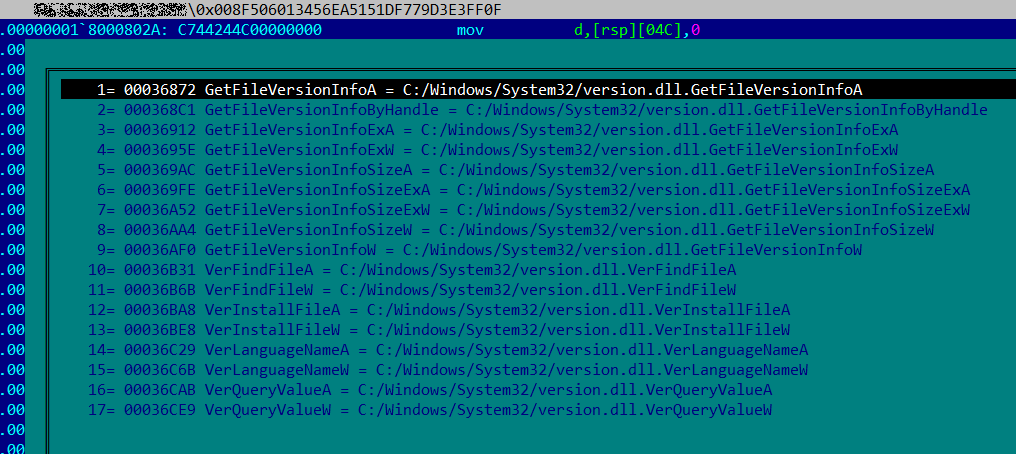
    Static analysis of the DLL library showed that all functions exported by it import functions with the same names from the system file version.dll (Version Checking and File Installation Libraries).

    List of functions exported by TCESB

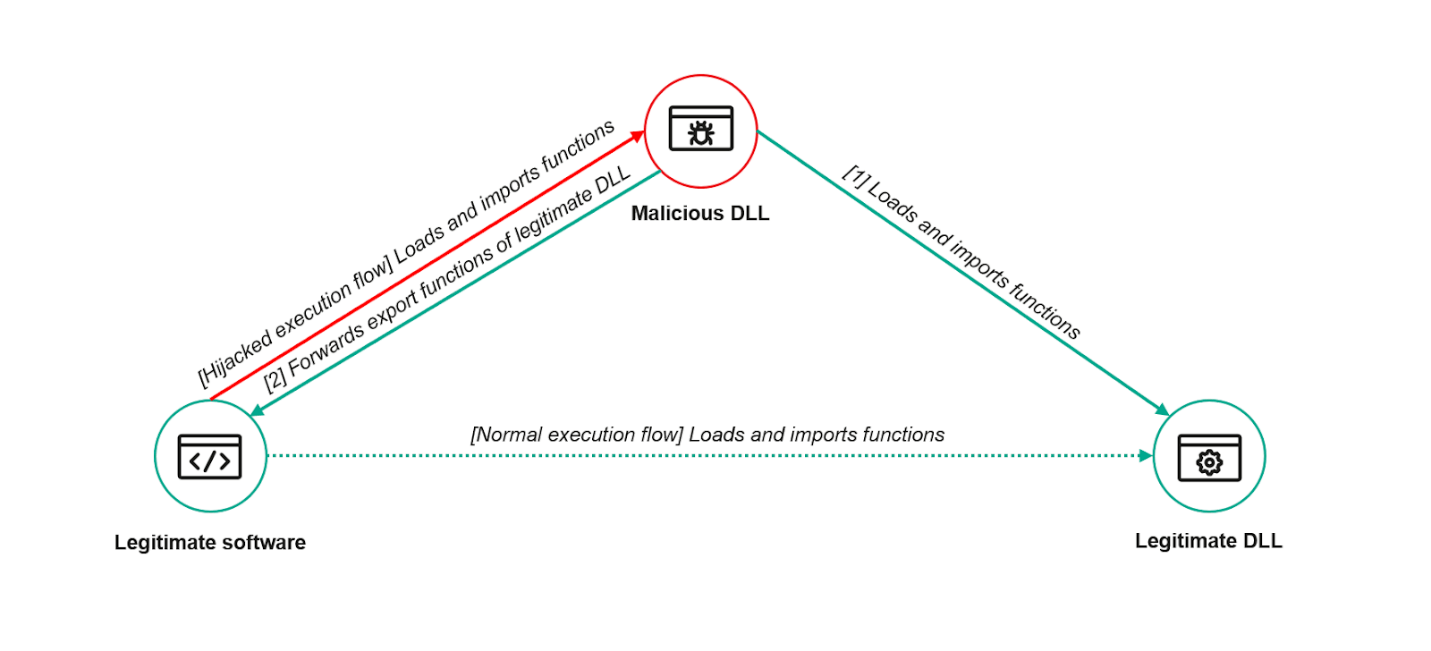
    This indicates that the attackers use a DLL-proxying technique (Hijack Execution Flow, T1574) to run the malicious code. By means of this technique, a malicious DLL exports all functions of a legitimate one, but instead of implementing them, redirects calls to these functions to the original DLL. This way, an application that loads the malicious library will continue to work as normal, with the malicious code running in the context of this application in the background.

    Schematic of DLL proxying

    However, this is not enough to launch malware. For a malicious DLL to be able to take control, the application that loads it must contain insecure code. Such code searches for loaded dynamic library images in folders where they should not be located. If one of these folders contains a malicious library, the vulnerable application will load it instead of the legitimate one. Microsoft has an official advisory on preventing unsafe DLL loading.

    CVE-2024-11859 vulnerability in ESET Command line scanner

    It took us a while to find the file that loads the TCESB tool. We studied the system directories on devices where the malicious DLLs were found. On one of these, in the same folder as TCESB, there was an extensionless executable file named ecls. We believe that the operator, when transferring files to the device, made a mistake in the filename and moved two copies of it. After performing malicious activity, the file with the extension was deleted, while the other one remained in the system. This file turned out to be a component of ESET’s EPP solution – a scanner launched from the command line (ESET Command line scanner). Dynamic analysis showed that the scanner insecurely loads the system library version.dll, first checking for the file in the current directory, then searching for it in the system directories. This can result in a malicious DLL library being loaded, which constitutes a vulnerability. We compiled a report with a detailed description of it, and sent it to ESET as part of the Coordinated Vulnerability Disclosure process. ESET registered the CVE-2024-11859 vulnerability, then on January 21, 2025 released an update for the ecls file patching the security issue. On April 4, information about this vulnerability appeared in an ESET security advisory.

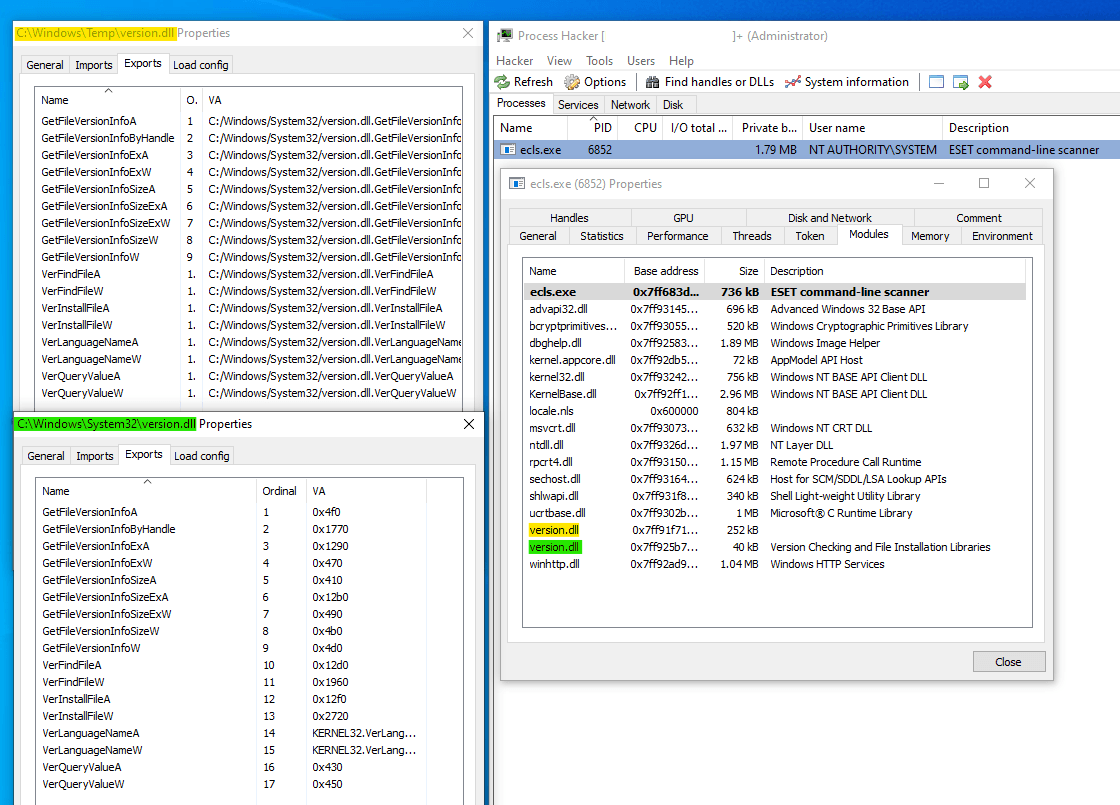
    To analyze TCESB, we ran it in a virtual environment. In the address space of the ESET Command-line scanner process, we can see two version.dll files. One is the system library, the other is the DLL of the TCESB tool.

    Malicious and legitimate libraries in the memory of the ecls.exe process

    Basic functionality

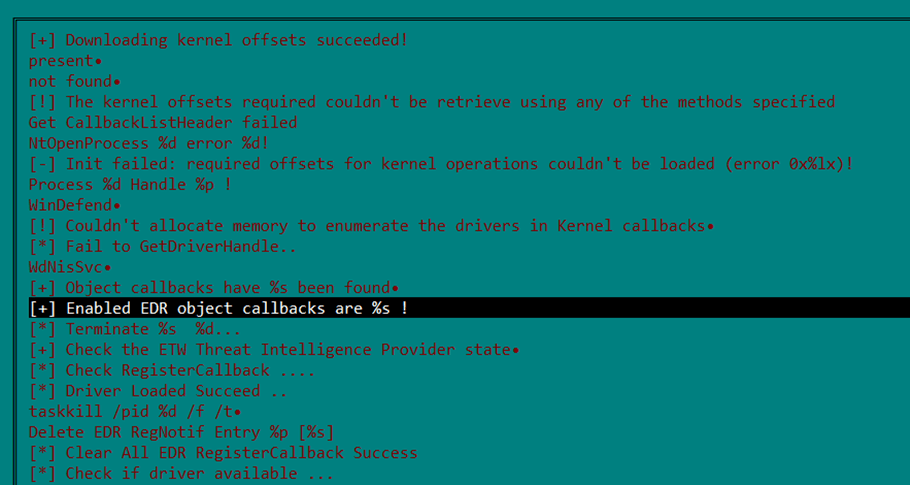
    To determine the main functions of the malicious tool, we examined the strings located in its DLL.

    Snippet of the list of strings that TCESB contains

    The strings are not obfuscated. The search shows that most of them belong to the open-source malicious tool EDRSandBlast, designed to bypass security solutions. Kaspersky solutions detect it with the verdict HEUR:HackTool.Win64.EDRSandblast.a. ToddyCat created the TCESB DLL on its basis, modifying the original code to extend the malware’s functionality. The resulting tool’s capabilities include modifying operating system kernel structures to disable notification routines, for example, about a process creation event in the system or a load event.

    Searching for addresses in the kernel memory

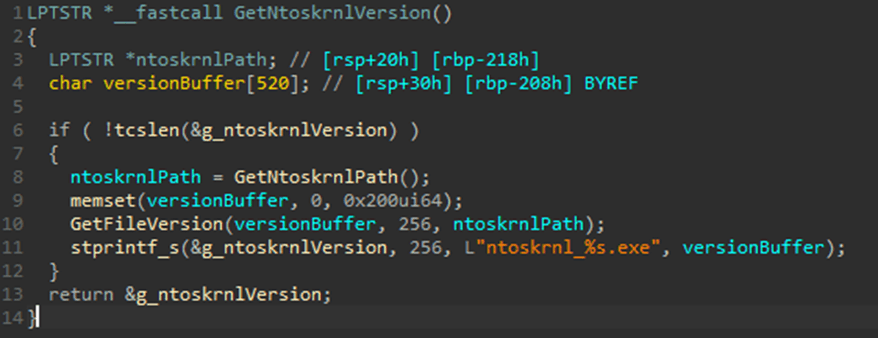
    To find the structures in the kernel memory needed to disable notification routines, TCESB determines the version of the Windows kernel in the context of which it is running. To do this, it uses the GetNtoskrnlVersion() function.

    Function for getting the Windows kernel version implemented in TCESB

    Next, to get information about the memory offsets of the structures corresponding to the operating system kernel version, TCESB uses one of two data sources: a CSV or PDB file.

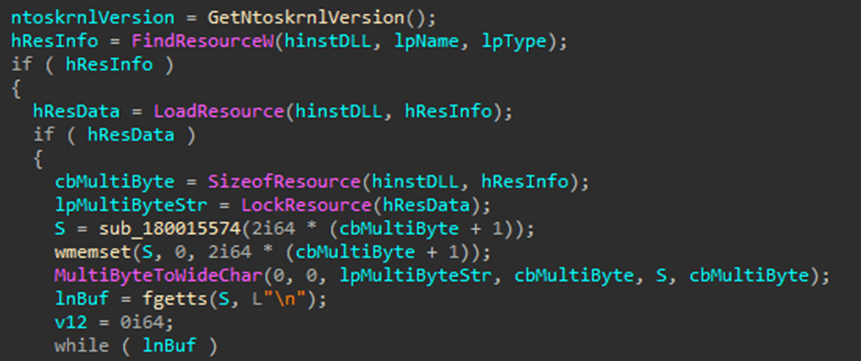
    First, the tool checks the CSV file contained in its own resources section. Stored there in table form is information about several popular kernel versions and their corresponding offsets.

    TCESB searches this file line by line for a match with the previously obtained version of the current Windows kernel.

    Snippet of the function for getting and reading a CSV file from TCESB resources

    We studied the CSV file in the EDRSandBlast repository and its change history. The contents of the TCESB CSV fully match the CSV data in the EDRSandBlast version of August 13, 2022, while the original malware commit of October 6, 2023 adds lines that are missing in the TCESB resource. This indicates a time period during which the creators of TCESB used the EDRSandBlast code.

    If the CSV file does not contain data on structures corresponding to the required kernel version, TCESB reads their addresses from the PDB file. To get it, the malware accesses the file C:WindowsSystem32ntoskrnl.exe, which contains information about the kernel file version, and inserts the data from this file into the following template, generating a URL:

    This is the address of Microsoft debug information server, where TCESB sends a GET request to download the PDB file. The received file is saved in the current TCESB directory, and data on the offsets of the required kernel memory structures are read from it.

    Vulnerable driver

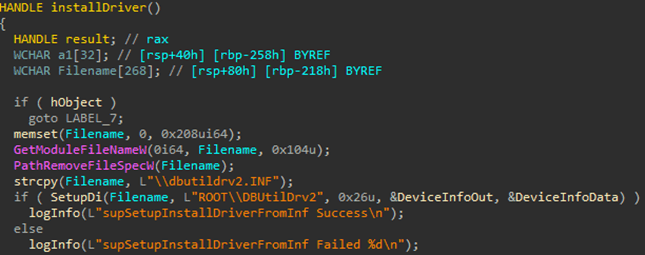
    To modify the kernel structures that store callbacks used to notify applications of system events, TCESB deploys the Bring Your Own Vulnerable Driver (BYOVD) technique (Exploitation for Defense Evasion, T1211). It does this by installing a vulnerable driver in the system through the Device Manager interface, using an INF file with installation information.

    Snippet of decompiled code for installing the TCESB driver

    TCESB uses the Dell DBUtilDrv2.sys driver, which contains the CVE-2021-36276 vulnerability. This is a utility driver used to update PC drivers, BIOS and firmware.

    Launching the payload

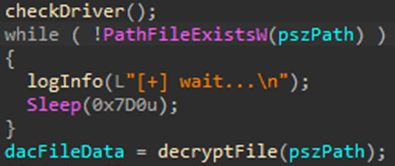
    Once the vulnerable driver is installed in the system, TCESB runs a loop in which it checks every two seconds for the presence of a payload file with a specific name in the current directory – the payload may not be present at the time of launching the tool. Presumably, this is to allow the operator to verify that the tool was run without errors, so that the payload file can be moved without risk of detection. As soon as the file appears in the path being checked, it is passed to the decryption function.

    Snippet of decompiled TCESB code

    The tool creates its own log file for recording all stages of execution in detail.

    Example of log file contents

    We studied two samples of the TCESB tool. Although we were unable to obtain the payload files, our research shows that they have different names ( kesp and ecore) and both are extensionless.

    Our analysis of the tool code found that the data in the payload file is encrypted using AES-128.

    Snippet of code for determining the encryption algorithm

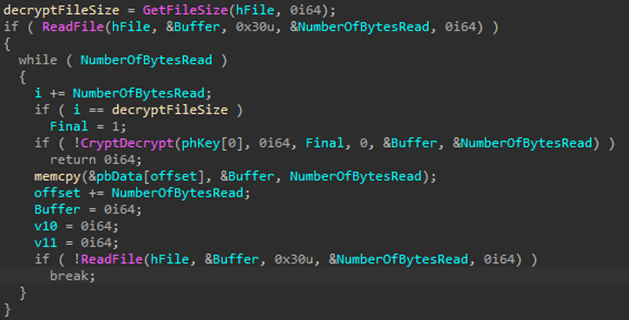
    The decryption key is in the first 32 bytes of the payload file, followed by the encrypted data block. Below is a snippet of code for reading the key:

    Snippet of code for reading the key from the payload file

    The key decrypts the data block:

    Snippet of code for reading and decrypting the payload file

    The read data is placed in memory and executed.

    Takeaways

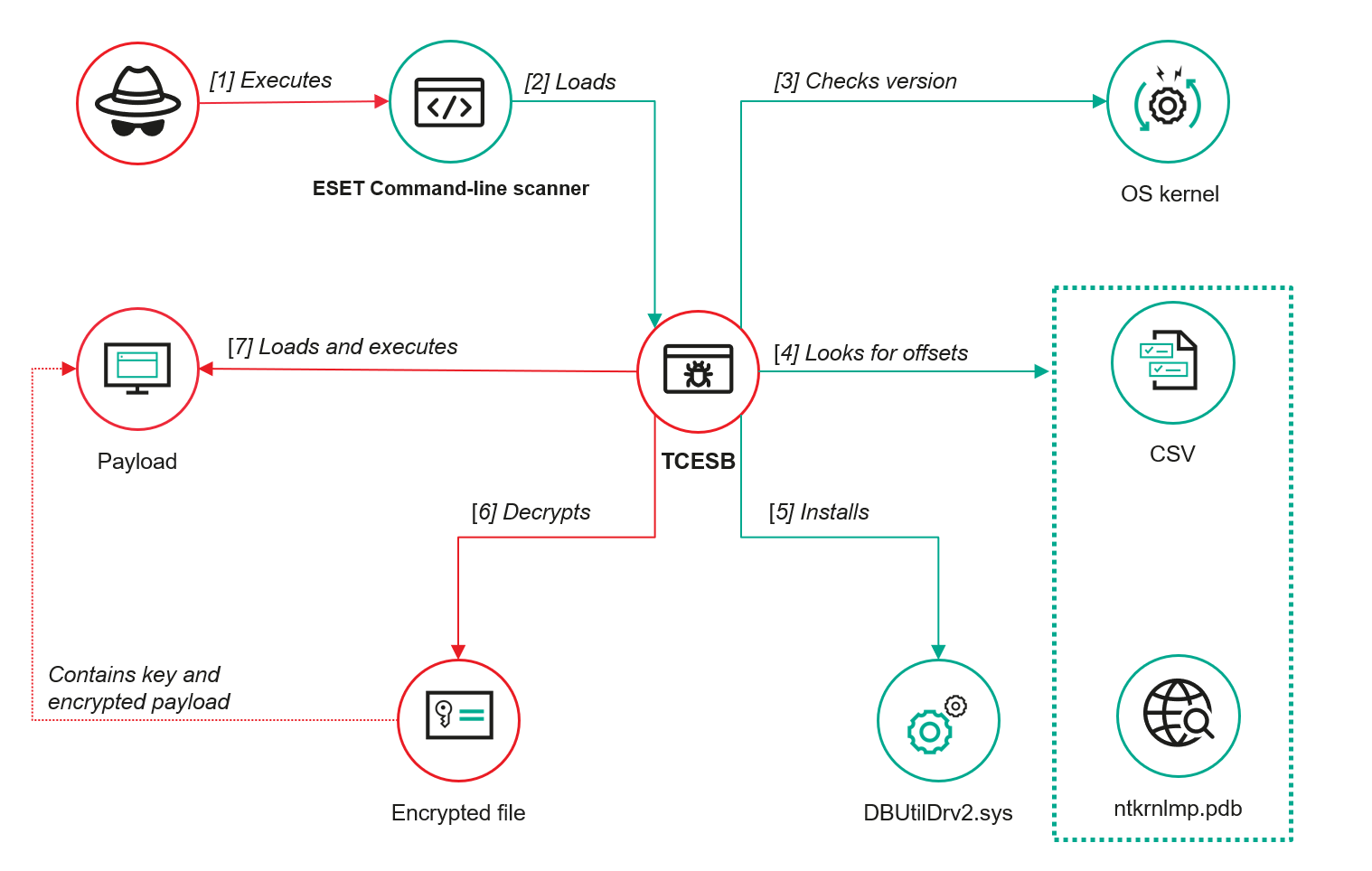
    We discovered a sophisticated tool that the ToddyCat APT group tried to use for stealth execution in compromised systems. This tool exploits a chain of vulnerabilities, as well as an old version of a known open-source malware that the attackers modified to extend its functionality.

    Schematic of tool operation

    To detect the activity of such tools, it’s recommended to monitor systems for installation events involving drivers with known vulnerabilities. Lists of such drivers can be found on the loldrivers project website, for example. It’s also worth monitoring events associated with loading Windows kernel debug symbols on devices where debugging of the operating system kernel is not expected. We also advise using operating system tools to check all loaded system library files for the presence of a digital signature.

    Indicators of compromise

    Malicious Files Hashes

    D38E3830C8BA3A00794EF3077942AD96       version.dll 008F506013456EA5151DF779D3E3FF0F       version.dll

    Legitimate file for DLL proxying

    8795271F02B30980EBD9950FCC141304       ESET Command-line scanner

    Legitimate files for BYOVD

    B87944DCC444E4C6CE9BB9FB8A9C0DEF       dbutildrv2.INF DE39EE41D03C97E37849AF90E408ABBE       DBUtilDrv2.cat DACB62578B3EA191EA37486D15F4F83C       dbutildrv2.sys

    MIL OSI Economics

  • MIL-OSI Europe: Text adopted – Estimates of revenue and expenditure for the financial year 2026 – Section I – European Parliament – P10_TA(2025)0060 – Thursday, 3 April 2025 – Strasbourg

    Source: European Parliament

    The European Parliament,

    –  having regard to Article 314 of the Treaty on the Functioning of the European Union,

    –  having regard to Council Regulation (EU, Euratom) 2020/2093 of 17 December 2020 laying down the multiannual financial framework for the years 2021-2027(1) and to the joint declaration agreed between Parliament, the Council and the Commission in this context(2) and the related unilateral declarations(3),

    –  having regard to Council Regulation (EU, Euratom) 2022/2496 of 15 December 2022 amending Regulation (EU, Euratom) 2020/2093 laying down the multiannual financial framework for the years 2021 to 2027(4),

    –  having regard to the Council Regulation (EU, Euratom) 2024/765 amending Regulation (EU, Euratom) 2020/2093 laying down the multiannual financial framework for the years 2021 to 2027(5) (”MFF revision”),

    –  having regard to its legislative resolution of 16 December 2020 on the draft Council regulation laying down the multiannual financial framework for the years 2021 to 2027(6),

    –  having regard to its resolution of 15 December 2022 on upscaling the 2021-2027 multiannual financial framework: a resilient EU budget fit for new challenges(7),

    –  having regard to its resolution of 3 October 2023 on the proposal for a mid-term revision of the multiannual financial framework 2021-2027(8),

    –  having regard to its resolution of 27 February 2024 on the draft Council regulation amending Regulation (EU, Euratom) 2020/2093 laying down the multiannual financial framework for the years 2021 to 2027(9),

    –  having regard to Regulation (EU, Euratom) 2024/2509 of the European Parliament and of the Council of 23 September 2024 on the financial rules applicable to the general budget of the Union (recast)(10) (the “Financial Regulation”),

    –  having regard to the Interinstitutional Agreement of 16 December 2020 between the European Parliament, the Council of the European Union and the European Commission on budgetary discipline, on cooperation in budgetary matters and on sound financial management, as well as on new own resources, including a roadmap towards the introduction of new own resources(11),

    –  having regard to the general budget of the European Union for the financial year 2025(12) and the joint statements agreed between Parliament, the Council and the Commission annexed hereto,

    –  having regard to the Secretary-General’s report to the Bureau on drawing up Parliament’s preliminary draft estimates for the financial year 2026,

    –  having regard to the preliminary draft estimates drawn up by the Bureau on 10 March 2025 pursuant to Rules 25(7) and 104(1) of Parliament’s Rules of Procedure,

    –  having regard to the draft estimates drawn up by the Committee on Budgets pursuant to Rule 104(2) of Parliament’s Rules of Procedure,

    –  having regard to Rule 104 of its Rules of Procedure,

    –  having regard to the report of the Committee on Budgets (A10-0048/2025),

    A.  whereas the budget proposed on 10 February 2025 by the Secretary-General for the Parliament’s preliminary draft estimates for 2026 amounts to EUR 2 641 609 620 and represents an increase of 4,30 % or EUR 108 914 512 compared to 2025 budget;

    B.  whereas the Union annual inflation was 2,8 % in January 2025 according to Eurostat, up from 2,7 % in December 2024; whereas the level of expenditure in Heading 7 of the multiannual financial framework (MFF) 2021-2027 is based on a 2 % yearly increase;

    C.  whereas the credibility of the Parliament depends on its ability to deliver on its core budgetary, legislative and scrutiny work to the highest standard, while setting an example vis-à-vis other Union institutions to plan and conduct its spending prudently and efficiently and to reflect the prevalent economic realities;

    General framework

    1.  Is concerned with the situation of Heading 7 in the current MFF; recalls that the constraints are the results of the cuts applied by the Council to the Commission’s already very low initial proposal when agreeing on the current MFF 2021-2027; regrets the Council’s opposition to the Commission’s proposal to increase the ceiling of Heading 7 in the MFF revision as from 2024; points out the failure to address the issue of the ceiling of Heading 7 in the MFF revision; highlights that the forecasted negative margin for 2026 presupposes the use of special instruments in Heading 7 for that purpose;

    2.  Endorses the agreement reached in the Conciliation between the Bureau and the Committee on Budgets on 18 March 2025 to set the increase over the 2025 budget at 4,09 %, corresponding to an overall of estimates of EUR 2 636 241 620 for 2026, and to reduce accordingly the appropriations proposed on the following budget lines for a total of EUR 12 378 000:

    1 0 0 6 — General expenditure allowance, 1 4 2 — External translation services, 2 0 0 0 — Rent, 2 0 0 7 — Construction of buildings and fitting-out of premises, 2 0 2 4 — Energy consumption, 2 1 0 1 — Business applications management, 3 2 0 — Acquisition of expertise, 3 2 4 3 — European Parliament visitors’ centres, 3 2 4 8 — Expenditure on audiovisual information, 4 4 — Meetings and other activities of current and former Members;

    furthermore, it was decided to increase the level of expenditure of the preliminary draft estimates approved by the Bureau on 10 March 2025 by EUR 7 010 000 and to increase accordingly the appropriations proposed on the following budget lines:

    1 2 0 0 — Remuneration and allowances, 1 6 3 0 — Social welfare: welfare expenditure, 4 0 0 — Current administrative expenditure and expenditure relating to the political and information activities of the political groups and non-attached Members, and 4 0 3 — Funding of European political foundations;

    finally, it was agreed to modify the budgetary remarks of item 1 6 3 0 — Social welfare: welfare expenditure to include the reference to the APA Committee;

    3.  Recalls that almost two-thirds of the budget is fixed by statutory obligations; notes that out of the increase of EUR 103,5 million compared to the 2025 budget an increase of EUR 85,3 million is due to statutory financial obligations, mainly for salary updates of officials and temporary staff (EUR 52,7 million), of contract agents (EUR 9,2 million) and of accredited parliamentary assistants (EUR 15,1 million); recalls that the salary indexation, in line with the Staff Regulations and Statute for Members of the European Parliament, is currently forecasted by the Commission for April 2025, July 2025, April 2026 and July 2026 at 1,2 %, 4,6 %, 0,6 % and 3,4 % respectively;

    4.  Notes that the Parliament does not request any additional posts for 2026, the third year in a row;

    5.  Notes that the increase for non-statutory expenditures between 2025 and 2026 is 1,96 %;

    6.  Welcomes the initiative of the Secretary-General to conduct a major screening exercise aimed at identifying opportunities for administrative simplification, eliminating inefficiencies and ensuring tangible cost reductions, thereby increasing efficiency and ensuring a smart use of resources; asks the Secretary-General to provide the Committee on Budgets with semestrial updates on the actions taken and on the Action Plan on Simplification as well as their impact in terms of budget and staff; underlines that administrative procedures and human resources management represent a heavy burden for Members, in particular when hiring local assistants, and calls for simplification in that regard;

    7.  Notes that Parliament’s budget should be established on a realistic basis, in compliance with the principles of budgetary discipline and sound financial management; highlights that it is essential to ensure that financial prudence and security remain key priorities while guaranteeing that these measures do not impede the efficiency, effectiveness and operational capacity of the institution and its essential staff in carrying out their duties successfully; stresses that, given the geopolitical context and the investments that the Union will have to make for its strategic autonomy, the Parliament must set an example in the management of its budget;

    8.  Highlights Parliament’s role in building European political awareness and promoting Union values and policies such as the digital and green transition; stresses that transparency, accountability, gender equality and integrity are essential principles within the Union institutions and particularly Parliament as a house of European democracy;

    Strengthening Parliament’s core functions

    9.  Takes note of the four new thematic Directorates-General (DGs) created in September 2024, responsible for legislative, budgetary and scrutiny activities, from the previous Directorate-General for Internal Policies, in order to improve the functioning of Parliament as a co-legislator, as one arm of the budgetary authority, and as discharge authority; requests the Secretary-General to provide the Committee on Budgets with regular updates on the evolution of work and staff in these DGs;

    10.  Recognises the need for more political decision-making based on evidence and facts; takes note of the budget of EUR 16,75 million to strengthen Parliament’s administrative capacity in supporting Members in their parliamentary work and reinforcing its capacity to navigate complexity and uncertainty;

    11.  Stresses the crucial role of political groups in providing expertise and political support to Members in their legislative and parliamentary work; underlines the need to ensure the important objective of strengthening Parliament’s capacity to support the work of Members;

    Digital transition

    12.  Underlines that Parliament’s cybersecurity is a key priority; notes that the overall IT budget represents 7,40 % of the total budget in the 2026 estimates; stresses the importance of a sound cybersecurity infrastructure in geopolitically turbulent times and welcomes the increase in the appropriations dedicated to cybersecurity; supports the planned gradual increase of the cybersecurity financial appropriations to 10 % of Parliament’s ICT budget by 2027;

    13.  Welcomes the adoption by the Bureau on 10 February 2025 of the Framework on an internal cybersecurity risk management, governance and control framework; recalls that investments in cybersecurity are key to protect the democratic voice of the Parliament and the Union;

    14.  Welcomes investments in Artificial Intelligence (AI) amounting to EUR 1 million; calls for the use of AI to be increased in order to gain efficiencies, while keeping in mind the related risks, including ethics and data protection; highlights the potential of AI to streamline administrative processes; stresses that AI deployment must balance innovation with necessary safeguards; notes that the development of AI will be closely monitored in line with the principles established by the Bureau, which include among others a thorough risk assessment with the use of new technologies; calls the Secretariat to provide solutions, such as applications and tools, to be made available to Members and staff as soon as possible;

    Green transition

    15.  Welcomes Parliament’s environmental management system (EMAS) targets for 2025-2029; recalls that energy efficiency investments are a good method of achieving value for money; takes note of the budget of EUR 8,45 million for investments on energy efficiency and environment in the 2026 estimates to further improve the environmental performance of its buildings; notes that this corresponds to an increase of 74 % compared to 2025 budget; acknowledges however, that these environmental actions are part of the 2007 ‘Construction of building and fitting out of premises’ budget line whose grand total has decreased by EUR 3,7 million in 2026 vs 2025;

    16.  Recalls that nearly two-thirds of Parliament’s carbon footprint originate from the transportation of people; calls for a reasonable decrease of travel for meetings that can be effectively conducted remotely or in hybrid mode and to promote a shift to low carbon alternatives for all remaining travel, in so far as this does not affect the quality of legislative and political work;

    17.  Takes note of the projected increase in carbon credits prices, that with the current emissions levels would need an estimated EUR 900 000 for 2026; calls the administration to continue decreasing, in line with sound financial management, Parliament’s emissions over buying carbon credits; welcomes the introduction of an enhanced train offer for missions to Strasbourg as of July 2025, as a positive step towards reducing CO2 emissions;

    18.  Notes that Parliament has installed and is continuing to install photovoltaic solar panels to further increase the share of renewable energy produced on-site to reach the target of 25 %; takes note of the answers provided by the Secretary-General to Parliament’s estimates of revenue and expenditure for the financial year 2024 pointing out that a study on the use of photovoltaic panels for Strasbourg buildings was carried out in 2022 and was completed in 2023 and that further studies were to be conducted in 2024 for viable solutions, in particular for the WEISS building;

    Multilingualism, communication and disinformation

    19.  Highlights that multilingualism is a key principle on which Parliament’s work is based; takes note of the revision of the Code of Conduct on Multilingualism planned for spring 2025; asks that, where appropriate, Parliament capitalise on major technological evolutions in multilingualism-related services, including the development and use of AI; asks the Secretary-General to timely inform the Committee on Budgets on any budgetary impacts following this revision;

    20.  Highlights the role played by European Parliament Liaison Offices (EPLOs) in countering foreign interference and disinformation; takes note in that regard of the work of EPLOs proactively promoting the work of Parliament in their local languages across multiple channels; highlights EPLOs’ role in the UK as the main contact point for Union nationals resident in the UK, providing them with information about the Parliament and encouraging them to vote in the European elections; requests the Bureau to expand the production and dissemination of communication materials in an accessible and inclusive manner;

    21.  Highlights the low participation rate of young people in the recent European elections in some regions of the Union and Parliament’s role in strengthening EU citizenship education;

    22.  Recalls the importance of the European Parliament Ambassador School programme to promote active engagement among young Europeans and of the training programme for young journalists named in honour of David Sassoli to strengthen the understanding of the Union and its functioning amongst journalists, as the best antidote against disinformation, in light of recent trends demonstrating a worrying decline in media freedom and independence across the Union;

    23.  Recognises the importance of visitors groups as an important tool to connect citizens with the work of Members; welcomes in that regard the increase of the ceilings and cost factors for the calculation of the financial contribution to sponsored visitors as from 1 January 2025; requests the Bureau to assess the impact of the revised rules related to visitors groups in relation to travel costs taking into account market fluctuation and to avoid indirect geographical discrimination for visitors; notes that about 15 % of the quota for visitors is historically not being used by Members; calls the Secretary-General to propose to the Bureau to make the unused quota available to interested Members; notes that the budget for visitors groups represents 22 % of the overall budget of the Directorate-General for Communication;

    24.  Notes with concern the internal rules governing Members’ visitor groups, which result in 30 % of the up-front costs having to be incurred by Accredited Parliamentary Assistants (APAs) in some circumstances; stresses the impracticability of these rules and the financial burden this places on APAs; takes note of the answers provided by the Secretary-General to Parliament’s estimates of revenue and expenditure for the financial year 2024 in regard to the rationale of the two-step approach; understands the rationale but emphasises the growing challenges this presents for APAs, particularly with the continuous shift towards more stringent rules;

    25.  Stresses the increasingly challenging communication landscape and the multiple ways in which political communication should be performed, including through engaging in various social media platforms and other media; underlines the need for the political groups to convey and communicate their message across all Member States as a key principle of a well-functioning European democracy;

    Infrastructure

    26.  Acknowledges the new approach related to buildings, where, after a period of acquisition, Parliament has entered an era of consolidation of buildings, taking into account sustainability, accessibility and mobility of Members and staff;

    27.  Takes note that EUR 4 million are included in the 2026 estimates for studies and the contractor’s preparatory works related to the SPAAK building renovation while the overall costs are estimated at EUR 36 million; notes therefore that EUR 32 million of costs related to the SPAAK building renovation are not included in the 2026 estimates; notes that the Secretary-General intends to cover these costs by a mopping-up transfer or the use of a loan; requests the Secretary-General to provide the Committee on Budgets with detailed information on a possible loan to cover these costs, in accordance with Article 272 (6) of the Financial Regulation, as soon as possible as well as the full planning of the works including the planning of the costs; insists that costs not directly linked to the renovation works should also be clearly listed and budgeted; notes that as of December 2024, the direct costs of the SPAAK project amount to EUR 14,12 million;

    28.  Welcomes the pilot project of DG INLO aimed at removing legionella from the pipeline sanitary system of the Parliament and highlights that the only effective way to fight the further spreading of legionella is to bring the water temperature inside the pipelines to 55 degrees Celsius for a limited time;

    29.  Notes that it is planned to invest EUR 11,45 million in Europa Experiences in 2026; takes note of the decision by the Bureau in November 2024 to revise the concept of Europa Experience and expects the revised concept to be more cost-efficient and more attractive to visitors; regrets that there are still no Europa Experiences in Bucharest, Riga, Madrid, Lisbon, Nicosia, Valletta or Vilnius; calls for the establishment of Europa Experiences in all Member States as soon as a revised concept has been established; recalls that Europa Experiences should allow citizens to have a better understanding of the functioning of the Union and learn about our shared values; reiterates therefore that Europa Experiences are an integral part of Parliament’s ongoing engagement with Union citizens;

    30.  Takes note that no additional financing is needed for the opening of Parliament offices in Moldova and the Western Balkans, as these would be set up within EEAS premises; stresses the importance of Parliament’s presence in these countries as a sign of European solidarity and a sign of Parliament’s commitment to the accession process;

    31.  Takes note of the early termination of the contract with the previous provider of the Crèche Wayenberg after a number of serious allegations against the contractor; welcomes the agreement with a new provider that foresees better working conditions of the nursery staff and better quality of the service for the children; acknowledges, however, that this results in an increase of the budget necessary for this purpose, but emphasises that decent working conditions for external staff should, where relevant, be a priority consideration in public procurement of Parliament as a matter of principle;

    32.  Reiterates the need for high quality nursing rooms in Parliament’s premises and calls on the competent services to upgrade the current facilities in terms of equipment, space and accessibility in order to make them child-friendly; calls for an impact assessment on the need for a family room within the premises of the Brussels seat of the Parliament, for children of Members without permanent residence in Brussels, mirroring the arrangements in Strasbourg;

    Others

    33.  Reiterates its request, adopted at Plenary level at several occasions, for the relevant bodies to reflect on a solution enabling Members to exercise their right to vote remotely, during benefiting from maternity or paternity leave, during a certified long-term illness, taking advantage of the lessons learnt during the pandemic on the technical aspects of this voting method;

    34.  Reaffirms its call for the Secretary-General to emphasise the fundamental principle that all recruitment should be based on competency while also ensuring geographical balance among all Member States at every staff level; calls on Parliament to build its own outreach capacity, with the goal of attracting to competitions quality candidates that Parliament needs, in terms of profile, age, gender and nationality and especially from under-represented countries; underscores that achieving fair geographical representation is essential to fostering a genuinely European public service; notes that Parliament has consistently taken measures to support this objective, including the organisation of nationality-specific competitions while maintaining a strict merit-based selection approach;

    35.  Believes that Parliament should lead by example concerning the rights of persons with disabilities, both as an employer and as a public institution; welcomes Parliament’s policy aiming to ensure the fully independent use of Parliament buildings by persons with disabilities and supports further measures and adaptations that will be necessary in this regard; notes that the budget foresees EUR 3,7 million for this purpose;

    36.  Stresses the fact that Parliament having a single seat could reduce the financial and environmental costs; recalls that, according to the Treaty on European Union, Parliament is to have its seat in Strasbourg; notes that permanent changes would require a Treaty change for which unanimity is needed;

    37.  Notes that mission expenses of Members and staff amount to EUR 116 million in Parliament’s budget; calls for Parliament’s bodies to reflect on mission practices and a revision of mission rules and practices with the overall aim of continuing to improve the nature of missions and further diminishing the associated financial and environmental costs; encourages Members to use low-carbon transport alternatives and advocates for responsible and measured use of best-value flights options, and the preference for train travel where it is a viable option;

    38.  Takes note that Article 46(2) of the Implementing Measures for the Statute for Members of the European Parliament provides for the possibility to finance extra costs linked to the parliamentary assistance budgets with appropriations from their General Expenditure Allowance (GEA); calls on Parliament’s administration to take the necessary measures to enable Members who wish to do so to use their GEA to cover the cost of APA missions; highlights that such a measure would address increasing costs in Members’ offices while being budgetary neutral;

    39.  Calls on the Bureau not to index the GEA and not to grant GEA to former Members, thus allowing for significant savings in the statutory costs;

    40.  Calls on the Bureau to revise the rules and to introduce a cooling-off period for former Members during which they cannot engage in lobbying or representational activities with the Parliament equal to the time during which Members receive a transitional allowance;

    41.  Recalls that Parliament has consistently voted in Plenary since 2018 to consider lifting the overall ban on APAs participating in official delegations and missions; regrets that the Conference of Presidents’ decisions of March 2025 on the Implementing provisions governing the missions outside the three places of work of the European Parliament did not align with Plenary’s call; maintains its position that APAs should be allowed, under certain conditions, to accompany Members on official delegations and missions; calls on its relevant bodies to amend the relevant articles of its internal rules to allow the participation of APAs in official missions and delegations outside Parliament’s three places of work without further delay;

    42.  Welcomes the work of the APA Committee which represents around 2 000 APAs, whose work is crucial to the smooth operation of the MEP’s daily activities; notes the earmarking of EUR 10 000 in order for the APA Committee to fulfil its role and ensure sufficient resources to effectively support and properly represent the APAs;

    43.  Welcomes the exceptional 10 % increase in scholarships for each trainee in 2026, budgeted for EUR 1 million in 2026 to help them cope with growing housing costs in Brussels and Luxembourg;

    44.  Expects that requests voted by the Plenary should be treated by the responsible bodies as a matter of high priority;

    o
    o   o

    45.  Adopts the estimates for the financial year 2026;

    46.  Instructs its President to forward this resolution and the estimates to the Council and the Commission.

    (1) OJ L 433 I, 22.12.2020, p. 11, ELI: http://data.europa.eu/eli/reg/2020/2093/oj.
    (2) OJ C 444 I, 22.12.2020, p. 4.
    (3) OJ C 445, 29.10.2021, p. 252.
    (4) OJ L 325, 20.12.2022, p. 11, ELI: http://data.europa.eu/eli/reg/2022/2496/oj.
    (5) OJ L, 2024/765, 29.2.2024, ELI: http://data.europa.eu/eli/reg/2024/765/oj.
    (6) OJ C 445, 29.10.2021, p. 240.
    (7) OJ C 177, 17.5.2023, p. 115.
    (8) OJ C, C/2024/1195, 23.02.2024, ELI: http://data.europa.eu/eli/C/2024/1195/oj.
    (9) OJ C, C/2024/6751, 26.11.2024, ELI: http://data.europa.eu/eli/C/2024/6751/oj.
    (10) OJ L 2024/2509, 26.9.2024, ELI: http://data.europa.eu/eli/reg/2024/2509/oj.
    (11) OJ L 433 I, 22.12.2020, p. 28, ELI: http://data.europa.eu/eli/agree_interinstit/2020/1222/oj.
    (12) OJ L, 2025/31, 27.2.2025, ELI: http://data.europa.eu/eli/budget/2025/31/oj.

    MIL OSI Europe News

  • MIL-OSI Europe: Text adopted – Targeted attacks against Christians in the Democratic Republic of the Congo – defending religious freedom and security – P10_TA(2025)0066 – Thursday, 3 April 2025 – Strasbourg

    Source: European Parliament

    The European Parliament,

    –  having regard to its previous resolutions on the Democratic Republic of the Congo (DRC),

    –  having regard to the Universal Declaration of Human Rights,

    –  having regard to the International Covenant on Civil and Political Rights,

    –  having regard to the Constitution of the Democratic Republic of the Congo (DRC), which guarantees the right to freedom of conscience and the free exercise of religious worship for all citizens,

    –  having regard to the UN Declaration on the Elimination of All Forms of Intolerance and of Discrimination Based on Religion or Belief, adopted by the UN General Assembly on 25 November 1981,

    –  having regard to the European Convention on Human Rights,

    –  having regard to Rules 136(2) and (4) of its Rules of Procedure,

    A.  whereas the eastern DRC has endured decades of widespread violence and instability; whereas the situation continues to deteriorate significantly, with persistent human rights violations by armed groups, mass displacement, attacks on civilians and alarming humanitarian conditions further exacerbated by armed conflicts, such as the conflict between the DRC Government, the Rwanda-backed armed rebel group March 23 Movement (M23) and other militias, which has already resulted in the forceful internal displacement of 4,6 million people in the eastern DRC; whereas around 100 separate armed groups are estimated to be operating in the eastern DRC; whereas a series of overlapping issues are driving destabilisation in the country;

    B.  whereas M23 has intensified attacks in North Kivu and on 19 March 2025, it seized the mineral-rich town of Walikale, defying the ceasefire;

    C.  whereas the Allied Democratic Forces (ADF) is one of the most prominent extremist groups with explicitly religious objectives, especially since its leader pledged allegiance to the so-called Islamic State of Iraq and Syria (ISIS) in 2019, becoming its Central Africa Province branch (ISCAP); whereas the ADF’s attacks need to be seen in the wider African context of a rise in the number of Islamist groups, in particular those affiliated to ISIS, in the Sahel region, the Horn of Africa, Mozambique, Nigeria and the DRC; whereas the ADF has been designated a terrorist group by Uganda and the United States;

    D.  whereas in May 2024, the UN Group of Experts on the DRC warned that the ‘armed group established strong networks in prisons, particularly in Kinshasa where ADF detainees were active in recruiting and mobilising combatants and collaborators’, using not only ideological means, but also coercion, deception, abduction and financial incentives to attract members and collaborators;

    E.  whereas the ADF has a long history of committing terrorist attacks in the eastern DRC, particularly in North Kivu and Ituri provinces; whereas North Kivu is a resource-rich region, with vast supplies of critical raw materials including cobalt, gold and tin, which are necessary for the global digital and energy transitions; whereas it is known that the ADF and other armed groups, including M23, have been relying on, among other sources of financing, the illegal exploitation of these resources to fund their activities; whereas the Congolese Catholic Church claims that the ADF is responsible for the deaths of around 6 000 civilians in Beni between 2013 and 2021 and more than 2 000 in Bunia in 2020 alone; whereas in 2024, a large number of Christians were killed in the DRC by jihadists; whereas civilians in the DRC’s eastern provinces are facing an increasing number of attacks, killings and abductions, as well as church bombings and the destruction of (religious) property, perpetrated by armed groups with extremist and jihadist ideologies; whereas most victims of ADF attacks have been Christian; whereas these attacks undermine religious freedom and exacerbate intercommunal tensions; whereas the Catholic bishops of the DRC spoke out in an April 2021 statement about the threat of the ‘Islamization of the region [North Kivu] as a sort of deeper strategy for a long-term negative influence on the general political situation of the country’;

    F.  whereas in 2021, a prominent local Muslim leader received death threats from the ADF, and he was later gunned down; whereas in 2023, the ADF bombed services at a Pentecostal church in Kasindi, killing 14 people; whereas the ADF has been linked to an attack on the village of Mukondi in 2023, in which at least 44 civilians were killed, according to local authorities; whereas the group claimed 48 attacks in December 2024 alone, killing over 200 people; whereas in January 2024, the ADF killed eight people in Beni during an attack on a Pentecostal church and, in May 2024, ADF assailants reportedly killed 14 Catholics in the North Kivu province for refusing to convert to Islam; whereas the ADF also reportedly executed 11 Christians in the village of Ndimo in Ituri province and kidnapped several others;

    G.  whereas local and international human rights organisations have documented numerous instances of religious violence in the DRC, while stressing the urgent need for the state to provide adequate protection; whereas, while the DRC Government has demonstrated a strong intention to address the impacts of armed group violence in the eastern DRC, other recent developments call into question the government’s commitment to safeguarding religious freedom specifically; whereas women and children are particularly vulnerable to rape as weapon of war, human trafficking and sexual slavery;

    H.  whereas the Armed Forces of the DRC have been conducting a joint military offensive, Operation Shujaa, with the Ugandan People’s Defence Force against the ADF and other insurgent forces in the eastern DRC since November 2021; whereas the conflict between the DRC Government and the Rwanda-backed M23 rebels has led to a decrease in the funds, personnel and equipment being allocated to this counterterrorism operation;

    I.  whereas the right to freedom of religion and belief is a fundamental human right and must be protected given the high level of violence and persecution; whereas the Constitution of the DRC provides for freedom of religion and prohibits discrimination based on religious belief;

    J.  whereas over 7 million people in the DRC are currently displaced because of the wider ongoing conflicts, with limited access to food, water, healthcare and essential services; whereas state authorities and rebel groups have obligations to civilians under international humanitarian law, including protecting and facilitating access to humanitarian assistance, and permitting freedom of movement;

    K.  whereas women and children in the DRC face increased levels of sexual and gender-based violence, including rape as a weapon of war, resulting in there being one victim of rape every four minutes;

    L.  whereas the illegal exploitation of mineral resources continues to fuel conflict in the region, necessitating stronger international oversight and responsible sourcing policies;

    M.  whereas in March 2025, President Félix Tshisekedi of the DRC and President Paul Kagame of Rwanda issued a joint statement announcing a ceasefire; whereas despite this, the violence perpetrated by the Rwanda-backed M23 rebels continues;

    N.  whereas the DRC has one of the highest rates of internal displacement in the world; whereas many women and children live in precarious conditions and are being exposed to the risk of harassment, assault, sexual exploitation and forced military recruitment; whereas displaced populations often receive no basic life-saving services and are at risk of malnutrition and disease; whereas cities that host internally displaced people in precarious circumstances are also targets of attacks by different militias, causing great distress to the displaced communities and to the local population;

    O.  whereas the EU has committed to supporting stability in the DRC through diplomatic engagement, financial assistance and targeted sanctions against individuals responsible for violence and human rights abuses; whereas on 17 March 2025, the EU imposed sanctions on nine individuals and one entity responsible for acts that constitute serious human rights violations and abuses or that sustain the conflict in the DRC, including through the illegal exploitation of resources, but further diplomatic and economic measures may be necessary;

    P.  whereas the Council has renewed the EU’s financial support for the deployment of Rwandan Defence Force (RDF) troops in Mozambique under the European Peace Facility (EPF); whereas the head of these forces was previously deployed in the eastern DRC to support abuses committed by the Rwanda-backed M23 rebels, giving rise to serious doubt as to whether there are sufficient safeguards attached to EPF support, including effective vetting and other human rights requirements;

    Q.  whereas the EU has repeatedly affirmed its commitment to the promotion and protection of religious freedom globally, and has taken steps to combat religious persecution and intolerance in various parts of the world; whereas Christians are the largest persecuted religious group in the world;

    R.  whereas Parliament has consistently called for the strengthening of international efforts to combat religious persecution and to hold accountable those responsible for attacks on minority communities;

    1.  Strongly condemns the occupation of Goma and other territories in the eastern DRC by M23 and the RDF as an unacceptable breach of the DRC’s sovereignty and territorial integrity; urges the Rwandan Government to withdraw its troops from DRC territory, the presence of whom is a clear violation of international law and the UN Charter, and cease cooperation with the M23 rebels; demands that Rwanda and all other potential state actors in the region cease their support for M23;

    2.  Expresses deep concern at the alarming continuation of violence; deplores the loss of life and the attacks, both indiscriminate and targeted, against civilians; expresses deep concern over the worsening security and humanitarian crises in the eastern DRC as a whole; calls for the immediate cessation of all forms of violence and for the commitment of all parties involved in the ongoing conflict in the eastern DRC to respect international humanitarian law;

    3.  Strongly condemns the targeted terrorist attacks carried out by the ADF against Christian communities in the eastern DRC, including killings, abductions and the destruction of religious property, and calls for an immediate halt to such acts of violence; expresses its solidarity with the families of the victims and with Christian communities;

    4.  Strongly condemns the Rwanda-backed M23 rebel group and the ADF, as well as other rebel groups, and their egregious human rights abuses that amount to crimes against humanity in accordance with the Rome Statute of the International Criminal Court (ICC); underlines that there must be no impunity for the perpetrators of these acts and that those responsible should be referred to the ICC; encourages the establishment of an international commission of inquiry to examine the human rights violations committed in the DRC, renewed investigations in North Kivu by the ICC Prosecutors Office and the creation of a special tribunal for atrocity crimes in the DRC, including crimes committed against Christian communities; backs the efforts by the National Episcopal Conference of Congo and the Church of Christ in Congo, which launched the ‘Social pact for peace and coexistence in the Democratic Republic of Congo and the Great Lakes Region’, with the aim of restoring peace in the country’s eastern provinces;

    5.  Supports the international efforts against the ADF, including the Shujaa counterterrorism operation carried out jointly by the DRC and Ugandan armed forces; encourages the EU Member States to consider ways of contributing to these efforts, including increased efforts to trace and interdict ISIS secret funds held overseas and to trace any raw materials stemming from their illegal exploitation by the ADF; calls for the EU to support the necessary capacity-building and expertise to combat ADF ideology and rhetoric, particularly within the Muslim communities of both Uganda and the DRC, to prevent recruitment among those communities; requests the application of the EU global human rights sanctions regime to those responsible for planning, ordering or participating in the killing of Christians in the DRC;

    6.  Calls for an immediate and effective ceasefire, and for the full implementation of diplomatic agreements, including the Luanda and Nairobi peace processes; underlines the urgent need for the stabilisation of the country and reiterates its call on M23 to halt its territorial advances and withdraw from the territory of the DRC;

    7.  Reiterates its full support for the UN Organization Stabilization Mission in the DRC (MONUSCO) in protecting civilians and stabilising the region; urges the EU to cooperate with all actors on the ground, in particular MONUSCO, to ensure the protection of civilians in the eastern DRC; calls on the UN to work towards a stronger mandate for MONUSCO in order to enable peacemaking; calls on the UN to ensure the protection of civilians and respect for international humanitarian law;

    8.  Urges the international community to increase support for services in the eastern DRC so that civilians who have been targeted can have access to legal services and psychological support; calls on the DRC Government to counter extremist propaganda; calls for the establishment of early warning mechanisms to more effectively prevent and respond to attacks by the ADF and other armed groups against civilians;

    9.  Reiterates its call for all parties, including armed groups operating in the eastern DRC, to allow and facilitate humanitarian access to address the urgent need for essential services in the eastern DRC and neighbouring countries, notably Burundi; emphasises that humanitarian workers must be able to operate safely to deliver life-saving assistance to Congolese civilians; stresses that this is a central obligation under international humanitarian law, and that perpetrators violating these obligations should be held to account; calls on all parties to provide a safe environment for civil society organisations;

    10.  Is appalled by the shocking use of sexual violence against women and children as a tool of repression and weapon of war in the eastern DRC, and by the unacceptable recruitment of child soldiers by the various rebel groups; demands that these matters be addressed by the international community without delay;

    11.  Calls for stricter enforcement of the EU regulation on conflict minerals(1) to prevent illicit trade from fuelling armed groups in the DRC; reiterates its previous call on the Commission to suspend the EU’s Memorandum of Understanding with Rwanda; requests that the Commission share detailed mapping of current projects with Rwandan authorities and its assessment of whether they may contribute to addressing or may fail to address human rights violations either inside Rwanda or in the DRC;

    12.  Calls for the EU and its Member States to support the DRC in implementing the recommendations of the 2010 mapping report by the Office of the UN High Commissioner for Human Rights (OHCHR), including reforming the security sector, strengthening its efforts to prevent further atrocities against civilians, and ending support for or collaboration with abusive armed groups; urges the DRC Government to ensure accountability for human rights violations and prosecute those responsible for attacks; calls for the EU and its Member States to support the DRC in fighting corruption, strengthening governance and the rule of law, improving security and ensuring the lasting protection of communities at risk, including religious communities, and to ensure that perpetrators of attacks are brought to justice;

    13.  Underlines the role of communities, including religious communities and faith-based organisations in the DRC, in promoting peace, social cohesion and the well-being of local communities;

    14.  Calls on the Commission and the European External Action Service to intensify diplomatic efforts by working closely with regional partners, including the African Union, the East African Community and the United Nations, in order to step up diplomatic efforts to achieve a sustainable resolution to the conflict and prevent extremist groups from using religion as a tool for violence and division;

    15.  Calls on the Commission and the Member States to increase humanitarian aid to address the urgent needs of displaced persons and vulnerable communities in the DRC, ensuring safe access to food, medical care and shelter;

    16.  Supports the imposition of further targeted EU sanctions against individuals and entities responsible for financing or engaging in violence, human rights abuses and resource exploitation; calls for the implementation of the sanctions outlined in the OHCHR mapping report;

    17.  Confirms its commitment to freedom of thought, conscience and religion as a fundamental human right guaranteed by international legal instruments recognised as holding universal value, and to which most countries in the world have committed, and which is enshrined in the Constitution of the DRC;

    18.  Echoes the calls for international solidarity in defending religious freedom and the protection of religious minorities in conflict zones, particularly in the DRC, while addressing the root causes of violent extremism in the DRC and its neighbourhood;

    19.  Urges the EU to uphold its commitment to the promotion of religious freedom and the protection of communities, including religious communities, ensuring that the rights of these groups are prioritised in the EU’s external policies;

    20.  Notes, with concern, the growing influence of the Russian Orthodox Church in Africa, which is a staunch supporter of the Putin regime and its violent, unlawful war in Ukraine; underlines that this development raises significant questions regarding the broader geopolitical and ideological objectives of the Russian Federation in Africa;

    21.  Deplores the fact that Rwanda announced the termination of its diplomatic relations with Belgium, and expresses its solidarity with Belgium;

    22.  Instructs its President to forward this resolution to the Council, the Commission, the Vice-President of the Commission / High Representative of the Union for Foreign Affairs and Security Policy, the Governments and Parliaments of the Democratic Republic of the Congo and Rwanda, the African Union, the secretariats of the United Nations Organization Stabilization Mission in the Democratic Republic of the Congo, the Southern African Development Community and the East African Community, and other relevant international bodies.

    (1) Regulation (EU) 2017/821 of the European Parliament and of the Council of 17 May 2017 laying down supply chain due diligence obligations for Union importers of tin, tantalum and tungsten, their ores, and gold originating from conflict-affected and high-risk areas (OJ L 130, 19.5.2017, p. 1, ELI: http://data.europa.eu/eli/reg/2017/821/oj).

    MIL OSI Europe News

  • MIL-OSI Europe: Text adopted – Energy-intensive industries – P10_TA(2025)0065 – Thursday, 3 April 2025 – Strasbourg

    Source: European Parliament

    The European Parliament,

    –  having regard to the report of September 2024 by Mario Draghi entitled ‘On the future of European competitiveness’,

    –  having regard to the report of April 2024 by Enrico Letta entitled ‘Much more than a market’,

    –  having regard to the Commission communication of 26 February 2025 entitled ‘The Clean Industrial Deal: A joint roadmap for competitiveness and decarbonisation’ (COM(2025)0085),

    –  having regard to the Commission communication of 26 February 2025 entitled ‘Action Plan for Affordable Energy’ (COM(2025)0079),

    –  having regard to Rule 136(2) of its Rules of Procedure,

    –  having regard to the motion for a resolution of the Committee on Industry, Research and Energy,

    A.  whereas energy-intensive industries (EIIs) account for a significant share of the EU’s economy and play a key role in job creation, especially in areas and regions where they are concentrated; whereas EIIs are crucial for the EU’s strategic autonomy and competitiveness, as well as for decarbonisation, taking into account their energy footprint;

    B.  whereas the transition to a decarbonised economy and a clean energy system must lead to reducing energy prices and must take into account all available technologies that contribute to reaching the EU’s net zero goal for 2050 in the most cost-efficient way, avoiding lock-in effects and taking into account the different energy mix across Member States, including with regard to renewables and nuclear;

    C.  whereas technological neutrality is crucial for European industry as it ensures fair competition, fosters innovation and supports the clean transition without favouring specific technologies; whereas maintaining a neutral regulatory framework allows companies to choose the most efficient and sustainable solutions based on market needs rather than top-down preferences set by policymakers; whereas this approach encourages investment, boosts competitiveness and allows industry to adapt to new technologies;

    D.  whereas electrification is at the centre of the decarbonisation of EIIs; whereas EIIs include sectors that use fossil resources to meet temperature, pressure or reaction requirements, such as chemicals, steel, paper, plastics, mining, refineries, cement, lime, non-ferrous metals, glass, ceramics and fertilisers, for which greenhouse gas emissions are hard to reduce because they are intrinsic to the process or because of high capital or operating expenditure costs or low technological maturity;

    E.  whereas the energy price gap between the EU and the US and China undermines the competitiveness of the EU’s industries; whereas elevated and volatile fossil fuel prices heavily affect electricity prices and the affordable cost of renewable energy sources is not transferred to energy bills;

    F.  whereas an insufficiently integrated energy union poses further challenges to EIIs, in particular in relation to the lack of cross-border interconnections and the limited availability of clean energy, owing to lengthy permitting procedures or high capital or operating expenditures, as well as grid congestion;

    G.  whereas the emissions trading system (ETS) provided long-term investment signals and helped bring down the emissions of ETS sectors by 47 %; whereas the energy market has profoundly changed since the introduction of the ETS, especially after Russia’s invasion of Ukraine and the shift from pipeline gas to liquid natural gas (LNG); whereas a lack of carbon market transparency risks hampering EIIs’ competitiveness; whereas ETS revenues are used unevenly across Member States, failing to adequately support EIIs’ decarbonisation;

    H.  whereas unnecessary regulatory burdens and lengthy permitting procedures undermine the business case for investing in decarbonisation in Europe; whereas the concept of overriding public interest is provided for in EU legislation; whereas complex and fragmented EU funding impedes timely investment in net-zero technologies and digitalisation, in particular for small and medium-sized enterprises (SMEs);

    I.  whereas the lack of necessary private investment risks hindering EIIs’ decarbonisation; whereas relying excessively on State aid can have the unwanted consequences of exacerbating disparities and distorting competition across the EU;

    J.  whereas the EU’s dependencies and limited access, both in quantity and quality, to primary and secondary raw materials pose significant challenges to EIIs; whereas circularity and efficiency can help reduce the annual investment needs in industry and in energy supply; whereas currently, ferrous metals exported to non-EU countries account for more than half of all EU waste exports, raising concerns about their sound treatment;

    K.  whereas unfair competition from non-EU countries, including subsidised overcapacity, poses a great challenge to EU companies; whereas many regions around the world do not currently have ambitious decarbonisation targets, thus increasing the risk of carbon leakage;

    L.  whereas a profound transformation of EIIs cannot succeed without the involvement of local and regional communities, workers and social partners, which are heavily affected by the transition;

    1.  Reiterates its commitment to the EU’s decarbonisation objectives and to stable and predictable climate and industrial policies;

    2.  Calls on the Member States to accelerate permitting and licensing processes for clean energy projects, ensuring administrative capacity, and to facilitate grid connections to enable clean, on-site energy generation, especially in remote areas; stresses that the growth of renewables and electrification will require massive investment in grids and in flexibility, storage and distribution networks; calls on the Commission to develop, beyond the concept of overriding public interest, solutions for speeding up decarbonisation projects;

    3.  Believes that further action is needed to implement the electricity market design (EMD) rules, especially to promote power purchase agreements (PPAs) and two-way contracts for difference (CfDs) to reduce volatility and energy costs for EIIs; calls on the Commission to propose urgent measures to address current barriers to the signing of long-term agreements, especially for SMEs, using risk reduction instruments and guarantees, including public guarantee such as by the European Investment Bank (EIB); suggests that additional ways to decouple fossil fuel prices from electricity prices be explored, in the framework of the EMD, including with the aim of boosting long-term contracts in line with the affordable energy action plan, and by advancing the analysis of short-term markets to 2025 with a view to considering alternative market design options;

    4.  Calls on the Commission to assess the possibility of scaling up best practice for EIIs from Member States, such as Italy’s energy release; calls on the Commission to develop recommendations for reducing the exposure of consumers, and especially EIIs, to rising energy costs, such as by reducing taxes and levies and harmonising network charges, while ensuring public investment in grids;

    5.  Calls for the enhancement of energy system integration, in particular in relation to cross-border interconnections, to ensure clean and resilient energy supply; asks for increased investment in flexibility, such as storage, including pumped storage hydropower and heat and waste heat storage, and demand response, to optimise grid stability; recalls the importance of energy efficiency in bringing costs down;

    6.  Underlines the need to phase out natural gas as soon as possible; stresses that some sectors cannot rely substantially on electrification in the short to medium term; underlines that carbon capture, utilisation and storage plays a key role in the decarbonisation of hard-to-abate sectors and the production of low-carbon products, including low-carbon hydrogen; calls on the Member States – over the same time span and for these limited sectors – to develop measures to address gas price spikes in duly justified cases; calls on the Commission to develop tools to ensure gas supply at a mitigated cost, by enabling demand aggregation, building on AggregateEU, and joint gas purchasing, while keeping decarbonisation objectives; highlights the importance of encouraging stable contracts with gas suppliers, diversifying supply routes and improving market transparency and stability, in line with current legislation; calls for an impact assessment in the upcoming ETS review to analyse the relationship between the gas market and CO2 prices and the role of the market stability reserve and its parameters;

    7.  Calls on the Commission to support EIIs in adopting clean and net-zero technologies, including carbon capture and storage and low-carbon hydrogen, and energy-efficient production methods by strengthening funding mechanisms and ensuring that ETS revenue is used effectively by Member States; calls for EU-level support to be complemented by State aid that allows for targeted technology neutral support to EIIs, while preserving a level playing field within the single market;

    8.  Calls for InvestEU to be topped up before the next multiannual financial framework (MFF) and for leftover Resilience and Recovery Facility loans to support investment in EII decarbonisation; notes that the Strategic Technologies for Europe Platform already allows for flexibility within current programmes but that this is insufficient; insists that the upcoming MFF increase funding to support EIIs, building on the Innovation Fund and the Connecting Europe Facility – Energy or through the competitiveness fund; stresses that the European Hydrogen Bank and the carbon contracts for difference programme need to be scaled up; calls on the Commission to build on the Net-Zero Industry Act(1) in the upcoming decarbonisation accelerator act, to streamline the processes for granting permits and strategic project status;

    9.  Stresses the need to simplify bureaucratic procedures to enhance the attractiveness of private investment and support EIIs’ transition; believes that both InvestEU and the EIB are pivotal in catalysing private financing, especially through de-risking measures;

    10.  Emphasises the need to secure access to critical raw materials; stresses that the upcoming circular economy act should improve resource efficiency, including through better waste management of products containing critical raw materials, as well as fostering the demand and availability of secondary raw materials; stresses the need to define those secondary raw materials that are strategic and that should be subject to export monitoring, such as steel and metal scrap, and to tackle any imbalance in their supply and demand, including by exploring export restrictions; insists on the effective enforcement of the Waste Shipment Regulation(2);

    11.  Calls on the Commission to make full and efficient use of trade defence instruments; calls on the Commission to find a permanent solution to address unfair competition and structural overcapacity, before the expiry of current steel safeguard measures in 2026; calls on the Commission to engage with the US in relation to the announced tariffs on EU imports and avoid any harmful escalation;

    12.  Stresses that an effective implementation of the carbon border adjustment mechanism (CBAM) is essential to ensure a level playing field for EU industries and prevent carbon leakage, taking into account the impact of the parallel phasing out of the ETS free allowances and the risk of increased production costs; calls on the Commission to address the risks of resource shuffling and circumvention of the CBAM; asks, furthermore, for the implementation of an effective solution for EU exporters and an analysis of the possible extension to further sectors and downstream products, preceded by an impact assessment;

    13.  Calls for the creation of lead markets for clean and circular European products, via non-price criteria in EU public procurement, such as sustainability and resilience and a European preference for strategic sectors, as well as by creating voluntary labelling schemes and minimum EU content requirements in a cost-effective way;

    14.  Highlights the importance of a just transition to assist areas heavily reliant on EIIs, by keeping and creating quality jobs through upskilling and reskilling programmes for workers and through the effective use of regional support mechanisms, such as the Just Transition Fund and the Cohesion Fund; stresses that public support will be pivotal for the transition of EIIs and that this support should be tied to their commitment to safeguarding employment and working conditions and preventing off-shoring; welcomes the Union of Skills initiative to ensure a good match between skills and labour market demands;

    15.  Instructs its President to forward this resolution to the Commission, the Council and the governments and parliaments of the Member States.

    (1) Regulation (EU) 2024/1735 of the European Parliament and of the Council of 13 June 2024 on establishing a framework of measures for strengthening Europe’s net-zero technology manufacturing ecosystem and amending Regulation (EU) 2018/1724 (OJ L, 2024/1735, 28.6.2024, ELI: http://data.europa.eu/eli/reg/2024/1735/oj).
    (2) Regulation (EU) 2024/1157 of the European Parliament and of the Council of 11 April 2024 on shipments of waste, amending Regulations (EU) No 1257/2013 and (EU) 2020/1056 and repealing Regulation (EC) No 1013/2006 (OJ L, 2024/1157, 30.4.2024, ELI: http://data.europa.eu/eli/reg/2024/1157/oj).

    MIL OSI Europe News

  • MIL-OSI Europe: Text adopted – Execution spree in Iran and the confirmation of the death sentences of activists Behrouz Ehsani and Mehdi Hassani – P10_TA(2025)0062 – Thursday, 3 April 2025 – Strasbourg

    Source: European Parliament

    The European Parliament,

    –  having regard to its previous resolutions on Iran,

    –  having regard to Rules 150(5) and 136(4) of its Rules of Procedure,

    A.  whereas Iran has the highest death sentence rate per capita in the world; whereas since the Women, Life, Freedom uprising in 2022, the Iranian authorities have embarked on an execution spree, including against dissidents, women, journalists and minorities;

    B.  whereas the human rights situation in Iran is worsening, including the systemic targeting of women, children and ethnic and religious minorities, such as Christians, Baha’is, Kurds and Baluchis;

    C.  whereas following the death of Jina Mahsa Amini in custody, the Iranian authorities have intensified efforts to suppress the Women, Life, Freedom movement;

    D.  whereas according to Iran Human Rights, at least 975 people were executed in Iran in 2024, the highest number in more than two decades; whereas this includes individuals arrested as minors, as well as European citizens;

    E.  whereas the regime in Tehran targets its vocal critics by orchestrating assassinations of politicians, journalists and dissidents abroad, including on European and North American soil, such as the attempted killing of former Vice-President of the European Parliament Alejo Vidal-Quadras;

    F.  whereas political prisoners Behrouz Ehsani and Mehdi Hassani were arrested in November 2022 and subjected to torture and prolonged solitary confinement, denied their basic rights during their incarceration and sentenced to death on charges of ‘armed rebellion against the state’, ‘enmity against God’ and ‘corruption on earth’;

    G.  whereas several human rights defenders, including Pakhshan Azizi, Wirishe Moradi, Mahvash Sabet and Sharifeh Mohammadi, face severe persecution in Iran, with some sentenced to death and others imprisoned;

    1.  Reiterates its strong opposition to the death penalty; urges the Iranian Government to introduce an immediate moratorium leading to its abolition;

    2.  Condemns the decision by Iran’s Supreme Court to uphold the death sentence against Behrouz Ehsani and Mehdi Hassani, detained under inhumane conditions and subjected to unfair trials;

    3.  Calls for their release, together with all prisoners currently on death row for political activism; recalls, in particular, the urgent cases of Pakhshan Azizi, Wirishe Moradi, Sharifeh Mohammadi and Mahvash Sabet;

    4.  Condemns the unprecedented rise in executions and the systematic targeting of human rights activists and minorities through the death penalty and persecutions, in particular Christians, Baha’is, Kurds and Baluchis; calls for the immediate and unconditional release of individuals detained on account of their religion or belief;

    5.  Demands the immediate release and repatriation of and dropping of all charges against condemned EU nationals, including Cécile Kohler, Jacques Paris and Ahmadreza Djalali; condemns Iran’s use of hostage diplomacy;

    6.  Calls on the Council and Member States to make the abolition of the death sentence and the release of political prisoners and EU nationals a condition for improving relations with Iran;

    7.  Reiterates its call on Iran to give the UN Special Rapporteur on the situation of human rights in Iran and the UN Fact-Finding Mission unimpeded access to the country;

    8.  Reiterates its call on the Council to designate the Islamic Revolutionary Guard Corps a terrorist organisation and continue identifying and sanctioning Iranian officials responsible for human rights violations; calls on the international community to fiercely respond to Tehran’s orchestrated assassination attempts worldwide targeting critics and opponents of the Mullah regime;

    9.  Encourages the Commission and Member States to expand technical and financial assistance for Iranian civil society;

    10.  Instructs its President to forward this resolution to the Council, the Commission, the VP/HR, the Islamic Consultative Assembly and the Supreme Leader of the Islamic Republic of Iran.

    MIL OSI Europe News

  • MIL-OSI Russia: Rosneft geologists celebrate professional holiday with new discoveries

    Translartion. Region: Russians Fedetion –

    Source: Rosneft – Rosneft – An important disclaimer is at the bottom of this article.

    Rosneft geologists celebrate their professional holiday on the first Sunday of April. The professional date was established in 1966 in honor of the merits of Soviet scientists in creating the country’s mineral resource base. The Company’s enterprises successfully implement measures aimed at increasing hydrocarbon reserves.

    Over the past 5 years, Rosneft geologists have discovered 37 fields and 847 hydrocarbon deposits with total reserves in the АВ1С1 В2С2 category of more than 3.1 billion tons of oil equivalent.

    This year, the Company’s geological service approached the holiday with traditionally high results. By the end of 2024, testing of 62 wells was completed onshore with a success rate of 89%. The penetration in production drilling exceeded 12 million meters, over 3 thousand new wells were put into operation, 72% of which were horizontal. Onshore, 2D seismic exploration work was carried out in the amount of 1.2 thousand linear km and 5.3 thousand square kilometers of 3D seismic work.

    High efficiency of geological exploration allowed the Company to discover 7 fields and 97 new hydrocarbon deposits with reserves of 0.2 billion tons of oil equivalent (AB1C1 B2C2 category) in 2024. As a result, Rosneft’s hydrocarbon reserves according to the Russian classification at the end of 2024 amounted to 21.5 billion tons of oil equivalent (AB1C1 B2C2 category).

    According to the results of the audit of reserves according to the international classification PRMS (Hydrocarbon Resource Management System), the Company’s hydrocarbon reserves in the 2P category amounted to 11.4 billion tons of oil equivalent. The replenishment of production by the increase in 2P reserves exceeds 100%.

    In the reporting year, the perimeter of the Vostok Oil project expanded from 52 to 60 license areas, while the resource base according to the Russian classification increased to 7.0 billion tons of oil. 0.7 thousand linear km of 2D seismic exploration work and 0.6 thousand sq. km of 3D work were completed. Four wells have been successfully tested, one well is being drilled, and three more wells are being tested. Rosneft prioritizes innovation and defines technological leadership as a key factor in competitiveness in the oil market.

    The company is the industry leader in the development of science-intensive and high-tech software in the field of geology and development of hydrocarbon deposits. The software products RN-KIM (hydrodynamic modeling), RN-GRID (modeling of hydraulic fracturing), RN-KIN (analysis of field development) are the flagships of software used in the oil industry. Coverage of all aspects of exploration and field development is also provided by dynamically developing new software products for modeling and data interpretation.

    With the participation of geologists from the Tyumen Oil Research Center, two fields were discovered in 2024, one of which is large in terms of reserves, and 29 new deposits were put on the balance sheet, geological support was provided for 830 oil production wells, 90% of which were wells of complex design (horizontal and multi-well). Work was also completed on building a unique seismic facies geological model at the Russkoye field (Yamalo-Nenets Autonomous Okrug), which will allow more accurate determination of oil-bearing zones when drilling wells.

    In 2024, the corporate institute in Tomsk conducted 18.5 thousand studies of core samples for scientific support of the efficiency of field development. The justification of the selected tools for searching and developing new deposits, as well as increasing production at the Company’s existing assets, was carried out, among other things, using proprietary developments – laboratory tomographic complexes that create virtual copies of the pore space of rocks with record speed and detail.

    In particular, using ultra-precise core and fluid analysis, Rosneft scientists from Tomsk determined the exact nature of hydrocarbons in the Siberian platform (Eastern Siberia). The data obtained formed the basis for basin modeling, the results of which determined new directions for searching for oil deposits.

    Department of Information and Advertising of PJSC NK Rosneft April 7, 2025

    Please note: This information is raw content directly from the source of the information. It is exactly what the source states and does not reflect the position of MIL-OSI or its clients.

    MIL OSI Russia News

  • MIL-OSI United Nations: 7 April 2025 Departmental update A call to safeguard maternal and newborn health for migrants

    Source: World Health Organisation

    On World Health Day 2025, the United Nations Network on Migration (UNNM), with the World Health Organization (WHO) as a member of its Executive Committee, reaffirms its commitment to ensuring that every pregnant migrant woman, mother and newborn has access to essential health care, regardless of migration status. This priority aligns with the WHO global action plan on promoting the health of refugees and migrants and is upheld in the Global Compact for Safe, Orderly, and Regular Migration.

    In its newly released statement, UNNM, together with WHO and its partner organizations, issues a call to action to urgently remove barriers that prevent migrant women and newborns from accessing essential prenatal and postnatal care.

    United Nations Network on Migration statement on World Health Day 2025

    The first years of life, from birth to a child’s second birthday, are critical for long-term health and development. Access to quality prenatal and postnatal care is essential to ensure safe pregnancies, healthy births and strong early growth. Yet, for too many pregnant migrant women, mothers and newborns, this crucial period is marked by barriers to care, lack of legal identity and heightened health risks, often putting their lives in danger. In some contexts, migration disrupts the continuity of care, leaving women without access to maternal and newborn health services.

    On this World Health Day, the United Nations Network on Migration reaffirms the commitment upheld in the Global Compact for Safe, Orderly and Regular Migration (GCM) to ensuring every pregnant migrant woman, mother and newborn receives adequate health care, regardless of migratory status.

    Migrant women, particularly those in transit or with irregular status, face heightened risks of pregnancy-related complications or unwanted pregnancies, sometimes due to sexual violence. Some may give birth in immigration centres without adequate prenatal and postnatal care, or in settings where health care is fragmented or unavailable. Fear of detention or deportation can also prevent undocumented women from seeking medical attention, including in cases of sexual violence requiring emergency services, further endangering their lives and those of their newborns.

    No woman should be forced to choose between her safety and her right to health care. A mother and child’s survival, health and legal identity should not depend on migration status. While migrant women and children are not inherently less healthy than host populations, they face systemic barriers – legal, financial, linguistic and social – that restrict access to essential health care. Xenophobic narratives and exclusionary policies further marginalize them, limiting access to timely, quality maternal and newborn health care. Without inclusive policies and responsive health systems, these disparities will continue to endanger lives and fuel cycles of inequality for generations.

    The United Nations Network on Migration calls on Member States to build inclusive health systems that guarantee uninterrupted maternal and newborn care along migration routes by:

    • ensuring birth registration for all children, enabling access to essential services;
    • guaranteeing universal access to adequate emergency sexual and reproductive health services, as well as maternal and newborn health care, regardless of migratory status;
    • integrating maternal and newborn health care into migration policies, ensuring that services are available at all stages of the migration journey;
    • ensuring equal rights for women to confer their nationality to their children;
    • strengthening culturally and linguistically inclusive maternal and newborn care;
    • investing in gender-responsive and age-sensitive data and research to generate evidence-based, migrant-sensitive health policies;
    • enhancing regional cooperation and cross-border health agreements and leveraging digital health tools, to ensure continuity of care; and
    • leveraging global forums such as the Commission on Population and Development to align migration policies with health commitments under SDG 3.

    The first WHO World Report on the Health of Refugees and Migrants has provided critical evidence on the systemic barriers faced by migrant populations. Advancing maternal and newborn health is not just a human right and humanitarian imperative – it is also a fundamental commitment to public health and sustainable development and a shared responsibility. The GCM, alongside the WHO Global Action Plan on Promoting the Health of Refugees and Migrants, calls for inclusive health systems that promote the rights of all, including women and children, regardless of migratory status.

    Every pregnant woman, mother and newborn deserves a healthy life, without exception. Migrants are not merely recipients of health care; they are frontline workers, caregivers and key contributors to resilient health systems and community well-being. Ensuring their access to maternal and newborn care strengthens societies, reduces public health costs and fosters more inclusive, sustainable communities.

    MIL OSI United Nations News

  • MIL-OSI United Kingdom: University welcomes fifth Entrepreneur in Residence The University of Aberdeen has welcomed it latest Entrepreneur in Residence as part of a prestigious Royal Society programme designed to boost industrial links and provide staff and students with valuable expertise and advice on how to become a successful entrepreneur.

    Source: University of Aberdeen

    Entrepreneur in Residence, Ian PhillipsThe University of Aberdeen has welcomed it latest Entrepreneur in Residence as part of a prestigious Royal Society programme designed to boost industrial links and provide staff and students with valuable expertise and advice on how to become a successful entrepreneur.
    Ian Phillips has taken up the post with aim of helping to add energy transition knowledge and information to teaching programmes, to present the challenges of the energy transition to researchers to help them identify new research opportunities, and to support individual academics, researchers and students to commercialise ideas and technologies – by licencing or by spinning out companies.
    Having gained an MSc in Petroleum Engineering and an MBA, Ian spent more than 25 years working in the oil and gas industry, rising to the role of Project Director for a large gas field development.
    Ian said: “In 1987 I – along with three colleagues – set up the world’s first company trying to do carbon capture and storage (CCS) while also offering energy transition consultancy to industry. My final role before I retired was as Project Director of the Acorn CCS project based at St Fergus, north of Aberdeen.
    “I am delighted to be able to now share my years of experience with staff and students at the University and am looking forward to helping to support, advise and develop their ideas where ever I can.”

    It is fantastic that we are able to welcome Ian to the University of Aberdeen and I know his considerable knowledge and expertise will be hugely valuable to our community.” Professor Peter Edwards

    The University’s Entrepreneur in Residence scheme has been running for STEM subjects (funded by the Royal Society) for three years, bringing innovators Paddy Collins of Italmatch Chemicals GB Ltd, Steve Aitken of Intelligent Plant and Christine Reynet, a drug discovery consultant to the University.
    The University also recently welcomed Nuno Sacramento as an Entrepreneur in Residence specifically for culture and the arts.
    Professor Peter Edwards, Vice-Principal Regional Engagement at the University of Aberdeen, said: “It is fantastic that we are able to welcome Ian to the University of Aberdeen and I know his considerable knowledge and expertise will be hugely valuable to our community.
    “The University is committed to making an effective contribution to our region’s economy, and it is through initiatives such as our expanding network of Entrepreneurs in Residence – encouraging commercialisation and entrepreneurship among our students and staff – that we aim to create new business opportunities and equip the students of today with the skills to become the entrepreneurs of the future.”

    MIL OSI United Kingdom

  • MIL-OSI United Kingdom: Manchester’s trailblazing mobility hub looks ahead to public opening next month

    Source: City of Manchester

    One of the UK’s first-of-its-kind mobility hubs is now welcoming interest to reserve cycle spaces and car parking as the countdown to opening begins.

    Open to the public from Tuesday 6 May, the Ancoats Mobility Hub is a key element of the latest phase of investment in the area – the final chapter of two decades of regeneration in this neighbourhood.  

    This is part of over £40 million investment in Ancoats, funded largely by Homes England, supporting the principles of a low traffic neighbourhood alongside new public realm that will connect with and complement the soon-to-be completed refurbishment of Ancoats Green next door.  

    This investment has helped to unlock 1,500 new homes in its locale, centralising parking, cycle storage and last mile deliveries for a number of adjacent residential developments in the innovative mobility hub, while helping to reduce vehicles in the local area to improve air quality for residents and visitors.  

    The low carbon construction incorporates hundreds of photovoltaic panels on its roof and living green walls, making the building one of the most environmentally friendly in the city – supporting Manchester’s target to become a zero carbon city by 2038 – 

    The green wall scales the entire height of the eight storey building, with plants carefully chosen for their pollution-absorption, urban tolerance and year-round flowering. Just one square metre  of wall planting can extract 2.3kg of carbon dioxide and produce 1.7kg of oxygen, while also filtering dangerous toxins and microparticles. 

    The Ancoats Mobility Hub in numbers 

    • 150 secure bike parking spaces and changing facilities  
    • 102 electric vehicle charging points, with potential for more – one of the largest charging parks in the UK 
    • Spaces for car club/car share schemes   
    • 406 car parking spaces for residents and visitors   
    • Over 400sqm of green wall   
    • 400 rooftop solar panels  
    • Ground floor space for new wellbeing activities. 
    • Over 1300sqm of new public realm, connected to Ancoats Green and the nearby canal and New Islington 
    • Parcel locker hub to centralise how local people can receive post and packages, helping to reduce delivery traffic in the area 
    • A commercial unit is currently in the process of being marketed  

    The public realm investment will also create new connections with adjoining neighbourhoods, making it easier and safer to walk, wheel and cycle in the Ancoats area connecting through to Miles Platting and New Islington – which will also link up with other active travel schemes and the wider Greater Manchester Bee Network.  

    The Ancoats Mobility Hub was designed by Buttress Architects.  

    You can now reserve your bicycle space

    And you can now reserve your car parking space

    Find out more about the wider regeneration of Ancoats, including Ancoats Green, No1 Ancoats Green (a housing development by the Council’s This City housing company), and new residential developments by Manchester Life. 

    Leader of the Council Bev Craig said:

    “The Ancoats Mobility Hub is a central piece of neighbourhood infrastructure that will help to put people at the heart of this community, rather than car traffic.  

    “This is part of over £40m investment in the area’s public realm, which will also unlock1,500 new homes of different types, new walking and cycling routes, and complements beautifully the investment that we are soon to complete at the newly refurbished Ancoats Green.  

    “Rather than being a car park or cycle store, last mile delivery hub and new commercial space, this development is a blueprint for how we can create cleaner, greener communities – with few cars and more space for people to enjoy their space in a more peaceful, safer setting.” 

    Kim Challis, APCOA Regional Managing Director UK&I commented:

    “We are proud to manage this prestigious site in partnership with Manchester City Council. Our proven track record with the design and build of APCOA Urban Hubs in Carmarthenshire, Manchester and Sheffield strengthened our offering, and we are delighted that the outstanding sustainability credentials of the new Ancoats Hub align closely with our own commitment to the environment. We look forward to being an integral part of this unique investment and to collaborating with the Council to incorporate feedback from residents and businesses as the hub becomes an essential part of local life.” 

    Max Wilson, Spokesafe’s founder said:

    “We’re delighted to manage the cycle parking facility within Ancoats Mobility Hub. Best-in-class cycle parking should be as simple to book and access as a train or a plane – and any cyclist can book their rack at Ancoats instantly via the Spokesafe app. This facility is set to be a landmark one for both Manchester & the UK as a whole, and we’re excited to play our part in helping the local community travel by bike more often.” 

    Pauline Schaffer, Director of Infrastructure Funding at Homes England, said:

    “The new Ancoats Mobility Hub is an excellent example of how funding from Homes England is helping to create vital infrastructure to support thriving places people can be proud of. 

    “It’s great to see the Hub setting the tone for a sustainable neighbourhood with a design centred around residents’ needs. The new Hub provides supporting infrastructure to enable sites like Eliza Yard, Jersey Wharf, Phoenix Ironworks and No1 Ancoats Green to begin development, supplying the local area with much needed new homes.” 

    MIL OSI United Kingdom

  • MIL-OSI: Trident Deepens Partnership with Democratic Republic of Congo for Digital Identity System

    Source: GlobeNewswire (MIL-OSI)

    SINGAPORE, April 07, 2025 (GLOBE NEWSWIRE) — Trident Digital Tech Holdings Ltd (NASDAQ: TDTH) (“Trident” or the “Company”), a Singapore-based leader in digital transformation, technology optimization, and Web 3.0 activation, today announced progress in its pioneering public-private partnership (PPP) with the Democratic Republic of Congo (DRC). This follows a series of engagements in the country during a recent delegation led by Soon Huat Lim, Founder, Chairman, and Chief Executive Officer of Trident, showcasing the transformative potential of the Company’s digital identification technology.

    On March 15th, 2025, a significant moment took place in Kinshasa as H.E. Augustin Kibassa Maliba, DRC Minister of Posts, Telecommunications, and Digital Technology, initiated the validation phase of the collaboration. At the event, Minister Kibassa detailed the government’s commitment to driving the initiative forward, including embedding the technology into public and private services, launching a nationwide awareness and training program, enhancing technological infrastructure with sovereign cloud systems and secure data centers, and promoting local innovation by empowering startups and digital stakeholders to strengthen the digital ecosystem.

    Caption: Trident CEO Soon Huat Lim at the project validation work launch in Kinshasa, DRC, on March 15, 2025.

    Mr. Lim joined the event and highlighted the transformative power of this secure digital identity solution: “This initiative will transform all sectors of our economy by reducing identity fraud and cybercrime to protect our digital future, revolutionizing public administration through less bureaucracy and greater transparency, accelerating financial inclusion by providing millions of unbanked citizens access to banking services and digital payments, facilitating student identification, online learning, and academic verification in education, and enabling better healthcare access with secure medical records.”

    With validation efforts underway, Trident and the DRC government are set to deploy a secure, inclusive digital identity system that promises transformative opportunities for Congolese citizens, delivering significant impact such as the creation of over 30,000 direct and indirect jobs in digital technology, cybersecurity, administration, and services; a 40% increase in financial inclusion, enabling millions to access banking and digital services; a 50% reduction in administrative delays to enhance the efficiency and accessibility of public services; stimulation of economic growth through facilitated cross-border trade and investment; and, improved social protection and public services via secure digital identification for healthcare, education, and social assistance.

    Minister Kibassa reinforced this outlook, emphasizing the project’s profound significance. He noted that this stands as a revolutionary step toward enhancing governance, inclusion, and transparency, serving as a vital foundation for economic transformation under the leadership of His Excellency President Félix Tshisekedi and Her Excellency Prime Minister Judith Suminwa, according to Minister Kibassa’s remarks.

    “Thanks to the cutting-edge technologies such as Web 3.0 blockchain, artificial intelligence, biometrics, and zero-knowledge proofs, Trident will redefine trust in digital interactions. This is more than a tool—it’s a catalyst for transformation across the nation and the continent,” adds Lim.

    Throughout his visit in the DRC, Lim also met with government officials, local innovators, and business leaders to foster collaboration and cultivate the digital ecosystem. He reaffirmed Trident’s commitment to empowering Congolese startups and digital enterprises, ensuring the project drives local economic growth while establishing the DRC as a leader in Africa’s digital revolution.

    About Trident Digital Tech Holdings Ltd
    Trident Digital Tech Holdings Ltd (NASDAQ: TDTH), headquartered in Singapore, is a global leader in digital optimization, technology services, and Web 3.0 activation. The Company delivers cutting-edge digital solutions to enhance client experiences and promote digital adoption. Its flagship product, Tridentity, is a blockchain-based identity platform offering secure single sign-on authentication for integrated third-party systems across industries. Designed with unparalleled security features, Tridentity protects sensitive data and mitigates threats, heralding a new era of trust in the global digital landscape. Beyond Tridentity, Trident aims to lead Web 3.0 activation worldwide, connecting businesses to reliable, tailored, and optimized technological platforms.

    Media Relations

    Brad Burgess, SVP
    ICR, LLC
    Email: Brad.Burgess@icrinc.com

    A photo accompanying this announcement is available at https://www.globenewswire.com/NewsRoom/AttachmentNg/0f9be26d-abe5-42cf-8cd9-51768931bbe8

    The MIL Network

  • MIL-OSI Economics: BSTDB and Express Leasing Strengthen Partnership to Support Small Business, Green Finance and Women Entrepreneurs in Moldova

    Source: Black Sea Trade and Development Bank

    Press Release | 07-Apr-2025

    Empowering Businesses with Sustainable Finance and Equal Growth Opportunities

    The Black Sea Trade and Development Bank (BSTDB) has provided a USD 3 million combined Micro and SME, Green, and Gender Equality Credit Line to the Moldovan microfinance institution Express Leasing and Microcredit SRL.

    The financing will support micro and small businesses across Moldova, including projects with sustainability impact. This initiative reflects BSTDB’s commitment to SMEs and climate-conscious financing, helping to align its operations with the climate priorities of its shareholders and contributing to the broader decarbonization efforts in the region.

    A portion of the funds will be allocated to supporting women entrepreneurs, promoting inclusive economic growth and fostering greater opportunities for women-led businesses in the country.

    “The financing to Express Leasing consists of  three  key components, all aimed at  supporting sustainable market development, a  core objective of BSTDB’s  strategy. By extending funds for green investments and empowering women entrepreneurs, we are not only strengthening Moldova’s SME sector but also enhancing our contribution to a low-carbon and more inclusive regional economy,” said Dr. Serhat Köksal, BSTDB President.

    We are honored to strengthen our collaboration with BSTDB through this credit line that will enable us to reach more entrepreneurs, particularly women and those committed to sustainability,” said Sergiu Rosca, Executive Director of Express Leasing. “This partnership empowers us to continue supporting Moldova’s small businesses—the backbone of our economy—while also driving green innovation and inclusivity in finance.


    OCN ICS “Express Leasing & Microcredit” SRL is a limited liability leading non-bank financial institution incorporated in the Republic of Moldova. Owned 100% by Broadhurst Investment Limited (registered in Cyprus), the company’s main activity is loan and lease financing focusing on SMEs and micro-financing sector.

    The Black Sea Trade and Development Bank (BSTDB) is an international financial institution established by Albania, Armenia, Azerbaijan, Bulgaria, Georgia, Greece, Moldova, Romania, Russia, Türkiye, and Ukraine. The BSTDB headquarters are in Thessaloniki, Greece. BSTDB supports economic development and regional cooperation by providing loans, credit lines, equity and guarantees for projects and trade financing in the public and private sectors in its member countries. The authorized capital of the Bank is EUR 3.45 billion. For information on BSTDB, visit www.bstdb.org.


    Contact: Haroula Christodoulou

    : @BSTDB

    MIL OSI Economics

  • MIL-OSI Russia: The government will allocate over 11.4 billion rubles to the regions for the modernization of emergency departments of medical institutions

    Translartion. Region: Russians Fedetion –

    Source: Government of the Russian Federation – An important disclaimer is at the bottom of this article.

    More than 20 regions will receive funds in 2025 to upgrade emergency departments of medical institutions. The order to distribute over 11.4 billion rubles for these purposes was signed by Prime Minister Mikhail Mishustin.

    Federal funding will be directed to 21 regions that have expressed such a need. Among them are the Altai Republic, Dagestan, the Donetsk People’s Republic, Kabardino-Balkaria, Karachay-Cherkessia, Crimea, Stavropol Krai, as well as Belgorod, Kursk, Orenburg, Rostov, Smolensk, Tambov and Tula regions.

    The allocated funds will be used to install modular structures in the emergency departments of some hospitals to provide emergency medical care to patients whose lives are in danger. In addition, funds from the federal budget are planned to be used to equip and re-equip emergency departments of medical institutions with various medical equipment.

    The work is being carried out within the framework of the federal project “Improving emergency medical care”, which is part of the national project “Long and active life”.

    The document will be published.

    Please note: This information is raw content directly from the source of the information. It is exactly what the source states and does not reflect the position of MIL-OSI or its clients.

    MIL OSI Russia News

  • MIL-OSI Russia: Polytechnics’ reports recognized as the best at the conference of young scientists

    Translartion. Region: Russians Fedetion –

    Source: Peter the Great St Petersburg Polytechnic University – Peter the Great St Petersburg Polytechnic University –

    The XXVII Conference of Young Scientists “Navigation and Traffic Control” with international participation was held in Saint Petersburg. At the conference, Polytechnic University was successfully represented by 4th-year students Nikolay Kiz and Georgy Makarov from the Institute of Mechanical Engineering, Materials and Transport of SPbPU, studying in the field of “Mechatronics and Robotics”.

    The conference was held at the State Scientific Center of the Russian Federation JSC Concern TsNII Elektropribor and brought together students and postgraduates from Russia, Belarus, Kazakhstan, China, Vietnam and Syria. The program featured more than 120 reports, divided into nine sections.

    Students of the Higher School of Automation and Robotics Nikolay Kiz and Georgy Makarov spoke in the sections “Integrated inertial and satellite systems” and “Artificial intelligence technologies in navigation and traffic control problems”. Nikolay presented a report on the topic “Research and development of a calibration algorithm for a four-diode sensor for the orientation of a small spacecraft”, and Georgy – “Detection of road obstacles on a digital terrain model”. Following the conference, their work was recognized as the best in the sections.

    For Georgy and me, this conference was the first such experience, so the result surprised us both. It is very nice that the experts appreciated our reports. This experience will certainly help in the upcoming defense of the diploma work, so the presentation at the conference can be considered excellent training, – Nikolay noted.

    The conference of young scientists marked the beginning of my scientific career. Nikolay and I really liked the level of organization on the part of the Central Research Institute “Elektropribor”, the involvement of the participants. All the reports were informative and interesting. Winning in the nomination will serve as a good incentive to conduct further research in satellite systems and artificial intelligence, – said Georgy.

    Please note: This information is raw content directly from the source of the information. It is exactly what the source states and does not reflect the position of MIL-OSI or its clients.

    MIL OSI Russia News

  • MIL-OSI Russia: On April 7, Mikhail Mishustin will hold talks with the Prime Minister of the Republic of Belarus Alexander Turchin

    Translartion. Region: Russians Fedetion –

    Source: Government of the Russian Federation – An important disclaimer is at the bottom of this article.

    On April 7, in Moscow, Chairman of the Government of the Russian Federation Mikhail Mishustin will hold talks with Prime Minister of the Republic of Belarus Alexander Turchin.

    The heads of government will discuss current issues of Russian-Belarusian trade and economic cooperation, as well as integration interaction in the Union State.

    Particular attention will be paid to the implementation of joint projects in the fields of industry, energy, including peaceful nuclear energy, transport infrastructure and the digital economy.

    Please note: This information is raw content directly from the source of the information. It is exactly what the source states and does not reflect the position of MIL-OSI or its clients.

    MIL OSI Russia News

  • MIL-OSI Russia: Financial News: Put Your Change to Work: Coin Week Begins

    Translartion. Region: Russians Fedetion –

    Source: Central Bank of Russia –

    The event will run from April 7 to 19 throughout the country.

    You can exchange your accumulated change for paper money at banks and chain stores. In addition, bank branches offer the option of crediting the amount to your account.

    This year, the number of participants has increased fivefold. Now, more than 34 thousand retail outlets and about 4 thousand bank branches are ready to accept small change from citizens without commission. Detailed information about the conditions and addresses of participants is on the website coinweek.rf.

    In 2024, the campaign was held twice. As a result, people returned 75 million coins worth 320 million rubles into circulation. The weight of the collected change was 336 tons, which is more than five railway cars.

    Preview photo: Bioraven / Shutterstock / Fotodom

    Please note: This information is raw content directly from the source of the information. It is exactly what the source states and does not reflect the position of MIL-OSI or its clients.

    Please Note; This Information is Raw Content Directly from the Information Source. It is access to What the Source Is Stating and Does Not Reflect

    HTTPS: //vv. KBR.ru/Press/Event/? ID = 23516

    MIL OSI Russia News

  • MIL-OSI Australia: Meet the team keeping Canberra’s memorial parks beautiful

    Source: Northern Territory Police and Fire Services

    Heather and Michael manage the gardens of the places Canberrans go to honour and remember the lives of their loved ones.

    If you’ve experienced loss, it’s likely there are strangers who made an impact on this period of your life.

    Kind emergency services staff, compassionate healthcare workers and caring funeral directors can make a big difference.

    But something you might not have considered are the people who take care of the spaces where loved ones rest. The workers who carefully and respectfully plan and maintain the places that Canberrans go to grieve and remember.

    Michael and Heather are horticulturalists who maintain Canberra Memorial Parks, including Gungahlin Cemetery and Crematorium and Woden Cemetery.

    “We’re creating an environment that is part of a sacred place that people go,” Heather said.

    “Potentially for some people it’s one of their worst days or times, so there’s an opportunity for us to in some tiny way try and make that better.”

    From a horticultural point of view, working on the Memorial Parks is multifaceted.

    “We manage a lot of plantings. We’ve got a lot of high-care gardens, which have a lot of input,” Heather said.

    This can include:

    • pest and disease management
    • formative pruning
    • weed management
    • planning.

    “We take things into account like being culturally aware,” Michael said.

    “There’s lots of different plants and there are plants that aren’t native to Australia. But they’re still beautiful and very significant to many people. When someone sees those plants that may make them think of home and that may make them feel a bit more comfortable.”

    Creating and maintaining a space that provides comfort is key for both Michael and Heather. As Canberra locals, they are keenly aware of the impact that the Memorial Parks have on their community.

    “You drive through the gate and you just have that inbuilt job satisfaction,” Heather said.

    “You know that you’re part of something that is important to the local community and their family members, as well as local residents that spend time here and cherish the area.”

    “I don’t just come to work for the money,” Michael said.

    “I come to work because I love what I do. I love the people I work with. I love maintaining and creating an environment that helps families and loved ones when they want to come to the cemetery. They feel comfortable. They see it’s well maintained.”


    Get ACT news and events delivered straight to your inbox, sign up to our email newsletter:


    MIL OSI News

  • MIL-OSI Australia: Renewed commitment to LGBTIQA+ community

    Source: Northern Territory Police and Fire Services

    The new strategy affirms the ACT Government’s commitment to positive change for LGBTIQA+ individuals, their families and their communities.

    Key actions to improve health, wellbeing and equality for LGBTIQA+ Canberrans will be implemented as part of the Capital of Equality Strategy for 2024–29, released today.

    The new strategy affirms the ACT Government’s commitment to positive change and improved wellbeing for LGBTIQA+ individuals, their families and their communities.

    The strategy acknowledges persistent challenges for the LGBTIQA+ community.

    Key actions

    The Capital of Equality Strategy for 2024–29 will be implemented through action plans. Some of the key actions announced with the strategy include:

    • continued support for the Capital of Equality Grants Program, recognising its positive outcomes for LGBTIQA+ communities and the continuing demand for these funds
    • working together with LGBTIQA+ Aboriginal and Torres Strait Islander Peoples to scope their needs and design the solutions
    • actions to improve health outcomes, including mental health, gender-affirming care, fertility access and abortion access
    • implementing a range of policy forms for LGBTIQA+ equality, such as improving LGBTIQA+ related data collection in housing policies and continuing the work on protections for people born with variations in sex characteristics from deferrable medical interventions
    • building an information hub for LGBTIQA+ communities to know where to seek support
    • continuing support for LGBTIQA+ work and events, recognising their vital role in creating community connections and spaces of belonging.

    As Canberra’s population grows, the new strategy marks an important step in ensuring the city remains one of the world’s most welcoming and inclusive.

    A changed acronym

    The ACT Government now adopts the LGBTIQA+ acronym.

    The addition of ‘A’ explicitly acknowledges and affirms the identities of asexual, aromantic and agender individuals within the broader LGBTIQA+ community.

    This modest but important change gives the asexual, aromantic and agender communities confidence that they are welcome and wanted.

    “The biggest barrier in coming out as asexual is education. The more awareness there is of asexuality, the easier it will be for people to be open with their identities. Recognition is incredibly important in this regard,” Canberran Phil said.

    More information

    More information on the Capital of Equality Strategy for 2024–29 and the First Action Plan is available at The Office of LGBTIQ Affairs webpage .


    Get ACT news and events delivered straight to your inbox, sign up to our email newsletter:


    MIL OSI News

  • MIL-OSI Australia: Garran Primary School modernisation kicks off

    Source: Northern Territory Police and Fire Services

    Students were present at the Garran Primary School sod-turning event.

    The first sod has been turned at Garran Primary, kicking off work on the project to modernise and expand the school.

    This key milestone marks the beginning of work to establish the site and begin construction.

    The complete modernisation and expansion of the school will deliver new learning and administration facilities, car parking and improvements to school access.

    The school’s capacity will be increased to up to 975 students.

    The works will also include a new gymnasium, hard courts and green spaces, providing more sporting facilities for the Woden community.

    The new learning spaces will provide students with an environment that fosters creativity, innovation and personal growth.

    The redevelopment will also support the community by developing modern facilities. It is hoped these become a meeting hub for local clubs and groups in the Garran area.

    Some preliminary works have already taken place during the school holidays, including providing new alternative play spaces and facilities. These will help ensure the continued delivery of a well-rounded curriculum for all students throughout the construction period at Garran Primary School.

    The project’s staged construction approach will allow learning to continue onsite in the existing school as work takes place.

    It will also reduce the impact on parking and ensure the site’s surrounding area is safe for students, families and members of the public.

    The first stage of the Garran Primary School modernisation project – the construction of the new school campus – is scheduled to be completed by the end of 2025.

    For more information about these works, or to follow along with the construction progress,  visit www.builtforcbr.act.gov.au/projects/education/garran-primary-school-expansion-and-modernisation


    Get ACT news and events delivered straight to your inbox, sign up to our email newsletter:


    MIL OSI News

  • MIL-OSI Australia: Empowering women to drive change in electrical trades

    Source: Northern Territory Police and Fire Services

    Two of the scholarship recipients: Daisy Goodwin and Rachel Waterworth.

    Canberra Institute of Technology (CIT) and Brighte have announced three recipients of their Brighte Pathways: Women in Sustainable Energy scholarships.

    The scholarships aim to support the growth of the ACT’s sustainable energy sector, address skills shortages and give young women pathways to success in what can be a heavily male-dominated industry.

    Each scholarship is for a woman who has demonstrated commitment to the industry and is valued at $2250.

    They are available to women studying full- or part-time, enrolling or intending to enrol in any of the following courses:

    • Certificate III in Automotive Electric Vehicle Technology
    • Certificate III in Electro-technology Electrician · Battery Storage Systems · Grid Connected Photovoltaic Power Systems
    • Certificate III in Air Conditioning and Refrigeration
    • Certificate III in Electronics and Communications
    • Training in Insulation Installation.

    Christine Robertson, Interim Chief Executive Officer of CIT, said the program underpins the Institute’s commitment to fostering gender diversity and sustainability in the renewable energy sector.

    “Through this partnership, we are empowering women to pursue careers in renewable energy and contributing to the growth and innovation of the industry. We are also addressing the skills shortages prevalent in electrification industries,” she said.

    Barriers to becoming a trade professional include lack of exposure and experience to trade vocations and previous stereotypes of gender-associated work.

    “The scholarship funds can be used to cover student fees and purchase recommended equipment for their studies. Additionally, Brighte will cover the Solar Accreditation Australia costs for eligible female CIT students awarded financial scholarships,” Christine said.

    Brighte Founder and CEO Katherine McConnell said we are facing an industry shortage of tradespeople needed to help Australia hit its renewable energy targets.

    “Through our partnership with CIT, we are proud to support the development of our apprentices and create opportunities for these women to thrive in this dynamic and rapidly growing industry.

    “It is so important for us to do our part to ensure that the training pathways are there for young women to enter the industry and help us achieve the growth needed to ensure Australia’s sustainable future,” she said.

    Brighte is the exclusive administrator for the ACT Government’s Sustainable Household Scheme (SHS) as well as the accompanying Solar for Apartments scheme.

    Over the past two years, more than 18,500 installations have been completed with the scheme generating more than 300 GWh of energy.

    CIT will offer more renewable energy scholarships in 2024 to encourage the uptake of renewable energy training.

    Find out more on the CIT website.


    Get ACT news and events delivered straight to your inbox, sign up to our email newsletter:


    MIL OSI News

  • MIL-OSI Australia: Canberra Hospital welcome hall unveiled

    Source: Northern Territory Police and Fire Services

    The hospital’s new entry and main reception will open on 3 June.

    Canberra Hospital’s brand-new welcome hall will open on Monday, 3 June.

    The hall is the new entry and main reception for the hospital and replaces the existing reception in Building 2 from this date.

    Welcome hall location and features

    The welcome hall is close to arrival points such as:

    • the multi-storey car park
    • taxis and public transport
    • a covered waiting area and drop-off zone at the entrance, which also services the new Emergency Department.

    It is a convenient meeting point in a modern, inclusive and comfortable environment.

    Visitors can enquire at the main reception area to find their way to locations around the hospital and gather in the seating hubs.

    Community input was essential to the hall’s design and construction. This feedback has helped shape the building to be welcoming and easy to navigate. It also reflects the diverse nature of the Canberra community.

    The new space will improve the experience for both staff and visitors.

    Design features:

    • a striking wooden-panelled main reception to provide customer service and welcome community to the hospital
    • a new café and retail space (to be opened at a later date)
    • seating hubs and green outdoor spaces for visitors and patients to relax in
    • floor-to-ceiling, double-glazed windows providing a strong connection to the surrounding landscape
    • a transparent, above-ground clinical link that connects the existing hospital with the new building and provides patients with privacy as they move through the hospital
    • striking art installations from local artists that create a welcoming and inclusive space.

    The Critical Services Building

    The welcome hall will connect the new Critical Services Building with the rest of the campus.

    The Critical Services Building is in the final stages of construction and is expected to open to the community in August. It will then be known as Building 5 on the hospital campus.

    The welcome hall is the first part of the new building to open.

    For more information on the Critical Services Building and the Canberra Hospital Expansion project, visit www.builtforcbr.act.gov.au.

    Inside the new welcome hall featuring Bradley Mapiva Brown’s ‘Ngala Dhawura – Country of Many Trees’ artwork.

    The main corridor of the Critical Services Building featuring Hannah Quinlivan’s ‘Life Force’ artwork.

    The main entry to the new welcome hall, alongside ‘Lynnice Church’s ‘Journey of Healing’ artwork.

    MIL OSI News