Category: Transport

  • MIL-OSI: TWFG Announces Fourth Quarter 2024 and Full Year Results

    Source: GlobeNewswire (MIL-OSI)

    – Total Revenues increased 30.8% for the quarter over the prior year period to $51.7 million –
    – Total Written Premium increased 20.0% for the quarter over the prior year period to $361.4 million –
    – Organic Revenue Growth Rate* of 20.5% for the quarter –
    – Diluted Earnings Per Share and Adjusted Diluted Earnings Per Share* of $0.11 and $0.19 for the quarter, respectively –
    – Adjusted EBITDA* increased 91.7% for the quarter over the prior year period to $13.8 million –

    THE WOODLANDS, Texas, March 19, 2025 (GLOBE NEWSWIRE) — TWFG, Inc. (“TWFG”, the “Company” or “we”) (NASDAQ: TWFG), a high-growth insurance distribution company, today announced results for the fourth quarter and the full year ended December 31, 2024.

    Fourth Quarter 2024 Highlights

    • Total revenues for the quarter increased 30.8% to $51.7 million, compared to $39.6 million in the prior year period
    • Net income for the quarter was $8.2 million, compared to $5.2 million in the prior year period
    • Commission income for the quarter increased 20.7% to $43.7 million, compared to $36.2 million in the prior year period
    • Contingent income for the quarter increased 371.4% to $5.0 million, compared to $1.1 million in the prior year period
    • Total Written Premium for the quarter increased 20.0% to $361.4 million, compared to $301.4 million in the prior year period
    • Organic Revenue Growth Rate* for the quarter was 20.5%
    • Adjusted Net Income* for the quarter increased 57.0% from the prior year period to $10.5 million, and Adjusted Net Income Margin* for the quarter was 20.3%
    • Adjusted EBITDA* for the quarter increased 91.7% over the prior year period to $13.8 million, and Adjusted EBITDA Margin* for the quarter was to 26.8% compared to 18.3% in the prior year period
    • Cash flow from operating activities for the quarter was $11.6 million, compared to $6.1 million in the prior year period
    • Adjusted Free Cash Flow* for the quarter was $5.7 million, compared to $6.0 million in the same prior year period

    Full Year 2024 Highlights

    • Total revenues for the year increased 18.4% to $203.8 million, compared to $172.0 million in the prior year period
    • Net income for the year was $28.6 million, compared to $26.1 million in the prior year period
    • Commission income for the year increased 15.4% to $183.2 million, compared to $158.7 million in the prior year period
    • Contingent income for the year increased 113.5% to $8.7 million, compared to $4.1 million in the prior year period
    • Total Written Premium for the year increased 18.3% to $1.5 billion, compared to $1.2 billion in the prior year period
    • Organic Revenue Growth Rate* for the year was 14.5%
    • Adjusted Net Income* for the year increased 9.8% from the prior year period to $33.0 million, and Adjusted Net Income Margin* for the year was 16.2%
    • Adjusted EBITDA* for the year increased 44.7% over the prior year period to $45.3 million, and Adjusted EBITDA Margin* for the year was 22.3% compared to 18.2% in the prior year period
    • Cash flow from operating activities for the year was $40.5 million, compared to $30.2 million in the prior year period
    • Adjusted Free Cash Flow* for the year was $28.2 million, compared to $19.7 million in the prior year period

    *Organic Revenue Growth Rate, Adjusted Net Income, Adjusted Net Income Margin, Adjusted EBITDA, Adjusted EBITDA Margin, Adjusted Free Cash Flow and Adjusted Diluted Earnings Per Share are non-GAAP measures. Reconciliations of Organic Revenue Growth Rate to total revenue growth rate, Adjusted Net Income and Adjusted EBITDA to net income, Adjusted Diluted Earnings Per Share to diluted earnings per share, and Adjusted Free Cash Flow to cash flow from operating activities, the most directly comparable financial measures presented in accordance with GAAP, are outlined in the reconciliation table accompanying this release.

    Gordy Bunch, Founder, Chairman, and CEO said “Our fourth quarter results demonstrate the continued success of our agents, carriers, employees, and business model with total revenues increasing by 30.8% over the prior year period and Adjusted EBITDA increasing by 91.7%. We generated 20.5% of organic growth and increased our Adjusted EBITDA Margin to 26.8%.

    In addition, our fourth quarter recruiting efforts continued to outpace our historical growth trends. Our continued expansion throughout the US was fueled by both recruitment of start-up agencies and strategic acquisitions in the following states Colorado, Connecticut, Idaho, Indiana, Missouri, Nevada, New Mexico, Oregon, South Carolina, South Dakota, Tennessee, Utah, Vermont, Washington and Wyoming.

    Finally, I want to remind our fellow stockholders that experienced agents typically take between two to three years to become productive. We do not expect the 100-plus new branches we launched in 2024 to have a significant impact on revenues this year or next, but over the long term we expect the agents onboarded in 2024 to contribute meaningfully to our longer-term organic growth.”

    Fourth Quarter 2024 Results

    For the fourth quarter of 2024, Total Written Premium was $361.4 million, a 20.0% increase compared to the same period in the prior year. Revenues were $51.7 million, an increase of 30.8% compared to the same period in the prior year. Organic Revenues, a non-GAAP measure that excludes contingent income, fee income, and other income, for the fourth quarter of 2024 were $43.6 million compared to $34.8 million in the same period in the prior year. Organic Revenue Growth Rate in the fourth quarter was 20.5%, driven by strong new business growth, moderating retention levels, rate increases and an uptick in new business growth with one of our MGA programs.

    Total commission expense for the fourth quarter of 2024 was $28.9 million, a 11.2% increase from $26.0 million in the same period in the prior year. Commission expenses increased primarily due to the growth in the business, partially offset by the conversion of nine branches to corporate branches, which transitioned our non-employee commission-based colleagues to employees. Upon conversion, these corporate branch employees received salaries, employee benefits, and bonuses for services rendered instead of commissions. Salaries and employee benefits for the fourth quarter of 2024 were $7.7 million, up 97.8% from $3.9 million in the same period in the prior year. Approximately $1.0 million of the increase was due to equity compensation expense, while $3.0 million of the increase was due to the branch conversions and 2023 corporate branch acquisitions, along with the growth in the business. Other administrative expenses for the fourth quarter of 2024 were $5.0 million, a 69.9% increase compared to the same period in the prior year. The increase was due to growth in the business, increase in corporate branches and the absorption of public company costs.

    For the fourth quarter of 2024, net income was $8.2 million, and net income margin was 15.8%, compared to net income of $5.2 million and net income margin of 13.2%, in the same period in the prior year. Adjusted Net Income for the fourth quarter of 2024 was $10.5 million, compared to $6.7 million in the same period in the prior year. Adjusted Net Income Margin for the fourth quarter was 20.3%, compared to 16.9% in the same period in the prior year.

    Adjusted EBITDA for the fourth quarter was $13.8 million, an increase of 91.7% over the same period in the prior year. Our Adjusted EBITDA Margin was 26.8% in the fourth quarter of 2024 compared to 18.3% in the same period in the prior year.

    Cash flow from operating activities for the fourth quarter was $11.6 million, compared to $6.1 million in the same period in the prior year.

    Adjusted Free Cash Flow for the fourth quarter of 2024 was $5.7 million, compared to $6.0 million in the same period in the prior year.

    Liquidity and Capital Resources

    As of December 31, 2024, the Company had cash and cash equivalents of $195.8 million. We had $50.0 million unused capacity on our revolving credit facility of $50.0 million as of December 31, 2024. The total outstanding term notes payable balance was $5.9 million as of December 31, 2024.

    2025 Outlook

    Our guidance for the full year 2025 is as follows:

    • Organic Revenue Growth rate* for the full year 2025 is expected to be in the range of 11% to 16%
    • Adjusted EBITDA Margin* for the full year 2025 is expected to be in the range of 19% to 21%
    • Total revenues are expected to be between $235 million and $250 million

    The Company is unable to provide a reconciliation to the most directly comparable GAAP measures without unreasonable efforts due to the inherent difficulty in forecasting the timing of items that have not yet occurred, as well as quantifying certain amounts that are necessary for such reconciliation.

    *For a definition of Organic Revenue Growth rate and Adjusted EBITDA Margin, see “Non-GAAP Financial Measures” below.

    2025 Acquisitions

    We began 2025 acquiring two new corporate locations in Ohio and Texas. The new locations are in line with our acquisition expectations for revenue and EBITDA. Our robust pipeline provides us many quality acquisition targets to achieve the remainder of our 2025 M&A goals. Our M&A models included beginning 2025 with acquiring $3 million of revenues and $0.7 million of EBITDA with an additional $20 million of revenue and $5 million of EBITDA being acquired with a mid-year convention.

    Conference Call Information

    TWFG will host a conference call and webcast tomorrow at 10:00 AM ET to discuss these results.

    To access the call by phone, participants should register at this link, where they will be provided with the dial in details. A live webcast of the conference call will also be available on TWFG’s investor relations website at investors.twfg.com. A webcast replay of the call will be available at investors.twfg.com for one year following the call.

    About TWFG

    TWFG (NASDAQ: TWFG) is a high-growth, independent distribution platform for personal and commercial insurance in the United States and represents hundreds of insurance carriers that underwrite personal lines and commercial lines risks. For more information, please visit twfg.com.

    Forward-Looking Statements

    This press release contains “forward-looking statements” within the meaning of the Private Securities Litigation Reform Act of 1995 that involve substantial risks and uncertainties. All statements, other than statements of historical fact included in this release, are forward-looking statements. Forward-looking statements give our current expectations relating to our financial condition, results of operations, plans, objectives, future performance, and business. You can identify forward-looking statements by the fact that they do not relate strictly to historical or current facts. In some cases, you can identify these statements by forward-looking words such as “may,” “might,” “will,” “should,” “expects,” “plans,” “anticipates,” “believes,” “estimates,” “outlook,” “predicts,” “potential” or “continue,” the negative of these terms and other comparable terminology. These forward-looking statements, which are subject to risks, uncertainties and assumptions about us, may include projections of our future financial performance, our anticipated growth strategies and anticipated trends in our business. These statements are only predictions based on our current expectations and projections about future events. There are important factors that could cause our actual results, level of activity, performance or achievements to differ materially from the results, level of activity, performance or achievements expressed or implied by the forward-looking statements, including those factors discussed under the captions entitled “Risk factors” and “Management’s Discussion and Analysis of Financial Condition and Results of Operations” in our prospectus (the “IPO Prospectus”) relating to our Registration Statement on Form S-1, as amended (Registration No. 333-280439), filed with the U.S. Securities and Exchange Commission pursuant to Rule 424(b) under the Securities Act of 1933, as amended, and in our other filings with the SEC. You should specifically consider the numerous risks outlined under “Risk factors” in the IPO Prospectus.

    Although we believe the expectations reflected in the forward-looking statements are reasonable, we cannot guarantee future results, level of activity, performance or achievements. Moreover, neither we nor any other person assumes responsibility for the accuracy and completeness of any of these forward-looking statements. We undertake no obligation to publicly update or revise any forward-looking statement, whether as a result of new information, future developments or otherwise, except as may be required by law.

    Non-GAAP Financial Measures and Key Performance Indicators

    Non-GAAP Financial Measures

    Organic Revenue, Organic Revenue Growth, Adjusted Net Income, Adjusted Net Income Margin, Adjusted Diluted Earnings Per Share, Adjusted EBITDA, Adjusted EBITDA Margin and Adjusted Free Cash Flow included in this release are not measures of financial performance in accordance with generally accepted accounting principles in the United States of America (“GAAP”) and should not be considered substitutes for GAAP measures, including revenues (for Organic Revenue and Organic Revenue Growth), net income (for Adjusted Net Income, Adjusted Net Income Margin, Adjusted EBITDA and Adjusted EBITDA Margin) diluted earnings per share (Adjusted Diluted Earnings Per Share), and cash flow from operating activities (for Adjusted Free Cash Flow) which we consider to be the most directly comparable GAAP measures. These non-GAAP financial measures have limitations as analytical tools, and when assessing our operating performance, you should not consider these non-GAAP financial measures in isolation or as substitutes for revenues, net income, operating cash flow or other consolidated financial statement data prepared in accordance with GAAP. Other companies may calculate any or all of these non-GAAP financial measures differently than we do, limiting their usefulness as comparative measures.

    Organic Revenue. Organic Revenue is total revenue (the most directly comparable GAAP measure) for the relevant period, excluding contingent income, fee income, other income and those revenues generated from acquired businesses with over $0.5 million in annualized revenue that have not reached the twelve-month owned milestone.

    Organic Revenue Growth. Organic Revenue Growth is the change in Organic Revenue period-to-period, with prior period results adjusted to include revenues that were excluded in the prior period because the relevant acquired businesses had not reached the twelve-month-owned milestone but have reached the twelve-month owned milestone in the current period. We believe Organic Revenue Growth is an appropriate measure of operating performance because it eliminates the impact of acquisitions, which affects the comparability of results from period to period.

    Adjusted Net Income. Adjusted Net Income is a supplemental measure of our performance and is defined as net income (the most directly comparable GAAP measure) before amortization, non-recurring or non-operating income and expenses, including equity-based compensation, adjusted to assume a single class of stock (Class A) and assuming noncontrolling interests do not exist. We believe Adjusted Net Income is a useful measure because it adjusts for the after-tax impact of significant one-time, non-recurring items and eliminates the impact of any transactions that do not directly affect what management considers to be our ongoing operating performance in the period. These adjustments generally eliminate the effects of certain items that may vary from company to company for reasons unrelated to overall operating performance.

    We are subject to U.S. federal income taxes, in addition to state, and local taxes, with respect to our allocable share of any net taxable income of TWFG Holding Company, LLC. Adjusted Net Income pre-IPO did not reflect adjustments for income taxes since TWFG Holding Company, LLC is a limited liability company and is classified as a partnership for U.S. federal income tax purposes. Post-IPO, the calculation incorporates the impact of federal and state statutory tax rates on 100% of our adjusted pre-tax income as if the Company owned 100% of TWFG Holding Company, LLC.

    Adjusted Net Income Margin. Adjusted Net Income Margin is Adjusted Net Income divided by total revenues. We believe that Adjusted Net Income Margin is a useful measurement of operating profitability for the same reasons we find Adjusted Net Income useful and also because it provides a period-to-period comparison of our after-tax operating performance.

    Adjusted Diluted Earnings Per Share. Adjusted Diluted Earnings Per Share is Adjusted Net Income divided by diluted shares outstanding after adjusting for the effect of (i) the exchange of 100% of the outstanding Class B common stock of the Company (the “Class B Common Stock”) and Class C common stock of the Company (the “Class C Common Stock”) (together with the related limited liability units in TWFG Holding Company, LLC (the “LLC Units”)) into shares of Class A common stock of the Company (“Class A Common Stock”) and (ii) the vesting of 100% of the unvested equity awards and exchange into shares of Class A Common Stock. This measure does not deduct earnings related to the noncontrolling interests in TWFG Holding Company, LLC for the period prior to July 19, 2024, when we did not own 100% of the business. The most directly comparable GAAP financial metric is diluted earnings per share. We believe Adjusted Diluted Earnings Per Share may be useful to an investor in evaluating our operating performance and efficiency because this measure is widely used by investors to measure a company’s operating performance without regard to items excluded from the calculation of such measure, which can vary substantially from company to company depending upon acquisition activity and capital structure. This measure also eliminates the impact of expenses that do not relate to core business performance, among other factors.

    Adjusted EBITDA. Adjusted EBITDA is a supplemental measure of our performance and is defined as EBITDA adjusted to reflect items such as equity-based compensation, interest income, other non-operating and certain nonrecurring items. EBITDA is defined as net income (the most directly comparable GAAP measure) before interest, income taxes, depreciation, and amortization. We believe that Adjusted EBITDA is an appropriate measure of operating performance because it adjusts for significant one-time, non-recurring items and eliminates the ongoing accounting effects of certain capital spending and acquisitions, such as depreciation and amortization, that do not directly affect what management considers to be our ongoing operating performance in the period. These adjustments eliminate the effects of certain items that may vary from company to company for reasons unrelated to overall operating performance. Our measure of Adjusted EBITDA is not necessarily comparable to other similarly titled captions of other companies due to potential inconsistencies in the methods of calculation.

    Adjusted EBITDA Margin. Adjusted EBITDA Margin is Adjusted EBITDA divided by total revenue. We believe that Adjusted EBITDA Margin is a useful measurement of operating profitability for the same reasons we find Adjusted EBITDA useful and also because it provides a period-to-period comparison of our operating performance.

    Adjusted Free Cash Flow. Adjusted Free Cash Flow is a supplemental measure of our performance. We define Adjusted Free Cash Flow as cash flow from operating activities (the most directly comparable GAAP measure) less cash payments for tax distributions, purchases of property, plant, and equipment and acquisition-related costs. We believe Adjusted Free Cash Flow is a useful measure of operating performance because it represents the cash flow from the business that is within our discretion to direct to activities including investments, debt repayment, and returning capital to stockholders.

    The reconciliation of the above non-GAAP measures to their most comparable GAAP financial measure is outlined in the reconciliation table accompanying this release.

    Key Performance Indicators

    Total Written Premium. Total Written Premium represents, for any reported period, the total amount of current premium (net of cancellation) placed with insurance carriers. We utilize Total Written Premium as a key performance indicator when planning, monitoring, and evaluating our performance. We believe Total Written Premium is a useful metric because it is the underlying driver of the majority of our revenue.

    Contacts
    Investor Contact:
    Gene Padgett, CAO for TWFG
    Email: gene.padgett@twfg.com

    PR Contact:
    Alex Bunch, CMO for TWFG
    Email: alex@twfg.com

    Consolidated Statements of Income (Unaudited)
    (Amounts in thousands, except share and per share data)

      Three Months Ended
    December 31,
      Twelve Months Ended
    December 31,
      2024   2023   2024   2023
    Revenues              
    Commission income(1) $ 43,711   $ 36,228     $ 183,158   $ 158,679  
    Contingent income   5,005     1,062       8,722     4,085  
    Fee income(2)   2,751     1,968       10,562     8,311  
    Other income   276     313       1,318     968  
    Total revenues   51,743     39,571       203,760     172,043  
    Expenses              
    Commission expense   28,915     25,994       118,086     116,847  
    Salaries and employee benefits   7,663     3,874       29,064     13,970  
    Other administrative expenses(3)   4,978     2,930       16,665     10,973  
    Depreciation and amortization   3,054     1,522       12,020     4,862  
    Total operating expenses   44,610     34,320       175,835     146,652  
    Operating income   7,133     5,251       27,925     25,391  
    Interest expense   98     450       2,223     1,003  
    Interest income   2,174     421       4,376     891  
    Other non-operating income (expense), net   1     (7 )     9     (17 )
    Income before tax   9,210     5,215       30,087     25,262  
    Income tax expense   1,057           1,495      
    Net income from continuing operations   8,153     5,215       28,592     25,262  
    Net income from discontinued operation, net of tax                 834  
    Net income   8,153     5,215       28,592     26,096  
    Less: net income attributable to noncontrolling interests   6,561     5,215       25,847     26,096  
    Net income attributable to TWFG, Inc. $ 1,592   $     $ 2,745   $  
                   
    Weighted average shares of common stock outstanding:              
    Basic   14,811,874         14,772,115    
    Diluted   15,056,430         14,982,409    
    Earnings per share:              
    Basic $ 0.11       $ 0.19    
    Diluted $ 0.11       $ 0.19    
     

    (1) Commission income – related party of $3,562 and $1,139 for the three months ended and $9,609 and $4,203 for the twelve months ended December 31, 2024 and 2023, respectively
    (2) Fee income – related party of $905 and $335 for the three months ended and $2,704 and $1,593 for the twelve months ended December 31, 2024 and 2023, respectively
    (3) Other administrative expenses – related party of $326 and $145 for the three months ended and $1,478 and $415 for the twelve months ended December 31, 2024 and 2023, respectively

    Consolidated Balance Sheets (Unaudited)
    (Amounts in thousands, except share/unit data)

      December 31, 2024   December 31, 2023
    Assets
         
    Current assets
         
    Cash and cash equivalents $ 195,772   $ 39,297
    Restricted cash   9,551     7,171
    Commissions receivable, net   27,067     19,082
    Accounts receivable   7,839     5,982
    Deferred offering costs       2,025
    Other current assets   1,619     1,551
    Total current assets   241,848     75,108
    Non-current assets
         
    Intangible assets, net   72,978     36,436
    Property and equipment, net   3,499     597
    Lease right-of-use assets, net   4,493     2,459
    Other non-current assets   610     837
    Total assets $ 323,428   $ 115,437
           
    Liabilities and Equity
         
    Current liabilities
         
    Commissions payable $ 13,848   $ 12,487
    Carrier liabilities   12,392     8,731
    Operating lease liabilities, current   1,013     882
    Short-term bank debt   1,912     2,437
    Deferred acquisition payable, current   601     5,369
    Other current liabilities   9,851     5,006
    Total current liabilities   39,617     34,912
    Non-current liabilities
         
    Operating lease liabilities, net of current portion   3,372     1,518
    Long-term bank debt   4,007     46,919
    Deferred acquisition payable, non-current   1,122     1,037
    Other non-current liabilities   24    
    Total liabilities   48,142     84,386
    Commitment and contingencies      
    Stockholders’/Members’ Equity
         
    Members’ Equity (631,750 common units issued and outstanding at December 31, 2023)       632
    Class A common stock ($0.01 par value per share – 300,000,000 authorized, 14,811,874 shares issued and outstanding at December 31, 2024)   148    
    Class B common stock ($0.00001 par value per share – 100,000,000 authorized, 7,277,651 shares issued and outstanding at December 31, 2024)      
    Class C common stock ($0.00001 par value per share – 100,000,000 authorized, 33,893,810 shares issued and outstanding at December 31, 2024)      
    Additional paid-in capital   58,365     25,114
    Retained earnings   15,288     4,805
    Accumulated other comprehensive income   83     500
    Total stockholders’ equity attributable to TWFG, Inc. /members’ equity   73,884     31,051
    Noncontrolling interests   201,402    
    Total stockholders’/members’ equity   275,286     31,051
      Total liabilities and equity $ 323,428   $ 115,437


    Non-GAAP Financial Measures

    A reconciliation of Organic Revenue and Organic Revenue Growth Rate to Total Revenue and Total Revenue Growth Rate, the most directly comparable GAAP measures, is as follows (in thousands):

      Three Months Ended
    December 31,
      Twelve Months Ended
    December 31,
        2024       2023       2024       2023  
    Total revenues $ 51,743     $ 39,571     $ 203,760     $ 172,043  
    Acquisition adjustments(1)   (105 )     (1,405 )     (3,687 )     (4,052 )
    Contingent income   (5,005 )     (1,062 )     (8,722 )     (4,085 )
    Fee income   (2,751 )     (1,968 )     (10,562 )     (8,311 )
    Other income   (276 )     (313 )     (1,318 )     (968 )
    Organic Revenue $ 43,606     $ 34,823     $ 179,471     $ 154,627  
    Organic Revenue Growth(2) $ 7,429     $ 2,527     $ 22,746     $ 15,514  
    Total Revenue Growth Rate(3)   30.8 %     7.3 %     18.4 %     11.8 %
    Organic Revenue Growth Rate(2)   20.5 %     7.8 %     14.5 %     11.2 %


    (1) Represents revenues generated from the acquired businesses during the first 12 months following an acquisition.
    (2) Organic Revenue for the three months ended December 31, 2023 and 2022, and for the twelve months ended December 31, 2023 and 2022, used to calculate Organic Revenue Growth for the three months ended December 31, 2024 and 2023, and for the twelve months ended December 31, 2024 and 2023, was $36.2 million, $32.3 million, $156.7 million and $139.1 million, respectively, which is adjusted to reflect revenues from acquired businesses with over $0.5 million in annualized revenue that reached the twelve-month owned mark during the year ended December 31, 2024 and 2023, respectively. Organic Revenue Growth Rate represents the period-to-period change in Organic Revenue divided by the total adjusted Organic Revenue in the prior period.
    (3) Represents the period-to-period change in total revenues divided by the total revenues in the prior period.

    Applying the use of enhanced data consistently throughout the prior periods, revenue growth rate for the three months ended and twelve months ended December 31, 2023 compared to the same period in 2022 would have been 9.9% and 14.9%, respectively, and Organic Revenue Growth Rate for the three months ended and twelve months ended December 31, 2023 compared to the same period in 2022 would have been 10.7% and 14.5%, respectively.

    A reconciliation of Adjusted Net Income and Adjusted Net Income Margin to Net Income and Net Income Margin, the most directly comparable GAAP measures, for each of the periods indicated is as follows (in thousands):

    Revised Calculation Methodology Applied to Current Period
      Three Months Ended
    December 31,
      Twelve Months Ended
    December 31,
        2024       2023       2024       2023  
    Total revenues $ 51,743     $ 39,571     $ 203,760     $ 172,043  
    Net income $ 8,153     $ 5,215     $ 28,592     $ 26,096  
    Income tax expense   1,057             1,495        
    Acquisition-related expenses   20       36       20       204  
    Restructuring and related expenses                     17  
    Discontinued operation income                     (834 )
    Equity-based compensation   1,207             2,219        
    Other non-recurring items(1)   257             (1,220 )      
    Amortization expense   2,950       1,451       11,721       4,594  
    Adjusted income before income taxes   13,644       6,702       42,827       30,077  
    Adjusted income tax expense(2)   (3,123 )           (9,802 )      
    Adjusted Net Income $ 10,521     $ 6,702     $ 33,025     $ 30,077  
    Net Income Margin   15.8 %     13.2 %     14.0 %     15.2 %
    Adjusted Net Income Margin   20.3 %     16.9 %     16.2 %     17.5 %
                   
     
    Legacy Calculation Methodology Applied to Current Period
      Three Months Ended
    December 31,
      Twelve Months Ended
    December 31,
        2024       2023       2024       2023  
    Total revenues $ 51,743     $ 39,571     $ 203,760     $ 172,043  
    Net income $ 8,153     $ 5,215     $ 28,592     $ 26,096  
    Income tax expense   1,057             1,495        
    Acquisition-related expenses   20       36       20       204  
    Restructuring and related expenses                     17  
    Discontinued operation income                     (834 )
    Equity-based compensation   1,207             2,219        
    Other non-recurring items(1)   257             (1,220 )      
    Adjusted income before income taxes   10,694       5,251       31,106       25,483  
    Adjusted income tax expense(2)   (2,447 )           (7,119 )      
    Adjusted Net Income $ 8,247     $ 5,251     $ 23,987     $ 25,483  
    Net Income Margin   15.8 %     13.2 %     14.0 %     15.2 %
    Adjusted Net Income Margin   15.9 %     13.3 %     11.8 %     14.8 %


    (1) Represents a one-time adjustment reducing commission expense, which resulted from the branch conversions. In January 2024, nine of our Branches converted to Corporate Branches. Upon conversion, agents of the newly converted Corporate Branches became employees and received salaries, employee benefits, and bonuses for services rendered instead of commissions. As a result, we released a portion of the unpaid commissions related to the converted branches that we no longer are required to settle.
    (2) Post-IPO, we are subject to United States federal income taxes, in addition to state, local, and foreign taxes, with respect to our allocable share of any net taxable income of TWFG Holding Company, LLC. For the three and twelve months ended December 31, 2024, the calculation of adjusted income tax expense is based on a federal statutory rate of 21% and a blended state income tax rate of 1.88% on 100% of our adjusted income before income taxes as if we owned 100% of the TWFG Holding Company, LLC.

    A reconciliation of Adjusted EBITDA and Adjusted EBITDA Margin to Net Income and Net Income Margin, the most directly comparable GAAP measures, for each of the periods indicated is as follows (in thousands):

      Three Months Ended
    December 31,
      Twelve Months Ended
    December 31,
        2024       2023       2024       2023  
    Total revenues $ 51,743     $ 39,571     $ 203,760     $ 172,043  
    Net income $ 8,153     $ 5,215     $ 28,592     $ 26,096  
    Interest expense   98       450       2,223       1,003  
    Interest income(2)   2,174       421       4,376       891  
    Depreciation and amortization   3,054       1,522       12,020       4,862  
    Income tax expense   1,057             1,495        
    EBITDA   10,188       6,766       39,954       31,070  
    Acquisition-related expenses   20       36       20       204  
    Restructuring and related expenses                     17  
    Equity-based compensation   1,207             2,219        
    Interest income(2)   2,174       421       4,376       891  
    Discontinued operation income                     (834 )
    Other non-recurring items(1)   257             (1,220 )      
    Adjusted EBITDA $ 13,846     $ 7,223     $ 45,349     $ 31,348  
    Net Income Margin   15.8 %     13.2 %     14.0 %     15.2 %
    Adjusted EBITDA Margin   26.8 %     18.3 %     22.3 %     18.2 %


    (1) Represents a one-time adjustment reducing commission expense, which resulted from the branch conversions. In January 2024, nine of our Branches converted to Corporate Branches. Upon conversion, agents of the newly converted Corporate Branches became employees and received salaries, employee benefits, and bonuses for services rendered instead of commissions. As a result, we released a portion of the unpaid commissions related to the converted branches that we no longer are required to settle.
    (2) Interest income reflects interest and other earnings on cash balances held by the Company. This income is included in Adjusted EBITDA as we view our total interest and investment income as an integral part of our business model and earnings stream until deployed. 

    A reconciliation of Adjusted Free Cash Flow to Cash Flow from Operating Activities, the most directly comparable GAAP measure, for each of the periods indicated is as follows (in thousands):

      Three Months Ended
    December 31,
      Twelve Months Ended
    December 31,
        2024       2023       2024       2023  
    Cash Flow from Operating Activities $ 11,600     $ 6,051     $ 40,479     $ 30,154  
    Purchase of property and equipment   (2,921 )     (43 )     (3,201 )     (260 )
    Tax distribution to members(1)   (3,002 )           (9,106 )     (9,526 )
    Acquisition-related expenses         36       20       204  
    Net cash flow provided by operating activities from discontinued operation                     (839 )
    Adjusted Free Cash Flow $ 5,677     $ 6,044     $ 28,192     $ 19,733  


    (1) Tax distributions to members represents the amount distributed to the members of TWFG Holding Company, LLC in respect of their income tax liability related to the net income of TWFG Holding Company, LLC allocated to its members.

    A reconciliation of Adjusted Diluted Earnings Per Share to diluted earnings per share, the most directly comparable GAAP measure, is as follows:

      Three Months Ended
    December 31,
      Twelve Months Ended
    December 31,
      2024   2024
    Earnings per share of common stock – diluted $ 0.11   $ 0.19
    Plus: Impact of all LLC Units exchanged for Class A Common Stock(1)   0.04     0.32
    Plus: Adjustments to Adjusted net income(2)   0.04     0.08
    Adjusted Diluted Earnings Per Share $ 0.19   $ 0.59
           
    Weighted average common stock outstanding – diluted   15,056,430     14,982,409
    Plus: Impact of all LLC Units exchanged for Class A Common Stock(1)   41,171,461     41,171,461
    Adjusted Diluted Earnings Per Share diluted share count   56,227,891     56,153,870


    (1) For comparability purposes, this calculation incorporates the net income that would be distributable if all shares of Class B Common Stock and Class C Common Stock, together with the related LLC Units, were exchanged for shares of Class A Common Stock. For the three months ended and twelve months ended December 31, 2024, this includes $6.6 million and $25.8 million of net income, respectively, on 56,227,891 and 56,153,870 weighted-average shares of common stock outstanding – diluted, for the three and twelve months ended December 31, 2024, respectively. For both the three months ended and twelve months ended December 31, 2024, 41,171,461 weighted average outstanding Class B Common Stock and Class C Common Stock were considered dilutive and included in the 56,227,891 and 56,153,870 weighted-average shares of common stock outstanding – diluted within diluted earnings per share calculation.

    (2) Adjustments to Adjusted Net Income are described in the footnotes of the reconciliation of Adjusted Net Income to Net Income in “Adjusted Net Income and Adjusted Net Income Margin”, which represent the difference between Net Income of $8.2 million and $28.6 million and Adjusted Net Income of $10.5 million and $33.0 million for the three and twelve months ended December 31, 2024, respectively. For the three and twelve months ended months ended December 31, 2024, Adjusted Diluted Earnings Per Share include adjustments of $2.3 million and $4.4 million to Adjusted Net Income, respectively, on 56,227,891 and 56,153,870 weighted-average shares of common stock outstanding – diluted for both periods presented, respectively.

    Key Performance Indicators

    The following presents the disaggregation of Total Written Premium by offerings, business mix and line of business (in thousands):

      Three Months Ended December 31,   Twelve Months Ended December 31,
        2024       2023       2024       2023  
      Amount   % of Total   Amount   % of Total   Amount   % of Total   Amount   % of Total
    Offerings:
                                 
    Insurance Services                              
    Agency-in-a-Box $ 246,116   68 %   $ 237,678   79 %   $ 982,815   66 %   $ 998,938   80 %
    Corporate Branches   61,642   17       18,806   6       275,331   19       53,963   4  
    Total Insurance Services   307,758   85       256,484   85       1,258,146   85       1,052,901   84  
    TWFG MGA   53,602   15       44,961   15       218,214   15       195,194   16  
    Total written premium $ 361,360   100 %   $ 301,445   100 %   $ 1,476,360   100 %   $ 1,248,095   100 %
                                   
    Business Mix:
                                 
    Insurance Services                              
    Renewal business $ 236,033   65 %   $ 203,338   67 %   $ 975,657   66 %   $ 827,112   66 %
    New business   71,725   20       53,146   18       282,489   19       225,789   18  
    Total Insurance Services   307,758   85       256,484   85       1,258,146   85       1,052,901   84  
    TWFG MGA                              
    Renewal business   37,741   10       37,797   13       163,105   11       165,348   13  
    New business   15,861   5       7,164   2       55,109   4       29,846   3  
    Total TWFG MGA   53,602   15       44,961   15       218,214   15       195,194   16  
      Total written premium $ 361,360   100 %   $ 301,445   100 %   $ 1,476,360   100 %   $ 1,248,095   100 %
                                   
    Written Premium Retention:
                                 
    Insurance Services     92 %       92 %       93 %       95 %
    TWFG MGA     84         88         84         89  
    Consolidated     91         91         91         94  
                                   
    Line of Business:
                                 
    Personal lines $ 292,750   81 %   $ 239,134   79 %   $ 1,197,122   81 %   $ 997,431   80 %
    Commercial lines   68,610   19       62,311   21       279,238   19       250,664   20  
    Total written premium $ 361,360   100 %   $ 301,445   100 %   $ 1,476,360   100 %   $ 1,248,095   100 %


    The MIL Network

  • MIL-OSI Economics: Straight Talk and NASCAR Return for the Straight Talk Wireless 400™ with Groundbreaking NASCAR Pit Crew Member Brehanna Daniels

    Source: Verizon

    Headline: Straight Talk and NASCAR Return for the Straight Talk Wireless 400 with Groundbreaking NASCAR Pit Crew Member Brehanna Daniels

    MIAMI – Straight Talk Wireless, a leading prepaid brand covered by Verizon’s 5G network and sold at Walmart, is bringing the excitement back to the Homestead-Miami Speedway as the Straight Talk Wireless 400 NASCAR Cup Series race makes its highly anticipated return on Sunday, March 23. As the Entitlement Sponsor of the race and an Official Wireless partner of NASCAR, Straight Talk is delivering an unforgettable experience with exclusive access for fans both on and off the track.

    As part of this year’s “Real Unlimited Fan Experience,” Straight Talk Wireless partnered with Brehanna Daniels, the first ever Black female NASCAR Tire Changer and Cup Series pit crew member, in a social media campaign to bring a lucky fan (and three friends) closer to the action. Through the  #WintoWaveSweepstakes, Brehanna explained how fans could enter for a chance to win a VIP experience at the Straight Talk Wireless 400 —including:

    • Serving as the Honorary Starter and waving the Green Flag to kick off the race.
    • Circling the speedway at top speed and joining the drivers during the Drivers Meeting.
    • Walking Pit Lane and meeting their favorite drivers face-to-face.
    • Watching the race from the rooftop where the spotters work their magic, getting a peek inside the broadcast booth, and enjoying the race from premium seats.
    • After the checkered flag drops, the opportunity to be in Victory Lane and celebrate with the winner of the Straight Talk Wireless 400.

    “It is an honor to partner with Straight Talk Wireless, a brand that shares my passion for breaking barriers and creating unforgettable experiences,” said Brehanna Daniels. “Throughout my career, I’ve cherished connecting with the NASCAR community and building relationships through the sport. This partnership allows us to create unique opportunities for fans to engage with NASCAR and make lasting memories together.”

    “At Straight Talk Wireless, we believe in delivering real, unlimited experiences —just like our customers expect from their wireless service, said Nancy Clark, President of Verizon Value. As an official partner of NASCAR, we’re committed to making the sport more accessible to fans. Partnering with Brehanna Daniels makes this even more special –she’s a trailblazer, and together, we’re excited to offer our NASCAR-loving audience a unique chance to get closer to the action and create unforgettable memories.”

    More Ways to Experience The Excitement

    In addition to the #WinToWaveSweepstakes, fans can get in on the action early at the NASCAR® on Tour event presented by Straight Talk Wireless at Walmart. This high-energy tailgate will set the stage for the Straight Talk Wireless 400 with an unforgettable pre-race celebration at the Walmart store located at 13600 SW 288th St, in Homestead-Miami Speedway on Friday, March 21, from 3-7 pm.

    Fans can expect all the excitement of our in-store events —plus delicious food trucks, a live DJ, and special NASCAR driver appearances. Live music will cap off the night, taking the celebration to the next level, and making it the ultimate way to kick off race weekend.

    The “NASCAR on Tour” series, held exclusively in Walmart parking lots, brings fans closer to the sport across key markets, including Pennsylvania, Miami, Nashville, Charlotte, Atlanta, South Carolina, Wilkesboro and Augusta. For more information, visit www.straighttalkracingtour.com

    Tune in on Sunday, March 23rd on FOX Sports 1 at 3 pm ET to catch all of the exciting action of the Straight Talk Wireless 400. Don’t miss out on this incredible event—tickets are still available for purchase by phone at 1-866-409-7223 or online at www.homesteadmiamispeedway.com.

    For more information on Straight Talk Wireless, visit www.straighttalk.com.


    About Straight Talk Wireless

    Straight Talk Wireless provides quality no-contract wireless solutions to value-conscious consumers and is available exclusively at Walmart, Walmart.com, and Straighttalk.com.

    Straight Talk is part of the Verizon Value portfolio of prepaid brands, which includes Total Wireless, Visible, Tracfone, Simple Mobile, SafeLink, Walmart Family Mobile, and Verizon Prepaid.

    MIL OSI Economics

  • MIL-OSI USA: Rosen, Colleagues Condemn Trump Administration’s Gutting of the Department of Education

    US Senate News:

    Source: United States Senator Jacky Rosen (D-NV)

    WASHINGTON, DC – U.S. Senator Jacky Rosen (D-NV) joined Senate colleagues in a letter to Secretary of Education Linda McMahon condemning the administration’s reckless and illegal firing of half of the workforce at the U.S. Department of Education, which is tasked with providing funding and support to critical programs that help students succeed. By dismantling the Department of Education while fighting to give more tax cuts to the ultra-wealthy, the Trump Administration is putting at risk federal funding that helps pay teachers’ salaries, support veterans accessing higher education, and protect student’s civil and educational rights.  
    For Nevada, this means threatening the federal agency that provides over 16 percent of the state’s funding for public K-12 education to meet the needs of nearly 700 schools and over 534,000 students. It has also distributed $264 million in Pell Grants to help 57,000 students in Nevada access higher education.
    “As Secretary of Education, you are the foremost public servant responsible for carrying out the Department of Education’s mission to promote student achievement and preparation for global competitiveness by fostering educational excellence and ensuring equal access,” wrote the Senators. “Despite that responsibility, your first act as Secretary was announcing it was your ‘final mission’ to dismantle the Department of Education, fire the public servants who keep it running, and terminate opportunities for students in public schools, colleges, and universities across the country.”
    “We will not stand by as you attempt to turn back the clock on education in this country through gutting the Department of Education,” they continued. “Our nation’s public schools, colleges, and universities are preparing the next generation of America’s leaders—we must take steps to strengthen education in this country, not take a wrecking ball to the agency that exists to do so.”
    The full letter can be found HERE.
    Senator Rosen has been a strong critic of the Trump Administration’s efforts to cut programs Nevadans rely on in order to give tax breaks to the ultra-wealthy. Last week, she voted against Republicans’ partisan continuing resolution that gives President Trump and Elon Musk unprecedented power to withhold funding for critical programs supporting veterans, seniors, and families in Nevada and across the country. Last month, Rosen took to the Senate floor to call out Congressional Republicans for this extreme budget plan that cuts Medicaid to give more tax breaks to the ultra-wealthy.

    MIL OSI USA News

  • MIL-OSI USA: Lummis Re-Directs Biden-era EV Fund to Support Critical Wyoming Infrastructure

    US Senate News:

    Source: United States Senator for Wyoming Cynthia Lummis

    Washington, D.C.— U.S. Senator Cynthia Lummis (R-WY) introduced the Highway Funding Flexibility Act which frees up money stuck in accounts intended to fund Biden’s radical EV charger initiative and directs those funds to pay for projects critical for travel and commerce throughout Wyoming.

    “For far too long, the people of Wyoming were forced to endure Biden’s radical EV mandates that dedicated their hard-earned tax dollars toward Green New Deal initiatives that do not effectively serve the state of Wyoming,” said Lummis. “My legislation frees up these funds to address Wyoming’s actual transportation needs without adding to the national debt, rather than forcing Biden-era EV mandates on the Cowboy State.”

    Under the Biden administration, the Infrastructure Investment and Jobs Act provided $5 billion for the National Electric Vehicle Infrastructure (NEVI) Formula Program ($1 billion annually from FY22-FY26), and $2.5 billion from FY22-FY26 for the Charging and Fueling Infrastructure (CFI) Discretionary Grant Program, totaling $7.5 billion.

    In February, President Trump paused this ill-conceived program, giving Congress the ability to redirect appropriated funds stuck in the accounts.

    Despite the hefty price tag and the Biden administration’s desire to force its ill-fitting EV mandate on Wyoming, the funds remain virtually untouched in Wyoming and other states. The Highway Funding Flexibility Act ensures the state of Wyoming can use these existing funds to pay for Wyoming’s highway infrastructure needs, including roads, bridges, truck parking, and wildlife crossings. The bill’s scope for eligible activities includes engineering, design, construction, reconstruction, resurfacing, restoration, and rehabilitation.

    Text for the bill can be found here.

    MIL OSI USA News

  • MIL-OSI USA: Kaine, Chesapeake Bay State Lawmakers Introduce Bipartisan, Bicameral Legislation to Help Farmers Cut Costs, Enhance Bay Health

    US Senate News:

    Source: United States Senator for Virginia Tim Kaine

    WASHINGTON, D.C. – Today, U.S. Senator Tim Kaine (D-VA), alongside Senators Chris Van Hollen (D-MD), Angela Alsobrooks (D-MD), John Fetterman (D-PA), and Mark Warner (D-VA), announced the introduction of the Chesapeake Bay Conservation Acceleration Act. This legislation would incentivize agricultural conservation practices by providing federal resources to help cut costs for the region’s farmers while improving the health of the Chesapeake Bay. As approximately one-third of the Chesapeake Bay’s 64,000-square-mile watershed is agricultural land, enabling more farmers to implement conservation and environmental resilience measures will help reduce nutrient runoff into the Bay and its tributaries – a significant cause of harm to the health of the Bay’s fisheries and ecosystem. Companion legislation was introduced in the House on a bipartisan basis by U.S. Representatives Rob Wittman (R-VA-01), Sarah Elfreth (D-MD-03), Jen Kiggans (R-VA-02), and Bobby Scott (D-VA-03).

    “Responsible stewardship of the Chesapeake Bay’s ecosystem is crucial to protecting tourism jobs, farmers, and our local seafood industries,” said Kaine. “This legislation will help give Virginia’s agricultural producers—who are especially vulnerable to a changing climate—the support they need to implement smart conservation measures that will reduce pollution in the Chesapeake Bay and ensure the watershed is healthy for generations to come.”

    “The Chesapeake Bay is a national treasure and a regional economic engine – it puts food on our tables, supports the livelihoods of thousands of Marylanders, and serves as a critical habitat for wildlife. This bipartisan legislation will help us both support our farmers and agricultural communities, while providing greater resources to protect the Bay and reducing harmful runoff,” said Van Hollen.

    “The Chesapeake Bay is the heart of Maryland – our state treasure,” said Alsobrooks. “We must do all we can to conserve it. The Bay is one of Maryland’s key economic drivers – supporting the tourism industry, our watermen, and farmers all across the state. And this legislation won’t just support Maryland – it will help Americans across our region access clean drinking water. Let’s get this done.”

    “The Chesapeake Bay is synonymous with Virginia, and it’s crucial that we take meaningful steps to help protect it. I’m proud to introduce this legislation that will boost conservation efforts by providing direct support to the farmers on the ground who are vital to the health and safety of the bay,” said Warner.

    The full text of the bill is available here.

    The Chesapeake Bay Conservation Acceleration Act is endorsed by the Chesapeake Bay Foundation, Choose Clean Water Coalition, and Chesapeake Bay Commission.

    Background on Chesapeake Bay Conservation Acceleration Act

    As extreme weather events and flooding occur with increasing frequency, the Chesapeake Bay region’s farmers are contending with crop damage and runoff of soil and fertilizers, which also carries pollution into waterways. Agricultural conservation practices are one of the most cost-effective solutions to address these urgent problems and they provide multiple benefits. Practices that focus on building healthy soils and maintaining permanent vegetation such as forest buffers can reduce runoff, remove carbon from the atmosphere, and improve the land’s ability to withstand floods, drought, and other extreme conditions. In addition, many practices help producers cut costs and make their farms more resilient to economic shocks by increasing yields.

    The Chesapeake Bay Conservation Acceleration Act focuses federal resources on the approximately 83,000 farms in the Chesapeake Bay watershed to boost voluntary conservation efforts that help achieve water quality goals, increase soil health, and provide economic benefits. Additionally, the legislation provides solutions for developing a more robust agriculture workforce to get more technical assistance on the ground, and it would simplify harvesting invasive blue catfish from the Bay.

    Specifically, this legislation: 

    • Authorizes the Chesapeake Bay States’ Partnership Initiative (CPSI). In May 2022, the U.S. Department of Agriculture (USDA) announced an additional $22.5 million in conservation assistance in fiscal year 2022 to help farmers boost water quality improvements and conservation in the Chesapeake Bay watershed. This administrative action was a significant step toward closing the estimated $737 million investment gap needed to meet agriculture sector nutrient reduction goals. USDA also announced a new task force, jointly with the U.S. Environmental Protection Agency (EPA), to better quantify the voluntary conservation efforts of farmers in the Bay watershed. This legislation codifies these administrative actions, empowering USDA to provide targeted support to Chesapeake Bay watershed farmers.
    • Reforms the Conservation Reserve Enhancement Program (CREP) to boost participation. CREP was once the dominant source of financial and technical assistance for riparian forest buffers in the Chesapeake Bay watershed. However, enrollment has slowed in recent years, despite the cost effectiveness of buffers to address water quality concerns. This bill removes administrative barriers to implementation and allows states to more easily take advantage of legislative improvements to the program.
    • Creates a Chesapeake Bay Watershed Turnkey Pilot Program. This legislation establishes a pilot “turnkey” program for the installation, management, and maintenance of riparian forest buffers (RFB) to be implemented by a third party, where the landowner assigns the cost-share and practice incentive payments to the third party but continues to receive the annual rental payment. This program offers a simple process for landowners who wish to install RFB buffers to apply.
    • Strengthens Chesapeake Bay Watershed Workforce Development. This bill expands the USDA’s National Institute of Food and Agriculture Higher Education Challenge Grant Program to include community college and post-secondary vocational programs, as well as paid work-based learning opportunities. Additional capacity is needed to support the implementation of conservation technical assistance. This legislation will increase the workforce pipeline for trained professionals that work with producers to inform, design, engineer, and install agricultural best management practices in a way that maximizes the benefits for both the producer and the environment. Promoting agricultural conservation courses at institutions that offer one- and two-year programs will help bring students to the workforce more quickly and with a lower student loan debt burden, making these jobs more attractive.
    • Provides Invasive Blue Catfish Inspection Relief. This legislation transfers primary regulatory oversight of domestic wild-caught catfish invasive to the Chesapeake Bay ecosystem from the Department of Agriculture to the Food and Drug Administration. In 2017, all catfish were placed under the regulatory jurisdiction of the USDA Food Safety and Inspection Service, including wild-caught, domestic blue catfish. The establishment of this inspection program has placed constraints on catfish processing in the Bay region.

    “Across the Chesapeake Bay watershed, producers are doing their part to protect the health of their soils and local streams by installing conservation practices. To keep faith with our farmers, we need a strong Farm Bill that enhances the technical and financial support producers need for success,” said Anna Killius, Executive Director of the Chesapeake Bay Commission. “We applaud Senator Van Hollen and all of the original cosponsors of the Chesapeake Bay Conservation Acceleration Act for their forward-thinking approach for the Farm Bill, for our region’s farmers, and for the Chesapeake Bay. “

    “Farmers are essential to restoring the Bay and its waterways. The Chesapeake Bay Conservation Acceleration Act would encourage more farmers to adopt conservation practices that reduce fertilizer and sediment runoff, the largest source of water pollution to the Bay. The bill would also enable more watermen to improve their bottom line by harvesting invasive blue catfish. This would help protect native Bay species and the seafood industry from this voracious predator while supporting the region’s economy. With the staffing turmoil at USDA, the proposals for increasing the number of trained professionals on the ground helping farmers improve water and soil quality are more important than ever,” said Keisha Sedlacek, Federal Director at the Chesapeake Bay Foundation. “The Chesapeake Bay Foundation thanks Reps. Wittman, Scott, Elfreth, and Kiggans and Sens. Van Hollen, Alsobrooks, Fetterman, Kaine, and Warner for reintroducing this bipartisan legislation. We urge Congress to quickly pass a new, more Bay-friendly Farm Bill that includes the smart policy changes outlined in this bill.”

    “With farmers as the original conservationists, we applaud the Chesapeake Bay Conservation Acceleration Act, which will help farmers implement more conservation projects on their land. These projects will not only help local waterways, but also support local economies,” said Kristin Reilly, Director of the Choose Clean Water Coalition. “We thank Senator Chris Van Hollen (D-MD) and Congressman Rob Wittman (R-VA) for their leadership in this effort.” 

    MIL OSI USA News

  • MIL-OSI USA: Senator Reverend Warnock’s Statement on Trump Administration Removing Seniors’ Ability to Access Social Security Services via Phone

    US Senate News:

    Source: United States Senator Reverend Raphael Warnock – Georgia

    Senator Reverend Warnock’s Statement on Trump Administration Removing Seniors’ Ability to Access Social Security Services via Phone

    The statement follows the Trump Administration’s announcement that Georgia seniors will have to apply or make changes to their Social Security benefits online or in person

    Earlier in the month, the Trump Administration announced it was shutting down five Georgia Social Security offices that serve rural parts of the state

    According to the New York Times, it takes over a month to make an in-person appointment at a local Social Security office

    15% of Georgians lack access to reliable broadband

    ICYMI: Social Security Administration Will No Longer Allow Changes Made by Phone

    Washington, D.C. – Today, U.S. Senator Reverend Raphael Warnock (D-GA) issued the following statement after the Trump Administration’s announcement that seniors could no longer contact the Social Security Administration by phone to file for benefits or change the bank where their payments are deposited.

    “This announcement is one more example of the Trump Administration’s war on seniors and their social security benefits. The leaders of this administration appear to know a lot of billionaires, but not many ordinary people. Many Georgia seniors are unable to drive and can’t access transportation, so I know how difficult it is for seniors to make in-person appointments. Forcing seniors to choose between navigating a complicated government bureaucracy online or waiting over a month for an in-person appointment will only lead to more confusion and cause some Georgia seniors to lose out on their benefits. This announcement is especially thoughtless considering the Trump Administration just closed five Georgia Social Security offices and 15% of Georgians lack access to reliable broadband.”

    “I am all for cutting government waste and abuse, and if my colleagues in Washington want to have a bipartisan conversation about how to reduce our debt, my door is open. But efforts to limit government spending should never be at the expense of services our retired seniors rely on to live healthy, fulfilling lives. This is wrong, this is dangerous, and I will fight cuts to Social Security services with every tool I have.”

    MIL OSI USA News

  • MIL-Evening Report: Rain gave Australia’s environment a fourth year of reprieve in 2024 – but this masks deepening problems: report

    Source: The Conversation (Au and NZ) – By Albert Van Dijk, Professor, Water and Landscape Dynamics, Fenner School of Environment & Society, Australian National University

    Lauren Henderson/Shutterstock

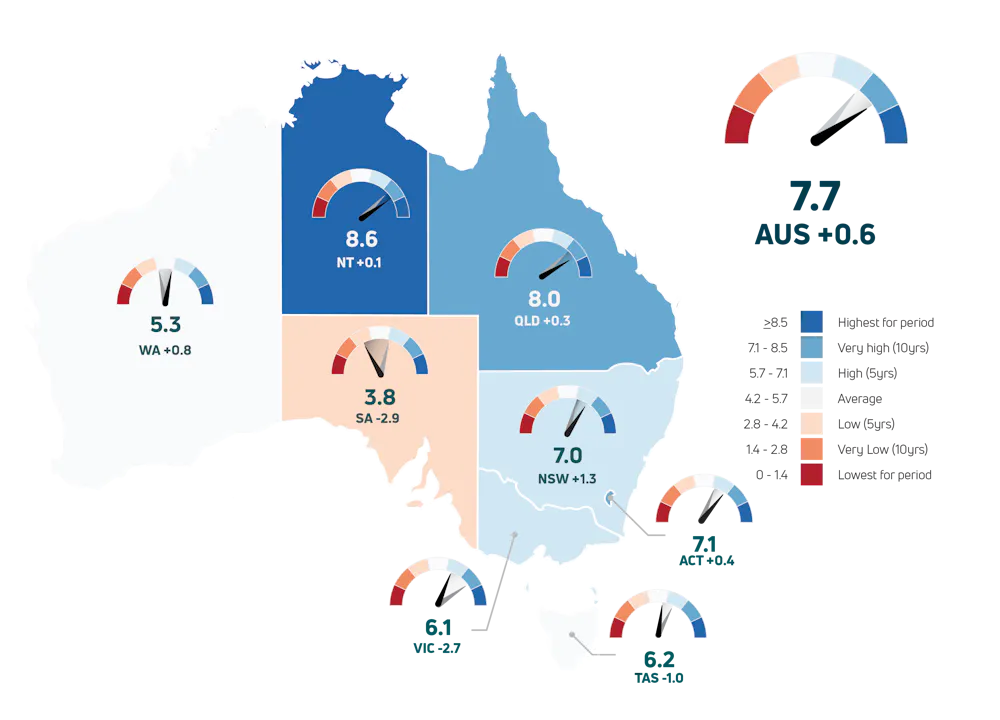
    For the fourth year running, the condition of Australia’s environment has been relatively good overall. Our national environment scorecard released today gives 2024 a mark of 7.7 out of 10.

    You might wonder how this can be. After all, climate change is intensifying and threatened species are still in decline.

    The main reason: good rainfall partly offset the impact of global warming. In many parts of Australia, rainfall, soil water and river flows were well above average, there were fewer large bushfires, and vegetation continued to grow. Overall, conditions were above average in the wetter north and east of Australia, although parts of the south and west were very dry.

    But this is no cause for complacency. Australia’s environment remains under intense pressure. Favourable conditions have simply offered a welcome but temporary reprieve. As a nation we must grasp the opportunity now to implement lasting solutions before the next cycle of drought and fire comes around.

    This snapshot shows the environmental score for a range of indicators in Australia.
    Australia’s Environment Report 2024, CC BY-NC-ND

    Preparing the national scorecard

    For the tenth year running, we have trawled through a huge amount of data from satellites, weather and water measuring stations, and ecological surveys.

    We gathered information about climate change, oceans, people, weather, water, soils, plants, fire and biodiversity.

    Then we analysed the data and summarised it all in a report that includes an overall score for the environment. This score (between zero and ten) gives a relative measure of how favourable conditions were for nature, agriculture and our way of life over the past year in comparison to all years since 2000. This is the period we have reliable records for.

    While it is a national report, conditions vary enormously between regions and so we also prepare regional scorecards. You can download the scorecard for your region at our website.

    Different jurisdictions had quite different environmental scores in 2024.
    Australia’s Environment Report 2024, CC BY-NC-ND

    Welcome news, but alarming trends continue

    Globally, 2024 was the world’s hottest year on record. It was Australia’s second hottest year, with the record warmest sea surface temperatures. As a result, the Great Barrier Reef experienced its fifth mass bleaching event since 2016, while Ningaloo Reef in Western Australia also experienced bleaching.

    Yet bushfire activity was low despite high temperatures, thanks to regular rainfall.

    National rainfall was 18% above average, improving soil condition and increasing tree canopy cover.

    States such as New South Wales saw notable improvements in environmental conditions, while conditions also improved somewhat in Western Australia. Others experienced declines, particularly South Australia, Victoria, and Tasmania. These regional contrasts were largely driven by rainfall – good rains can hide some underlying environmental degradation trends.

    Favourable weather conditions bumped up the nation’s score this year, rather than sustained environmental improvements.

    Mapping the environmental condition score to local government areas reveals poor (red) conditions in the west and the south, with good scores (blue) in the east and north. White is neutral.
    Australia’s Environment Explorer, CC BY-NC-ND

    A temporary respite?

    The past four years show Australia’s environment is capable of bouncing back from drought and fire when conditions are right.

    But the global climate crisis continues to escalate, and Australia remains highly vulnerable. Rising sea levels, more extreme weather and fire events continue to threaten our environment and livelihoods. The consequences of extreme events can persist for many years, like we have seen for the Black Summer of 2019–20.

    To play our part in limiting global warming, Australia needs to reduce its greenhouse gas emissions. Progress is stalling: last year, national emissions fell slightly (0.6%) below 2023 levels but were still higher than in 2022. Australia’s greenhouse gas emissions per person remain among the highest in the world.

    Biodiversity loss remains an urgent issue. The national threatened species list grew by 41 species in 2024. While this figure is much lower than the record of 130 species added in 2023, it remains well above the long-term average of 25 species added per year.

    More than half of the newly listed or uplisted species were directly affected by the Black Summer fires. Meanwhile, habitat destruction and invasive species continue to put pressure on native ecosystems and species.

    The Threatened Species Index captures data from long-term threatened species monitoring. The index is updated annually but with a three-year lag due largely to delays in data processing and sharing. This means the 2024 index includes data up to 2021.

    The index revealed the abundance of threatened birds, mammals, plants, and frogs has fallen an average of 58% since 2000.

    But there may be some good news. Between 2020 and 2021, the overall index increased slightly (2%) suggesting the decline has stabilised and some recovery is evident across species groups. We’ll need further monitoring to confirm whether this represents a lasting turnaround or a temporary pause in declines.

    This graph shows the relative abundance of different categories of species listed as threatened under the EPBC Act since 2000, as collated by the Threatened Species Index.
    Australia’s Environment Report 2024, CC BY-NC-ND

    What needs to happen?

    The 2024 Australia’s Environment Report offers a cautiously optimistic picture of the present. Without intervention, the future will look a lot worse.

    Australia must act decisively to secure our nation’s environmental future. This includes reducing greenhouse gas emissions, introducing stronger land management policies and increasing conservation efforts to maintain and restore our ecosystems.

    Without redoubling our efforts, the apparent environmental improvements will not be more than a temporary pause in a long-term downward trend.

    Australia’s Environment Report is produced by the ANU Fenner School for Environment & Society and the Terrestrial Ecosystem Research Network (TERN), which is enabled by the National Collaborative Research Infrastructure Strategy.

    Albert Van Dijk receives or has previously received funding from several government-funded agencies, grant schemes and programs.

    Shoshana Rapley is a Research Assistant and PhD candidate at the Australian National University and has received funding from the Ecological Society of Australia and BirdLife Australia.

    Tayla Lawrie is a current employee of the Terrestrial Ecosystem Research Network (TERN), funded by the National Collaborative Research Infrastructure Strategy.

    ref. Rain gave Australia’s environment a fourth year of reprieve in 2024 – but this masks deepening problems: report – https://theconversation.com/rain-gave-australias-environment-a-fourth-year-of-reprieve-in-2024-but-this-masks-deepening-problems-report-252183

    MIL OSI AnalysisEveningReport.nz

  • MIL-Evening Report: Figs, meat – and not too much sex. A good diet in ancient times was more than what you ate

    Source: The Conversation (Au and NZ) – By Konstantine Panegyres, Lecturer in Classics and Ancient History, The University of Western Australia

    The Feast of Acheloüs by Peter Paul Rubens and Jan Brueghel the Elder, ca. 1615 The Metropolitan Museum of Art

    In the modern world, we know good nutrition is essential for our health.

    Doctors in ancient Greece and Rome knew this too – in fact diet advice was a mainstay of medical practice and health routines. There were extensive and intricate discussions of how to regulate food and drink to stay healthy.

    Some of their ideas – such as eating fish and vegetables as a healthy way to lose weight – make sense today. But others may raise eyebrows, such a fig-only diet for Olympic athletes.

    So, what did diet and nutrition look like in ancient times? And is there anything we can learn today?

    An expansive diet

    In modern times, diet refers to food and drink. In ancient times, however, the idea of diet was more expansive.

    Our word “diet” comes from the ancient Greek word diaita. This could refer to what we eat and drink, but it could also refer to our lifestyle as a whole – including exercise, sleep, sex and other activities.

    When prescribing a diaita, ancient doctors did not just tell patients what to eat and drink. They also advised them on what sorts of other activities they should be doing, like exercising or even going to the theatre.

    For instance, in the sixth book of the Epidemics, a medical text written in the late fifth century BC, the author calls for moderation not just in what we eat and drink, but also in exercise, sleep and sex.

    Ancient doctors believed balance was important for health.

    Extreme dieting

    However, not all ancient texts advocate moderation. There are some extreme cases of dieting. For example, the historian Hegesander of Delphi (2nd century BC) wrote:

    Anchimolus and Moschus, who were sophistic teachers in Elis, drank nothing but water all their lives and ate nothing but figs, but were no less physically vigorous than anyone else. Their sweat, however, smelled so bad that everyone tried to avoid them in the baths.

    Some ancient athletes swore by a fig-only diet.
    Wikimedia Commons

    In the seventh century BC, athletic trainers also focused on diet as a way to improve their athletes’ physical condition. Trainers such as Iccus of Tarentum introduced strict diets for their athletes to try and gain a competitive edge.

    However, their methods were often questionable, according to today’s standards and our knowledge about nutrition.

    For example, the Olympic runner Chionis of Laconia apparently also had a strict diet of figs when he was training for his competitions. He won in his event at the Olympics in 668, 664, 660, and 656BC, a remarkable record. Other athletes, such as Eurymenes of Samos (sixth century BC), opted for a diet entirely comprised of meat.

    However, there is no evidence to show these restricted diets would have improved athletic performance – and would not be recommended today.

    The physician Galen.
    Pierre-Roch Vigneron/Wikimedia Commons

    An ancient doctor’s perspective

    Greek and Roman doctors could not conduct controlled trials as scientists do today.

    Nevertheless, they were keen observers of the effects of certain foods on their patients – and saw with their own eyes that a bad diet is not good for us.

    For example, the physician Galen of Pergamum (129-216AD) in his work Hygiene attributes his patients’ ill health to poor diet.

    He observed

    some who are continuously diseased, not due to the intrinsic constitution of the body, but through a bad regimen, or living an idle life, or working too hard, or being in error regarding the qualities, quantities or times of foods, or practicing some exercise that is harmful, or erring in regard to the amount of sleep, or excessive indulgence in sex, or needlessly tormenting themselves with grief and anxiety. Every year I see very many who are sick through such a cause.

    Galen thought hard about how certain foods and drinks affect our health and wrote various books on the subject, such as On the Powers of Foods.

    This work contains many anecdotes. For instance, one young man drank the juice of the scammony plant, “to cleanse his system” (presumably as a laxative). However

    five hours after the dose no evacuation had taken place, and he complained that his stomach felt compressed, his belly was heavy and swollen, consequently he was pale and anxious.

    Galen also recognised different diets affect people in different ways:

    some people are harmed and some are benefited by the same things and similarly with opposites. […] I know of some who immediately become sick, if they remain three days without exercise, and others who continue indefinitely without exercise and yet are healthy.

    Nutrition and balance

    Galen’s advice for overweight or obese patients may sound familiar: a “thinning” diet and a lot of fast running. So, exercise, combined with foods that fill you up but don’t make you gain weight.

    According to Galen this meant eating vegetables and fish and avoiding wheat, red meat, fruit and wine.

    A lot has changed in the world of diet and nutrition. We now have professional dietiticians and empirical methods to measure the nutritional values of foods.

    However in their broader definition of “diet”, ancient doctors identified something that remains as true today: the importance of eating well as part of a healthy lifestyle, one that takes care of body and mind and includes exercise, sleep and pleasure.

    Konstantine Panegyres does not work for, consult, own shares in or receive funding from any company or organisation that would benefit from this article, and has disclosed no relevant affiliations beyond their academic appointment.

    ref. Figs, meat – and not too much sex. A good diet in ancient times was more than what you ate – https://theconversation.com/figs-meat-and-not-too-much-sex-a-good-diet-in-ancient-times-was-more-than-what-you-ate-249571

    MIL OSI AnalysisEveningReport.nz

  • MIL-OSI Europe: ASIA/INDONESIA – A ‘common vision’ for humanity and peace: Interview with the Indonesian Ambassador to the Holy See on the 75th anniversary of diplomatic relations

    Source: Agenzia Fides – MIL OSI

    Agenzi Fides

    by Paolo AffatatoRome (Agenzia Fides) – “Pope Francis’ visit to Indonesia and the signing of the Istiqlal Declaration last September were a crowning achievement of diplomatic relations between Indonesia and the Holy See,” says Michael Trias Kuncahyono, Ambassador of the Republic of Indonesia to the Holy See, on the occasion of the 75th anniversary of the official establishment of diplomatic relations between Indonesia and the Holy See on March 13, 1950. Fides Agency asked him some questions- Ambassador, can you recall the historical and political context in which the establishment of diplomatic relations between the Holy See and Indonesia took place, 75 years ago?Indonesia had recently completed the journey to gain independence from the Dutch colonizers: Indonesia proclaimed itself independent in 1945. But at that time, however, there were still colonial pressures from European powers, in the specific case of the Dutch. It was then the first native Indonesian bishop, Monsignor Albertus Sugiyopranoto who called on the Vatican to recognize Indonesian independence. Not only because of the assertion of the independence of the State but also because many missionaries were still imprisoned by colonial forces. This fact could have been a good push to get Indonesia’s recognition.- Was the personality of Albertus Sugiyopranoto therefore decisive?A bishop since 1940, he also made an important contribution during the occupation by Japanese forces in 1942, who had arrested priests and nuns. Bishop Sugiyopranoto took a very clear position. When Dutch forces attacked the Indonesians in 1947, he made an impassioned radio address urging Catholics to defend the homeland. He was an advocate for the involvement of Catholics in the independence movement. Meanwhile, he made contact with the Holy See, which sent one of its delegates in December 1947 and initiated direct relations with President Sukarno. Then the Apostolic Delegate, in agreement with Indonesian Vice President Mohamed Atta, dialogued to establish formal relations. Thus on March 13, 1950, the Holy See began diplomatic relations with Indonesia with the status of Apostolic Internunciature, which later became Apostolic Nunciature on December 6, 1966.- What were the respective goals on the two sides in establishing such relations?We know that the Holy See’s diplomacy is different from all other diplomacies in the world. The Vatican ambassador, today the Apostolic Nuncio, is sent to a State not only with the role of an intermediary between states but also to keep in connection and relationship the Church of Rome with the local Church, in the country in which it is located. At that time in Indonesia there was a great growth of the Catholic community, a phenomenon that aroused interest in the Holy See. So there was a need to facilitate the pastoral work and the life of the local Church. There was a need to follow and deepen the apostolic work in Indonesia. The goal of the Holy See is always to take care of the Catholic Church, and the Delegate was the Pope’s representative in this process.Indonesia, for its part, wanted to establish diplomatic relations because, as a very young country, it needed to be recognized in the international community. The international recognition by the Holy See was of immense value: the Holy See was the first European entity to recognize the Indonesian State. This then led other European States to follow the example. It was a decisive step.- Was the Catholic Church then already established in Indonesia? In what forms and with what configuration?The Catholic religion in Indonesia was already a well-established community, mainly thanks to some missionaries and “spiritual fathers” of the community, such as the Jesuit Franciscus Van Lith, who had been very involved in the apostolate of education, opening schools in Java, a work that was highly appreciated by Indonesian society at the time. The first Indonesian Bishop Sugiyopranoto was one of Father Van Lith’s students. Further east in the Flores area, then, a Catholic presence was already established thanks to the Portuguese. Let us remember that Christianity had arrived as early as the 7th century, and then in the 16th century several missionaries from Portugal had landed in Indonesia including Francis Xavier, passing through the Moluccas on his way to China.In addition, the fact that Indonesia, at its birth in 1945, was founded on the “Pancasila” the charter of five principles, one of which was faith in God; and that it adopted the principle of “diverse but one”: this made the Holy See realize that there was fertile ground in which all religions had a chance to flourish.- Was the “unity in diversity” approach a crucial point?That principle was the catalyst in diplomatic relations. But others, such as equality and brotherhood, are also in harmony with Christian values. The founding fathers were quite far-sighted in considering that a nation so rich in different cultures, ethnicities and religions could only survive by staying true to the motto “unity in diversity.” Pope Pius XII already appreciated this and Pope Francis also reiterated it, saying that the model should be taken as an example, especially in countries where there is great pluralism and it is difficult to remain united: we are different but we are brothers.- In Indonesian history, in designing the architecture of the Republic, the choice was made not to build a mono-religious state…It was: the first of the five founding principles was “faith in one God,” then that phrase should have continued by saying “in the Islamic way.” There was a great debate about it, then it was decided to leave only “faith in one God.” Mohammad Atta, the vice president, who was a Muslim and came from Padang a strongly Islamic city, pointed it out clearly because, he said, “we have to remain united.” It was a forward-looking vision.- What common points do you see between Indonesia and the Holy See today in their respective political and cultural approaches?Politically, Indonesia and the Holy See find themselves in a policy that is always in favor of humanity. The Holy See does not work for the maintenance of temporal power but for the development of man, his dignity and rights. I think Indonesia also has the same approach, as the Pancasila and our Constitution say, promoting equality, freedom, democracy as well as peace. These are points that Indonesia and the Holy See have in common.- Is there a common vision also in the use of the instrument of diplomacy?In the instrument of diplomacy, the aspect we have in common can be seen in the founding principles, such as freedom from colonialism and the promotion of peace: we see this in scenarios such as the Middle East, Ukraine, Myanmar. The “diplomacy of hope,” mentioned by Pope Francis in his recent address to the Diplomatic Corps, we understood it as diplomacy that wants to improve the world in a harmonious and comprehensive way. Hope must start from trust, which is the basis of relations between states. Hope for peace in the various conflict scenarios is generated on the basis of trust between the interlocutors.- What did Pope Francis’ trip to Indonesia in 2024 mean?Pope Francis’ visit to Indonesia and the signing of the Istiqlal Declaration last September was a crowning achievement of diplomatic relations between Indonesia and the Holy See. Not all countries with which the Holy See has relations are visited by the pontiff. And three Popes have visited Indonesia – Pope St. Paul VI (1970), Pope St. John Paul II (1989) and Pope Francis (2024).The trip was not perceived as a trip reserved for the Catholic community, but was perceived as a visit to all Indonesians, who welcomed the Pope with great warmth. The Pope became a model of a leader to follow: he was easy-going, showed himself in a non-luxury car, was always very humble, and stopped to greet everyone. Indonesia showed its true face, a plural face, composed of people of different cultures and religions who welcomed the Pope warmly and enthusiastically. Today, at the time of his illness, so many write to me, not only Catholics but also Muslims, saying: let us pray for him.- What do you hope for the future?We want to strengthen more and more the relations between Indonesia and the Holy See: and, since there is no political and economic aspect, to do it through culture. We intend to make the pluralism of Indonesian culture and its peaceful face better known. The Holy See is, for us, also a gateway to the rest of the world. Another field of fruitful cooperation is that of interreligious dialogue, according to the vision of Pope Francis. These are the paths for future relations. (Agenzia Fides, 18/3/2025)
    Share:

    MIL OSI Europe News

  • MIL-OSI Europe: OCEANIA/PAPUA NEW GUINEA – Resignation and succession of metropolitan archbishop of Mount Hagen

    Source: Agenzia Fides – MIL OSI

    Tuesday, 18 March 2025

    Vatican City (Agenzia Fides) – The Holy Father has accepted the resignation from the pastoral care of the metropolitan archdiocese of Mount Hagen, Papua New Guinea, presented by Archbishop Douglas William Young, S.V.D.He is succeeded by Archbishop Clement Papa, until now Coadjutor Archbishop of the same See.His Exc. Msgr. Clement Papa was born on 22 February 1971 in Mount Hagen, Western Highlands, (Papua New Guinea).He studied philosophy at the Good Shepherd Seminary in Maiwara, Madang, and, after a pastoral and spiritual experience, he studied theology at the Holy Spirit Seminary and the Catholic Theological Institute in Bomana, National Capital District. He was ordained a priest on 3 December 1999 for the Metropolitan Archdiocese of Mount Hagen.He has held the following positions and continued his studies: Assistant Parish Priest of Fatima (2000-2001); Parish Priest of Kol-Ambulua (2002-2003); Licentiate in Dogmatic Theology at the Pontifical Urbaniana University in Rome (2006); Chaplain at Holy Trinity Teachers College (2007); Dean of Studies at Good Shepherd Seminary in Mt. Hagen (2008); Doctorate in Theology at Melbourne College of Divinity (2021); Lecturer at Good Shepherd Seminary (2021); Rector of Good Shepherd Seminary (2011-2014; 2022); Member of the Finance Committee and Member of the Board of Trustees of the Archdiocese (2011-2014; 2023); since 2023 he has been the interim Director of the Spiritual Year at the Good Shepherd Seminary. (Agenzia Fides, 18/3/2025)
    Share:

    MIL OSI Europe News

  • MIL-OSI Europe: AMERICA/HAITI – A network of paths for human and economic development in Pourcine Pic Makaya

    Source: Agenzia Fides – MIL OSI

    Wednesday, 19 March 2025

    MM

    Pourcine (Agenzia Fides) – In Pourcine Pic Makaya, the sowing season is coming to an end. The next two months will be difficult for the people awaiting the harvest. They have “put everything they have in the form of money into the ground,” that is, they have used it to prepare the land and sow.”In the coming weeks, agricultural work will decrease significantly; the Community will be able to work on repairing some roads and paths that connect the village plateau with other towns,” writes Father Massimo Miraglio, a Camillian missionary in Haiti, to Fides.“With a salary for the people, organized into work teams, we can help several families in a very difficult economic time. The results we seek are twofold,” continues the Camillian parish priest of Notre Dame du Perpétuel Secours in Pourcine: “to improve the usability of some roads (also to make them safer for children going to school) and to financially assist more than 200 families with a small financial contribution from their work.”The village of Pourcine Pic Makaya is located on a plateau at an altitude of approximately 1,000 meters and surrounded by rugged mountains, where numerous hamlets are connected by difficult and steep paths. Just under 300 families live in Pourcine, with a total of almost 1,500 people; the hamlets, about 15 in number, are home to around 2,000 people. The village is the center of all the area’s inhabitants, and a market is held every Wednesday, the center of the area’s economic activity. In Pourcine, there are two schools, one public and one parish, and a small (informal) parish clinic. Paths lead from the plateau to all the other villages (some several hours’ walk away) and to the three main tracks that connect Pourcine to the rest of the region: the first to the town of Beaumont, the second to the adjacent Castillon valley, and the third to the valley floor and Jérémie.“This entire network of mountain roads plays a fundamental role,” explains Fr. Miraglio, “allowing people to travel from the center to the villages, to the land they cultivate, to the markets for local produce, and to the neighboring towns in the region. Unfortunately, due to the terrain, heavy rainfall, and poor maintenance, this network of roads is in poor condition and, especially during the rainiest periods, is often impassable. Rural roads in particular, which are especially valuable because they allow the transport of products on mule and ensure connections to neighboring areas, are in poor condition. On rare occasions, the local community organizes, with the limited resources at its disposal, to clear the roads and improve their viability.”To help the population, Father Máximo is working on a project to “rehabilitate and maintain the roads and mule tracks that connect the villages of the Pourcine-Pic Makaya mountain community.” This project will enable the population to travel more safely and quickly, using the mules available to transport more local products and essential goods for the community’s life. The project also aims to foster the economic and social development of the area, counteracting depopulation and promoting a participatory and sustainable work model.“The direct beneficiaries of the project will be 268 people,” reports the Camillian, “who will be directly involved in the cleaning and maintenance of the trails, while the indirect beneficiaries will be the entire population of Poucine Pic Makaya, who will be able to benefit from the improvements to the trail network. In particular, the children who daily walk the trails leading from the various villages to the plateau where the school is located will be able to travel more safely and quickly. The direct beneficiaries, men and women (coordinators, team leaders and laborers), will be chosen from among the residents of the most remote areas who most need these income-generating activities at a particularly difficult time for the farmers in the area.” (AP) (Agenzia Fides, 19/3/2025)
    MM

    MM

    Share:

    MIL OSI Europe News

  • MIL-OSI Europe: Written question – Struggling farmers and livestock breeders – E-001030/2025

    Source: European Parliament

    Question for written answer  E-001030/2025
    to the Commission
    Rule 144
    Kostas Papadakis (NI), Lefteris Nikolaou-Alavanos (NI)

    Farmers, livestock breeders and bee-keepers are battling hard to make a living.

    The CAP, which governments have co-decided and implemented over time, favours cartels that buy farmers’ products at ‘open’ prices. Struggling farmers demand immediate support for their shrinking income. The Government’s much-advertised reduction in VAT to 6 % on agricultural supplies is of no benefit to farmers, as it has no impact on reducing production costs since, as intermediaries who sell products at 13 % VAT, they are forced to pay the VAT difference to the revenue office.

    In light of the above:

    • 1.What is the Commission’s position on the acute problems faced by struggling farmers, livestock breeders and bee-keepers in Greece, which are caused by the policy in place – with the CAP at the centre – and which are leading them down the path of hardship?
    • 2.What is the Commission’s position on the demands of agricultural producers for the replacement of lost income due to reduced production and low prices; the reduction of production costs by means of tax-free petrol at the pump, cheap electricity and water, and subsidies for fertilizers, agricultural supplies and animal feed; compensation of 100 % of losses; state-guaranteed prices for farmers and a ceiling on supermarket prices; the implementation of all necessary infrastructure projects; measures against ‘hellenization’; the linking of the subsidy to real agricultural production and the actual livestock count; the taking all necessary measures to control animal diseases and an increase in farmworkers’ pensions?

    Submitted: 10.3.2025

    Last updated: 19 March 2025

    MIL OSI Europe News

  • MIL-OSI Europe: Written question – The EU’s digital transformation programmes and the European funds that have been disbursed to achieve it – E-001032/2025

    Source: European Parliament

    Question for written answer  E-001032/2025
    to the Commission
    Rule 144
    Francesco Torselli (ECR), Carlo Fidanza (ECR), Denis Nesci (ECR), Mariateresa Vivaldini (ECR), Chiara Gemma (ECR), Alberico Gambino (ECR), Sergio Berlato (ECR), Giovanni Crosetto (ECR), Francesco Ventola (ECR), Marco Squarta (ECR), Elena Donazzan (ECR), Michele Picaro (ECR), Lara Magoni (ECR), Antonella Sberna (ECR), Daniele Polato (ECR), Alessandro Ciriani (ECR), Pietro Fiocchi (ECR), Giuseppe Milazzo (ECR)

    Digital technology and infrastructure are an integral part of our daily lives, as they determine how we work and communicate and are also vital to advancing scientific progress and responding to current environmental challenges.

    The COVID-19 pandemic showed just how important it is for Europe to avoid depending on non-EU systems and solutions. Russia’s war of aggression against Ukraine has further highlighted the vulnerabilities of our digital supply chains and the importance of investing in cybersecurity and drastically improving Europe’s digital capabilities.

    The EU has set up a number of programmes to support the digital transformation of industries, SMEs and public administrations. One of them is Digital Europe (DIGITAL), which enables the EU to respond to these challenges by funding projects in key areas such as supercomputing, artificial intelligence, cybersecurity and advanced digital skills as well as initiatives which aim to ensure the widespread use of digital technologies across the economy and society.

    In view of President von der Leyen’s announcement of the launching of InvestAI (an initiative that will mobilise a further EUR 200 billion in funds, of which EUR 20 billion will be set aside for a European fund for AI gigafactories), could the Commission clarify how much has been spent so far to achieve the digital transition for European citizens and businesses?

    Supporter[1]

    Submitted: 10.3.2025

    • [1] This question is supported by a Member other than the authors: Stefano Cavedagna (ECR)

    MIL OSI Europe News

  • MIL-OSI Europe: Written question – The urgent need to protect the Balkan lynx – E-001038/2025

    Source: European Parliament

    Question for written answer  E-001038/2025
    to the Commission
    Rule 144
    Sebastian Everding (The Left), Gordan Bosanac (Verts/ALE), Thomas Waitz (Verts/ALE)

    The Western Balkans region is an important European biodiversity hotspot, hosting habitats that support a wide array of species and ecosystems. Home to extensive mountain ranges, forests, rivers, lakes and karst landscapes, it harbours numerous endemic and endangered species, such as the Balkan lynx. With fewer than 40 individuals remaining, the Balkan lynx is on the brink of extinction (with ‘critically endangered’ status on the International Union for Conservation of Nature’s Red List), making it one of Europe’s most endangered large carnivores. Apart from illegal killing and a lack of conservation plans, its extinction is propelled by the destruction of its habitat.

    The conservation of this species and the region’s rich natural resources is critical, as both are integral not only to the region’s ecological sustainability, but also to its cultural identity and economic stability, ensuring Europe-wide integrity of ecosystems.

    The Balkan lynx’s habitat traverses Albania, Kosovo and North Macedonia, and is in dire need of protection. National efforts have been limited, regarding the transposition of the EU’s Nature Directives (Birds[1] and Habitats[2] Directives), which would ensure a proper legal framework for habitat protection and management.

    What is the Commission doing to address the urgent need for the transposition of the relevant EU Nature Directives to this region, and to ensure their implementation at national level?

    Submitted: 11.3.2025

    • [1] Directive 2009/147/EC of the European Parliament and of the Council of 30 November 2009 on the conservation of wild birds, OJ L 20, 26.1.2010, p. 7, ELI: http://data.europa.eu/eli/dir/2009/147/oj.
    • [2] Council Directive 92/43/EEC of 21 May 1992 on the conservation of natural habitats and of wild fauna and flora, OJ L 206, 22.7.1992, p. 7, ELI: http://data.europa.eu/eli/dir/1992/43/oj.
    Last updated: 19 March 2025

    MIL OSI Europe News

  • MIL-OSI Europe: Written question – Northern Adriatic as a strategic European interest: Commission security and financial support for Italian, Slovenian and Croatian ports – E-001036/2025

    Source: European Parliament

    Question for written answer  E-001036/2025
    to the Commission
    Rule 144
    Elena Donazzan (ECR), Carlo Fidanza (ECR), Nicola Procaccini (ECR), Carlo Ciccioli (ECR), Alessandro Ciriani (ECR), Giovanni Crosetto (ECR), Pietro Fiocchi (ECR), Daniele Polato (ECR), Mariateresa Vivaldini (ECR)

    Since the brutal attacks on merchant vessels in the Red Sea, navigation in the Suez Canal has been less secure. In the first five months of 2024, the average daily number of vessels transiting through the Mediterranean Sea was half that of the same period in 2023, as companies redirected vessels towards the Cape of Good Hope.

    Use of that African route lead to exponential growth of sea freight via the Mediterranean – from USD 2 000 to USD 7 000 per container – and an estimated 42 % increase in pollutant emissions per ship. The impact on the Italian ports of Ravenna, Trieste and Venice, the Slovenian port Koper and the Croatian port Rijeka is enormous.

    This state of affairs is damaging for the automotive, chemical, construction and energy supply chains on the Asia-Europe route.

    Taking into account the strategic importance of the Adriatic for Italy, Slovenia and Croatia and given that, should the dangerous conditions in the Suez Canal continue, transport for goods for Asia will be forcibly shifted from the Adriatic to the Atlantic Ocean, with a dramatic impact on European supply chains and jobs:

    • 1.How will the Commission protect the interests of the northern Adriatic ports and jobs there?
    • 2.What financial support measures could be taken to help the ports of Ravenna, Trieste, Venice, Koper and Rijeka to withstand the huge losses of economic activity to date?

    Submitted: 11.3.2025

    MIL OSI Europe News

  • MIL-OSI Europe: Briefing – Outlook for the meetings of EU leaders on 20-21 March 2025 – 19-03-2025

    Source: European Parliament

    The first quarter of 2025 has been a very busy one for the European Council, with EU leaders having already convened three times before their regular March meeting – once for an informal retreat on defence on 3 February, in a video-conference on 26 February and then for a special European Council meeting on 6 March. The increasingly complex geopolitical situation, as well as the current strains on the transatlantic relationship, make the regular March meeting a crucial one. According to the Leaders’ Agenda, the meeting was expected to concentrate mainly on competitiveness, but due to recent events many items have been added to the agenda, including Ukraine, the Middle East and defence. As usual, the meeting will start with an exchange of views with European Parliament President Roberta Metsola. EU leaders will also have a discussion with Ukrainian President Volodymyr Zelenskyy. There will be a working lunch with United Nations Secretary-General António Guterres, dedicated to multilateralism and other global issues. In the afternoon, a Euro Summit meeting will take place in inclusive format, with European Central Bank President, Christine Lagarde, and Eurogroup President, Paschal Donohoe, taking part in the discussions on economic issues and competitiveness.

    MIL OSI Europe News

  • MIL-OSI Europe: Written question – Lifting of EU sanctions against Syria and repatriation of Syrian asylum seekers – E-000888/2025

    Source: European Parliament

    Question for written answer  E-000888/2025
    to the Commission
    Rule 144
    Petra Steger (PfE)

    Now that the foreign ministers of the Member States have unanimously approved several legal instruments provisionally suspending the EU sanctions against Syria in the banking, energy and transport sectors, which have been in place for years, the conditions must be created for an EU-wide initiative to step up deportations to Syria. It cannot be the case that Syria benefits from significant economic relief while more than a million Syrians, who are urgently needed to rebuild their country, remain in the EU – one hundred thousand of whom in Austria. However, a return of Syrian refugees to their home country would not only contribute to the development of Syria, but would also mitigate the security risks in the host countries, which are suffering massively from the consequences of illegal mass migration.

    • 1.What concrete measures does the Commission plan to take to ensure that the lifting of EU sanctions goes hand in hand with a coordinated return of Syrian asylum seekers to their country?
    • 2.Is the Commission planning to revise the existing asylum regime for Syrian nationals to take into account the changed political circumstances in Syria?
    • 3.How does the Commission plan to support Member States in the implementation of return programmes to enable rapid and efficient remigration of Syrian citizens?

    Submitted: 3.3.2025

    Last updated: 19 March 2025

    MIL OSI Europe News

  • MIL-OSI Europe: Answer to a written question – Norway-EU electricity link and prices – E-000079/2025(ASW)

    Source: European Parliament

    The Commission notes the new measures related to the electricity prices and the Norwegian power market announced by Prime Minister Jonas Gahr Støre.

    As a member of the European Economic Area (EEA), Norway is part of the single market and Union rules on electricity markets apply in all circumstances.

    The EU expects, in line with their obligations under the EEA Agreement, all EEA EFTA (European Free Trade Association) States to fully incorporate into the EEA Agreement and then implement all energy-related legislation in a timely manner, subject to any agreed adaptations.

    The Commission continues to work closely with the three EEA EFTA States on the full and timely incorporation and implementation of all energy-related legislation.

    Norway is connected with Sweden, Finland, and Denmark in a common synchronous power grid. The Nordic grid is then connected to the rest of Continental Europe bringing mutual economic and social gains stemming from interconnected energy markets, such as enabling decarbonisation and increasing security of supply.

    On 26 February 2025, the Commission adopted an Action Plan for affordable Energy[1] setting actions to lower energy costs for European consumers and businesses.

    As outlined in that plan, a swift and full implementation of the Electricity Market Design reform is crucial to reduce the impact of volatility on consumer bills and reduce the cost of electricity supply.

    As part of this plan, the Commission is also proposing additional actions to promote the uptake of long-term electricity supply and boost flexibility and demand response.

    • [1] Action Plan for Affordable Energy: Unlocking the true value of our Energy Union to secure affordable, efficient and clean energy for all Europeans COM (2025) 79 final.
    Last updated: 19 March 2025

    MIL OSI Europe News

  • MIL-OSI Europe: Answer to a written question – Action to reduce energy prices and address significant disparities between EU Member States – E-000319/2025(ASW)

    Source: European Parliament

    The Commission adopted the action plan for Affordable Energy together with the Clean Industrial Deal on 26 February 2025[1]. This Action Plan presents measures to reduce energy costs for industry and households and help build a genuine Energy Union that delivers competitiveness, security, decarbonisation, and a just transition.

    As outlined by the cross-border infrastructure, needs are often not matched by concrete projects, leading to undue price disparities between some regions, such as recently observed in southeast Europe.

    Therefore, an indispensable element in this plan is investing in Europe’s grids, to accompany the progress towards an integrated and decarbonised energy system, reduce risks of curtailment for renewable energy and leverage the benefits of its Internal Energy Market for industry and households.

    To enhance coordination across the Energy Union and strengthen the governance of the electricity market, the Commission will also set up an Energy Union Task Force.

    Europe must invest more in modernising and expanding interconnections, its network of energy transmission and distribution infrastructure, accelerating investment in electricity, hydrogen and carbon dioxide transport networks as well as storage systems.

    The Connecting Europe Facility for Energy has been instrumental in supporting key energy infrastructure projects of EU added value.

    At the same time, existing infrastructure needs to be used efficiently. For example, a minimum of at least 70% capacity on interconnectors should be made available for cross-border electricity trading, but most Member States are still far off. Full achievement of this target would reduce price peak episodes.

    • [1] https://energy.ec.europa.eu/strategy/affordable-energy_en

    MIL OSI Europe News

  • MIL-OSI Europe: Answer to a written question – EU green hydrogen production targets – E-003068/2024(ASW)

    Source: European Parliament

    The REPowerEU Plan[1] suggested an aspirational target of 10 million tonnes of EU renewable hydrogen production and 10 million tonnes of renewable hydrogen imports by 2030 to lower the imports of Russian fossil fuels, proposing to increase the mandatory targets for renewable hydrogen consumption in industry and the transport sector.

    The co-legislators decided on a lower level of binding 2030 targets under the Renewable Energy Directive[2]. In addition, the co-legislators also agreed on mandatory targets for renewable hydrogen consumption in industry in 2035 and laid out pathways in the aviation[3] and maritime[4] sector to promote the uptake of renewable and low-carbon hydrogen up to 2050.

    There is no hydrogen production target for 2040 set out in the European legislation.

    The Commission’s internal estimate for renewable hydrogen uptake by 2030 based on the above mandatory targets is three to six million tons.

    The Commission is focusing on the work with Member States, including through an assessment of their National Energy and Climate Plans, to ensure the timely transposition of the mandatory demand volumes and other recent hydrogen legislation.

    This will contribute to provide the sector with the necessary visibility to carry out its investments.

    • [1]  COM(2022) 230 final.
    • [2]  Directive (EU) 2023/2413.
    • [3]  Regulation (EU) 2023/2405.
    • [4] Regulation (EU) 2023/1805.
    Last updated: 19 March 2025

    MIL OSI Europe News

  • MIL-OSI Europe: Answer to a written question – World Trade Organization’s concerns regarding the EU’s F-gas Regulation – E-000401/2025(ASW)

    Source: European Parliament

    Regulation (EU) 2024/573[1] on fluorinated greenhouse gases (F-gases), contains a few restrictions covering all F-gases, i.e. including hydrofluoroolefins (HFOs).

    Such restrictions were only introduced for applications for which alternatives are available and the restrictions have a long transition period, allowing the industry sufficient time to adjust. The Impact Assessment covered such alternatives.

    Some F-gases are per- and polyfluoroalkyl substances (PFAS). PFAS are chemicals which are very persistent and potentially have negative effects on health and the environment.

    Recital (7) of the regulation includes a reference to the full F-gas prohibitions in line with the precautionary principle, to ensure that alternatives which are less harmful for health, the environment and the climate would be used.

    The F-gas Regulation delivers high ambition, while respecting the EU’s international obligations. The Commission is in regular contact with third countries to clarify this, both in the World Trade Organisation and through bilateral contacts.

    The Commission intends to carry out the review of the F-gas Regulation by 2030, in line with the requirements of that regulation.

    As required in Article 35(5)(a) of the regulation, the Commission will in that review evaluate whether cost-effective, technically feasible, energy-efficient, sufficiently available and reliable alternatives exist, which make the replacement of fluorinated greenhouse gases possible in the products and equipment listed in Annex IV covered by prohibitions that have not yet become applicable at the time of the evaluation, especially products and equipment subject to full fluorinated greenhouse gas prohibitions, including ‘split’ air conditioners and heat pumps.

    • [1] https://eur-lex.europa.eu/eli/reg/2024/573/oj/eng

    MIL OSI Europe News

  • MIL-OSI Europe: Answer to a written question – Fashion-sector companies unable to the EU ‘Fit for 55’ plan’s carbon footprint targets – E-002513/2024(ASW)

    Source: European Parliament

    The Commission acknowledges the importance of the textile sector, including the fashion industry, for the European economy, culture and creativity.

    At the same time, textile production and consumption have major effects on the environment and on climate change, as underlined in the EU Strategy for Sustainable and Circular Textiles[1] and the European Environment Agency report[2]. The EU Strategy for Sustainable and Circular Textiles proposed an agenda to support the sector’s shift towards the green transition.

    Reducing environmental and climate impacts from textiles is essential to achieve a sustainable transition and to meet the climate targets set under the EU ‘Fit for 55’ legislative package.

    The Commission recognises the importance of mobilising investments and supporting operators in adopting circular business models and processes .

    In this respect, the Commission has put forward a proposal for a co-programmed European Partnership ‘Textiles of the Future’[3] under Horizon Europe[4] under the second Horizon Europe Strategic Plan 2025- 2027[5].

    In the 2021-2027 Multiannual Financial Framework and NextGenerationEU, EUR 658 billion is allocated to spending for climate-relevant objectives.

    In most of the EU funding programmes (including Recovery and Resilience Facility[6], the InvestEU programme[7], Cohesion Funds[8], or Horizon Europe[9]) investments on decarbonisation are eligible for all sectors including fashion.

    In addition, textile companies, and in particular small and medium-sized enterprises[10], can be supported through the Enterprise Europe Network[11], the Eurocluster initiative[12], the European Circular Economy Stakeholder Platform[13], and through the Transition Pathway for the Textiles Ecosystem[14].

    • [1]  COM(2022) 141 final, https://environment.ec.europa.eu/publications/textiles-strategy_en
    • [2] EEA (2022), https://www.eea.europa.eu/publications/textiles-and-the-environment-the
    • [3] Innovative actions such as small scale demonstration, piloting of new technologies and innovative business models for competitive manufacturing of sustainable textile products may be funded under the partnership.
    • [4] https://research-and-innovation.ec.europa.eu/funding/funding-opportunities/funding-programmes-and-open-calls/horizon-europe_en
    • [5] https://research-and-innovation.ec.europa.eu/funding/funding-opportunities/funding-programmes-and-open-calls/horizon-europe/strategic-plan_en
    • [6] https://commission.europa.eu/business-economy-euro/economic-recovery/recovery-and-resilience-facility_en
    • [7] https://investeu.europa.eu/investeu-programme_en
    • [8] https://ec.europa.eu/regional_policy/funding/cohesion-fund_en
    • [9] https://research-and-innovation.ec.europa.eu/funding/funding-opportunities/funding-programmes-and-open-calls/horizon-europe_en
    • [10] Small and medium-sized enterprises represent more than 99% of the companies active in the EU textile sector (Eurostat).
    • [11] https://een.ec.europa.eu/
    • [12] https://www.clustercollaboration.eu/euroclusters
    • [13]  https://circulareconomy.europa.eu/platform/en
    • [14] https://single-market-economy.ec.europa.eu/sectors/textiles-ecosystem/textiles-transition-pathway_en

    MIL OSI Europe News

  • MIL-OSI Europe: Answer to a written question – Restricting open government – E-000674/2025(ASW)

    Source: European Parliament

    1. The Detailed Rules for the application of Regulation (EC) No 1049/2001[1], annexed to the Rules of Procedure of the Commission, refer, in their Article 2, to the definition of ‘document’ given in Regulation (EC) No 1049/2001. Besides, it indicates non-exhaustive lists of documents which the Commission either makes public proactively (Article 3 of the Detailed Rules[2]) or upon request under the conditions established in Regulation (EC) No 1049/2001 (Article 4 of the Detailed Rules). Consequently, the Commission does not narrow any definition of documents made accessible to the public.

    2. In applying the rules on access to documents, the Commission makes a careful individual assessment of each document in view of its possible disclosure to the public with a view of giving the fullest possible effect to the right of public access to documents. This assessment is conducted also by considering the extensive case-law of the Court of Justice of the European Union and established administrative practices.

    3. The Commission stands for the highest standards of transparency across the board. However, the Commission must reconcile the right of access to documents with the private and public interests that require protection, as enshrined in Article 4 of Regulation (EC) No 1049/2001, including regarding internal decision-making processes.

    • [1] Regulation (EC) No 1049/2001 of the European Parliament and of the Council of 30 May 2001 regarding public access to European Parliament, Council and Commission documents (OJ L 145, 31.5.2001, p. 43-48, ELI: http://data.europa.eu/eli/reg/2001/1049/oj).
    • [2] Commission Decision (EU) 2024/3080 of 4 December 2024 establishing the Rules of Procedure of the Commission and amending Decision C(2000) 3614 (OJ L, 2024/3080, 5.12.2024, ELI: http://data.europa.eu/eli/dec/2024/3080/oj).
    Last updated: 19 March 2025

    MIL OSI Europe News

  • MIL-OSI Europe: Answer to a written question – US withdrawal from the Paris Agreement – E-000276/2025(ASW)

    Source: European Parliament

    For more than a decade the EU has worked side-by-side with the United States (US) to design and implement the Paris Agreement, the crucial multilateral agreement in the fight against global warming.

    The Commission therefore regrets the announcement of the President of the US to once again withdraw the US from the Paris Agreement .

    The Commission will stay the course on the Green Deal as the EU’s growth strategy. The Commission will deploy its climate diplomacy to ensure that other major polluters also show ambition in reducing greenhouse gas emissions when presenting their Nationally Determined Contributions ahead of COP 30 in Brazil.

    The Commission’s focus will be on supporting and creating the right conditions for reaching its common goals. This means investing and ensuring access to cheap, sustainable and secure energy supplies and raw materials, including through the Clean Industrial Deal.

    The Clean Industrial Deal, announced in the Political Guidelines for 2024-2029, positions decarbonisation as a powerful driver of growth and prosperity for Europeans.

    Building on the Green Deal Industrial Plan[1], the Net Zero Industrial[2] and Critical Raw Materials Acts[3], it will have a particular focus on energy-intensive industries and the net-zero sector.

    Some of the measures will aim at lowering energy prices, developing lead markets for EU-made decarbonised products, and leveraging circularity for the availability of raw materials.

    All of these measures will support the EU economy, foster the green transition and contribute to the prosperity of EU citizens by creating new jobs.

    • [1] https://commission.europa.eu/strategy-and-policy/priorities-2019-2024/european-green-deal/green-deal-industrial-plan_en
    • [2] https://commission.europa.eu/strategy-and-policy/priorities-2019-2024/european-green-deal/green-deal-industrial-plan/net-zero-industry-act_en
    • [3] https://single-market-economy.ec.europa.eu/sectors/raw-materials/areas-specific-interest/critical-raw-materials/critical-raw-materials-act_en
    Last updated: 19 March 2025

    MIL OSI Europe News

  • MIL-OSI Europe: Answer to a written question – Improving energy integration: a path to competitiveness for EU companies – E-000299/2025(ASW)

    Source: European Parliament

    The internal energy market is the best protection against country-specific shocks, as the recent crisis has demonstrated. Its completion will be instrumental to further strengthen energy security and achieve our decarbonisation goals while decreasing price volatility and ensuring affordability. Reducing market fragmentation requires a better use of existing grid and increasing its capacity especially across borders.

    The European grid could be better used with the implementation of current market rules to maximise cross border trading capacities, and a fair bidding zone configuration reflecting structural congestions. Improved locational signals would foster investments in generation, storage, transmission and flexibility in a cost-effective way.

    The Trans-European Networks for Energy Regulation[1] provides framework for cross-border infrastructure planning by identifying projects of common interest that contribute to the internal energy market, security of supply and sustainability. It has enabled the implementation of around 100 cross-border infrastructure projects.

    The EU needs to further strengthen coordination and prioritisation for cross-border infrastructure projects to ensure that cross-border impacts are taken into account also at national level.

    As part of the Clean Industrial Deal, the Commission adopted an Action Plan for affordable Energy[2] on 26 February 2025 with key actions to lower energy.

    It outlines the importance to unlock the value of our Energy Union by taking steps towards a fully integrated energy market supported by interconnected and digitalised network.

    Further integration of the European internal energy market could increase the benefits to up to EUR 40-43 billion per year by 2030.

    • [1] https://energy.ec.europa.eu/topics/infrastructure/trans-european-networks-energy_en
    • [2] Action Plan for Affordable Energy, COM (2025) 79 final.
    Last updated: 19 March 2025

    MIL OSI Europe News

  • MIL-OSI Europe: Answer to a written question – Commission study into the cost of illegal migration – E-002901/2024(ASW)

    Source: European Parliament

    As indicated by the European Border and Coast Guard Agency Report quoted by the Honourable Member, in 2024 irregular border crossings into the EU have significantly decreased, with a 38% reduction compared to 2023.

    In the framework of the Global Alliance to Counter Migrant Smuggling[1], the Commission is working to fight organised criminal groups responsible for migrant smuggling and trafficking in human beings to the EU.

    The implementation of the Pact on Migration and Asylum[2] and enhanced international cooperation on migration will also contribute managing irregular migration and reducing the incentive for migrants to embark in dangerous journeys .

    There is no recent assessment on the fiscal impact of irregular migration on the EU. No such study is currently planned to be carried out. Available studies assessing the fiscal balance in relation to asylum seekers and refugees are specific to the context and the country and show mixed results.

    • [1] https://home-affairs.ec.europa.eu/policies/migration-and-asylum/irregular-migration-and-return/international-conference-global-alliance-counter-migrant-smuggling_en- European Commission
    • [2] https://home-affairs.ec.europa.eu/policies/migration-and-asylum/pact-migration-and-asylum_en
    Last updated: 19 March 2025

    MIL OSI Europe News

  • MIL-OSI Europe: Answer to a written question – Embargo on minerals labelled as originating from Rwanda – P-000489/2025(ASW)

    Source: European Parliament

    The Memorandum of Understanding (‘MoU’) on a strategic partnership on sustainable raw materials value chains with Rwanda is a key tool to address illicit trafficking and to promote a sustainable and responsible sourcing and processing of raw materials. The MoU signed with Rwanda[1] is in line with the EU’s renewed Great Lakes Strategy[2].

    The MoU has provided a platform to encourage Rwandan authorities to adhere to the Extractive Industry Transparency Initiative[3]. Its suspension would remove the basis for this engagement with Rwanda on improving transparency and traceability.

    The EU is taking measures to ensure full application of the Due Diligence Directive[4] and compliance with the obligations under the Conflict Minerals Regulation[5].

    The Conflict Minerals Regulation lays down supply chain due diligence obligations for importers into the EU of tin, tantalum, tungsten and gold (3TG).

    The regulation has a focus on conflict-affected and high-risk areas, but regardless of the geographic location, due diligence should be carried out.

    In view of the current situation, all options are up for consideration in the reflection with Member States on how the EU should respond, including on the MoU , as discussed during the Foreign Affairs Council of 24 February 2025[6].

    Any measures should be coordinated between the EU, Member States, as well as with multilateral donors.

    • [1] https://ec.europa.eu/docsroom/documents/58035
    • [2] https://data.consilium.europa.eu/doc/document/ST-6631-2023-INIT/en/pdf
    • [3] https://eiti.org/
    • [4] Directive (EU) 2024/1760 of the European Parliament and of the Council of 13 June 2024 on corporate sustainability due diligence and amending Directive (EU) 2019/1937 and Regulation (EU) 2023/2859, https://eur-lex.europa.eu/eli/dir/2024/1760/oj/eng
    • [5] Regulation (EU) 2017/821 of the European Parliament and of the Council of 17 May 2017 laying down supply chain due diligence obligations for Union importers of tin, tantalum and tungsten, their ores, and gold originating from conflict-affected and high-risk areas, https://eur-lex.europa.eu/eli/reg/2017/821/oj/eng
    • [6] https://www.consilium.europa.eu/en/meetings/fac/2025/02/24/
    Last updated: 19 March 2025

    MIL OSI Europe News

  • MIL-OSI USA: Breaking Barriers: L-83 woman’s journey into project management

    Source: US International Brotherhood of Boilermakers

    The MOST Project Management course was developed in 2003, with the first class held in 2004, and nearly all the participants have been men. Over the past 20 years, Jess Mendenhall of Local 83 (Kansas City, Missouri) is only the second woman to take the course since its inception.

    Gerry Klimo, a retired member out of L-154 (Pittsburgh) who teaches the MOST Project Management course, was impressed with Mendenhall. 

    “I saw in her a very strong desire to progress and be great as a Boilermaker. It was evident watching her in the group. She’s outgoing and knowledgeable,” he said. “I’ve taught 30 or more of the classes. Sometimes there are people who really stand out, and to be a female in a male world personifies her as a strong person.”

    Mendenhall’s journey into the Boilermakers began when her eyes popped at the cost of college.

    “When I was 18, I did a semester in college. Then I got the bill for the next semester,” Mendenhall recalled. “I told my parents I’d join the Navy instead, but my dad suggested I try [the Boilermakers], so I did—and I’ve never looked back.”

    In 2012, Mendenhall indentured into Local 83.

    “I didn’t know anything,” she admitted. “I’m thankful and grateful I was taken under a couple of wings, and they showed me the ropes. I’ve never struggled with any brothers.”

    One of her most memorable jobs was an emergency rebuild after an explosion in Toledo, Ohio.

    “It was a complete rebuild on the fly—no planning,” she said. “It took about a month to six weeks to get it online. We rebuilt a fin fan at a refinery. I was over the towers. When the explosion happened, the I-beams were damaged, and we had to rebuild them. Normally, something like this takes six months to plan, but we had no plan. We were there on Christmas.”

    She joined Local 92 (Los Angeles) briefly, working in California for a few years before returning to the Midwest and Local 83. In California, she rose to become a foreman, leading teams of up to 20 men.

    Mendenhall took the Project Management course to further her education and expand her knowledge.

    “What we’re learning in the course pertains to our line of work, but college is more general.”

    She’s also a Certified Associate Welding Inspector, a credential that allows her to inspect welds and perform quality assurance in the welding industry. In addition, she’s studying business management and is close to completing her associates degree, with an end goal of earning a Project Management Professional (PMP) certification.

    “I’m able to pay for school in cash and do something I love,” she said. “I’m not in a losing situation whatsoever.”

    Mendenhall has primarily worked in refineries, but she’s also worked as a project coordinator for a subcontractor and the opportunity to be an instructor at the L-83 hall. She credits L-83 for being very supportive of women in the trade.

    Over the past three years, she has received strong support from IVP-GL Dan Sulivan; Tom Burgess, apprenticeship instructor at Local 83; Kayla Vander Molen at Local 146 (Edmonton, Alberta), pre-apprenticeship instructor and many brothers and sisters she has met locally and across the country. However, she acknowledges that challenges she’s faced have required perseverance.

    Her biggest struggle has been the lack of career progression and access to training opportunities.

    “While I’m passionate about this work, I believe mentorship for women should be a greater priority,” Mendenhall said. “Too often, my inquiries about educational opportunities go unanswered or are met with dismissal, while promised opportunities either never materialized or went to someone’s friend or relative.”

    She takes pride in seeing others succeed but finds it frustrating when advancement is based on connections rather than experience or commitment.

    “It’s even more disheartening when those who do move forward fail to support or uplift others in return.”

    Despite these challenges, Mendenhall continues to push forward, break barriers and advocate for greater opportunities within her trade. She believes that learning never stops in this craft.

    “There’s always something new or different to explore, whether it’s on the job or a type of work I haven’t done before.”

    Watch Jess’s video on Boilermaker Brotherhood

    watch video

    MIL OSI USA News

  • MIL-OSI Africa: One day left until the SASSA gold card stops working

    Source: South Africa News Agency

    Social grant beneficiaries who have not replaced their South African Social Security Agency (SASSA) gold cards with the new Postbank black cards, have only one day left to make the change, before their gold cards stop working.

    After tomorrow, 20 March 2025, SASSA gold cards will be deactivated and beneficiaries who have not yet transitioned to the new Postbank black cards, may face disruptions in making any transactions from the card. 

    The beneficiaries would also not be able to use the SASSA gold cards to make any transaction, even if they have funds in their account.

    Earlier this week, SASSA and Postbank held a media briefing to update on the process of replacing the SASSA gold cards with the Postbank black cards. 

    Postbank CEO Nikki Mbengashe, explained that after the deadline, beneficiaries will not be able to use SASSA gold cards to buy or withdraw cash inside stores. 

    “Retailers would not accept the cards for any transactions, and any attempts will result in automatic system transaction declines. Beneficiaries would also not be able to use SASSA gold cards on any ATM. The SASSA gold may be swallowed when inserted in any ATM to attempt a transaction,” Mbengashe said on Monday.  

    However, the CEO further explained that tomorrow’s deadline is not a cut-off date for when Postbank stops replacing SASSA gold cards.

    Postbank will continue replacing SASSA gold cards with new Postbank black cards in all its card replacement sites, even after this date. 

    “Social grant beneficiaries may still replace their SASSA gold cards with Postbank black cards on, and after, 20th of March 2025.

    “To prepare for the next grant payments that are scheduled for 3 to 5 April 2025, SASSA and Postbank encourage beneficiaries to make extra efforts to use the period between now and the payments dates to get their black cards,” Mbengashe said. 

    How do I access my April Grant payment if I do not have a black card yet? 

    Postbank and SASSA have assured social grant beneficiaries and the public that the payments of social grants will not be interrupted. 

    All social grant beneficiaries will continue to be paid, including all the social grant beneficiaries who have not been able to get their black cards. 

    “Starting from the next grant payments that are scheduled for 3 to 5 April 2025 and onwards, social grant beneficiaries that are yet to replace their gold cards with Postbank black cards, can go withdraw their grant at their nearest Post Office. 

    “There are currently 543 Post Office branches countrywide that we are working with. All that one will need to make this withdrawal is their ID (green barcoded ID, smart card ID, or temporary ID),” Mbengashe said. 

    Mbengashe added that the Post Office branch-based payments are a channel that many of the social grant beneficiaries have used before, and they are familiar with. 

    Beneficiaries are urged to note that the Post Office branch payments will be restricted to social grant beneficiaries that are yet to replace their SASSA gold cards, asylum seekers and Postbank green Mzansi/blue cards’ grant beneficiaries. 

    Beneficiaries who already have Postbank black cards are urged to use their card through ATMs and retailers to access their funds. 

    The initial deadline for this transition was set for 28 February 2025 but was extended to 20 March 2025 to provide beneficiaries with additional time to make the switch.

    To date, over one million beneficiaries have successfully replaced their old SASSA Gold Cards with the new Postbank Black Cards.  

    Beneficiaries who have not yet made the switch are strongly encouraged to do so immediately to avoid any inconvenience. 

    The new Postbank Black Cards can be obtained at various retailers, including Checkers, Shoprite, Pick n Pay, Usave, and Boxer. To receive a new card, beneficiaries need to present a valid South African ID or a temporary ID.  

    Postbank has also made it easy for beneficiaries to locate the nearest place in every province where they can collect their Postbank Black Cards. Beneficiaries can use their cellphones to:

    • Dial: 120*355#
    • To continue, reply by pressing number: 1
    • Reply with the number representing the province they live in

    The new Postbank Black Cards offer several benefits, including improved security features, one free card replacement per year, three free withdrawals in stores per month, and one free monthly statement over the counter. – SAnews.gov.za

    MIL OSI Africa

  • MIL-OSI Africa: Deputy President Mashatile to lead Human Rights Day commemoration

    Source: South Africa News Agency

    Wednesday, March 19, 2025

    Deputy President Paul Mashatile will deliver the keynote address at Friday’s 2025 Human Rights Day commemoration event. 

    The Deputy President will deliver the address on behalf of President Cyril Ramaphosa at the Derrick Ferreira Stadium in Kariega, located within the Nelson Mandela Bay Municipality in the Eastern Cape.

    This as Human Rights commemorative events this year are held under the theme, “Deepening a Culture of Social Justice and Human Rights” .

    “This is a call for a renewed and strengthened commitment from all levels of society, to accelerate practical solutions in driving inclusive growth and job creation, to reduce poverty and tackle the high cost of living, and to build a capable, ethical and developmental State,” the Presidency said in a statement on Wednesday. 

    South Africa commemorates National Human Rights Day on 21 March to remember the Sharpeville massacre, where apartheid police killed 69 peaceful protesters against the regime in 1960.

    The Presidency stated that this is an important day, which also honours 35 people who were killed on 21 March 1985, when apartheid police targeted community members after a funeral in Uitenhage and KwaLanga.

    The government has chosen Kariega to host the national Human Rights Day commemoration as the State’s initiative to rotate national days, allowing communities across all provinces to pay tribute to those who lost their lives during the liberation struggle. 

    According to the Presidency, it also provides an opportunity to reflect on and evaluate the progress made towards building a non-racial, non-sexist, democratic, and united nation.

    Deputy President Mashatile will be accompanied by the Minister of Sport, Arts and Culture Gayton McKenzie, Minister of Justice and Constitutional Development Mmamoloko Kubayi, Premier of the Eastern Cape Province Oscar Mabuyane, Members of the Eastern Cape Provincial Executive Council, Mayors, and senior government officials. – SAnews.gov.za
     

    MIL OSI Africa