NewzIntel.com

    • Checkout Page
    • Contact Us
    • Default Redirect Page
    • Frontpage
    • Home-2
    • Home-3
    • Lost Password
    • Member Login
    • Member LogOut
    • Member TOS Page
    • My Account
    • NewzIntel Alert Control-Panel
    • NewzIntel Latest Reports
    • Post Views Counter
    • Privacy Policy
    • Public Individual Page
    • Register
    • Subscription Plan
    • Thank You Page

Category: Transport

  • MIL-OSI Russia: Alexander Novak took part in the board meeting of the Ministry of Economic Development

    Translartion. Region: Russians Fedetion –

    Source: Government of the Russian Federation – An important disclaimer is at the bottom of this article.

    Alexander Novak took part in the board meeting of the Ministry of Economic Development

    February 17, 2025

    Alexander Novak took part in the board meeting of the Ministry of Economic Development

    February 17, 2025

    Previous news Next news

    Alexander Novak took part in the board meeting of the Ministry of Economic Development

    At the meeting, the participants of the board of the Ministry of Economic Development summed up the main results of the department’s work for 2024. The priorities were identified as maintaining macroeconomic stability, mitigating risks in industries and increasing the potential for economic growth.

    “Despite the ongoing sanctions pressure from unfriendly countries, our economy has demonstrated a high degree of resilience. Moreover, it has shown unprecedented growth rates. GDP growth rates in 2024 amounted to 4.1%, over the past two years – 8.4%. They were the highest in the last decade. The achieved indicators are higher than the global average and significantly higher than the growth rates of Western economies. In nominal terms, since 2020, Russian GDP has doubled and amounted to 200 trillion rubles at the end of last year. Budget revenues were doubled, and the share of oil and gas revenues was reduced. This indicates the diversification of the Russian economy,” said Deputy Prime Minister Alexander Novak, opening the board meeting.

    Taking into account the current challenges, the work of the Government and the Ministry of Economic Development, in particular, is focused on solving three main tasks, noted Minister of Economic Development Maxim Reshetnikov in his report. “The first is ensuring macro stability. Together with the Bank of Russia and the Ministry of Finance, we are working on the interrelationship of monetary and fiscal policy,” he explained and recalled that this topic was discussed in January at a strategic session led by the Prime Minister.

    The second task is to mitigate risks in individual sectors due to the consequences of tightening monetary policy. The third block of questions is related to the growth of the economy’s potential. “We estimate the economy’s potential at 3% per year and believe that this parameter is achievable,” the minister confirmed.

    The head of the department emphasized the need for further support of investments in the regions and the development of existing support mechanisms. Thus, last year, special economic zones appeared in three regions (Rostov and Tver regions, Mordovia), and were expanded in seven. “A record 230 new residents came. There are 1,300 of them in total, which means that every fifth investor came last year,” he said.

    With the support of the State Duma Committee on Economic Policy, the criteria for creating SEZs have been updated to allow for the development of individual specializations. The entry threshold for investments in technical sovereignty projects has been lowered. The ban on residents pledging lease rights to state-owned land has been lifted so that investors can attract loans at the construction stage.

    The first stage of work on mechanisms that help build infrastructure for investors has been completed. “This year, the task is to restart them, preserving the main principle: to focus on projects that have effects for the economy. They will generate taxes, not costs,” added Maxim Reshetnikov.

    “We will continue to improve the business climate: reduce costs and barriers within the framework of the TDC [transformation of the business climate], reengineering the rules of industrial construction, regional and municipal investment standards. Now, together with the Agency for Strategic Initiatives, we are restarting the national business model,” the minister said.

    Speaking about other priorities for work in 2025, the head of the Ministry of Economic Development emphasized the importance of developing state statistics. A large-scale project has already been launched to digitalize statistics, collect information, and combine data with departmental systems. The task is to create a single digital statistics platform, take all interactions to a new level, reduce data processing time and the reporting burden on businesses, he noted.

    Another important area is the OKVED reform. A law has been passed that assumes that the OKVED code will not be what the enterprise once determined during registration, but will reflect the real economic structure of its activities. A lot of interdepartmental work is ahead to switch to the new system. “This is important for the formation of adequate statistics. On the other hand, we will receive an instrument of mass support for enterprises,” the minister said.

    “The Federation Council has developed very productive relations with the economic bloc of the Government. We meet almost weekly to discuss further measures to ensure the stability of the financial sector and various sectors of the economy,” said Deputy Chairman of the upper house of parliament Nikolai Zhuravlev.

    “There are many joint issues on the agenda of the relevant committees of the Federation Council. Among them are the implementation of the Strategy for Spatial Development of Russia, support for long-term investments, and reduction of the administrative burden on business. And of course, the key task for the Federation Council remains the work on improving the investment climate in the regions,” he added.

    Chairman of the State Duma Committee on Economic Policy Maxim Topilin, in turn, noted the importance of the extensive legislative work carried out by the Ministry of Economic Development. As an example, he cited the law on creative industries, on technology policy, and changes to the law on concessions. In addition, according to him, existing support measures need to be accumulated within a single Internet platform, similar to government services.

    “Even seven or eight years ago, government services existed, in essence, in the form of a description of certain administrative regulations. Today, most of them can be obtained electronically. For business structures, it is necessary to set the task of creating similar access to the full range of support measures, everything related to preferential regimes,” the deputy said.

    Please note: This information is raw content directly from the source of the information. It is exactly what the source states and does not reflect the position of MIL-OSI or its clients.

    MIL OSI Russia News –

    February 18, 2025
  • MIL-OSI United Nations: Secretary-General Strongly Condemns Attack on United Nations Peacekeepers Near Beirut Airport

    Source: United Nations 4

    The following statement was issued today by the Spokesman for UN Secretary-General António Guterres:

    The Secretary-General strongly condemns the attack on a United Nations Interim Force in Lebanon (UNIFIL) convoy near Rafik Hariri International Airport, Beirut on 14 February, in which several peacekeepers were injured by a group of protestors on the main road to the airport.  A UNIFIL vehicle was also set ablaze.

    Such attacks are absolutely unacceptable.  The perpetrators must be held accountable.  The safety and security of UN personnel and property must be respected at all times.  Attacks against peacekeepers are in breach of international law, including international humanitarian law as applicable, and may constitute war crimes.

    Our blue helmets are continuing to work in Lebanon to support the parties to uphold their obligations under Security Council resolution 1701 (2006).

    Pursuant to resolution 1701 (2006), UNIFIL must be allowed unrestricted freedom of movement throughout Lebanon in the implementation of its mandated activities.

    The Secretary-General again urges the parties to uphold their obligations and work towards the full implementation of  resolution 1701 (2006) and its ultimate goal, a permanent ceasefire between Lebanon and Israel.

    MIL OSI United Nations News –

    February 18, 2025
  • MIL-OSI Security: Man arrested on suspicion of attempted murder following serious assault

    Source: United Kingdom London Metropolitan Police

    Officers investigating a serious assault near Archway Station have arrested a man on suspicion of attempted murder, as detectives continue to appeal for witnesses.

    Police were called at 22:28hrs on Saturday, 15 February after a man was admitted to hospital with stab wounds. Enquiries indicated that the assault had occurred in Navigator Square, N19.

    The man, who is in his 20’s remains in hospital in a life-threatening condition.

    Enquiries indicated that the assault occurred in Navigator Square, N19, close to Archway Station. A cordon remains in place.

    A 22-year-old man was arrested on Sunday, 16 February, on suspicion of attempted murder and remains in custody.

    Investigating officers are carrying out multiple enquiries in the local area and appealing to anyone who may have witnessed anything to contact police.

    Detective Inspector Anna Deighton, of Central North Local Investigations said:

    “Our officers worked quickly to establish where this assault occurred, putting a cordon in place and carrying out enquiries in the area. Yesterday evening, a man was arrested on suspicion of attempted murder and he remains in custody.

    “Residents and visitors to the area will have noticed an increased police presence whilst this investigation remains ongoing.

    “We have designated officers on reassurance patrols, to answer questions that the public may have.

    “I encourage anyone who has information but may not have contacted police yet to get in touch and assist with this investigation.”

    Anyone with any information is asked to contact police quoting CAD 7159/15FEB.

    Alternatively you can contact the independent charity Crimestoppers anonymously on 0800 555 111 or visit crimestoppers-uk.org.

    MIL Security OSI –

    February 18, 2025
  • MIL-OSI: CORRECTED: Inside Information: The Finnish Financial Supervisory Authority (FIN-FSA) imposes additional capital requirements and a liquidity requirement on Oma Savings Bank Plc based on the supervisor’s completed review (SREP)

    Source: GlobeNewswire (MIL-OSI)

    OMA SAVINGS BANK PLC, STOCK EXCHANGE RELEASE 17 FEBRUARY 2025 AT 16.55 P.M. EET, INSIDE INFORMATION

    CORRECTED: Inside Information: The Finnish Financial Supervisory Authority (FIN-FSA) imposes additional capital requirements and a liquidity requirement on Oma Savings Bank Plc based on the supervisor’s completed review (SREP)

    CORRECTION: With this stock exchange release, the Release Category of the release published on 17 February 2025 at 15.30 p.m. is corrected to Inside Information.
        
    By decision of 14 February 2025, the Finnish Financial Supervisory Authority (FIN-FSA) has imposed two discretionary additional capital requirements on Oma Savings Bank Plc (OmaSp or Company) in accordance with Chapter 11, Section 2 of the Credit Institutions Act. The Additional Tier 1 capital requirement (P2R) for the Company will be 2.25% and the Additional Tier 2 capital requirement (P2R-LR) will be 0.25%, replacing the existing discretionary capital requirements (additional Tier 1 capital requirement of 1.50% and additional Tier 2 capital requirement of 0.25%).

    The discretionary capital requirements will take effect from 30 June 2025 and will remain in effect until 30 June 2028 at the latest. At least three-quarters of the additional capital requirement must be covered by Tier 1 capital and of this at least three-quarters by Common Equity Tier 1 capital. The Company meets the set additional capital requirements in accordance with own funds requirements and own funds as of 31 December 2024. The decision has been made as a normal part of the supervisor’s reviewing process (SREP) pursuant to Chapter 11 Section 6, Section 6a Subsection 1 Section 1 and Section 6b Subsection 1 Section 1 and 2 of the Act on Credit Institution Operations.

    In addition, the FIN-FSA imposes on OmaSp in accordance with Chapter 11, Section 2 of the Act on Credit Institutions, a liquidity requirement to maintain a minimum survival horizon of at least three months in a scenario according to the stress test methodology of the European Central Bank. The requirement enters into force on 31 December 2025 and is valid until 31 December 2028 at the latest. The Company has started preparations to meet the additional liquidity requirement. The requirement is based on Chapter 11, Section 9 Subsection 1 of the Credit Institutions Act.

    The supervisor’s key observations and ongoing measures are described in more detail in the Financial Statements 31 December 2024, published on 10 February 2025. The Financial Statements can be found on the Company’s website www.omasp.fi/en/investors/reports-and-publications/financial-statements.

    Oma Savings Bank Plc

    Additional information:
    Sarianna Liiri, CEO, tel. +358 40 835 6712, sarianna.liiri@omasp.fi
    Minna Sillanpää, CCO, tel. +358 50 66592, minna.sillanpaa@omasp.fi

    DISTRIBUTION
    Nasdaq Helsinki Ltd
    Major media
    www.omasp.fi

    OmaSp is a solvent and profitable Finnish bank. About 500 professionals provide nationwide services through OmaSp’s 48 branch offices and digital service channels to over 200,000 private and corporate customers. OmaSp focuses primarily on retail banking operations and provides its clients with a broad range of banking services both through its own balance sheet as well as by acting as an intermediary for its partners’ products. The intermediated products include credit, investment and loan insurance products. OmaSp is also engaged in mortgage banking operations.

    OmaSp core idea is to provide personal service and to be local and close to its customers, both in digital and traditional channels. OmaSp strives to offer premium level customer experience through personal service and easy accessibility. In addition, the development of the operations and services is customer-oriented. The personnel is committed and OmaSp seeks to support their career development with versatile tasks and continuous development. A substantial part of the personnel also own shares in OmaSp.

    The MIL Network –

    February 18, 2025
  • MIL-OSI: Form 8.3 – Assura Plc

    Source: GlobeNewswire (MIL-OSI)

    8.3

    PUBLIC OPENING POSITION DISCLOSURE/DEALING DISCLOSURE BY
    A PERSON WITH INTERESTS IN RELEVANT SECURITIES REPRESENTING 1% OR MORE
    Rule 8.3 of the Takeover Code (the “Code”)

    1.        KEY INFORMATION

    (a)   Full name of discloser: Rathbones Group Plc
    (b)   Owner or controller of interests and short positions disclosed, if different from 1(a):
            The naming of nominee or vehicle companies is insufficient. For a trust, the trustee(s), settlor and beneficiaries must be named.
     
    (c)   Name of offeror/offeree in relation to whose relevant securities this form relates:
            Use a separate form for each offeror/offeree
    Assura Plc
    (d)   If an exempt fund manager connected with an offeror/offeree, state this and specify identity of offeror/offeree:  
    (e)   Date position held/dealing undertaken:
            For an opening position disclosure, state the latest practicable date prior to the disclosure
    14/02/2024
    (f)   In addition to the company in 1(c) above, is the discloser making disclosures in respect of any other party to the offer?
            If it is a cash offer or possible cash offer, state “N/A”
    No

    2.        POSITIONS OF THE PERSON MAKING THE DISCLOSURE

    If there are positions or rights to subscribe to disclose in more than one class of relevant securities of the offeror or offeree named in 1(c), copy table 2(a) or (b) (as appropriate) for each additional class of relevant security.

    (a)      Interests and short positions in the relevant securities of the offeror or offeree to which the disclosure relates following the dealing (if any)

    Class of relevant security: 10p Ord
      Interests Short positions
      Number % Number %
    (1)   Relevant securities owned and/or controlled: 188,808,848 5.80%    
    (2)   Cash-settled derivatives:        
    (3)   Stock-settled derivatives (including options) and agreements to purchase/sell:        

            TOTAL:

    188,808,848 5.80%    

    All interests and all short positions should be disclosed.

    Details of any open stock-settled derivative positions (including traded options), or agreements to purchase or sell relevant securities, should be given on a Supplemental Form 8 (Open Positions).

    (b)      Rights to subscribe for new securities (including directors’ and other employee options)

    Class of relevant security in relation to which subscription right exists:  
    Details, including nature of the rights concerned and relevant percentages:  

    3.        DEALINGS (IF ANY) BY THE PERSON MAKING THE DISCLOSURE

    Where there have been dealings in more than one class of relevant securities of the offeror or offeree named in 1(c), copy table 3(a), (b), (c) or (d) (as appropriate) for each additional class of relevant security dealt in.

    The currency of all prices and other monetary amounts should be stated.

    (a)        Purchases and sales

    Class of relevant security Purchase/sale Number of securities Price per unit
    10p Ordinary Shares Purchase 52,000 37.6649p
    10p Ordinary Shares Purchase 5,315 37.756p
    10p Ordinary Shares Sale 10,000 37.54p
    10p Ordinary Shares Sale 18,890 37.7263p
    10p Ordinary Shares Sale 22,463 37.7526p

    (b)        Cash-settled derivative transactions

    Class of relevant security Product description
    e.g. CFD
    Nature of dealing
    e.g. opening/closing a long/short position, increasing/reducing a long/short position
    Number of reference securities Price per unit
             

    (c)        Stock-settled derivative transactions (including options)

    (i)        Writing, selling, purchasing or varying

    Class of relevant security Product description e.g. call option Writing, purchasing, selling, varying etc. Number of securities to which option relates Exercise price per unit Type
    e.g. American, European etc.
    Expiry date Option money paid/ received per unit
                   

    (ii)        Exercise

    Class of relevant security Product description
    e.g. call option
    Exercising/ exercised against Number of securities Exercise price per unit
             

    (d)        Other dealings (including subscribing for new securities)

    Class of relevant security Nature of dealing
    e.g. subscription, conversion
    Details Price per unit (if applicable)
           

    4.        OTHER INFORMATION

    (a)        Indemnity and other dealing arrangements

    Details of any indemnity or option arrangement, or any agreement or understanding, formal or informal, relating to relevant securities which may be an inducement to deal or refrain from dealing entered into by the person making the disclosure and any party to the offer or any person acting in concert with a party to the offer:
    Irrevocable commitments and letters of intent should not be included. If there are no such agreements, arrangements or understandings, state “none”
    None

    (b)        Agreements, arrangements or understandings relating to options or derivatives

    Details of any agreement, arrangement or understanding, formal or informal, between the person making the disclosure and any other person relating to:
    (i)   the voting rights of any relevant securities under any option; or
    (ii)   the voting rights or future acquisition or disposal of any relevant securities to which any derivative is referenced:
    If there are no such agreements, arrangements or understandings, state “none”
    None

    (c)        Attachments

    Is a Supplemental Form 8 (Open Positions) attached? No
    Date of disclosure: 17/02/2025
    Contact name: Chinwe Enyi – Compliance Department
    Telephone number: 0151 243 7053

    Public disclosures under Rule 8 of the Code must be made to a Regulatory Information Service.

    The Panel’s Market Surveillance Unit is available for consultation in relation to the Code’s disclosure requirements on +44 (0)20 7638 0129.

    The Code can be viewed on the Panel’s website at.

    The MIL Network –

    February 18, 2025
  • MIL-OSI Economics: Eddie Yue: Navigating new growth corridors in Asia-Pacific

    Source: Bank for International Settlements

    Ladies and Gentlemen, good morning.

    Let me first thank ASIFMA for inviting me here today, and also for hosting this flagship conference in Hong Kong again.

    The theme of this year’s conference, “Navigating New Growth Corridors in Asia-Pacific”, is very timely. The region is undergoing profound transformation, driven by a host of factors including the realignment of global supply chains, shifting economic landscapes, changing investment and consumption patterns, etc.  These factors have resulted in more frequent economic interaction among some of its key economies, particularly between China and ASEAN.  Over the last couple of years, we have often heard the catchy term “corridor business” or “network business”, which describes the commercial opportunities that could arise from such interaction.  What I hope to do today is to share with you what I see are the fundamental forces underpinning these corridors or networks, how Hong Kong has been positioning itself for the resulting opportunities, and what more needs to be done.

    The New Growth Corridors

    Let me start with the forces that are reshaping cross-border commerce and business in the region.

    First is the changing pattern of trades. Part of that and also the headline-grabbing part is driven by changes in geopolitical dynamics and trade policies in the west.  But there are longer term economic considerations too.  Asia is no longer just the world’s factory or a source of low-cost labour.  It has emerged as a powerhouse of innovation and consumption, with China leading the way.  Policies also play a part.  Trade agreements such as the Regional Comprehensive Economic Partnership (RCEP) are facilitating the flow of goods and services in the region.

    The result of these is a stronger trade relationship between China and ASEAN. By 2024, ASEAN has become China’s largest export destination and import source, accounting for 16.4% of China’s exports and 15.3% of imports in 2024.

    Arguably more important is that we are seeing deeper integration of supply chains in the region. In 2023, close to 10% of ASEAN exports were value added sourced from China, almost doubling the share in 2017.  This reflects how China and ASEAN are more tightly wedded together to form an integral part of the global supply chain.

    The second factor is the growth of cross-border investment. This is the most notable in foreign direct investment.  In 2023, China’s FDI to ASEAN reached USD 25 billion, an increase by over one-third in just one year.  As of July 2024, the cumulative bilateral investment between China and ASEAN surpassed USD 400 billion.  Chinese investments cover not only manufacturing sectors, but also increasingly in emerging fields such as the digital economy and the green economy.  On financial investments, China’s investment in ASEAN securities has also seen rapid growth in recent years, hitting USD 18.5 billion as of June 2024, with a yearly growth of over 20%.

    Hong Kong’s Unique Role

    Now, what is Hong Kong’s role as we see the rapid growth of the China-ASEAN corridor?

    As a leading international financial centre in Asia, Hong Kong has always been a key provider of efficient cross-border payments and financing services to support the region’s trade and investment. Of the roughly USD 50 billion outstanding trade finance loans offered by banks in Hong Kong, around 40% were used to finance merchandise trade not touching Hong Kong, reflecting Hong Kong’s role in financing trades in the broader region.

    In fact, our role in trade finance is becoming more significant as RMB gains recognition as an international currency. Data from SWIFT shows that RMB’s share in the global trade finance reached 6.4% in November 2024, ranking second just after the US dollar.  As the world’s largest offshore RMB hub, Hong Kong handles approximately 75% of all offshore RMB transactions, particularly those related to cross-border trade payment and settlement.  This strong position in RMB business, together with our extensive offshore RMB liquidity pool, allow us to provide the most cost-effective RMB trade finance solutions, so that ASEAN exporters and importers can settle their transactions with China conveniently in offshore RMB.

    Let’s turn to our role in cross border investment. Hong Kong has always been the key intermediary for investment going into and out of the Mainland, handling about two-third of such flows in the past few decades. 

    And we do much more than just passing money from one hand to another. Hong Kong’s capital market has been a key venue for raising capital by firms across the region.  Our equity market has continued to be one of the world’s most liquid and resilient, even with the challenging macro environment.  With improved investor sentiment, our market is rebounding and our IPO market returned to the fourth place globally in 2024.  Less visible but no less important is our bond market.  According to our internal analysis, over USD 130 billion of Asian international bonds were arranged in Hong Kong in 2024, with a yearly growth of more than 50%, making Hong Kong the largest bond arranging hub in the region.  As in the case of trade financing, RMB’s share of investment and fundraising activities in the region has also been on the rise.  In the first three quarters of last year, dim sum bond issuance in Hong Kong totalled over RMB 770 billion, increasing by 35% over 2023.

    Enhancing the Trade and Financial Corridors

    All this is good. But what do we need to do next to strengthen our role in enhancing this important growth corridor?  Naturally, as the region’s trade, economic and investment landscapes continue to shift, Hong Kong would have to broaden and adapt our offerings to maintain our leading position.

    Part of this involves building on our traditional strengths. For example, the HKEX introduced a new listing route in 2023 to facilitate the listing of specialist technology companies, which aims at further supporting companies in accessing capital to fund their innovative ideas and drive growth.  For the bond market too, the HKMA and the SFC have jointly established a task force with market participants to explore ways to further promote Hong Kong’s status as a premier fixed income and currency hub.

    With RMB taking up an increasingly larger share of cross-border trade and investment, we have also been beefing up our RMB offerings. On liquidity for example, just last week, we launched the offshore RMB repo business using Northbound Bond Connect bonds as collateral; and HKEX will also soon allow the use of these bonds as margin collateral at OTC Clearing Hong Kong.  To further support trade financing, the HKMA will introduce the RMB Trade Financing Liquidity Facility next week.  The facility will provide banks in Hong Kong with up to RMB 100 billion in liquidity for up to six months, and that will help reinforce Hong Kong’s position as the global leader in offshore RMB business.

    We are also making systematic efforts to look at what more needs to be done to ensure that Hong Kong continues to stay at the forefront. As announced by the Chief Executive in last year’s Policy Address, the HKMA has established a working group to study future supply chain shifts and develop policy recommendations to enhance Hong Kong’s capacity for the related financial services.  The Hong Kong Association of Banks is also setting up a new committee on corridor business. 

    While this is probably not the right occasion to discuss in details the findings of such groups, I would just like to outline three themes emerging from the study as key to capturing the opportunities from the new business corridors in the region.

    First is the importance of digitalisation and innovation, in order to reduce cost, enhance efficiency, and enhance security and reliability. Trade finance is an area ripe for “digital disruption”.  Over the years there have been attempts within the industry to go “electronic” in trade documentation and in obtaining trade financing.  But there is still a lot more that we collectively can help improve.  For instance, we are experimenting with tokenisation use cases in the area of trade and supply chain finance through our Project Ensemble Sandbox.

    The second key theme is sustainability. If you just look at the news headlines, it is hard to shake the impression that sustainability is on the retreat.  To us at the HKMA though, our commitment to an orderly and inclusive transition is as firm as ever.  Last October, we launched the Sustainable Finance Action Agenda, setting out our vision to further consolidate Hong Kong’s position as the sustainable finance hub in the region and support the sustainable development of Asia and beyond.  This commitment is underpinned by two beliefs.  First, our moral obligations, particularly given that the region is the world’s biggest emitter and many of the region’s emerging markets would be badly affected by climate change.  Hong Kong, as the region’s financial centre, has the duty and capability to help. 

    But our commitment is also underpinned by our belief that sustainability is a good business. Hong Kong is Asia’s largest location for issuing international green and sustainable bonds, with over USD 40 billion of these bonds issued here in 2024, capturing 45% of the regional market.  If we include green and sustainability loans as well, total green and sustainable credits issued in Hong Kong exceeded USD 80 billion.  Despite the news headlines, sustainability initiatives across the world, from disclosure standards and climate risk management practices, are coming into force.  They would bring new opportunities to those that are prepared, and we want to make sure that Hong Kong is at the centre of it.

    The third key theme is engagement. Hong Kong has always been the “China gateway”.  But to continue to effectively perform this role at a time when many Mainland corporations and investors are looking abroad, and when businesses in many Asian markets are looking to do business with China, Hong Kong must also get to know these markets, and to tell them our strength.  To really get to know each of these markets, engagement is critical.  Over the past two years, the HKMA has visited various countries in the region to pursue collaborative initiatives with central banks and have welcomed delegations to Hong Kong.  Some of such interaction are being converted into tangible work.  For example, last October, the HKMA and the Bank of Thailand announced the collaboration on Project Ensemble and Project San. Together, we will explore Payment versus Payment (PvP) and Delivery versus Payment (DvP) tokenisation use cases, including trade payments and carbon credits.  The objective of such central bank collaboration is to lay a foundation for the private sector to build on and turn into concrete businesses.  That should be the focus going forward.

    Conclusion

    To conclude, I would just say that the China-ASEAN corridor is definitely expanding at a rapid pace, and Hong Kong is right in the middle. In performing our role as an international financial centre, apart from leveraging on our traditional strengths in banking services and capital markets, we need to focus more on three things: digitalisation, sustainability, and engagement.  I hope this introduction will help set the scene for your discussions through the day, and I wish you all a very successful conference.

    MIL OSI Economics –

    February 18, 2025
  • MIL-OSI Europe: Coordination meeting between the Government, the ODG and the FNSI

    Source: Government of Italy (English)

    A coordination meeting between the Government, the Italian Order of Journalists (‘Ordine dei Giornalisti’, ‘ODG’) and the Italian National Press Federation (‘Federazione nazionale della stampa italiana’, ‘FNSI’) was held at Palazzo Chigi today to define best practices in order to reduce risks for journalists and other media professionals working in war zones or highly unstable areas, as President of the Council of Ministers Giorgia Meloni had announced during her beginning-of-year press conference. 

    The meeting, chaired by Undersecretary of State to the Presidency of the Council of Ministers Alfredo Mantovano, was attended by Secretary General of the Ministry of Foreign Affairs and International Cooperation Riccardo Guariglia, President of the ODG Carlo Bartoli, Deputy Secretary General of the FNSI Domenico Affinito, and representatives from the Department for information and publishing and intelligence agencies.

    Further initiatives will be held over the coming weeks, in coordination with all the players involved, with the aim of creating specific training courses and seminars and raising awareness of the protection technologies that are already available on a voluntary basis.

    MIL OSI Europe News –

    February 18, 2025
  • MIL-OSI: ACET (ACT) Secures MOU with Saif Belhasa Holding, Paving the Way for Blockchain-Powered Finance in the UAE

    Source: GlobeNewswire (MIL-OSI)

    LONDON, Feb. 17, 2025 (GLOBE NEWSWIRE) — ACET (ACT), a global blockchain-driven digital asset, has signed a landmark Memorandum of Understanding (MOU) with Saif Belhasa Holding (SBH), one of the most influential business conglomerates in the Middle East and UAE. This collaboration is set to revolutionize the region’s digital economy, integrating ACET (ACT) into financial transactions across various industries within the SBH ecosystem.

    Since Donald Trump became President with pro-crypto policies, ACET (ACT) has witnessed a remarkable price surge of over 100%, reflecting heightened market confidence and increased adoption of blockchain-based financial solutions.

    A Strategic Partnership with Multi-Billion-Dollar Impact

    The agreement, signed on February 13, 2025, marks a significant milestone for both ACET (ACT) and SBH. Led by Dr. Saif Ahmad Belhasa, SBH manages a diverse business empire spanning real estate, construction, automotive, retail, education, and finance, with a corporate valuation exceeding $5 billion USD.

    This partnership is structured around a three-year roadmap to integrate ACET (ACT) as a key financial instrument within SBH’s operations, focusing on:

    • Real Estate – ACET (ACT) will facilitate luxury real estate transactions, with plans to implement NFT-based Property Tokenization for fractional ownership.
    • Automotive – Customers will be able to purchase and lease luxury vehicles from SBH dealerships using ACET (ACT), along with crypto-backed financing options.
    • Retail & Hospitality – ACET (ACT) will be accepted in malls, restaurants, hotels, and other SBH-affiliated businesses, offering exclusive VIP perks and discounts for token holders.
    • Financial Services – The partnership will introduce blockchain-powered financial products, including staking, lending, and investment funds tailored for institutional investors and family offices.
    • Smart Contracts & AI Integration – ACET (ACT) will be embedded into SBH’s financial infrastructure, enabling automated transactions, asset transfers, and AI-enhanced business solutions.
    • Institutional Expansion & Government Collaboration – The initiative aims to align with UAE’s financial regulations, securing recognition from Dubai’s Virtual Asset Regulatory Authority (VARA) and Abu Dhabi Global Market (ADGM).

    Crypto Market Reacts: ACET (ACT) Gains Momentum

    Following the MOU announcement, crypto investors and influencers across the world have hailed this deal as a game-changer for real-world-asset (RWA) crypto adoption. The market response has been overwhelmingly bullish, fueling a viral hashtags like #iHoldACT, #ACTxSBH, #ACTRWA and #ACT100X dominating discussions.

    Industry Leaders on the Partnership

    Acme Worawat, founder of ACT (ACET) and one of Asia’s largest Bitcoin holders, emphasized:

            “This partnership transforms ACET (ACT) into a fundamental component of the UAE’s digital economy. With SBH’s global presence, ACET (ACT) is poised for exponential growth beyond the Middle East, driving mainstream crypto adoption worldwide.”

    Dr. Saif Ahmad Belhasa, Chairman of SBH, added:

            “This MOU marks SBH’s bold step into blockchain finance, positioning us as a leader in digital payments. ACET (ACT) will be officially integrated into our financial ecosystem, making crypto a mainstream financial tool in the UAE and beyond.”

    About ACET (ACT) & SBH

    ACET (ACT) was founded in 2021 by Acme Worawat, a veteran crypto investor with over 13 years of experience. With a current trading volume of $412million (Approximately 14Billion THB) and over 156,000 holders worldwide, ACET (ACT) is rapidly emerging as a top-tier digital asset.

    Saif Belhasa Holding (SBH), established in 2001, is one of the most powerful business groups in the UAE, with a vast portfolio spanning 50+ subsidiaries and over 10,000 employees across various industries.

    With this partnership, ACET (ACT) is set to become one of the most widely adopted cryptocurrencies in institutional finance and real-world commerce. The bull run is on!

    Social Links:

    X: https://x.com/ACTDeFansFi

    Telegram: https://t.me/ACTAcet

    Media contact:
    Brand: ACET
    Contact: Corporate Communication Division
    Email: media@acet.finance
    Website: https://acet.finance/

    Disclaimer: This content is provided by Acet Finance. The statements, views, and opinions expressed in this content are solely those of the sponsor and do not necessarily reflect the views of this media platform. We do not endorse, verify, or guarantee the accuracy, completeness, or reliability of any information presented. This content is for informational purposes only and should not be considered as financial, investment, or trading advice. Readers are strongly encouraged to conduct their own research and consult with a qualified financial advisor before investing in or trading cryptocurrency and securities. Please conduct your own research and invest at your own risk.

    A photo accompanying this announcement is available at https://www.globenewswire.com/NewsRoom/AttachmentNg/62035c52-66f6-48e1-903e-015fa27ee8db

    The MIL Network –

    February 18, 2025
  • MIL-OSI: naturalX secures €100 Million to fuel the future of Consumer Health in Europe

    Source: GlobeNewswire (MIL-OSI)

    Berlin, Feb. 17, 2025 (GLOBE NEWSWIRE) — Healthcare is undergoing a fundamental transformation, shifting from reactive sick care to proactive health management, with consumers firmly in the driver’s seat. While the U.S. market has seen the rise of consumer-centric healthcare champions like Hims/Hers, Headspace, and Function Health, Europe’s market remains underserved. Today, naturalX Health Ventures announced a €100 million fund to accelerate this revolution in Europe, becoming the first specialized fund focused exclusively on the intersection of consumer and health in the European market.

    The fund will focus primarily on Series-A investments while remaining flexible to participate in late Seed and Series-B rounds. Typical first investments range from €3-5 million, with up to €10 million available per company. naturalX can act as either lead investor or co-investor, targeting consumer health startups across Europe with selected investments in North America.

    naturalX Health Ventures founder Marvin Amberg (CREDIT: Yves Callewaert)

    naturalX was founded by Marvin Amberg, a German serial entrepreneur with experience launching consumer and health startups, in cooperation with Schwabe Group, a global leader in plant-based pharmaceuticals. The fund defines consumer health as the intersection of wellness and medicine, where science-backed products and services put the consumer in focus. During its 18-month ramp-up phase, naturalX has already made several investments, including mybacs, Flow Neuroscience, Kyan Health, and Meela, while also investing in healthcare-focused VC funds to build a strong ecosystem around their thesis.

    “I am very excited to double down on our thesis with the official launch of naturalX. The consumer health space has been overlooked by investors. We see an inflection point in Europe now, as consumers are finally taking more charge of their own health. Startups in the space need a partner with a shared vision,” said Marvin Amberg, founder of naturalX Health Ventures.

    The fund’s launch comes at a pivotal moment in consumer health. The COVID-19 pandemic has accelerated consumers focus on proactive health management, while rising health literacy – driven by mega-influencers like Andrew Huberman, Peter Attia and Bryan Johnson – has created more informed healthcare consumers who see health as a status symbol. Easier access to data through technology, including AI, is further driving the shift toward consumer-centric healthcare.

    naturalX targets solutions across proactive health, including sleep, gut health, prevention, and longevity. The fund also places special emphasis on mental health, recognizing the growing need for consumer-centric therapeutic solutions in this underserved area. The investment strategy bridges Schwabe Group’s deep pharmaceutical expertise with modern digital health innovation.

    “We analysed the U.S. health market and in many successful startups, the consumer is already at the centre. Our thesis is that this is just the beginning, and the European market will develop in a similar pattern. While we start to see some examples of consumer-focused healthcare companies in Europe reaching meaningful scale and significant funding, such as Oura or Neko Health, we think this market deserves more attention,” added Marvin Amberg.

    “naturalX led our Series-A round and has been an exceptional partner, bringing not only capital but also invaluable knowledge of the nutritional supplement and broader consumer health market. Their pragmatic, fast decision-making allows us to focus on growing our business,” said Carl-Philipp von Polheim, Founder of mybacs, a leading DTC probiotic subscription startup.

    “At Kyan Health, we are dedicated to proactive mental health management—empowering individuals before issues escalate. naturalX shares this vision, recognizing that prevention is key to lasting impact. Their deep expertise and strategic approach make them an ideal partner in driving meaningful change for millions,” said Vlad Gheorghiu, Founder of Kyan Health, a leading mental health platform for employees.

    Following the recent closing, the fund is now fully operational and actively building its cross-European investment team.

    Ends

    Media images can be found here. 

    About naturalX Health Ventures
    naturalX Health Ventures is a €100 million venture capital fund focused on Consumer Health startups that are reshaping the future of healthcare. The fund invests mainly across Europe at Series-A stage while also looking at late Seed and Series-B opportunities. naturalX is backed by Schwabe Group, a global leader in plant-based pharmaceuticals.

    The MIL Network –

    February 18, 2025
  • MIL-OSI Economics: Christodoulos Patsalides: The Central Bank of Cyprus agenda – strategic vision and priorities

    Source: Bank for International Settlements

    Introduction – Strategic Vision Statement and Elaboration

    Distinguished guests, esteemed colleagues,

    I would like to extend my sincere thanks to the organizers of the 12th Banking Forum and Fintech Expo for bringing us together for this important exchange of ideas and insights.

    It is my privilege to have today the opportunity to present the strategic vision and priorities of the Central Bank of Cyprus. In an ever-evolving global and digital economy, we are committed to leading the way in fostering a resilient, innovative, and sustainable financial sector for Cyprus. Our agenda focuses on embracing digital transformation, ensuring robust governance, addressing societal and environmental challenges, and safeguarding financial stability.

    Today, I will outline our key priorities, including advancements in the digital economy, the evolving role of digital payments, the potential introduction of a digital euro, and the regulatory frameworks that ensure responsible governance and societal considerations in our financial systems. Through these efforts, we aim to strengthen Cyprus’ position as a dynamic player within the European financial landscape.

    Cyprus Economy

    To ground our strategic vision, we must first examine the economic landscape in which the Cyprus economy operates. With its key sectors-ICT (Information Communication Technology), tourism, trade, shipping, and construction-, the economy has demonstrated resilience and adaptability despite the consecutive significant geopolitical challenges, including the ongoing conflicts in Ukraine and the Middle East. In recent years, Cyprus has achieved robust growth rate well above the EU average and maintained a strong fiscal position, consistently posting surpluses that have bolstered public finances. As a result, international rating agencies have upgraded their ratings well within the investment grade, highlighting our sound economic management, fiscal discipline, and reforms in the banking sector.

    Banking Sector in Cyprus

    Building on the strength of our economy is the Cypriot banking sector, which has built up remarkable resilience and robustness despite a series of unprecedented and successive crises in recent years. The sector’s solvency, as indicated by the Common Equity Tier 1 (CET1) ratio, rose to 23,5% in the third quarter of 2024, achieving its highest level on record and significantly surpassing the European average of 16,0%. Additionally, the Liquidity Coverage Ratio (LCR)-a key indicator of credit institutions’ capacity to withstand severe liquidity stress-reached 336% in September 2024. This level exceeds the regulatory minimum of 100% by more than threefold and stands well above the European average of 161,4%. The non-performing loan (NPL) ratio fell to 6,5% in the third quarter of 2024, marking its lowest level since 2014, when the NPL definition was standardized across the European Union.

    However, there is no room for complacency as macroeconomic uncertainty, geopolitical risks, and emerging threats like cyber and climate risks grow. Banks must adapt quickly to identify and address these evolving challenges effectively. Moreover, technological advancements bring about a new landscape in which banks are called upon to compete. The pursuit of an appropriate business model is key.

    Digital Economy and Global Digital Trends

    As we look toward the future, the digital economy emerges as a defining feature of global trends. Technology has the ability to sustain and improve our standards of living and the long-term productivity of our economy. Examples of innovative technologies used in financial services (usually referred to as FinTech) include artificial intelligence, cloud computing, digital wallets, big data analytics and biometrics. These technologies have been applied to improve customer service, automate payments, reengineer business processes, detect suspicious activity, and assist with customer profiling and digital onboarding. However, we are yet to see the realization of potential in other promising new technologies such as distributed ledger technology (DLT), smart contracts and tokenization.

    As technology becomes more widespread in our evolving digital economy, cyber risk and data security continue to be by far the most prominent driver of operational risk for banks. Technological advances with increased sophistication, growing reliance on digital solutions, but also growing capabilities of cyber offenders, have all resulted in enhanced risk exposure for banks, including vulnerability to sophisticated cyber-attacks. Cyber risk is often driven by geopolitical risk, thus raising overall risk to a much higher level. Supervising these risks remains one of our priorities.

    To take full advantage of the potential of innovative technologies responsibly while managing risks, common supervisory and regulatory approaches are essential. The EU has introduced key legislation such as DORA, PSD3, FiDA, MiCAR, and the AI Act, which aim to strengthen financial sector resilience and boost consumer and investor confidence by guiding responsible innovation. Recognizing the evolving market dynamics, the Central Bank of Cyprus has established an Innovation Hub to foster dialogue with fintech stakeholders and support domestic financial innovation.

    Digital Payments in Cyprus

    A key element of the digital economy is the rapid rise of digital payments. We find ourselves in an era where digital transformation is reshaping economies, and Cyprus is no exception. One of the most prominent trends is the proliferation of digital payments, which now capture around 96% of cashless payments. At the same time, preference for cash payments is shrinking, as evidenced by a remarkable decline of 11% since 2022 that placed Cyprus at the top of euro area countries. Cypriots use cards 1,3 times more frequently than their European peers, while our contactless card payments capture more than half of all card payments consistently since 2022. This reflects the readiness of local businesses to accept cards and to opt for terminals that embed Near-Field-Technology. 

    In the same vein, e-commerce exhibits gradual expansion, manifested by online purchases via cards almost doubling over a six-year period to 28% of the total of card payments. It is indeed remarkable that the use of mobile phones for online purchases has almost reached one quarter of the total, outperforming the EU average which stands at 16%.

    As of the 9th of January of this year, instant payments have become a reality for all banking participants. This signifies that account-to-account payments can be effected at the speed that people demand in the digital and social media age: transmission within 10 seconds, with immediate access to funds on a 24/7/365 basis, as opposed to the current 1-2 days waiting time. Consumers and businesses will reap the benefits in the months to come. 

    Electronic Money Institutions & Payments Institutions

    E-money payments are gaining traction, driven by opportunities in fintech, e-commerce, and digital payments. Having licensed 4 electronic money institutions this year, the Central Bank of Cyprus now supervises 27 electronic money institutions and 11 payment institutions. 

    As part of our broader strategic agenda, we are committed to drawing on international experience in supporting the Central Bank of Cyprus in refining its approach for regulating, licencing and supervising Electronic Money Institutions (EMIs) and Payment Institutions (PIs) in Cyprus.

    In December, the CBC, announced the establishment of a comprehensive licensing and supervisory strategy for the sector of these institutions.

    For the development of this strategy, the CBC appointed an international consultancy firm whose experts, in collaboration with CBC staff, conducted an analysis of the sector and its inherent risks.

    The objective of the new strategy is to pursue the prudent and sustainable growth of the sector. Among other measures, the strategy includes:

    • The enhancing and enriching of the licensing processes for institutions applying to participate in the sector.
    • The Strengthening of the supervision of institutions by implementing a risk-based supervisory approach for each institution and enriching supervisory tools. 
    • And the adoption of best practices for the operation of the sector.

    To achieve these objectives, a Division for the Supervision of Electronic Money and Payment Institutions is being established, which will henceforth undertake the prudential supervision of the sector.

    Digital Euro

    Moving on to the digital euro, I will give a brief status update from last year’s forum. As legislative negotiations continue in Brussels, the Eurosystem is progressing through the first part of the preparation phase for the digital euro, focusing on calibrating the holding limits without compromising financial stability or bank intermediation as the banks will retain their role vis-à-vis their customers. The ECB continues to rapport with the market, with specific holding entitlements to be defined later. The rulebook formulation, developed with stakeholder input, will set standards for future digital euro distributors, leveraging existing frameworks for cost efficiency and allowing flexibility for innovation. Consumers and businesses prioritize functionalities like conditional payments and effortless bill-splitting, guiding expectations for future services.

    Moving on to the platform and infrastructure preparations, the ECB is now selecting candidates from its recent application process and plans to enhance engagement with distributors to ensure readiness for the potential issuance and successful distribution of the digital euro, if and when the decision to issue is made.

    Allow me to take a moment to refer to our efforts at raising awareness within our market through various communication channels, targeting the general public, the business community, and financial institutions. Aside from articles that we regularly publish in the press and on professional social networking platforms, we invite various stakeholder groups to the CBC premises. Last July we gave a press conference with Mr Piero Cipollone, member of the Executive Board of the European Central Bank, as keynote speaker. In November we held a focus session with business associations and their members, and in December we presented a thorough status update of the project to the members of our National Payments Committee. Last but not least, the Central Bank of Cyprus participates in panel discussions and presents the digital euro project at various local and international conferences.

    ESG Regulatory Landscape: Governance, Society, and Climate Change

    A. Governance

    As we embrace these innovations, we remain steadfast in our commitment to strong governance. Governance, a core pillar of ESG, is crucial in enhancing transparency, accountability, and ethical standards in financial institutions. Strong governance enables sound lending decisions, reduces conflicts of interest, and ensures compliance with regulations including the updated Directive on Corporate Sustainability and ESG provisions in the recently enacted CRD 6, protecting institutional reputation and minimizing financial risks.

    B. Encompassing Society Considerations in Business Activity: Financial Conduct

    Social factors, including diversity, labour practices, community engagement, and adherence to human rights standards, are also vital for modern credit institutions. Embedding diversity in governance and fair pricing in operations fosters trust among stakeholders, promotes financial inclusion, and enhances institutional resilience, strengthening reputation and market standing.

    C. Climate Change – CBC Initiatives

    The Central Bank of Cyprus actively engages in thematic reviews, stress tests, and in-depth analyses led by the European Central Bank to assess institutions’ preparedness on climate risk and its integration into their strategy, governance, risk management and disclosures. This supervision helps ensure credit institutions speed up their preparations to manage ESG risks while meeting necessary sustainability and resilience standards. Additionally, the smaller institutions, directly supervised by us, were requested to develop implementation plans, with specific milestones, in order to advance the management of climate related risks, in line with the ECB’s 13 supervisory expectations which stipulate how banks should integrate climate and environment risks into their business models and strategies, governance and risk appetite.

    Beyond what is expected from the supervised institutions, the Central Bank of Cyprus has set up internally a Sustainability Team, aiming to support the CBC in addressing climate change in line with its mandate to maintain price stability, safeguard financial stability, supervise banks and support the general economic policy of the State, while also contributing to the target of net zero carbon emissions, and the continuation of strong governance. The recent visit of Mr Frank Elderson, member of the ECB’s Executive Board and Co-Chair of the Task Force on Climate-related Financial Risks of the Basel Committee on Banking Supervision touched upon these issues as well.

    Concluding remarks

    Let me now conclude: the strategic vision of the Central Bank of Cyprus is built on the pursuit of price stability and financial stability in its capacity as the macroprudential authority of the country. By embracing the digital economy, ensuring robust governance, and addressing climate change, we are positioning Cyprus as a forward-looking financial hub in Europe. Together, we will navigate the challenges and opportunities of the future, ensuring stability and prosperity for all.

    MIL OSI Economics –

    February 18, 2025
  • MIL-OSI Economics: Christodoulos Patsalides: Cyprus and the euro area – navigating growth, stability, and opportunities

    Source: Bank for International Settlements

    I would like to thank the Cyprus Shipping Chamber for giving me the opportunity to address this meeting today and discuss key economic developments. My remarks will begin with an overview of Cyprus’ economic performance. I will then discuss the notable progress achieved in the banking sector and underscore the critical role of the shipping industry in driving export revenues. Following this, I will turn to the broader economic outlook for the Euro Area, concluding with insights into the European Central Bank’s latest monetary policy decision on achieving price stability.

    Domestic economic outlook

    The Cypriot economy continues to exhibit robust growth, despite facing persistent external challenges in a turbulent and uncertain global environment. Geopolitical risks, such as the ongoing war in Ukraine, conflicts in the Middle East, and rising international tensions, have elevated economic uncertainty.

    Amidst these conditions, the Cypriot economy has consistently demonstrated remarkable resilience and flexibility. This is clearly reflected in its recent upgrades by credit rating agencies to the “A” category, further cementing its reputation in international financial markets. These upgrades underscore the growing confidence in Cyprus’s fiscal policies and the solid outlook for its economic and banking systems.

    Improved fiscal performance has been a cornerstone of these positive developments. Public debt has been reduced significantly, declining from 114% of GDP in 2020 to 74% in 2023, highlighting disciplined financial management. Projections from the Ministry of Finance indicate that this downward trajectory will continue, with public debt expected to fall below 50% of GDP by 2028. This progress strengthens fiscal sustainability and enhances the country’s ability to respond to future challenges, reflecting a strong commitment to long-term economic stability.

    According to the December 2024 projections of the Central Bank of Cyprus (CBC), economic growth for 2024 is expected to reach 3.7%, significantly higher than the projected Eurozone average of 0.7%. The expansion of productive sectors such as technology, trade, tourism, financial and professional services, shipping, and construction-particularly large private sector infrastructure projects-has been a key driver of growth.

    For the period 2025-2027, GDP is expected to grow by approximately 3% annually, driven primarily by a projected increase in domestic demand and, to a lesser extent, external demand. Domestic demand is expected to be supported by a rise in private consumption due to the increase in real disposable household income and the continued resilience of the labour market. Additionally, domestic demand will benefit from ongoing large-scale private non-residential investments, infrastructure projects aimed at supporting digital and green development, and other reform projects under the Recovery and Resilience Plan.

    Regarding the shipping sector in particular, our small island has a maritime history spanning hundreds of years, and it is rightly is considered as one of the main pillars of the Cypriot economy. The country’s maritime industry considerably contributes directly and indirectly to the country’s GDP. Based on 2023 data, the shipping sector ranks third with a share of 17.2% to the total value of exports of services, after the Information and Communication Technology sector, the financial services and the tourism sectors, with shares of 30.2%, 20.3% and 11,5% respectively. In view of the aforementioned figures, it is evident that the sector managed to stay focused and strong despite the unprecedented challenges faced in the last few years, namely the covid pandemic, the wars in Ukraine and Gaza as well as the tensions in the Red Sea. 

    The strength of the labour market further reinforces this positive narrative. Unemployment has declined to 5% in the first nine months of 2024, compared to 5.8% in 2023. It is projected to remain at 5% for the full year and to fall further to 4.6% by 2027, approaching levels indicative of full employment. These figures compare favourably to the euro area, where unemployment is forecast to stabilize at 6.1% by 2027.

    On the prices front, inflationary pressures have eased significantly, with inflation dropping to 2.2% in the first eleven months of 2024, compared to 4.1% in the same period of 2023. According to the CBC’s December 2024 projections, inflation is expected to stabilize near the 2% medium-term target, reaching 1.9% in 2025, 2.1% in 2026, and 2.0% in 2027.

    The Cyprus banking sector

    The Cyprus banking sector has demonstrated tangible progress and resilience, with key financial metrics reflecting a strong and sound performance. A primary indicator of this strength is the solid improvement in terms of solvency, with the Common Equity Tier 1 (CET1) ratio increasing from 21.5% in December 2023 to 23.5% in September 2024. This increase marks the highest CET1 ratio in the Union, surpassing the EU average of 16.0%.

    Despite the challenges posed by consecutive crises, no tangible signs of credit quality deterioration are observed up to this point. In fact, the Non-Performing Loans (NPL) ratio has continued its positive downward trend. As of September 2024, the NPL ratio stands at 6.5%, a marked improvement from 7.9% in December 2023. This reduction reflects the sector’s ongoing commitment to addressing legacy issues, bolstering the financial health of the asset side of its balance sheet, and reinforcing its capacity to support economic recovery. Yet, there is still some way to go, particularly considering that the average NPL ratio of the EU sector stands as of September 2024 at 1.9%. Furthermore, the improvement within the Cyprus banking sector has not been homogeneous across all institutions, with certain banks lagging behind. These institutions must therefore accelerate their efforts to align with the sector-wide advancements.

    Profitability metrics have been robust, with the Return on Equity (RoE) reaching 23.2% in September 2024 as opposed of 11,1% of the EU average. Operational efficiency has improved as the cost-to-income ratio declined to 35.5%, a notable reduction from previous years and lower than the EU average of 53%.

    Cyprus banks also exhibit some of the highest liquidity standings in the EU, reinforcing their ability to meet potential liquidity demands. The Liquidity Coverage Ratio (LCR), a measure of a bank’s ability to withstand large liquidity outflows under a stressed period, stands as of September 2024 at 336%, compared to the EU average of 161% and minimum requirement of 100%. Furthermore, the Net Stable Funding Ratio (NSFR), which assesses the stability of a bank’s funding base, stands also high at 187%, surpassing both the EU average of 127% and the minimum regulatory requirement of 100%. The Cypriot banking sector is thus well-positioned to face potential market disruptions and continue driving economic stability.

    Through the first 11 months of 2024, Cypriot banks granted €3.3 billion in new loans to households and non-financial corporations (NFCs), surpassing the already high €2.9 billion provided during the same period in 2023. A negative side effect of a strongly liquid banking sector in a small country is the slow adjustment of interest rates in response to ECB monetary policy actions. Banks must exhibit responsible pricing policies in the face of reputation risk and the need to support the competitiveness of the economy.

    Looking to the future, the banking sector faces challenges such as adapting to AI, mitigating cyber risks, addressing geopolitical uncertainties, and transitioning to a greener economy. Tackling these priorities is essential for sustaining the sector’s positive trajectory and remains central to our supervisory agenda.

    Economic Developments in the Euro Area

    The risks to economic growth continue to lean towards the downside. Increased disruptions in global trade may hinder euro area growth by suppressing exports and slowing the global economy. Additionally, reduced confidence could delay the recovery of consumption and investment beyond current expectations. The ECB’s December projections estimate economic growth of 0.7% in 2024, 1.1% in 2025, 1.4% in 2026, and 1.3% in 2027. This recovery is expected to be driven primarily by rising real incomes, which should enable households to boost consumption, alongside increased investment by firms.

    On the price front, euro area inflation rose to 2.4%, in December 2024, up from 2.2% in November, primarily driven by increased energy costs but this was expected due to energy-related upward base effects.

    Despite the upticks in recent months, the disinflation process is well on track. ECB Staff see headline inflation averaging 2.4 per cent in 2024, 2.1 per cent in 2025, 1.9 per cent in 2026 and 2.1 per cent in 2027 when the expanded EU Emissions Trading System becomes operational. Services inflation continues to be sticky at around 4%, largely stemming from the delayed catch-up adjustment of certain services prices to past inflation surges and ongoing wage pressures. At the same time, recent signals point to continued moderation in wage pressures and to the buffering role of profits.

    Inflation is expected to fluctuate around its current level in the near term. It should then settle sustainably at around the two per cent medium-term target. Easing labour cost pressures and the continuing impact of past monetary policy tightening on consumer prices should help this process. Most measures of longer-term inflation expectations continue to stand at around 2 per cent.

    ECB Monetary Policy

    Based on our updated assessment of the inflation outlook, underlying inflation dynamics, and the effectiveness of monetary policy transmission, we decided at our January Governing Council meeting to further reduce the three key ECB interest rates by 25 basis points. This adjustment brought the deposit facility rate-the primary tool for steering our monetary policy stance-to 2.75%

    Overall, the euro area’s economic environment remains intricate, with the risks to economic growth tilted to the downside and with both upside and downside risks to inflation present. The ECB continues to navigate these challenges through measured, careful adjustments in its monetary policy stance. Growth is a factor influencing inflation dynamics. It is crucial to ensure that the economy does not grow too slowly, as this could lead to inflation stabilizing below the target. As we move forward, in the current environment of elevated uncertainty stemming from potential global trade frictions and geopolitical tensions, the ECB’s prudent data-dependent meeting by meeting approach shall continue to be important in addressing the evolving economic conditions within the euro area to ensure the timely return to the inflation target in a sustainable manner. The ECB is not pre-committing to a particular rate path.

    Conclusion

    Let me now conclude: the Cypriot economy has shown resilience and adaptability, supported by strong performance, prudent fiscal policies, and a stable financial system, with key contributions from banking and shipping. As one of the pillars of our economy, the shipping sector continues to demonstrate global competitiveness and innovation, further strengthening Cyprus’s position as a leading maritime hub. Looking ahead, challenges like climate change and geopolitical risks demand strategic foresight, but Cyprus is well-prepared to sustain growth.

    At the Euro Area level, the economic outlook balances risks and opportunities, with the ECB ensuring price stability and sustainable growth through proactive, data-driven policies. By remaining data-driven and proactive, we can ensure that the monetary framework across the region remains resilient and responsive to evolving global dynamics.

    Thank you.

    MIL OSI Economics –

    February 18, 2025
  • MIL-OSI Global: Trump has purged the Kennedy Center’s board, which in turn made him its chair – why does that matter?

    Source: The Conversation – USA – By E. Andrew Taylor, Associate Professor and Director of Arts Management, American University

    Former Kennedy Center President Deborah Rutter walks by The Reach, a major expansion of the performing arts center completed during her tenure. AP Photo/Patrick Semansky

    President Donald Trump dismissed half the appointed trustees of the John F. Kennedy Center for the Performing Arts’ board on Feb. 12, 2025. The remaining board members, most of whom he had recently appointed, then voted to make Trump the center’s chair. The board also fired Deborah Rutter, who had served as the center’s president since 2014 and already planned to step down seven months later.

    The board replaced Rutter with Richard Grenell, who served in the first Trump administration.

    The Conversation U.S. asked E. Andrew Taylor, an arts management scholar, to explain how the Kennedy Center operates and sum up the significance of Trump’s unprecedented interference with its operations.

    Why is the government involved in the Kennedy Center?

    The Kennedy Center, a unique cultural enterprise located along the Potomac River in Washington, has a complex ownership and operating structure. The campus includes three large performance halls, two midsize theaters and many smaller venues and public spaces that host musical, theatrical and dance performances, lectures, exhibits and other special events. In form and function, it looks a lot like other major metropolitan performing arts centers, such as New York City’s Lincoln Center. But its structure is different.

    The Kennedy Center is part of the federal government. Officially, it’s a bureau under the Smithsonian Institution.

    It was originally conceived during the Eisenhower administration and later championed by President John F. Kennedy. It was named after JFK following his assassination.

    The center opened in 1971, with a world premiere of composer Leonard Bernstein’s “Mass.” President Richard M. Nixon did not attend after the FBI warned him of possible anti-war messages encoded in the Latin text that might be designed to embarrass him.

    The center’s current mission statement captures its purpose and goals:

    “As the nation’s cultural center, and a living memorial to President John F. Kennedy, we are a leader for the arts across America and around the world, reaching and connecting with artists, inspiring and educating communities. We welcome all to create, experience, learn about, and engage with the arts.”

    Why does the Kennedy Center have a nonprofit board?

    From the start, the Kennedy Center was planned as a public-private effort. Government funding covers the maintenance, upkeep, security and restoration of the building and grounds.

    Private funds, largely derived from ticket sales, individual donors, foundations and corporations, cover the performances, productions and other programs.

    Those private funds cover more than three-quarters of the Kennedy Center’s budget. Its 2023 annual report explained that its US$286 million in revenue included $152 million from ticket sales, services and fees, $85 million from donations and $45 million from the federal government, with the rest derived from income from its endowment and other sources.

    In accordance with this public-private mix of revenue, the center’s governance has always been a hybrid, with the structure of a nonprofit board but with political appointees.

    The Kennedy Center’s board is authorized by its legislation to solicit and accept private donations, enter into contracts, maintain its halls and grounds, and appoint and oversee professional leadership. For the most part, it has the same responsibilities as any nonprofit board.

    There’s a big exception, however.

    While most nonprofit boards recruit, elect and develop their own membership, the Kennedy Center board consists of government appointees. About two dozen trustees serve by virtue of their government office, such as the librarian of Congress, the secretary of state, the mayor of Washington and the speaker and the minority leader of the U.S. House of Representatives;.

    Up to 36 more are appointed by the president, each serving staggered six-year terms so that they don’t all expire at the same time.

    Singer-songwriter Sara Bareilles performs Elton John’s ‘Goodbye Yellow Brick Road’ with the National Symphony Orchestra in February 2025 at the Kennedy Center’s sold-out Concert Hall.

    Is the board supposed to be nonpartisan?

    The six-year terms reflect a goal of establishing a largely nonpartisan governing board, since presidents usually appoint board members aligned with their own party. Until now, that balance has been the norm. But that outcome wasn’t mandated when Congress passed legislation establishing the Kennedy Center.

    Having a politically balanced board has historically helped the Kennedy Center raise money and attract world-class artists. For example, the 2025 season, as of mid-February, will or has included Alvin Ailey American Dance Theater, jazz pianist Kenny Barron, soprano Renée Fleming, author David Sedaris, comedian Sarah Silverman and touring productions of “Parade” and “Les Misérables.”

    Its in-house productions are often classic works, such as “La Bohème” and Beethoven’s symphonies. Many of the center’s theatrical productions have gone on to Broadway and national tours, including “42nd Street,” “Noises Off” and revivals of “The King and I,” “Annie” and “Spamalot.”

    I’m concerned that many longtime or potential future donors may not want to contribute to a cause that has suddenly become subject to partisan leadership.

    Many artists and creative partners have already begun to sever their ties to the Kennedy Center or cancel upcoming shows at its venues out of an aversion to the board’s dramatic political turn. Some performances and tours tied to the center have been called off for other reasons that haven’t yet been made public.

    Members of the public may balk at attending events at a politically charged venue, especially with so many other performing arts options in and around Washington, reducing ticket sales.

    What does the Kennedy Center chair do?

    Board chairs are in charge of the governing board, expending considerable energy, attention, effort, political muscle and often personal wealth to ensure that the organization can thrive.

    The Kennedy Center’s prior chairs have not been figureheads. Rather, they have been actively engaged in fundraising, strategic planning and public advocacy. The legislation that chartered the center requires that its chair and secretary “shall be well qualified by experience and training to perform the duties of their respective offices.”

    Trump has admitted that he’s never seen a show at the Kennedy Center. He has no prior relevant arts board leadership experience. And he is constrained from serving on a nonprofit board in the state of New York after admitting to the misuse of charitable funds by the now-dissolved Donald J. Trump Foundation.

    David Rubenstein, the board chair ousted by this upheaval, has given the Kennedy Center at least US$111 million, making him the center’s biggest donor ever. The philanthropist spearheaded fundraising for its first major expansion, securing significant support from private corporations and foundations.

    Former Kennedy Center Chair David Rubenstein speaks at an event at the performing arts venue in 2022.
    AP Photo/Kevin Wolf

    Has anything like this happened before?

    No U.S. president has served as a member of the Kennedy Center board before, let alone its chair.

    Presidents do often appoint their friends and allies to government boards and commissions, and often remove appointees of previous administrations. President Joe Biden, for example, removed Sean Spicer – a former Trump press secretary and White House communications director – from the Naval Academy advisory board.

    But that board is leading a strictly governmental body, not a public-private hybrid so dependent on private funding. And the speed and scale of this purge are unprecedented.

    What are the potential consequences?

    All big, multi-venue metropolitan performing arts centers are extraordinarily complex and difficult to manage.

    The John F. Kennedy Center for the Performing Arts is particularly so. It hosts approximately 2,200 performances that draw more than 2 million visitors each year, with an in-house symphony and opera company. It produces the Kennedy Center Honors, which celebrate exceptional American artists with an annual gala, performance and television broadcast, and the Mark Twain Prize, which honors one accomplished American comedic actor, author or performer each year.

    The Kennedy Center hosts an annual event honoring a wide range of performers and other leaders in the arts.

    It’s also a national hub for arts education that serves 2.1 million students and teachers across all 50 states, doubling as an open campus: It offers daily free performances of everything from classical chamber music and ballet to jazz and rock bands.

    Even under the best possible conditions, this is a lot to handle.

    Successful arts nonprofits benefit from a governing board whose members have expertise in the arts, business and philanthropy, are loyal to the mission above themselves, and rigorously follow the law. Beyond those basics, ideal conditions also include having enthusiastic audiences, passionate donors, eager and exceptional artistic collaborators, and creative and administrative teams that are supported and empowered to do their difficult work.

    With Trump’s takeover of the Kennedy Center board, this national cultural center has now, essentially, turned into a branch of the White House. In my view, that’s a disturbing turn of events in a nation that celebrates free and creative expression. It’s also disruptive to a complex, mission-driven enterprise that demands care, loyalty and obedience from its governing board.

    E. Andrew Taylor directs American University’s Arts Management Program. Some of its alumni and students have worked as staff and fellows for The Kennedy Center.

    – ref. Trump has purged the Kennedy Center’s board, which in turn made him its chair – why does that matter? – https://theconversation.com/trump-has-purged-the-kennedy-centers-board-which-in-turn-made-him-its-chair-why-does-that-matter-249934

    MIL OSI – Global Reports –

    February 18, 2025
  • MIL-OSI Global: Why is water different colors in different places?

    Source: The Conversation – USA – By Courtney Di Vittorio, Assistant Professor of Engineering, Wake Forest University

    Crater Lake in Oregon looks brilliant blue because its water comes from melting snow and is extremely pure. CST Tami Beduhn, NOAA Ship Fairweather/Flickr, CC BY

    Curious Kids is a series for children of all ages. If you have a question you’d like an expert to answer, send it to curiouskidsus@theconversation.com.


    Why is water different colors in different places? – Gina T., age 12, Portland, Maine


    What do you picture when you think of water? An icy, refreshing drink? A crystal-blue ocean stretching to the horizon? A lake reflecting majestic mountains? Or a small pond that looks dark and murky?

    You would probably be more excited to swim in some of these waters than in others. And the ones that seem cleanest would probably be the most appealing. Whether or not you realize it, you are applying concepts in physics, biology and chemistry to decide whether you should leap in.

    The color of water offers information about what’s in it. As an engineer who studies water resources, I think about how I can use the color of water to help people understand how polluted lakes and beaches are, and whether they are safe for swimming and fishing.

    Light and the color of water

    Drinking water normally looks clear, but ponds, rivers and oceans are filled with floating particles. They may be tiny fragments of dirt, rock, plant material or other substances.

    These particles are often carried into the water during storms. Any rainfall that hits the ground and doesn’t go into the soil becomes runoff, flowing downhill until it reaches an open body of water and picking up loose materials along the way.

    Particles in water interact with radiation from the Sun shining on the water’s surface. The particles can either absorb this radiation or reflect it in a different direction – a process known as scattering. What we see with our eyes is the fraction of radiation that is scattered back out of the water’s surface. It strongly affects how water looks to us, including its color.

    Visible light forms just a small part of the electromagnetic spectrum, which includes all types of electromagnetic radiation. Within the visible range, different wavelengths of light produce different colors.
    Ali Damouh/Science Photo Library, via Getty Images

    Depending on the properties of the particles in our water sample, they will absorb and scatter radiation at different wavelengths. The light’s wavelength determines the color we see with our eyes.

    Waters that contain lots of sediment – such as the Missouri River, nicknamed the “Big Muddy” – backscatter light across the yellow to red range. This makes the water appear orange and muddy.

    Cleaner, more pure water backscatters light in the blue range, which makes it look blue. One famous example is Crater Lake in Oregon, which lies in a volcanic crater and is fed by rain and snow, without any streams to carry sediment into it.

    Deep waters like Crater Lake look dark blue, but shallow waters that are very clear, such as those around many Caribbean islands, can appear light blue or turquoise. This happens because light reflects off the white, sandy bottom.

    When water contains a lot of plant material, chlorophyll – a pigment plants make in their leaves – will absorb blue light and backscatter green light. This often happens in areas that contain a lot of runoff from highly developed areas, such as Lake Okeechobee in Florida. The runoff contains fertilizer from farms and lawns, which is made of nutrients that cause plant growth in the water.

    Finally, some water contains a lot of material called color-dissolved organic matter – often from decomposing organisms and plants, and also human or animal waste. This can happen in forested areas with lots of animal life, or in heavily populated areas that release wastewater into streams and rivers. This material mostly absorbs radiation and backscatters very little light across the spectrum, so it makes the water look very dark.

    Bad blooms

    Scientists expect water in nature to contains sediments, chlorophyll and organic matter. These substances help to sustain all living organisms in the water, from tiny microbes to fish that we eat. But too much of a good thing can become a problem.

    For example, when water contains a lot of nutrients and heats up on bright sunny days, plant growth in the water can get out of control. Sometimes it causes harmful algal blooms – plumes of toxic algae that can make people very sick if they swim in the water or eat fish that came from it.

    When water bodies become so polluted that they threaten fish and plants, or humans who drink the water, state and federal laws require governments to clean them up. The color of water can help guide these efforts.

    Engineering professor Courtney Di Vittorio and her students collect water samples from High Rock Lake in North Carolina to assess its water quality.

    My students and I collect water samples at High Rock Lake, a popular spot for swimming, boating and fishing in central North Carolina. Because of high chlorophyll levels, algal blooms are occurring there more often. Residents and visitors are worried that these blooms will become harmful.

    Using satellite photos of the lake and our sampling data, we can produce water quality maps. State officials use the maps to track chlorophyll levels and see how they change in space and time. This information can help them warn the public when there are algal blooms and develop new rules to make the water cleaner.


    Hello, curious kids! Do you have a question you’d like an expert to answer? Ask an adult to send your question to CuriousKidsUS@theconversation.com. Please tell us your name, age and the city where you live.

    And since curiosity has no age limit – adults, let us know what you’re wondering, too. We won’t be able to answer every question, but we will do our best.


    Courtney Di Vittorio receives funding from the North Carolina Attorney General’s Office Environmental Enhancement Grant Program (award WFU021PRE1) to collect data at High Rock Lake, NC. She is affiliated with the Yadkin Riverkeepers, an environmental advocacy not-for-profit group, and the North Carolina Lake Management Society.

    – ref. Why is water different colors in different places? – https://theconversation.com/why-is-water-different-colors-in-different-places-243895

    MIL OSI – Global Reports –

    February 18, 2025
  • MIL-OSI Global: Why do skiers sunburn so easily on the slopes? A snow scientist explains

    Source: The Conversation – USA – By Steven R. Fassnacht, Professor of Snow Hydrology, Colorado State University

    Skiers can sunburn easily for reasons that have nothing to do with the mountain’s elevation. Matt Bird/Stone via Getty Images

    It’s extremely easy to get sunburned while you’re skiing and snowboarding in the mountains, but have you ever wondered why?

    While it’s true that you’re slightly closer to the Sun when you’re high in the mountains, that isn’t the reason.

    If you go up 1 mile (1.6 km), about the elevation from Denver to the peaks of resorts such as Vail or Copper Mountain, you’re less than 1 millionth of a percent closer to the Sun – that’s nothing. Since the Earth’s orbit is an ellipse and not a circle, the planet is about 1.7% closer to the Sun in early January compared with its annual average. This means skiers get about 3.3% more Sun in January than average for the year – so, not much more.

    Being 1 mile higher up does mean the atmosphere is thinner, so there are fewer particles to block the ultraviolet radiation that causes sunburns.

    But the big reason your skin is more likely to burn has to do with all that fresh powder that skiers and snowboarders crave, especially on perfect, blue-sky days. I’m a snow scientist at Colorado State University and an avid skier. There are many ways that snow conditions affect how much your skin will burn.

    Fresh snow is very reflective

    When you’re out in the snow, a lot of the solar radiation your skin receives is reflected from the snow itself. The amount of radiation reflected is known as albedo.

    Fresh powder snow can have an albedo of almost 95%, meaning it reflects almost all of the Sun’s radiation that hits it. It’s much more reflective than older snow, which becomes less shiny. Fresh snow has a lot of surfaces to reflect the Sun’s rays. As snow ages, the snow crystal becomes more round and there are fewer surfaces to reflect light.

    Fresh snow has lots of planes to reflect the Sun’s rays, more so than older snow.
    Steven Fassnacht/Colorado State University, CC BY
    Older snow isn’t as reflective as it melts and the grains become rounder.
    Steven Fassnacht/Colorado State University, CC BY

    Having lots of fresh snow increases albedo because the Sun penetrates into the powder, reflecting off the small, newly fallen crystals. Think about starting a car after 6 inches of fresh snow fell. Some light still makes its way through the snow-covered windshield.

    Having only an inch of powder on crust is not as reflective as knee-deep fresh powder. Shallow snow is less reflective.

    What is albedo?

    A lot of people want to ski on what are known as bluebird days, when there is deep, fresh powder under a clear blue sky following a big snow dump. However, this provides the perfect conditions to burn from two directions: lots of Sun coming down from above and high albedo reflecting it back to your face from below. Clouds block sunlight, with only about one-third of the Sun’s radiation making it through a fully overcast sky.

    Which side of the mountain also matters

    Where you are on the mountain also makes a difference.

    The slope and the direction that the slope faces, called aspect, also influences the intensity of the Sun on a surface. North-facing slopes in the Northern Hemisphere get less direct sunlight in the winter, when the Sun is farther south in the sky, so they stay cooler.

    Ironton Park, near Ouray, Colo., on a clear blue day in February 2025.
    Steven Fassnacht/Colorado State University, CC BY

    A lot of the runs at Northern Hemisphere ski resorts face north, so the snow melts slower. The snow also varies from the top of the mountain to the base. There is more snow up high, and the snow melts slower there, so the albedo is higher at the top of the mountain than at the base.

    How to reduce the risk of sunburn

    To avoid sunburns, skiers and snowboarders need to take all of those characteristics into account.

    Because solar radiation is reflecting back up, people out in the snow should put sunscreen on the bottom of their noses, around their ears and on their chins, as well as the usual places.

    Most sunscreen also needs to be reapplied every two hours, particularly if you’re likely to sweat it off, wipe it off, or wear it off while playing on the slopes. However, surveys show that few people remember to do this. Wearing clothing with UV protection to cover as much skin as possible can also help.

    These methods can help protect your skin from burning and the risks of cancer and premature aging that come with it. Snow lovers need to remember that they face higher sunburn risks on the slopes than they might be accustomed to.

    Steven R. Fassnacht does not work for, consult, own shares in or receive funding from any company or organization that would benefit from this article, and has disclosed no relevant affiliations beyond their academic appointment.

    – ref. Why do skiers sunburn so easily on the slopes? A snow scientist explains – https://theconversation.com/why-do-skiers-sunburn-so-easily-on-the-slopes-a-snow-scientist-explains-249858

    MIL OSI – Global Reports –

    February 18, 2025
  • MIL-OSI Global: Who are Ismaili Muslims and how do their beliefs relate to the Aga Khan’s work?

    Source: The Conversation – USA – By Shariq Siddiqui, Assistant Professor of Philanthropic Studies, Indiana University

    Prince Karim Aga Khan at an event on Oct. 2, 2019, in London. Max Mumby/Indigo/Getty Images

    Prince Karim Aga Khan, who died on Feb. 4, 2025, served as the religious leader of Ismaili Muslims around the world since being appointed as the 49th hereditary imam in 1957. He came to be known around the world for his enormous work on global development issues and other philanthropic work.

    The Ismaili community considers the imam a direct descendant of the Prophet Muhammad. Ismaili Muslims are considered to be a branch of Shiite Islam. They constitute the second-largest community within the Shiite sect.

    An estimated 15 million Ismaili Muslims live in 35 countries, across all parts of the world. In the U.S., with around 40,000 Ismailis, Texas has the largest concentration of the community.

    As a scholar of Muslim philanthropy, I have long been impressed by the philanthropic and civic engagement of the Ismailis.

    Ismaili religious beliefs

    Following the death of the Prophet in A.D. 632, differences emerged over who should have both political and spiritual control over the Muslim community. A majority chose Abu Bakr, one of the Prophet’s closest companions, while a minority put their faith in his son-in-law and cousin, Ali. Those Muslims who put their faith in Abu Bakr came to be called Sunni, and those who believed in Ali came to be known as Shiite.

    Like other Shiite sects, Ismailis believe that Ali should have been selected as the successor of the Prophet Muhammad. They also believe that he should have been followed by Ali’s two sons – the grandsons of Muhammad through his daughter Fatima.

    The key difference among other Shiites and Ismailis lies in their lineage of imams. While they agree with the first six imams, Ismailis believe that Imam Ismail ibn Jafar was the rightful person to be the seventh imam, while the majority of Shiites, known as Twelvers, believe that Imam Musa al-Kazim, Ismail’s younger brother, was the true successor. They both agree that Ali was the first imam and on the next five imams, who are direct descendant of Ali and Fatima.

    The Ismaili sect split into two branches in 1094. Aga Khan was the leader of the Nizari branch, which believes in a living imam or leader. The second branch – Musta’lian Tayyibi Ismailis – believes that its 21st imam went into “concealment”; in his physical absence, a vicegerent or “da’i mutlaq” acts as an authority on his behalf.

    Like all Muslims, Ismailis believe that God sent his revelation to the Prophet Muhammad through Archangel Gabriel. However, they differ on other interpretations of the faith. According to the Ismailis, for example, the Quran conveys allegorical messages from God, and it is not the literal word of God. They also believe Muhammad to be the living embodiment of the Quran. Ismailis are strongly encouraged to pray three times a day, but it is not required.

    Ismailis believe in metaphorical, rather than literal, fasting. Ismailis believe that the esoteric meaning of fasting involves a fasting of the soul, whereby they attempt to purify the soul simply by avoiding sinful acts and doing good deeds.

    In terms of “Zakat,” or charity – the third pillar of Islam, which Muslims are required to follow – Ismailis differ in two ways. They give it to the leader of their faith, Aga Khan, and believe that they have to give 12.5% of their income versus 2.5%.

    Pluralism and its embrace

    Ismaili history has a strong connection to pluralism – part of their philosophy of embracing difference. The Fatimid Empire that ruled over parts of North Africa and the Middle East from 909 to 1171 is said to have been a “golden age of Ismaili thought.”

    It was a pluralistic community, in which Shiite and Sunni Muslims, as well as Christian and Jewish communities, worked together for the success of the flourishing empire, under the rule of the Ismaili imams.

    In the modern period, Ismailis have sought to further pluralism within their own communities by arguing that pluralism goes beyond tolerance and requires people to actively engage across differences and actively embrace difference as a strength. For example, Eboo Patel, an Ismaili American, has established the nonprofit Interfaith America as a way to further pluralism among faith communities.

    The Aga Khan’s philanthropic work

    Prince Karim Aga Khan established the Aga Khan Development Network and Aga Khan Foundation in 1967.

    Some 53 nurses and 98 midwives from Ghazanfar Institute of Health Sciences, supported by The Aga Khan University in Karachi, Pakistan, and the United States Agency for International Development, attend a graduation ceremony in Kabul, Afghanistan, on March 29, 2009.
    Massoud Hossaini AFP via Getty Images

    The network supports health care, housing, education and rural economic development in underprivileged areas. The foundation is one of nine agencies of the network that focuses on philanthropy. The Aga Khan Development Network has hospitals serving the poor in several parts of the world. The Aga Khan Medical University in Karachi, Pakistan, is considered to be a leading medical school globally.

    While previous imams or leaders also led charity and development projects, the Aga Khan was the first to create a formal, global philanthropic foundation.

    The Aga Khan Foundation operates in countries with Ismaili populations or historical connections to the Ismaili community, such as Afghanistan, Egypt, India, Kenya, Kyrgyzstan, Madagascar, Mozambique, Pakistan, Portugal, Syria, Tajikistan, Tanzania and Uganda. The foundation also has offices in Australia, Canada, the United Kingdom and the United States, focusing primarily on raising funds and advocating for the foundation.

    According to the foundation, in 2023 it served over 20 million people through 23,310 civil society partner organizations.

    The Ismaili community will now be led by the Aga Khan’s eldest son, Rahim Al-Hussaini, as the 50th imam. He has been actively involved with the Aga Khan Development Network and is expected to continue the important philanthropic and development work of his global community.

    Shariq Siddiqui does not work for, consult, own shares in or receive funding from any company or organization that would benefit from this article, and has disclosed no relevant affiliations beyond their academic appointment.

    – ref. Who are Ismaili Muslims and how do their beliefs relate to the Aga Khan’s work? – https://theconversation.com/who-are-ismaili-muslims-and-how-do-their-beliefs-relate-to-the-aga-khans-work-249318

    MIL OSI – Global Reports –

    February 18, 2025
  • MIL-OSI Global: Cutting funding for science can have consequences for the economy, US technological competitiveness

    Source: The Conversation – USA – By Chris Impey, University Distinguished Professor of Astronomy, University of Arizona

    National Institutes of Health indirect costs, which are under the knife, go toward managing laboratories and facilities. Fei Yang/Moment via Getty Images

    America has already lost its global competitive edge in science, and funding cuts proposed in early 2025 may further a precipitous decline.

    Proposed cuts to the federal agencies that fund scientific research could undercut America’s global competitiveness, with negative impacts on the economy and the ability to attract and train the next generation of researchers.

    I’m an astronomer, and I have been a senior administrator at the University of Arizona’s College of Science. Because of these roles, I’m invested in the future of scientific research in the United States. I’m worried funding cuts could mean a decline in the amount and quality of research published – and that some potential discoveries won’t get made.

    The endless frontier

    A substantial part of U.S. prosperity after World War II was due to the country’s investment in science and technology.

    Vannevar Bush founded the company that later became Raytheon and was the president of the Carnegie Institution. In 1945, he delivered a report to President Franklin D. Roosevelt called The Endless Frontier.

    In this report, Bush argued that scientific research was essential to the country’s economic well-being and security. His advocacy led to the founding of the National Science Foundation and science policy as we know it today. He argued that a centralized approach to science funding would efficiently distribute resources to scientists doing research at universities.

    The National Science Foundation awards funding to many research projects and early career scientists. Pictured are astronomers from the LIGO collaboration, which won a Nobel Prize.
    AP Photo/Andrew Harnik

    Since 1945, advances in science and technology have driven 85% of American economic growth. Science and innovation are the engines of prosperity, where research generates new technologies, innovations and solutions that improve the quality of life and drive economic development.

    This causal relationship, where scientific research leads to innovations and inventions that promote economic growth, is true around the world.

    The importance of basic research

    Investment in research and development has tripled since 1990, but that growth has been funded by the business sector for applied research, while federal investment in basic research has stagnated. The distinction matters, because basic research, which is purely exploratory research, has enormous downstream benefits.

    Quantum computing is a prime example. Quantum computing originated 40 years ago, based on the fundamental physics of quantum mechanics. It has matured only in the past few years to the point where quantum computers can solve some problems faster than classical computers.

    Basic research into quantum physics has allowed quantum computing to develop and advance.
    AP Photo/Ross D. Franklin

    Worldwide, basic research pays for itself and has more impact on economic growth than applied research. This is because basic research expands the shared knowledge base that innovators can draw on.

    For example, a biotech advocacy firm calculated that every dollar of funding to the National Institutes of Health generates US$2.46 in economic activity, which is why a recent cut of $9 billion to its funding is so disturbing.

    The American public also values science. In an era of declining trust in public institutions, more than 3 in 4 Americans say research investment is creating employment opportunities, and a similar percentage are confident that scientists act in the public’s best interests.

    Science superpower slipping

    By some metrics, American science is preeminent. Researchers working in America have won over 40% of the science Nobel Prizes – three times more than people from any other country. American research universities are magnets for scientific talent, and the United States spends more on research and development than any other country.

    But there is intense competition to be a science superpower, and several metrics suggest the United States is slipping. Research and development spending as a percentage of GDP has fallen from a high of 1.9% in 1964 to 0.7% in 2021. Worldwide, the United States ranked 12th for this metric in 2021, behind South Korea and European countries.

    In number of scientific researchers as a portion of the labor force, the United States ranks 10th.

    Metrics for research quality tell a similar story. In 2020, China overtook the United States in having the largest share of the top 1% most-cited papers.

    China also leads the world in the number of patents, and it has been outspending the U.S. on research in the past few decades. Switzerland and Sweden eclipse the United States in terms of science and technology innovation. This definition of innovation goes beyond research in labs and the number of scientific papers published to include improvements to outcomes in the form of new goods or new services.

    Among American educators and workers in technical fields, 3 in 4 think the United States has already lost the competition for global leadership.

    Threats to science funding

    Against this backdrop, threats made in the beginning of President Donald Trump’s second term to science funding are ominous.

    Trump’s first wave of executive orders caused chaos at science agencies as they struggled to interpret the directives. Much of the anxiety involved excising language and programs relating to diversity, equity and inclusion, or DEI.

    The National Science Foundation is particularly in the crosshairs. In late January 2025, it froze the routine review and approval of grants and new expenditures, impeding future research, and has been vetting grants to make sure they comply with orders from the U.S. president.

    The National Institutes of Health announced on Feb. 7, 2024 a decision to limit overhead rates to 15% which sent many researchers reeling though it has since been temporarily blocked by a judge. The National Institutes of Health is the world’s largest funder of biomedical research, and these indirect costs provide support for the operation and maintenance of lab facilities. They are essential for doing research.

    The new administration has proposed deeper cuts. The National Science Foundation has been told to prepare for the loss of half of its staff and two-thirds of its funding. Other federal science agencies are facing similar threats of layoffs and funding cuts.

    The impact

    Congress already failed to deliver on its 2022 commitment to increase research funding, and federal funding for science agencies is at a 25-year low.

    As the president’s proposals reach Congress for approval or negotiation, they will test the traditionally bipartisan support science has held. If Congress cuts budgets further, I believe the impact on job creation, the training of young scientists and the health of the economy will be substantial.

    Deep cuts to agencies that account for a small fraction – just over 1% – of federal spending will not put a dent in the soaring budget deficit, but they could irreparably harm one of the nation’s most valuable enterprises.

    Chris Impey has received funding from NASA, the National Science Foundation, and the Howard Hughes Medical Institute.

    – ref. Cutting funding for science can have consequences for the economy, US technological competitiveness – https://theconversation.com/cutting-funding-for-science-can-have-consequences-for-the-economy-us-technological-competitiveness-249568

    MIL OSI – Global Reports –

    February 18, 2025
  • MIL-OSI Global: The biggest threat in the Ontario election isn’t Donald Trump, it’s voter disengagement

    Source: The Conversation – Canada – By Mark Winfield, Professor, Environmental and Urban Change, York University, Canada

    Ontario Premier Doug Ford has justified his early election call on the need to respond to United States President Donald Trump’s threat to impose 25 per cent tariffs on Canadian imports.

    While the threat of tariffs on all Canadian imports has been paused — although Trump has since slapped levies on all steel and aluminum imports into the U.S. — Ontario voters need to reflect more than ever on the province’s circumstances and the performance of its government as they prepare to head to the polls next week.

    The Ford government’s approach to the environment and climate change, as well as its policies on a range of other issues like housing, health care and education, is best understood in the context of its overall “market populist” approach to governance.

    Several defining features of this model have emerged over the past six and a half years under Ford’s rule.

    Unaffordable proposals

    First, issues that require long-term perspectives on environmental, social and economic costs — like climate change — have tended to be disregarded. To the extent that the government has provided any sort of long-term vision, it has been focused on grandiose infrastructure projects.

    That includes a proposal to bury the Highway 401 highway in Toronto — an undertaking with a potential cost of anywhere between $60 and over $200 billion. But even that expense would pale in comparison to a recent proposal for a 10,000-megawatt nuclear power plant near Wesleyville, between Toronto and Kingston.

    The costs for the project based on recent experiences in the U.S., could easily top the $200 billion mark as well.

    The Ford government’s drive to “get it done” has also, at times, invoked a near-Trumpian disdain for democratic norms and limits on executive authority. This has been illustrated by, among other things, the first invocation of the notwithstanding clause of the Canadian Charter of Rights and Freedoms in Ontario history.


    Read more:
    Doug Ford uses the notwithstanding clause for political benefit


    Power has been increasingly concentrated in the premier’s office. Provisions for public participation, transparency and accountability under the guise of eliminating red tape in decision-making processes have been systemically eliminated.

    Processes for the meaningful environmental and economic review of major projects have suffered the same fate.

    Another defining issue is the Ford government’s approach to managing the province’s finances, with even the consistently pro-business Fraser Institute raising concerns.

    The disregard of financial responsibility has perhaps been most powerfully demonstrated by issuing of $200 rebates to Ontario residents. These are expected to cost to the provincial treasury more than $3 billion.

    Fewer revenue streams

    The Ford government has also displayed a willingness to eliminate billions a year in stable, long-term revenue streams, like vehicle licencing fees and fuel taxes. Major long-term costs and liabilities have been embedded at the same time, especially in relation to questionable infrastructure projects.

    All of this has taken place amid ongoing crises, attributed to provincial underfunding in areas like schools and post-secondary institutions, affordable (especially rental) housing and health care.

    In the longer term, liabilities are accumulating from the government’s failure to deal with the impacts of a changing climate.

    A final feature of the government’s market populist governance model has been an approach to decision-making based on connections, access and political whim rather than evidence or analysis.

    This pattern was perhaps most evident during the $8.3 billion Greenbelt land removal scandal involving well-connected developers. But the same pattern extends to the energy, for-profit health and resource extraction sectors as well.

    The province’s major opposition parties ran unsuccessfully in the 2022 election on the basis of platforms emphasizing adherence to what had been thought to be core principles in Ontario politics — moderation, managerial competence, and basic democratic values.

    Opposition parties

    This time, all three have turned to more populist themes.

    Liberal Leader Bonnie Crombie promises even more tax cuts than Ford. The NDP proposes to remove tolls from the 407 highway at an unknown cost to the provincial treasury and other programs.

    Even the Green Party, which has previously drawn praise for the content and imagination of its platforms, has picked up on populist themes, with an emphasis on affordability and a Ford-topping promise — and likely an even more ambitious — to build two million new homes.

    Vulnerabilities for the Ford government abound. Recent polling suggests that despite the apparently strong Conservative lead, Ford himself is deeply unpopular, particularly among women voters. Sixty per cent of Ontario residents think the province is on the “wrong track.”

    The early election call itself is widely seen as costly, unjustified and opportunistic. The distraction of the election may well have weakened the province’s immediate capacity to deal with the Trump administration.


    Read more:
    An unnecessary Ontario election won’t help Canada deal with Donald Trump


    Questions and investigations around the Greenbelt land removal scandal and the government’s relationship with the land-development industry continue to close in on the premier’s office amid an ongoing RCMP investigation.

    Crises around housing, education, health care and electricity continue to deepen.

    Ontario’s Bill 23 eliminated or weakened many housing development regulations, including site plan controls, which kept the natural environment safe from the negative effects of poorly controlled development.
    THE CANADIAN PRESS/Nathan Denette

    Still disengaged?

    In calling an early election, the Ford government has provided Ontario voters with an unexpected opportunity to reflect on its record, and the potential paths forward for the province.

    Hopefully Ontario voters will engage more deeply with these questions than they did in the 2022 election, which had the lowest voter turnout in the province’s history.

    Three years ago, the government emerged with an overwhelming majority in the legislature on the basis of the ballots of less than 18 per cent of the province’s eligible voters. The stakes are far too high in 2025 for a repeat of that level of disengagement.

    Mark Winfield receives funding from the Social Sciences and Humanities Research Council of Canada. This chapter summarizes the contents of the author’s contribution to three new volumes on Ontario politics (The Politics of Ontario, 2nd ed,( UTP 2024); Ontario Since Confederation: A Reader (UTP 2025); and Against the People (Fernwood 2025)

    – ref. The biggest threat in the Ontario election isn’t Donald Trump, it’s voter disengagement – https://theconversation.com/the-biggest-threat-in-the-ontario-election-isnt-donald-trump-its-voter-disengagement-249528

    MIL OSI – Global Reports –

    February 18, 2025
  • MIL-OSI Video: USS George Washington (CVN 73) Operations

    Source: US Navy (video statements)

    USS George Washington (CVN 73) carries the namesake of our nation’s first president, projecting strength and freedom across the globe. On this #PresidentsDay, we honor his leadership and the #warfighters who continue his legacy aboard #USSGW.
    MC2 August Clawson & MCSN Logan Ottinger
    #AmericasNavy250 #Warfighting #Lethality #Readiness #ForwardPresence #7thFleet

    https://www.youtube.com/watch?v=wv8aaX017Ak

    MIL OSI Video –

    February 18, 2025
  • MIL-OSI USA: Rep. Simpson Announces Upcoming Veterans Resource Fair

    Source: US State of Idaho

    WASHINGTON— Today, Idaho Congressman Mike Simpson announced his upcoming Veterans Resource Fair in Twin Falls, Idaho on Friday, February 21st, 2025. More information on the location and time of the event is listed below.   

    “Ensuring our local heroes are taken care of is one of my top priorities in Congress,” said Rep. Simpson. “It is always Team Simpson’s pleasure to welcome and ensure our great veterans are cared for. I encourage any veteran who resides in Idaho’s Second District and is struggling with a federal agency to swing by our upcoming Veterans Resources Fair and receive the help they so greatly deserve.”

    Veterans Resource Fair: February 21st, 2025
    Twin Falls County West Building
    630 Addison Avenue West, Conference Rooms A&B
    Twin Falls, ID
    10:00 a.m. to 5:00 p.m. 

    For more information on the upcoming Veterans resource fair, please call Congressman Simpson’s Twin Falls office at (208) 734-7219.

    MIL OSI USA News –

    February 18, 2025
  • MIL-OSI Economics: Samsung Wallet Expands Digital Key Support for Select Volvo Cars and Polestar Vehicles

    Source: Samsung

     
    Samsung Electronics today announced Digital Key compatibility with select Volvo Cars1 and Polestar2 vehicles through Samsung Wallet, offering more drivers a seamless way to use their Galaxy smartphone to unlock, lock and start their vehicle.
     
    “Expanding Samsung Digital Key access is an important part of our commitment to offering connected, secure experiences within the Galaxy ecosystem,” said Woncheol Chai, EVP and Head of the Digital Wallet Team, Mobile eXperience Business at Samsung Electronics. “Our partnership with automakers such as Volvo Cars and Polestar marks another exciting step forward in making everyday activities like driving hassle-free for more Galaxy users worldwide.”


    ▲ Volvo EX90
     
    ▲ Polestar 3
     
    Built directly into Galaxy devices, Digital Key3 lets users lock, unlock and start the paired vehicle without a physical key. Digital Key offers three ways to control the car: Ultra-wideband (UWB)4 for hands-free access, Near Field Communication (NFC) for tap-to-unlock and start, and Bluetooth low energy (BLE) control via Samsung Wallet. Users can also share Digital Keys with friends and family across OEM devices, managing access as needed.
     
    Samsung Digital Key meets EAL6+5 certification standards, the top-level security for smart devices, to protect against unauthorized access by ensuring secure embedding within the device. UWB technologies, a standardized communication protocol set by the Car Connectivity Consortium (CCC), further reduce the risk of unauthorized vehicle access with precise and reliable functionality. If a device containing a Samsung Digital Key is lost or stolen, users can remotely lock or delete their Digital Key via Samsung Find. Biometric and PIN-based user authentication on Samsung Wallet ensures that every interaction remains secure and private.
     
    Launched in June 2022, Samsung Wallet is a versatile platform that allows Galaxy users to organize Digital Keys, payment methods, identification cards and more in one secure application. Protected by defense-grade security from Samsung Knox and integrated across the Galaxy ecosystem, Samsung Wallet provides seamless connectivity and enhanced security for users in their everyday lives.
     
     
    Availability
    Samsung Digital Key functionality for select Volvo Cars vehicles will roll out starting this month in Europe, North America, Latin America and Asia.6 Samsung Digital Key functionality for select Polestar vehicles will roll out starting this month in Europe, North America and Asia.7
     
     
    About Volvo Car Group
    Volvo Cars was founded in 1927. Today, it is one of the most well-known and respected car brands in the world with sales to customers in more than 100 countries. Volvo Cars is listed on the Nasdaq Stockholm exchange, where it is traded under the ticker “VOLCAR B”.
     
    “For life. To give people the freedom to move in a personal, sustainable and safe way.” This purpose is reflected in Volvo Cars’ ambition to become a fully electric car maker and in its commitment to an ongoing reduction of its carbon footprint, with the ambition to achieve net-zero greenhouse gas emissions by 2040.
     
    As of December 2024, Volvo Cars employed approximately 42,600 full-time employees. Volvo Cars’ head office, product development, marketing and administration functions are mainly located in Gothenburg, Sweden. Volvo Cars’ production plants are located in Gothenburg, Ghent (Belgium), South Carolina (US), Chengdu, Daqing and Taizhou (China). The company also has R&D and design centres in Gothenburg and Shanghai (China).
     
    About Polestar
    Polestar (Nasdaq: PSNY) is the Swedish electric performance car brand with a focus on uncompromised design and innovation, and the ambition to accelerate the change towards a sustainable future. Headquartered in Gothenburg, Sweden, its cars are available in 27 markets globally across North America, Europe and Asia Pacific.
     
    Polestar has three models in its line-up: Polestar 2, Polestar 3 and Polestar 4. Planned models include the Polestar 5 four-door GT (to be introduced in 2025), the Polestar 6 roadster and the Polestar 7 compact SUV. With its vehicles currently manufactured on two continents, North America and Asia, Polestar plans to diversify its manufacturing footprint further, with production of Polestar 7 planned in Europe.
     
    Polestar has an unwavering commitment to sustainability and has set an ambitious roadmap to reach its climate targets: halve greenhouse gas emissions by 2030 per-vehicle-sold and become climate-neutral across its value chain by 2040. Polestar’s comprehensive sustainability strategy covers the four areas of Climate, Transparency, Circularity and Inclusion.


    1 Volvo vehicles supporting Digital Key include: Volvo EX90. More vehicles will follow.2 Polestar vehicles supporting Digital Key include: Polestar 3. More vehicles will follow.3 Samsung Wallet Digital Key support is available on select devices, including: Galaxy S20 Ultra/S20+/S20, S21 Ultra/S21+/S21/S21 FE, S22 Ultra/S22+/S22, S23 Ultra/S23+/S23/S23 FE, S24 Ultra/S24+/S24/S24 FE, S25 Ultra/S25+/S25, Note20 Ultra/Note20, Z Fold2, Z Fold3, Z Fold4, Z Fold5, Z Fold6, Z Flip 5G, Z Flip3, Z Flip4, Z Flip5, Z Flip6.4 UWB support is available on select devices, including: Galaxy S21 Ultra/S21+, S22 Ultra/S22+, S23 Ultra/S23+, S24 Ultra/S24+, S25 Ultra/S25+, Note20 Ultra, Z Fold2, Z Fold3, Z Fold4, Z Fold5, Z Fold6.5 Evaluation Assurance Level 6 Augmented (EAL6+) is one of the highest security certifications within Common Criteria, an internationally recognized standard for computer security certification.6 Digital Key rollout for Volvo in Asia begins in Australia, Malaysia and Thailand.7 Digital Key rollout for Polestar in Asia begins in Australia, New Zealand, Hong Kong and Singapore.

    MIL OSI Economics –

    February 18, 2025
  • MIL-OSI Europe: Cost of living and the environment are top concerns of young people, survey finds

    Source: European Union 2

    An EP survey of EU citizens aged 16-30 shows social media is their main information source, and that the majority are also aware of the risks of online disinformation.

    Rising prices and the cost of living are a concern for 40% of the 16-30 year-olds who took part in the latest Eurobarometer Youth Survey published on Monday. One third of respondents said they believed the EU should focus its attention on the environment and climate change over the next five years, while 31% believe the economic situation and job creation should be a priority.

    Almost three in ten (29%) want the EU to prioritise social protection, welfare and access to healthcare. More than one in five respondents highlighted education and training (27%), housing (23%) and the EU’s defence and security (21%) as important priorities for the EU. European defence is of particular concern for young people in Czechia (36%), Poland (33%), and Estonia (32%).

    Roberta Metsola said: “Listening to young Europeans and their concerns is vital for politicians, policy-makers and European democracy. Young people today are worried about rising prices, climate change, security and their chances of finding a good job. These are concerns that we must address in every decision we take and every law that we pass. Otherwise, we risk losing a generation to disillusionment.”


    Social media outrun TV as main source of information

    Social media is the top source of information on political and social issues for 42% of respondents aged 16-30, with television being the second most-popular source (39%). The preference for TV is particularly noticeable among those aged 25-30. This age bracket is also more likely to use online news platforms and radio than 16-18 year-olds. Younger participants (16-18) rely more on social media (45%) than 25-30 year-olds (39%), and trust friends, family or colleagues for information (29% compared to 23%).

    “The information landscape is rapidly changing. With most young people predominantly getting their news from social media, politicians and social media platforms have a particular responsibility to fight increasing disinformation,” President Metsola added.

    TV also remains the leading source of information for young people in Portugal (53%), Italy (52%), Slovenia (45%), and France (43%). Online press and/or news platforms and radio are sources of information for 26% of the younger participants and 16% of their older counterparts. In the 2021 edition of the survey, the main sources of news were social media and news websites (each of which was mentioned by 41% of respondents).


    Instagram and TikTok are the most used social media for news

    Instagram is the top platform for obtaining political and social news among young people (47%), followed by TikTok (39%). X (formerly Twitter) is only used by 21% of young people, the survey shows.


    Young people are aware of their exposure to disinformation

    A significant majority (76%) of young people believed they had previously been exposed to disinformation and fake news.

    In nine EU countries, more than half of respondents report having been exposed to disinformation ‘often’ or ‘very often’, with the highest proportions from Malta (59%), Hungary (58%), Greece (57%), Luxembourg (55%), and Belgium (54%). By contrast, the share of those who believe they have never been exposed to disinformation and fake news is the highest in Romania (19%) followed by Bulgaria (11%).

    70% of the participants in the survey were confident they could recognise disinformation. Respondents from Malta and Croatia were the most confident in their ability to recognise disinformation, while those from Austria, Germany and Slovenia felt the least confident.

    Background

    The Eurobarometer Youth Survey was carried out by Ipsos between 25 September and 3 October 2024 in all 27 EU member states. A total of 25,863 young people aged 16-30 were surveyed via Computer-Assisted Web Interviewing (CAWI) using online panels. The results were weighted according to the proportion of this age group within each EU country.

    The full results can be found here.


    Young people discuss EU action at EYE2025

    Insights from the Eurobarometer Youth Survey provide a detailed understanding of the political participation of young Europeans and their needs and concerns. These findings will help ensure that Parliament’s flagship youth event,EYE2025, addresses topics that matter most to the EU’s young generation.

    Registration for EYE2025 is open until 21 February. From 13-14 June 2025, the EYE will bring together thousands of young people from across the EU and beyond to debate, exchange views, and contribute to shaping Europe’s future in Parliament’s Strasbourg premises.

    MIL OSI Europe News –

    February 18, 2025
  • MIL-OSI United Kingdom: Thames river rage drama ends with huge fine

    Source: United Kingdom – Executive Government & Departments

    Boat-owner that caused Kingston Regatta incident charged more than £4,000. Video evidence shows disgraceful behaviour on the water.

    Boat-owner fined for “disgraceful” behaviour during Thames regatta

    An appalling incident of river rage on the River Thames at Kingston-upon-Thames in July 2024 has ended with £4,334.54 in fines, compensation and costs at Staines magistrates’ court on 28 January 2025.

    Navigated boat dangerously

    The perpetrator had navigated his boat dangerously and used abusive language at other river users. He was also found guilty of obstructing a boat race and interfering with the safety of persons gathered, failing to comply with a harbour master’s notice, and failing to register his boat for use on the Thames.  

    Scott Keen, of Morden, Surrey, steered his boat, Barney McGrew, along the Thames into a closed area of the river being used for Kingston Amateur Regatta, an event established in 1852, narrowly avoiding colliding with and swamping rowers.  

    Foul-mouth tirade

    The court heard how Keen was advised by an umpire that the river ahead was closed and he should return to a navigation channel. He ignored the request and continued past the umpire, cutting across the racing line and narrowly missing one of the boats, which had to take last-minute evasive action to avoid a collision. His cruiser than caught the anchor rope of a race stake boat, before he stopped and launched a foul-mouthed tirade against participants, yelling that ‘they did not own the (expletive) water.’  

    His actions and the way he navigated his vessel endangered the safety of those present at the Regatta, included young scullers in rowing boats. An eyewitness captured the full extent of the drama on a mobile phone. 

    Environment Agency officers carried out a detailed investigation into the incident and discovered that Barney McGrew was also an unregistered vessel. Keen was invited to a voluntary interview but failed to attend. A summons was subsequently issued for his appearance at Staines magistrates’ court on 28 January 2025. Again, he failed to attend. 

    Incident ‘was a disgrace’

    Maria Herlihy, operations manager at the Environment Agency and harbour master of the Thames, said:

    “This incident was a disgrace. Keen showed no regard for the safety of other river users and could easily have caused a tragedy. Quite frankly, it was no surprise to discover that his boat was unregistered, and we are happy with the court result.

    “We hope that this serves as a clear warning to all – anti-social and dangerous behaviour on our rivers will not be tolerated, and we will take robust action to deal with those who disregard the rules and regulations for boating on the River Thames.” 

    The magistrates fined Keen the maximum penalty of £1,000 for interfering with the boat race and navigating his boat without due care and attention. The court explained that it used its discretion to go outside the sentencing guidelines to deal with the matter robustly.

    The court heard the incident was shocking in its totality, with clear criminality that endangered the safety of other people, including the young people involved in the regatta.

    The court also complimented the Environment Agency’s investigation, and the evidence submitted.  

    Also charged in court, on the same day, for separate and unrelated incidents was Paul Campbell of West Molesey, who was found guilty in his absence of having not registered his boat, Enigma, for 2024 and failing to comply with directions to move his vessel from its location at West Molesey riverbank. He received a total of £2024.24 in fines, compensation and costs to be paid within 28 days.

    Ms Herlihy added:

    “As these prosecutions show, we have no hesitation in bringing offenders to court who avoid their obligations and responsibilities to lawful river users. Just one day in court has resulted in more than £6,000 of fines and compensation, which should serve as a major deterrent.” 

    Last year’s crackdown on unregistered vessels in the Thames resulted in 40 boaters having to pay a combined total of over £55,000 for their offences. 

    Renewal invitation letters for 2025 registrations on the River Thames were sent in November last year to everyone that registered their boat in 2024, and owners were encouraged to register early to ensure their boats were compliant by 1 January when the new season began.  

    The Environment Agency’s approach to non-registration on the Thames has changed – boat owners are given ample opportunity to register their boat. However, once a summons has been issued, it won’t stop court proceedings, even if the boat owner subsequently pays their registration fee. 

    Similar to excise duty for road vehicles, boat registration fees allow the Environment Agency to manage and maintain more than 600 miles of inland waterways across England, keeping them open and safe for thousands of boaters to enjoy. 

    Boats can be registered by calling 03708 506 506 or going to River Thames: boat registration and application forms – GOV.UK (www.gov.uk). 

    Ends 

    • Owners of powered or non-powered boats, including paddleboards, must register their boats annually with the Environment Agency for use on the non-tidal River Thames.  

    • Boat registration on the Thames starts on 1 January every year. Any boats found on the water after that date, without having registered, may be liable to a fine. 

    • In mid-September 2024, during a river-wide census, Environment Agency officers recorded the locations of 10,890 boats on the river. 

    • Scott Keen, on Barney McGrew, was charged with: 

    1. On 13 July 2024, being the master of the vessel Barney McGrew, in the vicinity of Ravens Ait and Kingston Bridge on the River Thames, Keen failed to comply with a harbour master’s notice, contrary to section 84 of the Thames Conservancy Act 1932 – found guilty in absence and fined £50. 

    2. On 13 July 2024, being the master of the vessel Barney McGrew, in the vicinity of Ravens Ait and Kingston Bridge on the River Thames, Keen navigated his vessel in a manner as would risk obstructing impeding or interfering with such boat race regatta or function or endangering the safety of persons assembling on the river or preventing or interfering with the maintenance of order thereon, contrary to byelaw 52 and 86(a) of the Thames Navigation Licensing & General Byelaws 1993 – found guilty in absence and fined £1,000. 

    3. On 13 July 2024, being the master of the vessel Barney McGrew, in the vicinity of Ravens Ait and Kingston Bridge on the River Thames, Keen used abusive, threatening and language towards officials and volunteers involved in the regatta and conducted himself in a threatening or offensive manner contrary to 63(a) and 86(a) of the Thames Navigation Licensing & General Byelaws 1993 – found guilty in absence and fined £440. 

    4. On 13 July 2024, being the master of the vessel Barney McGrew, in the vicinity of Ravens Ait and Kingston Bridge on the River Thames, Keen failed to navigate with care and caution and at such a speed and in such a manner as not to endanger the lives of others of cause injury to person or endanger the safety of or cause damage to other vessels or any moorings or to the banks of the Thames or other property, contrary to section 97 of the Thames Conservancy Act 1932 – found guilty in absence and fined £1,000. 

    5. On 17 July 2024, at Riverside Walk, near Kingston-upon-Thames, being the owner or master of a vessel named Barney McGrew, Keen failed to register the vessel with the Environment Agency in accordance with article 4(1)(a) of the Environment Agency (Inland Waterways) Order 2010, contrary to article 18(1)(a) of the Environment Agency (Inland Waterways) Order 2010 – found guilty in absence and fined £220. 

    A total of £2,710 in fines, £275 costs, £265.54 compensation and a £1,084 victim surcharge. A grand total £4,334.53. 

    • Paul David Campbell on Enigma, was found guilty in absence of the following charges 

    • Not registering his vessel Enigma, contrary to article 4(1) and article 18(1) of the Inland Waterway Order 2010. 

    • Failure to adhere to an officer’s directions to move, byelaw 58, Thames Navigation and General Byelaws 1993. 

    • He received £440 in fines – £220 for each charge – £275 costs, £1,593.40 compensation and £176 victim surcharge. Total: £2,024.24   

    Contact us:

    Journalists only – 0800 141 2743 or communications_se@environment-agency.gov.uk

    Both cases were heard at Staines magistrates’ court on 28 January 2025.

    Share this page

    The following links open in a new tab

    • Share on Facebook (opens in new tab)
    • Share on Twitter (opens in new tab)

    Updates to this page

    Published 17 February 2025

    MIL OSI United Kingdom –

    February 18, 2025
  • MIL-OSI United Kingdom: New bus route to take passengers to Ocean Retail Park and beyond

    Source: City of Portsmouth

    Portsmouth residents are set to enjoy exciting upgrades to local bus services, including a new bus route to Ocean Retail Park. These improvements, made possible through funding from the Portsmouth Bus Service Improvement Plan (BSIP), will make travel around the city more convenient, faster, and more frequent.

    A brand-new route 19 is being introduced to connect bus passengers between Anchorage Park and Leigh Park, stopping at the Airport Industrial Estate, Admiral Lord Nelson School and Ocean Retail Park. Buses will run every hour between Monday and Saturday.

    Additionally, the popular route 18 will be enhanced, extending to Clarence Pier and running every 20 minutes between Monday and Saturday, and every 30 minutes on Sunday, offering a more frequent service for passengers.

    These enhancements are part of the Portsmouth BSIP and are aimed at meeting the growing demand for faster and more frequent public transport.

    Portsmouth City Council has partnered with local bus operator, Stagecoach, to bring these much-needed changes to the city, that will take effect from 6 April 2025. The new route and improved services will support commuters, shoppers, students and visitors to QA Hospital. They will provide better connections to key destinations across Portsmouth and offer a convenient connection for those heading to the Isle of Wight via Hovertravel.

    Improving the bus service is a key part of the council’s overall plan to make travel in the city better for everyone.

    Cllr Peter Candlish, Cabinet Member for Transport, said:


    “We’re excited to further enhance Portsmouth’s bus network, making it easier and more efficient to get around the city. These changes, part of our broader plan to improve travel for all, are based on feedback from our residents and will improve transport for commuters and visitors alike. We’re committed to delivering services that meet the needs of our community.”

    Rob Vince, Business Development Manager for Stagecoach said:

    “We’re proud to partner with Portsmouth City Council to enhance bus services across Portsmouth. Through joint investment, we’re improving reliability, expanding services, and strengthening key connections to QA Hospital, Ocean Retail Park and the Isle of Wight—making travel more convenient and accessible for our communities.”

    Key improvements to bus services:

    • Service 18: Southsea • Fratton • Hilsea • QA Hospital • Paulsgrove
      Service 18 will run every 20 minutes Monday to Saturday daytime, and every 30 minutes on Sundays. Buses will extend to Clarance Pier and will now call at St Jude’s Church for Southsea Shops, offering better access to Southsea and improved connections to Hovertravel for the Isle of Wight.
    • Service 19: Leigh Park • Farlington • Burrfields • Portsmouth City Centre
      The new service 19, replacing the 21 between Anchorage Park and Leigh Park, will run every hour Monday to Saturday. The service will link Leigh Park with Farlington, the Airport Industrial Estate, Admiral Lord Nelson School, Ocean Retail Park, and Portsmouth city centre, providing faster, more direct travel for those living in and around the Leigh Park area.

    For further details on the new services visit stagecoachbus.com/promos-and-offers/south/portsmouth-changes-2025

    MIL OSI United Kingdom –

    February 18, 2025
  • MIL-OSI United Kingdom: City prepares for Everton FC’s historic first game at new stadium

    Source: City of Liverpool

    The first Everton Stadium test event takes place today (Monday, 17 February) in front of a capacity of 10,000 spectators.

    Kick off for this historic game at Bramley Moore Dock (an Under-18s friendly fixture against Wigan Athletic) will be 7pm, with road closures around the £500m venue to begin at 5pm (see below).

    To coincide with the venue hosting its first match, a new experimental parking zone for the area around the 52,888 capacity stadium and the city’s north docks (see the map here) also goes live today.

    Established under an Experimental Traffic Regulation Order (ETRO), the zone is subject to a public consultation to gain feedback from residents and businesses.

    Although it goes live today, the new parking scheme becomes fully operational when the 2025/26 football season begins in August.

    There are two key points about the ETRO:

    1. It allows the Council to monitor and evaluate the scheme’s effectiveness, and modify it, if necessary, before making the measures permanent.
    2. These measures can run for a maximum of 18 months (expiring in August 2026) but that does not mean changes have to wait until then.

    For example, although it states the number of permits per business will be set at 10, we will consider any request for more permits on a case-by-case basis.

    You can have your say on this ETRO in our quick survey at: https://www.smartsurvey.co.uk/s/BramleyMooreParking/ and if you have any further questions, please email: bramleymooredockETRO@liverpool.gov.uk 

    All travel options for today’s first test game are outlined below.

    A second test game is being scheduled for March, which will see 25,000 fans use all four stands of the waterfront stadium.

    ROAD CLOSURES:

    Road closures will be in place two hours before kick-off on the main approach roads to the stadium: Waterloo Road, Regent Road, Ten Streets Area, roads surrounding Wellington Employment Park, and roads south of Bankfield Street.

    These roads will also be closed from final whistle until crowds have dispersed. Sandhills Lane will be closed following the final whistle at Sandhills Station to assist in crowd management.

    Supporters travelling by car are advised to avoid these closure areas.

    WALKING to the stadium:

    Road closures in place on surrounding streets will create a safe walking route for supporters on approach to Everton Stadium.

    Both Regent Road and Waterloo Road will be closed to general traffic between the city centre and Bankfield Street to assist pedestrian safety, as well as much of the Ten Streets area.

    Sandhills Lane will also be closed to traffic in the post-match period to assist with crowd movement.

    Supporters crossing the Bascule Bridge on Regent Road will be managed by stewards in attendance, with a flow-system in place for safety reasons.

    BY TRAIN:

    Merseyrail services will be running to normal timetables.

    The closest station is Sandhills, which is approximately a 15-minute walk from the stadium entrance.

    Please note: The Old Hall Street entrance of Moorfields station in Liverpool city centre is only open until 7pm on Monday 17 February.

    A new fan management area will be in operation adjacent to Sandhills in the post-match period, to aid the expected increase in numbers of rail users.

    Sandhills Lane will be closed to general vehicle traffic in the post-match period to assist with crowd movement.

    BY SHUTTLE BUS:

    There will be three commercially-operated shuttle bus services operating for the first test event, running from two hours before kick-off and from 15 minutes from the final whistle, but not during the match. The fare is a standard £2 single fare, and these routes are as follows:

    · 919 Service from / to Commutation Row / Lime Street

    City Centre Pick up & Drop Off: Commutation Row

    Stadium Drop off: Great Howard Street at Blackstone Street

    Stadium Pick Up: Great Howard Street at Bentinck Street

    · 929 Service from / to Liverpool One Bus Station

    City Centre Pick Up & Drop Off: Liverpool One Bus Station

    Stadium Drop off: Great Howard Street at Blackstone Street

    Stadium Pick Up: Great Howard Street, north of Denbigh Street

    · 939 Service from / to Bootle Strand Bus Station

    Bootle Pick-Up & Drop Off: Bootle Bus Station, Washington Parade (Strand Shopping Centre). Please note, the Strand Shopping Centre Multi-Storey Car Park (MSCP) will be open late to accommodate supporters wishing to park in Bootle to use the dedicated Shuttle Bus (MSCP location – Vermont Way, Bootle, L20 4XZ).

    Stadium Drop Off: Derby Road at Wellington Employment Park, north of Blackstone Street

    Stadium Pick Up: Derby Road, north of Boundary Street

    ACCESSIBLE SHUTTLE SERVICE:

    A free shuttle bus service will operate for supporters with accessible needs between Sandhills Station (Sandhills Lane) and Boundary Street (around 175 metres from Everton Stadium), before and after the first test event. This service must be booked in advance by contacting the Accessibility Team at Everton on 0151 556 1878 (option 1, then 2, followed by 3).

    The 919, 929 and 939 shuttle buses, outlined above, also stop at stadium bus stops and Boundary St (at Royal Crest Hotel), for those with limited mobility.

    TAXIS:

    There will be three nearby taxi ranks. All three ranks lie outside of the road closures (outlined below) and are for black/Hackney cabs only. These are located at:

    · Sandhills Station

    · Boundary Street, near junction with Shadwell Street

    · Dublin Street

    BY BICYCLE:

    Cycle parking stands are available for supporters to use. These are located along the Regent Road/dock wall inside the stadium footprint. Bikes are left at the owner’s risk.

    No access to the stadium for supporters to collect their cycles will be possible once the stadium closes post-match.

    Supporters are advised not to cycle within the road closure areas through crowds of supporters.

    BY CAR:

    Supporters are advised that road closures and parking restrictions will be in place in the vicinity of the stadium for the first test event and are advised not to drive directly to the stadium.

    Please DO NOT park on residential and industrial streets surrounding the stadium, as parking enforcement will be in operation. Any illegally parked cars will incur a fine.

    Supporters travelling by car are advised to use car parks in the vicinity of the city centre or Bootle Strand for onward travel to Everton Stadium by train, shuttle bus, or on foot. The Strand Shopping Centre Multi-Storey Car Park, located at Vermont Way, Bootle, L20 4XZ, will be open late to accommodate supporters attending the test event.

    There is limited accessible car parking on site at Everton Stadium, which is now fully booked. Supporters with accessibility requirements who have already been allocated car parking for the first test event are advised to arrive no later than one hour before kick-off as access through closed roads will be denied.

    MIL OSI United Kingdom –

    February 18, 2025
  • MIL-OSI Russia: Financial News: Portrait of a Cyber Fraud Victim in 2024

    Translartion. Region: Russians Fedetion –

    Source: Central Bank of Russia –

    In 2024, 34% of citizens who took part in cyber fraud encountered various typessurvey Bank of Russia. At the same time, 9% of those who contacted the criminals lost money. Based on this and other data, the regulator compiled portrait of the victim cyber fraudsters.

    As well asa year earlier, in 2024, women aged 25 to 44 with an average income and secondary education most often fell for the tricks of intruders. As a rule, these are city dwellers who should be more careful about following the rules of cybersecurity: use a strong password, do not share bank card details or codes from SMS messages with strangers. Last year, the proportion of elderly people among victims increased slightly.

    Telephone and SMS fraud, as well as fraud via messengers, still prevail. Among the most popular methods of deception is also gaining access to people’s accounts on Gosuslugi. It is noteworthy that victims usually follow the link sent by the attackers and also voluntarily transfer money to them.

    Most of the victims noted that their losses due to the actions of fraudsters did not exceed 20 thousand rubles. However, the share of large transfers increased: from 100 to 500 thousand rubles. Most of the respondents (more than 70%) lost their own savings after communicating with the attackers, and 15% of the victims gave them the credit money. The deceived began to report thefts more often: 42.8% contacted their bank, 30% – the police.

    Preview photo: fizkes / Shutterstock / Fotodom

    Please note: This information is raw content directly from the source of the information. It is exactly what the source states and does not reflect the position of MIL-OSI or its clients.

    Please Note; This Information is Raw Content Directly from the Information Source. It is access to What the Source Is Stating and Does Not Reflect

    HTTPS: //VVV.KBR.ru/Press/Event/? ID = 23367

    MIL OSI Russia News –

    February 18, 2025
  • MIL-OSI Russia: Financial News: Testing Extra Weekend Session

    Translartion. Region: Russians Fedetion –

    Source: Moscow Exchange – Moscow Exchange –

    We invite you to take part in testing the functionality of trading on weekends.

    We remind you that on the T1 stock market test circuit (INET_GATEWAY), testing of the additional weekend session (AWS) will be carried out on weekends from February 15, and on the T0 stock market test circuit (UAT_GATEWAY), testing of the AWS will be carried out daily from February 18, 2025.

    The schedule of test stand operation is published on the Exchange website: HTTPS: //VVV. MEEX.K.M.M..

    On February 15 and 16, the T1 test circuit successfully tested the additional weekend session. Today, February 17, the T1 circuit is holding a trading day after the DSVD. The T1 test circuit schedule for the coming days:

    02/17 Trading day on Monday after the DSVD
    18.02 Settlements based on the results of the DSVD, standard trading day
    19.02 – 21.02 Standard trading and settlement days
    02.22 – 23.02 Re-testing of the DSVD
    24.02 Trading day on Monday after the DSVD
    02.25 Settlements based on the results of the DSVD, standard trading day
    26.02 – 28.02 Standard trading and settlement days

    Contact information for media 7 (495) 363-3232Pr@moex.kom

    Please note: This information is raw content directly from the source of the information. It is exactly what the source states and does not reflect the position of MIL-OSI or its clients.

    Please Note; This Information is Raw Content Directly from the Information Source. It is access to What the Source Is Stating and Does Not Reflect

    HTTPS: //VVV. MOEX.K.M.M.

    MIL OSI Russia News –

    February 18, 2025
  • MIL-OSI Russia: Congratulations on the Day of Russian Student Teams

    Translartion. Region: Russians Fedetion –

    Source: State University of Management – Official website of the State –

    This year marks the 66th anniversary of the Russian student brigade movement. And 10 years ago, by Decree of the President of Russia Vladimir Putin, an official holiday was established for the participants of student brigade groups.

    The spring of 1959 is considered to be the time when the detachments emerged, when a group of 339 students from the Lomonosov Moscow State University went to work on a construction site in the North Kazakhstan region, where virgin lands were being developed at the time. However, this date is also very conditional, since university students had been involved in agricultural work, large construction projects, and laying railways since 1920.

    In the summer of 1962, the commanders of student detachments from leading Moscow universities wrote a collective letter to the General Secretary of the CPSU Central Committee Nikita Khrushchev asking him to support their movement. He gave the go-ahead, and on November 15, 1963, the first All-Union Rally of the VSSO took place in the Kremlin Palace of Congresses, where a single Charter for all student detachments was adopted.

    Since then, the movement has acquired a truly grand scale. Student brigades participated in the development of virgin lands, the development of gas fields in Tyumen, the construction of the BAM, the Moscow metro, the VAZ and KAMAZ plants, the Sayano-Shushenskaya hydroelectric power station and other large facilities. Thanks to their activities, many settlements were founded, including the cities of Bratsk and Ust-Ilimsk. Over the years of the movement’s existence, tens of millions of students passed through it. The apogee was reached in 1982, when the one-time number of construction brigade fighters reached almost 550 thousand people.

    During their student years, the current President of Russia Vladimir Putin, the Minister of Foreign Affairs Sergey Lavrov, the Chairperson of the Federation Council Valentina Matviyenko and many other famous people had the opportunity to work in construction teams.

    Of course, this movement did not pass by the State University of Management, which in the heyday of student brigades was called the Moscow Engineering and Economic Institute. The modern campus of the university was built with the most active participation of its students. Among them were the current professor of the Department of Information Systems Vladimir Godin, professor of the Department of Project Management Alexey Lyalin, deputy chairman of the primary trade union organization of GUU employees Nikolay Nesterov, professor of the Department of Management Theory of the Institute of Public Administration and Law Alexander Raichenko and others. We talked with the latter about the history of student brigades at GUU.

    Alexander Vasilyevich, please tell us how the student work brigade movement began at our State University of Management and about your experience in them.

    — It all started for us much earlier than I started participating in it. I first came to the construction team in August 1968, after I was enrolled as a first-year student. That year, we were sent to prepare the construction site of the university complex in the garden near the metro station, which is now called Vykhino. In addition, we already had construction teams in the Moscow region and teams that were engaged in harvesting agricultural products on state farms in the Moscow and Astrakhan regions. Then, starting in 1969, we began very large-scale construction of our complex.

    Every year, 300 to 700 students worked here – this was our main construction site. Some worked not only in the summer months. In connection with this, their curriculum was redrawn, but they completed it in full. The next most important detachment was the agricultural harvesting detachment of approximately 600 people, who went to work in the Astrakhan region almost every year from 1969 to 1981.

    Where else in the country, besides Astrakhan, did our detachments work? After all, the movement is known for its all-Union construction projects.

    — Large construction teams worked in Siberia. Every year, two or three teams worked on the construction of the first line of the Baikal-Amur Mainline. We worked on the construction of the Khrebtovaya-Ust-Ilimsk branch, the settlement of Igirma. 120 of our students worked there for two years. And some time later, we worked for another two years in the settlement of Zvezdny, also on the BAM. We also had teams in the Gorno-Altai Region. In 1969, there were about eight teams there, from each faculty. And in the Uzhur District of the Krasnoyarsk Territory, in the settlement of Shchetinkino, they were building a large residential complex. There were also some rather exotic places to work. One of the teams worked on industrial and civil construction in the settlement of Mirny, in Yakutia, the diamond capital of Russia. This was an unexpected appointment for us, but our students showed themselves well there.

    What practical benefits did these works provide to students?

    — The experience that students gained in construction teams was very helpful. I know more than 30 current managers who gained their first experience in production activities in student teams. Today they hold respectable positions, from the head of the construction and installation department to the governor of the region.

    And who from the current faculty of the State University of Management used to work in construction teams?

    — I know more than 20 people working at the university today who had such experience. The thing is that this work was considered as industrial practice. Rector of MIEI Olimpiada Vasilyevna Kozlova defined this activity as the first immersive industrial practice. It was not industry-specific, but it provided real and useful experience. Almost 100% of students, with the exception of those who could not participate in the work due to physical condition, were involved in one or another detachment. And the most active did this throughout the entire period of study. That is, every year, starting in May, when our quartermasters left, and ending in October, when the final results were summed up and we settled accounts with our customers, they actively participated in this work.

    We have an archive photo of MIE students in Czechoslovakia. Did our guys go anywhere else abroad?

    — What you are talking about was an interesting practice, it was called “currency-free exchange”. Student teams from our university were sent to four countries: the German Democratic Republic, Czechoslovakia (Charles University was a major partner of ours), Bulgaria (we had strong and long-term ties with it, our teams went there almost every year), and there were also ties with the Polish People’s Republic, although to a lesser extent. The same number of students from the universities with which we cooperated came from these countries. They worked for us, as a rule, on the construction of buildings for our university. Our students abroad worked at various sites, on construction sites of the national economy and the like.

    Today, RSO is 400 thousand young people from 85 regions of Russia who cooperate with more than 1000 employers, including Russian Railways, Rosatom, Gazprom, EkoNiva, Artek and other large organizations. Thus, students not only gain practical skills in professional activities, but also help solve important economic problems, form the country’s personnel reserve.

    “This is a unique school of life that shapes not only professional and personal qualities, but also the desire to live and develop in the native country. We are proud that the guys are becoming part of a big cause – strengthening the economy and social sphere of Russia. The contribution of the student brigades is an investment in the future of our country,” said the head of the Federal Agency for Youth Affairs (Rosmolodezh), associate professor of the Department of State and Municipal Administration of the State University of Management Grigory Gurov.

    Let us recall that at the end of last year, the State University of Management signed a cooperation agreement with the RSO and this spring will begin active joint work in the area of pedagogical and educational activities, as well as the work of service departments.

    We congratulate everyone involved in the movement on the holiday! We wish you success in work and study, as well as a lot of pleasant impressions from business trips and communication with new acquaintances.

    Subscribe to the TG channel “Our GUU” Date of publication: 02/17/2025

    Please note: This information is raw content directly from the source of the information. It is exactly what the source states and does not reflect the position of MIL-OSI or its clients.

    MIL OSI Russia News –

    February 18, 2025
  • MIL-OSI United Nations: WP.6: Group of Experts on Risk Management in Regulatory Systems 15th Annual Meeting

    Source: United Nations Economic Commission for Europe

    During the annual session of this group, members will be asked to appoint the chair and vice chair(s) for the coming period. These nominations are done on an annual basis, with no limit on the number of times an officer can be re-nominated. Each group shall have a chair and a vice chair (there can be a maximum of two vice chairs).

    The procedures applied are described in document ECE/CTCS/WP.6/2023/12.

    Candidature:

    The nominated individual must be a member of the subgroup and the nominations must be received from another member from this or another subgroup of WP.6 (self-nominations are not accepted). A member can only submit one nomination. The nominations will be scrutinised by the WP.6 chair who may refer it through the secretariat to the member State Mission in Geneva to the United Nations. Following such examination, the nomination may be excluded from further consideration at the discretion of the WP.6 chair and/or the member State Mission in Geneva to the United Nations (based on the individual’s expertise, potential reputational risks to WP.6 or other considerations). The candidates’ profiles are then circulated by the secretariat at least one week prior to the meeting (either published on the website or sent by email to the subgroup’s members). If voting is necessary to appoint an officer of the subgroup, the secretariat will publish the procedure to be applied at least one week prior to the meeting.

    Responsibilities:

    Subgroup chairs are responsible for the meetings of the subgroup and presenting subgroup reports to the WP.6 annual session. This can be delegated by the chair to a vice chair or another member of the respective subgroup. The subgroup chair ensures the meetings are held in a professional, open and inclusive manner promoting transparency both internally and externally. The subgroup chair, with the assistance of the secretariat, ensures that all topics discussed within the subgroup are in line with the Programme of work and that deliberations are properly recorded.

    One of the subgroup vice chairs may act as chair in case of absence of the latter. Subgroup vice chairs attend subgroup annual meetings, bureau meetings and relevant meetings. They carry out tasks assigned to them by the chair.

    Subgroup bureau members should make every effort to attend their respective subgroup’s meetings, as well as the WP.6 annual session, preferably in person. All officers should give advance notice to the WP.6 chair and/or secretariat if they are unable to attend meetings. All officers are expected to participate in the work of WP.6 in a spirit of cooperation to effectively promote the work of the Working Party according to its mandate. The subgroup chair or the WP.6 chair should take up the matter of attendance at meetings or constructive participation if the need arises.

    Nomination procedures:

    If there is more than one candidate for any given position, or there is a request from a member State, the secretariat will prepare and publish a nomination procedure at least one week prior to the event.

    Candidatures received:

    MIL OSI United Nations News –

    February 18, 2025
  • MIL-OSI: Incorrect intrinsic value (Indre værdi)

    Source: GlobeNewswire (MIL-OSI)

                                                                                                              Lysaker, 17 February 2025

    With reference to Nasdaq Copenhagen’s rules for issuers of UCITS units, we hereby notify that incorrect intrinsic values were reported during the period 14 January through 07 February for Storebrand Indeks – Nye Markeder as detailed below:

    Symbol Fund name Price date Time  Correct IV Reported IV Deviation (error)
    STIINM Storebrand Indeks – Nye Markeder A5 14.01.2025 P0905       1 299,57 1 290,10 -0,73 %
    STIINM Storebrand Indeks – Nye Markeder A5 14.01.2025 P1535       1 299,75 1 290,28 -0,73 %
    STIINM Storebrand Indeks – Nye Markeder A5 14.01.2025 P0935       1 298,80 1 289,34 -0,73 %
    STIINM Storebrand Indeks – Nye Markeder A5 14.01.2025 P1005       1 300,22 1 290,74 -0,73 %
    STIINM Storebrand Indeks – Nye Markeder A5 14.01.2025 P1035       1 299,20 1 289,73 -0,73 %
    STIINM Storebrand Indeks – Nye Markeder A5 14.01.2025 P1105       1 299,49 1 290,02 -0,73 %
    STIINM Storebrand Indeks – Nye Markeder A5 14.01.2025 P1135       1 300,73 1 291,25 -0,73 %
    STIINM Storebrand Indeks – Nye Markeder A5 14.01.2025 P1205       1 300,65 1 291,17 -0,73 %
    STIINM Storebrand Indeks – Nye Markeder A5 14.01.2025 P1235       1 300,10 1 290,63 -0,73 %
    STIINM Storebrand Indeks – Nye Markeder A5 14.01.2025 P1305       1 301,03 1 291,55 -0,73 %
    STIINM Storebrand Indeks – Nye Markeder A5 14.01.2025 P1335       1 299,67 1 290,20 -0,73 %
    STIINM Storebrand Indeks – Nye Markeder A5 14.01.2025 P1405       1 300,04 1 290,57 -0,73 %
    STIINM Storebrand Indeks – Nye Markeder A5 14.01.2025 P1435       1 300,83 1 291,35 -0,73 %
    STIINM Storebrand Indeks – Nye Markeder A5 14.01.2025 P1505       1 301,09 1 291,61 -0,73 %
    STIINM Storebrand Indeks – Nye Markeder A5 14.01.2025 P1605       1 299,02 1 289,55 -0,73 %
    STIINM Storebrand Indeks – Nye Markeder A5 14.01.2025 P1635       1 299,07 1 289,60 -0,73 %
    STIINM Storebrand Indeks – Nye Markeder A5 15.01.2025 P0905       1 290,91 1 281,49 -0,73 %
    STIINM Storebrand Indeks – Nye Markeder A5 15.01.2025 P1535       1 297,07 1 287,61 -0,73 %
    STIINM Storebrand Indeks – Nye Markeder A5 15.01.2025 P0935       1 292,83 1 283,40 -0,73 %
    STIINM Storebrand Indeks – Nye Markeder A5 15.01.2025 P1005       1 292,94 1 283,51 -0,73 %
    STIINM Storebrand Indeks – Nye Markeder A5 15.01.2025 P1105       1 292,84 1 283,41 -0,73 %
    STIINM Storebrand Indeks – Nye Markeder A5 15.01.2025 P1135       1 294,01 1 284,57 -0,73 %
    STIINM Storebrand Indeks – Nye Markeder A5 15.01.2025 P1205       1 293,18 1 283,75 -0,73 %
    STIINM Storebrand Indeks – Nye Markeder A5 15.01.2025 P1235       1 294,28 1 284,84 -0,73 %
    STIINM Storebrand Indeks – Nye Markeder A5 15.01.2025 P1305       1 295,21 1 285,76 -0,73 %
    STIINM Storebrand Indeks – Nye Markeder A5 15.01.2025 P1335       1 295,13 1 285,68 -0,73 %
    STIINM Storebrand Indeks – Nye Markeder A5 15.01.2025 P1405       1 296,04 1 286,59 -0,73 %
    STIINM Storebrand Indeks – Nye Markeder A5 15.01.2025 P1505       1 298,09 1 288,62 -0,73 %
    STIINM Storebrand Indeks – Nye Markeder A5 15.01.2025 P1605       1 299,43 1 289,95 -0,73 %
    STIINM Storebrand Indeks – Nye Markeder A5 15.01.2025 P1635       1 300,86 1 291,37 -0,73 %
    STIINM Storebrand Indeks – Nye Markeder A5 16.01.2025 P0905       1 312,98 1 303,43 -0,73 %
    STIINM Storebrand Indeks – Nye Markeder A5 16.01.2025 P1535       1 314,03 1 304,47 -0,73 %
    STIINM Storebrand Indeks – Nye Markeder A5 16.01.2025 P0935       1 313,46 1 303,91 -0,73 %
    STIINM Storebrand Indeks – Nye Markeder A5 16.01.2025 P1005       1 312,33 1 302,79 -0,73 %
    STIINM Storebrand Indeks – Nye Markeder A5 16.01.2025 P1035       1 311,65 1 302,11 -0,73 %
    STIINM Storebrand Indeks – Nye Markeder A5 16.01.2025 P1105       1 312,30 1 302,76 -0,73 %
    STIINM Storebrand Indeks – Nye Markeder A5 16.01.2025 P1135       1 312,25 1 302,71 -0,73 %
    STIINM Storebrand Indeks – Nye Markeder A5 16.01.2025 P1205       1 312,43 1 302,89 -0,73 %
    STIINM Storebrand Indeks – Nye Markeder A5 16.01.2025 P1235       1 312,50 1 302,95 -0,73 %
    STIINM Storebrand Indeks – Nye Markeder A5 16.01.2025 P1305       1 312,06 1 302,52 -0,73 %
    STIINM Storebrand Indeks – Nye Markeder A5 16.01.2025 P1335       1 314,21 1 304,65 -0,73 %
    STIINM Storebrand Indeks – Nye Markeder A5 16.01.2025 P1405       1 312,81 1 303,26 -0,73 %
    STIINM Storebrand Indeks – Nye Markeder A5 16.01.2025 P1435       1 312,88 1 303,33 -0,73 %
    STIINM Storebrand Indeks – Nye Markeder A5 16.01.2025 P1505       1 313,06 1 303,51 -0,73 %
    STIINM Storebrand Indeks – Nye Markeder A5 16.01.2025 P1605       1 312,29 1 302,75 -0,73 %
    STIINM Storebrand Indeks – Nye Markeder A5 16.01.2025 P1635       1 308,81 1 299,29 -0,73 %
    STIINM Storebrand Indeks – Nye Markeder A5 17.01.2025 P0905       1 311,64 1 302,13 -0,73 %
    STIINM Storebrand Indeks – Nye Markeder A5 17.01.2025 P1535       1 315,94 1 306,39 -0,73 %
    STIINM Storebrand Indeks – Nye Markeder A5 17.01.2025 P0935       1 311,19 1 301,68 -0,73 %
    STIINM Storebrand Indeks – Nye Markeder A5 17.01.2025 P1005       1 312,22 1 302,70 -0,73 %
    STIINM Storebrand Indeks – Nye Markeder A5 17.01.2025 P1035       1 312,44 1 302,92 -0,73 %
    STIINM Storebrand Indeks – Nye Markeder A5 17.01.2025 P1105       1 311,86 1 302,34 -0,73 %
    STIINM Storebrand Indeks – Nye Markeder A5 17.01.2025 P1135       1 311,80 1 302,28 -0,73 %
    STIINM Storebrand Indeks – Nye Markeder A5 17.01.2025 P1205       1 312,29 1 302,77 -0,73 %
    STIINM Storebrand Indeks – Nye Markeder A5 17.01.2025 P1235       1 311,73 1 302,21 -0,73 %
    STIINM Storebrand Indeks – Nye Markeder A5 17.01.2025 P1305       1 312,69 1 303,17 -0,73 %
    STIINM Storebrand Indeks – Nye Markeder A5 17.01.2025 P1335       1 312,08 1 302,56 -0,73 %
    STIINM Storebrand Indeks – Nye Markeder A5 17.01.2025 P1405       1 313,31 1 303,78 -0,73 %
    STIINM Storebrand Indeks – Nye Markeder A5 17.01.2025 P1435       1 314,68 1 305,14 -0,73 %
    STIINM Storebrand Indeks – Nye Markeder A5 17.01.2025 P1505       1 314,96 1 305,42 -0,73 %
    STIINM Storebrand Indeks – Nye Markeder A5 17.01.2025 P1605       1 315,96 1 306,41 -0,73 %
    STIINM Storebrand Indeks – Nye Markeder A5 17.01.2025 P1635       1 316,31 1 306,76 -0,73 %
    STIINM Storebrand Indeks – Nye Markeder A5 20.01.2025 P0905       1 323,15 1 313,66 -0,72 %
    STIINM Storebrand Indeks – Nye Markeder A5 20.01.2025 P1535       1 317,75 1 308,30 -0,72 %
    STIINM Storebrand Indeks – Nye Markeder A5 20.01.2025 P0935       1 323,44 1 313,95 -0,72 %
    STIINM Storebrand Indeks – Nye Markeder A5 20.01.2025 P1005       1 322,68 1 313,19 -0,72 %
    STIINM Storebrand Indeks – Nye Markeder A5 20.01.2025 P1035       1 323,21 1 313,72 -0,72 %
    STIINM Storebrand Indeks – Nye Markeder A5 20.01.2025 P1105       1 321,87 1 312,39 -0,72 %
    STIINM Storebrand Indeks – Nye Markeder A5 20.01.2025 P1135       1 320,58 1 311,11 -0,72 %
    STIINM Storebrand Indeks – Nye Markeder A5 20.01.2025 P1205       1 320,78 1 311,31 -0,72 %
    STIINM Storebrand Indeks – Nye Markeder A5 20.01.2025 P1235       1 320,43 1 310,96 -0,72 %
    STIINM Storebrand Indeks – Nye Markeder A5 20.01.2025 P1305       1 320,06 1 310,59 -0,72 %
    STIINM Storebrand Indeks – Nye Markeder A5 20.01.2025 P1335       1 320,20 1 310,73 -0,72 %
    STIINM Storebrand Indeks – Nye Markeder A5 20.01.2025 P1405       1 320,53 1 311,06 -0,72 %
    STIINM Storebrand Indeks – Nye Markeder A5 20.01.2025 P1435       1 315,51 1 306,07 -0,72 %
    STIINM Storebrand Indeks – Nye Markeder A5 20.01.2025 P1505       1 317,18 1 307,73 -0,72 %
    STIINM Storebrand Indeks – Nye Markeder A5 20.01.2025 P1605       1 316,72 1 307,28 -0,72 %
    STIINM Storebrand Indeks – Nye Markeder A5 20.01.2025 P1635       1 316,48 1 307,04 -0,72 %
    STIINM Storebrand Indeks – Nye Markeder A5 21.01.2025 P0905       1 319,44 1 309,97 -0,72 %
    STIINM Storebrand Indeks – Nye Markeder A5 21.01.2025 P1535       1 316,16 1 306,72 -0,72 %
    STIINM Storebrand Indeks – Nye Markeder A5 21.01.2025 P0935       1 321,14 1 311,66 -0,72 %
    STIINM Storebrand Indeks – Nye Markeder A5 21.01.2025 P1005       1 320,12 1 310,65 -0,72 %
    STIINM Storebrand Indeks – Nye Markeder A5 21.01.2025 P1035       1 320,37 1 310,90 -0,72 %
    STIINM Storebrand Indeks – Nye Markeder A5 21.01.2025 P1105       1 321,12 1 311,64 -0,72 %
    STIINM Storebrand Indeks – Nye Markeder A5 21.01.2025 P1135       1 320,43 1 310,96 -0,72 %
    STIINM Storebrand Indeks – Nye Markeder A5 21.01.2025 P1205       1 320,40 1 310,93 -0,72 %
    STIINM Storebrand Indeks – Nye Markeder A5 21.01.2025 P1235       1 320,04 1 310,57 -0,72 %
    STIINM Storebrand Indeks – Nye Markeder A5 21.01.2025 P1305       1 318,85 1 309,39 -0,72 %
    STIINM Storebrand Indeks – Nye Markeder A5 21.01.2025 P1335       1 318,94 1 309,48 -0,72 %
    STIINM Storebrand Indeks – Nye Markeder A5 21.01.2025 P1405       1 318,96 1 309,50 -0,72 %
    STIINM Storebrand Indeks – Nye Markeder A5 21.01.2025 P1435       1 317,63 1 308,18 -0,72 %
    STIINM Storebrand Indeks – Nye Markeder A5 21.01.2025 P1505       1 317,64 1 308,19 -0,72 %
    STIINM Storebrand Indeks – Nye Markeder A5 21.01.2025 P1605       1 316,04 1 306,60 -0,72 %
    STIINM Storebrand Indeks – Nye Markeder A5 21.01.2025 P1635       1 315,12 1 305,69 -0,72 %
    STIINM Storebrand Indeks – Nye Markeder A5 22.01.2025 P0905       1 311,04 1 301,64 -0,72 %
    STIINM Storebrand Indeks – Nye Markeder A5 22.01.2025 P1535       1 315,03 1 305,60 -0,72 %
    STIINM Storebrand Indeks – Nye Markeder A5 22.01.2025 P0935       1 311,32 1 301,92 -0,72 %
    STIINM Storebrand Indeks – Nye Markeder A5 22.01.2025 P1005       1 311,86 1 302,45 -0,72 %
    STIINM Storebrand Indeks – Nye Markeder A5 22.01.2025 P1035       1 312,45 1 303,04 -0,72 %
    STIINM Storebrand Indeks – Nye Markeder A5 22.01.2025 P1105       1 310,86 1 301,46 -0,72 %
    STIINM Storebrand Indeks – Nye Markeder A5 22.01.2025 P1135       1 310,32 1 300,93 -0,72 %
    STIINM Storebrand Indeks – Nye Markeder A5 22.01.2025 P1205       1 310,70 1 301,30 -0,72 %
    STIINM Storebrand Indeks – Nye Markeder A5 22.01.2025 P1235       1 311,31 1 301,91 -0,72 %
    STIINM Storebrand Indeks – Nye Markeder A5 22.01.2025 P1305       1 312,07 1 302,66 -0,72 %
    STIINM Storebrand Indeks – Nye Markeder A5 22.01.2025 P1335       1 312,99 1 303,58 -0,72 %
    STIINM Storebrand Indeks – Nye Markeder A5 22.01.2025 P1405       1 313,50 1 304,08 -0,72 %
    STIINM Storebrand Indeks – Nye Markeder A5 22.01.2025 P1435       1 313,19 1 303,78 -0,72 %
    STIINM Storebrand Indeks – Nye Markeder A5 22.01.2025 P1505       1 314,76 1 305,33 -0,72 %
    STIINM Storebrand Indeks – Nye Markeder A5 22.01.2025 P1605       1 315,54 1 306,11 -0,72 %
    STIINM Storebrand Indeks – Nye Markeder A5 22.01.2025 P1635       1 315,87 1 306,44 -0,72 %
    STIINM Storebrand Indeks – Nye Markeder A5 23.01.2025 P0905       1 322,51 1 313,10 -0,72 %
    STIINM Storebrand Indeks – Nye Markeder A5 23.01.2025 P1535       1 321,00 1 311,60 -0,72 %
    STIINM Storebrand Indeks – Nye Markeder A5 23.01.2025 P0935       1 323,21 1 313,79 -0,72 %
    STIINM Storebrand Indeks – Nye Markeder A5 23.01.2025 P1005       1 321,03 1 311,63 -0,72 %
    STIINM Storebrand Indeks – Nye Markeder A5 23.01.2025 P1035       1 321,06 1 311,66 -0,72 %
    STIINM Storebrand Indeks – Nye Markeder A5 23.01.2025 P1105       1 320,50 1 311,10 -0,72 %
    STIINM Storebrand Indeks – Nye Markeder A5 23.01.2025 P1135       1 320,29 1 310,89 -0,72 %
    STIINM Storebrand Indeks – Nye Markeder A5 23.01.2025 P1205       1 320,98 1 311,58 -0,72 %
    STIINM Storebrand Indeks – Nye Markeder A5 23.01.2025 P1235       1 321,47 1 312,06 -0,72 %
    STIINM Storebrand Indeks – Nye Markeder A5 23.01.2025 P1305       1 322,19 1 312,78 -0,72 %
    STIINM Storebrand Indeks – Nye Markeder A5 23.01.2025 P1335       1 322,43 1 313,02 -0,72 %
    STIINM Storebrand Indeks – Nye Markeder A5 23.01.2025 P1405       1 321,62 1 312,21 -0,72 %
    STIINM Storebrand Indeks – Nye Markeder A5 23.01.2025 P1435       1 320,62 1 311,22 -0,72 %
    STIINM Storebrand Indeks – Nye Markeder A5 23.01.2025 P1505       1 320,41 1 311,01 -0,72 %
    STIINM Storebrand Indeks – Nye Markeder A5 23.01.2025 P1605       1 321,48 1 312,07 -0,72 %
    STIINM Storebrand Indeks – Nye Markeder A5 23.01.2025 P1635       1 323,12 1 313,70 -0,72 %
    STIINM Storebrand Indeks – Nye Markeder A5 24.01.2025 P0905       1 317,68 1 308,38 -0,71 %
    STIINM Storebrand Indeks – Nye Markeder A5 24.01.2025 P1535       1 318,66 1 309,35 -0,71 %
    STIINM Storebrand Indeks – Nye Markeder A5 24.01.2025 P0935       1 315,53 1 306,24 -0,71 %
    STIINM Storebrand Indeks – Nye Markeder A5 24.01.2025 P1005       1 314,18 1 304,90 -0,71 %
    STIINM Storebrand Indeks – Nye Markeder A5 24.01.2025 P1035       1 313,12 1 303,85 -0,71 %
    STIINM Storebrand Indeks – Nye Markeder A5 24.01.2025 P1105       1 315,26 1 305,98 -0,71 %
    STIINM Storebrand Indeks – Nye Markeder A5 24.01.2025 P1135       1 315,08 1 305,80 -0,71 %
    STIINM Storebrand Indeks – Nye Markeder A5 24.01.2025 P1205       1 314,59 1 305,31 -0,71 %
    STIINM Storebrand Indeks – Nye Markeder A5 24.01.2025 P1235       1 315,51 1 306,22 -0,71 %
    STIINM Storebrand Indeks – Nye Markeder A5 24.01.2025 P1305       1 316,51 1 307,22 -0,71 %
    STIINM Storebrand Indeks – Nye Markeder A5 24.01.2025 P1335       1 316,23 1 306,94 -0,71 %
    STIINM Storebrand Indeks – Nye Markeder A5 24.01.2025 P1405       1 317,30 1 308,00 -0,71 %
    STIINM Storebrand Indeks – Nye Markeder A5 24.01.2025 P1435       1 318,95 1 309,64 -0,71 %
    STIINM Storebrand Indeks – Nye Markeder A5 24.01.2025 P1505       1 318,66 1 309,35 -0,71 %
    STIINM Storebrand Indeks – Nye Markeder A5 24.01.2025 P1605       1 317,51 1 308,21 -0,71 %
    STIINM Storebrand Indeks – Nye Markeder A5 24.01.2025 P1635       1 317,09 1 307,79 -0,71 %
    STIINM Storebrand Indeks – Nye Markeder A5 27.01.2025 P0905       1 300,26 1 291,08 -0,71 %
    STIINM Storebrand Indeks – Nye Markeder A5 27.01.2025 P1535       1 291,95 1 282,83 -0,71 %
    STIINM Storebrand Indeks – Nye Markeder A5 27.01.2025 P0935       1 298,90 1 289,73 -0,71 %
    STIINM Storebrand Indeks – Nye Markeder A5 27.01.2025 P1005       1 296,56 1 287,41 -0,71 %
    STIINM Storebrand Indeks – Nye Markeder A5 27.01.2025 P1035       1 296,81 1 287,66 -0,71 %
    STIINM Storebrand Indeks – Nye Markeder A5 27.01.2025 P1105       1 293,87 1 284,74 -0,71 %
    STIINM Storebrand Indeks – Nye Markeder A5 27.01.2025 P1135       1 291,96 1 282,84 -0,71 %
    STIINM Storebrand Indeks – Nye Markeder A5 27.01.2025 P1205       1 291,04 1 281,93 -0,71 %
    STIINM Storebrand Indeks – Nye Markeder A5 27.01.2025 P1235       1 290,02 1 280,92 -0,71 %
    STIINM Storebrand Indeks – Nye Markeder A5 27.01.2025 P1305       1 290,14 1 281,04 -0,71 %
    STIINM Storebrand Indeks – Nye Markeder A5 27.01.2025 P1335       1 291,39 1 282,28 -0,71 %
    STIINM Storebrand Indeks – Nye Markeder A5 27.01.2025 P1405       1 290,03 1 280,93 -0,71 %
    STIINM Storebrand Indeks – Nye Markeder A5 27.01.2025 P1435       1 291,97 1 282,85 -0,71 %
    STIINM Storebrand Indeks – Nye Markeder A5 27.01.2025 P1505       1 291,50 1 282,39 -0,71 %
    STIINM Storebrand Indeks – Nye Markeder A5 27.01.2025 P1605       1 293,35 1 284,22 -0,71 %
    STIINM Storebrand Indeks – Nye Markeder A5 27.01.2025 P1635       1 295,08 1 285,94 -0,71 %
    STIINM Storebrand Indeks – Nye Markeder A5 28.01.2025 P0905       1 310,82 1 293,52 -1,34 %
    STIINM Storebrand Indeks – Nye Markeder A5 28.01.2025 P1535       1 310,62 1 293,32 -1,34 %
    STIINM Storebrand Indeks – Nye Markeder A5 28.01.2025 P0935       1 311,13 1 293,83 -1,34 %
    STIINM Storebrand Indeks – Nye Markeder A5 28.01.2025 P1005       1 313,38 1 296,05 -1,34 %
    STIINM Storebrand Indeks – Nye Markeder A5 28.01.2025 P1035       1 309,55 1 292,27 -1,34 %
    STIINM Storebrand Indeks – Nye Markeder A5 28.01.2025 P1105       1 311,33 1 294,03 -1,34 %
    STIINM Storebrand Indeks – Nye Markeder A5 28.01.2025 P1135       1 311,50 1 294,19 -1,34 %
    STIINM Storebrand Indeks – Nye Markeder A5 28.01.2025 P1205       1 312,52 1 295,20 -1,34 %
    STIINM Storebrand Indeks – Nye Markeder A5 28.01.2025 P1235       1 312,16 1 294,84 -1,34 %
    STIINM Storebrand Indeks – Nye Markeder A5 28.01.2025 P1305       1 312,35 1 295,03 -1,34 %
    STIINM Storebrand Indeks – Nye Markeder A5 28.01.2025 P1335       1 311,84 1 294,53 -1,34 %
    STIINM Storebrand Indeks – Nye Markeder A5 28.01.2025 P1405       1 312,35 1 295,03 -1,34 %
    STIINM Storebrand Indeks – Nye Markeder A5 28.01.2025 P1435       1 312,01 1 294,70 -1,34 %
    STIINM Storebrand Indeks – Nye Markeder A5 28.01.2025 P1505       1 311,64 1 294,33 -1,34 %
    STIINM Storebrand Indeks – Nye Markeder A5 28.01.2025 P1605       1 311,00 1 293,70 -1,34 %
    STIINM Storebrand Indeks – Nye Markeder A5 28.01.2025 P1635       1 312,01 1 294,70 -1,34 %
    STIINM Storebrand Indeks – Nye Markeder A5 29.01.2025 P0905       1 320,89 1 303,23 -1,35 %
    STIINM Storebrand Indeks – Nye Markeder A5 29.01.2025 P1535       1 322,27 1 304,60 -1,35 %
    STIINM Storebrand Indeks – Nye Markeder A5 29.01.2025 P0935       1 320,36 1 302,71 -1,35 %
    STIINM Storebrand Indeks – Nye Markeder A5 29.01.2025 P1005       1 320,49 1 302,84 -1,35 %
    STIINM Storebrand Indeks – Nye Markeder A5 29.01.2025 P1035       1 320,85 1 303,19 -1,35 %
    STIINM Storebrand Indeks – Nye Markeder A5 29.01.2025 P1105       1 322,73 1 305,05 -1,35 %
    STIINM Storebrand Indeks – Nye Markeder A5 29.01.2025 P1135       1 322,32 1 304,65 -1,35 %
    STIINM Storebrand Indeks – Nye Markeder A5 29.01.2025 P1205       1 323,42 1 305,73 -1,35 %
    STIINM Storebrand Indeks – Nye Markeder A5 29.01.2025 P1235       1 322,90 1 305,22 -1,35 %
    STIINM Storebrand Indeks – Nye Markeder A5 29.01.2025 P1305       1 323,11 1 305,42 -1,35 %
    STIINM Storebrand Indeks – Nye Markeder A5 29.01.2025 P1335       1 322,86 1 305,18 -1,35 %
    STIINM Storebrand Indeks – Nye Markeder A5 29.01.2025 P1405       1 322,83 1 305,15 -1,35 %
    STIINM Storebrand Indeks – Nye Markeder A5 29.01.2025 P1435       1 322,93 1 305,25 -1,35 %
    STIINM Storebrand Indeks – Nye Markeder A5 29.01.2025 P1505       1 322,73 1 305,05 -1,35 %
    STIINM Storebrand Indeks – Nye Markeder A5 29.01.2025 P1605       1 321,96 1 304,29 -1,35 %
    STIINM Storebrand Indeks – Nye Markeder A5 29.01.2025 P1635       1 320,44 1 302,79 -1,35 %
    STIINM Storebrand Indeks – Nye Markeder A5 30.01.2025 P0905       1 312,84 1 295,60 -1,33 %
    STIINM Storebrand Indeks – Nye Markeder A5 30.01.2025 P1535       1 313,88 1 296,62 -1,33 %
    STIINM Storebrand Indeks – Nye Markeder A5 30.01.2025 P0935       1 312,60 1 295,36 -1,33 %
    STIINM Storebrand Indeks – Nye Markeder A5 30.01.2025 P1005       1 314,65 1 297,38 -1,33 %
    STIINM Storebrand Indeks – Nye Markeder A5 30.01.2025 P1035       1 314,17 1 296,91 -1,33 %
    STIINM Storebrand Indeks – Nye Markeder A5 30.01.2025 P1105       1 315,41 1 298,13 -1,33 %
    STIINM Storebrand Indeks – Nye Markeder A5 30.01.2025 P1135       1 314,72 1 297,45 -1,33 %
    STIINM Storebrand Indeks – Nye Markeder A5 30.01.2025 P1205       1 316,18 1 298,89 -1,33 %
    STIINM Storebrand Indeks – Nye Markeder A5 30.01.2025 P1235       1 316,64 1 299,35 -1,33 %
    STIINM Storebrand Indeks – Nye Markeder A5 30.01.2025 P1305       1 315,52 1 298,24 -1,33 %
    STIINM Storebrand Indeks – Nye Markeder A5 30.01.2025 P1335       1 314,87 1 297,60 -1,33 %
    STIINM Storebrand Indeks – Nye Markeder A5 30.01.2025 P1405       1 314,53 1 297,27 -1,33 %
    STIINM Storebrand Indeks – Nye Markeder A5 30.01.2025 P1435       1 314,42 1 297,16 -1,33 %
    STIINM Storebrand Indeks – Nye Markeder A5 30.01.2025 P1505       1 310,19 1 292,98 -1,33 %
    STIINM Storebrand Indeks – Nye Markeder A5 30.01.2025 P1605       1 313,01 1 295,77 -1,33 %
    STIINM Storebrand Indeks – Nye Markeder A5 30.01.2025 P1635       1 313,73 1 296,48 -1,33 %
    STIINM Storebrand Indeks – Nye Markeder A5 31.01.2025 P0905       1 320,37 1 302,97 -1,34 %
    STIINM Storebrand Indeks – Nye Markeder A5 31.01.2025 P1535       1 322,89 1 305,45 -1,34 %
    STIINM Storebrand Indeks – Nye Markeder A5 31.01.2025 P0935       1 321,14 1 303,73 -1,34 %
    STIINM Storebrand Indeks – Nye Markeder A5 31.01.2025 P1005       1 322,41 1 304,98 -1,34 %
    STIINM Storebrand Indeks – Nye Markeder A5 31.01.2025 P1035       1 323,07 1 305,63 -1,34 %
    STIINM Storebrand Indeks – Nye Markeder A5 31.01.2025 P1105       1 321,86 1 304,44 -1,34 %
    STIINM Storebrand Indeks – Nye Markeder A5 31.01.2025 P1135       1 321,89 1 304,47 -1,34 %
    STIINM Storebrand Indeks – Nye Markeder A5 31.01.2025 P1205       1 322,23 1 304,80 -1,34 %
    STIINM Storebrand Indeks – Nye Markeder A5 31.01.2025 P1235       1 322,41 1 304,98 -1,34 %
    STIINM Storebrand Indeks – Nye Markeder A5 31.01.2025 P1305       1 322,80 1 305,36 -1,34 %
    STIINM Storebrand Indeks – Nye Markeder A5 31.01.2025 P1335       1 323,11 1 305,67 -1,34 %
    STIINM Storebrand Indeks – Nye Markeder A5 31.01.2025 P1405       1 322,56 1 305,13 -1,34 %
    STIINM Storebrand Indeks – Nye Markeder A5 31.01.2025 P1435       1 322,89 1 305,45 -1,34 %
    STIINM Storebrand Indeks – Nye Markeder A5 31.01.2025 P1505       1 323,44 1 306,00 -1,34 %
    STIINM Storebrand Indeks – Nye Markeder A5 31.01.2025 P1605       1 323,99 1 306,54 -1,34 %
    STIINM Storebrand Indeks – Nye Markeder A5 31.01.2025 P1635       1 322,10 1 304,67 -1,34 %
    STIINM Storebrand Indeks – Nye Markeder A5 03.02.2025 P0905       1 315,36 1 297,84 -1,35 %
    STIINM Storebrand Indeks – Nye Markeder A5 03.02.2025 P1535       1 311,76 1 294,28 -1,35 %
    STIINM Storebrand Indeks – Nye Markeder A5 03.02.2025 P0935       1 313,83 1 296,33 -1,35 %
    STIINM Storebrand Indeks – Nye Markeder A5 03.02.2025 P1005       1 314,83 1 297,31 -1,35 %
    STIINM Storebrand Indeks – Nye Markeder A5 03.02.2025 P1035       1 313,71 1 296,21 -1,35 %
    STIINM Storebrand Indeks – Nye Markeder A5 03.02.2025 P1105       1 315,40 1 297,88 -1,35 %
    STIINM Storebrand Indeks – Nye Markeder A5 03.02.2025 P1135       1 314,76 1 297,24 -1,35 %
    STIINM Storebrand Indeks – Nye Markeder A5 03.02.2025 P1205       1 314,65 1 297,14 -1,35 %
    STIINM Storebrand Indeks – Nye Markeder A5 03.02.2025 P1235       1 314,56 1 297,05 -1,35 %
    STIINM Storebrand Indeks – Nye Markeder A5 03.02.2025 P1305       1 312,80 1 295,31 -1,35 %
    STIINM Storebrand Indeks – Nye Markeder A5 03.02.2025 P1335       1 310,15 1 292,70 -1,35 %
    STIINM Storebrand Indeks – Nye Markeder A5 03.02.2025 P1405       1 311,11 1 293,64 -1,35 %
    STIINM Storebrand Indeks – Nye Markeder A5 03.02.2025 P1435       1 311,46 1 293,99 -1,35 %
    STIINM Storebrand Indeks – Nye Markeder A5 03.02.2025 P1505       1 312,92 1 295,43 -1,35 %
    STIINM Storebrand Indeks – Nye Markeder A5 03.02.2025 P1605       1 311,38 1 293,91 -1,35 %
    STIINM Storebrand Indeks – Nye Markeder A5 03.02.2025 P1635       1 311,89 1 294,41 -1,35 %
    STIINM Storebrand Indeks – Nye Markeder A5 04.02.2025 P0905       1 325,34 1 307,82 -1,34 %
    STIINM Storebrand Indeks – Nye Markeder A5 04.02.2025 P1535       1 325,44 1 307,92 -1,34 %
    STIINM Storebrand Indeks – Nye Markeder A5 04.02.2025 P0935       1 323,13 1 305,64 -1,34 %
    STIINM Storebrand Indeks – Nye Markeder A5 04.02.2025 P1005       1 323,00 1 305,51 -1,34 %
    STIINM Storebrand Indeks – Nye Markeder A5 04.02.2025 P1035       1 322,13 1 304,65 -1,34 %
    STIINM Storebrand Indeks – Nye Markeder A5 04.02.2025 P1105       1 324,03 1 306,53 -1,34 %
    STIINM Storebrand Indeks – Nye Markeder A5 04.02.2025 P1135       1 325,55 1 308,03 -1,34 %
    STIINM Storebrand Indeks – Nye Markeder A5 04.02.2025 P1205       1 325,42 1 307,90 -1,34 %
    STIINM Storebrand Indeks – Nye Markeder A5 04.02.2025 P1235       1 325,80 1 308,27 -1,34 %
    STIINM Storebrand Indeks – Nye Markeder A5 04.02.2025 P1305       1 327,23 1 309,68 -1,34 %
    STIINM Storebrand Indeks – Nye Markeder A5 04.02.2025 P1335       1 326,97 1 309,43 -1,34 %
    STIINM Storebrand Indeks – Nye Markeder A5 04.02.2025 P1405       1 325,92 1 308,39 -1,34 %
    STIINM Storebrand Indeks – Nye Markeder A5 04.02.2025 P1435       1 325,87 1 308,34 -1,34 %
    STIINM Storebrand Indeks – Nye Markeder A5 04.02.2025 P1505       1 324,52 1 307,01 -1,34 %
    STIINM Storebrand Indeks – Nye Markeder A5 04.02.2025 P1605       1 325,82 1 308,29 -1,34 %
    STIINM Storebrand Indeks – Nye Markeder A5 04.02.2025 P1635       1 325,47 1 307,95 -1,34 %
    STIINM Storebrand Indeks – Nye Markeder A5 05.02.2025 P0905       1 326,42 1 306,19 -1,55 %
    STIINM Storebrand Indeks – Nye Markeder A5 05.02.2025 P1535       1 322,93 1 302,75 -1,55 %
    STIINM Storebrand Indeks – Nye Markeder A5 05.02.2025 P0935       1 327,16 1 306,92 -1,55 %
    STIINM Storebrand Indeks – Nye Markeder A5 05.02.2025 P1005       1 325,33 1 305,12 -1,55 %
    STIINM Storebrand Indeks – Nye Markeder A5 05.02.2025 P1035       1 323,77 1 303,58 -1,55 %
    STIINM Storebrand Indeks – Nye Markeder A5 05.02.2025 P1105       1 324,29 1 304,09 -1,55 %
    STIINM Storebrand Indeks – Nye Markeder A5 05.02.2025 P1135       1 322,15 1 301,99 -1,55 %
    STIINM Storebrand Indeks – Nye Markeder A5 05.02.2025 P1205       1 323,46 1 303,28 -1,55 %
    STIINM Storebrand Indeks – Nye Markeder A5 05.02.2025 P1235       1 324,32 1 304,12 -1,55 %
    STIINM Storebrand Indeks – Nye Markeder A5 05.02.2025 P1305       1 324,72 1 304,52 -1,55 %
    STIINM Storebrand Indeks – Nye Markeder A5 05.02.2025 P1335       1 323,77 1 303,58 -1,55 %
    STIINM Storebrand Indeks – Nye Markeder A5 05.02.2025 P1405       1 323,42 1 303,24 -1,55 %
    STIINM Storebrand Indeks – Nye Markeder A5 05.02.2025 P1435       1 324,81 1 304,61 -1,55 %
    STIINM Storebrand Indeks – Nye Markeder A5 05.02.2025 P1505       1 324,29 1 304,09 -1,55 %
    STIINM Storebrand Indeks – Nye Markeder A5 05.02.2025 P1605       1 320,33 1 300,19 -1,55 %
    STIINM Storebrand Indeks – Nye Markeder A5 05.02.2025 P1635       1 322,94 1 302,76 -1,55 %
    STIINM Storebrand Indeks – Nye Markeder A5 06.02.2025 P0905       1 331,37 1 311,25 -1,53 %
    STIINM Storebrand Indeks – Nye Markeder A5 06.02.2025 P1535       1 335,48 1 315,30 -1,53 %
    STIINM Storebrand Indeks – Nye Markeder A5 06.02.2025 P0935       1 334,21 1 314,05 -1,53 %
    STIINM Storebrand Indeks – Nye Markeder A5 06.02.2025 P1005       1 334,83 1 314,66 -1,53 %
    STIINM Storebrand Indeks – Nye Markeder A5 06.02.2025 P1035       1 335,24 1 315,06 -1,53 %
    STIINM Storebrand Indeks – Nye Markeder A5 06.02.2025 P1105       1 335,53 1 315,35 -1,53 %
    STIINM Storebrand Indeks – Nye Markeder A5 06.02.2025 P1135       1 334,83 1 314,66 -1,53 %
    STIINM Storebrand Indeks – Nye Markeder A5 06.02.2025 P1205       1 334,92 1 314,75 -1,53 %
    STIINM Storebrand Indeks – Nye Markeder A5 06.02.2025 P1235       1 334,74 1 314,57 -1,53 %
    STIINM Storebrand Indeks – Nye Markeder A5 06.02.2025 P1305       1 334,54 1 314,37 -1,53 %
    STIINM Storebrand Indeks – Nye Markeder A5 06.02.2025 P1335       1 335,31 1 315,13 -1,53 %
    STIINM Storebrand Indeks – Nye Markeder A5 06.02.2025 P1405       1 335,67 1 315,49 -1,53 %
    STIINM Storebrand Indeks – Nye Markeder A5 06.02.2025 P1435       1 334,89 1 314,72 -1,53 %
    STIINM Storebrand Indeks – Nye Markeder A5 06.02.2025 P1505       1 335,07 1 314,90 -1,53 %
    STIINM Storebrand Indeks – Nye Markeder A5 06.02.2025 P1605       1 335,04 1 314,87 -1,53 %
    STIINM Storebrand Indeks – Nye Markeder A5 06.02.2025 P1635       1 336,66 1 316,46 -1,53 %
    STIINM Storebrand Indeks – Nye Markeder A5 07.02.2025 P0905       1 337,86 1 317,74 -1,53 %
    STIINM Storebrand Indeks – Nye Markeder A5 07.02.2025 P1535       1 340,00 1 319,85 -1,53 %
    STIINM Storebrand Indeks – Nye Markeder A5 07.02.2025 P0935       1 337,03 1 316,92 -1,53 %
    STIINM Storebrand Indeks – Nye Markeder A5 07.02.2025 P1005       1 337,26 1 317,15 -1,53 %
    STIINM Storebrand Indeks – Nye Markeder A5 07.02.2025 P1035       1 337,76 1 317,64 -1,53 %
    STIINM Storebrand Indeks – Nye Markeder A5 07.02.2025 P1105       1 338,74 1 318,61 -1,53 %
    STIINM Storebrand Indeks – Nye Markeder A5 07.02.2025 P1135       1 339,28 1 319,14 -1,53 %
    STIINM Storebrand Indeks – Nye Markeder A5 07.02.2025 P1205       1 340,10 1 319,95 -1,53 %
    STIINM Storebrand Indeks – Nye Markeder A5 07.02.2025 P1235       1 340,07 1 319,92 -1,53 %
    STIINM Storebrand Indeks – Nye Markeder A5 07.02.2025 P1305       1 339,99 1 319,84 -1,53 %
    STIINM Storebrand Indeks – Nye Markeder A5 07.02.2025 P1335       1 341,33 1 321,16 -1,53 %
    STIINM Storebrand Indeks – Nye Markeder A5 07.02.2025 P1405       1 339,95 1 319,80 -1,53 %
    STIINM Storebrand Indeks – Nye Markeder A5 07.02.2025 P1435       1 339,89 1 319,74 -1,53 %
    STIINM Storebrand Indeks – Nye Markeder A5 07.02.2025 P1505       1 341,37 1 321,20 -1,53 %
    STIINM Storebrand Indeks – Nye Markeder A5 07.02.2025 P1605       1 337,44 1 317,33 -1,53 %
    STIINM Storebrand Indeks – Nye Markeder A5 07.02.2025 P1635       1 338,75 1 318,62 -1,53 %

    The incorrect reporting was due to miscalculations at the fund’s management company, Storebrand Asset Management AS. The procedure for notifying the members of the Stockbrokers’ Association of the error has been initiated.

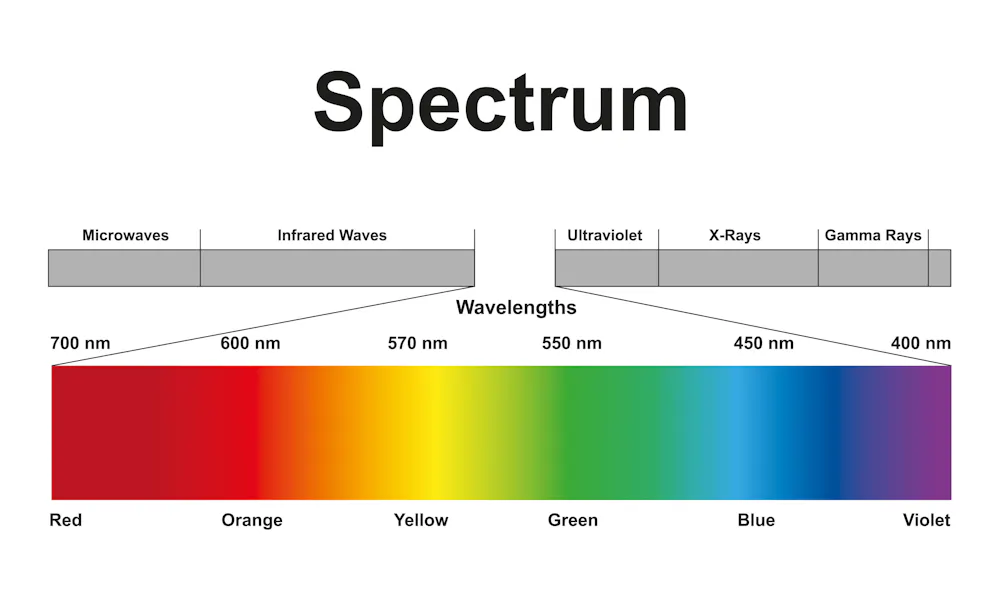
    Regards

    Storebrand Asset Management AS

    Contacts:

    Henrik Budde Gantzel, Director, henrik.budde.gantzel@storebrand.no

    Frode Aasen, Product Manager, fdc@storebrand.com

    Fund name and share class Symbol ISIN
    Storebrand Indeks – Nye Markeder A5 STIINM NO0010841570

    Storebrand is Norway’s largest private asset manager with an AuM of around DKK 900 billions, and also a leading Nordic provider of sustainable pensions and savings. The company has been a global pioneer in ESG investing for over 25 years, offering broad and scalable solutions for both institutional and private investors in the Nordic region and other European countries. Storebrand delivers sustainable investment solutions and client value through a multi-boutique platform, with the brands Delphi Funds, SKAGEN Funds and Storebrand Funds.

    The MIL Network –

    February 18, 2025
  • MIL-OSI: The Finnish Financial Supervisory Authority (FIN-FSA) imposes additional capital requirements and a liquidity requirement on Oma Savings Bank Plc based on the supervisor’s completed review (SREP)

    Source: GlobeNewswire (MIL-OSI)

    OMA SAVINGS BANK PLC, STOCK EXCHANGE RELEASE 17 FEBRUARY 2025 AT 15.30 P.M. EET, OTHER INFORMATION DISCLOSED TO THE RULES OF THE EXCHANGE

    The Finnish Financial Supervisory Authority (FIN-FSA) imposes additional capital requirements and a liquidity requirement on Oma Savings Bank Plc based on the supervisor’s completed review (SREP)
        
    By decision of 14 February 2025, the Finnish Financial Supervisory Authority (FIN-FSA) has imposed two discretionary additional capital requirements on Oma Savings Bank Plc (OmaSp or Company) in accordance with Chapter 11, Section 2 of the Credit Institutions Act. The Additional Tier 1 capital requirement (P2R) for the Company will be 2.25% and the Additional Tier 2 capital requirement (P2R-LR) will be 0.25%, replacing the existing discretionary capital requirements (additional Tier 1 capital requirement of 1.50% and additional Tier 2 capital requirement of 0.25%).

    The discretionary capital requirements will take effect from 30 June 2025 and will remain in effect until 30 June 2028 at the latest. At least three-quarters of the additional capital requirement must be covered by Tier 1 capital and of this at least three-quarters by Common Equity Tier 1 capital. The Company meets the set additional capital requirements in accordance with own funds requirements and own funds as of 31 December 2024. The decision has been made as a normal part of the supervisor’s reviewing process (SREP) pursuant to Chapter 11 Section 6, Section 6a Subsection 1 Section 1 and Section 6b Subsection 1 Section 1 and 2 of the Act on Credit Institution Operations.

    In addition, the FIN-FSA imposes on OmaSp in accordance with Chapter 11, Section 2 of the Act on Credit Institutions, a liquidity requirement to maintain a minimum survival horizon of at least three months in a scenario according to the stress test methodology of the European Central Bank. The requirement enters into force on 31 December 2025 and is valid until 31 December 2028 at the latest. The Company has started preparations to meet the additional liquidity requirement. The requirement is based on Chapter 11, Section 9 Subsection 1 of the Credit Institutions Act.

    The supervisor’s key observations and ongoing measures are described in more detail in the Financial Statements 31 December 2024, published on 10 February 2025. The Financial Statements can be found on the Company’s website www.omasp.fi/en/investors/reports-and-publications/financial-statements.

    Oma Savings Bank Plc

    Additional information:
    Sarianna Liiri, CEO, tel. +358 40 835 6712, sarianna.liiri@omasp.fi
    Minna Sillanpää, CCO, tel. +358 50 66592, minna.sillanpaa@omasp.fi

    DISTRIBUTION
    Nasdaq Helsinki Ltd
    Major media
    www.omasp.fi

    OmaSp is a solvent and profitable Finnish bank. About 500 professionals provide nationwide services through OmaSp’s 48 branch offices and digital service channels to over 200,000 private and corporate customers. OmaSp focuses primarily on retail banking operations and provides its clients with a broad range of banking services both through its own balance sheet as well as by acting as an intermediary for its partners’ products. The intermediated products include credit, investment and loan insurance products. OmaSp is also engaged in mortgage banking operations.

    OmaSp core idea is to provide personal service and to be local and close to its customers, both in digital and traditional channels. OmaSp strives to offer premium level customer experience through personal service and easy accessibility. In addition, the development of the operations and services is customer-oriented. The personnel is committed and OmaSp seeks to support their career development with versatile tasks and continuous development. A substantial part of the personnel also own shares in OmaSp.

    The MIL Network –

    February 18, 2025
←Previous Page
1 … 1,931 1,932 1,933 1,934 1,935 … 2,663
Next Page→
NewzIntel.com

NewzIntel.com

MIL Open Source Intelligence

  • Blog
  • About
  • FAQs
  • Authors
  • Events
  • Shop
  • Patterns
  • Themes

Twenty Twenty-Five

Designed with WordPress