Category: Transport

  • MIL-OSI USA: Cracked and Nulled Marketplaces Disrupted in International Cyber Operation

    Source: US State of California

    At Least 17M U.S. Victims Affected

    The Justice Department today announced its participation in a multinational operation involving actions in the United States, Romania, Australia, France, Germany, Spain, Italy, and Greece to disrupt and take down the infrastructure of the online cybercrime marketplaces known as Cracked and Nulled. The operation was announced in conjunction with Operation Talent, a multinational law enforcement operation supported by Europol to investigate Cracked and Nulled.

    Operation Talent Seizure Banner

    Supervisory Official Antoinette T. Bacon of the Justice Department’s Criminal Division, U.S. Attorney Trini E. Ross for the Western District of New York, U.S. Attorney Jaime Esparza for the Western District of Texas, Assistant Director Brian A. Vorndran of the FBI’s Cyber Division, Special Agent in Charge Matthew Miraglia of the FBI Buffalo Field Office, and Special Agent in Charge Aaron Tapp for the FBI San Antonio Field Office made the announcement.

    Cracked

    According to seizure warrants unsealed today, the Cracked marketplace has been selling stolen login credentials, hacking tools, and servers for hosting malware and stolen data — as well as other tools for carrying out cybercrime and fraud — since March 2018. Cracked had over four million users, listed over 28 million posts advertising cybercrime tools and stolen information, generated approximately $4 million in revenue, and impacted at least 17 million victims from the United States. One product advertised on Cracked offered access to “billions of leaked websites” allowing users to search for stolen login credentials. This product was recently allegedly used to sextort and harass a woman in the Western District of New York. Specifically, a cybercriminal entered the victim’s username into the tool and obtained the victim’s credentials for an online account. Using the victim’s credentials, the subject then cyberstalked the victim and sent sexually demeaning and threatening messages to the victim. The seizure of these marketplaces is intended to disrupt this type of cybercrime and the proliferation of these tools in the cybercrime community.

    The FBI, working in coordination with foreign law enforcement partners, identified a series of servers that hosted the Cracked marketplace infrastructure and eight domain names used to operate Cracked. They also identified servers and domain names for Cracked’s payment processor, Sellix, and the server and domain name for a related bulletproof hosting service. All of these servers and domain names have been seized pursuant to domestic and international legal process. Anyone visiting any of these seized domains will now see a seizure banner that notifies them that the domain has been seized by law enforcement authorities.

    The FBI Buffalo Field Office is investigating the case.

    Senior Counsel Thomas Dougherty of the Criminal Division’s Computer Crime and Intellectual Property Section (CCIPS) and Assistant U.S. Attorney Charles Kruly for the Western District of New York are prosecuting the case.

    Nulled

    The Justice Department announced the seizure of the Nulled website domain and unsealed charges against one of Nulled’s administrators, Lucas Sohn, 29, an Argentinian national residing in Spain. According to the unsealed complaint affidavit, the Nulled marketplace has been selling stolen login credentials, stolen identification documents, hacking tools, as well as other tools for carrying out cybercrime and fraud, since 2016. Nulled had over five million users, listed over 43 million posts advertising cybercrime tools and stolen information, and generated approximately $1 million in yearly revenue. One product advertised on Nulled purported to contain the names and social security numbers of 500,000 American citizens.

    The FBI, working in coordination with foreign law enforcement partners, identified the servers that hosted the Nulled marketplace infrastructure, and the domain used to operate Nulled. The servers and domain have been seized pursuant to domestic and international legal process. Anyone visiting the Nulled domain will now see a seizure banner that notifies them that the domain has been seized by law enforcement authorities.

    According to the complaint, Sohn was an active administrator of Nulled and performed escrow functions on the website. Nulled’s customers would use Sohn’s services to complete transactions involving stolen credentials and other information. For his actions, Sohn has been charged with conspiracy to traffic in passwords and similar information through which computers may be accessed without authorization; conspiracy to solicit another person for the purpose of offering an access device or selling information regarding an access device; and conspiracy to possess, transfer, or use a means of identification of another person with the intent to commit or to aid and abet or in connection with any unlawful activity that is a violation of federal law.

    If convicted, Sohn faces a maximum penalty of five years in prison for conspiracy to traffic in passwords, 10 years in prison for access device fraud, and 15 years in prison for identity fraud.

    The FBI Austin Cyber Task Force is investigating the case. The Task Force participants include the Naval Criminal Investigative Service, IRS Criminal Investigation, Defense Criminal Investigative Service, and the Department of the Army Criminal Investigation Division, among other agencies.

    Assistant U.S. Attorneys G. Karthik Srinivasan and Christopher Mangels for the Western District of Texas are prosecuting the case, with Assistant U.S. Attorney Mark Tindall for the Western District of Texas handling the forfeiture component.

    The Justice Department worked in close cooperation with investigators and prosecutors from several jurisdictions on the takedown of both the Cracked and Nulled marketplaces, including the Australian Federal Police, Europol, France’s Anti-Cybercrime Office (Office Anti-cybercriminalité) and Cyber Division of the Paris Prosecution Office, Germany’s Federal Criminal Police Office (Bundeskriminalamt) and Prosecutor General’s Office Frankfurt am Main – Cyber Crime Center (Generalstaatsanwaltschaft Frankfurt am Main – ZIT), the Spanish National Police (Policía Nacional) and Guardia Civil, the Hellenic Police (Ελληνική Αστυνομία), Italy’s Polizia di Stato and the General Inspectorate of Romanian Police (Inspectoratul General al Poliției Romane). The Justice Department’s Office of International Affairs provided significant assistance.

    A complaint is merely an allegation. All defendants are presumed innocent until proven guilty beyond a reasonable doubt in a court of law.
    MIL OSI USA News

  • MIL-OSI Security: Venezuelan Man Charged with Being in the United States Illegally After Having Been Previously Removed by Immigration Officials

    Source: Office of United States Attorneys

    Burlington, Vermont – The United States Attorney’s Office for the District of Vermont stated that Jorge Humberto Moreno Martinez, 34, of Venezuela, has been charged by criminal complaint with being unlawfully present in the United States after having been previously removed by immigration officials.

    On January 28, 2025, Moreno appeared before United States Magistrate Judge Kevin J. Doyle, who ordered that Moreno be detained during the pendency of this matter.

    According to court records, Moreno was previously removed from the United States by immigration officials on November 15, 2016, after he completed a three-and-a-half-year prison sentence following his New York felony conviction for burglary in the second degree. At that time, Moreno was advised and acknowledged that due to his criminal history he was prohibited from entering or attempting to enter the United States. Despite that warning, Moreno re-entered the United States and his presence in the country thereafter was in violation of U.S. law.

    Court records also state that when agents from the Department of Homeland Security attempted to arrest Moreno at a parking lot in Williston, Vermont, on January 27, 2025, Moreno fled in a vehicle, hitting three law enforcement vehicles before travelling at more than 100 miles per hour on a busy street before he was apprehended. As he drove, items were discarded from Moreno’s vehicle. Law enforcement recovered some of those items, which tested presumptively positive for cocaine base and cocaine.

    The United States Attorney’s Office emphasizes that the complaint contains allegations only and that Moreno is presumed innocent until and unless proven guilty. Moreno faces up to 20 years’ incarceration if convicted. The actual sentence, however, would be determined by the District Court with guidance from the advisory United States Sentencing Guidelines and the statutory sentencing factors.

    Acting United States Attorney Michael P. Drescher commended the investigatory efforts of the United States Department of Homeland Security, including its Homeland Security Investigations (“HSI”), Enforcement and Removal Operations (“ERO”), and U.S. Customs and Border Protection (CBP”) divisions, with assistance from the United States Drug Enforcement Administration (“DEA”).

    The prosecutor is Assistant United States Attorney Colin Owyang. Moreno is represented by Brooks McArthur, Esq.

    MIL Security OSI

  • MIL-OSI Security: Former Sanger Police Officer Convicted on Eight Counts of Sexually Assaulting Women While on Duty

    Source: Office of United States Attorneys

    FRESNO, Calif — On Wednesday, a federal jury in Fresno convicted former Sanger Police Department Officer J. DeShawn Torrence, 42, of eight counts of deprivation of constitutional rights under color of law for sexually assaulting four women whom he encountered during the course of his official duties. The jury found that the offenses included kidnapping, aggravated sexual abuse, and attempted aggravated sexual abuse, and also caused bodily injury.

    Deputy Assistant Attorney General Kathleen Wolfe of the Justice Department’s Civil Rights Division, Acting U.S. Attorney Michele Beckwith for the Eastern District of California, and Special Agent in Charge Siddartha Patel of the FBI Sacramento Field Office made the announcement.

    The evidence at trial proved that Torrence sexually assaulted four women. He kidnapped a 21‑year-old woman who was walking to a store to buy groceries for her young children, drove her outside of town in his police car, and sexually assaulted her at an isolated dead end. Torrence forcibly raped a second victim, a 67-year-old woman, after following her into her home during a DUI investigation. With a third victim, Torrence showed up at her door in his police uniform after midnight, entered her apartment, pinned her against the kitchen counter, and sexually assaulted her. Torrence showed up multiple times at the home of a fourth victim, a domestic violence victim, supposedly to investigate a prior domestic violence incident. During those follow up visits, Torrence forced the victim to expose sensitive parts of her body for no legitimate reason, and he sexually assaulted her.

    “Law enforcement officers are entrusted with great power to protect the public and keep them safe from harm. This officer’s crimes were an egregious breach of that trust and an appalling abuse of power, as he repeatedly preyed on the women in his community and violated their civil rights,” said Acting U.S. Attorney Beckwith. “We stand ready to investigate and prosecute such crimes with all the tools we have available.”

    “The FBI Sacramento Field Office is grateful to the brave victims who came forward and trusted us to investigate the allegations of sexual abuse at the hands of a police officer,” said Special Agent in Charge Sid Patel. “The FBI is deeply committed to working with our partners to thoroughly investigate such cases to protect the American people and preserve public trust in law enforcement.”

    The FBI Sacramento Field Office investigated the case, with assistance from the Fresno County Sheriff’s Office. Special Litigation Counsel Michael J. Songer of the Civil Rights Division’s Criminal Section and Assistant U.S. Attorney Karen Escobar for the Eastern District of California are prosecuting the case.

    Torrence is scheduled to be sentenced on May 7, 2025. Torrence faces a maximum penalty of life in prison and a $250,000 fine for five of the counts. The remaining counts each carry a maximum penalty of one year in prison and a fine of up to $100,000. The actual sentence, however, will be determined at the discretion of the court after consideration of any applicable statutory factors and the Federal Sentencing Guidelines, which take into account a number of variables.

    MIL Security OSI

  • MIL-OSI: Mitsubishi HC Capital America Shares Predictions for 2025 in the Equipment Finance Industry

    Source: GlobeNewswire (MIL-OSI)

    CHICAGO, Jan. 30, 2025 (GLOBE NEWSWIRE) — With the start of a year that is expected to have less inflation, monetary easing and more economic growth, Mitsubishi HC Capital America, the largest non-bank, non-captive finance provider in North America, has outlined six key predictions that are likely to play a significant role in shaping the equipment finance industry in 2025.

    “The convergence of economic shifts and technological advancements in 2024 has created a unique financing landscape for 2025,” said Brian Rosa, President of Commercial Finance for Mitsubishi HC Capital America. “While many organizations may take a measured approach initially, we’re seeing that those who strategically leverage financing solutions – particularly for technology and sustainability initiatives – are positioning themselves for significant growth.”

    1. Banks pull back on small business lending

    Recent Federal Reserve data shows bank lending to small businesses dropped by 18% in 2024. However, the U.S. Chamber of Commerce reports 60% of small businesses plan to make significant capital investments in 2025, up from 42% two years ago.

    This divergence creates both challenges and opportunities for small businesses looking to secure financing in 2025. Small business owners should partner with independent lenders for creative and flexible financing options to stay competitive and thrive in the new year.

    2. AI and supercomputing needs will need financing support

    Much like the infinite nature of the scale that supercomputing projects offer the world, financing these projects feels equally as infinite. Large scale computing projects involving AI or cloud computing will become more frequent and larger in 2025 and in the years to come. Driven by hyperscalers and other large companies, these projects require a significant amount of time, capital and energy to complete. “Financing models that can support project completion and scale as the project grows will be a necessary lever for tech companies to support these projects,” adds Rosa.

    3. Technology enables new financing models and competitive advantage

    “Advancements in technology are revolutionizing equipment financing through enhanced usage analytics and “as-a-service” models,” explains Rosa. “Advanced IoT and telematics now provide real-time analytics and insights, enabling both financing providers and customers to make faster, more informed decisions about equipment utilization.”

    This technology allows lenders to develop more competitive rates based on actual usage patterns, while creating new opportunities for usage-based financing structures. Beyond basic implementation, organizations that can creatively apply these technological capabilities to develop innovative financing solutions will gain a competitive edge. The winners, he says, will be those who can leverage these tools to identify market trends faster and develop flexible financing arrangements that align with true operational needs.

    4. High inventory levels will make rentals attractive

    The flexibility of short-term leases and equipment rental opportunities are helping organizations take advantage of higher inventory levels and use new technology without a large payment or significant operating expense.

    Rosa explains, “Short-term leases provide organizations with more flexibility, and the financing landscape is evolving to support this trend.” He further says that the increasing popularity of these financing models will help organizations more accurately budget for a project, allowing them to buy the equipment they need without restricting their up-front cash flow. With an increase in demand for projects and an influx of equipment that is available, Rosa projects it will be less expensive and more flexible for companies to rent equipment.

    5. Business case for sustainability remains strong

    In recent years, both U.S. and Canadian governments and corporations have pulled back on sustainability initiatives. However, the business case for sustainability remains strong and we expect corporations to continue to fund sustainability programs, says Rosa.

    He adds, “Prioritizing sustainability initiatives that have a direct business case will aid organizations in making an impact not just on the world, but also their bottom line. From financing electric vehicle projects to supporting more sustainable manufacturing in supply chains, environmentally friendly investments will drive shareholder returns on clean energy targets.”

    6. Shifting Political Dynamics in the U.S. and Canada
    New leadership in the U.S. with talks of international tariffs, along with a very fluid political environment in Canada, will impact both countries in 2025, predicts Rosa. He expects governments in both countries to take a cautious approach to determine the next steps with rate cuts as economic data is released.

    “Organizations that position themselves to take advantage of new regulations or seize new opportunities quickly will be well suited in 2025,” Rosa anticipates.

    About Mitsubishi HC Capital America

    Mitsubishi HC Capital America is a commercial finance company that has extensive capabilities throughout North America with its affiliate, Mitsubishi HC Capital Canada, combining a consultative approach and expansive digital platform to help organizations of all sizes accelerate growth. With $7.5 billion in assets and more than 800 employees, the company is the largest non-captive, non-bank commercial finance company in North America. Mitsubishi HC Capital America partners with equipment manufacturers, dealers, and distributors, as well as end customers, in providing customized financial solutions, including transportation and commercial finance. Dedicated to improving the communities where it operates, the company is committed to the United Nations Sustainable Development Goals. Visit Mitsubishi HC Capital America for more information.

    The MIL Network

  • MIL-OSI: ASUS Named One of Fortune’s World’s Most Admired Companies for the 10th Time in 2025

    Source: GlobeNewswire (MIL-OSI)

    TORONTO, Jan. 30, 2025 (GLOBE NEWSWIRE) — ASUS today announced it has been listed among Fortune’s World’s Most Admired Companies for 2025, marking the 10th time the company has earned this prestigious accolade. ASUS was recognized for its use of corporate assets, social responsibility, and long-term investment — core values that drive the company’s global competitiveness and have established it as an industry leader.

    “We are honored to be recognized by Fortune for the tenth time,” said Jonney Shih, Chairman of ASUS. “This achievement reaffirms the success of our Design Thinking approach, which prioritizes customer satisfaction as the key to driving sustainable growth. At the heart of this success is our unwavering commitment to a culture of radical truth and transparency, which empowers our teams to innovate, overcome challenges, and fully embrace revolutionary technologies like AI.”

    The World’s Most Admired Companies list is one of the most comprehensive rankings of corporate reputations compiled annually by Fortune magazine with Korn Ferry, a global organizational consulting firm. The consistent placement of ASUS on this list reflects its unwavering commitment to technological advancement and its ability to deliver products and services that meet the highest standards of quality and performance.

    ASUS has long been a leader in the tech industry, known for its relentless pursuit of user-centricity and innovation in areas like AI, gaming, and sustainability. ASUS continues to push the boundaries of innovation, as demonstrated by the launch of the new sub-1kg Zenbook A14 in Canada today. This commitment to cutting-edge technology is also reflected in its latest lineup of groundbreaking devices, including the Zenbook DUO, ROG Strix SCAR 18, and ROG Flow Z13—along with many more innovations unveiled at CES 2025. By consistently delivering industry-leading advancements, ASUS reinforces its position as a global technology pioneer.

    NOTES TO EDITORS

    Fortune Ranking: https://fortune.com/ranking/worlds-most-admired-companies/
    Zenbook A14: https://asus.com/ca-en/laptops/for-home/zenbook/asus-zenbook-a14-ux3407/
    ASUS Zenbook A14 ASUS Store Where to Buy Link: https://shop.asus.com/ca-en/zenbook-a14-ux3407-copilot-pc.html
    Zenbook DUO: https://www.asus.com/ca-en/laptops/for-home/zenbook/asus-zenbook-duo-2024-ux8406/
    ROG Strix SCAR 18: https://rog.asus.com/ca-en/laptops/rog-strix/rog-strix-scar-18-2025/
    ROG Flow Z13: https://rog.asus.com/ca-en/laptops/rog-flow/rog-flow-z13-2025/
    ASUS LinkedIn: https://www.linkedin.com/company/asus/posts/
    ASUS Pressroom: http://press.asus.com
    ASUS Canada Facebook: https://www.facebook.com/asuscanada/
    ASUS Canada Instagram: https://www.instagram.com/asus_ca
    ASUS Canada YouTube: https://ca.asus.click/youtube
    ASUS Global X (Twitter): https://www.x.com/asus

    About ASUS

    ASUS is a global technology leader that provides the world’s most innovative and intuitive devices, components, and solutions to deliver incredible experiences that enhance the lives of people everywhere. With its team of 5,000 in-house R&D experts, the company is world-renowned for continuously reimagining today’s technologies. Consistently ranked as one of Fortune’s World’s Most Admired Companies, ASUS is also committed to sustaining an incredible future. The goal is to create a net zero enterprise that helps drive the shift towards a circular economy, with a responsible supply chain creating shared value for every one of us.

    An image accompanying this announcement is available at https://www.globenewswire.com/NewsRoom/AttachmentNg/c1b7e066-031d-4bab-9d95-fd8f2fd37804

    The MIL Network

  • MIL-OSI Global: Bird flu cases surging in UK but risk to humans remains low

    Source: The Conversation – UK – By Ed Hutchinson, Professor, MRC-University of Glasgow Centre for Virus Research, University of Glasgow

    Avian influenza control zones have been put in place in England, Scotland and Wales to control the virus’s spread among birds. AlanMorris/ Shutterstock

    A human case of bird flu has recently been detected in England. This news comes just days after restrictions were put in place to curb the virus’s spread among wild birds and poultry in England and Scotland.

    Although cases of bird flu are surging among birds in the UK, the risk of the virus spreading to humans still remains extremely low. A bit of context about influenza explains why health protection agencies think this is the case.

    There are many different influenza viruses out there. They’re all related, but each specialises in infecting different types of animals.

    Each winter, humans have to deal with three different types of seasonal influenza virus – H1N1, H3N2 and influenza B viruses. Meanwhile, birds, particularly shore birds and waterfowl, contend with a huge number of their own influenza viruses.

    Most of these avian influenza viruses only afflict birds with minor infections of the airway or gut. But a small set cause more serious illness. These are called highly pathogenic avian influenza viruses (HPAIVs).

    Among the HPAIVs, the H5N1 strains stand out. H5N1 bird flu, which is largely a disease of wild birds, has been notorious since the late 1990s for causing major die-offs of poultry worldwide – and for occasionally causing serious illness in humans. Viruses evolve rapidly, and in 2020 H5N1 evolved so it could spread more aggressively in wild birds.

    The resulting outbreak tore through bird populations globally, including devastating die-offs in seabird colonies when the virus arrived in the UK in 2021. As it spread, the virus also caused outbreaks in farmed birds.

    All outbreaks ebb and flow. After mid-2023, cases of H5N1 subsided in the UK. However, the virus never fully disappeared – and in autumn 2024, cases in wild birds started increasing again. It’s very hard to keep wild birds and farmed birds apart, and infections in poultry farms soon followed.

    In the UK, the threat of H5N1 to birds is tracked through ongoing surveillance. In response to these rising cases, avian influenza prevention zones have recently been declared for England, Scotland and now Wales. These restrictions aim to reduce the risk of farmed birds getting infected. Anyone keeping birds in England, Scotland and Wales will be required to take additional measures to prevent their birds being infected – including keeping birds under cover in regions facing the greatest risk.

    Wild birds spread the virus to domestic poultry.
    Andrew M. Allport/ Shutterstock

    These prevention zones are an important intervention. But given the current outbreak’s scale in wild birds, these measures will at best only reduce the ongoing risk to farmed birds, rather than eliminating it.

    What does this outbreak mean for humans?

    Despite the serious problems H5N1 is causing for birds, the risk to humans is still very low. Because each virus is closely adapted to a particular host species, it’s really hard for bird flu to infect a human.

    When infections do occur, this is normally only in people who have close contact with birds – and even then it’s an unusual event. The recent case of bird flu in a poultry worker in England is almost certainly an example of this sort of “spillover” infection.

    It’s good to hear the affected person is currently well and that antiviral drugs – which work against these viruses – have been offered to others who may have been exposed. The control measures announced over the weekend will help reduce the risk of other people who work with poultry getting infected.

    If you don’t have close contact with either wild or farmed birds, your chances of being infected are very low indeed. Still, if you come across any dead birds (particularly waterfowl), it’s important to avoid handling them. Try to prevent pets from scavenging bird carcasses and avoid feeding pets raw bird meat from non-commercial sources. Sightings of dead or sick birds can be reported to health protection agencies.

    Because influenza viruses are killed quickly by heat, there should be no risk to the public from eating properly-cooked eggs or poultry. The UK outbreak may also cause temporary difficulties in accessing free-range eggs and an increase in egg prices – things that have already been seen in the US, which is also experiencing a major H5N1 outbreak.

    Is bird flu a problem anywhere else?

    What’s happening in the UK is just one part of an ongoing global H5N1 outbreak.

    In some regions, strains of the virus have managed to spread beyond wild birds and infect mammals as well. In South America, H5N1 is causing devastating outbreaks in seals and sea lions. In the US, it has managed to adapt to dairy cattle and is being shed in their milk.

    There have also been reported human infections. In the US, numerous farm workers have caught H5N1 from cattle, so far with relatively mild symptoms. There have also been two cases of severe illness in the US and Canada in people who caught a slightly different strain of H5N1 from birds, one of which sadly led to the patient’s death.

    These cases underscore the potential risks of H5N1 infections. But because human infections are so rare, how likely each strain of H5N1 is to cause severe disease in humans is still unclear. We also need to be on the lookout for any signs that any H5N1 strain anywhere might gain the ability to spread between humans. This would be an exceptionally unusual event – but to minimise the risk of future influenza pandemics, it’s crucial situations like this are carefully monitored.

    Nothing has been reported which suggests human-to-human transmission has occurred anywhere during the current outbreak. In the UK we have good surveillance for detecting any signs of this if it did. If wider spread did occur, the reserves of vaccines and antiviral drugs that we have in the UK would give us opportunities to intervene.

    For now, bird flu remains a very real problem, but is primarily a problem for birds. By intervening now to protect farmed birds, we hope that we can keep it that way.

    Ed Hutchinson receives funding from the Wellcome Trust and UKRI, including through the Flu:TrailMap-One Health consortium which is working to respond to the H5N1 outbreak. He has unpaid positions on the board of the European Scientific Working group on Influenza and other respiratory viruses (ESWI) and as a scientific adviser to PinPoint Medical.

    ref. Bird flu cases surging in UK but risk to humans remains low – https://theconversation.com/bird-flu-cases-surging-in-uk-but-risk-to-humans-remains-low-248350

    MIL OSI – Global Reports

  • MIL-OSI Global: Red Sea crisis: supply chain issues set to continue despite Gaza ceasefire

    Source: The Conversation – UK – By Gokcay Balci, Lecturer in Sustainable Freight Transport and Logistics, University of Leeds

    A large container ship passing through the Suez Canal in Egypt. byvalet / Shutterstock

    The world’s major shipping companies say they won’t be sending vessels back to the Red Sea any time soon despite a pledge by Iran-backed Houthi militants in Yemen not to attack them as long as the ceasefire in Gaza holds.

    French shipping and logistics company CMA CGM said in a statement on January 25 that the improved stability was “a positive but fragile sign” for the industry, and that it would continue to prioritise alternative routes.

    Since November 2023, one month after the war in Gaza began, the Houthis have launched missile and drone attacks against roughly 190 commercial and naval ships in the Red Sea’s Bab al-Mandab Strait. The group claims to have carried out attacks on vessels connected with Israel, or heading to its ports, in solidarity with Palestinians in the Gaza Strip. Though this has not always been the case.

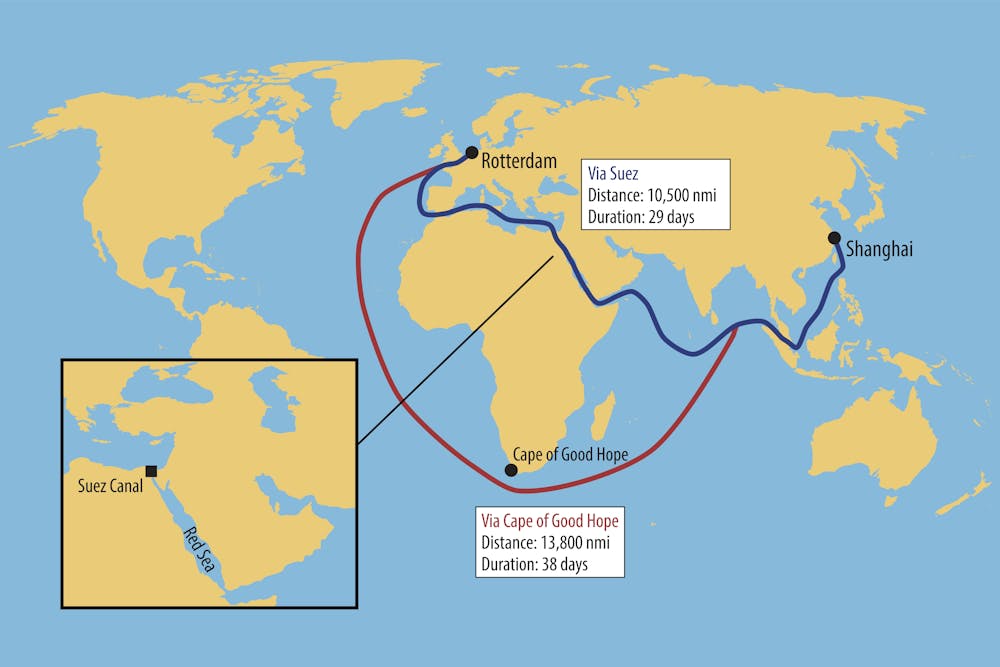
    These attacks have prompted many shipping companies to stop using the Red Sea – a route that around 12% of global trade usually passes through – and divert around the southern tip of Africa. This route adds more than 7,000 nautical miles on to a typical round-trip voyage. The number of commercial ships using the Suez Canal to pass between the Mediterranean and the Red Sea plummeted from over 26,000 in 2023 to 13,200 in 2024.

    Supply chains have had to deal with higher shipping costs, product delivery delays, and increased carbon emissions as a result of this diversion. The Gaza ceasefire gave some hope that the disruption would finally end. But shipping lines will not hurry back to the region until long-term security is guaranteed.

    Since November 2023, shipping companies have been diverting their vessels around the southern tip of Africa to avoid the Red Sea.
    Dimitrios Karamitros / Shutterstock

    During the early stages of the crisis, moving a container from Shanghai in China to Europe cost approximately 250% more than before the war in Gaza began. This was largely due to increased fuel costs and higher insurance premiums. Freight rates (the price companies pay to transport goods) remained high throughout 2024, despite some fluctuations.

    The cost of moving a 40-foot container from Shanghai to Rotterdam in the Netherlands, for example, surged from around US$4,400 on average in January to above US$8,000 by August. This had dropped to US$4,900 at the end of the year.

    It is too early to say whether these costs will be passed on to consumers in the form of higher prices – full transmission through the supply chain to consumer prices can take upwards of 12 months. But some estimates suggest global consumer prices could rise by 0.6% on average in 2025 as these increased shipping costs filter through the supply chain.

    Diverting around southern Africa also resulted in delays in the delivery of many goods and components. The proportion of container ships that arrived on schedule dropped from 60% on average worldwide in 2023 to about 50% throughout 2024. This created congestion at ports because ships often arrived at their destination later than planned, resulting in further delivery delays.

    Unreliable transit times are a significant issue for supply chains because they make it difficult for businesses to plan inventory and coordinate production schedules. Indeed, several vehicle manufacturers, including Tesla and Volvo, temporarily suspended manufacturing in early 2024 due to a lack of components. And food supply chains, including those for avocados, tea and coffee, were also affected by delays.

    Since then, many companies have adapted by increasing their safety stock levels and transporting cargo using alternative modes of transport like air and rail. Some European firms have also adopted a strategy called “nearshoring”, where they source products from regions closer to home such as Turkey and Morocco instead of relying on suppliers in Asia.

    Increased emissions

    The longer route around southern Africa requires that ships travelling between Europe and Asia use around 33% more fuel on average than they would use by travelling through the Red Sea at the same speed.

    Over the past decade, most shipping companies have employed a “slow steaming” policy to economise on fuel use and minimise their carbon emissions. But diverted ships have been travelling around 5% faster than usual in an attempt to minimise delays. The increased vessel speeds will have caused the associated emissions toll to rise – large container vessels require 2.2% more fuel for every 1% increase in speed.

    More data is required to determine the precise amount of additional emissions caused by diverting shipping away from the Red Sea. But estimates suggest that approximately 13.6 million tonnes of CO₂ were emitted by ships rerouted from the Red Sea between December 2023 and April 2024 – equivalent to the carbon emissions of nine million cars over the same period. If ships continue to avoid the region, the increased emissions could amount to 41 million extra tonnes of CO₂ per year.

    Some cargo has also shifted from sea transport to air freight, which has a far greater environmental footprint. Shipping a kilogram of product by long-haul air freight generates at least 50 times more CO₂ emissions on average than container shipping.

    Carbon emissions have increased due to the diversion of vessels around southern Africa.
    David G40 / Shutterstock

    Before returning to the Suez Canal, container lines will want to see a prolonged period of stability around the Red Sea. This is due, in part, to safety and security concerns related to the crew, cargo and the ship.

    But shipping companies also have operational challenges to keep in mind associated with the scheduling of port calls and voyages. Shipping lines will find it difficult to switch back to the longer route around Africa immediately if attacks in the Red Sea resume.

    And, at least for now, the situation in the Bab al-Mandab Strait remains unpredictable. In a televised speech on January 20, Houthi leader Abdul-Malik al-Houthi warned: “We have our finger on the trigger.”

    With other disruptions continuing to affect global shipping, such as port strikes, low water levels in the Panama Canal and extreme weather events, supply chain issues are likely to continue throughout 2025.

    Gokcay Balci does not work for, consult, own shares in or receive funding from any company or organisation that would benefit from this article, and has disclosed no relevant affiliations beyond their academic appointment.

    ref. Red Sea crisis: supply chain issues set to continue despite Gaza ceasefire – https://theconversation.com/red-sea-crisis-supply-chain-issues-set-to-continue-despite-gaza-ceasefire-248469

    MIL OSI – Global Reports

  • MIL-OSI Global: Trump inviting influencers to White House press briefings is likely to usher in a new era of fake news

    Source: The Conversation – UK – By Steven Buckley, Lecturer in Digital Media Sociology., City St George’s, University of London

    Just over a week after Donald Trump was sworn in as 47th president of the United States, his new press secretary, Karoline Leavitt, appeared in the James S. Brady press briefing room to preside over her first media conference. Pulling up a chart that showed Americans’ declining trust in traditional, or what she called “legacy”, media outlets, Leavitt announced that henceforth, “independent journalists, podcasters, social media influencers and content creators” would be welcome at press briefings.

    Leavitt said that seats formerly reserved for White House officials would be available to these independent journalists, and invited people to apply online for White House press accreditation. It has since been reported that the White House has received more than 7,400 applications.

    In principle, broadening the range of media outlets allowed into White House press briefings is a good idea. There’s no doubt that the media consumption habits of the American public are changing fast. But the way Trump and his communications team handled press briefings in his first term raises some concerns.

    During that first term between 2017 and 2021, Trump and his White House communications team tended to favour reporters from friendly media outfits such as Fox News. Early in his administration, a number of reporters from what were perceived as “hostile” organisations were banned from “the huddle” – the informal gatherings around Trump’s press secretary that followed more formal briefings.

    Fringe organisations such as Breitbart News and the One America News network carried Trump’s message faithfully and got disproportionately favourable access. This week, Breitbart was one of two online media outlets (alongside the widely respected news website Axios) that Leavitt selected to ask the first questions at her debut press briefing.

    It’s not just their friendly disposition towards Trump but their reach that makes social media influencers appealing to the incoming president. Their primary purpose at the press briefings would be to help generate positive messages and content to feed to Trump’s Maga base – which are then promoted on platforms such as Elon Musk’s X (formerly Twitter).

    Recent research suggests that X has adjusted its algorithm to boost right-wing content as well as posts by Musk himself. A clear example has been Musk promoting the former Fox News host turned online influencer and Trump campaign surrogate Tucker Carlson’s online show.

    Undermining public regard for journalism

    But there may be another, insidious function of inviting these influencers to the White House press briefing room. Their presence beside professional journalists from traditional media outlets is likely to undermine public regard for journalism in general. This could sow even greater mistrust in the US media, which is already at record lows.

    In recent years, there has been a gradual blurring of lines between traditional and digital media. But while research consistently shows, across a wide cross-section of countries and within those countries, traditional media is still more trusted than new media, this is not to say that all new media outlets should be excluded. Many of these organisations and individuals have a track record of holding power to account.

    Bellingcat – a coalition of researchers, investigators and citizen journalists – typically uses open-source information to uncover important stories of public interest. Individual journalists such as Taylor Lorenz, who covers the tech and creator industry, and Ken Klippenstein, who is well known for getting hold of internal government documents, are also good examples of journalists who produce quality reports from outside the traditional mainstream.

    It should ideally be journalists such as these, with track records for solid and impartial reporting, who are invited into the White House fold – although there’s every chance they would get the same sort of treatment as reporters such as CNN’s Jim Acosta, whom Trump famously branded an “enemy of the people” when refusing to answer a question from him in 2018.

    Acosta, incidentally, has just left CNN after the network moved him to the midnight “graveyard” slot. Shortly after signing off from his final CNN broadcast on January 28, Acosta appeared on his own Substack feed to announce he would go it alone.

    It seems unlikely, though, that he will be awarded one of the coveted new independent media accreditations, given Trump’s recent attack on him. Celebrating Acosta’s apparent relegation by CNN, Trump took to his TruthSocial media site to call him “one of the worst and most dishonest reporters in journalistic history, a major sleazebag”.

    Polarised media, divided audiences

    It’s likely that America’s news media will only become more polarised during this second Trump administration, including an increasingly toxic mix of content creators dominating social media platforms. And now that Mark Zuckerberg has decided to remove Meta’s factchecking mechanism in favour of “community moderation”, research suggests this is likely to incentivise political messages which polarise and provoke rather than inform people.


    Read more:
    What Meta’s move to community moderation could mean for misinformation


    We’ve already seen that the incoming president was more than willing to use lawsuits to intimidate journalists. Trump recently won a legal case over ABC when its journalist George Stephanopoulos defamed him by falsely saying he had been found liable for rape.

    This, combined with Trump’s threat to sue the Des Moines Register and its pollster Ann Selzer over their allegations of election interference, are likely to increase the chilling effect on free speech. Legal threats such as these may serve to discourage close scrutiny of his second administration.

    Meanwhile, the steady rise in prominence of partisan influencers using increasingly dangerous language is only likely to lead to the American public having less faith in the institutions that are critical to a functioning democracy – the press included.

    Steven Buckley does not work for, consult, own shares in or receive funding from any company or organisation that would benefit from this article, and has disclosed no relevant affiliations beyond their academic appointment.

    ref. Trump inviting influencers to White House press briefings is likely to usher in a new era of fake news – https://theconversation.com/trump-inviting-influencers-to-white-house-press-briefings-is-likely-to-usher-in-a-new-era-of-fake-news-247410

    MIL OSI – Global Reports

  • MIL-OSI Canada: Funding helps build resilient communities through stronger climate adaptation

    Source: Government of Canada regional news

    The Community Emergency Preparedness Fund is administered through the Union of BC Municipalities (UBCM), and funds projects that support local governments and First Nations to better prepare for disasters and reduce risks from hazards in a changing climate.

    Communities throughout British Columbia will receive more than $19 million from the Community Emergency Preparedness Fund as follows.

    Funding is divided into three categories:

    • Category 1 (C1): Foundational activities (risk mapping, risk assessments, planning)
    • Category 2 (C2): Non-structural activities (land-use planning, community education, purchase of eligible equipment)
    • Category 3 (C3): Small-scale structural activities

    Canal Flats – C3: Phase 1 dike improvement project
    Amount: $400,000

    Clearwater – C2: Improvements for stormwater management
    Amount: $138,000

    Comox Valley Regional District – C2: Extreme-weather equipment
    Regional partners: Comox, Courtenay, Cumberland, K’ómoks First Nation
    Amount: $100,000

    Coquitlam – C1: Disaster-risk reduction planning
    Amount: $150,000

    Cranbrook – C3: Gold Creek dam replacement
    Amount: $5 million

    Creston – C1: Hazard, risk and vulnerability assessment
    Amount: $150,000

    Delta – C1: Mason drainage pump station design
    Amount: $150,000

    Fraser-Fort George Regional District – C1: Regional heat and drought threat assessment/mapping; C2: Partner engagement to improve hazard-resilient development
    Regional partners: Prince George, McBride, Mackenzie, Valemount, Lheidli-T’enneh First Nation, McLeod Lake Indian Band
    Amount: $716,876

    Hope – C1: Hazard identification and risk mapping
    Amount: $150,000

    Invermere – C3: Toby Dike upgrades
    Amount: $810,000

    Kamloops – C1: Watershed climate change adaptation planning
    Amount: $150,000

    Keremeos – C1: Hazard, risk and vulnerability analysis
    Amount: $49,800

    Kitasoo Xai’xais Nation – C1: Climate adaptation planning
    Amount: $77,200

    Kwikwetlem First Nation – C1: Flood-mitigation project design
    Amount: $145,190

    Lake Country – C1: Climate change hazard, risk and vulnerability assessment
    Amount: $150,000

    Lower Similkameen Indian Band – C1: Hazard risk and vulnerability planning
    Amount: $49,800

    Lumby – C1: Lumby industrial area dike planning
    Amount: $150,000

    Merritt – C2: Bulk bags for flood response; C3: Voght Street overland water pumping station
    Amount: $4.8 million

    Nelson – C1: Community preparation for extreme temperatures
    Amount: $95,280.00

    Okanagan-Similkameen Regional District – C2: Tiger Dam trailers for emergency flood response
    Regional Partners: Osoyoos, Keremeos, Lower Similkameen Indian Band
    Amount: $600,000

    Oliver – C1: Hazard, risk and vulnerability assessment
    Amount: $50,000

    Osoyoos – C1: Hazard, risk and vulnerability assessment
    Amount: $49,150

    Osoyoos Indian Band – C1: Hazard, risk and vulnerability assessment
    Amount: $50,000

    Peace River Regional District – C1: Hazard assessment, mapping and risk management
    Regional Partners: Blueberry River First Nations, Chetwynd, Dawson Creek, Doig River First Nation, Pouce Coupe, Tumbler Ridge, Hudson’s Hope, Saulteau First Nations, Taylor, Halfway River First Nation, West Moberly First Nations
    Amount: $1.35 million

    Pemberton – C1: Arn Canal pumping station design
    Amount: $60,000

    Richmond – C2: Flood protection and rain gauge monitoring stations
    Amount: $150,000

    Sema:th First Nation (Sumas) – C3: Floodwater conveyance project
    Amount: $195,440

    Skeetchestn Indian Band – C1: Flood-mitigation planning
    Amount: $89,500

    Sḵwx̱wú7mesh Úxwumixw (Squamish Nation) – C1: Assessment for tree planting to reduce extreme-heat hazards
    Amount: $148,722

    SnPink’tn (Penticton Indian Band) – C1: Hazard, risk and vulnerability planning
    Amount: $60,650

    Sooke – C1: Climate adaptation and natural hazard-risk assessment
    Amount: 150,000

    Strathcona Regional District – C1: Port McNeill climate change infrastructure impact assessment; Gold River Road to Tsa’xana Road slope stability assessment; C2 Tsunami and flood-mitigation public information and education; C3: Cortes Kw’as Park and Road flood mitigation
    Regional partners: Mount Waddington Regional District, Mowachaht/Muchalaht First Nation, Nuchatlaht First Nation, Port McNeill, Tahsis, Zeballos
    Amount: $354,960

    Stswecem’c Xgat’tem First Nation (Canoe Creek) – C1: Extreme-weather planning
    Amount: $105,000

    Tlowitsis Nation – C1: Risk mapping, assessment and planning; C2: sub-regional road map, public engagement and workshops
    Amount: $296,700

    Vancouver – C1: Streets network seismic and flooding risk assessment – Phase 1; C2: Extreme-weather mitigation equipment
    Amount: $300,000

    Vanderhoof – C3: Riverbank erosion mitigation
    Amount: $59,410

    West Kelowna – C1: Pike and Capri roads diking design
    Amount: $150,000

    Whispering Pines/Clinton Indian Band – C1: Heat-impact mitigation planning
    Amount: $36,700

    Xwémalhkwu (Homalco) – C1: Wetland restoration design; C2: Public education project; C3: Willow Creek watershed resilience, culvert replacement
    Amount: $1.54 million

    MIL OSI Canada News

  • MIL-OSI Economics: NEWS RELEASE: CanREA marks fifth anniversary with special industry data report

    Source: – Press Release/Statement:

    Headline: NEWS RELEASE: CanREA marks fifth anniversary with special industry data report

    Canada’s installed capacity of wind energy, solar energy & energy storage is now more than 24 GW, up by 46% in the last five years.

    Ottawa, January 30, 2025—The Canadian Renewable Energy Association (CanREA) is pleased to release a new, five-year industry data report announcing that Canada’s wind, solar and energy-storage sectors have grown by 46% in the last five years, with a new installed capacity of more than 24 GW at the end of 2024.

    CanREA released the report today as part of its five-year anniversary celebrations. Since the Association was launched in 2020, the industry increased its installed capacity by nearly 7.6 GW. This total includes more than 4.7 GW of new utility-scale wind, nearly 2 GW of new utility-scale solar, more than 600 MW of new on-site solar, and more than 200 MW of new energy storage.

    “Canada’s wind, solar and energy storage industry grew impressively over the past five years—and we expect to see significantly more growth in the next five years,” said Vittoria Bellissimo, CanREA’s President and CEO. “But this is not nearly enough. Canada has massive, untapped wind and solar resources that can and should be harnessed to provide the affordable, clean, scalable electricity needed in all jurisdictions.”

    In total, Canadian jurisdictions can expect to connect at least 10,000 MW of new wind, solar and storage by the start of 2030, according to CanREA’s Clean Energy Procurement Calendar.

    CanREA is also tracking another 5,000 MW that will come into service beyond that time frame, for a grand total of more than 15,000 MW of procurements that are either currently underway or being planned across the country. This represents more than $30B in investment.

    “This investment is crucial in establishing resilient, sustainable infrastructure that can support Canada’s economic and environmental ambitions,” said Bellissimo.

    “We have been calling on all provinces and territories to increase the pace of buildout in their jurisdictions, and we are pleased to see that many have answered the call. That said, we can do so much more. Every new wind, solar, and energy storage project brings us closer to a cleaner energy mix and a decarbonized grid,” said Bellissimo.

    Facts at a glance

    Canada’s total wind, solar and storage installed capacity grew 46% in the past 5 years (2019-2024), including nearly 5 GW of new wind, 2 GW of new utility-scale solar, 600 MW of new on-site solar, and 200 MW of new energy storage.

    Canada’s solar energy capacity (utility-scale and onsite) grew 92% in the past 5 years (2019-2024).

    Canada’s wind energy capacity grew 35% in the past 5 years (2019-2024).

    Canada’s energy storage capacity grew 192% in the past 5 years (2019-2024).

    Canada’s total wind, solar and storage installed capacity is now more than 24 GW, including over 18 GW of wind, more than 4 GW of utility-scale solar, 1+ GW on-site solar, and 330 MW energy storage.

    Canada now has 341 wind energy projects producing power across the country.

    Canada now has 217 major solar energy projects producing power across the country.

    There are now nearly 96,000 onsite solar energy installations across Canada.
    For more facts at a glance, see CanREA’s “By the Numbers” webpage.

    For more information

    To download a summary of CanREA’s latest industry data, visit CanREA’s “By the Numbers” webpage. CanREA members have access to a more detailed report on the members-only side of the website.

    Quotes

    “Canada’s wind, solar and energy storage industry grew impressively over the past five years—and we expect to see significantly more growth in the next five years—but this is not nearly enough. Canada has massive, untapped wind and solar resources that can and should be harnessed to provide the affordable, clean, scalable electricity needed in all jurisdictions.” 

    “This investment is crucial in establishing resilient, sustainable infrastructure that can support Canada’s economic and environmental ambitions, driving progress toward a net-zero future.”

     “We have been calling on all provinces and territories to increase the pace of buildout in their jurisdictions, and we are pleased to see that many have answered the call. That said, we can do so much more. Every new wind, solar, and energy storage project brings us closer to a cleaner energy mix and a decarbonized grid.”
    —Vittoria Bellissimo, President and CEO, Canadian Renewable Energy Association

    For media interview opportunities, please contact:

    Bridget Wayland, Senior Director of CommunicationsCanadian Renewable Energy Associationcommunications@renewablesassociation.ca

    About CanREA

    The Canadian Renewable Energy Association (CanREA) is the voice for wind energy, solar energy and energy storage solutions that will power Canada’s energy future. We work to create the conditions for a modern energy system through stakeholder advocacy and public engagement. Our diverse members are uniquely positioned to deliver clean, low-cost, reliable, flexible and scalable solutions for Canada’s energy needs. For more information on how Canada can use wind energy, solar energy and energy storage to help achieve its net-zero commitments, consult “Powering Canada’s Journey to Net-Zero: CanREA’s 2050 Vision.” Follow us on X and LinkedIn. Subscribe to our newsletter here. Become a member here. Learn more at renewablesassociation.ca.
    The post NEWS RELEASE: CanREA marks fifth anniversary with special industry data report appeared first on Canadian Renewable Energy Association.

    MIL OSI Economics

  • MIL-OSI Global: Why I loved the new Mussolini drama – by an expert in Italian fascism

    Source: The Conversation – UK – By John Foot, Professor of Modern Italian History, University of Bristol

    As a historian who has studied and taught courses on Italian fascism, I have spent many hours watching footage and listening to the speeches of dictator Benito Mussolini, who ruled over the country from 1922 to 1943.

    So I was rather excited to be asked to review the new Sky Atlantic TV series M: Son of the Century. The series focuses on the rise of Italian fascism and its consolidation in power from 1919 to 1925. Watching all eight parts in one sitting, I was astounded above all by the performance by well-known Italian actor Luca Marinelli.

    Marinelli is on screen for almost the entire eight hours of the series – often in close up and looking straight at the camera. It is an extraordinary tour-de-force performance. Physically, Marinelli inhabits the role much as Robert De Niro did in Raging Bull, putting on a lot of weight in order to play this part; the resemblance to the dictator is uncanny.


    Looking for something good? Cut through the noise with a carefully curated selection of the latest releases, live events and exhibitions, straight to your inbox every fortnight, on Fridays. Sign up here.


    But there is much more. We are confronted with a torrent of words, speeches and internal monologues, many of which have been drawn directly from Mussolini’s journalism and speeches. Here Marinelli captures the precision and charismatic nature of Mussolini’s speech, but also the brutality of many of the concepts he was expressing.

    There is a great deal of baroque Italian swearing too, and Marinelli powerfully portrays the uncouth son-of-a-blacksmith and his range of expressions with relish. I would be amazed if this actor does not win awards for the role. It is an astonishing performance.

    Director Joe Wright’s series is based on Antonio Scurati’s best-selling Italian historical novel of the same name. Scurati’s approach to Mussolini’s story draws on historical work and documents, but importantly tells the story with the flair of an experienced and successful novelist.

    This and the other three books in Scurati’s series about Mussolini have provoked controversy among Italian historians of fascism, not least for some of the historical inaccuracies, but also for what they considered a “dumbing-down” of history. However, others have defended the books as a new way of understanding and disseminating history, and the books have been wildly popular with general audiences.

    Wright’s series adapts the first book. Its starts when Mussolini formed the first fascist movement in 1919 and inspired the “blackshirt” squads who used violence to crush the trade union and socialist movement. It covers events in 1922 when Mussolini led the fascist insurrection that brought him to power, known as the March on Rome. And, it ends with his famous speech by in parliament, which marked the beginnings of the consolidation of Mussolini’s dictatorship in 1925.

    This is a complicated story, but the scriptwriters and director have done an exemplary job in bringing this history to a wider audience. Unsurprisingly, they have often simplified the past, or altered events to fit the narrative. This paring down of events generally works well in bringing this period to life, but, of course, historians of the period will notice the numerous times that episodes deviate from what really happened.

    For instance, certain figures close to Mussolini who play a central role in the series are used almost as symbols and as ways of understanding the dictator. Above all, this technique uses is used to elevate Margherita Sarfatti, the writer, journalist and lover of Mussolini who was a key figure in inventing and spreading the cult of dictator.

    In Wright’s drama, Sarfatti is depicted as a kind of spin doctor, as someone he turns to in times of difficulty and as an inspiration for his political strategy. Her role is overplayed in the series, but this is done to increase the clarity of storytelling and provide a sharp narrative.

    The tone of the series shifts constantly between darkness and extreme violence to occasional comedy and farce. This is a tricky balance to pull off, but it generally works. Anyone watching will have their views on which parts lapse into bad taste and which do not, and the risks of glamorising or playing down shocking and tragic events.

    Certainly, there were moments which jarred, especially the farcical telling of the March on Rome in 1922. Wright and the scriptwriters, correctly in my opinion, place the violence of fascism at the centre of the story, and it rarely pulls its punches in this regard.

    It is impossible to ignore the contemporary relevance of this series, and it is clearly intended as a warning. Democracy, this series tells us, is extremely fragile. At one point Mussolini turns to the camera and says: “Democracy is beautiful. It even allows you the possibility of destroying it.”

    With the victory of Trump and the political rise of Elon Musk, the pertinence, prescience and power of this film has deepened. There is even a discussion at one point of the meaning and role of the “Roman salute” in terms its use during fascism, something which has been much debated in the light of Musk’s own recent controversial “hand gesture”.

    But the ultimate finger of blame is pointed at those who enabled Mussolini’s rise and who tolerated his incendiary language and the violence of his followers. The series ends starkly, with the word “silence”. Those who did nothing were just as responsible as those who supported the rise of this brutal dictator.

    John Foot does not work for, consult, own shares in or receive funding from any company or organisation that would benefit from this article, and has disclosed no relevant affiliations beyond their academic appointment.

    ref. Why I loved the new Mussolini drama – by an expert in Italian fascism – https://theconversation.com/why-i-loved-the-new-mussolini-drama-by-an-expert-in-italian-fascism-248358

    MIL OSI – Global Reports

  • MIL-OSI Global: Central India’s indigenous forests are falling victim to bullets and bulldozers

    Source: The Conversation – UK – By Bulbul Prakash, PhD Candidate in Politics, University of Manchester

    The state of Chhattisgarh in India’s tribal heartland has been the epicentre of a violent conflict for more than 30 years. This struggle has pit a Maoist-inspired group called the Naxalites, who are fighting for the rights of marginalised tribal communities, against the Indian government, which has deployed security forces to suppress the insurgency. More than 11,600 people have been killed in the conflict since 2000.

    At the same time, Chhattisgarh is also grappling with the pressures of rapid industrialisation. Large-scale mining and infrastructure projects are threatening both the land and livelihoods of the state’s indigenous (or Adivasi in Sanskrit) communities.

    Around 44% of the region’s land area is covered by dense forests. These forests are home to vital plant and animal species such as Mahua and Sal trees. However, these forests are being damaged. Trees are being ravaged by gunfire, animals are being killed by explosions, and the fragile ecosystem that sustains people and wildlife in Chhattisgarh is gradually crumbling.

    Soni Sori, an Adivasi activist, has shared images with me that have been taken by Adivasis in the forests of Chhattisgarh. The photos highlight the damage being caused by gunfire, explosions and shelling.

    Bullets tear through bark, while explosions strip it away, leaving trees vulnerable to pests and disease. Shrapnel and shock waves from blasts also sever branches or trunks, which further weakens the trees and causes long-term damage.

    Fresh bullet wounds on a Sal tree in Chhattisgarh.
    Soni Sori, CC BY-NC-ND

    The destruction of Mahua and Sal trees has had a particularly devastating impact on women from Adivasi communities.

    The Mahua tree, which is often called the “tree of life” by locals, provides an essential lifeline for many Adivasi women. Its flowers are fermented to make alcohol, which offers a crucial source of income when it is sold in local markets.

    When men are drawn into Naxal movements or caught in the state’s counterinsurgency efforts, women often step in and use the income from Mahua flowers and oil to fund their children’s education, sustain their families, and repay debts.

    In the town of Dantewada in southern Chhattisgarh, locals even hold a special ceremony where they “marry” the Mahua tree, honouring its life-sustaining role in their community.

    Sal trees, which form much of Chhattisgarh’s forest cover, play a crucial role in stabilising the soil. Their loss leads to erosion and increases the risk of floods and landslides. Climate change, and the increasingly erratic rainfall it brings, has compounded these risks.

    An unexploded mortar shell partially buried in Chhattisgarh.
    Soni Sori, CC BY-NC-ND

    The loss of essential resources like Mahua trees will only exacerbate food insecurity and economic hardship, pushing Adivasis further into poverty. The average annual income of Adivasi households in Chhattisgarh was just ₹53,610 (around £505) in 2022 – well below the national agricultural household average of ₹122,616.

    The conflict in Chhattisgarh is also harming the region’s wildlife. In December, a female sloth bear was killed by an improvised explosive device planted by Maoist rebels in the forests of Dantewada. The bear’s two orphaned cubs starved to death shortly after.

    This was the first recorded death of a wild animal from such an explosion in Bastar district, though livestock and pets have been victims of similar blasts in the past.

    One month earlier, in central Chhattisgarh’s Udanti-Sitanadi Tiger Reserve, a five-year-old elephant calf sustained critical injuries from a suspected bomb explosion. These incidents reflect a disturbing pattern within the conflict, where wildlife is becoming a victim of the violence.

    March of industrialisation

    Industrialisation has exacerbated these challenges. Chhattisgarh is rich in mineral resources. Between 2023 and 2024, the state produced nearly 50 million tonnes of limestone, 44 million tonnes of iron ore, and over 1 million tonnes of bauxite. However, widespread mining is fuelling further deforestation and environmental degradation.

    Between 2001 and 2023, the state lost 53,500 hectares of forest, with large-scale mining operations contributing significantly to the loss. In the Hasdeo region of northern Chhattisgarh, the Parsa East Kete Basen coal mine has led to the felling of almost 82,000 trees, spread across two phases of mining. Between 2012 and 2018, 50,000 trees were felled, with more than 31,800 more trees cut down since then.

    With continued political support for mineral extraction, government approvals, and the involvement of commercial mining giants, more deforestation is expected over the coming years.

    This deforestation is, unsurprisingly, harming the region’s wildlife. The latest census by the National Tiger Conservation Authority, which was carried out in 2022, revealed a sharp and alarming decline in Chhattisgarh’s tiger population.

    At that time, there were only 17 tigers remaining in the state – a dramatic fall from 46 in 2014. Conservationists fear that the figure could now be even lower, as the situation continues to deteriorate.

    This decline is largely due to habitat destruction. But it has probably been made worse by the Maoist insurgency in regions such as northern Chhattisgarh, which is home to the Achanakmar Tiger Reserve, as well as the Indravati Tiger Reserve in the south-western part of the state.

    The insurgency has hindered conservation efforts. The use of explosives in the forests disrupts the behaviour of tigers, while also making it more difficult for conservationists to monitor and protect them.

    What was once a lush and bio-diverse environment is rapidly becoming a wasteland. But the loss of these trees and wildlife in Chhattisgarh represents more than simply the depletion of natural resources. It symbolises the erosion of culture, identity, and a way of life for Chhattisgarh’s Indigenous people.

    Bulbul Prakash is supported by The University of Manchester through the ‘Future of the Academy Studentship’ for her doctoral research. The author would like to acknowledge the invaluable contribution of Adivasi activist Soni Sori, who shared firsthand images taken by Adivasi community members in the forests of Chhattisgarh, which illustrate the environmental damage caused by ongoing conflict.

    ref. Central India’s indigenous forests are falling victim to bullets and bulldozers – https://theconversation.com/central-indias-indigenous-forests-are-falling-victim-to-bullets-and-bulldozers-246272

    MIL OSI – Global Reports

  • MIL-OSI Global: The best exercises to do while taking weight loss drugs

    Source: The Conversation – UK – By Jack McNamara, Senior Lecturer in Clinical Exercise Physiology, University of East London

    Body weight exercises, such as lunges, can be a great way to start resistance training. Andrey_Popov/ Shutterstock

    Weight loss drugs, such as those containing GLP-1 agonists like Wegovy and Mounjaro, have emerged as effective tools for people struggling to lose weight. These drugs reduce appetite and sometimes slow digestion which can help people to consume fewer calories.

    But while these drugs can significantly lower body weight, it’s important you take steps to avoid losing too much lean mass while taking them.

    When we lose fat, it often unfortunately comes with a hidden cost: losing lean mass. Lean mass is made up of your muscles, bones and organs – essentially everything in your body that isn’t fat. Preserving as much of this lean mass as possible is vital for staying strong, keeping a healthy metabolism and enjoying a better quality of life.

    But why does losing lean mass happen in the first place? When we lose weight the body sometimes taps into muscle as a source of energy. Research shows that 20–30% of weight lost during a diet comes from muscle rather than fat alone. This is especially true if protein intake or physical activity isn’t sufficient.

    Loss of muscle matters for several reasons. First, muscle burns more calories than fat, even when you’re not doing anything. Maintaining muscle mass supports a healthier metabolism that can help you maintain your weight loss long term.

    Second, muscle is important for many everyday tasks – from lifting shopping bags to climbing stairs.

    Preserving muscle can also keep you feeling more energetic and reduce the likelihood of regaining weight later.

    Thankfully, resistance training (also known as strength training) has been consistently shown to help reduce muscle loss when losing weight. This holds true whether you switch to a healthier diet or use weight loss drugs as part of your strategy.

    Even though specific studies looking at GLP-1 agonist drugs combined with exercise are still limited, early evidence suggests that people who regularly do resistance workouts tend to retain more muscle than those relying purely on the drug or diet changes.

    Why resistance training works

    When you challenge your muscles against resistance – whether that’s weights, resistance bands or just your own body weight – you signal the body to preserve that valuable muscle tissue. Your body responds by strengthening the muscles involved during these exercises so they can handle that challenge again.

    If you’re in a calorie deficit – either from dieting or while taking a weight loss drug – these exercises help direct your body to burn more fat instead and hang on to muscle. There’s also a beneficial metabolic effect: muscle tissue burns more calories at rest than fat, which can support long-term weight management.

    Cardio helps maintain lean mass.
    Pressmaster/ Shutterstock

    Even short sessions of resistance training a few times a week can help. One study found that resistance training for as little as 11 minutes per session, three times a week was enough to elicit changes.

    You don’t even need a gym membership or fancy machines. Bodyweight exercises such as push-ups, lunges and planks are a great place to start. Add simple items like water bottles or backpacks filled with books for extra resistance. Over time, you can consider using resistance bands or free weights (such as dumbbells) to challenge your muscles as you get stronger continuously.

    Also, consider adding moderate cardio activities such as brisk walking, cycling or swimming. Cardio helps burn additional calories, benefits heart health and nicely complements resistance training enhancing reductions in body fat.

    Keeping active

    Some people worry about feeling too tired or lightheaded to exercise while on weight loss drugs. Monitoring how your body responds is essential, especially at the beginning. You might find it easier to break workouts into short sessions, such as 10 to 15 minutes of strength training, two or three times a day. This approach can be less intimidating and can fit into a busy schedule.

    Some other things you can do when starting resistance training include:

    • Start slow: If you’ve never lifted weights or done formal exercise before, try simple bodyweight moves first. Squats, push-ups (on your knees if needed) and planks are good starting exercises.
    • Use resistance bands: These are affordable, portable and offer varying difficulty levels. Using bands, you can perform exercises such as biceps curls, shoulder presses and glute bridges. Resistance bands can provide a safer, more accessible and versatile way to build a foundation for those new to weight training.
    • Focus on major muscle groups: Aim to work your legs, back, chest, shoulders arms and core. Focusing on major muscle groups improves functionality for daily activities, supports weight loss and reduces injury risk by strengthening large, stabilising muscles.
    • Mind your form: Good technique is crucial to avoid injury. Move slowly and with control, especially when adding weight or increasing resistance.
    • Track progress: Whether it’s increasing the number of reps, adding heavier weights or improving balance, keep note of your achievements. Progress can be a great motivator.

    Taking weight loss drugs can be a gamechanger for people who have struggled to lose weight. But medication alone won’t necessarily protect your muscle mass or overall strength. Resistance training helps ensure muscle isn’t sacrificed as fat is lost. It also supports a healthy metabolism and can improve energy levels, making daily activities more manageable and more enjoyable.

    Combining weight loss drugs with a balanced diet, regular resistance workouts and some cardio makes you far more likely to preserve the lean mass that helps keep your body strong and functional. This balanced approach isn’t just about the number on the scale — it’s about feeling capable, staying healthy, and setting yourself up for long-term success.

    Jack McNamara does not work for, consult, own shares in or receive funding from any company or organisation that would benefit from this article, and has disclosed no relevant affiliations beyond their academic appointment.

    ref. The best exercises to do while taking weight loss drugs – https://theconversation.com/the-best-exercises-to-do-while-taking-weight-loss-drugs-246641

    MIL OSI – Global Reports

  • MIL-OSI Global: Most of Britain’s peat bogs could stop forming new peat as the climate changes – new study

    Source: The Conversation – UK – By Jonathan Ritson, Research Fellow, Geography, University of Manchester

    Joe Dunckley / shutterstock

    By the 2080s, climate change will mean most of Britain’s peatlands could be too dry to form new peat. That’s the stark warning from a new academic study my colleagues and I just published in the Journal of Applied Ecology.

    Peat bogs are found in areas where there is lots of rain but poor drainage. These vital ecosystems are relied upon to deliver drinking water, host rare plant and bird life and to mitigate the risk of floods by slowing rainwater as it heads downstream.

    Perhaps most importantly, peatlands also sequester huge amounts of carbon. That’s because peat is made of the remnants of plants accumulated over hundreds or thousands of years. Waterlogged conditions mean the plants don’t fully decompose, so the carbon they’re made of is kept in the ground and isn’t released into the atmosphere. Peat can be several metres deep so all that plant matter adds up – per square metre, a typical British peat bog stores far more carbon than a tropical rainforest.

    As peat needs very wet conditions to form, our study first mapped out the temperature and rainfall conditions under which this has occurred in the UK in the past. We then took the Met Office’s UK climate projections and looked at where these conditions would continue to occur by the 2080s. The results were, quite frankly, shocking.

    Although small pockets of favourable conditions may still be present in Wales, and larger ones in Scotland, the outlook for England is dismal, with barely any areas continuing to be suitable for peat formation due to increasing temperatures and lower summer rainfall.

    UK peatlands. The large red patch at the top of mainland Scotland is the Flow Country.
    James Hutton Institute / Biogeochemistry

    In the “Flow Country” of northern Scotland, a bog so big it has been designated a Unesco world heritage site, the area in which we might expect peatlands to thrive is likely to be reduced by at least 50% even in the best-case climate scenario. This scenario of mild warming is, unfortunately, unlikely to happen. More extreme scenarios of peatland degradation are increasingly realistic.

    We still don’t know exactly what this will mean for the peatlands in places like Exmoor or Dartmoor in southern England, however we do know that life will become more and more challenging for these precious ecosystems. Not experiencing the temperature and rainfall that caused peat formation in the first place could mean they start to emit the carbon currently stored, as this is reliant on them staying wet and boggy.

    Peatlands are naturally resilient and aren’t going to disappear overnight (the Peak District in northern England was heavily degraded for over a century, yet still hosts many metres of peat soils). But conservation and restoration work is going to be ever more necessary if we are to preserve these landscapes as carbon sinks rather than sources.

    More money for conservation

    One ray of light in all this is that the challenging conditions in England could actually unlock more money for conservation efforts. The UK Peatland Code is a climate finance initiative that allows landowners to generate income from peatland restoration by selling carbon credits. The number of credits they can claim is based on the difference in avoided emissions from a “do nothing” scenario in which they do no restoration.

    Our new results show that doing nothing could be even worse than previously thought, meaning more carbon finance may be unlocked. Perversely, bad news for England’s peatlands could bring about the money needed to save them.

    Thankfully, through measures such as the government’s Nature for Climate scheme and ongoing investment in fundamental peatland science, the UK has something of a head start in peatland restoration. Techniques that were once trialled in small areas are now being rolled out across whole landscapes.

    Gully blocking to raise peatland water tables and limit carbon loss, as part of the GGR-Peat project at the National Trust High Peak Estate.
    Jonathan Ritson

    The Great North Bog initiative, as one example, has linked together restoration organisations, researchers and landowners to deliver restoration across four national parks and three national landscapes. This is truly the scale that is needed if the UK is serious about meeting its climate targets.

    More will be required, however, as huge swathes of peatland remain in a degraded state. While bleak messages like those in our new study could lead to resignation about the effects of climate change, there is an alternative way of looking at it: we must show how bad things could get if we don’t do anything, and then see this as a call to action.

    Jonathan Ritson has received funding from charities delivering peatland restoration.

    ref. Most of Britain’s peat bogs could stop forming new peat as the climate changes – new study – https://theconversation.com/most-of-britains-peat-bogs-could-stop-forming-new-peat-as-the-climate-changes-new-study-248515

    MIL OSI – Global Reports

  • MIL-OSI Global: Canada’s electric vehicle industry is facing existential threats — here’s how it can still flourish

    Source: The Conversation – Canada – By Charles Conteh, Professor of Public Policy and Administration, Department of Political Science, Brock University

    The electric vehicle (EV) industry has been one of the most defining technological trends of the past decade, transforming the automotive sector while fuelling advancements in manufacturing.

    Yet after billions of taxpayer dollars have been invested, the EV industry in Canada is facing headwinds. Chief among these are the trade tariff threats from U.S. President Donald Trump.

    For a country with an automotive sector that exports 91 per cent of its parts to the U.S., the threats feel existential. They may also be seen as a betrayal of the centuries-long economic and cultural partnership between two neighbours sharing one of the world’s longest and most porous borders.

    Adding to these international headwinds are three other obstacles within the EV industry: high costs, limited battery range and sparse battery charging infrastructure. These concerns continue to affect firms here in Canada, with the likes of Stellantis juggling high inventory, slow sales and falling revenue.

    These challenges have sparked skepticism about the future of EVs in Canada and whether the federal and provincial governments’ multi-billion-dollar investments in the industry are wise.

    As researchers who study Canada and other countries’ innovation policy initiatives amid breakneck changes in technologies and markets, we argue that Canada has every reason to ratchet up its commitments in the months and years ahead.

    Along with artificial intelligence, EV represents the emergent frontier of advanced manufacturing in the digital age. Winners of this innovation race will stand to dominate the global market for the foreseeable future.

    The case for staying the course

    Despite current challenges, EVs remain the future of the automotive sector. Even conservative estimates suggest that by 2040, around three-quarters of new car sales will be fully electric globally.

    Canada’s position in the EV industry is stronger than recent news coverage indicates. The country ranked first among 30 countries in a 2024 EV battery supply chain report, outperforming even China.

    This ranking reflects Canada’s vast reserves of critical minerals essential for EV battery production and its burgeoning battery manufacturing sector.

    Over the past few years, Canada has attracted significant investments from manufacturers like Umicore, Northvolt and Volkswagen-owned PowerCo.

    Canada has reasons to be optimistic about EV and energy storage demand. While concerns about U.S. protectionism loom, Canada’s commitment to zero-emission vehicles ensures fiscal incentives and policies that will likely boost short-term demand.

    On the environmental, social and governance front, Canada outperforms many of its global competitors in battery manufacturing. Though by no means perfect, the country’s climate change policy ambitions, clean electricity grid and commitment to sustainable mining position it as a global leader in the EV space.

    Advanced manufacturing

    Canada’s robust innovation ecosystem for advanced manufacturing is another key strength. A prime example is the Ontario Vehicle Innovation Network (OVIN).

    OVIN commercializes advanced automotive technologies and manages the development, testing, piloting and uptake of transportation and infrastructure technologies. It operates seven regional technology development sites across Ontario, including in Waterloo, Hamilton, Windsor-Essex, Durham and Toronto.

    By serving as a bridge between government, industry and researchers, OVIN has become a model for multi-level governance, with projects jointly funded by the federal and provincial governments and close working relationships with municipalities.

    As the EV industry navigates economic and policy challenges, initiatives like OVIN are crucial for driving long-term growth and competitiveness.

    The road ahead

    While Canada’s automotive innovation ecosystem is generally robust, it requires some calibration to overcome current challenges and claim the next frontier of the global EV race.

    In particular, Canada needs to consolidate its EV innovation ecosystem by integrating the upstream of its domestic supply chain assets with the downstream of its technology commercialization and adoption.

    In other words, this means getting more critical minerals to market and making sure a substantial portion of the materials mined in Canada are processed and used domestically to build batteries and vehicles, so the entire EV production cycle benefits Canada’s economy.

    Such an endeavour will require Canada to establish the right policies, regulations and financial support to tap into its vast reserves of critical minerals to supply the country’s battery plants.

    It is the presence of these reserves that made Canada attractive to the automakers in the first place. Leveraging them wisely will be critical for the country’s long-term success in the EV industry.

    Charles Conteh receives funding from the Social Sciences and Humanities Research Council of Canada.

    Tia Henstra does not work for, consult, own shares in or receive funding from any company or organisation that would benefit from this article, and has disclosed no relevant affiliations beyond their academic appointment.

    ref. Canada’s electric vehicle industry is facing existential threats — here’s how it can still flourish – https://theconversation.com/canadas-electric-vehicle-industry-is-facing-existential-threats-heres-how-it-can-still-flourish-248103

    MIL OSI – Global Reports

  • MIL-OSI United Kingdom: Jersey expat sentenced for importing £350,000 worth of drugs from Spain30 January 2025 ​​A man was sentenced to three years and nine months in prison by the Royal Court on 30 January 2025 in relation to the importation of cannabis and cocaine. On 10 April 2024, 49-year-old Tony SPENCER… Read more

    Source: Channel Islands – Jersey

    30 January 2025

    ​​

    A man was sentenced to three years and nine months in prison by the Royal Court on 30 January 2025 in relation to the importation of cannabis and cocaine. 

    On 10 April 2024, 49-year-old Tony SPENCER was stopped by Customs officers, driving a Jersey-registered vehicle, having arrived on the ferry from St Malo. SPENCER explained to officers that he had moved from Jersey and in 2020 had opened a butcher’s shop in a town outside Malaga, but was looking to relocate to Jersey. 

    A subsequent search of the vehicle revealed a commercial vacuum heat-sealing machine similar to those used in a butcher’s shop. Upon closer examination, it was found to contain nine kilos of cannabis in 100-gram bars and 290 grams of cocaine. In interview with Jersey Customs and Immigration officers, SPENCER admitted placing the heat-sealing machine into his vehicle, but provided no further information. SPENCER initially provided a not guilty plea, which he changed to guilty a month later. 

    JCIS officers examined the electronic devices SPENCER had with him, which showed he had been looking at sites concerning drug sentencing in Jersey and ways to conceal drugs in cars. 

    The maximum street value in Jersey of the nine kilos of cannabis is £279,000 and the 290 grams of cocaine would fetch £71,000. 

    Senior Manager Paul Le Monnier said: “Today’s sentence reflects the seriousness of this attempted importation. It also shows the high level of skill and vigilance our officers have in detecting commercial quantities of controlled drugs and dealing with those responsible.” 

    MIL OSI United Kingdom

  • MIL-OSI USA: Former California Police Officer Convicted on Eight Counts of Sexually Assaulting Women While on Duty

    Source: US State of Vermont

    A federal jury in Fresno, California, convicted yesterday former Sanger, California, Police Department officer J. DeShawn Torrence, 42, of eight counts of deprivation of constitutional rights under color of law for sexually assaulting four women whom he encountered during the course of his official duties. The jury found that the offenses included kidnapping, aggravated sexual abuse, and attempted aggravated sexual abuse, and caused bodily injury.

    “Law enforcement officers are entrusted with great power to protect the public and keep them safe from harm. This officer’s crimes were an egregious breach of that trust and an appalling abuse of power, as he repeatedly preyed on the women in his community and violated their civil rights,” said Acting U.S. Attorney Michele Beckwith for the Eastern District of California. “We stand ready to investigate and prosecute such crimes with all the tools we have available.”

    “The FBI Sacramento Field Office is grateful to the brave victims who came forward and trusted us to investigate the allegations of sexual abuse at the hands of a police officer,” said Special Agent in Charge Sid Patel of the FBI Sacramento Field Office. “The FBI is deeply committed to working with our partners to thoroughly investigate such cases to protect the American people and preserve public trust in law enforcement.”

    The evidence at trial proved that Torrence sexually assaulted four women. He kidnapped a 21-year-old woman who was walking to a store to buy groceries for her young children, drove her outside of town in his police car, and sexually assaulted her at an isolated dead end. Torrence forcibly raped a second victim, a 67-year-old woman, after following her into her home during a DUI investigation. With a third victim, Torrence showed up at her door in his police uniform after midnight, entered her apartment, pinned her against the kitchen counter, and sexually assaulted her. Torrence showed up multiple times at the home of a fourth victim, a domestic violence victim, supposedly to investigate a prior domestic violence incident. During those follow up visits, Torrence forced the victim to expose sensitive parts of her body for no legitimate reason, and he sexually assaulted her. The jury also heard testimony that Torrence sexually assaulted a fifth woman while acting in his capacity as a police officer.

    Five of the counts each carry a maximum penalty of life in prison and a $250,000 fine. The three remaining counts each carry a maximum penalty of one year in prison and a fine of up to $100,000. Torrence is scheduled to be sentenced on May 7.

    Deputy Assistant Attorney General Kathleen Wolfe of the Justice Department’s Civil Rights Division made the announcement.

    The FBI Sacramento Field Office investigated the case, with assistance from the Fresno County Sheriff’s Office.

    Special Litigation Counsel Michael J. Songer of the Civil Rights Division’s Criminal Section and Assistant U.S. Attorney Karen Escobar for the Eastern District of California are prosecuting the case.

    MIL OSI USA News

  • MIL-OSI: Davidson Kempner Capital Management LP : Form 8.3 – DS Smith PLC

    Source: GlobeNewswire (MIL-OSI)

    FORM 8.3

    PUBLIC OPENING POSITION DISCLOSURE/DEALING DISCLOSURE BY
    A PERSON WITH INTERESTS IN RELEVANT SECURITIES REPRESENTING 1% OR MORE
    Rule 8.3 of the Takeover Code (the “Code”)

    1.        KEY INFORMATION

    (a)   Full name of discloser: Davidson Kempner Capital Management LP
    (b)   Owner or controller of interests and short positions disclosed, if different from 1(a):
            The naming of nominee or vehicle companies is insufficient. For a trust, the trustee(s), settlor and beneficiaries must be named.
     
    (c)   Name of offeror/offeree in relation to whose relevant securities this form relates:
            Use a separate form for each offeror/offeree
    Smith (DS) plc
    (d)   If an exempt fund manager connected with an offeror/offeree, state this and specify identity of offeror/offeree:  
    (e)   Date position held/dealing undertaken:
            For an opening position disclosure, state the latest practicable date prior to the disclosure
    29/01/2025
    (f)   In addition to the company in 1(c) above, is the discloser making disclosures in respect of any other party to the offer?
            If it is a cash offer or possible cash offer, state “N/A”
    Yes, International Paper Company

    2.        POSITIONS OF THE PERSON MAKING THE DISCLOSURE

    If there are positions or rights to subscribe to disclose in more than one class of relevant securities of the offeror or offeree named in 1(c), copy table 2(a) or (b) (as appropriate) for each additional class of relevant security.

    (a)      Interests and short positions in the relevant securities of the offeror or offeree to which the disclosure relates following the dealing (if any)

    Class of relevant security:  
      Interests Short positions
    Number % Number %
    (1)   Relevant securities owned and/or controlled:        
    (2)   Cash-settled derivatives: 20,950,789 1.52    
    (3)   Stock-settled derivatives (including options) and agreements to purchase/sell:        

            TOTAL:

    20,950,789 1.52    

                    
    All interests and all short positions should be disclosed.

    Details of any open stock-settled derivative positions (including traded options), or agreements to purchase or sell relevant securities, should be given on a Supplemental Form 8 (Open Positions).

    (b)      Rights to subscribe for new securities (including directors’ and other employee options)

    Class of relevant security in relation to which subscription right exists:  
    Details, including nature of the rights concerned and relevant percentages:  

    3.        DEALINGS (IF ANY) BY THE PERSON MAKING THE DISCLOSURE

    Where there have been dealings in more than one class of relevant securities of the offeror or offeree named in 1(c), copy table 3(a), (b), (c) or (d) (as appropriate) for each additional class of relevant security dealt in.

    The currency of all prices and other monetary amounts should be stated.

    (a)        Purchases and sales

    Class of relevant security Purchase/sale Number of securities Price per unit

    (b)        Cash-settled derivative transactions

    Class of relevant security Product description
    e.g. CFD
    Nature of dealing
    e.g. opening/closing a long/short position, increasing/reducing a long/short position
    Number of reference securities Price per unit
    10p Ordinary CFD Increasing a long position 200,000 USD 5.9800
    10p Ordinary CFD Reducing a long position 200,000 USD 5.9800

    (c)        Stock-settled derivative transactions (including options)

    (i)        Writing, selling, purchasing or varying

    Class of relevant security Product description e.g. call option Writing, purchasing, selling, varying etc. Number of securities to which option relates Exercise price per unit Type
    e.g. American, European etc.
    Expiry date Option money paid/ received per unit

    (ii)        Exercise

    Class of relevant security Product description
    e.g. call option
    Exercising/ exercised against Number of securities Exercise price per unit

    (d)        Other dealings (including subscribing for new securities)

    Class of relevant security Nature of dealing
    e.g. subscription, conversion
    Details Price per unit (if applicable)

    4.        OTHER INFORMATION

    (a)        Indemnity and other dealing arrangements

    Details of any indemnity or option arrangement, or any agreement or understanding, formal or informal, relating to relevant securities which may be an inducement to deal or refrain from dealing entered into by the person making the disclosure and any party to the offer or any person acting in concert with a party to the offer:
    Irrevocable commitments and letters of intent should not be included. If there are no such agreements, arrangements or understandings, state “none”

    None

    (b)        Agreements, arrangements or understandings relating to options or derivatives

    Details of any agreement, arrangement or understanding, formal or informal, between the person making the disclosure and any other person relating to:
    (i)   the voting rights of any relevant securities under any option; or
    (ii)   the voting rights or future acquisition or disposal of any relevant securities to which any derivative is referenced:
    If there are no such agreements, arrangements or understandings, state “none”

    None

    (c)        Attachments

    Is a Supplemental Form 8 (Open Positions) attached? NO
    Date of disclosure: 30/01/2025
    Contact name: Alex McMillan
    Telephone number: 646 282 5805

    Public disclosures under Rule 8 of the Code must be made to a Regulatory Information Service.

    The Panel’s Market Surveillance Unit is available for consultation in relation to the Code’s disclosure requirements on +44 (0)20 7638 0129.

    The Code can be viewed on the Panel’s website at www.thetakeoverpanel.org.uk.

    The MIL Network

  • MIL-OSI Economics: Celebrate Xbox’s Indie Selects program with top picks and sale

    Source: Microsoft

    Headline: Celebrate Xbox’s Indie Selects program with top picks and sale

    Balatro is a poker-inspired roguelike deck builder all about creating powerful synergies and winning big. The poker roguelike. Balatro is a hypnotically satisfying deckbuilder where you play illegal poker hands, discover game-changing jokers, and trigger adrenaline-pumping, outrageous combos. Combine valid poker hands with unique Joker cards in order to create varied synergies and builds. Earn enough chips to beat devious blinds, all while uncovering hidden bonus hands and decks as you progress. You’re going to need every edge you can get in order to reach the boss blind, beat the final ante and secure victory.

    Animal Well – Developed by Billy Basso

    “Seven years ago, I started building a new game/engine from scratch, more as a learning experience than out of any ambition to create the new big indie hit. I drew a few animal sprites. Got a candle to glow the way I wanted. As the game and the engine organically fed off of one another, it took a shape I never would have predicted when I first started. And now that Animal Well is out in the world, players continue to color it with their own perspectives, their pet theories, their love for the game. I feel like I was able to make a small contribution to video game culture and my efforts have been rewarded a hundredfold.” – Billy Basso, Developer of Animal Well

    ANIMAL WELL

    Bigmode

    46

    $24.99

    Hatch from your flower and spelunk through the beautiful and sometimes haunting world of Animal Well, a pixelated wonder rendered in intricate audio and visual detail. Encounter lively creatures small and large, helpful and ominous as you discover unconventional upgrades and unravel the well’s secrets. This is a truly unique experience that can make you laugh in fear, surprise, or delight.

    The Plucky Squire – Developed by All Possible Futures

    “Working on The Plucky Squire has been an amazing journey for all of us at All Possible Futures. From those first prototypes of Jot leaping from desk to book, to seeing players light up as they experience it – it’s been a joy to share with the world. We poured all of our heart into the game, and it’s been incredible to see players and critics connect with it in ways we couldn’t have imagined. Knowing that the game has brought smiles to so many faces is the most rewarding part of it all. That’s what it’s all about for us, and we couldn’t be more grateful for the love and support along the way.” – Jonathan Biddle, Co-director, All Possible Futures

    The Plucky Squire

    Devolver Digital

    65

    $29.99

    The Plucky Squire follows the magical adventures of Jot and his friends – storybook characters who discover a three-dimensional world outside the pages of their book. When the malevolent Humgrump realizes he’s the villain of the book – destined to lose his battle against the forces of good for all eternity – he kicks the heroic Jot out of its pages and changes the story forever. Jot must face challenges, unlike anything he’s ever seen if he is to save his friends from Humgrump’s dark forces and restore the book’s happy ending. Jump between 2D and 3D worlds in this charming action-adventure – solving puzzles, boxing badgers, flying with a jetpack, and enjoying many more delightful and surprising mini-challenges as you become the hero of a living storybook.

    Neva – Developed by Nomada Studio

    “Launching Neva has been a journey of four years—more than double the time it took to develop [our last game] Gris. It has been a long and challenging process. 

    “Our biggest fear was living up to the expectations of our fans and critics. After the huge and unexpected success of Gris, we felt the pressure of both external expectations and our own ambitions. Every element of Neva, from its storytelling to its art and gameplay, was crafted with the hope of creating a meaningful connection with players. This is the kind of game we aspire to create as a studio. 

    “Seeing both critics and players enjoy and praise Neva has been incredibly fulfilling—a perfect final gift to its long development journey and a transformative milestone for our studio. It has proven that players are truly eager for games capable of evoking powerful emotions and telling unique, meaningful stories that resonate with them; and for us, this recognition has provided the strength and motivation to continue pursuing this goal for as long as we can.” – Conrad Roset, Creative Director, Nomada Studio

    Neva

    Devolver Digital

    51

    $19.99

    Neva is an emotionally-charged action adventure from the visionary team behind the critically acclaimed GRIS. Neva chronicles the story of Alba, a young woman bound to a curious wolf cub following a traumatic encounter with dark forces. Together they embark on a perilous journey through a once-beautiful world as it slowly decays around them. Over time, their relationship will evolve as they learn to work together, helping one another to brave increasingly dangerous situations. The wolf will grow from a rebellious cub to an imposing adult seeking to forge his own identity, testing Alba’s love and their commitment to one another. As the cursed world threatens to overwhelm them, Alba and her courageous companion will do whatever it takes to survive and make a new home, together.

    Crow Country – Developed by SFB Games

    “We had hopes that people would get excited for Crow Country when even early, out-of-context teaser screenshots would get very positive attention. Nothing is certain in game development though, so to have had this many people write so many lovely things about the game, recommend it to their friends or audiences, and rate it so highly – it’s really reassuring that the kind of games we want to make are the kind that people want to play. It’s also been a morale-boosting liferaft in a very troubled time for the games industry, and will keep [studio co-founder] Adam and me going through the next game and beyond!” – Tom Vian, Co-founder, SFB Games

    Crow Country

    SFB Games

    135

    $19.99 $15.99

    The year is 1990. It’s been two years since the mysterious disappearance of Edward Crow and the abrupt closure of his theme park, Crow Country. But your arrival has broken the silence, Mara Forest. If you want answers, you’ll have to venture deep into the darkness of Crow Country to find them… A survival horror game, where you’ll test yourself against puzzles and riddles as you investigate the eerie tranquility of the abandoned theme park. Don’t be deceived by the whimsical surroundings, something is awfully wrong in Crow Country. As you unlock new areas, backtrack and discover more, you gradually piece together why Edward really shut down his park and where he mysteriously disappeared to. You’ve heard some pretty disturbing rumors, but they couldn’t possibly be true…..right?  For visitors to the park who are more interested in spotting crows and taking in the sights, Exploration Mode allows you to journey on without the fear of being attacked by the mysterious monsters roaming Crow Country. Besides, if you knew what those monsters really are….. Just how far would someone go to follow their ambition? Are some sins too wicked for redemption?  A tale of reckless hubris and human greed, and now at the center of it all… you.  Who are you really, Mara Forest? 

    Hypercharge Unboxed – Developed by Digital Cybercherries Limited

    “Power Your Dreams is more than just a slogan: it speaks to the heart of every dreamer, reminding us that with passion and determination, even childhood dreams can come true. We believed in that message and powered our dream of creating Hypercharge. With Xbox’s support, we were able to launch on this incredible platform and witness it not only change our lives as a small indie studio, but also bring families closer together through the magic of couch co-op.

    “Seeing parents and children laughing and working together to overcome challenges in Hypercharge has been truly heart-warming. That shared experience, playing together in the same room, on their Xbox – that’s something really special, where memories will last a lifetime. We’re immensely grateful to Xbox for helping make our dream come true and for allowing players to join us on this journey! The overwhelmingly positive response to Hypercharge has been truly inspiring. To everyone who has played and supported our game, thank you!” – Joe Henson, Creative Gameplay & Marketing Director, Digital Cybercherries

    HYPERCHARGE Unboxed

    Digital Cybercherries Limited

    269

    $29.99 $23.99

    HELP SGT. MAX AMMO TO DEFEAT MAJOR EVIL AND SAVE THE HYPERCORE! There was once an ancient line of action figures, who created a magical power source that would allow humans to keep their favourite childhood memories of their toys. This ancient power source is known as the Hypercore. Inside the Hypercore are the beloved memories of our favorite toys. If Major Evil destroys it, these memories will disappear forever. Defend it with everything you’ve got, or see our cherished toys turn into lost treasures of the past! Hypercharge is a first and third-person shooter action figure game you’ve always dreamed of! Grab your friends, complete objectives, defend the Hypercore against waves of weaponized toys, and defeat Major Evil together in the story campaign! PLAY CO-OP WITH YOUR FRIENDS Work together as a team to defend the Hypercore. Grab a friend, break out of your toy packaging, and get ready to fight waves of classic toys. Prepare for each wave by searching for weapons, resources, and even hidden secrets. OFFLINE PLAY FOR SOLO PLAYERS Not everybody likes to play online. Hypercharge supports Offline, Split-Screen and Local play. You can progress and unlock everything in-game while playing solo. PLAYER BOTS Don’t have a team to play with? Don’t worry, we’ve got you solo players covered. Player bots listen to your commands, collect resources, and even help to build defences. UNLOCK ACTION FIGURES In Hypercharge, hundreds of unlocks are available, all of which can be earned directly in-game without any microtransactions. PLAYER VERSUS PLAYER MODES Go head-to-head against other action figures as you fight to become top of the scoreboard! Classic PvP modes include Deathmatch, Team Deathmatch, Capture the Battery, Infection, and King of the Hill.


    On top of the Collection itself, we’re running an Indie Selects Anniversary Sale from January 28 to February 3, featuring over 200 indie titles that launched in 2024. This is the perfect opportunity to save on titles we recommended, including Balatro, Phasmophobia, S.T.A.L.K.E.R.: Legends of the Zone Trilogy, Kena: Bridge of Spirits, Rounds, and more.

    Check out the full list of on-sale titles below. Thanks for playing, and stay tuned for even more Indie Selects in the years ahead!

    Full List of Games in the Indie Selects Anniversary Sale

    MIL OSI Economics

  • MIL-OSI USA: On Senate Floor, Shaheen Condemns Trump Administration Order to Stop all Federal Funding for Grants and Loans, Shares Granite Staters’ Stories to Detail Impact of Decision on Families, Seniors and Businesses

    US Senate News:

    Source: United States Senator for New Hampshire Jeanne Shaheen
    (Washington, DC) – U.S. Senator Jeanne Shaheen (D-NH), a senior member of the U.S. Senate Appropriations Committee, spoke on the Senate floor to condemn the Trump administration’s order to take away federal grants and loans that families, seniors and small businesses in all 50 states rely on for critical, often life-saving services. Shaheen illustrated the chaos caused by the extreme order by sharing the stories of many Granite Staters she has heard from in the past two days. Click here to watch the Senator’s full speech. 
    Key quotes from Senator Shaheen: 
    “This is a decision that does not lower costs, it does not create jobs, it does not enhance public safety or keep our communities safe. It’s a decision that actually will hurt people in my state of New Hampshire and too many across the country who rely on services that are now in jeopardy.” 
    “People in our states can’t get the housing that they’re counting on. If they can’t get their funding, that means more people are forced to live in their cars, on the streets. It means more people can’t get the help they need with substance use disorders or finding work. It means more people are stuck without permanent housing. And these are veterans, they’re families, they’re victims of domestic violence – they’re all placed at risk because of this order.” 
    “Another of my constituents, Kathleen, lives in housing for seniors. She has debilitating medical issues that make it hard for her to leave her home. She gets all of her food from a local food bank. She called my office because she’s worried that if this funding stops, she’ll be on the street, and she doesn’t know where her meals will come from. That’s what this order and these cuts are threatening.” 
    “Common sense calls for all of us to work on a bipartisan basis to help our constituents and put an end to the chaos that has been created by this administration in only its second week. I hope we can do that.” 
    On Monday, the Trump administration’s Office of Management and Budget (OMB) announced a sweeping executive order pausing almost all forms of federal assistance to states, nonprofits, non-governmental organizations and more. Senator Shaheen immediately condemned the move and emphasized the impact it will have on communities. The full list that agencies were directed to review encompasses over 2,600 assistance programs, including Supplemental Nutrition Assistance (SNAP), Women, Infants and Children (WIC), community health centers, the Community Development Block Grant (CDBG), transportation and highway funding, energy assistance programs, water infrastructure funding, State Opioid Targeted Response grants, GI Bill, veteran compensation for service connected disabilities, Section 8 vouchers, school breakfast and lunch, Title I education grants, Temporary Assistance for Needy Families (TANF) and Head Start. 

    MIL OSI USA News

  • MIL-OSI Security: Cracked and Nulled Marketplaces Disrupted in International Cyber Operation

    Source: United States Attorneys General 2

    At Least 17M U.S. Victims Affected

    The Justice Department today announced its participation in a multinational operation involving actions in the United States, Romania, Australia, France, Germany, Spain, Italy, and Greece to disrupt and take down the infrastructure of the online cybercrime marketplaces known as Cracked and Nulled. The operation was announced in conjunction with Operation Talent, a multinational law enforcement operation supported by Europol to investigate Cracked and Nulled.

    Operation Talent Seizure Banner

    Supervisory Official Antoinette T. Bacon of the Justice Department’s Criminal Division, U.S. Attorney Trini E. Ross for the Western District of New York, U.S. Attorney Jaime Esparza for the Western District of Texas, Assistant Director Brian A. Vorndran of the FBI’s Cyber Division, Special Agent in Charge Matthew Miraglia of the FBI Buffalo Field Office, and Special Agent in Charge Aaron Tapp for the FBI San Antonio Field Office made the announcement.

    Cracked

    According to seizure warrants unsealed today, the Cracked marketplace has been selling stolen login credentials, hacking tools, and servers for hosting malware and stolen data — as well as other tools for carrying out cybercrime and fraud — since March 2018. Cracked had over four million users, listed over 28 million posts advertising cybercrime tools and stolen information, generated approximately $4 million in revenue, and impacted at least 17 million victims from the United States. One product advertised on Cracked offered access to “billions of leaked websites” allowing users to search for stolen login credentials. This product was recently allegedly used to sextort and harass a woman in the Western District of New York. Specifically, a cybercriminal entered the victim’s username into the tool and obtained the victim’s credentials for an online account. Using the victim’s credentials, the subject then cyberstalked the victim and sent sexually demeaning and threatening messages to the victim. The seizure of these marketplaces is intended to disrupt this type of cybercrime and the proliferation of these tools in the cybercrime community.

    The FBI, working in coordination with foreign law enforcement partners, identified a series of servers that hosted the Cracked marketplace infrastructure and eight domain names used to operate Cracked. They also identified servers and domain names for Cracked’s payment processor, Sellix, and the server and domain name for a related bulletproof hosting service. All of these servers and domain names have been seized pursuant to domestic and international legal process. Anyone visiting any of these seized domains will now see a seizure banner that notifies them that the domain has been seized by law enforcement authorities.

    The FBI Buffalo Field Office is investigating the case.

    Senior Counsel Thomas Dougherty of the Criminal Division’s Computer Crime and Intellectual Property Section (CCIPS) and Assistant U.S. Attorney Charles Kruly for the Western District of New York are prosecuting the case.

    Nulled

    The Justice Department announced the seizure of the Nulled website domain and unsealed charges against one of Nulled’s administrators, Lucas Sohn, 29, an Argentinian national residing in Spain. According to the unsealed complaint affidavit, the Nulled marketplace has been selling stolen login credentials, stolen identification documents, hacking tools, as well as other tools for carrying out cybercrime and fraud, since 2016. Nulled had over five million users, listed over 43 million posts advertising cybercrime tools and stolen information, and generated approximately $1 million in yearly revenue. One product advertised on Nulled purported to contain the names and social security numbers of 500,000 American citizens.

    The FBI, working in coordination with foreign law enforcement partners, identified the servers that hosted the Nulled marketplace infrastructure, and the domain used to operate Nulled. The servers and domain have been seized pursuant to domestic and international legal process. Anyone visiting the Nulled domain will now see a seizure banner that notifies them that the domain has been seized by law enforcement authorities.

    According to the complaint, Sohn was an active administrator of Nulled and performed escrow functions on the website. Nulled’s customers would use Sohn’s services to complete transactions involving stolen credentials and other information. For his actions, Sohn has been charged with conspiracy to traffic in passwords and similar information through which computers may be accessed without authorization; conspiracy to solicit another person for the purpose of offering an access device or selling information regarding an access device; and conspiracy to possess, transfer, or use a means of identification of another person with the intent to commit or to aid and abet or in connection with any unlawful activity that is a violation of federal law.

    If convicted, Sohn faces a maximum penalty of five years in prison for conspiracy to traffic in passwords, 10 years in prison for access device fraud, and 15 years in prison for identity fraud.

    The FBI Austin Cyber Task Force is investigating the case. The Task Force participants include the Naval Criminal Investigative Service, IRS Criminal Investigation, Defense Criminal Investigative Service, and the Department of the Army Criminal Investigation Division, among other agencies.

    Assistant U.S. Attorneys G. Karthik Srinivasan and Christopher Mangels for the Western District of Texas are prosecuting the case, with Assistant U.S. Attorney Mark Tindall for the Western District of Texas handling the forfeiture component.

    The Justice Department worked in close cooperation with investigators and prosecutors from several jurisdictions on the takedown of both the Cracked and Nulled marketplaces, including the Australian Federal Police, Europol, France’s Anti-Cybercrime Office (Office Anti-cybercriminalité) and Cyber Division of the Paris Prosecution Office, Germany’s Federal Criminal Police Office (Bundeskriminalamt) and Prosecutor General’s Office Frankfurt am Main – Cyber Crime Center (Generalstaatsanwaltschaft Frankfurt am Main – ZIT), the Spanish National Police (Policía Nacional) and Guardia Civil, the Hellenic Police (Ελληνική Αστυνομία), Italy’s Polizia di Stato and the General Inspectorate of Romanian Police (Inspectoratul General al Poliției Romane). The Justice Department’s Office of International Affairs provided significant assistance.

    A complaint is merely an allegation. All defendants are presumed innocent until proven guilty beyond a reasonable doubt in a court of law.

    MIL Security OSI

  • MIL-OSI Security: Twillingate and Marystown — Uninsured drivers ticketed in Virgin Arm and Marystown by RCMP NL

    Source: Royal Canadian Mounted Police

    Two uninsured drivers were stopped and ticketed by RCMP NL on January 29, 2025, in the communities of Virgin Arm and Marystown.

    Shortly before 11:30 a.m. on Wednesday, Twillingate RCMP stopped a vehicle on Main Street in Virgin Arm. The driver, a 26-year-old man who held a novice driver’s licence, was operating a vehicle without insurance.

    Shortly before 3:30 p.m., on Columbia Drive in Marystown, Burin Peninsula RCMP conducted a traffic stop and found that the driver, a 44-year-old man, was operating without insurance.

    Both drivers were ticketed and the vehicles were seized and impounded.

    RCMP NL has the ability to confirm a vehicle’s current registration and insurance status by checking a vehicle’s licence plate. The information is electronically readily available. Although a driver is required to provide proof of insurance, police do not rely solely upon the information contained within the “pink slip” as proof of insurance.

    MIL Security OSI

  • MIL-OSI Security: Previously convicted sex offender arrested for illegally reentering United States

    Source: Office of United States Attorneys

    COLUMBUS, Ohio – A previously convicted sex offender was arrested and charged federally with illegally reentering the United States.

    Carlos Gonzales Hernandez, 55, of El Salvador, is scheduled to appear in federal court in Columbus today.

    According to an affidavit filed in support of the criminal complaint, in August 2017, Gonzales Hernandez was convicted in Franklin County for three felony counts of gross sexual imposition and sentenced to six years in prison.

    In September 2022, Gonzales Hernandez was physically removed based on a final immigration order.

    On Jan. 2, Madison County sheriff’s deputies conducted a traffic stop on Gonzales Hernandez for traffic violations and he was subsequently arrested and placed in the Tri-County Regional Jail in Mechanicsburg. Gonzales Hernandez was then taken into federal custody and charged with illegally reentering the United States, a crime punishable by up to 10 years in prison. If his prior conviction is determined to be an aggravated felony, the penalty could increase to up to 20 years in prison.

    Kenneth L. Parker, United States Attorney for the Southern District of Ohio; and Robert Lynch, Special Agent in Charge, ERO Detroit Field Office; announced the charge. Assistant United States Attorney Sheila G. Lafferty is representing the United States in this case.

    A criminal complaint merely contains allegations, and defendants are presumed innocent unless proven guilty in a court of law.

    # # #

    MIL Security OSI

  • MIL-OSI Security: U.S. Attorney’s Office Announces Final Sentencings in Major Albuquerque Drug Trafficking Case

    Source: Office of United States Attorneys

    ALBUQUERQUE – The final of four defendants has been sentenced for his role in a drug trafficking organization that operated out of various Motel 6 locations in Albuquerque. The sentences mark the conclusion of a multi-agency investigation that began in August 2020 as part of Operation Legend.

    According to court documents, the investigation revealed that the organization engaged in the distribution of methamphetamine. Members routinely carried firearms during drug transactions and were involved in other criminal activities, including selling firearms and a kidnapping incident.

    The Motel 6 on Carlisle and I-40 served as a hub for the group’s operations. Between January and June 2020, this location generated 233 calls for police service, including reports of firearms activity, armed robberies, and other serious crimes.

    Four defendants have been sentenced for their roles in a violent drug trafficking organization:

    • Jack Trujillo, 48, the ringleader, was sentenced to 20 years’ imprisonment for multiple counts of methamphetamine distribution, firearms offenses, and possession with intent to distribute methamphetamine. Upon his release from prison, Trujillo will be subject to five years of supervised release.
    • Alberto Gomez, 40, received a 11.5-year sentence for conspiracy to distribute methamphetamine, aiding and abetting the possession with the intent to distribute methamphetamine, possession with the intent to distribute methamphetamine, and being a felon in possession of a firearm and ammunition. Upon his release from prison, Gomez will be subject to five years of supervised release.
    • Cedric Kulka, 26, was sentenced to 8 years’ imprisonment for possession with intent to distribute methamphetamine, possession of a firearm in furtherance of a drug trafficking crime and being a felon in possession of a firearm and ammunition. Upon his release from prison, Kulka will be subject to three years of supervised release.
    • Christopher Hulsey, 29, received a 15-year sentence for multiple counts of methamphetamine distribution, possessing a firearm in furtherance of a drug trafficking crime, and being a felon in possession of a firearm and ammunition. Upon his release from prison, Hulsey will be subject to five years of supervised release.

    There is no parole in the federal system.

    U.S. Attorney Alexander M.M. Uballez and Brendan Iber, Special Agent in Charge of the Phoenix Field Division of the Bureau of Alcohol, Tobacco, Firearms and Explosives, made the announcement today.

    The Bureau of Alcohol, Tobacco, Firearms and Explosives investigated this case with assistance from Homeland Security Investigations and the Albuquerque Police Department. Assistant United States Attorney Jaymie L. Roybal is prosecuting the case.

    # # #

    MIL Security OSI

  • MIL-OSI USA: Cantwell Presses Trump Nominee RFK Jr. on His Anti-Science Views: ‘Are You Aware of How Harmful These Issues Could Be For Our Public Health?’

    US Senate News:

    Source: United States Senator for Washington Maria Cantwell
    01.30.25
    Cantwell Presses Trump Nominee RFK Jr. on His Anti-Science Views: ‘Are You Aware of How Harmful These Issues Could Be For Our Public Health?’
    In Finance Committee confirmation hearing, Cantwell credits WA’s fast & robust COVID response to strong health care research & innovation; Cantwell also secures commitment from RFK Jr. to protect existing laws on stem cell research
    WASHINGTON, D.C. – Today, U.S. Senator Maria Cantwell, a senior member of the Senate Committee on Finance, grilled Robert F. Kennedy, Jr. — President Donald Trump’s nominee to serve as Secretary of Health and Human Services – on his past anti-science statements, as well as his promise to cut 600 employees from the National Institute of Health.
    “I represent a very big innovation state – innovation in health care, specifically. Innovation like NIH funding to the Fred Hutch Cancer Center that helped develop the HPV vaccine, which has the potential to eliminate over 95% of cervical cancer. NIH also funds a lot of jobs and grants – nearly 11,000 people in the State of Washington and over $1.2 billion worth grants,” Sen. Cantwell said. “I definitely am troubled by the medical research side of innovation, and some of the things that you have said. In fact, this issue about laying off 600 employees at NIH.”
    “The most striking example of this is when COVID hit. We were the first in the nation – we had the first case – and it really was the fast response by the University of Washington that really helped save lives,” she continued. “Are you aware of how harmful these issues could be for public health? That public health in and of itself could be affected by these kinds of anti-science views?”
    In response, Kennedy responded that he believes in “evidence-based medicine and gold standard science.”
    Sen. Cantwell also grilled Kennedy on whether he supports the ongoing stem cell research being conducted in Washington state.
    “We’re making regenerative heart tissue now at the University of Washington. So yes or no, do you commit to protecting stem cell research for scientific agencies if confirmed?” Sen. Cantwell asked.
    He responded: “I will protect stem cell research.”
    Sen. Cantwell: “You’ll protect the laws that are on the books today and the research that’s done?”
    “My job is, Senator, to enforce the laws,” he said.
    For decades, Sen. Cantwell has remained a staunch supporter of medical innovation and evidence-based science, including treatments for fentanyl addiction, abortion, vaccinations, stem cell research, and more.
    Video of today’s hearing is available HERE; audio is HERE; and a transcript of Sen. Cantwell’s questioning is available HERE.

    MIL OSI USA News

  • MIL-OSI USA: Prepared Remarks: Sanders Opening Statement in Hearing to Consider RFK Jr. Nomination

    US Senate News:

    Source: United States Senator for Vermont – Bernie Sanders
    WASHINGTON, Jan. 30 – Sen. Bernie Sanders (I-Vt.), Ranking Member of the Senate Committee on Health, Education, Labor, and Pension (HELP), today delivered an opening statement at the committee’s hearing on the nomination of Robert F. Kennedy Jr. to serve as Secretary of Health and Human Services.
    Sanders’ remarks, as prepared for delivery, are below and can be watched here.
    Thank you, Senator Cassidy. And Mr. Kennedy, thank you for being with us.
    I will discuss later the issue of vaccines, which Senator Cassidy raised, and is of concern I think for all of us. But before I go there, I wanted to congratulate you for the phrase “Make America Healthy Again.” I think that is a cry that all of us – a goal that all of us share – because, as you have indicated, we are a very unhealthy society.
    We are the richest country in the history of the world, but we rank far below every other major country in terms of our life expectancy. That’s outrageous. To me, equally outrageous is that, if you are working class in this country, you are going to live six or seven years shorter than if you are rich. In America today, 68,000 people die every year because they can’t afford to get to a doctor.
    Unbelievably, in this country, hundreds of thousands of people deal with cancer, struggling for their lives. You know what happens to them? They go bankrupt. They deplete their life’s savings.
    In other words, when we talk about making America healthy, we’ve got to talk about our broken, corrupt health care system.
    Your uncle, President Kennedy, and your father, Bobby Kennedy, a great senator from New York, both did the right thing. They said that health care is a human right. I’m not sure how we can move to making America healthy again unless we have the guts to take on the insurance companies and the drug companies and guarantee health care to all people. I’ll be asking you a question about that.
    Lowering the cost of prescription drugs. How do you make America healthy again if one out of four people in this country cannot afford the price of prescription drugs, which is far higher in America than any other country on Earth?
    Under President Biden, we made some progress and this committee played an active role in having Medicare begin, for the first time, negotiating the price of prescription drugs. And I’m going to ask you today whether or not President Trump will follow what we accomplished here.
    We are the only major country on earth not to guarantee paid family and medical leave. Mr. Kennedy, there are women today who are having babies and are forced to return to work in a week or two because they have no guaranteed paid family and medical leave. How do you have a healthy country when Americans get fired because they stay home taking care of their sick kids? That’s not making America healthy again.
    If you are working 50 to 60 hours a week making 13, 14 bucks an hour, can you be healthy? Will you join those of us who think that, in the United States, the wealthiest country in the world, people that work 40 hours a week should not live in poverty? We must raise the minimum wage to a living wage.
    Lastly, President Trump believes that climate change is a hoax. I happen to believe, most Americans believe and virtually the entire scientific community believes that it is an existential threat to this planet. I don’t know how you are going to make America healthy again or keep the world healthy when you have massive heat waves, droughts, floods and extreme weather disturbances. That’s not keeping America healthy. Now, that is not within the jurisdiction of HHS, but I surely hope that you will, if confirmed, demand that President Trump change his position and work with those of us who are trying to transform our energy system and keep America healthy by addressing the crisis of climate change.
    Thank you, Mr. Chairman.

    MIL OSI USA News

  • MIL-OSI NGOs: Joint Statement by humanitarian, development and human rights organisations in Lebanon: We need a Permanent Ceasefire and a Just Recovery

    Source: Oxfam –

    We, the undersigned organisations operating in Lebanon, urgently call on parties to abide by their commitments towards a permanent ceasefire in Lebanon and appeal to the international community to ensure the respect and full implementation of the temporary ceasefire agreement, now being extended until February 18th 2025.

    While the temporary ceasefire remains in effect and has been extended, we express deep concern about the numerous reported violations that continue to weaken the agreement.. Over 800 violations by Israeli forces[1] and at least one violation by Hezbollah[2] have been reported. As of January 23, 2025 violations by Israeli forces have included indiscriminate ground and air attacks, killing at least 30 people, since November 27, 2024, bringing the total number of people killed by Israeli forces since October 8, 2023 to 4,285, including 241 health care workers, and 17,200 wounded[3]. On Sunday January 26, 2025, alone, Israeli military forces killed 24 individuals, including six women and a Lebanese soldier, and injured 134 including 12 children in the South of Lebanon[4]. Thousands of people, including women and children, older people and people with disabilities have been uprooted from their homes, cut off from food, healthcare and education and exposed to hugely traumatic events – with, so far, no accountability for the destruction or indiscriminate killing.

    This agreement represents a step towards implementing UN Security Resolution 1701 and included a “phased withdrawal of the Israeli Defense Forces south of the Blue Line and the parallel deployment of the Lebanese Armed Forces (LAF) south of the Litani river” that “should not exceed 60 days”.[5] There is still an opportunity to transform temporary undertakings into longer term commitments.

    While many are attempting to return to their homes, hundreds of thousands of people still face the grim reality of either not being able to return because of ongoing Israeli forces’ ground occupation or because of the scale of destruction. Israeli forces have razed entire villages and destroyed agricultural lands and vital infrastructure, including hospitals and schools. Lands are contaminated by unexploded ordnance posing threats to life and risks for the reconstruction efforts.

    As human rights and humanitarian organisations, we will continue supporting all affected people with emergency assistance, recovery and reconstruction[6], but the humanitarian crisis remains severe. Plans for recovery and reconstruction have begun amidst a lingering socio-economic crisis and skyrocketing poverty rates, with nearly one Third of children in Lebanon facing crisis levels of hunger[7]. The economic losses due to the conflict are estimated at 8.5 billion USD[8], and Lebanon desperately needs support for its recovery. The consequences of this destruction will be felt in Lebanon for years to come, and yet again, with no accountability.

    As humanitarian and human rights organisations involved in the immediate relief, early recovery and reconstruction efforts in Lebanon, we urgently call for:

    1. Immediate, Unconditional and Definitive Ceasefire in Lebanon and the Region:
    • The international community to take every step possible, including through diplomatic and political leverage, to ensure an immediate and definitive ceasefire in Lebanon. The temporary and conditional agreement must allow for a transition to a permanent ceasefire.
    • The international community must also ensure the respect and implementation  of the pause in hostilities in Gaza and an end to excessive use of force in the West Bank, acknowledging that this is essential to protect civilians and prevent further escalation and regional spillover.

    1. Unconditional Humanitarian Access and Scaling Up Assistance:
    • Ensure rapid, unhindered access to conflict-affected areas and safeguard humanitarian facilities and personnel across the country.
    • Fully fund the humanitarian flash appeal to address the acute needs across Lebanon to enable the provision of immediate, flexible funding for gender, age and disability responsive humanitarian responses, including cash assistance, safe shelter, and healthcare.
    • Support reconstruction efforts through grants, not loans, and fund early warning and early action and anticipatory action to mitigate further shocks.

    1. Inclusive Recovery Focusing on Social Cohesion:
    1. Supporting Local and National NGOs in Response Planning and Implementation:
    • Increase financial and logistical support to local and national NGOs[9], including women’s rights and women-led organizations, and ensure these are at the forefront of responding to the crisis and receive direct, timely and flexible funding to meet growing needs.

    1. Halt the Transfer of Arms to Conflict Parties:
    • Suspend immediately the transfer of all weapons, parts, munitions, and ammunition to parties to the armed conflict when there is a risk they might be used to commit or facilitate violations of IHL and IHRL and other further grave violations in Lebanon and the region.

    1. Accountability and Respect for International Law:

    There is cautious optimism following recent political developments, including the appointments of both President and Prime Minister. However, meaningful international support is critical to fulfill the aspirations of the people in Lebanon for sustainable peace and justice. It is the persistent failure to seek accountability for violations that has fuelled cycles of violence now affecting the entire region. The time for action is now to ensure a just recovery and lasting peace in Lebanon and the region.

    MIL OSI NGO

  • MIL-OSI Global: From chatbot to sexbot: What lawmakers can learn from South Korea’s AI hate-speech disaster

    Source: The Conversation – Canada – By Jul Parke, PhD Candidate in Media, Technology & Culture, University of Toronto

    The chatbot Iruda began expressing hateful views after some users “trained” it with toxic language. Here a newer version of Iruda is shown. (Scatter Lab)

    As artificial intelligence technologies develop at accelerated rates, the methods of governing companies and platforms continue to raise ethical and legal concerns.

    In Canada, many view proposed laws to regulate AI offerings as attacks on free speech and as overreaching government control on tech companies. This backlash has come from free speech advocates, right-wing figures and libertarian thought leaders.

    However, these critics should pay attention to a harrowing case from South Korea that offers important lessons about the risks of public-facing AI technologies and the critical need for user data protection.

    In late 2020, Iruda (or “Lee Luda”), an AI chatbot, quickly became a sensation in South Korea. AI chatbots are computer programs that simulate conversation with humans. In this case, the chatbot was designed as a 21-year-old female college student with a cheerful personality. Marketed as an exciting “AI friend,” Iruda attracted more than 750,000 users in under a month.

    But within weeks, Iruda became an ethics case study and a catalyst for addressing a lack of data governance in South Korea. She soon started to say troubling things and express hateful views. The situation was accelerated and exacerbated by the growing culture of digital sexism and sexual harassment online.

    Making a sexist, hateful chatbot

    Scatter Lab, the tech startup that created Iruda, had already developed popular apps that analyzed emotions in text messages and offered dating advice. The company then used data from these apps to train Iruda’s abilities in intimate conversations. But it failed to fully disclose to users that their intimate messages would be used to train the chatbot.

    The problems began when users noticed Iruda repeating private conversations verbatim from the company’s dating advice apps. These responses included suspiciously real names, credit card information and home addresses, leading to an investigation.

    The chatbot also began expressing discriminatory and hateful views. Investigations by media outlets found this occurred after some users deliberately “trained” it with toxic language. Some users even created user guides on how to make Iruda a “sex slave” on popular online men’s forums. Consequently, Iruda began answering user prompts with sexist, homophobic and sexualized hate speech.

    This raised serious concerns about how AI and tech companies operate. The Iruda incident also raises concerns beyond policy and law for AI and tech companies. What happened with Iruda needs to be examined within a broader context of online sexual harassment in South Korea.

    A pattern of digital harassment

    South Korean feminist scholars have documented how digital platforms have become battlegrounds for gender-based conflicts, with co-ordinated campaigns targeting women who speak out on feminist issues. Social media amplifies these dynamics, creating what Korean American researcher Jiyeon Kim calls “networked misogyny.”

    South Korea, home to the radical feminist 4B movement (which stands for four types of refusal against men: no dating, marriage, sex or children), provides an early example of the intensified gender-based conversations that are commonly seen online worldwide. As journalist Hawon Jung points out, the corruption and abuse exposed by Iruda stemmed from existing social tensions and legal frameworks that refused to address online misogyny. Jung has written extensively on the decades-long struggle to prosecute hidden cameras and revenge porn.

    Beyond privacy: The human cost

    Of course, Iruda was just one incident. The world has seen numerous other cases that demonstrate how seemingly harmless applications like AI chatbots can become vehicles for harassment and abuse without proper oversight.

    These include Microsoft’s Tay.ai in 2016, which was manipulated by users to spout antisemitic and misogynistic tweets. More recently, a custom chatbot on Character.AI was linked to a teen’s suicide.

    Chatbots — that appear as likeable characters that feel increasingly human with rapid technology advancements — are uniquely equipped to extract deeply personal information from their users.

    These attractive and friendly AI figures exemplify what technology scholars Neda Atanasoski and Kalindi Vora describe as the logic of “surrogate humanity” — where AI systems are designed to stand in for human interaction but end up amplifying existing social inequalities.

    AI ethics

    In South Korea, Iruda’s shutdown sparked a national conversation about AI ethics and data rights. The government responded by creating new AI guidelines and fining Scatter Lab 103 million won ($110,000 CAD).

    However, Korean legal scholars Chea Yun Jung and Kyun Kyong Joo note these measures primarily emphasized self-regulation within the tech industry rather than addressing deeper structural issues. It did not address how Iruda became a mechanism through which predatory male users disseminated misogynist beliefs and gender-based rage through deep learning technology.

    Ultimately, looking at AI regulation as a corporate issue is simply not enough. The way these chatbots extract private data and build relationships with human users means that feminist and community-based perspectives are essential for holding tech companies accountable.

    Since this incident, Scatter Lab has been working with researchers to demonstrate the benefits of chatbots.

    Canada needs strong AI policy

    In Canada, the proposed Artificial Intelligence and Data Act and Online Harms Act are still being shaped, and the boundaries of what constitutes a “high-impact” AI system remain undefined.

    The challenge for Canadian policymakers is to create frameworks that protect innovation while preventing systemic abuse by developers and malicious users. This means developing clear guidelines about data consent, implementing systems to prevent abuse, and establishing meaningful accountability measures.

    As AI becomes more integrated into our daily lives, these considerations will only become more critical. The Iruda case shows that when it comes to AI regulation, we need to think beyond technical specifications and consider the very real human implications of these technologies.

    Join us for a live ‘Don’t Call Me Resilient’ podcast recording with Jul Parke on Wednesday, February 5 from 5-6 p.m. at Massey College in Toronto. Free to attend. RSVP here.

    Jul Parke receives funding from the Department of Canadian Heritage and the Social Sciences and Humanities Council of Canada.

    ref. From chatbot to sexbot: What lawmakers can learn from South Korea’s AI hate-speech disaster – https://theconversation.com/from-chatbot-to-sexbot-what-lawmakers-can-learn-from-south-koreas-ai-hate-speech-disaster-247152

    MIL OSI – Global Reports

  • MIL-OSI USA: Attorney General James Secures More than $1 Million from Netspend for Charging Illegal Fees and Misleading New Yorkers

    Source: US State of New York

    NEW YORK – New York Attorney General Letitia James today secured over $1 million and significant reforms from Ouro Global, Inc. (Ouro) which owns Netspend Corporation (Netspend), a provider of reloadable debit cards and payroll cards. An Office of the Attorney General (OAG) investigation found that Netspend violated numerous consumer protection laws and harmed tens of thousands of predominately low-income New Yorkers. For years, the company illegally froze its customers’ accounts and turned over their funds, which should have been protected, to debt collectors instead. Netspend also charged illegal fees on its debit and payroll cards that cost customers hundreds of thousands of dollars, and operated a paycheck advance program that charged customers illegally high interest rates. As part of the settlement, Netspend will pay more than $735,000 to tens of thousands of New Yorkers who were affected and change its policies to comply with New York’s consumer protection laws. Netspend will also pay over $350,000 in penalties to the state.

    “Netspend took advantage of tens of thousands of consumers and even deprived vulnerable New Yorkers of their hard-earned benefits like Social Security,” said Attorney General James. “This settlement will return hundreds of thousands of dollars to New Yorkers and ensure that Netspend ends its illegal practices. I will not tolerate any company that tries to profit by defrauding New Yorkers, and we will continue to go after anyone who breaks our consumer protection laws.”

    The OAG investigation found that Netspend violated state consumer protection laws, particularly those meant to protect low-income New Yorkers and those who receive benefits like Social Security and veterans benefits. Netspend operated a paycheck advance program, where workers could receive payments that supposedly represented advances on future wages. However, the fees Netspend charged consumers in this program amounted to interest rates with substantial annualized costs. While New York law limits annual interest rates to 16 percent for unlicensed lenders such as Netspend and 25 percent for licensed lenders, the OAG investigation uncovered more than 4,000 cases in which consumers were charged an effective annual interest rate of over 300 percent. The investigation also revealed that most of these enormous costs fell on New Yorkers who relied on repeated use of the paycheck advance program.

    The OAG investigation also found that Netspend facilitated violations of New York’s Exempt Income Protection Act. Under this law, state or federal benefits such as Social Security benefits, veterans benefits, disability insurance, and unemployment insurance are protected from debt collectors up to a certain amount: $3,840 for New York City, Long Island, and Westchester County residents, and $3,600 for all other New York residents. Netspend failed to follow this law, freezing customers’ accounts and allowing debt collectors to seize its customers’ funds, even when they fell below the legal limit.

    For example, in January 2019, Netspend froze a New York consumer’s bank account containing $1,008.52 – a balance substantially below the legal threshold. When the consumer contacted Netspend and informed them that the account restraint was illegal under New York law, Netspend incorrectly responded that the account had to remain blocked for a year “per the court order.” The customer had to pay over $600 from the account to the debt collector to free up the remaining funds from the illegal freeze.

    Netspend also misled its customers and charged a wide range of illegal fees. Netspend’s marketing materials misled consumers about ATM fees that would be charged when using a Netspend card, leading its customers to believe they would be able to avoid all fees by using in-network ATMs. In reality, customers were charged fees on all ATM transactions, earning Netspend millions of dollars. Netspend also charged its payroll card customers a wide range of illegal fees after those fees were banned in New York, including fees for inquiring about an account balance at ATMs, fees for attempting transactions at ATMs that were declined, foreign exchange fees, and more.

    As a result of the settlement, Netspend will pay back more than $735,000 to tens of thousands of New Yorkers who were charged illegal fees, had funds illegally turned over to debt collectors, or who paid fees for paycheck advance payments in violation of New York laws. Consumers who have active debit or payroll accounts with Netspend will have their accounts credited with restitution amounts, while those without active accounts will receive checks in the mail directly from the company. Today’s settlement also requires Netspend to pay a penalty of more than $350,000 to the state and change its policies to fully comply with New York laws.

    Attorney General James encourages all consumers who have had their bank accounts illegally frozen or had funds illegally turned over to creditors to report their experiences to OAG.

    This matter is being handled by Assistant Attorney General Chris Filburn with the Consumer Frauds and Protection Bureau. The Consumer Frauds and Protection Bureau is led by Bureau Chief Jane M. Azia and Deputy Bureau Chief Laura J. Levine, and is part of the Division of Economic Justice, which is overseen by Chief Deputy Attorney General Chris D’Angelo and First Deputy Attorney General Jennifer Levy.

    MIL OSI USA News

  • MIL-OSI Security: Former California Police Officer Convicted on Eight Counts of Sexually Assaulting Women While on Duty

    Source: United States Attorneys General 11

    A federal jury in Fresno, California, convicted yesterday former Sanger, California, Police Department officer J. DeShawn Torrence, 42, of eight counts of deprivation of constitutional rights under color of law for sexually assaulting four women whom he encountered during the course of his official duties. The jury found that the offenses included kidnapping, aggravated sexual abuse, and attempted aggravated sexual abuse, and caused bodily injury.

    “Law enforcement officers are entrusted with great power to protect the public and keep them safe from harm. This officer’s crimes were an egregious breach of that trust and an appalling abuse of power, as he repeatedly preyed on the women in his community and violated their civil rights,” said Acting U.S. Attorney Michele Beckwith for the Eastern District of California. “We stand ready to investigate and prosecute such crimes with all the tools we have available.”

    “The FBI Sacramento Field Office is grateful to the brave victims who came forward and trusted us to investigate the allegations of sexual abuse at the hands of a police officer,” said Special Agent in Charge Sid Patel of the FBI Sacramento Field Office. “The FBI is deeply committed to working with our partners to thoroughly investigate such cases to protect the American people and preserve public trust in law enforcement.”

    The evidence at trial proved that Torrence sexually assaulted four women. He kidnapped a 21-year-old woman who was walking to a store to buy groceries for her young children, drove her outside of town in his police car, and sexually assaulted her at an isolated dead end. Torrence forcibly raped a second victim, a 67-year-old woman, after following her into her home during a DUI investigation. With a third victim, Torrence showed up at her door in his police uniform after midnight, entered her apartment, pinned her against the kitchen counter, and sexually assaulted her. Torrence showed up multiple times at the home of a fourth victim, a domestic violence victim, supposedly to investigate a prior domestic violence incident. During those follow up visits, Torrence forced the victim to expose sensitive parts of her body for no legitimate reason, and he sexually assaulted her. The jury also heard testimony that Torrence sexually assaulted a fifth woman while acting in his capacity as a police officer.

    Five of the counts each carry a maximum penalty of life in prison and a $250,000 fine. The three remaining counts each carry a maximum penalty of one year in prison and a fine of up to $100,000. Torrence is scheduled to be sentenced on May 7.

    Deputy Assistant Attorney General Kathleen Wolfe of the Justice Department’s Civil Rights Division made the announcement.

    The FBI Sacramento Field Office investigated the case, with assistance from the Fresno County Sheriff’s Office.

    Special Litigation Counsel Michael J. Songer of the Civil Rights Division’s Criminal Section and Assistant U.S. Attorney Karen Escobar for the Eastern District of California are prosecuting the case.

    MIL Security OSI