Category: Transport

  • MIL-OSI USA: Senators Coons, Schmitt, colleagues introduce bipartisan bill reauthorizing the construction of a memorial honoring commitment and service of EMS members

    US Senate News:

    Source: United States Senator for Delaware Christopher Coons

    WASHINGTON, D.C. – U.S. Senators Chris Coons (D-Del.) and Eric Schmitt (R-Mo.) introduced a bipartisan bill to extend the deadline for the National Emergency Medical Services Memorial Foundation to establish a memorial in Washington, D.C. honoring the nation’s EMS professionals. This extension is necessary to ensure EMS personnel, who have dedicated their career to providing life-saving care, receive long-overdue recognition in the nation’s capital. The bill is also cosponsored by U.S. Senators Jeanne Shaheen (D-N.H.), Bill Cassidy, M.D. (R-La.), Elizabeth Warren (D-Mass.), and Cynthia Lummis (R-Wyo.).

    “Every day, emergency medical technicians are the first line of support when lives in their communities are in danger, sometimes throwing themselves into dangerous and deadly situations to begin treatment,” said Senator Coons. “These first responders deserve to be commemorated in our nation’s capital, and I’ll continue to work to ensure that the National Emergency Medical Services Memorial is completed. This bipartisan bill would mean that EMS organizations have the time they need to build a memorial worthy of them, and I look forward to working with my colleagues to pass it into law.”

    “EMTs and paramedics in Missouri, and across the United States, work tirelessly during emergencies, often putting themselves in harm’s way to save lives. Thanks to this legislation, our emergency medical service providers will have a well-deserved national memorial that reminds the public of their commitment to service and honors those who have died in the line-of-duty,” said Senator Schmitt.

    “Every single day, emergency medical services first responders are saving lives throughout the nation,” said Senator Shaheen. “I’m proud to join my colleagues on this effort to create a memorial to recognize the heroic Americans who are first on the scene, providing medical care in our communities.”

    “As a doctor, I have seen the tight coordination of EMS first responders making sure that someone who has a problem outside the hospital survives and gets well once more. They deserve to be honored with a permanent tribute in our nation’s capital,” said Dr. Cassidy.

    “EMS workers put their lives on the line every single day to protect families and save lives,” said Senator Warren. “We owe them our deep respect and thanks for their selfless service.”

    “Wyoming’s EMS professionals commit themselves to delivering critical, life-saving services throughout our rural state, frequently facing personal danger,” said Senator Lummis. “This bipartisan bill extends the deadline for establishing a National EMS Memorial in Washington, D.C., ensuring these courageous individuals receive the long overdue recognition they deserve in our nation’s capital. I look forward to the opportunity to visit this memorial and honor their extraordinary service someday.”

    A companion bill in the House of Representatives is led by Rep. Richard Hudson (R-N.C.) and Rep. Stephen Lynch (D-Mass.). The bill is endorsed by the National Association of Emergency Medical Technicians (NAEMT), the American Ambulance Association (AAA), and the International Association of EMS Chiefs (IAEMSC).

    “NAEMT commends Senator Schmitt and Senator Coons for introducing legislation to reauthorize the EMS Memorial in Washington, D.C.,” said NAEMT President Chief Chris Wray. “The permanent creation and placement of the National EMS Memorial should remain a top priority for all of us, elected officials and EMS leaders alike. Much like our fire service and law enforcement colleagues, honoring those who died in the line of duty, in service to others and their communities, with a proper memorial is the least we can do to pay appropriate respect to these heroes. I urge you to join me and my fellow EMS professionals in supporting this incredibly important project. Let’s make sure we never forget the ultimate price paramedics, EMTs, and other EMS personnel have paid by honoring their ultimate sacrifice.”

    “The American Ambulance Association sincerely thank Senators Coons and Schmitt for reintroducing legislation to reauthorize the National EMS Memorial in our nation’s capital,” said AAA President Jamie Pafford-Gresham. “Paramedics, EMTs and other EMS professionals provide vital and often lifesaving 9-1-1 emergency and interfacility medical care to our communities and we should properly acknowledge their profession.”

    “The proposed extension of this legislative authority through November 3, 2032, represents both a timely and vital step toward ensuring that the courage, compassion, and sacrifice of our EMS professionals are permanently recognized in our nation’s capital,” said IAEMSC President Scott Cormier. “EMS clinicians—often the first to respond in times of crisis—have long stood as unsung heroes within the public safety community. Their commitment to saving lives in the face of disaster and danger merits a place of national remembrance alongside our fire and law enforcement counterparts.”

    The original bill introduced in 2018, titled the National Emergency Medical Services Commemorative Work Act, authorized the National Emergency Medical Services Memorial Foundation to establish a commemorative work on federal land in D.C. within seven years of enactment. However, the Foundation’s authority to create a memorial expired before the project could be completed due to delays caused by COVID-19 and other challenges. The new legislation would extend the authorization through 2032.

    The memorial will be fully funded by the foundation rather than taxpayer, and any extra funds will be returned to the federal government after the project wraps up.

    You can read the full text of the bill here.

    MIL OSI USA News

  • MIL-Evening Report: 5 reasons why wind farms are costing more in Australia – and what to do about it

    Source: The Conversation (Au and NZ) – By Magnus Söderberg, Professor and Director, Centre for Applied Energy Economics and Policy Research, Griffith University

    Saeed Khan/Getty

    Building a solar farm in Australia is getting about 8% cheaper each year as panel prices fall and technology improves, according to an official new report. Battery storage costs are falling even more sharply, dropping 20% over the past year alone.

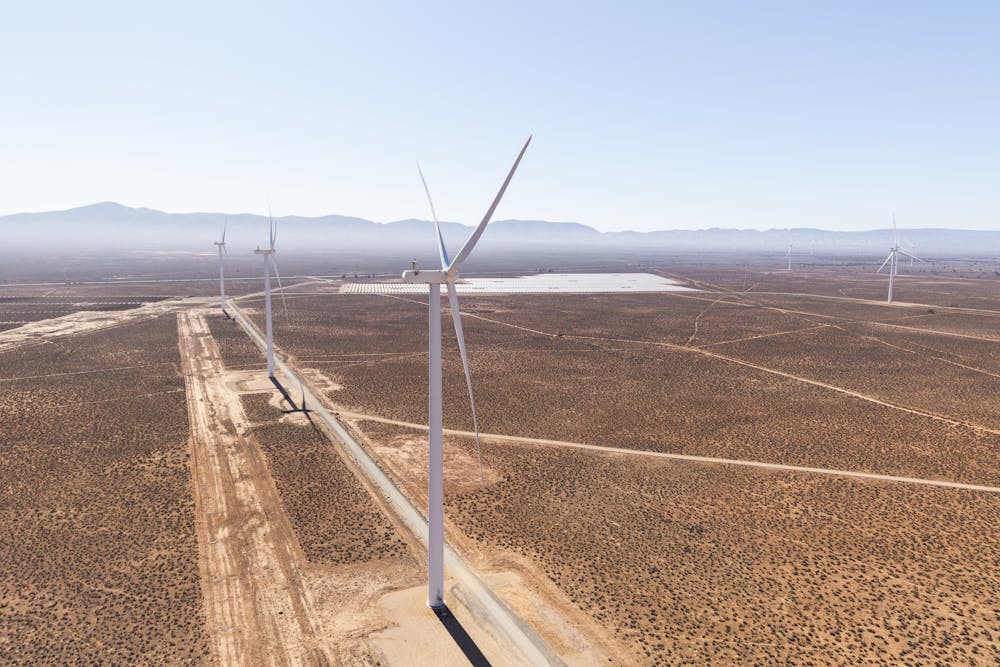
    But the same can’t be said for wind farms, the second-largest source of renewable energy in Australia. Onshore wind costs actually rose about 8% in 2023–24 and another 6% in 2024–25.

    The findings are contained in the GenCost 2024–25 report by CSIRO and the Australian Energy Market Operator, released this week.

    Rising costs are putting real pressure on the wind industry, undermining investor confidence. Developers of offshore wind projects are walking away, and even cheaper on-shore wind projects are under strain. Even as wind energy becomes a mainstay in China, the United States and Germany, the industry faces real headwinds in Australia.

    This is surprising. Wind, like solar, was projected to get steadily cheaper. The fuel is free and turbines are getting better and better. Instead, wind in Australia has remained stubbornly expensive. Solving the problem will be challenging. But solutions have to be found fast if Australia is to reach the goal of 82% renewable power in the grid by 2030 – now less than five years away.

    Australia has no offshore wind projects up and running – and cost spikes may put planned projects at risk.
    Obatala-photography/Shutterstock

    Five reasons why this is happening

    Here’s what’s going on:

    1. Global supply chains have been disrupted

    The cost of steel, copper, fibreglass and other materials vital for wind turbines shot up during the pandemic. As a result, turbine prices rose almost 40% between 2020 and 2022. While input costs have fallen, turbine prices remain high. Solar panels can be churned out in factories, but modern wind turbines are massive, complex structures that require specialised manufacturing and logistics. That makes them more sensitive to global price fluctuations.

    2. Good wind is often in remote places

    Australia’s best wind resources are typically far from cities and existing grid infrastructure. Connecting far-flung wind farms such as Tasmania’s Robbins Island to the grid can require new and very expensive transmission lines. Remote sites mean extra costs such as temporary worker accommodation. The GenCost report notes this has added about 4% to wind project budgets in 2024–25 compared with the year before.

    Many other countries rely heavily on offshore wind, because wind blows more strongly and reliably over oceans. Unfortunately, spiking costs are likely to further delay the arrival of offshore wind in Australia. GenCost projects the first offshore wind projects in Australia will face even steeper costs.

    Good wind resources are often located in remote areas of Australia.
    Brook Mitchell/Stringer via Getty

    3. Local construction and labour costs have soared

    Australia faces a shortage of workers with the skills to build and maintain wind farms, resulting in higher wages and recruitment costs. Wind developers say construction costs have become a real issue. Wind farms are more labour-intensive than solar.

    4. Interest rates have raised financing costs

    Wind farms require large upfront investments and lengthy construction periods. Even a small increase in interest rates can make them unviable – and interest rates have been high for some time.

    5. Reliability concerns, regulatory delay and community opposition

    According to US researchers, technical issues have emerged for some new wind turbines, creating unexpected costs for developers. The long, complex process of getting permits, carrying out environmental assessments and building community support is pushing out project timelines, increasing costs and uncertainty for developers.

    Will solar take over?

    Solar faces far fewer challenges. Solar panels are mass-produced, meaning costs are steadily driven down through economies of scale. Panels can be deployed quickly and solar farms tend to face less community opposition.

    Wind turbines have to spin to function, while solar panels have no moving parts (though systems that track the Sun do). As a result, solar farms require less maintenance and are more reliable.

    It’s no surprise large-scale solar has been on a record-breaking run, growing 20-fold between 2018 and 2023.

    Solar panels make electricity during daylight hours, especially in summer. By contrast, wind tends to produce more power at night and during winter months. This is why wind is so useful to a green grid.

    Generating power from both wind and sunshine can slash how much storage is needed to ensure grid reliability, lowering overall system costs. A balanced mix of wind, solar and storage will meet Australia’s electricity needs more efficiently and reliably than just solar and storage, according to the International Renewable Energy Agency and independent researchers.

    Could wind come back?

    Making wind more viable will take work. Potential solutions do exist, such as expanding the skilled workforce and investing in specialised ships and equipment to install turbines offshore.

    Shipping large turbines from Denmark or China is expensive. To avoid these costs, it could make sense to encourage local manufacturing of large and heavy parts such as the main tower.

    Other options include finding lower-cost turbine suppliers and streamlining regulatory processes.

    Rising material and labour costs have driven up the cost of wind turbines. Pictured: turbine blades in China’s Jiangsu province in 2022 about to be shipped to Australia.
    Xu Congjun/Future Publishing via Getty Images

    The newly announced expansion of the government’s Capacity Investment Scheme could help reduce risks and give certainty, alongside public investment in new transmission lines.

    If nothing is done or if new measures don’t help, wind is likely to stall while solar and storage race ahead.

    That’s not the worst outcome. Australia could get a long way by relying on batteries and pumped hydro to store power from solar during the day and release it in the evenings, as California is doing. But this strategy involves trade offs, such as higher storage-capacity needs and the risk of insufficient power during long cloudy periods.

    For Australia to optimise its mix of renewables and storage, policymakers will have to tackle wind’s cost challenges. Effective action could lower costs, accelerate project timelines and bolster flagging investor confidence.

    Magnus Söderberg does not work for, consult, own shares in or receive funding from any company or organisation that would benefit from this article, and has disclosed no relevant affiliations beyond their academic appointment.

    ref. 5 reasons why wind farms are costing more in Australia – and what to do about it – https://theconversation.com/5-reasons-why-wind-farms-are-costing-more-in-australia-and-what-to-do-about-it-262126

    MIL OSI AnalysisEveningReport.nz

  • MIL-Evening Report: ER Report: A Roundup of Significant Articles on EveningReport.nz for July 31, 2025

    ER Report: Here is a summary of significant articles published on EveningReport.nz on July 31, 2025.

    5 reasons why wind farms are costing more in Australia – and what to do about it
    Source: The Conversation (Au and NZ) – By Magnus Söderberg, Professor and Director, Centre for Applied Energy Economics and Policy Research, Griffith University Saeed Khan/Getty Building a solar farm in Australia is getting about 8% cheaper each year as panel prices fall and technology improves, according to an official new report. Battery storage costs are

    Sporty spice: how romance fiction is adding a new dynamic to sports fandom
    Source: The Conversation (Au and NZ) – By Kasey Symons, Lecturer of Communication, Sports Media, Deakin University Sports fans might love their teams, cheer or curse each game’s result and admire their favourite athletes, but we rarely associate sports with romance. However, that may be slowly changing thanks to the recent spike in the popularity

    Just as NZ began collecting meaningful data on rainbow communities, census changes threaten their visibility
    Source: The Conversation (Au and NZ) – By Lori Leigh, Research Fellow in Public Health, University of Otago Getty Images New Zealand’s 2023 census was the first to collect data on gender identity and sexual orientation, showing one in 20 adults identify as LGBTQIA+. But just as reports from this more inclusive census are being

    Big tech says AI could boost Australia’s economy by $115 billion a year. Does the evidence stack up?
    Source: The Conversation (Au and NZ) – By Uri Gal, Professor in Business Information Systems, University of Sydney Imaginima / Getty Images AI is on the agenda in Canberra. In August, the Productivity Commission will release an interim report on harnessing data and digital technology such as AI “to boost productivity growth, accelerate innovation and

    Progress on Closing the Gap is stagnant or going backwards. Here are 3 things to help fix it
    Source: The Conversation (Au and NZ) – By Madeleine Pugin, Research Fellow, School of Government and International Relations, Griffith University The Productivity Commission’s latest data on Closing the Gap progress represents an unsurprisingly grim overview of the socioeconomic inequalities experienced by Aboriginal and Torres Strait Islander peoples. Closing the Gap is the plan federal and

    More than 2 in 5 young Australians are lonely, our new report shows. This is what could help
    Source: The Conversation (Au and NZ) – By Michelle H. Lim, Associate Professor, Sydney School of Public Health, University of Sydney Oliver Rossi/Getty Images Loneliness is not a word often associated with young people. We tend to think of our youth as a time spent with family, friends and being engaged with school and work

    How migrant business owners turn their identity into an asset, despite some bumps along the way
    Source: The Conversation (Au and NZ) – By Shea X. Fan, Associate Professor, Human Resource Management, Deakin University Odua Images/Shutterstock Too often, it’s anti-immigration sentiment dominating headlines in Australia. But a quieter story is going untold. Migrants are not just fitting into Australian society, they’re actively reshaping it through entrepreneurship. Starting a business is difficult

    The Man from Hong Kong at 50: how the first ever Australian–Hong Kong co-production became a cult classic
    Source: The Conversation (Au and NZ) – By Gregory Ferris, Senior Lecturer, Media Arts & Production, University of Technology Sydney LMPC via Getty Images A cinematic firecracker of a film exploded onto international screens 50 years ago this week, blending martial arts mayhem, Bond-esque set pieces, casual racism – and a distinctly Australian swagger. From

    Rules for calculating climate risk in financial reporting by NZ businesses need revisiting – new research
    Source: The Conversation (Au and NZ) – By Martien Lubberink, Associate Professor of Accounting and Capital, Te Herenga Waka — Victoria University of Wellington Andrew MacDonald/Getty Images The recent International Court of Justice (ICJ) decision on climate action marked a significant step forward in formalising an idea many already accept: climate inaction is not merely

    Climate justice victory at the ICJ – the student journey from USP lectures to The Hague
    By Vahefonua Tupola in Suva The University of the South Pacific (USP) is at the heart of a global legal victory with the International Court of Justice (ICJ) delivering a historic opinion last week affirming that states have binding legal obligations to protect the environment from human-induced greenhouse gas emissions. The case, hailed as a

    Climate justice victory at the ICJ – the student journey from USP lectures to The Hague
    By Vahefonua Tupola in Suva The University of the South Pacific (USP) is at the heart of a global legal victory with the International Court of Justice (ICJ) delivering a historic opinion last week affirming that states have binding legal obligations to protect the environment from human-induced greenhouse gas emissions. The case, hailed as a

    Kamchatka earthquake is among top 10 strongest ever recorded. Here’s what they have in common
    Source: The Conversation (Au and NZ) – By Dee Ninis, Earthquake Scientist, Monash University Today at about 11:30am local time, a magnitude 8.8 earthquake struck off the coast of Russia’s Kamchatka Peninsula in the country’s far east. Originating at a depth of roughly 20 kilometres, today’s powerful earthquake – among the ten strongest in recorded

    Kamchatka earthquake is among top 10 strongest ever recorded. Here’s what they have in common
    Source: The Conversation (Au and NZ) – By Dee Ninis, Earthquake Scientist, Monash University Today at about 11:30am local time, a magnitude 8.8 earthquake struck off the coast of Russia’s Kamchatka Peninsula in the country’s far east. Originating at a depth of roughly 20 kilometres, today’s powerful earthquake – among the ten strongest in recorded

    Tsunami warnings are triggering mass evacuations across the Pacific – even though the waves look small. Here’s why
    Source: The Conversation (Au and NZ) – By Milad Haghani, Associate Professor and Principal Fellow in Urban Risk and Resilience, The University of Melbourne Last night, one of the ten largest earthquakes ever recorded struck Kamchatka, the sparsely populated Russian peninsula facing the Pacific. The magnitude 8.8 quake had its epicentre in the sea just

    NAPLAN is just one test. Here’s what to do if your child’s results were in the bottom bands
    Source: The Conversation (Au and NZ) – By Sally Larsen, Senior Lecturer in Education, University of New England Rawpixel/ Getty Images The latest round of NAPLAN results are out, along with a string of news reports about “students falling behind” and “failing”, and experts sounding the “alarm” about school progress. In March, all Australian students

    Inflation slows again — but is it enough for the Reserve Bank to cut interest rates?
    Source: The Conversation (Au and NZ) – By Stella Huangfu, Associate Professor, School of Economics, University of Sydney Doublelee/Shutterstock Inflation is moving in the right direction, but new figures released today may not be soft enough to trigger a cut in official interest rates in August. The Australian Bureau of Statistics released the June quarter

    With the UK and France moving toward recognising Palestine, will Australia now follow suit?
    Source: The Conversation (Au and NZ) – By Donald Rothwell, Professor of International Law, Australian National University One of the smallest and most exclusive clubs in the world belongs to states. The US Department of State puts the number of independent recognised states at 197, while others count 200. The United Nations, meanwhile, has 193

    With the UK and France moving toward recognising Palestine, will Australia follow suit?
    Source: The Conversation (Au and NZ) – By Donald Rothwell, Professor of International Law, Australian National University One of the smallest and most exclusive clubs in the world belongs to states. The US Department of State puts the number of independent recognised states at 197, while others count 200. The United Nations, meanwhile, has 193

    An underwater observatory keeping the pulse of the Southern Ocean for nearly 30 years yields fresh results
    Source: The Conversation (Au and NZ) – By Christopher Traill, PhD Candidate Southern Ocean biogeochemistry, University of Tasmania Elizabeth Shadwick In a world affected by climate change, the Southern Ocean plays an outsized role. It absorbs up to 40% of the human-caused emissions taken up by the oceans while also being home to some of

    MIL OSI AnalysisEveningReport.nz

  • MIL-OSI New Zealand: Education – Simone Kaho awarded 2025 Fulbright-Creative New Zealand Pacific Writer’s Residency in Hawaii

    Source: Creative New Zealand

    Fulbright New Zealand and Creative New Zealand are delighted to announce Simone Kaho is the recipient of the 2025 Pacific Writer’s Residency.

    This annual award is for an established New Zealand writer of Pacific heritage to carry out work on a creative writing project exploring Pacific identity, culture or history at the University of Hawai’i for three months.

    Simone Kaho says many writers she admires and follows have won the award in previous years.

    “It’s a fabulous thing to receive institutional support for work that is so challenging. What if our most profound connections aren’t just with family, but in deep attunement with nature, recognising patterns in the unseen, and finding new ways to move forward? In this project, I’ll be drawing theoretical lines between Pacific people who are neurodiverse, and the traits of Pacific wayfinders—and I hope to find evidence of these in Hawaii’s research archives,” says Simone.

    Fulbright NZ Executive Director Penelope Borland says it is heartening to see the residency taken up by a poet of Simone’s distinction.

    “We are thrilled to be granting the 2025 Pacific Writer’s Residency to Simone Kaho, enabling her to continue her work that has already received widespread acclaim, most recently seeing her take up the 2022 Emerging Pasifika writer in Residence at the prestigious International Institute of Modern Letters. With this award, Simone will travel to Hawai’i, where I am sure a deeply meaningful experience awaits her,” says Penelope.  

    Makerita Urale, Creative New Zealand’s Senior Manager Pacific Arts, herself an alumna of the residency, says the award is timely for Simone’s literary career.

    “Simone’s work is fearless and deeply grounded in lived experience and cultural insight. This residency is a fitting next step for an artist of her calibre, and we look forward to seeing how her time in Hawai’i will further shape and strengthen her work,” says Makerita.

    Previous recipients of the prestigious Pacific Writer’s Residency have been some of New Zealand’s most celebrated writers, including Tusiata Avia, Karlo Mila, Oscar Kightley, David Eggleton, Mīria George, and playwright Victor Rodger.

    MIL OSI New Zealand News

  • MIL-OSI Europe: SMHI donates diesel generator to hospital in Ukraine

    Source: Government of Sweden

    In connection with Minister for Climate and the Environment Romina Pourmokhtari’s visit to Ukraine in recent days, the Government decided to instruct the Swedish Meteorological and Hydrological Institute (SMHI) to transfer a diesel generator to Ukraine. The Swedish Civil Contingencies Agency, together with the European Emergency Response Coordination Centre (ERCC) has been in contact with a Ukrainian hospital that is in great need of this support, and will promptly make arrangements for the generator to be transported to Ukraine.

    MIL OSI Europe News

  • MIL-OSI: Euronet Worldwide Reports Second Quarter 2025 Financial Results – Highlighted by 13% Operating Income Growth

    Source: GlobeNewswire (MIL-OSI)

    • Digital growth strategy accelerated with the announced acquisition of leading credit card issuing platform
    • Ren signs agreement with top tier United States bank
    • Money Transfer expands digital remittance through Google partnership
    • Money Transfer enters Japanese market with acquisition of Kyodai Remittance
    • Operating margin expansion of 112 basis points

    LEAWOOD, Kan., July 30, 2025 (GLOBE NEWSWIRE) — Euronet (“Euronet” or the “Company”) (NASDAQ: EEFT), a global leader in payments processing and cross-border transactions, announced today second quarter 2025 financial results.

    Euronet reports the following consolidated results for the second quarter 2025 compared with the same period of 2024:

    • Revenues of $1,074.3 million, a 9% increase from $986.2 million (6% increase on a constant currency1 basis).
    • Operating income of $158.6 million, an 18% increase from $134.3 million (13% increase on a constant currency basis).
    • Adjusted EBITDA2 of $206.2 million, a 16% increase  from $178.2 million (11% increase on a constant currency basis).
    • Net income attributable to Euronet of $97.6 million, or $2.27 diluted earnings per share, compared with $83.1 million, or $1.73 diluted earnings per share.
    • Adjusted earnings per share3 of $2.56, a 14% increase from $2.25. 

    See the reconciliation of non-GAAP items in the attached financial schedules.   

    “I’m very pleased with the business’ constant currency operating profit growth of 13% and the margin expansion of 112 basis points—on its own, this is exciting.  But, I’m more excited about our accomplishments to further our digital strategy through the acquisition of a leading credit card issuing platform – CoreCard – and the signing of a Ren agreement with one of the top three banks in the United States. 

    The acquisition of CoreCard fits nicely with our Ren platform. As described in a separate press release, this is not just a credit issuing platform, it’s a platform serving leading brands in the US, processing at scale, tried and tested. This premier product gives us yet more opportunity to go after the $10 billion issuing market where the market growth rates are much stronger outside the United States, which aligns strongly with our global business where more than 75% of our revenues are from outside the United States.  Moreover, another exciting aspect of the issuing business is its margin opportunity, nearing 50 percent.  It’s these kinds of initiatives that have contributed to our 20-year double digit growth rate and will continue to drive future growth – focused on digital payments.  This acquisition is directly in line with our strategy to shift a stronger mix of our business toward the digital economy. 

    Not only did we advance our digital agenda with the credit issuing platform, we just signed an agreement with one of the top three banks in the United States for the deployment of our Ren ATM operating and switching product.  While we have had many successes with Ren outside the US, this is not just the first agreement in the US we’ve signed, but it is with super impressive top-tiered bank – a real testament to the value proposition of Ren”, said Michael J. Brown, Euronet’s Chairman and Chief Executive Officer.

    Segment and Other Results

    The EFT Processing Segment reports the following results for the second quarter 2025 compared with the same period or date in 2024:

    • Revenues of $338.5 million, an 11% increase from $305.4 million (6% increase on a constant currency basis).
    • Operating income of $84.6million, a 6% increase from $79.9 million (1% increase on a constant currency basis).
    • Adjusted EBITDA of $110.6 million, a 5% increase from $105.0 million (no change on a constant currency basis).
    • Total of 57,326 installed ATMs as of June 30, 2025, a 5% increase from 54,736. We operated 56,760 active ATMs as of June 30, 2025, a 5% increase from 54,005 as of June 30, 2024.

    Constant currency revenue, operating income, and adjusted EBITDA growth in the second quarter 2025 was driven by market expansion, growth across most existing markets and the addition of access fees and an increase in interchange fees in certain markets. 

    The epay Segment reports the following results for the Q2 2025 compared with the same period or date in 2024:

    • Revenues of $280.1 million, a 7% increase from $260.9 million (5% increase on a constant currency basis).
    • Operating income of $31.1 million, a 19% increase from $26.2 million (17% increase on a constant currency basis).
    • Adjusted EBITDA of $32.8 million, a 17% increase from $28.0 million (15% increase on a constant currency basis).
    • Transactions of 1,107 million, consistent with prior year.
    • POS terminals of approximately 721,000 as of June 30, 2025, a 3% increase from 703,000.
    • Retailer locations of approximately 354,000 as of June 30, 2025, a 4% increase from 340,000.

    Constant currency revenue growth was driven by continued payments and digital media growth. Operating income and adjusted EBITDA grew faster than revenue, driven by a shift in product mix and effective operating expense management. Transaction growth from payments and digital media was offset by a decrease in low margin mobile transactions in India.

    The Money Transfer Segment reports the following results for the Q2 2025 compared with the same period or date in 2024:

    • Revenues of $457.9 million, a 9% increase from $421.8 million (6% increase on a constant currency basis).
    • Operating income of $65.6 million, a 39% increase from $47.3 million (33% increase on a constant currency basis).
    • Operating margin expansion of 296 basis points
    • Adjusted EBITDA of $71.6 million, a 33% increase from $54.0 million (28% increase on a constant currency basis).
    • Total transactions of 46.1 million, a 4% increase from 44.3 million.
    • Total digital transactions of 5.8 million, a 29% increase from 4.5 million.
    • Network locations of approximately 631,000 as of June 30, 2025, an 8% increase from approximately 586,000.

    Constant currency revenue growth was primarily driven by growth in cross-border transactions, partially offset by a decrease in intra-US transactions. Direct-to-consumer digital transactions grew by 29%, reflecting continued consumer demand for digital products. Operating income and adjusted EBITDA growth outpaced revenue growth due to gross margin expansion and leverage of scale. Additionally, the Money Transfer segment continued to expand both its market footprint through the acquisition of a 60% interest in Kyodai Remittance as well as its industry leading global payments network to now reach 4.1 billion bank accounts, 3.2 billion wallet accounts and 631,000 payment locations.

    Corporate and Other reports $22.7 million of expense for the second quarter 2025 compared with $19.1 million for the second quarter 2024. The increase in corporate expenses is largely from the increase in long-term share-based compensation.

    Balance Sheet and Financial Position
    Unrestricted cash and cash equivalents on hand was $1,329.3 million as of June 30, 2025, compared to $1,393.6 million as of March 31, 2025. Total indebtedness was $2,438.1 million as of June 30, 2025, compared to $2,202.5 million as of March 31, 2025. Availability under the Company’s revolving credit facilities was approximately $884.2 million as of June 30, 2025. 

    The change in net cash is the result of cash generated from operations, working capital fluctuations and share repurchases of $2.3 million shares for $247 million during the second quarter.

    Outlook
    Taking into consideration recent trends in the business and the global economy, the Company anticipates its 2025 adjusted EPS will grow 12% to 16% year-over-year, consistent with its 10- and 20-year compounded annualized growth rates. This outlook does not include any changes that may develop in foreign exchange rates, interest rates or other unforeseen factors.

    Non-GAAP Measures
    In addition to the results presented in accordance with U.S. GAAP, the Company presents non-GAAP financial measures, such as constant currency financial measures, operating income, adjusted EBITDA, and adjusted earnings per share. These measures should be used in addition to, and not a substitute for, revenues, operating income, net income and earnings per share computed in accordance with U.S. GAAP. We believe that these non-GAAP measures provide useful information to investors regarding the Company’s performance and overall results of operations. These non-GAAP measures are also an integral part of the Company’s internal reporting and performance assessment for executives and senior management. The non-GAAP measures used by the Company may not be comparable to similarly titled non-GAAP measures used by other companies. The attached schedules provide a full reconciliation of these non-GAAP financial measures to their most directly comparable U.S. GAAP financial measure.

    The Company does not provide a reconciliation of its forward-looking non-GAAP measures to GAAP due to the inherent difficulty in forecasting and quantifying certain amounts that are necessary for GAAP and the related GAAP and non-GAAP reconciliation, including adjustments that would be necessary for foreign currency exchange rate fluctuations and other charges reflected in the Company’s reconciliation of historic numbers, the amount of which, based on historical experience, could be significant.  

    (1) Constant currency financial measures are computed as if foreign currency exchange rates did not change from the prior period. This information is provided to illustrate the impact of changes in foreign currency exchange rates on the Company’s results when compared to the prior period.

    (2) Adjusted EBITDA is defined as net income excluding, to the extent incurred in the period, interest expense, income tax expense, depreciation, amortization, share-based compensation and other non-cash purchase accounting adjustments, non-operating or non-recurring items that are considered expenses or income under U.S. GAAP. Adjusted EBITDA represents a performance measure and is not intended to represent a liquidity measure.

    (3) Adjusted earnings per share is defined as diluted U.S. GAAP earnings per share excluding, to the extent incurred in the period, the tax-effected impacts of: a) foreign currency exchange gains or losses, b) share-based compensation, c) acquired intangible asset amortization, d) non-cash income tax expense, e) non-cash investment gain f) other non-operating or non-recurring items and g) dilutive shares relate to the Company’s convertible bonds. Adjusted earnings per share represent a performance measure and is not intended to represent a liquidity measure. 

    Conference Call and Slide Presentation
    Euronet Worldwide will host an analyst conference call on July 31, 2025, at 9:00 a.m. Eastern Time to discuss these results. The call may also include discussion of Company developments on the Company’s operations, forward-looking information, and other material information about business and financial matters. The conference call and accompanying slide show presentation will be accessible via webcast by following the link posted on http://ir.euronetworldwide.com.  Participants wanting to access the conference call by telephone should dial (800)715-9871 (USA) or (646)307-1963 (international).

    A webcast replay will be available beginning approximately one hour after the event at http://ir.euronet worldwide.com and will remain available for one year.

    About Euronet Worldwide, Inc.
    A global leader in payments processing and cross-border transactions, Euronet moves money in all the ways consumers and businesses depend upon. This includes money transfers, credit/debit processing, ATMs, point-of-sale services, branded payments, currency exchange and more. With products and services in more than 200 countries and territories provided through its own brand and branded business segments, Euronet and its financial technologies and networks make participation in the global economy easier, faster and more secure for everyone. Visit the company’s website at www.euronetworldwide.com.

    Starting in Central Europe in 1994, Euronet now supports an extensive global real-time digital and cash payments network that includes 57,326 installed ATMs, approximately 1.2 million EFT point-of-sale terminals and a growing portfolio of outsourced debit and credit card services which are under management in 69 countries; card software solutions; a prepaid processing network of approximately 721,000 point-of-sale terminals at approximately 354,000 retailer locations in 64 countries; and a global money transfer network of approximately 631,000 locations serving 200 countries and territories with digital connections to 4.1 billion bank accounts, 3.2 billion digital wallet accounts and 4.0 billion Visa debit cards through Visa Direct payments. Euronet serves clients from its corporate headquarters in Leawood, Kansas, USA, and 67 worldwide offices. For more information, please visit the company’s website at www.euronetworldwide.com.

    Cautionary Statement Regarding Forward-Looking Statements
    This communication contains “forward-looking statements” within the United States Private Securities Litigation Reform Act of 1995. You can identify these statements and other forward-looking statements in this document by words such as “may,” “will,” “should,” “can,” “could,” “anticipate,” “estimate,” “expect,” “predict,” “project,” “future,” “potential,” “intend,” “plan,” “assume,” “believe,” “forecast,” “look,” “build,” “focus,” “create,” “work,” “continue,” “target,” “poised,” “advance,” “drive,” “aim,” “forecast,” “approach,” “seek,” “schedule,” “position,” “pursue,” “progress,” “budget,” “outlook,” “trend,” “guidance,” “commit,” “on track,” “objective,” “goal,” “strategy,” “opportunity,” “ambitions,” “aspire” and similar expressions, and variations or negative of such terms or other variations thereof. Words and terms of similar substance used in connection with any discussion of future plans, actions, or events identify forward-looking statements. 

    Forward-looking statements by their nature address matters that are, to different degrees, uncertain, such statements regarding the transactions contemplated by the Agreement and Plan of Merger (the “Merger Agreement’), dated as of July 30, 2025, by and among CoreCard, Euronet and Genesis Merger Sub Inc. (the “Transaction”), including the expected timing of the closing of the Transaction; future financial and operating results; benefits and synergies of the Transaction; future opportunities for the combined company; the conversion of equity interests contemplated by the Merger Agreement; the issuance of common stock of Euronet contemplated by the Merger Agreement; the expected filing by Euronet with the SEC of the Registration Statement and the proxy statement/prospectus; the ability of the parties to complete the proposed Transaction considering the various closing conditions and any other statements about future expectations that constitute forward-looking statements within the meaning of the Private Securities Litigation Reform Act of 1995, Section 27A of the Securities Act of 1933 and Section 21E of the Securities Exchange Act of 1934. All such forward-looking statements are based upon current plans, estimates, expectations and ambitions that are subject to risks, uncertainties and assumptions, many of which are beyond the control of Euronet and CoreCard, that could cause actual results to differ materially from those expressed in such forward-looking statements. Key factors that could cause actual results to differ materially include, but are not limited to, the expected timing and likelihood of completion of the Transaction, including the timing, receipt and terms and conditions of any required governmental and regulatory approvals of the Transaction; the occurrence of any event, change or other circumstances that could give rise to the termination of the definitive agreement; the possibility that CoreCard’s shareholders may not approve the Transaction; the risk that the parties may not be able to satisfy the conditions to the Transaction in a timely manner or at all; risks related to disruption of management time from ongoing business operations due to the Transaction; the risk that any announcements relating to the Transaction could have adverse effects on the market price of Euronet’s common stock; the risk that the Transaction and its announcement could have an adverse effect on the parties’ business relationships and business generally, including the ability of CoreCard or Euronet to retain customers and retain and hire key personnel and maintain relationships with their suppliers and customers, and on their operating results and businesses generally; the risk of unforeseen or unknown liabilities; customer, shareholder, regulatory and other stakeholder approvals and support; the risk of potential litigation relating to the Transaction that could be instituted against CoreCard or its directors and/or officers; the risk associated with third party contracts containing material consent, anti-assignment, transfer or other provisions that may be related to the Transaction which are not waived or otherwise satisfactorily resolved; the risk of rating agency actions and Euronet’s ability to access short- and long-term debt markets on a timely and affordable basis; the risk of various events that could disrupt operations, including: conditions in world financial markets and general economic conditions; inflation; the war in Ukraine and the related economic sanctions; and military conflicts in the Middle East.

    These risks, as well as other risks related to the proposed Transaction, will be described in the Registration Statement that will be filed with the SEC in connection with the proposed Transaction. While the list of factors presented here and the list of factors to be presented in the Registration Statement are considered representative, no such list should be considered to be a complete statement of all potential risks and uncertainties. Additional factors that may affect future results are contained in each company’s filings with the SEC, including each company’s most recent Annual Report on Form 10-K, as it may be updated from time to time by quarterly reports on Form 10-Q and current reports on Form 8-K, all of which are available at the SEC’s website http://www.sec.gov. Euronet regularly posts important information to the investor relations section of its website. Any forward-looking statements made in this release speak only as of the date of this release. Except as may be required by law, neither Euronet nor CoreCard intends to update these forward-looking statements and undertakes no duty to any person to provide any such update under any circumstances.

    Important Information for Investors and Stockholders
    In connection with the proposed transaction, Euronet plans to file with the SEC a registration statement on Form S-4 (the “Registration Statement”), which will include a proxy statement of CoreCard that also constitutes a prospectus of Euronet, and any other documents in connection with the transaction. After the Registration Statement has been declared effective by the SEC, the definitive proxy statement/prospectus will be sent to the holders of common stock of CoreCard. INVESTORS AND SHAREHOLDERS OF CORECARD AND EURONET ARE URGED TO READ THE PROXY STATEMENT/PROSPECTUS AND ANY OTHER DOCUMENTS FILED OR TO BE FILED WITH THE SEC IN CONNECTION WITH THE TRANSACTION WHEN THEY BECOME AVAILABLE, AS THEY WILL CONTAIN IMPORTANT INFORMATION ABOUT EURONET, CORECARD, THE TRANSACTION AND RELATED MATTERS. The registration statement and proxy statement/prospectus and other documents filed by Euronet or CoreCard with the SEC, when filed, will be available free of charge at the SEC’s website at www.sec.gov. Alternatively, investors and stockholders may obtain free copies of documents that are filed or will be filed with the SEC by Euronet, including the registration statement and the proxy statement/prospectus, on Euronet’s website at https://ir.euronetworldwide.com/for-investors, and may obtain free copies of documents that are filed or will be filed with the SEC by CoreCard, including the proxy statement/prospectus, on CoreCard’s website at https://investors.CoreCard.com/. The information included on, or accessible through, Euronet’s or CoreCard’s website is not incorporated by reference into this press release.

    No Offer or Solicitation
    This press release is not intended to and shall not constitute an offer to sell or the solicitation of an offer to buy any securities, nor shall there be any sale of securities in any jurisdiction in which such offer, solicitation or sale would be unlawful prior to appropriate registration or qualification under the securities laws of such jurisdiction. No offering of securities shall be made except by means of a prospectus meeting the requirements of Section 10 of the Securities Act of 1933, as amended.

    Participants in the Solicitation
    Euronet and CoreCard and their respective directors, executive officers and other employees may be deemed to be participants in the solicitation of proxies from CoreCard’s shareholders in connection with the proposed Transaction. A description of participants’ direct or indirect interests, by security holdings or otherwise, will be included in the proxy statement/prospectus relating to the proposed Transaction when it is filed with the SEC. Information regarding Euronet’s directors and executive officers is contained in the definitive proxy statement, dated April 4, 2025, for its 2025 annual meeting of stockholders, and in Euronet’s Annual Report on Form 10-K for the fiscal year ended December 31, 2024. Information regarding CoreCard’s directors and executive officers is contained in CoreCard’s definitive proxy statement, dated April 14, 2025, for its 2025 annual meeting of shareholders, and CoreCard’s Annual Report on Form 10-K for the fiscal year ended December 31, 2024. Additional information regarding ownership of Euronet’s securities by its directors and executive officers, and of ownership of CoreCard’s securities by its directors and executive officers, is included in each such person’s SEC filings on Forms 3 and 4. These documents and the other SEC filings described in this paragraph may be obtained free of charge as described above under the heading “Important Information for Investors and Stockholders.”

     EURONET WORLDWIDE, INC.
     Condensed Consolidated Balance Sheets
     (in millions)
      As of    
      June 30,   As of
      2025   December 31,
      (unaudited)   2024
    ASSETS          
    Current assets:          
    Cash and cash equivalents $ 1,329.3   $ 1,278.8
    ATM cash   937.4     643.8
    Restricted cash   40.3     9.2
    Settlement assets   1,547.1     1,522.7
    Trade accounts receivable, net   328.4     284.9
    Prepaid expenses and other current assets   353.8     297.1
    Total current assets   4,536.3     4,036.5
               
    Property and equipment, net   365.0     329.7
    Right of use lease asset, net   152.5     132.1
    Goodwill and acquired intangible assets, net   1,160.4     1,048.1
    Other assets, net   340.7     288.1
    Total assets $ 6,554.9   $ 5,834.5
               
    LIABILITIES AND EQUITY          
    Current liabilities:          
    Settlement obligations $ 1,547.1   $ 1,522.7
    Accounts payable and other current liabilities   898.3     842.3
    Current portion of operating lease obligations   55.0     48.3
    Short-term debt obligations   1,434.8     812.7
    Total current liabilities   3,935.2     3,226.0
               
    Debt obligations, net of current portion   1,002.3     1,134.4
    Operating lease obligations, net of current portion   100.8     87.4
    Capital lease obligations, net of current portion   1.0     1.4
    Deferred income taxes   64.4     71.8
    Other long-term liabilities   87.8     84.3
    Total liabilities   5,191.5     4,605.3
    Total equity   1,363.4     1,229.2
    Total liabilities and equity $ 6,554.9   $ 5,834.5
     EURONET WORLDWIDE, INC.
     Consolidated Statements of Operations
     (unaudited – in millions, except share and per share data)
       Three Months Ended
       June 30,
      2025     2024  
    Revenues $ 1,074.3     $ 986.2  
               
    Operating expenses:          
    Direct operating costs, exclusive of depreciation   620.6       580.8  
    Salaries and benefits   173.5       158.0  
    Selling, general and administrative   87.8       79.4  
    Depreciation and amortization   33.8       33.7  
    Total operating expenses   915.7       851.9  
    Operating income   158.6       134.3  
               
    Other income (expense):          
    Interest income   6.2       5.9  
    Interest expense   (28.2 )     (20.1 )
    Foreign currency exchange loss, net   (5.7 )     1.5  
    Other income   0.4       0.8  
    Total other expense, net   (27.3 )     (11.9 )
    Income before income taxes   131.3       122.4  
               
    Income tax expense   (33.6 )     (39.2 )
    Net income   97.7       83.2  
    Net loss attributable to noncontrolling interests   (0.1 )     (0.1 )
    Net income attributable to Euronet Worldwide, Inc. $ 97.6     $ 83.1  
    Add: Interest expense from assumed conversion of convertible notes, net of tax   0.1       1.0  
    Net income for diluted earnings per share calculation $ 97.7     $ 84.1  
    Earnings per share attributable to Euronet          
    Worldwide, Inc. stockholders – diluted $ 2.27     $ 1.73  
               
    Diluted weighted average shares outstanding   42,954,631       48,700,270  
     EURONET WORLDWIDE, INC.
    Reconciliation of Net Income to Operating Income (Expense) to Operating Income (Expense) and Adjusted EBITDA
     (unaudited – in millions)

    .

      Three months ended June 30, 2025
      EFT
    Processing
    epay Money
    Transfer
    Corporate
    Services
    Consolidated
    Net income                         $ 97.7
    Add: Income tax expense                           33.6
    Add: Total other expense, net                           27.3
    Operating income (expense) $ 84.6   $ 31.1   $ 65.6   $ (22.7 )   $ 158.6
    Add: Depreciation and amortization   26.0     1.7     6.0     0.1       33.8
    Add: Share-based compensation               13.8       13.8
    Earnings before interest, taxes, depreciation, amortization, share-based
    compensation (Adjusted EBITDA)
    $ 110.6   $ 32.8   $ 71.6   $ (8.8 )   $ 206.2

    .

      Three months ended June 30, 2024
      EFT
    Processing
    epay Money
    Transfer
    Corporate
    Services
    Consolidated
    Net income                         $ 83.2
    Add: Income tax expense                           39.2
    Add: Total other expense, net                           11.9
    Operating income (expense) $ 79.9   $ 26.2   $ 47.3   $ (19.1 )   $ 134.3
    Add: Depreciation and amortization   25.1     1.8     6.7     0.1       33.7
    Add: Share-based compensation               10.2       10.2
    Earnings before interest, taxes, depreciation, amortization, share-based
    compensation (Adjusted EBITDA) (1)
    $ 105.0   $ 28.0   $ 54.0   $ (8.8 )   $ 178.2


    (1)
    Adjusted EBITDA is a non-GAAP measure that should be considered in addition to, and not a substitute for, net income computed in accordance with U.S. GAAP.

     EURONET WORLDWIDE, INC.
     Reconciliation of Adjusted Earnings per Share
     (unaudited – in millions, except share and per share data)
     
      Three Months Ended
      June 30,
      2025     2024  
    Net income attributable to Euronet Worldwide, Inc. $ 97.6     $ 83.1  
    Foreign currency exchange loss (gain)   5.7       (1.5 )
    Intangible asset amortization (1)   4.7       6.5  
    Share-based compensation (2)   13.8       10.2  
    Income tax effect of above adjustments (3)   (13.7 )     4.3  
    Non-cash investment gain (4)   (0.4 )      
    Non-cash GAAP tax expense (5)   3.0       1.9  
    Adjusted earnings (6) $ 110.7     $ 104.5  
    Adjusted earnings per share – diluted (6) $ 2.56     $ 2.25  
    Diluted weighted average shares outstanding (GAAP)   42,954,631       48,700,270  
    Effect of adjusted EPS dilution of convertible notes   (176,123 )     (2,781,818 )
    Effect of unrecognized share-based compensation on diluted shares
    outstanding
      406,912       420,305  
    Adjusted diluted weighted average shares outstanding   43,185,420       46,338,757  

    (1) Intangible asset amortization of $4.7 million and $6.5 million are included in depreciation and amortization expense of $33.8 million and $33.7 million for both the three months ended June 30, 2025 and June 30, 2024, in the consolidated statements of operations.

    (2) Share-based compensation of $13.8 million and $10.2 million are included in salaries and benefits expense of $173.5 million and $158.0 million for the three months ended June 30, 2025 and June 30, 2024, respectively, in the consolidated statements of operations.

    (3) Adjustment is the aggregate U.S. GAAP income tax effect on the preceding adjustments determined by applying the applicable statutory U.S. federal, state and/or foreign income tax rates. 

    (4) Non-cash investment gain of $0.4 million is included in other income in the consolidated statement of operations.

    (5) Adjustment is the non-cash GAAP tax impact recognized on certain items such as the utilization of certain material net deferred tax assets and amortization of indefinite-lived intangible assets.

    (6) Adjusted earnings and adjusted earnings per share are non-GAAP measures that should be considered in addition to, and not as a substitute for, net income and earnings per share computed in accordance with U.S. GAAP. 

    The MIL Network

  • MIL-OSI USA: Cassidy Joins President Trump at White House, Applauds Effort to Modernize Health System to Put Patients First

    US Senate News:

    Source: United States Senator for Louisiana Bill Cassidy

    (Click here to see President Trump shout out Senator Cassidy at the event)
    WASHINGTON – U.S. Senator Bill Cassidy, M.D. (R-LA), chair of the U.S. Senate Health, Education, Labor, and Pensions (HELP) Committee, joined President Trump at the White House promoting the administration’s new effort to modernize our health care system, improving care for American patients. Cassidy was also joined at the event by U.S. Health and Human Services Secretary Robert F. Kennedy Jr. and U.S. Centers for Medicare and Medicaid Services Director Mehmet Oz.
    “President Trump and I are aligned: it’s time to modernize our health care system to put patients first,” said Dr. Cassidy. “The administration’s new effort will deliver faster, smarter care to patients and reduce administrative burdens on providers. That’s Making America Healthy Again.”

    MIL OSI USA News

  • MIL-OSI Europe: Key health and medical care actors gathered at conference on support to Ukraine

    Source: Government of Sweden

    The will to support Ukraine is strong among Swedish health and medical care actors from both the public and private sectors. The Ministry of Health and Social Affairs and Swecare held a Conference on Support to the Recovery and Development of Health Care in Ukraine on 1 December to harness this engagement and discuss how Swedish support can be put to best use.

    MIL OSI Europe News

  • MIL-OSI Europe: Conference with key health and medical care actors to strengthen support to Ukraine

    Source: Government of Sweden

    On 1 December, Minister for Health Care Acko Ankarberg Johansson and Minister for Health and Social Affairs Jakob Forssmed will co-host a conference to discuss Sweden’s support to Ukraine’s health and medical care system. The conference, which will convene both public and private sector actors, aims especially to outline how Ukraine’s health care system can be rebuilt, strengthened and modernised.

    MIL OSI Europe News

  • MIL-OSI China: Casualties continue to mount in Gaza: UN humanitarians

    Source: People’s Republic of China – State Council News

    The casualty toll continues to mount among aid-seeking Palestinians and even some relief providers in Gaza despite the Israeli military tactical pause, UN humanitarians said Wednesday.

    “We are still seeing casualties among those seeking aid and more deaths due to hunger and malnutrition,” said the UN Office for the Coordination of Humanitarian Affairs (OCHA). “UN partners report high workloads, burnout and exhaustion, due mainly to the lack of food, among front-line workers.”

    The office said caseworkers in mental health and psycho-social support facilities are similarly affected.

    OCHA said that although the conditions for delivering aid and supplies are far from sufficient, the UN and its partners are taking advantage of any opportunity to support people in need during the tactical pause.

    The office cited the challenges it faces at the fenced-off Kerem Shalom/Karem Abu Salem crossing as an example.

    “For our drivers to access it, Israeli authorities must approve the mission, provide a safe route through which to travel, provide multiple ‘green lights’ on movement, as well as a pause in bombing, and, ultimately, open the iron gates to allow us to enter,” OCHA said.

    The office said the world body was allowed to bring into Gaza limited quantities of fuel through the Kerem Shalom/Karem Abu Salem and Zikim crossings. Almost half of the fuel was transferred to northern Gaza to support vital health, emergency, water and telecommunications needs.

    However, it said the fuel allowed into Gaza is insufficient to meet life-saving critical needs.

    A permanent ceasefire is needed more than ever. Unilateral tactical pauses alone do not allow for the continuous flow of supplies required to meet immense needs levels in Gaza, said OCHA.

    The office said the United Nations and partners continue to coordinate humanitarian movements inside Gaza with the Israeli authorities.

    “Yesterday, three facilitated missions allowed our staff to collect cargo containing food from the Kerem Shalom and Zikim crossings and allowed for fuel to be transferred within Gaza,” OCHA said. “However, the others faced impediments, particularly delays in receiving the green light to move by the Israeli authorities, and one had to be canceled.”

    The office said that to scale up the delivery of aid in a manner that begins to meet people’s tremendous needs, all crossings must open, a broad range of supplies, both humanitarian and commercial, be allowed to enter, aid movements inside Gaza be safeguarded and facilitated promptly, and relief workers be allowed to do their job.

    MIL OSI China News

  • MIL-OSI China: US to end tariff exemption for low-value imports starting Aug. 29

    Source: People’s Republic of China – State Council News

    This photo taken on May 10, 2025 shows cargo ships loaded with containers at the Port of Los Angeles in California, United States. [Photo/Xinhua]

    U.S. President Donald Trump on Wednesday signed an executive order suspending duty-free de minimis treatment for low-value shipments.

    Effective on Aug. 29, imported goods sent through means other than the international postal network that are valued at or under 800 U.S. dollars and that would otherwise qualify for the de minimis exemption will be subject to all applicable duties.

    For goods shipped through the international postal system, packages will instead be subject to a duty equal to the effective tariff rate applicable to the country of origin, or a duty ranging from 80 to 200 dollars per item.

    MIL OSI China News

  • MIL-OSI Asia-Pac: Property owner fined over $60,000 for not complying with removal order

    Source: Hong Kong Government special administrative region

    ​An owner was convicted and fined $66,830 in total, of which $46,830 was the fine for the number of days that the offence continued at the Kowloon City Magistrates’ Courts yesterday (July 30) for failing to comply with a removal order issued under the Buildings Ordinance (BO) (Cap 123). 

    The case involved unauthorised building works (UBWs) in a unit of a residential building at Tai Kok Tsui Road, including the erection of a structure of about 90 square metres on the flat roof, and the installation of three metal gates obstructing the means of escape. As the UBWs were carried out without prior approval and consent from the Buildings Department (BD), a removal order was served on the owner under section 24(1) of the BO. Failure to comply with the removal order, the owner was prosecuted by the BD.

    A spokesman for the BD said today (July 31), “Unauthorised building works may lead to serious consequences. Owners must comply with removal orders without delay. The BD will continue to take enforcement action against owners who fail to comply with removal orders, including instigation of prosecution, to ensure building and public safety.”

    Failure to comply with a removal order without reasonable excuse is a serious offence under the BO. The maximum penalty upon conviction is a fine of $200,000 and one year’s imprisonment, and a further fine of $20,000 for each day that the offence continues.

    MIL OSI Asia Pacific News

  • MIL-OSI Europe: New centres for preventing work-related crime

    Source: Government of Sweden

    The Government prioritises efforts to combat work-related crime, which in its most serious forms can involve human trafficking and human exploitation and is often a source of income for the criminal economy. Several regional centres for preventing work-related crime have opened in Sweden in late 2023. Minister for Gender Equality and Working Life and Deputy Minister for Employment Paulina Brandberg attended the opening of the Stockholm centre in mid-November.

    MIL OSI Europe News

  • MIL-OSI Economics: New Development Bank and SANRAL sign ZAR7 billion loan agreement for South Africa Roads Infrastructure

    Source: New Development Bank

    Johannesburg, South Africa – on July 22, 2025, The New Development Bank (NDB) and the South African National Roads Agency Soc Limited (SANRAL) have today signed a landmark loan agreement worth ZAR7 billion to finance the rehabilitation and expansion of key national road segments. This strategic partnership reflects a shared commitment to modernizing South Africa’s transport infrastructure, reducing logistics costs, and boosting economic growth.

    The loan agreement will fund critical upgrades including the widening of highways, rehabilitation of bridges, and improvement of intersections along major freight corridors. These infrastructure enhancements are expected to significantly reduce travel times, improve road safety, and facilitate smoother movement of goods and people across the country.

    To optimise financial efficiency, the loan is denominated in South African Rand (ZAR), which helps reduce debt financing charges by mitigating currency risk and aligning repayment obligations with local revenue streams.

    South Africa’s transport sector plays a vital role in the national economy, and efficient road networks are essential for supporting trade, tourism, and job creation. By investing in the modernization of its road infrastructure, SANRAL aims to lower transportation costs for the majority of road users in South Africa, enhance connectivity between urban and rural areas, and stimulate inclusive economic development.

    This financing aligns with the New Development Bank’s mission to support sustainable infrastructure projects that foster regional integration and economic resilience. As Mr. Monale Ratsoma, Chief Financial Officer, explained, “This loan agreement with SANRAL demonstrates the New Development Bank’s commitment to partnering with South Africa in building resilient and efficient infrastructure that drives economic transformation. We are proud to support projects that will improve the quality of life for millions of South Africans.”

    From SANRAL’s perspective, Reginald Demana, Chief Executive Officer, emphasised, “The investment from the New Development Bank is a vital step towards upgrading our national road network. It will enable us to deliver safer, more reliable roads that underpin economic growth and social development.

    The signing ceremony took place in Johannesburg at NDB’s Africa Regional Office and was attended by senior officials from both organisations, highlighting the strong cooperation between the New Development Bank and South African government agencies.
    Background Information

    New Development Bank

    NDB was established by Brazil, Russia, India, China and South Africa to mobilize resources for infrastructure and sustainable development projects in BRICS and other emerging market economies and developing countries, complementing the existing efforts of multilateral and regional financial institutions for global growth and development.

    For more information on NDB, please visit www.ndb.int

    South African National Roads Agency LTD

    The South African National Roads Agency (SANRAL) is an independent, statutory company. South Africa’s Ministry of Transport is the sole shareholder and owner of SANRAL. Its mandate focuses on building and maintaining roads to enhance connectivity and development in South Africa.

    MIL OSI Economics

  • MIL-OSI New Zealand: Abel Tasman Coastal Track fully reopen

    Source: NZ Department of Conservation

    Date:  31 July 2025

    The popular Great Walk in the Abel Tasman National Park had been temporarily closed from Mārahau to Anchorage due to the damage.

    DOC Motueka Operations Manager Chris Golding says staff have been out on the track since the heavy rain on Tuesday 29 July and it’s come through without any significant new damage.

    “There are several areas with minor damage, which are all passable with care. Please make safe decisions for your ability level and if you have any doubts, don’t go ahead. We’ll get these tidied up in the coming weeks when we can,” says Chris.

    “Some planned maintenance is happening between Bark Bay and Onetahuti for another month or so. There will be machines operating so please follow all instructions from the staff and contractors.”

    Chris says access to the Kahurangi National Park from the Tasman District is still severely limited by road closures.

    “We’re working out repair options for Graham Valley Rd, which is the gateway Flora Car Park and some of the region’s most popular alpine walks. Over the Takaka Hill, the Cobb Valley is also closed due to several slips,” Chris says.

    “There’s no timeframe for when these will reopen, please check the DOC and Tasman District Council websites for the latest.

    “The Wangapeka River Rd is open, but a four-wheel-drive is required as there has been some storm damage.”

    The Top of the South has had several storms in the last month and anyone going into the outdoors should be prepared to potentially come across track damage. Make safe decisions and report issues to 0800 DOC HOT (0800 362 468).

    The DOC website will be kept up to date as things change. Anyone planning to head out should check for the latest before their trip.

    Background information

    To check for any road closures use Road Closures (Local and Highway).

    Contact

    MIL OSI New Zealand News

  • MIL-OSI Europe: Sweden taking part in several international climate transition initiatives

    Source: Government of Sweden

    At COP28 in Dubai, Sweden joined a number of international initiatives to speed up the climate transition in various ways. These include a declaration to triple global capacity of nuclear energy, and initiatives for carbon pricing and climate transition in industry.

    MIL OSI Europe News

  • MIL-OSI USA: Rep. Gabe Vasquez Demands Transparency from ICE at Otero County Detention Center Oversight Visit

    Source: US Representative Gabe Vasquez’s (NM-02)

    WASHINGTON, D.C. – On July 30, 2025, U.S. Representative Gabe Vasquez (NM-02) visited the Otero County Processing Center to carry out his oversight duties as a Member of Congress and get critical insight into how ICE is treating detainees using taxpayer funds.

    During the visit, the Congressman met with ICE representatives and private contractor staff, was given a tour of the facility, and underscored the urgent need for consistent, independent oversight to ensure taxpayer-funded detention centers uphold basic standards of care and human dignity.

    Despite his lawful right to congressional oversight and prior submission of privacy forms, the Congressman was not permitted to speak with detained individuals — a restriction which facility staff stated was due to “changing policies.” 

    “I am all for measures that keep our borders and communities secure, but after my visit to the Otero Processing Center, it is only more clear that ICE is not making our communities safer,” said Vasquez. “Today, we learned that over 80% of the individuals detained in this facility have no criminal charges or convictions — meaning the administration is not just targeting violent individuals, it’s filling detention centers with workers, parents, and our community members. ICE’s complete disregard for the need for transparent legal processes and accountability around the spending of taxpayer money is unacceptable.” 

    During the Congressman’s visit, he encountered:

    • ICE representatives who were unwilling and unable to give him clear and straightforward  answers to questions regarding their treatment of their detainees 
    • Phones—which detained individuals rely on to speak with legal counsel and loved ones—were broken
    • Toilets would not flush
    • Accounts of the facility’s history of an understaffed medical team 

    Vasquez continues to champion legislation like his Humane Accountability Act, which would increase transparency around ICE detention and strengthen reporting standards for how individuals are treated in federal detention centers.

    ###

    MIL OSI USA News

  • MIL-Evening Report: Grief is the Thing with Feathers comes to the stage with a glorious intensity of purpose

    Source: The Conversation (Au and NZ) – By Huw Griffiths, Associate Professor of English Literature, University of Sydney

    Brett Boardman/Belvoir

    The idea of the titular Crow in Ted Hughes’ poems is wild, untameable and irreducible to words. In an early poem in the sequence, words come at Crow from all angles but he just ignores them. Finally, “Words retreated, suddenly afraid / Into the skull of a dead jester / Taking the whole world with them”.

    Crow just yawns: “long ago / He had picked that skull empty”. A figure that is ancient and beyond the reach of gods or human belief systems, Hughes’ Crow resists ever being pinned down or fully understood.

    In Max Porter’s 2015 novella, Grief is the Thing with Feathers, a version of Hughes’ Crow enters the life of a bereaved Dad, newly left to look after his two sons after the death of his wife.

    Dad is a literary scholar, writing a book about Ted Hughes, and Crow is a metaphor come to life, some version of the endless grief through which he is living.

    But Porter’s Crow is not quite the same thing as Hughes’ irredeemable half-myth/half-beast. This crow cares: “I do eat baby rabbits, plunder nests, swallow filth, cheat death […] But I care, deeply. I find humans dull except in grief”. And he is self-aware, too – aware that Hughes’ mythical beast image can also just be a performance, a piece of schtick: “I do this, perform some unbound crow stuff, for him”.

    Now, a new adaptation of the novella brings the story to the Belvoir stage.

    Devastation and renewal

    Toby Schmitz as both Dad and Crow is just brilliant. He exactly captures the messy contradictions of this situation, shifting between the quiet melancholy and stifled rage of the widower and the restless, contradictory energies of Crow.

    The latter he performs in recognisable Schmitz fashion: a leery and mischievous outsider, challenging the audience and holding their attention just as much as he teases, taunts and cajoles both Dad and his two sons.

    His performance brings out the humour of Porter’s book, the sense of its own absurdity that shadows his story of devastation and tentative renewal.

    Toby Schmitz as both Dad and Crow is just brilliant.
    Brett Boardman/Belvoir

    Also on stage are Philip Lynch and Fraser Morrison as the two boys, doing a great job (as the characters do in Porter’s book) of providing an emotional antidote to the wheeling terror that sometimes spins off Dad’s encounter with Crow.

    Schmitz adapted the book with director, Simon Phillips, and designer, Nick Schlieper. They have only very subtly altered the text in ways that enable a dynamic live performance, conversations between Dad, Crow and Boys.

    Tying the piece together are compelling video direction and live music. The former is genuinely exciting, as it etches the presence of Crow’s mythology across the stage, aided by Craig Wilkinson’s work as illustrator, clearly taking inspiration from Hughes’ original illustrator, Leonard Baskin. Composer and cellist, Freya Schack-Arnott provides a stunning and emotional soundtrack throughout, at times improvising to the action.

    An intensity of purpose

    Porter’s novel is ten years old this year. It has been ridiculously successful for a slender (114 pages) and apparently unconventional book.

    Seeming to imitate some of the conventions of 20th century modernism (non-linear narratives; stream-of-consciousness; an interplay of myth and reality; shifting perspectives from miniscule detail to grand narrative), it should not have been destined to occupy the best-seller list.

    And, yet, multiple awards later, it remains in regular rotation on the central displays of high street bookstores around the world. It has been adapted for the stage before, in a successful production in London starring Cillian Murphy in 2019, and in a less well-received 2025 film starrring Benedict Cumberbatch.

    Philip Lynch and Fraser Morrison as the two boys provide an emotional antidote.
    Brett Boardman/Belvoir

    It would be easy to dismiss this success as something to do with the aesthetic world within which it situates itself. Careful to use Faber and Faber’s classic font, Albertus (something it shares with the Belvoir production when passages are projected above the stage), the book is an elegant product that advertises its own self-conscious literariness.

    But this assessment would miss the brilliance, the sophistication and the tender power of Porter’s writing, as well as the way that the book has already got there before you.

    Porter plays with his own contemporary taming of older and wilder literary traditions. If Hughes’ Crow has been domesticated in Porter’s use of him (I can’t imagine Hughes’ Crow leaving us with the line, “Just be kind and look out for your brother”), he knows that this sentimentality is now hard-earned and not to be ignored.

    What this production adds to Porter’s beautiful book is an intensity of purpose. This is a gloriously collaborative effort, from theatre makers at the height of their powers, to communicate the beauty that persists through the pain and degradation that life throws at us.

    Grief is the Thing with Feathers is at Belvoir St Theatre, Sydney, until August 24.

    Huw Griffiths does not work for, consult, own shares in or receive funding from any company or organisation that would benefit from this article, and has disclosed no relevant affiliations beyond their academic appointment.

    ref. Grief is the Thing with Feathers comes to the stage with a glorious intensity of purpose – https://theconversation.com/grief-is-the-thing-with-feathers-comes-to-the-stage-with-a-glorious-intensity-of-purpose-260414

    MIL OSI AnalysisEveningReport.nz

  • MIL-OSI USA: On the 60th Anniversary of Medicaid and Medicare, Cortez Masto Blasts Republicans for Gutting the Essential Health Care Programs

    US Senate News:

    Source: United States Senator for Nevada Cortez Masto

    FTP for TV stations of her remarks is available here.

    Cortez Masto told the story of a constituent named Hannah whose Type 1 diabetes makes her dependent on Medicaid coverage she may now lose

    Washington, D.C. – To mark the 60th anniversary of Medicaid and Medicare, U.S. Senator Cortez Masto (D-Nev.) took to the Senate floor to call out President Trump and Congressional Republicans for gutting Medicaid in order to pay for a tax giveaway for billionaires.

    Below are her remarks as prepared for delivery:

    Mr. President, as my colleagues have mentioned, today marks 60 years since Medicare and Medicaid were signed into law.

    Democrats and Republicans alike should be celebrating the lives that have been saved as a result of these critical programs. Members of both parties should be sharing stories about Americans who have benefitted from the health care they’ve received thanks to Medicare and Medicaid.

    Unfortunately, today, my Democratic colleagues and I are not celebrating.

    We are angry.

    We’re angry that President Trump lied when he said he would “cherish Medicaid” and that his allies in Congress wouldn’t touch this essential program.

    We’re angry that President Trump and Congressional Republicans slashed nearly $1 trillion from Medicaid so they could hand billionaires a tax cut – and add $4 trillion to our national deficit.

    And, we’re angry that their new law is about to kick 17 million Americans off their health insurance.

    In my home state of Nevada, that means up to 120,000 people will lose their health care.

    100,000 of those Nevadans will lose their access to Medicaid. And another 20,000 Nevadans will lose their affordable health coverage if Republicans continue to refuse to work with Democrats to extend the Affordable Care Act tax credits.

    There are a million reasons why this new law gutting Medicaid is terrible for Nevadans and for our country as a whole. But today, I just want to focus on one: Hannah.

    Hannah is a young girl who lives in Nevada, and her parents shared her story with me. Now, I want to share it with you.

    Hannah was diagnosed with a congenital kidney disease while still in utero. The first few years of her life were full of hospital rooms, doctors, and machines trying to keep her alive.

    At just two and a half years old, Hannah underwent a major surgery that finally gave her the opportunity to live like a normal kid. And she did, for a few years.

    But then, at age nine, Hannah fell into a coma. Imagine being her parents, watching completely helpless as your daughter fights something you can’t protect her from.

    Hannah did eventually wake up, but with a new diagnosis: diabetes, a condition nearly 270,000 Nevadans manage every day – not just the disease itself, but the crushing weight of the costs associated with it.

    Over the next two years, Hannah’s parents spent more than $5,000 out-of-pocket because their insurance refused to cover all the costs. Hannah and her family sacrificed so much just to be able to afford medication that would allow Hannah to lead a normal life.

    But just when they thought they would never be able to financially recover, they were able to enroll in Medicaid and receive the support they need to care for Hannah at home.

    Now, Hannah is able to live the life she wants to lead, without the fear of medical debt pulling her family back underwater. I want to read to you what Hannah’s parents wrote me next:

    “But without Medicaid, her insulin would cost more than our mortgage. Let that sink in. The price of the medication keeping my child alive is higher than the roof over her head – even after insurance. How does that make sense? America should be about neighbors caring for neighbors. But instead, we are pushing people with disabilities to the back of the line, treating their lives as less valuable, their futures as an afterthought. I beg you – I beg you – to save Medicaid. Not just for my Hannah, but for every child like her.”

    My Democratic colleagues and I worked hard to save Medicaid. And we tried to reach across the aisle to protect the 17 million Americans just like Hannah who could lose their health insurance because of this bill.

    But President Trump insisted Congressional Republicans pass his tax cut for billionaires, and they did what they were told.

    So now, Hannah and her family, and millions more like them, may be forced back into medical debt.

    And to the proponents of this new law who insist kids like Hannah aren’t the ones they’re targeting to kick off coverage, I’d say they’re either being dishonest, or they simply don’t understand how Medicaid actually works.

    These cuts shrink the entire pot of money states rely on to fund Medicaid. Nevada, and every state in the country, will be forced to stretch fewer dollars to cover everyone. That almost always means tightening eligibility or cutting services, so kids like Hannah end up losing coverage – even if they weren’t the “type” of person Republicans singled out for cuts.

    This is shameful. It’s un-American. We are better than this as a country.

    My Democratic colleagues and I will do everything in our power to restore the health care funding Republicans have gutted.

    And we won’t let them forget what they did.

    MIL OSI USA News

  • MIL-OSI: LIV Portfolio Management (LIVPM) Announces a Renewed Commitment to Philanthropy

    Source: GlobeNewswire (MIL-OSI)

    TIANJIN, China, July 31, 2025 (GLOBE NEWSWIRE) — LIV Portfolio Management (LIVPM) announces a renewed commitment to philanthropy, expanding its impact through a series of specific initiatives aimed at making a tangible difference in communities. These efforts will focus on areas like education, sustainability, and supporting those who need help the most, reflecting the company’s dedication to doing more than just managing wealth.

    LIV Portfolio Management has always been focused on helping clients grow and protect their wealth. Now, the company is putting its resources and expertise into projects that help improve lives. Whether through new partnerships with charities, donations, or the active involvement of its employees, LIVPM is working to empower individuals and provide solutions that will leave a lasting, positive impact.

    Giving Back in Tangible Ways

    • Partnership with Local Charities: LIV Portfolio Management has partnered with local organizations that focus on important causes, such as education and healthcare for underserved communities. The company will provide both financial support and employee time to help these organizations reach more people in need.
    • Employee Volunteer Program: LIV Portfolio Management is launching a volunteer program that lets employees give back by donating paid hours to community projects. In addition, the company will host volunteer days, allowing employees to work together on initiatives such as food banks, shelters, and environmental clean-ups.
    • Matching Donations: To encourage generosity within the company, LIV Portfolio Management is introducing a matching donations program for employees and clients. For every donation made to selected causes, LIVPM will match it, effectively doubling the positive impact. This program will support causes that align with the company’s values, like education and environmental conservation.
    • Environmental Sustainability: At LIVPM, we are actively working to protect the planet by supporting habitat restoration projects, improving biodiversity, and investing in clean energy solutions. Our efforts focus on reducing carbon footprints through the adoption of renewable energy, waste reduction programs, and the promotion of sustainable farming practices. We aim to make a lasting impact on the environment, creating a healthier, more sustainable future for generations to come.
    • Scholarships for Underserved Students: The company is creating a scholarship fund that will offer financial support to students from low-income backgrounds who are pursuing higher education. This fund will focus on students entering fields like environmental science, finance, and business, helping to create the next generation of leaders.

    A Culture of Giving Back

    “At LIV Portfolio Management, we believe that true wealth isn’t just about securing your financial future, it’s about enriching the lives of others,” said Adam Brooks, Chief Operating Officer. “These efforts go beyond just writing checks; they are about making a real difference. We want to empower our clients, employees, and partners to be part of this mission and create a positive, lasting impact.”

    Focused on Long-Term Impact

    “Philanthropy has always been a cornerstone of our values,” said Brooks. “We’re committed to making sure our efforts aren’t just about short-term help, but about creating real, lasting change, so our initiatives are designed to not only address immediate needs but also empower people and communities to thrive in the long term. We’re excited about the future and the difference we can make together.”

    About LIV Portfolio Management

    At LIVPM, we believe financial management should be clear, accessible, and always relevant to your life. Whether you’re just starting to build wealth or managing a substantial portfolio, we work alongside you to create strategies that evolve with your goals and needs. Our focus is on helping you make informed decisions that secure your future with confidence and clarity.

    We bring together years of experience, a steady approach, and a global perspective to help clients, so you get more than just a financial advisor; you get a true partner in your journey toward long-term security and success.

    For more information about LIV Portfolio Management, visit www.livpm.com

    Contact:

    Michael He, Media Relations Officer

    m.he@livpm.com

    +86 228 519 4314

    https://www.livpm.com/

    Disclaimer: This content is provided by LIV Portfolio Management. The statements, views, and opinions expressed in this column are solely those of the content provider. The information shared in this press release is not a solicitation for investment, nor is it intended as investment, financial, or trading advice. It is strongly recommended that you conduct thorough research and consult with a professional financial advisor before making any investment or trading decisions. Please conduct your own research and invest at your own risk.

    A photo accompanying this announcement is available at https://www.globenewswire.com/NewsRoom/AttachmentNg/e3484ab9-5da7-4a31-97ff-b100deb52825

    The MIL Network

  • MIL-OSI China: Renewables capacity doubles in first half

    Source: People’s Republic of China – State Council News

    A farmer works amid photovoltaic panels at a solar power station in the Yi-Hui-Miao Autonomous County of Weining, southwest China’s Guizhou Province, July 3, 2025. [Photo/Xinhua]

    China’s newly installed wind and solar power capacity nearly doubled year-on-year during the first half of this year, as the country ramps up its transition to cleaner energy sources, data from the China Electricity Council showed.

    Newly added power generation capacity during the first six months reached 290 million kilowatts, with new solar installations rising 107.1 percent year-on-year to 210 million kilowatts, and new wind power installations up 98.9 percent to 50 million kilowatts, it said.

    China’s renewable energy sector is expected to maintain rapid growth, with average annual new installed capacity reaching 200-300 million kilowatts during the 15th Five-Year Plan period (2026-30), said Zhang Lin, head of the council’s planning and development department, during a news conference in Beijing on Wednesday.

    The near doubling of China’s wind and solar capacity in the first half is a clear signal of the country’s accelerating commitment to its energy transition goals, said Lin Boqiang, head of the China Institute for Studies in Energy Policy at Xiamen University.

    “These installation figures demonstrate China’s ability to rapidly deploy renewable energy technologies at scale, positioning it as a global leader in clean energy investment and deployment.”

    According to the council, China’s power generation capacity is projected to hit a record high in 2025, fueled by a rapid expansion of renewable energy sources.

    New power generation capacity is expected to exceed 500 gigawatts in 2025, with new renewable energy capacity reaching approximately 400 GW, a result of China’s accelerated green energy transition and increasing investment in grid construction, the CEC said.

    Total installed power generation capacity is forecast to reach around 3.9 terawatts by the end of 2025, a year-on-year increase of approximately 16.5 percent. Nonfossil fuel sources are expected to account for 2.4 TW, or about 61 percent of total capacity, said Jiang Debin, deputy director of the council’s statistics and data center.

    The CEC also anticipates steady growth in China’s electricity demand in 2025, with total consumption expected to increase by 5-6 percent. Electricity demand is projected to grow faster in the second half of the year compared to the first, it said.

    China’s maximum power load once again set a new historical record on July 16, surpassing 1.5 billion kilowatts for the first time and reaching a peak of 1.506 billion kilowatts, according to the National Energy Administration.

    This represents an increase of 55 million kilowatts compared to last year’s peak load, the third time a historical record has been broken in July, it said.

    According to Chen Yaning, head of the council’s power supply and demand analysis department, the record reflects steady expansion in China’s electricity consumption, a key barometer of economic activity.

    Fueled by robust and sustained economic activity, power demand surged across the nation in the first half of this year, with industrial output, commercial operations and residential consumption all contributing to the heightened electricity needs, she said.

    “Equipment manufacturing and consumer goods manufacturing related to new quality productive forces have maintained strong resilience,” said Chen.

    The internet and related services sector saw a 27.4 percent year-on-year increase in electricity consumption, driven by the rapid development of mobile internet, big data and cloud computing.

    The charging and battery swapping services sector for electric vehicles saw a 42.4 percent increase in electricity consumption in the first half of the year, fueled by the rapid growth of the EV market.

    MIL OSI China News

  • MIL-OSI: Defiance Launches DKNX: 2X Leveraged ETF on DraftKings (DKNG)

    Source: GlobeNewswire (MIL-OSI)

    MIAMI, July 31, 2025 (GLOBE NEWSWIRE) — Defiance ETFs, a leader in thematic and leveraged exchange-traded funds, today announced the launch of an innovative ETF: The Defiance Daily Target 2X Long DKNG ETF (Ticker: DKNX). This fund provides investors with amplified 2X daily exposure to the performance of DraftKings Inc. (DKNG), empowering retail investors to capitalize on high-growth opportunities in the sports betting and gaming industry without the need for a margin account.

    DKNX seeks to deliver daily investment results, before fees and expenses, of 200% of the daily performance of DraftKings Inc. Through the use of derivatives, including swaps and options, DKNX aims to achieve precise 2X daily leveraged exposure to the underlying stock.

    “DKNX represents Defiance’s continued commitment to pioneering leveraged ETFs that give investors amplified access to high-growth, innovative companies,” said Sylvia Jablonski, CEO of Defiance ETFs. “DraftKings’ leadership in digital sports betting and entertainment makes DKNX a timely addition to our lineup, allowing active investors to pursue targeted growth strategies.”

    Why DraftKings Inc. (DKNG)?

    DraftKings Inc. is a leading digital sports entertainment and gaming company, offering sports betting, daily fantasy sports, and online gaming across regulated markets in the U.S. and beyond. As legalized sports betting expands and consumer engagement accelerates, DraftKings continues to innovate with technology-driven platforms, data analytics, and strategic partnerships.

    An investment in DKNX is not an investment in DraftKings Inc.

    The Fund is not suitable for all investors. The Fund is designed to be utilized only by knowledgeable investors who understand the potential consequences of seeking daily leveraged (2X) investment results, understand the risks associated with the use of leverage, and are willing to monitor their portfolios frequently. The Fund is not intended to be used by, and is not appropriate for, investors who do not intend to actively monitor and manage their portfolios. For periods longer than a single day, the Fund will lose money if the Underlying Security’s performance is flat, and it is possible that the Fund will lose money even if the Underlying Security’s performance increases over a period longer than a single day. An investor could lose the full principal value of his/her investment within a single day.

    About Defiance
    Founded in 2018, Defiance is at the forefront of ETF innovation. Defiance is a leading ETF issuer specializing in thematic, income, and leveraged ETFs. Our first-mover leveraged single-stock ETFs empower investors to take amplified positions in high-growth companies, providing precise leverage exposure without the need to open a margin account.

    IMPORTANT DISCLOSURES

    The Fund’s investment objectives, risks, charges, and expenses must be considered carefully before investing. The prospectus and summary prospectus contain this and other important information about the investment company. Please read carefully before investing. A hard copy of the prospectuses can be requested by calling 833.333.9383.

    Defiance ETFs LLC is the ETF sponsor. The Fund’s investment adviser is Tidal Investments, LLC (“Tidal” or the “Adviser”).

    Investing involves risk. Principal loss is possible. As an ETF, the funds may trade at a premium or discount to NAV. Shares of any ETF are bought and sold at market price (not NAV) and are not individually redeemed from the Fund. A portfolio concentrated in a single industry or country, may be subject to a higher degree of risk.

    There is no guarantee that the Fund’s investment strategy will be properly implemented, and an investor may lose some or all of its investment.

    DKNG Risks. The Funds invest in swap contracts and options that are based on the share prices of DKNG. This subjects the Funds to the risk that the respective share prices decrease. If the share price of DKNG decreases, the Funds will likely lose value and, as a result, the Funds may suffer significant losses. Therefore, as a result of the Funds’ exposure to the values of DKNG, the Funds may also be subject to the following risks:

    Underlying Securities Trading Risk. The trading prices of DKNG may be highly volatile and could continue to be subject to wide fluctuations in response to various factors.

    Underlying Securities Performance Risk. DKNG may fail to meet publicly announced guidelines or other expectations about its business, which could cause its share price to decline.

    Sports Betting and Gaming Industry Risk (DKNX). The sports betting and gaming industry can be significantly affected by regulatory changes, legal developments, taxation, competitive pressures, and consumer behavior shifts.

    Derivatives Risks. The Funds’ derivative investments carry risks such as an imperfect match between the derivative’s performance and its underlying assets, and the potential for loss of principal, which can exceed the initial investment.

    Swap Agreements. The use of swap transactions is a highly specialized activity, which involves investment techniques and risks different from those associated with ordinary portfolio securities transactions.

    Options Contracts. The use of options contracts involves investment strategies and risks different from those associated with ordinary portfolio securities transactions.

    Leverage Risk. As part of the Funds’ principal investment strategy, the Funds will make investments in swap contracts and options. These derivative instruments provide the economic effect of financial leverage by creating additional investment exposure to the Underlying Securities, as well as the potential for greater loss.

    Compounding Risk. The Funds have a single day investment objective, and performance for any other period is the result of compounding daily returns for each trading day. The effects of compounding will likely cause the performance of a Fund to be either greater than or less than the Underlying Security’s performance times the stated multiple in the Fund’s investment objective, before accounting for fees and fund expenses.

    High Portfolio Turnover Risk. A high portfolio turnover rate increases transaction costs, which may increase the Funds’ expenses and reduce performance. Frequent trading may also cause adverse tax consequences for investors in the Funds due to an increase in short-term capital gains.

    Non-Diversification Risk. Because the Funds are non-diversified, they may invest a greater percentage of their assets in the securities of a single issuer or a smaller number of issuers than if they were diversified funds.

    Single Issuer Risk. Issuer-specific attributes may cause an investment in the Fund to be more volatile than a traditional pooled investment which diversifies risk of the market generally. The value of the Fund, which focuses on an individual security, may be more volatile than a traditional pooled investment or the market as a whole and may perform differently from the value of a traditional pooled investment or the market as a whole. Additionally, the Fund will seek to employ its investment strategy as it relates to the underlying issuer regardless of whether there are significant corporate actions such as restructurings, enforcement activity, or acquisitions or periods of adverse market, economic, or other conditions and will not seek to take temporary defensive positions during such periods.

    New Fund Risk. As newly formed funds, they have no operating history, providing a limited basis for investors to assess performance or management.

    Brokerage commissions may be charged on trades.

    Distributed by Foreside Fund Services, LLC.

    David Hanono, info@defianceetfs.com, 833.333.9383

    A photo accompanying this announcement is available at https://www.globenewswire.com/NewsRoom/AttachmentNg/7fb250b6-cfe3-4d2b-9e44-2ad670c59bb4

    The MIL Network

  • MIL-OSI: Societe Generale: Second quarter and first half 2025 results

    Source: GlobeNewswire (MIL-OSI)

    RESULTS AT 30 JUNE 2025

    Press release                                                         
    Paris, 31 July 2025, 6:25 a.m.

    GROUP NET INCOME OF EUR 3.1BN IN H1 25, UP +71% VS. H1 24

    UPGRADE OF 2025 TARGETS

    FIRST ADDITIONAL SHARE BUY-BACK OF EUR 1BN

    NEW INTERIM CASH DIVIDEND OF EUR 0.611 PER SHARE

    • Group revenues at EUR 13.9 billion in H1 25, up +8.6% excluding asset disposals vs. H1 24, exceeding 2025 annual target > +3%
    • Costs down -2.6% in H1 25 vs. H1 24, excluding asset disposals, ahead of our 2025 annual target of a decrease higher than -1%
    • Cost / income ratio at 64.4% in H1 25, below the initial annual target of <66% for 2025
    • Solid asset quality with a low cost of risk at 24bps in H1 25, below the 2025 annual target of 25 to 30 basis points
    • Group net income of EUR 3.1 billion in H1 25, up +71% vs. H1 24, ROTE at 10.3%, above the initial annual target of >8% for 2025
    • As in H1 25, strong performance in Q2 25, C/I ratio at 63.8% (vs. 68.4% in Q2 24), Group net income of EUR 1.5bn (+31% vs. Q2 24) and ROTE at 9.7%
    • Upgrade of the 2025 financial targets driven by better than guided revenues and costs:
      • Cost / income ratio now expected below 65% in 2025
      • ROTE target for 2025 increased to ~9% in 2025
    • First distribution of excess capital in the form of an additional share buy-back of EUR 1 billion (~-25 basis points of the CET1 ratio), to be launched as soon as 4 August 2025
    • CET1 ratio at 13.5% at the end of Q2 25 after additional share buy-back of EUR 1bn, around 330 basis points above the regulatory requirement
    • The Board of Directors approved an amendment to the distribution policy, introducing an interim cash dividend payable in the fourth quarter of each year from 2025 onwards. For the first half of 2025, an interim dividend of EUR 0.611 per share will be paid on 9 October 2025

    Slawomir Krupa, Group Chief Executive Officer, commented:

    “We are once again reporting strong results this quarter with a solid commercial and financial performance in all our businesses. Revenue growth, cost reduction, cost income ratio and profitability improvement: we are ahead of all our annual targets for the first half of the year, and we have revised them upwards for the full year 2025. With a high capital ratio, well above our target, we decided to provide an additional distribution to shareholders in the form of a share buy-back and to introduce an interim dividend for the first half of 2025. I would like to thank all our teams for their commitment to our clients and to our Bank. We remain fully focused on the precise and methodical execution of our 2026 roadmap to continue delivering sustainable and profitable growth for all our stakeholders.”

    1. GROUP CONSOLIDATED RESULTS
    In EURm Q2 25 Q2 24 Change H1 25 H1 24 Change
    Net banking income 6,791 6,685 +1.6% +7.8%* 13,874 13,330 +4.1% +8.8%*
    Operating expenses (4,331) (4,570) -5.2% -0.1%* (8,935) (9,550) -6.4% -2.6%*
    Gross operating income 2,460 2,115 +16.4% +25.3%* 4,939 3,780 +30.7% +37.8%*
    Net cost of risk (355) (387) -8.2% +0.7%* (699) (787) -11.1% -4.9%*
    Operating income 2,105 1,728 +21.8% +30.6%* 4,240 2,993 +41.7% +48.8%*
    Net profits or losses from other assets 75 (8) n/s n/s 277 (88) n/s n/s
    Income tax (477) (379) +25.8% +37.7%* (967) (653) +48.1% +58.3%*
    Net income 1,702 1,348 +26.3% +34.6%* 3,557 2,265 +57.1% +64.4%*
    o/w non-controlling interests 249 235 +5.8% +11.5%* 496 472 +5.0% +11.3%*
    Group net income 1,453 1,113 +30.6% +39.6%* 3,061 1,793 +70.8% +78.1%*
    ROE 8.6% 6.5%     9.1% 5.1% +0.0% +0.0%*
    ROTE 9.7% 7.4%     10.3% 5.8% +0.0% +0.0%*
    Cost to income 63.8% 68.4%     64.4% 71.6% +0.0% +0.0%*

    Asterisks* in the document refer to data at constant scope and exchange rates

    Societe Generale’s Board of Directors, at a meeting chaired by Lorenzo Bini Smaghi on 30 July 2025, reviewed the Societe Generale Group’s results for the second quarter and first half of 2025.

    Net banking income 

    Net banking income stood at EUR 6.8 billion, up +1.6% vs. Q2 24 and +7.1% excluding asset disposals.

    Revenues of French Retail, Private Banking and Insurance were up +6.5% vs. Q2 24 (+10.7% excluding asset disposals). They stood at EUR 2.3 billion in Q2 25. Net interest income grew strongly in Q2 25 by +14.8% vs. Q2 24, and by +2.4% when restating the disposals and the impact of short-term hedges recognised in Q2 24 (around EUR -150 million). Assets under management in Private Banking (excluding disposals of the Swiss and UK operations) and life insurance outstandings increased by +6% and +5% in Q2 25 vs. Q2 24 respectively. Lastly, BoursoBank continued its strong commercial development with ~424,000 new clients during the quarter, and has reached 8 million clients in July 2025, ahead of its initial 2026 guidance given at the Capital Markets Day in September 2023.

    Global Banking and Investor Solutions maintained a high level of revenues of EUR 2.6 billion in Q2 25, up +0.7% vs. Q2 24 owing to the continued sustained activity in Fixed Income and Currencies and in Financing and Advisory. Global Markets posted a revenue base up +0.8% in Q2 25, compared with a level that was already very high in Q2 24. The Equities business maintained a very high level of revenues, although this fell slightly by -2.9% in Q2 25, compared with an elevated level in Q2 24, mainly due to the positive commercial momentum in derivatives. Fixed Income and Currencies grew by 7.3%, driven by buoyant activity in flow and financing products. Securities Services posted a slight decrease in revenues of -3.1% due to the impact of the fall in interest rates. Global Banking & Advisory benefited from the strong performance of the acquisition finance, fund financing and project finance businesses, as well as from the solid momentum in loan origination and distribution. Lastly, despite robust commercial activity with corporate and institutional clients, Global Transaction & Payment Services recorded a fall in revenues of -4.7% compared with Q2 24, also due to the contraction of interest rates.

    In Mobility, International Retail Banking and Financial Services, revenues were down -5.6% vs. Q2 24 mainly due to a scope effect of around EUR -260 million in Q2 25. Excluding the impact of asset disposals, they were up +7.3%. International Retail Banking recorded a -12.1% fall in revenues vs. Q2 24 to
    EUR 0.9 billion, due to a scope effect related to the disposals completed in Africa (mainly Morocco and Madagascar). They rose +2.7% at constant perimeter and exchange rates. Revenues from Mobility and Financial Services were up +0.4% vs. Q2 24 and up +11.7% excluding the disposal of SGEF. Ayvens’ revenues grew by +10.6% vs. Q2 24, with notably improved margins. Consumer Finance posted a revenue increase of +12.6%, notably driven by higher net interest income.

    The Corporate Centre recorded revenues of EUR -160 million in Q2 25.

    In the first half of the year, the Group’s net banking income increased by +4.1% vs. H1 24 and +8.6% excluding asset disposals.

    Operating expenses 

    Operating expenses came to EUR 4,331 million in Q2 25, down -5.2% vs. Q2 24 and -0.6% excluding asset disposals.

    The slight decrease in operating expenses in Q2 25 excluding asset disposals largely results from the accounting of an exceptional charge of approximately EUR 100 million2 related to the launch of a Global Employee Share Ownership Programme in June 2025. Restated from this non-recurring item, operating expenses were down -2.8% vs. Q2 24, confirming the strong cost control at Group level. In Q2 25, transformation charges fell by EUR -93 million vs. Q2 24.

    The cost-to-income ratio stood at 63.8% in Q2 25, down from Q2 24 (68.4%) and below the initial guidance of <66% for 2025.

    In the first half of the year, operating expenses fell significantly by -2.6% vs. H1 24 (excluding asset disposals). The cost-to-income ratio stood at 64.4% (vs. 71.6% in H1 24), also ahead of the initial 2025 guidance of <66%.

    Revenues and costs in H1 25 being ahead of the initial targets in H1 25, the C/I ratio target is now at <65% in 2025.

    Cost of risk

    The cost of risk remained low during the quarter at 25 basis points, or EUR 355 million and is still at the lower end of the target set for 2025 of between 25 and 30 basis points. This comprises a
    EUR 390 million provision for doubtful loans (around 27 basis points) and a reversal of a provision for performing loans for EUR 35 million.

    At end-June, the Group had a stock of provisions for performing loans of EUR 3,011 million, down by -3.8% from 31 March 2025, mainly driven by asset disposals and FX impact.

    The gross non-performing loan ratio amounted to 2.77%3,4 at 30 June 2025, down compared with its level at end-March 2025 (2.82%). The net coverage ratio on the Group’s non-performing loans stood at 81%5 at 30 June 2025 (after netting of guarantees and collateral).

    Net profits from other assets

    The Group recorded a net profit of EUR 75 million in Q2 25, mainly related to the accounting impacts resulting from the sale of Societe Generale Burkina Faso, completed in June 2025.

    Group net income

    Group net income stood at EUR 1,453 million for the quarter, equating to a Return on Tangible Equity (ROTE) of 9.7%.

    In the first half of the year, Group net income stood at EUR 3,061 million, equating to a Return on Tangible Equity (ROTE) of 10.3%, higher than the target set for 2025 of >8%.

    Considering the performance in the first half of 2025, the Group is now targeting a ROTE of around 9% in 2025.

    Shareholder distribution

    The Board of Directors approved an amendment to the distribution policy, introducing an interim cash dividend payable in the fourth quarter of each year from 2025 onwards. Based on the financial statements for the first half of 2025, the Board of Directors has decided the payment of an interim dividend of EUR 0.61 per share. The ex-dividend date will be on 7 October 2025 and the payment on 9 October 2025.

    In addition, as part of the first application of a possible option of the Group’s new distribution policy announced on 6 February 20256, a distribution of excess capital will be made in the form of an additional EUR 1 billion share buy-back. Authorisations, including the one from the ECB, have been obtained7 to launch this programme, which will start on 4 August 2025.

    1. ESG: PREPARING FOR THE FUTURE

    The Group announced the composition of its Scientific Advisory Council this quarter. The role of this body is to provide the General Management with ESG insights, taking a science-based approach to the key emerging trends that will influence the economic environment and the Group’s activities in the future. Composed of eight expert members with complementary skills, the Council will provide holistic views in order to identify long-term opportunities and challenges (for more details, see Societe Generale unveils the composition of its Scientific Advisory Council – Societe Generale).

    At the same time, Societe Generale is continuing to develop its actions for the energy transition, as well as innovative financing solutions to support its customers:

    • During the United Nations Ocean Conference (UNOC), Societe Generale recalled its efforts to protect marine ecosystems and its key role in the transition to a more sustainable maritime economy. It acted as the exclusive advisor to Eurazeo for the “Maritime Upgrade” debt fund (Eurazeo and Societe Generale to join forces to support the sustainable transition of the maritime sector – Wholesale Banking).
    • Through its subsidiary REED, Societe Generale has invested in Voltekko Tech, a platform specialising in energy-efficient data centres. A total of nine investments, mainly in the energy sector, have been made since the acquisition of REED.

    Lastly, Societe Generale received the Euromoney award for “The World’s Best Bank for ESG”, together with an excellent rating from Sustainalytics, at 15.4 – an improvement on the rating assigned by the agency in its last review, which positions it among the world’s best banks (top 12%).

    1. THE GROUP’S FINANCIAL STRUCTURE

    At 30 June 2025, the Group’s Common Equity Tier 1 ratio stood at 13.5%, or around 330 basis points above the regulatory requirement. Likewise, the Liquidity Coverage Ratio (LCR) was also well above regulatory requirements at 148% at end-June 2025 (149% on average for the quarter), while the Net Stable Funding Ratio (NSFR) stood at 117% at end-June 2025.

    All liquidity and solvency ratios are well above the regulatory requirements.

      30/06/2025 31/12/2024 Requirements
    CET1(1) 13.5% 13.3% 10.22%
    Tier 1 ratio(1) 15.8% 16.1% 12.14%
    Total Capital(1) 18.4% 18.9% 14.71%
    Leverage ratio(1) 4.4% 4.3% 3.60%
    TLAC (% RWA)(1) 29.9% 29.7% 22.33%
    TLAC (% leverage)(1) 8.3% 8.0% 6.75%
    MREL (% RWA)(1) 33.4% 34.2% 27.44%
    MREL (% leverage)(1) 9.2% 9.2% 6.13%
    End of period LCR 148% 162% >100%
    Period average LCR 149% 150% >100%
    NSFR 117% 117% >100%
    In EURbn 30/06/2025 31/12/2024
    Total consolidated balance sheet 1,551 1,574
    Shareholders’ equity (IFRS), Group share 68 70
    Risk-weighted assets 388 390
    O.w. credit risk 314 327
    Total funded balance sheet 923 952
    Customer loans 456 463
    Customer deposits 594 614

    8

    As of 30 June 2025, the parent company has issued EUR 13.5 billion of medium / long-term debt under its 2025 financing programme, including EUR 4.5 billion of pre-financing raised at end-2024. The subsidiaries had issued EUR 1.8 billion. In total, the Group has issued a total of EUR 15.3 billion in medium / long-term debt since the start of the year.

    As of 30 June 2025, the parent company’s 2025 financing programme is around 80% complete for vanilla issuance.

    The Group is rated by four rating agencies: (i) Fitch Ratings – Issuer default rating “A-”, stable outlook, senior preferred debt rating “A”, short-term rating “F1”; (ii) Moody’s – long-term rating (senior preferred debt) “A1”, stable outlook, short-term rating “P-1”; (iii) R&I – long-term rating (senior preferred debt) “A”, stable outlook; and (iv) S&P Global Ratings – long-term rating (senior preferred debt) “A”, stable outlook, short-term rating “A-1”.

    1. FRENCH RETAIL, PRIVATE BANKING AND INSURANCE
    In EURm Q2 25 Q2 24 Change H1 25 H1 24 Change
    Net banking income 2,269 2,131 +6.5% 4,568 4,146 +10.2%
    Of which net interest income 1,036 902 +14.8% 2,097 1,729 +21.3%
    Of which fees 1,013 1,027 -1.4% 2,069 2,045 +1.1%
    Operating expenses (1,477) (1,649) -10.4% (3,043) (3,377) -9.9%
    Gross operating income 791 482 +64.3% 1,525 770 +98.2%
    Net cost of risk (146) (173) -15.4% (317) (420) -24.5%
    Operating income 645 309 x 2.1 1,208 350 x 3.5
    Net profits or losses from other assets 20 8 x 2.6 27 8 x 3.3
    Group net income 488 240 x 2.0 909 271 x 3.4
    RONE 11.2% 5.7%   10.4% 3.3%  
    Cost to income 65.1% 77.4%   66.6% 81.4%  

    Commercial activity

    SG Network, Private Banking and Insurance 

    The SG Network’s average outstanding deposits amounted to EUR 227 billion in Q2 25, down -3% compared with Q2 24, and -1% vs. Q1 25.

    The SG Network’s average loan outstandings contracted by -2% on Q2 24 to EUR 194 billion and were stable excluding repayments of state-guaranteed loans (PGE). Mortgage loan production saw a sharp increase of +175% vs. Q2 24.

    The average loan to deposit ratio came to 85.5% in Q2 25, down -1 percentage point relative to Q2 24.

    Private Banking saw its assets under management9 grow by +6% vs. Q2 24 to EUR 132 billion in Q2 25. Net asset inflows totalled EUR 2.3 billion in Q2 25, with asset gathering pace (annualised net new money divided by AuM) standing at +6% in H1 25. Net banking income amounted to EUR 308 million for the quarter and EUR 669 million for the first half of the year.

    Insurance, which covers activities in and outside France, posted a strong commercial performance. Life insurance outstandings increased by +5% vs. Q2 24 to reach EUR 150 billion in Q2 25. The share of unit-linked products remained high at 40%. Gross life insurance savings inflows amounted to EUR 4.8 billion in Q2 25.

    BoursoBank 

    BoursoBank reached 7.9 million clients in Q2 25, the threshold of 8 million clients being reached in July 2025. In Q2 25, the bank recorded a +22% increase in the number of clients vs. Q2 24, bringing growth in the number of clients to +1.4 million year on year. Onboarding remained high during the quarter (~424,000 new clients in Q2 25), while the attrition is very low, at less than 4%.

    BoursoBank once again confirmed its position as the French market leader, as shown by the award received from Euromoney for best digital bank in France10.

    Average outstanding savings, including deposits and financial savings, totalled EUR 69.8 billion, the average outstanding deposits increasing sharply by +16% vs. Q2 24. Average life insurance outstandings increased by +7% vs. Q2 24 (the share of unit-linked products was 48%) and gross inflows being up +12% vs. Q2 24. The brokerage activity recorded a strong increase in the number of market orders of +33% vs. Q2 24.

    Average loan outstandings rose +10% compared with Q2 24 to EUR 16.7 billion in Q2 25.

    Net banking income

    Revenues for the quarter amounted to EUR 2,269 million (including PEL/CEL provision) up +6.5% compared with Q2 24 and +10.7% excluding asset disposals. Net interest income grew by +14.8%
    vs. Q2 24 and +2.4% excluding asset disposals and the impact of short-term hedges in Q2 24. Fees were down -1.4% compared with Q2 24 and up +1.4% excluding asset disposals.

    First-half revenues came to EUR 4,568 million (including PEL/CEL provision), up +10.2% on H1 24 and +13.6% excluding asset disposals. Net interest income grew by +21.3% vs. H1 24. It is up +0.6% excluding asset disposals and the impact of short-term hedges in H1 24. Fee income rose +1.1% vs. H1 24 and +3.7% excluding asset disposals.

    Operating expenses

    Operating expenses came to EUR 1,477 million for the quarter, down -10.4% vs. Q2 24 and -5.7% excluding asset disposals. The cost-to-income ratio stood at 65.1% in Q2 25, an improvement of 12.3 percentage points vs. Q2 24.

    During the first half of the year, operating expenses amounted to EUR 3,043 million, down -9.9% compared with H1 24 and -6.2% excluding asset disposals. The cost-to-income ratio stood at 66.6%, an improvement of 14.8 percentage points vs. H1 24.

    Cost of risk

    The cost of risk amounted to EUR 146 million, or 25 basis points, for the quarter, which was lower than in Q2 24 and Q1 25 (29 basis points in both cases).

    In the first half of the year, the cost of risk totalled EUR 317 million, or 27 basis points.

    Group net income

    Group net income totalled EUR 488 million for the quarter. RONE stood at 11.2% in Q2 25.

    In the first half of the year, Group net income totalled EUR 909 million. RONE stood at 10.4% in H1 25.

    1. GLOBAL BANKING AND INVESTOR SOLUTIONS
    In EUR m Q2 25 Q2 24 Variation H1 25 H1 24 Change
    Net banking income 2,647 2,628 +0.7% +2.4%* 5,542 5,259 +5.4% +5.5%*
    Operating expenses (1,630) (1,647) -1.0% +0.2%* (3,385) (3,404) -0.5% -0.4%*
    Gross operating income 1,017 981 +3.6% +6.1%* 2,157 1,856 +16.2% +16.4%*
    Net cost of risk (81) (21) x 3.8 x 3.8* (136) (1) x 91.4 x 91.4*
    Operating income 936 960 -2.5% -0.1%* 2,021 1,854 +9.0% +9.2%*
    Reported Group net income 750 776 -3.4% -1.1%* 1,606 1,473 +9.0% +9.2%*
    RONE 16.8% 19.0% +0.0% +0.0%* 17.7% 18.2% +0.0% +0.0%*
    Cost to income 61.6% 62.7% +0.0% +0.0%* 61.1% 64.7% +0.0% +0.0%*

    Net banking income

    Global Banking and Investor Solutions reported solid results for the quarter, with revenues of
    EUR 2,647 million, remaining consistently high, slightly up +0.7% compared with Q2 24.

    In the first half of the year, revenues grew by +5.4% vs. H1 24 (EUR 5,542 million vs. EUR 5,259 million).

    Global Markets and Investor Services maintained a high level of revenues of EUR 1,753 million, stable (+0.4%) over the quarter compared with Q2 24. In the first half of the year, they amounted to EUR 3,674 million, up +5.2% vs. H1 24.

    Market Activities were slightly up during the quarter (+0.8%), with revenues of EUR 1,577 million. In the first half of the year, they rose +5.9% in comparison with H1 24 to EUR 3,336 million.

    The Equities business was resilient during the quarter, at -2.9% compared with a high level in Q2 24. Revenues stood at EUR 962 million for the quarter, driven by the positive commercial momentum in derivatives. In the first half of the year, they rose +8.7% in comparison with H1 24 to EUR 2,023 million.

    Fixed Income and Currencies rose sharply during the quarter, with revenues up +7.3% vs. Q2 24 to
    EUR 615 million, driven by a strong performance in flow and financing products. Commercial momentum remained strong during the quarter, despite an uncertain macroeconomic environment. In the first half of the year, revenues were up +1.9% from H1 24 to EUR 1,313 million.

    In Securities Services, revenues fell -3.1% compared with Q2 24 to EUR 176 million, due to the fall in interest rates. Excluding equity participations, revenues are down -2.4%. In the first half of the year, revenues were down -1.0% and -1.3% excluding equity participations. Assets under Custody and Assets under Administration amounted to EUR 5,222 billion and EUR 638 billion, respectively.

    Revenues for the Financing and Advisory business totalled EUR 895 million for the quarter, slightly up +1.3% compared with Q2 24. In the first half of the year, they were up +5.7% in comparison with H1 24 to EUR 1,868 million.

    Global Banking & Advisory posted significant revenues for the quarter, up +3.6% compared with Q2 24, driven in particular by buoyant activity in acquisition finance, fund financing and project finance. In the first half of the year, revenues were up +7.1% versus H1 24.

    Global Transaction & Payment Services delivered good commercial performance during the quarter, particularly with corporate and institutional clients. However, revenues fell by -4.7% during the quarter due to the impact of lower interest rates. In the first half of the year, revenues were up +1.6% vs. H1 24.

    Operating expenses

    Operating expenses came to EUR 1,630 million for the quarter, down -1.0% vs. Q2 24. The cost-to-income ratio was 61.6% in Q2 25.

    During the first half of the year, operating expenses contracted by -0.5% compared with H1 24, while the cost-to-income ratio reached 61.1%, vs. 64.7% in H1 24.

    Cost of risk

    During the quarter, the cost of risk was EUR 81 million, or 19 basis points vs. 5 basis points in Q2 24.

    During the first half of the year, the cost of risk was EUR 136 million, or 16 basis points vs. 0 basis points in H1 24.

    Group net income

    Group net income fell -3.4% vs. Q2 24 to EUR 750 million. In the first half of the year, it rose +9.0% to
    EUR 1,606 million.

    Global Banking and Investor Solutions reported RONE of 16.8% for the quarter and RONE of 17.7% for the first half of the year.

    1. MOBILITY, INTERNATIONAL RETAIL BANKING AND FINANCIAL SERVICES
    In EURm Q2 25 Q2 24 Change H1 25 H1 24 Change
    Net banking income 2,036 2,157 -5.6% +7.2%* 4,036 4,318 -6.5% +4.1%*
    Operating expenses (1,059) (1,261) -16.0% -4.2%* (2,240) (2,611) -14.2% -4.5%*
    Gross operating income 977 896 +8.9% +22.9%* 1,796 1,707 +5.3% +17.4%*
    Net cost of risk (126) (189) -33.1% -18.4%* (250) (370) -32.4% -21.2%*
    Operating income 850 708 +20.1% +32.9%* 1,546 1,336 +15.7% +27.5%*
    Net profits or losses from other assets 0 (0) n/s n/s 0 4 -92.7% -92.7%*
    Non-controlling interests 246 211 +16.5% +23.5%* 458 406 +12.6% +20.6%*
    Group net income 404 321 +25.7% +41.3%* 722 599 +20.5% +33.7%*
    RONE 15.3% 11.4%     13.2% 10.7%    
    Cost to income 52.0% 58.4%     55.5% 60.5%    

    )()

    Commercial activity

    International Retail Banking

    International Retail Banking posted strong commercial momentum in Q2 25, mainly driven by loan outstandings, up +4.3%* vs. Q2 24 to EUR 61 billion. Deposit outstandings stabilised* vs. Q2 24 to EUR 75 billion.

    Europe continued to post strong growth in loan outstandings of 7.0%* vs. Q2 24 to EUR 46 billion in Q2 25. Deposits were stable* this quarter at EUR 56 billion in Q2 25.

    In Africa, Mediterranean Basin and French Overseas Territories, loan outstandings were down -3.1%* vs. Q2 24 to EUR 15 billion. Deposit outstandings increased +1.9%* vs. Q2 24 to EUR 19 billion in Q2 25, mainly driven by sight deposits from retail and corporate clients.

    Mobility and Financial Services

    Overall, Mobility and Financial Services recorded a broadly stable commercial performance.

    Ayvens maintained earning assets of around EUR 53 billion at end-June 2025, broadly stable compared to end-June 2024.

    Consumer Finance posted loans outstanding of EUR 23 billion, still down -2.8% vs. Q2 24.

    Net banking income

    In Q2 25, Mobility, International Retail Banking and Financial Services delivered a good performance, with EUR 2,036 million in Q2 25, up 7.2%* vs. Q2 24.

    In the first half of the year, revenues grew by +4.1%* vs. H1 24 to EUR 4,036 million.

    International Retail Banking revenues increased +2.7%* vs. Q2 24 to EUR 920 million in Q2 25. They rose +2.3%* in the first half vs. H1 24 to EUR 1,833 million in H1 25.

    In Europe, revenues amounted to EUR 528 million in Q2 25, strongly up +6.1%* vs. Q2 24. The increase was due to the high level of net interest income in both countries (+7.3%* vs. Q2 24).

    Overall, revenues in Africa, Mediterranean Basin and French Overseas Territories were slightly down -1.5%* vs. Q2 24 to EUR 392 million in Q2 25, compared with a high Q2 24 level. The net interest income was up +2.8%* vs. Q2 24.

    Mobility and Financial Services posted strong revenue growth in both businesses, at +11.1%* overall vs. Q2 24, to EUR 1,116 million in Q2 25. In the first half of the year, the increase was +5.7%* vs. H1 24 to EUR 2,203 million.

    The significant improvement in Ayvens’ revenues of +10.6% vs. Q2 24 (EUR 868 million in Q2 25) is due, as expected, to the reduced impact of depreciation adjustments and non-recurring items11 (-3% revenues vs. Q2 24, adjusted from those two items). Margins increased to 550 basis points in Q2 25 vs. 539 basis points in Q2 24, excluding non-recurring items. The depreciations were down vs. Q2 24 and the average results on sales of used vehicles per unit on the secondary market continued to normalise very gradually (EUR 1,23412 in Q2 25 vs. EUR 1,4802 in Q2 24). At company level, Ayvens had a cost-to-income ratio of 57.6%13 in Q2 25, in line with the 2025 guidance (57%-59% for the year).

    Revenues from the Consumer Finance business increased by +12.6% vs. Q2 24, to EUR 247 million in Q2 25. This significant growth reflects both an improvement in the margin on new production and the positive impact of an asset revaluation.

    Operating expenses

    Over the quarter, operating expenses for the quarter decreased by -4.2%* vs. Q2 24 to EUR 1,059 million in Q2 25 (including EUR 29 million in transformation charges). The cost-to-income ratio improved in Q2 25 to 52.0% vs. 58.4% in Q2 24. In the first half of the year, costs of EUR 2,240 million were down -4.5%* vs. H1 24, while the cost-to-income ratio stood at 55.5% vs. 60.5% in H1 24.

    International Retail Banking recorded a -5.2%* decrease in costs vs. Q2 24 at EUR 482 million, in a still inflationary local environment.

    Mobility and Financial Services costs reached EUR 577 million in Q2 25, down -3.3%* vs. Q2 24. Ayvens benefitted from the initial cost synergies related to the integration of Leaseplan.

    Cost of risk

    Over the quarter, the cost of risk amounted to EUR 126 million or 35 basis points this quarter, which was considerably lower than in Q2 24 (45 basis points).

    In the first half of the year, the cost of risk stood at 33 basis points vs. 44 basis points in H1 24.

    Group net income

    Group net income came to EUR 404 million for the quarter, up +41.3%* vs. Q2 24. RONE improved to 15.3% in Q2 25 vs. 11.4% in Q2 24. RONE was 18.4% in International Retail Banking and 13.1% in Mobility and Financial Services in Q2 25.

    In the first half of the year, Group net income came to EUR 722 million, up +33.7%* vs. H1 24. RONE improved to 13.2% in H1 25 vs. 10.7% in H1 24. RONE was 16.3% in International Retail Banking and 11.1% in Mobility and Financial Services in H1 25.

    1. CORPORATE CENTRE
    In EURm Q2 25 Q2 24 Change H1 25 H1 24 Change
    Net banking income (160) (231) +30.8% +30.8%* (273) (394) +30.8% +30.8%*
    Operating expenses (164) (13) x 12.3 x 4.3* (267) (158) +68.3% +45.3%*
    Gross operating income (324) (245) -32.5% -20.2%* (539) (552) +2.4% +6.6%*
    Net cost of risk (2) (4) -55.7% -55.7%* 4 5 +16.7% +16.7%*
    Net profits or losses from other assets 57 (15) n/s n/s 250 (99) n/s n/s
    Income tax 83 67 -23.0% -12.2%* 143 157 +8.7% +12.3%*
    Group net income (188) (225) +16.1% +22.5%* (176) (551) +68.0% +69.1%*

    The Corporate Centre includes:

    • the property management of the Group’s head office,
    • the Group’s equity portfolio,
    • the Treasury function for the Group,
    • certain costs related to cross-functional projects, as well as various costs incurred by the Group that are not re-invoiced to the businesses.

    Net banking income

    The Corporate Centre’s net banking income totalled EUR -160 million for the quarter, vs. EUR -231 million in Q2 24.

    In the first half of the year, the Corporate Centre’s net banking income totalled EUR -273 million, vs. EUR -394 million in H1 24.

    Operating expenses

    During the quarter, operating expenses totalled EUR -164 million, vs. EUR -13 million in Q2 24. They include around EUR 100 million in expenses related to the Global Employee Share Ownership Programme launched in June 2025.

    In the first half of the year, operating expenses totalled EUR -267 million, vs. EUR -158 million in H1 24.

    Net profits from other assets

    The Corporate Centre recognised EUR 57 million in net profits from other assets during the quarter, mainly related to the completion of the disposal of Societe Generale Burkina Faso in June 2025.

    Group net income

    The Corporate Centre’s Group net income totalled EUR -188 million for the quarter, vs. EUR -225 million in Q2 24.

    The Corporate Centre’s Group net income totalled EUR -176 million in the first half, vs. EUR -551 million in H1 24.

    8.   2025 FINANCIAL CALENDAR

       2025 and 2026 Financial communication calendar
    7 October 2025 Ex-dividend date
    9 October 2025 Payment of the interim dividend
    30 October 2025 Third quarter and nine months 2025 results
    6 February 2026 Fourth quarter and full year 2025 results
    30 April 2026 First quarter 2026 results
     
    The Alternative Performance Measures, notably the notions of net banking income for the pillars, operating expenses, cost of risk in basis points, ROE, ROTE, RONE, net assets and tangible net assets are presented in the methodology notes, as are the principles for the presentation of prudential ratios.

    This document contains forward-looking statements relating to the targets and strategies of the Societe Generale Group.

    These forward-looking statements are based on a series of assumptions, both general and specific, in particular the application of accounting principles and methods in accordance with IFRS (International Financial Reporting Standards) as adopted in the European Union, as well as the application of existing prudential regulations.

    These forward-looking statements have also been developed from scenarios based on a number of economic assumptions in the context of a given competitive and regulatory environment. The Group may be unable to:

    – anticipate all the risks, uncertainties or other factors likely to affect its business and to appraise their potential consequences;

    – evaluate the extent to which the occurrence of a risk or a combination of risks could cause actual results to differ materially from those provided in this document and the related presentation.

    Therefore, although Societe Generale believes that these statements are based on reasonable assumptions, these forward-looking statements are subject to numerous risks and uncertainties, including matters not yet known to it or its management or not currently considered material, and there can be no assurance that anticipated events will occur or that the objectives set out will actually be achieved. Important factors that could cause actual results to differ materially from the results anticipated in the forward-looking statements include, among others, overall trends in general economic activity and in Societe Generale’s markets in particular, regulatory and prudential changes, and the success of Societe Generale’s strategic, operating and financial initiatives.

    More detailed information on the potential risks that could affect Societe Generale’s financial results can be found in the section “Risk Factors” in our Universal Registration Document filed with the French Autorité des Marchés Financiers (which is available on https://investors.societegenerale.com/en).

    Investors are advised to take into account factors of uncertainty and risk likely to impact the operations of the Group when considering the information contained in such forward-looking statements. Other than as required by applicable law, Societe Generale does not undertake any obligation to update or revise any forward-looking information or statements. Unless otherwise specified, the sources for the business rankings and market positions are internal.

    9.   APPENDIX 1: FINANCIAL DATA

    GROUP NET INCOME BY CORE BUSINESS

    In EURm Q2 25 Q2 24 Variation H1 25 H1 24 Variation
    French Retail, Private Banking and Insurance 488 240 x 2.0 909 271 x 3.4
    Global Banking and Investor Solutions 750 776 -3.4% 1,606 1,473 +9.0%
    Mobility, International Retail Banking & Financial Services 404 321 +25.7% 722 599 +20.5%
    Core Businesses 1,642 1,322 +24.2% 3,238 2,313 +40.0%
    Corporate Centre (188) (225) +16.1% (176) (551) +68.0%
    Group 1,453 1,113 +30.6% 3,061 1,793 +70.8%

    MAIN EXCEPTIONAL ITEMS

    In EURm Q2 25 Q2 24 H1 25 H1 24
    Operating expenses – Total one-off items and transformation charges (131) (127) (205) (479)
    Transformation charges (30) (124) (104) (476)
    Of which French Retail, Private Banking and Insurance (10) (45) (33) (127)
    Of which Global Banking & Investor Solutions 9 (29) (3) (183)
    Of which Mobility, International Retail Banking & Financial Services (29) (50) (68) (119)
    Of which Corporate Centre 0 0 0 (47)
    One-off items (101) (3) (101) (3)
    Global Employee Share Ownership Programme (101) (3) (101) (3)
             
    Other one-off items – Total 75 (8) 277 (88)
    Net profits or losses from other assets 75 (8) 277 (88)

    CONSOLIDATED BALANCE SHEET

    In EUR m   30/06/2025 31/12/2024
    Cash, due from central banks   148,782 201,680
    Financial assets at fair value through profit or loss   566,690 526,048
    Hedging derivatives   7,769 9,233
    Financial assets at fair value through other comprehensive income   103,297 96,024
    Securities at amortised cost   49,240 32,655
    Due from banks at amortised cost   81,711 84,051
    Customer loans at amortised cost   446,154 454,622
    Revaluation differences on portfolios hedged against interest rate risk   (330) (292)
    Insurance and reinsurance contracts assets   494 615
    Tax assets   4,198 4,687
    Other assets   73,477 70,903
    Non-current assets held for sale   4,018 26,426
    Investments accounted for using the equity method   442 398
    Tangible and intangible fixed assets   60,465 61,409
    Goodwill   5,084 5,086
    Total   1,551,491 1,573,545
    In EUR m   30/06/2025 31/12/2024
    Due to central banks   10,957 11,364
    Financial liabilities at fair value through profit or loss   406,704 396,614
    Hedging derivatives   13,628 15,750
    Debt securities issued   156,922 162,200
    Due to banks   100,588 99,744
    Customer deposits   518,397 531,675
    Revaluation differences on portfolios hedged against interest rate risk   (6,129) (5,277)
    Tax liabilities   2,261 2,237
    Other liabilities   94,155 90,786
    Non-current liabilities held for sale   3,526 17,079
    Insurance and reinsurance contracts liabilities   156,370 150,691
    Provisions   3,916 4,085
    Subordinated debts   12,735 17,009
    Total liabilities   1,474,030 1,493,957
    Shareholder’s equity  
    Shareholders’ equity, Group share  
    Issued common stocks and capital reserves   20,657 21,281
    Other equity instruments   8,762 9,873
    Retained earnings   36,741 33,863
    Net income   3,061 4,200
    Sub-total   69,221 69,217
    Unrealised or deferred capital gains and losses   (928) 1,039
    Sub-total equity, Group share   68,293 70,256
    Non-controlling interests   9,168 9,332
    Total equity   77,461 79,588
    Total   1,551,491 1,573,545
    1. APPENDIX 2: METHODOLOGY

    1 –The financial information presented for the second quarter and first half 2025 was examined by the Board of Directors on July 30th, 2025 and has been prepared in accordance with IFRS as adopted in the European Union and applicable at that date. The limited review procedures on the condensed interim statement at 30 June 2025 carried by the Statutory Auditors are currently underway.

    2 – Net banking income

    The pillars’ net banking income is defined on page 38 of Societe Generale’s 2025 Universal Registration Document. The terms “Revenues” or “Net Banking Income” are used interchangeably. They provide a normalised measure of each pillar’s net banking income taking into account the normative capital mobilised for its activity.

    3 – Operating expenses

    Operating expenses correspond to the “Operating Expenses” as presented in note 5 to the Group’s consolidated financial statements as at December 31st, 2024. The term “costs” is also used to refer to Operating Expenses. The Cost/Income Ratio is defined on page 38 of Societe Generale’s 2025 Universal Registration Document.

    4 – Cost of risk in basis points, coverage ratio for doubtful outstandings

    The cost of risk is defined on pages 39 and 748 of Societe Generale’s 2025 Universal Registration Document. This indicator makes it possible to assess the level of risk of each of the pillars as a percentage of balance sheet loan commitments, including operating leases.

    In EURm   Q2-25 Q2-24 S1-25 S1-24
    French Retail, Private Banking and Insurance Net Cost Of Risk 146 173 317 420
    Gross loan Outstandings 230,025 236,044 231,781 237,219
    Cost of Risk in bp 25 29 27 35
    Global Banking and Investor Solutions Net Cost Of Risk 81 21 136 1
    Gross loan Outstandings 171,860 164,829 172,321 163,643
    Cost of Risk in bp 19 5 16 0
    Mobility, International Retail Banking & Financial Services Net Cost Of Risk 126 189 250 370
    Gross loan Outstandings 144,329 166,967 151,727 167,429
    Cost of Risk in bp 35 45 33 44
    Corporate Centre Net Cost Of Risk 2 4 (4) (5)
    Gross loan Outstandings 26,404 24,583 25,998 23,974
    Cost of Risk in bp 3 6 (3) (5)
    Societe Generale Group Net Cost Of Risk 355 387 699 787
    Gross loan Outstandings 572,618 592,422 581,827 592,265
    Cost of Risk in bp 25 26 24 27

    The gross coverage ratio for doubtful outstandings is calculated as the ratio of provisions recognised in respect of the credit risk to gross outstandings identified as in default within the meaning of the regulations, without taking account of any guarantees provided. This coverage ratio measures the maximum residual risk associated with outstandings in default (“doubtful”).

    5 – ROE, ROTE, RONE

    The notions of ROE (Return on Equity) and ROTE (Return on Tangible Equity), as well as their calculation methodology, are specified on pages 39 and 40 of Societe Generale’s 2025 Universal Registration Document. This measure makes it possible to assess Societe Generale’s return on equity and return on tangible equity.
    RONE (Return on Normative Equity) determines the return on average normative equity allocated to the Group’s businesses, according to the principles presented on page 40 of Societe Generale’s 2025 Universal Registration Document. Since Q1 25 results, with restated historical data, normative return to businesses is based on a 13% capital allocation. The Q1 25 allocated capital includes the regulatory impacts related to Basel IV, applicable since 1 January 2025.
    Group net income used for the ratio numerator is the accounting Group net income adjusted for “Interest paid and payable to holders of deeply subordinated notes and undated subordinated notes, issue premium amortisation”. For ROTE, income is also restated for goodwill impairment.
    Details of the corrections made to the accounting equity in order to calculate ROE and ROTE for the period are given in the table below:

    ROTE calculation: calculation methodology

    End of period (in EURm) Q2-25 Q2-24 H1 25 H1 24
    Shareholders’ equity Group share 68,293 66,829 68,293 66,829
    Deeply subordinated and undated subordinated notes (8,386) (9,747) (8,386) (9,747)
    Interest payable to holders of deeply & undated subordinated notes, issue premium amortisation(1) 23 (19) 23 (19)
    OCI excluding conversion reserves 512 705 512 705
    Distribution provision(2) (2,375) (718) (2,375) (718)
    ROE equity end-of-period 58,067 57,050 58,067 57,050
    Average ROE equity 58,579 56,797 58,743 56,660
    Average Goodwill(3) (4,174) (4,073) (4,182) (4,040)
    Average Intangible Assets (2,787) (2,937) (2,811) (2,947)
    Average ROTE equity 51,618 49,787 51,749 49,673
             
    Group net Income 1,453 1,113 3,061 1,793
    Interest paid and payable to holders of deeply subordinated notes and undated subordinated notes, issue premium amortisation (200) (190) (387) (356)
    Adjusted Group net Income 1,253 923 2,674 1,437
    ROTE 9.7% 7.4% 10.3% 5.8%

    141516
    RONE calculation: Average capital allocated to Core Businesses (in EURm)

    In EURm Q2 25 Q2 24 Change H1 25 H1 24 Change
    French Retail , Private Banking and Insurance 17,412 16,690 +4.3% 17,549 16,605 +5.7%
    Global Banking and Investor Solutions 17,894 16,313 +9.7% 18,109 16,162 +12.0%
    Mobility, International Retail Banking & Financial Services 10,535 11,247 -6.3% 10,955 11,250 -2.6%
    Core Businesses 45,841 41,180 +11.3% 46,613 40,955 +13.8%
    Corporate Center 12,738 12,544 +1.5% 12,130 12,644 -4.1%
    Group 58,579 56,797 +3.1% 58,743 56,660 +3.7%

    6 – Net assets and tangible net assets

    Net assets and tangible net assets are defined in the methodology, page 41 of the Group’s 2025 Universal Registration Document. The items used to calculate them are presented below:
    1718

    End of period (in EURm) H1 25 Q1 25 2024
    Shareholders’ equity Group share 68,293 70,556 70,256
    Deeply subordinated and undated subordinated notes (8,386) (10,153) (10,526)
    Interest of deeply & undated subordinated notes, issue premium amortisation(1) 23 (60) (25)
    Book value of own shares in trading portfolio (46) (44) 8
    Net Asset Value 59,884 60,299 59,713
    Goodwill(2) (4,173) (4,175) (4,207)
    Intangible Assets (2,776) (2,798) (2,871)
    Net Tangible Asset Value 52,935 53,326 52,635
           
    Number of shares used to calculate NAPS(3) 776,296 783,671 796,498
    Net Asset Value per Share 77.1 76.9 75.0
    Net Tangible Asset Value per Share 68.2 68.0 66.1

    7 – Calculation of Earnings Per Share (EPS)

    The EPS published by Societe Generale is calculated according to the rules defined by the IAS 33 standard (see pages 40-41 of Societe Generale’s 2025 Universal Registration Document). The corrections made to Group net income in order to calculate EPS correspond to the restatements carried out for the calculation of ROE and ROTE.
    The calculation of Earnings Per Share is described in the following table:

    Average number of shares (thousands) H1 25 Q1 25 2024
    Existing shares 800,317 800,317 801,915
    Deductions      
    Shares allocated to cover stock option plans and free shares awarded to staff 2,175 2,586 4,402
    Other own shares and treasury shares 12,653 7,646 2,344
    Number of shares used to calculate EPS(4) 785,488 790,085 795,169
    Group net Income (in EURm) 3,061 1,608 4,200
    Interest on deeply subordinated notes and undated subordinated notes (in EURm) (387) (188) (720)
    Adjusted Group net income (in EURm) 2,674 1,420 3,481
    EPS (in EUR) 3.40 1.80 4.38

    19
    8 – Solvency and leverage ratios

    Shareholder’s equity, risk-weighted assets and leverage exposure are calculated in accordance with applicable CRR3/CRD6 rules, transposing the final Basel III text, also called Basel IV, including the procedures provided by the regulation for the calculation of phased-in and fully loaded ratios. The solvency ratios and leverage ratio are presented on a pro-forma basis for the current year’s accrued results, net of dividends, unless otherwise stated.
    20

    9- Funded balance sheet, loan to deposit ratio

    The funded balance sheet is based on the Group financial statements. It is obtained in two steps:

    • A first step aiming at reclassifying the items of the financial statements into aggregates allowing for a more economic reading of the balance sheet. Main reclassifications:

    Insurance: grouping of the accounting items related to insurance within a single aggregate in both assets and liabilities.
    Customer loans: include outstanding loans with customers (net of provisions and write-downs, including net lease financing outstanding and transactions at fair value through profit and loss); excludes financial assets reclassified under loans and receivables in accordance with the conditions stipulated by IFRS 9 (these positions have been reclassified in their original lines).
    Wholesale funding: includes interbank liabilities and debt securities issued. Financing transactions have been allocated to medium/long-term resources and short-term resources based on the maturity of outstanding, more or less than one year.
    Reclassification under customer deposits of the share of issues placed by French Retail Banking networks (recorded in medium/long-term financing), and certain transactions carried out with counterparties equivalent to customer deposits (previously included in short term financing).
    Deduction from customer deposits and reintegration into short-term financing of certain transactions equivalent to market resources.

    • A second step aiming at excluding the contribution of insurance subsidiaries, and netting derivatives, repurchase agreements, securities borrowing/lending, accruals and “due to central banks”.

    The Group loan / deposit ratio is determined as the division of the customer loans by customer deposits as presented in the funded balance sheet.

    NB (1) The sum of values contained in the tables and analyses may differ slightly from the total reported due to rounding rules.
    (2) All the information on the results for the period (notably: press release, downloadable data, presentation slides and supplement) is available on Societe Generale’s website www.societegenerale.com in the “Investor” section.

    Societe Generale

    Societe Generale is a top tier European Bank with around 119,000 employees serving more than 26 million clients in 62 countries across the world. We have been supporting the development of our economies for 160 years, providing our corporate, institutional, and individual clients with a wide array of value-added advisory and financial solutions. Our long-lasting and trusted relationships with the clients, our cutting-edge expertise, our unique innovation, our ESG capabilities and leading franchises are part of our DNA and serve our most essential objective – to deliver sustainable value creation for all our stakeholders.

    The Group runs three complementary sets of businesses, embedding ESG offerings for all its clients:

    • French Retail, Private Banking and Insurance, with leading retail bank SG and insurance franchise, premium private banking services, and the leading digital bank BoursoBank.
    • Global Banking and Investor Solutions, a top tier wholesale bank offering tailored-made solutions with distinctive global leadership in equity derivatives, structured finance and ESG.
    • Mobility, International Retail Banking and Financial Services, comprising well-established universal banks (in Czech Republic, Romania and several African countries), Ayvens (the new ALD I LeasePlan brand), a global player in sustainable mobility, as well as specialized financing activities.

    Committed to building together with its clients a better and sustainable future, Societe Generale aims to be a leading partner in the environmental transition and sustainability overall. The Group is included in the principal socially responsible investment indices: DJSI (Europe), FTSE4Good (Global and Europe), Bloomberg Gender-Equality Index, Refinitiv Diversity and Inclusion Index, Euronext Vigeo (Europe and Eurozone), STOXX Global ESG Leaders indexes, and the MSCI Low Carbon Leaders Index (World and Europe).

    In case of doubt regarding the authenticity of this press release, please go to the end of the Group News page on societegenerale.com website where official Press Releases sent by Societe Generale can be certified using blockchain technology. A link will allow you to check the document’s legitimacy directly on the web page.

    For more information, you can follow us on Twitter/X @societegenerale or visit our website societegenerale.com.


    1 Out of a total contemplated distribution accrual of EUR 1.77 per share at end H1 25 based on a pay-out ratio of 50% of the H1 25 Group net income restated from non-cash items (including GESOP) and after deduction of interest on deeply subordinated notes and undated subordinated notes, pro forma including H1 25 results and including interim cash dividend; the distribution policy being based on a balanced mix of the payout between cash dividend and share buy-back
    2 A non-cash item with no impact on the CET1 ratio, and therefore no impact on distributable net income
    3 Ratio calculated according to EBA methodology published on 16 July 2019
    4 Ratio excluding loans outstanding of companies currently being disposed of in compliance with IFRS 5
    5 Ratio of S3 provisions, guarantees and collaterals over gross outstanding non-performing loans
    6 6 February 2025 – Q4 2024 Financial Results – Presentation – Page 6
    7 Cf. Description of the share buy-back program of 17 May 2024 relating to the 22nd resolution of the Combined general meeting of shareholders of 22 May 2024, for which the authorisation for the company to purchase its own shares is valid until 22 November 2025
    8 Including Basel IV phasing
    9 Excluding asset diposals (Switzerland and the United Kingdom)
    10 France Best Digital Bank, Awards for Excellence, Euromoney July 2025
    11 Mainly hyperinflation in Turkey
    12 Excluding impacts of depreciation adjustments
    13 As disclosed in Ayvens Q2 25 earnings report, excluding revenues from used vehicle sales and non-recurring items
    14   Interest net of tax
    15    The dividend to be paid is calculated based on a pay-out ratio of 50%, restated from non-cash items and after deduction of interest on deeply subordinated notes and on undated subordinated notes, and including the additional share buy-back of EUR 1bn for Q1 25 and H1 25
    16    Excluding goodwill arising from non-controlling interests
    17    Interest net of tax
    18 Excluding goodwill arising from non-controlling interests
    19 The number of shares considered is the number of ordinary shares outstanding at end of period, excluding treasury shares and buy-backs, but including the trading shares held by the Group (expressed in thousands of shares)
    20 The number of shares considered is the average number of ordinary shares outstanding during the period, excluding treasury shares and buy-backs, but including the trading shares held by the Group (expressed in thousands of shares)

    Attachment

    The MIL Network

  • MIL-OSI USA: Rosen Helps Introduce Legislation to Make Child Care More Affordable and Accessible

    US Senate News:

    Source: United States Senator Jacky Rosen (D-NV)

    WASHINGTON, D.C. – U.S. Senator Jacky Rosen (D-NV) helped introduce a bill to make child care more affordable and available for working families. A report labeled Nevada as a “child care desert,” meaning that 75% of children age five and younger don’t have access to a licensed provider in the state. The Child Care for Working Families Act would help lower child care costs for families, support child care provider start-ups, raise wages for early educators, and boost investment in high-quality preschool. Under the proposal, no eligible family would pay more than 7 percent of their income on child care, and many would pay nothing at all. 
    “Families in Nevada are being stretched thin by the soaring costs of child care. It is outrageous that in Nevada a year of child care costs more than a year of college tuition,” said Senator Rosen. “That’s why I’m proud to help introduce a bill that takes bold steps to lower child care costs, expand access, and invest in our children’s futures. I’ll continue working on policies that provide Nevada’s working families with the affordable, high-quality child care they need and deserve.” 
    Senator Rosen has been actively working to lower costs for families and increase access to child care across Nevada. Earlier this year, she introduced the bipartisan Small Business Child Care Investment Act,  which was successfully approved by the Senate Committee on Small Business & Entrepreneurship and would make nonprofit child care providers eligible for U.S. Small Business Administration loan programs, helping them grow and reach more working families. Senator Rosen has also discussed child care costs with constituents and local leaders, hosting roundtables focused on lower costs.

    MIL OSI USA News

  • MIL-OSI USA: Warnock Statement on Joint Resolutions of Disapproval

    US Senate News:

    Source: United States Senator Reverend Raphael Warnock – Georgia

    Washington, D.C. – Today, U.S. Senator Reverend Raphael Warnock (D-GA) issued the following statement on his intentions to vote “YES” on two joint resolutions of disapproval amid mass starvation in Gaza.

    “It is wrong to starve children and other innocent civilians to death.  Yet, whether through gross incompetence, woeful indifference, or some combination thereof, that is exactly what is happening right now in Gaza under the leadership of Benjamin Netanyahu and his government. It is a moral atrocity that cannot abide the conscience of those who believe in human dignity, freedom, and human thriving. That is why I will vote to support the Joint Resolution of Disapproval put before the Senate tonight. 

    “I’ve made clear I support the state of Israel and its right to defend itself. Today, I urge the state of Israel, the United States, and the world to move as quickly as possible to get the people of Gaza the same nourishment and care that we would want for our own children. 

    “I pray for a ceasefire and the return of the hostages home to their families, and look forward to resuming the work of securing peace and safety for all those in the region.”

    MIL OSI USA News

  • MIL-OSI Security: Mexican National Sentenced For Re-Entry of a Removed Alien

    Source: Office of United States Attorneys

    NEW ORLEANS, LOUISIANA – Acting United States Attorney Michael M. Simpson announced that LUIS A. GAMA (“GAMA”), age 38, a native of Mexico, was sentenced on July 23, 2025, for re-entry of removed alien, in violation of Title 8, United States Code, Section 1326(a).

    According to court documents, GAMA, a Mexican national, was found in Tangipahoa Parish on or around April 10, 2025. GAMA had previously been deported to Mexico on September 10, 2019.

    At the sentencing hearing, United States District Judge Nannette Jolivette Brown, sentenced GAMA to twelve months of imprisonment and one year of supervised release.

    This case is part of Operation Take Back America, a nationwide initiative that marshals the full resources of the Department of Justice to repel the invasion of illegal immigration, achieve the total elimination of cartels and transnational criminal organizations (TCOs), and protect our communities from the perpetrators of violent crime. Operation Take Back America streamlines efforts and resources from the Department’s Organized Crime Drug Enforcement Task Forces (OCDETFs) and Project Safe Neighborhood (PSN).

    Acting U.S. Attorney Simpson praised the work of Immigration and Customs Enforcement in investigating this matter. Assistant United States Attorney Paul J. Hubbell of the General Crimes Unit oversees the prosecution.

    *   *   *

    MIL Security OSI

  • MIL-OSI Security: Laplace Man Charged With Bank Fraud

    Source: Office of United States Attorneys

    NEW ORLEANS, LOUISIANA – Acting United States Attorney Michael M. Simpson announced that ERNEST X. TAYLOR, JR. (“TAYLOR”), age 40, a resident of LaPlace, Louisiana, was charged on July 30, 2025 in a superseding bill of information with Bank Fraud, in violation of Title 18, United States Code, Section 1344(2).

    According to court documents, between 2019 and 2022, TAYLOR applied for over $400,000 in loans from credit unions and falsely claimed that the funds would be utilized to purchase vehicles. TAYLOR fraudulently applied for loans under other people’s names and did not disclose to the credit unions that the loan proceeds would go to TAYLOR. In furtherance of his scheme, TAYLOR presented materially false documentation to the credit unions, including fraudulent vehicle titles and falsified pay stubs. After receiving the loan proceeds, TAYLOR defaulted on the loans.

    If convicted, TAYLOR faces up to thirty years imprisonment, up to five years of supervised release, a fine of up to $250,000, and a mandatory special assessment fee of $100.

    Acting U.S. Attorney Simpson reiterated that the superseding bill of information is merely a charge and that the guilt of the defendant must be proven beyond a reasonable doubt.

    The case was investigated by the Federal Bureau of Investigation and the United States Secret Service. Assistant United States Attorneys Maria M. Carboni and Edward Rivera of the Financial Crimes Unit are handling the prosecution.


    MIL Security OSI

  • MIL-OSI Security: Guatemalan National Guilty of Illegal Re-Entry into The United States

    Source: Office of United States Attorneys

    NEW ORLEANS, LOUISIANA – Acting U.S. Attorney Michael M. Simpson announced that RUBEN URIZAR-BETETA, age 49, a citizen of Guatemala, pled guilty and was sentenced on July 15, 2025, for illegal re-entry of a removed alien, in violation of Title 8, United States Code, Section 1326(a).

    According to court records, RUBEN URIZAR-BETETA illegally re-entered the United States sometime prior to March 23, 2025, after having been previously removed on or about September 30, 2014.   

    RUBEN URIZAR-BETETA was sentenced to 30 months unsupervised probation and a $100 mandatory special assessment fee.

    Acting U.S. Attorney Simpson praised the work of the United States Department of Homeland Security, Immigration and Customs Enforcement (ICE) in investigating this matter.  Assistant United States Attorney Irene González of the General Crimes Unit is in charge of the prosecution.

    This case is part of Operation Take Back America, a nationwide initiative that marshals the full resources of the Department of Justice to repel the invasion of illegal immigration, achieve the total elimination of cartels and transnational criminal organizations (TCOs), and protect our communities from the perpetrators of violent crime. Operation Take Back America streamlines efforts and resources from the Department’s Organized Crime Drug Enforcement Task Forces (OCDETFs) and Project Safe Neighborhood (PSN).

    MIL Security OSI

  • MIL-OSI Security: Illegal Alien Indicted for Two Death Penalty Eligible Offenses after Attempted Carjacking

    Source: Office of United States Attorneys

    TUCSON, Ariz. – This afternoon, a federal grand jury in Tucson returned a five-count indictment against Julio Cesar Aguirre, 42, of Mexico, for Attempted Carjacking Resulting in Death, Use or Carrying of a Firearm During a Crime of Violence Causing Death, Possession of a Firearm by an Illegal Alien, Reentry of a Removed Alien, and Felon in Possession of a Firearm.

    The first two counts carry a maximum penalty of life in prison or death.

    According to court filings, Aguirre shot and killed a male driver with a 9mm caliber handgun, while attempting to carjack the victim’s Toyota Tundra on the morning of June 30, in Tucson, Arizona.

    Shortly after the attempted carjacking, Tucson Police Department (TPD) officers found Aguirre hiding in a nearby shed. Aguirre, a Mexican citizen, who was previously removed from the United States in 2013, was living in the country illegally at the time of the shooting. When he was arrested, TPD officers discovered a Smith & Wesson 9mm caliber pistol within Aguirre’s reach. As a convicted felon and as an illegal alien, Aguirre was prohibited from possessing a firearm.

    “The focus in this case should be on the senseless loss of the victim and the pain that loss creates for his family and friends. Our criminal laws exist to protect our community, and the United States has an obligation to enforce those laws,” said United States Attorney Timothy Courchaine. “The alleged series of crimes in the indictment, starting with illegal immigration, escalating to prohibited possession of a firearm, and culminating in the death of an innocent individual, is why the United States Attorney’s Office takes this matter so seriously.”

    “This indictment represents a meaningful step toward accountability and justice for the victim, their loved ones, and all those affected by the tragic events in early July,” said FBI Phoenix Special Agent in Charge Heith Janke. “The allegations in this case involve a senseless act of violence that claimed an innocent life and deeply impacted our community. Carjacking resulting in death is a serious federal offense. The FBI, in partnership with the Tucson Police Department and the U.S. Attorney’s Office, remains dedicated to pursuing justice and ensuring public safety.”

    A conviction for Illegal Alien in Possession of a Firearm or Felon in Possession of a Firearm each carries a maximum penalty of up to 15 years in prison. A conviction for Illegal Reentry carries a maximum penalty of up to 10 years in prison.

    The federal prosecution of this case is part of Operation Take Back America, a nationwide initiative that marshals the full resources of the Department of Justice to repel the invasion of illegal immigration, achieve the total elimination of cartels and transnational criminal organizations (TCOs), and protect our communities from the perpetrators of violent crime. Operation Take Back America streamlines efforts and resources from the Department’s Organized Crime Drug Enforcement Task Forces (OCDETFs) and Project Safe Neighborhoods (PSN).

    TPD and the FBI Phoenix Division’s Tucson office conducted the investigation in this case, with assistance from the Southern Arizona Violent Crime and Gang Task Force. The United States Attorney’s Office, District of Arizona, Tucson, is handling the prosecution.

    An indictment is a formal accusation of criminal conduct. All defendants are presumed innocent until proven guilty beyond a reasonable doubt in a court of law.

    CASE NUMBER:           CR-25-3393-TUC-RM-MAA
    RELEASE NUMBER:    2025-128_Aguirre Indictment

    # # #

    For more information on the U.S. Attorney’s Office, District of Arizona, visit http://www.justice.gov/usao/az/
    Follow the U.S. Attorney’s Office, District of Arizona, on Twitter @USAO_AZ for the latest news.

    MIL Security OSI

  • MIL-OSI Security: Man Charged With Arson Of U.S. Post Office In San Jose

    Source: Office of United States Attorneys

    SAN JOSE – A criminal complaint was unsealed today charging Richard Tillman with the federal crime of malicious destruction by fire of a U.S. post office in San Jose.  Tillman made his initial appearance in federal district court in San Jose today.  

    According to the criminal complaint, in the early hours of July 20, 2025, Tillman, 44, set fire to the Almaden Valley United States Post Office located on Crown Boulevard in San Jose.  Tillman allegedly purchased “instalogs” and lighter fluid and drove to the U.S. post office.  The complaint describes that Tillman then placed the instalogs throughout his vehicle, poured lighter fluid over the instalogs, backed his vehicle into the lobby of the U.S. post office, exited the vehicle, and lit the vehicle on fire with a match.

    Tillman then allegedly began spray painting the words “Viva La Me” on the outside of the building after starting the fire, but did not finish the graffiti because the heat from the fire was too intense.  

    The Almaden Valley United States Post Office was partially destroyed by the fire, as depicted below:

    The San Jose Fire Department and the San Jose Police Department responded to the fire.  Tillman allegedly told law enforcement officers that he set the fire to make a statement to the U.S. government and that he livestreamed the event on YouTube using his phone.  

    United States Attorney Craig H. Missakian, U.S. Postal Inspection Service (USPIS), San Francisco Division Inspector in Charge Stephen M. Sherwood, Bureau of Alcohol, Tobacco, and Firearms (ATF) Acting Special Agent in Charge Robert Topper, and Federal Bureau of Investigation (FBI) Special Agent in Charge Sanjay Virmani made the announcement.

    Tillman is currently in federal custody.  He is next scheduled to appear in district court on Aug. 6, 2025, for a status conference before U.S. Magistrate Judge Nathanael Cousins.    

    A criminal complaint merely alleges that crimes have been committed, and all defendants are presumed innocent until proven guilty beyond a reasonable doubt.  If convicted, the defendant faces a maximum sentence of 20 years in prison, a minimum sentence of five years in prison, and a fine of $250,000 for the charge of malicious destruction of government property by fire in violation of 18 U.S.C. § 844(f)(1).  Any sentence following conviction would be imposed by the court after consideration of the U.S. Sentencing Guidelines and the federal statute governing the imposition of a sentence, 18 U.S.C. § 3553.  

    Assistant U.S. Attorney Michael G. Pitman is prosecuting the case with the assistance of Sahib Kaur.  The prosecution is the result of an investigation by the USPIS, ATF, FBI, and the San Jose Police Department.  The U.S. Attorney’s Office appreciates the assistance of the Santa Clara County District Attorney’s Office. 

    Tillman Complaint

    MIL Security OSI