NewzIntel.com

    • Checkout Page
    • Contact Us
    • Default Redirect Page
    • Frontpage
    • Home-2
    • Home-3
    • Lost Password
    • Member Login
    • Member LogOut
    • Member TOS Page
    • My Account
    • NewzIntel Alert Control-Panel
    • NewzIntel Latest Reports
    • Post Views Counter
    • Privacy Policy
    • Public Individual Page
    • Register
    • Subscription Plan
    • Thank You Page

Category: Transport

  • MIL-OSI USA: A Statement from FDA Commissioner Marty Makary, M.D., M.P.H: 100 Days of Embracing Gold-Standard Science, Transparency and Common Sense

    Source: US Department of Health and Human Services – 3

    For Immediate Release:
    July 10, 2025
    Statement From:

    As I mark my hundredth day on the job at the FDA, I’m proud to celebrate the agency’s accomplishments in the bipartisan effort to Make America Healthy Again. I came here with big questions: Why does it take ten years for a drug to reach patients? How can we fix America’s  food supply so it is not filled with harmful chemicals and additives? Why are childhood chronic diseases so prevalent? We are taking bold action to address these big, obvious problems, and more, which have been staring at us for years.
    The FDA regulates products that account for 20% of all U.S. consumer spending, and our work impacts the lives of every American. Over the past 100 days, we’ve launched dozens of key initiatives across the full range of the FDA’s purview to help make food healthier for children and families, accelerate meaningful cures and treatments, and modernize the agency with transparency, gold-standard science and common sense. Highlights include:  
    Food – Healthier Food for Children

    Fixing America’s Food Supply

    Petroleum-based food dye removal – Took action to phase out petroleum-based synthetic food dyes from the U.S. food supply, which are linked to numerous health risks.
    Improving infant formula – Continued the work of Operation Stork Speed by hosting an expert roundtable on infant formula and exploring new ways to bring additional and healthier options without ingredients like seed oils, added sugars and heavy metals to market.
    Food chemical review – Initiated a robust, transparent review of chemicals currently in the food supply, such as BHT, BHA and ADA; and expedited the review of chemicals currently under review, such as phthalates, propylparaben and titanium dioxide.
    GRAS reform – Exploring rulemaking to require “generally recognized as safe” (GRAS) submissions to FDA to stop industry’s long-standing practice of introducing ingredients into the food supply without FDA knowledge or oversight.
    Natural food dyes – Approved uses of three food colors derived from natural sources: Galdieria extract blue, butterfly pea flower extract and calcium phosphate, and initiated an accelerated the review of other natural alternatives.
    Began revising broken dietary guidelines – Launched the Nutrition Regulatory Science Program in partnership with NIH to better address highly relevant questions for Americans’ health, such as the impact of ultra-processed foods and the effect of certain food additives.
    Defining ultra-processed foods – Will launch FDA/USDA request for data and information to help develop a uniform definition of ultra-processed foods, and industry roundtable, paving the way for additional study and action.

    More Meaningful Cures, Treatments and Diagnostics

    Accelerating Cures  

    Reducing animal testing – Published a roadmap to transition away from animal testing for investigational new drug applications wherever possible and use more effective, human-relevant methods, such as organ-on-a-chip systems, advanced computer simulations, and pre-existing international data. Announced the intent to launch a pilot program in which select monoclonal antibody developers may pursue a primarily non-animal-based testing strategy, under close FDA consultation.
    Commissioner’s National Priority Voucher program – Announced a pilot program to expedite drug review processes from 10-12 months to 1-2 months following submission of a final application addressing U.S. national priorities, such as tackling a major health crisis or unmet public health need, increasing domestic drug manufacturing, and delivering more innovative cures for the American people.
    Revised Covid-19 vaccine regulatory framework – Adopted a new evidence-based approach to Covid-19 booster approvals, replacing a one-size-fits-all regulatory framework and broad marketing authorizations with a risk-stratified approach that is already embraced by most doctors and parents. Updated labeling of mRNA shots to include new safety information about myocarditis and pericarditis.
    Addressed industry influence – Limited the circumstances where individuals employed at FDA-regulated companies, such as pharmaceutical companies, may serve as members of FDA advisory committees, where statutorily possible, to mitigate perceived conflicts of interest and strengthen integrity to the review process.
    CEO Listening Tour – Launched a six-city listening tour to meet directly with pharmaceutical and biotech executives, gathering honest feedback and big ideas to help the agency better accelerate cures and innovation.
    Cell and Gene therapy innovation – Engaged dozens of industry experts in a roundtable to shape actions that will ensure America leads at the forefront of innovation in this space.
    Removed restrictions on certain gene therapies – Removed REMS requirement for currently approved BCMA- and CD19-directed autologous chimeric antigen receptor CAR T cell immunotherapies, the first of many steps towards a more common-sense regulatory approach in this space.
    Diagnostics to empower healthy decisions – Cleared the first in vitro diagnostic device that tests blood to aid in diagnosing Alzheimer’s disease.  Initiated process to remove regulations on Laboratory Developed Tests (LDTs).
    Extended-release drug labeling change – Revised labeling on extended-release stimulants for ADHD treatment, cautioning parents and providers about the risks of adverse reactions, including weight loss, when used by children under six.

    Administration – Gold-Standard Science & Common Sense

    Protecting American Consumers

    Combatting illegal vapes – In collaboration with U.S. Customs and Border Protection, seized nearly $34 million worth of illegal, youth-appealing e-cigarette products originating in China.
    Protecting the microbiome from fluoride tablets – Initiated action to remove concentrated ingestible fluoride prescription drug products for children from the market, which were not FDA-approved and have been shown to alter the gut microbiome.
    Examining talc – Hosted an expert panel to review the latest evidence and discuss potential health risks associated with talc used in food, drugs and cosmetics.
    Unannounced foreign inspections – Expanded the use of unannounced foreign inspections where appropriate, holding domestic and international drug manufacturers to the same high standard.
    Holistic inspection policy review – Began comprehensive review of the agency’s policies and practices for foreign inspections (including policies related to travel accommodations), ensuring the FDA remains the gold standard for regulatory oversight.
    Protecting American’s biological samples – Initiated action to review and, where necessary, halt clinical trials which involve exporting Americans’ living cells and DNA to labs in hostile countries, such as China, for genetic engineering and subsequent infusion back into U.S. patients.
    Enhancing drug importation – Fought high prescription drug prices by working to streamline the process by which states can pursue importation of safe, effective and affordable drugs from Canada, without imposing additional risk to public health and safety.
    Cracking down on falsified data – Discovered that third-party testing companies in China were producing falsified or otherwise invalid data; acted swiftly to protect the integrity of the premarket application process and the medical device supply chain.
    Fighting “gas station heroin” –Issued warning letters against companies distributing and selling unlawful tianeptine products, warned health care professionals and the general public about the extensive adverse events associated with tianeptine use.
    FDA import alerts – Updated several import alerts – for certain dietary supplements, cheeses, seafood, fish products and more – to help prevent illegal and unauthorized products flooding the U.S. market and risking American’s safety and health.

    Unleashing AI and Big Data

    AI-assisted review – Completed a successful first AI-assisted scientific review pilot, demonstrating that internal AI tools can greatly reduce the time reviewers spend on mundane tasks or non-productive busywork.
    Equipping reviewers with internal AI tools – Launched Elsa, a generative AI tool designed to help all FDA employees – from scientific reviewers to investigators – work more efficiently. Elsa is just an initial step in the FDA’s larger plans to integrate AI into agency processes.
    Building a better adverse event reporting database – Launched a comprehensive effort to consolidate disparate adverse event reporting databases, which will enable far more effective post-market monitoring of drug products.

    Modernization and Radical Transparency

    Transparent communications – Created FDA Direct, a regular channel for communicating directly with the public through frequent, unscripted conversations with the FDA Commissioner about strategic updates and the thinking behind key agency decisions.
    Transparent agenda – In the Journal of the American Medical Association, provided a clear outline of FDA leadership’s priorities for modernizing and improving the agency in the months ahead.
    Transparent decision making – Began publishing, to the greatest extent possible, decision letters issued in response to applications for new drugs and biological products.

    I’m excited by what the talented FDA team have been able to achieve in 100 days by embracing gold-standard science, radical transparency and common sense. This is just the beginning. We’ll continue to introduce initiatives to modernize the agency, protect consumers, bring more meaningful cures, treatments and diagnostics to patients, and make healthier food available for children, using the best science and data to Make America Healthy Again.
    Related Information

    Related Information

    ###

    Boilerplate

    The FDA, an agency within the U.S. Department of Health and Human Services, protects the public health by assuring the safety, effectiveness, and security of human and veterinary drugs, vaccines and other biological products for human use, and medical devices. The agency also is responsible for the safety and security of our nation’s food supply, cosmetics, dietary supplements, radiation-emitting electronic products, and for regulating tobacco products.

    Content current as of:
    07/10/2025

    Follow FDA

    MIL OSI USA News –

    July 11, 2025
  • MIL-OSI: Meriwest Credit Union Partners with Insuritas to Launch Full-Service Insurance Agency

    Source: GlobeNewswire (MIL-OSI)

    SILICON VALLEY, Calif., July 10, 2025 (GLOBE NEWSWIRE) — San Jose based Meriwest Credit Union, is proud to announce a strategic partnership with Insuritas to launch Meriwest Insurance Services, a fully integrated insurance agency. Meriwest Insurance Services will provide Meriwest’s 80,000+ members and the community at large with access to insurance products, including home, auto, renters, commercial, and a wide array of additional insurance products.

    “Meriwest is excited to collaborate with Insuritas to launch a full-service insurance agency for our members,” said Lisa Pesta, President and CEO of Meriwest Credit Union. “By leveraging the BUNDLE digital insurance platform, we can provide our members with convenient, competitive, and reliable insurance solutions to help meet their needs at a time when insurance costs are rising rapidly.”

    Meriwest Insurance Services, powered by Insuritas’ award-winning digital platform, will offer a broad range of insurance products, for individuals, families, small businesses, professionals and non-profits. Connected to over 40 insurance carriers and combined with Insuritas’ proprietary virtual insurance agent technology, Lily, the platform ensures members receive the personalized service and support needed to shop, compare, and buy the insurance they need at competitive prices.

    “We’re thrilled to partner with Meriwest Credit Union to provide a full-service, digitally powered insurance agency to their members throughout the Bay Area,” said Insuritas Chairman and CEO Jeffrey Chesky. “Through our embedded insurance agency as a service, Meriwest will now be able to provide simple, seamless access to competitive insurance options—delivering the right coverages at the right price at the right time.”

    Meriwest Insurance Services is set to launch in Q4 2025, reinforcing the credit union’s commitment to delivering innovative financial solutions to its members.

    About Meriwest Credit Union
    Founded in San Jose, California in 1961, Meriwest Credit Union, ($2.1B in assets) is one of Silicon Valley’s most established financial institutions. Dedicated to delivering advice-based, personal, convenient, and innovative financial services to over 80,000 families and businesses throughout the San Francisco Bay Area and Pima County, Arizona, Meriwest offers a wide array of personal banking, business services, and wealth advisory services. Meriwest has been voted one of the ‘Best Credit Unions in Silicon Valley’ in the Mercury News’ Annual ‘Readers’ Choice Awards’ and a “Best Place to Work” by the Silicon Valley Business Journal 2020 through 2024. More information can be found at www.meriwest.com.

    About Insuritas
    The Insuritas mission is to connect people to the insurance products they need through a seamless, transparent shopping experience where carriers compete to provide them with the right coverage at the right price. The Insuritas ‘Embedded Agency as a Service’ platform is installed across a network of financial institution partners serving over 25 million customers nationally, empowering financial institutions to leverage proprietary data-mining techniques and integrations with a broad array of insurance carriers to make highly personalized, digitally optimized insurance offers to their depositors, all within their brand. These strategies help further their commitment to the financial well-being of their customers while driving a critical source of non-interest income for their institution. For more information, visit www.insuritas.com.

    Forward-Looking Statements Disclaimer:
    This press release contains forward-looking statements, which are subject to risks and uncertainties. Actual results may differ materially from those expressed or implied. Meriwest Credit Union and Insuritas undertake no obligation to update these statements.

    Media Contact:
    Jeffrey Zane
    Meriwest Credit Union
    Public Relations
    408-612-1484
    jzane@meriwest.com

    Jeff Chesky
    Insuritas
    CEO
    413-320-5208
    jchesky@insuritas.com

    The MIL Network –

    July 11, 2025
  • MIL-OSI USA: Welch Introduces Bill to Reform FEMA 

    US Senate News:

    Source: United States Senator Peter Welch (D-Vermont)

    Welch’s Disaster AID Act filed on the anniversaries of Vermont’s July 2023 and July 2024 floods  
    Legislation would cut red tape and improve processes for FEMA’s Public Assistance and long-term recovery efforts 
    WASHINGTON, D.C.—U.S. Senator Peter Welch (D-Vt.) today introduced the Disaster Assistance Improvement and Decentralization (AID) Act, new legislation to improve the Federal Emergency Management Agency (FEMA). Senator Welch filed the Disaster AID Act on the anniversary of the July 2023 and July 2024 floods in Vermont. The bill was inspired and shaped by the disaster recovery experiences of communities around the you saw a lot of agonized republicans they all voted for it but a lot of across Vermont. 
    Senator Welch’s bill will cut red tape at FEMA and empower state and local governments to access recovery assistance when it is needed. The bill will support hazard mitigation efforts, make the delivery of disaster aid more efficient and effective, provide technical assistance to small towns and expedite funding for disaster response. 
    “FEMA does lifesaving and important work after a disaster, but we need to find a way to fix the agency so it works better to help communities recover in the weeks, months, and years after a disaster. Vermont saw it firsthand: there’s too much red tape, and the long-term recovery process is inefficient,” said Senator Welch when he unveiled the bill. “My commonsense bill is inspired by the experiences of flood-impacted Vermont communities that had to wait too long—and jump through far too many hoops—to get the federal support needed to build back after a disaster.”   
    Last week, Senator Welch visited with Vermonters and community leaders impacted by the July 2023 and July 2024 floods across Vermont—including in Killington, Ludlow, Weston, Barre and Montpelier.   
    Over the course of consecutive summers in July 2023 and July 2024, Vermont experienced severe storms which caused catastrophic flooding, washouts, and mudslides. Homes, farms, businesses, and public infrastructure were destroyed, and communities were left reeling. In the immediate aftermath of the destruction, FEMA provided lifesaving on-the-ground assistance, working with local organizations and the state. In the long-term, however, FEMA’s response has not met the needs of communities.   
    Many of Vermont’s towns operate with limited resources and lack the administrative capacity needed to navigate the complex web of federal disaster assistance—especially in the aftermath of a brutal flood. FEMA has failed to provide necessary support and burdensome FEMA policies have slowed or blocked communities from accessing federal funds. Towns were not empowered to capitalize on their understanding of conditions on the ground. To make matters worse, under the Trump Administration, communities must now contend with uncertain federal funding streams, including for reimbursement of projects already approved and under way.  
    Senator Welch’s Disaster AID Act will cut red tape and ease cumbersome requirements that restrict state and local governments from tailoring solutions to local circumstances. The bill will also provide technical and financial resources for small towns and communities that lack administrative capacity, and restrain future administrations from arbitrarily turning off the funding spigot for communities in the midst of disaster recovery.  
    The Disaster AID Act is supported by leaders across Vermont, including Vermont Governor Phil Scott; Kristin Atwood, Barton Town Clerk; Ted Brady, Executive Director of the Vermont League of Cities and Towns; Michele Braun, Executive Director of the Friends of the Winooski River; Chris Campany, Executive Director of the Windham Regional Commission, and Chair of the VAPDA Emergency Management Committee; Jon Copans, Executive Director, Montpelier Commission for Recovery and Resilience; Ben Doyle, Executive Director of the Preservation Trust of Vermont; Peter Gregory, Executive Director of the Two Rivers-Ottauquechee Regional Commission (TRORC); Thom Lauzon, Mayor of Barre City; Kristen Leahy, Zoning and Floodplain Administrator and Resilience & Adaption Coordinator for Hardwick; Jim Linville, Selectboard Vice Chair and Recovery Director of Weston; Julie Moore, Secretary of the Vermont Agency of Natural Resources; Stephanie Smith, Vermont Hazard Mitigation Officer; Justin Smith, Municipal Administrator for the Town of Lyndon; and Beverley Wemple, Director of the University of Vermont’s Water Resources Institute.   
    “After facing devastating floods over the last two summers, Vermonters have seen firsthand, the value of federal support and assistance from FEMA workers. However, we’ve also experienced gaps between response and recovery, and we need to make changes that better support responders on the ground and those trying to rebuild. I appreciate Senator Welch taking on the challenge to create an expedited, more efficient, and flexible emergency management system,” said Governor Phil Scott.  
    “The Town of Barton, Vermont, has been hit two years in a row on the same date by disastrous flooding. The unknowns of funding around that have us delaying needed normal maintenance until FEMA funds are received to cover flooding repairs, and slowing down the repairs to make sure those funds flow in before the next project is underway. This unknown funding element has the Town worrying as we look to the future instead of confident FEMA will have our backs. Our ability to prepare for and mitigate the next storm is significantly impacted by our unwillingness to overextend ourselves in case FEMA funding does not come through. This puts us at greater risk of damage if another storm were to come before we have completed recovery from the prior two,” said Kristin Atwood, Barton Town Clerk.   
    “Vermont municipalities can’t prepare for or recover from a disaster without the federal government’s help. Nearly every municipal leader impacted by recent flooding in Vermont has told me that FEMA has been difficult to work with. I’m pleased to see Senator Welch proposing reforms to address these concerns. The ballooning federal bureaucracy, rotating FEMA staff, inconsistent funding, and requirement to take on debt have combined to make recovering from the flooding here in Vermont another disaster. The Disaster AID Act addresses these challenges by providing technical assistance to municipalities before a disaster hits, providing disaster aid immediately to reduce the debt towns need to take on, and cutting down on the red tape communities need to navigate to access federal assistance,” said Ted Brady, Executive Director of the Vermont League of Cities and Towns.   
    “Having helped dozens of towns to recover from devastating floods, we know firsthand that FEMA’s procedures are a barrier to accessing critical funds. Friends of the Winooski River appreciates Senator Welch’s efforts to improve access to the resources our communities desperately need for flood recovery and future health and safety,” said Michele Braun, Executive Director of the Friends of the Winooski River.  
    “FEMA provides critical resources and structure for disaster preparedness, mitigation, response, and recovery, but it needs reform to make it work better for people and their communities. I don’t think there’s disagreement there, including among FEMA rank and file personnel. Congress needs to act. What is needed, and what this bill would do, is build state and local capacity to prepare, mitigate, respond, and recover while making more efficient and effective use of federal resources,” said Chris Campany, Executive Director of the Windham Regional Commission, and Chair of the Vermont Association of Planning and Development Agencies (VAPDA) Emergency Management Committee.  
    “While it is far from perfect, the Federal Emergency Management Agency has repeatedly proven to be a critical part of disaster response here in Central Vermont.  I commend Senator Peter Welch for his efforts to improve FEMA’s process and provide support to small municipalities as we struggle to navigate the bureaucracy to help our communities recover.  The Disaster Assistance and Decentralization Act takes important steps to reform and strengthen federal disaster response so that cities and towns across the country can recover more quickly and make critical investments in future resilience,” said Jon Copans, Executive Director, Montpelier Commission for Recovery and Resilience.  
    “One thing that became clear very quickly after the 2023 flood is that if you’ve seen one small town dealing with a disaster, you’ve seen one small town dealing with a disaster. The impacts on homes, businesses, and infrastructure, were all significant, but they were different depending on the community—and the capacity of municipalities to respond and support residents varied widely. While FEMA representatives were on the ground and well-intentioned, the truth is they were often more prepared to tell people what they couldn’t do because of regulations than to help them rebuild their lives. We need the federal government to meet people where they are—regardless of the size of the community or the scale of the disaster—and provide tailored technical assistance, financial support, and, most importantly, hope.” said Ben Doyle, Executive Director of the Preservation Trust of Vermont.  
    “We are very appreciative of Senator Welch’s proposal to reform FEMA and how it interacts with Vermonters. His proposal explicitly enables regional planning commissions to work as agents of municipalities when interacting with FEMA. We were pleased to offer this idea and even more pleased to help our communities,” said Peter Gregory, Executive Director of the Two Rivers-Ottauquechee Regional Commission (TRORC).   
    “The City of Barre was hit hard by the 2023 and 2024 floods, and we are grateful to the many people who have and continue to help us rebuild better and stronger. While we’ve made significant progress, there’s much more work to be done. We are grateful to Senator Welch for proposing a commonsense solution that would provide technical assistance, simplified procedures and support for long-term resiliency to municipalities that are in need. We need to fix FEMA, not kill it,” said Thom Lauzon, Mayor of Barre City.   
    “Hardwick has faced devastating impacts from back-to-back floods in 2023 and 2024, with repeated damage to homes, businesses, and public infrastructure along the Lamoille River. One example is 41 Brush Street, a residential property now hanging precariously over the riverbank due to severe erosion. The home is slated for a FEMA-funded buyout, and additional stabilization is needed to protect surrounding properties. FEMA’s Building Resilient Infrastructure and Communities program is essential for communities like ours, not only for rebuilding but for implementing long-term solutions that reduce future risk. Without sustained and accessible funding, rural towns will be left in a cycle of damage and short-term fixes. Senator Welch’s Disaster AID Act provides a path toward more timely and effective recovery, especially for Vermont’s hardest-hit towns,” said Kristen Leahy, Zoning and Floodplain Administrator and Resilience & Adaption Coordinator for Hardwick.  
    “The support for small towns in Senator Welch’s Disaster AID Act is crucial in enabling towns in Vermont and nationwide to obtain the expert assistance they require in responding to disasters, as well as identifying, designing and funding mitigation projects. Five months after the July 2023 flood in Weston, we applied for and received an MTAP grant that allowed us to retain professional help to guide us through the grant maze and get a head start on modeling the flooding and designing mitigation projects. Our hope is that with passage of the Disaster AID Act, this sort of assistance will be available soon after the next (inevitable) disaster event so our town fathers and mothers aren’t wringing their hands trying to figure out what to do, how to do it and how to pay for it,” said Jim Linville, Selectboard Vice Chair and Recovery Director of Weston.  
    “Vermont has experienced multiple federally-declared disasters since 2023 which laid bare Vermont municipalities’ need for additional technical assistance,” said ANR Secretary Julie Moore. “The Disaster Assistance Improvement and Decentralization Act would help fill this critical need. In particular, we are grateful to Sen. Welch for his continued efforts to simplify procedures for complex relocation projects for critical facilities, such as the wastewater treatment facilities in Johnson, Hardwick and Ludlow – all of which have experienced repeated flood damage.”  
    “The BRIC program greatly improved Vermont’s ability to do the planning and scoping work necessary in order to develop important flood reduction projects in our communities,” said Stephanie Smith, Vermont Hazard Mitigation Section Chief. “This legislation represents a fundamental shift in the way we administer hazard mitigation funding that would allow us to successfully and efficiently utilize federal resources to reduce future flood risk in Vermont.”  
    “Like many rural towns in Vermont, Lyndon is not blessed with a large staff to handle the volume of paperwork required to receive funding from FEMA when a disaster occurs.  Many towns in rural Vermont are not even fortunate enough to have a Municipal Administrator or Manager in place to handle the paper trail and are forced to rely solely on volunteers in their community. We understand and support the necessity of ensuring that funds are being properly spent and accounted for.  However, there is a strong need to create a system where communities have one point of contact throughout the entirety of a declared disaster. Small Vermont communities such as ours, do not have the resources or the personnel work hours to start and re-start the process of disaster re-imbursement from scratch because a FEMA PDMG has reached their 50-week time limit and must move on,” said Justin Smith, Municipal Administrator for the Town of Lyndon. “Taking away a single employee from their normal day to day responsibilities to devote to disaster recovery severely understaffs any rural community, and extending this length of time attempting to get a new PDMG or multiple PDMGs up to speed is time and money that rural communities don’t have the luxury of wasting.”  
    “The Disaster Assistance Improvement and Decentralization (AID) Act will provide critical assistance to communities impacted by flooding and other disasters. The bill’s provisions will get assistance into the hands of those who need it more rapidly following disasters. In Vermont and communities across the country, investments in hazard mitigation projects enabled by the Act, like reconnecting rivers to floodplains that store and dissipate the energy of floodwaters, will make communities safer and ensure we are prepared for the future in a way that also supports healthy ecosystems,” said Beverley Wemple, Director of the University of Vermont’s Water Resources Institute. “Thank you, Senator Welch, for introducing this important piece of legislation that will support all Americans in meeting the challenges of future natural disasters.”  
    • • •  
    Senator Welch has been outspoken in opposing any attempt by the Trump Administration to dismantle FEMA. Earlier this year, Senator Welch published a guest essay in The New York Times entitled: “Don’t Kill FEMA. Fix It.” In his piece, Senator Welch outlined why President Trump’s actions to undermine and potentially dissolve FEMA are misguided—but also committed to working on good faith efforts to reform the agency’s long-term recovery process.    
    In December 2024, Senator Welch helped shape and pass a comprehensive disaster aid package, which delivered more than $100.4 billion of relief for states like Vermont recovering from climate disasters. The disaster aid package contained many of Senator Welch’s top priorities for the State: dedicated help for Vermont’s flood-impacted farmers, flexible spending through the Community Development Block Grant-Disaster Relief fund, money for FEMA’s Disaster Relief Fund, and support for businesses, among many other important provisions.   
    Learn more about the Disaster AID Act.  
    Read a section-by-section summary of the Disaster AID Act.  
    Read the bill text of the Disaster AID Act. 

    MIL OSI USA News –

    July 11, 2025
  • MIL-OSI USA: After Calls from Senator Budd, USDA Opens Aid Applications for Farmers to Receive Natural Disaster Recovery Assistance

    US Senate News:

    Source: United States Senator Ted Budd (R-North Carolina)

    Washington, D.C. — U.S. Senator Ted Budd (R-N.C.) released the following statement after the U.S. Department of Agriculture (USDA) opened applications for natural disaster recovery assistance for farmers. Secretary of Agriculture Brooke Rollins announced that agricultural producers who suffered eligible crop losses due to natural disasters in 2023 and 2024 can now apply for $16 billion in assistance through the Supplemental Disaster Relief Program (SDRP).

    “Our farmers are the lifeblood of our nation, sustaining our communities and our economy. When severe weather events, like Hurricane Helene, and drought struck North Carolina last year, it devastated our crops and shattered countless livelihoods. Unfortunately, this tragic pattern repeats itself whenever major natural disasters strike. Without swift disaster relief, agricultural producers face the stark reality of downsizing or closing their operations altogether. This is why I am deeply grateful to the Trump administration for ensuring that critical aid reaches our farmers, in North Carolina and across the country, helping them recover and continue feeding America,” said Senator Budd.

    BACKGROUND

    In March, Senator Budd led a bipartisan, bicameral letter to the USDA urging the department to expedite the rulemaking process on administering disaster relief aid for farmers, which was provided by Congress in December 2024. A lack of clarity in the federal government’s rulemaking process for natural disaster programs threatened the ability of farmers to fully utilize the allocated aid. In the letter, Senator Budd called on the Trump administration to ensure a fair and efficient disbursement of federal dollars for rural Americans to access emergency funding.

    In May, Senator Budd received news that his effort was successful when the USDA released a plan to get critical aid to agricultural producers impacted by natural disasters.

    ***

    Applications for Supplemental Disaster Assistance for agricultural producers open today, July 10, 2025.

    The SDRP will aid eligible producers for necessary expenses due to losses of revenue, quality, or production of crops due to weather-related events in 2023 and 2024. USDA’s Farm Service Agency (FSA) is delivering SDRP assistance in two stages. Producers can receive payments in both stages, if applicable, and for one or both years, depending on losses.

    For more information, please visit: https://www.fsa.usda.gov/resources/programs/supplemental-disaster-relief-program-sdrp

    MIL OSI USA News –

    July 11, 2025
  • MIL-OSI United Kingdom: ‘Borderline negligent’ disrepair claim fails and £9k costs are passed for solicitor to pay

    Source: City of York

    Published Thursday, 10 July 2025

    Council tenants are being reminded to report repairs to their landlord as a “no win, no fee” legal firm is ordered to pay court costs of £9,414.02 to the Council, following a failed legal case.

    This case was brought by a ‘no win, no fee’ solicitor on behalf of a tenant who claimed their home had mould, damp and plaster defects. It was heard in York County Court and was dismissed by the District Judge who ordered the unsuccessful tenant to pay costs of £9,414.02.

    During the trial on 21 May, the Judge described the case submitted by the solicitor as “borderline negligent”. The Council therefore made an application for costs to be paid by the solicitors themselves, rather than the tenant.

    The solicitors were given 14 days in which to put forward reasons why they should not have to pay the costs themselves, which they did not dispute, and are therefore liable for these costs.  

    This follows other unsuccessful ‘no win, no fee’ cases which tenants and their solicitors have brought against the Council.

    Councillor Michael Pavlovic, Executive Member for Housing, Planning and Safer Communities said:

    We have an ongoing campaign advising tenants to tell us about any concerns with repairs so they can be put right. This is the third failed housing disrepair claim made by ‘no win, no fee’ solicitors resulting in tenants being ordered to pay many £1,000s in costs.

    “Our repairs service, as evidenced in our recent Annual Housing Report, is steadily improving. We work hard to get repairs done quickly and efficiently and 82% of them are completed on a first visit, alongside our ongoing repairs, retrofit and modernisations programmes.

    “We always invite tenants to talk to officers about any repairs needed, or about any delay or dissatisfaction with them so we can take prompt and effective action. These claims against the Council divert time and money from tenants’ homes.”

    Any council tenant whose home needs a repair or has a problem with a repair, please call the Council first on 01904 551550 (option 4, option 1). Our team will ensure you get the right support.

    Anyone unhappy about how we have responded to a request for a repair, or how we have carried out one, should please tell us first.

    All concerns will be assessed and handled impartially. Find out more at www.york.gov.uk/4Cs or email: haveyoursay@york.gov.uk.

    Any tenant approached by people touting for this work is urged to:

    • talk to your Housing Management Officer (HMO)
    • call the police if you feel scared or threatened
    • always ask to see identification (ID) and check it
    • call Trading Standards on 0808 223 1133 if these workers at the doorstep claim to be from the Council.

    MIL OSI United Kingdom –

    July 11, 2025
  • MIL-OSI USA: IAM Union Blasts GOP for Excluding Airline, Railroad Workers from Overtime Tax Deduction

    Source: US GOIAM Union

    The IAM Union is calling out Republican leadership in the U.S. Senate for abandoning the working men and women who keep our transportation system moving. In the recently passed reconciliation bill, a key overtime tax deduction provision left out millions of transportation workers — including railroaders, aviation professionals, seafarers, truckers, and other critical workers.

    The IAM Union, as well as the Transportation Communications Union (TCU/IAM), urged every senator to support U.S. Sen. Maria Cantwell’s (D-Wash.) Amendment #2613, which would have corrected this injustice by extending the overtime tax deduction to aviation and railroad workers. Republican leaders blocked the amendment from moving forward, ignoring the needs of working families in one of the most demanding sectors of our economy.

    “Airline and railroad workers often log irregular schedules, overnight shifts, and weeks away from home,” said IAM Union International President Brian Bryant. “Their dedication has kept our economy afloat in the face of supply chain disruptions and global pandemics. To single them out for exclusion is not just unfair — it’s disgraceful.”

    The overtime tax deduction included in the law provides for a temporary deduction (2025–2028) of up to $12,500 ($25,000 for joint filers) on qualified overtime compensation. The deduction phases out when a taxpayer’s Modified Adjusted Gross Income exceeds $150,000 ($300,000 for joint returns).

    The provision was included in a larger piece of legislation that includes tax breaks for billionaires, the slashing of health insurance for millions, and massive cuts to infrastructure funding that will lead to significant job loss.

    The post IAM Union Blasts GOP for Excluding Airline, Railroad Workers from Overtime Tax Deduction appeared first on IAM Union.

    MIL OSI USA News –

    July 11, 2025
  • MIL-OSI: Delixy Holdings Limited Announces Closing of Initial Public Offering

    Source: GlobeNewswire (MIL-OSI)

    Singapore, July 10, 2025 (GLOBE NEWSWIRE) — Delixy Holdings Limited (Nasdaq: DLXY) (the “Company” or “Delixy”), a Singapore-based company engaged in the trading of oil related products, today announced the closing of its initial public offering (the “Offering”) of 2,000,000 ordinary shares, par value US$0.000005 per share, (“Ordinary Shares”), 1,350,000 of which were offered by the Company and 650,000 by the selling shareholders Mega Origin Holdings Limited (as to 325,000 Ordinary Shares) and Novel Majestic Limited (as to 325,000 Ordinary Shares) (the “Selling Shareholders”), at a public offering price of US$4.00 per Ordinary Share, raising total gross proceeds of US$8 million in the aggregate to the Company and Selling Shareholders.

    The Ordinary Shares began trading on the Nasdaq Capital Market on July 9, 2025 under the ticker symbol “DLXY.”

    The Company also registered a resale prospectus concurrent with the Offering for the resale of 3,000,000 Ordinary Shares held by Cosmic Magnet Limited, Rosywood Holdings Limited, Dragon Circle Limited, Novel Majestic Limited, and Golden Legend Ventures Limited (the “Resale Shareholders”).

    The Company received aggregate gross proceeds of US$5.4 million from the Offering, before deducting underwriting discounts and other related expenses. The Company did not receive any proceeds from the sale of Ordinary Shares offered by the Selling Shareholders or Resale Shareholders in the Offering.

    Proceeds from the Offering will be used for: (i) expanding product offerings; (ii) strengthening market position; (iii) potentially making strategic acquisitions and business cooperations, including joint ventures and/or strategic alliances and (iv) general working capital and corporate purposes.

    The Offering was conducted on a firm commitment basis. Bancroft Capital, LLC acted as the sole lead underwriter for the Offering. Ortoli Rosenstadt LLP acted as U.S. counsel to the Company, led by William S. Rosenstadt and Mengyi “Jason” Ye, and Nelson Mullins Riley & Scarborough LLP acted as U.S. counsel to the Underwriters, led by W. David Mannheim, Ashley Wu and Kathryn Simons, in connection with the Offering.

    A registration statement on Form F-1 relating to the Offering was filed with the U.S. Securities and Exchange Commission (the “SEC”) (File Number: 333-283248), as amended, and was declared effective by the SEC on July 8, 2025. The Offering was made only by means of a prospectus, forming a part of the registration statement. Copies of the final prospectus relating to the Offering may be obtained from Bancroft Capital, LLC, 501 Office Center Drive, Suite 130, Fort Washington, PA 19034, or by telephone at +1 (484) 546-8000. In addition, copies of the final prospectus relating to the Offering may be obtained via the SEC’s website at www.sec.gov.

    This press release does not constitute an offer to sell, or the solicitation of an offer to buy any of the Company’s securities, nor shall such securities be offered or sold in the United States absent registration or an applicable exemption from registration, nor shall there be any offer, solicitation or sale of any of the Company’s securities in any state or jurisdiction in which such offer, solicitation or sale would be unlawful prior to registration or qualification under the securities laws of such state or jurisdiction.

    About Delixy Holdings Limited

    Delixy Holdings Limited is a Singapore-based company principally engaged in the trading of oil-related products, including (i) crude oil and (ii) oil-based products such as fuel oils, motor gasoline, additives, gas condensate, base oils, asphalt, petrochemicals and naphtha (heavy gasoline). Operating across multiple countries in Southeast Asia, East Asia, and Middle East, Delixy has established a strong presence in the region’s oil trading markets. While Delixy maintains a diversified portfolio of oil products, crude oil trading represents a core aspect of its business. The Company leverages its strong existing relationships with customers and suppliers as well as deep industry expertise to provide value-added services, including tailored recommendations on optimal trading strategies and shipping and logistical support where required. In addition, the Company’s financing capabilities allow it to extend credit terms to customers while satisfying suppliers’ immediate payment terms. For more information, please visit the Company’s website: https://ir.delixy.com.

    Forward-Looking Statements

    Certain statements in this announcement are forward-looking statements. These forward-looking statements involve known and unknown risks and uncertainties and are based on the Company’s current expectations and projections about future events that the Company believes may affect its financial condition, results of operations, business strategy, and financial needs. Investors can find many (but not all) of these statements by the use of words such as “believe”, “plan”, “expect”, “intend”, “should”, “seek”, “estimate”, “will”, “aim” and “anticipate” or other similar expressions in this prospectus. The Company undertakes no obligation to update or revise publicly any forward-looking statements to reflect subsequent occurring events or circumstances, or changes in its expectations, except as may be required by law. Although the Company believes that the expectations expressed in these forward-looking statements are reasonable, it cannot assure you that such expectations will turn out to be correct, and the Company cautions investors that actual results may differ materially from the anticipated results and encourages investors to review other factors that may affect its future results in the Registration Statement and other filings with the SEC.

    For media inquiries, please contact:

    Delixy Holdings Limited
    Investor Relations Department
    Email: ir@delixy.com

    Ascent Investor Relations LLC
    Tina Xiao
    Phone: +1-646-932-7242
    Email: investors@ascent-ir.com

    The MIL Network –

    July 11, 2025
  • MIL-OSI Submissions: Devil worship, muti and murder: what’s behind the growth of occult gangs in South Africa?

    Source: The Conversation – Africa – By Ashwill Ramon Phillips, Lecturer and Postgraduate Supervisor, Department of Criminology, University of the Free State

    Gang-related crime in South Africa is widespread, but is under-reported outside hotspots such as the Cape Flats in Cape Town or Westbury in Johannesburg. In these areas gangs are deeply rooted and contribute to ongoing violence, drug trafficking and territorial conflict.

    But gangs have continued to evolve and gang violence has consistently increased throughout South Africa, particularly in the Gauteng and Free State provinces. In the Free State in the east-central part of the country, devil-worshipping and witchcraft-related gang practices have been reported.

    Gang-related violence is fuelled by poverty, social exclusion, unemployment and the need for protection from rival gangs.


    Read more:
    Here’s how some of Cape Town’s gangsters got out – and stayed out


    In my doctoral study in criminology, I explored the phenomenon of occult-inspired gangs in the Free State. I interviewed 23 active gang members, 16 offenders who weren’t affiliated to gangs, and 18 service providers like social workers and correctional officials working with these groups.

    In a more recent study I developed a typology of occult gangs: a framework that captures their structure, symbolism, hierarchy and spiritual practices.

    This matters because in order to prevent gang-related crime it is essential to understand how they operate.

    The rise of Free State occult gangs

    In 1997, a South African Police Service investigation uncovered a so-called devil worshipping group or “evil church” that had migrated from parts of northern Africa and established itself in Maseru, Lesotho (South Africa’s neighbour). This group reportedly blended occult practices with traditional African witchcraft. This led local communities to label it as a devil-worshipping gang.

    Since 2011, groups like this have expanded across the Free State. There are now about 40 such gangs active in the province, as reported by the police and confirmed in my research. Some of the better known gangs are the Triple 6 (666), Born-To-Kill (BTK), Natural Born Killers (NBK), International Junior Portuguese (IJP), and Maroma (Romans/Romas).

    More typical street gangs are mostly known for expanding their territory through profit from the drug trade and extortion. But these Free State gangs incorporate spirituality and esoterism (special hidden knowledge) to assert dominance, foster cohesion and generate fear within communities.

    They engage in serious crimes including murder, organ trafficking and rape. They are particularly known for acts such as ritual stabbings, cannibalism, and alleged communication with demonic forces.

    The communities in which these groups operate, and gang members themselves, refer to them as “devil worshipping gangs”. This is because of the explicit link between certain gang-related practices and satanism, or the worship of the devil as depicted in the Christian bible.

    Some groups merge beliefs and rituals related to Satan and anti-Christianity with witchcraft. Or they use symbols commonly associated with satanism such as “666” and inverted crosses. But labelling all such groups as “devil worshipping gangs” is misleading. The term “occult gangs” better captures the range of practices involved.

    While both devil worshipping and witchcraft-related practices can play a role in criminal gang activity, they differ in origin and form. Devil worshipping draws from western occult traditions, using symbols and rituals to strengthen gang identity. Witchcraft-based practices typically involve the malicious use of muti (traditional African medicine) and muti murders (murders for body parts to use in muti). As one participant told me:

    Yes, there are gangs that believe in muti. There are also gangs that believe in the devil. IJP and Roma believe in muti, while BTK and Triple 6 believe in getting power from the devil. They say they speak to Lucifer to give them powers.

    So, infamous gangs in the Free State are not only dreaded for their brutality but also for their reported links to ritual murder, blood oaths, the use of muti and the consumption of human organs and blood. According to my research these activities have progressed from being viewed as urban legends and community myths to becoming lived realities.

    Inside the gangs

    My gang typology study sample consisted of 39 male offenders, aged 14 to 38. Participants were either serving sentences or awaiting trial for serious offences such as murder, rape and armed robbery.

    The gang members spoke openly about seeking power through supernatural means. Some believed that consuming blood and participating in occult rituals could make them invisible to police and invincible against their enemies. As one told me:

    The minute you drink blood you are invoking spirits to become part of you, demons to become part of you, and give you the powers that you need to do what you have to do…

    Ritual stabbings, inverted crosses, and the “mark of the beast” (“666”) were part of their gang symbolism – seen in gang graffiti and tattoos and furthered by involvement in spiritual gatherings and the use of muti.

    These elements form part of a shared gang ideology that offers meaning, identity and purpose to marginalised young people. I found that the gang members in my studies often lacked family support, social support or significant formal education.

    To prevent young people from joining gangs, it is crucial to understand what pulls them in. Several participants described joining gangs not only for wealth, protection or status, but for a sense of spiritual power. Especially in communities where traditional religion, ancestral beliefs and Christian teachings coexist and sometimes collide.

    My typology of occult gangs has the potential to inform targeted prevention programmes, rehabilitation efforts and policing strategies that take the spiritual realities of gang members seriously.

    A new approach to fighting crime is needed

    The rise of occult gangs has now progressed beyond the Free State. Similar trends are observed in the Eastern Cape, Northern Cape, Gauteng and Western Cape provinces.

    The intersection of faith, fear and violence in these gangs challenges mainstream approaches to crime prevention. Traditional anti-gang strategies assume that gangs are driven mainly by socioeconomic factors or rational incentives. They fail to account for spiritual motivations and metaphysical beliefs.

    The presence of ritual elements complicates investigations and amplifies fear. It makes gangs seem more powerful than they are.

    At the same time, public institutions such as the police and social workers often lack the frameworks and cultural sensitivity to address the spiritual dimensions of the offences perpetrated by these groups.

    The struggle with the occult gangs in South Africa mirrors similar challenges in other countries, like Nigeria, the DRC and Haiti, where spiritual symbolism and ritualised violence are central to gang identity.

    Effective interventions must include culturally grounded strategies to help members disengage from gangs, involving traditional leaders, healers, faith-based actors and mental health professionals.


    Read more:
    Rituals, rites and rumours: how women claim power in Zimbabwe’s informal gold mines


    By addressing the spiritual, social, and psychological dimensions of gang involvement, more sustainable pathways out of these groups can be created.

    Gang violence in South Africa is evolving, and so must the response. It shouldn’t just punish young offenders, but offer them a genuine alternative.

    Ashwill Ramon Phillips does not work for, consult, own shares in or receive funding from any company or organisation that would benefit from this article, and has disclosed no relevant affiliations beyond their academic appointment.

    – ref. Devil worship, muti and murder: what’s behind the growth of occult gangs in South Africa? – https://theconversation.com/devil-worship-muti-and-murder-whats-behind-the-growth-of-occult-gangs-in-south-africa-260141

    MIL OSI –

    July 11, 2025
  • MIL-OSI Submissions: TikTok users in Ghana and Zimbabwe enjoy making fun of government – why it can have a downside

    Source: The Conversation – Africa – By Jacob Nyarko, Lecturer of Communication Studies, University of Cape Coast

    Browse the internet or turn on the global news and chances are the coverage of Africa you find is about war, coups, displaced populations and disease.

    Generally, the west and its media are blamed for this negative, Afropessimistic portrayal of the continent.

    Africans have taken strategic steps to repair this negative narrative. An example is the Africa Rising campaign. It was launched in 2000 by a coalition of African activists and organisations. Its objective was to highlight the role of Africa in global development and encourage Africans at home and the diaspora to contribute positively. Social media platforms played a large role in content distribution and messaging. The success of this campaign is still the subject of debate.


    Read more:
    Western media outlets are trying to fix their racist, stereotypical coverage of Africa. Is it time African media did the same?


    As communication scholars, we were intrigued by the visual appeal of the social media platform TikTok. With our area of expertise being Ghana and Zimbabwe respectively, we were interested in how citizens of these countries were using the popular TikTok app to report on themselves.

    Our study explored the self-critical content that many Africans share on TikTok. We found that TikTok posts and comments by Ghanaian and Zimbabwean creators generated entertaining information. We call this “fun journalism”. TikTokers use it to comment on important issues, but the way they do it could also harm the reputation of the two countries and influence decisions in unintended ways.

    Fun journalism and reputation

    As a creative and innovative platform, TikTok has enabled users to produce multimedia materials and share them across the globe for fun and entertainment. According to the Digital 2025: Ghana report by Datareportal, 81% of Ghanaians aged 16 and over use the internet to access TikTok monthly. That makes it the second most popular platform after WhatsApp (93%). Zimbabwe has 2.05 million TikTok users aged 18 and above, according to tech data aggregator Datareportal.

    Studies show that users tend to “play” with social media, even when they use it for serious things. Our study showed that the fun videos uploaded by TikTokers from Ghana and Zimbabwe covered serious issues like security, education, sanitation, corruption, entertainment, religion and sports.


    Read more:
    Nigerian TikTok star Charity Ekezie uses hilarious skits to dispel ignorance about Africa


    For example, one Ghanaian TikTok video compares how a Ghanaian and a European would react if they picked up money that someone had lost. The video suggests an African would keep the money, while a European would try to locate the original owner.

    In many instances, users ridiculed their countries and fellow citizens. They compared African conditions to the global north in ways that degraded local endeavours. For example, in one TikTok video, a user imitated Zimbabwean president Emmerson Mnangagwa having difficulties explaining the number of zeroes in a million. This gave the impression that he was semi-literate and out of his depth.

    We found that, generally, the entertaining discourses on TikTok were laden with insults and critiques of government. Though some of the content raised legitimate concerns, it seldom offered solutions to the identified challenges. This suggested that TikTok content that jokingly covered significant national development issues eroded reputational gains made by the two countries by framing them negatively. We cite several examples in the study.

    Comparing this phenomenon to other countries, a study on Chinese uploads onto TikTok showed the following results: 41% positive, 53% neutral and 6% negative.

    Self-ridiculing factors and misinformation

    TikTokers ridiculed the reputation of Ghana and Zimbabwe in three ways:

    • Exaggerated production of video content. This includes emotional background sounds, tone of voice, slang, animation, unfavourable shooting locations and poor video quality

    • comparing African countries to foreign conditions

    • generating unfavourable comments.

    “Fake news” has become an integral part of social media, raising doubts about the credibility of information generally. We argue that such content should no longer be seen as harmless humour.

    link text

    Implications and measures

    As the press freedom rankings of both countries fall, TikTok can be a safe, open space for citizens to raise important public concerns.

    The platform makes space for a diversity of opinions from the youthful populations found in the two countries. This is important for communication and building consensus in development.

    We argue that TikTokers should be encouraged to offer constructive criticisms of their countries and propose solutions instead of insults.

    Policy makers should tap into the vast repository of “fun” information published on TikTok for development. The opinions expressed by citizens online are a helpful reflection of societal needs. This can be taken into consideration when formulating policies.


    Read more:
    How memes in the DRC allow people to laugh at those in power – and themselves


    Mainstream professional media could adopt the fun journalism model to tell serious stories in ways that boost development and reputation. The platform’s wide usage will make information accessible to a large audience.

    Media regulatory bodies, nongovernmental organisations and civil society groups are encouraged to educate netizens to publish critical and progressive stories about their countries. This can help combat misinformation and disinformation on social media, particularly TikTok.

    Finally, governments should take steps to positively project their respective countries to the world. They could run educational programmes to inculcate a sense of patriotism and identity to rekindle the initiatives that Africa Rising advocated.

    Jacob Nyarko receives funding from the University of Cape Coast, Ghana for this work.

    Oswelled Ureke does not work for, consult, own shares in or receive funding from any company or organisation that would benefit from this article, and has disclosed no relevant affiliations beyond their academic appointment.

    – ref. TikTok users in Ghana and Zimbabwe enjoy making fun of government – why it can have a downside – https://theconversation.com/tiktok-users-in-ghana-and-zimbabwe-enjoy-making-fun-of-government-why-it-can-have-a-downside-259734

    MIL OSI –

    July 11, 2025
  • MIL-OSI Africa: Organization of the Petroleum Exporting Countries (OPEC) Must Lead the Charge to Reverse Global Fossil Fuel Financing Bans

    Source: APO


    .

    The African Energy Chamber (AEC) (www.EnergyChamber.org) – the voice of the African energy sector – is urging OPEC member states and their allies to take decisive action to reverse global bans on fossil fuel financing and champion Africa’s right to develop its oil and gas resources. As the 9th OPEC International Seminar convened on Tuesday in Vienna, the Chamber reiterated that it is time to urgently put upstream financing back on the table and push back against policies that deny African nations the capital needed to industrialize, grow and lift millions out of poverty.

    For too long, Africa has borne the brunt of contradictory global energy policies. While developed nations continue to fast-track public and private investments into natural gas to bolster their own energy security, multilateral institutions enforce blanket bans on upstream oil and gas financing that disproportionately restrict African countries. In 2019, the European Investment Bank announced it would end fossil fuel financing by 2021, a position echoed by several European development agencies and financial institutions. The World Bank followed suit, gradually phasing out support for oil and gas and culminating in a near-total exclusion of upstream fossil fuel investments. While these policies may align with net-zero targets in wealthy economies, in Africa, they are actively obstructing access to energy, job creation and industrial growth.

    Yet even as development finance dries up abroad, Europe has made clear exceptions for itself. Under its 2022 Taxonomy for Sustainable Activities, the EU classified certain natural gas and nuclear investments as “transitional” – opening the door for continued funding within its borders. The result is a glaring double standard: natural gas is deemed essential for energy security in Berlin and Brussels, but off-limits in Lagos or Dakar. This hypocrisy must be addressed if the global energy transition is to be just and equitable.

    Africa holds more than 125 billion barrels of proven oil reserves and over 620 trillion cubic feet of natural gas, yet over 600 million Africans lack access to electricity, and more than 900 million lack access to clean cooking fuels. In this context, African nations need robust investment in oil and gas infrastructure – not ideological restrictions that ignore the realities on the ground.

    “What Africa needs right now is to drill, baby, drill. Most of our multilateral institutions don’t finance oil and gas – they say it’s wrong. It’s extremely hypocritical. Denying fossil fuel investment is denying economic justice, food security and a pathway out of poverty for millions,” said NJ Ayuk, Executive Chairman of the AEC. “We can’t keep apologizing for oil. No country in the world has developed through renewables alone. OPEC members must pressure institutions like the World Bank to lift their financing bans and support Africa’s right to industrialize.”

    At the OPEC Seminar, the AEC urged producing countries to rally around three urgent financial priorities. First, OPEC members must press the World Bank and other multilateral institutions to lift harmful financing restrictions on fossil fuels. It is untenable that the World Bank – originally established to support post-war reconstruction and global development – continues to deny funding for upstream oil and gas projects across Africa. With recent signals from Bank leadership hinting at a possible policy shift, now is the time for oil-producing nations to push for a reversal that puts energy access and economic transformation in the Global South at the center of development finance.

    Second, OPEC countries – with their sovereign wealth funds and surplus revenues – are uniquely positioned to create a dedicated investment vehicle for fossil fuel development in underfunded markets. An OPEC-led facility focused on financing strategic upstream projects could prove instrumental in unlocking capital for bankable ventures across Africa. Such a fund would not only accelerate production but also help stabilize global supply and pricing.

    Finally, the Chamber emphasizes the need for a pragmatic, dual-track approach to the energy transition that recognizes the differing realities of the Global North and South. While developed nations move toward decarbonization, Africa must prioritize industrialization and energy security. Natural gas – abundant, reliable and cleaner-burning than coal – offers a critical bridge fuel to power fertilizer production, manufacturing, petrochemicals and regional electricity networks.

    True climate justice must include energy justice, which means recognizing Africa’s right to harness its resources, grow its economies and meet the needs of its people on its own terms. Africa does not need charity; it needs capital. As the voice of Africa’s energy sector, the Chamber stands firm in its call for OPEC producers and the World Bank to help deliver it.

    Distributed by APO Group on behalf of African Energy Chamber.

    MIL OSI Africa –

    July 11, 2025
  • MIL-OSI Africa: TikTok users in Ghana and Zimbabwe enjoy making fun of government – why it can have a downside

    Source: The Conversation – Africa – By Jacob Nyarko, Lecturer of Communication Studies, University of Cape Coast

    Browse the internet or turn on the global news and chances are the coverage of Africa you find is about war, coups, displaced populations and disease.

    Generally, the west and its media are blamed for this negative, Afropessimistic portrayal of the continent.

    Africans have taken strategic steps to repair this negative narrative. An example is the Africa Rising campaign. It was launched in 2000 by a coalition of African activists and organisations. Its objective was to highlight the role of Africa in global development and encourage Africans at home and the diaspora to contribute positively. Social media platforms played a large role in content distribution and messaging. The success of this campaign is still the subject of debate.


    Read more: Western media outlets are trying to fix their racist, stereotypical coverage of Africa. Is it time African media did the same?


    As communication scholars, we were intrigued by the visual appeal of the social media platform TikTok. With our area of expertise being Ghana and Zimbabwe respectively, we were interested in how citizens of these countries were using the popular TikTok app to report on themselves.

    Our study explored the self-critical content that many Africans share on TikTok. We found that TikTok posts and comments by Ghanaian and Zimbabwean creators generated entertaining information. We call this “fun journalism”. TikTokers use it to comment on important issues, but the way they do it could also harm the reputation of the two countries and influence decisions in unintended ways.

    Fun journalism and reputation

    As a creative and innovative platform, TikTok has enabled users to produce multimedia materials and share them across the globe for fun and entertainment. According to the Digital 2025: Ghana report by Datareportal, 81% of Ghanaians aged 16 and over use the internet to access TikTok monthly. That makes it the second most popular platform after WhatsApp (93%). Zimbabwe has 2.05 million TikTok users aged 18 and above, according to tech data aggregator Datareportal.

    Studies show that users tend to “play” with social media, even when they use it for serious things. Our study showed that the fun videos uploaded by TikTokers from Ghana and Zimbabwe covered serious issues like security, education, sanitation, corruption, entertainment, religion and sports.


    Read more: Nigerian TikTok star Charity Ekezie uses hilarious skits to dispel ignorance about Africa


    For example, one Ghanaian TikTok video compares how a Ghanaian and a European would react if they picked up money that someone had lost. The video suggests an African would keep the money, while a European would try to locate the original owner.

    In many instances, users ridiculed their countries and fellow citizens. They compared African conditions to the global north in ways that degraded local endeavours. For example, in one TikTok video, a user imitated Zimbabwean president Emmerson Mnangagwa having difficulties explaining the number of zeroes in a million. This gave the impression that he was semi-literate and out of his depth.

    We found that, generally, the entertaining discourses on TikTok were laden with insults and critiques of government. Though some of the content raised legitimate concerns, it seldom offered solutions to the identified challenges. This suggested that TikTok content that jokingly covered significant national development issues eroded reputational gains made by the two countries by framing them negatively. We cite several examples in the study.

    Comparing this phenomenon to other countries, a study on Chinese uploads onto TikTok showed the following results: 41% positive, 53% neutral and 6% negative.

    Self-ridiculing factors and misinformation

    TikTokers ridiculed the reputation of Ghana and Zimbabwe in three ways:

    • Exaggerated production of video content. This includes emotional background sounds, tone of voice, slang, animation, unfavourable shooting locations and poor video quality

    • comparing African countries to foreign conditions

    • generating unfavourable comments.

    “Fake news” has become an integral part of social media, raising doubts about the credibility of information generally. We argue that such content should no longer be seen as harmless humour.

    link text

    Implications and measures

    As the press freedom rankings of both countries fall, TikTok can be a safe, open space for citizens to raise important public concerns.

    The platform makes space for a diversity of opinions from the youthful populations found in the two countries. This is important for communication and building consensus in development.

    We argue that TikTokers should be encouraged to offer constructive criticisms of their countries and propose solutions instead of insults.

    Policy makers should tap into the vast repository of “fun” information published on TikTok for development. The opinions expressed by citizens online are a helpful reflection of societal needs. This can be taken into consideration when formulating policies.


    Read more: How memes in the DRC allow people to laugh at those in power – and themselves


    Mainstream professional media could adopt the fun journalism model to tell serious stories in ways that boost development and reputation. The platform’s wide usage will make information accessible to a large audience.

    Media regulatory bodies, nongovernmental organisations and civil society groups are encouraged to educate netizens to publish critical and progressive stories about their countries. This can help combat misinformation and disinformation on social media, particularly TikTok.

    Finally, governments should take steps to positively project their respective countries to the world. They could run educational programmes to inculcate a sense of patriotism and identity to rekindle the initiatives that Africa Rising advocated.

    – TikTok users in Ghana and Zimbabwe enjoy making fun of government – why it can have a downside
    – https://theconversation.com/tiktok-users-in-ghana-and-zimbabwe-enjoy-making-fun-of-government-why-it-can-have-a-downside-259734

    MIL OSI Africa –

    July 11, 2025
  • MIL-OSI Africa: Devil worship, muti and murder: what’s behind the growth of occult gangs in South Africa?

    Source: The Conversation – Africa – By Ashwill Ramon Phillips, Lecturer and Postgraduate Supervisor, Department of Criminology, University of the Free State

    Gang-related crime in South Africa is widespread, but is under-reported outside hotspots such as the Cape Flats in Cape Town or Westbury in Johannesburg. In these areas gangs are deeply rooted and contribute to ongoing violence, drug trafficking and territorial conflict.

    But gangs have continued to evolve and gang violence has consistently increased throughout South Africa, particularly in the Gauteng and Free State provinces. In the Free State in the east-central part of the country, devil-worshipping and witchcraft-related gang practices have been reported.

    Gang-related violence is fuelled by poverty, social exclusion, unemployment and the need for protection from rival gangs.


    Read more: Here’s how some of Cape Town’s gangsters got out – and stayed out


    In my doctoral study in criminology, I explored the phenomenon of occult-inspired gangs in the Free State. I interviewed 23 active gang members, 16 offenders who weren’t affiliated to gangs, and 18 service providers like social workers and correctional officials working with these groups.

    In a more recent study I developed a typology of occult gangs: a framework that captures their structure, symbolism, hierarchy and spiritual practices.

    This matters because in order to prevent gang-related crime it is essential to understand how they operate.

    The rise of Free State occult gangs

    In 1997, a South African Police Service investigation uncovered a so-called devil worshipping group or “evil church” that had migrated from parts of northern Africa and established itself in Maseru, Lesotho (South Africa’s neighbour). This group reportedly blended occult practices with traditional African witchcraft. This led local communities to label it as a devil-worshipping gang.

    A BTK gang tattoo. Ashwill Ramon Phillips

    Since 2011, groups like this have expanded across the Free State. There are now about 40 such gangs active in the province, as reported by the police and confirmed in my research. Some of the better known gangs are the Triple 6 (666), Born-To-Kill (BTK), Natural Born Killers (NBK), International Junior Portuguese (IJP), and Maroma (Romans/Romas).

    More typical street gangs are mostly known for expanding their territory through profit from the drug trade and extortion. But these Free State gangs incorporate spirituality and esoterism (special hidden knowledge) to assert dominance, foster cohesion and generate fear within communities.

    They engage in serious crimes including murder, organ trafficking and rape. They are particularly known for acts such as ritual stabbings, cannibalism, and alleged communication with demonic forces.

    NBK gang tattoo. Ashwill Ramon Phillips

    The communities in which these groups operate, and gang members themselves, refer to them as “devil worshipping gangs”. This is because of the explicit link between certain gang-related practices and satanism, or the worship of the devil as depicted in the Christian bible.

    Some groups merge beliefs and rituals related to Satan and anti-Christianity with witchcraft. Or they use symbols commonly associated with satanism such as “666” and inverted crosses. But labelling all such groups as “devil worshipping gangs” is misleading. The term “occult gangs” better captures the range of practices involved.

    While both devil worshipping and witchcraft-related practices can play a role in criminal gang activity, they differ in origin and form. Devil worshipping draws from western occult traditions, using symbols and rituals to strengthen gang identity. Witchcraft-based practices typically involve the malicious use of muti (traditional African medicine) and muti murders (murders for body parts to use in muti). As one participant told me:

    Yes, there are gangs that believe in muti. There are also gangs that believe in the devil. IJP and Roma believe in muti, while BTK and Triple 6 believe in getting power from the devil. They say they speak to Lucifer to give them powers.

    So, infamous gangs in the Free State are not only dreaded for their brutality but also for their reported links to ritual murder, blood oaths, the use of muti and the consumption of human organs and blood. According to my research these activities have progressed from being viewed as urban legends and community myths to becoming lived realities.

    Inside the gangs

    My gang typology study sample consisted of 39 male offenders, aged 14 to 38. Participants were either serving sentences or awaiting trial for serious offences such as murder, rape and armed robbery.

    The gang members spoke openly about seeking power through supernatural means. Some believed that consuming blood and participating in occult rituals could make them invisible to police and invincible against their enemies. As one told me:

    The minute you drink blood you are invoking spirits to become part of you, demons to become part of you, and give you the powers that you need to do what you have to do…

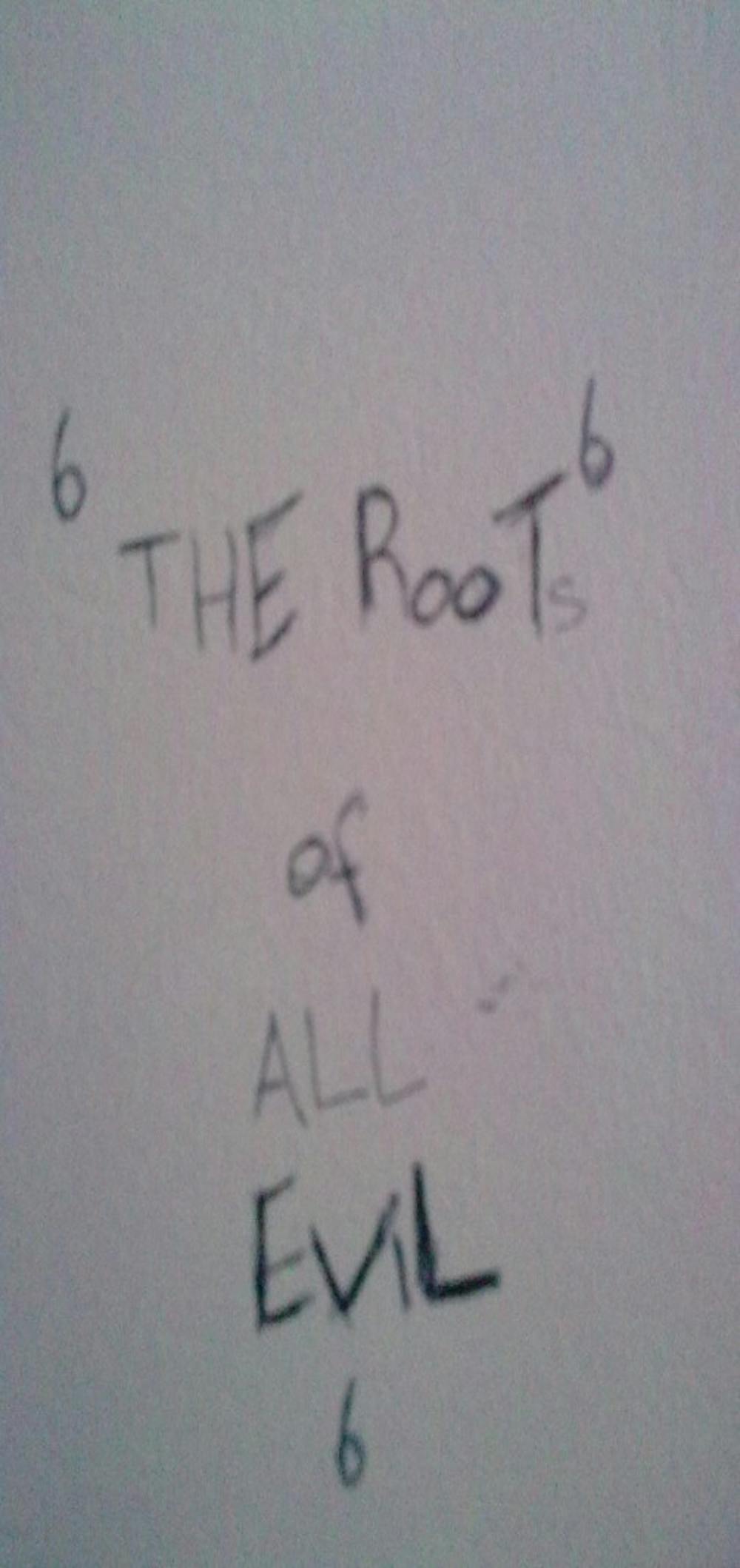
    A drawing by a Triple 6 gang member. Ashwill Ramon Phillips

    Ritual stabbings, inverted crosses, and the “mark of the beast” (“666”) were part of their gang symbolism – seen in gang graffiti and tattoos and furthered by involvement in spiritual gatherings and the use of muti.

    These elements form part of a shared gang ideology that offers meaning, identity and purpose to marginalised young people. I found that the gang members in my studies often lacked family support, social support or significant formal education.

    To prevent young people from joining gangs, it is crucial to understand what pulls them in. Several participants described joining gangs not only for wealth, protection or status, but for a sense of spiritual power. Especially in communities where traditional religion, ancestral beliefs and Christian teachings coexist and sometimes collide.

    My typology of occult gangs has the potential to inform targeted prevention programmes, rehabilitation efforts and policing strategies that take the spiritual realities of gang members seriously.

    A new approach to fighting crime is needed

    The rise of occult gangs has now progressed beyond the Free State. Similar trends are observed in the Eastern Cape, Northern Cape, Gauteng and Western Cape provinces.

    The intersection of faith, fear and violence in these gangs challenges mainstream approaches to crime prevention. Traditional anti-gang strategies assume that gangs are driven mainly by socioeconomic factors or rational incentives. They fail to account for spiritual motivations and metaphysical beliefs.

    The presence of ritual elements complicates investigations and amplifies fear. It makes gangs seem more powerful than they are.

    At the same time, public institutions such as the police and social workers often lack the frameworks and cultural sensitivity to address the spiritual dimensions of the offences perpetrated by these groups.

    A drawing by a BTK gang member. Ashwill Ramon Phillips

    The struggle with the occult gangs in South Africa mirrors similar challenges in other countries, like Nigeria, the DRC and Haiti, where spiritual symbolism and ritualised violence are central to gang identity.

    Effective interventions must include culturally grounded strategies to help members disengage from gangs, involving traditional leaders, healers, faith-based actors and mental health professionals.


    Read more: Rituals, rites and rumours: how women claim power in Zimbabwe’s informal gold mines


    By addressing the spiritual, social, and psychological dimensions of gang involvement, more sustainable pathways out of these groups can be created.

    Gang violence in South Africa is evolving, and so must the response. It shouldn’t just punish young offenders, but offer them a genuine alternative.

    – Devil worship, muti and murder: what’s behind the growth of occult gangs in South Africa?
    – https://theconversation.com/devil-worship-muti-and-murder-whats-behind-the-growth-of-occult-gangs-in-south-africa-260141

    MIL OSI Africa –

    July 11, 2025
  • MIL-OSI USA: Duckworth Votes Against Bryan Bedford’s Nomination to Serve as FAA Administrator

    US Senate News:

    Source: United States Senator for Illinois Tammy Duckworth

    July 09, 2025

    Bedford’s refusal to commit to protecting 1,500-hour pilot training standards that help keep the flying public safe raises serious, and unanswered, questions

    [WASHINGTON, D.C.] – Today, U.S. Senator Tammy Duckworth (D-IL)—Ranking Member of the U.S. Senate Commerce Subcommittee on Aviation—voted against Bryan Bedford’s nomination to serve as FAA Administrator. Senate Republicans confirmed Bedford by a vote of 53-43.

    “At this critical moment for aviation safety, it is deeply disturbing that Senate Republicans just confirmed someone who refused to commit to upholding the 1,500-hour pilot training requirement. With a surge in near-misses, an air traffic controller shortage, aging air traffic control equipment and facilities—and in the wake of the first major deadly commercial crash in more than a decade, now is clearly not the time to weaken flight hour requirements for our nation’s aspiring airline pilots.

    “Incident after incident, it has been pilots who have made last second decisions to avert disaster. Well-trained pilots are our last line of defense, and I could not vote for a nominee who as a corporate executive prioritized—and gained notoriety for—his failed effort to convince the FAA to exempt him from the 1,500-hour rule and let him hire less experienced pilots.

    “Americans do not want less-trained, less-prepared pilots in the cockpit flying their planes. As he assumes this important role, Mr. Bedford must abandon any plan to weaken our gold standard in pilot training and put the safety of the flying public first.”

    In light of Bedford’s previous comments and actions against the 1,500-hour rule, Duckworth underscored at his nomination hearing that he would unilaterally attempt to weaken this standard and produce less-prepared pilots despite the serious challenges our nation is facing with regard to aviation safety. When Duckworth asked Mr. Bedford for his commitment to not reduce the 1,500-hour rule if confirmed, Mr. Bedford refused to commit.

    In 2022, while Bedford was CEO of Republic Airways, the airline asked the FAA for an exemption to the 1,500-hour requirement for graduates from the airline’s training academy. The airline argued its graduates needed only 750 hours of flight time to become first officers, but FAA rejected the application, finding it did not provide an equivalent level of safety.

    The families of the Colgan Air Flight 3407 crash also announced their opposition to Bedford’s nomination.

    For years before the deadly DCA crash, Duckworth has been sounding the alarm that we must make critical aviation safety investments to prevent all-too-often near-misses from becoming catastrophic tragedies. Last Congress, Duckworth chaired two CST Aviation Subcommittee hearings—one last December and the other a year prior—to address our aviation industry’s chilling surge in near-deadly close calls and underscore the urgent need to improve air traffic control systems to protect the flying public.

    Duckworth helped author the landmark bipartisan FAA Reauthorization Act of 2024 that was signed into law last year and included several of her provisions to safeguard the 1,500-hour rule, improve safety, expand the aviation workforce and enhance protections for travelers with disabilities.

    -30-

    MIL OSI USA News –

    July 11, 2025
  • MIL-OSI USA: Duckworth, Kim, Sewell Renew Push to Improve Access to Prenatal Care for Military Families

    US Senate News:

    Source: United States Senator for Illinois Tammy Duckworth

    July 10, 2025

    [WASHINGTON, D.C.] – Today, combat Veteran and U.S. Senator Tammy Duckworth (D-IL)—a member of both the U.S. Senate Committees on Armed Services (SASC) and Veterans’ Affairs (SVAC)—along with U.S. Senator Andy Kim (D-NJ) and U.S. Representative Terri Sewell (D-AL-07) reintroduced legislation that would improve access to prenatal care for military families. Specifically, the Improving Access to Prenatal Care for Military Families Act would create a Department of Defense (DoD) pilot program to designate pregnancy as a Qualifying Life Event under the TRICARE program, empowering servicemembers and their spouses to choose a health care plan that meets their needs during pregnancy.

    “After all the sacrifices they make for our nation each and every day, our military families should never have to face arbitrary, needless barriers to access prenatal care,” said Senator Duckworth. “Our commonsense legislation would help make it easier for our brave servicemembers and military spouses to access the high-quality care they need and deserve as they build their families. It’s the right thing to do, and I urge my Republican colleagues to help us get it done.”

    “Military moms deserve peace of mind that they’ll have the right healthcare for them when they need it most,” said Senator Kim. “This bill breaks down barriers to high-quality maternal care and eases an all-too common and unfair burden on our servicemembers and their growing families.”

    “Our military families make extraordinary sacrifices for our nation,” said Congresswoman Sewell. “The last thing they should have to worry about is accessing basic maternal health care services during a pregnancy. This legislation would empower expectant military families to choose the health care plan that best meets their needs. It is about ensuring that moms and babies can get the care they need whenever and wherever they need it. I am proud to partner with Senators Duckworth and Kim again in the 119th Congress as we work to get this bill passed and signed into law.”

    Currently, TRICARE beneficiaries may opt to change their TRICARE plan during the annual Open Season or if they experience a Qualifying Life Event (QLE). QLEs include marriage, divorce, a job change, a move and the birth or adoption of a child, but not pregnancy. The Improving Access to Prenatal Care for Military Families Act would provide greater flexibility to expectant military families by establishing a five-year DoD pilot program to designate pregnancy as a QLE. Such a designation would allow beneficiaries to switch from TRICARE’s Prime and Select plans if doing so would provide that individual with better coverage for prenatal care.

    Along with Duckworth and Kim, the legislation is cosponsored by U.S. Senators Angus King (I-ME), Elizabeth Warren (D-MA), Cory Booker (D-NJ), Patty Murray (D-WA), Jackie Rosen (D-NV), Michael Bennet (D-CO), Mazie K. Hirono (D-HI), Ron Wyden (D-OR), Kirsten Gillibrand (D-NY), Angela Alsobrooks (D-MD) and Tammy Baldwin (D-WI).

    The Improving Access to Prenatal Care for Military Families Act is endorsed by the National Military Family Association and Military Officers Association of America.

    “Expectant moms and their babies need quality care, but many military-connected mothers struggle to access that care,” said Besa Pinchotti, CEO of the National Military Family Association. “The Improving Access to Prenatal Care for Military Families Act will make pregnancy a qualifying life event, ensuring that pregnant moms and their babies get access to what they need. We’re grateful to Senators Duckworth and Kim as well as Representative Sewell for championing this critical issue for military families.”

    “Health care access is a key quality of life issue impacting military family readiness, particularly when expecting a baby,” said Lt. Gen. Brian Kelly USAF (Ret.), President & CEO of the Military Officers Association of America. “With capacity constraints in both the military and civilian health systems, it is more important than ever to address barriers to accessing vital prenatal care essential to positive outcomes. The Improving Access to Prenatal Care for Military Families Act would provide the flexibility to switch TRICARE plans during pregnancy so beneficiaries can seek prenatal care that meets their needs. We appreciate the continued leadership of Sen. Tammy Duckworth and Sen. Andy Kim and Rep. Terri Sewell on improving access to care within the military health system and their support of military families.”

    A copy of the bill text is available on Senator Duckworth’s website.

    Duckworth has long been a leader in pushing for better benefits and support for members of the Armed Services and their family members. Last month, Duckworth introduced legislation that would modernize the Family and Medical Leave Act (FMLA) in order to help ensure that military caregiver benefits are available to more people who selflessly care for their servicemember or Veteran family member in medical need. Last month, she renewed her push to ensure IVF treatment costs are covered on servicemembers’ and military families’ health care plans. Last December, Duckworth helped pass the bipartisan Fiscal Year (FY) 2025 National Defense Authorization Act (NDAA) that gave servicemembers a pay raise and included a Duckworth-led provision to improve access to high-quality medical care for servicemembers and their families in the Indo-Pacific region, among other wins for military families.

    -30-

    MIL OSI USA News –

    July 11, 2025
  • MIL-OSI USA: Duckworth Grills Trump’s Singapore Ambassador Nominee: “This is Not a Glamour Posting—You Need to Shape Up and Do Your Homework”

    US Senate News:

    Source: United States Senator for Illinois Tammy Duckworth

    July 09, 2025

    [WASHINGTON, D.C.] – U.S. Senator Tammy Duckworth (D-IL) grilled Donald Trump’s nominee to serve as U.S. Ambassador to Singapore, Dr. Anjani Sinha, at his confirmation hearing today, exposing how deeply unqualified he is for this critically important role. During the Senator’s line of questioning, Dr. Sinha failed to answer several basic, important questions, proving he doesn’t know the first thing about maintaining not only the U.S.-Singapore partnership, but any of our relationships with ASEAN nations. Duckworth’s remarks can be found on the Senator’s YouTube.

    “Dr. Sinha is deeply unprepared to effectively lead our nation’s mission in Singapore,” said Duckworth. “This is not a role you can pick up on a whim or because you might think it will be glamorous. Singapore is too important to the United States, ASEAN and the entire Indo-Pacific region for someone as unqualified as Dr. Sinha. His lack of understanding and preparedness for this job could cause friction in our critical relationships and is disqualifying for such an important role. He will not have my vote.”

    In May, Duckworth led a bipartisan Congressional Delegation to Singapore alongside U.S. Senator Pete Ricketts (R-NE) to this year’s International Institute for Strategic Studies’ Shangri-La Dialogue, which is Asia’s premier global international security and defense summit, to reaffirm the United States’ strong bipartisan commitment to our partners and allies in the Indo-Pacific region. This trip came after Duckworth led a bipartisan delegation to the Shangri-La Dialogue alongside U.S. Senator Dan Sullivan (R-AK) last year.

    Duckworth is a proven leader when it comes to strengthening our relations with Indo-Pacific nations and improving security in the region—which she has done while successfully securing significant international investments in Illinois. In the Fiscal Year (FY) 2025 National Defense Authorization Act (NDAA) that was signed into law, Duckworth successfully secured a modified version of her Access to Care for Overseas Military Act to improve medical readiness in the Indo-Pacific. This provision established a program to accredit foreign medical facilities to help ensure our nation’s servicemembers as well as their families have access to quality patient care throughout the Indo-Pacific region—where they often must travel long distances to receive care—both during peacetime and in the event of a conflict abroad.

    -30-


    MIL OSI USA News –

    July 11, 2025
  • MIL-OSI USA: Announcing the Tariff Resource Guide

    Source: US State of New York

    mid the economic turmoil created by President Trump’s chaotic tariffs, Governor Kathy Hochul today announced a new tariff resource guide to keep New Yorkers up-to-date on programs available for business owners who have been impacted by tariffs. Additionally, the Governor announced a survey to allow business owners the opportunity to share how their businesses have been impacted by the federal government’s recently announced tariffs.

    “New Yorkers and business owners all across the state have felt a sense of uncertainty when it comes to the impacts of President Trump’s callous tariffs on our imported goods,” Governor Hochul said. “No business should have to close shop due to these unfair and unwanted taxes that were imposed on states by the Trump administration. This resource guide will help provide individuals with the guidance they need to lower potential risk to their businesses and give New Yorkers a better understanding of how tariffs can impact them.”

    Tariffs Impacts on the Economy and Tourism
    Governor Hochul has heard from small and mid-sized businesses across the state who are worried about rising costs and their future. A recent survey from the National Small Business Association found that the majority of small businesses are concerned about tariffs and one in three are very concerned. Examples include North Country manufacturer Alcoa, which took an estimated $20 million hit on imports from Canada, and North Country Golf Club which is facing declines in businesses due to the decline in tourism from Canada.

    Due to the tariff trade war with Canada, New York’s number one trade partner, and the rhetoric that Canada could be the “51st state,” impacts are widespread. Visitors from Canada are avoiding the U.S. and New York State. Overall, cross-border traffic from Canada has plummeted since Trump implemented his tariff policies. The most recent data shows that there were 400,000 fewer Canadian visitors in May compared to the same period in 2024. Bridge crossings over the Ogdensburg Bridge and the Champlain crossing in May were down 30 percent during that same time period from last year. In a recent North Country Chamber of Commerce survey, 66 percent of tourism businesses report a drop in Canadian customers and one in four businesses in the region may cut staff as a result. Reservations are down at hotels, campgrounds, local marinas, golf courses and other businesses that rely on visitors from Canada.

    MIL OSI USA News –

    July 11, 2025
  • MIL-OSI USA: Announcing the Tariff Resource Guide

    Source: US State of New York

    mid the economic turmoil created by President Trump’s chaotic tariffs, Governor Kathy Hochul today announced a new tariff resource guide to keep New Yorkers up-to-date on programs available for business owners who have been impacted by tariffs. Additionally, the Governor announced a survey to allow business owners the opportunity to share how their businesses have been impacted by the federal government’s recently announced tariffs.

    “New Yorkers and business owners all across the state have felt a sense of uncertainty when it comes to the impacts of President Trump’s callous tariffs on our imported goods,” Governor Hochul said. “No business should have to close shop due to these unfair and unwanted taxes that were imposed on states by the Trump administration. This resource guide will help provide individuals with the guidance they need to lower potential risk to their businesses and give New Yorkers a better understanding of how tariffs can impact them.”

    Tariffs Impacts on the Economy and Tourism
    Governor Hochul has heard from small and mid-sized businesses across the state who are worried about rising costs and their future. A recent survey from the National Small Business Association found that the majority of small businesses are concerned about tariffs and one in three are very concerned. Examples include North Country manufacturer Alcoa, which took an estimated $20 million hit on imports from Canada, and North Country Golf Club which is facing declines in businesses due to the decline in tourism from Canada.

    Due to the tariff trade war with Canada, New York’s number one trade partner, and the rhetoric that Canada could be the “51st state,” impacts are widespread. Visitors from Canada are avoiding the U.S. and New York State. Overall, cross-border traffic from Canada has plummeted since Trump implemented his tariff policies. The most recent data shows that there were 400,000 fewer Canadian visitors in May compared to the same period in 2024. Bridge crossings over the Ogdensburg Bridge and the Champlain crossing in May were down 30 percent during that same time period from last year. In a recent North Country Chamber of Commerce survey, 66 percent of tourism businesses report a drop in Canadian customers and one in four businesses in the region may cut staff as a result. Reservations are down at hotels, campgrounds, local marinas, golf courses and other businesses that rely on visitors from Canada.

    MIL OSI USA News –

    July 11, 2025
  • MIL-OSI USA: UConn’s Journalism Major Offers Pathways to Legal Careers

    Source: US State of Connecticut

    For some UConn alumni with bachelor’s degrees in journalism, their experiences served as a launching pad to a different, but related, career path: law.

    “I became a lawyer to help people — to give people advice,” says Sara Bigman ’17 (CLAS), a current litigation associate at Cohen and Wolf P.C. in Bridgeport, Connecticut. “As a journalist going into law, learning to digest information, working under pressure, and learning new topics definitely helped.”

    The study and practice of journalism at UConn exposes students to civics, local government, and the justice system. Through those lessons, some journalism majors find themselves drawn to legal work.

    Every semester, the Department of Journalism offers JOUR 3020: Media Law, one of the few undergraduate courses focused specifically on the law.

    Students learn foundational concepts, such as the rule of law and the free speech protections of the First Amendment. They study laws regulating digital media, such as recording audio and taking photos, and exercise their rights as members of the public to access government records through Freedom of Information Act requests. They also gain exposure to tort law, including libel and privacy, and take part in a mock trial.

    “In my junior year, I took Media Law with associate professor Amanda Crawford, which was my first exposure to any sort of legal education,” says Wyatt Cote ’23 (CLAS), now a third year UConn law student. “At the time, I wasn’t sure exactly why, but that class was the one that I found myself most excited by…I found myself wondering how I could capitalize on that feeling. That is when the prospect of going to law school first occurred to me.”

    Crawford says that a key aspect of the course is its focus on modern challenges, such as those posed by widespread social media use and an executive branch that is openly hostile to protestors and journalists.

    “I really don’t think there has been any time in my life that the issues we teach in Media Law have been more relevant to college students,” says Crawford.

    Cote says in his senior year, he took professor Michael Stanton’s Investigative Reporting class, which worked on a project about Connecticut’s housing and eviction crises. The course required students to attend eviction court in New London.

    “There, we were firsthand witnesses to the inequality that pervades the Connecticut housing market,” says Cote. “There, I realized that I wanted to be a housing lawyer.”

    Both Cote and Bigman agree that UConn’s rigorous nationally accredited curriculum played a vital role in equipping them with career competencies for effective legal practice.

    “What is less obvious is how wonderful journalism is for the students who are like me, who can’t say that they know what they want out of their careers,” explains Cote. “A journalist’s training prepares them well for legal work. The ability to connect to a stranger and tell their story in a compelling, persuasive way is an invaluable skill to lawyering,”

    Cote also recommended the Department of Journalism’s news writing courses, quoting a book by Supreme Court Justices Scalia and Garner, which says lawyers “possess only one tool to convey their thoughts: language. They must acquire and hone the finest, most effective version of that tool available. They must love words and use them exactly. Cultivating an appealing prose style and broad vocabulary is a ‘lifelong project, and you may as well begin [it] at once’.”

    “Students who go on to join a journal in law school will assuredly encounter pages upon pages of dull, uninspired academic writing,” Cote noted. “Taking writing classes as an undergraduate will give them a leg up on their peers and help make the pieces published by their journals actually readable.”

    Transitioning to law can be a natural progression for J-majors seeking a different avenue for public service.

    “I knew I wanted to do something that helped people,” says Sydney Mazur ’19 (CLAS), an attorney-at-law at Litchfield Cavo in Simsbury, Connecticut. “It definitely helps not being afraid to ask questions and to have that kind of passion or fuel within you to want to know … getting into the nitty-gritty of what’s going on, and you have to be fast enough in your mind to think of a follow-up question. So, I think journalism at UConn prepared me.”

    MIL OSI USA News –

    July 11, 2025
  • MIL-OSI USA: UConn’s Journalism Major Offers Pathways to Legal Careers

    Source: US State of Connecticut

    For some UConn alumni with bachelor’s degrees in journalism, their experiences served as a launching pad to a different, but related, career path: law.

    “I became a lawyer to help people — to give people advice,” says Sara Bigman ’17 (CLAS), a current litigation associate at Cohen and Wolf P.C. in Bridgeport, Connecticut. “As a journalist going into law, learning to digest information, working under pressure, and learning new topics definitely helped.”

    The study and practice of journalism at UConn exposes students to civics, local government, and the justice system. Through those lessons, some journalism majors find themselves drawn to legal work.

    Every semester, the Department of Journalism offers JOUR 3020: Media Law, one of the few undergraduate courses focused specifically on the law.

    Students learn foundational concepts, such as the rule of law and the free speech protections of the First Amendment. They study laws regulating digital media, such as recording audio and taking photos, and exercise their rights as members of the public to access government records through Freedom of Information Act requests. They also gain exposure to tort law, including libel and privacy, and take part in a mock trial.

    “In my junior year, I took Media Law with associate professor Amanda Crawford, which was my first exposure to any sort of legal education,” says Wyatt Cote ’23 (CLAS), now a third year UConn law student. “At the time, I wasn’t sure exactly why, but that class was the one that I found myself most excited by…I found myself wondering how I could capitalize on that feeling. That is when the prospect of going to law school first occurred to me.”

    Crawford says that a key aspect of the course is its focus on modern challenges, such as those posed by widespread social media use and an executive branch that is openly hostile to protestors and journalists.

    “I really don’t think there has been any time in my life that the issues we teach in Media Law have been more relevant to college students,” says Crawford.

    Cote says in his senior year, he took professor Michael Stanton’s Investigative Reporting class, which worked on a project about Connecticut’s housing and eviction crises. The course required students to attend eviction court in New London.

    “There, we were firsthand witnesses to the inequality that pervades the Connecticut housing market,” says Cote. “There, I realized that I wanted to be a housing lawyer.”

    Both Cote and Bigman agree that UConn’s rigorous nationally accredited curriculum played a vital role in equipping them with career competencies for effective legal practice.

    “What is less obvious is how wonderful journalism is for the students who are like me, who can’t say that they know what they want out of their careers,” explains Cote. “A journalist’s training prepares them well for legal work. The ability to connect to a stranger and tell their story in a compelling, persuasive way is an invaluable skill to lawyering,”

    Cote also recommended the Department of Journalism’s news writing courses, quoting a book by Supreme Court Justices Scalia and Garner, which says lawyers “possess only one tool to convey their thoughts: language. They must acquire and hone the finest, most effective version of that tool available. They must love words and use them exactly. Cultivating an appealing prose style and broad vocabulary is a ‘lifelong project, and you may as well begin [it] at once’.”

    “Students who go on to join a journal in law school will assuredly encounter pages upon pages of dull, uninspired academic writing,” Cote noted. “Taking writing classes as an undergraduate will give them a leg up on their peers and help make the pieces published by their journals actually readable.”

    Transitioning to law can be a natural progression for J-majors seeking a different avenue for public service.

    “I knew I wanted to do something that helped people,” says Sydney Mazur ’19 (CLAS), an attorney-at-law at Litchfield Cavo in Simsbury, Connecticut. “It definitely helps not being afraid to ask questions and to have that kind of passion or fuel within you to want to know … getting into the nitty-gritty of what’s going on, and you have to be fast enough in your mind to think of a follow-up question. So, I think journalism at UConn prepared me.”

    MIL OSI USA News –

    July 11, 2025
  • MIL-OSI United Kingdom: Landmark Devolution Bill brings new dawn of regional power

    Source: United Kingdom – Executive Government & Departments

    News story

    Landmark Devolution Bill brings new dawn of regional power

    English Devolution and Community Empowerment Bill delivers on manifesto commitment to de-centralise power and ignite regional growth with powers for mayors.

    Ambition for all regions to take the reins in driving growth receives its biggest boost as the landmark English Devolution and Community Empowerment Bill is introduced to Parliament today [Thursday 10th July]. 

    Local people will take back control of their regions, from bolstered rights to save cherished community assets, to a bigger voice in neighbourhood governance and increased powers to their directly elected leaders and mayors so they can unlock housing, transport and jobs in their regions through Local Growth Plans.  

    The Bill will deliver on the government’s manifesto commitment to unlock a generational shift in power from Westminster to those with skin in the game, and rebalance prosperity, deliver economic growth and a decade of national renewal across the nation as part of the Plan for Change. 

    Deputy Prime Minister Angela Rayner said: 

    We were elected on a promise of change, not just for a few areas cherry-picked by a Whitehall spreadsheet, but for the entire country. It was never going to be easy to deliver the growth our country desperately needed with the inheritance we were dumped with. 

    But that’s why we are opting to devolve not dictate and delivering a Bill that will rebalance decade old divides and empower communities. We’re ushering in a new dawn of regional power and bringing decision making to a local level so that no single street or household is left behind and every community thrives from our Plan for Change.”  

    Minister of State for Local Government and English Devolution, Jim McMahon OBE MP said:  

    For too long power and opportunity has been concentrated in Westminster and Whitehall while the local councils millions rely on have been frustrated and diminished. This failed approach has held back growth across our country for far too long. Local people see this in the job market, on the high street and in their own household security and prosperity.  

    Devolution begins the work of fixing that, with this Bill delivering freedom to local leaders to make decisions for their local areas in partnership with local communities, unleashing more growth and more opportunities for people as part of our Plan for Change.”  

    England has fallen behind from the rest of the globe in modernising how decisions are made, but devolution prioritises people and partnership over paperwork and politics. This Bill will deliver changes including 

    • Making more local ownership of pubs, shops and social hubs  easier through a new Community Right to Buy meaning communities will have the first opportunity to purchase local assets when they are put up for sale, and be given an extended 12-month period to raise funding. And more local sports grounds will be saved by introducing a new ‘Sporting’ category protection of local assets preserving local character, boosting tourism and keeping community spirit alive.  

    • Banning Upward Only Rent Reviews (UORR) clauses in commercial leases, which pit landlords against businesses and can make rents unaffordable and cause shops to shut. This will help keep small businesses running, boost local economies and job opportunities and help end the blight of vacant high streets and the unacceptable anti-social behaviour that comes with them.  

    • A stronger voice for communities with a new requirement for local authorities to put in place effective neighbourhood governance to give residents more of a say in shaping their local areas.  

    • Quicker action on the changes local people want to see with more rights for Mayors, elected by their communities, to take back control of delivering for their voters’, from new licensing powers for rental e-bikes to new planning powers to set the direction of growth across their areas.  

    • Boosting economic growth with mayors working across the country to turbocharge the national missions by developing tailor made Local Growth Plans to kickstart local economies and ultimately getting more money in people’s pockets.  

    • Streamlined powers for Mayors across England to speed up the development of new homes and infrastructure in their areas. This will include a new power to institute Mayoral Development Orders, as well as a streamlined process to establish Mayoral Development Corporations, so that we can replicate the success of projects such as the Olympic Park legacy and attract inward investment right across the country. 

    • Fixing the cracks in local government through rebuilding the sector from the ground up to be more efficient, local people will get the daily services they deserve and rely on from their Council, like bin collection, whilst also enabling areas to work together over larger areas to deliver the big changes, like integrated transport networks. This will be done through the creation of new ‘Strategic Authorities’ that will boost connectivity and collaboration between Councils.    

    • Restoring taxpayers’ trust in councils’ spending through fixing the local audit system with the establishment of the Local Audit Office, which will increase transparency, simplify and streamline the system.  

    Deepening devolution across the country is what delivers the change to the day-to-day services and opportunities on every region’s doorstep. From the new Anglia Ruskin University in Peterborough, to ticket caps for commuters on the Bee Network in Manchester and budding film and TV creatives flocking to Liverpool’s Littlewoods over Hollywood – devolution is what will bring this regeneration to all regions.

    Share this page

    The following links open in a new tab

    • Share on Facebook (opens in new tab)
    • Share on Twitter (opens in new tab)

    Updates to this page

    Published 10 July 2025

    MIL OSI United Kingdom –

    July 11, 2025
  • MIL-OSI: American Rebel Holdings, Inc. (NASDAQ: AREB) Announces American Rebel Light Beer Distribution Expansion: Rebel Light Launches in Mississippi with Clark Beverage Group, Inc.

    Source: GlobeNewswire (MIL-OSI)

    “Rebel Light” rollout momentum continues and now includes Mississippi in partnership with Clark Beverage Group, bringing America’s Patriotic Beer to Mississippi tailgates, retailers, and proud Rebels everywhere

    NASHVILLE, TN, July 10, 2025 (GLOBE NEWSWIRE) — American Rebel Holdings, Inc. (NASDAQ: AREB), maker of America’s Patriotic, God-Fearing, Constitution-Loving, National Anthem-Singing, Stand Your Ground Beer, proudly announces its expansion into Mississippi as part of its ongoing national rollout of American Rebel Light Beer (americanrebelbeer.com). This marks the latest milestone in the company’s rapid growth, bringing the nation’s fastest-growing beer to yet another proud patriotic state.

    American Rebel Beverage has partnered with a division of Clark Beverage Group, Inc. (ccclark.com) to bring Rebel Light to retailers, bars, and consumers across Mississippi. Clark Beverage Group, with over 120 years of family-operated excellence, is one of the largest and most respected independent beverage distributors in the Southeast. Founded in 1903 by Carsie C. Clark in Martin, Tennessee, the company has become a regional powerhouse, serving over 85 counties across five states. Their legacy of strong community values, operational excellence, and regional influence makes them a natural and strategic partner for American Rebel.

    “We are thrilled to partner with Clark Beverage Group to bring American Rebel Light to Mississippi,” said Todd Porter, President of American Rebel Beverage. “Clark’s history, reputation, and footprint across the Southeast make them an ideal partner as we continue executing our strategic national expansion. Mississippi embodies the spirit of our brand: proud tradition, deep-rooted values, and patriotic pride.”

    “Mississippi reflects everything our beer stands for – pride in tradition, strength of character, and love of country,” added Porter. “We’re honored to raise a toast with Mississippians and continue building a nationwide community of Rebels who know that real beer reflects real values.”

    “I’m excited to bring American Rebel to the land of the Ole Miss Rebels – where pride runs deep, tradition lives loud, and freedom always finds a home,” said Andy Ross, CEO of American Rebel Holdings. “There’s nothing more American than raising a cold one that stands for what matters. It’s a cold can of conviction – America’s Patriotic, God Fearing, Constitution Loving, National Anthem Singing, Stand Your Ground Beer – brewed for those who don’t back down and won’t blend in.”

    The Mississippi launch is strategically important to American Rebel. With its rich culture, loyal consumers, and strong beverage retail landscape, Mississippi offers the ideal platform to scale both brand recognition and sales. American Rebel Light will be available in 12 oz 12-packs and 16oz Tall Boys, supported by in-store displays, on-premise promotions, and sponsorships that align with both the brand’s patriotic identity and Mississippi’s unique character.

    American Rebel Light is a Premium Domestic Light Lager: crisp, clean, and bold with a lighter feel. With approximately 100 calories, 3.2g carbs, and 4.3% ABV per 12oz serving, it is brewed with all-natural ingredients and no added corn, rice, or sweeteners often found in mass-market beers.

    This Mississippi launch adds to the fast-growing footprint of American Rebel Light, which has expanded rapidly since its debut in September 2024. The brand is already available in Tennessee, Kentucky, North Carolina, Florida, Indiana, Ohio, Missouri, Iowa, Connecticut, Virginia, and Kansas. With new states onboarding monthly, American Rebel is quickly becoming America’s next great company in the beer and beverage industry.

    About American Rebel Holdings, Inc. (NASDAQ: AREB)

    American Rebel began as a designer and marketer of branded safes and personal security products and has since grown into a diversified patriotic lifestyle company with offerings in beer, branded safes, apparel, and accessories. With the introduction of American Rebel Light Beer, the company is now making waves in the beverage space. Learn more at americanrebel.com/investor-relations.

    Watch the American Rebel Story as told by our CEO Andy Ross visit The American Rebel Story

    About American Rebel Light Beer

    American Rebel Light is more than just a beer – it’s a celebration of freedom, passion, and quality. Brewed with care and precision, our light beer delivers a refreshing taste that’s perfect for every occasion.

    Since its launch in September 2024, American Rebel Light Beer has rolled out in Tennessee, Connecticut, Kansas, Kentucky, Ohio, Iowa, Missouri, North Carolina, Florida, Indiana, Virginia and now Mississippi. For more information about the launch events and the availability of American Rebel Beer, please visit americanrebelbeer.com or follow us on our social media platforms (@americanrebelbeer).

    American Rebel Light is a Premium Domestic Light Lager Beer – All Natural, Crisp, Clean and Bold Taste with a Lighter Feel. With approximately 100 calories, 3.2 carbohydrates, and 4.3% alcoholic content per 12 oz serving, American Rebel Light Beer delivers a lighter option for those who love great beer but prefer a more balanced lifestyle. It’s all natural with no added supplements and importantly does not use corn, rice, or other sweeteners typically found in mass produced beers.

    For more information about American Rebel Light Beer follow us on social media @AmericanRebelBeer.

    Media Inquiries:
    Matt Sheldon
    Matt@Precisionpr.co
    917-280-7329

    Distribution Opportunities:
    Todd Porter
    President, American Rebel Beverage
    tporter@americanrebelbeer.com

    Investor Relations:
    ir@americanrebelbeer.com

    Forward-Looking Statements

    This press release contains forward-looking statements within the meaning of the Private Securities Litigation Reform Act of 1995. American Rebel Holdings, Inc. (NASDAQ: AREB; AREBW) (the “Company,” “American Rebel,” “we,” “our” or “us”) desires to take advantage of the safe harbor provisions of the Private Securities Litigation Reform Act of 1995 and is including this cautionary statement in connection with this safe harbor legislation. The words “forecasts,” “believe,” “may,” “estimate,” “continue,” “anticipate,” “intend,” “should,” “plan,” “could,” “target,” “potential,” “is likely,” “expect” and similar expressions, as they relate to us, are intended to identify forward-looking statements.

    We have based these forward-looking statements primarily on our current expectations and projections about future events and financial trends that we believe may affect our financial condition, results of operations, business strategy, and financial needs. Important factors that could cause actual results to differ from those in the forward-looking statements include benefits of our continued sponsorship of high profile events, success and availability of the promotional activities, our ability to effectively execute our business plan, and the Risk Factors contained within our filings with the SEC, including our Annual Report on Form 10-K for the year ended December 31, 2024 and our Quarterly Report on Form 10-Q for the three months ended March 31, 2025.

    Any forward-looking statement made by us herein speaks only as of the date on which it is made. Factors or events that could cause our actual results to differ may emerge from time to time, and it is not possible for us to predict all of them. We undertake no obligation to publicly update any forward-looking statements, whether as a result of new information, future developments or otherwise, except as may be required by law.

    Attachment

    • American Rebel Holdings Inc

    The MIL Network –

    July 11, 2025
  • MIL-OSI: Caldwell U.S. Dividend Advantage Fund Declares Distributions for Q3 2025

    Source: GlobeNewswire (MIL-OSI)

    NOT FOR DISTRIBUTION TO UNITED STATES NEWSWIRE SERVICES
    OR FOR DISSEMINATION IN THE UNITED STATES

    TORONTO, July 10, 2025 (GLOBE NEWSWIRE) — Caldwell Investment Management Ltd., the manager of Caldwell U.S. Dividend Advantage Fund (the “Fund”), is pleased to announce the payment of distributions on the actively-managed ETF Series of the Fund to unitholders of record as indicated below. The monthly distribution rate of CAD $0.038 per unit of the ETF Series represents an annualized yield on net assets of approximately 3.2%.

    Record Date Payment Date Distribution per Unit
    July 31, 2025 August 8, 2025 CAD $0.038
    August 29, 2025 September 8, 2025 CAD $0.038
    September 30, 2025 October 7, 2025 CAD $0.038
         

    ETF Series unitholders also have the option to participate in the distribution reinvestment plan (“DRIP”) offered by the Fund, which provides investors with the ability to automatically reinvest distributions and realize the benefits of compounded growth. Unitholders can enroll in the DRIP program by contacting their investment advisor.

    The ETF Series of Caldwell U.S. Dividend Advantage Fund trades on the TSX under the ticker symbol UDA.

    For further information, please visit our website at www.caldwellinvestment.com or contact us at 416-593-1798 or 1-800-256-2441.

    The Fund was first offered to the public as a closed-end investment on May 28, 2015 and was converted into an open-end mutual fund effective as of November 15, 2018, with all outstanding units designated as Series F units. The ETF Series of the Fund was launched on March 18, 2020.  Performance of the Fund prior to the conversion date would have differed had the Fund been subject to the same investment restrictions and practices of the current open-end mutual fund.

    Investors are strongly encouraged to consult with a financial advisor and review the Simplified Prospectus and Fund Facts documents carefully prior to making investment decisions about the Fund. Caldwell Investment Management Ltd. makes no representations or warranties on the accuracy and completeness of the information included herein. Certain statements herein contain forward looking information based on certain historical information of the Fund and represent current expectations as of the date of this press release. Actual future results may differ materially due to but not limited to prevailing market conditions, there being no assurance of realizing capital gains and no assurance that issuers held in the portfolio will pay dividends or distributions on their securities. Commissions, trailing commissions, management fees and expenses all may be associated with mutual fund investments. Mutual funds are not guaranteed; their values change frequently and past performance may not be repeated. The payment of distributions should not be confused with a fund’s performance, rate of return or yield. If distributions paid are greater than the performance of the fund, your original investment will shrink. Distributions paid as a result of capital gains realized by a fund, and income and dividends earned by a fund, are taxable in your hands in the year they are paid. Your adjusted cost base (“ACB”) will be reduced by the amount of any returns of capital and should your ACB fall below zero, you will have to pay capital gains tax on the amount below zero.

    The MIL Network –

    July 11, 2025
  • MIL-OSI: Dave Cantin Group to Be Exclusive Automotive Retail M&A Advisory Partner of 2025 Pebble Beach Concours d’Elegance

    Source: GlobeNewswire (MIL-OSI)

    NEW YORK, July 10, 2025 (GLOBE NEWSWIRE) — The Dave Cantin Group (DCG), a leading mergers and acquisitions advisory company to retail automotive groups and their owners, today announced it will be the exclusive automotive retail mergers and acquisitions partner of the 2025 Pebble Beach Concours d’Elegance, the crown jewel of Monterey Car Week. In partnership with the California New Car Dealers Association (CNCDA), DCG will host an exclusive private event for its clients and other industry leaders during the prestigious automotive showcase.

    The Pebble Beach Concours d’Elegance, set for August 17, 2025, is widely regarded as the world’s most prestigious collector car competition. Each year, the event attracts the finest classic and modern automobiles, leading collectors, and top automotive brands that often unveil their latest concept and production models against the breathtaking backdrop of Pebble Beach, California.

    “As the leader in retail automotive M&A, Dave Cantin Group is committed to having the broadest industry reach possible,” said DCG President Brian Gordon. “DCG, along with our partners at CNCDA, are proud to demonstrate our continued commitment to serving dealers at one of the finest industry events in the country.”

    “CNCDA is excited to partner with DCG in offering this memorable opportunity for our members,” CNCDA President Brian Maas said. “Our team is looking forward to reconnecting with our dealers and DCG at this incredible event.”

    DCG and CNCDA’s private event will be an invitation-only experience, bringing together top dealership executives and other industry executives. DCG CEO Dave Cantin and other senior team members will be on-site to welcome guests, strengthen relationships and share thought leadership about how we collectively shape the automotive retail landscape going forward.

    Details for the event, including the exact date, time and location, will be shared directly with invited guests. Those planning to attend Monterey Car Week are encouraged to connect with the DCG team in advance.

    About Dave Cantin Group
    The Dave Cantin Group is a leading automotive M&A advisory company specializing in acquisitions, divestitures, intelligence, and other advisory services. The company is the M&A services provider of choice for North America’s top automotive dealership groups, advising on approximately 40 transactions annually. DCG is differentiated by its advisory approach, long-term lens on client relationships, and commitment to market intelligence tools that inform DCG and client strategies. In 2023, DCG became the only retail automotive M&A company with a significant strategic investor, welcoming Kaltroco to the DCG family.

    Through its M&A intelligence division, DCG produces automotive content and delivers relevant, timely market intelligence, including the automotive industry Market Outlook Report (MOR). Together with CBT News, DCG produces the Inside M&A studio show and podcast to share stories, news, and trends impacting the retail automotive industry. DCG’s proprietary AI-enabled software, Jump IQ, anchors its advisory services that support retail automotive dealers in developing informed M&A strategies and making smarter M&A decisions.

    The company’s nonprofit initiative, DCG Giving, funds child and adolescent cancer research and treatment in communities nationwide and other worthy charitable initiatives. DCG team members regularly feature on the industry speaking circuit and are often cited by top national and global news outlets. For more information, please visit davecantingroup.com.

    Media Contact:
    Katie Merx
    katiemerx@gmail.com
    313.510.5090

    A photo accompanying this announcement is available at https://www.globenewswire.com/NewsRoom/AttachmentNg/43ecd787-95e8-42b7-9a73-217a8ed8167a

    The MIL Network –

    July 11, 2025
  • MIL-OSI United Nations: Saudi Arabia lifesaving date shipment to feed 100,000 conflict affected Mozambicans

    Source: World Food Programme

    MAPUTO – The King Salman Humanitarian Aid and Relief Centre (KSrelief), in partnership with the United Nations World Food Programme (WFP), has delivered 23 metric tonnes of premium Saudi dates to support more than 100,000 vulnerable women, children, and families in northern Mozambique who are suffering from the impacts of conflict and displacement.

    Dates, a staple of Saudi generosity and nutrition for centuries, are rich in fibre, antioxidants, and essential minerals such as potassium, magnesium, and iron. This donation will directly enhance the diets of families struggling with food insecurity, providing both immediate nourishment and a symbol of solidarity from the people of Saudi Arabia.

    The shipment arrived at the Port of Nacala and was swiftly transported to Cabo Delgado Province, where distribution to conflict-affected households is already underway.

    “These dates will strengthen the diets of 100,000 people—especially women and children—and represent a meaningful gesture of solidarity from the people of the Kingdom of Saudi Arabia to the people of Mozambique”, said Antonella D’Aprile, WFP Country Director in Mozambique.

    Mr. Mishaal Bin Shail, Acting Charge d’affaires of the Kingdom of Saudi Arabia to Mozambique, added. “The gift of dates is a quiet yet powerful symbol of goodwill reflecting shared values, strengthening the bonds of friendship between our nations, and echoing a border spirit of care and solidarity that defines the Kingdom of Saudi Arabia’s engagement with vulnerable communities”.

    Mozambique is currently facing one of its most severe food security crises in recent years. An estimated 5 million people require urgent humanitarian assistance, and nearly 40 percent of children under five are suffering from chronic malnutrition. In the north, ongoing conflict and climate shocks continue to displace families and disrupt livelihoods, making life-saving support more critical than ever.

    Saudi Arabia’s humanitarian assistance, coordinated by KSrelief, is a cornerstone of its foreign aid. Since 2015, KSrelief has delivered aid to vulnerable communities worldwide. Between 2022 and 2024 alone, Saudi Arabia provided 160 metric tonnes of dates to Mozambique, reaffirming its long-term commitment to the country’s recovery and resilience.

    ###

    About WFP

    The United Nations World Food Programme is the world’s largest humanitarian organization, saving lives in emergencies and using food assistance to build a pathway to peace, stability and prosperity for people recovering from conflict, disasters and the impact of climate change.

    Follow us on X, formerly Twitter, via @wfp_mozambique, @WFP_Safrica and @wfp_media

    About KSrelief

    The King Salman Humanitarian Aid and Relief Centre (KSrelief), established under the guidance of the Custodian of the Two Holy Mosques, King Salman bin Abdulaziz Al Saud, represents Saudi Arabia’s commitment to global humanitarian efforts. Inaugurated in May 2015, KSrelief has provided impartial humanitarian aid and relief to over 100 countries in cooperation with local, regional and international organizations.

    About Embassy of Saudi Arabia in Mozambique

    The embassy of Kingdom of Saudi Arabia in Maputo represents the Kingdom’s official diplomatic presence in the Republic of Mozambique. The Embassy is dedicated to fostering strong and cooperative bilateral relations between Saudi Arabia and Mozambique, with a focus on political dialogue, economic collaboration, and cultural exchange.

    MIL OSI United Nations News –

    July 11, 2025
  • MIL-OSI USA: CNBC Names North Carolina the #1 State for Business

    Source: US State of North Carolina

    Headline: CNBC Names North Carolina the #1 State for Business

    CNBC Names North Carolina the #1 State for Business
    lsaito
    Thu, 07/10/2025 – 09:43

    Raleigh, NC

    North Carolina has been recognized as the Top State for Business by CNBC. This announcement marks the third time in the last four years that the state has earned the ranking.

    “This confirms what we have known for a long time – that North Carolina is the best state in the country for business,” said Governor Josh Stein. “Our people, state’s business climate, top research universities and excellent community college system, infrastructure, and high quality of life help both companies and workers thrive. I want to thank leaders like former Governor Roy Cooper and state legislators of both parties who have helped North Carolina create a welcoming climate. I am proud of the progress our state has made, and we are just getting started.” 

    “This recognition reflects our relentless commitment to building a competitive, welcoming, and dynamic economy that creates opportunity for everyone,” said N.C. Commerce Secretary Lee Lilley. “From our world-class workforce to our strategic investments in infrastructure, education, and innovation, North Carolina continues to lead the way as a place where businesses thrive, and communities prosper. We share this success with all of our partners across the public and private sectors and look forward to building on this momentum.”

    “North Carolina’s recognition as the best state for business for the third year in the last four is a testament to an economic development strategy that relies on the power of partnerships,” said Christopher Chung, CEO of the EDPNC. “Our strength lies in our ability to connect companies with the workforce, infrastructure, sites, industry ecosystems, and innovation resources needed to support their growth, as well as a business-friendly environment that’s especially valuable in times of economic uncertainty. From one of the nation’s top community college systems and the nation’s oldest public university to our modern transportation networks and robust utility capacity, North Carolina is built for growth.”

    The CNBC study measures states across 10 categories of competitiveness. Weights are assigned to each category based on how frequently states cite it as a selling point. States can earn a maximum of 2,500 points, and North Carolina scored 1,614 to take the top spot. North Carolina has been the top state for business for three out of the last four years, and the state’s biggest strengths this year are Economy, Workforce, and Business Friendliness.  

    Since taking office in January, Governor Stein has announced business expansions or new projects that will yield nearly $17 billion of new capital investment in North Carolina and create more than 20,000 new, good-paying jobs. North Carolina is a leader in the clean energy economy, with more than 100,000 people employed in the sector.  

    Governor Stein believes that North Carolinians should not have to get a traditional four-year degree to get a good job that can support a family. In March, he signed an executive order creating the Council on Workforce and Apprenticeships, a bipartisan group directed to find strategies to strengthen North Carolina’s workforce development and expand access to good jobs with good wages. The council recently released its first report, which outlines 11 goals to ensure more people have the skills to build strong careers and bright futures in a changing economy. Governor Stein recently signed into law Senate Bill 124, which reduces the number of state government jobs that require a four-year college degree.

    To combat North Carolina’s child care crisis, the Governor launched his Task Force on Child Care and Early Education, which seeks to make high-quality child care more accessible, affordable, and sustainable. Governor Stein also established the Advisory Council on Student Safety and Well-Being to ensure that the state’s public schools support students’ learning growth and foster an engaging environment.

    Nine months after Hurricane Helene, Governor Stein remains committed to the economic recovery efforts in western North Carolina. He recently announced the “Rediscover the Unforgettable” tourism initiative in collaboration with Visit NC to encourage travelers to plan their next trips to western North Carolina. In partnership with the Dogwood Health Trust and the Duke Endowment, Governor Stein and the State of North Carolina invested in the Western North Carolina Small Business Initiative. The $55 million program provided grants to more than 2,000 businesses across the region. This week, Governor Stein visited the Town of Clyde to award one of the first grants from the Small Business Infrastructure Grant Program, which is helping local governments rebuild public infrastructure such as sidewalks and downtown parking. Governor Stein continues to urge people to visit western North Carolina and support its small businesses.

    Click here to read CNBC’s report.  

    Jul 10, 2025

    MIL OSI USA News –

    July 11, 2025
  • MIL-OSI USA: CNBC Names North Carolina the #1 State for Business

    Source: US State of North Carolina

    Headline: CNBC Names North Carolina the #1 State for Business

    CNBC Names North Carolina the #1 State for Business
    lsaito
    Thu, 07/10/2025 – 09:43

    Raleigh, NC

    North Carolina has been recognized as the Top State for Business by CNBC. This announcement marks the third time in the last four years that the state has earned the ranking.

    “This confirms what we have known for a long time – that North Carolina is the best state in the country for business,” said Governor Josh Stein. “Our people, state’s business climate, top research universities and excellent community college system, infrastructure, and high quality of life help both companies and workers thrive. I want to thank leaders like former Governor Roy Cooper and state legislators of both parties who have helped North Carolina create a welcoming climate. I am proud of the progress our state has made, and we are just getting started.” 

    “This recognition reflects our relentless commitment to building a competitive, welcoming, and dynamic economy that creates opportunity for everyone,” said N.C. Commerce Secretary Lee Lilley. “From our world-class workforce to our strategic investments in infrastructure, education, and innovation, North Carolina continues to lead the way as a place where businesses thrive, and communities prosper. We share this success with all of our partners across the public and private sectors and look forward to building on this momentum.”

    “North Carolina’s recognition as the best state for business for the third year in the last four is a testament to an economic development strategy that relies on the power of partnerships,” said Christopher Chung, CEO of the EDPNC. “Our strength lies in our ability to connect companies with the workforce, infrastructure, sites, industry ecosystems, and innovation resources needed to support their growth, as well as a business-friendly environment that’s especially valuable in times of economic uncertainty. From one of the nation’s top community college systems and the nation’s oldest public university to our modern transportation networks and robust utility capacity, North Carolina is built for growth.”

    The CNBC study measures states across 10 categories of competitiveness. Weights are assigned to each category based on how frequently states cite it as a selling point. States can earn a maximum of 2,500 points, and North Carolina scored 1,614 to take the top spot. North Carolina has been the top state for business for three out of the last four years, and the state’s biggest strengths this year are Economy, Workforce, and Business Friendliness.  

    Since taking office in January, Governor Stein has announced business expansions or new projects that will yield nearly $17 billion of new capital investment in North Carolina and create more than 20,000 new, good-paying jobs. North Carolina is a leader in the clean energy economy, with more than 100,000 people employed in the sector.  

    Governor Stein believes that North Carolinians should not have to get a traditional four-year degree to get a good job that can support a family. In March, he signed an executive order creating the Council on Workforce and Apprenticeships, a bipartisan group directed to find strategies to strengthen North Carolina’s workforce development and expand access to good jobs with good wages. The council recently released its first report, which outlines 11 goals to ensure more people have the skills to build strong careers and bright futures in a changing economy. Governor Stein recently signed into law Senate Bill 124, which reduces the number of state government jobs that require a four-year college degree.

    To combat North Carolina’s child care crisis, the Governor launched his Task Force on Child Care and Early Education, which seeks to make high-quality child care more accessible, affordable, and sustainable. Governor Stein also established the Advisory Council on Student Safety and Well-Being to ensure that the state’s public schools support students’ learning growth and foster an engaging environment.

    Nine months after Hurricane Helene, Governor Stein remains committed to the economic recovery efforts in western North Carolina. He recently announced the “Rediscover the Unforgettable” tourism initiative in collaboration with Visit NC to encourage travelers to plan their next trips to western North Carolina. In partnership with the Dogwood Health Trust and the Duke Endowment, Governor Stein and the State of North Carolina invested in the Western North Carolina Small Business Initiative. The $55 million program provided grants to more than 2,000 businesses across the region. This week, Governor Stein visited the Town of Clyde to award one of the first grants from the Small Business Infrastructure Grant Program, which is helping local governments rebuild public infrastructure such as sidewalks and downtown parking. Governor Stein continues to urge people to visit western North Carolina and support its small businesses.

    Click here to read CNBC’s report.  

    Jul 10, 2025

    MIL OSI USA News –

    July 11, 2025
  • MIL-OSI: Bitget Annual Trading Competition KCGI Launches With $6 Million Prize Pool

    Source: GlobeNewswire (MIL-OSI)

    VICTORIA, Seychelles, July 10, 2025 (GLOBE NEWSWIRE) — Bitget, the world’s leading crypto exchange and Web3 company, has officially opened registration for KCGI 2025, the most anticipated trading competition of the year, featuring a massive 6 million USDT prize pool, brand-new segments, and early-bird rewards that make joining early a winning move.

    From team battles to bot duels, KCGI 2025 isn’t just a tournament — it’s a spectacle. This year’s edition takes competition to the next level with enhanced challenge modes, region-based leaderboards, and incentives for everyone from strategic captains to high-velocity newcomers. Whether you’re a pro with a polished strategy or a rookie with something to prove, the game is on. There is a spot with your name on it.

    “Every year during KCGI we witness traders across the globe strategize, synchronize and innovate,” said Gracy Chen, CEO at Bitget. “There’s a lot of community and teamwork involved, KCGI is our way of showing gratitude to our top traders. That said, we’re excited to kick off this year’s competition with 6 million USDT up for grabs and a range of dynamic challenges ahead. We’re inviting our community to lead, win, and shape the future of trading.”

    6 Million USDT Promotion Pool

    This year’s 6 million USDT promotion pool is packed with surprises. Top-performing participants may unlock VIP experiences with Bitget partners. Those partners include LALIGA matchday access, MotoGP circuit passes, and other premium rewards that go beyond the charts. It’s not just about who trades best. It’s also about who dares to play big, lead boldly, and win in style.

    KCGI 2025 introduces four high-stakes categories:

    • Team Battle – Form alliances, build your squad, and rise through the ranks together.
    • Copy Trading Showdown – Let your strategy do the talking, or ride with the best.
    • Bot Trading Competition – Code it. Launch it. Dominate the charts.
    • On-chain Arena – The ultimate test of decentralized skill and chain-savvy moves.

    Early registrants unlock exclusive perks like trading bonuses, entry into mystery prize draws, and first dibs on team captaincy slots. Participants from over 100 countries are expected to join. Thus, it has not only become the largest KCGI yet but also the most global, collaborative, and competitive.

    The official Team Battle segment begins July 24, but the smart money moves early. Traders who register now not only secure their seat, but they also set the tone for the event.

    Get in early. Build your team. Shape the leaderboard.

    KCGI 2025: This isn’t just trading, it’s a full-on battle with rewards.

    About Bitget

    Established in 2018, Bitget is the world’s leading cryptocurrency exchange and Web3 company. Serving over 120 million users in 150+ countries and regions, the Bitget exchange is committed to helping users trade smarter with its pioneering copy trading feature and other trading solutions, while offering real-time access to Bitcoin price, Ethereum price, and other cryptocurrency prices.

    Formerly known as BitKeep, Bitget Wallet is a leading non-custodial crypto wallet supporting 130+ blockchains and millions of tokens. It offers multi-chain trading, staking, payments, and direct access to 20,000+ DApps, with advanced swaps and market insights built into a single platform.

    Bitget is at the forefront of driving crypto adoption through strategic partnerships, such as its role as the Official Crypto Partner of the World’s Top Football League, LALIGA, in EASTERN, SEA and LATAM markets, as well as a global partner of Turkish National athletes Buse Tosun Çavuşoğlu (Wrestling world champion), Samet Gümüş (Boxing gold medalist), and İlkin Aydın (Volleyball national team), to inspire the global community to embrace the future of cryptocurrency.

    For more information, visit: Website | Twitter | Telegram | LinkedIn | Discord | Bitget Wallet

    For media inquiries, please contact: media@bitget.com

    Risk Warning: Digital asset prices are subject to fluctuation and may experience significant volatility. Investors are advised to only allocate funds they can afford to lose. The value of any investment may be impacted, and there is a possibility that financial objectives may not be met, nor the principal investment recovered. Independent financial advice should always be sought, and personal financial experience and standing carefully considered. Past performance is not a reliable indicator of future results. Bitget accepts no liability for any potential losses incurred. Nothing contained herein should be construed as financial advice. For further information, please refer to our Terms of Use.

    A photo accompanying this announcement is available at https://www.globenewswire.com/NewsRoom/AttachmentNg/c7165dcd-738c-44c1-a485-b90d3695b922

    The MIL Network –

    July 11, 2025
  • MIL-OSI: Farmsent Reveals its Superapp: A Swiss Knife dApp for Smart Agriculture with Wallet Abstraction and .grow Domains

    Source: GlobeNewswire (MIL-OSI)

    Jakarta, July 10, 2025 (GLOBE NEWSWIRE) —

    Farmsent, a leading innovator in agricultural blockchain technology, today announced the launch of its groundbreaking Farmsent Superapp — a one-stop-shop dApp for farmers around the world. The Superapp is designed as a comprehensive toolkit for farmers, handling everything from onboarding and managing their commodities for sale to facilitating payment receipt for their produce and managing day-to-day microtransactions. This intuitive, non-custodial mobile application seamlessly integrates cutting-edge Web3 functionalities, including on-chain wallet abstraction powered by Arcana, and .grow Web3 domains, bringing unprecedented simplicity and security to agricultural trade.

    The Farmsent Superapp works as a powerful non-custodial wallet that ensures farmers retain full control over their digital assets, a core principle of Web3 empowerment. For its initial launch, the Superapp supports the peaq, Polygon, and Ethereum networks, enabling broad interoperability across the decentralized ecosystem.

    A cornerstone of the Superapp’s user experience is its integrated on-chain wallet abstraction, powered by Arcana. This innovative solution dramatically simplifies the complex world of crypto wallets by allowing farmers to log in using familiar methods like email or Google login, abstracting away the need for traditional seed phrases and private key management. This lowers the barrier to entry for millions of farmers, enabling seamless participation in the digital agricultural economy.

    Farmsent, a groundbreaking blockchain-based platform, is revolutionizing agriculture by empowering farmers directly. Having already onboarded over 200,000 farmers, it cuts out intermediaries, ensuring they receive fairer prices for their produce and gain control over their livelihoods. By integrating real-time data from soil sensors and weather stations, alongside transparent Decentralized Product Passports (DePPs), all available via the Superapp, Farmsent optimizes crop management and builds consumer trust. The platform also focuses on financial inclusion and streamlined logistics, fostering a thriving, farmer-centric ecosystem, with an ambitious goal of onboarding 2 million farmers by 2026.

    “Our vision at Farmsent has always been to empower farmers by bringing them directly into the modern economic landscape, cutting out unnecessary middlemen and ensuring fair value for their hard work,” said Sim Khela, Co-founder of Farmsent. “The Farmsent Superapp, with its intuitive design and robust Web3 integrations, is a monumental step towards achieving that. It’s technology serving humanity, putting food security front and center.”

    The Superapp further enhances user experience through the integration of .grow Web3 domains. Farmers can use easy-to-remember, human-readable domain names (e.g., ‘yog.grow’) linked directly to their decentralized wallet, simplifying transactions and making digital payments as straightforward as sending an email.

    Sandy Carter, COO of Unstoppable Domains, added, “The integration of .grow domains into the Farmsent Superapp is a perfect example of how Web3 domains create a truly user-friendly and inclusive internet. Giving farmers a simple, memorable ‘.grow’ identity to manage their digital assets and transactions is key to mass adoption and building the future of decentralized agriculture.”

    Budi, an Indonesian farmer, one of the 600 people currently using the beta version of the Superapp, shared his excitement: “Before, crypto wallets seemed very complicated, with long addresses and seed phrases. With the Farmsent Superapp, I just log in with my email, and it’s so easy to manage my sales and receive payments. Using my ‘.grow’ address makes it even simpler for buyers. This truly helps me focus on what I do best: farming.”

    Mayur Relekar, Founder of Arcana, praised the collaboration: “Arcana is thrilled to see our wallet abstraction SDK being utilized to onboard farmers onto the Web3 ecosystem through the Farmsent Superapp. Our goal is to make Web3 accessible to everyone, and by abstracting away the complexities of traditional crypto, Farmsent is pioneering financial inclusion for a vital global industry.”

    The Farmsent Superapp promises to deliver unparalleled transparency, efficiency, and empowerment to the agricultural sector, showcasing the transformative potential of Web3 technologies in addressing real-world challenges.

    *** END OF THE PRESS RELEASE ***

    About Farmsent: Farmsent revolutionizes agriculture by combining a cutting-edge blockchain platform with advanced agricultural technology solutions. Their platform directly connects farmers and buyers, fostering transparency, sustainability, and fair trade. Simultaneously, their innovative sensors and data analytics provide real-time insights for optimized crop management and efficiency. By ensuring traceability and fair pricing, Farmsent empowers farmers, builds consumer trust, and promotes a more ethical and sustainable food system.

    For more information, visit Farmsent, follow farmsent on Twitter/X for updates, and join the conversation on Discord.

    About Arcana Network: Arcana Network is a full-stack platform for Web3 app development, offering modular SDKs that enable seamless onboarding, identity, and privacy solutions. Their wallet abstraction solutions make Web3 accessible to mainstream users by simplifying wallet management and transactions.

    www.arcana.network

    About Unstoppable Domains: Unstoppable Domains is a leading platform for Web3 domains, building decentralized digital identities for users on the blockchain. These domains simplify crypto addresses, replace complex usernames, and provide universal login across Web3 applications.

    www.unstoppabledomains.com

    About peaq

    peaq is the Machine Economy computer and operating system leading a global infrastructure revolution, empowering people to own and earn from the devices, robots, vehicles, and infrastructure they use. peaq is designed to be the go-to backbone for the human-centric Machine Economy, and is already home to more than 60 applications in 20+ industries and to the millions of devices and machines that run on them. peaq serves as permissionless, borderless digital infrastructure for increasingly intelligent machines to serve all of humanity in the Age of AI and automation. An economy that anyone can opt-in to and share in the Age of Abundance.

    For more information, visit peaq or follow peaq on Twitter/X for updates.

    For Media Inquiries: Sim Khela Co-Founder, Farmsent sim@farmsent.io

    The MIL Network –

    July 11, 2025
  • MIL-OSI Analysis: Women’s Euro 2025: what players do to recover between matches — and how they prepare for their next game

    Source: The Conversation – UK – By Paul Hough, Lecturer Sport & Exercise Physiology , University of Westminster

    Recovery starts for England’s Lionesses as soon as the match ends. Romain Biard/ Shutterstock

    As with many competitions, competitors in the UEFA Women’s Euro 2025 tournament face a gruelling match schedule. There are typically only three or four days between matches during the group stage of international tournaments – with some teams even facing tighter turnarounds depending on scheduling.

    This congested fixture schedule places a significant physical demand on players, increases injury risk and makes it challenging to sustain peak physical performance. This is why recovery strategies are put into action from the moment the match ends so players are in peak condition for the next match.

    The first recovery strategy happens as soon as players arrive in the changing room. There will be a buffet-style food selection with plenty of carbohydrate and protein-based snacks to begin refuelling. Players also typically consume a “recovery” drink. This consists of carbohydrates to restore muscle glycogen (which our body uses for energy), and around 20-30 grams of protein to aid muscle repair.


    Get your news from actual experts, straight to your inbox. Sign up to our daily newsletter to receive all The Conversation UK’s latest coverage of news and research, from politics and business to the arts and sciences.


    Over the following days, players will follow a meticulously-planned diet with the correct balance of carbohydrates, protein, fats and nutrients (such as the polyphenols found in tart cherry juice) to support muscle repair and adaptation.

    Sweat loss during matches – particularly in summer tournaments – leads to significant dehydration. Players typically sweat around 1.5 litres or more during a match. Immediately after a match, players are given isotonic drinks to replace the water and electrolytes (specifically sodium) they’ve lost through sweating.

    To estimate fluid loss, players’ post-match weight is recorded to guide how much they should drink. A one kilogram reduction in body weight corresponds to roughly one litre of fluid lost through sweating. To re-hydrate, players drink around 1.5 litres per kilogram of weight lost.

    Physical recovery

    Some players might perform around 10-15 minutes of low-intensity aerobic activity immediately following the match – such as cycling. This light activity maintains blood flow to the muscles, which might reduce the feeling of muscle soreness in the following days, although the evidence for this is inconclusive.

    Players often use cold water immersion (ice baths) to reduce inflammation, swelling and muscle soreness. This involves standing or sitting in cold water (which is between 10–15°C) for around 10–15 minutes. Players may also take ice baths in the days between matches. Although there’s debate over whether ice baths speed up recovery, it remains a widely accepted practice in elite sport where rapid recovery is prioritised.

    Another option involves alternating between hot water (around 36°C) and cold water – a practice known as contrast water therapy. Contrast water therapy causes the blood vessels to constrict in the cold water, then dilate in the hot water. This practice may enhance blood flow, reduce swelling and decrease muscle soreness.

    Players often wear compression garments for several hours post-match and overnight. These garments enhance blood flow and reduce swelling. They’re also shown to reduce pain and muscle soreness.

    Recently, inflatable compression leg sleeves have become popular among athletes. These boots inflate and deflate cyclically to promote blood flow and lymphatic drainage. This works similar to a sports massage or contrast water therapy, helping clear inflammatory proteins from the body. This may reduce swelling and decrease the severity of muscle soreness.

    Sleep also plays a crucial role in a player’s physical and mental restoration between tournament matches. Players are encouraged to get eight to ten hours of quality sleep per night. Some players even take a 20-90 minute nap in the early afternoon to increase alertness, improve mood and potentially improve performance.

    Recovery will be tailored to each player.
    Jose Breton- Pics Action/ Shutterstock

    Good sleep hygiene can help players get a good night’s sleep even despite hectic tournament schedules. This involves ensuring their bedroom is cool and dark and minimising screen time before bed.

    Preparing for the next match

    The day after a match, players will perform a recovery session incorporating some sort of light activity – such as cycling, dynamic movements in the swimming pool and foam rolling (a type of self-massage that uses a foam cylinder to apply pressure to different muscles).

    Although light activity does not accelerate muscle recovery, it can offer psychological benefits – such as reducing the feeling of muscle soreness and stiffness. Players may also undergo targeted physiotherapy and massage to reduce muscle soreness, increase mobility and ease pain.

    Recovery time varies between players and the level of fatigue they experience. Fatigue will be influenced by the player’s age and their match demands – with players who run a greater distance or perform more sprints and changes of direction typically taking more time to recover between matches.

    Players’ fatigue is monitored between matches using various methods – including GPS data, biochemical markers of inflammation and muscle damage, and wellness questionnaires. This data is used to individualise training and recovery.

    Players showing elevated fatigue might perform light technical drills, tactical walkthroughs of different plays and strategies the player might use on the field and mobility-focused gym work to maintain sharpness without causing more fatigue. Whereas players whose fatigue levels have returned to close to normal will resume normal training.

    Performing on the world stage with the weight of national pride brings intense pressure. Players must contend with media scrutiny coupled with the expectations of coaches and fans. These factors can disrupt sleep and trigger a biological stress response, which may impair recovery.

    So to help manage mental stress, teams schedule structured downtime, encouraging players to connect with family or engage in hobbies that promote mental recovery and psychological detachment from football. Sports psychologists may also support players during tournaments, providing mental skills training and helping players develop strategies to cope with stress and pressure.

    Paul Hough does not work for, consult, own shares in or receive funding from any company or organisation that would benefit from this article, and has disclosed no relevant affiliations beyond their academic appointment.

    – ref. Women’s Euro 2025: what players do to recover between matches — and how they prepare for their next game – https://theconversation.com/womens-euro-2025-what-players-do-to-recover-between-matches-and-how-they-prepare-for-their-next-game-260248

    MIL OSI Analysis –

    July 11, 2025
  • MIL-OSI Analysis: Plans to relocate Gazans to a ‘humanitarian city’ look like a crime against humanity – international law expert

    Source: The Conversation – UK – By James Sweeney, Professor, Lancaster Law School, Lancaster University

    The Israel Defense Forces (IDF) are refusing to implement a government plan to move hundreds of thousands of Palestinians into a what it calls a “humanitarian city” in Rafah on Gaza’s southern border with Egypt. Lieutenant General Eyal Zamir, chief of the IDF general staff said the plan was not part of the military’s operational plan for destroying Hamas and freeing the remaining hostages.

    Army reservists have reportedly also complained that the plan amounts to a war crime. In my view as an expert in international law, they are correct. Forcibly relocating a population is prohibited, even in war. It is also a crime against humanity and could even amount, under certain circumstances, to genocide.

    There is some important historical context to consider before examining the legal issues at play.


    Sign up to receive our weekly World Affairs Briefing newsletter from The Conversation in the UK. Every Thursday we’ll bring you expert analysis of the big stories in international relations.


    The prosecution of crimes against humanity first took place at the Nuremberg trials of surviving senior Nazis after the second world war. By that time the idea of war crimes was clearly established – but they tended to concern what you should not do to the enemy civilian population.

    The problem was that the worst atrocities of the Nazis were committed against their own people – the German Jews (and many, many others too). The idea of crimes against humanity was created to fill this gap, and was used to prosecute the surviving masterminds of the Holocaust.

    Conditions for a ‘crime against humanity’

    Crimes against humanity are a category that contains several separate crimes. If the right conditions are there, you might talk about “the crime against humanity of murder” or the “crime against humanity of rape”. The conditions are that the underpinning crime takes place against a backdrop of a “widespread or systematic” attack on a civilian population.

    The attack does not have to include a literal armed attack: apartheid, for example, was established as a crime against humanity in 1973 in response to the policies of the South African government. It is also not necessary that there is an armed conflict for a particular crime to be a crime against humanity.

    Within the category of crimes against humanity is included “deportation and forcible transfer” (see article 7 of the Rome statute of the International Criminal Court).

    This is what the Israeli government’s plan for moving Palestinians into a “humanitarian city” would appear to amount to. If the plan stopped at leaving Gazan Palestinians in Rafah then it would be “forcible transfer”, and if they were relocated to another country it would be “deportation”.

    Coercion is key to the crime of forcible transfer. It’s fanciful to think that every single Gazan civilian would want to move to Rafah in circumstances where they would be security-checked on entry and thereafter forbidden from leaving.

    How could a liveable city, with all the infrastructure needed, even be created? What of the dentists, doctors, teachers, lawyers, mechanics, entrepreneurs and anyone else who was able to make an honest living? Will they really be given a place to carry out their work?

    Ethnic cleansing

    The term “ethnic cleansing” is sometimes used to describe what is being proposed by the Israeli government. I dislike the term, and it has no meaning in law. It became a commonly used term during the 1990s conflict in the former Yugoslavia when ethnic Serbs, and in some instances ethnic Croats, expelled hundreds of thousands of people of any other ethnicity out of the territory that they held.

    For this practice, the president of the former Yugoslavia, Slobodan Milošević, and a string of Bosnian Serb and Bosnian Croat leaders were charged with crimes against humanity by the International Criminal Tribunal for the former Yugoslavia (ICTY).

    Milošević died before the ICTY could deliver a verdict in his case, but many others were found guilty. The actions of the Bosnian Serb forces in the town of Srebrenica were even found by the ICTY to have been an act of genocide, because they were not just expelling non-Serbs but wiping them out: at one point in July 1995 they killed around 8,000 men and boys in just a few days.

    A lot would depend on the conditions in which the Palestinians would live in the “humanitarian city”. If they were deprived of sufficient food and medical supplies in a way that could only be seen as intended to lead to their deaths, then that too could be held to qualify as an act of genocide.

    Justice and accountability

    It is clear to me that the forced relocation of Gazans to a “humanitarian city” would violate international law. What is not so clear cut is how to hold its instigators to account.

    There are already arrest warrants issued by the International Criminal Court (ICC) for Israel’s prime minister, Benjamin Netanyahu, and his former defence minister, Yoav Gallant. But there is no international police force and so the ICC relies on participating states to arrest suspects on its behalf. Hungary welcomed Netanyahu in April this year, while announcing it would withdraw from the ICC.

    In the same way, Netanyahu flew to Washington DC this week to meet with Donald Trump, but was not arrested because the US doesn’t recognise the ICC. During his visit, Netanyahu announced he would be nominating Trump for the Nobel peace prize.

    South Africa has also sought to hold the state of Israel to account at the International Court of Justice, alleging the crime of genocide. The court has yet to rule, saying only that it is plausible that acts of genocide might occur in Gaza.

    Since Hamas launched its vicious attack on Isreal on the October 7 2023, there has been constant violence and massive loss of life in the region. However, the proposed “humanitarian city” is not, in my view, a lawful route to peace and stability. As for anyone actually facing justice for the many atrocities that we have seen, an international consensus in favour simply doesn’t exist. And, in the current climate, there’s little sign that it will exist any time soon.

    James Sweeney does not work for, consult, own shares in or receive funding from any company or organisation that would benefit from this article, and has disclosed no relevant affiliations beyond their academic appointment.

    – ref. Plans to relocate Gazans to a ‘humanitarian city’ look like a crime against humanity – international law expert – https://theconversation.com/plans-to-relocate-gazans-to-a-humanitarian-city-look-like-a-crime-against-humanity-international-law-expert-260727

    MIL OSI Analysis –

    July 11, 2025
←Previous Page
1 … 241 242 243 244 245 … 2,663
Next Page→
NewzIntel.com

NewzIntel.com

MIL Open Source Intelligence

  • Blog
  • About
  • FAQs
  • Authors
  • Events
  • Shop
  • Patterns
  • Themes

Twenty Twenty-Five

Designed with WordPress