Category: Transport

  • MIL-OSI Europe: Written question – Revision of the Land, Land Use Change and Forestry (LULUCF) Regulation – E-002007/2024

    Source: European Parliament

    Question for written answer  E-002007/2024
    to the Commission
    Rule 144
    Alice Teodorescu Måwe (PPE)

    The revised LULUCF Regulation is posing increasing problems for forestry throughout Europe. In Sweden, where forests are supposed to provide the EU’s largest carbon sink, forest operators are expected to drastically reduce their harvesting in order to meet the 2030 target. Operators are already testifying that the transition will lead to job losses in sparsely populated areas, which will affect prosperity, while at the same time encroaching on property rights. In addition, the Regulation does not take account of the significant contribution of wood and paper products and bioenergy to Swedish and European competitiveness and, by extension, to our green transition.

    Accordingly:

    • 1.Is the Commission planning any further measures so as to ensure that, alongside the goal of a green transition, industries that play a significant role in boosting European competitiveness are not hard-hit by LULUCF targets?
    • 2.Does the Commission see any possibility of taking a more differentiated approach to implementing or reassessing the LULUCF Regulation that takes account of the disproportionate economic and social burdens on Member States, but also takes account of Member States’ differing circumstances?

    Submitted: 9.10.2024

    Last updated: 15 October 2024

    MIL OSI Europe News

  • MIL-OSI Europe: FDFA State Secretary Alexandre Fasel holds political consultations with Brazil

    Source: Switzerland – Federal Administration in English

    Bern, 15.10.2024 – Alexandre Fasel, the state secretary of the FDFA, met with the deputy foreign minister of Brazil, Maria Laura da Rocha, in Brasilia. The political consultations centred on bilateral relations, issues relating to economic and security policy, respect for human rights and cooperation to protect the environment.

    Since 2008, Switzerland and Brazil have held annual political consultations to discuss bilateral and multilateral matters of the day. At the 11th edition of these consultations on 15 October 2024, Mr Fasel and Ms Da Rocha highlighted the close relations between their two countries, which are put into effect through nine regular dialogues in areas ranging from business, science, and research to human rights.

    Brazil is Switzerland’s biggest trading partner in Latin America, with a total volume of approximately CHF 4.4 billion in 2023. This corresponds to around a quarter of Switzerland’s total trade with all Latin American countries. Economic issues were thus at the centre of the discussions in Brasilia. In addition to the intensification of bilateral trade and investment, a particular focus was placed on the negotiations between the European Free Trade Association (EFTA), of which Switzerland is a member, and Mercosur, a single market of around 270 million inhabitants comprising the four South American states of Argentina, Brazil, Paraguay and Uruguay. The negotiations between EFTA and Mercosur were largely concluded in 2019 and are now in the final phase. Mr Fasel and Ms Da Rocha expressed their hope that the free trade agreement can be signed soon.

    The political consultations also involved a discussion on various crises and conflicts, including regional security in general and in particular the situation in Venezuela, and the wars in Ukraine and the Middle East. Both interlocutors underscored the importance of contributing to peace and security through dialogue and mediation. In this context, Mr Fasel emphasised that in Switzerland’s view all initiatives for peace in Ukraine that are based on international law and the UN Charter should be considered. He also informed Ms Da Rocha about Switzerland’s work during its term on the UN Security Council, which will come to an end in December 2024.

    Measures to boost cooperation to protect the environment and promote sustainability were also on the agenda of the Brasilia meeting. Switzerland supports several initiatives to protect the Amazon rainforest and in areas such as decarbonisation, sustainable infrastructure and cleantech in Brazil. These projects are coordinated as part of the run-up to the COP 30 climate conference (‘the Road to Belém’), which will take place in Belém in 2025 – the gateway city to the Amazon.

    During his visit to Brazil, Mr Fasel also held talks with representatives from the political and scientific communities in Brasilia and São Paulo. In Brasilia, he also took part in an event to mark 75 years of the Geneva Conventions and Switzerland’s presidency of the UN Security Council in October 2024.

    Brazil is a priority country in the Federal Council’s Americas Strategy 2022–25: since 2023, seven meetings have taken place between members of the Federal Council and their Brazilian counterparts, and two at presidential level.


    Address for enquiries

    FDFA Communication
    Federal Palace West Wing
    CH-3003 Bern, Switzerland
    Tel. Press service: +41 58 460 55 55
    E-mail: kommunikation@eda.admin.ch
    Twitter: @SwissMFA


    Publisher

    Federal Department of Foreign Affairs
    https://www.eda.admin.ch/eda/en/home.html

    MIL OSI Europe News

  • MIL-Evening Report: AI is creeping into the visual effects industry – and it could take the human touch out of film and TV

    Source: The Conversation (Au and NZ) – By AD Narayan, Visual Effects Artist and Lecturer in Digital Communication, Auckland University of Technology

    IMDB

    From the mind-bending reality warps of Doctor Strange in the Multiverse of Madness (2022) to the breathtaking alien vistas of Avatar: The Way of Water (2022), visual effects have transported us to worlds beyond imagination. Yet the future of visual effects (VFX) could hang in the balance as artificial intelligence is subsumed into screen production processes.

    Lionsgate’s recent partnership with AI startup Runway has sparked controversy in the visual effects industry.

    By allowing Runway to train AI on Lionsgate’s vast film and TV catalogue, the collaboration promises increased efficiency and financial savings – but at what cost?

    Growing apprehension among workers

    According to a research report published in January, 75% of 300 entertainment industry leaders surveyed said generative AI tools, software and models had contributed to the elimination, reduction or consolidation of jobs within their business divisions.

    The report highlighted the visual effects sector as being particularly vulnerable, as AI techniques are often applied in post-production processes. This vulnerability was typified in our own research published today.

    Our work reveals visual effects artists have serious concerns about generative AI’s integration into screen production. These include worries over job insecurity, creative devaluation, and the potential for AI to produce derivative content that fails to meet audience expectations.

    Challenges of AI in the VFX industry

    Our findings reflect growing concerns that AI’s use in filmmaking could magnify existing industry problems. It could, for instance, exacerbate unfair working conditions. Or it could undermine creativity if artists are expected to “clean up” AI-generated work rather than create their own.

    Visual effects artists, who have typically been early adopters of new technologies, acknowledge AI could bring both opportunities and challenges. While it could help streamline certain tasks, it could equally impact on the overall quality of their work.

    The artists we spoke to were worried a reliance on AI might stifle creativity and skill development, by making the work “more mechanical and less creative”. In a recent example, the AI-generated title sequence for Marvel’s Secret Invasion series was widely criticised for lacking artistic merit.

    There were also questions about how artists would be compensated if their work is used to train AI models.

    Some senior supervisors were particularly concerned about the ethical and legal considerations of using AI on commercial projects. They were uncertain around intellectual property rights for AI-generated content, as well as the potential for copyright infringement.

    On the creative and technical front, artists recognised AI’s value in generating ideas and automating repetitive tasks. However, nearly all of them said AI tools weren’t yet production-ready, and highlighted difficulties with integrating said tools into existing pipelines.

    The next steps

    The VFX industry was already struggling with profits and sustainability before the AI boom. Visual effects companies often face bankruptcy – even Oscar-winning ones. In many cases, artists will get laid off once a project is complete.

    Life of Pi (2012) won an Oscar for its visual effects work – but the company responsible for it went bankrupt.
    IMDB

    The partnership between Lionsgate and Runway represents the industry’s collective failure to address concerns over AI. But there’s still time to fix things.

    The first step is developing clear industry guidelines for AI’s use in visual effects. Above all else, AI should help augment human creativity, rather than replace it. And artists should be fairly compensated if their work is used to train AI models.

    Investment in training programs could also help artists adapt to new AI tools without compromising their creativity. As one interviewee told us, human expertise and creativity remain important in visual effects.

    “Understanding the why behind certain choices, the creative decision making, that’s something I haven’t really seen AI effectively do,” they said.

    As the industry stands at a technological crossroads, it must balance the pursuit of efficiency with genuine creativity. Otherwise, we risk losing the human touch that brings our favourite films to life.

    The authors do not work for, consult, own shares in or receive funding from any company or organisation that would benefit from this article, and have disclosed no relevant affiliations beyond their academic appointment.

    ref. AI is creeping into the visual effects industry – and it could take the human touch out of film and TV – https://theconversation.com/ai-is-creeping-into-the-visual-effects-industry-and-it-could-take-the-human-touch-out-of-film-and-tv-240112

    MIL OSI AnalysisEveningReport.nz

  • MIL-OSI USA: Spooky on the Space Station

    Source: NASA

    Cultures around the world celebrate Halloween on Oct 31. In many places, in addition to people wearing costumes and eating candy, this day is associated with spooky decorating using fake blood, skeletons, flies, and spiders, some of them glow-in-the-dark.
    Crew members on the International Space Station have been known to indulge in a bit of dressing up and candy consumption to mark the day, and the research they conduct year-round occasionally involves these iconic Halloween themes. No tricks, just treats.

    A current investigation, Megakaryocytes Flying-One or MeF1, investigates how components of real blood known as megakaryocytes and platelets develop and function during spaceflight. Megakaryocytes are large cells found in bone marrow and platelets are pieces of these cells. Both play important roles in blood clotting and immune response. Results could improve understanding of changes in inflammation, immune responses, and clot formation in spaceflight and on the ground.

    Fake spiders and flies are popular Halloween decorations (and fodder for fun pranks). Several investigations on the space station have used real ones.
    Fruit Fly Lab-02 used fruit flies, Drosophila melanogaster, to examine the cellular and genetic mechanisms that affect heart health during spaceflight. The flies experienced several effects on cardiac function, including changes in muscle fibers, that could be a fundamental response of heart muscles to microgravity.
    MVP Fly-01 looked at how spaceflight affects immune function and resulting changes to the nervous system of the same type of flies, along with the value of artificial gravity as a countermeasure. Researchers found that artificial gravity provided some protection to physical changes to the central nervous system from spaceflight. Spiders, Fruit Flies and Directional Plant Growth (CSI-05) compared the weaving characteristics of golden orb-web spiders on the space station and the ground. Under natural conditions, the spiders build asymmetric webs with the hub near the upper edge, where they wait for prey. In microgravity, most but not all webs were quite symmetric, although webs built when the lights were on were more asymmetric and the spiders waited facing away from the lights. This could mean that in the absence of gravity, the spiders orient to the direction of light.

    Everyone needs healthy bones and skeletons, and not just on Halloween. But spaceflight and aging on Earth can cause loss of bone mass. Space station research has looked at the mechanisms behind this loss as well as countermeasures such as exercise and nutrition.
    Bisphosphonates as a Countermeasure to Bone Loss examined whether a medication that blocks the breakdown of bone, in conjunction with the routine in-flight exercise program, protected crew members from bone mineral density loss during spaceflight. The research found that it did reduce loss, which in turn reduced the occurrence of kidney stones in crew members.
    Assessment of the Effect of Space Flight on Bone (TBone) studied how spaceflight affects bone quality using a high-resolution bone scan technique. Researchers found incomplete recovery of bone strength and density in the tibia (a bone in the lower leg), comparable to a decade or more of terrestrial age-related bone loss. The work also highlighted the relationship between length of a mission and bone loss and suggested that pre-flight markers could identify crew members at greatest risk.
    In a merging of blood and bones, CSA’s Marrow looked at whether microgravity has a negative effect on bone marrow and the blood cells it produces. Decreased production of red blood cells can lead to a condition called space anemia. Findings related to the expression of genes involved in red blood cell formation and those related to bone marrow adipose or fat tissue, which stores energy and plays a role in immune function, could contribute to development of countermeasures. Marrow results also suggested that the destruction of red blood cells (known as hemolysis) is a primary effect of spaceflight and contributes to anemia. Bad news for vampires.

    Fluorescence – a cool effect at a ghoulish party – also is a common tool in scientific research, enabling researchers to see physical and genetic changes. The space station has special microscopes for observing glow-in-the-dark samples.
    For Medaka Osteoclast 2, an investigation from JAXA (Japan Aerospace Exploration Agency), researchers genetically modified translucent Medaka fish with fluorescent proteins to help them observe cellular and genetic changes the fish experience during spaceflight. One analysis revealed a decrease in the mineral density of bones in the throat and provided insights into the mechanisms behind these changes.

    Biorock, an investigation from ESA (European Space Agency), examined how microgravity affects the interaction between rocks and microbes and found little effect on microbial growth. This result suggests that microbial-supported bioproduction and life support systems can perform in reduced gravity such as that on Mars, which would be a perfect place for an epic Halloween celebration.

    MIL OSI USA News

  • MIL-OSI USA: Rep. Cartwright Delivers More than $2 Million to Northeastern Pennsylvania Fire Departments

    Source: United States House of Representatives – Congressman Matt Cartwright (17th District of Pennsylvania)

    Today, U.S. Representative Matt Cartwright (PA-08), a senior member of the U.S. House Appropriations Committee, announced that the Federal Emergency Management Agency (FEMA) has awarded more than $2 million in federal funding to support 20 northeastern Pennsylvania firefighters and first responders through its Assistance to Firefighters (AFG) and Staffing for Adequate Fire and Emergency Response Grants (SAFER) grant programs.

    These grants will allow firefighters throughout Lackawanna, Luzerne, Monroe and Wayne counties to be appropriately staffed and equipped with critically needed equipment, protective gear, emergency vehicles, training and other resources necessary for protecting the public and emergency personnel from fire and related hazards.

    “Our fire departments are a first line of defense, keeping our communities safe and secure. These grants will help ensure these first responders have the personnel,  vehicles, training and everyday tools to ensure the safety of our neighborhoods and loved ones,” said Congressman Cartwright. “I am proud to stand with firefighters and  first responders in Congress. On the House Appropriations Committee, I will continue doing everything I can to support our dedicated heroes.”

    Luzerne County – $948,911 total

    The $344,500 in SAFER grants awarded to Luzerne County includes:

    Kunkle Fire Company – $344,500 to purchase protective personal equipment and to bolster recruitment and retention programs

    The $604,411 in AFG grants awarded to Luzerne County includes:

    City of Wilkes-Barre – $37,353 to purchase protective personal equipment gear cleaning equipment

    Freeland Fire Department – $117,654 to purchase essential firefighting hoses, nozzles and appliances

    Germania Hose Company – $154,286 to purchase 18 self-containing breathing apparatus systems

    Hanover Township Fire Department – $95,238 to purchase a source capture exhaust system to improve indoor air quality and reduce occupational hazard risks

    Kunkletown Volunteer Fire Company – $33,829 to purchase protective personal equipment gear cleaning equipment

    Mountain Top Hose Company No. 1 – $66,051 to purchase 18 sets of structural protective personal equipment

    Pittston Township Volunteer Fire Department – $28,571 to purchase protective personal equipment gear cleaning equipment

    Wright Township Volunteer Fire Association – $71,429 to purchase a source capture exhaust system to improve indoor air quality and reduce occupational hazard risks

    Lackawanna County – $414,597 total

    The $414,597 in AFG grants awarded to Lackawanna County includes:

    Archbald Community Ambulance – $53,333 to purchase a source capture exhaust system to improve indoor air quality and reduce occupational hazard risks

    Artisan Fire Company, Jermyn – $74,667 to purchase 13 sets of structural protective personal equipment (PPE) and PPE cleaning equipment

    City of Scranton – $68,182 to fund physical health exams and cancer screenings for 75 members of the department

    Scott Township Hose Company – $180,543 to purchase 18 self-containing breathing apparatus and six portable radios to improve on-scene communications

    Taylor Fire and Rescue – $24,762 to purchase protective personal equipment gear cleaning equipment

    Wilson Fire Company No. 1, Peckville – $13,110 to purchase protective personal equipment gear cleaning equipment

    Monroe County – $158,487 total

    The $158,487 in AFG grants awarded Monroe County includes:

    Pocono Mountain Regional EMS – $158,487 to purchase one automatic chest compression device and two defibrillators

    Wayne County – $530,953 total

    The $371,965 in SAFER grants awarded to Wayne County includes:

    Honesdale Hose Company No. 1 – $371,965 to purchase 15 sets of protective personal equipment and bolster training, recruitment and retention programs

    The $158,988 in AFG grants awarded Wayne County includes:

    Browndale Fire Company No. 1 – $22,857 to purchase protective personal equipment gear cleaning equipment

    Gouldsboro Volunteer Fire Company – $67,286 to purchase essential firefighting hoses, nozzles and appliances

    Shohola Township Volunteer Fire and Rescue- $68,845 to purchase essential firefighting hoses, nozzles and appliances

    The AFG and SAFER programs are administered by FEMA to ensure that local fire departments and nonaffiliated emergency medical service organizations have the personnel, resources and equipment they need to protect communities and emergency personnel from fires and other related hazards.

    More information on the AFG and SAFER programs is available at FEMA.gov.

    MIL OSI USA News

  • MIL-Evening Report: Three letters, one number, a knife and a stone bridge: how a graffitied equation changed mathematical history

    Source: The Conversation (Au and NZ) – By Robyn Arianrhod, Affiliate, School of Mathematics, Monash University

    William Murphy / Flickr, CC BY

    On October 16 1843, the Irish mathematician William Rowan Hamilton had an epiphany during a walk alongside Dublin’s Royal Canal. He was so excited he took out his penknife and carved his discovery right then and there on Broome Bridge.

    It is the most famous graffiti in mathematical history, but it looks rather unassuming:

    ²

     = j 

    ²

     = k 

    ²

     = ijk = 

    –1

    Yet Hamilton’s revelation changed the way mathematicians represent information. And this, in turn, made myriad technical applications simpler – from calculating forces when designing a bridge, an MRI machine or a wind turbine, to programming search engines and orienting a rover on Mars. So, what does this famous graffiti mean?

    Rotating objects

    The mathematical problem Hamilton was trying to solve was how to represent the relationship between different directions in three-dimensional space. Direction is important in describing forces and velocities, but Hamilton was also interested in 3D rotations.

    Mathematicians already knew how to represent the position of an object with coordinates such as x, y and z, but figuring out what happened to these coordinates when you rotated the object required complicated spherical geometry. Hamilton wanted a simpler method.

    He was inspired by a remarkable way of representing two-dimensional rotations.
    The trick was to use what are called “complex numbers”, which have a “real” part and an “imaginary” part. The imaginary part is a multiple of the number i, “the square root of minus one”, which is defined by the equation i ² = –1.

    By the early 1800s several mathematicians, including Jean Argand and John Warren, had discovered that a complex number can be represented by a point on a plane. Warren had also shown it was mathematically quite simple to rotate a line through 90° in this new complex plane, like turning a clock hand back from 12.15pm to 12 noon. For this is what happens when you multiply a number by i.

    When a complex number is represented as a point on a plane, multiplying the number by i amounts to rotating the corresponding line by 90° anticlockwise.
    The Conversation, CC BY

    Hamilton was mightily impressed by this connection between complex numbers and geometry, and set about trying to do it in three dimensions. He imagined a 3D complex plane, with a second imaginary axis in the direction of a second imaginary number j, perpendicular to the other two axes.

    It took him many arduous months to realise that if he wanted to extend the 2D rotational wizardry of multiplication by i he needed four-dimensional complex numbers, with a third imaginary number, k.

    In this 4D mathematical space, the k-axis would be perpendicular to the other three. Not only would k be defined by k ² = –1, its definition also needed k = ij = –ji. (Combining these two equations for k gives ijk = –1.)

    Putting all this together gives i ² = j ² = k ² = ijk = –1, the revelation that hit Hamilton like a bolt of lightning at Broome Bridge.

    Quaternions and vectors

    Hamilton called his 4D numbers “quaternions”, and he used them to calculate geometrical rotations in 3D space. This is the kind of rotation used today to move a robot, say, or orient a satellite.

    But most of the practical magic comes into it when you consider just the imaginary part of a quaternion. For this is what Hamilton named a “vector”.

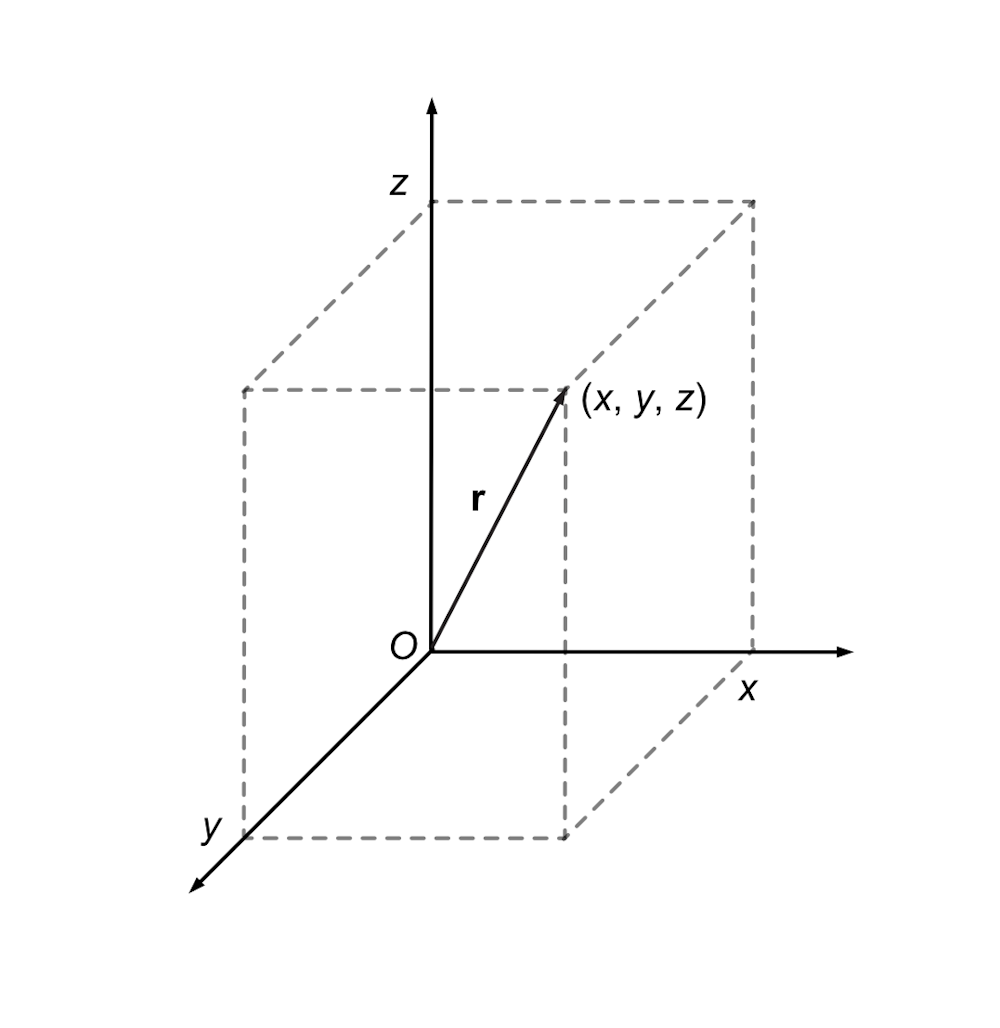
    A vector encodes two kinds of information at once, most famously the magnitude and direction of a spatial quantity such as force, velocity or relative position. For instance, to represent an object’s position (xyz) relative to the “origin” (the zero point of the position axes), Hamilton visualised an arrow pointing from the origin to the object’s location. The arrow represents the “position vector” x i + y j + z k.

    This vector’s “components” are the numbers x, y and z – the distance the arrow extends along each of the three axes. (Other vectors would have different components, depending on their magnitudes and units.)

    A vector (r) is like an arrow from the point O to the point with coordinates (x, y, z).
    The Conversation, CC BY

    Half a century later, the eccentric English telegrapher Oliver Heaviside helped inaugurate modern vector analysis by replacing Hamilton’s imaginary framework i, j, k with real unit vectors, i, j, k. But either way, the vector’s components stay the same – and therefore the arrow, and the basic rules for multiplying vectors, remain the same, too.

    Hamilton defined two ways to multiply vectors together. One produces a number (this is today called the scalar or dot product), and the other produces a vector (known as the vector or cross product). These multiplications crop up today in a multitude of applications, such as the formula for the electromagnetic force that underpins all our electronic devices.

    A single mathematical object

    Unbeknown to Hamilton, the French mathematician Olinde Rodrigues had come up with a version of these products just three years earlier, in his own work on rotations. But to call Rodrigues’ multiplications the products of vectors is hindsight. It is Hamilton who linked the separate components into a single quantity, the vector.

    Everyone else, from Isaac Newton to Rodrigues, had no concept of a single mathematical object unifying the components of a position or a force. (Actually, there was one person who had a similar idea: a self-taught German mathematician named Hermann Grassmann, who independently invented a less transparent vectorial system at the same time as Hamilton.)

    Hamilton also developed a compact notation to make his equations concise and elegant. He used a Greek letter to denote a quaternion or vector, but today, following Heaviside, it is common to use a boldface Latin letter.

    This compact notation changed the way mathematicians represent physical quantities in 3D space.

    Take, for example, one of Maxwell’s equations relating the electric and magnetic fields:


    ×


    E


    = –∂
    B
    /∂

    t

    With just a handful of symbols (we won’t get into the physical meanings of ∂/∂t and ∇ ×), this shows how an electric field vector (E) spreads through space in response to changes in a magnetic field vector (B).

    Without vector notation, this would be written as three separate equations (one for each component of B and E) – each one a tangle of coordinates, multiplications and subtractions.

    The expanded form of the equation. As you can see, vector notation makes life much simpler.
    The Conversation, CC BY

    The power of perseverance

    I chose one of Maxwell’s equations as an example because the quirky Scot James Clerk Maxwell was the first major physicist to recognise the power of compact vector symbolism. Unfortunately, Hamilton didn’t live to see Maxwell’s endorsement. But he never gave up his belief in his new way of representing physical quantities.

    Hamilton’s perseverance in the face of mainstream rejection really moved me, when I was researching my book on vectors. He hoped that one day – “never mind when” – he might be thanked for his discovery, but this was not vanity. It was excitement at the possible applications he envisaged.

    A plaque on Dublin’s Broome Bridge commemorate’s Hamilton’s flash of insight.
    Cone83 / Wikimedia, CC BY-SA

    He would be over the moon that vectors are so widely used today, and that they can represent digital as well as physical information. But he’d be especially pleased that in programming rotations, quaternions are still often the best choice – as NASA and computer graphics programmers know.

    In recognition of Hamilton’s achievements, maths buffs retrace his famous walk every October 16 to celebrate Hamilton Day. But we all use the technological fruits of that unassuming graffiti every single day.

    Robyn Arianrhod does not work for, consult, own shares in or receive funding from any company or organisation that would benefit from this article, and has disclosed no relevant affiliations beyond their academic appointment.

    ref. Three letters, one number, a knife and a stone bridge: how a graffitied equation changed mathematical history – https://theconversation.com/three-letters-one-number-a-knife-and-a-stone-bridge-how-a-graffitied-equation-changed-mathematical-history-241034

    MIL OSI AnalysisEveningReport.nz

  • MIL-Evening Report: An immediate ban has been issued for the herbicide dacthal. What are the health risks?

    Source: The Conversation (Au and NZ) – By Ian Musgrave, Senior lecturer in Pharmacology, University of Adelaide

    Last week the Australian government cancelled the registration of all products containing chlorthal dimethyl, a weedkiller commonly known as dacthal.

    No phase out period applies. The cancellation is immediate, due to the risks it poses to human health – primarily unborn babies.

    This means using dacthal as a chemical agricultural product “is now illegal”, according the Australian Pesticides and Veterinary Medicines Authority.

    So what has changed? What are the health risks of being exposed to dacthal – and how long have we known about them?

    What is dacthal?

    Dacthal and chlorthal dimethyl are alternative names for dimethyl tetrachloroterephthalate, or DCPA. This is a herbicide registered to control weeds in both agricultural and non-agricultural settings.

    Dacthal works by inhibiting auxin, a growth hormone in plants which promotes the development of buds, roots and lengthening cells.

    It is used to selectively kill annual grasses and many other common weeds, without killing turf grasses, flowers, fruits and vegetables. Dacthal is applied before weeds emerge, often when still in their seed stage.

    In Australia it is used in twelve herbicide products. All have been cancelled as of October 10 2024.

    Farmers and retailers are allowed to hold products until they’re recalled, but must not use them. The government says it will provide information about product recall shortly.

    What are the health risks?

    As dacthal targets a hormone found only in plants, for adult humans and mammals the chemical has limited acute and subchronic toxicity. This means brief exposure to high levels of dacthal, or longer-term exposure to modestly high levels, have no effect.

    However there is a health risk for unborn babies whose mothers have been directly exposed. This could be through mixing the chemical, loading and applying it, or from residue on treated crops – for up to five days after first applied.

    The chemical has been linked to low birth weight, and life-long impacts, which can include impaired brain development and motor skills.

    The government has advised pregnant agricultural workers who are concerned to speak to their clinician.

    What changed?

    Safety data for chemicals such as pesticides are periodically reevaluated. This is to see if any new risks have become apparent with advances in technology and our understanding of biology.

    In 2013, the United States Environmental Protection Agency called for fresh safety data to look at effects of dacthal on thyroid hormones.

    Fast forward to 2022. In that time, the company producing dacthal had failed to produce the required study. So the US Environmental Protection Agency issued a notice it would suspend technical-grade products containing dacthal.

    In response, the company submitted a thyroid study performed in rats. This study showed dacthal could affect thyroid function at doses lower than previously known.

    The US government determined this did not change recommendations for adults. However dacthal may affect thyroid function of a fetus at lower doses than those those that harm adults.

    What did the study in rats find?

    Dacthal was found to inhibit two thyroid hormones in rat pups whose mother had been exposed while pregnant.

    There was a 35-53% decrease in the hormone triiodothyronine, known as T3. And for thyroxine (T4), rat pups experienced a 29-66% decrease after their mother’s exposure.

    Decreases in these two hormones are associated with risks to unborn children including low birth weight and impaired brain development, IQ and motor skills.

    Of particular concern was the effects occurred at much lower levels than previously thought. The decreases in T3 and T4 occurred in rat pups exposed to levels of dacthal ten times lower than the safe threshold for their mothers. This means pregnant rats exposed to dacthal at those levels had no adverse effects, but their unborn babies did.

    Exactly how the chemical caused decreases in T3 and T4 in rat pups is not clear.

    However the Australian Pesticides and Veterinary Medicines Authority considers this study relevant to humans. The changes in regulation are based on the potential harms if unborn babies are exposed via their mothers.

    The health risk is to the development of an unborn baby exposed to dachtal via their mother.
    Fox_Ana/Shutterstock

    What exposure is safe?

    The rat study was used to calculate maximum levels of exposure for pregnant workers. This maximum – 0.001 mg dachtal/kg body weight/day – was considered appropriate to reduce risk to the unborn child (and was not expected to harm adults).

    However, the maximum acceptable level was exceeded in all estimates of exposure to dachtal. This was the case even when the person was wearing protective clothing, gloves, and using a respirator.

    Even under stringent safety conditions, potential harms to an unborn child could not be ruled out. For this reason the US stopped sale of dacthal via an Emergency Order on 6 August 2024. Australia has since followed suit with its own ban.

    How long have we known about this?

    The US government only received the thyroid information in 2022. It then had to determine whether the levels of exposure under real world conditions would equate to risk in humans.

    This is not straightforward, as the pesticide is used under a variety of conditions, including:

    • mixing and preparing the pesticide using personal protective equipment
    • downstream spay drift
    • treatment of lawns and exposure to the lawn after treatment.

    Each of these scenarios requires careful analysis of potential risks.

    In addition, exposure can be through inhalation and/or skin contact. All this must be taken into account and these calculations take time.

    Should I be worried?

    If you were not pregnant and using personal protective clothing while using or applying dacthal herbicides, this is little cause for worry. Your exposure is below the maximum limit.

    But if you were pregnant when using dacthal pesticides, please consider consulting your child’s paediatrician.

    Ian Musgrave has received funding from the National health and Medical Research Council to study contaminants in herbal medicines. He has received ARC funding for studying Alzheimer’s disease in the recent past. He is a member of the Science Communicators South Australian Branch.

    ref. An immediate ban has been issued for the herbicide dacthal. What are the health risks? – https://theconversation.com/an-immediate-ban-has-been-issued-for-the-herbicide-dacthal-what-are-the-health-risks-241257

    MIL OSI AnalysisEveningReport.nz

  • MIL-Evening Report: Australian schools need to address racism. Here are 4 ways they can do this

    Source: The Conversation (Au and NZ) – By Aaron Teo, Lecturer in Curriculum and Pedagogy, University of Southern Queensland

    The Australian Human Rights Commission wants to see schools address racism, as part of a broader push to address the problem across Australian society.

    As it says in a recent report,

    People are not born with racist attitudes or beliefs […] Addressing racism in schools is crucial to ensure that victims do not leave education facing lifelong disadvantage, and perpetrators do not enter adulthood believing racist behaviours are acceptable […].

    But racism is hardly mentioned in the Australian Curriculum – for example, it is noted in passing in the health and physical education curriculum for years 5 to 8. However, there is no consistent approach across subject areas, or at the state level.

    This means teaching about racism is largely left up to individual schools and teachers.

    Yet research shows they can be reluctant to speak about these issues with students. This is for a range of reasons, such as worrying they will say the wrong thing.

    How should school systems, schools and teachers address racism? Here are four ways.

    1. Teach racial literacy

    We know children demonstrate stereotyping and prejudice from an early age and students from racial minorities are frequently targets of racism and discrimination at school.

    In Australia, racism debates can also involve dangerous and ill-informed opinions.

    So we need to start teaching children and young people about racial literacy skills from the first year of schooling. This means they grow up to have the knowledge and language to talk about and confront racism.

    Some of these skills include:

    • being able to identify how racism appears in everyday interactions, the media and society more broadly

    • debunking common myths about racism, such as it is a “thing of the past”. Or “everyone has equal access to the same opportunities and outcomes if they work hard enough”

    • understanding the impacts of racism, including on people’s opportunities, education and their health and wellbeing

    • understanding how our own backgrounds, privilege and bias can influence how we confront or don’t confront racism.

    Students also need to learn how racism can be structural, systemic and institutional. This means racism is not just about an individuals’ beliefs or actions. Laws, policies, the way organisations are run and cultural norms can all result in inequitable treatment, opportunities and outcomes.

    2. Teach students how to react

    We also need to teach children how to react when they witness racism with age-appropriate tools.

    For both primary and secondary students, the first question should always be, “Is it safe for me to act?”, followed by “Am I the best person to act in this situation?”. Depending on their answers, they could:

    • report the incident to an appropriate adult or person in authority

    • show solidarity with the victim by comforting them and letting them know what happened was not OK

    • interrupt, distract or redirect the perpetrator

    • seek help from friends, a passerby or teacher.

    3. Create safe classrooms and playgrounds

    Teachers need to ensure classrooms and schools are safe spaces to discuss racism.

    This can include:

    • acknowledging how our own experiences, biases and privileges shape our world views

    • clearly defining the purpose of a discussion and the ground rules

    • using inclusive language.

    In particular, schools have a unique duty of care for minority students, who need to know they can talk openly about these issues with their peers and teachers without fear or judgement.

    This includes addressing sensitive topics like how they might experience or witness racism, the effect it can have on their health and wellbeing and those around them, and the consequences of talking about or reporting racism.

    4. Develop teachers’ skills

    As part of creating safe classrooms, teachers need to be able to confidently discuss tricky topics in an age-appropriate way.

    Our work has shown some teachers deny racism or perpetuate racist stereotypes. Others may avoid the topic, worrying they will say or do the wrong thing.

    Our current (as yet unpublished) research on anti-racism training with classroom teachers suggests they can increase their confidence to talk and teach about racism if given appropriate, and sustained training.

    What needs to happen now?

    We need anti-racism education to be an official part of school curricula. To accompany this, we need genuine commitments and modelling from policymakers, school leaders, teachers, parents and carers to address racism in schools.

    We need to talk openly about racism in schools. That means explicitly naming it, calling it out, and not getting defensive when it is identified and action is required.

    Aaron Teo is Convenor for the Australian Association for Research in Education Social Justice Special Interest Group, Queensland Convenor for the Asian Australian Alliance, member of the Challenging Racism Project, and member of the Advisory Committee for the Australian Human Rights Commission’s study into racism in Australian universities

    Rachel Sharples has received funding from the Australian Research Council and the NSW Department of Education. She is a member of the Challenging Racism Project (CRP) and the Centre for Resilient and Inclusive Communities (CRIS).

    ref. Australian schools need to address racism. Here are 4 ways they can do this – https://theconversation.com/australian-schools-need-to-address-racism-here-are-4-ways-they-can-do-this-239823

    MIL OSI AnalysisEveningReport.nz

  • MIL-OSI United Kingdom: New Collaboration Model For The Wee Ferintosh Bus

    Source: Scotland – Highland Council

    Issued in partnership with Communities in Motion and The Highland Council

    Communities in Motion CT (CiMCT) and The Highland Council (THC) have signed a new form of collaboration agreement that secures the services of the highly acclaimed Wee Ferintosh Bus.

    From Monday 2 December 2024, thanks to the long-term support of THC, CiMCT will run the Wee Bus, seven days a week, with a team of paid and volunteer staff.

    This announcement coincides with Community Transport Week. This is a week-long celebration of the impact of local, non-profit transport projects and services across the UK, which is being led by the Community Transport Association (CTA). Between 14 and 18 October 2024, communities across the UK are celebrating the vital role and inspiring work of Community Transport in helping millions of people to stay independent, participate in their communities and access essential public services and employment.

    Angus Watson, Chair of CiMCT said: “It’s a real privilege to be the first Chair of Communities in Motion CT as this new Charity pulls together, and benefits from, all the fantastic efforts of many volunteers and organisations who have been working tirelessly over many years to introduce this essential community service. 

    Specific recognition and thanks go to The Highland Council’s Community Transport team for their unwavering support, professional guidance and belief in the vision, for our charity to further develop community transport for the community, in the community, by the community.

    As we move forward with the brilliant support of our community volunteers and soon to be appointed staff, I have no doubt the Wee bus will go from strength to strength, continuing the critical service that our neighbours now enjoy, while endeavouring to resolve more community transport solutions.”

    Councillor Ken Gowans, Chair of the Council’s Economy and Infrastructure Committee said: “I would like to thank everyone involved for all their collaboration and hard work to get to this exciting stage. Creating this sustainable transport provision tailored to meet the needs of those living in and visiting the Black Isle is a great achievement.   The commitment of everyone involved to make this a success reflects the vibrant, community-led push to achieve a more accessible, more frequent and more sustainable service for local residents.”

    He added: “It is very fitting that this announcement about the Wee Bus Service is being made at the start of Community Transport Week as the theme this year is “Celebrating Community Solutions” which is all about celebrating how accessible, inclusive and affordable transport is fostering stronger and more connected communities.”

    Becky Richmond, Chair of Ferintosh Community Council said: “It has been fantastic to witness the tremendous effort from FCC and its volunteers in providing community transport for our residents. The establishment of CiMCT not only secures the future of the Wee Bus for Ferintosh but also provides a platform for looking at the wider transport aspirations of the Black Isle Community as outlined in the newly registered Black Isle Local Place Plan.”

    Bookings for the Wee Ferintosh Bus can be made by calling 07387 364541 or through email: weeferintoshbus@gmail.com

    ENDS

    Communities in Motion CT (CiMCT) and The Highland Council (THC) have signed a new form of collaboration agreement that secures the services of the highly acclaimed Wee Ferintosh Bus.

    From Monday 2nd December 2024, thanks to the long-term support of THC, CiMCT will run the Wee Bus, seven days a week, with a team of paid and volunteer staff.

    This announcement coincides with Community Transport Week. This is a week-long celebration of the impact of local, non-profit transport projects and services across the UK, which is being led by the Community Transport Association (CTA). Between 14 and 18 October 2024, communities across the UK are celebrating the vital role and inspiring work of Community Transport in helping millions of people to stay independent, participate in their communities and access essential public services and employment.

    Angus Watson, Chair of CiMCT said: “It’s a real privilege to be the first Chair of Communities in Motion CT as this new Charity pulls together, and benefits from, all the fantastic efforts of many volunteers and organisations who have been working tirelessly over many years to introduce this essential community service. 

    Specific recognition and thanks go to The Highland Council’s Community Transport team for their unwavering support, professional guidance and belief in the vision, for our charity to further develop community transport for the community, in the community, by the community.

    As we move forward with the brilliant support of our community volunteers and soon to be appointed staff, I have no doubt the Wee bus will go from strength to strength, continuing the critical service that our neighbours now enjoy, while endeavouring to resolve more community transport solutions.”

    Councillor Ken Gowans, Chair of the Council’s Economy and Infrastructure Committee said: “I would like to thank everyone involved for all their collaboration and hard work to get to this exciting stage. Creating this sustainable transport provision tailored to meet the needs of those living in and visiting the Black Isle is a great achievement.   The commitment of everyone involved to make this a success reflects the vibrant, community-led push to achieve a more accessible, more frequent and more sustainable service for local residents.”

    He added: “It is very fitting that this announcement about the Wee Bus Service is being made at the start of Community Transport Week as the theme this year is “Celebrating Community Solutions” which is all about celebrating how accessible, inclusive and affordable transport is fostering stronger and more connected communities.”

    Becky Richmond, Chair of Ferintosh Community Council said: “It has been fantastic to witness the tremendous effort from FCC and its volunteers in providing community transport for our residents. The establishment of CiMCT not only secures the future of the Wee Bus for Ferintosh but also provides a platform for looking at the wider transport aspirations of the Black Isle Community as outlined in the newly registered Black Isle Local Place Plan.”

    Bookings for the Wee Ferintosh Bus can be made by calling 07387 364541 or through email: weeferintoshbus@gmail.com

    MIL OSI United Kingdom

  • MIL-OSI United Kingdom: Future of Norwich Livestock Market takes a leap forward

    Source: City of Norwich

    Published on Tuesday, 15th October 2024

    A green light was signalled by cross-party councillors today (15 Oct) after a unanimous vote means the council can progress plans to seek legal consent to relocate Norwich’s Livestock Market.

    This critical vote means the council can continue with its plans to manage a private bill through parliament to seek a change in legislation.

    While the change to law would remove the current legal restriction of the council having to provide a livestock market within its boundary, there remains a legal duty on the council to provide and maintain a livestock market.

    The parliamentary journey to seek a change in the law is expected to take up to 12 months.

    Norwich’s livestock market has been trading on its current site close to Hall Road since the 1960s and is now one of the last trading markets within East Anglia. 

    The council is leaseholder of the 3.25 acre site and is responsible for most of the repair liability. Detailed survey work has shown that the repair work is extensive, reflecting the age of the facility and the need to introduce modern biosecurity and animal welfare standards which all markets must comply with.

    Work includes the demolition of a former auction building, removal of asbestos across the site, refurbishment of the current auction building and major work to the parking areas and roadways. The repair work required is expected to cost up to £3m.

    Mike Stonard, leader of Norwich City Council, said: “Securing this important vote means we can carry on with our plans to seek legal permission to be able to relocate a new livestock market outside our boundary.

    “As the private bill progresses through parliament there is much more work to be done.

    “This will involve a rigorous assessment and full business case appraisal on two sites close to the A47 that we have identified as possible relocation alternatives.”

    MIL OSI United Kingdom

  • MIL-OSI: First Merchants Corporation Announces Cash Dividend on Its Preferred Stock

    Source: GlobeNewswire (MIL-OSI)

    MUNCIE, Ind., Oct. 15, 2024 (GLOBE NEWSWIRE) — First Merchants Corporation has declared a quarterly cash dividend of $46.88 per share on its 7.50% Non-Cumulative Perpetual Preferred Stock Series A, represented by depositary shares (NASDAQ: FRMEP) each representing a 1/100th interest in a share of the Series A preferred stock. Holders of depositary shares will receive $0.4688 per depositary share. The dividend will be payable on November 15, 2024, to stockholders of record on October 31, 2024.

    About First Merchants Corporation:

    First Merchants Corporation is a financial holding company headquartered in Muncie, Indiana. The Corporation has one full-service bank charter, First Merchants Bank. The Bank also operates as First Merchants Private Wealth Advisors (as a division of First Merchants Bank).

    First Merchants Corporation’s common stock is traded on the NASDAQ Global Select Market System under the symbol FRME. Depositary shares representing a 1/100th interest in a share of First Merchants Corporation’s 7.50% Non-Cumulative Perpetual Preferred Stock, Series A are traded on the NASDAQ Global Select Market System under the symbol FRMEP. Quotations are carried in daily newspapers and can be found on the company’s Internet web page (http://www.firstmerchants.com).

    FIRST MERCHANTS and the Shield Logo are federally registered trademarks of First Merchants Corporation.

    For more information, contact:
    Nicole M. Weaver, Vice President and Director of Corporate Administration
    765-521-7619
    http://www.firstmerchants.com

    The MIL Network

  • MIL-OSI Security: Camden Men Sentenced to Prison for String of Armed Robberies and Carjackings

    Source: United States Bureau of Alcohol Tobacco Firearms and Explosives (ATF)

    CAMDEN, N.J. – Two Camden men have been sentenced to prison for their respective roles in conspiracies that involved committing armed carjackings and robbing multiple gas stations in southern New Jersey, U.S. Attorney Philip R. Sellinger announced.

    Kamau Bradshaw, 22, was sentenced today to 108 months in prison; Paul Rogers, 30, was sentenced on Aug. 7, 2024, to 188 months in prison. Both defendants previously pleaded guilty before Chief U.S. District Judge Renée Marie Bumb to informations charging them with one count of conspiring to commit armed robberies, one count of committing an armed robbery, and one count of conspiring to commit armed carjackings. Judge Bumb imposed the sentences in Camden federal court.

    According to documents filed in this case and statements made in court:

    On Sept. 14, 2021, two masked individuals carrying an AR-style rifle robbed a gas station in Pennsauken, New Jersey. One of the robbers wore a gray Nike hooded sweatshirt and scuffed tan work boots. The second robber wore a tan hooded sweatshirt with “REACTIVE” printed on the sleeves and striped boxer shorts. They obtained cash and cigarettes while brandishing the firearm. Shortly after the robbery, two individuals were seen returning to a residence in Camden with a large duffle bag. On Sept. 17, 2021, law enforcement officers executed a federal search warrant at the Camden residence and recovered, among other items, a duffle bag, an AR-style rifle, a gray Nike sweatshirt, scuffed tan work boots, and a tan hooded sweatshirt with “REACTIVE” printed on the sleeves. Bradshaw and Rogers were present when law enforcement agents executed the search warrant, at which time Bradshaw was wearing striped boxer shorts consistent with those worn by one of the robbers during the robbery.

    Rogers and Bradshaw each admitted their role in eight gas station robberies or attempted robberies in addition to the Sept. 14, 2021, robbery in Pennsauken, including robberies in Haddon Township on Aug. 30, 2021; Pennsauken on Aug. 30, 2021; Bridgeton on Aug. 31, 2021; Brooklawn on Aug. 31, 2021; Vineland on Aug. 31, 2021; Pennsauken on Sept. 1, 2021; Haddon Township on Sept. 1, 2021; and Haddon Township on Sept. 16, 2021. Two of the gas stations were victimized more than once. At each gas station, at least one member of the conspiracy brandished what appeared to be an assault weapon in order to threaten the gas station attendant.

    For several of the robberies, Bradshaw and Rogers used a car they obtained by committing an armed carjacking in Philadelphia. Members of the carjacking conspiracy traveled from Camden to Philadelphia and brandished what appeared to be an assault weapon in order to force a driver and passenger from an automobile. They returned to Camden with the victims’ car, which they proceeded to use to drive to and from some of their gas stations robberies.

    In addition to the prison term, Chief Judge Bumb sentenced Rogers and Bradshaw each to three years of supervised release.

    U.S. Attorney Sellinger credited special agents with Bureau of Alcohol, Tobacco, Firearms and Explosives, Newark Field Division, under the direction of Acting Special Agent in Charge Ross A. Marchetti, with the investigation leading to the sentencings. He also thanked the Camden County Prosecutor’s Office, Bridgeton City Police Department, Brooklawn Borough Police Department, Camden County Police Department, Haddon Township Police Department, New Jersey State Police, Oaklyn Police Department, Pennsauken Township Police Department, Vineland Police Department, and the Philadelphia Police Department.

    The government is represented by Assistant U.S. Attorney Jeffrey Bender of the U.S. Attorney’s Office in Camden.

    MIL Security OSI

  • MIL-OSI Security: Meteghan — Meteghan RCMP Detachment arrest two following theft of anchors

    Source: Royal Canadian Mounted Police

    Meteghan RCMP Detachment has charged a man and woman after recovering stolen property.

    On October 10, at approximately 8:00 a.m., Meteghan RCMP Detachment responded to a reported theft of 54 anchors. Officers learned that the anchors, valued at approximately $11,000, had been stolen overnight from a business on Hwy. 1 in Meteghan Centre.

    Investigators were able to identify a vehicle of interest, and at approximately 11:30 a.m. that same day, they located a matching vehicle travelling on Hwy. 1. A traffic stop was conducted, and two occupants were arrested in relation to the theft.

    The anchors were soon recovered at a scrap yard in Yarmouth.

    Andrew Corkum, 45, of Belliveaus Cove, and Kimberly Robichaud, 41, of Yarmouth, have each been charged with Theft Over $5000. They have been released from custody and are due in Yarmouth Provincial Court on November 22 at 9:30 a.m.

    Nova Scotians are encouraged to contact their nearest RCMP detachment to report crime or suspicious activity in their communities. Anonymous tips can be made by calling Nova Scotia Crime Stoppers, toll-free, at 1-800-222-TIPS (8477), submitting a secure web tip at http://www.crimestoppers.ns.ca, or using the P3 Tips app.

    MIL Security OSI

  • MIL-OSI USA: Jon Irvine Appointed IAM Healthcare Coordinator

    Source: US GOIAM Union

    IAM International President Brian Bryant has appointed Jon Irvine as IAM Healthcare Coordinator, effective Oct. 1, 2024. This appointment will build on the IAM’s commitment to empowering technical and professional workers in the healthcare industry.

    Irvine’s first exposure to the importance of a strong union voice for healthcare workers came from his mother, who spent her career as a Registered Nurse and proud AFSCME member. Jon would follow in his mother’s footsteps during the 2008 Great Recession and attended the Institute of Technology’s Licensed Practical Nursing program. Irvine eventually returned to work in the forestry field leading to his tenure with the IAM.

    Irvine began his IAM service in 2010 with Local W130 at the Port of Olympia in Washington state, where he served in many roles from Chief Shop Steward to Local President. He would go on to hone his skills as a professional trade unionist as a full-time team member with the Oregon AFL-CIO, providing collective bargaining, organizing and legislative support to affiliated unions.

    Eventually, Irvine returned to the IAM as a Business Representative with District W24, where he led the district’s organizing and legislative efforts. Irvine proved to be crucial part of District W24’s organizing success winning several campaigns for working people in the healthcare, automotive and manufacturing industry. 

    Irvine has spent the last two years of his career as an Education Representative at the IAM’s Winpisinger Education and Technology Center developing and teaching high level labor education to empower IAM members. As an Education Rep, Irvine played a pivotal role in supporting the educational needs of the IAM’s Healthcare, Railroad, Organizing and Woodworker Departments.

    “I’m grateful and humbled by the International President’s faith in my ability to help this team grow the IAM’s footprint in this industry and look forward to working with the IAM Healthcare team to reach this end,” said Irvine. “Healthcare workers play a vital role in our society. Diagnosing, treating and comforting people who are sick or injured is a noble endeavor. These workers deserve a collective voice, and I believe IAM Healthcare is the union to make sure these essential workers issues are heard loud and clear.”

    “Jon’s education and experience in healthcare work, organizing, collective bargaining and legislative action makes for a welcome addition to the IAM Healthcare team,” said International President Bryant. “Jon is joining IAM Healthcare at a critical moment for our union’s growing advocacy for both healthcare professionals and patients.” 

    Share and Follow:

    MIL OSI USA News

  • MIL-OSI USA: S. 594, Continental Divide National Scenic Trail Completion Act

    Source: US Congressional Budget Office

    S. 594 would direct the Departments of Agriculture and the Interior to complete the Continental Divide National Scenic Trail as a contiguous recreational route, to the maximum extent possible, by November 10, 2028. The departments would be required to prepare a trail acquisition and development plan and report periodically to the Congress on their progress.

    According to the departments, activities are underway to complete the trail, including optimal location review, land acquisition planning, and trail construction. On that basis, and the costs of similar tasks, CBO estimates that implementing the bill would require the equivalent of one additional employee’s time, at an average annual cost of $120,000, for a total cost of $1 million over the 2025-2029 period. Any related spending would be subject to the availability of appropriated funds.

    MIL OSI USA News

  • MIL-OSI United Nations: Experts of the Committee on the Elimination of Discrimination against Women Praise Chile’s Laws on Violence against Women, Ask about Measures to Prevent Trafficking of Children and Sexual Abuse of Girls

    Source: United Nations – Geneva

    The Committee on the Elimination of Discrimination against Women today considered the eighth periodic report of Chile, with Committee Experts praising the State’s laws on violence against women and femicide, and raising questions about measures to prevent trafficking of children and sexual abuse of girls.

    One Committee Expert said Chile had impressive laws on violence against women and femicide.  What was the reparation regime for femicide?

    A Committee Expert said trafficking remained a problem in Chile.  There were around 20,000 illegal adoptions; the stealing of children was reportedly a lucrative business for criminal groups.  What measures were in place to support women and children who were at risk of trafficking?

    Another Expert said the Committee was concerned by the high rates of teenage pregnancy and sexual abuse of teenage girls.  What was being done to prevent early pregnancies, sexual abuse of girls, and delays in processing of abortion requests?

    Introducing the report, Antonia Orellana Guarello, Minister of Women and Gender Equity of Chile and head of the delegation, said an emblematic advance in the fight against violence in Chile was the enactment this June of the comprehensive law against gender violence. In the last two years, law reform had established a comprehensive protection and reparation regime for victims of femicide. National violence against women programmes had been redesigned to offer care to a wider range of victims.

    Ms. Orellana Guarello said the Government had developed the National Action Plan against Trafficking in Persons 2023-2026, focusing on prevention, protection of victims, prosecution of crimes, intersectoral coordination, and international cooperation.  This plan had made it possible to double the State’s capacity to care for adult victims.

    The delegation added that the State had a new procedure for assessing international adoptions and was supporting investigations into kidnapping of children. One individual who had been kidnapped had been identified and reunited with their family.  The State party was working to establish a genetic database to help reunite families and victims.

    Chile had seen a downward trend in teenage pregnancies since 2016, the delegation noted, influenced by the free distribution of contraception.  The State party was developing legislation that decriminalised abortion.  Around 70 per cent of girls under 14 who requested abortions did so on the grounds of rape.  An early referrals programme had been developed to speed up their access to abortions.

    In closing remarks, Ms. Orellana Guarello said Chile was committed to implementing the rights of women in all their diversity.  The State party would work to collect disaggregated data on women, achieve gender parity at all levels, increase access to abortion, promote the rights of older women and reform the pension system, and improve the situation of women deprived of liberty.

    Ana Peláez Narváez, Committee Chair, in concluding remarks, said that the dialogue had helped the Committee to better understand the situation of women and girls in the State party.  It would develop recommendations based on the dialogue to strengthen the implementation of the Convention for the benefit of all women and girls in Chile.

    The delegation of Chile consisted of representatives from the Supreme Court; Ministry of Justice and Human Rights; National Migration Service; Ministry of Foreign Affairs; Ministry of Women and Gender Equity; Ministry of the Interior and Public Security; Public Prosecutor’s Office; Gendarmerie; Public Criminal Defender’s Office; Cabinet of the Minister of Social Development and Family; and the Permanent Mission of Chile to the United Nations Office at Geneva.

    The Committee will issue the concluding observations on the report of Chile at the end of its eighty-ninth session on 25 October.  All documents relating to the Committee’s work, including reports submitted by States parties, can be found on the session’s webpage.  Meeting summary releases can be found here.  The webcast of the Committee’s public meetings can be accessed via the UN Web TV webpage.

    The Committee will next meet in public at 10 a.m. on Wednesday, 16 October to consider the tenth periodic report of Canada (CEDAW/C/CAN/10).

    Report

    The Committee has before it the eighth periodic report of Chile (CEDAW/C/CHL/8).

    Presentation of Report

    ANTONIA ORELLANA GUARELLO, Minister of Women and Gender Equity of Chile and head of the delegation, said that since the last dialogue, Chile had experienced social protests, the COVID-19 pandemic, and the emergence of “anti-rights” groups.  Despite these challenges, the State had made progress in institutional, legal and administrative mechanisms to ensure the rights of women.  The National Equality Plan, updated in 2023, was the roadmap for equality policies in Chile. Minority groups had participated in the construction and monitoring of the plan.  In 2023 and 2024, six billion pesos were allocated to projects that directly benefited the diversity of women in different State institutions.

    An emblematic advance in the fight against violence was the enactment this June of the comprehensive law against gender violence, which established measures to punish and eradicate gender-based violence.  It created a judicial supervision mechanism, recognised children and adolescents as victims, and established an integrated data system on cases of gender violence. In the last two years, law reform had improved procedural guarantees and protected the rights of victims of sexual crimes; advanced the prevention, investigation and punishment of workplace sexual harassment; and established a comprehensive protection and reparation regime for victims of femicide, including a pension for sons and daughters, which until August 2024 has benefited 126 children and adolescents. National violence against women programmes had been redesigned to offer care to a wider range of victims.  The budget allocated to the prevention of violence against women had been increased by 22 per cent between 2021 and 2024.

    In 2022, a law prohibiting child marriage was enacted.  Thanks to this law, in the last two years there were no marriages with spouses under 18 years of age.  The Government had also developed the National Action Plan against Trafficking in Persons 2023-2026, focusing on prevention, protection of victims, prosecution of crimes, intersectoral coordination, and international cooperation. This plan had made it possible to double the State’s capacity to care for adult victims.  As of May 2024, humanitarian visas were issued to 21 women victims.  Progress had also been made with respect to the payment of child support through the creation of the National Registry of Alimony Debtors and the effective payment law. This had allowed the payment of more than 333 million United States dollars for alimony, benefiting more than 50,000 families as of May 2024.

    Chile was processing the bill that modified the Labour Code to promote equal pay between men and women, seeking to address the persistent gender wage gap, which stood at 23.3 per cent.  The Buenos Aires Commitment recognised the right to care and be cared for.  The Government had introduced a bill to establish a national policy on care to guarantee access to care in conditions of dignity.  Resources for care systems would be increased by 40 per cent by 2025, with the goal of serving 75,000 people with severe dependency.

    The More Women Scientists Programme had provided posts to women in science, technology, engineering and maths programmes at the university level.  The number of women selected for such programmes had since increased by 16.8 per cent.  The Government had implemented an inspection manual for the voluntary interruption of pregnancy law, which gave tools to local authorities for the supervision of health facilities.  It had also reduced the prices of oral, vaginal and long-acting contraception.

    The percentage of women participating in politics had increased in recent decades.  Chile was ranked sixth worldwide in high-level representation of women, with 58.3 per cent of members of the Cabinet of Ministers being women.  The Government was also promoting projects such as gender quotas in the elections of regional governors and councillors.  In the last two years, spaces had been created for women to participate in the evaluation and transformation of public policy, such as the Citizen Dialogues for the Care System, which had 12,614 participants, of which 80.4 per cent were women.  Dialogues were also held for rural women and for the lesbian, gay, bisexual, transgender and intersex community, on sexual and reproductive rights and pension reform.

    In the last two years, 119 indigenous language and culture educators were recruited.  The Good Living Plan promoted the participation of Mapuche and rural women in political and social decisions through territorial dialogues.  The Government had also doubled the quota for hiring people with disabilities in companies and public institutions with 100 or more workers.  The National Policy on Migration and Foreigners provided comprehensive care for foreign women victims of domestic and gender-based violence.  Since 2023, the gender identity accompaniment programme had been implemented, serving more than 2,500 transgender and gender non-conforming children and adolescents.  This year, the Protocol for the Protection of Human Rights Defenders was approved, reaffirming the commitment of the State to protect women human rights defenders.  The Protocol on the Treatment of Pregnant Women in Detention sought to guarantee respect for and exercise of these women’s rights.  From 2022 to May of this year, a total of 321 pregnant women had benefited from this law.

    The Committee’s recommendations would allow the State to make progress in complying with its international commitments and to guarantee respect for human rights.

    LORETO CARVAJAL, Senator of the Republic, said she was a member of a group of parliamentarians that promoted the creation of the Commission on Women and Gender Equity, a space to debate policies against discrimination and violence against women. The law on labour conciliation enshrined the right to remote work for all workers who had children under 14 years of age in their care.  Another law prohibited sexual and workplace violence and harassment at work.  The National Congress had also established its first breastfeeding room, and the Senate had installed 24 kits with menstrual hygiene products in its bathrooms.  The Work-Life Balance Protocol supported women with family and care responsibilities. 

    Chile also faced several challenges.  The revision of the civil partnership regime was still pending, as was a bill to strengthen the anti-discrimination law.  It was essential that resources were appropriately allocated to initiatives that addressed gender-based violence and promoted women’s economic empowerment.  There also needed to be increased cooperation between the legislative branch, the executive and civil society.  The delegation would faithfully reflect on both the State’s progress and the challenges remaining regarding the implementation of the Convention.

    ANDREA MUÑOZ SÁNCHEZ, Minister of the Supreme Court of Chile, said Chile’s understanding of the need to increase women’s access to justice had improved over the reporting period, and legal instruments and rulings reflected this.  The Supreme Court of Justice had a technical secretariat on gender equality and a gender equality policy.  There had been rulings regarding cases of violence against women that dealt with abandonment and recognition of non-typical cases of violence, including the use of legitimate use of self-defence by women.  There had also been rulings on the rights of women deprived of liberty and rulings recognising non-binary gender, and alternatives to detention had been issued for pregnant women.  The judiciary had also implemented many measures to eradicate sexual harassment in the workplace.

    Statement by the National Human Rights Institute

    CONSUELO CONTRERAS LARGO, National Director, National Human Rights Institute of Chile, said Chile’s statistics on violence against women were not disaggregated based on ethnicity, location, age, disability, sexual orientation and migrant status; this needed to be done.  It was worrying that amendments to the conjugal partnership law and the anti-discrimination law had not progressed.  The gap in representation between men and women continued to be wide, especially in mayoral offices and in the Senate, where women made up only 17 per cent and 24 per cent of representatives, respectively.  There was no gender quota in municipal elections, and for parliamentary elections, the quota would be in force only until 2029. 

    Difficulties in reporting violence and accessing care for minority women were concerning. There was a low number of personnel responsible for investigating trafficking in persons in the investigative police.  It was also worrying that only 15 universities offered training in gender violence, women’s rights, and gender perspective, and there was no discussion in Congress about comprehensive sex education in the school curriculum. 

    Gaps in wages and employability of men and women remained, while unemployment rates continued to be higher in women than in men.  The Institute was also concerned about barriers that hindered the provision of access to voluntary termination of pregnancy, including training and conscientious objection, and about the situation of pregnant women and women with children in prisons and the lack of progress on the bill prohibiting pretrial detention for such women.  The Institute was concerned about the lack of cultural relevance of policies for the prevention of violence against indigenous women.

    Questions by a Committee Expert

    MARION BETHEL, Committee Expert and Rapporteur for Chile, said that the Committee welcomed the efforts by the State party to disseminate the Convention and the ratification of the Optional Protocol in 2020.  Capacity-building efforts had reached over 46,000 public servants.  Had the State party established a permanent accountability mechanism regarding the Convention?  Was the Convention promoted in rural areas and had it been translated into indigenous languages? 

    The recent reform of the Constitution was a unique opportunity to advance gender equality and incorporate comprehensive protections for women’s rights.  However, this process had faced challenges.  What steps had been taken to anchor women’s rights in the Constitution? The Committee was concerned about discrimination targeting indigenous women and women of African descent.  What steps had been taken to amend the law on discrimination in line with the Convention?  How many cases had been tried under the law and what reparation had been provided to minority women?  What steps had been taken to address the law’s inadequacies?

    The availability of legal assistance for minority women remained insufficient.  How was the State party addressing this?  What training was being provided on gender equality and support for women for members of the judiciary?  Did training provided for the police and prison service improve access to justice for indigenous women, and how was gender mainstreaming being incorporated in the judiciary?

    Ms. Bethel welcomed that the Convention had been invoked in court rulings.  The State party needed to collect disaggregated data to inform public policy on gender.  What had been the impact of the work of the Intersectoral Working Group on the Rights of Indigenous Women?

    Responses by the Delegation

    The delegation said Chile was committed to addressing gaps in monitoring the implementation of the Convention. The State party was making use of the “SEMORE” system, which collected data on the implementation of human rights treaties.  A mechanism had opened that allowed civil society to monitor the implementation of the Convention and a gender budgeting system would soon be implemented.

    More than 33,000 public servants had received training on gender equality.  The State was collaborating with the local office of the United Nations High Commissioner for Human Rights to strengthen training on the Convention for public officials.  Between 2022 and 2024, around 7,500 members of the judiciary took courses on gender issues and more than 900 members of the investigative police had also received such training.  From this year, all criminal and family judges were required to undergo mandatory training on violence against women, and prosecutors also underwent training on the Convention.

    The judiciary provided defence for all individuals.  There were specialised defenders for indigenous women and intercultural communicators who supported these women.  A bill to reform the Anti-Discrimination Act addressed shortcomings in the legislation and the need to compensate victims; this bill had been rejected, but work was underway to reform it so that it could be passed.

    The Government was working to establish institutions, roadmaps and training programmes to promote the rights of indigenous women.  The judiciary had a handbook of good practices related to gender, and a repository of judgements related to gender had been published.  More than 11,000 judgements had referenced the Convention, including 8,000 judgements by family courts.

    The Sub-Commission on Gender Statistics had established a standard on statistics on gender identity.  Upcoming surveys on gender-based violence would cover rural areas.  The new national census would include questions on gender identity, ethnicity and other characteristics.

    Questions by Committee Experts 

    A Committee Expert congratulated the State party on the creation of the Ministry for Women and Gender Equity. What percentage of the national budget had been devoted to gender institutions in the last three years? How did the State party ensure compliance by public officials with the Convention?  What was the mandate of the National Service for Women and Gender Equity? How was the Women’s Ministry empowered to influence other ministries, institutions and the media?

    The fourth national action plan on equality between men and women was commendable.  What budget had been attached to the plan and what achievements had it made?  Were issues concerning disadvantaged women integrated into national priorities? What measures were in place to monitor the implementation of the plan?

    MARION BETHEL, Committee Expert and Rapporteur for Chile, commended the State party for its use of temporary special measures in promoting the representation of women in political bodies.  There was an absence of temporary special measures to promote the rights of disadvantaged women in other areas, however.  What groups of women had been targeted by temporary special measures and what steps had been taken to guarantee women’s rights in the economic recovery plan?  How were temporary special measures being used to address gender stereotypes and promote women’s access to employment?

    Responses by the Delegation

    The delegation said the National Service for Women and Gender Equity promoted gender equality and women’s empowerment in various areas.  The budget for the Service had been increased in recent years, and its programme to combat violence had been strengthened.  Its activities reached more than 150,000 women, preventing violence and promoting women’s political participation.

    Almost 46,000 members of the police service had received training on human rights and gender, including over 500 directors of the police force.  The share of women applying for posts within the police had increased to 40 per cent. 

    The Women’s Ministry had participated in drafting the post-pandemic economic recovery plan in 2022, incorporating gender perspectives into the plan.  The rate of female integration in the workforce had increased by two per cent since the implementation of the plan.  Subsidies were provided to employed women to access childcare, and structures providing care for the elderly had been strengthened to alleviate women’s care burden.  The childcare system had been reformed to increase access for marginalised women.

    The labour inclusion law had helped to double the number of women with disabilities who had access to the labour market.  There was currently a record number of women in construction in Chile.

    Questions by Committee Experts 

    MARION BETHEL, Committee Expert and Rapporteur for Chile, said there was a lack of temporary special measures for indigenous women, lesbian, bisexual, transgender and intersex women, and other disadvantaged women.  Was the State party working to create these?

    ANA PELÁEZ NARVÁEZ, Committee Chair, asked how the State party ensured access to justice for vulnerable women.  Could indigenous women use their own languages in court?  What measures were in place to protect girls in the justice system?  How did the State ensure access to its national surveys for indigenous women, girls and women with disabilities? 

    Responses by the Delegation

    The delegation said the Government was drafting a law on access to justice for gender-based crimes.  The judiciary had training programmes on gender and sexual diversity and there had been an inclusion protocol developed for the lesbian, gay, bisexual, transgender and intersex community.

    The Government was working to ensure access to social programmes for marginalised groups of the population. Community care centres had been set up in rural areas to support the care burden for indigenous peoples. Information on sexual and reproductive rights was being provided to indigenous women in different indigenous languages and in Braille.  The national census was made available in the main three indigenous languages.  A law had been passed to recognise Chilean people of African descent, and the Ministry of Women had a body working to promote the rights of women of African descent.

    Questions by Committee Experts 

    A Committee Expert welcomed that Chile’s domestic legislation needed to be interpreted in line with the international human rights treaties ratified by Chile, and commended the State party’s efforts to address historical wrongs against women.  How was the State party advancing space exploration led by women and addressing the threats posed to women by autonomous weapons systems?  How would the State party incorporate women peacebuilders within its national action plan on women, peace and security?

    Technology-assisted violence disproportionately affected women.  How was the State party addressing algorithmic biases against women in artificial intelligence models?  The State had impressive laws on violence against women and femicide.  What was the reparation regime for femicide?  How did the State party monitor the implementation of the law on workplace harassment and prevent reprisals against women who reported it?  The State party needed to immediately promulgate the law on consent for sexual relations.  Was the monitoring mechanism for discrimination against HIV-positive people still in place?  Did the media law prohibit gender stereotyping? 

    Trafficking remained a problem in Chile. There were around 20,000 illegal adoptions; the stealing of children was reportedly a lucrative business for criminal groups.  Children in child protection centres were at risk of trafficking.  What reparations had been provided for victims of illegal adoptions?  What measures were in place to support women and children who were at risk of trafficking?

    ANA PELÁEZ NARVÁEZ, Committee Chair, congratulated the State party on implementing the ruling of the Inter-American Court of Human Rights regarding reparation for the forced sterilisation of a woman.  Was forced sterilisation of women with disabilities common?  When would the State party criminalise this practice? How was the State party ensuring protection for girls who were wards of the State from institutional violence?

    Responses by the Delegation

    The delegation said women were included in Chile’s armed forces.  The Commission of Peace and Understanding between the State and the Mapuche people, which included Mapuche women, was striving to achieve peace and an end to conflict with the Mapuche.  Chile had had a feminist foreign policy since 2022, and a gender lens was incorporated into foreign aid activities.  Chile was focusing on including women in international peace negotiations, such as negotiations with Colombia.  The State party had included a gender dimension in the regulation of autonomous weapons and in disarmament efforts.

    There were differing opinions on the effectiveness of establishing a law on consent for sexual relations; negotiation on this act was ongoing.  Laws had been implemented that increased penalties for obstetric violence and the non-consensual dissemination of pornographic material.  The new comprehensive law on violence against women addressed obstetric violence.  Courts were providing compensation for moral harm caused by obstetric violence and failed sterilisation procedures requested by women.

    Chile was promoting the inclusion of women in science, technology, engineering and maths careers and there had been an increase in women taking up these careers.  The State party had passed a law that promoted the inclusion of women in the mining sector.

    The State had a new procedure for assessing international adoptions and was supporting investigations into the kidnapping of children.  One individual who had been kidnapped had been identified and reunited with their family. The State party was working to establish a genetic database to help reunite families and victims.

    Chile had not received complaints related to the forced sterilisation of persons with disabilities.  It had recently adopted a law that required free, prior and informed consent for sterilisation procedures.  The State party had created a special body monitoring girls, boys and adolescents who were wards of the State.  Protection measures were implemented as a last resort.

    Questions by Committee Experts 

    A Committee Expert commended the State party’s commitment to female diplomacy and representation in all decision-making arena.  Would the State party implement quotas for 50 per cent representation of women at all levels of government?  The Expert welcomed the definition of “political violence” against women in the State’s legislation.  Was there a system for implementing this legislation?  What measures were in place to promote gender parity in the private sector? Was there a system to assess the environmental and gender impacts of foreign policies?

    Another Committee Expert welcomed efforts to address statelessness, including the implementation of the Statelessness Convention and the granting of Chilean nationality to all people born on Chilean territory.  Many children were born on migratory routes in Chile, increasing their risk of statelessness.  How was the State party working to register the births of migrant children?  Could it provide statistics in this regard?  How was the State party promoting access to refugee status determination procedures?

    Responses by the Delegation

    The delegation said Chile’s feminist foreign policy included measures promoting the representation of women in the foreign service.  Around 24 per cent of Chile’s ambassadors were female, up from around 12 per cent in 2022.  The State was approaching gender parity in its diplomatic corps.  All Chile’s trade agreements had specific chapters on women. Chile had won a prize from the World Trade Organization for promoting gender equality through trade.

    There had been a rise in female participation in the Congress.  Quotas had been established for electoral lists.  Women were currently heading 13 different ministries, including ministries typically led by men.  Quotas were also being implemented in the regional elections that were currently underway.  A tool had been developed to support women wishing to run for election.  The Government had recognised political violence as a form of discrimination.  The Electoral Service was developing clear standards on this form of violence.

    Currently, all children born on migratory routes had access to Chilean nationality.  The State project on statelessness had allowed for the provision of nationality to around 100 children.  The law on immigration respected the best interests of the child. A draft law had been developed to provide nationality to children who did not have identity documents.  The State party worked to prevent refoulement of migrants.

    Questions by Committee Experts 

    A Committee Expert commended the educational reforms implemented by the State party.  What strategy did the State party have to prevent the dissemination of gender stereotypes in education?  What redress systems were in place for victims of discrimination within education? What monitoring was in place to ensure that the language policy empowered and did not stigmatise indigenous children?  What temporary special measures were in place to promote access to education for minority girls? 

    Had the State party developed disability-friendly learning environments and promoted inclusive education?  What was the rate of return for girls who left the education system early?  How did the State party’s science, technology, engineering and maths education programme address structural barriers to women accessing careers in this field?  The reproductive health education programme started in the second education cycle and was not compulsory.  Would the State party make the programme compulsory, continuing and age appropriate?

    Another Committee Expert commended the State party’s gender parity initiative, the law to reduce the maximum weekly working hours, and the law to implement International Labour Organization Convention 190.  The gender pay gap persisted in the State party.  What measures would the State party take to address the gap, particularly in higher paying positions?  The labour participation rate for women was 48.1 per cent in 2021.  What measures were in place to increase the rate and eliminate horizontal and vertical discrimination against women in the workplace? How was the State party promoting women’s participation in the digital economy, and the employment of marginalised women?  How were self-employed women and domestic workers supported to access State benefits? What efforts had been made to promote the equal sharing of household responsibilities between men and women? Could data on this be provided?

    Responses by the Delegation

    The delegation said Chile had developed a draft bill on schooling that addressed discrimination within the educational community.  The bill was currently being assessed by Congress.  National days on non-sexist education had been held; over 450,000 children and parents had participated.  The admission system for higher education had been amended to support women’s access.  Textbooks had been updated to remove gender stereotypes.  The Government was also working to discourage violence in educational settings.  There were seven possible programmes for sex education, and schools could choose which programme they provided.  The State party planned to develop a bill that would improve the quality of sex education.  Educational institutions were being provided with guidance to implement inclusive education for children with disabilities.

    Between 2022 and 2024, women’s wages had increased by six per cent, and employment rates for women had returned to pre-pandemic levels.  The gender wage gap had decreased from 25 per cent in 2022 to 23 per cent in 2023. Most trade unions had greater participation of women than men.  Regulations had been implemented that allowed for shorter working hours for workers with children.  The number of days that parents could have off when their children were sick had been increased from 15 to 30.  Chile’s legislation established the joint responsibility of parents in caring for their children.  A programme had been developed to provide care for children in rural areas during holiday periods to allow their mothers to continue working.  This programme was now being expanded.

    Questions by Committee Experts 

    A Committee Expert said learners with auditory disabilities had complained that digital education portals were not accessible for them.  Had the State addressed this issue?  Each of the seven possible sexual health education programmes needed to be compliant with the Convention.  How many educational institutions had been fined for discrimination against girls?

    Another Committee Expert commended the State party’s initiative to decriminalise abortion on all grounds. The Committee was concerned by the high rates of teenage pregnancy and sexual abuse of teenage girls.  What was being done to prevent early pregnancies, sexual abuse of girls, and delays in processing of abortion requests?  Around 42 per cent of obstetric practitioners were conscientious objectors to abortion.  In rural areas, there were no alternatives if local doctors were conscientious objectors.  How was the State party addressing this?  Many women had experienced obstetric violence.  What support was the State party providing to ensure access to reparation for such violence?

    One Committee Expert commended the State’s pension and labour law reform.  Women’s unpaid working hours exceeded those of men by a large margin. Almost half of households were headed by women, many of which were impoverished.  There was a pay gap regarding pension payments for retirees. How was the State party preventing the widening of the gender wage gap and working to reduce the representation of women in the informal sector?  How would the State party correct the gender inequalities in the pension system and compensate women for unpaid care work?  Over 40 per cent of companies did not have women on their boards; how was this being addressed?

    What measures were in place to promote women and girls’ access to cultural and sporting activities, and to address discrimination against women in sports?

    Responses by the Delegation

    The delegation said Chile had seen a downward trend in teenage pregnancies since 2016, influenced by the free distribution of contraception.  To prevent the underground use of misoprostol, the State party was developing legislation that decriminalised abortion.  Under 10 per cent of health providers had conscientious objectors to abortions.  The State party supported the referral of persons seeking abortions to alternative abortion providers in cases of conscientious objection.  Conscientious objectors were required to provide abortions if there was a risk to the life of the mother.  Chile had amended legislation to require healthcare institutions to provide patients with information on their abortion rights in various languages.  Around 70 per cent of girls under 14 who requested abortions did so on the grounds of rape.  An early referrals programme had been developed to speed up their access to abortions.  Most family court cases concerning abortions for minors who had been raped were decided within two days.

    Coverage of the pension system had reached 80 per cent, increasing greatly in recent years.  The State party was implementing reforms to close the gender pension gap.  It had drafted a law towards this aim that was currently in its second reading.  A national survey was being carried out that assessed the distribution of domestic work responsibilities.  It would inform future support policies.

    Questions by Committee Experts 

    A Committee Expert asked if the State party had considered mechanisms to prevent backstreet abortions.  What support did the State provide to girls who underwent abortions?

    Another Committee Expert asked if girls aged 16 and over could access abortions in cases of rape.

    One Committee Expert asked about measures to support women entrepreneurs’ access to loans and credit.

    A Committee Expert asked about steps that had been taken to develop an action plan on rural women and girls that addressed their access to services and land.  Chile was the only country in Latin America that did not recognise indigenous peoples in its Constitution.  Would the State party establish a ministry of indigenous affairs, as the Committee had previously recommended? What measures were in place to guarantee the right to tenure and ownership of land for indigenous women? Women of African descent were not visible in the State party due to a lack of data. Not all women of African descent were recognised by the State party in its legislation; how would this be addressed?

    Another Committee Expert commended reforms that raised the minimum age of marriage to 18 without exception.  De facto early unions were still being carried out in Chile.  What measures were in place to identify such unions and to support their dissolution, particularly in rural areas?  How was the State party promoting access to adoption for same-sex couples?  What was the status of efforts to amend the marital regime and to educate the population in this regard?  How effectively were temporary protective measures implemented to protect women and children in cases of family violence?

    Responses by the Delegation

    The delegation said Chile planned to collect more data on people of African descent through its 2025 census. The Ministry of Women and Equity had implemented measures to support access to land tenure for indigenous peoples. There had yet to be progress on the draft law establishing a ministry of indigenous affairs; the Government would devote further efforts toward this aim.

    A national roundtable had been set up to support rural and indigenous women.  The roundtable had developed a programme to support access to water for these women.  There was also a programme supporting the development of rural and indigenous women as leaders.

    Amendments to the adoption law had been discussed for over 10 years.  The Government was working to establish a law that allowed for the adoption of children by same-sex couples.  Custody of children was not granted to violent parents.  Recent legislative reform defined children who experienced domestic violence as victims.  The State party was working to reform the marital property regime to increase women’s access to property in cases of divorce.

    Questions by Committee Experts 

    A Committee Expert said extractive industry activities had affected access to water in rural areas.  Would the State party strengthen environmental regulations to ensure that agribusiness activities did not negatively affect rural and indigenous women?  What steps had been taken to hold persons responsible for human rights violations occurring in the context of the 2019 protests?

    Another Committee Expert noted that a case had been brought before the Supreme Court in 2021 by two women regarding the shutting down of a power plant in Huasco.  What measures were in place to protect women in Huasco from pollution from power plants?

    Responses by the Delegation

    The delegation said a plan was being developed to gradually close power plants in Huasco and to provide reparations to persons who had been affected by pollution from these plants.  A draft bill had been put forward to address the loss of rural ecosystems caused by the activities of extractive industries.  A climate change adaption plan was also in place.

    Around 50 complaints had been brought against civil servants related to their actions in response to the 2019 protests, some of which had led to prosecutions.  Five of these cases involved female victims. 

    Concluding Remarks

    ANTONIA ORELLANA GUARELLO, Minister of Women and Gender Equity of Chile and head of the delegation, said the dialogue had been constructive.  The Committee’s inputs had been and would continue to be vital for the State party.  Chile was committed to implementing the rights of women in all their diversity. The State party had made progress but acknowledged that gaps remained.  The Committee’s recommendations would help the State party to move forward.  Chile would work to collect disaggregated data on women, achieve gender parity at all levels, increase access to abortion, promote the rights of older women and reform the pension system, and improve the situation of women deprived of liberty.

    ANA PELÁEZ NARVÁEZ, Committee Chair, said that the dialogue had helped the Committee to better understand the situation of women and girls in Chile.  It would develop recommendations based on the dialogue to strengthen the implementation of the Convention for the benefit of all women and girls in Chile.

    ___________

    Produced by the United Nations Information Service in Geneva for use of the media; 
    not an official record. English and French versions of our releases are different as they are the product of two separate coverage teams that work independently.


    CEDAW24.028E

    MIL OSI United Nations News

  • MIL-OSI USA: Artwork featuring materials from nature on display at the Atrium Gallery at One Capitol Hill through Jan. 22

    Source: US State of Rhode Island

    Providence, RI� The Rhode Island State Council on the Arts (RISCA) announced today that works by three Charlestown-based artists Robin Spears Jr., Narragansett Indian Tribe citizen, his cousin, River Spears, Narragansett member, and Mikala Jackson, Kutzudika’a Paiute, Paiute Shoshone member, are currently on display in the Atrium Gallery at One Capitol Hill. The exhibition, Indigenous Innovations, features traditional artwork utilizing natural materials from the eastern woodland and coastal landscape.

    The Opening Reception — and an opportunity to meet the artists � will be on Wednesday, Oct. 30, 5 p.m. – 7 p.m., in the Atrium Gallery, first floor of the state’s Administration Building, One Capitol Hill, Providence. The reception is free and open to the public.

    Official Bios (provided by the artists)

    Robin Spears Jr. is a hunter, fisherman and gatherer. He uses these gifts of the earth to create. He grew up in a family of stone masons and has spent more than 35 years doing the art of stonework. Lieutenant Spears is an Environmental Police Officer for the Narragansett Tribe, caring for the land and its resources. He especially enjoys working with antler, cedar, turtle shells, bone, stone, wampum and other natural materials to create dance sticks, fans, pipes, rattles and other pieces of art. He is inspired by nature, his family, and his Narragansett culture.

    River Sokenun Spears, Robin’s cousin, a Narragansett Tribal citizen, is a self-taught wampum jewelry artist and flint knapper. Drawing inspiration from the natural world, he gathers resources from the land to create traditional Indigenous weapons, projectile points, and jewelry that honor his heritage. Influenced by his Uncle Craig Spears Sr. and skilled craftsman Alan Hazard, River sculpts wampum into intricate pieces that tell stories of his people and culture. His passion for preserving tradition extends to flint snapping, where the crafts arrow points from flint, chert, obsidian, glass, dacite, and quartz. Currently, he is an apprentice under Spears Jr. through RISCA’s Folk Art Fellowship Program.

    Mikala Jackson is an indigenous 28-year-old self-taught artist. A descendent of Kutzudika’a Paiute from Mono Lake, California, as well as Paiute Shoshone from Fort McDermitt, Nevada. Her most significant inspirations come from her family and culture. Being an indigenous woman during this present time has encouraged her to explore her own identity and aims to encourage others to do the same. In 2022, she was invited to participate in the side-by-side art exhibit of Warwick center for the arts and was awarded third place. Today she continues working on her craft and often attends art markets where she sells her artwork and more.

    All the artists reside in Charlestown.

    Exhibit Details

    What: Indigenous Innovations showcases the artwork of Robin Spears Jr. and two emerging artists. When: On display until Jan. 22; open to the public, weekdays 8:30 a.m.-4:30 p.m. Where: First floor of the state’s Administration Building, One Capitol Hill, Providence. Opening Reception and Meet the Artist: Wednesday, Oct. 30, 5 p.m.-7 p.m., Atrium Gallery, One Capitol Hill, Providence. Free and open to the public.

    MIL OSI USA News

  • MIL-OSI USA: Secretary of State Gregg M. Amore, Attorney General Peter F. Neronha Remind Rhode Islanders of Voting Rights Ahead of Early Voting Period

    Source: US State of Rhode Island

    PROVIDENCE, RI � Secretary of State Gregg M. Amore and Attorney General Peter F. Neronha are today reminding Rhode Islanders of their rights as voters ahead of the start of early voting for the November 5, 2024 general election. Together, the RI Department of State and the Rhode Island Attorney General’s Office have created a resource guide entitled Know Your Rights: Rhode Island Elections, which outlines voters’ rights and provides related resources.

    “As Secretary of State, I’m committed to making sure every eligible Rhode Islander has the information they need to successfully cast their ballot, whether by mail, early in-person, or on Election Day,” said Secretary of State Gregg M. Amore. “I’m proud to continue our partnership with Attorney General Neronha, and hope Rhode Islanders will take a few moments to review this guide and ensure they understand their rights as voters.”

    “Voting is our most fundamental right as American citizens; the right on which all other rights depend,” said Attorney General Peter F. Neronha. “When we vote we choose our representation, we choose what we want for the future of our cities and towns, our state, and our country. These choices alone can be difficult, and that’s why protecting the ability of our citizens to vote safely without intimidation or interference is so important. I thank Secretary of State Amore for partnering with my Office on this initiative, and we stand ready to preserve and protect voting rights now and in future elections.

    The Know Your Rights guide, which is also available in Spanish, outlines nine main voting rights in Rhode Island: 1. You have the right to vote without any pressure or intimidation. 2. You have the right to vote by mail for any reason. 3. You have the right to fix your mail ballot or mail ballot application if it is rejected. 4. You have the right to vote in-person before Election Day. 5. You have the right to bring one of many different photo IDs to identify yourself at your voting location. 6. You have the right to request a provisional ballot if you are a registered voter and your name is not on the voter list at your designated polling place, or if you don’t have your acceptable photo ID. 7. You have the right to vote regardless of your gender identity. 8. You have the right to vote as soon as you are released from prison and you may also vote while you have been charged with a crime or are awaiting trial, sentencing, or incarceration. 9. You have the right to bring someone with you to vote. Voters looking to learn more about elections in Rhode Island can contact the RI Department of State by emailing elections@sos.ri.gov, calling 401-222-2340, or going online to vote.ri.gov. The 2-1-1 voter information hotline is also now available to Rhode Island voters.

    If someone interferes with your right to vote through threats, intimidation, or coercion, you can report it immediately using the Attorney General’s online complaint form or by calling the Voter Information Hotline by dialing 2-1-1, then pressing 5.

    The deadline to request a mail ballot is 4 p.m. today, October 15, 2024. Mail ballots must be received by the Board of Elections by 8 p.m. on Election Day.

    Early voting will take place beginning tomorrow, October 16, until 4 p.m. on November 4.

    Election Day is November 5.

    ###

    MIL OSI USA News

  • MIL-OSI Video: Lebanon, Yemen, Statelessness & other topics – Daily Press Briefing (15 Oct 2024) | United Nations

    Source: United Nations (Video News)

    Noon Briefing by Stéphane Dujarric, Spokesperson for the Secretary-General.

    Highlights:
    -Lebanon
    -Lebanon/Humanitarian
    -Occupied Palestinian Territory
    -Yemen
    -Ukraine
    -Statelessness
    -Women/Social protection
    -International Day of Rural Women
    -Briefings Tomorrow

    LEBANON
    The United Nations notes with concern the continued strikes across the Blue Line by Hizbullah and the Israel Defense Forces. Launches
    In this regard, the airstrike on Aitou in North Lebanon which resulted in at least 23 fatalities, according to Lebanese authorities, is deeply concerning. The Secretary-General strongly condemns the civilian loss of lives.
    The UN remains deeply concerned at the impact on civilians on both sides of the Blue Line but particularly in Lebanon. All actors must uphold obligations under international law, including International Humanitarian Law, and to protect civilians.
    The UN also notes that clashes continue in southern Lebanon, where the Israel Defense Forces has conducted ground operations since 1 October.
    In recent days the UN underscored our alarm about UNIFIL peacekeepers coming under fire, with at least five peacekeepers injured, and UN premises being impacted on at least 20 occasions since 1 October. The Secretary-General reiterates that UNIFIL personnel and its premises must never be targeted. Attacks against peacekeepers are in breach of international law, including international humanitarian law. They may constitute a war crime.
    As the President of the Security Council stated on behalf of all 15 Council members yesterday, “all parties [are] to respect the safety and security of UNIFIL personnel and premises”.
    The UN notes that the Council “… recalled that UN peacekeepers and UN premises must never be the target of an attack.”
    The UN appreciates the stated support of the Council for the work of our brave peacekeepers who remain in position, in support of efforts to create space for a diplomatic solution to this crisis and support a return to a cessation of hostilities and the full implementation of Security Council resolution 1701 (2006).
    The UN reiterates its calls for an immediate ceasefire, noting this is the only way to ensure the safety and security of peacekeepers as well as to protect the populations of Lebanon and Israel from further suffering.

    LEBANON/HUMANITARIAN
    This crisis has a huge impact on civilians on both sides, in Lebanon and in Israel.
    In Lebanon, today, a 12-truck convoy carrying vital aid arrived in the villages of Marjeyoun [Marji-yun] and Klayaa in the south of the country.
    The inter-agency mission – supported by the Office for the Coordination of Humanitarian Affairs, the World Food Programme, the UN Refugee Agency, UNICEF and the UN Population Fund – delivered bottled water, family hygiene kits, blankets, pillows and mattresses, among other essential items.
    The UN and partners continue to support the tens of thousands of men, women and children impacted by the ongoing crisis across Lebanon.
    WFP provides ready-to-eat food and cash to some 200,000 people on a daily basis, while UNICEF and UNHCR continue to support primary health care services and provide water, hygiene kits, mattresses, blankets and other basic items.
    OCHA reports that ongoing hostilities continue to displace people. The national authorities in Lebanon report that 1.2 million people have been affected or displaced.
    As of October 13th, the International Organization for Migration has identified more than 740,000 people displaced by the escalation of hostilities within the country.
    Of these people, more than 188,000 are staying in about 1,000 government shelters.
    UNHCR is working with the Lebanese authorities to upgrade the shelters with weatherproofing and rehabilitation of water and sanitation facilities, as well as assessing more sites to host displaced people.
    Together with their partners, UNHCR continues to support people in Syria who have fled Lebanon at five border crossings by providing water, food, blankets and mattresses.
    The UN reiterates that all civilians, both in Lebanon, Israel and elsewhere, must be always protected whether they leave or stay. And aid must be allowed to reach civilians wherever they are, safely and without impediment.

    Full Highlights:
    https://www.un.org/sg/en/content/noon-briefing-highlight?date%5Bvalue%5D%5Bdate%5D=15%20October%202024

    https://www.youtube.com/watch?v=kCHZtzOb6Qc

    MIL OSI Video

  • MIL-OSI USA: CWA Statement on NLRB Funding Amid Increase in Worker Organizing

    Source: Communications Workers of America

    Search News

    WASHINGTON – The Communications Workers of America released the following statement in response to the NLRB’s announcement that worker organizing has doubled in the past three years:


    Today’s National Labor Relations Board release of data on worker union election petitions confirmed that the increase in worker organizing that our union has seen since the start of the Biden-Harris administration is part of a national movement, reversing a decades-long decline. Workers across our country are coming together to exercise their rights at work and organize for a better future. President Biden and Vice President Harris have made it clear that union representation helps build a better future and workers have responded.


    But the chronic underfunding of the NLRB has left workers with inadequate protections in their fight to build the American middle class. Despite the thousands of union elections in the past year, the NLRB has just half of the staffing in field offices as it did 20 years ago. This short staffing leads to justice delayed and justice denied for working people. CWA members at the Pittsburgh Post-Gazette waited five years and one day from filing unfair labor practice charges against their employer until the day an overburdened and underfunded NLRB filed an injunction against the Post-Gazette to enforce the law. While waiting for justice, CWA members bravely sacrificed to carry on the fight on their own, leveraging the power of the strike and maintaining their picket lines for two years and counting. Every American worker deserves swift justice that can only be served by a fully funded and staffed NLRB.


    Our union applauds the Biden-Harris administration’s pro-worker policies that have empowered workers to stand up for their rights. More work remains to be done. We call on Congress to fully fund the NLRB and pass the PRO Act immediately.


    ###

    MIL OSI USA News

  • MIL-OSI USA: FEMA Assistance for Georgians is Available in a Variety of Languages

    Source: US Federal Emergency Management Agency 2

    strong>ATLANTA – Don’t let language be a barrier to applying for FEMA assistance. Regardless of language or accessibility needs, FEMA is in Georgia to help eligible homeowners and renters with damage to their home or personal property due to Tropical Storm Debby, with an incident period of Aug. 4-20, 2024, and/or Hurricane Helene. Non-English speakers can receive assistance in their language when applying for FEMA disaster aid. Additionally, assistive communication tools are available for those who require them when visiting a Disaster Recovery Center. 

    Language Is Not a Barrier to FEMA Assistance

    Interpreters in a variety of languages are available to people who call the FEMA Helpline. Multilingual phone operators are available to help non-English speaking survivors register for disaster aid and answer questions. When calling the helpline at 800-621-3362, callers should choose Option 2 for Spanish and Option 3 for other languages. 

    Disaster Recovery Centers have a sign with the phrase “I Speak” in over 40 languages, which staff members can use to connect you with an interpreter that speaks your language, including American Sign Language. To request a video remote interpreter at a recovery center, send an email to FEMA_ASL_Staff@fema.dhs.gov and call 202-705-9500 to ensure the request was received. A specialist will provide the Zoom link information to connect to the service.  

    Assistance is Available for All 

    Disaster Recovery Centers also have assistive listening devices, amplified phones and caption phones available for survivors who are deaf or hard of hearing. Magnifying devices and printed information in Braille and large print are available for people who are blind or have low vision.

    Apply for FEMA Assistance Today

    Georgians who applied for assistance for damage related to Tropical Storm Debby are encouraged to apply for damage related to Hurricane Helene if they had home or property loss for each disaster. There are several ways to apply:

    • Online at DisasterAssistance.gov
    • At a Disaster Recovery Center. To find a center close to you, go online to: DRC Locator, or text DRC along with your Zip Code to 43362 (Ex: DRC 40019).
    • By calling the FEMA Helpline at 800-621-3362. Help is available in most languages. The Helpline is available daily from 7 a.m. to 10 p.m. EST.
    • Download the FEMA mobile app.

    To view an accessible video on how to apply, visit Three Ways to Apply for FEMA Disaster Assistance – YouTube.

    For the latest information on Georgia’s recovery from Tropical Storm Debby visit fema.gov/disaster/4821 and for Hurricane Helene, visit fema.gov/disaster/4830. Follow FEMA on X at x.com/femaregion4 or on Facebook at facebook.com/fema.

    MIL OSI USA News

  • MIL-OSI Africa: National Basketball Association (NBA) App Launches New Digital Features Highlighted by Multiview Ahead of the 2024-25 Season

    Source: Africa Press Organisation – English (2) – Report:

    NEW YORK, United States of America, October 15, 2024/APO Group/ —

    • Fans in Africa Can Watch up to Four Games Simultaneously Across Connected Devices on NBA (www.NBA.com) League Pass via Multiview – 
    • “Pass the Rock” Returns for Season Three with a Special “Rookie Year Edition” Chronicling 2023-24 Kia NBA Rookie of the Year Victor Wembanyama’s First Season – 

    The NBA today announced the launch of new features available to fans globally on the NBA App – the official home of basketball – for the 2024-25 season, showcasing the league’s dedication to innovation to enhance the fan viewing experience. The new elements are highlighted by multiview now available on connected devices, which gives fans the option to watch up to four games simultaneously on NBA League Pass – the league’s live game subscription service. 

    In addition, NBA League Pass subscribers in Africa and around the world will have the ability to customize their viewing experience and always be live when watching NBA games. Fans can smart rewind games from any point with key plays highlighted, download full games for offline viewing and access a range of game recap versions including “All Possessions,” “10-Minute Condensed,” “Key Highlights,” and more. Additionally, the app will offer interactive synced stats and analytics, ensuring fans experience the game in the app as if it is live no matter when they are watching. 

    Among the game-changing enhancements is “NBA Insights,” an AI-powered tool that leverages the power of Microsoft Azure. The feature uses AI rooted in deep basketball understanding to identify key narratives, player performances, and notable milestones, providing fans with a continuous feed of text-based updates that go beyond the box score to better contextualize what’s happening on the court. The league is also using Generative AI to localize content, offering game recaps in French, Portuguese and Spanish as well as translations for select original programming and live games. 

    Additionally, content on the NBA App throughout the season will incorporate “Dunk Score,” an AI-calculated grade for in-game dunks in real-time based on a breadth of factors including the player’s jumping distance, style and force at the rim, and defensive efforts from the opposing team.  

    Pass the Rock,” the popular NBA App series highlighting the emerging league stars, returns for season three with a special “Rookie Year Edition.” This episode will follow San Antonio Spurs star Victor Wembanyama’s transition to the NBA, culminating in him being named the Kia NBA Rookie of the Year. On Sunday, Oct. 20, the NBA will launch “Raising 18,” a nine-part docuseries narrated by five-time NBA All-Star Al Horford spotlighting the Boston Celtics’ journey to their 2024 NBA Finals victory.  

    Popular experiential features within the NBA App have been enhanced to increase personalization, including the all-new ‘Following’ tab, which combines the latest content from your favorite teams and players into an algorithmic feed as well as the revamped “Game Stories” now with pre-game analysis, highlights and interactive polls. “Moments” – the popular vertical social media-style feed feature – has been upgraded to include multi-language support and can now be accessed on Roku TVs for quick content consumption on larger screens.  

    On NBA League Pass, fans will have access to a variety of alternate telecast options, including in-language streams (Spanish, Portuguese and Korean), the return of the popular “NBA Strategy Stream” providing fans with a unique viewing option breaking down in-game tactics and “NBA HooperVision” featuring NBA legend Quentin Richardson and special guests. Additional alternate stream options will be announced throughout the season. 

    As part of the league’s partnership with Meta, 52 live game broadcasts will be streamed in immersive VR in NBA Arena in Meta Horizon Worlds and Xtadium on Meta Quest, the Official MR Headset of the NBA, NBA G League and WNBA.  Xtadium will also allow NBA League Pass subscribers to watch every live 2D game nightly in mixed reality, complete with real-time stats.  More information, including the full 2024-25 NBA game schedule for Meta Quest, can be found here (https://apo-opa.co/3YaWS7w). 

    The league continues to expand the technological capabilities of its “Next Gen integrated digital platform,” which is now powering four team-specific direct-to-consumer streaming services in the NBA App, including BlazerVision (https://apo-opa.co/3Ypldb1) (Portland Trail Blazers), ClipperVision (https://apo-opa.co/3Ypldb1) (LA Clippers), Jazz+ (https://apo-opa.co/3A1d7fq) (Utah Jazz) and Suns Live (https://apo-opa.co/3Ypldb1) (Phoenix Suns). The platform, which is the technology backbone for the NBA App, is also enabling Spectrum SportsNet+ (Los Angeles Lakers). 

    The NBA App – a product of NBA Digital, the league’s joint venture with TNT Sports – is powered by Microsoft Azure and free to download here (https://apo-opa.co/4dPaT0o)

    MIL OSI Africa

  • MIL-OSI USA: SCHNEIDER REINTRODUCES BIPARTISAN RESOLUTION FOR INDIVIDUALS WHO HAVE EXPERIENCED PREGNANCY OR INFANT LOSS

    Source: United States House of Representatives – Representative Brad Schneider (D-IL)

    LINCOLNSHIRE, IL — Congressman Brad Schneider (IL-10) reintroduced a resolution recognizing individuals who have experienced the loss of a pregnancy or infant. In 2006, Congress first recognized October 15th as “National Pregnancy and Infant Loss Remembrance Day.”

    “Today, my heart goes out to all the families who have experienced the terrible pain of losing a pregnancy or infant. The heartbreak of such a loss is unmeasurable. Let’s take a moment to support those who have had to navigate such a devastating journey, and honor their resilience through the unimaginable,” said Congressman Brad Schneider (IL-10).

    The resolution is cosponsored by Reps. Mike Carey (OH-15), Donald Davis (NC-1), Terri Sewell (AL-7), Jasmine Crockett (TX-30), Raul Grijalva (AZ-7), Bonnie Watson Coleman (NJ-12), Eleanor Holmes Norton (DC-AL), and David Trone (MD-6).

    The resolution text is available here and below:

    Supporting the designation of October 15, 2024, as “National Pregnancy and Infant Loss Remembrance Day” and recognizing the people who have lost a pregnancy or an infant.

    Whereas 2024 marks the 18th nationally recognized “Pregnancy and Infant Loss Remembrance Day”;

    Whereas each year, approximately 1,000,000 pregnancies in the United States end in miscarriage, stillbirth, or the death of a newborn;

    Whereas pregnancy and infant loss can affect families long after the loss;

    Whereas loss of an infant or a pregnancy can negatively affect a person’s mental health;

    Whereas families would benefit from bereavement leave from work to take care of themselves and their families;

    Whereas people who have experienced pregnancy loss or infant loss should not have their experiences minimized or stigmatized;

    Whereas Congress should acknowledge the personal experiences of individuals who have lost a pregnancy or infant and empower those individuals to speak about their losses;

    Whereas recognizing “Pregnancy and Infant Loss Remembrance Day” is an opportunity to increase awareness, promote research and greater understanding, and provide community to individuals who have experienced pregnancy loss or infant loss; and

    Whereas “Pregnancy and Infant Loss Remembrance Day” allows the people of the United States to consider how we can best support families who experience, or work to prevent, pregnancy or infant loss: Now, therefore, be it

    Resolved, That the House of Representatives—

    (1) supports the goals and ideals of “National Pregnancy and Infant Loss Remembrance Day”;

    (2) understands the importance of honoring these losses and supporting affected people and their families; and

    (3) requests that the President issue a proclamation calling upon the people of the United States to observe such day with appropriate programs and activities.

    ###

    MIL OSI USA News

  • MIL-OSI Video: Secretary Xavier Becerra announces the start of Medicare Open Enrollment

    Source: United States of America – Federal Government Departments (video statements)

    HHS Secretary Becerra announces the start of Medicare Open Enrollment, which runs from October 15 – December 7. Thanks to the Inflation Reduction Act, plans are changing for the better, so it’s more important than ever to review and compare plans to ensure people with Medicare get the right plan for them.

    U.S. Department of Health and Human Services (HHS) | http://www.hhs.gov

    http://www.Twitter.com/HHSGov | http://www.Facebook.com/HHS http://www.Instagram.com/HHSGov
    http://www.LinkedIn.com/company/us-department-of-health-and-human-services

    HHS Privacy Policy: http://www.hhs.gov/Privacy.html

    https://www.youtube.com/watch?v=DfgvSggmrUs

    MIL OSI Video

  • MIL-OSI Video: You’re Hired! The Onboarding Process – CBP Hiring Process | CBP

    Source: United States of America – Federal Government Departments (video statements)

    After you’ve accepted your employment offer from CBP, you will receive your Final Selection Letter, which includes important information regarding your start date, work location, and more. This video outlines what to expect for your first day at CBP, key forms and documentation needed during onboarding, and important contact points to provide support during this process. The goal of this video is to equip you with all the necessary information to seamlessly begin your career and help you understand the onboarding process and timeline at CBP.

    Join our Talent Network: https://go.dhs.gov/3zN

    Start Your Application: https://careers.cbp.gov/s/search-careers  

    Instagram ➤ https://instagram.com/CBPgov
    Facebook ➤ https://facebook.com/CBPgov
    Twitter ➤ https://twitter.com/CBP
    Official Website ➤ https://www.cbp.gov

    https://www.youtube.com/watch?v=doaEYgouwvQ

    MIL OSI Video

  • MIL-OSI Video: Lebanon, Yemen, Statelessness & other topics – Daily Press Briefing (15 Oct 2024) | United Nations

    Source: United Nations (Video News)

    Noon Briefing by Stéphane Dujarric, Spokesperson for the Secretary-General.

    Highlights:
    -Lebanon
    -Lebanon/Humanitarian
    -Occupied Palestinian Territory
    -Yemen
    -Ukraine
    -Statelessness
    -Women/Social protection
    -International Day of Rural Women
    -Briefings Tomorrow

    LEBANON
    The United Nations notes with concern the continued strikes across the Blue Line by Hizbullah and the Israel Defense Forces. Launches
    In this regard, the airstrike on Aitou in North Lebanon which resulted in at least 23 fatalities, according to Lebanese authorities, is deeply concerning. The Secretary-General strongly condemns the civilian loss of lives.
    The UN remains deeply concerned at the impact on civilians on both sides of the Blue Line but particularly in Lebanon. All actors must uphold obligations under international law, including International Humanitarian Law, and to protect civilians.
    The UN also notes that clashes continue in southern Lebanon, where the Israel Defense Forces has conducted ground operations since 1 October.
    In recent days the UN underscored our alarm about UNIFIL peacekeepers coming under fire, with at least five peacekeepers injured, and UN premises being impacted on at least 20 occasions since 1 October. The Secretary-General reiterates that UNIFIL personnel and its premises must never be targeted. Attacks against peacekeepers are in breach of international law, including international humanitarian law. They may constitute a war crime.
    As the President of the Security Council stated on behalf of all 15 Council members yesterday, “all parties [are] to respect the safety and security of UNIFIL personnel and premises”.
    The UN notes that the Council “… recalled that UN peacekeepers and UN premises must never be the target of an attack.”
    The UN appreciates the stated support of the Council for the work of our brave peacekeepers who remain in position, in support of efforts to create space for a diplomatic solution to this crisis and support a return to a cessation of hostilities and the full implementation of Security Council resolution 1701 (2006).
    The UN reiterates its calls for an immediate ceasefire, noting this is the only way to ensure the safety and security of peacekeepers as well as to protect the populations of Lebanon and Israel from further suffering.

    LEBANON/HUMANITARIAN
    This crisis has a huge impact on civilians on both sides, in Lebanon and in Israel.
    In Lebanon, today, a 12-truck convoy carrying vital aid arrived in the villages of Marjeyoun [Marji-yun] and Klayaa in the south of the country.
    The inter-agency mission – supported by the Office for the Coordination of Humanitarian Affairs, the World Food Programme, the UN Refugee Agency, UNICEF and the UN Population Fund – delivered bottled water, family hygiene kits, blankets, pillows and mattresses, among other essential items.
    The UN and partners continue to support the tens of thousands of men, women and children impacted by the ongoing crisis across Lebanon.
    WFP provides ready-to-eat food and cash to some 200,000 people on a daily basis, while UNICEF and UNHCR continue to support primary health care services and provide water, hygiene kits, mattresses, blankets and other basic items.
    OCHA reports that ongoing hostilities continue to displace people. The national authorities in Lebanon report that 1.2 million people have been affected or displaced.
    As of October 13th, the International Organization for Migration has identified more than 740,000 people displaced by the escalation of hostilities within the country.
    Of these people, more than 188,000 are staying in about 1,000 government shelters.
    UNHCR is working with the Lebanese authorities to upgrade the shelters with weatherproofing and rehabilitation of water and sanitation facilities, as well as assessing more sites to host displaced people.
    Together with their partners, UNHCR continues to support people in Syria who have fled Lebanon at five border crossings by providing water, food, blankets and mattresses.
    The UN reiterates that all civilians, both in Lebanon, Israel and elsewhere, must be always protected whether they leave or stay. And aid must be allowed to reach civilians wherever they are, safely and without impediment.

    Full Highlights:
    https://www.un.org/sg/en/content/noon-briefing-highlight?date%5Bvalue%5D%5Bdate%5D=15%20October%202024

    https://www.youtube.com/watch?v=kCHZtzOb6Qc

    MIL OSI Video

  • MIL-OSI Canada: Government of Canada supports Indigenous early learning and child care in Atikameksheng Anishnawbek

    Source: Government of Canada News

    News release

    October 15, 2024        Naughton, Ontario      Employment and Social Development Canada

    Indigenous children benefit greatly from early learning opportunities rooted in their culture and language. In the spirit of reconciliation and the Truth and Reconciliation Commission’s Call to Action #12, the Government of Canada is committed to promoting and investing in Indigenous-led early learning and child care to ensure First Nations, Inuit and Métis children have the best possible start in life.

    Today, Marc G. Serré, Member of Parliament for Nickel Belt and Parliamentary Secretary to the Minister of Energy and Natural Resources and to the Minister of Official Languages, on behalf of Jenna Sudds, Minister of Families, Children and Social Development, joined by Viviane Lapointe, Member of Parliament for Sudbury, announced the Government of Canada’s investment of $1,388,000 in Atikameksheng Anishnawbek’s Quality Improvement Project. 

    The project, Anishnawbek Cultural Values and Well-being Based Early Childhood Development, will work to engage children in the community to learn Anishnawbek culture, laws, language and traditions from Elders and traditional knowledge keepers as part of their early childhood development.

    Moreover, it will advance the vision and goals of the Indigenous Early Learning and Child Care Framework by:

    • developing a vision or framework for a high-quality, culturally appropriate early learning and child care system in an Indigenous context;
    • building and strengthening local Indigenous early learning and child care licensing rules and procedures;
    • supporting ongoing education and training for Indigenous early learning and child care leaders, management and staff; and/or
    • creating new tools, curriculum or training to support Indigenous early learning and child care staff working with children with special needs.

    Quotes

    “The Atikameksheng Anishnawbek people know what is best for their children, and this program ensures that they will be cared for in a way that honours their culture and traditions. This investment supports their inspiring vision of a better future for their youth and their community.”

    – Jenna Sudds, Minister of Families, Children and Social Development

    “Congratulations to Atikameksheng Anishnawbek on the successful creation of their new childcare project! Culturally aware childcare practices are crucial for Indigenous children and communities as they help preserve cultural heritage, foster a sense of identity and ensure that children grow up with a strong connection to their traditions and values.” 

    – Marc G. Serré, Member of Parliament for Nickel Belt and Parliamentary Secretary to the Minister of Energy and Natural Resources and Parliamentary Secretary to the Minister of Official Languages

    “Learning opportunities rooted in Indigenous culture and language are crucial for not only creating a foundation for a child’s cultural identity but also future success. Atikameksheng Anishnawbek’s Anishnawbek Cultural Values and Well-being Based Early Childhood Development will accomplish just that. This project will directly impact the children in the community and provide them with invaluable resources for generations.”

    – Viviane Lapointe, Member of Parliament for Sudbury 

    “This project constitutes an investment to restore our cultural traditions beginning with the children. Our seven sacred laws include love, courage, humility and wisdom, which have long been the foundation of our capacity to flourish on the traditional lands of our ancestral homelands. Our hope is that by planting the seeds of our traditional ways of being, living and governing in our children, our community will build the capacity for future leadership and wise governance.”

    – Tammy Manitowabi, Chief Executive Officer of Atikameksheng Anishnawbek

    Quick facts

    Associated links

    Contacts

    For media enquiries, please contact:

    Geneviève Lemaire
    Press Secretary
    Office of the Minister of Families, Children and Social Development
    genevieve.lemaire@hrsdc-rhdcc.gc.ca

    Media Relations Office
    Employment and Social Development Canada
    819-994-5559
    media@hrsdc-rhdcc.gc.ca
    Follow us on X (Twitter)
    Follow us on Facebook

    MIL OSI Canada News

  • MIL-OSI USA: Erie County – Shapiro Administration to Announce $4 Million Initiative to Expand Fresh, Affordable Food Access

    Source: US State of Pennsylvania

    October 16, 2024Erie, PA

    ADVISORY – Erie County – Shapiro Administration to Announce $4 Million Initiative to Expand Fresh, Affordable Food Access

    Agriculture Secretary Russell Redding will announce details of a $4 million investment to support agriculture and food businesses contributing to sustainable ways to increase healthy, local food access across Pennsylvania. The announcement will be made at Erie Food Co-op.

    According to Feeding America’s annual Map the Meal Gap report, in 2022, more than one in nine Pennsylvanians didn’t always know where their next meal was coming from. That includes 436,000 children facing hunger. Hunger is not an issue of food scarcity, many of those children and families live in communities where there is nowhere nearby to buy fresh, affordable, healthy food.

    The Shapiro Administration is investing in agriculture as key to Pennsylvania’s future economic success.

    WHO:
    Agriculture Secretary Russell Redding
    Pennsylvania Food Policy Council Director Dawn Plummer
    Erie Food Co-op CEO LeAnna Nieratko
    Erie Food Co-op Board Member Sarah Parker of Parable Farm

    WHEN:
    Wednesday, October 16, 2024 at 11 a.m.

    WHERE:
    Erie Food Co-Op, 1341 W. 26th Street, Erie, PA 16508

    RSVP: Press attending should RSVP to Shannon Powers, shpowers@pa.gov.

    MIL OSI USA News

  • MIL-OSI Asia-Pac: Shri Dharmendra Pradhan announces 3 Centres of Excellence in AI in Healthcare, Agriculture and Sustainable Cities

    Source: Government of India

    Shri Dharmendra Pradhan announces 3 Centres of Excellence in AI in Healthcare, Agriculture and Sustainable Cities

    AI-CoEs are going to be solution-providers of the world – Shri Dharmendra Pradhan

    AI-CoEs will create new generation of job creators and wealth creators and establish new paradigms of global public good – Shri Dharmendra Pradhan

    Government approved Rs. 990.00 Crore for creation of three AI-CoEs

    Posted On: 15 OCT 2024 4:35PM by PIB Delhi

    Union Minister for Education, Shri Dharmendra Pradhan, announced the establishment of three AI Centres of Excellence (CoE) focused on Healthcare, Agriculture, and Sustainable Cities in New Delhi today. Secretary, Department of Higher Education, Shri K. Sanjay Murthy; Co-chair of the Apex Committee and Founder and CEO of Zoho Corporation, Shri Sridhar Vembu; Chairman of the National Educational Technology Forum, Prof. Anil Sahasrabudhe; MD, PeakXV Partners and Surge, Shri Rajan Anandan; CEO, Khosla Labs, Shri Srikanth Nadhamuni; Head, Cropin AI Labs, Dr. Praveen Pankajakshan; senior officials from various ministries of the Government of India, Directors of IITs, Heads of higher educational institutions (HEIs), industry leaders, and start-up founders were also present at the event. Shri Pradhan presented a sapling and a Plaque to the representatives of AIIMS and IIT Delhi, IIT Ropar, and IIT Kanpur, which will lead the CoEs, for their commitments and support. Respective Apex Committee members of the AI-CoE Healthcare, Agriculture and Sustainable Cities explained the scope and extent of the projects.


    While speaking at the event, Shri Dharmendra Pradhan hoped that the three AI-CoEs would emerge as temples of global public good. With the unveiling of the Centres, significant strides have been taken to strengthen Bharat’s credentials in the global AI landscape, he added. Shri Pradhan also said that with the talent and zeal that Bharat is blessed with, in the times ahead, these CoEs will be a key element of global public policy and also emerge as solution providers of the world.

    He complimented the apex committee led by Shri Sridhar Vembu for their meticulous and sincere efforts towards the implementation of these COEs in AI in the top academic institutions of the country. Expressing his gratitude to Prime Minister Shri Narendra Modi for his vision to establish India as a global hub of AI, he added that these CoEs in AI will give further impetus to the start-up ecosystem in the country, help create a new generation of job and wealth creators, and establish new paradigms of global public good.

    Shri K. Sanjay Murthy, in his address highlighted that these CoEs are not just institution-based but are designed to serve the entire country. Stressing the importance of interdisciplinary research, he mentioned that with the right kind of collaboration among like-minded resources, optimum results can be achieved. He noted that the competitive-based challenge methods developed in educational institutions have ensured progress toward resolving common problems. He also expressed his gratitude to Shri Dharmendra Pradhan for his leadership and vision in bringing the entire project to fruition.

    Dr. Sridhar Vembu, in his address, highlighted how these projects will holistically benefit the health of villages, cities, and the people of the country. He emphasized the importance of nurturing the country’s talent pool to ensure its members flourish and serve the nation in the coming 10 to 20 years. He added that the CoEs will bootstrap numerous efforts, create companies, nurture talent, and generate opportunities for our talent pool.

    The genesis, implementation and insights into development so far in the AI-CoE was presented by Smt. Saumya Gupta Joint Secretary, Department of Higher Education, Ministry of Education. A short film on the theme, Make AI in India and Make Al work for India, was also shown during the event.

    To realize the vision of “Viksit Bharat,” these three CoEs for Artificial Intelligence (AI) will be led by top educational institutions, in consortium with industry partners and startups. They will conduct interdisciplinary research, develop cutting-edge applications, and create scalable solutions in these three areas. This initiative aims to galvanize an effective AI ecosystem and nurture quality human resources in these critical fields.

    As part of the vision to “Make AI in India and Make AI work for India,” the establishment of these centres was announced under Para 60 of the Budget Announcement for 2023-24. In alignment with this, the Government has approved the creation of the three AI Centres of Excellence, with a total financial outlay of Rs. 990.00 Crore over the period of FY 2023-24 to FY 2027-28.

    To oversee the implementation of this initiative, an industry heavy Apex Committee has been constituted, co-chaired by Dr. Sridhar Vembu.

    *****

    MV/AK

    (Release ID: 2064990) Visitor Counter : 115

    MIL OSI Asia Pacific News

  • MIL-OSI Asia-Pac: Raksha Mantri lays foundation stone of Very Low Frequency Station in Vikarabad, Telangana to bolster Navy’s operational readiness

    Source: Government of India

    Raksha Mantri lays foundation stone of Very Low Frequency Station in Vikarabad, Telangana to bolster Navy’s operational readiness

    The facility will ensure ‘secure & real-time communication’ between ships/submarines with command centres safeguarding maritime interests

    State-of-the-art platforms & fool-proof communication system must for India to remain a strong deep sea force, says Shri Rajnath Singh

    “Indian Navy is the biggest guarantee of peace in the Indian Ocean Region”

    “Maritime security is a collective effort; All friendly countries must work together to maintain peace & order in IOR”

    “India believes in uniting rather than dividing; Security wheel breaks if even one country is left out”

    Posted On: 15 OCT 2024 4:38PM by PIB Delhi

    Raksha Mantri Shri Rajnath Singh laid the foundation stone of a new Very Low Frequency (VLF) Station of the Indian Navy at the Damagundam Reserve Forest site, Pudur Mandal in Vikarabad, Telangana on October 15, 2024. The facility, built at a cost of Rs 3,200 crore, will be spread across 2,900 acres. It will bolster the Indian Navy’s operational readiness, ensuring effective command and control capabilities in challenging maritime environments. It will play a pivotal role in strengthening the Naval communication infrastructure, enabling reliable and secure transmission over long distances.

    Speaking on the occasion, Raksha Mantri exuded confidence that the VLF station would expand the military capabilities of the country, proving to be a boon to the Armed Forces. He asserted that the high-tech VLF station, once operational, would not just be a military establishment, but a strategic asset of national importance.

    “Effective coordination between men and machines is becoming extremely important in view of the evolving methods of warfare. This VLF station is being built with the vision of securing our maritime interests. It will ensure secure and real-time communication between our ships & submarines with the command centres of the Armed Forces. A fool-proof communication proves to be a decisive factor between victory and defeat. Without real time communication, we cannot gain an edge despite having adequate equipment or manpower,” Shri Rajnath Singh said.


    Further highlighting the significance of a strong communication system, Raksha Mantri termed it as pivotal for coordination in any complex operation. He emphasised that a clear and secure communication channel not only helps in timely & effective decision making, but also an important medium to convey the orders of the command to the field formations and obtain the feedback.

    Shri Rajnath Singh added that if soldiers are fully informed in a battlefield or an operational environment, their morale & unity receive a major boost, enhancing both safety and strategy. “During crisis management, a clear communication channel is the key. It becomes even more necessary when the situation is dynamic and the response time is very less. These things are historically proven. We’re learning from the past and striving for future security and prosperity,” he added.

    Raksha Mantri laid stress on the need to continuously empower the Indian Navy in view of the ever-growing global interest in the Indian Ocean Region (IOR). “Our interest is spread across the Indo-Pacific region. We have also emerged as the first responder and a preferred security partner in the IOR. Today, many countries have shifted their focus towards marine resources in the region. If India has to secure its commercial & security interests and remain a strong deep sea force, it is necessary to possess state-of-the-art platforms/equipment and a strong communication system,” he added.

    Citing a saying ‘A good Navy is not a provocation to war, but a surety of peace’. Shri Rajnath Singh termed the Indian Navy as the biggest guarantee of peace in the entire IOR, including the Bay of Bengal. “The countries with which India shares its maritime boundaries should understand that maritime security is a collective effort. Summoning external forces at your doorstep hurts this effort. Maintaining peace & order in the Bay of Bengal and IOR should be the top priority of all of us. The support of all friendly countries is necessary in this endeavour of India as even if one country is left out, the entire security wheel breaks. India believes in uniting rather than dividing. We are taking every possible step to move ahead with all the friendly neighbouring countries together,” he added.

    Allaying concerns about the impact of the project on the environment, Raksha Mantri stated that all environmental conditions are being taken care of. It is being ensured that arrangements will be made for the rehabilitation of the affected people, if needed, at the time of construction, he added. He termed sustainable development as one of the priorities of the Government, stating that it is being ensured that the new technology in this VLF station does not have a negative impact on the environment.

    Shri Rajnath Singh added that the VLF station will open new vistas of employment and economic development for the local population. “During its construction, skilled and unskilled workers of the surrounding area will get employment. Even after that, when the station starts functioning, there will be ample employment opportunities for the people. This station will not only increase employment, but also work as a growth pole, providing further impetus to the economic development in the surrounding areas,” he said.

    Raksha Mantri expressed gratitude to all the stakeholders involved with the project, especially the local community, for their support. “When it comes to the security & sovereignty of the nation, all the people rise above ideologies, religions & sects and become one,” he said.

    Shri Rajnath Singh also paid glowing tributes to the Missile Man of India, former President Dr APJ Abdul Kalam on his birth anniversary. “Dr Kalam’s contribution in India’s defence sector will be remembered for a long time. He not only provided India with new military technology, but also inspired a generation of scientists and engineers,” he said.

    In his address, Chief of the Naval Staff Admiral Dinesh K Tripathi stated that the project is set to herald a new chapter in Indian Navy’s communication capabilities by ensuring a secure, robust, responsive, and reliable command, control and communication network across the oceans. He added that the facility, once completed, would complement the existing VLF station at INS Kattabomman, in Tirunelveli.

    “This VLF station would play an important role in enabling the seamless secure worldwide communication, including most importantly, with our dived submarines, thus ensuring their stealth and enhanced effectiveness. May it stand tall, as a testament to the strength and standing of our nation today, and the unwavering commitment of our Navy to protect and promote our National Maritime Interests – Anytime, Anywhere, Anyhow,” the Chief of the Naval Staff said.

    Telangana Chief Minister Shri A Revanth Reddy, Minister of State for Home Affairs Shri Bandi Sanjay Kumar, Minister for Forests & Environment, Telangana Government Smt Konda Surekha Garu, Flag Officer Commanding-in-Chief, Eastern Naval Command Vice Admiral Rajesh Pendharkar and other senior officials of Ministry of Defence & state government were present on the occasion.

    *****

    VK/SR/VM/Savvy

    (Release ID: 2064991) Visitor Counter : 117

    MIL OSI Asia Pacific News