NewzIntel.com

    • Checkout Page
    • Contact Us
    • Default Redirect Page
    • Frontpage
    • Home-2
    • Home-3
    • Lost Password
    • Member Login
    • Member LogOut
    • Member TOS Page
    • My Account
    • NewzIntel Alert Control-Panel
    • NewzIntel Latest Reports
    • Post Views Counter
    • Privacy Policy
    • Public Individual Page
    • Register
    • Subscription Plan
    • Thank You Page

Category: Transport

  • MIL-OSI Africa: Algerian President to Speak at African Energy Week (AEW) 2025 Amid $50B Hydrocarbon Drive

    Abdelmadjid Tebboune, President of the Republic of Algeria, will speak at this year’s African Energy Week (AEW): Invest in African Energies conference. President Tebboune’s participation comes as the country paves the way for a $50 billion investment drive over the next four years and underscores Algeria’s commitment to working with international partners to bolster exploration and production.

    Under President Tebboune’s leadership, Algeria has implemented bold development plans for the oil and gas industry, striving to consolidate its position as an international export hub. The country has undertaken an ambitious investment drive and continues to attract foreign capital to the market through strengthened partnerships and improved business terms. With a focus on promoting frontier acreage, increasing gas production and creating investment opportunities in green hydrogen and regional infrastructure projects, President Tebboune is laying the foundation for long-term, sustainable economic growth in Algeria. At AEW: Invest in African Energies 2025, President Tebboune is expected to share insights into this strategy, highlighting upcoming investment opportunities and regulatory reform.

    AEW: Invest in African Energies is the platform of choice for project operators, financiers, technology providers and government, and has emerged as the official place to sign deals in African energy. Visit http://www.AECWeek.com for more information about this exciting event.

    As one of Africa’s biggest oil and gas producers, Algeria is leveraging policy reform to attract new investment in exploration projects. A cornerstone of this strategy is the country’s ongoing licensing round, which offers six onshore blocks to international and domestic companies. Launched in November 2024, the bid round will host a bid opening ceremony in June 2025, with the National Agency for the Valorization of Hydrocarbon Resources in Algeria expected to award at least five of the six blocks. This latest licensing round falls part of a five-year plan which features multiple bid rounds, aimed at offering acreage in high-potential geological zones and combining a mix of greenfield and brownfield assets. This multi-year strategy showcases the commitment of the government to increasing the competitiveness of investing in Algeria.

    Beyond the licensing rounds, President Tebboune has enacted a series of policy reforms aimed at improving the business environment for foreign operators. These include the introduction of a Hydrocarbon Law in 2019, offering improved fiscal terms to those of 2013 legislation. Since the enactment of this law, production has rebounded significantly in Algeria, with gas sales alone projected to remain at 10 billion cubic feet per day until the end of the decade. Targeting 200 billion cubic meters in gas production over the five years, the Hydrocarbon Law of 2019 will continue playing an instrumental part in attracting investment to the market.

    On the back of this law, a number of international oil companies have expanded their investments in Algeria. ExxonMobil and Chevron are exploring for hydrocarbon resources in the Ahnet, Gourara and Berkine basins; Eni and Equinor are revitalizing the In Salah and In Amenas fields; while TotalEnergies is leading gas appraisal and development in Timimoun. In tandem, Algeria’s national oil company Sonatrach is rapidly expanding its portfolio, with strategic investments in the Zarzaitine oilfield and revived operations at the Alrar gas complex. In 2024, Sonatrach made eight new hydrocarbon discoveries and in 2025, seeks to achieve 1.2 million barrels in daily production.

    Beyond oil and gas, President Tebboune has set green hydrogen development as a priority for the country, underscoring the role the resource will play in facilitating a just energy transition in Algeria. The country is emerging as a green hydrogen leader in Africa, with projects such as the SoutH2 Corridor project – a 3,300 km pipeline network developed in partnership with European stakeholders – transforming the market. The project repurposes natural gas pipelines to transport green hydrogen, leveraging the continent’s strategic resources and growing European demand to bolster exports. Operations are planned for 2030, with the project set to transport up to four million tons of hydrogen per year. Looking ahead, investments in green hydrogen are expected to diversify the market while creating new business opportunities for regional firms.

    “Algeria’s diversified energy strategy should serve as a strong example for other resource-rich nations in Africa. By prioritizing oil and gas exploration, reforming policies to attract spending and working closely with international partners to establish sustainable export networks, Algeria is establishing itself as an international energy hub. President Tebboune has played an instrumental role in making the country what it is today: an attractive, growth-oriented market,” states NJ Ayuk, Executive Chairman of the African Energy Chamber. 

    Distributed by APO Group on behalf of African Energy Chamber.

    MIL OSI Africa –

    June 18, 2025
  • Yoga: India’s timeless gift of peace and holistic well-being to a badly divided world

    Source: Government of India

    Source: Government of India (4)

    ‘Yoga’ is now widely considered as one of India’s most profound gifts to the world. This enlightening practice embodies a timeless Indian tradition of physical, psychological and spiritual well-being. Embedded in ancient Indian philosophy, now majority of the people globally accept that it is much more than just physical postures- termed as ‘asanas’ in great Hindu religious traditions and scriptures.

    This holistic practice integrates breath control, meditation and a moral principle for a harmonious life, which is the ultimate goal of the ‘Hindu Sanatam Tradition’, which is the world’s oldest living spiritual and philosophical way of life. It is worth-mentioning here that unlike other religions of the world, Hinduism or Sanatam Dharma is not based on a single founder or scripture, rather it’s a cosmic and ever-evolving way of life rooted in the eternal truths of life.

    Yoga’s immense value to life, can be traced back in great Hindu scriptures like the Bhagavad Gita, which is revered as one of the most influential spiritual books globally. Gita says- ‘Yoga is the journey of the self, through the self, to the self,’ which explains how holistic it is for our life irrespective of one’s roots, ideological affiliations or leanings.

    The Vedas- the oldest and most sacred scriptures of Hinduism, composed between 1500–500 BCE, contain the earliest references to Yoga, though not in the systematized form seen in later great texts like the Yoga Sutras of Patanjali. Vedic Yoga is more about mental discipline, meditation and the union of the individual soul with the cosmic reality. It is worth-mentioning that Vedas also form the foundation of Hindu philosophy, rituals and spirituality.

    Earlier, scholars dated the origins of Yoga to around 500 BCE, coinciding with the rise of Buddhism. However, archaeological discoveries from the Indus-Saraswati Valley Civilization suggest that yogic practices existed much earlier. Excavations have revealed seals depicting figures seated in meditative postures, strongly resembling yogic asanas. Additionally, artifacts such as the Mother Goddess idols indicate ritualistic and spiritual traditions that may have been precursors to Yoga. These findings push back the timeline of Yoga’s origins, linking it to one of the world’s oldest urban cultures.

    However, Patanjali’s Yoga Sutras, which is a foundational text of classical yoga and composed around 400 BCE, gave Yoga a greater meaning and wider relevance, re-establishing that Yoga is not just about physical postures but a complete science of mind control and self-realization. Yoga Sutras also systematically outlines the philosophy and practice of Rajya Yoga. It moves from ethical discipline to meditation and finally liberation, emphasizing direct experience over theoretical knowledge.

    The practice of Yoga also finds expression across a diverse range of ancient Indian texts and traditions including the Upanishads, Smritis, Puranas, Buddhist and Jain scriptures and the epics Mahabharata and Ramayana. Theistic traditions such as Shaivism, Vaishnavism and Tantra further preserved and refined yogic wisdom, emphasizing mystical experiences and meditative disciplines. This widespread presence suggests the existence of a pure form of Yoga that deeply influenced the spiritual landscape of South Asia long before its formal systematization.

    The modern evolution and global dissemination of Yoga owe much to the profound contributions of revered spiritual masters like Ramana Maharshi, Ramakrishna Paramahamsa, Paramahansa Yogananda, Swami Vivekananda and a few others. Among these spiritual Gurus, Swami Vivekananda played a pivotal role by introducing Yoga and Vedanta philosophy to international audiences through his historic address at the 1893 Parliament of Religions in Chicago. His groundbreaking efforts not only revived ancient yogic wisdom but also established Indian spiritual traditions as a significant force in the global discourse on consciousness and self-realization.

    These visionary saints collectively bridged the gap between traditional yogic practices and contemporary spiritual seeking, ensuring Yoga’s enduring relevance across cultures and geographical boundaries. In last few decades, Yoga gained further momentum through the contributions of Swami Sivananda, T. Krishnamacharya, Swami Kuvalayananda, Sri Aurobindo, B.K.S. Iyengar and Pattabhi Jois, who explored Yoga’s healing, psychological and spiritual dimensions.

    There came a marked change when on 27th September 2014, Indian Prime Minister Narendra Modi’s UNGA address highlighted Yoga’s holistic benefits, leading to the UN’s unanimous declaration of 21st June as International Yoga Day. This Indian spiritual practice now draws participation from world leaders and celebrities in its annual global celebrations.

    Now, when world is facing a number of wars, conflicts and confrontations, Yoga being more than just physical exercises, acquires greater relevance as it offers people timeless values of harmony and well-being, transcending all boundaries and offering everyone a path to balanced living and inner peace, which is fast depleting.

    On the one hand, the asanas enhance flexibility and strength, while pranayama regulates vital energy and calms the nervous system. Meditation cultivates mental clarity and emotional balance, creating inner stillness amidst life’s challenges. Together, these elements form an integrated approach to health that addresses modern lifestyle diseases also at their core. In today’s fast-paced world, yoga provides an antidote to fragmented and conflict-ridden living.

    The practice of Yoga teaches balance between activity and rest, effort and surrender, individuality and interconnectedness. By integrating yoga into daily life, practitioners develop resilience, compassion and a deeper understanding of life’s unity. This complete system of self-care continues to gain global recognition as an essential tool for comprehensive wellness in our modern era.

    This global phenomenon is now practiced in nearly every country worldwide. The United States leads with over 36 million practitioners, followed by European nations like Germany, France and the UK, where yoga studios flourish. Australia and Canada have embraced yoga as part of mainstream wellness culture. In Asia, China, Japan and Singapore have seen exponential growth in yoga adoption, while traditional practices continue in Nepal and Sri Lanka. Middle Eastern countries like UAE and Israel host thriving yoga communities. Even conflict zones like Syria and Ukraine use yoga for trauma relief. African countries like South Africa, Kenya and Nigeria show growing interest.

    From megacities to remote villages, yoga’s universal appeal transcends borders, cultures and religions, making it truly global while maintaining its Indian spiritual roots. The UN’s recognition through International Yoga Day, has further cemented its worldwide acceptance as a great tool for holistic health.

    June 18, 2025
  • MIL-OSI United Kingdom: Fast, Expert and Open – how the MHRA is poised to become a global leader in risk-proportionate regulation

    Source: United Kingdom – Executive Government & Departments

    Press release

    Fast, Expert and Open – how the MHRA is poised to become a global leader in risk-proportionate regulation

    New MHRA CEO puts safety, accelerated access and innovation at the centre of agency’s refreshed strategic direction.

    New MHRA CEO and other senior leaders from the UK Medicines and Healthcare products Regulatory Agency (MHRA) have set out the agency’s refreshed strategic direction at DIA Global in Washington DC, 17 June 2025.

    Speaking to DIA Global delegates, MHRA CEO Lawrence Tallon said:  

    “If I were to summarise our emerging strengths, I’d say we are increasingly fast, expert and open.  

    “By this, I mean we put patients first and can be relied on to apply our expertise quickly, innovatively and in collaboration with our rich network of partners across the UK healthcare system as well as globally.  

    “We will now capitalise on our strengths to cement the UK as global leader in risk-proportionate regulation by setting out a clear and focused strategic direction.” 

    The strategic aims laid out by the MHRA at today’s event are:  

    • Patient and public safety: To build a world-class safety and surveillance system enabled by comprehensive real-world data for the protection of patients and the public. 

    • Accelerated access: To accelerate access to new medicines, medical products and technologies with rapid, efficient decisions on clinical trials and core licensing.

    • 10X innovation: Driving up the MHRA’s contribution to UK life sciences for the benefit of the public, the NHS and economic growth.  

    Dr Alison Cave, MHRA Chief Safety Officer said:  

    “It is absolutely vital that patient and public safety continues to underpin the MHRA’s strategic focus.  

    “Already, 95% of urgent adverse reaction reviews for medicines and medical devices completed in 24 hours and 100% in 5 working days. 

    “Underpinned by our data strategy, our priority now is to take advantage of new analytical methods to drive innovation in safety surveillance to strengthen patient safety even further.”  

    Julian Beach, MHRA Interim Director of Healthcare Quality and Access said:   

    “Our latest performance data shows our approval decisions are made on time, every time. 

    “Our focus now is on capitalising on our national decision-making ability with new guidance that will enable innovation in new and existing areas, and enhancing our collaborative working with NICE to provide a new joined-up licensing and guidance pathway.  

    “Critical to this is working with international partners to establish the best outcomes for patients in the UK.” 

    James Pound, Interim Executive Director of Innovation and Compliance said: 

    “I see three key pillars for success in this next chapter.   

    “We must continue to cement the UK as a research powerhouse through our world-class infrastructure, research base and rapid approvals.  

    “We must move upstream – positioning the MHRA as an engine of innovation to help get cutting-edge new treatments and technologies to patients and the NHS faster.  

    “And we must turbocharge the AI revolution in healthcare, in medical devices and in driving efficiencies in our own risk-proportionate processes.” 

    MHRA Executives have led a number of events across DIA Global 2025, including on the future of pharmacovigilance, on use of AI across the product lifecycle and on applying principles of global regulatory collaboration to address chronic disease. 

    Notes to editors:

    • The MHRA is responsible for regulating all medicines and medical devices in the UK by ensuring they work and are acceptably safe. All our work is underpinned by robust and fact-based judgements to ensure that the benefits justify any risks.
    • The MHRA is an executive agency of the Department of Health and Social Care.
    • For media enquiries, please contact the newscentre@mhra.gov.uk, or call on 020 3080 7651.

    Share this page

    The following links open in a new tab

    • Share on Facebook (opens in new tab)
    • Share on Twitter (opens in new tab)

    Updates to this page

    Published 18 June 2025

    MIL OSI United Kingdom –

    June 18, 2025
  • MIL-OSI United Kingdom: Winchester City Council marked as the ‘top performing’ district council in the country for their work on the climate crisis

    Source: City of Winchester


    Climate Emergency UK has scored all UK councils on their performance in addressing the climate crisis, with Winchester City Council being awarded a score of 68% overall (an increase of 19% compared to the last score card in 2023.) It leads the way by far in Hampshire with a 22% higher score than the next highest performing council in the county. 

    The Climate Action Scorecard system was devised by Climate Emergency UK to rank councils on how they’re tackling climate change. It makes an assessment based on seven areas:   

    • Transport   

    • Biodiversity  

    The City Council scored particularly highly in in the categories of Buildings & Heating and Planning & Land Use, reflecting both their work to increase the energy efficiency of their buildings and housing stock and the carbon reduction policies in their emerging local plan.  Collaboration and engagement was also recognised as a particular strength of the council – visible in the collaborative work they are doing with partners, businesses and organisations to be a carbon neutral district by 2030.  

    Councillor Kelsie Learney, Cabinet Member for the Climate Emergency said:   

    ‘Clearly, we’re delighted to be recognised in this way for our work in tackling the climate emergency. We are committed to going greener faster and being categorised as a ‘top performer’ is testament to the work and dedication of the council, alongside our partners, businesses and residents.  

    The work doesn’t stop here, we have plans in place to reduce carbon emissions and improve our score even further, such as our food waste recycling service , and our nature improvement plan to increase biodiversity, both launching this autumn.   

    Collective effort is needed from all levels of government to truly tackle the climate emergency. However, I am pleased to see the city council and its residents and businesses recognised in this way for taking a leadership role in tackling the climate emergency.’

    The council declared a climate emergency in June 2019 and developed a Carbon Neutrality Action Plan focussing on priority areas. The plan sets out a series of actions that look to achieve a carbon neutral district by 2030.  This includes measures to reduce the councils own carbon emissions, which has already resulted in a forecast 96% reduction. 

    Last Updated: Wednesday 18 June 2025

    MIL OSI United Kingdom –

    June 18, 2025
  • MIL-OSI Global: How pterosaurs learned to fly: scientists have been looking in the wrong place to solve this mystery

    Source: The Conversation – UK – By Davide Foffa, Research Fellow in Palaeobiology, University of Birmingham

    Ever since the first fragments of pterosaur bone surfaced nearly 250 years ago, palaeontologists have puzzled over one question: how did these close cousins of land-bound dinosaurs take to the air and evolve powered flight? The first flying vertebrates seemed to appear on the geological stage fully formed, leaving almost no trace of their first tentative steps into the air.

    Taken at face value, the fossil record implies that pterosaurs suddenly originated in the later part of the Triassic period (around 215 million years ago), close to the equator on the northern super-continent Pangaea. They then spread quickly between the Triassic and the Jurassic periods, about 10 million years later, in the wake of a mass extinction that was most likely caused by massive volcanic activity.

    Most of the handful of Triassic specimens come from narrow seams of dark shale in Italy and Austria, with other fragments discovered in Greenland, Argentina and the southwestern US. These skeletons appear fully adapted for flight, with a hyper-elongated fourth finger supporting membrane-wings. Yet older rocks show no trace of intermediate gliders or other transitional forms that you might expect as evidence of pterosaurs’ evolution over time.

    There are two classic competing explanations for this. The literal reading says pterosaurs evolved elsewhere and did not reach those regions where most have been discovered until very late in the Triassic period, by which time they were already adept flyers. The sceptical reading notes that pterosaurs’ wafer-thin, hollow bones could easily vanish from the fossil record, dissolve, get crushed or simply be overlooked, creating this false gap.

    Eudimorphodon ranzii fossil from Bergamo in 1973 is one of many pterosaur discoveries from southern Europe.
    Wikimedia, CC BY-SA

    For decades, the debate stalled as a result of too few fossils or too many missing rocks. This impasse began to change in 2020, when scientists identified the closest relatives of pterosaurs in a group of smallish upright reptiles called lagerpetids.

    From comparing many anatomical traits across different species, the researchers established that pterosaurs and lagerpetids shared many similarities including their skulls, skeletons and inner ears. While this discovery did not bring any “missing link” to the table, it showed what the ancestor of pterosaurs would have looked like: a rat-to-dog-sized creature that lived on land and in trees.

    This brought new evidence about when pterosaurs may have originated. Pterosaurs and lagerpetids like Scleromochlus, a small land-dwelling reptile, diverged at some point after the end-Permian mass extinction. It occurred some 250 million years ago, 35 million years before the first pterosaur appearance in the fossil record.

    Scleromochlus is one of the lagerpetids, the closest known relatives to the pterosaurs.
    Gabriel Ugueto

    Pterosaurs and their closest kin did not share the same habitats, however. Our new study, featuring new fossil maps, shows that soon after lagerpetids appeared (in southern Pangaea), they spread across wide areas, including harsh deserts, that many other groups were unable to get past. Lagerpetids lived both in these deserts and in humid floodplains.

    They tolerated hotter, drier settings better than any early pterosaur, implying that they had evolved to cope with extreme temperatures. Pterosaurs, by contrast, were more restricted. Their earliest fossils cluster in the river and lake beds of the Chinle and Dockum basins (southwest US) and in moist coastal belts fringing the northern arm of the Tethys Sea, a huge area that occupied today’s Alps.

    Scientists have inferred from analysing a combination of fossil distributions, rock features and climate simulations that pterosaurs lived in areas that were warm but not scorching. The rainfall would have been comparable to today’s tropical forests rather than inland deserts.

    This suggests that the earliest flying dinosaurs may have lived in tree canopies, using foliage both for take-off and to protect themselves from predators and heat. As a result of this confined habitat, the distances that they flew may have been quite limited.

    Changing climates

    We were then able to add a fresh dimension to the story using a method called ecological niche modelling. This is routinely used in modern conservation to project where endangered animals and plants might live as the climate gets hotter. By applying this approach to later Triassic temperatures, rainfall and coastlines, we asked where early pterosaurs lived, regardless of whether they’ve shown up there in the fossil record.

    Many celebrated fossil sites in Europe emerge as poor pterosaur habitat until very late in the Triassic period: they were simply too hot, too dry or otherwise inhospitable before the Carnian age, around 235 million years ago. The fact that no specimens have been discovered there that are more than about 215 million years old may be because the climate conditions were still unsuitable or simply because we don’t have the right type of rocks preserved of that age.

    In contrast, parts of the south-western US, Morocco, India, Brazil, Tanzania and southern China seem to have offered welcoming environments several million years earlier than the age of our oldest discoveries. This rewrites the search map. If pterosaurs could have thrived in those regions much more than 215 million years ago, but we have not found them there, the problem may again lie not with biology but with geology: the right rocks have not been explored, or they preserve fragile fossils only under exceptional conditions.

    Our study flags a dozen geological formations, from rivers with fine sediment deposits to lake beds, as potential prime targets for the next breakthrough discovery. They include the Timezgadiouine beds of Morocco, the Guanling Formation of south-west China and, in South America, several layers of rock from the Carnian age, such as the Santa Maria Formation, Chañares Formation and Ischigualasto Formation.

    Pterosaurs were initially confined to tropical treetops near the equator. When global climates shifted and forested corridors opened, pterosaurs’ wings catapulted them into every corner of the planet and ultimately carried them through one of Earth’s greatest extinctions. What began as a tale of missing fossils has become a textbook example of how climate, ecology and evolutionary science have come together to illuminate a fragmentary history that has intrigued paleontologists for over two centuries.

    Davide Foffa is funded by Marie Skłodowska-Curie Actions: Individual (Global) Fellowship (H2020-MSCA-IF-2020; No.101022550), and by the Royal Commission for the Exhibition of 1851–Science Fellowship

    Alfio Alessandro Chiarenza receives funding from The Royal Society (Newton International Fellowship NIFR1231802)

    Emma Dunne does not work for, consult, own shares in or receive funding from any company or organisation that would benefit from this article, and has disclosed no relevant affiliations beyond their academic appointment.

    – ref. How pterosaurs learned to fly: scientists have been looking in the wrong place to solve this mystery – https://theconversation.com/how-pterosaurs-learned-to-fly-scientists-have-been-looking-in-the-wrong-place-to-solve-this-mystery-259063

    MIL OSI – Global Reports –

    June 18, 2025
  • MIL-OSI Africa: Government commits to supporting families who were affected by storms and strong winds

    Source: South Africa News Agency

    Government has reaffirmed its dedication to supporting affected families, speeding up recovery efforts, and investing in long-term solutions to adapt to climate risks. 

    At the same time, citizens are encouraged to stay alert, follow official alerts, and promptly report any hazards to local authorities in case of bad weather.

    The Minister of Cooperative Governance and Traditional Affairs (CoGTA), Velenkosini Hlabisa, along with the Premier of KwaZulu-Natal, Thami Ntuli, conducted an oversight visit to the Impendle Local Municipality on Tuesday. 

    They assessed the damage caused by recent extreme weather conditions that left hundreds of residents displaced.

    The visit comes in the wake of a Level 5 weather warning issued by the South African Weather Service (SAWS) last week.

    Impendle was among the most severely affected areas in the province, following heavy windstorms that tore through homes and community infrastructure.

    According to the department, a total of 140 households were affected, with 58 homes destroyed and 137 others partially damaged. 

    Meanwhile, about 962 people were directly impacted, with 31 families currently displaced and relying on the support of relatives and neighbours for shelter.

    The hardest-hit communities are located across five wards, and the department said the disaster management teams from local, district, and provincial structures have been deployed to the area. 

    Meanwhile, relief efforts are underway, including the provision of temporary shelter, some of which is offered by community members, food parcels, and monetary vouchers for affected families.

    Hlabisa commended the swift coordination between the different spheres of government and called for long-term resilience measures. 

    “What we are seeing here must push us to improve our response systems and build safer communities. We must not only rebuild but rebuild better.”

    Ntuli echoed the importance of proactive planning and described this disaster as a “wake-up call”. 

    “Our systems must be more resilient to protect lives and livelihoods,” the Premier said. 

    The department said the leaders engaged with community members and disaster teams on the ground to ensure that immediate needs are met and that medium- to long-term recovery plans are well-informed.

    In addition to addressing the situation in Impendle, government leaders extended condolences to the families of two people who lost their lives in eThekwini due to recent storm-related incidents. 

    “Sympathies were also extended to the families of 12 people who tragically died in a road accident involving a bus and truck in KwaZulu-Natal during the same period.”

    According to the department, the incident comes as the province continues to experience more frequent and severe weather patterns, attributed to the growing impact of climate change. 

    As a result, the National Disaster Management Centre has been tasked with conducting thorough vulnerability assessments across the country to inform more targeted early warning systems, resilient infrastructure plans, and proactive community risk management.

    On Friday last week, President Cyril Ramaphosa visited Mthatha in the Eastern Cape to offer support and assess the damage following the recent floods that killed about 90 people.

    The floods have caused widespread destruction to homes, government facilities, roads, hospitals, and schools, highlighting the urgent need to tackle climate change. 

    President Ramaphosa said that this is becoming a new reality for South Africa, with both the Eastern Cape and KwaZulu-Natal experiencing recurring annual disasters. – SAnews.gov.za

    MIL OSI Africa –

    June 18, 2025
  • MIL-OSI United Kingdom: Unlicensed scrap metal trader fined in court

    Source: City of Canterbury

    Home  »  Latest News   »   Unlicensed scrap metal trader fined in court

    A Whitstable man who was running a business as a scrap metal dealer in Canterbury district when not authorised to do so has been found guilty of the offence and fined a total of £760.

    James Smith, 28, of Norman Road, failed to attend Margate Magistrates’ Court on Thursday 12 June and was found guilty in his absence.

    The court heard Mr Smith was stopped at the roadside in September 2024 by officers from the Kent Police Rural Task Force and Environmental Crime Officers from Canterbury City Council.

    His vehicle was full of scrap metal (pictured) but he did not have a licence to transport scrap under the Scrap Metal Dealers Act 2013.

    Mr Smith was advised of the need to apply for this licence, but he failed to do so and no response was received from him.

    The council took the matter to court, and Under Section 1 of the Scrap Metal Dealers Act 2013, Mr Smith was fined £400, with a £160 surcharge and £200 in council costs, adding up to a total fine of £760 to be paid in full within 28 days.

    Published: 18 June 2025

    MIL OSI United Kingdom –

    June 18, 2025
  • MIL-OSI Russia: Central Asian countries are becoming important trading partners of China’s Sichuan province

    Translation. Region: Russian Federal

    Source: People’s Republic of China in Russian –

    Source: People’s Republic of China – State Council News

    CHENGDU, June 18 (Xinhua) — Trade volume between southwest China’s Sichuan Province and five Central Asian countries increased 57.3 percent year on year to 2.78 billion yuan (about 386.8 million U.S. dollars) in January-April 2025, data from Chengdu Customs showed.

    In recent years, Central Asian countries have become important partners for Sichuan Province, which is seeking to build a highly open economy. Data show that in the first four months, the province’s exports to countries in the region totaled 2.61 billion yuan, up 57.9 percent year-on-year, while imports rose 48.5 percent to 170 million yuan.

    Automobiles, semiconductors, batteries and other products account for a large share of the goods exported from Sichuan to Central Asia, while rapeseed oil, ferroalloys and food are mainly imported from Central Asia.

    Sichuan Province and the Central Asian countries have great complementarity and enormous potential for cooperation in the fields of industry, economy, trade, culture, tourism, science and education. In terms of trade with Sichuan Province, Uzbekistan ranks first among the five Central Asian countries, being an important investment destination for the province in the Central Asian region. Thanks to this province, chemical products, porcelain and barley from Uzbekistan enter the Chinese market.

    The cooperation models between Sichuan and Central Asian countries also continue to be updated. For example, a service center of Sichuan Port and Shipping Investment Group Co., Ltd., responsible for international sales, was commissioned in Tashkent, as well as a bonded automobile demonstration center, where over 100 types of products from more than 40 Sichuan enterprises are presented. In addition, China-Central Asia freight trains annually deliver about 5,000 tons of tea from Chengdu to Tashkent. -0-

    MIL OSI Russia News –

    June 18, 2025
  • MIL-OSI Russia: Conclusion of the second China-Central Asia summit

    Translation. Region: Russian Federal

    Source: People’s Republic of China in Russian – People’s Republic of China in Russian –

    Source: People’s Republic of China – State Council News

    The second Central Asia-China summit concluded in Astana on June 17, 2025. This event became an important milestone in strengthening friendship and strategic partnership between the countries of the region. The leaders of Kazakhstan, Kyrgyzstan, Tajikistan, Turkmenistan, Uzbekistan and China discussed key issues of economic development, security and cultural exchange.

    A joint statement was adopted, which set out the main areas of further cooperation. The leaders expressed confidence that their combined efforts would guarantee prosperity and stability in the region.

    The second China-Central Asia Summit in Astana was a turning point, marked by summing up the results and setting ambitious plans for the future based on the aspiration for friendship and common prosperity. The importance of the “China-Central Asia spirit” based on mutual respect, trust, benefit and support was emphasized.

    Xi Jinping noted the historical roots of cooperation between China and Central Asia, based on the principles of equality and mutual benefit. He stressed the importance of strengthening mutual trust and upholding sovereignty and national interests. China reaffirmed its intention to develop cooperation within the framework of the Belt and Road Initiative, focusing on trade, investment, transport, environmentally responsible mining and agriculture.

    The leaders of the Central Asian countries highly appreciated China’s contribution to the development of the region and expressed their readiness to further deepen cooperation. They noted that the China-Central Asia format has become an important platform for dialogue and cooperation, promoting socio-economic development. The Astana summit reaffirmed the desire to build a strong and mutually beneficial partnership based on the principles of friendship, trust and mutual support.

    Central Asia plays a key role in the Belt and Road Initiative, serving as a strategic gateway to Europe.

    The Belt and Road Initiative took centre stage at the summit, with an emphasis on cooperation in energy and sustainable development.

    The meeting of leaders of China and Central Asian countries marked an important step in deepening regional cooperation and building a closer community with a shared future. The summit demonstrated the commitment to joint development, prosperity, and maintaining peace and stability in the region.

    Particular attention was paid to China’s constructive role in international and regional affairs. The heads of state of Central Asia expressed support for the concept of building a community of shared destiny for mankind, as well as the global initiatives proposed by Xi Jinping.

    The summit participants stressed their readiness to work with China to protect free trade and the multilateral trading system, as well as to uphold the principles of international equality and justice.

    The parties agreed to hold the third China-Central Asia summit in 2027 in China, which demonstrates a long-term commitment to developing partnership relations.

    The China-Central Asia Summit was an important step towards strengthening regional cooperation, joint development and building a common future. The signed agreements and new initiatives create a basis for further deepening partnerships and achieving common goals.

    China’s cooperation with Central Asian countries within the framework of the “One Belt, One Road” initiative is steadily increasing, trade turnover has increased by 35%, cooperation in the field of industry and investment, environmentally responsible subsoil use and scientific and technological innovations is gaining momentum. The parties are implementing a number of projects. Chinese electric vehicles and photovoltaic products are appearing in Central Asia, from where honey, fruits, wheat and poultry end up on the Chinese table.

    Trade between China and Central Asian countries reached a record high of 674.15 billion yuan in 2024, an increase of 116 percent compared with 2013. All parties have found a new model of win-win cooperation through the China-Kazakhstan oil pipeline project and the China-Central Asia gas pipeline project. The China-Tajikistan Highway, China-Kyrgyzstan-Uzbekistan Highway and China-Kyrgyzstan-Uzbekistan Railway have brought regional connectivity to a new level, and practical cooperation has expanded to the digital economy and green transition. Container trains are connecting more Chinese cities with Central Asian countries. The quality and capacity of the Trans-Caspian International Transport Corridor are improving. Green industry, digital economy, artificial intelligence, aerospace and aviation industries are becoming new growth points for cooperation. Cooperation in new areas such as cross-border e-commerce and online education brings benefits to the people of our six countries.

    Xi Jinping stressed that the cooperation between China and Central Asian countries has its roots in more than two thousand years of friendly relations, has been cemented by solidarity and mutual trust since the establishment of diplomatic relations, and has made great progress through mutually beneficial cooperation in the new era. Many years of experience and practice have helped to formulate and shape the “China-Central Asia spirit” characterized by mutual respect, mutual trust, mutual benefit, mutual assistance, and promoting joint modernization through high-quality development.

    Xi Jinping noted that no matter how the international situation changes, China has been and remains committed to the policy of external openness, is ready to jointly carry out higher-quality cooperation with its Central Asian partners, deepen the integration of interests for the sake of common development, and achieve greater success in developing cooperation between China and Central Asia.

    The leaders of the Central Asian countries unanimously noted the successes in China’s development under the leadership of Xi Jinping, expressed gratitude to China for its comprehensive cooperation with the Central Asian countries, which provides them with opportunities for national development. The China-Central Asia format has already established itself as a platform for promoting dialogue and cooperation between the parties, as well as the socio-economic development of the Central Asian countries. In a turbulent world, the China-Central Asia format is acquiring strategic importance. China’s prosperity brings benefits to neighboring states. China is a trusting strategic partner and friend for the Central Asian countries, which attach importance to the model of cooperation with China based on the principles of mutual respect, equality and mutual benefit, and expect to intensify cooperation with China in all areas, including expanding the scale of trade and investment.

    An important outcome of the summit was the signing of the Astana Declaration of the Second China-Central Asia Summit and the Treaty of Eternal Good-Neighborliness, Friendship and Cooperation. In addition, 12 cooperation agreements were concluded within the framework of the “One Belt, One Road” initiative, covering a wide range of areas, including personnel exchange, environmentally responsible subsoil use, trade, transport connectivity, industry and customs.

    Author: Tolon Turganbaev

    MIL OSI Russia News –

    June 18, 2025
  • MIL-OSI USA: Congressman García, Head Start Advocates Join to Demand Answers about Head Start  Office Changes

    Source: United States House of Representatives – Representative Jesús Chuy García (IL-04)

    CHICAGO – Today, Congressman Jesús “Chuy” García (IL-04) joined by Gads Hill Center CEO Mariana Osoria, Dawn Delgado, Director of Early Learning at Metropolitan Family Services and Viviana Vergara, Home Visiting Supervisor and parent advocate at El Hogar del Niño, held a press conference to discuss the arbitrary decision by the Trump administration to close the Region 5 Office of Head Start (OHS) will have on children, parents and providers. The Congressman also hosted an early education roundtable to brief education partners on key issues and concerns related to grant administration and program oversight.  

    “Early childhood education cannot be an afterthought. It is essential for our children, especially for low-income and working families,” said Congressman García. “Since the regional office here in Chicago closed, many providers have told us they feel ignored by the federal government. There’s no guidance, no answers, and that’s not fair to our communities. Parents are nervous about whether their children will be able to remain in the program.”

    “Research confirms that 90% of a child’s brain develops in the first five years of their lives, making this the best time to invest in them. If we want a thriving, growing country, let’s invest in that critical foundation that sets the brain architecture for optimal, life-long learning,” said Gads Hill Center CEO Mariana Osoria. “Head Start and Early Head Start programs do just that for our youngest learners regardless of their zip code, regardless of whether the program is in an urban or rural community.  Simply put, Head Start works.”

    “Head Start is not just an early education program—it provides services such as health screenings, nutritious meals, mental health services, and parental support that helps communities thrive.  Cutting funding jeopardizes these wraparound services critical for healthy child development,” said Director of Early Learning at Metropolitan Family Services Dawn Delgado. “Additionally, Head Start supports low-income families with family counseling, job training, and additional support to overcoming poverty, and it also enables parents to work, to stay working, or attend school as it serves as reliable childcare with an emphasis on early childhood education.”

    “I am the product of Head Start; I am the daughter of a working-class immigrant family who did everything to give me the best start possible.  Now that I am a parent, both of my children are Head Start babies, and it truly is because of this program that I get to do what I love. Head Start has been fundamental to me being able to go to school,  have a career and advocate for my community. Every day I know that I am leaving my children in a safe place where they are not only being taken care of, but they are safe, and they are learning! They go to a place that is not just a building, but like a second home,” said Home Visiting Supervisor and parent advocate at El Hogar del Niño, Viviana Vergara. “At this moment, the unknown is what brings fear, because there are so many families in need of services and agencies who they can depend on to help them thrive, so that they can in return help our communities thrive.”

     Earlier this month, Rep. García led 24 Members of Congress in sending a letter to Health and Human Services Secretary Robert F. Kennedy Jr. demanding answers about the abrupt decision to close all Head Start offices in Region 5. The move was announced without prior notice or implementation guidance, prompting widespread confusion among families, providers, and staff. As of June 16, Sec. Kennedy  has not provided answers. 

    # # #

    MIL OSI USA News –

    June 18, 2025
  • MIL-OSI Economics: The CNB ranks among the top employers in the Czech Republic

    Source: Czech National Bank

    The Czech National Bank ranks among the best employers in the Czech Republic, according to the results of the prestigious Pluxee Employer of the Year 2025 competition, which recognises companies with an excellent approach to their employees. In the national round of the contest, the central bank placed third in the category for organisations with up to 5,000 employees, based on an assessment of a whole range of objective indicators in the human resources area.

    The award was accepted on behalf of the CNB by Helena Dybová, Director of the Human Resources Division. “We greatly appreciate being ranked among the top employers in the Czech Republic. This is confirmation for us that we offer an attractive, fair and motivating work environment to both job applicants and current employees,” Helena Dybová said.

    The CNB creates conditions that allow employees to grow professionally and personally, while simultaneously emphasising work-life balance. For example, it offers a broad range of training programmes both in the Czech Republic and abroad, and flexible working arrangements, including the option of working from home. Five weeks of annual leave, sick days, health care, a canteen, CNB-operated banking services, pension scheme contributions and the Cafeteria benefits system offering contributions for sport, culture, travel and health come as standard. Various social and cultural events and club-based activities (such as sports) help to build a stronger employee community.

    Every year, the Pluxee Employer of the Year competition evaluates employers using the globally recognised Saratoga methodology, overseen by PricewaterhouseCoopers Czech Republic. It assesses 14 objective indicators in areas such as training, employee benefits, staff turnover, corporate social responsibility, and financials.;

    Pluxee Employer of the Year – 2025 Results

    Category: up to 5,000 employees

    1. SAZKA a.s.
    2. Hyundai Motor Manufacturing Czech s.r.o.
    3. Czech National Bank

    Petra Vlčková
    CNB spokesperson

    Related links

    MIL OSI Economics –

    June 18, 2025
  • MIL-OSI Africa: Steering SA’s environmental legislation to better prospects  

    Source: South Africa News Agency

    Steering SA’s environmental legislation to better prospects  

    With the climate change challenge gaining momentum around the world, South Africa, like other countries is taking steps to mitigate the effects of climate change and pollution.

    This as President Cyril Ramaphosa signed the Marine Pollution (Prevention of Pollution from Ships) Amendment Bill into law in January. The bill ushers in stronger measures to better protect South Africa’s oceans from ship-related pollution.

    “The signing of the Marine Pollution (Prevention of Pollution from Ships) Amendment Bill is a significant step for South Africa in addressing the effects of marine pollution, aligned to the Sustainable Seas Trust’s [SST] mission and vision. This bill presents a positive shift in enhancing the country’s capacity to address marine pollution while aligning with international standards under MARPOL,” SST Chief Executive Officer (CEO) Janine Osborne told SAnews.

    According to the International Marine Organization (IMO), the International Convention for the Prevention of Pollution from Ships (MARPOL) is the main international convention covering the prevention of pollution of the marine environment by ships from operational or accidental causes.

    The MARPOL convention was adopted in November 1973 at the IMO, which is the United Nations specialised agency tasked with the responsibility “for the safety and security of shipping and the prevention of marine and atmospheric pollution by ships.”

    The signing of the amendment bill is vital to safeguarding the country’s environmental and economic security, given that South Africa is endowed with a coastline stretching over 3 000 kilometres from Namibia on the Atlantic Ocean to Mozambique on the Indian Ocean. 

    The Presidency said the legislation is also a contribution to global efforts to protect the marine environment and sustainable economic exploitation. 

    The law amends the Marine Pollution Act to incorporate Annex IV and Annex VI of the International Convention for the Prevention of Pollution from Ships. 

    Annex IV regulates the activities for treatment and safe disposal of sewage from ships while Annex VI is the main global instrument that addresses ship energy-efficiency management and greenhouse gas emissions.

    “By including Annex IV (sewage management) and Annex VI (air pollution and energy efficiency), the bill strengthens environmental protection and supports the sustainability of South Africa’s marine economy, which is vital for both biodiversity and job creation,” Osborne said in the interview with SAnews.

    The amended legislation further broadens the powers of the Minister of Transport to make regulations relating to, among others, the prevention of air pollution from ships and the prevention of pollution by sewage from ships.

    It also increases fines for any person convicted of serious offences under the Marine Pollution (Prevention of Pollution from Ships) Act or the international Convention which forms part of South African law. The legislation also improves prison sentences from five to ten years.

    The legislation is also born out of the recognition that ships can pollute the oceans in various ways, from oil spills to harmful chemical sewage and garbage.

    Osborne welcomed the increase in fines for violations and expanded regulatory powers saying it reflects “the government’s commitment to safeguarding marine resources”.

    “Raising fines from R500 000 to R10 million and imprisonment from five to ten years, are a significant step towards deterring marine pollution. These penalties are financially and legally substantial enough to make non-compliance a serious risk for offenders, potentially changing behaviour in the sector. 

    “However, SST believes that their effectiveness will depend on consistent enforcement, monitoring, and judicial follow-through. Without these mechanisms, there is a risk that the penalties may not achieve the desired deterrent effect,” she said.
    Osborne added that while stricter penalties are essential, they cannot fully compensate for irreversible environmental damage caused by pollution.

    “That is why SST encourages immediate action to combat waste pollution both on land and at sea.”

    As a non-profit organisation (NPO) working to protect Africa’s seas and communities, the SST was one of the organisations that submitted comments into the bill.

    South Africa has a large exclusive economic zone at sea and a marine economy which, in 2022, supported about 400 000 jobs in areas across the existing marine economic sectors of shipping, associated construction, tourism and fisheries.

    Bordered by three oceans (South Atlantic Ocean, the Indian Ocean and the Southern Ocean), South Africa faces significant marine pollution challenges due to plastic waste and inadequate waste management among others, which impact marine ecosystems and coastal communities.

    “Accurately assessing the full extent of this issue is challenging due to limited data. Recent estimates suggest that 15,000 to 40,000 tonnes of plastic waste enter South Africa’s oceans annually, a notable decrease from earlier projections of 90,000 to 250,000 tonnes, highlighting the need for improved research and monitoring,” said Osborne in response to how much of the country’s oceanic territory is affected by pollution.

    The organisation also added that education on various levels is crucial in addressing marine pollution. 

    This as the SST has several educational activities such as its Munch programme which encourages and enables the integration of environmental education into the school curricula and the African Waste Academy where free courses are available to the public to share critical information about pollution and proper waste management.

    Environment Month

    In June of every year, the country commemorates Environment Month where government and captains of industry place the awareness of environmental issues under the spotlight while also challenging all to become agents for change.
    Recently, government launched the National Clean Cities and Towns Campaign in Kliptown, Soweto.

    Launched by Deputy President Paul Mashatile, the campaign is a nationwide initiative aimed at fostering cleaner, greener, and more inclusive urban spaces, while advancing sustainability, equality, and solidarity among citizens. 

    The Deputy President who also engaged in clean-up activities at the launch, said the campaign goes beyond mere cleaning but addresses broader service delivery issues and creates opportunities for community employment. 

    “However, the idea is not really to employ people. It is a voluntary programme. People must clean where they live. There may be instances where the city may employ people here and there, but we want to create a culture of cleaning where people don’t have to be paid to clean where they live,” the Deputy President said at the launch in Soweto.

    Also recently, the country joined other countries in marking World Environment Day and World Oceans Day on 5 and 8 June 2025 respectively.

    Asked about the general status of the country’s marine sector and whether the Act will have a positive impact on the economy, Osborne said the country’s marine sector has “tremendous” potential while also facing challenges.

    “Despite its 3,000 km coastline and vast exclusive economic zone, the sector remains underutilised, with limited ship repair facilities, oil rig servicing, and no registered merchant fleet. Challenges such as skills shortages, port inefficiencies, and underinvestment in infrastructure hinder growth. 

    “However, initiatives like Operation Phakisa aim to unlock the oceans economy’s potential, targeting contributions of R177 billion to GDP [Gross Domestic Product] and up to one million jobs by 2033.”

    Earlier this month, the Department of Forestry, Fisheries and the Environment (DFFE) launched the Climate Change Coastal Adaptation Response Plan which aims to effectively manage South Africa’s coastal assets. DFFE Minister, Dr Dion George, said having the plan is essential to supporting Operation Phakisa efforts to achieve a sustainable oceans economy.

    Operation Phakisa aims to unlock the full potential of South Africa’s ocean economy -spanning sectors such as marine transport, aquaculture, tourism, and offshore resources.

    “SST believes that the Marine Pollution Amendment Act can positively impact South Africa’s economy by promoting sustainable marine resource management. By safeguarding vital industries such as fisheries and tourism and aligning with international environmental standards, the Act supports economic growth while protecting marine biodiversity,” she explained.

    Collaboration 

    Additionally, the SST said it recognises that policies and legislation alone are not enough to drive meaningful change and that collaboration across all sectors of society is essential.

    “Every stakeholder has a role to play in the waste management value chain. By understanding and embracing these roles, each step of the chain can contribute positively to sustainable development.”

    Implementation 

    Osborne said the key to the success of the Act is implementation.

    “However, SST believes the key to the success of the bill lies in effective implementation and enforcement. To achieve its objectives, robust monitoring systems, sufficient resources, and transparent enforcement processes are essential. It will also be important to address any potential loopholes or exemptions in emissions regulations to ensure meaningful environmental outcomes.”
    Osborne cautioned that without strong enforcement mechanisms, the bill’s impact may not fully meet its intended goals.
    “We remain committed to working with stakeholders to support effective implementation and protect South Africa’s marine environment.”

    Protecting the environment

    On whether government is doing enough to protect the environment, Osborne is of the view that progress has been made.
    “The South African government has made valuable strides in environmental protection through initiatives such as advancing renewable energy projects, enacting the Climate Change Act, and promoting a circular economy. These actions reflect a commitment to sustainability and economic growth,” she said.

    The Climate Change Act is intended to enable the development of an effective climate change response and a long-term, just transition to a low-carbon and climate-resilient economy and society in the context of sustainable development; and to provide for matters connected therewith.

    However, she added that significant challenges remain, including continued reliance on coal, slow renewable energy deployment, and enforcement gaps at local levels. 

    “To strengthen environmental protection, we believe there is a need to accelerate the transition away from fossil fuels, improve coordination among government entities, and invest in infrastructure for waste management and renewable energy. 
    “SST believes that increased public participation and transparency in environmental decision-making can strengthen efforts to achieve long-term sustainability.”

    She added that her organisation is committed to supporting these efforts through awareness campaigns and education, as well as “collaborative initiatives that protect the environment and marine heritage for future generations.”

    While government is not missing the boat in putting in place legislation to protect the environment, responsible human behaviour is also needed if future generations are to enjoy South Africa’s scenic natural endowments. –SAnews.gov.za

    Neo
    Wed, 06/18/2025 – 11:10

    MIL OSI Africa –

    June 18, 2025
  • Bumrah told BCCI he did not want test captaincy due to workload concerns

    Source: Government of India

    Source: Government of India (4)

    Fast bowler Jasprit Bumrah said he told India’s cricket board (BCCI) that he did not want to be considered for the test captaincy as his workload has to be carefully managed due to his back problems.

    The BCCI picked top-order batter Shubman Gill as captain following Rohit Sharma’s decision to quit the test format last month, with chief selector Ajit Agarkar saying they could not risk burdening Bumrah with a leadership role.

    Gill will lead the side in a five-test series against England starting in Leeds on Friday.

    “I have discussed about my workloads going forward in a five-test match series, I’ve spoken to the people who have managed my back, I’ve spoken to the surgeon as well,” Bumrah told Sky Sports on Tuesday.

    “I came to the conclusion that I have to be a little more smart, so I called the BCCI and said I don’t want to be looked at in a leadership role.”

    Bumrah had captained the side in Rohit’s absence in the first two matches of a five-test series in Australia at the end of last year.

    But the 31-year-old was then sidelined for three months after sustaining a stress-related back injury during the series finale in Sydney in January.

    Bumrah, who was named the ICC men’s cricketer of the year in 2024, has suffered multiple back injuries throughout his career, including one that forced him to have surgery in 2023.

    He said the captaincy should not fall to someone who has to manage their workload in a five-test series.

    “I had to say no as it’s not fair for the team as well,” he added. “It’s not fair to the team if in a five-test series, three matches somebody else is leading and two matches somebody else is leading.

    “I always wanted to put the team first.”

    (Reuters)


    June 18, 2025
  • MIL-OSI United Kingdom: Helping more people enter the workforce

    Source: Scottish Government

    Supporting those with a history of problematic substance use to enter employment.

    Making it easier for people affected by problematic substance use to gain and keep a job is the aim of new toolkits developed to support both employers and employees.

    The guidance has been published as part of the Scottish Government’s National Mission and brings a range of information and advice together including:

    • specialist advice for potential employers on how to attract, recruit and support staff who have experience of problematic substance use
    • information for people with lived and living experience of problematic substance use on how to pursue a career in the drug and alcohol sector
    • best practice advice for providing effective support to staff who have lived or living experience of problematic substance use

    First Minister John Swinney announced the two new toolkits and guiding principles document during a visit to Harbour in Ayrshire.

    Harbour is a third sector organisation in Ayrshire which supports people affected by substance use to focus on personal growth and employability that was involved in developing the guidance.

    Mr Swinney said:

    “People who have real experience of substance use offer a wealth of knowledge which can be of huge benefit to others who have faced similar challenges to theirs.

    “These toolkits will give employers the guidance they need to support people into the workforce and give guidance to people with lived and living experience on how to pursue careers.  

    “Being at Harbour, to see first-hand the impact people with lived experience can have and the transformational effect that employment has on their own lives, has been inspiring and I know that introducing these toolkits and guiding principles across Scotland will benefit so many others.

    “This guidance forms part of the Scottish Government’s £250 million National Mission, which aims to reduce harm and deaths from drugs and improve the lives of all those affected.”

    Eddie Gorman, Project Manager at Harbour, said:

    “These resources offer practical guidance grounded in lived experience and will be vital in helping organisations create safer, more inclusive support for those affected by trauma, addiction, and adversity.

    “They provide a clear framework to build trust, foster resilience, and ultimately support people to rebuild their lives.”

    Background

    The three toolkits are:

    MIL OSI United Kingdom –

    June 18, 2025
  • MIL-OSI United Kingdom: Hot weather guidance18 June 2025 Temperatures are due to reach the high 20s by Thursday, and there is a chance they may exceed 30°C on Saturday. Some simple steps Islanders can take to stay cool during this hot spell include:… Read more

    Source: Channel Islands – Jersey

    18 June 2025

    Temperatures are due to reach the high 20s by Thursday, and there is a chance they may exceed 30°C on Saturday. 

    Some simple steps Islanders can take to stay cool during this hot spell include: 

    • avoid going outside during the heat of the day (midday to 6pm) 
    • leave strenuous activities for the evening when it is cooler 
    • take cold baths and showers 
    • drink plenty of water and avoid coffee and alcohol 
    • keep your home cool by closing curtains, opening windows and using fans 
    • wear a hat and loose light clothing, try to stay in the shade and carry water with you.

    Director of Public Health, Professor Peter Bradley, said: “While we welcome the warm weather, extreme heat can cause harm to health including heat exhaustion, heatstroke, and dehydration. There are a number of events happening this weekend and I encourage all Islanders attending, to take precautions and stay safe in the hot weather.” 

    Islanders can stay up to date with the latest weather forecast at gov.je/weather​.​

    MIL OSI United Kingdom –

    June 18, 2025
  • MIL-OSI United Kingdom: Community based charities invited to apply to £275,000 fund

    Source: Scotland – City of Edinburgh

    Small Edinburgh charities struggling with rising costs and loss of income are being encouraged to apply to the council for emergency support.

    Brought forward by councillors as part of an urgent package of support for the city’s third sector, the £275,000 funding pot aims to support local organisations working to prevent and tackle poverty across Edinburgh. 

    Small and medium-sized charities based in the city will be able to apply for Phase two of the council’s Third Sector Resilience Fund until applications close at 1pm on Friday 4 July. Grants of up to £10,000 will be made available to support charities between September and March.

    Council Leader Jane Meagher said:

    With funding becoming ever scarcer and more people struggling with the cost of living, we can see that many local charities are in a difficult position. We need to find a better way forward for this sector that brings so much good, and our latest funding package is part of the urgent support we’re putting in place.

    Many of the city’s small, local charities are helping those with the greatest need and I urge them to apply quickly. Meanwhile, we’ve asked the Edinburgh Partnership to conduct a review of how it supports and works with third sector organisations across the city, to ultimately to find long-term solutions for funding for the sector in future years.

    An information evening for interested charities will be held by EVOC at 1pm on 24 June on how to apply for the fund. An online consultation is also available to take part in, seeking ideas for making collaboration between Edinburgh’s public and third sectors simpler and more stable. Please share your views on our Consultation Hub. 

    Published: June 18th 2025

    MIL OSI United Kingdom –

    June 18, 2025
  • MIL-OSI Russia: Congratulations to Denis Orlov on the successful defense of his PhD dissertation

    Translation. Region: Russian Federal

    Source: Saint Petersburg State University of Architecture and Civil Engineering – Saint Petersburg State University of Architecture and Civil Engineering – Denis Orlov

    Congratulations to Denis Romanovich Orlov, a document specialist at the Department of Ground Transport and Technological Machines at SPbGASU, on successfully defending his dissertation for the degree of Candidate of Technical Sciences.

    Scientific supervisor: Sergey Vasilyevich Repin, Doctor of Technical Sciences, Professor, Professor of the Department of Ground Transport and Technological Machines at St. Petersburg State University of Architecture and Civil Engineering.

    Dissertation topic: “Method for calculating the parameters of hydropneumatic shock absorbers of transport and technological machines”. Scientific specialty – 2.5.11. Ground transport and technological vehicles and complexes.

    The defense took place on May 27 in the dissertation council 24.2.380.05, created on the basis of our university.

    Please note: This information is raw content directly from the source of the information. It is exactly what the source states and does not reflect the position of MIL-OSI or its clients.

    MIL OSI Russia News –

    June 18, 2025
  • MIL-OSI Russia: Moscow Fashion Week experts give advice to future fashion university students

    Translation. Region: Russian Federal

    Source: Moscow Government – Government of Moscow –

    In anticipation of the admissions campaign, Moscow Fashion Week experts told us which areas in the fashion industry are currently the most promising, what universities pay attention to when applicants are admitted, how to prepare a competitive portfolio, and what skills will be in demand in the coming years. Among the experts are teachers from leading Moscow educational institutions, curators of online courses, and famous designers.

    About the main misconceptions

    The founder of the fashion house Sergey Sysoev and Sergey Sysoev Fashion School, Sergey Sysoev, noticed that many applicants have a misconception that the work of a designer involves organizing fashion shows, filming, and participating in fashion weeks.

    “In reality, 80 percent of the time is research, technical assignments, sample adjustments, endless fittings, correspondence and the human factor. And shows, filming and trips take place in a state of chronic fatigue. In addition, the path to success lies through strict deadlines, working nights and the economic factor,” said Sergey Sysoev.

    Olga Sysoeva, the creative director of the same fashion house, notes the confidence of yesterday’s schoolchildren in their endless creative potential. However, according to her, the university provides a huge resource of professional supervision, and the student buys mannequins, fabrics, accessories, prints and sometimes even software licenses himself. For those who believe that fashion is primarily glamor, the constant reworking of projects 10 times, carrying rolls of fabric and working with equipment, which requires enormous physical strength, is a revelation.

    Anna Rykova, fashion editor, stylist, creative consultant, curator and teacher at the British Higher School of Art and Design, points out that the main mistake fashion applicants make is a frivolous attitude towards their chosen specialty. Often, students who come to study fashion design do not expect to have to do anything with their hands, such as sewing and cutting, and few are prepared for this.

    About a successful portfolio

    When entering Sergey Sysoev Fashion School, Sergey Sysoev recommends that applicants pay attention to improving their visual thinking: sense of proportions, color, composition and trends. The ability to explain why a particular shade or silhouette was chosen when creating collection sketches will be a plus. Olga Sysoeva advises developing cultural awareness and flexible skills.

    Anzor Kankulov, head of the Fashion department at the School of Design at the National Research University Higher School of Economics, first of all expects future students to have not so much specific skills as a desire to engage in fashion and the ability to think. They will be taught the rest — how to make sketches, draw, understand cutting. During their studies, the students will master sewing skills and become familiar with the methodology of developing and creating collections.

    When evaluating a portfolio, an important criterion for Anzor Kankulov is the general concept, seriality and thinking about the collection as a specific line of clothing, and not as individual wardrobe items.

    Anna Chernykh, the curator of the Fashion Design course at the British Higher School of Art and Design, and the head of the Project Workshops center, notes several key qualities that together provide an understanding of the applicant’s potential: creative thinking, technical training, good eyesight, efficiency and motivation, as well as an original vision. She believes that a strong portfolio is a story about the path of the future designer, his interests, experience and potential. It should be logical, structured and reflect the person as an individual and a professional.

    When entering any university for the fashion direction, Anna Rykova advises not only to develop your observation skills and take your studies seriously, but also to consult with graduates or students of the relevant direction from each university that was chosen. The criteria in educational institutions may differ. In addition to providing a portfolio, it is possible that you will have to pass entrance exams in drawing, and in the style that is taught at the university. Somewhere you need to be able to create a constructive, technical image, and somewhere – decorative or classical painting. You need to study the university requirements well and collect in the portfolio those works that are most suitable for admission.

    Applications for participation in the fifth Moscow Fashion Week have begunFashion as a part of culture. Experts on the IV Moscow Fashion Week

    About important skills for the future

    The fashion industry is constantly changing, and to always keep up with the times, you need to not just be interested in clothing design, but literally live it, Anzor Kankulov is sure. It is necessary to skillfully implement traditional techniques, and combine them with knowledge of graphic programs and the latest technologies. According to him, on the one hand, you need to create an original product. And on the other hand, you need to understand production and ensure its correct process, achieve the ideal product.

    Anna Chernykh notes that the training programs are actively being updated: modules on digital fashion, smart textiles, brand management, as well as special courses on digital modeling, NFT clothing and artificial intelligence in design are appearing. More and more attention is paid not only to technical skills, but also to the ability to adapt, think flexibly and on a brand scale.

    “Develop the basics: the ability to draw, design, work with technology and create layouts. But don’t forget about digital tools – from Adobe and Clo3D to AI generators. Learn to analyze, formulate and talk about your creativity – today this is as important a skill as creating patterns,” emphasizes Anna Chernykh.

    Olga Sysoeva advises learning how to quickly absorb information. In the modern world, soft skills change at a tremendous speed, so remaining teachable is the most important skill. Sergey Sysoev draws attention to the need not to stop at classical training, but to follow technologies, introducing them into the process of creating a collection. He calls for combining creativity with technology, since the design of the future is high-tech and business-oriented. It is necessary to learn how to create a media resonance now, since publicity is the best skill today.

    Moscow is a city of youth. The capital offers wide opportunities for its development, creative self-expression, comfortable life and interesting leisure. The city has a developed infrastructure, thousands of events of different scale and focus are held.

    In honor of Youth Day, themed events will be held at more than 250 city venues. As Sergei Sobyanin reported earlier, the flagship event will be festival, which will take place on June 28 and 29 at Bolotnaya Square. You can find detailed information and a map with all city events on the portal “Youth of Moscow”.

    More information about opportunities for young residents of the capital can be found on the portal “Youth of Moscow” and its pages insocial networks.

    Moscow Fashion Week will be held from August 28 to September 2. Guests of the event will be able to attend shows, an open market, lectures by leading industry experts and the World Fashion Shorts festival of short films about fashion. A showroom will be open for business negotiations. Details of the event are onofficial website.

    The organizer of Moscow Fashion Week is the Fashion Fund with the support of the Moscow Government.

    Get the latest news quicklyofficial telegram channel the city of Moscow.

    Please note: This information is raw content directly from the source of the information. It is exactly what the source states and does not reflect the position of MIL-OSI or its clients.

    Please Note; This Information is Raw Content Directly from the Information Source. It is access to What the Source Is Stating and Does Not Reflect

    https: //vv.mos.ru/nevs/ite/155391073/

    MIL OSI Russia News –

    June 18, 2025
  • MIL-OSI Africa: Canon Central & North Africa Appoints Deepali Arora as the Human Resources Director, Driving Inclusive Growth and Talent Development

    • Deepali Arora brings more than 20 years of HR leadership experience spanning diverse industries and international markets.  
    • Canon reinforces its commitment to nurturing talent and fostering a diverse, equitable, and inclusive workplace culture.

    Canon Central and North Africa (CCNA) (https://Canon-CNA.com), a leader in imaging and print solutions, proudly welcomes Deepali Arora as its new Human Resources Director with immediate effect. Based in Dubai, Deepali will be responsible to lead HR function across six offices in Africa, including Canon’s regional headquarters at Dubai, reaffirming the company’s dedication to expanding its presence and widening its impact across the continent.

    In her previous role as Senior Regional HR Manager at Canon Central and North Africa, Deepali spearheaded the launch of a transformative initiative named, Canon Clubs for building capability and fostering an inspiring and innovative culture at workplace. She in line with business strategy, has been instrumental in acquiring local talent and building strong teams across Africa.

    Somesh Adukia, Managing Director at Canon Central and North Africa, shared, “We are delighted to welcome Deepali to our Management team as she steps into this key leadership role. Her appointment as Human Resources Director reinforces our commitment to cultivating strong leadership, advancing our people-centric strategy, and building a future-ready workforce across Africa.”

    Deepali Arora, Human Resources Director at Canon Central and North Africa shared, “I am honoured to step into this role and lead HR at a company that is deeply committed to creating an inclusive, empowering, and growth-oriented environment. At Canon, we view talent as our most valuable asset, and I’m passionate about nurturing a culture where every employee feels seen, supported, and inspired to grow. Our initiatives like Canon Clubs, Career Development Programme for High Potential Talents, are designed to elevate voices, build capabilities, and champion diversity. I look forward to shaping meaningful employee experience, strong value proposition and driving sustainable impact across Africa.”

    With close to two decades of HR leadership experience, Deepali brings deep cross-industry expertise spanning retail, FMCG, real estate, and consumer electronics. Her career has been defined by her focus on organisational development, HR business partnering, and capability-building, all underpinned by a strong commitment to people development and inclusive leadership.

    Distributed by APO Group on behalf of Canon Central and North Africa (CCNA).

    Media enquiries, please contact:
    Canon Central and North Africa
    Mai Youssef
    e. Mai.youssef@canon-me.com

    APO Group – PR Agency
    Rania ElRafie
    e. Rania.ElRafie@apo-opa.com

    About Canon Central and North Africa:
    Canon Central and North Africa (CCNA) (https://Canon-CNA.com) is a division within Canon Middle East FZ LLC (CME), a subsidiary of Canon Europe. The formation of CCNA in 2016 was a strategic step that aimed to enhance Canon’s business within the Africa region – by strengthening Canon’s in-country presence and focus. CCNA also demonstrates Canon’s commitment to operating closer to its customers and meeting their demands in the rapidly evolving African market.

    Canon has been represented in the African continent for more than 15 years through distributors and partners that have successfully built a solid customer base in the region. CCNA ensures the provision of high quality, technologically advanced products that meet the requirements of Africa’s rapidly evolving marketplace. With over 100 employees, CCNA manages sales and marketing activities across 44 countries in Africa.

    Canon’s corporate philosophy is Kyosei (https://apo-opa.co/44k1dtf) – ‘living and working together for the common good’. CCNA pursues sustainable business growth, focusing on reducing its own environmental impact and supporting customers to reduce theirs using Canon’s products, solutions and services. At Canon, we are pioneers, constantly redefining the world of imaging for the greater good. Through our technology and our spirit of innovation, we push the bounds of what is possible – helping us to see our world in ways we never have before. We help bring creativity to life, one image at a time. Because when we can see our world, we can transform it for the better.

    For more information: https://Canon-CNA.com

    MIL OSI Africa –

    June 18, 2025
  • MIL-OSI Banking: Lufthansa Group and Airbus collaborate for business travel with SAF

    Source: Lufthansa Group

    The Lufthansa Group has been working on sustainable transformation in aviation for many years and offers companies a wide range of customized options for more sustainable flying. Now, the Lufthansa Group is entering into an agreement with Airbus in the field of more sustainable business travel. Since June 1, the “Sustainable Corporate Value Fare“ has been used by Airbus for all Lufthansa flights taken by its employees within Germany. This Lufthansa Group business fare enables offsetting of parts of the calculated CO2 emissions through the subsequent use of Sustainable Aviation Fuel in future flight operations.


    Dieter Vranckx, Chief Commercial Officer Lufthansa Group, says: 
    “Together with our customers and strong partners from the industry, we strive towards greater sustainability. I am particularly pleased and thankful that our long-standing partner Airbus has opted for a corporate fare with SAF, demonstrating its leading role also in the field of sustainability. For many companies and its employees, sustainability is becoming an increasingly important factor in travel decisions. As a leading airline group, we are the partner of choice for companies in achieving their goals with tailor-made solutions.”


    Raphael Duflos, Vice President Corporate Services Procurement at Airbus declares:

    “We have been working in close cooperation with Lufthansa Group since early 2024 to customize their ‘Sustainable Corporate Value Fare’ to meet the specific needs of Airbus travelers. They have helped us to create a meaningful offer incorporating Sustainable Aviation Fuels, starting in the German domestic market. We are confident that such ‘Sustainable Corporate Value Fare’ is going to be successful across the Business Travel ecosystem.”


    Customized options for more sustainable flying with SAF

    The Lufthansa Group offers several special fares for corporate customers: With the “Sustainable Corporate Value Fare”, business customers can offset up to 30 percent of the CO₂ emissions calculated for their individual flight through the use of SAF in flight operations. The Lufthansa Group also offers companies the opportunity to invest in larger quantities of SAF through SAF bulk deals.


    Background: The use of SAF in the Lufthansa Group 

    There is no refueling of individual flights with pure SAF. As a so-called “drop-in” fuel, SAF is compatible with fossil kerosene and can be blended with it without any problems. Before being transported to the airport, SAF is blended with fossil jet fuel or produced in a process known as co-processing (joint processing of biogenic residues with fossil oil) and then fed into the airport infrastructure. The Lufthansa Group ensures that the amount of SAF required to offset individual CO2 emissions is fed into the Lufthansa Group’s flight operations within six months of purchase. Over its entire life cycle, the SAF from biogenic residues used by the Lufthansa Group has a CO2 footprint that is around 80 percent lower than that of conventional kerosene made from fossil crude oil.

    MIL OSI Global Banks –

    June 18, 2025
  • MIL-OSI New Zealand: Making it easier for Chinese travellers to transit via New Zealand

    Source: New Zealand Government

    The Government is boosting tourism and trade by making it simpler, faster and cheaper for Chinese nationals to transit via New Zealand.
    From November, Chinese passport holders will no longer need to obtain a Transit Visa before transiting through New Zealand airports. Instead, they will be able to get a New Zealand electronic Travel Authority (NZeTA).
    “International connections are a crucial part of our plan to drive economic growth. We rely on robust and affordable air connectivity to bring people to our beautiful country, and to get our high-quality products out to the world. Alongside the announcement of a new route from China to South America via Auckland, we expect this will significantly boost the number of passengers that choose to transit through New Zealand.
    “Instead of spending $235 and waiting four days, individuals can pay as little as $17 and can be processed in 24 hours,” Immigration Minister Erica Stanford says.
    An NZeTA is also valid for up to 2 years, meaning that someone can travel multiple times without needing to apply again.
    “Our Government has taken action to enable another route to be opened from China via New Zealand. This will allow Auckland Airport to be a hub for further airline connections. Removing the cost and time barriers of a transit visa makes this route a more attractive option for both tourists and airlines,” Tourism and Hospitality Minister Louise Upston says.
    “Every additional passenger transiting New Zealand on their way to South America or back to China will help to lower the cost of a plane ticket, which makes it cheaper for other waves of tourists to come and see what our country has to offer.
    “More capacity from airlines will make it easier to visit New Zealand and adds cargo capacity, driving economic growth and supporting the Government’s goal to double the value of tourism exports by 2034.”
    “This Government is focused on delivering smart, flexible responsive nuanced immigration solutions such as this to support New Zealand’s growing economy,” Ms Stanford says.

    MIL OSI New Zealand News –

    June 18, 2025
  • MIL-OSI Russia: Polytechnic students developed a comprehensive project for Russian Post

    Translation. Region: Russian Federal

    Source: Peter the Great St Petersburg Polytechnic University – Peter the Great St Petersburg Polytechnic University –

    At the regional automated sorting center of Russian Post, students from Peter the Great St. Petersburg Polytechnic University and St. Petersburg State University of Economics defended a comprehensive project commissioned by the company.

    Students of the following training programs took part in the work: Management, Quality Management, Personnel Management, as well as various levels of education – bachelor’s and master’s degrees. The responsible executor was the Higher School of Industrial Management of IPMET.

    The diploma project is dedicated to the development of a set of measures aimed at improving the activities of Russian Post. Polytechnicians worked on issues in the field of improving logistics processes. A fourth-year student of the International Logistics program, Angelina Andreeva, presented a model for forming shipments and routing delivery to post offices. A second-year master’s student of the Quality Management at Enterprise program, Aleksey Mishchenko, presented a model for improving business processes based on the use of lean manufacturing tools. A fourth-year student of the St. Petersburg State University of Economics, Human Resources Management program, Yulia Koneva, proposed ways to adapt personnel for post offices.

    The Polytechnic University was represented at the defense by the Head of the Directorate of Basic Educational Programs Nadezhda Grashchenko, the Head of the Center for Team Building and Project Solutions of the IPMEiT Yulia Akimova, the Director of the Higher School of Industrial Management Olga Kalinina, the Deputy Director of the Higher School of Industrial Management for Academic and Methodological Work Zoya Simakova and the students’ scientific supervisors — the Senior Lecturer of the Higher School of Industrial Management Yegor Temirgaliev, who was the main ideologist of the implementation of the student project, and Associate Professor of the Higher School of Service and Trade Boris Lyamin.

    SPbGEU was represented by Vice-Rector for Educational Activities Veronika Shubaeva and Associate Professor of the Department of Sociology and Personnel Management Maria Gridneva.

    The defense was attended by specialists from Russian Post: the head of the regional center for training and development, Aleksey Tsybulsky, the head of the St. Petersburg regional automated sorting center, Elena Lebedeva, and the head of the courier delivery management department, Anna Kraus.

    The project turned out to be complex and unique. Firstly, it was carried out by order of a well-known large company, which already imposes certain obligations on the result. Secondly, it was implemented by students of different fields of study, which required a competent connection of identifying the problem and finding a common solution. Thirdly, students from two universities worked together. It was necessary to agree on the deadlines and requirements for completing final qualifying works, – said Vice-Rector for Educational Activities of SPbPU Lyudmila Pankova.

    Following the defense, the experts highly rated the results obtained.

    We will implement the ideas proposed by the students, which are very valuable. For example, they proposed ways to improve the formation of bulk shipments, how to adjust routes taking into account traffic in real time. The guys proposed simple, correct models, – shared Alexey Tsybulsky.

    Please note: This information is raw content directly from the source of the information. It is exactly what the source states and does not reflect the position of MIL-OSI or its clients.

    MIL OSI Russia News –

    June 18, 2025
  • MIL-OSI Asia-Pac: Cultural and Creative Industries Development Agency and Hong Kong Film Development Council lead industry delegation to participate in Shanghai International Film Festival (with photos)

    Source: Hong Kong Government special administrative region

    Cultural and Creative Industries Development Agency and Hong Kong Film Development Council lead industry delegation to participate in Shanghai International Film Festival  
    In his speech at the Hong Kong New Power Project Showcase Project Pitching Session of the SIFFORUM today (June 18), Mr Mak said that the Hong Kong Special Administrative Region Government (HKSARG) has always been committed to fostering development of Hong Kong’s film industry by supporting film productions and nurturing talent through various funding schemes, encouraging new filmmakers to create high-quality works and explore further and broader markets. In organising this project pitching session, the HKSARG hopes to enhance the visibility of Hong Kong’s emerging filmmakers and foster investment partnerships, joining forces on all fronts to drive the high-quality development of Hong Kong and Mainland film industries.
     
    To provide a platform to showcase upcoming Hong Kong film projects in development or production, and facilitate co-operation and investment, five new film projects were presented at the Hong Kong New Power Project Showcase Project Pitching Session, namely “The Marriage Drive”, “Open Fire”, “Altarage”, “Prison of Love” and “The Excreman – On the Road”, with project teams sharing their creative ideas and market potential of their projects with investors and filmmakers in attendance. Special guest mentors, including the Chief Executive Officer of Bona Film Group Co Ltd, Mr Jiang Defu; Senior Vice President of iQiyi Pictures, Mr Ya Ning; and director Anselm Chan were also invited to give professional advice to the project teams.
     
    The CCIDA and the FDC also organised the Making Waves – Navigators of Hong Kong Cinema film programme, presenting seven Hong Kong films at the SIFF, including “Montages of a Modern Motherhood”, “An Abandoned Team”, “Four Trails” and the restored edition of four classics “Father and Son”, “Shanghai Blues”, “The System” and “PTU”. Director Oliver Chan, actors Tam and Lo of “Montages of a Modern Motherhood”, and director Robin Lee of “Four Trails” participated in the post-screening discussions of their films.
    Issued at HKT 16:28

    NNNN

    CategoriesMIL-OSI

    MIL OSI Asia Pacific News –

    June 18, 2025
  • MIL-OSI USA: SPC Jun 18, 2025 0730 UTC Day 3 Severe Thunderstorm Outlook

    Source: US National Oceanic and Atmospheric Administration

    SPC AC 180730

    Day 3 Convective Outlook
    NWS Storm Prediction Center Norman OK
    0230 AM CDT Wed Jun 18 2025

    Valid 201200Z – 211200Z

    …THERE IS A SLIGHT RISK OF SEVERE THUNDERSTORMS FOR PARTS OF THE
    NORTHERN PLAINS INTO THE UPPER MIDWEST/GREAT LAKES…

    …SUMMARY…
    Severe thunderstorms may develop Friday into Friday night across
    parts of the northern Plains and upper Midwest.

    …Synopsis…
    An upper-level ridge is forecast to amplify on Friday from the
    southern Plains into parts of the MS/OH Valleys, as a seasonably
    deep mid/upper-level trough moves gradually eastward over the West.
    Rich low-level moisture will continue to stream northward to the
    east of a deepening lee surface cyclone across the northern High
    Plains. Multiple shortwaves may emanate out of the western trough
    and traverse the periphery of the building ridge from the northern
    Rockies/Plains into the Upper Midwest and parts of Great Lakes.

    …Northern Great Plains into the Upper Midwest/Great Lakes…
    Uncertainty remains high regarding the details of convective
    evolution Friday into Friday night, but potential for severe storm
    development within a relatively volatile environment remains
    evident.

    To the east of the High Plains cyclone and trailing surface trough,
    and along/south of an effective warm front, strong to extreme
    buoyancy will develop Friday afternoon across parts of the
    central/northern Plains into the Upper Midwest. Details of diurnal
    storm development (if any) within this regime remain unclear.
    Warming temperatures aloft may tend to suppress development across
    the warm sector, but shortwaves emanating out of the western
    mid/upper-level trough may aid in development of an isolated
    supercell or two near the surface trough/dryline and/or effective
    warm front. Any surface-based development within this regime could
    pose a threat for all severe hazards.

    A somewhat more likely scenario is for storms to expand in coverage
    near/north of the warm front during the evening, in response to a
    strengthening low-level jet and related warm-advection regime. Large
    to extreme buoyancy and favorable deep-layer shear will support
    organized convection, with upscale growth into a potentially intense
    MCS possible with time. At this time, the most likely MCS corridor
    appears to be somewhere from eastern ND into central/northern MN,
    northern WI, and upper MI, though uncertainty remains high due to
    varying guidance solutions regarding the location of the warm front
    and evolution of the low-level jet.

    Despite the remaining uncertainty, a Slight Risk has been added
    given the conditional potential for significant severe weather. Some
    adjustments to this area will likely be needed with time, along with
    possible upgrades.

    …Montana…
    Low-level easterly flow will transport modest moisture into parts of
    central/western MT during the day on Friday. Increasingly difluent
    upper-level flow associated with the deep western trough will
    support development of scattered to numerous thunderstorms through
    the day into Friday night. Elongated hodographs will support
    organized storms, with a threat of at least isolated hail and strong
    to severe gusts with initial convection over western MT. One or more
    clusters may move into central and northeast MT by evening, with a
    continued threat of severe gusts and hail. Depending on trends
    regarding destabilization, greater severe probabilities may
    eventually be needed.

    …Lower Great Lakes into the Northeast…
    Modest low-level moistening is possible during the day on Friday
    from the lower Great Lakes into the Northeast, within a developing
    northwesterly flow regime in the wake of a departing mid/upper-level
    trough. While wind profiles may become somewhat favorable for
    organized convection, relatively cool post-frontal conditions and
    generally weak midlevel lapse rates will tend to limit
    destabilization, and any foci for robust storm development are not
    clear at this time.

    ..Dean.. 06/18/2025

    CLICK TO GET WUUS03 PTSDY3 PRODUCT

    NOTE: THE NEXT DAY 3 OUTLOOK IS SCHEDULED BY 1930Z

    MIL OSI USA News –

    June 18, 2025
  • MIL-OSI USA: SPC Jun 18, 2025 0600 UTC Day 2 Convective Outlook

    Source: US National Oceanic and Atmospheric Administration

    SPC AC 180554

    Day 2 Convective Outlook
    NWS Storm Prediction Center Norman OK
    1254 AM CDT Wed Jun 18 2025

    Valid 191200Z – 201200Z

    …THERE IS A SLIGHT RISK OF SEVERE THUNDERSTORMS FROM PARTS OF NEW
    ENGLAND INTO THE MID ATLANTIC AND NORTH CAROLINA…

    …SUMMARY…
    Strong to potentially severe thunderstorms are forecast on Thursday
    from parts of New England into the Mid Atlantic and Carolinas.

    …Synopsis…
    A seasonably deep mid/upper-level trough is forecast to move from
    the lower Great Lakes region into the Northeast and Mid Atlantic on
    Thursday. A surface low will move across parts of Quebec during the
    day and evening, as a trailing cold front moves across parts of New
    England, the Mid Atlantic, and Carolinas/Southeast.

    An upstream midlevel shortwave trough will move across parts of
    northern MN into WI and upper MI by evening. An amplified
    mid/upper-level trough will move gradually eastward across the
    western CONUS, as an upper-level ridge initially over the southern
    Rockies begins to break down and shift eastward. In response to this
    trough, a surface low will gradually deepen across the northern High
    Plains.

    …New England into the Mid Atlantic/Southeast…
    Relatively rich low-level moisture will stream northward ahead of
    the front approaching New England and the Mid Atlantic during the
    day on Thursday. Moderate buoyancy may develop as far north as
    northern NY/VT, with pockets of stronger heating/destabilization
    farther south into the Mid Atlantic and Carolinas/Southeast.

    The strongest deep-layer flow/shear is still expected from
    PA/northern NJ northward into New England, where wind profiles will
    be conditionally supportive of supercells and organized bowing
    segments. Damaging winds and perhaps a tornado could accompany the
    strongest storms in this area.

    Farther south into the southern Mid Atlantic and Carolinas,
    deep-layer flow will be somewhat unidirectional and weaker, but
    still sufficient for some organized convection. Clusters capable of
    producing scattered wind damage will be possible, especially in
    areas where stronger diurnal heating/destabilization occurs.

    Deep-layer flow will be rather weak into parts of MS/AL/GA/SC, but
    the glancing influence of the mid/upper-level trough and relatively
    large MLCAPE and PW will support storms capable of producing
    isolated strong/damaging gusts.

    …Southwest MT and vicinity…
    Weak midlevel height falls are still expected across parts of
    western MT Thursday afternoon/evening, in response to the
    approaching mid/upper-level trough. Low-level moisture will remain
    limited, but strong diurnal heating will support high-based storm
    development. Steep low-level lapse rates and relatively strong
    midlevel flow will result in potential for isolated severe gusts
    during the afternoon and evening as convection spreads eastward.

    …Upper Midwest…
    Low-level warm advection related to the southeastward-moving
    midlevel shortwave trough may aid in storm development on Thursday
    from northern MN into parts of WI and upper MI. Moderate instability
    and sufficient deep-layer shear will support potential for a few
    stronger cells/clusters capable of producing large hail and damaging
    wind. Additional strong to locally severe storms may redevelop later
    Thursday night across parts of this region, in response to a
    nocturnally strengthening low-level jet.

    …Northern Plains…
    Diurnal heating of an increasingly moist airmass will result in
    moderate to strong buoyancy across parts of the northern Plains by
    Thursday afternoon. Deep-layer shear will be sufficient for
    organized storms, but diurnal storm development remains highly
    uncertain amid background midlevel height rises associated with a
    building ridge. Development of a storm or two cannot be ruled out
    through evening near a surface trough/weak dryline. Elevated storm
    coverage may increase somewhat Thursday night in response to a
    strengthening low-level jet, which could pose a threat of hail and
    localized strong gusts.

    ..Dean.. 06/18/2025

    CLICK TO GET WUUS02 PTSDY2 PRODUCT

    NOTE: THE NEXT DAY 2 OUTLOOK IS SCHEDULED BY 1730Z

    MIL OSI USA News –

    June 18, 2025
  • MIL-OSI: Bitget Launches “PRO” Mode with Customized Services for Institutional Clients and VIP Traders

    Source: GlobeNewswire (MIL-OSI)

    VICTORIA, Seychelles, June 18, 2025 (GLOBE NEWSWIRE) — Bitget, the leading cryptocurrency exchange and Web3 company, has announced the launch of Bitget PRO, a new program designed to support institutional and VIP trading needs. Built to meet the operational requirements of high-volume market participants, the program delivers an optimized trading environment with access to lower fees, better interests, custody and loan services along with higher API frequency limits, and increased withdrawal limits.

    These enhancements aim to facilitate efficient capital deployment and support complex trading strategies across various market conditions. As for the eligibility criteria, Bitget PRO requirements are automated, making qualifying traders gain easy access to its benefits. The cutoff for qualification occurs automatically at 9:00AM (UTC+8) daily, with varying benefits and fees according to the different PRO levels. PRO 1 requires 20% of users’ trading volume from the past 30-days to come from API trades. Conversely, users who do not meet these criteria will revert to VIP status. Bitget also offers market-making and broker programs, providing additional opportunities for users to engage with the platform’s ecosystem.

    “Institutional traders are increasingly driving the momentum of crypto’s adoption, shaping its narrative through scale, precision, and strategy. Bitget PRO is built to serve as the home base for crypto’s top-tier participants—offering advanced security and a playground to experiment with products that match the evolving demands of high frequency traders,” said Gracy Chen, CEO at Bitget.

    Bitget PRO is an extension of VIP offerings. While the VIP tier is structured for manual and retail traders, the PRO program is engineered for institutional-grade trading via APIs. PRO users benefit from technical advantages including increased rate limits, priority access to technical operations support, and direct engagements with Bitget’s API team for ongoing optimization. Besides higher API rate limits, Bitget PRO users will also unlock institutional loan programs, higher withdrawal limits, a secure private link connection as well as more sub accounts, further adding The new program will unlock a more efficient trading experience for high volume trading, aligning with Bitget’s goal of serving institutional clients and VIP traders at scale.

    Earlier this year, Bitget introduced an Institutional Lending service with up to 5x leverage on spot trading and plans to extend it to derivatives. The platform also upgraded its OTC services and partnered with custodians like Cobo and Fireblocks to enhance security and support. Additionally, Bitget improved its Unified Accounts feature, enabling live trading across multiple pairs within a single account for advanced traders. These steps show Bitget’s strategic plans in providing a comprehensive, institution-ready trading ecosystem.

    Bitget PRO marks the latest development in Bitget’s efforts to provide infrastructure suited for the next era of digital asset trading. As institutional participation in crypto markets deepens, Bitget remains focused on delivering tools and services that align with the requirements of programmatic, high-frequency, and high-volume traders.

    For more information about Bitget PRO, visit here.

    About Bitget

    Established in 2018, Bitget is the world’s leading cryptocurrency exchange and Web3 company. Serving over 120 million users in 150+ countries and regions, the Bitget exchange is committed to helping users trade smarter with its pioneering copy trading feature and other trading solutions, while offering real-time access to Bitcoin price, Ethereum price, and other cryptocurrency prices. Formerly known as BitKeep, Bitget Wallet is a world-class multi-chain crypto wallet that offers an array of comprehensive Web3 solutions and features including wallet functionality, token swap, NFT Marketplace, DApp browser, and more.

    Bitget is at the forefront of driving crypto adoption through strategic partnerships, such as its role as the Official Crypto Partner of the World’s Top Football League, LALIGA, in EASTERN, SEA and LATAM markets, as well as a global partner of Turkish National athletes Buse Tosun Çavuşoğlu (Wrestling world champion), Samet Gümüş (Boxing gold medalist) and İlkin Aydın (Volleyball national team), to inspire the global community to embrace the future of cryptocurrency.

    For more information, visit: Website | Twitter | Telegram | LinkedIn | Discord | Bitget Wallet

    For media inquiries, please contact: media@bitget.com

    Risk Warning: Digital asset prices are subject to fluctuation and may experience significant volatility. Investors are advised to only allocate funds they can afford to lose. The value of any investment may be impacted, and there is a possibility that financial objectives may not be met, nor the principal investment recovered. Independent financial advice should always be sought, and personal financial experience and standing carefully considered. Past performance is not a reliable indicator of future results. Bitget accepts no liability for any potential losses incurred. Nothing contained herein should be construed as financial advice. For further information, please refer to our Terms of Use.

    A photo accompanying this announcement is available at https://www.globenewswire.com/NewsRoom/AttachmentNg/ebdbcc63-2ca1-42cc-a119-ca6e51437ee0

    The MIL Network –

    June 18, 2025
  • MIL-OSI: Articul8 Showcases Multi-Agent Reasoning System to Advance Aerospace Engineering at Paris Air Show

    Source: GlobeNewswire (MIL-OSI)

    SANTA CLARA, Calif., June 18, 2025 (GLOBE NEWSWIRE) — Articul8, a leading enterprise GenAI company, today unveiled its next-generation multi-agent domain-specific AI platform at the Paris Air Show, demonstrating how artificial intelligence can actively reason, collaborate, and solve engineering problems across the entire aerospace lifecycle — from conceptual design to manufacturing execution.

    The showcase demonstrates how Articul8’s platform reduces errors and delays by orchestrating a team of AI agents that mirror expert-level reasoning across design, modeling, compliance, and supply chain coordination. Unlike traditional tools that passively generate outputs, Articul8’s platform enables AI agents to detect conflicts, propose fixes, and coordinate resolution in real time — with full traceability and enterprise-grade compliance.

    “We’re not just showing a point solution — we’re showing the power of connecting traditional engineering and operational silos,” said Arun Subramaniyan, CEO of Articul8. “At the Paris Air Show, we’re connecting the dots across design, engineering, and supply chain to show how GenAI can actively unlock value with precision in one of the world’s most complex industries.”

    What’s new: Resolving Engineering Failures with Multi-Agent Reasoning AI

    At the Paris Air Show, Articul8 spotlighted a persistent challenge in aerospace engineering: merging modules and sub-assemblies from different suppliers into a unified final assembly. These integration points often fail due to misaligned geometry, inconsistent specifications, or undocumented differences between supplier parts — even when all components technically fall within tolerance limits.

    To demonstrate the platform in action, Articul8 used a real-world example: a radome (aircraft nose covering) failing to merge correctly with the nose cone structure — a costly issue in aerospace assembly.

    With Articul8’s platform:

    • A Supplier Agent with geometry domain-specific model reviews design inputs and makes sure parts meet required specifications
    • A Modeling Agent with a design domain-specific model interacts directly with 3D modeling environments via APIs to check geometry and perform merge validations
    • A Process Agent with a supply-chain domain-specific model ensures the correct assembly sequence is followed, flags any anomalies, and recommends resolution paths

    When the system detects that a radome won’t merge correctly, it doesn’t just halt the process — it identifies the root cause to the right components that need to be repositioned due to their unique deviations, proposes a fix (such as a geometric adjustment), applies it via the modeling environment’s APIs, and auto-generates a compliance note for the supplier to prevent recurrence.

    This intelligent coordination eliminates trial-and-error, reduces stress on already overloaded senior experts, and ensures full traceability at every step.

    From Demo to Deployment: Domain-Specific GenAI in Action

    This live showcase extends Articul8’s growing A8-SupplyChain product line, a family of domain-specific GenAI models purpose-built for manufacturing and industrial environments. These models autonomously translate technical documentation into actionable steps, enabling real-time decision-making across engineering, production, and supplier ecosystems.

    By embedding domain-specific reasoning into every phase — from design validation to corrective action — Articul8 is helping global enterprises reduce risk, minimize delays, and ensure every step is audit-proof.

    Platform Highlights

    • Multi-Agent Domain-specific Orchestration: Domain-specific AI agents with distinct roles work together to carry out and validate engineering tasks across tools and 3D modeling environments — autonomously and in real time.
    • Built-in Domain-specific Reasoning: The system understands context, identifies failure points, and proactively recommends resolutions, knowing the specific nuances of the domain.
    • Traceability by Default: Every step, decision, and system response is logged, making it ideal for safety-critical, highly regulated environments.
    • No Clean Data Required: Articul8 ingests messy, unstructured files — reducing prep time and enabling faster deployment.

    Why It Matters

    With aerospace and defense sectors facing tighter timelines, heightened regulatory scrutiny, and distributed supply chains, Articul8’s platform delivers a new class of intelligence — one that embeds domain expertise directly into the systems teams already use.

    “Domain-specificity is where AI needs to go,” added Subramaniyan. “We’re building intelligent domain-specific agents that don’t just blindly generate outputs — they make decisions, take action, and create impact at every level of engineering.”

    About Articul8
    Articul8 AI is a technology company whose products transform enterprise data and expertise into powerful engines of growth, value and impact. Our full-stack GenAI platform is revolutionizing how enterprises harness their data and expertise to build expert-level Generative AI applications for their mission-critical challenges. Our products deliver enterprise-scale impact with ROI in hours to weeks. General-purpose GenAI models, while necessary, are not sufficient to deliver enterprise-specific decisioning and actioning. Our platform addresses this gap by making it straightforward for companies to build sophisticated, enterprise-scale and expert-level GenAI applications that encode their domain expertise. Our proprietary technology does the heavy lifting through autonomous decisions and actions, automated data intelligence, improved precision and relevance with industry knowledge encoded into Articul8’s library of domain and task-specific models. We are purpose-built for regulated industries and meet the highest standards of compliance, data security, privacy and performance, including traceability and auditability at every step. We are trusted by leading global enterprises such as Franklin Templeton, Intel, Itochu Techno-Solutions Corporation, AWS, Intel and Accenture to transform their mission-critical work.

    Media Contact
    Kacie Thomas
    (559) 287-0325
    Kacie.Thomas@articul8.ai

    The MIL Network –

    June 18, 2025
  • MIL-Evening Report: Iran’s long history of revolution, defiance and outside interference – and why its future is so uncertain

    Source: The Conversation (Au and NZ) – By Amin Saikal, Emeritus Professor of Middle Eastern and Central Asian Studies, Australian National University; and Vice Chancellor’s Strategic Fellow, Victoria University

    Israeli Prime Minister Benjamin Netanyahu has gone beyond his initial aim of destroying Iran’s ability to produce nuclear weapons. He has called on the Iranian people to rise up against their dictatorial Islamic regime and ostensibly transform Iran along the lines of Israeli interests.

    United States President Donald Trump is now weighing possible military action in support of Netanyahu’s goal and asked for Iran’s total surrender.

    If the US does get involved, it wouldn’t be the first time it’s tried to instigate regime change by military means in the Middle East. The US invaded Iraq in 2003 and backed a NATO operation in Libya in 2011, toppling the regimes of Saddam Hussein and Muammar Gaddafi, respectively.

    In both cases, the interventions backfired, causing long-term instability in both countries and in the broader region.

    Could the same thing happen in Iran if the regime is overthrown?

    As I describe in my book, Iran Rising: The Survival and Future of the Islamic Republic, Iran is a pluralist society with a complex history of rival groups trying to assert their authority. A democratic transition would be difficult to achieve.

    The overthrow of the shah

    The Iranian Islamic regime assumed power in the wake of the pro-democracy popular uprising of 1978–79, which toppled Mohammad Reza Shah Pahlavi’s pro-Western monarchy.

    Until this moment, Iran had a long history of monarchical rule dating back 2,500 years. Mohammad Reza, the last shah, was the head of the Pahlavi dynasty, which came to power in 1925.

    In 1953, the shah was forced into exile under the radical nationalist and reformist impulse of the democratically elected Prime Minister Mohammad Mosaddegh. He was shortly returned to his throne through a CIA-orchestrated coup.

    Despite all his nationalist, pro-Western, modernising efforts, the shah could not shake off the indignity of having been re-throned with the help of a foreign power.

    The revolution against him 25 years later was spearheaded by pro-democracy elements. But it was made up of many groups, including liberalists, communists and Islamists, with no uniting leader.

    The Shia clerical group (ruhaniyat), led by the Shah’s religious and political opponent, Ayatollah Ruhollah Khomeini, proved to be best organised and capable of providing leadership to the revolution. Khomeini had been in exile from the early 1960s (at first in Iraq and later in France), yet he and his followers held considerable sway over the population, especially in traditional rural areas.

    When US President Jimmy Carter’s administration found it could no longer support the shah, he left the country and went into exile in January 1979. This enabled Khomeini to return to Iran to a tumultuous welcome.

    Birth of the Islamic Republic

    In the wake of the uprising, Khomeini and his supporters, including the current supreme leader Ayatollah Ali Khamenei, abolished the monarchy and transformed Iran to a cleric-dominated Islamic Republic, with anti-US and anti-Israel postures. He ruled the country according to his unique vision of Islam.

    Khomeini denounced the US as a “Great Satan” and Israel as an illegal usurper of the Palestinian lands – Jerusalem, in particular. He also declared a foreign policy of “neither east, nor west” but pro-Islamic, and called for the spread of the Iranian revolution in the region.

    Khomeini not only changed Iran, but also challenged the US as the dominant force in shaping the regional order. And the US lost one of the most important pillars of its influence in the oil-rich and strategically important Persian Gulf region.

    Fear of hostile American or Israeli (or combined) actions against the Islamic Republic became the focus of Iran’s domestic and foreign policy behaviour.

    A new supreme leader takes power

    Khomeini died in 1989. His successor, Ayatollah Ali Khamenei, has ruled Iran largely in the same jihadi (combative) and ijtihadi (pragmatic) ways, steering the country through many domestic and foreign policy challenges.

    Khamenei fortified the regime with an emphasis on self-sufficiency, a stronger defence capability and a tilt towards the east – Russia and China – to counter the US and its allies. He has stood firm in opposition to the US and its allies – Israel, in particular. And he has shown flexibility when necessary to ensure the survival and continuity of the regime.

    Khamenei wields enormous constitutional power and spiritual authority.

    He has presided over the building of many rule-enforcing instruments of state power, including the expansion of the Islamic Revolutionary Guard Corps and its paramilitary wing, the Basij, revolutionary committees, and Shia religious networks.

    The Shia concept of martyrdom and loyalty to Iran as a continuous sovereign country for centuries goes to the heart of his actions, as well as his followers.

    Khamenei and his rule enforcers, along with an elected president and National Assembly, are fully cognisant that if the regime goes down, they will face the same fate. As such, they cannot be expected to hoist the white flag and surrender to Israel and the US easily.

    However, in the event of the regime falling under the weight of a combined internal uprising and external pressure, it raises the question: what is the alternative?

    The return of the shah?

    Many Iranians are discontented with the regime, but there is no organised opposition under a nationally unifying leader.

    The son of the former shah, the crown prince Reza Pahlavi, has been gaining some popularity. He has been speaking out on X in the last few days, telling his fellow Iranians:

    The end of the Islamic Republic is the end of its 46-year war against the Iranian nation. The regime’s apparatus of repression is falling apart. All it takes now is a nationwide uprising to put an end to this nightmare once and for all.

    Since the deposition of his father, he has lived in exile in the US. As such, he has been tainted by his close association with Washington and Jerusalem, especially Netanyahu.

    If he were to return to power – likely through the assistance of the US – he would face the same problem of political legitimacy as his father did.

    What does the future hold?

    Iran has never had a long tradition of democracy. It experienced brief instances of liberalism in the first half of the 20th century, but every attempt at making it durable resulted in disarray and a return to authoritarian rule.

    Also, the country has rarely been free of outside interventionism, given its vast hydrocarbon riches and strategic location. It’s also been prone to internal fragmentation, given its ethnic and religious mix.

    The Shia Persians make up more than half of the population, but the country has a number of Sunni ethnic minorities, such as Kurds, Azaris, Balochis and Arabs. They have all had separatist tendencies.

    Iran has historically been held together by centralisation rather than diffusion of power.

    Should the Islamic regime disintegrate in one form or another, it would be an mistake to expect a smooth transfer of power or transition to democratisation within a unified national framework.

    At the same time, the Iranian people are highly cultured and creative, with a very rich and proud history of achievements and civilisation.

    They are perfectly capable of charting their own destiny as long as there aren’t self-seeking foreign hands in the process – something they have rarely experienced.

    Amin Saikal does not work for, consult, own shares in or receive funding from any company or organisation that would benefit from this article, and has disclosed no relevant affiliations beyond their academic appointment.

    – ref. Iran’s long history of revolution, defiance and outside interference – and why its future is so uncertain – https://theconversation.com/irans-long-history-of-revolution-defiance-and-outside-interference-and-why-its-future-is-so-uncertain-259270

    MIL OSI Analysis – EveningReport.nz –

    June 18, 2025
  • MIL-OSI Africa: Duma sends condolences after fatal bus-truck collision claims 10 Lives

    Source: South Africa News Agency

    KwaZulu-Natal Transport and Human Settlements MEC, Siboniso Duma, has expressed his condolences to the families of ten passengers, who lost their lives in an accident involving a truck and a passenger bus on the R34 Matatani Road, between Vryheid and Ulundi.

    The crash, which occurred shortly after midnight, was reportedly transporting supporters of the Economic Freedom Fighters (EFF) who were returning from Umlazi, south of Durban, following a political event.

    Initial reports indicated that 12 people had died in the crash. However, following an official investigation, the provincial Transport Department confirmed that the death toll has been revised to 10, including seven men and three women.

    Duma, who visited the scene on Tuesday, confirmed that the crash occurred when a truck struck the side of the bus after an initial head-on collision.

    “Based on the report from the RTI [Road Traffic Inspectorate], after the head-on collision, the truck struck the side of the bus. Sadly, the sideswipe resulted in 10 passengers dying and they are being taken to Vryheid Mortuary,” Duma said.

    In addition to the fatalities, ten passengers sustained serious injuries and were transported to various nearby hospitals. A further 22 passengers suffered minor injuries, while six escaped unharmed.

    Both the truck and bus drivers survived the incident and are currently receiving medical treatment.

    Duma said 33 passengers were able to walk after the accident, with three sustaining moderate injuries and two reported to be in a critical condition.

    The MEC confirmed that the Department of Transport will collaborate with the Road Traffic Management Corporation and the South African Police Service in a comprehensive investigation to determine the cause of the crash. – SAnews.gov.za

    MIL OSI Africa –

    June 18, 2025
  • MIL-OSI China: Full text of Xi’s keynote speech at second China-Central Asia Summit 2025-06-18 15:11:20 Chinese President Xi Jinping delivered a keynote speech Tuesday at the second China-Central Asia Summit in Astana, Kazakhstan. The following is the full text of the speech:

    Source: People’s Republic of China – Ministry of National Defense

    ASTANA, June 18 (Xinhua) — Chinese President Xi Jinping delivered a keynote speech Tuesday at the second China-Central Asia Summit in Astana, Kazakhstan.

    The following is the full text of the speech:

    Championing the China-Central Asia Spirit For High-Quality Cooperation in the Region

    Keynote Speech by H.E. Xi Jinping

    President of the People’s Republic of China

    At the Second China-Central Asia Summit

    Astana, June 17, 2025

    Your Excellency President Kassym-Jomart Tokayev,

    Distinguished Colleagues,

    Friends,

    I am delighted to join you at the second China-Central Asia Summit in the beautiful city of Astana. I’d like to thank President Tokayev and the government of Kazakhstan for the gracious hospitality and thoughtful arrangement.

    During our meeting in Xi’an two years ago, we jointly outlined the Xi’an Vision for China-Central Asia cooperation. The six pomegranate trees we planted together are in full bloom today, auguring the vitality of the cooperation among the six nations.

    Two years on, China and Central Asian countries have further deepened and substantiated Belt and Road cooperation. Our trade has grown by 35 percent, and we have made important progress in industrial investment, green mining, technological innovation, and other fields of cooperation. The package of projects with Chinese financial support are well underway. While more and more Chinese new energy vehicles and photovoltaic products are entering Central Asian markets, Central Asian agricultural products, including honey, fruits, wheat and poultry, are diversifying the dinner tables of Chinese families.

    Two years on, the China-Kyrgyzstan-Uzbekistan railway project has been officially launched. We are making steady progress in planning for the third railway link between China and Kazakhstan, in phase-II restoration of the China-Tajikistan highway, and in China-Turkmenistan energy cooperation. Freight train services are connecting more and more Chinese cities to Central Asia. The Trans-Caspian International Transport Route has been upgraded and expanded. Green industries, digital economy, artificial intelligence, aviation and space are becoming new drivers of our cooperation. Cross-border e-commerce, online education, and other new business models are benefiting more and more people in China and Central Asia.

    Two years on, China and Central Asian countries have made progress in establishing cultural centers in each other as well as in opening branches of Chinese universities and Luban Workshops. China has made mutual visa-free arrangements with Kazakhstan and Uzbekistan, facilitating more than 1.2 million travels between China and Kazakhstan alone in 2024. Tourism and culture years and art festivals of Central Asian countries are very popular in China. Chinese films and TV dramas, such as Min-Ning Town and To the Wonder, have become great hits in Central Asia. The China-Central Asia train services for cultural tourism have been successfully inaugurated. And today, we will witness the number of sister cities between China and Central Asia reach the milestone of 100 pairs.

    Two years on, we have launched 13 ministerial cooperation platforms under the China-Central Asia mechanism. The Secretariat is fully functioning, and the core framework of the mechanism is largely in place.

    I am pleased to see that our consensus at the first Summit has been implemented across the board — from the millennium-old Xi’an to Astana “the pearl of the steppe,” from the coast of the Yellow Sea to the shores of the Caspian Sea, from the Tianshan Mountain Range to the Pamir Plateau. The path of our cooperation is steadily widening, and our friendship is blooming ever more brightly.

    Distinguished Colleagues,

    Friends,

    Our cooperation is rooted in more than 2,000 years of friendly exchanges, cemented by solidarity and mutual trust cultivated through more than three decades of diplomatic ties, and taken forward via openness and win-win cooperation of the new era. Building on our collective efforts over the years, we have forged a China-Central Asia Spirit of “mutual respect, mutual trust, mutual benefit, and mutual assistance for the joint pursuit of modernization through high-quality development.”

    — We practice mutual respect and treat each other as equals. All countries, big or small, are equal. We handle issues through consultation and make decisions by consensus.

    — We seek to deepen mutual trust and enhance mutual support. We firmly support each other in safeguarding independence, sovereignty, territorial integrity, and national dignity. We do not do anything harmful to the core interests of any party.

    — We pursue mutual benefit and win-win cooperation and strive for common development. We view each other as priority partners, and share development opportunities together. We accommodate each other’s interests, and work to build a win-win and symbiotic relationship.

    — We help each other in time of need and stand together through thick and thin. We support each other in choosing development paths suitable to our respective national conditions and in taking domestic matters into our own hands. We work together to address various risks and challenges, and uphold regional security and stability.

    This China-Central Asia Spirit is an important guideline for our endeavor to carry forward friendship and cooperation from generation to generation. We should always uphold it and let it shine forever.

    Distinguished Colleagues,

    Friends,

    Today, unprecedented changes are unfolding at a faster pace across the globe, thrusting the world into a new state of heightened turbulence and volatility. A strong belief in fairness and justice and an unyielding commitment to mutual benefit and win-win cooperation are the only way to maintain world peace and achieve common development. There is no winner in tariff wars or trade wars. Unilateralism, protectionism and hegemonism will surely backfire while hurting others.

    I always maintain that history should move forward, not backward; and the world should be united, not divided. Humanity must not regress to the law of the jungle. Instead, we should build a community with a shared future for mankind.

    Three years ago, we announced together that we would build a China-Central Asia community with a shared future, setting out the goal and direction of our six nations in building consensus, overcoming challenges and pursuing development. We should act on the China-Central Asia Spirit, enhance cooperation with renewed vigor and more practical measures, promote high-quality development of the Belt and Road Initiative, and forge ahead toward our goal of a community with a shared future for the region.

    First, we should stay committed to our fundamental goal of unity, and always trust and support each other. China consistently takes Central Asia as a priority in its neighborhood diplomacy. With a firm belief in an amicable, secure and prosperous neighborhood as well as a strong dedication to amity, sincerity, mutual benefit and inclusiveness, China interacts with Central Asian countries on the basis of equality and sincerity. We always wish our neighbors well.

    Today, we will sign together a treaty on eternal good-neighborliness, friendship and cooperation to enshrine the principle of everlasting friendship in the form of law. This is a new landmark in the history of the relations between our six countries and a pioneering initiative in China’s diplomatic engagement with its neighbors. It is a milestone for today and a foundation for tomorrow.

    Second, we should optimize our cooperation framework to make it more results-oriented, more efficient, and more deeply integrated. We have agreed to designate 2025 and 2026 as the Years of High-Quality Development of China-Central Asia Cooperation. We should focus our cooperation on smooth trade, industrial investment, connectivity, green mining, agricultural modernization and personnel exchanges, and roll out more projects on the ground. We should do our best to get early harvests as soon as possible.

    China is ready to share with Central Asian countries development experience and latest technological advances, promote connectivity in digital infrastructure, enhance cooperation on artificial intelligence, and foster new quality productive forces.

    In order to promote relevant cooperation, China has decided to establish three cooperation centers, i.e. on poverty reduction, on education exchange, and on desertification prevention and control, as well as a cooperation platform on smooth trade under the China-Central Asia cooperation framework. China will provide a grant of RMB 1.5 billion yuan to Central Asian countries this year to be used in livelihood and development projects high on their agenda. China will also provide 3,000 training opportunities to Central Asian countries in the next two years.

    Third, we should develop a security framework for peace, tranquility and solidarity. We should step up regional security governance, deepen law enforcement and security cooperation, jointly prevent and thwart extreme ideologies, and resolutely fight terrorism, separatism and extremism, so as to maintain peace and stability in our region.

    China supports Central Asian countries in modernizing their national defense, law enforcement and security capacities. We will do our best to help Central Asian countries combat terrorism and transnational organized crime and safeguard cybersecurity and biosecurity. We will launch more Safe City projects, and conduct more joint exercises and joint training cooperation.

    Afghanistan is our close neighbor. We should strengthen coordination to help the country boost its development capacity and achieve peace, stability, reconstruction and development at an early date.

    Fourth, we should cement the bonds of shared vision, mutual understanding and mutual affection between our peoples. China will enhance cooperation between legislatures, political parties, women, youth, media and think tanks with Central Asian countries, conduct in-depth exchange of governance experience, and share experience in green development, poverty reduction and anti-corruption.

    China is ready to set up more cultural centers, university branches and Luban Workshops in Central Asia, and launch new majors in Central Asian languages in Chinese universities. We will continue to carry out effectively the “China-Central Asia technology and skills improvement scheme” to train more high-caliber talent for Central Asian countries.

    China supports deepening subnational cooperation with Central Asia. We will make good use of sister-city relations and people-to-people exchanges to nurture heart-to-heart connections at central and subnational levels, between official and non-governmental actors, and from adjacent to broader areas.

    I hope that the travel-facilitation measures we adopt today will be implemented as soon as possible to help our people visit each other more conveniently, efficiently and frequently like relatives, and in the course help them become ever closer to each other.

    Fifth, we should uphold a fair and equitable international order and an equal and orderly world structure. China supports Central Asian countries in playing a bigger role in international affairs. We stand ready to work with all parties to defend international fairness and justice, oppose hegemonism and power politics, and promote an equal and orderly multipolar world and a universally beneficial and inclusive economic globalization.

    This year marks the 80th anniversary of the victory of the Chinese People’s War of Resistance Against Japanese Aggression and the World Anti-Fascist War, and the 80th anniversary of the founding of the United Nations. In the strenuous times of war, Chinese and Central Asian peoples supported each other through adversity, and jointly made important contributions to the cause of justice of humanity. We should promote the correct view of history, defend the fruits of the victory of World War II, uphold the UN-centered international system, and provide more stability and certainty for world peace and development.

    Distinguished Colleagues,

    Friends,

    China is building a great modern socialist country in all respects and advancing the great rejuvenation of the Chinese nation on all fronts through Chinese modernization. No matter how the international situation changes, China will remain unwavering in opening up to the outside world, and embrace higher-quality cooperation with Central Asian countries to deepen the integration of interests and achieve common development.

    Distinguished Colleagues,

    Friends,

    Ancient Chinese philosophy advocates “mutual care and mutual benefit.” Similarly, a Central Asian proverb compares harmony and unity to happiness and wealth. China is ready to work with all parties to carry forward the China-Central Asia Spirit, pursue the goal of a community with a shared future, and strive for new progress in China-Central Asia cooperation.

    Thank you.

    MIL OSI China News –
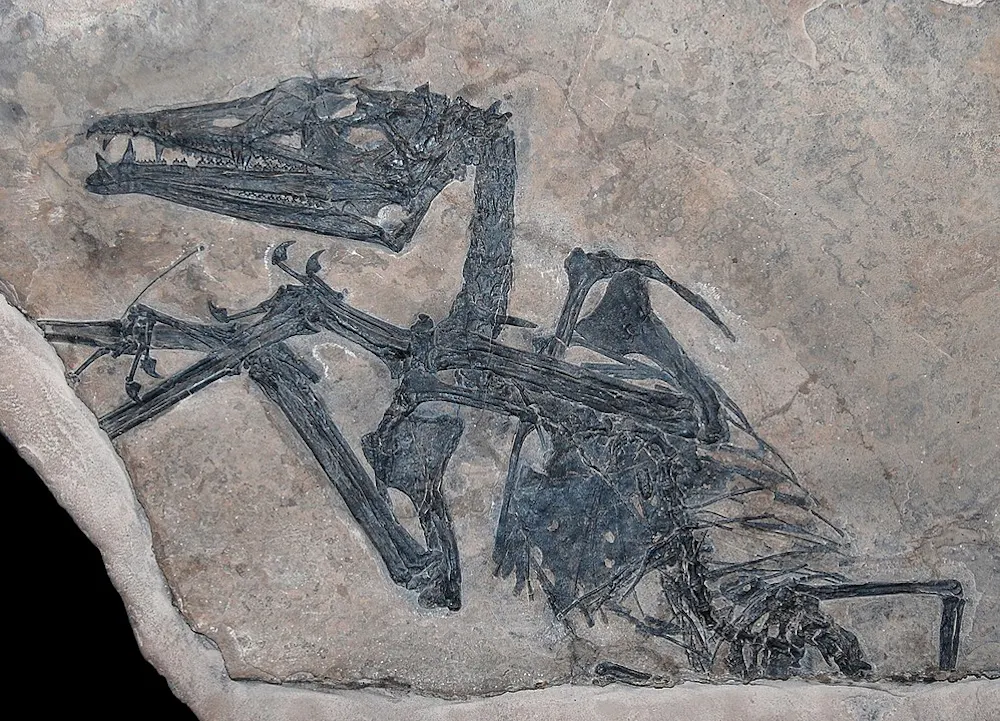
    June 18, 2025
←Previous Page
1 … 566 567 568 569 570 … 2,663
Next Page→
NewzIntel.com

NewzIntel.com

MIL Open Source Intelligence

  • Blog
  • About
  • FAQs
  • Authors
  • Events
  • Shop
  • Patterns
  • Themes

Twenty Twenty-Five

Designed with WordPress