Category: Transport

  • MIL-OSI Asia-Pac: Housing Bureau awards two operation and management contracts of Light Public Housing projects (with photos)

    Source: Hong Kong Government special administrative region

    Housing Bureau awards two operation and management contracts of Light Public Housing projects  
    The third contract covers the operation and management of the LPH project at Tsing Fuk Lane, Tuen Mun (i.e. Tuen Mun Area 3A), providing about 1 900 units. The fourth contract covers the operation and management of the LPH project at Olympic Avenue, Kai Tak (Phase 1), providing about 3 000 units. Both projects are anticipated to be completed in the fourth quarter of this year. The operating organisations will need to work at full capacity to carry out the pre-management works effectively, so as to ensure the smooth handling of LPH applications and intake arrangements, and to provide various services and ancillary facilities for the residents and local communities immediately upon intake.
     
    The Secretary for Housing, Ms Winnie Ho, said, “Under the steer of the HB, the first LPH project at Yau Pok Road, Yuen Long, is progressing towards full intake, while the project at Choi Hing Road, Ngau Tau Kok, will commence intake in phases by the end of next month. With the appointment of the third and the fourth operating organisations for LPH today, this social project has further taken a significant step forward, and more citizens in need will benefit from the LPH.”
     
         “I look forward to working closely with various operating organisations in the coming years to ensure effective operation and management, thereby allowing the residents and nearby communities to benefit from the projects’ ancillary facilities and community services. We are also inviting tenders for two other operation and management contracts, covering the four school conversion projects and the Sheung On Street project in Chai Wan. I would like to appeal to other organisations that are interested in operating LPH projects to actively participate in the tenders and work together with the Government to improve the living environment of the grassroots and help them in their pursuit of happiness,” she added.
     
    In addition to providing accommodation, the LPH projects will also offer various services and facilities for the residents and the local community. Therefore, unlike general property management contracts, the requirements for LPH’s operation and management services, not only cover occupant management, property management, and daily maintenance, but also a range of social services, as well as the management and operation of ancillary facilities.
     
    To ensure service quality, the HB has, in the assessment process, carried out a technical assessment based on a series of criteria including the management capability and relevant experience of the tenderers, as well as the proposed modes of operation and management, social services to be provided, exit plan and the use of innovation and information technology. The tender price was then comprehensively evaluated to decide on the most suitable operating organisation.
     
    The Chief Executive announced the construction of about 30 000 LPH units by 2027-28. The HB and the Architectural Services Department have been working at full steam to take forward the related works. The LPH Phase 1 and Phase 2 applications, covering about 4 400 and 5 060 units respectively, have received an overwhelming response, with about 21 900 applications received by the end of May this year.
    Issued at HKT 18:30

    NNNN

    MIL OSI Asia Pacific News

  • MIL-OSI China: Chinese director Bi Gan wins Special Prize at Cannes

    Source: People’s Republic of China – State Council News

    Chinese director Bi Gan won the Special Prize on May 25 at the 78th Cannes Film Festival for his epic fiction feature “Resurrection.”

    Director Bi Gan (center) poses with cast members of “Resurrection” on the red carpet at the film’s premiere during the 78th Cannes Film Festival in Cannes, France, May 22, 2025. [Photo courtesy of Lima Media]

    Visionary auteur Bi’s “Resurrection” premiered on Thursday at Cannes to a 10-minute standing ovation and widespread critical acclaim. The art house sensation, starring Yi Yangqianxi, Shu Qi, Mark Chao and Li Gengxi, represents the sole Chinese-language contender in the main competition.

    In his acceptance speech, Bi expressed gratitude to the festival, jurors and all those who contributed to his film’s creation on behalf of the cast and crew. 

    The film has not yet set a release date, but it has sold widely following its world premiere, with companies from Italy, Germany, Spain, Greece, Switzerland, South Korea and others acquiring distribution rights.

    “Resurrection” unfolds through labyrinthine-like six sensory chapters of “visual,” “auditory,” “gustatory,” “olfactory,” “tactile” and “consciousness,” mirroring the Buddhist philosophy of the six senses. Set in a world where humanity has lost the ability to dream, one creature remains entranced by fading illusions — until a woman with the rare gift of perception appears, and she ventures into the monster’s dreams to uncover their hidden truth. The director uses this two-hour-and-forty-minute film to showcase his love for cinema, while framing a century-spanning fever dream through sensory and mental dimensions.

    On May 23, Bi Gan and the creative team took part in a Cannes press conference to discuss the film’s creative process. When addressing his signature long takes, Bi called them his “most familiar technique,” while Yi Yangqianxi revealed their pivotal sequence took 15 consecutive days of midnight-to-sunrise filming, completed with “ideal weather conditions.” Bi elaborated on the leads: “Yi’s character Fantasmer drifts frenziedly through time and space, while Shu Qi’s embodies absolute rationality — yet becomes mesmerized by his character.”

    Within the film’s setting, Yi portrays five distinct roles across the chapters — marking his first multi-character performance. He meticulously crafted their unique voices, postures and movements to embody the director’s vision, creating instantly recognizable traits for these multiple identities.

    Renowned Chinese sci-fi writer Chen Qiufan, who served as script consultant for “Resurrection,” described the film as “sci-fi poetry cinema” at a Cannes event on May 19 and revealed his frequent discussions with the director about consciousness.

    The film is Bi Gan’s first feature since the 2018 festival sensation “Long Day’s Journey into Night,” a groundbreaking 3D experiment. Festival organizers described his work as a showcase of his evolving creativity that maintains the sensory and poetic qualities defining his style. They also noted that at just 35 years old, he has established himself as a major force in shaping China’s new generation of art house cinema since his directorial debut “Kaili Blues” a decade ago.

    At the post-closing ceremony press conference on May 25, jury president Juliette Binoche revealed the jury unanimously created this special award for Bi because of the film’s singular creativity, stating, “‘Resurrection’ is like a UFO — an amazing invention.”

    Binoche also remarked on the film’s uniqueness. “Visually, it really moved me. I found it extraordinary. This film allows for dreams, subtexts that we feel and that are real. It’s full of poetry and allows us to feel something within ourselves,” she said.

    Bi added, explaining his inspiration: “There should be a film about the cinema that can comfort people in this world full of changes.”

    This year’s Cannes Film Festival featured 22 films competing for its top honor — the Palme d’Or. The competition section awards were announced at the festival’s closing ceremony. The Palme d’Or went to Iranian director Jafar Panahi’s “Un Simple Accident.” Joachim Trier’s “Sentimental Value” received the Grand Prix, while the Jury Prize was shared by Oliver Laxe’s “Sirat” and Mascha Schilinski’s “Sound of Falling.” The night’s big winner was Brazil’s “The Secret Agent,” earning best director for Kleber Mendonça Filho and best actor for Wagner Moura. Best actress went to Nadia Melliti for “The Little Sister,” and Belgium’s Dardenne brothers claimed best screenplay for “Young Mothers.”

    MIL OSI China News

  • MIL-OSI United Kingdom: Housing Bill: No restrictions for renters to keep pets

    Source: Scottish Greens

    Renters should not be restricted by landlords from keeping pets

    Scottish Green MSP Maggie Chapman lodged amendments to the forthcoming Housing (Scotland) Bill that would make it easier for people in privately rented properties to keep pets and service animals.

    Currently, if a renter wants to keep a pet, they must make a request to their landlord who then has 42 days to respond. New proposals by the Greens would reduce the response time to 14 days, making the process fairer for renters, and taking no response at all from landlords as permission.

    Further amendments would also see an exemption for assistance animals, with no permission needed to keep them.

    These changes to the Bill are backed by charity organisations such as Dogs Trust, Cats Protection and  Sight Scotland.

    Ms Chapman said: 

    “Pets are part of the family, and in some cases, are working to keep people safe every day.

    “Dogs, cats and other animals are important for many people’s physical and mental health, and they play an important role in decreasing loneliness. In a world where many feel isolated, having a pet for companionship in return for our care can make us feel valued and get us out of the house more often too.

    “Renters have every right to keep pets in the homes they pay for without having to ask permission from landlords. Too often, requests are ignored or delayed which leads to uncertainty and stress for people with pets, or people hoping to have one. That is why I want to amend the Bill so that faster responses are given, and permission granted automatically if no response is received.

    “Guide dogs and service animals that detect seizures and other health conditions play a crucial role in the health and wellbeing of many. They are vital companions which landlords should not be able to forbid from living in homes where they are needed.

    “Every step the Scottish Greens are taking in this Bill is to boost renters’ rights to live in the homes they pay for and fully utilise the space, without having landlords call all of the shots. I hope my colleagues from across the Parliament will join me and support these changes to improve renters rights and lives overall.”

    MIL OSI United Kingdom

  • MIL-OSI: Bitget’s Blockchain4Youth Celebrates Two Years of Youth-Driven Innovation

    Source: GlobeNewswire (MIL-OSI)

    VICTORIA, Seychelles, May 26, 2025 (GLOBE NEWSWIRE) — Bitget, the leading cryptocurrency exchange and Web3 company, is excited to celebrate the 2nd Anniversary of Blockchain4Youth. With over 8,000 participants globally and more than 3,000 certificates issued, the program continues to empower the next generation with the knowledge and tools needed to shape the future of blockchain and Web3 innovation.

    The initiative’s success is anchored in its mission to bridge the knowledge gap between emerging technologies and youth audiences, particularly students, young developers, and aspiring entrepreneurs. Through the flagship initiative Bitget Builders, Bitget announced its global expansion through a series of offline engagements, inviting crypto enthusiasts from various backgrounds to co-build the Bitget ecosystem while unlocking insights, event access, and growth opportunities.

    Over the past year, Blockchain4Youth has collaborated with universities and educational institutions worldwide, including top institutions in North America, APAC and other regions. In March 2025, Blockchain4Youth saw itself at the centre of Google Developer Group’s “Build with AI” Hackathon, speaking and inspiring 130 bright student minds, exploring the intersection of blockchain and AI.

    Now entering its third year, Blockchain4Youth has expanded to over 70 countries and regions, reaching out through a series of educational partnerships, hackathons and online courses. With over 80+ campus lectures, Blockchain4Youth has made its mark in growing education and awareness around this emerging tech. This growth shows Bitget’s longstanding commitment to making blockchain knowledge accessible and inclusive while creating real-world impact.

    “Over the last two years, Blockchain4Youth has evolved from an idea into a global movement,” said Vugar Usi Zade, COO of Bitget. “We hold strongly onto the belief that the future is in the hands of the youth and we are thrilled to see how many young people have taken initiative to learn, build, and contribute to the Web3 space. As the blockchain industry continues to mature, it becomes essential to build a more inclusive and innovative digital future, and I believe the answer lies in the next generation.”

    Bitget remains committed to empowering global youth through impactful initiatives that foster innovation, education, and community building in Web3. As Blockchain4Youth enters its third year, it continues to serve as a cornerstone of Bitget’s broader mission to drive mainstream blockchain adoption through education and supporting youths.

    To find out more about Blockchain4Youth, please visit here.

    About Bitget

    Established in 2018, Bitget is the world’s leading cryptocurrency exchange and Web3 company. Serving over 120 million users in 150+ countries and regions, the Bitget exchange is committed to helping users trade smarter with its pioneering copy trading feature and other trading solutions, while offering real-time access to Bitcoin price, Ethereum price, and other cryptocurrency prices. Formerly known as BitKeep, Bitget Wallet is a world-class multi-chain crypto wallet that offers an array of comprehensive Web3 solutions and features including wallet functionality, token swap, NFT Marketplace, DApp browser, and more.

    Bitget is at the forefront of driving crypto adoption through strategic partnerships, such as its role as the Official Crypto Partner of the World’s Top Football League, LALIGA, in EASTERN, SEA and LATAM markets, as well as a global partner of Turkish National athletes Buse Tosun Çavuşoğlu (Wrestling world champion), Samet Gümüş (Boxing gold medalist) and İlkin Aydın (Volleyball national team), to inspire the global community to embrace the future of cryptocurrency.

    For more information, visit: Website | Twitter | Telegram | LinkedIn | Discord | Bitget Wallet

    For media inquiries, please contact: media@bitget.com

    Risk Warning: Digital asset prices are subject to fluctuation and may experience significant volatility. Investors are advised to only allocate funds they can afford to lose. The value of any investment may be impacted, and there is a possibility that financial objectives may not be met, nor the principal investment recovered. Independent financial advice should always be sought, and personal financial experience and standing carefully considered. Past performance is not a reliable indicator of future results. Bitget accepts no liability for any potential losses incurred. Nothing contained herein should be construed as financial advice. For further information, please refer to our Terms of Use.

    A photo accompanying this announcement is available at https://www.globenewswire.com/NewsRoom/AttachmentNg/bb4e4a58-2b8f-4450-8047-58180921d5c3

    The MIL Network

  • MIL-OSI New Zealand: Maritime Union will fight threatened job losses on Aratere ferry

    Source: Maritime Union of New Zealand

    The Maritime Union of New Zealand has strongly condemned KiwiRail’s proposal for drastic job cuts on its Cook Strait ferry operations.

    KiwiRail this week announced it would remove the rail-enabled Aratere ferry from service in August 2025.

    KiwiRail has advised today it is seeking to cut 70 jobs for MUNZ members in the deck and catering departments on the Aratere.

    Further job losses are anticipated for officers and engineers who are members of other unions.

    Maritime Union of New Zealand Wellington Branch Secretary Fiona Mansell says crew are angry at the announcement.

    The Maritime Union would resist any job losses and would only accept voluntary redundancies.

    She says the proposal is a massive letdown for crew who had worked hard and delivered on the ageing KiwiRail ferry fleet, and who were paying for the failures of management and politicians.

    “This decision rips the heart out of our maritime workforce, leaving dedicated workers and their families facing an uncertain future. It’s a betrayal of the people who keep our country connected.”

    She says such a major loss of jobs would have a devastating impact on New Zealand’s maritime resilience and would be a significant blow to our seafaring workforce.

    Ms Mansell says no thought has been given to what KiwiRail will do when it requires more crew for its new vessels in the future.

    “New Zealand deserves a resilient, capable maritime sector, not one that is dismantled at the whim of short term thinking and cost-cutting. Our jobs, our skills, and our national supply chain depend on it.”

    MIL OSI New Zealand News

  • MIL-OSI New Zealand: 21,000 would benefit from proposed changes to New Zealanders access to contraceptives

    Source: PHARMAC

    Pharmac is consulting on a proposal that would make it easier for thousands of New Zealanders to access contraceptives.

    Pharmac’s Clinical Lead – Medicines Management, Melissa Copland, says that the changes would improve access, and remove barriers for people who use IUDs.

    “The changes we are proposing would mean people would be able to get Mirena and Jaydess IUDs directly from their doctor or nurse, during their appointment.

    “Under the current system, people need to get a prescription, pick their IUD up from a pharmacy, and then bring it back to the clinic to get it placed.

    “We know that this extra step can lead to delays and barriers to accessing IUDs for some people.

    “Funding the Mirena and Jaydess IUDs on the Practitioners Supply Order (PSO) list will make it faster and easier for New Zealanders to access these IUDs and make access consistent with other long-acting contraceptives.”

    The Practitioners Supply Order (PSO) list allows health care practitioners to get funded medicines for use in their clinics. Pharmac is also proposing to increase the number of Jadelle contraceptive implants that clinics can order on PSO.

    “We have been told that some clinics place a large number of Jadelle implants each week. These clinics often have to make multiple orders, which can take a lot of time,” says Copland.

    “This is why we are proposing to increase the number of Jadelle that clinics can order on PSO, as it will reduce how many orders need to be made and save these clinics time.”

    The Government provided additional funding to Pharmac in June 2024 to fund new medicines and widen access to medicines that are already funded. The funding boost covers medicines for both cancer and non-cancer health conditions.

    The consultation closes on 4pm on Friday 25 April. If the decision is approved, we expect these changes will be made from 1 July 2025.

    MIL OSI New Zealand News

  • MIL-OSI New Zealand: Pharmac’s plans to improve access to asthma inhalers

    Source: PHARMAC

    Pharmac is seeking feedback on a proposal to make it easier for people with asthma to access a type of inhaler.

    “We’re proposing two changes, which would make it easier for 120,000 New Zealanders with asthma to access the inhalers they need,” says Pharmac’s Director Pharmaceuticals, Geraldine MacGibbon.

    Pharmac is proposing to apply three-monthly (all at once) dispensing to certain types of budesonide with eformoterol inhalers. Currently these inhalers are available on prescription, with people required to collect their treatment every month. 

    If approved, people would be able to receive three months of supply at a time.

    “People won’t have to return to their pharmacy multiple times collect repeats for their inhalers. It would save time for New Zealanders and mean that people could have more than one inhaler at a time and store them where they are mostly likely to need them,” MacGibbon says.

    Pharmac is also proposing a change which would provide further support for New Zealanders moving onto these inhalers.

    “We’re proposing to make these inhalers available in health care clinics on a Practitioners Supply Order (PSO). This would mean that people who are starting their treatment can learn how to use this inhaler during their health appointment.

    “This change is intended to make it easier for people to learn how to use their budesonide with eformoterol inhalers, which would lead to better management of their asthma,” MacGibbon says.  

    She says the changes being proposed align with the asthma treatment guidelines and would have a positive impact for hundreds of thousands of New Zealanders living with asthma.

    “These changes would give people with asthma more flexibility in accessing the inhalers they need, and ensure people learn how to use them correctly” MacGibbon says.  

    The Government provided additional funding to Pharmac in June 2024 to fund new medicines and widen access to medicines that are already funded

    Consultation opens today and closes at 4pm Friday 9 May 2025. Feedback can be emailed to consult@pharmac.govt.nz or submitted using our online form

    MIL OSI New Zealand News

  • MIL-OSI New Zealand: Agenda for May 2025 Pharmacology and Therapeutics Advisory Committee (PTAC) meeting

    Source: PHARMAC

    Information on what the Pharmacology and Therapeutics Advisory Committee (PTAC) will be considering at its meeting in May 2025.

    Applications

    Foslevodopa / foscarbidopa for advanced Parkinson disease

    The Committee will discuss an application for a new treatment for advanced Parkinson disease for people experiencing severe motor fluctuations despite optimal treatment with other medicines. Parkinson disease is one of the most common neurological (brain and nervous system) conditions. It affects movement and coordination.

    Foslevodopa / foscarbidopa (branded as Vyalev) is administered using a portable pump to provide a continuous subcutaneous infusion.

    Application for foslevodopa / foscarbidopa for Parkinson disease(external link)

    Etonogestrel (Implanon NXT) subdermal implant for contraception

    The Committee will discuss a new application for a contraceptive implant (Implanon NXT) used to prevent pregnancy. Implanon NXT is a type of long-acting reversible contraceptive (LARC) method. The implant is a single rod that slowly releases the hormone etonogestrel. It is inserted under the skin of the upper arm.

    Application for etonogestrel (Implanon Nxt) implant for contraception(external link)

    Vanzacaftor, tezacaftor, deutivacaftor for cystic fibrosis

    The Committee will discuss a new treatment for people with cystic fibrosis – vanzacaftor, tezacaftor, deutivacaftor (branded as Alyftrek). Cystic fibrosis is an inherited life-long genetic condition affecting the lungs, liver, digestive system, and other parts of the body.

    This application considers treatment in people with cystic fibrosis (aged 6 years and older) with F508del mutation(s) or another treatment responsive mutation in the cystic fibrosis transmembrane conductance regulator (CFTR) gene. This treatment is a once daily option.

    Application for vanzacaftor, tezacaftor, deutivacaftor for cystic fibrosis(external link)

    Secukinumab for a severe skin condition

    The Committee will discuss a new application for secukinumab (branded as Cosentyx) to treat people with moderate to severe hidradenitis suppurativa. Hidradenitis suppurativa is a long-term inflammatory skin condition that causes painful lumps under the skin, typically in areas like the armpits and groin.

    The Committee will consider the use of secukinumab as first-line biologic treatment and second-line biologic treatment.  

    Application for secukinumab for hidradenitis suppurativa(external link)

    Sacituzumab govitecan for breast cancer

    The Committee will discuss a new application for sacituzumab govitecan (branded as Trodelvy) for people with triple negative, locally advanced or metastatic breast cancer.  Triple-negative breast cancer is a type of breast cancer that does not have receptors for oestrogen, progesterone or HER2.

    The Committee will consider treatment in the third-line setting (after two or more prior treatments).

    Application for sacituzumab govitecan for triple negative, locally advanced or metastatic breast cancer(external link)

    Durvalumab for the treatment of lung cancer

    The Committee will discuss a new application for durvalumab (branded as Imfinzi) to treat people with extensive-stage small cell lung cancer (ES-SCLC). It is used in combination with etoposide and either carboplatin or cisplatin. ES-SCLC is when the cancer has spread widely within the lungs or to other parts of the body.

    Application for durvalumab for extensive-stage small cell lung cancer(external link)

    Advisory meeting agenda setting

    The scheduling and agenda setting process for advisory meetings considers multiple factors. We aim to balance the relative priorities of:

    • clinical advice needed across indications
    • the factors for consideration for each application (such as, unmet health need)
    • the time since applications were received
    • the internal and advisor resource available to support each meeting.

    More about PTAC

    MIL OSI New Zealand News

  • MIL-OSI New Zealand: Maritime NZ welcomes new board members

    Source: Maritime New Zealand

    Maritime NZ is pleased to announce the appointment of Kevin Short and Vivienne Bull to its board, alongside the reappointments of Chair Dame Jo Brosnahan and board members Danny Tuato’o, and Parke Pittar. Lesley Haines also serves on the board.

    The appointments made by Associate Minister of Transport James Meager add maritime and operational experience and expertise to the team.

    Dame Jo Brosnahan, Chair of Maritime NZ said she was thrilled to welcome Kevin and Vivienne to the board. “Their extensive backgrounds in leadership, security, and community engagement will be invaluable as we continue to ensure the safety and security of New Zealand’s maritime sector.”

    Kevin Short joins the board with a distinguished career in the Defence Force. Serving as Chief of Defence from 2018 to 2024 and with close to 50 years in the military, he brings a wealth of leadership and response experience.

    Vivienne Bull brings more than ten years of executive experience at Napier Port leading efforts in health and safety, organisational culture, and community engagement. Her background in the public sector adds to the diverse expertise on Maritime NZ’s board.

    Dame Jo Brosnahan acknowledged the contributions of outgoing board members Roy Weaver, who also served as Deputy Chair, and Ross Wilson. “We are grateful for the dedication and leadership shown by Roy and Ross during their tenure. Their efforts have significantly shaped Maritime NZ during a crucial period of transition and growth.”

    Looking ahead, Dame Jo is optimistic about the future: “With the combined expertise of our new and returning board members, Maritime NZ is well-positioned to continue its strong governance and leadership. We look forward to the fresh perspectives and continued excellence that our board members bring to the organisation.”

    MIL OSI New Zealand News

  • MIL-OSI Europe: Looking Back on King Willem-Alexander’s Visit to Expo 2025 Osaka

    Source: Government of the Netherlands

    On Wednesday, 21 May, and Thursday, 22 May, King Willem-Alexander of the Netherlands visited the World Expo in Osaka as part of his journey to Japan. Between 13 April and 13 October 2025, Expo 2025 Osaka, Kansai, Japan is expected to welcome no less than 28 million visitors. The Netherlands has its own pavilion at the Expo, which has already received many thousands of guests in its first month. The King’s visit marked the highlight of the Netherlands’ National Day at the Expo. He was accompanied by Minister Klever for Foreign Trade and Development and Minister Beljaarts of Economic Affairs, who are in Japan for an economic working visit and a trade mission focusing on high tech and digitalization.

    Enlarge image
    King Willem-Alexander and Minister Klever arrive at the Netherlands pavilion on 21 May

    National Day Celebrations

    National Day at the Expo is a special occasion hosted by each participating country. On 21 May, it was the Netherlands’ turn, and the King traveled to Osaka for the event. After signing the guestbook and attending an official ceremony—featuring the Dutch national anthem and flag-raising—King Willem-Alexander delivered a welcome address. In his speech, he emphasized the long-standing relationship between Japan and the Netherlands. In addition to Expo, 2025 also marks 425 years of Dutch–Japanese relations.

    Dance and Design on Display

    To mark National Day, the King attended a dance performance in the National Day Hall on the Expo grounds. Dutch ensemble Introdans collaborated with the Japanese group LAND FES for the occasion. Choreographers Adriaan Luteijn and Dai Matsuoka are pioneers in inclusive dance, creating performances where professional dancers share the stage with dancers with disabilities. The King also visited the temporary exhibition Arts & Crafts on Common Ground, where Dutch designers and Japanese artisans collaborated to create works that fuse contemporary and traditional techniques.

    Strengthening Economic Ties

    As part of the economic mission, a roundtable was held at the Netherlands Pavilion with CEOs from Dutch and Japanese companies. The meeting was attended by the King and co-hosted by the Kansai Economic Federation and the Confederation of Netherlands Industry and Employers (VNO-NCW). The goal: to encourage economic cooperation between the Netherlands and the Kansai region in western Japan—particularly in the fields of natural sciences, healthcare, and chemistry.

    Enlarge image
    Architect Thomas Rau, Ries Straver of Tellart design studio and Minister Beljaarts, among others, posing in front of the Netherlands pavilion

    Circular Pavilion

    The King concluded the day with a visit to the rest of the Netherlands Pavilion. A day earlier (20 May), AND BV, the design and construction consortium behind the pavilion, reached an agreement with the Japanese multinational Pasona Group to purchase and repurpose the pavilion after the Expo. This was always the intention: the Dutch pavilion is a model of circular construction—each part is registered and can be dismantled and reused elsewhere without loss. The day also included visits to the Japanese and Czech pavilions.

    Enlarge image
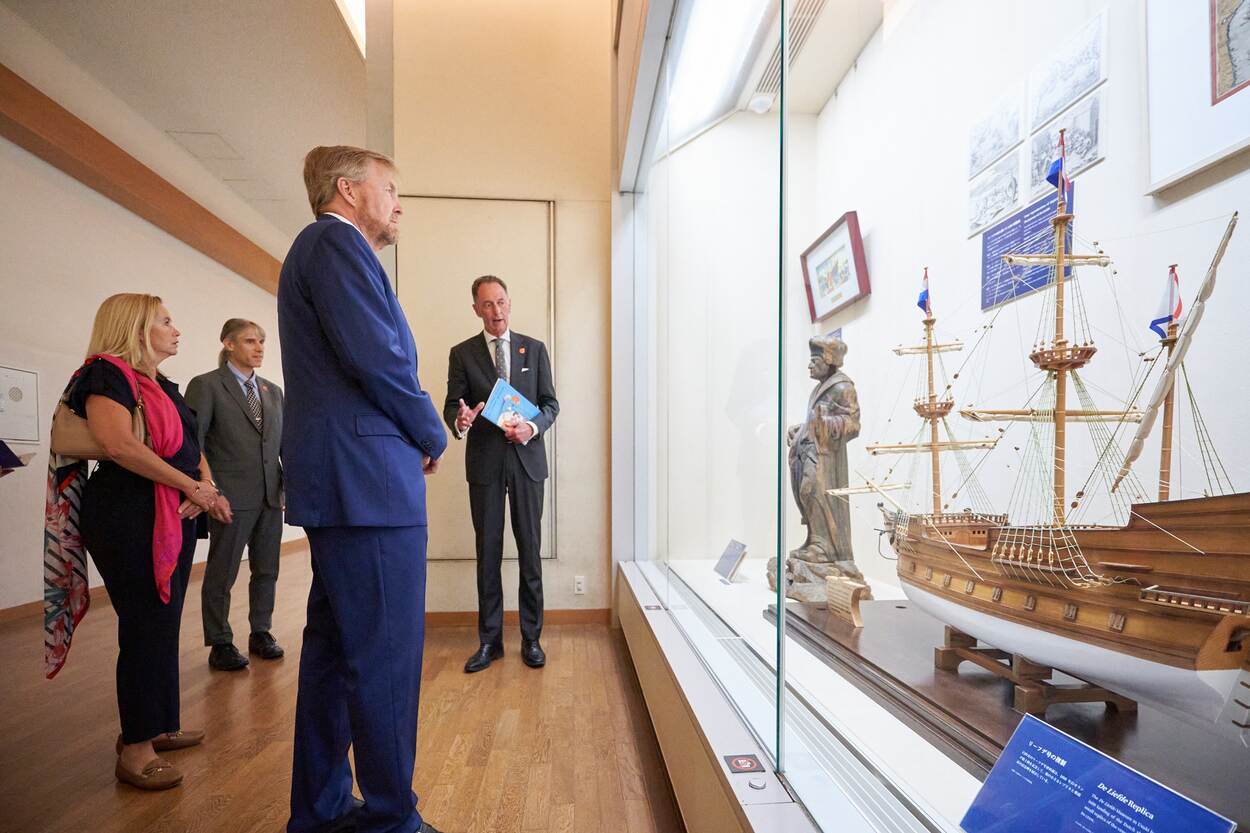
    At the exhibition on 425 years of Japanese-Dutch exchange in Osaka Castle, Consul-General Marc Kuipers tells the King about the earliest history between our two countries

    425 Years of Shared History

    Throughout May, Osaka Castle is spotlighting the long-standing relationship between Japan and the Netherlands. The exhibition A New Dawn on Common Ground: 425 Years of Exchange between Japan and the Netherlands features objects dating back to the year 1600. That year, the Dutch ship De Liefde arrived in Japan, carrying the first Dutchmen to make contact with the country. This meeting eventually led to an exclusive trading relationship that lasted more than 200 years. On the second day of his visit, the King visited this exhibition, which was organized by the Dutch Consulate in Osaka and features items from both Dutch and Japanese collections.

    Enlarge image
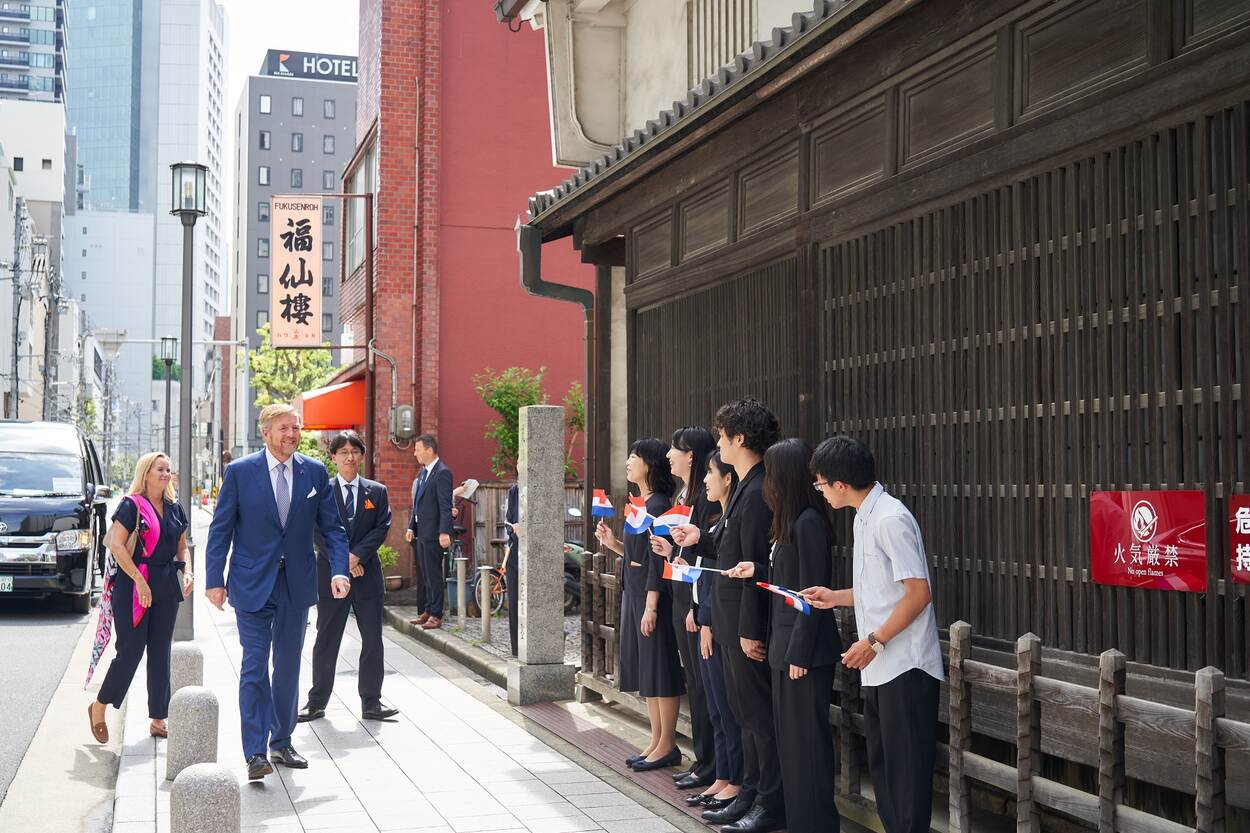
    At Tekijuku, the old Dutch school of Osaka, the King was welcomed by Osaka University students

    The Legacy of Rangaku

    Later that day, 22 May, the royal delegation visited Tekijuku, one of the most important Dutch-language schools in Japan. Until well into the 19th century, Japanese students studied Dutch there to access Western books. The presence of the Dutch in Japan offered a rare window to the rest of the world. Through Rangaku (Dutch Studies), the latest knowledge in fields such as medicine was introduced to Japan. Today, Tekijuku is part of Osaka University, where last year a new medical cooperation agreement was signed between Japan and the Netherlands. The King also visited Nakanoshima Qross, a new hub for research into the future of healthcare.

    Enlarge image
    At the Pasona pavilion, King Willem-Alexander and Minister Klever were introduced to the latest technology is regenerative medicine

    Innovation and Future Collaboration

    In the afternoon, King Willem-Alexander and Minister Klever joined the economic mission on high tech and digitalization, led by Minister Beljaarts. Around 70 Dutch companies were introduced to approximately 170 Japanese guests. Multiple partnership agreements were signed to promote cooperation in areas such as semiconductors, quantum computing, and 6G telecommunications. The day concluded with an Innovation Parade, where 19 Dutch and Japanese organizations presented their work to the King.

    MIL OSI Europe News

  • MIL-OSI Europe: Written question – New Israeli bill seeking to impose 80 % tax on foreign donations to NGOs – E-001979/2025

    Source: European Parliament

    Question for written answer  E-001979/2025
    to the Commission
    Rule 144
    Chloé Ridel (S&D), Erik Marquardt (Verts/ALE), Barry Andrews (Renew), Estelle Ceulemans (S&D), Rima Hassan (The Left), Cecilia Strada (S&D), Alessandra Moretti (S&D), Mélissa Camara (Verts/ALE), Maria Walsh (PPE), Vladimir Prebilič (Verts/ALE), Marco Tarquinio (S&D), Mounir Satouri (Verts/ALE), Sandro Ruotolo (S&D), Leila Chaibi (The Left), João Oliveira (The Left), Francisco Assis (S&D), David Cormand (Verts/ALE), Nora Mebarek (S&D), Bruno Gonçalves (S&D), Thijs Reuten (S&D), Catarina Martins (The Left), Marit Maij (S&D), Annalisa Corrado (S&D), Pierre Jouvet (S&D), Matjaž Nemec (S&D), Nikos Papandreou (S&D), Tineke Strik (Verts/ALE), Pierfrancesco Maran (S&D), Irena Joveva (Renew), Javi López (S&D), Krzysztof Śmiszek (S&D), Alessandro Zan (S&D), Murielle Laurent (S&D), Damien Carême (The Left), Sandra Gómez López (S&D), Marta Temido (S&D), Leire Pajín (S&D), César Luena (S&D), Nela Riehl (Verts/ALE), Marc Botenga (The Left), Nicolás González Casares (S&D), Anna Strolenberg (Verts/ALE), Emma Rafowicz (S&D), Pasquale Tridico (The Left), Kai Tegethoff (Verts/ALE), Hilde Vautmans (Renew), Hana Jalloul Muro (S&D), Sérgio Gonçalves (S&D), Cynthia Ní Mhurchú (Renew)

    The Israeli Parliament has approved new legislation imposing an 80 % tax on foreign government funding to Israeli civil society organisations, while exempting government-supported organisations. This bill would effectively shut down many Israeli human rights groups and humanitarian NGOs carrying out crucial work, including in the occupied Palestinian territories (OPT), such as B’Tselem and Breaking the Silence.

    These NGOs have long been targeted by Israel’s right wing.  Almost all of them receive foreign funding, including from the EU and its Member States.

    This is unprecedented attack on Israeli civil society and democracy globally.

    • 1.How does the Commission intend to follow up on the recent announcement by the Vice-President of the Commission / High Representative of the Union for Foreign Affairs and Security Policy, Kaja Kallas, with regard to an increase in financial support for Israeli human rights groups targeted by the NGO bill?
    • 2.In view of the serious human rights violations committed by the Israeli Government, will the Commission move forward with considering the suspension of the EU-Israel Association Agreement?
    • 3.Does the Commission intend to take countermeasures against pressure groups defending the interests of the Israeli Government to the EU?

    Submitted: 16.5.2025

    MIL OSI Europe News

  • MIL-OSI Europe: Written question – Community funds for financing and strengthening the Transport Equivalent measure – E-001977/2025

    Source: European Parliament

    Question for written answer  E-001977/2025
    to the Commission
    Rule 144
    Emmanouil Kefalogiannis (PPE)

    Supporting island life – with particular emphasis on small islands – should be a priority. Using every means and financial tool, regional development should be promoted, local micro-economies stimulated, services and opportunities provided to the island world upgraded and inequalities between island and mainland Greece eliminated.

    A valuable measure to this end (especially nowadays, when the cost of living on the islands is very high) is the Transport Equivalent (TE). This measure, which has to date been financed exclusively from national resources, aims to contribute substantially to reducing the high transport costs borne by islanders. However, it has become clear that meeting needs exceeds national budgetary capabilities, with significant delays in the payment of aid. The Transport Equivalent measure remains outside the European framework for supporting island life, although it is fully aligned with European cohesion policies. In this context, manufacturing bodies have proposed its inclusion in European programmes, such as the Just Transition Programme 2021-2027, the Cohesion Fund and the European Regional Development Fund, etc.

    In view of this:

    • 1.What measures does the Commission intend to put in place to support island life?
    • 2.Which Community funds can finance the Transport Equivalent measure?

    Submitted: 16.5.2025

    Last updated: 26 May 2025

    MIL OSI Europe News

  • MIL-OSI Europe: Written question – Infringement of Directive 1999/70/EC on insecure employment in schools – E-001987/2025

    Source: European Parliament

    Question for written answer  E-001987/2025
    to the Commission
    Rule 144
    Valentina Palmisano (The Left)

    Clause 5 of the Framework Agreement annexed to Directive 1999/70/EC imposes effective measures on Member States to prevent the misuse of successive fixed-term contracts, but Italy has not introduced effective, dissuasive and proportionate penalties to that end.

    Some 250 000 Italian teachers are precariously employed, despite the judgment of the Court of Justice of the European Union (CJEU) of 26 November 2014 that declared renewals of contracts of more than 36 months to cover schools’ permanent needs of to be unlawful.

    The Commission referred Italy to the CJEU (case INFR(2014)4231), noting its misuse of fixed-term contracts and discrimination in working conditions.

    Decree-Law No 131/2024 (‘the ‘Salva Infrazioni’ Decree’) does nothing more than increase compensation, without addressing the issue of recruitment or actually reducing precarious employment.

    What is more, Petition No 1264/2024, calling for the implementation of the EU directives on regulated contracts and professions, is currently open.

    In the light of the above:

    • 1.Will the Commission adopt binding guidelines to prevent further abuse of Italian school workers on insecure contracts?
    • 2.Is Decree-Law 131/2024 deemed to comply with Directive 1999/70/EC?
    • 3.Can the Commission confirm that Italy can use the twin-track system for recruitment for support positions but not for ordinary posts, and that this constraint is effectively imposed by the EU?

    Submitted: 18.5.2025

    Last updated: 26 May 2025

    MIL OSI Europe News

  • MIL-OSI Europe: Written question – Urgent action required for the immediate closure of the Italian migrant detention centre in Trapani – E-001971/2025

    Source: European Parliament

    Question for written answer  E-001971/2025
    to the Commission
    Rule 144
    Leoluca Orlando (Verts/ALE), Ilaria Salis (The Left), Mélissa Camara (Verts/ALE), Cecilia Strada (S&D), Brando Benifei (S&D), Alessandro Zan (S&D), Marco Tarquinio (S&D), Saskia Bricmont (Verts/ALE), Anna Strolenberg (Verts/ALE), Reinier Van Lanschot (Verts/ALE), Cristina Guarda (Verts/ALE), Benedetta Scuderi (Verts/ALE), Ignazio Roberto Marino (Verts/ALE), Damien Carême (The Left), Pernando Barrena Arza (The Left), Rudi Kennes (The Left), Estelle Ceulemans (S&D), Sandro Ruotolo (S&D), Marie Toussaint (Verts/ALE), Rima Hassan (The Left), Mimmo Lucano (The Left)

    As highlighted by the European Committee for the Prevention of Torture and Inhuman or Degrading Treatment or Punishment (CPT) of the Council of Europe in April 2024[1], Italian migrant detention centres (CPRs) continue to perpetrate systematic human rights violations. The situation does not appear to have improved.

    During a surprise inspection at the Milo-Trapani CPR on 13 April 2025[2], Members of Parliament found detainees experiencing severe psychological and physical distress, with reports of physical violence and attempted suicides. The facility was in a dilapidated state, with no structured activities available, worsening detainees’ mental and physical condition. Access to medical care and legal support remains extremely limited.

    These conditions raise serious concerns about compliance with the Charter of Fundamental Rights of the European Union, particularly Article 1 (protection of human dignity) and Article 4 (prohibition of inhuman or degrading treatment).

    In light of these facts, the Commission is asked:

    • 1.What is its assessment of the human rights violations identified in Italian CPRs?
    • 2.Will it consider launching an infringement procedure against Italy for breaches of fundamental rights?
    • 3.How will it ensure compliance with detainees’ rights to health, legal assistance, family life and dignified living conditions?

    Submitted: 16.5.2025

    • [1] https://rm.coe.int/1680b2c7e7.
    • [2] https://palermo.repubblica.it/cronaca/2025/04/14/video/cpr_di_trapani_ilaria_salis_tortura_istituzionalizzata_va_chiuso_subito-424127661/.

    MIL OSI Europe News

  • MIL-OSI Europe: Sweden: EIB finances major expansion of Stockholm metro – one of Europe’s largest urban transport projects

    Source: European Investment Bank

    EIB

    • The European Investment Bank (EIB) is providing approximately 400 million euro in additional financing to the Region of Stockholm and the City of Stockholm.
    • The project, which will affect four municipalities, involves 30 km of new tracks, 18 metro stations, and the expansion of a depot.
    • This is one of the largest metro expansion projects currently underway in Europe.

    The European Investment Bank (EIB) is stepping up its support for a project to expand the Stockholm metro by providing additional loans to the Region of Stockholm and the City of Stockholm. The EIB will provide a total of SEK 4.5 billion in financing, which equates to around €400 million. Including these new loans, the EIB has provided a total of over SEK 12 billion (more than €1 billion) for the project in Sweden’s capital.

    The project to expand the Stockholm metro is one of the largest infrastructure projects in Sweden to have been funded by the European Union and is the largest investment that the EIB has ever made in public transport in Sweden.

    EIB Vice-President Thomas Östros said: “This investment boosts both sustainable mobility and regional development. By providing an additional loan, we are demonstrating our long-term commitment to climate-smart investments in Europe’s growing cities. This project is an excellent example of how EU funding can benefit both people and the climate.”

    The metro project involves three new 30-kilometre sections in the Region of Stockholm, of which 20 kilometres will be in double-track tunnels, as well as 18 new stations. 130 500 housing units will be built along these new sections.

    The project will be implemented in the municipalities of Stockholm, Nacka, Solna and Järfälla. This initiative is essential to provide sustainable and efficient public transport to meet the needs of the growing population. 730 000 people currently use public transport in the county every day.

    Region of Stockholm Director-General Emma Lennartson said: “The EIB’s support is essential for investment in the metro expansion project. Continuing to invest in, and rely on, public transport is an effective way of reducing greenhouse gas emissions in the Region of Stockholm.”

    Lennartson also added:

    “With the City of Stockholm and our other partners in the county, we are working hard to reduce greenhouse gas emissions by 12% every year, which is necessary for the county to do its part to meet the objectives of the Paris Agreement. Investing in the metro will help to increase our chances of reaching carbon neutrality by 2045.”

    The new EIB loan is divided between the two borrowers:

    • SEK 2.5 billion will go to the Region of Stockholm
    • SEK 2 billion will go to the City of Stockholm.

    City of Stockholm Director-General Fredrik Jurdell said: “The EIB’s continued commitment to this financial partnership reaffirms the importance of the metro expansion project for sustainable growth in the capital and the surrounding areas. The new metro meets the needs of future generations in terms of transport and mobility, but also with regard to housing, given that housing units will be built as part of the project.”

    Significant efforts to boost sustainability are at the heart of the project to expand the Stockholm metro. Ceequal, a leading certification system for civil engineering projects, has completed an audit of the project. Several parties involved in the project received the ‘Excellent’ rating – the highest possible rating. This highlights how ambitious the project is with regard to the environment and sustainable development, going beyond legal and sector-specific requirements.

    Background information  

    EIB 

    The European Investment Bank (ElB) is the long-term lending institution of the European Union, owned by its Member States. Built around eight core priorities, we finance investments that contribute to EU policy objectives by bolstering climate action and the environment, digitalisation and technological innovation, security and defence, cohesion, agriculture and bioeconomy, social infrastructure, high-impact investments outside the European Union, and the capital markets union.  

    The EIB Group, which also includes the European Investment Fund (EIF), signed nearly €89 billion in new financing for over 900 high-impact projects in 2024, boosting Europe’s competitiveness and security.  

    All projects financed by the EIB Group are in line with the Paris Climate Agreement, as pledged in our Climate Bank Roadmap. Almost 60% of the EIB Group’s annual financing supports projects directly contributing to climate change mitigation, adaptation, and a healthier environment.  

    Fostering market integration and mobilising investment, the Group supported a record of over €100 billion in new investment for Europe’s energy security in 2024 and mobilised €110 billion in growth capital for startups, scale-ups and European pioneers. Approximately half of the EIB’s financing within the European Union is directed towards cohesion regions, where per capita income is lower than the EU average.

    High-quality, up-to-date photos of our headquarters for media use are available here.

    MIL OSI Europe News

  • MIL-OSI Russia: HSE scientists find out how continuing a career at alma mater affects young researchers

    Translation. Region: Russian Federal

    Source: State University Higher School of Economics – State University Higher School of Economics –

    Many young scientists in Russia continue their academic careers at the same university where they studied. This path is called inbreeding. Institute of Education HSE University analyzed the impact of inbreeding on publication activity in the natural and exact sciences. It turned out that it is ambiguous and depends on a combination of factors: the university’s geographical location, its financial resources, and the state of the regional academic labor market. An article with the results of the work was published inResearch Policy.

    In Russia, almost every second PhD candidate continues to work at the same university where he or she received their education. This career trajectory is called academic inbreeding. It is believed that such a practice can contribute to the isolation of the scientific environment and a decrease in innovative potential. However, the impact of inbreeding on the productivity of young scientists has not yet been sufficiently studied.

    Junior Research Fellowproject-training laboratory “University Development” HSE University Victoria Slepikh studied the careers of 1,132 Russian scientists who defended their PhD theses in 2012 in the fields of physics, biology, chemistry, and mathematics. To assess scientific productivity, the author used publications in international journals, their citation rate, and the presence of publications in journals in the first quartile (Q1).

    The analysis was conducted at two levels. First, the author looked at all PhD candidates (1,132 researchers) who remained in the academy during the first eight years after defending their dissertation. Among them, the level of academic inbreeding was 61%. It turned out that graduates who changed universities after receiving their degree were, on average, more likely to publish, get into prestigious journals, and have a higher citation rate compared to those who remained working at their alma mater.

    The most pronounced negative effect of inbreeding is observed in universities that do not have a special status, i.e., are not federal, national research universities or participants in state programs to support science. Young specialists from such universities published on average 34% fewer articles indexed by Scopus, and the probability that they will have at least one publication in a prestigious journal was almost half that of mobile scientists.

    According to the author, if a young researcher remains in a university that is weakly involved in scientific activity and has limited resources, he continues to reproduce low-level academic standards. Moreover, monotonous professional experience reduces his competitiveness compared to colleagues who have changed organizations.

    “In prestigious and scientifically oriented institutes, academic inbreeding, as a rule, does not have a noticeable impact on productivity. This is explained by a rich professional environment: the presence of a strong scientific team, modern equipment, stable connections with other organizations and participation in large projects,” explains Victoria Slepikh.

    The author then identified a subgroup of the most productive scientists — 417 people whose number of publications exceeded the median values (from 4 to 6 publications in the first eight years of their academic career). In this sample, the proportion of inbreds was 56%. At the same time, the influence of academic inbreeding on productivity in this subgroup turned out to be minimal and was manifested only in individual cases — among graduates who defended their theses in regions with a saturated academic labor market.

    In regions with a large number of scientific institutions, graduates are more likely to have the opportunity to change jobs. If, in such conditions, continuing a career at an alma mater occurs not by choice but by inertia, this may deprive young researchers of the chance to realize themselves in a more suitable professional environment. In less developed regions, academic inbreeding is usually due to a lack of alternatives. The results of the study confirm the hypothesis: where young scientists have more employment options, working at their home university may negatively affect their scientific results.

    In addition, the study showed differences in the behavior of representatives of different scientific disciplines. For example, mathematicians more often chose mobile trajectories and less often stayed at the universities where they defended their dissertations, while physicists and chemists demonstrated a more pronounced tendency toward inbreeding. The author associates these differences with the nature of the research infrastructure and traditions of publication activity in different fields of science.

    “Inbreeding itself is not a problem. However, its consequences can negatively affect scientific activity, especially in universities without special status or with limited resources. To compensate for the risks of isolation, it is necessary to stimulate academic mobility and expansion of external relations. This could be internships, scientific exchanges, development of partnerships with leading research centers. Such steps will increase not only productivity, but also the quality of the academic environment as a whole,” says Victoria Slepykh.

    Please note: This information is raw content directly from the source of the information. It is exactly what the source states and does not reflect the position of MIL-OSI or its clients.

    MIL OSI Russia News

  • Operation Sindoor outreach: Indian delegation briefs South Korea’s leaders, think tanks

    Source: Government of India

    Source: Government of India (4)

    The all-party Indian parliamentary delegation led by Janata Dal (United) MP Sanjay Jha on Monday met Yun Ho-jung, Chairperson of the Korea-India Parliamentary Friendship Group of the Korean National Assembly and think tanks and briefed them on Operation Sindoor, reiterating India’s firm zero-tolerance policy against terrorism.

    The delegation asserted India’s position of making no distinction between terrorists and the country supporting them and sought South Korea’s support for bringing terrorist organisations, perpetrators, and financiers of terrorism to justice.

    Yun reaffirmed South Korea’s strong stand against terrorism, saying that any act of terrorism is unacceptable and cannot be justified, and that there should be no loss of innocent lives due to the same.

    Meanwhile, the delegation also interacted with think tanks and lawmakers in Seoul, conveying India’s strong message of zero tolerance against terrorism.

    The Indian Embassy said in a post on X, “The delegation apprised them about the heinous terrorist attack in Pehalgam and the subsequent precise, measured, responsible, and non-escalatory response made by India. They further reiterated India’s firm zero-tolerance policy against terrorism and made no distinction between terrorists and the country supporting them. They also highlighted India’s ‘No First Use Policy’ and rejection of any nuclear blackmail. They conveyed our resolute stance to respond firmly to any act of terrorism”.

    The Embassy added that the participating South Korean think tanks condemned the terrorist attack and extended their solidarity with India, as well as its zero-tolerance policy against terrorism. They also discussed ways in which India, South Korea and the international community can work together to combat terrorism.

    During the interactions, Jha asserted that members from both the ruling and opposition parties from India arrived in South Korea to apprise about the April 22 Pahalgam terrorist attack as part of the Operation Sindoor global outreach campaign.

    “The seven delegations are sent by the Government of India across the world to apprise what happened in Kashmir on April 22, when 26 innocent tourists were gunned down by terrorists in front of their families, segregated on religious lines. All terrorists came from Pakistan, who were trained and financed there, it happened earlier in the 2008 Mumbai attack,” Jha said.

    BJP MP Aparajita Sarangi drew a parallel between South Korea’s tensions with North Korea and the kind of conflict India has experienced with Pakistan, highlighting the terrorist activities.

    “You are having the same kind of war with North Korea that we are having with Pakistan,” she said.

    “What happened should not have happened. I must say, and I don’t believe I’m exaggerating or overstepping, that Pakistan is a habitual offender when it comes to terrorist activities. Since its creation in 1947–48, there has been a continuous series of terrorist actions aimed at destabilising India. They have tried repeatedly, though they have not succeeded. Our Prime Minister has talked about a ‘new normal’ and we solicit your support in this entire war against terrorism,” said Sarangi.

    Additionally, TMC MP Abhishek Banerjee stated that Operation Sindoor on May 7 was carried out in response to the April 22 Pahalgam terror attack by Pak-trained terrorists.

    “Any support extended to Pakistan is effectively support for a terror organisation. Anyone endorsing or defending Pakistan’s actions is, in essence, backing terrorism. Why do I say this? I have compelling reasons. Take the 2008 Mumbai terror attacks, for instance, an incident the world witnessed in horror. A total of 166 innocent people were killed by terrorists, including citizens from 26 different countries, not just India,” he said.

    “The prime accused, who was then arrested by the Indian law enforcement agencies, confessed that he was trained and raised in Pakistan. And when the April 22 Pahalgam terror attack was carried out, we expected Pakistan to do justice and bring the perpetrators to book. India waited patiently and eventually carried out the airstrikes on May 7 after waiting for 14 days. The airstrikes were carried out with such precision that India successfully destroyed nine terror infrastructures without endangering a single civilian life,” Banerjee added.

    The all-party delegation includes MPs from across the political spectrum: BJP MP Brij Lal, CPI(M) Rajya Sabha member John Barittas, and senior Congress leader Salman Khurshid.

    It is a part of India’s global diplomatic outreach campaign to highlight the significance of Operation Sindoor and India’s continued fight against Pak-sponsored cross-border terrorism.

    (IANS)

  • PM Modi: Gujarat emerging as a global hub for high-tech manufacturing and tribal development

    Source: Government of India

    Source: Government of India (4)

    Prime Minister Narendra Modi today underlined Gujarat’s rising stature as a global hub for high-tech engineering and manufacturing, while also reaffirming the government’s deep commitment to tribal welfare and inclusive development.
     
    Addressing a large gathering in Dahod, the Prime Minister said that Gujarat has made remarkable progress in diverse sectors such as education, IT, semiconductors, and tourism. He informed that a major semiconductor plant is being established in the state with an investment of thousands of crores, further strengthening India’s footprint in the global semiconductor industry and creating employment opportunities for lakhs of youth.
     
    The Prime Minister highlighted that Dahod, Vadodara, Godhra, Kalol, and Halol have together formed a robust high-tech engineering and manufacturing corridor. He said, “Vadodara is rapidly advancing in aircraft manufacturing, with the Airbus assembly line inaugurated recently. The city is also home to India’s first Gati Shakti University. Savli has a major rail coach manufacturing facility, and now Dahod is manufacturing India’s most powerful 9,000-horsepower locomotives. These developments mark a proud moment for the nation.”
     
    He added that small and medium-scale industries across Godhra, Kalol, and Halol are also playing a vital role in Gujarat’s industrial growth. Envisioning the future of the region, he said, “From bicycles and motorcycles to railway engines and aircraft, this corridor will produce it all. Such a high-tech corridor is rare even on the global stage.”
     
    Reaffirming his government’s commitment to tribal welfare, the Prime Minister said that the development of tribal regions is essential for building a developed India. He noted that significant work has been carried out in the last 11 years to uplift tribal communities across the country.
     
    PM Modi said, “I have had the privilege of working extensively in Gujarat’s tribal areas, and that experience has shaped many national-level initiatives. There was a time when tribal children couldn’t even dream of studying science. Today, the tribal belt has access to quality education through ITIs, medical colleges, and two dedicated tribal universities.”
     
    He stated that the network of Eklavya Model Schools has been strengthened over the past decade to ensure better educational opportunities for tribal students, including several such schools now operating in Dahod.
     
    Referring to the ‘Dhartii Aaba Janjati Gram Utkarsh Abhiyan’, he said this is a historic initiative launched for the first time in independent India. He informed that the Central Government is investing nearly ₹80,000 crore in the program, aimed at transforming over 60,000 tribal villages by providing electricity, water, roads, schools, hospitals, and pucca houses.
     
    PM Modi said, “Our government is working for those who were long neglected. The PM Janman Yojana has been introduced to support particularly vulnerable tribal groups who have been deprived for decades. New infrastructure and job opportunities are being created to ensure inclusive development.”
     
    The Prime Minister also highlighted the launch of a national mission to eliminate sickle cell anemia in tribal communities, under which millions have already been screened.
     
    Speaking on regional transformation, PM Modi said that Dahod, once classified as a backward district, is now progressing rapidly as an Aspirational District. He remarked, “South Dahod once faced severe water scarcity. Today, thanks to hundreds of kilometers of new pipelines, Narmada water is reaching every home. Over the years, 11 lakh acres of land from Umargam to Ambaji have been brought under irrigation, easing the burden on tribal farmers.”
  • MIL-OSI: PU Prime Drives Coastal Restoration Efforts in Thailand

    Source: GlobeNewswire (MIL-OSI)

    SINGAPORE, May 26, 2025 (GLOBE NEWSWIRE) — PU Prime, a globally recognised financial services provider, has reaffirmed its commitment to Environmental, Social, and Governance (ESG) principles through a Corporate Social Responsibility (CSR) initiative at the Air and Coastal Defense Command of the Royal Thai Navy (RTN) in Sattahip, Thailand. Held on 22 May 2025, this one-day program focused on restoring coastal ecosystems through three key environmental activities: beach cleanup, mangrove seedling planting, and crab release.

    Driving Environmental Impact

    As part of PU Prime’s ESG framework, the initiative was structured around three key environmental activities designed to contribute meaningfully to the restoration and preservation of coastal ecosystems. Each activity was selected for its ecological relevance and alignment with regional sustainability goals.

    1. Beach Cleanup
    The beach cleanup activity targeted the removal of marine debris and non-biodegradable waste, such as plastic bottles, fishing nets, rope, and other litter found along Sattahip’s shoreline. These pollutants are a growing concern due to their detrimental impact on marine life. Sea turtles, fish, and dolphins are often endangered by such waste, risking entanglement or ingestion that can result in injury or death. By removing this waste, the initiative not only improved the local environment but also contributed to the global fight against marine pollution and microplastics.

    This cleanup effort also highlighted the power of community-driven conservation and the responsibility businesses have in safeguarding biodiversity. It sent a strong message about the importance of collective action in preserving marine habitats and preventing further environmental degradation.

    2. Mangrove Seedling Cultivation
    Another significant part of the initiative involved the planting of Avicennia marina, a species of mangrove well-suited to coastal and brackish environments. Mangroves serve as crucial coastal buffers, protecting shorelines from erosion, storm surges, and saltwater intrusion. They also provide shelter and breeding grounds for a wide range of marine and terrestrial species.

    By planting mangrove seedlings, PU Prime not only supported biodiversity but also contributed to climate mitigation. Mangrove forests are known for their exceptional capacity to sequester carbon, helping absorb atmospheric CO₂. The initiative further educated participants on the ecological, social, and economic value of mangroves—essential ecosystems that support local fisheries, sustain coastal livelihoods, and bolster eco-tourism.

    3. Crab Release
    The crab release component involved the careful reintroduction of native crab species into their natural habitat. This effort was aimed at supporting the regeneration of local marine populations, maintaining ecological balance, and strengthening food web dynamics in the area. Crabs play an essential role in benthic ecosystems by recycling nutrients, aerating sediments, and serving as prey for larger species.

    The release was carried out in collaboration with local environmental coordinators to ensure that species selection and handling adhered to best practices in marine conservation. This activity, while symbolic, formed a tangible part of PU Prime’s effort to promote sustainable marine ecosystems and enhance local biodiversity.

    A Broader ESG Vision

    PU Prime ensured the initiative was well-supported with logistical planning, including transportation, facilitators, necessary equipment, and refreshments. Activities were conducted in line with local environmental guidelines, ensuring minimal disruption and lasting positive impact.

    This CSR program illustrates PU Prime’s broader ESG vision—one that prioritises sustainable practices, ethical leadership, and social responsibility. As the company expands its global footprint, it remains dedicated to initiatives that deliver long-term environmental and societal benefits, reinforcing the belief that sustainability is vital to building a better future for all.

    About PU Prime
    Founded in 2015, PU Prime is a leading global fintech company providing innovative online trading solutions. Today, we offer regulated financial products across various asset classes, including forex, commodities, indices, and shares. Committed to providing advanced technology and educational resources, PU Prime supports traders and investors at every stage, from beginner to professional. With a presence in over 200 countries and exceeding 40 million app downloads, PU Prime is dedicated to enabling financial success and fostering a global community of empowered traders. Discover PU Prime’s latest promotions and join us for a fruitful trading journey today.

    Contact
    PU Prime
    esg@puprime.com

    Photos accompanying this announcement are available at

    https://www.globenewswire.com/NewsRoom/AttachmentNg/e123e8ba-eb6f-456c-9028-821ea8fbd863

    https://www.globenewswire.com/NewsRoom/AttachmentNg/c4da0ffb-715b-44aa-bf9d-df8c66c8b0aa

    https://www.globenewswire.com/NewsRoom/AttachmentNg/bb809a99-e642-453b-aaec-decb7fb5f45c

    https://www.globenewswire.com/NewsRoom/AttachmentNg/f43f83f4-27c6-46e4-ae82-820fda40e017

    The MIL Network

  • MIL-OSI New Zealand: Port leaders embedding the ACOP on ports

    Source: Maritime New Zealand

    The Port Health and Safety Leadership Group enthusiastically welcomed the Approved code of practice for loading and unloading cargo at ports and on ships (ACOP) when it came into effect late last year.

    All commercial ports in New Zealand now have a set of base level safety standards that has been approved by the Minister for Work Place Relations and the Associate Minister of Transport.

    The ACOP provides assurance and clarity under the Health and Safety at Work Act 2015 (HSWA). If a business can show that what it has done is equivalent to or better than the requirements in the ACOP, then it’s likely to be meeting the test of what is reasonably practicable under the HSWA.
    Now, at its annual strategy meeting, the Leadership Group has made embedding the ACOP on ports one of its top priorities so that it’s widely understood and the benefits are felt across the sector.

    One of the focus areas is developing education resources. Over the past several months, Maritime NZ has been working with sector and union representatives to identify priority areas to support the workforce’s understanding of key topics under the ACOP. Following feedback gathered from two workshops, the group has decided to begin with risk management. The next steps will be to design the education resources and content, which will be done in collaboration with the sector.

    Maritime NZ has also begun proactive inspections relating to critical risks within the ACOP. Our first focus is on how a Person Conducting a Business or Undertaking (PCBU) is effectively managing hazards to health and safety relating to the loading and unloading of breakbulk cargo. Following this phase of the inspections, we’ll share our findings and themes with the Leadership Group and the sector, as well as support any future guidance or education material development.

    Over time, we’ll publish guidance and education resources, to support the ACOP. We will continue to provide updates in SeaChange and through other channels.

    Useful information about the ACOP:
    • Leadership Group update when ACOP came into effect.
    • Leadership Group’s Port sector insights picture and action plan, which proposed developing the ACOP as a priority action.
    • If you have questions about the Port Health and Safety Leadership Group or more generally about Maritime NZ’s work on ports, email [email protected].
    • If you have questions about ACOP education resources, please email our Education and Guidance team at [email protected].

    MIL OSI New Zealand News

  • MIL-OSI New Zealand: Collaboration key to successful Earl Mountains Rescue

    Source: Maritime New Zealand

    Our Rescue Coordination Centre is lauding a multi-agency operation resulting in three people being rescued after getting stuck in the Earl Mountains, north of Te Anau.

    Maritime NZ’s Rescue Coordination Centre (RCCNZ) was notified of the party being in distress at about 6.30 PM on Friday, 21 February via an In Reach SOS message. 
     
    “After assessing the situation, our search and rescue officers confirmed the party of three was bluffed on the northern side of Triangle Peak,” RCCNZ, Duty Manager Mike Clulow says.
     
    Search and rescue officers quickly dispatched the Southern Lakes Helicopters rescue helicopter from Te Anau.

    Following several failed attempts to rescue the party, the experienced helicopter crew decided that, due to the terrain and weather conditions, an Alpine Cliff Rescue (ACR Team) from LandSAR would be required.
     
    “These are highly experienced operators, who were focused on getting the bluffed party back to safety. They always, however, take a safety first approach, and it just wasn’t possible during the initial attempts to get the party safely out,” Mike Clulow says.
     
    As a result of the conditions and fading daylight the party was forced to spend the night on the side of Triangle Peak.
     
    In order to safely recover the party at first light RCCNZ’s search and rescue officers, along with the Southern Lakes Helicopters team, the Heli Otago Rescue Helicopter team, Heliworks Queenstown, Wakatipu ACR team, and local police planned and positioned equipment and personnel to effect a rescue as early as possible on Saturday morning.
     
    “It would’ve been a chilly night for the party, but everyone involved was focused on putting the safe and deliberate steps in place to ensure we could carry out a rescue as soon as safe to do so, and work continued through the night.
     
    “Early Saturday morning, a successful rescue was made – by Action Helicopters Queenstown, Wakatipu Alpine Cliff Rescue Team and Heli Otago Rescue Helicopter.
     
    “The relationships our search and rescue officers hold with our key partners meant planning was able to quickly occur, and the best result possible eventuated, with all three rescued from a precarious position,” Mike Clulow says.
     
    Maritime NZ wants to extend thanks to everyone involved in this highly technical rescue.
     
    Anyone heading out into the wilderness should understand the area they’re heading into and what their skills are, as well as ensure they have the right equipment and an emergency plan for when things go wrong.

    MIL OSI New Zealand News

  • MIL-OSI New Zealand: Update from the International Maritime Organization

    Source: Maritime New Zealand

    The work of the International Maritime Organization (IMO) has rolled on over the past few months. New Zealand continues to be engaged on issues that impact our maritime industry and has attended IMO meetings to represent our views.

    Standards of Training, Certification and Watchkeeping (STCW) for Seafarers Convention

    The Sub-Committee on Human Element, Training and Watchkeeping met in February for its 11th session (HTW11). Maritime NZ attended to pursue New Zealand’s interests in the comprehensive review of the Standards of Training, Certification and Watchkeeping (STCW) for Seafarers Convention.

    New Zealand’s primary objective for this review is to give seafarers and employers greater mobility and flexibility by allowing training and sea-going service between fishing and non-fishing roles to be recognised. To improve the implementation of STCW and reduce administrative burden New Zealand is promoting efforts to bring audit functions into the IMO Member State Audit Scheme framework. Without prejudice to countries conducting their own due diligence of States they recognise for certification purposes, this move would raise the baseline understanding of training quality systems. New Zealand has been working closely with other countries towards these goals and will continue to collaborate as the STCW review progresses. Read summary.

    Mid-term measures for the reduction of greenhouse gases from ships

    Agreeing mid-term measures for the reduction of greenhouse gases from ships is one of the most important international issues for New Zealand right now. This year there have been a series of meetings to reach consensus on what the mid-term measures should be, including what economic mechanism could be used. Discussions have focused on whether a levy should be introduced, with strong arguments on both sides.

    There has also been discussion of a bridging proposal to create steady revenues to fund the reduction of greenhouse gases from ships. It’s hoped that agreement will be reached at the Marine Environment Protection Committee meeting in April (MEPC83). If countries agree on mid-term measures they will be sent for approval to an extraordinary MEPC meeting in October 2025. These measures have the potential to significantly change the way international shipping operates in the future, the impact of which could stretch well beyond the shipping industry.

    Maritime Safety Committee

    Other IMO meetings include the Maritime Safety Committee, which had its 109th meeting in December 2024. The rules change to make pilot transfer arrangements safer was completed, which has been a key issue for New Zealand. The work now needs to get the final stamp of approval at the Assembly meeting in November before it can be implemented.

    Improvements to how the Committee works and manages its workload were also agreed to, which allowed a moratorium on new work outputs to be lifted. The Committee will start accepting new output proposals this year. New Zealand is particularly interested in the proposed reviews of the International Safety Management Code and Casualty Investigation Code. New Zealand will remain involved in the work should it be accepted by the Committee. Read summary.

    Sub-Committee on Pollution Prevention and Response

    The Sub-Committee on Pollution Prevention and Response met in January for its 12th session (PPR12). New Zealand attended this meeting in person and virtually. It progressed a wide range of work on pollution including: reviewing the Action Plan to address marine plastic litter, ongoing discussions around mandatory rules for transporting plastic pellets, agreeing draft guidelines on in-water cleaning for biofouling, and continuing work on how to regulate Exhaust Gas Cleaning Systems (also known as scrubbers). Read summary.

    MIL OSI New Zealand News

  • MIL-OSI Asia-Pac: First Chest Pain Centre in Hong Kong receives national accreditation (with photos)

    Source: Hong Kong Government special administrative region

    First Chest Pain Centre in Hong Kong receives national accreditation  
         QMH began preparations for establishing the Chest Pain Centre in 2023, aligning with the Policy Address initiative to establish Hong Kong’s first chest pain centre at QMH according to national accreditation standards, aimed at improving the diagnosis process and treatment outcomes for cardiovascular patients. QMH experts subsequently visited various chest pain centres on the Mainland to learn from their experience and processes in managing cardiac patients. Mainland experts were also invited to Hong Kong to exchange insights in preparation for developing operational procedures. Hong Kong’s first chest pain centre at QMH commenced operations in November 2024. Following national accreditation standards, the centre has improved the diagnosis process for acute high-risk cardiac patients, including those with acute myocardial infarction, while promoting national chest pain centre certification as an international standard. These standards encompass standardised management, treatment efficiency improvement, and interdepartmental collaboration.
     
         The Chief Executive of the HA, Dr Tony Ko, said, “QMH’s successful accreditation according to national standards validates its professional expertise in acute cardiac care and strengthens the HA’s ongoing commitment to enhancing cardiac services in public hospitals. The HA maintains a patient-centred approach, continuously improving healthcare service quality through multidisciplinary collaboration, streamlined treatment processes, and innovative technology adoption.”
     
         Dr Ko added that QMH Chest Pain Centre’s successful experience will serve as an important reference for developing similar services across other HA clusters. The HA will continue to invest resources to enhance service efficiency and quality, providing better healthcare services for the public.
     
         The China Chest Pain Centre Accreditation Committee recently sent experts, including the Chairman of the China Chest Pain Centre Expert Committee, Professor Huo Yong, and the Chairman of the China Chest Pain Centre Executive Expert Committee, Professor Xiang Dingchen, to conduct an on-site evaluation at QMH. The experts affirmed QMH Chest Pain Centre’s appropriate timing control for patient examinations and treatments, standardised and efficient overall processes, and reasonable patient care pathways, reflecting that the centre meets all certification requirements for proper handling of acute cardiac patients.
     
         The Hospital Chief Executive of QMH, Dr Theresa Li, thanked the Mainland expert team and the Health Bureau for their support in establishing Hong Kong’s first chest pain centre and obtaining national accreditation. Dr Li said, “Every step in the treatment process is interconnected and affects patient outcomes. The accreditation standards strictly regulate each component, requiring close cooperation between different departments to ensure smooth implementation. With the completion of QMH’s new building, both hardware and software capabilities have been enhanced, which we believe will help patients secure golden treatment time and improve survival rates and post-operative recovery.”
     
         Dr Li also expressed gratitude to the various hospital teams for their efforts in establishing and achieving accreditation for the Chest Pain Centre.
     
         The HA will continue to optimise services and, drawing from QMH’s experience, establish a second chest pain centre at Prince of Wales Hospital according to national accreditation standards. The goal is to build a chest pain treatment network in Hong Kong to improve diagnostic efficiency, enhance treatment effectiveness, and increase patient survival rates.
    Issued at HKT 16:00

    NNNN

    MIL OSI Asia Pacific News

  • MIL-OSI Asia-Pac: Sharing Knowledge on Clinical Advances at Hospital Authority Convention (with photos)

    Source: Hong Kong Government special administrative region

    The following is issued on behalf of the Hospital Authority:

         The Hospital Authority (HA) Convention 2025 begins today for three consecutive days (May 26 to 28) at the Hong Kong Convention and Exhibition Centre, in both in-person and online formats. This marks the first time the convention has been extended to three days, making it the HA’s largest-scale event to date. Approximately 190 overseas, Mainland and local distinguished speakers will exchange expertise on various healthcare topics with over 8,000 participating healthcare professionals and academics, achieving record-high participation levels.
     
         The HA Convention this year is focusing on the HA’s core values, namely People-centred Care, Professional Service, Committed Staff and Teamwork. Topics include healthcare development, smart hospitals, artificial intelligence, organ transplantation, cancer management, and innovation technology in support of staff training. The HA convention aims to promote the sharing of knowledge and experience on clinical advances and approaches to modern healthcare service, and facilitate exploration and discussion of contemporary concepts among healthcare professionals and stakeholders.
     
         The convention was officially opened this morning by Vice-Minister of the National Health Commission of the People’s Republic of China Professor Cao Xuetao; the Chief Secretary for Administration, Mr Chan Kwok-ki; the Secretary for Health, Professor Lo Chung-mau; the HA Chairman, Mr Henry Fan; and the HA Chief Executive, Dr Tony Ko.
     
         In his address, Mr Chan said that the HA has been continuously reforming and enhancing service efficiency and quality through its professional team and robust management system. Notably, the Institute for Medical Advancement and Clinical Excellence (IMACE), which brings together different areas of expertise from Hong Kong’s healthcare sector, was formally established this May.
     
         “The HA will be very much involved in the IMACE’s research work, collaborating with other major public and private healthcare institutions to collect data and cases for detailed deliberations on clinical practices in the screening, diagnosis, treatment and management of various diseases, evaluating the efficacy of various medical options, and devising clinical guidelines and standards for healthcare professionals. This collective effort aims to enhance Hong Kong’s healthcare service standards for the benefit of patients throughout Hong Kong.”
     
         In his welcome address, Mr Fan said that 2025 marks the commencement of an era of reformation at the HA. A key initiative is supporting the Government’s public healthcare fees and charges reform aimed at rationalising public hospital services, reducing wastage and misuse, and enhancing support for patients with financial difficulties.
     
         Mr Fan said, “2025 is a crucial year for the HA’s reform initiatives. Facing challenges such as an ageing population, an increase of chronic diseases, and rising medical costs, the HA needs to undergo fundamental reforms to meet public needs, enhance service efficiency, and maintain the sustainability of the public healthcare system while building a public healthcare system that meets the needs of the community that enhances the well-being of citizens.”
     
         Additionally, the HA established the Review Committee on the Management of the Public Hospital System last year, proposing 31 recommendations to strengthen governance, enhance accountability, and foster a culture of safety. Building on this foundation, in order to advance reform, the HA further established a high-level Governance and Structure Reform Committee (Reform Committee) last year to provide strategic guidance, oversight, and reform advice to promote the sustainable development of healthcare services.
     
         Mr Fan continued, “Among the many topics that the Reform Committee will be looking into, remuneration structure, financial management and clinical management are particularly crucial. This includes introducing the concept of ‘more contribution, more gain’, with remuneration commensurate with performance and contributions to provide motivation for colleagues, reviewing the financial management system to achieve cost savings, and utilising modern technology to optimise clinical outcomes.”
     
         Delivering his keynote address at the opening ceremony, “Advancing Sustainable Excellence”, Dr Ko reviewed the HA’s 35 years of experience and shared his vision for a sustainable, patient-centred public healthcare system.
     
         “With a rapidly ageing population, swift medical technological advancements, and unpredictable threats of global pandemics, we must remain proactive in driving bold reforms. Digital transformation is central to our strategy in addressing rising healthcare demands. The HA is committed to enhancing digital innovation, integrating big data and artificial intelligence (AI) technologies to improve service efficiency and performance while enhancing both patient and healthcare staff experiences,” Dr Ko said. 
        He said that the HA Go mobile application continues to stand as a transformative patient empowerment platform, significantly improving patient experience through technology. “HA Go now has over 3.1 million registered users, empowers patients with easy access to self care and direct interaction with healthcare services. HA Go streamlines the patient journey through offering seamless features such as outpatient appointment management, registration, payments, digital queuing updates, all accessible within a few clicks. The platform also provides patients with options for medication delivery services, which embodies our patient-centred service mission”, Dr Ko said.
     
         He emphasised, “While technology advances, staff remain the irreplaceable core of quality healthcare services. We are committed to providing our staff members with opportunities for personal growth and professional development. The HA sponsored more than 2,600 staff members to participate in training programmes in various places in 2024/25. Through immersive exchange and training initiatives, our healthcare professionals have gained valuable exposure to diverse clinical practices and perspectives. Such experiences foster mutual learning and encourage broader horizons for all staff.”
     
         In addition to retaining and cultivating existing personnel, Dr Ko said that it is equally important to reach out to new talent from outside. The HA actively recruits non-locally trained doctors and nurses. As of mid-March this year, nearly 300 non-locally trained doctors have joined the HA team, nearly double in comparison to last year. Following the Nurses Registration (Amendment) Ordinance 2024, more than 100 non-locally trained nursing candidates have also been employed, further reinforcing Hong Kong’s clinical capabilities. Over 240 individuals have taken part in expanded clinical exchange programmes, while more than 100 Chinese Medicine practitioners in the HA received training from Mainland experts.
     
         Dr Ko stressed that the HA must highlight the deep collaboration with counterparts in the Mainland, which is vital to the growth and evolution of the local healthcare landscape. A key area of collaboration is enhancing services for major diseases such as cardiac illnesses and strokes. To drive integrated and high-quality care, the HA is establishing chest pain centres and national stroke centres, harmonising treatment protocols and elevating outcomes through national accreditation. The first chest pain centre in Hong Kong at Queen Mary Hospital has been established according to national accreditation standards, further optimising treatment options for cardiovascular patients.
     
         “In line with the Chief Executive’s policy direction to enhance Hong Kong’s healthcare standards, the first batch of public hospitals, including Pamela Youde Nethersole Eastern Hospital and Prince of Wales Hospital, have been awarded accreditation status under the China’s International Hospital Accreditation Standards (2021 Version). To ensure consistent quality improvement across hospitals throughout the Guangdong-Hong Kong-Macao Greater Bay Area, three additional acute hospitals will embark on their accreditation journey in 2025-26, further strengthening their international presence and raising the quality and safety of healthcare services.”
     
         In conclusion, Dr Ko said, “We are living in an era of profound transformation. Let us uphold the spirit that ‘reform is an ongoing journey’, embrace technological innovation, sustain healthcare excellence, optimise resource allocation, and enhance service efficiency and quality to swiftly respond to the community’s evolving needs.” He expressed confidence that with the determination of all members of the HA and the support from the community and partners, the HA will collectively shape a brighter, more sustainable future for in public healthcare.

    MIL OSI Asia Pacific News

  • MIL-OSI Asia-Pac: DH’s Community Dental Support Programme provides subsidised dental services for underprivileged over all 18 districts in Hong Kong

    Source: Hong Kong Government special administrative region

    DH’s Community Dental Support Programme provides subsidised dental services for underprivileged over all 18 districts in Hong Kong 
    Service users of the CDSP must be a holder of a Hong Kong identity card, be enrolled in the Electronic Health Record Sharing System (eHealth), and be a current beneficiary or recipient of any of the following measures:
     Under the CDSP, each service user can apply for subsidised dental services once every 180 days. Subject to the assessment by the attending registered dentist, a service user will be provided with specified subsidised dental services, including:
     Each service user is required to pay an administration fee of $50 directly to the NGO for each tooth (teeth filling or teeth extraction services), that is, a maximum fee of $150 is required (treatment for a maximum of three teeth will be provided for every 180 days). If the service user receives IHCS (Frail Cases), EHCCS or HSS (Level 1 fee charge or co-payment category) of the SWD, or is eligible under the Medical Fee Waiver (full waiving) of the HA (including recipients of OALA aged 75 or above), the Government will subsidise the administration fee in full. While current beneficiaries of the Comprehensive Social Security Assistance (CSSA) Scheme under the SWD may apply for the CDSP for the above-mentioned subsidised dental services, they can also make use of the dental grants under the CSSA to receive comprehensive dental services.

    Interested and eligible persons can refer to the list of NGO dental clinics participating in the CDSP on the DH’s thematic webpage 
    Through the eHealth app, service users can check their consultation records, including consultation date and treatment items. Later this year, relevant electronic oral health records will also be available through the e-Health app for service users to better understand and monitor their dental conditions.
     
    The Government formulated the Oral Health Action Plan according to the development strategies and recommendations made by the Working Group on Oral Health and Dental Care in December 2024. The CDSP is an initiative that focuses on providing subsidised dental services to the underprivileged who have difficulties in accessing dental care.
     
    For more information about the CDSP, please visit the DH’s CDSP
    webpageIssued at HKT 16:40

    NNNN

    MIL OSI Asia Pacific News

  • MIL-OSI Asia-Pac: Fraudulent websites and internet banking login screens related to Standard Chartered Bank (Hong Kong) Limited

    Source: Hong Kong Government special administrative region

    Fraudulent websites and internet banking login screens related to Standard Chartered Bank (Hong Kong) LimitedIssued at HKT 17:20

    The following is issued on behalf of the Hong Kong Monetary Authority:

    The Hong Kong Monetary Authority (HKMA) wishes to alert members of the public to a press release issued by Standard Chartered Bank (Hong Kong) Limited relating to fraudulent websites and internet banking login screens, which have been reported to the HKMA. A hyperlink to the press release is available on the HKMA website.

    The HKMA wishes to remind the public that banks will not send SMS or emails with embedded hyperlinks which direct them to the banks’ websites to carry out transactions. They will not ask customers for sensitive personal information, such as login passwords or One-Time Password, by phone, email or SMS (including via embedded hyperlinks).

    Anyone who has provided his or her personal information, or who has conducted any financial transactions, through or in response to the websites or login screens concerned, should contact the bank using the contact information provided in the press release, and report the matter to the Police by contacting the Crime Wing Information Centre of the Hong Kong Police Force at 2860 5012.

    Ends/Monday, May 26, 2025
    Issued at HKT 17:20

    MIL OSI Asia Pacific News

  • MIL-OSI Europe: EUROPE/CZECH REPUBLIC – The “Night of the Churches”, an opportunity for encounters in the time of agnosticism

    Source: Agenzia Fides – MIL OSI

    photo Chiara Dommarco

    by Chiara DommarcoPrague (Agenzia Fides) – On Friday, May 23, the Czech Republic hosted the 17th edition of the “Night of Churches” (Noc kostelů), centered this year on the theme of hope, in line with the ongoing Jubilee Year. A total of 1,868 churches remained open and accessible free of charge from the afternoon until late at night across the country, including several Protestant places of worship.The event attracted tens of thousands of visitors, who also had the opportunity to meet with men and women religious, as well as lay volunteers who took care of the various scheduled activities in the program, amidst a constant flow of attendees.Various cultural initiatives were proposed during the event, including concerts, exhibitions and food and wine stands.“The goal of each of us is happiness. We need the kind of happiness that comes from love that fills us, so that we can say: I am loved, therefore I am. And I will always be in the Love that never deceives and from which nothing and no one can separate me”. These words were part of a message shared by Metropolitan Archbishop of Prague, Jan Graubner, addressed to the visitors—including thousands of tourists in the capital.Czech Minister of Culture Martin Baxa also praised the initiative, highlighting how it offers “a unique and personal experience.”In the late afternoon, the Italian Embassy in Prague offered a free guided tour of the Chapel of the Italians (Vlašská Kaple), located in the renowned Klementinum complex. The chapel has been recently restored and is only opened to the public a few times a year.In the Bohemian and Moravian lands, the Night of Churches holds special significance. While interconfessional conflicts—such as the Hussite Wars and the Bohemian phase of the Thirty Years’ War—have left a painful legacy, the longstanding positive contributions of Christian communities in these lands were later undermined by religious persecution under Nazi occupation and during the Communist regime.Furthermore, according to a 2017 survey, the Czech Republic has the highest percentage of agnostics among former Soviet-bloc countries. (Pew Research Center).The 2021 national census reports that only 7% of the population declared themselves as Catholic. Initiatives like this, therefore, promote knowledge of the artistic heritage of the country and of the Christian communities that have contributed to its development, all within a peaceful and constructive atmosphere.This year, the initiative’s public and ecumenical dimension was especially evident in the participation of the Chapel of the Chamber of Deputies of the Czech Parliament. Inaugurated in 2016, the chapel stands as a symbol of reconciliation among the country’s various Christian denominations.In its dual function of national reconciliation and affirmation of the positive value of Christian confessions for Czech society as a whole, the Chapel hosted performances of several modern Christian-inspired songs during the evening.The “Night of Churches” initiative began in 1995 in Frankfurt, and then spread to other German cities, Austria since 2005 and, more recently, to parts of South Tyrol, the Czech Republic, in Slovakia and Estonia. (Agenzia Fides, 26/5/2025)
    Share:

    MIL OSI Europe News

  • MIL-OSI Europe: AFRICA/NIGERIA – Priest injured along the Makurdi-Naka road called “the shortest route to hell”

    Source: Agenzia Fides – MIL OSI

    Abuja (Agenzia Fides) – Catholic priest, Father Solomon Atongo, was seriously injured after being shot on the evening of May 24. Father Atongo was traveling with two others when armed assailants attacked their vehicle along the Makurdi-Naka road in Benue State, southeastern Nigeria. After shooting the priest and believing him dead, the bandits took the other people away to an unknown location. The news of Father Atongo’s injury was made public through a statement signed by the Chancellor of the Diocese of Makurdi, Fr. Shima Ukpanya: “I write on behalf of the Bishop, Catholic Diocese of Makurdi, Most Revd Wilfred Chikpa Anabge, to inform and request for your prayers for the quick recovery of one of our priests, Revd Fr Solomon Atongo, who was attacked and shot this evening around Tyolaha, Makurdi-Naka Road, Gwer West Local Government by suspected terrorist herdsmen.”A reference to the gangs of Fulani herdsmen who have been responsible for violent robberies, murders and kidnappings in various areas of Nigeria.In the past two years, the Makurdi-Naka road has been the scene of attacks and violence by criminal gangs, so much so that it has been nicknamed the “shortest route to hell.” The road, in a complete state of degradation, has become a sort of refuge for armed bandits who have transformed the extensive stretch of forest along this stretch into camps and hideouts. Their victims include wealthy people, political leaders and public officials, as well as ordinary citizens, who are often kidnapped for ransom. (L.M.) (Agenzia Fides, 26/5/2025)
    Share:

    MIL OSI Europe News

  • MIL-OSI Europe: ASIA/MYANMAR – In the midst of conflict and suffering “the faithful live a deep faith and do not lose hope”

    Source: Agenzia Fides – MIL OSI

    Yangon (Agenzia Fides) – “The country is divided. The situation in Yangon, where I currently live, is quite calm. In the big cities in the central part of the country, people’s lives continue, and even our liturgies and pastoral activities can proceed in churches. Of course, there is always a curfew, we live with a series of restrictions due to the ongoing conflict in the country, but we try to live our faith always, with our hearts turned towards the mission and those who suffer. This is what Father Stephen Chit Thein, National Director of the Pontifical Mission Societies (PMS) in Myanmar, shared with the Fides, providing an overall picture of the situation in the troubled Southeast Asian country.The situation, however – he continues – is very different in the peripheral areas of the country, in the border regions: there is still ongoing fighting, and there is great suffering and displacement. We must remember that, in addition to the conflict, the pain and hardship caused by the earthquake have also been added.”Father Stephen Chit Thein adds: “What strikes me the most is to see so many people suffering, who have been living in extreme precarious conditions for the past four years, yet they continue to live and practice a deep faith: the faithful continue to trust in God and hope, they do not sink into despair, but keep the light of hope alive.” “We are living in a time of great trial, which involves the entire Burmese people, and our hope, as the special theme of this Jubilee Year reminds us, is grounded and rooted in Christ, who never disappoints and never abandons us. This conviction is deeply present in the suffering population of Myanmar,” he notes.While the humanitarian situation has worsened over the past four years, Father Stephen Chit Thein notes: “We continue to hope also thanks to the words and appeals that come from the Holy See, which shows us deep closeness. We remember and thank Pope Francis, who visited and mentioned Myanmar many times and always kept us in his heart. Pope Leo XIV also reminded the international community of Myanmar’s suffering and launched an appeal for peace. We hope that he will continue to speak about us and speak about peace, so that the international community does not forget us.”Meanwhile, at the diplomatic level, a new initiative is underway within the ASEAN (Association of Southeast Asian Nations), of which Myanmar is a member. Malaysia, which currently holds the rotating presidency of ASEAN, has requested an extension of the ceasefire following the earthquake in Myanmar, while also intensifying calls for the implementation of the “Five-Point Peace Plan” that ASEAN proposed in the past. The military junta in power had declared a ceasefire in the ongoing civil war after a violent earthquake in late March, which killed about 3,800 people and left tens of thousands homeless. The agreement, which was previously extended, is set to expire at the end of May, although UN observers state that the junta’s airstrikes have never stopped.In an ASEAN foreign ministers’ meeting on May 25, Malaysian President Mohamad Hasan “officially proposed” the extension and expansion of the ceasefire beyond the currently affected areas, to facilitate the long and difficult path to recovery and alleviate the suffering of the people of Myanmar”. Hasan stated that in June, he will visit the Burmese capital Naypyidaw as a member of ASEAN, “to assess humanitarian needs and the distribution of aid to the people affected by the earthquake.”ASEAN political leaders are meeting in a summit in Kuala Lumpur today, May 26. So far, ASEAN has not been able to implement the Five-Point Peace Plan agreed upon in April 2021. Due to the lack of implementation of that plan, representatives of the Burmese military junta have been banned from participating in ASEAN summits. (PA) (Agenzia Fides, 26/5/2025)
    Share:

    MIL OSI Europe News

  • MIL-OSI Russia: Bashneft planted more than 40 thousand trees

    Translation. Region: Russian Federal

    Source: Rosneft – Rosneft – An important disclaimer is at the bottom of this article.

    The Bashneft company (part of the Rosneft structure) continues large-scale greening of the Republic of Bashkortostan. In the spring of 2025, the company’s employees planted over 41 thousand tree seedlings in the region.

    As part of the environmental campaigns, seedlings of various tree species adapted to the climatic conditions of the regions were used. All work was carried out under the supervision of regional forestry departments.

    The Asly-Kul Nature Park in the Davlekanovsky District of Bashkiria is a specially protected natural area and an important recreational site. Bashkir oil workers planted 24 thousand pine seedlings as part of the all-Russian patriotic campaign “Garden of Memory”. This is a continuation of the annual program aimed at preventing swamping of Aslikul, the largest lake in the republic. The campaign makes a significant contribution to strengthening the ecosystem and preserving the unique natural complex of the reservoir. The employees of the Bashneft-Dobycha enterprise (Bashneft’s oil and gas production operator) have been systematically restoring the forest frame of Lake Aslikul since 2023. Thanks to the efforts of oil workers, over 100 thousand pine and larch seedlings have already been planted on the territory of the nature park, which in a few years will form four massive forest areas with a total area of 25 hectares.

    The importance of Bashneft’s initiative is also confirmed by experts from the Biology Research Center of the Ufa Federal Research Center of the Russian Academy of Sciences. Scientists have established that the creation of a coniferous forest in the northwestern part of Lake Aslikul will help stop the swamping of the shores and preserve the reservoir for future generations.

    In addition, workers of the Bashneft-Novoil plant cleared the shores of the lake from household waste as part of the federal environmental project “Water of Russia”. The anthropogenic load on the coastal area is high, since the reservoir is very popular with tourists. During the campaign, almost 22 kilometers of the coast were cleared.

    In just the last 5 years, thanks to the initiatives of Bashkir oil workers, more than 5.2 million trees have been planted on an area of over 1.5 thousand hectares. Young green areas will soon form full-fledged coniferous forests, which will contribute to the restoration and preservation of the ecological balance of the territories.

    Preserving the environment for future generations is an integral part of Rosneft’s corporate culture. The company implements large-scale environmental programs aimed at minimizing the impact on the environment, improving the environmental friendliness of production, preserving and replenishing natural ecosystems.

    Reference:

    ANK Bashneft is one of the oldest enterprises in the oil and gas industry of the country, carrying out activities in the extraction and processing of oil and gas, the company’s key assets are located in the Republic of Bashkortostan. Exploration and production of oil and gas are also carried out in the Khanty-Mansiysk Autonomous Okrug – Yugra, Nenets Autonomous Okrug, Orenburg Region and the Republic of Tatarstan.

    Department of Information and Advertising of PJSC NK Rosneft May 26, 2025

    Please note: This information is raw content directly from the source of the information. It is exactly what the source states and does not reflect the position of MIL-OSI or its clients.

    MIL OSI Russia News