Source: People’s Republic of China – State Council News
China’s Yangzhou promotes cultural tourism with Grand Canal
Source: People’s Republic of China – State Council News
China’s Yangzhou promotes cultural tourism with Grand Canal
Source: People’s Republic of China – State Council News
BEIJING, May 26 — Xi Jinping, chairman of the Central Military Commission (CMC), has signed an order to promulgate a set of regulations on protecting China’s important military-industrial facilities.
China’s State Council and the CMC have jointly published the document.
Premier Li Qiang also signed a State Council decree to release the document.
The regulations aim to protect the security of important military-industrial facilities, ensure their effective use and normal operations, while modernizing the country’s national defense.
They will apply to buildings, sites, and other facilities used for the research, production, testing, and storage of important weaponry and equipment. The facilities also include archives and data centers, communication stations, observation stations, and specialized ports, docks, airports, and dedicated railway lines, according to the document.
The document mandates security measures, including the establishment of protection zones for such sites, stipulating that without authorization from relevant management authorities, access to protection zones for important military-industrial facilities is prohibited for individuals, vehicles, and vessels. Photography, videography, audio recording, sketching, or documentation of these protected areas are also not allowed.
Violations of relevant rules may incur criminal punishments, according to the document.
The needs for protecting relevant facilities should be taken into consideration while formulating plans for social-economic development, it says.
The regulations, comprising 51 articles in seven chapters, will take effect on Sept. 15, 2025.
Source: Maritime New Zealand
The search for the crew of a vessel missing off Gisborne has been postponed until first light tomorrow.
The vessel was reported overdue yesterday (24 June) afternoon. It had three people on-board.
Two of the missing people were spotted by the bulk carrier, African Tiger however, due to the severe weather conditions they were unable to be rescued. The 180m African Tiger was unable to remain on scene due to the deteriorating weather conditions.
Efforts were made by both boats and aircraft to keep track and rescue the two missing people. However, these attempts were not successful due to high winds and seas, and the people are still in the water.
The severe weather impacted rescue efforts significantly.
The NZDF P8 Poseidon dropped a life raft in the vicinity of where the people were in the water. It is not known whether they reached the raft.
Assessments on plans for tomorrow will be made overnight, and efforts will start again at first light.
RCCNZ is working throughout the night to assess drift patterns, source additional onshore and offshore rescue capabilities and continues to make every effort to carry out a successful rescue.
RCCNZ wants to thank those who have been involved and supported the search today, and the thoughts of the personnel goes out to the family and friends of the missing people.
Source: Maritime New Zealand
Atrocious weather conditions off Gisborne continues to hamper the efforts to rescue two men off the Gisborne coast.
A fishing vessel with three fishermen on-board was reported missing to police yesterday afternoon (24 June).
Maritime NZ’s Rescue Coordination Centre then took over coordination of the search.
Two people were identified in the water by a bulk carrier vessel earlier this afternoon, however they were unable to rescue them due to the dangerously difficult weather conditions. The vessel attempted to provide the men with any available rescue materials they could throw overboard including life rings and flotsam. A third person is still missing.
RCCNZ is actively employing all search and rescue options available to rescue these men.
RCCNZ General Manager Justin Allan, says swells and gusts associated with the severe weather conditions are making it a very dangerous operation on the water and in the air.
“Swells are getting up as high as six metres and winds are gusting up to 50 knots.
RCCNZ is continuing to work with a range of agencies to coordinate rescuers to attempted to safely get these men out of the water.
“There has and continues to be support from Coastguard, rescue helicopter operators, the New Zealand Defence Force and vessels of opportunity in the area. Rescuers are continuing to do their very best in incredibly trying conditions and we are hugely grateful for their efforts.
“Just after 4 PM the NZDF P8 dropped a life raft in the area the men have been located.
“Our thoughts are with everyone closely connected to this situation and we continue to keep them update. This are incredibly stressful and difficult times for everyone involved,” Justin Allan says.
At this time, the men are still in the water.
Source: Agenzia Fides – MIL OSI
Shanghai (Agenzia Fides) – Solemn celebrations took place across mainland China, involving local Catholic communities in the Day of Prayer for the Church in China, established by Pope Benedict XVI and celebrated annually on May 24.In the Letter to Chinese Catholics, signed on May 27, 2007, the Solemnity of Pentecost, Pope Benedict XVI suggested that 24 May, the day dedicated to the liturgical memorial of the Blessed Virgin Mary, Help of Christians – venerated “with great devotion at the Marian Shrine of Sheshan in Shanghai” – could become “an occasion for the Catholics of the whole world to be united in prayer with the Church in China”.Leo XIV also referred to the Day of Prayer for the Church in China yesterday, after the recitation of the Regina Coeli. “In churches and shrines throughout China and around the world – said Pope Leo – prayers were offered to God as a sign of concern and affection for Chinese Catholics and their communion with the universal Church” (see Fides, 25/5/2025).Gratitude, trust and goodness are three key words used by the Bishop of Shanghai Joseph Shen Bin in his homily during the solemn Eucharistic liturgy he presided over on Saturday, May 24, at the Marian Shrine dedicated to Our Lady Help of Christians, which stands on the hill of Sheshan. Mary, from the moment of the Annunciation and the Wedding at Cana – explained the Bishop of Shanghai – “showed full trust in God, docile obedience to Christ and passionate care for others”.An “unconditional and selfless” trust, like the one we need to ask for as a gift for our faith in Jesus Christ. “Perhaps we are not able to change the world,” added Bishop Shen Bin, “but you and I can ask to become people who dedicate themselves passionately to caring for others and always bear witness to the message of the Gospel and Hope. More important than changing the world is changing ourselves.” After the Mass the Rosary was recited at the Shrine of Sheshan.Pilgrims from all over the country gathered at Sheshan on Saturday 24 and Sunday 25 May. From the parish of Yangziyu alone, 300 Pilgrims of Hope arrived who sang the Hymn of Our Lady of Sheshan” composed with the words used in his 2007 Letter by Pope Benedict XVI to establish the Day of Prayer for the Church in China.In the diocese of Mindong (Fujian province), a “Jubilee concert” dedicated to the “Pilgrims of Hope” involved all the parishes. “Sacred music,” said Father Zhu Ruci, Diocesan Vicar, “is an expression of faith,” and singing can become a bridge that connects hearts and unites them to the Lord. Bishop Vincent Zhan Silu also encouraged everyone to participate in the life of the Church, also through sacred music. (NZ) (Agenzia Fides, 26/5/2025)
Share:
Source: GlobeNewswire (MIL-OSI)
Siili Solutions Plc: Decision to Commence Share Buyback Programme
Siili Solutions Plc Stock Exchange Release 26 May 2025 at 15:30 EEST
The Board of Directors of Siili Solutions Plc (“Siili” or the “Company”) has resolved to commence the repurchase of the Company’s own shares based on the authorisation granted by the Annual General Meeting held on 8 April 2025. The Company may repurchase a maximum of 31,000 shares in one or several instalments, corresponding to approximately 0.38% of the Company’s total number of shares, which amounts to 8,140,263 shares.
Based on the closing price on the trading day preceding the date of this release, the maximum total consideration for the repurchase corresponds to approximately 193,000 euros.
At the time of this release, the Company holds a total of 689 of its own shares.
The repurchases will be carried out using the Company’s distributable equity. The shares will be acquired through public trading arranged by Nasdaq Helsinki Ltd at the market price prevailing at the time of acquisition.
The repurchases will be conducted in accordance with Article 5 of the Market Abuse Regulation (EU) No 596/2014 and the Commission Delegated Regulation (EU) 2016/1052.
The Company has appointed Nordea to execute the repurchases in accordance with applicable price and volume limits and other applicable terms. The Company has the right to discontinue the repurchases at any time. The repurchases will commence no earlier than 1 June 2025 and end no later than 31 July 2025.
The repurchases will be executed otherwise than in proportion to the holdings of the shareholders. The repurchased shares are intended to be used for fulfilments under Siili’s share-based incentive plans, which constitutes a weighty financial reason for the directed repurchase of own shares.
The Board of Directors has been authorised to decide on the repurchase of up to 814,000 shares in total. The authorisation is valid until the conclusion of the next Annual General Meeting, however no longer than until 30 June 2026.
For more information:
Aleksi Kankainen, CFO
Phone: +358 40 534 2709
Email: aleksi.kankainen(at)siili.com
Distribution:
Nasdaq Helsinki Ltd
Main media
www.siili.com/fi
Siili Solutions in brief:
Siili Solutions Plc is a forerunner in AI-powered digital development. Siili is the go-to partner for clients seeking growth, efficiency and competitive advantage through digital transformation. Our main markets are Finland, the Netherlands, the United Kingdom, and Germany. Siili Solutions Plc’s shares are listed on the Nasdaq Helsinki Stock Exchange. Siili has grown profitably since its founding in 2005. www.siili.com
Source: ASEAN
Secretary-General of ASEAN, Dr. Kao Kim Hourn, joined the ASEAN Leaders’ Interface with ASEAN Business Advisory Council (ASEAN-BAC). The ASEAN Leaders welcomed the ASEAN-BAC’s legacy projects as part of its continued contribution to ASEAN’s economic agenda, especially in further strengthening intra-ASEAN trade and investment, and carbon market development.
The post Secretary-General of ASEAN participates in ASEAN Leaders’ Interface with ASEAN Business Advisory Council (ASEAN-BAC) appeared first on ASEAN Main Portal.
Source: Maritime New Zealand
Authorities are responding to the grounding of the interisland ferry Aratere approximately 1.5 nautical miles (2.8 km) north of Picton in Titoko Bay.
The Aratere was undertaking a freight only voyage and had approximately 40 people on board. There have been no injuries reported and there is no danger to life. There is also no water ingress (entering the vessel) and no oil going into the marine environment.
The Picton Harbour Master is on board and the vessel will be refloated as tidal conditions allow.
Besides working with KiwiRail and others as part of the response, Maritime NZ will be investigating the cause of the grounding.
Source: Maritime New Zealand
A solo climber was successfully rescued from Boys Glacier in the Aoraki/Mount Cook National Park this morning in a joint operation that demonstrated effective search and rescue coordination between specialist teams.
Maritime New Zealand’s Rescue Coordination Centre initiated an operation to locate and retrieve a male climber in his early 30s from the top of the glacier after receiving an active alert from a personal locator beacon about 5.45pm Thursday. The climber was also able to tell Police via a 111 call that he had been injured from a fall and required help.
Maritime NZ Search and Rescue Officers contacted the Department of Conservation (DOC) Aoraki/Mount Cook Search and Rescue Team to initiate a rescue operation.
Keith Allen, a Maritime NZ Senior Search and Rescue Officer, said there were immediate concerns for the climber’s welfare but due to poor weather and nightfall, the rescue team could not launch a helicopter operation to retrieve him until morning. Communications with the climber confirmed he was cold and wet but was able to shelter in a sleeping bag for the night.
“Maritime New Zealand Rescue Coordination Centre called the DOC SAR Team for their local knowledge and expertise,” Mr Allen said. “They were concerned for the climber’s welfare in the cold overnight, with hypothermia and frost bite real risks but determined a helicopter operation could not be launched until morning.
“Working with the DOC specialist alpine rescue team and The Helicopter Line overnight and into the morning, we were able to coordinate the team to the climber’s location Friday morning. Weather complicated the operation with low cloud hanging around below the climber, who was at about 6000 feet altitude.
“The climber’s shelter had been compromised during the night and he and his all of belongings had become completely saturated. However, the team was able to reach him and he was successfully rescued when weather allowed on Friday morning.
“We had a HeliOtago air ambulance on standby, but they were not needed in the end as the climber was rewarmed and assessed by the search and rescue team and had no significant injuries.
“The operation was a great example of how Maritime NZ Rescue Coordination Centre works with specialist teams, like the DOC Aoraki/Mount Cook SAR Team, HeliOtago, and Helicopter Line to save lives.”
Mr Allen said the helicopter with DOC SAR team reached the climber at 8.46am.
DOC Search and Rescue Project Lead Scotty Barrier said a helicopter was able to nose into the steep terrain so rescuers could jump out, rope together and traverse to the climber to extract him from a dangerous location which was in a potential avalanche path.
“The climber did the right thing by using the DOC intentions system at the visitor centre, which meant staff had a good idea of his itinerary. He was also carrying a personal locator beacon which is vital equipment for those heading into the mountains.
“The weather was challenging, and this incident is a reminder for people venturing into unforgiving terrain in the mountains in winter that the environment and weather need the utmost respect. It’s also important to carry a weatherproof shelter for emergency situations.”
Scotty Barrier said the successful rescue was a great example of several organisations working together for the best outcome for a patient.
Maritime NZ Rescue Coordination Centre added that anyone who has a personal locator beacon should register it so search and rescue officers can contact them or their next of kin if sends emergency signals. For information on how to register and a PLB, visit the Beacons website: www.beacons.org.nz
Maritime NZ Media contact:
[email protected]
Ph: 04 499 7318
Source: Maritime New Zealand
With wild weather set to impact parts of the country this weekend, Maritime NZ wants recreational craft users to think carefully prior to getting out on the water.
There are several weather watches and warnings up and down the West Coast of the South Island, as well as along the West Coast of the North Island.
“Recreational craft users should only go out if it is safe, if they understand the conditions, have the correct safety equipment and have a suitable vessel for the waters they are traversing,” Maritime NZ’s Harm Prevention Lead Recreational Craft, Victoria Slade says.
The warnings and watches in place are for heavy rain and winds in a range of places around the country.
“To get an understanding of the conditions, it is important to check out MetService’s marine weather forecast to understand the risks on the water.
“Conditions on the water can be drastically different to those on the land.
“A light wind on the coast, can often increase on the water.
With heavy rain forecast for part of the South Island, Maritime NZ is strongly discouraging anyone from undertaking recreational craft activities in flooded locations, or on swollen waterways.
“These pose a significant risk. Floodwaters can hide hazards, such as branches or logs, and the flow of a waterway can be deceivingly quick.
“As well as understanding the marine weather forecast, anyone who is heading out on the water needs to be wearing a properly fitted lifejacket, take two forms of communication (such as a beacon and a cellphone).
“Being able to call for help should you get into trouble, is a lifesaver,” she says.
Even those parts of the country which have relatively clear forecasts, there are risks when heading out on the water.
“We have seen incidents where people have ended up in the water, a long way from help and unable to call for assistance. A fun day on the water can easily turn to disaster quickly. It is better to be safe than sorry,” she says.
Maritime NZ wants people to have fun on the water, but do so in a way to ensures they get home safely to their family and friends.
For further information head to saferboating.org.nz.
Source: Maritime New Zealand
Maritime NZ wants people heading out on the water over Waitangi Weekend to think about what can and often does go wrong.
This summer Maritime NZ has been notified of dozens of incidents which have resulted in injuries, near misses, people ending up in the water, collisions and damage to vessels.
On average 18 people die each year in recreational craft incidents.
“Luck, not good management or good behaviour, has been a big contributor in a number of people being able to get home safely this summer after a planned day of fun on the water,” Principal Advisor Recreational Craft, Matt Wood says.
Maritime NZ data shows a year on year increase in the number of skippers surveyed ensuring people on-board are wearing a properly fitting lifejacket, having a way to call for help stored in a waterproof bag and planning for the trip ahead.
Wearing a properly fitted lifejacket, carrying two forms of communication and understanding the conditions are critical steps to take to improve safety on the water.
“However, of the incidents we have been informed of this summer, we have seen trends around not having the correct safety equipment, not following the rules and failing to understand the risks on the water.
“We have been told about incidents where people have fallen overboard and got separated from their vessels, jet skis crashing, near misses between powered and un-powered vessels as well as capsizings.
“The risks in these situations are just so high.
“We have had incidents reported to us on every type of waterway; from lakes and rivers, through to coastal and off-shore,” Matt Wood says.
Regional harbourmasters play a key role over the summer boating period in talking to recreational craft users through the ‘No Excuses’ Campaign.
“Since the recreational craft season started there have been more than 5000 interactions between regional council harbourmasters and recreational craft users.
“No Excuses’ is both about education and compliance,” Matt Wood says.
What these interactions found is that there is work to do in the education space around ensuring vessels display dive flags if they have divers in the water, and the risk of boats undertaking towing activities not having observers.
“Divers are vulnerable in the water, and in the past we have seen numerous incidents where divers have either been seriously injured or killed after being struck by vessels. Having a diving flag gives them an added layer of protection. Having an observer when towing means the driver can be alerted if there are risks to those behind your vessel. Not having an observer on a busy body of water can have dire consequences.
“We want you to be prepared this weekend, have the right safety equipment, understand the marine weather forecast and know the rules when out on the water.
Taking these steps will help you to come home safe this long weekend,” Matt Wood says.
Source: GlobeNewswire (MIL-OSI)
New York City, May 26, 2025 (GLOBE NEWSWIRE) — Thunderpick has been recognized as the top CSGO gambling site in the US, earning high praise for its innovative platform and user-centric approach.
Its seamless integration of unique features and a variety of betting options makes it an industry leader for CSGO enthusiasts.
With a 100% match first deposit bonus of up to $600, Thunderpick provides new players with a rewarding entry point into the CSGO gambling experience. This recognition solidifies its position as a trusted destination for online gaming and esports betting.
Overview of Thunderpick, the Top CSGO Gambling Site in the US
Thunderpick has established itself as a premier platform for CSGO gambling, catering to players looking for exceptional esports-focused offerings. Its services are designed to provide a secure, immersive, and enjoyable experience for users. Aside from offering the latest betting markets on CSGO matches, the platform also features innovative tools such as live betting and community chats that enhance player engagement.
The platform attracts players not only with its 100% first deposit bonus but also with its user-friendly interface, which ensures a smooth experience across devices. Thunderpick’s efforts to continuously innovate have made it a standout option for esports fans.
“Thunderpick’s recognition as a top CSGO gambling site in the US is a testament to our dedication to providing a world-class experience to competitive gaming enthusiasts,” a representative from the platform said. “We are proud of the trust we’ve built within the gaming community and remain committed to delivering the best features and services to our users.”
Pros of Thunderpick
Cons of Thunderpick
CLAIM YOUR 100% MATCH BONUS OF UP TO $600 AT THUNDERPICK
How to Join CSGO Gambling Sites in the US
Getting started with Thunderpick is simple and straightforward. Follow these steps to begin betting on CSGO matches:
What Made Thunderpick the Best CSGO Online Gambling Site in the US
Thunderpick has consistently demonstrated its ability to stand out in the CSGO betting scene thanks to several unique strengths. Below are six points outlining what truly sets the platform apart.
1. Diverse Betting Markets
Thunderpick covers a wide spectrum of CSGO tournaments, from high-profile international events to smaller regional leagues. This variety allows users to stay engaged with various competitions and explore new betting opportunities regularly. The extensive range of markets ensures that both casual players and seasoned bettors find options tailored to their interests.
2. Innovative Live Betting Features
Live betting is a highlight on Thunderpick, enabling users to place wagers as matches unfold. With frequent odds updates and dynamic options, players can capitalize on in-game developments to enhance their betting strategy. This real-time functionality allows users to stay immersed in the competitive action, whether they are watching or following match updates.
3. Intuitive Interface
One of Thunderpick’s key achievements is its sleek, intuitive platform. Its interface is easy to navigate across both desktop and mobile devices, ensuring players of all experience levels can bet seamlessly. The well-organized design minimizes unnecessary complexity, allowing users to focus on the excitement of the games.
4. Reliable Promotions for New Players
The 100% first deposit bonus of up to $600 gives new users a major incentive to explore the platform’s robust offerings right from the start. Additional seasonal and event-based promotions further enhance the value provided to both new and returning players, keeping the experience fresh and engaging.
5. Secure and Transparent Operations
Advanced encryption technology ensures player data and transactions remain secure, creating an environment where users can confidently place bets. Transparency in terms of conditions further strengthens trust, ensuring that players fully understand the platform’s policies and offerings.
6. Supportive Community Features
Thunderpick fosters a community-oriented experience, featuring chatrooms and forums where users can connect, discuss matches, and share predictions. The community-driven approach encourages players to exchange strategies and insights, cultivating a sense of camaraderie among esports enthusiasts.
A satisfied player commented, “CSGO betting has never been this exciting for me! Thunderpick delivers everything I need, from live betting to amazing bonus rewards. It’s user-friendly, and I always feel secure while using the site.”
Betting Options at American CSGO Gambling Sites Online
Thunderpick offers a wide range of betting options specially tailored for CSGO enthusiasts.
1. Match Winner
This straightforward bet involves predicting which team will win a particular match. It’s perfect for both new and experienced bettors. Thunderpick’s detailed match previews provide players with valuable insights to make well-informed choices.
2. Handicap Betting
Handicap markets make unbalanced matches more engaging by leveling the playing field with adjusted odds. This type of betting allows even a clear underdog scenario to become an intriguing and strategic wager.
3. Over/Under Betting
With this option, users can wager on whether the total number of rounds in a match will exceed or fall short of a specified number. Thunderpick’s clear and updated statistics help players determine the best approach to these specialized bets.
4. Map Winner
For in-depth match analysis, players can bet on individual map outcomes rather than the overall game winner. Thunderpick provides comprehensive data on map performance, giving users an analytical edge in making predictions.
5. Tournament Outright
Long-term bets on the winner of an entire CSGO tournament offer additional excitement to major events. These bets can often yield higher returns, rewarding those who keenly track team progression and performance over time.
6. Prop Bets
Specialized markets allow players to wager on specific occurrences during matches, such as first kills or total grenade usage. Prop bets add another layer of entertainment, encouraging fans to analyze smaller yet impactful aspects of gameplay.
Payment Methods at US CSGO Betting Sites
Thunderpick ensures convenient and secure transactions through a variety of reliable payment methods.
1. Visa
Visa offers quick and simple deposit processes, making it one of the most trusted methods globally. This method is particularly convenient for players looking for prompt payment confirmations and reliable service.
2. Mastercard
Mastercard supports secure and seamless payments, ensuring transaction safety and ease of use. Its wide acceptance makes it a preferred option for users seeking accessibility and dependable processing speeds.
3. Prepaid Cards
Prepaid cards encourage budget management while also providing an anonymous option for deposits. Players who prioritize financial control appreciate this method for its transparency and ease of reloading funds.
4. Bank Transfers
Ideal for players handling larger deposits, bank transfers offer traceability and reliability. This method also allows high-limit bettors to manage their funds securely within a trusted banking framework.
5. E-Wallets
E-wallets enable fast processing for deposits and withdrawals, catering to players who value convenience. These methods are favored for their minimal delays in fund transference and user-friendly integration with Thunderpick.
Responsible Gambling at CSGO Gambling Sites in the US
Thunderpick promotes responsible gaming by offering tools such as deposit limits and self-exclusion options. These features are crafted to help players maintain a healthy balance while enjoying the platform’s offerings.
Additionally, Thunderpick collaborates with organizations focused on gambling support, ensuring users have access to help when needed.
PLACE YOUR CSGO BETS AT THUNDERPICK!
Editorial Note
This article is provided solely for informational and entertainment purposes. Nothing within should be interpreted as legal, financial, or professional advice. Readers should carry out their own research before participating in any gambling activities or signing up with any online casinos mentioned.
Gambling Caution
Online gambling comes with financial risks and may lead to addictive behavior or monetary loss. We urge all readers to gamble responsibly. If you or someone you know is struggling with gambling, professional help is available. The National Council on Problem Gambling (NCPG) can be contacted at 1-800-522-4700 or visited online at www.ncpgambling.org.
21+ only. It is up to each individual to verify whether online gambling is permitted under their local, state, or federal laws. Neither the publisher, the authors, nor any syndication partners condone or support unlawful gambling. Participation in online gambling is done at the reader’s own discretion and risk.
Affiliate Transparency
This article may include affiliate links. If you click on a link and make a purchase or register, a commission may be earned, at no extra cost to you.
Syndication and Liability Disclaimer
Any third-party publishers, media platforms, or syndication partners that republish this content do so understanding that it is meant for informational purposes only. These entities are not responsible for the legality, accuracy, or interpretation of the material.
Attachment
Source: GlobeNewswire (MIL-OSI)
Urbo bankas UAB, company code 112027077, address: Konstitucijos pr.18B, Vilnius.
Urbo Bankas earned a net profit of EUR 1.2 million in the first quarter of 2025.
At the end of the first quarter of this year, the loan portfolio of Urbo Bankas reached EUR 438.9 million, an increase of 34.7% compared to a year ago. The bank’s net interest income increased by 7.3% to EUR 5.8 million. Deposit volumes grew by 17.9% over the same period to EUR 576.4 million.
“The favourable economic situation – low inflation, a steadily declining Euribor interest rate and still positive business and consumer expectations – has also led to an increase in borrowing volumes. The growth trends in consumer and mortgage lending in the retail segment continue to be stable, while the number of investment projects carried out by farmers and small and medium-sized enterprises is also growing consistently,” says Marius Arlauskas, Head of Administration of Urbo Bankas.
According to him, the lower profit was due to the varying dynamics of interest income and expenses, increased investments in the development of electronic payment systems and new premises in some of the bank’s branches, as well as a decline in the volume of non-core activities.
In the first quarter of 2025, the bank’s net fee and commission income decreased by 22.2% to EUR 0.7 million compared to the same period last year. Net profit on foreign currency transactions decreased by EUR 100 thousand to EUR 0.4 million in the comparable period due to the contraction of the foreign exchange market in Lithuania.
“The performance indicators for the first quarter clearly point to both the overall financial trends and the bank’s priority areas of activity. For example, the declining number of foreign currency transactions indicates that the need to conduct foreign exchange transactions in cash is declining in the market, the shrinking of premium collection revenues signals that these activities are moving to the electronic space, and the growth of loan and deposit portfolios shows the potential of businesses and individuals to both borrow and accumulate funds,” says Mr. Arlauskas.
The total assets of Urbo Bankas at the end of Q1 2025 amounted to EUR 668.5 million, or 15.9% more than a year ago (EUR 576.5 million). The bank’s shareholders’ equity increased by 9.2% year-on-year to EUR 63.8 million.
At the end of March this year, Urbo Bankas had 279 employees, and its customer service network consisted of 25 territorial branches.
For more information please contact: Julius Ivaška, Head of Business Division, tel. +370 601 04 453, e-mail media@urbo.lt
Attachment
Source: GlobeNewswire (MIL-OSI)
OMAHA, Neb., May 26, 2025 (GLOBE NEWSWIRE) — Exodus announces the launch of XO Pay, a new service that allows customers to buy and sell cryptocurrency directly within the Exodus Mobile wallet.
Developed by Exodus and powered by Coinme’s Crypto-as-a-Service API platform, XO Pay is the first self-custody wallet with native on-ramping. XO Pay eliminates the need for third-party exchanges, providing a seamless crypto buying experience for customers with all the benefits of self-custody.
XO Pay currently supports popular cryptocurrencies including Bitcoin (BTC), Ethereum (ETH), Dogecoin (DOGE), Polygon (POL), Litecoin (LTC), Chainlink (LINK), Stellar (XLM), and USD Coin (USDC). Customers can make purchases using Visa or Mastercard debit cards, Apple Pay, or Google Pay.
XO Pay is now available to customers across the United States, with the exception of New York and Vermont.
“XO Pay represents our commitment to making cryptocurrency more accessible to everyday customers,” said JP Richardson, Co-Founder and CEO of Exodus. “By integrating the purchasing process directly into our mobile wallet, we’re removing barriers and simplifying the journey from fiat to crypto, and back.”
Key Features of XO Pay:
The user experience has been designed with simplicity in mind. Customers can initiate a purchase by tapping the Buy & Sell icon in the Exodus Mobile app, selecting their desired cryptocurrency and purchase amount, and choosing XO Pay as their provider. The platform will then guide customers through a straightforward verification process.
“By creating a Web2 checkout experience into a Web3 self-custody wallet, Exodus has set a new bar for crypto user experience,” said Neil Bergquist, CEO and co-founder of Coinme. “Exodus’ innovative integration of Coinme’s APIs delivers the seamless in-app purchase flow users expect while keeping them in full control of their assets.”
Dedicated support is available at support@xopay.com, with representatives ready to help with any transaction issues or questions, or by visiting www.xopay.com.
About Exodus
Exodus empowers individuals to take control of their lives in a digital world with secure, user-friendly crypto software. Since 2015, Exodus has made digital assets accessible through self-custodial wallets that put customers in full control of their funds, enabling seamless swaps, buys, and sells. For businesses, Exodus offers Passkeys Wallet and XO Swap, leading solutions for embedded crypto wallets and swap aggregation. Committed to accessible and secure finance, Exodus is shaping the future of digital ownership. Learn more at exodus.com or follow us on X at x.com/exodus.
About Coinme Crypto-as-a-Service
Founded in 2014, Coinme is a leading licensed and regulated provider of Crypto-as-a-Service (CaaS), its B2B2C crypto and stablecoin enablement platform. Coinme’s CaaS enables a fully native and seamless crypto exchange and payment experience within our partners’ web or mobile apps. By integrating with Coinme’s simple API suite, partners can quickly deploy crypto and stablecoin products and services natively on their front-end while leveraging Coinme’s robust exchange and compliance infrastructure. For more information, please visit https://coinme.com/enterprise.
Investor Contact
investors@exodus.com
Source: Government of India
Source: Government of India (4)
Heavy rains have been battering Mumbai and several regions across Maharashtra since Sunday, prompting the India Meteorological Department (IMD) to issue multiple weather alerts and advise residents to remain
The Regional Meteorological Centre in Mumbai has forecast heavy rainfall for Mumbai, Konkan, and western Maharashtra on Monday. A red alert has been issued for Mumbai, Navi Mumbai, and Raigad, while Thane and Palghar are under an orange alert. A yellow alert has been sounded for Ratnagiri, Sindhudurg, Kolhapur, Satara, Pune, and Nashik.
The IMD issued an advisory saying, “Generally cloudy sky with the possibility of thunderstorms accompanied by lightning, gusty winds (40-50 kmph), and heavy rainfall at isolated places in the city and suburbs. Thunderstorms accompanied by lightning and intense spells of rain with gusty winds reaching 50-60 kmph are very likely to occur at isolated places in the districts of Mumbai during the next 3-4 hours. Take precautions while moving out.”
While the monsoon has already arrived in parts of Maharashtra, the IMD said it will reach Mumbai within the next three days. Several regions, including Konkan, Pune, Madhya Maharashtra, Marathwada, and Mumbai suburbs, have already seen heavy downpours.
According to the latest update on May 26, the Southwest Monsoon has further advanced into more parts of the central Arabian Sea, Maharashtra including Mumbai, Karnataka including Bengaluru, remaining parts of Tamil Nadu, parts of Telangana and Andhra Pradesh, as well as parts of west-central and North Bay of Bengal. It has also progressed into remaining areas of Mizoram, entire Tripura, Manipur, Nagaland, Arunachal Pradesh, and some parts of Assam and Meghalaya. Conditions remain favorable for further advancement into these and other regions over the next three days.
The rains have led to widespread waterlogging in Mumbai, Baramati, Karjat, Thane, and Pune, severely impacting road and rail transport. Local train services have been delayed — 15 minutes on the Central Railway and 10 minutes on the Western Railway. Water has also accumulated outside Chhatrapati Shivaji Maharaj Terminus, disrupting bus services in South Mumbai.
In Karjat, heavy rains for the second consecutive day have flooded key areas such as the main market, bus stand, and college square, disrupting normal life. Agricultural losses have been reported, with damage to banana, pomegranate, and onion crops.
The Konkan region, already grappling with economic challenges, has seen tourism and allied industries — such as Hapus mango trade and fishing — suffer major setbacks.
Heavy rain continues in Pune, Satara, Ratnagiri, Raigad, Sindhudurg, Thane, and Palghar, further affecting transportation.
Deputy Chief Minister Ajit Pawar, who represents Baramati, visited flood-affected areas early Monday and assured relief efforts. The State Disaster Management Control Room at Mantralaya remains in constant touch with district authorities, issuing advisories and coordinating response measures.
Source: United Nations secretary general
On Africa Day, we celebrate a continent rich in heritage, vibrant in diversity and remarkable in its contributions to our global community.
Africa is home to the world’s youngest population and fast becoming a powerhouse in renewable energy and technological innovation.
Yet, Africa bears the scars of historic injustices. The legacies of slavery, colonialism, apartheid, and systemic racism still cast long shadows, and entrenched inequalities affect Africans and people of African descent to this day.
This year’s theme calls for confronting these shameful legacies. I renew my call for reparatory justice that is grounded in accountability, reconciliation and equity.
The Pact for the Future, adopted in September, urges greater African representation – particularly at the Security Council – and reforms to the international financial system to support African countries with financing and debt relief. The Pact, through the Global Digital Compact, also seeks to close the digital divide and promote the responsible use of AI technologies.
At a time when barriers are being erected, Africa leads by example. The African Continental Free Trade Area promises to usher in a new era of economic integration, opening the door to jobs, growth and prosperity.
At the same time, we must support Africa’s efforts to expand its clean-energy sector, and ensure that the minerals that are critical to the renewables revolution benefit Africans first and most.
Throughout, we will continue standing with Africa to silence the guns, tackle terrorism, and safeguard human rights for all.
On this Africa Day, let us recommit to not only addressing past wrongs, but also to building a sustainable future for the people of Africa grounded in peace, dignity, and opportunity for all.
***
En cette Journée de l’Afrique, nous célébrons un continent qui se distingue par son riche patrimoine, son éclatante diversité et ses formidables apports à la communauté internationale.
L’Afrique abrite la population la plus jeune du monde et s’impose peu à peu comme un poids lourd des énergies renouvelables et de l’innovation technologique.
Pourtant, l’Afrique porte encore les stigmates des injustices passées. Le spectre de l’esclavage, du colonialisme, de l’apartheid et du racisme systémique hante toujours le continent, et les Africains et les personnes d’ascendance africaine restent en proie à des inégalités profondément ancrées.
Le thème de cette année nous exhorte à regarder en face cet héritage honteux et je demande une nouvelle fois que soit mise en place une justice réparatrice fondée sur la responsabilité, la réconciliation et l’équité.
Le Pacte pour l’avenir, adopté en septembre, invite instamment à accroître la représentation de l’Afrique, notamment au sein du Conseil de sécurité, et à réformer le système financier international pour qu’il puisse mieux répondre aux besoins des pays africains en matière de financements et d’allègement de la dette. Ce Pacte, par l’intermédiaire du Pacte numérique mondial, vise également à réduire la fracture numérique et à promouvoir l’utilisation responsable des technologies d’intelligence artificielle.
À l’heure où sont érigées de nouvelles barrières, l’Afrique montre l’exemple. Ainsi, la Zone de libre-échange continentale africaine promet de faire entrer le continent dans une nouvelle ère d’intégration économique, en ouvrant la voie à l’emploi, à la croissance et à la prospérité.
Parallèlement, nous devons soutenir l’action menée par l’Afrique pour développer le secteur des énergies propres et veiller à ce que les Africains soient les premiers à bénéficier des minéraux qui sont au cœur de la révolution des énergies renouvelables.
Jusqu’au bout, nous resterons mobilisés aux côtés de l’Afrique pour faire taire les armes, lutter contre le terrorisme et protéger les droits humains de toutes et tous.
En cette Journée de l’Afrique, réaffirmons notre engagement non seulement à réparer les torts du passé, mais aussi à construire pour les peuples d’Afrique un avenir durable, fondé sur la paix, la dignité et l’égalité des chances pour tous.
***
Source: Government of Canada News
Ottawa, May 26, 2025—The Honourable Lena Metlege Diab, Minister of Immigration, Refugees and Citizenship, issued the following statement today to mark the start of Citizenship Week, which runs from May 26 to June 1, 2025:
“Each year, Citizenship Week offers our country an occasion to reflect on the meaning of citizenship. Canada is a mosaic that includes Canadians of all backgrounds and cultures, and that holds at its centre the histories of Indigenous Peoples and our commitment to reconciliation. This week, and every week, we embrace the shared rights and responsibilities that come with Canadian citizenship and remember the common values that define us as Canadians. We also take this moment to recognize that our diversity is our strength and to collectively recommit to building a better future for all who live here.
“As Minister of Immigration, Refugees and Citizenship, a proud Lebanese Canadian, and the daughter of immigrants, taking this week to celebrate our newest citizens is especially meaningful to me.
“It takes incredible courage to face the challenges and uncertainty of a new place, and to seek better opportunities and security for one’s family. As Canadians, it is our responsibility to continue to highlight the value that immigration brings to Canada, and to protect the inherent rights and dignity of those who seek to call it home.
“I encourage people across the country to attend one of the many citizenship ceremonies open to the public this week. Being part of this important milestone in someone’s life is an honour and a privilege.
“Every day across the country, Canadians find ways to show pride in their citizenship and exercise their rights as citizens, whether through volunteering in their communities, speaking up on issues of importance, learning our official languages, voting in elections, or celebrating national milestones. Each individual act is an affirmation of all there is to celebrate about being Canadian.
“To those becoming citizens this week: your stories, your skills, and your decision to make this country home strengthen our nation, and your contributions and resilience will help carry us all forward.
“This Citizenship Week, let us come together in celebration of our shared Canadian identity and all that unites us.”
For further information (media only), please contact:
Renée LeBlanc Proctor
Press Secretary
Minister’s Office
Immigration, Refugees and Citizenship Canada
Renee.Proctor@cic.gc.ca
Media Relations
People and Communications Sector
Immigration, Refugees and Citizenship Canada
613-952-1650
media@cic.gc.ca
Source: Tasmania Police
Issued: 26 May 2025
Eight projects are turning old materials into innovative new products with support from the $5 million Circular Economy Investment Program.
From a robotic pallet dismantler to a food rescue mission, the successful projects pave the way towards a less-wasteful society – where waste is never wasted.
With grants of between $250,000 and $750,000 from the Queensland Government, recipients will revolutionise a range of key industries, rethinking how we handle waste and what it can be repurposed for.
By prioritising keeping materials in circulation, not only will we be reducing landfill and boosting recycling rates; we will be reducing the reliance on brand-new materials.
Acting Deputy Director-General at the Department of the Environment, Tourism, Science and Innovation Kahil Lloyd said these projects showcase the potential to unleash economic opportunities by reducing, reusing and recycling valuable materials.
“These projects will not only help to reduce the roughly 10 million tonnes of waste produced in Queensland each year but also innovate a range of industries and support up to 72 local jobs.
“From a robotic pallet dismantler to innovative recycling approaches for mattresses, medical plastics and truck tarpaulins; these projects go beyond a one-size fits all approach to tackling waste.
“Queensland is working towards becoming a zero-waste society with ambitious targets to reduce, reuse and recycle wherever possible.
“For every three jobs in landfill, there are nine jobs in recycling.
“The Queensland Government is developing a new Queensland Waste Strategy to help boost recycling and unlock economic opportunities.
“These projects are a great example of how we can support Queensland businesses and capitalise on the opportunities that come from reducing, reusing and recycling.
Learn more about the Circular Economy Investment Program successful projects.
Source: Maritime New Zealand
More than half of New Zealand’s recreational craft fatalities during 2022 occurred on vessels under six metres in length.
Dinghies and inflatable watercraft come with inherent risks, so it important to keep safety practices in mind when using these to ensure you come home safe this summer.
Maritime NZ’s Recreational Craft Harm Prevention Lead, Victoria Slade says making sure you have planned your journey and have correct safety equipment is critical, even if you are on an in-shore waterway or just off the coast.
“The likes of dinghies, kayaks, canoes and inflatables have a range of risks users wouldn’t encounter on larger vessels.
“They can lack the stability you will have on a larger vessel, and if tipped out, can be difficult to get back into or re-float should they end upside down.
“Always wear a properly fitted lifejacket when on board dinghies and inflatables – More than half of the people who died in recreational craft activities in 2022 were not wearing a lifejacket.
While there were just over 1900 injuries claims through ACC relating to incidents on small craft in 2022.
“These injury statistics show that a fun day out on the water can easily turn, having lasting and significant consequences.
“Even if you are taking a short journey in a dingy or small vessel, you need to plan for what could potentially go wrong.
“Marine weather can change quickly and is often different to what is forecast on shore. Even on in-land bodies of water.
“It is essential to carry two waterproof ways to call for help. Having cellphones, or beacons, even out on a small paddle could be lifesaving,” she says.
When planning a trip, it is important to consider how many people your vessel can safely carry.
“If you are going from land to another vessel, you are better off making multiple trips, than one and overloading a vessel.
“Overloading a small vessel can reduce a vessels stability and make it more susceptible to capsize,” Victoria Slade says.
Maritime NZ also wants to remind people of the importance of watching out for other water users, and thinking about other vessels on the water.
“Make sure you are visible to all the vessels around you. When on the water in a smaller craft the size of larger vessels may mean it is difficult to spot dinghies, kayaks or inflatables.
“We want everyone to have fun this summer, but most importantly come home safe.
“A key piece of work we are undertaking with the sector is our Safer Boating Forum’s 2023 -25 Recreational Craft Strategy. We want to see the number of fatal incidents drop by a quarter and reduce the preventable injuries by just over 10%,” Victoria Slade says.
Source: Maritime New Zealand
Maritime NZ is reaffirming to commercial operators the need to understand and meet their health and safety obligations, including when staff are sent to work overseas.
This comes after Sealord was sentenced for failing in its duty of care, by allowing its workers to be exposed to asbestos while working on-board the vessel, Will Watch. It was owned by an overseas subsidiary of Sealord.
“It is good to see Sealord take accountability and plead guilty prior to a trial needing to take place,” Maritime NZ’s General Manager Investigations, Pete Dwen says.
At the time the exposed asbestos was reported, the vessel was operating out of Mauritius and New Zealand based Sealord employees were being seconded (job placement) to work on it.
While crew were seconded from Sealord, they were subject to the terms and conditions of their New Zealand employment agreement.
Maritime NZ investigated this because Sealord failed to ensure the safety of its workers prior to them leaving to undertake the work.
“Sealord failed in its responsibility to keep its workers safe,” Pete Dwen says.
“There should have been better consultation between Sealord and United Fame Investments (who is the subsidiary vessel owner) about the risks the asbestos posed to the workers. Sealord also should have done more to identify the risks or hazards the exposure to asbestos fibres on-board presented to its workers,” he says.
Senior staff members at Sealord monitored the vessel’s health and safety operations and provided input to its operating procedures. This oversight should have identified the issues with asbestos on Will Watch.
Maritime NZ guidance, states it is up to operators and other business that work on ships to manage asbestos; and operators have a general duty to eliminate or minimise exposure to airborne asbestos in the workplace.
“On top of the New Zealand guidelines and legislation, the International Maritime Organization says ‘asbestos should be managed properly,’ if identified,” Pete Dwen says.
Sealord failed to carry out adequate asbestos risk assessments, effectively consult with its subsidiary on the risks associate with it, and keep its workers safe.
When Maritime NZ raised issues around the asbestos, Sealord stated it did not believe it posed a risk.
“Understanding the risks on-board a vessel is important for operators. Everyone deserves to be safe at work, and be protected against risks such as asbestos.
“Employers need to know the safety of staff is their responsibility, even if the workers are sent elsewhere and are not directly under their supervision,” Pete Dwen says.
Source: Africa Press Organisation – English (2) – Report:
JOHANNESBURG, South Africa, May 26, 2025/APO Group/ —
At its annual Cyber Security Weekend for the Middle East, Turkiye and Africa (META) region, Kaspersky (www.Kaspersky.co.za) Global Research and Analysis Team presented cybersecurity trends, including ransomware, advanced persistent threats (APTs), supply chain attacks, mobile threats, AI and IoT developments.
Kaspersky experts constantly track highly sophisticated attacks. Specifically, they are monitoring 25 APT groups currently active in the META region, including well-known ones such as SideWinder, Origami Elephant, and MuddyWater. The rise of creative exploits for mobile and further development of techniques aimed at evading detection are among the trends Kaspersky is seeing in these targeted attacks.
On a broader level, the first quarter of 2025 showed that Turkiye and Kenya had the highest number of users affected by web incidents (online threats) – 26.1% and 20.1% respectively. They were followed by Qatar (17.8%), Nigeria (17.5%) and South Africa (17.5%).
Ramsomware remains one of the most destructive cyberthreats. According to Kaspersky data, the share of users affected by ransomware attacks increased by 0.02 p.p to 0.44% from 2023 to 2024 globally. In the Middle East the growth is 0.07 p.p. to 0.72%, in Africa: 0.01 p.p. growth to 0.41%, in Turkiye 0,06 p.p. growth to 0.46%. Attackers often don’t distribute this type of malware on a mass scale, but prioritise high-value targets, which reduces the overall number of incidents. While ransomware is not increasing largely, that doesn’t mean that it becomes less dangerous.
In the Middle East ransomware affected a higher share of users due to rapid digital transformation, expanding attack surfaces and varying levels of cybersecurity maturity. Ransomware is less prevalent in Africa due to lower levels of digitisation and economic constraints, which reduce the number of high-value targets. However, as countries like South Africa and Nigeria expand their digital economies, ransomware attacks are on the rise, particularly in the manufacturing, financial and government sectors. Limited cybersecurity awareness and resources leave many organisations vulnerable, though the smaller attack surface means the region remains behind global hotspots.
Ransomware trends
“Ransomware is one of the most pressing cybersecurity threats facing organisations today, with attackers targeting businesses of all sizes and across every region, including META. Ransomware groups continue to evolve by adopting techniques, such as developing cross-platform ransomware, embedding self-propagation capabilities and even using zero-day vulnerabilities that were previously affordable only for APT actors. There is also a shift toward exploiting overlooked entry points — including IoT devices, smart appliances, and misconfigured or outdated workplace hardware. These weak spots often go unmonitored, making them prime targets for cybercriminals,” said Sergey Lozhkin, Head of META and APAC regions in Global Research and Analysis Team at Kaspersky. “To stay secure, organisations need a layered defense: up-to-date systems, network segmentation, real-time monitoring, robust backups, and continuous user education”.
Kaspersky encourages organisations to follow these best practices to safeguard their assets:
To protect the company against a wide range of threats, use solutions from the Kaspersky Next (http://apo-opa.co/4mPmnqL) product line that provide real-time protection, threat visibility, investigation and response capabilities of EDR and XDR for organisations of any size and industry. Depending on your current needs and available resources, you can choose the most relevant product tier and easily migrate to another one if your cybersecurity requirements are changing.
Source: The Conversation – Africa – By Hamza Benattia, Prehistory, Universitat de Barcelona
When people think of ancient burials in North Africa, they often picture Egypt’s pyramids and monuments. But new discoveries show that north-western Africa also has a deep and fascinating prehistoric past.
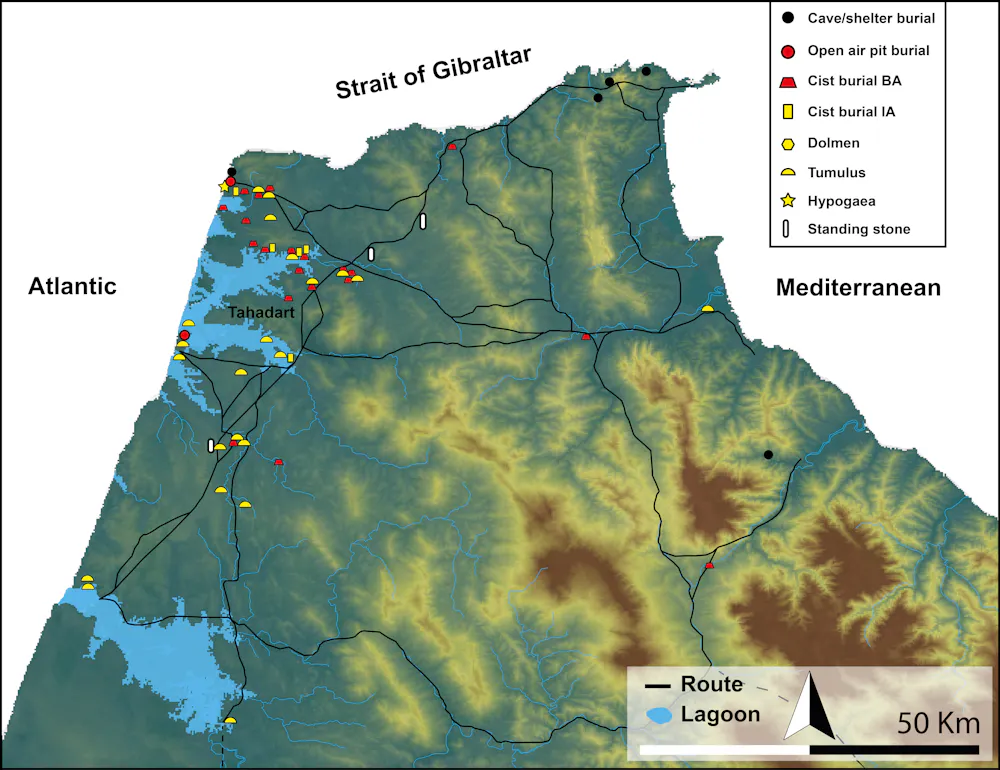
Morocco’s Tangier Peninsula is particularly interesting. The peninsula sits at Africa’s north-western edge, where the Mediterranean Sea meets the Atlantic Ocean. At just 14 kilometres from Europe across the Strait of Gibraltar, this area has long been a natural crossroads between continents and cultures.
I’m an archaeologist and PhD student who specialises in north Africa’s later prehistoric periods, between 3800 BC and 500 BC. My research explores how ancient communities responded to environmental changes, and how they moved and connected with other communities across regions.
The assumption to date has been that the Tangier Peninsula was uninhabited and isolated in late prehistoric times. As part of my PhD research I wanted to explore whether this was true, or whether the area had simply been overlooked by previous archaeological work.
Through the Kach Kouch and Tahadart Archaeological Projects, we studied both the Atlantic and Mediterranean zones of the peninsula.
Our goal was to revisit the region using modern archaeological methods and technologies, including radiocarbon dating. To understand how this region may have been connected to the wider world in prehistoric times, we used Geographic Information System software to model possible ancient communication routes and surveyed the landscape through satellite and drone imagery. At a later stage, alongside a team of early career Moroccan archaeologists from the National Institute of Archaeology and Heritage, we carried out field surveys and excavations.
What we discovered exceeded all expectations. Far from being empty and isolated, the Tangier Peninsula is filled with evidence that people lived, died and held ceremonies there over thousands of years.
Our hope is that our findings will reframe north-western Africa as a cultural crossroads that has connected regions for thousands of years. This region could reshape our understanding of later prehistory across the Atlantic and Mediterranean worlds.
Our study, published in African Archaeological Review, presents the discovery of dozens of new archaeological sites, including prehistoric burials, rock art sites and standing stones.
Until now, research on rock art and burials in north Africa focused on areas like the Nile Valley, the Sahara or the Atlas Mountains. Our discoveries reveal that Morocco’s north-western coast was a major cultural hub in the Bronze Age, over 4,000 years ago.
The diversity of burial practices, ritual sites, symbolic rock art and unique megalithic monuments reflect a rich prehistoric heritage that transcends modern geographic, political and cultural boundaries. It also highlights the longstanding exchanges and contacts of this region with the Mediterranean, the Atlantic and the Sahara.
One of the most remarkable sites we excavated is at Daroua Zaydan, near modern-day Tangier. There we uncovered a cist burial, a small stone chamber made from four upright stone slabs covered by a larger stone slab. A crescent-shaped arrangement of stones likely marked the access to the burial chamber.
Although the grave had been looted in the past, we recovered several human bones outside the cist. One of them was radiocarbon dated to 2118–1890 BC. This date aligns with similar burial traditions across the Strait of Gibraltar in Iberia, and with Early Bronze Age settlement activity at Kach Kouch, about 65km south-east of Daroua Zaydan.
Cist cemeteries had been documented in the region before, but most were excavated during the early to mid-20th century. At the time, archaeologists didn’t have the methods that can now shed light on important details such as how they were built and when they were used. Daroua Zaydan marks the first radiocarbon-dated cist burial in north-west Africa.
Our findings suggest the existence of a complex prehistoric ritual landscape at the Tangier Peninsula. This landscape was likely connected to other areas of the Atlantic and Mediterranean through a shared ritual and symbolic “language”.
One clue is a Bronze Age sword found in the 1920s in the Loukkos river. It was likely made in Britain or Ireland and may have arrived in Africa through Atlantic exchange networks. The sword was likely deliberately thrown to the river — a ritual practice documented along rivers in Atlantic Europe. This suggests that communities in northern Morocco were part of a broader cultural and symbolic world that connected the late prehistoric Atlantic.
Another example is the stone circle at Mzoura, made up of 176 standing stones. This site, excavated in the 1930s, is unique in north Africa. But it closely resembles other stone circles in Atlantic Europe like Stonehenge. During our fieldwork we also discovered new standing stones and rock art, located along prehistoric communication routes. This suggests they may have been used as territorial markers or ritual sites.
Before our research, a single painted rock shelter, that of Magara Sanar, was known in north-western Morocco. We have now documented 17 painted and 5 engraved rock shelters.
The variety of symbols and scenes includes dotted patterns, geometric lines and human-shaped figures. They suggest strong links to Iberian, Atlantic and Saharan prehistoric art.
Our research does more than just fill a blank spot on the archaeological map. It opens up new avenues for archaeological exploration in the region. The Tangier Peninsula is home to a rich and largely undocumented late prehistoric heritage. It deserves more attention from researchers, policymakers and the wider public.
Further protection measures are necessary as the region is undergoing rapid urban development. Tourism is growing and there’s been extensive looting. We hope our work will lead to more archaeological investigations, including new excavations and radiocarbon dating of key sites.
– Rock art and tomb discoveries in Morocco reveal ancient connections to the wider world
– https://theconversation.com/rock-art-and-tomb-discoveries-in-morocco-reveal-ancient-connections-to-the-wider-world-256931
Source: The Conversation – Africa – By Charles MacRobert, Associate Professor, Stellenbosch University
Mining is essential to modern lifestyles. Copper, iron and other mined products are vital to the products many people take for granted, like electronic devices. Being able to buy these goods quite easily may give a person a false sense of how difficult it is to extract the elements they’re made of.
Mining involves the removal of mineral-rich rock from the ground and processing it to extract the high-value minerals. Depending on the mineral, this quantity can be as low as a few grams in a tonne of rock.
For example, removing a tiny quantity of platinum from rock requires finely grinding the rock. The fine material that remains once the platinum is removed is known as tailings.
Every mining operation produces tailings. This can be coarse, like instant coffee granules, or fine, like cocoa powder. Tailings are typically mixed with water to form a liquid slurry that can be pumped and transported easily.
Slurry is kept in specially designed tailings dams. The designs are unique and depend on what is being mined and the local area.
Unfortunately, the history of mining is stained with examples of poorly managed dams that collapse, spilling the slurry, which is sometimes toxic. This can cause serious environmental, social and economic damage.
One such mine disaster happened in February 2025 in Zambia at the Sino-Metals Leach Zambia copper mine. Over 50 million litres of toxic waste flowed over the dam’s wall into the Mwambashi River. From there it flowed into one of the largest and longest Zambian rivers, the Kafue.
The pollution travelled further than 100km from the dam, contaminating the river, and killing fish and livestock on nearby farms. The Zambian government had to shut down municipal water to the city of Kitwe to protect residents from consuming the polluted water.
This should not have happened, because steps have been taken to ensure proactive management of dams. In 2020, the Global Industry Standard on Tailings Management introduced a new set of safety measures and standards.
Many mines are proactively embracing these standards. This enhances community trust in tailings dams. But other mines are not engaging with communities that might be affected by dams. Or communities may feel unsure what to ask the mines.
We are geotechnical engineers who have studied tailings dam collapses. Here, we outline six questions people living near mines should ask mine management to ensure they understand the key hazards and risks in their communities.
Each tailings dam has a zone of influence. This is determined by analysing what would happen if the slurry breached the dam walls and started to flow out. It is an estimate of the area which would be swamped by tailings if the dam failed.
Generally, tailings disasters have caused significant damage up to a distance of 5km from the dam. If the tailings slurry gets into a river, it can flow hundreds of kilometres downstream.
Read more: Burst mining dam in South Africa: what must be done to prevent another disaster
Zones of influence are often determined for extreme events, like once in a lifetime storms or large earthquakes. But zones of influence could also include places affected by dust or water pollution from the mine.
If you can see a tailings dam from where you live or work you should consider yourself within the zone of influence.
Clearly defined roles and responsibilities for day-to-day operation should be in place in every mine. There should be suitably qualified engineers appointed to carry out monitoring and maintenance of the dam. There need to be enough qualified people to cope with the size of the dam.
The management structure should set out how day-to-day issues related to the tailings dam are discussed between workers on the ground in mines and top management, and how solutions are found. Mines should also keep audit and inspection reports on their tailings dams, and records should be kept over the long term (because tailings dams are often operational for several decades).
Mines should have plans to reduce the impact that tailings dams have on the environment. These would have been informed by public participation. The plans must state what monitoring is in place to measure the impacts of dust and water (groundwater and surface water).
The true extent of impacts only becomes apparent once the mine starts operating. So, the public should hold mines accountable for commitments made. Mines should satisfy communities that monitoring is continuing to identify and track the dam’s environmental impacts.
Closure plans should also be continuously communicated to mining-affected communities. This will assure the community that when the miners leave, they won’t be left with a dangerous dam near their homes, with no one to look after it.
A common way that tailings dams fail is when water or slurry washes over the dam sidewalls. This washes away the support. It is known as overtopping, and can happen in storms or if too much tailing is pumped into the dam.
Overtopping is best managed by keeping the water a certain distance below the dam wall. Mine management must measure this regularly and control how much tailing they pump to the dam. Their task is to make sure that even in a severe storm the level will stay well below the top of the dam wall.
Small failure incidents such as sloughs, slides and bulges where dam walls move but no slurry is released can occur. Mines should investigate and report these, detailing likely causes and mitigation measures implemented.
Publicly available satellite imagery can easily show where mine tailings dams are becoming unstable. Mines should be transparent and provide explanations for these to avoid any speculation over whether the dam is stable or not.
Sometimes dams must be changed to accommodate changes in mining or the extraction process. These changes could include how fast the dam is being built, moving the position of the dam wall, or placing material at the base of the wall to stabilise it.
The unexpected consequences of alterations to a tailings dam could be water seeping out and creating damp spots, leading to dam walls sagging or cracking. If left unchecked this can lead to structural failure.
When substantial changes are made to a dam’s design, mines need to demonstrate that sufficient consideration has gone into making these changes.
– Do you live near a dam holding mine waste? 6 questions to ask
– https://theconversation.com/do-you-live-near-a-dam-holding-mine-waste-6-questions-to-ask-256517
Source: United Nations – English
n Africa Day, we celebrate a continent rich in heritage, vibrant in diversity and remarkable in its contributions to our global community.
Africa is home to the world’s youngest population and fast becoming a powerhouse in renewable energy and technological innovation.
Yet, Africa bears the scars of historic injustices. The legacies of slavery, colonialism, apartheid, and systemic racism still cast long shadows, and entrenched inequalities affect Africans and people of African descent to this day.
This year’s theme calls for confronting these shameful legacies. I renew my call for reparatory justice that is grounded in accountability, reconciliation and equity.
The Pact for the Future, adopted in September, urges greater African representation – particularly at the Security Council – and reforms to the international financial system to support African countries with financing and debt relief. The Pact, through the Global Digital Compact, also seeks to close the digital divide and promote the responsible use of AI technologies.
At a time when barriers are being erected, Africa leads by example. The African Continental Free Trade Area promises to usher in a new era of economic integration, opening the door to jobs, growth and prosperity.
At the same time, we must support Africa’s efforts to expand its clean-energy sector, and ensure that the minerals that are critical to the renewables revolution benefit Africans first and most.
Throughout, we will continue standing with Africa to silence the guns, tackle terrorism, and safeguard human rights for all.
On this Africa Day, let us recommit to not only addressing past wrongs, but also to building a sustainable future for the people of Africa grounded in peace, dignity, and opportunity for all.
***
En cette Journée de l’Afrique, nous célébrons un continent qui se distingue par son riche patrimoine, son éclatante diversité et ses formidables apports à la communauté internationale.
L’Afrique abrite la population la plus jeune du monde et s’impose peu à peu comme un poids lourd des énergies renouvelables et de l’innovation technologique.
Pourtant, l’Afrique porte encore les stigmates des injustices passées. Le spectre de l’esclavage, du colonialisme, de l’apartheid et du racisme systémique hante toujours le continent, et les Africains et les personnes d’ascendance africaine restent en proie à des inégalités profondément ancrées.
Le thème de cette année nous exhorte à regarder en face cet héritage honteux et je demande une nouvelle fois que soit mise en place une justice réparatrice fondée sur la responsabilité, la réconciliation et l’équité.
Le Pacte pour l’avenir, adopté en septembre, invite instamment à accroître la représentation de l’Afrique, notamment au sein du Conseil de sécurité, et à réformer le système financier international pour qu’il puisse mieux répondre aux besoins des pays africains en matière de financements et d’allègement de la dette. Ce Pacte, par l’intermédiaire du Pacte numérique mondial, vise également à réduire la fracture numérique et à promouvoir l’utilisation responsable des technologies d’intelligence artificielle.
À l’heure où sont érigées de nouvelles barrières, l’Afrique montre l’exemple. Ainsi, la Zone de libre-échange continentale africaine promet de faire entrer le continent dans une nouvelle ère d’intégration économique, en ouvrant la voie à l’emploi, à la croissance et à la prospérité.
Parallèlement, nous devons soutenir l’action menée par l’Afrique pour développer le secteur des énergies propres et veiller à ce que les Africains soient les premiers à bénéficier des minéraux qui sont au cœur de la révolution des énergies renouvelables.
Jusqu’au bout, nous resterons mobilisés aux côtés de l’Afrique pour faire taire les armes, lutter contre le terrorisme et protéger les droits humains de toutes et tous.
En cette Journée de l’Afrique, réaffirmons notre engagement non seulement à réparer les torts du passé, mais aussi à construire pour les peuples d’Afrique un avenir durable, fondé sur la paix, la dignité et l’égalité des chances pour tous.
***
Source: The Conversation – Africa – By Hamza Benattia, Prehistory, Universitat de Barcelona
When people think of ancient burials in North Africa, they often picture Egypt’s pyramids and monuments. But new discoveries show that north-western Africa also has a deep and fascinating prehistoric past.
Morocco’s Tangier Peninsula is particularly interesting. The peninsula sits at Africa’s north-western edge, where the Mediterranean Sea meets the Atlantic Ocean. At just 14 kilometres from Europe across the Strait of Gibraltar, this area has long been a natural crossroads between continents and cultures.
I’m an archaeologist and PhD student who specialises in north Africa’s later prehistoric periods, between 3800 BC and 500 BC. My research explores how ancient communities responded to environmental changes, and how they moved and connected with other communities across regions.
The assumption to date has been that the Tangier Peninsula was uninhabited and isolated in late prehistoric times. As part of my PhD research I wanted to explore whether this was true, or whether the area had simply been overlooked by previous archaeological work.
Through the Kach Kouch and Tahadart Archaeological Projects, we studied both the Atlantic and Mediterranean zones of the peninsula.
Our goal was to revisit the region using modern archaeological methods and technologies, including radiocarbon dating. To understand how this region may have been connected to the wider world in prehistoric times, we used Geographic Information System software to model possible ancient communication routes and surveyed the landscape through satellite and drone imagery. At a later stage, alongside a team of early career Moroccan archaeologists from the National Institute of Archaeology and Heritage, we carried out field surveys and excavations.
What we discovered exceeded all expectations. Far from being empty and isolated, the Tangier Peninsula is filled with evidence that people lived, died and held ceremonies there over thousands of years.
Our hope is that our findings will reframe north-western Africa as a cultural crossroads that has connected regions for thousands of years. This region could reshape our understanding of later prehistory across the Atlantic and Mediterranean worlds.
Our study, published in African Archaeological Review, presents the discovery of dozens of new archaeological sites, including prehistoric burials, rock art sites and standing stones.
Until now, research on rock art and burials in north Africa focused on areas like the Nile Valley, the Sahara or the Atlas Mountains. Our discoveries reveal that Morocco’s north-western coast was a major cultural hub in the Bronze Age, over 4,000 years ago.
The diversity of burial practices, ritual sites, symbolic rock art and unique megalithic monuments reflect a rich prehistoric heritage that transcends modern geographic, political and cultural boundaries. It also highlights the longstanding exchanges and contacts of this region with the Mediterranean, the Atlantic and the Sahara.
One of the most remarkable sites we excavated is at Daroua Zaydan, near modern-day Tangier. There we uncovered a cist burial, a small stone chamber made from four upright stone slabs covered by a larger stone slab. A crescent-shaped arrangement of stones likely marked the access to the burial chamber.
Although the grave had been looted in the past, we recovered several human bones outside the cist. One of them was radiocarbon dated to 2118–1890 BC. This date aligns with similar burial traditions across the Strait of Gibraltar in Iberia, and with Early Bronze Age settlement activity at Kach Kouch, about 65km south-east of Daroua Zaydan.
Cist cemeteries had been documented in the region before, but most were excavated during the early to mid-20th century. At the time, archaeologists didn’t have the methods that can now shed light on important details such as how they were built and when they were used. Daroua Zaydan marks the first radiocarbon-dated cist burial in north-west Africa.
Our findings suggest the existence of a complex prehistoric ritual landscape at the Tangier Peninsula. This landscape was likely connected to other areas of the Atlantic and Mediterranean through a shared ritual and symbolic “language”.
One clue is a Bronze Age sword found in the 1920s in the Loukkos river. It was likely made in Britain or Ireland and may have arrived in Africa through Atlantic exchange networks. The sword was likely deliberately thrown to the river — a ritual practice documented along rivers in Atlantic Europe. This suggests that communities in northern Morocco were part of a broader cultural and symbolic world that connected the late prehistoric Atlantic.
Another example is the stone circle at Mzoura, made up of 176 standing stones. This site, excavated in the 1930s, is unique in north Africa. But it closely resembles other stone circles in Atlantic Europe like Stonehenge. During our fieldwork we also discovered new standing stones and rock art, located along prehistoric communication routes. This suggests they may have been used as territorial markers or ritual sites.
Before our research, a single painted rock shelter, that of Magara Sanar, was known in north-western Morocco. We have now documented 17 painted and 5 engraved rock shelters.
The variety of symbols and scenes includes dotted patterns, geometric lines and human-shaped figures. They suggest strong links to Iberian, Atlantic and Saharan prehistoric art.
Our research does more than just fill a blank spot on the archaeological map. It opens up new avenues for archaeological exploration in the region. The Tangier Peninsula is home to a rich and largely undocumented late prehistoric heritage. It deserves more attention from researchers, policymakers and the wider public.
Further protection measures are necessary as the region is undergoing rapid urban development. Tourism is growing and there’s been extensive looting. We hope our work will lead to more archaeological investigations, including new excavations and radiocarbon dating of key sites.
Hamza Benattia, director of the Tahadart Archaeological Project, received funding from the National Institute of Archaeology and Heritage of Morocco (INSAP), the Prehistoric Society Research Fund, the Stevan B. Dana Grant of the American Society of Overseas Research, the Mediterranean Archaeological Trust Grant, the Barakat Trust Early Career Award, the Centre Jacques Berque Research Grant, the Institute of Ceutan Studies Research Fund and the University of Castilla La Mancha.
– ref. Rock art and tomb discoveries in Morocco reveal ancient connections to the wider world – https://theconversation.com/rock-art-and-tomb-discoveries-in-morocco-reveal-ancient-connections-to-the-wider-world-256931
Source: The Conversation – Africa – By Charles MacRobert, Associate Professor, Stellenbosch University
Mining is essential to modern lifestyles. Copper, iron and other mined products are vital to the products many people take for granted, like electronic devices. Being able to buy these goods quite easily may give a person a false sense of how difficult it is to extract the elements they’re made of.
Mining involves the removal of mineral-rich rock from the ground and processing it to extract the high-value minerals. Depending on the mineral, this quantity can be as low as a few grams in a tonne of rock.
For example, removing a tiny quantity of platinum from rock requires finely grinding the rock. The fine material that remains once the platinum is removed is known as tailings.
Every mining operation produces tailings. This can be coarse, like instant coffee granules, or fine, like cocoa powder. Tailings are typically mixed with water to form a liquid slurry that can be pumped and transported easily.
Slurry is kept in specially designed tailings dams. The designs are unique and depend on what is being mined and the local area.
Unfortunately, the history of mining is stained with examples of poorly managed dams that collapse, spilling the slurry, which is sometimes toxic. This can cause serious environmental, social and economic damage.
One such mine disaster happened in February 2025 in Zambia at the Sino-Metals Leach Zambia copper mine. Over 50 million litres of toxic waste flowed over the dam’s wall into the Mwambashi River. From there it flowed into one of the largest and longest Zambian rivers, the Kafue.
The pollution travelled further than 100km from the dam, contaminating the river, and killing fish and livestock on nearby farms. The Zambian government had to shut down municipal water to the city of Kitwe to protect residents from consuming the polluted water.
This should not have happened, because steps have been taken to ensure proactive management of dams. In 2020, the Global Industry Standard on Tailings Management introduced a new set of safety measures and standards.
Many mines are proactively embracing these standards. This enhances community trust in tailings dams. But other mines are not engaging with communities that might be affected by dams. Or communities may feel unsure what to ask the mines.
We are geotechnical engineers who have studied tailings dam collapses. Here, we outline six questions people living near mines should ask mine management to ensure they understand the key hazards and risks in their communities.
Each tailings dam has a zone of influence. This is determined by analysing what would happen if the slurry breached the dam walls and started to flow out. It is an estimate of the area which would be swamped by tailings if the dam failed.
Generally, tailings disasters have caused significant damage up to a distance of 5km from the dam. If the tailings slurry gets into a river, it can flow hundreds of kilometres downstream.
Read more:
Burst mining dam in South Africa: what must be done to prevent another disaster
Zones of influence are often determined for extreme events, like once in a lifetime storms or large earthquakes. But zones of influence could also include places affected by dust or water pollution from the mine.
If you can see a tailings dam from where you live or work you should consider yourself within the zone of influence.
Clearly defined roles and responsibilities for day-to-day operation should be in place in every mine. There should be suitably qualified engineers appointed to carry out monitoring and maintenance of the dam. There need to be enough qualified people to cope with the size of the dam.
The management structure should set out how day-to-day issues related to the tailings dam are discussed between workers on the ground in mines and top management, and how solutions are found. Mines should also keep audit and inspection reports on their tailings dams, and records should be kept over the long term (because tailings dams are often operational for several decades).
Mines should have plans to reduce the impact that tailings dams have on the environment. These would have been informed by public participation. The plans must state what monitoring is in place to measure the impacts of dust and water (groundwater and surface water).
The true extent of impacts only becomes apparent once the mine starts operating. So, the public should hold mines accountable for commitments made. Mines should satisfy communities that monitoring is continuing to identify and track the dam’s environmental impacts.
Closure plans should also be continuously communicated to mining-affected communities. This will assure the community that when the miners leave, they won’t be left with a dangerous dam near their homes, with no one to look after it.
A common way that tailings dams fail is when water or slurry washes over the dam sidewalls. This washes away the support. It is known as overtopping, and can happen in storms or if too much tailing is pumped into the dam.
Overtopping is best managed by keeping the water a certain distance below the dam wall. Mine management must measure this regularly and control how much tailing they pump to the dam. Their task is to make sure that even in a severe storm the level will stay well below the top of the dam wall.
Small failure incidents such as sloughs, slides and bulges where dam walls move but no slurry is released can occur. Mines should investigate and report these, detailing likely causes and mitigation measures implemented.
Publicly available satellite imagery can easily show where mine tailings dams are becoming unstable. Mines should be transparent and provide explanations for these to avoid any speculation over whether the dam is stable or not.
Sometimes dams must be changed to accommodate changes in mining or the extraction process. These changes could include how fast the dam is being built, moving the position of the dam wall, or placing material at the base of the wall to stabilise it.
The unexpected consequences of alterations to a tailings dam could be water seeping out and creating damp spots, leading to dam walls sagging or cracking. If left unchecked this can lead to structural failure.
When substantial changes are made to a dam’s design, mines need to demonstrate that sufficient consideration has gone into making these changes.
The authors do not work for, consult, own shares in or receive funding from any company or organisation that would benefit from this article, and have disclosed no relevant affiliations beyond their academic appointment.
– ref. Do you live near a dam holding mine waste? 6 questions to ask – https://theconversation.com/do-you-live-near-a-dam-holding-mine-waste-6-questions-to-ask-256517
Source: European Central Bank
Berlin, 26 May 2025
Over the past 80 years, the global economy thrived on a foundation of openness and multilateralism – underpinned by US leadership. By championing a rules-based international system and anchoring the dollar as the world’s reserve currency, the United States set the stage for trade to flourish and finance to expand.
This global order proved immensely beneficial to the European Union, whose founding liberal principles aligned seamlessly with it. But today it is fracturing.
Multilateral cooperation is being replaced by zero-sum thinking and bilateral power plays. Openness is giving way to protectionism. There is even uncertainty about the cornerstone of the system: the dominant role of the US dollar.
All else equal, this fracturing can pose risks for Europe. Our economy is deeply integrated into the global trading system, with exports accounting for close to one-fifth of our value added and supporting 30 million jobs.
Any change in the international order that leads to lower world trade or fragmentation into economic blocs will be detrimental to our economy.
But – with the right policy responses – there could also be opportunities. The changing landscape could open the door for the euro to play a greater international role.
Today, the euro is the second global currency, accounting for around 20% of foreign exchange reserves, compared with 58% in the case of the US dollar. Increasing the international role of the euro can have positive implications for the euro area.
It would allow EU governments and businesses to borrow at a lower cost, helping boost our internal demand at a time when external demand is becoming less certain.
It would insulate us from exchange rate fluctuations, as more trade would be denominated in euro, protecting Europe from more volatile capital flows.
It would protect Europe from sanctions or other coercive measures.
In short, it would allow Europe to better control its own destiny – giving us some of what Valéry Giscard d’Estaing called the “exorbitant privilege” 60 years ago.
So, how likely is this change to happen? History suggests that it is far from guaranteed. The euro will not gain influence by default – it will have to earn it.
For the euro to increase its global status, history tells us that we need to build on three foundations – each of them critical for success.
First, Europe must ensure it has a solid and credible geopolitical foundation by maintaining a steadfast commitment to open trade and underpinning it with security capabilities.
Second, we must reinforce our economic foundation to make Europe a top destination for global capital, enabled by deeper and more liquid capital markets.
Third, we must bolster our legal foundation by defending the rule of law – and by uniting politically so that we can resist external pressures.
Before we explore each of these three foundational components, let us observe what recent history can teach us.
Shifts in the global currency landscape are not unprecedented in monetary history. There have been previous episodes where the world’s leading reserve currency issuer has taken steps that have called that leadership into question, without ultimately jeopardising it.
For example, the US dollar took over from the pound sterling as the world’s leading reserve currency in the mid-1920s, with its share in foreign exchange reserves rising to 64% by 1931. But this leading position did not stop the United States taking measures to unilaterally change the international monetary order.
For instance, in 1933 President Roosevelt suspended gold convertibility to fight the deflationary forces of the Great Depression. He dismissed European demands for fixed exchange rates with the argument that “the sound internal economic system of a nation is a greater factor in its well-being than the price of its currency”.[1]
Then again in the 1970s President Nixon ended the Bretton Woods system by unilaterally suspending dollar convertibility to gold and imposing a 10% import tariff.
Faced with growing imbalances between US current account deficits and the surpluses of western Europe and Japan, Treasury Secretary John Connally declared that “no longer can considerations of friendship, or need, or capacity justify the United States carrying so heavy a share of the common burdens.”[2]
On both occasions, there was a decline in the standing of the US dollar as a foreign reserve currency. In the 1930s, it fell from over 60% to around 20% of global foreign exchange reserves. In the 1970s, it fell from about 70% to 50% two decades later.
But on neither occasion was there a robust alternative currency that could take over at short notice. In the 1930s, the pound sterling was already declining, while in the 1970s the Deutsche Mark and the Yen were backed by markets that were too small.
So, instead, investors flocked to gold. The share of gold in foreign reserves increased by about 20 percentage points in the 1930s to 97% and almost doubled to 60% in the 1970s.[3]
Today, there is a key difference compared with previous eras. With the euro as the world’s second-largest currency, there is another international currency alongside the dollar. But this has not yet convinced investors.
Over recent years, the dollar’s share in global foreign exchange reserves has fallen, with its current level of 58% being the lowest since 1994. In parallel, central banks have been accumulating gold at a record pace – almost matching the levels seen during the Bretton Woods era.[4] The share of gold in global foreign reserves[5] has reached around 20%, surpassing that of the euro.[6]
As previously mentioned, we can identify three essential foundations for international currency usage, without which a currency cannot succeed on the global stage. And in each case, we can see that Europe has many of the key ingredients for success, but we need to bring them together to reinforce the foundations. Action is in order.
The starting point is a credible geopolitical foundation – which rests on both a country’s role in global trade and the strength of its military alliances.
A currency’s exposure to trade is especially important, as it provides the initial pathway to wider international use. In the mid-1920s, for example, the dollar overtook the pound sterling as the leading form of trade credit before it became the leading reserve currency.[7]
Once a currency captures a larger share of trade invoicing, its role in international banking and finance, and ultimately as a reserve asset, becomes self-reinforcing. Higher demand for the currency enhances its role as a store of value and further encourages investors to hold it.[8]
As a major actor in global trade, Europe already has a key ingredient of a strong geopolitical foundation, creating the potential for a virtuous circle of euro internationalisation to unfold.
The EU has the largest network of trade agreements in the world. Europe is the number one trading partner for 72 countries, which together represent almost 40% of world GDP.[9] And this status is reflected in the share of the euro as an invoicing currency, which stands at around 40%, more than double its share as a reserve currency.
Europe can press home this advantage by continuing to forge new trade agreements. And we should make clear that we support a win-win approach to trade, ensuring that we are the most attractive partner to make deals with.
The ECB can also help make the euro more attractive for euro-denominated trade. We are working on a potential digital euro and pursuing initiatives to enhance cross-border payments in euro, which could potentially facilitate international cross-border transactions in the future.
And by extending swap and repo lines to key partners, we safeguard against euro liquidity shortages abroad disrupting the smooth transmission of our monetary policy – which in turn encourages those partners to transact more in euro.
But there is a limit to how much a currency can grow simply by virtue of being open to trade. In fact, the euro’s share of global export invoicing is already as large as that of the US dollar, but we are not closing the gap in reserve currency status.
This is because investors – and especially official investors – also seek geopolitical assurance in another form: they invest in the assets of regions that are reliable security partners and can honour alliances with hard power. So a credible geopolitical foundation must also rest on robust military partnerships.
This dual strength is essentially what we can learn from the US dollar’s dominance. It is not just a product of economic fundamentals but it is also powerfully reinforced by US security guarantees. These guarantees not only deepen trade ties[10], but have been shown to boost a currency’s share in foreign reserves by up to 30 percentage points.[11]
We are now seeing a major shift in Europe towards rebuilding our hard power, with important initiatives underway at the national and EU levels. And we should be clear that following through with this effort is a precondition for the euro to become more widely used.
Trade and military power are important for establishing demand for an international currency. But to satisfy this demand, investors need appropriate assets to invest in.
This is why a strong economic foundation – one that provides opportunities for growth and opportunities to invest in growth – is equally essential.
There is a virtuous circle between growth, capital markets and international currency usage. Growth generates robust rates of return, which make investors want to hold assets in a particular currency. And capital markets provide investment opportunities and channel funds back into growth.
At the same time, if capital markets provide a sufficient supply of “safe assets”, investors can hedge their exposures efficiently. When a shock hits and riskier investments lose value, safer assets rise in value. That provides a complete ecosystem for investments in the currency.
The US dollar’s rise to dominance in the interwar period was certainly driven by this virtuous circle. The development of US capital markets boosted growth – with each 1 percentage point increase in market capitalisation yielding 0.5 percentage points more growth[12] – while simultaneously establishing the foundation for dollar dominance. The depth and liquidity of the US Treasury market in turn provided an efficient hedge for investors.
Europe has all the elements it needs to produce a similar cycle. But so far, we have not been able to put all the pieces together.
Despite our large single market, we have fallen behind the US in terms of growth performance and market returns. Since 2000, US labour productivity per hour has grown twice as much as in the euro area, mainly driven by the tech sector, and US markets have delivered returns that are around five times as high as those of European markets.[13]
Despite our large savings, we have made little progress in integrating our capital markets to channel more of our funds into growth. 60% of household equity investment goes into home country markets even though there may be greater opportunities abroad.
And despite our strong aggregate fiscal position – our debt-to-GDP ratio is 89%, compared with 124% in the United States – we provide relatively few safe assets. Recent estimates suggest that outstanding sovereign bonds rated at least AA are just below 50% of GDP in the EU and above 100% in the US.[14]
The conclusion for Europe is clear: if we truly want to see the global status of the euro grow, we must first reform our domestic economy.
That means moving forwards with the priorities identified in recent reports: completing the Single Market, enabling start-ups, reducing regulation and building the savings and investment union. And it means avoiding a piecemeal approach, where we make progress where it is easy and dither where it is hard, else we will never kick-start the positive cycle.
Moreover, in this new geopolitical landscape, the case for acting in a European way has never been stronger.
Each individual country of course needs to make sure that its national policies support growth. But we also need to be mindful of self-defeating fragmentation. For example, we all agree that Europe needs to build up its strategic industries to avoid excessive dependencies – as Mario Draghi and Enrico Letta emphasised in their recent reports. But we will not succeed if we have 27 different policies for these industries.
Nowadays there are also more policy goals that qualify as European public goods, notably strengthening European defence. But due to the free-rider problem, defence is a good that is likely to be undersupplied. Moreover, joining forces to procure equipment and develop new technologies – leading to economies of scale and more interoperability – will result in greater operational effectiveness than if all 27 Member States go it alone.
Economic logic tells us that public goods need to be jointly financed. And this joint financing could provide the basis for Europe to gradually increase its supply of safe assets.
Geopolitical strength and faster growth can go a long way towards strengthening the euro’s international role. But maintaining demand for the currency will also depend on our ability to uphold a robust legal and institutional foundation.
Ultimately, currencies achieve and maintain their reserve status if the institutions and policies backing them consistently safeguard investor confidence in their long-term value.[15]
For example, historically, the US dollar’s pre-eminence has rested on the strength and stability of US fiscal and monetary institutions. The Federal Reserve System’s credible commitment to controlling inflation, combined with the unparalleled liquidity of the US Treasury market, created a perception of minimal sovereign risk. This made the dollar a safe haven during global economic turbulence and recessions.[16]
Since 1970, there have been 34 instances of simultaneous sovereign debt and financial crises globally, but the US has remained immune to such “twin crises”.[17]
However, when doubts emerge about the stability of the legal and institutional framework, the impact on currency use is undeniable.
These doubts have materialised in the form of highly unusual cross-asset correlations since 2 April this year, with the US dollar and US Treasuries experiencing sell-offs even as equities fell. The same doubts are also cited by investors who are turning to gold: two-fifths say they are doing so as a hedge against rising geopolitical risk.[18]
Given this context, the EU has a legitimate reason to turn its commitment to predictable policymaking and the rule of law into a comparative advantage.
This commitment is baked into how the EU works. The positive side of our often slow and complicated decision-making processes is that checks and balances are always respected. We have also enshrined into law the independence of our key institutions, like the ECB, in ways that are hard for politicians to threaten.
But relying on the fact that our bureaucratic systems are hard to change is not enough. In the current geopolitical environment, we are facing increasing external pressures to take actions that jeopardise the rule of law. And we will only be able to resist these pressures if we are more politically united and able to speak with a single voice.
As we potentially enter a renewed era of great power rivalry, with countries being asked to take sides, we are likely to find ourselves under pressure to make decisions that are not necessarily in our own interest.
But if we take this opportunity to unite and, preferably, to reform our institutional structure by enabling more qualified majority voting in areas where a single veto has often held back the collective interests of the 26 other countries, that would enable us to act decisively as a united Europe. We would then be in a much stronger position to defend and uphold our values and, as a result, to defend and uphold global confidence in our currency.
Let me conclude.
In the history of the international monetary system, there are moments when the foundations that once seemed unshakeable begin to shift.
The Belgian-American economist Robert Triffin described this with great clarity. He observed that nations’ confidence in the international monetary system depends on the reliability of the reserve currency, which, in his words, is “highly dependent on individual countries’ decisions”.
But moments of change can also be moments of opportunity. The ongoing changes create the opening for a “global euro moment”.
This is a prime opportunity for Europe to take greater control of its own destiny. But this is not a privilege that will simply be given to us. We have to earn it.
Source: Maritime New Zealand
The sentencing of a recreational skipper in the Christchurch District Court yesterday afternoon [Tuesday, November 21] is a reminder to skippers of recreational boats – there are simple steps they must take to prevent collisions and keep others safe.
The sentencing followed a collision between a recreational power boat and a kayak in Lyttelton on 14 January 2023.
The skipper of the power boat did not operate the vessel as required under Part 22 of the Maritime Rules, causing the collision with a kayak and serious injuries to the paddler.
Maritime NZ’s Manager General Regulatory Operations South, John Drury says the Maritime Rules to prevent collisions are practical ways to help keep all vessels – and the people on them – safe. All recreational (and commercial) skippers must understand them.
The Maritime Rules include: keeping a proper look out at all times, travelling at safe speed, using all available means to determine if there is a risk of collision, and powered vessels keeping out of the way of vessels under oars or sail. This means taking account of the harbour conditions, adjusting your speed and ensuring you can see adequately in front of you – particularly when you know there are a high number of recreational water users in the area.
“You can’t assume it is safe but instead, you must make sure it is safe,” Mr Drury says.
“Always keep a proper look out, and if there is any doubt, then the skipper must act as if they might collide with another boat or a swimmer in the water – slow down, be ready to stop, and power boats give way.”
Maritime NZ recommends those heading out on the water undertake a day skipper’s course, understand the Maritime Rules and local bylaws and fully understand how to manage the vessels they are in charge of.
The collision prevention and navigation Maritime Rules can be found on the Maritime NZ website, and local bylaws are published by the local regional authority.
Sentencing notes
Last month, the skipper of the power boat pleaded guilty to one charge under section 65 of the Maritime Transport Act of operating his power boat in a manner that caused unnecessary danger or risk.
Yesterday, the court sentenced him to a $5,200 fine and ordered him to pay $13,473 reparation. In doing so, the Judge noted the significant injuries suffered by the victim, the risk of more serious harm occurring, and the inherent vulnerability of small craft water users.
The Judge also acknowledged the skipper’s guilty plea, his remorse and the steps he took immediately after the incident to assist the victim, including applying his maritime knowledge and taking the victim directly to the boat ramp where an ambulance was able to meet them.
Incident summary
The collision occurred at about 3pm on a Saturday afternoon. The conditions were sunny, with a moderate breeze of around 15 knots, and waves of about 20cm. The harbour was busy with other recreational users, typical of a mid-summer weekend in Lyttelton.
The 7.4m power boat was travelling at round 18 knots (33 kmph) with two people on board returning from a fishing trip.
Four kayakers in three kayaks were paddling west towards Governor’s Bay. The group was spread out, padding in white kayaks wearing high visibility clothing. The skipper of the powerboat did not see the kayakers and collided with the victim directly.
The skipper immediately stopped his powerboat and provided assistance to the badly injured victim, transporting him to the nearby boat ramp where an ambulance met them.
Source: Maritime New Zealand
Health and safety on ports is a major priority for Maritime NZ.
“Everyone has the right to be safe when they go to work,” Maritime NZ’s Director, Kirstie Hewlett says.
“Any incident on a port is one too many, and everyone at Maritime NZ extends their thoughts to those who have been injured at ports, as well as to the friends and families who have lost loved ones.”
TAIC makes a number of recommendations aimed at improving safety standards on ports. Currently, Maritime NZ and WorkSafe share designation overseeing health and safety at ports, several of the recommendations are directed to the two regulators.
From 1 July 2024, Maritime NZ will take over the designation as the sole regulator on ports.
“We partially accept two of the recommendations that have been directed to us by the Commission, and fully accept the other two” Ms Hewlett says.
“It recommends the regulators aim to take a more proactive role in driving safety on ports. We partially accept this recommendation, as we believe our assessments focused on critical risks on ports, with WorkSafe NZ, is proactive monitoring activity and looks at individual operators. We agree that there is always more opportunity to work proactively and we welcome the additional funding that comes with our designation extension from 1 July 2024, so we can carry out more proactive monitoring on ports.
We are proud of the proactive work we have done with the sector through the Port Health and Safety Leadership Group. This group, made up of both regulators, and Chaired by Maritime NZ, has port and stevedore chief executives, the Port Industry Association, and unions and has built a relationship of trust and made significant progress on health and safety on ports.
The Leadership Group earlier this year released a Port Sector Insights Picture and Action Plan to make ports safer. The insights pictures shows where, and why harm is happening on ports. The Plan was created from operator and regulator incident and notification data, and also worker perspectives. It outlines actions to address these harms. Significant progress has been made on implementing some of the actions since it was released.
Two of these actions show the Commission’s recommendations are already being implemented. Work is continuing to develop more consistent safety standards on ports, with a draft Approved Code of Practice for loading and discharging cargo on ports and on ships currently out for consultation.
The Leadership Group also has actions underway to continuously improve safety and share good practice. This includes completion of a platform where people can access new safety technologies, and the development of a work programme on good practice guidance that will sit under the ACOP. The Leadership Group is working to ensure this information is accessible for the industry and the workers.
A further action under the plan is to improve workforce training, capability and understanding of risks. This includes whether future standards will be backed by the regulator (Maritime NZ), as recommended by TAIC. Decisions on this potential backing will need to be made by the relevant ministers.
“The critical thing for us all to remember is that Health and safety is everyone’s responsibility and we want there to be a culture in the sector that reflects the need to take a safety-first approach to operations. We look forward to continuing our collaborative work with operators and workers on ports to improve safety,” Ms Hewlett says.
Source: Maritime New Zealand
Following a collision between a twin-engine recreational power boat and the ferry, Waitere, in Russell earlier this year, Maritime NZ has charged the power boat’s skipper.
The collision occurred at about midday on 13 April 2023, when Waitere (also known as the Blue Ferry ) was travelling from Russell to Paihia.
Maritime NZ’s Deputy Chief Executive Regulatory Operations, Deb Despard, says Maritime NZ personnel undertook a thorough investigation in response to this incident.
“Investigators carried out interviews, examined the scene, reviewed documents and gathered other relevant evidence connected to the incident,” she says.
The ferry’s skipper was severely injured, some of the passengers suffered lesser injuries and the ferry was badly damaged. It sunk a few hours after the collision. There was some damage to the power boat, but no one on board it at the time was injured.
Ms Despard says one charge has been filed in the Auckland District Court against the skipper of the power boat. The charge has been filed under section 65 of the Maritime Transport Act 1994.
As the matter is now before the Court, Maritime NZ cannot make further comment.
Editors’ notes: