Category: Ukraine

  • MIL-OSI Banking: Analysis of the latest Mirai wave exploiting TBK DVR devices with CVE-2024-3721

    Source: Securelist – Kaspersky

    Headline: Analysis of the latest Mirai wave exploiting TBK DVR devices with CVE-2024-3721

    The abuse of known security flaws to deploy bots on vulnerable systems is a widely recognized problem. Many automated bots constantly search the web for known vulnerabilities in servers and devices connected to the internet, especially those running popular services. These bots often carry Remote Code Execution (RCE) exploits targeting HTTP services, allowing attackers to embed Linux commands within GET or POST requests.

    We recently observed the use of CVE-2024-3721 in attempts to deploy a bot in one of our honeypot services. This bot variant turned out to be part of the infamous Mirai botnet, targeting DVR-based monitoring systems. DVR devices are designed to record data from cameras, widely used by many manufacturers and can be managed remotely. In this article, we describe the new Mirai bot features and its revamped infection vector.

    Exploitation

    During a review of the logs in our Linux honeypot system, we noticed an unusual request line linked to a CVE-2024-3721. This vulnerability allows for the execution of system commands on TBK DVR devices without proper authorization as an entry point, using a specific POST request:

    The POST request contains a malicious command that is a single-line shell script which downloads and executes an ARM32 binary on the compromised machine.

    Typically, bot infections involve shell scripts that initially survey the target machine to determine its architecture and select the corresponding binary. However, in this case, since the attack is specifically targeted at devices that only support ARM32 binaries, the reconnaissance stage is unnecessary.

    Malware implant – Mirai variant

    The source code of the Mirai botnet was published on the internet nearly a decade ago, and since then, it has been adapted and modified by various cybercriminal groups to create large-scale botnets mostly focused on DDoS and resource hijacking.

    The DVR bot is also based on the Mirai source code but it includes different features as well, such as string encryption using RC4, anti-VM checks, and anti-emulation techniques. We’ve already covered Mirai in many posts, so we’ll focus on the new features of this specific variant.

    Data decryption

    The data decryption routine in this variant is implemented as a simple RC4 algorithm.

    The RC4 key is encrypted with XOR. After the key decryption, we were able to obtain its value: 6e7976666525a97639777d2d7f303177.

    The decrypted RC4 key is used to decrypt the strings. After each piece of data is decrypted, it is inserted into a vector of a custom DataDecrypted structure, which is a simple string list:

    Data decryption routine

    The global linked list with decrypted data is accessed whenever the malware needs particular strings.

    Adding decrypted strings to the global list

    Anti-VM and anti-emulation

    To detect if it is currently running inside a virtual machine or QEMU, the malware lists all processes until it finds any mention of VMware or QEMU-arm. Listing running processes is simply a matter of opening the /proc directory, which is the proc filesystem on Linux.

    Each process ID (PID) has its own folder containing useful information, such as cmdline, which describes the command used to start the process. Using this information, the malware verifies if there are any processes with VMware or QEMU-arm in their command line.

    Process check

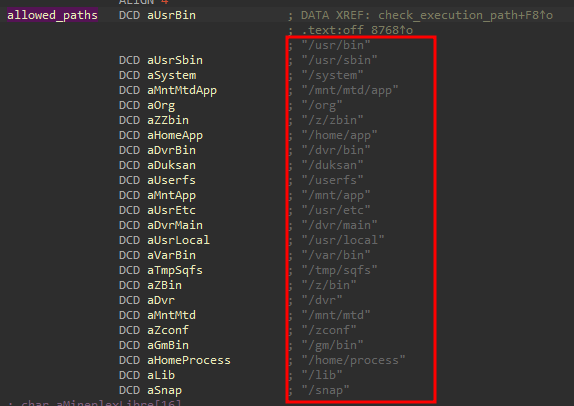
    The implant also verifies if the bot process is running outside an expected directory, based on a hardcoded list of allowed ones:

    Allowed directories

    Once those checks are successfully completed, Mirai will continue normal execution, preparing the vulnerable device for receiving commands from the operator.

    Infection statistics

    According to our telemetry data, the majority of infected victims are located in countries such as China, India, Egypt, Ukraine, Russia, Turkey, and Brazil. It’s challenging to ascertain the exact number of vulnerable and infected devices globally. However, by analyzing public sources, we’ve identified over 50,000 exposed DVR devices online, indicating that attackers have numerous opportunities to target unpatched, vulnerable devices.

    Conclusion

    Exploiting known security flaws in IoT devices and servers that haven’t been patched, along with the widespread use of malware targeting Linux-based systems, leads to a significant number of bots constantly searching the internet for devices to infect.

    The main goal of such bots is to carry out attacks that overwhelm websites and services (DDoS attacks). Most of these bots don’t stay active after the device restarts because some device firmware doesn’t allow changes to the file system. To protect against infections like these, we recommend updating vulnerable devices as soon as security patches become available. Another thing to consider is a factory reset if your device is indeed vulnerable and exposed.

    All Kaspersky products detect the threat as HEUR:Backdoor.Linux.Mirai and HEUR:Backdoor.Linux.Gafgyt.

    Indicators of compromise

    Host-based (MD5 hashes)
    011a406e89e603e93640b10325ebbdc8
    24fd043f9175680d0c061b28a2801dfc
    29b83f0aae7ed38d27ea37d26f3c9117
    2e9920b21df472b4dd1e8db4863720bf
    3120a5920f8ff70ec6c5a45d7bf2acc8
    3c2f6175894bee698c61c6ce76ff9674
    45a41ce9f4d8bb2592e8450a1de95dcc
    524a57c8c595d9d4cd364612fe2f057c
    74dee23eaa98e2e8a7fc355f06a11d97
    761909a234ee4f1d856267abe30a3935
    7eb3d72fa7d730d3dbca4df34fe26274
    8a3e1176cb160fb42357fa3f46f0cbde
    8d92e79b7940f0ac5b01bbb77737ca6c
    95eaa3fa47a609ceefa24e8c7787bd99
    96ee8cc2edc8227a640cef77d4a24e83
    aaf34c27edfc3531cf1cf2f2e9a9c45b
    ba32f4eef7de6bae9507a63bde1a43aa
    IPs
    116.203.104[.]203
    130.61.64[.]122
    161.97.219[.]84
    130.61.69[.]123
    185.84.81[.]194
    54.36.111[.]116
    192.3.165[.]37
    162.243.19[.]47
    63.231.92[.]27
    80.152.203[.]134
    42.112.26[.]36

    MIL OSI Global Banks

  • MIL-OSI Russia: Perhaps it is better to let Russia and Ukraine fight for a while longer – D. Trump

    Translation. Region: Russian Federal

    Source: People’s Republic of China in Russian – People’s Republic of China in Russian –

    Source: People’s Republic of China – State Council News

    WASHINGTON, June 6 (Xinhua) — U.S. President Donald Trump said on Thursday it might be better to let Russia and Ukraine fight for a while longer, despite German Chancellor Friedrich Merz’s call for more U.S. pressure on Russia.

    During a meeting with F. Merz at the White House, D. Trump said that “hostility” and “hatred” between the parties to the conflict will make it difficult to achieve a ceasefire in the near future. This statement by the American president contradicts his previous statement about the imminent end of the conflict.

    “Sometimes you let them fight a little bit. You see it in hockey. You see it in sports. The referees let them go on for a couple of seconds, give them a little bit of time before they break it up,” Trump said.

    According to F. Merz, America is again in a very strong position to end this war. “We would like to increase the pressure on Russia,” the Chancellor added.

    On Thursday, D. Trump also said that new sanctions against Russia are not expected. However, he hinted that he could impose sanctions against both Russia and Ukraine, because “it takes two to tango.”

    “When I see a point where this is not going away, we will act very tough,” Trump said. “And it could affect both countries.” –0–

    MIL OSI Russia News

  • MIL-OSI Asia-Pac: President Lai hosts state banquet for President Bernardo Arévalo of Republic of Guatemala  

    Source: Republic of China Taiwan

    Details
    2025-06-05
    President Lai welcomes President Bernardo Arévalo of Republic of Guatemala with military honors  
    On the morning of June 5, President Lai Ching-te welcomed with full military honors President Bernardo Arévalo of the Republic of Guatemala and his wife, who are leading a delegation of cabinet members visiting Taiwan for the first time, demonstrating the deep and enduring alliance between our nations. In remarks, President Lai noted that over the past few years, bilateral cooperation between Taiwan and Guatemala has grown closer and more diverse, and said that moving forward, based on a foundation of mutual assistance for mutual benefit, we will continue to promote programs in line with international trends, spurring prosperity and development in both our nations. The military honors ceremony began at 10:30 a.m. in the Entrance Hall of the Presidential Office. After a 21-gun salute and the playing of the two countries’ national anthems, President Lai and President Arévalo each delivered remarks. A translation of President Lai’s remarks follows: Today, President Arévalo and First Lady Lucrecia Peinado are leading a delegation of cabinet members visiting Taiwan for the first time, demonstrating the deep and enduring alliance between our nations. On behalf of the people and government of the Republic of China (Taiwan), I want to extend my sincerest welcome. Last year, our two countries celebrated the 90th anniversary of diplomatic ties, providing mutual support all along the way. Especially over the past few years, bilateral cooperation has grown closer and more diverse. We have a long record of remarkable results, whether in terms of medicine and public health, education and culture, technological cooperation, or economic and trade exchanges. Moving forward, based on a foundation of mutual assistance for mutual benefit, Taiwan and Guatemala will continue to promote programs in line with international trends. We will continue to strengthen exchange and cooperation for young people, as well as scholarship programs, and actively cultivate high-tech and information and communications technology industry talent, spurring prosperity and development in both our nations. Although separated by a great distance, the peoples of both countries are closely connected by their ideals and values. I am confident that with President Arévalo’s support, bilateral exchanges and cooperation will become closer and more diverse, beginning a very promising new chapter. I wish the visiting delegation a smooth and successful trip. President Arévalo then delivered remarks, saying that on behalf of the government and people of Guatemala, he is honored to visit the Republic of China (Taiwan), this beautiful nation, and to receive full military honors, which reflects the mutual respect between our two nations as well as our solid friendship. Especially as this state visit comes as we celebrate 90 years of formal diplomatic ties, he said, he has brought the foreign minister, economics minister, private secretary to the president, and social communication secretary as members of his delegation, in the hope of our ties embarking on a new chapter. President Arévalo said that Guatemala-Taiwan ties have in recent years been growing steadily on a foundation of mutual understanding and cooperation, making significant progress, and that our peoples have also cultivated sincere friendships and cooperative relationships across many fields. Our nations are especially promoting public health, education, agricultural technology, and infrastructure, he said, key fields which are conducive to economic and social development. He expressed his hope that on such good foundations of the past, we can further strengthen our bilateral ties for the future. President Arévalo stated that through this state visit they not only want to reaffirm the good bilateral ties between our nations, but that they also hope to define a trajectory for the future of our cooperation in the direction of expanding economic cooperation, building economic and trade alliances, and facilitating investment to foster a Taiwan-Guatemala relationship that benefits both peoples. He then expressed gratitude to the people of Taiwan for helping Guatemala over the past 90 years and reaffirmed the unwavering support of Guatemala for the Republic of China (Taiwan). On the occasion of this visit, he said, he hopes to extend a friendly hand to the people of Taiwan, adding that he looks forward to our nations continuing to take major steps forward on the road of mutual assistance and prosperity. Also in attendance at the welcome ceremony were Dean of the Diplomatic Corps and Saint Vincent and the Grenadines Ambassador Andrea Clare Bowman, and members of the foreign diplomatic corps in Taiwan.  

    Details
    2025-06-03
    President Lai confers decoration on President Hilda C. Heine of Republic of the Marshall Islands, hosts state banquet  
    At noon on June 3, President Lai Ching-te, accompanied by Vice President Bi-khim Hsiao, conferred a decoration upon President Hilda C. Heine of the Republic of the Marshall Islands, and hosted a state banquet for President Heine and her husband at the Presidential Office. In remarks, President Lai thanked President Heine for her commitment to deepening the diplomatic partnership between our nations and speaking up for Taiwan in the international arena. He also expressed hope for Taiwan and the Marshall Islands to work together to address various challenges through an even greater diversity of exchanges, and that together, we can contribute even more to peace, stability, and development throughout the Pacific region. At the decoration ceremony, President Lai personally conferred the Order of Brilliant Jade with Grand Cordon on President Heine before delivering remarks, a translation of which follows:  The Marshall Islands was the first Pacific ally that I visited after taking office as president. When I arrived there, I was immediately drawn to its beautiful scenery. And I received a very warm welcome from the local people. This gesture showed the profound friendship between our two nations. I was truly touched. I also remember trying your nation’s special Bob Whisky for the first time. The flavor was as unique and impressive as the landscape of the Marshall Islands.  In addition to welcoming our distinguished guests today, we also presented President Heine with the Order of Brilliant Jade with Grand Cordon. On behalf of the people of Taiwan, I want to thank President Heine for her commitment to deepening the diplomatic partnership between our nations, and for staunchly speaking up for Taiwan in the international arena. Both I and the people of Taiwan are profoundly grateful to President Heine for her friendship and support. Over the past few years, cooperation between Taiwan and the Marshall Islands has grown ever closer. And this visit by our distinguished guests will allow our two countries to further expand areas of bilateral exchange. I have always believed that only through mutual assistance and trust can two countries build a longstanding and steadfast partnership. I once again convey my sincere aspiration that Taiwan and the Marshall Islands work together to address various challenges through an even greater diversity of exchanges. Together, we can contribute even more to peace, stability, and development throughout the Pacific region. In closing, I want to thank President Heine and First Gentleman Thomas Kijiner, Jr. for leading this delegation to Taiwan, which deepens the foundations of our bilateral relationship. May our two nations enjoy a long and enduring friendship. President Heine then delivered remarks, stating that she felt especially privileged to receive the Order of Brilliant Jade with Grand Cordon of the Republic of China (Taiwan), and humbly accepted the honor with the utmost gratitude, humility, and deep responsibility. This is a deep responsibility, she said, because she understands that since its inception in 1933, this order has been bestowed upon a select few. She then thanked President Lai for this great honor. President Heine stated that the banquet was not just a celebration of our bilateral friendship, but a true reflection of the generosity of the Taiwan spirit and a testament to the enduring ties between our nations, founded on shared values and aspirations, including a respect for the rule of law, the preservation of human dignity, and a deep commitment to democracy. President Heine stated that the Taiwan-Marshall Islands partnership continues to evolve through practical cooperation and mutual support. In recent years, she said, our countries have worked hand in hand across a range of vital sectors, including the recent opening of the Majuro Hospital AI and Telehealth Center and the ongoing and successful Taiwan Health Center, various technical training and scholarship programs, and various climate change adaptation projects in renewable energy, coastal resilience, and sustainable agriculture.   President Heine emphasized that the Marshall Islands continues to be a proud and vocal supporter of Taiwan’s meaningful participation in the United Nations system and other international organizations. Taiwan’s exclusion from these platforms, she said, is not only unjust, but is bad for the world, and the global community needs Taiwan’s voice and expertise.  President Heine also expressed sincere appreciation to all of the Taiwanese friends who have contributed their efforts to deepening bilateral relations, including government officials, healthcare workers, teachers, engineers, and volunteers. The people of the Marshall Islands, she said, deeply appreciate and value everyone’s efforts and service. President Heine said that as we celebrate our partnership, let us look to the future with hope and determination, continue to work together, learn from one another, and support one another to champion a world where all nations can chart their own course based on peace and international law. Also attending the state banquet were Marshall Islands Council of Iroij Chairman Lanny Kabua, Minister of Foreign Affairs and Trade Kalani R. Kaneko, Minister of Finance David Paul, Nitijela Standing Committee on Foreign Affairs and Trade Chairperson Joe Bejang, and Charge d’Affaires a.i. Anjanette Davis-Anjel of the Embassy of the Republic of the Marshall Islands.  

    Details
    2025-06-03
    President Lai and President Hilda C. Heine of Marshall Islands hold bilateral talks and witness signing of agreements
    On the morning of June 3, President Lai Ching-te, accompanied by Vice President Bi-khim Hsiao, held bilateral talks with President Hilda C. Heine of the Republic of the Marshall Islands at the Presidential Office following a welcome ceremony with military honors for her and her husband. The leaders also jointly witnessed the signing of a letter of intent for sports exchanges and a memorandum of understanding regarding the Presidents’ Scholarship Fund. President Lai then presided over a launch ceremony for a loan program to purchase aircraft. In remarks, President Lai thanked the government and the Nitijela (parliament) of the Marshall Islands for their longstanding support for Taiwan’s international participation and for voicing staunch support for Taiwan at numerous international venues. President Lai said that Taiwan looks forward to continuing to deepen its diplomatic partnership with the Marshall Islands and build an even closer cooperative relationship across a range of fields, engaging in mutual assistance for mutual benefits and helping each other achieve joint and prosperous development to yield even greater well-being for our peoples. A translation of President Lai’s remarks follows: I once again warmly welcome President Heine, First Gentleman Thomas Kijiner, Jr., and our guests to Taiwan. During my visit to the Marshall Islands last year, I said that Taiwan and the Marshall Islands are truly a family. When Vice President Hsiao and I took office last year, President Heine led a delegation to Taiwan. It is now one year since our inauguration, and I am delighted to see President Heine once again, just as if I were seeing family arrive from afar. Through my visit to the Marshall Islands, I gained a profound sense of the friendship between the peoples of our two nations, well-demonstrated by bilateral exchanges in such areas as healthcare, agriculture, and education. And it is thanks to President Heine’s longstanding support for Taiwan that our countries have been able to further advance collaboration on even more issues, including women’s empowerment and climate change. In recent years, the geopolitical and economic landscape has changed rapidly. We look forward to Taiwan and the Marshall Islands continuing to deepen our partnership and build an even closer cooperative relationship. In just a few moments, President Heine and I will witness the signing of several documents, including a memorandum of understanding and a letter of intent, to expand bilateral cooperation in such fields as sports, education, and transportation. Taiwan will take concrete action to work with the Marshall Islands and advance mutual prosperity and development, writing a new chapter in our diplomatic partnership. I would also like to take this opportunity to express gratitude to the government and Nitijela of the Marshall Islands. In recent years, the Nitijela has passed annual resolutions backing Taiwan’s international participation, and President Heine and Marshallese cabinet members have been some of the strongest advocates for Taiwan’s international participation, voicing staunch support for Taiwan at numerous international venues. Building on the pillars of democracy, peace, and prosperity, Taiwan will continue to work with the Marshall Islands and other like-minded countries to deepen our partnerships, engage in mutual assistance for mutual benefits, and help one another achieve joint and prosperous development. I have every confidence that the combined efforts of our two nations will yield even greater well-being for our peoples and see us make even more contributions to the world. President Heine then delivered remarks, and began by conveying warm greetings of iokwe from the people and government of the Republic of the Marshall Islands to the people and government of the Republic of China (Taiwan). She said she was deeply honored to be in Taiwan for an official visit, and extended appreciation to President Lai and his government for their gracious invitation and warm welcome. President Heine stated that this year marks 27 years of diplomatic ties between our two nations, and that they are proud of this enduring friendship. This special and enduring relationship, she said, is grounded in our shared Austronesian heritage, and strengthened by mutual respect for each other’s democratic systems and our steadfast commitment to the core values of freedom, justice, and the rule of law. President Heine stated that Taiwan’s continued support has been invaluable to the people and national development of the Marshall Islands, particularly in the areas of health, education, agriculture, and climate change. She also expressed deep appreciation to Taiwan for providing Marshallese students with opportunities to study in Taiwan, and for the care extended to Marshallese who travel here for medical treatment. President Heine also announced that she would be presenting a copy of a resolution by the people and government of the Republic of the Marshall Islands reiterating their appreciation for the support provided by the people and government of the Republic of China (Taiwan), and calling on the United Nations to take immediate action to resolve the inappropriate exclusion of Taiwan’s 23 million people from the UN system. She added that she looked forward to the bilateral discussions later that day, and to continuing the important work that both countries carry out together. After the bilateral talks, President Lai and President Heine witnessed the signing of a letter of intent regarding sports exchanges and a memorandum of understanding regarding the Presidents’ Scholarship Fund by Minister of Foreign Affairs Lin Chia-lung (林佳龍) and Marshallese Minister of Foreign Affairs and Trade Kalani R. Kaneko. President Lai then presided over a launch ceremony for a loan program to purchase aircraft, marking the formal beginning of Taiwan-Marshall Islands air transport cooperation. The visiting delegation also included Council of Iroij Chairman Lanny Kabua, Minister of Finance David Paul, and Nitijela Standing Committee on Foreign Affairs and Trade Chair Joe Bejang. They were accompanied to the Presidential Office by Charge d’Affaires a.i. Anjanette Davis-Anjel of the Embassy of the Republic of the Marshall Islands.

    Details
    2025-06-03
    President Lai welcomes President Hilda C. Heine of Republic of the Marshall Islands with military honors  
    President Lai Ching-te welcomed President Hilda C. Heine of the Republic of the Marshall Islands and her husband on the morning of June 3 with full military honors. In remarks, President Lai thanked President Heine and the people and government of the Marshall Islands for demonstrating such high regard for our nations’ diplomatic ties. The president said that over our 27 years of diplomatic relations, our cooperation in healthcare, agriculture, fisheries, education and training, and climate change has yielded many positive results. And moving ahead, he said, Taiwan will continue to deepen collaboration across all domains for mutual prosperity and growth. The welcome ceremony began at 10:30 a.m. in the plaza fronting the Presidential Office. President Lai and President Heine each delivered remarks after a 21-gun salute, the playing of the two countries’ national anthems, and a review of the military honor guard. A translation of President Lai’s remarks follows: On behalf of the people and government of the Republic of China (Taiwan), it is a great pleasure to welcome President Heine, First Gentleman Thomas Kijiner, Jr., and their delegation with full military honors as they make this state visit to Taiwan. When I traveled to the Marshall Islands on a state visit last December, I was received with great warmth and courtesy. I once again thank President Heine and the people and government of the Marshall Islands for demonstrating such high regard for our nations’ diplomatic ties. Taiwan and the Marshall Islands share Austronesian cultural traditions, and we are like-minded friends. Throughout our 27 years of diplomatic relations, we have always engaged with each other in a spirit of reciprocal trust and mutual assistance. Our cooperation in healthcare, agriculture, fisheries, education and training, and climate change has yielded many positive results. This is President Heine’s first state visit to Taiwan since taking office for a second time. We look forward to engaging our esteemed guests in in-depth discussions on issues of common concern. And moving ahead, Taiwan will continue to deepen collaboration with the Marshall Islands across all domains for mutual prosperity and growth. In closing, I thank President Heine, First Gentleman Kijiner, and their entire delegation for visiting Taiwan. I wish you all a pleasant and successful trip.  A transcript of President Heine’s remarks follows: Your Excellency President Lai Ching-te, Vice President [Bi-khim] Hsiao, honorable members of the cabinet, ambassadors, distinguished guests, ladies and gentlemen: It is my pleasure to extend warm greetings of iokwe on behalf of the people and the government of the Republic of the Marshall Islands. I wish to also convey my appreciation to Your Excellency President Lai, for the hospitality and very warm welcome – kommol tata. This visit marks my seventh official state visit to this beautiful country. It’s a testament to my strong commitment to further deepening ties between the Republic of the Marshall Islands and the Republic of China (Taiwan). During this visit, I look forward to engaging in meaningful discussions with Your Excellency President Lai to further strengthen the bilateral relationship between our two nations and our peoples.  For over a quarter-century, Taiwan has been a strong ally and friend to the Marshall Islands. Our partnership has thrived across many sectors, including education, healthcare, infrastructure, and economic development. Through Taiwan’s generous support and collaboration, we have made significant progress in improving the lives of our people, empowering our communities, and fostering sustainable growth. The Marshall Islands deeply values our partnership with Taiwan and appreciates Taiwan’s support over the years. Despite our small size and limited voice on the global stage, the Marshall Islands deeply cherishes our friendship with Taiwan, and to that end, I wish to reaffirm my government’s commitment to Taiwan’s meaningful participation in the United Nations system. Taiwan has consistently demonstrated its commitment to the principles of democracy, human rights, and the rule of law. In light of current constraints in global affairs, it is now more urgent than ever that the international community of nations recognize the fundamental rights of the 23 million Taiwanese people and recognize Taiwan’s aspiration to engage fully in global affairs. It is with this in mind that I wish to reiterate to Your Excellency President Lai, the Taiwanese people, and the world that under my government, Marshall Islands will continue to acknowledge Taiwan’s contribution on the global stage and urge like-minded countries to advocate for Taiwan’s meaningful engagement in the international arena. In closing, may I once again extend our sincere appreciation to Your Excellency President Lai, the people and government of the Republic of China (Taiwan), for your warm welcome.  Also in attendance at the welcome ceremony were Charge d’Affaires a.i. Anjanette Davis-Anjel of the Embassy of the Republic of the Marshall Islands, Dean of the Diplomatic Corps and Saint Vincent and the Grenadines Ambassador Andrea Clare Bowman, and members of the foreign diplomatic corps in Taiwan.  

    Details
    2025-05-29
    President Lai attends 2025 Europe Day Dinner
    On the evening of May 29, President Lai Ching-te attended the 2025 Europe Day Dinner. In remarks, President Lai stated that Taiwan looks forward to further establishing institutionalized mechanisms with Europe for our trade and investment ties and hopes to take an innovative and diverse approach to sign an economic partnership agreement with the European Union, to provide a more transparent, stable, and predictable business environment for our enterprises. The president said that Taiwan will actively work alongside other democracies, including those in Europe, to jointly build resilient, promising non-red supply chains, and noted that Taiwan and Europe have endless potential for collaboration, whether it is in safeguarding freedom and democracy or advancing our economic and trade relationship. He expressed hope to further strengthen our partnership and work together toward global peace, stability, and prosperity. A transcript of President Lai’s remarks follows: Chairman [Henry] Chang (張瀚書), thank you for the invitation, and congratulations on your second term. I’m confident that under your leadership, the ECCT [European Chamber of Commerce Taiwan] will build even more bridges for cooperation between Taiwan and Europe. I would also like to thank EETO [European Economic and Trade Office] Head [Lutz] Güllner and all the European country representatives stationed in Taiwan. Your hard work over the years has helped deepen Taiwan-Europe relations and brought about such fruitful cooperation. Thank you. This year we celebrate the 75th anniversary of the Schuman Declaration. In 1950, then-French Foreign Minister Robert Schuman proposed to create a European federation dedicated to preserving peace. The declaration symbolized a new flowering in the post-war era of democracy, unity, and cooperation. As we face the geopolitical challenges and drastic economic changes of today’s world, the Schuman Declaration still speaks to us profoundly. This year is also the 80th anniversary of the end of World War II in Europe. Moving forward, Taiwan will continue to advance cooperation with our democratic partners, and will join hands with Europe to build a partnership of even greater resilience and mutual trust. Europe is Taiwan’s third largest trading partner. It is also Taiwan’s largest source of foreign direct investment. Last year, bilateral trade between Taiwan and Europe totaled US$84.7 billion. This demonstrates our vibrant economic and trade ties and reflects the high levels of confidence our businesses have in each other’s markets and systems. We look forward to Taiwan and Europe further establishing institutionalized mechanisms for our trade and investment ties. And we hope to take an innovative and diverse approach to sign an economic partnership agreement with the EU, to provide a more transparent, stable, and predictable business environment for our enterprises. Today’s Taiwan has an internationally recognized democracy and a semiconductor industry vital to global security and prosperity. This enables us to play a key role in restructuring global democratic supply chains and the economic order. In particular, we see supply chains dominated by a new authoritarian bloc expanding their influence through non-market mechanisms, price subsidies, and monopolies on resources, as they seek global control of critical technologies and manufacturing capabilities. Their actions not only distort principles of market fairness, but also threaten the international community’s basic expectations for democracy, the rule of law, and corporate responsibility. In response, Taiwan will actively work alongside other democracies, including those in Europe, to jointly build resilient, promising non-red supply chains. We will also introduce an initiative on semiconductor supply chain partnerships for global democracies. This is more than a proposal for economic cooperation; it is an alliance of shared values and advanced technology. Security in the Taiwan Strait and regional peace and stability have always been issues of mutual interest for Taiwan and Europe. So here today, on behalf of all the people of Taiwan, I would like to thank the EU and European nations for continuing to take concrete actions in public support of peace and stability across the strait. Such actions are vital to regional security and prosperity. Taiwan will continue to bolster itself to achieve real peace through strength, and will work with democratic partners to safeguard freedom and democracy, thereby showing our determination for regional peace. At this critical time, Taiwan and Europe have endless potential for collaboration, whether it’s in safeguarding freedom and democracy or advancing our economic and trade relationship. I look forward to our joining hands at this strategic juncture to further strengthen our partnership and work together toward global peace, stability, and prosperity. Also in attendance at the event was British Office Taipei Representative Ruth Bradley-Jones.

    Details
    2025-05-20
    President Lai interviewed by Nippon Television and Yomiuri TV
    In a recent interview on Nippon Television’s news zero program, President Lai Ching-te responded to questions from host Mr. Sakurai Sho and Yomiuri TV Shanghai Bureau Chief Watanabe Masayo on topics including reflections on his first year in office, cross-strait relations, China’s military threats, Taiwan-United States relations, and Taiwan-Japan relations. The interview was broadcast on the evening of May 19. During the interview, President Lai stated that China intends to change the world’s rules-based international order, and that if Taiwan were invaded, global supply chains would be disrupted. Therefore, he said, Taiwan will strengthen its national defense, prevent war by preparing for war, and achieve the goal of peace. The president also noted that Taiwan’s purpose for developing drones is based on national security and industrial needs, and that Taiwan hopes to collaborate with Japan. He then reiterated that China’s threats are an international problem, and expressed hope to work together with the US, Japan, and others in the global democratic community to prevent China from starting a war. Following is the text of the questions and the president’s responses: Q: How do you feel as you are about to round out your first year in office? President Lai: When I was young, I was determined to practice medicine and save lives. When I left medicine to go into politics, I was determined to transform Taiwan. And when I was sworn in as president on May 20 last year, I was determined to strengthen the nation. Time flies, and it has already been a year. Although the process has been very challenging, I am deeply honored to be a part of it. I am also profoundly grateful to our citizens for allowing me the opportunity to give back to our country. The future will certainly be full of more challenges, but I will do everything I can to unite the people and continue strengthening the nation. That is how I am feeling now. Q: We are now coming up on the 80th anniversary of the end of World War II, and over this period, we have often heard that conflict between Taiwan and the mainland is imminent. Do you personally believe that a cross-strait conflict could happen? President Lai: The international community is very much aware that China intends to replace the US and change the world’s rules-based international order, and annexing Taiwan is just the first step. So, as China’s military power grows stronger, some members of the international community are naturally on edge about whether a cross-strait conflict will break out. The international community must certainly do everything in its power to avoid a conflict in the Taiwan Strait; there is too great a cost. Besides causing direct disasters to both Taiwan and China, the impact on the global economy would be even greater, with estimated losses of US$10 trillion from war alone – that is roughly 10 percent of the global GDP. Additionally, 20 percent of global shipping passes through the Taiwan Strait and surrounding waters, so if a conflict breaks out in the strait, other countries including Japan and Korea would suffer a grave impact. For Japan and Korea, a quarter of external transit passes through the Taiwan Strait and surrounding waters, and a third of the various energy resources and minerals shipped back from other countries pass through said areas. If Taiwan were invaded, global supply chains would be disrupted, and therefore conflict in the Taiwan Strait must be avoided. Such a conflict is indeed avoidable. I am very thankful to Prime Minister of Japan Ishiba Shigeru and former Prime Ministers Abe Shinzo, Suga Yoshihide, and Kishida Fumio, as well as US President Donald Trump and former President Joe Biden, and the other G7 leaders, for continuing to emphasize at international venues that peace and stability across the Taiwan Strait are essential components for global security and prosperity. When everyone in the global democratic community works together, stacking up enough strength to make China’s objectives unattainable or to make the cost of invading Taiwan too high for it to bear, a conflict in the strait can naturally be avoided. Q: As you said, President Lai, maintaining peace and stability across the Taiwan Strait is also very important for other countries. How can war be avoided? What sort of countermeasures is Taiwan prepared to take to prevent war? President Lai: As Mr. Sakurai mentioned earlier, we are coming up on the 80th anniversary of the end of WWII. There are many lessons we can take from that war. First is that peace is priceless, and war has no winners. From the tragedies of WWII, there are lessons that humanity should learn. We must pursue peace, and not start wars blindly, as that would be a major disaster for humanity. In other words, we must be determined to safeguard peace. The second lesson is that we cannot be complacent toward authoritarian powers. If you give them an inch, they will take a mile. They will keep growing, and eventually, not only will peace be unattainable, but war will be inevitable. The third lesson is why WWII ended: It ended because different groups joined together in solidarity. Taiwan, Japan, and the Indo-Pacific region are all directly subjected to China’s threats, so we hope to be able to join together in cooperation. This is why we proposed the Four Pillars of Peace action plan. First, we will strengthen our national defense. Second, we will strengthen economic resilience. Third is standing shoulder to shoulder with the democratic community to demonstrate the strength of deterrence. Fourth is that as long as China treats Taiwan with parity and dignity, Taiwan is willing to conduct exchanges and cooperate with China, and seek peace and mutual prosperity. These four pillars can help us avoid war and achieve peace. That is to say, Taiwan hopes to achieve peace through strength, prevent war by preparing for war, keeping war from happening and pursuing the goal of peace. Q: Regarding drones, everyone knows that recently, Taiwan has been actively researching, developing, and introducing drones. Why do you need to actively research, develop, and introduce new drones at this time? President Lai: This is for two purposes. The first is to meet national security needs. The second is to meet industrial development needs. Because Taiwan, Japan, and the Philippines are all part of the first island chain, and we are all democratic nations, we cannot be like an authoritarian country like China, which has an unlimited national defense budget. In this kind of situation, island nations such as Taiwan, Japan, and the Philippines should leverage their own technologies to develop national defense methods that are asymmetric and utilize unmanned vehicles. In particular, from the Russo-Ukrainian War, we see that Ukraine has successfully utilized unmanned vehicles to protect itself and prevent Russia from unlimited invasion. In other words, the Russo-Ukrainian War has already proven the importance of drones. Therefore, the first purpose of developing drones is based on national security needs. Second, the world has already entered the era of smart technology. Whether generative, agentic, or physical, AI will continue to develop. In the future, cars and ships will also evolve into unmanned vehicles and unmanned boats, and there will be unmanned factories. Drones will even be able to assist with postal deliveries, or services like Uber, Uber Eats, and foodpanda, or agricultural irrigation and pesticide spraying. Therefore, in the future era of comprehensive smart technology, developing unmanned vehicles is a necessity. Taiwan, based on industrial needs, is actively planning the development of drones and unmanned vehicles. I would like to take this opportunity to express Taiwan’s hope to collaborate with Japan in the unmanned vehicle industry. Just as we do in the semiconductor industry, where Japan has raw materials, equipment, and technology, and Taiwan has wafer manufacturing, our two countries can cooperate. Japan is a technological power, and Taiwan also has significant technological strengths. If Taiwan and Japan work together, we will not only be able to safeguard peace and stability in the Taiwan Strait and security in the Indo-Pacific region, but it will also be very helpful for the industrial development of both countries. Q: The drones you just described probably include examples from the Russo-Ukrainian War. Taiwan and China are separated by the Taiwan Strait. Do our drones need to have cross-sea flight capabilities? President Lai: Taiwan does not intend to counterattack the mainland, and does not intend to invade any country. Taiwan’s drones are meant to protect our own nation and territory. Q: Former President Biden previously stated that US forces would assist Taiwan’s defense in the event of an attack. President Trump, however, has yet to clearly state that the US would help defend Taiwan. Do you think that in such an event, the US would help defend Taiwan? Or is Taiwan now trying to persuade the US? President Lai: Former President Biden and President Trump have answered questions from reporters. Although their responses were different, strong cooperation with Taiwan under the Biden administration has continued under the Trump administration; there has been no change. During President Trump’s first term, cooperation with Taiwan was broader and deeper compared to former President Barack Obama’s terms. After former President Biden took office, cooperation with Taiwan increased compared to President Trump’s first term. Now, during President Trump’s second term, cooperation with Taiwan is even greater than under former President Biden. Taiwan-US cooperation continues to grow stronger, and has not changed just because President Trump and former President Biden gave different responses to reporters. Furthermore, the Trump administration publicly stated that in the future, the US will shift its strategic focus from Europe to the Indo-Pacific. The US secretary of defense even publicly stated that the primary mission of the US is to prevent China from invading Taiwan, maintain stability in the Indo-Pacific, and thus maintain world peace. There is a saying in Taiwan that goes, “Help comes most to those who help themselves.” Before asking friends and allies for assistance in facing threats from China, Taiwan must first be determined and prepared to defend itself. This is Taiwan’s principle, and we are working in this direction, making all the necessary preparations to safeguard the nation. Q: I would like to ask you a question about Taiwan-Japan relations. After the Great East Japan Earthquake in 2011, you made an appeal to give Japan a great deal of assistance and care. In particular, you visited Sendai to offer condolences. Later, you also expressed condolences and concern after the earthquakes in Aomori and Kumamoto. What are your expectations for future Taiwan-Japan exchanges and development? President Lai: I come from Tainan, and my constituency is in Tainan. Tainan has very deep ties with Japan, and of course, Taiwan also has deep ties with Japan. However, among Taiwan’s 22 counties and cities, Tainan has the deepest relationship with Japan. I sincerely hope that both of you and your teams will have an opportunity to visit Tainan. I will introduce Tainan’s scenery, including architecture from the era of Japanese rule, Tainan’s cuisine, and unique aspects of Tainan society, and you can also see lifestyles and culture from the Showa era.  The Wushantou Reservoir in Tainan was completed by engineer Mr. Hatta Yoichi from Kanazawa, Japan and the team he led to Tainan after he graduated from then-Tokyo Imperial University. It has nearly a century of history and is still in use today. This reservoir, along with the 16,000-km-long Chianan Canal, transformed the 150,000-hectare Chianan Plain into Taiwan’s premier rice-growing area. It was that foundation in agriculture that enabled Taiwan to develop industry and the technology sector of today. The reservoir continues to supply water to Tainan Science Park. It is used by residents of Tainan, the agricultural sector, and industry, and even the technology sector in Xinshi Industrial Park, as well as Taiwan Semiconductor Manufacturing Company. Because of this, the people of Tainan are deeply grateful for Mr. Hatta and very friendly toward the people of Japan. A major earthquake, the largest in 50 years, struck Tainan on February 6, 2016, resulting in significant casualties. As mayor of Tainan at the time, I was extremely grateful to then-Prime Minister Abe, who sent five Japanese officials to the disaster site in Tainan the day after the earthquake. They were very thoughtful and asked what kind of assistance we needed from the Japanese government. They offered to provide help based on what we needed. I was deeply moved, as former Prime Minister Abe showed such care, going beyond the formality of just sending supplies that we may or may not have actually needed. Instead, the officials asked what we needed and then provided assistance based on those needs, which really moved me. Similarly, when the Great East Japan Earthquake of 2011 or the later Kumamoto earthquakes struck, the people of Tainan, under my leadership, naturally and dutifully expressed their support. Even earlier, when central Taiwan was hit by a major earthquake in 1999, Japan was the first country to deploy a rescue team to the disaster area. On February 6, 2018, after a major earthquake in Hualien, former Prime Minister Abe appeared in a video holding up a message of encouragement he had written in calligraphy saying “Remain strong, Taiwan.” All of Taiwan was deeply moved. Over the years, Taiwan and Japan have supported each other when earthquakes struck, and have forged bonds that are family-like, not just neighborly. This is truly valuable. In the future, I hope Taiwan and Japan can be like brothers, and that the peoples of Taiwan and Japan can treat one another like family. If Taiwan has a problem, then Japan has a problem; if Japan has a problem, then Taiwan has a problem. By caring for and helping each other, we can face various challenges and difficulties, and pursue a brighter future. Q: President Lai, you just used the phrase “If Taiwan has a problem, then Japan has a problem.” In the event that China attempts to invade Taiwan by force, what kind of response measures would you hope the US military and Japan’s Self-Defense Forces take? President Lai: As I just mentioned, annexing Taiwan is only China’s first step. Its ultimate objective is to change the rules-based international order. That being the case, China’s threats are an international problem. So, I would very much hope to work together with the US, Japan, and others in the global democratic community to prevent China from starting a war – prevention, after all, is more important than cure.

    MIL OSI Asia Pacific News

  • MIL-OSI China: Trump says it may be better for Russia-Ukraine conflict to last longer

    Source: People’s Republic of China – State Council News

    U.S. President Donald Trump said Thursday that it might be better to let Russia and Ukraine keep on fighting for a while despite German Chancellor Friedrich Merz’s call for more U.S. pressure on Russia.

    When meeting with Merz at the White House, Trump said that the “bad blood” and “hatred” between the sides would make it hard to reach a ceasefire any time soon, marking a shift from his earlier proclamation that the conflict would end quickly.

    “They fight, fight, fight,” Trump said. “Sometimes you let them fight for a little while. You see it in hockey. You see it in sports. The referees let them go for a couple of seconds. Let them go for a little while before you pull them apart.”

    During the meeting, Merz told Trump that “America is again in a very strong position of ending this war,” adding: “We are looking for more pressure on Russia.”

    On new sanctions on Russia, Trump said on Thursday that nothing was imminent. However, he hinted he might sanction both Russia and Ukraine because “it takes two to tango.”

    “When I see the moment when it’s not going to stop, we’ll be very tough,” Trump said. “And it could be on both countries.”

    MIL OSI China News

  • Trump administration imposes sanctions on four ICC judges in unprecedented move

    Source: Government of India

    Source: Government of India (4)

    President Donald Trump’s administration on Thursday imposed sanctions on four judges at the International Criminal Court, an unprecedented retaliation over the war tribunal’s issuance of an arrest warrant for Israeli Prime Minister Benjamin Netanyahu and a past decision to open a case into alleged war crimes by U.S. troops in Afghanistan.

    Washington designated Solomy Balungi Bossa of Uganda, Luz del Carmen Ibanez Carranza of Peru, Reine Adelaide Sophie Alapini Gansou of Benin and Beti Hohler of Slovenia, according to a statement from U.S. Secretary of State Marco Rubio.

    “As ICC judges, these four individuals have actively engaged in the ICC’s illegitimate and baseless actions targeting America or our close ally, Israel. The ICC is politicized and falsely claims unfettered discretion to investigate, charge, and prosecute nationals of the United States and our allies,” Rubio said.

    The ICC slammed the move, saying it was an attempt to undermine the independence of an international judicial institution that provides hope and justice to millions of victims of “unimaginable atrocities.”

    Both judges Bossa and Ibanez Carranza have been on the ICC bench since 2018. In 2020 they were involved in an appeals chamber decision that allowed the ICC prosecutor to open a formal investigation into alleged war crimes by American troops in Afghanistan.

    Since 2021, the court had deprioritized the investigation into American troops in Afghanistan and focused on alleged crimes committed by the Afghan government and the Taliban forces.

    ICC judges also issued arrest warrants for Netanyahu, former Israeli defense chief Yoav Gallant and Hamas leader Ibrahim Al-Masri last November for alleged war crimes and crimes against humanity during the Gaza conflict. Alapini Gansou and Hohler ruled to authorize the arrest warrant against Netanyahu and Gallant, Rubio said.

    The move deepens the administration’s animosity toward the court. During the first Trump administration in 2020, Washington imposed sanctions on then-prosecutor Fatou Bensouda and one of her top aides over the court’s work on Afghanistan.

    The measures also follow a January vote at the U.S. House of Representatives to punish the ICC in protest over its Netanyahu arrest warrant. The move underscored strong support among Trump’s fellow Republicans for Israel’s government.

    DIFFICULT TIME FOR ICC

    The measures triggered uproar among human-rights advocates. Liz Evenson, international justice director at Human Rights Watch, said the punitive measures were a “flagrant attack on the rule of law at the same time as President Trump is working to undercut it at home.”

    Sanctions severely hamper individuals’ abilities to carry out even routine financial transactions as any banks with ties to the United States, or that conduct transactions in dollars, are expected to have to comply with the restrictions.

    But the Treasury Department also issued general licenses, including one allowing the wind-down of any existing transactions involving those targeted on Thursday until July 8, as long as any payment to them is made to a blocked, interest-bearing account located in the U.S.

    The new sanctions come at a difficult time for the ICC, which is already reeling from earlier U.S. sanctions against its chief prosecutor, Karim Khan, who last month stepped aside temporarily amid a United Nations investigation into his alleged sexual misconduct.

    The ICC, which was established in 2002, has international jurisdiction to prosecute genocide, crimes against humanity and war crimes in member states or if a situation is referred by the U.N. Security Council. The United States, China, Russia and Israel are not members.

    It has high-profile war crimes investigations under way into the Israel-Hamas conflict and Russia’s war in Ukraine as well as in Sudan, Myanmar, the Philippines, Venezuela and Afghanistan.

    The ICC has issued arrest warrants for President Vladimir Putin on suspicion of deporting children from Ukraine, and for Netanyahu for alleged war crimes in Gaza. Neither country is a member of the court and both deny the accusations and reject ICC jurisdiction.

    (Reuters)

  • MIL-OSI Canada: Minister Sidhu champions rules-based trade with Canada’s Organisation for Economic Co-operation and Development and World Trade Organization partners

    Source: Government of Canada News

    June 5, 2025 – Paris, France – Global Affairs Canada

    The Honourable Maninder Sidhu, Minister of International Trade, this week concluded his participation in the Organisation for Economic Co-operation and Development (OECD) Ministerial Council Meeting (MCM) and World Trade Organization (WTO) mini-ministerial meeting, in Paris, France.

    At the OECD MCM, Minister Sidhu reaffirmed Canada’s support for the rules-based global trading system and its underpinning values. These include reinforcing the open, stable markets that ensure predictability amidst economic uncertainty, responsibly developing artificial intelligence and standing up for Ukraine. Canada served as vice-chair of the OECD MCM alongside Australia and Lithuania, under the chairship of Costa Rica.

    At the meeting, Canada and the Philippines formally took on the role of the 2025 to 2028 co-chairs of the OECD Southeast Asia Regional Programme (SEARP), a program that was created to address economic and development challenges in Southeast Asia. Minister Sidhu announced that Canada will contribute $2 million to support SEARP’s activities, which align with Canada’s Indo-Pacific Strategy and Strategic Partnership with ASEAN.

    At the WTO mini-ministerial meeting, Minister Sidhu advocated for deep and meaningful reforms of the WTO to ensure its rules are modernized and continue to support a rules-based global trading system. Canada also called for a pragmatic approach to the WTO’s 14th Ministerial Conference that considers current economic challenges.

    While in Paris, the Minister also hosted a business round table with Canadian companies active in the French market. As Canada seeks to strengthen its collaboration with reliable trading partners, the Minister heard the business representatives’ first-hand perspectives on the opportunities for Canadian businesses in France. 

    MIL OSI Canada News

  • MIL-OSI USA: Middle East and North Africa Subcommittee Chairman Lawler Delivers Opening Remarks at Hearing on Syria

    Source: US House Committee on Foreign Affairs

    Media Contact 202-321-9747

    WASHINGTON, D.C. – Today, House Foreign Affairs Middle East and North Africa Subcommittee Chairman Michael Lawler delivered opening remarks at a subcommittee hearing titled, “After Assad: The Future of Syria.”

    Watch Here

    -Remarks-

    Syria is at a turning point. The fall of Bashar al-Assad this past December following four decades of authoritarian rule has created conditions for unprecedented change for Syria and for the Middle East. This change comes with significant risk. The Syrian war dating back to 2011 has left most of the country in ruins, destroyed by years of indiscriminate bombing by Assad and his Russian and Iranian backers. The cost of reconstructing this broken country will be in the tens of billions, even by the most modest assessment, and investors face significant hurdles as they work to navigate the complex sanctions regime that has emerged after four decades of Assad family rule. While there are rightfully many who seek to break down barriers, advocating for sanctions relief to ensure reconstruction can take place and put Syria on a path of success, we must not lose sight of core US interests in this rush to embrace Syria’s new regime. There remain significant questions about Syria’s new interim authorities led by US-designated foreign terrorist organization Hayat Tahir al-Sham (HTS), a former al Qaeda affiliate. Ahmed al Shara, despite his hardened past, continues to verbally signal a commitment to reform through his ability, though his ability to deliver remains to be seen, which is why we must be explicit with our goals for Syria. This includes the counter ISIS mission, which has been a central part of US foreign policy since 2014.

    We must set clear expectations for the interim authorities on what we expect from them with respect to counterterrorism cooperation to prevent a resurgence and assume responsibility for detention centers holding thousands of ISIS members and affiliated individuals in the Northeast. Concerns about extremism are not by any means limited to ISIS. Iran and its proxies have long used the country as a sanctuary space to plan and carry out attacks, including against Israel, while Russia sees Syria as a strategic launch pad to undermine our interest not just in the Middle East but much further afield from Africa to Europe. There must be clear red lines when it comes to Iran and its proxies as well as Russia’s ability to operate in Syria. Preventing Syria from being used as a sanctuary space is vital not just for the US but also for Syria.

    This will no doubt be one of the metrics used as the international community measures the success of Syria’s transition and by extension for the prospects for further economic relief. For Syria to succeed and reestablish itself on the international world stage, it must take action to prevent extremism from thriving once again, including by signaling a commitment to inclusive governance by establishing a positive working relationship with our Kurdish partners, the Syrian Democratic Forces. They have been at the forefront of the campaign to ensure the enduring defeat of ISIS. On that basis, the Trump administration has rightfully taken steps to waive US sanctions on a limited and temporary basis, giving Alhara sufficient time to demonstrate he is able to turn his words into actions, but this is not, I have to stress, a full embrace of Al Shara or those he continues to surround himself with. We must use this opportunity to press him on key US priorities, notably as to counterterrorism while also retaining limitations on US sanctions relief to ensure Iran and Russia cannot benefit financially. Al Shara has expressed a concerning willingness to embrace Moscow despite Putin’s complicity in war crimes against the Syrian people. For Russia, their presence in Syria is not just about the Middle East. It’s a vital staging ground essential to everything they do in Africa and the eastern Mediterranean. We underestimate the strategic importance Syria holds for the Russians at our own peril.

    Make no mistake, what happens in Syria does not stay in Syria. The country has consistently demonstrated its ability to impact and shape affairs far outside its borders, from Europe’s migrant crisis to ISIS to the war in Ukraine. When Secretary Rubio testified before Congress last month, he said, “There is no guarantee that by outreach and working with the transitional authority in Syria, things are going to work out. It may work out. It may not work out. But if we don’t reach out and try, it’s a guarantee not to work out.” I echo the secretary’s sentiments and just came back along with the ranking member from a trip to the Middle East, including Saudi Arabia, Israel, and Jordan. That was the sentiment shared there as well. We want to give this an opportunity to work but are fully cognizant of the consequences of failure. Here during this hearing, we will further examine Syrian stability and the vital role Syria and the Syrian people play in the Middle East.

    ###

    MIL OSI USA News

  • MIL-OSI: Kyivstar Group Reports First Quarter 2025 Financial Results in Conjunction with its Nasdaq Listing Process

    Source: GlobeNewswire (MIL-OSI)

    • Total operating revenue reaches USD 255 million or UAH 10.6 billion, up 37.1% year-on-year in USD and 49.6% in local currency terms
    • Profit for the period amounts to USD 44 million, up 22.2% year-on-year in USD and 33.7% in local currency terms, with a profit margin of 17.3%
    • Adjusted EBITDA1 reaches USD 140 million, up 50.5% year-on-year in USD and 64.6% in local currency terms, with an adjusted EBITDA margin1 of 54.9%
    • Completes acquisition of Uklon, Ukraine’s leading ride-hailing business, and increases stake in Ukraine’s leading digital health platform Helsi, subsequent to quarter-end

    KYIV, Ukraine, June 05, 2025 (GLOBE NEWSWIRE) — Kyivstar Group, Ukraine’s leading digital operator (“Kyivstar Group” or “the Company”) and a subsidiary of VEON Ltd. (Nasdaq: VEON) (“VEON Group” or “VEON”), today announced its unaudited financial and operating results for the first quarter ended March 31, 2025.

      1Q25 1Q24 YoY 1Q25 1Q24 YoY
      USD mln or % UAH bln or %
    Total operating revenue 255 186 37.1 % 10.6 7.1 49.6 %
    Profit for the period 44 36 22.2 % 1.8 1.4 33.7 %
    Adj. EBITDA1 140 93 50.5 % 5.8 3.6 64.6 %
    Average UAH/USD exchange rates: 1Q25: 41.7563 UAH/USD; 1Q24: 38.1727 UAH/USD
    End-of period UAH/USD exchange rates as of March 31, 2025: 41.4787 UAH/USD; as of March 31, 2024: 39.2214 UAH/USD
    1For more information, see section titled “Presentation of Non-IFRS Financial Measures” at the end of this press release, including the reconciliations of non-IFRS measures to IFRS measures.
     

    “Kyivstar Group continues to deliver exceptional value to our customers and stakeholders, leveraging our market-leading network and innovative digital services to drive growth,” said Oleksandr Komarov, CEO of Kyivstar Group. “Our first quarter results reflect the strength of our digital operator strategy, delivering robust financial growth. In parallel, we continue to invest in strategic opportunities that drive Ukraine’s digital future, such as the acquisition of Uklon and increasing our stake in Helsi. We are excited to complement this operational performance with the continued progress towards our plans to list Kyivstar Group on the Nasdaq Stock Market.” 

    First Quarter 2025 Financial and Operational Highlights

    • Robust Revenue Growth: Total operating revenue for 1Q25 was USD 255 million, up 37.1% year-on-year in USD and 49.6% year-on-year in local currency terms. This result includes the impact of the customer appreciation program undertaken by the Company in the first quarter of 2024 following a cyber security incident at the end of 2023, which lowered revenue in the first quarter of 2024 by an estimated USD 46 million (UAH 1.7 billion) in value. Excluding the impact of the customer appreciation program, local currency revenue growth was 20.1% year-on-year in 1Q25.
    • Strong Profitability: Adjusted EBITDA for 1Q25 was USD 140 million, up 50.5% year-on-year. This represents an adjusted EBITDA margin of 54.9% in 1Q25. In local currency terms, 1Q25 adjusted EBITDA growth was 64.6% year-on-year, and adjusted EBITDA margin was 54.9%, driven by revenue growth and a decrease in operating costs. Excluding the impact of the customer appreciation program, local currency adjusted EBITDA growth was 10.2% year-on-year in 1Q25.
    • Multiplay Customers Supporting Growth: The Multiplay customer base, which are customers who use at least one digital application in addition to 4G data and voice connectivity, was up by 40.7% year-on-year to 6.1 million customers, and represented 29.5% of one-month-active mobile customersi reflecting increased adoption of digital products.
    • Digital Services Users: Total digital monthly active users across Kyivstar Group’s digital applications MyKyivstar, Kyivstar TV and Helsi reached 10.3 million in 1Q25, up 32.9% from 7.7 million a year earlier.

    Strategic Milestones:

    • Announced business combination agreement with Cohen Circle Acquisition Corp. I (Nasdaq: CCIR) (“Cohen Circle”), beginning the process for Kyivstar Group to be the only pure-play Ukrainian investment opportunity on U.S. stock markets.
    • Completed the acquisition of Uklon, a leading Ukrainian ride-hailing and delivery platform, for approximately USD 155.2 million in April 2025. Uklon operates in 28 cities across Ukraine and facilitated more than 100 million rides and 3 million deliveries in 2024, and also provides ride-hailing services in Uzbekistan.
    • Increased ownership stake in Helsi, Ukraine’s largest digital platform, from 69.99% to 97.99% in May 2025. Helsi is a digital data management platform supporting the provision of healthcare services and improving patients’ access to healthcare with over 9.4 million appointments booked in the year ended December 31, 2024.

    The results announcement is made concurrently with Kyivstar Group and VEON Holdings B.V.’s filing of a registration statement on Form F-4 (File No. 333-287802) in conjunction with Kyivstar’s anticipated listing on the Nasdaq Stock Market LLC (“Nasdaq”) following the anticipated completion of a business combination with Cohen Circle that was previously announced on March 18, 2025.

    With the announcement of its 1Q2025 results, Kyivstar Group also updated the investor presentation available to its potential investors. A copy of the investor presentation will be available on a Current Report on Form 8-K to be filed by Cohen Circle with the SEC and available at www.sec.gov.

    Additional Information and Where to Find It

    Kyivstar Group Ltd. and VEON Holdings B.V. have filed on June 5, 2025 a registration statement on Form F-4 (File No. 333-287802) (as may be amended from time to time, the “Registration Statement) as co-registrants that includes a preliminary proxy statement/prospectus of Cohen Circle and a preliminary prospectus of Kyivstar Group. When available, Cohen Circle will mail a definitive proxy statement/prospectus relating to the business combination and other relevant documents to its shareholders. This communication does not contain all the information that should be considered concerning the business combination and is not intended to provide the basis for any investment decision or any other decision in respect of the business combination. VEON, Cohen Circle and Kyivstar Group may also file other documents regarding the business combination with the SEC. Cohen Circle’s shareholders and other interested persons are advised to read, when available, the Registration Statement, the proxy statement/prospectus and other documents filed in connection with the business combination, as these materials will contain important information. Investors and shareholders will be able to obtain free copies of the preliminary proxy statement/prospectus, the definitive proxy statement/prospectus and other documents filed or will be filed with the SEC by Cohen Circle through the website maintained by the SEC website at www.sec.gov or by directing a written request to: Cohen Circle Acquisition Corp. I, 2929 Arch Street, Suite 1703, Philadelphia, PA 19104.

    About Kyivstar Group

    Kyivstar Group operates Ukraine’s leading digital operator, serving more than 23 million mobile customers and over 1.1 million home internet fixed line customers as of December 31, 2024. Kyivstar Group and its subsidiaries provide services across a wide range of mobile and fixed line technologies, including 4G, big data, cloud solutions, cybersecurity, digital TV, and more. VEON, together with Kyivstar Group, intends to invest USD 1 billion in Ukraine during 2023-2027, through social investments in infrastructure and technological development, charitable donations and strategic acquisitions. Kyivstar Group and its subsidiaries have been operating in Ukraine for more than 27 years. For more information, visit: www.kyivstar.ua.

    About VEON

    VEON is a digital operator that provides converged connectivity and digital services to nearly 160 million customers. Operating across six countries that are home to more than 7% of the world’s population, VEON is transforming lives through technology-driven services that empower individuals and drive economic growth. VEON is listed on Nasdaq. For more information, visit:https://www.veon.com.

    About Cohen Circle

    Cohen Circle Acquisition Corp. I is a special purpose acquisition company sponsored by investment firm Cohen Circle, LLC and formed for the purpose of effecting a merger, share exchange, asset acquisition, share purchase, reorganization or similar business combination with one or more technology and/or financial services businesses. Cohen Circle’s units, Class A ordinary shares and warrants are listed on Nasdaq under the symbols “CCIRU,” “CCIR” and “CCIRW,” respectively.

    No Offer or Solicitation

    This press release shall not constitute a solicitation of a proxy, consent, or authorization with respect to any securities or in respect of the transactions mentioned herein or the proposed business combination with Cohen Circle. This press release does not constitute an offer to sell or the solicitation of an offer to buy any securities, nor shall there be any sale of securities in any states or jurisdictions in which such offer, solicitation, or sale would be unlawful prior to registration or qualification under the securities laws of any such jurisdiction. No offering of securities shall be made except by means of a prospectus meeting the requirements of Section 10 of the Securities Act of 1933, as amended.

    Participants in the Solicitation

    Cohen Circle, Kyivstar Group, certain shareholders of Cohen Circle, VEON and certain of Cohen Circle’s, Kyivstar Group’s and VEON’s respective directors, executive officers and other members of management and employees may, under SEC rules, be deemed to be participants in the solicitation of proxies from the shareholders of Cohen Circle with respect to the proposed business combination. A list of the names of such persons and information regarding their interests in the proposed business combination is set forth in the Registration Statement. Free copies of these documents may be obtained from the sources indicated above.

    Financial Information Presented

    Kyivstar Group’s results and other financial information presented in this document are, unless otherwise stated, prepared in accordance with International Financial Reporting Standards (“IFRS”) and have not been externally reviewed and/or audited. The financial information included in this document is preliminary and is based on a number of assumptions that are subject to inherent uncertainties and subject to change. The financial information presented herein is based on internal management accounts, is the responsibility of management and is subject to financial closing procedures which have not yet been completed and has not been audited, reviewed or verified. Certain amounts and percentages that appear in this document have been subject to rounding adjustments. As a result, certain numerical figures shown as totals, may not be an exact arithmetic aggregation of the figures that precede or follow them. Although we believe the information to be reasonable, actual results may vary from the information contained above and such variations could be material. As such, you should not place undue reliance on this information. This information may not be indicative of the actual results for the current period or any future period.

    Forward-Looking Statements

    This press release contains “forward-looking statements,” as the phrase is defined in Section 27A of the U.S. Securities Act of 1933, as amended, and Section 21E of the U.S. Securities Exchange Act of 1934, as amended. These forward-looking statements generally are identified by the words “anticipate,” “believe,” “estimate,” “expect,” “forecast,” “future,” “intend,” “may,” “opportunity,” “plan,” “project,” “should,” “strategy,” “will,” “will be,” “will continue,” “will likely result,” “would” and similar expressions (including the negative versions of such words or expressions).

    Forward-looking statements are predictions, projections and other statements about future events that are based on current expectations and assumptions and, as a result, are subject to risks and uncertainties. All statements contained in this press release that do not relate to matters of historical fact should be considered forward-looking statements, including, without limitation, statements relating to, among other things, the timing of the closing of the proposed business combination and the listing of Kyivstar Group’s common shares and warrants on Nasdaq, the expected investment opportunity in Kyivstar Group following the closing of the business combination, including the expectation that Kyivstar Group will be the only pure-play Ukrainian investment opportunity and the growth potential of Kyivstar Group. These statements are based on VEON, Cohen Circle and Kyivstar Group management’s current expectations. These statements are neither promises nor guarantees, but involve known and unknown risks, uncertainties and other important factors that may cause Kyivstar Group’s, VEON’s or Cohen Circle’s actual results, performance or achievements to be materially different from any future results, performance or achievements expressed or implied by the forward-looking statements in this press release, including, but not limited to, the inability to complete the business combination due to the failure to obtain the necessary shareholder approvals or to satisfy other conditions to closing; changes to the proposed structure of the business combination that may be required or appropriate as a result of applicable laws or regulations; the decision by the SEC to deem effective the Registration Statement; the ability to meet the Nasdaq listing standards upon closing of the business combination and admission of Kyivstar Group for trading on Nasdaq; changes in applicable laws or regulations; the escalation or de-escalation of war between Russia and Ukraine; the successful integration of Uklon; continued growth in digital services; and other risks and uncertainties set forth in the section entitled “Risk Factors” included in the Registration Statement filed by Kyivstar Group with the SEC on June 5, 2025 and in any other subsequent filings with the SEC by Kyivstar Group or Cohen Circle. Forward-looking statements are inherently subject to risks and uncertainties, many of which VEON, Kyivstar Group and Cohen Circle cannot predict with accuracy and some of which neither VEON, Kyivstar Group nor Cohen Circle might not even anticipate. The forward-looking statements contained in this press release speak only as of the date of this release. VEON, Kyivstar Group and Cohen Circle do not undertake to publicly update any forward-looking statement to reflect events or circumstances after such date or to reflect the occurrence of unanticipated events, except as required by U.S. federal securities laws.

    Presentation of Non-IFRS Financial Measures and Performance Metrics

    In addition to the results provided in accordance with IFRS throughout this press release, Kyivstar Group has provided the non-IFRS financial measures Adjusted EBITDA and Adjusted EBITDA Margin (the “Non-IFRS Financial Measures”), as well as key performance indicators mobile ARPU, multiplay customers and total digital MAU.

    Kyivstar Group defines Adjusted EBITDA as earnings before interest, tax, depreciation, amortization, impairment, gain/loss on disposals of non-current assets, net foreign exchange gain and other non-operating gains/losses, net. Kyivstar Group defines Adjusted EBITDA Margin as Adjusted EBITDA divided by total operating revenues. Kyivstar Group uses the Non-IFRS Financial Measures in addition to its results determined in accordance with IFRS in order to evaluate its financial and operating performance, to generate future operating plans and make strategic decisions. Kyivstar Group believes that the Non-IFRS Financial Measures may be helpful to investors because they provide additional tools for investors to use in evaluating its ongoing operating results and trends and in comparing its financial results with other companies operating in similar industries because they provide consistency and comparability with past financial performance. The Non-IFRS Financial Measures are not intended to replace, and should not be considered superior to, the presentation of the Kyivstar Group financial results in accordance with IFRS. The Non-IFRS Financial Measures may not be comparable to other similarly entitled measures computed by other companies.

    The following table presents reconciliations of Adjusted EBITDA and Adjusted EBITDA Margin to the most directly comparable IFRS financial performance measures, which are profit for the period and profit margin, respectively:

        Three months ended
    March 31,
    2025
      Three months ended
    March 31,
    2024
     
    (USD in millions)          
    Profit for the period   44     36  
    Income taxes   14     9  
    Profit before tax   58     45  
    Depreciation   31     31  
    Amortization   13     12  
    Impairment, net   2     1  
    Finance costs   21     21  
    Finance income   (7)     (8)  
    Other non-operating gain/(loss), net   1     (1)  
    Net foreign exchange (loss)/gain   21     (8)  
    Adjusted EBITDA   140     93  
    Profit margin   17%     19%  
    Adjusted EBITDA Margin   55%     50%  
                 

    Key Performance Indicators

    Mobile ARPU measures the monthly average revenue per mobile user. Kyivstar Group calculates mobile ARPU by dividing its mobile service revenue (excluding guest roaming and wholesale interconnection revenue) during the relevant period by the average number of its mobile customers during the period and dividing by the number of months in that period. Mobile service revenue used to calculate mobile ARPU excludes guest roaming and wholesale interconnection revenue, as this revenue is not generated by Kyivstar Group’s customers but are proceeds received by other operators for the services received by its subscribers.

    Multiplay customers are doubleplay 4G customers who also used one or more of Kyivstar Group’s digital products at any time during the one month prior to such measurement date.

    Total digital MAU is a gross total cumulative MAU of applications offered. Under this metric, a single individual who is active in more than one application is counted as a separate MAU under each such application, such that the total digital MAUs may include individuals being counted more than once.

    Contact Information

    Kyivstar Group

    Media and Investor Contact:
    Kyivstar@icrinc.com

    VEON Media Contact
    Email: pr@veon.com

    i Multiplay as a % of total active Kyivstar one-month subscriber base in March 2025 (unique active subscribers over one-month period)

    The MIL Network

  • MIL-OSI: Kyivstar Group Reaches Nasdaq Listing Milestone with Public Filing of Registration Statement on Form F-4

    Source: GlobeNewswire (MIL-OSI)

    KYIV, Ukraine, June 05, 2025 (GLOBE NEWSWIRE) — Kyivstar Group Ltd., Ukraine’s leading digital operator (“Kyivstar Group” or “the Company”) and a subsidiary of VEON Ltd. (Nasdaq: VEON) (“VEON Group” or “VEON”), today announced the public filing of its Registration Statement on Form F-4 (the “Registration Statement”) with the Securities and Exchange Commission (“SEC”).

    This filing represents a milestone in Kyivstar Group’s plans to be listed on the Nasdaq Stock Market LLC (“Nasdaq”) following the anticipated completion of a business combination with Cohen Circle Acquisition Corp. I (Nasdaq: CCIR) (“Cohen Circle”) that was announced on March 18, 2025.

    Today, as we announce the public filing of our Registration Statement, we are excited to complement our operational performance with the continued progress towards our plans to list Kyivstar Group on the Nasdaq Stock Market,”  said Oleksandr Komarov, CEO of Kyivstar Group.  “We are excited to be a company that not only delivers exceptional value to our customers, but also represents a compelling investment opportunity for U.S. and global investors interested in Ukraine’s growth and resilience.”

    The closing of the business combination is expected to occur during the third quarter of 2025 and is subject to the approval of Cohen Circle’s shareholders and other customary closing conditions.

    Additional Information and Where to Find It

    Kyivstar Group Ltd. and VEON Holdings B.V. have filed on June 5, 2025 a registration statement on Form F-4 (File No. 333-287802) (as may be amended from time to time, the “Registration Statement”) as co-registrants that includes a preliminary proxy statement/prospectus of Cohen Circle and a preliminary prospectus of Kyivstar Group. When available, Cohen Circle will mail a definitive proxy statement/prospectus relating to the business combination and other relevant documents to its shareholders. This communication does not contain all the information that should be considered concerning the business combination and is not intended to provide the basis for any investment decision or any other decision in respect of the business combination.  VEON, Cohen Circle and Kyivstar Group may also file other documents regarding the business combination with the SEC. Cohen Circle’s shareholders and other interested persons are advised to read, when available, the Registration Statement, the proxy statement/prospectus and other documents filed in connection with the business combination, as these materials will contain important information. Investors and shareholders will be able to obtain free copies of the preliminary proxy statement/prospectus, the definitive proxy statement/prospectus and other documents filed or will be filed with the SEC by Cohen Circle through the website maintained by the SEC website at www.sec.gov or by directing a written request to: Cohen Circle Acquisition Corp. I, 2929 Arch Street, Suite 1703, Philadelphia, PA 19104.

    About Kyivstar Group

    Kyivstar Group operates Ukraine’s leading provider of mobile communication, serving more than 23 million mobile customers and over 1.1 million home internet fixed line customers as of December 31, 2024. Kyivstar Group and its subsidiaries provide services across a wide range of mobile and fixed line technologies, including 4G, big data, cloud solutions, cybersecurity, digital TV, and more. VEON, together with Kyivstar Group, intends to invest USD 1 billion in Ukraine by 2027, through social investments in infrastructure and technological development, charitable donations and strategic acquisitions. Kyivstar Group and its subsidiaries have been operating in Ukraine for more than 27 years. For more information, visit: www.kyivstar.ua

    About VEON

    VEON is a digital operator that provides converged connectivity and digital services to nearly 160 million customers. Operating across six countries that are home to more than 7% of the world’s population, VEON is transforming lives through technology-driven services that empower individuals and drive economic growth. VEON is listed on Nasdaq. For more information, visit: https://www.veon.com.

    About Cohen Circle

    Cohen Circle Acquisition Corp. I is a special purpose acquisition company sponsored by investment firm Cohen Circle, LLC and formed for the purpose of effecting a merger, share exchange, asset acquisition, share purchase, reorganization or similar business combination with one or more technology and/or financial services businesses. Cohen Circle’s units, Class A ordinary shares and warrants are listed on Nasdaq under the symbols “CCIRU,” “CCIR” and “CCIRW,” respectively.

    No Offer or Solicitation

    This press release shall not constitute a solicitation of a proxy, consent, or authorization with respect to any securities or in respect of the transactions mentioned herein or the proposed business combination with Cohen Circle. This press release does not constitute an offer to sell or the solicitation of an offer to buy any securities, nor shall there be any sale of securities in any states or jurisdictions in which such offer, solicitation, or sale would be unlawful prior to registration or qualification under the securities laws of any such jurisdiction. No offering of securities shall be made except by means of a prospectus meeting the requirements of Section 10 of the Securities Act of 1933, as amended.

    Participants in the Solicitation

    Cohen Circle, Kyivstar Group, certain shareholders of Cohen Circle, VEON and certain of Cohen Circle’s, Kyivstar Group’s and VEON’s respective directors, executive officers and other members of management and employees may, under SEC rules, be deemed to be participants in the solicitation of proxies from the shareholders of Cohen Circle with respect to the proposed business combination. A list of the names of such persons and information regarding their interests in the proposed business combination is set forth in the Registration Statement. Free copies of these documents may be obtained from the sources indicated above.

    Forward-Looking Statements

    This press release contains “forward-looking statements,” as the phrase is defined in Section 27A of the U.S. Securities Act of 1933, as amended, and Section 21E of the U.S. Securities Exchange Act of 1934, as amended. These forward-looking statements generally are identified by the words “anticipate,” “believe,” “estimate,” “expect,” “forecast,” “future,” “intend,” “may,” “opportunity,” “plan,” “project,” “should,” “strategy,” “will,” “will be,” “will continue,” “will likely result,” “would” and similar expressions (including the negative versions of such words or expressions).

    Forward-looking statements are predictions, projections and other statements about future events that are based on current expectations and assumptions and, as a result, are subject to risks and uncertainties. All statements contained in this press release that do not relate to matters of historical fact should be considered forward-looking statements, including, without limitation, statements relating to, among other things, the timing of the closing of the proposed business combination and the listing of Kyivstar Group’s common shares and warrants on Nasdaq, the expected investment opportunity in Kyivstar Group following the closing of the business combination, including the expectation that Kyivstar Group will be the only pure-play Ukrainian investment opportunity and the growth potential of Kyivstar Group. These statements are based on VEON, Cohen Circle and Kyivstar Group management’s current expectations. These statements are neither promises nor guarantees, but involve known and unknown risks, uncertainties and other important factors that may cause Kyivstar Group’s, VEON’s or Cohen Circle’s actual results, performance or achievements to be materially different from any future results, performance or achievements expressed or implied by the forward-looking statements in this press release, including, but not limited to, the inability to complete the business combination due to the failure to obtain the necessary shareholder approvals or to satisfy other conditions to closing; changes to the proposed structure of the business combination that may be required or appropriate as a result of applicable laws or regulations; the decision by the SEC to deem effective the Registration Statement; the ability to meet the Nasdaq listing standards upon closing of the business combination and admission of Kyivstar Group for trading on Nasdaq; changes in applicable laws or regulations; the escalation or de-escalation of war between Russia and Ukraine; the successful integration of Uklon; continued growth in digital services; and other risks and uncertainties set forth in the section entitled “Risk Factors” included in the Registration Statement filed by Kyivstar Group with the SEC on June 5, 2025 and in any other subsequent filings with the SEC by Kyivstar Group or Cohen Circle. Forward-looking statements are inherently subject to risks and uncertainties, many of which VEON, Kyivstar Group and Cohen Circle cannot predict with accuracy and some of which neither VEON, Kyivstar Group nor Cohen Circle might not even anticipate. The forward-looking statements contained in this press release speak only as of the date of this release. VEON, Kyivstar Group and Cohen Circle do not undertake to publicly update any forward-looking statement to reflect events or circumstances after such date or to reflect the occurrence of unanticipated events, except as required by U.S. federal securities laws.

    Contact Information

    Kyivstar Group

    Media and Investor Contact:
    Kyivstar@icrinc.com

    VEON

    Media Contact:
    Email: pr@veon.com

    The MIL Network

  • MIL-OSI Global: Labubus, Sonny Angels and Smiskis: Are blind toy boxes just child’s play or something more concerning?

    Source: The Conversation – Canada – By Eugene Y. Chan, Associate Professor of Marketing, Toronto Metropolitan University

    Collectible figurines on display at Pop Mart in Ivano-Frankivsk, Ukraine, on April 29, 2025. (Shutterstock)

    If you’ve seen videos of people tearing into tiny toy packages online, or noticed teens obsessing over pastel-coloured figurines at the mall, you’ve probably encountered the global craze for blind box toys.

    These small collectibles — usually figures of cartoonish characters — are sold in sealed packaging that hides which specific item is inside. You might get the one you want, or you might not. That uncertainty is part of the thrill.

    Unlike traditional toys, these figures are marketed as collectibles. Many are part of themed series, with some designs labelled as “rare” or “secret,” appearing in as few as one in every 144 boxes. This sense of exclusivity fuels repeat purchases and has spawned a resale market where rare figures can command hundreds of dollars.

    Popular among children and adults alike, blind box toys have grown into a billion-dollar industry. One of the more popular brands is Pop Mart, a Chinese toy company founded in 2010 known for its collectible designer toys sold in mystery packs.

    Gen Z consumers, in particular, have embraced blind box toys both as a nostalgic pastime and as a form of legitimate collecting. The proliferation of unboxing videos on platforms like TikTok and YouTube, where creators open dozens of blind boxes on camera, has added to their appeal.

    For many fans, these toys offer more than just cuteness: they also provide suspense, surprise and a rush of dopamine with every box opened. But how did this niche product become a global obsession?

    From Tokyo streets to western malls

    The origins of blind box toys trace back to East Asia. Capsule toy vending machines called gashapon originated in Japan in the 1960s. By the 1980s, they had become a cultural fixture. These machines dispense small toys in opaque plastic balls, with customers never quite sure which item they’ll receive.

    In the early 2010s, Chinese companies like Pop Mart adapted the gashapon model for the mainstream retail space. Instead of vending machines, they began selling artist-designed vinyl toys in blind boxes at dedicated boutiques.

    A tourist uses a gashapon machine in Osaka, Japan, in 2024. Gashapon machines are similar to the coin-operated toy vending machines seen outside grocery stores and other retailers in North America.
    (Shutterstock)

    Pop Mart’s success helped transform the blind box into a mainstream commercial phenomenon. Characters like Molly, Skullpanda and Dimoo became instant hits, combining Japanese kawaii esthetics with western pop art sensibilities.

    Pop Mart figures have since developed a cult-like following. Many consumers treat the toys as affordable art objects, displayed in cabinets, on purses or traded online.

    Today, blind box retail stores have expanded globally from Asia to Europe and North America. In October 2024, Pop Mart opened its first store in the Midwestern United States, located on Chicago’s Magnificent Mile at The Shops at North Bridge. The store offers exclusive products and taps into the growing demand for collectibles among American consumers.

    The psychology behind the mystery

    What makes blind box toys so hard to resist?

    Their success relies on a psychological principle known as variable-ratio reinforcement — the same reward pattern that makes slot machines so addictive.

    You never know exactly when you’ll score the item you’re after, but the possibility that the next box might contain it keeps people coming back. This unpredictability keeps people engaged, especially when the potential reward is framed as rare or valuable.

    Cconsumer psychology research also suggests that anticipation plays a major role. Studies show that dopamine, the brain’s reward chemical, spikes not just when we get what we want, but when we anticipate it. The sealed packaging, the suspense of unwrapping and the hope for a rare figure all heighten this effect.

    Sonny Angels on display in a store in Shenzhen, China, in March 2019.
    (Shutterstock)

    For younger collectors, the excitement of “the chase” can foster compulsive buying habits. This effect is amplified by the social influence of watching unboxings online or seeing friends complete their sets, and it becomes a powerful loop.

    Even when buyers don’t get the figure they want, the sunk cost fallacy — the feeling that they’ve already invested too much time or money to walk away — keeps them buying more.

    The hidden costs of blind boxes

    As blind box toys surge in popularity, they have drawn criticism from consumer advocates, psychologists and environmentalists alike.

    Some worry that blind boxes normalize gambling-like behaviours, especially among children. The randomness, excitement and promise of rare rewards closely mirror the mechanisms behind loot boxes in video games — another product that has sparked global concern over youth exposure to gambling psychology.

    Several countries, including Belgium and the Netherlands, have regulated loot boxes under gambling laws. Blind boxes, though currently unregulated, may be next in line for scrutiny.


    Read more:
    Blind bags: how toy makers are making a fortune with child gambling


    There are also environmental concerns. Many blind box toys come in excessive packaging — plastic wraps, foil bags, cardboard boxes — most of which is discarded immediately. The collectibles themselves are often made of non-recyclable plastics, raising questions about sustainability in an era of rising consumer awareness over waste.

    Even among adult fans, some critics question whether blind boxes are designed less to bring joy and more to trigger compulsive consumption. The joy of collecting, they argue, is increasingly overshadowed by the mechanics of engineered desire.

    What should we make of the blind box boom?

    Blind box toys are not inherently harmful, and for many, they’re a source of fun, nostalgia and self-expression. They also offer an accessible way for consumers to engage with designer art in a collectible, miniature form, as many of them are created by individual artists.

    But blind box toys also raise deeper questions about how modern marketing leverages psychological triggers associated with gambling, especially when it comes to children.

    As these toys continue to gain traction in the West, it’s worth asking more critical questions, like: are we buying into mystery or are we being sold obsession and compulsion?

    The blind box trend reflects broader shifts in how products are marketed, how value is perceived and how consumer behaviour is shaped in a digital, attention-driven economy. Understanding the forces at play may be the first step toward more informed — and perhaps more mindful — collecting.

    Eugene Y. Chan does not work for, consult, own shares in or receive funding from any company or organisation that would benefit from this article, and has disclosed no relevant affiliations beyond their academic appointment.

    ref. Labubus, Sonny Angels and Smiskis: Are blind toy boxes just child’s play or something more concerning? – https://theconversation.com/labubus-sonny-angels-and-smiskis-are-blind-toy-boxes-just-childs-play-or-something-more-concerning-257611

    MIL OSI – Global Reports

  • MIL-OSI Video: World Oceans Day, Palestine, Ukraine & other topics – Daily Press Briefing (5 June 2025)

    Source: United Nations (Video News)

    Noon Briefing by Stéphane Dujarric, Spokesperson for the Secretary-General.

    Highlights:
    Trip Announcement/Secretary-General
    World Oceans Day
    Secretary-General/Fallen Staff
    Occupied Palestinian Territory
    Ukraine
    Syria/Security Council
    International Days

    TRIP ANNOUNCEMENT/SECRETARY-GENERAL
    On Sunday, June 8, the Secretary-General will arrive in Nice, in France, to take part in the third UN Ocean Conference, co-hosted by France and Costa Rica.
    On Monday, the Secretary-General will deliver remarks during the conference’s opening session. He will recall the progress achieved since the last Ocean Conference in Lisbon and call for investments to fully realize the sustainable development goal number 14, which is, as you know, life below water.
    The Secretary-General will also use this opportunity to urge all countries to ratify the Agreement on Marine Biological Diversity of Areas beyond National Jurisdiction (BBNJ), and also to call on member states to agree this year on an ambitious and legally binding treaty on plastic pollution.
    The BBNJ will enter into force 120 days after its 60th ratification, and to facilitate this process, our colleagues at the department of Legal Affairs are organizing a Treaty event during the Ocean conference. At that event, all Member States who have not yet done so will be able to formally deposit their ratification.
    While in Nice, the Secretary-General will have bilateral meetings with both co-hosts of the conference, President Emmanuel Macron, of France, as well as President Rodrigo Chaves Robles, of Costa Rica. He will also have a number of bilateral meetings with other delegation leaders and members of the civil society who will be at the conference.
    On Tuesday morning, the Secretary-General will conclude his programme in Nice with a press encounter, which will be shown live on UN WebTV.

    WORLD OCEANS DAY
    A day ahead of the UN Ocean Conference, the UN will mark World Oceans Day. In his message, the Secretary-General calls for the protection of marine biodiversity, the rejection of practices that inflict irreversible damage, and he calls for the delivery on the promises of the Biodiversity Beyond National Jurisdiction Agreement. &nbs

    SECRETARY-GENERAL/FALLEN STAFF
    This morning, the Secretary-General spoke at the annual memorial service for UN staff who have lost their lives in the line of duty over the past year, and he paid tribute to the 168 men and women who lost their lives in 2024.
    He told journalists this morning that the past year has been especially devastating in Gaza, with 126 of our colleagues killed there — 125 of those were serving with UNRWA.
    Mr. Guterres said that the sacrifice of all 168 of our fallen colleagues everywhere is a tragedy, adding that it is also a reminder of the responsibility carried by every United Nations staff member, every single day.
    He said that as we mourn those lost, we must also recognize the living — the thousands of UN personnel who serve around the world today, carrying out the missions entrusted to them by the countries that make up these United Nations.

    Full highlights: https://www.un.org/sg/en/content/noon-briefing-highlight?date%5Bvalue%5D%5Bdate%5D=05%20June%202025

    https://www.youtube.com/watch?v=80xGuK-Ku8Y

    MIL OSI Video

  • MIL-OSI USA: Moran Leads Effort to Secure Future of Red River Army Depot

    Source: Congressman Nathaniel Moran (R-TX-01)

    Congressman Nathaniel Moran (R-TX-01) issued the following statement regarding the future operations of the Red River Army Depot (RRAD).

    Washington, D.C. ­— Today, Congressman Nathaniel Moran (R-TX-01) issued the following statement regarding the future operations of the Red River Army Depot (RRAD). Earlier this week, Congressman Moran led a letter to Secretary of Defense Pete Hegseth detailing the critical role that RRAD plays in military preparedness and the need to continue supporting RRAD operations and personnel. This letter, which was co-signed by 11 other members of the Texas Congressional Delegation, stated in part:

    “As Congress works to help fulfill President Trump’s vision of peace through strength, it is critical that we place renewed emphasis on our nation’s maintenance and repair depots that directly support America’s soldiers, sailors, and airmen. For that reason, I strongly urge the Department of Defense to continue operations at Red River Army Depot at full operational capacity—and to actively pursue new mission-critical opportunities that expand its role in our national defense strategy.

    RRAD is not only a cornerstone of America’s military logistics capability, it is also a model of cost-efficiency. Unlike many government facilities, RRAD is funded entirely by the workload it receives from military branches and commercial partners—making it self-sufficient, accountable, and agile. It doesn’t waste taxpayer dollars. It maximizes them.

    We are actively pursuing conversations with the Department of Defense, the Department of the Army, and Army Chief of Staff General Randy A. George. While we await a formal response to our letter, I remain committed to safeguarding RRAD’s mission and ensuring it remains a key pillar of our national defense infrastructure.

    We thank the Department of Defense for its continued dedication to national security and stand ready to work together to strengthen our industrial base, protect the jobs of thousands of skilled Texans, and fulfill our shared mission of peace through strength.”

    This week’s letter from Congressman Moran to Secretary Hegseth comes just ahead of the recent visit to Washington, D.C. by representatives from the Texarkana area, who are advocating directly on behalf of RRAD’s mission and future growth. Congressman Moran and his staff have worked closely with these local leaders to support their visit and ensure their voices are heard at the highest levels of the Department of Defense and the U.S. Army.

    “We are deeply grateful to Congressman Moran and our congressional delegation for their steadfast leadership and unwavering advocacy on behalf of Red River Army Depot,” said David Orr, Texarkana City Manager. “Their efforts highlight just how essential RRAD is—not only to the strength of our local economy, but to the readiness of our nation’s armed forces. I am proud to stand alongside them in urging continued investment in this world-class facility. Together, we are ensuring that Texarkana remains a vital partner in supporting the brave men and women who defend our freedom.”

    Robin Hickerson, President and CEO of the Texarkana USA Regional Chamber of Commerce, added: “Red River Army Depot is a critical part of both our local economy and our national defense. It provides quality jobs for families across the region and plays a key role in supporting our military readiness. Our Chamber of Commerce Military Affairs Committee is honored to visit Washington, D.C., to advocate for the Depot, and we are beyond grateful to Congressman Moran for his unwavering commitment to RRAD and its mission.”

    The full letter can be read here.

    Background:

    Congressman Moran and his colleagues from the Texas Congressional Delegation recently submitted a unified letter to Secretary of Defense Pete Hegseth and other senior officials, stressing RRAD’s strategic value and calling for continued and expanded operations at the site.

    Located on 15,375 acres in Northeast Texas and housing over 1,400 buildings with more than 8 million square feet of industrial space, Red River Army Depot is a pivotal asset within the Army’s organic industrial base. As the designated Center of Industrial and Technical Excellence for Tactical Wheeled Vehicles, RRAD provides indispensable repair and remanufacturing support for critical military systems including the Mine Resistant Ambush Protected (MRAP) vehicle, the High Mobility Multipurpose Wheeled Vehicle (HMMWV), and the Bradley Fighting Vehicle.

    Beyond the Army, RRAD also delivers support to the Marine Corps, Air Force, and Navy—making it a vital hub of inter-service readiness. Its 3,500-member workforce is lean, experienced, and capable of rapidly scaling operations to meet the evolving needs of our warfighters—having done so during previous combat operations in Iraq and Afghanistan, and now again as it provides assistance to U.S. allies in Israel and Ukraine.

    ###

    MIL OSI USA News

  • MIL-OSI Security: Update 295 – IAEA Director General Statement on Situation in Ukraine

    Source: International Atomic Energy Agency – IAEA

    The IAEA team based at Ukraine’s Zaporizhzhya Nuclear Power Plant (ZNPP) today heard repeated rounds of gunfire that appeared to be aimed at drones reportedly attacking the site’s training centre, followed by the sound of multiple explosions, Director General Rafael Mariano Grossi said.

    It was the fourth time this year that the training centre, located just outside the site perimeter, was reportedly targeted by unmanned aerial vehicles.

    “Drones flying close to nuclear power plants could threaten their safety and security, with potentially serious consequences. As I have stated repeatedly during the war, such incidents must stop immediately,” Director General Grossi said.

    The IAEA team on site reported hearing at least five explosions between 11:30am and 13:45pm local time, each preceded by gunfire. Additional gunfire was heard around 14:00pm. The ZNPP told the IAEA team that all incidents involved “drone neutralization” near the training centre premises. There were no immediate reports of any damage to the centre.

    Last month, the IAEA team also heard bursts of gunfire, coinciding with a purported drone attack on the same training centre. In mid-April this year, a drone was reportedly shot down and crashed near the ZNPP’s training centre, just over three months after another reported drone attack on the centre.

    Drones are also frequently detected near Ukraine’s other nuclear sites.

    In February, a drone severely damaged the New Safe Confinement (NSC) at the Chornobyl plant in northern Ukraine, built to prevent any radioactive release from the reactor unit 4 destroyed in the 1986 accident and to protect it from external hazards.

    Ukraine’s operating nuclear power plants (NPPs) – Khmelnytskyy, Rivne and South Ukraine – also regularly report of drones being detected near the respective sites.

    MIL Security OSI

  • MIL-OSI Global: Inside Ukraine’s remarkable drone attack

    Source: The Conversation – UK – By Jonathan Este, Senior International Affairs Editor, Associate Editor

    You can generally tell when Vladimir Putin appears rattled by an adverse event in his war on Ukraine. He (or one of his proxies) ramps up the bloodcurdling rhetoric. And so it is with Ukraine’s “Spiderweb” drone attack on four airbases inside Russia, which reportedly destroyed or damaged as many as 40 warplanes, a good chunk of Russia’s fleet of strategic nuclear-capable bombers.

    These aircraft have been used during the war to deliver cruise missiles at targets within Ukraine and have been kept on airbases far enough from Ukraine to be well out of range of anything Kyiv could fire at them. So Ukraine’s secret intelligence service, the SBU, hatched a plot to send truckloads of home-grown drones in vans to locations close to airbases as far away as Irkutsk in Siberia and Murmansk close to the top of Finland.

    Technological savvy aside, perhaps the most remarkable thing about the plan was that it was 18 months in the making and yet the SBU managed to keep it a secret shared by only a few, including Ukrainian president, Volodymyr Zelensky. Significantly, the plan was reportedly kept from the US government.


    Sign up to receive our weekly World Affairs Briefing newsletter from The Conversation UK. Every Thursday we’ll bring you expert analysis of the big stories in international relations.


    An angry Putin is reported to have accused Ukraine of “organising terrorist attacks”, saying to aides: “How can we have meetings like this under these conditions? What is there to talk about? Who has negotiations with  … terrorists?”

    Nothing much has been revealed as to what was actually said about the drone attack when delegates for the two sides met on Monday, apparently for barely an hour, to continue their peace talks. But as Stefan Wolff and Tetyana Malyarenko suggest, the fact that both sides have continued to land blows against each other is hardly a sign of a sincere commitment to serious negotiations.

    As it is, both sides restated their maximalist positions. For Kyiv this means that any concessions over territory or sovereignty are out of the question. For Moscow this means Ukrainian and international recognition of Russian sovereignty over Crimea as well as four provinces it has partially occupied since 2014, no Ukrainian membership of Nato and limits to Ukraine’s armed forces.

    Wolff and Malyarenko, experts in international security and politics at the University of Birmingham and National University Odesa Law Academy, respectively, believe that little will change on the battlefield in the foreseeable future. A lot will now depend on Washington. And it should be noted that the US president had a lengthy chat with Putin on June 4, after which Trump delivered the Kremlin’s message that: “President Putin did say, and very strongly, that he will have to respond to the recent attack on the airfields.”

    We’ve already seen a blitz on the southern city of Kherson, where Russia launched glide bombs and attacked with drones and artillery this morning. But Trump’s envoy to Russia, Keith Kellog, among other senior officials have talked about the drone strike being an attack on part of Russia’s [nuclear] triad, impying the threat level is actually far greater.


    Read more:
    Ukraine ‘spiderweb’ drone strike fails to register at peace talks as both sides dig in for the long haul


    Ukraine gave up its nuclear arsenal in 1994 in return for an undertaking, signed by Russia, the US, UK and France, to guarantee the inviolability of Ukraine’s borders. So as Matthew Sussex of the Australian National University in Canberra writes, the drone attack was very much a case of a David striking a clever blow against a Goliath.

    Sussex says this and other missions, such as the targeting of the Kerch bridge – Putin’s pride and joy – and the relentless attacks on Russia’s power infrastructure, are an effective counter to Russia’s attritional style of warfare. This involves throwing as many men as possible at its objectives, something Ukraine cannot hope to compete directly with. The truth is, writes Sussex, that Kyiv “has focused on winning the war they are in, rather than those of the past”.


    Read more:
    The secret to Ukraine’s battlefield successes against Russia – it knows wars are never won in the past


    “This isn’t just asymmetric warfare, it’s a different kind of offensive capability,” concludes Michael A Lewis, an expert in autonomous vehicles at the University of Bath. Lewis notes that both sides have been using drones almost continuously on the frontlines of the war and each has developed their own strategy for countering the threat.

    But this operation combined the use of drones with smart intelligence planning. The key was getting the drones to where they could exploit vulnerabilities in Russia’s air defence systems. “In low-level airspace, visibility drops, responsibility fragments, and detection tools lose their edge,” he writes. “Drones arrive unannounced, response times lag, coordination breaks.”

    The attack will have defence planners around the world scratching their heads as to how to cope with this emerging threat. Lewis believes the operation exposed the problems with centralised airspace management which will require new and better detection systems and faster responses to counter. “Operation Spiderweb didn’t just reveal how Ukraine could strike deep into Russian territory,” he writes. “It showed how little margin for error there is in a world where cheap systems can be used quietly and precisely.”


    Read more:
    Ukraine drone strikes on Russian airbase reveal any country is vulnerable to the same kind of attack


    Not that Russia has exactly been standing still when it comes to drone warfare. As Marcel Plichta of the University of St Andrews writes, having initially relied on Iran for the supply of its Shahed drones, Russia has been quick to establish its own sizeable drone manufacturing industry. Plichta, a drone specialist and former US government intelligence analyst, walks us through some of the innovations that Russian-made drones are now employing, including Sim cards which can transmit data back to Russia via mobile networks, carbon coating to avoid radar detection, and enhanced incendiary and fragmentation warheads that can start fires or spread large volumes of shrapnel to make them more deadly.

    But also notable is the sheer volume of drones that Russia is deploying – 472 against Ukrainian cities on June 1, as well as large numbers of decoys – with the aim of simply exhausting Ukrainian air defences. Even if Ukraine manages to shoot down 80% as it claims, that still leaves enough to wreak utter havoc for the defenders.


    Read more:
    Russia has been working on creating drones that ‘call home’, go undercover and start fires. Here’s how they work


    From the Oval Office

    The latest controversial measure announced by the White House is the planned travel ban on people from 12 countries thought by the Trump administration to pose a threat. The ban is scheduled to come into effect on June 9.

    Less than a week later, the US will host – jointly with Mexico and Canada – the Fifa Club World Cup, which will feature players from some of these countries. Next year the US hosts the Men’s World Cup and in 2028 the Olympics are scheduled to be held in Los Angeles.

    The announcement of the ban said that “any athlete or member of an athletic team, including coaches, persons performing a necessary support role, and immediate relatives travelling for the World Cup, the Olympics, or other major sporting events as defined by the Secretary of State” will be exempted.

    But, as Eric Storm from Leiden University points out, this does not include fans who might have been planning to travel to these major sporting carnivals. Storm, a historian who has researched the intersection of politics and tourism, says that the way geopolitical tensions manifested themselves at big sporting events was a feature of the cold war, but that these sorts of tensions largely dissipated after 1991. Now we may see politics being played out on the pitch, once again.


    Read more:
    Trump’s travel ban casts shadow over the upcoming Fifa Club World Cup and other US-hosted sporting events


    South Korea’s new president

    Voters in South Korea backed the liberal candidate, Lee Jae-myung for the Democratic Party, by nearly 50% in the June 3 election. This gave the man who led the campaign to topple former president Yoon Suk Yeol a clear mandate in what is reported to have been the election with the highest turnout since 1997.

    But while women had been very prominent in the campaign to oust Yoon, there were no female presidential candidates and very little discussion of some of the massive gender issues besetting Korea, including structural inequality, harassment and domestic violence, write Ming Gao of Lund University and Joanna Elfving-Hwang of Curtin University, both experts in South Korean politics and society. In fact, some candidates actively campaigned in a manner they clearly hoped would engage with disenchanted young men who feel their position may be under threat from women.


    Read more:
    South Korea election: Lee Jae-myung takes over a country split by gender politics


    The new South Korean president will bring with him what he calls a “pragmatic” approach to foreign affairs. He has restated his commitment to the longstanding alliance with the US, but has also stressed the need for his country to improve relations with China and North Korea, believing that South Korea should not be wholly dependent on Washington.

    This, writes Christoph Bluth, could become a point of tension between Seoul and Washington. “The Trump administration has taken a hawkish approach towards China and wants its allies to do the same,” he says.

    Lee has made it quite clear that while Seoul’s relationship with Washington is the “basic axis of [South Korea’s] diplomacy,” the country “should not put all [its] eggs in one basket”. He has already signalled that he would resist any attempts by the US to draw South Korea into a conflict with China over Taiwan.


    Read more:
    Why South Korea’s new leader may be on a collision course with Trump


    Gaza: when aid is politicised

    There was yet more tragedy in Gaza this week as the new aid distribution scheme backed by Israel and the US got underway and quickly descended into chaos, with Israeli troops shooting at people it claimed were Hamas militants, resulting in the deaths of dozens of people.

    The new plan handed control of aid distribution to a private company called Gaza Humanitarian Foundation, which established four depots, three in the very south of the Strip and one in the centre, close to Israeli checkpoints. As a result many people had to travel considerable distances to get desperately needed supplies.

    As Irit Katz of the University of Cambridge writes here, the GHF plan is similar in character to a scheme put forward last December by an Israeli veterans group that prioritises control over humanitarianism. She says the resulting chaos and violence should come as no surprise.


    Read more:
    Lethal humanitarianism: why violence at Gaza aid centres should not come as a surprise


    World Affairs Briefing from The Conversation UK is available as a weekly email newsletter. Click here to get updates directly in your inbox.


    ref. Inside Ukraine’s remarkable drone attack – https://theconversation.com/inside-ukraines-remarkable-drone-attack-258326

    MIL OSI – Global Reports

  • MIL-OSI Security: NATO Defence Ministers agree new capability targets to strengthen the Alliance

    Source: NATO

    Meeting in Brussels on Thursday 5 June [2025], NATO Defence Ministers agreed an ambitious new set of capability targets to build a stronger, fairer, more lethal Alliance, and ensure warfighting readiness for years to come.

    At a closing press conference NATO Secretary General Mark Rutte confirmed that the targets “describe exactly what capabilities Allies need to invest in over the coming years… to keep our deterrence and defence strong and our one billion people safe.”

    The targets are the basis for a new defence investment plan which is expected to be approved at the NATO Summit in The Hague. The proposal calls for Allies to invest 5% of GDP in defence, including 3.5% on core defence spending, as well as 1.5% of GDP per year on defence and security-related investment, including in infrastructure and resilience.

    The NATO-Ukraine Council also met on Thursday, with Allies joined by the Ukrainian Minister of Defence Rustem Umerov, and the High Representative of the European Union for Foreign Affairs and Security Policy, Kaja Kallas. Following the meeting, the Secretary General reaffirmed Allied support for Ukraine noting that this year alone, Allies had pledged over 20 billion euros in additional security assistance for Ukraine. He also welcomed the additional support Allies had pledged at the meeting of the Ukraine Defence Contact Group on Wednesday.

    In the final meeting of the Ministerial, Allies took part in a regular meeting of NATO’s Nuclear Planning Group. “Nuclear deterrence remains the cornerstone of Alliance security,” noted the Secretary General, “and we will ensure that NATO’s nuclear capability remains strong and effective, in order to preserve peace, prevent coercion and deter aggression.”

    MIL Security OSI

  • MIL-OSI Global: Four myths about ‘low-skilled’ migration busted

    Source: The Conversation – UK – By Gabriella Alberti, Professor of International Labour Migration, University of Leeds

    1000 Words/Shutterstock

    The UK government has outlined plans to reduce low-skilled migration to the country. A central aspect is linking skills and training to the immigration system. This, so the thinking goes, will mean that no industry is able to rely on immigration to fill skills gaps.

    Research I carried out with colleagues on employer strategies in the wake of Brexit shows that pitting legal routes for migrant workers against investment in the local workforce is based on flawed assumptions.

    Evidence from sectors historically reliant on migration, such as transport and storage, food manufacturing, hospitality and social care, debunks four myths about migration and the labour market that underpin the government’s immigration plans.


    Get your news from actual experts, straight to your inbox. Sign up to our daily newsletter to receive all The Conversation UK’s latest coverage of news and research, from politics and business to the arts and sciences.


    Myth 1: migration and training

    Under-investment in skills by both employers and the state is a long-term issue of the UK deregulated economy. But the idea that employers hire migrants instead of training local workers is, to say the least, contested.

    Our research shows that migration can benefit workplace learning and incentivise employers to invest in training. We undertook a survey of employers’ practices after Brexit. Firms investing more in training, or seeking diverse workforces, tended also to be those (usually larger firms) that have financial and HR capacity to deal with migration hurdles. For small and medium-sized enterprises (SMEs) especially, this system remains costly and bureaucratic.

    Previous research showed that employers that hired migrant workers after Brexit were also more likely to invest in the domestic workforce, or in technology. The government should view the recruitment of migrants as “supplementing, not supplanting” the domestic labour force.

    Myth 2: migrants v inactive youth

    The government’s plans, as well as other narratives, tend to play migrants against NEETs (young people who are not in education, employment or training). This suggests that the growing number of these young people is caused by employers using “low-skilled” migration.

    Engaging economically inactive people and complying with a workforce strategy that prioritises training local workers are set out as strict conditions for employers hoping to recruit from abroad. Yet the theory of replacing migrants with economically inactive people is a simplistic equation.

    One main finding of our research is that young people often refuse to work in these sectors because of poor conditions rather than because employers favour migrants. Our survey found that, despite marginal pay increases and other benefits to deal with staff shortages, pay across the four sectors remains benchmarked at the minimum wage.

    This fuels high staff turnover, intensive work and insecure contracts. These factors often make the jobs unattractive. But by introducing fair pay agreements in the care sector and by financially supporting local authorities and care providers, it should be possible to attract young people.

    Improving pay and conditions must be a priority, rather than closing the care worker visa, which could be devastating for the sector.

    Myth 3: temporary migration is a sustainable option

    The government proposes raising the skills threshold and including a “temporary shortage list”. For occupations with a skills requirement below degree level, employers will be able to use the immigration system only temporarily. This is not a substantive change from the occupational temporary schemes and tweaks to the skilled worker visa by the previous government.

    Our research shows that allowing migrants entry only through a limited number of schemes has led to the crowding of visa applications into one route (for example, the care worker visa). This contributed to abuse of the system, the proliferation of bogus employers and exploitative practices.

    Our research with migrant care workers who lost their sponsoring employer highlighted barriers to finding a new sponsor. Only a small number of care providers can guarantee full-time employment.

    Overall, reactive and temporary visa schemes have proven to be negative for both workers and businesses. This is confirmed by research on seasonal migration in other sectors like agriculture.

    Only a migration system that allows workers to stay and thrive in their jobs, bring their dependants and build stable lives can reduce labour turnover. This in turn can improve productivity and lead to a long-term workforce strategy.

    Myth 4: migration damages the economy

    The government’s newly unveiled immigration system risks putting the brakes on its plan for growth. Ministers have based their new plan on the assumption that increased net migration damages the UK, referring to the decrease in GDP per capita during the increase in net migration as a measure.

    But there is plenty of evidence that leaving the European common market and external shocks like the COVID pandemic and war in Ukraine have been the cause of UK economic decline. It recorded one of the largest slowdowns in productivity among the G7 in 2023.

    In contrast, our research shows that migrants are vital not just in sectors like social care, but also in those considered “low-skilled” by the government. Workers in logistics, hospitality and food manufacturing were treated as “essential” during COVID but soon forgotten and then apparently relegated to “low-value”.

    Once upon a time they were heroes.
    Lubo Ivanko/Shutterstock

    Our research calls for a re-evaluation of these foundational sectors, as they represent the backbone of industries considered pivotal by the government’s own industrial growth strategy.

    For a joined-up approach to be truly effective, employers associations, trade unions and migrant advocacy groups, together with national and local governments must contribute to longer-term migration plans. These should consider industry needs, migrant workers’ wellbeing as well as the viability of public services and other critical sectors affected by stricter migration requirements if numbers continue to decline.

    Telling firms they need to invest in the local workforce before they can hire from abroad appears blind to the reality. Training is not a quick fix, it requires time and investment from employers and the state. And ultimately, improved pay and working conditions are likely to make these sectors more attractive to the local population.

    Gabriella Alberti receives funding from the UKRI

    ref. Four myths about ‘low-skilled’ migration busted – https://theconversation.com/four-myths-about-low-skilled-migration-busted-258046

    MIL OSI – Global Reports

  • MIL-OSI Global: Why South Korea’s new leader may be on a collision course with Trump

    Source: The Conversation – UK – By Christoph Bluth, Professor of International Relations and Security, University of Bradford

    The new South Korean president, Lee Jae-myung, calls himself a foreign policy “pragmatist”. He says he is driven by South Korea’s national interest, rather than ideology, and has spoken of his desire to improve relations with China and North Korea.

    Under the former president, Yoon Suk Yeol, South Korea’s relationship with these countries came under increasing strain. Yoon adopted a confrontational stance toward North Korea, and openly sided with Washington in its rivalry with Beijing. Lee’s vision may bring his government into conflict with the Trump administration.

    On the campaign trail, Lee sought to dispel doubts about his commitment to the longstanding military alliance between the US and South Korea. He repeatedly described Seoul’s relationship with Washington as the “basic axis of our diplomacy”.

    But he signalled that there would be some rebalancing of relations under his leadership, stressing that South Korea should not rely solely on the US. This reflects the fundamental belief of liberal politicians in South Korea. While acknowledging the importance of ties with the US, they want a more balanced relationship with other regional powers like China.

    Lee says closer relations with China will occur within the framework of South Korea’s alliance with the US. But, with Washington and Beijing battling for global influence, this is still likely to become a major point of tension with the US. The Trump administration has taken a hawkish approach towards China and wants its allies to do the same.

    Lee, for his part, has stated that South Korea should not be forced to choose between the US and China, saying: “We should not put all our eggs in one basket”. And he has signalled that his government will resist efforts by Washington to draw South Korea into any conflict with China over Taiwan or territorial disputes in the South China Sea.

    The Lee government clearly has a delicate balancing act ahead when it comes to the two superpowers. Trump has previously criticised the amount South Korea pays for the US forces stationed on its soil, while recent reports suggest he is considering the withdrawal of about 4,500 US troops from the country.

    Relations with Pyongyang

    Another of Lee’s pressing foreign policy issues is how to deal with the North Korean threat. Yoon’s government avoided dialogue with the North and encouraged the spread of outside information across the border.

    Over the past decade, in response to North Korea’s improved nuclear and missile capabilities, public opinion in South Korea has shifted in favour of developing an independent nuclear weapons programme.

    This is not a strategy the Lee government will pursue. The Democratic party, of which Lee is a member, has historically advocated a policy of engagement and peaceful coexistence with North Korea.

    From 1998 to 2008, and then again from 2017 to 2022, liberal governments in South Korea pursued a so-called “sunshine policy” towards the North. The goal was to reduce tension through engagement, with the ultimate goal being to create the conditions for unification.

    In his inaugural address on June 4, Lee said his government would deal with North Korean aggression with “strong deterrence” – referring to the military alliance with the US. But he also elaborated on the need to again reopen channels of communication with North Korea to deliver peace through talks and cooperation. He added: “Peace is always cheaper than war”.

    In a signal of his intent for renewed engagement with the North, Lee has nominated the former unification minister, Lee Jong-seok, as chief of the National Intelligence Service. Lee Jong-seok was the architect of South Korea’s policy towards the North between 2003 and 2008, during the presidency of Roh Moo-hyun.

    However, the geopolitical landscape has changed in recent years. In January 2024, North Korean leader Kim Jong-un declared South Korea an “enemy” nation and said the North would no longer be working toward reunification. North Korea has since then stopped any contact with the South and has ceased any economic collaboration.

    South Korea’s sunshine policy had seen the development of projects such as the Kaesong Industrial Complex, which involved South Korean businesses establishing factories in North Korea and employing North Korean workers.

    North Korea is a foreign policy issue in which the Trump administration and the Lee government may pursue similar objectives. Trump has also signalled that he is seeking to renew dialogue with North Korea, and has hinted at the possibility of future summits to discuss a nuclear agreement.

    Trump’s first term saw him become the first US president to meet with a North Korean leader while in office, though he ultimately made no progress in restraining North Korea’s nuclear programme.

    Kim is very unlikely to be responsive to efforts by either country to engage in dialogue. North Korea has forged a close partnership with Russia in recent years, which has even seen it send troops to fight against Ukraine, and no longer considers engagement with the US or South Korea necessary.

    It is instead banking on making significant advances in military technology. Russian assistance has reportedly already contributed to improvements in North Korea’s missile guidance systems, while Russia has also supplied North Korea with advanced air defence systems.

    The new Lee government faces a very challenging international environment. The North Korean threat is growing, the US security guarantee is weakening, and it will have to resist Trump’s attempts to draw South Korea into a regional military network to contain China. How it meets all of these challenges will become clear in the months and years ahead.

    Christoph Bluth received funding from the Korea Foundation and the Academy of Korean Studies

    ref. Why South Korea’s new leader may be on a collision course with Trump – https://theconversation.com/why-south-koreas-new-leader-may-be-on-a-collision-course-with-trump-258143

    MIL OSI – Global Reports

  • MIL-OSI United Kingdom: OSCE Secretary General’s presentation of the 2026 Programme Outline: UK statement

    Source: United Kingdom – Executive Government & Departments

    Speech

    OSCE Secretary General’s presentation of the 2026 Programme Outline: UK statement

    Ambassador Holland thanks Secretary General Sinirlioğlu for his presentation of the 2026 Programme Outline and reiterates the UK’s strong support for agreement of a 2025 and 2026 Unified Budget.

    Thank you, Secretary General, for your presentation this afternoon. Let me also thank the Fund Managers and teams responsible for developing the 2026 Programme Outline, which clearly sets out both the challenges facing the OSCE and the continued importance of this organisation’s work.

    The United Kingdom is fully aware that the wider context for the OSCE’s work in 2026 will remain extremely challenging. A foremost priority of the organisation must be to continue to support Ukraine and to address the impacts of Russia’s war of aggression, which has violated the fundamental principles of both the OSCE and the United Nations.  When Russia finally agrees to stop the fighting, we must be ready to pivot and contribute to Ukraine’s sustainable recovery and a just and lasting peace in Ukraine and across the region.

    In this context the UK appreciates that agreeing a Unified Budget for 2026 will not be an easy task. We deeply regret that participating States have been unable to agree a budget for this organisation since 2021, and we recognise that an extended period without a Unified Budget or Post Table has impacted the organisation’s ability to respond flexibly to emerging requirements. We sincerely appreciate the efforts of all OSCE staff and structures in delivering against their mandates under the most difficult of circumstances. It is vital that we – as participating States – engage constructively to find solutions to ensure the OSCE is adequately resourced and able to function effectively.

    Secretary General, we will provide further comments on the detail of the Programme Outline during the PrepComm sessions and through future discussions on the 2026 Unified Budget Proposal. But I would like to reiterate the UK’s fundamental position that we support all parts of this organisation being adequately funded, and we are ready to engage constructively with proposals which would put the OSCE on a more sustainable financial footing which takes account of global financial realities. As set out in the Programme Outline summary, it is important that the organisation’s core activity can be delivered through the Unified Budget to ensure sustainability and predictability.

    Mr Chair, I would like to reiterate that the UK will remain strongly committed to supporting a positive outcome on OSCE finances. I encourage all colleagues to see the bigger picture at a difficult time for the organisation. I wish Switzerland well in developing the incoming Chair’s perception paper, and thank Finland for guiding participating States through the process this year. We strongly encourage all participating States to work constructively towards the agreement of both a 2025 and 2026 Unified Budget.

    Thank you, Mr Chair.

    Updates to this page

    Published 5 June 2025

    MIL OSI United Kingdom

  • MIL-OSI Global: Trump’s travel ban casts shadow over the upcoming Fifa Club World Cup and other US-hosted sporting events

    Source: The Conversation – UK – By Eric Storm, Senior Lecturer in General History, Leiden University

    Donald Trump’s controversial announcement of a travel ban on people from 12 countries visiting the US, immediately sparked questions about the implications for the upcoming Fifa Club World Cup and next year’s men’s football World Cup, both hosted in the US, as well as the 2028 Olympics in Los Angeles.

    The Fifa Club World Cup starts on June 15 and is hosted at venues across the US including at stadiums in Miami, Los Angeles and New York. Teams will travel from across the world to the US for the tournament.

    The travel ban will start on June 9, just before the major tournament, which features some of the biggest football clubs in the world, will start.

    While the announcement says athletes competing will be exempt from the ban, it is not obvious that this will extend to fans. And further restrictions on who can enter the country may add to the fear many travellers are feeling of being stopped at the US border.

    The announcement states that “any athlete or member of an athletic team, including coaches, persons performing a necessary support role, and immediate relatives travelling for the World Cup, the Olympics, or other major sporting events as defined by the Secretary of State” will be exempted from the ban. There’s not yet a list of which sporting events will be included in the exemption, or clarification of how the phrase “support role” may be interpreted.

    Some teams that have qualified for the Club World Cup have players from countries listed in the travel ban, and Iran, which is listed, has already qualified for the 2026 World Cup. The countries listed in the travel ban are: Afghanistan, Myanmar, Chad, Republic of the Congo, Equatorial Guinea, Eritrea, Haiti, Iran, Libya, Somalia, Sudan and Yemen. Nationals from Burundi, Cuba, Laos, Sierra Leone, Togo, Turkmenistan and Venezuela may also face some restrictions.

    President Trump announces a travel ban on 12 countries.

    The US relationship with both of its co-hosts (Mexico and Canada) for the world cup in 2026 is already rather tense, because of the current geopolitics, rhetoric and US tariffs. There’s already been a significant downturn in Canadian travel to the US, and a boycott of US products, after Trump’s assertions that he could take over his northern neighbour. This has also resulted in some tension at sports matches.

    The rivalry against US teams is likely to be more intense than normal. And it’s possible that many foreign fans could take out their frustration with Trump on US sportspeople. The president, who chairs the taskforce for the 2026 footballing event, could take that personally. And hostilities between rival groups of fans might escalate during the event.

    In the current polarised atmosphere some artists may not want to participate in the opening ceremony, unless they are aligned with Trump’s politics.

    Historical sporting conflicts

    Historically, political tension has had some impact on international sporting events, and affected how they were carried out. During the cold war, 60 countries, including the US, boycotted the Moscow Olympic Games of 1980 in protest against the recent Soviet invasion of Afghanistan. Four years later, 15 countries from the Soviet orbit responded by boycotting the Los Angeles games in 1984.

    After the fall of the Berlin wall in 1989 brought an end to the cold war, international relations generally became more relaxed and this was also reflected in major sport events. Fifa sought to reconcile Japan and South Korea, who had a difficult shared history of colonisation and war-time exploitation, by pressuring them to host the 2002 World Cup together.

    The tournament became a great success, patching up relations between the two countries. Both national teams performed better than anticipated, leading to outbursts of feelgood patriotism. This was unprecedented for Japan, burdened by the memory of the second world war.

    Four years later, the world cup was held in a recently reunited Germany. Fans from around the world, dressed up in their national colours, were welcomed in the host cities. The German public threw off its generally restrained attitude – and celebrated by waving the national flag with enthusiasm. It was felt to be a symbol of a new positive phase of a reunified Germany.

    Since the reelection of Trump, the United States has signalled it is reviewing its support for many international organisations, and is largely disregarding traditional avenues for soft power, (influence through cultural means such as film, art or foreign aid). Trump has also shocked Nato partners by suggesting that the US may not be willing to defend them.

    In the shadow of these international events and the growing geopolitical tensions, the upcoming football world cups may find their atmosphere somewhat dampened.

    Eric Storm does not work for, consult, own shares in or receive funding from any company or organisation that would benefit from this article, and has disclosed no relevant affiliations beyond their academic appointment.

    ref. Trump’s travel ban casts shadow over the upcoming Fifa Club World Cup and other US-hosted sporting events – https://theconversation.com/trumps-travel-ban-casts-shadow-over-the-upcoming-fifa-club-world-cup-and-other-us-hosted-sporting-events-253496

    MIL OSI – Global Reports

  • MIL-OSI Global: Ukraine’s Operation Spider Web destroyed more than aircraft – it tore apart the old idea that bases far behind the front lines are safe

    Source: The Conversation – Global Perspectives – By Benjamin Jensen, Professor of Strategic Studies at the Marine Corps University School of Advanced Warfighting; Scholar-in-Residence, American University School of International Service

    A sitting duck? A Russian Tu-160 strategic bomber on the ground on Feb. 22, 2024. Alexander KazakovAFP via Getty Images

    A series of blasts at airbases deep inside Russia on June 1, 2025, came as a rude awakening to Moscow’s military strategists. The Ukrainian strike at the heart Russia’s strategic bombing capability could also upend the traditional rules of war: It provides smaller military a blueprint for countering a larger nation’s ability to launch airstrikes from deep behind the front lines.

    Ukraine’s Operation Spider Web involved 117 remote-controlled drones that were smuggled into Russia over an 18-month period and launched toward parked aircraft by operators miles away.

    The raid destroyed or degraded more than 40 Tu-95, Tu-160 and Tu-22 M3 strategic bombers, as well as an A-50 airborne-early-warning jet, according to officials in Kyiv. That would represent roughly one-third of Russia’s long-range strike fleet and about US$7 billion in hardware. Even if satellite imagery ultimately pares back those numbers, the scale of the damage is hard to miss.

    The logic behind the strike is even harder to ignore.

    Traditional modern military campaigns revolve around depth. Warring nations try to build combat power in relatively safe “rear areas” — logistics hubs that are often hundreds if not thousands of miles from the front line. These are the places where new military units form and long-range bombers, like those destroyed in Ukraine’s June 1 operation, reside.

    Since the invasion of Ukraine in 2022, the Kremlin has leaned heavily on its deep-rear bomber bases — some over 2,000 miles from the front in Ukraine. It has paired this tactic with launching waves of Iranian-designed Shahed attack drones to keep Ukrainian cities under nightly threat.

    The Russian theory of victory is brutally simple: coercive airpower. If missiles and one-way drones fall on Kyiv often enough, civilian morale in Ukraine will crack, even as the advance of Russian ground forces get bogged down on the front line.

    For Kyiv’s military planners, destroying launch platforms undercuts that theory far more cheaply than the only other alternative: intercepting every cruise missile in flight, which to date has achieved an 80% success rate but relies heavily on Western-donated equipment coming increasingly in short supply.

    Airfield vulnerability

    Airfields have always been critical targets in modern warfare, the logic being that grounded bombers and fighters are more vulnerable and easier to hit.

    In the North African desert during World War II, the United Kingdom’s Special Air Service used jeep raids and delayed-action explosives to knock out an estimated 367 enemy aircraft spread across North Africa — firepower the Luftwaffe never regenerated. That same year, German paratroopers seized the airstrips on Crete, denying the British Royal Air Force a forward base and tipping an entire island campaign.

    A generation later in Vietnam, Viet Cong and North Vietnamese Army assault teams armed with satchel charges and mortars repeatedly penetrated U.S. perimeters at Phan Rang, Da Nang and Bien Hoa, burning fighters on the ramp and forcing the diversion of thousands of American soldiers to base security.

    The underlying playbook of hitting aircraft on the ground remains effective because it imposes cascading costs. Every runway cratered and every bomber torched obliges the military hit to pour money into ways to frustrate such attacks, be it hardened shelters or the dispersal of squadrons across multiple bases. Such air attacks also divert fighters from the front lines to serve as guards.

    U.S. soldiers look at wreckage of an Air Force B-57 Canberra bomber after Viet Cong mortars destroyed 21 planes at Bien Hoa airbase in 1964.
    AP Photo

    A new age of drone warfare

    In Operation Spider Web, Ukraine has sought to repeat that strategy while also leveraging surprise to achieve psychological shock and dislocation.

    But the Ukraine operation taps into a uniquely 21st-century aspect of warfare.

    The advent of unmanned drone warfare has increasingly seen military practitioners talk of “air littorals” — military speak for the slice of atmosphere that sits above ground forces yet below the altitude where high-performance fighters and bombers traditionally roam.

    Drones thrive in this region, where they bypass most infantry weapons and fly too low for traditional radar-guided defenses to track reliably, despite being able to incapacitate targets like fuel trucks or strategic bombers.

    By smuggling small launch teams of drones within a few miles of each runway, Kyiv created pop-up launchpads deep into Russia and were able to catch the enemy off guard and unprepared.

    The economic benefits of Ukraine’s approach are stark. Whereas a drone, a lithium-battery and a warhead cost well under $3,000, a Russian Tu-160 bomber costs in the region of $250 million.

    The impact on Russia

    Ukraine’s Operation Spider Web will have immediate and costly consequences for Russia, even if the strikes end up being less destructive than Kyiv currently claims.

    Surviving bombers will need to be relocated. Protecting bases from repeat attacks will mean erecting earthen revetments, installing radar-guided 30 mm cannons and electronic-warfare jammers to cover possible attack vectors. This all costs money. Even more importantly, the operation will divert trained soldiers and technicians who might otherwise rotate to the front line in support of the coming summer offensive.

    Russian MiG-31bm fighter jets, a Tu-160 strategic bomber and an Il-78 aerial refueling tanker fly over Moscow during a rehearsal for the WWII Victory Parade on May 4, 2022.
    Kirill Kudryavtsev/AFP via Getty Images

    The raid also punches a hole in Russia’s nuclear weapons capabilities.

    Losing as many as a dozen Tu-95 and Tu-160 aircraft, which double as nuclear-capable bombers, would be strategically embarrassing and may prod the Kremlin to rethink the frequency of long-range air patrols.

    Beyond the physical and financial damage to Russia’s fleet, Ukraine’s operation also comes with a potent psychological effect. It signals that Ukraine, more than three years into a war aimed at grinding down morale, is able to launch sophisticated operations deep into Russian territory.

    Ukraine’s security service operation unfolded in patient, granular steps: 18 months of smuggling disassembled drones and batteries across borders inside innocuous cargo, weeks of quietly reassembling kits, and meticulous scouting of camera angles to ensure that launch trucks would be indistinguishable from normal warehouse traffic on commercial satellite imagery.

    Operators drove those trucks to presurveyed firing points and then deployed the drones at treetop height.

    Because each of the drones was a one-way weapon, a dozen pilots could work in parallel either close to the launch site or remotely, steering live-video feeds toward parked bombers. Videos of the strike suggest multiple near-simultaneous impacts across wide swaths of runway — enough to swamp any ad hoc small-arms response from perimeter guards.

    A new front line?

    For Ukraine, the episode demonstrates a repeatable method for striking deep, well-defended assets. The same playbook can, in principle, be adapted to missile storage depots and, more importantly, factories across Russia mass-producing Shahed attack drones.

    Kyiv has needed to find a way to counter the waves of drones and ballistic missile strikes that in recent months have produced more damage than Russian cruise missiles. The Center for Strategic and International Studies’ Firepower Strike Tracker has shown that Shaheds are now the most frequent and most cost-effective air weapon in Russia’s campaign.

    But the implications of Operation Spider Web go far beyond the Russia-Ukraine conflict by undermining the old idea that rear areas are safe. Comparatively inexpensive drones, launched from inside Russia’s own territory, wiped out aircraft that cost billions and underpin Moscow’s long-range strike and nuclear signaling. That’s a strategy than can be easily replicated by other attackers against other countries.

    Anyone who can smuggle, hide and pilot small drones can sabotage an adversary’s ability to generate air attacks.

    Air forces that rely on large, fixed bases must either harden, disperse or accept that their runway is a new front line.

    Benjamin Jensen does not work for, consult, own shares in or receive funding from any company or organization that would benefit from this article, and has disclosed no relevant affiliations beyond their academic appointment.

    ref. Ukraine’s Operation Spider Web destroyed more than aircraft – it tore apart the old idea that bases far behind the front lines are safe – https://theconversation.com/ukraines-operation-spider-web-destroyed-more-than-aircraft-it-tore-apart-the-old-idea-that-bases-far-behind-the-front-lines-are-safe-258056

    MIL OSI – Global Reports

  • MIL-OSI United Nations: UNECE advances support for Ukraine’s recovery through action on green and resilient urban energy projects

    Source: United Nations Economic Commission for Europe

    Since Russia’s full-scale invasion of Ukraine, the country’s energy infrastructure has suffered approximately $20 billion in damage, causing widespread power outages and insufficient heat supply – with the cities of Kharkiv and Mykolaiv alone accounting for over $630 million in losses, according to UNDP.  

    While emergency efforts have focused on rebuilding existing capacity and fossil fuel capacity replacements, this approach can overlook the need for more resilient and sustainable local energy solutions. In addition to the need to rebuild energy infrastructure and meet ambitious 2030 renewable energy targets in place in national energy and climate laws, Ukraine aims to move to a system that balances centralized and decentralized systems, across heat, electricity and energy demand.  

    In this context, Ukrainian cities will play an important role in the country’s sustainable and resilient reconstruction that is aligned with the energy transition, as well as with European standards and regulations. 

    Meeting with Ukraine’s Ambassador to the United Nations and other International Organizations in Geneva, H.E. Yevhenii Tsymbaliuk, UNECE Executive Secretary Tatiana Molcean reiterated UNECE’s steadfast commitment to help the government address these issues, building on strong cooperation on urban development and energy policy. Looking ahead to the Ukraine Recovery Conference to be held in Rome in July, she underscored solidarity and ongoing support for Ukraine’s sustainable and resilient recovery across UNECE’s areas of expertise. 

    Local action for Ukraine’s green energy recovery 

    Support to urban reconstruction planning has been a core dimension of UNECE’s support to Ukraine’s recovery since the start of the war. Through the UN4UkrainianCities initiative, UNECE has mobilized international partners to support the development of concept master plans and pilot projects in the cities of Kharkiv and Mykolaiv, and has supported the government to draft new housing legislation, including the State Housing Policy Strategy, as well as to strengthen capacities for the Urban Planning Cadastre. 

    To this end, UNECE, the United Nations Environment Programme (UNEP), and the Autonomous Region of Bolzano in Italy jointly organized an international study trip to strengthen the capacities of the cities of Kharkiv and Mykolaiv, among other 2 municipalities, for integrated urban energy planning focused on decentralized and renewable local energy and modern district heating systems.  

    This study visit is facilitated by the UNEP programme “Unlocking greener and more resilient energy in Ukrainian cities”, supported by the Italian Development Co-operation (AICS), and by UNECE’s UN4UkrainianCities initiative. Additional support to the study visit is provided by the NOI Technopark in Bolzano, Alperia (Bolzano, Italy), and EURAC Research. 

    Officials from Kharkiv and Mykolaiv will benefit from the guidance of international experts, and site visits to state-of-the-art local, renewable and decentralized energy installations. 

    Mobilizing partnerships meet financing needs on the ground 

    At the Hamburg Sustainability Conference this week, the City Council of Bucha, home to 73,000 people and located 30km from Kyiv, presented a project for the construction of a decentralised city energy system. Supported by UNECE, this provided an opportunity to present the project seeking €145 million from potential investors and financiers in staged investment through Public-Private Partnerships. 

    Developed in response to energy capacity losses during the war, the distributed energy system aims to provide a reliable uninterruptible power supply of over 112 MW through a clean, flexible and autonomous system comprising generation facilities and grid connection infrastructure. This would include power plants for households and critical infrastructure, power for the city’s industrial cluster, and energy storage systems. The project would in addition create an estimated 120 jobs. 

    Continued support for sustainable recovery 

    In Geneva, the Executive Secretary also recalled UNECE’s broader, multisectoral support to the government of Ukraine in implementing the National Recovery Plan, including through: the PIERS methodology to assess sustainability of infrastructure projects, facilitating Public-Private Partnerships and other investment; the Platform for Action on the Green Recovery of Ukraine; the Inter-agency Coordination Group on Environmental Assessments for Ukraine; harnessing Innovation for Sustainable Development; support for water-related and other environmental challenges, leveraging UNECE Multilateral Environmental Agreements; and applying the UN Framework Classification for Resources (UNFC) to support the sustainable management of Ukraine’s critical raw materials. 

    MIL OSI United Nations News

  • The Q4 Growth Numbers Have A Pleasant Message for India

    Source: Government of India

    Source: Government of India (4)

    More good news for India’s economy. Following the news of India becoming the fourth-largest economy, at more than $4 trillion, the numbers for the fourth quarter of FY25 are out. At 7.4 per cent, the growth numbers have exceeded the market expectations, leaving many pleasantly surprised.

    We finished the third quarter at 6.4 per cent, the second quarter at 5.6 per cent, and the first quarter at 6.5 per cent. Interestingly, in FY24, the GDP grew at 9.5 per cent in Q3 and 8.4 per cent in Q4. So, what happened?

    We must factor in the external factors at play here. In FY25, the first quarter, between April and June, was lost to the national elections. Business activity was largely muted, cash flows were restricted, and new orders were delayed. Nothing unusual, for elections of this magnitude and importance do leave the businesses on the precautionary backfoot.

    The second quarter, between July and September, was about getting used to a new avatar of the Narendra Modi Government. People were sceptical, given an unusual alliance in the Centre. However, it was soon visible to everyone that things were not going to change. The Lok Sabha numbers had not dented PM Modi’s socio-economic pursuits, and the show was to go on, uninterrupted.

    Whatever little doubts that remained were decimated on the morning of October 8, 2024. The flip in numbers, within twenty minutes, around 10:00 AM, sealed the political fate of the Congress. The Bharatiya Janata Party had triumphed expectations and predictions, and became the first party to register a third consecutive win (with complete five-year terms). The Haryana victory set up the third quarter for an economic resurgence.

    By the beginning of the fourth quarter, the BJP was in the driver’s seat. Maharashtra had been won with a thumping majority, and the party was eyeing Delhi next. The Budget came with the good news of a tax cut, enabling zero income tax for citizens with Rs. 12.75 Lakh annual income (standard deduction included).

    The larger message behind the fourth quarter numbers must be acknowledged. Political stability is directly proportional to growth numbers. While elections are an unavoidable occurrence in the trajectory of our democracy, the idea of ‘One Nation, One Election’, must be discussed with greater vigour. The continuity offered by the Narendra Modi government, in its third term, has also given the economy a critical thrust.

    From here, it’s a journey of a few years until we become the third-largest economy on the planet, trailing China and the United States of America. The evolution of our economy will add to our geopolitical heft, inevitably. As the largest free market in the world, with over a billion people, consumerism and the growing middle class offers enough nudge for the MSMEs and other aspiring entrepreneurs to embrace manufacturing.

    The tax cuts will also kick in next year, ushering in at least Rs. 1 Lakh Crore more into the economy. This will soon reflect in automobile sales numbers, tourism revenue, and other indirect taxes, as the spending goes up. The mere fact that the Modi Government was able to introduce these tax cuts is a testament to their stupendous fiscal management in the last eleven years.

    The other message is that of self-reliance. While the pandemic, Russia-Ukraine war, and the global supply chains crisis have put the manufacturing ambition into a hyperdrive mode, we can do more. India Stack and UPI are a stunning example of how self-reliance can propel success in other sectors, like the service economy. Close to 1,868 Crore UPI transactions in May 2025 further showcase the resolve of the Indian market.

    However, it’s now time to go big on hardware. The ongoing ‘Operation Sindoor’ proves how warfare is evolving, and why we should not rely on external players, especially China, for critical components. This is where our focus must be. The services industry has sustained the aspiring Indian middle class for almost three decades. It’s now time for manufacturing to take over.

    As we grow to become a ten trillion dollar economy by 2035, the nature of employment will evolve as well. Artificial Intelligence applications, offered at throwaway prices, are making several jobs redundant. The cycle of time moves, as it did when computers replaced typewriters, but no reason for India to be disheartened. Our economy evolved well with computers, it’ll do so with AI and hardware as well.

    The 7.4 per cent growth number has a message for India: keep the hustle going. Do not be afraid to evolve with the times, and while the ten trillion mark is a decade away, start preparing for it today. On the policy front, we must begin pondering ideas that allow us to minimise disruption (One Nation, One Election). On the innovation front, let’s get people to start aspiring for jobs that involve not sitting before a computer, but manufacturing one.

    This is India’s decade. The rise is inevitable and indispensable for the world.

    (Tushar Gupta is a Delhi-based journalist and a political commentator)

  • MIL-OSI Russia: Ukraine strikes Iskander missile launchers on Russian territory

    Translation. Region: Russian Federal

    Source: People’s Republic of China in Russian – People’s Republic of China in Russian –

    Source: People’s Republic of China – State Council News

    Kyiv, June 5 /Xinhua/ — Ukraine on Thursday destroyed the Iskander operational-tactical missile system installations on the territory of the Russian Federation, the General Staff of the Armed Forces of Ukraine (AFU) reported on Telegram.

    The operation was carried out by units of the Ukrainian Armed Forces in cooperation with the Security Service of Ukraine and other components of the defense forces. They launched a missile strike on the 26th missile brigade of the Russian troops. –0–

    MIL OSI Russia News

  • MIL-OSI United Kingdom: Report by OSCE High Commissioner on National Minorities, June 2025: UK and Canada joint statement to the OSCE

    Source: United Kingdom – Executive Government & Departments

    Speech

    Report by OSCE High Commissioner on National Minorities, June 2025: UK and Canada joint statement to the OSCE

    UK and Canada thank the OSCE High Commissioner on National Minorities for his active start in the role and urge continued prioritisation of support for Ukraine against Russian aggression.

    Thank you, Mister Chair.  I am delivering this statement on behalf of Canada and the UK. 

    High Commissioner, dear Christophe, welcome back to the Permanent Council.  Since this is your first report in this capacity, allow us officially to congratulate you on your appointment and for hitting the ground running.  You have had a very active start to your tenure, as demonstrated by your comprehensive report today.

    The UK and Canada are strong supporters of your mandate and the work of your office in promoting the rights of persons belonging to national minorities. 

    We commend your extensive engagement with – and visits to – a number of our participating States, including Moldova and Central Asia.  We welcome the transparency around your activities, which you have achieved without undermining the “quiet diplomacy” that is an important characteristic of your mandate.

    The UK and Canada greatly value your Office’s continued attention to the intersectionality of gender and national minorities.  It is in all our interests that we fully support women’s and girls’ full, equal and meaningful participation in all aspects of public life, including in peace and security.  We agree with you, High Commissioner, that greater gender equality in societies contributes to greater comprehensive security for us all.

    We also welcome that you have prioritised support to Ukraine, including an early visit.  We commend the strides that the Ukrainian authorities have made in strengthening the legal and policy frameworks for protecting national minorities and preparing the ground for inclusive education reforms.  This progress provides a promising foundation for Ukraine’s post-conflict recovery.

    High Commissioner, your office plays a crucial role which is as important today as it was when created more than 30 years ago. But like most of the OSCE’s tools, it can only play this role when the political will exists to permit it. 

    The situation in Ukraine is a case in point.  Your predecessor noted prior to the full-scale invasion that Ukraine was “working to maintain the delicate balance between the interests and rights of all groups in society”.  Rather than engage in good faith dialogue, Russia has weaponised the issue of minorities. And the irony is that those Ukrainians who Russia claimed to be protecting, have suffered greatly from its invasion. 

    The UK and Canada support your office’s continued focus on the situation in the areas of Ukraine’s sovereign territory temporarily under Russian control.  We condemn Russia’s systematic attempt to erase Ukrainian identity in these areas, including forced passportisation and the deportation of children.  The deeply concerning situation in Crimea, including widescale repression of Crimean Tatars, has been well documented by numerous independent organisations.

    High Commissioner, dear Christophe, we thank you and your team for your considerable efforts in the period covered by your report.  You can rely on the UK and Canada’s continued support for your institution in the years ahead.  Thank you.

    And thank you, Mister Chair.

    Updates to this page

    Published 5 June 2025

    MIL OSI United Kingdom

  • MIL-OSI United Kingdom: Russia continues to frustrate peace efforts while trying to convince the world it is taking them seriously: UK statement to the OSCE

    Source: United Kingdom – Executive Government & Departments

    Speech

    Russia continues to frustrate peace efforts while trying to convince the world it is taking them seriously: UK statement to the OSCE

    Ambassador Holland calls out Russia’s latest tactics to frustrate efforts to end its war in Ukraine while trying to convince the world it is serious about peace. He confirms that the Kremlin’s delay tactics will only redouble the UK’s resolve to support Ukraine to secure a just and lasting peace

    Thank you, Mister Chair.  The UK welcomes the second round of bilateral negotiations that took place earlier this week in Istanbul.  We thank Türkiye for again hosting the discussions and the United States for creating the momentum that got everybody to this point.  The agreement to a further large-scale prisoner exchange and the return of fallen soldiers is a further step towards building confidence.

    We regret, however, that Russia limited the progress that could be made at Monday’s talks by refusing to send, in advance, the memorandum setting out its position on ending this illegal war.  The memorandum, when it arrived, revealed no movement away from the maximalist terms that we have all heard before.  We also regret that the Kremlin continues to reject a complete, unconditional and immediate 30-day ceasefire.

    This is consistent with the tactics that Russia has employed for weeks over peace talks: to draw out the process and refuse to engage in a meaningful way; all while trying to convince the world that it is serious about peace.  We see it in this Council and at the United Nations where Russia makes nonsensical claims.  Among these is the allegation that those who materially support Ukraine’s sovereign right to defend itself from unprovoked aggression, are undermining peace efforts.

    Nobody in this room is fooled; we know who started this war, and we know who is resisting efforts to end it.  The UK is committed to securing a just and lasting peace in Ukraine.  Delay tactics from the Kremlin will only redouble our resolve to help Ukraine defend itself and to use our sanctions to restrict Russia’s war machine.

    Thank you.

    Updates to this page

    Published 5 June 2025

    MIL OSI United Kingdom

  • MIL-OSI Europe: Written question – Impact of the Mobility Package and the Road Transport Agreement with Ukraine on the Polish transport sector – E-002109/2025

    Source: European Parliament

    Question for written answer  E-002109/2025
    to the Commission
    Rule 144
    Marcin Sypniewski (ESN)

    The Polish transport sector, which is a major pillar of the country’s economy, is currently facing a serious crisis as a result of EU rules and growing competition from non-EU carriers, in particular from Ukraine. The introduction of the Mobility Package brings with it additional obligations and costs for carriers from Member States, while Ukrainian carriers are not subject to the same rules.

    Polish transport companies point to a growing competitive imbalance, a decline in orders and difficulties arising from the liberalisation of the Road Transport Agreement with Ukraine, which has been extended until the end of 2025.

    In this connection:

    • 1.Is the Commission conducting or planning to conduct an impact analysis of the implementation and application of the Mobility Package, with particular emphasis on its impact on the competitiveness and financial standing of transport businesses in Member States?
    • 2.What measures is the Commission taking or planning to take to protect the interests of businesses in countries such as Poland, which are particularly vulnerable to unfair competition from Ukrainian carriers not subject to EU rules?
    • 3.What are the Commission’s plans for the Road Transport Agreement with Ukraine post-2025, and does it envisage making changes to how it functions, if so, when and how does it intend to take into account the demands of Polish carriers, with a view to ensuring fair competition and level playing field in the EU’s common transport market?

    Submitted: 26.5.2025

    Last updated: 5 June 2025

    MIL OSI Europe News

  • MIL-OSI Europe: Written question – The key role of transatlantic cooperation in ensuring military mobility during the war in Ukraine – E-002097/2025

    Source: European Parliament

    Question for written answer  E-002097/2025
    to the Vice-President of the Commission / High Representative of the Union for Foreign Affairs and Security Policy
    Rule 144
    Michał Dworczyk (ECR)

    Almost a decade has passed since the EU turned its attention towards military mobility. However, the plans have not been backed up by funding. Poland and other countries on the eastern flank have repeatedly emphasised that transport infrastructure is an integral part of the security architecture.

    The events of 2022 confirmed this diagnosis. Military mobility has become a key element of the West’s response to Russia’s invasion of Ukraine. The United States has played a particularly important role, rapidly redeploying its armed forces to Central and Eastern Europe and actively supporting Ukraine through arms deliveries and effective coordination of logistics routes. Only thanks to American logistical capabilities, military reserves and efficient command was possible to act quickly and effectively strengthen security in the region.

    The war in Ukraine has tested many of the assumptions underlying EU strategies. In practice, it was the Member States, NATO and the US that played a crucial role in responding to the crisis. My country has become a key hub for supporting Ukraine and European security.

    In light of the above:

    • 1.When planning new EU policies in the areas of defence policy and military mobility, does the Commission take into account the role played by the United States in the first weeks of the war in Ukraine?
    • 2.In the event of a new security crisis, would the EU today be able to carry out a large-scale deployment of troops and equipment on its own, without US support?
    • 3.In light of recent experiences and operational realities, is the requirement for a high percentage of EU-sourced components in the defence initiatives proposed by the Commission a realistic and strategically responsible approach towards allies who have proven to be crucial in times of crisis?

    Submitted: 26.5.2025

    Last updated: 5 June 2025

    MIL OSI Europe News

  • MIL-OSI Europe: REPORT on financing for development – ahead of the Fourth International Conference on Financing for Development in Seville – A10-0101/2025

    Source: European Parliament

    MOTION FOR A EUROPEAN PARLIAMENT RESOLUTION

    on financing for development – ahead of the Fourth International Conference on Financing for Development in Seville

    (2025/2004(INI))

    The European Parliament,

     having regard to UN General Assembly Resolution 70/1 of 25 September 2015 entitled ‘Transforming our world: the 2030 Agenda for Sustainable Development’, adopted at the UN Sustainable Development Summit in New York and establishing the Sustainable Development Goals (SDGs),

     having regard to the Addis Ababa Action Agenda of the Third International Conference on Financing for Development held in Addis Ababa from 13 to 16 July 2015,

     having regard to the Paris Agreement of 12 December 2015, adopted at the 21st Conference of the Parties to the United Nations Framework Convention on Climate Change,

     having regard to the United Nations Declaration on the Rights of Indigenous People (UNDRIP) of 13 September 2007,

     having regard to the document of the United National Conference on Trade and Development (UNCTAD) of January 2012 entitled ‘Principles on Promoting Responsible Sovereign Lending and Borrowing’,

     having regard to the United Nations Framework Classification for Resources (UNFC),

     having regard to the UN General Assembly Resolution 68/304 of 9 September 2014 entitled ‘Towards the Establishment of a Multilateral Legal Framework for Sovereign Debt Restructuring Processes’,

     having regard to the UN General Assembly Resolution of 10 September 2015 on the ‘Basic Principles on Sovereign Debt Restructuring Processes’,

     having regard to the report of the Organisation for Economic Co-operation and Development (OECD) of 10 November 2022 entitled ‘Global Outlook on Financing for Sustainable Development 2023: No Sustainability Without Equity’,

     having regard to the report of the Organisation for Economic Co-operation and Development of 5 September 2024 entitled ‘Multilateral Development Finance 2024’,

     having regard to the UN Secretary-General’s SDG stimulus to deliver Agenda 2030 of February 2023,

     having regard to UN General Assembly Resolution 79/1 of 22 September 2024 entitled ‘The Pact for the Future’, adopted at the Summit of the Future in New York,

     having regard to the partnership agreement between the EU and its Member States, of the one part, and the Members of the Organisation of African, Caribbean and Pacific States, of the other part[1] (the Samoa Agreement),

     having regard to the joint statement by the Council and the representatives of the governments of the Member States meeting within the Council, the European Parliament and the Commission of 30 June 2017 entitled ‘The new European consensus on development: Our world, our dignity, our future’[2],

     having regard to the Council conclusions of 10 June 2021 on enhancing the European financial architecture for development,

     having regard to its resolution of 17 April 2018 on enhancing developing countries’* debt sustainability[3],

     having regard to its resolution of 24 November 2022 on the future European Financial Architecture for Development[4],

     having regard to its resolution of 14 March 2023 on Policy Coherence for Development[5],

     having regard to its resolution of 15 June 2023 on the implementation and delivery of the Sustainable Development Goals[6],

     having regard to the EU Gender Action Plan (GAP III),

     having regard to the Youth Action Plan (YAP) in European Union external action for 2022-2027,

     having regard to Regulation (EU) 2021/947 of the European Parliament and of the Council of 9 June 2021 establishing the Neighbourhood, Development and International Cooperation Instrument – Global Europe, amending and repealing Decision No 466/2014/EU of the European Parliament and of the Council and repealing Regulation (EU) 2017/1601 of the European Parliament and of the Council and Council Regulation (EC, Euratom) No 480/2009[7],

     having regard to the Climate Bank Roadmap of the European Investment Bank (EIB) of 14 December 2020,

     having regard to the joint communication from the Commission and the High Representative of the Union for Foreign Affairs and Security Policy of 1 December 2021 entitled ‘The Global Gateway’ (JOIN(2021)0030),

     having regard to Rule 55 of its Rules of Procedure,

     having regard to the report of the Committee on Development (A10-0101/2025),

    A. whereas Article 208 of the Treaty on the Functioning of the European Union (TFEU), dictates the reduction, and in the long-term eradication, of poverty as the primary objective of the EU’s development cooperation; whereas Article 21(2) of the Treaty on European Union (TEU) reaffirms its commitment to supporting human rights, preserving peace and preventing conflict, assisting populations, countries and regions confronting natural or man-made disasters, and to the sustainable management of global natural resources;

    B. whereas Article 18(4) TEU calls on the Vice-President of the Commission / High Representative of the Union for Foreign Affairs and Security Policy to ensure the consistency of the Union’s external action;

    C. whereas, at this critical juncture, with just five years remaining before we reach the 2030 target date for the SDGs, the increasing number of crises worldwide, the rise in extreme poverty and hunger, and the increasingly frequent and severe consequences of climate change have meant that, according to the 2024 UN SDG Report, only 17 % of the Sustainable Development Goals are currently on track to be achieved by 2030, despite progress in certain areas; whereas developing countries’[*] domestic revenue mobilisation remained low, due, among other factors, to illicit financial flows and also often corruption, causing crucial resources to be diverted from healthcare, education, and infrastructure development;

    D. whereas more than 700 million people worldwide are living in extreme poverty, a figure that keeps increasing; whereas poverty disproportionately affects women and girls globally, and the gender-poverty gap persists to this day; whereas the wealth gap and inequality within and between countries is widening, hindering sustainable development;

    E. whereas mobilising even a small fraction of global wealth for sustainable development remains difficult, with UN Trade and Development estimating that the annual SDG financing gap in developing countries* has increased to USD 4–4.3 trillion, representing a more than 50 % increase over pre-pandemic estimates and requiring an unprecedented mobilisation of financial resources, both public and private, at the global level, especially to tackle the climate crisis, biodiversity loss and rising inequalities;

    F. whereas food insecurity has significantly risen as a result of Russia’s war of aggression against Ukraine, as well as due to the impact of other armed conflicts and is therefore a barrier of achieving the SDGs; whereas EU cooperation needs to tackle the challenge of food security effectively with partner countries in a sustainable manner;

    G. whereas leading global donors in development cooperation are abandoning their commitments to finance sustainable development;

    H. whereas it is estimated that, if Member States had met the commitment to devote 0.7% of gross national income (GNI) to official development assistance (ODA) since 1970, more than EUR 1.2 trillion could have been allocated for development cooperation, a figure that is likely even to be much higher when taking into account the remainder of donor countries worldwide;

    I. whereas developing countries* face significantly higher borrowing costs, paying on average twice as much interest on their total sovereign debt stock compared to developed (higher income) countries, due to imbalanced global financial structures, but also due to the rating of country-specific risk factors, governance challenges or macroeconomic instability, which further exacerbates the finance divide;

    J. whereas, according to the latest data, almost two-thirds of low-income countries in the world are currently either in debt distress or at high risk thereof, with over 100 countries struggling due to the combination of debt and interest; whereas low-income countries (LICs) spent nearly 20 % of government revenues on servicing external debt in 2023, up fourfold since 2013; whereas debt spending in over three-quarters of low income countries is several times the spending on public goods such as education, health, social protection, or climate change, thus creating one of the most important obstacles for global south countries to advance the SDGs;

    K. whereas if indebted countries are also hit by a catastrophic external shock, such as a natural disaster, they often resort to further borrowing to pay for the reconstruction and recovery costs;

    L. whereas developing countries* in debt distress are projected to face annual debt servicing costs of USD 40 billion between 2023 and 2025, severely constraining their fiscal space for essential public investments;

    M. whereas achieving sustainable development requires more than just curbing debt solutions and securing external finance, it also involves strengthening the economic self-sufficiency of developing countries*, including through enhanced domestic resource mobilisation, qualitative investment-friendly policies, favouring the promotion of local entrepreneurship and local private sector growth;

    N. whereas a fifth of the world’s population lives in countries with high levels of inequality and, according to data from 2023, the richest 1 % of the world owns 47.5 % of all global wealth, and the effective tax rates on the richest 1 % are often lower than the tax rates for the rest of the population;

    O. whereas Climate Resilient Debt Clauses (CRDC) are clauses that can be added to loan or bond contracts and that are triggered by certain specified external catastrophic events, notably climate-related events, which allow the borrower to temporarily suspend debt payments;

    P. whereas the structure of creditors is changing and becoming more complex, with private creditors and new bilateral creditors outside the Paris Club playing a much larger role; whereas China, in particular, issues loans under opaque conditions, which is why stronger international regulation and disclosure of this debt is necessary;

    Q. whereas the upcoming Fourth International Conference on Financing for Development in 2025 presents a critical moment for the necessary reform of the global financial architecture and for addressing the growing financing challenges;

    R. whereas the current international financial architecture is based on the Bretton Woods Agreements of 1944, which represent an architecture that today is incapable of meeting the needs of the 21st century multipolar world, specifically the needs of so-called Global South countries characterised by deeply integrated economies and financial markets, but also marked by geopolitical tensions, growing systemic risks and the effects of climate change, and persists in upholding the existing power imbalance that favours countries in the so-called Global North;

    S. whereas in order to address unsustainable and illegitimate debts, all governments must participate on an equal footing in the decision-making on debt crisis prevention and resolution, as well as different aspects of debt management, beyond creditor-dominated forums;

    T. whereas an improved global financial safety net is necessary to deal with systemic risks and global financial, economic and health crises and shocks;

    U. whereas indebted countries tend to avoid debt restructuring at all costs, i.e. to secure access to the financial market in the future; whereas in order to make external debt payments possible, governments tend to implement harsh austerity programmes, on many occasions following the IMF assessment;

    V. whereas conditionalities imposed by the IMF and some multilateral development banks (MDBs) are focused on fiscal consolidation and market solutions, thus limiting public investment to advance the SDGs; whereas the ultimate consequence of austerity programmes is a deep breach of people’s human rights in the Global South; whereas the G20 Common Framework has done little to solve those limitations, since priority is given to debt rescheduling and reprofiling;

    W. whereas tax resources as a share of GDP remain low in most developing countries*, which are confronted with social, political and administrative difficulties in establishing a sound public finance system, thereby making them particularly vulnerable to tax evasion and avoidance activities of individual taxpayers and corporations;

    X. whereas globalisation creates both opportunities and challenges, as in the case of the increased prevalence and size of multinational enterprises and changes in business models that may enable base erosion and tax avoidance and profit shifting on a significant scale, severely undermining domestic revenue collection, particularly in developing countries*; whereas as a result, taxes on corporate profits have been declining around the world; whereas international tax cooperation needs more solidarity to address national and global challenges;

    Y. whereas climate change has a negative impact on global sustainable development, exacerbating biodiversity loss, breakdown of ecosystems, natural disasters and extreme weather events, and disproportionately affecting historically marginalised groups, in particular women;

    Z. whereas development aid is increasingly being militarised, with funds originally intended for poverty eradication and social progress being diverted towards migration control, security cooperation, and geopolitical competition;

    Aa. whereas illicit financial flows out of developing countries*, challenges such as trade mispricing, loopholes in international tax rules and corruption continue to pose a serious obstacle, often undermining fair and inclusive development efforts, and impacting developing countries’* national budgets and social policy, thus severely reducing funds available for sustainable development; whereas responsible tax behaviour by multinational enterprises is an essential element of the principles of corporate social responsibility;

    Ab. whereas the potential of taxing extractive industries to boost fiscal revenues is largely untapped in developing countries*, primarily due to inadequate global tax rules and the challenges of enforcing them, as transnational companies frequently employ tax avoidance strategies; whereas this challenge is all the more acute for low-income countries that are heavily dependent on natural resources for their economic development;

    Ac. whereas current investment choices continue to diverge from the sustainable development goals, with vast capital flows supporting carbon-intensive industries, while funding for decarbonisation and the energy transition remains insufficient;

    Ad. whereas Russia is expanding its foothold in developing countries* in Africa, most notably in the Sahel region, spreading anti-European propaganda and offering alternatives to European ODA through bilateral deals;

    Ae. whereas the digitalisation of the economy has exacerbated existing problems relating to corporate tax avoidance and evasion, and the importance of ensuring fair and effective taxation of digital services;

    Af. whereas the EIB, through its development arm EIB Global, has committed to increasing the impact of international partnerships and development finance outside the European Union, presenting an opportunity for an enhanced EU contribution to global sustainable development;

    Ag. whereas the EIB has expanded its regional presence, including by opening new regional representation offices, such as the one in Jakarta, Indonesia, to strengthen engagement in south-east Asia and the Pacific;

    Ah. whereas the EIB, through EIB Global, is committed to sustainable development, climate action and innovative investments in low- and middle-income countries;

    Ai. whereas on 20 January 2025, the United States issued an Executive Order, enacting a 90-day suspension and reassessment of all foreign assistance programmes, including those administered by  United States Agency for International Development (USAID), and reaffirmed its withdrawal from the World Health Organisation (WHO) and the Paris Agreement, actions that have serious implications for humanitarian, health and climate initiatives in the Global South; whereas other countries, including some EU countries, also cut their global aid budgets, placing immense pressure on the international development and humanitarian sector;

    Aj. whereas the US withdrawal from foreign assistance programmes puts the EU in a decisive position in global development cooperation and the EU should assess how to strategically address critical shortfalls, particularly in sectors where stability, economic development, and humanitarian support are at risk, while ensuring a coordinated approach with international partners;

    Ak. whereas using regional multilateral development banks (MDBs) as a source of funding could lead to more balanced and equitable collaborations in support of efforts to reform the international financial architecture;

    Al. whereas official development assistance (ODA) has been cut back in many countries, including in the EU; whereas in 2023 only five countries worldwide met or exceeded the UN target of spending 0.7 % of their GNI on official development assistance (ODA); whereas the EU collectively undertook to provide 0.7 % of GNI as ODA, and 0.2 % as ODA to least developed countries (LDCs) by 2030, reaffirmed in the Council conclusions of June 2024, in the European Consensus on Development and in the Council conclusions of 26 May 2015; whereas the successful mobilisation of further capital, both private and public, in addition to ODA and other existing forms of development finance, is critical;

    Am. whereas the New Collective Quantified Goal (NCQG) agreed upon during the COP29 in Baku on 24 November 2024 includes commitments to mobilise at least USD 300 billion per year for climate change mitigation and adaptation in developing countries*; whereas the launch of the Baku-Belém Roadmap requires reaching at least an additional USD 1.3 trillion per year for development cooperation by 2035;

    An. whereas the fragmentation of government approaches to sustainable development financing remains a challenge, with the OECD noting that better policy coherence is needed to align tax, budgetary and development policies;

    Principles and objectives

    1. Stresses the importance for the international community to utilise the opportunities presented by the 4th Financing for Development Conference (FfD4) in Seville to promote structural reform of the international financial architecture to democratise international development cooperation and create equal power sharing, and to call for equitable and inclusive development cooperation policies that support gender equality;

    2. Calls on the EU as a key multilateral actor and its Member States to increase their efforts in development cooperation, increasing their presence, to improve the EU’s global credibility as a reliable partner and strengthen partnerships based on shared values;

    3. Reiterates that EU development policy must be driven by the principles and objectives set out in the UN 2030 Agenda for Sustainable Development, the Paris Agreement and the Addis Ababa Action Agenda and must ensure the application of a human rights based and human-centred approach, in line with Article 208 TFEU, the European Consensus on Development, the GAP III, the YAP, and International Human Rights Law;

    4. Acknowledges that the existing financial architecture presents ongoing challenges to preventing and addressing debt crises, highlighting the need to strengthen the tools available to promote responsible financing and long-term debt sustainability; considers that, in view of the insufficient progress towards the SDGs, the SDG financing gap, and the multitude of recent crises, the FfD4 is an urgently needed opportunity to set up a fair and efficient multilateral debt work-out mechanism, to help strengthen multilateralism, support systemic changes that address long-standing inequalities, define concrete commitments, reinforce the EU’s credibility as a development partner, as well as make substantial progress on ensuring stable financing for sustainable development worldwide; stresses that the mobilisation and effective use of domestic resources, underpinned by the principle of national ownership, are also essential for sustainable development;

    5. Calls on the EU to take effective measures against the shrinking of civic space, and ensure civil society participation in the reform of the current structures for development finance;

    6. Reiterates that at least 93 % of EU development policy expenditure must fulfil the criteria for ODA, and that at least 85 % of new actions should have gender equality as a principal or significant objective, and that at least 5 % should have gender equality as the principal objective;

    7. Emphasises the need for a comprehensive, integrated and people-centred approach to development finance in line with the Bridgetown Initiative, which calls for liquidity and debt sustainability issues to be addressed, for democratisation of financial institutions and debt relief to be implemented, for development and climate finance to be scaled up and for private capital to be increased to achieve the SDGs; stresses the importance of strengthening cooperation with like-minded partners;

    8. Calls for the EU to lead by example in reforming the international financial architecture to better meet the needs of the 21st century, characterised by deeply integrated economies, financial markets, and growing systemic risks;

    9. Recalls the commitment taken at COP 29 in form of the Baku-Belem roadmap to mobilise USD 1.3 trillion per year for development cooperation by 2035; urges the EU and its Member States to work together with their partners towards achieving this goal on the global level, encouraging cumulative polluters to take their part in climate change mitigation and adaptation in developing countries*, as well as for loss and damages, through public concessional and non-debt creating instruments, in line with the ‘Baku to Belem Roadmap’ agreed at COP 29; emphasises in this context the need for private investment to provide the necessary funds;

    10. Recalls that progressive taxation is pivotal to making progress on the ecological transition as well as on social and economic justice; stresses the need to look to new sources of financing, notably from sectors contributing the least to taxation while benefiting the most from globalisation, including those with the largest carbon and greenhouse gas emissions; in particular, calls for the exploration of innovative financing mechanisms, including market-based instruments and for contributions from sectors benefiting from globalisation, and establishment of specific taxes, to help finance global public goods, reduce inequalities within and between countries, contribute to climate objectives and support regional sustainable development; notes that growth, competitiveness and stability of developed economies is also a necessary precondition for increasing ODA financing;

    11. Stresses the importance of policy coherence for development (PCD), including gender and climate goals, as a fundamental part of the EU’s contribution to achieving the SDGs; calls for mainstreaming development goals into all EU policies that affect developing countries*, taking into account their legitimate concerns as regards the impact from European legislation; welcomes the Global Gateway strategy and highlights the importance of any EU development initiative to comply with a rights-based approach and to be linked to human development at all times; insist that EU development initiatives should never contribute in any way to enhancing the debt crisis or increasing inequalities; stresses furthermore that PCD implementation is essential to address the structural causes of the Global South’s unsustainable indebtedness;

    12. Stresses the importance of supporting enabling environments for civil society engagement through development programmes and ensuring their participation in decision-making processes on development aid, including ensuring an inclusive process in the FfD4, supporting civil society participation and access to negotiations and information, and support their role in monitoring and following up on decisions made;

    13. Underlines that underinvestment in critical social sectors threatens progress towards meeting the SDGs and exacerbates inequalities, including gender inequality; stresses the need to close financing gaps in the provision of essential public services, including health, education, energy, water and sanitation, and building social protection systems;

    14. Recognises the primary objective of EU development policy to be the reduction and, in the long term, the eradication of poverty, while also contributing to fostering sustainable economic, social and environmental development in developing countries*;

    15. Emphasises that inadequate investment in agrifood systems continues to aggravate food insecurity; stresses that a strategic approach that ensures better alignment and synergy among the different sources of financing, particularly in developing countries*, is needed to address food insecurity and malnutrition;

    16. Underlines the importance of fostering stronger, more inclusive multi-stakeholder partnerships that fully consider the views and standpoints of our development partner countries – at national, regional and local levels – as well as those of other stakeholders such as international institutions, development banks, non-governmental and civil society organisations, academia and think tanks; believes these development partnerships should be based on equality and tailored to reflect the capacities and needs of partner countries, as outlined in the European Consensus on Development; considers that, while financial support for partner countries is often essential, it cannot fully replace domestic efforts, but should complement them with the aim of catalysing economic growth, strengthening social protection systems and supporting investments in comprehensive human development, particularly education and job creation, which are key tools in eradicating poverty; underlines, in line with the principle of common but differentiated responsibilities, that partnerships should be grounded in mutual interests and shared values, prioritising sustainable development and the needs of people; stresses the importance of respecting human rights and ensuring a people-centred approach;

    17. Stresses the importance of transparency, accountability and proper oversight, emphasising that all EU funding for development cooperation must be carefully managed and monitored to prevent misuse, diversion, or inefficiency, while ensuring that resources are directed towards projects and initiatives that achieve the greatest positive impact in terms of the SDGS;

    Debt

    18. In view of the increasing number of low-income countries in debt distress or at high risk thereof; calls for the opening of an intergovernmental process to set up a UN Framework Convention on Sovereign Debt to address responsible financing with the purpose of preventing and resolving unsustainable debts; urges the EU and its Member States to support this process, to ensure fair burden-sharing among all creditors, including multilateral development banks, where necessary, without jeopardising MDBs’ financial health, to deal in particular with problems such as enormous delays in implementing restructurings and the lack of a common understanding and enforceable rules as regards the comparability of treatment of official and private creditors;

    19. Considers that the reform of the current debt structure should provide countries in the Global South with fair and lasting solutions to a crisis that is already having devastating effects on populations, particularly on women and the most vulnerable communities;

    20. Believes that, in many cases, only general debt relief and cancellation of debt, free of economic policy conditions and accepted by all creditors, can put a country back on a sustainable path of financing, instead of deferring debt repayments; stresses the need to develop domestic legislation to enforce private creditor’s participation in debt restructuring deals;

    21. Finds, however, that any such debt relief must be accompanied by internationally agreed principles on responsible borrowing and lending, including implementation and monitoring mechanisms, alongside enhanced transparency and accountability standards, capacity building and efforts to combat corruption; highlights that, in order to be effective, responsible lending and borrowing principles need to go beyond voluntary approaches; highlights in this context the importance of committing to international human rights, civic and civil society engagement;

    22. Recognises that women are often overrepresented in the public sector, and thereby disproportionally vulnerable to and impacted by budget cuts; emphasises therefore the importance of including a gender perspective in debt collection;

    23. Emphasises the need for enhanced international cooperation to address the changing creditor structure, where private creditors now hold more than a quarter of the external debt stock of developing countries*, and new bilateral creditors outside the Paris Club are involved in debt restructuring efforts, particularly in jurisdictions governing significant portions of sovereign debt, such as New York and the United Kingdom;

    24. Stresses the importance of increasing public and grants-based finance for climate mitigation and adaptation, and that climate finance in the form of loans risks further aggravating the debt distress of low- and middle-income countries; notes that only 50 % of the EU’s total climate finance continues to be provided in the form of grants; urges the EU and all Member States to increase grant-based finance, particularly for adaptation, and especially for least developed countries and small island developing states*;

    25. Calls for closer and stronger cooperation and coordination between the European Parliament, the European Commission, the European External Action Service and EU delegations, particularly in developing countries* in fragile contexts, in order to facilitate discussions and cooperation with relevant actors on the ground in order to identify the most effective projects;

    26. Urges the UN member states to develop a harmonised framework to strengthen domestic sovereign debt restructuring laws across its member countries, with the aim of facilitating more efficient and equitable debt treatment;

    27. Emphasises the need for greater policy coherence in addressing sovereign debt issues, aligning tax, budgetary, and development policies to effectively respond to cross-cutting challenges such as climate change and inequality;

    Reform of the international financial architecture

    28. Calls for an increase in the financing power of MDBs, and the expansion of their mandates to tackle global challenges;

    29. Calls for grants and highly concessional financing of the ecological transition, in particular for mobilising more resources for adaptation and the operationalisation of the Loss and Damage Fund; in addition, believes that all public lenders – governments, MDBs and other official lenders, including the IMF – should include, in their contracts, state-contingent clauses that are tied to climate and other economic exogenous shocks;

    30. Considers it necessary to guarantee new, additional, predictable funding that is readily accessible to women, indigenous peoples and the most vulnerable communities;

    31. Calls for the implementation of a rules-based, automatic quota reallocation system in the International Monetary Fund (IMF) to better reflect the changing global economic landscape and ensure fairer representation of emerging economies, as well as low income and least developed countries; in the meantime, calls for IMF special drawing rights to be rechannelled to developing countries* and multilateral development banks (MDBs), in line with the Bridgetown initiative, the UN Secretary-General’s SDG Stimulus and the initiatives of the African Development Bank (AfDB) and the Inter-American Development Bank (IDB), and for such rights to continue to be regularly allocated; in line with the principle of common but differentiated responsibilities;

    32. Underlines that EU financing must uphold the EU’s role as the world’s leading provider of development aid and climate finance in line with the Union’s global obligations and commitments; calls for sustainable financing models that prioritise resilience, reduce fiscal dependence and support structural transformation to prevent recurrent financial distress in developing economies*;

    33. Welcomes the commitment to gender balance on executive boards of all international organisations in the Zero Draft on the FfD4 Outcome; supports the establishment of a joint committee for governance reforms in the Bretton Woods Institutions to enhance transparency, inclusivity, such as through a fairer representation in decision-making bodies and fair access to finance and diversity in leadership and staff;

    34. Underlines that civil society organisations and smaller non-governmental organisations as well as churches and faith-based organisations are key development partners, since they work closely together with populations on the ground and are therefore better acquainted with their needs, and retain a presence after many other aid providers have withdrawn; calls for the adoption of guidelines on partnerships with churches and faith-based organisations in the area of development cooperation;

    35. Recalls that the regulation of the financial system is essential to advancing towards the prevention and fair resolution of debt crises;

    36. Calls for stronger regulation of global commodity futures markets, which is especially important for food and fuel products, and digital financial markets; stresses equally the need to encourage appropriate finance for social and environmental objectives, while discouraging the financing of high-carbon activities;

    Private business and finance

    37. Emphasises again the crucial role of the mobilisation of private finance to close the financing gap in achieving the SDGs and calls for more action to facilitate private sector involvement in development cooperation and to encourage companies to invest in less developed countries; recalls, however, that private sector investment and blended finance instruments have not always proven to be effective or sufficient in least developed and fragile states, especially in critical public services such as health, education and social protection, and they cannot fully replace public investment, thus requiring special attention from international donors, governments and MDBs; recognises, however, the potential role of enhanced public-private partnerships (PPPs), particularly in the field of technical and vocational training, upskilling and reskilling;

    38. Recalls the need to promote investments in education and vocational training in order to prioritise sustainable job creation and contribute to achieving the SDGs; further notes that trade, investment and job creation are a vital part of EU engagement for development and are contributing to sustainable development;

    39. Underlines the lack of transparency regarding the functioning of the Global Gateway in EU partner countries and absence of clear mechanisms for assessing its impact, particularly in fragile contexts where the Global Gateway may not apply; emphasises that there must be a continuous evaluation of the Global Gateway to assess its effectiveness and strategic direction;

    40. Insists that a conducive business enabling environment is essential for private investment, including through the rule of law, transparency, good governance, anti-corruption measures, investor and consumer protection, and fair competition; calls on the Commission to monitor and further improve mechanisms that will provide a security guarantee for European investors, on the other hand, stresses the need to rebalance investors’ rights with obligations towards the host state i.e. by supporting the local economy through technology transfer and by utilising local labour and inputs, so as to ensure that FDI translates into wider socio-economic benefits for society; calls for further improved access to affordable financing for the informal sector, dominated by micro- and small businesses, often led by women; calls for scaled-up EIB guarantee programmes to financially support small and medium-sized enterprises;

    41. Recalls that the security landscape is a decisive factor for investments and for sustainable development; highlights in this context the role and activities of religious institutions, women and all civil-society actors in conflict resolution and management, contributing to peace and security; more generally, emphasises the interconnectedness of development and security and stresses the necessity of further advancing a clearly defined nexus between development, peace and security;

    42. Emphasises that blended public and private finance must be aligned with the SDGs, focusing on development and requiring frameworks and legislation that focus on sustainable business and finance, sustainability disclosure and transparency and the set-up of a global SDG finance taxonomy;

    43. Calls on the EU to constructively engage towards the adoption of the UN Treaty on Business and Human Rights to regulate the activities of transnational corporations and other business enterprises and to allow victims to seek redress;

    44. Calls for the establishment of a dedicated SDG investment facilitation mechanism supported by the international community to identify and develop investment-ready opportunities aligned with the SDGs in least developed countries, leveraging the UNDP SDG Investor Platform’s success in identifying over 600 investment opportunity areas in emerging markets; recalls that SMEs play an important role in achieving the SDGs and therefore need to be encouraged and incentivised by EU policies to actively participate in initiatives contributing to sustainable development in developing countries*; also urges the EU and its Member States to prioritise allocation of grants and concessional financing based on vulnerabilities, namely in LDCs, fragile or conflict-affected countries, and to engage in coordination with relevant stakeholders including civil society actors;

    45. Urges the expansion of innovative financing mechanisms to mobilise private capital for SDG-aligned projects in LDCs and fragile states, emphasising the need to double current finance flows to nature-based solutions from USD 154 billion to at least USD 384 billion per year by 2025 to effectively address biodiversity loss, land degradation ecosystem destruction and climate change;

    46. Stresses the importance of capacity building and technical assistance for LDCs to develop long-term viable and SDG-aligned projects, advance human development and improve their investment climates, thereby attracting more private sector investment in critical sectors such as renewable energy, healthcare, and sustainable agriculture;

    47. Advocates the creation of a global risk mitigation facility consolidated within current UN-frameworks to address the higher perceived risks and borrowing costs faced by low- and middle-income countries; calls for the regulation of the credit rating system, which currently benefits countries in the Global North disproportionately over those in the Global South, which pay on average twice as much interest on their sovereign debt compared to developed countries, to address these higher perceived risks and borrowing costs;

    48. Emphasises the need for clearly defined access to development finance for local and regional governments in partner countries to ensure more balanced and transparent allocation of resources; stresses that overly centralised funding structures risk reinforcing inefficiencies and the politically motivated distribution of funds; underlines that empowering local governments – many of which play a crucial role in delivering public services and fostering inclusive economic development – would enhance community-based investments, accountability and governance reforms;

    49. Emphasises the need to promote PPPs and private investments, which drive economic growth and sustainable regional development;

    50. Highlights that PPPs are needed to cover the financial gap for development objectives in partner countries, further notes that private sector investments also need to serve the development of local communities and encourage, in this context, investments in education and vocational training;

    51. Highlights the special challenges faced by persons with disabilities and their families in terms of accessing development aid; calls for the special needs of persons with disabilities to be taken into account in development financing;

    Tax cooperation

    52. Welcomes the two-pillar solution for addressing the tax challenges arising from the digitalisation and globalisation of the economy, as agreed by the members of the OECD/G20 Inclusive Framework on Base Erosion and Profit Shifting, as a step forward; takes note, however, that a group of developing countries* has expressed dissatisfaction with the outcome, highlighting concerns around equity and inclusivity within the OECD Inclusive Framework; regrets that Pillar 1 on reallocation of taxing rights has still not entered into force and calls for the acceleration of its implementation, ensuring a fair reallocation of taxing rights to market jurisdictions, particularly benefiting developing countries*; calls for the EU and its Member States to ensure that the agreed global minimum corporate tax rate of 15 % for multinational enterprises is effectively applied, and urges the EU to support capacity building initiatives in developing* countries to effectively implement that minimum tax rate, ensuring they can benefit from the new rules and increase their domestic resource mobilisation;

    53. Urges the international community to take concrete steps in the creation and implementation of a UN Framework Convention on International Tax Cooperation; takes the view that this UN Convention on Tax should be designed with a view to ensuring a fair division of taxing rights between nation states, and, while duly considering national tax sovereignty, support efforts to tackle harmful tax practices and illicit financial flows; stresses, in this context, that the EU should play a proactive role in enabling developing countries* to mobilise domestic resources, in particular through enhanced tax governance, and that the EU should take the lead in combating illicit financial flows;

    54. Advocates further assistance for developing countries* and international cooperation for the purpose of strengthening tax systems, transparency and accountability in public financial management systems and of increasing domestic resource mobilisation, including through the digitalisation of tax systems and administrations;

    55. Supports the decision of G20 finance ministers to ensure that ultra-high net worth individuals are taxed effectively; considers that Brazil’s initiative at the latest G20 summit for a coordinated minimum tax on ultrahigh net worth individuals equal to 2 % of their wealth, which it is estimated would raise up to USD 250 billion annually, is worth further consideration;

    56. Emphasises the need to continue working on efforts to combat illicit financial flows, in particular out of low- and middle-income countries, and corruption, inter alia by investing in human capacities and skills, digitalisation, building up accessible and interoperable data, strengthening governance structures, enhancing regulatory frameworks and promoting regional cooperation;

    57. Recalls that the extractive sector in Africa is particularly prone to illicit outflows; takes the view that the review of tax treaties should aim to strengthen the bargaining position of host governments so they can obtain better returns from their natural resources and stimulate diversification of their economies; in addition, believes that the Extractive Industries Transparency Initiative (EITI) should be made mandatory and extended to focus not only on governments but also on producer firms and commodity trading companies;

    58. Advocates the creation of a global beneficial ownership registry to enhance transparency and combat tax evasion and illicit financial flows, building on existing EU initiatives in this area;

    Official development assistance (ODA) and financing development cooperation

    59. Emphasises that, despite the EU and its Member States remaining the largest global ODA provider, accounting for 42 % of global ODA in 2022 and 2023, the collective ODA/gross national income ratio has declined from 0.56 % in 2022 to 0.51 % in 2023, falling well short of the 0.7 % target; calls for urgent action to address the cumulative shortfall in meeting the 0.7 % target; is alarmed by the worrying trends that further cut ODA in many Member States and in the EU budget as well as by other leading global donors, leading to a further increase in the global financing gap for development; encourages Member States to increase their ODA budgets in the light of the current geopolitical situation; stresses the need to use development cooperation efficiently, to invest more specifically in those partner countries that promote, among other things, democratic reform efforts, access to social security systems and economic self-reliance;

    60. Rejects the idea that the traditional donor-recipient model has become obsolete and that ODA is no longer relevant; underlines that, despite evolving financing mechanisms and partnerships, ODA remains a vital tool for poverty reduction, addressing inequalities, and supporting the most vulnerable communities, particularly in fragile countries and LDCs;

    61. Urges the EU and the Member States to prioritise reaching the immediate target of devoting 0.15 % of GNI to ODA for LDCs, and to take concrete actions to fulfil this commitment, with a view to rapidly scaling up efforts to achieve a level of 0.20 % of GNI as ODA for LDCs; notes that the impact of development finance also depends on the efficiency of implementation of funding;

    62. Urges the Commission to increase efforts to implement the development finance objectives under the GAP III, namely that 85 % of all new actions integrate a gender perspective and support gender equality;

    63. Regrets that women’s rights organisations receive less than 1 % of global ODA and SDG5 remains among the least-funded SDGs, although improvement on SDG5 has been shown to be a cross-cutting driver for sustainable development; reiterates that women-led organisations are often best adapted to respond to humanitarian crises; calls on the international community to set ambitious targets for funding to women’s rights organisations;

    64. Expresses concern over the increasing trend of tied aid, which reached EUR 4.4 billion (6.5 % of total bilateral ODA) in 2022, and calls for measures to reverse this trend and ensure that ODA primarily benefits partner countries rather than donor economies;

    65. Calls on the EU and the Member States to devote 15 % of their ODA to education by 2030;

    66. Calls on the EU and the Member States to ensure that ODA includes long-term, sustainable funding for United Nations Relief and Works Agency for Palestine Refugees in the Near East (UNRWA), guaranteeing access to essential services for Palestinian refugees and preventing further humanitarian crises;

    67. Emphasises that education must remain a central pillar of EU development assistance, including continued support for UNRWA schools, which provide education to over 500 000 Palestinian children, ensuring their right to quality education despite ongoing displacement and conflict;

    68. Stresses the need for a comprehensive approach to development financing, aligning the Neighbourhood, Development and International Cooperation Instrument (NDICI) – Global Europe with the SDGs and the Paris Agreement, while ensuring that the allocation of EUR 79.5 billion for 2021-2027 is used effectively to address global challenges; urges the creation of a system for Parliamentary oversight of NDICI-capital flows to ensure their alignment with the dedicated targets for development;

    69. Reiterates the urgent need to rethink and reform global governance of international development cooperation given the suspension of USAID and reductions in global aid by countries such as the UK, Netherlands, Belgium etc.; stresses that reform to the international financial architecture must be underpinned by a commitment to multilateralism and fit for a more crisis-prone world;

    °

    ° °

    70. Instructs its President to forward this resolution to the Council and the Commission, the European Investment Bank and the United Nations.
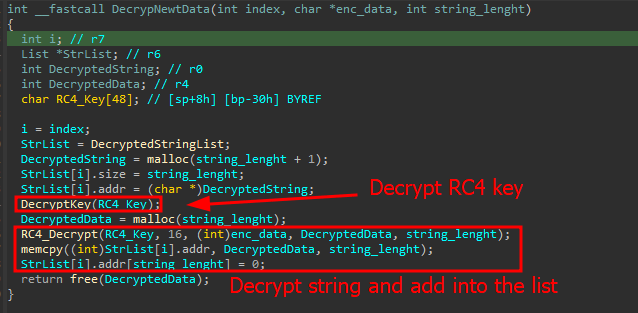
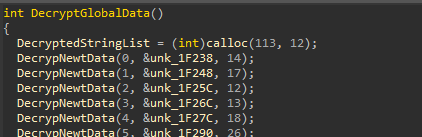
    MIL OSI Europe News

  • MIL-OSI: Draganfly Showcases Tactical Drone Innovation at Global Defense Summit in Latvia

    Source: GlobeNewswire (MIL-OSI)

    Tampa, Florida, June 05, 2025 (GLOBE NEWSWIRE) — Draganfly Inc. (NASDAQ: DPRO; CSE: DPRO; FSE: 3U8), an award-winning drone solutions and systems developer, is pleased to announce its successful participation at the Global Drone Innovation and Defense Coalition Summit (Drone Coalition) – Summer 2025, held May 29 in Riga, Latvia.

    Co-hosted by the Latvian and UK Ministries of Defense, the limited invite-only summit welcomed more than 1,500 participants from 28 countries across the government, defense, and drone technology sectors. The summit marked the formal expansion of the Drone Coalition from 17 to 20 member states and highlighted €4 billion in collective investment toward advancing coalition-aligned drone capabilities.

    Draganfly was featured as a leading provider, prominently positioned, and showcased multiple systems from its interoperable family of tactical drone platforms, including The Commander 3XL, The APEX, and the modular Flex FPV.

    Draganfly was the only provider demonstrating a fully modular and interchangeable FPV platform, and the only company offering multiple tactical deployment drone systems with field-proven validation.

    “We were honored to have participated in a summit that is shaping the future of allied drone strategy and deployment,” said Cameron Chell, President and CEO of Draganfly. “The interest in our modular Flex FPV system and integrated drone platforms reinforces our focus on innovation, mission adaptability, and coalition-aligned development priorities.”

    The company also engaged with representatives from leading academic and research institutions to explore potential collaborative initiatives in military drone advancement and demining technologies.

    Draganfly’s presence underscored its long-standing support for Ukraine and its commitment to field-driven innovation shaped by real-time operational feedback.

    Draganfly has been invited to return to Riga in August 2025 for the upcoming Security Conference, with further planning underway.

    About Draganfly

    Draganfly Inc. (NASDAQ: DPRO; CSE: DPRO; FSE: 3U8) is the creator of quality, cutting-edge drone solutions, software, and AI systems that revolutionize the way organizations operate. Recognized as being at the forefront of technology for over 25 years, Draganfly is an award-winning industry leader serving the public safety, public health, mining, agriculture, industrial inspections, security, and mapping and surveying markets. Draganfly is a company driven by passion, ingenuity, and the need to provide efficient solutions and first-class services to its customers around the world with the goal of saving time, money, and lives.

    CSE Listing
    NASDAQ Listing
    Frankfurt Listing

    Media Contact
    Erika Racicot
    Email: media@draganfly.com

    Company Contact
    Email: info@draganfly.com

    Forward-Looking Statements

    This release contains certain “forward looking statements” and certain “forward-looking ‎‎‎‎information” as ‎‎‎‎defined under applicable securities laws. Forward-looking statements ‎‎‎‎and information can ‎‎‎‎generally be identified by the use of forward-looking terminology such as ‎‎‎‎‎“may”, “will”, “expect”, “intend”, ‎‎‎‎‎“estimate”, “anticipate”, “believe”, “continue”, “plans” or similar ‎‎‎‎terminology. Forward-looking statements ‎‎‎‎and information are based on forecasts of future ‎‎‎‎results, estimates of amounts not yet determinable and ‎‎‎‎assumptions that, while believed by ‎‎‎‎management to be reasonable, are inherently subject to significant ‎‎‎‎business, economic and ‎‎‎‎competitive uncertainties and contingencies. Forward-looking statements ‎‎‎‎include, but are not ‎‎‎‎limited to, statements with respect to Draganfly’s participation in the Global Drone Innovation and Defense Coalition Summit as well as statements regarding the company engaging with representatives from leading academic and research institutions to explore potential collaborative initiatives in military drone advancement and demining technologies. Forward-‎‎‎‎looking statements and information are subject to various ‎known ‎‎and unknown risks and ‎‎‎‎‎uncertainties, many of which are beyond the ability of the Company to ‎control or ‎‎predict, that ‎‎‎‎may cause ‎the Company’s actual results, performance or achievements to be ‎materially ‎‎different ‎‎‎‎from those ‎expressed or implied thereby, and are developed based on assumptions ‎about ‎‎such ‎‎‎‎risks, uncertainties ‎and other factors set out here in, including but not limited to: the potential ‎‎‎‎‎‎‎impact of epidemics, ‎pandemics or other public health crises, including the ‎COVID-19 pandemic, on the Company’s business, operations and financial ‎‎‎‎condition; the ‎‎‎successful integration of ‎technology; the inherent risks involved in the general ‎‎‎‎securities markets; ‎‎‎uncertainties relating to the ‎availability and costs of financing needed in the ‎‎‎‎future; the inherent ‎‎‎uncertainty of cost estimates; the ‎potential for unexpected costs and ‎‎‎‎expenses, currency ‎‎‎fluctuations; regulatory restrictions; and liability, ‎competition, loss of key ‎‎‎‎employees and other related risks ‎‎‎and uncertainties disclosed under the ‎heading “Risk Factors“ ‎‎‎‎in the Company’s most recent filings filed ‎‎‎with securities regulators in Canada on ‎the SEDAR ‎‎‎‎website at www.sedar.com and with the United States Securities and Exchange Commission (the “SEC”) on EDGAR through the SEC’s website at www.sec.gov. The Company undertakes ‎‎‎no obligation to update forward-‎looking ‎‎‎‎information except as required by applicable law. Such forward-‎‎‎looking information represents ‎‎‎‎‎managements’ best judgment based on information currently available. ‎‎‎No forward-looking ‎‎‎‎statement ‎can be guaranteed and actual future results may vary materially. ‎‎‎Accordingly, readers ‎‎‎‎are advised not to ‎place undue reliance on forward-looking statements or ‎‎‎information.‎

    The MIL Network

  • MIL-OSI Asia-Pac: President Lai welcomes President Bernardo Arévalo of Republic of Guatemala with military honors  

    Source: Republic of China Taiwan

    Details
    2025-06-03
    President Lai confers decoration on President Hilda C. Heine of Republic of the Marshall Islands, hosts state banquet  
    At noon on June 3, President Lai Ching-te, accompanied by Vice President Bi-khim Hsiao, conferred a decoration upon President Hilda C. Heine of the Republic of the Marshall Islands, and hosted a state banquet for President Heine and her husband at the Presidential Office. In remarks, President Lai thanked President Heine for her commitment to deepening the diplomatic partnership between our nations and speaking up for Taiwan in the international arena. He also expressed hope for Taiwan and the Marshall Islands to work together to address various challenges through an even greater diversity of exchanges, and that together, we can contribute even more to peace, stability, and development throughout the Pacific region. At the decoration ceremony, President Lai personally conferred the Order of Brilliant Jade with Grand Cordon on President Heine before delivering remarks, a translation of which follows:  The Marshall Islands was the first Pacific ally that I visited after taking office as president. When I arrived there, I was immediately drawn to its beautiful scenery. And I received a very warm welcome from the local people. This gesture showed the profound friendship between our two nations. I was truly touched. I also remember trying your nation’s special Bob Whisky for the first time. The flavor was as unique and impressive as the landscape of the Marshall Islands.  In addition to welcoming our distinguished guests today, we also presented President Heine with the Order of Brilliant Jade with Grand Cordon. On behalf of the people of Taiwan, I want to thank President Heine for her commitment to deepening the diplomatic partnership between our nations, and for staunchly speaking up for Taiwan in the international arena. Both I and the people of Taiwan are profoundly grateful to President Heine for her friendship and support. Over the past few years, cooperation between Taiwan and the Marshall Islands has grown ever closer. And this visit by our distinguished guests will allow our two countries to further expand areas of bilateral exchange. I have always believed that only through mutual assistance and trust can two countries build a longstanding and steadfast partnership. I once again convey my sincere aspiration that Taiwan and the Marshall Islands work together to address various challenges through an even greater diversity of exchanges. Together, we can contribute even more to peace, stability, and development throughout the Pacific region. In closing, I want to thank President Heine and First Gentleman Thomas Kijiner, Jr. for leading this delegation to Taiwan, which deepens the foundations of our bilateral relationship. May our two nations enjoy a long and enduring friendship. President Heine then delivered remarks, stating that she felt especially privileged to receive the Order of Brilliant Jade with Grand Cordon of the Republic of China (Taiwan), and humbly accepted the honor with the utmost gratitude, humility, and deep responsibility. This is a deep responsibility, she said, because she understands that since its inception in 1933, this order has been bestowed upon a select few. She then thanked President Lai for this great honor. President Heine stated that the banquet was not just a celebration of our bilateral friendship, but a true reflection of the generosity of the Taiwan spirit and a testament to the enduring ties between our nations, founded on shared values and aspirations, including a respect for the rule of law, the preservation of human dignity, and a deep commitment to democracy. President Heine stated that the Taiwan-Marshall Islands partnership continues to evolve through practical cooperation and mutual support. In recent years, she said, our countries have worked hand in hand across a range of vital sectors, including the recent opening of the Majuro Hospital AI and Telehealth Center and the ongoing and successful Taiwan Health Center, various technical training and scholarship programs, and various climate change adaptation projects in renewable energy, coastal resilience, and sustainable agriculture.   President Heine emphasized that the Marshall Islands continues to be a proud and vocal supporter of Taiwan’s meaningful participation in the United Nations system and other international organizations. Taiwan’s exclusion from these platforms, she said, is not only unjust, but is bad for the world, and the global community needs Taiwan’s voice and expertise.  President Heine also expressed sincere appreciation to all of the Taiwanese friends who have contributed their efforts to deepening bilateral relations, including government officials, healthcare workers, teachers, engineers, and volunteers. The people of the Marshall Islands, she said, deeply appreciate and value everyone’s efforts and service. President Heine said that as we celebrate our partnership, let us look to the future with hope and determination, continue to work together, learn from one another, and support one another to champion a world where all nations can chart their own course based on peace and international law. Also attending the state banquet were Marshall Islands Council of Iroij Chairman Lanny Kabua, Minister of Foreign Affairs and Trade Kalani R. Kaneko, Minister of Finance David Paul, Nitijela Standing Committee on Foreign Affairs and Trade Chairperson Joe Bejang, and Charge d’Affaires a.i. Anjanette Davis-Anjel of the Embassy of the Republic of the Marshall Islands.  

    Details
    2025-06-03
    President Lai and President Hilda C. Heine of Marshall Islands hold bilateral talks and witness signing of agreements
    On the morning of June 3, President Lai Ching-te, accompanied by Vice President Bi-khim Hsiao, held bilateral talks with President Hilda C. Heine of the Republic of the Marshall Islands at the Presidential Office following a welcome ceremony with military honors for her and her husband. The leaders also jointly witnessed the signing of a letter of intent for sports exchanges and a memorandum of understanding regarding the Presidents’ Scholarship Fund. President Lai then presided over a launch ceremony for a loan program to purchase aircraft. In remarks, President Lai thanked the government and the Nitijela (parliament) of the Marshall Islands for their longstanding support for Taiwan’s international participation and for voicing staunch support for Taiwan at numerous international venues. President Lai said that Taiwan looks forward to continuing to deepen its diplomatic partnership with the Marshall Islands and build an even closer cooperative relationship across a range of fields, engaging in mutual assistance for mutual benefits and helping each other achieve joint and prosperous development to yield even greater well-being for our peoples. A translation of President Lai’s remarks follows: I once again warmly welcome President Heine, First Gentleman Thomas Kijiner, Jr., and our guests to Taiwan. During my visit to the Marshall Islands last year, I said that Taiwan and the Marshall Islands are truly a family. When Vice President Hsiao and I took office last year, President Heine led a delegation to Taiwan. It is now one year since our inauguration, and I am delighted to see President Heine once again, just as if I were seeing family arrive from afar. Through my visit to the Marshall Islands, I gained a profound sense of the friendship between the peoples of our two nations, well-demonstrated by bilateral exchanges in such areas as healthcare, agriculture, and education. And it is thanks to President Heine’s longstanding support for Taiwan that our countries have been able to further advance collaboration on even more issues, including women’s empowerment and climate change. In recent years, the geopolitical and economic landscape has changed rapidly. We look forward to Taiwan and the Marshall Islands continuing to deepen our partnership and build an even closer cooperative relationship. In just a few moments, President Heine and I will witness the signing of several documents, including a memorandum of understanding and a letter of intent, to expand bilateral cooperation in such fields as sports, education, and transportation. Taiwan will take concrete action to work with the Marshall Islands and advance mutual prosperity and development, writing a new chapter in our diplomatic partnership. I would also like to take this opportunity to express gratitude to the government and Nitijela of the Marshall Islands. In recent years, the Nitijela has passed annual resolutions backing Taiwan’s international participation, and President Heine and Marshallese cabinet members have been some of the strongest advocates for Taiwan’s international participation, voicing staunch support for Taiwan at numerous international venues. Building on the pillars of democracy, peace, and prosperity, Taiwan will continue to work with the Marshall Islands and other like-minded countries to deepen our partnerships, engage in mutual assistance for mutual benefits, and help one another achieve joint and prosperous development. I have every confidence that the combined efforts of our two nations will yield even greater well-being for our peoples and see us make even more contributions to the world. President Heine then delivered remarks, and began by conveying warm greetings of iokwe from the people and government of the Republic of the Marshall Islands to the people and government of the Republic of China (Taiwan). She said she was deeply honored to be in Taiwan for an official visit, and extended appreciation to President Lai and his government for their gracious invitation and warm welcome. President Heine stated that this year marks 27 years of diplomatic ties between our two nations, and that they are proud of this enduring friendship. This special and enduring relationship, she said, is grounded in our shared Austronesian heritage, and strengthened by mutual respect for each other’s democratic systems and our steadfast commitment to the core values of freedom, justice, and the rule of law. President Heine stated that Taiwan’s continued support has been invaluable to the people and national development of the Marshall Islands, particularly in the areas of health, education, agriculture, and climate change. She also expressed deep appreciation to Taiwan for providing Marshallese students with opportunities to study in Taiwan, and for the care extended to Marshallese who travel here for medical treatment. President Heine also announced that she would be presenting a copy of a resolution by the people and government of the Republic of the Marshall Islands reiterating their appreciation for the support provided by the people and government of the Republic of China (Taiwan), and calling on the United Nations to take immediate action to resolve the inappropriate exclusion of Taiwan’s 23 million people from the UN system. She added that she looked forward to the bilateral discussions later that day, and to continuing the important work that both countries carry out together. After the bilateral talks, President Lai and President Heine witnessed the signing of a letter of intent regarding sports exchanges and a memorandum of understanding regarding the Presidents’ Scholarship Fund by Minister of Foreign Affairs Lin Chia-lung (林佳龍) and Marshallese Minister of Foreign Affairs and Trade Kalani R. Kaneko. President Lai then presided over a launch ceremony for a loan program to purchase aircraft, marking the formal beginning of Taiwan-Marshall Islands air transport cooperation. The visiting delegation also included Council of Iroij Chairman Lanny Kabua, Minister of Finance David Paul, and Nitijela Standing Committee on Foreign Affairs and Trade Chair Joe Bejang. They were accompanied to the Presidential Office by Charge d’Affaires a.i. Anjanette Davis-Anjel of the Embassy of the Republic of the Marshall Islands.

    Details
    2025-06-03
    President Lai welcomes President Hilda C. Heine of Republic of the Marshall Islands with military honors  
    President Lai Ching-te welcomed President Hilda C. Heine of the Republic of the Marshall Islands and her husband on the morning of June 3 with full military honors. In remarks, President Lai thanked President Heine and the people and government of the Marshall Islands for demonstrating such high regard for our nations’ diplomatic ties. The president said that over our 27 years of diplomatic relations, our cooperation in healthcare, agriculture, fisheries, education and training, and climate change has yielded many positive results. And moving ahead, he said, Taiwan will continue to deepen collaboration across all domains for mutual prosperity and growth. The welcome ceremony began at 10:30 a.m. in the plaza fronting the Presidential Office. President Lai and President Heine each delivered remarks after a 21-gun salute, the playing of the two countries’ national anthems, and a review of the military honor guard. A translation of President Lai’s remarks follows: On behalf of the people and government of the Republic of China (Taiwan), it is a great pleasure to welcome President Heine, First Gentleman Thomas Kijiner, Jr., and their delegation with full military honors as they make this state visit to Taiwan. When I traveled to the Marshall Islands on a state visit last December, I was received with great warmth and courtesy. I once again thank President Heine and the people and government of the Marshall Islands for demonstrating such high regard for our nations’ diplomatic ties. Taiwan and the Marshall Islands share Austronesian cultural traditions, and we are like-minded friends. Throughout our 27 years of diplomatic relations, we have always engaged with each other in a spirit of reciprocal trust and mutual assistance. Our cooperation in healthcare, agriculture, fisheries, education and training, and climate change has yielded many positive results. This is President Heine’s first state visit to Taiwan since taking office for a second time. We look forward to engaging our esteemed guests in in-depth discussions on issues of common concern. And moving ahead, Taiwan will continue to deepen collaboration with the Marshall Islands across all domains for mutual prosperity and growth. In closing, I thank President Heine, First Gentleman Kijiner, and their entire delegation for visiting Taiwan. I wish you all a pleasant and successful trip.  A transcript of President Heine’s remarks follows: Your Excellency President Lai Ching-te, Vice President [Bi-khim] Hsiao, honorable members of the cabinet, ambassadors, distinguished guests, ladies and gentlemen: It is my pleasure to extend warm greetings of iokwe on behalf of the people and the government of the Republic of the Marshall Islands. I wish to also convey my appreciation to Your Excellency President Lai, for the hospitality and very warm welcome – kommol tata. This visit marks my seventh official state visit to this beautiful country. It’s a testament to my strong commitment to further deepening ties between the Republic of the Marshall Islands and the Republic of China (Taiwan). During this visit, I look forward to engaging in meaningful discussions with Your Excellency President Lai to further strengthen the bilateral relationship between our two nations and our peoples.  For over a quarter-century, Taiwan has been a strong ally and friend to the Marshall Islands. Our partnership has thrived across many sectors, including education, healthcare, infrastructure, and economic development. Through Taiwan’s generous support and collaboration, we have made significant progress in improving the lives of our people, empowering our communities, and fostering sustainable growth. The Marshall Islands deeply values our partnership with Taiwan and appreciates Taiwan’s support over the years. Despite our small size and limited voice on the global stage, the Marshall Islands deeply cherishes our friendship with Taiwan, and to that end, I wish to reaffirm my government’s commitment to Taiwan’s meaningful participation in the United Nations system. Taiwan has consistently demonstrated its commitment to the principles of democracy, human rights, and the rule of law. In light of current constraints in global affairs, it is now more urgent than ever that the international community of nations recognize the fundamental rights of the 23 million Taiwanese people and recognize Taiwan’s aspiration to engage fully in global affairs. It is with this in mind that I wish to reiterate to Your Excellency President Lai, the Taiwanese people, and the world that under my government, Marshall Islands will continue to acknowledge Taiwan’s contribution on the global stage and urge like-minded countries to advocate for Taiwan’s meaningful engagement in the international arena. In closing, may I once again extend our sincere appreciation to Your Excellency President Lai, the people and government of the Republic of China (Taiwan), for your warm welcome.  Also in attendance at the welcome ceremony were Charge d’Affaires a.i. Anjanette Davis-Anjel of the Embassy of the Republic of the Marshall Islands, Dean of the Diplomatic Corps and Saint Vincent and the Grenadines Ambassador Andrea Clare Bowman, and members of the foreign diplomatic corps in Taiwan.  

    Details
    2025-05-29
    President Lai attends 2025 Europe Day Dinner
    On the evening of May 29, President Lai Ching-te attended the 2025 Europe Day Dinner. In remarks, President Lai stated that Taiwan looks forward to further establishing institutionalized mechanisms with Europe for our trade and investment ties and hopes to take an innovative and diverse approach to sign an economic partnership agreement with the European Union, to provide a more transparent, stable, and predictable business environment for our enterprises. The president said that Taiwan will actively work alongside other democracies, including those in Europe, to jointly build resilient, promising non-red supply chains, and noted that Taiwan and Europe have endless potential for collaboration, whether it is in safeguarding freedom and democracy or advancing our economic and trade relationship. He expressed hope to further strengthen our partnership and work together toward global peace, stability, and prosperity. A transcript of President Lai’s remarks follows: Chairman [Henry] Chang (張瀚書), thank you for the invitation, and congratulations on your second term. I’m confident that under your leadership, the ECCT [European Chamber of Commerce Taiwan] will build even more bridges for cooperation between Taiwan and Europe. I would also like to thank EETO [European Economic and Trade Office] Head [Lutz] Güllner and all the European country representatives stationed in Taiwan. Your hard work over the years has helped deepen Taiwan-Europe relations and brought about such fruitful cooperation. Thank you. This year we celebrate the 75th anniversary of the Schuman Declaration. In 1950, then-French Foreign Minister Robert Schuman proposed to create a European federation dedicated to preserving peace. The declaration symbolized a new flowering in the post-war era of democracy, unity, and cooperation. As we face the geopolitical challenges and drastic economic changes of today’s world, the Schuman Declaration still speaks to us profoundly. This year is also the 80th anniversary of the end of World War II in Europe. Moving forward, Taiwan will continue to advance cooperation with our democratic partners, and will join hands with Europe to build a partnership of even greater resilience and mutual trust. Europe is Taiwan’s third largest trading partner. It is also Taiwan’s largest source of foreign direct investment. Last year, bilateral trade between Taiwan and Europe totaled US$84.7 billion. This demonstrates our vibrant economic and trade ties and reflects the high levels of confidence our businesses have in each other’s markets and systems. We look forward to Taiwan and Europe further establishing institutionalized mechanisms for our trade and investment ties. And we hope to take an innovative and diverse approach to sign an economic partnership agreement with the EU, to provide a more transparent, stable, and predictable business environment for our enterprises. Today’s Taiwan has an internationally recognized democracy and a semiconductor industry vital to global security and prosperity. This enables us to play a key role in restructuring global democratic supply chains and the economic order. In particular, we see supply chains dominated by a new authoritarian bloc expanding their influence through non-market mechanisms, price subsidies, and monopolies on resources, as they seek global control of critical technologies and manufacturing capabilities. Their actions not only distort principles of market fairness, but also threaten the international community’s basic expectations for democracy, the rule of law, and corporate responsibility. In response, Taiwan will actively work alongside other democracies, including those in Europe, to jointly build resilient, promising non-red supply chains. We will also introduce an initiative on semiconductor supply chain partnerships for global democracies. This is more than a proposal for economic cooperation; it is an alliance of shared values and advanced technology. Security in the Taiwan Strait and regional peace and stability have always been issues of mutual interest for Taiwan and Europe. So here today, on behalf of all the people of Taiwan, I would like to thank the EU and European nations for continuing to take concrete actions in public support of peace and stability across the strait. Such actions are vital to regional security and prosperity. Taiwan will continue to bolster itself to achieve real peace through strength, and will work with democratic partners to safeguard freedom and democracy, thereby showing our determination for regional peace. At this critical time, Taiwan and Europe have endless potential for collaboration, whether it’s in safeguarding freedom and democracy or advancing our economic and trade relationship. I look forward to our joining hands at this strategic juncture to further strengthen our partnership and work together toward global peace, stability, and prosperity. Also in attendance at the event was British Office Taipei Representative Ruth Bradley-Jones.

    Details
    2025-05-28
    President Lai meets US delegation led by Senator Tammy Duckworth
    On the afternoon of May 28, President Lai Ching-te met with a delegation led by United States Senator Tammy Duckworth. In remarks, President Lai thanked the US Congress and government for their longstanding and bipartisan support for Taiwan. The president stated that Taiwan will continue to strengthen cooperation with the US and jointly safeguard regional peace and stability. He pointed out that the Taiwan government has already proposed a roadmap for deepening Taiwan-US trade ties and will encourage mutual investment between Taiwanese and US businesses. He then expressed hope of deepening Taiwan-US ties and creating more niches for both sides. A translation of President Lai’s remarks follows: I warmly welcome this delegation led by Senator Duckworth, a dear friend of Taiwan. Senator Duckworth previously visited in May last year to convey congratulations after the inauguration of myself and Vice President Bi-khim Hsiao. Your bipartisan delegation was the first group from the US Senate that I met with as president. Today, you are visiting just after the first anniversary of my taking office, demonstrating the staunch support of the US and our deep friendship. On behalf of the people of Taiwan, I extend my sincere appreciation and greetings. And I invite you to come back and visit next year, the year after that, and every year. Taiwan and the US share the values of democracy and the rule of law and believe in free and open markets. Both sides embrace a common goal of peace, stability, and prosperity in the Indo-Pacific region. I thank the US Congress and government for their longstanding, bipartisan, and steadfast support for Taiwan. In 2021, to help Taiwan overcome the challenges of the COVID-19 pandemic, Senator Duckworth made a special trip here to announce that the US government would be donating vaccines to Taiwan. In recent years, Senator Duckworth has also promoted the TAIWAN Security Act, STAND with Taiwan Act, and Taiwan and America Space Assistance Act in the US Congress, all of which have further deepened Taiwan-US cooperation and steadily advanced our ties. For this, I express my deepest appreciation. I want to emphasize that the people of Taiwan have an unyielding determination to protect their homeland and free and democratic way of life. Over the past year, the government and private sector have been working together to enhance Taiwan’s whole-of-society defense resilience. The government is committed to reforming national defense, and it has proposed prioritizing special budget allocations to ensure that our defense budget exceeds three percent of GDP. This will continue to bolster Taiwan’s self-defense capabilities. Moving forward, Taiwan will continue to strengthen cooperation with the US. In addition to jointly safeguarding regional peace and stability, we also aspire to deepen bilateral trade and economic ties. At the SelectUSA Investment Summit in Washington, DC, earlier this month, Taiwan’s delegation was once again the biggest delegation attending the event – proof positive of our close economic and trade cooperation. We have already proposed a roadmap for deepening Taiwan-US trade ties. We will narrow the trade imbalance through the procurement of energy and agricultural and other industrial products from the US. We will encourage mutual investment between Taiwanese and US businesses to stimulate industrial development on both sides, especially in such industries as national defense and shipbuilding. We therefore look forward to Congress passing the US-Taiwan Expedited Double-Tax Relief Act as soon as possible, as this would deepen Taiwan-US trade ties and create more niches for business. In closing, I once again thank Senator Duckworth for making the trip to Taiwan. Let us continue to work together to elevate Taiwan-US ties. I wish you a pleasant and successful visit. Senator Duckworth then delivered remarks, saying that she is happy to be back in Taiwan and that she wanted to make sure to come back just after President Lai’s one-year anniversary of taking office to show the dedication and the outstanding friendship that we have. She noted that because no matter who is in the White House, no matter which political party is in power in Washington, DC, she has always believed that if America wants to remain a leader on the global stage, it has to show up for friends like Taiwan.  Senator Duckworth mentioned that in the years that she has been coming to Taiwan since pre-COVID times, she has seen a remarkable increase in participation in its defense and the support of the Taiwanese people for defending the homeland. She then thanked Taiwan for making the commitment to its self-defense, and also for being a partner with other nations around the world.  The STAND with Taiwan Act, the senator noted, is so named because the US wants to stand side by side with Taiwan. Pointing out that Taiwan is an important leader in the Indo-Pacific and on the global stage, she reiterated that there is support on both sides of the aisle in Washington for Taiwanese democracy, and added that the people of Taiwan are showing that they are willing to shore up their own readiness. Senator Duckworth said that whether it is delivering vaccines to Taiwan or making sure that the US National Guard works with Taiwan’s reserve forces or even with its civilian emergency response teams, these are all important components to the ongoing partnership between our nations.  Senator Duckworth indicated that there are many great opportunities moving forward beyond our military cooperation with one another. Whether it is in chip manufacturing, agricultural investments, shipbuilding, or in the healthcare field, those investments in both nations will facilitate stability and development in both our nations. She said that is why she wants to continue the Taiwan-US relationship, underlining that they are in it for the long haul. The delegation was accompanied to the Presidential Office by American Institute in Taiwan Taipei Office Director Raymond Greene.

    Details
    2025-05-20
    President Lai interviewed by Nippon Television and Yomiuri TV
    In a recent interview on Nippon Television’s news zero program, President Lai Ching-te responded to questions from host Mr. Sakurai Sho and Yomiuri TV Shanghai Bureau Chief Watanabe Masayo on topics including reflections on his first year in office, cross-strait relations, China’s military threats, Taiwan-United States relations, and Taiwan-Japan relations. The interview was broadcast on the evening of May 19. During the interview, President Lai stated that China intends to change the world’s rules-based international order, and that if Taiwan were invaded, global supply chains would be disrupted. Therefore, he said, Taiwan will strengthen its national defense, prevent war by preparing for war, and achieve the goal of peace. The president also noted that Taiwan’s purpose for developing drones is based on national security and industrial needs, and that Taiwan hopes to collaborate with Japan. He then reiterated that China’s threats are an international problem, and expressed hope to work together with the US, Japan, and others in the global democratic community to prevent China from starting a war. Following is the text of the questions and the president’s responses: Q: How do you feel as you are about to round out your first year in office? President Lai: When I was young, I was determined to practice medicine and save lives. When I left medicine to go into politics, I was determined to transform Taiwan. And when I was sworn in as president on May 20 last year, I was determined to strengthen the nation. Time flies, and it has already been a year. Although the process has been very challenging, I am deeply honored to be a part of it. I am also profoundly grateful to our citizens for allowing me the opportunity to give back to our country. The future will certainly be full of more challenges, but I will do everything I can to unite the people and continue strengthening the nation. That is how I am feeling now. Q: We are now coming up on the 80th anniversary of the end of World War II, and over this period, we have often heard that conflict between Taiwan and the mainland is imminent. Do you personally believe that a cross-strait conflict could happen? President Lai: The international community is very much aware that China intends to replace the US and change the world’s rules-based international order, and annexing Taiwan is just the first step. So, as China’s military power grows stronger, some members of the international community are naturally on edge about whether a cross-strait conflict will break out. The international community must certainly do everything in its power to avoid a conflict in the Taiwan Strait; there is too great a cost. Besides causing direct disasters to both Taiwan and China, the impact on the global economy would be even greater, with estimated losses of US$10 trillion from war alone – that is roughly 10 percent of the global GDP. Additionally, 20 percent of global shipping passes through the Taiwan Strait and surrounding waters, so if a conflict breaks out in the strait, other countries including Japan and Korea would suffer a grave impact. For Japan and Korea, a quarter of external transit passes through the Taiwan Strait and surrounding waters, and a third of the various energy resources and minerals shipped back from other countries pass through said areas. If Taiwan were invaded, global supply chains would be disrupted, and therefore conflict in the Taiwan Strait must be avoided. Such a conflict is indeed avoidable. I am very thankful to Prime Minister of Japan Ishiba Shigeru and former Prime Ministers Abe Shinzo, Suga Yoshihide, and Kishida Fumio, as well as US President Donald Trump and former President Joe Biden, and the other G7 leaders, for continuing to emphasize at international venues that peace and stability across the Taiwan Strait are essential components for global security and prosperity. When everyone in the global democratic community works together, stacking up enough strength to make China’s objectives unattainable or to make the cost of invading Taiwan too high for it to bear, a conflict in the strait can naturally be avoided. Q: As you said, President Lai, maintaining peace and stability across the Taiwan Strait is also very important for other countries. How can war be avoided? What sort of countermeasures is Taiwan prepared to take to prevent war? President Lai: As Mr. Sakurai mentioned earlier, we are coming up on the 80th anniversary of the end of WWII. There are many lessons we can take from that war. First is that peace is priceless, and war has no winners. From the tragedies of WWII, there are lessons that humanity should learn. We must pursue peace, and not start wars blindly, as that would be a major disaster for humanity. In other words, we must be determined to safeguard peace. The second lesson is that we cannot be complacent toward authoritarian powers. If you give them an inch, they will take a mile. They will keep growing, and eventually, not only will peace be unattainable, but war will be inevitable. The third lesson is why WWII ended: It ended because different groups joined together in solidarity. Taiwan, Japan, and the Indo-Pacific region are all directly subjected to China’s threats, so we hope to be able to join together in cooperation. This is why we proposed the Four Pillars of Peace action plan. First, we will strengthen our national defense. Second, we will strengthen economic resilience. Third is standing shoulder to shoulder with the democratic community to demonstrate the strength of deterrence. Fourth is that as long as China treats Taiwan with parity and dignity, Taiwan is willing to conduct exchanges and cooperate with China, and seek peace and mutual prosperity. These four pillars can help us avoid war and achieve peace. That is to say, Taiwan hopes to achieve peace through strength, prevent war by preparing for war, keeping war from happening and pursuing the goal of peace. Q: Regarding drones, everyone knows that recently, Taiwan has been actively researching, developing, and introducing drones. Why do you need to actively research, develop, and introduce new drones at this time? President Lai: This is for two purposes. The first is to meet national security needs. The second is to meet industrial development needs. Because Taiwan, Japan, and the Philippines are all part of the first island chain, and we are all democratic nations, we cannot be like an authoritarian country like China, which has an unlimited national defense budget. In this kind of situation, island nations such as Taiwan, Japan, and the Philippines should leverage their own technologies to develop national defense methods that are asymmetric and utilize unmanned vehicles. In particular, from the Russo-Ukrainian War, we see that Ukraine has successfully utilized unmanned vehicles to protect itself and prevent Russia from unlimited invasion. In other words, the Russo-Ukrainian War has already proven the importance of drones. Therefore, the first purpose of developing drones is based on national security needs. Second, the world has already entered the era of smart technology. Whether generative, agentic, or physical, AI will continue to develop. In the future, cars and ships will also evolve into unmanned vehicles and unmanned boats, and there will be unmanned factories. Drones will even be able to assist with postal deliveries, or services like Uber, Uber Eats, and foodpanda, or agricultural irrigation and pesticide spraying. Therefore, in the future era of comprehensive smart technology, developing unmanned vehicles is a necessity. Taiwan, based on industrial needs, is actively planning the development of drones and unmanned vehicles. I would like to take this opportunity to express Taiwan’s hope to collaborate with Japan in the unmanned vehicle industry. Just as we do in the semiconductor industry, where Japan has raw materials, equipment, and technology, and Taiwan has wafer manufacturing, our two countries can cooperate. Japan is a technological power, and Taiwan also has significant technological strengths. If Taiwan and Japan work together, we will not only be able to safeguard peace and stability in the Taiwan Strait and security in the Indo-Pacific region, but it will also be very helpful for the industrial development of both countries. Q: The drones you just described probably include examples from the Russo-Ukrainian War. Taiwan and China are separated by the Taiwan Strait. Do our drones need to have cross-sea flight capabilities? President Lai: Taiwan does not intend to counterattack the mainland, and does not intend to invade any country. Taiwan’s drones are meant to protect our own nation and territory. Q: Former President Biden previously stated that US forces would assist Taiwan’s defense in the event of an attack. President Trump, however, has yet to clearly state that the US would help defend Taiwan. Do you think that in such an event, the US would help defend Taiwan? Or is Taiwan now trying to persuade the US? President Lai: Former President Biden and President Trump have answered questions from reporters. Although their responses were different, strong cooperation with Taiwan under the Biden administration has continued under the Trump administration; there has been no change. During President Trump’s first term, cooperation with Taiwan was broader and deeper compared to former President Barack Obama’s terms. After former President Biden took office, cooperation with Taiwan increased compared to President Trump’s first term. Now, during President Trump’s second term, cooperation with Taiwan is even greater than under former President Biden. Taiwan-US cooperation continues to grow stronger, and has not changed just because President Trump and former President Biden gave different responses to reporters. Furthermore, the Trump administration publicly stated that in the future, the US will shift its strategic focus from Europe to the Indo-Pacific. The US secretary of defense even publicly stated that the primary mission of the US is to prevent China from invading Taiwan, maintain stability in the Indo-Pacific, and thus maintain world peace. There is a saying in Taiwan that goes, “Help comes most to those who help themselves.” Before asking friends and allies for assistance in facing threats from China, Taiwan must first be determined and prepared to defend itself. This is Taiwan’s principle, and we are working in this direction, making all the necessary preparations to safeguard the nation. Q: I would like to ask you a question about Taiwan-Japan relations. After the Great East Japan Earthquake in 2011, you made an appeal to give Japan a great deal of assistance and care. In particular, you visited Sendai to offer condolences. Later, you also expressed condolences and concern after the earthquakes in Aomori and Kumamoto. What are your expectations for future Taiwan-Japan exchanges and development? President Lai: I come from Tainan, and my constituency is in Tainan. Tainan has very deep ties with Japan, and of course, Taiwan also has deep ties with Japan. However, among Taiwan’s 22 counties and cities, Tainan has the deepest relationship with Japan. I sincerely hope that both of you and your teams will have an opportunity to visit Tainan. I will introduce Tainan’s scenery, including architecture from the era of Japanese rule, Tainan’s cuisine, and unique aspects of Tainan society, and you can also see lifestyles and culture from the Showa era.  The Wushantou Reservoir in Tainan was completed by engineer Mr. Hatta Yoichi from Kanazawa, Japan and the team he led to Tainan after he graduated from then-Tokyo Imperial University. It has nearly a century of history and is still in use today. This reservoir, along with the 16,000-km-long Chianan Canal, transformed the 150,000-hectare Chianan Plain into Taiwan’s premier rice-growing area. It was that foundation in agriculture that enabled Taiwan to develop industry and the technology sector of today. The reservoir continues to supply water to Tainan Science Park. It is used by residents of Tainan, the agricultural sector, and industry, and even the technology sector in Xinshi Industrial Park, as well as Taiwan Semiconductor Manufacturing Company. Because of this, the people of Tainan are deeply grateful for Mr. Hatta and very friendly toward the people of Japan. A major earthquake, the largest in 50 years, struck Tainan on February 6, 2016, resulting in significant casualties. As mayor of Tainan at the time, I was extremely grateful to then-Prime Minister Abe, who sent five Japanese officials to the disaster site in Tainan the day after the earthquake. They were very thoughtful and asked what kind of assistance we needed from the Japanese government. They offered to provide help based on what we needed. I was deeply moved, as former Prime Minister Abe showed such care, going beyond the formality of just sending supplies that we may or may not have actually needed. Instead, the officials asked what we needed and then provided assistance based on those needs, which really moved me. Similarly, when the Great East Japan Earthquake of 2011 or the later Kumamoto earthquakes struck, the people of Tainan, under my leadership, naturally and dutifully expressed their support. Even earlier, when central Taiwan was hit by a major earthquake in 1999, Japan was the first country to deploy a rescue team to the disaster area. On February 6, 2018, after a major earthquake in Hualien, former Prime Minister Abe appeared in a video holding up a message of encouragement he had written in calligraphy saying “Remain strong, Taiwan.” All of Taiwan was deeply moved. Over the years, Taiwan and Japan have supported each other when earthquakes struck, and have forged bonds that are family-like, not just neighborly. This is truly valuable. In the future, I hope Taiwan and Japan can be like brothers, and that the peoples of Taiwan and Japan can treat one another like family. If Taiwan has a problem, then Japan has a problem; if Japan has a problem, then Taiwan has a problem. By caring for and helping each other, we can face various challenges and difficulties, and pursue a brighter future. Q: President Lai, you just used the phrase “If Taiwan has a problem, then Japan has a problem.” In the event that China attempts to invade Taiwan by force, what kind of response measures would you hope the US military and Japan’s Self-Defense Forces take? President Lai: As I just mentioned, annexing Taiwan is only China’s first step. Its ultimate objective is to change the rules-based international order. That being the case, China’s threats are an international problem. So, I would very much hope to work together with the US, Japan, and others in the global democratic community to prevent China from starting a war – prevention, after all, is more important than cure.

    MIL OSI Asia Pacific News