Category: United Kingdom

  • MIL-OSI United Kingdom: Green Peers respond to House of Lords appointments

    Source: Green Party of England and Wales

    Green Peers Jenny Jones and Natalie Bennett respond to news that new Peers have been appointed to the House of Lords:

    “We are the two Green Party peers who have campaigned for the Lords to be replaced with an elected second chamber. We hope these new peers will join us in doing the same. 

    “If the second chamber matched the votes at the general election, there would be more than fifty greens under a fair votes system. Instead, we have the establishment parties constantly appointing people and increasing the size of the house for their own purposes.”

    MIL OSI United Kingdom

  • MIL-OSI United Kingdom: November 2024 Transaction Data

    Source: United Kingdom – Executive Government & Departments

    This data provides information about the number and types of applications that HM Land Registry completed in November 2024.

    NicoElNino/Shutterstock.com

    Please note this data shows what HM Land Registry has been able to process during the time period covered and is not necessarily a reflection of market activity.

    In November:

    • HM Land Registry completed more than 1,943,100 applications to change or query the Land Register 
    • the South East topped the table of regional applications with 435,883

    HM Land Registry completed 1,943,101 applications in November compared with 2,140,187 in October and 1,793,402 last November 2023, of which: 

    • 306,054 were applications for register updates compared with 310,269 in October
    • 1,110,956 were applications for an official copy of a register compared with 1,235,375 in October
    • 209,365 were search and hold queries (official searches) compared with 231,874 in October
    • 89,170 were transactions for value compared with 91,561 in October
    • 16,723 were postal applications from non-account holders compared with 17,806 in October

    Applications by region and country 

    Region/country September applications October applications November applications
    South East 437,185 482,889 435,883
    Greater London 362,510 403,283 365,053
    North West 219,362 238,586 216,160
    South West 188,834 207,134 185,863
    West Midlands 163,947 184,916 168,918
    Yorkshire and the Humber 155,258 173,833 155,460
    East Midlands 142,378 156,106 146,092
    North 95,537 105,772 95,129
    East Anglia 80,620 91,431 87,995
    Isles of Scilly 159 137 103
    Wales 89,016 95,981 86,328
    England and Wales (not assigned) 110 119 117
    Total 1,934,916 2,140,187 1,943,101

    Top 5 local authority areas 

    November 2024 applications

    Top 5 local authority areas November applications
    Birmingham 29,319
    City of Westminster 26,518
    Leeds 22,886
    North Yorkshire 21,615
    Buckinghamshire 19,974

    October 2024 applications

    Top 5 local authority areas October applications
    Birmingham 33,745
    City of Westminster 31,294
    Leeds 25,654
    North Yorkshire 25,103
    Cornwall 22,138

    Top 5 customers 

    November 2024 applications

    Top 5 customers November applications
    Infotrack Limited 187,524
    Orbital Witness Limited 39,998
    Landmark Information Group Ltd 35,947
    Enact 30,521
    O’Neill Patient 27,874

    October 2024 applications

    Top 5 customers October applications
    Infotrack Limited 213,540
    Landmark Information Group Ltd 48,797
    Enact 33,503
    Orbital Witness Limited 33,417
    O’Neill Patient 30,657

    Access the full dataset on our Use land and property data service.

    Next publication 

    Transaction Data is published on the 15th working day of each month. The December 2024 data will be published at 11am on Wednesday 22 January 2025.

    Updates to this page

    Published 20 December 2024

    MIL OSI United Kingdom

  • MIL-OSI United Kingdom: New safety measures installed at bus station to tackle ASB

    Source: City of Stoke-on-Trent

    Published: Friday, 20th December 2024

    Major improvement work is being carried at a Stoke-on-Trent bus station, making it safer, more comfortable and easier for passengers travelling around the city.

    New lighting, seating and CCTV is being installed at Longton Bus Station as part of the project which aims to improve the look of the station and reduce anti-social behaviour in the area.

    Part of the existing canopy which covers all nine stands at the bus station is also being removed to create more open space and improve visibility.

    In addition, information boards displaying real-time passenger information will be installed in the new year, during Stoke-on-Trent’s Centenary year.

    The work has been carried out in partnership with Staffordshire’s Police, Fire and Crime Commissioner. It has been funded by £46,409 of Government funding as part of the Safer Streets 5 programme.

    Councillor Majid Khan, cabinet member for community safety and resilience at Stoke-on-Trent City Council, said: “We are aware of some of the problems which have been reported in this area including dangerous driving, disorder, vandalism and criminal damage and we believe that these improvements will go a long way to combat these issues.

    “We are working with partners all over the city to design out crime in our town centres and this project is just one example of how we working together to make our city safer for all.”

    In addition to the work at Longton Bus Station, a separate package of improvements is being planned in the near future, funded by the Ministry of Housing, Community and Local Government.

    This work will include improved pedestrian links between the bus station and the neighbouring retail park, market and surrounding businesses.

    Ben Adams, Staffordshire Commissioner for Police, Fire & Rescue and Crime, said: “Funding from the Safer Streets project has been used across Staffordshire and Stoke-on-Trent to tackle anti-social behaviour which can blight our communities.

    “I hope that bus station users will feel much safer as a result of this work.”

    Stoke-on-Trent South MP Allison Gardner said: “The work at Longton bus station is just a small part of the work the council are doing to make the city safer for everyone.

    “Additional lights, cameras and the open plan bus station will provide better access and improve visibility to deter people from using the station for anti-social activities.

    “The Safer Streets funding will improve the streets, leading to a safer more accessible city. I hope everyone will feel the benefits of this.”

    MIL OSI United Kingdom

  • MIL-OSI United Kingdom: Rouge Bouillon update20 December 2024 TravelClarendon Road is now open southbound towards town diversions remain in place please follow signsonly travel to the area if necessaryPedestrian diversion route now in place Residents building monitoring… Read more

    Source: Channel Islands – Jersey

    20 December 2024

    Travel

    • Clarendon Road is now open southbound towards town 
    • diversions remain in place please follow signs
    • only travel to the area if necessary
    • Pedestrian diversion route now in place

    Residents 

    • building monitoring continues 
    • Infrastructure & Environment are still assessing repairs to the area. 

    Thank you for your patience. These measures will be in place over the weekend. 

    Further updates will follow on Monday after 1pm.​

    MIL OSI United Kingdom

  • MIL-OSI United Kingdom: Gasworks Pipe Bridge reopens

    Source: City of Oxford

    Published: Friday, 20 December 2024

    We are pleased to announce that the bearing replacement works for the Gasworks Pipe Bridge have been successfully completed.

    The bridge has been de-jacked, reconnected to the abutments, and is now open for public use. The contractor will return to the site in early January to carry out final works, including restoring the towpaths to a good condition and demobilising the site compound area.

    Thank you for your patience and cooperation throughout this project.

    MIL OSI United Kingdom

  • MIL-OSI United Kingdom: New Town ambition for Liverpool North

    Source: City of Liverpool

    Plans to redevelop one of Britain’s most deprived areas and to build more than 10,000 new homes have been set out by Liverpool City Council.

    A visionary submission for New Town status has been sent to the Department of Housing, Communities and Local Government for New Town status to expand the regeneration of the northern fringe of the City through to Bootle town centre.

    The new development – to be known as Liverpool North – would span 5km between Bootle and Liverpool and include Everton, Anfield and Kirkdale.

    The bold proposal would see the transformation of a number of brownfield sites, which would also lay the foundations for economic growth and sustainability, encompassing Everton FC’s new £500m stadium at Bramley Moore Dock and the £20m Bootle New Strand development project.

    Liverpool City Council has worked in collaboration with Sefton Council, Liverpool City Region Combined Authority, Homes England, and key landowners in the area to set out a 10-year vision for the area.

    The partnership could see the ambitious proposals revitalise communities blighted by high deprivation, unlocking economic potential for decades to come. The plan will focus on building on unused land, repurposing old buildings while maintaining and supporting communities that already call the area home.

    New Town status is a designation given to certain areas in the UK that are undergoing significant redevelopment. These areas are often characterised by a mix of old and new housing, commercial spaces and infrastructure. The goal of New Town status is to revitalise these areas and to make them more attractive places to live, work and play.

    Liverpool North is strategically located with existing transport links and presents a key opportunity for large-scale urban expansion and regeneration.

    Liverpool City Council is planning to accelerate housing development in the Liverpool North area through several key projects. These include:
    Goodison Legacy: working with Everton Football Club and Everton in the Community, the Council is developing plans for the area around Goodison Park, including a new strategic walking and cycling route that will unlock key housing sites (“The Toffee Trail”).
    County Road: proposals for County Road are also being developed, with a focus on linking Goodison to the new Bramley Moore Stadium.
    Anfield: The Council is working with housing associations, commercial partners and Liverpool Football Club to bring forward housing and mixed-use development in the Anfield area, including a “Red Walk” connection.
    Greatie Market: a £5 million investment in Great Homer Market is expected to stimulate increased housing development around the market.

    These projects are all linked to other major developments in the area, such as Liverpool Waters, Bramley Moore Dock, Ten Streets Creative District and Pumpfields.

    The Council has developed these transformational plans with the support of Everton Football Club, Everton in the Community and Liverpool Football Club, in addition to key landowners and place shapers in the area – including Torus, Riverside Group, and One Vision.

    The Liverpool North corridor represents a unique opportunity to marry urban development in Liverpool with regeneration plans in Bootle, creating a strategic city fringe location. This area currently faces significant challenges, including high deprivation, economic inactivity, and poor housing quality.

    The vision is to create a sustainable and attractive new community. This will be achieved through the building of high-quality housing with a significant proportion of affordable homes, investing in existing homes to improve quality and significantly improving transport infrastructure.

    Councillor Liam Robinson, Leader of Liverpool City Council, said: “These ambitious plans mark the beginning of an era of change and transformation for the whole Liverpool City Region. If given the go-ahead by the UK Government, Liverpool North will be a dramatic new landmark between the city centre and Bootle and provide a catalytic boost to the area.

    “The revitalisation of communities across a huge area, from Bootle through Kirkdale, to Anfield and Everton, will give the whole region a massive economic boost, provide thousands of affordable homes and create new districts providing employment, leisure and educational opportunities.

    “I can’t wait to see how this plan develops in the coming months and the difference it will make to our great City.”

    Councillor Marion Atkinson, Leader of Sefton Council, said: “We welcome the Government’s commitment to regeneration and this would super-charge our plans to transform Bootle and south Sefton for the benefit of residents and businesses.

    “We’ve already seen the impact that our work has had so far with the creation of the Salt and Tar entertainment venue along with plans to improve the Strand Shopping Centre so it becomes a modern town centre but this would take things on to another level.

    “We all know too well the challenges we have with some of the housing quality in the borough so this would also see huge improvements in the housing stock while improving our links into the city centre and beyond.

    “By working across the city region area there are so many opportunities for us to benefit from the significant investment on our doorstep through projects such as Everton’s new stadium and I’m excited to see how this develops.”

    Steve Rotheram, Mayor of the Liverpool City Region, said: “Our plans for North Liverpool and South Sefton is a perfect example of how the Liverpool City Region’s bold, joined-up thinking can help deliver on the government’s national missions, including the drive to build 1.5 million new homes. We’re not just about hitting targets for the sake of it; but transforming areas that have been left behind for far too long and showing the power of regeneration to improve lives.

    “Our vision aligns perfectly with what the country needs right now—thousands of high-quality, affordable homes that lay the foundations for strong, thriving communities. Working hand in hand with local councils, housing associations, and national partners, we’re proving that the Liverpool City Region is ready to lead the way again.

    “This will be about much more than bricks and mortar; it’s about giving people pride in their place, creating opportunities, and showing how ambition and collaboration can deliver real change. Together, we’re not just building houses—we’re building hope, ambition, and a brighter future for our region.”

    MIL OSI United Kingdom

  • MIL-OSI United Kingdom: Givinostat conditionally approved to treat patients with Duchenne muscular dystrophy (DMD)

    Source: United Kingdom – Executive Government & Departments

    The Medicines and Healthcare products Regulatory Agency (MHRA) has today (20 December 2024) granted a conditional marketing authorisation for the medicine givinostat (Duvyzat) to treat Duchenne muscular dystrophy (DMD).

    Givinostat is a nonsteroidal drug indicated for the treatment of patients aged 6 years of age and older with all genetic variants of DMD.

    DMD is a muscle wasting condition that causes progressive muscle weakness. It usually only affects boys and those assigned male at birth.

    It’s caused by alterations in a protein called dystrophin. This causes muscle fibres to break down. They’re replaced by fibrous or fatty tissues that cause the muscle to gradually weaken.

    Around 100 boys are born with DMD each year, and there are about 2,500 people living with the condition in the UK at any one time.

    Julian Beach, MHRA Interim Executive Director, Healthcare Quality and Access, said:

    Keeping patients safe and enabling their access to high quality, safe and effective medical products are key priorities for us.

    We’re assured that the appropriate regulatory standards for the approval of this medicine have been met.

    As with all products, we will keep its safety under close review.

    Givinostat comes as an oral suspension to be taken twice daily.

    It is a drug from a family of molecules called HDAC inhibitors (histone deacetylase) which reduce in­flammation and fibrosis in muscle tissues. HDAC inhibitors also promote muscle regeneration and slow down the progression of DMD.

    This approval is supported by evidence from a randomized, double-blind, placebo-controlled 18-month study involving 179 ambulatory patients with DMD who were given a placebo or givinostat for 18 months. Further data is required for the efficacy in non-ambulatory patients and will be subject to review following completion of additional clinical trials, as detailed in the condition associated with approval.

    The study found that participants treated with givinostat over an 18-month period took significantly less time to climb four stairs compared to those given placebo.

    A secondary efficacy endpoint was the change from baseline to month 18 in physical function as assessed by the North Star Ambulatory Assessment (NSAA) — a scale commonly used to rate the motor function in boys with DMD who are capable of walking. Compared to placebo, patients treated with givinostat saw less worsening in their NSAA score after 18 months.

    The most common side effects of the medicine (which may affect more than 1 in 10 people) include abdominal pain, decrease in blood platelet count (which can increase risk of bleeding), diarrhea, elevated levels of triglycerides (a type of blood fats), fever, nausea and vomiting. The prescribing information for givinostat advises healthcare providers to assess patients’ platelet counts and triglyceride levels prior to initiating treatment. During treatment, regular monitoring of platelet counts and triglycerides is recommended to determine whether dosage adjustments are necessary.  Additionally, givinostat may lead to QTc prolongation, a condition where the heart takes longer than normal to recharge between beats, which can elevate the risk of irregular heart rhythms. Patients with certain heart conditions or those taking other medications that prolong QTc intervals should avoid using givinostat.

    As with any medicine, the MHRA will keep the safety and effectiveness of givinostat under close review.  Anyone who suspects they are having a side effect from this medicine are encouraged to talk to their doctor, pharmacist or nurse and report it directly to the Yellow Card scheme, either through the website (https://yellowcard.mhra.gov.uk/) or by searching the Google Play or Apple App stores for MHRA Yellow Card.

    ENDS

    Notes to editors 

    1. The new conditional marketing authorisation was granted on 20 December 2024 to Italfarmaco S.p.A. More information can be found in the Summary of Product Characteristics and Patient Information leaflets which will be published on the MHRA Products website within 7 days of approval.

    2. Giovinostat has been conditionally approved through the International Recognition Procedure (IRP). A conditional marketing authorisation is an early temporary license in which we may accept less completed clinical studies than would be necessary to issue a full marketing authorisation, provided the manufacturer clearly indicates when complete clinical data will be available. However, CMA post-approval conditions are determined on a case-by-case basis, and don’t have to be limited to providing further clinical data. A CMA lasts for one year and can be renewed annually.

    3. For more information about Duchenne muscular dystrophy (DMD), visit: https://www.nhs.uk/conditions/muscular-dystrophy/

    4. The Medicines and Healthcare products Regulatory Agency (MHRA) is responsible for regulating all medicines and medical devices in the UK by ensuring they work and are acceptably safe.  All our work is underpinned by robust and fact-based judgements to ensure that the benefits justify any risks.

    5. The MHRA is an executive agency of the Department of Health and Social Care.

    6. For media enquiries, please contact the newscentre@mhra.gov.uk, or call on 020 3080 7651.

    Updates to this page

    Published 20 December 2024

    MIL OSI United Kingdom

  • MIL-OSI United Kingdom: The UK calls on all parties to the conflict to refrain from obstructing MONUSCO operations: UK Statement at the UN Security Council

    Source: United Kingdom – Executive Government & Departments

    Explanation of vote delivered by Ambassador James Kariuki, UK Deputy Permanent Representative to the UN, following the vote on renewing MONUSCO’s mandate.

    The United Kingdom welcomes the adoption of this resolution renewing MONUSCO’s mandate. And we thank France and Sierra Leone for their leadership of the negotiations.

    I would like to make two points.

    First, The UK is disappointed by the postponement of the Luanda Process Heads of State Summit scheduled for 15 December.

    We remain greatly appreciative of Angola’s mediation efforts and urge all parties to engage with the Luanda Process in good faith and deliver on their commitments.

    Second, we are concerned by the surge in violence since the 15 December.

    In this context, the UK is concerned by the presence of Rwanda Defence Forces in DRC, as reported by the Group of Experts. 

    We call on all parties to the conflict to refrain from obstructing MONUSCO operations.

    Updates to this page

    Published 20 December 2024

    MIL OSI United Kingdom

  • MIL-OSI United Kingdom: Appointment of Lord Mandelson as the next British Ambassador to the United States of America

    Source: United Kingdom – Executive Government & Departments

    The Prime Minister has today confirmed the appointment of Lord Peter Mandelson to be the next British Ambassador to the United States of America. 

    The Prime Minister has today confirmed the appointment of Lord Peter Mandelson to be the next British Ambassador to the United States of America. 

    His Majesty the King approved the appointment on the recommendation of the Prime Minister and the Foreign Secretary. 

    Lord Mandelson is co-founder of Global Counsel, a global public policy advisory firm. 

    He will bring extensive foreign and economic policy knowledge, strong business links and experience at the highest levels of government to the role – all of which will be crucial as the UK seeks to continue deepening its relationship with one of its closest allies. 

    He will take up the position early next year.

    Prime Minister Keir Starmer said: 

    I am delighted to appoint Lord Mandelson to be the next British Ambassador to the United States of America. 

    The United States is one of our most important allies and as we move into a new chapter in our friendship, Peter will bring unrivalled experience to the role and take our partnership from strength to strength. 

    I would also like to thank Dame Karen Pierce for her invaluable service for the last four years, and in particular the wisdom and steadfast support she has given me personally since July. She made history as the first woman to serve as U.K. Ambassador to the U.S. and she has been an outstanding representative of our country abroad. I wish her all the very best in future.

    Lord Mandelson said: 

    It is a great honour to serve the country in this way. We face challenges in Britain but also big opportunities and it will be a privilege to work with the government to land those opportunities, both for our economy and our nation’s security, and to advance our historic alliance with the United States.

    Foreign Secretary David Lammy said:

    It is wonderful to welcome Peter back to the team. He offers a wealth of experience in trade, economic and foreign policy from his years in government and the private sector. 

    He will arrive in Washington DC as we deepen our enduring alliance with the incoming United States administration, particularly on growth and security.

    Updates to this page

    Published 20 December 2024

    MIL OSI United Kingdom

  • MIL-OSI United Kingdom: Press release: Appointment of Lord Mandelson as the next British Ambassador to the United States of America

    Source: United Kingdom – Prime Minister’s Office 10 Downing Street

    The Prime Minister has today confirmed the appointment of Lord Peter Mandelson to be the next British Ambassador to the United States of America. 

    The Prime Minister has today confirmed the appointment of Lord Peter Mandelson to be the next British Ambassador to the United States of America. 

    His Majesty the King approved the appointment on the recommendation of the Prime Minister and the Foreign Secretary. 

    Lord Mandelson is co-founder of Global Counsel, a global public policy advisory firm. 

    He will bring extensive foreign and economic policy knowledge, strong business links and experience at the highest levels of government to the role – all of which will be crucial as the UK seeks to continue deepening its relationship with one of its closest allies. 

    He will take up the position early next year.

    Prime Minister Keir Starmer said: 

    I am delighted to appoint Lord Mandelson to be the next British Ambassador to the United States of America. 

    The United States is one of our most important allies and as we move into a new chapter in our friendship, Peter will bring unrivalled experience to the role and take our partnership from strength to strength. 

    I would also like to thank Dame Karen Pierce for her invaluable service for the last four years, and in particular the wisdom and steadfast support she has given me personally since July. She made history as the first woman to serve as U.K. Ambassador to the U.S. and she has been an outstanding representative of our country abroad. I wish her all the very best in future.

    Lord Mandelson said: 

    It is a great honour to serve the country in this way. We face challenges in Britain but also big opportunities and it will be a privilege to work with the government to land those opportunities, both for our economy and our nation’s security, and to advance our historic alliance with the United States.

    Foreign Secretary David Lammy said:

    It is wonderful to welcome Peter back to the team. He offers a wealth of experience in trade, economic and foreign policy from his years in government and the private sector. 

    He will arrive in Washington DC as we deepen our enduring alliance with the incoming United States administration, particularly on growth and security.

    Updates to this page

    Published 20 December 2024

    MIL OSI United Kingdom

  • MIL-OSI United Kingdom: Joint Statement on Local Government Reform – Ten councils in Hertfordshire release update on local government reform

    Source: St Albans City and District

    Ten councils in Hertfordshire have released a joint statement on local government reform:

    “Following the publication of the Devolution White Paper, and subsequent statements by the leader of Hertfordshire County Council, we would like to make it clear that we do not support the creation of one unitary council for Hertfordshire. 

    “Our county is diverse and made up of over 1.2 million residents across urban, suburban, and rural areas. Any reform of local government in Hertfordshire should follow a period of proper consultation with residents, businesses, elected representatives and stakeholders. Looking at the evidence, we should decide collectively what is best for our area. A single unitary council for the county risks diminishing local representation, with decision-making that is remote from the communities we serve.

    “We do not support postponing the county council elections scheduled for May 2025. The government has indicated that this will only happen in priority areas who have clear and agreed plans. This is not the case in Hertfordshire, so we cannot be in the first phase of these reforms. 

    “We recognise that the government’s white paper sets a clear direction of travel. As Hertfordshire’s district and borough council leaders, we want to work collaboratively with others to agree how we respond to this. Any changes must be carefully considered, transparent, and inclusive, ensuring that residents and businesses are fully engaged in shaping the future governance of Hertfordshire.

    “Our objective must be to get this right for our residents and businesses. That cannot be achieved if we make rushed decisions that have not been given the serious consideration that they deserve.”


    Statement agreed by the following leaders:

    Peter Taylor, Elected Mayor of Watford (Watford Borough Council)
    Councillor Richard Henry, Leader of Stevenage Borough Council
    Councillor Jeremy Newmark, Leader of Hertsmere Borough Council
    Councillor Stephen Giles-Medhurst, Leader of Three Rivers District Council
    Councillor Paul de Kort, Leader of St Albans City and District Council
    Councillor Max Holloway, Leader of Welwyn Hatfield Borough Council
    Councillor Daniel Allen,  Leader of North Hertfordshire Council
    Councillor Adrian England, Leader of Dacorum Borough Council
    Councillor Mark Mills-Bishop, Leader of Broxbourne Borough Council
    Councillor Ben Crystal, Leader of East Herts District Council 

    MIL OSI United Kingdom

  • MIL-OSI United Kingdom: New trees for Central Park golf course

    Source: City of Plymouth

    More than 1,000 new trees are set to be planted in Central Park this Winter.

    The planting plan, which also includes nearly 9,000m² of wildflower meadow, is set around the ever-popular Central Park Golf Course.

    Among the plans are new standard trees, orchard trees, fruiting hedgerows and whips. Additional seating, interpretation boards, and wildlife homes are also included.

    The plans have been developed by the golf course management team and will be delivered in partnership with the Plymouth and South Devon Community Forest and the Council’s Green Communities team.

    A consultation on the plans has started, with park users able to feedback on the plans online and in person at the golf shack and also in the Meadow Café.

    Councillor Tom Briars-Delve, Cabinet Member for the Environment and Climate Change, said: “This is an exciting scheme, offering loads of different types of planting and species to support a broad mix of biodiversity, resulting in benefits for both people and nature.

    “It has been co-developed in partnership with the team who run the golf business. They have been really proactive in the design, providing improvements for their customers and wider park users. I’m sure, when everything is established, this planting will be a fantastic addition to Central Park.”

    Jez Wilmot, Golf Course Manager, said: “We’re so grateful to be a part of this project and really excited for the first trees to be planted.

    “We have been the tenants of the cafe and course for nearly nine years and during that time have made several improvements to enhance the look and playability of the course.

    “But we have limited knowledge and resources, which is why we approached the Council and having worked with the teams from the Community Forest and Green Communities, we’ve been able to form a plan and turn what we once only dream about into a reality.

    “All feedback on the plans is welcome and we look forward to speaking to people about the park we love.”

    Residents and park users can feed back on the plans in persons at the golf shack and also in the Meadow Café. The consultation runs until 3 January.

    An online form is also available at: https://forms.gle/3nLBzpwruM2oN8MF7

    The feedback will be collated and fed into the final designs before planting begins in the new year. The Council’s Green Communities team will be involved in much of the planting, with plenty of opportunities for volunteers to get their hands dirty.

    This scheme is part of a wider programme of planting across Plymouth delivered by the Plymouth and South Devon Community Forest.

    Find out more

    MIL OSI United Kingdom

  • MIL-OSI United Kingdom: Historic Allestree Hall sold to Derby-based developer

    Source: City of Derby

    Grade II listed Allestree Hall has been acquired by property developer Staton Young with plans to transform it into a wedding venue.

    ‘Winterisation’ works to protect the hall are due to start 21 December and will include hoarding off the site, measures to protect the Hall from the elements and clearing the gutters.

    A key condition of sale was for the preferred bidder to take immediate action to prevent further deterioration of the historic property, and to maintain access to public toilets at Allestree Park.

    Built in the early 1800s on land once owned by the Mundy family of Markeaton Hall, Allestree Hall was commissioned by Bache Thornhill and designed by architect James Wyatt.

    By disposing of the building through a long lease, the council has paved the way for its renovation, safeguarding its future and preventing it from falling into further disrepair. A number of outbuildings were included in the sale.

    Councillor Kathy Kozlowski, Cabinet Member for Governance and Finance, said:

    After years of searching for the right buyer, we’re thrilled to have found a Derby-based preferred bidder with experience of revitalising historic properties. Allestree Hall, a building rich in history and potential, is poised for a new chapter.

    Disposing of the long-lease interest generates much-needed income for the Council and an opportunity for the new owner to breathe new life into the building. With careful restoration, this stunning country house can reclaim its former glory.

    Staton Young has a proven track record in restoring and repurposing historic buildings, including Northgate House – the landmark former HMRC building in the city centre. Their portfolio also includes numerous serviced offices and modern co-working spaces across the Midlands.

    The company intends to apply for planning permission to re-purpose the Hall as a wedding venue. This would complement their recent acquisition of Horsley Lodge Golf Club, a Derbyshire complex which includes a golf course, country hotels and wedding venues.

    Marc Brough, managing director at Staton Young, said:

    Allestree Hall presents us with a great opportunity to restore a piece of Derby’s history. We’ve got some exciting plans and can’t wait to bring this beautiful building back to life and create a stunning wedding venue.

    Staton Young will work in partnership with the Council and Derbyshire Wildlife Trust to make sure future use of the hall fits in with the ongoing community rewilding project at Allestree Park.

    MIL OSI United Kingdom

  • MIL-OSI United Kingdom: The UK will continue to work closely with UNOWAS to build peace and security in West Africa and the Sahel: UK statement at the UN Security Council

    Source: United Kingdom – Executive Government & Departments

    Statement by Fergus Eckersley, UK Minister Counsellor, at the UN Security Council meeting on West Africa and the Sahel.

    First, the United Kingdom congratulates Senegal, Ghana, and Mauritania on their successful recent elections. 

    But, elsewhere, democracy and civic space remain under pressure, with civil society organisations, human rights defenders, journalists and media institutions facing severe challenges.

    Timelines for the return to constitutional governments in Mali and Burkina Faso have either been delayed or remain unclear, and Niger is also yet to establish a transition timeline. 

    Guinea’s transition timeline has also slipped again. We urge that the return to constitutional order is completed swiftly. Inclusive and transparent democratic processes are crucial for stability and peace.

    Second, the security situation across the Sahel is worsening, with terrorist and insurgent activities, serious and organised crime, and external actors and proxies exacerbating instability.

    Private military security companies, like Russia’s Wagner Group and Africa Corps, are not the answer. They have a track record of worsening existing conflicts and undermining long-term development and stability.

    We are concerned about the economic impact of deteriorating security in already fragile states. 

    Many countries in the Sahel now face difficulties accessing the financing they need to maintain macroeconomic stability and sustain growth.

    The United Kingdom also notes the outcome of the recent ECOWAS summit held on 15 December, including the announcement of the six-month grace period for the Alliance of Sahelian States. 

    We urge all states in the region to cooperate to tackle the growing security, development, governance challenges and transnational threats. Maintaining strong links between states is critical.

    Third, we are extremely concerned by the deteriorating regional humanitarian situation.

    Extreme flooding has affected over 3.7 million people in West Africa this year and has contributed to worsening food insecurity, further fuelled by conflict, displacement and climate change.

    Since 2019, UK aid has supported over 16 million people in the Sahel with life-saving assistance. 

    But access is increasingly restricted. 

    We call on all actors to ensure safe and unimpeded access for humanitarian assistance. 

    Armed escorts must remain a last resort.

    In closing, the UK looks forward to deepening bilateral partnerships, and continuing to work closely with UNOWAS and regional organisations to help build peace and security in West Africa and the Sahel.

    Updates to this page

    Published 20 December 2024

    MIL OSI United Kingdom

  • MIL-OSI United Kingdom: Joint Statement on Local Government Reform – ten councils in Hertfordshire release update

    Source: St Albans City and District

    Ten councils in Hertfordshire have released a joint statement on local government reform:

    “Following the publication of the Devolution White Paper, and subsequent statements by the leader of Hertfordshire County Council, we would like to make it clear that we do not support the creation of one unitary council for Hertfordshire. 

    “Our county is diverse and made up of over 1.2 million residents across urban, suburban, and rural areas. Any reform of local government in Hertfordshire should follow a period of proper consultation with residents, businesses, elected representatives and stakeholders. Looking at the evidence, we should decide collectively what is best for our area. A single unitary council for the county risks diminishing local representation, with decision-making that is remote from the communities we serve.

    “We do not support postponing the county council elections scheduled for May 2025. The government has indicated that this will only happen in priority areas who have clear and agreed plans. This is not the case in Hertfordshire, so we cannot be in the first phase of these reforms. 

    “We recognise that the government’s white paper sets a clear direction of travel. As Hertfordshire’s district and borough council leaders, we want to work collaboratively with others to agree how we respond to this. Any changes must be carefully considered, transparent, and inclusive, ensuring that residents and businesses are fully engaged in shaping the future governance of Hertfordshire.

    “Our objective must be to get this right for our residents and businesses. That cannot be achieved if we make rushed decisions that have not been given the serious consideration that they deserve.”


    Statement agreed by the following leaders:

    Peter Taylor, Elected Mayor of Watford (Watford Borough Council)
    Councillor Richard Henry, Leader of Stevenage Borough Council
    Councillor Jeremy Newmark, Leader of Hertsmere Borough Council
    Councillor Stephen Giles-Medhurst, Leader of Three Rivers District Council
    Councillor Paul de Kort, Leader of St Albans City and District Council
    Councillor Max Holloway, Leader of Welwyn Hatfield Borough Council
    Councillor Daniel Allen,  Leader of North Hertfordshire Council
    Councillor Adrian England, Leader of Dacorum Borough Council
    Councillor Mark Mills-Bishop, Leader of Broxbourne Borough Council
    Councillor Ben Crystal, Leader of East Herts District Council 

    MIL OSI United Kingdom

  • MIL-OSI Global: Nurses need care too – how curbing self-sacrifice can prevent burnouts

    Source: The Conversation – UK – By Ester Ellen Trees Bolt, Post-doctoral Researcher, University of Leeds

    PeopleImages.com – Yuri A/Shutterstock

    Reflecting on my mother’s decade-long nursing career, I often wonder why so many nurses leave the profession after just a few years.

    In the UK, the shortage of nurses has reached alarming levels. Fewer students are enrolling in nursing programmes, and nearly half of newly registered nurses leave within five to ten years.

    Meanwhile, the demand for healthcare continues to grow, as outlined in England’s NHS Long-Term Workforce Plan, which sets out how the NHS will ensure there are enough nurses and doctors to support patients.

    The problem is not confined to the UK: nursing faces a global crisis. The high turnover of skilled professionals has serious implications for healthcare systems worldwide.

    The Netherlands is also experiencing troubling trends, with predictions of a significant healthcare staffing shortfall in the coming decades.

    Burnout is one of the most pressing reasons behind this exodus of nurses from the profession.

    Culture of self-sacrifice

    I interviewed nurses in the Netherlands about their workplace experiences including burnout for my research.

    And I found that one of the main reasons nurses leave is because of the profession’s culture of self-sacrifice. While empathy, compassion, and dedication are hallmarks of nursing, these qualities can lead to them working too hard. Nurses often push themselves so hard to meet their patients’ needs that they neglect their own health. Nursing often reinforces the culture of self-sacrifice, with an unspoken expectation that nurses should prioritise patients’ needs.

    My research shows that nurses are actively seeking employment to avoid burnout, but this often involves changing employers – a decision that is personally and organisationally intense and costly. I argue that, to ensure they remain in the workforce long term, nurses should be trained in setting boundaries and prioritising self-care.

    Nurses, particularly in long-term care, frequently form strong emotional bonds with their patients, which makes it challenging to draw boundaries between professional responsibilities and personal attachment. Interviews with nurses highlight the emotional toll of this. Several nurses mentioned feeling guilt when calling in sick, knowing their patients and colleagues depend on them. Some described how increased workloads, due to colleagues’ absences, eventually left them too overworked to continue. Others reported being constantly contacted to work extra shifts, even on their days off, due to staffing shortages caused by absenteeism and turnover.

    These stories reflect the relentless pressure nurses face. For many, the instinct to help others is both a source of pride and a path to burnout. When nurses don’t to set boundaries, their bodies often force them to stop – through illness and exhaustion.

    How to change

    Although nurses are the backbone of healthcare systems, the profession is undervalued and often viewed as less professional compared to other medical roles. This perception disrespects the complexity of nursing and discourages young people from entering the field.

    To address these issues, nurses need more support from employers and colleagues, including doctors and HR teams. Public campaigns must celebrate nursing as a highly skilled and indispensable profession, challenging outdated stereotypes.

    Burnout prevention also requires systemic changes. Nursing education must teach self-care and boundary setting as essential skills. Research indicates that nurses often report improved mental health and job satisfaction after switching employers, suggesting that organisational culture is pivotal in retaining staff – and that some workplaces are already leading the way.

    Self-sacrifice culture is a double-edged sword. While it reflects the compassion and dedication that define nursing, it poses a serious threat to the sustainability of the profession. To retain nurses, they need to be viewed as true professionals and be acknowledged for the value they deliver to the overall care processes. By fostering a culture that values personal boundaries, supports wellbeing, and elevates the professional identity of nursing, we can ensure that nurses are cared for just as much as they care for others.

    Failure to act will have far reaching consequences not just for nurses but for patients and healthcare systems around the world.

    Ester Ellen Trees Bolt does not work for, consult, own shares in or receive funding from any company or organisation that would benefit from this article, and has disclosed no relevant affiliations beyond their academic appointment.

    ref. Nurses need care too – how curbing self-sacrifice can prevent burnouts – https://theconversation.com/nurses-need-care-too-how-curbing-self-sacrifice-can-prevent-burnouts-244312

    MIL OSI – Global Reports

  • MIL-OSI Global: ‘Yes, I am a human’: bot detection is no longer working – and just wait until AI agents come along

    Source: The Conversation – UK – By Irfan Mehmood, Associate Professor in Business Analytics and AI, University of Bradford

    ‘Let’s try for a third time.’ Gago Design

    You’re running late at the airport and need to urgently access your account, only to be greeted by one of those frustrating tests — “Select all images with traffic lights” or “Type the letters you see in this box”. You squint, you guess, but somehow you’re wrong. You complete another test but still the site isn’t satisfied.

    “Your flight is boarding now,” the tannoy announces as the website gives you yet another puzzle. You swear at the screen, close your laptop and rush towards the gate.

    Now, here’s a thought to cheer you up: bots are now solving these puzzles in milliseconds using artificial intelligence (AI). How ironic. The tools designed to prove we’re human are now obstructing us more than the machines they’re supposed to be keeping at bay.

    Welcome to the strange battle between bot detection and AI, which is set to get even more complicated in the coming years as technology continues to improve. So what does the future look like?

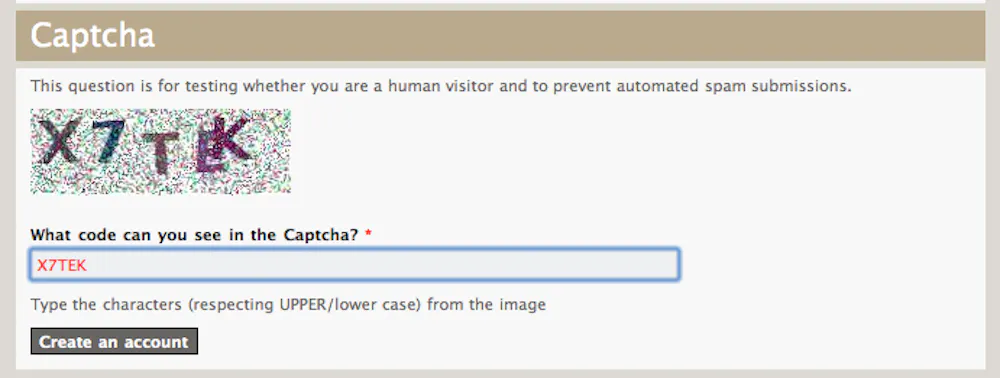
    Captcha, which stands for Completely Automated Public Turing test to tell Computers and Humans Apart, was invented in the early 2000s by a team of computer scientists at Carnegie Mellon University in Pittsburgh. It was a simple idea: get internet users to prove their humanity via tasks they can easily complete, but which machines find difficult.

    Machines were already causing havoc online. Websites were flooded with bots doing things like setting up fake accounts to buy up concert tickets, or posting automated comments to market fake Viagra or to entice users to take part in scams. Companies needed a way to stop this pernicious activity without losing legitimate users.

    The early versions of Captcha were basic but effective. You’d see wavy, distorted letters and type them into a box. Bots couldn’t “read” the text the way humans could, so websites stayed protected.


    Chris Messina, CC BY

    This went through several iterations in the years ahead: ReCaptcha was created in 2007 to add a second element in which you had to also key in a distorted word from an old book.

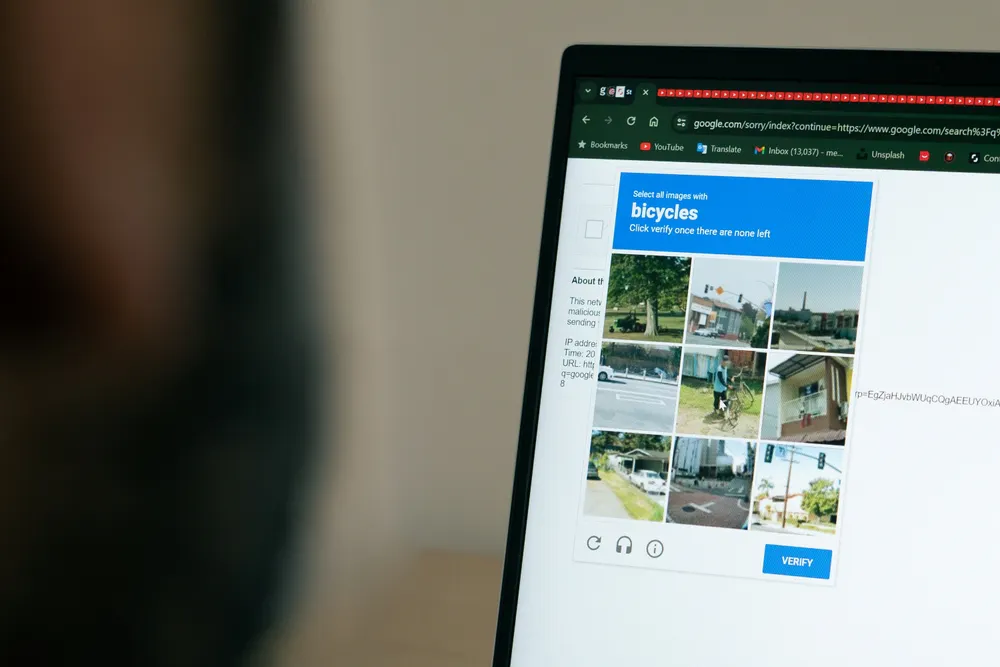
    Then in 2014 – by now acquired by Google – came reCaptcha v2. This is the one that asks users to tick the “I am not a robot” box and often choose from a selection of pictures containing cats or bicycle parts, or whatever. Still the most popular today, Google gets paid by companies who use the service on their website.

    Damn those bicycles.
    Lilgrapher

    How AI has outgrown the system

    Today’s AI systems can solve the challenges these Captchas rely on. They can “read” distorted text, so that the wavy or squished letters from the original Captcha tests are easy for them. Thanks to natural language processing and machine learning, AI can decode even the messiest of words.

    Similarly, AI tools such as Google Vision and OpenAI’s Clip can recognise hundreds of objects faster and more accurately than most humans. If a Captcha asks an AI to click all the buses in a picture selection, they can solve it in fractions of a second, whereas it might take a human ten to 15 seconds.

    This isn’t just a theoretical problem. Consider driving tests: waiting lists for tests in England are many months long, though you can get a much faster test by paying a higher fee to a black-market tout. The Guardian reported in July that touts commonly used automated software to book out all the test slots, while swapping candidates in and out to fit their ever-changing schedules.

    In an echo of the situation 20 years ago, there are similar issues with tickets for things such as football matches. The moment tickets become available, bots overwhelm the system – bypassing Captchas, purchasing tickets in bulk and reselling them at inflated prices. Genuine users often miss out because they can’t operate as quickly.

    Similarly, bots attack social media platforms, e-commerce websites and online forums. Fake accounts spread misinformation, post spam or grab limited items during sales. In many cases, Captcha is no longer able to stop these abuses.

    What’s happening now?

    Developers are continually coming up with new ways to verify humans. Some systems, like Google’s ReCaptcha v3 (introduced in 2018), don’t ask you to solve puzzles anymore. Instead, they watch how you interact with a website. Do you move your cursor naturally? Do you type like a person? Humans have subtle, imperfect behaviours that bots still struggle to mimic.

    Not everyone likes ReCaptcha v3 because it raises privacy issues – plus the web company needs to assess user scores to determine who is a bot, and the bots can beat the system anyway. There are alternatives that use similar logic, such as “slider” puzzles that ask users to move jigsaw pieces around, but these too can be overcome.

    Slider Captcha:


    GitHub

    Some websites are now turning to biometrics to verify humans, such as fingerprint scans or voice recognition, while face ID is also a possibility. Biometrics are harder for bots to fake, but they come with their own problems – privacy concerns, expensive tech and limited access for some users, say because they can’t afford the relevant smartphone or can’t speak because of a disability.

    The imminent arrival of AI agents will add another layer of complexity. It will mean we increasingly want bots to visit sites and do things on our behalf, so web companies will need to start distinguishing between “good” bots and “bad” bots. This area still needs a lot more consideration, but digital authentication certificates are proposed as one possible solution.

    In sum, Captcha is no longer the simple, reliable tool it once was. AI has forced us to rethink how we verify people online, and it’s only going to get more challenging as these systems get smarter. Whatever becomes the next technological standard, it’s going to have to be easy to use for humans, but one step ahead of the bad actors.

    So the next time you find yourself clicking on blurry traffic lights and getting infuriated, remember you’re part of a bigger fight. The future of proving humanity is still being written, and the bots won’t be giving up any time soon.

    The authors do not work for, consult, own shares in or receive funding from any company or organisation that would benefit from this article, and have disclosed no relevant affiliations beyond their academic appointment.

    ref. ‘Yes, I am a human’: bot detection is no longer working – and just wait until AI agents come along – https://theconversation.com/yes-i-am-a-human-bot-detection-is-no-longer-working-and-just-wait-until-ai-agents-come-along-246427

    MIL OSI – Global Reports

  • MIL-OSI Global: Who chooses to work, and who is forced to, after retirement?

    Source: The Conversation – UK – By Takao Maruyama, Assistant Professor in Business Analytics, University of Bradford

    fizkes/Shutterstock

    The state pension age in the UK is currently 66. Yet 9.5% of people aged 66 and older (1.12 million people) were still working, according to the most recent data from the UK’s Annual Population Survey (July 2023 to June 2024). This figure has been rising over the past decade, increasing from 8.70% (880,000 people) in July 2013 to June 2014.

    We think of retirement as a time to pursue hobbies, relax and enjoy the fruits of our labour. So why then, are so many people still working beyond retirement age, and who are they? This is what we sought to find out in a recent study.

    We investigated who is more likely to “choose to work” and who is “forced to work”, using data from the UK’s annual population survey.

    Older workers are not a homogeneous population. They differ in terms of age, ethnicity, socioeconomic class, financial situation, health conditions and more. Likewise, the reasons for working beyond retirement age vary widely. Some may work because they want to, while others may have no option and feel they have to work in order to make ends meet.

    The below chart shows the breakdown of these retirement-age workers by key demographic and socioeconomic characteristics from the most recent data.

    Three in five retirement-age workers were men, and almost all (94.4%) older workers were white. Just over half (51.5%) of older workers continued to work despite having long-term illnesses.

    Characteristics of workers aged 66 and older:

    Workers aged 66 years and older by demographic and socioeconomic characteristics.
    Author provided, data from Annual Population Survey July 2023 to June 2024, CC BY

    The majority (71.2%) of older workers were married, in a civil partnership or cohabiting. Nearly 40% of older workers were employed in higher managerial, administrative and professional occupations, followed by intermediate occupations such as sales or some service roles (32.1%), and routine manual occupations (25.6%).

    More than 85% of retirement-age workers lived in the south (52.8%) and the north (33.1%) of England, and 70% are homeowners.

    Who is ‘forced’ to work?

    In our study, we calculated the likelihood of pension-age workers (66 years and older) with varying demographic and socioeconomic characteristics being forced to work.

    The Annual Population Survey identifies six main reasons why older workers continue working beyond retirement age. These are:

    A. To pay for desirable items (such as holidays),
    B. Not ready to stop work,
    C. Employer needs your experience or you are needed in the family business,
    D. Due to opportunities to work more flexible hours,
    E. To pay for essential items (such as bills), and
    F. To boost pension pot.

    In our study, we classed reasons (A) to (D) as “choose to work”, and (E) and (F) as “forced to work”. Our analysis, based on the most recent dataset (April 2022 to March 2023) at the time of the study, revealed that women are 25% more likely to be forced to work compared to men, and Asian workers are 120% more likely to be forced to work than white workers (with 34% and 17% more likely for older workers from black and other ethnic backgrounds, respectively).

    Workers without long-term illness are 33% less likely to be forced to work than those with long-term illness, and non-married or single workers are 56% more likely to be forced to work compared to seniors who are married, in a civil partnership or cohabiting.

    Workers in intermediate and routine manual occupations are 37% and 67% more likely to be forced to work, respectively, compared to those in higher managerial occupations. Older workers from the south of England are more likely to be be forced to work compared to seniors from any other parts of the UK, and retirement-age workers with mortgages or renting were 117% more likely to be forced to work compared to those who owned their properties.

    Who is more likely to be ‘forced to work’?:

    % comparison of likelihood of being ‘forced to work’.
    Author provided, data from Annual Population Survey April 2022 to March 2023., CC BY

    Ageing populations

    This matters because of the changing nature of work, the rising cost of living and the UK’s ageing population. Retirement-age workers will be increasingly pressured to work longer due to the rising state pension age (due to increase to 67 in 2026-27).

    Understanding who works by choice and who by necessity into retirement age is important, because these groups will need different kinds of support and resources.

    For example, the higher likelihood of being forced to work among older female workers can be partly attributed to career breaks they took to serve as primary caregivers for their children, which often prevented them from accumulating sufficient pensions.

    As the state pension age is expected to continue rising, it is crucial for policymakers and employers to design support systems for diverse demographic and socioeconomic groups of older workers, addressing their unique needs. This starts with understanding why people are working into old age.

    The authors do not work for, consult, own shares in or receive funding from any company or organisation that would benefit from this article, and have disclosed no relevant affiliations beyond their academic appointment.

    ref. Who chooses to work, and who is forced to, after retirement? – https://theconversation.com/who-chooses-to-work-and-who-is-forced-to-after-retirement-246214

    MIL OSI – Global Reports

  • MIL-OSI Global: A short history of palm reading in the UK – and a guide to how it’s supposed to work

    Source: The Conversation – UK – By Martha McGill, Historian of Supernatural Beliefs, University of Warwick

    Wikimedia , CC BY

    In August 1676, a court in Hertford heard a case of fraud against Joseph Haynes, James Domingo and Domingo’s “pretended wife” Sarah. The three had been travelling between local towns telling fortunes.

    Apparently, Domingo had promised one woman that she would marry a “pretty tall merry-speaking” farmer’s son with a mole on his chin and a respectable £80 to his name. Haynes, meanwhile, boasted that his divinatory efforts had won him £5, three maidenheads and a broken shin.

    The court’s decision is not recorded, but the case encapsulates the divided opinion of divination in the 17th century. Although commonly condemned by the authorities, fortune-telling was a popular and potentially profitable art.

    We do not know how exactly the three miscreants practised, but most travelling fortune-tellers studied facial features (physiognomy) or read palms (palmistry or chiromancy). The idea that there was occult meaning etched in the body’s marks, lines, features and moles stretches back to antiquity.

    The body’s outer form supposedly reflected the state of the soul. Also, it was believed that the body was intimately entwined with the wider cosmos.


    Looking for something good? Cut through the noise with a carefully curated selection of the latest releases, live events and exhibitions, straight to your inbox every fortnight, on Fridays. Sign up here.


    In a popular work from the early 16th century, the German physician Heinrich Cornelius Agrippa explained that the body’s appearance and behaviour invited particular “celestial gifts”. Palmistry was the art of interpreting this “harmonical correspondency”.

    However, Christian authorities were largely unimpressed. Theologians dismissed palmistry as superstitious, or argued that it was presumptuous to pry into God’s plan. The Catholic church officially condemned divinatory arts in a papal bull of 1586. The English Protestant minister William Perkins (1558–1602) wrote that palmistry was an “abomination” that was “detested of God, and ought also to be detestable in the eyes of Gods [sic] people”.

    Official mistrust of palmistry was spurred by its association with “Egyptian” fortune-tellers (often shortened to “gypsies”). This label was used for travellers of diverse origins, but especially the Romani diaspora from India.

    Romani travellers first reached central and western Europe in the 15th century and many claimed to have come from Egypt. Ancient Egyptians were famed for their occult wisdom and the association probably helped Romani groups to win credit as fortune-tellers. Nevertheless, they met with widespread persecution.

    A fortune teller reading the palm of a soldier.
    Wellcome Collection, CC BY-NC

    In England, a 1530 parliamentary act officially banished the “outlandish” people “calling themselves Egyptians” who allegedly travelled about the country, swindling people by pretending divinatory prowess.

    All the same, magical practitioners at various social levels continued to offer palm-reading services. And from the 17th century, pamphlets offered guides to interpreting your own hands.

    An anonymous work published in London in 1700 claimed to fully resolve all questions about human life through “the Rules of Art used by the Ancient and Famous Egyptian Magi, or Wise Men and Philosophers”.

    Here I offer some guidance on how you’re supposed to read your palm based on that work. It may contradict itself hopelessly. It may promise you a grisly death. But if the stars are kind, you too could rise by your good deeds and find a spouse lauded for their virtue – or, at least, a merry man with £80 and a nice mole.

    How to read a palm

    Always consult the left hand.

    1: Life line

    Look for the semi-curved line that starts between the thumb and index finger and runs down toward the wrist.

    If this line is long and clear, not broken with little cross-lines, you will be healthy and live to an old age. However, if the uppermost part of the line is forked or jagged, you will often be sick.

    If there are three stars intersecting with the line, you may suffer “great losses and calamities”. If the line intertwines with the table line, you will gain “honour and riches”.

    2: Table line

    Look for a horizontal line on your upper palm that starts near the index or middle finger and runs to beneath the little finger.

    If this line is broad and vivid in colour, you will be healthy and contented. However, if the line is forked at the end, you will gain riches by trickery and soon lose them again. If it branches towards the index or middle finger, you will rise to a prestigious position.

    3: Middle line

    Look for a horizontal line across the middle part of the palm.

    If there are lots of small lines in between this and the table line, you will be sick when you are young but make a recovery. If there is a halfmoon in this line, you will suffer from “cold and watery diseases”, but a sun or a star promises prosperity.

    4: Line of Venus

    Look for an arching line that runs near the base of your middle, ring and little fingers.

    If this line forks near the index finger, you may be ruined by keeping bad company. If there are crosses on this line near the index and little fingers, you are “inclined to a virtuous and modest course of life”. The author claims that wise men employ this method to choose suitable wives.

    5: Liver line

    Look for a vertical line that starts beneath the ring or little finger and runs to the base of the palm.

    If this line is straight, you are of sound judgement. If it is crooked you are deceitful. If this line and the middle line begin near one other, it means foolishness in men and foretells injury by overwork for women.

    6: Plain of Mars

    Plains are flat areas of the palm that can be associated with difference parts of life. The plain of Mars is the centre of your palm.

    If the lines in this plain are crooked, you will fall by your enemies. If you have lines beginning at the middle of your wrist and reaching into the plain of Mars, you will get into lots of fights. If there are large crosses in the plain, you will, if a man, rise by good deeds or, if a woman, have many husbands and children.

    Martha McGill does not work for, consult, own shares in or receive funding from any company or organisation that would benefit from this article, and has disclosed no relevant affiliations beyond their academic appointment.

    ref. A short history of palm reading in the UK – and a guide to how it’s supposed to work – https://theconversation.com/a-short-history-of-palm-reading-in-the-uk-and-a-guide-to-how-its-supposed-to-work-246276

    MIL OSI – Global Reports

  • MIL-OSI Security: Kilo Fentanyl Distributor Sentenced to 40 Years

    Source: Office of United States Attorneys

    RALEIGH, N.C. – A New Bern man was sentenced to 40 years in prison for trafficking and distributing methamphetamine and fentanyl for a large-scale drug trafficking operation in Craven County.  On August 8, 2024, a Raleigh jury found Lucio Camargo Garcia guilty of the charges.

    “Garcia took advantage of Craven County’s most hopeless souls, extracting profit from their pain and addiction,” said U.S. Attorney Michael F. Easley, Jr. “Too many of our friends, families, and neighbors are battling addiction.  The Craven County Sheriff’s Office and New Bern Police won’t stand by and let armed drug traffickers push kilos of fentanyl and meth in our community unchecked, and neither will we.  Eastern North Carolina traffickers take note – our partnership is for the long haul, and we won’t let off.”

    “This sentencing sends a clear message that our community will not tolerate the trafficking of dangerous drugs like methamphetamines and fentanyl,” said HSI Charlotte Special Agent in Charge Cardell T. Morant, HSI Charlotte covers North and South Carolina. “These substances devastate lives and destroy communities.  HSI and its partners are committed to holding those who profit from this destruction accountable. This is a warning to those who engage in this illegal activity – we will pursue justice relentlessly.”

    “This investigation identified Garcia as a major importer and distributor of methamphetamine and fentanyl in Craven County,” said Craven County Sheriff Chip Hughes. “His prosecution, along with his co-conspirators has resulted in a significant reduction in the availability of these dangerous drugs in our communities.”

    According to court records and evidence presented at trial, in 2021, the Drug Enforcement Administration (DEA), Homeland Security Investigations (HSI), the Craven County Sheriff’s Office, the New Bern Police Department, the State Bureau of Investigation, and other state and local agencies launched an investigation into a large-scale drug trafficking organization responsible for acquiring kilogram quantities of methamphetamine and fentanyl from the southwest border of the United States and distributing the drugs in and around Craven County. Through the use of confidential sources, surveillance, enforcement actions, and controlled purchases, Garcia was identified as the primary distributor of methamphetamine and fentanyl who re-sold the product to both drug users and other area dealers.

    From January to October 2022, law enforcement conducted multiple controlled purchases of methamphetamine and fentanyl from Garcia. On October 31, 2022, search warrants were executed at residences associated with the drug trafficking organization, including Garcia’s residence. Law enforcement seized approximately one kilogram of methamphetamine, approximately nine hundred grams of fentanyl (powder and pill form), and a loaded firearm from Garcia’s residence. Most of the drugs were located in a secret compartment in the ceiling of Garcia’s bedroom closet.

    This investigation was an Organized Crime Drug Enforcement Task Forces (OCDETF) investigation. OCDETF identifies, disrupts, and dismantles the highest-level drug traffickers, money launders, gangs, and transnational criminal organizations that threaten the United States by using a prosecutor-led, intelligence-driven, multi-agency approach that leverages the strengths of federal, state, and local law enforcement agencies against criminal networks.

    Michael F. Easley, Jr., U.S. Attorney for the Eastern District of North Carolina made the announcement after sentencing by U.S. District Judge James C. Dever III. The DEA, HSI, U.S. Postal Inspection Service, North Carolina State Bureau of Investigations, Craven County Sheriff’s Office, New Bern Police Department, and Pamlico County Sheriff’s Office  investigated the case and Assistant U.S. Attorneys Katherine Englander and Caroline Webb prosecuted the case.

    Related court documents and information can be found on the website of the U.S. District Court for the Eastern District of North Carolina or on PACER by searching for Case No. 4:22-CR-75-D-RJ-2.

    MIL Security OSI

  • MIL-OSI United Kingdom: Response to the announcement from the Deputy Prime Minister that regional Mayors will be handed powers to crackdown on e-bikes and e-scooters being dumped on pavements

    Source: Mayor of London

    In response to the announcement from Deputy Prime Minister Angela Rayner, that regional Mayors will be handed new powers to crackdown on e-bikes and e-scooters being dumped on pavements, Labour’s London Assembly Transport Spokesperson, Elly Baker AM, said:

    “Dockless e-bikes have grown in popularity across London, with around 40,000 now in operation across 22 boroughs.  However, we have seen in recent years that lack of regulation for careless parking has resulted in blocked pavements, street clutter, and other accessibility issues particularly impacting people with mobility or visual impairments and parents with young children.

    “Last month, the London Assembly backed my call for the government to grant regulatory powers to Transport for London (TfL) and London boroughs to deal with this issue. Earlier this month, TfL set out plans to tackle poorly parked e-bikes causing safety or access issues.

    “I welcome that the government has listened to my call to empower local transport authorities like TfL to regulate e-bikes and e-scooters.

    “This is an important step in making sure our city is accessible for everyone.” as further consultation and discussion on the devolution white paper gets underway, I will be reiterating my call to grant strategic transport authorities, like TfL, powers to place a cap on the number of bikes available to rent and regulate data sharing in partnership with local authorities.”

    MIL OSI United Kingdom

  • MIL-OSI Global: Whales can live way longer than scientists had thought, with potential lifespans as much as double previous estimates

    Source: The Conversation – USA – By Greg Breed, Associate Professor of Quantitative Ecology, University of Alaska Fairbanks

    Animals with long lifespans tend to reproduce extremely slowly. Els Vermeulen

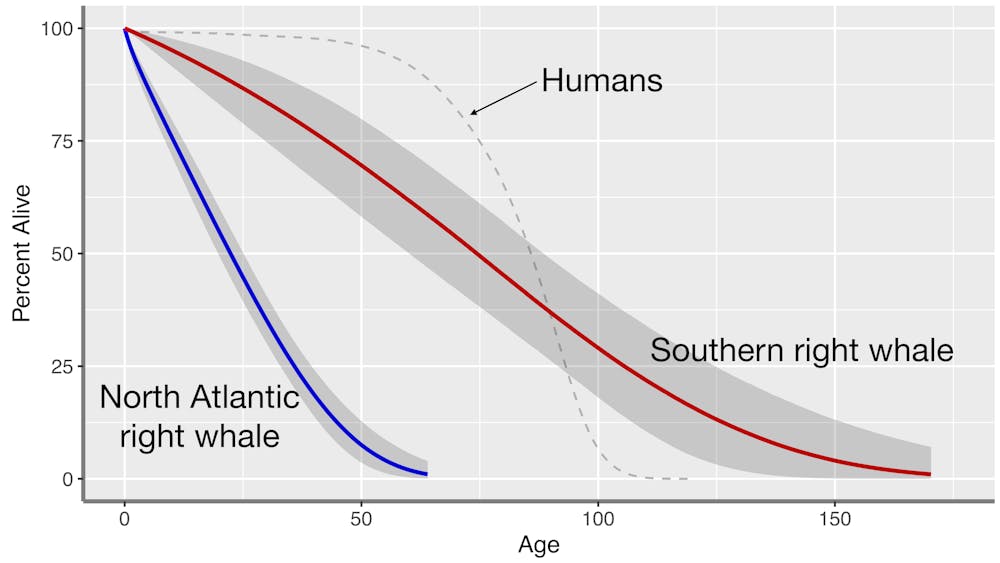
    Southern right whales have lifespans that reach well past 100 years, and 10% may live past 130 years, according to our new research published in the journal Science Advances. Some of these whales may live to 150. This lifespan is almost double the 70-80 years they are conventionally believed to live.

    North Atlantic right whales were also thought to have a maximum lifespan of about 70 years. We found, however, that this critically endangered species’ current average lifespan is only 22 years, and they rarely live past 50.

    These two species are very closely related – only 25 years ago they were considered to be one species – so we’d expect them to have similarly long lifespans. We attribute the stark difference in longevity in North Atlantic right whales to human-caused mortality, mostly from entanglements in fishing gear and ship strikes.

    Survivorship curves show female right whales can live to very old ages, but humans are causing North Atlantic right whales to die well short of their potential. Plotted for comparison is the U.S. survivorship curve for women as estimated by the Social Security Adminstration.
    Greg Breed

    We made these new age estimates using photo identification of individual female whales over several decades. Individual whales can be recognized year after year from photographs. When they die, they stop being photographically “resighted” and disappear. Using these photos, we developed what scientists call “survivorship curves” by estimating the probability whales would disappear from the photographic record as they aged. From these survivorship curves, we could estimate maximum potential lifespans.

    Twenty-five years ago, scientists working with Indigenous whale hunters in the Arctic showed that bowhead whales could live up to and even over 200 years. Their evidence included finding stone harpoon points that hadn’t been used since the mid-1800s embedded in the blubber of whales recently killed by traditional whalers. Analysis of proteins from the eyes of hunted whales provided further evidence of their long lifespan. Like right whales, before that analysis, researchers thought bowhead whales lived to about 80 years, and that humans were the mammals that lived the longest.

    In the years following that report, scientists tried to figure out what was unique about bowhead whales that allowed them to live so long. But our new analysis of the longevity of two close relatives of bowheads shows that other whale species also have potentially extremely long lives.

    Why it matters

    Understanding how long wild animals live has major implications for how to best protect them. Animals that have very long lifespans usually reproduce extremely slowly and can go many years between births. Baleen whales’ life history – particularly the age when females start breeding and the interval between calves – is strongly influenced by their potential lifespan. Conservation and management strategies that do not plan accordingly will have a higher chance of failure. This is especially important given the expected impacts of climate disruption.

    What still isn’t known

    There are many other large whales, including blue, fin, sei, humpback, gray and sperm whales. Like bowhead and right whales, these were also almost wiped out by whaling. Scientists currently assume they live about 80 or 90 years, but that’s what we believed about bowhead and right whales until data proved they can live much longer.

    How long can these other whale species live? Industrial whaling, which ended only in the 1960s, removed old whales from the world’s whale populations. Though many whale populations are recovering in number, there hasn’t been enough time for whales born after the end of industrial whaling to become old.

    It’s possible, even likely, that many other whale species will also prove to have long lifespans.

    Sixty years after the end of industrial whaling, today’s whale populations may still be missing their elders.
    Maxi Jonas/picture alliance via Getty Images

    What other research is being done

    Other research finds the loss of older individuals from populations is a phenomenon occurring across most large animal species. It diminishes the reproductive potential of many species. Researchers also argue this represents a real loss of culture and wisdom in animals that degrades their potential for survival in the face of changing conditions.

    What’s next

    We want to better understand how whaling affected the number of old individuals in current whale populations and predict when the number of old individuals will recover to prewhaling levels. Preliminary results suggest it may be another 100 years before whale populations truly recover, even for species whose populations now number as many as there were before whaling.

    For North Atlantic right whales, our research shows that even when the population was increasing, the management actions taken were insufficient to prevent these whales from dying far too young.

    The Research Brief is a short take on interesting academic work.

    Greg Breed received funding from The Royal Society

    Peter Corkeron headed the National Oceanic and Atmospheric Administration’s large whale research program for the northeastern US from 2011 to 2019, then led the New England Aquarium’s right whale research program through 2022.

    ref. Whales can live way longer than scientists had thought, with potential lifespans as much as double previous estimates – https://theconversation.com/whales-can-live-way-longer-than-scientists-had-thought-with-potential-lifespans-as-much-as-double-previous-estimates-245826

    MIL OSI – Global Reports

  • MIL-OSI United Kingdom: Flamingo Land appeal is “nightmare before Christmas” say Greens

    Source: Scottish Greens

    Scotland rejects daft Flamingo Land plans. Our Government must do the same.

    Scottish Green MSP Ross Greer has slammed the decision of the Scottish Government’s enterprise agency to extend Flamingo Land’s exclusive contract to land on the southern shore of Loch Lomond at Balloch, paving the way for the developer to appeal the rejection of their mega-resort application.

    At a public hearing in September the board of Loch Lomond and the Trossachs National Park unanimously rejected the Yorkshire theme park operator’s plans for two hotels, a waterpark, a hundred woodland lodges, over 370 parking spaces, a monorail, shops, restaurants and more at Balloch. 

    This came after a campaign led by Mr Greer collected a record 155,000 objections to the plans, alongside objections from a variety of environmental groups and organisations.

    Mr Greer received notice today from Scottish Enterprise that they will extend Flamingo Land’s exclusive contract to the land alongside the River Leven and southern shore of Loch Lomond, which makes up a majority of the proposed site. This extension allows Flamingo Land to lodge an appeal to the Scottish Government to overturn their application rejection. The contract gives Flamingo Land the exclusive right to buy the publicly owned land if they secure planning permission.

    Following the National Park’s rejection of the plans in September, Greer called on the First Minister to end Flamingo Land’s exclusive contract.

    Reacting to the news, Ross Greer MSP said: “This ridiculous company just doesn’t know when to give up, and it is bitterly disappointing that the Scottish Government are helping them in their attempts to ruin this special corner of Loch Lomond.

    “Extending Flamingo Land’s exclusive contract for the land means that an appeal is now all but certain, despite the overwhelming reasons for its rejection in the first place.

    “Our campaign to Save Loch Lomond lodged a record 155,000 objections to these daft and destructive mega-resort plans. We were joined by experts from the likes of the Woodland Trust, Ramblers and most importantly, the Scottish Environment Protection Agency. Not only that, the National Park’s own planning officers carefully considered the application and agreed that it must be rejected on the basis of both flood risk and damage to the natural environment.

    “Flamingo Land has spent a decade trying to force a mega-resort on Balloch. We beat them in 2019 and then again earlier this year. This greedy company just cannot take no for an answer. I am incredibly frustrated that the Scottish Government is enabling this saga through an exclusive contract which should have been terminated years ago. There are absolutely no grounds to approve the application on appeal. We have urged Flamingo Land to accept reality and get round the table to discuss alternatives, but they clearly have no interest in listening to the community.

    “The Scottish Greens will continue our campaign and work alongside Balloch residents to ensure that these destructive plans are rejected once again. Exhausted as we all are after a decade of this nonsense, we are ready to fight once again to save Loch Lomond.”

    MIL OSI United Kingdom

  • MIL-OSI Security: Bank General Counsel Pleads Guilty to Offenses Stemming from $7.4 Million Embezzlement Scheme

    Source: Office of United States Attorneys

    JAMES BLOSE, 56, of Fairfield, waived his right to be indicted and pleaded guilty today in New Haven federal court to offenses stemming from a decade-long embezzlement scheme at banks where he served as General Counsel and held other high-ranking positions.

    The announcement was made by Vanessa Roberts Avery, United States Attorney for the District of Connecticut; Robert Fuller, Special Agent in Charge of the New Haven Division of the Federal Bureau of Investigation; Harry T. Chavis, Jr., Special Agent in Charge of IRS Criminal Investigation in New England; and Brian Tucker, Special Agent in Charge of the Board of Governors of the Federal Reserve System and the Bureau of Consumer Financial Protection’s Office of the Inspector General, Eastern Region.

    According to court documents and statements made in court, from approximately 2013 to January 2022, Blose was an attorney and held high-ranking positions, including General Counsel, at Hudson Valley Bank and Sterling National Bank.  From approximately January 2022, when Webster Bank acquired Sterling National Bank, until February 2023, Blose served as Executive Vice President and General Counsel and Corporate Secretary at Webster Bank.

    From approximately 2013 until Webster Bank discovered his scheme and his employment was terminated in February 2023, Blose defrauded his employers (“The Bank”) in various ways.  In certain commercial loan transactions where The Bank was the lender, Blose fraudulently retained for himself portions of closing costs, including legal fees.  In certain real estate transactions in which The Bank was the seller, Blose retained portions of the sale proceeds for himself.  For some of the real estate transactions, Blose created false documents in order to hide his theft from The Bank.  Blose also stole from The Bank in other ways.

    As part of the scheme, used his attorney trust accounts to make personal expenditures, and to transfer funds to accounts in the names of business entities he created and controlled, and then used those funds for his personal benefit.  Through this scheme, Blose stole approximately $7.4 million from his employers.

    Blose pleaded guilty to one count of bank fraud, which carries a maximum term of imprisonment of 30 years, and one count of engaging in illegal monetary transactions, which carries a maximum term of imprisonment of 10 years.  He is released on a $250,000 bond pending sentencing, which is scheduled for March 13 in Hartford.

    This investigation has been conducted by the Federal Bureau of Investigation, the Internal Revenue Service – Criminal Investigation, and the Board of Governors of the Federal Reserve System and the Bureau of Consumer Financial Protection’s Office of the Inspector General.  Financial crimes investigators from Webster Bank assisted the investigation.

    This case is being prosecuted by Assistant U.S. Attorneys Michael S. McGarry and Ross Weingarten.

    MIL Security OSI

  • MIL-OSI United Kingdom: Complete ban on bee killing pesticides moves forward

    Source: United Kingdom – Executive Government & Departments 2

    • Government sets out plans to end the use of toxic neonicotinoid pesticides that threaten vital pollinators

    A bee on a purple flower

    • Important step forward in delivering on election commitment to safeguarding bees, butterflies and the wider environment  

    A complete ban on use of bee-killing neonicotinoid pesticides has moved a step closer today (Saturday 21 December), as the government sets out its plans to deliver a key election pledge.   

    Despite being banned from general use in the UK, the last government authorised the use of neonicotinoids every year for the last four years in England via a process known as emergency authorisation.     

    Neonicotinoids are extremely toxic to pollinators. Even at doses that are not directly fatal to bees they can cause cognitive problems impacting foraging abilities and the productivity of hives. The chemicals can also persist in the soil creating a further risk to bees.  

    Bees and other pollinators are crucial to the agricultural economy with the economic benefits of pollination to crop production in the UK estimated at £500 million annually.  

    The Government has set out its next steps, including identifying legislative options that would legally prevent the future use of three specific neonicotinoids – clothianidin, imidacloprid and thiamethoxam – entirely, taking full account of the importance of pollinators. 

    Environment Minister Emma Hardy said:    

    “We are delivering on our promise to ban toxic bee-killing pesticides and ending the long-term decline of our wildlife.  

    “A healthy environment is vital to our food and economic security. Protecting bees by stopping the use of damaging neonicotinoids is an important step in supporting the long-term health of our environment and waterways, and our farming sector.”     

    The move comes ahead of the publication of a new UK National Action Plan (NAP), which will set how pesticides can be used sustainably.  

    Ensuring that our food production is sustainable is key to the long-term health of the agricultural sector, as well as the nation’s food security. The Government’s Plan for Change is built on the strong foundation of a stable economy.  

    The Government commitment to farmers remains steadfast and we are fully committed to supporting farmers to protect their crops in more sustainable ways. There has already been progress in this space, including research into new virus-resistant varieties of sugar beet and new alternative pesticide sprays, and we will continue to support this work. 

    The announcement today builds on the swift action the Government has taken to recover nature more widely. This includes committing to a rapid review of the Environmental Improvement Plan and new delivery plans to meet targets on air quality, the circular economy and water. In the first few months of this government, legislation was introduced to put failing water companies under special measures to curb pollution in our waterways and a Flood Resilience Taskforce was introduced to speed up the creation of nature-based solutions, like planting trees to protect communities against the impact of extreme weather.    

    NOTES TO EDITORS:   

    • The legal requirements for emergency authorisations have not changed today and any applications for 2025 will be considered under the law as it stands.   

    • The Neonicotinoids Policy Statement applies to England only.

    • The UK Government will look to work with the devolved governments to seek a shared and consistent way forward.   

    • £5 billion was set aside in the Budget for farming over two years, including the single biggest amount of money ever allocated for sustainable food production and nature recovery.

    • The full Neonicotinoids Policy Statement can be found here

    Updates to this page

    Published 21 December 2024

    MIL OSI United Kingdom

  • MIL-OSI United Kingdom: Homegrown seed to kickstart new generation of Douglas fir trees

    Source: United Kingdom – Executive Government Non-Ministerial Departments

    Groundbreaking breeding programme to develop new generation of British grown Douglas fir trees after decades of research.

    Credit: Forestry Commission

    Douglas fir is native to North America and has been used in British forestry for over 100 years. Demand is rising rapidly and currently; we import much of our seed from the USA or France and there is a need to develop a strain that is specialised for British conditions.

    For decades there have been incomplete attempts to develop British Douglas fir seed sources suited to our conditions, but now a government funded project led by the Conifer Breeding Cooperative has overcome this and will grow the next generation of Douglas fir from British tree seeds.

    The project involved the selection of 200 visually superior trees from the best Douglas fir plantations in Britain, as well as 40 genetically superior trees from long-term experiments managed by Forest Research.

    This selection of outstanding Douglas firs will now be used by the Conifer Breeding Cooperative and Forest Research as breeding stock to produce British Douglas Fir seed. The chosen trees will be copied by grafting cuttings onto rootstocks, after the grafted plants will go into seed orchards. In several years, once seeds are available, they will be supplied to forest nurseries to grow the first genetically improved British Douglas fir trees. 

    Richard Whittet, Head of Tree Breeding at Forest Research and Chair of the Conifer Breeding Cooperative, said:  

    “We have selected a new generation of Douglas fir trees for breeding, based on their adaptation to the British climate and timber properties which is an important step forward for the resilience of our nation’s trees. 

    “This achievement is the result of decades of work by Forest Research and our domestic and international partners. Collaboration has enabled us to get things done on the ground and harness new technologies, such as the low-cost DNA marker array for quality assurance.”

    Sir William Worsley, Chair of the Forestry Commission, said:

     “We are facing a changing climate and biodiversity decline, with trees playing a significant role in mitigating some of the worst impacts.

    “We rely too heavily on timber imports in the UK and if we are to strengthen own domestic supply then this type of science will play a huge role in the future. Therefore, there has never been a more crucial time to invest in domestic tree-planting”.

    A DNA fingerprint – which shows the genetic make-up of each tree – has also been taken of each tree by Oxford University. This is the first time this technique has been used at such an early stage of a tree breeding programme in Great Britain. The DNA fingerprint is used as a quality-control tool to track and evaluate the tree’s parentage and enable traceability. This important data will help advance the project. 

    Douglas fir is a desirable timber-producing tree for Britain and this step forward to develop a resilient British population will ensure better yield for our domestic timber industry. Fast growing conifers such at this sequester carbon more quickly than slower growing species.  Using timber in construction, in place of other non-renewable materials, is one of the best ways to reduce emissions from buildings. It also ensures that carbon is locked up long-term.

    Today’s development will help bolster the domestic timber industry as part of the Government’s critical mission to make the UK clean energy superpower and ensure we are resilient to a changing climate. This is the latest government innovation in the fight to protect our nation’s trees and woodlands.

    The project partners involved are Conifer Breeding Coop, University of Oxford, and Forestart and it has been funded by the Department of Environment Food and Rural Affairs.

    Additional Information: 

    • The trials were first established in the 1990s as part of a European Commission project with several international partners including Britain, France, Germany, Italy, Spain and Belgium

    Updates to this page

    Published 21 December 2024

    MIL OSI United Kingdom

  • MIL-OSI United Kingdom: Plans for new provisions to support pupils with complex Additional Support Needs

    Source: Scotland – City of Perth

    Perth and Kinross Council’s Learning and Families Committee will be asked to consider the plans when it meets on Wednesday, January 29.

    Almost 7000 children and young people in Perth and Kinross Council schools have been identified as having additional support needs, almost four out of every 10 pupils (39%). 

    This is an increase of over 750 children and young people since 2021.

     Currently, PKC has fifteen Intensive Support Provisions (ISPs) across nine primary and six secondary schools, serving 300 children aged 5 to 18.

    A feasibility study highlighted the need for more ISP placements and better geographical distribution to improve educational and social experiences for children and young people and reduce travel costs.

    A report to the committee recommends creating eight new ISPs through recently announced Scottish Government funding and redistribution of existing Perth and Kinross Council resources.

    This will mean all children and young people who need this type of education provision will be able to do so closer to their homes, enabling them to build better community connections for the future.

    Other options for consideration include maintaining existing provision or creating additional ISPs through the redistribution of existing resources. Both options would maintain ISP placements at current levels.

    If the proposed plan to create eight new ISPs is approved, it will be implemented in three phases over the next four years.

    The first will see the development of ISPs at Kinross High School, Perth High School and a primary school within the Perth Academy catchment area once statutory consultations are completed.

    Phases two and three will see the creation of a further five ISPs.

    Councillor John Rebbeck, convener of Perth and Kinross Council’s Learning and Families Committee said: “Many of our ISPs are over-capacity and we know the number of children with complex additional support needs who require intensive-level learning opportunities is rising.

    “We want to give every child the best start in life so they can fulfil their potential and creating new ISPs will help ensure all our children receive the education they need and deserve.

    “The development is part of our Additional Support Needs (ASN) Transformation Programme which aims to significantly improve the educational experience for children and young people with additional support needs in Perth and Kinross.

    “We know there are still many challenges ahead but I believe this is an important and necessary step in the right direction. The programme’s vision is to help these children thrive, gain independence, and lead fulfilling lives by ensuring they can access the best possible learning environment and support whilst in Perth and Kinross Council Early Learning and Childcare (ELC) settings or schools.

    “Access to education and learning close to their home communities will help our children and young people with complex needs to reach their potential”

    MIL OSI United Kingdom

  • MIL-OSI Australia: NSW Government releases Industrial Lands Action Plan

    Source: New South Wales Premiere

    Published: 24 January 2025

    Released by: Minister for Planning and Public Spaces


    The Minns Labor Government has released its Industrial Lands Action Plan which sets out a new approach to plan, secure, and manage the supply of industrial lands to deliver new jobs, drive investment and support the building of more homes.

    The action plan is focused on opening up more land zoned for industrial or similar purposes, such as depots, distribution centres, factories and warehouses.

    These services are crucial to the economic viability of our cities and towns because they not only create valuable ongoing jobs but are also critical for the production and delivery of construction materials required for building more homes.

    The action plan will identify lands as State, Regional, or Locally Significant, to make sure that each plays a specific role in supporting economic activity and long-term growth.

    This will also help guide infrastructure investments that unlock the potential of each area.

    But the NSW industrial sector is facing escalating land values, increased rents and in some locations almost zero vacancies in industrial lands.

    The Industrial Lands Action Plan outlines initiatives to boost the supply of industrial lands.

    This includes:

    • delivering a statewide categorisation policy and approach for the supply pipeline of industrial lands to replace the Retain, Review and Plan and Manage policies;
    • making planning policy amendments to increase flexibility on land zoned for industrial purposes, and
    • implementing an Employment Land Development Program to coordinate infrastructure investment for the supply of industrial land over the next two decades.

    The Industrial Lands Action Plan will also provide industry, council and developers the opportunity to see where there is underutilised or isolated industrial lands which could be transitioned into alternative uses to align with NSW Government key priorities, such as alternative employment uses or housing.

    For more information on industrial lands visit the NSW Planning website at https://www.planning.nsw.gov.au/research-and-demography/employment-lands

    Minister for Planning and Public Spaces Paul Scully said:

    “After years of neglect, our new Statewide approach will plot the steps to help us grow our industrial pipeline across the State.

    “In 2024 alone, industrial related industries and activities contributed approximately $174 billion in gross value to the NSW economy, the Industrial Lands Action Plan provides industry, developers and councils with a holistic and state-wide approach to actively plan, secure, manage and monitor industrial lands across NSW.

    “By unlocking the supply of well-located, serviced and competitive industrial land, we are helping to drive investment, create jobs and support the construction industry in the delivery of housing.

    “More serviced and development ready industrial lands are required to shore up the supply chain for the housing and construction materials we need to build affordable, well-located houses across NSW.”

    MIL OSI News

  • MIL-OSI Australia: NSW avian influenza emergency in Hawkesbury eradicated and controls lifted

    Source: New South Wales Premiere

    Published: 24 January 2025

    Statement by: Minister for Agriculture, Minister for Regional NSW, Minister for Western New South Wales


    Minister for Agriculture and Regional NSW Tara Moriarty has today confirmed the successful eradication of avian influenza in the Hawkesbury region, one of the most significant outbreaks in the state’s history.

    The NSW Government’s eradication of avian influenza in this zone is a terrific win for our poultry and egg producers, plus consumers, with businesses now able to get back to normal.

    From Friday 24 January 2024 the emergency zones will be removed and all emergency orders will be lifted, including movement restrictions for birds, objects and other equipment, officially bringing an end to the NSW Government’s Avian Influenza response.

    This follows the easing of the Hawkesbury emergency zone in December 2024 with no new detections of the disease occurring in the area after July 2024. The required surveillance time with no virus detections has now elapsed so the control order can now be revoked.

    The Minns Labor Government is serious about biosecurity and protecting our valuable primary industries, and will continue to work with farmers to safeguard agricultural industries.

    The NSW Government’s avian influenza response and eradication actions included:

    • Managing depopulation of virus impacted birds
    • 288 Department of Primary Industries and Regional Development (DPIRD) and inter-agency staff working on the response
    • 6,801 samples tested
    • 76,000 targeted SMS to property owners
    • 1,500 letters delivered in a letterbox drop to the Hawkesbury
    • 1,051 calls to the Emergency Animal Disease hotline

    In June 2024, Government Biosecurity teams detected and responded to an avian influenza outbreak at two commercial poultry farms and four non–commercial premises in the Hawkesbury region.

    All infected premises were subject to quarantine, depopulation, disposal and decontamination in accordance with the AUSVETPLAN Response Strategy for avian influenza ensuring all premises were free of traces of the diseases before regular operations could resume.

    The H7N8 avian influenza strain detected in NSW was not the same as the H5N1 strain that is causing concern globally. Australia remains free of the H5N1 strain of avian influenza. In addition it was not connected to the Victorian outbreak of avian influenza.

    This has taken an immense response by the NSW Government working with industry, farmers and the community to control this outbreak and eventually eradicate the virus. I want to thank all the staff and industry personnel who worked tirelessly to protect the industry and minimise impacts

    Find more information on the NSW Government’s response to the H7 Avian Influenza outbreak.

    MIL OSI News

  • MIL-OSI New Zealand: David Seymour: The State of the Nation in 2025 – Dire States

    Source: ACT Party

    Delivered by ACT Leader David Seymour the Akarana Event Centre, Ōrākei.

    Introduction

    Thank you, Brooke, for your kind introduction. I’m biased, but I think you’re the Government’s most quietly effective Minister. Your labour law reforms are making it easier to employ workers and to be employed. Your minimum wage increases are announced early to give business certainty, and relief. You are taking on two of the hardest chestnuts in the workplace – holiday pay and health and safety – by listening to the people affected. You’ve put together an honest Royal Commission on COVID-19, and got wait times down for new passports and Citizenships. All the while you attract growing respect as a hard-working local MP here in Tamaki.

    It’s easy to forget Brooke’s 32. She has the biggest future in New Zealand politics.

    The only problem with mentioning one ACT MP is they’re all kicking goals with both feet, so you have to mention the lot. Nicole McKee is speeding up the court system, rewriting the entire Arms Act to make New Zealand safer, and reforming anti-money laundering laws so people can business done.

    Andrew Hoggard handles the country’s biosecurity, managing would-be outbreaks with steady hands. He is also dealing to Significant Natural Areas that erode farmers’ property rights and correcting the naïve treatment of methane that punishes the whole country.

    He’s able to do that in large part because of the work Mark Cameron did, and continues to do. From 2020 onwards he scared the bejesus out of every other party in rural New Zealand. He shifted the whole political spectrum right on the split gas approach, SNAs, and freshwater laws. Now the Government is changing those policies. As Chair of the Primary Production Committee, Mark stays in the headlines championing rural New Zealand every week. He is the definition of an effective MP.

    Karen Chhour is the embodiment of ACT values. Her life gives her more excuses than anyone in Parliament, but she makes none, and she accepts none. She is reforming the government department that let her down when she was small. If every New Zealander had Karen’s attitude and values, we’d be a country with no problems.

    Perhaps the biggest single policy problem we face is the Resource Management Act. Somone once said you can fill a town hall to stop anything in this country, but you can’t fill a telephone box to get something started. In steps Simon Court who, with Chris Bishop, is designing new resource management laws based on property rights. That’s an ACT policy designed to unleash the latent wealth our country has by letting people develop and use the property they own.

    Our new MPs that you helped elect last year are also making their marks. Todd Stephenson has picked up the End of Life Choice baton, with a bill to extend compassion and choice to those who suffer the most: those with long-term, degenerative illnesses. Parmjeet Parmar is one of the hardest working MPs I have seen, and a great chair of the Economic Development, Science and Innovation Committee. Cam Luxton and Laura McClure speak to a new generation of young parents who want their children to grow up in a free society.

    If you gave your Party Vote to ACT last year, you can be proud of the New Zealanders you put in Parliament to represent you. I am proud to lead this team of free thinkers in our House of Representatives, and I think we can all be proud of their efforts.

    New Zealand’s origin story: a nation of immigrants

    The summer is a good time to think about the state of our nation, and I got to thinking about who we are and how we got here. Whatever troubles we may face today, I couldn’t help coming back to something that unites New Zealand.

    Our country at its best is a place that welcomes hopeful people from all over the earth. People with different languages, religions and cultures united by one thing. When you look at the map it jumps out at you. We are the most remote country on Earth. If you’ve never stood at Cape Reinga and looked out to see wide open spaces for 10,000 kilometres, you owe it to yourself just once.

    It shows that one thing makes us all different from the rest of the world. No matter when or where you came from, you or your ancestors once travelled farther than anyone to give your children and theirs a better tomorrow.

    That is the true Kiwi spirit. Taking a leap into the unknown for a chance at better. Compared with what divides us, our spirit as a nation of pioneers unites us ten times over. Migrating from oppression and poverty for freedom and prosperity is what it means to be Kiwi.

    If that bright and optimistic side of our psyche, got half as much time as the whinging, we would all be better off. We would see ourselves as people unafraid of challenges, freed from conformity, with the power to decide our best days are always ahead of us.

    New Zealand’s inherent tension: two tribes

    I got to wondering why that isn’t a more popular story. Why do we cut down tall poppies? Why do we value conformity over truth? Why do people who came here for a better life grow up disappointed and move away again?

    I believe our nation is dominated by two invisible tribes. One, I call ‘Change Makers’. People who act out the pioneering spirit that built our country every day. We don’t just believe it is possible to make a difference in our own lives; we believe it’s an obligation.

    Change makers load up their mortgage to start a business and give other people jobs. They work the land to feed the world. They save up and buy a home that they maintain for someone else to live in. They study hard to extend themselves. They volunteer and help out where they can. They take each person as they find them. They don’t need to know your ancestry before they know how to treat you.

    Too often, they get vilified for all of the above. I know there’s many people like that in this room today. ACT people are Change Makers; we carry the pioneering spirit in our hearts.

    Then there’s the other tribe – people building a Majority for Mediocrity. They would love nothing more than to go into lockdown again, make some more sourdough, and worry about the billions in debt another day.

    They blame one of the most successful societies in history for every problem they have. They believe that ancestry is destiny. They believe people are responsible for things that happened before they were born, but criminals aren’t responsible for what they did last week.

    Far from believing people can make a difference in their own lives, they believe that their troubles are caused by other people’s success. They look for politicians who’ll cut tall poppies down – politicians who say to young New Zealanders ‘if you study hard, get good grades, get a good job, save money, and invest wisely, we’ll tax you harder’.

    I wasn’t kidding about the lockdowns; they were a litmus test. In early 2022, after this city had been locked down for months, and the borders had been closed for two years, a pollster asked New Zealanders if they’d like to be locked down again for Omicron.

    Now, I know it’s painful to think back, but bear with me. Omicron spread more easily than any earlier variant. It was also less harmful if you caught it. That was especially so because we were then among the most vaccinated nations on earth. The damage to business, education, non-COVID healthcare, and the government’s books was already massive and painful.

    And yet, 48 per cent of New Zealanders wanted another lockdown for Omicron. 46 per cent didn’t. That for me put the tribes into sharp relief. If you were a business owner who needed to open, a parent worried about missed education, a migrant missing their family, or just someone who wanted their life back, you wanted to open.

    When the Government finally lifted restrictions, many of those people left. Real estate agents report people selling because they’re moving to Australia every day. This is where the balance between these two invisible tribes comes into focus.

    Remember the gap in that poll was two per cent. Since the borders opened a net 116,000 citizens have left New Zealand. That’s a touch over two per cent.

    A tipping point

    The more people with get up and go choose to get up and leave, the less attractive it is for motivated people to stay here.

    Muldoon once quipped, ‘New Zealanders who leave for Australia raise the IQ of both countries.’ Actually, New Zealanders who leave for Australia  are tipping us towards a Majority for Mediocrity. Motivated New Zealanders leaving is good news for the shoplifters, conspiracy theorists, and hollow men who make up the political opposition.

    A few more good people leaving is all they need for their Majority of Mediocrity. The more that aspirational, hardworking people get up and leave New Zealand, the more likely it is we’ll get left-wing governments in the future.

    That’s why I say we’re at a tipping point. 

    There’s another reason why the mediocrity majority is growing, young people feel betrayed and disillusioned.

    A new generation looks at the housing market and sees little hope. Imagine you’re someone who’s done it all right, you listened to your teacher and did your homework. You studied for a tertiary education like everyone told you. Now you have $34,000 in debt, you start on $60,000, and you see the average house is 900,000 or fifteen times your (before tax) income.

    Nobody can blame a young person for wondering if they aren’t better off overseas. Many decide they are. Those who stay are infected  by universities  with the woke mind viruses of identity politics, Marxism, and post-modernism.

    Feeling like you’ll never own your own capital asset at the same time as some professor left over from the Cold War tells you about Marx is a dangerous combination.

    This is the other political tipping point that risks manufacturing a majority for mediocrity. A bad housing market and a woke education system combined are a production line for left-wing voters.

    The hard left prey on young New Zealanders. They tell them that their problems are caused by others’ success. That they are held back by their identity, but if they embrace identity politics, they can take back what’s theirs. Their mechanism is a new tax on wealth.

    These are the opposite of the spirit brings New Zealanders to our shores in the first place. The state of our nation is that we’re at a tipping point , and what we do in the next few years will decide which way we go.

    The short-term outlook is sunny, but only because Labour was so bad.

    We can afford to hope that this year will be better than 2024. By that standard, 2025 will be a success. Interest rates will be lower. The Government will have stopped wasting borrowed money, banning things, punishing employers, landlords, farmers, and anyone else trying to make a difference, with another layer of red tape.

    In fact, we have a Government that’s saving money, cutting red tape, and paring back identity politics. With those changes we will see more hope than we’ve seen in years, and hopefully a slowdown in citizens leaving. That is good, it’s welcome, and ACT is proud to be part of the coalition Government that’s doing it.

    ACT is needed to be brave, articulate, and patriotic

    The truth is, though, it’s easy to do a better job of Labour over 12 months. It’s much harder to muster the courage to keep making difficult decisions over several years, even if they’re not immediately popular. Our nation is in a century of decline. Just stopping one Government’s stupid stuff and waiting for a cyclical recovery won’t change the long-term trend. We need to be honest about the challenges we face and the changes needed to overcome them.

    We need to act like a country at risk of reaching a tipping point and losing its first world status. We are facing some tough times, and tough times require tough choices to be made.

    ACT’s goal is to keep the Government, and make it better. We may have gone into Government, but we never went into groupthink. It’s the role of ACT to be the squeaky wheel, pointing out where the Government needs to do better.

    The Government cannot measure itself by just being better than Labour. Instead, we need to ask ourselves, is this policy good enough to make New Zealand a first world country that people want to stay in?

    It’s easy to have big plans, we are the world, but charity begins at home. We need to focus only on what the government does, and ensure it does it well.

    We need to think carefully about three areas of government activity: spending, owning, and regulating. There is nothing the government does that doesn’t come down to one of those three things.

    Why government spends a dollar it has taxed or borrowed, and whether the benefits of that outweigh the costs.

    Why government owns an asset, and whether the benefits to citizens outweigh the costs to taxpayers of owning it.

    Why a restriction is placed on the use and exchange of private property, and whether the benefits of that regulation outweigh the costs on the property owner.

    When it comes to spending, we have a burning platform.

    Last year the economy shrunk by one per cent, even as the population grew slightly thanks to births and inbound migration. This year the Government is planning to borrow $17 billion, about $10 billion is for interest on debt, and we’ll have to pay interest on that debt the following year. Next year, government debt will exceed $200 billion.

    There lots of reasons why this situation will get harder.

    We’ve claimed an exclusive economic zone of four million square kilometres by drawing a circle around every offshore island we could name. We spend less than one per cent of GDP defending it, while our only ally, across the ditch, spends twice that.

    Put another way, we’re a country whose government gives out $45 billion in payments each year but spends only $3.2 billion defending the place. Does that sound prudent to you? Doubling defense would cost another $3.2 billion per year, effectively paying more for what we already have. We may face pressure to do just that thanks to US foreign policy.

    There’s a tail wind on balancing the books, and it’s affecting every developed country, our population is ageing faster than it’s growing.

    Every year around 60,000 people turn sixty-five and become eligible for a pension. To the taxpayer, superannuation expenses increase by $1.4 billion each year.

    Healthcare spending has gone from $20 billion to $30 billion in five years, but people are so dissatisfied that healthcare is now the third biggest political issue. Put it another way, we are now spending nearly $6,000 per citizen on healthcare.

    How many people here would give up their right to the public healthcare system if they got $6,000 for their own private insurance? Should we allow people to opt out of the public healthcare system, and take their portion of funding with them so they can go private?

    Education is similar. We spend $20 billion of taxpayer money every year, and every year 60,000 children are born. By my count that’s $333,000 of lifetime education spending for each citizen.

    How many people would take their $333,000 and pay for their own education? How many young New Zealanders would be better off if they did it that way?

    Instead of spending next year because we did it this year, we need to ask ourselves, if we want to remain a first world country, then do New Zealanders get a return on this spending that justifies taking the money off taxpayers in the first place? If spending doesn’t stack up, it should stop so we can repay debt or spend the money on something that does.

    Then there’s the $570 billion, over half a trillion dollars of assets, the government owns. The one thing we know from state houses, hospital projects, and farms with high levels of animal death, is that the government is hopeless at owning things.

    But did you know you own Quotable Value, a property valuation company chaired by a former race relations conciliator that contracts to the government of New South Wales?

    What about 60,000 homes? The government doesn’t need to own a home to house someone. We know this because it also spends billions subsidising people to live in homes it doesn’t own. On the other hand, the taxpayer is paying $10 billion a year servicing debt, and the KiwiBuild and Kainga Ora debacles show the government should do as little in housing as possible.

    There are greater needs for government capital. We haven’t built a harbour crossing for nearly seven decades. Four hundred people die every year on a substandard road network. Beaches around here get closed thanks to sewerage overflow, but we need more core infrastructure. Sections of this city are being red zoned from having more homes built because the council cannot afford the pipes and pumping stations.

    We need to get past squeamishness about privatisation and ask a simple question: if we want to be a first world country, then are we making the best use of the government’s half a trillion dollars’ plus worth of assets? If something isn’t getting a return, the government should sell it so we can afford to buy something that does.

    Finally, there’s regulation. That is placing restrictions on the use and exchange of property that the government doesn’t own or hasn’t taxed off the people who earned it already. That is, your property. Bad regulation is killing our prosperity in three ways.

    It adds costs to the things we do. It’s the delays, the paperwork, and the fees that make too many activities cost more than they ought to. It’s the builder saying it takes longer to get the consent than it took to build the thing. It’s the anti-money laundering palaver that ties people in knots doing basic things but somehow doesn’t stop criminals bringing in half a billion dollars of P each year. It’s the daycare centre that took four years to open because different departments couldn’t agree about the road noise outside. I could go on all afternoon.

    Then there’s the things that just don’t happen because people decide the costs don’t add up once the red tape is factored in.

    Then there’s the big one that goes to the heart of our identity and culture. It’s all the kids who grow up in a country where people gave up or weren’t allowed to try. It’s the climbing wall at Sir Edmund Hillary’s old school with signs saying don’t climb. It’s the lack of nightlife because it’s too hard to get a license. It’s the fear that comes from worrying WorkSafe or some other regulator will come and shut you down. You can’t measure it, but we all know it’s there.

    The Kiwi spirit we are so proud of is being chipped away and killing our vibe. Nobody migrated here to be compliant, but compliance is infantilising our culture, and I haven’t even mentioned orange cones yet.

    If we want to remain first world, we need to change how we regulate. No law should be passed without showing what problem is being solved, whether the benefits outweigh the costs, and who pays the costs and gets the benefits. These are the basic principles of the Regulatory Standards Bill that the Government will pass this year.

    Conclusion

    Of course, the Government IS doing many things that will change how it operates. There is a drive to reduce waste. There is a drive to get more money from overseas investment. The Regulatory Standards Bill will change how we regulate. The Resource Management Act is being replaced. Anti-money laundering laws are being simplified. Charter schools are opening, more roads are being built. These are all good things.

    But make no mistake, our country has always been the site of a battle between two tribes. The effect of emigration, and the world faced by young New Zealanders risks creating a permanent majority for mediocrity. Our country is at a tipping point.

    We need honest conversations about why government spends, owns, and regulates, and whether those policies are good enough to secure our future as a first world nation.

    You may have seen the ACT Party has been involved in a battle to define the principles of the Treaty democratically. It’s caused quite a stir. If you missed it, please check out treaty.nz where we outline what it’s about. It may still succeed this time, or it may be one of those bills that simply breaks the ground so something like it can proceed in the future.

    Either way, the tribe of change makers has a voice. People who want equal rights for all New Zealanders to be treated with respect and dignity because they’re citizens have a position that others need to refute. Good luck to them arguing against equal rights.

    It also shows something else, that ACT is the party prepared to stand up when it’s not easy and it’s not popular. That’s exactly the type of party our country needs in our Government.

    To all the Change Makers who proudly put us there, thank you, and no matter how daunting this tipping point may feel, together we can ensure our best days are still ahead of us.

    MIL OSI New Zealand News