Category: Universities

  • MIL-OSI: Broadcom Delivers the Modern Private Cloud with VMware Cloud Foundation 9.0

    Source: GlobeNewswire (MIL-OSI)

    PALO ALTO, Calif., June 17, 2025 (GLOBE NEWSWIRE) — Broadcom Inc. (NASDAQ: AVGO) is announcing the general availability of VMware Cloud Foundation (VCF) 9.0, the platform for the modern private cloud. With VCF 9.0, customers gain a consistent operating model for the private cloud, spanning data centers, edge, and managed cloud infrastructure from service providers and hyperscalers. VCF 9.0 combines the agility and scalability of public cloud with the security, performance, architectural control and total cost of ownership (TCO) benefits of an on-premises environment.

    VCF 9.0 delivers a single unified platform that supports all applications—traditional, modern, or AI—with consistent operations, governance, and controls across the private cloud environment. With VCF 9.0, customers benefit from a modern private cloud that:

    • Accelerates innovation with out-of-box self-service offerings and a consistent experience that frees development teams to focus on applications instead of infrastructure.
    • Controls cost through deep visibility and insights into resource usage that allow better planning, predicting, and optimization of cloud spend.
    • Enables sovereignty and security with data control that supports better compliance, cyber resilience at scale and fleet-level management that helps ensure the latest patches are applied quickly, security controls are up to date, and policy compliance continues.

    “With this next generation of our cloud platform, VMware Cloud Foundation 9.0, we are again raising the bar for the modern private cloud by vastly simplifying the deployment, operations, and developer experience of the cloud,” said Krish Prasad, senior vice president and general manager, VCF Division, Broadcom. “Most enterprises are now looking to the private cloud to run both traditional mission-critical and new AI and containerized applications. VMware Cloud Foundation 9.0 is the ideal platform for running these modern applications, enabling our customers to be more innovative, efficient, resilient, and secure. We are very excited to see that customers of all sizes are embracing VCF at a rate that has exceeded even our own high expectations.”

    “VMware Cloud Foundation has enabled us to execute on our private cloud strategy by breaking down IT silos, removing technical debt, and allowing teams to shift from focusing on keeping the lights on to higher value projects that move our business forward,” said Roger Joys, Principal Technology Strategy Advisor, Cloud & Data, GCI Communications. “By delivering an ‘everything as code’ private cloud platform, we simply do everything faster and more securely now. Security patches are easier to implement, new applications are deployed in minutes rather than months, and services are updated and rolled out to customers in a fraction of the time. These are all benefits people only thought were possible in the public cloud. We are doing these things in our modern private cloud.

    “VMware Cloud Foundation is at the core of our Digital Application Platform. Using VCF, we have expanded our on-prem delivery capabilities while improving operational efficiency,” said Paolo Bazzica, chief information officer, IPZS. “At IPZS, we feel that we are now on the right track to continue supporting Italy’s digital transition with a modern private cloud that enables full use of our competences to deliver cloud native applications. Compared to more traditional on-prem setup, we saw a steep IT manual tasks reduction by up to 70% through automation while improving our business resilience.”

    “With VMware Cloud Foundation, we can offer our customers a private cloud operating model from our own data center,” said Michael Heier, Head of Managed Workplace, Ratiodata. “VCF offers a significantly more flexible and easier-to-manage IT infrastructure with its automation, advanced security features, dynamic networking capabilities, and comprehensive cloud management. VMware vSphere Kubernetes Service enables us to deliver a unified platform for both VM and containerized apps, while VMware Private AI allows us to securely harness AI capabilities across this infrastructure. Increased server performance and superior VM density will reduce our total number of servers, lowering power consumption and costs by an estimated 25–30%.”

    “Previously we had a large-scale legacy IT infrastructure that needed to evolve into something that was very agile, flexible, cost-optimized and secure,” said Keith Woolley, Chief Digital and Information Officer, University of Bristol. “With VMware Cloud Foundation, University of Bristol has built a modern private cloud that completely revolutionizes the way we operate and deliver services to our academic community. VCF enables us to run our AI jobs. It gives us the sovereignty we were seeking. And we know there’s hidden benefits in the VCF platform that we’re only just starting to discover.”

    The Fundamental Shifts in VMware Cloud Foundation 9.0​
    VMware Cloud Foundation 9.0 boasts a completely new architecture that empowers IT admins and application teams to accomplish far more and spend far less. The platform delivers a streamlined experience for building, operating, and securing a modern private cloud across on-premises data centers, in hyperscaler and VMware Cloud Service provider clouds, and at the edge. VCF 9.0 is uniquely designed to remove the friction between infrastructure and application teams.

    One Interface for Private Cloud Operations
    VCF 9.0 introduces a unified interface for cloud administrators, offering a holistic view of private cloud operations. The new Quick Start App significantly reduces setup time and complexity. Integrated cost management and policy enforcement enables immediate compliance and operational efficiency. Scalable fleet management allows administrators to plan, schedule, and execute upgrades across clusters efficiently, increasing daily productivity up to 10x1. Centralized identity and access management, including single sign-on, password policies, and certificates, enable consistency across environments. Consolidated log management delivers insights twice as fast1, allowing for rapid response. Advanced analytics help administrators understand workload behavior, enabling targeted responses for security and performance optimization.

    Frictionless Cloud Consumption Experience
    VCF 9.0 offers a unified interface for platform and development teams, simplifying infrastructure service delivery and consumption. Platform teams can effectively organize, provision, and manage tenant resources with granular control. More secure, role-based access is enabled through streamlined administration of both admin and tenant identities. Compliance across all deployments is maintained by built-in governance policies, while pre-configured blueprints simplify provisioning, lessen manual tasks, and guarantee repeatable, compliant infrastructure. Developers gain access to automated and elastic self-service IaaS services, creating a genuine cloud-like experience.

    Unified VM, Container and Kubernetes Platform
    VCF 9.0 takes a significant leap forward as a unified platform for traditional, cloud native and AI applications. The embedded vSphere Kubernetes Service (VKS) enables both virtual machines (VMs) and containers to be treated equally. This allows customers to build, deploy, and run Kubernetes and virtualized workloads together and eliminates complex DevOps stacks and integrations. Developers can immediately begin building and deploying, while IT maintains security and consistency. A single interface and operational model manages VM-based applications, cloud-native workloads, AI/ML applications, and traditional enterprise databases.

    Superior Cloud Cost Transparency
    VCF 9.0 offers distinct cost predictability and transparency advantages over public cloud. Comprehensive insights extend beyond infrastructure, incorporating software licensing, operational expenses, and data center costs, thus providing a holistic TCO perspective. Additionally, built-in analytics enable predictive cost modeling for effective infrastructure planning and forecasting, helping organizations avoid unforeseen financial challenges. Automated resource optimization dynamically reclaims underutilized capacity to enhance workload efficiency and prevent unnecessary infrastructure sprawl. Finally, detailed showback and chargeback data, grounded in resource allocation, provide a clear return on infrastructure investment.

    Sovereign and Secure
    VCF 9.0 is engineered to provide robust data control, compliance, and resilience, empowering IT operations amidst regulatory complexities and geopolitical uncertainty. A key feature is the new SecOps dashboard, offering a quick view of platform security and data controls, along with integrated compliance policies. Regulatory guardrails facilitate consistent governance. VCF 9.0’s support for the latest confidential computing technologies from AMD and Intel will enable organizations to leverage the newest generation of secure enclaves, encrypted memory, and attestation capabilities, allowing IT teams to deploy confidential workloads across heterogeneous infrastructure while maintaining consistent security policies and operational workflows.

    Core Innovation Delivers Meaningful Customer Outcomes
    VCF 9.0 is built on industry-leading compute, networking, and storage technologies, and Broadcom continues to innovate around these core capabilities to deliver significant customer value. Advanced Memory Tiering for NVMe can deliver 38%1 lower memory and server TCO. VMware vSAN ESA with Global Dedupe2 can reduce storage TCO by 34%1. VMware NSX enhanced data path can deliver as much as 3x1 switching performance to maximize throughput. New vSAN-to-vSAN data protection with deep snapshots enables more efficient, native recovery from disasters or ransomware attacks. As a platform for modern AI applications, VCF delivers virtually zero performance overhead when compared to bare metal3 while providing the ability to support zero-downtime vMotion for AI applications.

    New Innovation Across Advanced Services for VCF Portfolio
    Advanced services for VMware Cloud Foundation are ready-to-deploy solutions that enable customers to accelerate innovation in their private cloud environments. This diverse library of private cloud solutions is similar to what enterprises have come to expect from the public cloud, allowing them to access the tools and technologies they need to rapidly address a variety of use cases and business opportunities. With VCF 9.0, Broadcom is delivering new innovations across the advanced services portfolio:

    • VMware ​Private AI​ Foundation​ with NVIDIA: This joint AI solution from Broadcom and NVIDIA is built on VMware Cloud Foundation and includes the VMware private AI package and NVIDIA AI Enterprise. The solution offers air-gap support for isolated deployments; GPU-as-a-Service with multi-tenancy support for AI workloads; NVIDIA vGPU C-Series profile visibility to eliminate manual capacity tracking; improved resource utilization with enhanced GPU and vGPU monitoring capabilities; simplified model usage and scalability with Model Runtime; NVIDIA NIM for easy, high-performance AI model inference; and more efficient creation of AI Agents with Agent Builder Service.​
    • VMware Live Recovery: A single solution for managing cyber and disaster recovery across VMware Cloud Foundation (VCF) deployments, VMware Live Recovery now delivers increased data sovereignty through an on-premises isolated clean room / recovery environment (IRE) for cyber recovery (available as a VMware Validated Solution); flexibility to recover to a VCF isolated clean room on-premises or an existing cloud option; up to 200 immutable snapshots per VM enabled by native replication; and more efficient scaling through the ability to expand storage independently of compute with vSAN storage clusters
    • VMware vDefend: This advanced service for VCF provides built-in threat detection and response, zone- and application-level micro-segmentation, distributed lateral security, reduced attack surface, and zero trust enforcement across VCF environments. With VCF 9.0, vDefend has added self-service microsegmentation; VPC-aware lateral security with delegated administration; VCF Import integration to streamline transition of existing vDefend deployments into VCF 9.0; and global IDS/IPS policy management for consistent threat defense policies across multi-site VCF deployments.​ Read the news blog here.
    • VMware Data Services Manager (DSM): As an advanced service for VCF, DSM 9.0 currently provides enterprise support for PostgreSQL and MySQL, and is now in Tech Preview with Microsoft SQL Server​. New integration with VCF Automation enables IT teams to deliver database as a service (DBaaS), while additional DSM enhancements increase the operational efficiency for large database fleet management.
    • Avi Load Balancer: This service provides plug-and-play load balancing services for VM and Kubernetes workloads with built-in global server load balancer (GSLB), application health and latency analytics, and web application firewall (WAF). With VCF 9.0, Avi Load Balancer now supports load balancing as self-service, streamlined operations and lifecycle management, and VPC-aware deployments. Read the news blog here.

    Partner Ecosystem Commentary

    “AMD and VMware continue to push the boundaries of enterprise infrastructure. The latest release of VMware Cloud Foundation 9.0 builds on our shared vision to deliver solutions with great performance, exceptional total cost of ownership, and advanced security with AMD EPYC™ processors featuring SEV-SNP. Customers can confidently and efficiently scale modern workloads—from virtualization to AI—across secure hybrid cloud environments.” – Raghu Nambiar, Corporate Vice President, Silicon Design Engineering, AMD

    “Azure VMware Solution (AVS) is a fully managed VCF service that provides customers the flexibility to combine VMware Cloud Foundation private clouds with the scale and flexibility of Azure. As customers adopt the latest innovations in VMware Cloud Foundation 9.0, they will be able to take advantage of Microsoft’s support for VCF license portability to extend VMware workloads to Azure as is, with minimal to no refactoring, and benefit from the continuity, scale, and fast provisioning for VMware workloads on global Azure infrastructure.” – Brett Tanzer, Vice President, Product Management for the Azure Solutions and Ecosystem Team

    “As organizations face increasing demands for data security, control and scalability, they’re turning to Dell Technologies to help them easily build private cloud environments. VMware Cloud Foundation 9.0 on Dell infrastructure will deliver a private cloud solution that eliminates IT silos, reduces risk and boosts operational efficiency.” – Gil Shneorson, Senior Vice President, Solutions Platform, Dell Technologies

    “Our strong partnership with Broadcom is key to delivering the latest VMware innovations on Google Cloud. With VMware Cloud Foundation 9.0, we’re particularly excited about the unified interface for private cloud operations, which streamlines management, and the frictionless cloud consumption experience, which empowers both platform and development teams. We look forward to bringing these advanced capabilities and more to Google Cloud VMware Engine, further enabling our customers to accelerate innovation and optimize their cloud environments.” – Nirav Mehta, Vice President, Product Management, Google Cloud

    “As enterprises embrace hybrid operating models, IT teams are under increasing pressure to modernize infrastructure without adding complexity or compromising on security and resilience. HPE GreenLake for VMware Cloud Foundation with VCF 9.0 will offer a co-engineered, validated solution with flexible consumption, multi-layered security and pre-integrated technology—all designed to streamline an organization’s private cloud journey.” – Rajeev Bhardwaj, Vice President and Chief Product Officer, Private Cloud and Flex Solutions, HPE

    “VMware Cloud Foundation 9.0 on Intel® Xeon® 6 platforms brings new levels of cost optimization and advanced security to the modern private cloud. With greater hardware consolidation and Intel® TDX enabling confidential computing, our mutual customers can lower total cost of ownership, enhance trust and data protection, and accelerate their AI adoption.” – Greg Ernst, CVP, Sales and Marketing Group, Intel Corporation

    “Lenovo ThinkAgile VX Series, a co-engineered solution with VMware Cloud Foundation, enables enterprises to implement a hybrid cloud environment using a turnkey solution for faster deployments, seamless lifecycle management and full-stack monitoring with Lenovo XClarity. Built on trusted Lenovo servers that are reliable and secure, this workload-ready solution is tested, optimized and validated for compliance to handle various workloads, including demanding AI projects. With VCF 9.0, Lenovo will offer customers a unified platform for all applications, blending public cloud agility with on-premises security and resilience.” – Stuart McRae, Executive Director and General Manager, Data Storage Solutions, Lenovo ISG

    “Enterprises building AI factories need solutions for integrating AI into the heart of their operations. VMware Private AI Foundation with NVIDIA fast-tracks enterprise AI deployments with a secure, full-stack platform for building, customizing and running AI models, agents and applications.” – John Fanelli, Vice President, Enterprise AI Software at NVIDIA

    Additional Resources

    Sources
    1-Based on internal Broadcom engineering estimates or test results, subject to change. March 2025.
    2-vSAN Global Dedupe requires RPQ. Contact account team for details.
    3-MLPerf Inference v5 Benchmark results, April 2025.

    About Broadcom
    Broadcom Inc. (NASDAQ: AVGO) is a global technology leader that designs, develops, and supplies a broad range of semiconductor, enterprise software and security solutions. Broadcom’s category-leading product portfolio serves critical markets including cloud, data center, networking, broadband, wireless, storage, industrial, and enterprise software. Our solutions include service provider and enterprise networking and storage, mobile device and broadband connectivity, mainframe, cybersecurity, and private and hybrid cloud infrastructure. Broadcom is a Delaware corporation headquartered in Palo Alto, CA. For more information, go to www.broadcom.com.

    Broadcom, the pulse logo, and Connecting Everything are among the trademarks of Broadcom. The term “Broadcom” refers to Broadcom Inc., and/or its subsidiaries. Other trademarks are the property of their respective owners.

    Media Contact:
    Roger T. Fortier
    VCF Division, Broadcom
    +1.408.348.1569
    roger.fortier@broadcom.com
    The MIL Network

  • MIL-OSI: RIBER completes phase I of ROSIE with a partnership agreement signed with NQCP, a leading research center in Denmark

    Source: GlobeNewswire (MIL-OSI)

    RIBER completes phase I of ROSIE with a partnership agreement signed with NQCP, a leading research center in Denmark

    Bezons (France), June 17, 2025 – 6:00pm (CET) – RIBER, the global leader in Molecular Beam Epitaxy (MBE) equipment for the semiconductor industry, announces the signing of a three-year collaborative partnership with the Novo Nordisk Foundation Quantum Computing Programme (NQCP), a world-class research center based in Denmark.

    A strategic partnership to qualify the ROSIE process, the first 300 mm machine dedicated to photonics and compatible with silicon fabs

    This partnership marks a major milestone in RIBER’s ambition to become an integral part of silicon fab production lines. It focuses on the industrial qualification of ROSIE (Riber Oxide Silicon Epitaxy), a platform specifically designed for oxide growth on 300 mm wafers and fully compliant with SEMI standards.

    ROSIE is aimed at several strategic markets:

    • ultra-fast optical communications, particularly the Datacom / Telecom segments;
    • optical computing;
    • photonic quantum technologies.

    First ROSIE system sold

    The partnership includes the sale of the first ROSIE unit to NQCP, with delivery scheduled for the second half of 2025. The system will be integrated into a pilot line dedicated to photonic technologies. The program involves joint development work to optimize the process, which will be standardized in the equipment to enable rapid production ramp-up and fast-track achievement of the productivity levels expected by customers.

    A French-born platform supported by France 2030 to tackle global silicon industry challenges

    Developed since 2021, ROSIE embodies RIBER’s commitment to breakthrough innovation, combining cutting-edge MBE expertise with full compatibility with the industrial requirements of silicon production lines. The project has received support from the Île-de-France Region through the Innov’Up program and from Bpifrance under the France 2030 investment plan.

    An exceptional collaboration

    Partnering with Professor Krogstrup’s team was a natural choice.

    “The scientific environment, the team’s outstanding expertise, and their enthusiasm were decisive in our decision,” comments Dr. Jean-Louis Guyaux, Chief Technology Officer of RIBER Lab.

    Annie Geoffroy, Chairwoman and CEO of RIBER, adds: “Our partnership with a leading European lab in integrated silicon photonics is a strategic lever to accelerate the development of innovative processes. This collaboration will help us better meet growing market demands for performance, miniaturization, and energy efficiency, while also strengthening our capacity for innovation.

    Driving a European innovation forward

    Through this partnership, RIBER confirms its driving force in the European ecosystem for applied photonics research. It showcases the ability of a French industrial SME to bring cutting-edge technology to a global stage and underlines the power of collaboration between industry and science in shaping tomorrow’s technologies.

    This collaboration launches Phase II of the ROSIE journey – industrialization. It is a source of pride for RIBER to see a French technology emerge as a key enabler for next-generation quantum components,” concludes Annie Geoffroy.

    About NQCP

    The Novo Nordisk Foundation Quantum Computing Programme (NQCP) is a research initiative launched by the Novo Nordisk Foundation, in collaboration with the Niels Bohr Institute at the University of Copenhagen. The program aims to develop a fault-tolerant quantum computing (FTQC) hardware and quantum algorithms that solve complex life-science problems.
    NQCP takes an interdisciplinary approach, exploring multiple qubit technologies to identify the most promising platform. It leverages a global network of academic and industrial partners. The program also includes the creation of the Quantum Foundry Copenhagen, a facility dedicated to new manufacturing processes for high-precision quantum components, essential for the future generation of quantum computing processors.
    More information: https://nqcp.ku.dk/

    About RIBER

    Founded in 1964, RIBER is the global market leader for MBE – molecular beam epitaxy – equipment. It designs and produces equipment for the semiconductor industry and provides scientific and technical support for its clients (hardware and software), maintaining their equipment and optimizing their performance and output levels. Accelerating the performance of electronics, RIBER’s equipment performs an essential role in the development of advanced semiconductors that are used in numerous applications, from information technologies to photonics (lasers, sensors, etc.), 5G telecommunications networks and research, including quantum computing. RIBER is a BPI France-approved innovative company and is listed on the Euronext Growth Paris market (ISIN: FR0000075954).
    www.riber.com

    Contacts

    RIBER
    Annie Geoffroy | tel: +33 (0)1 39 96 65 00 | invest@riber.com

    ACTUS FINANCE & COMMUNICATION
    Cyril Combe | tel: +33 (0)1 53 67 36 36 | ccombe@actus.fr

    Attachment

    The MIL Network

  • MIL-OSI USA: ICYMI: Democrats should be more open about their faith, Senator Coons tells Jesuitical podcast

    US Senate News:

    Source: United States Senator for Delaware Christopher Coons

    WASHINGTON – In case you missed it, U.S. Senator Chris Coons (D-Del.) joined Jesuitical, a podcast from America Media hosted by Ashley McKinless and Zac Davis, for an in-depth interview on Friday. Senator Coons reflected on his Protestant upbringing, expressed his belief that Democrats should be more open about sharing their faith in public life, and shared his thoughts on the election of the first American pope. 

    You can listen here. 

    Key excerpts:

    Early faith and upbringing 

    McKinless: You went to do relief work in Kenya when you were younger, you ended up going to Yale Divinity School. So what was the movement within you that led you to really own your own faith and want it to inform your professional life?

    Senator Coons: As a junior in college, I went to Kenya, and it was a program run by St. Lawrence University. The man who ran it… was the son of missionaries in Kenya, had grown up in Kenya. And the most powerful experience for me was the hospitality of the families I lived with. I lived with several different families in different parts of Kenya, who by our estimation, by an American estimation, were desperately poor. And by their estimation, were blessed and were rich, and really showed me in their prayer. And we went to church together.

    I still remember being at a church service in Ngong, a suburb of Nairobi. And it went on for four hours with great enthusiasm and great jubilation and parading and marching through town and music. 

    …. And so I’d have to say the time that I spent, first in Kenya, then in South Africa… set me to questioning and thinking about my priorities and my values.

    Why Democrats aren’t open about their faith

    Davis: Wanna move a little bit to some of the writing you’ve done about the need for Democrats to talk more openly about their faith. Forty percent, according to a Pew study of Democrats or people who lean democratic, are religiously unaffiliated. And I think most people, in the – at least in the popular imagination, sort of see the Republican Party having sort of a, they’re much more comfortable talking about their faith openly.

    Why do you think that is?

    Senator Coons: … I do think that Pew study about people who are unaffiliated, I think there is a much higher percentage of people I serve with who are Democrats, who are spiritual, who were raised in a specific faith tradition, but who do not publicly affiliate with it, but for whom the reason they went into elected service in the first place, was the view of neighbor, of service, of the importance of humility, of the urgency of acting for others and with others. Many of them, and I’m not going to start naming specific colleagues, but when I told them that tomorrow, this Tuesday, there’s a Pentecost witness, a moral witness against the consequences of the budget, the bill that the Republican majority is trying to move through, number of them said, ‘oh, that’s really good, that’s really interesting, I really support that.’

    I’m also a member of two different prayer groups here. One is explicitly bipartisan, the chaplain convenes and runs it, and it’s about equal numbers, Democrat and Republican. And the other is just Democrats, and it’s mostly focused on racial justice and inequality issues. But there’s many more elected Democrats in the Senate who are regular participants in a prayer breakfast or a reflection group or a spirituality group than you might imagine, given the popular understanding.

    How faith informs Democratic values

    McKinless: One thing that as Catholics we often say is that neither party can hold the fullness of Catholic teaching and to oversimplify things a bit, the Republican Party has been the one that embodies the church’s teaching on life issues and the Democratic Party on economic justice issues. And it seems like often one of those is seen as like optional in the national conversations of that being economic justice because there are different ways to pursue that and then life issues are more cut and dry. I’m curious how you think about that divide?

    Senator Coons: Pope Francis, when he came and addressed Congress, laid that out as clearly as one could have. I thought that was a remarkable address. It was powerful.

    … But he also talked about climate change, welcoming the migrant, the immigrant, economic injustice, wealth and poverty, the importance of organized labor, if I remember correctly. You know, I mean, he really spoke across the entire arc of the church’s teachings. And I often say that the gospels are neither a Democrat nor a Republican document. There’s no clear, thou shalt cut taxes, thou shalt give healthcare to all. I mean, it doesn’t say anything like that.

    MIL OSI USA News

  • MIL-OSI USA: As Trump moves to decimate state AI laws, Governor Newsom taps the nation’s top experts for groundbreaking AI report

    Source: US State of California Governor

    Jun 17, 2025

    What you need to know: Against the backdrop of President Trump’s massive and costly bill gutting laws protecting against AI-generated child pornography, scams, and other criminal activity, Governor Newsom is continuing his leadership by releasing a groundbreaking new report from leading experts and academics to help guide the responsible, safe, and ethical development and deployment of AI in California and beyond.

    SAN FRANCISCO – Today, Governor Newsom advanced California’s ongoing leadership in the responsible development and deployment of artificial intelligence with the release of a new report from world-leading AI academics and experts. The group, which was convened at the request of the Governor last September, today released its final report, The California Report on Frontier AI Policy. This landmark report will help pave the way for the responsible, ethical, and safe use of AI for the benefit of all Californians by offering a policy framework for workable guardrails based on an empirical, science-based analysis of the technology’s capabilities and risks. The announcement comes as President Trump pushes his massive spending bill, which includes a 10-year moratorium on state laws protecting against the misuse of AI, including California’s laws that ban AI-generated child pornography, deepfake porn, and robocall scams against the elderly.

    “California is the home of innovation and technology that is driving the nation’s economic growth — including the emerging AI industry. As Donald Trump chooses to take our nation back to the past by dismantling laws protecting public safety, California will continue to lead the way with smart and effective policymaking. I thank the experts and academics who responded to my call for this important report to help ensure that, as we move forward to help nurture AI technology, we do so with the safety of Californians at the top of mind.”

    Governor Gavin Newsom

    AI is already changing the world, and California will play a pivotal role in defining that future. As the fourth-largest economy in the world and the birthplace of the tech industry, California continues to dominate this sector as the leader in AI. The state is home to 32 of the 50 top AI companies worldwide. In addition to championing safe, responsible, and ethical development and use of this emerging industry, California is harnessing its potential to increase government efficiency and support state operations. 

    Studying AI’s risk and opportunities 

    Today’s report is a result of the Governor’s convening of leading experts on artificial intelligence and policy to help California develop workable guardrails for deploying generative AI (GenAI), focusing on developing an empirical, science-based trajectory analysis of frontier models and their capabilities and attendant risks. Authors include the  “godmother of AI,” Dr. Fei-Fei Li, Professor of Computer Science at Stanford University and Founding Co-Director of Stanford’s Human-Centered AI Institute;  Mariano-Florentino “Tino” Cuéllar, President of the Carnegie Endowment for International Peace and member of the National Academy of Sciences Committee on Social and Ethical Implications of Computing Research; and Dr. Jennifer Tour Chayes, Dean of the College of Computing, Data Science, and Society at UC Berkeley.

    The report includes recommendations on ensuring evidence-based policymaking, balancing the need for transparency with considerations such as security risks, and determining the appropriate level of regulation in this fast-evolving field.  

    Public engagement

    The report incorporated robust public participation in the drafting process. The final report incorporates public feedback submitted following the draft released in March 2025, and provides a framework that can help California policymakers, as well as policymakers across the country, provide guardrails on the frontier of AI development

    California’s AI global leadership 

    California has launched efforts to help the state take advantage of this emerging technology, while also creating responsible policy guardrails to protect Californians, including businesses and workers

    In 2023, Governor Newsom signed an executive order laying out California’s measured approach to state GenAI procurement. That EO has shaped the future of ethical, transparent, and trustworthy GenAI deployment, all while California remains the world’s GenAI leader. Within state government, projects are already underway to utilize GenAI to reduce highway congestion, improve roadway safety, and enhance customer service in a state call center. 

    First of-its-kind effort with NVIDIA

    In August 2024, the state partnered with NVIDIA to launch a first-of-its-kind AI collaboration. The initiative, signed by Governor Gavin Newsom and NVIDIA founder & CEO Jensen Huang, aims to train students, educators and workers; support job creation and promote innovation; and use AI to solve challenges that can improve the lives of Californians.


    Staying ahead of threats 

    Last year, Governor Newsom also signed a series of bills to crack down on sexually explicit deepfakes and require AI watermarking, ban AI-generated child pornography, protect consumers by preventing scams from AI-generated robocalls, protect performers’ digital likenesses, and combat deepfake election content

    Press releases, Recent news

    Recent news

    News What you need to know: As Governor Newsom’s motion to block the Trump Administration’s illegal militarization of downtown Los Angeles heads to the Ninth Circuit, former military leaders agree – Trump’s takeover poses grave risk to both servicemembers and…

    News What you need to know: Donald Trump is raiding public safety funds to bankroll his militarized birthday party this Saturday, while stripping local police departments, first responders, and communities across the country of the tools they need to keep Americans…

    News What you need to know: President Trump’s illegal military deployment impacts firefighting resources already seeing cuts by the U.S. Forest Service. SACRAMENTO – With the risk of catastrophic wildfire on the rise as peak fire season sets in across California, the…

    MIL OSI USA News

  • MDNIY launches ‘Yoga Bandhan’ to celebrate global unity ahead of IDY 2025

    Source: Government of India

    Source: Government of India (4)

    The Morarji Desai National Institute of Yoga (MDNIY), under the Ministry of Ayush, kicked off the global initiative ‘Yoga Bandhan’ today, marking a significant milestone in the lead-up to the International Day of Yoga (IDY) 2025. As one of the 10 Signature Events for IDY 2025, the program underscores India’s commitment to fostering global collaboration through yoga, promoting cultural exchange, academic dialogue, and holistic well-being.

    The inaugural event brought together yoga ambassadors from 15 countries, including academicians, practitioners, studio founders, authors, and wellness experts. Held at MDNIY’s campus in Delhi, ‘Yoga Bandhan’ served as a platform to strengthen institution-to-institution partnerships and showcase India’s leadership in global yoga diplomacy.

    In his keynote address, Vaidya Rajesh Kotecha, Secretary, Ministry of Ayush, emphasized yoga’s universal appeal, noting that 95% of India’s population is aware of Ayush systems, with 35% actively practicing yoga, according to National Sample Survey Office (NSSO) data. “Yoga has found resonance across the globe,” he said, highlighting initiatives like Harit Yoga, Yoga Connect, and Samyoga under IDY 2025. He revealed that over 3.3 lakh yoga events have already been organized worldwide, with projections of reaching 5 lakh by June 21, 2025.

    Kotecha also discussed upgrades to the Yoga Certification Board (YCB) to meet the rising demand for certified yoga professionals globally, inviting international delegates to collaborate with YCB for mutual growth.

    Nandini Singla, Director General of the Indian Council for Cultural Relations (ICCR), lauded the international dignitaries, calling them “voices of peace and harmony.” She highlighted yoga’s role in India’s cultural diplomacy, citing demonstrations by foreign dignitaries at iconic Indian locations like Delhi, Varanasi, Jodhpur, and Jaipur. Singla proposed introducing short-term yoga courses for international visitors to further promote cultural exchange.

    Monalisa Dash, Joint Secretary, Ministry of Ayush, described IDY as a global movement that unites millions in pursuit of health and harmony. “The theme of IDY 2025 reflects the Indian philosophy of *Vasudhaiva Kutumbakam*—the world is one family,” she said, emphasizing yoga’s universal relevance.

    Dr. Kashinath Samagandi, Director of MDNIY, welcomed the global gathering, stating, “Yoga Bandhan reflects India’s commitment to sharing yoga’s timeless wisdom, fostering humanity’s shared bonds through its unifying power.”

    The event featured a guided tour of MDNIY’s campus, an interactive session on yoga communication, and a cultural yoga fusion performance by MDNIY students. Delegates explored opportunities for collaboration in yoga research, education, and training.

    Notable international delegates included Josh Pryor (President & CEO, Yoga Australia), Prof. Danilo Forghieri Santaella (University of São Paulo, Brazil), Yin Yan (Founder, Yogi Yoga, China), and Vidya Volkova (Director, Shakti Yoga Studio, Kazakhstan), among others.

    Over the coming days, these ambassadors will engage in cultural immersions, institutional visits, and policy dialogues, culminating in the grand IDY 2025 celebrations on June 21, 2025.

  • MDNIY launches ‘Yoga Bandhan’ to celebrate global unity ahead of IDY 2025

    Source: Government of India

    Source: Government of India (4)

    The Morarji Desai National Institute of Yoga (MDNIY), under the Ministry of Ayush, kicked off the global initiative ‘Yoga Bandhan’ today, marking a significant milestone in the lead-up to the International Day of Yoga (IDY) 2025. As one of the 10 Signature Events for IDY 2025, the program underscores India’s commitment to fostering global collaboration through yoga, promoting cultural exchange, academic dialogue, and holistic well-being.

    The inaugural event brought together yoga ambassadors from 15 countries, including academicians, practitioners, studio founders, authors, and wellness experts. Held at MDNIY’s campus in Delhi, ‘Yoga Bandhan’ served as a platform to strengthen institution-to-institution partnerships and showcase India’s leadership in global yoga diplomacy.

    In his keynote address, Vaidya Rajesh Kotecha, Secretary, Ministry of Ayush, emphasized yoga’s universal appeal, noting that 95% of India’s population is aware of Ayush systems, with 35% actively practicing yoga, according to National Sample Survey Office (NSSO) data. “Yoga has found resonance across the globe,” he said, highlighting initiatives like Harit Yoga, Yoga Connect, and Samyoga under IDY 2025. He revealed that over 3.3 lakh yoga events have already been organized worldwide, with projections of reaching 5 lakh by June 21, 2025.

    Kotecha also discussed upgrades to the Yoga Certification Board (YCB) to meet the rising demand for certified yoga professionals globally, inviting international delegates to collaborate with YCB for mutual growth.

    Nandini Singla, Director General of the Indian Council for Cultural Relations (ICCR), lauded the international dignitaries, calling them “voices of peace and harmony.” She highlighted yoga’s role in India’s cultural diplomacy, citing demonstrations by foreign dignitaries at iconic Indian locations like Delhi, Varanasi, Jodhpur, and Jaipur. Singla proposed introducing short-term yoga courses for international visitors to further promote cultural exchange.

    Monalisa Dash, Joint Secretary, Ministry of Ayush, described IDY as a global movement that unites millions in pursuit of health and harmony. “The theme of IDY 2025 reflects the Indian philosophy of *Vasudhaiva Kutumbakam*—the world is one family,” she said, emphasizing yoga’s universal relevance.

    Dr. Kashinath Samagandi, Director of MDNIY, welcomed the global gathering, stating, “Yoga Bandhan reflects India’s commitment to sharing yoga’s timeless wisdom, fostering humanity’s shared bonds through its unifying power.”

    The event featured a guided tour of MDNIY’s campus, an interactive session on yoga communication, and a cultural yoga fusion performance by MDNIY students. Delegates explored opportunities for collaboration in yoga research, education, and training.

    Notable international delegates included Josh Pryor (President & CEO, Yoga Australia), Prof. Danilo Forghieri Santaella (University of São Paulo, Brazil), Yin Yan (Founder, Yogi Yoga, China), and Vidya Volkova (Director, Shakti Yoga Studio, Kazakhstan), among others.

    Over the coming days, these ambassadors will engage in cultural immersions, institutional visits, and policy dialogues, culminating in the grand IDY 2025 celebrations on June 21, 2025.

  • MIL-OSI United Kingdom: Crossbench Peerages June 2025

    Source: United Kingdom – Prime Minister’s Office 10 Downing Street

    Press release

    Crossbench Peerages June 2025

    The King has been graciously pleased to signify His intention of conferring Peerages of the United Kingdom for Life.

    The King has been graciously pleased to signify His intention of conferring Peerages of the United Kingdom for Life upon the undermentioned:

    Nominations for Crossbench Peerages:

    1. Sir Tim Barrow GCMG LVO MBE – lately National Security Adviser. Former Second Permanent Under-Secretary and Political Director at the Foreign, Commonwealth & Development Office (FCDO).

    2. Dr Simon Case CVO – lately Cabinet Secretary and Head of the Civil Service. Former Private Secretary to HRH Prince William, Duke of Cambridge. Former Principal Private Secretary to the Prime Minister.

    3. Dame Katherine Grainger DBE – Chair of the British Olympic Association, former Chair of UK Sport and former Olympian. Former Chancellor of Oxford Brookes University, currently Chancellor of the University of Glasgow.

    4. Dame Sharon White, Lady Chote, DBE – former Chair of the John Lewis Partnership, former Chief Executive of the Ofcom and former Second Permanent Secretary at HM Treasury.

    Citations

    Sir Tim Barrow GCMG LVO MBE

    Sir Tim Barrow served as National Security Adviser from 2022 to 2024. Prior to this he was the Second Permanent Secretary and Political Director at the Foreign, Commonwealth and Development Office (FCDO). As Political Director, he worked on the biggest foreign policy issues facing the country, including playing a leading role in the UK’s diplomatic response to Putin’s illegal war in Ukraine.

    Sir Tim was the Permanent Representative of the United Kingdom to the European Union from 2017 to 2020 and the British Ambassador to the European Union from 2020 to 2021 and played an important role in the United Kingdom’s Brexit negotiations with the EU.

    Sir Tim’s civil service career began at the Foreign and Commonwealth Office (FCO) in 1986. He served in London, Kyiv, Moscow and Brussels before his appointment as the British Ambassador to Ukraine in 2006. In 2008, he became the Ambassador to the Western European Union and the UK Representative to the Political and Security Committee. From 2011 to 2016, he served as the British Ambassador to Russia before returning to London as the Foreign, Commonwealth and Development Office’s Political Director.

    Dr Simon Case CVO

    Dr Simon Case was Cabinet Secretary and Head of the Civil Service from September 2020 to December 2024. As Cabinet Secretary he supported four Prime Ministers in responding to the Covid-19 pandemic, the war in Ukraine and the delivery of the funeral arrangements for Queen Elizabeth II. Before this he was appointed Permanent Secretary at No.10.

    Simon has had a long and varied career as a senior public servant. He served as Private Secretary to HRH Prince William, Duke of Cambridge and as Principal Private Secretary to the Prime Minister from 2016 to 2017. He has also served as Director General for Northern Ireland and Ireland and Director General for the UK-EU relationship, both at the Department for Exiting the European Union, and Director of Strategy at GCHQ.

    Since leaving Government, he has been appointed as the independent Chair of the Barrow Delivery Board Barrow Transformation Fund, a £200m government package to deepen and develop Barrow’s crucial role at the heart of UK national security and nuclear submarine-building, overseen by the Defence Nuclear Enterprise. He is also a Non-Executive Director at the Ministry of Defence. Simon holds a PhD in political history from Queen Mary’s University of London.

    Dame Katherine Grainger DBE

    Dame Katherine Grainger is Britain’s most decorated female rower and the only female athlete – in any sport – to gain medals in five consecutive Olympic Games. Following her completion of two terms as Chair of UK Sport, Dame Katherine was appointed as Chair of the British Olympic Association.

    Born in Glasgow, Dame Katherine read law at the University of Edinburgh and then obtained a Masters in law from the University of Glasgow and a PhD from King’s College London. Dame Katherine began rowing in 1993, winning a silver medal at the Sydney, Athens and Beijing Olympics, before winning a gold medal in London, and a further silver medal in Rio de Janeiro, as well as eight World Championship medals, including six gold medals.

    Dame Katherine is on the board of the Youth Sport Trust and is patron of Netball Scotland, Winning Scotland and the National Coastwatch Institution. She was appointed a DBE in 2017, following previous awards of MBE and CBE. Katherine was previously Chancellor of Oxford Brookes University and is currently the Chancellor of the University of Glasgow and Honorary Colonel of the 215 (Scottish) Multirole Medical Regiment of the British Army. She is also the Honorary President of Scottish Rowing.

    Dame Sharon White DBE

    Dame Sharon White has spent much of her career in public service, holding a number of the most senior positions in the Civil Service.  She was the first black person and second woman to be a Permanent Secretary at HM Treasury, serving as the Second Permanent Secretary between 2013 and 2015, after which she was CEO of Ofcom from March 2015 to November 2019.

    Dame Sharon joined the Civil Service in 1998, working at HM Treasury, the British Embassy in Washington, the 10 Downing Street Policy Unit and the World Bank, before becoming a Director General in the Department for International Development, followed by the MoJ, DWP and HMT. Dame Sharon was appointed DBE in 2020 for Public Service. Dame Sharon is an honorary fellow at Nuffield College, University of  Oxford, and was a Non-Executive Director for Barratt Developments.

    Since leaving the Civil Service, Dame Sharon has become the Managing Director and Head of Europe for Caisse de dépôt et placement du Québec (the Quebec Deposition and Investment Fund), having previously been the Chair of the John Lewis Partnership from February 2020 until September 2024.

    Updates to this page

    Published 17 June 2025

    MIL OSI United Kingdom

  • MIL-OSI United Kingdom: Anyone could be vulnerable to sim-swap fraud

    Source: Anglia Ruskin University

    By Hossein Abroshan, Anglia Ruskin University

    The cyberattack that has targeted Marks & Spencer (M&S) is the latest in a growing wave of cases involving something called sim-swap fraud. While the full technical details remain under investigation, a report in the Times suggests that cyber attackers used this method to access M&S internal systems, possibly by taking control of an employee’s mobile number and convincing IT staff to reset critical login credentials.

    Sim-swap fraud is not a new phenomenon, but it is becoming increasingly dangerous and more prevalent. According to CIFAS, the UK’s national fraud prevention service, Sim-swap incidents have surged from under 300 in 2022 to almost 3,000 in 2023. What had been mainly a risk to cryptocurrency investors or online influencers is now much more prevalent.

    This form of cyberattack shows how major companies and ordinary people can be compromised through a tactic that exploits human factors, such as trust and how we have built our digital identities around mobile phones.

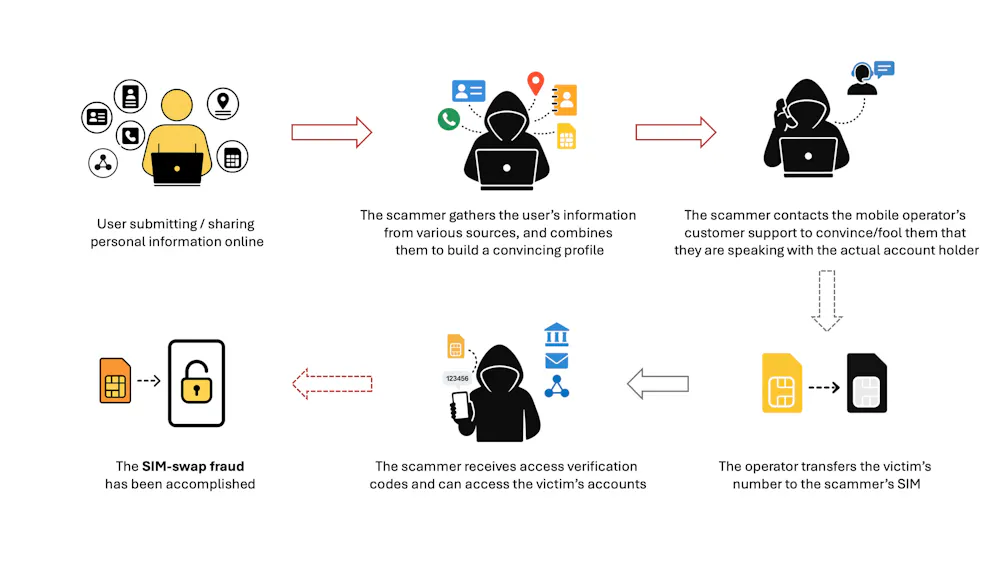
    Sim-swap fraud begins when a scammer convinces a mobile operator to transfer a victim’s number to a new sim card, or even an esim (one that’s embedded in the device), under the scammer’s control.

    This can be done over the phone, through an online chat, or even with the help of a bribed insider. Once the number is transferred, all calls and texts intended for the victim are redirected to the scammer. This includes those crucial verification codes used for logging into email, banking, messaging apps such as WhatsApp, and government services such as HMRC.

    This alone would be dangerous. But what makes sim-swap fraud so influential is that the cyber scammer often already has access to a patchwork of personal data about their target. That information may have been collected from data breaches, phishing attacks, low-reputation websites, or even the victim’s social media.

    People often underestimate the extent to which they reveal themselves online: a birthday posted on Instagram, a phone number included in a job posting, or a home address used in an online giveaway. Scammers combine this data to build a convincing profile, enough to fool a mobile operator’s customer service staff into believing they’re talking to the real account holder.

    How the sim-swap fraud works

    Once the scammer gains control of a number, the consequences are extensive. Attackers can access sensitive information, including personal documents and request and receive password reset links for the user’s other accounts. They can log in to WhatsApp or Telegram accounts, read private messages, impersonate the user, and even contact friends or family members to conduct further scams.

    The victims might see false messages posted in their names or fraudulent transactions made from their accounts. This can lead to financial loss, reputation damage, as well as emotional and mental health issues on the part of the victims.

    In the case of M&S, attackers apparently used this access to manipulate internal processes and gain access to sensitive systems. This highlights a broader risk: many companies still rely on phone numbers as a secondary verification method for staff, making their systems vulnerable to the same cyberattack used against individuals.

    How sim-Swap fraud works – Hossein Abroshan

    Reducing the risk

    While real-time detection of mobile number hijacking remains difficult, taking specific steps can significantly reduce the likelihood of being targeted and victimised. People should avoid sharing personal data unnecessarily, especially across multiple platforms and, very importantly, on unknown or untrusted websites.

    Many attackers don’t obtain all the necessary information from a single source. Instead, they collect it incrementally, using public profiles, marketing databases and past leaks to form a comprehensive picture.

    Being mindful of where you share your phone number, birthday or other identifiers can make it harder for others to impersonate you. It is also crucial to learn how phishing works and how to recognise it, so you will not submit your sensitive information to phishing or fake websites.

    Avoiding SMS-based authentication, where possible, is another key step. Many services now support authenticator apps, such as Google Authenticator, Microsoft Authenticator, Due or Authy, which are not tied to your mobile number. For mobile accounts themselves, setting up a unique pin or password to your account, which must be provided to authorise any changes, can add an extra layer of protection. This makes it harder for someone to initiate a sim swap without that code. However, users alone cannot fulfil this duty.

    Mobile network operators must strengthen identity verification practices, moving beyond basic questions about names and addresses that can be easily gathered or guessed. Banks and other financial institutions should reconsider using SMS or, at the very least, SMS-only as the default method for sensitive authentication. And companies, particularly those handling personal data or financial assets, need to train their IT and customer service teams to recognise the signs of identity based attacks.

    Sim-swap fraud is effective not because it’s highly technical, but because it exploits our trust in phone numbers for identity verification. The M&S case and similar examples show how fragile that trust can be – and why securing our mobile identities is no longer optional.

    Hossein Abroshan, Senior Lecturer, School of Computing and Information Science, Anglia Ruskin University

    This article is republished from The Conversation under a Creative Commons license. Read the original article.

    The opinions expressed in VIEWPOINT articles are those of the author(s) and do not necessarily reflect the views of ARU.

    If you wish to republish this article, please follow these guidelines: https://theconversation.com/uk/republishing-guidelines

    MIL OSI United Kingdom

  • MIL-OSI Russia: From neural networks to stock markets: how computer science is being developed at the Nizhny Novgorod HSE

    Translation. Region: Russian Federal

    Source: State University Higher School of Economics – State University Higher School of Economics –

    Established in 2011 International Laboratory of Algorithms and Technologies for Network Structure Analysis (LATASS) HSE University in Nizhny Novgorod conducts a wide range of fundamental and applied research, including joint projects with large companies: Sber, Yandex and other leaders of the IT industry. The methods developed by HSE scientists not only enrich science, but also improve the work of companies’ transport, and conduct medical and genetic research more successfully. HSE.Glavnoe talked about the work of the laboratory with its head, Professor Valery Kalyagin.

    — Tell us how the laboratory was created.

    — It was organized in 2011 under the Russian government mega-grant program. At that time, the work of a foreign scientist was a mandatory condition for participation in the competition. We were lucky that Professor Panagiotis Pardalos of the University of Florida responded to our proposal for cooperation. He continues to actively collaborate with the HSE and remains the scientific director of the laboratory. Oleg Kozyrev, Eduard Babkin and Boris Goldengorin actively participated in the preparation of the application. Boris Goldengorin played an important role in the development of the laboratory.

    At that time, the study of algorithms for analyzing network structures and what is now called computer science was a new direction for HSE in Nizhny Novgorod.

    Three years later, the grant work was highly appreciated by the Ministry of Education and Science of the Russian Federation, and it was extended for two years. When it was ending, we applied to create an international laboratory at the HSE, we were supported, and now we continue our work as a laboratory of the National Research University Higher School of Economics.

    In the first years of our work, we attracted many young researchers who later became renowned scientists and practitioners.

    — What interested them in the new laboratory?

    — They had a unique opportunity to develop, to work with famous scientists in a creative atmosphere. Almost all of them took advantage of it and over the past years have grown as scientists, researchers and teachers. The development strategy from the very beginning was built on the obligatory combination of scientific research and teaching. And now all our research staff teach, this component of the work, the transfer of experience and competencies, is very important for a scientist.

    — What have you managed to accomplish during this time?

    — Over the past years, the laboratory has become a well-known scientific center in Russia and in the world, largely due to the efforts of Professor Pardalos, who pays much attention to recognition. We have many contacts with colleagues from different universities and scientific centers. Our laboratory is a co-organizer of a large international conference on optimization and applications, we participate in its program committee, and our scientific director is a multiple honorary chairman of the program committee.

    We actively cooperate with our leading universities – MIPT, MSU, the Keldysh Institute of Applied Mathematics of the Russian Academy of Sciences, with Siberian and Ural scientific centers in Novosibirsk, Irkutsk and Yekaterinburg.

    — What are the key areas of your work?

    — These are mainly computer sciences: network models, technologies for analyzing network structures, various aspects of optimization, including problems of combinatorial or discrete optimization on graphs, applications to data mining.

    — How can this be explained to a person who is not knowledgeable in higher mathematics?

    — I will try to explain it in an accessible way. A network is a set of nodes and connections between them. The most understandable examples are social and telecommunication networks, where nodes are people or clients of a mobile operator, and connections are communications between them, measured in a certain way. This can be a graph with special attributes or a hypergraph.

    The optimization task is also clear: you have, for example, a social network, and you want to understand which nodes to place information in so that it passes through the network faster, or, on the contrary, which nodes to block so that a fake message stops circulating in the network.

    Another class of tasks that interests employees are large databases, queries for information in them. This is called the “nearest neighbor search problem” in a data array, when you give some query to a large data set and want to find the object in this database that is most similar to your query.

    If the database consists of 10-20 objects, there are no difficulties, but when there are many of them, you need to organize the search correctly and quickly. For this search, a special graph structure is created on this data, and it speeds up the search by an order of magnitude using special algorithms.

    — Is it possible to use your results in biology or medicine?

    — We are investigating a class of network models that includes some biological networks, such as the network of neurons in the brain or the co-expression network of genes.

    There are billions of neurons, and we can’t measure anything in these networks. But with the help of an electroencephalogram, it is possible to track the activity of individual areas of the brain and analyze the connections between them. Interesting network structures are being created that can be used to study brain activity, including in diseases — for example, analyzing neuron networks in Parkinson’s disease and epilepsy, which helps in their research.

    A gene co-expression network (GCN) is constructed based on gene expression profiles for multiple samples or experimental conditions. Researchers look for pairs of genes that show a similar expression pattern across all samples. The result is a network model that can be analyzed for practical purposes, such as identifying the most important nodes in the model. The identified gene cluster means that the gene and its neighbors have similar expression profiles. This can then be used to simplify drug testing.

    — How widely is your work applied in economics?

    — Another well-known network is stock markets. We analyze assets, identify connections between them. Taking them into account, a stock market network is formed. Analysis of stock market networks allows us to form investment portfolios. A classic example is the Markowitz model of the optimal investment portfolio. However, using such models does not mean that you will avoid a risk that can cancel out all potential income.

    Large trading companies, banks, and firms that advise investors want to have a clear model for how to form investment portfolios. They do not strive for super-profits, but want to invest reliably. And then network models turn out to be useful. Additional information about connections helps to identify portfolios with the necessary characteristics.

    – You and your colleagues are probably rich people.

    — We do not trade on the markets and do not give recommendations. Students write final theses on these and other topics and analyze how and which portfolios work on different markets.

    This does not replace analysis, but it is useful for it and opens up additional opportunities for activity in the stock market.

    For example, there is a possibility of choosing a portfolio by constructing a market network graph and identifying independent sets in it. It has been experimentally proven that such sets provide diversified and interesting portfolios in terms of profitability.

    — Do the models you have developed suggest different development scenarios?

    — The laboratory actively studies the uncertainty of algorithms for constructing various graph structures in network models such as gene co-expression networks, brain networks, and stock market networks.

    If uncertainty is high, then conclusions may be false: we hope to get rich, but our expectations do not come true.

    — How does solving fundamental scientific problems combine with applied work?

    — We have a strong group headed by Dmitry Malyshev. In its direction (algorithmic graph theory), the research of this group is closer to theoretical computer science and discrete mathematics. A significant number of postgraduate students and young employees of the laboratory have defended dissertations on these topics. Despite the fundamental theoretical nature of the research, it also has applied significance. Estimates of the computational complexity of problems on graphs help to identify computationally difficult problems and find classes of problems that can be solved quickly.

    In the first years of the laboratory’s work, we developed a direction of intelligent data analysis and AI. It is headed by Andrey Savchenko. He develops the direction of intelligent data analysis in conditions of limited resources, for example, on mobile devices that are less powerful than desktop computers or laptops. For example, we want to classify photos, texts, something else on our smartphone, but we do not have access to a powerful resource. On a smartphone, you cannot deploy a full-fledged neural network. He and his colleagues developed an approach that allows you to effectively solve such problems, and patented it as a result of intellectual activity (RIA). There are already applications that you can download and use.

    — Is this necessary now, when we are promised quantum computers with unlimited capabilities?

    — The head of a research center at a large foreign company recently said that we have returned to the situation of the 1970s, when scientists and practitioners, given the limited capabilities of processors and computer memory, paid special attention to the efficiency of algorithms. Then the speed of processors and the capacity of memory, including RAM, increased sharply, and this lost some of its relevance. Now the problem has returned, since we do not expect a significant improvement in hardware. When you train large language models or search large databases, you return to the need for fast calculations under conditions of limited resources. Now many large manufacturers of computing resources and IT companies are conducting research into the efficient use of existing capabilities. If we reduce calculations on at least one node by 1%, we will get a significant effect. We had a successful project with an IT company on the use of patterns (templates) of the computation graph to speed up the training of neural networks. Such tasks are becoming increasingly popular.

    The emergence of a quantum computer with unlimited capabilities is still not a matter for the very near future.

    — Which companies have used your developments?

    — We developed an algorithm for organizing the delivery of products to stores for a large retail chain. This is called the transport routing problem, it is also network-based and calculates traffic along a road network. The problem has high computational complexity. If you have 100 cars and 1000 stores and you want to optimize traffic, then solving such a problem manually is difficult. It is also not easy for a computer to solve it, but clever algorithms help. This enables AI to manage the logistics of transport use.

    — Is there a problem with the transition of scientists to industrial partners?

    — There is a problem of personnel outflow in IT companies. We start interacting with companies, companies see the qualifications of our personnel, offer them to engage in science and solve interesting problems and attract specialists with better conditions.

    — With which HSE departments does the laboratory collaborate?

    — The closest cooperation has been established with International Center for Analysis and Decision Making and with Laboratory of Applied Network Analysis.

    — How do you see the prospects for research?

    — We focus on a combination of fundamental and applied research so that we have both good theoretical results and publications, as well as joint projects with industry.

    The campus strategy is to expand applied research, and this is a nationwide trend. We must learn to meaningfully answer the question of how our theoretical developments can make a real contribution to the development of the country’s economy and social sphere. We see our prospects in the development of algorithms and technologies for artificial intelligence systems.

    In addition to the purely scientific component, popularization of science is important in order to make theoretical and applied results accessible to schoolchildren, our future students and laboratory staff.

    The laboratory, as one of the leading scientific centers in the field of computer science and applications, is open to new partnership projects of both fundamental and applied nature.

    — What educational programs do you participate in?

    “We are involved in two key programs on campus: “Applied Mathematics and Computer Science» (bachelor’s degree training) and «Intelligent data analysis» (training of masters). The laboratory’s subject matter is actively present in these programs. This is reflected both in teaching and in the students’ scientific work.

    All international laboratories develop research expertise and pass it on to young people. If we do not have contact with students, where will we recruit new young employees?

    I would like to add that our graduates are in demand in many companies and countries.

    — Why is it important to preserve fundamental research?

    — We are now seeing the second birth of mathematics, the development of intelligent data analysis and artificial intelligence technologies has generated tasks that require specialists with developed abstract thinking and a broad outlook, which fundamental mathematics provides. At the same time, many sections of mathematics are in demand. This is a sign of the 21st century.

    For example, we have a huge data set and are trying to understand how it is structured. Often, the high dimensionality of the data is an obstacle to its analysis. To reduce the dimensionality without losing information, we need to have a good understanding of many sections of fundamental mathematics – from classical methods of linear algebra and mathematical analysis to advanced probabilistic models and topology.

    Mathematicians have perked up, people see that they need to expand their field of activity to applied research, this is a characteristic feature of HSE.

    — How do you manage to maintain international connections?

    — We continue contacts with foreign scientists. Since 2012, we have regularly held an annual international conference on network analysis, international schools for young scientists. Almost everyone who came to Nizhny Novgorod continues to communicate, respond to proposals, despite the past pandemic and the current situation. For young scientists, this is an additional opportunity to assess the level of their research, it becomes clearer when in contact with colleagues from abroad. We strive for young people to actively communicate with guests. Students are also interested in this.

    Please note: This information is raw content directly from the source of the information. It is exactly what the source states and does not reflect the position of MIL-OSI or its clients.

    MIL OSI Russia News

  • MIL-OSI Analysis: China’s support for Mali’s military carries risks: researcher outlines what they are

    Source: The Conversation – Africa – By Paa Kwesi Wolseley Prah, Postdoctoral Fellow, Dublin City University

    Mali, a landlocked Sahelian nation of 25 million people, has faced significant instability since 2012, marked by terrorism, state neglect and armed conflicts.

    That year a Tuareg rebellion started in northern Mali and President Amadou Toumani Touré was ousted in a military coup. Constitutional rule was suspended. Rebels in northern Mali went on to seize cities like Timbuktu, Gao and Kidal, declaring an independent Islamic State of Azawad and imposing sharia law.

    They also destroyed cultural heritage sites, including 14 of Timbuktu’s 16 Unesco-listed mausoleums. The crisis prompted international intervention, including a UN authorised mission, which retook northern cities within weeks. Islamist rebels retreated into civilian populations and remote areas.

    Despite these efforts, violence against civilians by extremist groups and community militias has continued. By 2023, 8.8 million Malians needed humanitarian assistance. Over 375,500 were internally displaced, primarily women and children.

    Meanwhile, the former French colony had turned to China for military assistance. Between 2012 and 2013, China provided €5 million (about US$5.8 million) in logistical equipment to improve the Malian army’s mobility.


    Read more:
    China’s interests in Africa are being shaped by the race for renewable energy


    In August 2013, the Chinese People’s Liberation Army gave the Malian army military supplies totalling 1.6 billion CFA francs (about US$2.8 million). China made similar donations between 2014 and 2023.

    I am an international security and global governance researcher. My recent research explored the impact of China’s security sector assistance on Mali’s fragility.

    China’s assistance to Mali aims to equip the country to address terrorism and insurgency. But I argue that it may have unintended consequences and cause further damage to the country.

    The heavy reliance on Chinese supply exposes Mali to vulnerabilities, including supply disruptions, diminished bargaining power, and limited strategic flexibility. This could destabilise security even more should China face manufacturing issues or supply chain disruptions leading to delays or shortages in the production of weapons.

    It also raises concerns about the potential influence of China on Mali’s defence policies and decision-making processes. In turn this could entrench the Malian military government’s position. China takes a hands-off approach to the governance structures of the countries it engages with. Hopes of democratisation in the country could be affected.


    Read more:
    US trade wars with China – and how they play out in Africa


    Rich in resources

    Mali has significant natural resources, including 800 tons of gold reserves (it’s Africa’s fourth-largest producer), iron ore, manganese, lithium, and potential uranium and hydrocarbon deposits.

    In 2019, gold production generated US$734 million, or 9.7% of Mali’s GDP, supporting over 10% of the population.

    Chinese firms, such as Ganfeng Lithium and China National Nuclear Corporation, have invested heavily in Mali’s mining sector. They are involved in a US$130 million lithium project and uranium exploration in the Kidal and Falea regions.

    Despite security risks, including attacks on Chinese personnel in 2015 and 2021, China remains committed due to Mali’s resource potential.

    Beyond mining, China has invested in Mali’s infrastructure. A US$2.7 billion railway modernisation project connects Bamako to Dakar, facilitating resource exports like iron ore and bauxite.

    The total of Mali’s external debt to China is not explicitly stated. But the 2014 loan agreement of US$11 billion and the 2016 loan of US$2.7 billion alone suggest Mali’s debt to China could be at least US$13 billion. This is without including loans for projects like the Bamako-Ségou expressway, and bridges in Bamako.

    This has often been criticised as “debt trap diplomacy”, increasing recipient countries’ dependence on Beijing. In Mali, I believe this risks entrenching economic vulnerability and giving China geopolitical leverage.


    Read more:
    China reaps most of the benefits of its relationship with Africa: what’s behind the imbalance


    China’s security sector assistance to Mali

    Historically, Mali relied on France. More recently, it’s used Russia’s expeditionary corps, formerly known as Wagner Group, for security support.

    In 2011, China provided US$11.4 million in grants, US$8.1 million in zero-interest loans, and a US$100.8 million concessional loan to foster bilateral cooperation.

    China’s participation in the United Nations Multidimensional Integrated Stabilisation Mission in Mali, starting in 2013 with 395 personnel, marked a shift in its security engagement.

    Chinese peacekeepers, including engineers, medical personnel and security guards, repaired infrastructure, provided medical aid and supported Mali’s 2013 elections.

    Their professionalism earned praise from the UN special envoy Albert Gerard Koenders for helping to ensure a smooth election.

    China’s involvement in Mali challenged traditional European approaches to peacekeeping, particularly France’s military-heavy strategy.


    Read more:
    China-Africa relations: new priorities have driven major shifts over the last 24 years – 5 essential reads


    How China’s assistance contributes to Mali’s fragility

    In spite of the positives, China’s security sector assistance contributes to Mali’s fragility in several ways.

    First, its no-strings-attached nature allows Mali’s military junta to consolidate power without making democratic or governance reforms.

    This lack of accountability enables corrupt military factions to operate unchecked. Governance weaknesses and authoritarianism can continue.

    Second, the heavy reliance on Chinese supply raises concerns about the potential influence of China on Mali’s defence decisions.

    This over-reliance on military solutions risks escalating conflicts and could lead to human rights abuses by security forces, as seen in increased violence against civilians. It doesn’t address root causes of conflict like social cohesion or local governance.

    Third, Mali’s growing dependence on Chinese aid — both military and economic — makes it vulnerable to disruptions from geopolitical tensions, supply chain issues, or changes in China’s foreign policy. This limits Mali’s ability to diversify its military capabilities or respond to evolving threats.

    Finally, China’s infrastructure investments, such as the US$1.48 billion (750 billion CFA francs) Bamako-Dakar railway loan, creates “debt trap diplomacy”.

    This pattern deepens economic dependence and reduces policy autonomy, further weakening state resilience.


    Read more:
    Maps showing China’s growing influence in Africa distort reality – but some risks are real


    The way forward

    To mitigate the risks of Chinese security sector assistance and promote sustainable stability, Mali must adopt a multifaceted strategy.

    First, it should collaborate with China to align security sector assistance with civilian-led security approaches.

    Second, Mali should diversify security and economic partnerships with donors like the US, the UK, and the EU.

    Third, transparent guidelines, developed through consultation with stakeholders, should assess the impacts of assistance to avoid deepening dependence.

    Fourth, engaging civil society and publishing regular reports on security sector assistance use and outcomes will foster public trust.

    Finally, promoting regional economic integration and ties with global powers will bolster Mali’s economic resilience.

    Paa Kwesi Wolseley Prah does not work for, consult, own shares in or receive funding from any company or organisation that would benefit from this article, and has disclosed no relevant affiliations beyond their academic appointment.

    ref. China’s support for Mali’s military carries risks: researcher outlines what they are – https://theconversation.com/chinas-support-for-malis-military-carries-risks-researcher-outlines-what-they-are-257738

    MIL OSI Analysis

  • MIL-OSI USA: In Memoriam: Former Athletics Administrator and Trustee Phil Barry

    Source: US State of Connecticut

    Phil Barry ’54, who dedicated over 60 years of his life to the University of Connecticut as a student, Division of Athletics administrator, and later as a member of the Board of Trustees, passed away June 14 at the age of 96.

    Born Philip Paul Barry in Willimantic on March 30, 1929, to the late Patrick and Rosa (Giraca) Barry, he leaves his beloved wife of 68 years, Lena (Gray) Barry, of Brooklyn, Conn. A lifelong resident of eastern Connecticut, Barry was a friend to all, a dedicated family man, loyal associate, and collaborator to organize good times.

    Phil Barry (Contributed photo)

    A 1947 graduate of Windham High School, he was class president of his freshman and senior classes. He excelled in sports – particularly basketball and baseball.

    Barry enrolled at UConn and his academic career was interrupted by service in the United States Army, in which he completed officer training for two years during the Korean War. Following his military discharge, he graduated from UConn in 1954 and worked for two years at the former Willimantic Trust Company, where he met his wife when she came in to cash her nursing payroll checks.

    Barry was hired in the UConn Division of Athletics as ticket manager and worked for 31 years in the department. His career in athletics progressed to business manager and later assistant to the director of athletics. In August 1970, he was named assistant director of athletics and in 1983 was named associate director of athletics for operations, before retiring in 1987. At UConn, he served on many search committees to fill staff and team coaching vacancies.

    Barry served as the first treasurer of the Big East Conference at the league’s inception in 1979 and was also secretary-treasurer of the Yankee Conference.

    He was active for many years in the Collegiate Athletic Business Management Association, serving that national group as president in 1974 and being named National Athletic Business Manager of the Year in 1975.

    Following retirement, Barry was a member of UConn’s Board of Trustees from 2001-09 and the Board of Directors of the UConn Alumni Association. Barry was elected and served two terms as a member of the Mansfield Town Council. During his tenure, he focused on the Downtown Storrs project and worked to foster closer ties between the Town of Mansfield and UConn.

    Phil Barry accepts the National Athletic Business Manager of the Year Award in 1975 from the College Athletic Business Managers Association. (Contributed photo)

    In the community, Barry had many interests, including membership in the Willimantic Country Club, Elks Club, and Irish Club of Willimantic. He was one of the last living members of Roy’s Boys – a dedicated group of Willimantic area baseball players who benefited as teens under the guidance and teaching of Willimantic YMCA Director Roy Dissinger.

    Barry was predeceased by his brother, John (Eloise) Barry; his sister, Pauline (Ben) Nault; and his son-in-law, John Geissler.  In addition to his wife, Lena, Phil leaves four children: Patricia Geissler, David (Lori) Barry, Douglas (Pamela) Barry, and Daniel (Julie) Barry. He had nine grandchildren, which include Kristin (Phillippe and their children, Daysia, Mariah, and Devin), Alyssa (Michael), Sean, Nikki, Jessica, Anna, Emma, Ryan, and Bradley.

    Barry’s family will receive relatives and friends Tuesday, July 1, 2025, from 4 p.m. to 7p.m. at First Baptist Church of Mansfield, 945 Storrs Road, Storrs. A memorial service will be celebrated Wednesday, July 2, 2025, at 1 p.m. at First Baptist Church of Mansfield in Storrs. The family invites those attending to wear UConn blue and white.

    The family would like to thank the kind and compassionate staff at Creamery Brook and Pierce Home in Brooklyn for its extraordinary care since 2019. Donations may be made in Barry’s honor to either St. Jude Children’s Research Hospital or Pierce Memorial Baptist Home Recreation Fund (checks made payable to PMBH, noting Recreation), 44 Canterbury Road, Brooklyn, CT 06234.

    Potter Funeral Home Obituary

    MIL OSI USA News

  • MIL-OSI USA: Picture This: Reflections of a Hospital Curator

    Source: US State of Connecticut

    I never imagined that art curation and hospitals could be such a dynamic pair. The idea of intentionally organizing the placement of artwork around such a facility was so foreign to me that I almost missed having one of the most enlightening roles of my career. I eventually realized how wrong I was and how right this job is for me, but I did not come to this conclusion easily. After a friend nudged me multiple times to apply for this position at UConn Health, it was not long before a mutual friend urged me to read the description again thoroughly, then apply. This was in fact a job for me. My experience up to that point in my career had all but placed a billboard in front of me with a giant red arrow pointing in this direction.

    The Frank Stella piece hanging behind curator Andre Rochester outside the Health Sciences Library is among the highest-profile pieces in UConn Health’s art collection. (2023 photo by Tina Encarnacion)

    After a few friendly nudges and divine signs, I went for it. On the day of the interview, I hit a massive traffic jam caused by a statewide police procession. I called ahead from the highway, mortified, but they could see it happening outside the window. The moment felt doomed, but it led to one of the most meaningful jobs of my life. Arriving 15 minutes late, prepared with a lengthy CV, anecdotes about my art career and a decade of curatorial experience, I entered the lobby where I met my future manager. She led me to a conference room where two others patiently awaited my grand entrance. Although I arrived flustered and felt like I somehow blew this opportunity by coming in so late, the interview went well. They invited me back a couple of weeks later and presented an offer.

    “The Family” is a bronze sculpture by Wolfgang Behl. (Photo provided by Andre Rochester)

    Becoming the art curator at UConn Health has broadened my perspective of art placement and its function in the healing environment. People may not even notice art as they walk past it in our public spaces every day. Yet, how do you think patients, staff, or visitors might feel without it there? How drab and boring would it be if there was nothing to break up the empty space in our corridors? A part of healing from any ailment is mental. The atmosphere in which you endure or help someone through that process is important. Art must engage, inspire, invoke, and uplift. Art has the power to change the environment in which we place it. We decorate our homes because it makes us feel something. The same can be said about our workspace. Art is a subtle, but important part of feeling better. I have made it my personal mission to ensure people notice the art at UConn Health, but more importantly, they connect with it. Being an art curator in a hospital means wearing a few hats: interior decorator, creative consultant, and sometimes you become somewhat of a community organizer.

    UConn Health art curator Andre Rochester (left) leads an art committee of volunteers who are current and former employees, including (as of August 2024, from left) Edith Lamonica, Ann Taridona, Christine McNally, Jillian Silverberg, Felicia Vezina, Emily Ziemba, Jo Cohen, and Rachael Norris. (Tina Encarnacion/ UConn Health photo)

    The Connecticut Collection (as it was named by its founder, Celeste LeWitt) is a gem hidden in plain sight. A full spectrum of visual art can be found throughout all UConn Health locations. It started with museum-level artwork thanks to Celeste’s appeal to some of the most notable artists in the state. Through her own network and that of her cousin, world renowned conceptual artist and Hartford native Sol LeWitt, the collection quickly developed into something truly special. Since 1979, The Connecticut Collection has grown to over 2,500 works of art, including items from a wall tapestry by Frank Stella, original prints by Anni Albers, an array of sculptures by Wolfgang Behl, and a drawing by Sol LeWitt. Throughout the year, we receive donations from artists of all backgrounds- professionals and hobbyists alike- with styles ranging from landscapes to portraits, folk art, and photography. Donors also include art collectors, current and former employees, patients, and their families. What makes the Connecticut Collection so unique is we have a little bit of everybody and a little bit of everything visual arts. In 2024, an artist from Oakland, California, donated a beautiful terra cotta sculpture- a testament to the breadth of our reach as a health institution and an alignment between Celeste LeWitt’s vision and the community at large.

    “Four Seasons in New England” by Tracy Kane is 10-ft-tall, 16-ft-wide acrylic mural on wood panels. (Provided by Andre Rochester)

    This role includes processing art donations, leading an art committee, curating exhibits, and bringing awareness to the art collection. I help select art for offices, conference rooms, waiting rooms, and some patient treatment areas. In addition to the Connecticut Collection, we have two galleries. Celeste LeWitt Gallery is on the north side of our main dining facility. It was established by our previous curator, Linda Webber, in honor of the late Celeste LeWitt. During her 22-year tenure as art curator, Linda started as a volunteer, advocating for this to become a paid position, and nearly doubled the size of the collection. This position would not exist without her efforts. I start every art tour at an original painting by Linda to pay homage to her legacy by acknowledging the big shoes I had to fill upon my arrival at UConn Health. Even in her retirement, Linda’s passion for art at UConn Health is still felt. She often attends our receptions. Our newly established Connector Gallery is in the main floor corridor connecting our main building to John Dempsey Hospital.

    “Visitor in My Garden” is a painting by Stanwyck Cromwell. (Provided by Andre Rochester)

    Celeste LeWitt Gallery is dedicated to exhibiting artists from across the state of Connecticut and parts of New England. We host four exhibits per year featuring two artists at a time. This recently included a debut for Maggie Prado from our carpentry and paint team and Martha G. Trask, who works for our library. The Connector Gallery started with an exhibit for Art Connection Studio (ACS), a program of Vinfen, an organization that provides support for people with developmental and intellectual disabilities. This experience inspired me to connect UConn Health with organizations and people that use art as a tool for healing and cultivate opportunities for collaboration. Later that year, this mission expanded to include ongoing employee art shows in between these collaborative exhibits.

    I met the ACS team in 2023 at one of their receptions. They partner with local artists to teach participants how to make several types of art and schedule shows for them throughout the state. I was so inspired by their art that I offered an opportunity to exhibit at UConn Health. By spring 2024, with full support from our executive leadership team, we displayed a temporary installation of their 15-foot collaborative mural which says the words “THIS ABILITY” along with paintings from three of their artists. We also called attention to our Center for Excellence in Developmental Disabilities Education, Research, and Service. As a result of this first collaboration, our Office of Diversity and Inclusion led a campaign to recruit members of the UConn Health community to volunteer at ACS.

    From left: UConn Health employees Jameson MacInnis, Irina Bezsonova, Rachael Norris, and Jo Cohen observe some of the submissions to the fall 2024 employee art show along the hallway connecting UConn Health’s Connecticut Tower and University Tower. Norris and Cohen are members of UConn Health’s art committee, and Bezsonova’s work has been accepted for an exhibit. (Photo provided by Andre Rochester)

    We have hosted four employee exhibits in the Connector Gallery so far. This includes a solo exhibition for Irina Bezsonova, associate professor, Department of Molecular Biology and Biophysics. I am proud to say that we get at least three submissions from someone new with each call for employee artwork. We have displayed art by employees from across the entire organization. It serves as proof that there are many talented people who work at UConn Health. I am especially proud that employee artwork has had a presence in our collection from the beginning. The Connector Gallery is only one year in its journey, and the impact of these exhibits is felt by all.

    I led an effort to source artwork for the New England Sickle Cell Institute and Connecticut Blood Disorder Center, an opportunity for which I am profoundly grateful. Their leadership team trusted my vision to engage artists from across the state directly. Some of whom shared that they have a personal connection to the population we serve in NESCI/CBDC. I have also collaborated with our Office of Professional Wellbeing and Engagement to facilitate lunchtime art workshops for employees that focus on forward thinking, goal setting, and mindfulness using a lesson in color theory. I also host tours for students, employees, and occasional visitors upon request.

    It has only been a two-and-a-half-year journey for me, but so much has happened in the time I have been the art curator at UConn Health. I am digging deeper into my purpose: a personal mission to use my own progress as an artist and creative professional to help others thrive. I continue to grow in this position, and with the help of our art committee, I will find more ways to raise awareness and increase engagement with art at UConn Health.

    We must acknowledge that the scope of art at UConn Health goes beyond visual media. Creativity is the foundation for writing, music, and theater. We have an Orchestra of UConn Health (O.U.C.H.), a student acapella group, and J.J. Odom. director of buildings and grounds, is a talented drummer. Furthermore, there are authors like Lucius Downing and Shawn Brown, who work in IT. UConn Health is a premier location for medical treatment, but there is an arts community that exists among the people who work here. I have only scratched the surface but there is a deep connection between health and creativity here and I am honored to be a part of it. I hope to continue cultivating a space where art, wellness, and community thrive together at UConn Health.

    Andre Rochester is UConn Health’s art curator. (Photo by Keith Claytor, Time Frozen Photography)

    About the author: Andre Rochester is an artist, curator, and arts administrator based in Hartford. He currently serves as the art curator at UConn Health, where he oversees the Connecticut Collection and curates exhibitions that elevate healing through creativity. A passionate advocate for the intersection of art and wellness, Andre uses his platform to support emerging artists, cultivate community, and foster a culture of belonging through visual storytelling.

    MIL OSI USA News

  • MIL-OSI USA: Celebrating Completion of $45M Food Hub in the Bronx

    Source: US State of New York

    overnor Kathy Hochul today announced the completion of the New York State Regional Food Hub, a $45 million cold-storage facility that will transform food access across New York. The first-of-its-kind 60,000 square-foot facility, operated by GrowNYC in the Hunts Point neighborhood of the Bronx, will enable a 600 percent increase in locally-sourced food distribution — from approximately 3 million pounds to 20 million pounds annually by 2034 — while creating over 200 new jobs and providing a critical economic lifeline to New York farmers. The facility, supported by $19 million from New York State, as recommended by the New York City Regional Economic Development Council, represents a joint State and City investment designed to strengthen the local food economy, support New York farmers, and improve access to healthy and affordable foods for low-income communities.

    “The New York State Regional Food Hub is a game-changer for families and farmers across New York,” Governor Hochul said. “From the streets of the Bronx to the farms of Batavia, the Empire State has so much to offer. That’s why we invested in this massive GrowNYC facility to expand access to fresh, local food while creating new economic opportunities for our agricultural producers.”

    Empire State Development President, CEO and Commissioner Hope Knight said, “We are proud to support this transformative infrastructure that will create jobs and dramatically expand access to affordable, healthy food for New Yorkers. ESD’s strategic investment enhances the efficiency, sustainability, and equity of our state’s food system by connecting upstate farmers directly to downstate markets, ensuring urban families have access to the quality produce they deserve. The New York State Regional Food Hub represents a model investment that will benefit communities across our state.”

    New York State Agriculture Commissioner Richard A. Ball said, “The New York State Regional Food Hub is designed to be a game changer for our farmers bringing product to market and to our families who will have greater access to quality New York grown fruits and vegetables. We learned during the pandemic that we needed to double down on our efforts to strengthen the food supply chain and make sure that we had a food system right here in New York that was resilient and could feed its communities. This Food Hub is a tremendous piece of that puzzle and will provide an incredible benefit to our underserved populations and to our farmers.”

    GrowNYC President and CEO Marcel Van Ooyen said, “We’re beyond grateful for the vast support from City and State leaders that led to the completion of this state-of-the-art facility and that will advance our work promoting equitable food access in New York. Our Food Hub provides ample opportunities for GrowNYC and farmers to make a tangible impact on the everyday lives of underserved New Yorkers, and I’m hopeful it will serve as a scalable model for how cities across the United States can combat hunger while supporting local farm systems.”

    The Food Hub will enable GrowNYC to quadruple its aggregation and distribution square footage, dramatically expanding wholesale distribution capacity to make fresh, local foods accessible to underserved New Yorkers. The facility will serve wholesale buyers including institutions and restaurants while strengthening innovative partnerships with nonprofit organizations. Building on GrowNYC’s current work distributing free produce through New York State Department of Agriculture and Markets New York Food for New York Families program — which unites a network of 20 community partners including Graham Windham and The POINT to serve the Hunts Point community and beyond — the expanded Hub will significantly scale these vital food access efforts. Additional funding was provided by the New York City Economic Development Corporation, the New York City Council, U.S. Economic Development Administration, Bank of America, and others.

    The facility addresses a critical need identified during the COVID-19 pandemic, when food insecurity in New York City grew from 1.4 million residents to approximately 2 million. By sourcing food directly from regional farms and creating new jobs, the Hub will support New York State farmers — particularly small- and mid-sized operations — while increasing food distribution capacity and enhancing access to New York City’s wholesale marketplace. The processing facility will assist upstate producers and processors in targeting institutional and private sector procurement opportunities, offering a significant boost to New York’s agricultural economy while building a more resilient food supply chain.

    NYCREDC Co-Chairs Félix V. Matos Rodríguez, City University of New York Chancellor, and William D. Rahm, CEO of Everview Partners, said, “The NYCREDC sees the Food Hub as a vital tool to address our region’s needs, and an engine of economic opportunity for New York City and our upstate neighbors. The expansive cold storage space will help alleviate food insecurity — a major struggle for many households in the region — and support farming communities’ livelihoods. This investment strengthens our regional food system and builds economic partnerships that benefit communities across New York State.”

    State Senator Michelle Hinchey said, “Strengthening the connection between upstate farmers and downstate communities has long been one of New York’s greatest opportunities — and the NYS Regional Food Hub brings that vision to scale. Every New Yorker deserves to eat fresh, healthy food, and this innovative model lays the groundwork to expand food access to more New Yorkers, especially those in historically underserved communities. It sets a national standard for how we fight hunger and invest in agriculture as a powerful engine of both economic growth and social progress, and I’m proud to champion this project alongside partners who share that vision.”

    Assemblymember Donna Lupardo said, “We have anxiously awaited the opening of GrowNYC’s new Regional Food Hub. Providing expanded market opportunities for NY farmers is a win-win for them and for the communities who will benefit from fresh and locally sourced fruits and vegetables. I’m very happy that Empire State Development agreed with NYC’s Regional Council to make this substantial investment. I’m sure that other cities will want to emulate the work being done here.”

    The New York State Regional Food Hub was first developed as the result of the New York State-New York City Regional Food Hubs Task Force, which created a roadmap to build a Regional Food Hub System. The goal was to enhance the connection between upstate food producers and the downstate market, increase access to fresh food for underserved populations, boost in-state food production and consumption, and create new job opportunities in the growing sector of food manufacturing. As a high priority in the task force’s final action plan, this facility now serves as a national model for creating sustainable, self-sufficient food systems that safeguard local food supplies.

    MIL OSI USA News

  • MIL-OSI Africa: China’s support for Mali’s military carries risks: researcher outlines what they are

    Source: The Conversation – Africa – By Paa Kwesi Wolseley Prah, Postdoctoral Fellow, Dublin City University

    Mali, a landlocked Sahelian nation of 25 million people, has faced significant instability since 2012, marked by terrorism, state neglect and armed conflicts.

    That year a Tuareg rebellion started in northern Mali and President Amadou Toumani Touré was ousted in a military coup. Constitutional rule was suspended. Rebels in northern Mali went on to seize cities like Timbuktu, Gao and Kidal, declaring an independent Islamic State of Azawad and imposing sharia law.

    They also destroyed cultural heritage sites, including 14 of Timbuktu’s 16 Unesco-listed mausoleums. The crisis prompted international intervention, including a UN authorised mission, which retook northern cities within weeks. Islamist rebels retreated into civilian populations and remote areas.

    Despite these efforts, violence against civilians by extremist groups and community militias has continued. By 2023, 8.8 million Malians needed humanitarian assistance. Over 375,500 were internally displaced, primarily women and children.

    Meanwhile, the former French colony had turned to China for military assistance. Between 2012 and 2013, China provided €5 million (about US$5.8 million) in logistical equipment to improve the Malian army’s mobility.


    Read more: China’s interests in Africa are being shaped by the race for renewable energy


    In August 2013, the Chinese People’s Liberation Army gave the Malian army military supplies totalling 1.6 billion CFA francs (about US$2.8 million). China made similar donations between 2014 and 2023.

    I am an international security and global governance researcher. My recent research explored the impact of China’s security sector assistance on Mali’s fragility.

    China’s assistance to Mali aims to equip the country to address terrorism and insurgency. But I argue that it may have unintended consequences and cause further damage to the country.

    The heavy reliance on Chinese supply exposes Mali to vulnerabilities, including supply disruptions, diminished bargaining power, and limited strategic flexibility. This could destabilise security even more should China face manufacturing issues or supply chain disruptions leading to delays or shortages in the production of weapons.

    It also raises concerns about the potential influence of China on Mali’s defence policies and decision-making processes. In turn this could entrench the Malian military government’s position. China takes a hands-off approach to the governance structures of the countries it engages with. Hopes of democratisation in the country could be affected.


    Read more: US trade wars with China – and how they play out in Africa


    Rich in resources

    Mali has significant natural resources, including 800 tons of gold reserves (it’s Africa’s fourth-largest producer), iron ore, manganese, lithium, and potential uranium and hydrocarbon deposits.

    In 2019, gold production generated US$734 million, or 9.7% of Mali’s GDP, supporting over 10% of the population.

    Chinese firms, such as Ganfeng Lithium and China National Nuclear Corporation, have invested heavily in Mali’s mining sector. They are involved in a US$130 million lithium project and uranium exploration in the Kidal and Falea regions.

    Despite security risks, including attacks on Chinese personnel in 2015 and 2021, China remains committed due to Mali’s resource potential.

    Beyond mining, China has invested in Mali’s infrastructure. A US$2.7 billion railway modernisation project connects Bamako to Dakar, facilitating resource exports like iron ore and bauxite.

    The total of Mali’s external debt to China is not explicitly stated. But the 2014 loan agreement of US$11 billion and the 2016 loan of US$2.7 billion alone suggest Mali’s debt to China could be at least US$13 billion. This is without including loans for projects like the Bamako-Ségou expressway, and bridges in Bamako.

    This has often been criticised as “debt trap diplomacy”, increasing recipient countries’ dependence on Beijing. In Mali, I believe this risks entrenching economic vulnerability and giving China geopolitical leverage.


    Read more: China reaps most of the benefits of its relationship with Africa: what’s behind the imbalance


    China’s security sector assistance to Mali

    Historically, Mali relied on France. More recently, it’s used Russia’s expeditionary corps, formerly known as Wagner Group, for security support.

    In 2011, China provided US$11.4 million in grants, US$8.1 million in zero-interest loans, and a US$100.8 million concessional loan to foster bilateral cooperation.

    China’s participation in the United Nations Multidimensional Integrated Stabilisation Mission in Mali, starting in 2013 with 395 personnel, marked a shift in its security engagement.

    Chinese peacekeepers, including engineers, medical personnel and security guards, repaired infrastructure, provided medical aid and supported Mali’s 2013 elections.

    Their professionalism earned praise from the UN special envoy Albert Gerard Koenders for helping to ensure a smooth election.

    China’s involvement in Mali challenged traditional European approaches to peacekeeping, particularly France’s military-heavy strategy.


    Read more: China-Africa relations: new priorities have driven major shifts over the last 24 years – 5 essential reads


    How China’s assistance contributes to Mali’s fragility

    In spite of the positives, China’s security sector assistance contributes to Mali’s fragility in several ways.

    First, its no-strings-attached nature allows Mali’s military junta to consolidate power without making democratic or governance reforms.

    This lack of accountability enables corrupt military factions to operate unchecked. Governance weaknesses and authoritarianism can continue.

    Second, the heavy reliance on Chinese supply raises concerns about the potential influence of China on Mali’s defence decisions.

    This over-reliance on military solutions risks escalating conflicts and could lead to human rights abuses by security forces, as seen in increased violence against civilians. It doesn’t address root causes of conflict like social cohesion or local governance.

    Third, Mali’s growing dependence on Chinese aid — both military and economic — makes it vulnerable to disruptions from geopolitical tensions, supply chain issues, or changes in China’s foreign policy. This limits Mali’s ability to diversify its military capabilities or respond to evolving threats.

    Finally, China’s infrastructure investments, such as the US$1.48 billion (750 billion CFA francs) Bamako-Dakar railway loan, creates “debt trap diplomacy”.

    This pattern deepens economic dependence and reduces policy autonomy, further weakening state resilience.


    Read more: Maps showing China’s growing influence in Africa distort reality – but some risks are real


    The way forward

    To mitigate the risks of Chinese security sector assistance and promote sustainable stability, Mali must adopt a multifaceted strategy.

    First, it should collaborate with China to align security sector assistance with civilian-led security approaches.

    Second, Mali should diversify security and economic partnerships with donors like the US, the UK, and the EU.

    Third, transparent guidelines, developed through consultation with stakeholders, should assess the impacts of assistance to avoid deepening dependence.

    Fourth, engaging civil society and publishing regular reports on security sector assistance use and outcomes will foster public trust.

    Finally, promoting regional economic integration and ties with global powers will bolster Mali’s economic resilience.

    – China’s support for Mali’s military carries risks: researcher outlines what they are
    – https://theconversation.com/chinas-support-for-malis-military-carries-risks-researcher-outlines-what-they-are-257738

    MIL OSI Africa

  • MIL-OSI: Cyber A.I. Group Appoints Irving Bruckstein as Director of Global Technology Integration

    Source: GlobeNewswire (MIL-OSI)

    MIAMI, NEW YORK and LONDON, June 17, 2025 (GLOBE NEWSWIRE) — Cyber A.I. Group, Inc. (“CyberAI” or the “Company”), an emerging growth Cybersecurity, Artificial Intelligence and IT services company engaged in the development of next-generation AI-driven Cybersecurity technology, announced today the appointment of Irving Bruckstein as Director of Global Technology Integration. Mr. Bruckstein brings over three decades of transformational IT leadership across higher education, enterprise and international markets.

    Irving Bruckstein will work in coordination with Dr. Peter J. Morales, CyberAI’s Chief Technology Officer. Mr. Bruckstein will advise and support CyberAI’s global integration initiatives focusing on harmonizing advanced technologies across enterprise environments, scaling secure infrastructure and aligning systems integration with the Company’s expanding global footprint. His appointment underscores CyberAI’s commitment to innovation, security and operational excellence as it prepares for the imminent launch of the Company’s next-generation AI-driven cybersecurity IP through its patent pending CyberAI Sentinel 2.0™ initiatives.

    CyberAI Sentinel 2.0™ represents a paradigm shift in Cybersecurity, committed to monetizing proprietary technology and providing clients with a holistic solution to cybersecurity threats by safeguarding digital assets. CyberAI Sentinel 2.0™ is delivering a cost-effective solution providing comprehensive Cybersecurity services for middle market companies on a global basis as part of CyberAI’s objective of achieving $100 million in revenues with an anticipated listing on the Main Market of the London Stock Exchange (LSE).

    “Irving is an extraordinary technologist and strategist with a rare ability to commercialize complex architectures into scalable, resilient global systems,” said A.J. Cervantes, Jr., Executive Chairman at CyberAI. “His deep experience leading enterprise-scale IT and Cybersecurity initiatives—particularly across advanced technology, cloud and infrastructure domains—makes him an ideal person to support our highly proactive global launch of our proprietary CyberAI Sentinel 2.0™ AI-driven Cybersecurity advanced technology.”

    Mr. Bruckstein currently serves as the Chief Information Officer and CISO at Washington College where he spearheads the Cybersecurity modernization and compliance with GLBA, FERPA, HIPAA, as well as a member of the Board of Directors at MDREN and the Cybersecurity Intelligence Authority. In past experience, Mr. Bruckstein served as CIO at Salve Regina University and held senior leadership roles at NYU, Columbia University and in private sector ventures. He has led billion-dollar campus buildouts, cloud and data center migrations and Cybersecurity modernization efforts across diverse environments in the US, UAE and beyond.

    “Cyber A.I. Group stands at the intersection of global Cybersecurity, AI innovation and digital infrastructure transformation—and I’m thrilled to join the team during such a pivotal time,” said Mr. Bruckstein. “There’s enormous opportunity to unify systems, scale intelligent architectures and build resilient global frameworks that enable secure and sustainable digital ecosystems. I look forward to working with this proactive technology team driving these initiatives forward.”

    During his time at NYU from 2010 to 2016, Mr. Bruckstein was the Senior Director of Global Technology Services where he oversaw and directed the full-stack technology implementation for a new multi-billion U.S. dollar campus build-out for NYU’s campus in Abu Dhabi. At Columbia University beginning in 2007, Mr. Bruckstein led IT infrastructure modernization across the university, including managing a $45 million technology portfolio and implemented virtualization, VoIP and SAN infrastructure at the university.

    Mr. Bruckstein holds an M.S. and B.S. in Computer Science from Hofstra University and has served on several national and regional technology advisory councils. He will report directly to the CTO and work closely with cross-functional teams as CyberAI builds out its CyberAI Sentinel 2.0 technology. Through AI innovation, CyberAI Sentinel 2.0™ is designed to empower enterprises with intelligent, adaptive and proactive protection while also leveraging CyberAI’s expanding customer base.

    About Cyber A.I. Group

    Cyber A.I. Group, Inc. (“CyberAI”) is a next-generation technology company pioneering the development of advanced, proprietary platforms at the intersection of Artificial Intelligence and Cybersecurity. With a mission to redefine how organizations protect, predict, and respond to digital threats, CyberAI is positioning patent pending technologies that enable autonomous threat detection, adaptive risk mitigation, and intelligent system resilience across enterprise and cloud environments. At the core of CyberAI’s innovation is a team of world-class technologists, data scientists, and cybersecurity experts dedicated to creating breakthrough solutions that are scalable, secure, and globally deployable. The company’s technologies are designed to address the most urgent and complex challenges facing today’s digital infrastructure—from AI-driven security orchestration to autonomous anomaly detection and predictive analytics for critical systems. CyberAI’s commitment to continuous innovation and deep IP development is positioning it at the critical merger between AI and the global cybersecurity landscape. By fusing artificial intelligence with real-world cyber defense expertise, the company aims to set new standards for intelligent infrastructure protection and digital trust. For more information, please visit: cyberaigroup.io

    A photo accompanying this announcement is available at https://www.globenewswire.com/NewsRoom/AttachmentNg/abff6299-661a-455a-9f71-4229e4969a39

    The MIL Network

  • MIL-OSI Canada: Governments of Canada and Saskatchewan Invest $3.4 Million to Support Usask’s Integrated Genomics for Sustainable Animal Agriculture and Environmental Stewardship Project

    Source: Government of Canada regional news

    Released on June 17, 2025

    Canada’s Minister of Agriculture and Agri-Food Heath MacDonald and Saskatchewan Agriculture Minister Daryl Harrison today announced $3.4 million over four years to support the development of two new facilities at the University of Saskatchewan (USask) which includes the Omics Resource Centre at the Western College of Veterinary Medicine (WCVM) and Beef Reprotech facilities at the Livestock and Forage Centre of Excellence (LFCE).

    The investment will be delivered through the Sustainable Canadian Agricultural Partnership (Sustainable CAP) as part of the governments’ commitment to support partnerships with strategic agricultural research organizations.

    The new initiative, called IntegrOmes (Integrated Genomics for Sustainable Animal Agriculture and Environmental Stewardship), will advance beef genetics by matching genomic markers with desirable traits and evaluate reproductive efficiencies. This integrated approach will enable producers to make more precise and data-driven breeding decisions that improve livestock productivity in Saskatchewan.

    “Innovation – like what we are seeing through genomics research – is vital to the continued success of Canada’s agriculture sector,” MacDonald said. “This shared investment with Saskatchewan will support the expanded efforts of these facilities and ensure a vibrant future for Saskatchewan’s livestock sector.” 

    “Saskatchewan producers already bring generations of expertise and innovation to our livestock sector, and this investment builds on that legacy – helping ensure Saskatchewan’s ranchers remain global leaders at what they do best,” Harrison said. “The work of USask is recognized globally, and we are proud to support this initiative and the livestock sector it serves.”

    The IntegrOmes project will address issues of beef cattle production and reproductive efficiency, animal health and the environment through the adoption of genomic tools. Saskatchewan producers will benefit from having access to these tools to stay competitive in the domestic and international market.

    “Genomic research is advancing rapidly, and USask is leading the way in this evolving field,” University of Saskatchewan Research Vice-President Baljit Singh said. “Our researchers are applying cutting-edge methods to advance our understanding of beef genetics, which couldn’t be possible without the support of this joint funding from the provincial and federal governments. We thank them for their continued support as we aspire to be the university the world needs.”

    USask, the WCVM and the LFCE are world-class research, teaching and knowledge-transfer facilities that connect innovation across the livestock production chain. USask’s work in feedlot and cow-calf management, veterinary science and forage systems plays a vital role in driving improvements in productivity and sustainability in the sector.

    This investment builds on the long-standing support for agricultural research by the governments of Canada and Saskatchewan. Through shared priorities under Sustainable CAP, over the past five years nearly $170 million has been committed in Saskatchewan toward research to improve productivity, expand markets and ensure our agri-food products remain globally competitive.

    With today’s announcement, USask’s LFCE and the WCVM continue to strengthen Saskatchewan’s reputation as a global leader in high-quality, safe and sustainable food production.

    Sustainable CAP is a five-year, $3.5 billion investment by federal, provincial and territorial governments.

    To strengthen competitiveness, innovation and resiliency of Canada’s agriculture, agri-food and agri-based products sector. This includes $1 billion in federal programs and activities and a $2.5 billion commitment that is cost-shared 60 per cent federally and 40 per cent provincially/territorially for programs that are designed and delivered by provinces and territories.

    -30-

    For more information, contact:

    MIL OSI Canada News

  • MIL-OSI Russia: New laboratory of the State University of Management: reverse engineering, mechanical engineering and unmanned systems

    Translation. Region: Russian Federal

    Source: State University of Management – Official website of the State –

    A new reverse engineering laboratory has opened at the State University of Management.

    On June 17, the rector of the State University of Management Vladimir Stroyev, vice-rectors Dmitry Bryukhanov, Vitaly Lapshenkov, Maria Karelina and Artem Terpugov, accompanied by the director of the Center for Management of Engineering Projects of the State University of Management Vladimir Filatov, visited the new premises and discussed the projects that are closest to implementation.

    The purpose of its creation is to carry out R&D and develop the material and technical base of the State University of Management so that students can implement projects to create new products within the framework of the activities of the student design bureau “Innovative Solutions”.

    “The new premises provide direct access to the machines and equipment that will be used, all the possibilities for optimal organization of space. Now it is important to arrange everything so that it is convenient, solid and accessible for different areas of activity. We have engineers, industrial partners too, all that remains is to implement the plans in practice,” Vladimir Stroyev noted.

    The main activity of the laboratory is conducting R&D in the interests of enterprises of the real sector of the economy. in such areas of activity as automotive industry, road construction machinery, agricultural machinery, special equipment, including unmanned aircraft systems.

    In particular, there are already agreements with a number of large agricultural enterprises on import substitution of a number of components for their fleet of equipment. As part of the laboratory’s work, digital twins of these parts will be developed, their structure will be studied, and similar materials will be selected for the manufacture of a prototype, which will be transferred to an industrial partner for further field testing.

    In addition, a workshop for a student design bureau is planned to be created on the basis of the laboratory, which will be equipped within the framework of a grant from the Ministry of Education and Science, which GUU scientists won at the beginning of this year. Student projects in the direction of creating unmanned systems, both ground and aviation, will be implemented here.

    As an example, young scientists from the State University of Management showed how work is underway to create an unmanned front-line transporter based on the Soviet LuAZ-967 vehicle. To date, most of the work on restoring the vehicle body has been completed, all the components have been removed and will be replaced with modern electric motors and unmanned control systems. Some of the new parts may be printed on a 3D printer to reduce the weight and dimensions of the vehicle for use in the field.

    Vladimir Filatov also noted that the laboratory and its material and technical base are planned for use in the educational programs of the State University of Management in the field of training, which are implemented on the basis of the Institute of Industry Management and the Institute of Information Systems.

    “It will be useful for students to visit the laboratory to see with their own eyes how the mechanisms are constructed, to study the technical features and to try their hand at modeling and programming,” the rector agreed.

    Please note: This information is raw content directly from the source of the information. It is exactly what the source states and does not reflect the position of MIL-OSI or its clients.

    MIL OSI Russia News

  • MIL-OSI Analysis: The use of federal troops to quell Los Angeles protests recalls militarized law enforcement during the Civil Rights Movement

    Source: The Conversation – USA – By Justin Randolph, Assistant Professor of U.S. History, Texas A&M University

    The National Guard and protesters stand off outside of a downtown jail in Los Angeles on June 8, 2025. Spencer Platt/Getty Images

    President Donald Trump activated 4,000 National Guard troops on June 10, 2025, to quell protests in Los Angeles over immigration raids – without the normal request from the state. He has also sent to Los Angeles hundreds of U.S. Marines, with the goal of protecting the unprecedented deportation operations by U.S. Immigration and Customs Enforcement.

    If this all feels exceptional, it should. Governors typically activate their own state troops, as Texas Gov. Greg Abbott said he would do on June 11 ahead of expected immigration protests.

    California quickly sued the president. A federal court has sided with the state, but an appeals court will weigh the Trump administration’s use of the U.S. code on armed services to activate the National Guard, which relies on protesters constituting either an “invasion” or “rebellion.”

    “What we’re witnessing is not law enforcement – it’s authoritarianism,”
    California Gov. Gavin Newsom said on June 10.

    Protesters report violent responses from Los Angeles police, too. Nonetheless, Newsom’s invocation of authoritarianism is apt.

    The last example of a president federalizing troops over the objection of a state government dates to Jim Crow segregation, a period marked by legal practices that routinely denied due process and citizenship rights to Black Americans in the South. In the 1960s, numerous Black freedom struggles took stands against this authoritarianism backed by militarized law enforcement.

    As a scholar of U.S. history, I’ve just completed a book on Jim Crow policing and the ways Black Americans fought back against racist law and order. I think the militarization of policing in Los Angeles opens important questions about democracy and state violence.

    Jim Crow dreams

    During the Civil Rights Movement, the federal government activated National Guard troops over Southern state objections when those states would neither enforce court orders nor protect protesters.

    In those cases, presidents protected people with the help of troops. In Trump’s case, he’s using troops to protect the government from protesters.

    The Trump administration’s vision of law enforcement aims for the type of militarized authority that state governments institutionalized under Jim Crow policing. If your political enemy is perceived more like an enemy combatant, the rules of legal procedure, especially due process, might not apply. Policing becomes war.

    When you see the words “Jim Crow,” your mind may jump to photos of racially segregated water fountains. But Jim Crow was far more than that. It was homegrown racial authoritarianism, or the repression of freedom of thought and action.

    Before troops enforced civil rights, Black Southerners saw the National Guard as an enemy rather than a friend.

    In the words of Ida B. Wells-Barnett after a white riot against Black residents in St. Louis, Missouri, in 1917, “The police were either indifferent or encouraged the barbarities. … The major part of the National Guard was indifferent or inactive. No organized effort was made to protect the Negroes or disperse the murdering groups.”

    Eisenhower sends in the troops

    The U.S. Supreme Court’s 1954 decision in Brown v. Board of Education changed things. It overturned the 1896 Plessy v. Ferguson decision that legalized racial segregation and ruled that segregated public school education was unconstitutional. This significantly altered the federal government’s responsibility in the South’s legal system of white supremacy.

    The first test came in Little Rock, Arkansas, in 1957. Though numerous school districts across the South quietly desegregated, Southern governors such as Arkansas’ Orville Faubus resisted the planned desegregation of Little Rock Central High School.

    Seven of nine Black students walk onto the campus of Central High School in Little Rock, Ark., with a National Guard officer as an escort on Oct. 15, 1957.
    AP Photo/File

    Faubus deployed the Arkansas National Guard to stop Black children at the door. For nearly three weeks, Guardsmen blocked the small group of Black students – known as the “Little Rock Nine” – who were supposed to attend the school before President Dwight Eisenhower federalized the Arkansas National Guard and ordered them to stand down.

    Eisenhower deployed U.S. Army riot troops to Little Rock under the Insurrection Act. In the end, the Little Rock Nine began their studies at Central High despite the much-photographed spitting from the white mob that surrounded the school.

    State troops, state rights

    Next came the desegregation of interstate transportation.

    In spring 1961, the Congress of Racial Equality, a civil rights advocacy group, sent buses of integrated passengers through the Deep South. White terrorists attacked Freedom Riders, as these activists became known, three times in Alabama.

    But state authorities had learned from the Little Rock experience. Southern governors in Alabama and Mississippi deployed the National Guard themselves. This time they intended to only minimally protect Freedom Riders to block federal law enforcement. In Mississippi, police arrested and prison guards tortured Freedom Riders in the state penitentiary. Mob violence killed no one.

    James Meredith, center, is escorted by federal marshals as he appears for his first day of class at the previously all-white University of Mississippi on Oct. 1, 1962.
    AP Photo, File

    The same was not true during the desegregation of public universities.

    When U.S. marshals arrived to enforce the court order enrolling James Meredith at the University of Mississippi in September 1962, a white riot erupted. State law enforcement withdrew from the scene. Two men died, and many more were injured.

    President John F. Kennedy federalized the Mississippi National Guard and sent them in to restore order. The next summer, he did the same in Tuscaloosa, Alabama, to preemptively halt a riot at the University of Alabama.

    The occasion became a publicity stunt for Alabama Gov. George C. Wallace. He temporarily blocked the entrance to Foster Auditorium, intent on stopping the court-ordered registration of three Black students.

    “I stand before you here today in place of thousands of other Alabamians whose presence would have confronted you,” Wallace said to federal authorities. A National Guard general said, “Sir, it is my sad duty to ask you to step aside under the orders of the President of the United States.”

    A National Guard general informs Alabama Gov. George C. Wallace that the guard was under federal control, as the two meet at Foster Auditorium at the University of Alabama in Tuscaloosa, Ala., on June 11, 1963.
    AP Photo, File

    Wallace also triggered the last federal use – until now – of the National Guard. Alabama’s Selma-to-Montgomery march began as a memorial to Jimmie Lee Jackson, a young Black civil rights activist who was killed by police on Feb. 26, 1965. The march became primarily a symbol for the year’s Voting Rights Act.

    In an important change, President Lyndon B. Johnson federalized the National Guard to protect marchers. State troopers and sheriff’s deputies had terrorized marchers, including John Lewis, who was almost beaten to death on Bloody Sunday, March 7, 1965.

    Democracy is in the streets

    The history of the National Guard in the South is an important part of what’s unfolding in Los Angeles and across the nation.

    For most of the National Guard’s history in the South, political leaders used domestic military power to preserve the interests of racial authoritarians, not racial egalitarians. Little Rock, Tuscaloosa, Selma: Those moments when troops protected racial justice protesters at home stand out as some of America’s most hopeful moments.

    Recent statements by Trump administration officials help illustrate how it envisions using military power in domestic law enforcement. On June 8, 2025, Homeland Security Secretary Kristi Noem asked Defense Secretary Pete Hegseth “to arrest rioters” – a request beyond the original order to protect ICE agents.

    And on June 12, Noem said that “the military people that are working on this operation … are staying here to liberate the city from the socialist and burdensome leadership that this governor and that this mayor have placed on this country.”

    The National Guard and Marines are reportedly protecting immigration enforcement. But what might happen if they directly interact with protests?

    With diverse tactics, protesters are halting business as usual because they see a mass-deportation regime terrorizing and disappearing people in their communities. U.S. courts tend to agree with their analysis but seem powerless to enforce even basic due process rights for those detained by ICE.

    These activists show the messy work of American social change. Their work may look like “anarchy” to even some Democrats. It may be maligned as “invasion” and “rebellion” by the Trump administration.

    But the calls to constrain ICE follow an American tradition of fighting authoritarianism.

    Justin Randolph does not work for, consult, own shares in or receive funding from any company or organization that would benefit from this article, and has disclosed no relevant affiliations beyond their academic appointment.

    ref. The use of federal troops to quell Los Angeles protests recalls militarized law enforcement during the Civil Rights Movement – https://theconversation.com/the-use-of-federal-troops-to-quell-los-angeles-protests-recalls-militarized-law-enforcement-during-the-civil-rights-movement-258866

    MIL OSI Analysis

  • MIL-OSI Russia: A look into the future: the State University of Management will create a new methodology for demographic monitoring in Russia

    Translation. Region: Russian Federal

    Source: State University of Management – Official website of the State –

    The research team of the Research Institute of Public Policy and Management of the Sectoral Economy of the State University of Management, under the leadership of Director Oleg Sudorgin, is developing a methodology for demographic monitoring in the Russian Federation.

    The demographic situation is one of the key factors determining the future of Russia. The current family and demographic policy, which includes numerous measures to support the birth rate, including at the regional level, does not always take into account the underlying factors associated with the motivation to have children and create a large family. In connection with the adoption by the Government of the Russian Federation of the “Strategy of Actions for the Implementation of Family and Demographic Policy, Support of Large Families in the Russian Federation until 2036”, the project of the research team of the State University of Management is becoming especially relevant. The methodology being developed will take into account the analysis of key factors influencing demography (including indirect ones) and identify reserves for increasing the effectiveness of demographic policy.

    Within the framework of the project, specialized software will be developed based on the methods of decision theory and models of operations research, which will allow for an objective assessment of various activities within the demographic agenda and monitoring. This will allow for more informed decisions, minimizing risks and increasing cost efficiency.

    The results of the project will provide answers to key questions regarding the implementation of family and demographic policy measures in Russia:

    how to improve mechanisms for increasing the birth rate in modern conditions and increase motivation for having children; what incentives, embedded in support measures, will increase motivation for having children and having many children; what institutional conditions additionally need to be created, and what changes in the institutional environment are required to form a sustainable culture of having many children in the country.

    The project promises not only to identify reserves for increasing the effectiveness of demographic policy, but also to determine specific measures aimed at stimulating the birth rate, taking into account the specifics of each region.

    Please note: This information is raw content directly from the source of the information. It is exactly what the source states and does not reflect the position of MIL-OSI or its clients.

    MIL OSI Russia News

  • MIL-OSI Asia-Pac: Med school plans further discussed

    Source: Hong Kong Information Services

    The Task Group on New Medical School today met for the second time with the universities, Baptist University, Polytechnic University and the Hong Kong University of Science & Technology, that have submitted proposals for the establishment of Hong Kong’s third medical school.

    While having a focused exchange on the specific plans of their proposals, each of the three universities further presented its overall plan for implementing the new medical school proposal, including the curriculum content, clinical training for medical students, construction of teaching facilities and funding arrangements.

    The task group will enhance speed and efficiency in expediting the assessment of the proposals, with a view to completing the assessments and providing a recommendation to the Government within this year.

    Secretary for Health Prof Lo Chung-mau said that the three universities have demonstrated a strong commitment to nurturing medical talent and developing Hong Kong into an international health and medical innovation hub, as well as responded positively to the concerns raised by the task group on the quality of medical education and clinical training.

    “As President Xi Jinping said, ‘Health is the most important indicator of people’s happiness.’ The Government strives to comprehensively deepen the healthcare system reform, and the new medical school will not only shoulder the mission of coping with the rapidly ageing population and the worsening shortage of healthcare manpower, but also pursue complementary development with the two existing medical schools to contribute to the enhancement of city’s healthcare system.”

    Secretary for Education Choi Yuk-lin highlighted that the 2024-2035 master plan on building China into a leading country in education newly released by the nation strives to accelerate the development of world-class universities and advanced disciplines.

    “We expect the selected university to take on the important task of actively promoting curriculum innovation, interdisciplinary collaboration and establishing closer ties with regional partners.”

    She added that the new medical school will also be able to nurture more healthcare talent, raise academic standards and broaden the scope of medical education and research in Hong Kong.

    MIL OSI Asia Pacific News

  • MIL-OSI Russia: Startup as a diploma: projects of GUU students among the best

    Translation. Region: Russian Federal

    Source: State University of Management – Official website of the State –

    Projects by students from the State University of Management were included in the TOP-50 of the All-Russian competition of final qualifying works in the format “Startup as a Diploma”.

    “Startup as a Diploma” is an all-Russian competition of final qualification works, which are real business projects created by one student or a team, demonstrating the level of preparation for independent professional activity. The purpose of the competition is to present the results of the “Startup as a Diploma” program as the potential for the development of youth entrepreneurship in the region.

    According to the results of the competition, projects by GUU students Danila Yakovlev and Mikhail Zorin were among the top 50.

    Danila Yakovlev’s project – innovative glass pebbles “

    Mikhail Zorin presented the HolterTECH wireless holter project, consisting of 12 cardiac sensors collecting and transmitting ECG to a recorder, which allows monitoring the heart from all sides and can be used in sports and medical products. The project solves the problems of both patients and clinics. Patients receive convenient and accurate methods of monitoring heart diseases, which minimizes the risk of missing disease symptoms. Clinics improve the quality of services provided to patients, which significantly increases their competitiveness.

    The authors of the best projects will take part in the Competition Final and the award ceremony for the winners and teams, which will take place on June 26-27 in Moscow at the site of the Public Chamber of the Russian Federation.

    We congratulate our students and wish them further success!

    Please note: This information is raw content directly from the source of the information. It is exactly what the source states and does not reflect the position of MIL-OSI or its clients.

    MIL OSI Russia News

  • MIL-OSI USA: Researchers discover microplastics at all ocean depths

    Source: US Government research organizations

    New NSF-supported study helps inform efforts to safeguard fisheries and protect human health

    Researchers with support from the U.S. National Science Foundation published a global benchmark of microplastic distribution in the ocean, revealing thousands of plastic specks even at the extreme depths of the Mariana Trench.

    The study’s findings show that not only could fisheries take an economic hit, but humans could be at risk for exposure to contaminated seafood.

    The team synthesized data from nearly 2,000 ocean sampling stations, mostly in northern ocean waters near larger populations between 2014 and 2024. “The discovery that microplastics are not just floating on the sea surface but also form a plastic smog, throughout the depths of the ocean, was surprising and concerning,” said Aron Stubbins, an author on the paper and professor at Northeastern University.

    Abundant microplastic materials smaller than 5 micrometers — or about 100 times less than the width of a human hair — may be eaten by zooplankton, which in turn feed larger marine animals. Microplastics can disrupt marine food chains, causing health declines and potential drops in populations for fish and other marine creatures.

    “Even when we are studying what we think of as completely natural processes in the ocean, we have to be aware of humankind’s influence,” said Henrietta Edmonds, an NSF program director.

    MIL OSI USA News

  • MIL-OSI USA: Sparking curiosity in the future semiconductor workforce

    Source: US Government research organizations

    AI-powered virtual reality education expands access and supports engagement of high school and community college students, giving them practical skills in semiconductor manufacturing

    The United States semiconductor industry is projected to have between 60,000 and 100,000 unfilled jobs by 2030. As the need for semiconductor technicians, engineers and scientists continues to increase, there is also a growing demand for innovative ways to train this anticipated workforce. But such training typically requires expensive clean rooms and advanced equipment, resources that many schools don’t have access to.

    A team of researchers, which included high school and community college students, found a solution to this challenge by using artificial intelligence-powered virtual reality (VR) to create simulations as a cost-effective alternative for people to learn about the process of semiconductor fabrication. The results of their research, which is supported by the U.S. National Science Foundation Advanced Technological Education Micro Nano Technology Education Center at Pasadena City College (PCC), in collaboration with the University of California, Irvine (UCI), are available in the Journal of Advanced Technological Education.

    “Many students, especially those at underfunded schools, never get to see or touch the real semiconductor fabrication tools,” said Kristal Hong, a member of the research team and a computer science major at UCI. “I, myself, was a community college student without access to a cleanroom, so I know how that gap can dampen student enthusiasm.”

    By using AI-powered VR to create cleanroom simulations, the team is offering a learning channel outside of traditional classrooms and labs for students who don’t have in-person access to semiconductor fabrications and for others who might never have considered the semiconductor field. This flexibility is crucial to growing the much-needed semiconductor workforce, Hong said. “If a student learns best by doing, VR can bridge the gap to help them grow and succeed, even when physical resources are scarce.”

    Credit: Kristal Hong

    Researchers from Pasadena City College wearing cleanroom gear while learning about semiconductor fabrication processes at UCI.

    To create the virtual simulations, the researchers regularly toured the UCI Integrated Nanosystems Research Facility, taking pictures and videos, interacting with equipment, and learning from educators, including Guann Pyng “G.P.” Li, electrical engineering and computer science professor at UCI.

    From this experience, the team manually generated a digital twin of the UCI cleanroom — a virtual representation of the real-world environment — by translating the semiconductor manufacturing process from the in-person lab into a simulation using VR, which has a similar feel to a video game. They then guided users step-by-step through the virtual semiconductor fabrication process. From there, the 29 study participants evaluated the simulation’s effectiveness.

    Credit: Ishan Jha

    Side-by-side image of the virtual spinner (left) and real spinner (right) used in the University of California, Irvine, Integrated Nanosystems Research Facility.

    “This was a peer-to-peer learning experience, where the researchers created and consumed the content with the goal of making engaging simulations for their peers,” Li said. “With these virtual experiences, more learners will have a chance to understand how the semiconductor process takes place.”

    Importantly, the researchers used the off-the-shelf GPT 4 application from OpenAI – a large language model used for natural language processing – to personalize the VR learning experience and increase the effectiveness of the virtual semiconductor training.

    “If someone has a question, they can ask the AI and get an instant answer, just as if an instructor were standing beside them,” Hong said. “We plan to continue studying AI use in the lab and in VR to refine and improve the training experience over time.”

    By using AI-powered VR, the team not only removed the physical and financial barriers to accessing semiconductor equipment, but they also found that this method provided an engaging format that kept students motivated and interested in the semiconductor field.

    “Their excitement was palpable,” said Hong. “Study participants cheered when a process worked, and they would collaborate to troubleshoot virtual errors. It was eye‐opening to watch how quickly VR could transform a student’s perception of an otherwise abstract topic into something tangible and engaging.”

    Credit: Ishan Jha

    Study participants at Pasadena City College using VR headsets to virtually interact with UCI’s cleanroom.

    By taking a fabrication environment and transporting it into a virtual environment, “it becomes much more accessible to younger students who have already been exposed to videogame-like scenarios,” said Ishan Jha, a high school student and member of the research team. “Participating in this research gives us [high schoolers] a taste of what’s happening in these industries [AI/VR and semiconductors], because a lot of us plan to attend college, and we want that prior exposure that will prepare us for success later on.”

    The team sees the potential for scaling this cost-effective experience to more learners across the country. Mercer County Community College (MCCC) approached the PCC/UCI team with interest in creating similar AI-powered VR simulations. MCCC is now working with Princeton University to facilitate this effort.

    Looking ahead, the team plans to replicate the project at additional institutions, expand partnerships to other universities and gather data from new participants with the goal to better understand if early VR exposure makes learners more likely to pursue semiconductor‐related internships or jobs, and how prepared they feel compared to peers without VR experience. And as AI capabilities continue to evolve, the team is considering additional ways to use generative AI to assist with their VR training simulations.

    While observing the researchers in his lab, Li said it gave him great hope for the future of the AI and semiconductor workforce. “These students are the future of our nation,” Li said. “When they see something that inspires them, they want to really explore it. And even if they have no prior knowledge or experience in a semiconductor manufacturing room or if they have minimal knowledge of AI or VR, when they are engaged, they are motivated, and they can make a difference.”

    MIL OSI USA News

  • MIL-OSI USA: Training AI to see more like humans

    Source: US Government research organizations

    Supported in part by the U.S. National Science Foundation, Brown University researchers are teaching AI to see more like humans, opening doors to more accurate AI solutions.

    At Brown University, an innovative new project is revealing that teaching artificial intelligence to perceive things more like people may begin with something as simple as a game. The project invites participants to play an online game called Click Me, which helps AI models learn how people see and interpret images. While the game is fun and accessible, its purpose is more ambitious: to understand the root causes of AI errors and to systematically improve how AI systems represent the visual world.

    Over the past decade, AI systems have become more powerful and widely used, particularly in tasks like recognizing images. For example, these systems can identify animals, objects or diagnose medical conditions from images. However, they sometimes make mistakes that humans rarely do. For instance, an AI algorithm might confidently label a photo of a dog wearing sunglasses as a completely different animal or fail to recognize a stop sign if it’s partially covered by graffiti. As these models become larger and more complex, these kinds of errors become more frequent, revealing a growing gap between how AI and humans perceive the world.

    Recognizing this challenge, researchers funded in part by the U.S. National Science Foundation propose to combine insights from psychology and neuroscience with machine learning to create the next generation of human-aligned AI. Their goal is to understand how people process visual information and translate those patterns into algorithms that guide AI systems to act in similar ways.

    The Click Me game plays a central role in this vision. In the game, participants click on parts of an image they believe will be most informative for the AI to recognize. The AI only sees the parts of the image that have been clicked. Therefore, players are encouraged to think strategically about the most informative parts of the image rather than clicking at random to maximize the AI’s learning.

    The AI-human alignment occurs at a later stage, during which the AI is trained to categorize images. In this “neural harmonization” procedure, the researchers force the AI to focus on the same image features that humans had identified — those clicked during the game — to make sure its visual recognition strategy aligns with that of humans.

    What makes this project especially remarkable is how successfully it has engaged the public. NSF funding has allowed the team to attract thousands of people to participate in Click Me, helping it gain attention across platforms like Reddit and Instagram, and generating tens of millions of interactions with the website to help train the AI model. This type of large-scale public participation allows the research team to rapidly collect data on how people perceive and evaluate visual information.

    At the same time, the team has also developed a new computational framework to train AI models using this kind of behavioral data. By aligning AI response times and choices with those of humans, the researchers can build systems that not only match what humans decide, but also how long they take to decide. This leads to a more natural and interpretable decision-making process.

    The practical applications of this work are wide-ranging. In medicine, for instance, doctors need to understand and trust the AI tools that assist with diagnoses. If AI systems can explain their conclusions in ways that match human reasoning, they become more reliable and easier to integrate into care. Similarly, in self-driving cars, AI that better understands how humans make visual decisions can help predict driver behavior and prevent accidents. Beyond these examples, human-aligned AI could improve accessibility tools, educational software and decision support across many industries. Importantly, this work also sheds light on how the human brain works. By emulating human vision in AI systems, the researchers have been able to develop more accurate models of human visual perception than were previously available.

    This initiative underscores why federal support for foundational research matters. Through NSF’s investment, researchers are advancing the science of AI and its relevance to society. The research not only pushes the boundaries of knowledge but also delivers practical tools that can improve the safety and reliability of the technologies we use daily.

    MIL OSI USA News

  • MIL-OSI Russia: Russian Sinologists Win Special Book Prize of China

    Translation. Region: Russian Federal

    Source: People’s Republic of China in Russian – People’s Republic of China in Russian –

    Source: People’s Republic of China – State Council News

    BEIJING, June 17 (Xinhua) — The China Special Book Award ceremony was held in Beijing on Tuesday, with 16 people from 12 countries receiving the top honor given to foreigners working in the book publishing industry.

    Among the laureates were three sinologists from Russia: the head of the Department of Oriental Languages at the Diplomatic Academy of the Russian Ministry of Foreign Affairs Alexander Semenov, the head of the Department of Interpretation at the Higher Courses of Foreign Languages at the Russian Ministry of Foreign Affairs Tatyana Semenova, and professor at St. Petersburg State University Alexei Rodionov.

    The award winners have long paid attention to China’s development and deeply studied Chinese culture, translated, published and wrote a number of books telling stories about China to the world, making outstanding contributions to expanding international knowledge and understanding of China and promoting exchanges and mutual learning among civilizations, the ceremony said.

    Alexander Semenov studies the history and historiography of China, the foreign policy of the PRC, linguistics, translation, translation studies and methods of teaching the Chinese language, and Tatyana Semenova, his wife, studies the literature and culture of China, translation, translation studies and methods of teaching the Chinese language. They have jointly translated a number of books on Chinese politics.

    Alexey Rodionov has an academic interest in the history of 20th-century Chinese literature and Russian-Chinese literary relations. He has been engaged in literary translation and compilation of collections of contemporary Chinese literature for many years. According to available information, he has translated 26 works by contemporary Chinese writers, such as Lao She, Jia Pingwa, and Han Shaogong, and initiated the publication of collections of translations of contemporary Chinese literature.

    Since the prize was established in 2005, 219 translators, publishers and writers from 63 countries have won it. -0-

    MIL OSI Russia News

  • MIL-OSI Analysis: Israel’s air strength is giving it a free hand over Iran

    Source: The Conversation – UK – By Matthew Powell, Teaching Fellow in Strategic and Air Power Studies, University of Portsmouth

    Israel says it quickly gained air superiority over the Iranian capital, Tehran. Luciano Santandreu / Shutterstock

    Israel’s initial attack on Iranian nuclear and military facilities, alongside its assassination of top military officials and nuclear scientists, on June 13 has been followed by days of escalating strikes. Iran threatened “severe punishment” and quickly launched what were, in relative terms, smaller-scale missile attacks against Israeli territory.

    Israel’s military then expanded its assault on Iran, with the Israeli defence minister, Israel Katz, saying “Tehran will burn” if Iran’s supreme leader, Ayatollah Ali Khamenei, “continues to fire missiles at the Israeli home front”. Israel hit dozens of targets in the Iranian capital, Tehran, on June 15, and has since issued evacuation orders for significant areas of the city.

    The exchange of attacks has put the varying military and defensive capabilities of Israel and Iran on stark display. In particular, it appears that Israel has been able to exercise a high degree of air superiority over Iran.

    Israel was able to use more than 200 manned aircraft in its initial attack, with its air force reportedly suffering zero casualties. Within 48 hours of starting the conflict, Israel said it had gained control of the skies above Tehran.


    Get your news from actual experts, straight to your inbox. Sign up to our daily newsletter to receive all The Conversation UK’s latest coverage of news and research, from politics and business to the arts and sciences.


    This superiority has largely been gained through concerted efforts over the past year to destroy or degrade Iran’s air defence systems. In October 2024, for example, Israeli strikes targeted air defences protecting Iranian oil and gas facilities as well as those defending sites linked to Tehran’s nuclear programme and ballistic missile production.

    With a weakened air defence system, the Iranian military has been less able to prevent missile attacks and Israeli aircraft from entering its air space. This has given the Israeli military greater freedom of action in terms of the targets it chooses to attack – and greater freedom of choice when planning operations.

    Israeli aircraft have been dropping bombs from within Iran, instead of relying on long-range missiles. Iran, on the other hand, has been restricted to using its arsenal of missiles to strike Israel from distance.

    Israel’s prime minister, Benjamin Netanyahu, made reference to the strategic importance of this aerial superiority on June 16. While confirming evacuation orders for the Iranian capital, he said: “The Israeli air force controls the skies over Tehran. This changes the entire campaign.”

    Netanyahu later did not rule out killing Khamenei, saying it would “end the conflict”. Katz repeated the threat the following day, warning Khamenei of a “fate similar to Saddam Hussein”.

    Iran has been far less effective than Israel in its response – which is no great surprise. Israel says it has destroyed “one-third” of the surface-to-surface missile launchers possessed by Iran. And the majority of the missiles and drones that have been fired by Iran into Israeli territory have been intercepted before striking their targets.

    But the strength of Israel’s so-called iron dome air defence system has, somewhat counter-intuitively, also offered Iran some advantages. In order to maintain the Iranian regime’s own internal security and stability, as well as its wider political aims of being a regional power, Tehran had to respond with a certain level of force.

    However, Iran is also fully aware of the protection the iron dome provides to the Israeli population. The Iranian government will still be able to point to the few missiles and drones that have reached their target, and the destruction they have caused, as evidence that it is able to project its power beyond its own borders and respond in the face of aggressive Israeli action.

    It is able to do so in the knowledge that the level of destruction and deaths of Israeli civilians, which so far stands at around 24 people, will be limited to such a degree that any further escalation by Israel will be seen as unjustified by the wider international community.

    However, as the destruction and death toll rises, it will become harder for either government to follow this path of logic. Iran has already criticised the Israeli military’s claim that it has conducted strikes in a precise manner and only against military targets, reporting that over 200 civilians have been killed in the strikes.

    It is here where mistakes and missteps could see events spiral out of control. This may lead to a wider and larger-scale conflict that neither side wants but is unable to prevent occurring. Iran, for its part, is reportedly signalling that it is seeking an end to hostilities and the resumption of talks over its nuclear programme.

    Wider consequences

    If the conflict does escalate, Israel will probably target Iranian military production facilities. The Israeli military has already issued a warning on social media, telling the Iranian people to stay away from all weapons manufacturing facilities.

    Other targets may include nuclear installations – though at least one, the heavily fortified Fordow nuclear site in central Iran, will not be targeted. Fordow is hidden in a mountain, with centrifuges located possibly as deep as 80 metres underground.

    Only the US military has the hardware capable of reaching this facility, so attacking the site would require US intervention. This is something the current Washington administration has proved reluctant to do, so far.

    But any escalation could have ramifications beyond the Middle East. Iran has supplied Shahed-type drones to Russia for use in its war in Ukraine, with them becoming a key part of Russia’s military strategy. However, Russia is now largely producing its own supplies of Shahed drones internally.

    A much more likely effect is the prolonging of the war in Ukraine as international attention shifts to de-escalating tensions between Israel and Iran. The international community has focused on trying to prevent further attacks, with the US president, Donald Trump, advocating for talks rather than more strikes.

    On June 15, Trump wrote on his social media platform, Truth Social: “Iran and Israel should make a deal, and will make a deal, just like I got India and Pakistan to make.” Whether Israel and Iran take heed of his request will become clear over the coming days and weeks.

    Matthew Powell does not work for, consult, own shares in or receive funding from any company or organisation that would benefit from this article, and has disclosed no relevant affiliations beyond their academic appointment.

    ref. Israel’s air strength is giving it a free hand over Iran – https://theconversation.com/israels-air-strength-is-giving-it-a-free-hand-over-iran-259073

    MIL OSI Analysis

  • MIL-OSI Analysis: Could faecal transplants cause long-term health problems?

    Source: The Conversation – UK – By Georgios Efthimiou, Lecturer in Microbiology, University of Hull

    Getting ready to make some poo pills. microgen/Shutterstock.com

    Keeping a healthy mix of friendly microbes in the gut – known as eubiosis – is crucial for good health. When that delicate balance is thrown off – often by antibiotics, diet or illness – the result can be a range of issues, from digestive problems to more serious conditions like Crohn’s disease, ulcerative colitis, and even neurological and metabolic disorders.

    One increasingly popular way to try to restore gut health is through faecal microbiota transplantation. This involves taking stool from a healthy person, isolating the beneficial microbes and putting them in a capsule (jokingly referred to as “crapsules” or “poo pills”). The hope is that the beneficial microbes in the pill will establish themselves in the patient’s gut, thereby improving microbial diversity and function.

    Faecal transplants have been used to treat a wide array of conditions, including irritable bowel syndrome, Parkinson’s disease, obesity and Type 2 diabetes.

    Although generally viewed as safe and effective, a new international study published in the journal Cell has raised some concerns. The scientists found that when the donor’s microbes do not properly match the recipient’s gut environment – a situation they describe as a “mismatch” – the treatment can disrupt the body’s metabolic and immune systems, possibly with long-lasting consequences.


    Get your news from actual experts, straight to your inbox. Sign up to our daily newsletter to receive all The Conversation UK’s latest coverage of news and research, from politics and business to the arts and sciences.


    The term “mismatch” comes from the world of organ transplants, where the recipient’s body rejects the donor organ. In this case, the problem is that microbes from the donor’s large intestine may not be suitable for other parts of the recipient’s gut, especially the small intestine, where the microbial makeup is very different.

    To test this, researchers gave antibiotics to mice to disturb their natural gut microbes, then treated them with faecal transplants. They also tried transplanting microbes specifically from different parts of the small intestine. The mice were monitored for one to three months to track changes.

    A diverse microbiome is critical for wellbeing.
    Helena Nechaeva/Shutterstock.com

    Wrong microbes in the wrong place

    They found that faecal transplants often led to regional mismatches – the wrong microbes ending up in the wrong place. This altered the mix and behaviour of the gut microbes in unexpected ways, disrupting energy balance and other functions.

    Biopsies from the gut and liver showed significant, lasting changes in how certain genes – particularly those linked to metabolism and immunity – were being expressed.

    The study did not specify exactly what kind of health issues might result from these genetic shifts. But the researchers are urging doctors to take greater care when using faecal transplants, particularly when it comes to dose, timing and possible side-effects.

    There may, however, be a better way forward. A newer method known as the “omni microbial approach” involves transferring microbes from all parts of the intestine, not just the colon. This could help recreate a more balanced and natural gut environment, avoiding the local mismatches seen in standard faecal transplants.

    There is also growing interest in techniques that aim to “terraform” the gut: deliberately reshaping specific regions with carefully selected microbes to restore normal function.

    This new research has certainly sparked debate around the safety of faecal transplants. But with alternative approaches already being developed, there is real hope that the benefits of gut-based treatments can still be delivered, without the risks.

    Georgios Efthimiou does not work for, consult, own shares in or receive funding from any company or organisation that would benefit from this article, and has disclosed no relevant affiliations beyond their academic appointment.

    ref. Could faecal transplants cause long-term health problems? – https://theconversation.com/could-faecal-transplants-cause-long-term-health-problems-258643

    MIL OSI Analysis

  • MIL-OSI Analysis: Declining soil health is a global concern – here’s how AI could help

    Source: The Conversation – UK – By Nima Shokri, Professor, Applied Engineering, United Nations University

    The arid Loess plateau landscape of northern China. yang1498/Shutterstock

    One-third of the Earth’s land surface is already degraded. The UN estimates that more than 2.6 billion people are harmed by land degradation, with countries losing up to US$10.6 trillion (£7.8 trillion) a year because of damage to “ecosystem services”, including the benefits people get from nature such as water and food.

    Unhealthy soil is a major contributor to land degradation. This can lead to loss of biodiversity, harm plants and animals, cause sand and dust storms and affect crop yields.

    These consequences affect the regulation of the planet’s climate and water cycle, socioeconomic activities, food security and forced migration of people.

    Emerging smart technologies such as artificial intelligence, satellite remote sensing and big data analysis offer a chance to protect our soils. These tools can help track soil health in real time. This will support farmers, landowners, government agencies and local communities in making better decisions to care for the soil.


    Get your news from actual experts, straight to your inbox. Sign up to our daily newsletter to receive all The Conversation UK’s latest coverage of news and research, from politics and business to the arts and sciences.


    As a professor of geo-hydroinformatics – a field that combines geoscience, hydrology and information technology – my research focuses on using AI, algorithms and advanced modelling tools to better analyse and predict soil health.

    My team and I have developed the first global map of soil salinisation (accumulation of salt in soil) under various climate scenarios using AI-powered techniques. Soil salinisation is one of the leading contributors to soil degradation and can happen naturally or because of human activities, such as using salty irrigation water or poor drainage systems.

    With increasing climate uncertainty, our models help identify regions most vulnerable to salinisation. Our AI-driven analysis predicts that by the year 2100, dryland regions in South America, southern and western Australia, Mexico, the southwestern US and South Africa will be key hotspots of soil salinisation.

    In another key study, we used satellite data, AI and big data tools to investigate the interaction between soil salinity and soil organic carbon – an important part of healthy soil that stores nutrients, holds water and supports plants.

    Part of this analysis revealed a general negative correlation between salinity levels and soil organic carbon content. As salinity increased, we found that the soil organic carbon content tended to decrease.

    Our two studies underscore the transformative potential of AI technologies and big data analytics in understanding soil degradation. With a deeper understanding, land can be better managed through more effective mitigation policies and sustainable land use planning.

    Restoration at scale

    Large-scale land restoration can transform degraded soils. In the Loess plateau in China, centuries of deforestation and unsustainable farming have led to significant ecological challenges. Loess soils (a type not limited to this location in China, formed essentially by the accumulation of wind-blown dust) are easily eroded because they are made up of fine and loose particles.

    Degradation here has led to more frequent floods, droughts and dust storms because soil degradation is often associated with compaction. This reduces the ability of soil to absorb and hold water.

    In the 1990s, this prompted the Chinese government to invest in reforestation and sustainable agriculture. This led to the landmark Loess plateau watershed rehabilitation project, with the main goal of boosting farming and incomes on 15,600km² of land in the Yellow River’s tributary area. The total project cost of US$150 million, partly funded by the World Bank, was approved in 1994.

    Elsewhere, in the Tigray region of Ethiopia, the EthioTrees project was launched in 2016 to tackle land degradation through community-based reforestation, enclosures to limit grazing, and reinvestment of funds generated through climate finance mechanisms.

    Tree planting and other efforts have transformed the Tigray region of Ethiopia into a more fertile landscape.
    Jon Duncan/Shutterstock

    Despite challenges including drought and limited financial resources, these large-scale restoration projects have transformed the landscape and lives of people living there.

    But the Loess plateau and Tigray projects have been complex and expensive. A lot of coordination between people across huge regions and in different sectors is required to ensure a successful, integrated approach. AI can take these successful but resource-intensive restoration efforts and help scale them up.

    I’m also involved with a European Commission-funded project called AI4SoilHealth, which aims to advance the use of AI to monitor and quantify soil health across Europe. This project shows how data-driven initiatives can support more sustainable land management policies by providing timely, actionable information to governments, farmers and other stakeholders such as landowners, agribusiness companies and local communities.

    By integrating satellite imagery with accurate data about soil properties in different locations, AI can help develop robust, scalable models that cross local boundaries. Knowing where best to invest money, resources and effort in scaling up soil health solutions will help protect people, businesses and ecosystems from extreme events in the future.


    Don’t have time to read about climate change as much as you’d like?

    Get a weekly roundup in your inbox instead. Every Wednesday, The Conversation’s environment editor writes Imagine, a short email that goes a little deeper into just one climate issue. Join the 45,000+ readers who’ve subscribed so far.


    Nima Shokri receives funding from European Commission for the AI4SoilHealth project.

    ref. Declining soil health is a global concern – here’s how AI could help – https://theconversation.com/declining-soil-health-is-a-global-concern-heres-how-ai-could-help-258847

    MIL OSI Analysis

  • MIL-OSI Analysis: The Inca string code that reveals Peru’s climate history

    Source: The Conversation – UK – By Sabine Hyland, Professor of Social Anthropology, University of St Andrews

    The author studying specimens. Author provided, CC BY

    Five centuries ago, the Incas ruled the western half of South America with the help of a unique form of writing based on coloured and knotted cords. These strings, called khipus, recorded major events, tracked economic matters, and even encoded biographies and poetry, according to the Spanish chroniclers who witnessed their use.

    Most khipus have knots that indicate numbers that we can “read”, but we’ve lost the ability to interpret what those numbers mean. Recent discoveries are bringing us closer to deciphering these mysterious strings. In a remote community set high in the Peruvian Andes, my team and I have found khipus that were used by villagers to track climate change.

    Last year, I was invited to study the centuries-old khipus preserved in the village of Santa Leonor de Jucul in the Peruvian Andes. The 97 khipus conserved by villagers include the largest khipu in the world, which is over 68 metres long.


    Looking for something good? Cut through the noise with a carefully curated selection of the latest releases, live events and exhibitions, straight to your inbox every fortnight, on Fridays. Sign up here.


    An elderly ritual specialist, Don Lenin Margarito, told me that the khipus recorded the annual ritual offerings given at different sacred places in the surrounding landscape. Miniature pink ritual bags stuffed with coca leaves and tobacco hang from the cords, representing the sacred purpose of these ancient strings. Rather than communicating through knots, the Jucul khipus record data with different kinds of tassels.

    For example, a tassel made of fuzzy beige llama tails indicates that an offering was performed at the sacred lake of Paccha-cocha, high in the mountains. The fluffiness of the llama tails is like a rain cloud, Don Lenin explained, representing the fact that offerings given at Paccha-cocha are thought to bring rain.

    Different kinds of tassels indicate offerings made at other ritual sites, each one of which is thought to have its own effect on the local environment. Rituals involving the spirits of the dead, for instance, are thought to halt flooding.

    If you look at one of the Jucul khipus and you see that there were a lot of offerings to Paccha-cocha that year, you know that this was a time of drought since the offerings were given to increase the rain.

    When speaking with community members, we learned that the khipus used to be kept in public so that they could be consulted by the elders. Andean people of the past looked at these khipus as a record of the climate, and they studied them to understand the patterns of what was going on, just as we do today.

    New methods

    New methods for obtaining precise radiocarbon dates for khipus have been pioneered by a team headed by khipu researcher Ivan Ghezzi.

    Efforts are now underway to get accurate radiocarbon dates for the Jucul khipus, which will provide a chronology of these climate-based offerings.

    If we can chart the khipus and then date them, we will have a record of climate data from this region that was created by the local Andean people themselves. In their current state, the Jucul khipus are threatened by insects, mould and rodents. The British Museum recently granted funding to clean, preserve and display the khipus so that these precious objects from the Andean past will persevere into the future.

    There are only five villages in the Peruvian Andes where ancestral khipus are kept. These rare archives offer tantalising clues about how khipus encoded information.

    Research in other villages with living khipu traditions has led to breakthroughs in the significance of khipu colour patterns and phonology. Many Inka khipus possess tassels which we believe may reveal the subject matter of the associated khipu. If we could unlock the significance of the tassels on the Jucul khipus, it might allow us to interpret more precisely the meaning of Inca cords.

    Sabine Hyland receives funding from the British Academy, the British Museum, the National Endowment for the Humanities (USA), the John Simon Guggenheim Foundation, the Leverhulme Trust, and the National Geographic Society.

    ref. The Inca string code that reveals Peru’s climate history – https://theconversation.com/the-inca-string-code-that-reveals-perus-climate-history-258528

    MIL OSI Analysis

  • MIL-OSI Russia: HSE and the Moscow Transport Museum signed a cooperation agreement

    Translation. Region: Russian Federal

    Source: State University Higher School of Economics – State University Higher School of Economics –

    The cooperation is aimed at developing joint scientific and project activities, organizing educational courses and training personnel in the interdisciplinary field. The document was signed by Vice-Rector and Head of the HSE Staff Irina Martusevich and Director of the Moscow Transport Museum Oksana Bondarenko.

    The cooperation between the Moscow Transport Museum and the National Research University Higher School of Economics is especially symbolic: both institutions are united by a desire for modernization, openness to technological innovations, and a priority for digitalization. The partnership plans to develop research and educational initiatives that will combine engineering, humanitarian, and management approaches and thereby set a high bar for new forms of museum and academic work.

    The Transport Museum is an example of one of the most modern types of museum institutions, where the educational mission is closely linked to the development of applied knowledge. The focus on training a new generation of specialists capable of thinking interdisciplinary and confidently working in a technical and cultural environment makes this cooperation especially relevant. Together, the university and the museum create a space in which a culture of meaningful attitude to the urban environment, its history and future is formed. The partnership will open up the opportunity for HSE students to undergo internships and practical training in one of the youngest and most dynamically developing museum spaces in the capital. Joint events are planned for research staff: seminars, conferences and round tables.

    “Preserving historical heritage is one of the key tasks of both universities and museums. The cooperation between the Transport Museum and HSE is an important step towards this goal. The synergy between the museum’s skills in working with sources and artefacts and HSE’s project-oriented approach not only enriches both organizations, but also contributes to the formation of public consciousness, emphasizing the importance of the contribution of the past to our present,” says Irina Martusevich.

    “For us, cooperation with the Higher School of Economics is a space of opportunities and search, where young specialists can prove themselves in real conditions, and the museum can find new, and most importantly, bold solutions for its exhibition and educational projects. We also have an ambition to become a museum-institute, which, in collaboration with the National Research University Higher School of Economics, will open a unique direction for training in-demand museum personnel. As a museum that tells about the culture of movement, it is important for us to follow the most advanced ideas and create relevant, modern projects. And it seems to us that students are the best ones to cope with this task, offering non-standard concepts that we can discuss and implement together,” said Oksana Bondarenko.

    Please note: This information is raw content directly from the source of the information. It is exactly what the source states and does not reflect the position of MIL-OSI or its clients.

    MIL OSI Russia News