Professor Aso, a former nurse in Japan and now an academic specialising in the study of hoarding, was aware of the good work taking place in Norwich to support residents affected by hoarding.
Because of this she approached us, keen to learn more about our service and to share her own learnings with us.
Hoarding is a complex and sensitive issue which can cause profound wellbeing problems for those suffering with the condition. It can also be a very difficult issue for family members and loved ones to understand.
On top of this, there are often real barriers to tackle when it comes to getting the relevant professional services on board to provide the right kind of support to help tackle the issue.
Council officers have witnessed first-hand how hoarding can negatively impact the lives of some residents. To help us understand more about this we were very happy to invite Professor Yasuko Aso, a public health expert from Japan, to come to City Hall and share her insights with us – drawn from across her research into hoarding.
Rachel Omori, independent living and collaboration manager at Norwich City Council said: “Bringing in international expertise helps us see what works elsewhere and where we can do better. Learning from others allows us to keep improving support for people in Norwich.”
During her visit, Professor Aso from Wayo Women’s University and Japan’s National Institute of Public Health, met with housing colleagues from the city council and other local organisations including St Martins Housing Trust, adult social care, and the Norfolk and Waveney Integrated Care Board and INTERACT.
Among the topics discussed was an explanation of how group workshops can help people reduce clutter and improve their quality of life.
Professor Aso said: “In Japan, we face challenges like an ageing population, limited space, and natural disasters, which make hoarding a growing concern. “Norwich’s approach has given me fresh ideas to take back to my colleagues. I hope this conversation continues.”
Those involved shared their own experiences and methods for supporting residents affected by hoarding with the aim to learn from each other and improve support services.
Dr Jan Sheldon, chief executive of St Martins Housing Trust, said: “Whilst we and our partners have made great strides forward supporting people with hording behaviours over the last few years there is always more to learn. The international exchange of knowledge and experience is always important, we have much to learn from each other. It is critical that our work in this area continues to build upon our understanding and practical implementation of the Psychological Informed Environment (PIE) and Trauma Informed Care (TIC)”
The visit, which took place earlier this month, highlights the city council’s commitment to learning from global best practice to improve lives locally, especially for residents facing complex housing and health needs. The timing of this visit helps to shine a spotlight on ‘UK Hoarding Awareness Week’ which runs from 12–16 May. Please follow our posts on social media for more updates.
Source: State University Higher School of Economics – State University Higher School of Economics –
Universities have always been considered as something more than just a place for training personnel. In each historical period, they were given different goals, and different requirements were imposed depending on the stage of development of the country and society. What the university of the future should be like and how to build a youth policy in it were discussed by representatives of more than 40 universities from all over the country at a strategic session that took place at the National Research University Higher School of Economics on April 11–12.
In recent years, the concept of youth policy has been undergoing a transformation: today, its tasks in universities are not just to provide leisure time for young people, but to fully and comprehensively develop their personality. Universities are beginning to work on building unified ecosystems of youth policy, in which each student can be unique and have their own development trajectory. At the same time, institutional support for the youth policy sphere is also in need of modernization. How to set up a system of grant competitions with a focus on supporting long-term systemic projects? How to understand students’ requests and build response support measures?
At the opening of the strategic session, the head of Rosmolodezh Grigory Gurov spoke about the priorities of youth policy and the opportunities provided by the department, and also recalled the advantages of the grant competition. “Grants are not just funds for the implementation of a project. This is an opportunity to get acquainted with the work of state and public institutions, this is a protected opportunity to implement your project, bring public benefit, and gain competencies,” he emphasized.
Deputy Minister of Science and Higher Education of the Russian Federation Olga Petrova thanked her colleagues from Rosmolodezh and the Higher School of Economics, emphasizing the importance of creating a unified system of work with young people. “Do not be afraid to interact with each other in your projects, within the subject, take into account inter-university collaborations. We are strengthening our common unified system of students, the implementation of youth policy among students, using all the tools and mechanisms that exist,” she said, welcoming the participants of the event.
HSE Vice-Rector Dmitry Zemtsov, one of the ideologists of the strategic session, delivered the opening lecture-challenge “Students’ Dreams and the University Mission”. He noted that universities have always implemented the mission of social development, but at each historical stage and in each state they understood it differently. According to him, today there is a certain crisis of this concept, the issue is relevant for the entire global scientific community, at the same time it opens up opportunities for the transition to evidence-based youth policy, in which decision-making and development of measures are based on data and research.
Director Institute of Education HSE University Evgeny Terentyev presented the results of a large-scale empirical study conducted by HSE together with 12 other Russian universities over the past three years. Scientists identified first-year students’ attitudes towards the role of higher education, their perception of its value, and their expectations of learning.
The strategy session also included lectures by the chief research fellow Project-training laboratory “Youth policy” HSE Alexey Tokarev “The Image of the Future in the Mass Consciousness of Young People: Applied Sociology”, Director of the Resource Center of Rosmolodezh Pavel Khlopin “Modern Challenges of Education in the Sphere of Education”, Director Center for Sociology of Higher Education HSE Ivan Gruzdev “What young people are silent about and how can we find out about it” and others.
The first day of the strategic session ended with the business game “Grad Kitezh”, the main objective of which was to demonstrate to the participants the importance of keeping the key goal and mission of their activities in focus. Having reflected on the results of the game, on the second day the teams spoke at a pitch session with a presentation of the best university solutions in the field of youth policy.
Summing up the results of the strategic session, HSE expert Alexandrina Klyus and HSE Deputy Vice-Rector Ilya Yaskov called on students to treat their studies at the university as a very important job that serves the benefit of not only the university and the region, but the entire country. “Universities are always on the frontier, they really are the drivers of development, it is at the university that knowledge is born, which is then transformed into production and economic growth,” Ilya Yaskov summed up.
Please note: This information is raw content directly from the source of the information. It is exactly what the source states and does not reflect the position of MIL-OSI or its clients.
Source: The Conversation – UK – By Jennifer Mathers, Senior Lecturer in International Politics, Aberystwyth University
Ending Russia’s war in Ukraine was one of Donald Trump’s campaign promises, and one that he famously boasted could be achieved in 24 hours. But three months after taking office, the Trump administration has only managed to negotiate a partial ceasefire that has done nothing to stop the fighting.
On April 13, for example, Russia fired ballistic missiles into the city of Sumy in north-eastern Ukraine, killing at least 35 civilians gathered to celebrate Palm Sunday and injuring over 100 more.
Military attacks have continued despite numerous meetings between senior Russian and US officials, and phone conversations where Trump and his Russian counterpart, Vladimir Putin, have spoken directly.
So, why are Trump’s efforts to end the war struggling to get off the starting blocks? The most important reason is that Russia is blocking progress. Moscow has created obstacles, deployed delaying tactics and has generally muddied the waters.
Fighting in Ukraine has continued as Washington and Moscow discuss the future of Ukraine. Institute for the Study of War
Trump’s major initiative is his proposal for a 30-day general ceasefire to prepare the way for broader peace negotiations. While Ukraine’s president, Volodymyr Zelensky, agreed to this immediately when it was proposed in March, Putin did not. He instead offered a counter proposal: a partial ceasefire banning attacks on energy infrastructure.
Russia relies heavily on the export of energy, especially oil, to fund the war. But Ukraine has been systematically targeting Russia’s oil refineries and storage facilities, mainly using domestically produced drones. Ukraine is estimated to have destroyed 10% of Russia’s refining capacity since the beginning of 2025.
By narrowing the scope of the ceasefire, Putin was able to shield Russia’s energy production while continuing to attack Ukraine. Moscow needs the fighting to continue to achieve its openly stated goal of controlling all of Donetsk, Luhansk, Kherson and Zaporizhzhia, the four regions of Ukraine it claimed to annex in 2022.
Another Russian tactic has been to take every opportunity to present a list of demands for Ukrainian concessions. These include Kyiv giving up its claims to Ukrainian territory occupied by Russia, abandoning its goal of joining Nato, and reducing its armed forces significantly. Russia also wants Ukraine to agree to a change of political leadership.
This tactic is important for two reasons. First, Russia’s demands make it clear that Moscow envisages the war as the first stage in a longer-term plan to exercise control over all of Ukraine, not only the annexed territories. And second, repeatedly stating Russia’s demands gets them into the public discourse.
When journalists – or, especially, US officials – repeat them, as Trump’s special envoy Steve Witkoff did recently, they gain an air of legitimacy. This creates the expectation that a peace agreement will comply with Moscow’s agenda.
Russia is also good at deflecting attention away from ending the war. Sometimes Putin does this with flattery and by appealing to Trump’s sense of self-importance.
In an interview about his March trip to Moscow, Witkoff glided over his failure to secure a pledge from the Russians to agree to a general ceasefire and instead conveyed a touching story demonstrating Putin’s regard for Trump.
Putin apparently told Witkoff that he went to church and prayed for Trump’s recovery after he narrowly escaped an assassination attempt during the election campaign. Putin also sent Witkoff back to the US with a portrait of Trump, painted by an artist who is known for producing flattering portraits of Putin himself.
Another effective tactic of deflection involves money. Russian officials dangle the prospect of lucrative deals involving trade and investment in front of Trump administration officials. This was evidently the focus of much of the first meeting between US and Russian officials in Saudi Arabia in February, although it was convened to discuss plans for peace.
It is also probably the reason for Kirill Dmitriev’s visit to Washington at the beginning of April. Dmitriev, a figure close to Putin and head of Russia’s sovereign wealth fund, confirmed to journalists that his discussions encompassed possible deals with the US involving rare-earth metals, exploiting resources in the Arctic, and resuming direct flights between the US and Russia.
Trump’s role
While Russia places obstacles in the path of peace, Trump and his officials do nothing to remove them. This allows Moscow to continue waging war without constraints.
Despite Trump’s occasional tough talk about running out of patience with Moscow, as well as his threats of secondary tariffs on countries that buy oil from Russia, no measures that would put pressure on Russia have been implemented.
Trump has instead made excuses for Moscow. He described the attack on Sumy as a “mistake”, and has expressed admiration for Putin for dragging his feet to get a better deal with Washington.
This contrasts sharply with Trump’s dealings with Ukraine. Zelensky was publicly humiliated during his meeting with Trump and US vice-president, J.D. Vance, in the Oval Office in February. Trump has even accused Zelensky of starting the war, which was launched by a mass invasion of Russian forces.
Trump and his team have shown far less interest in Ukraine’s security needs than in striking a lucrative deal to extract the country’s natural resources. The prospect of the Trump administration negotiating a peace agreement that the Ukrainians would accept seems remote.
So, where does this leave the peace process? When the partial ceasefire arrangement comes to an end later in April, Washington will have to decide whether to resume its efforts to secure a general ceasefire or chart a new course.
Based on his track record so far, Trump might just blame the Ukrainians for refusing to surrender to Russia’s terms, abandon attempts to reach a negotiated settlement to the war, and go straight to reestablishing normal relations with Russia.
Jennifer Mathers does not work for, consult, own shares in or receive funding from any company or organisation that would benefit from this article, and has disclosed no relevant affiliations beyond their academic appointment.
The number of people with young-onset dementia could be even higher than current estimates suggest.AtlasStudio/ Shutterstock
Around 57 million people worldwide have dementia. While most cases of dementia are diagnosed in older adults, about 7% of cases occur in people under 65. This number may be even higher as young-onset dementia continues to be under-recognised. This means many people may be missing out on the support they need.
Here are five reasons young-onset dementia remains under-recognised:
1. Dementia is typically associated with older age
When you hear the word “dementia” do you picture someone under 65? While dementia is usually associated with older adults, the condition doesn’t discriminate based on age. In fact, anyone (even children) can be diagnosed with different forms of dementia.
But this common assumption means many younger people may not seek a diagnosis from their doctor, as many don’t assume dementia could be causing any of the symptoms they’re experiencing.
Doctors, too, often fail to consider the possibility of a younger person having dementia. Many people diagnosed with young-onset dementia initially had their symptoms dismissed. Some doctors even showed little concern for their experiences. It also isn’t uncommon for younger adults to be told they’re “too young” to have dementia.
It’s not surprising then that these experiences lead to frustration, with patients and their families feeling unheard and neglected by the healthcare system.
The misunderstanding that dementia is a disease of older adults leaves people with young-onset dementia fighting to be heard.
2. Symptoms are different
Dementia is most often linked to short-term memory loss. However, cognition (which encompasses all of our mental processes, from thinking to perception) is very complex. For this reason, dementia can lead to a huge variety of symptoms – such as changes in personality and language, difficulties recognising objects, judging distances or coordinating movement and even hallucinations and delusions.
Compared to dementia in older adults, people with young-onset dementia are more likely to experience symptoms other than memory loss as the earliest signs of the condition. For instance, research shows that for around one-third of people with young-onset Alzheimer’s disease, the earliest symptoms they had were problems with coordination and vision changes.
3. Rarer causes of dementia
Dementia is an umbrella term that encompasses a range of brain disorders that all cause problems with cognition. In older adults, the most common cause of dementia is Alzheimer’s disease – accounting for 50-75% of cases. But in people under 65, only around 40% of dementia cases can be attributed to Alzheimer’s disease.
Instead, young-onset dementia tends to be caused by rarer neurodegenerative conditions, such as frontotemporal dementias. Frontotemporal dementias only affect around one in 20 people diagnosed with dementia. These conditions affect parts of the brain responsible for personality, behaviour, language, speech and executive functioning.
For example, primary progressive aphasia is one type of frontotemporal dementia. This condition affects around three in every 100,000 people. Primary progressive aphasia mainly alters a person’s ability to communicate and understand speech.
Secondary dementias are also more common in people with young-onset dementia. These are dementias that are caused by another underlying medical condition, disease (such as Huntington’s disease or a brain tumour) or external factor (such as a viral infection, substance misuse or head injury).
Recognition of these rarer forms of dementia is increasing – thanks in part to celebrities such as Fiona Phillips, Pauline Quirke and Terry Jones opening up about their experiences. But there’s still much less understanding around treatment options and managing symptoms when it comes to these rarer forms of dementia. Rarer dementias are also linked to atypical symptoms, which often go missed. This prolongs the diagnostic journey.
4. Symptoms overlap with other conditions
Symptoms of young-onset dementia have considerable overlap with those common in certain mental health conditions, such as bipolar disorder, psychosis, depression and anxiety. Symptoms might also include apathy, feelings of panic, irritability, hallucinations and delusions.
Of course, not everyone experiencing these symptoms will have young-onset dementia. But it’s important we raise awareness about symptom overlap to make the diagnosis process easier for those who do.
A person’s cognitive reserve (the brain’s ability to maintain good cognitive function despite damage or brain changes) also affects their experience of dementia symptoms and how they cope with them. Some people may adapt more effectively, drawing on strong support networks, psychological resilience or their own personal coping strategies to overcome these challenges.
All of these factors together can make it difficult to recognise symptoms of young-onset dementia, especially in its early stages.
Need for awareness
The under-recognition of young-onset dementia is significant. It contributes to the lack of resources, specialised care and advice, appropriate support and early diagnosis for people with young-onset dementia. While this is improving, greater awareness still needs to be brought to the experience of dementia in younger adults – especially given research shows that the progression of cognitive decline is more pronounced in younger adults.
If you’re worried about yourself or a family member showing signs of dementia, it’s important to discuss symptoms and seek support early. You can also contact local dementia support organisations such as Alzheimer Scotland, Dementia UK, and Alzheimer Society, who can provide information, resources and guidance on support options.
Molly Murray is a PhD student at the University of the West of Scotland. She receives a Studentship and funding from the University of the West of Scotland for completing her PhD which explores experiences of navigation in people with young-onset dementia.
The trade war between China and the US has spiralled into unchartered territory. On April 10, the Trump administration imposed a tariff of 125% on all Chinese imports. China called the actions unfair and responded with similar measures.
Within the broader debate around unravelling economic ties between the US and China, where economic interdependence has increasingly been viewed as a threat to US national security, this escalation raises questions about whether global finance is also reducing its presence in China.
After all, the risks of financial connectivity with China have been discussed prominently by US policymakers in recent years. And many financial analysts have spent much of the past year discussing whether China has become “uninvestable” due to rising geopolitical tensions.
However, as I show in a recently published study, most global financial firms have continued to expand their presence in Chinese markets over the last decade, even as tensions have intensified.
Crucially, they have done so on China’s terms, operating within a system that prioritises government oversight and policy goals over liberal market norms. This pragmatic accommodation is quietly reshaping the global financial order.
China’s capital markets, which have historically been sealed off from the rest of the world, have been opening up in recent decades. This has prompted global financial firms to expand their footprint in China.
Investment banks such as Goldman Sachs and JP Morgan have taken full ownership of local joint ventures. And asset managers like BlackRock or Invesco have established fund management operations on the Chinese mainland.
Yet China has not liberalised in the way many in the west expected. Rather than conforming to global norms of open, lightly regulated markets, China’s financial system remains largely guided by the state.
Markets there operate within a framework shaped by the policy priorities of the central government, capital controls remain in place, and foreign firms are expected to play by a different set of rules than they would in New York or London.
Foreign investors have been allowed to buy into mainland markets, but through infrastructure that limits capital outflows and preserves regulatory oversight.
Rather than adapting China to the global financial order, Wall Street has accommodated China’s distinct model. The motivation behind this is clear: China is simply too big to ignore.
Take China’s pension system as an example. Whereas pension assets in the US amount to 136.2% of GDP in 2019, in China these only amounted to 1.6%. The growth potential in this market is enormous, representing a trillion-dollar opportunity for global firms.
Consequently, index providers such as MSCI, FTSE Russell, and S&P Dow Jones – key gatekeepers of global investment – have included Chinese stocks and bonds in major benchmark indices.
These decisions, taken between 2017 and 2020, effectively declared Chinese markets “investment grade” for institutional investors around the world. This has helped legitimise China’s market model within the architecture of global finance.
America strikes back
In recent years, Washington has sought to curtail US financial exposure to China through a growing set of measures. These include investment restrictions, entity blacklists, and forced delisting for Chinese firms on US stock exchanges. Such actions signal a broader effort to use finance as a tool of strategic leverage.
The moves have had some effect. Some US institutional investors and pension funds have declared China “uninvestable”, and are reducing their exposure. American investments in China have roughly halved since their US$1.4 trillion (£1.1 trillion) peak in 2020.
More strategically oriented investors from Asia, Europe and the Middle East have invested more into Chinese markets, filling gaps left by US investors. Sovereign wealth funds from the Middle East, especially, have engaged in more long-term investments as part of broader efforts to strengthen economic cooperation with China.
And at the same time, many western financial firms have doubled down on their presence in China, expanding their onshore footprint. Since 2020, institutions like JP Morgan, Goldman Sachs and BlackRock have opened new offices, increased their staff, acquired new licences and bought out their joint venture partners to operate independently as investment banks, asset managers or futures brokers.
It has become more difficult to invest foreign capital in China. But western financial firms are positioning themselves to tap into China’s huge domestic capital pools and capture its long-term growth opportunities – even as they tread carefully around geopolitical sensitivities.
Fragmenting financial order
It is too early to predict the long-term effects of the current geopolitical tensions. But Wall Street is trying to placate both sides. On the one hand, it is adapting to capital markets with Chinese characteristics. And on the other, it is trying not to antagonise an increasingly interventionist America.
However, while holding its breath amid further escalation and having scaled back some of its activities, Wall Street has not left China. It is instead learning how to work within the constraints of a system shaped by a different set of priorities.
This does not necessarily signal a new global consensus. But it does suggest that the liberal financial order, once defined by Anglo-American norms, is becoming more pluralistic. China’s rise is showing that alternative models – where the state retains a strong hand in markets – can coexist with, and even shape, global finance.
As tensions between the US and China continue to rise, financial firms are learning to navigate a world in which existing relationships between states and markets are being reconfigured. This process may well define the future of global finance.
Johannes Petry receives funding from the Economic and Social Research Council (ESRC) and the German Research Foundation (DFG).
Source: The Conversation – UK – By Christiaan De Beukelaer, Senior Lecturer in Culture & Climate, The University of Melbourne
The UN’s International Maritime Organization has just agreed to start charging ships for the greenhouse gases they emit. After decades of ineffective incremental tweaks to shipping emissions, the breakthrough came on April 11 at a summit in London. It makes shipping the first industry subject to a worldwide – and legally binding – emissions price.
The positive spin is that getting any sort of deal is a major win for multilateral climate action, especially considering two strong headwinds.
From within the meeting, there was sustained opposition to ambitious action from Saudi Arabia and other petrostates, as well as from China and Brazil. Second, the US had already disengaged from negotiations. Even so, from outside the meeting, the US administration’s tariff war and explicit threat to retaliate against states supporting a shipping pricing regime could have affected talks far more than they did.
But we’re not sure that this agreement can be considered a success. While there is little traditional climate change denial at the IMO, “mitigation denial” is alive and kicking. Mitigation denial means making lofty promises, often in line with scientific evidence, but not adopting concrete measures able to deliver on these targets. This is exactly what petrostates pushed the IMO to do last week.
Ultimately, the IMO has well and truly failed the most climate vulnerable, by favouring a more gradual and less certain transition to low-carbon shipping. It’s even effectively making these countries pay the price.
What are the measures?
The IMO agreement introduces a global fuel standard for shipping, with financial penalties for ships that don’t meet emissions targets. This is effectively a carbon-trading scheme.
It sets two targets, both of which get tougher every year: a “base” level and a stricter “direct compliance” level. Ships that miss the direct target have to buy “remedial units”, and more expensive ones if they also fail the base level. Ships that go beyond their targets earn “surplus units”, which they can trade or save for up to two years.
In practice, this means that the companies and countries that can invest in new technologies will earn a double dividend: they won’t pay for emissions and they will receive rewards for using low-emission fuels.
At the same time, countries and shipping companies lacking the means to invest will effectively subsidise those early movers by paying penalties that reward them. Hardly any revenues will be available for the promised “just and equitable” transition that would ensure no country is left behind. No wonder nearly all delegates from vulnerable Pacific nations abstained from the vote at the IMO.
For a typical ship burning heavy fuel oil in 2028, it works out at around US$25 (£19) per tonne of greenhouse gas. That’s far lower than needed to drive a rapid transition to cleaner fuels. We also still don’t know exactly how the money raised will be used.
Delegates also agreed to update the IMO’s “carbon intensity” policy, which now requires ships to be 21.5% more fuel efficient by 2030 compared to 2019. This is a modest 2.5% improvement per year.
Pacific island states and the UK were among those arguing for bigger cuts (up to 47%). China pushed for 15% and the EU proposed the surprisingly low 23%. The final result of 21.5% is a bad compromise that does not reflect scientific recommendations on meeting the IMO’s goals or what is possible with available technology.
Climate action at the IMO
This geopolitical struggle goes back decades. Following the adoption of the Kyoto protocol (a precursor of the Paris agreement) in 1997, the UN tasked the IMO with reducing shipping emissions. After two decades of little progress, in 2018 the IMO eventually set a weak target to cut emissions by 50% from 2008 levels. In 2023, that goal was strengthened to net-zero emissions “by or around 2050”, with interim targets of 20-30% cuts by 2030 and 70-80% by 2040.
Most importantly, the 2023 strategy also committed to adopting legally binding measures in April 2025 to deliver on these targets. This has now happened.
In light of that history, the new measures do constitute progress. However, their success has to be judged on whether they can actually meet the IMO’s targets.
The 2030 goal is especially important as climate damage is proportional to cumulative emissions over time, so it’s important to cut emissions as soon as possible. If the shipping sector misses its 2030 target, it may have emitted too much carbon to still make a fair contribution to the Paris agreement.
Academics at UCL have analysed the new IMO agreement. Unfortunately, they calculated the new policies will only deliver a 10% reduction by 2030 – that’s not even close to the 20% goal the IMO set, let alone the “strive” target of 30%.
Mitigation denial?
At the IMO’s closing meeting, Harry Conway, chair of its Marine Environment Protection Committee, held up a glass of water and remarked that at the start of the week, the glass was empty, now the glass is half full.
As political spin, that image might work. But when it comes to setting a clear and ambitious path forward, the measures fall well short.
The 2023 strategy committed nations to “strive” to deliver 30% emissions cuts by 2030. Last week’s meeting might yield 10%. Another reason why Pacific delegates abstained from voting. There is a lot more striving – and delivering – to be done.
A credible pathway to reach net-zero by 2050 is now at risk. Strong pushback by the US, Saudi Arabia, China and Brazil, and weak leadership from the EU all played a role. Even adopting these modest measures – which requires a vote in October – and specifying operational “guidelines” afterwards will be an uphill battle.
Christiaan De Beukelaer receives funding from the ClimateWorks Foundation.
Simon Bullock is a member of the Institute for Marine Engineering, Science and Technology (IMarEST)
As television grew rapidly in popularity in the second half of the 20th century, many people assumed it would cause a knock-on crisis for the film industry. After all, it meant that viewers no longer had to leave their sofas to enjoy onscreen entertainment.
But the reality was far more nuanced. The “death of cinema” has been habitually touted ever since the introduction of the TV, but never really came to pass. Instead, cinema found ways to work with new competition through technological innovation, aesthetic invention and engaging with challenging subject matters.
Today, lessons from the introduction of TV demonstrate how the creative industries have navigated the introduction of new technology. And could offer some comfort to those who fear that artificial intelligence (AI) technology could be a death knell for the creative industries.
This article is part of our State of the Arts series. These articles tackle the challenges of the arts and heritage industry – and celebrate the wins, too.
As far back as 1938, long before its widespread popularity, film production company Paramount Studios sought to break into television. It made significant investment in DuMont Laboratories, which evolved into a pioneering commercial TV network.
Other studios followed suit and experimented with “live cinema”. This was a form of entertainment in which broadcast images, including sporting events, were converted into 35mm film and projected onto cinema screens, and it was made throughout the 1940s.
The “Paramount decrees” antitrust case issued by the US Supreme Court in 1948 ended the monopolistic practices of the studios, which precluded them from owning broadcast companies in favour of the radio networks. They were also ordered to sell their cinema chains, which meant that their films no longer had guaranteed screenings to the public.
After the break-up of the studios, many studio personnel found work in the television industry. It provided a training ground for future cinema stars, including as Steven Spielberg, George Clooney and John Travolta. Studios could also rent out their studios and facilities to television production companies.
The “star system” (in which the popularity of film stars had always driven the commercial potential of cinema) was now complimented by the exposure of these stars on television programmes.
Many studios began using TV to advertise their films. For example, Disneyland TV programmes helped to advertise the Disney studio and its cinematic products as distinct from television. And film trailers became another important conduit for cinema advertising. The summer blockbuster era was ushered in by Jaws in 1975 with blanket advertising on every prime-time TV show.
When early television schedules lacked enough new content to fill the airwaves, British cinema and cheap films and serials (a series of short films with cliffhanger endings; an early progenitor of television series) from the smaller Hollywood studios filled the early schedules.
Other studio executives took note that their back catalogues of film, which mainly sat untouched in vaults, were a financial goldmine that could be ploughed back into film production and technological development. MGM, which owned titles including perennial favourite The Wizard of Oz, which CBS reserved exclusive rights to screen for 20 years, from August 1956 US$34 million (£12 million) for its titles, while Paramount held out for US$50 million (£17.8 million). Screening rights were sold to the television networks.
As a result, television became the primary conduit for film viewing. Subsequently, more films were seen on television than on the big screen. There were 3.4 billion film viewings on UK TV in 2013 compared with 165 million cinema admissions – these are now shared with streaming and on demand services. Something had to be done to keep people going to the cinema.
Technical and aesthetic innovation
In attempting to preserve the experience of the big screen, widescreen, 3D and multi-track sound systems were introduced to cinemas. The move to standardised colour film accelerated, while extended film length attempted to link the cinematic experience with “high culture” such as the theatre and opera, with overtures and intermissions.
While many were seen as gimmicky (such as “smell-O-vision” in Scent of Mystery, 1960), widescreen filming became the aesthetic choice of filmmakers, producing epic canvasses and an alternative viewing experience to the small television screen.
A trailer for A Scent of Mystery and its ‘smell-o-vision’ marketing.
Although many of these technologies dated back to the 1920s, small-screen competition drove technological and aesthetic innovation, and was partly financed by the tele-visual licensing of their films. Alongside these innovations, the content of the films themselves offered a demonstrable alternative to the small screen.
By the late 1960s, Hollywood had essentially broken free from the self-imposed censorial strictures of the Hay’s production code, which regulated everything from language to interracial relationships. Instead, film-makers had absorbed the influences of documentary, avant-garde and the French New Wave, among others, as well as the rock n’ roll and counterculture movements to make bold and controversial films, such as Who’s Afraid of Virginia Woolf? (1966) and Easy Rider (1969).
The topics and levels of sex and violence portrayed in these films were unthinkable within the heavily regulated family and advertiser-friendly television industry.
Looking for something good? Cut through the noise with a carefully curated selection of the latest releases, live events and exhibitions, straight to your inbox every fortnight, on Fridays. Sign up here.
Director Alfred Hitchcock made the most of this distinction between mediums. He utilised the agile tele-visual working crew of his TV series Alfred Hitchcock Presents (1955) for the taboo-bothering horror film Psycho in 1960, suggesting that the two mediums could be related but also divided by content. This, along with the aesthetic innovations helped to elevate cinema artistically in relation to the small screen.
And so the AI era dawns. The writers and actors strike of 2023 showed that the creative industries are ready to fight for their survival. Adaptability, as Hollywood has demonstrated throughout its history, can also be the key to continued success.
Dr Mark Fryers received funding from the Arts and Humanities Research Council (MA & PhD funding, 2011-2015).
Source: International Organization for Migration (IOM)
Berlin/Philadelphia 17 April 2025 –The International Organization for Migration (IOM) and the Penn Development Research Initiative (PDRI/DevLab@Penn) at the University of Pennsylvania today announced a new partnership aimed at leveraging data and technology to address pressing global migration issues. This collaboration will focus on innovative approaches to data analysis, using cutting-edge tools to enhance understanding of migration dynamics and inform effective solutions.
IOM and PDRI/DevLab@Penn will combine their extensive expertise in data and research methodologies. By integrating advanced technologies such as machine learning and artificial intelligence, the institutions aim to improve the analysis of global migration trends and provide actionable insights.
“Through this exciting new partnership with the University of Pennsylvania, IOM will be able to harness innovative technologies to act quickly and in more targeted ways. Combatting smuggling and trafficking and anticipating displacement before it happens are just some of the ways we can put these advanced technologies to use,” said IOM Director General Amy Pope.
“Our research is so much better when we have partners like IOM. We have jointly developed an ambitious learning agenda that aims to tackle human trafficking networks, the impact of climate on migration at a granular scale, and the use of machine learning to forecast forced displacement. We are extremely excited to be working with IOM,” said Erik Wibbels, Co-director of PDRI/DevLab@Penn.
This partnership will help develop global datasets and new techniques to evaluate the impact of migration policies and programs. The initiative also emphasizes the importance of ethical practices in data collection and analysis, and as it adheres to strict privacy and legal frameworks, the collaboration aims to balance the need for actionable insights with safeguarding human rights.
IOM is dedicated to advancing the collection, analysis, and dissemination of migration data to improve policy-making and humanitarian response. IOM is the pre-eminent source of migration and displacement data worldwide. Learn more: https://www.iom.int/migration-data
About PDRI/DevLab@Penn:
PDRI/DevLab@Penn, housed at the University of Pennsylvania, is a leading hub of innovation in the application of AI and machine learning for international development. Its mission is to advance research and foster impactful programming worldwide. Learn more:https://pdri-devlab.upenn.edu/about-us/
Source: United Kingdom – Executive Government & Departments
Scientists comment on phase 3 trial results of Lilly’s oral GLP-1 (Orforflipron).
Prof Naveed Sattar, Professor of Cardiometabolic Medicine/Honorary Consultant, University of Glasgow, said:
“These are important results. Having new oral agents that lower glucose but also meaningfully lower weight well beyond levels seen with most existing diabetes therapies is critical to future type 2 diabetes care. This because recent research has shown excess weight not only leads to type 2 diabetes in the first place in many but that it is also a major contributor to many of its associated complications. Intentional weight loss also often helps improve patients quality of life. Of course, one caveat is that we do not know the effects of this newer therapy on cardiovascular outcomes but this will be forthcoming in future trials. It is also good to hear about the safety profile of these new oral GLP-1RA drugs – especially the liver results – and it will be good to see the data in a full publication in due course.”
Prof Naveed Sattar: “NS has consulted for and/or received speaker honoraria from Abbott Laboratories, AbbVie, Afimmune, Amgen, AstraZeneca, Boehringer Ingelheim, Carmot Therapeutics, Eli Lilly, GlaxoSmithKline, Hanmi Pharmaceuticals, Janssen, Menarini-Ricerche, Merck Sharp & Dohme, Metsera, Novartis, Novo Nordisk, Pfizer, Sanofi, and Roche; and received grant support paid to his University from AstraZeneca, Boehringer Ingelheim, Novartis, and Roche. No shares in any medical areas.”
Source: Peter the Great St Petersburg Polytechnic University – Peter the Great St Petersburg Polytechnic University –
The program of the visit of the representative delegation of the Republic of Tatarstan to the Polytechnic included the signing of several cooperation agreements. The rais of the Republic of Tatarstan Rustam Minnikhanov and the vice-governor of St. Petersburg Vladimir Knyaginin participated in the solemn ceremony.
The cooperation between the Ministry of Education and Science of the Republic of Tatarstan and Peter the Great St. Petersburg Polytechnic University will contribute to the effective development of higher education in both subjects of the Federation, the training of highly qualified specialists, continuous professional development of workers, and the integration of professional education and science. The basis for achieving these goals should be joint relevant scientific, technical, educational, innovative, investment, production, and socio-economic projects and programs. The document was signed by the Minister of Education and Science of the Republic of Tatarstan Ilsur Khadiullin and the Rector of SPbPU Andrey Rudskoy.
The agreement provides for the unification of the partners’ efforts for the comprehensive development of a system for training scientific and engineering personnel, the involvement of students and young scientists in real scientific research and experimental design developments, and the creation of a new material base for the implementation of educational programs and scientific research projects.
Other areas of cooperation include: modernization of the education system, improvement of the quality of educational services, advanced training of managers and teaching staff of educational institutions of the Republic of Tatarstan; popularization of science, development of scientific and technical creativity of young people, etc.
Innopolis University has also joined the cooperation with the Polytechnic University. Having signed the agreement, SPbPU Rector Andrey Rudskoy and Innopolis University Director Iskander Bariyev expressed their desire for strategic interaction between the universities in the field of methodological, educational and scientific activities. The agreement provides for the modernization of current educational programs and the development of new ones, including online ones. An important part of the cooperation will be joint scientific research, including the creation of a specialized laboratory for the development of composite materials for robotic systems and unmanned aircraft. Other areas of cooperation include: organizing academic mobility for teachers and students; popularization of scientific research; joint design, technological and experimental work in the field of robotics and mechatronics, the search for and design of new materials with specified properties, additive technologies, artificial intelligence; participation in the audit of Russian companies and enterprises, including an assessment of the level of their digital maturity, robotics and digital transformation; organization and holding of conferences, meetings, exhibitions and other events on current issues of industrial robotics, etc.
Almetyevsk State Technological University “Higher School of Oil” has signed an agreement with the Polytechnic University to work together on innovative methods of engineering education, conduct scientific research and implement scientific, educational and creative projects, including within the framework of the federal project “Advanced Engineering Schools”. The document was signed by Andrey Rudskoy and Rector Alexander Dyakonov.
Kazan National Research Technical University named after A. N. Tupolev-KAI has become a strategic partner of Polytechnic University. The agreement signed by Acting Rector Kirill Okhotkin and Rector of SPbPU Andrey Rudskoy provides for joint activities in scientific, educational, research and innovation spheres and support for large-scale scientific and industrial projects, including within the framework of advanced engineering schools. The partners agreed to use their scientific infrastructure and combine competencies to implement joint projects in such priority areas as: composite material structures; additive, laser and plasma technologies; information and control systems; radio photonics; quantum technologies; electromagnetic compatibility; microelectronics; digital modeling of elements of manned and unmanned transport systems; artificial intelligence.
“We have very close ties with the Republic of Tatarstan through the Academy of Sciences,” commented Vladimir Knyagin, Vice-Governor of St. Petersburg. “For our St. Petersburg branch of the Russian Academy of Sciences, Tatar colleagues are not only partners, but also, in many cases, cooperators in research. There is an exchange of personnel, research topics, and knowledge. And the fact that today we have the head of the republic testifies to the official recognition of the importance of such interaction.”
After the signing ceremony, another ceremonial procedure took place — the awarding of representatives of the Polytechnic University. For fruitful cooperation and significant contribution to strengthening the socio-economic potential of the Republic of Tatarstan, Rustam Minnikhanov presented medals “100 years of the formation of the Tatar Autonomous Soviet Socialist Republic” to Vice-Rector for Digital Transformation Alexey Borovkov, Director of the Institute of Mechanical Engineering, Materials and Transport Anatoly Popovich and Academic Secretary of SPbPU Dmitry Karpov.
During the visit, the delegation of Tatarstan visited several specialized scientific and production sites of the Polytechnic University. Thus, in the Laboratory of Light Materials and Structures, the guests got acquainted with the technologies of additive electric arc growth and friction stir welding. Director of the Institute of Mechanical Engineering, Materials and Transport Anatoly Popovich presented the competencies of SPbPU in the field of large-scale 3D metal printing, spoke about the equipment used, and demonstrated product samples. The partners also saw the advanced developments of the Polytechnic University in the field of additive laser technologies, visitedNetwork engineering center and other workshops.
In the experimental design bureau of the Advanced Engineering School of SPbPU “Digital Engineering” (OKB PISH), guests from Tatarstan got acquainted with breakthrough developments and research in the field of unmanned aerial vehicles (UAVs), aircraft manufacturing, engine and rocket engineering, as well as robotics, implemented using approaches to systemic digital engineering based on the Digital Platform for the Development and Application of Digital Twins CML-Bench®.
Vice-Rector for Digital Transformation of SPbPU, Head of the Advanced Engineering School of SPbPU “Digital Engineering” Alexey Borovkov presented to the guests a line of multifunctional devices – a family of electric unmanned aerial vehicles “Snegir”: the “Snegir-1” model and its improved version VTOL (Vertical Take Off and Landing – vertical takeoff and landing) “Snegir-1.5”. Alexey Ivanovich emphasized that the development of the UAV “Snegir-1.5” was carried out using virtual test benches and testing grounds, as well as using the domestic Digital platform CML-Bench®, which made it possible to optimize the design methods of unmanned aircraft systems and their components. The project is being implemented within the framework of the federal initiative “Development, standardization and serial production of unmanned aircraft systems and components” of the national project “Unmanned aircraft systems”, which was launched in accordance with the Strategy for the development of unmanned aviation of the Russian Federation until 2030 and for the future until 2035.
Alexey Borovkov noted that leading specialists of the Advanced Engineering School of SPbPU “Digital Engineering” are developing technologies and a demonstrator of a software package for the automated design of electric propeller-motor groups of unmanned aerial vehicles, and demonstrated the results of the development and manufacture of a prototype of the CML_03 electric motor for unmanned aerial vehicles with improved technical characteristics. The development is based on multi-criteria optimization methods and interdisciplinary calculation methods.
Speaking about the promising projects of the SPbPU Ecosystem of Technological Development, Aleksey Borovkov focused on the strategic tasks planned and already implemented jointly with the partner of the SPbPU – the scientific institution “Engineering and Design Center for Support of Operation of Space Technology” to create tooling kits and quality control for the manufacture of tank structures of the Angara family of launch vehicles using advanced technologies. In addition, the vice-rector announced the start of a project to create a prototype of the CML-Aeroplane, where the key task is multi-criteria optimization of the design taking into account aerodynamics, flight dynamics, strength, fuel efficiency and cost.
As part of the project activities of the structural divisions of the SPbPU Technological Development Ecosystem, a scientific and technological reserve has been formed that allows us to carry out cross-industry technology transfer and accelerate the design of complex and new products thanks to the CML-Bench® Digital Platform, which stores information on solving similar problems, concluded Alexey Ivanovich.
The guests were interested in the activities of the Student Design Bureau (SDB), which operates within the structure of the SPbPU Advanced Engineering School Design Bureau. SDB is a unique educational and practical platform where students, under the guidance of university teachers and specialists from industrial partners, acquire basic engineering competencies through participation in real R&D, and also have the opportunity to implement their own initiatives in the field of technological creativity. As an example, Alexey Borovkov cited the development of the SPbPU Advanced Engineering School student team CML®-Bots – the combat robot “Laska”. This project became the winner of the International Robot Fighting Championship in India in April 2025 and a number of Russian student competitions earlier.
“The Battle of Robots is a prestigious championship where engineers compete in creating the most effective combat vehicles,” noted Alexey Ivanovich. “Our students not only achieve victories, but also constantly improve the design, deepening their knowledge in robotics, mechanics and physics. The acquired skills allow them to find non-standard, interdisciplinary solutions to complex engineering problems, which is extremely important for future professional activities.”
Please note: This information is raw content directly from the source of the information. It is exactly what the source states and does not reflect the position of MIL-OSI or its clients.
SCOTTSDALE, AZ, April 17, 2025 (GLOBE NEWSWIRE) — Signing Day Sports, Inc. (“Signing Day Sports” or the “Company”) (NYSE American: SGN), the developer of the Signing Day Sports app and platform, today provided an in-season update on the 2025 Military Appreciation U.S. Army Bowl National Combine Series.
Since kicking off in February, Signing Day Sports has successfully hosted five combines in Atlanta, GA; Orlando, FL; Chicago, IL; Phoenix, AZ; and Jackson, MS. Nearly 1,000 high school football athletes have participated to date, underscoring the continued momentum and strong demand for recruiting exposure and student-athlete development opportunities.
In addition to the in-person events, Signing Day Sports has hosted weekly X Spaces Recruiting Webinars through its “Signing Day Sports Recruiting” series. These webinars serve as an extension of the Company’s digital engagement strategy and are designed to:
Highlight the top performers from each combine
Promote student-athletes who have been invited to the National Combine for each combine, set for December 2025
Help student-athletes gain national visibility and connect directly with college football programs
As part of its continued commitment to creating meaningful exposure and expanding collegiate opportunities for high school athletes, Signing Day Sports is proud to spotlight two remarkable individuals whose journeys embody the impact of its combines, Amiri Acker, and Cooper Crosby. These student-athletes arrived at their respective combines without a single scholarship offer. However, through their standout performances, the visibility gained from the Signing Day Sports platform, and strategic promotion across social media and national recruiting webinars, both have since attracted significant attention from college football programs across the country. Their success stories serve as powerful testaments to the reach and effectiveness of the Signing Day Sports model. Click their Signing Day Sports Profile link to watch them perform at the combine, just like college coaches.
Amiri Acker – Atlanta, GA Combine
Click Link Below: Signing Day Sports Profile Scholarship Offers Gained: University of Kentucky; East Carolina University; Coastal Carolina University; University of Nevada, Las Vegas; University of Cincinnati; Liberty University, Georgia Southern University; United States Naval Academy; Troy University
Cooper Crosby – Jackson, MS Combine
ClickLinkBelow: Signing Day Sports Profile Scholarship Offers Gained: University of Louisiana; University of Southern Mississippi; Arkansas State University; Southeastern Louisiana University
“These success stories are just two examples of what’s possible when we combine our technology, national platform, and strategic outreach,” said Jeff Hecklinski, President of Signing Day Sports. “Our combine series continues to be a powerful driver of exposure, helping student-athletes gain real offers and meaningful opportunities – many for the very first time. We are not just measuring success by attendance numbers, but by real outcomes – student-athletes getting recruited, building confidence, and being empowered to pursue their dreams at the next level.”
“The momentum we built in 2024 has carried strongly into 2025, and we are seeing that energy reflected in every city we visit. We are committed to supporting every student-athlete’s journey as we expand our national footprint and enhance the services we provide. With additional combines scheduled in Dallas, Dayton, and Denver – and more on the horizon – these events continue to serve as a vital pipeline to the Military Appreciation U.S. Army Bowl and National Combine. At the same time, our digital platform keeps student-athletes visible throughout the year by showcasing their verified performance data and providing direct access to college coaches nationwide. Ultimately, it is about opening doors and building a foundation for long-term success – for both the student-athletes and their families. As we scale our reach and deepen our impact, we believe these efforts will translate into sustained growth, brand strength, and long-term value for our stockholders.”
Signing Day Sports encourages all aspiring college athletes to take advantage of upcoming events to maximize their exposure and recruiting potential.
To learn more or to register for an upcoming combine, visit sdscombines.com.
Signing Day Sports Signing Day Sports’ mission is to help student-athletes achieve their goal of playing college sports. Signing Day Sports’ app allows student-athletes to build their Signing Day Sports’ recruitment profile, which includes information college coaches need to evaluate and verify them through video technology.
Forward-Looking Statements This press release contains “forward-looking statements” that are subject to substantial risks and uncertainties. All statements, other than statements of historical fact, contained in this press release are forward-looking statements. Forward-looking statements contained in this press release may be identified by the use of words such as “may,” “could,” “will,” “should,” “would,” “expect,” “plan,” “intend,” “anticipate,” “believe,” “estimate,” “predict,” “potential,” “project” or “continue” or the negative of these terms or other comparable terminology. These statements are only predictions. You should not place undue reliance on forward-looking statements because they involve known and unknown risks, uncertainties, and other factors. These risks, uncertainties and other factors are described more fully in the section titled “Risk Factors” in the Company’s periodic reports which are filed with the Securities and Exchange Commission. These risks, uncertainties and other factors are, in some cases, beyond our control and could materially affect results. If one or more of these risks, uncertainties or other factors become applicable, or if these underlying assumptions prove to be incorrect, actual events or results may vary significantly from those implied or projected by the forward-looking statements. No forward-looking statement is a guarantee of future performance. All subsequent written and oral forward-looking statements concerning the Company or other matters and attributable to the Company or any person acting on its behalf are expressly qualified in their entirety by the cautionary statements above. Forward-looking statements contained in this announcement are made as of this date, and the Company undertakes no duty to update such information except as required under applicable law.
Source: State University Higher School of Economics – State University Higher School of Economics –
Within the framework XXV Yasinsky (April) International Scientific Conference The former head of the Bank of Russia, professor of the Department of Finance and Credit of the Faculty of Economics of Moscow State University, Sergei Dubinin, gave an honorary report. He spoke about the transformation of the global monetary and financial system and the Russian economy.
As Sergey Dubinin noted, one of the main trends that became noticeable after the pandemic and is observed now is the fragmentation of the global world economy. “This fragmentation today constitutes some stage, a phase of globalization. It was initially understood as deglobalization, complete collapse, but it quickly became clear that the situation is not quite like that,” the speaker noted. Fragmentation leads to a slowdown in international trade, and to an increase in barriers to the movement of goods, services, labor, and restrictions on the spread of technology. These trends are causing concern among many experts.
Fragmentation is very noticeable in the relations between countries. Blocks are being created that are oriented towards the US and China. There are also so-called neutral states, intermediary countries. For example, India or Mexico, they “want to be intermediaries in both trade and financial transactions,” says Sergey Dubinin. “Economic relations are developing more actively within the blocks. Both trade [transactions] and capital movement between the blocks are facing restrictions, in particular tariffs,” he says. At the same time, the latest news about the increase in tariffs by US President Donald Trump is strengthening these trends, the expert notes.
Against the backdrop of events in the global economy, confidence in American securities has declined. “It was a safe haven,” notes Sergei Dubinin. “And that was the advantage of the American financial market system, when even in the conditions of a crisis that began on the US market, US government securities were considered the best insurance asset. And very large amounts of money were directed there.” And in recent years, there has been a noticeable decline in investments in these securities.
“Right now there is an acute phase in the relationship between China and the United States. It can lead to various consequences, both for political and economic life,” the expert notes. And here it is important to understand what position Russia wants to take. “Recently, we have heard a lot of talk about Russian-American joint economic projects,” says Sergey Dubinin. One point of view is that it is better to take the position of an intermediary country than to unilaterally focus on one country.
The former head of the Central Bank also spoke about the state of the Russian financial sector. He noted that despite numerous sanctions, the position of banks remains stable. The volume of net profit of banks in 2024 reached more than 4 trillion rubles. According to him, there are currently just over 300 credit institutions left on the market, and only 35 banks were unprofitable. He recalled that “during the period from 2010 to 2020, 681 banks were closed.”
As a result, according to Sergei Dubinin, a “highly concentrated and fairly stable” system has now emerged. The top ten largest Russian banks, which include systemically important players, account for almost 80% of the banking system’s assets. At the same time, “quality indicators remain quite good.”
Please note: This information is raw content directly from the source of the information. It is exactly what the source states and does not reflect the position of MIL-OSI or its clients.
7 Million in DHS Grants; Orders Harvard to Prove Compliance with Foreign Student Requirements
ASHINGTON – Today, Department of Homeland Security Secretary Kristi Noem announced the cancelation of two DHS grants totaling over $2
7 million to Harvard University, declaring it unfit to be entrusted with taxpayer dollars
The Secretary also wrote a scathing letter demanding detailed records on Harvard’s foreign student visa holders’ illegal and violent activities by April 30, 2025, or face immediate loss of Student and Exchange Visitor Program (SEVP) certification
“Harvard bending the knee to antisemitism — driven by its spineless leadership — fuels a cesspool of extremist riots and threatens our national security,” said Secretary Noem
“With anti-American, pro-Hamas ideology poisoning its campus and classrooms, Harvard’s position as a top institution of higher learning is a distant memory
America demands more from universities entrusted with taxpayer dollars
” The $800,303 Implementation Science for Targeted Violence Prevention grant branded conservatives as far-right dissidents in a shockingly skewed study
The $1,934,902 Blue Campaign Program Evaluation and Violence Advisement grant funded Harvard’s public health propaganda
Both undermine America’s values and security
This action follows President Donald J
Trump’s decision to freeze $2
2 billion in federal funding to Harvard University, proposing the revocation of its tax-exempt status over its radical ideology
Since Hamas’s October 7, 2023, attack on Israel, Harvard’s foreign visa-holding rioters and faculty have spewed antisemitic hate, targeting Jewish students
With a $53
2 billion endowment, Harvard can fund its own chaos—DHS won’t
And if Harvard cannot verify it is in full compliance with its reporting requirements, the university will lose the privilege of enrolling foreign students
In February, NASA’s ER-2 science aircraft flew instruments designed to improve satellite data products and Earth science observations. From data collection to processing, satellite systems continue to advance, and NASA is exploring how instruments analyzing clouds can improve data measurement methods. Researchers participating in the Goddard Space Flight Center Lidar Observation and Validation Experiment (GLOVE) used the ER-2 – based at NASA’s Armstrong Flight Research Center in Edwards, California – to validate satellite data about cloud and airborne particles in the Earth’s atmosphere. Scientists are using GLOVE instruments installed onboard the aircraft to measure and validate data about clouds generated by satellite sensors already orbiting in space around Earth. “The GLOVE data will allow us to test new artificial intelligence algorithms in data processing,” said John Yorks, principal investigator for GLOVE and research physical scientist at NASA’s Goddard Space Flight Center in Greenbelt, Maryland. “These algorithms aim to improve the cloud and aerosol detection in data produced by the satellites.”
The validation provided by GLOVE is crucial because it ensures the accuracy and reliability of satellite data. “The instruments on the plane provide a higher resolution measurement ‘truth’ to ensure the data is a true representation of the atmospheric scene being sampled,” Yorks said. The ER-2 flew over various parts of Oregon, Arizona, Utah, and Nevada, as well as over the Pacific Ocean off the coast of California. These regions reflected various types of atmospheres, including cirrus clouds, marine stratocumulus, rain and snow, and areas with multiple types of clouds. “The goal is to improve satellite data products for Earth science applications,” Yorks said. “These measurements allow scientists and decision-makers to confidently use this satellite information for applications like weather forecasting and hazard monitoring.”
The four instruments installed on the ER-2 were the Cloud Physics Lidar, the Roscoe Lidar, the enhanced Moderate Resolution Imaging Spectroradiometer Airborne Simulator, and the Cloud Radar System. These instruments validate data produced by sensors on NASA’s Ice, Cloud, and Land Elevation Satellite 2 (ICESat-2) and the Earth Cloud, Aerosol and Radiation Explorer (EarthCARE), a joint venture between the ESA (European Space Agency) and JAXA (Japan Aerospace Exploration Agency). “Additionally, the EarthCARE satellite is flying the first ever Doppler radar for measurements of air motions within clouds,” Yorks said. While the ER-2 is operated by pilots and aircrew from NASA Armstrong, these instruments are supported by scientists from NASA Goddard, NASA’s Ames Research Center in California’s Silicon Valley, and the Naval Research Laboratory office in Monterey, California, as well as by students from the University of Iowa in Iowa City and the University of Maryland College Park.
Source: Saint Petersburg State University of Architecture and Civil Engineering – Saint Petersburg State University of Architecture and Civil Engineering – Master class on painting matryoshka dolls. In the center – Chairman of the Council of Foreign Students Antonia Angelova
In the second semester of the 2024/25 academic year, traditional meetings of the Russian Conversation Club (RCC), organized by the Council of Foreign Students (CFS) of SPbGASU, continued. Classes are held at the Student Leisure and Creativity Center “Kirpich” on Fontanka, 123, under the leadership of the Deputy Chairman of the CFS, Sabrinakhon Solehzoda.
The Russian Conversation Club brings together foreign students to study Russian language and culture. Its uniqueness lies in the combination of language practice and acquaintance with cultural and historical aspects of Russia. The club also provides foreign students with adaptation assistance. The meetings are held in an informal and friendly atmosphere, which allows each participant to feel comfortable.
Since 2020, more than 400 students from different countries have become members of the club. Students from other universities (St. Petersburg State University, Baltic State Technical University, St. Petersburg State Marine Technical University, Russian State Pedagogical University), as well as employees of the St. Petersburg Youth House and the Admiralty Youth Center, also participated in the RRC.
The current academic semester included events dedicated to the Maslenitsa and Martenitsa holidays, as well as a creative workshop where students immersed themselves in a creative atmosphere, painting the symbol of Russia – the matryoshka doll. On the back of the matryoshka dolls, participants encrypted wishes for future students using the Glagolitic alphabet – the ancient Slavic alphabet. These messages will be waiting for new students to inspire them to study the language and culture.
Antonia Angelova, Chairperson of the SIO, says: “The Russian Conversation Club, created in 2020, has already held more than 120 meetings. Unlike traditional language courses, our club includes elements of cultural events, which makes the learning process more exciting and multifaceted. Taking into account our own experience of participating in conversation clubs, we have developed our own approach, which is effective in developing communication and adaptation skills in foreign students.”
The Council of Foreign Students invites everyone to the meetings of the Russian Conversation Club, where participants immerse themselves in the culture of different nations, meet like-minded people and discuss interesting topics. Join us!
Please note: This information is raw content directly from the source of the information. It is exactly what the source states and does not reflect the position of MIL-OSI or its clients.
The Birkin bag made by French luxury retailer Hermès has become a status symbol for the global elite. Notoriously difficult to obtain, the world’s rich obsess over how to get their hands on one.
But when US retailer Walmart recently launched a much cheaper bag that looked very similar to the Birkin, nicknamed a “Wirkin” by others, it sparked discussions about wealth disparity and the ethics of conspicuous consumption.
In this episode of The Conversation Weekly podcast, we speak to two sociologists about the Birkin and what it symbolises.
For the rich housewives of Delhi, the Birkin bag is a must have, says Parul Bhandari. A sociologist at the University of Cambridge in the UK, she’s spent time interviewing wealthy Indian women about their lives and preoccupations. She told us:
A bag that is carried by rich women of New York, of London, of Paris, is something that you desire as well, so it’s a ticket of entry into the global elite.
Birkins are also used by some of these rich women as a way to show off their husband’s affection, Bhandari says: “ Not only from the point of view of money, because obviously this bag is extremely expensive, but also because it is difficult to procure.” The harder your husband tries to help you get the bag, the more getting one is a testimony of conjugal love.
Manufactured scarcity
Named after the British actress Jane Birkin, Hermès’s signature bag can cost tens of thousands of dollars, or more on the resale market for those made in rare colours or out of rare leathers. But you can’t just walk into any Hermès store to buy one, as Aarushi Bhandari, a sociologist at Davidson College in the US who studies the internet – and is no relation to Parul – explains.
You need to have a record of spending tens of thousands of dollars even before you’re offered to buy one. But spending that money doesn’t automatically mean you get a bag. You have to develop a relationship with a sales associate at a particular Hermès store and the sales associate really gets to decide, if there’s availability, whether or not you get offered a bag.
Bhandari became intrigued by online communities where people discuss the best strategies for obtaining an Hermès. So when US retailer Walmart launched a bag in late 2024 that looked very similar to a Birkin, and the internet went wild, Bhandari was fascinated.
She began to see posts on TikTok discussing the bag. First it was fashion accounts talking it up, but then a backlash began, with some users criticising those who would spend thousands on a real Birkin and praising the “Wirkin” as a way to make an iconic design accessible to regular people. Bhandari sees this as an example of an accelerating form of anti-elitism taking hold within parts of online culture.
In February, the chief executive of Hermès, Axel Dumas, admitted that he was “irritated” by the Walmart bag and that the company took counterfeiting “very seriously”.
The Walmart bag quickly sold out and no more were put on sale. It has since entered into a partnership with a secondhand luxury resale platform called Rebag, meaning customers can buy real Birkins secondhand through Walmart’s online marketplace.
The Conversation approached Hermès for comment on the Walmart bag, and to confirm how the company decides who is eligible to buy a Birkin. Hermès did not respond.
Listen to the full episode of The Conversation Weekly podcast to hear our conversation with Parul Bhandari and Aarushi Bhandari, plus an introduction from Nick Lehr, arts and culture editor at The Conversation in the US.
This episode of The Conversation Weekly was written and produced by Katie Flood. Mixing and sound design by Eloise Stevens and theme music by Neeta Sarl.
Listen to The Conversation Weekly via any of the apps listed above, download it directly via our RSS feed or find out how else to listen here.
Parul Bhandari and Aarushi Bhandari do not work for, consult, own shares in or receive funding from any company or organisation that would benefit from this article, and has disclosed no relevant affiliations beyond their academic appointment.
Source: United Kingdom – Executive Government & Departments
A study published in The Astrophysical Journal Letters looks at the probability of biological activity on the K2-18 b exoplanet.
Dr David Clements, Astrophysicist, Imperial College London, said:
“This is really interesting stuff and, while it does not yet represent a clear detection of Dimethyl Sulfide and Dimethyl Disulfide, it is a step in the right direction.
“To get to a solid claim for the existence of life on this planet we’d need to have a solid detection, >5 sigma, a clear demonstration that this is a biomarker and not some other molecular species masquerading as a biomarker, and then a clear understanding that there is no non-biological way of producing the biomarker molecule in the amount seen. Planetary atmospheres are complicated and difficult to understand, especially with the limited information we get from a planet 124 light years away, so there will almost always be some provisos and uncertainties about interpretation, but more and better data will help, and the first step is getting a detection to >5 sigma so that we can be sure that something interesting is there.”
Dr Stephen Burgess, group leader at the University of Cambridge, said:
“Most scientific experiments have some element of uncertainty. This could be sampling uncertainty – maybe we only have a small number of observations. Or it could be measurement error – maybe our measurements are noisy. If we picked 5 random men and 5 random women from the street, sometimes we will find that the men are taller on average than the women, but occasionally we will find that the women are taller on average than the men. If we want to conclude that men are typically taller than women, we need to collect enough data to be confident that the differences we observe are genuine differences, and not just chance fluctuations. The more data that we collect, the more certain we can be of this. “Three-sigma” is a threshold saying that differences observed in the experiment are sufficiently notable that we can exclude the possibility of a chance finding except in rare cases – equivalent in rarity to tossing a coin 10 times and getting the same result each time. “Five-sigma” is a stricter threshold – equivalent to tossing a coin 20 times in a row and getting the same result each time. It’s still possible that we were simply lucky – and the more data that we look at, the greater the chances of making an observation that is purely a chance finding. But a five-sigma finding is one that would only arise purely by chance exceptionally rarely, and so we can be very confident that this observation isn’t just a chance finding. A separate question to uncertainty is bias – it is possible that there is some flaw with the experiment. This is not something that can be ruled out by statistics. A “five-sigma” finding is therefore exceptionally unlikely to arise due to chance alone: it is either a true result or an experimental error.”
‘New Constraints on DMS and DMDS in the Atmosphere of K2-18 b from JWST MIRI’by Nikku Madhusudhan et al. has been published in The Astrophysical Journal Letters
Declared interests
Dr Stephen Burgess: I am employed at the same university as the lead author of this paper. However, I do not know them personally or professionally.
For all other experts, no reply to our request for DOIs was received.
Peter Dutton, now seriously on the back foot, has made an extraordinarily big “aspirational” commitment at the back end of this campaign.
He says he wants to see a move to indexing personal income tax – an assault on the “bracket creep” that sees people pushed into higher tax brackets when their income rises due to inflation.
He suggests this would be a task for after a Coalition government had the budget back in shape, so he puts no timing on it.
If Dutton is serious, this is the most radical proposal we’ve heard for the election, apart from the nuclear policy.
The opposition leader produced the indexation idea, out of the blue, in an interview with The Australian, saying, “I want to see us move as quickly as we can as a country to changes around personal income tax, including indexation, because bracket creep, as we know, is a killer in the economy”.
When there are widespread calls from business and experts for an overhaul of the taxation system, but apparent deafness from most politicians, dealing with bracket creep would be one major step forward.
Economist Richard Holden from the University of New South Wales, is a strong advocate. “The current system has been built on tax increases on every working Australian all the time,” he says. An indexed system would be “more honest”, as well as forcing fiscal discipline on governments.
The latter constraint is one big reason governments shy away from it. Bracket creep provides a huge amount of revenue automatically, and indexing tax brackets would be very costly. The spending discipline the system would then require is probably beyond any modern government, given the enormous demands from voters.
There’s another point. Governments like to make good fellows of themselves by handing back some of this bracket creep in tax cuts at times of their choosing, particularly at elections – as we’ve seen this time.
Ken Henry, former treasury secretary and lead author of the major taxation review commissioned by the Rudd government, urged indexation in a February speech outlining a blueprint for tax change.
Henry is particularly concerned with intergenerational equity. “Young workers are being robbed by a tax system that relies increasingly upon fiscal drag,” he said. “Fiscal drag forces them to pay higher and higher average tax rates, even if their real incomes are falling.”
A conservative government did index income tax, way back in Malcolm Fraser’s day, when the then-prime minister described it as a “great taxation reform”.
Fraser argued: “Perhaps the single most important feature of the reform, is that it is not a once-and-for-all measure. It will continue to have significant beneficial effects in personal income tax payments from year to year”.
The change, however, didn’t last long – after introducing it in 1976, Fraser cut it back in 1979 and then scrapped it in 1982.
But, accepting the potential upsides of the idea, the fact that Dutton has come out with this ambitious, “aspirational” policy in this way, at this time, raises questions about his campaign strategy.
If he means it, this should have been front and centre of his election pitch, advanced much earlier and cast as part of a reform agenda.
Instead, all we got from the Liberals on tax was the weekend commitment to a one-off income tax offset. And that followed the party earlier saying it would not be able, for financial reasons, to produce anything at all. Also, of course, they rejected the modest tax cuts in the budget.
Some Liberal sources say Dutton always intended to float the indexation idea. If so, he and those running the Liberals’ campaign missed a big opportunity.
The other view is to think Dutton could have been freelancing – talking up his commitment to economic reform, going for an easy headline, but knowing he would never have to deliver. Most likely, he would not reach office. If he did win government – well, this was an “aspiration”, whose time would never arrive.
Questioned on Thursday about his idea, Dutton argued the difficulty of writing tax policies from opposition.
He pointed to the example of the Howard government, which unveiled the GST after winning power in 1996, then took it to a subsequent election in 1998.
It is a risky precedent to highlight, however. John Howard promised in opposition he would “never, ever” bring in a GST. Dutton can’t afford to fan any suggestion that we don’t really know his full tax agenda – that he might surprise if he won.
For its part, Labor this week found itself again caught in the weeds of a perennial tax debate – over whether, despite its denials, it might abolish the negative gearing tax break for property investors.
Anthony Albanese kicked an own goal in Wednesday’s debate when he insisted the government hadn’t commissioned Treasury modelling on the impact of negative gearing for the housing market. There was much to-ing and fro-ing last year about this, but it finally became clear Treasurer Jim Chalmers had requested advice.
Chalmers on Thursday made a Jesuitical distinction between asking Treasury for “a view” and commissioning modelling.
“I said last year […] I sought a view. That’s different to commissioning modelling,” Chalmers told a news conference alongside Albanese. “The prime minister was asked about commissioning modelling. I sought a view.
“The view from the Treasury is that a change to negative gearing wouldn’t get the sort of improvement that we desperately need to see in our economy when it comes to supply and that’s why our focus is not on changing that.”
Pressed to “rule out” any changes to negative gearing, Chalmers said “we’re not proposing any changes in this area”.
Dutton claimed Chalmers was “an advocate for the abolition of negative gearing”, and was “at war” with Albanese.
Once again, the opposition is trying to sow doubt about what Labor might do, regardless of what it might say, on this thorny issue. Or, as the government claims, it is trying to distract from its own problems.
Michelle Grattan does not work for, consult, own shares in or receive funding from any company or organisation that would benefit from this article, and has disclosed no relevant affiliations beyond their academic appointment.
Source: Saint Petersburg State University of Architecture and Civil Engineering – Saint Petersburg State University of Architecture and Civil Engineering – Students working on a residential development concept
A business game organized by the construction company Samolet took place in the Growth Point space of SPbGASU.
Students were able to immerse themselves in the developer’s profession: participants had to model their own project in the Leningrad Region – develop a concept for residential development, take into account social infrastructure and analyze economic indicators. All decisions were made in a team and under the guidance of experienced company specialists.
During the game, students not only gained practical experience, but also learned more about career opportunities in the development industry, the specifics of project team work, and key skills that are in demand in the labor market.
“Such events are an important part of professional orientation. They help future specialists make an informed choice of career path, as well as establish direct contact with industry representatives,” noted Ekaterina Abolina, Director of the Center for Student Entrepreneurship and Career at SPbGASU.
Please note: This information is raw content directly from the source of the information. It is exactly what the source states and does not reflect the position of MIL-OSI or its clients.
Source: Saint Petersburg State University of Architecture and Civil Engineering – Saint Petersburg State University of Architecture and Civil Engineering – Meeting at the regional executive committee
On April 14, a meeting of fourth-year students and teachers of the Faculty of Architecture of SPbGASU Daria Boytsova and Oleg Fedorov with the chief architect of the region Nikolai Vlasyuk took place in the Executive Committee of the Brest Region (Republic of Belarus). The meeting was also attended by teachers and students of the Department of Architecture of the Brest State Technical University (BrSTU). The event became the next stage of cooperation between the two universities, including in project activities. During the meeting, projects for a multifunctional concert complex in Brest, developed by students of the Departments of Architectural Design and Design of the Architectural Environment of SPbGASU, were presented.
Arina Aleksanova presented a project where the Belarusian national pattern “fire” is used in the volumetric-spatial solution of the complex and the architecture of the facades, giving expressiveness and cultural identity. In addition, the use of light accents is envisaged, imitating the flickering of flame, which enhances the emotional perception of the object in the evening.
Elza Sharipova’s concept refers to the image of medieval Brest in the engraving by E. Dahlberg. The author of the project noted the vertical tripartite structure of the city fabric, which was reflected in the appearance of the concert hall.
Maria Kondakova proposes to include a number of multi-level public spaces in the structure of the complex, from where a view of one of Brest’s waterways will open up.
Valeria Ganeeva used a technique typical for fortification structures: the formation of embankments and inclined walls. This approach is intended to preserve the memory of the place and remind us of the heroic history of the city.
Margarita Kotikova reflected the synergy of nature, art and history in her concept: her building should consist of three integral volumes, united by a common structure, which personifies the flow of water, music and time.
The project of the multifunctional complex, developed by Sofia Krivdina, reflects the key features of the Belarusian cultural and natural heritage: Belovezhskaya Pushcha, national ornament and the tradition of lighting lanterns before sunset. The central volume of the hall is associated with a powerful source of light and is covered with a translucent membrane. The design of the ramp and the restaurant supports were inspired by the Belovezhskaya Pushcha motifs. The visual identity of the project is given by the perforated pattern in the decoration of the facades, based on the traditional Belarusian ornament.
The historical fact about the development of Brest at the intersection of two rivers and trade routes became the basis of Irina Zaplatkina’s concept. The permeability of the ground floor space and the central atrium with a system of viewing arches reflect the “path” and “hope”. The movement along the street is accompanied by an exposition dedicated to the traditions and culture of Brest residents. An active system of dominants emphasizes the dynamism of society. All this should have a strong emotional impact on visitors.
The Chief Architect of the Brest Region and BrSTU teachers highly appreciated the projects of SPbGASU students. Our students will continue working on the concert hall project and the concept for the development of the embankment in Brest.
Please note: This information is raw content directly from the source of the information. It is exactly what the source states and does not reflect the position of MIL-OSI or its clients.
Operation Gomorrah may have been the most cynical event of World War Two (WW2). Not only did the name fully convey the intent of the war crimes about to be committed, it, also represented the single biggest 24-hour murder toll for the European war that I have come across.
Keith Rankin, trained as an economic historian, is a retired lecturer in Economics and Statistics. He lives in Auckland, New Zealand.
On the night of 27 July 1943, the RAF murdered 35,000, mostly working-class civilian residents living in the most densely populated part of Hamburg; a planned firebombing which started a sequence of events – a holocaust if not The Holocaust – that ended in Nagasaki on 9 August 1945. (Note The bombing of Hamburg foreshadowed the horrors of Hiroshima, National Geographic, 23 July 2021.) A holocaust is a “destruction or slaughter on a mass scale, especially caused by fire or nuclear war” (Oxford Dictionary). [In The Holocaust, 31,000 Jews were shot dead in Kyiv in a single day in 1941; the worst single day of The Holocaust, I understand.]
Hamburg was, literally, a dry run for what came later; the aim was to maximise the number of barbecued civilians by, among other things, choosing perfect weather conditions for an experiment in incendiary murder. (Yes, I am literally using inflammatory language.) While the total death toll of the week-long operation has been estimated to be over 40,000, the toll arising from the night of 27/28 July 1943 represents about 85% of the total.
The Gomorrah chapter of Peter Hitchens’ The Phoney Victory, 2018, gives a documented account of the moral duplicity surrounding Churchill’s bombing campaign. For a full story of the Allies’ firestorm holocaust, see Black Snow: Curtis LeMay, the Firebombing of Tokyo, and the Road to the Atomic Bomb, 2022, by James M Scott. (John Lennon’s widow, Yoko Ono, is a survivor of the Tokyo episode, the raid that killed more people – over 100,000 – than any other in a single arsonous assault.)
Sodom and Gomorrah
These twin ‘cities of the plain’, which, if they ever existed, are now either under the Dead Sea or east of there, in modern Jordan. The key chapter in the bible (Genesis, ch.19) mainly emphasises Sodom, though Gomorrah was reputedly as ‘sinful’. The biblical story is ghastly, in its misogyny as well as its extollation of extermination of ‘others’.
Genesis (ch.19) tells us, when Lot (Abraham’s nephew) found himself, in Sodom, hosting two Angels/men, ‘the men of the city, the men of Sodom, both young and old, all the people to the last man, surrounded the house; and they called to Lot, “Where are the men who came to you tonight? Bring them out to us, so that we may know them.”‘ The secret to understanding this is the biblical meaning of the word ‘know’; in this case the events took place in Sodom, and the guests had the appearance of ‘men’.
Lot replies: ‘”I beg you, my brothers, do not act so wickedly. Look, I have two daughters who have not known a man; let me bring them out to you, and do to them as you please; only do nothing to these men …”.’ While the men of Sodom did not take up the offer – they favoured Lot himself – the angel-men saved Lot and his family. Then ‘When morning dawned, the angels urged Lot, saying, “Get up, take your wife and your two daughters who are here, or else you will be consumed in the punishment of the city.”‘ …
‘When they had brought [the four of] them outside, [the angel-men] said, “Flee for your life; do not look back or stop anywhere in the Plain; flee to the hills, or else you will be consumed.” … Then the LORD rained on Sodom and Gomorrah sulfur and fire from the LORD out of heaven; and he overthrew those cities, and all the Plain, and all the inhabitants of the cities, and what grew on the ground. But Lot’s wife, behind him, looked back, and she became a pillar of salt.’ …
After the three survivors settled in a cave: ‘the firstborn [daughter] said to the younger, “Our father is old, and there is not a man on earth to come in to us after the manner of all the world. Come, let us make our father drink wine, and we will lie with him, so that we may preserve offspring through our father.” … ‘Thus both the daughters of Lot became pregnant by their father.’ (Thus, the East Bank [of the River Jordan] was repopulated!!)
Hamburg came to be equated with biblical Sodom, as deserving victims for a particularly barbaric form of mass murder. Neither Churchill, nor his bomber commander Arthur Harris, could know that only 35,000 Hamburgers would die as a result of that night’s operation. There is reason to believe that Churchill and his savants were looking for many more than hundreds of thousands of Germans to be ‘de-housed’ over the incendiary bombing campaign. (Dehousing was the euphemism used by Churchill’s men; compare with ‘resettlement’ for the trip that the residents of the Warsaw Ghetto made to Treblinka.)
Hamburg and the Gomorrah holocaust
Why Hamburg? Basically, because it was there. Though it was/is a large industrial and mercantile port city, the terror target was workers, not the works which employed them. The National Geographic article notes, with gallows-humour irony: “After noticing that Brits whose homes were struck by bombs were less likely to show up to work, analysts determined that destroying Germany’s largest cities and towns would likely cripple Germany’s war efforts.” Hamburg was close to England, and could be reached without flying over occupied land. And Hamburg was defended by a radar system of sorts, though not as sophisticated as British radar. The first British bombing raid on Hamburg was very much a technology test-run; refer The Woman Whose Invention Helped Win a War – and Still Baffles Weathermen, Irena Fischer-Hwang, 28 November 2018, Smithsonian Magazine. The second British raid on Hamburg was the real thing, a particularly dry run to really get the Gomorrah holocaust underway.
Hitchens (p.178) says: “Winston Churchill speculated in a letter of 8 July I940 to his friend and Minister of Aircraft Production, the press magnate Lord (Max) Beaverbrook, that an ‘absolutely devastating exterminating [my emphasis] attack by very heavy bombers from this country upon the Nazi homeland would help to bring Hitler down’. Arthur Harris, later the chief of RAF Bomber Command, realised the significance of these extraordinary words … he kept a copy of this letter.”
Hitchens (p.181) citing Bishop Bell speaking in February 1944 in the House of Lords: “Hamburg has a population of between one and two million people. It contains targets of immense military and industrial importance. It also happens to be the most democratic town in Germany where the Anti-Nazi opposition was strongest. … Practically all the buildings, cultural, military, residential, industrial, religious – including the famous University Library with its 800,000 volumes, of which three-quarters have perished – were razed to the ground.” While dead and dazed people may have low morale, and therefore have an arguable incentive to wage a civil war against their own government, they – especially the dead – are uniquely unable to overthrow a ruthlessly militarised government.
We might note Hamburg’s anthropological links to England. At a time of high racial – indeed racist – sensibilities, Anglo-Saxon supremacy was a very real thing. The area of Germany around Hamburg is the ‘Hawaiki’ of the Anglo-Saxon people; Lower Saxony is the ancestral motherland of the English. The class-consciousness and revengeful bloodlust of the English political class outweighed their ethnic consciousness. This was not true for the German Nazis, for whom the English were racial equals; Hitler and his crew really did not want to kill English people. Nazi Germany wanted the United Kingdom to become a neutral country, as Ireland was, and as the United States was before December 1941. Nazi Germany’s policy was to enslave, resettle, and murder Slavs and Jews and Gypsies; not to kill or dehouse Englishmen and their families.
The ‘elephant in the room’ was Josef Stalin.
Hitchens (p.191): “There is little doubt that much of the bombing of Germany was done to please and appease Josef Stalin. Stalin jeered at Churchill for his failure to open a Second Front and to fight Hitler’s armies in Europe, and ceaselessly pressed him to open such a front – something Churchill was politically and militarily reluctant to do. Bombing Germany, though it did not satisfy Stalin’s demands for an invasion, at least reassured him that we were doing something, and so lessened his pressure to open a second front.”
Hitchens (p.198): “Overy [in The Bombing War 2014] recounts how on 28 March 1945 Winston Churchill, clearly growing sick of the violence he had unleashed as victory approached and the excuses for it grew thinner, referred (in a memorandum) to Harris’s bombing tactics using these exact words. He urged, none too soon, that attacks turn instead to oil and transport. Harris paid no attention, and right up until 24th April 1945, his bombers continued to drop incendiaries and high explosives on German cities, turning many thousands of civilians into corpses.” [Hitler committed suicide on 30 April 1945, and VE Day was 8 May.]
Point of Interest: Churchill contested three elections, all after VE Day, all using Great Britain’s ‘first-past-the-post’ plurality system. He won just one of those three, though even then – in 1951 – his party got fewer votes than a Labour Party seeking re-election at a time of great difficulty for left-wing parties worldwide. Churchill’s Conservative Party got way-fewer votes than Labour in 1945 and 1950. The pressure on Prime Minister Clement Attlee to call the UK snap election of 1951 (one-third of the way through the term of his elected Labour government) can be understood as a successful example of political cunning on the part of the British establishment; literally a King’s coup.
A Scale of ‘Evil’?
While I generally hesitate to use the word ‘evil’, it may still be useful to grade very powerful people on a zero-to-ten scale of malevolence. On zero we might have the pacifist version of Jesus. On ten would be some very powerful person who actively sought nuclear ‘Armageddon’ (which would destroy life, not just humanity). After recently reading some quite difficult literature about World War Two, this is where I would place five powerful leaders:
9: Josef Stalin
8: Adolf Hitler
7: Benito Mussolini, Winston Churchill
6: Harry Truman
I need to read more about Truman; though, his legacy seems to have been airbrushed much as Churchill’s has been, and I might decide to upgrade him to a 7.
I would also note that these leaders had their close and powerful henchmen, whose ‘evilness’ can also be rated on such a scale, for example:
9.5: Lavrenty Beria
9: Josef Goebbels, Heinrich Himmler
Overall regimes can be better or worse than their leaders. I would rate both Stalin’s ‘Communists’ and Hitler’s ‘Nazis’ as both 8.5. Thus, Stalin’s regime was not quite as bad as its two most notorious figures. And Hitler’s regime was even worse than Hitler; that’s certainly not being kind to Hitler! (Stalin’s atrocities, the equal of Hitlers, were mostly committed in peacetime; the vast majority of Hitler’s were committed in wartime.)
‘Favourites’ as intimate (though not necessarily sexual) friends of powerful leaders
Churchill’s regime was not as bad as Churchill. Though Churchill had two favourites, both active members of his regime – especially his ‘Kitchen Cabinet’ – who were worse than him (possibly worse in one case, and definitely worse in the other). The ‘possibly worse’ one was Brendan Bracken, Minister for Information. Bracken, the prototype for ‘Big Brother’ in George Orwell’s book Nineteen Eighty-Four, was Churchill’s Goebbels. Orwell’s ‘Ministry of Truth’ was a conflation of the Ministry of Information and Orwell’s wartime employer, the BBC. (Born in Ireland, Bracken was sometimes rumoured to have been Churchill’s ‘love child’, though that supposition is most likely untrue.) Surprisingly little has been written about BB.
The ‘definitely worse’ favourite was German born (Baden Baden) and educated (Darmstadt and Berlin) scientist, Frederick A Lindemann; who was granted the title Lord Cherwell in 1941. He built his career in Britain at Oxford University, becoming Professor of Physics there in 1919. He also became a bit of a wartime ‘test pilot’, managing to establish his loyalty to the United Kingdom. His close friendship with Churchill lasted decades, beginning in 1921.
Frederick Lindemann, aka Lord Cherwell
In my assessment, Lindemann is the closest individual yet to a ten-out-of-ten on the above-suggested scale of malevolence. Let’s say that, if World War Three comes and someone like Lindemann has as much access to the levers of power as Lindemann actually had, then the world would be a goner. (In Lindemann’s defence, it has been noted that he was fond of children and animals. Likewise, another man; one with a famous moustache.)
Frederick Lindemann exerted a beguiling influence over Churchill. When Churchill was not in power, in the 1930s, Lindemann ran a private think-tank for Churchill. In the 1930s he allegedly undermined the scientific development of radar, which proved critical to the defence of Britain from Luftwaffe attacks; indeed, Lindemann seems to have shown a lack of interest in military defence; his thing was the elimination or dehumanisation of ‘others’. Lindemann “was one of the first to urge the importance of atom bomb research” (Where to Read about Professor Lindemann, The Churchill Project, 6 May 2015); indeed “Following his 1945 return to the Clarendon Laboratory, Lindemann created the [United Kingdom] Atomic Energy Authority”, Wikipedia.)
I will illustrate the Lindemann problem with quotes from these three sources; some may argue that I have made a biased selection, but so be it:
Mukerjee: “Known as the Prof to admirers (because of his academic credentials and his brilliance) and as Baron Berlin to detractors (thanks to his German accent and aristocratic tastes), Lindeman was responsible for the government’s scientific decisions.”
Mukerjee: “Lindemann attended meetings of the War Cabinet, accompanied the prime minister on conferences abroad, and sent him an average of one missive a day. He saw Churchill almost daily for the duration of the war and wielded more influence than any other civilian adviser.”
Gladwell: “I think that’s the crucial fact about Lindemann. One time he’s asked for his definition of morality and he answers, ‘I define a moral action as one that brings advantage to my friends.’ … The man who defined a moral action as ‘One that brings advantage to my friends,’ was best friends with Winston Churchill.”
Gladwell: “Lindemann becomes a kind of gatekeeper to Churchill’s mind.”
Mukerjee: “On most matters Lindemann’s and Churchill’s opinions converged; and when they did not, the scientist worked ceaselessly to change his friend’s mind.”
Mukerjee: “The mission of the S branch [Churchill’s nearest equivalent to DOGE] was to provide rationales for whichever course the prime minister, as interpreted by the Prof, wished to follow.”
Mukerjee: “Department heads ‘began to realize that, like it or not, the Prof was the man whom Churchill trusted most, and that all their refutations, aspersions, innuendos or attempts at exposure would not shift Churchill from his undeviating loyalty to the Prof by one hair’s breadth,’ wrote [economist] Harrod. So it was that the Prof would pronounce judgment on the best use of shipping space, the profligacy of the army, the inadequacy of British supplies, the optimal size of the mustard gas stockpile, the necessity of bombing German houses – and, when the time came, the pointlessness of sending famine relief to Bengal.”
Gladwell: “An argument took place at the highest reaches of British government. The question was what was the best use of the royal air force against the Germans? … One school of thought says, ‘Let’s use our bombers to support military activities, protecting ships against German U-boats, destroying German factories.’ The other school of thought argues that bombing ought to serve a bigger, strategic purpose. In other words, ‘Let’s use bombing to break the will of the German people, let’s make their lives so miserable that they give up.’”
Wikipedia: On dehousing, Lindemann says “bombing must be directed to working class houses. Middle class houses have too much space round them, so are bound to waste bombs”.
Gladwell on Lindemann’s dishonesty: “Lindemann’s memo to Churchill. It’s very matter of fact; it’s all about what the data says except for one thing. That’s not what the data says. The Birmingham-Hull study reached the exact opposite conclusion [about working-class morale] that Lindemann did.”
Gladwell: “Other experts [eg Henry Tizard] in the government, critics of strategic bombing, point out immediately that Lindemann’s numbers are ridiculous, five or six times too high, based on obvious errors.” [Hitchens (p.205) claims that the numbers of civilian casualties were only ten percent of what Lindemann had promised. If you multiply by ten the number of civilians – mostly workers, their families, slaves, and refugees – killed in the totality of the Gomorrah holocaust, you get a number bigger than deaths in The Holocaust; this would be a measure of Lindemann’s intent.]
Gladwell: “One of Lindemann’s friends said, ‘He would not shrink from using an argument which he knew to be wrong if, by so doing, he could tie up one of his professional opponents.’ Lindemann wanted strategic bombing, so Churchill went ahead and ordered the bombing of German cities.”
Gladwell: “Most historians agree that strategic bombing was a disaster. 160,000 US and English airmen and hundreds of thousands of German civilians were killed in those bombing campaigns. Many of Europe’s most beautiful cities were destroyed and German morale didn’t crack; the Germans fought to the bitter end. After the war, the Nobel Prize winning physicist Patrick Blackett wrote a devastating essay where he said that the war could have been won six months or even a year earlier, if only the British had used their bombers more intelligently.” [Note that the whole Gomorrah holocaust killed more Japanese civilians than German civilians; as noted in Black Snow: Curtis LeMay, the Firebombing of Tokyo, and the Road to the Atomic Bomb, the Hamburg dry run led more-or-less directly to the fire-bombings of almost every urban centre in Japan.]
Mukerjee: “‘Love me, love my dog, and if you don’t love my dog you damn well can’t love me,’ muttered a furious Churchill in 1941, after a member of the House of Commons had raised questions about the Prof’s influence.” [Gladwell: that “row occurred in 1942 and it occurred over strategic bombing”.]
Mukerjee: “Cherwell believed that a small circle of the intelligent and the aristocratic should run the world. ‘Those who succeed in getting what everyone wants must be the ablest,’ he asserted. The Prof regarded the masses as ‘very stupid,’ considered Australians to be inferior to Britons, advocated ‘harshness’ toward homosexuals, and thought criminals should be treated cruelly because ‘the amount of pleasure derived by other people from the knowledge that a malefactor is being punished far exceeds in sum total the amount of pain inflicted on a malefactor by his punishment.’” [Enjoyment arising from the punishment of the wretched outweighs the suffering of those wretched!]
Mukerjee: “Eugenic ideas also feature in a lecture that Lord Cherwell (then known as Professor Lindemann) had delivered more than once, probably in the early 1930s. He had detailed a science-based solution to a challenge that occupied many an intellect of the time: preserving for eternity the hegemony of the superior classes.”
Mukerjee: “New technologies such as surgery, mind control, and drug and hormone manipulations would one day allow humans to be fine-tuned for specific tasks. … ‘Somebody must perform dull, dreary tasks, tend machines, count units in repetition work; is it not incumbent on us, if we have the means, to produce individuals without a distaste for such work, types that are as happy in their monotonous occupation as a cow chewing the cud?’ Lindemann asked. Science could yield a race of humans blessed with ‘the mental make-up of the worker bee.’ This subclass would do all the unpleasant work and not once think of revolution or of voting rights: ‘Placid content rules in the bee-hive or ant-heap.’ The outcome would be a perfectly peaceable and stable society, ‘led by supermen and served by helots.’”
Mukerjee: “At least no one would demand votes on behalf of an ape. … To consolidate the rule of supermen – to perpetuate the British Empire – one need only remove the ability of slaves to see themselves as slaves.”
Gladwell: “How can you have a real debate against Churchill’s best friend? Friendship comes first.”
Gladwell: “The US starts sending over so many ships that, by late 1943 when the famine in Bengal is at its height, there’s actually a surplus of boats on the allied side. In fact, in 1943, the British actually start shipping wheat from Australia up through the Indian Ocean, just not to India. … British ships full of grain are sailing right past India on the way to the Middle East to be stored for some future, hypothetical need. They might even stop and refuel in Mumbai, but nothing leaves the ship. … Why is Lindemann [as Paymaster General] refusing to help? It doesn’t even make illogical sense. Indian soldiers, hundreds of thousands of them, are fighting the Germans in the Middle East and Africa. When other countries like Canada and the United States offered to send food to India, the British say, ‘We don’t want it.’ They turn down help. Lindemann seems completely unmoved by India’s plight.”
Gladwell: “Black people, according to a friend, filled him with a physical revulsion which he was unable to control. But I’m not sure that we’re seeing Lindemann here; I think we’re seeing Churchill. Churchill is the one with an issue about India. He’s obsessed with India. In the years leading up to the war, Gandhi is building his independence movement within India and Churchill hates Gandhi. Churchill is furious about the fact that Britain has to buy raw materials from India, meaning that the master is running up a debt with its supposed subject. … Why was Lindemann so adamant that England could not help India? Because Churchill was adamant that England could not help India and Lindemann was a loyal friend.”
CP Snow (1960), cited by Gladwell: “The Lindemann-Churchill relation is the most fascinating example of court politics that we’re likely to see.” [hmmm!]
Gladwell: “The best guess of how many died in the Bengal famine of 1943 is three million people. Three million. After the war, the British government held a formal inquiry into what happened, but the investigation was forbidden to consider, and I’m quoting, ‘Her Majesty’s government’s decision in regard to shipping of imports.’ In other words, they were asked to investigate the cause of the famine without investigating the cause of the famine.”
Hitchens (p.197): “Gas attacks were contemplated by Winston Churchill. … Overy writes ‘The RAF staff thought that incendiary and high-explosive raids were more strategically efficient [than gas or germ warfare], in that they destroyed property and equipment and not just people, but in any of these cases – blown apart, burnt alive or asphyxiated – deliberate damage to civilian populations was now taken for granted. This paved the way for the possibility of using atomic weapons on German targets in 1945’.”
It also paved the way for the potentially devastating anthrax attacks on Germany which would have taken place in 1944 had the American-led D-day offensive been unsuccessful; contamination from such attacks would have rendered parts of Germany uninhabitable for a human lifetime. (See my Invoking Munich, ‘Appeasement’, and the ‘Lessons of History’ 13 March 2025, which mentions both the Bengal famine and the anthrax program as well as the Hamburg holocaust.) The anthrax program bears the hallmark of Lindemann; the abandoned anthrax operation was dubbed Operation Vegetarian, in part a likely reference to Lindemann’s famed dietary obsessions.
Hitchens (pp.200-201): “It is surprising that Sir Max Hasting’s Bomber Command (first published in 1979) has not begun to change opinions. … Sir Max deserves much credit for the chapter in which he describes the indefensible destruction of the city of Darmstadt [south of Frankfurt] on 11 September 1944 (it was not, in any significant way, a military target). Hastings: ‘The first terrible discoveries were made: cellars crammed with suffocated bodies – worse still, with amorphous heaps of melted and charred humanity’.” (Lindemann went to school in Darmstadt. Victims most likely included his former classmates, teachers and their families.)
Hitchens (p.206), on the battle between Frederick Lindemann and Henry Tizard (the scientist who stood up to Lindeman, and paid a price): “Why is the only considerable account of this battle trapped inside [a] small, obscure volume that the reader must retrieve from deep in a few impenetrable scholarly libraries? Why is it not taught in schools? Why has nobody written a play about it? I suspect it is because this story, if well known, would undermine the shallow, nonsensical cult of Winston Churchill as the infallible Great Leader, a cult to which, surely, an adult country no longer needs to cling.”
Hitchens (p.205): “Tizard said that Lindemann’s estimate of the possible destruction was five times too high. He was supported by Patrick Blackett, a former naval officer who had become a noted physicist high in the scientific councils of the day. He would later win the Nobel Prize in Physics, and be ennobled as Lord Blackett. Blackett independently advised that Lindemann’s estimate was six times too high. ‘Both were slightly out. But they were nothing like as wrong as Lindemann was. Lindemann’s estimate of destruction was in fact ten times too high, as the postwar bombing survey revealed.” [The actual destruction of German cities was only one-tenth of what Lindemann had hoped and argued would be the case. Given the actual hundreds of thousands of barbecued German civilians, Lindemann had been arguing for millions.]
CP Snow (1960), cited by Hitchens (p.205): “It is possible, I suppose, that some time in the future people living in a more benevolent age than ours may turn over the official records and notice that men like us, well-educated by the standards of the day, men fairly kindly by the standards of the day, and often possessed of strong human feelings, made the kind of calculation I have just been describing. … Will they think that we resigned our humanity? They will have the right.” [Strikingly, although the post-war years have generally been regarded as ‘more benevolent’, the Gomorrah holocaust continues to ‘fly under the radar’. Indeed, so much so that Churchill’s speeches have been nominated as part of New Zealand’s schools’ draft English curriculum! (And that matter of Churchill was not raised by the New Zealand media; they were more interested in the ‘controversial’ possibility that Shakespeare might be compulsory.)]
Winston Churchill was not a nice man. His ‘favourite’ – Frederick Lindemann – was rather less nice.
Lessons
War itself is the problem, and the first casualty of war is truth. Drumbeating for war is cheap, and sabres are easily rattled. We stumble into wars without having any realistic idea how they might end; casual war becomes forever war. Wars involve multiple nasty people from the outset, and other similarly nasty people come to the fore during war, sometimes completely behind the scenes.
War changes much but solves little. World War Two was the first war in which civilians were targeted on an industrial scale. It ended, in Europe at least, in a Pyrrhic manner, with Josef Stalin’s USSR as the annihilist of Nazi Germany.
War in the modern age of globalisation means this and more. In a twenty-first century World War, while targeted civilians will be high on the murder list, the biggest death-counts are likely to be of untargeted civilians – residents of semi-belligerent and non-belligerent countries – and of completely guiltless non-human life forms.
If the Americans hadn’t successfully prosecuted D-Day (Operation Overlord) in 1944, I believe that Winston Churchill would have used the RAF to unleash his anthrax bombs. The Scottish island of Gruinard is only now becoming habitable, after eighty years of anthrax contamination. Imagine parts of Germany becoming uninhabitable – for nearly a century – had Operation Vegetarian been executed.
————-
Keith Rankin (keith at rankin dot nz), trained as an economic historian, is a retired lecturer in Economics and Statistics. He lives in Auckland, New Zealand.
Source: United Kingdom – Executive Government & Departments
Press release
Change of British High Commissioner to Ghana
Mr Christian Rogg has been appointed British High Commissioner to the Republic of Ghana.
Mr Christian Rogg has been appointed British High Commissioner to the Republic of Ghana in succession to Ms Harriet Thompson who will be transferring to another Diplomatic Service appointment. Mr Rogg will take up his appointment during July 2025.
Curriculum vitae
Full name: Christian Stefan Rogg
Year
Role
2023 to present
FCDO, Director for Development and Open Societies
2021 to 2023
FCDO, Director for Development, Parliament, Coordination and Capability
2017 to 2021
Addis Ababa, Development Director
2015 to 2017
Kinshasa, Head of DFID
2012 to 2015
Abuja, Acting/Deputy Head of DFID
2009 to 2012
Hanoi, Acting/Deputy Head of DFID
2006 to 2009
Accra, Head of Governance and Growth Team, DFID
2003 to 2006
DFID, Head of Growth Team, Policy Division
2000 to 2003
DFID, Economic Adviser/Acting Team Leader, Private Sector Policy Department
2001
University of Oxford, Instructor, Department of Economics
1999 to 2000
DFID, Assistant Adviser, Business Partnerships Department
1999
University of Oxford, Researcher, Development Studies Centre
1998
Inter-American Development Bank, Washington, Assistant, Private Sector Department
1995 to 1997
PricewaterhouseCoopers, Washington, Consultant, Economics and Finance Division
1995
Senator Joe Lieberman’s Office, United States Senate, Legislative Intern
1994
SmithKline Beecham, Assistant to Director for Business Planning and Analysis
1993
Merrill Lynch, Frankfurt, Assistant to Financial Consultants
Source: Peter the Great St Petersburg Polytechnic University – Peter the Great St Petersburg Polytechnic University –
The tenth international industry championship of professional skills AtomSkills 2025 was held in Yekaterinburg — a large-scale competition among students and specialists of the nuclear industry. The organizer is the state corporation Rosatom. This year, the Civil Engineering Institute presented its team in the student league. These are fifth-year students of the specialist program Dmitry Zharkov, Alina Doroshenko, Tatyana Slobodanyuk and Vitaly Naumovich. The experts from the ICI were employees of the Higher School of Industrial, Civil and Road Construction Alexander Mitin and Mikhail Safoshkin. They participated in the development of the competition task and the assessment of the works, which emphasizes the high level of involvement of the institute in the development of professional standards.
The ISI team competed in the Engineering Design competency. Participants had to develop a project for a capital construction project, including design solutions, technological aspects, and electrical systems. The team also had to create a full-fledged information model of the building. Particular attention was paid to working with modern domestic software to fill the information model with all the necessary data.
At the championship, agreements were reached on cooperation with leading technical universities, which opens up new prospects for joint educational and scientific projects.
“Participation in AtomSkills is an important step in the professional development of our students,” noted Alexander Mitin, assistant of the Higher School of Construction and Urban Development. “The students not only tested their knowledge in practice, but also received a unique opportunity to communicate with potential employers and leading specialists in the construction industry. Such experience is extremely important for the formation of sought-after professional competencies in our students.”
Participation in AtomSkills was an incredibly valuable experience for me. Strong training in TIM at the Polytechnic University allowed me to confidently work with information modeling at the competition. We not only applied the knowledge in practice, but also saw how TIM is implemented in real projects within the Rosatom state corporation. This is a completely new level of understanding the profession, – shared his impressions Dmitry Zharkov, a specialist in information modeling from the ISI team.
The ISI team successfully demonstrated a high level of professional competence and returned with new knowledge, contacts and opportunities for further growth. Participation in the prestigious international industry championship AtomSkills clearly demonstrates the compliance of ISI students’ training with modern professional standards and creates new opportunities for improving the institute’s educational programs.
Please note: This information is raw content directly from the source of the information. It is exactly what the source states and does not reflect the position of MIL-OSI or its clients.
The Think Asia Forum 2025 was held on April 15 in Singapore with a strong critique of U.S. trade policies and calls for greater Asian cooperation, as over 40 experts from across the region gathered to address global governance challenges.
Cao Zhongming, Chinese ambassador to Singapore, delivers the opening address for the Think Asia Forum 2025 in Singapore, April 15, 2025. [Photo courtesy of ACCWS]
Cao Zhongming, the Chinese ambassador to Singapore, delivered a pointed opening address, condemning the recent U.S. tariff war against the world. “The reckless abuse of tariffs has severely violated legitimate rights of nations, undermined the rules-based multilateral trading system and disrupted the global economic order,” he told attendees. “Such unilateral and protectionist acts weaponize tariffs for selfish gains at the expense of global economic stability and Asian development.”
Ambassador Cao positioned China as a defender of multilateralism, stating: “China will continue taking resolute measures to safeguard its sovereignty, security and development interests while opening its doors wider to the world.” He urged Asian nations to unite against protectionism and economic bullying, and strengthen cooperation to safeguard the stability of the global economic order, emphasizing that “development is a universal right of all nations, not the privilege of a select few.”
The forum was co-sponsored by China International Communications Group (CICG), Tsinghua University and Nanyang Technological University (NTU) Singapore. Organizers included the Academy of Contemporary China and World Studies (ACCWS), Tsinghua University’s School of Journalism and Communication, the Center for International Security and Strategy, and the Institute for Global Industry, as well as NTU’s Wee Kim Wee School of Communication and Information.
Think tank experts and scholars from China, Singapore, Japan, India and other Asian nations gave speeches and engaged in in-depth discussions in front of approximately 200 audience members. The opening remarks were moderated by Zhou Qing’an, dean of Tsinghua’s School of Journalism and Communication, while the keynote speeches and special dialogue sessions were moderated by Wang Xiaohui, editor-in-chief of China.org.cn and special research fellow at ACCWS.
President of Tsinghua University Li Luming highlighted Asia’s cultural ties as foundational for cooperation, stating, “Our civilizations provide enduring wisdom to address today’s challenges.”
Yu Yunquan, vice president of CICG and president of ACCWS, speaks at the Think Asia Forum 2025 in Singapore, April 15, 2025. [Photo courtesy of ACCWS]
Yu Yunquan, vice president of CICG and president of ACCWS, observed that Asia and the world face growing instabilities and uncertainties. “The intensification of major-country competition and geopolitical tensions has raised widespread concerns,” he noted. Yu added that think tanks across Asia bear unique and critical responsibilities in advancing the region’s shared future, and can help regional countries enhance political mutual trust and align their interests.
“The U.S.’s recent erratic ‘tariff extortion’ demonstrates how instability, uncertainty and unpredictability have become the norm in our turbulent world. Such volatility is eroding the stable environment essential for all nations’ development and harming the welfare of people worldwide — including Americans,” Yu said, noting that Asia is home to many developing countries and emerging economies, with export-oriented industries that are particularly vulnerable to deteriorating international trade conditions. “We urge Asian nations to unite in supporting multilateralism and global trade development, ensuring our region remains both an anchor of stability and an engine of growth.”
Professor Ernst J. Kuipers, vice president of NTU Singapore, emphasized that higher education institutions serve as guardians of human civilization and carry a critical responsibility to advance global development amid today’s challenges and opportunities. “Science communication is essential to dispel misconceptions and cultivate rational consensus,” he said.
Zhu Guangyao, former Chinese vice minister of finance, warned of serious global challenges — from weakened multilateralism and climate setbacks to unregulated AI and rising geopolitical tensions. He called on Asian nations to build a shared future, promoting peace and cooperation to stabilize the region and support global development. Citing Asia’s economic strength, Zhu urged the region to uphold values of “peace, cooperation, openness and inclusiveness” to strengthen solidarity and institutional development while advancing trade, financial ties, regional free trade processes, digital economy collaboration and financial safety mechanisms to meet common challenges and drive inclusive growth.
Former Minister of State for the Prime Minister’s Office in Singapore Chan Soo Sen emphasized that amid global turbulence, Asian nations should draw upon traditional Asian wisdom — beginning with self-reflection and internal consolidation to build collective resilience. For Singapore, he said, facing risks of constrained international trade, it must strengthen social cohesion and government credibility to bridge potential divides and safeguard diversity and coexistence. He highlighted how Asia’s cultural emphasis on neighborly relations and cooperative spirit should guide enhanced regional collaboration to navigate an uncertain future together.
Alfred Schipke, director of the East Asian Institute at the National University of Singapore (NUS), believes Asia can become a key growth engine through deeper reforms and fewer barriers. With the rise of multipolarization, Asia should take on a larger role in trade, investment and financial cooperation, he explained, while countries must pursue stability through pragmatic partnerships to help reshape global governance.
(Left to right) Wang Xiaohui, editor-in-chief of China.org.cn, moderates a special dialogue session between renowned historian Wang Gungwu, and Dong Qiang, dean of Yenching Academy at Peking University, at the Think Asia Forum 2025 in Singapore, April 15, 2025. [Photo courtesy of ACCWS]
A highlight of the forum was the special dialogue between Wang Gungwu, renowned historian and former chairman of the East Asian Institute at NUS, and Dong Qiang, dean of Yenching Academy at Peking University, which explored how Asian wisdom can inform global governance.
Wang emphasized its openness and adaptability — absorbing new ideas, respecting diverse civilizations and rejecting extremism. Meanwhile, Dong noted that traditional wisdom can be reshaped into modern governance tools, with its strength lying in flexibility and responsiveness. Both agreed that Asian wisdom, rooted in openness and mutual respect, should contribute the strength of cultural civilization to the development of a more equitable global governance system.
Tuesday’s three parallel sessions featuring other speakers addressed themes of “Exchanges and Mutual Learning: The Coexistence of Diverse Asian Civilizations,” “Security and Stability: Asia’s Future in a Changing World” and “Development and Sharing: Asian Wisdom for Global Recovery,” reflecting the region’s push for greater collective influence amid global uncertainties.
Participants attending the Think Asia Forum 2025 in Singapore, April 15, 2025. [Photo courtesy of ACCWS]
The forum concluded by launching a cooperation network of Asian think tanks, with ACCWS serving as secretariat to coordinate input from all parties and promote the network’s development.
A Chinese research team has developed a revolutionary flash memory device that can store data at a speed of one bit per 400 picoseconds, setting a new record for the fastest semiconductor storage device ever reported.
Named “PoX,” this non-volatile memory outperforms even the fastest volatile memory technologies, which take around 1 to 10 nanoseconds to store one bit of data. A picosecond is one-thousandth of a nanosecond or one-trillionth of a second.
Volatile memories like SRAM and DRAM, which lose data on power loss, are ill-suited for low-power systems, while non-volatile memories like flash, though energy-efficient, fail to meet the high-speed data access demands of AI.
Researchers at Fudan University developed a two-dimensional Dirac graphene-channel flash memory using an innovative mechanism, shattering the speed limits of non-volatile information storage and access.
The results were published on Wednesday in the journal Nature.
“By using AI algorithms to optimize process testing conditions, we have significantly advanced this innovation and paved the way for its future applications,” said Zhou Peng, the lead researcher of the study from Fudan University.
“This is original work and the novelty is enough for designing the potential future high-speed flash memory,” the journal’s peer reviewer commented.
Source: Saint Petersburg State University of Architecture and Civil Engineering – Saint Petersburg State University of Architecture and Civil Engineering – Students of SPbGASU in the construction laboratory of Henan Urban Engineering University
As part of the academic mobility program, 37 students of the St. Petersburg State University of Architecture and Civil Engineering are undergoing an internship at the Henan University of Urban Development (PRC). The visit, organized in accordance with the cooperation agreement between the two universities, will last from April 1 to 25.
The program includes a variety of activities that will immerse you in Chinese culture and introduce you to the Chinese construction industry.
Sabrinahon Solehzoda, a second-year Master’s student in the Faculty of Civil Engineering, shared her impressions of the internship: “We live and study on the campus of Henan University of Urban Planning. The campus is the first thing that struck us in Pingdingshan, where the university is located. It is like a separate city, but only for students, where there is everything you need for life. We visited many sights: Chaiya Shan Mountain, Yao Shan Mountain, the Big Buddha, the Museum of Architecture. We also had a trip to another city – Wuhan, where we saw the sights and visited Wuhan University of Technology, presented our university, told about St. Petersburg. We were given books about architecture and construction in the PRC. In China, all the people are very kind and responsive: in the first days, when we still did not understand anything, not a single passerby refused to help.”
Ekaterina Tsygankova, a first-year student of the Master’s program in the Faculty of Civil Engineering, also spoke about how the trip was going: “We visited various laboratories and workshops, and saw how TIM technologies work in China. During practical classes, we were able to use construction equipment, which significantly broadened our horizons and allowed us to compare it with what is used in Russia. We were able to get acquainted with the specifics of the educational process in Chinese universities. In addition to the Henan University of Urban Development, we visited the Wuhan Institute of Technology and Pingdingshan University. We had a unique opportunity to visit a Chinese construction site and observe the work.
In addition, we were able to take part in the Russian-Chinese drawing and watercolour competition. This is a great opportunity to demonstrate our creative abilities, exchange cultural experiences and meet talented students from China. We listened to lectures on our specialty, took courses on Chinese culture and language learning. This allowed us to better adapt to the new environment and quickly make friends. In addition, we visited temples and monasteries, climbed mountains, visited museums and even tried on national costumes. Each day of the program was memorable and eventful.”
According to Ekaterina, the trip was an unforgettable experience for her. The knowledge and connections she gained will help her build a career in the construction industry.
Please note: This information is raw content directly from the source of the information. It is exactly what the source states and does not reflect the position of MIL-OSI or its clients.
Source: Peter the Great St Petersburg Polytechnic University – Peter the Great St Petersburg Polytechnic University –
A solemn ceremony of presenting the mantle and diploma of Honorary Doctor of SPbPU to Rais of the Republic of Tatarstan Rustam Minnikhanov took place at Peter the Great St. Petersburg Polytechnic University.
The event was attended by honorary doctors of SPbPU: Vice-Governor of St. Petersburg Vladimir Knyaginin, General Director of the Scientific and Technical Center of Gazprom Neft Mars Khasanov, as well as the Director of the Institute of Legislation and Comparative Law under the Government of the Russian Federation, Academician of the Russian Academy of Sciences Taliya Khabriyeva, Deputy Prime Minister of the Republic of Tatarstan Roman Shaikhutdinov and other honored guests. The ceremony began with the performance of the anthem of the Polytechnic University by the youth choir of SPbPU “Polyhymnia”.
Today is a ceremonial meeting of the Academic Council, dedicated to a very important historical event. You can talk about Rustam Nurgalievich for a long time, and still not reveal the breadth of soul, mind, intellect, talents that were given to him. It is a great honor and joy for us to see such a legendary person among polytechnics, – emphasized the rector of SPbPU, academician of the Russian Academy of Sciences Andrey Rudskoy.
The new honorary doctor was introduced by the Scientific Secretary of the Polytechnic Dmitry Karpov, who greeted the guests in the Tatar language. He reported that the members of the Academic Council of our university unanimously voted to award the title to Rustam Nurgalievich on November 27, 2023.
The long-standing and in every sense friendly interaction of our university with universities, enterprises and administrative institutions of Tatarstan is seen as one of the most convincing and positive symbols of the unity of our multinational and multi-confessional country. And just as the bear has become a significant symbol of a large, strong, powerful Russia since ancient times, the winged white leopard on the coat of arms of the Republic of Tatarstan is significant for us – a sacred symbol of purity of thoughts and heavenly protection, a symbol of nobility and rebirth, – noted Dmitry Karpov.
Under the leadership of Rustam Minnikhanov, the republic is actively developing: 6th place among the subjects of the Russian Federation in terms of gross regional product, 5th and 3rd in terms of industrial and agricultural production, 2nd in terms of construction scale. Today, Tatarstan produces over 7% of all Russian oil, produces over 40% of synthetic rubbers, and produces every third truck produced in the country. In the quality of life rating in 2024, the Republic of Tatarstan took 2nd place after Moscow and St. Petersburg.
Kazan today is one of the largest economic, industrial, scientific and cultural centers of our country, a popular tourist city that has a registered brand “Third Capital of Russia”. Elabuga, a city with more than a thousand years of history, has become a special economic zone “Alabuga”, recognized as the best in the country. Innopolis is one of four science cities in Russia, created from scratch, a special economic zone. Five Advanced Engineering Schools have been created in Tatarstan within the framework of a federal project.
Outstanding results are behind many significant awards of the Rais of the Republic of Tatarstan. Rustam Nurgalievich has more than 40 orders, medals and badges of distinction – state, regional, departmental, public, religious, as well as dozens of certificates, gratitude from the President, honorary titles.
Rustam Minnikhanov is a holder of the Order of Merit for the Fatherland for his great contribution to solving socio-economic problems and many years of conscientious work, the holder of the Order of Alexander Nevsky for special personal services to the state and great contribution to strengthening the international authority of the Russian Federation, as well as the Stolypin Medal of the 2nd degree for services in solving strategic problems of the country’s socio-economic development and many years of conscientious work. A professional race car driver, Honored Master of Sports of the Russian Federation, multiple Russian autocross champion, Rustam Nurgalievich also makes a great contribution to the development of sports.
The robe and diploma of the Honorary Doctor of SPbPU are symbols that have a lot of meaning for our university, and for Rustam Nurgalievich personally, and for Tatarstan universities and enterprises, and for the Academy of Sciences of the Republic of Tatarstan, whose project group we are expecting for an internship in October of this year at the request of the President of the Academy Rifkat Nurgalievich Minnikhanov. I would like to especially note that the badge of the Honorary Doctor of the Polytechnic University of Rustam Nurgalievich turned out to be doubly symbolic: our university celebrated 125 years since its foundation, and the number of the badge that will be awarded is 125, – Dmitry Karpov emphasized.
The doctoral robe and cap were brought into the Academic Council hall by students in the uniform of the Polytechnic University of the early 20th century. Traditionally, the Polyhymnia choir performed the Gaudeamus anthem. Andrei Rudskoy presented Rustam Nurgalievich with a book about honorary doctors of the Polytechnic University, which has a page dedicated to the Rais of the Republic of Tatarstan. As a sign of special respect, the book is also made in the Tatar language.
Rustam Minnikhanov expressed gratitude for the honor bestowed upon him.
It is a great honor for me to become an Honorary Doctor of the Saint Petersburg Polytechnic University, the leading university in the country, a world-class university. Mechanical engineering, the oil industry, energy, and IT are actively developing in the Republic of Tatarstan. In recent years, we have been working very closely with the Polytechnic University, collaborating in many areas, and are in touch with Andrey Ivanovich. This is for the benefit of everyone. Thank you very much, Rustam Minnikhanov said in his response.
After the ceremony, Rustam Nurgalievich met with students who came to study at SPbPU from the Republic of Tatarstan. The polytechnicians asked questions about employment opportunities and prospects for young specialists. They were interested in what measures are being taken in Tatarstan to attract graduates of technical universities, what bonus programs exist.
Polytechnic University is a world-class university, I have once again seen this today. You are very lucky to be studying at one of the best technical universities in Russia. We will be sincerely happy if you find a job in Tatarstan, which needs strong and well-trained personnel, the head of the republic emphasized.
The meeting participants left their contact details so that representatives of the relevant structures and services of the Republic of Tatarstan could contact them and provide detailed information. The students also suggested diversifying the menu of the Polytechnic donut shop with Tatar cuisine.
Please note: This information is raw content directly from the source of the information. It is exactly what the source states and does not reflect the position of MIL-OSI or its clients.
Source: Moscow Government – Government of Moscow –
A large-scale program for training teachers has begun in the capital, who, starting from the new school year, will teach additional courses in mathematics and natural sciences in grades one through six. This was reported by Anastasia Rakova, Deputy Mayor of Moscow for Social Development.
“Moscow strives to maintain its leading position in the field of education, for this we are actively strengthening the key areas that shape the future of our children. One of them is school mathematics and natural science education. As part of the development of the new training system, additional city courses in mathematics, science and technology will be introduced for Moscow students in the next academic year. They are designed for schoolchildren in grades one through six. Research shows that it is during this period that interest in the exact sciences is formed. The new classes will help create a solid foundation for further in-depth study of subjects in senior grades. They will not duplicate the school curriculum: the emphasis is on creative tasks that develop logic and analytical thinking. Teachers who will conduct such lessons have already begun to take advanced training courses. 14 thousand Moscow teachers have begun training,” said Anastasia Rakova.
The first meeting of teachers within the framework of the new program was held on April 15 at the Moscow Center for Education Quality of the capital’s Department of Education and Science. In addition, throughout the school year, teachers will receive methodological support, including monthly analysis of new tasks, consultations with specialists and additional training materials.
“The work of a teacher in this project differs from that carried out within the framework of regular school lessons. The emphasis is not on obtaining new information and reinforcing it with examples of various tasks, but on developing the child’s thinking. In order for this system to function successfully, advanced training courses have been organized for teachers, and throughout the year the Center for Pedagogical Excellence and the Moscow City Pedagogical University will provide them with methodological support,” noted the scientific director.
The city’s math, science and technology courses for students in grades one through six are unique in that they focus on solving creative problems. Special attention will be paid to developing skills that are important in the modern world. The program also does not include homework, so as not to create an additional burden. Some of the tasks within the courses will be devoted to Moscow’s opportunities and professions in demand.
As Natalya Morgunova, a primary school teacher at School No. 2090 named after Hero of the Soviet Union L.Kh. Papernik, added, today new approaches to such a subject as mathematics are needed. Because it is the basis of everything, all sciences, which will be useful to children in the future. According to the new program, children will develop skills, learn to think, solve logical problems, and not act according to a model.
For schoolchildren, classes will begin in September 2025. They will help prepare for studying in specialized classes, as well as for participation in intellectual competitions, such as the new Olympiad “Ready for Life in a Smart City.” Its tasks are aimed at primary school students and include complex questions on mathematics and the world around them.
The new city courses will not only help schoolchildren master mathematics and natural sciences better, but will also increase their interest in other subjects. The content of the classes and the methods used develop thinking, independence and educational initiative.
The task of strengthening the mathematical and natural science training of schoolchildren is included in the strategy for the development of Moscow education, approved by Sergei Sobyanin. The measures taken will help maintain the capital’s advantage in this area. Moscow is among the top five world leaders in the quality of school education – students of city educational institutions regularly show high results. In 2024, more than half of the country’s gold medals at international Olympiads were won by participants from the capital. The share of graduates who scored over 220 points in three subjects on the Unified State Exam is 38 percent.
Please note: This information is raw content directly from the source of the information. It is exactly what the source states and does not reflect the position of MIL-OSI or its clients.
Please Note; This Information is Raw Content Directly from the Information Source. It is access to What the Source Is Stating and Does Not Reflect
Shrinking budgets and job insecurity means there are fewer opportunities for young journalists, and that’s bad news, especially in regional Australia, reports 360info
ANALYSIS:By Jee Young Lee of the University of Canberra
Australia risks losing a generation of young journalists, particularly in the regions where they face the closure of news outlets, job insecurity, lower pay and limited career progression.
Ironically, it is regional news providers’ audiences who remain among the most engaged and loyal, demanding reliable, trustworthy news.
Yet it’s exactly the area where those closures, shrinking newsroom budgets and a reliance on traditional print-centric workflows over digital-first strategies are hitting hardest, making it difficult to attract and retain emerging journalists.
And in an industry where women make up a substantial portion of the workforce and of those studying journalism, figures show the number of young females in regional news outlets declined by about a third over 15 years — a much greater decline than experienced by their male colleagues.
Without meaningful and collaborative efforts to invest in young professionals and sustain strong local newsrooms, the future of local journalism could be severely compromised.
Reversing the trend requires investing in new talent, which might be achieved through targeted funding initiatives, newsroom-university collaborations and regional innovation hubs that reduce costs while supporting emerging journalists. It also requires improved working conditions and fostering innovation.
Why it matters Local journalism is the backbone of Australian news media, playing a crucial role in keeping communities informed and connected.
The Australian News Index shows community and local news outlets made up 88 percent of the 1226 news organisations operating across print, digital, radio and television in 2024.
These community-driven publications and broadcasters play a critical role in covering stories that matter most to Australians, reporting on councils, regional issues and everyday stories that affect people.
Yet local newsrooms face growing challenges in sustaining their workforce and attracting new talent, raising concerns about the future of journalism beyond metropolitan centres.
Fewer opportunities Australian Bureau of Statistics data shows the proportion of journalists working full-time has steadily declined in both major cities and regional Australia.
In major cities, the proportion of journalists working full-time dropped from 74 percent in 2006 to 67 percent in 2021. In regional areas, the decline was even more pronounced — falling from 72 percent to 62 percent over the same period.
This widening gap suggests that regional journalists are increasingly shifting to part-time or freelance work, largely due to economic pressures on local news organisations.
Newspaper and periodical editors are more likely to work full-time in major cities (68 percent) compared with regional areas (59 percent). Similarly, a smaller proportion of print journalists are fulltime in regional areas.
In contrast, broadcast journalism maintains a more stable employment in regional areas.
Television and radio journalists in regional Australia are slightly more likely to work fulltime than their counterparts in major cities.
The pay gap Regional journalists earn less than their metropolitan counterparts. The Australian Bureau of Statistics shows median weekly pay for full-time journalists in major cities is $1737 compared to $1412 for their regional counterparts.
The disparity is slightly greater for parttime regional journalists.
Lower salaries, combined with fewer full-time opportunities, make it difficult for regional outlets to attract and retain talent.
Fewer young journalists Aspiring to become (and stay) a journalist is increasingly difficult, with many facing unstable job prospects, low pay and limited full-time opportunities.
This is particularly true for young journalists, who are forced to navigate freelance work, short-term contracts or leave the profession altogether.
The number of journalists aged 18 to 24 has steadily decreased, falling by almost a third from 1425 in 2006 to 990 in 2021. The decline is even steeper in regional areas, falling from 518 in 2006 to just 300 in 2021.
Young journalists are also less likely to have a fulltime job. In 2006, 92 percent of journalists aged 18 to 24 held a fulltime job but this had fallen to 85 percent in 2021, although they are significantly more likely to be employed fulltime compared to those in major cities.
This demonstrates that regional newsrooms can offer greater job security temporarily but the overall decline in young journalists entering the profession — particularly in regional areas — signals a need for targeted recruitment strategies, financial incentives and training programmes to sustain local journalism.
Data also reveals an overall decline in journalism graduates entering the news industry. The number of journalists aged 20 to 29 with journalism qualifications has dropped significantly, from 1618 in 2011 to 1255 in 2021.
This decline is marginally more pronounced in regional journalism, where the number of young, qualified journalists fell from 486 in 2006 to 367 in 2021.
Loss of opportunity for women In Australia, women make up a significant portion of the journalism workforce, likely reflecting the growth in young women studying journalism at universities.
Yet the decline in young female qualified journalists, particularly in regional areas, further highlights the challenges faced by the regional news industry.
The number of female journalists aged 20 to 29 with journalism qualifications fell by 29 percent to 803 between 2006 and 2021, while the number of male journalists in the same age group declined by just 8 percent.
The decline of young female journalists was an even more dramatic 33 percent in regional areas falling from 354 in 2006 to 236 in 2021, while the number of male journalists in regional areas increased slightly in the same period, from 132 in 2006 to 137 in 2021.
Time for a reset There is a need to rethink how journalism education prepares students for the workforce.
Some researchers argue that journalism students should be taught to better understand the evolving news landscape and its labour dynamics, ensuring they are prepared for the realities of the profession.
This practical approach, integrating training on labour rights and the economic realities of journalism into the curriculum, offers critical insights into the future of local journalism.
Pursuing a degree in arts, including journalism or media studies, is now among the most expensive in Australia. Many young and talented students still pursue journalism, even in the face of industry instability.
However, if the industry continues to signal to young talent that journalism offers little job security, low pay, and limited career progression — particularly in the regions — it risks losing a generation of passionate and skilled journalists.
Investing in new talent, improving working conditions and fostering innovation is critical for the industry to build resilience and strengthen community news coverage.
Dr Jee Young Lee is a senior lecturer in the Faculty of Arts and Design at the University of Canberra. Her research focuses on the social and cultural impacts of digital communication and technologies in the media and creative industries.Originally published underCreative Commonsby360info™.
Source: Moscow Government – Government of Moscow –
Distributing St. George ribbons to passersby, telling people about the heroes of the Great Patriotic War, meeting veterans at train stations and airports – volunteers will do this and much more during the celebration of the 80th anniversary of victory in the Great Patriotic War.
More than five thousand people will help at patriotic events dedicated to the important date. The first training center of the International Volunteer Corps of the 80th Anniversary of Victory in Russia was opened in Moscow to train them. More than 12 thousand Muscovites have already applied to join this corps.
mos.ru correspondents found out what future memory keepers are taught and why it is important to know about key military events.
Training according to a single standard
The training of the volunteer corps for the 80th anniversary of Victory is taking place at the regional center “Good Place. SZAO”. In-person training according to a single standard began here in early March 2025.
“The online course includes seven blocks of videos and landing pages (scrolling pages) dedicated to a specific topic, such as the Battle of Moscow. At the end of each section, volunteers are asked to answer questions to consolidate the knowledge they have gained. After completing the test, you can sign up for in-person classes at the training center of the International Volunteer Corps of the 80th Anniversary of Victory in the Great Patriotic War: these are historical and volunteer minimums, as well as additional instructions before the start of a particular event,” explains the holder of the “Volunteer of Moscow” badge of distinction, executive director of the Moscow regional branch
She is a professional teacher, a lecturer at MIREA – Russian Technological University, conducts trainings on the volunteer minimum (this is the basic knowledge that a volunteer must have when going on shift. – Note mos.ru), where she talks about equipment, as well as how to communicate correctly with veterans of the Great Patriotic War and citizens with disabilities.
“Such people require a special approach, it is important to be as polite and tactful as possible, and to be able to provide first aid if necessary,” adds Lyudmila Gorelova.
Since the opening of the center, the corps volunteers have already taken part in more than 250 patriotic events. They congratulated veterans on holidays, conducted courage lessons and patriotic quests for schoolchildren, and also accompanied events dedicated to the 81st anniversary of the complete liberation of Leningrad from the fascist blockade, the 82nd anniversary of the defeat of the Nazi troops by Soviet troops in the Battle of Stalingrad, and Defender of the Fatherland Day.
Volunteers will also help during all patriotic events dedicated to the 80th anniversary of the Victory. Thus, on April 24, the international event “St. George’s Ribbon” will begin in the capital. Volunteers will hand out the main symbol of Victory in squares, parks, and near metro stations. From May 6 to 8, they will join the “Streets of Heroes” event and hand out triangular letters to passersby describing the exploits of the defenders of the Fatherland, and will tell about tankmen, pilots, marshals, and generals in whose honor the city streets are named.
On May 6, the “Victory Waltz” event will take place at the main entrance arch to VDNKh: 400 college students dressed in 1940s costumes will dance to the song “May Waltz”. In addition, all days before the holiday, a headquarters will be operating to meet veterans who independently arrive in Moscow from other regions. And the culmination will be the Victory Parade on Red Square – volunteers will also help with its holding.
Events dedicated to the celebration of the 80th anniversary of Victory will be held until the end of the year, so anyone can join the international volunteer corps throughout 2025. To do this, you need to register on the website All-Russian public movement “Volunteers of Victory” Click the “Study with us” button and take an online course using a uniform training standard for all of Russia.
The volunteer district center “Dobroe Mesto. SZAO”, where the International Volunteer Corps of the 80th Anniversary of Victory is trained, opened on Aerodromnaya Street (building 6) in the summer of 2024. Above the entrance to the center is a white canopy with the inscription “Mosvolonter”. The premises of the center are also decorated in light colors: the walls, the sign and the poster “International Volunteer Corps of the 80th Anniversary of Victory” in the lobby, chairs in two lecture halls.
Today in “Good Place. SZAO” there is a lecture on the historical minimum, it is conducted by Daniil Myatin, a member of the federal team of the All-Russian public movement “Volunteers of Victory”. Classes are organized on weekdays and weekends as the next group is recruited.
“The historical minimum is a necessary base for a participant in the movement. Even if a volunteer simply hands out St. George ribbons on the streets, any passerby can ask him, for example, about what battles Marshal Georgy Zhukov participated in or how the Great Patriotic War differs from World War II. And he must answer, because his mission is to preserve the memory of those events and pass on knowledge to others. Of course, it is impossible to retell the whole story in an hour, so I try to focus on the most significant moments. In addition, each volunteer receives a short manual with dates and names of heroes,” says Daniil Myatin.
During the lesson, the teacher asks the students to pair up and name key facts about the Great Patriotic War to each other: this is how the volunteers develop their communication skills and review the material they have studied online. Then a representative of each pair tells the group what they have managed to remember, and Daniil Myatin writes the answers on the board and comments.
“One of the most memorable and tragic events of the Great Patriotic War was the siege of Leningrad, which lasted from September 1941 to January 1944. At the events in honor of the 80th anniversary of the Victory, you will meet those who survived then, and your task is to show that you are with them, remember and empathize,” the teacher instructs.
At the call of the heart
Some participants of the 80th Anniversary of Victory Volunteer Corps are high school seniors, others are working, and some are already retired, but they are united by a common goal – to preserve the memory of their ancestors, those who in the 1940s, regardless of age and occupation, went to the front or worked in the rear. As a rule, they come to classes already well prepared. Many volunteers decided to join the movement in memory of their grandparents, whose stories greatly impressed them.
“My grandmother Nina Trushina was a nurse during the war, and my grandfather Fyodor Voloshin participated in the defense of Smolensk and the Caucasus, received many awards, including the medal “For Courage”. In 1945, during the liberation of the western regions of Poland, he was wounded and, while he was being taken to the hospital on a train, he met my future grandmother. After the war, they got married. The theme of Victory is very close to me. About eight years ago, I began to help organize events congratulating veterans, and now I have signed up for the international volunteer corps,” shares volunteer Anastasia Voloshina.
Now 38 years old, she works as a doctor, raises a teenage daughter and finds time to help.
Timofey Timoshenko is 15 years old, he is a ninth-grader at school #1591. Both of his great-grandfathers went through the war. One, Vladimir Khromov, was a child himself at the time, the other, Alexey Zakharov, served at the front, reached Konigsberg, was seriously shell-shocked, but nevertheless lived until the early 2000s.
“I listened to Grandpa Volodya’s stories and tried to imagine myself in his place. When I started studying history, I became even more interested in the topic, went with my class to the Victory Museum, and as soon as I reached the right age, I immediately signed up as a volunteer. For now, I hope to participate in the distribution of St. George ribbons,” says Timofey Timoshenko.
Another visitor to the classes at the Dobroe Mesto. SZAO center, Svetlana Filina, is 53 years old. She works as a teacher of additional education and a methodologist for sports tourism.
“My grandfather Ivan worked in the rear, and my grandmother Praskovia was captured by the Germans, then many years later she was able to return to Russia. She did not like to talk about those events: it was too hard. But sometimes she still remembered something, and I, listening to her, could not hold back my tears. Now I consider it my duty to join the movement in memory of the people closest to me,” admits Svetlana Filina.
According to the training organizers, volunteers not only carry the banner of memory, but also pass it on to their children and set an example.
“People often come to us with younger schoolchildren, asking permission to take them along to events, and we don’t object. After all, the most important thing is a sincere desire to participate, to help and to get joy from it,” sums up Lyudmila Gorelova.
Please note: This information is raw content directly from the source of the information. It is exactly what the source states and does not reflect the position of MIL-OSI or its clients.
Please Note; This Information is Raw Content Directly from the Information Source. It is access to What the Source Is Stating and Does Not Reflect

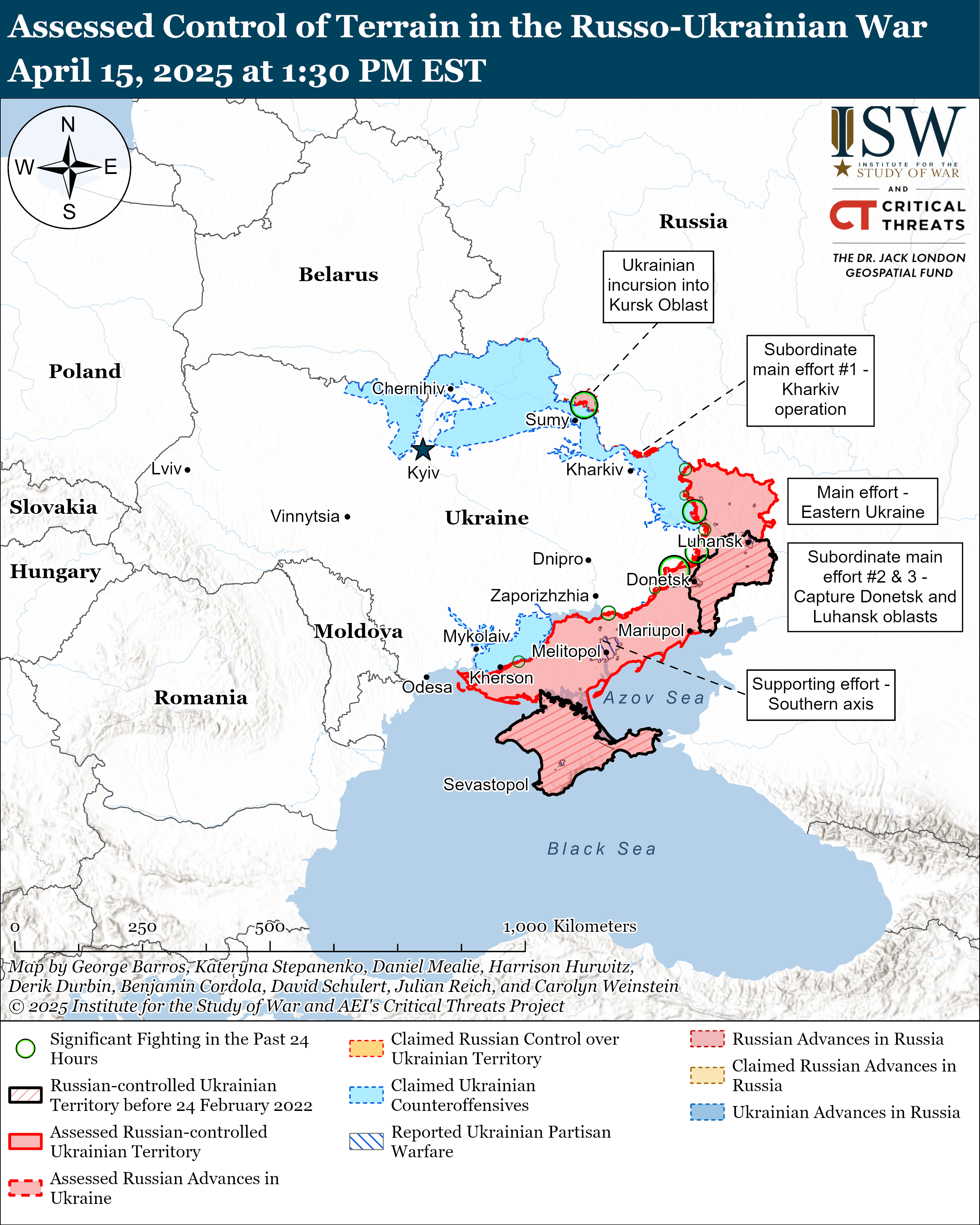


%20%D0%B8%20%D0%B5%D0%B3%D0%BE%20%D1%83%D1%87%D0%B0%D1%81%D1%82%D0%BD%D0%B8%D0%BA%D0%B8.jpg)