Category: Universities

  • MIL-OSI Europe: OSCE High Commissioner on National Minorities Christophe Kamp concludes first official visit to Moldova

    Source: Organization for Security and Co-operation in Europe – OSCE

    Headline: OSCE High Commissioner on National Minorities Christophe Kamp concludes first official visit to Moldova

    OSCE High Commissioner on National Minorities Christophe Kamp visited University “Grigore Tsambalac” in Taraclia, which offers studies in Bulgarian, Romanian or English, 26 March 2025, Taraclia, Moldova. (OSCE) Photo details

    OSCE High Commissioner on National Minorities Christophe Kamp visited Moldova, including Gagauzia and Taraclia, from 24 to 28 March 2025. This was Kamp’s first official country visit since assuming office in December 2024, underscoring his commitment to supporting Moldova’s efforts to foster inclusive policies and strengthen social cohesion.
    During his visit, the High Commissioner was able to gain a first-hand insight into matters related to national minority issues through his meetings with a wide range of interlocutors, at different levels, across the country.
    This included President Maia Sandu, Deputy Prime Minister and Minister of Foreign Affairs Mihai Popșoi, and Minister of Education and Research Dan Perciun, as well as members of Moldova’s Parliament. He also heard from representatives of the People’s Assembly of Gagauzia, local authorities, civil society organizations, educators and minority communities. Kamp welcomed the continued engagement of the Agency for Inter-Ethnic Relations and appreciated the chance to listen to mayors and minority representatives from several regions.
    The High Commissioner noted that the authorities value and work towards safeguarding Moldova’s diversity. In his conversations with minority representatives, Kamp observed numerous positive examples of inter-ethnic collaboration and peaceful coexistence, and he welcomed the country’s resilience to external security challenges and its adherence to OSCE principles and commitments. He said: “In today’s complex international environment, this approach is essential.”
    A key focus of the visit was multilingual education (MLE), which the office of the HCNM has long supported in Moldova as a practical tool to support integration. MLE contributes to peaceful inter-ethnic relations by enabling the development of a shared civic identity while preserving minority languages in diverse societies.
    For over 30 years, the successive High Commissioners on National Minorities have been providing advice and expertise on integration policy in Moldova, while implementing pilot projects to strengthen the participation of minority representatives in public life, support mother-tongue-based multilingual education and promote knowledge of the State language.
    The High Commissioner reaffirmed his readiness to continue supporting Moldova in fostering an inclusive and cohesive society.
    The visit was organized with the support of the OSCE Mission to Moldova.

    MIL OSI Europe News

  • MIL-OSI: Guinean Artist Elie Kamano to Release New Single Exploring Africa’s Colonial Past

    Source: GlobeNewswire (MIL-OSI)

    JOHANNESBURG, SOUTH AFRICA, April 03, 2025 (GLOBE NEWSWIRE) — CAJ News Africa will host the official presentation of Guinean musician Elie Kamano’s new single “Africa without Africans” on April 5, 2025, at the Johannesburg Arts Centre, the agency announced today.

    The English-language track will be distributed on major global streaming platforms including Spotify, Apple Music, and Audiomack, targeting both African and international audiences. According to industry analysts, the release aligns with growing market interest in content addressing historical narratives from an African perspective.

    The single explores the economic and social impacts of colonialism on the continent while highlighting the resilience of African communities. The track features a fusion of traditional Guinean rhythms with contemporary production techniques, establishing a commercial appeal while maintaining cultural authenticity.

    “This song examines our shared history while looking toward economic justice and development,” Kamano said in a statement. “I wanted to create art that not only entertains but stimulates meaningful discussion about Africa’s place in the global economic system.”

    The release coincides with the African Union’s 2025 theme, “Justice for Africans and People of African Descent Through Reparations,” which has generated significant policy discussions across the continent.

    Kamano, whose previous releases have accumulated over 12 million streams globally, drew inspiration for the single from historical documentation in The New York Times regarding the 1944 Thiaroye massacre in Senegal, where West African soldiers were killed by colonial troops after World War II.

    “Thiaroye can become the foundation of a pan-African consciousness, uniting all African countries that lost citizens in this tragedy,” said Mamadou Diop, Senegalese historian and Director of African Studies at Columbia University, regarding the historical events that influenced the composition.

    On March 21, 2025, pan-African representatives and civil society organizations convened in Dakar to examine potential frameworks for addressing historical economic imbalances. The summit produced a detailed report outlining specific economic metrics and proposed accountability mechanisms.

    CAJ News Africa’s decision to host the single’s presentation reflects the media company’s strategic expansion into cultural content with historical and economic significance, according to industry observers. The agency has recently increased investment in multimedia platforms by 35% compared to fiscal year 2024.

    “We’re facilitating conversations that connect cultural expression with economic discourse,” said Savious Kwinika, Director of Research at CAJ Africa. “This presentation allows us to highlight how creative industries can contextualize complex historical narratives within contemporary market frameworks.”

    Financial analysts note that the global market for content exploring historical African narratives has grown 28% annually since 2023, with particularly strong performance in streaming and digital distribution channels.

    The presentation will include a panel discussion featuring economists and cultural analysts examining how artistic expression intersects with ongoing policy dialogues regarding economic development and international relations. The track will be available for purchase and streaming on all major platforms at 00:01 GMT on April 5, 2025.

    About CAJ News Africa

    CAJ News Africa is a leading pan-African media agency providing business, technology, and cultural news across the continent. Established in 2008, the agency operates bureaus in 18 African countries and maintains strategic partnerships with global media organizations.

    Contact Information

    CAJ News Africa

    Savious Kwinika, Director of Research, CAJ Africa

    E-mail: news@cajnewsafrica.com

    Website: https://www.cajnewsafrica.com

    The MIL Network

  • MIL-OSI Russia: Polytechnic Endowment Fund is 13 years old

    Translartion. Region: Russians Fedetion –

    Source: Peter the Great St Petersburg Polytechnic University – Peter the Great St Petersburg Polytechnic University –

    Today, the University Endowment Fund is 13 years old. Although the first target capital was established at the Polytechnic by Sergei Witte at the beginning of the 20th century. The modern fund was created based on the historical experience of the largest universities in the world. It is never spent, invested in liquid financial instruments. Income from management goes to support student initiatives, preservation of historical heritage and infrastructure projects of the university.

    Today, the fund consists of six endowments and has already exceeded 110 million rubles. Over 13 years, hundreds of benefactors have contributed to the development of our university, the expansion of its capabilities, the implementation of ideas and initiatives. These are Russian companies, banks, public organizations, as well as graduates, employees and students of the university.

    We thank everyone who creates the future of the Polytechnic University. These names are forever inscribed in history, because the endowment is a living memory of different generations of friends of our university. The fund invites everyone to support the wonderful tradition of the best universities in the world by taking part in the development of endowments and the implementation of new projects.

    Contribute to the future of Polytechnic University you can here.

    Please note: This information is raw content directly from the source of the information. It is exactly what the source states and does not reflect the position of MIL-OSI or its clients.

    MIL OSI Russia News

  • MIL-OSI USA: Reps. Frankel, DeLauro, Williams (GA), Leger Fernández Introduce Resolution Recognizing Equal Pay Day

    Source: United States House of Representatives – Congresswoman Lois Frankel (FL-21)

    Washington, DC – Today, Representatives Lois Frankel (FL-22), Rosa DeLauro (CT-3), Nikema Williams (GA-5), and Teresa Leger Fernández (NM-3) introduced a resolution recognizing March 25th, 2025, as Equal Pay Day to underscore the disparity between wages paid to men and women. The resolution raises awareness of the gender wage gap and its impact on women, families, and the nation, while reaffirming Congress’ commitment to supporting equal pay for equal work.

    “Equal pay is not only a matter of fairness and justice—it’s essential for creating a more equitable and prosperous world,” said Rep. Frankel. “For the first time in over two decades, the gender wage gap widened this past year, setting women back instead of continuing to push forward. For generations, women have received unequal pay for equal work, disproportionately occupied jobs in low-paying industries, and been forced to leave the workforce altogether due to lack of affordable child care. It’s long past time Congress took the necessary steps to close the wage gap.”

    “Equal Pay Day marks how far into the current year a woman must work to catch up to what her male counterpart earned in the previous year,” said Rep. DeLauro. “Six decades after passage of the Equal Pay Act of 1963, women working full-time or part-time still earn 75 cents for every dollar earned by men. We are in a cost-of-living crisis – this must end. Equal pay for equal work is a simple concept – men and women in the same job deserve the same pay. It is time we make it real for the millions of American women who are being unfairly undervalued in the workplace. Let’s enact the Paycheck Fairness Act and empower working women by giving them the tools to ensure their contributions to the workplace are properly respected and reflected in their pay.”

    “For the first time in more than two decades, the gender wage gap has widened, hitting Black women and women of color the hardest. Equal pay is more than a women’s issue, it is a matter of economic justice and racial justice,” said Rep. Williams. “When women are paid less for the same work, families suffer, communities struggle, and our economy falls short. I’m proud to co-lead this resolution to reaffirm our commitment to closing the gender wage gap and fully realizing the promise of the Equal Pay Act of 1963.”

    “It’s been 61 years since we passed the Equal Pay Act. And we still don’t have equal pay?! It keeps getting worse because there isn’t a mechanism to fight this discrimination. Every member of the DWC is a proud cosponsor of Rep. DeLauro’s Paycheck Fairness Act so women can challenge pay discrimination and hold employers accountable,” said Rep. Leger Fernández. “We are fighting for legislation to guarantee wage transparency so women know when they’re being paid less for the same work. We are fighting for paid leave for all so that no woman has to choose between their paycheck and caring for their loved ones. This is not just a matter of fairness—it’s a matter of dignity. We believe in a world where you can balance your work and your family without losing the job that sustains you.”

    “Women today continue to face too many obstacles in the workplace, and the wage gap is just one of those barriers. When you look at all workers, both those who are full-time and part-time, women being paid just 75 cents for every dollar a man is paid is simply unacceptable and has a significant impact on the economic stability of women and their families,” said Jocelyn C. Frye, President of the National Partnership for Women & Families. “The ability to support a family and earn a good living should be accessible for every worker.  Closing the wage gap would help women workers make huge strides towards getting there. Thank you to Congresswoman Lois Frankel and all of our champions in Congress for drawing needed attention to the need for pay equity on this year’s Equal Pay Day.”

    More than six decades after passage of the Equal Pay Act, women working full-time, year-round, still earn on average 83 cents for every dollar made by men, while women overall—including part-time and seasonal workers—are paid just 75 cents for every dollar paid to men, averaging much less for women of color. Black women only earn 66 cents, American Indian and Alaska Native women 58 cents, Native Hawaiian and Pacific Islanders 65 cents, and Latinas 58 cents for every dollar earned by men. For a woman working full-time, year-round, the current wage gap represents a loss of more than $462,000 over the course of her career, a gap that widens dramatically for women of color. The wage gap impacts women’s ability to save for retirement and their total Social Security and pension benefits, contributing to more older women living in poverty.

    Since taking office, President Donald Trump has rolled back critical workplace protections, opening the door for greater wage disparities and weakening longstanding safeguards for women seeking fair pay. This includes rescinding a nearly 60-year-old executive order that prohibited government contractors from discriminating in their hiring, firing, promotion, or pay practices—further disadvantaging women, particularly women of color, who already face barriers to equal wages. He also illegally dismissed two commissioners from the U.S. Equal Employment Opportunity Commission (EEOC), tasked with preventing and addressing employment discrimination based on sex, gender, and other factors.

    The resolution currently has 126 original cosponsors. It is supported by several advocacy groups, including the National Partnership for Women & Families, the National Women’s Law Center (NWLC), Equal Rights Advocates, the American Association of University Women (AAUW), the National Organization for Women, the Institute for Women’s Policy Research (IWPR), the National Employment Law Project, One Fair Wage, Justice for Migrant Women, the National Asian Pacific American Women’s Forum (NAPAWF), and Family Values @ Work.

    For full text of the resolution, click here.

    ###

    MIL OSI USA News

  • MIL-OSI Russia: Schoolchildren of St. Petersburg accepted the “Polytechnic Challenge”

    Translartion. Region: Russians Fedetion –

    Source: Peter the Great St Petersburg Polytechnic University – Peter the Great St Petersburg Polytechnic University –

    The Polytechnic University hosted the spring stage of the competition for high school students, “The Polytechnic Challenge.” The students participate in the festival as teams from educational institutions and solve research and scientific problems of various types, apply their knowledge in practice, and learn to find non-standard solutions.

    The Polytechnic Challenge was held in six directions. During the week, the participants had to find the best solution to the tasks from the organizers. The developers of the tasks were students and teachers of the university’s Department of Continuing Education.

    The classic game “What? Where? When?” attracted a record number of teams eager to demonstrate the depth of their knowledge, sharpness of mind and resourcefulness. And the “Physical Battles” direction required schoolchildren not only to be able to solve physical problems, but also to be able to convincingly argue their decision, defending their position in a dispute with their opponents.

    As part of the construction case, teams of schoolchildren created models of buildings and structures capable of withstanding seismic loads. It is important to note that the participants worked strictly within the parameters set by the organizers for height, width, and depth. Particular attention was drawn to projects that used original design solutions and unusual shapes. Defending their work, the schoolchildren talked about the development process and methods of connecting parts. The stability of the models was tested on a vibration table.

    At the case championship, schoolchildren had to develop a product or system that would reduce the negative effects of urbanization and overpopulation of cities. The key issues were transport problems, housing shortages, ecology and social inequality. Participants proposed a wide range of ideas, from improved transport systems to smart home projects. The jury especially noted the projects that had real prospects for implementation and were highly developed.

    One of the areas was a 3D case. Schoolchildren designed a manipulator capable of holding a load of a certain weight. The task included preparing 3D models, creating models for printing on 3D printers, and printing finished products. Contestants were tested on their knowledge of engineering basics and ability to use modern digital tools. The best projects demonstrated not only technical complexity, but also a creative approach to solving the task.

    The main task of the hackathon was to create translators of slang expressions that often cause misunderstandings between generations. Schoolchildren presented mobile applications, websites designed to simplify communication. The jury paid special attention to the convenience of interfaces and the effectiveness of solutions.

    The winners were teams from School No. 45, Gymnasium No. 406, Engineering and Technology School No. 777, Anichkov Lyceum, Academy of Digital Technologies, Kirov Gymnasium, Schools No. 345 and No. 246. The best teams received an important advantage for admission to the Polytechnic University – 5 additional points to their Unified State Exam results.

    The Polytechnic Challenge festival clearly demonstrated the high level of training of our schoolchildren and their desire to find solutions to current social and technical problems. The competitions provided the children with a unique opportunity to reveal themselves in various fields of knowledge. Such events play a key role in the development of engineering thinking and the formation of future professionals in the field of advanced technologies, – noted the leading specialist of the Center for work with applicants Egor Kruchinin.

    Please note: This information is raw content directly from the source of the information. It is exactly what the source states and does not reflect the position of MIL-OSI or its clients.

    MIL OSI Russia News

  • MIL-OSI Russia: NSU hosted a medical tournament for schoolchildren

    Translartion. Region: Russians Fedetion –

    Source: Novosibirsk State University – Novosibirsk State University –

    From March 21 to 24, the final stage of the competition was held at NSU and “Boiling Point – Novosibirsk”. 45 teams from 10 regions of Russia participated in the competitive selection. The 15 best from Novosibirsk, Tyumen and Yaroslavl reached the final.

    The very name of the Schoolchildren’s Medical Tournament encodes the essence and format of the event: it is a tournament in the “speaker-opponent-reviewer” format for schoolchildren who want to realize themselves in the field of medicine. The roles of the participants allow them to fully demonstrate their abilities in solving clinical or fundamental problems: the skill of finding the necessary information in scientific sources, oratorical skills, the presence of basic fundamental knowledge, the ability to conduct a discussion.

    The ITS includes a Selection and Final Stage: in the first, participants must solve two or more problems in the form of a presentation, where the children mainly use diagrams and illustrations to answer questions, and in the second, there is a face-to-face competition, where they must solve at least 8 problems out of 10.

    The top three teams in the final included teams from the city of Tyumen, the national team SUNC NSU took fourth place.

    — I would like to note one feature of the teams in this year’s tournament. Despite the fact that most of the participants were beginners (i.e. they were participating for the first time or represented grades 9-10), their level of knowledge was almost equal to that of medical students. They were very well versed in the material and reasoned like real specialists, — commented Maria Shperling, a fourth-year student. Faculty of Medicine and Psychology, NSU and the chairman of the organizing committee.

    The medical tournament of schoolchildren appeared and still exists due to the active work of the organizing committee, consisting of proactive medical students, with the support of the administration of the Faculty of Medicine and Psychology of NSU. The first season of the project took place back in 2019, and three tournaments, including this year’s MTS, have already been implemented with the support of Rosmolodezh.Granty.

    — What do schoolchildren get by participating in the tournament? As the Chairman of the Methodological and Expert Commission, I would like to say first of all about acquiring the skill of working with information, new useful acquaintances and knowledge received from the expert commission. It is also important that the guys get a chance to get in touch with the unusual student life of our faculty, their career guidance in a rather unusual and therefore as close to medicine format as possible also plays a role. At the MTS, we always say that medicine is only for love, so we really want to show this world of endless knowledge, experience and discoveries in its real form: complex, controversial, but full of love and teamwork, — shared Evgeniya Kholdina, a 4th-year student of the specialty “General Medicine” and the Chairman of the Expert and Methodological Commission of the MTS.

    In addition to practical skills, participants can count on additional advantages when entering NSU in the form of points for individual achievements:

    3 points – for all participants of the Final Stage,

    7 – for prize winners,

    10 – for the winners.

    Points are valid for two years for prize winners and winners of both individual and team competitions.

    Students of all years participate in the organization of the Medical Tournament of Schoolchildren direction “General Medicine” Faculty of Medicine and Psychology of NSU and residency.

    As Evgeniya Kholdina says, there are participants, prize winners and winners of the tournament in more than one course of our faculty, and the organizing committee is almost half made up of MTShat. With the right competencies, anyone can become an organizer, an expert, a task writer and a volunteer.

    — We try to create comfortable conditions for the guests of our university every year, but we never forget that we are an Olympiad, after all, so a revolution of consciousness, a couple of new convolutions and a wagon of knowledge await each participant. For NSU students, this is a unique chance to prove themselves, we all have warm feelings for this event and are preparing to meet future NSU students, as well as bright minds of the scientific and medical community, — added Evgeniya Kholdina.

    Please note: This information is raw content directly from the source of the information. It is exactly what the source states and does not reflect the position of MIL-OSI or its clients.

    MIL OSI Russia News

  • MIL-OSI USA: Congressman Johnson Headlines UN Atlanta Chapter Black History Month Event on Capitol Hill: Celebrating Resilience & Empowerment: The 2nd International Decade for People of African Descent (2025–2034)

    Source: United States House of Representatives – Representative Hank Johnson (GA-04)

    WASHINGTON, D.C. – On December 17, 2024, the United Nations proclaimed a Second International Decade for People of African Descent 2025-2034. This Second International Decade confronts the legacies of enslavement and colonialism, delivers reparatory justice, and secures the full human rights and freedoms of people of African descent worldwide.

    In support of that effort, Congressman Hank Johnson (GA-04) and Congresswoman Sydney Kamlager-Dove (CA-37) reintroduced their resolution supporting the UN resolution by reaffirming the United States’ commitment to advancing racial justice, addressing systemic inequities, and promoting the rights and dignity of people of African descent globally.

    On Monday, February 24, 2025, in celebration of Black History Month, Congressman Johnson addressed the United Nations Association Black History Month Event: Celebrating Resilience and Empowerment: The Second International Decade for People of African Descent (2025–2034) on Capitol Hill. 

    To watch the event, click HERE. To read Congressman Johnson’s speech, click HERE

    “The Second Decade for People of African Descent is more than a recognition, it is a call to action,” said Congressman Hank Johnson. “As we face a resurgence of challenges to racial justice and human rights, we must stand firm in our commitment to progress. Black communities have long been at the forefront of change, shaping history through resilience, advocacy, and leadership. This decade is not just about reflecting on the past — it is about advancing justice, securing equality, and building a future where dignity and opportunity are a reality for all. History will not judge us by our words alone, but by what we do today and tomorrow.”

    “I was proud to co-lead the resolution calling for a Second International Decade for People of African Descent, and I’m glad that the UN did the right thing in declaring the Second Decade as we entered a moment of severe backsliding around the world,” said Rep. Kamlager-Dove. “With American democracy under attack, we are turning toward African-descendent communities across the globe now more than ever for their perspectives, lessons learned, best practices, and strategies for resistance and triumph. Someone has to fight for our rights and our democracy, and like always it’s going to be Black communities leading the charge against authoritarianism.”

    Danielle Dean, Vice Chair of Advocacy, United Nations Association said: “The Second Decade for People of African Descent offers an opportunity to bring greater awareness of what the decade is, and inspire action within our own communities. More can be done to include young voices, inspire local communities and partner with our national and international friends to deliver on the vision of the first decade.”

    Quote from Gimena Sanchez-Garzoli from WOLA:  “At a time where there is global democratic backsliding and a growing anti-rights, anti-diversity and anti-inclusion movement the Second Decade will protect the rights gained and advance the newer challenges faced by Afro-descendants including the climate crisis and racial bias in new technologies.”

    Quote from Raudemar Ofunshi Hernandez, Afro-Latino Spiritual Leader: “Our destiny has given us an opportunity to, with the leadership of Representatives Hank Johnson and Sydney Kamlager-Dove, jointly with the Black Caucus and our big ancestral army, to fulfill our overdue dreams.”

    The moderator of the event was Tracy Gray, President, United Nations Association of the United States of America, Atlanta Chapter. The panelists included: 

    Professor Justin Hansford, Director of the Howard University, Thurgood Marshall Civil Rights Center and Member of the UN Permanent Forum of People of African Descent.
    Rachel Bowen Pittman, Executive Director of the United Nations Association of the United States of America.
    Dr. Tonija Hope, Director, Ralph Bunche International Affairs center, Howard University. member of the US Civil Society Committee for the Joint Action Plan to Eliminate Racial and Ethnic Discrimination (JAPER) and Chair of the US Civil Society Committee for the US-Colombia Action Plan to Promote Racial and Ethnic Equality (CAPREE).
    Gimena Sanchez-Garzoli, Director of Andes, Washington Office of Latin America.
    Raudemar Ofunshi Hernandez, Spiritual Leader and President, Colombia Acuerdo de Paz NGO

    Key topics of the event addressed:  

    Achievements of the First International Decade
    Contributions of African-descended communities
    Setting priorities for the Second International Decade
    Building global solidarity through the UN framework


    ###

    MIL OSI USA News

  • MIL-OSI Russia: How to break into cinema: director Alexander Zhigalkin gave advice to the younger generation

    Translartion. Region: Russians Fedetion –

    Source: State University of Management – Official website of the State –

    On April 2, a meeting of students with the famous Russian director Alexander Zhigalkin was held at the State University of Management as part of the VI All-Russian Festival of Student Short Films “Kinosfera”.

    Aleksandr Zhigalkin is a theater, film and dubbing actor, TV presenter, screenwriter, producer, director of such humorous projects as “6 frames” and “Thank God, you came!”, as well as the well-known television sitcoms “Daddy’s Daughters”, “Daddy’s Daughters. New” and “Voronins”. Winner of the Russian national television award “TEFI-2011” in the nomination “Director of a television program” for the sketch show “6 frames”.

    At the beginning of the conversation, Alexander noted that calling him “outstanding” is not entirely correct.

    “An outstanding director is Eldar Ryazanov, Andrei Tarkovsky, Federico Fellini, Michelangelo Antonioni and a huge number of great masters. I only have an outstanding nose. So I ask you to talk to me like a normal person. I just do my job well, so everything works out great,” the guest noted.

    The meeting was held in a question-and-answer format and provoked a lively discussion and response from students.

    The first thing we did was ask the director what inspires him to create and how he started his career.

    Alexander noted with regret that the films that inspired him as a child are not known to the modern generation, and this is sad, because being well-watched is an important quality for a director.

    “In the 2nd grade, I watched the film “Truffaldino from Bergamo” – a funny, wild comedy based on the play by Carlo Goldoni “The Servant of Two Masters”. I was shocked by how incredibly Konstantin Raikin played there: he danced, made faces, but did not sing himself, the songs were performed by Mikhail Boyarsky. I especially remember how the main character jumped and fell with plates, and I began to repeat this at home. After I broke several plates, my parents gave me plastic ones and approved of my hobby. In the 5th-6th grade, I began to attend classes at the ZIL People’s Theater and there I developed an incredible love for theater. After school, I went to a theater institute, I did not think about another profession. I failed the first time, but after serving in the army I tried again and entered,” the speaker shared.

    He also spoke about his first attempts at acting, the difficulties of life in the 90s, his first troupe and his first staged performance. Alexander Alexandrovich also noted why he ultimately chose cinema over theater, and why the profession of a director is better for him than acting.

    “I didn’t want to go to the theater as an actor, because at that time it seemed like theater was a bondage. I sincerely adore the theater, but only as a spectator. In the theater, a lot of things weigh on an actor: the director, the producer, the artistic director, etc. And for me, the lack of opportunity to freely engage in creativity is death. The director is freer, his creative life is longer. In addition, as an actor, I always have the opportunity to play a small role in a film, because the director approves me without auditions.”

    Alexander also told a funny story about how in the 90s a friend from Moscow State University helped him go to Germany as a student of the landscape science faculty for a paid internship.

    “I didn’t understand anything about this area, but I had a diploma as an actor from the B. Shchukin Theatre School, so I coped brilliantly with the role of a student. I came to the office at 8 a.m., colored cards, sometimes went out for practice. But after a month I ran away from there to earn money by tap dancing with a musical group from Hongover.”

    The guest emphasized that an important role in the formation of his life priorities was played by a meeting with the German Ferdinand, who was involved in cars.

    “It turned out that in his youth he taught physical education to Konstantin Raikin in Leningrad. And, apparently, something clicked in him when he met me, because I am also an actor, and he showed me the first Mercedes in my life, which I saw up close. When we got in, he showed me what incredible functions it had, that the car was like alive. And he said an important phrase: “A car should be either this or nothing. So wait for the opportunity to get exactly what you want.” Then I realized that since there are no roles like what I want, and I don’t want to play others, I need to do something else.”

    When asked how to understand that a script is worth taking on, Alexander answered simply: “You have to take what grabs you.” The director also emphasized that his goal is “to make films and TV series that give people the opportunity to lift their spirits, become kinder and brighter, and disconnect from the problems that are plentiful in real life. At the same time, the quality of humor is important; jokes should be subtle and ironic, and not stoop below the belt.”

    Since the meeting was attended mainly by students from the Department of Management in the Sphere of Culture, Cinema, Television and Entertainment Industry of the Institute of Management and Budgetary Culture, they took advantage of the opportunity to clarify how they could get onto the set and join the director’s team.

    “It is quite possible to watch the filming process, I think we can organize it. As for the team, everything is more complicated here. Today there is a shortage of specialists in all areas of the filming process. I am a tough guy on the set, a tyrant and a despot. My filming pace is fast, so I try to assemble a group so that everything works like clockwork. I always say before filming: guys, we came so that the actors in the frame feel as comfortable as possible. We will be letters in the credits, and they will carry everything we wanted to say to the viewers.”

    Of course, the guys asked how the director felt about the reboot of the project “Daddy’s Daughters”, which he directed from 2007 to 2011.

    “I would like to remind you that “Daddy’s Daughters” is our first sitcom that was created on Russian script soil, and not adapted from a foreign version. I was a guest director and took part in the development. It’s like sculpting, where you are not alone, but your hands are present on the clay. As for the new seasons, I only filmed the first of them. It is an excellent successful project, wonderful actresses whom I selected and with whom we communicate. But for me, after those 5 years when we were just starting out, that feeling of the team, the atmosphere, the children and the intonations that were there, something didn’t work out in the new seasons. It’s too decent, too bright, the apartment is too rich. In my opinion, it should be a family from the next door, with ordinary problems familiar to everyone. The new seasons are talented, interesting, but not for me.”

    Alexander also talked about how “Voronins” was filmed and what he considers to be the secret to the long life and popular love of this project.

    “It was the happiest time of incredible happiness, we were one family, spent a lot of time together. The viability of this sitcom is due to the fact that we all did not quarrel, did not break up, but lived in happiness and friendship for all these ten years. There is a channel “Voronins”. Sometimes I turn it on and think “My God, how good this is!”, although it is no longer a trend today, but there is so much sincerity and truth in relation to the viewer. On the set, we were disciplined and united by Boris Klyuev, who is no longer alive. I remember how courageously he acted until the last, when he was already battling cancer, but never asked for indulgences or anything like that. You can see all this on the screen and it became the life of families. If we talk about the reboot of the series called “Kostya-Vera”, then I watched two episodes and did not do more. Without Boris, it makes no sense to do this, he was the nail that held everything together.”

    When asked what advice the renowned master could give to young directors, Alexander gave advice that applies to many creative professions.

    “You definitely shouldn’t get depressed, be afraid, or be embarrassed by your expressions. You should definitely read literature, it provides a huge amount of plot material for work, for new stories, for building character relationships. You need to understand and accept that everything has already been filmed and written. Times change, but people, their problems, and relationships are essentially the same. Chekhov, Tolstoy, Gogol have already written all this. You need to read thoughtfully, it’s so funny, deep, and sometimes scary. If you think you’ve come up with something yourself, then put that idea aside, study historical experience, and you’ll understand that it definitely happened. It’s all about talented interpretation, so you need to learn from the greats.”

    There was also a question about how young talents can break into cinema. The guest’s answer is simple in essence, but difficult to execute, and can be framed for absolutely everyone and not to forget about it.

    “The first thing you need to understand is that in order to break through, you need to break through. 90% of success is work. My teacher Yuri Avsharov used to say: “If it doesn’t work out, don’t sit in the kitchen and complain. Open a book and read, go to people, they will see you and hear you.” If a person is creative, then they will find their place. It is important to always keep yourself in working tone, then everything will work out.”

    At the end of the meeting, there were photo and autograph sessions, and representatives of the student editorial board of the State University of Management SUM Times took a short interview from Alexander, which will soon be published in the Vkontakte group and on the Rutube channel.

    Subscribe to the TG channel “Our GUU” Date of publication: 04/03/2025

    Please note: This information is raw content directly from the source of the information. It is exactly what the source states and does not reflect the position of MIL-OSI or its clients.

    MIL OSI Russia News

  • MIL-OSI USA: Schakowsky, Jayapal, Carson, Welch Reintroduce Bill to Restore UNRWA Funding

    Source: United States House of Representatives – Congresswoman Jan Schakowsky (9th District of Illinois)

    WASHINGTON – U.S. Representative Jan Schakowsky (IL-09) has re-introduced H.R. 2411, the UNRWA Funding Emergency Restoration Act, with Rep. André Carson (IN-07), Rep. Pramila Jayapal (WA-07), and Senator Peter Welch (D-VT). This bill will end the congressionally and administratively mandated pause on funding for the United Nations Relief and Works Agency for Palestine Refugees in the Near East (UNRWA). 

    The United States has historically been one of the largest financial supporters of UNRWA, which serves nearly 6 million Palestinian refugees across the West Bank, East Jerusalem, Syria, Jordan, and Lebanon. In March of last year, the U.S. paused UNRWA funding after the Israeli government alleged that 12 agency employees had direct involvement in Hamas’ October 7 terrorist attack. 

    Following the United Nations’ investigation and proactive commitments made by UNRWA toward complete accountability and reform, all countries except the U.S. have resumed their UNRWA funding, including the European Union, United Kingdom, Canada, Australia, Finland, Germany, Japan, and Sweden. 

    Humanitarian aid and supplies have not entered the Gaza Strip since March 2, when the Israeli authorities imposed a siege. Reports show that supplies are depleting at alarming rates, which could cause deaths from malnutrition and starvation. Several bakeries have already shut down after running out of cooking gas, and the U.N. World Food Programme reports that its flour supplies can only support bread production for five more day. UNRWA has served as the primary humanitarian aid organization operating in Gaza, and without funding, hundreds of thousands of Gaza civilians are left vulnerable.

    “For decades, the United Nations Relief and Works Agency (UNRWA) has been a lifeline for Palestinians throughout the Middle East, providing food, clean water, health care, shelter, education, and livelihoods. UNRWA has provided essential support to those in Gaza throughout the Israel-Hamas war and dire humanitarian crisis. UNRWA and the United Nations have taken swift and decisive actions to address the concerns raised by the U.S. government when it paused funding last year and our allies have long ago resumed funding for UNRWA. The U.S. must follow suit and finally resume funding for this critical humanitarian agency,” said Congresswoman Jan Schakowsky. “I am proud to co-lead the UNRWA Funding Emergency Restoration Act to restore funding to UNRWA and help Gazans get the humanitarian assistance they need at a time of unprecedented crisis.”

    “The scale of this devastating, man-made crisis in Gaza cannot be overstated,” said Congressman André Carson. “Providing humanitarian aid to a starving nation – with funding Congress has appropriated year after year – should not be controversial. We need to end this blockade and restore full humanitarian funding to UNRWA. I urge my colleagues who care about basic human rights, the rights of pregnant women, and the wellbeing of innocent children to join our bill. It’s past time we restore funding and save lives.”

    “For decades, UNRWA has played a unique and integral role in supporting the welfare of Palestinian refugees,” said Congresswoman Pramila Jayapal. “The organization’s on-the-ground understanding is invaluable to ensuring that humanitarian aid makes it to the people who need it most — in the West Bank, East Jerusalem, Syria, Jordan, Lebanon, and critically in this moment, in Gaza. Permanently revoking funding for UNRWA will unquestionably lead to more devastation and loss of life in Gaza and throughout the Middle East. We must restore U.S. funding to UNRWA to ensure that those acting in good faith to save civilian lives have the necessary resources to continue their irreplaceable work.”

    “Since day one of this conflict, UNRWA has proven to be the backbone of the humanitarian response in Gaza. It is unacceptable that the funding pause has gone on this long—the civilian populations of Gaza and the West Bank are paying the price. As the humanitarian crisis in Gaza continues to intensify, support for humanitarian aid is more important than ever,” said Senator Peter Welch. “Congress must pass this legislation to ensure UNRWA can safely deliver humanitarian assistance to starving women, children, and families desperate for food, medicine, and shelter.”

    Below is a list of all endorsing organizations:

    National Organizations: 99 Coalition, American Friends Service Committee, Amnesty International USA, Amnesty International USA, Carolina Peace Center , Historians for Peace and Democracy, Center for Civilians in Conflict (CIVIC), Center for Constitutional Rights, Center for Constitutional Rights, Center for Gender & Refugee Studies, Center for International Policy Advocacy, Center for Jewish Nonviolence, Charity & Security Network, Coalition for Humane Immigrant Rights (CHIRLA), CODEPINK, Congregation of Our Lady of Charity of the Good Shepherd, U.S. Provinces, Demand Progress, Doctors Against Genocide, DSA, End Wars Working Group of Progressive Democrats of America , Episcopal Peace Fellowship Palestine Israel Network, Friends Committee on National Legislation, Friends Committee on National Legislation , Friends of Sabeel North America (FOSNA), George Devendorf, Global Ministries of the Christian Church (Disciples of Christ) and United Church of Christ, Health Advocacy International, Hindus for Human Rights, Human Rights Watch, IfNotNow Movement, International Civil Society Action Network (ICAN), International Refugee Assistance Project, J Street, Jahalin Solidarity, Jahalin Solidarity, Jewish Voice for Peace Action, Justice4palestinians, MADRE, Maryknoll Office for Global Concerns, Medglobal , Middle East Democracy Center (MEDC), Migrant Roots Media, MoveOn, MPower Change Action Fund, Muslim Advocates, Muslims United PAC, National Advocacy Center of the Sisters of the Good Shepherd, National Council of Churches, New Jewish Narrative, No Dem Left Behind , Nonviolent Peaceforce, NRC USA, Partners for Progressive Israel, Pax Christi USA, Peace Action, Poligon Education Fund, Presbyterian Church, (USA), Office of Public Witness, Quincy Institute, ReThinking Foreign Policy, ReThinking Foreign Policy, RootsAction.org, Sisters of Mercy of the Americas – Justice Team, Terre des hommes Lausanne, The Borgen Project, The Tahrir Institute for Middle East Policy (TIMEP), United Methodists for Kairos Response (UMKR), UNRWA USA National Committee, USCPR Action, Win Without War, Women’s International League for Peace and Freedom, US Section (WILPF US), Yemen Relief and Reconstruction Foundation 

    State and Local Organizations:  Al Otro Lado, Atlanta Multifaith Coalition for Palestine (AMCP), Barry University, Brooklyn For Peace, Carolyn Eisenberg, Ceasefire Now NJ, Christian Jewish Allies for a just peace for Israel Palestine, Church Women United in New York State, Delawareans for Palestinian Human Rights, Florida Peace & Justice Alliance, FOSNA Pittsburgh , Greater Dayton Peace Coalition, Houston for Palestine Coalition, Indiana Center for Middle East Peace, Jews for Racial and Economic Justice, MARUF CT (Muslim Advocacy for Rights, Unity, and Fairness), Massachusetts Peace Action, Minnesota Peace Project, Muslim Justice League, Nebraskans for Peace Palestinian Rights Task Force, NorCal Sabeel, Oasis Legal Services, Peace Action Maine, Peace Action WI, Peace Action WI, Peace, Justice, Sustainability NOW!, Peace, Justice, Sustainability, NOW!, Progressive Democrats of America – Central New Mexico, Progressive Democrats of America- Central New Mexico, Sisterhood of Salaam Shalom DC-Metro Action Group, The Palestine Justice Network of the Presbyterian Church USA, Bay Area, UPTE Members for Palestine, Valley View Presbyterian Church, Voices for Justice in Palestine, YUSRA

    ###

    MIL OSI USA News

  • MIL-OSI USA: Quigley Statement on Recent ICE Arrests of College Students

    Source: United States House of Representatives – Representative Mike Quigley (IL-05)

    U.S. Representative Mike Quigley (IL-05) released the following statement on recent arrests of college students:

    “Over the past month, the Trump administration has begun arbitrarily revoking students’ visas and permanent resident status, targeting students like Mahmoud Khalil at Columbia University to Rümeysa Öztürk at Tufts University. Without any evidence of a crime or due process, the administration has unilaterally decided to punish college students for exercising their First Amendment rights. It has weaponized immigration enforcement, detaining students whose speech they deem ‘dangerous’ or ‘anti-American.’ What’s truly un-American is disregarding the Constitution to push a political agenda. I will continue to closely monitor the lawsuits that have been filed on behalf of these students and advocate for the release of all of those who have been wrongfully detained by ICE.”

    MIL OSI USA News

  • MIL-Evening Report: Grattan on Friday: Trying too hard for a special tariff deal with Trump could be the wrong way to go

    Source: The Conversation (Au and NZ) – By Michelle Grattan, Professorial Fellow, University of Canberra

    Prime Minister Anthony Albanese and Opposition Leader Peter Dutton both agree Australia should react to US President Donald Trump’s aggressive tariff regime by continuing to seek a special deal. They just disagree about which of them could better handle the challenge of dealing with the rogue president.

    Dutton said after Trump’s announcement, “the deal is there to be done”, but insisted Albanese just isn’t up to the task.

    At Wednesday’s briefing for the red meat industry, Trade Minister Don Farrell said, “Tomorrow might be the end of the first part of the process but we’ll continue to engage with the Americans to get these tariffs removed, as we did with the Chinese.”

    But if there is indeed a deal to be done, at what cost would it come? The price could be higher than any specifics negotiated.

    Australia should be careful of going down the route of supplicant – which, let’s be blunt, is what this would involve.

    It’s long been clear we can’t predict what Trump might do in his international relationships. His appalling bullying of Ukraine’s President Volodymyr Zelensky; his extraordinary treatment of Canada; his bizarre bid to grab Greenland from NATO ally Denmark – individually, each of these is shocking; collectively, they amount to nearly unimaginable behaviour from a US president.

    The risk of trying to cosy up to the Trump administration in seeking exemptions from the 10% general tariff is that, whatever the overt quid pro quo involved, Trump would then see Australia as owing him something if and when he needed it.

    A deal could mean Australia would later feel somewhat constrained in calling out egregious Trump actions. Even if it didn’t, the perception could be there.

    It’s obvious in retrospect – if it wasn’t all along – that Australia was never going to escape whatever general tariff Trump imposed. At least we are at the bottom of the league table – we’re among the countries minimally hit. As of course we should be, given the Australia-US Free Trade Agreement. As Albanese said, we shouldn’t be targeted at all.

    One area for possible future negotiation is the ban, for biosecurity reasons, on US fresh beef coming into Australia. There have already been talks about this. Albanese on Thursday said Australia wouldn’t compromise its biosecurity, but flagged room for some possible movement.

    This is double-edged. Beef producers will want an exemption, but anything that could be construed as even a remote threat to our biosecurity would go down badly in sections of the electorate, regardless of guarantees.

    Australia is in a solid position to withstand the direct effects of the Trump tariffs. Only about 5% of our exports go to the US.

    The effect on the beef trade could be relatively mild. The Americans have a dwindling cattle herd (the lowest since the early 1950s). Australian lean beef is particularly suitable for burgers. And, given the 10% tariff applies to other countries, we won’t be disadvantaged against other suppliers. So the Americans are likely to continue to need Australian beef – they will just have to pay more for it.

    Peter Draper, professor of international trade at the University of Adelaide, puts the bilateral situation in perspective. “We rode out China’s trade coercion, and China is a much more important trading partner. These tariffs are much smaller.”

    Draper argues that “as a matter of principle, you shouldn’t negotiate with bullies”.

    Also, the US is breaking international trade rules that are crucial to uphold, Draper says. Cutting special deals validate the rule-breaker’s actions, he says.

    The real, and significant, cost to Australia will be what the tariff regime will do to the international economy. Treasurer Jim Chalmers described “Liberation Day” as “a dark day for the global economy”.

    Shiro Armstrong, professor of economics at the Australian National University, says the “main game is stopping the contagion of these tariffs globally and stopping a retreat to a 1930s retaliatory spiral”.

    Armstrong believes that when it comes to getting a special deal, Australia’s chances are probably better than those of most countries.

    But he warns Australia should be “very careful” of a deal involving critical minerals – something the government had on the table and the opposition has said it would pursue. Armstrong points to Trump’s penchant for using “economic coercion to extract concessions”.

    Immediately after the Trump announcement, Albanese had a response ready to go.

    This includes financial encouragement for exporters to seek to grow other markets.

    Australia is not retaliating with counter-tariffs (a sensible stance in line with its free trade beliefs). But there are some “protection-lite” measures in the Albanese package.

    Australian businesses will be put at “the front of the queue” for government procurement and contracts.

    This measure is part of the government’s current “Buy Australian” push. A small dose of protectionism, it may mean taxpayers pay more for goods and services.

    On another front, Albanese said Australia would establish a “Critical Minerals Strategic Reserve”. Details are to come, but it is expected to be a stockpile for these minerals, which are vital for defence equipment in particular. Perhaps such a move is to assure Australians that if there were an agreement to facilitate US access to critical minerals, the government would have belt-and-braces protection for these vital national assets.

    In this first week of the campaign, Dutton has found himself on the barbed wire fence when it comes to Trump. He’s putting himself forward as the better leader to deal with Trump (including fighting him if necessary). He’s also rejecting suggestions he is running on Trump-like policies.

    In general, the first week of the campaign has been a hard slog for the opposition leader. He comes across as undercooked and late with his deliveries. We are still waiting for the modelling of his controversial policy for an east coast gas reservation scheme.

    In the 2022 election campaign, Albanese had a shocker start. But the Liberals now are in a worse place than Labor was then, and Dutton’s campaign needs a significant lift. The question is whether he has the capacity to give it that.

    Michelle Grattan does not work for, consult, own shares in or receive funding from any company or organisation that would benefit from this article, and has disclosed no relevant affiliations beyond their academic appointment.

    ref. Grattan on Friday: Trying too hard for a special tariff deal with Trump could be the wrong way to go – https://theconversation.com/grattan-on-friday-trying-too-hard-for-a-special-tariff-deal-with-trump-could-be-the-wrong-way-to-go-253737

    MIL OSI AnalysisEveningReport.nz

  • MIL-Evening Report: The UK wants to screen Netflix’s Adolescence in schools. Should you watch it with your child?

    Source: The Conversation (Au and NZ) – By Joanne Orlando, Researcher, Digital Literacy and Digital Wellbeing, Western Sydney University

    UK Prime Minster Keir Starmer met with Adolescence writer Jack Thorne to discuss adolescent safety at Downing Street on Monday. Jack Taylor/ GettyImages

    Netflix’s Adolescence has ignited global debate.

    The series traces the disturbing journey of 13-year-old Jamie Miller, whose exposure to misogynistic online communities may have contributed to him to killing a female classmate. Its graphic portrayal has captivated audiences, with more than 66 million views.

    This week, British Prime Minister Keir Starmer said he wants to see it shown in high schools, framing it as a cautionary educational tool against the toxic “manosphere”.

    His office said showing Adolescence would

    help students better understand the impact of misogyny, dangers of online radicalisation and the importance of healthy relationships.

    Should parents be watching the series with their kids?

    Before you turn on the TV, remember Adolescence is not a documentary. It is a drama series. And the issues it raises require care and nuance.


    Read more:
    A child killer, parenting struggles and ‘innies’ running wild: what to stream in April


    What is the manosphere?

    The manosphere is a collection of digital spaces such as forums, influencers and content creators, that promote extremist sexist views under the guise of male empowerment.

    While initially focused on fathers’ rights, controversial content creators like Andrew Tate have shifted its focus toward pushing extremist beliefs to boys and young men. Core beliefs include:

    • men and women have strict and opposing roles they must follow

    • women manipulate men through sex and their appearance

    • men are either winners (dominant and attractive), or losers (weak failures), pressuring boys to obsess over power or resign themselves to failure.

    A growing body of research is showing some young people are being influenced by these views.


    Read more:
    We research online ‘misogynist radicalisation’. Here’s what parents of boys should know


    We need to make sure we include boys

    So it is hugely important to address misogyny and gender-based violence in our community. But we need to approach young people with care.

    Many boys are now growing up in a culture where masculinity itself can be framed as toxic.

    Adolescence fits into this framing, dramatising an extreme case of a boy radicalised into violence. But presenting it without nuance risks implying all males are innately aggressors.

    This could alienate alienate young men who might already be hesitant to discuss their struggles.

    We already know young men find it hard to get help

    Research shows boys often avoid seeking help for depression or anxiety because it makes them seem vulnerable and not masculine. They can be taught from an early age crying or admitting fear risks ridicule.

    So this presents a challenge. We need to be able to confront harmful behaviours without making boys feel “inherently broken”.

    We also need to be careful not reinforcing any feelings of shame that might prevent boys from seeking help.

    A growing body of research is showing how young boys and men can be influenced by the manosphere.
    Perfect Wave/ Shutterstock


    Read more:
    ‘I don’t really wanna consume his content’: what do young Australian men think of Andrew Tate?


    Social media is a ‘super peer’

    Meanwhile, we need to understand the power of online worlds and social media. Adolescence (ages 10–14) is a time of vulnerability. As puberty reshapes their bodies and brains, teens become hyper-sensitive to social judgement and peer approval. For insecure teens, social media can function as a “super peer” – shaping attitudes and behaviours, much like a big brother or sister.

    Extremist content preys on insecurity by offering dangerously simplistic answers to complex questions about who they are and how they should behave:

    • simplistic rules (“This is how you should act”)

    • belonging (“We understand you”)

    • scapegoats (“Your pain is their fault”).

    Platforms like Instagram and TikTok also use algorithms which promote the content that triggers strong reactions. We see this in manosphere content, and content that focuses on other ares of vulnerability, such as physical appearance, relationships and life goals.

    So teens need help to navigate this digital landscape in an informed and balanced way.

    How can you watch Adolescence with your child?

    Adolescence can serve as one potential starting point for crucial discussions about gender, identity and online influences.

    As a dramatic series rather than a documentary, it’s value lies in its ability to provoke questions and start conversations, rather than provide answers.

    If you are watching it with your child you could talk about:

    • why certain ideas about masculinity and femininity appeal to them and to others

    • how social media shapes their sense of identity

    • what healthy self expression and relationships really look like

    • what voices are missing from the series (such as the perspective of the girl killed and her family)

    • what support teens would find meaningful from parents and teachers.

    The series succeeds if it makes viewers more thoughtful about the content they consume and the identities they choose to embrace, but we shouldn’t mistake it for a comprehensive solution.

    And if it’s not right for your child or household, Adolescence should not be seen as mandatory viewing. The most important thing is to create spaces where adults and teens can critically examine how they use social media, identity and relationships.

    Good discussions can start anywhere from a Netflix drama, to a news article or a student’s personal experience. What matters most is that we’re having them – and we keep having them as children and young people grow up.

    Joanne Orlando receives funding from NSW Department of Education and previously from Office of eSafety Commissioner.

    ref. The UK wants to screen Netflix’s Adolescence in schools. Should you watch it with your child? – https://theconversation.com/the-uk-wants-to-screen-netflixs-adolescence-in-schools-should-you-watch-it-with-your-child-253548

    MIL OSI AnalysisEveningReport.nz

  • MIL-OSI Russia: A meeting of civil defense commissioners was held at the Polytechnic University

    Translartion. Region: Russians Fedetion –

    Source: Peter the Great St Petersburg Polytechnic University – Peter the Great St Petersburg Polytechnic University –

    A coordination meeting of representatives of institutes and structural divisions of the university, authorized to solve problems in the field of civil defense, was held at the Polytechnic University.

    At the event, employees of the Civil Security Department made reports and presentations. The results of work in the field of civil defense and comprehensive security at SPbPU facilities and territories in 2024 were summed up, achievements in ensuring the safety of employees and students were noted. Current problems and ways to solve them were also discussed at the meeting.

    At the end of the meeting, the Vice-Rector for Security and Chairman of the SPbPU Evacuation Commission, Alexander Airapetyan, set tasks for ensuring comprehensive security for 2025.

    Please note: This information is raw content directly from the source of the information. It is exactly what the source states and does not reflect the position of MIL-OSI or its clients.

    MIL OSI Russia News

  • MIL-Evening Report: What Donald Trump’s dramatic US trade war means for global climate action

    Source: The Conversation (Au and NZ) – By Rakesh Gupta, Associate Professor of Accounting & Finance, Charles Darwin University

    US President Donald Trump’s new trade war will not only send shockwaves through the global economy – it also upsets efforts to tackle the urgent issue of climate change.

    Trump has announced a minimum 10% tariff to be slapped on all exports to the United States. A 34% duty applies to imports from China and a 20% rate to products from the European Union. Australia has been hit with the minimum 10% tariff.

    The move has prompted fears of a global economic slowdown. This might seem like a positive for the climate, because greenhouse gas emissions are closely tied to economic growth.

    However, in the long term, the trade war is bad news for global efforts to cut emissions. It is likely to lead to more energy-intensive goods produced in the US, and dampen international investment in renewable energy projects.

    How does global trade affect emissions?

    Traditionally, growth in the global economy leads to greater emissions from sources such as energy use in both manufacturing and transport. Conversely, emissions tend to fall in periods of economic decline.

    Trade tensions damage the global economy. This was borne out in the tariff war between the US and China, the world’s two largest economies, in 2018 and 2019.

    Trump, in his first presidential term, imposed tariffs on billions of dollars worth of imports from China. In response, China introduced or increased tariffs on thousands of items from the US.

    As a result, the International Monetary Fund estimated global gross domestic product (GDP) would fall by 0.8% in 2020. The extent of its true impact on GDP is difficult to determine due to the onset of COVID in the same year.

    However, Trump’s tariff war is far broader this time around, and we can expect broadscale damage to global GDP.

    In the short-term, any decline is likely to have a positive impact on emissions reduction. We saw this effect during the COVID-19 pandemic, when global production and trade fell.

    But unfortunately, this effect won’t last forever.

    Domestic production isn’t always a good thing

    Every country consumes goods. And according to Trump’s trade plan, which aims to revive the US manufacturing base, the goods his nation requires will be produced domestically rather than being imported.

    Unfortunately, this US production is likely to be inefficient in many cases. A central tenet of global trade is that nations focus on making goods where they have a competitive advantage – in other words, where they can manufacture the item more cheaply than other nations can. That includes making them using less energy, or creating fewer carbon emissions.

    If the US insists on manufacturing everything it needs domestically, we can expect many of those goods to be more emissions-intensive than if they were imported.

    Renewable energy slowdown?

    Globally, investment in renewable energy has been growing. The US trade war jeopardises this growth.

    Renewable energy spending is, in many cases, a long-term investment which may not produce an immediate economic reward. The logic is obvious: if we don’t invest in reducing emissions now, the economic costs in the future will be far worse.

    However, the US tariffs create a new political imperative. Already, there are fears it may trigger a global economic recession and increase living costs around the world.

    National governments are likely to become focused on protecting their own populace from these financial pressures. Business and industry will also become nervous about global economic conditions.

    And the result? Both governments and the private sector may shy away from investments in renewable energy and other clean technologies, in favour of more immediate financial concerns.

    The COVID experience provides a cautionary tale. The unstable economic outlook and higher interest rates meant banks were more cautious about financing some renewable energy projects.

    And according to the International Energy Agency, small to medium-sized businesses became more reluctant to invest in renewable energy applications such as heat pumps and solar panels.

    What’s more, the slowing in global trade during the pandemic meant the supply of components and materials vital to the energy transition was disrupted.

    There are fears this disruption may be repeated following the US tariff move. For example, the duty on solar products from China to the US is expected to rise to 60%, just as demand for solar energy increases from US data centres and artificial intelligence use.

    Few nations can afford to impose retaliatory tariffs on the US imports.

    Australian Prime Minister Anthony Albanese, for example, says this nation will not slap new duties on US imports, saying: “We will not join a race to the bottom that leads to higher prices and slower growth”.

    China, however, can be expected to return fire. Already it has halted imports of liquefied natural gas (LNG) from the US for 40 days – a move attributed to trade tensions.

    This may seem like good news for emissions reduction. However, China, like all other nations, needs energy. With less gas from the US, it may resort to burning more coal – which generates more CO₂ when burnt than gas.

    Prime Minister Anthony Albanese responds to Trump’s tariff announcement.

    An uncertain time

    Free global trade has worldwide benefits. It helps reduce poverty and stimulates innovation and technology. It can improve democracy and individual freedoms.

    And, with the right safeguards in place, global trade can help drive the clean energy transition. Global trade improves efficiency and innovation and technology. This is likely to benefit innovation in clean energy and energy efficiency.

    Trump’s tariff war weakens global trade, and will slow the world’s progress towards decarbonisation. It is a most uncertain time – both for the world’s economy, and its climate.

    Rakesh Gupta does not work for, consult, own shares in or receive funding from any company or organisation that would benefit from this article, and has disclosed no relevant affiliations beyond their academic appointment.

    ref. What Donald Trump’s dramatic US trade war means for global climate action – https://theconversation.com/what-donald-trumps-dramatic-us-trade-war-means-for-global-climate-action-253740

    MIL OSI AnalysisEveningReport.nz

  • MIL-OSI Russia: Leonid Baltovsky: “Values are a person’s response to the challenges of history”

    Translartion. Region: Russians Fedetion –

    Source: Saint Petersburg State University of Architecture and Civil Engineering – Saint Petersburg State University of Architecture and Civil Engineering – Leonid Baltovsky

    Leonid Baltovsky, professor of the Department of History and Philosophy at SPbGASU, took part in the scientific discussion “Values as a Philosophical Problem”. The discussion took place on March 29 at the Saint Petersburg Humanitarian Trade Union University. Scientists from the Institute of Philosophy of the Russian Academy of Sciences presented reports at this event.

    We asked Leonid Vasilyevich what values are and who forms them.

    – Values are a person’s response to the moral and aesthetic challenges of history. Aesthetic values are associated with the identification, experience, and creation of harmony. They are associated with a person’s ability to have deep, strong, vivid emotional experiences, the ability to perceive many shades of moods and feelings.

    Even the ancient Greeks understood harmony as the main quality of the cosmos, which manifests itself as the unity of diversity, coherence, consonance, integrity. Harmonization of a person’s relationship with the world, with other people, with oneself causes a feeling of psychological comfort, enjoyment, pleasure. Harmony is experienced with inspiration, giving birth to beauty. These are the things, ideas, meanings for which a person, group, society are ready to create, create or sacrifice. Values do not arise by themselves, they are the result of the spiritual development of humanity. The creators of values are scientists, writers, actors, artists, that is, people of intellectual labor who affirm life through labor. Labor in itself is an important moral value.

    – Why are values important?

    – Values acquire significance in the orientation of a person’s life, help to form a dream and set a goal. They allow one to make the right decisions and find the best options for choosing the means to implement the plan, ensuring mutual understanding in interactions with other people in society, etc.

    – What should a person do whose values do not coincide with the values of other people?

    – To begin with, such a person can be recommended a method that in scientific literature has received the name “the theory of the “mirror “I””, in which society serves as a kind of mirror. In such a mirror, we can see the reactions of other people to our own behavior. Our concept of ourselves originates precisely in this idea. Observing the reaction of others, a person corrects his idea of what is due, forming in himself the universal human values that we discussed above.

    In relation to value orientations, the most important thing is that in the pursuit of the means of life, a person should not lose its purpose and meaning.

    – Why is the discussion about values relevant in our time?

    – The relevance is caused by the need to preserve and strengthen traditional Russian spiritual and moral values, as well as the need to counter socio-cultural threats to Russia’s national security in matters affecting the traditional values of Russian society.

    – How do traditional Russian spiritual and moral values differ from universal human ones?

    – Those that reflect the identity of the Russian people and their spiritual guidelines. According to the decree (Decree of the President of the Russian Federation No. 809 of November 9, 2022 “On Approval of the Fundamentals of State Policy for the Preservation and Strengthening of Traditional Russian Spiritual and Moral Values”), traditional values are moral guidelines that are passed down from generation to generation and form the basis of the all-Russian civic identity. These include: life, dignity, rights and freedoms of man; patriotism, citizenship, service to the Fatherland and responsibility for its fate; high moral ideals (however, they are not disclosed in the decree), a strong family, creative work; the priority of the spiritual over the material, humanism, mercy, justice; collectivism, mutual assistance and mutual respect; historical memory and continuity of generations, as well as the unity of the peoples of Russia. While universal human values unite people of all nations, regardless of where they live, and include such concepts as justice, love, and virtue.

    – What was said during the discussion that would be worth conveying to students and colleagues?

    – Students should respect the cultural and historical heritage of the country. Diligently, carefully listen, study history through familiarity with the biographies and activities of outstanding people of the Fatherland. Knowledge of the achievements of great people will contribute to the formation and development of a sense of patriotism, pride and respect for the talents of Russia.

    The teacher as a bearer of knowledge plays a key role in the process of forming value orientations of student youth. He is not only the creator of the educational process, but also the bearer of ethical standards, a clear example for students in matters of preserving and strengthening spiritual and moral values.

    In adhering to high standards of ethics and morality, a teacher must understand that he is able to embody spiritual values in life through his actions and relationships with others, thereby creating a basis for the formation of similar values in students.

    – What conclusions did the participants in the discussion come to?

    – Participants in the scientific discussion agreed that more attention should be paid to preserving cultural identity, including traditional values, since the socio-cultural changes occurring in the modern world can negatively affect the unity of multinational and multi-confessional Russia.

    The speakers said that traditional values are established, generally accepted beliefs that, in turn, determine the behavior and relationships of people, being the basis for the formation of cultural heritage and the transfer of values from generation to generation. It was said that it is necessary to pay due attention to the upbringing and education of younger generations in the spirit of respect for traditional spiritual and moral values, taking into account the activities of extremist and terrorist organizations, individual media outlets of states unfriendly to Russia.

    The speakers noted the spread of destructive ideologies, including the propaganda of egoism, immorality, permissiveness, denial of the ideals of service to the Fatherland and other values that are no less important for strengthening society.

    The participants in the discussion emphasized that in order to solve emerging problems in preserving and strengthening traditional values, systematic work must be carried out in the fields of education and upbringing, culture and science, mass media and communications.

    Leonid Baltovsky’s participation in the scientific discussion was highly appreciated by the head of the Department of History and Philosophy of SPbGASU Irina Lapina: “I believe that Professor Baltovsky worthily represented the department at such an important event. Our teachers are constantly expanding their scientific horizons and making every effort to cultivate civic consciousness in students and instill correct values in young people.”

    Please note: This information is raw content directly from the source of the information. It is exactly what the source states and does not reflect the position of MIL-OSI or its clients.

    MIL OSI Russia News

  • MIL-Evening Report: Is TikTok right? Do I need to eat more protein?

    Source: The Conversation (Au and NZ) – By Nick Fuller, Clinical Trials Director, Department of Endocrinology, RPA Hospital, University of Sydney

    mavo/Shutterstock

    In the ever-changing wellness industry, one diet obsession has captured and held TikTok’s attention: protein.

    Whether it’s sharing snaps of protein-packed meals or giving tutorials to boost your intake, the message is clear: maximum protein consumption is essential for weight management and wellness.

    Supermarkets have fed this obsession, stacking the shelves with protein-packed bars, shakes and supplements, and protein-boosted versions of just about every food we eat.

    But is all this extra protein as beneficial as it’s made out to be? How much protein do we really need?


    Read more:
    Protein is being added to yoghurt, bread and even coffee – but is it really good for our health?


    Different types of protein

    Protein is an essential macronutrient our bodies need to function correctly.
    It’s made up of building blocks called amino acids. Twenty amino acids link in different combinations to form proteins that are classified into:

    • essential amino acids – ones our bodies can’t make that we need to get through our diet

    • non-essential amino acids – ones our bodies can make.

    When we think about protein, animal-based foods such as meat, chicken, fish, eggs and dairy products are usually top of mind.

    However, the essential amino acids we need to get from our diet can also be found in many plant-based foods, including legumes, nuts, seeds, wholegrains and soy products like tofu.

    Why we need protein

    Proteins are often called the workhorses of life. They’re involved in virtually every process that keeps our bodies functioning and play a vital role in:

    • building and repairing tissue. From our muscles and bones to our skin and nails, proteins are responsible for their growth, renewal and repair

    • fighting infection. Our immune system relies on antibodies, a type of protein, to fight off bacteria and viruses

    • transporting substances such as nutrients and blood sugar through our bodies and taking oxygen from our lungs to our cells

    • regulating processes. Most of the hormones controlling crucial functions, like our metabolism, are proteins

    • managing activity. Protein catalysts, in the form of enzymes, manage vital chemical reactions driving important actions in our bodies, including our ability to digest food

    • providing energy. Protein isn’t a primary energy source but it can be used for energy when other sources are low.

    Protein is vital for almost every process that keeps our body functioning.
    sk/Unsplash

    Protein also plays an essential role in weight management by:

    So influencers have it half right: protein is a must-have. But that doesn’t mean it’s a more-is-better situation.

    How much protein do we actually need?

    Our daily protein requirements are based on our body weight, gender and age.

    Protein should account for around 15–25% of our total daily energy intake, with the national guidelines recommending

    • women consume 0.75 grams of protein per kilo of body weight (and 1.0 grams per kilo of body weight when pregnant or breastfeeding)

    • men consume 0.84 grams of protein per kilo of body weight.

    A woman weighing 72 kilos, for example, should consume 54 grams of protein daily, while a man weighing 87 kilos should consume 73 grams.

    Our recommended protein intake changes as we age, with adults aged over 70 requiring 25% more protein than younger people – or around 67 grams of protein daily for women and 91 grams for men.

    Lean meat is a good source of protein but it’s not the only one.
    Pexels/Taryn Elliott

    This is because, as we age, our bodies stop working as efficiently as before. Around the age of 40, we start experiencing a condition called sarcopenia, where our muscle mass naturally declines, and our body fat starts increasing.

    Because muscle mass helps determine our metabolic rate, when our muscle mass decreases, our bodies start to burn fewer calories at rest.

    Given the role protein plays in muscle growth and preservation, it’s even more vital as we age.


    Read more:
    What can you do to speed up your metabolism?


    What does this look like in real life?

    By including a protein source at every meal, you can easily meet your daily protein needs. With the example below, you end up with around 125g a day for men and around 100g for women.

    Women should consume 0.75 grams of protein per kilo of body weight, while men should consume 0.84 grams. Here’s how to get to 100 or 120 grams.
    Interval Weight Loss

    Broken down into meals, this might look like:

    • breakfast: chickpea scramble = 1.5 fist-sizes of protein

    • morning tea: Greek yoghurt and a handful of nuts

    • lunch: beef stir fry = 1 fist-size of protein

    • afternoon tea: hummus, veggie sticks and one boiled egg

    • dinner: lentil and beef bolognese, and salad = half a fist-size of protein.

    What happens when we consume too much protein?

    The wellness industry may make you think you’re not getting enough protein. But for most people, we are fixating on a problem that doesn’t exist. In fact, you can get too much, when at levels of greater than 2 grams per kilo of body weight per day.

    A diet excessively high in protein can lead to nutritional deficiencies that can result in poor immune function, fatigue and a decrease in bone density because you’re likely to lose out on other nutrients.

    High meat intake, particularly processed meats, may also increase our risk of cancer and heart disease, and can come with a surplus of energy that leads to weight gain.

    Balance is key

    Aim for a diet balanced across all of the macronutrients we need: wholegrain carbohydrates, healthy fats and protein.

    As a guide, aim to fill a quarter of your plate with lean protein (lean meat, poultry, fish, eggs, tofu, nuts, seeds, legumes or beans), a quarter with wholegrain carbohydrates and the rest with vegetables and fruits.

    And avoid those unnecessary, protein-boosted foods and supplements – your health, weight and hip pocket will thank you for it.

    At the Boden Group, Charles Perkins Centre, we are running clinical trials for metabolic health. You can register here to express your interest.

    A/Prof Nick Fuller works for the University of Sydney and RPA Hospital and has received external funding for projects relating to the treatment of overweight and obesity. He is the author and founder of the Interval Weight Loss program, and the author of Healthy Parents, Healthy Kids with Penguin Books.

    ref. Is TikTok right? Do I need to eat more protein? – https://theconversation.com/is-tiktok-right-do-i-need-to-eat-more-protein-234375

    MIL OSI AnalysisEveningReport.nz

  • MIL-OSI USA: Jayapal, Carson, Schakowsky, Welch Reintroduce Bill to Restore UNRWA Funding

    Source: United States House of Representatives – Congresswoman Pramila Jayapal (7th District of Washington)

    WASHINGTON, DC — Representative Pramila Jayapal (WA-07) has re-introduced H.R. 2411, the UNRWA Funding Emergency Restoration Act, with Rep. André Carson (IN-07), Rep. Jan Schakowsky (IL-09), and Senator Peter Welch (VT). This bill will end the congressionally and administratively mandated pause on funding for the United Nations Relief and Works Agency for Palestine Refugees in the Near East (UNRWA). 

    The United States has historically been one of the largest financial supporters of UNRWA, which serves nearly 6 million Palestinian refugees across the West Bank, East Jerusalem, Syria, Jordan, and Lebanon. In March of last year, the U.S. paused UNRWA funding after the Israeli government alleged that 12 agency employees had direct involvement in Hamas’ October 7 terrorist attack. 

    Following the United Nations’ investigation and proactive commitments made by UNRWA toward complete accountability and reform, all countries except the U.S. have resumed their UNRWA funding, including the European Union, United Kingdom, Canada, Australia, Finland, Germany, Japan, and Sweden.  

    Humanitarian aid and supplies have not entered the Gaza Strip since March 2, when the Israeli authorities imposed a siege. Reports show that supplies are depleting at alarming rates, which could cause deaths from malnutrition and starvation. Several bakeries have already shut down after running out of cooking gas, and the U.N. World Food Programme reports that its flour supplies can only support bread production for five more day. UNRWA has served as the primary humanitarian aid organization operating in Gaza, and without funding, hundreds of thousands of Gaza civilians are left vulnerable.

    “For decades, UNRWA has played a unique and integral role in supporting the welfare of Palestinian refugees,” said Congresswoman Jayapal. “The organization’s on-the-ground understanding is invaluable to ensuring that humanitarian aid makes it to the people who need it most — in the West Bank, East Jerusalem, Syria, Jordan, Lebanon, and critically in this moment, in Gaza. Permanently revoking funding for UNRWA will unquestionably lead to more devastation and loss of life in Gaza and throughout the Middle East. We must restore U.S. funding to UNRWA to ensure that those acting in good faith to save civilian lives have the necessary resources to continue their irreplaceable work.”

    “The scale of this devastating, man-made crisis in Gaza cannot be overstated,” said Congressman Carson. “Providing humanitarian aid to a starving nation – with funding Congress has appropriated year after year – should not be controversial. We need to end this blockade and restore full humanitarian funding to UNRWA. I urge my colleagues who care about basic human rights, the rights of pregnant women, and the wellbeing of innocent children to join our bill. It’s past time we restore funding and save lives.”

    “For decades, the United Nations Relief and Works Agency (UNRWA) has been a lifeline for Palestinians throughout the Middle East, providing food, clean water, health care, shelter, education, and livelihoods. UNRWA has provided essential support to those in Gaza throughout the Israel-Hamas war and dire humanitarian crisis. UNRWA and the United Nations have taken swift and decisive actions to address the concerns raised by the U.S. government when it paused funding last year and our allies have long ago resumed funding for UNRWA. The U.S. must follow suit and finally resume funding for this critical humanitarian agency,” said Congresswoman Schakowsky. “I am proud to co-lead the UNRWA Funding Emergency Restoration Act to restore funding to UNRWA and help Gazans get the humanitarian assistance they need at a time of unprecedented crisis.”

    “Since day one of this conflict, UNRWA has proven to be the backbone of the humanitarian response in Gaza. It is unacceptable that the funding pause has gone on this long—the civilian populations of Gaza and the West Bank are paying the price. As the humanitarian crisis in Gaza continues to intensify, support for humanitarian aid is more important than ever,” said Senator Welch. “Congress must pass this legislation to ensure UNRWA can safely deliver humanitarian assistance to starving women, children, and families desperate for food, medicine, and shelter.”

    Below is a list of all endorsing organizations:

    National Organizations: 99 Coalition, American Friends Service Committee, Amnesty International USA, Amnesty International USA, Carolina Peace Center , Historians for Peace and Democracy, Center for Civilians in Conflict (CIVIC), Center for Constitutional Rights, Center for Constitutional Rights, Center for Gender & Refugee Studies, Center for International Policy Advocacy, Center for Jewish Nonviolence, Charity & Security Network, Coalition for Humane Immigrant Rights (CHIRLA), CODEPINK, Congregation of Our Lady of Charity of the Good Shepherd, U.S. Provinces, Demand Progress, Doctors Against Genocide, DSA, End Wars Working Group of Progressive Democrats of America , Episcopal Peace Fellowship Palestine Israel Network, Friends Committee on National Legislation, Friends Committee on National Legislation , Friends of Sabeel North America (FOSNA), George Devendorf, Global Ministries of the Christian Church (Disciples of Christ) and United Church of Christ, Health Advocacy International, Hindus for Human Rights, Human Rights Watch, IfNotNow Movement, International Civil Society Action Network (ICAN), International Refugee Assistance Project, J Street, Jahalin Solidarity, Jahalin Solidarity, Jewish Voice for Peace Action, Justice4palestinians, MADRE, Maryknoll Office for Global Concerns, Medglobal , Middle East Democracy Center (MEDC), Migrant Roots Media, MoveOn, MPower Change Action Fund, Muslim Advocates, Muslims United PAC, National Advocacy Center of the Sisters of the Good Shepherd, National Council of Churches, New Jewish Narrative, No Dem Left Behind , Nonviolent Peaceforce, NRC USA, Partners for Progressive Israel, Pax Christi USA, Peace Action, Poligon Education Fund, Presbyterian Church, (USA), Office of Public Witness, Quincy Institute, ReThinking Foreign Policy, ReThinking Foreign Policy, RootsAction.org, Sisters of Mercy of the Americas – Justice Team, Terre des hommes Lausanne, The Borgen Project, The Tahrir Institute for Middle East Policy (TIMEP), United Methodists for Kairos Response (UMKR), UNRWA USA National Committee, USCPR Action, Win Without War, Women’s International League for Peace and Freedom, US Section (WILPF US), Yemen Relief and Reconstruction Foundation 

    State and Local Organizations:  Al Otro Lado, Atlanta Multifaith Coalition for Palestine (AMCP), Barry University, Brooklyn For Peace, Carolyn Eisenberg, Ceasefire Now NJ, Christian Jewish Allies for a just peace for Israel Palestine, Church Women United in New York State, Delawareans for Palestinian Human Rights, Florida Peace & Justice Alliance, FOSNA Pittsburgh , Greater Dayton Peace Coalition, Houston for Palestine Coalition, Indiana Center for Middle East Peace, Jews for Racial and Economic Justice, MARUF CT (Muslim Advocacy for Rights, Unity, and Fairness), Massachusetts Peace Action, Minnesota Peace Project, Muslim Justice League, Nebraskans for Peace Palestinian Rights Task Force, NorCal Sabeel, Oasis Legal Services, Peace Action Maine, Peace Action WI, Peace Action WI, Peace, Justice, Sustainability NOW!, Peace, Justice, Sustainability, NOW!, Progressive Democrats of America – Central New Mexico, Progressive Democrats of America- Central New Mexico, Sisterhood of Salaam Shalom DC-Metro Action Group, The Palestine Justice Network of the Presbyterian Church USA, Bay Area, UPTE Members for Palestine, Valley View Presbyterian Church, Voices for Justice in Palestine, YUSRA

    Issues: Foreign Affairs & National Security

    MIL OSI USA News

  • MIL-OSI China: Experts explore global pathways for Chinese science fiction

    Source: China State Council Information Office 3

    Francesco Verso delivers a keynote speech at an international forum during the 2025 China Science Fiction Convention in Beijing, March 30, 2025. [Photo courtesy of the Beijing Yuanyu Science Fiction and Future Technology Research Institute]

    Writers, experts and insiders expressed optimism about the future of Chinese science fiction and discussed its current state and global expansion at a forum during the 2025 China Science Fiction Convention (CSFC 2025) in Beijing on Sunday.

    Francesco Verso, an Italian sci-fi writer and publisher of 13 books of Chinese science fiction, has attended numerous conventions across Italy, Europe and around the world. “After the phenomenal WorldCon in Chengdu and the worldwide success of ‘The Three-Body Problem’ by Liu Cixin, I can confidently say that Chinese sci-fi is here to stay,” he said. 

    “And for a very good reason: People read Chinese science fiction, and they love it,” Verso added. “I’ve published, and I can assure you – Chinese sci-fi is among the most appreciated works.”

    Just last year, “The Three-Body Problem” ranked fourth among the top 10 best-selling books in Italy. “For a science fiction novel, that is an extraordinary achievement,” he said, while also revealing his plans to publish a novel by Wang Jinkang this year, translated by Francesca Bistocchi.

    “And to all of you – authors, readers, experts, translators and producers – you are one of the most exciting and transformative forces in global science fiction today,” Verso said. “Keep writing excellent stories and I will be there, ready to translate, publish and promote them.”

    Mitchell Farkas, an American television producer, writer and director, introduced his documentary series “Flash Forward” that was broadcast on China Central Television (CCTV), which examines global challenges and how China is planning to meet them. 

    “If science fiction is all about exploring what could happen with our world, it also pushes limits and gives us a glimpse of what’s possible. After all, as humans, we’re natural storytellers – we make sense of the world through stories,” Farkas said in a keynote speech about finding inspiration for Chinese sci-fi.

    Liang Gaoyan, a lecturer from Shanxi University of Finance and Economics, shared the findings of her research into international translations of Liu Cixin’s 37 novels created over 35 years. The most notable remains Liu’s “Three-Body” trilogy, which has sold 40 million copies worldwide.

    Liang noted that the translation and overseas publication of Chinese sci-fi started late and still lacks high-quality translators. However, as sci-fi literature has boomed in recent years, the speed of translation and publication has quickened, while there is plenty of content awaiting translation. “We should inspire more sci-fi writers to create and improve overall literary quality, nurture more skilled translators and international copyright agents, making Chinese sci-fi visible and significant in world literature,” she said.

    Writers and experts take part in panel discussions on overseas growth and exchanges of Chinese sci-fi at an international forum during the 2025 China Science Fiction Convention in Beijing, March 30, 2025. [Photo courtesy of the Beijing Yuanyu Science Fiction and Future Technology Research Institute]

    Chinese sci-fi writer Bao Shu analyzed three key themes at the forum – the appeal of Chinese culture, contemporary Chinese narratives and current opportunities and challenges. He illustrated his points with photographs of translated Chinese sci-fi books collected during his overseas travels.

    Sci-fi writer Jiang Bo stressed that Chinese writers should concentrate first on creating quality works and gaining recognition from domestic readers before considering overseas expansion. He advocated prioritizing English translations and markets, which would then drive translations in minor languages, and expressed confidence that China’s growing national strength and international sci-fi partners would help elevate Chinese sci-fi on the global stage.

    “The Western view of the future has actually occupied our imagination. But this occupation does not reflect the diversity of the many possible futures,” Francesco Verso said. “I came across Chinese science fiction, which is one of the most interesting phenomenon in science fiction worldwide. But there is no big difference in the themes because we are all humans, we all share the same hopes and anxieties as we see problems in the same future. It’s important to acknowledge that there is no one single solution for everyone.”

    MIL OSI China News

  • MIL-OSI China: Development of new markets to cater to growing silver economy

    Source: People’s Republic of China – State Council News

    With over 20 percent of the nation’s population over the age of 60, China is seeking to capitalize on consumption in the “silver economy” by opening up new markets to cater to their needs and contribute to economic growth.

    Chen Yanming, 59, a semiretired man from Huangshan, Anhui province, will gradually phase out work in the next few years. In his increasing spare time, he’s started cycling, a pursuit that takes up a few hours at weekends and on which he has so far spent nearly 10,000 yuan ($1,400) on related equipment and accessories.

    “Many of my peers spend money on their hobbies or leisure, like tourism or dance classes. I think people over 50, like me, have gradually changed our view of life,” said Chen. “I used to live a very plain life and kept the idea of saving money in my mind, but I gained little sense of happiness. My daughter persuaded me to do something I like without concern for money, as long as it’s within reach.”

    The central government has tried to develop the silver economy in recent years with the aim of tackling the aging problem in a positive way and incubating new economic growth points, and also bettering people’s livelihoods and life quality.

    The 2025 Government Work Report stressed the importance and necessity of improving supportive policies for elderly care services and the development of the silver economy. A recent guideline released by the State Council in January focuses on bettering elderly care services and mentions the nation’s plan to develop the silver economy.

    “The silver economy has a very promising future,” Liu Ming, an official from the National Development and Reform Commission, said at a recent news conference. “The nation has an increasing community of elderly people who have needs for suitable products and services, and also the willpower to consume. The elderly, especially those born after 1960, have stronger desires and ability for consumption, and their consumption views and preferences have gradually overlapped with younger people, who consume to please themselves.”

    He said the commission has channeled efforts to encourage local authorities and companies to innovate and develop products catering to the needs of seniors, and to release supportive financial guidelines to secure the high-quality development of the silver economy.

    A report by the China Association of Social Welfare and Senior Service and the Contemporary Social Service Research Institute in December, said the silver economy accounted for 7 trillion yuan ($965 billion), roughly 6 percent of the nation’s GDP. The number will reach 30 trillion yuan by 2035 and account for up to 10 percent of the GDP, the report said.

    “Chinese elderly people have transferred their focus from basic living to self-development. They have needs not only for food, clothes and housing, but healthcare, leisure and entertainment,” said Jin Li, a member of the National Committee of the Chinese People’s Political Consultative Conference and vice-president of the Southern University of Science and Technology in Guangdong, in an interview at the two sessions in March.

    He noted the growing population of elderly people who are 60 or 70 and still full of energy leading active lifestyles.

    “When we talk about the silver economy, we are probing into the issue showing the human touch of a civilization. The question of how to get old in an elegant way requires the satisfaction of physical needs and also spiritual nourishment,” he said.

    MIL OSI China News

  • MIL-Evening Report: Slammed by tariffs and defence demands, Japan and South Korea toe a cautious line with Trump

    Source: The Conversation (Au and NZ) – By Sebastian Maslow, Associate Professor, International Relations, University of Tokyo

    Two months into US President Donald Trump’s second term, the liberal international order is on life support.

    Alliances and multilateral institutions are now seen by the United States as burdens. Europe and NATO are framed as bad business, “ripping off” the US. On his so-called “Liberation Day”, Trump also imposed 20% tariffs on all European Union imports.

    The Trump administration has been far less critical of the US’ alliances in the Indo-Pacific region. On a visit to Tokyo this week, US Defence Secretary Pete Hegseth described Japan as America’s “indispensable partner” in deterring Chinese aggression.

    Yet, Japan and South Korea fared even worse than the EU with Trump’s new tariffs. Trump slapped Japan with 24% tariffs and South Korea 25%. (Both countries enjoy a trade surplus with the US.)

    So, how are the US’ two main allies in the Indo-Pacific dealing with the mercurial US leader? Will they follow Europe’s lead in reassessing their own security relationships with the US?

    Japan: a positive summit but concerns remain

    America’s post-war security strategy in Asia differs from Europe. While NATO was built on the premise of collective defence among its members, the US adopted a “hub-and-spokes” model in Asia, relying on bilateral alliances to contain the spread of communism.

    Japan and South Korea have long sheltered under the US nuclear umbrella and hosted major US military bases. Both are also highly sensitive to changes in the US’ Indo-Pacific policies.

    Japan, in particular, has a long history of careful alliance management with the US, epitomised by former Prime Minister Shinzo Abe’s courting of Trump.

    During Trump’s first term in office, Abe’s policy goals aligned closely with the US: transforming Japan’s security posture to make it a serious military and diplomatic power. Japan increased military spending, lifted arms export restrictions and deepened ties with India and Australia.

    Prime Minister Fumio Kishida continued to raise Japan’s security profile from 2021-24, again increasing military spending and taking a tough line on Russia’s invasion of Ukraine. He emphasised “Europe today could be Asia tomorrow”.

    His successor, Shigeru Ishiba, had a successful summit with Trump in February, immediately after his inauguration. The joint statement reaffirmed US security guarantees to Japan, including over the Senkaku Islands, which are claimed by China.

    Japan also agreed to import American liquefied natural gas, and later committed to working with South Korea to develop a US$44 billion (A$70 billion) plan to export LNG from Alaska.

    However, these positive developments do not mean the relationship is on firm ground.

    In early March, Trump complained the US-Japan security agreement signed in 1960 was “one-sided” and a top administration official again called for Japan to increase its defence spending to 3% of gross domestic product (GDP) – a huge increase for a country facing serious demographic and fiscal pressures.

    Reports also emerged the US was considering cancelling a new joint headquarters in Japan aimed at deeper integration between US and Japanese forces.

    South Korea: extremely vulnerable on trade

    South Korea faces similar pressures. Ties between the two countries were strained during Trump’s first term over his demand South Korea increase the amount it pays to host US forces by
    nearly 400%. A 2021 agreement restored some stability, but left Seoul deeply worried about the future of the alliance.

    South Korea’s acting president, Choi Sang-mok, has expressed a desire to strengthen ties with the US, though Trump has reportedly been cool to his advances.

    With a US$66 billion (A$105 billion) trade surplus with the US, South Korea is considered the country most vulnerable to trade risk with the Trump administration, according to a Swiss research group.

    Trump’s past suggestions that both South Korea and Japan develop nuclear weapons or pay for US nuclear protection has also rattled some nerves. As confidence in the US alliance erodes, both countries are engaging in an urgent public debate about the possibility of acquiring nuclear weapons.

    Tensions moving forward

    Potential for conflict is on the horizon. For example, Tokyo and Washington are set to renegotiate the deal that dictates how much Japan pays to host US troops next year.

    Both allies pay huge sums to host US bases. South Korea will pay US$1.14 billion (A$1.8 billion) in 2026, and Japan pays US$1.72 billion (A$2.7 billion) annually.

    A trade war could also prompt a reassessment of the costs of US efforts to decouple from China, potentially leading to closer economic ties between Japan, South Korea and China. The three countries have agreed to accelerate talks on a trilateral free trade agreement, which had been on hold since 2019.

    Another challenge is semiconductors. Japan’s new semiconductor revitalisation strategy is prioritising domestic investment, raising questions about whether Trump will tolerate “friendshoring” if Japan diverts investments from the US.

    In 2024, Japan outspent the US in semiconductor subsidies (as a share of GDP), while Taiwan’s TSMC, the world’s largest contract chipmaker, expanded its production capacity in Japan.

    Seoul remains an important partner to Washington on semiconductors. Samsung and SK Hynix are both boosting their investments on new semiconductor plants in the US. However, there is now uncertainty over the subsidies promised to both companies to invest in America under the CHIPS Act.

    Ultimately, the strength of these alliances depends on whether the Trump administration views them as long-term bulwarks against China’s rise in the region, or merely vassals that can be extorted for financial gain.

    If the US is serious about countering China, its regional alliances are key. This would give Japan and South Korea some degree of leverage – or, in Trump terms, they’ll hold valuable cards. Whether they get to play them, however, depends on what Trump’s China policy turns out to be.

    The authors do not work for, consult, own shares in or receive funding from any company or organisation that would benefit from this article, and have disclosed no relevant affiliations beyond their academic appointment.

    ref. Slammed by tariffs and defence demands, Japan and South Korea toe a cautious line with Trump – https://theconversation.com/slammed-by-tariffs-and-defence-demands-japan-and-south-korea-toe-a-cautious-line-with-trump-244172

    MIL OSI AnalysisEveningReport.nz

  • MIL-Evening Report: ‘Australia doesn’t care about me’: women international students suffering alarming rates of sexual violence

    Source: The Conversation (Au and NZ) – By Laura Tarzia, Professor and Co-Lead of the Sexual and Family Violence Program at the Department of General Practice & Primary Care, The University of Melbourne

    Unai Huizi Photography/Shutterstock

    Every year, more than 700,000 international students leave their homes to study in Australia.

    Around half are women.

    For most of these students, the experience is positive. Many choose to remain in Australia for employment or migration.

    However, for others, what should be a dream opportunity is shattered by experiences of violence.

    An unsafe space for some

    Australia has long been regarded as a safe society. However, international students’ safety was questioned in 2009 after a series of attacks on Indian students, and again in 2020 when a survey of 6000 students revealed a quarter had experienced racist abuse during the COVID pandemic.

    Addressing these issues is important.

    For women international students, violence can also be gender-based, including intimate partner violence and sexual violence.

    These issues facing women international students have mainly been overlooked by institutions, government policies and services, despite causing enormous harm to health and wellbeing.


    Read more:
    ‘They eat snacks during class and swing on chairs’: the worrying, sexist behaviour of some young men at uni


    Our research

    In our recent project, we examined the sexual and intimate partner violence experiences of women international students in Australia.

    For the past few years we have been running a national survey of students focused on “health, relationships, consent and wellbeing”.

    The survey was offered in five languages other than English (Mandarin, Hindi, Portuguese, Vietnamese and Nepali). It referred to “unwanted sexual experiences” rather than talking about “sexual assault”, to try to reduce participant discomfort.

    A total of 1491 students responded nation-wide. Nearly one-third were born in China, 10% in the Philippines and 10% in India, reflecting the major international student groups currently studying in Australia.

    Most (82%) had a first language other than English.

    Our findings suggest both sexual violence and intimate partner violence are common among women international students. More than 40% had experienced at least one incident of sexual violence since arriving in Australia.

    One in five had experienced forced or coerced sex. More than 45% who had ever been in a relationship had experienced intimate partner violence in the 12 months prior to the survey.

    Almost all of this violence was perpetrated by men.

    It’s important to note this was not a representative sample in the statistical sense, because students volunteered to take part. However, our findings are still concerning.

    International students are by no means the only group affected by sexual and intimate partner violence. Both are widespread in Australia, including among domestic students.

    The 2021 National Student Safety Survey found one in six students had experienced sexual harassment since starting university, and one in 20 had been sexually assaulted.

    Less is known about intimate partner violence, but research suggests it is also common.

    In the wider Australian community, sexual violence affects around one in five women over the age of 15. One in four report intimate partner violence.

    What else did we discover?

    We also looked at what factors might be linked to this violence against women international students.

    We found students who experienced financial stress, housing insecurity, and low social support were more likely to report both sexual violence and intimate partner violence.

    In an earlier study for this project, we interviewed 30 international students about their experiences seeking help after sexual or intimate partner violence.

    Many felt socially isolated and had no-one to turn to. Support from tertiary education providers was mixed and students worried about their visa being cancelled.

    Often, they did not tell their families back home what had happened for fear of causing shame or distress.

    Multiple barriers such as cost, ineligibility for services, and confusion about the complex health and legal systems in Australia prevented them from accessing support privately.

    Some felt: “Australia doesn’t care about me”.

    Some positive steps, but more is needed

    Last month, the federal government launched the National Student Ombudsman as part of its national action plan addressing gender-based violence in higher education.

    The government has also recently unveiled the National Higher Education Code to Prevent and Respond to Gender-Based Violence, outlining expectations and standards for addressing the issue.

    These are positive changes.

    However, international student voices have not been heard in the development of these, or other policies and guidelines focused on gender-based violence in higher education.

    Recommendations addressing the specific needs of international students are lacking.

    There is an urgent need to tackle the structural challenges faced by international students when seeking help.

    Our findings suggest tertiary education providers could be doing more to keep women international students safer. Culturally appropriate, trauma-sensitive education around consent and relationships, delivered in-language, is important.

    But this on its own is not enough.

    International students experiencing financial stress or housing insecurity need to be supported to avoid increasing their risk of gendered violence. Strategies could be put into place to build social connection, so students are less isolated when they arrive in Australia.

    At government levels, subsidised social support, health and welfare services need to be made available and without restrictions to all international students.

    We need to take our duty of care towards international students’ health, wellbeing and safety more seriously.

    International education is Australia’s largest services export, contributing about A$51 billion in 2023-24.

    It’s in our interest to better support international students to study safely in Australia.

    The authors would like to acknowledge the input of Dr Adele Murdolo from the Multicultural Centre for Women’s Health for this article.

    Laura Tarzia receives funding from the National Health and Medical Research Council and The Australian Research Council for her research addressing sexual and reproductive violence.

    Helen Forbes-Mewett receives funding from the Australian Research Council, DHSS and DFAT for her work on international students and migrant communities.

    Ly Tran receives funding from the Australian Research Council, DFAT and Department of Education for her work on international students, geopolitics and student mobilities, the New Colombo Plan, staff professional development in international education and graduate employability in Vietnam.

    Mandy McKenzie receives funding from the Australian Research Council

    ref. ‘Australia doesn’t care about me’: women international students suffering alarming rates of sexual violence – https://theconversation.com/australia-doesnt-care-about-me-women-international-students-suffering-alarming-rates-of-sexual-violence-252610

    MIL OSI AnalysisEveningReport.nz

  • MIL-OSI USA: Padilla Debunks Republican Narrative That “Activist Judges” Are Blocking Trump’s Agenda

    US Senate News:

    Source: United States Senator Alex Padilla (D-Calif.)

    Padilla Debunks Republican Narrative That “Activist Judges” Are Blocking Trump’s Agenda

    WATCH: Padilla highlights that both Democratic- and Republican-appointed judges have ruled against Trump’s illegal actionsWASHINGTON, D.C. — Today, U.S. Senator Alex Padilla (D-Calif.) joined a Senate Judiciary Committee hearing to question witnesses on the false Republican narrative that Democratic-appointed judges alone are preventing the President from implementing his agenda. Senator Padilla debunked these claims in his questioning of Georgetown University professor Stephen I. Vladeck.
    Vladeck recently found that, contrary to claims made by the President, Elon Musk, and other Trump allies, injunctions against President Trump’s actions have been issued at similar levels by both Democratic- and Republican-appointed judges. Additionally, cases seeking to stop unlawful Trump actions have actually been brought to a much wider range of courts than during the Biden Administration, when Republicans targeted specific courts and judges in Texas, Louisiana, and Missouri that aligned with their political viewpoints. In total, as of last Friday, 46 of 67 cases where plaintiffs have sought an injunction or a temporary restraining order during the second Trump Administration have successfully been granted by judges appointed by presidents of both parties.
    PADILLA: Now there’s members of the Committee from the other side of the aisle that are trying to claim that there’s a few “radical judicial activists” standing in the way of President Trump’s agenda, but just as in his first term, it seems that the President’s disregard for the law is actually the biggest thing standing in the way of his agenda. So I want to walk through some of the statistics again with you. … How many judges have heard these cases? And if you’re able to tell or even have a ballpark, these judges were appointed by a president of which party?
    VLADECK: Sure. So it’s 39 different judges appointed by five presidents of both parties, including two Republican presidents, President Reagan, President Bush. And the cases are not symmetrically distributed, but the success rate’s pretty close. …
    PADILLA: Okay, that’s encouraging to demonstrate that it’s not a partisan lens with which these judges are acting. Now, when it comes to geography, can you speak to where these judges sit? Are they concentrated in one region, one appellate court jurisdiction, or one district, or are they spread around the country?
    VLADECK: It’s been, I mean, it’s been spread much further around the country than what we saw, for example, during the Biden Administration. So we’ve seen 11 different district courts, in the 46 cases that have blocked Trump policies, 11 different district courts in seven different circuits, which is a pretty big shift from as recently as a couple years ago, when most of the nationwide injunctions against Biden policies were coming from district courts in Texas, Louisiana, and Missouri.
    Padilla also asked Vladeck about the harmful impacts of the Trump Administration’s unprecedented executive orders attacking individual law firms or lawyers who represent clients challenging President Trump’s agenda.
    PADILLA: We’re seeing attacks on the legal community and specific firms or lawyers that represent clients and causes at odds with the President’s ambition. Can you speak to the chilling effect that these targeted executive orders are having on the legal community and their ability and willingness to take on clients or employees that might dare to disagree with President Trump?
    VLADECK: Yeah, I mean, I think we’re seeing a chilling effect, Senator, in some of the law firms that are, you know, making these agreements with the President to not represent particular clients, to devote hundreds of millions of dollars to pro bono litigation in support of the President’s agenda. You know, that kind of distortion is a problem, not because of Democrats versus Republicans. That kind of distortion is a problem because, as the Supreme Court itself explained in 2001, meaningful access to lawyers is actually central to the ability of the courts to play their essential role in our Constitutional system.
    Video of Senator Padilla’s full line of questioning is available here.
    More information on the hearing is available here.

    MIL OSI USA News

  • MIL-OSI USA: Congressional Democrats Demand Explanation for “Disturbing Arrest and Detention” of Tufts University Student

    Source: United States House of Representatives – Representative Don Beyer (D-VA)

    U.S. Senator Elizabeth Warren (D-Mass.), Representative Ayanna Pressley (D-Mass.), and Senator Ed Markey (D-Mass.) led over 30 lawmakers in writing to Secretary of Homeland Security Kristi Noem, Secretary of State Marco Rubio, and Acting Director for U.S. Immigration and Customs Enforcement (ICE) Todd Lyons, demanding information about the arrest and detention of Tufts University student Rumeysa Ozturk and similar incidents across the country.

    “The Administration should not summarily detain and deport legal residents of this country merely for expressing their political views. Absent compelling evidence justifying her detention and the revocation of her status, we call for Ozturk’s release and the restoration of her visa,” wrote the lawmakers

    A total of 34 lawmakers signed the letter. In addition to Sens. Warren and Markey and Rep. Pressley, the following members joined in signing: Senators Bernie Sanders (I-Vt.), Tina Smith (D-Minn.), Peter Welch (D-Vt.), Brian Schatz (D-Hawaii), Chris Van Hollen (D-Md.), Jeff Merkley (D-Ore.), Andy Kim (D-N.J.), Adam Schiff (D-Calif.), and Tim Kaine (D-Va.), along with Representatives Lori Trahan (D-Mass.), Katherine Clark (D-Mass.), Stephen Lynch (D-Mass.), Seth Moulton (D-Mass.), Jim McGovern (D-Mass.), Jake Auchincloss (D-Mass.), Alexandria Ocasio-Cortez (D-N.Y.), Summer Lee (D-Pa.), Delia Ramirez (D-Ill.), Hank Johnson (D-Ga.), Eleanor Holmes Norton (D-D.C.), LaMonica McIver (D-N.J.), Mark Pocan (D-Wis.), Ilhan Omar (D-Minn.), Bonnie Watson Coleman (D-N.J.), Lloyd Doggett (D-Texas), Don Beyer (D-Va.), André Carson (D-Ind.), Rashida Tlaib (D-Mich.), Yassamin Ansari (D-Ariz.), Greg Casar (D-Texas), and Jill Tokuda (D-Hawaii).

    On March 25, 2025, Tufts University student Rumeysa Ozturk was arrested on her way to a Ramadan dinner event by masked, plainclothes officers. Surveillance video shows officers loading Ozturk into an SUV and departing in three unmarked vehicles. Bystanders observed that the incident “looked like a kidnapping.”

    For almost 24 hours, Ozturk’s location was unknown and her lawyer could not locate her. On the afternoon of March 26, more than twelve hours after a district court judge ordered the federal government not to remove Ozturk from Massachusetts without at least 48 hours’ notice, ICE’s locator system was updated to show that she was being held at the South Louisiana ICE Processing Center.

    This arrest appears to be one of the latest examples in a string of ICE arrests of university students with valid green cards and visas, seemingly on the basis of their political views. Ozturk was one of four authors of a 2024 op-ed in the Tufts student paper, which called for the university to “engage with and actualize” Israel- and Palestine-related resolutions passed by the university’s Student Senate.

    Secretary of State Marco Rubio has stated that the Administration will deny visas to those who “participate in that sort of activity,” referring to protest movements on campuses. Following Ozturk’s arrest, Tufts was informed that her “visa ha(d) been terminated” — similar to other recent cases in which ICE agents have declared, without a judicial or administrative hearing, that they were “terminating” or “revoking” students’ green cards and visas.

    The lawmakers asked the Departments of Homeland Security and State, along with ICE, to provide explanations for Ozturk’s arrest and visa revocation; her transportation to Louisiana despite a court order; officials’ use of unmarked vehicles, face coverings, and plain clothing; the federal government’s policies for terminating a student’s visa without a request from a university; and more. 

    Text of Letter (PDF) .

    MIL OSI USA News

  • MIL-OSI USA: Hagerty Announces Staff Changes, Promotions, Trump Admin Appointments

    US Senate News:

    Source: United States Senator for Tennessee Bill Hagerty

    WASHINGTON—United States Senator Bill Hagerty (R-TN) today announced 22 additions and changes to his staff over the last year, as well as 14 of his staff appointed to serve in the Trump Administration. 

    “I’m pleased to welcome several additions to my staff and announce well-deserved promotions for others,” said Senator Hagerty. “I’m confident that my exceptional team will soar to even greater heights with new expertise and experience. At the same time, I’m deeply proud of my close advisors and alumni who have been appointed to serve in the Trump Administration. I look forward to all we will accomplish in the coming years together.”

    Lucas Da Pieve is now serving as Legislative Director. Da Pieve has served as the Deputy Legislative Director and Projects Manager, handling all budgetary and appropriations matters for Senator Hagerty, since 2021. Previously, he was the Director of Digital Response in the Office of Presidential Correspondence during the first Trump Administration and as Deputy Legislative Director and Projects Manager for Senator Lamar Alexander (R-TN). He is a graduate of the University of Tennessee, Knoxville. Da Pieve is originally from Buenos Aires, Argentina, and his family has lived in Blount County since 2008.

    Nate Kinard will serve as General Counsel to Senator Hagerty, and advise the Senator regarding judicial nominations, constitutional matters, and artificial intelligence. Previously, Kinard was a shareholder at Chambliss, Bahner & Stophel, specializing in business litigation and appeals. Kinard received his law degree summa cum laude from William & Mary Law School. A native of Chattanooga, Kinard majored in Political Science and Piano Performance at Vanderbilt University.

    Sloan McDonagh is now serving as Policy Advisor and Senior Counsel in Senator Hagerty’s Washington, DC office. McDonagh previously served as Senior Counsel to the House Committee on Oversight and Government Reform. He is a graduate of Hillsdale College and Emory University School of Law.  

    Christy Charbonnet is now serving as Scheduler for Senator Hagerty’s Washington, DC office. She holds a bachelor’s degree from the College of Charleston in Systems Engineering and has been with the Senator since the fall of 2023.

    Emma Morris will serve as Deputy Director of Operations and Scheduling for Hagerty. Morris previously served as the Senator’s Deputy Scheduler. She graduated from Auburn University with a B.A. in Political Science. She is originally from Chattanooga, Tennessee. 

    John DiGravio is now serving as Legislative Assistant to Senator Hagerty, advising him on the Banking Committee portfolio. He previously served as Legislative Aide to the Senator and as an aide to the Senate Banking Committee. DiGravio holds a B.A. from Williams College and was raised in Austin, Texas.

    Luke Harris has been named Legislative Assistant to Hagerty assisting in the Agriculture, Energy, and Transportation portfolio. Harris is a graduate of Middle Tennessee State University where he received both his bachelor’s and master’s degrees.

    JT Isaacs has been named Legislative Assistant to manage all general budget and appropriations matters for Hagerty. He also manages the Healthcare, Education, Labor, Pensions, and Veterans’ Affairs portfolio. He previously served as Legislative Aide for Hagerty. Isaacs received a Bachelor of Science in Economics degree from the University of Kentucky.

    Matthew Venoit will serve as Policy Advisor to Senator Hagerty. Prior to the Senate, Venoit worked at Goldman Sachs in both New York and Hong Kong. He holds a B.S. from Penn State University and graduate degrees from KU Leuven and Georgetown University.

    Jillian Cantrell is now serving as Legislative Aide to Hagerty assisting in the Healthcare, Education, Labor, Pensions, and Veterans’ Affairs portfolio. Cantrell previously served as Legislative Correspondent and Staff Assistant. She is a graduate of Washington and Lee University, where she received Bachelor of Arts degrees in both Biology and Politics. She is a native of Chattanooga, Tennessee.

    Cole Bornefeld is now serving as a Legislative Aide to Hagerty, assisting in the Judiciary, Homeland Security, and Rules portfolio. Bornefeld previously served as a Legislative Correspondent in Hagerty’s Office. He graduated from Western Kentucky University with a bachelor’s degree in political science and public relations. He is a native of Hendersonville, Tennessee.

    Melissa Stooksbury has been serving as Deputy State Director since February 2024 based in the Nashville, Tennessee office. Prior to this role, she served in the office of Congressman Tom Cole, most recently as Communications Director. Stooksbury was born and raised in Knoxville, Tennessee and graduated from the University of Tennessee, Knoxville with a bachelor’s degree in Political Science.

    Ethan Finley now serves as a Legislative Correspondent to Senator Hagerty within the Banking Committee Portfolio. Finley previously worked as a field organizer for Tim Sheehy’s 2024 Senate Campaign. Before that, he worked as an Investment Banking Analyst at Evercore. Finley also has experience as an analyst in private equity and wealth management. He graduated from Columbia University with a bachelor’s degree in Financial Economics.

    Zach Brooks currently serves as the Southeast Tennessee Field Representative for Senator Hagerty, a role he has held since April 2024. Before his tenure with Senator Hagerty’s office, Brooks was the Investor Development Director at the Cleveland/Bradley County Chamber of Commerce, focusing on membership growth and community engagement. Born and raised in Cleveland, Tennessee, Brooks graduated from Cleveland High School in 2010. He pursued higher education at Lee University, earning a bachelor’s degree in 2014 and a Master of Business Administration in 2019.

    Gabby Gardner serves as the Nashville Field Representative for Senator Hagerty, where she works closely with community leaders, elected officials, and industry stakeholders across Middle Tennessee. Prior to this role, she served as a Clerk in the Tennessee House of Representatives. Gardner is a proud graduate of the University of Tennessee, Knoxville, where she earned a bachelor’s degree in Political Science.

    Ford Hawkins is now serving as the Jackson, Tennessee Field Representative. He previously served with the Young Republicans before joining Olin/Winchester Ammunition, where he worked as a ballistician before joining Hagerty’s office. Hawkins is a West Tennessee native, and he attended the University of Mississippi, holding a bachelor’s degree in History.

    Jonathan White is now serving as the West Tennessee Field Representative. After graduating high school, White served four years active in the U.S. Navy before graduating with his bachelor’s degree in political science from the University of Mississippi. He has also worked for the American Legion and interned for the Northern District of Mississippi U.S. Attorney’s Office.


    Jake Netterville
    is now serving as Personal Aide to Senator Hagerty in the Washington, DC office. Netterville recently graduated with a bachelor’s degree in accounting from Louisiana State University and is a native of Baton Rouge, Louisiana. Prior to joining Senator Hagerty’s office, Netterville worked as a federal analyst at The Picard Group. 

    Cecilia Ann Hutton is now serving as a Staff Assistant in Senator Hagerty’s Washington, DC office. She recently graduated from the University of Tennessee, Knoxville with a bachelor’s degree in Political Science and History.

    Steven Behringer is now serving as a DoD fellow for Senator Hagerty. Behringer is an active-duty Marine who is fluent in both Mandarin and Korean, and has extensive experience evaluating military and cyber threats in the INDOPACOM region. He is a native of Baltimore, Maryland.

    Blake McMahon is now serving as a National Security Fellow for Senator Hagerty. McMahon has held a variety of Executive Branch roles related to aerospace, defense, and intelligence issues. He received a PhD from the University of California, San Diego and a bachelor’s degree from Oklahoma State.

    James Santos is serving as a National Security Fellow. Santos comes from the Office of Director of National Intelligence, where he worked on a range of national security issues, covering policy development and program management matters. He graduated from Michigan State University, and holds a Master’s degree in Accounting. He was born in Manila, Philippines and hails from Grand Rapids, Michigan.  

    Serving in the Trump Administration

    Adam Telle is nominated to lead the U.S. Army Corps of Engineers as Assistant Secretary of the Army for Civil Works. Telle has served as Hagerty’s Chief of Staff over the last four years and will continue to serve Hagerty while his nomination is pending before the Senate. Telle served during the first Trump Administration as the White House’s Senate lead in its Office of Legislative Affairs.  Prior to that role, Telle served as the top staff member on the Senate Appropriations Committee’s Subcommittee on Homeland Security and as the top policy advisor to the late Senator Thad Cochran. Telle holds degrees in computer science and journalism from Mississippi State University.

    Luke Pettit is nominated to be Assistant Secretary of the Treasury for Financial Institutions. Pettit has served as Senator Hagerty’s Senior Policy Advisor and will continue to serve Hagerty while his nomination is pending before the Senate. Previously, he worked at the Senate Banking Committee, Bridgewater Associates, and the Federal Reserve. Luke holds a B.A from the University of Pennsylvania, and graduate degrees from the London School of Economics and Johns Hopkins University.

    Daniel Zimmerman has been nominated to be Assistant Secretary of Defense for International Security Affairs. Zimmerman currently serves in a Congressional Executive Fellowship in the office of Senator Hagerty and will continue to serve Hagerty while his nomination is pending before the Senate. He previously has held many roles in the agency realm, and holds both a bachelor’s degree from Asbury University and a master’s degree from the University of Kentucky.

    Julia Hahn is serving as the Assistant Secretary of the Treasury Department for the Office of Public Affairs. Hahn joins the Department after serving as Deputy Chief of Staff for Communications for Senator Hagerty. Prior to the Senate, Hahn served in the first Trump White House over all four years, most recently as Deputy Assistant to the President and Deputy White House Communications Director. Before that, she served as Special Assistant to the President and Director of Rapid Response and Surrogate Operations. Hahn has also worked in media as the Executive Producer of The Laura Ingraham Show and a reporter at Breitbart News. She also worked on Capitol Hill as Press Secretary to former Congressman Dave Brat. Hahn graduated from the University of Chicago with a BA in Philosophy.

    Clark Milner is serving as Special Assistant to the President and Senior Advisor for Policy, focusing primarily on domestic policy. Milner formerly served as Deputy Chief of Staff for Policy and Chief Counsel to Senator Bill Hagerty. Milner previously served as Deputy Counsel to Governor Bill Lee.

    Natalie McIntyre currently serves a Special Assistant to the President for the Office of Legislative Affairs where she handles the Healthcare, Education, Labor, Banking, and Agriculture portfolio. Previously, she was Senator Hagerty’s Legislative Director overseeing the legislative team and managing the Health, Education, Labor, Pension, and Veterans portfolio. Prior to her role in Hagerty’s office, she was part of the legislative office at OMB where she managed the Senate offices. She also served as a Senior Policy Advisor and White House liaison at ONDCP.

    Nels Nordquist
    is serving as Deputy Assistant to the President for International Economic Policy and DD of NEC.Nordquist was Senior Fellow for Economic Policy in the office of Senator Hagerty. From October 2022 through January 2025, he served as Staff Director for the National Security, Illicit Finance, and International Financial Institutions Subcommittee of the House Financial Services Committee. From 2018-2021, Nordquist worked in the National Security Council and National Economic Council, first as Director for Trade & Investment and later as Special Assistant to the President and Senior Director for International Economic Policy. Nordquist graduated from Stanford and earned an MBA from the University of Virginia.

    Joel Rayburn is the Trump Administration’s nominee to be Assistant Secretary of State for Near Eastern Affairs. He is a historian, former diplomat, and retired military officer who previously served as special advisor for Middle East affairs in the office of Senator Hagerty. Rayburn is currently a senior fellow at the Hudson Institute. In the first Trump Administration, he served as a senior director on the National Security Council staff and, from July 2018 to January 2021, as the U.S. special envoy for Syria. Before joining the State Department, Rayburn served 26 years as a US Army officer and co-authored the Army’s official history of the Iraq War. He holds an MA in history from Texas A&M University and an MS in strategic studies from the National War College.

    Kevin Kim is the State Department’s China Coordinator and the Deputy Assistant Secretary for China, Japan, Korea, Mongolia, and Taiwan. Prior to the State Department, Kim worked as a national security fellow for Senator Hagerty. Kim was also the Senior Advisor to the Special Presidential Envoy for Arms Control Marshall Billingslea as part of the U.S. delegation to the 2020 U.S.-Russia arms control negotiations.  From 2018 to 2020, he served as the Chief of Staff to the Special Representative for North Korea and the Deputy Secretary of state Stephen Biegun and participated in various rounds of U.S.-DPRK nuclear negotiations. Kim received a BA from the Johns Hopkins University, MA from the Johns Hopkins University School of Advanced International Studies, and is currently pursuing a Doctorate in International Relations from the Johns Hopkins University School of Advanced International Studies.

    Walton Stivender Mears has taken on a new role as scheduler for Housing and Urban Development Secretary Scott Turner. Mears joined HUD last month after serving as Director of Scheduling for Senator Hagerty. She previously handled scheduling and assisted the chief of staff for Sen. Roger Marshall (R-KS) and as a Staff Assistant for Senator Richard Shelby (R-AL). Mears is an Auburn University graduate from Birmingham, Alabama.

    J. Cal Mitchell is serving as the Special Assistant at the U.S. Department of Treasury. He joins the Treasury Department after serving as Personal Aide to Senator Hagerty. Mitchell is a native of Atlanta, Georgia and is a graduate of Hampden-Sydney College.

    Nick Checker, a national security fellow for Senator Hagerty in 2023, currently serves as Deputy Executive Secretary on the National Security Council. In that role, Checker provides senior-level review of NSC products for substance, policy relevance, and appropriateness for the President and senior White House officials. Checker has spent the last decade at the Central Intelligence Agency (CIA) as a military analyst covering conflicts in the greater Middle East. Most recently, Checker worked in CIA’s office of Congressional Affairs, where he supported the confirmation process for Director John Ratcliffe. He holds a bachelor’s degree in history and political science from the University of Wisconsin and a master’s degree in Security Studies from Georgetown University.

    Nicholas Elliot is the Acting Director of the Office of Legislative and Intergovernmental Affairs at the Commodity Futures Trading Commission. Elliot serves as the chief advisor to the CFTC Chairman on matters before the U.S. Congress and as the Commission’s official liaison with Congressional members, federal agencies, and the Administration. Previously, Elliot spent nearly four years working for Senator Hagerty on the Senator’s financial services and banking portfolio, where he advanced the Senator’s work on the Committee on Banking, Housing, and Urban Affairs. Elliot is a graduate of Georgetown University’s McDonough School of Business where he received a BS in Business Administration with a major in Finance and a minor in Mandarin.

    Taylor Asher serves as Chief Policy Advisor of the SEC’s Crypto Task Force and is a Senior Policy Advisor to SEC Acting Chairman Mark Uyeda. From April 2023 to January 2025, Asher served as Policy Advisor and Confidential Assistant to Commissioner Uyeda. Prior to his time at the SEC, Asher was Personal Aide to Senator Hagerty. His tenure in public service began with Congresswoman Julia Letlow’s Office, where he served as Staff Assistant and Intern Manager. Asher is currently pursuing a Master of Economics at George Mason University. He holds a Master of Finance with an Energy Specialization as well as a Bachelor of Science in Management from Tulane University. He is originally from Nashville, Tennessee.

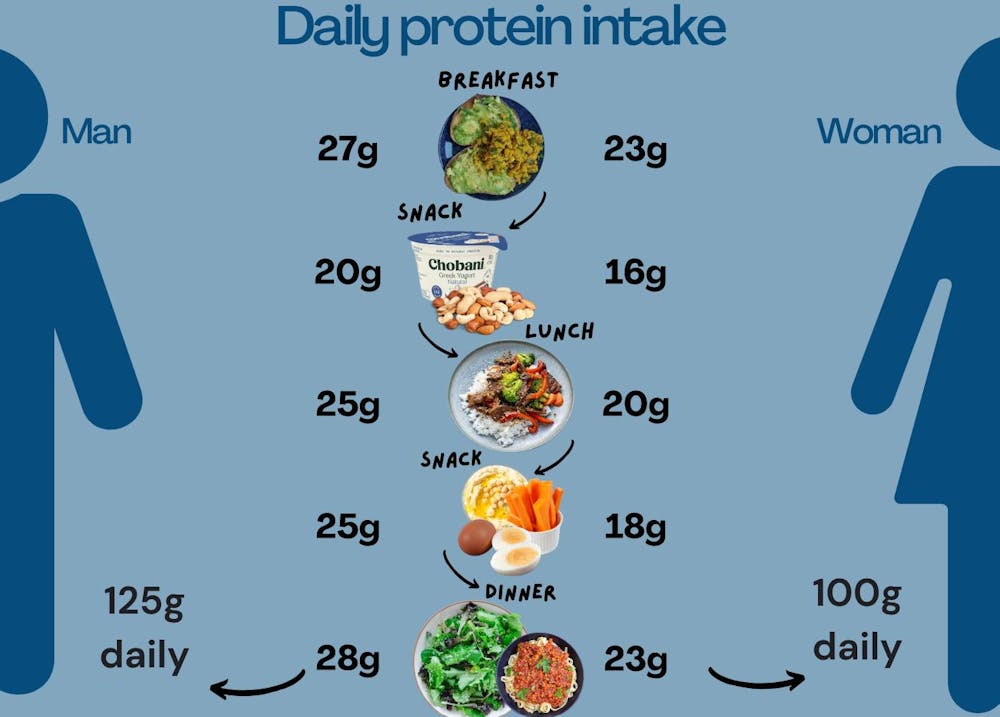
    MIL OSI USA News

  • MIL-OSI USA: Doggett, Davis, Kelly, Feenstra Introduce Bipartisan Bill to Improve Financial Assistance for College

    Source: United States House of Representatives – Congressman Lloyd Doggett (D-TX)

    Contact: Alexis.Torres@mail.house.gov

    Washington, D.C. – U.S. Representatives Lloyd Doggett (D-TX), senior member of the House Ways and Means Committee, Danny K. Davis (D-IL), ranking member of the House Ways and Means Subcommittee on Worker and Family Support, Mike Kelly (R-PA), Chairman of the House Ways and Means Subcommittee on Tax, and Randy Feenstra (R-IA) introduced the bipartisan Tax-Free Pell Grants Act to remove a financial and logistical barrier impairing students from securing higher education opportunities. Specifically, the legislation expands the usage of Pell Grants on a tax-free basis, improves coordination with the American Opportunity Tax Credit (AOTC), and ensures students do not lose out on any AOTC benefits. An incredibly timely solution as ongoing cuts to postsecondary institutions and research labs across the country result in lost revenue and financial gaps in operating costs, potentially leading to increases in tuition and fees for students and their families.

    “Everyone deserves a chance at success, and we should be simplifying our tax code to unlock more support for students interested in going to college but who may need a little financial help to get there,” said Rep. Doggett. “This legislation would also expand eligible expenses under the existing tax credit to include computers and childcare, which for many is essential to achieving their dreams and growing our economy.”

    “Education is fundamental to our democracy,” said Rep. Davis. “I am proud to join Representatives Doggett, Kelly, and Feenstra in leading this bill that helps low-income students get the most from the American Opportunity Tax Credit. In my District, relatively few taxpayers use the AOTC because many attend community colleges and can’t claim their childcare and computer costs. Ensuring that students can fully benefit from the AOTC credit without worry about being taxed on the Pell grant helps educate our citizenry and strengthen them economically.” 

    “Pell Grants are an important way for more lower-income Americans to get an education and work toward a successful career,” said Rep. Mike Kelly (R-PA), Chairman of the Ways & Means Subcommittee on Tax. “More than 216,000 Pennsylvania students benefitted from Pell Grants last year. I’m again proud to join Congressman Doggett on this bipartisan legislation that will expand what these grants can be used for – including child care and computers — so many more Americans, particularly single mothers, have the ability to access higher education to achieve long-term financial stability for themselves and their families.”

    “I have long supported Pell Grants because they offer academic opportunities to our students and ensure that Iowans who might otherwise skip higher education because of the cost can pursue advanced studies. These grants are an important investment in the next generation of leaders, farmers, innovators, and entrepreneurs who will support our communities and power our economy forward,” said Rep. Feenstra. “However, current law still requires some students to pay taxes on their Pell Grants, reducing the financial support that these grants are intended to provide. That’s why I’m glad to help introduce legislation to make Pell Grants completely tax-free so that our kids can focus on their studies without worrying about the cost.”

    While Pell Grant awards used to pay for tuition and fees are already treated as tax-free income, any portion of a Pell Grant used for other education-related items like living expenses is taxed. Currently, using Pell Grants to cover tuition reduces potential AOTC eligibility and creates complications for students in maximizing their educational benefits. As a result, many students simply forgo the AOTC, leaving an estimated hundreds of millions of dollars unclaimed each year. By increasing compatibility with the AOTC, we can ensure that Pell Grants are not treated as taxable income, even if they are used for non-tuition education expenses.

    Since enacted in 2009, the AOTC has helped millions pay for college, and more than a decade ago, Rep. Doggett authored provisions to ensure the tax credit allows a tax cut of up to $10,000 on education expenses, such as tuition, textbooks and fees. The AOTC covers up to $2,500 in annual college tuition, fees, and other education-related expenses — 40% of the credit, up to $1,000, is refundable. With more than 3 million undergraduate students in the United States being parents—nearly one in five college students—access to affordable childcare can be the difference between completing a degree program or not. The Tax-Free Pell Grants Act meets this need by adding childcare and computer costs as qualifying expenses for the AOTC.

    Endorsing organizations: American Association of Community Colleges, American Association of State Colleges and Universities, American Council on Education, Association of American Universities, Association of Public and Land-grant Universities, and the National Association of Independent Colleges and Universities.

    The bill text is available here.

    MIL OSI USA News

  • MIL-Evening Report: In Australia, 1 in 5 road deaths is a motorcyclist. We can make them safer

    Source: The Conversation (Au and NZ) – By Milad Haghani, Associate Professor & Principal Fellow in Urban Risk & Resilience, The University of Melbourne

    doublelee/Shutterstock

    The proportion of motorbikes on Australia’s roads has remained steady over the last decade, about 4.5% of all registered vehicles. But motorcyclists are over-represented in road deaths.

    In 2015, they made up 17% of total road fatalities. In 2024, this has crept up to 21%.

    Meanwhile, other road users have either maintained a steady proportion of road fatalities or – in the case of car passengers – declined since 2015.

    So, less than one in 20 vehicles is a motorbike. But one in five people killed in a road crash rides one. What’s going on – and can they be made safer?

    Why are motorcyclists more vulnerable?

    On a motorbike, people lack the protection of an enclosed vehicle. This makes them more vulnerable to injuries, including to the head, chest and – most commonly – legs and feet.

    Road conditions can also make a significant difference to motorcyclists. With only two points of contact with the road, motorbikes have less stability than four-wheeled vehicles.

    Even minor defects – such as potholes, uneven road surfaces or gravel – can reduce traction, cause skidding or lead to a loss of control, particularly when cornering.

    For example, a 2022 study of 188 motorcycle crash sites in Victoria showed sharper curves were linked to a higher risk of crashing. A study of over 1,400 motorcycle crashes in Tasmania from 2013-16 found road surface defects were a contributing factor to 15% of all crashes, and 24% of single-vehicle crashes.

    Age and experience also play a role

    In a car, a driver’s greater experience level is linked to greater safety. Evidence shows this may be particularly important for motorcycle riders as they manoeuvre and balance their vehicle and respond to road conditions.

    The Tasmanian study also showed young riders aged between 16 and 25 were disproportionately at risk. They accounted for just 11% of registered motorcycles but 42% of motorcycle crashes.

    Their crash rate was more than three times that of riders aged 26–39 – and six times higher than riders over 40. They made up more than half of all incidents on curves.

    Alarmingly, nearly a third of riders who died on South Australian roads between 2016 and 2020 were unlicensed.

    People on motorbikes lack the structural protection of an enclosed vechicle.
    Adam Calaitzis/Shutterstock

    Can motorbikes be made safer?

    Modern cars have passive safety features, such as airbags and crumple zones, to reduce injuries. Technology – including collision avoidance systems and advanced braking – has also reduced fatality rates for drivers and passengers.

    In contrast, motorbikes rely almost entirely on a rider’s skill, protective gear and the road conditions.

    In recent years, motorcycle manufacturers have been introducing “advanced rider assistance systems”. These adapt similar features used in cars, such as adaptive cruise control (which adjusts speed and distance from vehicles ahead) and forward collision warnings.

    However, these systems are still relatively new, and whether they can reduce crashes and fatalities is yet to be robustly studied.

    Many motorcyclists are also hesitant to adopt these kinds of technologies due to concerns they may lose control or become over-reliant on them. Cost is also a factor, as rider assistance systems are still mostly limited to premium motorcycles.

    Safety is everyone’s responsibility

    Currently, motorbike riders continue to rely on infrastructure quality, rider training and skills, risk awareness, and protective gear as their primary safety measures.

    Stronger regulation and enforcement of licensing, in conjunction with post-licence training, have been shown to help reduce motorcycle fatalities.

    This includes implementing a graduated licensing system, which imposes restrictions on novice riders and gradually lifts them as they gain experience and maturity.

    Post-licence rider training courses on defensive riding strategies (such as lane positioning, scanning and buffering) could be complements to basic licensing processes.

    And let’s not forget: safety is not solely in the hands of motorbike riders.

    An analysis of more than 5,000 two-vehicle motorcycle crashes in the United States found the motorcyclist was at fault in less than one in three cases.

    Educating drivers of other vehicles matters just as much as motorcyclists themselves. Creating safer roads depends on mutual awareness and responsibility.

    Sharing the road responsibly means drivers should:

    • regularly check mirrors and blind spots for motorcycles, especially before changing lanes or turning

    • maintain a safe following distance, understanding that riders may need to swerve to avoid hazards like oil, gravel or potholes

    • allow the same space when overtaking a motorcycle as they would a car

    • stay alert for lane filtering — where riders legally travel between lanes of slow or stationary traffic at low speeds.

    Recognising motorcyclists as vulnerable road users, alongside pedestrians and cyclists, is key to making roads safer for everyone.

    Milad Haghani does not work for, consult, own shares in or receive funding from any company or organisation that would benefit from this article, and has disclosed no relevant affiliations beyond their academic appointment.

    ref. In Australia, 1 in 5 road deaths is a motorcyclist. We can make them safer – https://theconversation.com/in-australia-1-in-5-road-deaths-is-a-motorcyclist-we-can-make-them-safer-250652

    MIL OSI AnalysisEveningReport.nz

  • MIL-OSI Russia: NSU astronomers first in Russia photographed Mercury’s comet-like sodium tail

    Translartion. Region: Russians Fedetion –

    Source: Novosibirsk State University – Novosibirsk State University –

    Astronomers from the Vega observatory of NSU managed to record a rather rare astronomical phenomenon — a comet-like sodium tail of Mercury. The photo was taken in March and is the first in our country. According to NSU astronomers, the length of the tail in the photo is about 150 thousand km. The comet-like sodium tail was discovered, by astronomical standards, relatively recently — in 2001. At the moment, astronomers from all over the world have taken several dozen similar photos.

    The difficulty of photographing Mercury’s tail is that a combination of several factors is required: Mercury reaching its maximum radial velocity relative to the Sun, Mercury’s significant angular distance from the Sun (elongation), and suitable meteorological conditions.

    Everyone knows that a tail can be seen in comets – these are small bodies of the Solar System, which consist mainly of ice and dust. When a comet approaches the Sun, the sublimation of matter (water, volatile gases and dust) from the surface of its nucleus occurs, forming a coma and a tail. Dust particles scatter sunlight, so the tail of comets can be seen from Earth.

    However, not only comets have tails, but also some larger objects in the Solar System. For example, Mercury.

    — The mechanism of formation of Mercury’s tail is similar to the principle of formation of comet tails. This planet is characterized by a thin and weak atmosphere, which consists of helium, sodium, hydrogen, potassium and oxygen. Mercury has weak gravity and a weak magnetic field, so the atoms of chemical elements that make up its atmosphere are constantly blown away by the solar wind due to its proximity to the Sun. Therefore, a comet-like sodium tail of Mercury is formed, it is called sodium, since it is most clearly visible in the sodium line – at a wavelength of 589 nanometers, — said Yegor Konyaev, engineer of the Vega observatory of NSU.

    Mercury’s comet-like sodium tail was discovered in 2001, when its first photograph was taken. There were already guesses that something like this should exist in the 1980s. However, because the tail is rather dim and a special filter must be used to capture it, it was impossible to photograph it for a long time. However, this became possible with the advent of highly sensitive digital cameras. In 2001, the length of Mercury’s tail was estimated at no more than 40 thousand kilometers based on the photograph. Later, in 2008, photographs were obtained from which it became clear that the length of the tail exceeds 2 million kilometers.

    — Taking a photo of Mercury’s sodium tail is not the easiest task, but with a special filter it becomes feasible for almost every amateur astronomer. I first learned about this phenomenon about a year ago, when I saw impressive photos by German astrophotographer Sebastian Voltmer. Later it became clear that only a few dozen such photos have been taken, and not a single one in our country. This prompted me to try to photograph Mercury’s tail, — Yegor said.

    The photograph was taken using a special filter, for a specific wavelength – 589 nanometers, with a transmission width of 10 nanometers. This is necessary to isolate the spectrum band in which the Mercury tail has the greatest brightness. It was also necessary to shoot with long exposures and high sensitivity, the total signal accumulation time was 8 minutes.

    The problem is further complicated by the fact that Mercury’s tail is brightest at ±16 days from perihelion. Mercury has a fairly elongated elliptical orbit, so at perihelion it comes quite close to the Sun.

    — It is clear that the Sun’s influence on Mercury will be greatest at the moment the planet passes perihelion. Therefore, it seems logical that this is the best moment to film the tail. However, for reasons related to the Doppler shift of sodium absorption lines, Mercury’s tail is brightest at moments of ±16 days from perihelion, since the planet reaches its maximum radial velocity relative to the Sun at this time, — Yegor explained.

    This year, the most favorable period for observing Mercury was the end of February and the second half of March. Mercury was photographed when it was very low above the horizon — the planet’s altitude was only 3 degrees. The shooting was done from the Vega observatory of NSU. According to NSU astronomers, the tail in the photograph is about 150 thousand km long.

    Other objects in the Solar System that have comet-like tails include the Moon and Jupiter’s satellite Io. The Moon has a very weak atmosphere, it is extremely rarefied. The Moon is also exposed to the Sun, and sodium atoms leave the satellite’s atmosphere, forming a tail. The Moon’s tail can only be observed during the new moon, when the satellite is between the Sun and the Earth. At this moment, the beam of tail particles is focused under the influence of Earth’s gravity. The lunar tail looks like a weak spot in the part of the sky diametrically opposite the Sun. A special filter is also needed to photograph it.

    The future plans of NSU astronomers include recording the tail of Jupiter’s closest satellite, Io.

    — The peculiarity of this space object is that it is quite close to Jupiter, which causes significant tidal forces that generate high geological activity. Io’s volcanic emissions also contain sodium, which can be recorded using a filter. The difficulty in photographing Io’s tail is the proximity of Jupiter. Its relatively high brightness does not allow photographing Io’s tail. To solve this complex problem, it will be necessary to upgrade the telescope and make it a coronagraph, which will allow cutting off light from the bright planet. After that, it will be possible to try to take a picture of Io’s tail. Even fewer such photographs have been taken in the world. This is a task for the future that we set for ourselves, — Yegor said about his plans.

    The next time favorable conditions for observing Mercury’s sodium tail in our latitudes will occur in the spring of 2027. With due patience and persistence and the availability of special equipment, any amateur astronomer can photograph it.

    Photo of Mercury’s tail, author – Egor Konyaev, Vega Observatory of NSU. Photo of Mercury’s transit across the Sun’s disk; also taken by astronomers of Vega Observatory of NSU.

    Please note: This information is raw content directly from the source of the information. It is exactly what the source states and does not reflect the position of MIL-OSI or its clients.

    MIL OSI Russia News

  • MIL-OSI USA: Congressman Cohen says President Trump’s Executive Orders Show he neither Understands nor Respects the Constitution

    Source: United States House of Representatives – Congressman Steve Cohen (TN-09)

    WASHINGTON – Congressman Steve Cohen (TN-9), a senior member of the Judiciary Committee and its Subcommittee on the Constitution and Limited Government, today discussed President Trump’s efforts to upend the judicial system at a hearing entitled “Judicial Overreach and Constitutional Limits on the Federal Courts.” Trump’s efforts include extorting law firms, damaging independent agencies, and proposing to end national injunctive relief, and impeaching judges who make rulings with which he disagrees.

    Congressman Cohen made the following statement:

    “The judicial branch in our country plays a critical role in checks and balances, which the Constitution mandates. Our president doesn’t understand that or respect it. In my opinion he is, accordingly, the one doing the ‘overreach,’ not the judiciary…He can’t with an executive order – a press release on nice stationery – overrule the Constitution. Nor can he declare a third term for himself, which he’ll probably do eventually…

    “He’s also gone after lawyers and law firms and it’s no mystery why he did it…If lawyers are afraid to bring actions against the administration or the president, then the courts won’t be able to do anything…I’m a member of the bar. I respect the bar and I understand its importance to the American jurisprudence system…”

    See his entire statement and questions to hearing witnesses here.

    Witnesses at today’s hearing were:

    • Kate Shaw, Professor of Law, University of Pennsylvania Carey Law School;
    • Newt Gingrich, former Georgia Congressman (1979-1999) and former Speaker of the House (1995-1999);
    • Paul J. Larkin, Senior Legal Research Fellow, The Heritage Foundation; and
    • Cindy Romero, former resident of Aurora, Colorado

    # # #

    MIL OSI USA News

  • MIL-Evening Report: Australia and New Zealand are plagued by ‘tall poppy syndrome’. But would a cure be worse than the disease?

    Source: The Conversation (Au and NZ) – By Nick Haslam, Professor of Psychology, The University of Melbourne

    Ildiko Laskay/Shutterstock

    The original tall poppies bloomed in the garden of Tarquin the Proud, last king of Rome. To communicate that his enemies should be defeated by killing their leaders, he is said to have decapitated the tallest flowers with a stick.

    Two and a half thousand years later, “tall poppies” are those among us who rise above the horde through the excellence of their achievements or the boldness of their ambition.

    Sometimes tall poppies are celebrated, as an array of tall poppy awards attests. Other times they are scorned for their arrogance and envied for their success. Too big for their boots or britches, they must be cut down to size.

    Aversion to tall poppies is said to be particularly strong in Australia and New Zealand, where the idea of a “tall poppy syndrome” was invented in the 1980s. A tendency to drag down those who set themselves above others, the syndrome supposedly reflects values of equality, humility and the storied “fair go”.

    But what are the effects of the tall poppy syndrome? What does it tell us about Antipodean cultures? And are we uniquely averse to those who stand out from the crowd?

    Rome’s final king, the tyrannical Tarquin the Proud, scythes through the tallest poppies in Lawrence Alma-Tadema’s ‘Tarquinius Superbus’.
    Wikimedia Commons

    Effects of the tall poppy syndrome

    Effects of the tall poppy syndrome on work performance and leadership have been studied extensively.

    In a New Zealand study of prominent entrepreneurs, nearly all reported encountering the syndrome. “If you do achieve something and stick your head up a bit further,” one said, “people will try to chop you down to size.”

    Dealing with negative responses to success drove some entrepreneurs to adopt specific coping strategies, like staying under the radar and taking pains not to flaunt their success.

    Tall poppy syndrome doesn’t merely bruise enterprising egos, it can also adversely affect business decisions. The NZ study found public attacks can discourage entrepreneurs from starting or growing a business and from persevering after setbacks.

    Athletes also report being targets. Some attacks simply reflect anonymous online spite, but tall poppy attitudes also drive aggressive behaviour. One Australian study found that high performing student athletes were often victims of bullying.

    Cultural underpinnings

    Harvesting tall poppies may be common in Australia and New Zealand, but there is little evidence that it is unique to us.

    In Japan, the saying “the nail that sticks out gets hammered down” captures the idea that people should not be conspicuously different.

    Aksel Sandemose formulated ten rules to discourage anyone from feeling special.
    Oslo Museum, CC BY-SA

    The Law of Jante expresses a similar sentiment in Scandinavian countries. Despite being fictitious, invented by Danish-Norwegian novelist Aksel Sandemose, its ten rules dictate that “you’re not to think you are anything special” and “you’re not to imagine yourself better than we are”, among other humbling commandments.

    These examples are subtly different from each other: the Japanese version presents being different as undesirable; the Nordic version identifies being better or special as undesirable traits.

    In the more collectivist Japanese context, avoiding displays of individuality helps to preserve social harmony and avoid conflict. In the more individualist Scandinavian context, the key concern is maintaining social equality. The Law of Jante levels out a society where individuality is highly valued but expressions of personal superiority are not.

    These variations show that aversion to tall poppies can express two distinct values in different cultural settings: conformity via collectivism, and equality via egalitarianism.

    Values researchers think of egalitarianism in terms of a cultural dimension called “power distance”. Cultures high on this dimension value social hierarchy and accept inequalities. Low cultures prefer more equal social arrangements.

    Australia tends to score relatively low on power distance, with Scandinavian countries and New Zealand lower still, as well as scoring high on individualism. In this “horizontal” form of individualism, people are meant to strive to be distinct without desiring special status. It is therefore no surprise to find the tall poppy syndrome in these countries.

    Values in the United States also tend to be highly individualistic, but higher in power distance than in Oceania, a combination known as “vertical individualism”. Vertical individualists also value being distinct from others, but are more comfortable with inequality and with raising themselves above others.

    American culture leaves more room for tall poppies to reap rewards for their success.
    PeopleImages.com – Yuri A/Shutterstock

    As this contrast suggests, Americans favour rewarding tall poppies more strongly than Australians. This aligns with the ethos of the “American Dream”, a cultural narrative that champions ambition and status-seeking, and the full-throated celebration of personal success.

    The future of the tall poppy syndrome

    In our age of self-promotion, with social media sites devoted to not-so-humble bragging, have we become immune to the tall poppy syndrome? Are we becoming more comfortable about standing out, or does egalitarianism remain a powerful obstacle?

    Research finds no increase in levels of narcissism in Australia, in contrast to some evidence of rising levels in the US. By implication, Australians are not becoming more willing to elevate themselves above others. Whether their attitudes to people who do so has changed remains to be seen.

    More importantly, we should ask if, in times of high and rising inequality, less egalitarianism is something to hope for. No one wants successful athletes to be lashed by public envy – but if the tall poppy syndrome reflects a commitment to social equality, perhaps a complete cure would be worse than the disease.

    A culture that attacks its tall poppies risks discouraging ambition and innovation, but one that overlooks inequality may lose sight of the collective good. Ultimately, the challenge lies in finding a balance between celebrating individual excellence and maintaining the egalitarian spirit that fosters fairness.

    Nick Haslam receives funding from the Australian Research Council.

    Milad Haghani does not work for, consult, own shares in or receive funding from any company or organisation that would benefit from this article, and has disclosed no relevant affiliations beyond their academic appointment.

    ref. Australia and New Zealand are plagued by ‘tall poppy syndrome’. But would a cure be worse than the disease? – https://theconversation.com/australia-and-new-zealand-are-plagued-by-tall-poppy-syndrome-but-would-a-cure-be-worse-than-the-disease-245355

    MIL OSI AnalysisEveningReport.nz

  • MIL-OSI China: Employment for college graduates stressed

    Source: China State Council Information Office 2

    Job seekers talk with employers at a job fair held for the 2025 graduates of the Heilongjiang University in Harbin, northeast China’s Heilongjiang province, Dec. 23, 2024. [Photo/Xinhua]
    Chinese Vice Premier Ding Xuexiang on Wednesday called for efforts to increase employment and entrepreneurship opportunities for college graduates and young people in a bid to keep the country’s youth employment at a stable level.
    Ding, also a member of the Standing Committee of the Political Bureau of the Communist Party of China Central Committee, made the remarks at a teleconference on the matter.
    Ding urged authorities to treat youth employment as a top priority, calling it a crucial matter that affects millions of households.
    All-out efforts should be made to increase high-quality job opportunities by tapping into key fields and industries, while fostering new employment growth points through industrial upgrades, Ding said.
    The vice premier called for outlining more favorable policies to support graduates who are willing to start up businesses.
    Ding also called for improved career services for graduates, and greater support for struggling jobseekers to ease their transition from campus to workplace.

    MIL OSI China News