Category: Universities

  • MIL-OSI Global: Anger is a flow of emotion like water through a hose − at work, it helps to know when to turn it up or down and how to direct it

    Source: The Conversation – USA – By Laura Rees, Associate Professor of Organizational Behavior, Oregon State University

    Is the anger targeted or blasting everyone in the area? Witthaya Prasongsin/Moment via Getty Images

    Pretty much everyone will sometimes struggle with anger at work. People fear the wrath of abusive supervisors, suppress anger to maintain a façade of professionalism, or vent anger toward co-workers who are, fairly or not, targets. Reactions to anger in the workplace can be strong, but they’re not always effective.

    As scholars who also fall prey to the pitfalls of anger ourselves, we are fascinated by anger. We have studied the causes, underlying processes and consequences of anger from the perspectives of management, psychology, marketing and negotiations.

    We recently reviewed more than 400 research articles across psychology, business and related fields on topics ranging from brain activity to negotiation to race relations. Yet despite the ubiquity of anger in the workplace and the decades of anger research that exists across a number of fields, we found no straightforward way to understand the complexity of the life cycle of anger and how to manage it most effectively.

    As we dived more deeply into the research literature, though, we realized that simply reframing how we think about anger could provide a novel, flexible framework for how to deal with this emotion in daily life. Our suggestion: Think of anger as a flow of emotion, like water through a garden hose.

    By thinking of the flow of anger, you can unpack its key dimensions: its path and strength. Understanding whether the hose is pointed effectively and whether the strength of the stream is appropriate are critical for knowing when, how and why to focus or redirect the anger and amplify or weaken its intensity.

    When tempers flare, sometimes innocent bystanders take the heat.
    RapidEye/iStock via Getty Images Plus

    The direction of anger

    Imagine a co-worker charges into your office, yelling, breathing heavily, face reddened, veins bulging. Even if you are simply an unsuspecting colleague who happened to have your door open, your attention is undoubtedly now fixed on your co-worker.

    Are you the target of their anger for something you did, or merely an observer of their anger at someone else?

    If you are an undeserving target, do you try to reframe the issue so that the angry person will realize the anger is better directed elsewhere?

    If you are the observer, you also have a choice about whether to ignore your co-worker’s anger or help them redirect it to a more effective outlet. You might simply listen empathetically while they let off steam, perhaps pointing out the relative risks and benefits of their taking their complaints to the supervisor.

    You are deciding, in effect, what suggestions to make about the direction of this person’s anger.

    The key to effectively managing the direction of anger is to manage the attention of those in the room. Reshaping how angry people attribute blame, for example, can help people take another person’s perspective or understand the situation in a new way, directing the flow more productively.

    The intensity of anger

    When an angry co-worker approaches you as the target, do you ignore the signal or offer to work with the person so a similar situation doesn’t happen in the future? Both are ways to tamp down the intensity of the emotion coming at you.

    When you are angry, do you try to distract yourself from the anger, let it simmer, or embrace it? You are essentially deciding how you want to manage the intensity of your own angry feelings.

    It is important to recognize that managing the intensity of anger can go in both directions. Sometimes high-intensity anger should be turned down and sometimes subtle anger should be amplified.

    For example, consider an instance in which you feel anger at what you perceive to be an unfair change to a company policy. In this case, simply going for a walk outside to avoid expressing your frustration may result in the leadership not realizing that you and others on the team feel this way, leaving little opportunity to discuss and update the policy to more reasonable standards.

    Learning to self-regulate your thoughts and behaviors can help you manage the intensity of any anger you find yourself feeling. Rather than impulsively reacting, you can practice handling your emotions so you control whether you crank up your expressed anger or dial it down. Part of this process is thinking carefully about the cost-benefit trade-offs of expressing your anger. In these ways, you more effectively manage the strength of the flow without unnecessarily just turning it off.

    The decision whether or how to intervene depends on the specifics of the situation.
    FG Trade/E+ via Getty Images

    Controlling anger

    Knowing when, how and why to shape the direction and intensity of anger is no small feat. Some of this decision is rightly based on the situation. For example, is it safe to step in? Do you feel personally skilled at intervening?

    But it is within everyone’s power to learn how to manage their own and others’ anger more effectively.

    To do so, you need to understand your role and whether the flow is a one-time situation or a persistent problem. Understanding whether you’re holding the hose, standing in its path or observing from a distance is the first step to effectively managing the direction and intensity of the flow.

    Second is deciding whether and how to intervene: Can you reframe the initial trigger so that the faucet is never turned on, or turned on more or less powerfully? If anger is already too strong and you cannot or do not want to avoid it, can you help the angry person regulate the direction and intensity of their anger to overcome the issue in some way?

    You can get better at controlling the flow of anger in ways that can improve rather than harm relationships and outcomes. Research supports working on your emotional intelligence and building belief in your own capability to handle anger. Manage factors that tend to wrest control of the hose away from you, including becoming defensive, feeling shame or even suffering from a lack of sleep.

    Taking these steps and practicing controlling the hose’s path and intensity can help address problems in the short term and prevent anger from becoming a destructive pattern in the long term.

    The authors do not work for, consult, own shares in or receive funding from any company or organization that would benefit from this article, and have disclosed no relevant affiliations beyond their academic appointment.

    ref. Anger is a flow of emotion like water through a hose − at work, it helps to know when to turn it up or down and how to direct it – https://theconversation.com/anger-is-a-flow-of-emotion-like-water-through-a-hose-at-work-it-helps-to-know-when-to-turn-it-up-or-down-and-how-to-direct-it-243670


    MIL OSI – Global Reports

  • MIL-OSI Global: Why Muslim American nonprofits are taking steps to build trust with donors during Ramadan

    Source: The Conversation – USA – By Shariq Siddiqui, Assistant Professor of Philanthropic Studies, Indiana University

    Nearly 70% of American Muslims report giving Zakat, the obligatory charity, during Ramadan. NickyLloyd/E+ via Getty Images

    As Muslims fast from dawn to dusk during Ramadan, an important aspect of their faith is their role as stewards of God on Earth. One way Muslims do this is through the practice of Zakat, an obligatory kind of charity that’s one of the five pillars of Islam.

    Zakat requires Muslims to give 2.5% of their wealth to eight prescribed categories: the poor; the needy; Zakat administrators; those whose hearts can be reconciled; to free the enslaved; to help those in debt; for travelers; and for the sake of God.

    Muslims, however, worry that they are responsible to God to ensure that their Zakat is used by institutions in ways that would do good, while adhering to the theological requirements of this religious practice. Yet, my research shows that Muslim American nonprofits are taking steps to build trust with donors.

    Zakat as a communal practice

    Muslims see themselves as custodians of whatever they possess as gifts from God.

    During their lifetime, they must use wealth responsibly and for good; upon their death, the Quran prescribes who can inherit their wealth.

    One important aspect of how Muslims are supposed to use their wealth is through charity. Zakat is an obligatory charitable practice in which donations are traditionally channeled through institutions.

    According to research my team conducted, nearly 70% of Muslims in the United States report giving Zakat during Ramadan. Ramadan is thus a critical time for nonprofits to solicit Zakat funds.

    Historically, Zakat was given through central Zakat collection agencies, or “bait-ul-maals.” For example, at the time of the Prophet Muhammad and early Islamic rulers, Zakat collection and distribution was carried out by the government.

    Today, Zakat collection and distribution varies from place to place. In six of the 47 Muslim-majority countries – Libya, Malaysia, Pakistan, Saudi Arabia, Sudan and Yemen – Zakat is obligatory and collected by the state. In Jordan, Bahrain, Kuwait, Lebanon and Bangladesh, Zakat is regulated by the state, but contributions are voluntary.

    Most countries do not have a formal Zakat collection agency and rely upon local nonprofits or individuals for the collection and distribution of Zakat.

    Over time, due to distrust in Zakat collecting institutions and perceived corruption, the practice of Zakat has become more individual and less communal. The vast majority of Zakat across the globe is collected and distributed individually rather than through institutions. Scholars have argued that many fear that Zakat collecting institutions may not be using the funds ethically, impactfully and in accordance with Islamic requirements.

    For example, according to the Hanafi school of thought, a Zakat collection agency can spend up to 12.5% of donation money on administrative costs; other schools of thought argue that Zakat should be administered at no cost.

    Building trust through transparency

    It is important for many Muslims that their contributions are used in compliance with Islamic religious requirements.
    Photo by Emmanuel Dunand/AFP via Getty Images

    Nonprofits are taking steps to build trust. For example, Muslim American charities were among the first to embrace Charity Navigator as a way to evaluate their impact.

    Charity Navigator is a U.S.-based nonprofit that rates nonprofits. Many Muslim-led charities in the United States proudly display their “Four Star” Charity Navigator status.

    My team has found that Muslim Americans are more likely to donate to nonprofits that the Internal Revenue Service has granted 501(c)(3) status. This is true even if they don’t claim the charitable deduction on their taxes and therefore cannot get tax breaks for their donations.

    More recently, in my conversations with leading Muslim-led nonprofits, I learned that they are seeking to respond to Muslim concerns about how these nonprofits use Zakat funds. It is important for them that funds are used in compliance with Islamic religious requirements.

    For example, they are looking at how nonprofits interpret what it means to be “needy,” “the poor,” “the enslaved” or “for the sake of God” in the contemporary context.

    Many nonprofits are adopting Zakat policies that explain how they define these terms and how much of their budget covers their administrative costs. These include international organizations that are not led by Muslims, like the U.N. refugee agency, UNHCR, Save the Children, and the anti-poverty group Oxfam.

    A case study

    The Muslim Philanthropy Initiative at Indiana University, which I lead, convened a group of scholars in November 2024 to discuss challenges of collecting and distributing Zakat in the U.S. This discussion resulted in a report that sums up these conversations and examines the Zakat policy of the largest U.S. Muslim-led nonprofit: Islamic Relief USA.

    Islamic Relief USA’s Zakat policy limits its administrative costs to 12%; it permits funding for both immediate and long-term projects and allows Zakat to be distributed not just as cash payments but also as goods and services. It does not discriminate on the basis of religion.

    While not all scholars at the convening agreed with every aspect of the Islamic Relief USA Zakat policy, they accepted that diversity in Islamic thought permitted various approaches to Zakat. They also concurred that Islamic Relief USA’s process was likely the best framework for how nonprofits should approach the development of Zakat policies.

    Ultimately, there was consensus that nonprofits seeking Zakat should have Zakat policies; should make them available on their websites; should state the process through which it was developed; and name the scholars and other experts who took part in the process.

    Since a majority of American Muslims prefer to donate their Zakat during Ramadan, perhaps this might be the time when nonprofits can build trust through adopting more transparent Zakat policies.

    This article discusses a meeting funded by the the Islamic.. However, Islamic Relief USA is not consulted on any of our scholarly or public facing publications resulting from that convening.

    ref. Why Muslim American nonprofits are taking steps to build trust with donors during Ramadan – https://theconversation.com/why-muslim-american-nonprofits-are-taking-steps-to-build-trust-with-donors-during-ramadan-251319

    MIL OSI – Global Reports

  • MIL-OSI Global: Philly’s street fentanyl contains an industrial chemical called BTMPS that’s an ingredient in plastic

    Source: The Conversation – USA – By Karli Hochstatter, Research Scientist in Epidemiology and Health Services, Columbia University

    Adulterants such as xylazine, medetomidine and now BTMPS are common in Philly’s street fentanyl. Juan Pablo Pino/AFP via Getty Images

    As much as half of the fentanyl sold on Philly’s streets contains an industrial chemical used in plastics manufacturing. That’s according to our November 2024 testing of fentanyl samples collected in Philadelphia’s Kensington neighborhood, regarded as the largest open-air drug market on the East Coast.

    What’s more, the amount, or concentration, of this industrial chemical in the drug samples often exceeded the amount of fentanyl.

    We are an epidemiologist and anthropologist whose research focuses on substance use disorders and the opioid overdose epidemic. Our team’s findings were published in the peer-reviewed Journal of the American Medical Association in February 2025.

    The industrial chemical we found is called BTMPS, which is the common abbreviation for bis(2,2,6,6-tetramethyl-4-piperidyl) sebacate. BTMPS belongs to a class of molecules called hindered amine light stabilizers that manufacturers frequently add to plastics and other polymers to protect against degradation from heat and sunlight.

    Since March 2024, our team has tested 228 street fentanyl samples collected in Kensington. Of these, 39 – or 17% – contained BTMPS.

    We first detected BTMPS in Philadelphia in June 2024. We found it in two of the eight samples – 25% – that we collected that month. By November 2024, 12 of 22 samples – or 55% – contained BTMPS.

    Why BTMPS is being added to the street opioid supply, and at what stage in production or distribution it is being added, remains unknown.

    Researchers suspect that it may be added to stabilize a fentanyl precursor chemical that is susceptible to degradation from heat and oxygen.

    Given its low cost, BTMPS may also be added to dilute other psychoactive substances or more expensive ingredients or both.

    Kensington Avenue in North Philadelphia is considered the epicenter of the city’s opioid crisis.
    Spencer Platt via Getty Images

    How toxic is BTMPS?

    Among the 39 samples that contained BTMPS in Philadelphia, the average amount of BTMPS was nearly double that of fentanyl. On average, BTMPS made up 4% of the sample, while fentanyl made up 2.3% of the sample. In one sample tested, BTMPS made up 18% of the sample.

    BTMPS has not been approved for human consumption or been studied in humans.

    However, it has been shown in rat studies to reduce nicotine use and attenuate withdrawal symptoms associated with morphine and cocaine.

    The rat studies revealed several adverse health effects from exposure to BTMPS. They include heart defects, serious eye damage and death.

    These findings raise concerns about the increasing exposure of BTMPS to humans through street drugs. The concentrations up to 18% found in the Philly samples are many orders of magnitude higher than the estimated concentration of 0.1% to 0.5% that people are exposed to through plastic products.

    Some of the street fentanyl samples from Philadelphia contained more BTMPS than fentanyl.
    Joe Lamberti for The Washington Post via Getty Images

    BTMPS appearing in fentanyl across the US

    Our colleagues who are testing street opioid samples in other regions also detected BTMPS in fentanyl samples or paraphernalia residue in Delaware, Maryland, Nevada, Washington and California. In Los Angeles, BTMPS was first detected in July 2024 – by September, 56% of samples there contained it.

    The sudden and almost simultaneous appearance of a new adulterant in U.S. street opioids from the East Coast to the West Coast is rare. For example, fentanyl, xylazine and medetomidine became prevalent in the U.S. opioid supply in different regions at different times.

    The recent emergence of BTMPS in street opioid markets nationwide suggests that it may be entering the supply at an early stage in production or wholesale distribution.

    Historically, Philadelphia’s street opioid supply has had strong ties to Puerto Rico. These ties influenced Philly’s early incorporation of the veterinary sedative xylazine into the street drug supply. Since 2021, xylazine has been present in virtually all of Philly’s street fentanyl.

    Given these associations, we are also testing the street opioid supply in Puerto Rico to examine potential similarities and relationships with Philadelphia’s supply. To date, we have detected BTMPS in two out of 49 – or 4% – of street opioid samples in Puerto Rico. We first detected it in a sample in September 2024 and again in December 2024.

    What’s next

    We continue to monitor BTMPS trends in Philadelphia’s street fentanyl. We are also examining whether concentrations of fentanyl and other key compounds such as xylazine in Philly’s street fentanyl have changed as new adulterants such as BTMPS and medetomidine become more widespread – and whether these changes play a role in the declining overdose death rate in Pennsylvania and other parts of the U.S.

    We are also developing plans to study the immediate and long-term effects that BTMPS exposure has on people using drugs.

    Karli Hochstatter receives funding from the NIH.

    Fernando Montero receives funding from the NIH, the Social Intervention Group at Columbia University, and the Center for Drug Use and HIV/HCV Research (CDUHR) at New York University.

    ref. Philly’s street fentanyl contains an industrial chemical called BTMPS that’s an ingredient in plastic – https://theconversation.com/phillys-street-fentanyl-contains-an-industrial-chemical-called-btmps-thats-an-ingredient-in-plastic-249990

    MIL OSI – Global Reports

  • MIL-OSI Global: As tuberculosis cases rise in the US and worldwide, health officials puzzle over the resurgence of a disease once in decline

    Source: The Conversation – USA – By Karen Dobos, Professor of Microbiology, Colorado State University

    A microscopic view of _Mycobacterium tuberculosis_, the bacteria that causes tuberculosis. koto_feja/E+ via Getty Images

    An outbreak of tuberculosis, or TB – a lung disease that is often accompanied by a hacking cough – began in January 2024 in Kansas City, Kansas, and two nearby counties and continues as of early March 2025. To date, 147 people have been reportedly diagnosed with TB in the outbreak, with 67 becoming ill. The remaining 80 people diagnosed with TB in Kansas contracted the illness but showed no symptoms, which is called a latent infection.

    TB is the leading infectious cause of death around the world, outpaced only by COVID-19 during the first three years of the pandemic.

    The Conversation asked microbiologists Karen Dobos and Marcela Henao-Tamayo, both from Colorado State University, to explain why this ancient disease seems to be making a comeback.

    What’s the history of TB?

    Mycobacterium tuberculosis is the organism that causes the disease tuberculosis in humans. The disease has been infecting humans for thousands of years. Researchers found evidence of the disease 9,000 years ago in the excavated remains of people who lived in the Eastern Mediterranean region during that time.

    Reports of TB date back to around 410-400 B.C.E., when the physician Hippocrates termed the disease phthisis, an archaic word that means a progressive “wasting away,” due to the way people with the disease become emaciated.

    TB was also known as consumption for the same reason. Similarly, it was called the white plague or white death – due to anemia from the disease, with people appearing pallid or chalky – leading to near-certain death. Untreated active TB, meaning cases that are symptomatic, is highly lethal.

    About half of all people with untreated active TB die from the disease, whereas treatment reduces the death rate to 12%.

    One of the more colorful phrases describing TB is “the king’s evil.” This is a form of TB that also causes neck swelling and lesions, a condition called scrofula. During the Middle Ages, people believed that the touch of a king could cure a person from this form of TB through miraculous intervention.

    TB infections, which are typically found in the lungs, have risen since the COVID-19 pandemic.
    Kateryna Kon/Science Photo Library via Getty Images

    Finally, TB was most ominously called the “robber of youth” due to its historical propensity to afflict people 15 to 30 years old.

    In 1865, Jean Antoine Villemin, an army physician in Paris, demonstrated that TB could be transmitted from infected animals to healthy ones through inoculation. Before these studies, the cause of TB was presumed to be primarily constitutional, by either an inherent predisposition or from unhealthy or immoral lifestyles.

    The microorganism causing TB was ultimately discovered in 1882 by the German physician Robert Koch. Koch announced his findings on March 24, 1882, a day globally recognized as World TB Day.

    How does TB spread?

    Tuberculosis is spread by small infectious droplets in the air. A TB patient may emit these droplets by coughing, singing and potentially from regular breathing that occurs during sleep or resting.

    One form of TB can be spread through unpasteurized dairy products. While rare, there have been reports of TB transmission through bone graphs, in which healthy, donated bone material is used to replace damaged bones.

    Close-up view of an infection by Mycobacterium tuberculosis.
    Kateryna Kon/Science Photo Library via Getty Images

    The origin of the TB outbreak in Kansas remains unknown as of early March 2025. The outbreak has disproportionately affected those in low-income communities, and two people have died from it.

    Importantly, a patient with untreated TB can infect 10 to 15 others.

    Could the COVID-19 pandemic be a factor?

    The COVID-19 pandemic has played a pivotal role in the resurgence of TB. Cases increased globally by 4.6% from 2020 to 2023, reversing decades of steady declines in the disease. In the U.S. alone, TB cases rose by more than 15% from 2022 to 2023.

    During mandatory shutdowns, people were less able to access health care centers for early diagnosis of TB or to fill prescriptions for treatment, perhaps due to the fear of contracting COVID-19 while visiting a medical care facility. COVID-19-related disruptions in care resulted in nearly 700,000 excess deaths from TB.

    Access to health care may not be the only factor behind this uptick. Medical supply shortages and delays in shipment may have also played a role. For example, the U.S. experienced shortages of one of the primary TB drugs between 2021 and 2023.

    As illustrated by this 1963 photo, TB is often detected by an X-ray of the chest.
    Smith Collection/Gado/Archive Photos via Getty Images

    What are the main treatments?

    Multidrug treatment is currently the only way to cure TB and stop its spread.

    Prior to the late 1930s, when the first antibiotic for TB treatment was developed, TB treatments included bloodletting and consumption of cod liver oil. The most popular treatment involved isolated sanatoriums in high-altitude areas such as the Adirondacks and the Rocky Mountains, where the cold, dry air was believed to be a cure. Scholars at the time suggested that the potential for cure was due to these environments being more invigorating for the body and providing more restful sleep. There is no evidence to support these beliefs.

    Streptomycin was the first antibiotic treatment to become available for TB, in the 1940s. However, the microorganism quickly became drug resistant. A second antibiotic, called isoniazid, was developed as a first-line treatment against TB in the 1950s. Again, the microorganism became drug resistant.

    Two- and four-drug combinations are now used to treat both latent infections and active disease. Treatment of active TB requires at least six months of uninterrupted therapy. Disruptions in treatment result in further spread of TB and the emergence of multidrug resistant TB, which requires additional drugs and more than nine months of treatment.

    All TB drugs are toxic; the quality of life for TB patients deteriorates during treatment and remains so throughout their lives. Finding cases and treating TB illness early, before symptoms begin, is important because it not only reduces the spread of disease but also greatly reduces drug toxicity.

    What should people be aware of?

    People should be aware that TB is still a public health problem across the globe. Education on the transmission, treatment and need for active work to eradicate TB is the best defense.

    One of the reasons why education and awareness about TB are so important is that a person with latent TB may be unknowingly harboring the microorganism for years. In the absence of symptoms, these people are unlikely to seek care and will not be diagnosed and treated unless identified as part of an outbreak, as was the case for more than half of the patients in Kansas.

    Karen Dobos receives funding from NIAID, NIH and the Bill and Melinda Gates Foundation.

    Marcela Henao-Tamayo receives funding from NIAID, NIH and OEDIT.

    ref. As tuberculosis cases rise in the US and worldwide, health officials puzzle over the resurgence of a disease once in decline – https://theconversation.com/as-tuberculosis-cases-rise-in-the-us-and-worldwide-health-officials-puzzle-over-the-resurgence-of-a-disease-once-in-decline-249450

    MIL OSI – Global Reports

  • MIL-OSI Global: What’s that microplastic? Advances in machine learning are making identifying plastics in the environment more reliable

    Source: The Conversation – USA – By Ambuj Tewari, Professor of Statistics, University of Michigan

    Microplastics are tiny bits of plastic that show up in the environment. Svetlozar Hristov/iStock via Getty Images Plus

    Microplastics – the tiny particles of plastic shed when litter breaks down – are everywhere, from the deep sea to Mount Everest, and many researchers worry that they could harm human health.

    I am a machine learning researcher. With a team of scientists, I have developed a tool to make identification of microplastics using their unique chemical fingerprint more reliable. We hope that this work will help us learn about the types of microplastics floating through the air in our study area, Michigan.

    Microplastics – a global problem

    The term plastic refers to a wide variety of artificially created polymers. Polyethylene, or PET, is used for making bottles; polypropylene, or PP, is used in food containers; and polyvinyl chloride, or PVC, is used in pipes and tubes.

    Microplastics are small plastic particles that range in size from 1 micrometer to 5 millimeters. The width of a human hair, for comparison, ranges from 20 to 200 micrometers.

    Most scientific studies focus on microplastics in water. However, microplastics are also found in the air. Scientists know much less about microplastics in the atmosphere.

    When scientists collect samples from the environment to study microplastics, they usually want to know more about the chemical identities of the microplastic particles found in the samples.

    Plastic bottles are often made of polyethylene, while food containers usually containe polypropylene.
    Anton Petrus/Moment via Getty Images

    Fingerprinting microplastics

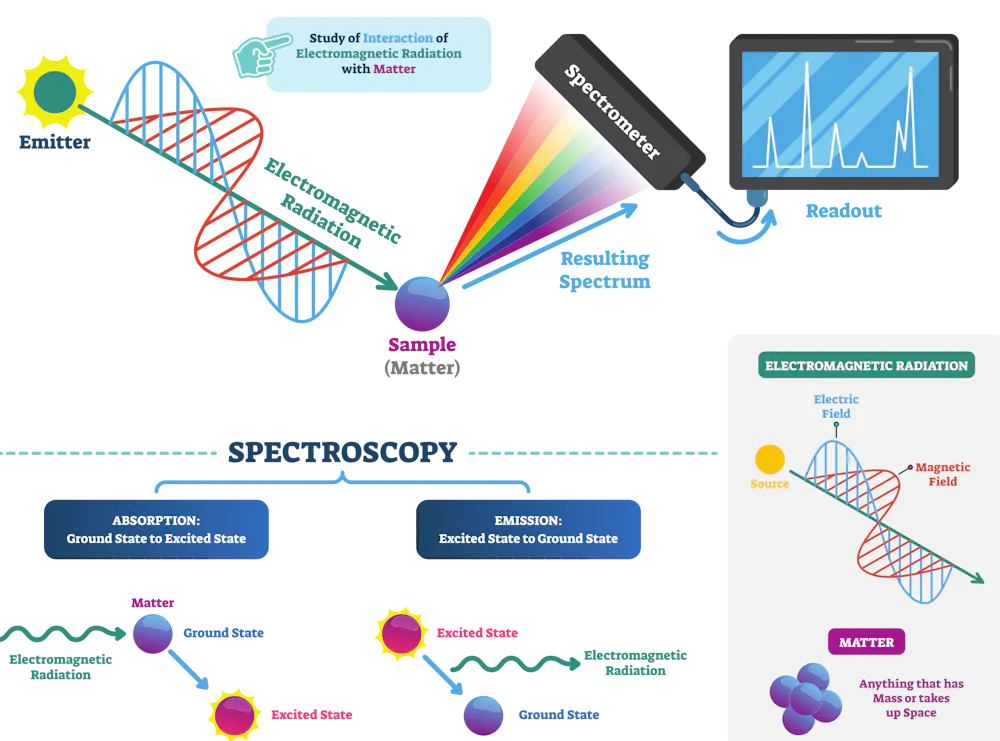
    Just as fingerprinting uniquely identifies a person, scientists use spectroscopy to determine the chemical identity of microplastics. In spectroscopy, a substance either absorbs or scatters light, depending on how its molecules vibrate. The absorbed or scattered light creates a unique pattern called the spectrum, which is effectively the substance’s fingerprint.

    Spectroscopy can match a substance with its unique fingerprint.
    VectorMine/iStock via Getty Images Plus

    Just like a forensic analyst can match an unknown fingerprint against a fingerprint database to identify the person, researchers can match the spectrum of an unknown microplastic particle against a database of known spectra.

    However, forensic analysts can get false matches in fingerprint matching. Similarly, spectral matching against a database isn’t foolproof. Many plastic polymers have similar structures, so two different polymers can have similar spectra. This overlap can lead to ambiguity in the identification process.

    So, an identification method for polymers should provide a measure of uncertainty in its output. That way, the user can know how much to trust the polymer fingerprint match. Unfortunately, current methods don’t usually provide an uncertainty measure.

    Data from microplastic analyses can inform health recommendations and policy decisions, so it’s important for the people making those calls to know how reliable the analysis is.

    Conformal prediction

    Machine learning is one tool researchers have started using for microplastic identification.

    First, researchers collect a large dataset of spectra whose identities are known. Then, they use this dataset to train a machine learning algorithm that learns to predict a substance’s chemical identity from its spectrum.

    Sophisticated algorithms whose inner workings can be opaque make these predictions, so the lack of an uncertainty measure becomes an even greater problem when machine learning is involved.

    Our recent work addresses this issue by creating a tool with an uncertainty quantification for microplastic identification. We use a machine learning technique called conformal prediction.

    Conformal prediction is like a wrapper around an existing, already trained machine learning algorithm that adds an uncertainty quantification. It does not require the user of the machine learning algorithm to have any detailed knowledge of the algorithm or its training data. The user just needs to be able to run the prediction algorithm on a new set of spectra.

    To set up conformal prediction, researchers collect a calibration set containing spectra and their true identities. The calibration set is often much smaller than the training data required for training machine learning algorithms. Usually just a few hundred spectra are enough for calibration.

    Then, conformal prediction analyzes the discrepancies between the predictions and correct answers in the calibration set. Using this analysis, it adds other plausible identities to the algorithm’s single output on a particular particle’s spectrum. Instead of outputting one, possibly incorrect, prediction like “this particle is polyethylene,” it now outputs a set of predictions – for example, “this particle could be polyethylene or polypropylene.”

    The prediction sets contain the true identity with a level of confidence that users can set themselves – say, 90%. Users can then rerun the conformal prediction with a higher confidence – say, 95%. But the higher the confidence level, the more polymer predictions given by the model in the output.

    It might seem that a method that outputs a set rather than a single identity isn’t as useful. But the size of the set serves as a way to assess uncertainty – a small set indicates less uncertainty.

    On the other hand, if the algorithm predicts that the sample could be many different polymers, there’s substantial uncertainty. In this case, you could bring in a human expert to examine the polymer closely.

    Testing the tool

    To run our conformal prediction, my team used libraries of microplastic spectra from the Rochman Lab at the University of Toronto as the calibration set.

    Once calibrated, we collected samples from a parking lot in Brighton, Michigan, obtained their spectra, and ran them through the algorithm. We also asked an expert to manually label the spectra with the correct polymer identities. We found that conformal prediction did produce sets that included the label the human expert gave it.

    Some spectra, such as polyethylene on the left and polypropylene on the right, look very similar and can easily be confused. That’s why having an uncertainty measure can be helpful.
    Ambuj Tewari

    Microplastics are an emerging concern worldwide. Some places such as California have begun to gather evidence for future legislation to help curb microplastic pollution.

    Evidence-based science can help researchers and policymakers fully understand the extent of microplastic pollution and the threats it poses to human welfare. Building and openly sharing machine learning-based tools is one way to help make that happen.

    Ambuj Tewari receives funding from NSF and NIH. The microplastics project is funded by the “Meet the Moment” initiative of the University of Michigan’s College of Literature, Science, and the Arts. This initiative focuses on impactful research on pressing societal issues.

    ref. What’s that microplastic? Advances in machine learning are making identifying plastics in the environment more reliable – https://theconversation.com/whats-that-microplastic-advances-in-machine-learning-are-making-identifying-plastics-in-the-environment-more-reliable-249075

    MIL OSI – Global Reports

  • MIL-OSI Global: DOGE threat: How government data would give an AI company extraordinary power

    Source: The Conversation – USA – By Allison Stanger, Distinguished Endowed Professor, Middlebury

    Elon Musk has simultaneous control of DOGE and his AI company xAI. AP Photo/Jose Luis Magana

    The Department of Government Efficiency, or DOGE, has secured unprecedented access to at least seven sensitive federal databases, including those of the Internal Revenue Service and Social Security Administration. This access has sparked fears about cybersecurity vulnerabilities and privacy violations. Another concern has received far less attention: the potential use of the data to train a private company’s artificial intelligence systems.

    The White House press secretary said government data that DOGE has collected isn’t being used to train Musk’s AI models, despite Elon Musk’s control over DOGE. However, evidence has emerged that DOGE personnel simultaneously hold positions with at least one of Musk’s companies.

    At the Federal Aviation Administration, SpaceX employees have government email addresses. This dual employment creates a conduit for federal data to potentially be siphoned to Musk-owned enterprises, including xAI. The company’s latest Grok AI chatbot model conspicuously refuses to give a clear denial about using such data.

    As a political scientist and technologist who is intimately acquainted with public sources of government data, I believe this potential transmission of government data to private companies presents far greater privacy and power implications than most reporting identifies. A private entity with the capacity to develop artificial intelligence technologies could use government data to leapfrog its competitors and wield massive influence over society.

    Value of government data for AI

    For AI developers, government databases represent something akin to finding the Holy Grail. While companies such as OpenAI, Google and xAI currently rely on information scraped from the public internet, nonpublic government repositories offer something much more valuable: verified records of actual human behavior across entire populations.

    This isn’t merely more data – it’s fundamentally different data. Social media posts and web browsing histories show curated or intended behaviors, but government databases capture real decisions and their consequences. For example, Medicare records reveal health care choices and outcomes. IRS and Treasury data reveal financial decisions and long-term impacts. And federal employment and education statistics reveal education paths and career trajectories.

    What makes this data particularly valuable for AI training is its longitudinal nature and reliability. Unlike the disordered information available online, government records follow standardized protocols, undergo regular audits and must meet legal requirements for accuracy. Every Social Security payment, Medicare claim and federal grant creates a verified data point about real-world behavior. This data exists nowhere else with such breadth and authenticity in the U.S.

    Most critically, government databases track entire populations over time, not just digitally active users. They include people who never use social media, don’t shop online, or actively avoid digital services. For an AI company, this would mean training systems on the actual diversity of human experience rather than just the digital reflections people cast online.

    A security guard prevented U.S. Sen. Edward Markey, D-Mass., from entering an EPA building on Feb. 6, 2025, to see DOGE staff working there.
    Al Drago/Getty Images

    The technical advantage

    Current AI systems face fundamental limitations that no amount of data scraped from the internet can overcome. When ChatGPT or Google’s Gemini make mistakes, it’s often because they’ve been trained on information that might be popular but isn’t necessarily true. They can tell you what people say about a policy’s effects, but they can’t track those effects across populations and years.

    Government data could change this equation. Imagine training an AI system not just on opinions about health care but on actual treatment outcomes across millions of patients. Consider the difference between learning from social media discussions about economic policies and analyzing their real impacts across different communities and demographics over decades.

    A large, state-of-the-art, or frontier, model trained on comprehensive government data could understand the actual relationships between policies and outcomes. It could track unintended consequences across different population segments, model complex societal systems with real-world validation and predict the impacts of proposed changes based on historical evidence. For companies seeking to build next-generation AI systems, access to this data would create an almost insurmountable advantage.

    Control of critical systems

    A company like xAI could do far more with models trained on government data than building better chatbots or content generators. Such systems could fundamentally transform – and potentially control – how people understand and manage complex societal systems. While some of these capabilities could be beneficial under the control of accountable public agencies, I believe they pose a threat in the hands of a single private company.

    Medicare and Medicaid databases contain records of treatments, outcomes and costs across diverse populations over decades. A frontier model trained on new government data could identify treatment patterns that succeed where others fail, and so dominate the health care industry. Such a model could understand how different interventions affect various populations over time, accounting for factors such as geographic location, socioeconomic status and concurrent conditions.

    A company wielding the model could influence health care policy by demonstrating superior predictive capabilities and market population-level insights to pharmaceutical companies and insurers.

    Treasury data represents perhaps the most valuable prize. Government financial databases contain granular details about how money flows through the economy. This includes real-time transaction data across federal payment systems, complete records of tax payments and refunds, detailed patterns of benefit distributions, and government contractor payments with performance metrics.

    An AI company with access to this data could develop extraordinary capabilities for economic forecasting and market prediction. It could model the cascading effects of regulatory changes, predict economic vulnerabilities before they become crises, and optimize investment strategies with precision impossible through traditional methods.

    Elon Musk’s xAI company is well financed.

    Infrastructure and urban systems

    Government databases contain information about critical infrastructure usage patterns, maintenance histories, emergency response times and development impacts. Every federal grant, infrastructure inspection and emergency response creates a data point that could help train AI to better understand how cities and regions function.

    The power lies in the potential interconnectedness of this data. An AI system trained on government infrastructure records would understand how transportation patterns affect energy use, how housing policies affect emergency response times, and how infrastructure investments influence economic development across regions.

    A private company with exclusive access would gain unique insight into the physical and economic arteries of American society. This could allow the company to develop “smart city” systems that city governments would become dependent on, effectively privatizing aspects of urban governance. When combined with real-time data from private sources, the predictive capabilities would far exceed what any current system can achieve.

    Absolute data corrupts absolutely

    A company such as xAI, with Musk’s resources and preferential access through DOGE, could surmount technical and political obstacles far more easily than competitors. Recent advances in machine learning have also reduced the burdens of preparing data for the algorithms to process, making government data a veritable gold mine – one that rightfully belongs to the American people.

    The threat of a private company accessing government data transcends individual privacy concerns. Even with personal identifiers removed, an AI system that analyzes patterns across millions of government records could enable surprising capabilities for making predictions and influencing behavior at the population level. The threat is AI systems that leverage government data to influence society, including electoral outcomes.

    Since information is power, concentrating unprecedented data in the hands of a private entity with an explicit political agenda represents a profound challenge to the republic. I believe that the question is whether the American people can stand up to the potentially democracy-shattering corruption such a concentration would enable. If not, Americans should prepare to become digital subjects rather than human citizens.

    Allison Stanger receives funding from the Berkman Klein Center for Internet and Society, Harvard University.

    ref. DOGE threat: How government data would give an AI company extraordinary power – https://theconversation.com/doge-threat-how-government-data-would-give-an-ai-company-extraordinary-power-250907

    MIL OSI – Global Reports

  • MIL-OSI Global: How 18F transformed government technology − and why its elimination matters

    Source: The Conversation – USA – By Kayla Schwoerer, Assistant Professor of Public Administration & Policy, University at Albany, State University of New York

    18F was a group of technology hotshots within the GSA. Saul Loeb/AFP via Getty Images

    Healthcare.gov, the government health insurance marketplace website, launched in October 2013 only to buckle under the weight of just 2,000 simultaneous users. As millions of Americans stared at error messages and frozen screens, a political crisis unfolded, but so did a new era of government technology.

    The result was 18F, an in-house digital services consulting agency that brought Silicon Valley expertise to government, challenging decades of outdated procurement practices and introducing a radical new approach to building digital public services.

    Founded on March 19, 2014, by Presidential Innovation Fellows, 18F was housed within the Technology Transformation Services department of the General Services Administration, or GSA. The name 18F was derived from the address of GSA headquarters: 1800 F Street. On March 1, 2025, just a few weeks shy of 18F’s 11th anniversary, the Trump administration eliminated the agency and laid off its staff.

    As a researcher who studies public administration and technology, I have observed the transformational role 18F played in government digital services. The unit’s elimination raises the question of what the future of those services will look like.

    Impact of 18F

    18F served a unique role as an in-house digital consultancy for the U.S. government, drawing on innovative strategies to improve public service through technology. Within 18F, teams consisting of designers, software engineers, strategists and product managers worked together with federal, state and local agencies to not only fix technical problems but to build, buy and share technology that helped to modernize and improve the public’s experience with government services.

    Over nearly 11 years, 18F built an impressive portfolio of successful digital projects that transformed how people interact with the U.S. government. Even if the average person is unfamiliar with 18F, the odds are quite high that they have at least encountered one of its many products or services.

    18F staff describe the group’s mission and work.

    For example, 18F supported the Internal Revenue Service in creating IRS Direct File, a free online tax filing tool that provides taxpayers with a simplified filing process. As of today, IRS Direct File is available in 25 states and is expected to serve 30 million eligible taxpayers during the 2025 tax filing season.

    18F has been pivotal in modernizing and securing digital systems to help create more streamlined and secure user experiences for the public. For instance, Login.gov is a secure single sign-on platform that simplifies access to multiple government services for users.

    Perhaps the most notable of 18F’s modernization efforts that touches nearly every aspect of government today is the U.S. Web Design System. The comprehensive design system was developed in collaboration with the U.S. Digital Service in 2015. It helps support dozens of agencies and makes nearly 200 websites more accessible and responsive to user needs.

    How 18F worked

    What set 18F apart was its approach. Rather than spending years on giant information technology contracts that often failed to deliver, 18F championed agile development. Agile and lean methodologies have been popular in Silicon Valley startups and software companies for decades due to their flexibility and focus on rapid iteration.

    By applying agile development principles, 18F focused on breaking down large projects into manageable pieces with incremental improvements based on frequent user feedback. This approach allowed continuous adaptation spurred by user feedback and changing requirements while reducing risk.

    Another cornerstone of 18F’s innovative approach was its focus on user-centered design. By focusing on the needs of the people who actually used government services, 18F was able to go beyond merely satisfying technical requirements to design digital products that were more accessible and user-friendly. The idea was to understand the end users and the problems they encountered in order to effectively design products and solutions that addressed their needs. It also aimed to provide a consistent user experience and earn the users’ trust in the services.

    By prioritizing open-source development and collaboration, 18F also helped to make government IT more affordable. Making project code transparent meant that agencies could reuse the code and reduce the cost of duplicate development efforts across agencies and levels of government.

    18F also had a hand in helping agencies develop their own technology capacity, whether by teaching them how to build software using open-source development and agile methodologies or by teaching agencies how to hire and oversee technology vendors themselves. This model was especially beneficial for state and local agencies following 18F’s expansion in 2016 to provide services to state and local government agencies that receive federal funding.

    End of an era

    The elimination of 18F marks the end of an era, raising concerns about both current and future technology projects. As of now, there does not appear to be a succession plan, leaving many federal agencies without ongoing support for their digital transformation efforts. Critics also argue that the loss of 18F means the loss of significant technical expertise within the government.

    These changes come at a time when agencies are experiencing substantial personnel shifts, rendering digital services potentially even more critical. As agencies brace for more personnel cuts, the public may need to rely more on digital services to fill the gap amid growing staffing shortages.

    Since the news was announced, current and former 18F team members as well as advocates of the unit have taken to social media platforms, including X (formerly Twitter), Bluesky, and LinkedIn, to share stories of its successes, honor its legacy and share 18F resources.

    Kayla Schwoerer does not work for, consult, own shares in or receive funding from any company or organization that would benefit from this article, and has disclosed no relevant affiliations beyond their academic appointment.

    ref. How 18F transformed government technology − and why its elimination matters – https://theconversation.com/how-18f-transformed-government-technology-and-why-its-elimination-matters-251333

    MIL OSI – Global Reports

  • MIL-OSI Russia: “What could be more important than feeding people?”: Vladimir Stroyev took part in a strategy session on the topic of training managers in the agro-industrial complex

    Translartion. Region: Russians Fedetion –

    Source: State University of Management – Official website of the State –

    On March 6, 2025, as part of the business program of the Exhibition and Forum of Educational Technologies, Infrastructure and Intelligent Solutions MMCO.Expo – 2025, a strategic session “Training of management personnel for rural areas and small towns: horizons for the development of the domestic system of vocational education” was held, in which the rector of the State University of Management Vladimir Stroev took part.

    Together with the rector of the State University of Management, the discussion was attended by Deputy Minister of Science and Higher Education of the Russian Federation Olga Petrova, member of the Federation Council Committee on Science, Education and Culture Igor Murog, rector of the Russian New University Vladimir Zernov, vice-president of RAO Viktor Basyuk, deputy chairman of the Association of Non-State Universities Roman Sultanov and other experts.

    Deputy Minister of Science and Higher Education Olga Petrova spoke about the importance of the educational process for training personnel for the agro-industrial complex.

    “How can we make it so that students who receive an education in Moscow and St. Petersburg come to work at enterprises that are not always located in Moscow and St. Petersburg, and very often are located in small towns? There is only one way. This is precisely the mission, the feeling of significance, value, the very same educational policy that must be clearly and correctly built,” Olga Petrova noted.

    Rector of the State University of Management Vladimir Stroyev spoke about the “Digital Village” – a large project to develop boxed solutions for farmers using various unmanned systems and new biotechnologies. Vladimir Vitalyevich also pointed out the high technology of the modern agro-industrial complex.

    “Previously, the attitude towards the agro-industrial complex was somewhat residual. A rural leader was perceived as “a man with a shovel and a plough”. Now this opinion is already considered backward and those who continue to think so do not understand how the agro-industrial complex is developing in our time. Now it is one of the most high-tech complexes. This is a huge scientific base, institutes that have been engaged in biotechnology, unmanned developments, and management decisions for many years. In order to work in the agro-industrial complex now, you need the highest level of qualification,” said Vladimir Stroyev.

    Deputy Chairman of the Association of Non-State Universities Roman Sultanov mentioned modern educational technologies.

    “The easiest way to make education accessible is online. Today, there is no other way to reach every student, applicant or schoolchild, wherever they are. If you look at the ratings and research, the private sector is leading in distance education. And if you synchronize private sector with state tasks, then the first step could be access to online education,” said Roman Sultanov.

    Subscribe to the TG channel “Our GUU” Date of publication: 03/06/2025

    Please note: This information is raw content directly from the source of the information. It is exactly what the source states and does not reflect the position of MIL-OSI or its clients.

    MIL OSI Russia News

  • MIL-OSI USA: State Archives to Host Free Virtual Program on the Regulation of Midwives, 1900-1940

    Source: US State of North Carolina

    Headline: State Archives to Host Free Virtual Program on the Regulation of Midwives, 1900-1940

    State Archives to Host Free Virtual Program on the Regulation of Midwives, 1900-1940
    jejohnson6

    This Women’s History Month, learn about changes to the practice of midwifery in the early twentieth century in North Carolina.

    Yale University student Jenesis Nwainokpor will present a free online program discussing the transition from traditional midwifery to the increasingly professionalized field of obstetrics, “Where Did All the Midwives Go?: Statistical Authority in the Regulation of Midwifery in North Carolina, 1900-1940.” At the turn of the 20th century, American physicians sought to control southern midwives, most of whom were Black. Their efforts reduced professional competition by blaming midwives for high rates of infant mortality and led to sweeping governmental regulation, eventually driving these care workers to virtual extinction.

    The event is scheduled Thursday, March 13, from noon-1:00 p.m.

    Register in advance for online participation. https://www.zoomgov.com/webinar/register/WN_ag8T1464Q9igwmEL2k69vg#/registration For more information, contact Adrienne Berney, adrienne.berney@dncr.nc.gov; 919-814-6863.

    About the State Archives The State Archives serves as the custodian of North Carolina’s historical records, preserving and providing public access to a wealth of archival materials. Through its diverse collections, educational programs, and exhibitions, the State Archives plays a crucial role in promoting an understanding and appreciation of North Carolina’s rich historical legacy.

    About the North Carolina Department of Natural and Cultural Resources
    The N.C. Department of Natural and Cultural Resources (DNCR) manages, promotes, and enhances the things that people love about North Carolina – its diverse arts and culture, rich history, and spectacular natural areas. Through its programs, the department enhances education, stimulates economic development, improves public health, expands accessibility, and strengthens community resiliency.

    The department manages over 100 locations across the state, including 27 historic sites, seven history museums, two art museums, five science museums, four aquariums, 35 state parks, four recreation areas, dozens of state trails and natural areas, the North Carolina Zoo, the State Library, the State Archives, the N.C. Arts Council, the African American Heritage Commission, the American Indian Heritage Commission, the State Historic Preservation Office, the Office of State Archaeology, the Highway Historical Markers program, the N.C. Land and Water Fund, and the Natural Heritage Program. For more information, please visit www.dncr.nc.gov.
    Mar 1, 2025

    MIL OSI USA News

  • MIL-OSI USA: Managers Can Help Their Gen Z Employees Unlock the Power of Meaningful Work − Here’s How

    Source: US State of Connecticut

    Finding fulfilling and motivating work is a challenge for many people, but it can be especially difficult for those just starting their careers. And as Generation Z professionals – those born between 1997 and 2012 – increasingly seek personalized career paths, managers are tasked with helping employees find meaning in their roles while also meeting organizational goals.

    Some managers may view Gen Z’s desire for meaningful work as a form of entitlement, but dismissing it can be costly. Research shows that employees who find their work meaningful experience greater job satisfaction, which directly boosts productivity. Meanwhile, ignoring this need can lead to higher employee turnover and “quiet quitting.” In short, helping younger employees find meaning on the job isn’t just good for them – it’s a smart business strategy.

    As business professors who study meaningful work, we wanted to understand how managers can help younger staff thrive. So one of us – Kelly Kennedy – conducted a research study at Baylor University in which she interviewed a range of Gen Z professionals. Then, together with leadership consultant Shanna Hocking, we analyzed the results to identify three crucial factors that can help managers unlock meaning for early-career professionals. These are self-knowledge, adding value, and relationships.

    By addressing these areas, managers can foster a supportive environment where Gen Z professionals thrive.

    The 3 keys to meaningful work

    Self-knowledge is about understanding who you are and what you value, and recognizing your strengths and weaknesses. Research shows self-awareness can be a powerful tool for creating a productive and engaged workforce.

    To help Gen Z employees develop self-knowledge, encourage them to reflect on what energizes and interests them. To get the ball rolling, you can ask them to think about their college experiences, internships and important personal milestones. These reflections can help them uncover patterns in what they enjoy and what drives their motivation.

    Additionally, many Gen Z professionals seek roles that align with their values. It’s common for them to focus on developing a sense of purpose that extends beyond a specific job title.

    For example, one young employee we interviewed, who works in fashion merchandising, told us, “I will make things beautiful and that will be my life.” This is a flexible sense of purpose – one that isn’t tied to any particular job, but rather to a bigger vision of impact. A smart manager will connect day-to-day tasks to employees’ larger goals, helping them see how their contributions fit into the bigger picture.

    Adding value at work comes down to two key things: feeling recognized and knowing one’s contributions make a difference. Our study found that adding value and feeling valued play a crucial role in shaping workplace meaning. For example, when asked what makes work meaningful, a Gen Z worker said, “being part of a team where you are able to contribute and directly see the impact of your work, regardless of the level you are at.”

    So, how do you make Gen Z employees feel recognized? It can be as simple as giving praise or as big as offering a raise. But for many young professionals, meaningful work goes beyond just perks – it’s about feeling like their efforts contribute to a larger goal and make a positive impact on society.

    Finally, how people get work done in the office is often tied to the relationships they have.

    Previous research has shown that Gen Z professionals are more likely to thrive in work environments that prioritize diversity and inclusion and encourage positive relationships between colleagues. Our conversations with Gen Z workers backed that up: They told us they valued quality relationships, collaboration, and support from managers and colleagues.

    Managers can foster this type of environment by encouraging team members to meaningfully connect. As a Gen Z private equity analyst shared with us, “When you work such long hours, it’s nice knowing there’s others in the trenches with you.”

    Building strong relationships with direct reports is also important. Gen Z professionals value being mentored by their managers and receiving regular feedback and honest communication. Research has shown connection at work is powerful for creating a meaningful environment of trust for employees of all ages.

    We also found that Gen Z appreciates being able to take risks – and potentially fail – in a safe space. That’s why mentorship programs can be impactful; they help young professionals develop skills, build confidence and find meaning in their work by providing a safe space for learning and growth.

    3 questions to unlock the power of meaningful work

    Reflection and coaching are powerful tools that help early career employees develop self-awareness, add value and build strong relationships. This work may seem daunting at first, but it’s easy to incorporate into the regular conversations you’re already having as a manager. To bring out the best in your Gen Z employees, start by asking three simple questions during your next one-on-one meeting.

    1. When have you felt most energized at work?

    Asking this question can help early career employees gain a deeper understanding of what motivates them. By identifying key moments, both you and the employee can gain valuable insight into their priorities and interests. Pay close attention to the specific aspects of their work that spark enthusiasm, and observe nonverbal cues such as body language and facial expressions – they can reveal just as much as words about what truly excites them.

    Make it a dialogue by sharing what you’ve noticed about the employee’s interests and discussing ways to tap into their motivations. Then, encourage the employee to find tasks and projects that align with their interests and bring them to the next one-on-one to discuss. From there, when assigning new tasks, be sure to highlight how the work connects to the employee’s interests and the organization’s larger goals.

    1. Where do you feel you contribute the most?

    This question helps early career employees recognize their strengths, allowing them to contribute more effectively and feel like a valued part of the team. As they respond, look for recurring themes in how they approach their work and the quality of their output.

    Help employees see the bigger picture by connecting their efforts to departmental objectives and the company’s overall mission. Highlight how their skills and contributions make a difference – not just in their own work but in supporting their colleagues and driving team success. And be on the lookout for opportunities to genuinely acknowledge their contributions in real time, as well as during performance reviews.

    1. Whom in the company do you want to learn from or work more closely with?

    Bringing up an employee’s work relationships in a one-on-one meeting might seem unconventional, but it’s a valuable opportunity to guide them in building strong partnerships. Plus, showing genuine interest in their connections reinforces your own relationship with them.

    As you discuss their workplace interactions, pay attention to whom they mention and why. Their responses can offer valuable insights into their career aspirations, potential collaboration opportunities and the relationships they find most meaningful.

    Also, remember: You don’t have to have all the answers. If a Gen Z employee comes to you with a question, use it as a chance to connect them with other team members or subject-matter experts. Encouraging them to seek out knowledge from others not only strengthens their network but also fosters a culture of continuous learning and collaboration.

    As Gen Z professionals seek more personalized and fulfilling career paths, managers play a critical role in supporting them. Helping early career team members reach their professional goals will, in turn, help organizations reach their own goals. So if you’re a manager, asking these three simple questions during one-on-one meetings can lead to happier, more motivated workers and a more productive and stable organization.

    Originally published in The Conversation.

    MIL OSI USA News

  • MIL-OSI USA: Humanities Project Looks at Black American Sign Language, African American English

    Source: US State of Connecticut

    Kanny Salike ’26 (CLAS) didn’t grow up in the Deaf community and no one around her uses American Sign Language – she didn’t even know her A, B, Cs until just over a year ago.

    The linguistics and anthropology double major says she developed an interest in learning ASL after thumbing through a sign language dictionary gifted by her mother. The handshapes were intriguing and the idea of using facial expressions to communicate was fascinating.

    “I’ve always been interested in languages and wish I knew more. But learning about how language changes over time and how our society can influence those changes is most interesting to me,” she says.

    Kanny Salike ’26 (CLAS) is working on the project, “The Evolution of African American English (AAE) and Black American Sign Language (BASL) in the United States,” as part of an undergraduate fellowship from the UConn Humanities Institute. (Courtesy of Kanny Salike)

    Salike took Elementary American Sign Language I in fall 2023, then followed up with the second level in spring 2024. This year, with an undergraduate research fellowship from the UConn Humanities Institute, she’s independently discovering “The Evolution of African American English (AAE) and Black American Sign Language (BASL) in the United States.”

    It was in one of those early ASL classes that Salike says she learned there was even such a thing as BASL and that its origin parallels the evolution of AAE, each becoming distinct dialects with roots in ASL and Standard American English (SAE), respectively.

    That got her thinking: Does racism and audism impact the way language evolves and the way people freely speak or sign? Does racism exist in the Deaf community? Does being deaf and Black influence how people are treated in a hearing-centric world? Do AAE and BASL share historical similarities in the way they became their own languages?

    “It’s important to unpack how systemic structures influence the way people live,” she says, “and having more literature out there on this could start to break down the racism and audism that still exists.”

    When speakers of SAE hear someone conversing in AAE, or vice versa, Salike says, they take notice of the grammar differences. AAE uses certain constructions including double negatives, for example.

    “People have this idea that African American English is not a proper way to speak English because they are using ideas of what Standard American English should sound like. But each is different unto its own,” she says.

    The same is true for the differences between BASL and ASL, she continues: “There’s a common misconception that there is one universal sign language, but there’s the same diversity in signing as there are number of groups in the larger Deaf community. For instance, if someone from the East Coast were to sign with someone from the West Coast, just like with oral communication, there would be detectable accents.”

    Salike says that for her one of the trickiest parts of learning sign language comes with its reliance on facial expressions to convey words, phrases, and sentiments, in addition to the use of hand gestures.

    That’s only amplified in BASL, which is even heavier on facial expressions and utilizes two-handed gestures more frequently.

    While she says she can’t put a timestamp on precisely when BASL developed, it came about during segregation when white students were educated separately from Black students, a separation that allowed BASL to flourish.

    “For a long time, manual languages were banned in white schools. You weren’t allowed to teach deaf children how to sign. They would need to learn to speak or use oral language as well,” Salike explains. “But the rules were different in Black schools where Black children had a space to learn sign language and practice signing because their education wasn’t given the same attention as white students.”

    In the same way that SAE and AAE are mutually intelligible, so is ASL and BASL, she adds, noting that nonetheless there would be some fits and starts in communication, much like there are when two people with distinct regional dialects communicate (for example, the difference between the use of the word “soda” in the Northeast and “pop” in the Midwest).

    Sign language is not a word-for-word translation, just as converting English to Spanish isn’t and often depends on context. That’s why sign language interpreters are not called translators, Salike says. Their job is to convey the essence of what the person is trying to say.

    As Salike spends the rest of the semester pouring through the research around BASL and AAE, she also is seeking to talk with a few deaf people from the Black community to survey their experiences and compare them to the findings of noted researcher Carolyn McCaskill, a Gallaudet University professor who’s been honored for her research on ASL in the Black Deaf community.

    “Language is powerful and people who speak AAE or sign BASL often get discriminated against just because they don’t communicate in the standard dialect,” Salike says. “We need to create a more inclusive environment for everyone to communicate freely no matter their origins or their background.”

    MIL OSI USA News

  • MIL-OSI USA: UConn Student Club Bringing Free Medical Clinic to Willimantic This Weekend

    Source: US State of Connecticut

    More than 200 UConn student volunteers will join together with teams of medical, dental, and vision care providers this Saturday and Sunday as the University’s Medical Clinic Club, in partnership with the nonprofit Remote Area Medical, takes over Windham Middle School in Willimantic to offer a free pop-up health care clinic to area residents.

    Patient parking will open at midnight on Saturday, March 8, for the clinic, with doors opening at 6:00 a.m. as services are provided on a first-come, first-served basis – at no cost – with doors closing once the day’s capacity is reached.

    Parking starts again at midnight on Sunday, March 9, with doors opening at 6:00 a.m. and the two-day clinic ending once it again reaches capacity.

    Patients should plan to attend as early as possible to ensure they’re able to be seen. All services are free and open to the general public. No identification is required, and Spanish-language interpreters and providers will be on-site and readily available for both days.

    This weekend’s free clinic marks the second occasion that the Medical Clinic Club has organized this event to offer no-cost care to those in need in the greater Willimantic area alongside Remote Area Medical, or RAM, which helps run the clinics.

    The first clinic, held in March 2024 and led by UConn alum Brooke DiVasto ’24 (CLAS), saw more than 400 volunteers provide more than $150,000 in free health care services to 212 patients over two days, according to Cameron Costa ’26 (CLAS), a physiology and neurobiology major at UConn Storrs and the club’s current president and community host group lead.

    “We’re all just super excited, because it’s nice to see the impact of an initiative,” Costa says. “Having that first year under our belts, we were able to meet these patients. A lot of us were able to hear their stories, hear how infrequently they were able to get medical care, and seeing that impact really gives us the drive and passion to keep doing this work.”

    The student-driven clinic, Costa says, is led by a nine-person organizing team that spends the better part of the year planning, organizing, and fundraising to support the effort.

    Over the past 12 months, the club has raised more than $30,000 in private donations and through a GoFundMe campaign as well as through grants used to help fund the clinic. They’ve been aided in their efforts by their fiduciary partner, Access Agency, and by financial support from Undergraduate Student Government and through a Co-op Legacy Fellowship Program – Change Grant from the University’s Office of Undergraduate Research.

    The Change Grant, Costa explains, was used to outfit a new Resource Hallway for the clinic, where patients will have access to nonperishable food items, personal care items, and other supplies they can take home with them after receiving care – an addition to this year’s clinic that the student organizers are excited to be able to offer to those who attend.

    “We’ve got diapers and baby food, baby formula,” Costa says. “Hygiene products, things like hairbrushes, nail clippers, toothbrushes and toothpaste. We’ve got a lot of different nonperishable food options, like pasta and rice, but also soups and vegetables and stews. We did a book sorting event at the Mansfield Public Library, alongside the Friends of the Mansfield Library, and we got a lot of books from them that we thought would be good for the elementary-to-middle school level, study books for parents or kids to take with them. We’ve got some emergency options, like emergency thermal blankets, winter hats and gloves – because it’s still a little bit cold out. We cast a very wide net on the items we wanted to have in the hallway.”

    While volunteer registration for this year’s clinic has closed – response from the UConn community was enthusiastic, and the club met its volunteer goals weeks ago, Costa says – the club is already organizing for next year and beyond.

    UConn students interested in joining in the effort are encouraged to connect with the club through UContact in order to receive the most up-to-date information on volunteer opportunities, to become an active member, or to learn more about the club’s work. UConn students interested in volunteering for the next clinic are urged to sign up early, Costa says.

    This year, club members also plan to expand the scope of their work, Costa explains, to help those who attend this weekend’s clinic find the care they need beyond the actual clinic days.

    “A big thing about us is that it’s not just free care for this one day – follow-up care is super important,” he says. “After the clinic, all of our volunteers will come together for two nights to call back all of these patients to help them organize follow-up care. We’ve already worked with some local medical, dental, and vision offices that are in the area and are open to new patients, open to patients who may not have insurance, or open to patients that maybe have Medicare or Medicaid.

    “So, it definitely a big job, and it’s a lot of work, but it’s very meaningful work, and we’re all really happy and grateful that we have support to do this.”

    MIL OSI USA News

  • MIL-OSI Security: Promoting Healthcare Excellence with Evidence Based Practice at NHB

    Source: United States Navy (Medical)

    The commitment to enhance medical readiness was visually evident recently at Naval Hospital Bremerton.

    U.S. Navy and U.S. Army Nurse Corps officers, along with hospital corpsmen assigned to Navy Medicine Readiness Training Command Bremerton, honed their evidence based practice skills at a TriService Nursing Research Program Evidence Based Practice training class.

    “This is a big deal for nurses because two instructors came from out of town to teach this class which takes us through all the steps of EBP to come out and be ready to do a EBP project,” said Lt. Cmdr. Maggy Mitzkewich, NMRTC Bremerton Specialty Care department.

    The training class, in conjunction with the Uniformed Services University, was held to refine attendees’ knowledge on the values of evidence based practice designed to help military nurses care for warfighters on the field of battle as well as retirees and dependents at a military treatment facility.

    “Most nurses at Naval Hospital Bremerton work in a clinic environment, but we need to be ready to deploy in our primary subspecialty,” explained Mitzkewich. “Using evidence based practice, we can target the best training methods to keep our skills up to date using proven ideas such as skills fairs or virtual reality.”

    Nurse Corps officers stationed at NHB, as well as other military treatment facilities, routinely are tasked for operational missions. NHB has recently deployed nurses to augment Navy fleet forces, support multiple Navy and Marine Corps locales across the Indo-Pacific theater, and assist U.S. Naval Forces Central Command needs and more.

    The Tri-Service Nursing Research Program training class curriculum, under the auspices of organizers Laurie Migliore and Ellen Kroll, followed what is known as the Iowa Model, a practical process which provides a structured outline for conducting principles of evidence-based practice.

    “The process uses a format based on the five stage formula of problem/population, intervention, comparison, outcome, and time,” said Mitzkewich, noting that a nurse can use evidence base practice knowledge to help improve quality healthcare and patient safety programs.

    “As nurses, we use evidence based practice by integrating research, clinical expertise, and patient preference to make informed decisions about care,” continued Mitzkewich. “It is something we learn about in nursing school and continue to use and develop throughout our daily practice and careers. It is a tool that helps ensure we are keeping our patients safe and helping them reach their healthcare goals.”

    According to Mitzkewich, examples of evidence based practice initiatives are NHB nurses updating the command’s patient falls policy and medication administration policy to ensure all staff members are adequately trained on both and that the hospital is using the most effective protocols to ensure patient safety.

    Two of the EBP initiatives the class participants worked on were, ‘Implementing an effective medication administration training and competency for nurses and corpsmen’ and ‘Using evidence to create an effective outpatient falls protocol.’

    Both initiatives are important in any healthcare locale.

    According to the Centers for Disease Control and Prevention, patient falls in a hospital setting, especially amongst elder beneficiaries, are a constant risk. The National Institute of Health also affirms that medication administration errors, such as wrong patient, wrong dose, wrong prescription, are all dispensing issues which are preventable.

    Mitzkewich attests that being able to implement evidence based practices to improve healthcare delivery is a gratifying experience for nurses, as well as their patients.

    “It is rewarding because the initiative that come from this class will affect real change in patient safety and knowledge, skills and abilities at our command,” stated Mitzkewich.

    MIL Security OSI

  • MIL-OSI Russia: Important congratulations: a letter from the rector of the State University of Management Vladimir Stroev to the head of VNIOPTUSKh

    Translartion. Region: Russians Fedetion –

    Source: State University of Management – Official website of the State –

    On March 5, representatives of the State University of Management took part in a ceremonial meeting dedicated to the 60th anniversary of the All-Russian Research Institute for the Organization of Production, Labor and Management in Agriculture (VNIOPTUSKh).

    Professors of the Department of Accounting, Auditing and Taxation of the State University of Management Tatyana Rogulenko and Roman Blizkiy presented the Honored Scientist of the Russian Federation Alexander Suglobov, who heads the All-Russian Research Institute of Agricultural Sciences, with a congratulatory letter from the Rector of the State University of Management Vladimir Stroyev. The letter was given in recognition of the merits of Alexander Evgenievich and the contribution of the institute’s staff to the development of the agricultural sector.

    On April 16-17, 2025, the All-Russian scientific and practical conference “Current state and prospects for the organization of production, labor and management in agriculture” will be held for the 60th anniversary of VNIOPTUSKh. As part of strengthening the interaction of research teams, the head of VNIOPTUSKh invites scientists from the State University of Management to take part in the conference.

    The anniversary is an important stage in the history of VNIOPTUSKh, emphasizing the importance of the institute’s work in the field of labor protection and industrial safety. The interaction of scientific institutions and universities contributes to the development of new technologies and approaches aimed at increasing efficiency and safety in the agricultural sector.

    Today, VNIOPTUSKh continues active research activities, implements modern methods and ensures sustainable development of the country’s agro-industrial complex.

    GUU congratulates the institute staff on their anniversary and wishes them further success in their scientific work!

    Subscribe to the TG channel “Our GUU” Date of publication: 03/06/2025

    Please note: This information is raw content directly from the source of the information. It is exactly what the source states and does not reflect the position of MIL-OSI or its clients.

    MIL OSI Russia News

  • MIL-Evening Report: Earth’s oldest impact crater was just found in Australia – exactly where geologists hoped it would be

    Source: The Conversation (Au and NZ) – By Tim Johnson, Professor, Geology, Curtin University

    Shatter cones formed by the impact in the Pilbara. Tim Johnson

    We have discovered the oldest meteorite impact crater on Earth, in the very heart of the Pilbara region of Western Australia. The crater formed more than 3.5 billion years ago, making it the oldest known by more than a billion years. Our discovery is published today in Nature Communications.

    Curiously enough, the crater was exactly where we had hoped it would be, and its discovery supports a theory about the birth of Earth’s first continents.

    The very first rocks

    The oldest rocks on Earth formed more than 3 billion years ago, and are found in the cores of most modern continents. However, geologists still cannot agree how or why they formed.

    Nonetheless, there is agreement that these early continents were critical for many chemical and biological processes on Earth.

    Many geologists think these ancient rocks formed above hot plumes that rose from above Earth’s molten metallic core, rather like wax in a lava lamp. Others maintain they formed by plate tectonic processes similar to modern Earth, where rocks collide and push each other over and under.

    Although these two scenarios are very different, both are driven by the loss of heat from within the interior of our planet.

    We think rather differently.

    A few years ago, we published a paper suggesting that the energy required to make continents in the Pilbara came from outside Earth, in the form of one or more collisions with meteorites many kilometres in diameter.

    As the impacts blasted up enormous volumes of material and melted the rocks around them, the mantle below produced thick “blobs” of volcanic material that evolved into continental crust.

    Our evidence then lay in the chemical composition of tiny crystals of the mineral zircon, about the size of sand grains. But to persuade other geologists, we needed more convincing evidence, preferably something people could see without needing a microscope.

    So, in May 2021, we began the long drive north from Perth for two weeks of fieldwork in the Pilbara, where we would meet up with our partners from the Geological Survey of Western Australia (GSWA) to hunt for the crater. But where to start?

    On the hunt for shatter cones in a typical Pilbara landscape with our trusted GSWA vehicles.
    Chris Kirkland

    A serendipitous beginning

    Our first target was an unusual layer of rocks known as the Antarctic Creek Member, which crops out on the flanks of a dome some 20 kilometres in diameter. The Antarctic Creek Member is only 20 metres or so in thickness, and mostly comprises sedimentary rocks that are sandwiched between several kilometres of dark, basaltic lava.

    However, it also contains spherules – droplets formed from molten rock thrown up during an impact. But these drops could have travelled across the globe from a giant impact anywhere on Earth, most likely from a crater that has now been destroyed.

    After consulting the GSWA maps and aerial photography, we located an area in the centre of the Pilbara along a dusty track to begin our search. We parked the offroad vehicles and headed our separate ways across the outcrops, more in hope than expectation, agreeing to meet an hour later to discuss what we’d found and grab a bite to eat.

    Large hut-like shatter cones in the rocks of the Antarctic Creek Member at the discovery site. The rocks on the hilltop farthest left are basalts that lay directly over the shatter cones.
    Tim Johnson

    Remarkably, when we returned to the vehicle, we all thought we’d found the same thing: shatter cones.

    Shatter cones are beautiful, delicate branching structures, not dissimilar to a badminton shuttlecock. They are the only feature of shock visible to the naked eye, and in nature can only form following a meteorite impact.

    An approximately one metre tall shatter cone ‘hut’, with the rolling hills of the Pilbara in the background.
    Chris Kirkland

    Little more than an hour into our search, we had found precisely what we were looking for. We had literally opened the doors of our 4WDs and stepped onto the floor of a huge, ancient impact crater.

    Frustratingly, after taking some photographs and grabbing a few samples, we had to move on to other sites, but we determined to return as soon as possible. Most importantly, we needed to know how old the shatter cones were. Had we discovered the oldest known crater on Earth?

    It turned out that we had.

    There and back again

    With some laboratory research under our belts, we returned to the site in May 2024 to spend ten days examining the evidence in more detail.

    Shatter cones were everywhere, developed throughout most of the Antarctic Creek Member, which we traced for several hundred metres into the rolling hills of the Pilbara.

    Our observations showed that above the layer with the shatter cones was a thick layer of basalt with no evidence of impact shock. This meant the impact had to be the same age as the Antarctic Member rocks, which we know are 3.5 billion years old.

    Delicate shatter cones within rocks typical of the Antarctic Creek Member.
    Tim Johnson

    We had our age, and the record for the oldest impact crater on Earth. Perhaps our ideas regarding the ultimate origin of the continents were not so mad, as many told us.

    Serendipity is a marvellous thing. As far as we knew, other than the Traditional Owners, the Nyamal people, no geologist had laid eyes on these stunning features since they formed.

    Like some others before us, we had argued that meteorite impacts played a fundamental role in the geological history of our planet, as they clearly had on our cratered Moon and on other planets, moons and asteroids. Now we and others have the chance to test these ideas based on hard evidence.

    Who knows how many ancient craters lay undiscovered in the ancient cores of other continents? Finding and studying them will transform our understanding of the early Earth and the role of giant impacts, not only in the formation of the landmasses on which we all live, but in the origins of life itself.

    The authors do not work for, consult, own shares in or receive funding from any company or organisation that would benefit from this article, and have disclosed no relevant affiliations beyond their academic appointment.

    ref. Earth’s oldest impact crater was just found in Australia – exactly where geologists hoped it would be – https://theconversation.com/earths-oldest-impact-crater-was-just-found-in-australia-exactly-where-geologists-hoped-it-would-be-250921

    MIL OSI AnalysisEveningReport.nz

  • MIL-OSI Global: Taung child: the controversial story of the fossil discovery that proved humanity’s common origins in Africa – podcast

    Source: The Conversation – UK – By Gemma Ware, Host, The Conversation Weekly Podcast, The Conversation

    The cast of the Taung child skull found in South Africa in 1924. Didier Descouens/Wikipedia Commons, CC BY-SA

    One hundred years ago, a paper was published in the journal Nature that would radically shift our understandings of the origins of humanity. It described a fossil, found in a lime mine in Taung in South Africa, which became known as the Taung child skull.

    The paper’s author, an Australian-born anatomist called Raymond Dart, argued that the fossil was a new species of hominin called Australopithecus africanus. It was the first evidence that humanity originated in Africa.

    In this episode of The Conversation Weekly podcast, we talk to science historian Christa Kuljian about Dart’s complicated legacy and to paleoanthropologist Dipuo Kgotleng about what’s happened to the city of Taung itself, and how paleoanthropology has changed over the last century.

    When Dart’s paper was first published, it was roundly ridiculed by his scientific peers. Charles Darwin had a hunch that all humans had common origins in Africa, but archaeologists at the time weren’t looking for evidence on the continent, as Kuljian, a research associate at the University of Witwatersrand, explains:

     ”Scientists argued that humans had evolved in Europe or perhaps Asia, and that belief was influenced by the false assumption that many scientists had that Europeans were superior to other people from around the world, and that there was a hierarchy of race. Paleoanthropology and the search for human origins had its roots in that era of racialised thinking and white supremacy.“

    Dart’s contribution eventually proved this to be wrong. But at the same time, Dart, like many scientists working in Europe and the US in the early 20th century, was engaged in disturbing and racist anthropological practices, says Kuljian.

    “They were not only collecting ancient fossils, they were also collecting human skeletons. And scientists thought that humans could be divided into separate and distinct racial types based on physical characteristics. They thought that these pure racial types, which we now know do not exist, would give them a clue to understanding human evolution.”

    Not just one ‘hero’

    Alongside Dart’s own complicated legacy, researchers are also reassessing the way discoveries like the Taung child skull are commonly told: through the lens of a solo, white, hero like Indiana Jones.

    What’s missing, says Kgotleng, director of the Palaeo Institute at the University of Johannesburg, are often the stories of the “hidden figures” behind such discoveries. For example, the rock that contained the Taung skull was put aside by local mine workers who recognised its potential significance and passed it onto Dart’s colleague. Kgotleng argues:

    “ For a scientist to have that fossil in hand there was somebody who was on the ground assisting with that excavation. There were other labourers who were there, in most cases they never get recognised … we need to recognise all the workers in that whole process of the discovery through to publication.”

    Kgotleng, who used to work as the archaeologist at Taung, says that today the town “generally looks like it’s still stuck in the 1920s”. She says that many local people know little about the significance of the fossil find and that “the knowledge about the science has not filtrated through to the locals”.

    Listen to the conversations with Kuljian and Kgotleng on The Conversation Weekly podcast, which also includes an introduction from Natasha Joseph, science commissioning editor at The Conversation Africa. Kuljian and Kgotleng both also contributed papers to a special issue of the South African Journal of Science to mark the centenary of Dart’s article.


    This episode of The Conversation Weekly was written and produced by Katie Flood with assistance from Mend Mariwany and hosted by Gemma Ware. Sound design was by Eloise Stevens and theme music by Neeta Sarl.

    Listen to The Conversation Weekly via any of the apps listed above, download it directly via our RSS feed or find out how else to listen here.

    Dipuo Winnie Kgotleng has received funding from the Wenner-Gren foundation, National Heritage Council and National Research Foundation. Christa Kuljian has received funding from the Academic and Non-Fiction Authors Association of South Africa, the South African National Research Foundation and the Centre of Excellence in Palaeosciences.

    ref. Taung child: the controversial story of the fossil discovery that proved humanity’s common origins in Africa – podcast – https://theconversation.com/taung-child-the-controversial-story-of-the-fossil-discovery-that-proved-humanitys-common-origins-in-africa-podcast-251530

    MIL OSI – Global Reports

  • MIL-OSI USA: Storm Brings a Potpourri of Hazards to the U.S.

    Source: NASA

    A powerful mid-latitude cyclone delivered a potpourri of weather hazards as it worked its way across the United States in March 2025. Beginning on March 3, the low-pressure system fanned wildfires and blinding dust storms in the Southwest, spawned severe thunderstorms and tornadoes in the Southeast, fueled blizzards in the Great Plains and Midwest, and dropped heavy rain in the Northeast.
    Thick plumes of dust streamed across West Texas in this image, captured on March 4, 2025, by the MODIS (Moderate Resolution Imaging Spectroradiometer) on NASA’s Terra satellite. Clouds of dust appear to originate from arid landscapes in northern Mexico and West Texas, a region that spans the Chihuahuan Desert, cattle ranches and cotton farms, and gas and oil fields.
    Exceptional drought has gripped West Texas for the past several months, according to the U.S. Drought Monitor. The lack of rain has parched vegetation and dried the land surface, making the region particularly susceptible to erosion and dust storms.
    Fierce winds and thick plumes of blowing dust led to traffic accidents, flight disruptions, school closures, power outages, and red and orange skies throughout the state and region, according to news reports. One particularly severe dust storm on March 3 sharply reduced visibility and contributed to a 21-car accident near Roswell, New Mexico.
    “This is a large event, but dust storms are typical in this region at this time of year,” said Santiago Gassó, a University of Maryland atmospheric scientist based at NASA’s Goddard Space Flight Center. “Unfortunately, we’re seeing longer droughts in the southwestern U.S. and northern Mexico, so we can expect more of this type of event.”
    Tools powered by NASA data and satellites are available to meteorologists, scientists, and others tracking the storm. The Worldview browser hosts timely data and imagery from several satellites. A data viewer from NASA’s Short-term Prediction Research and Transition Center (SPoRT) provides access to rainfall, lightning, air quality, and other data, and NASA’s Global Modeling and Assimilation Office has tools for real-time weather analysis and reanalysis.
    One of the newer data products comes from an experimental aerosol detection algorithm that NOAA’s AerosolWatch team is developing. The algorithm makes it easier to distinguish between dust and smoke, both of which were present in the hazy plume over Texas on March 4, by merging data collected by the TEMPO (Tropospheric Emissions: Monitoring of Pollution) mission with ABI (Advanced Baseline Imager) observations from the GOES-19 satellite.
     

    “The combination of TEMPO with GOES is very promising,” Gassó said. “Both satellites make multiple observations each day, and given their combined observations at several spectral channels, we’re able to fully characterize smoke or dust in time, space, and concentration for the first time.”
    NASA Earth Observatory image by Michala Garrison, using MODIS data from NASA EOSDIS LANCE and GIBS/Worldview. Story by Adam Voiland.

    MIL OSI USA News

  • MIL-OSI USA: Sols 4471-4472: Marching Through the Canyon

    Source: NASA

    Written by Scott VanBommel, Planetary Scientist at Washington University
    Earth planning date: Monday, March 3, 2025
    Curiosity continued steady progress through the upper sulfate unit and toward its next major science waypoint: the boxwork structures. Our rover is currently driving south through a local canyon between “Texoli” and “Gould Mesa.” This route may expose the same rock layers observed while climbing along the eastern margin of the Gediz Vallis channel, prompting several science activities in today’s plan. With winter still gripping Gale crater and limiting the power available for science, the team carefully balanced a number of priorities.
    The weekend’s drive positioned the rover within reach of light-toned laminated bedrock and gray float rock. We kicked off our two-sol plan by removing dust on a representative bedrock target, “Ramona Trail,” before analyzing with APXS and imaging with MAHLI. ChemCam acquired compositional analyses on a laminated gray float rock, “Josephine Peak,” in addition to long-distance images of Texoli. Mastcam documented key features, capturing images of Josephine Peak, Texoli, “Gobblers Knob,” and “Fort Tejon.” In addition to these science-driven images, Mastcam also acquired two images of APXS before a planned drive of about 21 meters (about 69 feet).
    As Curiosity continues toward the boxwork structures, the intricate patterns we observe will provide valuable clues about the history of Mars. While the Mastcam images acquired today of the APXS sensor head won’t directly contribute to the boxwork study, they capture a more human aspect of the mission. With each “APXS horseshoe” image, such as the one featured in this blog from sol 4134, hand-written markings on the APXS sensor head appear alongside Martian terrain, a reminder that this incredible journey is driven by the human touch of a dedicated team on Earth who designed, built, and continue to operate this remarkable spacecraft.

    MIL OSI USA News

  • MIL-OSI USA: How NASA is Using Virtual Reality to Prepare for Science on Moon

    Source: NASA

    When astronauts walk on the Moon, they’ll serve as the eyes, hands, and boots-on-the-ground interpreters supporting the broader teams of scientists on Earth. NASA is leveraging virtual reality to provide high-fidelity, cost-effective support to prepare crew members, flight control teams, and science teams for a return to the Moon through its Artemis campaign.
    The Artemis III Geology Team, led by principal investigator Dr. Brett Denevi of the Johns Hopkins University Applied Physics Laboratory in Laurel, Maryland, participated in an Artemis III Surface Extra-Vehicular VR Mini-Simulation, or “sim” at NASA’s Johnson Space Center in Houston in the fall of 2024. The sim brought together science teams and flight directors and controllers from Mission Control to carry out science-focused moonwalks and test the way the teams communicate with each other and the astronauts.
    “There are two worlds colliding,” said Dr. Matthew Miller, co-lead for the simulation and exploration engineer, Amentum/JETSII contract with NASA. “There is the operational world and the scientific world, and they are becoming one.”
    NASA mission training can include field tests covering areas from navigation and communication to astronaut physical and psychological workloads. Many of these tests take place in remote locations and can require up to a year to plan and large teams to execute. VR may provide an additional option for training that can be planned and executed more quickly to keep up with the demands of preparing to land on the Moon in an environment where time, budgets, and travel resources are limited.

    VR helps us break down some of those limitations and allows us to do more immersive, high-fidelity training without having to go into the field. It provides us with a lot of different, and significantly more, training opportunities.

    BRI SPARKS
    NASA co-lead for the simulation and Extra Vehicular Activity Extended Reality team at Johnson.

    Field testing won’t be going away. Nothing can fully replace the experience crew members gain by being in an environment that puts literal rocks in their hands and incudes the physical challenges that come with moonwalks, but VR has competitive advantages.
    The virtual environment used in the Artemis III VR Mini-Sim was built using actual lunar surface data from one of the Artemis III candidate regions. This allowed the science team to focus on Artemis III science objectives and traverse planning directly applicable to the Moon. Eddie Paddock, engineering VR technical discipline lead at NASA Johnson, and his team used data from NASA’s Lunar Reconnaissance Orbiter and planet position and velocity over time to develop a virtual software representation of a site within the Nobile Rim 1 region near the south pole of the Moon. Two stand-in crew members performed moonwalk traverses in virtual reality in the Prototype Immersive Technology lab at Johnson, and streamed suit-mounted virtual video camera views, hand-held virtual camera imagery, and audio to another location where flight controllers and science support teams simulated ground communications.

    The crew stand-ins were immersed in the lunar environment and could then share the experience with the science and flight control teams. That quick and direct feedback could prove critical to the science and flight control teams as they work to build cohesive teams despite very different approaches to their work.
    The flight operations team and the science team are learning how to work together and speak a shared language. Both teams are pivotal parts of the overall mission operations. The flight control team focuses on maintaining crew and vehicle safety and minimizing risk as much as possible. The science team, as Miller explains, is “relentlessly thirsty” for as much science as possible. Training sessions like this simulation allow the teams to hone their relationships and processes.

    Denevi described the flight control team as a “well-oiled machine” and praised their dedication to getting it right for the science team. Many members of the flight control team have participated in field and classroom training to learn more about geology and better understand the science objectives for Artemis.
    “They have invested a lot of their own effort into understanding the science background and science objectives, and the science team really appreciates that and wants to make sure they are also learning to operate in the best way we can to support the flight control team, because there’s a lot for us to learn as well,” Denevi said. “It’s a joy to get to share the science with them and have them be excited to help us implement it all.”

    This simulation, Sparks said, was just the beginning for how virtual reality could supplement training opportunities for Artemis science. In the future, using mixed reality could help take the experience to the next level, allowing crew members to be fully immersed in the virtual environment while interacting with real objects they can hold in their hands. Now that the Nobile Rim 1 landing site is built in VR, it can continue to be improved and used for crew training, something that Sparks said can’t be done with field training on Earth.
    While “virtual” was part of the title for this exercise, its applications are very real.
    “We are uncovering a lot of things that people probably had in the back of their head as something we’d need to deal with in the future,” Miller said. “But guess what? The future is now. This is now.”

    MIL OSI USA News

  • MIL-OSI Russia: “Education and Career”: GUU presented itself in Gostiny Dvor

    Translartion. Region: Russians Fedetion –

    Source: State University of Management – Official website of the State –

    In the first days of spring, the State University of Management participated in the 60th anniversary exhibition “Education and Career”, which was held in Gostiny Dvor. The largest universities and employers of Russia gathered at the exhibition site.

    At the exhibition, GUU introduced more than 1,700 applicants from Moscow and other regions to the current areas of training and educational programs of our university. Schoolchildren and their parents were told about the traditions of the First Management University, and life hacks for admission in 2025 were shared. Future applicants received advice from directors of institutes, representatives of departments, and from employees of the admissions committee.

    More photos in a special album.

    We remind you that on March 23, 2025 at 11:00 we are waiting for applicants at the Open Day of the State University of Management. Registration link.

    Subscribe to the tg channel “Our State University” Announcement date: 03/6/2025

    Please note: This information is raw content directly from the source of the information. It is exactly what the source states and does not reflect the position of MIL-OSI or its clients.

    MIL OSI Russia News

  • MIL-OSI: EBC Financial Group Launches Second Million Dollar Trading Challenge with USD $1 Million Prize

    Source: GlobeNewswire (MIL-OSI)

    LONDON, March 06, 2025 (GLOBE NEWSWIRE) —  EBC Financial Group (EBC), a global leader in financial brokerage, announces the return of its flagship Million Dollar Trading Challenge (MDTC) for its second edition, one of the world’s largest and a global benchmark for skill-based trading competitions, as industry demand for structured, transparent trading opportunities continues to grow.

    The 2025 edition of MDTC comes at a time when traders are seeking greater accountability and access to proven strategies amid increasingly volatile markets. From 1 March to 30 May 2025, thousands of traders worldwide will compete for a $1 million trading account in a challenge that integrates real-time strategy sharing and zero-fee copy trading, setting a new standard for competitive trading.

    For the first time, top traders will be invited to an exclusive awards ceremony at the FC Barcelona Museum (Barça Immersive Tour), marking a historic moment as a global trading event is recognised within one of football’s most prestigious institutions. The partnership reflects a growing convergence between financial markets and elite sports, reinforcing trading as a profession that demands the same level of skill, precision, and discipline as world-class athletics.

    The inaugural MDTC in 2023 set multiple industry benchmarks, with 324 traders achieving profitable accounts and the top 10 traders recording an average return of 3,472.91%. The champion delivered an extraordinary 11,630.98% return in just 30 days, demonstrating the potential of skill-driven trading in a competitive environment.

    This year, MDTC II takes it further—allowing traders to access professional-grade trading signals and instantly replicate top-performing strategies for free via copy trading. By combining competition with real-time strategy sharing and zero-fee copy trading, EBC is setting a new standard for transparency and accessibility in trading.

    Real-Time Copy Trading: Automatically Replicate Top Traders’ Strategies
    The rise of retail trading has transformed financial markets, yet many traders struggle to access transparent, structured learning environments that allow them to develop real skills. MDTC II is designed to bridge this gap—giving traders a unique opportunity to refine their strategies by actively engaging with top-performing traders through real-time copy trading.

    Unlike traditional contests that reward high-risk speculation, MDTC II introduces an open, strategy-sharing ecosystem where traders can analyse, track, and instantly replicate the trades of leading participants at no cost. This levels the playing field, allowing both novice and experienced traders to benefit from collective insights while maintaining individual control over their trades.

    “When you’re a growing company, you aim to create an event that truly reflects your values and passion—MDTC is ours. We are here to be a light in the industry, proving that traders can succeed; traders can be successful at trading, it requires education and grit, and it’s not just for the 1%. That’s the real beauty of MDTC—every participant must show their trading history, show the world what they are doing. Anyone can log in and take a look, and you can see for yourself what the winners are trading.

    “At EBC, we don’t measure this (or any activity) by the number of signups or deposits we get—we measure it by the conversations we create. With this second iteration, we’re introducing more trading tools and enhanced features, another key aspect we’re all really proud of, because at EBC, ‘perfect’ is never enough,” said Samuel Hertz, Director of Operations at EBC Financial Group.

    $1 Million Prize and A Once-in-a-Lifetime FC Barcelona VIP Experience
    At the heart of MDTC II is one of the industry’s largest prizes—a $1 million trading account—designed to reward skill, discipline, and strategy execution. Rather than a one-time cash payout, the grand prize provides a unique opportunity for the winner to manage significant capital while retaining 100% of their profits, with a maximum allowable loss of $200,000. Alternatively, the winner can choose a $200,000 cash prize.

    MDTC II is structured into two categories to ensure accessibility and fair competition. The Rising Stars category is open to traders with a minimum balance of $500, ranked by profit rate, providing an opportunity for those looking to refine their skills in a structured environment.

    For more experienced traders, the Dream Squad category is designed for participants with balances between $10,000 and $200,000, ranked by net profit. This category recognises traders who can navigate market conditions effectively while managing larger capital.

    Beyond financial rewards, top traders will gain industry recognition and a once-in-a-lifetime experience at the FC Barcelona Museum. In an exclusive awards ceremony, winners will be celebrated at the home of one of the world’s greatest multi-sports clubs—bridging the gap between trading and elite performance in professional sports.

    “For EBC Financial Group, the Million Dollar Trading Challenge is a fantastic way for new and seasoned traders to be involved in a real-time event. It allows clients to see traders of all levels to engage with live market conditions, see real-time the trades executed by all entrants, and gives emerging traders the change to follow and learn from those with more experience, in a way that suits their trading style.

    “This opportunity to watch, learn, and develop in a fully transparent environment is invaluable, and an excellent way to encourage new traders to understand what strategy works, when, and why. The trades that do not work are as much as lesson as those that do,” said David Barrett, CEO of EBC Financial Group (UK) Ltd.

    Maximising Opportunities through Community Management and Cutting-Edge Trading Platforms
    To further encourage community participation, MDTC II introduces an enhanced Referral Program, offering participants up to $300 per successful referral, with no cap on the number of referrals. This initiative encourages greater community participation, allowing traders to expand their network while benefiting from the competition.

    With a focus on driving innovation in the financial markets, MDTC II expands trading opportunities by integrating Contracts for Difference (CFDs) on US stocks into the competition for the first time. US stocks account for over 65% of global market capitalisation, making them among the most liquid and dynamic assets across industries. This addition allows participants to access some of the world’s most influential companies, providing new opportunities to navigate volatile and fast-moving markets.

    The competition takes place on industry-leading MT4 and MT5 platforms, enabling participants to trade Forex, Commodities, Indices, and US Stock CFDs with advanced charting tools, automated strategies, and real-time execution. By combining diverse asset classes, cutting-edge technology, and expanded market access, MDTC II continues to redefine the landscape of competitive trading.

    Refining the Contest Experience: MDTC 2023’s Legacy
    The first Million Dollar Trading Challenge in 2023 saw strong participation, with traders executing 431,827 trades and generating a total profit of $1,096,718.57. The event highlighted the growing interest in structured trading competitions and the role of copy trading in improving accessibility for traders at different experience levels.

    Community engagement was a key aspect of the challenge, with many participants leveraging copy trading features to track and replicate successful strategies. The results underscored the potential for shared market insights to shape trading outcomes.

    With MDTC II, the competition continues to evolve, incorporating past insights while maintaining a focus on transparency, strategy development, and trader engagement.

    For more information and to be part of the journey that reshapes what’s possible in financial markets, visit https://www.ebc.com/million-dollar-challenge-2.

    About EBC Financial Group
    Founded in London’s esteemed financial district, EBC Financial Group (EBC) is renowned for its expertise in financial brokerage and asset management. With offices in key financial hubs—including London, Sydney, Hong Kong, Singapore, the Cayman Islands, Bangkok, Limassol, and emerging markets in Latin America, Asia, and Africa—EBC enables retail, professional, and institutional investors to access a wide range of global markets and trading opportunities, including currencies, commodities, shares, and indices.

    Recognised with multiple awards, EBC is committed to upholding ethical standards and these subsidiaries are licensed and regulated within their respective jurisdictions. EBC Financial Group (UK) Limited is regulated by the UK’s Financial Conduct Authority (FCA); EBC Financial Group (Cayman) Limited is regulated by the Cayman Islands Monetary Authority (CIMA); EBC Financial Group (Australia) Pty Ltd, and EBC Asset Management Pty Ltd are regulated by Australia’s Securities and Investments Commission (ASIC).

    At the core of EBC are a team of industry veterans with over 40 years of experience in major financial institutions. Having navigated key economic cycles from the Plaza Accord and 2015 Swiss franc crisis to the market upheavals of the COVID-19 pandemic. We foster a culture where integrity, respect, and client asset security are paramount, ensuring that every investor relationship is handled with the utmost seriousness it deserves.

    As the Official Foreign Exchange Partner of FC Barcelona, EBC provides specialised services across Asia, LATAM, the Middle East, Africa, and Oceania. Through its partnership with the UN Foundation and the world’s largest grassroots campaign, United to Beat Malaria, the company contributes to global health initiatives. EBC also supports the ‘What Economists Really Do‘ public engagement series by Oxford University’s Department of Economics, helping to demystify economics and its application to major societal challenges, fostering greater public understanding and dialogue.

    https://www.ebc.com/

    Media Contact:
    Savitha Ravindran
    Global Public Relations Manager (EMEA, LATAM)
    savitha.ravindran@ebc.com   

    Chyna Elvina
    Global Public Relations Manager (APAC, LATAM)
    chyna.elvina@ebc.com

    Douglas Chew
    Global Public Relations Lead
    douglas.chew@ebc.com

    Photos accompanying this announcement are available at

    https://www.globenewswire.com/NewsRoom/AttachmentNg/90e3f81c-a0fc-4bd3-9cd4-155c6a5a0fcf

    https://www.globenewswire.com/NewsRoom/AttachmentNg/67625ee9-b2fb-48a5-aed2-c12b1830acae

    https://www.globenewswire.com/NewsRoom/AttachmentNg/34b28968-b7b2-4340-b114-57bcd09b90ac

    https://www.globenewswire.com/NewsRoom/AttachmentNg/b1dfd2dc-eb46-44e4-a2e1-cf90e948c91a

    The MIL Network

  • MIL-OSI Asia-Pac: International conference focuses on role of PLI Schemes, India’s green transition and inclusive sustainability in shaping India’s industrial policy

    Source: Government of India

    International conference focuses on role of PLI Schemes, India’s green transition and inclusive sustainability in shaping India’s industrial policy

    Panel discussions highlight industrial policy evolution and global competitiveness amid evolving geopolitics

    WTO experts underscore key insights on trade policy and industrial policy linkages

    Posted On: 06 MAR 2025 12:29PM by PIB Delhi

    Discussions around shaping the contours of India’s industrial policy in light of the evolving geopolitical landscape, the role of Production Linked Incentive (PLI) schemes in driving manufacturing competitiveness, India’s green transition and inclusive sustainability in shaping India’s industrial policy and creating resilient global supply chains was at the central of the international conference organised by the Centre for Trade and Investment Law (CTIL).

    The international conference was based on the theme “Navigating the Future: Industrial Policy and Global Competitiveness” organised by the Centre for Trade and Investment Law (CTIL), established by the Ministry of Commerce and Industry, Government of India, in collaboration with the Centre for International Trade and Business Laws, NALSAR University of Law and the World Trade Institute, University of Bern, together with the WTO India Chairs Programme. The international conference was held during 17th to 19th January 2025 at the NALSAR University of Law, Hyderabad.

    Importantly, the conference discussed the role of WTO disciplines in ensuring that industrial policy measures do not negate the core principle of the ruled-based international trading system. The conference featured key insights into the current geopolitical landscape and energy transition.

    The central theme of the conference ‘Navigating the Future: Industrial Policy and Global Competitiveness’ was explored through a series of panel discussions and technical sessions. The inaugural sessions featured discussions on the resurgence and evolution of industrial policy, metrics to measure its impact, and their compatibility with WTO rules in a changing global context. Prof. James J. Nedumpara, Head, CTIL, in his welcome speech, highlighted the relevance of the conference theme and the importance of green industrial policy in fostering innovation and technology in the current global context. This was followed by the presidential address delivered by Prof. Srikrishna Deva Rao, Vice Chancellor of NALSAR University of Law. Shri. Ujal Singh Bhatia and Professor Peter Vanden Bosche, former members of the WTO Appellate Body, also emphasised the need for an in-depth examination of the linkages between trade policy and industrial policy.

    Shri Dammu Ravi, Secretary (Economic Relations), Ministry of External Affairs, during his address highlighted that emerging economies can play a catalyzing role in energy transition and pioneer an economic transformation. The Secretary emphasised the role that India can play in the global critical raw material supply chains and underscored that any strategy for value chain integration must be focused on creating value within India, including creating employment opportunities. 

    In the plenary session, Shri Montek Singh Ahluwalia, Former Deputy Chairman of the Planning Commission highlighted the global shift from free trade to protectionism in response to challenges from China’s rise and evolving U.S. policies. Shri. Ahluwalia emphasized the need for clear, cost-effective interventions in critical sectors, transparency in initiatives like PLIs, and adherence to WTO rules, as part of a balanced approach to security and economic priorities.

    Several renowned scholars and policy experts of in the field of international trade and policy including Dr. Werner Zdouc, former Director of the Appellate Body, Mr. Sumanta Chaudhuri, Head Trade Policy, CII, Dr. Pritam Banerjee, Head, Centre for WTO Studies, Prof. Henry Gao, Professor, Singapore Management University, Professor Abhijit Das, former Head, Centre for WTO Studies, Dr. Alicia Gracia, Senior Fellow at Brugel, Dr. Isabelle Van Damme, Director, World Trade Institute, Dr. Rosmy Joan, Associate Professor, NALSAR University, among others spoke in the programme.

    In the inaugural session, CTIL launched its monthly investment law newsletter, ‘Investment Law Compass: Navigating through the Global Investment Framework’ which aims to highlight the developments in the investment law landscape and transform it into an accessible and insightful journey for enthusiasts and professionals alike. The newsletter will be available online at www.ctil.org.in.

    At the valedictory address, Professor James J Nedumpara reflected on the rich discussions on industrial policy and its various dimensions over the three days and highlighted that the conference was enriched by global participation. He extended his felicitations to the co-collaborators NALSAR and WTI and congratulated them on the successful conclusion of the Conference.

    ***

    Abhishek Dayal/Abhijith Narayanan/Asmitabha Manna

    (Release ID: 2108731) Visitor Counter : 67

    MIL OSI Asia Pacific News

  • MIL-OSI United Kingdom: £1.3m self-screening trial aims to close inequity gap in Scotland’s cervical cancer deaths A project to understand the barriers to screening for a preventable cancer and to encourage women in the most deprived parts of Scotland to take part in cervical screening by self-testing has been awarded £1.3million.

    Source: University of Aberdeen

    A project to understand the barriers to screening for a preventable cancer and to encourage women in the most deprived parts of Scotland to take part in cervical screening by self-testing has been awarded £1.3million.
    University of Aberdeen researchers will lead the Cancer Research UK-funded initiative to find new ways of reaching women least likely to engage with cervical screening and who are at the greatest risk of dying from cervical cancer.  
    Cervical cancer is a largely preventable cancer and since 2008 girls aged 11-13 have been eligible for the human papillomavirus (HPV) vaccine which protects against around 90% of cervical cancers, with boys eligible for the vaccine, which can also protect boys from other HPV related cancers such as mouth and throat cancers, since 2019.
    Cervical screening remains an important way to help to prevent the disease, particularly in those who didn’t receive the vaccination in childhood.
    However, cervical screening is still important for all those eligible to detect pre-cancerous cells and enable treatment before they develop further. 
    Data from Public Health Scotland has shown that women in the most deprived areas of Scotland are twice as likely as those in more affluent areas to develop the disease and three times more likely to die from it.  
    Many of these women do not engage with screening and the project, called ‘AYEScreen’ will explore the reasons why – from lack of time or childcare, to fear, embarrassment or cultural and social barriers.  
    This will then inform a trial where women will be provided with self-sampling kits which will allow them to conduct the tests at a time and place of their choosing, and without the need for a medical professional.  
    Dr Sharon Hanley, a cancer epidemiologist at the University of Aberdeen, will lead the project.
    She said: “Cervical cancer is different from many cancers in that it can be detected and treated in the pre-cancerous stage. This is why getting screened regularly is so important. However, since the screening programme targets healthy individuals, many women may not feel the need to attend or for what might be an embarrassing or uncomfortable test.  

    AYEScreen is about empowering those most marginalised in society to make informed choices, including those who could face discrimination and are disproportionately disadvantaged, and help protect them from a highly preventable cancer.” Dr Sharon Hanley

    “In recent years the test has changed. In the past it was necessary to take samples from a specific part of the cervix to look for abnormal cells, now we look for the virus that causes these abnormal cells and the virus can be found in vaginal samples. This makes self-sampling possible. However, more research is needed on the best way to offer self-sampling. 
    “We would also like to include trans-men in the study as they are historically underserved and might be more willing to participate in self-sampling than attend for a test by a medical professional.” 
    The project will assess the effectiveness and cost efficiency of three different methods to reach under screened women in GP practices with the highest proportion of patients from deprived areas as well as those living in remote and rural areas who may have other barriers to testing such as access.  
    The first method will see women who are overdue screening and attend the GP surgery for another reason offered a self-sampling kit, the second will trial a text service offering self-sampling which can be returned by post and in the third, a nurse will call women to understand barriers to screening and offer the option of self-sampling, which will also be sent and returned by post. 
    It is hoped AYEScreen will provide the much-needed evidence base to inform future (Scottish) Government policy and that a nation-wide roll out of self-sampling for under screened women be implemented alongside the current screening programme. 
    “AYEScreen is about empowering those most marginalised in society to make informed choices, including those who could face discrimination and are disproportionately disadvantaged, and help protect them from a highly preventable cancer,” Dr Hanley added.  
    Cancer Research UK Senior Heath Information Manager, Claire Knight, said: “We are delighted to provide funding for this vital research. Cervical screening is a proven way to prevent cancer and stop the disease in its tracks. But some people face barriers to accessing the potentially life-saving test, like finding the test painful or embarrassing, and trials like this bring us closer to ensuring that everyone can benefit from screening health interventions. 
    “By offering an alternative to the standard GP appointment for people who haven’t taken up their invitation, self-sampling may help to address some of these barriers, and in turn tackle health inequalities.
    “If coverage of cervical screening and HPV vaccination increases, it’s possible that we can reduce cervical cancer to the point where almost no one develops it. Further research is now needed to better understand the accuracy of self-sampling and how it can be effectively rolled out to benefit more people.”

    MIL OSI United Kingdom

  • MIL-OSI Economics: Winners of Huawei ICT Competition 2024-2025 APAC Final Announced

    Source: Huawei

    Headline: Winners of Huawei ICT Competition 2024-2025 APAC Final Announced

    [Kuala Lumpur, Malaysia, March 6, 2025] The awards ceremony for the Asia-Pacific Regional Final of the Huawei ICT Competition 2024-2025, jointly hosted by Huawei and the ASEAN Foundation, was held in Kuala Lumpur, Malaysia on February 27. The competition attracted more than 8,000 students from over 20 countries and regions, marking a 25% increase compared to the previous year. After a rigorous selection process, over 110 students from 12 countries and regions succeeded in advancing to the Finals.
    Guests, teachers, and students stand for the national anthem of Malaysia and the ASEAN anthem

    Among the esteemed guests in attendance were YB Dato’ Seri Diraja Dr. Zambry Abdul Kadir, Minister of Higher Education of Malaysia; Prof. Datuk Dr. Azlinda Azman, Director General of Higher Education; H.E. Nararya S. Soeprapto, Deputy Secretary-General of ASEAN for Community and Corporate Affairs; Mr. Kongsada Detvongsone, Deputy Permanent Representative of the Permanent Mission of the Lao PDR to ASEAN; Dr. Piti Srisangnam, Executive Director of the ASEAN Foundation.
    Alex Zhang, Vice President of Huawei Asia Pacific Region, said in his speech that Huawei is honored to establish more ICT academies and organize ICT competitions to cultivate a learning ecosystem. “In this ecosystem, future leaders will be able to utilize technologies such as 5G, AI, and cloud computing to develop effective solutions. Whether it’s driving digital economic development, building sustainable cities, improving healthcare services, or enhancing education quality, these efforts are all crucial.”
    The team from the Institute of Technology of Cambodia won the grand prize in the Innovation Track of the competition. The judges highly praised their work for its technical innovation as well as its business and social significance. Posts and Telecommunications Institute of Technology from Vietnam won the grand prize in the Computing Track, Institut Teknologi Bandung from Indonesia won the grand prize in the Network Track, and the i-Academy from the Philippines won the grand prize in the Cloud Track. The grand prizes were presented by YB Dato’ Seri Diraja Dr. Zambry Abdul Kadir and H.E. Nararya S. Soeprapto, and witnessed by Prof. Datuk Dr. Azlinda Azman and Alex Zhang.
    Grand prize winners of the Innovation Track

    Grand prize winners of the Computing Track

    Grand prize winners of the Network Track

    Grand prize winners of the Cloud Track

    35 teams from Malaysia, Singapore, Brunei, Japan, Laos, Thailand, Hong Kong SAR (China), and Macao SAR (China) won first, second, and third prizes in the four competition tracks. Mr. Kongsada Detvongsone, Huawei Service Fellow Sun Hu, and Alex Zhang presented the awards to the winning teams. The top-ranked teams will represent the Asia-Pacific region at the Global Final in Shenzhen in May 2025.
    In this year’s newly introduced Teaching Competition, Dr. Husni Teja Sukmana from the Association of Higher Education in Informatics and Computer Science (APTIKOM) in Indonesia won the grand prize for his exceptional teaching skills.
    The competition also presented special awards to recognize participants who excelled in promoting digital inclusion and contributing to a sustainable, smart world. The team from the National University of Singapore won the TECH4ALL Digital Inclusion Award, while the team from Universiti Teknologi Brunei won the Green Development Award. Additionally, in an effort to encourage more women to pursue careers in technology and innovation while supporting the expansion of the ICT industry, Huawei presented a special honor—the Women in Tech Award—which was claimed this year by Malaysia’s Universiti Malaya. The award was presented by Dr. Piti Srisangnam.
    One of Huawei’s key business slogans is “In the Asia Pacific region, for the Asia Pacific region.” Leveraging its robust technical capabilities, Huawei proactively collaborates with governments, universities, and enterprises to establish a thriving ecosystem that fosters the growth and development of ICT talent in the Asia Pacific region.
    In the last eight years, the Huawei ICT Academy has made significant progress. The program has grown from partnering with just two universities in two countries to collaborating with over 340 universities in 18 countries. In 2024, Huawei kept pace with the latest technology trends and industry developments, launching nine new courses in the Asia-Pacific Region focused on areas like AI, openEuler, Gauss, and cloud computing.
    Additionally, Huawei worked on integrating and creating localized courses in Thai and Indonesian languages to provide students with more cutting-edge, diverse, and applicable learning resources. In 2023, Huawei collaborated with the Ministry of Labor of Thailand and the Thailand Vocational Qualification Association to introduce PV installer certification and network engineer training. Huawei integrated its career certification system into Thailand’s arsenal of ICT education standards, partnering with universities and companies to establish training programs. To date, over 300 trainees have received dual certificates through these initiatives.
    These initiatives have helped boost the local digital talent ecosystem in Thailand. As part of its first vocational education project outside China, Huawei collaborated with the government and certification bodies to develop courses and qualifications, setting a positive example for nurturing ICT talent across the Asia-Pacific region and beyond.
    ICT competition fosters effective teamwork between contestants and helps them build their creativity and entrepreneurship. Later on, these qualities will help them succeed in their chosen careers. Considering both economic and social value, the competition promotes the adoption of the latest ICTs (such as the Internet, big data, and AI) in production, education, research, and application. Participating countries and regions recognize the importance of investing in the ICT talent ecosystem, which leads to faster digital transformation worldwide. In addition, the competition promotes equal access to quality education and global digital inclusion.

    MIL OSI Economics

  • MIL-Evening Report: Grattan on Friday: Anthony Albanese beset by disruptors, from Cyclone Alfred to Donald Trump

    Source: The Conversation (Au and NZ) – By Michelle Grattan, Professorial Fellow, University of Canberra

    Issues sometimes “come at you”, Anthony Albanese declared on Thursday at the end of a news conference, held at Canberra’s National Situation Room, about Cyclone Alfred.

    The cyclone is a disaster for millions of people in its path. For the prime minister, it is a major political disruptor.

    Albanese cancelled his visit to Western Australia: he’d wanted to be there when Labor has its anticipated certain win at Saturday’s election.

    His own election planning – which seemed headed for an April 12 election called this weekend – has been thrown into some disarray (although this is contested by those involved).

    Then there was the good news that was crowded out. Wednesday’s national accounts finally showed some of the much hoped-for positive trends, especially an end to the per capita recession, which had been running for seven consecutive quarters. But with the cyclone naturally dominating attention, who noticed?

    Albanese’s response to the new circumstances was to place himself at the centre of the planning for the cyclone. He stood side by side with Queensland Premier David Crisafulli at his news conference on Wednesday and was early to the Situation Room on Thursday morning, promising to give regular updates.

    To questions about whether he’d abandoned any thought of calling an election at the weekend, the PM insisted (unconvincingly) that politics was furthest from his mind. Though announcing an election would appear near impossible in the circumstances, and attention had already begun turning to a May date (and a budget beforehand), Albanese on Thursday wouldn’t be drawn. Basically, he was waiting to see what happened with the weather.

    The cyclone will be a passing disruptor. The disruption from the Trump administration will be with Australia (and the world) for the foreseeable future.

    Next week Australia will know whether its intense lobbying for an exemption from the US tariffs on aluminium and steel has been effective. Those around the government are not optimistic.

    More concerning than the immediate impact on Australia if we fail to win the exemption is the effect of US protectionism more generally.

    Reserve Bank deputy Governor Andrew Hauser confirmed this week that “from a macroeconomic perspective, Australia’s direct exposure to US tariffs levied on our exports is limited”.

    “[But] Australia is heavily integrated into, and reliant on, the global economy more broadly – and particularly China. Hence the bigger macroeconomic risk for us would be if the imposition of US tariffs on third countries triggered a global trade war that impaired our trade and financial linkages more broadly.

    “As Australia’s long history has shown, we thrive when trade, labour and assets flow freely in the global economy, but we suffer when countries turn inwards.”

    How disruptive this new world will be to the Australian economy can’t be known but it could make things very difficult for a second term Albanese government or a first term Dutton one.

    As Trump tries to force a settlement on Ukraine, there’s been increasing attention on the Europeans’ plans to boost their defence expenditure. This week, we started to feel the heat on Australia to do the same.

    Trump’s nominee for Under Secretary of Defense for Policy, Elbridge Colby told the US Senate Committee on Armed Services, in a written answer during his confirmation hearing, that “Australia is a core U.S. ally. […] The main concern the United States should press with Australia, consistent with the President’s approach, is higher defense spending. Australia is currently well below the 3% level advocated for by NATO Secretary General Rutte, and Canberra faces a far more powerful challenge in China.”

    Presently Australia’s defence spending is about 2% of GDP, projected to increase to 2.4% by 2033–34.The Coalition has said it would spend more than Labor (but has not specified how much more).

    Defence Minister Richard Marles said he could “obviously understand the US administration seeking for its friends and allies around the world to do more. That’s a conversation that we will continue to have with the US administration. […] But it’s really important to understand we are increasing that spending right now.”

    It’s also important to understand that if Australia must ramp up defence further or faster than present plans, that will suck funds from other priorities, putting another squeeze on future governments.

    Trump’s bullying of Ukraine and its leader Volodymyr Zelensky has not weakened the bipartisan support in Australia for Ukraine.

    But a difference has emerged over whether Australia should (if asked) take part in any peacekeeping force. Peter Dutton said this role should be left to the Europeans. But Albanese flagged his government would consider it, pointing to the many other peacekeeping operations we have participated in.

    Former prime minister Scott Morrison got on well with Trump during the president’s first term and has become even more signed up since. The Morrisons were at Mar-a-Lago for New Year’s eve.

    Morrison was distinctly sympathetic to Trump’s approach when talking this week about Ukraine. He told an Australian Financial Review dinner, “Do we just keep fighting this war every day? The alternative is to find a peace that can be secured.

    “There was no conversation, no real conversation, about peace in Ukraine up until now.” Zelensky had the “most to gain” from negotiating to end the war, he said.

    Morrison is affiliated with lobbying firm American Global Strategies, which has links to the Trump administration. Colby is listed as a senior adviser. The chairman and founder of the group, Robert C. O’Brien, was formerly a national security adviser to Trump.

    Morrison is one of a number of former senior Australian political figures who have a current professional or commercial lock-in to Washington politics.

    Former Liberal treasurer Joe Hockey, who was close to the Trump White House when Hockey was ambassador in 2016-20, is founder and global president of Bondi Partners, a lobbying firm that operates between the US and Australia.

    Another former Australian ambassador to Washington, Arthur Sinodinos, is based in Washington as a partner in the Asia Group, a strategic advisory firm.

    Meanwhile former PM Kevin Rudd, as Australian ambassador in Washington, is trying to amplify Australia’s official voice with the administration.

    Speculation continues about Rudd’s future if the government changed. Dutton says that would depend on how effective Rudd was, saying his present instinct would be leave him in the job.

    Others are sceptical this would happen, and raise Morrison’s name as a possible replacement. Morrison has reportedly told people he would not want the post. But you couldn’t rule it out.

    Michelle Grattan does not work for, consult, own shares in or receive funding from any company or organisation that would benefit from this article, and has disclosed no relevant affiliations beyond their academic appointment.

    ref. Grattan on Friday: Anthony Albanese beset by disruptors, from Cyclone Alfred to Donald Trump – https://theconversation.com/grattan-on-friday-anthony-albanese-beset-by-disruptors-from-cyclone-alfred-to-donald-trump-251258

    MIL OSI AnalysisEveningReport.nz

  • MIL-OSI United Nations: World’s largest urban development forum concludes with Cairo Call to Action

    Source: United Nations MIL OSI b

    SDGs

    The twelfth edition of the World Urban Forum wrapped up on Friday with the adoption of the Cairo Call to Action, after intense discussions focused on the global housing crisis and financing urbanization, all under the theme “It All Starts at Home.”

    Ahead of the closing ceremony, UN-Habitat Executive Director, Anaclaudia Rossbach, emphasised the Forum’s timely emphasis on local action.

    “Over half of the world’s population now resides in urban areas,” she said, as she highlighted the pivotal role of local governments in shaping cities and human settlements.

    WUF12 was “a turning point in the journey of the World Urban Forum,” she declared.

    Record-breaking Forum

    Over the past five days, WUF12, convened biennially by UN-Habitat, explored urbanization through six main dialogues, roundtables, assemblies, and partner-led events.

    “We have broken many records and scaled new heights at this World Forum,” Ms. Rossbach stated, citing impressive metrics, including the attendance of over 24,000 participants from 182 countries.

    UN-Habitat head Rossbach addressing the closing of WUF12.

    In addition, four heads of state, 60 ministers, 45 deputy ministers and 96 mayors, attended more than 700 events from 1,500 organizers.  

    In all over 63,000 people, in person or online, attended dialogues, sessions and discussions. 

    Crucial issues tackled

    Discussions at WUF12, she said, highlighted key challenges central to promoting sustainable cities. These included the urgency of addressing the global housing crisis, recognizing that adequate housing is a human right and its links to climate and humanitarian crises.

    Alongside, finance for urban sustainability must be prioritizing, through tapping into unused financial resources in cities, as needed.

    Capturing, sharing, and learning from best practices to accelerate action effectively and at scale, is equally important, she said, as is leveraging the potential of coalitions and partnerships in the face of complex and unprecedented challenges. 

    UN News/Khaled Mohamed

    Manal Awad, Minister of Local Development, Egypt presenting Cairo Call to Action.

    The Cairo Call to Action  

    On the final day, delegations adopted the Cairo Call to Action, pledging to act with urgency to address the global housing crisis as well as leveraging local action to achieving global goals and targets.

    The Cairo Call to Action also emphasized, among other points, the need for sustaining a systemic representation of local actors at all levels, sharing urban spaces and opportunities inclusively, urban planning to deliver better local outcomes, and unlocking finance for cities and communities.  

    Delegations also committed to ensuring equity and justice for sustainable cities, leveraging local and grassroots data for decision-making, harnessing culture and heritage as an asset for sustainability, and building coalitions and alliances to scale local impact.

    Ensuring a decent life

    Speaking at the closing, Egypt’s Minister of Housing, Sherif El-Sherbiny, reinforced the theme’s importance, stating, “everything starts locally, from where we live.”

    He pledged that Egypt’s government will continue to work toward providing a “decent life” and sustainable development for all citizens.

    We are able. We can build a better future for us and for the next generation,” he added.

    UN News/Khaled Mohamed

    Sherif El-Sherbiny, Egypt’s Minister of Housing.

    Hard work continues

    Several non-governmental organization (NGOs) and civil society organizations emphasized safety and inclusivity, such as the Van Leer Foundation, which supports young children, caregivers and communities worldwide.

    Chief Programme Officer Rushda Majeed highlighted the foundation’s mission to foster inclusive communities, noting that WUF12 was valuable for showcasing actions from prior Forums.

    She highlighted the many conversations and presentations, building upon earlier outcomes.

    We find this of great value in terms of not only meeting people and advocating for particular causes but really learning about what has been done.

    On the closing day, discussions focused on creating safer spaces for future generations.

    One roundtable featured Professor Anna Barker from the University of Leeds, in the United Kingdom, who shared her research on women’s and girls’ safety in public parks.

    “We spoke to a diverse range of women and girls,” she said, “and used their feedback to create new guidance.”

    This guidance has been implemented through the Green Flag Award programme across 17 countries.

    UN News/Khaled Mohamed

    Anna Barker is an associate professor in criminal justice and criminology at the University of Leeds.

    Looking ahead

    In the coming weeks and months, UN-Habitat will highlight the outcomes of WUF12 at key events, including COP29 in Baku, Azerbaijan.  

    Ms. Rossbach said the outcomes would inform discussions within UN-Habitat and the first open-ended Intergovernmental Working Group on Adequate Housing for All.  

    “We are excited about the journey to Baku,” she added, referencing the 2026 WUF13, as the Forum continues to address the challenges of urbanization. 

    MIL OSI United Nations News

  • MIL-OSI Africa: US trade wars with China – and how they play out in Africa

    Source: The Conversation – Africa – By Lauren Johnston, Associate Professor, China Studies Centre, University of Sydney

    Since taking office, US president Donald Trump has implemented policies that have been notably hostile towards China. They include trade restrictions. Most recently, a 20% tariff was added to all imports from China and new technological restrictions were imposed under the America First Investment Policy. This isn’t the first time US-China tensions have flared. Throughout history the relationship has been fraught by economic, military and ideological conflicts.

    China-Africa scholar and economist Lauren Johnston provides insights into how these dynamics may also shape relations between Africa and China.

    How has China responded to hostile US policies?

    First, China tends to have a defiant official response. It expresses disappointment, then states that the US policy position is not helpful to any country or the world economy.

    Second, China makes moves domestically to prioritise the interests of key, affected industries.

    Third, China will sometimes impose retaliatory sanctions.

    In 2018, for instance, China imposed a 25% tariff on US soybeans, a critical animal feed source. The US Department of Agriculture had to compensate US soybean farmers for their lost income.

    Another example is how, following US tech sanctions, China took a more independent technology path. It has channelled billions into tech funds. The goal is to make financing available for Chinese entrepreneurs and to push technological boundaries in areas of US sanction, such as semiconductors. These efforts are backed up by subsidies and tax reductions. In some cases, the Chinese state will invest directly in tech companies.

    More recently, China retaliated to the US trade war by announcing tariffs on 80 US products. China is set to place 15% tariffs on certain energy exports, including coal, natural gas and petroleum. An additional 10% tariffs will be placed on 72 manufactured products including trucks, motor homes and agricultural machinery.

    Agricultural trade has been hard hit. The day the US announced a 10% tariff on Chinese imports, China announced “an additional 15% tariff on imported chicken, wheat, corn and cotton originating from the US”. Also, “sorghum, soybeans, pork, beef, aquatic products, fruits, vegetables and dairy products will be subject to an additional 10% tariff”.

    How have these Chinese responses affected Africa?

    We can’t say for certain that China’s response to US trade tensions has explicitly affected its Africa policy, but there are some notable coincidences.

    Less than one month after Trump’s return to the White House in 2025, and soon after the first tariffs were slapped on China’s exports to the US, China announced new measures to foster China-Africa trade efforts. The policy package aims to “strengthen economic and trade exchanges between China and Africa.”

    This is the latest in a series of Chinese actions.

    In January 2018 trade hostilities began to escalate after Trump imposed a first round of tariffs on all imported washing machines and solar panels. These had an impact on China’s exports to the US.

    Later the same year, China imposed 25% tariffs on US soy bean imports and took steps to reduce dependence on US agricultural products. China also took steps to expand trade with Africa, agricultural trade in particular.

    In September 2018, Beijing hosted the Forum on China and Africa Cooperation summit, a triennial head of state gathering. It was announced that China would set up a China-Africa trade expo and foster deeper agricultural cooperation. In the days after the summit, China’s Ministry of Agriculture and Rural Affairs was already acting on this. A gathering of African agricultural ministers took place in Changsha, Hunan province.

    Hunan province has since taken centre stage in China-Africa relations. It’s now the host of a permanent China-Africa trade exhibition hall and a larger biennial China-Africa economic and trade exhibition (known as CAETE).

    Hunan also hosts the pilot zone for In-Depth China-Africa Economic and Trade Cooperation. The zone has numerous initiatives designed to overcome obstacles to China-Africa trade and investment, like support in areas of law, technology and currency, and vocational training.

    Finally, the zone is located in a bigger free-trade zone that is better connected to Africa by air, water and land corridors. African agricultural exports to China pass through Hunan, where local industry either uses these imports or distributes them across the country to retailers.

    Companies in Hunan are well placed to play a key role in supporting China-Africa trade, capitalising on the opportunities left by China-US hostilities.

    Hunan’s agritech giant Longping High-Tech, for instance, is investing in Tanzanian soybean farmers.

    Hunan is also home to China’s construction manufacturing and electronic transportation frontier. This includes global construction giant Sany, which produces heavy industry machinery for the construction, mining and energy sectors. China’s global electronic vehicle manufacturing BYD and its electronic railway industry are also in Hunan. They have deep and increasing interests in Africa and can also support China’s key minerals and tech race with the US.

    As US-China hostility enters a new era, what are the implications for China-Africa relations?

    As my new working paper sets out, African countries are, for example, responding to the new opportunities from China.

    At the end of 2024, while the world waited for Trump’s second coming, various African countries made moves to strengthen economic ties with China, Hunan province especially.

    In December 2024, Tanzania became the first African country to open an official investment promotion office in the China-Africa Cooperation Pilot Zone in Changaha.

    In November 2024, both the China-Africa Economic and Trade Expo in Africa and the China Engineering Technology Exhibition were held in Abuja, Nigeria. Equivalent events were hosted in Kenya.

    Early in 2025 in Niamey, Niger, a joint pilot cooperation zone was inaugurated , and which is direct partner of the China-Africa Pilot zone in Hunan.

    As China moves away from US agricultural produce, for instance, African agricultural producers can benefit. Substitute African products and potential exports will enjoy a price boost, and elevated Chinese support.

    China’s newly elevated interest in African development and market potential will bring major prospects. The question will be whether African countries are ready to grasp them, and to use that potential to foster an independent development path of their own.

    – US trade wars with China – and how they play out in Africa
    – https://theconversation.com/us-trade-wars-with-china-and-how-they-play-out-in-africa-249609

    MIL OSI Africa

  • MIL-OSI Russia: HSE will continue to train SVO participants and their family members at the university’s expense

    Translartion. Region: Russians Fedetion –

    Source: State University Higher School of Economics – State University Higher School of Economics –

    As in the previous two years, in the 2025 admissions campaign, SVO participants and their close relatives will be able to enroll at HSE for places with tuition paid by the university if they failed to get into the budget. The main condition is to score a minimum number of points for each entrance exam and a sum of points equal to or exceeding the criterion for concluding contracts.

    The year 2025 has been declared the Year of the Defender of the Fatherland by the Russian President, and the Higher School of Economics will once again accept into the ranks of its students participants in the special military operation, as well as their close relatives – children, parents, siblings, adoptive parents and adopted children.

    “HSE is a socially responsible university, this year we decided to focus our efforts on supporting HSE participants and their family members,” says Andrey Saak, head of Directorates for support of individual categories of students Higher School of Economics. — They will be able to study at the National Research University Higher School of Economics at the university’s expense.”

    For admission to any program bachelor’s degree, specialty and Master’s degree All campuses (including fully fee-paying programs) are required to:

    submit an application for admission to a budget (if available) and fee-paying (mandatory) place in any convenient way;

    have a minimum number of points for each entrance examination and a total of points equal to or exceeding the criterion for concluding contracts;

    present in Directorate for support of certain categories of students document confirming the benefit;

    submit consent for enrollment at the National Research University Higher School of Economics within the specified period (if choosing a program with budget places);

    conclude an education agreement within the timeframes established by the Admission Rules.

    This admissions trajectory is similar to the previously implemented Social Lift project. The project was launched on the Moscow campus in 2019, and since its inception, 989 participants have been admitted to HSE on state-funded places and at the university’s expense. The project has been implemented on all campuses of the university since 2021, and during this time, 648 people have been admitted at HSE’s expense; 614 people are currently studying, of which 93 students will graduate from the university this year. Due to the reformatting of the project, there will be no new admission to the program in 2025. The program conditions for those who have already been admitted to HSE will not change.

    Please note: This information is raw content directly from the source of the information. It is exactly what the source states and does not reflect the position of MIL-OSI or its clients.

    MIL OSI Russia News

  • MIL-OSI Russia: Polytechnic University and the Institute of the Human Brain Signed a Cooperation Agreement

    Translartion. Region: Russians Fedetion –

    Source: Peter the Great St Petersburg Polytechnic University – Peter the Great St Petersburg Polytechnic University –

    On March 5, the Peter the Great St. Petersburg Polytechnic University was visited by the director of the N. P. Bekhtereva Institute of the Human Brain of the Russian Academy of Sciences (IHBR RAS), Doctor of Medical Sciences, Professor Mikhail Didur.

    At a meeting with the rector of SPbPU, academician of the Russian Academy of Sciences Andrey Rudskoy, an agreement on cooperation between the two organizations was solemnly signed, aimed at interaction in scientific research and educational activities. On the part of SPbPU, cooperation will be carried out on the basis of the Institute of Biomedical Systems and Biotechnology (IBSiB).

    The agreement provides for the organization of joint scientific research and development in such areas of science as the study of the structure and mechanisms of brain functioning in normal and pathological conditions, nuclear medicine and the development of radiopharmaceuticals, and targeted drug delivery.

    An important aspect of the interaction between SPbPU and the IMC RAS is the training of highly qualified personnel in the field of biomedicine and bioengineering, including the organization of scientific internships for students and postgraduates of the IMC RAS in the laboratories of the IMC RAS.

    The Institute of the Human Brain was created to develop the world-famous scientific works of the outstanding Russian scientist, Academician Natalia Petrovna Bekhtereva. The uniqueness of the work of the IMC RAS lies in the conduct of comprehensive fundamental studies of the organization of the human brain and its higher mental functions, as well as the presence of a clinic equipped with the latest technology, on the basis of which high-tech medical care is provided to patients. The Polytechnic also conducts scientific research in the field of neurosciences aimed at studying the mechanisms of development of neurodegenerative diseases. I am confident that joint research will allow us to achieve new fundamental and applied scientific results, – noted Andrey Rudskoy.

    Mikhail Didur emphasized that the conclusion of such an agreement is a systematic continuation of the work of the founder of the Human Brain Institute, Natalia Bekhtereva, who, throughout all the years of her active scientific work, developed interdisciplinary research, involving employees of the physical, technical fields, mathematicians and chemists in the work.

    Following the vector set by Natalya Petrovna, we believe that interaction with such a powerful university as the Polytechnic University can become as productive as possible for science in the Leningrad Region. We also set ourselves the task of developing this cooperation as much as possible. Three areas are a priority: joint scientific work, creation of an educational base and platform for university graduates, training of personnel to work on modern high-tech and rather rare equipment. I think that our scientists will be able to complement each other and educate excellent young specialists. This, of course, is the main task of such cooperation between educational and scientific institutions, – concluded Mikhail Dmitrievich.

    Strengthening ties with scientific organizations of St. Petersburg is very important for the development of our institute. This not only gives us new opportunities to conduct scientific research and development, but also allows our students to undergo scientific internships and complete their diploma theses at leading Russian scientific centers, such as the Institute of Biological and Biological Problems of the Russian Academy of Sciences, commented Director of the Institute of Biological and Biological Problems Andrey Vasin.

    The Bekhtereva Institute of the Human Brain of the Russian Academy of Sciences is one of the leading Russian scientific organizations that conduct fundamental research into the organization of the human brain and its complex mental functions. The Institute’s tasks also include optimization of diagnostics and search for methods of treating brain diseases. The Institute was created as an institution focused on studying the human brain, the mechanisms that ensure the performance of higher mental functions, their “breakdowns” that lead to the development of pathologies, and the creation of high-tech diagnostic and therapeutic methods on this basis. The main component of the Institute’s success is its team, which continues to develop the ideas of the Bekhtereva school, develop new research areas and improve treatment methods, as well as being equipped with the latest research and medical equipment.

    Photo archive

    Please note: This information is raw content directly from the source of the information. It is exactly what the source states and does not reflect the position of MIL-OSI or its clients.

    MIL OSI Russia News

  • MIL-OSI Global: US trade wars with China – and how they play out in Africa

    Source: The Conversation – Africa – By Lauren Johnston, Associate Professor, China Studies Centre, University of Sydney

    Since taking office, US president Donald Trump has implemented policies that have been notably hostile towards China. They include trade restrictions. Most recently, a 20% tariff was added to all imports from China and new technological restrictions were imposed under the America First Investment Policy. This isn’t the first time US-China tensions have flared. Throughout history the relationship has been fraught by economic, military and ideological conflicts.

    China-Africa scholar and economist Lauren Johnston provides insights into how these dynamics may also shape relations between Africa and China.

    How has China responded to hostile US policies?

    First, China tends to have a defiant official response. It expresses disappointment, then states that the US policy position is not helpful to any country or the world economy.

    Second, China makes moves domestically to prioritise the interests of key, affected industries.

    Third, China will sometimes impose retaliatory sanctions.

    In 2018, for instance, China imposed a 25% tariff on US soybeans, a critical animal feed source. The US Department of Agriculture had to compensate US soybean farmers for their lost income.

    Another example is how, following US tech sanctions, China took a more independent technology path. It has channelled billions into tech funds. The goal is to make financing available for Chinese entrepreneurs and to push technological boundaries in areas of US sanction, such as semiconductors. These efforts are backed up by subsidies and tax reductions. In some cases, the Chinese state will invest directly in tech companies.

    More recently, China retaliated to the US trade war by
    announcing tariffs on 80 US products. China is set to place 15% tariffs on certain energy exports, including coal, natural gas and petroleum. An additional 10% tariffs will be placed on 72 manufactured products including trucks, motor homes and agricultural machinery.

    Agricultural trade has been hard hit. The day the US announced a 10% tariff on Chinese imports, China announced “an additional 15% tariff on imported chicken, wheat, corn and cotton originating from the US”. Also, “sorghum, soybeans, pork, beef, aquatic products, fruits, vegetables and dairy products will be subject to an additional 10% tariff”.

    How have these Chinese responses affected Africa?

    We can’t say for certain that China’s response to US trade tensions has explicitly affected its Africa policy, but there are some notable coincidences.

    Less than one month after Trump’s return to the White House in 2025, and soon after the first tariffs were slapped on China’s exports to the US, China announced new measures to foster China-Africa trade efforts. The policy package aims to “strengthen economic and trade exchanges between China and Africa.”

    This is the latest in a series of Chinese actions.

    In January 2018 trade hostilities began to escalate after Trump imposed a first round of tariffs on all imported washing machines and solar panels. These had an impact on China’s exports to the US.

    Later the same year, China imposed 25% tariffs on US soy bean imports and took steps to reduce dependence on US agricultural products. China also took steps to expand trade with Africa, agricultural trade in particular.

    In September 2018, Beijing hosted the Forum on China and Africa Cooperation summit, a triennial head of state gathering. It was announced that China would set up a China-Africa trade expo and foster deeper agricultural cooperation. In the days after the summit, China’s Ministry of Agriculture and Rural Affairs was already acting on this. A gathering of African agricultural ministers took place in Changsha, Hunan province.

    Hunan province has since taken centre stage in China-Africa relations. It’s now the host of a permanent China-Africa trade exhibition hall and a larger biennial China-Africa economic and trade exhibition (known as CAETE).

    Hunan also hosts the pilot zone for In-Depth China-Africa Economic and Trade Cooperation. The zone has numerous initiatives designed to overcome obstacles to China-Africa trade and investment, like support in areas of law, technology and currency, and vocational training.

    Finally, the zone is located in a bigger free-trade zone that is better connected to Africa by air, water and land corridors. African agricultural exports to China pass through Hunan, where local industry either uses these imports or distributes them across the country to retailers.

    Companies in Hunan are well placed to play a key role in supporting China-Africa trade, capitalising on the opportunities left by China-US hostilities.

    Hunan’s agritech giant Longping High-Tech, for instance, is investing in Tanzanian soybean farmers.

    Hunan is also home to China’s construction manufacturing and electronic transportation frontier. This includes global construction giant Sany, which produces heavy industry machinery for the construction, mining and energy sectors. China’s global electronic vehicle manufacturing BYD and its electronic railway industry are also in Hunan. They have deep and increasing interests in Africa and can also support China’s key minerals and tech race with the US.

    As US-China hostility enters a new era, what are the implications for China-Africa relations?

    As my new working paper sets out, African countries are, for example, responding to the new opportunities from China.

    At the end of 2024, while the world waited for Trump’s second coming, various African countries made moves to strengthen economic ties with China, Hunan province especially.

    In December 2024, Tanzania became the first African country to open an official investment promotion office in the China-Africa Cooperation Pilot Zone in Changaha.

    In November 2024, both the China-Africa Economic and Trade Expo in Africa and the China Engineering Technology Exhibition were held in Abuja, Nigeria. Equivalent events were hosted in Kenya.

    Early in 2025 in Niamey, Niger, a joint pilot cooperation zone was inaugurated , and which is direct partner of the China-Africa Pilot zone in Hunan.

    As China moves away from US agricultural produce, for instance, African agricultural producers can benefit. Substitute African products and potential exports will enjoy a price boost, and elevated Chinese support.

    China’s newly elevated interest in African development and market potential will bring major prospects. The question will be whether African countries are ready to grasp them, and to use that potential to foster an independent development path of their own.

    Lauren Johnston does not work for, consult, own shares in or receive funding from any company or organisation that would benefit from this article, and has disclosed no relevant affiliations beyond their academic appointment.

    ref. US trade wars with China – and how they play out in Africa – https://theconversation.com/us-trade-wars-with-china-and-how-they-play-out-in-africa-249609

    MIL OSI – Global Reports