Source: State University of Management – Official website of the State –
On March 3, 2025, in another regular match as part of the 2nd stage of the XXXVII Moscow Student Sports Games, the men’s volleyball team of the State University of Management beat the team of the State University of Land Management.
Our athletes demonstrated excellent team spirit and skill, confidently taking the lead in the first set and not relinquishing it until the very end of the match:
Final score of the match: 3-0
Set 1: GUU – GUZ 25-15 Set 2: GUU – GUZ 25-22 Set 3: GUU – GUZ 25-21
Particularly noteworthy is the play of I.A. Romanov, who was recognized as the best player of the match! His accurate serves and defensive actions made an invaluable contribution to the overall victory of the team.
Congratulations on a well-deserved victory! Keep it up!
Subscribe to the TG channel “Our GUU” Date of publication: 03/04/2025
Please note: This information is raw content directly from the source of the information. It is exactly what the source states and does not reflect the position of MIL-OSI or its clients.
Secretary for Education Choi Yuk-lin today expressed her deep sorrow over the passing of Hong Kong University of Science & Technology founding president Prof Woo Chia-wei, and extended her deepest condolences to his family.
Prof Woo led the establishment of the Hong Kong University of Science & Technology and served as its president from 1991 to 2001.
Ms Choi said: “During his tenure, Prof Woo laid a strong foundation for the development of this world-class institution and was dedicated to driving Hong Kong’s transformation into a knowledge-based economy through scientific research.
“Prof Woo was also an outstanding community leader, contributing to various fields over the years. In addition to being highly respected in the higher education sector, he also made immense contributions to the development of Hong Kong.”
His significant contributions to higher education will be remembered and cherished by the education sector, Ms Choi added.
Three days after he was released from prison in December, a Tibetan village leader named Gonpo Namgyal died. As his body was being prepared for traditional Tibetan funeral rites, marks were found indicating he had been brutally tortured in jail.
Gonpo Namgyal is the victim of a slow-moving conflict that has dragged on for nearly 75 years, since China invaded Tibet in the mid-20th century. Language has been central to that conflict.
Tibetans have worked to protect the Tibetan language and resisted efforts to enforce Mandarin Chinese. Yet, Tibetan children are losing their language through enrolment in state boarding schools where they are being educated nearly exclusively in Mandarin Chinese. Tibetan is typically only taught a few times a week – not enough to sustain the language.
My research, published in a new book in 2024, provides unique insights into the struggle of other minority languages in Tibet that receive far less attention.
My research shows that language politics in Tibet are surprisingly complex and driven by subtle violence, perpetuated not only by Chinese authorities but also other Tibetans. I’ve also found that outsiders’ efforts to help are failing the minority languages at the highest risk of extinction.
Tibetan culture under attack
I lived in Ziling, the largest city on the Tibetan Plateau, from 2005 to 2013, teaching in a university, studying Tibetan and supporting local non-government organisations.
Most of my research since then has focused on language politics in the Rebgong valley on the northeast Tibetan Plateau. From 2014 to 2018, I interviewed dozens of people, spoke informally with many others, and conducted hundreds of household surveys about language use.
I also collected and analysed Tibetan language texts, including government policies, online essays, social media posts and even pop song lyrics.
When I was in Ziling, Tibetans launched a massive protest movement against Chinese rule just before the Beijing Olympics in 2008. These protests led to harsh government crackdowns, including mass arrests, increased surveillance, and restrictions on freedom of movement and expressions of Tibetan identity. This was largely focused on language and religion.
Years of unrest ensued, marked by more demonstrations and individual acts of sacrifice. Since 2009, more than 150 Tibetans have set themselves on fire to protest Chinese rule.
Not just Tibetan under threat
Tibet is a linguistically diverse place. In addition to Tibetan, about 60 other languages are spoken in the region. About 4% of Tibetans (around 250,000 people) speak a minority language.
Government policy forces all Tibetans to learn and use Mandarin Chinese. Those who speak only Tibetan have a harder time finding work and are faced with discrimination and even violence from the dominant Han ethnic group.
Meanwhile, support for Tibetan language education has slowly been whittled away: the government even recently banned students from having private Tibetan lessons or tutors on their school holidays.
Linguistic minorities in Tibet all need to learn and use Mandarin. But many also need to learn Tibetan to communicate with other Tibetans: classmates, teachers, doctors, bureaucrats or bosses.
In Rebgong, where I did my research, the locals speak a language they call Manegacha. Increasingly, this language is being replaced by Tibetan: about a third of all families that speak Manegacha are now teaching Tibetan to their children (who also must learn Mandarin).
The government refuses to provide any opportunities to use and learn minority languages like Manegacha. It also tolerates constant discrimination and violence against Manegacha speakers by other Tibetans.
How do Manegacha communities resist and navigate language oppression?
Why does this matter?
Tibetan resistance to Chinese rule dates back to the People’s Liberation Army invasion in the early 1950s.
When the Dalai Lama fled to India in 1959, that resistance movement went global. Governments around the world have continued to support Tibetan self-determination and combat Chinese misinformation about Tibet, such as the US Congress passage of the Resolve Tibet Act in 2024.
Outside efforts to support the Tibetan struggle, however, are failing some of the most vulnerable people: those who speak minority languages.
Manegacha speakers want to maintain their language. They resist the pressure to assimilate whenever they speak Manegacha to each other, post memes online in Manegacha or push back against the discrimination they face from other Tibetans.
However, if Tibetans stop speaking Manegacha and other minority languages, this will contribute to the Chinese government’s efforts to erase Tibetan identity and culture.
Even if the Tibetan language somehow survives in China, the loss of even one of Tibet’s minority languages would be a victory for the Communist Party in the conflict it started 75 years ago.
Gerald Roche has received funding for this research from the Australian Research Council. He is also affiliated with the Linguistic Justice Foundation.
Flowing clockwise around Antarctica, the Antarctic Circumpolar Current is the strongest ocean current on the planet. It’s five times stronger than the Gulf Stream and more than 100 times stronger than the Amazon River.
It forms part of the global ocean “conveyor belt” connecting the Pacific, Atlantic, and Indian oceans. The system regulates Earth’s climate and pumps water, heat and nutrients around the globe.
But fresh, cool water from melting Antarctic ice is diluting the salty water of the ocean, potentially disrupting the vital ocean current.
Our new research suggests the Antarctic Circumpolar Current will be 20% slower by 2050 as the world warms, with far-reaching consequences for life on Earth.
The Antarctic Circumpolar Current is like a moat around the icy continent.
The current helps to keep warm water at bay, protecting vulnerable ice sheets. It also acts as a barrier to invasive species such as southern bull kelp and any animals hitching a ride on these rafts, spreading them out as they drift towards the continent. It also plays a big part in regulating Earth’s climate.
Unlike better known ocean currents – such as the Gulf Stream along the United States East Coast, the Kuroshio Current near Japan, and the Agulhas Current off the coast of South Africa – the Antarctic Circumpolar Current is not as well understood. This is partly due to its remote location, which makes obtaining direct measurements especially difficult.
Understanding the influence of climate change
Ocean currents respond to changes in temperature, salt levels, wind patterns and sea-ice extent. So the global ocean conveyor belt is vulnerable to climate change on multiple fronts.
Theoretically, warming water around Antarctica should speed up the current. This is because density changes and winds around Antarctica dictate the strength of the current. Warm water is less dense (or heavy) and this should be enough to speed up the current. But observations to date indicate the strength of the current has remained relatively stable over recent decades.
This stability persists despite melting of surrounding ice, a phenomenon that had not been fully explored in scientific discussions in the past.
What we did
Advances in ocean modelling allow a more thorough investigation of the potential future changes.
The model captures features others often miss, such as eddies. So it’s a far more accurate way to assess how the current’s strength and behaviour will change as the world warms. It picks up the intricate interactions between ice melting and ocean circulation.
In this future projection, cold, fresh melt water from Antarctica migrates north, filling the deep ocean as it goes. This causes major changes to the density structure of the ocean. It counteracts the influence of ocean warming, leading to an overall slowdown in the current of as much as 20% by 2050.
Far-reaching consequences
The consequences of a weaker Antarctic Circumpolar Current are profound and far-reaching.
As the main current that circulates nutrient-rich waters around Antarctica, it plays a crucial role in the Antarctic ecosystem.
Weakening of the current could reduce biodiversity and decrease the productivity of fisheries that many coastal communities rely on. It could also aid the entry of invasive species such as southern bull kelp to Antarctica, disrupting local ecosystems and food webs.
A weaker current may also allow more warm water to penetrate southwards, exacerbating the melting of Antarctic ice shelves and contributing to global sea-level rise. Faster ice melting could then lead to further weakening of the current, commencing a vicious spiral of current slowdown.
This disruption could extend to global climate patterns, reducing the ocean’s ability to regulate climate change by absorbing excess heat and carbon in the atmosphere.
Ocean currents around the world (NASA)
Need to reduce emissions
While our findings present a bleak prognosis for the Antarctic Circumpolar Current, the future is not predetermined. Concerted efforts to reduce greenhouse gas emissions could still limit melting around Antarctica.
Establishing long-term studies in the Southern Ocean will be crucial for monitoring these changes accurately.
With proactive and coordinated international actions, we have a chance to address and potentially avert the effects of climate change on our oceans.
The authors thank Polar Climate Senior Researcher Dr Andreas Klocker, from the NORCE Norwegian Research Centre and Bjerknes Centre for Climate Research, for his contribution to this research, and Professor Matthew England from the University of New South Wales, who provided the outputs from the model simulation for this analysis.
Taimoor Sohail receives funding from the Australian Research Council.
Bishakhdatta Gayen receives funding from Australian Research Council (ARC). He works at University of Melbourne as ARC Future Fellow and Associate Professor. He is also A/Prof. at CAOS, Indian Institute of Science.
This week, the United Nations Special Rapporteur on human rights in North Korea issued an appeal to the international community. She expressed concern about the future of civil society work on North Korean human rights.
The cause for alarm is a sudden freeze on the funds of the National Endowment for Democracy (NED)- a US nongovernmental organisation.
One major beneficiary of funds from the NED are groups documenting and helping to stop human rights abuses in North Korea.
The funding halt threatens to damage further the lives of people living under one of the world’s most egregious authoritarian regimes.
What is the NED?
The NED is a US institution with a long history in its foreign policy, described as a “bastion of Republican internationalism”. Established by an act of Congress, it was signed into law by President Ronald Reagan in 1983.
With bipartisan support, the NED is squarely based on core Republican values of spreading democracy through the world. It supports the work of nongovernmental organisations in more than 100 countries every year.
While it is unclear why Elon Musk, in his role in the Department of Government Efficiency, has suddenly taken aim at this institution, the consequences of cutting off funding overnight are easy to see.
One result is the likely end of decades-long work on North Korean human rights.
How this affects North Korea
One of the groups hit hard by this funding freeze is the Citizens’ Alliance for North Korean Human Rights. The original single-issue North Korean human rights organisation, it’s now planning to shut its doors.
Without NED funding, it says it cannot cover its running costs, such as paying the rent or staff salaries.
It also can’t continue its important work investigating and documenting human rights abuses suffered by North Korean people.
The Citizens’ Alliance is just one of many groups, most of which are based in South Korea, that rely on the NED for their work.
The political environment in South Korea is uncertain and precarious for North Korean human rights activists. Despite efforts to diversify funding sources over many decades, there are few other options.
I have studied this question in-depth and over two decades. It’s a problem that cannot be overcome overnight, or even in the medium term, as it’s so deeply embedded, both politically and socially.
In the absence of funding opportunities in South Korea, Seoul-based groups must look abroad.
Yet many of the international support schemes available exist to fund in-country democratisation and human rights efforts.
The authoritarian regime in North Korea is so complete that no active, open civil society efforts can safely take place. The movement relies entirely on transnational activism and so doesn’t neatly fit into existing funding schemes.
On top of this, the funding freeze comes at a particularly bad time, with South Korea in a state of political turmoil. In the wake of the President Yoon Suk-yeol’s impeachment following his declaration of martial law, it is unclear what the future of the limited number of existing initiatives will be.
Putting North Korea in the spotlight
For a long time, the plight of those suffering human rights abuses inside the secretive country was not well known to the outside world.
For decades, civil society groups built coalitions, gathered information, wrote reports, compiled databases, held public awareness-raising events, and lobbied politicians at all different levels. They then succeeded in bringing about the 2014 UN Commission of Inquiry into North Korean Human Rights.
This inquiry, chaired by Australia’s Michael Kirby, has been the definitive document on North Korean human rights for more than ten years.
Its findings of gross violations of human rights inside the country have formed the evidentiary basis for international action on North Korean human rights. Examples of the report’s findings include:
the use of political prison camps, torture, executions and other sorts of arbitrary detention to suppress real or perceived political dissent
an almost complete denial of the right to freedom of thought, conscience and religion and association
the use of access to food as a means of control over the population.
Non-profit North Korean human rights groups remain at the centre of this work. Having succeeded in putting the issue squarely on the international agenda, they continue to press for greater attention on the human rights situation from the international community.
But now this work could all end more suddenly than anyone could have expected.
More power to a dictator
The Database Center for North Korean Human Rights has paused all but its most urgent programs and launched an appeal for donations. Executive Director Hannah Song has described the situation as a crisis of “a massive and sudden cut to funding that threatens the crucial work of those on the frontlines”.
Sokeel Park, the leader of another nongovernmental group working in this space, described it as “by far the biggest crisis facing NGOs working on this issue since the start of the movement in the 1990s”.
This is no exaggeration. The North Korean human rights movement has had an outsized effect on the international community’s awareness and understanding of how the North Korean government maintains order and represses dissent.
So who wins out of this? North Korea’s Supreme Leader and dictator, Kim Jong-un.
Back in 2018, US President Donald Trump’s State of the Union address centred on the human rights violations suffered by the North Korean people at the hands of the authoritarian regime. Trump declared:
we need only look at the depraved character of the North Korean regime to understand the nature of the nuclear threat it could pose.
Now, by effectively silencing the government’s most vocal critics, the Trump administration appears to be giving breathing room to one of the world’s most atrocious authoritarian regimes.
Danielle Chubb does not work for, consult, own shares in or receive funding from any company or organisation that would benefit from this article, and has disclosed no relevant affiliations beyond their academic appointment.
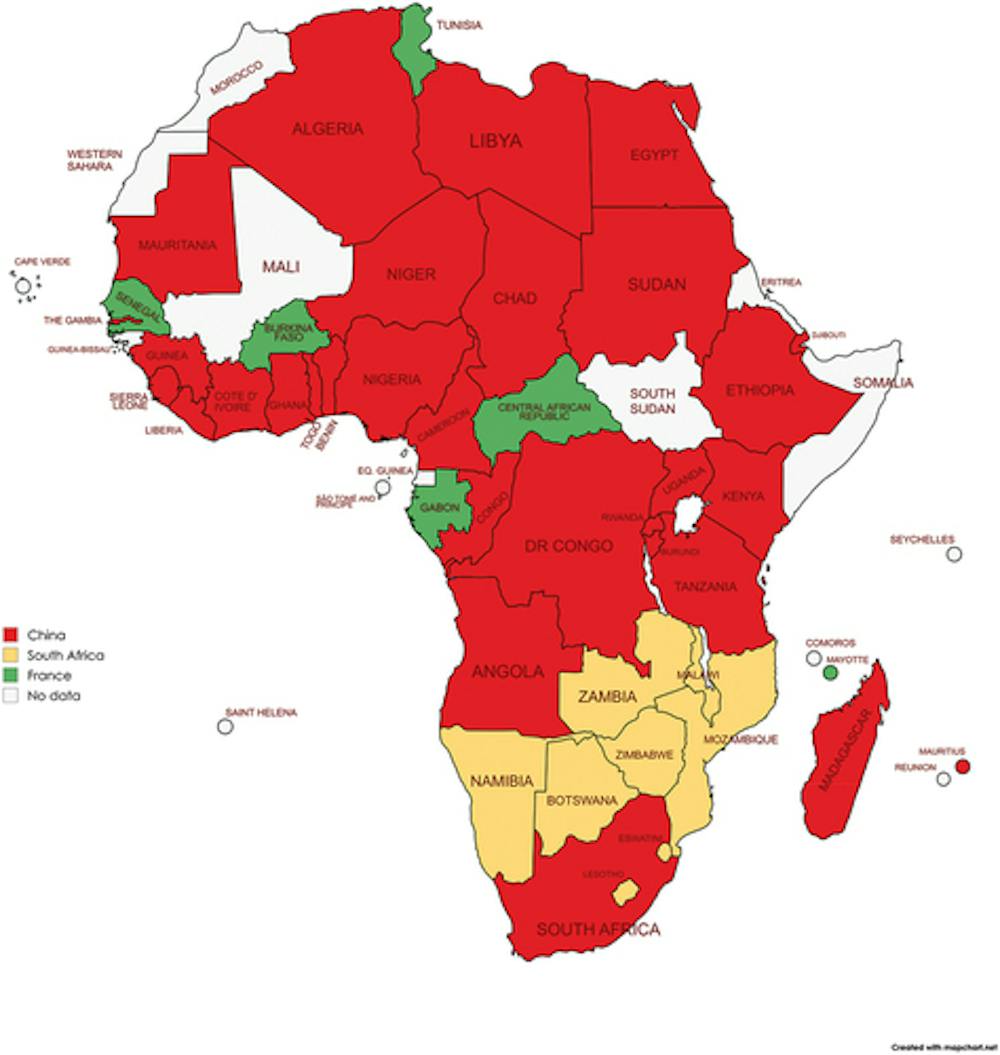
Global power dynamics in Africa are shifting, with China eclipsing the influence of the US and France. China has become Africa’s single largest trading partner.
But these visuals oversimplify a complex reality. This is an issue I explore in a new study. For over a decade, I have researched the interactions of sub-Saharan Africa with other states like Turkey, Arab Gulf states, Japan and China.
In a recent paper I explored the use of maps that have been created of Africa showing China’s projects across the continent. I argue that, by overlaying Chinese flags on maps depicting Africa and its 54 states, media and policymakers turn economic ties into a visual representation of foreign encroachment.
This process is called securitisation – the framing of something as a threat, even if it’s not one.
This visual securitisation not only heightens fears of dependency but also primes certain audiences – in the US, Japan and France, for instance – to view China’s presence as a direct challenge to their interests.
Certain threats – like terrorist groups or nuclear weapons – are self-evident. China’s presence in many African states, however, is different: if it’s a threat, who is threatened and why? Do Chinese-built roads or railways – and the debt African states accrue for this infrastructure – constitute the threat?
My research shows that the answer to these questions is: it depends.
Portraying China’s presence in Africa with flags on maps can distort African states’ sovereignty and their power to make decisions based on national interests. This visual portrayal reduces these countries to arenas of global power competition. It fails to recognise them as strategic actors.
China tops imports to African states
Illustration of China’s economic influence in 2021 drenched in red and drawn from media, think tanks and related literature. Author’s composite map illustrates securitisation of China in Africa.Brendon J. Cannon
On the other hand, my research shows that China’s role may not be entirely benign.
My study focuses mostly on east Africa, to include the Horn of Africa. Much of Beijing’s engagement here remains primarily economic (as it does in west, central and southern Africa). However, China’s growing control over critical infrastructure and digital networks, and its pursuit of military footholds near strategic maritime routes, present real security concerns.
Policymakers need to separate legitimate risks from exaggerated securitisation narratives. This would help them avoid the pitfalls of reactionary policies.
Negative consequences
Presenting China as a threat in Africa has three negative consequences.
First, it erodes the idea and reality of African sovereignty and agency. Maps portraying Africa as overrun by China suggest that governments and civil society are mere bystanders unable to negotiate their own foreign and domestic agendas.
The reality is that countries like Kenya actively engage with China to attract investments for development projects, and to balance their relations with other international actors like the US and Japan.
The result of securitisation is that American or Japanese policymakers, for instance, have begun to view Africa through the lens of their strategic competition with China. This is evident in Washington’s foreign policy rhetoric, for example. This increasingly frames African states not just as partners but also as strategic battlegrounds in the growing US-China rivalry. The risk is that African countries may start being treated as passive players.
Second, securitisation inflates the perception of China as a global security threat.
The repeated use of maps with Chinese flags covering ports, railways and industrial zones creates an exaggerated image of unchecked expansion. These maps fail to show the host of other external states operating on the continent.
The US, multiple European states, Japan, India, Russia, Turkey, the United Arab Emirates and South Korea all have significant interests in Africa. While China is by far the largest, most prominent external actor, with the widest reach throughout Africa, it’s been singled out because of the perceived threats its presence in Africa may pose to the west.
Third, securitisation can lead to knee-jerk reactions to limit China’s presence rather than engage constructively with Beijing’s investments in Africa. These reactions can result in ill-advised attempts by China’s competitors to push projects that don’t correspond to the needs of African states. This partly explains Ethiopia’s strained relations with the west. Sanctions and aid cuts over the Tigray conflict fuelled a pivot toward China and Russia.
The security risks
Securitisation raises valid concerns, but my research also underscores genuine security risks related to China’s presence in Africa. These shouldn’t be overlooked.
China’s growing role and embeddedness in Africa’s digital ecosystem presents a double-edged sword, for instance. Huawei and other Chinese companies have contributed to Africa’s telecommunications and digital transformation. But these investments also increase Beijing’s potential influence over data security, cyber governance and information flows. These give China the option to exploit networks for surveillance, intelligence gathering or political coercion.
Chinese-funded, built or operated infrastructure, ports and military bases
A depiction of China’s infrastructure influence in 2023 from media, think tanks and related literature. Author’s composite map illustrates securitisation of China in Africa.Brendon J. Cannon
China’s expanding control over dual-use infrastructure is another concern. Chinese-operated ports in Djibouti, for instance, can be used for commercial and military purposes. They potentially grant Beijing a strategic foothold in key maritime corridors, such as the Red Sea. China could restrict access to these ports in times of conflict. Or use them to extend its naval footprint, similar to what it’s done in the South China Sea.
It’s China’s pursuit of other military facilities beyond its bases in Djibouti that will have the most serious implications for African states’ sovereignty. This is part of a deliberate Chinese strategy to expand its global power projection and protect access to critical resources like oil and gas.
Agreements on military facilities may end up undermining and even challenging African agency of action. The addition of Chinese ships and soldiers alongside the growing presence of US, European, Indian, Japanese and other regional naval forces could escalate tensions. It also risks entangling African states in power rivalries that aren’t in their national interests.
China’s presence in Africa has been securitised through maps drenched in red and stamped with flags, framing its engagement as a looming threat rather than a complex geopolitical reality. However, the real challenge for African states is ensuring that China’s growing influence – especially in infrastructure, digital networks, and security – does not erode their sovereignty. Whether Beijing’s presence becomes an opportunity or a liability will depend on how effectively African governments assert their national interests in shaping these partnerships on their own terms.
– Maps showing China’s growing influence in Africa distort reality – but some risks are real – https://theconversation.com/maps-showing-chinas-growing-influence-in-africa-distort-reality-but-some-risks-are-real-249454
Source: State University of Management – Official website of the State –
From March 3 to May 30, 2025, Oleg Timofeev, a senior researcher at the Center for Socioeconomic and Political Research of China at the National University of Management, will visit this Chinese university at the invitation of the leadership of Tsinghua University (PRC) to deliver a lecture course in Chinese on “Security and International Order in Eurasia” (欧亚安全秩序) at the doctoral department.
It should be noted that on April 26, 2019, Russian President Vladimir Putin became an honorary doctor of Tsinghua University, where Chinese President Xi Jinping once studied. The rector of the higher educational institution, Qi Yong, personally presented the diploma to the head of the Russian state.
Founded in 1911, Tsinghua University has consistently ranked 1st or 2nd in the National University Rankings of China and is one of the world’s leading universities and a symbol of China’s economic and scientific progress.
Oleg Timofeev’s trip to China is part of a series of thematic events at the State University of Management, held in pursuance of the order of the President of the Russian Federation Vladimir Putin to hold the Years of Russia-China Culture in 2024-2025 with the aim of developing Russian-Chinese relations and expanding bilateral ties in the field of culture.
The complex of events dedicated to relations with the PRC also includes the electronic exhibition “Academic Dialogue: Russia and China in the University Space”. The exhibition is addressed to everyone interested in the history and culture of China. Particular attention is paid to the culture of management in history, higher education, politics and the digital economy, as well as socio-cultural phenomena, institutions and social practices of Russia and China. Monographs and textbooks are presented. Publications from the collection of the Scientific Library of the State University of Management were used in creating the exhibition. The author of the exhibition is chief librarian Elena Novikova.
ACADEMIC DIALOGUE_RUSSIA AND CHINA IN THE UNIVERSITY SPACE
Let us recall that at the end of last year, the 4th volume of the book “Xi Jinping on Public Administration” was presented in Russian at the State University of Management. Also, a round table on the development of artificial intelligence in China was held the other day, at which the above-mentioned book by the leader of the PRC was presented to those present again.
Subscribe to the TG channel “Our GUU” Date of publication: 03/04/2025
Please note: This information is raw content directly from the source of the information. It is exactly what the source states and does not reflect the position of MIL-OSI or its clients.
A consultation on proposed public realm improvements in the Chinatown area of Liverpool city centre is under way.
Liverpool City Council, with support from local community groups and the University of Liverpool Architecture School, has developed outline plans for Great George’s Square at the junction of Upper Pitt Street and Nelson Street.
The aim is to attract more visitors and investment, and create a neighbourhood to be proud of.
The centrepiece of the project will be the installation of two stone lions, which have been donated by the Chinese Consulate General in Manchester and were formally handed over to Liverpool in January to celebrate the 25th anniversary of the Liverpool-Shanghai sister cities relationship.
The scheme will also see:
Better pedestrian access between Upper Pitt Street/Nelson Street and Great George’s Square
Installation of a red maple ‘wishing tree’ and ‘flower mat’ near the lions
Improvements to the children’s playground
The creation of a commemorative memorial garden
People are being asked their views on the proposed changes to the junction, the playground improvements and the Commemorative Memorial Garden.
It is hoped the work will be completed in early 2026.
Local people will also be able to find out more and comment at the City Centre South Neighbourhood community information event being held at the Black-e on Great George Street on Tuesday 4 March between 10.30am – 3pm.
The scheme will complement wider plans for a revitalised Chinatown which includes new homes and businesses on a previously stalled site at Great George Street. The Council recently succeeded in securing the site under its own unified ownership, with support from Liverpool City Region Combined Authority and the Government.
Chinatown is also close to the thriving Baltic Triangle, where the new Liverpool Baltic Merseyrail station is due to open in 2027.
Cabinet Member for Economy and Growth, Cllr Nick Small, said: “We are hugely proud of the city’s Chinatown, which is the oldest in Europe, and has huge potential.
“We want to revitalise it so it is somewhere that the local community and Liverpool residents are equally proud of, as well as being somewhere tourists can spend time.
“We’re asking local people and businesses to have their say on the ideas that have been developed and input into the design process, so that we can create something that is really special.
“When combined with our ambitions for the previously stalled site at Great George Street and the work on the new Baltic Station, this is a really exciting time for this part of the city centre.”
Chinese Consul General in Manchester, Tang Rui, said: “The stone lions in Chinese culture are actually a symbol of prosperity, so we hope that these pair of lions will bring good luck and showcases a new start for this beautiful, historic Chinatown.”
Secretary General of Merseyside Chinese Association Joint Action Group, Ming Wang, said: “Chinatown has been home to the local community for more than 200 years. It holds a very special place in our local community’s heart.
“With these two huge stone lions gifted by the Chinese Consul General in Manchester plus the City Council’s planning in regenerating Chinatown which includes a wishing tree, better playground and the creation of a commemorative memorial garden is so amazing.
“We look forward to witnessing the transformation of our beloved Chinatown, more footfall to Chinatown, followed by better business, more investment and more visitors from around the world.”
Sheshan (Agenzia Fides) – “I was here with Bishop Joseph Shen Bin to pray for Pope Francis.” With these words, Cardinal Stephen Chow Sau-yan, Bishop of Hong Kong, describes the central moment of his recent visit to Shanghai, reported in KungKaoPo, the weekly bulletin of the diocese of Hong Kong.The visit, which began on February 24 and ended recently, reflected the desire to walk together on the “bridge of dialogue and communion.”At the Marian shrine of Sheshan, before the image of Our Lady so dear to Pope Francis, Cardinal Chow and Bishop Shen Bin together prayed for the health of the Pontiff during the solemn liturgy of February 25.The Hong Kong delegation, led by Cardinal Chow, included Auxiliary Bishop Joseph Ha Chi-shing OFM, Diocesan Vicar Peter Choy Wai Man and other priests and lay people.On arriving at the Basilica, the two bishops, together with the assembly of the faithful, recited the prayer to Our Lady of Sheshan written by Pope Benedict XVI. “It was a very special experience and it moved me deeply. I cried during the prayer,” Cardinal Chow said. “The Sheshan shrine is a sacred place for the Church in China. I was here with Bishop Shen Bin to pray for the Pope.” The Cardinal also stressed the importance of “spirituality in exchange,” and noted that in the diocese of Shanghai the ecclesiastical community maintains continuous relations with the civil authority. “In Hong Kong too, we must have an open heart for exchange and cooperation with the various parties. There is room and even need for mutual exchange and cooperation between the sacred and the secular.” The Cardinal and Bishop of Hong Kong expressed his hope for more exchange and cooperation in the future, noting that “the Church is a bridge of dialogue and communion.” “May this journey of encounter,” Cardinal Chow insisted, “inspire us to walk in faith and hope and to strengthen ties within the universal Church.”In addition to the Sheshan Shrine and the diocesan seminary located in the Shrine, during their stay in Shanghai, the Hong Kong delegation visited the Cathedral of St. Ignatius, the Bishopric, the Guangqi Publishing House, the churches chosen for the Jubilee pilgrimage, some parish communities and also Buddhist temples. The Cardinal expressed his desire to welcome brothers and sisters of the Church of Shanghai to Hong Kong as soon as possible.Pope Francis has often mentioned the devotion of the people of God in China to Our Lady of Sheshan, entrusting his desire to make a pilgrimage to this Shrine. In the video message sent to the Conference on the centenary of the Primum Concilium Sinense held at the Pontifical Urbaniana University on 21 May (see Fides, 21/5/2024), Pope Francis recalled that “Precisely in these days, in the month of May, dedicated by the people of God to the Virgin Mary, many of our Chinese brothers and sisters make a pilgrimage to the Shrine of Sheshan, to entrust their prayers and their hopes to the intercession of the Mother of Jesus.” “I too – added the Bishop of Rome on that occasion – ideally climb the hill of Sheshan. And together let us entrust to Our Lady, Help of Christians, our brothers and sisters in the faith who are in China, all the Chinese people and all our poor world, asking for her intercession, so that peace may always triumph everywhere.” (NZ) (Agenzia Fides, 4/3/2025)
Share:
Source: United Kingdom – Executive Government & Departments
An unpublished preprint uploaded to BioRXiv looks at gene editing in mice to create woolly mammoth-like hair phenotypes.
Dr Tori Herridge, Senior Lecturer, School of Biosciences, University of Sheffield, said:
Woolly Mouse in Context
“Colossal have announced that they have successfully bred ‘woolly mice’, and this is a “water shed moment” in their mission to genetically engineer an arctic adapted elephant, aka “bringing back the mammoth.”
“Colossal’s team made a number of genetic changes known as “knock outs” in lab mice that are already known to produce longer, thicker, wavier — or woollier — coats in mice. They also made a change known to cause blonde hair colouring in mice.
“The result, therefore, of various “woolly mice” from these genetic changes is unsurprising: woolly mice have been produced in labs and by mice breeders many times before.”
Mammoth-like genes?
“Three of the genetic changes made in some of the mice were inspired by woolly mammoth DNA, but they still only show effects in mice. The mice were not edited to have a precise copy of the mammoth genes, but it is possible that these edits may have had a similar effect in both mice and mammoths (either by stopping the gene from working, or by changing the way the gene worked), but we cannot be sure about this.
“It is also not possible to tell what impact these ‘mammoth-inspired’ changes had, if any, in the Colossal woolly mouse owing to other gene edits made at the same time.”
Are we a step closer to ‘bringing back the mammoth’?
“A mammoth is much more than just an elephant in a fur coat. While we know a lot about mouse genetics, we know much less about mammoths and elephants. It isn’t yet known which sections of the genome are vital for achieving the characters need to make an elephant fit for life in the Arctic circle. Genes that are linked to fur and fat in well-studied animals like mice are obvious targets, but the devil is in the detail. And what about other characters that are equally important? Which bits of the genome underpin the teeth and jaw changes that might be needed to accommodate an Arctic diet, for example (mammoth teeth were clearly under strong evolutionary pressure to adapt to their diet)? What about things we haven’t even discovered yet, things we don’t know we don’t know?
“Unless you decide to make EVERY edit necessary to in the genome, you are only ever going to create a crude approximation of any extinct creature, based on an incomplete idea of what it should look like. You are never going to ‘bring back’ a mammoth.
“Colossal’s Woolly Mouse experiments also show that de-extinction attempts are fraught with failure: most gene-edited embryos failed to result in live pups (less than 10%), and very few of those born were successfully edited for all target genes. This is for experiments that made a small number of relatively simple (loss of function) changes in well understood genes, using a ‘model’ lab animal as a surrogate.
“Engineering a mammoth-like elephant presents a far greater challenge: the actual number of genes likely to be involved is far higher, the genes are less well understood (and still need to be identified), and the surrogate will be an animal that is not normally experimented upon. Even if success rates are similar to those observed in the woolly mice (and they may well be lower given the greater number of edits and unknowns), there will likely need to be multiple pregnancies before a “successful” calf is born. This equates to either a very large number of surrogate dams, or – given elephant pregnancies last approximately 2-years – a very long time.
“Mammoth de-extinction doesn’t seem to be on the horizon anytime soon.”
Ethical Considerations
“Colossal’s Woolly Mouse experiments show that the physical effect of genome-editing cannot be observed until the animal experimentation stage. This will also be true in elephants.
“Although it is branded as “woolly mammoth de-extinction”, what is being proposed is an experiment to test the effect of certain gene edits on the appearance of elephants.
“For the mice in these experiments the risk was small: the effect of these gene edits already known, and were not likely to cause risk or suffering to surrogate or pup.
“We do not know the risk involved for elephants, but it could be very high.
“We do know that surrogacy is a burden on the dam, and that captive elephant pregnancies carry risks even under normal circumstances.
“Placing such a burden of risk on an elephant surrogate in pursuit of an experiment that – at best – will produce a simulacrum of a woolly mammoth, is unjustifiable.”
Dr Saad Arif, Senior Lecturer, School of Biological and Medical Sciences, Oxford Brookes University, said:
Is there enough info to comment on the announcement, how well can we judge what has been accomplished and how it has been done?
“The preprint provides enough information on what has been accomplished and how it was conducted.”
How novel is the research and techniques to create the mouse, is it more than just genetically engineered lab animals? Is this something more special?
“One novel element of the work seems to be the use of genome-editing technologies to alter multiple genes at once with high efficiency and speed in mice. Although we have had the ability to alter multiple genes at once for sometime, the efficiency and speed with which these changes can be made could still be improved. Based on the results presented by the authors, their methods for generating transgenic mice with the desired changes appears to be both rapid and highly efficient, which would be extremely desirable when testing for the function of genetic changes in any context, whether it has implications for conservation or disease biology.
“Genome-editing can also lead to unintended edits in non-targeted parts of the genome resulting in unwanted modifications, so-called off-target effects. Although, the authors report no missense mutations (potentially eradicating or modifying an untargeted gene’s function), this is not demonstrable proof that gene function hasn’t been altered. Such off-target effects could be detrimental in real world applications of genome-editing e.g. curing a disease or in trying to turn an ‘elephant” into a mammoth’.
“Another novel aspect of this study is that some of the genes targeted by the authors are based on their comparisons of ancient mammoth and modern elephant genomes. This set of genes (in contrast to most of the others, which are selected based on information from mice studies) comprise those with identified differences between cold-adapted mammoths and their warm-adapted elephant cousins. Hence differences in these genes could potentially be part of the cold adaptation repertoire of mammoths. This really paves the way for exploring the consequences of genomic differences in extinct species or populations.”
How is this proof of principle for the research missions of the company?
“It shows that Colossal have a model system to validate predicted effects of the DNA differences they have identified between mammoth and elephant genomes and which of these differences is relevant for mammoth’s cold adaptations. For example, they identified differences in DNA sequences of a gene that controls hair length both in Elephants and Mammals, they then introduced that difference in their mouse model, via genome editing, and determined that the change does indeed affect hair growth. The ability to edit genomes. rapidly and efficiently, to test the role of DNA changes will help them prioritize which genetic modifications are relevant for cold adaptation.
“However, it is important to note that their ability to predict whether a gene controls hair growth comes from work done in mice, humans and other organisms. Not all genes will have functional effects that are so easy to predict because not all genes are as well studied and screening for the effect of alterations in these genes may not be as straightforward. Many genes, unlike those that control hair colour or some aspect of outward appearance, may not have immediate or directly observable effects. Finally, given the idiosyncrasies of mouse biology, some genetic edits will just not manifest themselves in the same way as they would in mammoths or their relatives. The authors acknowledge this and this is a well-known issue with the use of mice in studying human genetics as well. Hence, being able to test whether a specific difference between mammoths and elephants is related to the former’s cold tolerance is still challenging.”
What are the implications of this research? How close are we getting to the “de-extinction” of the Woolly Mammoth? Does this have significance in conservation biology? “I think we are still very far from their “de-extinction” goal. The elephant and mammoth genomes are considered to be 96.4% identical, however, that still leaves potentially another ~13 million changes in DNA sequence to consider! It is also still unclear how mammoth cold adaptation phenotypes without a clear outward manifestation, could be identified or screened in mice.
“Additionally, at the moment it is difficult to see how they will “birth” a mammoth-like elephant as that may also require some additional technical advances and ethical considerations as this may require elephant surrogacy. Nonetheless, it still remains a goal worth striving for because of potential technical advances they could be achieved along the way. I wouldn’t mind being proven wrong on this. “I see this as a fairly small step towards their “de-extinction” goal and I still see us far from any direct impact in conservation biology. Nonetheless, being able to test the genetic effects of DNA differences discovered from extinct species and populations could help us identify the genes and sequence differences involved in making organisms more adaptable to their environments.
“Finally, the efficiency and speed of their multiplex genome-editing technologies is promising and perhaps the most impactful part of their work. These methods could have implications for human disease and biology and help us understand, and potentially treat, complex genetic diseases or traits that are controlled by multiple genes.”
Is there any ethical significance of this research to consider?
“I don’t think the results of the current research are of any ethical significance. However, later down the line, the idea of ‘birthing a mammoth’ via an elephant (an endangered species) surrogacy will surely raise ethical concerns.”
Dr Louise Johnson, Evolutionary Biologist, University of Reading, said:
“Seeing these mice is a bit like looking back at the past, but with a highly selective telescope. This technology offers an exciting opportunity to test some of our ideas about extinct organisms.
“It is an interesting piece of work, but the idea that we could bring something back from extinction is false hope.
“What has been done here is not trivial, but of the ten different mutations engineered into the mice, only a few actually make the mouse gene closer to a known mammoth gene. The result does show that it is possible to genetically engineer many genes at once and still produce some live mice at the end of the process, though. The researchers have succeeded in nudging the mouse genome in the direction of a mammoth genome, which is a first.
“If we have an idea of what a gene might do in an extinct mammal, this technology can produce powerful results by introducing a very similar sequence into a mouse. But in this particular case, most of the mutations are chosen just because they are already known to make mice have longer, coarser, wavier hair. You could, in theory, produce mice like this by just breeding mice with weird hair together.
“In theory, you could introduce a gene for hairiness into an elephant and it would look quite mammoth-like, but it wouldn’t be a mammoth in any meaningful way. Elephants would be a terrible species to do this research with – they are huge, have long gestation periods, and require highly specialist housing and care. The mouse is a brilliant lab animal, and we know a lot about the mouse genome and how to alter it effectively.
“You do have to know a bit about how the extinct genes might work. For example, it was already known that the genes for coat colour and texture were similar in the mammoth and the mouse. Being able to create and introduce a mouse gene that is somewhat the same as the mammoth opens up a new way to look at evolutionary genetics.”
Dr Alena Pance, Senior Lecturer in Genetics, University of Hertfordshire, said:
“Genetic engineering in mice has been performed for a very long time using, developing, and testing a variety of technologies. These modifications include introducing traits from other species, notoriously ‘humanised mice’ that have been used for research related to human traits and disease.
“The decoding of an extinct species genome to identify specific genes associated with particular traits has also been done before, where the physical characteristics of ancient humans have been deduced from their genomic data.
“Perhaps the novelty here is using mice to confirm the assumptions about correlations between genes and specific traits. The press release gives the impression that mammoth genes were introduced to mice but from the preprint, it transpires that the genomic editing in these mice consists of inducing loss of function of several genes simultaneously. The choice of these genes comes from observed spontaneous mutations in mice that impact traits such as coat and comparative analyses of elephant and mammoth genomes that reveal similar loss of function in some of these genes.
“The ability to use mice in order to examine and test gene-trait relationships and hypotheses about physical characteristics specifically using genomes from extinct organisms might prove useful, but overall not particularly novel.”
Prof Dusko Ilic, Professor of Stem Cell Science, King’s College London, said:
“The achievement described in the latest press release regarding “woolly mice” is interesting, particularly in terms of the strategy used to refine the list of genes related to hair growth that were also compatible with their model organism—the mouse. This is indeed a noteworthy milestone.
“Once the gene list has been established, engineering mutations in mice, including those involving seven genes, is a well-established process and not particularly challenging.
“With mice, the process is relatively straightforward. Their gestation period is only three weeks, and they typically give birth to six to eight pups per litter. However, translating this approach to elephants presents significant challenges. Elephants have the longest gestation period of any mammal—approximately two years—and generally give birth to a single calf. Furthermore, it will take 10-14 years for them to be sexually mature.
“Assisted reproductive technologies (ART), including in vitro fertilization (IVF), have seen limited success in elephants. The primary ART method employed in elephants has been artificial insemination (AI). The Indianapolis Zoo achieved a significant milestone in 2000 by facilitating the first successful birth of an African elephant conceived through AI. In 2023, the same zoo announced that a 16-year-old African elephant named Zahara was pregnant via AI, marking the first instance where an elephant born through AI is expecting a calf conceived by the same method.
“This raises critical questions: How many elephant cows would need to undergo experimental pregnancies to give a birth to a “woolly elephant”? And how long would it take before the first such hybrid is born?”
Dr Denis Headon, Group Leader and Senior Research Fellow, The Roslin Institute, University of Edinburgh, said:
“With a long-term goal of advancing the de-extinction of the mammoth, the team have managed to alter several mouse genes in one step. They chose these gene alterations based largely on things that we know about mice, rather than what we know about mammoths. This approach produced very shaggy mice with a coat that resembles that of the woolly mammoth remains we find today. While the mice have a striking golden coat, they are otherwise healthy, indicating that the method used is not harmful. Certainly this is an advance in speeding up the rate of genetic modification towards the many changes that distinguish one species from another, though it’s not clear that these changes alone would alter a relatively hairless elephant into a woolly animal. Further work on either synthesising or understanding the mammoth genome would also be required to go beyond these superficial characteristics to generate an animal that would, for example, have the right behaviour to live in Arctic conditions. This paper reports an important advance not only for de-extinction but for animal breeding in general.”
An unpublished preprint titled ‘Multiplex-edited mice recapitulate woolly mammoth hair phenotypes’ by Rui Chen et al. was uploaded to BioRXiv on 13:00 UK time Tuesday 4 March.
Declared interests
Dr Saad Arif: None
Dr Louise Johnson: None
Dr Alena Pance: I can confirm I have no conflict of interest regarding this story
Prof Dusko Ilic: I declare no conflicts of interest.
Dr Denis Headon: I don’t have any interests to declare on this paper/story.
For all other experts, no response for our request for DOIs was received.
On February 24, a meeting with a delegation of the Committee on Interparliamentary Cooperation of the Council of People’s Representatives of the Republic of Indonesia was held at the HSE on Pokrovsky Boulevard. The event was attended by the Vice-Rector of the University, the Head of the BRICS Expert Council – Russia Victoria Panova and representatives of the university’s scientific departments and centers. During the meeting, the parties discussed key areas for strengthening scientific and expert cooperation, and joint initiatives in the field of science and technology, including through BRICS.
HSE Vice-Rector Victoria Panova welcomed the guests and said that the university is actively developing international cooperation and highly values the opportunities for interaction with Indonesia. She emphasized that HSE is not only one of the leading educational and research centers in Russia, but also a key participant in the work of BRICS: “The Higher School of Economics was chosen as an expert center for analytical and scientific work on BRICS, as it is a modern and young university that is actively developing in such key areas as IT, neuroscience, fundamental physics, and STEM in general. The BRICS Expert Council (BRICS EC) is not just a division created to support the Russian Federation’s chairmanship of BRICS in 2024. We work in long-term areas of political, socio-economic and humanitarian cooperation, conduct research and create platforms for knowledge exchange between the countries of the association.”
Victoria Panova expressed hope for further strengthening of relations between Russia and Indonesia. “Our task is to offer Indonesia not only educational opportunities, but also expert support in various fields. We are ready for active cooperation and hope that Indonesia will take an active part in the work of the BRICS expert track,” Victoria Panova said.
Mr. Mardani Ali Sera, in turn, noted that Indonesia is deeply interested in strengthening ties with Russia through multilateral formats, in particular BRICS, and expressed a desire to also develop bilateral relations at all levels. “We are pleased that cooperation between Russia and Indonesia has intensified in recent years. Our country is interested in interacting, including with the BRICS-Russia Expert Council based at the Higher School of Economics. We see what a significant contribution the BRICS ES makes to achieving the common goals of the association: national strategies, economic and scientific and technological development. We are confident that joint work will open up new opportunities for us, especially in the field of using technology and innovation,” Mr. Mardani Ali Sera emphasized.
Deputy Chairman of the Inter-Parliamentary Cooperation Committee Mr. Fadlullah Muhammad Hussein said that Indonesia sees many prospects in cooperation with BRICS: “BRICS offers us great opportunities for cooperation. All member countries communicate on an equal basis and can freely choose which line to work on. BRICS is about all aspects of building a fair world order,” he added.
Representatives of the National Research University Higher School of Economics emphasized the importance of constant interaction in the scientific research sphere. Alexander Sokolov, Deputy Director Institute for Statistical Studies and Economics of Knowledge, National Research University Higher School of Economics, director Foresight Center spoke about the development of new technologies that could be useful for Indonesia: “Our institute is actively developing the foresight direction, creating innovative methodologies and tools for forecasting and modeling future trends in various fields of science and technology. We conduct research aimed at building long-term trends in areas such as space, medicine, energy and IT, and are ready to offer our expertise and resources for work with Indonesia. Joint efforts will allow us to better understand how new technologies can shape the future of economies and societies.”
Director Institute of Trade Policy, National Research University Higher School of Economics, BRICS ES expert Alexander Daniltsev noted the importance of trade relations for BRICS member countries. He expressed confidence that Indonesia will become a reliable partner not only for Russia. “International trade and economic cooperation issues occupy a key place within BRICS, and we are confident that Indonesia can become an important partner for all countries of the association. We are actively exploring the possibilities of developing trade relations in such strategically important areas as energy, agriculture and high technology. It is important that our joint projects contribute to stable growth and deepening of mutually beneficial cooperation, as well as open up new prospects for all BRICS members,” he said.
Ekaterina Shamina, Deputy Director for Scientific Projects Directorate for Scientific Projects of the National Research University Higher School of Economics, drew attention to the possibility of joint work with Indonesia in the field of artificial intelligence regulation: “We are developing standards for regulating artificial intelligence in Russia, and this is one of the key areas for BRICS in the coming years. We would like to offer our Indonesian colleagues cooperation in developing a common AI testing system that could be implemented in the BRICS countries. This will allow us to work on the safe and ethical use of new technologies,” she said.
Alexander Larichev, Deputy Dean for Research Faculty of Law informed Indonesian parliamentarians that the HSE has launched an initiative – the BRICS Law School Consortium, within the framework of which exchanges between players in the field of law are planned, and scientific publications are already being prepared: “We are implementing a lot. Many universities in the BRICS countries have already joined us. The subjects that we are developing are digital law, international commercial law and business law, etc. We will be glad to see Indonesian universities in our Consortium.”
Natalia Zholnerovich, Deputy Dean Faculty of Geography and Geoinformation Technologies HSE noted that the faculty was founded in partnership with the Russian Academy of Sciences and its areas of activity are much broader than just geography. “We are developing specific areas of geography: climate change and adaptation to it; climate risk assessment at different levels; migration and urban systems; strategy and territorial planning based on technological solutions; the relationship between people’s potential and the resilience of territories to various risk factors,” she explained.
The parties discussed the prospects for joint research and analytical reports, agreed on further interaction and planning of joint events aimed at strengthening the partnership within the framework of the HSE and BRICS.
Please note: This information is raw content directly from the source of the information. It is exactly what the source states and does not reflect the position of MIL-OSI or its clients.
A response to the legacy of the imperialist and mining magnate Cecil John Rhodes is being written into the fabric of the refurbished Rhodes House at the University of Oxford in the UK.
A statement “remembering and honouring the labour and suffering of those who worked to create this wealth” has been translated into the southern African language ǀxam and carved into the stone parapet of a new convention centre within the building.
Rhodes studied towards a degree in law at Oxford from 1876, taking eight years to complete it as he kept having to return to South Africa to look after his mining interests. He set up the Rhodes Scholarship in his will, so that male graduates from around the empire might benefit from an Oxford education. Women were included from 1978.
At the same time, his diamond mining enterprise rested on black land expropriation, which is why his legacy has been contested in recent years.
ǀxam is now a sleeping language, meaning that it is no longer used by any group as a mother tongue. It was spoken until the early 1900s by descendants of the Khoesan peoples and Afrikaners of the Northern Cape. It was famously recorded by the linguists Wilhelm Bleek and Lucy Lloyd at the end of the 1800s in Cape Town, where a number of ǀxam men were incarcerated at the Breakwater prison, itself a symbol of colonial conflict.
Khoekhoegowab and other languages of northern South Africa, southern Namibia and Botswana, still spoken today, share complicated histories with ǀxam. The language lives on in the work of several leading South African authors, like Antjie Krog and Sylvia Vollenhoven. It’s found in the motto on the South African coat-of-arms where it reads “diverse people unite” – and now in the Oxford inscription.
We are scholars of literary and storytelling histories including those of Afrikaans and ǀxam. Rhodes House tasked us to find ways of translating the inscription into ǀxam, in consultation with speakers and teachers of related languages that are still used.
With its marked click consonants like ! and ǀ, the ǀxam inscription brings an unmistakable African presence to the heart of Oxford. The carving signifies resistance to the takeover, control and possession of other lands and people that underpinned the colonial project.
Latin meets ǀxam
Built in a monumental style by British architect Herbert Baker, Rhodes House is the home of the prestigious Rhodes Scholarships and stands as a memorial to Rhodes’ memory. Baker worked extensively in South Africa, where he designed the Union Buildings, the seat of the country’s government.
A line in Latin honouring Rhodes and acknowledging his love for Oxford runs along the top parapet of the building, at the rear. The new inscription appears in parallel lower down, but also closer to the viewer on the ground.
It can be seen as being in dialogue with the Latin writing. Latin, too, is a sleeping language.
How ǀxam came to be used
The decision to sculpt words honouring those who worked to generate Rhodes’ wealth emerges from five years of legacy and inclusion conversations held across the worldwide Rhodes Scholar community.
These rewarding but often tough exchanges were conducted in the awareness of important initiatives exploring histories of empire, like the #RhodesMustFall and #BlackLivesMatter movements.
The wording was collectively chosen. Representatives from all generations emphasised the importance of recognising that the Rhodes legacy was built on southern African people’s suffering and labour.
The idea arose at an early stage to use a southern African indigenous language that could not be immediately translated or decoded. As one of us, Boehmer, explains in her research, it is important that the experiences of people marginalised by history are voiced if at all possible in their own languages. That their labour is, literally, put in their own words.
In this way, we question and resist ideas of frictionless cultural exchange around the world – exchange that is always dominated by the global north through the medium of English.
The translation
Translating the text that emerged out of the conversations we had was an exercise in balancing languages, worldviews, and even translators. Although ǀxam was recorded in the late 1800s, it is no longer spoken.
Therefore, the lead translator, Staphorst, approached the new inscription as an opportunity to work with and highlight the various entanglements between the ǀxam recorded by Bleek and Lloyd, and other related languages.
After Staphorst’s preliminary translation, South African linguist Menán du Plessis provided a retranslation based on her extensive work on compiling ǀxam’s first reference grammar.
Staphorst revised and edited further in line with reflections on the links between ǀxam, on the one hand, and other southern African languages (Nǀuu, Khoekhoegowab and Afrikaans), on the other.
The new inscription moves beyond the fixation on the so-called “extinct” nature of the language, and rather embodies a point where the various histories, cultures and languages of the Cape meet each other.
We then worked together from October 2024 to develop and test the translation. This crucially included a visit to the Kalahari, a formative landscape of the Bushman peoples, and a consultation with Ouma Katrina Esau and her granddaughter, Claudia du Plessis. Both teach Nǀuu (Nǀhuki), a language related to ǀxam.
Grappling with legacy
It’s significant that the language is tied to the South African region whose history Rhodes profoundly shaped, and where he lived and died. Two stones bearing translations into English of both the Latin and the ǀxam messages will appear near to the inscriptions, so that viewers will be able to engage with the meaning and the symbolism of both.
The ǀxam inscription was carved by UK stone mason Fergus Wessel, who works in response to a longstanding English Arts and Crafts tradition. The inscription’s handcrafted aspect responds to the saying’s reference to the difficult labour of southern African peoples that produced the Rhodes wealth.
At a time when educators and activists have grappled with the legacy of imperial figures like Rhodes, the new inscription is an effort to deal in the present with the colonial past and its legacies.
The authors do not work for, consult, own shares in or receive funding from any company or organisation that would benefit from this article, and have disclosed no relevant affiliations beyond their academic appointment.
Global power dynamics in Africa are shifting, with China eclipsing the influence of the US and France. China has become Africa’s single largest trading partner.
But these visuals oversimplify a complex reality. This is an issue I explore in a new study. For over a decade, I have researched the interactions of sub-Saharan Africa with other states like Turkey, Arab Gulf states, Japan and China.
In a recent paper I explored the use of maps that have been created of Africa showing China’s projects across the continent. I argue that, by overlaying Chinese flags on maps depicting Africa and its 54 states, media and policymakers turn economic ties into a visual representation of foreign encroachment.
This process is called securitisation – the framing of something as a threat, even if it’s not one.
This visual securitisation not only heightens fears of dependency but also primes certain audiences – in the US, Japan and France, for instance – to view China’s presence as a direct challenge to their interests.
Certain threats – like terrorist groups or nuclear weapons – are self-evident. China’s presence in many African states, however, is different: if it’s a threat, who is threatened and why? Do Chinese-built roads or railways – and the debt African states accrue for this infrastructure – constitute the threat?
My research shows that the answer to these questions is: it depends.
Portraying China’s presence in Africa with flags on maps can distort African states’ sovereignty and their power to make decisions based on national interests. This visual portrayal reduces these countries to arenas of global power competition. It fails to recognise them as strategic actors.
China tops imports to African states
On the other hand, my research shows that China’s role may not be entirely benign.
My study focuses mostly on east Africa, to include the Horn of Africa. Much of Beijing’s engagement here remains primarily economic (as it does in west, central and southern Africa). However, China’s growing control over critical infrastructure and digital networks, and its pursuit of military footholds near strategic maritime routes, present real security concerns.
Policymakers need to separate legitimate risks from exaggerated securitisation narratives. This would help them avoid the pitfalls of reactionary policies.
Negative consequences
Presenting China as a threat in Africa has three negative consequences.
First, it erodes the idea and reality of African sovereignty and agency. Maps portraying Africa as overrun by China suggest that governments and civil society are mere bystanders unable to negotiate their own foreign and domestic agendas.
The reality is that countries like Kenya actively engage with China to attract investments for development projects, and to balance their relations with other international actors like the US and Japan.
The result of securitisation is that American or Japanese policymakers, for instance, have begun to view Africa through the lens of their strategic competition with China. This is evident in Washington’s foreign policy rhetoric, for example. This increasingly frames African states not just as partners but also as strategic battlegrounds in the growing US-China rivalry. The risk is that African countries may start being treated as passive players.
Second, securitisation inflates the perception of China as a global security threat.
The repeated use of maps with Chinese flags covering ports, railways and industrial zones creates an exaggerated image of unchecked expansion. These maps fail to show the host of other external states operating on the continent.
The US, multiple European states, Japan, India, Russia, Turkey, the United Arab Emirates and South Korea all have significant interests in Africa. While China is by far the largest, most prominent external actor, with the widest reach throughout Africa, it’s been singled out because of the perceived threats its presence in Africa may pose to the west.
Third, securitisation can lead to knee-jerk reactions to limit China’s presence rather than engage constructively with Beijing’s investments in Africa. These reactions can result in ill-advised attempts by China’s competitors to push projects that don’t correspond to the needs of African states. This partly explains Ethiopia’s strained relations with the west. Sanctions and aid cuts over the Tigray conflict fuelled a pivot toward China and Russia.
The security risks
Securitisation raises valid concerns, but my research also underscores genuine security risks related to China’s presence in Africa. These shouldn’t be overlooked.
China’s growing role and embeddedness in Africa’s digital ecosystem presents a double-edged sword, for instance. Huawei and other Chinese companies have contributed to Africa’s telecommunications and digital transformation. But these investments also increase Beijing’s potential influence over data security, cyber governance and information flows. These give China the option to exploit networks for surveillance, intelligence gathering or political coercion.
Chinese-funded, built or operated infrastructure, ports and military bases
China’s expanding control over dual-use infrastructure is another concern. Chinese-operated ports in Djibouti, for instance, can be used for commercial and military purposes. They potentially grant Beijing a strategic foothold in key maritime corridors, such as the Red Sea. China could restrict access to these ports in times of conflict. Or use them to extend its naval footprint, similar to what it’s done in the South China Sea.
It’s China’s pursuit of other military facilities beyond its bases in Djibouti that will have the most serious implications for African states’ sovereignty. This is part of a deliberate Chinese strategy to expand its global power projection and protect access to critical resources like oil and gas.
Agreements on military facilities may end up undermining and even challenging African agency of action. The addition of Chinese ships and soldiers alongside the growing presence of US, European, Indian, Japanese and other regional naval forces could escalate tensions. It also risks entangling African states in power rivalries that aren’t in their national interests.
China’s presence in Africa has been securitised through maps drenched in red and stamped with flags, framing its engagement as a looming threat rather than a complex geopolitical reality. However, the real challenge for African states is ensuring that China’s growing influence – especially in infrastructure, digital networks, and security – does not erode their sovereignty. Whether Beijing’s presence becomes an opportunity or a liability will depend on how effectively African governments assert their national interests in shaping these partnerships on their own terms.
Brendon J. Cannon does not work for, consult, own shares in or receive funding from any company or organisation that would benefit from this article, and has disclosed no relevant affiliations beyond their academic appointment.
We are two physicians whose clinical work and research focuses on the social causes of health and disease. In particular, we’ve seen firsthand how housing instability influences health outcomes.
Homelessness takes many forms, including living on the street or in a car, motel or shelter, or staying temporarily with friends or family. This last scenario is known as “doubling up.”
Our findings suggest that 1 in 4 Denver youth age 14 to 17 experienced some form of homelessness in 2021, and that the number of youth experiencing homelessness in Denver is many times greater than what traditional methods find.
In our study, we used three data sources in what’s known as a multiple systems estimation approach. This approach has been used to count other difficult-to-measure groups of people, including those with substance use disorders or COVID-19. Rarely has it been applied to homelessness.
We combined these datasets to avoid overlap between individuals and counted unique youth present in the data. We then used statistical modeling techniques to estimate those who are “unknown” – meaning not identified in the data. Together, these combined known counts and “unknown” estimates can give a more complete size of the total population.
Among our findings, we noted that 75% to 83% of youth experiencing homelessness in Denver identified as Black/African American or Hispanic.
To count people experiencing homelessness, states and homelessness service providers most often rely on point-in-time counts. In a point-in-time count, local service providers interview and record people experiencing homelessness on one night in January of each year. Typically, only people who are living on the streets or in shelters are counted.
In January of each year, local service providers record people experiencing homelessness. Boston Globe/GettyImages
Point-in-time counts are crucial for policy decisions around homelessness because they help local, state and national organizations and governments allocate resources.
However, point-in-time counts may miss people living in motels, doubling up, those who experience homelessness at other times of the year beyond January, and others. Consequently, many experts and researchers recognize that these counts give incomplete data.
Service providers and governments need new methods to count those experiencing homelessness. From Denver to Washington D.C., they cannot appropriately make decisions or adequately fund evidence-based interventions using incomplete numbers. We believe our methods can be an important piece of the toolbox to improve estimates and better inform policy.
What’s next
Even according to traditional point-in-time counts, homelessness continues to rise significantly across Colorado and nationally. Our results suggest many more youth, and likely persons from all walks of life, are experiencing homelessness than previously known.
Our team is working to use this methodology at the state level in Colorado. We plan to expand our counts to include adults in order to improve estimates among racial and ethnic minorities, LGBTQ+ people and other at-risk communities.
At the same time, our results demonstrate that multiple systems estimation can be an important tool in Colorado and nationally. Our team is optimistic that other researchers, service providers and governments will begin to use this method in their localities.
We hope that with a better understanding of the scope of homelessness, legislators and service providers can implement more effective policies to address this hidden crisis.
The Research Brief is a short take on interesting academic work.
Joshua Barocas receives funding from the National Institute on Drug Abuse. He is affiliated with the Infectious Diseases Society of America.
Matthew Westfall does not work for, consult, own shares in or receive funding from any company or organization that would benefit from this article, and has disclosed no relevant affiliations beyond their academic appointment.
“Violence is just part of the job. Every nurse and health care worker experiences it at some point.”
Sentiments like this echo across American hospitals and health care facilities, capturing a disturbing and growing reality. Though Americans think of nursing as the most trusted profession, we often fail to see that it’s also one of the most dangerous.
Despite these staggering numbers, the full extent of this epidemic may not be fully understood because nurses and other health care workers chronically underreport violent encounters. The American Nurses Association estimates that only 20% to 60% of incidents are accounted for. Additionally, there is no agreed-upon definition for workplace violence or clear way of tracking it on a national level.
As a practicing bedside nurse, I have experienced my fair share of workplace violence. As a professor of nursing, my research shows that violence has become a normalized but underreported part of working in health care and that it affects the care patients receive in pervasive ways.
What really counts as workplace violence in health care?
When people think about workplace violence, they often imagine dramatic physical assaults. Assaults do happen, but violence directed at workers can take many other forms, including verbal threats, intimidation, sexual aggression and bullying.
What makes defining and measuring workplace violence especially difficult in health care settings is the range of people involved. Violence may stem from patients, their families, co-workers or even disgruntled members of the public.
Nurses and health care staff work with people during incredibly stressful moments in their lives. Sometimes patients are experiencing medical conditions that may cause them to act out or be confused, such as dementia, delirium, psychosis or even postoperative reactions to anesthesia.
Too often, nurses who are threatened or hurt at work do not report the event.
Although not all employees can recite their organization’s official definition of workplace violence, ask a nurse whether they have ever experienced a threatening situation at work and they will likely have stories at the ready. In my 14 years of nursing practice, nurses shared many different types of threatening encounters. They reported being screamed at by distraught visitors and having their hair and wrists grabbed by patients who are trying to bite or spit at them. I have personally experienced having objects thrown at me from across the room and being threatened with retribution by patients’ family members.
Nurses also shared more extreme experiences in which they or their co-workers were injured in the course of trying to simply deliver care. Many described the emotional impact of watching a co-worker hurt badly enough to require medical attention.
From my observations, it’s not just the major incidents but the countless small threats or insensitive behaviors that add up over a nurse’s career. These seemingly less-threatening events are much harder to document, and many nurses shrug them off, but the small infractions take a toll when they happen repeatedly.
Breaking the culture of silence
A culture of silence makes such incidents hard to track.
The medical-surgical nursing unit at the hospital where I conducted my research has a healthy and supportive culture. Yet in my ongoing doctoral work, which will be published in May, of the 74% percent of staff that acknowledged experiencing workplace violence in the past year, only 30% reported the event.
When nurses stay silent, whether from fear, futility or institutional pressure, violence becomes an accepted part of the job. Without accurate data, health care facilities don’t understand the true extent of the problem, can’t implement effective safety measures, and struggle to support their workers in meaningful ways.
Nurses also report a lack of support from management, a fear of reprisal or a sense of shame when reporting. Commonly, many nurses simply find reporting tools to be too difficult and time-consuming to use.
That is a huge problem, considering that the United States is projected to have 193,100 nursing job openings per year until 2032, yet will produce only roughly 177,400 new nurses in that time frame. This also has vast repercussions for patient care.
During my nursing career, I observed my peers developing complex strategies to protect themselves while trying to provide compassionate care. Like me, they tended to carefully position themselves near doorways, maintained constant awareness of their surroundings and silently assessed each new interaction for potential risks.
These invisible precautions reflect the far-reaching effects of health care violence. When nurses are hypervigilant about their safety, they have less emotional energy for patient care. When they’re rushing between rooms due to short staffing caused by violence-related turnover, they have less time for each patient. When they are worried about what the next patient encounter may bring, they are increasing their anxiety, fear and stress rather than focusing on delivering quality care.
Creating safer health care together
Each health care visit is a chance for patients and their families to improve nursing care for everyone.
When you visit a hospital or clinic, try to understand the stress that health care workers are under and express your needs and concerns calmly. You never know what your nurse is dealing with in their interactions with other patients. They try to compartmentalize and give you their full attention, but they might also be experiencing a difficult and traumatic situation right next door.
It also helps to share information that might be relevant to caring for your family member, such as whether their medical condition is causing them to act differently than normal. And you should speak up if you witness any forms of aggressive behavior. These actions might seem small, but they support health care staff and help prevent violence in health care settings.
Nurses are trained to keep information private, to be problem-solvers and to bear the burden of the job, so they don’t always seek support. If you have a nurse or health care worker in your family or circle of friends, let them know you care. Supporting their safety validates their work and leads to better care for everyone.
Jason Blomquist is affiliated with the American Nurses Association, Idaho chapter as a member of the board of directors. This affiliation has not influenced or overlapped with the work described in this article.
Source: US National Institute of Justice (video statements)
This video presents a short lecture from the course “Population Genetics and Statistics.” The lecture is presented by Greggory LaBerge, Ph.D. Dr. LaBerge holds a Ph.D. in Human Medical Genetics from the University of Colorado School of Medicine.
This course is hosted by the National Institute of Justice and is available at https://populations.training.nij.gov/
(Opinions or points of view expressed represent the speaker and do not necessarily represent the official position or policies of the U.S. Department of Justice. Any product or manufacturer discussed is presented for informational purposes only and do not constitute product approval or endorsement by the U.S. Department of Justice.)
Source: US National Institute of Justice (video statements)
This video presents a short lecture from the course “Population Genetics and Statistics.” The lecture is presented by Greggory LaBerge, Ph.D. Dr. LaBerge holds a Ph.D. in Human Medical Genetics from the University of Colorado School of Medicine.
This course is hosted by the National Institute of Justice and is available at https://populations.training.nij.gov/
(Opinions or points of view expressed represent the speaker and do not necessarily represent the official position or policies of the U.S. Department of Justice. Any product or manufacturer discussed is presented for informational purposes only and do not constitute product approval or endorsement by the U.S. Department of Justice.)
Source: US National Institute of Justice (video statements)
This video presents a short lecture from the course “Population Genetics and Statistics.” The lecture is presented by Greggory LaBerge, Ph.D. Dr. LaBerge holds a Ph.D. in Human Medical Genetics from the University of Colorado School of Medicine.
This course is hosted by the National Institute of Justice and is available at https://populations.training.nij.gov/
(Opinions or points of view expressed represent the speaker and do not necessarily represent the official position or policies of the U.S. Department of Justice. Any product or manufacturer discussed is presented for informational purposes only and do not constitute product approval or endorsement by the U.S. Department of Justice.)
Source: US National Institute of Justice (video statements)
This video presents a short lecture from the course “Population Genetics and Statistics.” The lecture is presented by Greggory LaBerge, Ph.D. Dr. LaBerge holds a Ph.D. in Human Medical Genetics from the University of Colorado School of Medicine.
This course is hosted by the National Institute of Justice and is available at https://populations.training.nij.gov/
(Opinions or points of view expressed represent the speaker and do not necessarily represent the official position or policies of the U.S. Department of Justice. Any product or manufacturer discussed is presented for informational purposes only and do not constitute product approval or endorsement by the U.S. Department of Justice.)
Source: US National Institute of Justice (video statements)
This video presents a short lecture from the course “Population Genetics and Statistics.” The lecture is presented by Greggory LaBerge, Ph.D. Dr. LaBerge holds a Ph.D. in Human Medical Genetics from the University of Colorado School of Medicine.
This course is hosted by the National Institute of Justice and is available at https://populations.training.nij.gov/
(Opinions or points of view expressed represent the speaker and do not necessarily represent the official position or policies of the U.S. Department of Justice. Any product or manufacturer discussed is presented for informational purposes only and do not constitute product approval or endorsement by the U.S. Department of Justice.)
Source: The Conversation – Africa – By Elleke Boehmer, Professor of World Literature in English, University of Oxford
A response to the legacy of the imperialist and mining magnate Cecil John Rhodes is being written into the fabric of the refurbished Rhodes House at the University of Oxford in the UK.
A statement “remembering and honouring the labour and suffering of those who worked to create this wealth” has been translated into the southern African language ǀxam and carved into the stone parapet of a new convention centre within the building.
Rhodes studied towards a degree in law at Oxford from 1876, taking eight years to complete it as he kept having to return to South Africa to look after his mining interests. He set up the Rhodes Scholarship in his will, so that male graduates from around the empire might benefit from an Oxford education. Women were included from 1978.
At the same time, his diamond mining enterprise rested on black land expropriation, which is why his legacy has been contested in recent years.
ǀxam is now a sleeping language, meaning that it is no longer used by any group as a mother tongue. It was spoken until the early 1900s by descendants of the Khoesan peoples and Afrikaners of the Northern Cape. It was famously recorded by the linguists Wilhelm Bleek and Lucy Lloyd at the end of the 1800s in Cape Town, where a number of ǀxam men were incarcerated at the Breakwater prison, itself a symbol of colonial conflict.
The new building at Rhodes House, ǀxam words carved at the bottom.Elleke Boehmer
Khoekhoegowab and other languages of northern South Africa, southern Namibia and Botswana, still spoken today, share complicated histories with ǀxam. The language lives on in the work of several leading South African authors, like Antjie Krog and Sylvia Vollenhoven. It’s found in the motto on the South African coat-of-arms where it reads “diverse people unite” – and now in the Oxford inscription.
We are scholars of literary and storytelling histories including those of Afrikaans and ǀxam. Rhodes House tasked us to find ways of translating the inscription into ǀxam, in consultation with speakers and teachers of related languages that are still used.
With its marked click consonants like ! and ǀ, the ǀxam inscription brings an unmistakable African presence to the heart of Oxford. The carving signifies resistance to the takeover, control and possession of other lands and people that underpinned the colonial project.
Latin meets ǀxam
Built in a monumental style by British architect Herbert Baker, Rhodes House is the home of the prestigious Rhodes Scholarships and stands as a memorial to Rhodes’ memory. Baker worked extensively in South Africa, where he designed the Union Buildings, the seat of the country’s government.
A line in Latin honouring Rhodes and acknowledging his love for Oxford runs along the top parapet of the building, at the rear. The new inscription appears in parallel lower down, but also closer to the viewer on the ground.
It can be seen as being in dialogue with the Latin writing. Latin, too, is a sleeping language.
How ǀxam came to be used
The decision to sculpt words honouring those who worked to generate Rhodes’ wealth emerges from five years of legacy and inclusion conversations held across the worldwide Rhodes Scholar community.
These rewarding but often tough exchanges were conducted in the awareness of important initiatives exploring histories of empire, like the #RhodesMustFall and #BlackLivesMatter movements.
The wording was collectively chosen. Representatives from all generations emphasised the importance of recognising that the Rhodes legacy was built on southern African people’s suffering and labour.
A statue of Cecil John Rhodes is removed from the University of Cape Town campus amid student protests dubbed #RhodesMustFall in 2015.Rodger Bosch/AFP/Getty Images
The idea arose at an early stage to use a southern African indigenous language that could not be immediately translated or decoded. As one of us, Boehmer, explains in her research, it is important that the experiences of people marginalised by history are voiced if at all possible in their own languages. That their labour is, literally, put in their own words.
In this way, we question and resist ideas of frictionless cultural exchange around the world – exchange that is always dominated by the global north through the medium of English.
The translation
Translating the text that emerged out of the conversations we had was an exercise in balancing languages, worldviews, and even translators. Although ǀxam was recorded in the late 1800s, it is no longer spoken.
Therefore, the lead translator, Staphorst, approached the new inscription as an opportunity to work with and highlight the various entanglements between the ǀxam recorded by Bleek and Lloyd, and other related languages.
After Staphorst’s preliminary translation, South African linguist Menán du Plessis provided a retranslation based on her extensive work on compiling ǀxam’s first reference grammar.
Staphorst revised and edited further in line with reflections on the links between ǀxam, on the one hand, and other southern African languages (Nǀuu, Khoekhoegowab and Afrikaans), on the other.
The new inscription moves beyond the fixation on the so-called “extinct” nature of the language, and rather embodies a point where the various histories, cultures and languages of the Cape meet each other.
Staphorst (left) meets with Ouma Katrina Esau (next to him), translators and advisors.Elleke Boehmer
We then worked together from October 2024 to develop and test the translation. This crucially included a visit to the Kalahari, a formative landscape of the Bushman peoples, and a consultation with Ouma Katrina Esau and her granddaughter, Claudia du Plessis. Both teach Nǀuu (Nǀhuki), a language related to ǀxam.
Grappling with legacy
It’s significant that the language is tied to the South African region whose history Rhodes profoundly shaped, and where he lived and died. Two stones bearing translations into English of both the Latin and the ǀxam messages will appear near to the inscriptions, so that viewers will be able to engage with the meaning and the symbolism of both.
The ǀxam inscription was carved by UK stone mason Fergus Wessel, who works in response to a longstanding English Arts and Crafts tradition. The inscription’s handcrafted aspect responds to the saying’s reference to the difficult labour of southern African peoples that produced the Rhodes wealth.
At a time when educators and activists have grappled with the legacy of imperial figures like Rhodes, the new inscription is an effort to deal in the present with the colonial past and its legacies.
– Africa’s ‘sleeping’ language, |xam, has been written in stone at Oxford university – https://theconversation.com/africas-sleeping-language-xam-has-been-written-in-stone-at-oxford-university-250691
Source: The White House
Meet the special people who will join the First Lady and President Trump at the U.S. Capitol when President Trump delivers his address to a joint session of Congress.
These men, women, and families come from all different walks of life with incredible stories about the disaster wrought by the previous administration, and the historic achievements President Trump has already enacted to usher in the Golden Age of America.
Elliston Berry from Aledo, TX: Elliston is a 15-year-old who was the victim of computer-generated deepfakes created by a bully at her school intended to humiliate and degrade Elliston and her friends.
The Comperatore Family from Sarver, PA: Helen, Allyson, and Kaylee are the widow and daughters of Corey Comperatore, a firefighter who was killed by the gunman who also shot President Trump during a campaign rally in Butler, Pennsylvania in July 2024.
Jeff Denard from Decatur, AL: Jeff has spent nearly three decades working at a steel plant owned by Nucor Steel. His good paying, middle class job at the steel plant has allowed Jeff to serve as volunteer firefighter, provide a loving home to dozens of foster children, and organize his fellow steelworkers to respond to natural disasters, including Hurricane Helene.
Stephanie Diller from Long Island, NY: Stephanie is the widow of Jonathan Diller, an NYPD officer who was murdered at a traffic stop in Queens in March 2024 by a repeat criminal who was allowed to roam the streets.
Haley Ferguson from Spring Hill, TN: Haley is a former foster child, a senior at Middle Tennessee State University majoring in Elementary Education, and a Fostering the Future scholarship recipient, which was launched by the First Lady’s organization, Be Best.
Marc and Malphine Fogel from Butler, PA: Marc is an American history teacher who was held hostage by the Russian government and wrongfully sentenced to 14 years in a Russian prison. On February 12th, President Trump fulfilled his promise to Malphine, Marc’s 95-year-old mother, that he would bring Marc home.
January Littlejohn from Tallahassee, FL: January is a mother and parents’ rights advocate who sued the School Board of Leon County after school officials at her daughter’s middle school socially transitioned her daughter to a different sexual identity without January and her husband’s knowledge or permission. The school drove a wedge between January’s daughter and her parents, and deceived January about their covert plan to transition her daughter.
Payton McNabb from Murphy, NC: Payton is a former high school athlete who had her dreams of competing in college sports crushed in a September 2022 volleyball match when a biological man playing on the opposing women’s team spiked the volleyball at Payton’s face, leaving her with a traumatic brain injury. Payton joined with the Independent Women’s Forum and has made it her mission to put an end to this brutal unfairness.
Allyson and Lauren Phillips from Woodstock, GA: Allyson and Lauren are the mother and sister of Laken Riley, a young female nursing student who was murdered by an illegal alien during a morning jog. The Biden administration apprehended and released Laken’s murderer into the country under its reckless open border policies. The very first bill President Trump signed into law this year was named in Laken’s honor.
Alexis Nungaray from Houston, TX: Alexis is an angel mom and the mother of Jocelyn Nungaray, a 12-year-old girl who was murdered by two illegal aliens during a walk to a corner store. The Biden administration apprehended and released these vicious illegal aliens into the country just weeks before Jocelyn’s murder.
Roberto Ortiz from Weslaco, TX: Roberto has served with U.S. Border Patrol for nearly a decade, and is a veteran of the U.S. Navy and California State Guard. He has been shot at repeatedly by cartel members while performing his duties near the Rio Grande River in Texas.
Source: State University of Management – Official website of the State –
The State University of Management recently hosted the final of the case championship in sports management, organized by the professional football club CSKA together with the State University of Management, bringing together talented students ready to solve real problems in the sports industry.
The case championship was held in two stages. The most active students visited the VEB Arena, where representatives of PFC CSKA conducted an excursion to places where no ordinary person has ever set foot. Our students visited the holy of holies of football players – the locker rooms, sat in the personal seats of legendary CSKA players, feeling the atmosphere of great victories and intense matches. The students were able to touch the history of the club, the excursion became an unforgettable moment, allowing them to look behind the scenes of a professional club.
The first stage of the championship ended with the completion of homework, which served as a ticket to the final.
The championship final took place within the walls of the State University of Management, where students worked on projects on topics such as volunteering at sporting events, organizing and managing fan movements in sports organizations, marketing strategies for sports clubs, and attracting young people to an active lifestyle.
During the second stage of the championship, students not only developed theoretical concepts, but also proposed solutions to improve the efficiency of management in the field of sports.
The prepared projects were evaluated, among others, by experts from the State University of Management – Associate Professor of the Department of Management in Healthcare and the Sports Industry of the Institute of Personnel Management, Social and Business Communications Tatyana Borisova, Senior Lecturer of the Department of Marketing of the Institute of Marketing Pyotr Tazov. The experts highly appreciated the students’ proposals and gave valuable advice.
We thank the participants, the jury and the organizers for this unforgettable experience. Until next time!
Subscribe to the TG channel “Our GUU” Date of publication: 03/04/2025
Please note: This information is raw content directly from the source of the information. It is exactly what the source states and does not reflect the position of MIL-OSI or its clients.
Source: Government of the Russian Federation – An important disclaimer is at the bottom of this article.
The announcement of the winners for the PhD and postdoc tracks was a big success result the eighth international Olympiad. The organizers of the intellectual competitions are 24 Russian universities – members of the association “Global Universities”, successfully developing in the global market of education and research.
“The Olympiad of the Global Universities Association contributes to achieving one of the indicators of the national project “Youth and Children” – increasing the number of foreign students by 2030 to 500 thousand. In 2024, about 150 thousand people from 185 countries took part in it, which is more than twice the results of the previous year. The winners of the Olympiad will have the right to study in Russia locally within the quota of the Government of the Russian Federation for foreign citizens,” said Deputy Prime Minister Dmitry Chernyshenko.
As noted by the head of the Ministry of Education and Science Valery Falkov, a special feature of the 2024 selection was the launch of a postdoc track, which is aimed at attracting young foreign scientists to work in scientific projects of Russian universities. Holders of a candidate of science or PhD degree from a foreign university are given the opportunity to find employment in one of the research projects offered by the organizing universities.
“We see that the trend for academic mobility remains stable throughout the world, the number of foreign students in Russia is growing. And one of the successful tools of this work is holding such large-scale events as the international Olympiad,” the minister said.
The track for undergraduate students also started for the first time. The winners and prize winners were 2,129 people, the master’s track – 3,928 people, the postgraduate track – 234 people, and among postdocs – 11. In total, this year the participants filled out almost 362 thousand portfolios. The organizers noted the increase in the activity of the participants and a significant improvement in the quality of their preparation: the average score increased at all stages of the intellectual competitions, despite the increased entry requirements for applicants.
The Olympiad is held in 14 broad subject profiles:
— Computer and Data Science
— Business and management
— Engineering and technology
— Clinical medicine and public health
— Biology and biotechnology
— Political science and international relations
— Applied Mathematics and Artificial Intelligence
— Education and psychology
— Earth and Environmental Sciences
— Economics and econometrics
— Linguistics and modern languages
— Physical and technical sciences
— Urbanism and civil engineering
— Chemistry and Materials Science
The International Olympiad (known internationally under the brand Russian Scholarship Project Open Doors) has been held since 2017. During this time, more than 500 thousand people from 222 countries of the world took part in it, about 90% of them live in Asia and Africa. More than 12 thousand winners and prize winners received the right to free education in the best Russian universities.
The universities that are members of the Global Universities Association include the universities that are members of the Global Universities Association and the organizers of the Olympiad.
1. Federal State Autonomous Educational Institution of Higher Education “National Research University “Higher School of Economics”
2. Federal State Autonomous Educational Institution of Higher Education “Samara National Research University named after Academician S.P. Korolev”.
3. Federal State Autonomous Educational Institution of Higher Education “National Research University ITMO”
4. Federal State Autonomous Educational Institution of Higher Education “National Research Tomsk State University”
5. Federal State Autonomous Educational Institution of Higher Education “Ural Federal University named after the first President of Russia B.N. Yeltsin”
6.Federal State Autonomous Educational Institution of Higher Education “Far Eastern Federal University”
7. Federal State Autonomous Educational Institution of Higher Education “Moscow Institute of Physics and Technology (National Research University)”
8. Federal State Autonomous Educational Institution of Higher Education “Moscow Polytechnic University”
9. Federal State Autonomous Educational Institution of Higher Education “Tyumen State University”
10. Federal State Autonomous Educational Institution of Higher Education “Peter the Great St. Petersburg Polytechnic University”
11. Federal State Autonomous Educational Institution of Higher Education “Siberian Federal University”
12. Federal State Autonomous Educational Institution of Higher Education “Kazan (Volga Region) Federal University”
13. Federal State Autonomous Educational Institution of Higher Education “National Research Tomsk Polytechnic University”
14. Federal State Autonomous Educational Institution of Higher Education “Moscow State Institute of International Relations (University) of the Ministry of Foreign Affairs of the Russian Federation”
15. Federal State Autonomous Educational Institution of Higher Education “National Research Nizhny Novgorod State University named after N.I. Lobachevsky”
16. Federal State Autonomous Educational Institution of Higher Education “Novosibirsk National Research State University”
17. Federal State Autonomous Educational Institution of Higher Education “National Research Technological University “MISIS”
18. Federal State Autonomous Educational Institution of Higher Education “National Research Nuclear University MEPhI”
19. Federal State Autonomous Educational Institution of Higher Education “Southern Federal University”
20. Federal State Autonomous Educational Institution of Higher Education “Saint Petersburg State Electrotechnical University “LETI” named after V.I. Ulyanov (Lenin)”
21. Federal State Autonomous Educational Institution of Higher Education “Peoples’ Friendship University of Russia named after Patrice Lumumba”
22. Federal State Budgetary Educational Institution of Higher Education “National Research Moscow State University of Civil Engineering”
23. Federal State Budgetary Educational Institution of Higher Education “First Moscow State Medical University named after I.M. Sechenov” of the Ministry of Health of the Russian Federation (Sechenov University)
24. Federal State Budgetary Educational Institution of Higher Education “Bauman Moscow State Technical University (National Research University)”, as well as the university – co-organizer of the Olympiad in the postgraduate track
25. Federal State Budgetary Educational Institution of Higher Education “Siberian State Medical University” of the Ministry of Health of the Russian Federation
Please note: This information is raw content directly from the source of the information. It is exactly what the source states and does not reflect the position of MIL-OSI or its clients.
Source: US National Institute of Justice (video statements)
This video presents a short lecture from the course “Population Genetics and Statistics.” The lecture is presented by Greggory LaBerge, Ph.D. Dr. LaBerge holds a Ph.D. in Human Medical Genetics from the University of Colorado School of Medicine.
This course is hosted by the National Institute of Justice and is available at https://populations.training.nij.gov/
(Opinions or points of view expressed represent the speaker and do not necessarily represent the official position or policies of the U.S. Department of Justice. Any product or manufacturer discussed is presented for informational purposes only and do not constitute product approval or endorsement by the U.S. Department of Justice.)
Source: US National Institute of Justice (video statements)
This video presents a short lecture from the course “Population Genetics and Statistics.” The lecture is presented by Greggory LaBerge, Ph.D. Dr. LaBerge holds a Ph.D. in Human Medical Genetics from the University of Colorado School of Medicine.
This course is hosted by the National Institute of Justice and is available at https://populations.training.nij.gov/
(Opinions or points of view expressed represent the speaker and do not necessarily represent the official position or policies of the U.S. Department of Justice. Any product or manufacturer discussed is presented for informational purposes only and do not constitute product approval or endorsement by the U.S. Department of Justice.)
Pupils at Fishergate Primary School are now able to get a free breakfast at school each morning as part of the citywide campaign to deliver free meals to primary school pupils.
The campaign is part of the council’s wider commitment to ensure that residents start good health and wellbeing as early as possible in their lives – part of the council’s four year plan – One City for all.
York Hungry Minds was set up in a bid to address disadvantage and the impact of the cost of living crisis, in response to national evidence suggesting that providing children with healthy, nourishing food can make a significant difference to school attendance, concentration and their physical and mental wellbeing.
Fishergate Primary School joins existing schools offering free lunches for children in years 3-6* at Westfield Community Primary School and free breakfasts for to all pupils at Burton Green Primary School, which have been running since early 2024.
The pilots have been made possible thanks to funding from City of York Council and donations to the York Community Fund’s York Hungry Minds Appeal.
Initial research carried out by researchers from the Universities of York, Leeds and Sheffield into the impact of the York pilots last autumn showed that pupils taking in part in the schemes showed improved attendance and punctuality compared to their peers.
Schools also saw evidence of improved behaviour as a result of children feeling less hungry, with staff noting improvements in the pupils’ focus and energy levels after receiving a free breakfast.
Tina Clarke, headteacher at Fishergate Primary School, said:
I am delighted that my children are benefiting from this opportunity. It is lovely to see them tucking into pancakes with bananas and honey, cereal, toast or crumpets with their friends in the morning.
“It means that they can start the school day in a calm and settled way and that they are well- fuelled for their learning”.
Cllr Bob Webb, the council’s Executive Member for Children, Young People and Education, said:
I’m delighted that we’ve been able to make free school breakfasts available to pupils at another primary school in the city as part of York Hungry Minds.
“Local and national evidence shows the positive impact universal free school meals have on pupils’ attendance and behaviour. We hope that our work and peoples’ generous donations will help to support our long term aim to ensure all children in the city have a great start to their health and wellbeing, as well as supporting all families through the cost of living crisis.”
Daniel Anglés-Alcázar, assistant professor of physics, has been awarded a 2025 Sloan Research Fellowship, one of the most competitive honors for early-career researchers in the United States and Canada.
Anglés-Alcázar wasone of 126 scientists selected by the Alfred P. Sloan Foundationfor the fellowship, which recognizes researchers for their exceptional creativity and potential to lead in their fields. The fellowship provides a two-year, $75,000 grant to support research at the recipient’s discretion.
Daniel Anglés-Alcázar, assistant professor of physics and 2025 Sloan Research Fellow. (Photo courtesy of Daniel Anglés-Alcázar).
“It’s a great honor to be selected as a Sloan Fellow,” says Anglés-Alcázar. “This is a significant recognition for our research program, and I am very grateful to the long-term collaborators and mentors that have supported me throughout my career.”
“The Sloan Research Fellows represent the very best of early-career science, embodying the creativity, ambition, and rigor that drive discovery forward,” says Adam F. Falk, president of the Alfred P. Sloan Foundation. “These extraordinary scholars are already making significant contributions, and we are confident they will shape the future of their fields in remarkable ways.”
A computational astrophysicist, Anglés-Alcázar’s research focuses on developing simulations on supercomputers to understand how galaxies form and evolve. He uses theoretical models to interpret observations of galaxies, including how supermassive black holes impact galaxy evolution.
Observations suggest that when supermassive black holes grow, they release a huge amount of energy in the form of powerful winds or large-scale jets. However, the details of this process remain a mystery, according to Anglés-Alcázar.
“It’s still a big enigma,” he says. “In our models, we can make predictions of what happens when supermassive black holes at the center of galaxies power these large-scale winds or jets. Based on those models, we can infer that supermassive black holes indeed play a key role in how massive galaxies evolve,as well as the larger scale structures in the universe.”
Simulation modeling the evolution of a group of galaxies (left) and zooming in down to the nuclear region of the main galaxy (right), where the central supermassive black hole grows and affects its environment. (Photo courtesy of Daniel Anglés-Alcázar and the FIRE collaboration).
Prior to joining UConn in 2019, Anglés-Alcázar was a research fellow with the Flatiron Institute from 2017 to 2019. In 2014, he was selected as apostdoctoral fellow with the Center for Interdisciplinary Exploration and Research in Astrophysics (CIERA) at Northwestern University. Most recently, he was one of 25 recipients of the 2023 Cottrell Scholar Awardsfromthe Research Corporation for Science Advancement.
Anglés-Alcázar plans to use the funding to support student researchers, fund conference travel, and enhance computational resources for his work.
“Receiving this fellowship is really a great honor,” says Anglés-Alcázar. “I’m also very grateful to the students and postdocs in my group for the amazing work they do, and just excited that this award will enable us to continue pushing the frontiers of computational galaxy formation in new directions.”
The School of Business will induct five alumni business leaders into its ‘Hall of Fame’ during a dinner and ceremony on Friday, April 11 at the Hartford Marriott Downtown.
The School’s signature event typically draws hundreds for a night of celebration.
“This year, we proudly induct five exceptional alumni into the UConn School of Business Hall of Fame. Their remarkable achievements, leadership, and dedication to service place them among the most distinguished executives in their fields,’’ says Professor Greg Reilly, interim dean of the School of Business.
“A highlight of the evening is hearing their reflections on their time at UConn and the invaluable advice they offer to students and young alumni,’’ he says. “The Hall of Fame celebration stands as one of the most inspiring and anticipated events of the year.”
Tickets to the event, which is black-tie optional, are $175 each. There is still time to become an event sponsor as well. For reservations or additional information, please visit: alumni.business.uconn.edu.
This year’s inductees include:
Entrepreneur Trisha Bailey Believes in Exceptional Service
Trisha Bailey, ’99 (CLAS) ’23 (HON) is an entrepreneur, and the founder and CEO of Bailey’s Pharmacy & Medical Equipment & Supplies, a company built on a culture of exceptional service. She oversees her flagship company, as well as other successful enterprises, employing more than 500 people and generating revenue in the hundreds of millions annually. She is also the mother of five.
Tricia Bailey (contributed photo)
Bailey graduated with a bachelor’s degree from UConn in 1999, majoring in human development and family relations, and received an honorary degree from the School of Pharmacy in 2023.
A track standout at Weaver High School in Hartford, Bailey has been a generous donor to UConn Athletics and became the first woman to have a building named in her honor on campus. She is also involved in real estate development and housing; is a minority owner of NBA teams; and is the owner of the largest equestrian farm in Florida.
A native of Jamaica, she is deeply committed to community impact, supporting underserved communities in her native land and in the U.S., supporting nursing programs, and food and toy drives.
Her autobiography “UNBROKEN’’ addresses her complex life journey and shares her deeply held values of compassion, excellence, and empowerment.
Laurie Havanec Led 300,000 Employees at CVS Health
Laurie Havanec ’82 (BUS), ’94 JD recently retired from CVS Health, where she served as Executive Vice President and Chief People Officer. In that role, she was responsible for 300,000 employees. Prior to joining CVS, Havanec served as Executive Vice President and Chief People Officer at Otis Worldwide Corporation, including during its transition from United Technologies Corporation to an independent, publicly traded company.
Laurie Havanec (contributed photo)
Havanec earned her bachelor’s degree, with a marketing major, from the School of Business in 1982. Six weeks after the birth of her second child, she returned to UConn to fill her longtime desire to study law at the UConn Law School. She completed her degree with honors.
In 2019, Havanec endowed a need-based scholarship, through UConn Women and Philanthropy, to help women in their path to law school. She has served on the Board of Directors of American Water, as a member of the Board of Trustees for both the Connecticut Women’s Hall of Fame and the Connecticut Governor’s Committee on Workforce and Education. A two-time cancer survivor, Havanec has told her story many times to help educate women about the importance of breast-cancer detection and prevention.
Inclusivity Always Important to John Hodson
John Hodson ’85 (BUS), is the Founder and President of True Benefit, a division of AmWINS, a company that goes beyond traditional employee benefits to foster a culture of inclusivity, ethical practices, and community engagement. The company’s mission is to serve both business and the broader community and he has championed diversity, equity, and belonging throughout his career.
John Hodson (contributed photo)
Hodson earned his bachelor’s degree, with a marketing major, in 1985 and worked at The Travelers and ConnectiCare. He then became an insurance broker and eventually founded True Benefit. Since its inception, the company has grown to become the exclusive program and risk manager for ADP Total Source, the largest professional employer organization in the nation. True Benefit now serves more than 750,000 employees nationwide, overseeing more than $4 billion in healthcare premiums and delivering healthcare savings and solutions for small- to mid- sized businesses.
A dedicated advocate for LGBTQ+ rights and racial equity, Hodson has worked to improve insurance policies for the transgender community, addressing gaps in coverage and access to mental health care. He is also a proud supporter of UConn’s Name, Image, and Likeness (NIL) initiatives, with a focus on promoting mental health and the wellbeing of students. He is actively involved with several professional organizations and serves on the Board of Trustees at Sarah Lawrence College, which two of his children attended.
Greg Lewis Served as SVP and CFO of Honeywell
Greg Lewis ’91 (BUS) is the former Senior Vice President and CFO of Honeywell, a Fortune 100 company. This month, he will be stepping down from those roles and is serving as a special advisor to the CEO of the company, where he has worked since 2006.
Greg Lewis (contributed photo)
During his time at Honeywell, he served as a catalyst for digital transformation, launched the company’s Enterprise Information Management Strategy and made significant changes for greater operational excellence. He built a culture with data at the forefront of strategic decision making and provided critical leadership in response to the COVID-19 pandemic and the dynamic economic and geopolitical environment during the last five years.
Lewis earned his bachelor’s degree from the School of Business in 1991, with a major in finance, and four years later earned an MBA from Fordham University.
Over the last three years, Lewis has been involved with the School of Business, engaging with faculty and students, and mentoring teams. Lewis is a champion of diversity and inclusion and is the executive sponsor of the All-Abilities Employee Network at Honeywell with over 2,500 associates. He chairs the Charlotte (NC) Small Business Innovation Fund and is a board member for Roof Above, a Charlotte-based organization fighting homelessness. He is also an independent director on the board of Medtronic.
Lewis’ wife, Barbara, is a 1989 graduate of the School of Business. They have established a scholarship here, providing opportunities based on academic achievement and need.
Rob Skinner Named a Top Financial Advisor
Rob Skinner ’93 (CLAS) is a Founder and Managing Partner of IEQ Capital, an independent wealth management advisory firm which integrates investing and intellectual and emotional decisions.
Robert Skinner (contributed photo)
Skinner began his career at Fidelity Investments in 1995 and later joined Merrill Lynch as First Vice President of Investments. In 2008, he co-founded Luminous Capital, where he served as Chief Investment Officer, Co-Head of Investment Research, and Co-Manager of Portfolio Construction. Luminous Capital managed $5.5 billion of assets when it was acquired by First Republic Bank in 2012. At First Republic, Skinner served as Senior Managing Director and Wealth Manager.
Skinner has been lauded for his expertise, including being named as one of America’s Top Wealth Advisors by Forbes and as one of America’s Top 100 Financial Advisors by Barron’s.
Skinner earned a bachelor’s degree from UConn in 1993, with a major in political science. He is active in a host of community programs, serving on the board of directors for The First Tee of Monterey County and also the Pebble Beach Company Foundation. He is a trustee of PGA REACH, the charitable arm of the PGA of America, as well as the Naval Postgraduate School Foundation, and serves on multiple investment advisory boards.
TORONTO, March 04, 2025 (GLOBE NEWSWIRE) — Churchill Resources Inc. (“Churchill” or the “Company”) (TSXV: CRI) is pleased to provide an update on its Taylor Brook nickel project where 2024 drilling and prospecting have returned anomalous Vanadium-Titanium-Magnetite (“VTM”) results at the TB-01 to TB-04 chargeability targets. These targets only cover a small area explored thus far on the margin of the large South Lobe of the Taylor Brook Gabbro Complex (“TBGC”), but suggest it to be a layered intrusion with critical minerals potential, in addition to the property’s high-grade magmatic Ni-Cu-Co mineralization seen at Layden (See news releases February 13, 2023, October 26, 2023).
Mineralized magnetite-layered units sampled thus far at the South Lobe are generally several metres thick and gently dipping northeasterly, from which numerous 2024 samples returned anomalous values of 540ppm-955ppm V, 3.1%-7.29% Ti and >20% Fe with Ni, Cu and Co enrichment at several sites at the TB-01 Target (Fig. 1 and Table 1). Winter Borehole Induced Polarization (“BHIP”) surveys at TB-01 have generated high chargeability off-hole targets in this same area, which will be drill tested along with a systematic trenching program.
Highlights:
Taylor Brook Gabbro a layered intrusion with economic potential for VTM critical metals
Numerous enriched VTM layers outcrop at the South Lobe allowing systematic surface testing
Ni-Cu-Co sulphides found at/near surface at TB-01, also enriched in VTM mineralization
BHIP defines large, high chargeability targets near holes TB-24-42B and TB-24-43 at TB-01
Spring 2025 work plans include systematic trenching and more drilling at TB-01, and
Further exploration for both Ni-Cu-Co magmatic sulphides and VTM mineralization along strike from TB-01 and the ~10km2 magnetic/gravity anomaly at the South Lobe
Paul Sobie, CEO, commented:
“The anomalous VTM results we’re starting to see at TB-01 to 04, along with the associated shallow Ni-Cu-Co trends, are compelling, and systematic follow-up work will commence as soon as the snow cover melts. We prioritized this area based on anomalous Ni-Cu-Co in soils, and have drilled and prospected on surface the probable source layer within the TBGC, which is also anomalous in VTM’s, a good indication of layered intrusion-type mineral deposits. We’ve really only begun to evaluate a small portion of the overall approximately 10km2 magnetic / vanadium soil anomaly VTM target on the South Lobe and its margins, so our 2024 results are encouraging.
VTM’s are important strategic metals for the steel, aerospace and battery industries for vanadium, and the pigment, steel and medical industries for titanium. North America has no vanadium production, with China, Russia, South Africa and Brazil the major producers, world-wide, from large layered intrusions such as the Bushveld Complex (South Africa). Layered intrusive mineral deposits typically exhibit layered VTM mineralization in the upper portions, with PGE and chromite deposits somewhat deeper, and Ni-Cu-Co-PGE deposits lowest, in the more ultramafic portion of the intrusion. The VTM mineralization intersected and prospected at surface at the TBGC therefore would appear to be at its upper levels, with exploration just getting started on the South Lobe.
Figure 1 – Vanadium in rocks, soils and drill cores over South Lobe TMI with VTEM anomalies
Systematic prospecting, mapping and trenching at the South Lobe, as well as more drilling at TB-01 are being planned. New exploration permit applications are being prepared for submittal. We’re quite excited by the BHIP method and results, which has located the highest chargeability targets within the TB-01 anomaly, off-hole but not distal from our 2024 drillholes. We’ll drill test these in 2025.”
The South Lobe has been of particular interest to CRI since staking it in 2021 based on its intense magnetic signature and coincident gravity anomaly, more particularly now as it is returning anomalous vanadium and titanium soil survey and prospecting results per Figure 1. The South Lobe magnetic feature is predominantly a topographic high with good exposures of layering along its margins, where the VTM horizons are commonly resistive, outcropping or forming scarps. Presently less that 10% of the South Lobe has been prospected, therefore the Company is planning a comprehensive prospecting, mapping, and trenching/stripping program for the Spring. The TB-01 horizon(s) are laterally extensive based on airborne geophysics and soil sampling and will be followed up along strike in Spring 2025. As well, the Company’s exploration team will comprehensively sample holes TB-24-41, -42B and -43 for VTM mineralization and PGEs in order to test for potential deeper horizons of mineralization.
Petrographic, lithogeochemical, and mineral liberation studies on mineralized samples are pending, which will assist in assessing the economic potential of these VTM units.
Table 1 – Selected 2024 Assay and Lithogeochemical Samples Metal Analytical Results
BHIP surveys at the TB-01 target were successful and have confirmed that off-hole chargeability anomalies correlate well with layers of VTM mineralization including a near-surface horizon also enriched in Ni-Cu-Co (see inset map on Figure 1). Hole TB-24-41 was blocked at 100m depth so the entire hole could not be surveyed, but the BHIP did detect the near-surface Ni-Cu-Co-VTM horizon (the Ni-Cu-Co trend on the figures) observed in the core as well as in numerous nearby angular boulders.
The technical and scientific information in this news release has been reviewed and approved by Dr. Derek H.C Wilton, P.Geo., FGC, who is a “qualified person” as defined under National Instrument 43-101 – Standards of Disclosure for Mineral Projects (“NI 43-101”). Mr. Wilton is an honourary research professor of Economic Geology at Memorial University in St. John’s and is independent of the Company for the purposes of NI 43-101.
The lithogeochemical samples reported here were whole rock pieces, collected from outcrop and historical drill core by Dr. Wilton during fieldwork in September/October 2024. These samples were sealed in labelled plastic bags in the field. All sample bags were photographed and transported to Thunder Bay, ON, by secure courier. The samples were analysed by ALS Geochemistry Ltd. in Thunder Bay using ME-ICP06 whole rock and ME-MS61L analytical protocols. Samples with over limit Ni contents were re-assayed using OG-46 Aqua-Regia overlimit method. Quality control results, including the laboratory’s own control samples, were evaluated immediately.
The assay drill core and rock samples were placed in labelled, sealed plastic bags and delivered to Eastern Analytical of Springdale, NL, an ISO/IEC 17025 certified facility. The samples were analysed using ICP 34 (inductively coupled plasma) analytical protocols. Samples with over limit Ni and Fe contents were re-assayed using Eastern’s Ore Grade Assay (multi acid digestion) overlimit method. Quality control results, including the laboratory’s control samples, were evaluated immediately. 1
1The Company reminds investors that surface rock samples are select samples and may not be representative of all mineralization on the Taylor Brook property.
About Churchill Resources Inc.
Churchill Resources Inc. is a Canadian exploration company focused on high grade, magmatic nickel sulphides in Canada, principally at its prospective Taylor Brook and Florence Lake properties in Newfoundland & Labrador. The Churchill management team, board and its advisors have decades of combined management experience in mineral exploration and in the establishment of successful publicly listed mining companies, both in Canada and around the world. Churchill’s Taylor Brook and Florence Lake projects have the potential to benefit from the province’s large and diversified minerals industry, which includes world class nickel mines and processing facilities, and a well-developed mineral exploration sector with locally based drilling and geological expertise.
Further Information
For further information regarding Churchill, please contact:
Churchill Resources Inc.
Paul Sobie, Chief Executive Officer
Tel.
+1 416.365.0930 (o)
+1 647.988.0930 (m)
Email
psobie@churchillresources.com
Alec Rowlands, Corporate Consultant
Tel.
+1 416.721.4732 (m)
Email
arowlands@churchillresources.com
Cautionary Note Regarding Forward Looking Information
This news release contains “forward-looking information” and “forward-looking statements” (collectively, forward-looking statements”) within the meaning of the applicable Canadian securities legislation. All statements, other than statements of historical fact, are forward-looking statements and are based on expectations, estimates and projections as at the date of this news release. Any statement that involves discussions with respect to predictions, expectations, beliefs, plans, projections, objectives, assumptions, future events or performance (often but not always using phrases such as “expects”, or “does not expect”, “is expected”, “anticipates” or “does not anticipate”, “plans”, “proposed”, “budget”, “scheduled”, “forecasts”, “estimates”, “believes” or “intends” or variations of such words and phrases or stating that certain actions, events or results “may” or “could”, “would”, “might” or “will” be taken to occur or be achieved) are not statements of historical fact and may be forward-looking statements. In this news release, forward-looking statements relate to, among other things, , the Company’s objectives, goals and exploration activities conducted and proposed to be conducted at the Company’s properties; interpretation of recent exploration results; future growth potential of the Company, including whether any proposed exploration programs at any of the Company’s properties will be successful; exploration results; and future exploration plans and costs and financing availability.
These forward-looking statements are based on reasonable assumptions and estimates of management of the Company at the time such statements were made. Actual future results may differ materially as forward-looking statements involve known and unknown risks, uncertainties and other factors which may cause the actual results, performance or achievements of the Company to materially differ from any future results, performance or achievements expressed or implied by such forward-looking statements. Such factors, among other things, include: the expected benefits to the Company relating to the exploration conducted and proposed to be conducted at the Company’s properties; failure to identify any mineral resources or significant mineralization; the preliminary nature of metallurgical test results; uncertainties relating to the availability and costs of financing needed in the future, including to fund any exploration programs on the Company’s properties; fluctuations in general macroeconomic conditions; fluctuations in securities markets; fluctuations in spot and forward prices of gold, silver, base metals or certain other commodities; fluctuations in currency markets (such as the Canadian dollar to United States dollar exchange rate); change in national and local government, legislation, taxation, controls, regulations and political or economic developments; risks and hazards associated with the business of mineral exploration, development and mining (including environmental hazards, industrial accidents, unusual or unexpected formations pressures, cave-ins and flooding); inability to obtain adequate insurance to cover risks and hazards; the presence of laws and regulations that may impose restrictions on mining and mineral exploration; employee relations; relationships with and claims by local communities and indigenous populations; availability of increasing costs associated with mining inputs and labour; the speculative nature of mineral exploration and development (including the risks of obtaining necessary licenses, permits and approvals from government authorities); the unlikelihood that properties that are explored are ultimately developed into producing mines; geological factors; actual results of current and future exploration; changes in project parameters as plans continue to be evaluated; soil sampling results being preliminary in nature and are not conclusive evidence of the likelihood of a mineral deposit; title to properties; and those factors described in the most recently filed management’s discussion and analysis of the Company. Although the forward-looking statements contained in this news release are based upon what management of the Company believes, or believed at the time, to be reasonable assumptions, the Company cannot assure shareholders that actual results will be consistent with such forward-looking statements, as there may be other factors that cause results not to be as anticipated, estimated or intended. Accordingly, readers should not place undue reliance on forward-looking statements and information. There can be no assurance that forward-looking information, or the material factors or assumptions used to develop such forward-looking information, will prove to be accurate. The Company does not undertake to release publicly any revisions for updating any voluntary forward-looking statements, except as required by applicable securities law.
Neither the TSXV nor its Regulation Services Provider (as that term is defined in the policies of the TSXV) accepts responsibility for the adequacy or accuracy of this news release.
Photos accompanying this announcement are available at: