Category: Universities

  • MIL-OSI Global: I’m a sports psychologist and diehard Eagles fan – here’s the behavioral science behind a Super Bowl LIX win

    Source: The Conversation – USA – By Eric Zillmer, Professor of Neuropsychology, Drexel University

    Philadelphia Eagles quarterback Jalen Hurts’ innovative plays demonstrate ‘brain connectivity at its finest,’ the author writes. Mitchell Leff via Getty Images

    The Super Bowl is one of the world’s most significant single-day sporting events.

    It attracts over 100 million U.S. viewers and [tens of millions of international viewers], making it an entertainment phenomenon. For Eagles fans who are not making the trip to the Superdome in New Orleans, there will be plenty of places to watch in Philadelphia – including rowdy bars, living rooms and even home tailgates, all while the city is lit in Eagles green.

    For me, the Super Bowl is a real-life laboratory. As a sports scientist, neuropsychology professor and the former athletic director at Drexel University in Philadelphia, I investigate how high-performance athletes prepare cognitively and psychologically for a winning performance on game day.

    When the stakes are at their highest, what can psychology reveal about who is mentally prepared to win the Super Bowl?

    Tough-minded and open to experience

    Research suggests that super-elite athletes are tough-minded and not easily rattled.

    Their psychological profiles look similar to those of high-performance solo classical guitarists or fighter pilots. On personality tests, athletes typically score at least average in extroversion, openness and agreeableness, and high in conscientiousness.

    Professional athletes work incredibly hard and are disciplined, well organized, goal-oriented, reliable and generally sociable.

    A new focus in personality research in competitive athletes is on creativity and, specifically, being open to experience, which includes being receptive to new ideas and being flexible.

    Openness has become increasingly important in the modern blueprint for winning football games. Daniel Memmert, a sports scientist at German Sport University Cologne, calls this “tactical creativity.” It is a cognitive style that allows one to be imaginative and engage in divergent thinking – which is an ability to think flexibly outside of routines and devise multiple solutions – even in real-time competitive situations.

    Divergent thinking in high-performance sports includes focusing on the task at hand and paying attention to relevant information while ignoring irrelevant information in the athletic arena. The creative athlete knows when and where to look in order to win a play or avoid a costly error.

    Creative and cool under pressure

    Creativity is essential in unscripted football plays – when a planned play has not been executed properly, like a fumble or an interception.

    Intentionally distracting your opponent has become an important part of sports competition. It is why quarterbacks often change the play at the line of scrimmage. But it becomes even more critical during improvised offensive plays when everything is unscripted. In a sport where milliseconds matter, being creative and engaging in something your opponent doesn’t expect can be the difference between winning and losing.

    When the Eagles won the Super Bowl in 2018, backup quarterback Nick Foles calmly executed a trick play on fourth-and-goal, becoming the first player in history to both throw and catch a touchdown pass in a Super Bowl. The play is now called the Philly Special.

    To engage in tactical creativity, however, an athlete must be relaxed. That’s not easy when millions of people are watching your every move.

    Philadelphia Eagles wide receiver Trey Burton fires a touchdown pass to quarterback Nick Foles, not pictured, on a trick play during Super Bowl LII in Minneapolis in 2018.
    Jim Davis/The Boston Globe via Getty Images

    Brain connectivity at its finest

    Performance anxiety is a leading cause of poor athletic performance. Research suggests an athlete’s competitive anxiety can be cumulative and maybe even be contagious, affecting teammates negatively.

    That makes the Super Bowl as much a battle of nerves as it is about the physical execution of plays. So, how do professional athletes do it? The athlete practices how to think as much as they practice to play. Training is intentionally hard and uncomfortable to assist with preparing the body and mind.

    Since emotions and thoughts affect behavior and performance, the concept of emotional self-regulation – or intentionally focusing on the present moment – has been introduced into competitive sports. Mindfulness, meditation, yoga, breathing exercises and grounding techniques are now integral to the toolkit for high-performance sports.

    For athletes, it is relatively easy to elevate their emotions to push the ball forward with a play like the Philadelphia brotherly shove – an almost unstoppable offensive play used by the Eagles in which the team pushes the quarterback through the opponent’s defense for a short gain when needed.

    But calming those emotions to execute a synchronized, attacking, complex passing play is more challenging cognitively.

    A successful football player must easily transition from being highly aroused to remaining composed on command within seconds.

    This cognitive efficiency and fluidity requires many hours to master. I am fully aware that while watching the Eagles’ Jalen Hurts, I am not just observing a great, innovative quarterback; I am witnessing brain connectivity at its finest.

    Philadelphia Eagles fans celebrated the team’s first Super Bowl win with a victory parade on Feb. 8, 2018.
    Corey Perrine via Getty Images

    Psychology of Eagles fans

    How fans experience Super Bowl Sunday is entirely different, psychologically speaking, from the players.

    To perform at the highest level, the players are process oriented. They attempt to be present in real time and play without fear. On game day, it is advantageous for the competitor to play like a kid, full of joy and confidence.

    Fans, on the other hand, are results oriented. And they are nervous wrecks, like parents watching their kids compete.

    One remedy for managing this stress is watching the game with other fans. Philadelphians represent diverse socioeconomic and ethnic groups that often unite through sports. These social connections – which Germans, who were among the first settlers in the city, call Gemeinschaftsgefühl – are a hallmark of good psychological health.

    I know I will never forget when the Eagles won Super Bowl LII: the game, the season and the parade.

    And new research indicates why.

    According to University of California, Berkeley psychology professor Dacher Keltner, these authentic “awe” moments are shortcuts to happiness. Football fans might experience awe when a seemingly unpredictable interception or touchdown has significant consequences.

    In other words, the thrill of the game and the excitement of winning not only unite fans, but they can also transform them into happier versions of themselves.

    Eric Zillmer does not work for, consult, own shares in or receive funding from any company or organization that would benefit from this article, and has disclosed no relevant affiliations beyond their academic appointment.

    ref. I’m a sports psychologist and diehard Eagles fan – here’s the behavioral science behind a Super Bowl LIX win – https://theconversation.com/im-a-sports-psychologist-and-diehard-eagles-fan-heres-the-behavioral-science-behind-a-super-bowl-lix-win-248643

    MIL OSI – Global Reports

  • MIL-OSI Russia: Sobyanin presented awards to young researchers ahead of Russian Science Day

    Translartion. Region: Russians Fedetion –

    Source: Moscow Government – Government of Moscow –

    On the eve of Russian Science Day Sergei Sobyanin presented to young scientists Moscow Government Prizes for 2024.

    “We never had so many competitive applications – more than 1300 works have been announced. And choosing you for us was also not an easy business. So these are really deserved awards that you deserve with your talent, skill, commitment to science. And of course, I hope that these awards in your life are not the last, but only the beginning of your large scientific career. In recent years, our country has been in difficult conditions of international sanctions, a special military operation. And more than ever, issues related to the technological sovereignty of our country in almost all key areas, starting from space to medicine. In recent years, we had to solve very difficult issues related to domestic industry, and high technology supply. And of course, the demand for own scientific research, for domestic science, for technologies related to both the military-industrial complex and with civilian technologies, more than ever. And what you do in your areas, inventing important, necessary technologies, opening new technologies for medicine, astronautics, aircraft building, new materials, creating a huge layer of inventions in the field of medical technologies, of course, is also very cool. Without this, we do not have to talk about any sovereignty. So you do a very important work, of course, for yourself as scientists, for the city, one of the most advanced technological centers not only of our country, but also the world, well, for Russia – for sovereignty, for security, for the future of our great power “, – said Sergey Sobyanin.

    The Moscow mayor thanked the scientists for their work on his own behalf and on behalf of Muscovites and congratulated them on their well-deserved awards. According to him, a decision was made to double the size of the bonus, which has not been indexed since 2019. The bonuses received by young specialists today are also planned to be recalculated taking into account the increase.

    The Moscow Government Prize Competition for Young Scientists has been held since 2013. Awards are given annually for achieving outstanding results in fundamental and applied scientific research in the field of natural, technical and humanitarian sciences, as well as for the development and implementation of new technologies, equipment, devices, equipment, materials and substances that contribute to improving the efficiency of activities in the real sector of the economy and the social sphere of the capital.

    Young Moscow scientists under the age of 35 (doctors of sciences under the age of 40) may apply for the award. We are talking about scientific and scientific-pedagogical workers, postgraduate students, doctoral students, and other specialists engaged in scientific and scientific-technical activities in scientific and higher education organizations located in the city, as well as employees of enterprises and organizations conducting experimental developments.

    In 2019, at the suggestion of the Mayor of Moscow, the size of one award was increased from 1.5 million to two million rubles. If the award is given to a research team, it is divided equally between its members, and diplomas are awarded to each of them.

    The number of awards has also increased from 33 to 50. At the same time, the number of nominations remains unchanged (22), including 11 nominations in the field of research and the same number in the field of development.

    During the competition for the awards in 2013–2024, more than eight thousand applications were submitted. The awards were given to 758 young scientists.

    In 2024, 1,332 applications were received from employees of 310 organizations.

    The prize is awarded since 2013 for outstanding results in fundamental and applied research. Moscow scientists under 35 years of age, and doctors of science under 40 years of age can apply for it. Compared to the previous year, the size of the prize has been doubled – from two to four million rubles,” the Mayor of Moscow wrote in his telegram channel.

    Source: Sergei Sobyanin’s Telegram channel @Mos_Sobyanin

    The awards were won by 78 researchers whose developments and research have already proven themselves in practice.

    Photodetectors, biostimulators and vacuum tubes

    Thus, the award was presented to Sofia Morozova from the Moscow Institute of Physics and Technology (National Research University). She developed methods for obtaining nanostructured polymeric materials, which are important for the creation of environmentally friendly transport based on hydrogen-air fuel cells and for preserving public health.

    “We were all lucky to become laureates of the Moscow Government Prize in a special period, the Decade of Science and Technology. I would like to express my sincere gratitude to you, Sergey Semenovich, for the development of the city, which is happening through the development of Moscow universities, Moscow schools, colleges, and city infrastructure. Special thanks for the Fiztekh metro station and the Novodachnaya station of the first Moscow Central Diameter, which help us get to work, and also for the inspiration for us, young scientists. I congratulate everyone on receiving this significant award and wish to see how the developments will be put into practice,” said Sofia Morozova.

    Natalia Semenchenko, Vladislav Burlakov and Renat Davletshin from the Orion Scientific and Production Association have created photoreceiving devices for space-based optical-electronic systems that allow surveying the Earth’s surface and obtaining images of the thermal field of the entire Earth’s disk. The devices are used in the Electro-L and Arktika-M series of space weather satellites.

    Kristina Skuratovskaya, Anton Budaev and Maxim Makarov from the N.V. Sklifosovsky Research Institute of Emergency Care have come up with new types of medical preparations and materials that allow for the effective treatment of patients with intra-articular pathology of the musculoskeletal system. The developments are used in the surgery department of City Clinical Hospital No. 13 and the emergency traumatology department of the musculoskeletal system of the N.V. Sklifosovsky Research Institute of Emergency Care to replace traumatic defects in intra-articular fractures, which allows for the axial load on the operated limb to be reduced immediately after surgery.

    Seda Kurbanova from the Morozov Children’s City Clinical Hospital has developed a diagnostic program for verifying cardiovascular damage in Kawasaki disease. The program has already been implemented in the practice of the capital’s healthcare system.

    Andrey Briko and Vladislava Kapravchuk, representing the Bauman Moscow State Technical University, conducted a series of studies aimed at creating technologies for mapping neuromuscular activity. The results of the research and the technologies developed can be used to create exoskeletons for medical and industrial purposes, bionic prostheses, and rehabilitation robotic complexes for patients with impaired motor functions.

    Tatyana Bezbabicheva and Ramin Malik oglu Afandiev from the National Medical Research Center of Neurosurgery named after Academician N.N. Burdenko have developed a comprehensive method for monitoring the state of the visual pathways during neurosurgical operations on the occipital, parietal and temporal lobes of the brain. The solution is already being used in neurosurgical operations at the center to ensure the greatest safety for patients.

    The work of Alexander Pushkarev from the Russian Medical Academy of Continuous Professional Education resulted in unique technologies of local exposure to low temperatures, which are used in cryosurgery, cryopreservation and cryotherapy. They are used in the treatment of oncological diseases, as well as for physiotherapy and rehabilitation of patients for the purpose of pain relief, reducing inflammation and swelling in diseases of the musculoskeletal system, sports, mine-explosive and other injuries. The method is used at the Russian University of Medicine, the Russian National Research Medical University named after N.I. Pirogov and CryoEngineering LLC.

    Another laureate of the award, Evgeny Bychkov from the Central Research Institute “Kurs”, is the author of an industrial technology for designing low-temperature refrigeration machines on multicomponent mixtures of refrigerants. The development allows for thermostatting of objects at temperatures from minus 90 to minus 160 degrees, which makes it possible to reduce the time and material costs of design, as well as increase the energy efficiency of machines of this class. The technology has already been implemented in the institution.

    Sergey Surkov and Sergey Sharkov, representing the scientific and production enterprise “Toriy”, received the award for electrovacuum devices for amplification and generation of electromagnetic oscillations of ultra-high frequency. The devices are used at the National Research Center “Kurchatov Institute” to maintain the operability of the “Olivin” station, which is part of the “Siberia” accelerator-storage complex.

    The work of Milana Sharikova and Pavel Nikitin from the Scientific and Technological Center for Unique Instrumentation of the Russian Academy of Sciences is aimed at creating devices and methods for optical information processing in long-wave spectral ranges – infrared and terahertz. Interest in the terahertz range is due to the fact that by 2035 it is planned to create 6G generation information systems. The developments are in demand at domestic industrial enterprises, in institutes of the Russian Academy of Sciences and universities.

    The use of a biostimulant composition created by Inessa Lugova (All-Russian State Center for Quality and Standardization of Animal Medicines and Feed) has made it possible to improve the qualitative and quantitative indicators of poultry farming, including hatching of chickens and preservation of livestock, as well as to save electricity during egg incubation due to the acceleration effect. The drug is in demand at the country’s leading poultry farms.

    Dmitry Korolev and Vladimir Alferov from the Research Institute of Molecular Electronics have developed the software and hardware of the NE501CD microcontroller, implementing a cryptographically protected protocol for contactless electronic travel documents. The microcontroller is currently being actively implemented in the Troika and Strelka transport cards.

    View the full list of winners of the Moscow Government Prizes for Young Scientists for 2013–2024 you can on the website Andfollow the link.

    Moscow Government Prize for Young ScientistsHow young scientists can receive the Moscow Government Prize

    In 2020, a council of laureates of the Moscow Government Prize for Young Scientists was created.

    “In addition, we have created a Council, which includes 70 award winners. They act as consultants

    under the Department of Education and Science of Moscow and are engaged in educational work. We involve them in such projects as “Scientists in Schools” and the All-Russian Festival SCIENCE 0,” said the Mayor of Moscow in his telegram channel.

    Source: Sergei Sobyanin’s Telegram channel @Mos_Sobyanin

    This is a permanent advisory body whose main tasks are the popularization of science, the involvement of students in scientific activities, and the improvement of the quality of education.

    Moscow is the center of Russian science

    By decision of Vladimir Putin, the years 2022–2031 have been declared in Russia Decade of Science and Technology.

    Moscow has one of the most powerful intellectual and technological potentials among the world’s megacities. The capital is home to 840 scientific organizations — 20.3 percent of all organizations conducting research and development in Russia. Among them are academic and research institutes, national research universities and leading universities of the country.

    Moscow employs 33.3 percent of the country’s scientific personnel, including 44.9 percent of doctors of science and 38.5 percent of candidates of science. 22.3 percent of undergraduates and 42.2 percent of postgraduates in Russia study in the capital’s universities.

    The Moscow government attaches great importance to the development of science and the stimulation of scientific work. The largest project of the coming years in the field of scientific development is the creation of the innovative scientific and technological center of the Moscow State University (MSU) named after M.V. Lomonosov “Vorobyovy Gory”. In 2023, the Lomonosov cluster, the flagship of the MSU innovation center, opened. Its residents are 76 companies, employing more than two thousand employees.

    High-tech companies create developments in the fields of medicine, information and biotechnology, unmanned systems, robotic systems and other areas. Every year, the cluster residents invest more than two billion rubles in scientific research.

    In 2024, the creation of a new campus of the Bauman Moscow State Technical University was completed. As part of the project, 14 buildings with a total area of about 170 thousand square meters were built and restored. The campus includes a central cluster, a multifunctional scientific and educational building, a multifunctional complex “Quantum Park”, a center for biomedical systems and technologies, research and engineering centers, the Palace of Technologies and other buildings, which have all the necessary conditions for modern educational and research activities.

    Large-scale scientific and innovative projects include the construction of a national space center, the creation of production clusters for photonics, electric vehicle manufacturing, pharmaceuticals, unmanned aerial vehicles, as well as support for the development of artificial intelligence technologies.

    47 Moscow technology parks have become a huge space for the development of applied science and innovation, where more than 2,200 high-tech companies have located their production, and over 74.5 thousand jobs have been created there. About a third of the residents of technology parks work in the field of scientific research and certification.

    Four technology parks were created on the basis of research institutes. The Kurchatov Institute technology park conducts research in the field of nuclear physics and genetics, and develops new methods of storing and transmitting data. The Research Institute of Computer Complexes (NIIVK) technology park creates new communication and navigation systems, as well as technologies for the space industry. The Innopark VNIRO technology park conducts research in the field of fisheries and biotechnology and is engaged in new methods of processing and storing food products. The Moscow State University Science Park technology park works in the field of biology, chemistry, physics and other sciences.

    Putin: Moscow has fully fulfilled its obligations to create the MSU clusterDigital platforms and useful services: which projects reached the final of the fourth stream of the capital’s “Academy of Innovators”

    The Moscow Innovation Cluster and its affiliates have become the link between science, business and the state. digital platform i.moscow. The platform unites everyone who wants to create a new product or service. More than 200 thousand users have already registered on it. 40 thousand companies from Moscow and other regions of the country have become participants and partners of the cluster. Thanks to i.moscow, every 10th company engaged in scientific research and development in the field of natural and technical sciences received support from the city. Their revenue is three times higher than that of other companies in the industry.

    In addition, much attention is paid to creating conditions for self-realization of young scientists, engineers, software developers and other specialists involved in the technology business.

    In 2024, a youth entrepreneurship hub opened in Moscow — the first center in Russia for engaging young talents in technology business. The project is aimed at creating a single point of attraction for Moscow youth involved in entrepreneurship, increasing entrepreneurial literacy and the level of public trust in young entrepreneurs.

    Over the past year, over 32,000 participants have joined the project, opening over a thousand new technology businesses in Moscow. Young entrepreneurs can take advantage of the hub’s programs, including:

    — The Academy of Innovators is an international continuous program for the intensive development of technology projects and startups. Students have access to training sessions with leading industry experts in the market, and they can also interact with personal business mentors. In addition, as part of the program, participants find their first customers among city structures and large businesses, and attract their first investments. Currently, the Academy’s digital ecosystem has over 28 thousand participants from more than 300 cities in Russia and about 40 countries around the world. They have founded over 800 new technology businesses in Moscow and attracted over 380 million rubles in funding in the form of investments and grants;

    — “Digital Transformation Leaders” is a Moscow Mayor’s competition for young IT specialists. This is the world’s largest competition for the development of digital solutions for city structures and large businesses. Over six years, more than 40 thousand people have taken part in the competition (hackathon), creating over two thousand digital solutions for customers. Vladimir Putin instructed to scale up the successful practice of holding a hackathon in the regions of Russia. In 2023, regional stages of the competition were held in the Sakha Republic (Yakutia) and Krasnodar Krai, and Volgograd Oblast and Kamchatka Krai became task setters at the hackathon last year;

    — “Moscow Innovator” is a Moscow Mayor’s competition that promotes the recognition of talented young inventors and scientists. Participants compete for Moscow Mayor’s awards in six priority areas of urban economy and three nominations for different stages of project development. This allows identifying scientific and technological solutions (from promising ideas to finished products). The competition was first held in 2020. Over 11 thousand inventors took part in it during its existence. 174 innovative projects became winners.

    Along with the annual Moscow Government Prize, young scientists and winners of the Moscow Innovator competition can apply for annual grants in the amount of one billion rubles. The funds are intended for scientific teams of the capital’s medical organizations. This is provided for by the city’s ecosystem for supporting scientific research. The operator is the Moscow Center for Innovative Technologies in Healthcare. Over 170 breakthrough studies have been supported in three years. The projects are being implemented, among other things, jointly with leading Russian universities and research organizations.

    Moscow doctors and scientists are developing high-tech methods of diagnostics, treatment, rehabilitation and implementing them in the city’s healthcare system. Some of the solutions have been created and applied in clinical practice for the first time in Russia and the world.

    The Moscow government provides financial support to the winners of the regional competition of the Russian Science Foundation in the amount of 50 million rubles annually. We are talking about scientific projects in priority areas for the city, implemented on the basis of scientific organizations and universities in the capital. Since 2022, more than 530 applications have been submitted for participation in the regional competition. 84 scientific teams have become winners.

    In addition, the city allocates grants to universities and scientific organizations. In 2024, 1.176 billion rubles were allocated for events with students within the framework of pre-professional, specialized and additional education programs, career guidance and education, as well as for the development and popularization of science. In particular, the following was provided:

    — 400 grants for the development of a system of specialized and pre-professional training;

    — 35 grants for the popularization of science, as well as for the support and implementation of additional education programs for students, including at centers for technological support of education.

    In 2024, the XIX All-Russian Science Festival Nauka 0 took place, which took place at 100 city venues. The festival events in a mixed format (online and offline) were attended by more than 18.5 million participants.

    The largest joint project of the Moscow Government and the scientific community is pre-professional classes of city schools (engineering, psychological and pedagogical, medical, IT, media and entrepreneurship), in which about 44 thousand schoolchildren study. Leading universities and scientific organizations of the city act as partners of pre-professional classes. Scientists and practitioners are actively involved in teaching in pre-professional classes. Schoolchildren are also introduced to scientific activities in academic classes. The curricula describe the practical application of scientific knowledge and the results of scientific research.

    Since 2013, within the framework of the Moscow Pre-University project, specialized classes for teaching high school students have been opened at Moscow universities. Fifteen universities are participating in the project: Lomonosov Moscow State University, Russian University of Transport (MIIT), Russian State University for the Humanities, Moscow Engineering Physics Institute, Kosygin Russian State University, Plekhanov Russian University of Economics, National Research University Higher School of Economics, Moscow State Linguistic University, I.M. Sechenov First Moscow State Medical University, Russian Presidential Academy of National Economy and Public Administration, Moscow State Pedagogical University, Moscow Aviation Institute, Moscow Finance and Law University, State University of Management, Financial University under the Government of the Russian Federation.

    Touch the world of science. How future scientists are trained in academic classes of Moscow schoolsFruit leather, electronic nurse and printer-builder, or What the capital’s innovators have invented

    Under the guidance of university teachers, more than 7.3 thousand schoolchildren engage in practical work in laboratories, conduct educational research projects, and also participate in scientific student associations.

    In 2024, Moscow schools hosted more than 450 lectures by representatives of the scientific community — young scientists and professors of the Russian Academy of Sciences. They were attended by over 12 thousand students. Scientists told schoolchildren about new developments and advanced technologies, and also helped them make an informed choice of an educational trajectory in the field of science.

    Since 2024, the project “In the Center of Science” has been implemented, aimed at creating a community of young scientists in the capital and popularizing science among schoolchildren and teachers. Within its framework, festivals, clubs, trips and laboratory workshops are held, where students can get acquainted with the modern work of scientists and implement their own projects under the guidance of young researchers and teachers of leading universities in Moscow. The project helps teachers open scientific clubs in schools, and allows scientists to exchange experiences and learn about opportunities for professional growth. In 2024, over 10 thousand scientists, students and teachers of Moscow educational organizations took part in its events.

    Please note: This information is raw content directly from the source of the information. It is exactly what the source states and does not reflect the position of MIL-OSI or its clients.

    Please Note; This Information is Raw Content Directly from the Information Source. It is access to What the Source Is Stating and Does Not Reflect

    https: //vv.mos.ru/mayor/tkhemes/12346050/

    MIL OSI Russia News

  • MIL-OSI Global: The Greenland ice sheet is falling apart – new study

    Source: The Conversation – UK – By Tom Chudley, Leverhulme Early Career Fellow, Department of Geography, Durham University

    Tom Chudley

    Observing Greenland from a helicopter, the main problem is one of comprehending scale. I have thought we were skimming low over the waves of a fjord, before noticing the tiny shadow of a seabird far below and realising what I suspected were floating shards of ice were in fact icebergs the size of office blocks. I have thought we were hovering high in the sky over a featureless icy plane below, before bumping down gently onto ice only a few metres below us.

    Crevasses – cracks in the surface of glaciers – are the epitome of this baffling range of scales. Formed by stresses at the surface, their direction and size tell us how the ice sheet is flowing towards the ocean. Inland, far away from the fast-flowing glaciers that discharge hundreds of gigatonnes of icebergs a year into fjords, crevasses can be tiny cracks only millimetres wide.

    As the ice speeds up, they can be metres in diameter, sometimes covered by deceptive snow bridges that require suitable safety equipment and rescue training to traverse. Finally, where the ice meets the ocean and no scientist would ever dare to stand, they can be monsters over 100 metres from wall to wall. And across Greenland, they are growing.

    Cracks you could fly a helicopter through.
    Tom Chudley

    It shouldn’t be particularly surprising to scientists that crevasses are getting larger across Greenland. As the ocean warms, the ice sheet has sped up in response, increasing the stresses acting upon its surface. However, observations from satellites and in-person fieldwork are so poor that to date, we had no idea how extensively or quickly this process has been occurring.

    Mapping cracks

    In a new study, my colleagues and I mapped crevasses across the entirety of the Greenland ice sheet in 2016 and 2021. To do this, we used the “ArcticDEM”: three-dimensional surface maps of the polar regions based on high resolution satellite images. By applying image-processing techniques to over 8,000 maps, we could estimate how much water, snow or air would be needed to “fill” each crevasse across the ice sheet. This enabled us to calculate their depth and volume, and examine how they evolved.

    We found that from 2016 to 2021, there were significant increases in crevasse volume across fast-flowing sectors of the Greenland ice sheet. In the southeast of the ice sheet, an area that has been particularly vulnerable to ocean-induced acceleration and retreat in the past few years, crevasse volume increased by over 25%.

    In most Greenland glaciers that flow into the ocean, scientists found crevasses are increasing in size and depth.
    Chudley et al / Nature Geoscience

    However, against our expectations, crevasse volume across the whole ice sheet increased by only 4.3%. That’s much closer to an overall balance than the extremes observed in certain sectors. What had happened? In fact, the significant increases elsewhere were being offset by a single source: an outlet glacier known as Sermeq Kujalleq (Danish: Jakobshavn Isbræ).

    Sermeq Kujalleq is the fastest-flowing glacier on the planet, reaching speeds of nearly 50 metres a day and providing an outsized proportion of Greenland’s total sea-level rise contribution. In 2016, responding to an influx of cold water from the north Atlantic ocean, the glacier slowed and thickened. As it did this, the crevasses on the surface began to close – offsetting increases across the rest of the ice sheet.

    This slowdown was short-lived. Since 2018, Sermeq Kujalleq has once again reverted to acceleration and thinning in response to ongoing warming. We won’t be able to rely on it to offset ice-sheet-wide increases in crevassing in the future.

    Cracks grow into icebergs

    Crevasses play an integral part in the life cycle of glaciers, and as they grow they hold the potential to further accelerate ice-sheet loss. They deliver surface meltwater into the belly of the ice sheet: once inside, water can act to warm the ice or lubricate the bed that the glacier slides over, both of which can make the ice sheet flow faster into the ocean. Meanwhile, where the ice meets the sea, crevasses form the initial fractures from which icebergs can break off, increasing the output of icebergs into the ocean.

    Where Sermeq Kujalleq, or Jakobshavn Glacier, meets the sea. That iceberg filled fjord is several miles wide.
    Copernicus Sentinel / lavizzara / shutterstock

    In short, crevasses underpin the dynamic processes that occur across Greenland and Antarctica. However, these processes are very poorly understood, and their future evolution is the single largest uncertainty in our predictions of sea-level rise. Together, the increased discharge of ice holds the potential to add up to 10 metres of additional sea-level rise by 2300 (75% of all cities with more than 5 million inhabitants exist less than 10m above sea level). We need to better understand these processes – including crevasses – so that informed sea-level projections can form the basis of our responses to the global challenges that climate change presents.

    Since 2023, an international coalition of polar scientists has been urging the world to limit warming to 1.5˚C to avoid the most catastrophic melt scenarios for global glaciers and ice sheets. Last month, the EU’s Copernicus Climate Change Service confirmed that 2024 was the first year in which average global temperatures exceeded this threshold.

    Every fraction of a degree matters. We may still be able to save ourselves from the worst of the damage the climate change will bring – but we are desperately running out of time.

    Tom Chudley received funding from the Leverhulme Trust.

    ref. The Greenland ice sheet is falling apart – new study – https://theconversation.com/the-greenland-ice-sheet-is-falling-apart-new-study-248926

    MIL OSI – Global Reports

  • MIL-OSI Global: Restless legs syndrome is incurable – here’s how to manage the symptoms

    Source: The Conversation – UK – By Adam Taylor, Professor of Anatomy, Lancaster University

    Andrey_Popov/Shutterstock

    Restless legs syndrome (RLS), also known as Willis-Ekbom Disease, is a neurological condition that affects about 7% of people.

    Typical symptoms include an irresistible urge to move your legs, alongside sensations of aching, crawling, creeping, itching, pulling or throbbing. Until the age of 35, the condition is equally common in men and women, but after that age, RLS affects twice the number of women than men.

    Each person’s condition is categorised as mild, moderate, severe or very severe according to the international rating scale, which measures the effects of RLS on limb discomfort and sleep disruption, as well as frequency of symptoms.

    RLS symptoms have a 24-hour cycle known as a circadian rhythm. Symptoms tend to peak at night, coinciding with the body’s increase in melatonin release. Melatonin reduces dopamine – the brain chemical that affects movement and mood – to help us sleep but, because dopamine helps control muscles, low dopamine levels can cause involuntary movements.

    There is no test for RLS. Diagnosis is based on symptoms and medical history. Primary RLS runs in families – there are genetic links to a number of chromosomes. RLS has an autosomal dominant inheritance pattern, meaning you only need one “defective” copy to present with symptoms. Some cases, however, develop with no known cause.

    Other people may develop “secondary” RLS as a result of other conditions, such as iron deficiency anaemia, chronic kidney disease, diabetes, Parkinson’s disease, rheumatoid arthritis, underactive thyroid gland, and fibromyalgia. While primary RLS is more common than secondary, the latter is usually more severe and progresses more rapidly.

    Risk factors

    Age seems to be a risk factor for RLS. In 2000, a study found that 10% of adults aged 30 to 79 have RLS, increasing to 19% of those over the age of 80. However, understanding of the condition has improved since that study was conducted, so it’s likely these figures are higher – particularly in children, where some RLS symptoms have been confused with “growing pains” or ADHD in the past.

    Women have an increased chance of developing RLS. Approximately one in five women will suffer from restless legs at some point, and some studies suggest as many as one in three women are affected. Women are more likely to suffer from other comorbidities that affect the central nervous system, such as anxiety, depression and migraine, which may be linked to the development of RLS.

    Pregnancy is another risk factor. The further you are through the trimesters, the higher your chance of being affected BY RLS – with 8%, 16% and 22% of women suffering through their respective first, second and third trimesters. Multiple pregnancies increase the risk of pregnancy-related RLS, and research has found that women who’ve given birth may have a higher incidence of RLS in later life, compared with women of the same age who haven’t given birth.

    Obesity is also considered a risk factor for RLS. One study showed that each 5kg/m² increase in body mass index increased the likelihood of developing RLS by 31%.

    Triggers and treatments

    Research has shown smoking and alcohol consumption seem to make RLS worse, so lifestyle changes such as stopping smoking and drinking alcohol can help manage symptoms.

    Research has also found that exercise and stretching is beneficial for symptom relief or reduction – although study participants suggest that morning exercise is more effective for improving symptoms, while evening exercise can make restless legs worse. Patients with secondary forms of RLS, lower BMI and less severe cases of the condition may benefit the most from lifestyle changes to manage symptoms.

    Also, treatment of underlying issues can also alleviate or reduce some of the symptoms. For instance, iron deficiency anaemia reduces dopamine levels, which can lead to restless legs. Iron supplements may benefit some sufferers – but the evidence is mixed so supplements won’t help everyone.

    In terms of medication, research has found that neurological therapies, such as the anticonvulsant Gabapentin – usually prescribed as a treatment for epilepsy – can improve symptoms and overall quality of life for those suffering with restless legs. These therapies target nerve cells in the brain, reducing their activity.

    Other medicines – known as dopamine agonists – activate dopamine receptors in the brain to control movement. They are primarily used as a treatment for Parkinson’s disease and are effective in managing symptoms of RLS. However, they can disturb your sleep pattern and may increase impulse control disorders, and are not recommended during pregnancy or breastfeeding as they can inhibit lactation.

    While there may not be a cure for RLS, there is hope for sufferers – and options for managing and reducing symptoms.

    Adam Taylor does not work for, consult, own shares in or receive funding from any company or organisation that would benefit from this article, and has disclosed no relevant affiliations beyond their academic appointment.

    ref. Restless legs syndrome is incurable – here’s how to manage the symptoms – https://theconversation.com/restless-legs-syndrome-is-incurable-heres-how-to-manage-the-symptoms-248169

    MIL OSI – Global Reports

  • MIL-OSI Global: Just Stop Oil’s protest during The Tempest is an extension of theatre’s radical tradition

    Source: The Conversation – UK – By Gemma Cutler-Colclough, Lecturer in Theatre and Performance, University of Reading

    The theatre has long staged and debated society’s most pressing concerns. But when protest moves beyond the script and into the theatre itself, the reaction can shift from applause to confusion, and even outrage.

    Such was the case last week, when a Just Stop Oil demonstration interrupted a performance of The Tempest at The Theatre Royal, Drury Lane. Actor Sigourney Weaver sat aghast as protesters walked on stage and fired a confetti cannon, holding placards and announcing politely: “We’ll have to stop the show, ladies and gentlemen, sorry.”

    Audience-members can be heard both booing and cheering in footage of the moment. But despite the shock of the crowd and actors, protest at the theatre has a long history.

    The moment Just Stop Oil protestors invaded the stage during a performance of The Tempest.

    Rather than interlopers like Just Stop Oil, these protests have often come from theatregoers themselves. In 1809, for example, riots erupted when the new theatre at Covent Garden in London raised its ticket prices, making theatre less accessible to working-class patrons.

    For over two months, theatregoers disrupted performances with whistles, horns and placards, ultimately forcing a reversal of the price hikes. The message was clear: the theatre belonged to the people, not just the elite.

    In more recent history, the feminist play The Vagina Monologues, has been the subject of protest and the vehicle for it in almost equal measure. Various groups have stood against its empowerment of women, and others have used it to fight for the very same thing.

    And in 2004, the play Behzti (Dishonour) was shut down after just two days of performances at Birmingham Rep, following violent protests by members of the Sikh community.

    The play, which depicted sexual abuse and murder inside a Sikh place of worship, sparked fierce opposition, with critics arguing it was deeply offensive to their faith. While the theatre was intended as a space for difficult conversations, protesters saw it as a site that needed to be defended from perceived harm.


    Looking for something good? Cut through the noise with a carefully curated selection of the latest releases, live events and exhibitions, straight to your inbox every fortnight, on Fridays. Sign up here.


    Political theatre

    Protest is not only something that happens at the theatre but an integral part of the art-form itself. Performance holds a mirror to society and asks us to look at ourselves.

    As a result, political theatre has long shaped public discourse in England. Agitprop, for example, a highly politicised theatre movement that originated in 1920s Europe and aimed to educate and mobilise audiences.

    More recently in 2018, participatory London theatre company Coney staged an intervention with their youth arm, Young Coneys at the Society of Motor Manufacturers and Traders (SMMT) annual dinner, blurring the line between activism and performance.

    In a production called Codename Violet, young performers took on the role of activist agitators, posing as “very junior doctors”, informing guests of the health impact of diesel emission air pollution. “Is your event more important than a man’s life?” asked an actor calling out the industry’s role in the climate crisis.

    Like the Just Stop Oil’s action at The Tempest, this protest captured attention. Yet, while political theatre is often praised for its boldness, real-world disruptions are usually met with hostility.

    Perhaps the key difference is control. Audiences willingly engage with radical ideas when framed within a performance, but an uninvited protest strips them of choice. This is likely where the bewilderment arises over Just Stop Oil’s recent intervention. While theatre remains a space for political engagement, many still see it as a controlled environment, where the audience decides when and how to confront difficult and complicated truths.

    The tension between theatre as protest and protest at the theatre reveals an ongoing struggle over who gets to dictate the terms of political discourse.

    As long as theatre remains a mirror to society, the stage – and the spaces around it – will continue to be contested. Whether we see protest at the theatre as an intrusion or an extension of its radical tradition may depend on how willing we are to let performance spill into real life.

    Gemma Cutler-Colclough does not work for, consult, own shares in or receive funding from any company or organisation that would benefit from this article, and has disclosed no relevant affiliations beyond their academic appointment.

    ref. Just Stop Oil’s protest during The Tempest is an extension of theatre’s radical tradition – https://theconversation.com/just-stop-oils-protest-during-the-tempest-is-an-extension-of-theatres-radical-tradition-248688

    MIL OSI – Global Reports

  • MIL-OSI Global: How the ‘year of the wood snake’ could play out for China’s economy

    Source: The Conversation – UK – By Karen Jackson, Reader in Economics, University of Westminster

    Rimma Bondarenko/Shutterstock

    Chinese people around the world have just celebrated lunar new year, which this year has run from January 28 to February 4. It is the biggest festival of the year in China, signalling the start of spring, and this is the year of the wood snake. According to Chinese astrology, the characteristics of the snake – renewal, potential, opportunity and wisdom – will affect the year ahead.

    As we start the new lunar year, it feels like a good time to look ahead to look at the prospects for the Chinese economy through the prism of these characteristics.

    Renewal of traditional economic drivers

    China dominates global manufacturing – its manufacturing production is as large as the next seven largest competitors combined. This has earned China the title of the world’s manufacturing superpower – but it has come at a cost. The latest data shows that China is among the top 20 most polluted countries across the world.

    Therefore, it’s likely that over the next 12 months, there will be a continued drive towards the renewal, or upgrading, of traditional industrial sectors that have historically driven growth in China but are also heavy polluters.

    This is part of a broader push by China to improve its climate footprint and reduce emissions. These are goals outlined in the national climate action plan, referred to by the Paris climate agreement as the nationally determined contributions.

    Potential for a surge into AI

    China has identified the potential for adopting AI, robotics and 3D printing in transforming its manufacturing base. Meanwhile, the country’s next generation AI development plan sets out clear objectives to make AI the main driver of Chinese economic change and industrial development. Expect to see more progress towards this goal in 2025.

    China’s machine-learning sector has experienced considerable growth, and is predicted to grow by an average of 34.8% a year over the next five years. While the US is the major competitor and commands the largest market size, the recent release of the R1 chatbot by DeepSeek has created a stir.

    DeepSeek claims to have developed its latest R1 model at a cost of around US$6 million (£4.8 million), which is considerably less than its US competitors such as Open AI’s ChatGPT-4, which is reported to have cost more than US$100 million. It’s an indication of the strength of innovation which underlines the potential growth of China’s AI sector, and is likely to help narrow the gap with the US.

    Opportunities for foreign investment

    In addition to upgrading traditional industries, we can expect to see opportunities around new areas of growth in advanced technology sectors such as fintech and green tech. China will continue shifting its focus to industries in which its firms can add lots of value, such as in technology-related manufacturing.

    Major investment is needed to fund these industries and two major changes have occurred in recent months, recognising that this cannot come only from domestic sources.

    First, the changes to China’s A-share market, which went into effect in December 2024, will make it easier for a wider range of overseas investors to enter. For example, smaller amounts of capital are required, and foreign capital can now come from unlisted companies.

    Second, in November 2024, China opened up its manufacturing sector to foreign capital by removing all access restrictions.

    Over the next year, we can expect to see these changes increase the amount of foreign capital in China, and help realise these new areas of growth.

    The wisdom of opening up

    China continues to see the wisdom of opening its economy in terms of investment – and therefore that it is critically important to remain well-connected to the rest of the world.

    The geopolitical tensions with the US are a challenge: the US president, Donald Trump, has said he will impose tariffs of 10% on imports from China. But on a more positive note, breaking protocol last month, Chinese vice-president Han Zheng was invited to, and attended, Trump’s inauguration ceremony.

    It’s an indication of the current US administration’s view of the importance of America’s relationship with China.

    The year ahead is also likely to bring opportunities for the UK to continue its efforts to reset its relationship with China. During the recent visit to Beijing by the chancellor of the exchequer, Rachel Reeves, there was a discussion of a “stable and balanced UK-China relationship”.

    Few expect, or desire, a return to the “golden era” rhetoric of the likes of former UK chancellor George Osborne, who in a speech at the Shanghai Stock Exchange in September 2015 called for Britain and China to work together to ensure mutual prosperity: “Let’s stick together to make Britain China’s best partner in the west. Let’s stick together and create a golden decade for both of our countries.”

    However, greater dialogue with China may be possible, while at the same time carefully managing the UK’s relationship with the new US administration.

    China watchers will be keeping their eyes peeled for other economic developments over the year ahead – for example, the progress of Chinese fiscal reforms and their impact on local and regional finances and income distribution. Also, there is the matter of the real estate market. After significant falls in housing sales and investment during 2024, house prices are showing signs of stabilising.

    China’s economy will face challenges in the year ahead. But there are also some clear opportunities for this manufacturing giant, particularly in the tech sector as it starts to narrow the gap with the US.

    Karen Jackson does not work for, consult, own shares in or receive funding from any company or organisation that would benefit from this article, and has disclosed no relevant affiliations beyond their academic appointment.

    ref. How the ‘year of the wood snake’ could play out for China’s economy – https://theconversation.com/how-the-year-of-the-wood-snake-could-play-out-for-chinas-economy-248779

    MIL OSI – Global Reports

  • MIL-OSI Global: DRC rebels take eastern city of Goma – why it matters and what could happen next

    Source: The Conversation – UK – By Dale Pankhurst, PhD Candidate, School of History, Anthropology, Philosophy and Politics, Queen’s University Belfast

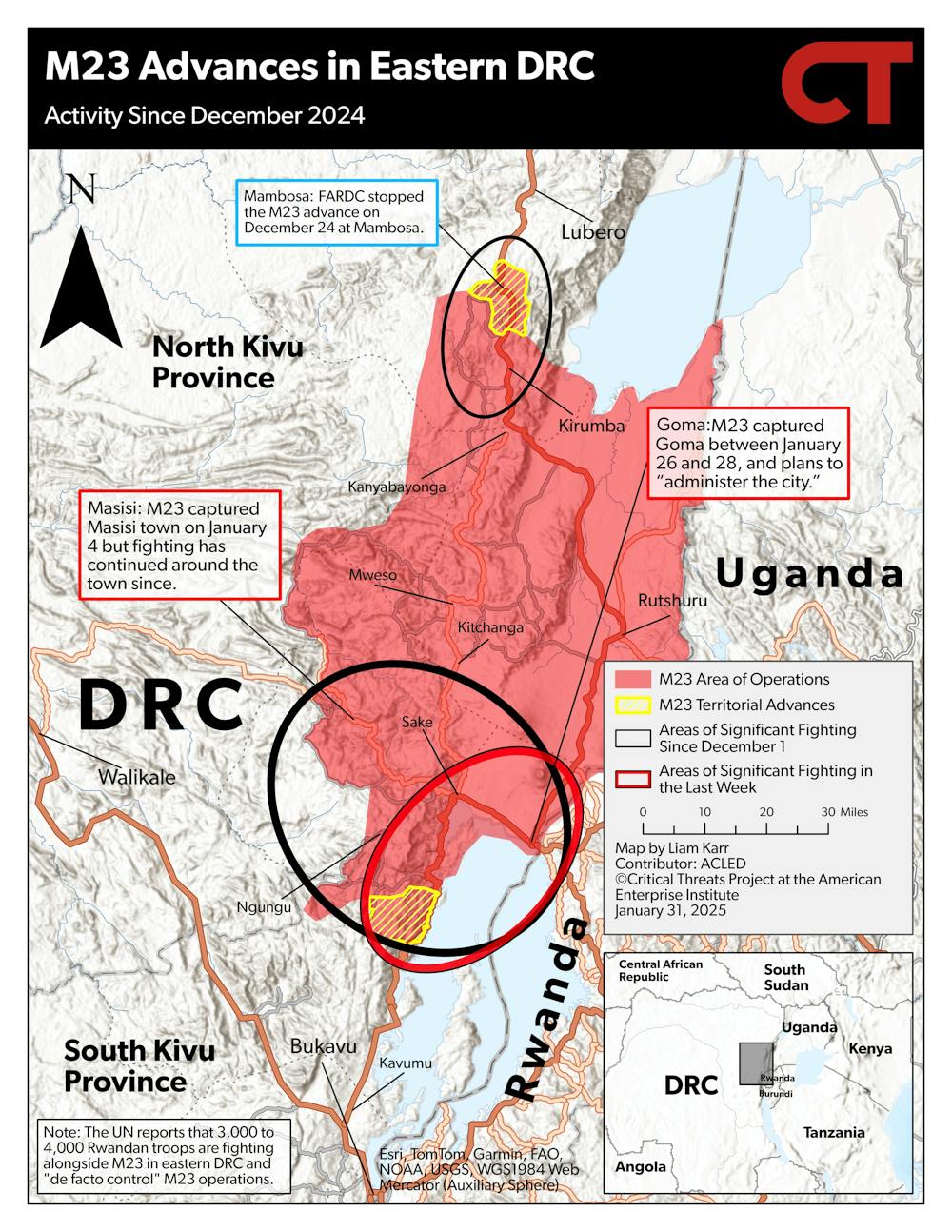
    In a major escalation in the conflict in the eastern Democratic Republic of the Congo (DRC), rebels from the March 23 Movement – or M23 – have seized Goma, the capital city of North Kivu province. At least 773 people have been killed there since the M23 claimed to have won control on January 27, while rebels have also seized several other towns in North Kivu including Sake and Minova.

    The rebels are now reportedly advancing towards Bukavu, the capital of South Kivu province. And Corneille Nangaa, who leads a rebel alliance of which M23 is the largest member, has vowed to march on the DRC’s capital in Kinshasa. Located 1,000 miles west of Goma, the capture of Kinshasa is unlikely. But the conflict still looks set to spread deeper into the DRC.

    The speed of the M23 advance has taken many by surprise. The rebels captured Goma, a city of 2 million people, within just three days. But the conflict between the DRC and the M23, which takes its name from the 2009 date on which a deal was reached to end a revolt by members of the ethnic Tutsi group, has been grinding on intermittently for years.

    Beginning in April 2012, when the M23 was formally created, the conflict has its roots in the same deep ethnic divisions that led to the Rwandan genocide in 1994. Following the genocide, where radical ethnic Hutus killed roughly 800,000 minority Tutsis, many Hutu extremists fled over the border into the DRC and settled in areas including North Kivu.

    The M23 seeks to act as a self-defence force for Congolese Tutsis against discrimination both by the DRC and non-state actors. This includes targeting by the Democratic Forces for the Liberation of Rwanda, a Hutu-dominated rebel group that seeks to overthrow the Rwandan government. The group has in the past committed egregious acts of violence against civilians in North Kivu, including mass killings and sexual violence.

    The M23 rebel group seized the city of Goma on January 27.
    The Critical Threats Project at the American Enterprise Institute

    The seizure of Goma is crucial for several reasons. First, it means that a sizeable and strategically important border province of the DRC is now in rebel hands. North Kivu is an active volcanic region that is rich in various minerals such as coltan, which is used in electronic equipment and the aerospace industry.

    In May 2024 the M23 seized Rubaya, a key mining town that produces 15% of the world’s coltan. Since then, the group has generated considerable income from controlling mineral production and trade. Indeed, the Global Initiative against Transnational Organized Crime labels the agendas of armed groups in the eastern DRC as “profit-driven”.

    Second, the capture of Goma has exacerbated inter-state tension between the DRC and Rwanda, raising the prospect of another inter-state war. News of the prized seizure came hours after the DRC’s foreign minister, Thérèse Kayikwamba Wagner, accused Rwandan troops of invading Congolese territory.

    A UN report from 2013 found that Rwanda not only supports the M23 group, but actively commands its troops. UN experts now estimate that there are up to 4,000 Rwandan troops fighting alongside the M23 in the DRC. Rwanda has denied backing the M23 despite ample evidence to the contrary.

    The Congolese government says Rwanda’s involvement is part of a ploy to exploit North Kivu’s vast mineral resources. In a report from December 2024, a panel of UN experts wrote that “fraudulent [mineral] extraction, trade and export to Rwanda” benefited both the M23 “and the Rwandan economy”. According to the Rwandan government’s own figures, the country exports far more gold than it mines.

    And third, the escalating conflict will deepen an already grave humanitarian crisis in the region. In March 2024, the UN reported that the number of internally displaced people in the DRC had reached 7.2 million – one of the largest such crises in the world. It is estimated that over 6 million civilians in the east of the DRC are now facing high levels of food insecurity.

    What next

    The DRC and Rwandan governments have already gone to war on two previous occasions, once in 1996 and then again in 1998 in what turned into a more protracted five-year conflict. The first war was triggered by Rwanda’s invasion of the DRC to target anti-Rwandan rebel groups seeking refuge there. The war soon drew in other states and became known as Africa’s first world war. Since 1996, conflict in the eastern DRC has killed approximately 6 million people.

    Yet despite this increased tension, there are hopes that a diplomatic solution can be reached. In the past, warring factions in the eastern DRC have agreed to temporary ceasefires following intensive mediation by international institutions such as the East African Community and the African Union, as well as neighbouring countries like Angola.

    However, previous ceasefires have also been violated by both sides. And the stakes are arguably higher this time, with the DRC losing further territory and control over strategic cities to the rebels.

    The Congolese government may be reluctant to accept peace conditions until it regains control over lost portions of territory. Indeed, the Congolese president, Félix Tshisekedi, has already snubbed prospective peace talks to establish a ceasefire.

    Western powers hold key leverage, and may be able to subdue the M23 insurgency. France has given its backing to the DRC government and has warned of the catastrophic humanitarian consequences should the situation deteriorate further.

    The US and other major powers like the UK have also withdrawn state funding for Rwanda in the past over its support for the M23 insurgency. In 2013, for example, cuts to foreign aid forced Rwanda to scale back its support for the rebels, both through reduced military training and supply runs. The UK government has threatened to withdraw funding to Rwanda again following the M23’s capture of Goma.

    Belgium, on the other hand, is leading calls for the EU to suspend a controversial minerals deal with Rwanda that boosts the bloc’s access to several elements in exchange for funding to help Kigali develop its mineral extraction infrastructure. When the deal was signed in 2024, Tshisekedi described it as “a provocation in very bad taste”.

    In any case, a ceasefire between the DRC and the M23 is not enough. What is needed is a long-term, durable solution that addresses the root causes and fears that are driving the armed conflict.

    Dale Pankhurst does not work for, consult, own shares in or receive funding from any company or organisation that would benefit from this article, and has disclosed no relevant affiliations beyond their academic appointment.

    ref. DRC rebels take eastern city of Goma – why it matters and what could happen next – https://theconversation.com/drc-rebels-take-eastern-city-of-goma-why-it-matters-and-what-could-happen-next-248393

    MIL OSI – Global Reports

  • MIL-OSI Russia: The “Lines Scorched by War” project has opened access to a digitized newspaper archive

    Translartion. Region: Russians Fedetion –

    Source: State University of Management – Official website of the State –

    On the 80th anniversary of the opening of the Yalta Conference in 1945, we inform all employees and students of the State University of Management that a digitized archive of newspapers published during the Great Patriotic War has been opened to us.

    Access is open until June 30, 2025, as part of the project “Lines Scorched by War”, dedicated to the 80th anniversary of the Great Victory. The project is aimed at popularizing historical knowledge and countering the falsification of past events. War newspapers are an important document of the era, reflecting the resilience and unity of people in the fight for Victory. This is an opportunity to touch living history, preserve the memory of the heroism of the people and convey it to new generations.

    What’s available? Key publication numbers from the war years:

    Newspaper “Pravda”; Newspaper “Izvestia”; Newspaper “Literary Gazette”; Newspaper “Red Star”; Weekly “Ogonyok”. Collection of underground newspapers of the partisans of Belarus.

    Please note: You may read, save, print articles (subject to copyright restrictions), and use the moderate text search function for research purposes.

    Address for work: https://eivis.ru/

    For remote access: login – Univerupr, password – Univerupr

    On this same platform you will find magazines and newspapers by subscription.

    Subscribe to the TG channel “Our GUU” Date of publication: 02/04/2025

    Please note: This information is raw content directly from the source of the information. It is exactly what the source states and does not reflect the position of MIL-OSI or its clients.

    MIL OSI Russia News

  • MIL-OSI Russia: Olympiad “Future of the EAEU”: enroll in a master’s program for free

    Translartion. Region: Russians Fedetion –

    Source: State University of Management – Official website of the State –

    The State University of Management invites citizens of the EAEU and friendly states to take part in the international Olympiad “The Future of the EAEU”.

    Foreign participants of the Olympiad who demonstrate the best achievements can apply for budget places within the quota approved by the Government of the Russian Federation.

    The University offers the opportunity to study in the field of Management in Master’s degree programs in English: International Business Management (in English) or Hotel and Tourism Business. International English-language Master’s degree.

    Students of the State University of Management have the opportunity to use all digital resources and online interaction opportunities: lectures, educational materials, cases, individual consultations, etc.

    All international students are provided with dormitory accommodation for the duration of their studies. The State University of Management provides comfortable conditions on its own campus on a well-kept territory just a stone’s throw from the metro with a swimming pool, sports grounds, coworking spaces, a modern library and cozy cafes.

    Registration will be open until February 20, 2025 at the link: https://my.guu.ru/competitions/auth/login.

    For questions and advice on participation and admission, please send us an email to: future.of.eaeu@mail.ru.

    Subscribe to the TG channel “Our GUU” Date of publication: 02/04/2025

    Please note: This information is raw content directly from the source of the information. It is exactly what the source states and does not reflect the position of MIL-OSI or its clients.

    MIL OSI Russia News

  • MIL-OSI Russia: Mikhail Piotrovsky became an Honorary Doctor of SPbPU

    Translartion. Region: Russians Fedetion –

    Source: Peter the Great St Petersburg Polytechnic University – Peter the Great St Petersburg Polytechnic University –

    A ceremony of presenting the mantle and diploma of Honorary Doctor of SPbPU to the General Director of the State Hermitage Museum Mikhail Piotrovsky took place at Peter the Great St. Petersburg Polytechnic University.

    The decision to award this high title to the head of the country’s main museum was made unanimously by the members of the Academic Council on December 2, 2024.

    It is a great honor and happiness for us that such a legendary person as Mikhail Borisovich Piotrovsky has appeared in the ranks of the Polytechnics, without exaggeration, – SPbPU Rector, Academician of the Russian Academy of Sciences Andrei Rudskoy opened the ceremony and asked the Scientific Secretary of the Polytechnic Dmitry Karpov to present the new Honorary Doctor in accordance with protocol.

    It would seem that there is no person not only in St. Petersburg, but also far beyond its borders, who would not know the historian-orientalist, doctor of historical sciences, professor, academician of the Russian Academy of Sciences and the Russian Academy of Arts, Honorary Citizen of St. Petersburg Mikhail Borisovich Piotrovsky. However, Dmitry Karpov found such words and such an unusual presentation for the presentation of Mikhail Piotrovsky that the personality of the Hermitage director was revealed in a new and vivid way. The book “Good Tone. Conversations Without Courage, Recorded by Irina Klenskaya” helped with this. Thus, based on quotes from Mikhail Borisovich himself, Dmitry Anatolyevich composed a lively and figurative essay.

    Quote: Only culture is capable of transforming chaos into strict order, and the chaos of the world into harmony. That is why the Hermitage is becoming an important and powerful player in the public life of not only the country, but the entire world.

    Dmitry Karpov recalled the “Great Hermitage” program, which is based on the idea of making the collections of the country’s main museum accessible through a complex of open storage facilities and satellite museums. Cultural and educational centers have already been built: “Hermitage-Kazan”, “Hermitage-Ural”, “Hermitage-Vyborg”, “Hermitage-Siberia” in Omsk and “Hermitage-Eurasia” in Orenburg. They are being built in Kaluga, Nalchik, Vladivostok.

    Polytechnic students are well aware of the long-term and fruitful joint work of the university and the Hermitage: since 2016, an agreement on cooperation in the development and improvement of engineering systems and security systems for Hermitage facilities, in the field of 3D modeling, has been in force. During the year of the pandemic, Polytechnic students made about 11 thousand protective screens and masks for the museum. At the end of 2023, the agreement was updated and expanded. Within the framework of cooperation, the following are carried out: excursions for students Polytechnic University in the Restoration and Storage Center of the Hermitage “Staraya Derevnya”, thanks to which future specialists become familiar with modern engineering technologies, automation systems and support for the climate parameters of the storage facility, as well as the functioning of alternative energy.

    Dmitry Anatolyevich cited an excerpt from a story about the Atlanteans of the New Hermitage, work on which began in 1845: “Never in Europe has any sculptor produced such figures from granite as the ancient Egyptians and Greeks did. Now this fantastic art, this great skill has become Russian” – this is how contemporaries spoke about the creation of Alexander Ivanovich Terebenev.”

    The St. Petersburg Polytechnic University also has a special feeling for the Hermitage Atlanteans – in 2022, the team of the NTI Center of SPbPU completed laser scanning of the portico of the New Hermitage and the sculptures of the Atlanteans and processing of the obtained data. Based on the results of the work together with the Hermitage art historians, a large two-part article was published: “Information modeling for the preservation of cultural heritage: the portico of the new Hermitage building and the sculptures of the Atlanteans.”

    Laser scanning and data processing of the interior of the New Hermitage building was also carried out to create three-dimensional models as part of the “Virtual Tour of the Hermitage” project, and scanning of the Alexander Column on Palace Square.

    “It is a great honor and responsibility for the university to make a feasible contribution to the preservation of truly priceless symbols of our city, our common cultural heritage,” Dmitry Karpov emphasized, concluding the presentation. “Deeply respected Mikhail Borisovich, we are proud of our country, our culture and our Hermitage. And the fact that together with you we do everything possible so that our country is strong, rich, glorious and respected.”

    After this, the rector of the Polytechnic announced: “Bring in the Honorary Doctorate diploma, the mantle and the medal!”

    According to tradition, the doctoral gown and cap were brought into the hall of the Academic Council by students dressed in the uniform of polytechnics of the early 20th century. The ceremony was accompanied by the Gaudeamus anthem performed by the Polyhymnia choir. Mikhail Borisovich was presented with a book about the Honorary Doctors of the Polytechnic University – his page is in it.

    In his response, Mikhail Piotrovsky thanked for the honor bestowed upon him and noted that the tradition of conferring Honorary Doctors of the Polytechnic University is an important element of St. Petersburg culture. Mikhail Borisovich emphasized that he is connected with the Polytechnic University not only by long-term cooperation, but now by joint work in the St. Petersburg branch of the Russian Academy of Sciences, headed by Andrei Rudskoy.

    “We have many different connections,” noted Mikhail Piotrovsky. “My deputy, Alexey Valentinovich Bogdanov, associate professor, teaches at the Polytechnic University, 49 graduates of the university work at the Hermitage, you give us wonderful personnel. What we are doing together is the most important topic today for society: the combination of science and art. We have many opportunities for further joint work, entire programs that are very important both for us and for the development of science. We would like students, under the guidance of teachers, to participate in our digitalization processes, primarily in the field of big data. Together we could make an exhibition of beautiful exhibits of technical progress preserved in the Hermitage – wonderful astrolabes, spheres, globes, clocks. We have them, they all function, but it would be good to tell about them beautifully, developing the experience of the multimedia Hermitage. Today, the “Great Hermitage” was mentioned, our next project is “Heavenly Hermitage”, a cloud-based one, it is a backup copy in which everything that is not done in the earthly Hermitage can take place. And here we would like your intellectual and expert help.”

    Mikhail Piotrovsky said that the Hermitage has many advisory councils, and it would be possible to create a separate student council, under the leadership of teachers. As ideas for cooperation with students, Mikhail Piotrovsky also suggested thinking about forecasting the condition of museum objects and “taming technology.”

    In closing the ceremony, Andrey Rudskoy thanked Mikhail Piotrovsky for his businesslike approach and outlook on the future and promised that all ideas and proposals were accepted, would be discussed and implemented.

    Photo archive

    Please note: This information is raw content directly from the source of the information. It is exactly what the source states and does not reflect the position of MIL-OSI or its clients.

    MIL OSI Russia News

  • MIL-OSI Economics: Agnico Eagle and O3 Mining Announce Subsequent Acquisition Transaction and Completion of Offer

    Source: Agnico Eagle Mines

    • The Offer has now expired and Agnico Eagle has taken-up and acquired 95.6% of the issued and outstanding O3 Mining shares
    • Agnico Eagle and O3 Mining will enter into an amalgamation agreement under which Agnico Eagle will acquire all remaining O3 Mining shares by way of amalgamation
    • Remaining O3 Mining shares (other than shares held by dissenting shareholders) and warrantholders who exercise their warrants after the amalgamation will receive $1.67 per share in cash
    • Questions or Need Assistance? Contact Laurel Hill Advisory Group for assistance at 1-877-452-7184 or email assistance@laurelhill.com 

    (All amounts expressed in Canadian dollars unless otherwise noted)

    TORONTO, Feb. 4, 2025 /CNW/ – Agnico Eagle Mines Limited (NYSE: AEM) (TSX: AEM) (“Agnico Eagle“) and O3 Mining Inc. (TSXV: OIII) (OTCQX: OIIIF) (“O3 Mining“) are pleased to jointly announce the expiry of Agnico Eagle’s board-supported take-over bid (the “Offer“) for all of the outstanding common shares of O3 Mining (the “Common Shares“) for $1.67 in cash per Common Share. Agnico Eagle has taken-up and acquired an aggregate of 114,785,237 Common Shares that were tendered to the Offer, representing approximately 95.6% of the issued and outstanding Common Shares on a basic basis. As a result, as of the date hereof, Agnico Eagle beneficially owns, and exercises control and direction over, an aggregate of 115,842,990 Common Shares, representing approximately 96.5% of the issued and outstanding Common Shares on a basic basis. This includes the additional 4,360,806 Common Shares (the “Deposited Shares“) tendered to the Offer during the mandatory 10-day extension period that expired at 11:59 p.m. (EST) on February 3, 2025. The aggregate consideration payable for the Deposited Shares is $7,282,546. Agnico Eagle will pay for the Deposited Shares by February 6, 2025.

    Subsequent Acquisition Transaction

    Agnico Eagle Abitibi Acquisition Corp., a wholly-owned subsidiary of Agnico Eagle, and O3 Mining will amalgamate under the Business Corporations Act (Ontario) (the “Amalgamation“), with the amalgamated entity (“Amalco“) becoming a wholly-owned subsidiary of Agnico Eagle. The Amalgamation will constitute the subsequent acquisition transaction contemplated by the Offer (the “Subsequent Acquisition Transaction“), by which Agnico Eagle will acquire ownership of 100% of the Common Shares.

    Each O3 Mining shareholder (other than Agnico Eagle and any O3 Mining shareholder who validly exercises dissent rights in relation to the Amalgamation) will, upon completion of the Amalgamation, receive one redeemable preferred share of Amalco (each, a “Redeemable Preferred Share“) for each Common Share held immediately prior to the effective time of the Amalgamation. The Redeemable Preferred Shares will be automatically redeemed effective immediately following the effective time of the Amalgamation for $1.67 in cash per Redeemable Preferred Share (the “Redemption Consideration“) held immediately prior to the effective time of the Amalgamation. The Redemption Consideration is the same as the consideration that was offered to O3 Mining shareholders under the Offer.

    The Amalgamation must be approved by (i) at least two-thirds of the votes cast by O3 Mining shareholders at a special meeting of O3 Mining shareholders (the “Meeting“) and (ii) a simple majority of the votes cast by O3 Mining shareholders at the Meeting, excluding votes from O3 Mining shareholders required to be excluded by Multilateral Instrument 61-101 – Protection of Minority Securityholders in Special Transactions (“MI 61-101“). As Agnico Eagle beneficially owns, and exercises control and direction over, Common Shares carrying more than two-thirds of the votes attached to all of the issued and outstanding Common Shares and the Common Shares taken-up and acquired under the Offer represent more than a majority of the votes attached to the Common Shares that may be voted in the “minority” vote under MI 61-101, Agnico Eagle is able to ensure the successful outcome of the shareholder votes in respect of the Amalgamation. The O3 Mining board recommends that O3 Mining shareholders vote FOR the Amalgamation.

    Additional information regarding the terms of the amalgamation agreement and the Amalgamation will be provided in the management information circular of O3 Mining (the “Circular“) for the Meeting. It is anticipated that the Circular will be mailed to O3 Mining shareholders in February 2025 and the Meeting will be held in March 2025. Copies of the amalgamation agreement and the Circular will be made available on O3 Mining’s issuer profile on SEDAR+ at www.sedarplus.ca.

    The Amalgamation is expected to close prior to March 31, 2025. Following completion of the Amalgamation, the Common Shares will be de-listed from the TSX Venture Exchange and O3 Mining will make an application to the Ontario Securities Commission to cease to be a reporting issuer under Canadian securities laws. Upon O3 Mining ceasing to be a reporting issuer, O3 Mining will no longer be subject to the ongoing continuous disclosure and reporting obligations currently imposed on O3 Mining as a reporting issuer and will be a private company that is wholly-owned by Agnico Eagle.

    Information for Warrantholders

    Certain Common Share purchase warrants of O3 Mining (the “Warrants“) remain issued and outstanding, which are governed in accordance with the warrant indenture dated August 28, 2024 between O3 Mining and Odyssey Trust Company, as warrant agent. These Warrants are exercisable at $1.45 per Warrant until August 28, 2026. O3 Mining intends to enter into a supplemental indenture to provide that holders of such Warrants will receive, on exercise of their Warrants in lieu of Common Shares, $1.67 in cash following the Amalgamation.

    Updated Early Warning Disclosure Regarding O3 Mining

    Immediately prior to the take-up of the Deposited Shares under the Offer, Agnico Eagle beneficially owned, and exercised control and direction over, 111,482,184 Common Shares, representing approximately 92.9% of the issued and outstanding Common Shares on a basic basis, and 270,000 Warrants exercisable for an aggregate of 270,000 Common Shares at an exercise price of $1.45 per Warrant. In addition, Agnico Eagle holds a convertible senior unsecured debenture in the principal amount of $10,000,000 dated June 19, 2023 (the “Convertible Debenture“). Assuming the full exercise of all Warrants held by Agnico Eagle and the full conversion of the Convertible Debenture immediately prior to the take-up of Deposited Shares under the Offer, Agnico Eagle would beneficially own, and exercise control and direction over, 116,630,233 Common Shares, representing approximately 93.1% of the issued and outstanding Common Shares on a partially-diluted basis.

    Agnico Eagle acquired an additional 4,360,806 Deposited Shares pursuant to the Offer during the mandatory 10-day extension period, representing all of the Common Shares validly deposited and not withdrawn as of 11:59 p.m. (EST) on February 3, 2025, for aggregate consideration of $7,282,546 in cash. As a result, as of the date hereof, Agnico Eagle beneficially owns, and exercises control and direction over, an aggregate of 115,842,990 Common Shares, representing approximately 96.5% of the issued and outstanding Common Shares on a basic basis. Assuming the full exercise of all Warrants held by Agnico Eagle and the full conversion of the Convertible Debenture, Agnico Eagle would beneficially own, and exercise control and direction over, 120,991,039 Common Shares, representing approximately 96.6% of the issued and outstanding Common Shares on a partially-diluted basis.

    An early warning report in respect of the foregoing will be filed by Agnico Eagle in accordance with applicable securities laws. To obtain a copy of the early warning report, please contact:

    Agnico Eagle Mines Limited
    c/o Investor Relations
    145 King Street East, Suite 400
    Toronto, Ontario M5C 2Y7
    Telephone: 416-947-1212
    Email: investor.relations@agnicoeagle.com

    Agnico Eagle’s head office is located at 145 King Street East, Suite 400, Toronto, Ontario M5C 2Y7. O3 Mining’s head office is located at 155 University Avenue, Suite 1440, Toronto, Ontario M5H 3B7.

    Advisors

    Edgehill Advisory Ltd. is acting as financial advisor to Agnico Eagle. Davies Ward Phillips & Vineberg LLP is acting as legal advisor to Agnico Eagle.

    Maxit Capital is acting as financial advisor to O3 Mining. Bennett Jones LLP is acting as legal advisor to O3 Mining. Fort Capital is acting as financial advisor to the Special Committee of independent directors of O3 Mining. Cassels Brock & Blackwell LLP is acting as legal advisor to the Special Committee.

    Odyssey Trust Company will act as depositary for the Amalgamation and Laurel Hill Advisory Group is acting as information agent. If you have any questions or require assistance, please contact Laurel Hill Advisory Group, by phone at 1-877-452-7187 or by e-mail at assistance@laurelhill.com.

    About O3 Mining Inc.

    O3 Mining Inc. is a gold explorer and mine developer in Québec, Canada, adjacent to Agnico Eagle’s Canadian Malartic mine. O3 Mining owns a 100% interest in all its properties (128,680 hectares) in Québec. Its principal asset is the Marban Alliance project in Québec, which O3 Mining has advanced over the last five years to the cusp of its next stage of development, with the expectation that the project will deliver long-term benefits to stakeholders.

    About Agnico Eagle Mines Limited

    Agnico Eagle is a Canadian based and led senior gold mining company and the third largest gold producer in the world, producing precious metals from operations in Canada, Australia, Finland and Mexico, with a pipeline of high-quality exploration and development projects. Agnico Eagle is a partner of choice within the mining industry, recognized globally for its leading sustainability practices. Agnico Eagle was founded in 1957 and has consistently created value for its shareholders, declaring a cash dividend every year since 1983.

    Cautionary Note Regarding Forward-Looking Information

    This news release contains “forward-looking information” within the meaning of applicable Canadian securities legislation that is based on current expectations, estimates, projections, and interpretations about future events as at the date of this news release. Forward-looking information and statements are based on estimates of management by O3 Mining and Agnico Eagle, at the time they were made, and involve known and unknown risks, uncertainties and other factors which may cause the actual results, performance or achievements to be materially different from any future results, performance or achievements expressed or implied by such forward-looking information or statements. Forward-looking statements in this news release include, but are not limited to, statements regarding: the structure, consideration, timing and completion (if at all) of the Subsequent Acquisition Transaction; the ability of Agnico Eagle to complete the Subsequent Acquisition Transaction to acquire 100% of O3 Mining by way of the Amalgamation (if at all); and the timing of the mailing of the Circular, the Meeting and completing the Amalgamation. Material factors or assumptions that were applied in formulating the forward-looking information contained herein include, without limitation, the expectations and beliefs of Agnico Eagle and O3 Mining that any second-step transaction will be successful and the ability to achieve goals, including the integration of the Marban Alliance property to the Canadian Malartic land package and the ability to realize synergies arising therefrom. Agnico Eagle and O3 Mining caution that the foregoing list of material factors and assumptions is not exhaustive. Although the forward-looking information contained in this news release is based upon what Agnico Eagle and O3 Mining believe, or believed at the time, to be reasonable expectations and assumptions, there is no assurance that actual results will be consistent with such forward-looking information, as there may be other factors that cause results not to be as anticipated, estimated or intended, and neither O3 Mining, nor Agnico Eagle nor any other person assumes responsibility for the accuracy and completeness of any such forward-looking information. No assurance can be given that these expectations will prove to be correct and such forward-looking statements included in this news release should not be unduly relied upon. O3 Mining and Agnico Eagle do not undertake, and assume no obligation, to update or revise any such forward-looking statements or forward-looking information contained herein to reflect new events or circumstances, except as may be required by applicable law. These statements speak only as of the date of this news release. Nothing contained herein shall be deemed to be a forecast, projection or estimate of the future financial performance of Agnico Eagle or any of its affiliates or O3 Mining.

    Neither the TSX Venture Exchange nor its Regulation Services Provider (as that term is defined in the policies of the TSX Venture Exchange) accepts responsibility for the adequacy or accuracy of this news release. No stock exchange, securities commission or other regulatory authority has approved or disapproved the information contained herein.

    View original content to download multimedia:https://www.prnewswire.com/news-releases/agnico-eagle-and-o3-mining-announce-subsequent-acquisition-transaction-and-completion-of-offer-302367380.html

    SOURCE Agnico Eagle Mines Limited

    MIL OSI Economics

  • MIL-OSI USA: MLK Legacy Awards Presented at Living Legacy Convocation

    Source: US State of Connecticut

    UConn’s MLK Legacy Awards for 2025 were presented on Friday, Jan. 31 during a ceremony at the Jorgensen Center for the Performing Arts. The ceremony was part of the MLK Living Legacy Convocation, which featured Grammy-nominated singer and songwriter Todd Dulaney and UConn’s Voices of Freedom gospel choir.

    The MLK Legacy Awards at UConn are presented by the Office for Diversity and Inclusion and recognize members of the community who have demonstrated a commitment to raising awareness, fighting injustices, assisting their communities, and embodying the Rev. Martin Luther King Jr.’s philosophy of nonviolence. The awards affirm and honor work and a continued dedication to making communities just, equitable, and fair for all people.

    This year’s winners by category are:

    Undergraduate Student – Andy Zhang ’26 (CLAS)

    Zhang is pursuing dual degrees in economics and environmental sciences. The Sandy Hook native works as an intern in the Office of Sustainability and is the founder and president of the UConn chapter of Plant Futures. He is also an intern with Friends of the Earth. Zhang is passionate about progressive policy and food advocacy and hopes to pursue a career focused on creating equitable and sustainable food systems through innovative policy solutions.

    Graduate Student – Adanma Akoma

    Akoma is a doctoral student in the Department of Materials Science and Engineering and focuses on advanced characterization of materials used for industries that include energy and biomedicine. She serves as the president of BlackSTEM – a group for Black scholars pursuing graduate degrees in the STEM field and is the creative director and founder of the Writing Black Collective (WBC).  Her most recent project for WBC provides a platform for a cohort of writers that aim to demystify the challenges that are often faced by minority students in pursuit of doctoral degrees.

    Community Member – Nelson Merchan

    Merchan is a business advisor at UConn’s Small Business Development Center. In 2019, he was recognized as the state’s top business advisor for securing the highest lending impact. Merchan is a board member of the Western Connecticut State University Foundation, Housatonic Habitat for Humanity, and Housatonic Industrial Corp. Merchan has participated in entrepreneurship development programs in Costa Rica, Chile, and El Salvador.

    Alumni – N. Chineye (Chi) Anako ’12 (CLAS)

    Anako is a public health practitioner whose work has focused on the intersection of public health and health equity solutions. She is currently the regional director of diversity, equity, and inclusion at Trinity Health. She also serves as administrator of the 3+1 Language Services Program at the organization, which provides cultural and linguistic services to patients. Anako serves on the board of the Copper Beech Institute and Universal Health Care Foundation of Connecticut.

    Faculty – Kate Capshaw

    Capshaw is associate dean of diversity, equity, and inclusion in the College of Liberal Arts and Sciences. She has shaped cluster hires that brought new faculty to UConn, worked with departments on inclusion, and supported research and pedagogy on diverse topics and approaches. She is a professor of English and social and critical inquiry, teaching courses on Black youth culture, the graphic novel, and youth literatures. Her research focuses on the role of Black childhood to social justice movements, and she has published books on the Harlem Renaissance, Civil Rights Movement, and 19thcentury Black childhoods, along with  dozens of essays on race, culture, and creativity.

    Staff – Alexis T. R. Monteiro

    Monteiro is a residence hall director committed to fostering equitable and developmental spaces for students and professionals. A first-generation First Year Experience instructor, Monteiro champions impactful initiatives like the prayer room and “Humans of UConn” art exhibit in McMahon Residence Hall. He is the diversity, equity, inclusion, and belonging chair of the Northeast Association of College and University Housing Officers and chair of the Black Professional Network for the Association of College and University Housing Officers-International.

    Team – College of Agriculture, Health and Natural Resources’ Diversity, Equity, Inclusion, and Justice Strategic Vision Implementation Committee

    This committee includes faculty and staff representing the nine academic units in the college. The committee’s goal is to develop mechanisms to build systems with clear and meaningful commitment to DEIJ in the college. The group’s four priority areas are: increasing the diversity of CAHNR community; creating inclusive, culturally sustaining learning environments; identifying and addressing harmful institutional policies and practices; and creating pathways to successful community engagement.

    MIL OSI USA News

  • MIL-OSI USA: A Well-Earned Retirement for Officer Tildy

    Source: US State of Connecticut

    On Tuesday, Feb. 4, Tildy, the UConn Police Department’s first community outreach dog, will formally celebrate her retirement after seven years of serving – and delighting – the UConn community.  

    Meeting Tildy has been a staple of the UConn experience, bringing immense amounts of joy to everyone she encounters on the Great Lawn, Fairfield Way, Horsebarn Hill, and pretty much every place at UConn where crowds gather, as well as classrooms and courthouses across the state.

    Sergeant Justin Cheney with Officer Tildy of the UConn Police Department on October 19, 2020. (UConn photo/Sean Flynn)

    Tildy’s retirement is bittersweet for UConn, but for one member of the community in particular: Sergeant Justin Cheney ’07 (CLAS), her human partner ever since her arrival in 2018. Cheney has experienced so many events and moments at UConn he wouldn’t normally be part of, all thanks to Tildy. From Sunset Yoga to the Involvement Fair to HuskyTHON, students’ excitement at Tildy’s meant that Cheney was able to become even more immersed in campus life.  

    “I knew that by bringing this dog here, we’re going to get more people to engage in our events,” he says. “I never realized how much she would transcend in the sense that we would be invited to, and included in, all of these different events on campus.”

    UConn dog lovers need not despair, though: Tildy’s little sister Jazmine, a 2-year-old golden retriever, completed her training with Cheney in August 2024, and will take over as community outreach dog on a full-time basis this month. 

    Tildy wasn’t just a pioneer at UConn: Cheney and UConn piloted the Community Outreach Facility Dog Program in Connecticut. Cheney, who started at the UConn Police Department in 2015, working in the Community Outreach Department running programs and trainings, had the idea of getting a dog to assist in areas like victim support or therapy sessions, to better engage the community and enhance the approachability of Community Outreach officers. 

    UConn Police K9 Officers Jazmine and Tildy sit near Gampel Pavilion on Aug. 13, 2024. (Sydney Herdle/UConn Photo)

    Inspired by the Eastern Washington University Police Department and their yellow lab, Cheney contacted them in hopes of bringing a dog to Storrs. They directed him to Canine Companions, an organization that trains service dogs who go on to provide one-on-one assistance to people. However, not all dogs matriculate as service dogs, and sometimes need alternative placements.  

    Tildy is what is known as a Facility Dog: “A dog that has all of the training as a service dog, but would go into a larger setting to assist multiple people, instead of just assisting one person each and every day,” Cheney says.

    Today, there are now 20 handlers and teams of Community Outreach Facility Dog Programs in Connecticut. “Being the first program in the state shows our commitment to supporting our students, which really was the extra drive for wanting to organize this program,” Cheney says. “The goal was to be able to provide that additional layer of victim assistance and ensure that the dogs will always be there for these services.”

    Jonathan XIV and Tildy of the UConn Police Department share a first date on Horsebarn Hill and at the UConn Dairy Bar in 2019. (Tom Rettig/UConn Photo)

    The duo’s frequent appearances on campus have allowed Cheney to establish quality relationships with students. “We want to make sure our consistency, in terms of our presence at different events or hosting our own, hopefully goes a long way in showing the students that we care and want to be involved,” he says. “We want to participate in as many things as we can but also provide that support and assistance in any way possible.”

    When looking back on highlights of their time together, Cheney recalls the countless number of smiles he’s seen Tildy bring to students, faculty, staff, and visitors. 

    “To see that positive impact and how much she’s done at UConn makes me so happy,” he says. “I feel so lucky to be able to bring this dog around to help people, and feel so rewarded to have this experience.”

    Although Tildy’s retirement means she will not be on campus every day anymore, don’t be surprised if you see her happy face and wagging tail from time to time.

    “This is not the last time Tildy will be on campus,” Cheney says. “She’ll make her way back every once in a while for events that I know she’d love to attend.”

    Tildy’s retirement celebration will be held on Feb. 4 in the Wilbur Cross North Reading Room from 1:30 p.m.-3:30 p.m.. Join Cheney, Jazmine and other community outreach facility dogs in saying farewell to Tildy! 

    MIL OSI USA News

  • MIL-OSI USA: UConn Online Grad Programs Lauded for Quality, Value for Veterans

    Source: US State of Connecticut

    Several of UConn’s online graduate programs are highly ranked for the quality, value, and flexibility they offer to veterans, including one that recently earned the top spot nationwide in U.S. News & World Report’s annual review.

    The UConn School of Nursing’s programs were named No. 1 for veterans wishing to pursue online graduate studies in that field, along with high rankings for others: the School of Business (no. 8); the College of Engineering (no. 22); and the business school’s MBA program (no. 62).

    The new honors underscore UConn’s strong reputation as a welcoming atmosphere for veterans both academically and socially, and as an institution that values their experience and celebrates the unique attributes they bring to the community.

    Alyssa Kelleher ’04 (CLAS) ’17 (BUS), director of UConn’s Office of Veterans Programs & Military Affairs, says her office was thrilled but not surprised that the online graduate programs performed so well in the rankings.

    “Their staff consistently collaborate with our office and have a real commitment and understanding of the big and small things that can help not only military-affiliated students, but all adult learners to be successful in challenging and in-demand programs,” Kelleher says.

    The Office of Veterans & Military Affairs helps veterans, students with active-duty or reservist status, and dependents navigate the programs and services available for their circumstances. It also creates an open and welcoming community for veterans who are UConn employees and alumni, including people serving as mentors to others.

    The support extends not only to students taking classes in person on UConn campuses, but also those learning via online programs such as those that ranked highly in the most recent U.S. News overview.

    Students who are veterans, on active duty, or in reserve status often have unique circumstances when deciding to enroll in graduate study and tend to benefit from the flexibility that online programs can offer.

    When determining which online programs best serve veterans, U.S. News assessed their quality, affordability, and accessibility in light of the special circumstances of that student population, including having access to federal GI Bill benefits and often needing the flexibility of distance learning.

    Those attributes and others helped the UConn School of Nursing’s online graduate programs rise to the top of the U.S. News list this year as the No. 1 choice for veterans studying in those fields.

    The School of Nursing’s applications have skyrocketed in recent years, and it receives strong support from alumni, including a $50 million gift that is helping to fund construction of a new building to house the school’s expanded programming.

    Its online programs in continuing education also are thriving and include family nurse practitioner, adult gerontology acute care nurse practitioner, adult gerontology primary care nurse practitioner, nurse educator, neonatal nurse practitioner, and nurse leader.

    “The School of Nursing’s online MS program provides a supportive online environment for all veterans and members of the military who attend UConn. Additionally, the University’s commitment to veteran support services makes it a top choice for those looking to further their careers in nursing,” says Annette Jakubišin Konicki, the school’s associate dean of graduate studies.

    In assessing how online graduate programs fit veterans’ needs, U.S. News selected offerings that incorporate predominantly internet-based coursework; are housed in regionally accredited institutions; and have strong reputations, faculty credentials, and retention rates.

    U.S. News & Report also only included programs in their rankings with a critical mass of students with military backgrounds.

    Programs included in the rankings must be in colleges of universities certified for the GI Bill, while also either participating in the Yellow Ribbon Program or charging in-state tuition – which can fully covered by the GI bill — for all veterans applying from out of state.

    At UConn and throughout Connecticut, a state tuition waiver and several other financial benefits are available for active duty and veteran students based on their particular circumstances, and other assistance is also available through scholarships and VA Work Study.

    In addition to the School of Nursing’s online graduate programs receiving the highest rank for their accessibility and value to veterans, UConn’s School of Business programs were ranked at No. 8 for veterans pursuing graduate studies online, and its online MBA program was No. 62 for veterans nationwide.

    “We are honored to be recognized as a top business school for veterans. This reflects our commitment to providing the resources, flexibility, and support veterans need to excel academically and professionally,” says Jose M. Cruz, associate dean for graduate programs in the School of Business.

    “Veterans bring exceptional leadership, discipline, and a global perspective, enriching our graduate programs. We remain dedicated to fostering an environment where their strengths thrive and drive lasting impact in the business world,” Cruz says.

    The College of Engineering also had strong showings, with its online graduate program ranking No. 22 nationwide in accessibility and value to veterans.

    The online Master of Engineering program operates within the college’s Center for Advanced Engineering Education and offers 14 concentrations, from biomedical engineering to digital design and manufacturing, to help students earn the skills to advance as engineers in their respective fields.

    “Our degrees are designed to help working engineers balance their work/life responsibilities, empowering them to be a real force in the increasingly evolving, and highly impactful, world of engineering,” says Nora Sutton, director of the Center of Advanced Engineering Education.

    “Veteran tuition waivers have long since been applicable toward our programs, which offer engineering servicemen and women an opportunity to bridge the gap between active service and their professional careers,” she adds.

    JC Zhao, dean of the College of Engineering, says the programs also benefit from talented faculty who are dedicated to dynamic online education, UConn’s academic mission, and its students.

    “We are incredibly proud of the Center for Advanced Engineering Education, which seeks to offer flexible programs for working professionals who are already contributing to society as employed engineers,” Zhao says.

    MIL OSI USA News

  • MIL-OSI Russia: The admissions campaign for international applicants continues at HSE

    Translartion. Region: Russians Fedetion –

    Source: State University Higher School of Economics – State University Higher School of Economics –

    The number of applications has almost doubled: to date, more than 2,600 applications have been submitted for undergraduate programs, and more than 2,400 for master’s programs. Such increased interest from foreign applicants in studying at the HSE confirms the status of HSE as one of the most sought-after Russian universities abroad.

    Who most often chooses HSE

    The leading countries in terms of the number of applications submitted for undergraduate programs are Pakistan, Nigeria, Kazakhstan, Uzbekistan, Belarus, Afghanistan, Bangladesh, Kyrgyzstan, Ghana and Moldova. The countries that most frequently apply for graduate programs are Ghana, India, Nigeria, Gambia, Pakistan, Ethiopia, China, Bangladesh, Afghanistan and Cameroon.

    “HSE University sees one of its tasks as the active promotion of Russian education in the international arena. And the growing interest among applicants from Asian and African countries, from the CIS countries only confirms HSE’s reputation as a leading research university with the competencies of the future not only in Russia but also abroad. Moreover, both in full-time and online forms,” noted Victoria Panova, Vice-Rector of HSE University. – After all, in a rather difficult time, HSE, along with 10 world universities, entered the number of leaders in distance education according to the rating of THE Online Learning Rankings 2024 magazine. A wide range of programs in the socio-economic and humanitarian areas, in the creative sphere, brilliant teachers from almost 50 countries of the world, a high level of support for international students and modern infrastructure of HSE – all this meets international standards, and the cost of education is often lower than in Western universities. Applicants and their parents evaluate the advantages and opportunities that HSE provides during and after their studies, and choose us.”

    What opportunities does the university offer to international applicants?

    One of the key advantages for international applicants to HSE remains the opportunity to choose the admission format. The university offers two options: a competition for budget (quota) places under the state scholarship of the Government of the Russian Federation, which covers up to 100% of the cost of education, and admission on a commercial basis.

    Foreign applicants can receive a Russian Government scholarship (quota) based on the results of international Olympiads (applicants to a bachelor’s degree) and based on the results of selection events (minimum scores for Master’s degree And bachelor’s degree).

    Additionally, applicants to undergraduate programs may re-credit results of international and national examinations, which makes the admission process even more flexible.

    Preparing for Study: What to Do If You Don’t Know Russian

    HSE offers to master the Russian language in The Center for the Preparation of Foreign Students, choosing to study for one year. Applicants to the bachelor’s degree program can take specialized entrance examinations and apply for a budget (quota) place with an additional year of preparation and Russian language training. A similar option is possible for future master’s degree students: upon successful completion of the portfolio competition, they can also receive a budget place with a year of training.

    HSE – accessible, convenient, understandable

    Website for international applicants has been translated into seven languages, including Chinese, Spanish, Arabic and Hindi, allowing candidates to easily find the information they need and navigate the admissions process. In addition, international applicants are contacted on social media and during webinars, answering the most pressing questions about education, visas, life in Russia and even whether there are places with halal food.

    “We strive to attract only the best. We work with talented schoolchildren and applicants on an ongoing basis,” says Alexander Deyev, Director of Talent Abroad. “HSE ensures simplicity and accessibility of the entire process — from online application submission to the start of studies. We understand that entering a university, especially in a foreign country, is an important step that can be associated with many difficulties, especially for international students. Therefore, every year we do everything possible to make the application and document preparation process as clear as possible. Online consultations, personal support at all stages of admission, preparation for arrival in Russia — all this allows our applicants to feel confident and calm, to know that they will always be supported and helped to solve any problem that arises.”

    Please note: This information is raw content directly from the source of the information. It is exactly what the source states and does not reflect the position of MIL-OSI or its clients.

    MIL OSI Russia News

  • MIL-OSI United Kingdom: Can a daily glass of milk really cut risk of cancer?

    Source: Anglia Ruskin University

    By Justin Stebbing, Anglia Ruskin University

    A glass of milk a day could help keep bowel cancer away – or so finds a study by Oxford University and Cancer Research UK. The research suggests that increasing daily milk intake by as little as one glass could have a significant impact on lowering the likelihood of developing bowel cancer.

    There are nearly 45,000 cases of bowel cancer every year in the UK, making it the nation’s fourth most common cancer – and third worldwide – but many of these are preventable. According to Cancer Research UK data, 54% of all bowel cancers could be prevented by having a healthier lifestyle. Smoking, lack of exercise, alcohol, eating processed meat, and poor diet are all significant factors in the development of bowel cancer.

    As an oncologist, I advise my patients about how diet and lifestyle can influence health, including the risk of developing cancer. But this research – one of the largest studies into diet and disease so far – has shed new light on how easy, cheap diet changes can help everyone to reduce their cancer risk.

    For example, as well as drinking an extra glass of milk per day, reducing consumption of alcohol and red and processed meat could also help protect against cancer. The study found that drinking an additional 20g of alcohol a day, equivalent to a large glass of wine, increased bowel cancer risk by 15%. Consuming more than 30g of red and processed meat daily was linked to an 8% increase in bowel cancer risk.

    Researchers took a novel, two-pronged approach to examine the association between milk consumption and bowel cancer risk. First, they analysed genetic data from over 542,000 women and focused on variants – tiny changes in DNA – associated with lactase persistence, the ability to digest lactose in adulthood.

    Second, the team collected detailed dietary information from participants, including their daily milk intake. By combining these two data sets, the researchers were able to better estimate the causal effect of milk consumption on bowel cancer risk.

    Striking results

    The analysis revealed that participants who consumed an additional 244g of milk per day – roughly equivalent to one large glass containing 300mg of calcium – had a 17% lower risk of developing bowel cancer. This reduction in risk applied to various types of milk, including whole, semi-skimmed and skimmed.

    Researchers found that the protective effect of milk consumption was independent of other dietary factors and lifestyle habits. This suggests that the benefits of milk in reducing bowel cancer risk are not because milk replaces unhealthy food choices or is consumed as part of an overall healthier lifestyle.

    The reasons why milk consumption may reduce bowel cancer risk are not fully understood, but the researchers propose several potential explanations. First, milk is a rich source of calcium, which has been linked previously to a reduced risk of bowel cancer. Calcium may help protect against cancer by binding to potentially harmful substances in the gut and promoting the death of abnormal cells.

    Next, many milk products are fortified with vitamin D, which has been shown to have anti-cancer properties and may help regulate cell growth and division. Also, the lactose in milk can promote the growth of beneficial gut bacteria that produce butyrate, a short-chain fatty acid with anti-inflammatory and anti-cancer effects. Finally, milk contains conjugated linoleic acid, a fatty acid found in meat and dairy products, which, according to a 2021 labratory study, could also have anti-cancer properties.

    Crucially, milk consumption may not be suitable or beneficial for everyone. Those with lactose intolerance, milk allergies, or other dietary restrictions should consult with healthcare professionals before making significant changes to their dairy intake.

    Overall, this groundbreaking research provides compelling evidence for the potential role of milk consumption in reducing bowel cancer risk. The finding that a relatively modest increase in daily milk consumption could lead to a significant reduction in bowel cancer risk is particularly encouraging. It suggests that small, achievable changes in diet could have meaningful impacts on public health.

    As we continue to unravel the complex relationships between diet and disease, studies like this one provide valuable insights that can inform both individual health choices and broader public health strategies. The potential for a simple dietary change to have such a significant impact on cancer risk underscores the importance of continued research in this field and highlights the power of nutrition in shaping our health.

    Justin Stebbing, Professor of Biomedical Sciences, Anglia Ruskin University

    This article is republished from The Conversation under a Creative Commons license. Read the original article.

    The opinions expressed in VIEWPOINT articles are those of the author(s) and do not necessarily reflect the views of ARU.

    If you wish to republish this article, please follow these guidelines: https://theconversation.com/uk/republishing-guidelines

    MIL OSI United Kingdom

  • MIL-OSI United Kingdom: ARU project will help the long-term unemployed

    Source: Anglia Ruskin University

    ARU’s Helmore building on East Road in Cambridge

    An important project to help long-term unemployed people in Cambridge return to the labour market through a concept called ‘reverse volunteering’ has received financial backing from Research England.

    Anglia Ruskin University (ARU) will work with a range of partners, including Abbey People, to support local people on ARU’s Cambridge campus by providing experience of work alongside ARU staff members.

    The pilot project will invite local people to “volunteer” on ARU Cambridge campus, mentored by ARU staff members, to experience work and develop the skills necessary to secure quality employment opportunities.  This will include access to ARU’s HR and employability support services to assist with CV writing, job searching skills and submitting job applications.

    The project is being led by ARU’s Students at the Heart of Knowledge Exchange (SHoKE) programme, which empowers ARU students to develop ideas that solve real issues in local communities.

    “As a part of ARU’s strategic and civic responsibilities in nurturing vibrant university communities, this Research England funding will transform an idea into reality by helping long-term unemployed individuals re-enter the workforce.

    “We look forward to collaborating with Abbey People, a community charity, and engaging enthusiastic ARU staff volunteers to provide mentoring and employability support.”

    Neale Daniel, SHoKE Programme Manager at Anglia Ruskin University (ARU)

    “We are pleased to be working with ARU on this initiative, aiming to help people from Abbey gain confidence and experience with university jobs, getting them one step closer to meaningful work, as part of our Abbey Works pilot project.”

    Nicky Shepard, CEO of Abbey People

    ARU is one of six universities to receive a share of £60,000 in funding from Research England’s National Civic Impact Accelerator (NCIA) programme, which enables universities to explore a range of approaches to civic challenges across the country.

    “The six projects funded through the programme give a flavour of the breadth and variety of civic work being undertaken in the action learning process and beyond. We look forward to the lessons and learning that develop through the projects and sharing these with the wider sector.”

    Gemma Adams, Project Manager of the NCIA Action Learning Process, National Co-ordinating Centre for Public Engagement

    MIL OSI United Kingdom

  • MIL-Evening Report: Albanese government bans DeepSeek from official devices on security grounds

    Source: The Conversation (Au and NZ) – By Michelle Grattan, Professorial Fellow, University of Canberra

    The Albanese government is banning DeepSeek – the Chinese artificial intelligence model – from all government systems and devices on national security grounds.

    It says this is in line with the actions of a number of other countries and is based on “risk and threat information” from security and intelligence agencies.

    The Chinese platform TikTok is already banned from government systems and devices.

    Under the decision, announced by Home Affairs Minister Tony Burke, government bodies must immediately remove all DeepSeek products, applications and services from systems and mobile devices. No new installations are allowed.

    But politicians can still have DeepSeek on their personal non-government devices. This presently happens with TikTok – for example opposition leader Peter Dutton has a TikTok account.

    While the direction only applies to official systems and devices, the government is also urging all Australians to inform themselves about how their data can be used online and to carefully review a company’s privacy policy on how customer data is managed.

    Burke said: “The Albanese government is taking swift and decisive action to protect Australia’s national security and national interest.

    “AI is is a technology full of potential and opportunity, but the government will not hesitate to act when our agencies identify a national security risk.

    “Our approach is country-agnostic and focused on the risk to the Australian government and our assets.‘

    The NSW Department of Customer Service acted late last month to ban DeepSeek from official devices and systems.

    The department told Cyber Daily it had “taken a precautionary approach to restrict corporate access to DeepSeek AI, consistent with the approach taken for many new and emerging applications, systems and services”.

    Commenting on the NSW department’s decision Dana Mckay, Senior Lecturer in Innovative Interactive Technologies at RMIT, said: “The reason Chinese-made and-owned tools are being banned is that the data they collect is available to the Chinese government not just when a crime has been committed, but also for economic or social reasons.

    “DeepSeek even collects keystroke patterns, which can be used to identify individuals, potentially allowing them to match in-work searches with leisure time searches, potentially leading to national security risks,” she said.

    “It is fair to ask whether DeepSeek is more dangerous to Australian national security than, say, OpenAI which collects similar data: the difference is that OpenAI will only give data to government to comply with relevant laws, and this typically means where a crime may have been committed.

    “Whether governments should be concerned about the level of data collected by commercial companies, such as OpenAI and Google, is still a significant question, but one that is separate to the national security concerns raised by China’s data sovereignty laws.”

    Among those banning Deepseek are the Pentagon, the United States Navy, NASA, Italy and Taiwan.

    Michelle Grattan does not work for, consult, own shares in or receive funding from any company or organisation that would benefit from this article, and has disclosed no relevant affiliations beyond their academic appointment.

    ref. Albanese government bans DeepSeek from official devices on security grounds – https://theconversation.com/albanese-government-bans-deepseek-from-official-devices-on-security-grounds-249022

    MIL OSI AnalysisEveningReport.nz

  • MIL-OSI United Kingdom: Stoke-on-Trent businesses shine with nominations at Tourism Awards

    Source: City of Stoke-on-Trent

    Published: Tuesday, 4th February 2025

    Some of the city’s best hospitality and leisure businesses have been shortlisted for awards at the prestigious Staffordshire & Stoke-on-Trent Tourism Awards 2025.

    The annual awards ceremony – sponsored by the University of Staffordshire – recognises the diverse range of attractions, accommodations and food and drink businesses and will be held in Stoke-on-Trent this year as part of the city’s centenary celebrations.

    This comes as latest figures show that a £2.3 billion tourism boom has seen more visitors flock to the area and numbers using the sector are up 30 per cent since 2019.

    World of Wedgwood has been recognised with several nominations, including for the International Tourism Award, Large Visitor Attraction of the Year and the tea room has been nominated in the Taste of England – Tea Room & Coffee Shop of the Year category.

    Jemma Harrison, Director of Destinations at Fiskars UK Limited, who run World of Wedgwood, said: “We are thrilled to have been shortlisted for three awards this year, especially in the new category of International Attraction of the Year.

    “The team at World of Wedgwood have worked hard to build brand awareness within the inbound travel market as well as creating bespoke itineraries and products for our international guests. It’s fantastic news to be shortlisted for an award which reflects such great collaboration between the marketing and operational teams.”

    Doubletree by Hilton, on Festival Park, has been shortlisted for two awards, in the categories of Large Hotel of the Year and their Revenue, Sales & Marketing team have been nominated for Team of the Year.

    Middleport Pottery has been shortlisted for Small Visitor Attraction of the Year and two restaurants, including Lunar Restaurant, are finalists for Restaurant of the Year.

    Craig Wilkinson, Director and Owner of Lunar Restaurant, said: “Words cannot express how much it means to everyone at Lunar to be finalists in the category of ‘Restaurant of the Year’ in our home city which we are so proud to serve and celebrate.

    “Our guests travel from near and far to experience our wonderful county which as well as being steeped in history has so many wonderful opportunities, people, organisations and places to explore in 2025.”

    Other local businesses that have been shortlisted at the awards include:

    • Adventure Mini Village (New Tourism Business of the Year)
    • Dusk Beaver Safari at Trentham Estate (Experience of the Year)
    • Trentham Estate (Accessible & Inclusive Tourism Award/Large Visitor Attraction)
    • Waterworld Leisure Resort (Large Visitor Attraction)
    • Willow on the Trentham Estate (Restaurant of the Year)

    The hard work and talent of employees has also been recognised with Jodie Knapper being shortlisted for the Unsung Hero Award (Trentham Estate) and Daniel West being shortlisted for the Rising Star Award (The Upper House Hotel).

    Councillor Jane Ashworth, Leader of Stoke-on-Trent City Council, said: “It is amazing to see so many businesses in Stoke-on-Trent being recognised at the Tourism Awards and the brilliant work of our residents being acknowledged and celebrated.

    “In our centenary year, it is great that we can spotlight the very best that our city has to offer in leisure, hospitality and tourism and we are confident our year-long programme of fantastic events will drive many more people to come and discover what a wonderful part of the world this is.

    “I would like to congratulate all the people and businesses that have been shortlisted at this year’s awards and wish them the best of luck at the ceremony.”

    The winners will be announced live at a ceremony on Thursday 20th March 2025, at the Doubletree by Hilton, Stoke-on-Trent.

    For more information, visit www.enjoystaffordshire.com/awards

    MIL OSI United Kingdom

  • MIL-OSI Asia-Pac: UPGRADATION OF AGRICULTURAL TECHNOLOGY

    Source: Government of India

    Posted On: 04 FEB 2025 1:37PM by PIB Delhi

    The Government has launched several key schemes to upgrade agricultural technology to improve productivity, sustainability, and farmers’ income. The Digital Agriculture Mission, is a major initiative that leverages technologies like Artificial Intelligence (AI), Big Data, and geospatial data for better crop monitoring, soil management, and weather forecasting. Indian Council of Agricultural Research (ICAR), during the last ten years has developed 2900 varieties out of which, 2661 varieties are tolerant to one or more biotic and/or abiotic stresses. About156 technologies/machines/process protocols were developed for production and post-harvest production of agriculture. Technologies related to animal, Fisheries sector were also developed for enhancing productivity of animal, fisheries, aquaculture, diagnostics & vaccines for animal and fish health management, processing and value addition. For increasing awareness and promotion of newly developed technologies, Krishi Vigyan Kendras (KVKs) and State Agricultural Universities (SAUs) conduct trainings, field level demonstration, farmers’ interface meetings, skill development programs among the small and marginal farmers and other stakeholders and making agriculture more efficient and profitable.

    The Government has introduced many initiatives to enhance agricultural marketing such as e-NAM, Kisan Rail and Kisan Udan for improved logistics. The promotion of Farmer Producer Organizations (FPOs) aims to reduce intermediaries and strengthen market access for farmers. Additionally, agri-tech startups and online platforms like AGRI-Bazaar help farmers to connect directly with buyers, ensuring better pricing and increased income.

    ICAR recommends soil test based balanced and integrated nutrient management through conjunctive use of both inorganic and organic sources (manure, biofertilizers etc.) of plant nutrients for judicious use of chemical fertilizers and to improve soil health.   All these measures reduce chemical fertilizer use in the country.  Also, ICAR suggests judicious use of water through efficient irrigation techniques including micro-irrigation for various crops to save irrigation water substantially.

    The Soil Health Card Scheme also promotes the use of soil-appropriate fertilizers to reduce wastage and improve productivity. Further, the Government supports State Governments through scheme the Per Drop More Crop (PDMC) to improve water use efficiency, reduce costs, and enhance farm income. While the Government has promoted the Pradhan Mantri Kisan Sampada Yojana, which focuses on enhancing value-added processing, improving the shelf-life of farm products, and linking farmers with agro-industries.

    This information was given by Minister of State for Agriculture and Farmers Welfare, Shri Bhagirath Choudhary in a written reply in Lok Sabha today.

    ******

     MG/KSR

    (Release ID: 2099494) Visitor Counter : 71

    MIL OSI Asia Pacific News

  • MIL-OSI Asia-Pac: HTBT. SEEDS

    Source: Government of India

    Posted On: 04 FEB 2025 1:35PM by PIB Delhi

    The environmental release of GM crops is under adjudication in the Writ Petition (Civil) 115/2004 titled as Gene Campaign Vs. Union of India & Ors. and Writ Petition (Civil) 260 of 2005 titled as Aruna Rodrigues Vs. Union of India & Ors., respectively before the Hon’ble Supreme Court of India, which covers the various aspects of GM crops.

    Government of India supports the efforts of States through appropriate policy measures, budgetary allocation and various schemes/ programmes like awareness campaign at village level through crop demonstration and training programmes. The various schemes/ programmes of the Government of India like PM Fasal Bima Yojana, NAMO Kisan Yojana & adoption of integrated crop management practices are meant for the welfare of farmers by increasing production, remunerative returns and income support to farmers. The Government of India has substantially enhanced the budget allocation of Department of Agriculture & Farmers Welfare from Rs. 21933.50 crore BE during 2013-14 to Rs. 1,22,528.77 crore BE during 2024-25.

    The data/details related to suicides Committee by farmers is maintained by respective State Government.

    National Agricultural Research System under aegis of Indian Council of Agricultural Research (ICAR) through its institutes and State Agriculture Universities have developed new varieties/hybrids tolerant to various biotic and abiotic stresses with enhanced quality. During the last ten years (2014 – 2024), 92 varieties of Soybean, 239 of Maize and 331 of Cotton/Bt Cotton have been released and recommended for commercial cultivation. The location-specific high yielding varieties and their management technologies and practices of these varieties are recommended for farmers of the country, regularly. Different weed management technologies along with the existing mechanical and chemical weed control strategies in cotton, maize and soybean have been developed and disseminated among farmers for large scale adoption though KVKs, State Department of Agriculture, Doordarshan, ICT tools like mobile apps, etc.

    This information was given by Minister of State for Agriculture and Farmers Welfare, Shri Bhagirath Choudhary in a written reply in Lok Sabha today.

    ******

     MG/KSR

    (Release ID: 2099492) Visitor Counter : 82

    MIL OSI Asia Pacific News

  • MIL-OSI Asia-Pac: ESTABLISHMENT OF CENTRAL RICE RESEARCH INSTITUTE

    Source: Government of India

    Posted On: 04 FEB 2025 1:34PM by PIB Delhi

    The ICAR-Central Rice Research Institute (CRRI) with its’ three sub-stations at Hazaribag (Jharkhand), Gerua (Assam), and Naira (Andhra Pradesh) develops and disseminates eco-friendly technologies to enhance productivity, profitability and sustainability of rice cultivation in different ecologies of various states in the country including Bargarh, Odisha. Besides, the ICAR-Indian Institute of Rice Research (IIRR), Hyderabad, Telangana also looks after rice research in the country.

    In addition to above, Odisha University of Agriculture & Technology (OUAT), located at Bhubaneswar, conducts research and extension activities on rice for Odisha. Therefore, at present, there is no proposal to set up a Central Rice Research Institute in Bargarh, Odisha. 

    Several climate-smart technologies/products are developed, tested and evaluated by the above two National institutes for the rice crop. The farmers of Bargarh are getting the benefits of such varieties/technologies.

    The ICAR through its above two research institutes holds a national mandate to develop technologies aimed at enhancing rice productivity across the country through robust and effective research strategies. Research works have been done on enhancing yield through adoption of improved varieties and technologies and reducing input costs both at Odisha and also across different states of India.

    This information was given by Minister of State for Agriculture and Farmers Welfare, Shri Bhagirath Choudhary in a written reply in Lok Sabha today.

    ******

     MG/KSR

    (Release ID: 2099491) Visitor Counter : 11

    MIL OSI Asia Pacific News

  • MIL-OSI Asia-Pac: CLIMATE-RESILIENT CROP VARIETIES

    Source: Government of India

    Posted On: 04 FEB 2025 1:31PM by PIB Delhi

    National Agricultural Research System (NARS) including ICAR Institutes and State/Central Agricultural Universities (CAU/SAU) under the aegis of Indian Council of Agricultural Research (ICAR) has developed 2900 varieties of different crops during 2014-2024, out of which 2661 varieties are climate resilient. During this period, 63 field crop varieties have been developed for Kerala state, comprising of 23 of cereals, 2 of oilseeds; 10 of pulses; 15 of forage crops and 13 of sugarcane of which 58 are climate resilient. 

    Centrally Sponsored Scheme of Per Drop More Crop (PDMC) of Govt. of India, has been implemented since 2015-16 which focuses on enhancing water use efficiency at farm level through micro Irrigation system like drip and sprinkler Irrigation systems. The PDMC was implemented as a component of Pradhan Mantri Krishi Sinchayee Yojana (PMKSY) during 2015-16 to 2021-22 and under the Rashtriya Krishi Vikas Yojana (RKVY) from 2022-23 onwards. The various components of this scheme helps in water saving as well as reduced fertilizer usage through fertigation, labour expenses, other input costs and overall income enhancement of the farmers. The Government provides financial assistance @ 55% to the small and marginal farmers and @ 45% to other farmers for installation of drip and sprinkler systems under the PDMC.

    To help the farmers for taking decisions on day-to-day agricultural operations for reduction of crop damage and loss due to extreme weather as well as taking advantages of benevolent weather conditions, India Meteorological Department (IMD) runs a scheme – Gramin Krishi Mausam Sewa (GKMS) to render weather forecast based operational Agrometeorological Advisory Services (AAS) in collaboration with Indian Council of Agricultural Research (ICAR), State Agriculture Universities

    (SAUs) and other institutions for the benefit of farming community. Under this scheme, presently 130 Agromet Field Units (AMFUs), located at SAUs, institutes of ICAR and Indian Institute of Technology (IIT) etc. are operational across the country. Along with the biweekly bulletins, daily weather forecast and nowcast information are also disseminated to the farmers by Regional Meteorological Centers (RMCs) and Meteorological Centers (MCs) of IMD. Out of the 130 AMFUs, 5 AMFUs viz. Ambalavayal, Pillicode, Thrissur, Vellayani and Kumarakomare preparing the district level AAS bulletins for all agriculturally important districts of Kerala. These units are also involved in dissemination of AAS to the farmers through multichannel dissemination system like print and electronic media, Door Darshan, radio, internet etc. including SMS using mobile phones through Kisan Portal and also through private companies under Public Private Partnership (PPP) mode. SMS-based alerts and warnings along with suitable remedial measures are being sent during extreme weather events like cyclone, deep depression etc. through Kisan Portal.

    Farmers access weather information including alerts and related agromet advisories specific to their districts through the mobile App viz., ‘Meghdoot’ and ‘Mausam’ launched by Govt. of India. To extend real-time weather updates to farmers for taking appropriate decisions on farm operations, AMFUs also use Social media platforms like ‘WhatsApp’, ‘Facebook’, ‘YouTube’ etc. In Kerala, these services have been integrated in Agriculture Information Management System (AIMS), Department of Agriculture & Farmers Welfare, Govt. of Kerala. About 40 lakhs farmers are accessing the information in English and regional language from this platform.

    Recently, Ministry of Earth Sciences (MoES), in collaboration with the Ministry of Panchayati Raj (MoPR), has launched Panchayat-level weather forecasts for nearly all Gram Panchayats in India on 24th October 2024. These forecasts are accessible on digital platforms such as e-Gramswaraj (https://egramswaraj.gov.in/), the Meri Panchayat app, e-Manchitra of MoPR, and Mausamgram of IMD, Ministry of Earth Science.

    For drought monitoring, Department of Agriculture & Farmers’ Welfare (DA&FW) has developed a Geoportal in collaboration with Space application Centre (SAC), ISRO. This Geoportal hosts data of multiple drought indicators related to rainfall, soil moisture, remote sensing based crop condition, water storages etc. This portal is a single window digital platform which provide drought indicators and enable various stakeholders towards easy, timely and objective assessment of drought situation at district or tehsil level. It also helps in identifying potential drought conditions enabling timely interventions to support effective drought management strategies.

    This information was given by Minister of State for Agriculture and Farmers Welfare, Shri Bhagirath Choudhary in a written reply in Lok Sabha today.

    ******

     MG/KSR

    (Release ID: 2099489) Visitor Counter : 32

    MIL OSI Asia Pacific News

  • MIL-OSI United Kingdom: Discover more about the University of Aberdeen As part of a week of celebrations at the University of Aberdeen, members of public are invited to enjoy a family friendly ‘Discovery Day’ at Elphinstone Hall.

    Source: University of Aberdeen

    Check out the University’s Discovery Day on Monday 10 FebruaryAs part of a week of celebrations at the University of Aberdeen, members of public are invited to enjoy a family friendly ‘Discovery Day’ at Elphinstone Hall.

    As Discovery Day falls during the midterm holidays, it is an ideal opportunity for families to come along and sample just a flavour of some of the research currently taking place – and it’s a mixed pot with something for everyone!” Dr Chris Croly

    Discovery Day is part of a programme of events celebrating Founders’ Week, which marks the 530th anniversary of the University, and will take place on Monday (February 10). 

    Researchers from across the University will be on hand with interactive activities to demonstrate just some of the ground-breaking research currently being undertaken. From the fascinating world of microfossils to the making of a magic book, to Chinese craft activities to the Rowett Institute’s ‘mini-mart’, there will be plenty going on to keep everyone occupied. 

    Those who come along can also enjoy tours of the Old Aberdeen campus, or a visit to the Zoology Museum, while TechFest will also be attending with some of their family-friendly STEM activities. 

    Dr Chris Croly, Public Engagement with Research Manager at the University said: “We are all very excited to be opening the doors of Elphinstone Hall to families from across the region as we celebrate 530 years of the University of Aberdeen! 

    “When Bishop Elphinstone established the University all those years ago, its foundational purpose was to be open to all and dedicated to the pursuit of truth in the service of others, and this is still the ethos of the University today. As Discovery Day falls during the midterm holidays, it is an ideal opportunity for families to come along and sample just a flavour of some of the research currently taking place – and it’s a mixed pot with something for everyone! I hope anyone who takes the opportunity to visit us, enjoys the day and learns a little bit more about some of the research currently underway around our campuses.” 

    MIL OSI United Kingdom

  • MIL-OSI Russia: Metropolitan of Pskov and Porkhov Matthew visited the Polytechnic University

    Translartion. Region: Russians Fedetion –

    Source: Peter the Great St Petersburg Polytechnic University – Peter the Great St Petersburg Polytechnic University –

    On February 3, the Polytechnic University was visited by Metropolitan of Pskov and Porkhov, Abbot of the Holy Dormition Pskov-Pechersky Monastery Matfey (Kopylov). The visit was part of the events in honor of the 125th anniversary of the Polytechnic University. The guest got acquainted with the history of the university and its current activities, and discussed opportunities for cooperation.

    The tour of the university began with the Main Academic Building, where Metropolitan Matfey of Pskov and Porkhov got acquainted with the gallery of outstanding polytechnic scientists. In the SPbPU History Museum, its director Valery Klimov spoke about the most important events in the history of the Polytechnic, presented interesting facts and showed key exhibits. In the Technopolis Polytechnic research building, the university’s scientific secretary Dmitry Karpov demonstrated a model of the SPbPU campus.

    During the visit, the bishop met with the rector of SPbPU Andrey Rudskoy. The meeting was also attended by the vice-rector for youth policy and communication technologies Maxim Pasholikov and a member of the initiative group to save the church in Belskoye Ustye Valery Silin.

    The Church of the Ascension of the Lord is located in the village of Belskoye Ustye in the Porkhov District, where the grave of Prince Andrei Gagarin, an outstanding Russian scientist and engineer, the first director of the Polytechnic University, is also located. The 18th-century church is the largest patrimonial church in the Pskov land, which has no analogues in the architectural heritage of the region. It is an integral part of the cultural and historical complex, which includes the estate of Prince A. G. Gagarin in Kholomki, the main building of which was restored by the Polytechnic University in 2013, as well as the outskirts of Porkhov with their unique fortresses, churches and temples.

    The Church of the Ascension of the Lord is one of the pearls of the Pskov region for tourists, especially for pilgrims. It is important to develop tourist routes around Pskov. Together we contribute to the great cause of the revival of Russian history, Andrey Rudskoy emphasized.

    The meeting participants considered possible areas of cooperation in the reconstruction of the church, ways of attracting benefactors, organizing a board of trustees for the implementation of the project, as well as the possibility of opening a Sunday school at the church.

    The first Church of the Ascension of the Lord was built in 1796 with funds from Colonel Artemon Kozhin in his estate Belskoye Ustye in Porkhov district. In the early 1860s, Artemon Osipovich’s son, Pyotr, decided to build a new church, as the old one had fallen into disrepair. The new building was erected according to the design of the St. Petersburg architect Shestakov in the style of early classicism with elements of baroque. In October 1898, a church-parish trusteeship was founded, and in November 1887, a church-parish school began operating.

    A. G. Gagarin often visited the church, and after his death on December 22, 1921, he was buried in this church and buried in the local cemetery. In 1921-1922, a colony of the House of Arts was opened in the estate of Prince Gagarin. Among its participants were famous writers and artists K. I. Chukovsky, E. I. Zamyatin, M. L. Lozinsky, M. L. Slonimsky, M. M. Zoshchenko, V. F. Khodasevich, O. E. Mandelstam and others. All of them regularly visited the Church of the Ascension of the Lord. In 1921, the colony held a memorial service for Alexander Blok there. In the 1960s, the church was closed due to its emergency condition.

    In 2014, an initiative group was created, which included the heads of SPbPU, representatives of the Pskov Region Committee on Culture, Pskov State University, the administration of the Porkhov District, and the St. Petersburg branch of the All-Russian public movement “Orthodox Russia”. Since 2017, active work has been underway to restore and rebuild the church.

    Photo archive

    Please note: This information is raw content directly from the source of the information. It is exactly what the source states and does not reflect the position of MIL-OSI or its clients.

    MIL OSI Russia News

  • MIL-OSI Russia: Registration for the business ideas competition has started at the Polytechnic University

    Translartion. Region: Russians Fedetion –

    Source: Peter the Great St Petersburg Polytechnic University – Peter the Great St Petersburg Polytechnic University –

    The Polytechnic University has opened registration for the fifth youth competition of entrepreneurial and business ideas, The Blue Ocean Open Polytech Entrepreneurship Competition — 2025. The event is aimed at developing strategies for creating markets free from competition.

    Blue Ocean Strategy was developed in the early 2000s by INSEAD business school professors Chan Kim and Renee Mauborgne. Contestants study six basic analytical tools of Blue Ocean Strategy in a special platform, apply them to solve a practical case and develop an entrepreneurial idea.

    Since 2020, the event has been gathering students from different countries who want to understand how to create a product based on the concept of value innovation, when the consumer gets new value and the manufacturer reduces costs.

    During the competition, more than 850 representatives from Russia and foreign countries took part in it. These are teams of 1 to 4 people, consisting of university students and postgraduates, as well as college students and high school students.

    The organizers are the Foundation for the Support and Development of Innovations “Polytech”, the Higher School of Industrial Management of the Institute of Industrial Management, Economics and Trade of SPbPU, the Higher School of Technological Entrepreneurship of the Advanced Engineering School “Digital Engineering” of SPbPU.

    The competition is held remotely and includes the following stages:

    registration — team formation from February 1 to 28; study of the basics of the Blue Ocean strategy — solving a practical case from March 1 to 31, summing up the results is planned from April 1 to 7 with further announcement of the results of the second stage on April 8; development of a Blue Ocean strategy for a startup, entrepreneurial idea or idea generation from scratch by April 20, summing up the results will take place from April 21 to 28, announcement of the competition results is planned for April 29.

    This year, the case for the second stage was proposed by the company “Profilans IT”. Participants need to propose IT projects for the development and training of students. The company is ready to assist the best authors who present real and marketable projects in their implementation. The results of the competition will be shown in the format of a video presentation.

    The award ceremony will take place in May. All teams that pass three stages of the competition will receive certificates of participation. Winners and prize winners will be awarded diplomas and additional points for admission to the Polytechnic University’s master’s program in the IPMEiT areas without exams based on winning the portfolio competition: 60 points will be awarded to winners, 40 points to prize winners.

    The prize fund of the competition is 160,000 rubles. The general partner (Profilans IT) provided 140,000 rubles.

    For first place the team will receive 60,000 rubles, for second place – 40,000 rubles, for third place – 20,000 rubles.

    The prize for the most technologically advanced project is 20,000 rubles.

    A special prize “To the captain of the winning team” (20,000 rubles) was provided by the competition partner, General Director of PSS LLC Pavel Balobanov.

    Registration can be done on the portal Leader Idand in social networks “Vkontakte”.

    Contacts

    The chairman of the jury is associate professor of the Higher School of Industrial Management Anastasiy Klimin, Klimin_ai@spbsta.ru.

    Manager – student of the bachelor’s program “Marketing” of the Higher School of Industrial Management, winner of the competition for the 2021-2022 academic year Kristina Shabalina, Shabalin2.Koy@ed.Sspbstst.ru.

    Please note: This information is raw content directly from the source of the information. It is exactly what the source states and does not reflect the position of MIL-OSI or its clients.

    MIL OSI Russia News

  • MIL-OSI Russia: Marat Khusnullin: A new research and production building was built for the marine technical university in St. Petersburg

    Translartion. Region: Russians Fedetion –

    Source: Government of the Russian Federation – An important disclaimer is at the bottom of this article.

    The construction of a new research and production building for the Saint Petersburg State Marine Technical University has been completed. This was announced by Deputy Prime Minister Marat Khusnullin. This is the only university in Russia that trains specialists in the entire spectrum of shipbuilding specialties.

    “Creating comfortable conditions for students to study and live is one of the priorities of our construction complex. On the instructions of the President, a network of world-class university campuses is being created. Some of these projects are being implemented by the public-law company “Single Customer in Construction”. At the same time, the infrastructure of other universities is being developed. For example, for students of the St. Petersburg State Marine Technical University, the construction of a new building of the research and production building has been completed. We have already received a certificate of conformity. The construction of this building will give students the opportunity to acquire practical skills and in-depth knowledge in the field of marine technology,” said the Deputy Prime Minister.

    The building will provide the material resources necessary for students to acquire industrial skills.

    “Construction work in the new building for the maritime university was carried out within the framework of the comprehensive state program “Construction”, supervised by the Ministry of Construction of Russia. The research and production building consists of two blocks – production and administrative. The first part of the building is represented by three functional zones, where the Institute of Laser and Welding Technologies, training rooms for mechanical processing and a training shipyard will be located,” said Deputy Minister of Construction and Housing and Public Utilities Yuri Gordeev.

    Overall, the construction of the new facility will ensure the development of the university’s research potential.

    “The total area of the new educational building is more than 2.6 thousand square meters. It is planned to put it into operation in 2025,” said Karen Oganesyan, General Director of the Unified Customer PPC.

    Saint Petersburg State Marine Technical University is a leading center of advanced scientific, technical and educational technologies.

    Please note: This information is raw content directly from the source of the information. It is exactly what the source states and does not reflect the position of MIL-OSI or its clients.

    MIL OSI Russia News

  • MIL-OSI Africa: Groundbreaking Ebola vaccination trial launches today in Uganda

    Source: Africa Press Organisation – English (2) – Report:

    GENEVA, Switzerland, February 4, 2025/APO Group/ —

    In a global first, Uganda’s Ministry of Health, the World Health Organization (WHO) and other partners today launched a first ever vaccine trial for Ebola from the Sudan species of the virus, and at an unprecedented speed for a randomized vaccine trial in an emergency.

    The principal investigators from Makerere University and the Uganda Virus Research Institute (UVRI), with support from WHO and other partners, have worked tirelessly to get the trial ready in 4 days since the outbreak was confirmed on 30 January. It is the first trial to assess the clinical efficacy of a vaccine against Ebola disease due to Sudan virus. The speed was achieved through advanced research preparedness, while ensuring full compliance with national and international regulatory and ethical requirements.

    The candidate vaccine was donated by IAVI, with financial support from WHO, the Coalition for Epidemic Preparedness Innovations (CEPI), Canada’s International Development Research Centre (IDRC), and the European Commission’s Health Emergency Preparedness and Response Authority (HERA) and support from the Africa Centres for Disease Control and Prevention (Africa CDC).

    “This is a critical achievement towards better pandemic preparedness, and saving lives when outbreaks occur,” said Dr Tedros Adhanom Ghebreyesus, WHO’s Director-General.  “This is possible because of the dedication of Uganda’s health workers, the involvement of communities, the Ministry of Health of Uganda, Makerere University and UVRI, and research efforts led by WHO involving hundreds of scientists through our research and development Filoviruses network. We thank our partners for their dedication and cooperation, from IAVI for donating the vaccine, to CEPI, EU HERA and Canada’s IDRC for funding, and Africa CDC for further support. This massive achievement would simply not be possible without them.”

    In 2022, during the previous outbreak of Ebola disease (also from the Sudan species of the virus) in Uganda, a randomized protocol for candidate vaccines was developed. Principal investigators were designated under the leadership of the Minister of Health, and teams were trained to allow such a trial to take place during an active outbreak.

    The randomized vaccine trial to assess the recombinant vesicular stomatitis virus (rVSV) candidate vaccine was launched at a ceremony in Kampala today by the Minister of Health of Uganda. WHO is co-sponsoring the trial. WHO was represented by Dr Mike Ryan, Executive Director of WHO’s Health Emergencies Programme and Deputy Director-General, and the WHO representative to Uganda Dr Kasonde Mwinga, along with other colleagues.

    Three vaccination rings were defined today. The first ring involves about 40 contacts and contacts of contacts of the first reported and confirmed case, a health worker who has died.

    Although several promising candidate medical countermeasures are progressing through clinical development, as of now, there is no licensed vaccine available to effectively combat a potential future outbreak of Ebola disease from the Sudan species of the virus. Licensed vaccines exist only for the disease caused by Ebola virus, formerly known as Zaïre ebolavirus. Likewise for treatments, approved treatments are only available for Ebola virus.

    The vaccine for the trial was recommended by the independent WHO candidate vaccine prioritization working group. If the candidate vaccine is effective, it can contribute to controlling this outbreak and generate data for vaccine licensure.

    In 2022, the research teams were trained in good clinical practice (GCP) and standard operating procedures for such trials. They completed refresher training in recent days. WHO colleagues experienced in trials and in ring vaccination arrived in Uganda over the weekend to support the trial implementation and GCP compliance.

    The vaccine doses were pre-positioned in the country. WHO worked with the principal investigators and national authorities and the vaccine developer to review cold chain documentation and ensure the doses were stored correctly over the previous years. As part of the signed agreement with the Ministry of Health, WHO has a signed agreement with IAVI for additional doses of the candidate vaccine to be made available shortly.

    MIL OSI Africa

  • MIL-OSI Russia: From Scanning to Digital Twin: SUM Research on 3D Modeling in Action

    Translartion. Region: Russians Fedetion –

    Source: State University of Management – Official website of the State –

    Employees of the Reverse Engineering Laboratory of the State University of Management conducted research on the issues of 3D modeling.

    The authors of the article “The Impact of 3D Scanning Data Processing Methods on the Quality of Final Solid 3D Models” are young scientists from the State University of Management: – Leading Researcher (Head of the Laboratory), Candidate of Technical Sciences, Associate Professor Vladimir Filatov; – Researcher, Candidate of Technical Sciences, Associate Professor Ilya Nefelov; – Specialist, Postgraduate Student Denis Yudin.

    “As is known, with the help of 3D scanners, it is possible to scan the surfaces of any physical objects and make their virtual 3D models – digital twins,” says Vladimir Filatov. “This model can then be changed, and a new product can be printed or manufactured on machines, and it will take significantly less time compared to doing it from scratch. Such scanning is the first stage of reverse engineering.”

    Some characteristics of a real object may prevent the correct transfer of its parameters to digital space. It may be transparent, glossy, mirror-like, have different textures or colors, have deep pockets (depressions) where light hardly penetrates or is reflected from surfaces inside it. For more accurate scanning, matting is used – the application of single-color anti-glare sprays that eliminate the properties of objects that are inconvenient for scanning.

    Scientists from the State University of Management studied the deviations of the sizes of the obtained 3D model of the scanned object from its sizes measured in reality, and the influence of various sprays on this error. The studies showed how accurately the obtained 3D model coincides with the real object after scanning.

    The authors reviewed methods for processing 3D scanning data, including primary processing, filling in missing surfaces, smoothing, splitting into primitives, and measurements in a virtual environment. Their impact on the quality of final solid-state electronic 3D models of scanned objects was assessed. Measurements of final length measures were performed in a virtual environment with subsequent analysis of the data obtained.

    In the future, research will be aimed at studying algorithms and methods for processing the surfaces of scanned objects in order to improve the quality of digital twins of agricultural machinery.

    The study can be read about in an article published in the November 2024 issue of the Standards and Quality journal.

    Subscribe to the TG channel “Our GUU” Date of publication: 02/04/2025

    Please note: This information is raw content directly from the source of the information. It is exactly what the source states and does not reflect the position of MIL-OSI or its clients.

    MIL OSI Russia News

  • MIL-OSI Russia: Return to the roots: 145 years of the historical foundation of the State University of Management!

    Translartion. Region: Russians Fedetion –

    Source: State University of Management – Official website of the State –

    In 2024, the State University of Management celebrated the 105th anniversary of its foundation. On April 30, 1919, according to the decree of the People’s Commissariat of Industry and Trade of the USSR, the Moscow Industrial and Economic Practical Institute (MPEPI) received the status of an institution equal to an institution of higher education. From that moment on, the official chronicle of our university has been kept. But, as often happens in times of change, some pages of history were forgotten. This happened with the biography of the First Management University of the country. We invite you to dive deep into the history of the SUM, rediscover it, and learn its origins.

    MPEPI did not appear out of nowhere. Before the proclaimed power of the Soviets, the address Staraya Basmannaya, 21/4 housed the Aleksandrovskoye and Nikolaevskoye commercial schools, as well as the Trade Schools named after the Emperor of Russia Nicholas II.

    On February 19, 1880 (March 3, new style), exactly 145 years ago, in honor of the 25th anniversary of the reign of Emperor Alexander II, the Moscow stock exchange merchants decided to found a commercial school in the capital for people of the trade and industrial class. Alexander II was not only a tsar-liberator (the Manifesto on the liberation of the peasants from serfdom was also signed on February 19 (March 3), 1861), but also a champion of education. Thus began the first chapter in the life of the Aleksandrovsky Commercial School, which years later acquired its current name – the State University of Management.

    The curricula approved by the Ministry of Finance in agreement with the Ministry of Public Education of the Russian Empire were adopted on July 11, 1885. The first academic season began at the same time.

    The Aleksandrovsk Commercial School was located at 21 Staraya Basmannaya in the building of the palace of Prince A.B. Kurakin. For decades to come, the school received significant support from the state and business, whose representatives joined the Board of Trustees of the “useful institution.” The members of this board and the teaching staff of the school were famous people of their time: P.M. Tretyakov, D.V. Tsvetaev, S.V. Alekseev, A.K. Trapeznikov, N.A. Naidenov, A.V. Letnikov. All of them were outstanding figures of that era, whose influence went far beyond the Moscow stock exchange community.

    The initiator of the creation of the school was a well-known entrepreneur, banker, chairman of the Stock Exchange Committee and chairman of the Board of Trustees of the school – Nikolai Aleksandrovich Naidenov. Its first director was a corresponding member of the St. Petersburg Academy of Sciences, an outstanding mathematician, and an organizer of science – Alexei Vasilyevich Letnikov.

    During that era, such scientists as mathematician V. Ya. Tsinger, historians V. I. Picheta and D. V. Tsvetaev, astronomer P. K. Sternberg and others taught. Incidentally, the exhibits of the school, which characterized the educational base and educational process, were awarded a medal at the World Exhibition in Paris in 1900. Some of the artifacts and photographs from those years are kept at the disposal of the Museum of the State University of Management, where you can also read literature and get acquainted with the exhibition stands telling about the first steps of the university at the turn of the 19th and 20th centuries.

    After the October Revolution of 1917, the existence of any institutions bearing the imperial name was no longer possible. New educational institutions with a practical focus – technical schools – were created in the country. The new historical form of the Aleksandrovsky Commercial School was the Moscow Industrial and Economic Technical School (MPET).

    The Soviet MPET was located in the same complex of buildings on Staraya Basmannaya. The teaching and student staff also remained almost unchanged. A letter calling for applications for work at the newly created technical school, published in the Izvestia newspaper on July 20, 1918, was answered by 53 teachers from the Aleksandrovsky, 23 from the Nikolaevsky commercial schools, and 21 teachers from the Women’s Trade School. Students who transferred from the Aleksandrovsky school continued their education at the MPET and years later received Soviet diplomas. The first heads of the technical school were teachers from the school and the trade school, Paisiy Ivanovich Shelkov and Arkady Grigorievich Arkhangelsky.

    Let us emphasize once again that most of the teachers and students of the Alexandrovsky Commercial School transferred to the MPET, even the address remained the same, only the statutory documents changed. The continuity of the intellectual heritage in the field of financial, economic, technical knowledge and the glorious traditions of the imperial school is direct and obvious.

    During the Soviet years, the idea of this continuity was abandoned based on the principle of “We are ours, we will build a new world.” In 1919, the MPET was transformed into the Moscow Industrial and Economic Practical Institute (MPEPI). Later, in the 1930s, the institute began to be called the Moscow Engineering and Economic Institute. And it bore this name until 1975, when, having gained a scientific, academic and pedagogical base of the new management order, it received a completely recognizable name – MIU, Moscow Institute of Management, which later became the State University of Management.

    Thus, we would like to pay tribute to historical justice. It is time to recognize and openly declare – the State University of Management turns 145 in 2025! The Aleksandrovsk Commercial School is the historical foundation of our university. It is impossible to forget and remain silent about this fact. It expresses the connection between generations and the university spirit of the first management academic institution in Russia.

    Happy anniversary, dear university! Happy 145th anniversary!

    Subscribe to the TG channel “Our GUU” Date of publication: 02/04/2025

    Please note: This information is raw content directly from the source of the information. It is exactly what the source states and does not reflect the position of MIL-OSI or its clients.

    MIL OSI Russia News