Category: Universities

  • MIL-Evening Report: Resistance to mining grows in El Salvador as environmentalists’ face persecution

    Source: Council on Hemispheric Affairs – Analysis-Reportage

    Update on El Salvador

    by CISPES

    First published January 31, 2025

    Despite a unanimous October ruling in their favor, five anti-mining activists from the community of Santa Marta will be back on trial on February 3. The retrial sets a dangerous precedent, allowing the Attorney General to move a case to a different jurisdiction through an appeal in search of a guilty verdict. It also comes amidst growing resistance to a December law opening the country to metals mining which reverses a historic national ban on mining passed in 2017.

    At a January 8 press conference, supporters of the Santa Marta 5, as well as leaders of the anti-mining struggle throughout the country, denounced increased harassment and suspicious activity related to mining in the districts of Santa Marta and nearby San Isidro. Since the January 2023 arrests, the organizations have maintained that the trial against the Santa Marta 5 is related to the reactivation of mining. “We have been saying that this case is intended to weaken or eliminate opposition to mining in Cabañas, which has proven to be true with the approval of the new law,” said the University of Central America’s Andrés McKinley.

    “The mask is off,” said Vidalina Morales, president of the Santa Marta Social and Economic Development Association (ADES), who have been warning about the government’s intent to overturn the mining ban for years.

    Morales warned that unknown vehicles have begun entering the community, which is close to a former mining operation. “Our peace of mind as residents of Santa Marta is constantly being threatened by the presence of people from outside our community interrupting our privacy.

    At night there is a lot of activity in our community and we want to denounce this publicly because we [also] experienced this situation prior to the capture of our comrades.”

    The increased activity in the community, according to Morales, has stoked fears that there could be additional criminalization of activists, which could take the shape of additional members of the community being added to the February trial. Other Santa Marta residents report that the Attorney General’s office is building a case against up to 40 additional Santa Marta community members, including Vidalina Morales.

    According to ADES spokesperson Alfredo Leiva, members of the San Isidro community have reported an increased military presence in the areas previously identified by mining interests. “They are sending us the message that it is no longer the companies that are going to protect these areas, but the state, through the army… So the message to the communities is that there may be more repression– not only through judicial processes but also through direct [violent] acts.”

    The new mining law requires the Salvadoran state to operate any new mines (likely through  public-private partnerships, which are permitted under the law), opening the door to further direct confrontation between communities defending their lands and a law enforcement apparatus that has seen its budget and personnel balloon under Nayib Bukele’s government. A State of Exception that eliminates civil liberties and further empowers the police and military has also been in place since March 2022. The State of Exception has been repeatedly used to militarize organized communities, including Santa Marta, and led to the detention of Morales’s son in 2023.

    Speaking at a January 15 press conference, ADES member Peter Nataren denounced the role of the United States in supplying equipment to the Salvadoran Armed Forces. “We, as a community, have privately asked U.S. authorities on multiple occasions to please stop equipping the Salvadoran military, for example, with helicopters and drones. At this point, our only option is to make that public because we know this has now become an issue of communities defending their land on one side and the military on the other.”

    “People are not going to let their land be taken away or their water polluted. So that is going to lead to violence and the current U.S. ambassador has been equipping the Salvadoran army, which he has been doing since he arrived,” Nataren continued.

    Nataren explained that U.S. mining companies Titan Resources Limited and Thorium Energy Alliance signed an agreement with the Salvadoran government. He called on U.S. organizations to pursue the details of the agreement under U.S. law, as it has been classified as confidential for five years in El Salvador.

    Resistance to the Mining Law Grows

    Following the initial wave of protests against the mining law in December, Salvadorans have taken to the streets in greater numbers to show their opposition to the measure. A January 12 march, convened by the Popular Rebellion and Resistance Bloc (BRP) in commemoration of the 1992 Peace Accords, highlighted the member-organizations’ opposition to the mining law. The march drew thousands of participants and ended with an impromptu rally at the steps of the National Library.

    On January 19, thousands more attended a rally, also held at the National Library, convened by a new group of young Salvadorans called the Voice of the Future Movement. While the crowd was largely made up of young people, including students from the University of El Salvador, a January 22 survey by the Francisco Gavidia University revealed that only 23.5% of all Salvadorans support the new mining law.

    Rally organizers, along with the Catholic Church and student organizations have been circulating a petition of Salvadorans who oppose the mining law, which has already gathered tens of thousands of signatures. The Catholic Church, as well as leaders in the Episcopal, Lutheran, and Baptist Churches, have been outspoken against mining, with San Salvador Archbishop José Luis Escobar Alas calling it “a life or death situation.”

    According to Alfredo Leiva, in the absence of a law prohibiting metals mining, the only option left is for communities to band together. “In such a small, densely populated, and deforested country, mining is akin to suicide. Therefore, if we want to continue living in this country, we need to organize ourselves creatively because the legal instrument that we had to prohibit mining no longer exists.”

    Original article: https://cispes.org/article/resistance-mining-grows-environmentalists%E2%80%99-trial-approaches

    MIL OSI AnalysisEveningReport.nz

  • MIL-OSI China: Sino-EU ties seen as key to global growth

    Source: China State Council Information Office

    Strengthening China-European Union economic cooperation has become crucial for worldwide economic growth, as the United States’ tariff hikes against its key trading partners have cast a shadow over the global economy, said senior trade experts and EU business executives.

    They emphasized that amid growing global trade protectionism, the Chinese and EU economies’ structural complementarity and the two sides’ upholding of free trade provide a solid basis for deeper bilateral economic and trade collaboration. They also said the US tariff increases are likely to backfire.

    Zhang Yansheng, a researcher at the Chinese Academy of Macroeconomic Research, said the EU economy has advantages in high-end manufacturing, green technology and services trade, while China excels in digital infrastructure, smart manufacturing, application scenarios and a vast market.

    “China and the EU could consider establishing an industrial chain security dialogue mechanism to form a ‘cooperation list’ in key areas such as semiconductors and pharmaceuticals,” Zhang said.

    By creating platforms like industrial cooperation parks and joint innovation funds, the two sides’ strategic consensus can be transformed into concrete projects, in order to shape a practical and feasible road map for them to build a new, future-oriented type of economic and trade partnership, he said.

    “With the transformation and upgrading of China’s manufacturing industry, the competition between China and the EU in economic and trade development has intensified a bit,” Zhang said.

    “However, as they both face external challenges like rising protectionism and geopolitical uncertainties, the two economies are expected to forge closer economic ties based on complementary competition, thereby achieving a win-win situation,” Zhang added.

    Zhou Mi, a senior researcher at the Chinese Academy of International Trade and Economic Cooperation, said the potential for collaboration between China and the EU is enhanced by their market complementarity and need for resource optimization.

    He said he expects more cooperation mechanisms between the two sides to boost collaboration by enterprises, drive innovation and improve the allocation of market resources.

    “By doing such things, China and the EU could generate significant economic and social benefits, boost employment and enhance supply chain security for both,” said Zhou, whose academy is affiliated with China’s Ministry of Commerce.

    China remains the EU’s largest import source and third-largest export destination, according to European statistics. Moreover, China’s outbound direct investment inflows to the EU grew from 6.27 billion euros ($6.43 billion) in 2020 to 8.06 billion euros in 2023, with greenfield investment reaching 5.3 billion euros in 2023 — an increase of 48 percent compared with 2022.

    Zhang, from the Chinese Academy of Macroeconomic Research, said that cooperation potential between China and the EU spans three key areas: green transformation, digital cooperation and third-party market development.

    The two economies could build a joint carbon-neutral laboratory focusing on clean technology collaboration, recognize each other’s cross-border e-commerce standards, and build dialogue mechanisms for cooperation in frontier areas like data flow and artificial intelligence ethics, he said.

    According to Zhou, from the Chinese Academy of International Trade and Economic Cooperation, China and the EU should focus in the short term on reviewing and strengthening existing supply chain cooperation, whether market-driven or government-promoted, by reducing trade barriers and increasing investment opportunities and the mobility of personnel.

    Long-term strategies should aim for more effective market integration through reduced tariffs, increased consultation mechanisms and enhanced collaboration on innovation, he added.

    Zhou also said that Sino-EU cooperation could extend beyond bilateral relations to include third-party market opportunities in Latin America, Africa and elsewhere.

    “This expanded cooperation could help address global challenges while strengthening both parties’ economic independence and meeting consumer demand in emerging technological sectors,” he added.

    Experts also said the US tariff hikes will not be good for anyone and will fail to achieve the so-called purpose of making America great again.

    Ju Jiandong, chair professor at Tsinghua University’s PBC School of Finance, said that if the US truly wants to maximize its own interests, it should not damage ties with its manufacturing suppliers.

    “Don’t go against the customers and don’t go against the suppliers – these are the ABCs of economics,” Ju said.

    Business leaders also said they have an optimistic outlook on China-EU economic and trade cooperation.

    Thomas Roemer, global head of the coatings and adhesives business entity of Covestro AG, a German polymer manufacturer, expressed strong support for fair, open and rule-based global trade.

    “We will continue to invest in China to provide our customers with innovative and sustainable solutions and products,” Roemer said.

    Denis Depoux, global managing director at German management consultancy Roland Berger, said the interdependence between the Chinese and EU economies remains significant.

    MIL OSI China News

  • MIL-Evening Report: Is this 2025, or 1965? Grammy wins for the Beatles and the Rolling Stones keep the rock canon in the past

    Source: The Conversation (Au and NZ) – By Charlotte Markowitsch, PhD Candidate in Popular Music Studies, RMIT University

    History has repeated in the rock category at this week’s 67th Grammy Awards. Best rock performance was awarded to the Beatles for their song Now and Then, while the Rolling Stones took home best rock album for Hackney Diamonds.

    The Beatles’ track, finished and released by the fab four’s remaining members with the assistance of artificial intelligence, has been recognised by the Recording Academy 55 years after the band broke up. This comes as their eighth Grammy win and 27th nomination since their 1962 debut.

    The Beatles’ long time rivals, the Rolling Stones, have received many accolades over their six decade career, including five Grammys. Their 24th studio album includes cameos from other legacy artists like Elton John and Stevie Wonder.

    These victories are historic – but they also reveal a broader truth about rock music’s biggest institutions. The same artists who defined the genre decades ago continue to dominate its highest honours, leaving little space for contemporary acts to break through.

    The new wave

    The past year has seen a resurgence in rock. Streaming services and radio have reflected a rise in the popularity of the genre and reunions of rock’s most popular bands are making headlines.

    This renewed enthusiasm toward rock has brought newcomers to the genre, including an emergence of new popular talent.

    Newer rock talent was present at the Grammys, with St Vincent (who broke out in 2006) winning Best rock song and Fontaines D.C. receiving their first best rock album nomination since their debut in 2014.

    Both of these artists have been recognised for breathing new life into the rock genre. With a willingness to confront discomfort and vulnerability coupled with distinctive guitar work and production choices, St. Vincent has been positioned as a trailblazer in modern rock.

    Fontaines D.C’s nominated album Romance has been praised by critics for its energetic embrace of a diverse musical palette with compelling lyrics, a sound which has grabbed the attention of those outside and within the rock audience.

    But they were up against a nominee pool largely composed of long career legacy acts such as Green Day, Pearl Jam, Jack White and the Black Crowes, who all broke out in the last millennium.

    Along with the Beatles’ and the Rolling Stones’ wins, this reflects a trend in rock’s institutional recognition, where industry awards, hall of fame inductions, and media retrospectives continue to reaffirm the same monumental figures – often to the exclusion of artists shaping rock today. This phenomenon is a symptom of the rock canon, otherwise known as “the best of all time”.

    The old canon

    The rock canon is a set of artists, albums and songs that have been collectively deemed as the genre’s greatest.

    This canon was solidified by the late 1960s and 1970s and is sustained predominantly by media outlets and awards organisations like the Grammys. Publications that rank “the best” also help shape the rock canon by repeatedly spotlighting the same classic albums and artists.

    To be considered “the best” in rock, artists typically need to meet an (often unwritten) criteria of long-term critical acclaim, commercial success and influence on future generations. Artists like the Beatles and the Rolling Stones meet this criteria, frequently appearing in the top ranks of “best of” lists and maintaining their position at the top of the rock hierarchy.

    But the Grammy wins for the Beatles and the Rolling Stones raise concerns about how rigid this canon remains. Artists who enter the rock canon rarely leave it, making it difficult for newcomers to garner the same levels of critical and commercial success. It has also been criticised for its preferential treatment towards whiteness and masculinity.

    If the canon represents the highest levels of artistic quality in rock, its inability to change poses concerns for the future of the genre.

    Australia has not remained untouched by these issues. While the Grammys are an American institution, the rock canon’s influence extends globally.

    Australian institutions such as Triple J’s Hottest 100 of All Time have demonstrated this influence, showing us that the canon plays a role in shaping Australian music culture. Artists like the Beatles, the Rolling Stones and Led Zeppelin often appear on these lists, voted on by Australian listeners. Local audiences overwhelmingly favour a more standard, mainstream canon of older international rock acts over our own Australian talent.

    The preference towards artists who have long been in the canon in today’s “best of” lists makes it harder for local artists – particularly those from marginalised backgrounds – to gain widespread recognition.

    Crafting a vital genre

    The Grammy success of the Beatles and the Rolling Stones reflects both the strength and the stagnation of rock’s institutional gate-keeping.

    On one hand, these wins celebrate artists whose influence has endured for generations. On the other, they reveal how difficult it is for new acts to gain recognition when institutions continue looking backward rather than forward.

    As rock continues its resurgence, the vitality of the genre may rely on expanding a more inclusive definition of greatness: one that makes room for innovation and diversity, not just nostalgia.

    Will future Grammy ceremonies still be awarding the Beatles and the Rolling Stones, or will we finally see rock’s institutions evolve?

    Charlotte Markowitsch does not work for, consult, own shares in or receive funding from any company or organisation that would benefit from this article, and has disclosed no relevant affiliations beyond their academic appointment.

    ref. Is this 2025, or 1965? Grammy wins for the Beatles and the Rolling Stones keep the rock canon in the past – https://theconversation.com/is-this-2025-or-1965-grammy-wins-for-the-beatles-and-the-rolling-stones-keep-the-rock-canon-in-the-past-249009

    MIL OSI AnalysisEveningReport.nz

  • MIL-OSI Russia: At NSU, vice-rectors of Novosibirsk universities discussed issues of network interaction and diplomas in the format of startups

    Translartion. Region: Russians Fedetion –

    Source: Novosibirsk State University – Novosibirsk State University –

    NSU
    News and Events
    News
    At NSU, vice-rectors of Novosibirsk universities discussed issues of network interaction and diplomas in the format of startups

    04.02.2025

    Material prepared by: Elena Panfilo, NSU press service

    Latest news

    03/03/2025

    NSU Master’s student studies new materials for spin-polarized electron sources

    Nadezhda Solovoy’s research is aimed at studying the conditions for the formation of single-crystal films of multi-alkali compounds of antimony and bismuth. This material is of interest for creating photocathodes in sources of spin-polarized electrons of particle accelerators. In addition, the results of the study can help improve the characteristics of photoelectronic converters based on such photocathodes.

    All news

    Please note: This information is raw content directly from the source of the information. It is exactly what the source states and does not reflect the position of MIL-OSI or its clients.

    MIL OSI Russia News

  • MIL-Evening Report: Yes, energy prices are hurting the food sector. But burning more fossil fuels is not the answer

    Source: The Conversation (Au and NZ) – By Vivienne Reiner, PhD Candidate, Integrated Sustainability Analysis group, University of Sydney

    Months out from a federal election, the industry lobby is gearing up in opposition to the Albanese government’s renewable energy targets. In a salvo on Monday, food distributors urged the government to increase fossil fuel production, as a way to purportedly tackle high energy prices.

    It was followed by comments on Tuesday by the Australian Chamber of Commerce and Industry, which also called for fast-tracking of gas expansion to avoid price spikes and blackouts.

    Unfortunately, however, these approaches miss the point. They are a short-sighted response to what is, in large part, a climate-induced problem.

    In fact, evidence suggests burning more coal and gas will only make things worse for many industries, including the food sector.

    More fossil fuels = more industry disruption

    The industry group Independent Food Distributors Australia claims Labor’s energy policies are driving up costs for businesses and, in turn, consumers.

    In comments published in The Australian, the group’s chief executive Richard Forbes said the phase-out of coal-fired energy was too fast and the government’s renewable energy target was too ambitious. The newspaper claimed business owners instead want Labor to support new gas plants and support upgrades to existing coal plants.

    The group represents food manufacturers, suppliers and distributors supporting the food service industry. Its members largely comprise food distribution warehouses operating large refrigerators and freezers.

    First, it’s important to ask whether a focus on renewable energy can be blamed for Australia’s high energy prices. The answer is largely no.

    That aside, would expanding fossil fuel production ultimately be a boon to food distributors? Evidence suggests it would not.

    A study published in 2022, led by my colleagues at the University of Sydney, found that almost one-fifth of total emissions from global food systems were produced by transport and supporting services, such as distribution warehouses. This was equivalent to about 6% of the world’s greenhouse gas emissions.

    Of course, greenhouse gas emissions are warming the climate and leading to worse and more frequent natural disasters. And, as another University of Sydney study showed, these disasters have extensive repercussions for the food industry.

    It found the disruptions would be hardest felt by the fruit, vegetable and livestock sectors, however effects flowed to other sectors such as transport services. Overall, people in rural areas and those from a low-socioeconomic background were most vulnerable, both to food and nutrition impacts, as well as losses in employment and income.

    What’s more, research I led into the economic impact of Australia’s 2019–20 bushfires also reveals the vulnerability of the food ecosystem. The 2024 study, which focused on tourism, found employment and income losses were greatest in the hospitality and transport sectors respectively. Restaurants, cafes and accommodation providers were disproportionately hit by job losses resulting from reduced consumption, including less food being consumed out of home.

    So what does all this mean? Clearly, expanding polluting energy generation to reduce food distribution costs in the short term will not, ultimately, secure the sector’s future.

    Making food distribution more sustainable

    Having said all this, Australia’s high energy prices are undoubtedly a stress point for many Australian businesses. So how can the food sector tackle the problem?

    Energy requirements (and therefore costs and emissions) differ according to the type of food. Fruits and vegetables, for example, are likely to require a temperature-controlled environment. This generates about double the emissions produced by growing the crops themselves.

    Growing and distributing crops that can be transported at ambient temperatures would reduce energy use. This is particularly important given refrigeration needs are likely to increase as the planet warms.

    In terms of broader food movements, 94% of domestic transport happens by road. So, there is a strong case for investing in electric trucks to help guard against energy price hikes.

    The weight of food freight has also been correlated with energy use. Cereals – along with fruit and vegetables, flour and sugar beet/cane – are among the food types transported at high tonnages.

    As my colleagues have noted, there are huge energy savings to be gained if the global population ate more locally produced food, and if food businesses used cleaner production and distribution methods, such as natural refrigerants.

    Energy requirements differ according to the type of food.
    BK Awangga/Shutterstock

    Looking ahead

    Global food systems are crucial to human wellbeing. It’s in everyone’s interests to keep them functioning well and protected from climate-fuelled hazards.

    The choices now facing the food-distribution sector represent one of many tradeoffs Australia must make during its transition to a low-carbon future.

    Will we continue the polluting, business-as-usual approach or will we embrace Australia’s natural advantages in renewable energy, and protect the planet that supports us?

    When it comes to food distribution, will Australia expand gas and coal production as a purported answer to lower energy costs in the short term – or will we move swiftly to decarbonise the sector and buy more local, sustainable food?

    Vivienne Reiner does not work for, consult, own shares in or receive funding from any company or organisation that would benefit from this article, and has disclosed no relevant affiliations beyond their academic appointment.

    ref. Yes, energy prices are hurting the food sector. But burning more fossil fuels is not the answer – https://theconversation.com/yes-energy-prices-are-hurting-the-food-sector-but-burning-more-fossil-fuels-is-not-the-answer-248996

    MIL OSI AnalysisEveningReport.nz

  • MIL-Evening Report: Around 3% of us will develop a brain aneurysm in our lives. So what is it and how do you treat it?

    Source: The Conversation (Au and NZ) – By Theresa Larkin, Associate Professor of Medical Sciences, University of Wollongong

    Elif Bayraktar/Shutterstock

    Australian radio host Kyle Sandilands announced on air yesterday that he has a brain aneurysm and needs urgent brain surgery.

    Typically an aneurysm occurs when a part of the wall of an artery (a type of blood vessel) becomes stretched and bulges out.

    You can get an aneurysm in any blood vessel, but they are most common in the brain’s arteries and the aorta, the large artery that leaves the heart.

    Many people can have a brain aneurysm and never know. But a brain (or aortic) aneurysm that ruptures and bursts can be fatal.

    So, what causes a brain aneurysm? And what’s the risk of rupture?

    Weakness in the artery wall

    Our arteries need strong walls because blood is constantly pumped through them and pushed against the walls.

    An aneurysm can develop if there is a weak part of an artery wall.

    The walls of arteries are made of three layers: an inner lining of cells, a middle layer of muscle and elastic fibres, and a tough outer layer of mostly collagen (a type of protein). Damage to any of these layers causes the wall to become thin and stretched. It can then balloon outward, leading to an aneurysm.

    Genetics and certain inherited disorders can cause weak artery walls and brain aneurysms in some people.

    For all of us, our artery walls become weaker as we age, and brain aneurysms are more common as we get older. The average age for a brain aneurysm to be detected is 50 (Sandilands is 53).

    Females have a higher risk of brain aneurysm than males after about age 50. Declining oestrogen around menopause reduces the collagen in the artery wall, causing it to become weaker.

    An illustration showing a brain aneurysm.
    A brain aneurysm occurs when a part of the wall of an artery balloons out.
    Alfmaler/Shutterstock

    High blood pressure can increase the risk of a brain aneurysm. In someone with high blood pressure, blood inside the arteries is pushed against the walls with greater force. This can stretch and weaken the artery walls.

    Another common condition called atherosclerosis can also cause brain aneurysms. In atherosclerosis, plaques made mostly of fat build up in arteries and stick to the artery walls. This directly damages the cell lining, and weakens the muscle and elastic fibres in the middle layer of the artery wall.

    Several lifestyle factors increase risk

    Anything that increases inflammation or causes atherosclerosis or high blood pressure in turn increases your risk of a brain aneurysm.

    Smoking and heavy drinking affect all of these, and nicotine directly damages the artery wall.

    Sandilands mentioned his cocaine use in discussing his diagnosis. He said:

    The facts are, a life of cocaine abuse and partying are not the way to go.

    Indeed, cocaine abuse increases the risk of a brain aneurysm. It causes very high blood pressure because it causes arteries to spasm and constrict. Cocaine use is also linked to worse outcomes if a brain aneurysm ruptures.

    Stress and a high-fat diet also increase inflammation. High cholesterol can also cause atherosclerosis. And being overweight increases your blood pressure.

    A study of more than 60,000 people found smoking and high blood pressure were the strongest risk factors for a brain aneurysm.

    Is it always a medical emergency?

    About three in 100 people will have a brain aneurysm, varying in size from less than 5mm to more than 25mm in diameter. The majority are only discovered while undergoing imaging for something else (for example, head trauma), because small aneurysms may not cause any symptoms.

    Larger aneurysms can cause symptoms because they can press against brain tissues and nerves.

    Sandilands described “a lot of headache problems” leading up to his diagnosis. Headaches can be due to minor leaks of blood from the aneurysm. They indicate a risk of the aneurysm rupturing in subsequent days or weeks.

    Less than one in 100 brain aneurysms will rupture, often called a “brain bleed”. This causes a subarachnoid haemorrhage, which is a type of stroke.

    If it does occur, rupture of a brain aneurysm is life-threatening: nearly one in four people will die within 24 hours, and one in two within three months.

    If someone’s brain aneurysm ruptures, they usually experience a sudden, severe headache, often described as a “thunderclap headache”. They may also have other symptoms of a stroke such as changes in vision, loss of movement, nausea, vomiting and loss of consciousness.

    Surgeons performing brain surgery under lights.
    Surgery can repair a brain aneurysm, and stop it from rupturing.
    Roman Zaiets/Shutterstock

    Surgery can prevent a rupture

    Whether surgery will be used to treat a brain aneurysm depends on its size and location, as well as the age and health of the patient. The medical team will balance the potential benefits with the risks of the surgery.

    A small aneurysm with low risk of rupture will usually just be monitored.

    However, once a brain aneurysm reaches 7mm or more, surgery is generally needed.

    In surgery to repair a brain aneurysm, the surgeon will temporarily remove a small part of the skull, then cut through the coverings of the brain to place a tiny metal clip to close off the bulging part of the aneurysm.

    Another option is endovascular (meaning within the vessel) coiling. A surgeon can pass a catheter into the femoral artery in the thigh, through the aorta to the brain. They can then place a coil inside the aneurysm which forms a clot to close off the aneurysm sac.

    After either surgery, usually the person will stay in hospital for up to a week. It can take 6–8 weeks for full recovery, though doctors may continue monitoring with annual imaging tests for a few years afterwards.

    You can lower your risk of a brain aneurysm by not smoking, moderating alcohol intake, eating a healthy diet, exercising regularly and maintaining a healthy weight.

    The Conversation

    The authors do not work for, consult, own shares in or receive funding from any company or organisation that would benefit from this article, and have disclosed no relevant affiliations beyond their academic appointment.

    ref. Around 3% of us will develop a brain aneurysm in our lives. So what is it and how do you treat it? – https://theconversation.com/around-3-of-us-will-develop-a-brain-aneurysm-in-our-lives-so-what-is-it-and-how-do-you-treat-it-248882

    MIL OSI AnalysisEveningReport.nz

  • MIL-Evening Report: Parliament condemns antisemitism, but can’t avoid the blame game

    Source: The Conversation (Au and NZ) – By Michelle Grattan, Professorial Fellow, University of Canberra

    Independent Allegra Spender spearheaded a condemnation of antisemitism by federal parliament – but the debate was mired in partisanship.

    The opposition tried to prevent the government bringing on the Spender motion in the House of Representatives, because it said it wanted something stronger and would not be able to amend the motion.  

    Coalition speakers repeatedly used the debate to attack the government for not, in its view, doing enough to combat antisemitism, particularly after the pro-Palestine demonstration at the Opera House in the wake of the Hamas atrocities of October 7 2023.

    Eventually the Spender motion was passed without dissent. It said the House:

    • deplores the appalling and unacceptable rise in antisemitism across Australia – including violent attacks on synagogues, schools, homes, and childcare centres

    • unequivocally condemns antisemitism in all its forms and

    • resolves that all parliamentarians will work constructively together to combat the scourge of antisemitism in Australia.

    Opposition Leader Peter Dutton said Spender had agreed to delete words in an earlier version that would have condemned “all similar hatred directed to any groups in our community”.

    “The member agreed to that form of words being struck out because we don’t think that was necessary. And we also think it is inexplicable to try and mount the argument that this sort of hatred and this sort of racism and this sort of antisemitism is being conveyed against any other pocket of the Australian community.”

    Dutton said the opposition had voted against the government bringing on the motion “because it stopped us from moving amendments […] which would have strengthened the motion and provided stronger support to the community.”

    Spender said combating antisemitism was not just a matter of laws but also of culture.

    “We must lead by example. The message from our parliament today must be unambiguous. We will not stand for hate. We will not stand for abuse.

    “We will not abide intimidation. We will not tolerate the terrorising of any part of our community. We are united against antisemitism. Words must be backed by action, but words matter, particularly those of the parliament.”

    Spender will seek to strengthen the anti-hate bill currently being considered by the parliament.

    The motion was seconded by Jewish Labor MP Josh Burns, who said: “the last six months have been like no other I’ve experienced in this country. And my grandparents came to this country looking for a safe haven for the Jewish people. And over the last six months, we’ve seen cars set alight. We’ve seen synagogues burnt down. We’ve seen Jewish homes and businesses marked. And we have seen childcare centres being burnt down.”

    Anthony Albanese said: “We know that antisemitism has given dark shadows across generations. I say to Jewish Australians, live proudly, stand tall, you belong here and Australia stands with you.”

    Former Minister for Indigenous Australians, Linda Burney, accused a previous Coalition speaker, Andrew Wallace, who criticised the government, of being “corrosive” on “an issue where we should be coming together”.

    In the Senate, crossbencher Jacqui Lambie moved the same motion as Spender. The opposition unsuccessfully tried to amend it to embrace mandatory sentencing. A member from independent Lidia Thorpe was also defeated and the motion was passed on the voices.

    The Conversation

    Michelle Grattan does not work for, consult, own shares in or receive funding from any company or organisation that would benefit from this article, and has disclosed no relevant affiliations beyond their academic appointment.

    ref. Parliament condemns antisemitism, but can’t avoid the blame game – https://theconversation.com/parliament-condemns-antisemitism-but-cant-avoid-the-blame-game-249015

    MIL OSI AnalysisEveningReport.nz

  • MIL-Evening Report: As Trump deportations intensify, Pacific Island nations worry they could be overwhelmed

    Source: The Conversation (Au and NZ) – By Henrietta McNeill, Research fellow, Australian National University

    In his first term, Donald Trump deported far fewer people from the United States than his three predecessors: Barack Obama, George W. Bush and Bill Clinton.

    Just weeks into his second term, however, Trump is making the deportation of immigrants one of his top priorities. Immigration raids on those who have overstayed their visas and non-citizens with criminal histories have already commenced, with arrests increasing dramatically in recent days.

    His administration has announced plans to build a migrant detention facility at Guantanamo Bay in Cuba that could hold up to 30,000 people awaiting deportation. Trump has also threatened to use a little-known law from 1798 to speed up the process, bypassing immigration courts.

    While much of the attention has focused on the hundreds of thousands of migrants at risk of being deported to Latin America, many Pacific islanders are likely to be ordered to leave, as well.

    A list from the US Immigration and Customs Enforcement of people with “final orders of removal” includes some 350 migrants from Fiji, 150 from Tonga and 57 people from Samoa, among others.

    Unsurprisingly, Trump’s threats have invoked fear across the Pacific. Prominent Fijian lawyer Dorsami Naidu told the ABC:

    We’ve had lots of people who have served prison sentences in America get sent back to Fiji where they introduce different kinds of criminal activities that they are well-groomed in.

    It should be noted, though, that not all of the people with orders to leave have been convicted of serious crimes. Many have simply overstayed their visas or may have only committed a minor infraction. Most want to turn their lives around.

    Lack of support

    Criminal deportations from the US, Australia and New Zealand have increased dramatically over the past decade, yet there is still a crucial lack of funding to support reintegration services.

    Concerns about the repercussions of criminal deportations are particularly high in Tonga, which received more than 1,000 returnees from 2009–20, nearly three-quarters of whom were from the US.

    One Tongan commentator suggested Trump’s decision would “unleash a wave of deportees that could drown Tonga and other Pacific nations in crisis”.

    Though some Tongan returnees are accepted back into families and societies, many struggle. A large number left the country when they were young and often have limited understanding of the local language and culture. As such, they experience difficulties reintegrating into society.

    My research shows that some deported Pacific islanders with criminal histories may turn “back to what they know” in the absence of support, which at times means involvement in the drug trade if there are no other means of gainful employment.

    In countries like Tonga where there is an escalating methamphetamine problem and a lack of employment opportunities, this is understandably concerning.

    Tonga, like other Pacific countries, struggles to fund organisations that crucially assist with deported peoples’ reintegration needs in order to prevent the risk of (re)offending. The countries deporting these individuals (such as the US, New Zealand or Australia) rarely provide any assistance, despite repeated requests from Pacific governments and non-governmental organisations.

    Can these countries negotiate instead?

    Countries can push back against Trump’s decisions to deport their citizens. Colombia was the first to do so, when President Gustavo Petro initially refused to allow military planes carrying deported migrants to land.

    Petro’s refusal was met with fury in Washington. Trump threatened a number of retaliatory trade measures, prompting Petro to eventually relent.

    Pacific states have previously tried to push back against deportations during the COVID pandemic. Samoa and Tonga, for instance, used diplomatic channels to request a “pause” on removals while they grappled with the unfolding health crisis.

    Australia and New Zealand complied with the request, but the US did not. Instead, it used punitive measures to force states into continue receiving deportations.

    For instance, the US blacklisted Samoan and Tongan nationals from the list of states eligible for seasonal work visas, affecting these countries’ economies. They were not returned to the list until they “complied” with US removals.

    International law mandates that countries accept their own citizens if they are deported. Those that refuse are deemed “deviant states”, which can cause problems for both the deporting state and returnees trapped in limbo.

    However, there are other ways of delaying deportation orders.

    For example, Samoa has requested additional information from the countries trying to deport Samoans and will not issue travel documents (for example, a passport) until this request is complied with. This information includes evidence of an individual’s connection to Samoa and family ties in the country.

    Samoan authorities maintain this helps organisations like the Samoa Returnees Charitable Trust find their families and arrange appropriate accommodation, aiding with their reintegration.

    Countries like Colombia and Samoa are acting in the interests of their citizens. While many have legitimate concerns about returnees potentially turning to crime once they are in their home countries, these states also want to challenge the perception that all migrants are criminals.

    As Petro, the Colombian president, was quick to point out:

    They are Colombians. They are free and dignified, and they are in their homeland where they are loved […] The migrant is not a criminal. He is a human being who wants to work and progress, to live life.

    Henrietta McNeill does not work for, consult, own shares in or receive funding from any company or organisation that would benefit from this article, and has disclosed no relevant affiliations beyond their academic appointment.

    ref. As Trump deportations intensify, Pacific Island nations worry they could be overwhelmed – https://theconversation.com/as-trump-deportations-intensify-pacific-island-nations-worry-they-could-be-overwhelmed-248900

    MIL OSI AnalysisEveningReport.nz

  • MIL-OSI Global: Peatlands and mangroves: Southeast Asian countries must protect these major carbon pools to boost climate ambitions

    Source: The Conversation – Indonesia – By Sigit Sasmito, Senior Research Officer, James Cook University

    Peat swamp in Danau Sentarum National Park, West Kalimantan. (Bramanthya Fathi Makarim/Shutterstock)

    Protecting and restoring peatlands and mangroves can strengthen Southeast Asian countries’ efforts to combat climate change, according to new findings from an international team of researchers.

    Carbon-dense peatlands and mangroves comprise only 5% of Southeast Asia’s surface. Protecting and restoring them, however, can reduce approximately 770±97 megatonnes of CO2 equivalent (MtCO2e) annually. This is equal to more than half of the carbon emissions from land use in the region.

    Conserving offers larger mitigation potential through reduced emissions from ecosystem loss in the region compared to gains from restoration. If optimally implemented, restoration can still play an important role in nature-based carbon sequestration.

    Having peatlands and mangroves included in the new climate pledges (Nationally Determined Contributions 3.0) can help countries set higher emissions reduction targets for 2030 and 2035.

    More benefits to offer

    The study reports extensive climate benefits from conserving and restoring peatlands and mangroves. Therefore, they make effective natural climate solutions for Southeast Asian countries.

    Both ecosystems protect organic matter from decay under natural conditions, acting as net carbon sinks. This means that carbon uptake exceeds carbon loss.

    Net carbon gains are mainly accumulated in their soils instead of their vegetation. More than 90% of carbon stocks in peatlands and 78% in mangroves are in their soils.

    At scale, protecting and restoring both types of wetlands also supports other valuable co-benefits. These include biodiversity preservation, water quality improvement, coastal protection, food security and rural development for millions of coastal people across Southeast Asian countries.

    Challenges remain

    Despite the benefits, many challenges and risks persist in conserving and restoring peatlands and mangroves.

    When peatlands and mangroves are disturbed – commonly due to land use change – they release large quantities of carbon into the atmosphere. This release can later exacerbate climate change.

    The new estimates suggest that changes in their land use for the past two decades (2001-2022) had caused the release of approximately 691±97 MtCO2e of excess emissions.

    Indonesia accounts for the largest portion of the region’s emissions, accounting for 73%. Malaysia (14%), Myanmar (7%), and Vietnam (2%) follow. The other seven Southeast Asian countries generate the remaining 4% of emissions.

    In Southeast Asia, mangroves and peatlands are often treated as unproductive land. Still, they have long been subject to agricultural land expansion planning.

    Moreover, unclear or multi-land ownership and lack of long-term participatory monitoring programs are critical challenges for prioritising and implementing restoration on the ground.

    Despite these challenges, government and corporate interest in developing conservation and restoration-based carbon projects for peatlands and mangroves is rapidly increasing.

    That is why now is a good opportunity to recognise their vital roles — not only for climate change mitigation — but also for people and nature.

    Implications for national emissions reduction targets

    The new study addresses a critical gap in climate policy for Southeast Asian by providing annual climate change mitigation potentials from peatlands and mangroves.

    Climate mitigation potential for national land-use emissions varies widely between countries.

    The findings suggest that it could reduce national land-use emissions by up to 88% in Malaysia, 64% in Indonesia, and 60% in Brunei. Other countries include Myanmar at 39%, the Philippines at 26%, Cambodia at 18%, Vietnam at 13%, Thailand at 10%, Laos at 9%, Singapore at 2%, and Timor-Leste at 0.04%.

    Our study also shows that mitigation potential from peatlands and mangroves in Indonesia can fulfil country Forestry and Other Land-use (FOLU) Net Sink targets by 2030.

    In its 2022 NDCs, Indonesia plans to reduce its annual emissions from FOLU by 2030 between 500-729 MtCO2e, depending on the level of external support. According to the study, this figure is within the same order of mitigation potential as peatlands and mangroves can collectively generate.

    However, peatland and mangrove mitigation potentials are insufficient to avoid dangerous levels of climate change in the future.

    Decarbonisation remains the most effective means of curbing climate change and its impacts, with peatland and mangrove protection enhancing these efforts.

    Susan Elizabeth Page menerima dana dari University of Leicester, UK.

    Dan Friess, David Taylor, Massimo Lupascu, Pierre Taillardat, Sigit Sasmito, dan Wahyu Catur Adinugroho tidak bekerja, menjadi konsultan, memiliki saham, atau menerima dana dari perusahaan atau organisasi mana pun yang akan mengambil untung dari artikel ini, dan telah mengungkapkan bahwa ia tidak memiliki afiliasi selain yang telah disebut di atas.

    ref. Peatlands and mangroves: Southeast Asian countries must protect these major carbon pools to boost climate ambitions – https://theconversation.com/peatlands-and-mangroves-southeast-asian-countries-must-protect-these-major-carbon-pools-to-boost-climate-ambitions-247570

    MIL OSI – Global Reports

  • MIL-Evening Report: How can you help your child make friends?

    Source: The Conversation (Au and NZ) – By Gretchen Geng, Professor in Innovative Education Futures, Flinders University

    One of the things children (and parents) may worry about at the start of the new school year is, will I have friends?

    This could be true for children starting or changing schools or simply going back to a new year with different class arrangements.

    How can parents talk to their kids about making friends?

    Why is it important to have friends?

    We research young people’s wellbeing and provide programs to schools on how to talk about mental health.

    Having lasting, meaningful friendships is extremely important for children’s health, development and wellbeing.

    They can validate young people’s aspirations and interests and help them feel like they belong. Friends can also help ease feelings of loneliness and anxiety, making it easier for children to engage in new activities and connect with others.

    On top of this, friendships can act as a “buffer” against bullying by providing emotional support if it does happen. Research also suggests, if children don’t have a supportive friendship network, they are more prone to be bullied at school.

    Having friends can help children feel like they belong.
    Monkey Business Images/ Shutterstock

    Help your child build confidence

    Some children find it harder to make friends than others. If your child is shy or introverted they may find it hard to meet new people.

    Let them know it is OK to start small. You don’t have to make ten best friends all at once! Making friends takes time and even just one or two good friends can make a big difference.

    To break the ice, encourage simple actions such as saying “hello” or offering a compliment: “That’s a cool handball” or “I love your Taylor Swift bracelet”.

    Encourage your child to do activities with other kids they enjoy. They can play a particular game or sport or do craft, dancing or reading. Tell them how it’s possible to be friends with lots of different kinds of people.

    Talk about the importance of friendship

    Research shows it’s important for parents to offer encouragement and guidance about friendships. This can lead to better quality friendships (how well friends get along) as children grow up.

    Parents can start to talk to their child about the importance of friendships from a young age. Some questions parents could ask include “Who did you play with today?”, “What did you like about playing with them?”, “What games did you play”.

    Parents can also start conversations about the value of friends and friendship. For example, parents could ask their child about the importance of sharing with friends (“it actually feels great to share and make your friends happy”).

    It’s important for parents to support their child’s friendships.
    DGL Images/ Shutterstock

    Encourage your child to talk

    Over time, children’s concept of friendships changes. Younger children view friends as somebody you can play with, while older children see friends as people they can trust and can share emotions and thoughts with.

    Research shows, parents can also help this transition with advice and encouragement. Encourage your child to express their feelings and talk about what happens at school, so you can work through any issues or tricky things together.

    This does not have to be a formal talk. You could chat while you are doing something else – like drawing, playing chess or throwing a ball.

    To create a safe space for your child to freely express their feelings and emotions, avoid being judgemental or critical. Instead, ask questions, like “if you do it again, will you do it differently?” or “was that a kind decision?”

    Encourage active listening

    You can also encourage your child to be a good and supportive friend.

    One way to do this is by being an active listener. This is about understanding what someone is saying (and possibly taking action because of it), not simply “hearing” what is said.

    You can suggest your child takes a deep breath and lets the other child finish what they are trying to say, instead of interrupting and talking over people.

    Active listening is a skill parents can practise with their child. Make a game and have fun doing it. Try it in the car, over the dinner table or in another informal setting.


    Deb Agnew and Shane Pill also developed versions of the Big Talks for Little People program on which this article is based.

    Gretchen Geng works for Flinders University. Big Talks for Little People receives funding from Breakthrough Mental Health Research Foundation, Little Heroes Foundation, Medibank, BeyondBank, and the South Australian Education Department.

    Phillip Slee works for Flinders University. Big Talks for Little People receives funding from Breakthrough Mental Health Research Foundation, Little Heroes Foundation, Medibank, BeyondBank, and the South Australian Education Department.

    ref. How can you help your child make friends? – https://theconversation.com/how-can-you-help-your-child-make-friends-248534

    MIL OSI AnalysisEveningReport.nz

  • MIL-Evening Report: Do big tech companies have a ‘duty of care’ for users? A new report says they do – but leaves out key details

    Source: The Conversation (Au and NZ) – By Lisa M. Given, Professor of Information Sciences & Director, Social Change Enabling Impact Platform, RMIT University

    PV Productions/Shutterstock

    Large social media companies should have to proactively remove harmful content from their platforms, undergo regular “risk assessments” and face hefty fines if they don’t comply, according to an independent review of online safety laws in Australia.

    The federal government will today release the final report of the review conducted by experienced public servant Delia Rickard, more than three months after receiving it.

    The review comes a few months after Meta announced it will stop using independent fact checkers to moderate content on Facebook, Instagram and Threads.

    Rickard’s review contains 67 recommendations in total. If implemented, they would go a long way to making Australians safer from abusive content, cyberbullying and other potential harms encountered online. They would also align Australia to international jurisdictions and address many of the same problems targeted by the social media ban for young people.

    However, the recommendations contain serious omissions. And with a federal election looming, the review is not likely to be acted upon until the next term of government.

    Addressing online harms at the source

    The review recommends imposing a “digital duty of care” on large social media companies.

    The federal government has already committed to doing this. However, legislation to implement a digital duty of care has been on hold since November, with discussions overshadowed by the government’s social media ban for under 16s.

    The digital duty of care would put the onus on tech companies to proactively address a range of specific harms on their platforms, such as child sexual exploitation and attacks based on gender, race or religion.

    It would also provide several protections for Australians, including “easily accessible, simple and user-friendly” pathways to complain about harmful content. And it would position Australia alongside the United Kingdom and the European Union, which already have similar laws in place.

    Online service providers would face civil penalties of 5% of global annual turnover or A$50 million (whichever is greater) for non-compliance with the duty of care.

    Two new classes of harm – and expanded powers for the regulator

    The recommendations also call for a decoupling of the Online Safety Act from the National Classification Scheme. That latter scheme legislates the classification of publications, films and computer games, providing ratings to guide consumers to make informed choices for selecting age-appropriate content.

    This shift would create two new classes of harm: content that is “illegal and seriously harmful” and “legal but may be harmful”. This includes material dealing with “harmful practices” such as eating disorders and self-harm.

    The review’s recommendations also include provisions for technology companies to undergo annual “risk assessments” and publish an annual “transparency report”.

    The review also recommends adults experiencing cyber abuse, and children who are cyberbullied online, should wait only 24 hours following a complaint before the eSafety Commission orders a social media platform to remove the content in question. This is down from 48 hours.

    It also recommends lowering the threshold for identifying “menacing, harassing, or seriously offensive” material to that which “an ordinary reasonable person” would conclude is likely to have an effect.

    The review also calls for a new governance model for the eSafety Commission. This new model would empower the eSafety Commissioner to create and enforce “mandatory rules” (or codes) for duty of care compliance, including addressing online harms.

    The need to tackle misinformation and disinformation

    The recommendations are a step towards making the online world safer for everybody. Importantly, they would achieve this without the problems associated with the government’s social media ban for young people – including that it could violate children’s human rights.

    Missing from the recommendations, however, is any mention of potential harms from online misinformation and disinformation.

    Given the speed of online information sharing, and the potential for artificial intelligence (AI) tools to enable online harms, such as deepfake pornography, this is a crucial omission.

    From vaccine safety to election campaigns, experts have raised ongoing concerns about the need to combat misinformation.

    A 2024 report by the International Panel on the Information Environment found experts, globally, are most worried about “threats to the information environment posed by the owners of social media platforms”.

    In January 2025, the Canadian Medical Association released a report showing people are increasingly seeking advice from “problematic sources”. At the same time technology companies are “blocking trusted news” and “profiting” from “pushing misinformation” on their platforms.

    In Australia, the government’s proposed misinformation bill was scrapped in November last year due to concerns over potential censorship. But this has left people vulnerable to false information shared online in the lead-up to the federal election this year. As the Australian Institute of International Affairs said last month:

    misinformation has increasingly permeated the public discourse and digital media in Australia.

    An ongoing need for education and support

    The recommendations also fail to provide guidance on further educational supports for navigating online spaces safely in the review.

    The eSafety Commission currently provides many tools and resources for young people, parents, educators, and other Australians to support online safety. But it’s unclear if the change to a governance model for the commission to enact duty of care provisions would change this educational and support role.

    The recommendations do highlight the need for “simple messaging” for people experiencing harm online to make complaints. But there is an ongoing need for educational strategies for people of all ages to prevent harm from occurring.

    The Albanese government says it will respond to the review in due course. With a federal election only months away, it seems unlikely the recommendations will be acted on this term.

    Whichever government is elected, it should prioritise guidance on educational supports and misinformation, along with adopting the review’s recommendations. Together, this would go a long way to keeping everyone safe online.

    Lisa M. Given receives funding from the Australian Research Council. She is a Fellow of the Academy of the Social Sciences in Australia and the Association for Information Science and Technology, and an Affiliate of the International Panel on the Information Environment.

    ref. Do big tech companies have a ‘duty of care’ for users? A new report says they do – but leaves out key details – https://theconversation.com/do-big-tech-companies-have-a-duty-of-care-for-users-a-new-report-says-they-do-but-leaves-out-key-details-248995

    MIL OSI AnalysisEveningReport.nz

  • MIL-OSI Russia: MIL Analysis – Five best articles in Russian for 03.02.2025

    MIL Analysis : Here are the top five Russian language articles published today. The analysis consists of five articles that are prioritized at the moment.

    As a result of today’s analysis, the Moscow Exchange provides us with its opportunities and results. Education is evolving, increasing attention to the personalities of students, and utilizing new modern learning technologies.

    Dmitry Chernyshenko met with volunteers in Anapa to discuss the latest news on emergencies on the coast. The social sphere is actively involved.

    Below you can read one of the articles.

    1. Financial news: Moscow Exchange has entered the top of the NRA ESG ranking.

    Moscow Exchange has been included in the updated ESG ranking of Russian financial organizations compiled by the National Rating Agency (NRA). The Exchange was included in the first, highest group of the ranking in terms of the degree of implementation of sustainability principles in its strategic and operational activities.

    2. Financial news: Moscow Exchange is the winner of the Project of the Year 2024 contest.

    Moscow Exchange won the “Project of the Year – 2024” contest organized by the Global CIO community. The aim of the competition is to develop the competencies of the professional community and broadcast the best practices in the field of digitalization.

    3. Polytechnic held an advanced training course on “RISC-V Ecosystem”

    At the end of January, the Higher School of Electronics and Microsystems Engineering of the Institute of Electronics and Telecommunications of SPbPU held a unique advanced training course on “RISC-V ecosystem: development and system programming”.

    The course was devoted to the development of hardware and software for modern extensible open instruction systems and RISC-V processor architectures, which are widely used in rapidly developing areas of information technology, including the Internet of Things and artificial intelligence.

    4. Polytechnic students reached the semifinals of the XI All-Russian Engineering Competition.

    The qualifying stage of the XI All-Russian Engineering Competition has been completed. Experts evaluated over 12,000 projects and scientific research. 751 graduates from universities from all over the country, including SPbPU, reached the semi-finals. The All-Russian Engineering Competition is an annual intellectual competition that has been held since 2014. It is organized by the Ministry of Science and Higher Education of the Russian Federation. The contest operator is the National Research Nuclear University MEPhI.

    5. Dmitry Chernyshenko met in Anapa with volunteers involved in emergency response on the coast.

    Deputy Prime Minister Dmitry Chernyshenko met with representatives of the united volunteer headquarters #WeWeMeet, who are cleaning the Black Sea coast from fuel oil, on the shore of Anapa. During the meeting the volunteers shared their experience and results of their work.

    The meeting was also attended by the head of the Federal Agency for Youth Affairs (Rosmolodezh), Grigory Gurov, and the governor of the Krasnodar Region, Veniamin Kondratiev.

    Learn more about MIL’s content and data services by visiting milnz.co.nz.

    Regards MIL!

    MIL OSI Russia News

  • MIL-OSI China: Global celebrations of Chinese New Year

    Source: People’s Republic of China – State Council News

    Global celebrations of Chinese New Year

    Updated: February 4, 2025 09:28 Xinhua
    A woman presents Hanfu attire in Kuala Lumpur, Malaysia, Feb. 2, 2025. A Hanfu-themed gathering in celebration of the Chinese Lunar New Year, or the Spring Festival, was held here on Sunday. [Photo/Xinhua]
    Guests take part in a closing bell ceremony held by Nasdaq and the Chinese Consulate General in New York in celebration of the Chinese Lunar New Year, in New York, the United States, Jan. 27, 2025. [Photo/Xinhua]
    Students from the art troupe of the High School Affiliated to Renmin University of China perform during the Chinese New Year Showcase in Chicago, the United States, Feb. 1, 2025. [Photo/Xinhua]
    Tunisian Chinese learners practice Chinese calligraphy during a cultural event held at a bookstore in celebration of the Chinese New Year, also known as the Spring Festival, in Tunis, Tunisia, Feb. 1, 2025. [Photo/Xinhua]
    A person in Monkey King costume plays Mahjong during a Chinese New Year celebration at Camden Market in London, Britain, Feb. 1, 2025. [Photo/Xinhua]
    Performers pose for photos during a Chinese New Year celebration at Camden Market in London, Britain, Feb. 1, 2025. [Photo/Xinhua]
    People watch a performance during a celebration of the Chinese New Year in Madrid, Spain, Jan. 31, 2025. [Photo/Xinhua]
    A decoration of a snake is seen on the show window of a bookstore in Turin, Italy, Jan. 31, 2025. Exhibition boards and posters about the Chinese New Year are displayed on the streets of Turin as part of the festival celebration. [Photo/Xinhua]
    Dragon dancers perform in a celebration of the Chinese New Year at Denpasar in Bali Province, Indonesia, Feb. 1, 2025. [Photo/Xinhua]
    A woman interacts with a lion dancer during an event celebrating the Chinese New Year in Wellington, New Zealand, Feb. 1, 2025. [Photo/Xinhua]
    Local residents learn to make decorative Chinese knots during an event celebrating the Chinese New Year at the Auckland Art Gallery in Auckland, New Zealand, Feb. 1, 2025. [Photo/Xinhua]
    A tourist poses for a photo with a mascot during a celebration of the Chinese New Year in Melbourne, Australia, Feb. 1, 2025. [Photo/Xinhua]
    A lion dance is staged during a celebration of the Chinese New Year in Melbourne, Australia, Feb. 1, 2025. [Photo/Xinhua]
    Members of a Yingge team perform the traditional Chaoyang Yingge dance during the Spring Festival temple fair in Frankfurt, Germany, on Jan. 31, 2025. The Yingge team from Shantou, south China’s Guangdong province, offered a rich cultural feast in Frankfurt to friends from all over the world through their Chaoyang Yingge dance, a unique art form combining drama, dance, and martial arts. [Photo/Xinhua]

    MIL OSI China News

  • MIL-OSI New Zealand: Universities – Public lecture: Global famine after nuclear war – Vic

    Source: Victoria University of Wellington – Te Herenga Waka

    US climate scientist Professor Alan Robock will deliver a public lecture on 10 February 2025 about the environmental and human impacts of a nuclear winter.

    Professor Robock is a distinguished professor of climate science in the Department of Environmental Sciences at Rutgers University in New Jersey, and an expert in climate change, geoengineering, and the climatic effects of nuclear war. (ref. https://people.envsci.rutgers.edu/robock/ )

    The lecture will explore the devastating effects of nuclear conflict, and propose policy changes that could reduce the risk of nuclear war and lead to the abolition of nuclear weapons.

    Lecture details

    5.30–7 pm, Monday 10 February

    Lecture Theatre 2

    Rutherford House

    33 Bunny Street

    Pipitea, Wellington.

    MIL OSI New Zealand News

  • MIL-OSI Australia: Interview – ABC Tropical North

    Source: Australian Ministers for Education

    ROB KIDD [HOST]: One of the big challenges that parents in regional and rural areas can face is what to do when kids start to look at tertiary studies. Traditionally, kids have had to leave home and head to the city, and that’s not always something that they really want to do or even have to do. But a new study hub will allow students to complete higher ed studies and stay in their hometowns. Funding has been announced for Regional University Study Hubs in Clermont and Moranbah, with hopes that they could actually be open by mid-year. Federal Assistant Minister for Education and Regional Development, Anthony Chisholm, here with the ABC’s Jenae Madden.

    ANTHONY CHISHOLM [ASSISTANT MINISTER]: What these hubs do is create an environment for people to thrive and learn. The staff who are appointed to run these centres come with good experience, so they’ve often got a degree themselves. They might be from a teaching background, or they might be from a community background, and they provide great mentorship to those students who are coming in. You’ve got to remember that a lot of the people studying at these centres are often first in family, so they don’t have an experience of studying at a higher education institution. So, that can be quite daunting. So, to have that support and give people the confidence, but also someone to turn to when you need help, these centres provide a remarkable service to those communities and those people who are studying for the first time. 
    They often have some meeting rooms where you can go and be by yourself and do your online tutorials, do that in private. Then they have some bigger areas where you can study by yourself, but in an environment where there’s other people who are dedicated and studying at the same time. And then you’ll often have people who are there as part of the workforce, who are there to answer questions or provide support and give people that encouragement they need or answer a question when they need it as well. So, they often operate outside of normal day hours. So, if you are working during the day or you’ve got caregiving responsibilities during the day and you need a quiet space at night, quite often they’re open later into the evening as well. They’re in the centre of town, so they’re easily accessible and they’re providing that service for people to go and study and have that opportunity to do that locally.

    JENAE MADDEN [JOURNALIST]: The stats say that half of young people across the country have tertiary education. Meanwhile, those in Clermont and Moranbah, that’s only at 16 per cent. Can you talk to us a little bit about this gap?

    CHISHOLM: There is no doubt there’s a gap between those living in rural and remote locations versus those in the cities when it comes to tertiary study. And it can be the remoteness, it can be the cost, it can be the thought of having to move away from home to study. All those things, I imagine, are factors. By having these centres, it means that you don’t have to move away. One of the other tasks that they do is they get out amongst the local high schools and communities and let people know that this service now exists, so that people who might be in Year 11 or 12 or maybe didn’t pursue study straight after school, they can go, alright, this is here in my local community, I can stay, live at home, enjoy that support, but study. And as I mentioned, the exciting thing from what I’ve seen is that a lot of the people who are studying at these centres are studying in the health field, are studying in the education field, and they’re exactly the type of workers that we need in these communities. These centres are making a significant contribution already across the country, and I’m confident that these two in Clermont and Moranbah will also do that.

    MADDEN: I guess there’s a focus on these study hubs, but are there opportunities for jobs in the region later on?

    CHISHOLM: Absolutely and the best examples of the centres that I’ve seen have a good link with local industry, and I’d expect that to be the case here, given the nature of Moranbah and Clermont and what the work is happening there, whether it be in mining or whether it be in renewable energy. There’s a wealth of opportunities, and I’d be very confident that these centres, once established, will have a really good industry linkage. We’ll also have that when it comes to local high schools, so that we can see those younger people identifying that, yes, I can stay and study locally, and there’s a range of jobs that I can go into as a result. That’s the perfect example of why these things will be significant contribution.

    MADDEN: The Clermont and Moranbah study hubs, they were announced in May. I’m wondering if there’s something new, like, has there been additional money given to this? I think it was 2 million initially.

    CHISHOLM: So, that was a State Government commitment to building the infrastructure and the State Government announcing they would help build new facilities out of their mining fund that they had. Our announcement today is that we’ll support them to establish themselves and give them some operational funds to employ those coordinators.

    MADDEN: Okay and what are the figures there?

    CHISHOLM: It’ll be negotiated between the Federal Government and the proponents. But for instance, it’s normally in the hundreds of thousands of dollars, and it can also include some money if they do need additional money for infrastructure. But that’s worked through with the proponents and the Federal Government.

    MADDEN: So, is there a baseline that’s being committed to or something like that?

    CHISHOLM: Well, it’s basically support to establish them, and then those negotiations will happen between the Education Department and the proponents.

    KIDD: Assistant Minister for Education and Regional Development, Anthony Chisholm there speaking with Jenae Madden.

    MIL OSI News

  • MIL-OSI USA: Hoeven: Brooke Rollins Unanimously Approved by the Senate Agriculture Committee, Advances to Full Senate

    US Senate News:

    Source: United States Senator for North Dakota John Hoeven

    02.03.25

    WASHINGTON – Senator John Hoeven today issued the following statement after Brooke Rollins, President Donald Trump’s nominee to serve as Secretary of Agriculture, was approved unanimously by the Senate Agriculture Committee.

    “Brooke Rollins is an excellent choice to lead the Department of Agriculture. She received unanimous support from the Senate Agriculture Committee, and now the next stop is the Senate floor,” said Hoeven. “With her background growing up on a ranch and her commitment to support our producers, Brooke will be a great partner on behalf of our farmers and ranchers.”

    During Rollins’ hearing before the Agriculture Committee, Hoeven outlined a broad range of efforts to strengthen U.S. agriculture and secured commitments from Rollins to work with him on:

    • Passing a strong farm bill that makes needed investments in the farm safety net, among other producer priorities.
    • Implementing and quickly delivering the $33.5 billion in disaster assistance that he worked to secure for producers in the year-end funding legislation.
      • The assistance package addresses losses from both natural disasters and challenging markets and has funding specifically set aside for livestock losses due to wildfire.
    • Ensuring access for agriculture producers to U.S. Forest Service lands in North Dakota, including for grazing on the national grasslands.
    • Improving access to foreign markets for U.S. farmers and ranchers.
    • Visiting North Dakota to learn firsthand about precision agriculture efforts in the state, including the partnership between Grand Farm, North Dakota State University and the Agricultural Research Service.

    MIL OSI USA News

  • MIL-Evening Report: What are cooling blankets? Can they really help me sleep?

    Source: The Conversation (Au and NZ) – By Linda Grosser, Research Associate, Behaviour-Brain-Body Research Centre, University of South Australia

    EGHStock/Shutterstock

    You wake up exhausted from yet another hot night of tossing and turning, with very little sleep.

    So you might be tempted to buy a “cooling blanket” after reading rave reviews on social media. Or you might have read online articles with taglines such as:

    Stop waking up in a puddle of sweat with our roundup of the best cooling blankets – including a top-rated option from Amazon that ‘actually works’.

    But what are cooling blankets? And can they help you get a restful night?

    We know a cooler bedroom is best

    First, let’s look at why a cooler environment helps us sleep better at night.

    Our body’s internal temperature has a circadian rhythm, meaning it fluctuates throughout the day. A couple of hours before bed, it drops about 0.31°C to help you fall asleep. It will drop about another 2°C across the night to help you stay asleep.

    During sleep, your internal temperature and skin work together to achieve a balance between losing and producing heat. Your skin has sensors that pick-up changes in the environment around you. If it gets too warm, these sensors let your body know, which may cause you to kick-off blankets or bed clothes and wake more often leading to poorer sleep quality.

    Sleep quality is an important component of sleep health ensuring you get the physical, mental and emotional benefits that come from a good night’s sleep.

    The ideal temperature for sleep varies depending on the season and type of bedding you have but falls between 17°C and 28°C. Keeping your sleeping environment within this range will help you to get the best night’s rest.

    So what are cooling blankets?

    Cooling blankets are designed to help regulate your body temperature while you sleep.

    Different technologies and materials are used in their design and construction.

    We’re not talking about hospital-grade cooling blankets that are used to reduce fever and prevent injury to the nervous system. These use gel pads with circulating water, or air-cooling systems, connected to automatic thermostats to monitor someone’s temperature.

    Instead, the type of consumer-grade cooling blankets you might see advertised use a blend of lightweight, breathable materials that draw moisture away from the skin to help you stay cool and dry through the night. They look like regular blankets.

    Common materials include cotton, bamboo, silk or the fibre Lyocell, all of which absorb moisture.

    Manufacturers typically use a thread count of 300-500, creating air pockets that enhance airflow and moisture evaporation.

    Some blankets feature a Q-Max rating, which indicates how cool the fabric feels against your skin. The higher the value, the cooler the fabric feels.

    Others feature phase change materials. These materials were developed by NASA for space suits to keep astronauts comfortable during a spacewalk where temperatures are from roughly -157°C to 121°C. Phase change materials in cooling blankets absorb and hold heat producing a cooling effect.

    Some cooling blankets use NASA technology developed for space suits.
    Summit Art Creations/NASA/Shutterstock

    Do they work?

    If you believe online reviews, yes, cooling blankets can cool you down and help you sleep better in warmer weather or if you get too hot using normal sheets and blankets.

    However, there is little scientific research to see if these consumer-grade products work.

    In a 2021 study exploring sleep quality, 20 participants slept for three nights under two different conditions.

    First, they slept with regular bed sheets in an air-conditioned room with the temperature set to their preference. Then, they used cooling bed sheets in an air-conditioned room where the temperature was set 3°C higher than their preference.

    Participants reported good sleep quality in both conditions but preferred the warmer room with its cooling sheets.

    This may suggest the use of cooling bedding may help provide a more comfortable night’s sleep.

    But everyone’s cooling needs varies depending on things like age, health, body temperature, the space you sleep in, and personal preferences.

    So while these products may work for some people who may be motivated to leave a good review, they may not necessarily work for you.

    Are they worth it?

    There’s a wide variety of cooling blankets available at different prices to suit various budgets. Positive customer reviews might encourage a purchase, especially for individuals experiencing disrupted sleep at night due to heat.

    Yet, these cooling blankets have limited scientific research to show they work and to say if they’re worth it. So it’s up to you.

    Lots of choice, but little scientific evidence to back them.
    Screenshot Google Shopping

    What else can I do if I’m a hot sleeper?

    If a cooling blanket isn’t for you, there are other things you can do to stay cool at night, such as:

    • using air conditioning or a fan

    • placing a damp towel under or over you

    • wearing lightweight or minimal sleepwear and avoiding thick or synthetic fabrics, such as nylon, that can trap heat

    • if you usually share a bed, on hot nights, consider sleeping by yourself to avoid excess body heat from your partner.

    On a final note, if you often struggle with hot, disturbed sleep, you can check in with your health-care provider. They can see if there is a medical explanation for your disturbed sleep and advise what to try next.

    Luana Main will receive funding from the NHMRC to investigate the effects of climate change on an unrelated topic starting later this year.

    Linda Grosser does not work for, consult, own shares in or receive funding from any company or organisation that would benefit from this article, and has disclosed no relevant affiliations beyond their academic appointment.

    ref. What are cooling blankets? Can they really help me sleep? – https://theconversation.com/what-are-cooling-blankets-can-they-really-help-me-sleep-244158

    MIL OSI AnalysisEveningReport.nz

  • MIL-Evening Report: Unwritten rules: why claims of a missing ‘fourth article’ of the Treaty don’t stack up

    Source: The Conversation (Au and NZ) – By Paul Moon, Professor of History, Auckland University of Technology

    I sign this Treaty with my hand, but with the mana of my ancestors.

    So said Hōne Heke, the first rangatira (chief) to sign the Treaty of Waitangi. To emphasise the gravity of this sentiment, he then mentioned two of his predecessors by name: Kaharau and Kauteawha.

    It would be difficult to imagine a statement that could invest more mana in the Treaty than this. And Heke was not alone in his view of the agreement.

    Many other rangatira similarly regarded the Treaty as a kawenata (covenant) of utmost importance, including some going as far as putting a representation of their tā moko (facial tattoo) on the document.

    How each rangatira interpreted the Treaty’s provisions remains open to speculation. But what they committed themselves to abiding by was the text of the agreement (either the English version, or in the case of most signatories, the translation in te reo Māori).

    That text was comprised of a preamble, followed by three operative articles. Some rangatira read it, some had it read to them. But as far as all the parties were concerned, that was the entirety of the Treaty.

    In the 1990s, however, suggestions began to surface about a mysterious “fourth article” guaranteeing religious protections. It was not part of the text, but supposedly a verbal promise that amounted to a provision of the agreement.

    The idea has gained sufficient traction for supporters to petition parliament late last year to recognise the fourth article, just as debate about the Treaty Principles Bill was heating up. But it is a claim that needs to be treated with caution and scrutiny.

    Religious protections

    Prior to the first signing of the Treaty – at Waitangi – the Anglican missionary Henry Williams had observed that some Catholic rangatira were reluctant to commit to the agreement.

    The Catholic Bishop, Jean-Baptiste Pompallier, had queried British motives and insisted Catholic rangatira should receive specific protection from the Crown. Williams then read out a hastily-prepared statement to clarify the issue:

    The Governor wishes you to understand that all the Maories (sic) who shall join the Church of England, who shall join the Wesleyans, who shall join the Pikopo or Church of Rome, and those who retain their Maori practices, shall have the protection of the British Government.

    Bishop Jean-Baptiste Pompallier.
    Wikimedia Commons

    Williams noted that this statement “was received in silence. No observation was made upon it; the Maories, and others, being at perfect loss to understand what it could mean.”

    And there the matter ought to have ended: a peripheral detail in a momentous day. But this minor episode was disinterred from its historical obscurity in 1995 at a meeting of the New Zealand Catholic Bishops Conference.

    The clerics announced that a “fourth article was added to the Maori text of the Treaty signed at Waitangi, at the request of Bishop Jean Baptiste […] This article guaranteed religious freedom for all in the new nation, including Maori.”

    Some Anglicans soon endorsed this position. The “fourth article” thus entered the bloodstream of Treaty discourse and began to circulate freely.

    Missing evidence

    There are several objections to the claim of a fourth article of the Treaty.

    Firstly, if it was regarded as a part of the Treaty at the signing on February 6 1840, then we would expect to see both contemporaneous confirmation of this, and subsequent evidence that is consistent with it.

    Yet, these categories of evidence are largely absent. Indeed, mention of a “fourth article” before the 1990s does not exist.

    The sentiment of the fourth article is also absent from the instructions for the Treaty issued by Lord Normanby, British Secretary of State for the Colonies, in 1839.

    Indeed, far from the Crown wishing to guarantee freedom of cultural or religious beliefs, Normanby made it explicit that only those Māori customs the British regarded as acceptable would be protected:

    [The] savage practices of human sacrifice and cannibalism must be promptly and decisively interdicted; such atrocities, under whatever plea of religion they may take place, are not to be tolerated in any part of the dominions of the British Crown.

    Therefore, as far as one party to the Treaty was concerned, the idea of the fourth article was never in contention. What was explicitly promised to all people was the protection of the British government, and not the protection of all customs held by Māori.

    Treaties are written

    As every other contemporaneous source confirms, no rangatira sought this fourth article, and around 90% of rangatira who signed the Treaty (in places other than Waitangi) did not have this so-called fourth article read to them (and so could not have consented to it).

    William Hobson, first Governor of New Zealand.
    Wikimedia Commons

    Nor was it included in the text of copies of the agreement that were subsequently circulated around the country, and neither Hobson nor Pompallier suggested it was an “article” as such.

    International law requires that treaties be in a written form. This certainly has been the convention as far as European treaties are concerned, extending back several centuries.

    It makes any suggestion Hobson admitted an oral article extremely problematic. Likewise, New Zealand’s domestic law also specifies the Treaty contains only three articles.

    Furthermore, if spoken commitments have the status of an article, then what about other verbal commitments made at some of the Treaty signings? Singling out one statement as a presumed article is inconsistent. Either the principle of all verbal commitments in such a setting constitute articles of the Treaty, or none does.

    Previous attempts to insert the fourth article into the country’s constitutional framework have gone nowhere. And in the absence of more persuasive historical evidence, it’s likely to stay that way.

    As the late Kingi Tūheitia succinctly put it: “The Treaty is written. That’s it.”

    Paul Moon does not work for, consult, own shares in or receive funding from any company or organisation that would benefit from this article, and has disclosed no relevant affiliations beyond their academic appointment.

    ref. Unwritten rules: why claims of a missing ‘fourth article’ of the Treaty don’t stack up – https://theconversation.com/unwritten-rules-why-claims-of-a-missing-fourth-article-of-the-treaty-dont-stack-up-248539

    MIL OSI AnalysisEveningReport.nz

  • MIL-Evening Report: Bees count from left to right just like some humans, apes and birds – new research

    Source: The Conversation (Au and NZ) – By Scarlett Howard, Lecturer, School of Biological Sciences, Monash University

    Stock Holm/Shutterstock

    Picture writing the numbers 1 to 5 in a horizontal line, from smallest to largest. Where did you put 1? If you placed 1 on the left and 5 on the right, you share this preference with most humans.

    Humans are not alone in this preference. Some other primates, and even some birds, also order small-to-large quantities from left to right. Although, some animals do prefer to order quantities from right to left.

    This is known as the mental number line, and it shows how brains typically organise information. But why do our brains do this?

    To investigate how and why brains order numbers, it’s sometimes useful to step back in time. How did a common ancestor of humans and insects order information? To find out, we can compare the results of humans and bees: we last shared a common ancestor more than 600 million years ago.

    Two recent studies on bees have revealed a lot about how tiny brains order numbers.

    One study, conducted by a team in Europe, showed that bees prefer to order lower numbers on the left and higher numbers on the right, just like many humans. Our new study, led by Jung-Chun (Zaza) Kuo and her supervisory team, has explored how numbers and space interact in the bee brain.

    ‘Number’ and ‘space’

    As humans, we link the concepts of “space” and “number”. This means there is a logic to how we order numbers (typically from left to right in ascending order: 1, 2, 3, 4 … and so on).

    Studies have shown humans may also have a vertical – bottom to top – preference when processing numerical information efficiently.

    There may also be educational influences, especially due to language and writing direction. Some languages, like English, write from left to right. Others, such as Japanese, Chinese, Korean, Hebrew or Arabic, can be written in other directions. Writing direction can influence how we prefer to order numbers.

    Meanwhile, honeybees are efficient learners and show evidence of being tiny mathematicians. In past research, they have been shown to add and subtract, understand the concept of zero, use symbols to represent numbers, order quantities, categorise numbers by odd or even, and show evidence of linking numbers to spatial information like size.

    The competency bees show around numbers makes them an ideal animal to look at how number and space interact in a miniature brain.

    Do bees have a mental number line?
    Scarlett Howard

    How did we test bees in our study?

    We gave freely flying bees sugar water for visiting an image of three circles printed on a card: this was our “reference number”. The card was hung in the centre of a large circular screen, with a drop of sugar water on a platform underneath it.

    As the bees repeatedly visited the reference number, they learned an association between the number three, the centre of the circular screen, and a reward. In between visits, bees took the sugar water back to their hive to be made into honey.

    After bees had learned to associate number (three) and space (middle) with a reward, we tested them on numbers higher and lower than three, to see if they had linked space and number.

    We showed bees images of a higher number (four circles) and a lower number (two circles). Two identical images of four shapes were shown simultaneously on the left and right sides of the screen. If bees preferred the larger number on the right, they would fly to the quantity of four presented on the right more than when four was presented on the left.

    We did the same for the smaller number of two shapes. If bees preferred four circles on the right and two circles on the left, that would reveal they have a left-to-right mental number line, like humans.

    We also tested if bees had a preference to order numbers upwards or downwards, and found no preference for linking space and number vertically. However, bees did prefer options that were towards the bottom of the circular screen.

    The image on the left (a) shows a diagram of the screen apparatus. In the right panel (b) we see a bee flying towards an image of three yellow dots on a grey background.
    Jung-Chun (Zaza) Kuo

    So, how does the bee mental number line work?

    The study by the European team found bees have a consistent left-to-right mental number line. This means they prefer to order lower numbers on the left and higher numbers on the right.

    Our study has confirmed bees prefer to order higher numbers on the right. But we also found bees preferred to visit the right side of the screen. The preference of bees to order numbers from left-to-right and to visit the right side of the circular screen interacted in an intriguing way.

    The bees in our study showed a preference for higher numbers on the right, but not for lower numbers on the left. This could be because the right-side bias we observed cancelled out the preference for smaller numbers on the left.

    Taken together, the findings of both studies confirm that bees do possess a left-to-right mental number line and also that they have a bias towards the right side of their visual space.

    Our team suggests such biases – for example, how most humans are right-handed – may be an important part of how brains make sense of ordering information in the world.

    The birds and the bees (and the apes)

    By looking at the behaviours of animals, we can sometimes learn more about ourselves.

    These two recent studies on bees show there is a complex interaction between ordering numbers and how spatial relationships are processed by an insect brain.

    We now know that the preference to order numbers from left to right exists in several very different animal groups: insects, birds and apes. Perhaps evolution has landed on this preference as an advantageous way to process complex information.

    Scarlett Howard has received funding from the Australian Research Council and Air Force Office of Scientific Research.

    Adrian Dyer receives funding from the Alexander von Humboldt Foundation, the Air Force Office of Scientific Research and the Australian Research Council.

    ref. Bees count from left to right just like some humans, apes and birds – new research – https://theconversation.com/bees-count-from-left-to-right-just-like-some-humans-apes-and-birds-new-research-242116

    MIL OSI AnalysisEveningReport.nz

  • MIL-OSI Global: U.S. tariff threat: How it will impact different products and industries

    Source: The Conversation – Canada – By Sylvanus Kwaku Afesorgbor, Associate Professor of Agri-Food Trade and Policy, University of Guelph

    U.S. President Donald Trump has agreed to pause his planned tariffs on Canada and Mexico for at least 30 days following talks with the leaders of both countries. Previously, a senior Canadian governmental official had said Trump’s 25 per cent tariff on most Canadian goods was expected to come into effect on Feb. 4.

    If implemented, this tariff will have significant economic consequences on both sides of the border, as the U.S. and Canada share one of the largest bilateral trade relationships in the world.

    A key concern is the highly integrated supply chains between the two countries. Many goods cross the border multiple times as intermediate inputs before becoming final products. Imposing tariffs at any point in this supply chain will raise production costs and increase prices for a wide range of goods traded between the U.S. and Canada.

    For Canada, the tariffs on Canadian products will significantly affect Canada’s competitiveness in the U.S. market by driving up prices. Such tariffs could pose serious challenges for various sectors in Canada, given the country’s heavy reliance on the U.S. economy.

    Effects on different sectors

    The impact of U.S. tariffs on Canadian prices is likely to differ across sectors and products, depending on their reliance on the U.S. market.

    Sectors with a higher dependence on U.S. trade are likely to experience more severe disruptions. If the tariffs make certain products uncompetitive, Canadian producers may struggle to secure alternative markets in the short term.

    Industries such as agriculture, manufacturing and energy will experience varying degrees of impact. Energy products and motor vehicles, which represent Canada’s largest exports to the U.S., are expected to be among the most adversely affected.

    In the agricultural and forestry sector, wood and paper products, along with cereals, are among Canada’s largest exports to the U.S., with the U.S. accounting for 86 to 96 per cent of these exports, according to data from the World Integrated Trade Solution.

    In the energy and mineral sector, crude oil is Canada’s top export, reaching US$143 billion in 2023, with 90 per cent destined for the U.S. Given its critical role as Canada’s largest export across all sectors, it is not surprising that Trump has noted crude oil would be subject to a lower tariff of 10 per cent.

    Canada’s dependence on U.S. trade

    When examining the impact on different products, it’s not only the value of trade that matters, but also the share of trade. The share of trade indicates how reliant Canada is on the U.S. compared to other markets.

    A high trade share with the U.S. suggests a product is particularly vulnerable to trade disruptions, as Canada depends heavily on the U.S. market for that product. Conversely, a lower share indicates that Canada has diversified suppliers, which reduces its dependence on the U.S.


    Read more:
    Trump’s tariff threat could shake North American trade relations and upend agri-food trade


    For instance, in 2023, Canada’s top exports to the U.S. included vehicles and parts, nuclear machinery and plastics, according to data from the World Integrated Trade Solution. The U.S. accounted for 93 per cent of vehicle and parts exports, 82 per cent of nuclear machinery exports, and 91 per cent of plastics exports.

    This data highlights Canada’s extreme dependence on the U.S. market, making these industries within the manufacturing sector highly susceptible to the tariff. This could harm jobs in the manufacturing sector, which is vital to employment in Canada, providing jobs for over 1.8 million people.

    Canada’s reliance on the U.S. is also evident in imports. In 2023, vehicle imports totalled US$92 billion, with the U.S. accounting for 58 per cent of that amount.

    The dependence is also evident in the agri-food and forestry sector, where Canada heavily relies on U.S. imports. This suggests that retaliatory tariffs on agricultural goods from the U.S. could have a substantial impact on food prices in Canada.

    Retaliatory tariffs and inflationary pressures

    Canada has announced it’s imposing $155 billion of retaliatory tariffs on U.S. imports in response. This could contribute to inflationary pressures within Canada.

    Prime Minister Justin Trudeau says this includes immediate tariffs on $30 billion worth of goods as of Tuesday, followed by further tariffs on $125 billion worth of American products in 21 days’ time to “allow Canadian companies and supply chains to seek to find alternatives.”

    This will include tariffs on “everyday items such as American beer, wine and bourbon, fruits and fruit juices, including orange juice, along with vegetables, perfume, clothing and shoes,” and also on major consumer products like household appliances, furniture and sports equipment, and materials like lumber and plastics.

    Given Canada’s significant dependence on U.S. imports, the retaliatory tariffs will raise the cost of American goods entering the country, further driving up consumer prices and exacerbating inflation.

    In its latest policy rate announcement, the Bank of Canada warned of the severe economic consequences of Trump’s tariffs, highlighting their potential to reverse the current downward trend in inflation.

    What should Canada do now?

    Canada must extend its economic diplomacy efforts beyond the Trump administration, engaging with the U.S. Congress and Senate to advocate for the reconsideration of tariffs on Canadian goods. The Canadian government should persist in leveraging this channel to push for a reversal of the tariffs. This kind of broader negotiation remains the most effective approach to mitigating trade tensions and ensuring stable economic relations with the U.S.

    At the same time, Canada must reduce dependence on the U.S. market by adopting a comprehensive export diversification strategy. While the U.S. remains a convenient and accessible trade partner, expanding into emerging and developing markets would help mitigate risks and create more stable long-term trade opportunities.


    Read more:
    Trump’s tariff threat is a sign that Canada should be diversifying beyond the U.S.


    One effective way to achieve export diversification is by expanding free trade agreements (FTAs) with emerging and developing economies. Currently, Canada has 15 FTAs covering about 51 countries, but there is room for expansion. However, signing FTAs alone is insufficient; Canada must ensure these agreements translate into tangible trade growth with partner countries.

    International politics is increasingly shaping global trade, making it imperative for Canada to proactively manage diplomatic and trade relations. In recent years, tensions have emerged with key partners such as China, India and Saudi Arabia. These countries could all become potential markets for Canadian products. Given that China is Canada’s second-largest export destination, there is significant potential to expand trade ties.

    Additionally, countries like the United Arab Emirates present promising markets, particularly for agricultural products, as the UAE imports about 90 per cent of its food.

    Boosting innovation and productivity

    Canada stands at a critical juncture in its trade relationship with the U.S. While diplomatic efforts remain essential to averting harmful tariffs, they cannot be the country’s only line of defence.

    Boosting productivity is one of the most effective ways for Canada to improve its competitiveness in global markets. Canadian producers should prioritize innovation and the adoption of advanced technologies to enhance efficiency and maintain a competitive edge, particularly as they seek to expand beyond the U.S.

    In response to potential U.S. tariffs, the Canadian government should implement a bailout strategy to provide short-term relief and mitigate revenue losses to firms that will be mostly affected. Additionally, Canada should leverage its embassies and consulates worldwide to promote exports and help affected firms identify and access new market opportunities.

    By doing this, Canada can position itself as a more self-reliant and competitive player in the global economy — one less vulnerable to shifting U.S. policies.

    Sylvanus Kwaku Afesorgbor receives funding from the OMAFRA and the USDA. He is affiliated with the Centre for Trade Analysis and Development (CeTAD Africa).

    Naduni Uduwe Welage and Promesse Essolema do not work for, consult, own shares in or receive funding from any company or organisation that would benefit from this article, and have disclosed no relevant affiliations beyond their academic appointment.

    ref. U.S. tariff threat: How it will impact different products and industries – https://theconversation.com/u-s-tariff-threat-how-it-will-impact-different-products-and-industries-248824

    MIL OSI – Global Reports

  • MIL-OSI Global: Trump’s tariff threats show the brute power of an imperial presidency

    Source: The Conversation – Canada – By Daniel Drache, Professor Emeritus, Department of Politics, York University, Canada

    United States President Donald Trump has agreed to delay punishing tariffs on all exports from Canada and Mexico, which resulted in a threat of retaliatory tariffs from Canada.

    Nonetheless, Canada’s closest ally is all but tearing up the Canada-U.S.-Mexico trade deal negotiated only seven years ago. The rationale behind what the Wall Street Journal editorial board has called “the dumbest trade war in history” isn’t even clear.

    The pessimistic view is that if Canada doesn’t give Trump everything he wants, he will bulldoze the country with more tariffs, sanctions on banks, enhanced border inspections and even a travel ban — everything he recently threatened to do to Colombia.

    Canada’s political class is scrambling because the U.S. has long been a cultural sibling and an economic partner. But now it is toxic, threatening and untrustworthy. Will Canada sign another trade deal with Trump in office? The chances recede the longer the tariffs remain in place.

    Iron-fisted

    It’s never been more clear that Trump is obsessive, seldom a bluffer and always iron-fisted. He seems to have planned and executed this tariff bomb to cause maximum pain and chaos. Now he says the European Union is next on his list.

    Trump is counting on his new majorities in U.S. Congress to ram through his radical right populist agenda, forcing other countries to play a role in his melodrama.

    In response to Trump’s charge that the U.S. subsidizes Canadian trade, former Conservative prime minister Stephen Harper pointed out that half of America’s imported oil comes from Canada, and its price is significantly discounted due to a lack of pipeline capacity. “It’s actually Canada that subsidizes the United States in this regard,” Harper said.

    Nevertheless, Trump’s preferred foreign policy tactic is to hit first with economic sanctions and negotiate later. With his near total grip on U.S. government, he can now achieve all his aims through tariffs.


    Read more:
    U.S. tariff threat: How it will impact different products and industries


    The imperial presidency

    Trump’s vision for his imperial presidency is organized around an old idea: the revenue tariff. Before income taxes, border tariffs were the primary source of income for government. But back then, government did a lot less.

    For example, America’s 19th-century navy of wooden sailing ships was purchased with tariffs. But it would be impossible to fund modern-day health care, student loans and $13 billion aircraft carriers with tariff revenues.

    A recent study by the Peterson Institute for International Economics shows the math doesn’t add up. Tariffs are levied on imported goods and are worth about US$3 trillion. American income tax is levied on incomes and are worth more than US$20 trillion. Government would have to be much smaller, and tariffs would have to be so high they would choke American trade, for tariffs to make economic sense.

    And yet Trump has a broad mandate. In the summer of 2024, the U.S. Supreme Court ruled in Trump v. United States that presidents require a broadly defined “presumptive immunity from prosecution for … official acts.”

    This decision has given Trump the legal clout to force the entire federal government to answer to the president himself.


    Read more:
    US Supreme Court immunity ruling ideal for a president who doesn’t care about democracy


    War against democracy

    Trump is using his vast new mandate to wage multiple wars simultaneously. These wars against the guardrails of liberal democracy require the punishment of his enemies inside his own party.


    Read more:
    Canada should be preparing for the end of American democracy


    Republicans who have voted against Trump legislation during his first term faced high-profile challenges in the primaries as he funded their opponents. Today, the war is waged against those who are insufficiently loyal, including the highest ranks of the Coast Guard and the FBI.

    The war against the administrative state involves the mass firing of independent inspectors, federal lawyers and thousands of civil servants to be replaced by foot soldiers personally loyal to the leader.

    The Trump administration has sent out “deferred resignation” notices that invite the entire civil service to resign. This is the tactic Trump’s key adviser, Elon Musk, implemented at X, and it suggests a wave of firings will soon begin.

    Nonsensical trade war

    The trade war against Canada and Mexico is peculiar because neither country has expressed any willingness to abolish the United States-Mexico-Canada Agreement, which is among the achievements of Trump’s first administration.

    Nevertheless, the paranoid Trump seems to be convinced that he got a raw deal in 2018, and so he wants to scrap the whole treaty and negotiate something tougher that brings more jobs home.

    In 2024, the cars that were ranked most “American” in terms of their content and final assembly were made by Tesla, Honda and Volkswagen. By comparison, the best-selling the Dodge Ram 1500 pickup truck ranked No. 43 on the list. What Trump considers American and non-American isn’t clear, even to voters.

    A new Bank of Canada forecast predicts that American tariffs may reduce Canadian GDP by six per cent. The federal government is planning an enormous bailout package to compensate for widespread job losses like the one offered to businesses and individuals during the pandemic.

    Unsurprisingly, Trump divides Canada’s leadership. Alberta and Saskatchewan have publicly criticized the Team Canada approach. Alberta Premier Danielle Smith refused to sign the joint federal/provincial statement and played to her secessionist base.


    Read more:
    Why Alberta’s Danielle Smith is rejecting the Team Canada approach to Trump’s tariff threats


    Even so, former Alberta premier Jason Kenney recognizes the peril, arguing that Alberta needs to “be prepared to retaliate … we can’t be wusses about this; we have to have a spine.”

    What’s next?

    Canada is an export-led economy based on natural resources. Its strength lies not in refusing to buy California wine or Florida orange juice. Its main sources of leverage are oil and gas, potash and uranium, rare earth minerals, timber products and hydroelectric power. But of all these, oil, uranium, and hydro-electric power are Canada’s biggest guns.

    It’s not yet clear how effective the Canadian government’s strategy will be. Previous rounds of retaliation after the steel and aluminum tariffs in Trump’s first term did not drive him to the negotiating table. It’s also unclear what the CEOs of Canada’s branch-plant multinational corporations will do when their loyalties are divided between Trump and Canada.

    Furthermore, it’s anyone’s guess how much the dissent of western Canadian premiers has hurt Canada’s case with Trump. Certainly, his preferred tactic is to divide and conquer.

    Finally, it’s unclear if Ontario Premier Doug Ford’s “Captain Canada” approach will earn the respect or disdain of Republicans — although, ultimately, it doesn’t matter what the rest of the American political class thinks because Trump and his inner circle are calling all the shots.

    In practical terms, there is little Canada can do to address the false accusations that it’s complicit in the illicit drug trade and in migrants crossing the border into the U.S. Facts don’t matter to Trump. He will eventually come up with a demand, and if Canada doesn’t give in, he will ramp up the economic pain.

    Welcome to the post-liberal world order.

    The authors do not work for, consult, own shares in or receive funding from any company or organisation that would benefit from this article, and have disclosed no relevant affiliations beyond their academic appointment.

    ref. Trump’s tariff threats show the brute power of an imperial presidency – https://theconversation.com/trumps-tariff-threats-show-the-brute-power-of-an-imperial-presidency-247524

    MIL OSI – Global Reports

  • MIL-OSI Australia: Don’t clear native vegetation if you want high crop yields

    Source: University of South Australia

    04 February 2025

    South Australian ecologists have provided irrevocable proof why native vegetation is critical for healthy crop yields and should be protected in agricultural regions.

    In the first study of its kind in South Australia, UniSA scientists evaluated the impact of native roadside (linear) vegetation and small, isolated patches of (fragment) vegetation on pollination rates and crop yields for canola and faba beans in the Yorke Peninsula.

    Canola and faba bean pods within 200 metres of native vegetation – where pollinating insects live – produced more seeds and subsequently higher yields than those unpollinated by animals.

    UniSA ecologist Associate Professor Sophie (Topa) Petit says the increase in seed set near vegetation, compared to the centre of a field, was up to 20% higher for canola and 12% higher for faba beans. The larger patches of vegetation produced the best results.

    According to first author, PhD student Bianca Amato, “the results are significant, given the study area has been extensively cleared for agriculture over time, containing less than 13% of native vegetation, and roadside vegetation is often the only habitat for pollinating insects in that region.”

    “The findings confirm that both fragment and roadside vegetation improve pollination and crop yields. Roadside vegetation plays a strong role but is often threatened by clearance,” Amato says.

    “Pollinators are essential for sustainable farming, although their habitat is often overlooked in intensive agriculture. Preserving roadside vegetation and remnant patches could provide a simple way to support both biodiversity and crop production.”

    The research, recently published in Agriculture, Ecosystems & Environment, challenges the common practice of clearing native vegetation to expand cropping areas, suggesting that such actions may inadvertently reduce long-term productivity

    In the wake of the findings, the UniSA researchers are calling on governments to offer farmers incentives to restore native vegetation, not only to boost crop yields, but also to conserve biodiversity.

    “Strips of trees and bushes lining fields and roads are a familiar part of the Australian landscape. Some people assume this vegetation has little value apart from picturesque scenery, but our research shows just how important native vegetation is in supporting pollinators and increasing crop yields,” Amato says.

    Notes for editors

    “Influence of fragment and roadside vegetation on canola (Brassica napus) and faba bean (Vicia faba) pollination in South Australia” is published in Agriculture, Ecosystems & Environment.
    DOI: 10.1016/j.agee.2025.109481

    …………………………………………………………………………………………………………………………

    Media contact: Candy Gibson M: +61 434 605 142 E: candy.gibson@unisa.edu.au
    Researcher contact: Bianca Amato E: bianca.amato@mymail.unisa.edu.au

    Other articles you may be interested in

    MIL OSI News

  • MIL-OSI: Heritage Commerce Corp and Heritage Bank of Commerce Announce Appointment of Janisha Sabnani as General Counsel

    Source: GlobeNewswire (MIL-OSI)

    SAN JOSE, Calif., Feb. 03, 2025 (GLOBE NEWSWIRE) — Heritage Commerce Corp (NASDAQ: HTBK) (“Company”), parent company of Heritage Bank of Commerce (“Bank”), today announced the appointment of Janisha Sabnani as Executive Vice President and General Counsel of the Company and the Bank. As General Counsel, Ms. Sabnani will report directly to Chief Executive Officer (“CEO”) Robertson “Clay” Jones and will have primary responsibility for advising executive management, directors, and business unit executives on all legal and regulatory matters. With over fifteen years’ experience in financial services and private practice, Ms. Sabnani brings a wealth of knowledge and expertise to our team.

    “We are fortunate to have Janisha join us. Her diverse experience includes advising on public company reporting, capital markets activities, corporate governance, bank products, mergers and acquisitions, bank investments, regulatory matters, and compliance,” said CEO Clay Jones. “She is a great addition to our leadership team, and I believe that she will be instrumental in our future success.”

    Prior to joining Heritage Bank of Commerce, Ms. Sabnani held a progression of roles at First Republic Bank, culminating as Senior Vice President, Deputy General Counsel & Assistant Secretary. Ms. Sabnani also spent several years in private practice as a corporate attorney at Skadden, Arps, Slate, Meagher & Flom, LLP. She also served in a variety of advisory and board roles in Northern California, including with The BASIC Fund and Martha Stoumen Wines. Ms. Sabnani holds a J.D. from the New York University School of Law, an M.B.A. from the New York University Leonard Stern School of Business, and a B.A. in Political Science and Mass Communications from the University of California, Berkeley.

    Heritage Commerce Corp, a bank holding company established in October 1997, is the parent company of Heritage Bank of Commerce, established in 1994 and headquartered in San Jose, CA with full-service branches in Danville, Fremont, Gilroy, Hollister, Livermore, Los Altos, Los Gatos, Morgan Hill, Oakland, Palo Alto, Pleasanton, Redwood City, San Francisco, San Jose, San Mateo, San Rafael, and Walnut Creek. Heritage Bank of Commerce is an SBA Preferred Lender. Bay View Funding, a subsidiary of Heritage Bank of Commerce, is based in San Jose, CA and provides business-essential working capital factoring financing to various industries throughout the United States. For more information, please visit www.heritagecommercecorp.com.

    Member FDIC

    For additional information, contact:
    Debbie Reuter
    EVP, Corporate Secretary
    Direct: (408) 494-4542
    Debbie.Reuter@herbank.com

    A photo accompanying this announcement is available at https://www.globenewswire.com/NewsRoom/AttachmentNg/13889ac9-8482-4f87-9f86-a6a06b4dfe58

    The MIL Network

  • MIL-OSI Global: Musk’s inauguration salute is not the only apparent fascist signal from Trump’s administration

    Source: The Conversation – USA – By Matthew Kriner, Director of Strategy, Partnerships and Intelligence at the Center on Terrorism, Extremism, and Counterterrorism, Middlebury Institute of International Studies

    Elon Musk claimed this is not a Nazi salute − but then replied to critics with Nazi-themed puns. Angela Weiss/AFP via Getty Images)

    Once again, a presidential administration headed by Donald Trump is in the spotlight over allegations of hidden fascist sympathies. This time, it’s precipitated by what one observer called a “stiff-armed salute” that presidential supporter and adviser Elon Musk did twice during inauguration festivities.

    Critics have said it is a clear Nazi salute, while others have claimed it was just an awkward motion. Perhaps it was just the world’s worst dab.

    Musk turned the controversy over his gesture into something like a joke about Nazis. On X, he posted, “Don’t say Hess to Nazi accusations!” and “Bet you did nazi that coming.”

    This is not the first time that Trump or someone close to him has been accused of sending fascist messages, even if they denied doing so. Nor even is it the first time a well-known figure endorsing Donald Trump has been accused of giving a Nazi salute.

    As a scholar of far-right extremism, I regularly review instances of coded fascist symbols and other right-wing messages being sent by public figures and their supporters, some more obvious than others.

    In plain sight

    Like Musk, TV commentator Laura Ingraham ended a fiery speech endorsing then-candidate Trump in 2016 with a rigidly outstretched arm with her palm down – in the exact manner German Nazis in the 1930s and 1940s and rank-and-file modern neo-Nazis perform the “Sieg Heil,” or Nazi salute. Ingraham dismissed the criticism and in 2025 defended Musk’s action.

    Laura Ingraham speaks and gestures at a Trump rally in 2016.

    In 2021, the Conservative Political Action Conference set up its center stage in the shape of an odal rune. That is an ancient pagan symbol coopted by Germany’s Nazi regime and worn prominently during World War II on the uniforms of the brutal Waffen SS units. Social media erupted in outrage over the likeness, and columnists spilled much ink. Event organizers rejected the criticism, calling it “outrageous and slanderous.”

    Trump himself has been reluctant to criticize white supremacists. In August 2017, he responded to a reporter’s statement that neo-Nazis had “started” the violence during and after a rally they held in Charlottesville, Virginia, by saying “(t)hey didn’t put themselves down as neo-Nazis. And you had some very bad people in that group. But you also had people that were very fine people on both sides.”

    During the September 2020 presidential debate, Trump responded to a request from moderator Chris Wallace to condemn right-wing paramilitary groups by instead referencing one of them, saying, “Proud Boys, stand back and stand by.”

    Just a few months later, several Proud Boys members would help spearhead the violent insurrection against the peaceful transfer of power at the U.S. Capitol on Jan. 6, 2021. Some of them were convicted of federal crimes for their efforts, though upon retaking office in 2025, Trump pardoned them or commuted their sentences.

    More overtly, in November 2022 Trump invited Kanye West to dinner at Mar-a-Lago, despite West’s having posted antisemitic remarks recently on social media. Also at the dinner was well-known antisemite and white supremacist Nick Fuentes, whom Trump denied knowing anything about ahead of time, saying he arrived “unexpectedly” with West.

    The night before the ‘Unite the Right’ rally in Charlottesville, Va., in August 2017, people carrying torches and chanting fascist slogans marched through the University of Virginia campus.

    Coded messages

    In other more abstract and lesser-known incidents, Trump may make his sympathies known without making direct statements himself. And I have personally observed white supremacists remark upon – and take encouragement from – these implied messages on Telegram channels dedicated to antisemitism and hate.

    In February 2018, during Trump’s first term as president, the Department of Homeland Security issued a 14-word press release titled “We Must Secure The Border And Build The Wall To Make America Safe Again.” I and other investigators of far-right extremism attributed this phrase’s use to a clear dog whistle of the common white supremacist saying known as “the 14 words” – “we must secure the existence of our people and a future for white children.”

    In June 2020, Facebook removed Trump campaign ads for iconography invoking Nazi concentration camp symbols that “violat(ed) our policy against organized hate.” A campaign official disputed the association, saying other groups, including Facebook and anti-fascist groups, used the same symbol.

    In September 2024, pro-Trump CEO Mike Lindell’s company MyPillow ran a sale discounting a pillow from $49.98 to $14.88. Critics quickly pointed out that this aligned with the 14-word white supremacist slogan and the numerical reference “88” that white supremacists use to mean “Heil Hitler,” because H is the eighth letter of the alphabet. Lindell denied any connection between the price and right-wing messaging.

    A list of the 14 people whose Jan. 6-related sentences President Donald Trump commuted.
    Screenshot of WhiteHouse.gov

    And on the very day he was inaugurated for his second term, Trump pardoned more than 1,500 people, including at least two alleged members of the Proud Boys, for their actions on Jan. 6, 2021. And he commuted the sentences of 14 people, including four members of the Proud Boys.

    This extraordinary move was applauded by Proud Boys leader Enrique Tarrio, who was among those pardoned. Others who received presidential clemency said they were grateful to Trump and encouraged by his action.

    Signaling fascism

    Sending these sorts of fascist and white supremacist messages allow Trump and his supporters to court right-wing extremist supporters while claiming innocence in the face of public outrage.

    If they deny the allegations of veiled fascism or white supremacy, Trump and his backers can claim their opponents are inflamed against them and conducting ideological witch hunts.

    Family members and friends of people imprisoned for their actions on Jan. 6, 2021, wait outside the Washington, D.C., jail for their release on Jan. 22, 2025.
    Celal Gunes/Anadolu via Getty Images

    But failure to directly deny allegations of fascism is a common strategy used by far-right and radical conservative movements seeking to obscure deeper links to extremist groups to avoid public backlash.

    The lack of explicit admission can end up leaving these actions and symbols open to interpretation. Trump’s MAGA movement members, led by his inner circle of advisers and lieutenants, have consistently sought to use outrage and anger to generate additional momentum and attention for their agenda.

    But as the old saying goes, “where there’s smoke there’s fire” – and in this case the smoke is probably closer to a book-burning bonfire in Berlin than a tiki torch carried in Charlottesville.

    Matthew Kriner does not work for, consult, own shares in or receive funding from any company or organization that would benefit from this article, and has disclosed no relevant affiliations beyond their academic appointment.

    ref. Musk’s inauguration salute is not the only apparent fascist signal from Trump’s administration – https://theconversation.com/musks-inauguration-salute-is-not-the-only-apparent-fascist-signal-from-trumps-administration-248517

    MIL OSI – Global Reports

  • MIL-Evening Report: Whether Biden Or Trump, US’ Latin American Policy Will Be Contemptible

    Source: Council on Hemispheric Affairs – Analysis-Reportage

    By John Perry and Roger D. Harris

    Migration, Drugs, and Tariffs.

    With Donald Trump as the new US president, pundits are speculating about how US policy towards Latin America might change.

    In this article, we look at some of the speculation, then address three specific instances of how the US’s policy priorities may be viewed from a progressive, Latin American perspective. This leads us to a wider argument: that the way these issues are dealt with is symptomatic of Washington’s paramount objective of sustaining the US’s hegemonic position. In this overriding preoccupation, its policy towards Latin America is only one element, of course, but always of significance because the US hegemon still treats the region as its “backyard.”

    First, some examples of what the pundits are saying. In Foreign Affairs, Brian Winter argues that Trump’s return signals a shift away from Biden’s neglect of the region. “The reason is straightforward,” he says. “Trump’s top domestic priorities of cracking down on unauthorized immigration, stopping the smuggling of fentanyl and other illicit drugs, and reducing the influx of Chinese goods into the United States all depend heavily on policy toward Latin America.”

    Ryan Berg, who is with the thinktank, Center for Strategic and International Studies, funded by the US defense industry, is also hopeful. Trump will “focus U.S. policy more intently on the Western Hemisphere,” he argues, “and in so doing, also shore up its own security and prosperity at home.”

    According to blogger James Bosworth, Biden’s “benign neglect” could be replaced by an “aggressive Monroe Doctrine – deportations, tariff wars, militaristic security policies, demands of fealty towards the US, and a rejection of China.” However, notwithstanding the attention of Trump’s Secretary of State, Marco Rubio, Bosworth thinks there is still a good chance of policy lapsing into benign neglect as the new administration focuses elsewhere.

    The wrong end of the telescope

    What these and similar analyses share is a concern with problems of importance to the US, including domestic ones, and how they might be tackled by shifts in policy towards Latin America. They view the region from the end of a US-mounted telescope.

    Trump’s approach may be the more brazen “America first!,” but the basic stance is much the same as these pundits. The different scenarios will be worked out in Washington, with Latin America’s future seen as shaped by how it handles US policy changes over which it has little influence. Analyses by these supposed experts are constrained by their adopting the same one-dimensional perspective as Washington’s, instead of questioning it.

    Here’s one example. The word “neglect” is superficial because it hides the immense involvement of the US in Latin America even when it is “neglecting” it: from deep commercial ties to a massive military presence. It is also superficial because, in a real sense, the US constantly neglects the problems that concern most Latin Americans: low wages, inequality, being safe in the streets, the damaging effects of climate change, and many more. “Neglect” would be seen very differently on the streets of a Latin American city than it is inside the Washington beltway.

    Who has the “drug problem”?

    The vacuum in US thinking is nowhere more apparent than in responses to the drug problem. Trump threatens to declare Mexican drug cartels to be terrorist organizations and to invade Mexico to attack them.

    But, as academic Carlos Pérez-Ricart told El Pais: “This is a problem that does not originate in Mexico. The source, the demand, and the vectors are not Mexican. It is them.” Mexican President Claudia Sheinbaum also points out that it is consumption in the US that drives drug production and trafficking in Mexico.

    Trump could easily make the same mistake as his predecessor Clinton did two decades ago. Back then, billions were poured into “Plan Colombia” but still failed to solve the “drug problem,” while vastly augmenting violence and human rights violations in the target country.

    A foretaste of what might happen, if Trump carries out his threat, occurred last July, when Biden’s administration captured Ismael “El Mayo” Zambada. That caused an all-out war between cartels in the Mexican state of Sinaloa.

    Sheinbaum rightly turns questions about drug production and consumption back onto the US. Rhetorically, she asks: “Do you believe that fentanyl is not manufactured in the United States?…. Where are the drug cartels in the United States that distribute fentanyl in US cities? Where does the money from the sale of that fentanyl go in the United States?”

    If Trump launches a war on cartels, he will not be the first US president to the treat drug consumption as a foreign issue rather than a concomitantly domestic one.

    Where does the “migration problem” originate?

    Trump is also not the first president to be obsessed by migration. Like drugs, it is seen as a problem to be solved by the countries where the migrants originate, while both the “push” and “pull” factors under US control receive less attention.

    Exploitation of migrant labor, complex asylum procedures, and schemes such as “humanitarian parole” to encourage migration are downplayed as reasons. Biden intensified US sanctions on various Latin American countries, which have been shown conclusively to provoke massive emigration. Meanwhile Trump threatens to do the same.

    Many Latin American countries have been made unsafe by crime linked to drugs or other problems in which the US is implicated. About 392,000 Mexicans were displaced as a result of conflict in 2023 alone, their problem aggravated by the massive, often illegal, export of firearms from the US to Mexico.

    Costa Rica, historically a safe country, had a record 880 homicides in 2023, many of which were related to drug trafficking. In Brazil and other countries, US-trained security forces contribute directly to the violence, rather than reducing it.

    Mass deportations from the US, promised by Trump, could worsen these problems, as happened in El Salvador in the late 1990s. They would also affect remittances sent home by migrant workers, exacerbating regional poverty. The threatened use of tariffs on exports to the US could also have serious consequences if Latin America does not stand up to Trump’s threats. Economist Michael Hudson argues that countries will have to jointly retaliate by refusing to pay dollar-based debts to bond holders if export earnings from the US are summarily cut.

    China in the US “backyard”

    Trump also joins the Washington consensus in its preoccupation with China’s influence in Latin America. Monica de Bolle is with the Peterson Institute for International Economics, a thinktank partly funded by Pentagon contractors. She told the BBC: “You have got the backyard of America engaging directly with China. That’s going to be problematic.”

    Recently retired US Southern Command general, Laura Richardson, was probably the most senior frequent visitor on Washington’s behalf to Latin American capitals, during the Biden administration. She accused China of “playing the ‘long game’ with its development of dual-use sites and facilities throughout the region, “adding that those sites could serve as “points of future multi-domain access for the PLA [People’s Liberation Army] and strategic naval chokepoints.”

    As Foreign Affairs points out, Latin America’s trade with China has “exploded” from $18 billion in 2002 to $480 billion in 2023. China is also investing in huge infrastructure projects, and seemingly its only political condition is a preference for a country to recognize China diplomatically (not Taiwan). Even here, China is not absolute as with Guatemala, Haiti, and Paraguay, which still recognize Taiwan. China still has direct investments in those holdouts, though relatively more modest than with regional countries that fully embrace its one-China policy.

    Peru, currently a close US ally, has a new, Chinese-funded megaport at Chancay, opened in November by President Xi Jinping himself. Even right-wing Argentinian president Milei said of China, “They do not demand anything [in return].”

    What does the US offer instead? While Antony Blinken proudly displayed old railcars that were gifted to Peru, the reality is that most US “aid” to Latin America is either aimed at “promoting democracy” (i.e. Washington’s political agenda) or is conditional or exploitative in other ways.

    The BBC cites “seasoned observers” who believe that Washington is paying the price for “years of indifference” towards the region’s needs. Where the US sees a loss of strategic influence to China and to a lesser extent to Russia, Iran, and others, Latin American countries see opportunities for development and economic progress.

    Remember the Monroe Doctrine

    Those calling for a more “benign” policy are forgetting that, in the two centuries since President James Monroe announced the “doctrine,” later given his name, US policy towards Latin America has been aggressively self-interested.

    Its troops have intervened thousands of times in the region and have occupied its countries on numerous occasions. Just since World War II, there have been around 50 significant interventions or coup attempts, beginning with Guatemala in 1954. The US has 76 military bases across the region, while other major powers like China and Russia have none.

    The doctrine is very much alive. In Foreign Affairs, Brian Winter warns: “Many Republicans perceive these linkages [with China], and the growing Chinese presence in Latin America more broadly, as unacceptable violations of the Monroe Doctrine, the 201-year-old edict that the Western Hemisphere should be free of interference from outside powers.”

    Bosworth adds that Trump wants Latin America to decisively choose a side in the US vs China scrimmage, not merely underplay the role of China in the hemisphere. Any country courting Trump, he suggests, “needs to show some anti-China vibes.”

    Will Freeman is with the Council on Foreign Relations, whose major sponsors are also Pentagon contractors. He thinks that a new Monroe Doctrine and what he calls Trump’s “hardball” diplomacy may partially work, but only with northern Latin America countries, which are more dependent on US trade and other links.

    Trump has two imperatives: while one is stifling China’s influence (e.g. by taking possession of the Panama Canal), another is gaining control of mineral resources (a reason for his wanting to acquire Greenland). The desire for mineral resources is not new, either. General Richardson gave an interview in 2023 to another defense-industry-funded thinktank in which she strongly insinuated that Latin American minerals rightly belong to the US.

    Maintaining hegemonic power against the threat of multipolarity

    Neoconservative Charles Krauthammer, writing 20 years ago for yet another thinktank funded by the  defense industry, openly endorsed the US’s status as the dominant hegemonic power and decried multilateralism, at least when not in US interests. “Multipolarity, yes, when there is no alternative,” he said. “But not when there is. Not when we have the unique imbalance of power that we enjoy today.”

    Norwegian commentator Glen Diesen, writing in 2024, contends that the US is still fighting a battle – although perhaps now a losing one – against multipolarity and to retain its predominant status. Trump’s “America first!” is merely a more blatant expression of sentiments held by his other presidential predecessors for clinging on to Washington’s contested hegemony.

    The irony of Biden’s presidency was that his pursuit of the Ukraine war has led to warmer relations between his two rivals, Russia and China. In this context, the growth of BRICS has been fostered – an explicitly multipolar, non-hegemonic partnership. As Glen Diesen says, “The war intensified the global decoupling from the West.”

    Other steps to maintain US hegemony – its support for Israel’s genocide in Gaza, the regime-change operation in Syria and the breakdown of order in Haiti – suggest that, in Washington’s view, according to Diesen, “chaos is the only alternative to US global dominance.” Time and again, Yankee “beneficence” has meant ruination, not development.

    These have further strengthened desires in the global south for alternatives to US dominance, not least in Latin America. Many of its countries (especially those vulnerable to tightening US sanctions) now want to follow the alternative of BRICS.

    Unsurprisingly, Trump has been highly critical of this perceived erosion of hegemonic power on Biden’s watch. Thomas Fazi argues in UnHerd that this is realism on Trump’s part; he knows the Ukraine war cannot be conclusively won, and that China’s power is difficult to contain. Accordingly, this is leading to a “recalibrating of US priorities toward a more manageable ‘continental’ strategy — a new Monroe Doctrine — aimed at reasserting full hegemony over what it deems to be its natural sphere of influence, the Americas and the northern Atlantic,” stretching from Greenland and the Arctic to Tierra del Fuego and Antarctica.

    The pundits may not agree on quite what Trump’s approach towards Latin America will be, but they concur with Winter’s judgment that the region “is about to become a priority for US foreign policy.” His appointment of Marco Rubio is a signal of this. The new secretary of state is a hawk, just like Blinken, but one with a dangerous focus on Latin America.

    However, the mere fact that such pundits hark back to the Monroe Doctrine indicates that this is only, so to speak, old wine in new bottles. Even in the recent past, an aggressive application of the 201-year-old Monroe Doctrine has never seen a hiatus.

    Recall US-backed coups that deposed Honduran President Manuel Zelaya (2009) and Bolivian Evo Morales (2019), plus the failed coup against Daniel Ortega in Nicaragua (2018), along with the parliamentary coup that ousted Paraguayan Fernando Lugo (2012). To these, US-backed regime change by “lawfare” included Dilma Rousseff in Brazil (2016) and Pedro Castillo in Peru (2023). Currently presidential elections have simply been suspended in Haiti and Peru with US backing.

    Even if Trump is more blatant than his predecessors in making clear that his policymaking is based entirely on what he perceives to be US interests, rather than those of Latin Americans, this is not new.

    As commentator Caitlin Johnstone points out, the main difference between Trump and his predecessors is that he “makes the US empire much more transparent and unhidden.” From the other end of the political spectrum, a former John McCain adviser echoes the same assessment: “there will likely be far more continuity between the two administrations than meets the eye.”

    Regardless, Latin America will continue to struggle to set its own destiny, patchily and with setbacks, and this will likely draw it away from the hegemon, whatever the US does.

    Nicaragua-based John Perry is with the Nicaragua Solidarity Coalition and writes for the London Review of Books, FAIR, and CovertAction.

    Roger D. Harris is with the Task Force on the Americas, the US Peace Council, and the Venezuela Solidarity Network

    Featured image courtesy of Cornell University/Wikimedia Commons

    First published by Popular Resistance: https://popularresistance.org/whether-biden-or-trump-us-latin-american-policy-will-still-be-contemptible/

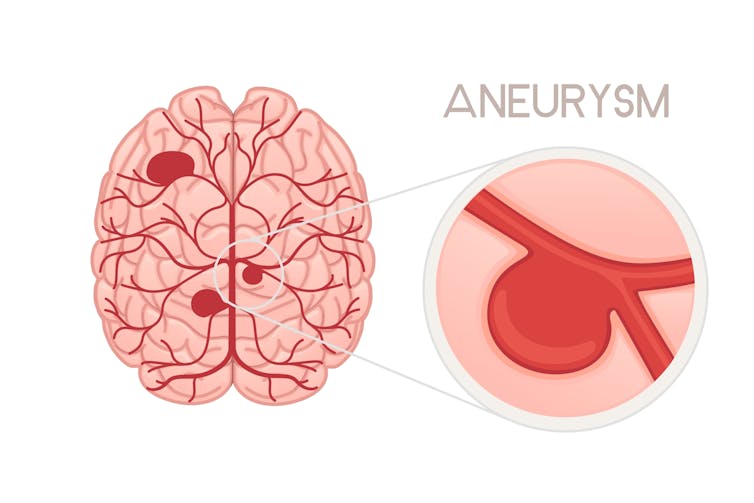
    MIL OSI AnalysisEveningReport.nz

  • MIL-OSI: Diamondback Energy, Inc. Announces Appointment to the Board of Directors

    Source: GlobeNewswire (MIL-OSI)

    MIDLAND, Texas, Feb. 03, 2025 (GLOBE NEWSWIRE) — Travis Stice, Chief Executive Officer and Chairman of the Board of Directors (the “Board”) of Diamondback Energy, Inc. (NASDAQ: FANG) (“Diamondback” or the “Company”), is pleased to announce that effective February 3, 2025, the Company added Darin G. Holderness to the Board of Directors.

    Mr. Holderness has over 30 years of experience in various roles of increasing responsibility in the energy sector, including, among others, founder and Chief Financial Officer of P&A Exchange LLC, an oilfield services company, Chief Financial Officer of ProPetro Holding Corp., an oilfield services company, Senior Vice President, Chief Financial Officer and Treasurer of Concho Resources, an oil and gas exploration and production company, and over nine years with KPMG LLP, where his practice focused on the energy sector. Mr. Holderness has served on the board of directors of JMR Services LLC, an oilfield services company focused on the plug and abandonment of oil and gas wells, since May 2024. Mr. Holderness also served on the board of directors of Ranger Oil Corporation from September 2016 to October 2021, including as its chairman from February 2018 to January 2021, and served on the board of directors of Rock Solid Lifestyles, Inc. from September 2016 to April 2024. Mr. Holderness graduated from Boise State University with a Bachelor of Business Administration in Accounting in 1986 and is a Certified Public Accountant.

    “Diamondback is excited to announce the addition of Darin to the Board of Directors as the fourth Board member from the Endeavor merger completed late last year.  Darin knows the Permian Basin and knows the Diamondback story well from his time spent in various roles throughout the Permian.  I am confident his skillset, particularly as a member of the audit committee, will complement the Board well,” stated Mr. Stice.

    About Diamondback Energy, Inc.

    Diamondback is an independent oil and natural gas company headquartered in Midland, Texas focused on the acquisition, development, exploration and exploitation of unconventional, onshore oil and natural gas reserves primarily in the Permian Basin in West Texas. For more information, please visit www.diamondbackenergy.com.

    Investor Contact:
    Adam Lawlis
    +1 432.221.7467
    alawlis@diamondbackenergy.com

    The MIL Network

  • MIL-OSI USA: NASA’s InSight Finds Marsquakes From Meteoroids Go Deeper Than Expected

    Source: NASA

    With help from AI, scientists discovered a fresh crater made by an impact that shook material as deep as the Red Planet’s mantle.
    Meteoroids striking Mars produce seismic signals that can reach deeper into the planet than previously known. That’s the finding of a pair of new papers comparing marsquake data collected by NASA’s InSight lander with impact craters spotted by the agency’s Mars Reconnaissance Orbiter (MRO).
    The papers, published on Monday, Feb. 3, in Geophysical Research Letters (GRL), highlight how scientists continue to learn from InSight, which NASA retired in 2022 after a successful extended mission. InSight set the first seismometer on Mars, detecting more than 1,300 marsquakes, which are produced by shaking deep inside the planet (caused by rocks cracking under heat and pressure) and by space rocks striking the surface.
    By observing how seismic waves from those quakes change as they travel through the planet’s crust, mantle, and core, scientists get a glimpse into Mars’ interior, as well as a better understanding of how all rocky worlds form, including Earth and its Moon.

    Researchers have in the past taken images of new impact craters and found seismic data that matches the date and location of the craters’ formation. But the two new studies represent the first time a fresh impact has been correlated with shaking detected in Cerberus Fossae, an especially quake-prone region of Mars that is 1,019 miles (1,640 kilometers) from InSight.
    The impact crater is 71 feet (21.5 meters) in diameter and much farther from InSight than scientists expected, based on the quake’s seismic energy. The Martian crust has unique properties thought to dampen seismic waves produced by impacts, and researchers’ analysis of the Cerberus Fossae impact led them to conclude that the waves it produced took a more direct route through the planet’s mantle.
    InSight’s team will now have to reassess their models of the composition and structure of Mars’ interior to explain how impact-generated seismic signals can go that deep.
    “We used to think the energy detected from the vast majority of seismic events was stuck traveling within the Martian crust,” said InSight team member Constantinos Charalambous of Imperial College London. “This finding shows a deeper, faster path — call it a seismic highway — through the mantle, allowing quakes to reach more distant regions of the planet.”
    Spotting Mars Craters With MRO
    A machine learning algorithm developed at NASA’s Jet Propulsion Laboratory in Southern California to detect meteoroid impacts on Mars played a key role in discovering the Cerberus Fossae crater. In a matter of hours, the artificial intelligence tool can sift through tens of thousands of black-and-white images captured by MRO’s Context Camera, detecting the blast zones around craters. The tool selects candidate images for examination by scientists practiced at telling which subtle colorations on Mars deserve more detailed imaging by MRO’s High-Resolution Imaging Science Experiment (HiRISE) camera.
    “Done manually, this would be years of work,” said InSight team member Valentin Bickel of the University of Bern in Switzerland. “Using this tool, we went from tens of thousands of images to just a handful in a matter of days. It’s not quite as good as a human, but it’s super fast.”
    Bickel and his colleagues searched for craters within roughly 1,864 miles (3,000 kilometers) of InSight’s location, hoping to find some that formed while the lander’s seismometer was recording. By comparing before-and-after images from the Context Camera over a range of time, they found 123 fresh craters to cross-reference with InSight’s data; 49 of those were potential matches with quakes detected by the lander’s seismometer. Charalambous and other seismologists filtered that pool further to identify the 71-foot Cerberus Fossae impact crater.
    Deciphering More, Faster
    The more scientists study InSight’s data, the better they become at distinguishing signals originating inside the planet from those caused by meteoroid strikes. The impact found in Cerberus Fossae will help them further refine how they tell these signals apart.
    “We thought Cerberus Fossae produced lots of high-frequency seismic signals associated with internally generated quakes, but this suggests some of the activity does not originate there and could actually be from impacts instead,” Charalambous said.
    The findings also highlight how researchers are harnessing AI to improve planetary science by making better use of all the data gathered by NASA and ESA (European Space Agency) missions. In addition to studying Martian craters, Bickel has used AI to search for landslides, dust devils, and seasonal dark features that appear on steep slopes, called slope streaks or recurring slope linae. AI tools have been used to find craters and landslides on Earth’s Moon as well.
    “Now we have so many images from the Moon and Mars that the struggle is to process and analyze the data,” Bickel said. “We’ve finally arrived in the big data era of planetary science.”
    More About InSight
    JPL managed InSight for the agency’s Science Mission Directorate. InSight was part of NASA’s Discovery Program, managed by the agency’s Marshall Space Flight Center in Huntsville, Alabama. Lockheed Martin Space in Denver built the InSight spacecraft, including its cruise stage and lander, and supported spacecraft operations for the mission.
    A number of European partners, including France’s Centre National d’Études Spatiales (CNES) and the German Aerospace Center (DLR), supported the InSight mission. CNES provided the Seismic Experiment for Interior Structure (SEIS) instrument to NASA, with the principal investigator at IPGP (Institut de Physique du Globe de Paris). Significant contributions for SEIS came from IPGP; the Max Planck Institute for Solar System Research (MPS) in Germany; the Swiss Federal Institute of Technology (ETH Zurich) in Switzerland; Imperial College London and Oxford University in the United Kingdom; and JPL. DLR provided the Heat Flow and Physical Properties Package (HP3) instrument, with significant contributions from the Space Research Center (CBK) of the Polish Academy of Sciences and Astronika in Poland. Spain’s Centro de Astrobiología (CAB) supplied the temperature and wind sensors.
    A division of Caltech in Pasadena, California, JPL manages the Mars Reconnaissance Orbiter Project for NASA’s Science Mission Directorate, Washington. The University of Arizona, in Tucson, operates HiRISE, which was built by BAE Systems in Boulder, Colorado. The Context Camera was built by, and is operated by, Malin Space Science Systems in San Diego. 
    For more about Insight, visit:

    InSight Lander

    For more about MRO, visit:

    Mars Reconnaissance Orbiter

    News Media Contacts
    Andrew GoodJet Propulsion Laboratory, Pasadena, Calif.818-393-2433andrew.c.good@jpl.nasa.gov
    Karen Fox / Molly WasserNASA Headquarters, Washington202-358-1600|karen.c.fox@nasa.gov / molly.l.wasser@nasa.gov
    2025-013

    MIL OSI USA News

  • MIL-OSI USA: The Drive for Better Fuels NASA Employee

    Source: NASA

    Two words come to Tim Stiglets’ mind when he thinks about NASA’s Stennis Space Center near Bay St. Louis, Mississippi – growth and opportunity.
    The Waveland, Mississippi, resident has experienced both in his career at the south Mississippi NASA center.
    He started as a summer intern onsite with Lockheed Martin in 2002. When The University of Southern Mississippi graduate joined the NASA team in 2019, he really started to understand how much activity happens at the unique federal city.
    NASA Stennis is home to more than 50 companies and organizations sharing in site operating costs.
    As a management and program analyst in the NASA Stennis Engineering and Test Directorate, Stiglets serves as the manager of the Product Lifecycle Management (PLM) Program. He describes the program as a one-stop shop for engineering data.
    Product lifecycle management (PLM) consists of technology, people, processes, and tools to track a product throughout its lifecycle.
    Think of it in terms of building a LEGO set. From the time one gets the idea of building the set, to when it is finished, played with, and taken apart, there is a lot to track.
    Stiglets’ work involves much bigger pieces, ranging from managing data for how a test stand is configured to tracking the configuration of NASA Stennis buildings and utilities systems that make up the infrastructure for America’s largest rocket propulsion test site. NASA Stennis facilities are valued at more than $2 billion.
    His work gives him a front-row seat to the growth and opportunity potential of NASA Stennis.
    “The cool thing about PLM is I get to be involved, in some small way, with NASA’s Artemis work, commercial test customers and all the Center Operations projects that support the federal city,” he said.
    The center tests rocket engines and stages to power future Artemis missions to the Moon and beyond. NASA Stennis also works with such commercial test customers as Relativity Space, Blue Origin, Rolls-Royce, Evolution Space, and Vast (formerly Launcher Space).
    “PLM is a center capability that we have evolved, so it does not matter if it is a water system, a test stand or building that is involved. It all kind of relies on, and ultimately somewhere down the line, hits the PLM system that has the drawings and engineering data needed for the project. That is probably the coolest thing about my work. I get to see a lot of different things that are going on in different areas.”
    Stiglets said it feels like every time he turns around, there is someone leasing a new building or joining the NASA Stennis federal city. The center has lease agreements for use of land and infrastructure with Relativity Space, Rocket Lab, and Evolution Space.
    “We have a get-it-done kind of attitude,” Stiglets said. “We are going to do whatever it takes to get the job done. If it is testing engines or anything else, we are going to get it done. From a propulsion testing standpoint, commercial companies that lease areas onsite can come in and have access to contract support and to the NASA folks who have decades worth of knowledge. The companies can leverage all of that expertise and tap into the knowledge.”
    The Long Beach, Mississippi, native speaks with enthusiasm when describing his time at NASA Stennis, where growth and opportunity continue forward.
    “How cool is it to work for NASA, even coming in as a contractor,” Stiglets said. “You get to be involved with something bigger and much beyond south Mississippi. The excitement of being involved with NASA so many years ago was very cool for me, especially being a college student. I still have that same excitement. Many years have passed, and day-to-day work changes, but ultimately, you are still looking to achieve big goals.”

    MIL OSI USA News

  • MIL-OSI Australia: Could AI kill human creativity?

    Source: University of South Australia

    04 February 2025

    Artificial intelligence (AI) was designed to solve problems, enhance productivity, and push the boundaries of innovation. But since the rise of generative AI such as CHATGPT and DALL-E, people have had concerns about its potential to overshadow or replace key human skills.

    Now, University of South Australia researchers have explored the complex relationship between AI and human creativity finding that while AI can generate creative outputs, it fundamentally relies on human intervention.

    It’s a valuable finding that has significant implications for educational practices, job creation, and the future of work. And a relief for those concerned about AI rivalling human jobs.

    Yet it raises issues for employers and educators who need to better understand these disruptive technologies to enable their staff and students to meet their full potential.

    Generative AI technologies continue to expand, but the most popular are ChatGPT (the AI ‘wordsmith’) and DALL-E (the AI ‘artist’) which respectively produce swathes of human-sounding text, or instantly credible artwork at the simple press of a button. Recently, the two have been joined by their Chinese counterpart, DeepSeek.

    UniSA researcher Professor David Cropley says learning how AI can augment human skills is key to successfully adopting it.   

    “The future of work suggests that machines – AI, automation, and robots – will take over routine, algorithmic, predictable tasks, freeing up people to focus on unpredictable, non-algorithmic, and creative work,” Prof Cropley says.

    “However, if AI is capable of creativity, then this premise breaks down, and the future of work for humans is far less certain.

    “In our research we explored the relationship between AI and humans, finding that generative AI is not a replacement for human skills like creativity, but rather a supplement or a tool that we will need to manage.

    “It’s easy to understand through an example: if I prompt an AI art program like DALL-E2 to ‘produce an oil painting in the style of da Vinci’s Mona Lisa, showing a young woman scrolling through her mobile phone and looking bored’, it will create a picture, and does a good job of satisfying that prompt.

    “But this does not mean that the AI is creative. Yes, the resulting picture is novel and effective, but it’s not because AI had any special ability, but because I produced a creative prompt. The only thing the AI really did was save me the trouble of learning how to paint.”

    In Australia, the use of generative AI is rapidly growing with nearly 40% of employees using the technology for work purposes, and one in five doubling their use over the past year. Only 20% of employees believe their business is taking full advantage of generative AI.

    UniSA researcher Dr Rebecca Marrone says more research is needed to understand how AI can best support human skills.

    “A few years back there were wild claims that AI was truly creative and could rival the best human skills. But we’re starting to see a more moderate and reasoned point of view,” Dr Marrone says.

    “AI’s strengths lie in speeding up information-gathering and evaluating ideas based on predefined criteria. It swiftly handles routine and data-intensive tasks, and this lets people to engage more deeply with creative processes.

    “There’s no doubt that generative AI is very impressive, but whatever you generate – and the key word here is ‘you’ – it’s dependent on what you tell the AI to deliver.

    “AI does not operate independently; it’s literally prompted by a person, and we need to remember that.”

    …………………………………………………………………………………………………………………………

    Contacts for interview:  Prof David Cropley E: David.Cropley@unisa.edu.au
    Dr Rebecca Marrone E: Rebecca.Marrone@unisa.edu.au
    Media contact: Annabel Mansfield M: +61 479 182 489 E: Annabel.Mansfield@unisa.edu.au

    Other articles you may be interested in

    MIL OSI News

  • MIL-OSI Asia-Pac: Benefits Accorded to Classical Language

    Source: Government of India

    Posted On: 03 FEB 2025 4:23PM by PIB Delhi

    The support available to the languages notified as classical languages include awards in Classical Languages, centers of excellence for studies in classical languages, and creation of professional chairs in central universities.

    The Government of India had earlier notified the following languages as Classical Languages:

    Tamil, 2004

    Sanskrit, 2005

    Telugu, 2008

    Kannada, 2008

    Malayalam, 2013

    Odia, 2014

    The Ministry of Education, through the Central Institute of Indian Languages (CIIL), Mysuru, works towards the promotion and development of all Indian languages, including Classical Languages. Various institutions and Centres of Excellence have been established to support research, documentation, and scholarly activities related to these languages:

    Tamil: The Central Institute of Classical Tamil (CICT), Chennai, established in 2008, is dedicated to the promotion and development of Classical Tamil.

    Sanskrit: The Government of India promotes Sanskrit through three Central Universities—Central Sanskrit University (New Delhi), Shri Lal Bahadur Shastri National Sanskrit University (New Delhi), and National Sanskrit University (Tirupati). These universities were granted Central University status in 2020 to strengthen Sanskrit education and research.

    Telugu: The Centre of Excellence for Studies under the in Classical Telugu functions at Nellore, Andhra Pradesh.

    Kannada: The Centre of Excellence for Studies in Classical Kannada is located in Mysuru, Karnataka.

    Malayalam: The Centre of Excellence for Studies in Classical Malayalam operates from Tirur, Malappuram, Kerala.

    Odia: The Centre of Excellence for Studies in Classical Odia is based in Bhubaneswar, Odisha.

    Furthermore, very recently, The Government notified 5 more languages such as Marathi, Pali, Prakrit, Assamese, and Bengali as Classical Languages vide Gazette Notification dated 04.10.2024.

    This information was given by Union Minister for Culture and Tourism Shri Gajendra Singh Shekhawat in a written reply in Lok Sabha today.

    ***


    Sunil Kumar Tiwari

    E-mail: – pibculture[at]gmail[dot]com

    (Release ID: 2099152) Visitor Counter : 75

    MIL OSI Asia Pacific News