Source: Hong Kong Government special administrative region
Second patient transferred point to point to Hong Kong for treatment by direct cross-boundary ambulance transfer in GBA Second patient transferred point to point to Hong Kong for treatment by direct cross-boundary ambulance transfer in GBA ******************************************************************************************
The following is issued on behalf of the Hospital Authority: The Hospital Authority (HA) announced today (January 27) that Tuen Mun Hospital (TMH) received the second patient under the Pilot Scheme for Direct Cross-boundary Ambulance Transfer in the Greater Bay Area (Pilot Scheme) yesterday afternoon. The patient was transferred to Hong Kong for treatment by a point-to-point cross-boundary ambulance. The HA expresses sincere gratitude to various units in Guangdong and Hong Kong for their proactive co-ordination and collaboration, which enabled the smooth point-to-point transfer of the patient to Hong Kong. A patient was previously admitted to the University of Hong Kong-Shenzhen Hospital (HKU-SZH). After thorough assessment and discussion with patient and family by the medical team, it was decided to transfer the patient back to Hong Kong for ongoing treatment. The patient departed from the HKU-SZH at 2.00pm yesterday and arrived at TMH before 3.00pm, where he is currently receiving treatment and is in stable condition. The spokesperson for the HA stated that upon receiving notification, TMH promptly communicated with the medical team in Shenzhen to understand the patient’s clinical situation and prepare for admitting the patient. The HA expresses heartfelt thanks to all parties involved for their substantial co-ordination and co-operation, ensuring that the patient was swiftly transported directly point to point to Hong Kong for treatment under the care of medical personnel. Without the handover of patients between ambulances at boundary control points, the direct transport not only minimise the risks posed to patients during transfers and improve the patients’ chances of recovery, but also exemplifies that the close collaboration and development of quality healthcare co-operation in the Greater Bay Area (GBA) supports Hong Kong patients residing in the GBA. The spokesperson emphasised that the Pilot Scheme has a mechanism in place to avoid abuse while ensuring the safety of cross-boundary transfer. Doctors at the sending hospital will assess the clinical diagnosis and condition of the patients to determine the necessity for cross-boundary inter-hospital transfer for continuous treatment or recovery services. In general, taking patients safety into consideration, the Pilot Scheme will only facilitate the transfer of emergency patients who have clinical needs, are unable to cross the boundary independently, and whose clinical conditions are stable. Patients who are clinically unstable cannot participate in the scheme. The medical teams from both regions will jointly evaluate cases, exchange information, and co-ordinate to decide whether to initiate the transfer mechanism, ensuring that both the patients and their family are informed of the relevant arrangements and the risks involved in the transfer. The study on the provision of land-based cross-boundary transfers for non-emergency and non-critically ill patients and the exploration of rolling out a pilot co-operation scheme for cross-boundary referrals of patients between designated public hospitals were put forward in the Outline Development Plan for the GBA. The Chief Executive also put forward in his 2023 Policy Address the initiative to explore cross-boundary ambulance transfer arrangements between hospitals in the GBA. Under the staunch support and guidance of various national ministries as well as the concerted efforts of the government departments of Hong Kong, Guangdong and Macao, the Pilot Scheme was set for official launch on November 30 last year. The first patient was transferred point to point from Shenzhen to Hong Kong for treatment by direct cross-boundary ambulance on January 10 this year.
Our cognition and mental wellbeing are crucial factors for our quality of life and put us in a good position to contribute to society. Ultimately, it can be near impossible to achieve physical goals and demanding life challenges if our brain health is not optimal.
Yet most of us appear to be more concerned with physical health than brain health. According to the YouGov website the most popular New Year’s resolutions in the UK in 2024 were doing more exercise, saving money, losing weight and dieting – with about 20% reporting they were failing some resolutions only just six days into the year. A large study of approximately 1,000 participants showed that mental health only featured in about 5% of resolutions.
It’s easy to monitor your physical health using mobile devices and wearable technology to preserve physical health throughout your life. It may be more unclear, however, how to improve and monitor brain health and mental wellbeing. In our new book Brain Boost: Healthy Habits for a Happier Life, we draw on research to offer practical tips.
A number of factors contribute to our happiness in life, including genetics, our social and physical environment, cognition and our behaviour, such as lifestyle choices. Studies have shown that good cognitive function is related to better wellbeing and happiness.
Interestingly, according to the 2024 World Happiness Report all five Nordic countries – Finland, Denmark, Iceland, Norway and Sweden – are in the top 10 happiest countries. The UK and the US, however, do not feature in the top 10.
In the UK, the YouGov website has been tracking mood states and while it reports that happiness is the most commonly expressed emotion, only 45% of people feel it. Ideally this number should be much higher.
In addition, feeling stressed and frustrated are the next top emotions with 40% and 35% of people having these feelings respectively. Disappointingly, optimism is also low, for example, only 23% of 18-24 year-olds and over 75-year-olds feel optimistic on average, and 17% of 45-54 year-olds.
Happiness and wellbeing in general reduces the effects of stress and promotes health and longevity.
Nurturing your brain
In our book, we draw on the latest scientific evidence, including our own, to highlight seven essential lifestyle factors that improve our brain health, cognition and wellbeing. We demonstrate how simple — and often surprising —adjustments to our daily habits can enhance brain fitness, boost cognition, and promote overall wellbeing.
We suggest small incremental steps to improving lifestyle habits and ensuring these fit within our daily activities, as well as being enjoyable and pleasurable. In this way, we can ensure, that unlike New Year’s resolutions that we give up within six days, we can maintain these throughout life. This puts us in a better position to achieve physical challenges in the future.
These lifestyle factors include exercise, diet, sleep, social interactions, kindness, mindfulness and learning, and knowing how to get the best out of work. For example, exercise is an “all-rounder”, as it can boost our physical health but also our brain health, cognition and mood. In fact, studies have shown that exercise can increase the size of our hippocampus, which is critical for learning and memory.
Similarly, sleeping the optimal number of hours each night can improve our immune system, brain structure and mental wellbeing. Our own study showed that sleeping 7-8 hours per night in middle to older adulthood was associated with better brain structure, cognition, such as processing speed and memory, and mental health.
Staying socially connected also plays an important role in our brain health. We have shown that being socially isolated in older adults is associated with a 26% increased risk of dementia. Whereas, having the optimal number of friends in adolescence, about five, is linked with better brain structure, cognition, educational attainment and wellbeing.
Learning new things is also essential to keep the neural circuits in our brain functioning at their best level for as long as possible. We need to challenge ourselves mentally to keep our brains active – just as we need to do physical exercise to keep our bodies fit.
This builds cognitive reserve and helps us in times of stress. We can also keep our brains active in a number of ways, for example, by learning a new language or how to play a musical instrument or you can read an educational book about something that interests you.
Keeping our bodies healthy is incredibly important. But we need to also nurture our brains if we want to be happy, mentally sharp and well protected against diseases such as dementia.
Embracing these simple strategies to prioritise our brain health and wellbeing is essential for a happier and more fulfilling life. Ultimately, lifestyle choices play a significant role in reducing stress and promoting resilience, creativity and overall quality of life.
Barbara Jacquelyn Sahakian receives funding from the Wellcome Trust and the Lundbeck Foundation. Her research work is conducted within the NIHR Cambridge Biomedical Research Centre (BRC) Mental Health and Neurodegeneration Themes. She consults for Cambridge Cognition.
Christelle Langley receives funding from the Wellcome Trust. Her research work is conducted within the NIHR Cambridge Biomedical Research Centre (BRC) Mental Health and Neurodegeneration Themes.
The ‘black mailbox’ along Highway 375 near Rachel, Nev., a traditional spot for UFO hunters to meet and search the skies near Area 51.AP Photo/John Locher
Uncommon Courses is an occasional series from The Conversation U.S. highlighting unconventional approaches to teaching.
Title of course:
“Investigating the Paranormal”
What prompted the idea for the course?
My training and professional work have been in Mesoamerican archaeology, but I’ve had a lifelong fascination with paranormal concepts. In fact, I considered studying the UFO community for my doctoral research in cultural anthropology.
I eventually fused these two interests in my book “Spooky Archaeology: Myth and the Science of the Past,” which examines why archaeology shows up so much in ideas about the mysterious and weird. Most people are familiar with pop culture characters like Indiana Jones seeking magical artifacts. Perhaps less immediately obvious is just how common archaeological topics are in paranormal and conspiracy culture.
The popularity of paranormal ideas – from television shows and thousands of podcasts to UFOs on the front page of The New York Times and in government investigations – made it clear that a course on paranormal culture would be an excellent way for students to get a taste of social science research.
What does the course explore?
The material begins with premodern ideas of magic, myth and metaphysics. The narrative that “Western” societies tell of the development of the modern world is that the Enlightenment cast off supernatural thinking in favor of science. The historical reality, however, is not so simple.
As science based on observation of material evidence emerged in the 17th through 19th centuries, so did a paranormal worldview: theories about a nonmaterial or hidden reality beyond the mundane, from monsters to psychic powers. Some of these ideas were tied to older religious notions of the sacred or strange but not divine phenomena. Others were new – particularly those suggesting the hidden existence of prehistoric extinct creatures or lost cities.
In either case, the key element was that proponents of these ideas often tried to support their existence with the kind of evidence used in science, though their “proofs” fell short of scientific standards. In other words, the paranormal is in conflict with the knowledge and worldview of modernity but also attempts to use the concepts of modernity to oppose it.
The class examines how this tension produced 20th century “-ologies” like parapsychology, which examines evidence for consciousness beyond matter, and cryptozoology, which searches the ends of the Earth for creatures tied to the mythic past. We also learn about UFOlogy, whose proponents have collected alleged contacts with technology and beings from beyond this world ever since the Cold War, as great earthly powers filled the skies with secretive hi-tech aircraft and spaceships.
As the class concludes, we examine how the “-ologies” declined after the Cold War, alongside the cultural capital of science, whose height of public respect was in the mid-20th century. Since then, proving the existence of paranormal things to institutional scientists has become less important in paranormal communities than promoting them to a broader public.
Why is this course relevant now?
Beyond public interest in paranormal topics, the paranormal is entwined with sociocultural forces that have dramatically increased the role of conspiracy rhetoric in the United States and elsewhere. At their core, both types of belief claim to have figured out some kind of supposedly hidden knowledge.
Furthermore, the conspiracy theories that are now commonplace in American political discourse are more rooted in paranormal ideas than in previous decades. Conspiracy theories about the JFK assassination or even 9/11 were still largely within the materialist realm. People argued that “the truth” had been covered up, but their arguments did not rely on metaphysical ideas. Today, major conspiracy theories involve secret cabals, mystical symbols and code words, demonic forces and extraterrestrial entities.
What’s a critical lesson from the course?
Evidence must be interrogated on its own, regardless of whether it fits your perspective. I find time and again that students have a hard time approaching evidence without bias, whether that bias is conscious or not: “knowing” that something must be true, or must be absurd.
One person apparently makes a death bed confession of faking a famous Loch Ness Monster photo, pleasing skeptics. Another claims to have seen a Bigfoot at close range, pleasing believers. Without further evidence, both are stories: no more, no less.
The issue isn’t to draw an equivalence between the bigger concepts. Not all narratives are equally well-founded. But students learn how to collect evidence, rather than simply rely on their gut sense of what is plausible or not.
What will the course prepare students to do?
This course is meant to help students discern useful and reliable information about claims and events, separating them from irrelevant or inaccurate narratives or sources. The goal is not just “critical thinking” aimed at combating disinformation, though that is part of what they should learn. Students practice evaluating evidence but also develop an approach for analyzing and understanding phenomena behind it: how factors like history, culture and institutions of authority, such as science and government, shape what people trust and what they believe.
Jeb Card does not work for, consult, own shares in or receive funding from any company or organization that would benefit from this article, and has disclosed no relevant affiliations beyond their academic appointment.
More than 6 million Syrians have fled the country since 2011, when an uprising against the regime of Bashar Assad transformed into a 13-year civil war. Most ended up in neighboring countries such as Turkey, Lebanon, Jordan, Iraq and Egypt, while a sizable minority wound up in Europe. But the overthrow of the Assad regime in late 2024 by opposition forces led by the Islamist group Hayat Tahrir al-Sham has seemingly opened a window for their return, and tens of thousands of former refugees have since made the decision to go back to their homeland.
How many and who decides to go back, and the circumstances under which they reintegrate into Syrian society, will have enormous implications for both Syria and the countries they resettled in. It also provides an opportunity for migration scholarslike ourselves to better understand what happens when refugees finally return home.
Previous research has shown that Syrian refugees who are trying to decide whether to return are motivated more by conditions in Syria than by policy decisions where they’ve resettled. But individual experiences also play an important role. Counterintuitively, refugees who have been exposed to violence during the Syrian civil war are actually more tolerant of and better at assessing the risk of returning to Syria, research has shown.
But such research was conducted while Assad was still in power, and it has only been several weeks since Assad fell. As a result, it’s unclear how many Syrians will decide to go back. After all, the current government is transitional, and the country is not fully unified.
The risk of return
In the month after Assad’s fall, about 125,000 Syrians headed home, primarily from Turkey, Jordan and Lebanon. But for the majority of those yet to return, important questions and considerations remain.
First and foremost, what will governance look like under the transitional government? So far, Hayat Tahrir al-Sham’s rule under Ahmed al-Sharaa has suggested the group will embrace inclusivity toward Syria’s diverse array of ethnic and religious minorities. Even so, some observers worry about the group’s prior connections to militant Islamist groups, including al-Qaida.
Syrians debating whether to return home must also confront the economic devastation wrought by years of war, government mismanagement and corruption, and international sanctions placed on the Assad regime.
Sanctions blocking the entry of medications and equipment, along with Assad’s bombing of infrastructure throughout the war, have crippled the country’s medical system.
In 2024, 16.7 million Syrians – more than half the country’s population – were in need of essential humanitarian assistance, even as very little was available. In early 2025, the U.S. announced that it was extending a partial, six-month reprieve of sanctions to allow humanitarian groups to provide basic services such as water, sanitation and electricity.
But rebuilding the country’s infrastructure will take much longer, and Syrian refugees will have to weigh whether they are better off remaining in their host countries. This is especially true for those who have worked to build new lives over a long period in exile from Syria.
The caretaker Syrian government will also have to address the issue of property restitution. Many individuals may want to return home only if they indeed have a home to return to. And the policy of forced property transfers and the settlement by Alawite and minority groups allied to the Assad regime in former Sunni areas vacated during the war complicates the issue.
Continued welcome in Europe?
Since the start of the civil war, approximately 1.3 million Syrians have sought protection in Europe, the majority of them arriving in 2015 and 2016 and settling in countries such as Germany and Sweden. As of December 2023, 780,000 individuals still held refugee status and subsidiary protection – an additional form of international protection – with the remainder having received either long-term residency or citizenship.
Subsidiary protection was granted to those who didn’t meet the stringent requirements for refugee status under the Geneva Conventions – which requires a well-founded fear of persecution based on race, religion, nationality, political opinion or membership of a particular social group – but “would face a real risk of suffering serious harm” if returned to their countries of origin.
Recognition rates for Syrians have remained consistently high between 2015 and 2023, but the breakdown between subsidiary protection and refugee status has fluctuated over the years, with 81% receiving refugee status in 2015 versus 68% receiving subsidiary protection in 2023.
For Syrians in the EU who hold refugee status or subsidiary protection, as well as for those with pending asylum claims, the future is very uncertain. In accordance with the Geneva Conventions, EU law allows governments to revoke, end or refuse to renew their status if the reason to offer protection has ceased, which many countries believe is the case after Assad’s fall.
Since then, at least 12 European countries have suspended asylum applications of Syrian nationals. Some nations, such as Austria, have threatened to implement a program of “orderly return and deportation.”
Conditions in Turkey and Lebanon
A much larger number of Syrians obtained protection in neighboring countries, namely Turkey (2.9 million), Lebanon (755,000) and Jordan (611,000), though estimates of unregistered Syrians are much higher. In Turkey, which hosts the largest number of Syrian refugees, Syrians are afforded only temporary protection status.
In theory, this status allows them access to work, health care and education. But in practice, Syrian refugees in Turkey have not always been able to enjoy these rights. Coupled with anti-immigrant sentiments worsened by the 2023 earthquake and presidential election, life has remained difficult for many.
And while Turkish President Recep Tayyip Erdogan has publicly stated that Syrians should return home according to their own timeline, his previous scapegoating of the refugee population indicates that he may ultimately like to see them returned – especially as many in Turkey now believe Syrian refugees have no reason to stay in the country.
Syrians in Lebanon, which hosts the largest number of Syrian refugees per capita, face even greater economic and legal challenges. The country is not a signatory to the Geneva Conventions, and its stringent domestic asylum law has granted residency to only 17% of the more than a million Syrians who live in the country.
Lebanon has been pressuring Syrian refugees to leave the country for years through policies of marginalization and forced deportation, which have intensified in recent months with a government scheme to deport Syrians not registered with the United Nations. As of 2023, 84% of Syrian families were living in extreme poverty. Their vulnerability was exacerbated by the recent conflict between Hezbollah and Israel in Lebanon, which led 425,000 Syrians to escape war once again and return to Syria even though conditions at the time were not safe.
Testing the water
Offering go-and-see visits – whereby one member of a family is allowed to return to a home country to evaluate the situation and subsequently permitted to reenter the host country without losing their legal status – is the norm in many refugee situations. The policy is being used at present for Ukrainians in Europe and was used in the past for Bosnian and South Sudanese refugees.
The same policy could serve Syrian refugees now – indeed, Turkey recently implemented such a plan. But above all, we believe returns to Syria should be voluntary, not forced. Getting the conditions right for returning refugees will have enormous implications for rebuilding the country and keeping the peace – or not – in the years to come.
The authors do not work for, consult, own shares in or receive funding from any company or organization that would benefit from this article, and have disclosed no relevant affiliations beyond their academic appointment.
In December 2024, Texas Attorney General Ken Paxton sued a New York doctor for prescribing abortion-inducing medications to a woman in Collin County, Texas, alleging that the shipment violated Texas’ near-total ban on abortion.
Two months earlier, Paxton’s office had sued to block a federal rule protecting women’s out-of-state medical records from criminal investigation. And in 2022, it sued the Biden administration over federal guidelines requiring doctors to perform abortions in emergency situations.
Paxton’s lawsuits – alongside the state’s restrictive abortion policies – raise troubling questions about individual privacy and women’s bodily autonomy in Texas, where I live and teach. And they’re indicative of a broader problem. As my research on democracy and human rights shows, the state government is becoming increasingly antidemocratic.
Scholars examine a number of factors to determine the health of a democracy. Elections must be free and fair. There should be freedom of expression and belief, multiple competitive political parties and minimal corruption. A democratic government must also respect individual freedom.
On many of these metrics, I believe Texas falls short.
Are Texas elections free and fair?
Texas has some of the most restrictive voting laws in the United States, including strict voter ID laws, stringent limits on mail-in and absentee ballots and no online voter registration.
Republicans, who passed each of these policies, claim their concern is a democratic one – election integrity. Yet, when Lt. Gov. Dan Patrick offered a US$25,000 reward to anyone who could prove voter fraud in the 2020 election, it led to just one arrest.
The Texas Legislature nonetheless pledged to pass an even more restrictive voting bill in 2021, referencing “purity of the ballot box,” an old Jim Crow phrase. Democratic lawmakers ended up fleeing the state to paralyze the state assembly and keep the most egregious parts of the bill from passing.
Healthy democracies also have robust competition between multiple parties so that voters have real choices at the polls.
Yet since its current constitution was written in 1876, Texas has effectively been a one-party state governed by conservatives. No Democrat has won statewide office since 1994 – the longest Democrats have been locked out of statewide office in any state.
Money in politics
Texas puts no limits on individual campaign contributions to the governor, one of just 12 U.S. states that lacks this common anti-corruption measure.
This has allowed Texas’ current governor, Greg Abbott, who has been in office since 2015, to raise vast sums of money. In the 2022 Texas gubernatorial race – the most expensive in the state’s history at $212 million – Abbott outspent his Democratic opponent by almost $50 million. In 2018, he had 90 times more cash on hand than his Democratic opponent.
Texas’ lack of effective campaign finance regulations has given big donors access to power in the form of gubernatorial appointments.
An in-depth investigation by The Texas Tribune in 2022 revealed that 27 of the 41 members of the governor’s COVID-19 task force were campaign donors who had collectively paid $6 million toward the governor’s reelection. Many were business owners who had a vested interest in reopening the state.
Freedom of expression
Texas is also at the center of a national struggle over academic freedom, a key component of free expression.
The Texas Senate is considering expanding this legislation to prohibit “DEI curriculum and course content.”
The mere threat appears to be squelching freedom of thought and intellectual exploration in Texas universities already. The University of North Texas in November started editing course titles and syllabi to remove identity-based topics.
On Jan. 14, Abbott threatened to fire the president of Texas A&M University – a part of my university system – if faculty attended an academic conference showcasing the work of Black, Latino and Indigenous scholars.
Human rights at the border
Abbott’s campaign to control the U.S.-Mexico border has raised concerns among human rightsgroups about civil rights in the state.
In March of 2021, Abbott declared a state of emergency in counties on the Texas border, allowing him to deploy the Texas National Guard there. The initiative, Operation Lone Star, was supposed to stop migrants from crossing the border outside official government checkpoints.
Since border enforcement is a federal authority, however, the troops have mostly enforced state laws on trespassing or drugs and weapons possession. Guardsmen have also participated in busing migrants to Democratic-run cities such as New York and Chicago and built razor-wire barriers in the Rio Grande.
The result is an $11 billion policing program that has largely targeted Latino American citizens – not immigrants. Fully 96% of those arrested on trespassing charges are Latino, and 75% of those facing court proceedings for that and other crimes as a result of Operation Lone Star are U.S. citizens.
Gov. Greg Abbott, left, and Donald Trump greet Texas National Guard troops in Edinburg, Texas, on Nov. 19, 2023. Michael Gonzalez/Getty Images
Women’s freedoms
Finally, women’s right to bodily autonomy is under threat in Texas, which has one of the country’s most restrictive abortion laws.
At least three women have died as a result of doctors being afraid to treat their miscarriages. Overall, maternal mortality rates have increased by 56% since the ban was imposed in 2021. Scary statistics haven’t stopped the state’s plans to tighten its ban.
The 2025 Texas legislative session began with Republican legislators having prefiled several bills aimed at ending abortion by mail services, including one that would reclassify common abortion pills as controlled substances like Valium or Ambien. Doctors warn that this reclassification could also make it harder for them to disperse these medications quickly in life-threatening emergencies.
The question of whether a government is democratic is often not black or white. It should be viewed on a sliding scale.
Freedom House, a nonpartisan international democracy watchdog, ranks countries on a 100-point scale based on the factors I mentioned earlier, among others, and labels countries as “free,” “partly-free” and “not free.”
The freest country in 2024, Finland, had a score of 100. The U.S. has been sliding down the rankings, receiving a score of 83 in 2024 – down from 94 in 2010. It’s still solidly in the “free” category, but U.S. democracy looks less like Germany’s and more like Romania’s. The antidemocratic policy changes made in Texas and a handful of other states contribute to this slide.
Freedom House doesn’t rank states, but if it did, Texas would likely still rate as a “free” democracy. There is space for dissent, opposition and free speech. Democratic politicians have occasional political victories.
But Texas is decidedly less democratic than the U.S. at large. Democracy here is not lost, but I fear Texas is in danger of becoming only “partly-free.”
Katie Scofield does not work for, consult, own shares in or receive funding from any company or organization that would benefit from this article, and has disclosed no relevant affiliations beyond their academic appointment.
Water that comes straight from natural sources, dubbed “raw water,” is gaining popularity. Raw water advocates reject public water supplies, including tap water, because they don’t enjoy the taste or believe it’s unsafe and depleted of vital minerals.
On the surface, raw water might seem alluring – the natural surroundings may look beautiful, and the water may look clean and taste refreshing. But unlike tap or commercially bottled water, raw water is not evaluated for safety. This leaves the people who drink it vulnerable to infectious microbes or potentially other toxic contaminants.
I’m a microbiology researcher studying infectious diseases. From a public health perspective, clarifying misconceptions about tap water and the health hazards of raw water can protect consumers and curtail the spread of infectious diseases.
A short history of public drinking water
Archaeological evidence suggests that humans have long associated dirty water with negative health outcomes. As early as 1500 BCE, ancient Egyptians added a binding agent to their water to clump contaminants together for easy removal.
Two major developments in the mid-1800s showed why impure water is dangerous. First, physician John Snow traced a deadly cholera outbreak to contaminated water from London’s Broad Street pump. Second, Louis Pasteur advanced the germ theory of disease, which postulated that microbes can cause illness. Pasteur established that consumable liquids like raw water and milk can harbor disease-causing pathogens.
Physician John Snow’s 1854 map of cholera cases in London, highlighted in black, clustered around a contaminated pump. John Snow/Wellcome Collection
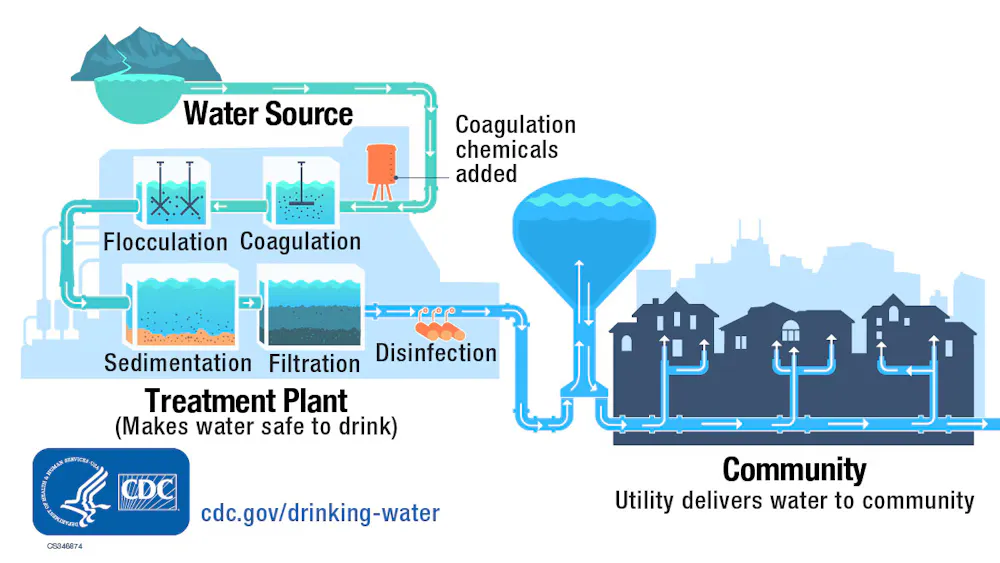
Today, the process of cleaning water begins with the same steps employed by the ancient Egyptians, followed by extensive filtration to get rid of debris as well as most germs and chemicals. Chlorine is added to kill lingering pathogens, including those that may reside in the service pipes carrying the water to the faucet. Beginning in the 1940s, a small amount of fluoride was added as an inexpensive, safe and effective means to improve dental health.
People who champion raw water claim it has health benefits, such as essential minerals and beneficial bacteria called probiotics, that are stripped from tap water. Let’s unpack each of these claims.
Water dissolves bits of soil and rock at its source; therefore, its mineral content depends on the local geology. Areas with a lot of limestone, like the Midwest, have water that is higher in calcium. Water from deeper in the ground may have higher mineral content since it passes through more rock on its way to the surface.
The idea that tap water is depleted of essential minerals is not true, as these nutrients are too small to be excluded by the filtration process. Test kits can determine the mineral content of your water, and if you find it lacking, mineral supplements can be added. Experts suggest, however, that most minerals you need come from your diet, not water.
Some also claim that raw water contains probiotics that are removed from tap water. The amount of probiotics in water would also vary by location, and the notion that health-promoting bacteria reside in raw water has not been proved.
There are no studies associating raw water with any health benefit. Anecdotal claims about smoother skin or increased energy are likely to be placebo effects. Even the idea that raw water tastes better might be more psychological than physiological – a 2018 study showed that most people preferred tap water over bottled water in a blind taste test.
Risks of drinking raw water
Raw water carries the risk of serious gastrointestinal infection from a wide variety of pathogens.
Tap water undergoes several treatment steps before it reaches your faucet. CDC
Carriers of diarrheal infections can transmit them to others if they swim in public pools or fail to properly wash their hands before touching others or preparing food. Norovirus is particularly durable and can survive on surfaces for days, increasing chances of it infecting someone else.
Raw water can also contain algae that release toxins causing abdominal issues and damage to the brain and nervous system.
The Environmental Protection Agency routinely screens for nearly 100 contaminants to ensure tap water is safe. In contrast, raw water remains untested, unregulated and untreated, leaving its safety to drink in question. In terms of risks and benefits, there are no demonstrated health benefits from drinking raw water, but clear evidence that you may be exposing yourself to harmful infectious and toxic contaminants.
Bill Sullivan receives funding from the National Institutes of Health.
It came as a surprise to nobody that one of Donald Trump’s first acts on his return to the White House was to sign an executive order withdrawing the US from the Paris agreement on climate change.
Almost 200 other countries will remain part of the deal designed to stem global warming. So how will they fare without the participation of one of the biggest polluters on the planet?
The exit of the US encapsulates a tricky issue when it comes to international efforts to tackle climate change. Any effort to decrease the use of fossil fuels is individual, while any benefits are universal.
And since 1997, the main approach to tackle climate change multilaterally has been through UN-backed summits known as “Cops” (Conference of the Parties) where countries gather and promise each other to cut their emissions.
Richer countries, which polluted more in the past and created most of the accumulated CO2 in the atmosphere, have also committed to helping poorer countries develop economically while emitting less, to the tune of US$300 billion (£244 billion) a year by 2035.
But while plenty of effort goes in to organising the largest possible coalition of countries, in the end, everything is based on good faith and promises. There is no mechanism by which countries which fail to live up to agreements are punished.
So when national politics or budgetary constraints come into play, climate commitments can be left by the wayside. A project to tax pollution may be cancelled or campaigners may succeed in blocking plans.
Yet there are benefits to be had from leading by example and cutting emissions without any guarantee that others will do the same. This is partly because humans have a tendency towards what’s known as “conditional cooperation”. People who fail to cooperate when they have to do it at the same time as others are much more likely to join in if they observe previous cooperation.
For this reason, research I recently published with colleagues on game theory (the mathematical study of strategic interactions), suggests that the best thing for advanced economies to do is keep on cutting their own emissions.
Because without efforts from rich countries to pursue a path towards mitigating global warming, there is no hope the others will follow. In that case, even a small wealthy country (like the UK) matters in demonstrating an unambiguous commitment to tackling climate change.
Carbon cooperation
Beyond encouraging further cooperation, a strong climate policy in the form of carbon taxes is also the most powerful way to punish those who do not take part in the global effort.
Both the US (under Biden) and the EU have developed their own versions of a tool called a “carbon border adjustment mechanism” which means exporters from countries that do not tax emissions (or tax them less less heavily) need to pay the domestic carbon tax instead.
Consider for instance a Chinese company exporting a container to the UK. If Chinese manufacturers have already paid a carbon tax worth £100 to the Chinese government for the product in the container, but the UK’s carbon tax would have been £200, the border tax is the difference between the two, £100.
But if the Chinese government increases its domestic carbon tax to the UK level or above, the tax from the border adjustment mechanism drops to zero.
This approach has influencedmany countries to start their own carbon tax, because it is better to get tax receipts at home than to send them elsewhere. But again, it helps to lead by example. To influence others with border taxes, you need to implement your own system first.
But there is also some good news, which suggests that efforts are heading in the right direction. The latest data for example, shows that the EU is not far away from its 2030 target. Greenhouse gas emissions are already 37% below what they were in 1990 level. In the UK, the figure is 42%.
Looking back at the scenarios that led to the first UN climate summit in Kyoto, not everything is bright. The world is unlikely to avoid global temperatures raising to more than 1.5°C above pre-industrial levels.
So maybe we shouldn’t rely too much on future summits to make the next environmental breakthrough. The path forward could be more likely to come from technical solutions like carbon taxes and border adjustment mechanisms. And perhaps the best way to convince the rest of the world to cut their emissions is not to give them lectures and conferences – but to lead by example.
Renaud Foucart does not work for, consult, own shares in or receive funding from any company or organisation that would benefit from this article, and has disclosed no relevant affiliations beyond their academic appointment.
Exercise can still be a benefit if you’re trying to lose weight or get fit.Green Elk/ Shutterstock
It’s generally accepted that exercise is a key element of losing weight. But this long-held view has been called into question in recent years – with no shortage of articles and podcasts claiming it’s a myth that exercise increases your metabolism and helps you burn calories after you work out.
The central tenet of these reports is that the amount of calories we burn each day is somehow constrained. This hypothesis was first proposed in 2012 by the evolutionary anthropologist Herman Pontzer. He posited that as you increase your daily energy expenditure (calories burned) through physical activity, your body will find ways to cut back on energy expended on other biological processes – such as your resting metabolism. This leaves your overall daily energy expenditure unchanged.
This theory has since been popularised in Pontzer’s 2021 book Burn, in which he theorises that “we burn calories within a very narrow range: nearly 3,000 calories per day, no matter our activity level”.
Building on this, Pontzer suggests that, “The bottom line is that your daily (physical) activity levels have almost no bearing on the number of calories that you burn each day.”
But before you pack away your running shoes, let’s look at what the research shows us. The most rigorous and robust evidence available on the topic actually shows that exercise does increase energy expenditure – though perhaps not as much as we might expect.
Exercise and energy expenditure
The evidence Pontzer used to support his hypothesis came from observational studies that compared energy expenditure in different populations around the world. In an observational study, researchers only take measurements and make comparisons between groups without actually introducing any changes.
The most eye-catching of the studies Pontzer used to support his hypothesis was research on the Hadza tribe – one of the last remaining hunter-gatherer groups in Africa. Hunter-gatherers are assumed to be highly active in order to survive. But the study observed that the Hadza expended no more energy than the average Westerner did each day.
We reviewed the constrained energy expenditure hypothesis in 2023. We concluded that Pontzer’s theory raises some interesting questions. However, it’s generally not very convincing due to flaws in the nature of the evidence.
Indeed, Pontzer’s own observational data shows that daily energy expenditure can vary by more than 1,000 calories per day in a group of older people. This directly contradicts his suggestion that it’s fixed at 3,000 calories a day for everyone.
The effects of exercise on calorie burn may be more modest than we might hope, however. Dean Drobot/ Shutterstock
When we look at data from randomised controlled trials, we can clearly see that exercise does have an effect on energy expenditure.
Randomised controlled trials allow researchers to establish cause and effect from a specific treatment or intervention. They allow groups of people to be fairly compared with just one variable manipulated at a time.
Trials show that a structured, supervised exercise programme done up to five times a week for six and ten months increases daily energy expenditure. These effects were shown in both young and middle-aged men and women.
This research clearly shows that physical activity does increase how many calories you burn each day.
Modest increase
It’s important to note that these trials do report, however, that the increases in daily energy expenditure were not always as big as expected. Put simply, burning 600 calories in the gym will not necessarily increase your daily energy expenditure by the same amount.
However, a more-modest-than-expected increase in energy expenditure is a far cry from bold statements that exercise does not increase daily energy expenditure at all. The exact number is difficult to estimate though, as it varies a lot between people.
As we discuss in our review, there are many possible reasons why exercise does not increase energy expenditure by as much as would be expected. Some factors might include physical activity substitution (when your new workout substitutes for physical activity you would normally have done at that time – so you might only end up burning a few calories more than you normally would have) and behavioural compensation (doing less activity later in the day after a morning workout).
This also highlights a common misunderstanding about the magnitude of exercise’s effects. Exercise can feel hard – so people might reasonably expect a large return on their investment. But five hours of exercise a week is only about 4% of our typical waking time. So this will only go so far in shifting the dial upwards in terms of how many calories we burn through physical activity.
Part of the misunderstanding about changes in energy expenditure and potential weight loss through exercise is perhaps related to unrealistic expectations about how many calories we burn when working out.
So, despite what you might have heard or read, the strongest evidence from robust trials clearly demonstrates that exercise can increase daily energy expenditure. Though this might not be as much as you expect or hope.
Dylan Thompson receives funding from BBSRC, NIHR, and Heart Research UK. He has previously had funding from MRC, BHF, and Unilever. He is a Fellow of The Physiological Society and the British Association of Sport and Exercise Sciences.
Javier Gonzalez receives funding from BSRC, MRC, British Heart Foundation, Clasado Biosciences, Lucozade Ribena Suntory, ARLA Foods Ingredients, Cosun Nutrition Center, Innocent Drinks and the Fruit Juice Science Centre; is a (non-exec) scientific advisory board member to ZOE; and has completed paid consultancy for 6d Sports Nutrition, Science in Sport, The Dairy Council, PepsiCo, Violicom Medical, Tour Racing Ltd., and SVGC. For a full list of disclosures see https://gonzalezjt1.wordpress.com/2024/03/.
Source: The Conversation – UK – By Martha McGill, Honorary Research Fellow, Historian of Supernatural Beliefs, University of Warwick
In the fourth century BC, an unknown – but clearly disgruntled – schemer from the Greek city of Antioch had a curse tablet made. Inscribed on a thin piece of lead and deposited in a well, the tablet called for a “thunder-and-lightning-hurling” god to “strike, bind, bind together Babylas the greengrocer”.
Around 1,400 years later, an Anglo-Saxon charm advised on how to protect a field. The secret was to take a piece of turf from each corner and anoint it with a mixture of oil, honey, yeast, milk from the animals on the land, pieces of the trees and plants on the land, and water consecrated to the god Thunor.
In 17th-century England, the antiquarian Elias Ashmole hoped an astrological talisman would expel vermin from his house. Meanwhile, the diarist Samuel Pepys cured his upset stomach by purchasing a new hare’s foot. In 19th-century New Orleans, the Louisiana Creole woman Marie Laveau became famous for her healing, clairvoyance and work as a voodoo priestess, which she displayed in public gatherings at Congo Square.
These are among the many fascinating snippets discussed in Liz Williams’s new book, Compendium of the Occult: Arcane Artefacts, Magic Rituals and Sacred Symbolism. Looking at western occult traditions from ancient times to the present day, the book explores how human societies have sought power, protection and insight from gods and stars, spells and amulets, sacred places and seductively enigmatic organisations.
Looking for something good? Cut through the noise with a carefully curated selection of the latest releases, live events and exhibitions, straight to your inbox every fortnight, on Fridays. Sign up here.
The book is made up of 65 short articles, grouped into six sections: the origins of western occultism; divination, rituals and rites; charms and talismans; curses and hexes; secret societies; and sites of significance.
Many of the articles cover several centuries, meaning there is no scope for detailed analysis. However, Williams strikes an effective balance between general overview and colourful examples. She is sensitive to differences in perspective, noting the competing explanations for phenomena such as dowsing or Ouija boards.
She also acknowledges the complexities of reconstructing past beliefs and practices from imperfect surviving evidence, although occasionally unreliable source material is not sufficiently interrogated. The book accepts too readily, for example, the questionable story that Louis XIV’s mistress Madame de Montespan arranged “black masses” in which she used the blood of babies to summon the devil.
Magic and maladies
Compendium of the Occult is handsomely bound, pleasingly laid out and beautifully illustrated. There are images of ancient clay tablets crisscrossed with incantations, witch bottles stuffed with nails and urine, voodoo dolls, mummies, skulls, books, statues, artworks and protective amulets in the shape of jaunty phalluses.
The book accepts too readily that Louis XIV’s mistress Madame de Montespan used the blood of babies to summon the devil. Wiki Commons
Some of the printing causes confusion, however. “Gold dots” on the timelines are difficult to see, as is the introduction’s small white text on black pages. The dating of some entries lacks obvious logic: “palmistry” is dated from the 5th to the 1st century BC, even though the article stretches to the 20th century, and other practices get the vaguer label “ancient times to the present day”. But these are minor quibbles.
More significantly, the book’s geographical remit is limited. The introduction refers to occult traditions in “the west”, but Britain is a particular focal point. Williams discusses eight “sites of significance”, of which three (Glastonbury, Avebury and Stonehenge) can be found within a 75-mile span in England.
She does cover ancient Egypt and Mesopotamia; there is an entry on voodoo; there are references to the influences of Arabic astrologers, and occasional mentions of practices in east Asia. But more engagement with occult traditions from beyond Europe, particularly in modern times, would have enhanced the volume and better justified the ambitious title.
A 1660 illustration of Claudius Ptolemy’s geocentric model of the Universe, from Compendium of the Occult. Wikimedia Commons
All the same, this is a rich and appealing book. Humankind’s inventiveness in conceptualising the workings of the world emerges with force. Much magic is underpinned by a belief that the everything is interwoven: the earth corresponds to the skies, the microcosm of the human body to the macrocosm of the universe.
Williams quotes the physician and polymath Cornelius Agrippa (1486-1535), who described how a square inscribed with numbers, stamped on a silver plate at the right hour, could call on Jupiter to bring the owner wealth and peace. If printed on coral, it could destroy evil spells.
Material objects, plants, numbers and heavenly bodies are drawn into a symbiotic relationship, and invested with the power to reshape human lives. Agrippa’s plates reflect an enduring desire to situate humankind in relation to the environment, and impose meaning and harmony on a chaotic cosmos.
Martha McGill does not work for, consult, own shares in or receive funding from any company or organisation that would benefit from this article, and has disclosed no relevant affiliations beyond their academic appointment.
When I drive my car on weekends, I emit greenhouse gases – but not enough to change the global climate on my own. But when I, my neighbours and hundreds of millions of other people drive, fly, eat meat and embark on countless other activities that generate greenhouse gas emissions, we raise the Earth’s temperature.
This is what we might call a collective harm problem, where the acts of many together lead to harmful outcomes, but no discrete act by any one person can solve it. Debates on how to fight climate change generally settle on the need for collective action ~ but does that make personal efforts inconsequential, even pointless?
If a single pro-environment lifestyle change – like one person giving up their SUV or cutting out meat in favour of plant-based foods – will not turn the tide of global climate change on its own, it’s reasonable to feel there is little that “doing your bit” can achieve. This mindset is disempowering.
Fortunately, it is not the only way of responding to the challenge. African philosophers have a different way of looking at it.
Individual contributions are not pointless
Studies assessing public willingness to contribute to climate action show that people will act even at a personal cost, given the right motivations. The urgent task for philosophers and environmentalists is to provide them with those motivations. This is where African philosophy is helpful.
By African philosophy, I mean critical reflections on basic questions about the world – spanning the nature of knowledge, existence, morality, meaning and truth, from the perspective of African philosophers.
I am a philosopher who studies the problem of what appear to be collectively insignificant individual actions. There is a concept from African philosophy that I think is helpful to understand this: “complementarity”.
Complementarity denotes a relationship of interdependence among all entities – plants, animals, rivers, humans – in an interconnected community of living and non-living things. As a framework for understanding the world, it holds that everything within the human and non-human environment exists in a relationship of mutual dependence. Everything is connected to everything else. No entity can exist and flourish in isolation.
To that extent, the flourishing of one person depends on and influences the flourishing of other things in the world – including other people and animals as companions, the plants and soil which provide food for survival, rivers and oceans that are a source of water, and the Sun which gives the energy that sustains life on Earth.
Complementarity has been used by African philosophers like Jonathan Chimakonam, Aïda Terblanché-Greeff, Diana-Abasi Ibanga and Kevin Gary Behrens to develop environmental philosophies based on shared relationships. According to these philosophers, a view of the world based on complementarity neither foregrounds nor diminishes humans. Rather, it sketches a relationship of equals defined by the mutual participation of all.
This thinking is averse to hierarchy. No individual can claim to have more value than another. Anything that exists serves as an important part of the environment and matters equally, whether alone or collectively. Complementarity holds that the relationships that unite individual things can extend to prove the value of every contribution, no matter its size.
And so, complementarity rejects the argument that anything you do to help the climate is pointless. Driving my car is not an action that exists in isolation. My emissions are interconnected with other aspects of the environment.
Similarly, individual climate-positive actions occur in relation to others taken globally, so it is a mistake to assume such actions are pointless. Rather, their relation to other actions makes them not just practically useful but necessary, to make a difference at the level of communities and globally.
According to this African concept, the race to reduce greenhouse gas emissions is a complementary effort. And so, do not be discouraged from taking your own step in this direction.
Patrick Effiong Ben receives funding from the AHRC North West Consortium Doctoral Training Partnership (NWCDTP).
Everyone should leave school with a solid understanding of maths. Decent mathematics literacy is a hugely important skill in many aspects of life. We need it when budgeting for a weekly shop, asking for a pay rise and completing a tax return.
An interest and enjoyment in maths fostered at school can lead people to study the subject further. Mathematics graduates go on to professions in government, industry, software development and financial analytics, as well as many genres of engineering.
In total, 13% of all employment in the UK is in professions that depend on mathematical sciences. A workforce that has been well taught in maths is crucial to a society’s prosperity.
Building a workforce skilled in mathematics in England, however, will be difficult when there are not enough people qualified to teach the subject at school. Mathematics is a technical discipline. Quality teaching relies on its educators to have specific training: a university degree in maths.
Research published in 2019 in Australia found that secondary school students achieved noticeably higher results when they were taught maths by teachers with a university degree majoring in maths than those “out-of-field” teachers.
But in England, the Department of Education has an ongoing problem of under-recruitment of maths teachers. In the year 2023-24, recruitment in initial trainee maths teaching reached only 63% of its target. Research from 2018 found that less than half of maths teachers in state schools have a mathematics or other relevant degree.
And maths achievement is declining. In the OECD’s programme for international student assessment (Pisa) tests, introduced in the year 2000, 15 year-olds in the UK are recording their lowest maths results since 2006.
The longstanding failure to recruit enough maths graduates to become teachers is now set to be exacerbated by the changes in maths provision at universities. Maths degrees are becoming less accessible to the people who are likely to go on to become teachers.
University options
Over the previous decade, but particularly since the pandemic, Russell Group universities – research-intensive institutions that take students with the highest A-level grades — have increased their intake of students taking maths degrees.
On the other hand, maths options are declining at lower-tariff universities and those that offer flexible study options.
Birkbeck, University of London, no longer offers undergraduate degrees in maths as a single subject. Birkbeck is renowned for its provision of evening and part-time degree courses, which offers flexibility for students who may not be able to attend a traditional course or need to work while studying.
In 2011, lower-tariff institutions accounted for 13% of the market share of the intake of mathematics students. This dropped to just 4.5% in 2021, putting such institutions under severe pressure.
Graduates of post-92 universities – former polytechnics and other recently established institutions, which often require lower grades for entry – are much more likely than their Russell Group counterparts to go into school teaching. A recent report by Professor Paul Wakeling, which was commissioned by the Campaign for Mathematical Sciences, analysed outcomes of mathematical degrees in the UK across the period 2017-18 to 2020-21.
Over that period, it found that 17.4% of graduates from post-92 institutions went into the secondary teaching, compared with around 5.6% from Russell group universities.
The closure of mathematics departments causes the phenomenon of “maths deserts”: large swaths of the country where access to mathematics degree study is limited. This particularly affects students from poorer backgrounds, who are more likely to be living at home during their degree and will attend their local university.
This also affects the provision of school maths teachers. Graduates in mathematics from more disadvantaged socioeconomic backgrounds are more likely to go into school teaching than graduates from more wealthy backgrounds.
The decline in the availability of maths degrees at lower-tariff institutions is likely to be reducing the number of potential maths teachers – as well as severely reducing the diversity of people going into maths.
The chronic shortage of specialist maths teachers is set to worsen. Universities around the country are under severe financial pressure, which is likely to lead to further cutting of courses and staff.
This will only exacerbate the problem of teacher shortages – which is turn will lead to declining mathematical literacy in the community, as well as a lack of diversity in mathematics.
Neil Saunders does not work for, consult, own shares in or receive funding from any company or organisation that would benefit from this article, and has disclosed no relevant affiliations beyond their academic appointment.
UConn is embracing its tradition of Metanoia, entering the new semester with plans for thought-provoking events next week on how to listen deeply, build trust, and create pathways to civil discourse on divisive issues.
Professor Irshad Manji, founder and chief executive of the Moral Courage Network, will visit UConn Storrs for a series of teaching and training events on Feb. 5 and 6, including a keynote presentation that will be livestreamed for all UConn community members.
The organization seeks to unify people with the skills needed to communicate in a polarized world, which is among the areas of focus that prompted the University to launch its current Metanoia process.
Manji, who is a New York Times best-selling author, will introduce the UConn community to the five core skills of Moral Courage and teach participants how to use those skills to unify the University community.
Manji’s keynote presentation is planned for 7 p.m. on Wednesday, Feb. 5, in the Student Union Theater. A reception will be held after the keynote presentation to provide community members with more opportunities for discussion.
The event will then be followed with additional workshops on Thursday, Feb. 6, including a screening of the Oscar-shortlisted documentary “Mississippi Turning” and interactive sessions to practice the Moral Courage skills during difficult conversations.
Manji teaches with the Oxford Initiative for Global Ethics and Human Rights and was a prize-winning leadership professor at New York University for many years. Her latest book is “Don’t Label Me: How to Do Diversity Without Inflaming the Culture Wars.”
UConn observed its first Metanoia in 1970 and has convened more than a dozen in the years since then to examine issues of shared importance, often involving political or racial issues that have resulted in divisions on campus and throughout the nation.
This year’s Metanoia, which organizers announced in spring 2024, came out of a need for the UConn community to better foster an environment of equity, inclusion, and understanding when engaging in challenging conversations, organizers said.
Planning is currently underway for additional events and people are invited to suggest an event or program in keeping with the mission of creating pathways to productive and civil discourse.
Like other campuses nationwide, UConn has been home to a wide range of views on hotly disputed topics in recent months and years. Against that backdrop, the University Senate called for the Metanoia in spring 2024 with approval from President Radenka Maric and Provost Anne D’Alleva.
“This will be a time for the University to come together and delve deeply into important topics and concerns. It’s meant to be an intellectual spark for the entire university: for faculty, staff, and students,” Jennifer Lease Butts, one of the organizers, told the Board of Trustees in a presentation about the Metanoia.
Lease Butts, who is also director of the UConn Honors Program and is associate vice provost for enrichment programs, co-chairs the University’s Metanoia Committee with UConn President Emeritus Susan Herbst, who is also a professor of political science.
“The first Metanoia in 1970 was held during a period of great positive change in the United States, but it was also an era marked by violence, incivility, and fear,” Herbst said.
“UConn faculty and staff, who have always been outward-looking and intent on social justice, tackled those issues right here in Storrs, inspiring students – and each other – to discuss difficult issues as one community,” she added. “Let us carry on this tradition in 2025, another extraordinarily challenging year for American democracy and culture.”
The current Metanoia kicked off with a 2024 event, “Pathways to Productive Civil Discourse,” in which participants discussed ways to communicate across differences and listen with empathy, which will be underlying themes of events throughout the coming year.
The event was followed later in the day “UConn Strong: A Dialogue on Mental Health & Resilience,” a Democracy & Dialogues Initiative event hosted by the Gladstein Family Human Rights Institute, in which students led a discussion on the escalating importance of mental health on UConn’s campuses.
The previous events epitomized the kind of thoughtful give-and-take that the yearlong Metanoia seeks to foster and set the tone for planning future events to take place, and Metanoia committee members say they look forward to continuing this conversation with the UConn community this semester.
In contrast, a bombastic President Donald Trump used his first domestic trip on Jan. 24 to tour disaster sites in North Carolina and Los Angeles while promoting his litany of grievances and rambling about his dislike of the Federal Emergency Management Agency (FEMA).
It takes a perverse set of skills for a president to act in a way that squanders the opportunity to genuinely exhibit compassion for disaster victims while also lowering the morale of emergency workers at the same time.
Trump’s announcement to overhaul or eliminate FEMA — especially in the midst of an ongoing disaster — is unreasonable and foolish.
Trump’s criticisms
In a Fox News interview on Jan. 22, Trump suggested that FEMA would be facing a reckoning.
While touring hurricane damage in North Carolina on Jan. 24, Trump remarked:
“Well, I’ll also be signing an executive order to begin the process of fundamentally reforming and overhauling FEMA or maybe getting rid of FEMA. I think, frankly, FEMA is not good.”
The White House later clarified that an upcoming executive order would direct a council of FEMA advisers to examine the agency and come up with proposals for reform.
Turning back the clock
If Trump gets rid of FEMA, he’ll be turning back the clock 50 years. It is illogical to call for a return to a time with a weak and disorganized system of disaster management.
In the 1970s, states were responsible for managing their own disasters. More than 100 different federal agencies could become involved in relief efforts. The system was reactionary and responded on a need basis, with no clear pathways for federal disaster assistance to states.
State governors became increasingly concerned about the lack of a comprehensive national emergency policy. The dispersion of federal disaster management responsibilities among numerous federal agencies was viewed as impeding states’ own ability to manage disaster situations.
In advocating for better disaster management, a National Association of Governors’ report entitled 1978 Emergency Preparedness Project made the case for a centralized emergency management system in the U.S.
When a large-scale disaster stretches the ability of an American city to help its citizens, a formal process exists to request aid. As a local disaster expands in size and scope, requests for more assistance can go up to higher levels of administration, from the state governor and ultimately to the president. In this process, FEMA reports to local governments.
While Trump sits at the top of the executive branch, he can engage in a variety of political shenanigans to undermine FEMA, but he cannot unilaterally abolish the agency. As the agency’s duties are enshrined in law, only an act of the legislative branch can terminate FEMA.
A turbulent history
FEMA has existed for 46 years and faced turbulent times due to the poor decision-making by past Republican presidents. In 1980, Reagan appointed agency directors with conservative philosophies who emphasized downsizing. Under George W. Bush’s presidency, among the flurry of reactions to Sept. 11, 2001, FEMA was eviscerated and relegated from a top-level cabinet level agency to a position buried deep in the Homeland Security organizational chart.
Trump’s aggressive posture in trying to remake government involves creating diversions, sowing chaos and overloading people with lies. Taking a cue from his former White House strategist Steve Bannon on how to deal with the media, Trump’s statements about FEMA have worked to “flood the zone with shit.”
As with many functions of American government, emergency management is just the latest target of disorientation tactics intended to paralyze government operations.
Jack L. Rozdilsky receives support for research communication and public scholarship from York University. He also has received research support from the Canadian Institutes of Health Research.
Source: State University of Management – Official website of the State –
Representatives of the State University of Management became winners of the All-Russian competition of professional industry experts “Expert Housing and Utilities – 2024”, organized by the Research Center for Municipal Economics, a long-standing partner of the State University of Management.
The award ceremony for the winners and laureates took place at the Palace of Labor of Trade Unions on January 23, 2025.
In two of the four competition nominations, experts from our university became winners and prize winners.
1st place in the nomination “Best expert material on solving problems of staffing, organization and remuneration of housing and communal services organizations” was taken by the material of the associate professor of the department of state and municipal management of the State University of Management Irina Milkina “Realities of obtaining higher education for work in the housing and communal services sector”, published in the journal “Housing and communal services Expert: Economics and Law”.
3rd place in the nomination “Best expert material on solving socio-economic problems of the urban environment (road management, comprehensive improvement, street lighting and landscaping, waste management)” was taken by the monograph “Comfortable urban environment as a factor in the well-being of city residents”, prepared by a team of authors from the Department of State and Municipal Administration: Irina Milkina, Mikhail Stadolin, Bayrta Ubushaeva and others.
Let us recall that in September 2024, the authors of the monograph also received a 1st degree diploma at the XXIV Russian competition of educational programs and methodological support for the training, retraining and advanced training of personnel in the field of municipal administration.
You can read the materials of the professional journal “Housing and Utilities Expert: Economics and Law” in the scientific library of the State University of Management.
Subscribe to the TG channel “Our GUU” Date of publication: 01/27/2025
Please note: This information is raw content directly from the source of the information. It is exactly what the source states and does not reflect the position of MIL-OSI or its clients.
Source: Peter the Great St Petersburg Polytechnic University – Peter the Great St Petersburg Polytechnic University –
On January 25, the Day of Remembrance of the Holy Martyr Tatiana, Russian students celebrate their holiday. In the Resurrection Smolny Cathedral — the main church of the educational institutions of the Northern capital — the annual divine liturgy was held and the awarding of the Honorary Badge of Saint Tatiana for special contribution to the spiritual and moral education of youth and students took place. A total of 48 people were nominated for the award, including two polytechnicians.
The event is organized by the St. Petersburg Diocese of the Russian Orthodox Church, the Council of Rectors of Universities of St. Petersburg and the Leningrad Region, and the Pokrov Association for the Promotion of Spiritual and Moral Education.
The service was led by Metropolitan Varsonofy of St. Petersburg and Ladoga. In his sermon, he spoke about the feat of the holy martyr Tatiana, the patron saint of students, and also noted the importance of education and spiritual development for young people. The event was attended by Vice-Governor of St. Petersburg Natalia Chechina, heads of administrations, rectors, teachers, cadets and students, and activists of public organizations. For the first time, the service was accompanied by the choir of St. Petersburg State University.
After the end of the service, the ceremony of awarding the Honorary Badge of Saint Tatiana for a special contribution to the spiritual and moral education of youth and active participation in the social activities of the city began. The badge was established in 1997, the laureates are students and teachers of St. Petersburg universities, representatives of youth and public organizations of our city, who have demonstrated exceptional achievements and made a contribution to educational and social work among youth.
From the Polytechnic University, the Deputy Head of the Directorate of Cultural Programs and Youth Creativity Tatyana Barabanova was awarded the Honorary Badge of Saint Tatiana in the nomination “Mentor of Youth”.
Tatyana participates in the organization of educational and upbringing activities of SPbPU, coordinates the activities of choral and vocal groups, the student orchestra, ensures their participation in the cultural and social life of the Polytechnic University. She successfully organizes events, festivals that promote the development of students’ creative abilities, as well as concert activities of the White Hall. In addition, Tatyana is working on a dissertation on the topic “State educational policy in the system of ensuring national security of modern Russia”, in which she examines state policy on the protection of spiritual values, ensuring the cultural sovereignty of the country, including relying on the experience of SPbPU.
I don’t know what to rejoice more – the sign of Saint Tatiana or the opportunity to find myself on my Angel Day in front of a large icon of the great martyr and participate in a festive service in her honor. I accept all this with great gratitude. To the Polytechnic, which gave me this incredible opportunity, to the people with whom we have been working together for many years on the tasks of educating students in music, creativity, and culture, – shared Tatyana Barabanova.
In the nomination “Youth Degree” the award went to the leading specialist of the Museum of History of SPbPU Maria Zavyalova. Maria is a postgraduate student at the Polytechnic University in the direction of “History of Science and Technology”. She began her social, educational and patriotic activities during her student years at the Military-Historical Club “Our Polytechnic”, where she supervised the direction “Historical Dance”. Maria held historical, cultural and military-patriotic events, supervised a series of excursions “Leningrad Route of Memory”, balls and dance evenings, rallies and reconstructions. She is the organizer of the “Postcard to Mom” campaign, the “Syandeba” rally, the “On the Lines of Leningrad Defense” and Mannerheim Line hikes, and actively participates in volunteer and volunteer seminars, forums and festivals.
At the SPbPU History Museum, Maria Zavyalova conducts excursions, implements historical and educational exhibition projects, and is engaged in scientific activities. The girl is the organizer of the All-Russian action “Night of Museums”, the projects “SPbPU History Museum: Laboratories”, “School of Tour Guides”.
It is a great pleasure to receive such a high award on the Student’s Day, in the main temple of educational institutions of St. Petersburg. Thank you to our beloved Polytechnic University for all-round support. Any project, any idea is unthinkable without a team, without like-minded people. Therefore, I would like to thank the people who were and are nearby. I hope that we will continue to implement new projects that will be useful for our students, residents of St. Petersburg and the whole country, – said Maria.
The students’ celebration ended with a ball at the Stieglitz Academy.
Please note: This information is raw content directly from the source of the information. It is exactly what the source states and does not reflect the position of MIL-OSI or its clients.
Source: Hong Kong Government special administrative region
The Director of Immigration, Mr Kwok Joon-fung, held a press conference today (January 27) to review the work of the Immigration Department (ImmD) over the past year and look ahead to the future. The following is a summary of the department’s major activities in 2024 and its outlook: Staying committed to its mission and safeguarding national security The Safeguarding National Security Ordinance took effect upon gazettal in 2024. Together with the Hong Kong National Security Law, a comprehensive legal system and enforcement mechanism for safeguarding national security have been established in the Hong Kong Special Administrative Region (HKSAR). With a crucial role to play in safeguarding national security, the department has been guarding the country’s southern gateway rigorously with patriotism, and acts in accordance with all applicable laws and prevailing immigration policies to protect Hong Kong’s national sovereignty, security and development interests. Staying principled and innovative, the Government actively seeks reforms so that Hong Kong can advance from stability to prosperity and better integrate into the national development. It also strives to consolidate and enhance Hong Kong’s status as an international financial, shipping and trade centre. The ImmD continues to render full support to the HKSAR Government in its policy directions and measures, with a view to contributing to the prosperity and stability of Hong Kong. Enhancing efficiency and facilitating connections and integration (A) Passenger traffic at control points In 2024, a total of around 298 million passengers passed through Hong Kong’s control points, representing an increase of about 41 per cent over 2023 and a return to the 300 million level in 2019. The total number of visitor arrivals was around 44.5 million, representing an increase of about 31 per cent as compared with that of 2023, of which Mainland visitor arrivals were around 34.04 million, representing an increase of about 27 per cent when compared with that of 2023. Meanwhile, the number of arrivals of other visitors in 2024 was around 10.46 million, representing an increase of about 44 per cent over 2023. Among the visitor arrivals in 2024, around 9.86 million visitors travelled through the Airport Control Point, while around 32.81 million visitors and around 1.84 million visitors passed through land control points and sea control points respectively. (B) Enabling people movement (1) Enhancing handling capacity of control points The ImmD has been taking various measures, including flexible deployment of manpower, optimisation of workflow and effective use of information technology, etc, to continuously enhance the handling capacity and efficiency of control points. Among them, the Heung Yuen Wai Boundary Control Point has seen a continuous increase in users since its passenger clearance services commenced operation in February 2023. To further enhance the clearance capacity, the ImmD set up 10 additional mobile counters in the arrival hall of the Heung Yuen Wai Boundary Control Point and completed the enhancement works in early June 2024 to replace some of the conventional counters with e-Channels, thereby increasing the number of e-Channels in the arrival hall from the existing 14 to 18. Furthermore, to enhance the handling capacity and efficiency of the Express Rail Link West Kowloon Control Point, in addition to the existing 22 e-Channels, 19 extra e-Channels were installed in phases in the arrival hall, which were then put into service progressively starting from June 26, 2024. (2) Extension of e-Channel service The ImmD launched the Contactless e-Channel service in 2021 to allow registered Hong Kong residents to undergo self-service immigration clearance using an encrypted QR code generated by the “Contactless e-Channel” mobile application and facial recognition technology. As at the end of 2024, around 5 million Hong Kong residents had registered for the service and the number of passengers who used the service reached around 150 million, accounting for nearly 75 per cent of the daily number of Hong Kong residents using the e-Channels. On July 19, 2024, the ImmD launched the Mutual Use of QR Code between HKSAR and Macao SAR Clearance Service in collaboration with the relevant authorities of Macao. Eligible Hong Kong residents who have registered for using the Macao Automated Passenger Clearance Service may use the encrypted QR code generated by the “Contactless e-Channel” mobile application for self-service immigration clearance in Macao. Similarily, eligible Macao permanent residents may also use the encrypted QR code generated by the “Macao One Account” mobile application for self-service immigration clearance through the e-Channels in Hong Kong. As at the end of 2024, the numbers of Hong Kong residents and Macao residents who used the service were around 400 000 and 210 000 respectively. (3) Cancelling the requirement for visitors to furnish arrival or departure cards To further streamline immigration procedures, the ImmD has cancelled the requirement for visitors to furnish an arrival or departure card with effect from October 16, 2024. All passengers are no longer required to complete and furnish an arrival or departure card, thereby facilitating a faster and more convenient immigration clearance process. Attracting talent by building Hong Kong into an international hub for talent In support of the Government’s initiatives to attract and retain talent, as well as building Hong Kong into an international hub for talent, the ImmD continued to implement the various enhanced talent admission schemes and deployed additional manpower and streamlined the system to speed up the processing of relevant applications. Meanwhile, technology was also utilised to enhance electronic services, making the submission of visa applications more convenient and efficient. (For details of the numbers of applications for visas/entry permits/extensions of stay received and approved under various admission schemes/policies, please refer to the Annex.) (A) Enhancing talent admission schemes (1) Enhancing the assessment criteria and arrangements for the General Points Test under the Quality Migrant Admission Scheme With effect from November 1, 2024, the General Points Test (GPT) under the Quality Migrant Admission Scheme (QMAS) has been enhanced by adopting clearer and more objective scoring criteria, as well as streamlining the application and selection process. The enhanced GPT replaced the original item-by-item scoring system with an assessment questionnaire comprising 12 assessment criteria across six major aspects, namely age, academic qualifications, language proficiency, work experience, income and business ownership. Applicants may submit applications if they meet a minimum of six assessment criteria. The ImmD will pass the eligible applications to an assessment panel chaired by the Secretary for Labour and Welfare. The assessment panel will then provide advice to the Director of Immigration according to the selection results. There is no annual quota under the enhanced GPT. (2) Expanding the list of eligible universities under the Top Talent Pass Scheme and extending the validity period of the first visa for Category A applications To further expand the network for attracting talent, starting from November 1, 2024, 13 top Mainland and overseas universities/institutions have been added to the list of eligible universities under the Top Talent Pass Scheme (TTPS). The aggregate list currently covers a total of 199 eligible institutions after the annual update. In addition, with effect from October 16, 2024, the validity period of the first visa of applicants approved under Category A of the TTPS has also been extended from two years to three years to facilitate their advance planning for relocation to Hong Kong with their families. The new measure also applies to Category A applicants whose applications were approved before the aforementioned date. (3) Extending the immigration arrangements for graduates from the Greater Bay Area campuses of Hong Kong universities In late 2022, the Immigration Arrangements for Non-local Graduates was expanded to include graduates from the Greater Bay Area (GBA) campuses of Hong Kong universities on a pilot basis for two years. The HKSAR Government announced in October 2024 that the arrangements would be extended for two years to the end of 2026. (B) Temporarily exempting full-time non-local undergraduate students from restrictions on taking up part-time jobs Starting from November 1, 2024, full-time non-local undergraduate students have been temporarily exempted from the restrictions on taking up part-time jobs to enhance their personal experience of working in Hong Kong, thereby increasing their incentive to stay in Hong Kong for development after graduation. Eligible full-time non-local undergraduate students are allowed to take up part-time employment within the duration of their studies, with no restrictions on the number of working hours and location. (C) Implementation of New Capital Investment Entrant Scheme The New Capital Investment Entrant Scheme was launched on March 1, 2024, with the aim to further enrich the talent pool and attract more new capital to Hong Kong. An eligible applicant must invest a minimum of HK$30 million in the permissible investment assets. Invest Hong Kong is responsible for assessing whether the applications fulfil the financial requirements, and the ImmD is responsible for assessing the applications for visa and entry permits and extensions of stay, etc. (D) Relaxation of visa arrangements for nationals of Cambodia, Laos, Myanmar and Vietnam To foster closer ties with countries of the Association of Southeast Asian Nations (ASEAN), following the relaxation of criteria for Vietnamese nationals applying for multiple-entry visas for travel or business in 2023, the relaxation measure has been extended to include nationals of Cambodia, Laos and Myanmar starting from October 16, 2024. Meanwhile, the validity period of multiple-entry visas for nationals of these four ASEAN countries has also been extended from two years to three years. The ImmD has put in place a fast-track arrangement for group visitors from ASEAN countries who submit their visa applications via local travel agents, so that the processing time of the visa applications can be significantly shortened. Be people-oriented and improve their livelihood in pursuit of happiness (A) Commissioning of the new Immigration Headquarters Located at the Tseung Kwan O town centre, the new Immigration Headquarters officially commenced operation on June 11, 2024, marking a new milestone in the development of the department. Not only is the new headquarters equipped with better facilities and infrastructure, it also houses the Tseung Kwan O Marriage Registry and Tseung Kwan O Births Registry, delivering quality public services to citizens. The marriage hall of the Tseung Kwan O Marriage Registry features an innovative design with special wall panels, a lighting system that can be set to different colours, as well as various photo-taking spots. Since its opening on June 26, the hall has been popular among the public. As at the end of 2024, more than 1 300 weddings were held there. (B) New submission and collection kiosks for personal documentation The Registration of Persons (Amendment) Regulation 2024 came into effect on December 13, 2024. On the same day, the ImmD introduced self-application services for identity cards (ICs), expanding the service scope of the Personal Documentation Submission Kiosks to cover IC applications, in addition to HKSAR passport applications. The new services cover three types of replacement applications of IC holders who are aged 18 or above holding a locally issued smart IC, i.e. (i) replacement for an adult IC for persons reaching the age of 18; (ii) replacement for a permanent IC for persons having their eligibility for a permanent IC verified; and (iii) replacement for a new smart identity card for persons holding a valid old form of smart identity IC. Eligible applicants may apply for an IC replacement in a self-service manner and submit their HKSAR passport applications in one go. For collection of documents, members of the public may also collect their ICs and HKSAR passports in a self-service manner through the Personal Documentation Collection Kiosks. A total of 54 new personal documentation kiosks are provided in the new headquarters. The service hours of some of the kiosks have been further extended until 10pm to enable eligible applicants’ access to the services beyond office hours. In addition, starting from December 13, 2024, the processing time for new smart ICs has been shortened from the current seven working days to five working days. Members of the public may collect their new ICs on the next working day upon completion of application processing by the ImmD. (C) Conclusion of Territory-wide Identity Card Replacement Exercise Following the conclusion of the Territory-wide Identity Card Replacement Exercise on March 3, 2023, the Smart Identity Card Replacement Centres ceased operation. Residents who have yet to replace their smart identity cards can visit the four designated Registration of Persons (ROP) Offices during the extended service hours or the ROP – Kwun Tong (Temporary) Office for identity card replacement. As at the end of 2024, a total of some 7.32 million identity card holders had replaced their smart identity cards, representing a replacement rate of about 91 per cent. The Secretary for Security has made the Registration of Persons (Invalidation of Identity Cards) Order 2024 under section 7C of the Registration of Persons Ordinance (Cap. 177), declaring that the old form of smart identity cards issued before November 26, 2018, will be invalidated in two phases in 2025. Moreover, the On-site Identity Card Replacement Service (On-site Service), which had been temporarily suspended for over two years due to the pandemic, resumed in November 2022 to provide on-site identity card replacement service to eligible residents of residential care homes (RCHs). As at the end of 2024, the outreach teams had visited around 1 100 RCHs to complete the replacement procedures for over 45 200 residents. It is anticipated that the On-site Service will conclude in the first quarter of 2025. (D) Granting of visa-free access for HKSAR passport holders In 2024, the ImmD issued a total of more than 900 000 HKSAR passports. Since July 2024, the period of visa-free entry for HKSAR passport holders to Thailand has been extended from up to 30 days to 60 days. As at the end of 2024, 171 countries or territories had granted visa-free access or visa-on-arrival for HKSAR passport holders. The ImmD will continue to lobby more countries or territories to grant visa-free access or visa-on-arrival for HKSAR passport holders to provide travel convenience. (E) Services and support for Hong Kong residents in distress outside Hong Kong (1) Assistance to Hong Kong residents in distress outside Hong Kong The ImmD’s Assistance to Hong Kong Residents Unit (AHU) has been making every effort to provide practical assistance to Hong Kong residents in distress outside Hong Kong. The AHU maintains close ties with the Office of the Commissioner of the Ministry of Foreign Affairs in the HKSAR (OCMFA), Chinese diplomatic and consular missions overseas and other relevant HKSAR government departments to provide all practicable help and support to assistance seekers. To step up its services and support for Hong Kong residents in distress outside Hong Kong, the ImmD introduced the 1868 WeChat assistance hotline and 1868 Chatbot on March 18, 2024. Along with the existing options, Hong Kong residents may contact the AHU through a total of six different channels for assistance. In 2024, the AHU handled 3 302 requests for assistance in total, most of which involved loss of travel documents, hospitalisation, casualties, etc outside Hong Kong. Among the requests received, there were cases of Hong Kong residents suspected of having been lured to Southeast Asian countries and detained to engage in illegal work. The ImmD has provided appropriate advice and practicable assistance to the persons concerned or their families according to their wishes. In the light of the situation in Lebanon and Israel, the ImmD has also maintained close contact with the OCMFA and relevant Chinese Embassies to follow up as appropriate. With the assistance of the Embassy, three Hong Kong residents were safely evacuated from Lebanon by vessel and flight under the national arrangements. (2) Publicity on consular protection and outbound travel safety In June 2024, the ImmD and the OCMFA co-organised the Consular Protection Month to widely disseminate information on consular protection and outbound travel safety through a series of activities, including holding the launching ceremony of the Consular Protection Month at Hong Kong International Airport (HKIA), organising roving exhibitions on consular protection across the territory, setting up booths at the International Travel Expo and conducting joint seminars with the OCMFA. Meanwhile, the “Consular Protection and Outbound Travel Safety” online exhibition was launched to enable members of the public to learn more about consular protection and outbound travel safety through various activities. (F) Mainland Travel Permits for Hong Kong and Macao Residents (Non-Chinese Citizens) The Exit and Entry Administration of the People’s Republic of China started to issue Mainland Travel Permits for Hong Kong and Macao Residents (Non-Chinese Citizens) (Permits) from July 10, 2024, onwards. To apply for the Permit, applicants are required to apply for a Notice of Application for Access to Information (Notice) from the ImmD. The Notice will normally be made available within 10 days upon receipt of the request. As at the end of 2024, a total of about 87 000 applications in relation to the Notice had been received, among which 99 per cent had been processed. Stringent law enforcement and securing social stability (A) Law enforcement The ImmD is dedicated to combating immigration-related crimes. Its Cybercrime and Forensics Investigation Group has been actively conducting targeted cyber patrols and taking enforcement actions against those who organise, arrange or incite the public to commit serious crimes such as employing illegal workers through social media or instant messaging software, with a view to tackling illegal employment and protecting the job opportunities of local workers. (1) Combating illegal employment In 2024, the ImmD conducted a total of 17 906 operations against illegal employment and arrested 4 172 illegal workers and 513 local employers altogether. In particular, a total of 444 non-ethnic Chinese illegal workers and 146 local employers who employed them were arrested during the enforcement operations against non-ethnic Chinese illegal workers. Employing illegal workers is a serious offence. A dishwashing service company licensee was convicted for employing illegal workers and sentenced to 19 months’ imprisonment in February 2024. In July and August 2024, under the co-ordination of the Exit and Entry Administration of the People’s Republic of China, the ImmD mounted a cross-boundary joint operation with the Exit and Entry Administration Offices of the public security authorities of Guangxi and Guangdong and the Shenzhen Frontier Inspection Station, cracking down on a cross-boundary forgery syndicate that specialised in soliciting Mainlanders to take up illegal employment in Hong Kong, resulting in the arrest of a total of 201 persons and the seizure of a large quantity of forgery equipment and forged documents. In regards to the Hong Kong side, the ImmD mounted an operation codenamed “Vanguard” and arrested a total of 97 persons, including a syndicate mastermind and serveral core members, as well as a number of suspected illegal workers and employers suspected of employing them. (2) Strengthening counter-terrorism preparedness, combating illegal transnational migration and document fraud Officers of the ImmD intercepted suspicious persons at immigration control points in light of terrorist threat assessments and actual circumstances, and kept visitors in suspected association with terrorist activities under surveillance to prevent such persons from attempting to enter Hong Kong. In 2024, the ImmD conducted a total of 13 664 related inspection operations at various immigration control points, and intercepted 32 551 passengers in total for enquiries. To enhance its preparedness and response capability for emergencies and terrorist attacks, the ImmD participated in a large-scale interdepartmental counter-terrorism exercise codenamed “Wisdomlight” at the Kai Tak Sports Park in December 2024. During the exercise, the ImmD showcased its recently commissioned mobile identification tactical unit, while the Emergency Response Team of the Castle Peak Bay Immigration Centre (CIC) demonstrated how to quell a disturbance. Moreover, the ImmD has been working with different law enforcement agencies to combat illegal transnational migration, with the focus on investigation into document fraud, in order to prevent anyone from entering Hong Kong or travelling to other countries or territories via Hong Kong with forged travel documents. The ImmD’s Anti-Illegal Migration Agency conducted a total of 30 438 operations against forgery activities, including joint operations with overseas and local law enforcement agencies against illegal transnational migration. A total of 23 693 passengers were intercepted for enquiries. (B) Handling non-refoulement claims (1) Combating illegal entry of non-ethnic Chinese The ImmD has commenced dedicated operations with Mainland and local law enforcement agencies since 2016 in order to take sustained enforcement action against illegal immigration activities of non-ethnic Chinese. While a sharp increase in the number of non-ethnic Chinese illegal immigrants intercepted in the second half of 2023 was once noted, the situation has improved significantly following the strengthened enforcement actions through concerted efforts of enforcement agencies. The number of interceptions plummeted by 84 per cent from the peak of 364 in October 2023 to a monthly average of 57 in 2024. The ImmD will continue to step up intelligence exchanges with enforcement agencies on the Mainland and in Macao to further combat illegal immigration precisely. (2) Advance Passenger Information System To meet the aviation security requirements of the Convention on International Civil Aviation and to align Hong Kong with other aviation hubs worldwide, as well as to enable the ImmD to further enhance its clearance and enforcement capabilities to prevent undesirables, including potential non-refoulement claimants, from boarding flights heading to Hong Kong, the ImmD implemented the Advance Passenger Information (API) System on September 3, 2024, requiring airlines to transmit advance information to the ImmD about flights and passengers heading to Hong Kong through the API System when checking in travellers, and act upon the direction given through the system to allow or not allow specific travellers to board the aircraft heading to Hong Kong. To allow sufficient time for over 100 airlines to connect to the API System and to ensure that the system will run in a smooth and orderly manner, the rollout will be carried out in phases. A transitional period of around 12 months will also be provided. The offences and defences, and the miscellaneous provisions relating to the API System under Cap. 115Q, Laws of Hong Kong will come into effect after the transitional period, namely starting from September 1, 2025. (3) Stepping up the screening process The ImmD continued to speed up the screening of non-refoulement claims with flexible staff deployment and optimised workflow. In 2024, the ImmD determined over 2 700 non-refoulement claims. As at the end of last year, there were about 850 claims pending screening by the ImmD. Under the unified screening mechanism, over 95 per cent of the claimants rejected by the ImmD lodged appeals against the decisions. As at the end of 2024, there were about 750 claimants who had lodged appeals pending decision by the Torture Claims Appeal Board/Non-refoulement Claims Petition Office. (4) Better management of detainees To enhance security and management efficiency, the CIC is pressing ahead with a number of enhancement projects, including overhauling the CCTV surveillance system; launching an RFID (radio frequency Identification) Equipment Management System; and installing a Contactless Vital Sign Monitoring System to remotely monitor the vital signs of detainees. The CIC has also deployed small unmanned aircraft to carry out patrol duties from time to time to eliminate potential security threats. In addition to the CIC, the HKSAR Government included the Tai Tam Gap Correctional Institution and the Nei Kwu Correctional Institution (NKCI) as places of detention of the ImmD in 2021 and 2023 respectively, thereby increasing the number of detention places for detaining non-refoulement claimants to three. When the in-situ expansion of the NKCI is completed in 2025, the overall detention capacity of the three detention places will increase to 940. (5) Enhancing efficiency of removing unsubstantiated claimants The ImmD has been committed to promptly removing unsubstantiated non-refoulement claimants from Hong Kong. In 2024, the ImmD removed 2 219 unsubstantiated claimants from Hong Kong, representing a rise of 24 per cent when compared with that in 2023. Under the updated removal policy effective from December 7, 2022, the ImmD may generally proceed with the removal of an unsubstantiated claimant whose judicial review case has been dismissed by the Court of First Instance of the High Court, thereby enhancing the efficiency of and efforts in removing unsubstantiated claimants. Since the implementation of the policy till the end of 2024, the ImmD removed a total of 4 070 unsubstantiated claimants from Hong Kong, including 314 claimants who were removed under the updated removal policy. Nurturing young people and strengthening patriotic teams (A) Hong Kong will prosper when its young people thrive (1) Immigration Department Youth Leaders Corps The ImmD formed the Immigration Department Youth Leaders Corps (IDYL) to provide systematic and regular disciplinary and leadership training for members by sending dedicated training officers to secondary schools with the aim of nurturing them to become pillars of society who love the country and Hong Kong. There is also a post-secondary student team, IDYL Plus, members of which have already been admitted to post-secondary institutes. They will be the experienced leaders to pass the values of the IDYL and their personal experiences to younger members. To celebrate the 75th anniversary of the founding of the People’s Republic of China, the IDYL organised a Shanghai summer exchange tour in July for 75 members to learn about the history of the motherland and have an in-depth exchange of ideas with local young people. As at the end of 2024, a total of over 950 students participated in the IDYL. (2) Immigration Department Youth Ambassador Programme The ImmD launched the Immigration Department Youth Ambassador Programme in November 2023 and used the Immigration Divisions of the Mainland Offices of the HKSAR Government (Mainland Offices) as bases to recruit young people from Hong Kong who are studying and living in various provinces on the Mainland as Youth Ambassadors. Since the launch of the Programme, the ImmD has appointed 32 Youth Ambassadors in Beijing, Guangzhou, Shanghai and Wuhan. The appointed Youth Ambassadors will have diverse learning opportunities provided by the ImmD during the one-year term and collaborate with the Mainland Offices in disseminating the latest information and in briefing the public on the business scope of the department. The ImmD expects that the Programme will broaden the Youth Ambassadors’ horizons and lay solid groundwork for their different future positions in society. (B) Staff training and continuous development (1) Recruitment of service members The ImmD launched a new round of in-service appointments and open recruitment of Immigration Officers in May 2024, while the open recruitment of Immigration Assistants continued to be all year round. During the recruitment exercises in 2024, the department recruited about 100 Immigration Officers and 210 Immigration Assistants. (2) National studies In 2024, a total of 366 members of the Immigration Service were arranged to attend training courses in various Mainland institutes, including the National Academy of Governance, the First Standing Force of the Exit and Entry Administration of the People’s Republic of China, the China Foreign Affairs University, and the China People’s Police University. Moreover, in order to reinforce the concept of national security among newly recruited Immigration Officers, deepen their understanding of the history and development of the motherland as well as enhance their knowledge of the country’s immigration regime, with the staunch support of the Ministry of Public Security and the China People’s Police University, the ImmD has arranged 200 Immigration Officer trainees to participate in the National Affairs and Immigration Control Training Course for Immigration Officer Trainees at the China People’s Police University (Guangzhou) since October 2023. The ImmD will actively co-ordinate with relevant Mainland authorities so that newly recruited Immigration Assistants can also receive training in the Mainland. Vision for 2025 Utilising technologies to enhance service standards (A) New milestone of e-Channel service Since the launch of the first e-Channel at the Lo Wu Control Point in December 2004, the total number of users of e-Channels has exceeded 2 billion. Over the past two decades, the ImmD has been striving for innovation in enhancing the clearance efficiency of e-Channels and expanding the service target group in order to provide immigration services of the highest quality to members of the public and visitors. To further enhance service quality, the ImmD has set two key directions for the future development of e-Channels, namely “simplicity” and “efficiency”. While ensuring information security, the ImmD will introduce more innovative technologies for e-Channel users to perform immigration clearance in a more convenient and faster manner. (1) Extension of applicable age of e-Channel service At present, Hong Kong permanent residents aged 11 or above holding a smart identity card can use e-Channels for self-service immigration clearance. To enhance clearance efficiency, the ImmD will adjust the applicable age of the e-Channel service for Hong Kong permanent residents from the first quarter of 2025 onwards so that children aged 7 or above holding a valid HKSAR passport and a Hong Kong permanent identity card can undergo self-service immigration clearance with a smart identity card using facial recognition technology at e-Channels. The implementation date will be announced later. (2) Introduction of new e-Channel The ImmD plans to introduce the new e-Channel at the Arrival Hall of HKIA in the third quarter of 2025, which will enable eligible Hong Kong residents to experience hassle-free self-service immigration clearance through verification of identity by facial recognition technology at the new e-Channel upon arrival without prior enrolment or presenting travel documents or QR codes. (3) Innovative proposal for the application of technologies in handling immigration clearance for private cars The ImmD and the Hong Kong Applied Science and Technology Research Institute (ASTRI) signed a Memorandum of Understanding in April 2024 to explore an innovative proposal for the application of technologies in four areas, i.e. Innovative Immigration Control Operation, Biometric Identification and Authentication, Artificial Intelligence Assisted Immigration Application and Collaborative Robotics Technology. Currently, the ImmD is making substantial efforts in a collaborative project relating to the Innovative Immigration Control Operation with ASTRI, actively researching whether a technology solution underpinned by facial recognition technology can be used to handle immigration clearance of private car passengers, with a view to further enhancing passenger clearance experience. (B) Upgrading infrastructure of boundary control points (1) Redevelopment of Huanggang Port To tie in with the Guangdong-Hong Kong-Macao Greater Bay Area development blueprint and enable smooth and efficient people and cargo flows within the area, the HKSAR Government has been forging ahead with a series of measures to further enhance the capacity of control points and the clearance efficiency, with the redevelopment of the Huanggang Port as one of the key projects. The new Huanggang Port will implement the “co-location arrangement” and adopt a new clearance mode of “collaborative inspection and joint clearance”, making it the first boundary control point between Guangdong Province and the HKSAR adopting such a clearance mode. Currently, Hong Kong and Shenzhen are taking forward the construction works of the new Huanggang Port building and specific immigration clearance arrangements. The target is to strive for basic completion of the new Huanggang Port building by the end of 2025. The ImmD will continue to maintain close liaison with the authorities of both Hong Kong and the Mainland, and proactively implement all relevant preparatory work. (2) Airport Terminal 2 With the full commissioning of the Three-Runway System (3RS) of HKIA in 2024, the capacity of HKIA will be substantially enhanced. Terminal 2 (T2) under the 3RS project is undergoing expansion. Upon completion, it will provide full-fledged terminal services with additional immigration facilities, which include a total of 137 immigration clearance counters and 60 e-Channels. T2 will be opened in phases based on passenger traffic demand. The ImmD will maintain close ties with the Airport Authority Hong Kong and other relevant HKSAR government departments to ensure the smooth commissioning and running of T2. (C) Providing immigration facilitation to the 15th National Games The ImmD fully supports the 15th National Games, and the 12th National Games for Persons with Disabilities and the 9th National Special Olympic Games to be held in 2025, whereby special immigration lanes will be provided in the closed areas of designated control points on Hong Kong side to provide faster and more convenient clearance services for athletes from the Mainland and Macao and their accompanying staff. (D) Commencement of study of Fourth Information Systems Strategy (ISS-4) To further work in tandem with the HKSAR Government’s smart city initiative and proactively seize the opportunities of innovative technology and artificial intelligence technology, the ImmD has appointed a consultant in August 2024 to conduct a new round of reviews on information systems and formulate the ISS-4 as the department’s long-term information technology development blueprint. The research for the ISS-4 is expected to be completed in the second quarter of 2025. (E) Enhancing various measures for attracting talent The ImmD will continue to fully support the HKSAR Government’s measures for attracting and retaining talent. A new channel will be introduced under the General Employment Policy and the Admission Scheme for Mainland Talents and Professionals in 2025 to allow young and experienced non-degree talent with relevant professional and technical qualifications to apply for entry into Hong Kong to join the skilled trades facing acute manpower shortage. There will be a quota under such an arrangement. Moreover, a new mechanism will be introduced under the QMAS in 2025 to proactively invite top-notch and leading talent to come to Hong Kong for development, promoting Hong Kong as the focal point of international high-calibre talent.
A file photo shows Sam Hou Fai attends a press conference in Macao, south China, Oct. 13, 2024. [Photo/Xinhua] Sam Hou Fai was sworn in on Friday as the sixth-term chief executive of the Macao Special Administrative Region (SAR). In his inaugural address, Sam pledged to lead the new-term Macao SAR government to stand united with people from all walks of life and, with collective efforts, to fully, faithfully and resolutely implement the “one country, two systems” policy, maintain constitutional order in the SAR as stipulated in China’s Constitution and the Macao SAR Basic Law, firmly safeguard national sovereignty, security and development interests, and faithfully implement the principle of “patriots administering Macao.” Born in Zhongshan, south China’s Guangdong Province, in 1962, Sam graduated from Peking University as a law major. He moved to Macao in 1986 and joined the first group of Macao’s judicial auditors in 1995. On Dec. 20, 1999, the day Macao SAR was established, Sam was appointed president of the SAR’s Court of Final Appeal. After serving for almost 25 years as the head of the top court, Sam resigned in August this year before announcing his bid for the chief executive election. On Sept. 20, Macao’s Electoral Affairs Commission for the Chief Executive Election confirmed Sam as the accepted candidate for the election. On Sept. 28, Sam presented his political platform, which highlighted enhancing public governance capabilities, accelerating appropriate economic diversification, better integration into the national development, improving educational systems, and improving people’s livelihoods. Sam was elected as the sixth-term chief executive designate of the Macao SAR on Oct. 13, securing 394 votes from the 400-member election committee. On Oct. 25, China’s State Council appointed Sam as the sixth-term chief executive of the Macao SAR. On Nov. 1, Chinese President Xi Jinping met with Sam in Beijing. Witnessed by Xi, Premier Li Qiang presented Sam with a decree of the State Council appointing the latter.
Source: United Kingdom – Executive Government & Departments
Scottish Secretary Ian Murray has spoken about the Lockerbie bombing, on the 36th anniversary of the atrocity [21 December 2024]
Mr Murray said:
Thirty six years on from the terrible tragedy of the Lockerbie bombing, it is right that we take time to remember those who lost their lives, and indeed all those affected by what happened that night. Our thoughts are with the families and friends of the 270 who perished in the air and on the ground, and all those in the town who saw such devastation rain down on them.
I know that there are strong and enduring links between the Lockerbie community and Syracuse University, and it is heartening to know that something positive has come out of such unimaginable horror.
The New Zealand government coalition is tweaking university regulations to curb what it says is an increasingly “risk-averse approach” to free speech.
The proposed changes will set clear expectations on how universities should approach freedom of speech issues.
Each university will then have to adopt a “freedom of speech statement” consistent with the central government’s expectations.
The changes will also prohibit tertiary institutions from adopting positions on issues that do not relate to their core functions.
Associate Education Minister David Seymour said fostering students’ ability to debate ideas is an essential part of universities’ educational mission.
“Despite being required by the Education Act and the Bill of Rights Act to uphold academic freedom and freedom of expression, there is a growing trend of universities deplatforming speakers and cancelling events where they might be perceived as controversial or offensive,” he said.
“That’s why the National/ACT coalition agreement committed to introduce protections for academic freedom and freedom of speech to ensure universities perform their role as the critic and conscience of society.”
Minister for Tertiary Education and Skills Penny Simmonds said freedom of speech was fundamental to the concept of academic freedom.
“Universities should promote diversity of opinion and encourage students to explore new ideas and perspectives. This includes enabling them to hear from invited speakers with a range of viewpoints.”
It is expected the changes will take effect by the end of next year, after which universities will have six months to develop a statement and get it approved.
Aside from the fact that the free speech legislation for universities is a waste of time (and seemingly ideologically inconsistent with the anti-regulation stance of the government), this line from the RNZ article is both hilarious and worrying pic.twitter.com/aOoPa0ZPc5
Te Herenga Waka-Victoria University of Wellington said the important issue of free speech had been a dominant topic throughout the year.
It believed a policy it had come up with would align with the intent of the criteria laid out by the government today.
However, the Greens are among critics, saying the government’s changes will add fuel to the political fires of disinformation, and put teachers and students in the firing line.
Labour says universities should be left to make decisions on free speech themselves.
‘A heavy-handed approach’ The Tertiary Education Union (TEU) said proposed rules could do more harm than good.
They have been been welcomed by the Free Speech Union, which said academic freedom was “under threat”, but the TEU said there was no problem to solve.
TEU president Sandra Grey said the move seemed to be aimed at ensuring people could spread disinformation on university campuses.
“I think one of the major concerns is that you might get universities opening up the space that is for academic and rigorous debate and saying it’s okay we can have climate deniers, we can have people who believe in creationism coming into our campuses and speaking about it as though it were scientific, as though it was rigorously defendable when in fact we know some of these questions . . . have been settled,” she said.
Grey said academics who expressed views on campus could expect them to be debated, but that was part and parcel of working at a university and not an attack on their freedom of speech.
“There isn’t actually a problem. I do think universities, all the staff who work there, the students, understand that they’re covered by all of their requirements for freedom of speech that other citizens are.
“So it feels like we’ve got a heavy-handed approach from a government that apparently is anti-regulation but is now going to put in place the whole lot of requirements on a community that just doesn’t need it.”
Some topics ‘suppressed’
Free Speech Union chief executive Jonathan Ayling . . . some academics are afraid to express their views and there is also a problem with “compelled speech”. Image: VNP/Phil Smith/RNZ News
Free Speech Union chief executive Jonathan Ayling said freedom of speech was under threat in universities.
“We’ve supported academics . . . where they feel that they have been unfairly disadvantaged simply for holding a different opinion to some of their peers. Of course, that is also an addition to the explicit calls for people to be cancelled, to be unemployed,” he said.
Ayling said some academics were afraid to express their views and there was also a problem with “compelled speech”.
“Forcing certain references on particularly ideological issues. There’s questions around race, gender, international conflicts, covid-19, these are all questions that we’ve found have been suppressed and also there’s the aspect of self-censorship,” he said.
“As we have and alongside partners looked into this more and more, it seems that many people in the academy exist in a culture of fear.”
University committed to differing viewpoints Te Herenga Waka-Victoria University of Wellington is committed to hearing a range of different viewpoints on its campuses, vice-chancellor Professor Nic Smith says.
Free speech had been an important issue during 2024, and the university had arrived at a policy that covered both freedom of speech and academic freedom.
By consulting widely, there was now a shared understanding of “foundational principles”, and its policy would be in place early in the new year.
“We believe this policy aligns with the intent of the criteria [from the government] as we understand them. It recognises the strength of our diverse university community and affirms that this diversity makes us stronger,” Professor Smith said.
“At the same time, it acknowledges that within any diverse community, individuals will inevitably encounter ideas they disagree with-sometimes strongly.
“Finding value in these disagreements is something universities are very good at: listening to different points of view in the spirit of advancing understanding and learning that can ultimately help us live and work better together.”
The university believed in hearing a range of views from staff, rather than adopting a single institutional position.
“The only exception to this principle is on matters that directly affect our core functions as a university.”
‘Stoking fear and division’
The Green Party’s spokesperson for Tertiary Education, Francisco Hernadez . . . this new policy has nothing to do with free speech. Image: VNP/Phil Smith/RNZ News
Green Party’s spokesperson for Tertiary Education, Francisco Hernadez, said the new policy had nothing to do with free speech.
“This is about polluting our public discourse for political gain.”
Universities played a critical role, providing a platform for informed and reasoned debate.
“Our universities should be able to decide who is given a platform on their campuses, not David Seymour. These changes risk turning our universities into hostile environments unsafe for marginalised communities.
“Misinformation, disinformation, and rhetoric that inflames hatred towards certain groups has no place in our society, let alone our universities. Freedom of speech is fundamental, but it is not a licence to harm.”
Hernandez said universities should be trusted to ensure the balance was struck between academic freedom and a duty of care.
“Today’s announcement has also come with a high dose of unintended irony.
“David Seymour is speaking out of both sides of his mouth by on the one hand claiming to support freedom of speech, but on the other looking to limit the ability universities have to take stances on issues, like the war in Gaza for example.
“This is an Orwellian attempt to limit discourse to the confines of the government’s agenda. This is about stoking fear and division for political gain.”
Labour’s Associate Education (Tertiary) spokesperson Deborah Russell responded: “One of the core legislated functions of universities in this country is to be a critic and conscience of society. That means continuing to speak truth to power, even if those in power don’t like it.”
“Nowhere should be a platform for hate speech. I am certain universities can make these decisions themselves.”
‘Expectations clarified’ – university The University of Auckland said in a statement the announcement of planned legislation changes would help “to clarify government expectations in this area”.
“The university has a longstanding commitment to maintaining freedom of expression and academic freedom on our campuses, and in recent years has worked closely with [the university’s] senate and council to review, revise and consult on an updated Freedom of Expression and Academic Freedom Policy.
“This is expected to return to senate and council for further discussion in early 2025 and will take into account the proposed new legislation.”
The university described the nature of the work as “complex”.
“While New Zealand universities have obligations under law to protect freedom of expression, academic freedom and their role as ‘critic and conscience of society’, as the proposed legislation appreciates, this is balanced against other important policies and codes.”
This article is republished under a community partnership agreement with RNZ.
“It looks like Hiroshima. It looks like Germany at the end of World War Two,” says an Israeli-American historian and professor of holocaust and genocide studies at Brown University about the horrifying reality of Gaza.
Professor Omer Bartov, has described Israel’s ongoing war on Gaza as an “act of annihilation” of the Palestinian people, reports Middle East Eye.
Dr Bartov said that not only had Israeli forces been moving displaced Palestinians around the Gaza Strip but they had also been strategically bombing mosques, museums, hospitals, and anything that served the health or culture of a people — in an attempt to cleanse the entire area of Palestinians.
Al Jazeera reports that an Israeli drone attack on the Shati refugee camp in northern Gaza targeted a group of people gathered at a phone charging and internet distribution point, killing three people.
According to a witness, this was the only point in the refugee camp where people trapped in the area charge their phones and connect to the internet to be in touch with family members who are displaced in the central and southern parts of the Gaza Strip.
This was not the first time that the Israeli military has carried out deliberate attacks on such connectivity points.
Houthis ballistic missile wounds 14 Meanwhile, a ballistic missile launched by the Houthis from Yemen has broken through Israeli defences above and below the Earth’s atmosphere before slamming into Tel Aviv, reports Israel’s public broadcaster Kan.
It said interceptors from the Arrow missile defence system were launched into the upper atmosphere after detecting the missile, but missed the target and failed to stop it before it entered Israeli territory.
As captured in numerous videos, two more interceptors were then fired in the lower atmosphere, also failing to shoot down the missile.
At least 14 people were wounded after a failed interception of the ballistic missile.
This was the third incident of its kind just this week. The Israeli army says it was now investigating why it was not intercepted and why this was such a significant failure.
Since the start of the war, the Houthis have launched more than 200 missiles, and more than 170 drones in support of the Palestinians in Gaza. The Houthis have said they would continue the attacks until Israel ends its war in the besieged enclave.
In July, there was a drone that evaded all Israeli air defences, no siren sounded, and it was able to detonate in the middle of Tel Aviv and kill one person.
This time, it was just one minute from the time the sirens rang until the moment of impact.
A benefit concert, memorial service and mass were held Saturday in Prague to commemorate the victims of the shooting tragedy at Charles University’s Faculty of Arts one year ago.
Czech President Petr Pavel, along with the victims’ families and survivors, attended the benefit concert in the afternoon at the Church of the Holy Saviour in central Prague.
According to Charles University, the concert, titled “A Year Later,” aimed to support a non-profit organization dedicated to the mental health of children and adolescents.
Following the concert, participants and members of the public gathered for a memorial service in front of the university’s Faculty of Arts building, the site of last December’s tragedy.
The service began with a moment of silence in remembrance of the deceased, after which attendance laid flowers and lit candles. The university choir performed during the memorial service.
Later in the day, a mass was held in the St. Vitus Cathedral at Prague Castle.
In the evening, President Pavel said on social media platform X: “I firmly hope that we will never go through this experience, shock, and grief again as a society and a country. I remember it with deep respect.”
On Dec. 21 last year, a gunman killed 14 people at the Charles University’s Faculty of Arts building before committing suicide. An additional 25 people were injured. Czech Interior Minister Vit Rakusan called the shooting “a terrible act, unprecedented in the history of the Czech Republic.”
Brazilian Sinologist Giorgio Sinedino has developed an interest in China since childhood when he read The Adventures of Tintin and was impressed by the cultural elements such as traditional Chinese attire and delicate ceramics introduced in the famous comic series.
“I like Tintin because of his interest in different cultures across the globe,” says Sinedino, an assistant professor at the University of Macao. “I find his introduction of cultures positive and appealing and want to visit these countries.”
Following Tintin’s footsteps, Sinedino crossed oceans to pursue studies in China and has been living in the country for about 20 years, committing himself to introducing Chinese classics to Portuguese-speaking countries.
Starting in 2012, the scholar published Portuguese versions of several millennia-old Chinese classics, including The Analects of Confucius, Dao De Jing and Zhuangzi.
His passion for the Chinese language and ancient wisdom was sparked in 2004 when he began learning the language in Brazil with a visiting scholar from Peking University.
After years of studying and working in Beijing, Sinedino decided to settle in Macao, which returned to its motherland China in 1999 after a long history of Portuguese rule, to further his cause in promoting Chinese culture to audiences of Portuguese-speaking countries.
During the 17th century, Macao played an important role in introducing Chinese learning to the West, according to Sinedino. “Early Western Sinologists received basic training in Macao, working on dictionary compilations and translations of Chinese classics,” he says.
As a bridge linking China and Portuguese-speaking countries, the Macao Special Administrative Region has another appeal for the Brazilian Sinologist who has traveled to numerous places worldwide and has always been fascinated by various cultures. In his opinion, it is an ideal place to live due to its embrace of cultural diversity.
He says that Brazilians not only focus on China’s economic growth but also show an interest in the country’s classical culture.
The ever-growing demand for Chinese culture inspired him to introduce more classics to Portuguese-speaking countries, including The Art of War, a world-renowned book by the ancient Chinese military strategist Sun Tzu.
Sinedino believes that it is crucial to understand the historical background behind Sun Tzu’s strategic thinking. “I hope to present the uniqueness of this work through supplementary materials, allowing readers to understand this classic from the perspective of Chinese culture and ancient thoughts,” he says.
In addition to classics, the Brazilian also pays attention to the studies of modern Chinese literature. He plans to publish in Brazil next year the Portuguese version of Na Han, or Call to Arms, a representative work of Lu Xun, one of the most important Chinese writers of the 20th century.
Speaking of future cross-cultural exchanges, the Sinologist looks forward to cooperating with experts from China to study and translate more Chinese works to better promote Chinese culture.
“As a new wave of introducing Chinese learning to the West unfolds, Macao will continue to contribute to the global promotion of Chinese culture,” he says.
Signage at an autism legislation symposium in Beijing, Dec. 20, 2024. [Photo by Xu Xiaoxuan/China.org.cn] A symposium focused on advancing the enactment and implementation of autism-related laws and regulations was held in Beijing on Friday. The China Legal Exchange Foundation (CLEF) and Beijing Highking Law Firm hosted the event, gathering experts from the legislative, judicial, education and social service sectors to discuss building a more inclusive society for people with autism. Zhang Mingqi, vice president and secretary-general of the China Law Society, highlighted the urgency of this initiative. He referenced the decision from the third plenary session of the 20th Central Committee of the Communist Party of China to improve the social security and service systems for people with disabilities. “China has over 13 million individuals with autism,” Zhang said. “The challenges they face are multifaceted, spanning access to education, health care and employment, as well as long-term structural issues like social integration and support. This makes the creation of autism-specific laws and regulations both critical and urgent.” He advocated for an inclusive judicial system with protective measures for individuals with autism in legal proceedings, calling for increased policy support across multiple sectors. CLEF Chairwoman Zhang Suofei emphasized the symposium’s role in facilitating professional exchange. She expressed hope that it would advance autism-related legislation and create a friendlier, more inclusive social environment where individuals with autism can live with equality and dignity. Zhang Qinghua, director of Beijing Highking Law Firm, discussed the firm’s two decades of public welfare work and its commitment to supporting the autism community through legal advocacy and public interest initiatives.
Participants attend an autism legislation symposium in Beijing, Dec. 20, 2024. [Photo by Xu Xiaoxuan/China.org.cn] Zhang Junru, founder of the Golden Wings Rehabilitation Center, shared the organization’s achievements in empowering autistic youth through art and physical rehabilitation over 14 years. Since its founding in 2010, Golden Wings has developed a unique teaching system that combines art and sports to build confidence and a sense of accomplishment among its participants. The center provides instruction in painting, music, calligraphy, fitness, basketball and climbing. Participants’ artwork has been converted into postcards, calendars, stickers and silk scarves, generating 1.34 million yuan ($183,649.68) in supplemental income for families. Golden Wings has helped 1,425 young people with autism develop their artistic abilities, with 523 winning awards at home and abroad. The center has mounted exhibitions in the Netherlands, France, Germany, Japan and seven Chinese cities, displaying 11,888 paintings to over 100,000 visitors. Experts from Peking University, Beijing Normal University and the Beijing Financial and Tax Law Society joined an Australian autism behavior therapist to offer recommendations for protecting the rights of people with autism. The symposium marked the official launch of the Starlight Rights and Interests Fund under the CLEF. The fund, initiated by Beijing Highking Law Firm, will support autism research, public welfare activities and legislative efforts while raising public awareness.
Golden Wings students’ artwork is displayed at a charity auction during an autism legislation symposium in Beijing, Dec. 20, 2024. [Photo by Xu Xiaoxuan/China.org.cn] The event concluded with a charity auction of paintings by Golden Wings students. Proceeds will support the center’s rehabilitation programs.
Source: The Conversation – Canada – By Erin A. Brennand, Gynecologist & Associate Professor, Cumming School of Medicine, University of Calgary
For decades, the standard surgical approach for treating pelvic organ prolapse has generally included a hysterectomy, or removal of the uterus.(Shutterstock)
Most people are unfamiliar with POP until they are personally affected, and even then, are often unaware of the different surgical options available to manage it. Our team of medical professionals and health researchers aims to change this.
POP can be physically uncomfortable and disruptive to a woman’s quality of life, and the emotional and social impact can be profound. Many affected women report lowered self-esteem, avoidance of intimacy, and heightened anxiety or depression due to the persistent, painful and often stigmatized nature of the condition.
Hysterectomy is the default
For decades, the standard surgical approach for treating POP has generally included a hysterectomy, or removal of the uterus. In many cases, the uterus itself is not part of the prolapse, but removing it allows surgeons to access pelvic ligaments and tissues for securing the vaginal walls. Almost one in three Canadian women aged 60 and older have had their uterus removed to treat a number of gynecologic conditions, including POP.
POP can be physically uncomfortable and disruptive to a woman’s quality of life, and the emotional and social impact can be profound. (Shutterstock)
This surgery is deeply embedded in medical practice with the long-standing belief that removing the uterus is necessary to achieve durable repair of POP, and that the surgery has minimal impact on women’s overall health.
Newer evidence, including recent systematic reviews, questions whether hysterectomy is the only effective approach for treating POP in women. Studies have shown that uterine-preserving procedures carry lower surgical risks compared to hysterectomy surgeries, while providing similar effectiveness in reducing prolapse symptoms.
Over three years, we enrolled 321 women with POP affecting the top of their vagina who lived in Calgary and surrounding areas of Alberta. Importantly, each woman was free to consider minimally invasive hysterectomy or uterine-preserving POP surgery, based on their own values, preferences and consideration of the evidence. Almost half (47 per cent) chose the uterine-preserving route, which demonstrated substantial interest among Canadian women to keep their uterus when given the option.
At one year post-surgery, we found that 17.2 per cent of women who received a hysterectomy surgery experienced recurrence of POP, compared to only 7.5 per cent of women who received a uterine-preserving (UP) surgery. We then statistically accounted for patient differences such as age, body weight and the initial severity of their POP, and found that women who had uterine-preserving surgery indeed experienced approximately half the risk of POP recurrence than the women who had a hysterectomy.
Our data also showed other benefits of uterine-preserving surgery, including shorter operating time, shorter hospital stay, less post-operative opioid pain relief and fewer complications overall.
Why preserve the uterus?
Some women want to avoid hysterectomy due to personal or cultural beliefs about removing their uterus, while others are concerned about the potential long-term effects on their health. (Shutterstock)
Emerging research suggests there can be long-term effects of hysterectomy. For example, hysterectomy may be associated with elevated risk of chronic health issues such as cardiovascular disease and neurological disorders. These risks are higher for people who undergo hysterectomy at younger ages.
However, there can be instances where patients may want to consider hysterectomy as part of their POP repair. These include a history of repeated abnormal pap smears signalling a higher risk of developing cervical cancer in the future, or in cases where it is strongly recommended to them by a surgeon, such as when precancerous cells have been determined by a biopsy of the uterus.
For people without these conditions, there is no medical need to remove the uterus.
However, the historical hysterectomy-based approach to POP assumes that all women want the same approach to their POP treatment. However, during the past five years, our team has noticed growing inquiries from patients around keeping their uterus, and questions about the risks and benefits of a hysterectomy.
Some women want to avoid hysterectomy due to personal or cultural beliefs about removing their uterus, while others are concerned about the potential long-term effects on their health. The International Urogynecological Association has a helpful pamphlet with more information on this topic.
The importance of patient-centred care
Our research findings, combined with growing evidence on surgical treatment of POP, encourage an essential shift in the field of gynecological surgery towards an approach that offers all women a greater sense of autonomy.
The HUPPS study demonstrates that when people are presented with evidence-based information on the risks and benefits, they can choose the option that aligns with their personal values and long-term health goals and still achieve a good surgical outcome.
For women in Canada who are affected by POP, this means ensuring that two options are offered and accessible to them: both hysterectomy and uterine-preserving surgeries. If we can achieve a permanent shift in the medical landscape towards more informed, personalized and patient-centred care, it will change women’s lives for the better.
The authors do not work for, consult, own shares in or receive funding from any company or organisation that would benefit from this article, and have disclosed no relevant affiliations beyond their academic appointment.
Source: The Conversation – Canada – By Daniel Lincoln, Policy Research Analyst, Geopolitics, The China Institute, University of Alberta
Iran’s diminished status in the Middle East means China will likely be compelled to develop stronger ties with other nations in the region, including Saudi Arabia.(Shutterstock)
The wheels of history have been turning rapidly in the Middle East over the last year.
For a significant period of time, Iran’s status as a rising power within the region has been regarded as a consistent reality in assessing Middle Eastern geopolitics. But events since the Oct. 7, 2023 attack by Hamas on Israel have seen Iran’s position in the region erode substantially. The balance of power in the Middle East has consequently been irreversibly altered.
A key pillar supporting Iran’s previously powerful status in the Middle East has been its cultivation of the “Axis of Resistance,” a group of Iranian allies across the region that acted together against Israeli and American interests.
The members of the axis, in addition to Iran itself, include Hamas, Hezbollah, Iraqi Shiite militias, the Houthis and Bashar al-Assad’s regime in Syria.
Israel’s relentless war in retaliation for the Oct. 7 attack has seen several of the most important members of the axis severely diminished, if not entirely decimated.
The largest blow to Iran’s proxy network was arguably the recent ousting of Syria’s Assad, ending a decades-long regime that was regarded by top Iranian strategists as Iran’s most important regional ally.
The adverse consequences of these developments for Iran’s grand strategy raises questions of how a significantly weakened Iran will affect the world at large, especially in terms of its impact on great power politics in the Middle East.
This undoubtedly represents a welcome development in the United States given the long-standing animosity towards post-1979 Iran among the American foreign policy establishment. But China is likely to have a more nuanced outlook predicated upon its commitment to pragmatic foreign policy maneuvering in accomplishing its top global objectives.
The Chinese government’s motivation to deeply engage in the Middle East has been — and continues to be — driven by several key considerations: the Middle East’s status as a powerhouse of oil production, its strategic geographic location bridging east and west, and its status as a long-standing pillar of American foreign policy.
China has fostered bilateral partnerships across the entire Middle East, but one of its longest regional relationships has been with Iran. In Iran, Chinese authorities saw a country that provided it with an opportunity to help it achieve China’s main objectives in the region.
Post-1979, Iran was inherently anti-American, which meant that China was more likely to be warmly received by Tehran, especially when compared to other regional powers like Saudi Arabia that had relatively warm relations with the U.S.
Perhaps most importantly, Iran could be depended on — to an extent — to stymie American interests in the Middle East given its status as a rising regional power.
This is not to say that Iran became a Chinese client state, but rather that China could provide diplomatic and economic support to Iran as the Iranians used their power to act disruptively in a region of great strategic importance to the U.S.
China’s future moves
Given the motivations underlying deep Chinese-Iranian ties historically, it’s clear that the evaporation of Iran’s clout will likely greatly alter the character of their relationship moving forward.
In a nutshell, a significant portion of Iran’s appeal to Chinese policymakers has disappeared with the near annihilation of its regional network. This will likely encourage China to seek deeper ties with other Middle Eastern heavyweights, like Saudi Arabia and the United Arab Emirates, in accomplishing its goals in the Middle East — chief among them, increasing its regional influence at the expense of the U.S.
But it’s also unlikely China will entirely abandon Iran. While it may focus its most concerted efforts on developing deeper ties with other Middle Eastern countries instead of Iran, China would likely be hesitant to see Iran become even further isolated and therefore more predisposed to behaving aggressively.
China was one of the main behind-the-scenes mediators of the 2015 Iran nuclear deal because it wanted regional tensions to dissipate via Iran’s abandonment of its nuclear program.
Now that Iran is weakened, it has essentially been boxed into a corner, and has two main options moving forward: either it achieves a rapprochement with the West, or it reinvigorates its nuclear program and acts more aggressively.
That’s because the Chinese need the Middle East as a source of petroleum to fuel their economy, and because China doesn’t want to be viewed by the West as an implicit accomplice to a bellicose and destabilizing Iran.
At the end of the day, China will seek the path that minimizes the likelihood of full-blown conflict in the Middle East given the importance of the region to the Chinese economy. The country has a strategic opportunity to signal trustworthiness and dependability to the West by working to prevent Iran from choosing a more aggressive path.
Daniel Lincoln does not work for, consult, own shares in or receive funding from any company or organisation that would benefit from this article, and has disclosed no relevant affiliations beyond their academic appointment.
This growing trend reflects a broader corporate retreat from EDI commitments, as businesses navigate the complexities of the current political landscape. So far, many have chosen to respond by negating their commitment to inclusion and diversity.
Given the close economic and cultural ties between the United States and Canada, this troubling shift could spill over into Canada. It would undermine years of progress towards achieving genuine workplace equity. Ultimately, no one will benefit in the long run — not even the people opposed to it — as they will miss out on the benefits of a more inclusive and diverse workforce.
Walmart: From EDI commitment to rollback
As the largest private employer in the world with over two million employees, Walmart has long been at the centre of debates about labour practices, workplace diversity and corporate responsibility.
Walmart also tracked workforce representation by gender and ethnicity. Its 2023 report revealed that 20 per cent of promotions from hourly to management position were Black and racialized women. Over 86,000 employees completed race and inclusion training, and nearly 800 participated in Walmart’s Culture, Diversity, Equity and Inclusion Institute.
This rollback of EDI initiatives reflects a growing trend within big business to selectively adopt social justice agendas when they are advantageous, then scale them back when the political climate changes. This “diversitywashing” mirrors greenwashing where companies claim to support social or environmental causes but retreat when faced with political or public pressure.
EDI policies and practices are essential for supporting equity-deserving groups — such as women, Black and racialized people, Indigenous Peoples, people with disabilities and 2SLGBTQ+ communities — who have historically faced systemic barriers to opportunity.
Arguing for a meritocracy without first establishing equity is like trying to lift a sloped playing field instead of leveling it, while ignoring that one side is a mountain and the other is a canyon. It leaves existing barriers and inequities intact on the road to merit, telling people that hard work alone will lead to rewards, while ignoring that they need to work that much harder to achieve the same.
The idea that we must create an even playing field first should not be controversial, and yet it is.
EDI is about ensuring that all employees, customers and stakeholders have equitable access to work opportunities. (Shutterstock)
Why corporations must commit to EDI
EDI initiatives should never be reduced to political tools or marketing gimmicks. The true purpose of these policies is to foster an environment where people of all backgrounds can thrive.
When corporations roll back these initiatives in response to political pressures, it signals to the world their commitment to EDI was merely a strategic move to improve their brand image during a period when social justice was a trending topic.
This can damage a corporation’s reputation in the eyes of both employees and consumers, particularly those from equity-deserving groups who expect representation, as well as those who value diversity and inclusivity.
It is essential for large corporations to recognize that adopting EDI policies is not just a moral imperative, but also a sound business strategy. The data is clear: diverse companies perform better, including from a profitability standpoint.
As both a scholar and a practising strategy and organizational change consultant, I have never encountered a well-designed and effectively implemented EDI program that did not yield positive results for the organization.
EDI is good for business and good business: it is both the ethical choice and the smart business decision.
Walking the talk
The way forward is clear: corporations, especially large ones, must make a genuine commitment to EDI — not just because it is the morally right thing to do, but because it is the key to long-term business success. Diversity fosters innovation, and innovation drives profitability.
However, for employees of diverse backgrounds to truly thrive in their workplaces, organizations must go beyond surface-level representation and tokenism. They must build inclusive workplaces where diversity is genuinely respected, supported and embraced unconditionally and independent of political trends.
By doing so, companies will not only contribute to a more equitable society, but also position themselves for success in an increasingly diverse global marketplace. Achieving this requires leaders who are courageous and prioritize long-term strategic goals over short-term political gains.
Leading through fear is not leadership; it reflects a failure in strategic foresight. Talent is the defining competitive advantage of this century, and business leaders cannot afford to waste it.
Simon Blanchette does not work for, consult, own shares in or receive funding from any company or organisation that would benefit from this article, and has disclosed no relevant affiliations beyond their academic appointment.
Australia is the first country to implement a nationwide ban of social media for teens, but other measures have been enacted or are being considered here in Canada.(Shutterstock)
Australia is the first country in the world to pass a nationwide ban of social media for teens, set to take effect in a year. But other measures have been enacted or considered here in Canada and elsewhere.
Québec is reportedly considering a social media ban — following Australia’s lead — that would limit social media use for teens under 16. Provincial governments recognize that social media and cellphones can be problematic for youth, and they’re not waiting on the federal government to take action.
Since the Online Harms Act is still being debated, MPs in Canada may look to other countries, like Australia, for guidance on protecting youth from these online harms.
A CBC news report on Australia’s social media ban and the potential for a similar ban in Canada.
Some studies have shown that social media use is related to anxiety and depression among adolescents. Bans or regulations raise important questions about how we, as a society, should respond to social media use among youth and deal with online harms.
Challenges with bans
We are a team of researchers who study technology-facilitated sexual violence among youth aged 13–18 in Canada. We have conducted 26 focus groups with 149 youth from across the country, and launched a nationally representative survey of around 1,000 youth to learn about their experiences with online harms, what they know about the law and which resources work — and which ones don’t.
Our initial findings show that youth experience a range of harms as they use digital platforms and social media. We also found that algorithms are fueling harms. Youth have emphasized they want tailored supports and resources to help them have safe, healthy and enjoyable experiences with technology.
However a ban is implemented, it will almost certainly gather more user data, which raises questions about youth data privacy and security. These measures may also drive youth towards other platforms that are less regulated, such as on the dark web. This could actually make it harder to protect youth from online harms.
Technology is increasingly integrated into our daily lives, and youth need to learn how to have healthy and responsible online interactions. (Shutterstock)
Furthermore, technology is increasingly integrated into our daily lives, and youth need to be taught about healthy and responsible online interactions.
A ban also frees social media companies, governments and parents from any accountability. Rather than meaningfully addressing the harmful content and their impacts, a ban removes any and all responsibility from the people and institutions whose job it is to protect youth.
Rather than bans, we suggest implementing holistic interventions that emphasize digital citizenship and youth rights and responsibilities so people of all ages learn how to have safe and healthy interactions with technology. This requires a consolidated effort across various sectors of society, including schools, community organizations and, importantly, both tech companies and government agencies.
Rather than resorting to blanket bans, we should prioritize comprehensive societal changes that address the root causes of these harms. By doing so, we can promote youth safety and help our communities confront online harms.
Christopher Dietzel receives funding from Le Fonds de recherche du Québec – Société et culture (FRQSC).
Kaitlynn Mendes receives funding from SSHRC and the Canada Research Chairs Program.
Source: The Conversation (Au and NZ) – By Francisco Jose Testa, Lecturer in Earth Sciences (Mineralogy, Petrology & Geochemistry), University of Tasmania
The Conversation
As a kid, it was tough for me to grasp the massive time scale of Earth’s history. Now, with nearly two decades of experience as a geologist, I think one of the best ways to understand our planet’s history and evolution is by condensing the entire timeline into a single calendar year.
So, how do we go about this? If we consider Earth’s age as 4.54 billion years and divide it by 365 days, each day of the Gregorian calendar represents about 12.438 million years.
Let’s say we want to calculate what “day” the Paleozoic started in our new Earth calendar. We just need to subtract 541 million years from the age of the planet and divide it by 12.438 million years. Simple, right?
As I ran these equations, I noticed something amusing. Some of the most significant events in Earth’s history coincide with major holidays in the Western world. By this reckoning, the dinosaurs went extinct on Christmas Day.
The Earth calendar
View the events in the infographic above, or scroll down to read about the entire year in order.
January 1
4.54 billion years ago: Formation of proto-Earth as part of the Solar System
Dust and gas in the early Solar System collide and combine under gravity. This process eventually leads to the formation of a molten planet, our proto-Earth.
January 3
4.5 billion years ago: Theia’s impact and the formation of the Moon
A Mars-sized planet, Theia, collides with the proto-Earth, changing the composition of our planet forever. This massive impact ejects a significant amount of material into orbit around Earth, which eventually coalesces to form the Moon.
February 4
4.1 billion years ago: Beginning of the Late Heavy Bombardment
Earth, the Moon and other inner bodies of our Solar System experience intense asteroid and comet impacts, which shape their surfaces. Unlike Earth, the Moon still retains these craters today because it lacks an atmosphere, water and tectonic activity. The bombardment continues until the very end of February – 3.8 billion years ago.
February 14
3.97 billion years ago: Beginning of the Archean Eon
By Valentine’s Day, the hottest period in Earth’s history – the Hadean Eon – has finally come to an end. With these hostile conditions in the past, the stage is lovingly set for life to emerge as the Archean Eon begins.
March 16
3.6 billion years ago: Formation of the first supercontinent, maybe
For a couple of weeks now, Earth has been cool enough to form stable continental crusts. Vaalbara is a theorised supercontinent consisting of two cratons (ancient, stable and thick blocks that form the cores of continents): Kaapvaal in eastern South Africa, and Pilbara in north-western Western Australia. While still under debate, this would make Vaalbara 3.6 to 2.7 billion years old, one of the oldest supercontinents we know of.
March 26
3.48 billion years ago: Earliest direct evidence of life
Right before the end of the first quarter of the year, simple prokaryotic organisms appear during the Paleoarchean. These are the earliest direct evidence of life recorded as microfossils (stromatolites).
May 27
2.7 billion years ago: Cyanobacteria become the first oxygen producers
Blue-green algae called cyanobacteria develop oxygenic photosynthesis. They use sunlight to convert carbon dioxide and water into organic compounds, releasing oxygen as a byproduct. It’s a milestone for the development of our current atmosphere.
June 16
2.46 billion years ago: The Great Oxygenation Event
A dramatic rise in oxygen levels occurs in shallow seas and in Earth’s atmosphere, driven by oxygenic photosynthesis from cyanobacteria. This event lasts approximately 400 million years, transforming Earth’s environment and paving the way for more complex life forms to thrive on a radically changed planet.
September 17
1.3 billion years ago: Formation of the supercontinent Rodinia
One of the first supercontinents to form on Earth, Rodinia brings together most of the planet’s landmasses. During its 550 million years of existence, Earth is predominantly inhabited by simple life forms, including prokaryotes and early eukaryotes.
October 31
750 million years ago: Breakdown of Rodinia and Snowball Earth events
By Halloween, Rodinia begins to crack apart just like candies in a kid’s trick-or-treat bag. The breakup of Rodinia dramatically influences the planet’s climate and ocean circulation, potentially triggering Snowball Earth events. These two major global glaciations, lasting approximately 70 million years, play a significant role in shaping Earth’s history.
November 9
635 million years ago: The Ediacaran Period begins
Right before the start of the Paleozoic, the first large, complex, multi-cellular marine life forms appear. The Ediacaran biota includes diverse, soft-bodied organisms – early animals, algae and other complex life. Today, curious visitors to the Flinders Ranges in South Australia might be lucky enough to spot some Ediacaran fossils.
November 17
538.8 million years ago: The Cambrian Explosion
The Cambrian Explosion lasts no more than two days (25 million years). During this time, sudden development of complex life occurs in the oceans. Almost all present-day animal phyla appear, and other groups diversify in major ways. Undoubtedly, this is a critical period for life on our planet.
November 23
470 million years ago: Plants first colonise Gondwanaland during the Ordovician Period
Early land plants are simple, non-vascular organisms that colonise moist environments – much like moss today. Over time, plants evolve more complex structures, including vascular tissue specialised for transporting water, nutrients and food, allowing them to thrive in a wider range of terrestrial habitats.
December 1
370 million years ago: First vertebrates move onto land
On the very first day of December, four-limbed animals called tetrapods are the first animals with backbones (vertebrates) to transition to a life on land during the Late Devonian period. These are the ancestors of all land-dwelling vertebrates, living and extinct.
December 10
252 million years ago: Permian-Triassic mass extinction
Life is almost entirely obliterated after a series of massive Siberian volcanic eruptions trigger global warming and a lack of oxygen in the oceans. The Great Dying is the largest extinction in Earth’s history, wiping out more than 90% of marine species and about 70% of terrestrial species.
December 12
230 million years ago: The rise of dinosaurs
The very first dinosaurs are small, bipedal reptiles that eventually evolve into the diverse group of animals that dominate Earth during the Mesozoic Era. Dinosaurs reign over our planet for 13 days, meaning their kingdom endures for an epic 165 million years.
December 25
66 million years ago: Cretaceous-Paleogene mass extinction
Christmas Day is not a joyful day for dinosaurs: they go extinct. The current leading hypothesis for their demise is an asteroid impact in the Yucatán Peninsula of Mexico. A massive space lump of coal from Santa, if you will.
December 26
56 million years ago: The rise of mammals
Boxing Day is a good day for mammals. During the Palaeocene, right after the extinction event, mammals begin to grow in size and diversity. By noon, when the Eocene starts 56 million years ago, they have evolved into the first large herbivores and carnivores.
December 31: midday
~7 to 6 million years ago: The planet of the apes
The very first hominids, either Sahelanthropus or Orrorin, appear by noon on December 31. These species represent some of the earliest common ancestors of humans and other great apes, such as gorillas, orangutans and chimpanzees.
December 31: 11:25pm
300,000 years ago: Modern humans finally arrive
The very first Homo sapiens emerge in Africa, marking the beginning of anatomically modern humans.
The final ten minutes
We’re almost at midnight, and nearly all of humanity’s history can be condensed into the last ten minutes of the year.
11:50pm
~86,377 years ago: Homo sapiens migrate out of Africa into Eurasia. Thus begins a significant global colonisation by early modern humans.
11:51pm
~77,740 years ago: The first symbolic art. Engraved ochre in South Africa’s Blombos Cave is considered one of the earliest symbolic artworks created by humans, indicating the development of cognitive and cultural sophistication.
11:52pm
~69,102 years ago: The Last Glacial Period. An ongoing global cooling event intensifies, forcing humans to adapt to harsher climates.
11:53pm
~60,464 years ago: Humans reach Australia. This marks the earliest known migration across sea, and settlement on a new isolated continent.
11:54pm
~51,826 years ago: Upper Paleolithic Revolution. Humans arrive at a capacity for well-developed language, more complex social structures, and highly specialised tools.
11:55pm
~43,119 years ago: The Neanderthals go extinct. Multiple factors cause their demise, including violence, diseases, natural catastrophes and being outcompeted by Homo sapiens, the only remaining hominid species on Earth.
11:56pm
~34,551 years ago: Symbolic art flourishes and culture emerges globally among modern humans. This time is characterised by significant advancements in creativity and social organisation.
11:57pm
~25,913 years ago: The Last Glacial Maximum. Ice sheets reach their greatest extent, covering large parts of North America, Europe and Asia. This is the peak of the most recent ice age, affecting both ecosystems and human migration.
11:58pm
~17,275 years ago: Warming begins after the Last Glacial Maximum. Ice sheets gradually retreat, leading towards the end of the last ice age.
11:59pm
~8,638 years ago: Significant events take place globally. The Agricultural Revolution has started, with humans cultivating crops and domesticating animals, leading to the first permanent settlements and village life.
Midnight
8,638 years ago to today: A great deal happens in the last few seconds of the year. From the Bronze and Iron Age, to the rise and fall of major empires, the Renaissance, the Industrial Revolution, world wars, space exploration, the internet and artificial intelligence.
Francisco Jose Testa does not work for, consult, own shares in or receive funding from any company or organisation that would benefit from this article, and has disclosed no relevant affiliations beyond their academic appointment.
Marketing is critical to the success of commercial films, and companies will often spend half as much again on top of the production budget to let people know about a film. But this is usually not the case with the local industry.
Frequently, Australian films will do well enough on the festival circuit to be picked up by a theatrical distributor who spends virtually nothing on marketing – and then pulls the film when it doesn’t prove to be the next Muriel’s Wedding.
This is painfully in the back of my mind as I try to compile a list of my top five Australian films of 2024. Top five? Did I even see five? It turns out I did. Did I miss many? A few, because they never crossed my radar – no posters, no advertising, no social media presence.
Out of the, let’s say ten, Australian films I did manage to see in 2024, this is my top five (which isn’t to say they are, necessarily, five films that I would recommend).
The narrative frames the film as found footage. We watch an episode of a late night talk show from Halloween 1977, in which a supposedly possessed girl becomes the centre of the show, unleashing (or not?) various demonic events.
David Dastmalchian is commandingly goofy in the lead as ratings-hungry host Jack Delroy, and the supporting cast provide some nice character touches.
The production design is first rate, with everything we love about 1970s horror cinema – and television culture – recreated in vivid strokes.
Starved of unpretentious and non-didactic cinema, one is tempted to declaim the brilliance of this enjoyable romp. But, at the end of the day – and despite Stephen King’s comment it’s “absolutely brilliant” – it’s just a good horror film, sure to please fans of well-made cinema with a retro bent.
2. Christmess
Though released at select cinemas at the end of 2023, I’m including the well-made (and low budget) Christmess on the list, as it secured a mainstream release in 2024.
The film follows a trio of recovering addicts in a halfway house during the holiday period, centred around once-famous actor Chris (beautifully played by Steve Le Marquand) as he successfully – and unsuccessfully – deals with his demons.
Christmess is sentimental without being overly schmaltzy, the characters are rendered with nuance while still containing a recognisably mythical dimension, and it feels hopeful while still making sense.
Writer-director-producer Heath Davis does exactly what is needed for a low budget film. It is economically but effectively shot in the Sydney suburbs, the writing is razor sharp, and the performances are (mostly) excellent. Films like Christmess give hope independent Australian cinema has life yet.
3. Force of Nature: The Dry 2
Now we’re getting into trickier territory for a top five list. Force of Nature is the sequel to The Dry from 2020, and treads similar ground, with Eric Bana returning as federal police detective Aaron Falk.
This time it’s a mystery surrounding a hiking trip and a disappearing informant.
As with the first film, Force of Nature is an engaging genre film with some arresting moments and effectively handled elements (the cinematography, music, performances are all fine). But it’s also totally forgettable and uninspired, pale in comparison to some of the great variations on the cop-mystery theme of the past.
4. Birdeater
Popular at SXSW, Birdeater makes the list by virtue of its style alone.
What begins as an intriguing look at the horrors of group dynamics when a bunch of youngsters leave the city for a buck’s party quickly fizzles into nothing, the early gestures towards Ted Kotcheff’s masterful Wake in Fright proving little more than hot air.
But it looks and sounds amazing, one of the most stunningly shot Australian films I’ve seen – actually warranting that haphazardly thrown about adjective “cinematic” – and is worth watching for this dimension alone.
5. The Moogai
Some may think writer-director Jon Bell’s The Moogai is an impressive horror film, cleverly integrating a critique of Australian colonisation into a possession story about motherhood and the anxieties of the parent-child relationship.
I found its treatment of a potentially engaging story humdrum and forgettable, the critique of colonisation obvious and uninteresting, and the performances strained.
Unlike Jennifer Kent’s excellent The Babadook, which anchors its allegorical dissection of parenthood to specific and weird horrific moments, The Moogai depends too much on the abstract, on the viewer’s knowledge of events and the world outside the film, and suffers as a work of art for this.
The best of the rest (perhaps)
Before you attack my evident myopia, there were a handful of Australian films released in 2024 I haven’t seen and that look like they might be worthwhile. Don’t blame me, blame the marketers!
Sting, directed by Aussie genre maestro Kiah Roache-Turner, looks like a rousingly trashy monster film (there hasn’t been a good giant spider film for years).
The Rooster, written and directed by actor Mark Leonard Winter, looks like a potentially solid character mystery (and has received great reviews).
In the Room Where He Waits – which looks like a disturbing Repulsion-like thriller about a queer actor losing his marbles in a hotel room – has also received excellent reviews.
And this isn’t to discount the potential mirth of a film like Runt, a sweet-looking kids’ film about a ten-year-old girl and her friendship with a dog.
The biggest Australian film of the year was George Miller’s latest Mad Max endeavour, Furiosa. While some swear by Fury Road, as a long-time fan of the Mad Max films I found it shrill and incomprehensible, a senseless assault on the viewer with little payoff and no dynamism. Well, Furiosa is this, but a little worse.
How can Screen Australia ensure 2025 (well, 2026 now) has a more robust offering of Australian films? Less money invested in American productions, more on Australian films with lower budgets – and more spent on marketing!
Ari Mattes does not work for, consult, own shares in or receive funding from any company or organisation that would benefit from this article, and has disclosed no relevant affiliations beyond their academic appointment.
Source: The Conversation (Au and NZ) – By Saman Khalesi, Senior Lecturer and Discipline Lead in Nutrition, School of Health, Medical and Applied Sciences, CQUniversity Australia
The holiday season can be a time of joy, celebration, and indulgence in delicious foods and meals. However, for many, it can also be an emotional and stressful period.
There are certain foods we tend to eat more of when we’re stressed, and these can affect our health. What’s more, our food choices can influence our stress levels and make us feel worse. Here’s how.
Why we might eat more when stressed
The human stress response is a complex signalling network across the body and brain. Our nervous system then responds to physical and psychological events to maintain our health. Our stress response – which can be subtle or trigger a fight-or-flight response – is essential and part of daily life.
The stress response increases production of the hormones cortisol and insulin and the release of glucose (blood sugars) and brain chemicals to meet demand. Eating when we experience stress is a normal behaviour to meet a spike in energy needs.
Over time, people can start to associate eating with negative emotions – such as anger, sadness, fear or worry. This link can create behavioural cycles of emotional eating. “Emotional eaters” may go on to develop altered brain responses to the sight or smell of food.
What stress eating can do to the body
Stress eating can include binge eating, grazing, eating late at night, eating quickly or eating past the feeling of fullness. It can also involve craving or eating foods we don’t normally choose.
For example, stressed people often reach for ultra-processed foods. While eating these foods is not necessarily a sign of stress, having them can activate the reward system in our brain to alleviate stress and create a pattern.
Short-term stress eating, such as across the holiday period, can lead to symptoms such as acid reflux and poor sleep – particularly when combined with drinking alcohol.
In the longer term, stress eating can lead to weight gain and obesity, increasing the risks of cancer, heart diseases and diabetes.
While stress eating may help reduce stress in the moment, long-term stress eating is linked with an increase in depressive symptoms and poor mental health.
The foods we choose can also influence our stress levels.
Diets high in refined carbohydrates and sugar (such as sugary drinks, sweets, crackers, cakes and most chocolates) can make blood sugar levels spike and then crash.
Diets high in unhealthy saturated and trans fats (processed foods, animal fats and commercially fried foods) can increase inflammatory responses.
Rapid changes in blood sugar and inflammation can increase anxiety and can change our mood.
Meanwhile, certain foods can improve the balance of neurotransmitters in the brain that regulate stress and mood.
Omega-3 fatty acids, found in fish and flaxseeds, are known to reduce inflammation and support brain health. Magnesium, found in leafy greens and nuts, helps regulate cortisol levels and the body’s stress response.
Vitamin Bs, found in whole grains, nuts, seeds, beans and animal products (mostly B12), help maintain a healthy nervous system and energy metabolism, improving mood and cognitive performance.
5 tips for the holiday table and beyond
Food is a big part of the festive season, and treating yourself to delicious treats can be part of the fun. Here are some tips for enjoying festive foods, while avoiding stress eating:
1. slow down: be mindful about the speed of your eating. Slow down, chew food well and put down your utensils after each bite
2. watch the clock: even if you’re eating more food than you normally would, sticking to the same timing of eating can help maintain your body’s response to the food. If you normally have an eight-hour eating window (the time between your first meal and last meal of the day) then stick to this even if you’re eating more
3. continue other health behaviours: even if we are eating more food or different food during the festive season, try to keep up other healthy behaviours, such as sleep and exercise
4. stay hydrated: make sure to drink plenty of fluids, especially water. This helps our body function and can help with feelings of hunger. When our brain gets the message something has entered the stomach (what we drink) this can provide a temporary reduction in feelings of hunger
5. don’t restrict: if we have a big day of eating, it can be tempting to restrict eating in the days before or after. But it is never a good idea to overly constrain food intake. It can lead to more overeating and worsen stress.
Reaching for cookies late at night can be characteristic of stress eating. Stokkete/Shutterstock
Plus 3 bonus tips to manage holiday stress
1. shift your thinking: try reframing festive stress. Instead of viewing it as “something bad”, see it as “providing the energy” to reach your goals, such as a family gathering or present shopping
2. be kind to yourself and others: practise an act of compassion for someone else or try talking to yourself as you would a friend. These actions can stimulate our brains and improve wellbeing
3. do something enjoyable: being absorbed in enjoyable activities – such as crafting, movement or even breathing exercises – can help our brains and bodies to return to a more relaxed state, feel steady and connected.
For support and more information about eating disorders, contact the Butterfly Foundation on 1800 33 4673 or Kids Helpline on 1800 551 800. If this article has raised issues for you, or if you’re concerned about someone you know, call Lifeline on 13 11 14. In an emergency, call 000.
Saman Khalesi was previously supported by a Postdoctoral Fellowship (Award No. 102584) from the National Heart Foundation of Australia.
Talitha Best is affiliated with Australian Psychological Society.
Charlotte Gupta does not work for, consult, own shares in or receive funding from any company or organisation that would benefit from this article, and has disclosed no relevant affiliations beyond their academic appointment.