Category: Universities

  • MIL-OSI China: China-Europe Talent Forum held in Beijing

    Source: China State Council Information Office 3

    Venue of the 2024 China-Europe Talent Forum.  

    The 2024 China-Europe Talent Forum was held in Beijing on October 15. With the theme of Sharing Together, Growing Together, Winning Together – Bridging Continents: Fostering Future-Fit Talent Development, the forum invited more than 240 Chinese and foreign guests to participate in in-depth exchanges and dialogues and promote cooperation between China and Europe in talent innovation. 

    The event, which consisted of one main forum and six sub-forums, was co-hosted by the Beijing Talent Work Bureau and Switzerland’s Adecco Group. During the main forum, renowned Chinese and European scholars, representatives of international organizations, Nobel laureates, academicians and experts, heads of well-known think tanks, executives of multinational enterprises, and other guests conducted in-depth exchanges and dialogues to discuss China-Europe talent cooperation and innovation within the context of globalization. The sub-forums focused on the themes of youth, education, scientific and technological talents, culture, economy and trade, and international sports. Attendees had in-depth discussions on the key role of talents in the development of China-Europe relations, and further promoted practical ways for cooperation. 

    Du Zhanyuan, president of China International Communications Group, presenting a keynote speech.

    Yin Li, member of the Political Bureau of the Communist Party of China (CPC) Central Committee and secretary of the CPC Beijing Municipal Committee, attended the opening ceremony and delivered a speech, and former French Prime Minister Jean-Pierre Raffarin delivered a video speech. Yin Yong, mayor of Beijing, presided over the opening ceremony. Deng Li, vice foreign minister of China, Jürg Burri, Swiss ambassador to China, Du Zhanyuan, president of China International Communications Group (CICG), Gong Qihuang, president of Peking University, and Jean-Christophe Deslarzes, chair of Adecco Group, each delivered keynote speeches.  

    During the forum, a number of talent cooperation projects were launched or unveiled. A Memorandum of Understanding in support of the operations of international science and technology organizations in Beijing was signed by the China Center for International Science and Technology Exchange, Beijing Talent Work Bureau, and Beijing Association for Science and Technology. It is part of Beijing’s efforts to build itself into an international hub of scientific and technological innovation. The GNIS China-Europe Innovation Center was launced by Beijing Overseas Talents Center and the government of  Xicheng District to build a broad stage for the innovation and entrepreneurship of young talents from both China and Europe. The Internship Base between Peking University and Adecco Group was unveiled. It provides internship opportunities, professional internship advice, and career consultation to achieve positive interaction between unviersities and enterprises and strive to improve the global career development ability of outstanding young students. 

    The 2024 Global City Talent Retention Index was released at the forum.

    During the section of publicizing research results, Adecco Group released the 2024 Global Workforce of the Future Report, which delved into a wide range of key topics concerning enterprises and workers worldwide, including employability skills, work practice, diversity, equity, and inclusion (DEI), employee welfare, and the impact of artificial intelligence on the labor market.  With up-to-date opinions on the trend of workforce, this report provides employers with insights into future strategic planning.  

    1  2  >  

    MIL OSI China News

  • MIL-OSI China: 2024 China-Europe Talent Forum held in Beijing

    Source: China State Council Information Office 3

    The 2024 China-Europe Talent Forum was held in Beijing on Oct. 15, attracting over 200 international professionals from European countries to discuss and advance China-Europe talent cooperation.

    Themed “Sharing Together, Growing Together, Winning Together – Bridging Continents: Fostering Future-Fit Talent Development,” the forum explored the crucial role of talent in strengthening China-Europe relations. Discussions spanned youth, education, scientific and technological research, culture, economy and trade, and international sports, aiming to enhance practical talent cooperation.

    Key cooperation projects were announced, including the establishment of the GNIS China-Europe Innovation Center and an internship partnership between Peking University and the Adecco Group.

    The forum also launched a memorandum to support international science and technology organizations in Beijing, aiming to attract more global entities through international collaboration.

    Su Xiaojun, director of the China Center for International Science and Technology Exchange, highlighted Beijing’s role as a global hub for innovation, attracting international organizations and talent. He noted that the forum aims to inspire new ideas, host major international conferences, and attract diverse scientific talent.

    The forum, held for six consecutive years, serves as a vital platform for deepening China-Europe ties and fostering exchanges. Looking ahead, the forum is set to enrich China-Europe talent cooperation further.

    You Jun, head of the Organization Department of the Communist Party of China Beijing Municipal Committee, emphasized Beijing’s commitment to creating a world-class talent environment. He underscored that by adopting an open and inclusive approach, the capital seeks to attract global talent, enhance cooperation among universities and research institutions, and contribute to a global community of shared future.

    MIL OSI China News

  • MIL-OSI China: World’s smallest dinosaur egg fossils discovered in China

    Source: China State Council Information Office 2

    Chinese researchers have discovered a new type of dinosaur egg fossils in east China’s Jiangxi Province, with one measuring just 29 mm in length, the smallest ever found globally.
    Following a three-year study, the team comprising researchers from the Jiangxi Geological Survey and Exploration Institute (JGSEI), China University of Geosciences (Wuhan) and the Institute of Vertebrate Paleontology and Paleoanthropology of the Chinese Academy of Sciences confirmed the six egg fossils dating back to the Late Cretaceous period, over 80 million years ago, as dinosaur eggs.
    The relatively complete, irregularly arranged egg fossils were found in a well-preserved nest at a construction site in Meilin Township in Ganxian District in the city of Ganzhou in 2021.
    Using scanning electron microscopy and electron backscatter diffraction, the team of researchers analyzed the microstructure of the eggshells, and determined that their morphology and microstructure suggest they belong to a non-avian theropod, said Lou Fasheng, chief engineer at the JGSEI.
    The most complete egg has a maximum length of only 29 mm, setting a new record for the smallest dinosaur egg fossil, Lou said. The previously known smallest dinosaur egg fossil was found in China’s Zhejiang Province, measuring approximately 45.5 mm X 40.4 mm X 34.4 mm in dimensions.
    This latest discovery expands the diversity of dinosaur eggs from the Late Cretaceous and offers valuable insights into the evolution of theropods during that period, according to Lou.
    The findings were published online on Monday in the journal Historical Biology.
    Lou said the research team will use micro-CT scanning to reconstruct the burial state of the egg fossils, study their formation process and further pinpoint the dinosaur type that laid these eggs as well as the reproductive methods of the species.

    MIL OSI China News

  • MIL-OSI Canada: Big changes underway for multi-use Cape Breton facility

    Source: Government of Canada News

    Government of Canada support for upgrades to Canada Games Complex will increase usage, attract premiere events

    October 17, 2024 · Sydney, Nova Scotia · Atlantic Canada Opportunities Agency (ACOA)

    Atlantic Canadian communities flourish when they have vibrant, welcoming public spaces and infrastructure that benefit visitors and residents alike. The Government of Canada is investing to help upgrade and modernize an important community venue in Cape Breton.

    Creation of convention space  

    Today, Mike Kelloway, Parliamentary Secretary to the Minister of Fisheries, Oceans and the Canadian Coast Guard and Member of Parliament for Cape Breton–Canso, announced a non-repayable contribution of $1,500,000 to Cape Breton University (CBU) to revitalize the Canada Games Complex. The announcement was made on behalf of the Honourable Gudie Hutchings, Minister of Rural Economic Development and Minister responsible for ACOA.

    This investment will help CBU purchase equipment to establish a multi-functional event and conference space, including electric vehicle chargers; audiovisual, digital and sound equipment; stage lighting; floor covering; mobile television screen units; and catering equipment for serving large events. Theupgrades will help the Canada Games Complex attract more national and international events, including academic conferences, bringing in more year-round visitors and boosting the regional economy.

    This announcement further demonstrates the Government of Canada’s commitment to help communities seize new and exciting economic opportunities. 

    MIL OSI Canada News

  • MIL-OSI Russia: Applications for free education for foreign citizens have begun to be accepted

    MILES AXLE Translation. Region: Russian Federation –

    Source: Peter the Great St Petersburg Polytechnic University – Peter the Great St Petersburg Polytechnic University –

    The selection campaign for the 2025-2026 academic year has started for foreign citizens wishing to study in Russia at the expense of the budgetary funds of the Russian Federation. Registration forportal of the information system will last until January 15, 2025, and all interested parties must submit applications by the established deadline.

    To participate in the selection tests, candidates must register on the specified website and fill out a questionnaire. Those planning to study in graduate school must provide not only a questionnaire, but also a list of published scientific papers and/or a motivation letter. This letter must include information about education, university, specialty, as well as achievements in scientific activity. This will help the commission assess the level of preparation and motivation of candidates.

    The completed application form must be transferred to the status “for verification” within the established timeframe, since applications in the status “draft” will not be considered. Candidates can also provide information about their individual achievements, which will be taken into account during the selection: participation in internships, conferences and other scientific events.

    If any questions or difficulties with registration arise, candidates can contact technical support via their personal account on the website or contact the Rossotrudnichestvo Representative Office in their country.

    Faryal Dehkan, a postgraduate student at the Institute of Industrial Management, Economics and Trade of SPbPU, is studying under the Rossotrudnichestvo quota. Here is what she said about her admission to the Polytechnic University: This is an important step in my life, and like many other students, I experienced mixed feelings of joy and anxiety. The first days on the Polytechnic campus were filled with curiosity about new subjects, teachers and teaching methods. Students here feel like part of a large and diverse group, which inspires us to learn and develop.

    International students are given a unique opportunity to receive a high-level education in Russia and become part of the international university community.

    Please note: This information is raw content directly from the source of the information. It is exactly what the source states and does not reflect the position of MIL-OSI or its clients.

    Please note; This information is raw content directly from the information source. It is accurate to what the source is stating and does not reflect the position of MIL-OSI or its clients.

    https://vvv.spbstu.ru/media/nevs/education/accepting-applications-for-free-training-for-foreign-citizens has begun/

    MIL OSI Russia News

  • MIL-OSI Security: Defense News: CNO Press Briefing: Atlantic Council

    Source: United States Navy

    GENERAL JAMES L. JONES: Good morning, everybody. And welcome to today’s event with Chief of Naval Operations Admiral Lisa Franchetti—chief of naval operations of the world’s finest Navy, I might add—to discuss her 2024 Navigation Plan for America’s Warfighting [Navy].

    My name is Jim Jones, and I serve as executive chairman emeritus here at the Atlantic Council and as chairman of the Scowcroft Center. So, on behalf of the Scowcroft Center and the Atlantic Council, as well as its Forward Defense Program, I would like to welcome you to this exciting fourth installment of our 2024 Commander Series.

    As we all know, since its origin the United States has relied on her Navy to maintain global maritime dominance, ensuring freedom of navigation, the ability to project US power across the globe and played a critical role in the nation’s strategic deterrent capabilities. As we continue into this era of strategic competition with peer or near-peer adversaries, potential adversaries, namely China and Russia, and the threat landscape evolves, the Navy faces many challenges, and its capabilities are stretched across the world.

    The Navy, and I might add the Marine Corps—you’re not going to get away with a commandant introducing you without mentioning the Marine Corps—but the Navy and her Marines must be ready for the possibility of war in the near future. But beyond that, it will need to continue to enhance its long-term advantage to deter future aggression and ensure a major contribution to global stability. A critical component in the effectiveness of this strategy will be leveraging technological innovation to maintain a ready and modern force. The Navy will need to invest in newer platforms, newer weapon systems, and embrace robotic and autonomous systems as well.

    The key advantage that the United States holds over its adversaries is the strong alliance network the US maintains. The Navy must continue to strengthen these relationships, to enhance collective security, deter adversarial aggression by improving interoperability with joint and allied forces. With so many threats looming on the not-so-distant horizon, it is also imperative that the Navy has a forward-thinking strategic vision that leverages all the advantages the United States holds, and enables the readiness to respond in competition, crisis, and conflict if necessary.

    And so today, we’re extremely fortunate to be joined by the 33rd Chief of Naval Operations Admiral Lisa Franchetti, who will discuss her recently published Navigation Plan for America’s Warfighting Navy. This is her strategic guidance for the US fleet during her tenure. A native of Pittsford, New York, Admiral Franchetti is a graduate of the Medill School of Journalism and was commissioned through Northwestern University NROTC program in 1985. She earned her Surface Warfare qualification on the USS Shenandoah, went on to command at all levels, including Naval Reserve, Central Point, Oregon, USS Ross, Destroyer Squadron 21, US Naval Forces Korea, Carrier Strike Group 9 and 15, the US Sixth Fleet in Italy, and Striking and Support Forces NATO in Portugal.

    In addition to command, she has worked across the Navy and the joint force with emphasis on strategy, international engagement, and interagency collaboration, serving as the director Strategy, Plans, and Policy, J-5, and most recently as the vice chief of naval operations. As chief of naval operations, Admiral Franchetti is responsible for the command, use of resources, and operational efficiency of the naval operating forces and the Navy’s shore activities assigned by the secretary of the navy.

    Admiral Franchetti, we look forward to hearing from you today, and we’re very grateful for your presence here. After the admiral’s keynote remarks, she will be joined by Dan Lamothe for a moderated discussion. Dan has held a long career as a journalist and has written extensively about the armed forces for more than fifteen years. Since 2014, he has been covering the United States military and the Pentagon for The Washington Post. Dan, thank you very much for joining us today.

    I would also like to thank everyone attending this conversation with the admiral, whether in person or virtually. [Convenings] such [as] these are integral to the Atlantic Council’s [Scowcroft] Center for Strategy and Security, which works to develop sustainable, nonpartisan strategies to address the most important security challenges facing the United States and her allies and partners. Consistent with that mission, Forward Defense generates ideas and connects stakeholders in the defense ecosystem to promote an enduring military advantage for the United States, her allies, and partners. Its work identifies the defense strategies, capabilities, and resources of the United States needed to deter and, if necessary, prevail in any future conflict.

    I would like to extend a special thanks to Saab Corporation and Michael Anderson, who, unfortunately, couldn’t be here today but is usually in attendance. Saab and the Atlantic Council launched the Commander Series back in 2009. The vision was to establish a flagship speakers forum for senior military and defense leaders to discuss the most important security challenges, both now and in the future. Over the years, the program has become one of the Council’s main institutions. And we’re thankful to Saab for their continued support and collaborations. Before I turn it over to Admiral Franchetti for her keynote remarks, I’d like to remind everybody that this event is public and on the record. Thank you all for joining the Atlantic Council for what I know will be a captivating conversation.

    Admiral Franchetti, without any further ado, the floor is yours. Welcome.

    LISA FRANCHETTI: Well, thank you, General Jones, for your kind introduction and warm welcome. And I also want to thank the Atlantic Council for letting me be part of the Commander Series. It’s an incredible opportunity. And I’m very excited to have the opportunity to speak with all of you today.

    So, as General Jones just mentioned, I recently released my Navigation Plan for America’s Warfighting Navy, which is my overarching strategic guidance to the Navy to make our nation’s fleet more ready for potential conflict with the PRC by 2027, while also enhancing our Navy’s long-term warfighting advantage. But before I talk a little bit more about that, I want to talk about the why—the why behind the NAVPLAN, and what your navy is doing all around the world to protect our nation’s security and prosperity, to deter any would-be adversary, and to always be ready to fight and win decisively, if called to do so.

    As you all know, our Navy—our nation is and always has been a maritime nation. Seventy percent of our planet is made up of water. Eighty percent of the world’s population lives within two hundred kilometers of the coastline. Ninety percent of the global economy moves by sea. And 95 percent of international communications and about ten trillion dollars of financial transactions transit via undersea fiber optic cables every single day. In the United States alone, seaborn trade carries more tonnage in value than any other mode of transportation each year, generating about $5.4 trillion annually and supporting thirty-one million American jobs. And when our access to the sea is impacted, so too is our economy, our national security, and really our way of life.

    And I could think about a lot of different examples over the past years that demonstrate that intimate connection. Just think back to the impacts of COVID-19, the grounding of the Ever Given in the Suez Canal, and now Houthi attacks in the Red Sea, and even the port strikes on the east and west coast—gulf coast just a few weeks ago. It’s really clear that the seas are the lifeblood of our nation. And since the days of the Revolutionary War, as General Jones pointed out, our Navy and our Marine Corps team has protected and guaranteed our access to that sea. And on Sunday, we just celebrated our 249th birthday.

    I think the events of this year and the actions taken by your Navy-Marine Corps team in the Indo-Pacific, in the Mediterranean, in the Red Sea, and beyond really underscore the enduring importance of American naval power throughout our nation’s history. With an average of about 110 ships and seventy thousand sailors and Marines deployed on any given day, the Navy-Marine Corps team is operating forward, defending our homeland, and keeping open the sea lines of communication that fuel our economy. In the Indo-Pacific right now, the USS George Washington Carrier Strike Group and the America Amphibious Readiness Group, with the 31st MEU embarked, are working alongside allies and partners to sustain a free and open regional order and enhance our collective interoperability.

    In the Baltic, the Atlantic, the high north, and the Mediterranean, our navies continue to work alongside NATO and other partner navies to defend NATO and to support Ukraine as they defend their country and their democracy, to further deter Russian aggression, and to ensure that Russia’s continued unjustified and horrific invasion of the sovereign nation of Ukraine is a strategic failure. And in the eastern Mediterranean, the Red Sea, the western Indian Ocean, our naval forces—including aircraft carrier strike groups, amphibious readiness groups, submarines and multiple destroyers—working alongside allies and partners, are containing the Israel-Hamas conflict, deterring others, especially Iran and its proxies, from escalating hostilities into regional war, and continuing to support Israel’s defense.

    Over the last few weeks, more American destroyers—the Bulkeley, the Frank E. PetersenMichael Murphy, and the Cole—have joined about a dozen other naval assets over the last year in knocking down Iranian and Houthi-launched ballistic missiles, cruise missiles, and drones in defense of the rules-based international order, in defense of innocent civilian mariners, and in defense of Israel. The ability of our forces to seamlessly operate in any theater speaks to the value our Navy has provided to our nation for the last 249 years.

    We operate in a unique domain. It’s a domain that knows no boundaries. It’s a domain that transcends lines that are drawn on a map, and one in which the Navy provides agile, flexible options and decision space to our nation’s leaders every single day. I could not be more proud of that Navy team. It’s the active and reserve sailors. It’s our civilians. And it’s our families. There’s no other Navy in the world that can operate at this scale. No other Navy in the world can train, deploy, and sustain such a lethal, globally deployed, combat credible force at the pace, the scale, and the tempo that we do.

    And while all that we have achieved these past 249 years has filled me with confidence, I know that we cannot take our foot off the gas, because there’s no doubt that our nation is at an inflection point in history. We are facing a changing and challenging security environment, a changing character of war, and real challenges in ship, submarine, aircraft, construction and maintenance, munitions production, recruiting, and infrastructure maintenance. All while acknowledging the industrial and budgetary constraints complicating our efforts to address these challenges.

    I’ve already talked a little bit about the security environment, but I want to expand on how that’s changed a little bit more. As we are seeing, the rules-based international order that we have upheld, protected, and defended for over three-quarters of a century is under threat, in every ocean. The People’s Republic of China is our pacing challenge and presents a complex, multi-domain and multi-axis threat. I am eyes wide open that the challenge posed by the PRC to our Navy goes well beyond just the size of the PLAN fleet.

    It includes gray zone and economic campaigns, expansion of dual-use infrastructure like airfields and ports, and dual-use forces like the Chinese maritime militia, and a growing nuclear arsenal. It’s backed by a massive defense industrial base, which is on a wartime footing and includes the world’s largest shipbuilding capacity. The growing capabilities, capacity, and reach of the PRC military, along with its increasingly aggressive behavior in the East and South China Seas, underscore what Chairman Xi has told his forces, that they should be ready for war by 2027.

    The PRC is not our only competitor. Russia continues to be an acute threat. Iran, a stabling actor in the Middle East. And we are seeing increasing alignment of these competitors, the PRC, Russia, Iran, North Korea, violent extremist organizations, and globally sponsored terrorist organizations like Hamas, Hezbollah, the Houthis, ISIS-K, and more. In addition to this dynamic security environment, we’re also facing a changing character of war, with advancements in battlefield innovation and cheaper, more accessible technology available to state and nonstate actors alike. We’re all learning a great deal from Russia’s invasion of Ukraine and the continued Houthi ballistic missile, cruise missile, and drone attacks in the Red Sea.

    To get after all these challenges, I would love to have the resources and the industrial base capacity to just expand the size of our force overnight. And I acknowledge the need for a larger, more lethal force. But it’s no secret to any of you that we are facing financial and industrial headwinds at getting, what I like to call, more players on the field. Our budget falls short of the 3 to 5 percent increase above inflation needed to support the Navy’s growth. And we’ve had continuing resolutions for fourteen of the past fifteen years, which stifle our momentum and slow any progress in delivering the warfighting capability and capacity needed to meet the needs of today and tomorrow.

    And while we’re investing significant resources to address our industrial base challenges, change will not happen overnight. We cannot manifest a bigger Navy—a bigger traditional Navy in just a few short years. So as I came into this position, I took all of this in—the changing security environment, the changing character of war, and our own challenges—and that is what provided the context that framed my Navigation Plan. It’s a plan that lays out where we need to go to make our Navy more ready for potential conflict anytime and anywhere. As the CNO who will be at the helm into 2027, I am compelled to do more, and do more faster, to ensure that our Navy is more ready. I can’t stand still as we work to secure long-term investments for our force.

    And so my Navigation Plan essentially parks these known challenges in a box. I’m still going to work on them, but they’re not the only thing I’m going to think about. And it helps me set a course to make strategic gains in the fastest time possible with the resources I can influence. It builds on America’s Warfighting Navy, a document that I released in January that lays out my priorities of warfighting, warfighters, and the foundation that supports them. And the NAVPLAN continues where my predecessor’s 2022 NAVPLAN left off. It lays out my plan to raise our fleet’s baseline level of readiness and put more players on the field—platforms that are ready with the requisite capabilities, weapons, and sustainment, and people that are ready with the right mindset, skills, tools, and training.

    And it does that really in two ways. First, by implementing what I call Project 33, seven key areas in which we need to accelerate, areas where I will invest my personal time and resources and put my thumb on the scale to urgently move the needle, with 2027 as our North Star. And second, by expanding the Navy’s contribution to the joint warfighting ecosystem. This is all about building enduring warfighting advantage by investing in key capabilities and creating the layered effects that the Navy can contribute across all domains, to those of the joint force and those of our allies and partners. This is fundamental to my vision of how we will deter and, if necessary, fight and win our future wars.

    So, going back to the first I’d like to briefly just touch on these seven equally important Project 33 targets, as they align to my priorities of warfighting, warfighters, and the foundation that supports them.

    Under warfighting, my first target is readying our platforms.

    The second target is operationalizing robotic and autonomous systems.

    My third target is fighting from the Maritime Operations Center. That’s our command and control nerve center and it will help synchronize how we deliver effects as a Navy and as a broader joint and combined force.

    Under the warfighters’ bucket, my fourth target is recruiting and retaining talented people.

    My fifth target is delivering the quality of service that our sailors and their families deserve.

    My sixth target is investing in warfighter competency, making our live virtual constructive training as reliable, realistic, and as relevant as possible.

    And finally in the foundation bucket, my seventh target is restoring the critical infrastructure that generates, sustains, and postures our force to fight, prioritizing the Pacific theater.

    Together, these seven targets—really, stretch goals—they represent my plan to make strategic gains in the fastest time possible with the resources I can influence. I know that moving out with purpose and urgency on these targets will deter the PRC and any other potential adversary, and make us even more ready to fight and win decisively should that deterrence fail.

    I’d like to end with just a few comments about the joint warfighting ecosystem I mentioned before because my Navigation Plan is critical to expanding our Navy’s contribution to it. I know that our Navy will never fight alone, so we are laser-focused on developing and integrating key Navy capabilities with those of our joint teammates and of our allies and partners, because it’s the aggregate effects that we deliver collectively that will matter.

    The joint warfighting ecosystem is all about pooling and creating those aggregate effects. It’s a system in which a capability enables and then is enabled by each of its participants. It’s on display in the Middle East right now, and I know it’s one that Admiral Paparo will leverage in the Indo-Pacific.

    Achieving these objectives in my Navigation Plan is an all-hands-on-deck effort where everyone has a role to play—industry, Congress, academia, our joint teammates, our allies and partners, and of course our sailors and our civilians. So I would like to thank all of you here for your interest in our Navy, and I would like to thank you for all that you have done to support our Navy team and will continue to do in the future to support America’s warfighting Navy.

    I have a clock in my office that tells me that there are 807 days left until 1 January 2027. There is no time to waste, and your Navy is ready to get after it. Thank you very much, and I look forward to discussion today. Thank you.

    Dan.

    DAN LAMOTHE: All right. Good morning, everyone.

    LISA FRANCHETTI: Good morning.

    DAN LAMOTHE: Thank you for your time today, ma’am.

    You just spent several minutes articulating your plan. I know you must have spent a lot of time planning that. This town often sees plans that run into headwinds, run into real-life events. Can you walk us through a bit what you think you can do to make this plan durable, make this happen, kind of clear-eyed, noting the headwinds, the budgetary constraints, and other things like that?

    LISA FRANCHETTI: Yeah. Well, thank you. And again, thanks for the chance to talk a little bit about the plan today.

    You know, I think this plan is a little bit different from some of the plans that we have had in the past, and I worked to make sure that it would be durable and it would stick. And I really spent about the last year working on this plan alongside all of our four-star commanders, our fleet commanders, our type commanders to really get after what are the things that we need to do and what we do we need to do to think, act, and operate differently to stay ahead of the challenges that we have with the resources that we can influence right now.

    And so when you look at the plan, it’s very focused—I would say it’s different in a few ways from previous plans.

    First, it’s focused on 2027. It’s focused on the PRC. So I’ve set my priorities, my sight. It’s narrowly focused on getting after those challenges.

    The other thing is that it really builds on Navigation Plan 2022, in which we had about eighteen different areas which we were really focused on and a lot of structure was put in place with single accountable individuals to drive progress in each one of those areas. I took a look, I took a fix, and I said, all right, here’s where we are based on NAVPLAN 2022, and here are seven areas where I think we can really put our foot on the gas and accelerate our progress in those to be real gamechangers in what we need to be able to do in the future.

    I think the last thing I would say what’s different about it is that it does have this single accountable individual responsible for each one of the targets that we’re trying to get after. And what we’ve found through our perform-to-plan and naval sustainment systems, processes have been put in place, if you have a stretch goal, a single accountable individual, and a cadence of accountability, that drives success.

    And the Navigation Plan will change my focus. It changes where I go, what I visit, what reports I get, what meetings I go to. And so my personal attention will be on these Project 33 goals as well as building the capabilities I talk about as the key capabilities for warfighting advantage that will get us where we need to be in the future.

    DAN LAMOTHE: OK. One of your stated goals is boosting surge readiness to 80 percent. I know talking to a lot of analysts in this town, they raise concerns whether real-life events, physics, other things would really challenge this. And I know you’ve raised previously the aircraft as a kind of parallel. Do you see 80 percent as aspirational, achievable, both? And I guess, how do you put your foot on the gas with that?

    LISA FRANCHETTI: Thanks. This is one of the most important—all seven are equally important, but you know, I’ve long said that we need to get more players on the field. There’s a lot of ways to do that. You know, one is to buy new ones. One is to get them in and out of maintenance on time, which is—that’s why I put this goal in here. One is to use what you have differently.

    I am focused on this, because the aviation example is really illustrative of what we know we can achieve. So in 2018, Secretary Mattis challenged our aviation community to get F/A-18 readiness up from 50 percent readiness/availability to 80 percent. And over the process of these—the last couple of years, and now six years on, we’ve been able to sustain 80 percent readiness in the F/A-18s because of the processes that we put in place, data-driven, daily drumbeats of accountability to make sure that we understood what the readiness was, what the barriers were to achieving that readiness, and moving forward.

    They’ve been able to scale that now through other type model series, and we’ve expanded it to the submarine force and also the surface force. So it’s a stretch goal, but I am committed and the team is committed to going after that stretch goal. So we are putting all those—we have, actually, all those processes in place now, and I’m really looking forward to that.

    I will just give another example, a metric in surface that might be useful. So, you know, on-time completion of maintenance availabilities is really important. So if you think back in 2022 we had about 27 percent completion on time, 2023 we moved it up into the 30 percents, and this year we’ll be up to 67 percent. So we put in a lot of procedures to be able to plan maintenance availabilities early in a surface, a submarine, and aviation, making sure we understand what parts we need, having available pool of parts, investing in those parts so they can be there on time; planning our stuff—maintenance availabilities at least six months ahead of time and locking them in to let industry know what’s coming and also get those parts on order. Those are some of the things we’re doing.

    So these are stretch goals, but I am confident that we’re going to work hard to get after them. And if we don’t make exactly 80 percent, we’re going to be farther along the road than we would be if I hadn’t set such an ambitious goal.

    DAN LAMOTHE: OK.

    LISA FRANCHETTI: And I will say all the communities are locked hands on these goals, so we are all committed to working together to get after them.

    DAN LAMOTHE: A lot of discussions about the future of the Navy tend to focus on ship numbers. I heard in your comments there you kind of addressed that head on. To what do you—what degree do you consider that construct limiting, and to what degree do you consider that construct necessary? You know, I—there’s a pragmatic aspect to this, but numbers are numbers, and I’m sure that’s something that you get an earful on a lot as well.

    LISA FRANCHETTI: Certainly. Well, I fully acknowledge that we need a larger, more lethal Navy. You know, we have multiple assessments that say that we need to have a larger Navy, and I really want to work closely, you know, with Congress, with industry to be able to deliver that Navy that we need. And that’s a really important thing.

    But the size of the Navy is not the only thing that matters. I think if you look at that future warfighting ecosystem, it’s really about the effects you can deliver with that Navy from a widely dispersed, disaggregated force integrated with all of the other forces of our joint force, whether it’s cyber, space, Air Force, Army, Marines. You can definitely envision a different type of warfighting environment where all of those effects are layered together, and that is really how we’re going to beat any adversary.

    So, to me, it’s both. We need to focus on getting the fleet that we need with the capabilities we need, but we also need to understand how we’re going to better integrate them with the joint force and alongside our allies and partners. And really, how do we build that interoperability from the ground up with allies and partners through both weapons systems but also exercises, and make sure that we can really plug and play, plug and fight any time that we need to be able to do that?

    DAN LAMOTHE: OK. Thank you.

    Let’s talk some current ops and maybe tie it back to the plan a bit. The Navy’s been extremely busy in the Red Sea and other parts of the Middle East over the last year. You know, I think a lot of us are tracking ship movements and things like that on a level that, you know, is not always common. What is the service learning as a result as seemingly almost daily sailors are knocking, you know, munitions out of the sky? And how long do you think the service can keep this up? It seems to me that there would be concern as this stretches on on magazine depth and also on just, you know, as you’re trying to pivot elsewhere this seemingly doesn’t go away.

    LISA FRANCHETTI: Well, first, I couldn’t be more proud of our Navy and Marine Corps team that’s out there. As I said earlier, you know, from day one we’ve been there to deter further escalation. And you know, I’m very proud of all of our ships—working alongside allies and partners, I would add—there in the Red Sea and in the—in the Indian Ocean to really uphold that rules-based international order.

    I think we’re learning a lot by being in the Red Sea. First, the value of allies and partners. And again, all of these exercises and training that we do all around the world, that’s enabled us to work together to get after this challenge.

    I would say a few other things. First, that our sailors are confident in their weapons system. And that’s really a testament to the development of these weapons systems over the last many years, but also to the training, the certification, all of the work we do to get our sailors, our ships, our aircraft, everything ready to go before they head into harm’s way. And our systems have performed as designed. So, again, it’s a real testament to the designers, the engineers, and now our people who are able to employ them effectively.

    I think the other thing that we’re learning is that we’ve been able to observe all of the different engagements, everything that the Houthis have used, all of their Iranian-supplied weapons systems, and we’ve been able to look at their tactics that they’re using. We’ve been able to use data and extract that information from our weapons systems, bring that back here to the US in a matter of hours. And getting that to our engineers; to our warfighting development centers where they develop tactics, techniques, and procedures; this has been really a gamechangers because then all the experts can work together, understand what’s going on. As tactics evolve, then we can introduce different tactics, adjustments to radars, whatever it is we need to do to be able to get after that.

    I’ll just give a small example. When I was out visiting one of our ships, I got to promote a fire controlman second class to first class. And he was a technician who worked with a gun weapons system, and he had an idea about how he could make the gun more effective against Houthi threats. And he wrote up his idea, he sent it back to the technical authorities, they validated it, and they put it out the rest of the fleet because it was a better way to use the gun and more effective. And so we got to put technology into the hands of a warfighter; we got him to think about how to think, act, and operate differently; and he was really a pioneer in innovating there on the battlefield.

    I always like to say in Ukraine they innovate on the battlefield every single day. They take what they have and they use it differently. We need to be able to do the same. So I think that’s another lesson that we’ve learned there.

    DAN LAMOTHE: OK.

    LISA FRANCHETTI: And to your last point about, you know, are we concerned about our sustainability to be there, of course, our job is to be there, and that is what we train our people to do. So I’m very proud to be able to do that mission. And we’re continuing to work, again, to invest in the munitions as I talk about the foundation—munitions, bases, infrastructure—all those things we need to generate and sustain the force, committed to getting after that.

    DAN LAMOTHE: All right.

    And I think we have just time for one more question. We’ve seen the Abraham Lincoln Strike Group extended. We’ve seen the Marine Expeditionary Unit extended along with the ARG. As we see this extend, you know, it occurs to me we don’t necessarily have a follow-on ARG new behind it. To what degree are you concerned about being able to sustain the tempo out there?

    LISA FRANCHETTI: Well, as you know, we train, deploy, and certify all of our forces to be able to meet the requirements that are set forth, you know, by the secretary. We’re a globally deployed force, and I think that’s one of the greatest things about the flexibility of our Navy. We can generate the forces, we can send them where they need to go, and allow the secretary to be able to move them between the different theaters to get after the missions that we have. So I’m confident in our ability to do that.

    I am very focused on readiness for all of our ships. You know, when you think about in the big picture what are my priorities, first, Columbia, our number-one acquisition priority. But after that, readiness, capability, and then capacity. I’m really focused on readiness and getting after all of these maintenance challenges that have caused some of the delays in the past, whether it’s in our amphibious force or in any one of our platforms. So, again, that’s how we’re going to get after this. And that’s why that’s a key part of our Navigation Plan.

    DAN LAMOTHE: OK. Thank you all for your time today. I’d ask you to remain seated so that the admiral can depart for another meeting.

    LISA FRANCHETTI: Thank you very much.

    DAN LAMOTHE: All right.

    LISA FRANCHETTI: Thank you.

    DAN LAMOTHE: Thank you.

    LISA FRANCHETTI: Oh, thanks. That was fun.

    DAN LAMOTHE: Thank you.

    MIL Security OSI

  • MIL-OSI Global: Madagascar’s mysterious Teniky rock architecture: study suggests a link to ancient Persia

    Source: The Conversation – Africa – By Guido Schreurs, Professor in Geology, University of Bern

    In the heart of Isalo National Park in central-southern Madagascar, at least 200km from the sea in any direction, is a remote valley with a mysterious past. This place, Teniky, can only be reached on foot, by hiking through a mountainous region dissected by steep canyons.

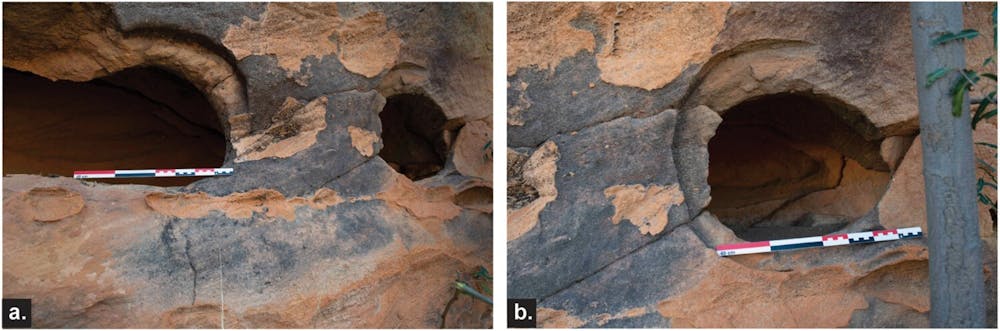
    Part of the Teniky site has been known for well over 100 years, as we know from names and dates scratched on the rocks there. Various visitors in the 1950s and 1960s with an interest in archaeology described an amphitheatre-shaped location with man-made terraces, a rock shelter with neatly constructed sandstone walls, a chamber cut into the rock with pillars and benches, and a large number of niches cut in the steep cliffs. Recesses are still visible around some of the niches, suggesting that they could be closed off by a wooden or stone slab.

    Among the suggested interpretations were that these structures had been made by shipwrecked Portuguese sailors, or Arabs, or even Phoenicians.

    No similar rock-cut architecture is known anywhere else in Madagascar or on the east African coast, 400km away.

    And until recently, no detailed archaeological studies had ever been carried out at Teniky.

    Madagascar’s past is still the subject of considerable debate. Situated in the south-western Indian Ocean, it is one of the last big islands to have been settled by humans. Genetic studies have identified the people of Madagascar as having come mainly from Africa and from Southeast Asia. Archaeology suggests that the first settlers arrived about 1,500 to 1,000 years ago. The earliest settlements studied have been located along the coast, close to river estuaries.

    Our archaeological study of Teniky, however, points to a new possibility: a former Persian presence in southern Madagascar about 1,000 years ago.

    What we found at Teniky

    Our study of high-resolution satellite images revealed the Teniky site was much larger than previously known. It showed there were more terraces and stone walls on a hill 2km to the west. This led us to take a closer look, hoping to get a better sense of who had lived there and when.

    During field prospecting on this hill we discovered niches, cut in the walls of a rock shelter, that had not been described before.

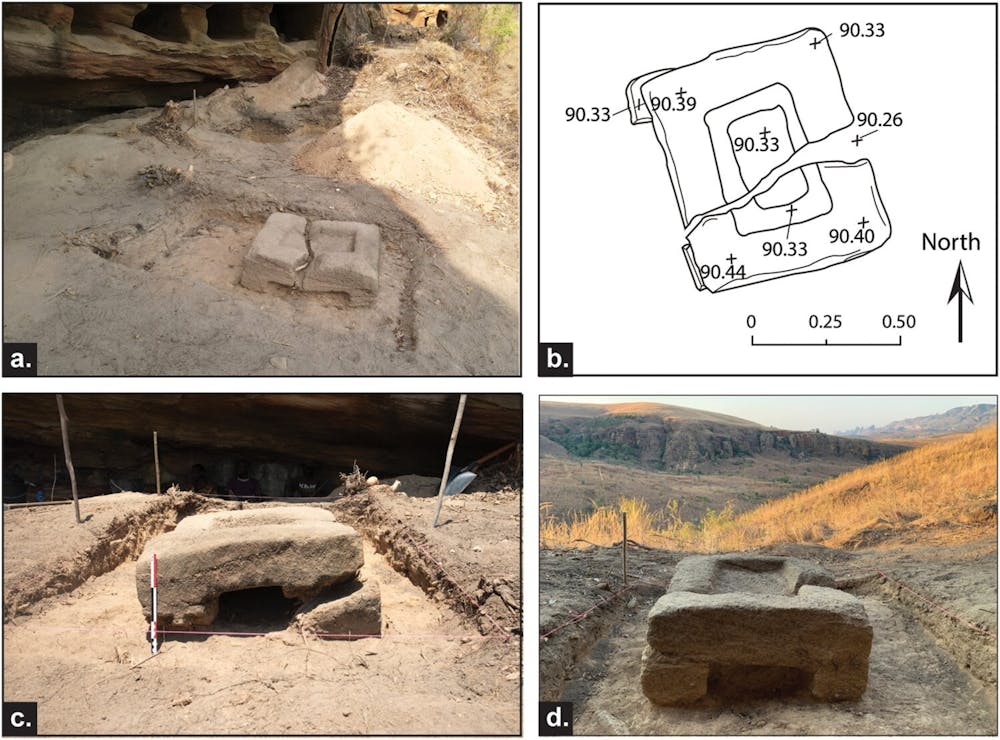
    Excavations at this rock shelter revealed more archaeological structures, including carved sandstone walls and a large stone basin.

    Radiocarbon dating of charcoal samples from the site dated to the late 10th to mid-12th centuries AD. Pieces of ceramic items of southeast Asian and Chinese origin found there have been dated by a specialist to the 11th to 14th centuries AD.

    We also found sandstone quarries from which the stones used to build the walls at the rock shelters were extracted. And we found more stone basins on terraces.

    The terraces cover a total area of about 30 hectares, indicating that Teniky must have been a fair-sized settlement. Water is available all year round in the valley below, where people might have been able to plant crops, fish for eels or even keep cattle.

    Considering the dimensions, location and character of the rock-cut structures at Teniky, we think the niches and chambers served a ritual purpose.

    Who were the people who lived at Teniky?

    There is no other archaeological site like Teniky in Madagascar. So, the question arises as to what group of people settled there, far inland, and carved the niches and chambers in the cliff walls about 1,000 years ago. The presence of imported ceramics indicates that they took part in the Indian Ocean trade networks at the time but doesn’t tell us where they came from.

    We think the answer may lie in the style of the rock-cut niches.

    Rock architecture at Teniky, Madagascar. Courtesy Guido Schreurs.

    They are similar to rock niches of the first millennium or earlier in Iran (formerly Persia). Archaeologists have interpreted those as belonging to Zoroastrian communities, which used them as part of their funeral rites.

    Zoroastrianism was the dominant state religion of the Persian Sasanian Empire (224-656 AD). After the conquest of the Sasanian Empire by the Arabs in the mid-seventh century AD, Islam was imposed.

    Zoroastrian funeral rites do not allow direct burial in the ground, so as not to pollute the earth. Instead, dead bodies are left in places of exposure not touching the ground. Once the flesh has decomposed or been removed by animals, the bone remains are dried and placed in bone receptacles (ossuaries).

    We tentatively interpret the rock-cut architecture at Teniky as having been made by a community with Zoroastrian origins.

    The larger rock-cut niches might have been the places where the bodies of the dead were exposed, and the smaller niches with recesses might have served as ossuaries, closed off by a slab to protect the bones from the rain and thus to prevent them from polluting the earth.

    The stone basins at Teniky show stylistic similarities with those used in Zoroastrian ritual ceremonies to hold water or fire, both agents of ritual purity.

    Zoroastrians abroad

    There are few accounts of Madagascar written at the turn of the first and second millennia AD. Buzurg Ibn Shahriyar, a tenth-century Persian sailor and writer, collected stories from sailors in port towns on the Persian Gulf which suggest that Persian contacts with Madagascar may have existed then. The name Madagascar did not exist at that time but names like “Wak-wak” or “Qumr”/“Komr” may have referred to the island.


    Read more:
    Madagascar cave art hints at ancient connections between Africa and Asia


    Historical documents, archaeological excavations and genetic studies indicate that Zoroastrians left Iran and settled in western India in the late eighth century AD.

    Did they settle on the island of Madagascar too? If the rock-cut architecture and associated stone basins at Teniky are the work of a community with Zoroastrian origins, this would strongly point to a former Persian presence in southern Madagascar about 1,000 years ago.

    Many questions remain. We hope future studies will answer some of them.

    The authors do not work for, consult, own shares in or receive funding from any company or organisation that would benefit from this article, and have disclosed no relevant affiliations beyond their academic appointment.

    ref. Madagascar’s mysterious Teniky rock architecture: study suggests a link to ancient Persia – https://theconversation.com/madagascars-mysterious-teniky-rock-architecture-study-suggests-a-link-to-ancient-persia-240725

    MIL OSI – Global Reports

  • MIL-OSI United Kingdom: Future of Great British Railways

    Source: United Kingdom – Executive Government & Departments 2

    Secretary of State for Transport outlines next steps for rail reform in Britain during the Derby rail skills event.

    Good morning everyone and let me start by thanking Derby City Council for organising this event.

    It’s wonderful to be back in Derby – the future home of Great British Railways (GBR).

    But in many ways, this has always been the industry’s home.

    A city of train building – 180 years and counting – from the Derby Works to Alstom today.

    A city of innovation – from the first steel rails to the iconic railway roundhouse.

    And a city of heritage – from railway cottages to the Brunswick Inn pub, which I’m glad to see is still going strong.

    But Derby has never rested on historic laurels.

    Instead, it has renewed and reformed. 

    That roundhouse is now Derby College, producing the engineers of tomorrow.

    The once rail technical centre is now part of Europe’s biggest rail cluster, with 11,000 jobs.

    And the works at Litchurch Lane, that once produced Victorian train carriages, now making trains for London’s Elizabeth Line.

    That’s why this event matters.

    Because today isn’t just about this city’s proud rail history, but about reinforcing Derby’s central role in shaping rail’s future.

    And about celebrating the brilliant businesses of all shapes and sizes that make up the rail industry.

    State of rail

    Derby’s zeal for renewal and reform is shared by this government.

    Because after years of dysfunction and decline – how our economy is managed, how public services are run, how government works, all must return to the service of working people, wherever they live.

    That is the work of national renewal the Prime Minister has promised.

    And it starts with our railways.

    On entering office, we were under no illusions as to the scale of the challenge.

    A railway mired in industrial action – costing the economy the equivalent of nearly £3 million pounds a day.

    And performance levels that were simply not good enough, with cancellations at a 10-year high.

    All visible problems, but with deep roots.

    Fragmentation, lack of accountability and conflicting interests.

    The very industry weaknesses Keith Williams identified years ago, still remain.

    The lack of political leadership on rail has left an industry more comfortable looking inwards, that fails to pull together when things go wrong, that has lost focus on improving each part of people’s experience with the railways – so passengers don’t get the journeys they deserve.

    We’ve seen this with delays to long promised upgrades to the East Coast Mainline, or the confusing array of fares and tickets passengers have to navigate. 

    And the great irony of privatisation is that the part of the industry that works best, that innovates and pushes boundaries – the dynamic supply chain – has been stifled. But these issues are systemic – not individual.

    Because when I speak to the supply chain and station staff, to engineers and signalers, they all want what’s best for the passenger.

    All are committed, enthusiastic and ready to work across organisational boundaries to deliver a better railway.

    But currently, they have neither the tools, incentives nor backing to do so.

    It’s why, as Passenger in Chief, when I said I would oversee the biggest overhaul of our railways in a generation, a big part of that will be a cultural reset.

    Where every part of the workforce feels empowered to challenge the orthodoxy of years past, supported by an entirely new and reformed organisation – Great British Railways.

    Where we value diverse skills, build new capabilities and forge high-quality careers that attract the next generation.

    And where everyone understands how they contribute to a railway unashamedly focused on delivering for passengers and taxpayers.

    It will not be British Rail Rebooted or Network Rail 2.0 – but we’ll usher in a new era for the railways where every part of the industry is motivated and incentivised to deliver for the passenger.

    That’s my personal mission.

    To join you in a determined effort to get our railways working again – for passengers, for its workforce and for communities across Britain.

    Because our railways are essential to getting Britain growing and moving again.

    Industrial action

    Within months, we’ve begun the essential work of change.

    We’ve ended the longest ever national strike on our railways.

    Gone are the political gimmicks of years past, which not only prolonged industrial action but caused misery for passengers and cost the railways £850 million pounds.

    Within days of taking office, I spoke to all rail unions and hit reset.

    I was clear that if talks were needed, we would sit round in good faith.

    If compromises could be made, we would all make them.

    And if a deal could be struck, we would fight for a fair agreement for workers, passengers and taxpayers.

    A new, grown-up, approach – which put passengers first and politics second. And clears the way for vital workforce reform, to modernise our railways and do away with outdated working practices.

    Public Ownership Bill

    I’ve also fired the starting gun on rail reform.

    The Public Ownership Bill has passed the Commons and now awaits committee stage scrutiny in the Lords.

    It calls time on a broken model, one that repeatedly failed passengers and one that cost tens of millions of pounds in fees each year.

    It allows us to bring passenger services into public hands as contracts expire over the next 3 years.

    But I know passengers won’t wait that long for things to improve.

    They rightly deserve better than the status quo.

    So we will continue building capacity and expertise in the public sector, as it takes on additional services.

    And in the meantime, I won’t hesitate to take decisive action if operators don’t meet their obligations.

    It’s a message I’ve already delivered loud and clear to the Managing Directors of Avanti West Coast and Cross Country. And indeed, we have set new and clear expectations to those train operating companies already in public ownership.

    Reform

    Now, public ownership and resolving national strikes are just stops on the journey to reform, not the terminus.

    The Railways Bill, which we will introduce later this parliamentary session, will get the industry back on track.

    We’ll establish Great British Railways – a directing mind running the railways as one system, with a relentless focus on passengers.

    We’ll stop the blame game, by unifying track and train.

    We’ll grip the finances, led by passenger need and taxpayer value.

    And we’ll grow freight, unlocking new green growth.

    Delivering GBR in full will be the work of years, not months. It is the biggest reform agenda of this government.

    But again, we cannot afford to wait.

    Shadow GBR

    So I’ve taken decisive action to bring the industry together under Shadow Great British Railways and its new Chair Laura Shoaf.

    Laura brings a wealth of experience.

    And I’ve asked her specifically to lay the foundations of culture change the industry needs.

    That, of course, means getting the basics right with performance, but it also means encouraging innovation at every opportunity.

    So, under her leadership, the heads of Network Rail, DOHL, and DfT’s rail services group – the people in charge of track and train – will work closer than ever before to set the tone of reform and deliver immediate improvements. 

    On performance: nowhere near good enough across the board, but not helped by the labyrinth of different contracts, measures and incentives at play.

    Different targets lead to competing priorities.

    And operational decisions that make sense in one part of the industry, can lead to worse outcomes overall – with passengers inevitably bearing the brunt.

    So, I will soon set out new performance measures, ensuring a more consistent and transparent approach.

    We’ll end the boom-and-bust approach to investment projects.

    Replacing it with a long term strategy for rolling stock – essential for the industry here in Derby.

    After years of government uncertainty and mixed messages, this will give the supply chain the certainty it needs to plan and invest.

    And finally, we’re reviewing fares and ticketing. Not just to unblock barriers to reform, but to urgently get passengers back on board with new exciting campaigns.

    That starts early next year, with a new ‘rail sale’ to coincide with the 200-year anniversary of the first passenger service.

    It will offer up to half price Advance and Off-peak fares – to get Britain moving, to connect our communities and to give back to passengers, who for too long have paid more and more for less and less.

    These first steps are important, as we start restoring some national pride to this industry and building the railway of tomorrow.

    Conclusion

    I began by talking about Derby, and it’s also a good place to end.

    We are standing in the biggest concentration of rail innovation and expertise in Europe.

    Around 600 rail companies, employing 45,000 people, have chosen to co-locate in the East Midlands.

    And it’s easy to see why.

    We have Derby University’s Rail Research Innovation Centre, Network Rail’s testing facility at Tuxford, Alstom’s world leading manufacturing facility and maintenance hubs for Sperry Rail and Railcare.

    All will soon be joined by GBR, providing the leadership this industry has sorely needed.

    Working in partnership – government and industry – to build a renewed and reformed railway, fit for the future, fit for Britain.

    A new era for our railways and a new era for Derby.

    Updates to this page

    Published 17 October 2024

    MIL OSI United Kingdom

  • MIL-OSI United Kingdom: AI model that checks for skin cancer shows promise

    Source: Anglia Ruskin University

    Published: 17 October 2024 at 14:45

    Research found model outperformed existing methods of finding suspicious lesions

    Scientists in the East of England have developed a way of using artificial intelligence to check for skin cancer, with the AI tool outperforming existing methods in a new study.

    Researchers from Anglia Ruskin University, Check4Cancer, University of Essex and Addenbrooke’s Hospital worked on the AI model which was trained on data from 53,601 skin lesions from 25,105 patients.

    In this study, researchers used machine learning and combination theory to distil 22 clinical features down to the seven most important that predict if a skin lesion might be suspicious or not. These features include: whether the lesion has recently changed size, colour or shape; whether the lesion was pink or inflamed; and hair colour at age 15.

    Researchers applied proportional weighting to these seven features to create the new C4C Risk Score which has an accuracy of 69%. In the study it significantly outperformed existing methods such as 7PCL (62%) and Williams score (60%).

    Some of the new risk factors they discovered, such as lesion age, pinkness, and hair colour, were important for all types of skin cancer but were not included in the older methods, which only focused on melanoma, a specific type of skin cancer.

    Professor Gordon Wishart, Visiting Professor of Cancer Surgery at Anglia Ruskin University and Chief Medical Officer at Check4Cancer, said:

    “This study shows the importance of using clinical data in skin lesion classification, which should help to improve the detection of skin cancer.

    “Our new AI model, which combines the C4C risk score together with skin lesion images, could lead to a reduction in the need for patient referrals for biopsies, shorter waiting times for skin cancer diagnosis and treatment, and improved outcomes for patients.”

    Consultant Plastic Surgeon Per Hall, who recently retired from Addenbrooke’s, said:

    “The added value that this paper brings is the ability to help identify patients whose skin lesions are suspicious enough to justify onward referral for face-to-face analysis.  

    “Emphasis in the past has been on pigmented lesions and melanoma but other things grow on the skin that need sorting out such as basal cell carcinomas and squamous cell carcinomas.  

    “The NHS is deluged with referrals for skin lesion analysis – the vast majority are in fact innocent.  This work is geared towards sifting out lesions that are potentially serious and identifying those patients whose skin is more prone to developing cancers so they can be seen quickly.”

    The study, which was part-funded by a Knowledge Transfer Partnership (KTP) Grant from Innovate UK, was published in the Nature journal Scientific Reports.

    It is hoped that regulatory approval for the AI model can be given in 2025.

    MIL OSI United Kingdom

  • MIL-OSI United Kingdom: ARU students make final of national AT Awards

    Source: Anglia Ruskin University

    Published: 17 October 2024 at 14:32

    Harriet and Rebecca shortlisted for their architectural technology projects

    Two Anglia Ruskin University (ARU) students have made the six-person shortlist for best project at the AT Awards, which recognise excellence in architectural technology.

    Harriet Key and Rebecca Wakely have both been named finalists for the Student Award for Excellence in Architectural Technology at the annual awards, which are organised by the Chartered Institute of Architectural Technologists (CIAT).

    Harriet and Rebecca study at ARU’s School of Architecture and Planning in Chelmsford, and have been shortlisted for projects they have completed as part of their ARU courses. 

    Rebecca, who lives in Godmanchester, designed The Octagon, a proposal for a sustainable community arts and cultural hub in the centre of Ely, while Harriet, who lives in Attleborough, has been shortlisted for Cranwood Residence, a design for a zero carbon, multi-generational housing development in Haringey, London.

    Mark Tree, Interim Head of Engineering and the Built Environment at ARU, said:

    “Congratulations to both Rebecca and Harriet for making the shortlist of the prestigious AT Awards this year – we’re extremely proud of their achievements. 

    “We were all incredibly impressed by the design projects they submitted, so it is pleasing that these also caught the eye of the awards judges. We are delighted with their deserved recognition.”

    For more information about the courses offered by ARU’s School of Architecture and Planning, visit https://www.aru.ac.uk/science-and-engineering/engineering-and-the-built-environment/school-of-architecture-and-planning 

    MIL OSI United Kingdom

  • MIL-OSI USA: NASA’s SpaceX 31st Resupply Mission to Launch Experiments to Station

    Source: NASA

    [embedded content]

    NASA and its international partners are launching scientific investigations on SpaceX’s 31st commercial resupply services mission to the International Space Station including studies of solar wind, a radiation-tolerant moss, spacecraft materials, and cold welding in space. The company’s Dragon cargo spacecraft is scheduled to launch from NASA’s Kennedy Space Center in Florida.
    Read more about some of the research making the journey to the orbiting laboratory:

    The CODEX (COronal Diagnostic EXperiment) examines the solar wind, creating a globally comprehensive data set to help scientists validate theories for what heats the solar wind – which is a million degrees hotter than the Sun’s surface – and sends it streaming out at almost a million miles per hour.
    The investigation uses a coronagraph, an instrument that blocks out direct sunlight to reveal details in the outer atmosphere or corona. The instrument takes multiple daily measurements that determine the temperature and speed of electrons in the solar wind, along with the density information gathered by traditional coronagraphs. A diverse international team has been designing, building, and testing the instrument since 2019 at NASA’s Goddard Space Flight Center in Greenbelt, Maryland.
    Multiple missions have studied the solar wind, and CODEX could add important pieces to this complex puzzle. When the solar wind reaches Earth, it triggers auroras at the poles and can generate space weather storms that sometimes disrupt satellite and land-based communications and power grids on the ground. Understanding the source of the solar wind could help improve space-weather forecasts and response.

    A radiation tolerance experiment, ARTEMOSS, uses a live Antarctic moss, Ceratodon purpureus, to study how some plants better tolerate exposure to radiation and to examine the physical and genetic response of biological systems to the combination of cosmic radiation and microgravity. Little research has been done on how these two factors together affect plant physiology and performance, and results could help identify biological systems suitable for use in bioregenerative life support systems on future missions.
    Mosses grow on every continent on Earth and have the highest radiation tolerance of any plant. Their small size, low maintenance, ability to absorb water from the air, and tolerance of harsh conditions make them suitable for spaceflight. NASA chose the Antarctic moss because that continent receives high levels of radiation from the Sun.
    The investigation also could identify genes involved in plant adaptation to spaceflight, which might be engineered to create strains tolerant of deep-space conditions. Plants and other biological systems able to withstand the extreme conditions of space also could provide food and other necessities in harsh environments on Earth.

    The Euro Material Ageing investigation from ESA (European Space Agency) includes two experiments studying how certain materials age while exposed to space. The first experiment, developed by CNES (Centre National d’Etudes Spatiales), includes materials selected from 15 European entities through a competitive evaluation process that considered novelty, scientific merit, and value for the material science and technology communities. The second experiment looks at organic samples and their stability or degradation when exposed to ultraviolet radiation not filtered by Earth’s atmosphere. The exposed samples are recovered and returned to Earth.
    Predicting the behavior and lifespan of materials used in space can be difficult because facilities on the ground cannot simultaneously test for all aspects of the space environment. These limitations also apply to testing organic compounds and minerals that are relevant for studying comets, asteroids, the surface of Mars, and the atmospheres of planets and moons. Results could support better design for spacecraft and satellites, including improved thermal control, and the development of sensors for research and industrial applications.

    Nanolab Astrobeat investigates using cold welding to repair perforations in the outer shell or hull of a spacecraft from the inside. Less force is needed to fuse metallic materials in space than on Earth, and cold welding could be an effective way to repair spacecraft.
    Some micrometeoroids and space debris traveling at high velocities could perforate the outer surfaces of spacecraft, possibly jeopardizing mission success or crew safety. The ability to repair impact damage from inside a spacecraft may be more efficient and safer for crew members. Results also could improve applications of cold welding on Earth as well.
    The investigation also involves a collaboration with cellist Tina Guo with support from New York University Abu Dhabi to store musical compositions on the Astrobeat computer. Investigators planned to stream this “Music from Space” from the space station to the International Astronautical Congress in Milan and to Abu Dhabi after the launch.

    Download high-resolution photos and videos of the research mentioned in this article. 
    Melissa GaskillInternational Space Station Research Communications TeamJohnson Space Center

    MIL OSI USA News

  • MIL-OSI Africa: Madagascar’s mysterious Teniky rock architecture: study suggests a link to ancient Persia

    Source: The Conversation – Africa – By Guido Schreurs, Professor in Geology, University of Bern

    In the heart of Isalo National Park in central-southern Madagascar, at least 200km from the sea in any direction, is a remote valley with a mysterious past. This place, Teniky, can only be reached on foot, by hiking through a mountainous region dissected by steep canyons.

    Isalo area. Guido Schreurs, Author provided (no reuse)

    Part of the Teniky site has been known for well over 100 years, as we know from names and dates scratched on the rocks there. Various visitors in the 1950s and 1960s with an interest in archaeology described an amphitheatre-shaped location with man-made terraces, a rock shelter with neatly constructed sandstone walls, a chamber cut into the rock with pillars and benches, and a large number of niches cut in the steep cliffs. Recesses are still visible around some of the niches, suggesting that they could be closed off by a wooden or stone slab.

    Among the suggested interpretations were that these structures had been made by shipwrecked Portuguese sailors, or Arabs, or even Phoenicians.

    Teniky. Guido Schreurs, Author provided (no reuse)

    No similar rock-cut architecture is known anywhere else in Madagascar or on the east African coast, 400km away.

    And until recently, no detailed archaeological studies had ever been carried out at Teniky.

    Madagascar’s past is still the subject of considerable debate. Situated in the south-western Indian Ocean, it is one of the last big islands to have been settled by humans. Genetic studies have identified the people of Madagascar as having come mainly from Africa and from Southeast Asia. Archaeology suggests that the first settlers arrived about 1,500 to 1,000 years ago. The earliest settlements studied have been located along the coast, close to river estuaries.

    Our archaeological study of Teniky, however, points to a new possibility: a former Persian presence in southern Madagascar about 1,000 years ago.

    What we found at Teniky

    Our study of high-resolution satellite images revealed the Teniky site was much larger than previously known. It showed there were more terraces and stone walls on a hill 2km to the west. This led us to take a closer look, hoping to get a better sense of who had lived there and when.

    During field prospecting on this hill we discovered niches, cut in the walls of a rock shelter, that had not been described before.

    Excavations at this rock shelter revealed more archaeological structures, including carved sandstone walls and a large stone basin.

    Radiocarbon dating of charcoal samples from the site dated to the late 10th to mid-12th centuries AD. Pieces of ceramic items of southeast Asian and Chinese origin found there have been dated by a specialist to the 11th to 14th centuries AD.

    We also found sandstone quarries from which the stones used to build the walls at the rock shelters were extracted. And we found more stone basins on terraces.

    The terraces cover a total area of about 30 hectares, indicating that Teniky must have been a fair-sized settlement. Water is available all year round in the valley below, where people might have been able to plant crops, fish for eels or even keep cattle.

    Considering the dimensions, location and character of the rock-cut structures at Teniky, we think the niches and chambers served a ritual purpose.

    Teniky. Raphael Kunz, Author provided (no reuse)

    Who were the people who lived at Teniky?

    There is no other archaeological site like Teniky in Madagascar. So, the question arises as to what group of people settled there, far inland, and carved the niches and chambers in the cliff walls about 1,000 years ago. The presence of imported ceramics indicates that they took part in the Indian Ocean trade networks at the time but doesn’t tell us where they came from.

    We think the answer may lie in the style of the rock-cut niches.

    Rock architecture at Teniky, Madagascar. Courtesy Guido Schreurs.

    They are similar to rock niches of the first millennium or earlier in Iran (formerly Persia). Archaeologists have interpreted those as belonging to Zoroastrian communities, which used them as part of their funeral rites.

    Zoroastrianism was the dominant state religion of the Persian Sasanian Empire (224-656 AD). After the conquest of the Sasanian Empire by the Arabs in the mid-seventh century AD, Islam was imposed.

    Zoroastrian funeral rites do not allow direct burial in the ground, so as not to pollute the earth. Instead, dead bodies are left in places of exposure not touching the ground. Once the flesh has decomposed or been removed by animals, the bone remains are dried and placed in bone receptacles (ossuaries).

    We tentatively interpret the rock-cut architecture at Teniky as having been made by a community with Zoroastrian origins.

    Circular niches with a recess around the opening. Guido Schreurs, Author provided (no reuse)

    The larger rock-cut niches might have been the places where the bodies of the dead were exposed, and the smaller niches with recesses might have served as ossuaries, closed off by a slab to protect the bones from the rain and thus to prevent them from polluting the earth.

    Basin in front of niches. Guido Schreurs, Author provided (no reuse)

    The stone basins at Teniky show stylistic similarities with those used in Zoroastrian ritual ceremonies to hold water or fire, both agents of ritual purity.

    Zoroastrians abroad

    There are few accounts of Madagascar written at the turn of the first and second millennia AD. Buzurg Ibn Shahriyar, a tenth-century Persian sailor and writer, collected stories from sailors in port towns on the Persian Gulf which suggest that Persian contacts with Madagascar may have existed then. The name Madagascar did not exist at that time but names like “Wak-wak” or “Qumr”/“Komr” may have referred to the island.


    Read more: Madagascar cave art hints at ancient connections between Africa and Asia


    Historical documents, archaeological excavations and genetic studies indicate that Zoroastrians left Iran and settled in western India in the late eighth century AD.

    Did they settle on the island of Madagascar too? If the rock-cut architecture and associated stone basins at Teniky are the work of a community with Zoroastrian origins, this would strongly point to a former Persian presence in southern Madagascar about 1,000 years ago.

    Many questions remain. We hope future studies will answer some of them.

    – Madagascar’s mysterious Teniky rock architecture: study suggests a link to ancient Persia
    https://theconversation.com/madagascars-mysterious-teniky-rock-architecture-study-suggests-a-link-to-ancient-persia-240725

    MIL OSI Africa

  • MIL-OSI United Kingdom: British Caribbean Minister meets Prime Minister Philip Davis KC in The Bahamas as the two countries strengthen trade ties

    Source: United Kingdom – Executive Government & Departments

    Baroness Chapman signs new trade deals between the UK and The Bahamas

    • Baroness Chapman to visit The Bahamas as part of her first visit to the Western Caribbean
    • Minister meeting with Prime Minister Philip Davis KC to formally sign series of UK-Bahamas trade deals
    • UK-Bahamas trade relationship worth $5bn per year

    The UK Minister for the Caribbean, Baroness Chapman is in The Bahamas today.

    While in Nassau, the Minister met Prime Minister Philip Davis KC to discuss formally our bilateral partnership, and our shared priority of growing our economies, empowering our young people, and fighting the climate and nature crises.

    The Minister and Prime Minister announced a series of new trade deals between the UK and The Bahamas, that will see UK businesses including Manchester Airport Group and Amey PLC awarded contracts for work to operator Freeport Airport, and rebuild Glass Window Bridge.  

    In a demonstration of the growing UK-Bahamas trade relationship, Baroness Chapman was also able to announce that Amey PLC, the firm behind construction of the M1 and the rebuilding of Liverpool Lime Street, will be making Nassau the home of its first ever office in the Americas.

    The firm will hire and train Bahamian engineers and project managers, and connect Bahamian companies with British expertise to win contracts across the Caribbean and USA. 

    The current trade relationship between the UK and The Bahamas amounts to $5bn a year, making the UK one of The Bahamas’ most significant trade partners.

    UK Caribbean Minister, Baroness Chapman said:

    The UK-Bahamas relationship is going from strength to strength.  

    The deals I am announcing alongside the Right Honourable Philip Davis here this week will see British businesses deliver essential infrastructure projects for The Bahamas, and invest directly in The Bahamas.

    They are a further illustration of our growing partnership, as we continue work to deliver growth and prosperity for the people of both our nations.

    I look forward to continuing to deepen our ties from trade to climate during my time in The Bahamas.

    During her visit, Baroness Chapman also met Minister of Education and Technical and Vocational Training, Glenys Hanna-Martin, where she formally handed over 10,000 pages of historic documents pertaining to Bahamian Independence, that have been stored in the National Archives in the UK.  

    The documents have also been digitised and will be made available by The Bahamas’ National Archive, which will increase access and public understanding of the process undertaken to achieve independence by students both in The Bahamas and the UK.  

    Following a visit to a coral reef to see the work local NGOs are doing to preserve an important ecological area, the Minister toured the University of The Bahamas, where she took part in a roundtable alongside environmental science students, academics and NGOs focused on the impact of climate change on The Bahamas.

    Finally, the Minister visited the Forensics department of The Royal Bahamas Police Force and met two senior female officers who were recipients of the UK Chevening scholarship, and who received formal UK forensics training.

    Media enquiries

    Email newsdesk@fcdo.gov.uk

    Telephone 020 7008 3100

    Contact the FCDO Communication Team via email (monitored 24 hours a day) in the first instance, and we will respond as soon as possible.

    Updates to this page

    Published 17 October 2024

    MIL OSI United Kingdom

  • MIL-OSI Global: Aquaculture could harm animal welfare or protect it, depending on what species the farms raise

    Source: The Conversation – USA – By Becca Franks, Assistant Professor of Environmental Studies, New York University

    Raising salmon in a tank at an aquaculture farm in Dubai. Giuseppe Cacace/AFP via Getty Images

    The global aquaculture industry has tripled in size since the year 2000, with producers raising a mind-boggling diversity of species, from seaweeds and clams to carp, salmon and cuttlefish. Many of these creatures are undomesticated and lead complex and highly social lives in the wild.

    The rapid growth in aquaculture means that billions of individual aquatic animals are now being farmed without basic information that could help ensure even minimal welfare standards. Our newly published study shows that these welfare risks are not uniform: Aquaculture is likely to have severe effects on welfare for some species, but negligible impacts on others.

    Whenever humans manage animals on a large scale, welfare becomes a concern. As experts on aquatic animals and their welfare, we believe that taking proactive measures to shape the aquaculture industry’s growth will be critical for its long-term success.

    A cuttlefish tackles a challenge originally designed for human children, demonstrating cephalopods’ complex cognitive processes.

    Complex aquatic lives

    In a wide-ranging review of the existing science, we identified seven risk factors in fish and other sea creatures that would be challenging or impractical to accommodate in captivity. They include 1) migratory behavior, 2) solitary social structures, 3) long life spans, 4) carnivorous feeding habits, 5) cannibalism, 6) living at depths of 165 feet (50 meters) or more, and 7) elaborate courtship or involved parental care.

    We researched these characteristics for each of the more than 400 species currently farmed in aquaculture. Our analysis found that many species of fishes, reptiles and amphibians are likely to suffer in aquaculture because they won’t be able to engage in their natural behaviors in farmed conditions. The same is true for crustaceans such as lobsters and for cephalopods such as cuttlefish.

    In contrast, aquatic plants and other invertebrates such as oysters would experience fewer differences between their life in the wild versus in a tank, pond or other aquaculture production system.

    We also found that species most at risk are among the most expensive on the market but contribute the least to global production. By shifting toward species whose behaviors and life habits are more compatible with aquaculture, the industry could minimize animal welfare risk while also keeping prices down and production quantities high. In other words, protecting aquatic animal welfare is compatible with producing affordable, nutritious food.

    Animal welfare in the water

    Research shows that many aquatic animals are intelligent, emotional, curious, highly social and have strong preferences. Like land animals, they can suffer if their needs aren’t met.

    Consider, for example, the bumphead parrotfish (Bolbometopon muricatum), which is currently farmed in aquaculture. Bumpheads live up to 40 years and travel several kilometers each day in large foraging troops, searching for live coral. On full moons, they come together in the hundreds to spawn and engage in ritual head-bumping contests between the males, like an aquatic version of bison.

    Divers observe a feeding school of bumphead (also referred to as humphead) parrotfish on Australia’s Great Barrier Reef.

    It would be very difficult and expensive to accommodate this species’ long life span, large range, complex foraging behavior and dynamic social relationships in the highly restrictive and monotonous environments of aquaculture.

    We also found examples of invertebrate animals with similarly elaborate ways of life. One example is the red swamp crayfish (Procambarus clarkii), a comparatively small crustacean that builds elaborate tunnel and chamber systems underground. Females care attentively for their tiny offspring, fanning, cleaning and feeding juveniles for up to four months after they hatch.

    In contrast, plant species farmed in aquaculture, such as seaweeds and water spinach (Ipomoea aquatica), are nutritious, protein-rich foods that can be raised without posing direct animal welfare concerns.

    In 2021 alone, 56 species were farmed for the first time. By identifying species that may naturally adapt better to life in captivity, aquaculture producers and policymakers can steer their industry toward a more humane future.

    This approach is already finding support in the U.S., where Washington and California have banned octopus farming. The states acted partly in response to research showing that octopuses are intelligent, curious, social animals that can solve problems and recognize individual people – qualities that are incompatible with being raised en masse for food.

    More research is needed to understand the lives and behaviors of other sea creatures that are currently farmed or targeted for production in the future. Most of these species remain understudied and mysterious, which makes it hard to make informed decisions about whether they are suitable for farming.

    Better data could contribute to aquaculture policy, while also boosting public appreciation for the diversity and intricacy of life on a planet that is 70% aquatic.

    Becca Franks receives funding from TinyBeam Foundation and Open Philanthropy.

    Chiawen Chiang does not work for, consult, own shares in or receive funding from any company or organization that would benefit from this article, and has disclosed no relevant affiliations beyond their academic appointment.

    ref. Aquaculture could harm animal welfare or protect it, depending on what species the farms raise – https://theconversation.com/aquaculture-could-harm-animal-welfare-or-protect-it-depending-on-what-species-the-farms-raise-240771

    MIL OSI – Global Reports

  • MIL-OSI: Retired CEO and Chair of the Board of Directors of Microchip Technology Steve Sanghi Releases New Book: “Ask Steve: Everyday business advice from a successful CEO”

    Source: GlobeNewswire (MIL-OSI)

    PARADISE VALLEY, Ariz., Oct. 16, 2024 (GLOBE NEWSWIRE) — Steve Sanghi, retired CEO and chair of the board of directors of Microchip Technology, today announces the release of his third book, “Ask Steve: Everyday business advice from a successful CEO.” Sanghi offers practical and real-world business advice based on his highly regarded leadership style and overall business acumen.

    Building on the success of his previous books, “Ask Steve: Everyday business advice from a successful CEO,” is an extension of the popular business advice column that ran in the Arizona Republic from 2007 to 2014. In the column, Sanghi responded to business inquiries from individuals at various career levels, offering solutions to both personal and professional challenges. “I contributed to the ‘Ask Steve’ column as a way to give back to the community and help others using my own experiences,” Sanghi said. The column featured advice on a range of professional concerns from individual career advancement to global trade dilemmas.

    The book gathers questions from over seven years of the column, providing insights into topics such as:

    • Career development and advancement
    • Global trade challenges
    • Management issues
    • Advice for investors and marketers
    • International business complexities

    This release follows Sanghi’s previous books, Driving Excellence: How the Aggregate System Turned Microchip Technology from a Failing Company to a Market Leader (co-authored with Michael J. Jones) and Up and to the Right: My Personal and Business Journey Building the Microchip Technology Juggernaut (2023).

    The sound advice in “Ask Steve” provides a comprehensive guide for anyone seeking practical business advice and is sure to be a constant desk reference for professionals from CEOs to recent graduates. Sanghi’s firsthand experience as a successful leader makes his advice relevant and actionable in today’s fast-paced business environment.

    The book is available for purchase on Amazon or here.

    About the Author

    Steve Sanghi led Microchip Technology for over three decades, transforming it from a struggling company on the verge of bankruptcy in 1990 to a market leader in the semiconductor industry with a market capitalization of $43 billion. Sanghi has won numerous awards during his tenure, including the Global Semiconductor Alliance’s Dr. Morris Chang Exemplary Leadership Award in December 2022, the Global Semiconductor Alliance’s highest honor. A respected thought leader in the business world, Sanghi has authored three books and regularly provides insights on leadership, business strategy and management.

    Today, Sanghi is Chair of the board of Microchip Technology, Impinj and Advantek. He is also a member of the board of directors of the Northern Arizona University Foundation.

    Editorial Contact:

    Marcy Hatch-Padilla

    480-792-5981

    booksupport@microchip.com

    1. Sanghi, S., & Jones, M.J. (2006). “Driving excellence: How the aggregate system turned Microchip Technology from a failing company to a market leader.”
    2. Sanghi, S. (2023). “Up and to the right: My personal and business journey building the Microchip Technology juggernaut.”

    The MIL Network

  • MIL-OSI Global: Donald Trump’s attack on overseas voters is erroneous and dangerous

    Source: The Conversation – Canada – By Jennifer Saul, Chair in Social and Political Philosophy of Language, University of Waterloo

    I do research on racist and xenophobic speech. I am also an American citizen, and have voted from overseas since 1996 (first in the U.K., and now in Canada).

    This makes me especially well-placed to explain why Donald Trump’s Truth Social post about overseas voters in late September and Republican efforts to undermine those voters are factually wrong and politically dangerous.

    The current law giving Americans overseas the right to vote in federal elections is the Uniformed and Overseas Citizens Absentee Voting Act, which was signed into law by Ronald Reagan, a Republican president.

    The federal program to help American citizens vote while living overseas is overseen by the Department of Defense — which makes sense, given that a large number of them are members of the United States military. All of this should give pause to anyone who thinks that allowing overseas citizens to vote is some sort of left-wing conspiracy.

    Complex process

    Nor is it an easy matter to vote from overseas. Every state has its own process for verifying citizenship after the registration and request form reaches them, and each has its own rules that voters must follow in order for their ballot to be counted.

    My own state, New Jersey, is relatively simple: I can email my registration/request form, get my ballot by e-mail, and email it back. But I must also remember to mail in the paper version of my ballot or my vote won’t count.

    This is easy enough for me, from Canada or previously the U.K. But it’s much more difficult for American citizens living in places that lack reliable postal services who often have to use expensive courier services to carry out their duty as citizens.

    My husband’s state is New York. He is allowed to e-mail his ballot request, but he must also mail a paper version of the request. And the ballot itself comes with an elaborate set of envelope templates that require precise folding — and must arrive by a strict deadline, no matter where they’re being mailed from.

    He’s a former graphic designer, and comfortable performing this task. But imagine trying to do so while suffering from arthritis or vision problems — especially when the home-printed version has tiny text. In short, there is nothing easy about voting from abroad.

    So why use inflammatory language to pretend it’s an easy matter to generate many thousands of fraudulent overseas votes? One explanation would be to sow doubt about the election results. Anything that can introduce uncertainty and slow down the counting process can be exploited in an effort that could allow Trump and his allies to falsely declare him the winner on Nov. 5.

    Trump’s campaign has made no secret about its plan to follow this path.

    Language that suggests American citizens abroad are not really American also fits into a larger pattern of stoking divisions — and of drawing ever tighter boundaries around who would be counted as “real” Americans. This is a classic fascist power move, one that leads to a sharply defined “us,” who are worthy of moral consideration, as opposed to “them,” who are not.

    Disenfranchising citizens abroad

    Importantly, the movement against overseas voters is not just confined to a social media post. There are lawsuits in several states designed to disenfranchise American citizens abroad. These are citizens who may have gone to enormous lengths to carry out their duties by asking for and sending in election ballots, often at substantial personal expense and faced with substantial barriers.

    Trump and his allies are working hard to prevent Americans abroad from exercising their most basic rights of citizenship. When Trump uses language that accuses overseas voters of fraud and foreign interference, it suggests we’re not really Americans.

    There’s a major problem in doing so. As mentioned, a large segment of American citizens abroad are members of the U.S. armed forces. Efforts to disenfranchise Americans abroad are also efforts to disenfranchise the military.

    ‘Figleaf’ language

    That’s why Trump’s allegation on Truth Social that Democrats “want to dilute the TRUE vote of our beautiful military” makes no sense. This is especially true given it’s coming from someone who’s attacking the very law that allows members of the military to vote from abroad, including casting ballots for him if they’re so inclined.

    This is what I call a figleaf — an additional bit of speech that provides just a bit of cover for saying something else that is much less acceptable. The allegation suggests, to someone who doesn’t understand overseas voting, that Trump somehow supports the military.

    Trump’s “diluting the vote” rhetoric also plays into the deeply racist Great Replacement Theory. This theory holds that Democrats and other shadowy forces (often cast as Jewish) are plotting to replace white Americans with foreigners, in part as a way to secure electoral victory.

    Overseas voting might seem like a niche issue. But overseas citizens could make all the difference in a close election. The attack on overseas voting is part of a much larger pattern of destructive suggestions from Trump about who is and is not a real American.

    I am a member of the Democratic Party

    ref. Donald Trump’s attack on overseas voters is erroneous and dangerous – https://theconversation.com/donald-trumps-attack-on-overseas-voters-is-erroneous-and-dangerous-241332

    MIL OSI – Global Reports

  • MIL-OSI USA: Read More (Rep. Grijalva Announces $7.4 Million to Assist Pedestrians in Vehicle Accidents)

    Source: United States House of Representatives – Congressman Raul M Grijalva (D-AZ)

    Rep. Grijalva Announces $7.4 Million to Assist Pedestrians in Vehicle Accidents

    TUCSON, Ariz. – Today, Representative Raúl M. Grijalva (AZ-07) announced the University of Arizona will receive $7,483,382 to analyze and implement the Emergency Medical Services (EMS) ‘Physician 1’ Program.The EMS ‘Physician 1’ Program would deploy physician-staffed vehicles, with advanced care equipment, directly to crash sites, allowing for the immediate provision of advanced medical treatments typically unavailable at the scene and integrate it into the Pima County Action Plan.

    “Tucson is among the top cities on the list in terms of pedestrian fatalities from vehicle crashes,” said Rep. Grijalva. “As we work to make our roads safer for all, this funding is vital and will help save lives. I was proud to support the Bipartisan Infrastructure Law which made this federal funding possible, and I will continue to support programs like these that offer the best care for anyone who may be involved in an accident.”

    The federal funding is sourced from the Bipartisan Infrastructure Law, specifically the Safe Streets and Roads for All (SS4A) discretionary grant program which is set to provide $5 billion in grant funding over five years. Funding supports regional, local, and Tribal initiatives through grants to prevent roadway deaths and serious injuries. The SS4A program supports Secretary of Transportation Pete Buttigieg’s National Roadway Safety Strategy and the goal of zero deaths and serious injuries on our nation’s roadways.

    ###

    MIL OSI USA News

  • MIL-OSI Europe: Christine Lagarde: Lessons from Ljubljana in uncertain times

    Source: European Central Bank

    Speech by Christine Lagarde, President of the ECB, at the official dinner of Banka Slovenije in Ljubljana, Slovenia

    Ljubljana, 16 October 2024

    It is a pleasure to be here this evening.

    Not far from here, tucked away in the National and University Library, lie copies of the Abecedarium and the Catechism. These two texts, written by the religious reformer Primož Trubar in 1550, were the first ever books to be printed in Slovenian.[1]

    At a time when German was the language of the ruling classes, Trubar’s pioneering act was fundamental in helping to establish the national identity of Slovenians.[2]

    Today, his portrait graces the €1 coin in Slovenia, framed by the famous words found in the Catechism, “Stati inu Obstati” – “to stand and withstand”.[3]

    It is telling that both books – one a primer for the Slovenian language, the other guidelines for religious observance – were designed to teach, for there is much that Europe can learn from Slovenia in the uncertain world we now face.

    The global order we knew is fading. Open trade is being replaced with fragmented trade, multilateral rules with state-sponsored competition and stable geopolitics with conflict.

    Europe had invested considerably in the old order, so this transition is challenging for us. As the most open of the major economies, we are more exposed than others.

    So, in this new landscape, we too must learn “to stand and withstand”. And we can do so by drawing on two valuable lessons from Ljubljana.

    Opportunity in times of uncertainty

    The first lesson is that uncertainty can create opportunity.

    While many in Europe are anxious about the future, Slovenians are no strangers to uncertainty.

    Within a single generation, Slovenia made a success of the extraordinarily difficult transition from a planned economy to a market economy. Policymakers defied the odds by implementing tough structural reforms to first join the EU and, later, the euro area.

    Today, Slovenia is a success story. It is a developed, stable and high-income economy, with the highest GDP per capita at purchasing power parity of central and eastern European countries (CEECs).

    The nation’s success owes much to the creativity and vigour of its people and their innate ability to seize economic turning points and transform them into opportunities.

    For example, when Slovenia joined the EU, it was exposed to greater levels of competition from other Member States in the economic bloc.

    But Slovenia quickly capitalised on its skilled workforce to develop a new business model based on deep integration in the Single Market. Today, every single car produced in Europe has at least one component that is made in Slovenia.[4]

    For Europe, the changes in the global economy today represent a similar turning point. But if we approach it with the right spirit, I believe it can be an opportunity for renewal.

    A less favourable global economy can push us to complete our domestic market. Fiercer foreign competition can encourage us to develop new technologies. More volatile geopolitics can drive us to become more energy secure and self-sufficient in our supply chains.

    For Slovenia, the transformation of the automotive supply chain will be a particular challenge. But the economy is already adapting. For example, in July this year Slovenia secured a major investment in domestic electric vehicle production.[5]

    For many Slovenians, striding into an unpredictable future may seem like second nature.

    One of your most famous paintings, “The Sower”, hangs on display here at the National Gallery. Depicting an agricultural labourer at the crack of dawn hard at work sowing seeds in a field, the painting represents Slovenians’ resolute determination in the face of uncertainty.

    The rest of us in Europe will need to draw on this example in the uncertain times ahead. If we do so, we can also turn uncertainty into opportunity.

    The importance of sharing the benefits of change

    The second lesson from Slovenia is that the benefits of change can – and should – be more widely shared.

    The path of renewal for Europe is inescapably linked with new technology, especially digitalisation. But new technologies can sometimes lead to uneven labour market outcomes.

    Slovenia has undergone remarkable technological change over the past 20 years. Today, the country’s level of digital development is 7% above the CEEC average and it can compete with some of the most digitally developed EU countries in certain areas.[6]

    Yet Slovenia’s Gini coefficient – a measure of income inequality – is the second lowest in the OECD.[7] The country also benefits from high levels of gender equality. Female labour force participation is higher than the EU average and nearly equal to that of men.[8]

    Many in Europe are worried about the challenges ahead, such as the effects of artificial intelligence on social inclusion. But we should let Slovenia’s example inspire us.

    With the right approach, we can move forward and become more technologically advanced while ensuring everyone can benefit from the gains.

    And when everyone benefits, Europe benefits too. Over three-quarters of citizens in Slovenia feel attached to Europe, and almost two-thirds identify as both Slovenian and European – levels that are well above their respective EU averages.[9]

    Conclusion

    Let me conclude.

    In today’s uncertain world, Europe must learn “to stand and withstand”. And it can do so by looking to Slovenia as an example of how to overcome challenges that come its way.

    First, we must work hard to sow the seeds of success. And then, as the folk singer Vlado Kreslin sings, “vse se da” – “everything is possible”.

    Thank you.

    MIL OSI Europe News

  • MIL-OSI Europe: Briefing – Confirmation hearings of the Commissioners-designate: Valdis Dombrovskis – Economy and Productivity; Implementation and Simplification – 15-10-2024

    Source: European Parliament

    Valdis Dombrovskis is European Commission Executive Vice-President and currently holds an economic portfolio, which since 2020 also includes trade. After becoming Commission Vice-President for the Euro and Social Dialogue in 2016, in 2019 he was promoted to Executive Vice-President for the Euro and Social Dialogue, also overseeing Financial Stability, Financial Services and the Capital Markets Union. In 2014, Dombrovskis was elected a Member of the European Parliament, sitting in the European Paople’s Party (EPP) group, a post he had already held from 2004 to 2009. He was a member of the Committee on Budgets and a substitute member of the Economic and Monetary Affairs and Budgetary Control committees. Dombrovskis served as Latvia’s prime minister from 2009 to 2014. Prior to this, from 2002 to 2004, he served as the country’s finance minister. Born in 1971 in Riga, Latvia, Dombrovskis earned a master’s degree in physics from the University of Latvia. He later obtained a professional master’s degree in customs and tax administration from Riga Technical University.

    MIL OSI Europe News

  • MIL-OSI Asia-Pac: First-ever International conference – Advancements of Research & Global Opportunities for Holistic Ayurveda – AROHA-2024 to start tomorrow in Delhi

    Source: Government of India

    Posted On: 16 OCT 2024 7:36PM by PIB Delhi

    All India Institute of Ayurveda, New Delhi is organising its first-ever International conference – Advancements of Research & Global Opportunities for Holistic Ayurveda – AROHA-2024 starting tomorrow from Thursday 17th October to 19th October 2024. This distinguished event will feature in-person and virtual participation, offering an unparalleled opportunity for participants. The discourse will be centered on the theme ” Advancements in Research and Global Opportunities for Holistic Ayurveda” in this global event.

    The event will be inaugurated by Dr. Justice Dhananjaya Yeshwant Chandrachud, Hon’ble Chief Justice of India. He will be joined by esteemed guests, including Shri Prataprao Jadhav, Hon’ble Minister of State (Independent Charge) for the Ministry of Ayush and Health & Family Welfare; Vaidya Rajesh Kotecha, Secretary, Ministry of Ayush; and Dr. Shyama Kuruvilla, Director (ad interim) of the Global Traditional Medicine Centre, WHO, Jamnagar, Gujarat. Additionally, Lt. Gen. Madhuri Kanitkar, Vice Chancellor, Maharashtra University of Health Sciences (MUHS); Padma Bhushan Prof. Shiv Kumar Sarin, Director, ILBS; and Dr. Devendra Triguna will also grace the event.

    “AROHA-2024 will align with AIIA’s vision of positioning Ayurveda as a key pillar of global health and wellness. The conference will bring together scholars, industry leaders, and Ayurveda experts from Japan, Colombia, Australia, Germany, Sri Lanka, and Argentina will participate to explore the integration of traditional Ayurvedic wisdom with modern scientific advancements.” AIIA director Prof. (Dr.) Tanuja Nesari said.

    The conference agenda covers a wide range of topics, including Ayurveda, ethnomedicine, quality control, standardization, diagnosis, drug delivery, evidence-based understanding, and globalization. Experienced experts will share practical and  theoretical knowledge on Ayurvedic practices.

    The conference features three-day workshops and 16 scientific sessions, with over 400 research papers to be presented. The All India Institute of Ayurveda has a global presence in over 17 countries through academic and scientific collaborations with prominent organizations like the London School of Hygiene and Tropical Medicine, FIGZ Germany, AIST Japan, Western Sydney University Australia, UHN Canada, and national institutions like IGIB, AIIMS, CSIR, IIT, etc.

    ****

    MV/AKS

    (Release ID: 2065547) Visitor Counter : 76

    MIL OSI Asia Pacific News

  • MIL-OSI Asia-Pac: Union Minister Sh Jyotiraditya M Scindia Inaugurates International 6G Symposium

    Source: Government of India (2)

    Union Minister Sh Jyotiraditya M Scindia Inaugurates International 6G Symposium

    Bharat 6G Alliance Expands Global Collaboration with Key MoUs Signed at the Symposium

    “Bharat 6G Alliance will play a constructive role in the standards-making process for 6G.”: Sh  Scindia

    Posted On: 16 OCT 2024 7:52PM by PIB Delhi

    Shri Jyotiraditya M. Scindia, Hon’ble Minister of Communications and Development of North Eastern Region, inaugurated the International 6G Symposium today at the sidelines of ITU-WTSA24 and IMC 24.

    Addressing the inaugural event, Minister Scindia highlighted the transformative potential of 6G, emphasizing its role in driving economic growth and technological innovation. “As 6G standards evolve, the shift towards software-centric technology presents a significant opportunity for India, with our large pool of engineering and software talent” he said.

    Sh Scindia also added that, “Bharat 6G Alliance will play a constructive role in the standards-making process for 6G and 10% of 6G Patents will come from India.”

    While talking about India’s growing image of becoming a Vishwa Bandhu, Minister Scindia shared that, “As the Voice of the Global South, India will continue to advocate for technology that is inclusive and affordable for all.”

    The event, organized by the Bharat 6G Alliance, marks a crucial milestone in India’s journey towards global leadership in 6G technology. The Bharat 6G Alliance is a collaborative initiative of Indian industry, academia, national research institutions and standards organizations. It brings together various stakeholders to foster innovation, standardization, and research in the field of 6G telecommunications and to contribute to global 6G standards through bodies like the ITU and 3GPP (Third Generation Partnership Project).

    Highlighting India’s immense potential in the 6G landscape Shri Scindia reiterated India’s ambition to lead the global 6G ecosystem through the Bharat 6G Alliance. “While we actively contributed to the global 5G landscape, our aspiration now is to lead the world in 6G development, with strong international collaboration,” he added.

    The symposium began with a welcome address by Mr. N. G. Subramaniam (NGS), Chair of the Bharat 6G Alliance, Chairperson of Tata Elxsi, and Chairperson of Tejas Networks. “India is actively collaborating with industry, academia, and original equipment manufacturers (OEMs) to shape the future, one that empowers people on a large scale,” said Mr. Subramaniam.


    Dr. Neeraj Mittal, Secretary Telecom, delivered the keynote address, stressing the importance of developing 6G infrastructure to position India as a global frontrunner in telecommunications. He emphasized the need for India to build robust 6G infrastructure and foster public-private partnerships to maintain a leading position in the global telecommunications sector. “Developing a skilled workforce and collaborating with global academic institutions will be critical as we implement 6G over the next 6-8 years,” he said.

    The Bharat 6G Alliance(B6GA) signed various Memoranda of Understanding (MoUs) with global collaborators, NGMN Alliance (Next Generation Mobile Network Alliance), 5G ACIA (5G Alliance for Connected Industries and Automation), Germany, UKI-FIN (UK- India Future Networks Initiative) & UK TIN (UK Telecom Innovations Networks), 6G Forum (South Korea), 6G Brasil (Brazil). B6GA has already forged alliance with NextG Alliance of ATIS USA, 6G Smart Networks and Services Industry Association (6G IA), European Council and 6G Flagship- Oulu University.

    B6GA has constituted 7 working groups deliberating specific areas of 6G, including spectrum, device technologies, use cases, standards, green and sustainability, RAN and core networks, AI and sensing, and security. Today’s event saw the release of reports by working groups on Applications, Spectrum, 6G Use Cases & Revenue Streams and Green & Sustainability.

    Earlier in the day, Sh Scindia had a breakfast meeting with CEO’s & leaders of prominent telecom companies including BSNL, C-DOT, Bharti Airtel, Reliance Jio, AMD, HFCL, Cisco Qualcomm India, GSMA and Viasat. The Minister urged industry leaders to deliberate on issues related to Data Centres and Home BB/FFTH, AI/Gen AI, TMZ, Spamming, Responsible Behaviour, Social Inclusion and Sustainability with a key objective to form actionable points to take India into the next level of telecommunications.

    In addition, a workshop was separately held with the academicians of 5G Use Case Labs by National Communications Academy, Department of Telecommunication, Ghaziabad and was attended by over 100 participants from premier 100 academic institutions, across the country. Deliberations were held on applications and development of new use cases for 5G in industries, healthcare, smart grids, agriculture & education sectors, etc. and the possible network transformation with emerging technologies, etc.

    The workshop also focussed to disseminate information about the global standards development by ITU and opportunities for the Academicians to participate in ITU Standardization activities. The workshop chaired by Deb Kumar Chakrabarti, DG NCA and panellists included Prof Rohit Budhiraja (IIT Kanpur), Prof Chandra Murthy (IISc), Prof Sunil Jha(IIT D), Prof Dinesh Bharadia (University of California, San Diego), Mr. Thomas Basikola(ITU),Niels Koenig(FIPT, Germany), Mr Bharat Bhatia, CEO, IAFI. Speakers from DoT, RJIO, Niral Networks, Rebaca Technologies and other premier Academic Institutes, Telecom Service Providers & Industries from India and abroad and International Telecommunication Union also participated.

    These discussions and developments are part of the side events of the ongoing WTSA 24 & IMC-24 being held in New Delhi. The event marks the beginning of a new chapter in India’s digital journey, reinforcing the country’s commitment to becoming a global leader in advanced communication technologies.

    About WTSA 2024:

    WTSA 2024, organized by the International Telecommunication Union (ITU), serves as a platform for the development and implementation of global telecommunications standards, uniting regulators, industry leaders, and policymakers to shape the future of communications worldwide.

    <><><>


    <><><>

    SB/DP/ARJ

    (Release ID: 2065561) Visitor Counter : 79

    MIL OSI Asia Pacific News

  • MIL-OSI Asia-Pac: Signing of memorandum of understanding between Ministry of Rural Development and LEAD at Krea University

    Source: Government of India

    Posted On: 16 OCT 2024 8:22PM by PIB Delhi

     A MoU was signed between Ministry of Rural Development, Govt. of India, (MoRD) and LEAD at Krea University today at New Delhi with the objective of leveraging existing repository of knowledge for benefit of Deendayal Antyodaya Yojana-National Rural Livelihoods Mission (DAY-NRLM) and contribute and co-create new inventory of knowledge products.

    During this engagement, DAY-NRLM and LEAD will focus on creating knowledge pool and utilizing existing and new datasets to generate data-driven insights for evidence-based policymaking. The knowledge products would also enable discovering innovative solutions to empower rural communities by conducting primary and secondary research to understand programme outcomes and improve implementation practices.

    DAY-NRLM under MoRD and LEAD team will jointly work on research design and planning exploring areas of existing knowledge gaps or new areas of research for benefit of the larger programme, identify and involve stakeholders for enhanced capabilities formalizing a ‘Research and Knowledge Coalition’ and developing a knowledge dissemination strategy leveraging NRLM’s communication channels to reach different stakeholder audience and policymakers.

    ***

    SS

    (Release ID: 2065583) Visitor Counter : 70

    MIL OSI Asia Pacific News

  • MIL-Evening Report: Why do I have hay fever? I didn’t have it as a child

    Source: The Conversation (Au and NZ) – By Janet Davies, Respiratory Allergy Stream Co-chair, National Allergy Centre of Excellence; Professor and Head, Allergy Research Group, Queensland University of Technology

    Dragana Gordic/Shutterstock

    Hay fever (or allergic rhinitis) is a long-term inflammatory condition that’s incredibly common. It affects about one-quarter of Australians.

    Symptoms vary but can include sneezing, itchy eyes and a runny or blocked nose. Hay fever can also contribute to sinus and ear infections, snoring, poor sleep and asthma, as well as lower performance at school or work.

    But many people didn’t have hay fever as a child, and only develop symptoms as a teenager or adult.

    Here’s how a combination of genetics, hormones and the environment can lead to people developing hay fever later in life.

    Remind me, what is hay fever?

    Hay fever is caused by the nose, eyes and throat coming into contact with a substance to which a person is allergic, known as an allergen.

    Common sources of outside allergens include airborne grass, weed or tree pollen, and mould spores. Pollen allergens can be carried indoors on clothes, and through open windows and doors.

    Depending on where you live, you may be exposed to a range of pollen types across the pollen season, but grass pollen is the most common trigger of hay fever. In some regions the grass pollen season can extend from spring well into summer and autumn.

    How does hay fever start?

    Hay fever symptoms most commonly start in adolescence or young adulthood. One study found 7% of children aged six had hay fever, but that grew to 44% of adults aged 24.

    Before anyone has hay fever symptoms, their immune system has already been “sensitised” to specific allergens, often allergens of grass pollen. Exposure to these allergens means their immune system has made a particular type of antibody (known as IgE) against them.

    During repeated or prolonged exposure to an allergen source such as pollen, a person’s immune system may start to respond to another part of the same allergen, or another allergen within the pollen. Over time, these new allergic sensitisations can lead to development of hay fever and possibly other conditions, such as allergic asthma.

    Grass pollen is the most common trigger of hay fever.
    winyuu/Shutterstock

    Why do some people only develop hay fever as an adult?

    1. Environmental factors

    Some people develop hay fever as an adult simply because they’ve had more time to become sensitised to specific allergens.

    Migration or moving to a new location can also change someone’s risk of developing hay fever. This may be due to exposure to different pollens, climate and weather, green space and/or air quality factors.

    A number of studies show people who have migrated from low- and middle-income countries to higher-income countries may be at a higher risk of developing hay fever. This may due to local environmental conditions influencing expression of genes that regulate the immune system.

    2. Hormonal factors

    Hormonal changes at puberty may also help drive the onset of hay fever. This may relate to sex hormones, such as oestrogen and progesterone, affecting histamine levels, immune regulation, and the response of cells in the lining of the nose and lower airways.

    3. Genetic factors

    Our genes underpin our risk of hay fever, and whether this and other related allergic disease persists.

    For instance, babies with the skin condition eczema (known as atopic dermatitis) have a three times greater risk of developing hay fever (and asthma) later in life.

    Having a food allergy in childhood is also a risk factor for developing hay fever later in life. In the case of a peanut allergy, that risk is more than 2.5 times greater.

    What are the best options for treatment?

    Depending on where you live, avoiding allergen exposures can be difficult. But pollen count forecasts, if available, can be useful. These can help you decide whether it’s best to stay inside to reduce your pollen exposure, or to take preventative medications.

    You may also find alerts on thunderstorm asthma, where pollens combine with specific weather conditions to trigger breathing difficulties.

    If you have mild, occasional hay fever symptoms, you can take non-drowsy antihistamines, which you can buy at the pharmacy.

    However, for more severe or persistent symptoms, intranasal steroid sprays, or an intranasal spray containing a steroid with antihistamine, are the most effective treatments. However, it is important to use these regularly and correctly.

    Allergen immunotherapy, also known as desensitisation, is an effective treatment for people with severe hay fever symptoms that can reduce the need for medication and avoiding allergens.

    However, it involves a longer treatment course (about three years), usually with the supervision of an allergy or immunology specialist.

    When should people see their doctor?

    It is important to treat hay fever, because symptoms can significantly affect a person’s quality of life. A GP can:

    • recommend treatments for hay fever and can guide you to use them correctly

    • organise blood tests to confirm which allergen sensitisations (if any) are present, and whether these correlate with your symptoms

    • screen for asthma, which commonly exists with hay fever, and may require other treatments

    • arrange referrals to allergy or immunology specialists, if needed, for other tests, such as allergen skin prick testing, or to consider allergen immunotherapy if symptoms are severe.


    More information about hay fever is available from the Australasian Society of Clinical Immunology and Allergy and Allergy & Anaphylaxis Australia.

    Janet Davies receives funding from the ARC, NHMRC, Department of Health and Ageing, and MRFF. She has conducted research on diagnostics in collaboration with Abionic SA, Switzerland, supported by the National Foundation for Medical Research Innovation with co-contribution from Abionic. Her research has been supported by in-kind services or materials from Sullivan Nicolaides Pathology (Queensland), Abacus Dx (Australia), Stallergenes (France), Stallergenes Greer (Australia), Swisens (Switzerland), Kenelec (Australia), and ThermoFisher (Sweden), as well as cash or in-kind contributions from Partner Organisations for the NHMRC AusPollen Partnership Project GNT1116107, Australasian Society Clinical Immunology Allergy, Asthma Australia; Stallergenes Australia; Bureau Meteorology, Commonwealth Scientific Industrial Research Organisation, Federal Office of Climate and Meteorology Switzerland. QUT owns patents relevant to grass pollen allergy diagnosis (US PTO 14/311944 issued, AU2008/316301 issued) for which Janet Davies is an inventor. She is the Executive Lead, Repository and Discovery Pillar, and Co-Chair Respiratory Allergy Stream for the National Allergy Centre of Excellence.

    Unrelated to this article, Joy Lee has received funding from the Centre of Research Excellence in Treatable Traits in Asthma, Sanofi, Fondazione Menarini and GSK. This funding support was solely used for presenting at educational meetings in asthma and travel grants to attend international meetings and conferences in asthma and allergic diseases. She has been on advisory boards for Tezepelumab (Astra Zeneca). She is affiliated with the National Allergy Centre of Excellence as the co-chair of the Respiratory Allergy Leadership Group.

    ref. Why do I have hay fever? I didn’t have it as a child – https://theconversation.com/why-do-i-have-hay-fever-i-didnt-have-it-as-a-child-239409

    MIL OSI AnalysisEveningReport.nz

  • MIL-Evening Report: ‘Nature markets’ may help preserve biodiversity – but they risk repeating colonial patterns of Indigenous exploitation

    Source: The Conversation (Au and NZ) – By David Hall, Senior Lecturer in Social Sciences and Public Policy, Auckland University of Technology

    Renee Raroa Renee Raroa, CC BY-SA

    As the latest global biodiversity summit gets underway in Colombia, finance for the conservation and restoration of nature is one of the key themes of negotiations.

    Global wildlife populations have shrunk by an average of 73% in the past 50 years, according to the 2024 Living Planet report. Consequently, momentum is growing worldwide to deliver new nature markets, such as biodiversity credits, to unlock new sources of funding.

    Basically, nature markets are systems of exchange that match demand for nature regeneration with a supply of nature-positive projects.

    But this creates risks, as well as opportunities, for Indigenous peoples. Without due care for data sovereignty, Indigenous communities may lose out yet again.

    Nature markets could enable Indigenous peoples to fulfill their duties of guardianship. But such markets could also forge a new form of colonialism, including enclosure and appropriation of habitats and species that Indigenous peoples have traditional connections to.

    Efforts to prevent deforestation have at times displaced Indigenous people.
    Mario Tama/Getty Images

    This can occur overtly through formalisation of property rights over species, ecosystems and associated lands or waters. For example, efforts to reduce emissions from deforestation (REDD+) in developing countries have been troubled by instances where Indigenous communities were dispossessed from ancestral lands, alienated from place-based traditions or excluded from the commercial benefits of carbon trading.

    The current surge for nature markets is attentive to these risks, with international commitments to avoid such mistakes. Yet the processes of colonialism can be less overt and more insidious.

    Indigenous data

    One neglected area is Indigenous data. This relates to traditional and cultural information, population data, oral histories and ancestral knowledge relating to the environment and natural resources.

    If care is not taken with Indigenous data, there are serious risks of reproducing colonialist patterns of exploitation.

    Data represents reality. Data helps decision makers to know whether their interventions are effective, even when they are far away from the ecosystems being protected or restored.

    If data are accurate, authentic and timely, a funder does not need to set foot in a remote habitat to know whether its carbon stock or native species abundance are improving or declining.

    Biodiversity credits represent one way to operationalise a nature market. They are basically a vehicle for data. The emerging methodologies are bundles of metrics and indicators that track biodiversity and ecological function.

    Biodiversity credits use metrics and indicators that track ecological function.
    Renee Raroa, CC BY-SA

    The data enable credit holders to make credible claims of biodiversity uplift, or avoided biodiversity loss, as a consequence of credit sales.

    As a representation of ecological reality, data are at least one step removed from the habitats and species they represent. This opens up the potential for nature markets to rely on the exchange of verifiable data, without the need to commodify nature itself, and therefore impinge on the ownership rights of Indigenous communities.

    However, data are not free from such considerations. To divert data into a system of market exchange raises a different but related set of concerns about ownership, benefit and sovereignty.

    The rise of Indigenous data sovereignty

    Indigenous data sovereignty is the right of Indigenous peoples to govern the collection, ownership and application of data about Indigenous communities, peoples, lands and resources. It relates to data produced by and about Indigenous peoples and the environments they have relationships with.

    Nature and people are precious, so data that represent nature and people are imbued with that preciousness. As Māori practitioner Ngapera Riley has written:

    Data is a taonga (treasure). It’s something that people gift us, and that we gift to others as we go about our daily lives.

    In te ao Māori, data come in many forms. This includes whakataukī (proverbs), moteatea (chants), whaikorero (oratory), maramataka (calendar), whakapapa (genealogies), pūrākau (stories) and increasingly digital forms.

    Consequently, we must take great care in how data are accessed, shared, stored and used. This is especially critical in a system of market exchange. The dominant markets of today are profit-driven, creating incentives for appropriation and exploitation.

    Sovereignty means power

    Indigenous peoples are conscious that, while there are risks in data and knowledge sharing, there are also opportunities. Indigenous data and knowledge is a living and evolving system, which can contribute to effective responses to environmental challenges, including the protection and regeneration of biodiversity.

    The principles of Indigenous data governance emerged from deliberations about how to protect Indigenous sovereignty when sharing knowledge and data for academic research. These CARE principles hold that Indigenous data should be governed for collective benefit, authority to control, responsibility and ethics.

    This is critically important in ecological research, which too often neglects duties relating to data about natural ecosystems and the people who live within them.

    It is troubling that the recognition of Indigenous data sovereignty is largely lacking from the discussion of nature markets so far. Unless Indigenous data sovereignty is upheld, the legitimacy of nature markets will likely be irreversibly tarnished.

    This is why, in a recent Biodiversity Credits Alliance discussion paper, we included Indigenous data sovereignty as a risk to be identified, understood and managed.

    But Indigenous data sovereignty is more than a risk: it is a source of power. It is a right to self-determination, to choose how data are used and their value is distributed. By ensuring this right, nature markets might deliver on their promise of inclusive, sustainable prosperity.

    David Hall is Policy Director for the Toha Network.

    Mike Taitoko is a shareholder of Toha Foundry Ltd and a Trustee of Toha Network Ltd.

    Nathalie Whitaker works for the Toha Network in various capacities, including shareholder of Toha Foundry and trustee of Toha Network Trust.

    Renee Raroa is the Establishment Director of the East Coast Exchange, a venture in the Toha Network.

    Tasman Turoa Gillies is Head of Operations for Takiwā, part of the Toha Network.

    ref. ‘Nature markets’ may help preserve biodiversity – but they risk repeating colonial patterns of Indigenous exploitation – https://theconversation.com/nature-markets-may-help-preserve-biodiversity-but-they-risk-repeating-colonial-patterns-of-indigenous-exploitation-238579

    MIL OSI AnalysisEveningReport.nz

  • MIL-Evening Report: More than 20% of Earth’s plant species are found only on islands – and time is running out to save them

    Source: The Conversation (Au and NZ) – By Julian Schrader, Lecturer in Plant Ecology, Macquarie University

    Shutterstock

    Islands have long intrigued explorers and scientists. These isolated environments serve as natural laboratories for understanding how species evolve and adapt.

    Islands are also centres of species diversity. It has long been speculated that islands support exceptionally high amounts of global biodiversity, but the true extent was unknown until now.

    In world-first research published in Nature today, my colleagues and I counted and mapped the diversity of plant life on Earth’s islands. We found 21% of the world’s total plant species are endemic to islands, meaning they occur nowhere else on the planet.

    These findings are important. Island plants are at higher risk of extinction than those on mainlands. Detailed knowledge of plants species, and where they grow, is essential for monitoring and conserving them.

    Mapping island floras worldwide

    The study involved an international team of scientists. We developed an unprecedented database of vegetation information from more than 3,400 geographical regions worldwide, including about 2,000 islands.

    The definition of an island is somewhat arbitrary. Conventionally, an island is a landmass entirely surrounded by water and smaller than a continent. This means Tasmania and New Guinea are islands, but mainland Australia – a continent in itself – is not. This is the definition we used.

    We found 94,052 plant species, or 31% of the world’s total, are native to islands. Of these, 63,280 plant species, or 21%, only occur on islands.

    Endemic species were concentrated on large tropical islands such as Madagascar, New Guinea and Borneo. On Madagascar alone, 9,318 plant species – 83% of its total flora – grow there and nowhere else.

    Fewer plant species overall were found at ocean archipelagos such as Hawaii, the Canary Islands and the Mascarenes (east of Madagascar, including La Reunion and Mauritius). But a large share of their species were still unique to these islands.

    Two palms are endemic to Australia’s Lord Howe Island – Howea forsteriana and H. belmoreana. They are one of the best-researched examples of “sympatric speciation”, or in other words, species that evolve from a common ancestor at the same location.

    This mode of evolution has long been hypothesised to exist. But examples are rare, and highly useful for evolutionary research.

    The Norfolk Island Pine (Araucaria heterophylla) is, of course, named after the tiny island where it is found. This species, while endangered in the wild, is now widely planted along Australia’s beaches where it is instantly recognisable to us.

    Islands are of great conservation concern

    Islands cover just 5.3% of the world’s land area, but contribute disproportionately to global biodiversity.

    Island plants are at much greater risk of extinction than species found in mainland areas, for reasons such as:

    • small population sizes
    • unique evolutionary traits that make them vulnerable to invasive species such as herbivores
    • specific habitat requirements
    • habitat degradation
    • threats from invasive plant and animal species
    • climate change.

    Some 57% of the island-endemic species we assessed are considered critically endangered, endangered, vulnerable, or near-threatened, according to the International Union for Conservation of Nature.

    Alarmingly, 176 of plant species endemic to islands are already classified as extinct, accounting for 55% of all known extinct plant species globally. Among these is Hawaii’s vulcan palm (Brighamia insignis), which is now considered extinct in the wild. However, the species is popular as an ornamental plant and still survives in gardens.

    Hawaii’s vulcan palm is extinct in the wild, but is popular as an ornamental plant.
    Shutterstock

    Other species might be less lucky; extinction in the wild may mean being lost for ever.

    So, assessing the conservation status of island floras is important. Under a globally agreed United Nations target, 30% of the world’s land and oceans should be protected by 2030. We calculated how much of global islands is conserved today. Disappointingly, only 6% of endemic plant species occur on islands that meet this target.

    For instance, New Caledonia, Madagascar and New Guinea – known for their many endemic plant species – contain relatively low levels of protected areas.

    Assessing the conservation status of island floras is important.
    Shutterstock

    Protecting our island plants

    Urgent action is needed to protect island biodiversity. This includes expanding protected areas, prioritising regions with high numbers of endemic species, and implementing habitat restoration projects.

    Without such measures, the unique floral diversity of islands may continue to decline, with potentially severe consequences for global biodiversity.

    Much more research is needed to determined the best conservation strategies for all these plant species. Accurate data is vital to guide future conservation strategies and safeguard against further loss.

    Our study also serves as a stark reminder of the urgent need for targeted plant conservation efforts on islands. Many species teeter on the brink of extinction, and time is running out to preserve this irreplaceable natural heritage.

    Julian Schrader does not work for, consult, own shares in or receive funding from any company or organisation that would benefit from this article, and has disclosed no relevant affiliations beyond their academic appointment.

    ref. More than 20% of Earth’s plant species are found only on islands – and time is running out to save them – https://theconversation.com/more-than-20-of-earths-plant-species-are-found-only-on-islands-and-time-is-running-out-to-save-them-238433

    MIL OSI AnalysisEveningReport.nz

  • MIL-OSI USA: 2024 North Carolina Award Winners, State’s Highest Honor, Announced

    Source: US State of North Carolina

    Headline: 2024 North Carolina Award Winners, State’s Highest Honor, Announced

    2024 North Carolina Award Winners, State’s Highest Honor, Announced
    jejohnson6

    The state’s highest civilian honor, the North Carolina Award, will be presented to eight distinguished North Carolinians Thursday, Nov. 14, at the Raleigh Marriott City Center. Governor Roy Cooper will present the awards at a 7 p.m. banquet and ceremony.

    All proceeds from ticket sales for the awards ceremony will go to the North Carolina Disaster Relief Fund to help communities recover from Hurricane Helene.

    The award was created by the General Assembly in 1961 to recognize significant contributions to the state and nation in the fields of fine arts, literature, public service and science. The awards have been presented annually since 1964 and this year marks the 60th anniversary of the awards ceremony.

    The 2024 honorees are The Avett Brothers (Scott Avett, Seth Avett and Bob Crawford) for Fine Arts, Frank A. Bruni Jr. for Literature, William Henry Curry for Fine Arts, Thomas W. Earnhardt for Science, Christina Koch for Science, and Dr. Harold L. Martin Sr. for Public Service.

    “Over the past six decades, the North Carolina Award has been given to many remarkable North Carolinians,” said Reid Wilson, secretary of the N.C. Department of Natural and Cultural Resources. “This year’s awardees join an illustrious list of people who have benefitted North Carolina through their impressive accomplishments in public service, literature, science, and the arts. This year’s event will benefit our neighbors in Western North Carolina who were harmed by the devastating storm.”

    Since the award’s inception, more than 300 notable men and women have been honored by the state of North Carolina. Past recipients include William Friday, James Taylor, Etta Baker, Charles Kuralt, Maya Angelou, Lee Smith, Eric Church, Selma Burke, and Branford Marsalis.

    2024 Award Recipients:

    Fine Arts: The Avett Brothers

    Brothers Scott and Seth Avett and their longtime friend Bob Crawford lead the folk rock band The Avett Brothers. From Concord, N.C., Scott and Seth Avett have played music together since childhood. Their partnership began when the two brothers merged Seth Avett’s high school band, Margo, and Scott Avett’s college band, Nemo, and released three albums as Nemo. After the group disbanded Scott and Seth continued to write acoustic music together. In 2001 stand-up bassist Bob Crawford joined the Avetts, and the band released its first full-length album, Country Was in 2002. The band has been nominated for three Grammy awards and been nominated for and won several awards from the Americana Music Association, including Duo/Group of the Year and New/Emerging Artist of the Year awards in 2007. As cultural ambassadors for North Carolina, The Avett Brothers play a vital role in promoting the state’s rich musical heritage, inspiring future generations of artists while remaining deeply rooted in their origins.

    Literature: Frank A. Bruni Jr.

    Frank Bruni has been a prominent journalist for more than three decades, principally at The New York Times, where his various roles have included op-ed columnist, White House correspondent, Rome bureau chief and chief restaurant critic. As the Times’s first openly gay op-ed columnist, in 2016 Bruni was honored by the National Lesbian and Gay Journalists Association with the Randy Shilts Award for his lifetime contribution to LGBTQ equality. He is a graduate of the University of North Carolina at Chapel Hill, where he was a Morehead Scholar and wrote for the student paper, the Daily Tar Heel. Bruni is the author of five bestselling books including the most recent, “The Age of Grievance,” an examination of America’s political dysfunction and culture wars. In 2021, he became a full professor at Duke University, teaching media-oriented classes in the Sanford School of Public Policy. Now living in North Carolina, he continues to write his popular weekly newsletter for the New York Times and to produce occasional essays as a contributing opinion writer for the newspaper.

    Fine Arts: William Henry Curry

    William Henry Curry, a significant figure in contemporary American music, has made remarkable contributions as both a conductor and composer. His dedication to championing American composers, his trailblazing role as an African American in classical music, and his wide-ranging work in both concert and opera have established him as a pioneering force. Curry currently serves as the music director and conductor of the Durham Symphony Orchestra. From 1998 to 2016, he was the resident conductor and Summerfest artistic director of the North Carolina Symphony. During his career, he has conducted some of the world’s greatest orchestras, including the Chicago Symphony, the Cleveland Orchestra, the Los Angeles Philharmonic, and the major opera companies of New York, Chicago, and Houston. Maestro Curry is also a composer, and his works have been played by many of America’s finest orchestras. He has been a mentor for young musicians at the Peabody Conservatory, the Baltimore School of Arts, and many music schools in North Carolina.

    Science: Thomas W. Earnhardt

    Tom Earnhardt has dedicated his life to preserving and promoting North Carolina’s rich natural and cultural heritage. Earnhardt extensive career of service includes time as an assistant attorney general at the N.C. Department of Justice, assistant secretary of the N.C. Department of Administration, and as a professor at North Carolina Central University School of Law. In 1971 Earnhardt was one of the first attorneys hired at the N.C. Department of Justice in the “new arena” of environmental law. Later, while working with Governor Jim Holshouser he played a key role in helping to preserve critical natural areas, including the New River in northwestern North Carolina and the southernmost Outer Banks, today’s Cape Lookout National Seashore. Beyond his legal work, Earnhardt has long been passionate about conservation and environmental education. He served on the boards of numerous natural resource organizations, including The Nature Conservancy, the North Carolina Museum of Natural Sciences, and the North Carolina Botanical Garden. He is best known, however, through his work as the writer, host, and co-producer of the long-running PBS series “Exploring North Carolina,” which highlights the importance of our natural heritage in the life of every North Carolinian.

    Science: Christina Koch

    Christina Koch has blazed a trail for women in space exploration. Selected to be a NASA astronaut in 2013, Koch has set the record for the longest single spaceflight by a woman with 328 days in space, participated in the first all-female spacewalk, and was a flight engineer on the International Space Station for Expeditions 59 through 61. Koch is a graduate of the N.C. School of Science and Mathematics and North Carolina State University. Before becoming an astronaut, she worked at NASA’s Goddard Space Flight Center as an electrical engineer, contributing to instruments for various NASA space science missions. Koch is a passionate advocate for STEM education, actively encouraging young people, especially girls, to pursue careers in science and technology. Throughout her career, she has engaged in educational outreach, technical instruction, and volunteer tutoring, demonstrating her dedication to inspiring the next generation of scientists and engineers. As part of the Artemis II mission scheduled for 2025, Koch will become the first woman to participate in a lunar mission.

    Public Service: Dr. Harold L. Martin Sr.

    Dr. Harold Lee Martin, Sr., has dedicated his life to higher education and public service. Serving as the 12th chancellor of North Carolina Agricultural and Technical State University from 2009-2024, Martin became the first alumnus to lead the institution. His extensive experience in education, spanning over 40 years, made him a key figure in N.C. A&T’s growth to become the largest of the nation’s historically Black colleges and universities (HBCUs) and one of the country’s top public research institutions. Before becoming N.C. A&T’s chancellor, Martin served as senior vice president for Academic Affairs for the University of North Carolina System, where he helped shape policies benefiting institutions across North Carolina, and held leadership roles at Winston-Salem State University, where he served as the 11th chief administrator and seventh chancellor.

    The 2024 North Carolina Awards will be presented Thursday, Nov. 14 at the Raleigh Marriott City Center. This event is sponsored by Wells Fargo, Martin Marietta, RTI, Wolfspeed, Lenovo, Duke Energy, ECU Health, CBC/WRAL Community Fund of the Triangle Community Foundation, Friends of the North Carolina Museum of Natural Sciences, North Carolina Agricultural and Technical State University, PBS North Carolina, NCSU College of Engineering, N.C. School of Science and Mathematics, NC Opera, Dr. Myron S. Cohen and Dr. Gail Henderson, Honorable G K Butterfield, Justice W. Earl Britt, and Michael Alan McFee.

    About the North Carolina Department of Natural and Cultural Resources
    The N.C. Department of Natural and Cultural Resources (DNCR) manages, promotes, and enhances the things that people love about North Carolina – its diverse arts and culture, rich history, and spectacular natural areas. Through its programs, the department enhances education, stimulates economic development, improves public health, expands accessibility, and strengthens community resiliency.
    The department manages over 100 locations across the state, including 27 historic sites, seven history museums, two art museums, five science museums, four aquariums, 35 state parks, four recreation areas, dozens of state trails and natural areas, the North Carolina Zoo, the State Library, the State Archives, the N.C. Arts Council, the African American Heritage Commission, the American Indian Heritage Commission, the State Historic Preservation Office, the Office of State Archaeology, the Highway Historical Markers program, the N.C. Land and Water Fund, and the Natural Heritage Program. For more information, please visit www.dncr.nc.gov.
    Oct 16, 2024

    MIL OSI USA News

  • MIL-OSI Asia-Pac: Dr Jitendra Singh Addresses Delhi University Students, Calls Them Torchbearer of 2047 India

    Source: Government of India

    Dr Jitendra Singh Addresses Delhi University Students, Calls Them Torchbearer of 2047 India

    An Amazing Journey from Fragile Five to Top Five

    Posted On: 16 OCT 2024 4:25PM by PIB Delhi

    Addressing the Delhi University students, Union Minister of State (Independent Charge) for Science and Technology, Minister of State (I/C) for Earth Sciences, MoS PMO, Department of Atomic Energy, Department of Space, Personnel, Public Grievances and Pensions, Dr Jitendra Singh called them torchbearers of 2047 India and exhorted them to lead the “Viksit Bharat 2047”, envisioned by Prime Minister Shri Narendra Modi.

    The reforms brought in the last 10 years have given self-confidence to Indian youth and raised his esteem globally, said the Minister.

    The Minister was addressing a certificate distribution and felicitation of young minds at Daulat Ram College in Delhi University. He shared with the audience information about the various steps taken by the Government in the last ten years benefiting the youth and students.

    Dr Jitendra Singh said, “it has been an amazing journey as India comes a long way from fragile five before 2014 to become top five”. The Minister said, this Government after taking charge, within 100 days, have sanctioned infrastructure projects worth Rs 15 lakh crore, 12 industrial nodes will be developed, in which 40 lakh youths will be employed.

    Dr Jitendra Singh recalled the initiative of self-certification by Shri Prime Minister Narendra Modi just a few months after taking charge of the Government. Youth no longer had to go to any Gazetted officer for certification of documents. That showed the kind of faith this government posed on the youth.

    These had been allegations that despite getting good marks in written examination, Government service aspirants were getting subpar marks in the interview. Addressing this issue, Dr Jitendra Singh said, the Government came with the solution. In the Group C service and below of the Government of India, provision for interview was done away.

    Speaking about Start-Ups, Dr Jitendra Singh said, “Our Government incubated and accelerated this concept in the country. There were only 350-375 Start-Ups before 2014, which have now reached around 3.75 lakh. We are now third in the world in terms of Start-Ups.” If India wants to become developed by 2047, it has to have global benchmarks and the country has started going in that direction rapidly, he added.

    *****
     

    NKR/DK/AG

    (Release ID: 2065379) Visitor Counter : 57

    MIL OSI Asia Pacific News

  • MIL-OSI Asia-Pac: World Food Day Celebrated at NIFTEM-K with a Focus on Innovative Research Solutions

    Source: Government of India (2)

    Posted On: 16 OCT 2024 6:07PM by PIB Delhi

    NIFTEM-K celebrated World Food Day on 16th of Oct, 2024 with a series of engaging activities aimed at promoting food safety, nutrition and providing solutions to reduce Post Harvest Losses. The event featured technical sessions, product and technology displays, and a recipe competition, along with a showcase of pilot plant products.

    During the inaugural address, Dr.Harinder Singh Oberoi, Director, NIFTEM-K, welcomed all the delegate and guests,stated that the theme “Right to Foods for a better life and a better future” coined by FAO is very appropriate for the day as the theme represents all the facets of food sciences.He said that Food Processing, Food Fortification and food safety are all indispensable part of the food system. He further shared that NIFTEM-K had recently signed Memoranda of Understanding (MoUs) with 11 companies and 5 academic institutions at World Food India 2024, held at Bharat Mandapam, New Delhi. These strategic collaborations aim to advance research, foster innovation, and enhance skill development in the Indian food processing industry.

    Sh. G. Kamala VardhanaRao, CEO, FSSAI, in his special address praises NIFTEM-K as a pioneer in innovative research solutions for food safety. He noted the growing global population, projected at 8.4 billion and increasing by 1.1 percent annually, stressing the necessity for enhanced safety and nutrition in food systems. As climate change continues to impact agricultural production, Rao underscored the critical role of institutions like NIFTEM-K, play in addressing these challenges. He urged collaboration to ensure safe, nutritious food for all, emphasizing the need for innovative strategies to adapt to changing agricultural patterns.

    The Chief Guest of the function Sh. MinhajAlam, Additional Secretary, Ministry of Food Processing Industries (MoFPI), launched NIFTEM-K song and praised NIFTEM-K for  addressing the problem of Food waste and innovations in Food processing. He said, “Aligned with MoFPI’s vision to enhance value addition, reduce wastage, and promote sustainable growth and modernization, the NIFTEM-K will create impactful solutions that will benefit the Indian food industry at large.”

    The Programme was graced by the presence of Sh. Dr.Paramjit S. Jaswal, Vice Chancellor, SRM University, Sonipat (Delhi NCR) and Sh. Sanjai Singh Parmar, CEO, Cremica Food Park Pvt. Ltd.

    This year’s World Food Day theme, “Right to Food for a Better Life and a Better Future,” emphasizes the fundamental human right to accessible, nutritious, affordable, and sustainable food. The theme aligns with NIFTEM-K’s mission to foster innovation and research that contribute to food security and the well-being of all.

    During Technical sessions, very insightful discussions were held covering the various aspects of sustainable food system, food security and strengthening food supply chain. The key note speakers involved Executives and Senior Officers from Food Industry, Academic Institution, R&D Organizations, FPO and Start-ups.

    ****

    STK

    (Release ID: 2065480) Visitor Counter : 37

    MIL OSI Asia Pacific News

  • MIL-Evening Report: New research shows most space rocks crashing into Earth come from a single source

    Source: The Conversation (Au and NZ) – By Trevor Ireland, Professor, School of the Environment, The University of Queensland

    Makarov Konstantin/Shutterstock

    The sight of a fireball streaking across the sky brings wonder and excitement to children and adults alike. It’s a reminder that Earth is part of a much larger and incredibly dynamic system.

    Each year, roughly 17,000 of these fireballs not only enter Earth’s atmosphere, but survive the perilous journey to the surface. This gives scientists a valuable chance to study these rocky visitors from outer space.

    Scientists know that while some of these these meteorites come from the Moon and Mars, the majority come from asteroids. But two separate studies published in Nature today have gone a step further. The research was led by Miroslav Brož from Charles University in the Czech Republic, and Michaël Marsset from the European Southern Observatory in Chile.

    The papers trace the origin of most meteorites to just a handful of asteroid breakup events – and possibly even individual asteroids. In turn, they build our understanding of the events that shaped the history of the Earth – and the entire solar system.

    What is a meteorite?

    Only when a fireball reaches Earth’s surface is it called a meteorite. They are commonly designated as three types: stony meteorites, iron meteorites, and stony-iron meteorites.

    Stony meteorites come in two types.

    The most common are the chondrites, which have round objects inside that appear to have formed as melt droplets. These comprise 85% of all meteorites found on Earth.

    Most are known as “ordinary chondrites”. They are then divided into three broad classes – H, L and LL – based on the iron content of the meteorites and the distribution of iron and magnesium in the major minerals olivine and pyroxene. These silicate minerals are the mineral building blocks of our solar system and are common on Earth, being present in basalt.

    “Carbonaceous chondrites” are a distinct group. They contain high amounts of water in clay minerals, and organic materials such as amino acids. Chondrites have never been melted and are direct samples of the dust that originally formed the solar system.

    The less common of the two types of stony meteorites are the so-called “achondrites”. These do not have the distinctive round particles of chondrites, because they experienced melting on planetary bodies.

    An iron-nickel meteorite found near Fort Stockton, Texas, in 1952.
    JPL/Smithsonian Institution

    The asteroid belt

    Asteroids are the primary sources of meteorites.

    Most asteroids reside in a dense belt between Mars and Jupiter. The asteroid belt itself consists of millions of asteroids swept around and marshalled by the gravitational force of Jupiter.

    The interactions with Jupiter can perturb asteroid orbits and cause collisions. This results in debris, which can aggregate into rubble pile asteroids. These then take on lives of their own.

    It is asteroids of this type which the recent Hayabusa and Osiris-REx missions visited and returned samples from. These missions established the connection between distinct asteroid types and the meteorites that fall to Earth.

    S-class asteroids (akin to stony meteorites) are found on the inner regions of the belt, while C-class carbonaceous asteroids (akin to carbonaceous chondrites) are more commonly found in the outer regions of the belt.

    But, as the two Nature studies show, we can relate a specific meteorite type to its specific source asteroid in the main belt.

    Artist’s graphic of the asteroid belt between Mars and Jupiter.
    NASA/McREL

    One family of asteroids

    The two new studies place the sources of ordinary chondrite types into specific asteroid families – and most likely specific asteroids. This work requires painstaking back-tracking of meteoroid trajectories, observations of individual asteroids, and detailed modelling of the orbital evolution of parent bodies.

    The study led by Miroslav Brož reports that ordinary chondrites originate from collisions between asteroids larger than 30 kilometres in diameter that occurred less than 30 million years ago.

    The Koronis and Massalia asteroid families provide appropriate body sizes and are in a position that leads to material falling to Earth, based on detailed computer modelling. Of these families, asteroids Koronis and Karin are likely the dominant sources of H chondrites. Massalia (L) and Flora (LL) families are by far the main sources of L- and LL-like meteorites.

    The study led by Michaël Marsset further documents the origin of L chondrite meteorites from Massalia.

    It compiled spectroscopic data – that is, characteristic light intensities which can be fingerprints of different molecules – of asteroids in the belt between Mars and Jupiter. This showed that the composition of L chondrite meteorites on Earth is very similar to that of the Massalia family of asteroids.

    The scientists then used computer modelling to show an asteroid collision that occurred roughly 470 million years ago formed the Massalia family. Serendipitously, this collision also resulted in abundant fossil meteorites in Ordovician limestones in Sweden.

    In determining the source asteroid body, these reports provide the foundations for missions to visit the asteroids responsible for the most common outerspace visitors to Earth. In understanding these source asteroids, we can view the events that shaped our planetary system.

    Trevor Ireland receives funding from the Australian Research Council for research into the samples returned by the Hayabusa and Osiris-REx missions. He is a past President of the Meteoritical Society, the international organisation responsible for classification and cataloguing meteorites.

    ref. New research shows most space rocks crashing into Earth come from a single source – https://theconversation.com/new-research-shows-most-space-rocks-crashing-into-earth-come-from-a-single-source-241455

    MIL OSI AnalysisEveningReport.nz

  • MIL-OSI Global: Canada’s agricultural policies are falling short of health and sustainability goals

    Source: The Conversation – Canada – By Kathleen Kevany, Professor, Sustainable Food Systems, Dalhousie University

    Oct. 16 marks World Food Day, a global initiative drawing attention to the “right to foods for a better life and a better future.” However, Canada’s food and agricultural policies are falling short of this objective.

    Canada’s current agricultural policies are not serving the well-being of the public. Canada’s agricultural program payments and subsidies are not aligned with the government’s dietary guidelines and health goals.

    Very few agriculture investments go to the production of fruits and vegetables, even though Canadians under-consume them. Instead, financial support overwhelmingly goes to feed crops, agricultural export crops and foods high in saturated fat. This is particularly troubling, given the rise of food and lifestyle diseases in Canada, such as diabetes, obesity, coronary heart disease and high cholesterol.

    The health-care costs of diet-related diseases from not meeting the dietary guidelines are at least two per cent of all health-care costs in Canada, with some estimates putting it as high as 19 per cent. Agricultural policy is not just about food; it influences health, the economy and the environment.

    Climate change and agriculture

    Trying to address greenhouse gas emissions without paying attention to agriculture is like heating your home while not ensuring doors and windows are closed. Agriculture is a big contributor to Canada’s greenhouse gas emissions.

    As climate change intensifies, bringing more frequent and severe wildfires, droughts, floods, and heat domes , agriculture is being impacted. Instability in weather patterns threatens regional and global social stability and may require Canada to rethink the dominant role of international trade in shaping its current agricultural policies.


    Read more:
    How to fight climate change in agriculture while protecting jobs


    Government policies that largely support input-intensive crops and animal agriculture contribute significantly to methane and nitrous oxide emissions and global warming.

    Despite these concerns, Canada is not investing strategically or sufficiently in agriculture. Despite $12.5 billion dollars in annual agricultural supports, a surprising portion of Canadian farmers continue to financially struggle to survive. According to the National Farmers Union:

    “Over the last three decades, the agribusiness corporations that supply fertilizers, chemicals, machinery, fuels, technologies, services, credit, and other materials and services have captured 95 per cent of all farm revenues, leaving farmers just five per cent.”

    In 2016, 66 per cent of all farms in Canada were in the revenue class of $10,000 to $249,999. On average, these farms had expenses exceeding their revenue by a large margin.

    While Canada spends a large share of its budget on addressing the negative outcomes of how we produce and consume food, there remain greater opportunities for investing in preventive measures that promote a healthier, more sustainable food system. Canada’s 20th century agriculture policy regime is woefully insufficient for the challenges of the 21st century.

    Solutions to the crisis

    Transforming our food systems will help to avert devastating climate change and ecological devastation. Many Canadian farmers are already leading the way by incorporating principles of sustainability into their practices. And the good news is that healthy diets are also environmentally sustainable.

    Food outlets and school cafeterias can play a role in reducing inefficiencies in the food system, like food waste, and improving sustainability by promoting healthy eating. To make this happen, schools need more resources and autonomy to counter misinformation about food and position Canadians for success by making healthy choices attractive.


    Read more:
    How schools and families can take climate action by learning about food systems


    Many Canadians support local, bioregional food systems as an alternative to anonymous, transnational food systems. However, these local initiatives are not enough on their own to meet our health, community vitality and environmental goals.

    To truly make an impact, local food movements must be part of a larger, co-ordinated effort supported by policies that align agricultural production with healthy diets.
    A new approach to food policies that considers them from a holistic perspective, beyond GDP, and respects farmers while creating food systems based on the One Planet and One Health frameworks is needed.

    It’s important to recognize that farmers are not only just business operators; they are our neighbours, and are integral to our communities. Supporting them with better policies and giving everyone equitable access to nourishing and sustainable foods will ensure a healthier, more resilient future for all Canadians.

    Canada needs to provide stronger support for family farms practising agroecologically sound production methods. Government programs that support greater production and purchasing of grains, fruits and vegetables for direct human consumption are also needed. These initiatives would reduce Canada’s reliance on imports of these critical foods.

    In addition, federal and municipal governments should strengthen and broaden Canada’s bioregional food systems while also fostering the growth of small- and medium-sized food businesses. It’s also important to reduce the political and market power of oligopolies in Canada’s food system.

    A call for change

    None of these changes can happen without moving beyond the current, outdated productionist model that views agriculture in isolation and relies on the belief that only global-industrial food systems can feed the world.

    In fact, smaller-scale agroecological farmers operating in bioregional food systems are key. Achieving our broader societal goals means thinking of food through agriculture, human health and environmental sustainability lenses.

    Canada needs a new vision of agriculture that connects health and environment goals with sustainable diets and prosperous family farming. This vision must prioritize nutritious diets, human and environmental health, and the overall well-being of society beyond profits, market share and food exports. Also it must be formed collectively by decision-makers, farmers, food processors, community groups and the public.

    In Canada, governments, organizations and citizens must work together to create a food system vision for Canada, much like Food Secure Canada’s Resetting the Table process previously did.

    Further collaboration among agriculture, environment and health professionals can arise from these efforts, as can be seen with Canada’s National School Food program, which is aligning local farmers and suppliers of local options to meet Canada’s Food Guide. This is also an opportunity for Canada’s Food Policy Advisory Council to gain greater influence in shaping policy.

    Just as calls for health-care reform often focus on improving services, Canadians have the right to expect better outcomes from agricultural subsidies. By prioritizing economic, environmental and public health sustainability, Canada can ensure its agricultural policy is fit for its 21st-century food system.

    Kathleen Kevany received funding from Protein Industries Canada. She is an advisor to Farm to Cafeteria Canada.

    Howard Nye receives funding from the Social Sciences and Humanities Research Council of Canada. He is a board member and research lead for Canadians for Responsible Food Policy.

    Mark Kent Mullinix receives funding from Social Sciences and Humanities Research Council, Agriculture and Agri-Food Canada. Government of British Columbia, various foundations

    Talan B. Iscan is a project lead and receives funding from MacEachen Institute for Public Policy and Governance at Dalhousie University. He is a board member with the Halifax Cycling Coalition, a non-profit.

    ref. Canada’s agricultural policies are falling short of health and sustainability goals – https://theconversation.com/canadas-agricultural-policies-are-falling-short-of-health-and-sustainability-goals-239560

    MIL OSI – Global Reports