Category: Weather

  • MIL-OSI USA: As Trump Admin. Poised to Rollback Environmental Protections, Congressman Maxwell Frost Introduces the Youth Climate Leadership Act to Ensure Young People Have a Seat at the Table to Fight the Climate Crisis

    Source: United States House of Representatives – Representative Maxwell Frost Florida (10th District)

    November 14, 2024

    Bicameral Bill Would Codify the Existence of the Youth Advisory Council at the EPA and Establish Youth Councils at Key Environmental Agencies

    WASHINGTON, D.C. — Today, Congressman Maxwell Alejandro Frost (D-FL) introduced a new bill in the House of Representatives, the Youth Climate Leadership Act, legislation to cement the existence of the National Environmental Youth Advisory Council (NEYAC) at the Environmental Protection Agency (EPA) and to create more youth advisory councils at relevant federal agencies. Frost’s bill comes as President-Elect Donald Trump has vowed to gut and rollback climate protections once back in the White House.

    Under President Biden, EPA Administrator Regan created the Youth Advisory Council with the goal of ensuring the next generation of Americans had a seat at the table when it came to tackling the climate crisis and ensuring the U.S. is a global leader in the fight to protect our environment. Since then the council has been composed of young people from all over the country who are focused on putting forth comprehensive solutions that can be implemented at the federal level.

    The Youth Climate Leadership Act has already been introduced in the Senate by Senators Laphonza Butler (D-CA) and Ed Markey (D-MA). Frost’s introduction now means that both the Senate and the House could act swiftly to pass the legislation and ensure the President can sign it into law. 

    “By creating the Youth Advisory Council at the EPA, we ensured that for the first time ever, young people would be centered and heard in our fight to tackle the climate crisis. This is about leaving the planet a better place than we found it, for our present and for our future,” said Congressman Maxwell Frost. “The incoming Administration has made it clear that saving our environment is not a priority. The work the Youth Council and the EPA have done has changed our country for the better and put young people at the helm. We must act swiftly to do everything we can to protect the progress we have made.”

    “The decisions we make – or don’t make – today to address our climate crisis will have lifelong impacts on the youngest Americans. To prepare for the future, the next generation of leaders must take a seat at the table now,” said Senator Laphonza Butler. “The Youth Climate Leadership Act will make sure that the federal government listens to young people’s voices as we fight to achieve our nation’s climate goals.”

    The Youth Climate Leadership Act directs the Secretaries of Agriculture, Commerce, Energy, and Interior, as well as the Administrator of the Environmental Protection Agency, to establish Youth Advisory Councils made up of young people between the ages of 16 and 29 for the purpose of providing recommendations regarding environmental issues as they relate to youth, including:

    • Recommendations regarding programs to help local governments address environmental issues in disadvantaged communities;

    • Recommendations regarding performance measures to quantify the impact of climate change and other environmental harms that affect youth communities; and

    • Researching, writing reports on, and making recommendations with a focus on environmental justice, climate change mitigation and resilience, and pollution reduction.

    The bill provides $250,000 annually to each agency for the purposes of operating the Youth Advisory Councils, for total annual funding of $1.25 million.

    The legislation has also been endorsed by the Sierra Club, Environmental Defense Fund, Center for Biological Diversity, River Kidz, Florida Native Plant Society, Latino Outdoors, Moms Clean Air Force, California Environmental Voters.

    “Youth voices must be uplifted when it comes to climate policy,” said Jackie Ostfeld, Campaign Director of Sierra Club’s Outdoors for All. “Not only will this provide valuable experience to put our young people in a good position as the next generation of decision makers, these policy decisions have a direct impact on their futures. They deserve to play a part in deciding what that future is. We have already seen the ambition and drive young climate activists have. This is a wonderful move by Representative Frost to invest in the nation’s future and acknowledge the role that youth voices can have in shaping climate policy.”

    “It is so critically important that the voices of young people be heard, and given serious consideration, by our lawmakers. The future belongs to all of us, and the youngest among us have the most to gain – or lose – in the fight to address climate change. They will inherit the results of Congressional action – or inaction,” said Eugene Kelly, President of Florida Native Plant Society.

    “The River Kidz are youth advocates who are part of the Rivers Coalition and are dedicated to championing a safe, healthy, and ecologically balanced St. Lucie River Estuary and Indian River Lagoon. We proudly endorse the Youth Climate Leadership Act and recognize the critical importance of young voices in shaping environmental policy, ensuring a healthy environment for all to thrive. We thank Representative Frost for introducing this bill and look forward to seeing River Kidz and other passionate young leaders serve on these newly established Youth Advisory Councils,” said Casey Darling Kniffin and Kelli Doré, River Kidz Co-Leads.

    “It’s imperative that youth voices are centered in discussions of federal climate mitigation and adaptation strategies. Young Americans face a future dominated by climate catastrophe because we’ve failed to rapidly and equitably transition away from fossil fuels,” said Camden Weber, climate and energy policy specialist at the Center for Biological Diversity. “I’m thankful for Rep. Frost’s leadership on the Youth Climate Leadership Act, which will uplift and empower this generation of passionate climate leaders. Their role in sculpting this country’s climate plan is most needed in these perilous times.”

    “Uplifting often unheard voices is an important part of what we aim to do at Latino Outdoors. The Youth Climate Leadership Act would do precisely that for youth, particularly for those in disadvantaged communities,” said Luis Villa, Executive Director of Latino Outdoors. “It would help demonstrate to young people that their voices matter and that they belong in the conversation about our collective future. We are grateful to Congressman Frost for proposing this legislation and for the opportunity to voice our support.”

    “As a member of Gen Z, I believe youth advisory councils will serve a crucial role in providing young people a long-overdue voice in government decision-making and cultivating the intergenerational collaboration necessary to create equitable climate solutions,” said Sam Schmitz from Moms Clean Air Force. “Young people have already witnessed the dire impacts and injustices of climate change which has catalyzed us to be a generation full of passionate climate leaders eager to inform the decisions that will dictate our future. Moms Clean Air Force applauds this important step toward creating a healthy, prosperous, and equitable environment for my generation and all those to come.”

    ###

    MIL OSI USA News

  • MIL-OSI New Zealand: Land Information Minister to tour Antarctic monitoring sites

    Source: New Zealand Government

    Land Information Minister and Associate Defence Minister Chris Penk will travel to Antarctica this week to see New Zealand’s scientific and international cooperation efforts on the ice. 

    “Our scientists carry out globally significant research in one of the most challenging environments in the world, alongside essential conservation work,” Mr Penk says.  

    The Minister will meet with teams from Antarctica New Zealand and the New Zealand Defence Force who support our scientific programmes.  

    “I will visit monitoring sites in Antarctica where there is critical instrumentation that informs navigation systems, topographical maps, and nautical charts. I’ll also observe active research that helps us understand land movement,” Mr Penk says.  

    The visit coincides with the HMNZS Aotearoa’s fuel resupply mission to McMurdo Station, an important contribution by New Zealand to the US-NZ Joint Logistic Pool.  

    Mr Penk will meet with NZDF staff assisting the mission and offloading the ship, and our closest neighbours, the United States, at McMurdo Station. 

    “The US is a critical partner in supporting New Zealand’s operations at Scott Base, and we work closely to preserve the region for future generations as a place for peace and science.” 

    Mr Penk is scheduled to depart from Christchurch on Thursday 8 November and is expected to return to New Zealand on Tuesday February 11. 

    He is the third Minister to visit Antarctica in recent months, following visits from Finance Minister Nicola Willis and Climate Change Minister Simon Watts in November 2024.  

    MIL OSI New Zealand News

  • MIL-OSI Asia-Pac: World Wetlands Day 2025, themed ‘Protecting Wetlands for our Common Future’, celebrated at Parvati Arga Ramsar Site, in Gonda, Uttar Pradesh

    Source: Government of India

    World Wetlands Day 2025, themed ‘Protecting Wetlands for our Common Future’, celebrated at Parvati Arga Ramsar Site, in Gonda, Uttar Pradesh

    The celebration of World Wetlands Day here will give Parvati Arga an international recognition: UP CM Yogi Adityanath

    A new nature-culture tourism corridor will be developed between Ayodhya and Devi Patan: MoS (MoEFCC) Shri Kirti Vardhan Singh

    Posted On: 02 FEB 2025 6:40PM by PIB Delhi

    It was a historic day for Gonda (Uttar Pradesh), as the Union Ministry of Environment, Forest and Climate Change (MoEFCC) organised the World Wetlands Day 2025 celebrations at the Parvati Arga Ramsar Site, on 2nd February, 2025. The event was inaugurated by the Chief Minister of Uttar Pradesh Yogi Adityanath and the Union Minister of State for Environment, Forest and Climate Change, Shri Kirti Vardhan Singh, in the presence of senior dignitaries from both the Union and State Governments.

    The event highlighted the critical role of wetlands in environmental conservation, biodiversity, and sustainable livelihoods, aligning with this year’s theme of ‘Protecting Wetlands for our Common Future’. This year’s theme underscores the need for collaboration and foresight, as it calls for valuing and protecting these richly biodiverse, productive ecosystems and taking inspiring action on their behalf – together, we can safeguard our common future and wellbeing.

    Addressing the event, UP CM Yogi Adityanath appreciated Shri Kirti Vardhan Singh’s dedicated efforts towards preservation and conservation of ecology of Gonda District, which is blessed with Parvati Arga Bird Sanctuary, and Tikri forest area. He mentioned that due to their proximity to Ayodhya, both the sites have the potential to be developed as eco-tourism hub attracting large number of tourists, providing an opportunity to them to connect to the nature. He also welcomed the initiative of linking the wetland with Sarayu canal for sustaining water flow in the wetland. He pointed out that Parvati Arga has long been known for its rich biodiversity, and now, it is gaining global recognition. Talking about the importance of Ramsar Sites in the country he explained the importance of migratory birds, which travel thousands of kilometers to Parvati Arga, playing a vital role in environmental balance.

    On the occasion of World Wetlands Day 2025, reaffirming Government’s commitment to protect Wetlands for the future, Union Minister for Environment, Forest and Climate Change, Shri Bhupender Yadav took to social media and expressed gratitude towards PM Shri Narendra Modi for his unprecedented emphasis on preserving wetlands. “It is because of this approach that our tally of Ramsar sites has reached 89. With a consistent rise in Ramsar sites, India is showing the commitment to both conserve and enrich nature”, the Minister stated.

    https://x.com/byadavbjp/status/1885951859904675897?t=_0eVPnMO1B6kGwIjN0C1og&s=08

    Addressing the august gathering in Gonda, Union Minister Shri Kirti Vardhan Singh emphasized that the comprehensive development of Parvati Arga is progressing under CM Yogi Adityanath’s leadership. He announced plans for a new nature-culture tourism corridor between Ayodhya and Devi Patan, which will boost employment opportunities. He highlighted the importance of Parvati Arga for aquatic ecosystems and biodiversity and explained that Indian culture has always valued nature conservation. He further mentioned that Gonda district with over 100 wetlands, has strong potential to be recognized as a ‘Wetland City’. He further mentioned that to promote eco-tourism, UP government is developing Tikri Jungle as an open safari zone, which will enhance tourism in the Awadh region.

    During the event the dignitaries on the dais launched four publications including the ‘Integrated Management Plan of Parvati Arga Ramsar Site’, ‘Factbook of India’s 85 Ramsar Sites’, ‘Development of Van Taungya Villages’. The Integrated Management Plan of Parvati Arga Ramsar Site outlines a comprehensive strategy for biodiversity conservation, sustainable wetland management, and community engagement, ensuring an adaptive management approach for wise use of the wetland. The ‘Factbook of India’s 85 Ramsar Sites’ provides information on the values, benefits and threats of 85 Ramsar Sites of India including information about the species of conservation significance.

    During the event, a Memorandum of Understanding (MoU) was signed with Amazon and ARGA, an initiative of the Government of Uttar Pradesh, to empower women entrepreneurs in and around Gonda district. As part of the MoU, Amazon will support women-led businesses associated with ARGA through its Saheli program. This includes providing training in digital and performance marketing, product listing optimization, and advertising methods. Women entrepreneurs from the region will also gain access to data-driven insights and metrics to better understand customer expectations and market opportunities. The dignitaries also launched a video on the World Wetlands Day with a call to save the unique ecosystems, the Amrit Dharohars (https://www.youtube.com/watch?v=rJ1dm7FRoPQ)

    The winners of the Painting, Quiz and Nukkad Natak competitions on the theme of ‘Protecting wetlands for our common future’ were also felicitated. The winning team of the Nukkad Natak competition, AP Inter College, Mankapur, Gonda, Uttar Pradesh, performed their skit in front of the dignitaries. The Ramsar Site managers of the newly designated four Ramsar Sites of India namely, Udhwa Lake in Jharkhand, Theerthangal and Sakkarakottai in Tamil Nadu and Khecheopalri in Sikkim were also congratulated and were presented with the Ramsar certificates of these sites.

    The event kicked-off with the inauguration of an exhibition by Chief Minister Yogi Adityanath and Shri Kirti Vardhan Singh. The exhibition saw participation from over 25 exhibitors representing different States, technical organisations, Government departments. The exhibition included stalls focusing on water hyacinth and bamboo-based products, Mission LiFE, Green Skill Development Programme by the Government, EIACP centres and wetland conservation efforts in India by MoEFCC and knowledge partners. It also showcased the outreach activities conducted by the National Museum of Natural History (NMNH) under the ‘Save Wetlands Campaign’. To showcase the efforts of young minds the winning paintings of the Nation-wide painting competition were also exhibited.

    Regional Workshop for Northern States:
    On the eve of World Wetlands Day, on 1st February, 2025, the Ministry organized a regional workshop for Northern states, with participation from nine States and Union Territories. The workshop brought together knowledge partners and private sector organizations. This was the fourth regional Sahbhagita workshop of 2024-25, after Hyderabad, Kolkata, and Gangtok. The workshop served as a platform to enhance collaborative efforts and highlight innovative approaches to wetland conservation and management. (Press Release: https://pib.gov.in/PressReleasePage.aspx?PRID=2098813 )

    About World Wetlands Day (WWD):
    World Wetlands Day is observed on 2nd February every year worldwide to commemorate the signing of the Ramsar Convention on Wetlands of International Importance in 1971. India is a party to the Convention since 1982. India has recently increased its tally of Ramsar sites (Wetlands of International Importance) to 89 by designating four more wetlands as Ramsar sites. Udhwa Lake in Jharkhand, Theerthangal and Sakkarakottai in Tamil Nadu and Khecheopalri in Sikkim. These are the first Ramsar Sites of Sikkim and Jharkhand. With the addition of these wetlands to List of Wetlands of International Importance, the total area covered under Ramsar sites is now 1.358 million ha. Tamil Nadu continues to have maximum number of Ramsar Sites (20 sites) followed by Uttar Pradesh (10 sites).

    About Amrit Dharohar initiative:
    Amrit Dharohar initiative, part of the 2023-24 budget announcement, was launched by MoEFCC during June 2023 to promote unique conservation values of the Ramsar Sites in the country while generating employment opportunities and supporting local livelihoods. This initiative is to be implemented over three years in convergence with various Central Government ministries and agencies, State Wetland Authorities, and a network of formal and informal institutions and individuals, working together for a common cause. The initiative focuses on four key components, Species and Habitat Conservation, Nature Tourism, Wetlands Livelihood and Wetlands Carbon.

    *****

    VM

    (Release ID: 2098981) Visitor Counter : 36

    MIL OSI Asia Pacific News

  • MIL-OSI USA: Houses of Worship and Other Nonprofits May Apply for Federal Public Assistance

    Source: US Federal Emergency Management Agency

    Headline: Houses of Worship and Other Nonprofits May Apply for Federal Public Assistance

    Houses of Worship and Other Nonprofits May Apply for Federal Public Assistance

    LOS ANGELES – FEMA Public Assistance (PA), which supports the repair and replacement of publicly owned infrastructure and buildings damaged in disasters, also assists private nonprofit (PNP) organizations, including houses of worship and other faith-based organizations that provide certain social services. Private nonprofits and faith-based groups that were impacted by the Los Angeles County Wildfires may be eligible for Public Assistance to help restore their damaged or destroyed facilities. To apply, they need to submit a Request for Public Assistance, or RPA, by Sunday, March 9, 2025. Organizations are also advised to apply with the U.S. Small Business Administration (SBA) for a low-interest disaster loan.Request for Public Assistance (RPA) If a PNP wishes to request reimbursement for costs related to damage and losses from the wildfires, it must submit a RPA to FEMA online via the FEMA Grants Portal by March 9. Follow these steps:Obtain a unique entity identifier, or UEI, at SAM.com, the official website for entities registering to do business with or apply for grants or loans from the federal government. For information on obtaining a UEI: visit SAM.gov or FSD.gov. Go to the FEMA Grants Portal at grantee.fema.gov, and click on “Register your Organization and Request Public Assistance” (at the bottom of the opening page). Fill in the requested information about the organization.After the RPA is submitted, FEMA evaluates a PNP’s nonprofit status and the services it provides to determine whether it is eligible. After the state and FEMA have approved a request, the applicant receives a system-generated email that the RPA has been approved. The organization then may submit projects requesting FEMA PA reimbursement for eligible work. Applicant Briefings will be held prior to the RPA deadline of March 9, to acquaint applicants and potential applicants with the PA program. Cal OES and Los Angeles County will send invitations to new and potential applicants.  Once scheduled, the date(s), time(s), and location(s) of the applicant briefings will be posted on the Cal OES website under Applicants’ Briefings. Which Nonprofits and Faith Groups are Eligible to Apply for Public Assistance?Not all groups will be eligible. FEMA classifies PNP applicants as either “providers of critical services” or “providers of essential non-critical social services.” Providers of critical services, such as hospitals, other healthcare facilities, utilities and various other entities, can submit a RPA with the state and await FEMA’s decision. Entities that offer essential non-critical social services must take a few more steps. They need to submit a RPA, and also apply for a low interest disaster loan from the U.S. Small Business Administration (SBA), whose deadline to apply is March 10. If they are turned down for an SBA loan, or if the loan amount does not cover the cost of all repairs, FEMA may provide funds to pay for what SBA or insurance does not cover. Examples of essential non-critical social services include senior citizen or community centers, educational enrichment, daycare, services for people with disabilities, assisted living, low income housing, homeless shelters, rehabilitation services, and community and arts centers.For PNPs with facilities that provide essential noncritical social services, FEMA provides PA funding for eligible debris removal and emergency protective measures. However, FEMA may provide funding for permanent work costs that a SBA loan will not cover. Houses of worship and other nonprofits are encouraged to file a Request for Assistance, or RPA, as soon as possible, For the latest information about California’s recovery, visit fema.gov/disaster/4856. Follow FEMA Region 9 @FEMARegion9 on X or follow FEMA on social media at: FEMA Blog on fema.gov, @FEMA or @FEMAEspanol on X, FEMA or FEMA Espanol on Facebook, @FEMA on Instagram, and via FEMA YouTube channel. California is committed to supporting residents impacted by the Los Angeles Hurricane-Force Firestorm as they navigate the recovery process. Visit CA.gov/LA Fires for up-to-date information on disaster recovery programs, important deadlines, and how to apply for assistance.
    barbara.murien…
    Sat, 02/01/2025 – 02:36

    MIL OSI USA News

  • MIL-OSI USA: Debris Removal Right of Entry Forms Available for Los Angeles County Residents Impacted by Wildfires

    Source: US Federal Emergency Management Agency

    Headline: Debris Removal Right of Entry Forms Available for Los Angeles County Residents Impacted by Wildfires

    Debris Removal Right of Entry Forms Available for Los Angeles County Residents Impacted by Wildfires

    LOS ANGELES – Debris cleanup for the catastrophic wildfires in Los Angeles County started this week. FEMA assigned the U.S. Environmental Protection Agency (EPA) and U.S. Army Corps of Engineers (Corps of Engineers) to survey, remove, and dispose of debris from properties burned by the wildfires.As part of this effort, Los Angeles County established a Debris Removal website for fire-impacted residents to obtain information and resources regarding debris clearance. Although most hazardous materials will be removed from private property by the EPA in Phase 1, full clearance of properties in Phase 2 by USACE will require a Right of Entry (ROE) form which is provided on the county website. Signing up for the debris removal program via the ROE will NOT impact a survivor’s ability to receive other FEMA disaster assistance programs. If a survivor opts-out of the ROE program, they become responsible for all costs, permits, inspections and other associated debris removal costs. Coverage for debris and hazardous tree removal may be provided under your insurance policy. For information about insurance reimbursement, visit pages 3 and 4 on the ROE form.Although hazardous debris will be removed by EPA without any action from the homeowner, general debris removal must be selected by the property owner by signing a ROE form. The ROE form allows property owners to give permission for USACE to access their property for cleanup activities.What is the Debris Removal Program?The Debris Removal Program has two phases: removal of household hazardous material followed by removal of other fire-related debris and trees that a certified arborist determines are dead or likely to die within five years due to the fire.Phase 1: Removing Hazardous MaterialsOn January 16, teams of experts from California’s Department of Toxic Substance Control and EPA began assessing properties in the burn areas to remove any household hazardous material that may pose a threat to human health, animals, and the environment such as batteries, paint, cleaners and solvents, oils, and pesticides. These teams specialize in identifying and removing hazardous substances from properties for safe disposal. This phase is automatic and is done at no cost to residents.EPA will only remove hazardous materials. This includes lithium-ion batteries from vehicles, homes, and other products. Examples of household items with lithium-ion batteries include electric/hybrid vehicles, power tools, power banks, home alarms, drones, and tablets.For more information, please visit: 2025 California Wildfires | US EPAPhase 2: Debris RemovalOnce the EPA clears properties of hazardous materials, the Corps of Engineers, alongside FEMA, will coordinate to remove fire damaged metal, ash, and other fire debris to help foster reconstruction. The Corps of Engineers will also remove foundations when property owners opt to include foundation removal on the ROE. Phase 2 will generally occur concurrent to Phase 1 as ROEs are collected, validated by the County and FEMA, and given to the Corps of Engineers to begin Phase 2 debris removal. One of the critical components of Phase 2 will be the collection of ROEs as residents opt into the program which can be done by visiting the county website. For the latest information about California’s recovery, visit fema.gov/disaster/4856. Follow FEMA Region 9 @FEMARegion9 on X or follow FEMA on social media at: FEMA Blog on fema.gov, @FEMA or @FEMAEspanol on X, FEMA or FEMA Espanol on Facebook, @FEMA on Instagram, and via FEMA YouTube channel.California is committed to supporting residents impacted by the Los Angeles Hurricane-Force Firestorm as they navigate the recovery process. Visit CA.gov/LAFires for up-to-date information on disaster recovery programs, important deadlines, and how to apply for assistance.
    barbara.murien…
    Sat, 02/01/2025 – 00:15

    MIL OSI USA News

  • MIL-OSI USA: As atmospheric river reaches California, Governor Newsom continues to pre-deploy resources

    Source: US State of California 2

    Feb 1, 2025

    What you need to know: At the direction of Governor Newsom, the state is augmenting flood fighting and swift water resources across Northern and Central California to protect communities from the significant wet weather event expected through the upcoming days.

    SACRAMENTO – As an atmospheric river continues to move into Northern California, Governor Gavin Newsom today announced the California Governor’s Office of Emergency Services (Cal OES), California Department of Public Health (CDPH), and California Department of Social Services (CDSS) continue to take proactive steps to keep people safe.

    This builds on the action Governor Newsom announced Thursday to pre-deploy resources and thousands of personnel throughout Northern California.

    “We’re pre-deploying significant resources and thousands of personnel to protect the safety of our California communities during this significant weather event. Californians should take precautions now as we anticipate a few rounds of storms in the coming days.”

    Governor Gavin Newsom

    According to the National Weather Service, a prolonged atmospheric river event will continue to bring moderate to heavy rain to Northern and Central California through the Pacific Northwest with mountain snow in the Cascades and Northern Rockies into next week.

    The atmospheric river could bring an increased risk of power outages, flooding in small streams and low-lying areas, and debris, rocks, and mudslides on roadways. Cal OES encourages residents to reduce injury risks by staying inside, not driving through flooded roadways, and preparing in advance for power outages.

    Cal OES is deploying swift water and flood response equipment and personnel to the following 10 counties: El Dorado, Glenn, Lake, Marin, Monterey, Napa, Nevada, Sacramento, San Joaquin, and Tuolumne. This also includes six specialized Swift Water Rescue teams, 31 local government fire engines, and 13 local government staff. 

    On Thursday, Governor Newsom announced that Cal OES is monitoring weather impacts and working closely with local areas that are forecasted to be affected. In particular, the state is closely monitoring recent burn scar areas that pose the threat of mudslides and debris flows. Together, the state is preparing:

    • The State-Federal Flood Operations Center is monitoring forecasts and coordinating with partners.
    • In collaboration with the California-Nevada River Forecast Center (CNRFC), DWR engineers and CNRFC hydrologists are conducting river forecasts up to four times a day.
    • California’s Department of Water Resources (DWR) has pre-positioned flood fight materials in Northern and Central California, including over 3.7 million burlap sandbags and 162 flood fight material containers across 25 counties. 
    • The flood control system is working as intended with flood space available throughout the system. Water can move throughout California’s flood control system including natural weirs overtopping, water in the region’s bypasses, and potential use of spillways at reservoirs. 
    • Caltrans has 2,500 personnel and 1,253 pieces of storm equipment including snowplows, backhoes, and storm drain clearing equipment.
    • 133 CAL FIRE engines staffed and ready to respond.
    • 53 hand crews staffed across the northern region.

    The CDPH Medical Health Coordination Center (MHCC) is activated at an enhanced watch level throughout the weekend to ensure all public health needs are met across the state. Working with regional and local public health and medical partners ahead of the storms, this proactive step ensures clear and open lines of communication are established to share potential needs throughout the storm event. 

    CDPH is also communicating with Regional Disaster Medical Health Specialists on information about the storms to share with counties and healthcare facilities to ensure they are aware and monitoring the situation.

    To protect vulnerable communities from potential storm impacts, CDSS is actively monitoring for potential impacts to vulnerable communities, reaching out to local partners and licensed settings caring for some of the most vulnerable — including individuals with disabilities, older individuals, and unsheltered individuals — to help ensure that people have access to services, should they need them. CDSS is in contact with local officials to ensure shelters and warming centers are ready to serve communities. 

    Capturing and storing more water 

    Governor Newsom yesterday signed an executive order to ready the state and maximize the use of anticipated stormwater flows to help continue to boost California’s water supply. The order makes it easier for local and regional agencies to use existing state laws to maximize groundwater recharge during this storm event. This builds on the Governor’s 2023 executive orders to support groundwater-recharge efforts in the context of that year’s unusually strong winter storms, as well as subsequent legislation codifying those efforts in state law.

    Recent above-average water years in 2023 and 2024 helped replenish the state’s reservoirs, but multi-year drought conditions continue to have significant impacts on communities with vulnerable water supplies, agriculture, and the environment. The latest science indicates that hotter and drier weather conditions could reduce California’s water supply by up to 10% by the year 2040. The frequency of extreme weather, including wildfires, in California demonstrates the need to continually adapt to promote resiliency in a changing climate. Yesterday, the Department of Water Resources conducted the second snow survey of the season, which showed a snowpack well below average. 

    Recent news

    News What you need to know: Governor Newsom’s executive orders to extend price gouging prohibitions protect Los Angeles firestorm survivors. Los Angeles, California – Protecting Los Angeles firestorm survivors from nefarious actors, Governor Gavin Newsom’s executive…

    News California extends law enforcement resources, financial support, and mutual aid coordination to support local agencies in fire-impacted area What you need to know: The Governor is significantly increasing the California Highway Patrol’s presence along the Pacific…

    News SACRAMENTO – Governor Gavin Newsom today announced the following appointments:Kimberly Rutledge, of Sacramento, has been appointed Director of the Department of Rehabilitation, where she has been Deputy Director of Legislation and Communications since 2022. She…

    MIL OSI USA News

  • MIL-OSI Asia-Pac: MoS (MoEFCC), Shri Kirti Vardhan Singh inaugurates the ‘Regional Workshop on Conservation and Wise Use of Wetlands’ at Ayodhya, under the Sahbhagita Mission for States of North India

    Source: Government of India

    MoS (MoEFCC), Shri Kirti Vardhan Singh inaugurates the ‘Regional Workshop on Conservation and Wise Use of Wetlands’ at Ayodhya, under the Sahbhagita Mission for States of North India

    On World Wetlands Day 2025, a national-level programme to be held at the Parvati Arga Bird Sanctuary in Gonda, UP tomorrow

    Posted On: 01 FEB 2025 9:28PM by PIB Delhi

    In the run up to the celebration of scheduled on 2nd February, Union Minister of State for External Affairs, Forest, Environment, and Climate Change, Shri Kirti Vardhan Singh presided over the Regional Workshop on Conservation and Wise Use of Wetlands, held in Ayodhya today. The workshop, under the Sahbhagita Mission for States of North India, witnessed the presence of PCCF and Chief Wildlife Warden, Uttar Pradesh, Ms. Anuradha Vemuri; JS (MoEFCC), Shri Rajat Agarwal; and Member Secretary, Uttar Pradesh State Wetland Authority, Shri Neeraj Kumar, along with senior officers from nine States/UTs of North India, Ramsar Site Managers and representatives of various institutions.

    Shri Kirti Vardhan Singh, informed that India now has 89 wetlands of international importance (Ramsar Sites), with four new sites added on Friday. Under the leadership of Prime Minister Shri Narendra Modi, unprecedented decisions have been made for the conservation and enhancement of wetlands, with a strong focus on their preservation of ecosystem. The Minister also informed that on the occasion of World Wetlands Day, Government of India organizes various national and state-level programmes across the country every year to raise awareness on wetland conservation. This year, the honour goes to the Ramsar site ‘Parvati Arga Bird Sanctuary’ in Gonda district of Uttar Pradesh. In this context, the workshop for North India, covering nine states, was held in Ayodhya today, he added.

    MoS Shri Singh further informed that the Ministry initiated ‘Mission Sahbhagita’ in 2022, focusing on mainstreaming wetland conservation in development planning and ensuring sustainable development. India’s wetland conservation approach, through this Mission, focuses on stakeholder involvement and integrating wetland conservation into development programmes. Uttar Pradesh is home to 1,33,434 wetlands, covering 5.16% of the State’s total geographical area. The state has ten Ramsar Sites, including the first Ramsar Site ‘Upper Ganga River’ to the latest ‘Haiderpur Wetland’. UP has the second-largest number of Ramsar Sites after Tamil Nadu. Parvati Arga Bird Sanctuary is one of the largest wetlands in the natural floodplain area, providing shelter to over a lakh birds. This wetland is rich in vegetation and biodiversity. Under MoEFCC’s National Aquatic Ecosystem Conservation Plan, 13 wetlands are being conserved in UP. The State Wetland Management Committee of Uttar Pradesh has instructed relevant departments to identify and protect important wetlands at the district level, it was informed.


    On 2nd February, with the cooperation of the Uttar Pradesh government, a national-level programme will be held at the Parvati Arga Bird Sanctuary where Chief Minister Shri Yogi Adityanath will be the chief guest. On this occasion, the UP government will hand over the Integrated Management Plan for Parvati Arga Wetland to the MoEFCC. A nationwide awareness campaign on wetland conservation has been running for the last month, led by the National Museum of Natural History, with over 2,000 school and college students participating in painting, street plays, and quiz competitions. An awareness programme of a similar scale was also held in Gonda. During the workshop, Ramsar Site Managers from five States and four Union Territories of India – Haryana, Himachal Pradesh, Punjab, Uttarakhand, Uttar Pradesh, Delhi, Chandigarh, Jammu & Kashmir, and Ladakh – shared their experiences and thoughts. On the occasion, MoS Shri Singh also released a booklet and launched a poster on ‘Seven Steps for Wetland and Pond Conservation’.


    The workshop commenced with the lighting of a lamp by the MoS (MoEFCC). The guests were welcomed by presenting them with Rudraksha plants. Dr. M. Ramesh, Scientist (F), (MoEFCC), welcomed the attendees of the workshop and briefed them about the objectives of the workshop and the upcoming February 2 event at Parvati Arga Bird Sanctuary. Following this, Joint Secretary Shri Rajat Agarwal elaborated the importance of wetlands conservation and sustainable use, discussing the various plant and animal species found in wetlands. Following this, Ms. Anuradha Vemuri, Principal Chief Conservator of Forests (Wildlife), Uttar Pradesh, provided a comprehensive discussion on wetlands conservation and development.


    *****

    VM

    (Release ID: 2098813) Visitor Counter : 31

    MIL OSI Asia Pacific News

  • MIL-OSI USA: Governor Newsom issues executive order to help California capture and store more water from upcoming severe storms

    Source: US State of California 2

    Jan 31, 2025

    What you need to know: Governor Newsom issued an executive order to maximize the capture and storage of additional water from upcoming storms in Northern California.

    SACRAMENTO — In anticipation of a multi-day, significant atmospheric river in Northern California, Governor Gavin Newsom today issued an executive order that would make it easier to divert and store excess water from incoming winter storms. The Governor signed the order after he received a briefing on the latest forecast for the storm.

    The executive order also directs the Department of Water Resources and other state agencies to take action to maximize diversion of those excess flows to boost the state’s water storage in Northern California, including storage in San Luis Reservoir south of the Sacramento-San Joaquin Delta. These actions will help California replenish above-ground and groundwater storage that remains depleted in many parts of the state following multi-year droughts.

    “It is more important than ever that we maximize every opportunity to recharge our groundwater supplies. As we anticipate rain and snow in Northern California, we are also preparing to use every last drop to boost our water supply for communities and farms throughout the state. By storing these stormwaters, we are creating a literal rainy day fund to help us recover from a multi-year drought and prepare for our hotter, drier future.”

    Governor Gavin Newsom

    Leveraging storms to capture more water

    The National Weather Service is forecasting a moderate to strong atmospheric river to begin Friday and continue into next week. Prolonged periods of rain and mountain snow are expected, with the potential for flash flooding and rising creeks, rivers, and streams. 

    Recent above-average water years in 2023 and 2024 helped replenish the state’s reservoirs, but multi-year drought conditions continue to have significant impacts on communities with vulnerable water supplies, agriculture, and the environment. The latest science indicates that hotter and drier weather conditions could reduce California’s water supply by up to 10% by the year 2040. The frequency of extreme weather, including wildfires, in California demonstrates the need to continually adapt to promote resiliency in a changing climate. And today, the Department of Water Resources conducted the second snow survey of the season, which showed a snowpack well below average. 

    Governor Newsom is taking action now to ready the state and maximize the use of anticipated stormwater flows to help continue to boost the state water supply. Today’s executive order:

    • Makes it easier for local and regional agencies to use existing state laws to maximize groundwater recharge. This builds on the Governor’s 2023 executive orders to support groundwater-recharge efforts in the context of that year’s unusually strong winter storms, as well as subsequent legislation codifying those efforts in state law. 

    Ensures the Department of Water Resources and other state agencies are taking full advantage of upcoming winter storms. Although reservoirs in Southern regions remain at historic capacity levels, this action allows for more water to be stored in other reservoirs statewide and helps replenish aquifers for water use. 

    More groundwater, more water storage  

    California has invested more than $9 billion to boost California’s water supplies over the past three years, taking aggressive action to prepare for the impacts of climate-driven extremes in weather on the state’s water supplies. In 2024, for the first time since 2019, California’s groundwater storage increased – a direct result of state and local actions to capture and store more water underground during last year’s historic wet season. 

    Today’s announcement continues the effective work of prior years. Since 2019, the Governor has allocated $1.6 billion for flood preparedness and response, part of the historic $7.3 billion investment package and to strengthen California’s water resilience. During previous wet seasons, Governor Gavin Newsom and the state have taken strong action to help local communities, expanding groundwater recharge by 1.6 million acre-feet through:

    • Executive orders and legislation to capture more water. Governor Newsom signed executive orders to expand groundwater recharge by 400,000 acre-feet, as well as signing legislation to build more infrastructure.
    • Fast-tracking groundwater recharge projects. The state streamlined groundwater recharge permits to allow for 1.2 million acre-feet of groundwater recharge, as well as investing in groundwater recharge projects.
    • Maximizing stormwater capture. Investing millions for 67 stormwater projects to take advantage of major storm events.
    • Ambitious goals. Setting the statewide goal to expand average annual groundwater recharge by at least 500,000 acre-feet as outlined in the Water Supply Strategy.
    • Modernizing infrastructure. The state is advancing new projects to protect communities in the face of extreme droughts and floods. This includes the Sites Reservoir project, which will capture water during wet seasons and store it for use during drier seasons – holding up to 1.5 million acre-feet of water, as much as 3 million households’ yearly usage, and the Delta Conveyance Project, which will help protect water access, improve the capture and movement of water, and provide access to clean drinking water for 27 million Californians. Find more critical water infrastructure projects at build.ca.gov.
    • Launching new data and innovative tools for tracking recharge action. The state has conducted 16,000 miles of geophysical surveys and developed new models and dashboards to deliver up-to-date data on California’s groundwater basins. These resources help local communities better understand their aquifer systems, identify fast paths for recharge, and support both local and statewide groundwater management efforts.

    Preparing the state for storms 

    Governor Newsom is deploying resources and thousands of personnel to communities throughout Northern California in anticipation of the storm system. 

    Newly deployed resources include swift water rescue crews and fire engines in El Dorado County and Nevada County, as well as fire engines in Glenn County, added overnight. More resources will be deployed to further help protect communities.

    Yesterday, Governor Newsom directed the Governor’s Office of Emergency Services (Cal OES) to coordinate state and local partners to deploy emergency resources to support impacted communities. State officials are urging people to take precautions now before the storm arrives, and to stay informed. 

    Go to ready.ca.gov for tips to prepare for the incoming storm.

    Recent news

    News SACRAMENTO – Governor Gavin Newsom today announced the following appointments:Jacqueline Yannacci, of Folsom, has been appointed Executive Director of California Volunteers in the Governor’s Office of Service and Community Engagement, where she has been Chief…

    News What you need to know: Governor Newsom is deploying resources and thousands of personnel to communities throughout Northern California in anticipation of a potentially major storm system. SACRAMENTO – With an atmospheric river expected to arrive in Northern…

    News Sacramento, California – Governor Gavin Newsom today issued a proclamation declaring January 30, 2025, as Fred Korematsu Day.The text of the proclamation and a copy can be found below: PROCLAMATION Fred Korematsu did not set out to become a civil rights hero, but…

    MIL OSI USA News

  • MIL-OSI Asia-Pac: Indian Coast Guard celebrates its 49th Raising Day

    Source: Government of India (2)

    Posted On: 01 FEB 2025 7:17PM by PIB Delhi

    Indian Coast Guard (ICG) celebrated its 49th Raising Day on February 01, 2025, marking nearly five decades of dedicated service to the nation. On the occasion, the President, Vice-President, Prime Minister and Raksha Mantri have extended their heartfelt congratulations to ICG, recognising its remarkable achievements and significant role in safeguarding India’s maritime interests. To mark the day, ICG’s Director General Paramesh Sivamani laid a wreath at the National War Memorial, New Delhi and paid homage to the bravehearts who laid down their lives in the service of the nation.

    From its humble beginnings in 1977 with just seven surface platforms, the ICG has grown into a formidable force, now comprising 151 ships and 76 aircraft. By 2030, the ICG is poised to achieve its target force levels of 200 surface platforms and 100 aircraft, solidifying  its position as one of the world’s premier Coast Guard services.

    With its motto ‘Vayam Rakshamah’ (We Protect), the ICG has consistently ensured the safety and security of India’s maritime zones. Since its inception, the service has saved over 11,730 lives, including 169 in the past year alone. This unwavering commitment highlights ICG’s vital role in safeguarding seafarers, fishermen, and vessels across the vast 4.6 million sq-km, Indian Search and Rescue Region.

    ICG maintains round-the-clock vigilance, deploying 55-60 surface platforms and 10-12 aircraft daily to monitor and protect India’s vast maritime domain. In addition to search and rescue operations, the ICG has played a pivotal role in preventing and combating illegal activities at sea. It has seized contraband worth Rs 52,560.96 crore, including a record seizure of 6,016 kgs of narcotics in a single catch in the Andaman Sea. The ICG’s disaster response capabilities are also a testament to its strength and resolve, with notable operations such as rescue during Cyclone ASNA in Gujarat, flood rescue and relief in Gujarat and Wayanad, besides coordinating complex night-time medical evacuation operations.

    The ICG’s proactive approach extends to marine environment protection as the designated authority for oil spill response in Indian waters. The ICG has also led key national exercises, including the National Pollution Response Exercise, a series of Regional and state level exercises, further enhancing its preparedness.

    The ICG’s commitment to self-reliance and modernisation is evident through its continued embrace of indigenous capabilities. Under the Make-in-India initiative, contracts have been signed for state-of-the-art air cushion vehicles, advanced communication systems, new generation patrol vessels and helicopters. Approvals have been granted for the procurement of Multi-Mission Maritime Aircraft, Dorniers, and additional helicopters, enhancing the ICG’s ability to respond to emerging maritime threats.

    ICG has partnered with leading Indian manufacturers for indigenous shipbuilding, ensuring the use of the highest quality materials for maritime safety and security. Additionally, as part of its infrastructure development more than 1,000 meters of jetty is under construction.

    Embracing technological advancements, the ICG has launched the Automation of Service Healthcare Administration (ASHA) app to streamline medical examinations and e-health records for personnel. The foundation has also been laid for the Tier-III Data Centre as part of its Digital Coast Guard initiative, enhancing its technological infrastructure. The establishment of new facilities such as the Maritime Rescue Coordination Centre, Chennai, and the Coast Guard Air Enclave in Puducherry, further strengthens ICG’s response capabilities in the Indian Ocean Region.

    In line with the Government’s Swachh Bharat Abhiyan, the ICG organised the International Coastal Clean-up Day on September 21, 2024, mobilising efforts across coastal states and Union Territories to promote cleanliness and environmental stewardship.

    ***

    SR/Savvy

    (Release ID: 2098736) Visitor Counter : 22

    MIL OSI Asia Pacific News

  • MIL-OSI USA: Sen. Frank Ginn: Week Three Under the Gold Dome

    Source: US State of Georgia

    The third week of the 2025 Legislative Session has wrapped up, and we’re staying focused on passing common sense legislation that puts Georgia families, businesses and communities first.

    Last week’s snowstorm may have delayed budget hearings for a few days, but it didn’t slow us down. The General Assembly has been hard at work in joint sessions, carefully reviewing budget requests to ensure taxpayer dollars are spent wisely. Passing a balanced budget is not only our constitutional duty—it’s the foundation of a responsible government that serves its people.

    One of the most crucial budget proposals this session is Governor Brian P. Kemp’s plan to return $1 billion in surplus funds directly to taxpayers. Thanks to years of conservative budgeting and fiscal responsibility, we’re in a position to give back to the hardworking Georgians who keep our state running. This is just part of the $2.2 billion in statewide allocations designed to benefit families, businesses, and communities across Georgia. I’m proud to support Gov. Kemp’s efforts to strengthen our economy by putting more money back in your pockets.

    Another key priority is ensuring communities hit hardest by Hurricane Helene have the necessary resources to rebuild. Gov. Kemp has proposed $614.72 million in recovery funding, including $150 million for the Governor’s Emergency Fund to help with debris removal and housing assistance. Another $300 million will go to the Georgia Department of Transportation to restore roads and infrastructure. Many rural counties are still reeling from this storm, and we’re committed to making sure they get the support they need to recover and move forward.

    Back at the Capitol, we hit the ground running this week, advancing legislation that reflects our values and priorities. On Thursday, Gov. Kemp hosted a press conference discussing his (and my) number one priority for the session: tort reform. With the support of leadership officials, I am optimistic about the General Assembly’s ability to pass meaningful and effective tort reform. I know my fellow Senators and I can help achieve better transparency and safeguard our small businesses from being held responsible for criminal acts out of their control.  In the words of Gov. Kemp, “Tort reform is not anti-insurance or anti-lawyer, its pro-Georgia consumer.”

    As committee meetings pick up, we’re working hard on issues that matter most to our communities, from protecting our schools to strengthening local infrastructure. I’m also excited to share my recent co-sponsorship of several Senate Bills, including the “Freedom of Speech and Belief Act,” which, if signed into law, would ensure that our constitutional First Amendment rights are protected in our state.

    Finally, I encourage students ages 12 to 18 to apply for the Senate Page Program. This is an excellent way for young people to see firsthand how the General Assembly works. Interested students may apply for the program by emailing me or my administrative assistant at my office. (Frank.Ginn@senate.ga.gov.)

    As always, I’m here to listen. If you have any questions, concerns, or ideas about our work at the Capitol, please don’t hesitate to reach out. It’s an honor to serve you, and I appreciate your trust as we work together throughout the remainder of the 2025 legislative session.

    # # # #

    Sen. Frank Ginn represents the 47th Senate District which includes Madison County and portions of Barrow, Clarke, and Jackson County. He can be reached at (404) 656-4700 or by email at frank.ginn@senate.ga.gov.

    For all media inquiries, please reach out to SenatePressInquiries@senate.ga.gov.

    MIL OSI USA News

  • MIL-OSI USA: Sen. Mike Hodges: Week Three Under the Gold Dome

    Source: US State of Georgia

    The third week of the 2025 Legislative Session has wrapped up, and we’re staying focused on passing commonsense legislation that puts Georgia families, businesses and communities first.

    Last week’s snow may have delayed budget hearings for a few days, but it didn’t slow us down. The General Assembly has been hard at work in joint sessions, carefully reviewing budget requests to ensure taxpayer dollars are spent wisely. Passing a balanced budget is not only our constitutional duty—it’s the foundation of a responsible government that serves its people.

    One of the most crucial budget proposals this session is Governor Brian P. Kemp’s plan to return $1 billion in surplus funds to taxpayers directly. Thanks to years of conservative budgeting and fiscal responsibility, we can give back to the hardworking Georgians who keep our state running. This is just part of the $2.2 billion in statewide allocations designed to benefit families, businesses, and communities across Georgia. I’m proud to support Gov. Kemp’s efforts to strengthen our economy by putting more money back in your pockets.

    Another key priority is ensuring communities hit hardest by Hurricane Helene have the necessary resources to rebuild. Gov. Kemp has proposed $614.72 million in recovery funding, including $150 million for the Governor’s Emergency Fund to help with debris removal and housing assistance. Another $300 million will go to the Georgia Department of Transportation to restore roads and infrastructure. Many rural counties are still reeling from this storm, and we’re committed to ensuring they get the support they need to recover and move forward.

    Back at the Capitol, we went straight to work this week, advancing legislation that reflects our values and priorities. Regardless of political agenda, the safety and wellbeing of Georgians is always a top priority for all State Senators. One of the bills I’m proud to cosponsor is Senate Bill 27, which would protect vulnerable individuals in our state from stalking and doxing, creating criminal penalties for endangering Georgians through these means. I also cosponsored Senate Bill 29, a measure that would make it easier for law enforcement officials to collect the DNA of criminals arrested for felonies.

    This week, I had the pleasure of joining our Glynn County commissioners in meetings with the commissioners of both the Georgia Department of Transportation and the Georgia Department of Natural Resources to discuss issues that are vitally important to my friends and neighbors. I am confident these discussions will bear fruit in future efforts to better our roads and bridges and to protect our beaches.

    Finally, I want to continue encouraging students ages 12 to 18 to apply for the Senate Page Program. This is an excellent way for young people to see firsthand how the General Assembly works. If you know a student who might be interested, they can apply here.

    As always, I’m here to listen. If you have any questions, concerns, or ideas about our work at the Capitol, please don’t hesitate to reach out. It’s an honor to serve you, and I appreciate your trust as we work together throughout the remainder of the 2025 legislative session.

    # # # #

    Sen. Mike Hodges serves as Chairman of the Senate Committee on Reapportionment and Redistricting. He represents the 3rd Senate District which includes Brantley, Camden, Charlton, Glynn, McIntosh, and a portion of Ware County. He may be reached by phone at (404) 463-1309 or by email at mike.hodges@senate.ga.gov.


    For all media inquiries, please reach out to
    SenatePressInquiries@senate.ga.gov.

    MIL OSI USA News

  • MIL-OSI USA:  Sen. Carden Summers: Weeks 2 & 3 Under the Gold Dome

    Source: US State of Georgia

    The third week of the 2025 Legislative Session has concluded, and we’re staying focused on passing commonsense legislation that puts Georgia families, businesses and communities first.

    Last week’s snowstorm may have delayed budget hearings for a few days, but it didn’t slow us down. The General Assembly has been hard at work in joint sessions, carefully reviewing budget requests to ensure taxpayer dollars are spent wisely. Passing a balanced budget is not only our constitutional duty—it’s the foundation of a responsible government that serves its people.

    One of the most crucial budget proposals this legislative session is Governor Brian P. Kemp’s plan to return $1 billion in surplus funds directly to taxpayers. Thanks to years of conservative budgeting and fiscal responsibility, we’re in a position to give back to the hardworking Georgians who keep our state running. This is just part of the $2.2 billion in statewide allocations designed to benefit families, businesses and communities across Georgia. I’m proud to support Gov. Kemp’s efforts to strengthen our economy by putting more money back in your pockets.

    Another key priority is ensuring communities hit hardest by Hurricane Helene have the resources they need to rebuild. Gov. Kemp has proposed $614.72 million in recovery funding, including $150 million for the Governor’s Emergency Fund to help with debris removal and housing assistance. Another $300 million will go to the Georgia Department of Transportation to restore roads and infrastructure. Many rural counties are still reeling from this storm, and we’re committed to making sure they get the support they need to recover and move forward.

    One of the bills I’m proud to sponsor is Senate Bill 43. This legislation aims to update the qualifications for bona fide conservation use property and bona fide residential transition property and would increase the maximum acreage needed to qualify to meet these standards. I’m also proud to sponsor Senate Bill 13, legislation which provides the authority to finance and perform duties in connection with projects relating to natural gas facilities. This legislation is not only important to Senate District 13, but to the entire state.

    Finally, I encourage students ages 12 to 18 to apply for the Senate Page Program. This is an excellent way for young people to see firsthand how the General Assembly works. If you know a student who might be interested, they can apply on the Senate website here.

    If you have any questions, concerns, or ideas about our work at the Capitol, please don’t hesitate to reach out. It’s an honor to serve you, and I appreciate your trust as we work together throughout the remainder of the 2025 legislative session.

    # # # #

    Sen. Carden Summers serves as Chairman of the Senate Committee on Banking and Financial Institutions. He represents the 13th Senate District which includes Ben Hill, Berrien, Crisp, Irwin, Lee, Tift, Turner, and Worth County, as well as a part of Coffee County. He may be reached at (404) 463-5258 or by email at carden.summers@senate.ga.gov.

    For all media inquiries, please reach out to SenatePressInquiries@senate.ga.gov.

    MIL OSI USA News

  • MIL-OSI USA: Intel Committee Vice Chair Warner on the FBI

    US Senate News:

    Source: United States Senator for Commonwealth of Virginia Mark R Warner

    WASHINGTON – Today, U.S. Sen. Mark R. Warner (D-VA), Vice Chairman of the Senate Select Committee on Intelligence, released the following statement on reports that Trump administration is forcing out a large number of senior Federal Bureau of Investigation (FBI) personnel:

    “At a time when we are facing a multitude of threats to the homeland – from terrorism and espionage to drug trafficking and Salt Typhoon – it is deeply alarming that the Trump administration appears to be purging dozens of the most experienced agents who are our nation’s first line of defense.”


    MIL OSI USA News

  • MIL-OSI Global: Lake beds are rich environmental records — studying them reveals much about a place’s history

    Source: The Conversation – Canada – By Irene Gregory-Eaves, Professor, Biology, McGill University

    It’s important to study how climate change and human activity affects our lakes. (Shutterstock)

    Canada has more lakes than any other country in the world, with a huge diversity of lake sizes, depths, shapes, water chemistries, underlying geologies and hydrologies (the waters that flow in and out of them). Sediments accumulate on lake floors which, at the offshore and undisturbed depths, act as archival records.

    Paleolimnology is the study of lake sediments to identify changes in climate and human activity.

    When a lake develops algal blooms, fishless conditions or masses of weeds, it is difficult to determine whether this is part of the lake’s natural cycle or the result of human activities. To understand this, we need to know a lake’s history, and particularly what it was like before humans settled in the area in large numbers.

    As researchers in paleolimnology, the historical study of freshwater sediments, we examine the sediments that settles at the bottom of lakes. This accumulation of both organic and inorganic matter from within and outside then lake ecosystem helps us understand the history of these lakes and how they may have changed over time.

    Seeing through glass walls

    One group of microbes that preserve very well in lake sediments is the diatoms. These single-celled algae have delicately ornamented cell walls, of which each species is characterized by its distinct morphology. Because diatom cell walls are comprised of opaline silica — essentially, glass — they remain preserved in sediments even after their organic components have decomposed.

    Freshwater diatoms and plankton viewed under a microscope.
    (Shutterstock)

    The shape of diatom cell walls often reflects their habitats in the lake — whether they lived floating in the open water (planktic species) or nearer to the shoreline or lake bottom, often attached to rocks, sediments or vegetation (benthic species). Additionally, different species are adapted to distinct environments, for example high or low nutrient concentrations, different salinity levels or lake acidity. As such, we can use the diatom remains in sediments to reconstruct past lake environments.

    Unfortunately, not everything that lives in lakes will be preserved, and much of the cellular material of photosynthetic microbes decomposes over time. The main photosynthetic pigment across all photosynthetic organisms is chlorophyll a, which gradually breaks down over time. However, the molecules into which it degrades are more stable.

    By measuring chlorophyll a and its degradation products in lake sediments, we can get a sense of how lake primary production (the amount of photosynthetic biomass produced in the lake) has changed through time. This is done by using spectroscopy to measure how sediments absorb and reflect light, since chlorophyll a and its degradation products absorb light in specific wavelengths.

    By examining changes in the diatom species combined with sedimentary chlorophyll a from different core intervals, we can infer how the fundamental “producers” at the base of the lake food web have changed over the centuries, and even millennia.

    Canada’s changing lakes

    Our research team examined diatoms and sedimentary chlorophyll a from more than 200 lakes across Canada as part of a large-scale sampling program known as LakePulse.

    Collecting sediment cores from lake beds.
    (D. Akeya), CC BY

    At each lake, we collected a sediment core and samples from the upper-most and bottom-most sections of the mud were analyzed. These represented modern (deposited in the last few years) and pre-industrial (laid down more than 150 years ago, before the establishment of industrialized practices) samples. Comparing modern and pre-industrial diatoms in each lake, we found two clear patterns resulting from the impacts of direct human development and climate warming.

    The first pattern was that lakes with high concentrations of agriculture or urban development surrounding them showed the biggest changes. Diatom species composition changed to forms better adapted to higher nutrients and salinity. The most pronounced changes occurred in the Prairies, which are currently characterized by intense agricultural development and relatively shallow lakes that are more susceptible to nutrient pollution.

    The second pattern that we identified was a general increase in planktic diatoms. During the summer, a pattern known as thermal stratification develops in many lakes, where the upper water is heated by the sun and sits on top of colder water. As climates warm, the period during which lakes are stratified in summer has been getting longer.

    Based on earlier research, we know that planktic diatoms thrive in thermally stratified, open water environments. LakePulse researchers noticed an increase of planktic diatoms in the majority of lakes across Canada regardless of the degree of human impacts, which suggested that climate change is having a marked effect on the composition of these primary producers.

    Sedimentary chlorophyll a also indicated increased primary production in a majority of Canadian lakes, reflecting longer open-water periods (when most lakes show their maximum production) as ice duration decreases due to climate change.


    Read more:
    Climate change could alter the chemistry of deepwater lakes and harm ecosystems


    Manitou Lake, Sask. is a fishless lake in western Saskatchewan that has been severely impacted by drainage for urban, industrial and agricultural purposes.
    (Shutterstock)

    Preserving lakes

    Across Canada, the effects of climate change and human activities are changing primary producers in lake food webs. Physical conditions are also changing, with transitions towards stronger and longer periods of stratification for many lakes, and increased nutrients and salinity levels in lakes with high human impacts.

    These changes can have major negative consequences. Increased algal production means that as the organisms die and settle to the lake bottom, they are decomposed, which uses up the oxygen in bottom waters. Longer stratified periods can lead to greater oxygen depletion, as the time between episodes of mixing that renew oxygen in cold bottom waters increases.

    This can have devastating impacts for cold-water species, such as lake trout, that need high-oxygen cold water to survive through the summer months.

    By using paleolimnology to understand how ecosystems have changed over time, we gain valuable insights into the impacts that human activity and climate change may have on Canadian lakes. This knowledge will serve to preserve the health of our freshwater resources for future generations.

    Katherine Griffiths of Champlain College Saint-Lambert co-authored this article.

    Irene Gregory-Eaves receives funding from Natural Sciences and Engineering Research Council (NSERC), Fonds de recherche du Québec -nature et technologies (FRQNT) and the Canada Research Chairs (CRC) programs.

    Dermot Antoniades receives funding from NSERC, FRQNT, CFI and CRC.

    Hamid Ghanbari does not work for, consult, own shares in or receive funding from any company or organisation that would benefit from this article, and has disclosed no relevant affiliations beyond their academic appointment.

    ref. Lake beds are rich environmental records — studying them reveals much about a place’s history – https://theconversation.com/lake-beds-are-rich-environmental-records-studying-them-reveals-much-about-a-places-history-247504

    MIL OSI – Global Reports

  • MIL-OSI USA: Governor Shapiro Unveils

    Source: US State of Pennsylvania

    January 30, 2025Pittsburgh, PA

    Governor Shapiro Unveils “Lightning Plan” to Strengthen Commonwealth’s Energy Leadership, Create Jobs, and Lower Costs for Consumers

    Governor Josh Shapiro visited Pittsburgh International Airport to announce the “Lightning Plan” – a comprehensive, all-of-the-above energy plan to secure Pennsylvania’s energy future. Supported by labor and industry leaders, environmental advocates, and consumer groups, Governor Shapiro‘s commonsense energy plan will create jobs, lower costs for consumers, protect Pennsylvania from global instability by building next generation power, and position the Commonwealth to continue to be a national energy leader for decades to come.

    The Governor made this announcement at Pittsburgh International Airport, the site of a groundbreaking $1.5 billion proposed partnership between KeyState Energy and CNX Resources. This type of project, aimed at accelerating hydrogen and sustainable aviation fuel (SAF) production, could position the region as a hub for next-generation energy solutions while supporting 3,000 construction jobs. This project is a prime example of the type of innovation the Lightning Plan will drive all across the Commonwealth.

    “Pennsylvania has long been a national energy leader, from Ben Franklin to today, but right now, we’re letting other states outcompete us and we’re losing out on jobs, new investment, and innovation – that has to change,” said Governor Shapiro. “My energy plan will power Pennsylvania forward by incentivizing the building of next generation energy projects in the Commonwealth. We have to meet this moment – and this plan builds on the work my Administration did last year to bring together leaders from the energy industry, organized labor and environmental groups, and consumer advocates to develop a plan for the future. I look forward to working with the General Assembly to get this commonsense plan to my desk so that we can lower costs for consumers, create more jobs, and position the Commonwealth to continue to be a national energy leader for decades to come.”

    Speaker list:
    Christina Cassotis, CEO, Allegheny County Airport Authority
    Governor Josh Shapiro
    Congressman Chris Deluzio
    Gregory Bernarding, Business Manager, Pittsburgh Regional Building and Construction Trades Council
    Lt. Governor Austin Davis
    Stefani Pashman, CEO, Allegheny Conference on Community Development
    David Dardis, Executive Vice President, Constellation Energy
    Representative Rob Matzie
    Jackson Morris, Director of State Power Sector Policy, Climate & Energy, Natural Resources Defense Council

    MIL OSI USA News

  • MIL-Evening Report: What’s driving north Queensland’s deadly, record-breaking floods?

    Source: The Conversation (Au and NZ) – By Steve Turton, Adjunct Professor of Environmental Geography, CQUniversity Australia

    A flooded street in Townsville John Wilkinson/Facebook

    Record-breaking floods across north Queensland have now turned deadly, with one woman drowning while being rescued on Sunday morning. And the floodwaters are still rising, with rain set to continue.

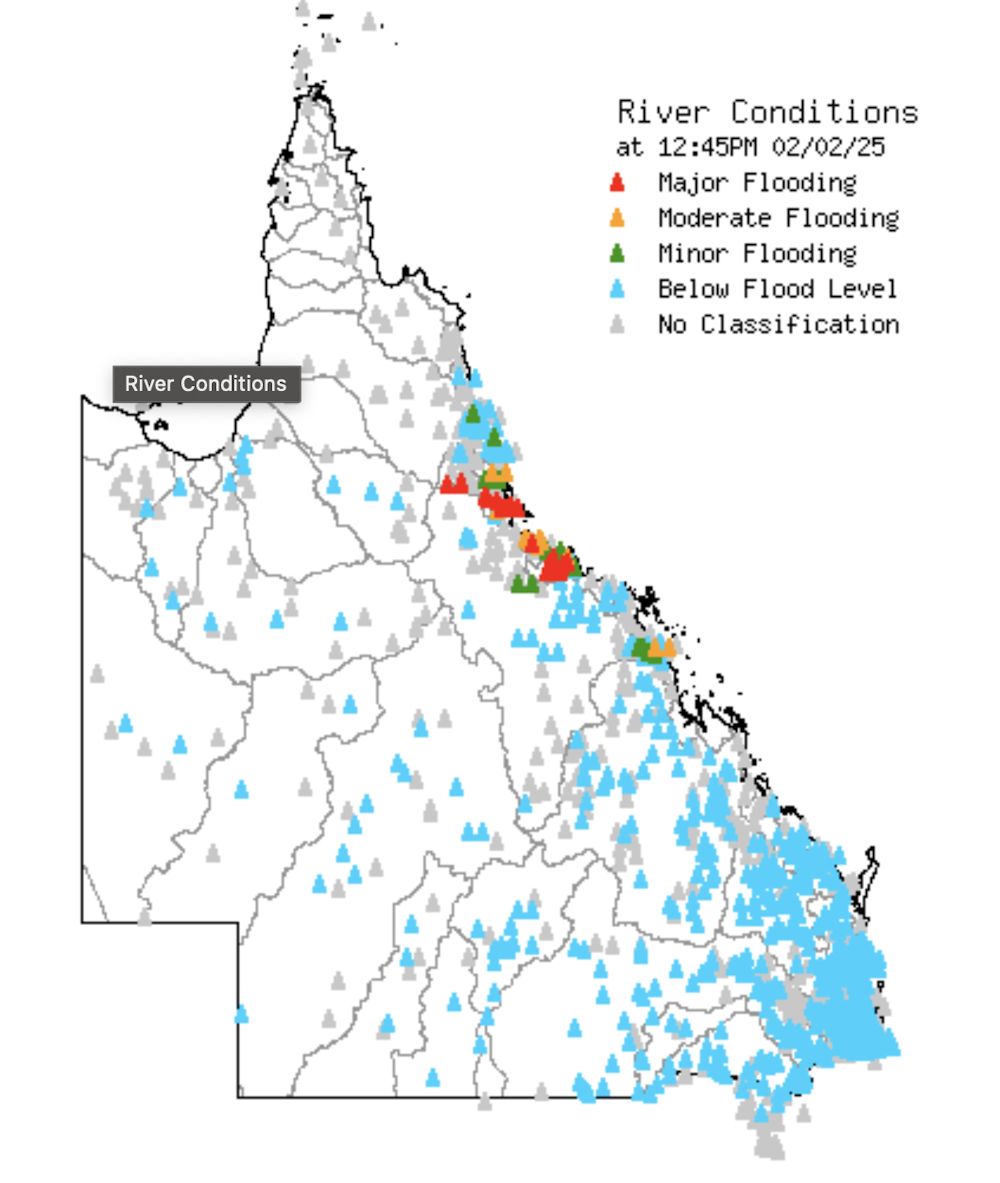
    Over the 48 hours to Sunday, there were reports of up to 1 metre of rainfall in parts of northeast Queensland. The torrential rain continues, particularly in the Herbert Coast region and north to around Tully.

    Major flooding in northern Queensland rivers, as of 12.45pm February 2.
    Bureau of Meteorology

    Residents of Ingham and nearby towns, about 100km from Townsville, are witnessing flooding from the nearby Herbert River. This morning, it was at 15 metres and rising. With more heavy rain forecast for the next 24 hours, the Herbert River is likely to break the 1967 record of 15.2 metres later today.

    Queensland Premier David Crisafulli – who grew up on his family’s sugar cane farm in Ingham – has said the floods will be a “once in a century” event for the town. To make matters worse, authorities say the town has lost power and an extended outage is likely.

    The atmospheric factors behind these floods are very similar to recent floods in the region – and climate change is no doubt playing a role.

    The flood level for the Herbert River at Ingham set in 1967 was 15.2 metres. It’s likely to be breached this afternoon (Sunday February 2).
    Australian Bureau of Meteorology, CC BY

    Where are the floods hitting?

    For many people in Townsville – the largest city in Northern Australia – the unfolding emergency will bring back memories of the devastating February 2019 floods, which caused A$1.24 billion in damage. Residents have been asked to evacuate from several low-lying suburbs which were inundated in 2019.

    Authorities in Townsville asked all residents in the low-lying black zone to evacuate by midday Sunday February 2. Floodwaters could reach second-storey heights in this zone. Residents in pink suburbs have been asked to be on standby.
    Townsville Council, CC BY

    It is too early to say if this flood event will be worse. Fortunately, water levels in the city’s Ross River Dam are much lower than 2019. Townsville Airport has recorded 545mm of rain over the past 48 hours, with many northwest suburbs recording much higher levels. The township of Rollingstone – 60km northwest of Townsville – recorded a whopping 702mm over the 24 hours to 9am Sunday.

    Further north in the Cairns to Daintree region, residents are watching with concern, with many still raw after the record-breaking floods of December 2023.

    What’s behind these floods?

    The ongoing 2025 extreme rainfall event, the 2019 Townsville floods and the 2023 Cairns and Daintree floods are remarkably similar in many ways.

    What triggered each of these floods was prolonged heavy rain falling on the southeast flank of a stationary tropical low weather system. Normally, tropical lows bring wind and rain, but move through quite quickly. But in recent years, we have seen a tendency for these systems to stall, sitting in place over or near land and dumping huge volumes of rain.

    Last week, the Bureau of Meteorology warned that five tropical lows were forming around northern Australia. Most tropical cyclones form from tropical lows embedded in the region’s monsoon trough, a large low pressure band which forms over summer and draws in warm, moist air from the adjacent tropical seas.

    But significant rain events like this one don’t necessarily require a tropical cyclone. Slow-moving deep monsoon lows over land can also deliver huge amounts of rain and widespread flooding.

    These atmospheric conditions allow intense rain bands to form between converging winds: warm, moist winds from the northeast and southeast winds originating from the Coral Sea. As the winds collide, they push the moist air up into the cooler parts of the atmosphere where it condenses and falls as torrential rain.

    More extreme rainfall and higher frequencies of flooded rivers and flash floods around the world have a clear link to climate change and ongoing global heating.

    The main drivers behind these events include warming of the atmosphere. For every 1°C of warming, the atmosphere holds 7% more water vapour. Recent research suggests this figure could be even higher for short duration rainfall.

    Hotter oceans hold more energy, meaning they can also amplify the global water cycle when atmospheric conditions are suitable.

    This year’s latest ever monsoon

    This year, sea surface temperatures in the northwest Coral Sea are 1-2°C above average. Ocean temperatures have risen because of a lack of cloud cover and rain last month. In northwestern Australia, this has given rise to an intensifying marine heatwave.

    This ocean heat is likely to be driven by the Australian monsoon’s latest ever arrival. The monsoon brings heavy rains to northern Australia, triggering the wet season. When it arrives, sea surface temperatures generally drop due to a combination of high cloud cover and the cooling effect of rainwater.

    After a slow start, the North Australian monsoon season is now in full swing.

    The Bureau of Meteorology is monitoring an active monsoon trough for any low pressure systems, which may develop into tropical cyclones over the next week or so. If any cyclone does form, it will gain energy from warmer than usual sea surface temperatures.

    What’s next for north Queensland?

    The flood emergency in north Queensland is far from over. All global circulation models predict heavy rain to continue in the region, extending up towards Cape York and the Gulf Country as an active monsoon surge moves in from Indonesia.

    As river catchments get saturated, more and more water will run off and engorge rivers. Forecasts are for rain to continue well into tonight and the next few days. We are likely to see more flooding in more places this week.

    For the latest updates, check the Bureau of Meteorology’s Queensland flood warnings, ABC Emergency or local ABC radio stations.

    Steve Turton has received funding from the Australian Government.

    ref. What’s driving north Queensland’s deadly, record-breaking floods? – https://theconversation.com/whats-driving-north-queenslands-deadly-record-breaking-floods-248847

    MIL OSI AnalysisEveningReport.nz

  • MIL-Evening Report: What’s driving north Queensland’s record-breaking, deadly floods?

    Source: The Conversation (Au and NZ) – By Steve Turton, Adjunct Professor of Environmental Geography, CQUniversity Australia

    A flooded street in Townsville John Wilkinson/Facebook

    Record-breaking floods across north Queensland have now turned deadly, with one woman drowning while being rescued on Sunday morning. And the floodwaters are still rising, with rain set to continue.

    Over the 48 hours to Sunday, there were reports of up to 1 metre of rainfall in parts of northeast Queensland. The torrential rain continues, particularly in the Herbert Coast region and north to around Tully.

    Major flooding in northern Queensland rivers, as of 12.45pm February 2.
    Bureau of Meteorology

    Residents of Ingham and nearby towns, about 100km from Townsville, are witnessing flooding from the nearby Herbert River. This morning, it was at 15 metres and rising. With more heavy rain forecast for the next 24 hours, the Herbert River is likely to break the 1967 record of 15.2 metres later today.

    Queensland Premier David Crisafulli – who grew up on his family’s sugar cane farm in Ingham – has said the floods will be a “once in a century” event for the town. To make matters worse, authorities say the town has lost power and an extended outage is likely.

    The atmospheric factors behind these floods are very similar to recent floods in the region – and climate change is no doubt playing a role.

    The flood level for the Herbert River at Ingham set in 1967 was 15.2 metres. It’s likely to be breached this afternoon (Sunday February 2).
    Australian Bureau of Meteorology, CC BY

    Where are the floods hitting?

    For many people in Townsville – the largest city in Northern Australia – the unfolding emergency will bring back memories of the devastating February 2019 floods, which caused A$1.24 billion in damage. Residents have been asked to evacuate from several low-lying suburbs which were inundated in 2019.

    Authorities in Townsville asked all residents in the low-lying black zone to evacuate by midday Sunday February 2. Floodwaters could reach second-storey heights in this zone. Residents in pink suburbs have been asked to be on standby.
    Townsville Council, CC BY

    It is too early to say if this flood event will be worse. Fortunately, water levels in the city’s Ross River Dam are much lower than 2019. Townsville Airport has recorded 545mm of rain over the past 48 hours, with many northwest suburbs recording much higher levels. The township of Rollingstone – 60km northwest of Townsville – recorded a whopping 702mm over the 24 hours to 9am Sunday.

    Further north in the Cairns to Daintree region, residents are watching with concern, with many still raw after the record-breaking floods of December 2023.

    What’s behind these floods?

    The ongoing 2025 extreme rainfall event, the 2019 Townsville floods and the 2023 Cairns and Daintree floods are remarkably similar in many ways.

    What triggered each of these floods was prolonged heavy rain falling on the southeast flank of a stationary tropical low weather system. Normally, tropical lows bring wind and rain, but move through quite quickly. But in recent years, we have seen a tendency for these systems to stall, sitting in place over or near land and dumping huge volumes of rain.

    Last week, the Bureau of Meteorology warned that five tropical lows were forming around northern Australia. Most tropical cyclones form from tropical lows embedded in the region’s monsoon trough, a large low pressure band which forms over summer and draws in warm, moist air from the adjacent tropical seas.

    But significant rain events like this one don’t necessarily require a tropical cyclone. Slow-moving deep monsoon lows over land can also deliver huge amounts of rain and widespread flooding.

    These atmospheric conditions allow intense rain bands to form between converging winds: warm, moist winds from the northeast and southeast winds originating from the Coral Sea. As the winds collide, they push the moist air up into the cooler parts of the atmosphere where it condenses and falls as torrential rain.

    More extreme rainfall and higher frequencies of flooded rivers and flash floods around the world have a clear link to climate change and ongoing global heating.

    The main drivers behind these events include warming of the atmosphere. For every 1°C of warming, the atmosphere holds 7% more water vapour. Recent research suggests this figure could be even higher for short duration rainfall.

    Hotter oceans hold more energy, meaning they can also amplify the global water cycle when atmospheric conditions are suitable.

    This year’s latest ever monsoon

    This year, sea surface temperatures in the northwest Coral Sea are 1-2°C above average. Ocean temperatures have risen because of a lack of cloud cover and rain last month. In northwestern Australia, this has given rise to an intensifying marine heatwave.

    This ocean heat is likely to be driven by the Australian monsoon’s latest ever arrival. The monsoon brings heavy rains to northern Australia, triggering the wet season. When it arrives, sea surface temperatures generally drop due to a combination of high cloud cover and the cooling effect of rainwater.

    After a slow start, the North Australian monsoon season is now in full swing.

    The Bureau of Meteorology is monitoring an active monsoon trough for any low pressure systems, which may develop into tropical cyclones over the next week or so. If any cyclone does form, it will gain energy from warmer than usual sea surface temperatures.

    What’s next for north Queensland?

    The flood emergency in north Queensland is far from over. All global circulation models predict heavy rain to continue in the region, extending up towards Cape York and the Gulf Country as an active monsoon surge moves in from Indonesia.

    As river catchments get saturated, more and more water will run off and engorge rivers. Forecasts are for rain to continue well into tonight and the next few days. We are likely to see more flooding in more places this week.

    For the latest updates, check the Bureau of Meteorology’s Queensland flood warnings, ABC Emergency or local ABC radio stations.

    Steve Turton has received funding from the Australian Government.

    ref. What’s driving north Queensland’s record-breaking, deadly floods? – https://theconversation.com/whats-driving-north-queenslands-record-breaking-deadly-floods-248847

    MIL OSI AnalysisEveningReport.nz

  • MIL-Evening Report: Delayed monsoon and a stalled tropical low: what’s behind north Queensland’s record-breaking floods

    Source: The Conversation (Au and NZ) – By Steve Turton, Adjunct Professor of Environmental Geography, CQUniversity Australia

    A flooded street in Townsville John Wilkinson/Facebook

    Record-breaking floods across north Queensland have now turned deadly, with one woman drowning while being rescued on Sunday morning. And the floodwaters are still rising, with rain set to continue.

    Over the 48 hours to Sunday, there were reports of up to 1 metre of rainfall in parts of northeast Queensland. The torrential rain continues, particularly in the Herbert Coast region and north to around Tully.

    Major flooding in northern Queensland rivers, as of 12.45pm February 2.
    Bureau of Meteorology

    Residents of Ingham and nearby towns, about 100km from Townsville, are witnessing flooding from the nearby Herbert River. This morning, it was at 15 metres and rising. With more heavy rain forecast for the next 24 hours, the Herbert River is likely to break the 1967 record of 15.2 metres later today.

    Queensland Premier David Crisafulli – who grew up on his family’s sugar cane farm in Ingham – has said the floods will be a “once in a century” event for the town. To make matters worse, authorities say the town has lost power and an extended outage is likely.

    The atmospheric factors behind these floods are very similar to recent floods in the region – and climate change is no doubt playing a role.

    The flood level for the Herbert River at Ingham set in 1967 was 15.2 metres. It’s likely to be breached this afternoon (Sunday February 2).
    Australian Bureau of Meteorology, CC BY

    Where are the floods hitting?

    For many people in Townsville – the largest city in Northern Australia – the unfolding emergency will bring back memories of the devastating February 2019 floods, which caused A$1.24 billion in damage. Residents have been asked to evacuate from several low-lying suburbs which were inundated in 2019.

    Authorities in Townsville asked all residents in the low-lying black zone to evacuate by midday Sunday February 2. Floodwaters could reach second-storey heights in this zone. Residents in pink suburbs have been asked to be on standby.
    Townsville Council, CC BY

    It is too early to say if this flood event will be worse. Fortunately, water levels in the city’s Ross River Dam are much lower than 2019. Townsville Airport has recorded 545mm of rain over the past 48 hours, with many northwest suburbs recording much higher levels. The township of Rollingstone – 60km northwest of Townsville – recorded a whopping 702mm over the 24 hours to 9am Sunday.

    Further north in the Cairns to Daintree region, residents are watching with concern, with many still raw after the record-breaking floods of December 2023.

    What’s behind these floods?

    The ongoing 2025 extreme rainfall event, the 2019 Townsville floods and the 2023 Cairns and Daintree floods are remarkably similar in many ways.

    What triggered each of these floods was prolonged heavy rain falling on the southeast flank of a stationary tropical low weather system. Normally, tropical lows bring wind and rain, but move through quite quickly. But in recent years, we have seen a tendency for these systems to stall, sitting in place over or near land and dumping huge volumes of rain.

    Last week, the Bureau of Meteorology warned that five tropical lows were forming around northern Australia. Most tropical cyclones form from tropical lows embedded in the region’s monsoon trough, a large low pressure band which forms over summer and draws in warm, moist air from the adjacent tropical seas.

    But significant rain events like this one don’t necessarily require a tropical cyclone. Slow-moving deep monsoon lows over land can also deliver huge amounts of rain and widespread flooding.

    These atmospheric conditions allow intense rain bands to form between converging winds: warm, moist winds from the northeast and southeast winds originating from the Coral Sea. As the winds collide, they push the moist air up into the cooler parts of the atmosphere where it condenses and falls as torrential rain.

    More extreme rainfall and higher frequencies of flooded rivers and flash floods around the world have a clear link to climate change and ongoing global heating.

    The main drivers behind these events include warming of the atmosphere. For every 1°C of warming, the atmosphere holds 7% more water vapour. Recent research suggests this figure could be even higher for short duration rainfall.

    Hotter oceans hold more energy, meaning they can also amplify the global water cycle when atmospheric conditions are suitable.

    This year’s latest ever monsoon

    This year, sea surface temperatures in the northwest Coral Sea are 1-2°C above average. Ocean temperatures have risen because of a lack of cloud cover and rain last month. In northwestern Australia, this has given rise to an intensifying marine heatwave.

    This ocean heat is likely to be driven by the Australian monsoon’s latest ever arrival. The monsoon brings heavy rains to northern Australia, triggering the wet season. When it arrives, sea surface temperatures generally drop due to a combination of high cloud cover and the cooling effect of rainwater.

    After a slow start, the North Australian monsoon season is now in full swing.

    The Bureau of Meteorology is monitoring an active monsoon trough for any low pressure systems, which may develop into tropical cyclones over the next week or so. If any cyclone does form, it will gain energy from warmer than usual sea surface temperatures.

    What’s next for north Queensland?

    The flood emergency in north Queensland is far from over. All global circulation models predict heavy rain to continue in the region, extending up towards Cape York and the Gulf Country as an active monsoon surge moves in from Indonesia.

    As river catchments get saturated, more and more water will run off and engorge rivers. Forecasts are for rain to continue well into tonight and the next few days. We are likely to see more flooding in more places this week.

    For the latest updates, check the Bureau of Meteorology’s Queensland flood warnings, ABC Emergency or local ABC radio stations.

    Steve Turton has received funding from the Australian Government.

    ref. Delayed monsoon and a stalled tropical low: what’s behind north Queensland’s record-breaking floods – https://theconversation.com/delayed-monsoon-and-a-stalled-tropical-low-whats-behind-north-queenslands-record-breaking-floods-248847

    MIL OSI AnalysisEveningReport.nz

  • MIL-OSI Economics: Personalized health & wellness for women, expanding flavor choice, and health longevity offer food and beverages brands growth opportunities in 2025, says GlobalData

    Source: GlobalData

    The interconnectivity of all health concerns could offer food and beverages brands innovation opportunities in 2025 by addressing multiple wellness concerns at once.

    Several key trends are set to influence consumer purchasing behavior in 2025, including personalized health and wellness with a focus on women, health longevity, personalized products and experiences, and sustainability solutions aided by new technologies. GlobalData, a leading data and analytics company, highlights four food and beverages trends that are set to offer consumer packaged goods brands innovation opportunities in 2025:

    Personalized Health and Wellness: Women’s Health

    Women’s health has long been under-researched, presenting an opportunity for brands to create new products and new marketing initiatives to meet women’s unique health needs.

    In the supplements market, product ranges catering to reproductive and hormonal health concerns are now expanding into women’s fitness, digestion, and sleep – all of which require different supplements to men. Brands like Women Best recognize this and solely target women, providing them with supplements to support their dietary needs with functional benefits such as energy, focus, and stress relief. Unilever’s SmartyPants Vitamins range also offers multivitamins and pre and probiotic supplements that cater specifically to women’s health needs. In line with this, the women’s supplement market has seen double-digit value growth over the last two years, according to GlobalData Market Analyzers.

    Fahima Omer, Food Consultant and analyst at GlobalData, comments: “Whilst the health benefits of supplements are harnessed in products such as vitamins and protein bars, consumer packaged goods manufacturers could explore opportunities to develop new food and beverages products using supplement ingredients. One such opportunity is to recognize the interconnectivity of all health concerns and release more products aimed at addressing multiple wellness concerns at once.”

    Sustainability solutions based on new technologies

    Cell-based foods first emerged in 2013 when a scientist in the Netherlands managed to cultivate a burger patty. With new technological advancements and the use of molecular biology, brands such as GoodMeat create meat simply by feeding cells in a sterile environment. Widespread adoption of cell-based meat products has been slow thus far, but this developing technology offers the potential to produce meat products at scale in a more sustainable way. This is becoming increasingly important as The Food and Agricultural Organization at the United Nations* revealed in its 2017 report, “Tackling Climate Change Through Livestock”, that livestock is a significant contributor to climate change with emissions estimated at 7.1 gigatonnes CO2, representing 14.5% of human-induced GHG emissions.

    According to GlobalData’s consumer survey (Q3 2024), this kind of sustainability initiative resonates with 74% of global consumers who say that ‘sustainable/environmentally friendly’ is an ‘essential’ or ‘nice to have’ feature when deciding to make a product purchase.

    Cell-based foods could also address food insecurity. In a UN/WHO** joint report from 2022, the organization estimated that 11% of people globally suffer from undernourishment despite the planet being able to produce enough food.

    Health Longevity: An aging population and the rise of personalization

    With 22% of the world’s population expected to be over 60 years old by 2050, according to WHO***, there will be growing demand for food and beverage products that support this cohort’s desire for a long, healthy, and active life. Meal kits with claims around health management have grown in value by 67% during 2016-23, according to GlobalData Market Analysers’ health and wellness data on prepared meals.

    As older adults become more proactive about their health, they are choosing products that align with their wellness goals, including dietary supplements and foods rich in vitamins and nutrients that support longevity. Food manufacturer Chin Huay has responded to this demand with a selection of snacks formulated with probiotics, which support senior consumers’ dietary needs, and coffee brand UDA infuses several longevity-centric supplements to help fight aging. These include NMN, which increases metabolism and aids DNA repair; cognitive enhancer L-Theanine; quercetin, an anti-senescence and anti-inflammatory; and ashwagandha, to reduce fatigue and stress.

    This trend reflects a broader societal shift towards preventative health measures and lifestyle improvements, which have gained traction following the pandemic. Personalized health and wellness solutions from companies that provide health advice from the analysis of personal health data are growing in popularity. Everlywell provide at-home test kits that check age and gender-related conditions with the aim of providing consumers with specific lifestyle recommendations.

    Flavor expansion in Foods and Foodservice

    The ubiquity of foreign travel and the rise in social media usage have exposed consumers to global cuisines and flavors, which they have embraced, providing companies with the opportunity to expand their product and flavor choices beyond core brands and gain awareness for them through social media.

    According to GlobalData’s Consumer Survey (Q1 2024), 56% of 25-34-year-olds, globally, use social media to discover products and new flavors. A further 51% of the same age group agree with the statement ‘when I find a product in a new flavor I like, I enjoy sharing this knowledge on social media’.

    Foodservice operators such as UK-based Los Mochis have been successful in merging Japanese and Mexican cuisines using ingredients such as chipotle and kombu broth to create a chipotle miso soup, exposing their customers to bold new flavor choices.

    Omer adds: “Food and beverages trends in 2025 will reflect a complex interplay of functional health & wellness, sustainability, digitalization, and flavor choice. Innovation will not only cater to consumers’ immediate health needs but also prioritize health longevity. There could be a renewed focus on lab-grown meat which has the potential to address food insecurity whilst also combatting climate change. These trends will also present opportunities for brands to sell more value-added and premium products to meet the evolving expectations of consumers in a rapidly changing marketplace.”

    * Source: The Food and Agricultural Organization at the United Nations 2017 Report: Tackling Climate Change through Livestock
    ** Source: UN/WHO joint report: State of Food Security and Nutrition, 2022
    *** Source: WHO website ‘Ageing statistics’

    GlobalData Consumer Custom Solutions offers sector-level expertise in the Consumer Packaged GoodsFood, Beverages, Foodservice, Retail, Apparel, Packaging, Agribusiness, and Automotive industries. We use our unique data, insights and analytics to answer your bespoke questions with a tailored approach and deliverables.​ To learn more about this press release or have a chat, please drop us an email consulting@globaldata.com or contact us here and we’ll get in touch!

    MIL OSI Economics

  • MIL-OSI USA: Padilla Demands Answers from Trump Administration After Army Corps Orders Central Valley Dams Open to Dangerous Flood Levels

    US Senate News:

    Source: United States Senator Alex Padilla (D-Calif.)

    Padilla Demands Answers from Trump Administration After Army Corps Orders Central Valley Dams Open to Dangerous Flood Levels

    Administration ordered two dams in Tulare County open without adequate notification to local officials, threatening Central Valley communities

    WASHINGTON, D.C. — Today, U.S. Senator Alex Padilla (D-Calif.), a member of the Senate Environment and Public Works Committee, questioned Defense Secretary Pete Hegseth after the United States Army Corps of Engineers (the Corps) directed unscheduled water releases from Lake Kaweah and Success Lake in Tulare County, purportedly to assist in fighting Los Angeles County fires that are already almost fully contained.

    Local officials warned the Corps that releasing water at the levels the Corps planned to would have flooded both the Kaweah and Tule rivers, posing a flood risk to communities and farms down river and wasting water that could have been used for irrigation over the summer. The decision followed President Trump’s Executive Order directing federal agencies to maximize water deliveries in the state, falsely claiming that statewide water policy was to blame for the devastating Los Angeles County fires.

    “Unscheduled water releases require close coordination with local officials and safety personnel, as well as downstream agricultural water users, in order to reduce flood risks to communities and farms. Based on the urgent concerns I have heard from my constituents, as well as recent reporting, it appears that gravely insufficient notification was given, recklessly endangering residents downstream,” wrote Senator Padilla.

    Padilla asked Secretary Hegseth the following four clarifying questions in response to Trump’s post:

    1. Who directed that these releases be made?

    2. If the purpose of these releases is to help fight wildfires in Los Angeles County (which are already almost fully contained), what is the plan to transport this water to Los Angeles rather than let the water simply be discharged into Tulare Lake where it will evaporate?

    3. What type of notification, and how much advanced notice, was given to irrigation districts and public safety personnel to prepare for these increased flows?

    4. What impact will these releases have on Tulare Lake communities, including private landowners?

    Full text of the letter is available here and below:

    Dear Secretary Hegseth,

    I write regarding the troubling unscheduled release of water from two dams in California’s Central Valley by the U.S. Army Corps of Engineers following President Trump’s Executive Order falsely linking statewide water policies to the wildfires in Los Angeles. As I’m sure the Administration is aware, the rivers into which this water was released do not actually flow into Los Angeles.

    Unscheduled water releases require close coordination with local officials and safety personnel, as well as downstream agricultural water users, in order to reduce flood risks to communities and farms. Based on the urgent concerns I have heard from my constituents, as well as recent reporting, it appears that gravely insufficient notification was given, recklessly endangering residents downstream. Therefore, I ask that you respond in writing to the following questions:

    1. Who directed that these releases be made?

    2. If the purpose of these releases is to help fight wildfires in Los Angeles County (which are already almost fully contained), what is the plan to transport this water to Los Angeles rather than let the water simply be discharged into Tulare Lake where it will evaporate?

    3. What type of notification, and how much advanced notice, was given to irrigation districts and public safety personnel to prepare for these increased flows?

    4. What impact will these releases have on Tulare Lake communities, including private landowners?

    Clarity and transparency on these matters are crucial to ensure that the public is properly informed, that proper procedures are followed, and that any actions taken in the name of protecting against natural disasters will have the intended impact. 

    I look forward to your prompt response to these questions.

    Sincerely,

    MIL OSI USA News

  • MIL-OSI USA: Army Corps of Engineers Awards $10 Million Contract For FM Diversion

    US Senate News:

    Source: United States Senator Kevin Cramer (R-ND)
    BISMARCK, N.D. – The U.S. Army Corps of Engineers (USACE) awarded a contract of $10,097,097 to BCSS, LLC to fund the excavation, replacement and repaving of the existing Highway 75 intersection in support of the Fargo-Moorhead Metropolitan Area Flood Risk Management Project.
    These funds were provided by the fully-paid-for Bipartisan Infrastructure Law (BIL), which U.S. Senator Kevin Cramer (R-ND) helped craft and shepherd through Congress. The USACE received $437 million in funding under the BIL to complete all remaining federal work for the diversion project.

    MIL OSI USA News

  • MIL-OSI United Kingdom: UK announces additional humanitarian funding for Myanmar

    Source: United Kingdom – Executive Government & Departments 3

    Four years on from military coup, additional UK humanitarian funding delivers healthcare to one million people in Myanmar

    • Uplift in support announced four years on from the military coup, as humanitarian needs reach record levels 

    • Despite the ongoing conflict, healthcare will be delivered to nearly one million people across Myanmar in the first half of 2025 including maternal care, nutrition support and disease treatment 

    • New climate resilience funding will help rural communities tackle extreme weather, improve water management and strengthen food security 

    Almost one million vulnerable people in Myanmar will receive essential medical care through UK aid support in the first six months of 2025, helping communities access vital healthcare services despite ongoing conflict. 

    The UK is announcing an uplift of £22.45 million in humanitarian support for 2024/25 to deliver this support, four years on from the military coup.  On 1 February 2021, the Myanmar military overthrew the democratically elected government, led by Aung San Suu Kyi, and installed a military regime. Since then, they have used violence and atrocities to maintain power and suppress opposition voices. The UK has consistently called for the release of Aung San Suu Kyi and all those arbitrarily detained in Myanmar. 

    UK funding will provide maternal and child health services to around 107,000 women and children, while 86,000 people will be reached with crucial nutrition support. It is expected that a further 142,000 people will be able to access sexual and reproductive health services and treatment for diseases like tuberculosis and malaria. 

    The life-saving assistance comes as Myanmar faces an unprecedented humanitarian crisis, with nearly 20 million people now requiring aid – a twenty-fold increase since the military coup four years ago. 

    Minister for Development, Anneliese Dodds, said:  

    While global attention may shift, the UK will not forget the millions in Myanmar still living through a brutal conflict, creating a humanitarian crisis in a country already vulnerable to the impacts of the climate crisis. 

    Four years on from the military coup and amid ongoing violence, the UK is matching words with action – providing additional support to meet urgent health needs and tackle long-term climate challenges.

    Over 3.5 million people are now displaced from their homes due to the fighting, 19.9 million people are in need of humanitarian assistance, and Myanmar is now seeing a proliferation in serious and organised crime. 

    Typhoon Yagi caused devastation across South-East Asia in September 2024, severely affecting over one million people across Myanmar. Additional funding will help rural communities prepare for future climate-related disasters, through improved food systems and early warning mechanisms, including support for areas recovering from recent typhoons. 

    Agriculture is vital to Myanmar’s economy and without it, the country will find it difficult to rebuild and grow when the conflict finally ends. UK support is planting the seeds for Myanmar’s long-term recovery, restoring security and stability to make the world safer for all of us. 

    The UK continues to support ASEAN’s central role in addressing the crisis. The UK convened a UN Security Council meeting on 30 January, calling for full humanitarian access across Myanmar to help protect civilians and pressed for further action to secure a peaceful democratic future for the Myanmar people. As penholder on Myanmar at the UNSC, the UK will continue to take action to bring stability to Myanmar and the wider region, maintaining our commitment to a free and open Indo-Pacific in the interests of UK national security. 

    Notes to editors 

    • UK humanitarian support to Myanmar in the financial year 2024 to 2025 has increased to £66.45 million from an initial allocation of £44 million (excluding support from the UK’s Integrated Security Fund), following a decision to uplift funding due to increasing humanitarian need. By comparison, support in the 2023 to 2024 financial year began at £30.1 million and concluded at £38.83 million.

    Media enquiries

    Email newsdesk@fcdo.gov.uk

    Telephone 020 7008 3100

    Contact the FCDO Communication Team via email (monitored 24 hours a day) in the first instance, and we will respond as soon as possible.

    Updates to this page

    Published 1 February 2025

    MIL OSI United Kingdom

  • MIL-OSI USA: Cassidy, Tillis, Padilla, Schiff Introduce Legislation to Give Tax Relief to Disaster Victims

    US Senate News:

    Source: United States Senator for Louisiana Bill Cassidy
    WASHINGTON – U.S. Senators Bill Cassidy, M.D. (R-LA), Thom Tillis (R-NC), Alex Padilla (D-CA), and Adam Schiff (D-CA) introduced the Disaster Mitigation and Tax Parity Act of 2025, legislation that allows Americans to exclude any qualified catastrophe mitigation payment made under a state-based catastrophe loss mitigation program from their income tax. The bill would provide needed relief to homeowners after a major flood or hurricane.
    “Louisianans understand the impact of devastating storms, but with the help of state and local programs, we have tools to rebuild and return to wholeness,” said Dr. Cassidy. “If communities need tax relief, let’s give it to them!”
    “This commonsense legislation takes a critical step toward empowering individuals and communities to better protect themselves from the devastating effects of natural disasters like Hurricane Helene,” said Senator Tillis. “By excluding qualified catastrophe mitigation payments from income tax, we are incentivizing property owners to make the necessary improvements that reduce damage and save lives. This proactive approach to disaster preparedness not only helps families rebuild faster but strengthens our resilience in the face of future disasters.”
    “The devastating fires in Southern California underscored the urgent need to empower homeowners to take proactive steps to keep their families and homes safe,” said Senator Padilla. “As these disasters become more frequent and more extreme due to the climate crisis, we should incentivize — not penalize — taxpayers for protecting their homes. That’s why the Disaster Mitigation and Tax Parity Act would provide a tax exemption on payments from state-based programs for homeowner investments in critical disaster-related improvements.”
    “We have seen how natural disasters have devastated communities around the country, and we must ensure we have the resources and programs in place to respond,” said Senator Schiff. “Homeowners should not face additional taxes for wanting to protect their homes and our bipartisan legislation will provide the needed tax relief to help affected Americans recover from these disasters.”
    The bill defines a qualified catastrophe mitigation payment as any amount received for making improvements to an individual’s property for the sole purpose of reducing the damage that would be done to such property by a flood, windstorm, earthquake, or wildfire.
    Cassidy, Tillis, Padilla, and Schiff were joined by U.S. Senators John Hickenlooper (D-CO), Katie Britt (R-AL), Michael Bennett (D-CO), Jeff Merkley (D-OR), Amy Klobuchar (D-MN), John Kennedy (R-LA), Roger Wicker (R-MS), and Ted Budd (R-NC) in cosponsoring the legislation.

    MIL OSI USA News

  • MIL-OSI USA: Tillis, Padilla, Cassidy, Schiff Introduce Legislation to Exclude Catastrophe Mitigation Payments from Income Taxes

    US Senate News:

    Source: United States Senator for North Carolina Thom Tillis
    WASHINGTON, D.C. – Senators Thom Tillis (R-NC), Alex Padilla (D-CA), Bill Cassidy (R-LA), and Adam Schiff (D-CA) introduced the Disaster Mitigation and Tax Parity Act of 2025, legislation that excludes from gross income, for income tax purposes, any qualified catastrophe mitigation payment made under a state-based catastrophe loss mitigation program. 
    “This commonsense legislation takes a critical step toward empowering individuals and communities to better protect themselves from the devastating effects of natural disasters like Hurricane Helene,” said Senator Tillis. “By excluding qualified catastrophe mitigation payments from income tax, we are incentivizing property owners to make the necessary improvements that reduce damage and save lives. This proactive approach to disaster preparedness not only helps families rebuild faster but strengthens our resilience in the face of future disasters.”
    “The devastating fires in Southern California underscored the urgent need to empower homeowners to take proactive steps to keep their families and homes safe,” said Senator Padilla. “As these disasters become more frequent and more extreme due to the climate crisis, we should incentivize — not penalize — taxpayers for protecting their homes. That’s why the Disaster Mitigation and Tax Parity Act would provide a tax exemption on payments from state-based programs for homeowner investments in critical disaster-related improvements.”
    “Louisianans understand the impact of devastating storms, but with the help of state and local programs, we have tools to rebuild and return to wholeness,” said Dr. Cassidy. “If communities need tax relief, let’s give it to them!”
    “We have seen how natural disasters have devastated communities around the country, and we must ensure we have the resources and programs in place to respond,” said Senator Schiff. “Homeowners should not face additional taxes for wanting to protect their homes and our bipartisan legislation will provide the needed tax relief to help affected Americans recover from these disasters.”
    Background:
    The bill defines a “qualified catastrophe mitigation payment” as any amount received for making improvements to an individual’s property for the sole purpose of reducing the damage that would be done to such property by a windstorm, earthquake, flood, or wildfire.
    The Disaster Mitigation and Tax Parity Act of 2025 is co-sponsored by Senators John Hickenlooper (D-CO), Michael Bennett (D-CO), Jeff Merkley (D-OR), Amy Klobuchar (D-MN), John Kennedy (R-LA), Roger Wicker (R-MS), and Ted Budd (R-NC).
    The Disaster Mitigation and Tax Parity Act of 2025 is endorsed by North Carolina Insurance Commissioner Mike Causey and the North Carolina Insurance Association.
    “Passing federal legislation that would ensure all state-funded, pre-disaster mitigation grants are tax-free would allow these grants to have the maximum impact,” said Mike Causey, Insurance Commissioner, State of North Carolina. “These mitigation grants protect homes and have a direct impact on insurers and the claims they pay for such disasters, which is critical for ensuring an insurance market that is stable and available and affordable for homeowners.  Because North Carolina has been a leader in windstorm mitigation through our Strengthen Your Roof and Strengthen Your Coastal Roof grant programs, and because working to maintain a healthy market is one of my goals as Insurance Commissioner, I am in total support of this bill. I thank Senator Tillis for proposing it.” 
    “North Carolina Insurance Association (NCIUA) has made grants of more than $100 million so that our policyholders can invest in resilient construction and fortified roofs,” said Gina Hardy, CEO, North Carolina Insurance Association. “Given the possibility of more frequent catastrophic events, we believe all of the grant money we invest should be free of federal taxation and remain with our policyholders so they can continue to strengthen and improve their homes.” 
    Full text of the bill is available HERE.

    MIL OSI USA News

  • MIL-OSI USA: FEMA Mitigation Experts Offer Rebuilding Advice in Citrus, Hillsborough and Pinellas Counties

    Source: US Federal Emergency Management Agency

    Headline: FEMA Mitigation Experts Offer Rebuilding Advice in Citrus, Hillsborough and Pinellas Counties

    FEMA Mitigation Experts Offer Rebuilding Advice in Citrus, Hillsborough and Pinellas Counties

    TALLAHASSEE, Fla. – As Floridians rebuild, survivors of Hurricanes Milton, Helene and Debby can get free advice on how to rebuild stronger and safer against storms. FEMA mitigation specialists will be available to answer questions and offer free home improvement tips and proven methods to prevent and lessen damage from future disasters. This information is geared for do-it-yourself work and general contractors.Mitigation is an effort to reduce the loss of life and property damage by lessening the impact of a disaster through construction and remodeling best practices. An insurance specialist will be present to answer National Flood Insurance Program (NFIP) questions. Disaster Survivor Assistance teams will be on hand to provide updates on FEMA applications and answer questions. FEMA specialists will be available from Feb. 3 through Feb. 8 from 7:30 a.m. to 5:00 p.m. ET Monday – Friday and from 7:30 a.m. to 1:00 p.m. ET Saturday at the following locations:Citrus County: Lowe’s, 2301 E. Gulf to Lake Hwy, Inverness, FL 34453Hillsborough County: The Home Depot, 5125 S. Dale Mabry, Tampa, FL 33611Pinellas County: Ace, 2827 9th St N, St. Petersburg, FL 33710Stay in Touch with FEMAIt is important to let FEMA know about any changes to your contact information. You may update contact information or check on the status of your application by:Visiting DisasterAssistance.govCalling FEMA directly at 800-621-FEMA (3362)Using the FEMA appFor the latest information about Hurricane Milton recovery, visit fema.gov/disaster/4834. For Hurricane Helene recovery information, visit fema.gov/disaster/4828. For Hurricane Debby, visit fema.gov/disaster/4806. Follow FEMA on X at x.com/femaregion4 or on Facebook at facebook.com/fema.
    despina.pappas
    Fri, 01/31/2025 – 21:39

    MIL OSI USA News

  • MIL-OSI USA: Sen. Chuck Hufstetler: January Under the Gold Dome

    Source: US State of Georgia

    The Georgia General Assembly is back in session and it is a privilege to return to work under the Gold Dome, where I remain steadfast in my commitment to addressing the issues that matter most to Georgians across our great state.

    This legislative session is already off to a strong start. Governor Kemp has laid out a bold vision, focusing on initiatives that include increasing funding for school safety, enhancing our skilled workforce, announcing 100,000 million dollars in relief for families and businesses impacted by Hurricane Helene, and continuing to expand access to affordable healthcare for hardworking Georgians. By investing in high-demand, high-skill, and high-wage career opportunities, we are taking critical steps to secure Georgia’s economic future.

    After an uneventful week due to the snowfall in Atlanta and South Georgia, this week concludes the third week of the 2025 Legislative Session, and we’re staying focused on passing commonsense legislation that puts Georgia families, businesses and communities first.

    Last week’s snowstorm may have delayed budget hearings for a few days, but it didn’t slow us down. The General Assembly has been hard at work in joint sessions, carefully reviewing budget requests to ensure taxpayer dollars are spent wisely. Passing a balanced budget is not only our constitutional duty—it’s the foundation of a responsible government that serves its people.

    One of the most crucial budget proposals this session is Governor Brian P. Kemp’s plan to return $1 billion in surplus funds directly to taxpayers. Thanks to years of conservative budgeting and fiscal responsibility, we’re in a position to give back to the hardworking Georgians who keep our state running. This is just part of the $2.2 billion in statewide allocations designed to benefit families, businesses and communities across Georgia. I’m proud to support Gov. Kemp’s efforts to strengthen our economy by putting more money back in your pockets.

    Another key priority is ensuring communities hit hardest by Hurricane Helene have the resources they need to rebuild. Gov. Kemp has proposed $614.72 million in recovery funding, including $150 million for the Governor’s Emergency Fund to help with debris removal and housing assistance. Another $300 million will go to the Georgia Department of Transportation to restore roads and infrastructure. Many rural counties are still reeling from this storm, and we’re committed to making sure they get the support they need to recover and move forward.

    Back at the Capitol, we hit the ground running this week, advancing legislation that reflects our values and priorities. I’m especially proud to sponsor Senate Bill 34. I introduced Senate Bill 34 in anticipation of technology companies building AI databases in Georgia. AI databases use exorbitant amounts of electricity, and I have introduced this bill to prevent electric providers from including the electric fees of these databases in typical Georgia consumer rates.

    I am honored to be re-appointed as Chairman of the Senate Committee on Finance and Ex-Officio of the Senate Committee on Appropriations, in addition to serving as a member on the Senate Committees on Health and Human Services, Higher Education and Rules. I thank Lt. Governor Jones for these appointments, and I look forward to serving District 52 and Georgia on these committees

    Finally, I encourage students ages 12 to 18 to apply for the Senate Page Program. This is an excellent way for young people to see firsthand how the General Assembly works. If you know a student who might be interested, they can apply on the Senate website here.

    As always, I’m here to listen. If you have any questions, concerns, or ideas about our work at the Capitol, please don’t hesitate to reach out. It’s an honor to serve you, and I appreciate your trust as we work together throughout the remainder of the 2025 legislative session.

    # # # #

    Sen. Chuck Hufstetler serves as Chairman of the Senate Committee on Finance. He represents the 52nd Senate District which includes portions of Bartow, Floyd, and Gordon counties. He can be reached at (404) 656-0034 or via email at chuck.hufstetler@senate.ga.gov.

    For all media inquiries, please reach out to
    SenatePressInquiries@senate.ga.gov.

    MIL OSI USA News

  • MIL-OSI USA: Hoeven: Army Corps Issues More than $10 Million Contract to Complete Southern Embankment

    US Senate News:

    Source: United States Senator for North Dakota John Hoeven

    01.31.25

    Corps Issues Last Major Contract to Finish Federal Portion of Fargo-Moorhead Region’s Flood Protection Project

    WASHINGTON – Senator John Hoeven today announced that the U.S. Army Corps of Engineers has awarded a more than $10 million contract to construct Reach SE-5, the last of 7 reaches required to complete the 21-mile long Southern Embankment.

    • This reach, which is located in Minnesota, will include reconstructing portions of 180th Avenue, its intersection with Highway 75 and the Wolverton Creek crossing.
    • The funding is made available under the $437 million Army Corps’ award that Hoeven secured in 2022.
    • This comes as the last major Corps contract being awarded for the Fargo-Moorhead region’s flood protection project, marking a major milestone as the federal portion of the project nears completion.

    “Awarding this final contract to complete the Southern Embankment is achieving a major milestone in protecting the entire Fargo-Moorhead region against the threat of flooding,” said Hoeven. “Numerous efforts have to be tied together in order to make this permanent flood protection a reality. That’s why it was critical that we not only secure full federal funding now to provide certainty over the long-term, but also advance this as the Corps’ first major P3 project. This approach, which is serving as model for Army Corps projects across the country, provided the flexibility needed to build the various aspects of the project concurrently.”

    Today’s milestone follows Hoeven’s efforts to:

    • Pass 16 acts of Congress, including:
      • 9 legislative provisions, such as the project authorization in 2014 and a new construction start authorization in 2016.
    • 7 separate appropriations to fund the project’s construction.
    • Fully fund the $750 million federal cost share.
      • Prior to this, Hoeven helped renegotiate the Project Partnership Agreement to increase the federal funding commitment from $450 million.
    • Advance this as the first major Army Corps project to utilize the public-private partnership (P3) split-delivery model and a Water Infrastructure Finance and Innovation Act (WIFIA) loan.
    • Coordinate efforts across four federal agencies.
    • Provide funding and flexibility to concurrently raise I-29 and begin excavating the Red River Control Structure to keep the project on schedule.
    • Resolve the easement issue on lands purchased with Hazard Mitigation Grant Program (HMGP) funding, allowing the project to use an alternative route.

    MIL OSI USA News

  • MIL-OSI USA: COLUMN: Walker: Weeks Two and Three Under the Gold Dome

    Source: US State of Georgia

    By: Sen. Larry Walker, III (R–Perry)

    The third week of the 2025 Legislative Session has wrapped up, and we’re staying focused on passing commonsense legislation that puts Georgia families, businesses and communities first.

    Last week’s snowstorm may have delayed budget hearings for a few days, but it didn’t slow us down. The General Assembly has been hard at work in joint sessions, carefully reviewing budget requests to ensure taxpayer dollars are spent wisely. Passing a balanced budget is not only our constitutional duty—it’s the foundation of a responsible government that serves its people.

    One of the most crucial budget proposals this session is Governor Brian P. Kemp’s plan to return $1 billion in surplus funds directly to taxpayers. Thanks to years of conservative budgeting and fiscal responsibility, we’re in a position to give back to the hardworking Georgians who keep our state running. This is just part of the $2.2 billion in statewide allocations designed to benefit families, businesses and communities across Georgia. I’m proud to support Gov. Kemp’s efforts to strengthen our economy by putting more money back in your pockets.

    Another key priority is ensuring communities hit hardest by Hurricane Helene have the resources they need to rebuild. Gov. Kemp has proposed $614.72 million in recovery funding, including $150 million for the Governor’s Emergency Fund to help with debris removal and housing assistance. Another $300 million will go to the Georgia Department of Transportation to restore roads and infrastructure. Many rural counties are still reeling from this storm, and we’re committed to making sure they get the support they need to recover and move forward.

    Back at the Capitol, we hit the ground running this week, advancing legislation that reflects our values and priorities. One of the bills I’m proud to sponsor, Senate Bill (SB) 35, would increase the number of days’ notice that a policyholder must be given before his or her homeowners’ insurance policy is not renewed. The previous 30 days’ notice of nonrenewal is not enough time for the homeowner to avoid any lapses in coverage or properly address concerns with their insurance company. With this in mind, SB 35’s proposed 60 days’ notice will give Georgians and their insurance agent sufficient time to find replacement coverage and make sure that their home is protected.

    I’m also proud to support Senate Bill (SB) 52. This legislation, also known as the Timberlands Recovery, Exemption and Earnings Stability (TREES) Act, would allow local governments to provide tax relief for the timber industry. Timber is one of Georgia’s most important industries, and communities like those in the 20th Senate District depend on timber as an agricultural investment and a source of tax revenue. The devastation wrought by Hurricane Helene has left that industry in desperate need of relief, and with the TREES Act, we will waive the timber harvest tax in hurricane ravaged counties to help these communities recover from the catastrophe of this unprecedented storm.

    As committee meetings pick up, we’re working hard on issues that matter most to our communities, from protecting our schools to strengthening local infrastructure. I chaired the first meeting of the Senate Committee on Insurance and Labor this week, and I look forward to the committee’s regular meetings in the coming weeks.

    Finally, I encourage students ages 12 to 18 to apply for the Senate Page Program. This is an excellent way for young people to see firsthand how the General Assembly works. If you know a student who might be interested, they can apply on the Senate website here.

    As always, I’m here to listen. If you have any questions, concerns, or ideas about our work at the Capitol, please don’t hesitate to reach out. It’s an honor to serve you, and I appreciate your trust as we work together throughout the remainder of the 2025 legislative session.

    # # # #

    Sen. Larry Walker serves as Secretary of the Majority Caucus and Chairman of the Senate Committee on Insurance and Labor. He represents the 20th Senate District, which includes Bleckley, Dodge, Dooly, Laurens, Treutlen, Pulaski and Wilcox counties, as well as portions of Houston County.  He may be reached by phone at (404) 656-0095 or by email at Larry.Walker@senate.ga.gov.

    For all media inquiries, please reach out to SenatePressInquiries@senate.ga.gov.

    MIL OSI USA News

  • MIL-OSI NGOs: Extradition Hearing for Alleged Exxon Linked Hacker Underscores Big Oil’s War to Avoid Accountability

    Source: Greenpeace Statement –

    WASHINGTON, DC (January 31, 2025) — In response to ongoing legal developments regarding the Department of Justice’s effort to extradite an alleged hacker linked to cyberattacks against climate organizations including Greenpeace USA, Greenpeace USA Deputy Climate Program Director, John Noël said:

    “The latest bombshell revelations in the hack-for-hire case expose a brazen attack on democracy. Defense documents submitted to the court now allegedly link the DCI Group—a lobbying firm hired by Exxon—to a covert hacking operation aimed at undermining climate advocacy organizations, campaigners, journalists and derailing momentum for climate liability lawsuits by stealing private communications.

    “This apparent corporate espionage scandal is staggering—millions of dollars, international intelligence firms, shadowy hackers, and apparently Big Oil at its center. As one of the key suspects faces extradition to the U.S., even more revelations could still emerge. Those responsible must be fully pursued to expose the depths of this scheme and deliver justice.

    “Big Oil is escalating its playbook of manipulation and intimidation—deploying hacking schemes, SLAPP lawsuits, and a tidal wave of disinformation—to silence demands for accountability and climate justice. The fossil fuel industry’s relentless attempts to suppress the truth and crush legal efforts to hold them responsible must not be allowed to stall or derail the urgent fight for a livable future for working families everywhere.”


    Contact: Gigi Singh, Communications Manager at Greenpeace USA
    (+1)  631-404-9977, [email protected]  

    Greenpeace USA is part of a global network of independent campaigning organizations that use peaceful protest and creative communication to expose global environmental problems and promote solutions that are essential to a green and peaceful future. Greenpeace USA is committed to transforming the country’s unjust social, environmental, and economic systems from the ground up to address the climate crisis, advance racial justice, and build an economy that puts people first. Learn more at www.greenpeace.org/usa.

    MIL OSI NGO

  • MIL-OSI USA: NASA Radar Imagery Reveals Details About Los Angeles-Area Landslides

    Source: NASA

    Analysis of data from NASA radar aboard an airplane shows that the decades-old active landslide area on the Palos Verdes Peninsula has expanded.
    Researchers at NASA’s Jet Propulsion Laboratory in Southern California used data from an airborne radar to measure the movement of the slow-moving landslides on the Palos Verdes Peninsula in Los Angeles County. The analysis determined that, during a four-week period in the fall of 2024, land in the residential area slid toward the ocean by as much as 4 inches (10 centimeters) per week.
    Portions of the peninsula, which juts into the Pacific Ocean just south of the city of Los Angeles, are part of an ancient complex of landslides and has been moving for at least the past six decades, affecting hundreds of buildings in local communities. The motion accelerated, and the active area expanded following record-breaking rainfall in Southern California in 2023 and heavy precipitation in early 2024.
    To create this visualization, the Advanced Rapid Imaging and Analysis (ARIA) team used data from four flights of NASA’s Uninhabited Aerial Vehicle Synthetic Aperture Radar (UAVSAR) that took place between Sept. 18 and Oct. 17. The UAVSAR instrument was mounted to a Gulfstream III jet flown out of NASA’s Armstrong Flight Research Center in Edwards, California, and the four flights were planned to estimate the speed and direction of the landslides in three dimensions.
    In the image above, colors indicate how fast parts of the landslide complex were moving in late September and October, with the darkest reds indicating the highest speeds. The arrows represent the direction of horizontal motion. The white solid lines are the boundaries of the active landslide area as defined in 2007 by the California Geological Survey.
    “In effect, we’re seeing that the footprint of land experiencing significant impacts has expanded, and the speed is more than enough to put human life and infrastructure at risk,” said Alexander Handwerger, the JPL landslide scientist who performed the analysis.
    The insights from the UAVSAR flights were part of a package of analyses by the ARIA team that also used data from ESA’s (the European Space Agency’s) Copernicus Sentinel-1A/B satellites. The analyses were provided to California officials to support the state’s response to the landslides and made available to the public at NASA’s Disaster Mapping Portal.
    Handwerger is also the principal investigator for NASA’s upcoming Landslide Climate Change Experiment, which will use airborne radar to study how extreme wet or dry precipitation patterns influence landslides. The investigation will include flights over coastal slopes spanning the California coastline.
    More About ARIA, UAVSAR
    The ARIA mission is a collaboration between JPL and Caltech, which manages JPL for NASA, to leverage radar and optical remote-sensing, GPS, and seismic observations for science as well as to aid in disaster response. The project investigates the processes and impacts of earthquakes, volcanoes, landslides, fires, subsurface fluid movement, and other natural hazards.
    UAVSAR has flown thousands of radar missions around the world since 2007, studying phenomena such as glaciers and ice sheets, vegetation in ecosystems, and natural hazards like earthquakes, volcanoes, and landslides.
    News Media Contacts
    Andrew Wang / Jane J. LeeJet Propulsion Laboratory, Pasadena, Calif.626-379-6874 / 818-354-0307andrew.wang@jpl.nasa.gov / jane.j.lee@jpl.nasa.gov
    2025-012

    MIL OSI USA News