Category: Weather

  • MIL-OSI USA: Donating, Volunteering amid the New Mexico Fires and Floods

    Source: US Federal Emergency Management Agency

    Headline: Donating, Volunteering amid the New Mexico Fires and Floods

    Donating, Volunteering amid the New Mexico Fires and Floods

    After every major disaster — no less after the South Fork and Salt Fires and flooding — people come together to help. A couple of popular ways to do this is to make a donation and to volunteer your time. To make the most of your contributions and your valuable time, it’s important for New Mexicans to follow guidelines for donating and volunteering responsibly,  

    Cash is Best 

    Financial contributions to recognized disaster relief organizations are the fastest, most flexible and most effective method of donating. Organizations on the ground know what items and quantities are needed, often buy in bulk with discounts and, if possible, purchase through businesses local to the disaster, which supports economic recovery. 

    Cash, check or online donations offer voluntary agencies the most flexibility in obtaining the most-needed resources. Many charities specialize in providing relief in disaster areas, yet they face significant financial barriers to getting their staff, equipment, and supplies into impacted areas. 

    Your donation helps put experienced disaster responders on the ground and gives them the tools they need to help New Mexico residents recover. 

    More than $2 million has been donated to the Community Foundation of Lincoln County that’s being used to assist residents impacted by the fires and floods with immediate needs. In addition, the Community Foundation of Southern New Mexico has raised more than $1 million and has already distributed more than $350,000 to non-governmental organizations and communities in Lincoln, Otero, Rio Arriba and San Juan counties including the Mescalero Apache Reservation. These funds will provide financial resources to support immediate and long-term recovery needs. 

    Monetary donations can be made to the Community Foundation of Southern New Mexico by visiting their website  Greatest Needs Impact Fund for Lincoln & Otero (fcsuite.com). In addition, donations can be made to the Community Foundation of Lincoln County by visiting their website, The Shelter Fund | Community Foundation Of Lincoln County | Ruidoso (cfolc.org). 

    Beware of Bogus Solicitations  

    Unscrupulous solicitors for phony scam charities may play on your sympathy for your New Mexico neighbors whose homes and property have been damaged in the fires and floods. Be wary of any solicitation that may come to you by phone, letter, email or a face-to-face visit.

    Under New Mexico law, charitable organizations existing, operating, or soliciting in the state must register with the New Mexico Department of Justice and file annual reports with the Attorney General’s office. You can check to see if a charity is registered with the state by visiting https://secure.nmag.gov/CharitySearch/.

    In-Kind Donations 

    Yes, many kinds of donated items are needed. However, without thoughtful planning, donated goods can further burden a community that is already in crisis. Knowing what is needed, where it is needed and getting it there at the right time are the keys to successful donating. Critical needs change rapidly. Before collecting, confirm the need:

    • Not everything is needed. Used clothing is never needed.  
    • Bulk donations are best. Pallet loads of a single item, sorted, and boxed. 
    • Timing is important. Too soon or too late and no one wins. 
    • Transportation needs to be worked-out. How will it get to where it is needed? 

    If you have questions about in-kind donations or to make an in-kind donation, email fema-ruidoso-wildfires-val@fema.dhs.gov and nmvoad@nvoad.org. 

    Voluntary Agencies Active in New Mexico

    FEMA’s Voluntary Agency Liaisons (VALs) in New Mexico serve as an important link between FEMA programs and community partners. They have engaged with nearly 200 affiliates of the National Voluntary Organizations Active in Disaster (VOADs), non-profits, government, faith-and community-based organizations to identify survivor resources, unmet needs, and provide critical information on FEMA and it’s programs. The VALs have also identified more than 170 survivor resources being provided from local, state, national VOADs as well as faith- and community-based organizations and government entities. 

    The VALs have also been working with State Disaster Case Management (DCM) to assist with identifying survivor resources in Lincoln, Otero, Rio Arriba, San Juan counties and the Mescalero Apache Reservation, as well as connections to other agencies to assist with unmet needs. Lastly, the FEMA VALs have been coordinating with the Village of Ruidoso and local stakeholders in Lincoln County to develop a Community Organization Active in Disaster (COAD) and Long-Term Recovery Group (LTRG) that will help assist with long-term recovery efforts for individuals and households with disaster-related, unmet needs. 

    The numerous operations VALs have coordinated in this disaster include:

    • The American Red Cross sheltered nearly 800 New Mexicans and distributed 17,331 meals and 18,846 snacks to people. They also distributed 7,983 clean-up kits and other emergency supply items to 588 households.
    • Twenty-six donation centers and points of distribution (PODs) in Lincoln County, Mescalero, and surrounding counties were identified. The Salvation Army assisted with more than 11 donation centers and PODs in areas affected by the fires and floods. It also managed donation warehouses in Roswell and Ruidoso Downs and distributed more than 130,000 relief items and supplies to impacted families. 
    • More than 5,100 individual volunteers affiliated with Voluntary Organizations Active in Disaster (VOAD) such as the American Red Cross, Samaritan’s Purse, Team Rubicon, and Southern Baptists Disaster Relief have contributed more than 110,000 hours to the response and recovery. Nearly 30 local, regional, state, and national organizations have reported volunteers and volunteer hours to FEMA and the Village of Ruidoso. 
    • Samaritan’s Purse, Team Rubicon, Southern Baptists Disaster Relief, and other local faith-based groups assisted nearly 400 households with flood and fire cleanup, content recovery, debris removal, etc. 

    How to Volunteer 

    Volunteers can expect to be called on to work in a variety of disaster relief situations. Nonprofits and volunteers often distribute bottled water and nonperishable food; help demolish homes and businesses damaged in the disaster, and clear out fallen trees and other debris. 

    Rule Number One: Do Not Self-Deploy 

    Do not just “show up” to volunteer. Trusted organizations operating in New Mexico’s affected areas know where volunteers are needed. Depending on the current phase of the fires and flooding, volunteers can be extremely helpful to ensure citizens can return to their new normal. By working with an established nonprofit organization, the appropriate safety, training and skills are considered. 

    And remember, recovery lasts a lot longer than media attention. There will be volunteers needed in parts of New Mexico for many months — perhaps many years. 

    Here’s How You Can Help 

    If you have items to donate, time to volunteer in support of a nonprofit, or cash to give and have questions, email fema-ruidoso-wildfires-val@fema.dhs.gov and nmvoad@nvoad.org. 

    FEMA wants to help you help others. 

    To find a list of trusted organizations, additional information on donations, volunteering and other resources, visit National Voluntary Organizations Active in Disaster. 

    angela.ambroise

    MIL OSI USA News

  • MIL-OSI Global: Hurricane Milton: Flooded industrial sites and toxic chemical releases are a silent, growing threat

    Source: The Conversation – USA – By James R. Elliott, Professor of Sociology, Rice University

    An industrial storage tank overturned by Hurricane Helene in Asheville, N.C., shows the power of fast-moving floodwater. Sean Rayford/Getty Images

    Hundreds of industrial facilities with toxic pollutants are in Hurricane Milton’s path as it heads toward Florida, less than two weeks after Hurricane Helene flooded communities across the Southeast.

    Milton, expected to make landfall as a major hurricane late on Oct. 9, is bearing down on boat and spa factories along Florida’s west-central coast, along with the rubber, plastics and fiberglass manufacturers that supply them. Many of these facilities use tens of thousands of registered contaminants each year, including toluene, styrene and other chemicals known to have adverse effects on the central nervous system with prolonged exposure.

    Farther inland, hundreds more manufacturers that use and house hazardous chemicals onsite lie along the Interstate 4 and Interstate 75 corridors and their feeder roads. And many are in the path of the storm’s intense winds and heavy rainfall.

    Black dots indicate facilities in EPA’s 2022 Toxic Release Inventory within Hurricane Milton’s projected impact zone.
    Rice University Center for Coastal Futures and Adaptive Resilience, CC BY-ND

    Helene’s heavy rainfall in late September 2024 flooded industrial sites across the Southeast. A retired nuclear power plant just south of Cedar Key, Florida, was flooded by Helene’s storm surge.

    In disasters like these, the industrial damage can unfold over days, and residents may not hear about releases of toxic chemicals into water or the air until days or weeks later, if they find out at all.

    Yet pollution releases are common.

    After Hurricane Ian broadsided Florida’s western coast in 2022, runoff that included hazardous materials from damaged storage tanks and local fertilizer mining facilities, in addition to millions of gallons of wastewater, was visible from space, spilling across the coastal wetlands into the Gulf of Mexico. A year earlier, Hurricane Ida triggered more than 2,000 reported chemical spills.

    During Hurricane Harvey in 2017, floodwater surrounded chemical facilities near Houston. Some caught fire as cooling systems failed, releasing huge volumes or pollutants into the air. Emergency responders and residents, who didn’t know what risks they might face, blamed the chemicals for causing respiratory illnesses.

    Many types of toxic material can spread, settle and change the long-term health and environmental safety of surrounding communities – often with little notice to residents. Our team of environmental sociologists and anthropologists has mapped hazardous industrial sites across the country and paired them with hurricanes’ projected impact maps to help communities hold nearby facilities accountable.

    Major polluters on Gulf Coast at high risk”

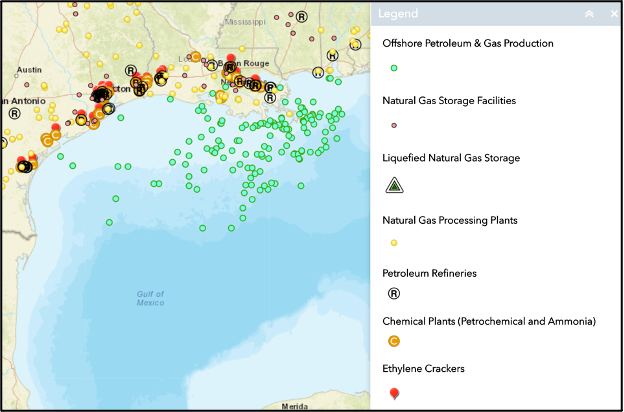
    The risks from industrial facilities are most obvious along the U.S. Gulf Coast, where many major petrochemical complexes are clustered in harm’s way. These refineries, factories and storage facilities are often built along rivers or bays for easy shipping access.

    But those rivers can also bring storm surge flooding that can raise the ocean by several feet during hurricanes. The storm surge from Helene was over 10 feet above ground level in Florida’s Big Bend and over 6 feet in Tampa Bay. With Milton, forecasters warning of a 10- to 15-foot storm surge at Tampa Bay.

    A boom surrounds flooded railcars to try to contain leaks at a chemical plant in Braithwaite, La., after Hurricane Isaac in 2012.
    AP Photo/David J. Phillip

    A recent study found evidence of two to three times more pollution releases during hurricanes in the Gulf of Mexico than during normal weather from 2005 to 2020.

    The effects of these pollution releases fall disproportionately on low-income communities and people of color, further exacerbating environmental health risks.

    Why residents may not hear about toxic releases

    The statistics are disconcerting, yet they get little attention. That is because hazardous releases remain largely invisible due to limited disclosure requirements and scant public information. Even emergency responders often don’t know exactly which hazardous chemicals they are facing in emergency situations.

    The U.S. Environmental Protection Agency requires major polluters to file only very general information about chemicals and on-site risks in their risk management plans. Some large-scale fuel storage facilities, such as those holding liquefied natural gas, are not even required to do that.

    These risk management plans outline “worst-case” scenarios and are supposed to be publicly accessible. But, in reality, we and others have found them difficult to access, heavily redacted and housed in federal reading rooms with limited access. The reason local officials and national scientific review panels often give for the secrecy is to protect the facilities from terrorist attack.

    Oil storage tanks and industrial facilities line the Houston Ship Channel, which is vulnerable to storm surge from Gulf of Mexico hurricanes.
    AP Photo/David J. Phillip

    Adding to this opacity is the fact that many states – including those along the Gulf – suspend restrictions on pollution releases during emergency declarations. Meanwhile, real-time incident notifications from the National Response Center – the federal government’s repository for all chemical discharges into the environment – typically lag by a week or more,

    We believe this limited public information on rising chemical threats from our changing climate should be front-page news every hurricane season. Communities should be aware of the risks of hosting vulnerable industrial infrastructure, particularly as rising global temperatures increase the risk of extreme downpours and powerful hurricanes.

    Mapping the risks nationwide to raise awareness

    To help communities understand their risks, our team at Rice University’s new Center for Coastal Futures and Adaptive Resilience investigates how industrial communities in flood-prone areas nationwide can better adapt to such threats, socially as well as technologically.

    Our interactive map shows where elevated future flood risks threaten to inundate major polluters that we identify using the EPA’s Toxic Release Inventory.

    The U.S. has several hot spots with clusters of flood-prone polluters. Houston’s Ship Channel, Chicago’s waterfront steel industries and the harbors at Los Angeles and New York/New Jersey are among the biggest.

    Three of the biggest hot spots, where large numbers of industrial facilities with toxic materials face elevated future flood risks, are in the Northeast, the northwestern Gulf Coast and the southern end of the Great Lakes.
    Rice University Center for Coastal Futures and Adaptive Resilience, CC BY-ND

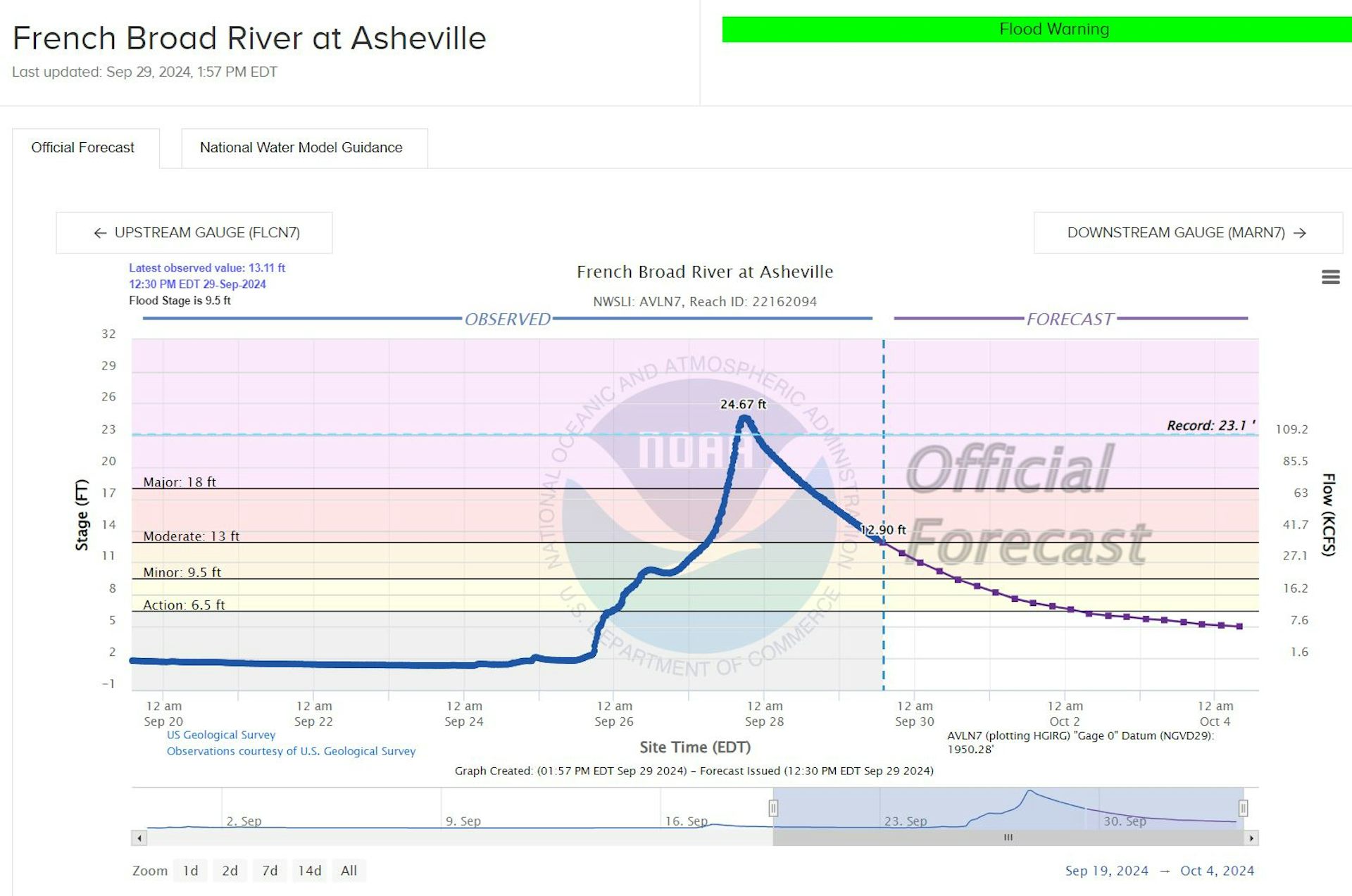
    But, as Helene revealed, there can also be great concern in less obvious spots. Inland, particularly in the mountains, runoff can quickly turn normally tame rivers into fast-rising torrents. The French Broad River at Asheville, North Carolina, rose about 12 feet in 12 hours during Helene and set a new flood stage record.

    When hurricanes and tropical storms are headed for the U.S., our interactive maps show where major polluters are located in the storm’s projected cone of impact. The maps identify hazardous flood-prone facilities down to the address, anywhere in the country.

    Knowledge is the first step

    Knowing where these sites are located is only the first step. Often, it’s up to communities themselves, many of them already overexposed and historically underserved, to raise concerns and demand strategies for mitigating the health, economic and environmental risks that industrial sites at risk of flooding and other damage can pose.

    These discussions can’t wait until a disaster is on the way. By knowing where these risks may be, communities can take steps now to build a safer future.

    This article, originally published Sept. 30, has been updated with Hurricane Milton.

    James R. Elliott receives funding from the National Science Foundation and the National Renewable Energy Lab.

    Dominic Boyer receives funding from the National Science Foundation, NOAA and Texas Sea Grant.

    Phylicia Lee Brown has nothing to disclose.

    ref. Hurricane Milton: Flooded industrial sites and toxic chemical releases are a silent, growing threat – https://theconversation.com/hurricane-milton-flooded-industrial-sites-and-toxic-chemical-releases-are-a-silent-growing-threat-239977

    MIL OSI – Global Reports

  • MIL-OSI: First Federal Savings Bank Partners with Gibco Motor Express, LLC to Help Those Affected by Recent Hurricanes

    Source: GlobeNewswire (MIL-OSI)

    EVANSVILLE, Ind., Oct. 09, 2024 (GLOBE NEWSWIRE) — First Federal Savings Bank has partnered with Gibco Motor Express, LLC to help those affected by the recent hurricanes. To make it easier for our community to contribute, Gibco has parked a semi-truck at First Federal Savings Bank’s Operations Center at 4920 Davis Lant Drive and is accepting donations of essential items. The semi will remain on site until it is full and will then be transferred to the disaster areas for donation drop-off.

    Donation Details:

    • Location: First Federal Savings Bank Operations Center: 4920 Davis Lant Drive Evansville, IN 47715
    • Dates: Starting October 09, 2024 – until truck is full
    • Hours: Monday through Saturday, 8:00 AM – 4:00 PM CST
    • Items Accepted: Non-perishable food, water, diapers, baby formula, clothing, toiletries, batteries, flashlights, blankets, or anything camping-related

    First Federal Savings Bank has established a fund on behalf of NewSong Church in North Carolina. We will be accepting monetary donations via check made payable to First Federal Savings Bank with Hurricane Relief and Last Name in the memo or sent digitally using Zelle by searching donations@fbei.net. At the end of the campaign, the money collected will be transferred to NewSong Church to provide humanitarian relief in the disaster areas.

    Every donation, big or small, will make a difference. Let’s come together as a community to support those in need.

    About First Federal Savings Bank Member FDIC
    First Federal Savings Bank was established on Evansville, Indiana’s Westside in 1904. A community bank offering eight locations in Posey, Vanderburgh, Warrick, and Henderson County. First Federal Savings Bank is also proud to offer Home Building Savings Bank locations in Daviess and Pike County.

    About Gibco Motor Express, LLC
    The foundation for Gibco Motor Express, LLC was laid in 1930 by a man named Vern Gibson. Since then, Gibco has forged a reputation as an industry leader in the transportation of bulk commodities. Based at four locations in Indiana, Illinois, and Kentucky, Gibco is strategically located to meet the transportation needs of its valued customers.

    The MIL Network

  • MIL-OSI USA: Sorensen Calls on Congress to Return to Washington to Help Impacted Americans and Pass Disaster Relief

    Source: United States House of Representatives – Congressman Eric Sorensen (IL-17)

    WASHINGTON, DC – Today, Congressman Eric Sorensen (IL-17), the only meteorologist in Congress, is calling on Congress to return to Washington to help impacted Americans and pass much-needed disaster relief as Hurricane Milton makes landfall in Florida and in the aftermath of Hurricane Helene.    

    “As a meteorologist for over two decades, I have witnessed up-close massive floods, tornados, hurricanes, derechos, and other extreme weather events that have destroyed homes, shuttered businesses, and harmed livelihoods. With Milton and Helene, we are seeing these types of hurricanes intensify at a more rapid pace, leaving us with little time to prepare for the road to recovery,” said Sorensen. “Congress has the responsibility to be good neighbors, step in, and help those communities across the country that are struggling to rebuild in the aftermath of natural disasters, including right here in Illinois. I am calling on Speaker Johnson to bring the House back into session, set partisan politics aside, and do the work that the people sent us here to do: help impacted Americans by making sure FEMA and the Small Business Administration have disaster relief funds.”

    While the Federal Emergency Management Agency (FEMA) has stated they have enough funding to meet the needs of Hurricane Helene and Milton victims, the severity of Milton may prevent FEMA from assisting other disaster relief efforts across the nation.  

    In addition to supporting small businesses, the U.S. Small Business Administration (SBA) can issue loans to help homeowners and businesses recover after a disaster. According to the SBA, they have only a few weeks of funding left. 

    Last month, Congress set aside an additional $20 billion for disaster relief in a short-term government funding package through December 20, 2024. Damage from these storms could be in the hundreds of billions of dollars.  

    Congressman Eric Sorensen serves on the House Committee on Agriculture and the House Committee on Science, Space, and Technology. Prior to serving in Congress, Sorensen was a local meteorologist in Rockford and the Quad Cities for nearly 20 years. His district includes Illinois’ Quad Cities, Rockford, Peoria, and Bloomington-Normal.

    ###

    MIL OSI USA News

  • MIL-OSI New Zealand: United States: Hurricane Milton

    Source: New Zealand Ministry of Foreign Affairs and Trade – Safe Travel

    Hurricane Milton is expected to make landfall in Florida today as a Category 4 hurricane or stronger.  The National Hurricane Centre (NHC) is issuing advice on their website: https://www.nhc.noaa.gov/ and additional information is available on the State of Florida’s website: https://www.stateofflorida.com/articles/hurricane-preparedness-guide

    We also advise New Zealanders in the affected areas to follow the advice of local authorities at all times (including any evacuation orders) and seek suitable shelter. Visitors and tourists staying in travel accommodation should follow the guidance of hotel/resort management. It is considered sensible practice not to venture outdoors during a hurricane and remain well away from the sea and rivers. We recommend you stay informed of developments by monitoring local news and weather reports.

    Please also ensure you keep your family and friends in New Zealand informed of your safety and well-being, including after the hurricane has passed.

    New Zealanders in Mexico or the United States requiring emergency assistance should contact the local emergency services by calling 911.

    We encourage all New Zealanders in the United States to register their travel on SafeTravel.

    If you require consular assistance, please contact:

    New Zealand Embassy in Mexico City on: +52 55 5283 9460 or nzmexico@mfat.govt.nz

    New Zealand Embassy in Washington DC on: +1 202 438 4800 or WSHinfo@mfat.govt.nz

    For consular emergencies only after-hours on +64 99 20 20 20.

    Associated Advisories:

    Share this page:

    Share this page:

    Latest News features

    MIL OSI New Zealand News

  • MIL-OSI Canada: Government advances Made-in-Canada sustainable investment guidelines and mandatory climate disclosures to accelerate progress to net-zero emissions by 2050

    Source: Government of Canada News

    News release

    October 9, 2024 – Toronto, Ontario – Department of Finance Canada

    The federal government is leading the world with a bold climate plan to grow our economy and reach net-zero emissions by 2050. Achieving this goal will require between $125 billion and $140 billion in investment into Canada every year. As a cornerstone of Canada’s net-zero economic plan, the federal government’s $93 billion suite of major economic tax credits are already available to help attract this investment.

    Beyond incentives to attract investment to Canada, investors need robust and transparent guidelines to credibly classify their investments into the clean economy on the path to net-zero. That is why in the 2023 Fall Economic Statement and Budget 2024, the government committed to develop a sustainable finance taxonomy identifying “green” and “transition” investments and to expand the coverage of mandatory climate disclosure requirements to private companies. Moving forward with these commitments is essential for market certainty, for Canada to unlock net-zero investments, and to uphold the Paris climate target of limiting global warming to 1.5°C above pre-industrial levels.

    Today in Toronto at the Principles for Responsible Investment conference, the Honourable Chrystia Freeland, Deputy Prime Minister and Minister of Finance, announced:

    • A plan to deliver Made-in-Canada sustainable investment guidelines; and,
    • Mandatory climate-related financial disclosures for large, federally incorporated private companies.

    The Made-in-Canada sustainable investment guidelines will become an important, voluntary tool for investors, lenders, and other stakeholders navigating the global race to net-zero by credibly identifying “green” and “transition” economic activities. These guidelines will provide the certainty needed to accelerate the flow of private capital into sustainable activities across the Canadian economy. From building electric vehicle batteries, to generating clean energy, to decarbonizing emissions-intensive heavy industries, these guidelines will identify job-creating activities in a way that is scientifically credible and aligned with limiting global temperature rise to 1.5°C above pre-industrial levels. The Canadian taxonomy will be developed and governed by an external, third-party organization(s).

    To attract more private capital into Canada’s largest corporations and ensure Canadian businesses can continue to effectively compete as the world races towards net-zero, the government is also moving forward with mandating climate-related financial disclosures for large, federally incorporated private companies. These disclosures will help investors better understand how large businesses are thinking about and managing risks related to climate change, ensuring that capital allocation aligns with the realities of a net-zero economy. Specifically, the government intends to bring forward amendments to the Canada Business Corporations Act that will require these disclosures. The government will launch a regulatory process to determine the substance of these disclosure requirements and the size of private federal corporations that would be subject to them. As small- and medium-sized businesses will not be subject to the requirements, the government is considering ways to encourage those businesses to voluntarily release climate disclosures, if they wish.

    The federal government is ready to work with provincial and territorial partners to ensure broad disclosure coverage across the Canadian economy. The government will seek to harmonize its regulations with those that will be required from public companies by securities regulators. More details will be released in due course.

    These two sustainable finance initiatives will mobilize further private sector capital towards activities essential to building a net-zero economy. More private sector capital will enable businesses to grow the economy, create more good-paying jobs for Canadians, and boost their resiliency against the risks posed by climate change.

    In addition to these announcements, today, the federal government successfully issued an additional $2 billion in green bonds, through a re-opening of Canada’s second green bond issued in February.

    Together, today’s progress is about building a flourishing Canadian sustainable finance industry and sending a clear signal to corporate boards and shareholders, at home and around the world, that Canada is their trusted partner for putting private capital to work in the race to net-zero.

    Quotes

    “In the 21st century, a competitive economy is a net-zero economy. We are seizing Canada’s economic advantages to attract investment and ensure Canadian workers benefit their fair share in the global race to net-zero. Today’s release of a path for Made-in-Canada sustainable investment guidelines and climate disclosures from large companies will accelerate the flow of private capital into Canada, in turn growing our economy, creating good jobs, and advancing our progress to net-zero emissions by 2050.”

    The Honourable Chrystia Freeland, Deputy Prime Minister and Minister of Finance

    “Building a cleaner economy is not only an environmental imperative, it is a major economic opportunity. The development of a sustainable investment taxonomy, paired with heightened transparency on climate disclosures, amounts to an important stepping stone for Canada on the path towards that cleaner economy. These initiatives will help mobilize needed private sector financial flows to build a cleaner economy and give investors who are looking for the sustainable option the clear direction they seek.”

    The Honourable Steven Guilbeault, Minister of Environment and Climate Change

    “Canadian workers and businesses are already attracting historic investment in areas such as clean energy, critical minerals, and electric vehicles, and seeing the associated benefits for job creation and economic growth. With changes announced today, investors will have more certainty that companies are taking real and serious action to address the climate crisis and drive down emissions, while building a strong economy.”

    The Honourable Jonathan Wilkinson, Minister of Energy and Natural Resources

    “Fighting climate change as well as protecting the economy and Canadians from the costs of climate inaction is a priority for our government. It’s important to send a clear signal to Canadian companies and organizations that climate risks and opportunities are critical to integrate into corporate culture and decision making, and that’s what we’re doing.”

    The Honourable François-Philippe Champagne, Minister of Innovation, Science and Industry

    “Creating a financial system that is sustainable and globally competitive is essential for Canada’s economic future. In order to compete both at home and abroad, we are moving forward with sustainable investment guidelines and mandatory climate disclosures to help provide credibility, accountability, and transparency in the marketplace. These are essential conditions for investors and companies to fill the investment gap necessary to meet the climate challenge while seizing generational opportunities for clean prosperity.”

    Ryan Turnbull, Parliamentary Secretary to the Deputy Prime Minister and Minister of Finance and to the Minister of Innovation, Science and Industry

    Quick facts

    • In Budget 2024, the federal government committed to provide an update by the end of 2024 on the development of Made-in-Canada sustainable investment guidelines, in recognition that promoting credible climate investment and combatting greenwashing are critical to fostering investor confidence and mobilizing the private investment Canada needs to achieve net-zero by 2050. 

    • In the 2023 Fall Economic Statement, the federal government committed to develop options for making climate disclosures mandatory, as part of expanding mandatory climate disclosures across the Canadian economy. It also first announced the government’s commitment to developing a Made-in-Canada taxonomy. 

    • The development of a Made-in-Canada sustainable finance taxonomy and regulations to require climate disclosures from large companies builds on the important work done by the Sustainable Finance Action Council.

    • The federal government is investing over $160 billion in its net-zero economic plan, including through a $93 billion suite of tax credits for major economic investments in:

      • Carbon capture, utilization, and storage;
      • Clean technology;
      • Clean hydrogen;
      • Clean technology manufacturing;
      • Clean electricity; and,
      • Electric vehicle (EV) supply chains.
    • In addition to tax credits for major economic investments, the federal government is attracting net-zero private sector investment by:

      • Catalyzing private investment in low-carbon projects, technologies, businesses, and supply chains through the $15 billion Canada Growth Fund, which has already invested over $2 billion across eight deals, including three novel Carbon Contracts for Difference;
      • Leveraging at least $20 billion from the Canada Infrastructure Bank to build major clean electricity and clean growth infrastructure projects;
      • Securing Canada’s advantage as the world’s supplier of choice for critical minerals and the clean technologies they enable, by further developing supply chains through a $3.8 billion Critical Minerals Strategy; and,
      • Building more clean, affordable, and reliable power, and supporting innovation in electricity grids, including offshore wind, through the $3 billion recapitalization of the Smart Renewables and Electrification Pathways Program.
    • The third-party, arm’s-length organization(s) will further develop and implement the taxonomy.

    • The Department of Finance, Environment and Climate Change Canada, and Innovation, Science and Economic Development Canada will work together to make the required legislative and regulatory changes for mandatory climate disclosures.

    Related products

    Associated links

    Contacts

    Media may contact:

    Katherine Cuplinskas
    Deputy Director of Communications
    Office of the Deputy Prime Minister and Minister of Finance
    Katherine.Cuplinskas@fin.gc.ca

    Media Relations
    Department of Finance Canada
    mediare@fin.gc.ca
    613-369-4000

    General enquiries:

    Phone: 1-833-712-2292
    TTY: 613-369-3230
    E-mail: financepublic-financepublique@fin.gc.ca

    Stay Connected

    MIL OSI Canada News

  • MIL-OSI Canada: Government advances Made-in-Canada sustainable investment guidelines to accelerate progress to net-zero emissions by 2050

    Source: Government of Canada News

    Backgrounder

    October 9, 2024

    The Government of Canada supports the development of voluntary Made-in-Canada sustainable investment guidelines (otherwise known as a taxonomy) that would categorize investments based on scientifically determined eligibility criteria that are consistent with the goal of reaching net-zero emissions by 2050 and limiting global temperature rise to 1.5°C above pre-industrial levels.

    This is a high standard that will be important for building and maintaining the credibility of a Canadian taxonomy, which will mobilize private capital for low- or non-emitting activities with a “green” category.

    Importantly, the Canadian taxonomy would also establish a “transition” category to identify, and boost funding for, scientifically credible pathways to rapidly decarbonize Canada’s emissions-intensive sectors. Canada’s leadership in the transition aspect of taxonomy will be a notable and valuable contribution to the international dialogue on transition finance.

    The development of the metrics-based Canadian taxonomy would first focus on the following sectors for the Canadian economy: electricity, transportation, buildings, agriculture and forestry, manufacturing, and extractives, including mineral extraction and processing, and natural gas. A taxonomy for two to three priority sectors will be released within 12 months of the arm’s-length, third-party organization(s) beginning its work.

    Once finalized, the Canadian taxonomy would be available for entities such as financial institutions, lenders, and companies to use on a voluntary basis. It would not be mandatory.

    Details of the Canadian Taxonomy

    This backgrounder outlines the government’s expectations for the development and implementation of the Canadian taxonomy, including:

    1. Guiding Principles
    2. Defining green and transition investments
    3. Priority Sectors
    4. Company-level expectations
    5. Governance and Funding

    Background on Taxonomy

    To close the climate financing gap, financial market participants, including banks, insurers, pension plans and asset managers, have indicated that they need clarity about what economic activities are considered “green” or “transition.” A taxonomy is a tool that can provide this clarity by promoting a shared understanding or classification system that defines or categorizes these activities.

    Like the proposed Canadian taxonomy, many international taxonomies also use detailed eligibility criteria, anchored in climate science, to support the taxonomy’s credibility among international investors. These eligibility criteria often involve the use of performance-based metrics and thresholds to demonstrate what economic activities are aligned with pathways to limiting global temperature rise to 1.5°C above pre-industrial levels, in line with the Paris Agreement. These taxonomies likewise aim to preserve interoperability with other jurisdictions to reflect the global nature of financial and capital markets.

    A taxonomy supports a wide range of use cases. For example, taxonomies can be used to set standards for classifying climate-related financial instruments (e.g., bonds or loans), and/or to evaluate the green or transition credentials of financial instruments and issuers.
    The aim of the Canadian taxonomy would be to mobilize investment in support of Canada’s net-zero transition by enabling investors to understand and communicate which key activities and investments will deliver a Canadian net-zero economy.

    Over 40 jurisdictions worldwide are developing or have implemented taxonomies, which generally are calibrated to a particular country’s domestic economic reality and priorities. This is an opportunity to develop a Made-in-Canada taxonomy that aligns with Canada’s net-zero pathways and drives transformational investments within Canada’s economy that will also create good-paying, sustainable jobs.

    The Sustainable Finance Action Council (SFAC), which was composed of 25 of Canada’s leading deposit-taking institutions, insurance companies, and pension funds, was launched by the Government of Canada in May 2021 to help lead the Canadian financial sector towards integrating sustainable finance into standard industry practice. The SFAC’s recommendations on taxonomy, including its Taxonomy Roadmap Report, have been important inputs for informing the Government of Canada’s next steps on taxonomy. The Government of Canada thanks the SFAC for its advice on taxonomy and its valuable contribution to building a sustainable finance market in Canada throughout its mandate, which concluded on March 31, 2024.

    i. Guiding Principles

    The Canadian taxonomy would be developed and maintained in accordance with the following principles (Guiding Principles), which draw from the recommendations of the SFAC and international organizations, as well as from international taxonomy precedents.

    These Guiding Principles are intended to ensure that the Canadian taxonomy fulfills its objective of being a credible and usable tool for financial market participants and others to identify green and transition investments.

    Guiding Principles

    • Usable

      Mobilize capital toward the net-zero transition.

    • Credible

      Clear, rigorous, and credible science-based criteria that align with limiting global temperature rise to 1.‍5°C above pre-industrial levels, with no or low overshoot and all relevant emissions scopes considered.​ Any activity which receives the green or transition taxonomy label must be scientifically defensible as being aligned with this.

    • Comprehensive

      Cover transition and green activities that make a material positive contribution to climate change mitigation, addressing high-emitting sectors.

    • Interoperable

      Be interoperable and broadly compatible with other major science-based taxonomies and frameworks globally, while reflecting Canada’s own economic context.

    • Transparent

      A governance structure that is transparent, efficient, adaptive, and results-oriented; safeguards scientific integrity; and engages with key stakeholders, including provincial and territorial governments, civil society, financial market participants, industry, and Indigenous partners.

    • Dynamic

      A built-in review process to ensure the Canadian taxonomy is updated as the landscape evolves.

    • Holistic

      Do-No-Significant-Harm criteria addressing environmental, social, and Indigenous objectives.

    ii. Defining green and transition investments

    At a high level, the Canadian taxonomy would define which economic activities are green or transition in line with SFAC recommendations, as follows:

    • Green: low-or zero-emitting activities, such as green hydrogen, solar, and wind energy generation, or those that enable them, such as electricity transmission lines and hydrogen pipelines; and,
    • Transition: decarbonizing emission-intensive activities that are critical for sectoral transformation and consistent with a net-zero, 1.5°C transition pathway, such as installing lower-emitting (electric) furnaces to produce steel.

    Activities are expected to be classified according to a categorization framework to be confirmed and operationalized. The figure below shows an example of such a framework proposed by the SFAC.

    SFAC Taxonomy Roadmap Report Categorization Framework

    For clarity, in this framework:

    Green activities are expected to be those that:

    • Do not have material scope 1 and 2 emissions;
    • Have low or zero downstream scope 3 emissions; and,
    • Sell into or benefit from markets that are expected to grow in the global
      net-zero transition.

    Transition activities are expected to be those that:

    • Have material scope 1 and 2 emissions but make significant emission reductions;
    • Have low or zero scope 3 emissions; and,
    • Do not create carbon lock-in and path dependency.

    As well as activities that:

    • Have material scope 3 emissions but significantly reduce their scope 1 and
      2 emissions;
    • Do not face immediate demand-side risk (i.e., market contraction); and,
    • Have lifespans proportionate to when global demand for their products is expected to decline.

    iii. Priority Sectors

    The initial phase of taxonomy development would focus on developing eligibility criteria for the following priority sectors. A taxonomy for two to three priority sectors will be released within 12 months of the arm’s-length, third-party organization(s) beginning its work. The final determination of eligible activities would rest with the third-party organization(s) which will develop, implement, and maintain the Canadian taxonomy, and align with the guiding principles, including scientific credibility and alignment with limiting global warming to 1.5°C:

    Electricity, which could include activities related to low- and zero-emitting electricity generation, electricity storage, and grid infrastructure improvements.

    Transportation, which could include low- and zero-emitting passenger and freight transportation activities in a variety of transportation modes (e.g., road, rail, marine transport) as well as enabling infrastructure (e.g., electric vehicle charging).

    Buildings, which could include the construction and operation of high-performance buildings, the retrofitting of buildings to improve their performance, and the installation of equipment to reduce the emissions of buildings and their occupants.

    Agriculture and Forestry, which could include the sustainable production of crops and livestock, activities to decarbonize agricultural production, and the planting, sustainable management, and restoration of forests.

    Heavy Industry:

    These important sectors of the Canadian economy have been prioritized based on the following criteria:

    • Anticipated future levels of green and transition investment opportunity, including as assessed by market participants;
    • Importance of their decarbonization for decarbonizing the Canadian economy, based on current sectoral emissions and projections of future emission reductions; and
    • Economic significance to Canada, including current levels of investment and economic activity.

    Further below is a list of examples of activities within these sectors that may be eligible for a green or transition taxonomy label, subject to the development of activity-specific performance criteria and Do-No-Significant-Harm requirements.

    iv. Company-level expectations

    The Government of Canada supports the adoption of net-zero targets, credible transition plans, and robust climate disclosures by Canadian companies. These are key infrastructure elements of a robust sustainable finance market and are essential to achieving net-zero goals, fostering transparency, and enabling informed decision-making.

    The Government of Canada has committed to moving towards mandatory climate-related financial disclosures across a broad spectrum of the Canadian economy. Mandatory disclosure requirements are already in place for federal Crown corporations and federally regulated financial institutions. The Government of Canada intends to bring forward amendments to the Canada Business Corporations Act to enable climate-related financial disclosure requirements for large, federally incorporated private companies.

    The Government of Canada encourages the developers of the taxonomy to consider including these company-level requirements as part of the eligibility criteria for green and transition labelling in the Canadian taxonomy, in line with SFAC’s recommendations.

    Potential Company-Level Actions for Taxonomy Users

    • Net-Zero Targets

      A commitment to reach net-zero emissions by 2050 or earlier, usually with interim targets.​

    • Credible Transition Plans

      A strategy that lays out the company’s targets, actions, and/or resources for its transition toward a lower-carbon economy, including actions such as reducing its greenhouse gas emissions.​

    • Robust Climate Disclosure

      The provision of information about a company’s climate-related governance, risk management, strategy, and metrics and targets.​

    v. Governance and Funding

    Developing a taxonomy requires significant climate science and sectoral expertise and engagement with stakeholders, including financial market participants, industry, civil society, governments, regulators, and Indigenous partners. In addition, good governance practices are needed to oversee the development and implementation of a Canadian taxonomy that safeguards scientific integrity and meets market needs. The guiding principle of scientific credibility will ensure that the taxonomy’s green and transition labels are only applied to activities that are in line with the goal of limiting global warming to 1.5°C with no or limited overshoot.

    The Canadian taxonomy would be developed, implemented, and maintained at arm’s length to the Government of Canada by an organization or organizations external-to-government.

    The final determination of guiding principles, eligible activities, priority sectors and company-level expectations would rest with the external-to-government organization.

    The Government of Canada would contribute funding to support the technical work to develop the eligibility criteria for the taxonomy.

    Examples of Potential Taxonomy Eligible Activities

    Under the Canadian taxonomy, a range of economic activities that contribute to Canada’s net-zero transition will be eligible for a “green” or “transition” label, which, for example, could be used in the context of labelled bond issuances. Not all economic activities will be eligible.

    Through a survey of international taxonomies, the following examples of activities in priority sectors that may be eligible for a green and/or transition label were identified. These examples are in no way intended to direct the work of the arm’s length organization or organizations who will develop, implement, and maintain the Canadian taxonomy, who would make final determinations with respect to the inclusion of and criteria for these example activities, in line with the guiding principles, including alignment with limiting global warming to 1.5°C. As such, these examples should be considered indicative only, not prescriptive.

    It is expected that activity-specific performance criteria would be developed for each activity included in the Canadian taxonomy along, with Do-No-Significant-Harm requirements, to define the circumstances under which that activity would be eligible for green or transition labelling. That is, only some forms of a given activity might be eligible while other forms of the same activity might be ineligible. Some forms of an eligible activity may be green-eligible while other forms would be transition-eligible. As such, the examples below show activities that may  be eligible, subject to activity-specific criteria and Do-No-Significant-Harm requirements.

    These examples are not intended to be exhaustive. The international taxonomies surveyed to identify these examples reflect the economic and net-zero transition needs of other jurisdictions, which may be different from those of Canada, so it is to be expected that the Canadian taxonomy could break new ground and include sub-sectors or activities not covered in these examples. For example, it could include green and transition activities in the agricultural sector such as certain forms of crop and livestock agriculture.

    In consideration of Canada’s economic makeup, the taxonomy could potentially include activities that significantly reduce the emissions of existing natural gas production and/or the emissions associated with a limited buildout of existing production sites. The technical drafters may also consider a broad range of possible eligibility criteria for existing natural gas production, such as the displacement of more polluting fuels internationally, provided they are aligned with limiting global temperature rise to 1.5°C above pre-industrial levels. Based on the Guiding Principles, the Government does not anticipate new natural gas production to be eligible. The final determination of eligible activities across all sectors will be made by the arms length, external organization(s).

    In the electricity sector, examples of potentially eligible green or transition activities include:

    • Co-generation of heating or cooling and electricity from solar energy;
    • Electricity generation from bioenergy;
    • Electricity generation using concentrated solar power (CSP) technology;
    • Electricity generation from geothermal energy;
    • Electricity generation from hydropower;
    • Electricity generation from ocean energy technologies;
    • Electricity generation using solar photovoltaic technology;
    • Electricity generation from wind power;
    • Storage of electricity; and,
    • Transmission and distribution of electricity.

    In the transportation sector, examples of potentially eligible green or transition activities include:

    • Low carbon transport infrastructure, such as electric vehicle charging.
    • Zero-emission and low-emission operations of the following modes of transportation:
      • Air transport, including ground handling operations;
      • Freight transport by road;
      • Inland water transport;
      • Road passenger transport;
      • Sea and coastal water transport;
      • Railway transport; and,
      • Urban and suburban passenger land transport.

    In the buildings sector, examples of potentially eligible green or transition activities include:

    • Acquisition and ownership of low-emitting and energy-efficient buildings;
    • Construction of low-emitting and energy-efficient new buildings;
    • Installation of energy efficiency equipment;
    • Installation of renewable energy technologies; and,
    • Renovation of existing buildings to reduce emissions and/or improve energy efficiency.

    In the agriculture and forestry sectors, examples of potentially eligible green or transition activities include:Footnote 1

    • Afforestation;
    • Conservation, restoration, and maintenance of natural forests; and,
    • Sustainable forest management.

    In the heavy industry sector, examples of potentially eligible green or transition activities include:

    • The low-emission or energy-efficient manufacturing of:
      • Aluminum;
      • Basic chemicals, such as ammonia, aromatics BTX, carbon black, chlorine, nitric acid, and soda ash;
      • Cement;
      • Hydrogen;
      • Iron and steel; and,
      • Plastics in primary form.
    • The manufacturing of:
      • Batteries;
      • Energy efficiency equipment for buildings, such as energy-efficient appliances and light sources, energy-efficient HVAC systems, heat pumps, and energy-efficient building automation and control systems;
      • Equipment for the production of hydrogen through electrolysis;
      • Low-carbon technologies for household sector;
      • Low-carbon technologies for transport, such as low-carbon vehicles that meet transportation sector criteria; and,
      • Renewable energy technologies.
    • The mining of:Footnote 2
      • Copper;
      • Iron ore;
      • Lithium; and,
      • Nickel.

    MIL OSI Canada News

  • MIL-OSI USA: Case Condemns Misinformation On Federal Disaster Relief For Current And Pending Disasters

    Source: United States House of Representatives – Congressman Ed Case (Hawai‘i – District 1)

    (Washington, DC) – U.S. Representative Ed Case (D-HI-01), a member of the U.S. House Appropriations Committee’s Subcommittee on Homeland Security with authority over the budget of the Federal Emergency Management Agency (FEMA) and other federal disaster relief efforts, today condemned deliberate misinformation that FEMA and related disaster assistance is being diverted from current and pending disasters to other sources.

    “Not only is this misinformation fully inaccurate, but it is deliberately harming people and communities in most need of relief by leading them to believe incorrectly that they cannot access critical and available federal assistance,” said Case, whose own state of Hawai‘i continues to be critically impacted by the Maui wildfires of August 2023.

    “In fact, Congress just approved and the President just signed into law an additional $20 billion for FEMA’s Disaster Relief Fund (DRF), the federal government’s main channel of disaster relief, and all of those funds have been delivered to FEMA. These funds will fully continue FEMA’s disaster assistance efforts for all of Maui, recent Hurricane Helene and pending Hurricane Milton and other federally declared disasters until they require further replenishment.”

    Case noted that in North Carolina alone, which was heavily impacted by Hurricane Helene on September 27th of this year, FEMA continues full efforts on the ground along with some two thousand other federal employees. He further noted that on Maui, FEMA and other federal partners have now provided approximately $3 billion in Maui wildfire efforts and continues its assistance with ongoing DRF funding.

    FEMA’s DRF is the principal fund for immediate and ongoing disaster relief to affected communities. In the recent Continuing Resolution, which continued federal government funding into current Fiscal Year (FY) 2025 commencing October 1st and was passed by Congress and signed into law by the President on September 26th, the DRF, which was running low, was re-funded at $20 billion. Additionally, although federal government funding was continued through December 20, 2024 to allow for completion of the FY 2025 appropriations process and funding for most federal departments was prorated only through that date, Congress specifically authorized a full FY 2025 funding of $20 billion for the DRF and the money is fully available to FEMA.

    “The misinformation that FEMA does not have available federal disaster relief, and that these monies have instead been diverted to ‘illegal immigrants’, Ukraine, and elsewhere, is completely false,” said Case. “Not only do the perpetrators and amplifiers know that it is false, not only are they making these statements for political purposes, but they are also deliberately harming the people and communities who most need this assistance as they are effectively being told it’s useless to seek assistance when they most need it.”

    The Administrator of FEMA, Deanne Criswell, has called the misinformation a “truly dangerous narrative,” adding that it’s not just inconvenient, it is actively hindering disaster relief efforts by “creating this fear of trying to reach out and help us or register to help.”

    To counter misinformation, FEMA has also launched a Hurricane Rumor Response webpage, which you can view here: https://www.fema.gov/disaster/current/hurricane-helene/rumor-response

    U.S. Representative Chuck Edwards, a Republican representing one of the districts most heavily impacted by Helene, also issued a press release dispelling misinformation from “untrustworthy sources trying to spark chaos,” assuring people that Hurricane Helene was not geoengineered by the government, FEMA is not turning away donations, FEMA has not diverted disaster response funding to the border or foreign aid, FEMA is not going to run out of money and FEMA cannot seize property or land, among other things.

    Case continued: “To be clear, there are areas where disaster assistance is running dangerously low, in particular Small Business Administration loan relief, and it is also very clear that even the $20 billion of new appropriations into the DRF will not be sufficient to indefinitely continue disaster assistance to Maui, the communities affected by Helene and Milton and other impacted communities across the country. 

    “This is why I have joined colleagues on my House Appropriations Committee and otherwise in strongly advocating for an emergency supplemental disaster relief package to be passed as soon as Congress reconvenes this November after the elections.  My full efforts are devoted to passage of that package and to continued relief for Maui and all other communities affected by disasters.”

    ###

    MIL OSI USA News

  • MIL-OSI USA: FACT SHEET: Hurricane Helene Recovery Continues as Biden-⁠ Harris Administration Prepares for Hurricane  Milton

    US Senate News:

    Source: The White House
    The Biden-Harris Administration continues to both make urgent and life-saving preparations for Hurricane Milton and carry out response and recovery efforts for communities impacted by Hurricane Helene.
    Today, President Biden and Vice President Harris received a briefing from members of their Administration about updates on the latest forecast for Hurricane Milton, expected impacts for the State of Florida, and the robust pre-landfall preparations underway. They also received an update on the ongoing response to the impacts of Hurricane Helene across the Southeast and Appalachia. President Biden will address the Nation tonight regarding Hurricane Milton.
    President Biden has spoken to Florida Governor Ron DeSantis, Tampa Mayor Jane Castor, Clearwater Mayor Bruce Rector, and Pinellas County Chairwoman Kathleen Peters to get firsthand reports on recovery efforts for Hurricane Helene and to discuss preparations for Hurricane Milton. The President told each of the officials to call him directly if they need additional assistance on response and recovery efforts.
    More than 8,000 Federal personnel are on the ground across the Southeast, including in Florida, to continue Hurricane Helene recovery efforts and respond to the impacts of Hurricane Milton.
    At the direction of President Biden, FEMA Administrator Deanne Criswell will travel to Florida tonight to join the personnel on the ground and ensure every Floridian gets the help they need when this storm passes.
    Additional updates on our efforts for Hurricanes Milton and Helene include:
    Hurricane Milton Pre-Landfall Preparations
    Pre-Landfall Outreach and Emergency Declarations
    President Biden granted pre-landfall emergency declarations for the State of Florida and the Seminole Tribe of Florida for Hurricane Milton, enabling FEMA to provide direct assistance to the state, local and Tribal response, preposition supplies and response assets and mobilize hundreds of personnel in the state, many of whom were already in place supporting the Hurricane Helene response.
    The White House has been in contact with more than 60 Florida officials from all 51 counties that fall under the pre-landfall Emergency Declaration approved by President Biden. We remain in close communication with officials in the 16 cities and counties that will likely be in the direct path of the storm.
    Surging Resources and Personnel to Florida
    FEMA has over 1,000 responders on the ground in Florida supporting Hurricane Milton preparations and recovery efforts from previous disasters. There are over 1,400 search and rescue personnel pre-staged to support Hurricane Milton response efforts.
    The U.S. Coast Guard has 1,300 personnel stationed in Florida ready to immediately assist with life-saving and life sustaining search and rescue operations throughout the State. The Coast Guard also has personnel ready who will work directly with the U.S. Army Corps of engineers to assess and open the critical lifeline of the Port of Tampa as quickly as possible to ensure necessary supplies and fuel can start to flow into the impacted areas again.
    The State of Florida has activated over 6,000 members of the National Guard and expects to bring on an additional 3,000 National Guard members from Florida and other States to support State response activities.
    The Federal government has pre-positioned resources to support local and state response efforts ahead of Hurricane Milton. FEMA pre-staged seven FEMA Incident Management Assistance Teams, eight federal Urban Search & Rescue and swift water rescue teams, three U.S. Coast Guard Swift Water Rescue teams, 10 HealthCare System Assessment Teams, two U.S Army Corps of Engineers temporary power teams, debris experts, Environmental Protection Agency wastewater experts, over 500 ambulances, 20 helicopters prepared to support media requirements following landfall, and 60 High Water Vehicles with ladders from the Department of Defense.
    Additionally, FEMA has five incident staging bases with commodities including food and water. Right now, FEMA has 20 million meals and 40 million liters of water ready to deploy to address ongoing Helene and Milton response efforts with capacity to expand as needed.
    The Department of Defense is ready to support air search-and-rescue efforts, support urban search-and-rescue teams, provide helicopters to move personnel and equipment, and provide high water vehicles. The U.S. Army Corps of Engineers is staged across the area of impact and is prepared to support debris management, assessments of infrastructure and water/wastewater facilities, temporary power installations, and flood/water mitigation efforts.
    Additional Efforts to Support Pre-Landfall Preparations and Protect Communities
    The National Oceanic and Atmospheric Administration (NOAA) is leveraging state-of-the-art technology to keep communities safe throughout the southeast. NOAA’s fleet of “Hurricane Hunter” aircraft gather vital data to help improve track and intensity forecasts, supporting the 24-7 work of the National Weather Service (NWS). NWS provides the real-time, accurate information that assists local meteorologists and emergency operations leaders protect their communities and combat weather misinformation. Additionally, data from reconnaissance planes and drones used to survey damage following Hurricane Helene’s landfall will help us better prepare for post-Milton recovery operations.
    The Department of Energy’s Energy Response Organization remains activated to respond to storm impacts. Via the Electricity Sub-Sector Coordinating Council and Oil and Natural Gas Sub-Sector Coordinating Council, the Department has been coordinating continuously with energy sector partners on both the ongoing Hurricane Helene response and potential impacts from Hurricane Milton.
    The Department of Housing and Urban Development (HUD) has notified local public housing authorities and owners of its assisted multifamily and heath care properties within the State of Florida to immediately implement all appropriate safety protocols for residents and workers. HUD is committed to ensuring that residents of its assisted homes and properties receive critical information that can save lives during extreme weather events. HUD is also conducting outreach and communications on the programmatic flexibilities and waivers that can be utilized to assist communities and survivors. Additionally, HUD is working with communities, shelter operators and homelessness services providers to prepare and support them—in collaboration with FEMA and disaster assistance organizations such as the Red Cross—as they provide life-saving assistance before and after the storm.
    The Department of Health and Human Services’ Administration for Strategic Preparedness and Response (ASPR) is assessing potential critical supply chain disruptions following Hurricane Helene’s impact on the IV solution supply chain. ASPR is coordinating with B Braun, an IV solution manufacturer with a facility in Daytona Beach, Florida, to move their product out of the path of the storm and facilitate other activities that will mitigate potential impacts on future distribution. ASPR and HHS partners are committed to continue working with public and private partners to support the supply chain as facilities address return to full operational capacity. ASPR is encouraging manufacturers, wholesalers, and distributors to evaluate product allocation and healthcare providers to implement product conservation strategies to maximize available supply. ASPR is in communication with stakeholders to reduce disruption and facilitate product allocation.
    Protecting Impacts to Power and Travel Infrastructure
    The Department of Transportation is deploying a Federal Aviation Administration (FAA) Air Traffic Field Incident Response team to Florida and pre-staging operations in Jacksonville to support any impacted towers and airports. The team will work with the State and local authorities and the Department of Defense within the established Emergency Operations Center. The Department of Transportation is also deploying the FAA Communication Support Team (CST), which plays a critical role in restoring communications at impacted air traffic management facilities. Specifically, the CST will set up Starlink and Mobile Phone Bonding kits, which increase signal stability and data throughout the region. The FAA Air Traffic Organization Technical Operations Team is on-site and leading the restoration efforts for communications at air traffic facilities. The FAA is placing aircraft on standby to transport personnel from various agencies, mobilize resources, and support damage assessments to infrastructure.
    The FAA granted permission to the utility Florida Power & Light to use large Teros drones to assist with damage assessments and power restoration after Milton passes. These 1,800-pound drones can fly in harsh conditions and operate in winds up to 70 mph before crewed aircraft are able to fly.
    The Department of Transportation’s Federal Highway Administration is coordinating with the Florida Department of Transportation (FDOT) and is prepared to rapidly process Emergency Relief (ER) funding requests from FDOT. The ER program helps pay for long-term, permanent repairs, and other immediate emergency repairs, such as protecting remaining facilities and restoring essential traffic. It reimburses State, local, federal, Tribal, and territorial governments for eligible expenses associated with damage from natural disasters or other emergency situations based on their requests.
    Hurricane Helene Response and Recovery
    The Department of Defense continues to support search-and-rescue operations, route clearance, and commodities distribution across western North Carolina with 1,500 active-duty troops. The Department of Defense is also employing additional capabilities to assist with increasing situational awareness across the remote terrain of Western North Carolina. The Army Corps of Engineers continues missions supporting temporary emergency power installations, infrastructure assessments, and debris management oversight.
    Mobilizing Financial Assistance and Surging Additional Personnel and Resources
    Over $344 million in assistance has been provided to Hurricane Helene survivors. President Biden approved a 100 percent Federal cost-share for Florida, Georgia, North Carolina, South Carolina and Tennessee to assist in those States’ response efforts. In North Carolina alone, FEMA has approved over $60 million in aid for more than 51,000 households.
    FEMA personnel and other Federal partners, including FEMA’s Surge Capacity Force, remain on the ground supporting impacted communities, with over 17.2 million meals and 13.9 million liters of water delivered and ensuring information is accessible, including resources in preferred languages and ASL.
    Over the course of the last two weeks, 1,000 Urban Search and Rescue personnel have assisted over 3,200 survivors. FEMA Disaster Survivor Assistance Teams are on the ground in neighborhoods in all Helene-affected States helping survivors apply for assistance and connecting them with additional State, local, Federal and voluntary agency resources.
    Supporting Infrastructure Recovery
    The U.S. Department of Transportation’s Federal Highway Administration announced over $130 million in Quick Release Emergency Relief funding to support North Carolina, South Carolina, and Tennessee. The funding represents a down payment to address the immediate needs to restore vital transportation systems in these states. Additional funding will flow to affected communities from the Emergency Relief program.
    The Federal Aviation Administration (FAA) worked with partners to ensure the national airspace returned to steady state operations and all airports across impacted states reopened. The FAA’s Security and Hazardous Materials Safety Communication Support Team was deployed to restore communications to impacted airports, including delivering satellite communications kits to the Asheville Regional Airport in North Carolina and ongoing work at Valdosta Regional Airport in Georgia. The FAA Air Traffic Organization Technical Operations Team is on-site and leading communications restoration efforts at air traffic facilities. FAA also supported FEMA with two aircrafts to conduct flyover assessments and transport emergency personnel and gear, such as satellite communications kits.
    Additionally, the Federal Motor Carrier Safety Administration issued Regional Emergency Declarations for Florida, Georgia, Kentucky, North Carolina, South Carolina, Tennessee, Virginia, and West Virginia. This Declaration affords emergency regulatory relief from Federal Motor Carrier Safety regulations, including maximum driving time for property- and passenger-carrying vehicles from the date of declaration. This allows truck drivers to get essential supplies to affected areas. The FMCSA Regional Declaration eliminates the need for each individual state to request a 14-day extension and allows FMCSA the ability to manage one declaration that includes all eight states and does not expire until October 27.
    NOAA continues to support post-disaster imagery flights following Hurricane Helene, already totaling over 68 flight hours during 20 flights, including over western North Carolina. NOAA is currently repositioning to support Florida and the impacts of Hurricane Milton. NOAA’s aerial imagery captures damage to coastal areas caused by a storm and aids safe navigation. Aerial imagery is a crucial tool to determine the extent of the damage from flooding, and to compare baseline coastal areas to assess the damage to major ports and waterways, coastlines, critical infrastructure, and coastal communities. This imagery not only supports FEMA and the broader response community, but the public at large.
    Supporting Students and Student Loan Borrowers
    The U.S. Department of Education is lifting up a series of resources for students, families, and borrowers impacted by these hurricanes. These resources include guidance, in person support, technical assistance, and peer-to-peer connections for state and local leaders; resources for recovery needs such as mental health support for students and educators; flexibilities to help institutions of higher education continue to manage the Federal financial aid programs; and automatically enrolling affected borrowers with missed payments into a natural disaster forbearance. Thanks to regulations issued by the Biden-Harris Administration, this forbearance will count toward Public Service Loan Forgiveness (PSLF) and income-driven repayment forgiveness.
    Providing Financial Flexibilities to Homeowners and Taxpayers
    The Department of Housing and Urban Development is providing a 90-day moratorium on foreclosures of mortgages insured by the Federal Housing Administration (FHA) as well as foreclosures of mortgages to Native American borrowers guaranteed under the Section 184 Indian Home Loan Guarantee program. The moratorium and extension are effective as of the President’s disaster declaration date in each state. When homes are destroyed or damaged to an extent that reconstruction or complete replacement is necessary, HUD’s Section 203(h) program provides FHA insurance to disaster victims. Borrowers from participating FHA approved lenders are eligible for 100 percent financing including closing costs. HUD’s Section 203(k) loan program enables individuals to finance the purchase or refinance of a house, along with its repair, through a single mortgage. Homeowners can also finance the rehabilitation of their existing homes if damaged. FHA is coordinating and collaborating with the Federal Housing Finance Agency, Department of Veterans Affairs and the Department of Agriculture to ensure consistent messaging and policies for single family loans regarding foreclosure moratoriums and repayment/arrearage agreements. Additionally, affected homeowners that have mortgages through Government-Sponsored Enterprises – including Fannie Mae and Freddie Mac – and the FHA are eligible to suspend their mortgage payments through a forbearance plan for up to 12 months.
    The Internal Revenue Service announced disaster tax relief for all individuals and businesses affected by Hurricane Helene, including the entire states of Alabama, Georgia, North Carolina and South Carolina and parts of Florida, Tennessee and Virginia. Taxpayers in these areas now have until May 1, 2025, to file various federal individual and business tax returns and make tax payments. In addition, the Internal Revenue Service is providing more than 1,000 employees to help with FEMA disaster relief call lines and intake initial information to help disaster victims get federal relief. IRS Criminal Investigation agents are also on the ground in devastated areas to help with search and rescue efforts and other relief work – including assisting with door-to-door search efforts.
    Protecting Public Health
    The U.S. Department of Health and Human Services activated the Emergency Prescription Assistance Program for North Carolina to aid uninsured residents in replacing prescription medicines or certain medical equipment lost or damaged in Hurricane Helene.
    The U.S. Environmental Protection Agency is working closely with state and local officials to restore drinking water service in North Carolina and across the Southeast as well as provide assistance in debris and hazardous waste clean-up efforts.
    Supporting Workers and Worker Safety
    The U.S. Department of Labor announced initial emergency grant funding to Florida to support disaster-relief jobs and training services to help respond to Hurricane Helene. Additional grant funding for North Carolina is forthcoming. The National Dislocated Worker Grant – supported by the Workforce Innovation and Opportunity Act of 2014 – allows the Florida Department of Commerce to provide people with temporary disaster-relief jobs and the delivery of humanitarian assistance to address immediate, basic needs for those displaced by Hurricane Helene. The funding also enables the state to provide training and services to individuals in the affected communities.
    Working alongside the Department of Labor, the States of Florida, North Carolina, South Carolina, and Tennessee have all announced that eligible workers can receive federal Disaster Unemployment Assistance to compensate for income lost directly resulting from Hurricane Helene. And, through the Department of Labor’s innovative partnership with the U.S. Postal Service, displaced workers from North Carolina and South Carolina can now go to the post office in any other state and verify their ID for purposes of getting their benefits quickly.
    The Department of Labor is also working alongside on-the-ground personnel providing disaster relief, recovery, and rebuilding to prevent additional workplace disasters. This includes producing a worker safety training resource for resilience workers in Florida who are continuing to clear debris, rebuild infrastructure, and prepare for Hurricane Milton. This also includes activating the Wage and Hours Division Natural Disaster outreach, education and strategic enforcement program to provide employers and workers with the information they need to ensure everyone is paid correctly under the law.

    MIL OSI USA News

  • MIL-OSI USA: The Marshall Star for October 9, 2024

    Source: NASA

    By Rick Smith
    Nearly 500 students and faculty of Auburn University gathered on campus Sept. 30-Oct. 2 to hear lectures from leading NASA propulsion and engineering experts and to talk careers goals and opportunities with representatives of the U.S. space program and various aerospace industry firms.
    The Aerospace Industry Day event, exclusively focused on careers supporting rocketry and space exploration, was the first of its kind at Auburn. University spokespersons said they hope to make it an annual expo – and team members from NASA’s Marshall Space Flight Center helped ensure the kickoff was a success.

    “The event marked a significant milestone for our organization and the university as a whole,” said Austin Miranda, an Auburn aerospace engineering undergraduate and president of Auburn’s chapter of the American Institute of Aeronautics and Astronautics. “We deeply appreciate NASA’s participation, which significantly enriched the experience for our attendees.”
    Marshall managers and engineers in the Space Launch System and Human Landing System programs, the Engineering Directorate, and the Space Nuclear Propulsion Office presented guest lectures, staffed exhibit booths, and met informally with students. The event also included a pair of intensive focus sessions on propulsion engineering, face-to-face networking opportunities between students and NASA and industry leaders, and a career fair with Marshall, the U.S. Space & Rocket Center, and more than a dozen leading aerospace industry companies.
    “As an Auburn alum, it’s always great to be able to return to the plains and engage in activities on campus,” said Josh Whitehead, associate manager of the SLS Stages Element at Marshall. “I was impressed not only with the outstanding faculty who engaged from multiple engineering departments, but also with the engineering students who asked informed, insightful questions about NASA, our missions, and the new technologies we are developing to enable exploration of space.”
    Mike Houts, nuclear research manager for NASA’s Space Nuclear Propulsion Office at Marshall, also was struck by students’ enthusiasm.
    “The students’ depth of interest and understanding was impressive,” he said. “Many of them stayed to talk long after events were officially over, and several have already followed up by email. I foresee lots of ‘win-win’ potential moving forward.”

    Among the aerospace industry participants were representatives from the U.S. Missile Defense Agency, Gulfstream Aerospace Corp., Jacobs Technology, Lockheed Martin, Relativity Space, Reliable Microsystems, RTX subsidiaries Pratt & Whitney and UTC Aerospace Systems, and Technology Service Corp. 
    “Everyone was impressed with the level of knowledge and interest from Auburn students, many of whom waited in long lines to ask questions and talk about career opportunities,” said Heather Haney, SLS Program test and verification subsystem manager. “NASA has a great history of collaborating with Auburn to support our nation’s space program, and that was reflected by the excitement on so many faces during the event.”
    Auburn has contributed to a number of key Marshall endeavors in recent years, including support for Marshall’s RAMPT (Rapid Analysis and Manufacturing Propulsion Technology) project, refining a variety of additive manufacturing processes, and for a new laser-ablation technology study to develop multi-material 3D printers for use in microgravity. The latter is set to begin testing in spring 2025. Additive manufacturing research at Auburn was pivotal to development of NASA’s 2024 Invention of the Year, an innovative rocket engine thrust chamber liner and fabrication method. Auburn students also are perennial contenders in annual NASA STEM events, including the NASA Human Exploration Rover Challenge and the Student Launch rocketry competition.
    The Aerospace Industry Day event was hosted by Auburn’s Office of Career Development and the Samuel Ginn College of Engineering.
    Smith, an Aeyon employee, supports the Marshall Office of Communications.
    › Back to Top

    NASA and SpaceX are standing down from the Oct. 10 launch attempt of the agency’s Europa Clipper mission due to anticipated hurricane conditions in the area.
    Hurricane Milton is expected to move east to the Space Coast after making landfall on Florida’s west coast. High winds and heavy rain are expected in the Cape Canaveral and Merritt Island regions on Florida’s east coast. Launch teams have secured NASA’s Europa Clipper spacecraft in SpaceX’s hangar at Launch Complex 39A at the agency’s Kennedy Space Center ahead of the severe weather, and the center began hurricane preparations Oct. 6.

    “The safety of launch team personnel is our highest priority, and all precautions will be taken to protect the Europa Clipper spacecraft,” said Tim Dunn, senior launch director at NASA’s Launch Services Program.
    On Oct. 4, workers transported NASA’s Europa Clipper spacecraft from the Payload Hazardous Servicing Facility at Kennedy to the SpaceX Falcon Heavy rocket in the hangar as part of final launch preparations ahead of its journey to Jupiter’s icy moon. While Europa Clipper’s launch period opens Oct. 10, the window provides launch opportunities until Nov. 6.
    Once the storm passes, recovery teams will assess the safety of the spaceport before personnel return to work. Then launch teams will assess the launch processing facilities for damage from the storm.
    “Once we have the ‘all-clear’ followed by facility assessment and any recovery actions, we will determine the next launch opportunity for this NASA flagship mission,” Dunn said.
    Managed by Caltech in Pasadena, California, NASA’s Jet Propulsion Laboratory (JPL) leads the development of the Europa Clipper mission in partnership with the Johns Hopkins Applied Physics Laboratory (APL) in Laurel, Maryland, for NASA’s Science Mission Directorate. The main spacecraft body was designed by APL in collaboration with JPL and NASA’s Goddard Space Flight Center. The Planetary Missions Program Office at NASA’s Marshall Space Flight Center executes program management of the Europa Clipper mission. NASA’s Launch Services Program, based at Kennedy, manages the launch service for the Europa Clipper spacecraft.
    › Back to Top

    The seven NASA astronauts aboard the International Space Station relaxed and took a break Oct. 8 before the SpaceX Crew-8 mission leaves. Mission managers are monitoring weather conditions off the coast of Florida with Hurricane Milton.
    Expedition 72 flight engineers Matthew Dominick, Mike Barratt, and Jeanette Epps of NASA and Alexander Grebenkin from Roscosmos are now targeting departure from the orbital outpost aboard the SpaceX Dragon Endeavour spacecraft for no earlier than 2:05 a.m. CDT on Oct. 13, pending weather. The Commercial Crew Program (CCP) crew is scheduled to call down to Mission Control Center for farewell remarks Oct. 10 at 8:15 a.m. Watch live coverage of both events on NASA+. Learn how to watch NASA content through a variety of platforms, including social media.

    Space biology and physics were the focus of research operations for the Expedition 72 crew Oct. 7. NASA flight engineer Nick Hague worked in the Columbus laboratory module swapping filters inside the BioLab’s incubator. BioLab supports the observation of microbes, cells, tissue cultures and more to understand the effects of weightlessness and radiation on organisms. NASA flight engineer Don Pettit set up a laptop computer on the Cell Biology Experiment Facility, a research incubator with an artificial gravity generator, located in the Kibo laboratory module.
    Station Commander Suni Williams explored space physics mixing gel samples and observing with a fluorescence microscope how particles of different sizes gel and coarsen. Results are expected to benefit the medicine, food, and cosmetic industries. NASA astronaut Butch Wilmore, who has been aboard the station with Williams since June 6, trained to operate advanced life support gear installed in the Microgravity Science Glovebox for a different space physics experiment then relaxed the rest of the day.
    The Huntsville Operations Support Center (HOSC) at NASA’s Marshall Space Flight Center provides engineering and mission operations support for the space station, the CCP, and Artemis missions, as well as science and technology demonstration missions. The Payload Operations Integration Center within HOSC operates, plans, and coordinates the science experiments onboard the space station 365 days a year, 24 hours a day.
    › Back to Top

    Dave Reynolds has been named to the Senior Executive Service position of manager of the Space Launch System (SLS) Booster Office at NASA’s Marshall Space Flight Center, effective immediately. In his role, Reynolds is responsible for the design, development, and flight of the solid rocket boosters for the SLS rocket, NASA’s deep-space flagship rocket, designed for a new era of science and exploration.

    Reynolds began his NASA career in Marshall’s propulsion systems department in 2004 as a rocket engines component designer. Since 2020, Reynolds has served as the deputy program manager for the SLS Boosters Office. In this role, he was responsible for the execution of two major contracts with a combined value of $7.6 billion. He also served as an alternate to the manager for overseeing the performance, budget, schedule, and discretionary spending for developing, fabricating, and flying the SLS Boosters. Reynolds supervised a team of 31 civil servants and contractors and acted as the representative for the booster element in key SLS program reviews decision boards, milestones, and budget risk assessments.
    Reynolds’ previous roles include leading the development program for the SLS Booster Obsolescence and Life Extension effort starting in 2016, officially being selected as the development program manager in 2019. In this role he was responsible for creating the strategic plan and initiating the early development phases for the SLS Block II Booster. He also served as a SLS Booster subsystem manager from 2013-2019 where he was responsible for the management of the SLS motor cases, igniters, and small motors.
    From 2012-2013, Reynolds participated in a temporary rotational assignment with the Defense Intelligence Agency’s Missile and Space Intelligence Center where he acted as the NASA liaison as a propulsion subject matter expert and supported military intelligence assessments of foreign weapon systems. From 2002-2004, Reynolds was a design engineer at the Naval Air Warfare Center Weapons Division at China Lake, California, where he served as a propulsion designer specializing in the design, fabrication, and testing of U.S. Navy weapons propulsion systems.
    Reynolds holds a Bachelor of Science degree in chemical engineering from Brigham Young University and a Master of Business Administration and Management from the University of Alabama in Huntsville. He holds two patents for additive manufacturing technologies and has received numerous NASA awards including the Outstanding Leadership Medal, the Exceptional Achievement Medal, and the Silver Snoopy.
    › Back to Top

    By Wayne Smith
    NASA has selected 75 student teams to begin an engineering design challenge to build rovers that will compete next spring at the U.S. Space and Rocket Center near the agency’s Marshall Space Flight Center. The competition is one of the agency’s Artemis Student Challenges, encouraging students to pursue degrees and careers in science, technology, engineering, and mathematics (STEM).

    Recognized as NASA’s leading international student challenge, the 31st annual Human Exploration Rover Challenge (HERC) aims to put competitors in the mindset of NASA’s Artemis campaign as they pitch an engineering design for a lunar terrain vehicle which simulates astronauts piloting a vehicle, exploring the lunar surface while overcoming various obstacles.
    Participating teams represent 35 colleges and universities, 38 high schools, and two middle schools from 20 states, Puerto Rico, and 16 other nations from around the world. The 31st annual Human Exploration Rover Challenge (HERC) is scheduled to begin on April 11, 2025. The challenge is managed by NASA’s Southeast Regional Office of STEM Engagement at Marshall.
    Following a 2024 competition that garnered international attention, NASA expanded the challenge to include a remote-control division, Remote-Operated Vehicular Research, and invited middle school students to participate. The 2025 HERC Handbook includes guidelines for the new remote-control division and updates for the human-powered division.
    NASA’s Artemis Student Challenges reflects the goals of the Artemis campaign, which seeks to land the first woman and first person of color on the Moon while establishing a long-term presence for science and exploration.
    More than 1,000 students with 72 teams from around the world participated in the 2024 challenge as HERC celebrated its 30th anniversary as a NASA competition. Since its inception in 1994, more than 15,000 students have participated in HERC – with many former students now working at NASA, or within the aerospace industry. 
    Smith, a Media Fusion employee and the Marshall Star editor, supports the Marshall Office of Communications.
    › Back to Top

    By Wayne Smith
    NASA has selected 71 teams from across the U.S. to participate in its 25th annual Student Launch Challenge, one of the agency’s Artemis Student Challenges. The competition is aimed at inspiring Artemis Generation students to explore science, technology, engineering, and math (STEM) for the benefit of humanity.
    As part of the challenge, teams will design, build, and fly a high-powered amateur rocket and scientific payload. They also must meet documentation milestones and undergo detailed reviews throughout the school year.

    The nine-month-long challenge will culminate with on-site events starting on April 30, 2025. Final launches are scheduled for May 3, at Bragg Farms in Toney, Alabama, just minutes north of NASA’s Marshall Space Flight Center. Teams are not required to travel for their final launch, having the option to launch from a qualified site. Details are outlined in the Student Launch Handbook.
    Each year, NASA updates the university payload challenge to reflect current scientific and exploration missions. For the 2025 season, the payload challenge will again take inspiration from the Artemis missions, which seek to land the first woman and first person of color on the Moon, and pave the way for future human exploration of Mars.
    As Student Launch celebrates its 25th anniversary, the payload challenge will include reports from STEMnauts, non-living objects representing astronauts. The STEMnaut crew must relay real-time data to the student team’s mission control via radio frequency, simulating the communication that will be required when the Artemis crew achieves its lunar landing.
    University and college teams are required to meet the 2025 payload requirements set by NASA, but middle and high school teams have the option to tackle the same challenge or design their own payload experiment.
    Student teams will undergo detailed reviews by NASA personnel to ensure the safety and feasibility of their rocket and payload designs. The team closest to their target will win the Altitude Award, one of multiple awards presented to teams at the end of the competition. Other awards include overall winner, vehicle design, experiment design, and social media presence.
    In addition to the engineering and science objectives of the challenge, students must also participate in outreach efforts such as engaging with local schools and maintaining active social media accounts. Student Launch is an all-encompassing challenge and aims to prepare the next generation for the professional world of space exploration.
    The Student Launch Challenge is managed by Marshall’s Office of STEM Engagement (OSTEM). Additional funding and support are provided by NASA’s OSTEM via the Next Gen STEM project, NASA’s Space Operations Mission Directorate, Northrup Grumman, National Space Club Huntsville, American Institute of Aeronautics and Astronautics, National Association of Rocketry, Relativity Space, and Bastion Technologies.
    Smith, a Media Fusion employee and the Marshall Star editor, supports the Marshall Office of Communications.
    › Back to Top

    NASA’s Deep Space Optical Communications technology demonstration broke yet another record for laser communications this summer by sending a laser signal from Earth to NASA’s Psyche spacecraft about 290 million miles away. That’s the same distance between our planet and Mars when the two planets are farthest apart.
    Soon after reaching that milestone on July 29, the technology demonstration concluded the first phase of its operations since launching aboard Psyche on Oct. 13, 2023.

    “The milestone is significant. Laser communication requires a very high level of precision, and before we launched with Psyche, we didn’t know how much performance degradation we would see at our farthest distances,” said Meera Srinivasan, the project’s operations lead at NASA’s Jet Propulsion Laboratory. “Now the techniques we use to track and point have been verified, confirming that optical communications can be a robust and transformative way to explore the solar system.”
    Managed by JPL, the Deep Space Optical Communications experiment consists of a flight laser transceiver and two ground stations. Caltech’s historic 200-inch aperture Hale Telescope at Caltech’s Palomar Observatory in San Diego County, California, acts as the downlink station to which the laser transceiver sends its data from deep space. The Optical Communications Telescope Laboratory at JPL’s Table Mountain facility near Wrightwood, California, acts as the uplink station, capable of transmitting 7 kilowatts of laser power to send data to the transceiver.
    By transporting data at rates up to 100 times higher than radio frequencies, lasers can enable the transmission of complex scientific information as well as high-definition imagery and video, which are needed to support humanity’s next giant leap when astronauts travel to Mars and beyond.
    As for the spacecraft, Psyche remains healthy and stable, using ion propulsion to accelerate toward a metal-rich asteroid in the main asteroid belt between Mars and Jupiter.
    The technology demonstration’s data is sent to and from Psyche as bits encoded in near-infrared light, which has a higher frequency than radio waves. That higher frequency enables more data to be packed into a transmission, allowing far higher rates of data transfer.
    Even when Psyche was about 33 million miles away – comparable to Mars’ closest approach to Earth – the technology demonstration could transmit data at the system’s maximum rate of 267 megabits per second. That bit rate is similar to broadband internet download speeds. As the spacecraft travels farther away, the rate at which it can send and receive data is reduced, as expected.

    [embedded content]
    This 45-second ultra-high-definition video was streamed via laser from deep space by NASA’s Deep Space Optical Communications technology demonstration June 24, when the Psyche spacecraft was 240 million miles from Earth.

    On June 24, when Psyche was about 240 million miles from Earth – more than 2½ times the distance between our planet and the Sun – the project achieved a sustained downlink data rate of 6.25 megabits per second, with a maximum rate of 8.3 megabits per second. While this rate is significantly lower than the experiment’s maximum, it is far higher than what a radio frequency communications system using comparable power can achieve over that distance.
    The goal of Deep Space Optical Communications is to demonstrate technology that can reliably transmit data at higher speeds than other space communication technologies like radio frequency systems. In seeking to achieve this goal, the project had an opportunity to test unique data sets like art and high-definition video along with engineering data from the Psyche spacecraft. For example, one downlink included digital versions of Arizona State University’s “Psyche Inspired” artwork, images of the team’s pets, and a 45-second ultra-high-definition video that spoofs television test patterns from the previous century and depicts scenes from Earth and space.
    The technology demonstration beamed the first ultra-high-definition video from space, featuring a cat named Taters, from the Psyche spacecraft to Earth on Dec. 11, 2023, from 19 million miles away. (Artwork, images, and videos were uploaded to Psyche and stored in its memory before launch.)
    “A key goal for the system was to prove that the data-rate reduction was proportional to the inverse square of distance,” said Abi Biswas, the technology demonstration’s project technologist at JPL. “We met that goal and transferred huge quantities of test data to and from the Psyche spacecraft via laser.” Almost 11 terabits of data have been downlinked during the first phase of the demo.
    The flight transceiver is powered down and will be powered back up on Nov. 4. That activity will prove that the flight hardware can operate for at least a year.
    “We’ll power on the flight laser transceiver and do a short checkout of its functionality,” said Ken Andrews, project flight operations lead at JPL. “Once that’s achieved, we can look forward to operating the transceiver at its full design capabilities during our post-conjunction phase that starts later in the year.”
    This demonstration is the latest in a series of optical communication experiments funded by the Space Technology Mission Directorate’s Technology Demonstration Missions Program managed at NASA’s Marshall Space Flight Center and the agency’s SCaN (Space Communications and Navigation) program within the Space Operations Mission Directorate. Development of the flight laser transceiver is supported by MIT Lincoln Laboratory, L3 Harris, CACI, First Mode, and Controlled Dynamics Inc. Fibertek, Coherent, Caltech Optical Observatories, and Dotfast support the ground systems. Some of the technology was developed through NASA’s Small Business Innovation Research program.
    Psyche is the 14th mission selected as part of NASA’s Discovery Program, which is managed by Marshall.
    › Back to Top

    By Rick Smith
    An ancient celestial traveler will make its first close pass by Earth in mid-October. Mark those calendars – because it won’t be back for another 80,000 years.
    The Oort Cloud comet, called C/2023 A3 Tsuchinshan-ATLAS, was discovered in 2023, approaching the inner solar system on its highly elliptical orbit for the first time in documented human history. It was identified by observers at China’s Tsuchinshan – or “Purple Mountain” – Observatory and an ATLAS (Asteroid Terrestrial-impact Last Alert System) telescope in South Africa. The comet was officially named in honor of both observatories.

    The comet successfully made its closest transit past the Sun on Sept. 27. Scientists surmised it might well break up during that pass, its volatile and icy composition unable to withstand the intense heat of our parent star, but it survived more or less intact – and is now on track to come within approximately 44 million miles of Earth on Oct. 12.
    “Comets are more fragile than people may realize, thanks to the effects of passing close to the Sun on their internal water ice and volatiles such as carbon monoxide and carbon dioxide,” said NASA astronomer Bill Cooke, who leads the Meteoroid Environment Office at NASA’s Marshall Space Flight Center. “Comet Kohoutek, which reached the inner solar system in 1973, broke up while passing too close to the Sun. Comet Ison similarly failed to survive the Sun’s intense heat and gravity during perihelion in 2013.”
    Though Comet Tsuchinshan-ATLAS will be ideally positioned to view from the Southern Hemisphere, spotters above the equator should have a good chance as well. Peak visibility will occur Oct. 9-10, once the half-moon begins to move away from the comet.
    Choose a dark vantage point just after full nightfall, Cooke recommended. Looking to the southwest, roughly 10 degrees above the horizon, identify the constellations of Sagittarius and Scorpio. Tsuchinshan-ATLAS should be visible between them. By Oct. 14, the comet may remain visible at the midway point between the bright star Arcturus and the planet Venus.
    “And savor the view,” Cooke advised – because by early November, the comet will be gone again for the next 800 centuries.
    It’s highly unlikely Tsuchinshan-ATLAS will be visible in daylight hours, except perhaps at twilight, Cooke said. In the past 300 years of astronomical observation, only nine previous comets have been bright enough to spot during the day. The last were Comet West in 1976 and, under ideal conditions, Comet Hale-Bopp in 1997.
    The brightness of comets is measured on the same scale we use for stars, one that has been in use since roughly 150 B.C., when it was devised by the ancient scholar Hipparchus and refined by the astronomer Ptolemy. Stellar magnitude is measured on a logarithmic scale, which makes a magnitude 1 star exactly 100 times brighter than a magnitude 6 star. The lower the number the brighter the object, making it more likely to be clearly seen, whether by telescope or the naked eye.

    “Typically, a comet would have to reach a magnitude of –6 to –10 to be seen in daylight,” Cooke said. “That’s extremely rare.”
    At peak visibility in the northern hemisphere, Tsuchinshan-ATLAS’s brightness is estimated at between 2 and 4. In comparison, the brightest visible star in the night sky, Sirius, has a magnitude of –1.46. At its brightest, solar reflection from Venus is a magnitude of –4. The International Space Station sometimes achieves a relative brightness of –6.
    Comets are often hard to predict because they’re extended objects, Cooke noted, with their brightness spread out and often dimmer than their magnitude suggests. At the same time, they may benefit from a phenomenon called “forward scattering,” which causes sunlight to bounce more intensely off all the gas and debris in the comet’s tail and its coma – the glowing nebula that develops around it during close stellar orbit – and causing a more intense brightening effect for observers.
    “If there is a lot of forward scattering, the comet could be as bright as magnitude –1,” Cooke said. That could make it “visible to the unaided eye or truly spectacular with binoculars or a small telescope.”
    What will become of Comet Tsuchinshan-ATLAS? Cooke noted that it is not expected to draw too near the planetary giants of our system, but eventually could be flung out of the solar system – like a stone from a sling – due to the gravitational influence of other worlds and its own tenuous bond with the Sun.
    But the hardy traveler likely still has miles to go yet. “I learned a long time ago not to gamble on comets,” Cooke said. “We’ll have to wait and see.”
    Smith, an Aeyon employee, supports the Marshall Office of Communications.
    › Back to Top

    There’s more to thunderclouds than rain and lightning. Along with visible light emissions, thunderclouds can produce intense bursts of gamma rays, the most energetic form of light, that last for millionths of a second. The clouds can also glow steadily with gamma rays for seconds to minutes at a time.

    Researchers using NASA airborne platforms have now found a new kind of gamma-ray emission that’s shorter in duration than the steady glows and longer than the microsecond bursts. They’re calling it a flickering gamma-ray flash. The discovery fills in a missing link in scientists’ understanding of thundercloud radiation and provides new insights into the mechanisms that produce lightning. The insights, in turn, could lead to more accurate lightning risk estimates for people, aircraft, and spacecraft.
    Researchers from the University of Bergen in Norway led the study in collaboration with scientists from NASA’s Marshall Space Flight Center and Goddard Space Flight Center, the U.S. Naval Research Laboratory, and multiple universities in the U.S., Mexico, Colombia, and Europe. The findings were described in a pair of papers in Nature, published Oct. 2.
    The international research team made their discovery while flying a battery of detectors aboard a NASA ER-2 research aircraft. In July 2023, the ER-2 set out on a series of 10 flights from MacDill Air Force Base in Tampa, Florida. The plane flew figure-eight flight patterns a few miles above tropical thunderclouds in the Caribbean and Central America, providing unprecedented views of cloud activity.
    The scientific payload was developed for the Airborne Lightning Observatory for Fly’s Eye Geostationary Lightning Mapper Simulator and Terrestrial Gamma-ray Flashes (ALOFT) campaign. Instrumentation in the payload included weather radars along with multiple sensors for measuring gamma rays, lightning flashes, and microwave emissions from clouds. 
    The researchers had hoped ALOFT instruments would observe fast radiation bursts known as terrestrial gamma-ray flashes (TGFs). The flashes, first discovered in 1992 by NASA’s Compton Gamma Ray Observatory spacecraft, accompany some lightning strikes and last only millionths of a second. Despite their high intensity and their association with visible lightning, few TGFs have been spotted during previous aircraft-based studies.  
    “I went to a meeting just before the ALOFT campaign,” said principal investigator Nikolai Østgaard, a space physicist with the University of Bergen. “And they asked me: ‘How many TGFs are you going to see?’ I said: ‘Either we’ll see zero, or we’ll see a lot.’ And then we happened to see 130.” 
    However, the flickering gamma-ray flashes were a complete surprise.

    “They’re almost impossible to detect from space,” said co-principal investigator Martino Marisaldi, who is also a University of Bergen space physicist. “But when you are flying at 20 kilometers (12.5 miles) high, you’re so close that you will see them.” The research team found more than 25 of these new flashes, each lasting between 50 to 200 milliseconds. 
    The abundance of fast bursts and the discovery of intermediate-duration flashes could be among the most important thundercloud discoveries in a decade or more, said University of New Hampshire physicist Joseph Dwyer, who was not involved in the research. “They’re telling us something about how thunderstorms work, which is really important because thunderstorms produce lightning that hurts and kills a lot of people.” 
    More broadly, Dwyer said he is excited about the prospects of advancing the field of meteorology. “I think everyone assumes that we figured out lightning a long time ago, but it’s an overlooked area … we don’t understand what’s going on inside those clouds right over our heads.” The discovery of flickering gamma-ray flashes may provide crucial clues scientists need to understand thundercloud dynamics, he said.
    Turning to aircraft-based instrumentation rather than satellites ensured a lot of bang for research bucks, said the study’s project scientist, Timothy Lang of Marshall. 
    “If we had gotten one flash, we would have been ecstatic – and we got well over 100,” he said. This research could lead to a significant advance in our understanding of thunderstorms and radiation from thunderstorms. “It shows that if you have the right problem and you’re willing to take a little bit of risk, you can have a huge payoff.”
    › Back to Top

    By Paola Pinto
    NASA Short-term Prediction Research and Transition (SPoRT) Center’s sea surface temperature (SST) product is a pivotal resource for enhancing weather analysis, forecasting, and marine safety at the National Weather Service (NWS) and within the coastal/marine user community.

    Its real-world applications range from improving weather forecasts to enhancing marine safety. What sets this SST product apart from others is its integration of data from multiple satellites, generating a high-resolution 7-day composite at a 2 km resolution. By combining observations from five satellites – three VIIRS and two AVHRR on polar-orbiting satellites like SNPP and MetOp – it achieves around 80% coverage of SST data that are less than two days old, ensuring timely and accurate insights for remote ocean areas, coastal regions, and large lakes. This advanced system supports critical functions such as tropical storm monitoring, visibility forecasts, and ice formation predictions.
    David Marsalek, a meteorologist with NOAA’s NWS in Cleveland, Ohio, highlights the value of SST data for the safety of the Great Lakes, particularly for shipping and recreational activities. Marsalek, who has been focused on marine conditions, notes the dual role of SST data in both summer and winter.
    “For us at WFO Cleveland, SST data is vital year-round,” Marsalek said. During winter, Marsalek emphasizes the role of SST data in forecasting ice formation. He indicates that in Lake Erie, during colder months, the SST product from NASA SPoRT is crucial for predicting ice formation for Great Lakes interests.
    “Our office relies heavily on this data to issue ice outlooks for the pre-ice season in fall and early winter and advisories for situations such as rapid ice growth,” he said. “Without it, we would struggle to provide accurate long-term forecasts, especially as buoys are often removed before ice forms.”
    The SPoRT SST product helps his team bridge this gap, enabling them to make informed predictions about ice development.
    Brian LaMarre, a meteorologist with NWS in Tampa Bay, Florida, said SPoRT SST data, introduced through a pilot project from 2012 to 2015, has become essential for Tampa Bay’s 24/7 forecasting and warnings. The high-resolution SST data is crucial for maritime navigation, particularly in improving marine channel forecasts and helping forecasters anticipate visibility restrictions due to fog in the Port of Tampa Bay. By integrating the SPoRT SST product with air and dewpoint temperature forecasts, forecasters can diagnose when fog will form due to warm, moist air flowing over cooler SSTs in the channel, especially during the Florida fog season from late fall into early spring. This accurate forecasting is essential for Tampa Bay’s largest port, which handles $18 billion in trade annually. Unanticipated port closures due to fog can have a significant economic impact, halting shipping operations and causing costly delays.
    “This data supports decision making for the Coast Guard and harbor pilots,” LaMarre said.

    Additionally, SPoRT SST data aids in assessing water temperature impacts during major weather events like hurricanes, further ensuring the safety and economic viability of the region. LaMarre also highlighted how SST data provides timely temperature forecasts to local organizations focused on marine life rescue. This helps them quickly deploy rescue missions for wildlife, such as sea turtles and manatees, affected by cold water stunning events.
    John Kelley and his nowCOAST Team at NOAA’s National Ocean Service Coastal Marine Modeling Branch within the Coast Survey Development Lab have made NASA SPoRT SST composites available via nowCOAST’s web mapping services and GIS-based map viewer for the past nine years. On average, nowCoast receives around 400,000 monthly hits and even higher web traffic during severe weather events; some users include state agencies, the Coast Guard, and marine industry professionals.
    “The SPoRT SST composite is integrated with a variety of data and information from NOAA, such as tropical cyclone track and intensity forecasts, lightning strike density maps, and marine weather warnings, to support critical operations like marine navigation, coastal resiliency, and disaster preparedness and response,” Kelley said. Accurate SST data plays a key role in helping vessels navigate safely through shifting ocean temperatures and currents, which can affect fuel efficiency, weather conditions, and route planning. It also supports coastal communities by providing timely data to anticipate severe weather events, such as hurricanes, which can impact ecosystems and infrastructure.
    Kelley said SPoRT SST is also used to evaluate the accuracy of short-range predictions from the National Ocean Service operational numerical oceanographic forecast models for both coastal oceans and the Great Lakes. Recently, the composites have been crucial in evaluating lake surface temperature predictions for large, non-Great Lakes inland lakes, where in-situ water temperature observations are often unavailable.
    “The SPoRT SST composites provide critical verification data for large lakes where in-situ water temperature observations are not available,” Kelley said.
    The SPoRT center was established in 2002 at NASA’s Marshall Space Flight Center to transition NASA satellite products and capabilities to the operational weather community to improve short-term weather forecasting.
    Pinto is a research associate at the University of Alabama in Huntsville, specializing in communications and user engagement for NASA SPoRT.
    › Back to Top

    MIL OSI USA News

  • MIL-OSI Economics: Verizon’s Value Brands offers support to customers impacted by Hurricane Milton

    Source: Verizon

    Headline: Verizon’s Value Brands offers support to customers impacted by Hurricane Milton

    ALPHARETTA, GA – In response to Hurricane Milton’s forecasted impact on Florida, Verizon’s Value brands, including Straight Talk, Tracfone, Total Wireless, Simple Mobile, Walmart Family Mobile, Net10, GoSmart, Page Plus, and Verizon Prepaid are providing an initial relief offer to help affected customers.

    We are extending service end dates to October 23, 2024 for customers in the following Florida counties using Straight Talk, Tracfone, Total Wireless, Simple Mobile, Walmart Family Mobile, Net10, GoSmart, and Page Plus:

    Alachua, Brevard, Charlotte, Citrus, Clay, DeSoto, Flagler, Gilchrist, Glades, Hardee, Hernando, Highlands, Hillsborough, Indian River, Lake, Lee, Levy, Manatee, Marion, Okeechobee, Orange, Osceola, Pasco, Pinellas, Polk, Putnam, Saint Johns, Saint Lucie, Sarasota, Seminole, Sumter, Volusia.

    Verizon will also waive domestic call, text, and data usage for Verizon Value Prepaid customers in the same counties.

    Customers do not have to take any action to take advantage of the offer.

    MIL OSI Economics

  • MIL-OSI Security: IAEA Director General in Slovenia Before Key Nuclear Power Referendum

    Source: International Atomic Energy Agency – IAEA

    The JEK2 project would provide up to 2400 MWe capacity with a pressurised water technology of either GEN III or GEN III+ design, further strengthening Slovenia’s capacity to reduce emissions and meet its climate and development goals.

    The Director General spoke to a number of Slovenian media outlets on the topic. “I have seen much interest here in detailed nuclear topics related to price, waste and safety. I am happy to answer any questions and appreciate these informed exchanges.

    “I think the important thing is that the Slovenian society is well-informed, and that there is a good public debate about it. My impression is that there is widespread consensus on the reasonability of moving forward with nuclear in the country. But, of course, it will be up to the Slovenes to decide what you want to do.”

    Mr Grossi spoke of nuclear power’s key role supporting the clean energy transition. “An integrated intelligent energy mix is what is needed. You cannot have full reliance on one single source of energy. We believe that renewable energy is indispensable, and it should be scaled up. The issue here is that you also need base load energy. You cannot power a full economy simply on renewable energies.

    “So, countries are choosing what kind of base load capacity they can use. Many important economies are looking into nuclear simply because they need useful instruments that will allow them to have this base load energy,” he added.

    Following the political gathering this morning and a meeting with Bojan Kumer, Minister of the Environment, Climate and Energy, Mr Grossi spoke with student groups on the topic.

    MIL Security OSI

  • MIL-OSI USA: Governor Parson Orders Missouri National Guard, Department of Public Safety Resources to Florida to Aid Hurricane Milton Response Efforts

    Source: US State of Missouri

    OCTOBER 9, 2024

     — “Missouri always stands ready to assist our fellow states in need, and as Governor Ron DeSantis and the people of Florida brace for one of the strongest and potentially most destructive hurricanes in recent memory, Missouri will be there to help them respond and recover,” Governor Parson said. “We will continue to assess how best Missouri can assist Florida in response to this hurricane and other states recently impacted by Hurricane Helene. In the meantime, Teresa and I are praying for Americans who have been displaced by Helene and the safety of the people of Florida as Milton approaches landfall.”

    Preparations are being made for Missouri personnel to arrive in Florida once the immediate threats of Hurricane Milton have passed. They will assist in Florida for five to 20 days, depending on response and recovery needs. Potential extensions and additional deployments may be assessed in coordination with Florida’s emergency response agencies.

    The cost of the combined deployment is estimated at $1.6 million and will be covered primarily by the Governor’s Office’s discretionary emergency response fund. The State could potentially be reimbursed by the federal government.

    MONG assistance to Florida consists of transportation and logistics support. Vehicles from MONG’s transportation Company are capable of traveling off road and over adverse terrain to deliver needed food, water, and other supplies and capabilities to the point of need. These assets were identified to fill critical capability gaps and meet anticipated needs on ground. Ongoing coordination with state and federal partners will define the full mission.

    MSHP is rostering a team of 15 troopers and six civilians with the technical expertise, equipment, and supplies to support operations for a sustained period of time. MSHP is determined to assist Florida authorities and residents during this emergency without compromising the level of service it provides every day in Missouri. MO DMAT-1 team members will support any medical or logistical needs of the MSHP.

    To date, the State of Missouri has not received any direct EMAC requests for states affected by Hurricane Helene but is prepared to consider any requests should they be received.

    Individuals interested in helping are encouraged to direct donations to trusted disaster relief organizations such as the National Voluntary Organizations Active in Disaster. Financial contributions are the fastest and most flexible method of donating as it allows these organizations to quickly address urgent or emerging needs. If you wish to donate supplies, first check to see what items have been identified as high need and where.  

    MIL OSI USA News

  • MIL-OSI Video: The National Guard stands ready for Hurricane Milton #nationalguard #hurricane #milton

    Source: US National Guard (video statements)

    As of Oct. 9, 2024, more than 5,100 National Guard members from nine states are preparing for Hurricane Milton’s landfall in Florida. (U.S. Air National Guard video by Master Sgt. Amber Monio)

    https://www.youtube.com/watch?v=IUoJ8gTCjQI

    MIL OSI Video

  • MIL-OSI USA: Federal Assistance for Hurricane Helene Exceeds $344 Million as FEMA Expands Dual Response Efforts as Hurricane Milton Forecast to Make Landfall This Evening

    Source: US Federal Emergency Management Agency

    Headline: Federal Assistance for Hurricane Helene Exceeds $344 Million as FEMA Expands Dual Response Efforts as Hurricane Milton Forecast to Make Landfall This Evening

    Federal Assistance for Hurricane Helene Exceeds $344 Million as FEMA Expands Dual Response Efforts as Hurricane Milton Forecast to Make Landfall This Evening

    WASHINGTON – FEMA, under the direction of the Biden-Harris Administration, continues to lead a comprehensive, whole-of-government approach to assist communities impacted by Hurricane Helene. As of October 9, federal disaster assistance for survivors has surpassed $344 million and has reached 375,000 households.

    More than 8,000 federal workers from all parts of the country are supporting the response efforts in six states and three Tribal Nations for both Hurricanes Helene and Milton. As the agency prepares for Hurricane Milton’s impacts to Florida, these assets remain in partnership with state, tribal and local partners to support of Hurricane Milton recovery efforts to ensure every available resource is mobilized.

    Hurricane Helene Response

    The agency is actively working alongside state, local and tribal partners to assess damage and support those affected by Helene. To date, FEMA has shipped over 17 million meals, nearly 14 million liters of water and 210 generators. 

    FEMA Disaster Survivor Assistance Teams are on the ground meeting with survivors in neighborhoods across the affected states to help them apply for assistance and connect them with additional state, local, federal and voluntary agency resources. 

    Disaster survivors in designated areas of Georgia, Florida, North Carolina, South Carolina, Tennessee and Virginia can begin their recovery process by applying for federal assistance through FEMA. People with damage to their homes or personal property who live in these areas should apply for assistance, which may include upfront funds to help with essential items like food, water, baby formula and other emergency supplies. 

    Funds may also be available to repair storm-related damage to homes and personal property, as well as assistance to find a temporary place to stay. Homeowners and renters with damage to their home or personal property from previous disasters—whether they received FEMA funds or not—are still eligible to apply for and receive assistance for Helene.   

    Those with access to power and cellular service can apply for FEMA assistance in one of three ways:  

    FEMA reminds survivors who applied for assistance that a letter from FEMA saying they’re ineligible for assistance may not be a final decision. If you believe your application was not approved in error, or if you have additional information that could strengthen your claim, you may appeal the decision. To learn more, visit http://www.fema.gov/fact-sheet/fema-answers-appeals-process-qa.

    Voluntary Organizations

    Voluntary agencies are supporting all affected states by providing critical feeding operations and support for survivors with hot and prepared meals and shelf-stable meals. Organizations are also providing personnel and resources to the hardest hit areas. The American Red Cross has hundreds of trained disaster workers providing comfort and operating shelters

    Survivors can receive free services like cutting fallen trees, tarping roofs and mitigating mold with the help of Crisis Cleanup by calling 844-965-1386. The hotline is open through Oct. 11 and can connect survivors with volunteers from local relief organizations, community groups and the faith-based community who may be able to assist.  

    Additional support and assistance provided to each state includes: 

    Support for Florida  

    Recovery efforts from Hurricane Helene continue in Florida even as the federal government is supporting the state in preparing for Hurricane Milton’s landfall on the Gulf Coast. FEMA has approved approximately $142 million for nearly 49,000 households impacted by Hurricane Helene. FEMA specialists are canvassing Florida communities affected by Helene to help survivors apply for assistance. Additionally, FEMA inspectors are visiting applicants’ homes to verify disaster-caused damage.

    There are more than 90 Disaster Survivor Assistance members going into neighborhoods and 10 Disaster Recovery Centers are open where they may speak to state and federal personnel to help with their recovery. Survivors may find their closest center by visiting FEMA.gov/DRC.

    Residents in need of information or resources should call the State Assistance Information Line (SAIL) at 800-342-3557. English, Spanish and Creole speakers are available to answer questions.  

    Residents can find additional resources and information at Florida Division of Emergency Management’s website, FloridaDisaster.org. 

    Support for Georgia 

    FEMA has approved over $59 million for nearly 76,000 households

    There are more than 120 Disaster Survivor Assistance members going into neighborhoods and one Disaster Recovery Center is open where they may speak to state and federal personnel to help with their recovery. Survivors may find their closest center by visiting FEMA.gov/DRC.

    Resources: Residents can find resources like shelters and feeding sites at Georgia Emergency Management and Homeland Security Agency. 

    Support for North Carolina

    Financial Support: FEMA has approved approximately $60 million in housing and other types of assistance for nearly 52,000 households.

    Staffing: As response efforts continue in North Carolina, more than 1,000 FEMA staff are on the ground, with more arriving daily. Nearly 400 Urban Search and Rescue personnel remain in the field helping people. These teams have rescued or supported over 3,200 survivors to date. There are over 1,200 Department of Defense personnel supporting the response. Experienced FEMA leaders from around the country are in the field to bolster response efforts. 

    Sheltering: Shelter numbers continue to decline, with 17 shelters housing just more than 700 occupants. Over 2,600 people who cannot return home are staying in safe and clean lodging through FEMA’s Transitional Sheltering Assistance program. Transitional Sheltering Assistance is available for North Carolinians displaced by Helene. Residents in declared counties who have applied for disaster assistance may be eligible to stay temporarily in a hotel or motel paid for by FEMA while they work on their long-term housing plan. People do not need to request this assistance. FEMA will notify them of their eligibility through an automated phone call, text message and/or email, depending upon the method of communication they selected at the time of application for disaster assistance. 

    Power and Cellular Restoration: As of today, power was restored to more than more than 90% of originally reported power outages have been restored as a result of approximately 8,000 crew on the ground. Cellular restoration continues to improve, with more than 90% of cellular sites operating. FEMA is boosting response coordination by providing 40 Starlink units to ensure first responders can communicate with each other. 

    Commodities: Commodity distribution, mass feeding, and hydration operations are underway in areas of western North Carolina. FEMA commodity shipments are enroute to support operations. Voluntary organizations are supporting feeding operations with bulk food and water deliveries coming via truck and aircraft. Mobile feeding operations are reaching survivors in heavily impacted areas, including three mass feeding sites in Buncombe, McDowell and Watauga counties. 

    The Salvation Army has 20 mobile feeding units supporting the massive operation and has provided emotional and spiritual care to survivors. To date, the American Red Cross is engaging in targeted distribution of emergency supplies in low-income communities with high levels of minor or affected residential damage. 

    Resources: 

    • Residents can visit: ncdps.gov/helene to get information and additional assistance.  
    • Residents can get in touch with loved ones by calling 2-1-1 or visiting unitedwaync.org to add them to search and rescue efforts.  
    • There are more than 300 Disaster Survivor Assistance members going into neighborhoods to connect with survivors without cell coverage or power.

    Support for South Carolina 

    In South Carolina, FEMA has approved over $77 million for nearly 97,000 households. FEMA Disaster Survivor Assistance Teams are on the ground in neighborhoods across the affected counties continuing to help survivors apply for FEMA assistance and connect them with additional state, local, federal and voluntary agency resources. 

    There are nearly 50 Disaster Survivor Assistance members going into neighborhoods to connect with survivors without cell coverage or power.

    Residents with questions on Helene can call the state’s toll-free hotline, open 24 hours a day, at 866-246-0133. 

    Residents who are dependent on medical equipment at home and who are without power due to Helene may be eligible for a medical needs shelter. Call the state’s Department of Public Health Care Line at 855-472-3432 for more information. 

    Residents can find additional information at South Carolina Emergency Management Division’s website.

    Support for Tennessee 

    FEMA has approved more than $5.1 million for disaster assistance for over 900 households

    Residents can call 800-824-3463 to report a missing person. Callers should be prepared to provide as much information as possible including names, phone numbers, vehicle identification and last known whereabouts.  

    There are more than 20 Disaster Survivor Assistance members going into neighborhoods to connect with survivors without cell coverage or power.

    Counties continue to establish donation centers. For the evolving list, visit Tennessee Emergency Management Agency’s website. 

    Support for Virginia  

    To date, FEMA has approved over $1.3 million for over 700 households

    There are about 30 Disaster Survivor Assistance members going into neighborhoods to connect with survivors without cell coverage or power.

    mashana.davis

    MIL OSI USA News

  • MIL-OSI USA: Disaster Recovery Center in Independence, Va. Will Open Oct. 10

    Source: US Federal Emergency Management Agency

    Headline: Disaster Recovery Center in Independence, Va. Will Open Oct. 10

    Disaster Recovery Center in Independence, Va. Will Open Oct. 10

    BRISTOL, Va.– A Disaster Recovery Center (DRC) will be opening in Grayson County at 578 East Main Street in Independence, Va., tomorrow, Thursday, Oct. 10, at 8 a.m.

    The center is located at:

    Grayson County  

    Guynn Shopping Center

    578 East Main Street 

    Suite B

    Independence, VA 24348

    Hours of operation:

    Monday – Saturday, 8 a.m. to 6 p.m.

    Closed Sundays

    Disaster survivors can visit any DRC to receive assistance. Additional centers will be opening in the coming weeks throughout southwest Virginia.

    Survivors do not have to visit a DRC to register with FEMA. You can call 800-621-FEMA (3362). The toll-free telephone line operates seven days a week. If you use a relay service, such as video relay service (VRS), captioned telephone service or others, give FEMA the number for that service. You can also register online at DisasterAssistance.gov or through the FEMA App on your phone.

    The deadline to apply for FEMA disaster assistance is Dec. 2, 2024.

    If you have received a letter from FEMA about your application status, visit a DRC to learn more about next steps. DRC staff can help you submit additional information or supporting documentation for FEMA to continue to process your application and answer any questions you may have.

    FEMA staff assisting survivors on Oct. 7, 2024, at the Disaster Recovery Center in Damascus, Va. (FEMA photo by Nicholas Monteleone)

    FEMA has set up a rumor response webpage to clarify our role in the Helene response. Visit Hurricane Helene: Rumor Response.

    For more information on Virginia’s disaster recovery, visit vaemergency.gov, the Virginia Department of Emergency Management Facebook page , fema.gov/disaster/4831 and facebook.com/FEMA.  

    ###

    FEMA’s mission is helping people before, during and after disasters. FEMA Region 3’s jurisdiction includes Delaware, the District of Columbia, Maryland, Pennsylvania, Virginia and West Virginia. Follow us on X at x.com/FEMAregion3 and on LinkedIn at linkedin.com/company/femaregion3.

    To apply for FEMA assistance, please call the FEMA Helpline at 1-800-621-3362, visit https://www.disasterassistance.gov/, or download and apply on the FEMA App. If you use a relay service, such as video relay service (VRS), captioned telephone service or others, give FEMA the number for that service. Multilingual operators are available (press 2 for Spanish and 3 for other languages). Disaster recovery assistance is available without regard to race, color, religion, nationality, sex, age, disability, English proficiency, or economic status.

    erika.osullivan

    MIL OSI USA News

  • MIL-OSI USA: Congressman Johnson Leads Delegation Letter Demanding EPA Regulate BioLab Chemicals

    Source: United States House of Representatives – Representative Hank Johnson (GA-04)

    U.S. Senators Ossoff, Warnock, and Reps. Scott, McBath, Williams Join Johnson in Urging EPA To Enhance Federal Oversight of Facilities That Manufacture and/or Store Hazardous Chemical TCCA.

    CONYERS, GA – Congressman Hank Johnson (GA-04), along with U.S. Sens. Jon Ossoff and Raphael Warnock and U.S. House Reps. David Scott (GA-13), Lucy McBath (GA-07) and Nikema Williams (GA-05), sent a letter to Environmental Protection Agency (EPA) Administrator Michael Regan today urging him to enhance federal oversight of facilities that manufacture and/or store the hazardous chemical Trichloroisocyanuric Acid (TCCA), which is at the heart of the incident at the BioLab plant in Conyers – an environmental and health crisis that has been ongoing since Sept. 29.  

    “We are concerned that facilities like BioLab Conyers, which manufacture and/or store TCCA are improperly managing these substances,” the lawmakers wrote. “When not handled correctly, these chemicals can contaminate local air, water, and soil, posing severe public health risks which include respiratory issues, skin irritations, and long-term conditions like lung and heart disease.”

    Specifically, the lawmakers urge the EPA to “include it on the list of regulated substances under the Risk Management Program (RMP),” which would prompt federal and state agencies to develop more effective safety protocols and management strategies, ensuring stricter adherence to safety standards for facilities handling this chemical.

    “The gravity of this situation underscores the need for changes to the federal and state regulatory systems.”

    Lawmakers are also requesting the agency respond to nine key questions surrounding the reactive chemical in question. 

    Read the letter HERE or below. 

    The Honorable Michael Regan 
    Administrator 
    U.S. Environmental Protection Agency 
    1200 Pennsylvania Avenue NW 
    Washington, DC 20460

    Dear Administrator Regan,

    We are writing to urge the Environmental Protection Agency (EPA) to take immediate action to enhance federal oversight of facilities that manufacture and/or store the hazardous chemical Trichloroisocyanuric Acid (TCCA). 

    On September 29, 2024, just after Hurricane Helene slammed the area, a catastrophic chemical fire took place at the BioLab facility in Conyers, Georgia, that stores TCCA. The fire released a large, billowing plume of hazardous, toxic gasses into the air, which caused the closure of parts of Interstate 20 for nearly 17 hours, with local businesses and government offices forced to close while 17,000 residents living near the plant were forced to evacuate.   

    As of today, toxic substances continue to rise into the air from the smoldering ruins of the plant, with corporate and government officials being unable to offer a specific timetable as to when the danger will end.   People not just in the immediate vicinity of the plant but also millions across southeastern metropolitan Atlanta are under constant exposure to hazardous air quality. This incident has raised serious concerns about the community’s vulnerability to toxic chemical exposure. The danger is heightened by approaching rain which will douse the collapsed building under which millions of pounds of TCCA remain exposed to moisture.

    BioLab, a division of KIK Consumer Products, manufactures and stores millions of pounds of chemical mixtures primarily composed of TCCA at the Conyers, Georgia facility. When TCCA comes into contact with small amounts of water, a hazardous chemical reaction is triggered that generates heat and causes decomposition of the chemical and can in turn produces toxic chlorine gas and can also produce explosive nitrogen trichloride. The Conyers BioLab facility has experienced three separate chemical incidents in the past seven years, four in the past 20. Each event resulted in dangerous chemical reactions and fires, releasing toxic gases like chlorine into the air. 

    There have been conflicting reports on what caused the most recent fire at the Conyers facility. One report cited water used to douse a fire on the roof of the plant seeping in, while another report blames the fire on a malfunctioning sprinkler system. Rainwater from Hurricane Helene seeping into the BioLab facility during and after Hurricane Helene has not been ruled out as a cause as well. 

    We are concerned that facilities like BioLab Conyers, which manufacture and/or store TCCA are improperly managing these substances. When not handled correctly, these chemicals can contaminate local air, water, and soil, posing severe public health risks which include respiratory issues, skin irritations, and long-term conditions like lung and heart disease.

    A similar incident occurred on August 27, 2020, at the Lake Charles BioLab facility in Westlake, Louisiana, in the aftermath of Hurricane Laura. The facility sustained severe damage after TCCA manufactured and stored therein was moistened by small amounts of water and decomposed, producing toxic chlorine gas and nitrogen trichloride. These gases ignited, causing a fire and noxious clouds of toxic gases. The U.S. Chemical Safety and Hazardous Investigation Board (CSB) investigated the incident and issued safety recommendations to minimize the consequences of future accidental chemical releases like the Lake Charles incident. 

    The 2023 (CSB) report on BioLab Lake Charles found a regulatory gap regarding the oversight of chemicals like TCCA, particularly in their classification and management under existing federal regulations. Given TCCA’s involvement in multiple safety incidents due to its highly reactive properties, we urge the EPA to include it on the list of regulated substances under the Risk Management Program (RMP). 

    This action will prompt federal and state agencies to develop more effective safety protocols and management strategies, ensuring stricter adherence to safety standards for facilities handling this chemical. We hope the Conyers debacle will prompt the inclusion of TCCA to the Process Safety Management (PSM) Standard under the Occupational Safety and Health Administration (OSHA).

    We call on the EPA to collaborate with states to implement training programs specifically designed for emergency responders and facility staff. These programs should address the unique challenges posed by reactive chemicals that adversely react to water used to extinguish fires, focusing on appropriate firefighting techniques, chemical behavior, and risk assessment. The EPA, in partnership with state fire marshals and chemical safety experts, can establish comprehensive guidelines for fire suppression techniques tailored to reactive chemicals, including recommendations for effective alternative extinguishing agents, such as dry chemical extinguishers or foam.

    Considering these concerns, we respectfully request clarification by November 20, 2024, on the following matters regarding regulatory oversight and preventative measures at chemical facilities like BioLab:

    1.    Has the EPA, in conjunction with the State of Georgia, initiated any investigations or inspections regarding BioLab Conyers’     
    2.    What immediate actions are the EPA and State agencies taking in response to this latest fire, given the history of public safety      concerns at the Conyers facility?
    3.    The 2023 Chemical Safety and Hazard Investigation Board (CSB) found that TCCA and TCCA-based formulations are not            covered by the Occupational Safety and Health Administration (OSHA) Process Safety Management (PSM) Standard. Has there been any progress in addressing     this regulatory gap?
    4.     Following the BioLab Conyers incident is the EPA considering adding TCCA to the list of regulated substances under the Risk     Management Program (RMP)?
    5.    How is the EPA collaborating with state agencies to ensure that chemical facilities like BioLab Conyers are prepared for extreme     weather events that could worsen fire hazards or hazardous material spills?
    6.    In response to BioLab Conyers’ repeated safety failures, what specific measures will the EPA implement with state agencies to improve fire preparedness protocols, particularly for training facility staff and local emergency responders on handling fires involving non-water extinguishable substances?
    7.    Does the EPA anticipate monitoring potential groundwater, soil, and water contamination from the chemical fire at the Conyers BioLab facility?
    8.    We understand that the EPA is working to monitor air quality following the chemical fire. What steps has the EPA taken to inform     affected communities of their findings and recommendations to safeguard the health and safety of these communities and their environment? 
    a.    How have the locations and spatial extent of the EPA’s air quality monitoring area changed as the location and direction of the smoke plume has shifted? 
    9.    What specific additional authority and resources does the EPA need to effectively prevent future incidents at chemical facilities like BioLab Conyers?

    The gravity of this situation underscores the need for changes to the federal and state regulatory systems. We look forward to your prompt response and urge robust, decisive measures to address the serious environmental and safety concerns posed by incidents like this.

    ###
     

    MIL OSI USA News

  • MIL-Evening Report: Yes, nature is complex. But saving our precious environment means finding ways to measure it

    Source: The Conversation (Au and NZ) – By Brendan Wintle, Professor in Conservation Science, School of Ecosystem and Forest Science, The University of Melbourne

    Shutterstock

    Nature loss directly threatens half the global economy. The rapid destruction of biodiversity should alarm the many Australian businesses dependent on nature, such as those in agriculture, tourism, construction and food manufacturing. Yet nature considerations are often ignored in business decision-making.

    At the Global Nature Positive Summit in Sydney this week, scientists, politicians, conservationists and business leaders have gathered to discuss ways to help nature in Australia – not just by protecting it from damage, but improving it. Getting more businesses interested in – and taking positive action on – nature conservation is key to the talks.

    Reducing the environmental impact of a business first requires measuring that impact. It might seem an impossibly difficult task. After all, nature is a diverse and intricate web of connections. How can we capture that in a number?

    After all, nature is complex – but measuring how a business intersects with it need not be.

    Uncovering impacts on nature

    The fishing industry depends directly on stocks of wild fish. And a housing developer has a direct impact on nature if they clear natural vegetation to build a new suburb.

    Businesses interactions with nature can be indirect, too – for example, a margarine producer who uses canola oil from a grower who depends on bees for pollination. Builders might indirectly harm rainforests in Indonesia by buying timber grown there. A superannuation company investing in that developer is also having an indirect negative impact.

    From next year, Australian companies will be required to measure and report their climate impacts. While businesses are not yet required to disclose their impacts on nature more broadly, many are moving in that direction – both in Australia and globally.

    For example in 2022, more than 400 of the world’s largest corporations called for mandatory disclosure of nature impacts. They included Nestlé, Rio Tinto, L’Oréal, Sony and Volvo. And many early-adopter businesses have begun voluntary disclosures.

    Guidelines are available to help businesses understand and measure their impacts, however progress is slow. This is partly due to a perception from business that the task is too complex.

    Nature assessment is challenging. Unlike identifying a company’s contributions to climate change – by measuring tonnes of greenhouse gas emissions – there is no agreed single measure of impacts on nature.

    What’s more, different people ascribe different values to aspects of nature. Rightly or wrongly, for instance, most people would probably value a koala over a mosquito.

    What do you value more – a koala or a mosquito?
    Shutterstock

    Drawing on the expertise of ecologists

    Despite the difficulties, gauging the extent to which a business affects the environment can be done. Essentially, it involves three steps:

    1. understanding how a business broadly intersects with nature

    2. evaluating how specific business activities intersect with and put pressure on nature

    3. measuring and reporting the degree to which specific activities are impacting on the condition of nature. In other words, is the state of animals, plants and ecosystems improving or worsening?

    Online tools such as ENCORE can get businesses started on the first step – understanding a business’ broad impacts and dependency on nature.

    Many businesses are moving to the second stage – evaluating the specific business activities that put pressure on the environment, and determining the extent to which businesses depend on particular services ecosystems provide.

    The pressure a business places on nature can be measured via specific metrics, such as the amount of water consumed, air pollutants emitted, waste generated or area of land changed. Again, a suite of online tools and metrics can help with this.

    The next step is more complicated, yet essential. It requires businesses directly measuring their impacts on specific animals, plants and ecosystems. For this, we can turn to the expertise of ecologists.

    Individuals of a species can be hard to count, and extinction risk can be hard to measure. So ecologists often describe and monitor a species’ habitat – the environments in which a species can survive and reproduce – as a proxy for the fate of the species itself.

    Ecosystems – such as a rainforest, wetland or desert – can be described as being in good or poor condition. The rating depends on whether all the ecosystem’s plants, animals and other components are present, or whether unwanted components, such as weeds or invasive species, are found there.

    A graphic showing how ecologists measure the state of nature.
    TNFD

    In addition, maps, showing ecosystem condition and extent are available for much of Australia.

    Habitat mapping is also available for most threatened animals and plants, and thousands of other species. And mapping exists for World Heritage areas, important wetlands, national parks, Indigenous Protected Areas and other environment types.

    These resources are not difficult or expensive to access, and people and organisations with the skills to interpret and use such data are becoming more common.

    Some businesses are attempting these measurements. For example, plantation forestry company Forico last year prepared a natural capital report on a range of nature metrics, including the extent of species habitats, and assessment of vegetation condition.

    But many businesses are not yet grappling with this deeper nature analysis.

    This map, from ecosystem research organisation TERN, is one of many freely available to businesses seeking nature data.
    TERN

    Looking ahead

    We have the information and metrics to help businesses measure their impact on nature.

    Collaboration is urgently needed between business and nature experts, so the data available can be tailored to the needs of businesses, and presented in a form they can use.

    Governments can support this – for example by establishing accessible and practical online data platforms, and funding training for more nature experts who understand business.

    A new federal government agency, Environment Information Australia, will also hopefully become an important hub for data and information.

    By measuring what might seem immeasurable, businesses can become part of the solution to the nature crisis. There is cause for optimism – but no time to waste.

    Brendan Wintle has received funding from The Australian Research Council, the Victorian government, the NSW government, the Queensland government, the Commonwealth National Environmental Science Program, the Ian Potter Foundation, the Hermon Slade Foundation and the Australian Conservation Foundation. Wintle is a Board Director of Zoos Victoria and a lead councillor of the Biodiversity Council.

    Sarah Bekessy receives funding from the Australian Research Council, the National Health and Medical Research Council, the Ian Potter Foundation and the European Commission. She is a Lead Councillor with The Biodiversity Council, a board member of Bush Heritage Australia, a member of the WWF Eminent Scientists Group and an advisor to ELM Responsible Investment, the Living Building Challenge and Wood for Good.

    Simon O’Connor is affiliated with the Australian government as a member of the Minister for Environment and Water’s Nature Finance Council, and previously oversaw the national consultation group for the Taskforce on Nature-related Financial Disclosures

    William Geary receives funding from the Victorian government and is associated with the Victorian Department of Energy, Environment and Climate Action.

    ref. Yes, nature is complex. But saving our precious environment means finding ways to measure it – https://theconversation.com/yes-nature-is-complex-but-saving-our-precious-environment-means-finding-ways-to-measure-it-240583

    MIL OSI AnalysisEveningReport.nz

  • MIL-OSI New Zealand: Police graduates keeping it in the family

    Source: New Zealand Police (National News)

    Families and friends were at Te Rauparaha Arena to watch seventy new police officers graduate from their initial police training  in Porirua today. Twenty three out of the seventy graduates joined police because they had whānau already in police as constables, sergeants, senior sergeants, detectives and even members of the police executive.

    In attendance at the 378 Wing graduation was Hon Hekia Parata, the Wing Patron, The Hon Mark Mitchell – Minister for Police, The Hon Casey Costello – Associate Minister for Police with Acting Commissioner Jevon McSkimming and members of the police executive. 

    Constable Steven Karehana was the recipient of the Commissioner’s Leadership Award. 

    “This is the beginning of our journey in the New Zealand Police, but for all of us graduating, there are many people who have sacrificed and worked hard to allow us to be here, and we are very grateful.  We could not have done it without you. The call to service is one few answer, but it is a selfless sacrifice to put community above self and by graduating today we have all joined a proud and selfless organisation.”

    Top award winner in the wing, Constable Jesse McIntyre was presented with the korowai to wear on parade by Ministers Mitchell and Costello.

    He says, “College is where I became part of the Police family. Both recruits and staff were welcoming and respectful. From day one you could see the passion and drive that everyone had to serve their communities and help people.

    My advice to anyone thinking of joining is keep true to yourself, remember why you joined and what you are striving to achieve.  Look after your mates and don’t be afraid to ask for support, we all need a bit of help sometimes.
    All staff here want you to succeed and achieve your potential, therefore have an open mind, and take on advice. Stay humble and take it one day at a time.”

    Awards:
    Minister’s Award recognising top student: Constable Jesse McIntyre, posted to Canterbury District.  Constable McIntyre also wins the Firearms Award.
    Patron’s Award for second in wing, recognising second top student: Constable Daniel Coonan, posted to Auckland City District.
    Commissioner’s Award for Leadership: Stephen Karehana posted to Central district.
    Driver Training and Road Policing Practice Award: Constable Ethan Comer posted to Bay of Plenty District.
    Physical Training and Defensive Tactics: Constable Marthinus Venter, posted to Tasman District.

    Deployment:
    The new constables will start their first day of duty in their Police districts on Monday, 21 October 2024 and will continue their training on the job as probationary constables. Northland 4, Tāmaki Makaurau a total of 22 and broken down as follows: Auckland – 7, Waitematā – 3, Counties Manukau – 12, Waikato – 5, Bay of Plenty – 8, Eastern – 3, Central – 7, Wellington – 10, Tasman – 2, Canterbury – 6, Southern – 3.

    Demographics:

    20.0 percent are female, 80.0 percent are male. New Zealand European make up 57.2 percent of the wing, with Māori 11.5 percent, Pasifika 10.0 percent, Asian 12.9. percent and Other 4.3 percent.

    Wing Patron:  The Honourable Hekia Parata – Ngāi Tahu and Ngāti Porou.

    After a career as a senior public servant, Parata was a member of the New Zealand House of Representatives, representing the National Party, from 2008 until 2017. She served as the Minister of Education in the Fifth National Government. Some of her parliamentary roles included Minister for Women’s Affairs, Minister for Ethnic Affairs, Minister of Education and Minister for Pacific Island Affairs.  She retired from politics in 2017, and since then has had several appointments to ministerial inquiries, such as leading the 2023 inquiry into forestry land use after Cyclone Gabrielle.

    Please look out for a Ten One Magazine story that will be published on the Police website with more stories and photos about our recruits tackling work in their first week.

    ENDS

    Issued by Police Media Centre

    MIL OSI New Zealand News

  • MIL-OSI USA: SPC – No MDs are in effect as of Thu Oct 10 01:02:01 UTC 2024

    Source: US National Oceanic and Atmospheric Administration

    Current Mesoscale DiscussionsUpdated:  Thu Oct 10 01:03:02 UTC 2024 No Mesoscale Discussions are currently in effect.

    Notice:  The responsibility for Heavy Rain Mesoscale Discussions has been transferred to the Weather Prediction Center (WPC) on April 9, 2013. Click here for the Service Change Notice.
    Archived Convective ProductsTo view convective products for a previous day, type in the date you wish to retrieve (e.g. 20040529 for May 29, 2004). Data available since January 1, 2004.

    MIL OSI USA News

  • MIL-OSI USA: SPC Oct 10, 2024 0100 UTC Day 1 Convective Outlook

    Source: US National Oceanic and Atmospheric Administration

     For best viewing experience, please enable browser JavaScript support.

    Oct 10, 2024 0100 UTC Day 1 Convective Outlook

    Updated: Thu Oct 10 00:52:54 UTC 2024 (Print Version |   |  )

    Probabilistic to Categorical Outlook Conversion Table

     Forecast Discussion

    SPC AC 100052

    Day 1 Convective Outlook
    NWS Storm Prediction Center Norman OK
    0752 PM CDT Wed Oct 09 2024

    Valid 100100Z – 101200Z

    …THERE IS A MARGINAL RISK OF SEVERE THUNDERSTORMS ACROSS PORTIONS
    OF CENTRAL AND EASTERN FLORIDA…

    …SUMMARY…
    Potential for a tornado or two will continue tonight across central
    and eastern portions of the Florida Peninsula in association with
    Hurricane Milton.

    …Central and eastern Florida…
    Hurricane Milton has very recently made landfall near Sarasota, and
    will very gradually weaken with time as the storm moves fully
    inland. A notable dry slot has wrapped into southern portions of
    the storm, with much of the southern half of the peninsula now
    rain-free. The strongest convective band, including strong/rotating
    cells — which was earlier responsible for producing multiple inland
    tornadoes — is now well off the eastern/Atlantic Coast.

    While low-level shear across much of central and eastern Florida
    remains quite conducive for updraft rotation/tornado potential, the
    sustained lack of any appreciable convective banding east and south
    of the center will continue to limit tornado potential. Greatest
    risk appears to remain immediately ahead of the track of Milton’s
    eye — i.e. roughly the central third of the Peninsula including
    Orlando and Melbourne. Overall however, risk appears to have
    decreased sufficiently to warrant downgrade to level 1/MRGL risk for
    the remainder of the period.

    ..Goss.. 10/10/2024

    CLICK TO GET WUUS01 PTSDY1 PRODUCT

    .html”>Latest Day 2 Outlook/Today’s Outlooks/Forecast Products/Home

    MIL OSI USA News

  • MIL-OSI New Zealand: Minister to co-chair carbon market negotiations at COP29

    Source: New Zealand Government

    Climate Change Minister Simon Watts will chair negotiations on carbon markets at this year’s United Nations Climate Change Conference (COP29) alongside Singapore’s Minister for Sustainability and Environment, Grace Fu.

    “Climate change is a global challenge, and it’s important for countries to be enabled to work together and support each other in the transition to a low emission, net zero future,” Mr Watts says.

    “To support cooperation and unlock financial investment, Minister Fu and I have been asked to co-chair negotiations that will finalise details for how countries can cooperate on carbon markets under the Paris Agreement. Having credible, high integrity, and transparent carbon markets are good for countries, consumers, and the climate as they encourage direct investment towards reducing emissions.

    “It is an honour to be selected as one of the eight Ministerial representatives from among 195 countries to chair these negotiations. It recognises New Zealand and Singapore’s expertise in carbon markets and emissions pricing mechanisms, and the Government’s work to restore credibility in our domestic carbon market, the Emissions Trading Scheme.”

    The UN Climate Change system drives global action to reduce the impacts of climate change through the implementation of the Paris Agreement. These meetings also allow businesses and civil society to engage on climate solutions and navigating the economic transition.

    COP29 will be held in Baku, Azerbaijan from 11-22 November 2024. Ministers Watts and Fu will engage with their counterparts in preparation for the meeting to ensure smooth negotiations.

    MIL OSI New Zealand News

  • MIL-OSI New Zealand: Release: No time to slow-down on disaster response

    Source: New Zealand Labour Party

    Labour welcomes the release of the Government’s response to the report into the North Island weather events but urges it to push forward with legislative change this term.

    “Labour commissioned the review into the severe weather events in Government, so New Zealand can be better prepared,” Labour emergency management spokesperson Camilla Belich said.

    “Labour is willing to work with and assist the Government in ensuring the recommendations of this report are actioned, including implementing legalisation this term.

    “This needs to be a priority and Mark Mitchell must provide a clear timeline for implementing these changes. We don’t know when the next disaster will strike and must be prepared.

    “The Emergency Management system in New Zealand requires urgent reform and investment to make sure New Zealand is best placed to respond to a major natural disaster.

    “New Zealand needs to invest in resilient infrastructure and support for local councils. The Government scrapped Labour’s $6 billion National Resilience Plan, which was ringfenced to support local communities and councils after Cyclone Gabrielle and the Auckland floods. The plan also set aside funds to build resilience in at risk locations.

    “One in 100-year events are becoming more and more common, it’s critical we invest properly to protect our communities and our economy,” Camilla Belich said.


    Stay in the loop by signing up to our mailing list and following us on FacebookInstagram, and X.

    MIL OSI New Zealand News

  • MIL-OSI USA: SBA Shatters $500 Million Mark in Texas Disaster Relief Loans

    Source: United States Small Business Administration

    SACRAMENTO, Calif. – Francisco Sánchez Jr., associate administrator for the Office of Disaster Recovery and Resilience at the Small Business Administration, announced today that SBA has approved more than $500 million in federal disaster loans for Texas businesses and residents impacted by recent disaster declarations. According to Sánchez, SBA has approved $140,398,750 for businesses and $364,812,900 for residents to help rebuild and recover from these disasters.

    “SBA’s disaster assistance employees are committed to helping businesses and residents rebuild as quickly as possible,” said Sánchez. “Don’t miss out on any assistance you may be entitled to by not registering for help. You don’t need to wait for your insurance to settle or obtain a contractor’s estimate,” he added.

    SBA continues to provide one-on-one assistance to disaster loan applicants in all the federal-state Disaster Recovery Centers and SBA Business Recovery Centers located throughout Texas. Please see a complete listing of locations and hours at SBA.gov/disaster.

    Businesses of all sizes and private nonprofit organizations may borrow up to $2 million to repair or replace damaged or destroyed real estate, machinery and equipment, inventory and other business assets.

    “SBA’s disaster loan program offers an important advantage–the chance to incorporate measures that can reduce the risk of future damage,” Sánchez continued. “Work with contractors and mitigation professionals to strengthen your property and take advantage of the opportunity to request additional SBA disaster loan funds for these proactive improvements.”

    Disaster loans up to $500,000 are available to homeowners to repair or replace damaged or destroyed real estate. Homeowners and renters are eligible for up to $100,000 to repair or replace damaged or destroyed personal property, including personal vehicles.

    Interest rates can be as low as 4 percent for businesses, 3.25 percent for private nonprofit organizations and 2.688 percent for homeowners and renters with terms up to 30 years. Loan amounts and terms are set by SBA and are based on each applicant’s financial condition.

    Interest does not begin to accrue until 12 months from the date of the first disaster loan disbursement. SBA disaster loan repayment begins 12 months from the date of the first disbursement.

    Applicants may apply online and receive additional disaster assistance information at SBA.gov/disaster. Applicants may also call SBA’s Customer Service Center at (800) 659-2955 or email disastercustomerservice@sba.gov for more information on SBA disaster assistance. For people who are deaf, hard of hearing, or have a speech disability, please dial 7-1-1 to access telecommunications relay services.

    For SBA declaration 20320 for severe storms, straight-line winds, tornadoes and flooding that occurred April 26–June 5, 2024, the deadline to apply for a loan for property damage has passed, small businesses, small agricultural cooperatives, small businesses engaged in aquaculture and most private nonprofit organizations of any size still have until Feb. 18, 2025, to apply for an economic injury disaster loan to help meet working capital needs caused by the disaster. Economic injury loan assistance is available regardless of whether the business suffered any property damage.

    For SBA declaration 20445 for Hurricane Beryl that occurred July 5-9, the deadline to apply for property damage is Oct. 10, 2024. The deadline to apply for economic injury is April 14, 2025.

    SBA will accept all disaster loan applications up to 60 days after the filing deadline without an explanation of why you were delayed. You can apply online using the MySBA portal at https://lending.sba.gov, or by coming into our centers.

    ###

    About the U.S. Small Business Administration

    The U.S. Small Business Administration helps power the American dream of business ownership. As the only go-to resource and voice for small businesses backed by the strength of the federal government, the SBA empowers entrepreneurs and small business owners with the resources and support they need to start, grow, expand their businesses, or recover from a declared disaster. It delivers services through an extensive network of SBA field offices and partnerships with public and private organizations. To learn more, visit http://www.sba.gov.

    MIL OSI USA News

  • MIL-Evening Report: Huge waves in the atmosphere dump extreme rain on northern Australia

    Source: The Conversation (Au and NZ) – By Fadhlil Rizki Muhammad, Graduate Researcher, The University of Melbourne

    Bureau of Meteorology via AAP

    In 2023, almost a year’s worth of rain fell over ten days in parts of northwestern Australia, leading to catastrophic flooding in the town of Fitzroy Crossing and surrounds. The rainfall was linked to a tropical cyclone, but there were also lesser-known forces at work: huge, planet-scale oscillations called atmospheric waves which bring heavy rain to northern Australia.

    While climate drivers such as El Niño and La Niña are becoming more familiar to many Australians, fewer understand the significant role played by atmospheric waves, which are like vast musical notes resonating around the globe. These waves can greatly influence rainfall and extreme weather events in Australia – and we don’t know yet whether they could grow more intense as the world warms.

    In our latest research, we discovered how these waves affect Australia’s rainfall, and how they can help us make better weather forecasts. The research is published in the Journal of Climate.

    What are atmospheric waves?

    You can think of atmospheric waves as huge musical notes that travel through the atmosphere around the equator. Just like a musical note, an atmospheric wave has a frequency (a pitch, or how often it oscillates) and an amplitude (a volume or intensity).

    Atmospheric waves can interact with each other to create complex melodies and harmonies in the atmosphere. They affect many aspects of the atmosphere, such as wind, humidity and pressure.

    In the same way musical harmony can evoke emotions, certain combinations of atmospheric waves can lead to complex clusters of clouds that evoke extreme rain events.

    Equatorial atmospheric waves were first discovered mathematically in 1966 by Japanese researcher Taroh Matsuno. By solving equations that describe the behaviour of the atmosphere near the equator, he found waves that could be categorised by frequency, structure, speed and direction of movement.

    Later research found these waves exist in the real world – and they have been studied ever since.

    Some of the most important waves are called Kelvin waves and equatorial Rossby waves. Kelvin waves are centred around the equator, propagate to the east, and take between 2.5 and 17 days to complete one oscillation.

    On the other hand, equatorial Rossby waves are structured as a pair of swirls, one north of the equator and one to the south, which propagate to the west. They are also slower than Kelvin waves, taking between 9 and 72 days to complete an oscillation.

    There are also two other kinds of equatorial fluctuations, discovered after Matsuno’s original work. These are the Madden–Julian Oscillation, which propagates eastward, and tropical depression-type waves, which propagate to the west. Both of these have their own frequencies and influences on the Australian atmosphere.

    Impacts on Australian weather

    We studied the relationship between these waves and rainfall in northern Australia from 1981 to 2018. We found the waves had a significant impact on rainfall during the southern summer (December–February) and autumn (March–May).

    Equatorial Rossby waves that cross Australia may make heavy rainfall around 1.5 times as likely as normal, while tropical depression-type waves make it 1.3 times more likely.

    When waves combine in certain ways, heavy rain events become even more likely.

    Atmospheric waves travelling around the equator can increase the chances of heavy rain – and combinations of waves can have an even greater impact.
    Fadhlil Rizki Muhammad

    For example, a combination of an equatorial Rossby wave and the Madden–Julian Oscillation can make heavy rain in northern Australia two to three times more likely. Similarly, if a tropical depression-type wave and an equatorial Rossby wave cross Australia at the same time, heavy rainfall could be twice as likely as usual.

    Due to Australia’s vast landmass and local geography, the impacts of these waves are quite different across the continent. Regions such as the Kimberley, Cape York and the Top End experience the largest impact from these waves, increasing the chance of heavy rain by up to 3.3 times.

    Meanwhile, the impacts of these waves on the eastern coast of Queensland and inland Queensland are not as great as in the other regions. However, the change in likelihood is still quite high: the waves can make heavy rain 1.4–2.2 times more likely than it would otherwise be.

    What does the future look like?

    We have shown that the activity of these “atmospheric melodies” is important and potentially provides room for improvement in weather models.

    Currently, a good representation of these waves in weather models can improve forecasts up to two weeks ahead.

    A better representation of these waves may improve future weather prediction in the tropics.

    In addition, the impact of these waves in a warmer world is still a mystery. Recent research suggests some atmospheric waves, such as Kelvin and the Madden-Julian Oscillation, could become more intense, potentially with more organised cloud clusters and significant impacts on heavy rain events.

    Fadhlil Rizki Muhammad receives funding from The University of Melbourne and ARC Centre of Excellence for Climate Extremes.

    Andrew King receives funding from the ARC Centre of Excellence for 21st Century Weather and the National Environmental Science Program.

    Claire Vincent receives funding from the ARC Centre of Excellence for Climate Extremes and the ARC Centre of Excellence for the Weather of the 21st Century

    Sandro W. Lubis receives funding from U.S. Department of Energy Office of Science Biological and Environmental Research as part of Global and Regional Model Analysis program area. The Pacific Northwest National Laboratory (PNNL) is operated by Battelle for the U.S. Department of Energy under Contract DE-AC05-76RLO1830.

    ref. Huge waves in the atmosphere dump extreme rain on northern Australia – https://theconversation.com/huge-waves-in-the-atmosphere-dump-extreme-rain-on-northern-australia-240788

    MIL OSI AnalysisEveningReport.nz

  • MIL-OSI USA: Remarks by President  Biden During a Call with Jewish Faith Leaders for High  Holidays

    US Senate News:

    Source: The White House
    2:59 P.M. EDT
    THE PRESIDENT:  Well, thank you very much, Rabbi, for that introduction.  And before I want to be- — before I begin, I want to say, we’re prepared for another hurricane hitting Florida, and that’s what I’ve been doing and why I had to p- — push back these — this sev- — several times.  And I apologize. 
    I directed my team to do everything we can to save lives and help communities before, during, and after the hurricane — the one that has just passed and this awful one that’s about to hit. 
    My most important message today is for those who are in impacted areas, please, please listen to your local authorities, follow all safety in- — instructions and evacuation orders.  This is serious — very serious. 
    But now to the events of the day.  You know, as the — my friends, the — the rabbis in Delaware who I’ve become friends with over the years, have been engaged with, can tell you, I was one of those lucky Christians who was raised by a — a Christian who was — he had — he understood what was going on. 
    My dad was what we — you’d call “a righteous Christian.”  My dad literally raised us to believe that we had to stand up for the — any community being persecuted, and he used to rage — he used to rage at dinner about why we didn’t bomb the railroad tracks in Auschwitz and why we didn’t — and this is the God’s truth, as the rabbis at home could tell you. 
    And he used to talk about how we wouldn’t let the — that one ship land and — and — with the Jewish refugees on it at the time, during — during the — Hitler’s era.  And, you know, he — he talked about how it was important for people to know what happened and not forget. 
    And one of the things that it taught me was that I — every one of my children and grandchildren, when they turned the age of 14, we put them on a plane and I flew them to Dachau, because I wanted them to see — want them to see that no one could pretend it wasn’t happening. 
    You go through — you walk through the gate, and you’ll be liberated.  Well, to stand — you see those beautiful homes along the outside of that gate, and you’ll know they had to know.  They had to know what was going on.  And — and I wanted them to understand.  I wanted them to see where the ovens were.  I wanted them to know what was going on and — because I wanted them to be aware — aware. 
    And I think one of the things that I’m about to talk about is — you know, the country has been sort of a — I don’t know how I could say it — has not paid nearly much attention to our hi- — the history that brought us —
    But when I went over shortly after the — the second, smaller holocaust, but even more vividly seen by the whole world on the 7th, it was — it was because I wanted to let the world know where I stood and where America stood.  And I saw the remnants of what had happened 10 days earlier.  I saw — and the — anyway, you all know; you understand it. 
    But now, this event today — I want to thank you for joining this call, and I apologize for having had to reschedule it. 
    You know, at my direction, last week, the United States military took unprecedented action again to actively assist the successful defense of Israel.  You’ve — you’ve heard me say before that I got very badly criticized as a young senator for saying, “I’m a Zionist.”  You don’t have to be a Jew to be a Zionist.  It’s not necessary. 
    And the idea — I firmly believe — without an Israel, every Jew in the world’s security is less stable.  I mean that.  It doesn’t mean that Jewish leadership doesn’t have to be more progressive than it is, but it does mean it has to exist, and that’s what worries me most about what’s going on now.
    You’ve heard me say before that my commitment to the safety of the Jewish people and the security of Israel as the right to exist is independent — independent of that — of everything else.  The Jewish state has to remain.  It has to remain — the ironclad commitment to it.
    In the last three years, it’s been the honor to do this High Holiday with all of you from the White House in a season of joy and a season of pain.  And that’s what we’ve been going through: a season of joy and pain.
    You know, you are the rock for your people.  I want to thank you for all you do every single day for your congregations, for your communities, for our country.
    You know, I know this year’s call is very different, and it’s a very — a difficult time for the Jewish community and for Jews around the world.  In the midst of the High Holidays, two days ago, we commemorated the first anniversary of October 7th, the deadliest day for Jewish people since the Holocaust.
    And a year later, with the trauma and the loss from that day and its aftermath, it’s still raw.  It’s hard to memorialize and mourn a tragedy that’s still ongoing.  Hostages still in captivity — some American Jews as well; loved ones still in harm’s way; survivors carrying wounds, seen and unseen, that never go away.  The families and friends left behind will never, never be the same. 
    I just spoke with Pres- — Prime Minister Netanyahu for about an hour this morning and offered my condolences on this somber one-year anniversary. 
    Throughout this year, my wife, Jill, and I, Kamala and Doug mourned along with all of you, including after the appalling execution of the six hostages, including America’s own Hersh Goldberg-Polin, a 24-year-old last week — who just turned — would have turned 24 last week.
    My administration is doubling down on our work to secure the release of the remaining hostages, just as we have freed hostages already.  And we will not rest until they’re all home.
    As you saw just last week, the United States fully supports Israel’s right to defend itself against Iran and all its proxies — Hezbollah, Hamas, and the Houthis.  We’re doing everything we can to ease the suffering of all the people from this war against Hamas and that Hamas started.
    As Israel’s ambassador to Washington said at the memorial two days ago, quote, “We remember the Jewish commandment that we are all created in the image of God,” and “the loss of innocent life — Israel — Israeli, Palestinian, Lebanese, or others — is a tragedy.”  Well, I feel the same way.  Far too many civilians have suffered far too much during this year’s conflict.
    I also want you to know that I see you, I hear you, I see your pain from the ferocious surge of antisemitism in America and, quite frankly, around the world — absolutely despicable.  And I hope we h- — we learned a lesson from our parents’ generation.  We have to stand up.  We have to call it out.  It has to be stopped.
    In America, we respect and protect the fundamental right of free speech to protest peacefully.  But there is no place — emphasize, no place — anywhere in America — none — for antisemitism, hate speech, or threats of violence of any kind against the Jews or anyone else.
    Long before October the 7th — long before — I launched the first National Security [Strategy] to Counter Antisemitism in American history — the first time in American history.  Vice President Harris and I and our entire administration are aggressively implementing that commitment.
    Since we took office, we secured a record of over $800 million for the physical security of nonprofits, including synagogues, Jewish community centers, Jewish day schools all around the country. 
    Since October 7, ‘23 — in 2023, we’ve secured an additional $400 million — the largest single increase ever in funding — ever. 
    And we have concrete evidence that our historic assistance is making an impact and the investment matters. 
    The Department of Education has put our colleges on notice about something that should be obvious to everyone — that antisemitism is discrimination.  Say it again: Antisemitism is discrimination and prohibited under Title VI of the 1964 Civil Rights Act. 
    And the Department of Homeland Security has proved — provided resources to train campus law enforcement, administrators on how to ensure Jewish students are safe on campus.  And we’re going to keep working to ensure — ensure that Jewish students can get their education free of intimidation and harassment. 
    The Department of Justice is also moving swiftly to investigate and prosecute antisemitic hate crimes and hold the perpetrators accountable. 
    We encourage you, as members of your community, to please report incidences to local law enforcement. 
    My administration is calling on the social media companies to adopt a zero-tolerance policy toward antisemitism and other hateful content, including the vile antisemitic attacks online that we’ve seen in recent days against public officials leading responses to recovery efforts to Hurricane Helene and Hurricane Milton.
    You know, it’s appalling, but we — it must end now.  We have to speak and end it now.
    Globally, our nation’s first ambassador to the level of special envoy and to monitor and combat antisemitism is Deb- — Debor- — Deborah Lipstadt — Lipstadt.  And Deborah has mobilized more than 40 countries and international organizations to support our new guidelines for countering antisemitism around the world.  And this matters, but I know there’s so much more to do. 
    And let me assure you as your president that you are not alone.  You belong, always — always have, always will be, and always must be protected. 
    From the inception of our nation, Jewish Americans have enriched every part of American life.  Let me say that again.  From our very inception as a nation, Jewish Americans have enriched every part of American life, and you’re going to continue to do so for many years to come. 
    Let me close with this.  I think about the wisdom I’ve learned from Jewish communities in Delaware and across the country that I’ve gotten to know over the years.  It seems to me there is a delicate yet profound balance between joy and pain to the High Holidays. 
    Rosh Hashanah is a day of celebration in the Je- — of — for the Jewish New Year.  But it’s also a day of judgment.
    Similarly, Yom Kippur is the most solemn day in the Jewish calendar, yet Jewish scholars say it’s also the happiest day because it’s a time of — for forgiveness and for renewal.
    And in two weeks, you celebrate another holiday for the singing and dancing of the — for — for the Torah.  You know, I know you’ll do so with profound sorrow in your soul because, last year, that holiday was shattered by October the 7th.
    From my perspective, Jewish people have embodied this duality of pain and joy for generations.  It’s your strength.  The Jewish people have always chosen to find joy and happiness and light, despite centuries of suffering, persecution, and pain. 
    That’s the ending and — of what — this — look, this is — is enduring — it’s an enduring lesson and legacy for the Jewish people and for all of America to understand. 
    So, thank you for continuing to find joy in the darkness and shine your light on the nation and on the world. 
    God bless you all.  And may you have a happy New Year.
    3:11 P.M. EDT

    MIL OSI USA News

  • MIL-OSI Asia-Pac: President Lai delivers 2024 National Day Address

    Source: Republic of China Taiwan

    President Lai delivers 2024 National Day Address
    2024-10-10

    President Lai Ching-te on the morning of October 10 attended the ROC’s 113th Double Tenth National Day Celebration in the plaza fronting the Presidential Office Building, and delivered an address titled “ Taiwan Together for Our Shared Dream.”
    A translation of the president’s address follows:
    National Day Celebration Chairperson Han Kuo-yu (韓國瑜), Vice President Bi-khim Hsiao, Premier Cho Jung-tai (卓榮泰), Prime Minister of Tuvalu Feleti Teo and Madame Tausaga Teo, heads of delegations from diplomatic allies and friendly nations, distinguished guests from home and abroad, and my fellow citizens here in person and watching on TV or online: Good morning.
    Today, we gather together to celebrate the birthday of the Republic of China, praise the beautiful Taiwan of today, and usher in the better Taiwan for tomorrow.
    One hundred and thirteen years ago, a group of people full of ideals and aspirations rose in revolt and overthrew the imperial regime. Their dream was to establish a democratic republic of the people, to be governed by the people and for the people. Their ideal was to create a nation of freedom, equality, and benevolence. However, the dream of democracy was engulfed in the raging flames of war. The ideal of freedom had for long eroded under authoritarian rule.
    But we will never forget the Battle of Guningtou 75 years ago, or the August 23 Artillery Battle 66 years ago. Though we arrived on this land at different times and belonged to different communities, we defended Taiwan, Penghu, Kinmen, and Matsu. We defended the Republic of China.
    We will never forget the Kaohsiung Incident 45 years ago, or wave after wave of democracy movements. Again and again, people who carried the dream of democracy and the ideal of freedom, through valiant sacrifice and devotion, gave their lives to open the door to democracy. Over more than a century, the people’s desire to master their own destiny has finally been fulfilled.
    My fellow citizens, though the Republic of China was driven out of the international community, the people of Taiwan have never exiled themselves. On this land, the people of Taiwan toil and labor, but when our friends face natural disasters or an unprecedented pandemic, we do not hesitate to extend a helping hand. “Taiwan Can Help” is not just a slogan. It is a movement by the people of Taiwan to cherish peace and do good for others.
    In the past, our people, going out into the world equipped with only a briefcase, sparked Taiwan’s economic achievements. Now, Taiwan’s chip technology drives the whole world, and has become a global force for prosperity and development.
    The people of Taiwan are diverse, and they are fearless. Our own Nymphia Wind is a queen on the world stage. The people of Taiwan are truly courageous. Lin Yu-ting (林郁婷), a daughter of Taiwan, is a queen of the boxing world. At 17 years old, Taiwan’s own Tsai Yun-rong (蔡昀融) put steady hands to work and won first place for woodwork in a global skills competition. Chen Sz-yuan (陳思源), at 20, took first for refrigeration and air conditioning, using the skills passed down by his father. A new generation of “Made in Taiwan” youth is putting a new shine on an old label.
    I want to thank generation after generation of fellow citizens for coming together and staying together through thick and thin. The Republic of China has already put down roots in Taiwan, Penghu, Kinmen, and Matsu. And the Republic of China and the People’s Republic of China are not subordinate to each other. On this land, democracy and freedom are growing and thriving. The People’s Republic of China has no right to represent Taiwan. The 23 million people of Taiwan, now more than ever, must reach out our branches to embrace the future. My fellow citizens, we have overcome challenge after challenge. All along, the Republic of China has shown steadfast resolve; and all along, the people of Taiwan have shown unwavering tenacity.
    We fully understand that our views are not all the same, but we have always been willing to accept one another. We fully understand that we have differences in opinion, but we have always been willing to keep moving forward hand in hand. This is how the Republic of China Taiwan became what it is today.
    As president, my mission is to ensure that our nation endures and progresses, and to unite the 23 million people of Taiwan. I will also uphold the commitment to resist annexation or encroachment upon our sovereignty.
    It is also my mission to safeguard the lives and property of the public, firmly carry out our Four Pillars of Peace action plan, strengthen national defense, stand side by side with democratic countries, jointly demonstrate the strength of deterrence, and ensure peace through strength, so that all generations can lead good lives.
    All the more, my mission is to care for the lives and livelihoods of the 23 million people of Taiwan, actively develop our economy, and expand investment in social care. I must also ensure that the fruits of our economic growth can be enjoyed by all our people.
    However, Taiwan faces relentless challenges, and the world’s challenges are just as much our own. The world must achieve sustainable development as we grapple with global climate change. Sudden outbreaks of infectious diseases impact human lives and health around the globe. And expanding authoritarianism is posing a host of challenges to the rules-based international order, threatening our hard-won free and democratic way of life.
    For these reasons, I have established three committees at the Presidential Office: the National Climate Change Committee, the Healthy Taiwan Promotion Committee, and the Whole-of-Society Defense Resilience Committee. These committees are interrelated, and they are closely connected by the theme of national resilience. We intend to build up a more resilient Taiwan, proactively deal with challenges, and bring Taiwan into deeper cooperation with the international community.
    We must strengthen Taiwan’s ability to adapt to the risks associated with extreme weather, continue promoting our second energy transition, and ensure a stable power supply. We must steadily advance toward our goal of net-zero transition by 2050 through the development of more forms of green energy, deep energy saving, and advanced energy storage.
    In terms of health, we must effectively fight the spread of global infectious diseases, and raise the population’s average life expectancy while reducing time spent living with illness or disability. We must achieve health equality so that people are healthy, the nation is stronger, and so that the world embraces Taiwan.
    Finally, we must strengthen resilience throughout Taiwan in national defense, economic livelihoods, disaster prevention, and democracy. As the people of Taiwan become more united, our nation grows more stable. As our society becomes better prepared, our nation grows more secure, and there is also greater peace and stability in the Taiwan Strait.
    Taiwan is resolved in our commitment to upholding peace and stability in the Taiwan Strait and achieving global security and prosperity. We are willing to work with China on addressing climate change, combatting infectious diseases, and maintaining regional security to pursue peace and mutual prosperity for the well-being of the people on the two sides of the Taiwan Strait.
    For a long time now, countries around the world have supported China, invested in China, and assisted China in joining the World Trade Organization, thereby promoting China’s economic development and enhancing its national strength. This was done out of the hope that China would join the rest of the world in making global contributions, that internally it would place importance on the livelihoods of the people, and that externally it would maintain peace.
    As we stand here today, international tensions are on the rise, and each day countless innocents are suffering injuries or losing their lives in conflict. We hope that China will live up to the expectations of the international community, that it will apply its influence and work with other countries toward ending Russia’s invasion of Ukraine and conflicts in the Middle East. And we hope that it will take up its international responsibilities and, along with Taiwan, contribute to the peace, security, and prosperity of the region and the globe.
    In an era when the international landscape is becoming increasingly chaotic, Taiwan will become more calm, more confident, and stronger; it will become a force for regional peace, stability, and prosperity. I believe that a stronger democratic Taiwan is not only the ideal of our 23 million people, but also the expectation of the international community.
    We will continue to make Taiwan stronger and promote cross-sector economic development.
    Taiwan’s economic strength is no “miracle”; it is the result of the joint efforts of all the people of Taiwan. We must strive for an innovative economy, a balanced Taiwan, and inclusive growth; we must stay on top of changes in global trends, and continue to remain a key player in supply chains for global democracies.
    Going forward, in addition to our 5+2 innovative industries plan and Six Core Strategic Industries policy, we will more vigorously develop Taiwan’s Five Trusted Industry Sectors, namely semiconductors, AI, military, security and surveillance, and next-generation communications, and help expand their global presence. We will also promote the transformation and development of medium, small, and micro enterprises and help them develop their international markets.
    My fellow citizens, we will continue working to achieve a Taiwan that is balanced across all its regions.
    In the central government’s proposed general budget plan for next year, general grants for local governments and general centrally funded tax revenues increased significantly, by NT$89.5 billion, reaching a total of NT$724.1 billion, a record high. And our budget for flood control will be raised by NT$15.9 billion from this year, bringing the total to NT$55.1 billion. This will help municipalities across the country in addressing the challenges of extreme weather. 
    We will also expedite improvements to the safety of our national road network and create a human-friendly transportation environment. Furthermore, we will improve our mass rapid transit network and connect the greater Taipei area comprising Taipei, New Taipei, Keelung, and Taoyuan. We will roll out the new Silicon Valley plan for Taoyuan, Hsinchu, and Miaoli to form a central technology cluster connecting the north with the south and launch the Smart Technology Southern Industrial Ecosystem Development Plan. We will accelerate promotion of safety in our eastern transportation network so that locals can go home on safer roads. We will also enhance basic infrastructure in the outlying island areas to raise the quality of life for locals and increase their capacity for tourism.
    My fellow citizens, we must all the more ensure the well-being of our people across the generations.
    To our young parents, we will continue to promote version 2.0 of our national childcare policy for ages 0–6. We are going even further by already increasing childcare subsidies, and we will also enhance the quality of preschool services. Children are the future of our country, and the government has the responsibility to help take care of them.
    To our young students, we will continue to provide free tuition for students of high schools and vocational high schools, and we will also continue to subsidize tuition for students of private junior colleges, colleges, and universities. And we are taking that a step further by establishing the Ten-Billion-Dollar Youth Overseas Dream Fund. Young people have dreams, and the government has the responsibility to help youth realize those dreams.
    To our young adults and those in the prime of life, next year, the minimum wage will once again be raised, and the number of rent-subsidized housing units will be increased. We will expand investment in society and provide more support across life, work, housing, and health, and support for the young and old. Raising a family is hard work, and the government has a responsibility to help lighten the load.
    To our senior citizens all around Taiwan, next year, Taiwan will become a “super-aged society.” In advance, we will launch our Long-term Care 3.0 Plan and gradually implement the 888 Program for the prevention and treatment of chronic diseases.
    We will also establish a NT$10 billion fund for new cancer drugs and advance the Healthy Taiwan Cultivation Plan. We will build a stronger social safety net and provide enhanced care for the disadvantaged. And we will bring mental health support to people of all ages, including the young and middle-aged, to truly achieve care for all people of all ages throughout the whole of our society.
    I am deeply aware that what everyone cares about the most is the pressure of high housing prices, and that what they most detest is rampant fraud. I give the people my promise that our administration will not shirk these issues; even if it offends certain groups, we will address them no matter the price.
    We will redouble our efforts to combat fraud and fight housing speculation. We will expand care for renters and strike a balance with the needs of people looking to change homes. We will walk together, continuing down the path toward achieving housing justice.
    We have with us today former President Chen Shui-bian, former President Tsai Ing-wen, and leaders from different political parties. I want to thank all of you for attending. Your presence represents the strength our nation has built up over generations, as well as the values and significance of Taiwan’s diverse democracy.
    Our nation must become more united, and our society must grow more stable. I also want to thank Legislative Yuan President Han and Premier Cho for recently initiating cooperation among the ruling and opposition parties to facilitate discussion among the ruling and opposition party caucuses.
    In democratic countries, political parties internally promote the nation’s progress through competition, and externally they unite to work toward achieving national interests. No matter our political party, no matter our political stances, national interests come before the interests of parties, and the interests of parties can never take precedence over the interests of the people.
    And this is precisely the spirit upheld by those who sacrificed, who gave everything they had, in order to establish the Republic of China. This is the lesson we take from our predecessors who, generation upon generation, overcame authoritarianism, and sacrificed and devoted themselves to the pursuit of democracy. That is precisely why, regardless of party affiliation or regardless of our differences, we are gathered here today.
    Regardless of what name we choose to call our nation – the Republic of China; Taiwan; or the Republic of China Taiwan – we must all share common convictions: Our determination to defend our national sovereignty remains unchanged. Our efforts to maintain the status quo of peace and stability in the Taiwan Strait remain unchanged. Our commitment to hoping for parity and dignity, and healthy and orderly dialogue and exchanges between the two sides of the strait remains unchanged. Our determination, from one generation to the next, to protect our free and democratic way of life remains unchanged.
    I believe this is the dream that Taiwan’s 23 million people all share; it is also the shared ideal that Taiwanese society and the international community hold. The stronger the commitment of the Taiwanese people, the greater the tenacity of democracy around the world. The greater the tenacity of the Taiwanese people, the stronger the commitment of democracy around the world.
    Let’s keep going, Republic of China! Let’s keep going, Taiwan! Regardless of our differences, let’s keep going forward! Thank you.

    MIL OSI Asia Pacific News

  • MIL-OSI United Kingdom: Any climate target change must be matched by accelerated climate action

    Source: Scottish Greens

    Scotland must use every lever available to cut emissions.

    Any change to Scotland’s climate targets must be met by robust plans for accelerated climate action, says Scottish Green co-leader Patrick Harvie.

    Mr Harvie’s comments come ahead of today’s Stage 1 Scottish Government debate on the Climate Change (Emissions Reduction Targets) Bill, which will amend its targets following confirmation from the UK Climate Change Committee that Scotland’s 2030 targets are now out of reach.

    Mr Harvie said:

    “If the Scottish Government is changing its climate targets then it must urgently upscale and accelerate the action it is taking to meet them. Business as usual isn’t good enough, we cannot continue as we are, not if we want to have any kind of liveable future.

    “The reality is that we are years behind where we need to be. The collective failure to hit our targets must be a source of shame for all parties, but it must also be a wake-up call.

    “From rejecting new fossil fuel exploration to meaningfully investing in public transport and active travel to reduce the number of cars on our roads, we need to see bold new thinking and robust plans to get there.

    “The challenge has been made far harder by 14 years of Tory governments who were actively working against our climate, but that does not excuse the failures of successive Scottish Governments.”

    Last month the Scottish Greens published The Climate Reset, a policy paper by the Scottish Green MSP group that called for the Scottish Government to decarbonise transport by removing peak rail fares and diverting funding from its climate wrecking plans to dual the whole A96 into public transport.

    The paper called for a real and urgent transition plan for the energy sector, urging the Scottish Government to maintain its presumption against new oil and gas exploration while rejecting the proposed expansion of the gas-fuelled power station at Peterhead.

    MIL OSI United Kingdom

  • MIL-OSI Video: Can climate action survive geopolitical upheaval?

    Source: World Economic Forum (video statements)

    Wars, trade tensions and elections around the world are testing humanity’s ability to tackle climate change.

    Two experts from the World Economic Forum’s Global Future Council on the Future of Geopolitics look at the diplomacy and real-world reality of climate change politics and economics, with a particular focus on the global South.

    This episode is published to coincide with the Annual Meeting of the Global Future Councils, find out more here: https://www.weforum.org/events/annual-meeting-of-the-global-future-councils-2024/
    Guests:

    Arun Sharma, senior advisor to the Chairman, Adani Group

    Varun Sivaram, Senior Fellow for Energy and Climate, Council on Foreign Relations
    Co-host:

    Jessica Margolis, Lead, Geopolitical Agenda, World Economic Forum
    Links:

    The World Economic Forum’s network of Global Future Councils: https://www.weforum.org/communities/global-future-councils/ Global Future Council on the Future of Geopolitics: https://www.weforum.org/communities/gfc-on-geopolitics/

    Shaping Cooperation in a Fragmenting World: https://www.weforum.org/publications/shaping-cooperation-in-a-fragmenting-world/
    Related podcasts:

    Why it’s time for the ‘middle powers’ to step up on geopolitics (https://www.weforum.org/podcasts/radio-davos/episodes/gfc-geopolitics-middle-powers/)

    How do we ensure the green transition doesn’t penalise the poorest? (https://www.weforum.org/podcasts/radio-davos/episodes/equitable-transition-climate/)

    Check out all our podcasts on wef.ch/podcasts (http://wef.ch/podcasts) :

    YouTube: (https://www.youtube.com/@wef/podcasts) – https://www.youtube.com/@wef/podcasts

    Radio Davos (https://www.weforum.org/podcasts/radio-davos) – subscribe (https://pod.link/1504682164) : https://pod.link/1504682164

    Meet the Leader (https://www.weforum.org/podcasts/meet-the-leader) – subscribe (https://pod.link/1534915560) : https://pod.link/1534915560

    Agenda Dialogues (https://www.weforum.org/podcasts/agenda-dialogues) – subscribe (https://pod.link/1574956552) : https://pod.link/1574956552

    Join the World Economic Forum Podcast Club (https://www.facebook.com/groups/wefpodcastclub) : https://www.facebook.com/groups/wefpodcastclub

    https://www.youtube.com/watch?v=ou1rVNtxi4g

    MIL OSI Video

  • MIL-OSI United Nations: World Migratory Bird Day 2024: Protect Insects to Protect Birds

    Source: United Nations

    12 October 2024 – For the first time this year, the theme of the World Migratory Bird Day highlights the importance of insects for migratory birds, and calls more action to protect  decreasing populations of insects.

    Insects are vital energy sources for many bird species during the breeding season and their migration. They significantly affect the timing, duration, and overall success of bird migrations. Insect populations have declined dramatically in recent decades as a result of the use of insecticides and the destruction of their habitats linked to agricultural intensification, urbanization and road development. Climate change and biological invasions also cause the death of insects by starvation, disease or predation.

    World Migratory Bird Day campaign in 2024, draws attention to need for proactive measures to reverse this decline such as reducing use of pesticides and fertilisers as well as encouraging organic farming.

    Bird populations in World Heritage sites are also increasingly affected by avian flu. UNESCO World Heritage Centre together with its partner organizations have conducted earlier this year a webinar series entitled How to protect wildlife from avian flu in UNESCO World Heritage sites, Biosphere Reserves and Ramsar sites in April and May 2024.

    These webinars were organized with the financial support of the Swiss Federal Office for Environment (FOEN) in collaboration with UNESCO World Heritage Centre, UNESCO Man and the Biosphere Programme, the Secretariat of the Convention on Migratory Species (CMS) and its CMS FAO Co-convened Scientific Task Force on Avian Influenza and Wild Birds, the Secretariat of the Ramsar Convention on Wetlands of International Importance, the International Union for Conservation of Nature.

    Highly pathogenic avian influenza not only causes to death of many wild bird species worldwide, but also causing significant mortality of mammals. Held in different time zones to reach out all regions, three webinars aimed to raise awareness of the site management authorities in UNESCO World Heritage sites, Biosphere Reserves and Ramsar sites on the avian influenza outbreak and its irreversible cause of biodiversity loss globally in designated sites recognized internationally for their importance to nature conservation and which are critically important for migratory species.

    During the webinars, scientists and representatives of internationally designated sites provided information on the current situation of the sites, which are affecting by the outbreak of the avian flu and how site management authorities together with the scientists combat the spread of the virus. Recordings and presentations of keynote speakers of the webinars on avian flu as well as the guidelines, other related documents and examples of different countries available on website to draw attention to the subject.

    World Migratory Bird Day is a global awareness raising campaign that aims to highlights the need for international cooperation to conserve migratory birds. In 2024, World Migratory Bird Day is celebrating on 11 May and 12 October, reflecting the cyclical nature of seasonal bird migrations in different hemispheres.

    MIL OSI United Nations News