Blog

  • Ageing bridges around the world are at risk of collapse. But there’s a simple way to safeguard them

    Source: ForeignAffairs4

    Source: The Conversation – Global Perspectives – By Andy Nguyen, Senior Lecturer in Structural Engineering, University of Southern Queensland

    The Story Bridge, with its sweeping steel trusses and art deco towers, is a striking sight above the Brisbane River in Queensland. In 2025, it was named the state’s best landmark. But more than an icon, it serves as one of the vital arteries of the state capital, carrying more than 100,000 vehicles daily.

    But a recent report revealed serious structural issues in the 85-year-old bridge. These included the deterioration of concrete, corrosion and overloading on pedestrian footpaths.

    The findings prompted an urgent closure of the footpath for safety reasons. They also highlighted the urgency of Brisbane City Council’s planned bridge restoration project.

    But this example – and far more tragic ones from around the world in recent years – have also sparked a broader conversation about the safety of ageing bridges and other urban infrastructure. A simple, proactive step known as structural health monitoring can help.

    A number of collapses

    In January 2022, the Fern Hollow Bridge in Pittsburgh, Pennsylvania, in the United States collapsed and injured several people. This collapse was caused by extensive corrosion and the fracturing of a vital steel component. It stemmed from poor maintenance and failure to act on repeated inspection recommendations. These problems were compounded by inadequate inspections and oversight.

    Three years earlier, Taiwan’s Nanfang’ao Bridge collapsed. Exposure to damp, salty sea air had severely weakened its suspension cables. Six people beneath the bridge died.

    In August 2018, Italy’s Morandi Bridge fell, killing 43 people. The collapse was due to corrosion in pre-stressed concrete and steel tendons. These factors were worsened by inspection and maintenance challenges.

    In August 2007, a bridge in the US city of Minneapolis collapsed, killing 13 people and injuring 145. This collapse was primarily due to previously unnoticed problems with the design of the bridge. But it also demonstrated how ageing infrastructure, coupled with increasing loads and ineffective routine visual inspections, can exacerbate inherent weaknesses.

    A technology-driven solution

    Structural health monitoring is a technology-driven approach to assessing the condition of infrastructure. It can provide near real-time information and enable timely decision-making. This is crucial when it comes to managing ageing structures.

    The approach doesn’t rely solely on occasional periodic inspections. Instead it uses sensors, data loggers and analytics platforms to continuously monitor stress, vibration, displacement, temperature and corrosion on critical components.

    This approach can significantly improve our understanding of bridge performance compared to traditional assessment models. In one case, it updated a bridge’s estimated fatigue life – the remaining life of the structure before fatigue-induced failure is predicted to occur– from just five years to more than 52 years. This ultimately avoided unnecessary and costly restoration.

    Good structural health-monitoring systems can last several decades. They can be integrated with artificial intelligence techniques and bridge information modelling to develop digital twin-based monitoring platforms.

    The cost of structural health monitoring systems varies by bridge size and the extent of monitoring required. Some simple systems can cost just a few thousand dollars, while more advanced ones can cost more than A$300,000.

    These systems require ongoing operational support – typically 10% to 20% of the installation cost annually – for data management, system maintenance, and informed decision-making.

    Additionally, while advanced systems can be costly, scalable structural health monitoring solutions allow authorities to start small and expand over time.

    A model for proactive management

    The design of structural health monitoring systems has been incorporated into new large-scale bridge designs, such as Sutong Bridge in China and Governor Mario M. Cuomo Bridge in the US.

    But perhaps the most compelling example of these systems in action is the Jacques Cartier Bridge in Montreal, Canada.

    Opened in 1930, it shares design similarities with Brisbane’s Story Bridge. And, like many ageing structures, it faces its own challenges.

    A steel bridge seen at sunset.
    Opened in 1930, the Jacques Cartier Bridge in Montreal, Canada, shares design similarities with Brisbane’s Story Bridge.
    Pinkcandy/Shutterstock

    However, authorities managing the Jacques Cartier Bridge have embraced a proactive approach through comprehensive structural health monitoring systems. The bridge has been outfitted with more than 300 sensors.

    Acoustic emission monitoring enables early detection of micro-cracking activity, while long-term instrumentation tracks structural deformation and dynamic behaviour across key spans.

    Satellite-based radar imagery adds a remote, non-intrusive layer of deformation monitoring, and advanced data analysis ensures that the vast amounts of sensor data are translated into timely, actionable insights.

    Together, these technologies demonstrate how a well-integrated structural-health monitoring system can support proactive maintenance, extend the life of ageing infrastructure – and ultimately improve public safety.

    A way forward for Brisbane – and beyond

    The Story Bridge’s current challenges are serious, but they also present an opportunity.

    By investing in the right structural health monitoring system, Brisbane can lead the way in modern infrastructure management – protecting lives, restoring public confidence, preserving heritage and setting a precedent for cities around the world.

    As climate change, urban growth, and ageing assets put increasing pressure on our transport networks, smart monitoring is no longer a luxury – it’s a necessity.

    The Conversation

    Andy Nguyen receives funding from the Queensland government, through the Advance Queensland fellowship. He is on the executive committee of Australian Network of Structural Health Monitoring.

    ref. Ageing bridges around the world are at risk of collapse. But there’s a simple way to safeguard them – https://theconversation.com/ageing-bridges-around-the-world-are-at-risk-of-collapse-but-theres-a-simple-way-to-safeguard-them-260005

  • We don’t need deep-sea mining, or its environmental harms. Here’s why

    Source: ForeignAffairs4

    Source: The Conversation – Global Perspectives – By Justin Alger, Associate Professor / Senior Lecturer in Global Environmental Politics, The University of Melbourne

    Potato-sized polymetallic nodules from the deep sea could be mined for valuable metals and minerals. Carolyn Cole / Los Angeles Times via Getty Images

    Deep-sea mining promises critical minerals for the energy transition without the problems of mining on land. It also promises to bring wealth to developing nations. But the evidence suggests these promises are false, and mining would harm the environment.

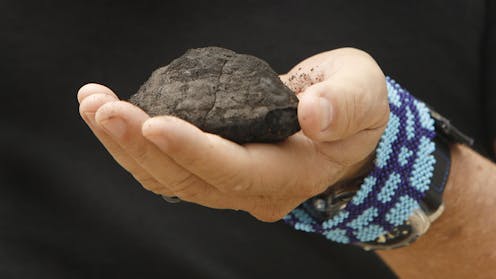
    The practice involves scooping up rock-like nodules from vast areas of the sea floor. These potato-sized lumps contain metals and minerals such as zinc, manganese, molybdenum, nickel and rare earth elements.

    Technology to mine the deep sea exists, but commercial mining of the deep sea is not happening anywhere in the world. That could soon change. Nations are meeting this month in Kingston, Jamaica, to agree to a mining code. Such a code would make way for mining to begin within the next few years.

    On Thursday, Australia’s national science agency, CSIRO, released research into the environmental impacts of deep-sea mining. It aims to promote better environmental management of deep-sea mining, should it proceed.

    We have previously challenged the rationale for deep-sea mining, drawing on our expertise in international politics and environmental management. We argue mining the deep sea is harmful and the economic benefits have been overstated. What’s more, the metals and minerals to be mined are not scarce.

    The best course of action is a ban on international seabed mining, building on the coalition for a moratorium.

    The Metals Company spent six months at sea collecting nodules in 2022, while studying the effects on ecosystems.

    Managing and monitoring environmental harm

    Recent advances in technology have made deep-sea mining more feasible. But removing the nodules – which also requires pumping water around – has been shown to damage the seabed and endanger marine life.

    CSIRO has developed the first environmental management and monitoring frameworks to protect deep sea ecosystems from mining. It aims to provide “trusted, science-based tools to evaluate the environmental risks and viability of deep-sea mining”.

    Scientists from Griffith University, Museums Victoria, the University of the Sunshine Coast, and Earth Sciences New Zealand were also involved in the work.

    The Metals Company Australia, a local subsidiary of the Canadian deep-sea mining exploration company, commissioned the research. It involved analysing data from test mining the company carried out in the Pacific Ocean in 2022.

    The company has led efforts to expedite deep-sea mining. This includes pushing for the mining code, and exploring commercial mining of the international seabed through approval from the US government.

    In a media briefing this week, CSIRO Senior Principal Research Scientist Piers Dunstan said the mining activity substantially affected the sea floor. Some marine life, especially that attached to the nodules, had very little hope of recovery. He said if mining were to go ahead, monitoring would be crucial.

    We are sceptical that ecological impacts can be managed even with this new framework. Little is known about life in these deep-water ecosystems. But research shows nodule mining would cause extensive habitat loss and damage.

    Do we really need to open the ocean frontier to mining? We argue the answer is no, on three counts.

    How does deep-sea mining work? (The Guardian)

    1. Minerals are not scarce

    The minerals required for the energy transition are abundant on land. Known global terrestrial reserves of cobalt, copper, manganese, molybdenum and nickel are enough to meet current production levels for decades – even with growing demand.

    There is no compelling reason to extract deep-sea minerals, given the economics of both deep-sea and land-based mining. Deep-sea mining is speculative and inevitably too expensive given such remote, deep operations.

    Claims about mineral scarcity are being used to justify attempting to legitimise a new extractive frontier in the deep sea. Opportunistic investors can make money through speculation and attracting government subsidies.

    2. Mining at sea will not replace mining on land

    Proponents claim deep-sea mining can replace some mining on land. Mining on land has led to social issues including infringing on indigenous and community rights. It also damages the environment.

    But deep-sea mining will not necessarily displace, replace or change mining on land. Land-based mining contracts span decades and the companies involved will not abandon ongoing or planned projects. Their activities will continue, even if deep-sea mining begins.

    Deep-sea mining also faces many of the same challenges as mining on land, while introducing new problems. The social problems that arise during transport, processing and distribution remain the same.

    And sea-based industries are already rife with modern slavery and labour violations, partly because they are notoriously difficult to monitor.

    Deep-sea mining does not solve social problems with land-based mining, and adds more challenges.

    The sun sets on the mining vessel Hidden Gem in Rotterdam, South Holland, Netherlands, 2022.
    Hidden Gem was the world’s first deep-sea mineral production vessel with seabed-to-surface nodule collection and transport systems.
    Photo by Charles M. Vella/SOPA Images/LightRocket via Getty Images

    3. Common heritage of humankind and the Global South

    Under the United Nations Convention on the Law of the Sea, the international seabed is the common heritage of humankind. This means the proceeds of deep-sea mining should be distributed fairly among all countries.

    Deep-sea mining commercial partnerships between developing countries in the Global South and firms from the North have yet to pay off for the former. There is little indication this pattern will change.

    For example, when Canadian company Nautilus went bankrupt in 2019, it saddled Papua New Guinea with millions in debt from a failed domestic deep-sea mining venture.

    The Metals Company has partnerships with Nauru and Tonga but the latest deal with the US creates uncertainty about whether their agreements will be honoured.

    European investors took control of Blue Minerals Jamaica, originally a Jamaican-owned company, shortly after orchestrating its start up. Any profits would therefore go offshore.

    A man holding a nodule from the deep sea stands on the dock with a ship labelled The Metals Company behind him.
    Australian Gerard Barron is Chairman and CEO of The Metals Company, formerly DeepGreen.
    Carolyn Cole / Los Angeles Times via Getty Images

    A wise investment?

    It is unclear whether deep-sea mining will ever be a good investment.

    Multiple large corporate investors have pulled out of the industry, or gone bankrupt. And The Metals Company has received delisting notices from the Nasdaq stock exchange due to poor financial performance.

    Given the threat of environmental harm, the evidence suggests deep-sea mining is not worth the risk.

    The Conversation

    Justin Alger receives funding from the Social Sciences and Humanities Research Council of Canada.

    D.G. Webster receives funding from the National Science Foundation in the United States and various internal funding sources at Dartmouth University.

    Jessica Green receives funding from the Social Sciences and Humanities Research Council of Canada.

    Kate J Neville receives funding from the Social Sciences and Humanities Research Council of Canada.

    Stacy D VanDeveer and Susan M Park do not work for, consult, own shares in or receive funding from any company or organisation that would benefit from this article, and have disclosed no relevant affiliations beyond their academic appointment.

    ref. We don’t need deep-sea mining, or its environmental harms. Here’s why – https://theconversation.com/we-dont-need-deep-sea-mining-or-its-environmental-harms-heres-why-260401

  • Astronomers have spied an interstellar object zooming through the Solar System

    Source: ForeignAffairs4

    Source: The Conversation – Global Perspectives – By Kirsten Banks, Lecturer, School of Science, Computing and Engineering Technologies, Swinburne University of Technology

    K Ly / Deep Random Survey

    This week, astronomers spotted the third known interstellar visitor to our Solar System.

    First detected by the Asteroid Terrestrial-impact Last Alert System (ATLAS) on July 1, the cosmic interloper was given the temporary name A11pl3Z. Experts at NASA’s Center for Near Earth Object Studies and the International Astronomical Union (IAU) have confirmed the find, and the object now has an official designation: 3I/ATLAS.

    A diagram of the Solar System out to Jupiter detailing the path of interstellar object 3I/ATLAS.
    The orbital path of 3I/ATLAS through the Solar System.
    NASA/JPL-Caltech, CC BY-NC

    There are a few strong clues that suggest 3I/ATLAS came from outside the Solar System.

    First, it’s moving really fast. Current observations show it speeding through space at around 245,000km per hour. That’s more than enough to escape the Sun’s gravity.

    An object near Earth’s orbit would only need to be travelling at just over 150,000km/h to break free from the Solar System.

    Second, 3I/ATLAS has a wildly eccentric orbit around the Sun. Eccentricity measures how “stretched” an orbit is: 0 eccentricity is a perfect circle, and anything up to 1 is an increasingly strung-out ellipse. Above 1 is an orbit that is not bound to the Sun.

    3I/ATLAS has an estimated eccentricity of 6.3, by far the highest ever recorded for any object in the Solar System.

    Has anything like this happened before?

    An artist's impression of the first confirmed interstellar object, 1I/'Oumuamua.
    An artist’s impression of the first confirmed interstellar object, 1I/‘Oumuamua.
    ESO/M. Kornmesser, CC BY

    The first interstellar object spotted in our Solar System was the cigar-shaped ‘Oumuamua, discovered in 2017 by the Pan-STARRS1 telescope in Hawaii. Scientists tracked it for 80 days before eventually confirming it came from interstellar space.

    The interstellar comet 2I/Borisov, imaged by the Hubble Space Telescope.
    The interstellar comet 2I/Borisov, imaged by the Hubble Space Telescope.
    NASA, ESA, and D. Jewitt (UCLA), CC BY-NC

    The second interstellar visitor, comet 2I/Borisov, was discovered two years later by amateur astronomer Gennadiy Borisov. This time it only took astronomers a few weeks to confirm it came from outside the Solar System.

    This time, the interstellar origin of 3I/ATLAS has been confirmed in a matter of days.

    How did it get here?

    We have only ever seen three interstellar visitors (including 3I/ATLAS), so it’s hard to know exactly how they made their way here.

    However, recent research published in The Planetary Science Journal suggests these objects might be more common than we once thought. In particular, they may come from relatively nearby star systems such as Alpha Centauri (our nearest interstellar neighbour, a mere 4.4 light years away).

    Two bright stars of the Alpha Centauri triple star system.
    Alpha Centauri A and Alpha Centauri B, from the triple star system Alpha Centauri.
    ESA/Hubble & NASA, CC BY

    Alpha Centauri is slowly moving closer to us, with its closest approach expected in about 28,000 years. If it flings out material in the same way our Solar System does, scientists estimate around a million objects from Alpha Centauri larger than 100 metres in diameter could already be in the outer reaches of our Solar System. That number could increase tenfold as Alpha Centauri gets closer.

    Most of this material would have been ejected at relatively low speeds, less than 2km/s, making it more likely to drift into our cosmic neighbourhood over time and not dramatically zoom in and out of the Solar System like 3I/ATLAS appears to be doing. While the chance of one of these objects coming close to the Sun is extremely small, the study suggests a few tiny meteors from Alpha Centauri, likely no bigger than grains of sand, may already hit Earth’s atmosphere every year.

    Why is this interesting?

    Discovering new interstellar visitors like 3I/ATLAS is thrilling, not just because they’re rare, but because each one offers a unique glimpse into the wider galaxy. Every confirmed interstellar object expands our catalogue and helps scientists better understand the nature of these visitors, how they travel through space, and where they might have come from.

    A swarm of new asteroids discovered by the NSF–DOE Vera C. Rubin Observatory.

    Thanks to powerful new observatories such as the NSF–DOE Vera C. Rubin Observatory, our ability to detect these elusive objects is rapidly improving. In fact, during its first 10 hours of test imaging, Rubin revealed 2,104 previously unknown asteroids.

    This is an astonishing preview of what’s to come. With its wide field of view and constant sky coverage, Rubin is expected to revolutionise our search for interstellar objects, potentially turning rare discoveries into routine ones.

    What now?

    There’s still plenty left to uncover about 3I/ATLAS. Right now, it’s officially classified as a comet by the IAU Minor Planet Center.

    But some scientists argue it might actually be an asteroid, roughly 20km across, based on the lack of typical comet-like features such as a glowing coma or a tail. More observations will be needed to confirm its nature.

    Currently, 3I/ATLAS is inbound, just inside Jupiter’s orbit. It’s expected to reach its closest point to the Sun, slightly closer than the planet Mars, on October 29. After that, it will swing back out towards deep space, making its closest approach to Earth in December. (It will pose no threat to our planet.)

    Whether it’s a comet or an asteroid, 3I/ATLAS is a messenger from another star system. For now, these sightings are rare – though as next-generation observatories such as Rubin swing into operation, we may discover interstellar companions all around.

    The Conversation

    Kirsten Banks does not work for, consult, own shares in or receive funding from any company or organisation that would benefit from this article, and has disclosed no relevant affiliations beyond their academic appointment.

    ref. Astronomers have spied an interstellar object zooming through the Solar System – https://theconversation.com/astronomers-have-spied-an-interstellar-object-zooming-through-the-solar-system-260422

  • Cape Town’s sewage treatment isn’t coping: scientists are worried about what the city is telling the public

    Source: ForeignAffairs4

    Source: The Conversation – Africa – By Lesley Green, Professor of Earth Politics and Director: Environmental Humanities South, University of Cape Town

    Urban water bodies – rivers, lakes and oceans – are in trouble globally. Large sewage volumes damage the open environment, and new chemicals and pharmaceutical compounds don’t break down on their own. When they are released into the open environment, they build up in living tissues all along the food chain, bringing with them multiple health risks.

    The city of Cape Town, South Africa, is no exception. It has 300km of coastline along two bays and a peninsula, as well as multiple rivers and wetlands. The city discharges more than 40 megalitres of raw sewage directly into the Atlantic Ocean every day. In addition, large volumes of poorly treated sewage and runoff from shack settlements enter rivers and from there into both the Atlantic and the Indian Oceans.

    Over almost a decade, our multi-disciplinary team, and others, have studied contamination risks in Cape Town’s oceans, rivers, aquifers and lakes. Our goal has been to bring evidence of contaminants to the attention of officials responsible for a clean environment.

    Monitoring sewage levels in the city’s water bodies is essential because of the health risks posed by contaminated water to all citizens – farmers, surfers, and everybody eating fish and vegetables. Monitoring needs to be done scientifically and in a way that produces data that is trustworthy and not driven by vested interests. This is a challenge in cities where scientific findings are expected to support marketing of tourism or excellence of the political administration.

    Our research findings have been published in multiple peer-reviewed journals. We have also communicated with the public through articles in the media, a website and a documentary.

    Cape Town’s official municipal responses to independent studies and reports, however, have been hostile. Our work has been unjustifiably denounced by top city officials and politicians. We have been subject to attacks by fake social media avatars. Laboratory studies have even received a demand for an apology from the political party in charge of the city.

    These extraordinary responses – and many others – reflect the extent to which independent scientific inquiry has been under attack.

    We set about tracking the different kinds of denial and attacks on independent contaminant science in Cape Town over 11 years. Our recently published study describes 18 different types of science communication that have minimised or denied the problem of contamination. It builds on similar studies elsewhere.

    Our findings show the extent to which contaminant science in Cape Town is at risk of producing not public knowledge but public ignorance, reflecting similar patterns internationally where science communication sometimes obfuscates more than it informs. To address this risk, we argue that institutionalised conflicts of interest should be removed. There should also be changes to how city-funded testing is done and when data is released to citizens. After all, it is citizens’ rates and taxes that have paid for that testing, and the South African constitution guarantees the right to information.

    We also propose that the city’s political leaders take the courageous step of accepting that the current water treatment infrastructure is unworkable for a city of over 5 million people. Accepting this would open the door to an overhaul of the city’s approach to wastewater treatment.

    The way forward

    We divided our study of contaminant communication events into four sub-categories:

    • non-disclosure of data

    • misinformation that gives a partial or misleading account of a scientific finding

    • using city-funded science to bolster political authority

    • relying on point data collected fortnightly to prove “the truth” of bodies of water as if it never moves or changes, when in reality, water bodies move every second of every day.

    We found evidence of multiple instances of miscommunication. On the basis of these, we make specific recommendations.

    First: municipalities should address conflicts of interest that are built into their organisational structure. These arise when the people responsible for ensuring that water bodies are healthy are simultaneously contracting consultants to conduct research on water contaminants. This is particularly important because over the last two decades large consultancies have established themselves as providers of scientific certification. But they are profit-making ventures, which calls into question the independence of their findings.

    Second: the issue of data release needs to be addressed. Two particular problems stand out:

    • Real-time information. Water quality results for beaches are usually released a week or more after samples have been taken. But because water moves all the time every day, people living in the city need real-time information. Best-practice water contamination measures use water current models to predict where contaminated water will be, given each day’s different winds and temperatures.

    • Poor and incomplete data. When ocean contaminant data is released as a 12-month rolling average, all the very high values are smoothed out. The end result is a figure that does not communicate the reality of risks under different conditions.

    Third: Politicians should be accountable for their public statements on science. Independent and authoritative scientific bodies, such as the Academy of Science of South Africa, should be empowered to audit municipal science communications.

    Fourth: Reputational harm to the science community must stop. Government officials claiming that they alone know a scientific truth and denouncing independent scientists with other data closes down the culture of scientific inquiry. And it silences others.

    Fifth: The integrity of scientific findings needs to be protected. Many cities, including Cape Town, rely on corporate brand management and political reputation management. Nevertheless, cities, by their very nature, have to deal with sewage, wastes and runoff. Public science communication that is based on marketing strategies prioritises advancing a brand (whether of a political party or a tourist destination). The risk is that city-funded science is turned into advertising and is presented as unquestionable.

    Finally, Cape Town needs political leaders who are courageous enough to confront two evident realities. Current science communications in the city are not serving the public well, and wastewater treatment systems that use rivers and oceans as open sewers are a solution designed a century ago. Both urgently need to be reconfigured.

    Next steps

    As a team of independent contaminant researchers we have worked alongside communities where health, ecology, livestock and recreation have been profoundly harmed by ongoing contamination. We have documented these effects, only to hear the evidence denied by officials.

    We recognise and value the beginnings of some new steps to data transparency in Cape Town’s mayoral office, like rescinding the 2021 by-law that banned independent scientific testing of open water bodies, almost all of which are classified as nature reserves.

    We would welcome a dialogue on building strong and credible public science communications.

    This study is dedicated to the memory of Mpharu Hloyi, head of Scientific Services in the City of Cape Town, in acknowledgement of her dedication to the health of urban bodies of water. Her untimely passing was a loss for all.

    This article also drew on Masters theses written by Melissa Zackon and Amy Beukes.

    The Conversation

    Lesley Green has received funding from the Science for Africa Foundation; the Seed Box MISTRA Formas Environmental Humanities Collaboratory; and the Science For Africa Foundation’s DELTAS Africa II program (Del:22-010).

    Cecilia Yejide Ojemaye receives funding from the University of Cape Town Carnegie DEAL Sustainable Development Goals Research Fellowship and the National Research Foundation for the SanOcean grant from the South Africa‐Norway Cooperation on Ocean Research (UID 118754).

    Leslie Petrik received funding from National Research Foundation for the SanOcean grant from the South Africa‐Norway Cooperation on Ocean Research (UID 118754) for this study.

    Nikiwe Solomon received funding at different stages for PhD research from the Water Research Commission (WRC) and National Institute for Humanities and Social Sciences (NIHSS), in collaboration with the South African Humanities Deans Association (SAHUDA). Opinions expressed and conclusions arrived at are those of the author and are not necessarily to be attributed to the WRC, NIHSS and SAHUDA.

    Jo Barnes and Vanessa Farr do not work for, consult, own shares in or receive funding from any company or organisation that would benefit from this article, and have disclosed no relevant affiliations beyond their academic appointment.

    ref. Cape Town’s sewage treatment isn’t coping: scientists are worried about what the city is telling the public – https://theconversation.com/cape-towns-sewage-treatment-isnt-coping-scientists-are-worried-about-what-the-city-is-telling-the-public-260317

  • MIL-OSI Europe: Written question – Ensuring the decentralised nature of cohesion policy in the context of the next Multiannual Financial Framework – P-002720/2025

    Source: European Parliament

    Priority question for written answer  P-002720/2025
    to the Commission
    Rule 144
    Elena Kountoura (The Left)

    Cohesion policy is a crucial tool for reducing disparities and for the economic, social and territorial cohesion of the EU. On 25 June 2025, 149 regions of Europe from 20 Member States sent a joint letter to the Commission President expressing concern about the direction cohesion policy seems to be taking in view of the upcoming presentation of the next Multiannual Financial Framework (MFF)[1]. The regions call for the continuation of the decentralised nature of cohesion policy and the place-based approach, with their direct involvement in both the design and implementation of the relevant programmes, through shared management and multi-level governance[2].

    Given that the European Parliament has repeatedly stressed in its resolutions its opposition to any form of centralisation reform of cohesion programmes, calling for greater decentralisation, enhanced involvement of local and regional authorities and a more ambitious post-2027 cohesion policy with reinforced funding[3], can the Commission say:

    • 1.How will it ensure that the core principles of cohesion policy are upheld in the upcoming MFF, including its basis in the decentralised programming model, the specific needs of local communities, the principle of shared management and multi-level governance, the place-based approach and the enhanced involvement of regional authorities?
    • 2.Is it committed to proposing a reinforced, dedicated budget for cohesion policy, with indicative regional resource allocations based on territorial, social and economic criteria, in the next programming period?

    Submitted: 3.7.2025

    • [1] See https://aeur.eu/f/hn5
    • [2] They also express their opposition to any form of centralisation reform that would strengthen centralised management at Member State level, thus jeopardising the objectives and effectiveness of cohesion policy.
    • [3] According to its resolution of May 2025 on the ninth report on economic and social cohesion, the European Parliament ‘is opposed to any form of centralisation reform of EU funding programmes, including those under shared management, such as cohesion policy, and advocates for greater decentralisation of decision-making to the local and regional levels.’ By the same token, it calls for ‘enhanced involvement of local and regional authorities and economic and civil society actors at every stage of EU shared management programmes.’ Similar positions have been adopted in other resolutions, such as resolutions 2024/2051(INI) and 2024/2105(INI).
    Last updated: 8 July 2025

    MIL OSI Europe News

  • MIL-OSI Europe: Written question – Financial priority for third countries, red tape for EU Member States – P-002578/2025

    Source: European Parliament

    Priority question for written answer  P-002578/2025
    to the Commission
    Rule 144
    Georg Mayer (PfE), Roman Haider (PfE)

    According to media reports, in order to address concerns about the Deforestation Regulation (EUDR), the Commissioner responsible has offered financial support to non-EU countries to set up traceability systems (for example during a trip to South America in March 2024). Meanwhile, the regulation creates a huge amount of red tape in EU Member States: in Germany alone, the government has announced that 59 full-time positions are already planned at national level.

    • 1.Which non-EU countries have used or been promised EU funding so far?
    • 2.To what extent is the Commission also providing EU Member States with financial support to prepare for and implement the EUDR?
    • 3.With how many countries has a formal dialogue been entered into in accordance with Article 29?

    Submitted: 26.6.2025

    Last updated: 8 July 2025

    MIL OSI Europe News

  • MIL-OSI Europe: MOTION FOR A RESOLUTION on tackling China’s critical raw materials export restrictions – B10-0329/2025

    Source: European Parliament

    B10‑0329/2025

    European Parliament resolution on tackling China’s critical raw materials export restrictions

    (2025/2800(RSP))

    The European Parliament,

     having regard to its previous resolutions on EU-China relations,

     having regard to Regulation (EU) 2024/1252 of the European Parliament and of the Council of 11 April 2024 establishing a framework for ensuring a secure and sustainable supply of critical raw materials and amending Regulations (EU) No 168/2013, (EU) 2018/858, (EU) 2018/1724 and (EU) 2019/1020[1] (Critical Raw Materials Act),

     having regard to the rules of the World Trade Organization (WTO) and the principles of free, fair, and rules-based trade,

     having regard to WTO dispute settlement rulings DS431, DS432 and DS433 on China’s rare earth export restrictions,

     having regard to the G7 critical minerals action plan,

     having regard to Rule 136(2) of its Rules of Procedure,

    A. whereas on 4 April 2025, China’s Ministry of Commerce imposed export restrictions on magnets and seven rare earth elements (REEs): samarium, gadolinium, terbium, dysprosium, lutetium, scandium and yttrium;

    B. whereas China’s new export licensing process for rare earth elements results in significant delays, has negative impacts on supply chains and threatens imminent stoppages for production in certain sectors; whereas it is also forcing industry to disclose sensitive information reaching beyond standard licensing processes;

    C. whereas China’s new export restrictions further undermine its reliability as a supplier for EU industry; whereas delays and difficulties in obtaining customs clearance arise even when licences are granted;

    D. whereas China’s decision to start issuing export licences for rare earth elements and magnets to some European companies represents only temporary relief and falls significantly short of a systemic solution;

    E. whereas these new export restrictions represent just the latest development in China’s increased use of unilateral controls on exports that are broader in scope than the multilateral export controls and do not have a clear security rationale;

    F. whereas China introduced export restrictions on gallium and germanium in August 2023, and further export restrictions on graphite in December 2023;

    G. whereas China has, in the past, already been found in breach of its WTO Accession Protocol commitments and Article XI(1) of the General Agreement on Tariffs and Trade for introducing unjustified export restrictions on REEs; whereas this demonstrates a clear pattern of action;

    H. whereas China’s use of export restrictions is a clear example of its exploitation of its dominance of the global critical raw materials market and economic blackmail, resulting in supply chain disruptions;

    I. whereas 100 % of the EU’s supply of heavy REEs comes from China; whereas the EU’s general dependency on critical raw materials from China remains a major threat to the EU’s economy and resilience and a cause for concern;

    J. whereas the EU faces the complex challenge of securing a sustainable supply of critical raw materials while adhering to its environmental and societal commitments;

    K. whereas the EU’s demand for critical raw materials is surging and is projected to rise further, due among other things to developments in the defence sector, as well as the digital and energy transitions;

    L. whereas the shift in energy policy has increased demand for previously underutilised resources, including REEs, as well as ‘conventional’ commodities such as copper, nickel, cobalt and lithium; whereas, additionally, the shift has heightened the need for metals and metalloids, including gallium, germanium, selenium, indium and tellurium, which are often only obtained as by-products during the extraction of primary commodities and have low recycling rates, further complicating their supply chain and availability;

    M. whereas apart from raw material extraction, China is also increasing its dominance of critical raw materials markets through refining and processing; whereas 94 % of the Australian production of lithium minerals and 99 % of the Congolese production of cobalt goes to China for refining; whereas China imports 67 % of the world’s supply of manganese ore, and exports 70 % of the world’s refined manganese;

    N. whereas China’s political objective is to secure access to raw materials in other countries and strengthen its dominance in global markets; whereas China has been accused of demanding exclusive access to resources as a condition for investment through its Belt and Road Initiative, which invests heavily in resource-rich countries; whereas such conditions reinforce monopsony power and accentuate concentration, thus making critical raw materials markets less resilient;

    1. Expresses serious concern about the People’s Republic of China’s unjustified use of unilateral export controls on critical raw materials, including its latest measures targeting seven rare earth materials and magnets; deplores China’s weaponisation of critical raw materials and its use of market dominance for geopolitical leverage;

    2. Calls on the People’s Republic of China (PRC) to immediately remove these rare earths and related products from its control list, thereby restoring a stable, predictable and sufficient supply;

    3. Condemns the PRC’s coercive economic and trade practices and calls for swift, coordinated and proportionate responses to its systematic use of trade dependencies as a tool of influence; emphasises that such practices extend beyond critical raw materials, affecting a wide range of strategic sectors;

    4. Notes with concern that for a large number of raw materials, the supply risk for Europe has gone up significantly[2]; believes that an increasing supply risk over time is symptomatic of Europe’s growing reliance on raw materials from a limited number of suppliers located in countries with governance and/or trade risks, its lack of progress in research and development targeting substitute materials, and the inability of current recycling practices to meet growing demand;

    5. Recognises the need to diversify supply chains for raw materials as a critical measure to enhance economic resilience, reduce strategic dependencies and ensure stable access to essential inputs in the face of geopolitical and market disruptions; calls strongly for the EU and its Member States to closely cooperate with global allies and like-minded partners in order to counteract abusive and distortive practices in the critical minerals sector; welcomes, in that respect, the G7 critical minerals action plan, announced following the 50th G7 summit that took place in June 2025;

    6. Recalls that the EU’s Critical Raw Materials Act will establish a framework for ensuring a secure and sustainable supply of critical raw materials, for example by identifying critical and strategic raw materials, setting benchmarks for domestic production and promoting improved circularity; Calls, in this respect, for the provisions of the Act to be implemented in full;

    7. Emphasises the need to step up domestic extraction of raw materials in the EU; notes that mineral extraction within the EU operates under stricter regulation than in most other countries globally; stresses that this, coupled with shorter and more secure supply lines to EU customers, offers distinct advantages, including enhanced economic resilience and a reduced carbon footprint associated with raw material sourcing;

    8. Expresses concern about the negative public perception of extraction projects in Europe; stresses that this demonstrates a clear disconnect between EU policymakers and local populations, as well as other stakeholders, regarding the implementation of energy and climate policies, as the green transition and the move away from fossil fuels require increased production of many raw materials and the establishment of secure supply chains; regrets that a number of mining projects in Europe, for example for lithium, have been significantly delayed or entirely cancelled due to public opposition; notes that while all human activities, mining included, have some degree of impact on the environment, the European mining sector has made substantial progress in developing methods and implementing strategies to mitigate its environmental footprint, balancing the need for resource extraction with responsible stewardship of the natural environment;

    9. Notes that the complexity of the EU’s mineral raw materials legislation is additionally exacerbated by the requirements of EU nature protection regulations, such as the Nature Restoration Regulation[3], which also limit the availability of land for mining activities, as extractive projects will likely face stricter environmental assessments, and areas designated for restoration may be off-limits to mining projects;

    10. Draws attention to the fact that China not only produces the vast majority of critical raw materials, but also controls a significant portion of global processing capacity; notes, in this regard, that in order to resolve its supply problem, the EU, apart from gaining access to resources from a wider variety of countries and developing its own EU domestic resources, needs to (re-)establish processing capacity within Europe;

    11. Instructs its President to forward this resolution to the Vice-President of the Commission / High Representative of the Union for Foreign Affairs and Security Policy, the Council and the Commission.

    MIL OSI Europe News

  • MIL-OSI Europe: Written question – Consequences of the blackout in Spain and Portugal and the risks of an ideologically driven energy transition – E-002632/2025

    Source: European Parliament

    Question for written answer  E-002632/2025
    to the Commission
    Rule 144
    Markus Buchheit (ESN)

    On 28 April 2025, a major blackout severely affected Spain and Portugal, leaving millions of citizens without power for several hours. According to various reports, the main cause was grid instability resulting from a high dependency on solar and wind energy sources, combined with unfavourable weather conditions. This incident highlights the real risks of an energy transition driven by ideological dogma rather than technical or strategic considerations.

    • 1.Does the Commission acknowledge that a forced energy transition, without ensuring stable backup capacity, can endanger the security of electricity supply in the Member States?
    • 2.What measures does the Commission propose to ensure that national electricity systems are resilient to adverse weather events, especially in the context of a high share of intermittent renewable energy?
    • 3.Is the Commission considering revising its current energy policies to allow Member States to maintain or strengthen conventional energy sources, such as nuclear or gas, in order to safeguard national energy security?

    Submitted: 30.6.2025

    Last updated: 8 July 2025

    MIL OSI Europe News

  • MIL-OSI Europe: Written question – Communicating European policy in third countries – focus on Canada – E-002640/2025

    Source: European Parliament

    Question for written answer  E-002640/2025
    to the Commission
    Rule 144
    Joachim Streit (Renew)

    Against the backdrop of geopolitical upheaval and the growing importance of transatlantic partnerships, the question of how the EU can strategically develop its foreign policy communications in third countries – particularly in Canada – is becoming increasingly important. Canada is seen as a reliable partner of the EU, while at the same time debates about deeper institutional ties and even possible membership are on the rise. As a result, the way European policies and values are communicated in Canada is increasingly coming into focus.

    Targeted provision of information on the ground is decisive for ensuring understanding and acceptance of European policy. Strategic initiatives play a central role in making European policy visible and comprehensible to the Canadian public, political decision-makers and institutions.

    • 1.In view of the growing debate on closer institutional ties between Canada and the EU, is the Commission planning targeted measures to significantly intensify the communication of European policy to the Canadian public and to firmly root it there in the long term?
    • 2.Do any specific programmes exist for media professionals from Canada – such as invitations to Commission press briefings, exchanges between European and Canadian journalists or special accreditation opportunities?
    • 3.Is the Commission considering strategic cooperation with leading Canadian media outlets, think tanks, universities and educational institutions as well as a possible association of Canada with the Erasmus+ programme in order to strengthen cultural exchange and promote deeper mutual understanding?

    Submitted: 30.6.2025

    Last updated: 8 July 2025

    MIL OSI Europe News

  • MIL-OSI Europe: Written question – Leaked internal note regarding Israeli war crimes and violations of human rights – E-002628/2025

    Source: European Parliament

    Question for written answer  E-002628/2025
    to the Commission
    Rule 144
    Marc Botenga (The Left), Rima Hassan (The Left), Vladimir Prebilič (Verts/ALE), Mounir Satouri (Verts/ALE), Rudi Kennes (The Left), Estelle Ceulemans (S&D), Jussi Saramo (The Left), Majdouline Sbai (Verts/ALE), Manon Aubry (The Left), Chloé Ridel (S&D), Anthony Smith (The Left), Saskia Bricmont (Verts/ALE), Cecilia Strada (S&D), Ana Miranda Paz (Verts/ALE), Hanna Gedin (The Left), Jonas Sjöstedt (The Left), Mimmo Lucano (The Left), Özlem Demirel (The Left), Estrella Galán (The Left), Evin Incir (S&D), Arash Saeidi (The Left)

    A leaked note from the EU Special Representative for Human Rights to Kaja Kallas, Vice-President of the Commission / High Representative of the Union for Foreign Affairs and Security Policy (VP/HR) shows that, since at least November 2024, the Commission has been aware of Israel’s war crimes and/or other violations of international law throughout Palestine, as observed by UN entities and international courts. The note also lists responsibilities under international law for non-EU states[1].

    Neither the Commission nor the VP/HR has acted upon this information. Neither has proposed suspending EU support, including financial assistance, for Israel.

    The note highlights breaches of human rights that warrant the immediate suspension of the EU-Israel Association Agreement, breaches sufficiently serious to preclude the need for further study. Instead, the Commission has chosen to actively defend the agreement.

    • 1.Why has the Commission kept this analysis from the public?
    • 2.Why has it not acted on the information in the note?
    • 3.Considering the EU’s continued material and political support for Israel and noting its legal obligations, including under the Genocide Convention, as specified by the ICJ’s 2007 ruling on the application of the Genocide Convention, what is the Commission’s assessment of the legal responsibility of the EU and its Member States under international law?

    Supporter[2]

    Submitted: 30.6.2025

    • [1] https://euobserver.com/eu-and-the-world/ar13e20dff.
    • [2] This question is supported by a Member other than the authors: Dario Tamburrano (The Left)

    MIL OSI Europe News

  • MIL-OSI Europe: Written question – Planned EU harmonisation of ride-hailing regulations and its impact on national sovereignty – E-002635/2025

    Source: European Parliament

    Question for written answer  E-002635/2025
    to the Commission
    Rule 144
    Markus Buchheit (ESN)

    The Commission has announced its intention to review and possibly harmonise the rules governing ride-hailing services such as Uber and Cabify across the EU. Currently, these services are regulated at the national or even local level, allowing Member States to respond to their specific transport, labour, and urban planning realities. A centralised EU approach might risk undermining national sovereignty, increasing red tape and delivering less effective services to citizens.

    • 1.What is the Commission’s rationale for proposing the harmonisation of ride-hailing regulations across all Member States, despite differences in their legal systems and infrastructure?
    • 2.How does the Commission intend to ensure that such an initiative does not infringe the principle of subsidiarity or create additional bureaucratic burdens for national authorities and service providers?
    • 3.Does the Commission recognise that further centralisation of everyday policy decisions in Brussels may erode public trust in the EU and reduce service quality by disconnecting regulation from local needs?

    Submitted: 30.6.2025

    Last updated: 8 July 2025

    MIL OSI Europe News

  • MIL-OSI Europe: Highlights – Statute and funding of European political parties and European political foundations – Committee on Constitutional Affairs

    Source: European Parliament

    The Committee on Constitutional Affairs will vote on the Statute and funding of European political parties and European political foundations (recast) Regulation on 16 of JULY 2025, a major step towards ensuring greater accountability in the rules governing political parties and foundations.

    The new rules will increase the transparency of European political parties and foundations, will contribute to their financial viability and will limit the administrative burden, while promoting gender balance and compliance with the fundamental values of the EU. The committee will vote on the provisional agreement resulting from interinstitutional negotiations.

    Legislative Observatory 2021/0375(COD)

    MIL OSI Europe News

  • MIL-OSI Europe: MOTION FOR A RESOLUTION on tackling China’s critical raw materials export restrictions – B10-0332/2025

    Source: European Parliament

    B10‑0332/2025

    European Parliament resolution on tackling China’s critical raw materials export restrictions

    (2025/2800(RSP))

    The European Parliament,

     having regard to Regulation (EU) 2024/1252 of 11 April 2024 on establishing a framework for ensuring a secure and sustainable supply of critical raw materials (the Critical Raw Materials Act)[1],

     having regard to Regulation (EU) 2024/1735 of 13 June 2024 on establishing a framework of measures for strengthening Europe’s net-zero technology manufacturing ecosystem and amending Regulation (EU) 2018/1724[2] ,

     having regard to the upcoming EU-China summit on 24-25 July 2025,

     having regard to Rule 136(2) of its Rules of Procedure,

    A. whereas China dominates in rare earth refining, especially in heavy rare earth elements; whereas China accounts for roughly 70 % of global rare earth mining and over 90 % of the world’s refining capacity; whereas China holds a near monopoly over the global supply chain of several critical minerals, particularly rare earth elements (REEs) and other minerals that are vital for high-tech applications like powerful magnets;

    B. whereas critical minerals and REEs are crucial for both the green and digital transitions, owing to their essential role in enabling technologies in areas including renewable energy, electric vehicles, advanced electronics and defence;

    C. whereas the global demand for REEs, which are critical materials for various technologies including clean energy, is surging, with a significant increase projected for the coming years;

    D. whereas on 4 April 2025, in response to US President Donald Trump’s tariff increases on Chinese products, China imposed export restrictions on 7 of the 17 REEs: samarium, gadolinium, terbium, dysprosium, lutetium, scandium and yttrium;

    E. whereas on 27 June 2025, Washington and Beijing announced a new trade framework, under which China would resume approving export licences for REEs over the following six months;

    F. whereas the new rare earth restrictions are already causing export delays (of up to 45 days for processing a licence application, with additional time needed if the state council or military has to be consulted) as the Chinese Government establishes the licensing system;

    1. Expresses deep concern about and strongly criticises China’s recent and unjustified export restrictions on rare earth materials and magnets, which are crucial for European industries such as automotive manufacturing, renewable energy and defence;

    2. Notes with concern that the EU, which is not responsible for starting the ongoing trade dispute between the United States and China, is nonetheless bearing its economic consequences and should not become collateral damage in this conflict;

    3. Recalls that conservation policies do not allow members of the World Trade Organization to adopt measures to control the international market for a natural resource, which is what the export restrictions do; expresses the view that China’s export restrictions are designed to achieve industrial policy goals rather than conservation; underlines that the export quotas do not work together with measures restricting domestic Chinese use of rare earths, as required by the second part of Article XX of the General Agreement on Tariffs and Trade (GATT) 1994, and are therefore intended to secure preferential use of those materials for Chinese manufacturers;

    4. Calls on China to lift the restrictions and urges both the Commission and the Member States to take a firm and unified stance and engage with the Chinese authorities to seek a structural solution for these unjustified restrictions, which are undermining the global green and digital transitions; calls on the Commission and the Council to address the issue with the Chinese authorities in the upcoming EU-China summit on 24-25 July 2025, with a view to restoring a level playing field as well as securing the lifting of Chinese sanctions against former MEPs and think tanks;

    5. Stresses, however, that the EU must firmly reject any attempts by the Chinese authorities to use these restrictions as a tool of coercion to force concessions in ongoing disputes on other unfair practices, such as the anti-dumping duties on battery electric vehicles;

    6. Is concerned that this may lead to an unfair trade-off between export restrictions and access to European technological know-how, undermining our industrial competitiveness and strategic autonomy;

    7. Urges the Commission to mitigate the risks of the EU’s overdependence on China for critical REEs and regrets that, despite the good intentions and policy initiatives of the Critical Raw Materials Act, the EU’s dependence on China for critical raw materials has continued to grow or, at best, remains stubbornly high;

    8. Underlines the need for a clear strategy to ensure the long-term security of supply by focusing on diversification, increased domestic production and the circular economy, with robust recycling infrastructure at its core for the recovery of critical minerals from end-of-life products;

    9. Calls on the Commission to make full use of the Clean Industrial Deal to build strategic partnerships with resource-rich countries, strengthen domestic capabilities in extraction, processing and recycling, and reduce reliance on single suppliers;

    10. Emphasises the need to secure access to critical raw materials; stresses that the upcoming circular economy act should improve resource efficiency, including through better waste management of products containing critical raw materials, as well as fostering the demand and availability of secondary raw materials; stresses the need to define those secondary raw materials that are strategic and that should be subject to export monitoring, such as steel and metal scrap, and to tackle any imbalance in their supply and demand, including by exploring export restrictions; insists on the effective enforcement of the Waste Shipment Regulation[3];

    11. Welcomes the critical minerals action plan agreed at the G7 leaders’ summit in June 2025;

    12. Instructs its President to forward this resolution to the Council, the Commission, the Vice-President of the Commission / High Representative of the Union for Foreign Affairs and Security Policy, the governments and parliaments of the Member States and the Government of the People’s Republic of China.

    MIL OSI Europe News

  • MIL-OSI Europe: Italy: EIB Grants €150 Million Loan to Alfasigma to Accelerate Innovation in Rare Diseases and Specialty Care

    Source: European Investment Bank

    Alfasigma

    • The EIB financing will support Alfasigma’s R&D investments for the three-year period from 2025 to 2027.
    • The funds will help develop and market new medicines in Alfasigma’s main therapeutic areas.

    The European Investment Bank (EIB) has signed a €150 million loan agreement with Alfasigma, a global pharmaceutical company founded in Italy, whose products are present in more than 100 markets worldwide.

    The agreement, announced today by EIB Vice-President Gelsomina Vigliotti and Alfasigma’s Chief Financial Officer Tatiana Simonelli, will support the development of breakthrough therapies in the areas of rare diseases and specialty care. The EIB financing aims to support Alfasigma’s R&D activities over the three-year period from 2025 to 2027, focusing on new treatments in gastroenterology and hepatology, vascular medicine, and rheumatology. It will help accelerate the translation of scientific advances into patient-centred solutions, aiming to address unmet needs and deliver high-impact health outcomes.

    The operation is part of the EIB’s strategy to bolster competitiveness and innovation in the European healthcare sector and to create highly skilled jobs.

    “This financing confirms the EIB’s commitment to promoting scientific innovation and supporting European biopharmaceutical research,” said EIB Vice-President Gelsomina Vigliotti. “Investing in research, development and innovation is key to strengthening Europe’s industrial competitiveness and to offering new therapeutic solutions to those currently without alternatives.”

    “We are grateful to the EIB for this agreement, which will help us to fast-track our ambitious growth strategy, particularly in expanding our footprint in rare diseases and specialty care innovations to better address the unmet needs of the patients and communities we serve”, said Alfasigma Chief Financial Officer Tatiana Simonelli.

    Background information

    The European Investment Bank (ElB) is the long-term lending institution of the European Union, owned by its Member States. Built around eight key priorities, we finance investments that contribute to EU policy objectives by bolstering climate action and the environment, digitalisation and technological innovation, security and defence, cohesion, agriculture and bioeconomy, social infrastructure, the capital markets union, and a stronger Europe in a more peaceful and prosperous world.  The EIB Group, which also includes the European Investment Fund (EIF), signed over 900 projects worth nearly €89 billion in 2024, boosting Europe’s competitiveness and security. The EIB Group signed 99 operations totalling €10.98 billion in Italy in 2024, helping to unlock almost €37 billion of investment in the real economy. All projects financed by the EIB Group are in line with the Paris Climate Agreement, as pledged in our Climate Bank Roadmap. Almost 60% of the EIB Group’s annual financing supports projects directly contributing to climate change mitigation, adaptation, and a healthier environment. Fostering market integration and mobilising investment, the funds made available by the Group unlocked over €100 billion in new investment for Europe’s energy security in 2024 and mobilised a further €110 billion for startups and scale-ups. Around half of the EIB’s financing within the European Union is directed towards cohesion regions, where per capita income is lower than the EU average.

    Alfasigma is a global pharmaceutical company founded over 75 years ago in Italy, where it is headquartered (in Bologna and Milan). The group operates in over 100 markets spanning Europe, North and South America, Asia and Africa. It has offices in many countries, including Italy, the United States, Spain, Germany, Mexico and China; production sites in Italy (Pomezia, Rome; Alanno, Pescara; Sermoneta, Latina; and Trezzano Rosa, Milan), Spain (Tortosa, Baix Ebre) and the United States (Shreveport, Louisiana); and research and development labs in Italy (Pomezia and Bergamo). Alfasigma employs approximately 4 000 people dedicated to research, development, production and distribution of medicinal products, contributing to its mission to provide better health and a better quality of life for patients, caregivers and healthcare providers. It focuses on three main therapeutic areas: gastroenterology, vascular and rheumatology. Its portfolio ranges from speciality care to rare disease medications and consumer health products, including nutraceuticals.

    MIL OSI Europe News

  • MIL-OSI Europe: Highlights – Topical debate on Digital Sovereignty – Committee on Industry, Research and Energy

    Source: European Parliament

    AdobeStock_935874090.jpeg © Image used under the license from Adobe Stock

    At the ITRE Committee meeting of 16 July, ITRE Members will have a topical debate on digital sovereignty, in the presence of Mr Roberto Viola, Director General, DG CONNECT, and Mr Matthew King. Head of Unit, JRC, at the European Commission.

    ITRE Members will have a debate about the nature of the EU’s dependencies on non-EU technology providers for essential digital services, and explore concrete policy, regulatory, and technological responses to ensure the EU’s digital sovereignty and resilience.

    MIL OSI Europe News

  • MIL-OSI Europe: Press release – Press conference with President Metsola and Prime Minister Frederiksen

    Source: European Parliament

    Following the debate on Denmark’s Council presidency priorities, President Metsola and Danish Prime Minister Frederiksen will hold a press conference at 12:15 today.

    When: Tuesday, 12:15

    Where: Daphne Caruana Galizia press room, Strasbourg, or via Parliament’s webstreaming, Ebs

    From 10:30 on, Mette Frederiksen, Prime Minister of Denmark, will present her country’s priorities for its six-month Council presidency, which began on 1 July. After the debate, at 12:15, European Parliament President Roberta Metsola and Prime Minister Mette Frederiksen will hold a press conference.

    The press conference will be interpreted into English, French, Danish, German, Italian and Maltese.

    MIL OSI Europe News

  • MIL-OSI Europe: Written question – Participation of EU Commissioners in Bilderberg Meetings – E-002608/2025

    Source: European Parliament

    Question for written answer  E-002608/2025/rev.1
    to the Commission
    Rule 144
    Mariusz Kamiński (ECR)

    Bilderberg Meetings are criticised for their lack of transparency and unclear alleged influence on global political and economic decisions. Some investigative journalists point to the correlation between the annual Bilderberg Meetings and some important decisions made by the EU, as well as the rapid career progression of some of the politicians that have taken part in the meetings.

    The Commission has highlighted its commitment to transparency, procedural rules and respect for public funds. For years, EU Commissioners have occasionally taken part in Bilderberg Meetings, however, until at least 2014, the Commission claimed that they were doing so as private individuals[1].

    However, in recent years more Commissioners have been taking part in these meetings more regularly. In addition, the meetings’ official programmes show that Commissioners are attending in an official capacity[2]. Transport, accommodation, food and other costs are paid for using EU taxpayers’ money, with one Commissioner’s official mission costing a few thousand euro. Meanwhile, none of the four Commissioners that took part in the 2024 meeting in Madrid published information on any of the meetings that took place there. In addition, Commissioner Ylva Johansson even concealed the purpose of her mission[3].

    • 1.When did this change take place allowing EU Commissioners to participate in Bilderberg Meetings as part of their official duties and on what basis?
    • 2.With whom did Commissioners Maria Luís Albuquerque, Michael McGrath, Wopke Hoekstra and Maroš Šefčovič speak during this year’s event in Stockholm and on what topics?

    Submitted: 27.6.2025

    • [1] Response from President Barroso in 2014: https://www.europarl.europa.eu/doceo/document/E-7-2014-000218-ASW_EN.html; Response from President Prodi in 2003: https://eur-lex.europa.eu/legal-content/EN/TXT/HTML/?uri=CELEX:92003E001370; Response from President Santer in 1999: https://www.europarl.europa.eu/doceo/document/P-4-1998-3880-ASW_EN.html.
    • [2] https://www.bilderbergmeetings.org/meetings/meeting-2025/participants-2025https://www.bilderbergmeetings.org/meetings/meeting-2024/participants-2024
    • [3] https://ec.europa.eu/transparencyinitiative/meetings/mission.do?host=97cfcbd7-4cc8-493b-9643-66100e578cf9&missionsperiod=2024_2
    Last updated: 8 July 2025

    MIL OSI Europe News

  • MIL-OSI Europe: Press release – EP TODAY

    Source: European Parliament

    Danish Presidency

    At 10:30, Mette Frederiksen, Prime Minister of Denmark, will present her country’s priorities for its six-month Council presidency, which began on 1 July. Maroš Šefčovič, European Commissioner responsible for interinstitutional relations will also attend. Parliament President Roberta Metsola will hold a press conference with Prime Minister Frederiksen in the Daphné Caruana Galizia press room from 12:15.
    Thomas HAAHR
    (+32) 470 88 09 87
    presse-DK@europarl.europa.eu

    EU-China relations

    Earlier, at 9:00, the day will begin with a joint debate on EU China relations. MEPs will first prepare for the 2025 EU-China summit, to take place later in July. Plenary will then move on to discuss the issue of China’s export restrictions on critical raw materials. A vote on a resolution on the latter is scheduled for Thursday. The debate will include statements by European Commission President Ursula von der Leyen, and Danish European Affairs Minister Marie Bjerre, for the Council.
    Viktor ALMQVIST
    (+32) 470 88 29 42
    Snjezana KOBESCAK SMODIS
    (+32) 470 96 08 19
    @EP_ForeignAff

    Situation in the Middle East

    In a mid-afternoon debate with Danish European Affairs Minister Marie Bjerre and Commissioner Jessika Roswall, MEPs will review the latest events in the Middle East and what the EU can do to help restore peace.
    Viktor ALMQVIST
    (+32) 470 88 29 42
    Snjezana KOBESCAK SMODIS
    (+32) 470 96 08 19
    @EP_ForeignAff

    European Climate Law

    A new 2040 greenhouse gas reduction target of 90% compared with 1990 levels, to be included in the EU Climate Law, is one of a new set of proposals adopted by the Commission on 2 July. Members will vote at noon on whether to fast-track Parliament’s work on the file. A debate with Commissioner Wopke Hoekstra on the proposals will start at about 15:30.
    Thomas HAAHR
    (+32) 470 88 09 87
    @EP_Environment

    In brief

    Gas storage. Members will vote at noon on a draft law to address gas market speculation and reduce prices by introducing greater flexibility in gas refilling rules ahead of the winter season. Parliament and Council have already reached an informal agreement on the file.

    Chemicals package. An action plan to boost the EU’s chemicals industry and measures to simplify EU chemicals laws are part of a new package Commission Executive Vice-President Stéphane Séjourné and Commissioner Jessika Roswall will present to Parliament at 15:00.

    Media freedom. The implementation of the European Media Freedom Act (EMFA) will be the subject of a debate with Danish European Affairs Minister Marie Bjerre and Commissioner Michael McGrath starting after the votes. A seminar on the EMFA for journalists, with key MEPs and experts, will take place at 15:00 in room De Madariaga S5. Journalists can follow it in person or via Interactio.

    Enlargement. In the evening, Parliament and Commission Executive Vice-President Stéphane Séjourné and Commissioner Jessika Roswall will debate the Commission’s 2023 and 2024 reports on progress made by Albania, Bosnia and Herzegovina, North Macedonia and Georgia towards EU accession. The votes will take place on Wednesday.

    Votes

    At noon, MEPs will vote, among others, on:

    • whether to endorse Bulgaria’s adoption of the euro;
    • security of energy supply in the EU;
    • the EU-Greenland and Denmark Sustainable Fisheries Partnership Agreement;
    • the progressive start of operations of the Entry/Exit System;
    • the European Investment Bank’s 2024 annual report;
    • preserving the memory of victims of Slovenia’s post-war communist period.

    Live coverage of the plenary session can be found on Parliament’s webstreaming site and on EbS+.

    For detailed information on the session, please also see our newsletter.

    Find more information regarding plenary.

    MIL OSI Europe News

  • MIL-OSI Banking: Samsung IGNITE: A Legacy of Learning, Leadership, and Lifelong Impact

    Source: Samsung

    A look back at faces who took their first career steps with Samsung IGNITE
     
    Samsung India didn’t just launch a summer internship programme in 2017 with IGNITE — it laid the foundation for a leadership pipeline that would help shape its future.
     
    What began as an HR initiative to strengthen campus relationships and bring fresh perspectives to the business, has grown into a flagship talent engine that now spans 16 top B-schools in India.
     
    IGNITE alumnus, Ayushi Anand from IIM Kozhikode, said: “Samsung gave me the freedom to explore, question, and contribute. It wasn’t just a summer internship — it felt like joining a family.”
     
    IGNITE: Turning ambition into achievement

    A Culture that Prepares, not Just Recruits
    The journey begins much before summer. Planning for IGNITE starts as early as Q2, when Samsung’s Talent Acquisition team, Business HRs, Regional HRs, and business leaders come together to design the next cohort’s experience.
     
    “Over the years, we’ve seen it shape careers in the most fascinating way,” said Rishabh Nagpal, Head of People Team, Samsung India. “At Samsung, we believe that building future leaders starts with investing in them early, not just with opportunities, but with trust. IGNITE is not just a programme but a powerful platform that connects young talent to real-world challenges and our culture of innovation.”
     
    From selecting campuses based on performance and alumni strength to assigning live business projects with cross-functional complexity, every detail is planned meticulously to ensure interns get far more than a desk and a deadline.
     
    A journey that began with curiosity and grew into careers
     
    Beyond the Offer Letter: A Two-Month Transformation
    The IGNITE internship begins with a two-day induction where students are introduced to Samsung’s ways of working, its values, and its leadership. What follows is an 8-week deep dive into the business — with ownership, mentorship, and structured checkpoints at every step.
     
    Leadership connects are woven into the internship: a kickoff session, mid-internship check-in, project review preparations, and a final showcase. Throughout, interns work closely with cross-functional teams, learning how a company of Samsung’s scale moves fast, thinks forward, and never loses sight of the customer.
     
     
    As one IGNITE alumnus, Keshav Harlalka from IIFT, puts it: “For me, the biggest learning was that real innovation doesn’t start with tech, it starts with the consumer.”
     
    A Programme that Evolves with Its People
    Over the years, IGNITE has grown in more ways than one — expanding its reach, diversifying its projects, and tailoring its structure to Gen Z’s appetite for hands-on learning.
     
    “Gen Z isn’t content with research alone — they want to be out in the field, solving real problems,” said Manisha Gambhir, Director, Talent Acquisition, Samsung India. “So, we design projects that are immersive, challenging, and relevant — from retail strategy to product launches and digital transformation.”
     
    “GenZ isn’t content with research alone – they want to work closely with business leaders and the real changemakers.” said Manisha Gambhir, Director, Talent Acquisition, Samsung India. “So, we design projects that are immersive, challenging, and relevant — from retail strategy to product launches and business transformation.”
     
    This evolution includes new engagement channels like Samsung EDGE, a case study competition which builds year-round interactions with prospective talent through live projects, leadership sessions, and corporate readiness programmes.
     
    This evolution includes other engagement channels like Samsung EDGE, a case study competition which builds deeper and profound interactions with prospective talent through real world business problem solving, leadership sessions, and corporate mentoring.
     
    Building More than Careers
    For many students, IGNITE is their first taste of the corporate world. And it’s designed to be memorable. From relocation assistance to personal mentorship, every aspect is crafted to empower.
     
    Atharva Joshi from XLRI recalls a moment of trust: “When I pointed out a gap in my project, my manager didn’t dismiss it; he asked me to build a solution. That trust meant everything,” he said.
     
    These stories are not outliers. They are the essence of IGNITE, a programme that believes in people before positions and sees potential before performance.
     
    Behind the Scenes: Heart and Hustle
    What the world often doesn’t see is the enormous orchestration behind IGNITE. The undeterred support from Samsung’s leadership, the rigorous standardisation across regions, the continuous benchmarking of stipends and structures — all aimed at making IGNITE one of India’s most competitive and coveted internship platforms.
     
    As Samsung IGNITE moves into its next year, the vision is clear — deeper engagement, stronger mentorship, and an unshakable belief in building tomorrow’s leaders today.

    MIL OSI Global Banks

  • MIL-OSI Russia: Uzbekistan’s external debt in the first quarter amounted to $68.4 billion

    Translation. Region: Russian Federal

    Source: People’s Republic of China in Russian – People’s Republic of China in Russian –

    An important disclaimer is at the bottom of this article.

    Source: People’s Republic of China – State Council News

    Tashkent, July 8 (Xinhua) — Uzbekistan’s total external debt amounted to $68.4 billion in January-March 2025, local media reported on Monday, citing the Central Bank of the republic.

    According to the report, the country’s external debt increased by US$4.3 billion in the first quarter. US$35.8 billion is external government debt, while US$32.6 billion is corporate debt.

    Let us recall that in 2024, Uzbekistan’s total external debt amounted to 64.1 billion US dollars. –0–

    Please note: This information is raw content obtained directly from the source of the information. It is an accurate report of what the source claims and does not necessarily reflect the position of MIL-OSI or its clients.

    .

    MIL OSI Russia News

  • MIL-OSI Russia: Japanese PM calls Trump’s new tariff decision regrettable

    Translation. Region: Russian Federal

    Source: People’s Republic of China in Russian – People’s Republic of China in Russian –

    An important disclaimer is at the bottom of this article.

    Source: People’s Republic of China – State Council News

    TOKYO, July 8 (Xinhua) — Japanese Prime Minister Shigeru Ishiba on Tuesday called U.S. President Donald Trump’s decision to impose 25 percent tariffs on Japan “truly regrettable,” saying bilateral talks will continue to reach a mutually beneficial deal.

    He said the government would continue to steadfastly defend national interests in future rounds of trade talks and pledged to do its utmost to soften the impact of upcoming tariff increases on Japan’s export-oriented economy.

    “We will continue to negotiate with the United States to explore the possibility of reaching a mutually beneficial deal while protecting our national interests,” the prime minister said. He attributed the lack of progress to “the government avoiding hasty compromises, demanding and defending what is necessary.”

    D. Trump said Monday that a 25 percent tariff on imported goods from Japan would be imposed starting Aug. 1. The U.S. president also warned that any tariff increases on American goods would be met with equivalent measures from his administration. –0–

    Please note: This information is raw content obtained directly from the source of the information. It is an accurate report of what the source claims and does not necessarily reflect the position of MIL-OSI or its clients.

    .

    MIL OSI Russia News

  • MIL-OSI Russia: Films from China and Russia recognized as the best at the 2025 SCO Film Festival in China

    Translation. Region: Russian Federal

    Source: People’s Republic of China in Russian – People’s Republic of China in Russian –

    An important disclaimer is at the bottom of this article.

    Source: People’s Republic of China – State Council News

    BEIJING, July 8 (Xinhua) — The Chinese film “Endless Journey” and the Russian film “Air” won the Golden Camellia award at the recently closed SCO Film Festival 2025, which was held in the Chinese city of Chongqing (southwest China), the mobile multimedia platform “Russia-China: Main Things” reported.

    This year, 20 selected films from 10 countries, including China, Russia and Kazakhstan, reportedly took part in the main competition. The Chinese film “Endless Journey” and the Russian drama “Air” won the “Best Film” awards at the closing ceremony of the film festival.

    The Golden Camellia Award, named after the flower that is the symbol of Chongqing, symbolizes the flower of civilization that is watered jointly by the SCO member states. Actors and singers from the SCO member states performed on the same stage at the closing ceremony, which also reflected the principles of respect for the diversity of civilizations and the desire for common development that are embedded in the “Shanghai Spirit”.

    The red carpet featured special curved screens for virtual and augmented reality. This solution was in line with the main theme of the film festival, which sounds like “Technology Film”.

    Let us recall that the 2025 SCO Film Festival was held in the Yongchuan district of the Chinese metropolis of Chongqing. In recent years, Yongchuan, located in the western part of Chongqing, has become a dynamically developing center of innovation in the field of film technology. Currently, more than 100 film and television enterprises operate in Yongchuan. -0-

    Please note: This information is raw content obtained directly from the source of the information. It is an accurate report of what the source claims and does not necessarily reflect the position of MIL-OSI or its clients.

    .

    MIL OSI Russia News

  • MIL-OSI: Tower Semiconductor and pSemi Win the Prestigious Industry Paper Competition Award at IMS 2025

    Source: GlobeNewswire (MIL-OSI)

    Award-winning paper showcases breakthroughs in wideband RF switch performance, reinforcing Tower’s leadership in advanced RF front-end innovation

    MIGDAL HAEMEK, Israel — July 08, 2025 — Tower Semiconductor (NASDAQ/TASE: TSEM), a leading foundry of high-value analog semiconductor solutions, today announced receipt of the Industry Paper Competition Award at the 2025 IEEE International Microwave Symposium (IMS) for their co-authored paper with pSemi — “A Low-Loss, Wideband, 0–110 GHz SPDT Using PCM RF Switches with Integrated CMOS Drivers”. The paper was presented on June 19, 2025, during IMS’s session on Innovative RF Switches, Varactor and Modulator Technologies, and won the Best Paper Award in its category.  

    The award recognizes Tower’s PCM RF switch as a significant innovation and advancement in RF switch technology, capable of delivering a record-breaking combination of bandwidth (DC–110 GHz), insertion loss (<2 dB), power handling (30 dBm), and linearity (+15–20 dB improvement over RFSOI CMOS solutions) — results that have not been achieved by any other RF switch technology. Enabled by Tower’s proprietary BEOL integration and integrated digital control, this combination of ultra-low-loss wideband performance, power handling, and full CMOS integration simplifies implementation for end users and enables advanced circuits for 5G, future 6G, SatCom, beamforming, and millimeter-wave applications.

    “We’re honored to receive this recognition,” said Dr. Ed Preisler, Vice President and General Manager of the RF Business Unit. “This achievement reinforces our commitment to advancing RF front-end integration for the next wave of wireless devices and highlights the power of strategic partnerships like ours with pSemi.”

    “We are honored to be recognized by IMS alongside Tower Semiconductor,” said Rodd Novak, Vice President, Sales and Marketing, pSemi.  “This award reflects our team’s dedication to pushing the boundaries of wideband RF switch research and design.”

    For additional information about the Company’s RF platform offering, visit here.

    About Tower Semiconductor         

    Tower Semiconductor Ltd. (NASDAQ/TASE: TSEM), the leading foundry of high-value analog semiconductor solutions, provides technology, development, and process platforms for its customers in growing markets such as consumer, industrial, automotive, mobile, infrastructure, medical and aerospace and defense. Tower Semiconductor focuses on creating a positive and sustainable impact on the world through long-term partnerships and its advanced and innovative analog technology offering, comprised of a broad range of customizable process platforms such as SiGe, BiCMOS, mixed-signal/CMOS, RF CMOS, CMOS image sensor, non-imaging sensors, displays, integrated power management (BCD and 700V), photonics, and MEMS. Tower Semiconductor also provides world-class design enablement for a quick and accurate design cycle as well as process transfer services including development, transfer, and optimization, to IDMs and fabless companies. To provide multi-fab sourcing and extended capacity for its customers, Tower Semiconductor owns one operating facility in Israel (200mm), two in the U.S. (200mm), two in Japan (200mm and 300mm) which it owns through its 51% holdings in TPSCo, shares a 300mm facility in Agrate, Italy with STMicroelectronics as well as has access to a 300mm capacity corridor in Intel’s New Mexico factory. For more information, please visit: www.towersemi.com.

    Safe Harbor Regarding Forward-Looking Statements
    This press release includes forward-looking statements, which are subject to risks and uncertainties. Actual results may vary from those projected or implied by such forward-looking statements. A complete discussion of risks and uncertainties that may affect the accuracy of forward-looking statements included in this press release or which may otherwise affect Tower’s business is included under the heading “Risk Factors” in Tower’s most recent filings on Forms 20-F, F-3, F-4 and 6-K, as were filed with the Securities and Exchange Commission (the “SEC”) and the Israel Securities Authority. Tower does not intend to update, and expressly disclaim any obligation to update, the information contained in this release. 
            

                                            ###
    Tower Semiconductor Company Contact: Orit Shahar | +972-74-7377440 | oritsha@towersemi.com
    Tower Semiconductor Investor Relations Contact: Liat Avraham | +972-4-6506154 | liatavra@towersemi.com

    Attachment

    The MIL Network

  • MIL-OSI: MEXC Ventures Hosts Successful “Kickstart Your Future” Event at UNSW, Marking Australian Market Entry

    Source: GlobeNewswire (MIL-OSI)

    VICTORIA, Seychelles, July 08, 2025 (GLOBE NEWSWIRE) — MEXC Ventures successfully concluded its inaugural Australian event, “Kickstart Your Future at MEXC Ventures,” held at the University of New South Wales Roundhouse on 19 June 2025. The Web3 career-focused gathering brought together over 120 students, graduates, and industry professionals, marking a significant milestone in the global exchange’s expansion into the Australian market.

    Exceptional Student Response and Engagement
    The event exceeded expectations with remarkable attendance figures, drawing more participants than initially registered on the platform. More than 130 attended the event with high enthusiasm. The overwhelmingly positive response demonstrated a strong appetite among Australian students for Web3 career opportunities.

    “The turnout and engagement were incredible,” noted event organizers. “Students came with genuine interest in building careers in Web3, and many stayed long after the formal presentations to continue networking and discussions.”

    Industry Expertise Takes Center Stage
    The event featured three prominent speakers who delivered compelling presentations on blockchain fundamentals and career pathways. John, founder of Bitcoin Sydney, presented on Bitcoin principles including decentralization and financial sovereignty. Bob, founder of ETH Sydney, explored how Ethereum powers innovation across the ecosystem. Ray, a UNSW lecturer specializing in blockchain and fintech, provided academic insights into emerging technologies and career opportunities.

    The diverse panel discussions emphasized that Web3 offers career paths beyond traditional coding roles, spanning marketing, community management, governance, research, and content creation.

    Community Building and Brand Presence
    MEXC Ventures established a strong local presence through strategic brand activations, including custom Australian-themed merchandise featuring koala keyrings, prominent logo placement, and a dedicated photo wall. MEXC Ventures representative delivered an engaging presentation about career opportunities, emphasizing the global nature of Web3 work and the company’s commitment to empowering the next generation of blockchain talent.

    Attendees praised the event’s organization, quality of food and beverages, and the caliber of panel discussions, with many expressing interest in future MEXC Ventures initiatives.

    Talent Recruitment Initiative Launched
    Following the event’s success, MEXC Ventures opened student volunteer and ambassador recruitment for Australia, receiving numerous applications from interested participants. The company also highlighted its IgniteX initiative, a social impact program supporting blockchain education and developer empowerment, including the recently launched partnership with Superteam for the IgniteX Solana Talent Lab.

    Building Australia’s Web3 Future
    The event’s success signals strong momentum for MEXC Ventures’ Australian operations, with plans to expand programming and deepen university partnerships across the region. The enthusiastic student response and high-quality industry engagement demonstrate the readiness of Australia’s academic community to embrace Web3 innovation.

    “This is just the beginning,” said MEXC Ventures representatives. “We’re committed to creating more opportunities for Australian students to engage with the global Web3 ecosystem and build meaningful careers in this space.”

    About MEXC Ventures
    MEXC Ventures is a comprehensive fund under MEXC dedicated to driving innovation in the cryptocurrency sector through investments in L1/L2 ecosystems, strategic investments, M&A and incubation. Upholding the principle of “Empowering Growth Through Synergy,” MEXC Ventures is committed to supporting innovative ideas and active builders in crypto.

    MEXC Ventures is an investor and supporter of TON and Aptos, looking forward to staying at the forefront of TON and Aptos’ innovations and actively engaging with builders to drive ecosystem growth.

    For more information, visit: MEXC Ventures Website

    Photos accompanying this announcement are available at:

    https://www.globenewswire.com/NewsRoom/AttachmentNg/4f9e0774-c26c-4a61-832e-7c4fafc92cce

    https://www.globenewswire.com/NewsRoom/AttachmentNg/9c1aca19-362f-467b-8a65-6a56f7488b39

    https://www.globenewswire.com/NewsRoom/AttachmentNg/7ff52ac7-6d34-44ea-899d-50ccbf473036

    https://www.globenewswire.com/NewsRoom/AttachmentNg/736db56d-aaa3-46d6-8085-200150f0c698

    The MIL Network

  • MIL-OSI: MEXC Hosts Exclusive Monaco Gala to Celebrate Prominent Global KOLs

    Source: GlobeNewswire (MIL-OSI)

    VICTORIA, Seychelles, July 08, 2025 (GLOBE NEWSWIRE) — MEXC, a leading global cryptocurrency exchange, hosted the prestigious Whale Journey Monte Carlo Award at the renowned One Monte-Carlo in the heart of Monaco on June 28, uniting the Web3 industry’s most influential voices for an unforgettable evening of recognition and collaboration.

    The exclusive event welcomed over 1,000 attendees, including 55 top-tier KOLs from around the world, making it one of the largest and most high-profile gatherings of crypto influencers in recent memory. Designed as both a celebration and a strategic milestone, the award ceremony reflected MEXC’s commitment to deepening its global partnerships and elevating its presence in the European market.

    Held in one of Europe’s most luxurious and iconic cities, the choice of Monaco carried strong symbolic meaning. Known as a global hub of prestige and innovation, Monaco represented MEXC’s ambition to deliver world-class experiences to its partners and users.

    The event brought together a group of Web3 leaders. With more than 55 global KOLs in attendance, the event served as a powerful network catalyst — fostering new relationships and sparking conversations that will shape the next phase of crypto adoption and ecosystem building. MEXC curated a luxury atmosphere that embodied its brand values of innovation, excellence, and impact. Guests enjoyed an evening filled with meaningful dialogue, entertainment, and recognition — all against the stunning backdrop of the French Riviera.

    A highlight of the night was the recognition of Carl The Moon, a globally renowned crypto influencer, as “Icon of the Year.” Carl is the founder of The Moon Show, a leading YouTube channel dedicated to Bitcoin and cryptocurrency content. Known for his accessible and insightful analysis, Carl covers daily Bitcoin price movements, key market news, and both technical and fundamental analysis. Carl was selected as the “Icon of the Year, receiving a $500,000 reward dedicated to recognizing and empowering the most influential figures in Web3. His award not only reflected his outstanding contributions to the crypto space but also marked a new chapter as he signed a strategic partnership with MEXC. This collaboration represents a major step forward in MEXC’s influencer strategy, reinforcing its efforts to align with the most trusted and dynamic voices in the industry.

    “Europe is a key market for MEXC,” said Head of Europe at MEXC. “This event reflects our deep commitment to the region and our vision to grow together with the top KOLs and builders shaping the Web3 future. With a strong global following, Carl has become one of the most influential voices in the Web3 and crypto community. We believe in long-term partnerships and will continue to support those who push the boundaries of innovation.”

    The Whale Journey Monte Carlo Award is part of MEXC’s broader effort to elevate its global brand through meaningful engagement with creators, thought leaders, and communities. As MEXC continues to grow its footprint in Europe and beyond, events like this serve as a powerful platform to honor excellence and build stronger bridges across the crypto ecosystem.

    About MEXC
    Founded in 2018, MEXC is committed to being “Your Easiest Way to Crypto”. Serving over 40 million users across 170+ countries, MEXC is known for its broad selection of trending tokens, frequent airdrop opportunities, and low trading fees. Our user-friendly platform is designed to support both new traders and experienced investors, offering secure and efficient access to digital assets. MEXC prioritizes simplicity and innovation, making crypto trading more accessible and rewarding.
    MEXC Official WebsiteXTelegramHow to Sign Up on MEXC

    For media inquiries, please contact clemence.c@mexc.com or media@mexc.com

    A photo accompanying this announcement is available at https://www.globenewswire.com/NewsRoom/AttachmentNg/86e99de6-0d7b-400d-8e1a-5efbea33eb26

    The MIL Network

  • MIL-OSI: Prosafe SE: Share capital decrease completed

    Source: GlobeNewswire (MIL-OSI)

    8 July 2025 – Reference is made to the stock exchange announcement made by Prosafe SE (the “Company“) on 16 May 2025 regarding the extraordinary general meeting’s resolution to decrease the share capital of the Company by EUR 22,157,127.24, from EUR 22,335,813.75 to EUR 178,686.51, through a decrease of the nominal value of each share in the Company by EUR 1.24, from EUR 1.25 to EUR 0.01.

    The resolution was published by the Norwegian Register of Business Enterprises on 22 May 2025 and followed by a six-week creditor notice period, which was completed without creditor objections.

    The share capital decrease has today been registered as completed by the Norwegian Register of Business Enterprises. Following the share capital decrease, the share capital of the Company is EUR 178,686.51, divided into 17,868,651 shares, each with a nominal value of EUR 0.01.

    For further information, please contact:

    Terje Askvig, CEO

    Phone: +47 952 03 886

    Reese McNeel, CFO

    Phone: +47 415 08 186

    This information is subject to the disclosure requirements pursuant to section 5-12 of the Norwegian Securities Trading Act and the requirements of Oslo Børs’ Continuing Obligations.

    The MIL Network

  • MIL-OSI: DIMO and Ownli Partner to Bring Data Ownership and Insurance Savings to Connected Drivers

    Source: GlobeNewswire (MIL-OSI)

    NEW YORK, July 08, 2025 (GLOBE NEWSWIRE) — DIMO, the leading connected vehicle platform, today announced a partnership with Ownli, the platform that helps people collect, certify, and earn from their vehicle and driving data. Together, DIMO and Ownli are revolutionizing the way drivers shop for insurance by transparently making their vehicle data and custom insurance profile work for them.

    Under this unique partnership, DIMO users can create an Ownli Insurance Profile with their vehicle data. The profile functions like a digital passport for insurance shopping, eliminating the need for drivers to have to manually re-enter data multiple times or chase down obscure requests.

    Today, insurers and agents rely heavily on middleman data providers to acquire new customers and source vehicle data without car owners ever having the opportunity to profit from their own data. For context, the insurance advertising market in 2025 is expected to reach $14.12 billion, fueled in large part by a need for insurers to bring in new customers primarily with the help of data providers and lead generators.

    Ownli’s solution cuts out the middleman and enables individuals to create a verified insurance profile that works for them, allowing insurers and brokers to directly provide a quote or insurance policy registration based on the data provided. Better yet, drivers can decide whether or not to share that profile and can be rewarded directly for doing so. With explicit permission, DIMO users can share their insurance profile and Ownli will connect them with the best broker to deliver personalized quotes from top insurers including Progressive, Allstate, Liberty Mutual, and more.

    “Our mission is to help people see their data for what it is: an asset that should be made to work for them,” said Elan Nyer, CEO at Ownli. “This partnership allows DIMO users to save time, save money, and get paid for the data they already own.”

    “We are excited to bring drivers ways to save time and money. DIMO Mobile is the best way to find opportunities like Ownli, which helps you save time when looking for insurance, while getting you paid for the data you provide” said Alex Rawitz, Co-Founder of DIMO. “Our partnership will help drivers be better, more responsible car owners, and as always, they can be confident data is handled securely and privately .”

    About DIMO
    DIMO is transforming vehicle ownership by putting drivers in control of their data. Its privacy-first, AI-integrated platform connects drivers, automakers, and developers to accelerate connected vehicle innovation while ensuring drivers retain full ownership of their information. Through the DIMO Mobile app, drivers gain real-time insights to improve vehicle performance, maximize savings on maintenance, and access a growing suite of marketplace applications while earning rewards in DIMO tokens. It was founded in 2021 by automotive and fintech veterans from ConsenSys, Vroom, GM, Volkswagen, Aeris, and Chainalysis. Please visit us on X and LinkedIn.

    About Ownli
    Ownli is a personal data platform that enables people to capture, control, and earn from their information while giving businesses reliable and verified insights. Ownli works primarily with property and casualty insurers, helping them cut premium leakage and increase customer retention. Insurers can purchase verified data directly from policyholders and prospects, including accurate vehicle mileage, vehicle condition, garaging location, and more. This seamless exchange turns traditional points of friction into meaningful engagement opportunities for both insurers and customers.

    Media Contacts

    For DIMO:
    Diana Bost/Ryan Dicovitsky
    Dukas Linden Public Relations
    DIMO@DLPR.com

    For Ownli:
    marketing@ownli.co

    The MIL Network

  • MIL-OSI Economics: Approach to mainframe penetration testing on z/OS. Deep dive into RACF

    Source: Securelist – Kaspersky

    Headline: Approach to mainframe penetration testing on z/OS. Deep dive into RACF

    In our previous article we dissected penetration testing techniques for IBM z/OS mainframes protected by the Resource Access Control Facility (RACF) security package. In this second part of our research, we delve deeper into RACF by examining its decision-making logic, database structure, and the interactions between the various entities in this subsystem. To facilitate offline analysis of the RACF database, we have developed our own utility, racfudit, which we will use to perform possible checks and evaluate RACF configuration security. As part of this research, we also outline the relationships between RACF entities (users, resources, and data sets) to identify potential privilege escalation paths for z/OS users.

    This material is provided solely for educational purposes and is intended to assist professionals conducting authorized penetration tests.

    RACF internal architecture

    Overall role

    z/OS access control diagram

    To thoroughly analyze RACF, let’s recall its role and the functions of its components within the overall z/OS architecture. As illustrated in the diagram above, RACF can generally be divided into a service component and a database. Other components exist too, such as utilities for RACF administration and management, or the RACF Auditing and Reporting solution responsible for event logging and reporting. However, for a general understanding of the process, we believe these components are not strictly necessary. The RACF database stores information about z/OS users and the resources for which access control is configured. Based on this data, the RACF service component performs all necessary security checks when requested by other z/OS components and subsystems. RACF typically interacts with other subsystems through the System Authorization Facility (SAF) interface. Various z/OS components use SAF to authorize a user’s access to resources or to execute a user-requested operation. It is worth noting that while this paper focuses on the operating principle of RACF as the standard security package, other security packages like ACF2 or Top Secret can also be used in z/OS.

    Let’s consider an example of user authorization within the Time Sharing Option (TSO) subsystem, the z/OS equivalent of a command line interface. We use an x3270 terminal emulator to connect to the mainframe. After successful user authentication in z/OS, the TSO subsystem uses SAF to query the RACF security package, checking that the user has permission to access the TSO resource manager. The RACF service queries the database for user information, which is stored in a user profile. If the database contains a record of the required access permissions, the user is authorized, and information from the user profile is placed into the address space of the new TSO session within the ACEE (Accessor Environment Element) control block. For subsequent attempts to access other z/OS resources within that TSO session, RACF uses the information in ACEE to make the decision on granting user access. SAF reads data from ACEE and transmits it to the RACF service. RACF makes the decision to grant or deny access, based on information in the relevant profile of the requested resource stored in the database. This decision is then sent back to SAF, which processes the user request accordingly. The process of querying RACF repeats for any further attempts by the user to access other resources or execute commands within the TSO session.

    Thus, RACF handles identification, authentication, and authorization of users, as well as granting privileges within z/OS.

    RACF database components

    As discussed above, access decisions for resources within z/OS are made based on information stored in the RACF database. This data is kept in the form of records, or as RACF terminology puts it, profiles. These contain details about specific z/OS objects. While the RACF database can hold various profile types, four main types are especially important for security analysis:

    1. User profile holds user-specific information such as logins, password hashes, special attributes, and the groups the user belongs to.
    2. Group profile contains information about a group, including its members, owner, special attributes, list of subgroups, and the access permissions of group members for that group.
    3. Data set profile stores details about a data set, including access permissions, attributes, and auditing policy.
    4. General resource profile provides information about a resource or resource class, such as resource holders, their permissions regarding the resource, audit policy, and the resource owner.

    The RACF database contains numerous instances of these profiles. Together, they form a complex structure of relationships between objects and subjects within z/OS, which serves as the basis for access decisions.

    Logical structure of RACF database profiles

    Each profile is composed of one or more segments. Different profile types utilize different segment types.

    For example, a user profile instance may contain the following segments:

    • BASE: core user information in RACF (mandatory segment);
    • TSO: user TSO-session parameters;
    • OMVS: user session parameters within the z/OS UNIX subsystem;
    • KERB: data related to the z/OS Network Authentication Service, essential for Kerberos protocol operations;
    • and others.

    User profile segments

    Different segment types are distinguished by the set of fields they store. For instance, the BASE segment of a user profile contains the following fields:

    • PASSWORD: the user’s password hash;
    • PHRASE: the user’s password phrase hash;
    • LOGIN: the user’s login;
    • OWNER: the owner of the user profile;
    • AUTHDATE: the date of the user profile creation in the RACF database;
    • and others.

    The PASSWORD and PHRASE fields are particularly interesting for security analysis, and we will dive deeper into these later.

    RACF database structure

    It is worth noting that the RACF database is stored as a specialized data set with a specific format. Grasping this format is very helpful when analyzing the DB and mapping the relationships between z/OS objects and subjects.

    As discussed in our previous article, a data set is the mainframe equivalent of a file, composed of a series of blocks.

    RACF DB structure

    The image above illustrates the RACF database structure, detailing the data blocks and their offsets. From the RACF DB analysis perspective, and when subsequently determining the relationships between z/OS objects and subjects, the most critical blocks include:

    • The header block, or inventory control block (ICB), which contains various metadata and pointers to all other data blocks within the RACF database. By reading the ICB, you gain access to the rest of the data blocks.
    • Index blocks, which form a singly linked list that contains pointers to all profiles and their segments in the RACF database – that is, to the information about all users, groups, data sets, and resources.
    • Templates: a crucial data block containing templates for all profile types (user, group, data set, and general resource profiles). The templates list fields and specify their format for every possible segment type within the corresponding profile type.

    Upon dissecting the RACF database structure, we identified the need for a utility capable of extracting all relevant profile information from the DB, regardless of its version. This utility would also need to save the extracted data in a convenient format for offline analysis. Performing this type of analysis provides a comprehensive picture of the relationships between all objects and subjects for a specific z/OS installation, helping uncover potential security vulnerabilities that could lead to privilege escalation or lateral movement.

    Utilities for RACF DB analysis

    At the previous stage, we defined the following functional requirements for an RACF DB analysis utility:

    1. The ability to analyze RACF profiles offline without needing to run commands on the mainframe
    2. The ability to extract exhaustive information about RACF profiles stored in the DB
    3. Compatibility with various RACF DB versions
    4. Intuitive navigation of the extracted data and the option to present it in various formats: plaintext, JSON, SQL, etc.

    Overview of existing RACF DB analysis solutions

    We started by analyzing off-the-shelf tools and evaluating their potential for our specific needs:

    • Racf2john extracts user password hashes (from the PASSWORD field) encrypted with the DES and KDFAES algorithms from the RACF database. While this was a decent starting point, we needed more than just the PASSWORD field; specifically, we also needed to retrieve content from other profile fields like PHRASE.
    • Racf2sql takes an RACF DB dump as input and converts it into an SQLite database, which can then be queried with SQL. This is convenient, but the conversion process risks losing data critical for z/OS security assessment and identifying misconfigurations. Furthermore, the tool requires a database dump generated by the z/OS IRRDBU00 utility (part of the RACF security package) rather than the raw database itself.
    • IRRXUTIL allows querying the RACF DB to extract information. It is also part of the RACF security package. It can be conveniently used with a set of scripts written in REXX (an interpreted language used in z/OS). However, these scripts demand elevated privileges (access to one or more IRR.RADMIN.** resources in the FACILITY resource class) and must be executed directly on the mainframe, which is unsuitable for the task at hand.
    • Racf_debug_cleanup.c directly analyzes a RACF DB from a data set copy. A significant drawback is that it only parses BASE segments and outputs results in plaintext.

    As you can see, existing tools don’t satisfy our needs. Some utilities require direct execution on the mainframe. Others operate on a data set copy and extract incomplete information from the DB. Moreover, they rely on hardcoded offsets and signatures within profile segments, which can vary across RACF versions. Therefore, we decided to develop our own utility for RACF database analysis.

    Introducing racfudit

    We have written our own platform-independent utility racfudit in Golang and tested it across various z/OS versions (1.13, 2.02, and 3.1). Below, we delve into the operating principles, capabilities and advantages of our new tool.

    To analyze RACF DB information offline, we first needed a way to extract structured data. We developed a two-stage approach for this:

    • The first stage involves analyzing the templates stored within the RACF DB. Each template describes a specific profile type, its constituent segments, and the fields within those segments, including their type and size. This allows us to obtain an up-to-date list of profile types, their segments, and associated fields, regardless of the RACF version.
    • In the second stage, we traverse all index blocks to extract every profile with its content from the RACF DB. These collected profiles are then processed and parsed using the templates obtained in the first stage.

    The first stage is crucial because RACF DB profiles are stored as unstructured byte arrays. The templates are what define how each specific profile (byte array) is processed based on its type.

    Thus, we defined the following algorithm to extract structured data.

    Extracting data from the RACF DB using templates

    1. We offload the RACF DB from the mainframe and read its header block (ICB) to determine the location of the templates.
    2. Based on the template for each profile type, we define an algorithm for structuring specific profile instances according to their type.
    3. We use the content of the header block to locate the index blocks, which store pointers to all profile instances.
    4. We read all profile instances and their segments sequentially from the list of index blocks.
    5. For each profile instance and its segments we read, we apply the processing algorithm based on the corresponding template.
    6. All processed profile instances are saved in an intermediate state, allowing for future storage in various formats, such as plaintext or SQLite.

    The advantage of this approach is its version independence. Even if templates and index blocks change their structure across RACF versions, our utility will not lose data because it dynamically determines the structure of each profile type based on the relevant template.

    Our racfudit utility can present collected RACF DB information as an SQLite database or a plaintext file.

    RACF DB information as an SQLite DB (top) and text data (bottom)

    Using SQLite, you can execute SQL queries to identify misconfigurations in RACF that could be exploited for privilege escalation, lateral movement, bypassing access controls, or other pentesting tactics. It is worth noting that the set of SQL queries used for processing information in SQLite can be adapted to validate current RACF settings against security standards and best practices. Let’s look at some specific examples of how to use the racfudit utility to uncover security issues.

    Collecting password hashes

    One of the primary goals in penetration testing is to get a list of administrators and a way to authorize using their credentials. This can be useful for maintaining persistence on the mainframe, moving laterally to other mainframes, or even pivoting to servers running different operating systems. Administrators are typically found in the SYS1 group and its subgroups. The example below shows a query to retrieve hashes of passwords (PASSWORD) and password phrases (PHRASE) for privileged users in the SYS1 group.

    Of course, to log in to the system, you need to crack these hashes to recover the actual passwords. We cover that in more detail below.

    Searching for inadequate UACC control in data sets

    The universal access authority (UACC) defines the default access permissions to the data set. This parameter specifies the level of access for all users who do not have specific access permissions configured. Insufficient control over UACC values can pose a significant risk if elevated access permissions (UPDATE or higher) are set for data sets containing sensitive data or for APF libraries, which could allow privilege escalation. The query below helps identify data sets with default ALTER access permissions, which allow users to read, delete and modify the data set.

    The UACC field is not present only in data set profiles; it is also found in other profile types. Weak control in the configuration of this field can give a penetration tester access to resources.

    RACF profile relationships

    As mentioned earlier, various RACF entities have relationships. Some are explicitly defined; for example, a username might be listed in a group profile within its member field (USERID field). However, there are also implicit relationships. For instance, if a user group has UPDATE access to a specific data set, every member of that group implicitly has write access to that data set. This is a simple example of implicit relationships. Next, we delve into more complex and specific relationships within the RACF database that a penetration tester can exploit.

    RACF profile fields

    A deep dive into RACF internal architecture reveals that misconfigurations of access permissions and other attributes for various RACF entities can be difficult to detect and remediate in some scenarios. These seemingly minor errors can be critical, potentially leading to mainframe compromise. The explicit and implicit relationships within the RACF database collectively define the mainframe’s current security posture. As mentioned, each profile type in the RACF database has a unique set of fields and attributes that describe how profiles relate to one another. Based on these fields and attributes, we have compiled lists of key fields that help build and analyze relationship chains.

    User profile fields

    • SPECIAL: indicates that the user has privileges to execute any RACF command and grants them full control over all profiles in the RACF database.
    • OPERATIONS: indicates whether the user has authorized access to all RACF-protected resources of the DATASET, DASDVOL, GDASDVOL, PSFMPL, TAPEVOL, VMBATCH, VMCMD, VMMDISK, VMNODE, and VMRDR classes. While actions for users with this field specified are subject to certain restrictions, in a penetration testing context the OPERATIONS field often indicates full data set access.
    • AUDITOR: indicates whether the user has permission to access audit information.
    • AUTHOR: the creator of the user. It has certain privileges over the user, such as the ability to change their password.
    • REVOKE: indicates whether the user can log in to the system.
    • Password TYPE: specifies the hash type (DES or KDFAES) for passwords and password phrases. This field is not natively present in the user profile, but it can be created based on how different passwords and password phrases are stored.
    • Group-SPECIAL: indicates whether the user has full control over all profiles within the scope defined by the group or groups field. This is a particularly interesting field that we explore in more detail below.
    • Group-OPERATIONS: indicates whether the user has authorized access to all RACF-protected resources of the DATASET, DASDVOL, GDASDVOL, PSFMPL, TAPEVOL, VMBATCH, VMCMD, VMMDISK, VMNODE and VMRDR classes within the scope defined by the group or groups field.
    • Group-AUDITOR: indicates whether the user has permission to access audit information within the scope defined by the group or groups field.
    • CLAUTH (class authority): allows the user to create profiles within the specified class or classes. This field enables delegation of management privileges for individual classes.
    • GROUPIDS: contains a list of groups the user belongs to.
    • UACC (universal access authority): defines the UACC value for new profiles created by the user.

    Group profile fields

    • UACC (universal access authority): defines the UACC value for new profiles that the user creates when connected to the group.
    • OWNER: the creator of the group. The owner has specific privileges in relation to the current group and its subgroups.
    • USERIDS: the list of users within the group. The order is essential.
    • USERACS: the list of group members with their respective permissions for access to the group. The order is essential.
    • SUPGROUP: the name of the superior group.

    General resource and data set profile fields

    • UACC (universal access authority): defines the default access permissions to the resource or data set.
    • OWNER: the creator of the resource or data set, who holds certain privileges over it.
    • WARNING: indicates whether the resource or data set is in WARNING mode.
    • USERIDS: the list of user IDs associated with the resource or data set. The order is essential.
    • USERACS: the list of users with access permissions to the resource or data set. The order is essential.

    RACF profile relationship chains

    The fields listed above demonstrate the presence of relationships between RACF profiles. We have decided to name these relationships similarly to those used in BloodHound, a popular tool for analyzing Active Directory misconfigurations. Below are some examples of these relationships – the list is not exhaustive.

    • Owner: the subject owns the object.
    • MemberOf: the subject is part of the object.
    • AllowJoin: the subject has permission to add itself to the object.
    • AllowConnect: the subject has permission to add another object to the specified object.
    • AllowCreate: the subject has permission to create an instance of the object.
    • AllowAlter: the subject has the ALTER privilege for the object.
    • AllowUpdate: the subject has the UPDATE privilege for the object.
    • AllowRead: the subject has the READ privilege for the object.
    • CLAuthTo: the subject has permission to create instances of the object as defined in the CLAUTH field.
    • GroupSpecial: the subject has full control over all profiles within the object’s scope of influence as defined in the group-SPECIAL field.
    • GroupOperations: the subject has permissions to perform certain operations with the object as defined in the group-OPERATIONS field.
    • ImpersonateTo: the subject grants the object the privilege to perform certain operations on the subject’s behalf.
    • ResetPassword: the subject grants another object the privilege to reset the password or password phrase of the specified object.
    • UnixAdmin: the subject grants superuser privileges to the object in z/OS UNIX.
    • SetAPF: the subject grants another object the privilege to set the APF flag on the specified object.

    These relationships serve as edges when constructing a graph of subject–object interconnections. Below are examples of potential relationships between specific profile types.

    Examples of relationships between RACF profiles

    Visualizing and analyzing these relationships helped us identify specific chains that describe potential RACF security issues, such as a path from a low-privileged user to a highly-privileged one. Before we delve into examples of these chains, let’s consider another interesting and peculiar feature of the relationships between RACF database entities.

    Implicit RACF profile relationships

    We have observed a fascinating characteristic of the group-SPECIAL, group-OPERATIONS, and group-AUDITOR fields within a user profile. If the user has any group specified in one of these fields, that group’s scope of influence extends the user’s own scope.

    Scope of influence of a user with a group-SPECIAL field

    For instance, consider USER1 with GROUP1 specified in the group-SPECIAL field. If GROUP1 owns GROUP2, and GROUP2 subsequently owns USER5, then USER1 gains privileges over USER5. This is not just about data access; USER1 essentially becomes the owner of USER5. A unique aspect of z/OS is that this level of access allows USER1 to, for example, change USER5’s password, even if USER5 holds privileged attributes like SPECIAL, OPERATIONS, ROAUDIT, AUDITOR, or PROTECTED.

    Below is an SQL query, generated using the racfudit utility, that identifies all users and groups where the specified user possesses special attributes:

    Here is a query to find users whose owners (AUTHOR) are not the standard default administrators:

    Let’s illustrate how user privileges can be escalated through these implicit profile relationships.

    Privilege escalation via the group-SPECIAL field

    In this scenario, the user TESTUSR has the group-SPECIAL field set to PASSADM. This group, PASSADM, owns the OPERATOR user. This means TESTUSR’s scope of influence expands to include PASSADM’s scope, thereby granting TESTUSR control over OPERATOR. Consequently, if TESTUSR’s credentials are compromised, the attacker gains access to the OPERATOR user. The OPERATOR user, in turn, has READ access to the IRR.PASSWORD.RESET resource, which allows them to assign a password to any user who does not possess privileged permissions.

    Having elevated privileges in z/OS UNIX is often sufficient for compromising the mainframe. These can be acquired through several methods:

    • Grant the user READ access to the BPX.SUPERUSER resource of the FACILITY class.
    • Grant the user READ access to UNIXPRIV.SUPERUSER.* resources of the UNIXPRIV class.
    • Set the UID field to 0 in the OMVS segment of the user profile.

    For example, the DFSOPER user has READ access to the BPX.SUPERUSER resource, making them privileged in z/OS UNIX and, by extension, across the entire mainframe. However, DFSOPER does not have the explicit privileged fields SPECIAL, OPERATIONS, AUDITOR, ROAUDIT and PROTECTED set, meaning the OPERATOR user can change DFSOPER’s password. This allows us to define the following sequence of actions to achieve high privileges on the mainframe:

    1. Obtain and use TESTUSR’s credentials to log in.
    2. Change OPERATOR’s password and log in with those credentials.
    3. Change DFSOPER’s password and log in with those credentials.
    4. Access the z/OS UNIX Shell with elevated privileges.

    We uncovered another implicit RACF profile relationship that enables user privilege escalation.

    Privilege escalation from a chain of misconfigurations

    In another example, the TESTUSR user has READ access to the OPERSMS.SUBMIT resource of the SURROGAT class. This implies that TESTUSR can create a task under the identity of OPERSMS using the ImpersonateTo relationship. OPERSMS is a member of the HFSADMIN group, which has READ access to the TESTAUTH resource of the TSOAUTH class. This resource indicates whether the user can run an application or library as APF-authorized – this requires only READ access. Therefore, if APF access is misconfigured, the OPERSMS user can escalate their current privileges to the highest possible level. This outlines a path from the low-privileged TESTUSR to obtaining maximum privileges on the mainframe.

    At this stage, the racfudit utility allows identifying these connections only manually through a series of SQLite database queries. However, we are planning to add support for another output format, including Neo4j DBMS integration, to automatically visualize the interconnected chains described above.

    Password hashes in RACF

    To escalate privileges and gain mainframe access, we need the credentials of privileged users. We previously used our utility to extract their password hashes. Now, let’s dive into the password policy principles in z/OS and outline methods for recovering passwords from these collected hashes.

    The primary password authentication methods in z/OS, based on RACF, are PASSWORD and PASSPHRASE. PASSWORD is a password composed by default of ASCII characters: uppercase English letters, numbers, and special characters (@#$). Its length is limited to 8 characters. PASSPHRASE, or a password phrase, has a more complex policy, allowing 14 to 100 ASCII characters, including lowercase or uppercase English letters, numbers, and an extended set of special characters (@#$&*{}[]()=,.;’+/). Hashes for both PASSWORD and PASSPHRASE are stored in the user profile within the BASE segment, in the PASSWORD and PHRASE fields, respectively. Two algorithms are used to derive their values: DES and KDFAES.

    It is worth noting that we use the terms “password hash” and “password phrase hash” for clarity. When using the DES and KDFAES algorithms, user credentials are stored in the RACF database as encrypted text, not as a hash sum in its classical sense. Nevertheless, we will continue to use “password hash” and “password phrase hash” as is customary in IBM documentation.

    Let’s discuss the operating principles and characteristics of the DES and KDFAES algorithms in more detail.

    DES

    When the DES algorithm is used, the computation of PASSWORD and PHRASE values stored in the RACF database involves classic DES encryption. Here, the plaintext data block is the username (padded to 8 characters if shorter), and the key is the password (also padded to 8 characters if shorter).

    PASSWORD

    The username is encrypted with the password as the key via the DES algorithm, and the 8-byte result is placed in the user profile’s PASSWORD field.

    DES encryption of a password

    Keep in mind that both the username and password are encoded with EBCDIC. For instance, the username USR1 would look like this in EBCDIC: e4e2d9f140404040. The byte 0x40 serves as padding for the plaintext to reach 8 bytes.

    This password can be recovered quite fast, given the small keyspace and low computational complexity of DES. For example, a brute-force attack powered by a cluster of NVIDIA 4090 GPUs takes less than five minutes.

    The hashcat tool includes a module (Hash-type 8500) for cracking RACF passwords with the DES algorithm.

    PASSPHRASE

    PASSPHRASE encryption is a bit more complex, and a detailed description of its algorithm is not readily available. However, our research uncovered certain interesting characteristics.

    First, the final hash length in the PHRASE field matches the original password phrase length. Essentially, the encrypted data output from DES gets truncated to the input plaintext length without padding. This design can clearly lead to collisions and incorrect authentication under certain conditions. For instance, if the original password phrase is 17 bytes long, it will be encrypted in three blocks, with the last block padded with seven bytes. These padded bytes are then truncated after encryption. In this scenario, any password whose first 17 encrypted bytes match the encrypted PASSPHRASE would be considered valid.

    The second interesting feature is that the PHRASE field value is also computed using the DES algorithm, but it employs a proprietary block chaining mode. We will informally refer to this as IBM-custom mode.

    DES encryption of a password phrase

    Given these limitations, we can use the hashcat module for RACF DES to recover the first 8 characters of a password phrase from the first block of encrypted data in the PHRASE field. In some practical scenarios, recovering the beginning of a password phrase allowed us to guess the remainder, especially when weak dictionary passwords were used. For example, if we recovered Admin123 (8 characters) while cracking a 15-byte PASSPHRASE hash, then it is plausible the full password phrase was Admin1234567890.

    KDFAES

    Computing passwords and password phrases generated with the KDFAES algorithm is significantly more challenging than with DES. KDFAES is a proprietary IBM algorithm that leverages AES encryption. The encryption key is generated from the password using the PBKDF2 function with a specific number of hashing iterations.

    PASSWORD

    The diagram below outlines the multi-stage KDFAES PASSWORD encryption algorithm.

    KDFAES encryption of a password

    The first stage mirrors the DES-based PASSWORD computation algorithm. Here, the plaintext username is encrypted using the DES algorithm with the password as the key. The username is also encoded in EBCDIC and padded if it’s shorter than 8 bytes. The resulting 8-byte output serves as the key for the second stage: hashing. This stage employs a proprietary IBM algorithm built upon PBKDF2-SHA256-HMAC. A randomly generated 16-byte string (salt) is fed into this algorithm along with the 8-byte key from the first stage. This data is then iteratively hashed using PBKDF2-SHA256-HMAC. The number of iterations is determined by two parameters set in RACF: the memory factor and the repetition factor. The output of the second stage is a 32-byte hash, which is then used as the key for AES encryption of the username in the third stage.

    The final output is 16 bytes of encrypted data. The first 8 bytes are appended to the end of the PWDX field in the user profile BASE segment, while the other 8 bytes are placed in the PASSWORD field within the same segment.

    The PWDX field in the BASE segment has the following structure:

    Offset Size Field Comment
    0–3 4 bytes Magic number In the profiles we analyzed, we observed only the value E7D7E66D
    4–7 4 bytes Hash type In the profiles we analyzed, we observed only two values: 00180000 for PASSWORD hashes and 00140000 for PASSPHRASE hashes
    8–9 2 bytes Memory factor A value that determines the number of iterations in the hashing stage
    10–11 2 bytes Repetition factor A value that determines the number of iterations in the hashing stage
    12–15 4 bytes Unknown value In the profiles we analyzed, we observed only the value 00100010
    16–31 16 bytes Salt A randomly generated 16-byte string used in the hashing stage
    32–39 8 bytes The first half of the password hash The first 8 bytes of the final encrypted data

    You can use the dedicated module in the John the Ripper utility for offline password cracking. While an IBM KDFAES module for an older version of hashcat exists publicly, it was never integrated into the main branch. Therefore, we developed our own RACF KDFAES module compatible with the current hashcat version.

    The time required to crack an RACF KDFAES hash has significantly increased compared to RACF DES, largely due to the integration of PBKDF2. For instance, if the memory factor and repetition factor are set to 0x08 and 0x32 respectively, the hashing stage can reach 40,000 iterations. This can extend the password cracking time to several months or even years.

    PASSPHRASE

    KDFAES encryption of a password phrase

    Encrypting a password phrase hash with KDFAES shares many similarities with encrypting a password hash. According to public sources, the primary difference lies in the key used during the second stage. For passwords, data derived from DES-encrypting the username was used, while for a password phrase, its SHA256 hash is used. During our analysis, we could not determine the exact password phrase hashing process – specifically, whether padding is involved, if a secret key is used, and so on.

    Additionally, when using a password phrase, the PHRASE and PHRASEX fields instead of PASSWORD and PWDX, respectively, store the final hash, with the PHRASEX value having a similar structure.

    Conclusion

    In this article, we have explored the internal workings of the RACF security package, developed an approach to extracting information, and presented our own tool developed for the purpose. We also outlined several potential misconfigurations that could lead to mainframe compromise and described methods for detecting them. Furthermore, we examined the algorithms used for storing user credentials (passwords and password phrases) and highlighted their strengths and weaknesses.

    We hope that the information presented in this article helps mainframe owners better understand and assess the potential risks associated with incorrect RACF security suite configurations and take appropriate mitigation steps. Transitioning to the KDFAES algorithm and password phrases, controlling UACC values, verifying access to APF libraries, regularly tracking user relationship chains, and other steps mentioned in the article can significantly enhance your infrastructure security posture with minimal effort.

    In conclusion, it is worth noting that only a small percentage of the RACF database structure has been thoroughly studied. Comprehensive research would involve uncovering additional relationships between database entities, further investigating privileges and their capabilities, and developing tools to exploit excessive privileges. The topic of password recovery is also not fully covered because the encryption algorithms have not been fully studied. IBM z/OS mainframe researchers have immense opportunities for analysis. As for us, we will continue to shed light on the obscure, unexplored aspects of these devices, to help prevent potential vulnerabilities in mainframe infrastructure and associated security incidents.

    MIL OSI Economics

  • MIL-OSI Submissions: Australia – New study maps key regions for killer whales in Australian waters – Flinders

    Source: Flinders University
     
    While well documented in the Northern Hemisphere and Antarctica, much less is known about killer whales  (Orcinus orca) in Australia. However, orcas are actually sighted year-round in all coastal states and territories and a new Flinders University study has now mapped this across three key regions.
     
    Research led by Flinders University’s Cetacean Ecology, Behaviour and Evolution Lab (CEBEL) models the distribution of killer whales in Australian waters, shedding light on habitat preferences and uncovering ecological distinctions between populations.
     
    In collaboration with the Cetacean Research Centre of WA, Project ORCA and Killer Whales Australia, the paper published in Ecology and Evolution collates 1310 sightings of killer whales around the country from the past four decades. Species distribution modelling is used to pinpoint places of high habitat suitability in southeast, southwest, and northwest Australia – notably the Bonney Upwelling (South Australia / Victoria), Bremer Sub-basin (Western Australia), and Ningaloo Reef (WA).
     
     “This work greatly increases our understanding of killer whales in Australian waters and identifies areas of biological importance for management and monitoring,” says Flinders University CEBEL PhD candidate Marissa Hutchings, lead author of the article.
     
    “Not only now do we have a nationwide picture, but our findings also support the idea that at least two ecologically distinct forms of killer whales exist in Australia – a temperate and a tropical form.”
     
    The research calls for stronger conservation measures to protect these unique populations – “particularly given their role as apex predators in the marine ecosystem and the fact that some of their most important habitats are currently only partially protected by legislation,” she says.
     
    “More research will be vital in ensuring that this species can be adequately managed in a changing environment, but this will only be made possible by collaboration between researchers, citizen scientists, and marine users to improve the size and accessibility of datasets on both killer whales and their prey.”
     
    Another author on the paper, Flinders University Associate Professor Guido Parra, says differences in range and drivers of occurrence are important to recognise because anthropogenic stressors such as commercial fishing, marine tourism, offshore drilling, and chemical pollutants are becoming increasingly prevalent in Australia.
     
    Senior author Flinders Associate Professor Luciana Möller says the study complements ongoing research into the genetics, feeding ecology and diversification of Australia’s killer whale populations – as well as highlights the usefulness of citizen science data.
     
     “We hope this study will help inform the conservation of this species, which is still considered data deficient and remains to be adequately protected under Australian Government legislation.”
     
    The article, ‘Species distribution modeling of killer whales (Orcinus orca) in Australian waters’ (2025) by Marissa J Hutchings (Flinders University), Guido J Parra (Flinders) and John A Totterdell (Cetacean Research Centre of WA), Rebecca Wellard (Project ORCA & Curtin University), David M Donnelly (Killer Whales Australia), Jonathan Sandoval-Castillo (Flinders) and Luciana Möller (Flinders) has been published in Ecology and Evolution (Wiley) DOI: 10.1002/ece3.71359.  First published: 3 July 2025
     
    Acknowledgements: This work was supported by the Royal Society for South Australia (RSSA) Small Research Grants Scheme. Researchers thank research collaborators and citizen scientists for providing the supporting data.

    MIL OSI – Submitted News

  • MIL-OSI Submissions: Australia – New study maps key regions for killer whales in Australian waters – Flinders

    Source: Flinders University
     
    While well documented in the Northern Hemisphere and Antarctica, much less is known about killer whales  (Orcinus orca) in Australia. However, orcas are actually sighted year-round in all coastal states and territories and a new Flinders University study has now mapped this across three key regions.
     
    Research led by Flinders University’s Cetacean Ecology, Behaviour and Evolution Lab (CEBEL) models the distribution of killer whales in Australian waters, shedding light on habitat preferences and uncovering ecological distinctions between populations.
     
    In collaboration with the Cetacean Research Centre of WA, Project ORCA and Killer Whales Australia, the paper published in Ecology and Evolution collates 1310 sightings of killer whales around the country from the past four decades. Species distribution modelling is used to pinpoint places of high habitat suitability in southeast, southwest, and northwest Australia – notably the Bonney Upwelling (South Australia / Victoria), Bremer Sub-basin (Western Australia), and Ningaloo Reef (WA).
     
     “This work greatly increases our understanding of killer whales in Australian waters and identifies areas of biological importance for management and monitoring,” says Flinders University CEBEL PhD candidate Marissa Hutchings, lead author of the article.
     
    “Not only now do we have a nationwide picture, but our findings also support the idea that at least two ecologically distinct forms of killer whales exist in Australia – a temperate and a tropical form.”
     
    The research calls for stronger conservation measures to protect these unique populations – “particularly given their role as apex predators in the marine ecosystem and the fact that some of their most important habitats are currently only partially protected by legislation,” she says.
     
    “More research will be vital in ensuring that this species can be adequately managed in a changing environment, but this will only be made possible by collaboration between researchers, citizen scientists, and marine users to improve the size and accessibility of datasets on both killer whales and their prey.”
     
    Another author on the paper, Flinders University Associate Professor Guido Parra, says differences in range and drivers of occurrence are important to recognise because anthropogenic stressors such as commercial fishing, marine tourism, offshore drilling, and chemical pollutants are becoming increasingly prevalent in Australia.
     
    Senior author Flinders Associate Professor Luciana Möller says the study complements ongoing research into the genetics, feeding ecology and diversification of Australia’s killer whale populations – as well as highlights the usefulness of citizen science data.
     
     “We hope this study will help inform the conservation of this species, which is still considered data deficient and remains to be adequately protected under Australian Government legislation.”
     
    The article, ‘Species distribution modeling of killer whales (Orcinus orca) in Australian waters’ (2025) by Marissa J Hutchings (Flinders University), Guido J Parra (Flinders) and John A Totterdell (Cetacean Research Centre of WA), Rebecca Wellard (Project ORCA & Curtin University), David M Donnelly (Killer Whales Australia), Jonathan Sandoval-Castillo (Flinders) and Luciana Möller (Flinders) has been published in Ecology and Evolution (Wiley) DOI: 10.1002/ece3.71359.  First published: 3 July 2025
     
    Acknowledgements: This work was supported by the Royal Society for South Australia (RSSA) Small Research Grants Scheme. Researchers thank research collaborators and citizen scientists for providing the supporting data.

    MIL OSI – Submitted News