Category: Academic Analysis

  • IRS says churches may endorse political candidates despite a decades-old federal statute barring them from doing that

    Source: ForeignAffairs4

    Source: The Conversation – USA (3) – By Lloyd Hitoshi Mayer, Professor of Law, University of Notre Dame
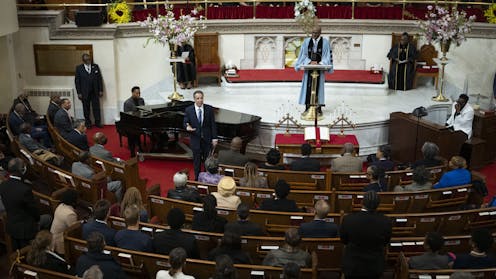
    Former New York Gov. Andrew Cuomo speaks at a church in Harlem during his failed campaign to become the Democratic nominee in the 2025 New York City mayoral race. Mostafa Bassim/Anadolu via Getty Images

    Churches and other houses of worship can endorse political candidates without risking the loss of their tax-exempt status, the Internal Revenue Service said in a legal document the tax-collection agency filed on July 7, 2025. This guidance is at odds with a law Congress passed more than 70 years ago that’s known as the Johnson Amendment and applies to all charitable nonprofits, whether they are secular or religious.

    The Conversation U.S. asked Lloyd Hitoshi Mayer, a law professor who has studied the regulation of churches’ political activities, to explain what this statute is, how the IRS seeks to change its purview and why this matters.

    What’s the Johnson Amendment?

    The Johnson Amendment is a provision that Lyndon B. Johnson added to a tax bill passed by Congress in 1954, when he was a senator. It says that any charity that wants to be tax-exempt under section 501(c)(3) of the Internal Revenue Code cannot “participate in, or intervene in … any political campaign on behalf of … any candidate for public office.” In the U.S., all houses of worship are designated as charities by the IRS.

    The IRS has interpreted the Johnson Amendment for more than 70 years to mean that charities cannot speak in favor of political candidates or take any other action that supports or opposes them.

    The IRS is prohibited from publicly disclosing audits of specific tax-exempt nonprofits under taxpayer privacy laws, so there’s no way to know the extent to which the law has been enforced. The public only learns about audits tied to possible Johnson Amendment violations if the nonprofit discloses that information or the IRS revoked their tax-exempt status.

    However, the IRS did conduct a broad enforcement campaign in the 2000s known as the Political Activity Compliance Initiative. The reports it issued for 2004 and 2006 stated that it had audited hundreds of charities, including churches, for possible Johnson Amendment violations. The IRS generally found that most violations were minor and often inadvertent – warranting no more than a warning letter.

    It’s unknown whether any nonprofits lost their tax-exempt status as a result of this initiative, which the IRS appears to have ended in 2008.

    There’s only one known instance of a church losing its tax-exempt status because it violated the Johnson Amendment. In that case, a church in Binghamton, New York, published full-page newspaper ads criticizing Bill Clinton during his 1992 presidential campaign.

    Why does the Trump administration want to change its enforcement?

    The National Religious Broadcasters, two churches and another religious nonprofit sued the IRS in 2024, challenging the constitutionality of the Johnson Amendment on First Amendment free speech and free exercise of religion grounds and on Fifth Amendment due process grounds. The plaintiffs also argued that applying the Johnson Amendment to religious nonprofits violated the federal Religious Freedom Restoration Act.

    The plaintiffs and the IRS filed a joint motion on July 7 to settle the case. They asked the U.S. District Court for the Eastern District of Texas to order the IRS not to enforce the Johnson Amendment against the two church plaintiffs. They also asked the court to incorporate in its order a statement that the Johnson Amendment does not apply to “speech by a house of worship to its congregation, in connection with religious services through its customary channels of communication on matters of faith, concerning electoral politics viewed through the lens of religious faith.”

    This represents the first time the IRS has said there’s an exception to the Johnson Amendment for houses of worship. While lawmakers have periodically sought to repeal or modify the statute, neither chamber of Congress has ever passed such legislation.

    President Donald Trump asserted during his first term that he had “gotten rid of” the Johnson Amendment. But that referred to his 2017 executive order that directed the Treasury Department – to which the IRS belongs – to respect freedom of religion with respect to religious organizations speaking about political issues as “consistent with law.”

    Under the IRS interpretation of the Johnson Amendment at the time, it would not have been consistent with law for churches or other religious nonprofits to support or oppose candidates for elected public office.

    How might the IRS treat religious political activity differently?

    If the court approves this new joint motion, that order will only apply to the two churches that are plaintiffs in the case – not other religious nonprofits or the National Religious Broadcasters that joined them in suing the IRS. But the filing tells other houses of worship that the IRS will not enforce the Johnson Amendment against them for speech to their congregations, at least not during the Trump administration.

    I think that the government may have a hard time applying this exception for several reasons.

    The IRS will have to determine when a charity is a “church,” the term the IRS uses for a house of worship of any faith. That has become increasingly difficult in recent years, as some organizations that stretch the conventional definition of a church have won IRS recognition as such.

    The IRS will also have to clarify what constitutes speech made “in connection with religious services” and what are “customary channels of communication.” For example, it’s unclear whether inviting a political candidate to address the congregation about how their religious faith relates to their candidacy falls within the exception.

    Donald Trump shakes a woman's hand in a sanctuary with a large cross and several American flags.
    Donald Trump participates in a community roundtable at a church in Detroit during his successful 2024 presidential campaign.
    Jim Watson/AFP via Getty Images

    Will only conservative politicians benefit?

    Establishing this exception does not necessarily give conservative politicians any advantages.

    It is true that recent attempts to repeal or modify the Johnson Amendment are associated with conservative Christian groups such as the Alliance Defending Freedom, which represented the plaintiffs in this lawsuit.

    But historically, many progressive houses of worship have also pushed against the Johnson Amendment, including Black churches that often serve as political as well as religious centers for their communities.

    A Texas Tribune and ProPublica investigation documented apparent violations of the Johnson Amendment in the 2022 midterm elections by almost 20 churches in Texas from across the political spectrum. Interestingly, most of the church leaders involved were aware of the amendment.

    Many said they were not violating it because they avoided explicitly endorsing candidates, while at the same time clearly expressing their support for specific candidates by, for example, praying for an individual who was identified to the congregation as a candidate.

    How could this new guidance change political campaigning?

    Americans generally don’t want to see churches get involved in politics, including majorities in most denominations. Nonetheless, church leaders of all stripes who were already inclined to support particular candidates will probably feel emboldened to explicitly endorse candidates when preaching to their congregations.

    There are two ways that this new exception could do more than that.

    First, it isn’t limited to sermons by pastors, priests, rabbis, imams and other religious leaders. It extends to any speech to a house of worship’s congregation “in connection with religious services through its customary channels of communication on matters of faith.” It therefore almost certainly includes church bulletins and other written materials distributed as part of a religious service.

    What’s less clear is whether “customary channels of communication” includes people who watch religious services streamed over the internet or on TV, rather than just those who attend services in person.

    Second, the change will increase pressure on church leaders to support candidates.

    For example, George W. Bush’s 2004 campaign reportedly sought to recruit thousands of congregations to distribute campaign information. It’s natural to expect such efforts to multiply and become more direct for both Democratic and Republican candidates from now on.

    And church leaders will also likely face pressure from politically active congregants to endorse candidates, and have a harder time resisting it.

    The Conversation

    Lloyd Hitoshi Mayer previously worked at the law firm of Caplin & Drysdale, Chartered, including when the firm represented All Saints Episcopal Church of Pasadena, California with respect to an IRS audit of the church for allegedly violating the Johnson Amendment. He was not personally involved in this representation.

    ref. IRS says churches may endorse political candidates despite a decades-old federal statute barring them from doing that – https://theconversation.com/irs-says-churches-may-endorse-political-candidates-despite-a-decades-old-federal-statute-barring-them-from-doing-that-260854

  • Muscle weakness in cancer survivors may be caused by treatable weakness in blood vessels – new research

    Source: ForeignAffairs4

    Source: The Conversation – USA (3) – By Jalees Rehman, Department Chair and Professor of Biochemistry and Molecular Genetics, University of Illinois Chicago

    Poorly functioning blood vessels lead to the characteristic muscle weakness that so many cancer patients experience. Artur Plawgo/Science Photo Library via Getty Images

    Tumors can destroy the blood vessels of muscles even when the muscles are nowhere close to the tumor. That is the key finding of a new study that my colleagues and I recently published in the journal Nature Cancer.

    Muscle loss in cancer patients is a major health problem, but the exact causes of how precisely tumors affect muscles remain an active area of research.

    Scientists in my lab were curious whether one explanation for the muscle loss in cancer patients could be that the cancer impairs the blood vessels that are necessary to supply nutrients and oxygen to muscles. Healthy blood vessels ensure that blood containing oxygen and nutrients is transported from the heart to all tissues and organs in the body, and then circulates back to the heart. Unhealthy blood vessels lose the ability to circulate sufficient blood and develop leaks, with nutrients seeping into the tissue prematurely and thereby cutting off the supply of nutrients to tissues that are further downstream.

    To tackle this question, my colleagues and I worked with several other scientific research teams with expertise in advanced microscopy, cancer research and metabolism. We used animal models to study several kinds of tumors – lung cancer, skin cancer, colon cancer and pancreatic cancer. We consistently observed that the blood vessels in the muscles became fewer and leakier even before the muscle weakness set in.

    We also found that tumors release a protein called Activin-A, which acts on blood vessels to cause the leakiness and, ultimately, loss of blood vessels in the muscle. When we used a gene therapy to restore blood vessel health by counteracting the effects of Activin-A, we were able to prevent the muscle loss.

    So we examined the muscles of patients who had passed away because of cancer and found that the muscles of cancer patients contained fewer blood vessels than expected.

    Why Activin-A matters

    Millions of cancer survivors struggle with muscle weakness, which can be so profound that they may have difficulties walking up a couple of flights of stairs or going shopping for groceries on their own.

    Severe muscle weakness and muscle loss during cancer is called cancer cachexia, which occurs in up to 80% of patients with advanced cancer.

    Recent research indicates that cachexia is far more common among cancer patients than previously suspected, with approximately half the patients who see their cancer doctor for the first time already showing signs of muscle weakness.

    Importantly, cachexia can persist even after the cancer is successfully treated and cured. This can have a devastating impact on the quality of life for cancer survivors.

    Our discovery that the loss of blood vessel function in the muscles occurs early on during the progression of the cancer suggests that fixing blood vessels in cancer patients and cancer survivors could be a new way to prevent or reverse cachexia.

    The reasons for the muscle loss in cancer are complicated and involve poor nutrition due to loss of appetite and inflammation, which are initially caused by the tumor but persist even when the tumor is removed.

    Older man leaning forward over his kitchen sink, suggesting he is not feeling well.
    New research shows that lack of sufficient blood vessels could explain why many cancer survivors still experience muscle weakness even after the tumor is removed.
    FG Trade/E+ via Getty Images

    What other research is being done

    There are currently no treatments approved by the Food and Drug Administration for cachexia, but new therapies are on the horizon.

    One such therapy is an antibody drug that targets the molecule GDF-15, a protein that is thought to suppress appetite.

    Other studies are using a combination of targeted nutrition and exercise programs to help patients with cancer cachexia regain muscle mass and muscle strength.

    All these studies suggest that we will need a combination of approaches to enhance exercise, nutrition, appetite, muscle regeneration and – as we propose – blood vessel health.

    What’s next

    We are now evaluating drugs and exercise programs that are known to improve blood vessel health. Repurposing these treatments that are traditionally designed for cardiovascular patients could be a rapid way to help cancer patients regain muscle strength.

    We hope that our work highlights how important it is for cancer patients to receive comprehensive medical care, which includes improving cardiovascular health and overall quality of life.

    The Research Brief is a short take on interesting academic work.

    The Conversation

    Jalees Rehman receives funding from the National Institutes of Health.

    ref. Muscle weakness in cancer survivors may be caused by treatable weakness in blood vessels – new research – https://theconversation.com/muscle-weakness-in-cancer-survivors-may-be-caused-by-treatable-weakness-in-blood-vessels-new-research-259765

  • AI in health care could save lives and money − but change won’t happen overnight

    Source: ForeignAffairs4

    Source: The Conversation – USA (3) – By Turgay Ayer, Professor of Industrial and Systems Engineering, Georgia Institute of Technology

    AI will help human physicians by analyzing patient data prior to surgery. Boy_Anupong/Moment via Getty Images

    Imagine walking into your doctor’s office feeling sick – and rather than flipping through pages of your medical history or running tests that take days, your doctor instantly pulls together data from your health records, genetic profile and wearable devices to help decipher what’s wrong.

    This kind of rapid diagnosis is one of the big promises of artificial intelligence for use in health care. Proponents of the technology say that over the coming decades, AI has the potential to save hundreds of thousands, even millions of lives.

    What’s more, a 2023 study found that if the health care industry significantly increased its use of AI, up to US$360 billion annually could be saved.

    But though artificial intelligence has become nearly ubiquitous, from smartphones to chatbots to self-driving cars, its impact on health care so far has been relatively low.

    A 2024 American Medical Association survey found that 66% of U.S. physicians had used AI tools in some capacity, up from 38% in 2023. But most of it was for administrative or low-risk support. And although 43% of U.S. health care organizations had added or expanded AI use in 2024, many implementations are still exploratory, particularly when it comes to medical decisions and diagnoses.

    I’m a professor and researcher who studies AI and health care analytics. I’ll try to explain why AI’s growth will be gradual, and how technical limitations and ethical concerns stand in the way of AI’s widespread adoption by the medical industry.

    Inaccurate diagnoses, racial bias

    Artificial intelligence excels at finding patterns in large sets of data. In medicine, these patterns could signal early signs of disease that a human physician might overlook – or indicate the best treatment option, based on how other patients with similar symptoms and backgrounds responded. Ultimately, this will lead to faster, more accurate diagnoses and more personalized care.

    AI can also help hospitals run more efficiently by analyzing workflows, predicting staffing needs and scheduling surgeries so that precious resources, such as operating rooms, are used most effectively. By streamlining tasks that take hours of human effort, AI can let health care professionals focus more on direct patient care.

    But for all its power, AI can make mistakes. Although these systems are trained on data from real patients, they can struggle when encountering something unusual, or when data doesn’t perfectly match the patient in front of them.

    As a result, AI doesn’t always give an accurate diagnosis. This problem is called algorithmic drift – when AI systems perform well in controlled settings but lose accuracy in real-world situations.

    Racial and ethnic bias is another issue. If data includes bias because it doesn’t include enough patients of certain racial or ethnic groups, then AI might give inaccurate recommendations for them, leading to misdiagnoses. Some evidence suggests this has already happened.

    Humans and AI are beginning to work together at this Florida hospital.

    Data-sharing concerns, unrealistic expectations

    Health care systems are labyrinthian in their complexity. The prospect of integrating artificial intelligence into existing workflows is daunting; introducing a new technology like AI disrupts daily routines. Staff will need extra training to use AI tools effectively. Many hospitals, clinics and doctor’s offices simply don’t have the time, personnel, money or will to implement AI.

    Also, many cutting-edge AI systems operate as opaque “black boxes.” They churn out recommendations, but even its developers might struggle to fully explain how. This opacity clashes with the needs of medicine, where decisions demand justification.

    But developers are often reluctant to disclose their proprietary algorithms or data sources, both to protect intellectual property and because the complexity can be hard to distill. The lack of transparency feeds skepticism among practitioners, which then slows regulatory approval and erodes trust in AI outputs. Many experts argue that transparency is not just an ethical nicety but a practical necessity for adoption in health care settings.

    There are also privacy concerns; data sharing could threaten patient confidentiality. To train algorithms or make predictions, medical AI systems often require huge amounts of patient data. If not handled properly, AI could expose sensitive health information, whether through data breaches or unintended use of patient records.

    For instance, a clinician using a cloud-based AI assistant to draft a note must ensure no unauthorized party can access that patient’s data. U.S. regulations such as the HIPAA law impose strict rules on health data sharing, which means AI developers need robust safeguards.

    Privacy concerns also extend to patients’ trust: If people fear their medical data might be misused by an algorithm, they may be less forthcoming or even refuse AI-guided care.

    The grand promise of AI is a formidable barrier in itself. Expectations are tremendous. AI is often portrayed as a magical solution that can diagnose any disease and revolutionize the health care industry overnight. Unrealistic assumptions like that often lead to disappointment. AI may not immediately deliver on its promises.

    Finally, developing an AI system that works well involves a lot of trial and error. AI systems must go through rigorous testing to make certain they’re safe and effective. This takes years, and even after a system is approved, adjustments may be needed as it encounters new types of data and real-world situations.

    AI could rapidly accelerate the discovery of new medications.

    Incremental change

    Today, hospitals are rapidly adopting AI scribes that listen during patient visits and automatically draft clinical notes, reducing paperwork and letting physicians spend more time with patients. Surveys show over 20% of physicians now use AI for writing progress notes or discharge summaries. AI is also becoming a quiet force in administrative work. Hospitals deploy AI chatbots to handle appointment scheduling, triage common patient questions and translate languages in real time.

    Clinical uses of AI exist but are more limited. At some hospitals, AI is a second eye for radiologists looking for early signs of disease. But physicians are still reluctant to hand decisions over to machines; only about 12% of them currently rely on AI for diagnostic help.

    Suffice to say that health care’s transition to AI will be incremental. Emerging technologies need time to mature, and the short-term needs of health care still outweigh long-term gains. In the meantime, AI’s potential to treat millions and save trillions awaits.

    The Conversation

    Turgay Ayer owns shares in Value Analytics Labs, a healthcare technology company. He received funding from government agencies, including NSF, NIH, and CDC.

    ref. AI in health care could save lives and money − but change won’t happen overnight – https://theconversation.com/ai-in-health-care-could-save-lives-and-money-but-change-wont-happen-overnight-241551

  • MIL-OSI Submissions: IRS says churches may endorse political candidates despite a decades-old federal statute barring them from doing that

    Source: The Conversation – USA (3) – By Lloyd Hitoshi Mayer, Professor of Law, University of Notre Dame

    Former New York Gov. Andrew Cuomo speaks at a church in Harlem during his failed campaign to become the Democratic nominee in the 2025 New York City mayoral race. Mostafa Bassim/Anadolu via Getty Images

    Churches and other houses of worship can endorse political candidates without risking the loss of their tax-exempt status, the Internal Revenue Service said in a legal document the tax-collection agency filed on July 7, 2025. This guidance is at odds with a law Congress passed more than 70 years ago that’s known as the Johnson Amendment and applies to all charitable nonprofits, whether they are secular or religious.

    The Conversation U.S. asked Lloyd Hitoshi Mayer, a law professor who has studied the regulation of churches’ political activities, to explain what this statute is, how the IRS seeks to change its purview and why this matters.

    What’s the Johnson Amendment?

    The Johnson Amendment is a provision that Lyndon B. Johnson added to a tax bill passed by Congress in 1954, when he was a senator. It says that any charity that wants to be tax-exempt under section 501(c)(3) of the Internal Revenue Code cannot “participate in, or intervene in … any political campaign on behalf of … any candidate for public office.” In the U.S., all houses of worship are designated as charities by the IRS.

    The IRS has interpreted the Johnson Amendment for more than 70 years to mean that charities cannot speak in favor of political candidates or take any other action that supports or opposes them.

    The IRS is prohibited from publicly disclosing audits of specific tax-exempt nonprofits under taxpayer privacy laws, so there’s no way to know the extent to which the law has been enforced. The public only learns about audits tied to possible Johnson Amendment violations if the nonprofit discloses that information or the IRS revoked their tax-exempt status.

    However, the IRS did conduct a broad enforcement campaign in the 2000s known as the Political Activity Compliance Initiative. The reports it issued for 2004 and 2006 stated that it had audited hundreds of charities, including churches, for possible Johnson Amendment violations. The IRS generally found that most violations were minor and often inadvertent – warranting no more than a warning letter.

    It’s unknown whether any nonprofits lost their tax-exempt status as a result of this initiative, which the IRS appears to have ended in 2008.

    There’s only one known instance of a church losing its tax-exempt status because it violated the Johnson Amendment. In that case, a church in Binghamton, New York, published full-page newspaper ads criticizing Bill Clinton during his 1992 presidential campaign.

    Why does the Trump administration want to change its enforcement?

    The National Religious Broadcasters, two churches and another religious nonprofit sued the IRS in 2024, challenging the constitutionality of the Johnson Amendment on First Amendment free speech and free exercise of religion grounds and on Fifth Amendment due process grounds. The plaintiffs also argued that applying the Johnson Amendment to religious nonprofits violated the federal Religious Freedom Restoration Act.

    The plaintiffs and the IRS filed a joint motion on July 7 to settle the case. They asked the U.S. District Court for the Eastern District of Texas to order the IRS not to enforce the Johnson Amendment against the two church plaintiffs. They also asked the court to incorporate in its order a statement that the Johnson Amendment does not apply to “speech by a house of worship to its congregation, in connection with religious services through its customary channels of communication on matters of faith, concerning electoral politics viewed through the lens of religious faith.”

    This represents the first time the IRS has said there’s an exception to the Johnson Amendment for houses of worship. While lawmakers have periodically sought to repeal or modify the statute, neither chamber of Congress has ever passed such legislation.

    President Donald Trump asserted during his first term that he had “gotten rid of” the Johnson Amendment. But that referred to his 2017 executive order that directed the Treasury Department – to which the IRS belongs – to respect freedom of religion with respect to religious organizations speaking about political issues as “consistent with law.”

    Under the IRS interpretation of the Johnson Amendment at the time, it would not have been consistent with law for churches or other religious nonprofits to support or oppose candidates for elected public office.

    How might the IRS treat religious political activity differently?

    If the court approves this new joint motion, that order will only apply to the two churches that are plaintiffs in the case – not other religious nonprofits or the National Religious Broadcasters that joined them in suing the IRS. But the filing tells other houses of worship that the IRS will not enforce the Johnson Amendment against them for speech to their congregations, at least not during the Trump administration.

    I think that the government may have a hard time applying this exception for several reasons.

    The IRS will have to determine when a charity is a “church,” the term the IRS uses for a house of worship of any faith. That has become increasingly difficult in recent years, as some organizations that stretch the conventional definition of a church have won IRS recognition as such.

    The IRS will also have to clarify what constitutes speech made “in connection with religious services” and what are “customary channels of communication.” For example, it’s unclear whether inviting a political candidate to address the congregation about how their religious faith relates to their candidacy falls within the exception.

    Donald Trump participates in a community roundtable at a church in Detroit during his successful 2024 presidential campaign.
    Jim Watson/AFP via Getty Images

    Will only conservative politicians benefit?

    Establishing this exception does not necessarily give conservative politicians any advantages.

    It is true that recent attempts to repeal or modify the Johnson Amendment are associated with conservative Christian groups such as the Alliance Defending Freedom, which represented the plaintiffs in this lawsuit.

    But historically, many progressive houses of worship have also pushed against the Johnson Amendment, including Black churches that often serve as political as well as religious centers for their communities.

    A Texas Tribune and ProPublica investigation documented apparent violations of the Johnson Amendment in the 2022 midterm elections by almost 20 churches in Texas from across the political spectrum. Interestingly, most of the church leaders involved were aware of the amendment.

    Many said they were not violating it because they avoided explicitly endorsing candidates, while at the same time clearly expressing their support for specific candidates by, for example, praying for an individual who was identified to the congregation as a candidate.

    How could this new guidance change political campaigning?

    Americans generally don’t want to see churches get involved in politics, including majorities in most denominations. Nonetheless, church leaders of all stripes who were already inclined to support particular candidates will probably feel emboldened to explicitly endorse candidates when preaching to their congregations.

    There are two ways that this new exception could do more than that.

    First, it isn’t limited to sermons by pastors, priests, rabbis, imams and other religious leaders. It extends to any speech to a house of worship’s congregation “in connection with religious services through its customary channels of communication on matters of faith.” It therefore almost certainly includes church bulletins and other written materials distributed as part of a religious service.

    What’s less clear is whether “customary channels of communication” includes people who watch religious services streamed over the internet or on TV, rather than just those who attend services in person.

    Second, the change will increase pressure on church leaders to support candidates.

    For example, George W. Bush’s 2004 campaign reportedly sought to recruit thousands of congregations to distribute campaign information. It’s natural to expect such efforts to multiply and become more direct for both Democratic and Republican candidates from now on.

    And church leaders will also likely face pressure from politically active congregants to endorse candidates, and have a harder time resisting it.

    Lloyd Hitoshi Mayer previously worked at the law firm of Caplin & Drysdale, Chartered, including when the firm represented All Saints Episcopal Church of Pasadena, California with respect to an IRS audit of the church for allegedly violating the Johnson Amendment. He was not personally involved in this representation.

    ref. IRS says churches may endorse political candidates despite a decades-old federal statute barring them from doing that – https://theconversation.com/irs-says-churches-may-endorse-political-candidates-despite-a-decades-old-federal-statute-barring-them-from-doing-that-260854

    MIL OSI

  • MIL-OSI Submissions: Muscle weakness in cancer survivors may be caused by treatable weakness in blood vessels – new research

    Source: The Conversation – USA (3) – By Jalees Rehman, Department Chair and Professor of Biochemistry and Molecular Genetics, University of Illinois Chicago

    Poorly functioning blood vessels lead to the characteristic muscle weakness that so many cancer patients experience. Artur Plawgo/Science Photo Library via Getty Images

    Tumors can destroy the blood vessels of muscles even when the muscles are nowhere close to the tumor. That is the key finding of a new study that my colleagues and I recently published in the journal Nature Cancer.

    Muscle loss in cancer patients is a major health problem, but the exact causes of how precisely tumors affect muscles remain an active area of research.

    Scientists in my lab were curious whether one explanation for the muscle loss in cancer patients could be that the cancer impairs the blood vessels that are necessary to supply nutrients and oxygen to muscles. Healthy blood vessels ensure that blood containing oxygen and nutrients is transported from the heart to all tissues and organs in the body, and then circulates back to the heart. Unhealthy blood vessels lose the ability to circulate sufficient blood and develop leaks, with nutrients seeping into the tissue prematurely and thereby cutting off the supply of nutrients to tissues that are further downstream.

    To tackle this question, my colleagues and I worked with several other scientific research teams with expertise in advanced microscopy, cancer research and metabolism. We used animal models to study several kinds of tumors – lung cancer, skin cancer, colon cancer and pancreatic cancer. We consistently observed that the blood vessels in the muscles became fewer and leakier even before the muscle weakness set in.

    We also found that tumors release a protein called Activin-A, which acts on blood vessels to cause the leakiness and, ultimately, loss of blood vessels in the muscle. When we used a gene therapy to restore blood vessel health by counteracting the effects of Activin-A, we were able to prevent the muscle loss.

    So we examined the muscles of patients who had passed away because of cancer and found that the muscles of cancer patients contained fewer blood vessels than expected.

    Why Activin-A matters

    Millions of cancer survivors struggle with muscle weakness, which can be so profound that they may have difficulties walking up a couple of flights of stairs or going shopping for groceries on their own.

    Severe muscle weakness and muscle loss during cancer is called cancer cachexia, which occurs in up to 80% of patients with advanced cancer.

    Recent research indicates that cachexia is far more common among cancer patients than previously suspected, with approximately half the patients who see their cancer doctor for the first time already showing signs of muscle weakness.

    Importantly, cachexia can persist even after the cancer is successfully treated and cured. This can have a devastating impact on the quality of life for cancer survivors.

    Our discovery that the loss of blood vessel function in the muscles occurs early on during the progression of the cancer suggests that fixing blood vessels in cancer patients and cancer survivors could be a new way to prevent or reverse cachexia.

    The reasons for the muscle loss in cancer are complicated and involve poor nutrition due to loss of appetite and inflammation, which are initially caused by the tumor but persist even when the tumor is removed.

    New research shows that lack of sufficient blood vessels could explain why many cancer survivors still experience muscle weakness even after the tumor is removed.
    FG Trade/E+ via Getty Images

    What other research is being done

    There are currently no treatments approved by the Food and Drug Administration for cachexia, but new therapies are on the horizon.

    One such therapy is an antibody drug that targets the molecule GDF-15, a protein that is thought to suppress appetite.

    Other studies are using a combination of targeted nutrition and exercise programs to help patients with cancer cachexia regain muscle mass and muscle strength.

    All these studies suggest that we will need a combination of approaches to enhance exercise, nutrition, appetite, muscle regeneration and – as we propose – blood vessel health.

    What’s next

    We are now evaluating drugs and exercise programs that are known to improve blood vessel health. Repurposing these treatments that are traditionally designed for cardiovascular patients could be a rapid way to help cancer patients regain muscle strength.

    We hope that our work highlights how important it is for cancer patients to receive comprehensive medical care, which includes improving cardiovascular health and overall quality of life.

    The Research Brief is a short take on interesting academic work.

    Jalees Rehman receives funding from the National Institutes of Health.

    ref. Muscle weakness in cancer survivors may be caused by treatable weakness in blood vessels – new research – https://theconversation.com/muscle-weakness-in-cancer-survivors-may-be-caused-by-treatable-weakness-in-blood-vessels-new-research-259765

    MIL OSI

  • MIL-OSI Submissions: AI in health care could save lives and money − but change won’t happen overnight

    Source: The Conversation – USA (3) – By Turgay Ayer, Professor of Industrial and Systems Engineering, Georgia Institute of Technology

    AI will help human physicians by analyzing patient data prior to surgery. Boy_Anupong/Moment via Getty Images

    Imagine walking into your doctor’s office feeling sick – and rather than flipping through pages of your medical history or running tests that take days, your doctor instantly pulls together data from your health records, genetic profile and wearable devices to help decipher what’s wrong.

    This kind of rapid diagnosis is one of the big promises of artificial intelligence for use in health care. Proponents of the technology say that over the coming decades, AI has the potential to save hundreds of thousands, even millions of lives.

    What’s more, a 2023 study found that if the health care industry significantly increased its use of AI, up to US$360 billion annually could be saved.

    But though artificial intelligence has become nearly ubiquitous, from smartphones to chatbots to self-driving cars, its impact on health care so far has been relatively low.

    A 2024 American Medical Association survey found that 66% of U.S. physicians had used AI tools in some capacity, up from 38% in 2023. But most of it was for administrative or low-risk support. And although 43% of U.S. health care organizations had added or expanded AI use in 2024, many implementations are still exploratory, particularly when it comes to medical decisions and diagnoses.

    I’m a professor and researcher who studies AI and health care analytics. I’ll try to explain why AI’s growth will be gradual, and how technical limitations and ethical concerns stand in the way of AI’s widespread adoption by the medical industry.

    Inaccurate diagnoses, racial bias

    Artificial intelligence excels at finding patterns in large sets of data. In medicine, these patterns could signal early signs of disease that a human physician might overlook – or indicate the best treatment option, based on how other patients with similar symptoms and backgrounds responded. Ultimately, this will lead to faster, more accurate diagnoses and more personalized care.

    AI can also help hospitals run more efficiently by analyzing workflows, predicting staffing needs and scheduling surgeries so that precious resources, such as operating rooms, are used most effectively. By streamlining tasks that take hours of human effort, AI can let health care professionals focus more on direct patient care.

    But for all its power, AI can make mistakes. Although these systems are trained on data from real patients, they can struggle when encountering something unusual, or when data doesn’t perfectly match the patient in front of them.

    As a result, AI doesn’t always give an accurate diagnosis. This problem is called algorithmic drift – when AI systems perform well in controlled settings but lose accuracy in real-world situations.

    Racial and ethnic bias is another issue. If data includes bias because it doesn’t include enough patients of certain racial or ethnic groups, then AI might give inaccurate recommendations for them, leading to misdiagnoses. Some evidence suggests this has already happened.

    Humans and AI are beginning to work together at this Florida hospital.

    Data-sharing concerns, unrealistic expectations

    Health care systems are labyrinthian in their complexity. The prospect of integrating artificial intelligence into existing workflows is daunting; introducing a new technology like AI disrupts daily routines. Staff will need extra training to use AI tools effectively. Many hospitals, clinics and doctor’s offices simply don’t have the time, personnel, money or will to implement AI.

    Also, many cutting-edge AI systems operate as opaque “black boxes.” They churn out recommendations, but even its developers might struggle to fully explain how. This opacity clashes with the needs of medicine, where decisions demand justification.

    But developers are often reluctant to disclose their proprietary algorithms or data sources, both to protect intellectual property and because the complexity can be hard to distill. The lack of transparency feeds skepticism among practitioners, which then slows regulatory approval and erodes trust in AI outputs. Many experts argue that transparency is not just an ethical nicety but a practical necessity for adoption in health care settings.

    There are also privacy concerns; data sharing could threaten patient confidentiality. To train algorithms or make predictions, medical AI systems often require huge amounts of patient data. If not handled properly, AI could expose sensitive health information, whether through data breaches or unintended use of patient records.

    For instance, a clinician using a cloud-based AI assistant to draft a note must ensure no unauthorized party can access that patient’s data. U.S. regulations such as the HIPAA law impose strict rules on health data sharing, which means AI developers need robust safeguards.

    Privacy concerns also extend to patients’ trust: If people fear their medical data might be misused by an algorithm, they may be less forthcoming or even refuse AI-guided care.

    The grand promise of AI is a formidable barrier in itself. Expectations are tremendous. AI is often portrayed as a magical solution that can diagnose any disease and revolutionize the health care industry overnight. Unrealistic assumptions like that often lead to disappointment. AI may not immediately deliver on its promises.

    Finally, developing an AI system that works well involves a lot of trial and error. AI systems must go through rigorous testing to make certain they’re safe and effective. This takes years, and even after a system is approved, adjustments may be needed as it encounters new types of data and real-world situations.

    AI could rapidly accelerate the discovery of new medications.

    Incremental change

    Today, hospitals are rapidly adopting AI scribes that listen during patient visits and automatically draft clinical notes, reducing paperwork and letting physicians spend more time with patients. Surveys show over 20% of physicians now use AI for writing progress notes or discharge summaries. AI is also becoming a quiet force in administrative work. Hospitals deploy AI chatbots to handle appointment scheduling, triage common patient questions and translate languages in real time.

    Clinical uses of AI exist but are more limited. At some hospitals, AI is a second eye for radiologists looking for early signs of disease. But physicians are still reluctant to hand decisions over to machines; only about 12% of them currently rely on AI for diagnostic help.

    Suffice to say that health care’s transition to AI will be incremental. Emerging technologies need time to mature, and the short-term needs of health care still outweigh long-term gains. In the meantime, AI’s potential to treat millions and save trillions awaits.

    Turgay Ayer owns shares in Value Analytics Labs, a healthcare technology company. He received funding from government agencies, including NSF, NIH, and CDC.

    ref. AI in health care could save lives and money − but change won’t happen overnight – https://theconversation.com/ai-in-health-care-could-save-lives-and-money-but-change-wont-happen-overnight-241551

    MIL OSI

  • MIL-OSI Submissions: Why do so many American workers feel guilty about taking the vacation they’ve earned?

    Source: The Conversation – USA (2) – By Karen Tan, Assistant Professor of Tourism and Hospitality Management, Middle Tennessee State University

    The U.S. is the only advanced economy that doesn’t legally mandate a minimum number of vacation days. Comstock Images/Stockbyte via Getty Images

    “My dedication was questioned.”

    “Managers or upper management have looked down upon taking time off.”

    “People think that maybe you’re not as invested in the job, that you’re shirking your duties or something.”

    These are just a few of the responses to questions I asked during a study I conducted on vacation guilt among American workers.

    More than 88% of full-time, private sector workers in the U.S. receive paid time off. This benefit is ostensibly in place to improve employee morale and well-being.

    Yet a 2024 Pew Research Center survey found that nearly half of American workers don’t take all the vacation days they’ve been allotted. And many of them feel as if they’re discouraged from using their time off. Ironically, what’s supposed to be a source of relaxation and restoration morphs into a stressor: As vacations approach, feelings of doubt and guilt creep in.

    I’m from Singapore. Upon moving to the U.S. in 2016, I was surprised at how pervasive vacation guilt appeared to be.

    Compared with many of the other countries where I’ve lived or worked, American culture seems to prioritize mental health and wellness. I assumed these attitudes extended to the American workplace.

    Surprisingly, though, I noticed that many of my American friends felt guilty about taking time off that they’d earned. So as a scholar of tourism and hospitality, I wanted to understand how and why this happened.

    Vacation guilt

    To carry out the study, I collaborated with tourism scholar Robert Li. We interviewed 15 workers who had experienced feelings of guilt over taking time off. We also administered an online survey to 860 full-time employees who received paid time off from their employers.

    We wanted to know whether employees felt less respected or believed that their bosses and colleagues saw them in a worse light for taking time off. Maybe they feared being seen as slackers or, worse, replaceable.

    We found that 1 in 5 respondents to our survey experienced vacation guilt, and these concerns made them think twice about following through with their vacation plans. For those who eventually did take a vacation, they often tried to ease their guilt by going for fewer days. They might also apologize for taking a vacation or avoid talking about their vacation plans at work.

    Some of the people we interviewed had pushed through their hesitation and taken their vacation as planned. Yet all of these employees believed that they’d been penalized for taking time off and that it led to poor performance reviews, despite the fact that their paid vacation days had been a clearly articulated, earned benefit.

    The US is an outlier

    The U.S. is the only advanced economy that doesn’t legally mandate a minimum number of vacation days. On top of that, only a handful of states require workers to be compensated for their unused vacation days.

    Meanwhile, the law in other advanced economies entitles employees to a minimum amount of annual paid leave. The EU, for example, mandates at least 20 days per year on top of paid public holidays, such as Christmas and New Year’s Day, with a number of EU member countries requiring more than 20 days of paid vacation for full-time employees. Even in Japan, which is notorious for its workaholic culture, employees are entitled to a minimum of 10 days of paid leave every year.

    Throughout much of the U.S., whether paid vacation time is offered at all depends on an employer’s generosity, while many employees face a “use-it-or-lose-it” situation, meaning unused vacation days don’t roll over from one year to the next.

    Of course, not all workers experience vacation guilt. Nonetheless, the guilt that so many workers do feel may be symbolic of broader issues: an unhealthy workplace culture, a toxic boss or a weak social safety net.

    For paid time off to serve its purpose, I think employers need to provide more than vacation days. They also need to have a supportive culture that readily encourages employees to use this benefit without having to worry about repercussions.

    The journal publication on which this article was based was supported by the inaugural Seed Funding Forum, Fox
    School of Business, Temple University, USA.

    ref. Why do so many American workers feel guilty about taking the vacation they’ve earned? – https://theconversation.com/why-do-so-many-american-workers-feel-guilty-about-taking-the-vacation-theyve-earned-254913

    MIL OSI

  • MIL-OSI Submissions: Inequality has risen from 1970 to Trump − that has 3 hidden costs that undermine democracy

    Source: The Conversation – USA (2) – By Nathan Meyers, Ph.D. candidate in sociology (September 2025 degree conferral), UMass Amherst

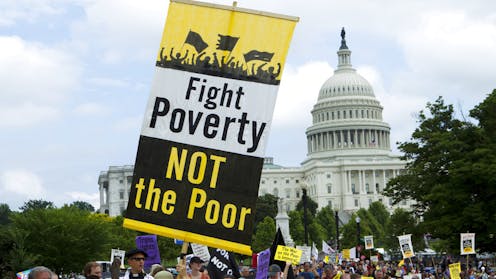
    Demonstrators march outside the U.S. Capitol during the Poor People’s Campaign rally at the National Mall in Washington on June 23, 2018. AP Photo/Jose Luis Magana

    America has never been richer. But the gains are so lopsided that the top 10% controls 69% of all wealth in the country, while the bottom half controls just 3%. Meanwhile, surging corporate profits have mostly benefited investors, not the broader public.

    This divide is expected to widen after President Donald Trump’s sweeping new spending bill drastically cuts Medicaid and food aid, programs that stabilize the economy and subsidize low-wage employers.

    Moreover, the tax cuts at the heart of the bill will deliver tens of billions of dollars in benefits to the wealthiest households while disproportionately burdening low-income households, according to analyses by the nonpartisan Congressional Budget Office and Joint Committee on Taxation. By 2033, the bottom 20% will pay more in taxes while the top 0.1% receive $43 billion in cuts.

    I am a sociologist who studies economic inequality, and my research demonstrates that the class-based inequalities exacerbated by the Trump bill are not new. Rather, they are part of a 50-year trend linked to social cleavages, political corruption and a declining belief in the common good.

    The roots of class-based inequality

    The decades following World War II were broadly prosperous, but conditions began changing in the 1970s. Class inequality has increased enormously since then, according to government data, while income inequality has risen for five decades at the expense of workers.

    Economists usually gauge a country’s economic health by looking at its gross domestic product as measured through total spending on everything from groceries to patents.

    But another way to view GDP is by looking at whether the money goes to workers or business owners. This second method – the income approach – offers a clearer picture of who really benefits from economic growth.

    The money that goes to labor’s share of GDP, or workers, is represented by employee compensation, including wages, salaries and benefits. The money left over for businesses after paying for work and materials is called gross operating surplus, or business surplus.

    The share of GDP going to workers rose 12% from 1947 to 1970, then fell 14% between 1970 and 2023. The opposite happened with the business surplus, falling 18% in the early postwar decades before jumping 34% from 1970 to today.

    Meanwhile, corporate profits have outpaced economic growth by 193% since 1970. Within profits, shareholder dividends as a share of GDP grew 274%.

    As of 2023, labor had lost all of the economic gains made since 1947. Had workers kept their 1970 share of GDP, they would have earned $1.7 trillion more in 2023 alone. And no legislation or federal action since 1970 has reversed this half-century trend.

    When more of the economy goes to businesses instead of workers, that poses serious social problems. My research focuses on three that threaten democracy.

    1. Fraying social bonds and livelihoods

    Not just an issue of income and assets, growing class inequality represents the fraying of American society.

    For instance, inequality and the resulting hardship are linked to worse health outcomes. Americans die younger than their peers in other rich countries, and U.S. life expectancy has decreased, especially among the poor.

    Moreover, economic struggles contribute to mental health issues, deaths of despair and profound problems such as addiction, including tobacco, alcohol and opioid abuse.

    Inequality can disrupt families. Kids who experience the stresses of poverty can develop neurological and emotional problems, putting them at risk for drug use as adults. On the other hand, when minimum wages increase and people begin saving wealth, divorce risk falls.

    Research shows inequality has many other negative consequences, from reduced social mobility to lower social trust and even higher homicide rates.

    Together, these broad social consequences are linked to misery, political discontent and normlessness.

    2. Increasing corruption in politics

    Inequality is rising in the U.S. largely because business elites are exercising more influence over policy outcomes, research shows. My related work on privatization explains how 50 years of outsourcing public functions – through contracting, disinvestment and job cuts – threatens democratic accountability.

    Research across different countries has repeatedly found that higher income inequality increases political corruption. It does so by undermining trust in government and institutions, and enabling elites to dominate policymaking while weakening public oversight.

    Since 2010, weakened campaign finance laws driven by monied interests have sharply increased corruption risks. The Supreme Court ruled then in Citizens United to lift campaign finance restrictions, enabling unlimited political spending. It reached an apex in 2024, when Elon Musk spent $200 million to elect Trump before later installing his Starlink equipment onto Federal Aviation Administration systems in a reported takeover of a $2.4 billion contract with Verizon.

    Research shows that a large majority of Americans believe that the economy is rigged, suggesting everyday people sense the link between inequality and corruption.

    Demonstrators gather outside the Supreme Court in Washington as the court heard arguments on campaign finance in 2013.
    AP Photo/Susan Walsh

    3. Undermining belief in the common good

    National aspirations have emphasized the common good since America’s founding. The Declaration of Independence lists the king’s first offense as undermining the “public good” by subverting the rule of law. The Constitution’s preamble commits the government to promoting the general welfare and shared well-being.

    But higher inequality historically means the common good goes overlooked, according to research. Meanwhile, work has become more precarious, less unionized, more segmented and less geographically stable. Artificial intelligence may worsen these trends.

    This tends to coincide with a drop in voting and other forms of civic engagement.

    The government has fewer mechanisms for protecting community when rising inequality is paired with lower taxes for the wealthy and reduced public resources. My research finds that public sector unions especially bolster civic engagement in this environment.

    Given increasing workplace and social isolation, America’s loneliness epidemic is unsurprising, especially for low earners.

    All of these factors and their contribution to alienation can foster authoritarian beliefs and individualism. When people become cold and distrustful of one another, the notion of the common good collapses.

    Inequality as a policy outcome

    News coverage of the Trump bill and policy debate have largely centered on immediate gains and losses. But zoomed out, a clearer picture emerges of the long-term dismantling of foundations that once supported broad economic security. That, in turn, has enabled democratic decline.

    As labor’s share of the economy declined, so too did the institutional trust and shared social values that underpin democratic life. Among the many consequences are the political discontent and disillusionment shaping our current moment.

    Republicans hold both chambers of Congress through 2026, making significant policy changes unlikely in the short term. Democrats opposed the bill but are out of power. And their coalition is divided between a centrist establishment and an insurgent progressive wing with diverging priorities in addressing inequality.

    Yet democratic decline and inequality are not inevitable. If restoring broad prosperity and social stability are the goals, they may require revisiting the New Deal-style policies that produced labor’s peak economic share of 59% of GDP in 1970.

    Nathan Meyers does not work for, consult, own shares in or receive funding from any company or organization that would benefit from this article, and has disclosed no relevant affiliations beyond their academic appointment.

    ref. Inequality has risen from 1970 to Trump − that has 3 hidden costs that undermine democracy – https://theconversation.com/inequality-has-risen-from-1970-to-trump-that-has-3-hidden-costs-that-undermine-democracy-259104

    MIL OSI

  • MIL-OSI Submissions: Spotted lanternflies love grapevines, and that’s bad for Pennsylvania’s wine industry

    Source: The Conversation – USA (2) – By Flor Acevedo, Assistant Professor of Entomology, Penn State

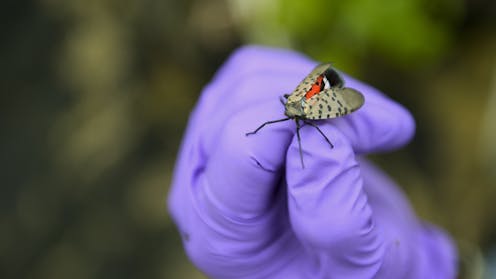
    Adult spotted lanternflies infest areas of Pennsylvania from July to December. Lauren A. Little/MediaNews Group/Reading Eagle via Getty Images

    Spotted lanternfly season is back in Pennsylvania. The polka-dotted, gray-and-red-winged adult insects make their appearance each July and tend to hang around until December. It’s an unwelcome summer ritual that started in 2014 when the invasive pests were first detected in the U.S.

    The Conversation U.S. talked to Flor Acevedo, an assistant professor of entomology at Penn State University, about the bugs and her research on how lanternflies are threatening the state’s vineyards and wine industry.

    Does Pennsylvania have many vineyards?

    Pennsylvania has more than 400 wineries with about 14,000 acres planted in vineyards, according to the Pennsylvania Wine Association. The industry generates about US$7 billion in total economic activity. Erie County, where I live, has about 70% of Pennsylvania’s vineyard acreage, with the rest scattered across the state.

    What do lanternflies do to grapevines?

    The spotted lanternfly feeds on many plants, but its preferred hosts are the Tree of Heaven, an invasive plant introduced to Philadelphia from China in 1784, and grapevines.

    Entomologist Flor Acevedo counts spotted lanternflies on a Tree of Heaven plant.
    Flor E. Acevedo

    Extensive feeding by these sap-sucking insects can weaken grapevines and, when combined with other stressors such as diseases or frosty winters, can kill the vines. While spotted lanternflies feed on other important crops such as apple trees, they have been lethal only to grapevines and Tree of Heaven plants.

    Feeding can also reduce yield and fruit quality, which affects juice and wine quality.

    Tell us about your lanternfly experiments

    My lab initially investigated whether spotted lanternflies could survive to adulthood and reproduce when feeding exclusively on grapevines. This would help us determine whether the insects could thrive in regions with extensive grapevine cultivation.

    We found they do survive, but their fitness is severely reduced. Insects feeding solely on grapevines had high mortality, slower development and laid fewer eggs when compared with those that had access to a mixed diet of Tree of Heaven and grapevines.

    Our next question was whether different grapes would be equally suitable for spotted lanternfly survival and reproduction. In the U.S. we grow native grapevines such as Concord and muscadine as well as vines of European origin. We found that spotted lanternflies did not survive to adulthood when they fed only on muscadine grapevines.

    We have also partnered with colleagues specialized in plant science, food science and agricultural economics to investigate the effects of spotted lanternfly feeding on grapevine yield and wine and juice quality.

    This research group enclosed both red and white grapevines – Cabernet Franc and Chardonnay – in mesh cages in the field and infested them with between 20 and 350 spotted lanternflies per vine. We wanted to determine the effect of constant adult insect feeding on grapevine yield, fruit sugars and phenolics, which are chemical compounds that are important for wine color, flavor and aroma. We also wanted to know the density of infestation that would induce changes in yield and fruit and wine quality.

    Researchers infested grapevines with lanternflies to see how they affect yield and fruit quality.
    Flor E. Acevedo

    We found a decrease in sugar content in the fruit within a single season, as well as a decrease in phenolics in red wine. We also found a reduction in yield after the second year of consecutive insect feeding.

    These findings suggest that, if not controlled, spotted lanternfly adult feeding could reduce income to growers by reducing yield and could affect the wine industry by reducing the quality of the drink.

    How worried are Pennsylvania winemakers and how are they responding?

    Perceptions vary depending on whether the winery or vineyard is in an area that has already been infested.

    Those that have been dealing with lanternflies for a few years have established protocols for pest monitoring and applying insecticides. But those that haven’t experienced it yet are concerned about the insect’s arrival on their properties.

    Owners of organic vineyards are also concerned, but there are few of those in this region.

    Wineries are being affected by spotted lanternflies in at least two ways. First, for those that grow grapes, lanternflies have increased their costs due to the extra labor and insecticide applications needed to control them. Second, for wineries that are agrotourism sites, they need to keep outdoor seating spaces neat and free from lanternflies.

    Spotted lanternfly nymphs crawl across a Tree of Heaven stem.
    Natalie Kolb/MediaNews Group/Reading Eagle via Getty Images

    As an entomologist, what do you find most fascinating about these creatures?

    Most insects that feed on plants lay their eggs close to a food source for the young to feed on when they hatch. But spotted lanternflies lay their eggs on almost anything – car tires, field equipment, rocks, fabrics, old wood, cardboard. This behavior facilitates the insect’s dispersal, as eggs can be easily transported without being noticed. Once the eggs hatch, the nymphs search for young plant shoots or herbaceous plants to eat.

    Anything else people in Pennsylvania should know as they see lanternflies again this summer?

    I think it’s important for the public to know that, as pretty as some of us may find spotted lanternflies, these insects are invasive, damaging and affecting the state economy. Everybody can help stop the spread of these insects by killing and avoiding transporting them at any living stage.

    Spotted lanternflies lay eggs in masses. These masses look like light grayish-brown, mudlike or puttylike patches, typically about an inch long, and they are found on various surfaces. At any life stage the insects can be killed by squishing them, immersing them in hand sanitizer or freezing them for several days.

    Read more of our stories about Philadelphia and Pennsylvania.

    Flor Acevedo has received funding for her research from the USDA Crop Protection and Pest Management program (2023-70006-40597), the Pennsylvania Department of Agriculture, the Pennsylvania Wine Marketing and Research Board, the New York Wine and Grape Foundation, the Penn State University College of Agriculture, and the John H. and Timothy R. Crouch Endowment Grant for Viticulture, Enology, and Pomology Research.

    ref. Spotted lanternflies love grapevines, and that’s bad for Pennsylvania’s wine industry – https://theconversation.com/spotted-lanternflies-love-grapevines-and-thats-bad-for-pennsylvanias-wine-industry-260374

    MIL OSI

  • Why do so many American workers feel guilty about taking the vacation they’ve earned?

    Source: ForeignAffairs4

    Source: The Conversation – USA (2) – By Karen Tan, Assistant Professor of Tourism and Hospitality Management, Middle Tennessee State University

    The U.S. is the only advanced economy that doesn’t legally mandate a minimum number of vacation days. Comstock Images/Stockbyte via Getty Images

    “My dedication was questioned.”

    “Managers or upper management have looked down upon taking time off.”

    “People think that maybe you’re not as invested in the job, that you’re shirking your duties or something.”

    These are just a few of the responses to questions I asked during a study I conducted on vacation guilt among American workers.

    More than 88% of full-time, private sector workers in the U.S. receive paid time off. This benefit is ostensibly in place to improve employee morale and well-being.

    Yet a 2024 Pew Research Center survey found that nearly half of American workers don’t take all the vacation days they’ve been allotted. And many of them feel as if they’re discouraged from using their time off. Ironically, what’s supposed to be a source of relaxation and restoration morphs into a stressor: As vacations approach, feelings of doubt and guilt creep in.

    I’m from Singapore. Upon moving to the U.S. in 2016, I was surprised at how pervasive vacation guilt appeared to be.

    Compared with many of the other countries where I’ve lived or worked, American culture seems to prioritize mental health and wellness. I assumed these attitudes extended to the American workplace.

    Surprisingly, though, I noticed that many of my American friends felt guilty about taking time off that they’d earned. So as a scholar of tourism and hospitality, I wanted to understand how and why this happened.

    Vacation guilt

    To carry out the study, I collaborated with tourism scholar Robert Li. We interviewed 15 workers who had experienced feelings of guilt over taking time off. We also administered an online survey to 860 full-time employees who received paid time off from their employers.

    We wanted to know whether employees felt less respected or believed that their bosses and colleagues saw them in a worse light for taking time off. Maybe they feared being seen as slackers or, worse, replaceable.

    We found that 1 in 5 respondents to our survey experienced vacation guilt, and these concerns made them think twice about following through with their vacation plans. For those who eventually did take a vacation, they often tried to ease their guilt by going for fewer days. They might also apologize for taking a vacation or avoid talking about their vacation plans at work.

    Some of the people we interviewed had pushed through their hesitation and taken their vacation as planned. Yet all of these employees believed that they’d been penalized for taking time off and that it led to poor performance reviews, despite the fact that their paid vacation days had been a clearly articulated, earned benefit.

    The US is an outlier

    The U.S. is the only advanced economy that doesn’t legally mandate a minimum number of vacation days. On top of that, only a handful of states require workers to be compensated for their unused vacation days.

    Meanwhile, the law in other advanced economies entitles employees to a minimum amount of annual paid leave. The EU, for example, mandates at least 20 days per year on top of paid public holidays, such as Christmas and New Year’s Day, with a number of EU member countries requiring more than 20 days of paid vacation for full-time employees. Even in Japan, which is notorious for its workaholic culture, employees are entitled to a minimum of 10 days of paid leave every year.

    Throughout much of the U.S., whether paid vacation time is offered at all depends on an employer’s generosity, while many employees face a “use-it-or-lose-it” situation, meaning unused vacation days don’t roll over from one year to the next.

    Of course, not all workers experience vacation guilt. Nonetheless, the guilt that so many workers do feel may be symbolic of broader issues: an unhealthy workplace culture, a toxic boss or a weak social safety net.

    For paid time off to serve its purpose, I think employers need to provide more than vacation days. They also need to have a supportive culture that readily encourages employees to use this benefit without having to worry about repercussions.

    The Conversation

    The journal publication on which this article was based was supported by the inaugural Seed Funding Forum, Fox
    School of Business, Temple University, USA.

    ref. Why do so many American workers feel guilty about taking the vacation they’ve earned? – https://theconversation.com/why-do-so-many-american-workers-feel-guilty-about-taking-the-vacation-theyve-earned-254913

  • Inequality has risen from 1970 to Trump − that has 3 hidden costs that undermine democracy

    Source: ForeignAffairs4

    Source: The Conversation – USA (2) – By Nathan Meyers, Ph.D. candidate in sociology (September 2025 degree conferral), UMass Amherst

    Demonstrators march outside the U.S. Capitol during the Poor People’s Campaign rally at the National Mall in Washington on June 23, 2018. AP Photo/Jose Luis Magana

    America has never been richer. But the gains are so lopsided that the top 10% controls 69% of all wealth in the country, while the bottom half controls just 3%. Meanwhile, surging corporate profits have mostly benefited investors, not the broader public.

    This divide is expected to widen after President Donald Trump’s sweeping new spending bill drastically cuts Medicaid and food aid, programs that stabilize the economy and subsidize low-wage employers.

    Moreover, the tax cuts at the heart of the bill will deliver tens of billions of dollars in benefits to the wealthiest households while disproportionately burdening low-income households, according to analyses by the nonpartisan Congressional Budget Office and Joint Committee on Taxation. By 2033, the bottom 20% will pay more in taxes while the top 0.1% receive $43 billion in cuts.

    I am a sociologist who studies economic inequality, and my research demonstrates that the class-based inequalities exacerbated by the Trump bill are not new. Rather, they are part of a 50-year trend linked to social cleavages, political corruption and a declining belief in the common good.

    The roots of class-based inequality

    The decades following World War II were broadly prosperous, but conditions began changing in the 1970s. Class inequality has increased enormously since then, according to government data, while income inequality has risen for five decades at the expense of workers.

    Economists usually gauge a country’s economic health by looking at its gross domestic product as measured through total spending on everything from groceries to patents.

    But another way to view GDP is by looking at whether the money goes to workers or business owners. This second method – the income approach – offers a clearer picture of who really benefits from economic growth.

    The money that goes to labor’s share of GDP, or workers, is represented by employee compensation, including wages, salaries and benefits. The money left over for businesses after paying for work and materials is called gross operating surplus, or business surplus.

    The share of GDP going to workers rose 12% from 1947 to 1970, then fell 14% between 1970 and 2023. The opposite happened with the business surplus, falling 18% in the early postwar decades before jumping 34% from 1970 to today.

    Meanwhile, corporate profits have outpaced economic growth by 193% since 1970. Within profits, shareholder dividends as a share of GDP grew 274%.

    As of 2023, labor had lost all of the economic gains made since 1947. Had workers kept their 1970 share of GDP, they would have earned $1.7 trillion more in 2023 alone. And no legislation or federal action since 1970 has reversed this half-century trend.

    When more of the economy goes to businesses instead of workers, that poses serious social problems. My research focuses on three that threaten democracy.

    1. Fraying social bonds and livelihoods

    Not just an issue of income and assets, growing class inequality represents the fraying of American society.

    For instance, inequality and the resulting hardship are linked to worse health outcomes. Americans die younger than their peers in other rich countries, and U.S. life expectancy has decreased, especially among the poor.

    Moreover, economic struggles contribute to mental health issues, deaths of despair and profound problems such as addiction, including tobacco, alcohol and opioid abuse.

    Inequality can disrupt families. Kids who experience the stresses of poverty can develop neurological and emotional problems, putting them at risk for drug use as adults. On the other hand, when minimum wages increase and people begin saving wealth, divorce risk falls.

    Research shows inequality has many other negative consequences, from reduced social mobility to lower social trust and even higher homicide rates.

    Together, these broad social consequences are linked to misery, political discontent and normlessness.

    2. Increasing corruption in politics

    Inequality is rising in the U.S. largely because business elites are exercising more influence over policy outcomes, research shows. My related work on privatization explains how 50 years of outsourcing public functions – through contracting, disinvestment and job cuts – threatens democratic accountability.

    Research across different countries has repeatedly found that higher income inequality increases political corruption. It does so by undermining trust in government and institutions, and enabling elites to dominate policymaking while weakening public oversight.

    Since 2010, weakened campaign finance laws driven by monied interests have sharply increased corruption risks. The Supreme Court ruled then in Citizens United to lift campaign finance restrictions, enabling unlimited political spending. It reached an apex in 2024, when Elon Musk spent $200 million to elect Trump before later installing his Starlink equipment onto Federal Aviation Administration systems in a reported takeover of a $2.4 billion contract with Verizon.

    Research shows that a large majority of Americans believe that the economy is rigged, suggesting everyday people sense the link between inequality and corruption.

    People attend a protest.
    Demonstrators gather outside the Supreme Court in Washington as the court heard arguments on campaign finance in 2013.
    AP Photo/Susan Walsh

    3. Undermining belief in the common good

    National aspirations have emphasized the common good since America’s founding. The Declaration of Independence lists the king’s first offense as undermining the “public good” by subverting the rule of law. The Constitution’s preamble commits the government to promoting the general welfare and shared well-being.

    But higher inequality historically means the common good goes overlooked, according to research. Meanwhile, work has become more precarious, less unionized, more segmented and less geographically stable. Artificial intelligence may worsen these trends.

    This tends to coincide with a drop in voting and other forms of civic engagement.

    The government has fewer mechanisms for protecting community when rising inequality is paired with lower taxes for the wealthy and reduced public resources. My research finds that public sector unions especially bolster civic engagement in this environment.

    Given increasing workplace and social isolation, America’s loneliness epidemic is unsurprising, especially for low earners.

    All of these factors and their contribution to alienation can foster authoritarian beliefs and individualism. When people become cold and distrustful of one another, the notion of the common good collapses.

    Inequality as a policy outcome

    News coverage of the Trump bill and policy debate have largely centered on immediate gains and losses. But zoomed out, a clearer picture emerges of the long-term dismantling of foundations that once supported broad economic security. That, in turn, has enabled democratic decline.

    As labor’s share of the economy declined, so too did the institutional trust and shared social values that underpin democratic life. Among the many consequences are the political discontent and disillusionment shaping our current moment.

    Republicans hold both chambers of Congress through 2026, making significant policy changes unlikely in the short term. Democrats opposed the bill but are out of power. And their coalition is divided between a centrist establishment and an insurgent progressive wing with diverging priorities in addressing inequality.

    Yet democratic decline and inequality are not inevitable. If restoring broad prosperity and social stability are the goals, they may require revisiting the New Deal-style policies that produced labor’s peak economic share of 59% of GDP in 1970.

    The Conversation

    Nathan Meyers does not work for, consult, own shares in or receive funding from any company or organization that would benefit from this article, and has disclosed no relevant affiliations beyond their academic appointment.

    ref. Inequality has risen from 1970 to Trump − that has 3 hidden costs that undermine democracy – https://theconversation.com/inequality-has-risen-from-1970-to-trump-that-has-3-hidden-costs-that-undermine-democracy-259104

  • Spotted lanternflies love grapevines, and that’s bad for Pennsylvania’s wine industry

    Source: ForeignAffairs4

    Source: The Conversation – USA (2) – By Flor Acevedo, Assistant Professor of Entomology, Penn State

    Adult spotted lanternflies infest areas of Pennsylvania from July to December. Lauren A. Little/MediaNews Group/Reading Eagle via Getty Images

    Spotted lanternfly season is back in Pennsylvania. The polka-dotted, gray-and-red-winged adult insects make their appearance each July and tend to hang around until December. It’s an unwelcome summer ritual that started in 2014 when the invasive pests were first detected in the U.S.

    The Conversation U.S. talked to Flor Acevedo, an assistant professor of entomology at Penn State University, about the bugs and her research on how lanternflies are threatening the state’s vineyards and wine industry.

    Does Pennsylvania have many vineyards?

    Pennsylvania has more than 400 wineries with about 14,000 acres planted in vineyards, according to the Pennsylvania Wine Association. The industry generates about US$7 billion in total economic activity. Erie County, where I live, has about 70% of Pennsylvania’s vineyard acreage, with the rest scattered across the state.

    What do lanternflies do to grapevines?

    The spotted lanternfly feeds on many plants, but its preferred hosts are the Tree of Heaven, an invasive plant introduced to Philadelphia from China in 1784, and grapevines.

    Person wearing beige protective hat inspects the leaves of a plant
    Entomologist Flor Acevedo counts spotted lanternflies on a Tree of Heaven plant.
    Flor E. Acevedo

    Extensive feeding by these sap-sucking insects can weaken grapevines and, when combined with other stressors such as diseases or frosty winters, can kill the vines. While spotted lanternflies feed on other important crops such as apple trees, they have been lethal only to grapevines and Tree of Heaven plants.

    Feeding can also reduce yield and fruit quality, which affects juice and wine quality.

    Tell us about your lanternfly experiments

    My lab initially investigated whether spotted lanternflies could survive to adulthood and reproduce when feeding exclusively on grapevines. This would help us determine whether the insects could thrive in regions with extensive grapevine cultivation.

    We found they do survive, but their fitness is severely reduced. Insects feeding solely on grapevines had high mortality, slower development and laid fewer eggs when compared with those that had access to a mixed diet of Tree of Heaven and grapevines.

    Our next question was whether different grapes would be equally suitable for spotted lanternfly survival and reproduction. In the U.S. we grow native grapevines such as Concord and muscadine as well as vines of European origin. We found that spotted lanternflies did not survive to adulthood when they fed only on muscadine grapevines.

    We have also partnered with colleagues specialized in plant science, food science and agricultural economics to investigate the effects of spotted lanternfly feeding on grapevine yield and wine and juice quality.

    This research group enclosed both red and white grapevines – Cabernet Franc and Chardonnay – in mesh cages in the field and infested them with between 20 and 350 spotted lanternflies per vine. We wanted to determine the effect of constant adult insect feeding on grapevine yield, fruit sugars and phenolics, which are chemical compounds that are important for wine color, flavor and aroma. We also wanted to know the density of infestation that would induce changes in yield and fruit and wine quality.

    Rows of small trees in a field, some of them covered with mesh curtains
    Researchers infested grapevines with lanternflies to see how they affect yield and fruit quality.
    Flor E. Acevedo

    We found a decrease in sugar content in the fruit within a single season, as well as a decrease in phenolics in red wine. We also found a reduction in yield after the second year of consecutive insect feeding.

    These findings suggest that, if not controlled, spotted lanternfly adult feeding could reduce income to growers by reducing yield and could affect the wine industry by reducing the quality of the drink.

    How worried are Pennsylvania winemakers and how are they responding?

    Perceptions vary depending on whether the winery or vineyard is in an area that has already been infested.

    Those that have been dealing with lanternflies for a few years have established protocols for pest monitoring and applying insecticides. But those that haven’t experienced it yet are concerned about the insect’s arrival on their properties.

    Owners of organic vineyards are also concerned, but there are few of those in this region.

    Wineries are being affected by spotted lanternflies in at least two ways. First, for those that grow grapes, lanternflies have increased their costs due to the extra labor and insecticide applications needed to control them. Second, for wineries that are agrotourism sites, they need to keep outdoor seating spaces neat and free from lanternflies.

    Black insects with white polka dots crawl across stem of plant with green leaves
    Spotted lanternfly nymphs crawl across a Tree of Heaven stem.
    Natalie Kolb/MediaNews Group/Reading Eagle via Getty Images

    As an entomologist, what do you find most fascinating about these creatures?

    Most insects that feed on plants lay their eggs close to a food source for the young to feed on when they hatch. But spotted lanternflies lay their eggs on almost anything – car tires, field equipment, rocks, fabrics, old wood, cardboard. This behavior facilitates the insect’s dispersal, as eggs can be easily transported without being noticed. Once the eggs hatch, the nymphs search for young plant shoots or herbaceous plants to eat.

    Anything else people in Pennsylvania should know as they see lanternflies again this summer?

    I think it’s important for the public to know that, as pretty as some of us may find spotted lanternflies, these insects are invasive, damaging and affecting the state economy. Everybody can help stop the spread of these insects by killing and avoiding transporting them at any living stage.

    Spotted lanternflies lay eggs in masses. These masses look like light grayish-brown, mudlike or puttylike patches, typically about an inch long, and they are found on various surfaces. At any life stage the insects can be killed by squishing them, immersing them in hand sanitizer or freezing them for several days.

    Read more of our stories about Philadelphia and Pennsylvania.

    The Conversation

    Flor Acevedo has received funding for her research from the USDA Crop Protection and Pest Management program (2023-70006-40597), the Pennsylvania Department of Agriculture, the Pennsylvania Wine Marketing and Research Board, the New York Wine and Grape Foundation, the Penn State University College of Agriculture, and the John H. and Timothy R. Crouch Endowment Grant for Viticulture, Enology, and Pomology Research.

    ref. Spotted lanternflies love grapevines, and that’s bad for Pennsylvania’s wine industry – https://theconversation.com/spotted-lanternflies-love-grapevines-and-thats-bad-for-pennsylvanias-wine-industry-260374

  • Spacecraft equipped with a solar sail could deliver earlier warnings of space weather threats to Earth’s technologies

    Source: ForeignAffairs4

    Source: The Conversation – USA – By Mojtaba Akhavan-Tafti, Associate Research Scientist, University of Michigan

    The SWIFT constellation, shown not to scale in this illustration, will fly farther than its predecessors to improve space weather warning time. Steve Alvey

    The burgeoning space industry and the technologies society increasingly relies on – electric grids, aviation and telecommunications – are all vulnerable to the same threat: space weather.

    Space weather encompasses any variations in the space environment between the Sun and Earth. One common type of space weather event is called an interplanetary coronal mass ejection.

    These ejections are bundles of magnetic fields and particles that originate from the Sun. They can travel at speeds up to 1,242 miles per second (2,000 kilometers per second) and may cause geomagnetic storms.

    They create beautiful aurora displays – like the northern lights you can sometimes see in the skies – but can also disrupt satellite operations, shut down the electric grid and expose astronauts aboard future crewed missions to the Moon and Mars to lethal doses of radiation.

    An animation shows coronal mass ejection erupting from the Sun.

    I’m a heliophysicist and space weather expert, and my team is leading the development of a next-generation satellite constellation called SWIFT, which is designed to predict potentially dangerous space weather events in advance. Our goal is to forecast extreme space weather more accurately and earlier.

    The dangers of space weather

    Commercial interests now make up a big part of space exploration, focusing on space tourism, building satellite networks, and working toward extracting resources from the Moon and nearby asteroids.

    Space is also a critical domain for military operations. Satellites provide essential capabilities for military communication, surveillance, navigation and intelligence.

    As countries such as the U.S. grow to depend on infrastructure in space, extreme space weather events pose a greater threat. Today, space weather threatens up to US$2.7 trillion in assets globally.

    In September 1859, the most powerful recorded space weather event, known as the Carrington event, caused fires in North America and Europe by supercharging telegraph lines. In August 1972, another Carrington-like event nearly struck the astronauts orbiting the Moon. The radiation dose could have been fatal. More recently, in February 2022, SpaceX lost 39 of its 49 newly launched Starlink satellites because of a moderate space weather event.

    Today’s space weather monitors

    Space weather services heavily rely on satellites that monitor the solar wind, which is made up of magnetic field lines and particles coming from the Sun, and communicate their observations back to Earth. Scientists can then compare those observations with historical records to predict space weather and explore how the Earth may respond to the observed changes in the solar wind.

    A drawing showing the Earth surrounded by a magnetic field with solar energy compressing one side.
    The Earth’s magnetic field acts as a shield that deflects most solar wind.
    NASA via Wikimedia Commons

    Earth’s magnetic field naturally protects living things and Earth-orbiting satellites from most adverse effects of space weather. However, extreme space weather events may compress – or in some cases, peel back – the Earth’s magnetic shield.

    This process allows solar wind particles to make it into our protected environment – the magnetosphere – exposing satellites and astronauts onboard space stations to harsh conditions.

    Most satellites that continuously monitor Earth-bound space weather orbit relatively close to the planet. Some satellites are positioned in low Earth orbit, about 100 miles (161 kilometers) above Earth’s surface, while others are in geosynchronous orbit, approximately 25,000 miles (40,000 km) away.

    At these distances, the satellites remain within Earth’s protective magnetic shield and can reliably measure the planet’s response to space weather conditions. However, to more directly study incoming solar wind, researchers use additional satellites located farther upstream – hundreds of thousands of miles from Earth.

    The U.S., the European Space Agency and India all operate space weather monitoring satellites positioned around the L1 Lagrange point – nearly 900,000 miles (1,450,000 km) from Earth – where the gravitational forces of the Sun and Earth balance. From this vantage point, space weather monitors can provide up to 40 minutes of advance warning for incoming solar events.

    A diagram showing the Earth, the Sun and the Moon, with the five Lagrange points labeled. L1 is beyond the Moon's orbital path around Earth, closer to the Sun.
    The Lagrange points are equilibrium points for smaller objects, like the Earth, that orbit around a larger object, like the Sun. The L1 point is between the Earth and the Sun, where the gravitational pulls of the two objects balance out. Since the Sun’s pull is so much stronger than the Earth’s, the point is much closer to Earth.
    Xander89/Wikimedia Commons, CC BY-SA

    Advance warning for space weather

    Increasing the warning time beyond 40 minutes – the current warning time – would help satellite operators, electric grid planners, flight directors, astronauts and Space Force officers better prepare for extreme space weather events.

    For instance, during geomagnetic storms, the atmosphere heats up and expands, increasing drag on satellites in low Earth orbit. With enough advance warning, operators can update their drag calculations to prevent satellites from descending and burning up during these events. With the updated drag calculations, satellite operators could use the satellites’ propulsion systems to maneuver them higher up in orbit.

    Airlines could change their routes to avoid exposing passengers and staff to high radiation doses during geomagnetic storms. And future astronauts on the way to or working on the Moon or Mars, which lack protection from these particles, could be alerted in advance to take cover.

    Aurora lovers would also appreciate having more time to get to their favorite viewing destinations.

    The Space Weather Investigation Frontier

    My team and I have been developing a new space weather satellite constellation, named the Space Weather Investigation Frontier. SWIFT will, for the first time, place a space weather monitor beyond the L1 point, at 1.3 million miles (2.1 million kilometers) from Earth. This distance would allow scientists to inform decision-makers of any Earth-bound space weather events up to nearly 60 minutes before arrival.

    Satellites with traditional chemical and electric propulsion systems cannot maintain an orbit at that location – farther from Earth and closer to the Sun – for long. This is because they would need to continuously burn fuel to counteract the Sun’s gravitational pull.

    To address this issue, our team has spent decades designing and developing a new propulsion system. Our solution is designed to affordably reach a distance that is closer to the Sun than the traditional L1 point, and to operate there reliably for more than a decade by harnessing an abundant and reliable resource – sunlight.

    SWIFT would use a fuelless propulsion system called a solar sail to reach its orbit. A solar sail is a hair-thin reflective surface – simulating a very thin mirror – that spans about a third of a football field. It balances the force of light particles coming from the Sun, which pushes it away, with the Sun’s gravity, which pulls it inward.

    While a sailboat harnesses the lift created by wind flowing over its curved sails to move across water, a solar sail uses the momentum of photons from sunlight, reflected off its large, shiny sail, to propel a spacecraft through space. Both the sailboat and solar sail exploit the transfer of energy from their respective environments to drive motion without relying on traditional propellants.

    A solar sail could enable SWIFT to enter an otherwise unstable sub-L1 orbit without the risk of running out of fuel.

    NASA successfully launched its first solar sail in 2010. This in-space demonstration, named NanoSail-D2, featured a 107-square-foot (10 m2 ) sail and was placed in low Earth orbit. That same year, the Japanese Space Agency launched a larger solar sail mission, IKAROS, which deployed a 2,110 ft2 (196 m2 ) sail in the solar wind and successfully orbited Venus.

    An illustration of a solar sail, which looks like a large, thin square of foil, flying through space.
    An illustration of the solar sail used on the IKAROS space probe. These sails use light particles as propulsion.
    Andrzej Mirecki, CC BY-SA

    The Planetary Society and NASA followed up by launching two sails in low Earth orbit: LightSail, with an area of 344 ft2 (32 m2 ), and the advanced composite solar sail system, with an area of 860 ft2 (80 m2 ).

    The SWIFT team’s solar sail demonstration mission, Solar Cruiser, will be equipped with a much larger sail – it will have area of 17,793 ft2 (1,653 m2 ) and launch as early as 2029. We successfully deployed a quadrant of the sail on Earth early last year.

    If successful, the Solar Cruiser mission will pave the way for a small satellite constellation that will monitor the solar wind.

    To transport it to space, the team will meticulously fold and tightly pack the sail inside a small canister. The biggest challenge to overcome will be deploying the sail once in space and using it to guide the satellite along its orbital path.

    If successful, Solar Cruiser will pave the way for SWIFT’s constellation of four satellites. The constellation would include one satellite equipped with sail propulsion, set to be placed in an orbit beyond L1, and three smaller satellites with chemical propulsion in orbit at the L1 Lagrange point.

    The satellites will be indefinitely parked at and beyond L1, collecting data in the solar wind without interruption. Each of the four satellites can observe the solar wind from different locations, helping scientists better predict how it may evolve before reaching Earth.

    As modern life depends more on space infrastructure, continuing to invest in space weather prediction can protect both space- and ground-based technologies.

    The Conversation

    Mojtaba Akhavan-Tafti receives funding from NASA. He is the Principal Investigator of Space Weather Investigation Frontier (SWIFT).

    ref. Spacecraft equipped with a solar sail could deliver earlier warnings of space weather threats to Earth’s technologies – https://theconversation.com/spacecraft-equipped-with-a-solar-sail-could-deliver-earlier-warnings-of-space-weather-threats-to-earths-technologies-259877

  • My artwork, A Virtuous Woman, has become the centre of a protest – it shows how our polarised society can affect art

    Source: ForeignAffairs4

    Source: The Conversation – UK – By Layla Khoo, PhD Candidate, Public Participatory Contemporary Art, University of Leeds

    My project A Virtuous Woman is both an artwork and a piece of ongoing research into the role of participatory artwork in heritage sites. As such, the artwork was always intended to be dynamic, responding to the ways in which people wanted to take part.

    The artwork was inspired by the embroideries of the ancient noble women commissioned by one of the most notable women in Elizabethan court and society, Bess of Hardwick, four of which are on display at the National Trust property, Hardwick Hall. The new work was intended to be a reimagining of the missing fifth embroidery, made from recycled fabrics donated by the National Trust staff and volunteers.

    Visitors to the hall could take part in sewing, cutting and adding their own expressions through embroidery. But after two participants added the name of author J.K. Rowling to the piece and another embroidered a line of stitches through both instances, things became complicated.

    A protest was staged at Hardwick Hall and the artwork became the centre of a media storm. I have been subject to accusations and abuse online for displaying the work complete with these conflicting pieces of participation and the National Trust have received a barrage of complaints. So where does this leave participatory arts, the artists who create and facilitate them and the sites which commission and host them?


    Looking for something good? Cut through the noise with a carefully curated selection of the latest releases, live events and exhibitions, straight to your inbox every fortnight, on Fridays. Sign up here.


    Participatory arts have to consider not only the freedom of expression of the artist, but of every person who participates. Both the National Trust and I had to attempt to balance the expressions of participants in a political polarised climate, while witnessing a media fallout when groups and individuals disagree with the choices made.

    Participation with the artwork took place between April and November 2024. Throughout this time, the work prompted discussion and debate around the subject of virtues and the women that visitors felt upheld these values.

    Thousands of people added their embroideries. In total 186 words of virtue or value, and 804 names were added to the piece. Some were embroidered by more than one person (a few stitches, or a letter each), some participants embroidered more than one contribution, and many virtues and names were repeated multiple times.

    The Hardwick Hall team and I had previously agreed that no names would be censored or removed from the work, and that participants would not be allowed to unpick each other’s embroidery. However, while not encouraged, participants would be allowed to interact with and adapt the embroidery of other participants.

    In August 2024, a complaint was raised after two people added Rowling’s name to the piece. The author has sparked controversy in the last few years as a result of her “gender critical” views, which many see as transphobic (a claim which Rowling denies), while others see her as a figurehead for women’s rights. A participant then embroidered a line of stitches through both instances of the name on two separate panels (in the colours of the trans pride flag), while leaving the name clearly visible.

    We now needed to consider whether staff, volunteers and visitors might feel offended, unsafe or unwelcome when encountering the recognition of a person seen by some as harmful. We also needed to think about the dismissal of someone admired by others for their cultural influence and beliefs.

    At the request of the National Trust, the project was “paused” for a month while advice was taken on the most appropriate way forward. Staff were prepared through workshops run by the National Trust team on how to deal with potentially difficult interactions with participants.

    I was asked by the National Trust team if I was willing to remove any embroidered names from the work, including repetitions. I said I was not, as participants had taken part in good faith and were expecting to see their contribution in the completed work.

    The Hardwick Hall team and I agreed that all names would remain, and all subsequent names added would not be subject to censorship. We agreed that the lines stitched through Rowling’s name would also remain. I felt that removing them would remove an act of protest – a valid act of participation – and that leaving it on display would demonstrate the difficulties and friction involved in creative expression and participation in our often-polarised society.

    Many participants saw Rowling’s crossed out name while embroidery was still taking place, and some responded by adding her name again. Participants discussed cancel culture, polarised views and the complexity of the people they admire.

    When the artwork was complete, Rowling’s name appeared seven times – twice with a line stitched through, five times unaltered. The completed artwork was placed on display at Hardwick Hall in January this year.

    On May 24, the Women’s Rights Network (WRN) posted a thread on X detailing a visitor complaint regarding the crossing out of Rowling’s name. They called for the National Trust to add a statement to the artwork, explaining why the crossing out remains on display. Members of the WRN subsequently carried out a protest on site and created a short film explaining their position.

    On May 31, two visitors to Hardwick Hall cut away the line of stitches and posted images and video of themselves doing so on X.

    The subsequent mainstream media coverage, blog posts and widespread social media attention resulted in threats of further activism.

    The National Trust initially covered the work to protect it, but then removed it from display on June 4, as there was now also a risk to other artworks and collection items at Hardwick Hall, and to the staff and volunteers on site.

    The National Trust released a statement on X, which appeared to do little to answer questions being raised. There are now growing calls for commentary from me, as the artist responsible for the work, to explain what has happened, how decisions were made and where I stand both on the actions taken and the wider gender debate this speaks to.

    Limitations in creative expression

    I believe that the arts are in a unique position to tackle difficult subjects, and participatory arts can provide an opportunity for more voices to be heard. But with this approach comes the inevitable balancing act of where freedom of expression ends and causing harm begins.

    Consideration must be given to intention versus impact. Making these editorial and ethical choices creates a changing power dynamic. The participants have been invited to take part and do so in a way that is meaningful to them in what they believe to be the overall context of the work.

    In participatory arts, the artist is part author, part facilitator of the expressions of others. The commissioning body or hosting site then holds the ultimate control, in being able to choose whether to display the work created.

    My part in the decision to allow the stitching through of Rowling’s name essentially comes from a shared belief in singer Nina Simone’s view that “an artist’s duty … is to reflect the times”.

    In my opinion, the acts of protest and activism in the crossing out of the name and the removal of that crossing out epitomise the lack of tolerance for other people’s views and beliefs that is becoming prevalent in our increasingly polarised society. As such, I think it is entirely appropriate to display these actions in the artwork. This polarisation and intolerance has been compounded in the subsequent outpouring of online vitriol and demands for what this work should and should not represent.

    Both acts of activism changed the artwork, and disregarded the previous participant’s contribution. The difference is that the crossing out took place while participation was invited and expected – the removal of that crossing out was not. As the artist responsible for the artwork I have faced increasing demands not just to clarify the events leading to this point, but also to openly share my views on the actions taken by all parties. However, an artist sharing their opinion is not simple, or necessarily safe.

    In its recent report, Freedom of Expression in the Arts (a five-year project aiming to tackle the culture of fear and intimidation some artists face for expressing their views) found that artists are increasingly afraid to express themselves on dangerous topics for fear of backlash from the public and cancellation of work opportunities by commissioning bodies.

    My own experience has shown that social media is neither the place for nuanced, balanced, nor reasonable debate. I have been accused of transphobia for allowing the inclusion of Rowling’s name in the first place, and called (among other things) a “gender traitor” for allowing her name to be crossed out. But when a commissioning body or host site cancels a work which speaks to these debates, how else are artists able to speak out?

    In a comment sent to The Conversation, a National Trust spokesperson said: “A Virtuous Woman is formed of people’s views from a variety of age groups, life experiences and beliefs … We understand that everyone may not agree on all the names included, but they are the choices of individual participants. Everyone is welcome at the National Trust, and the artwork reflects the diversity of the community and individuals we serve. Our approach is to make space for a variety of creative and personal responses to the collections and to encourage conversation.”

    At the time of writing, I have been told that the redisplay of a projection of the artwork and explanatory panels is under review and is unlikely to take place until September 2025. Participatory arts hold up a mirror first to those who take part, and then again in the reception and judgement of subsequent viewers. The difficulty comes when we don’t like what it reflects.

    The Conversation

    Layla Khoo receives funding from the Frank Parkinson Scholarship for her PhD research.

    ref. My artwork, A Virtuous Woman, has become the centre of a protest – it shows how our polarised society can affect art – https://theconversation.com/my-artwork-a-virtuous-woman-has-become-the-centre-of-a-protest-it-shows-how-our-polarised-society-can-affect-art-260349

  • What would it take for a new British left-wing party to succeed?

    Source: ForeignAffairs4

    Source: The Conversation – UK – By Colm Murphy, Lecturer in British Politics, Queen Mary University of London

    Last week, the MP for Coventry South, Zarah Sultana, made an audacious decision. Having already lost the Labour party whip for opposing the two-child benefit cap, Sultana announced she would co-lead a new left-wing party with Jeremy Corbyn, who was expelled from Labour in 2024.

    From one angle, her decision may seem simple. Discontent with Keir Starmer’s Labour government, on everything from welfare cuts to Gaza, has never been higher, and Sultana is a vocal critic. Yet, launching a (still unnamed) new party is bold. It tackles head-on an old and vexing question for socialist critics of capitalism in the UK.

    In 1976, the socialist theorist Ralph Miliband (yes, Ed and David’s dad) described the faith in Labour’s capacity to become a socialist vehicle as “the most crippling of all illusions”. But socialists who agree with Miliband senior then have an almighty problem.

    Writing months after the 2019 defeat of Corbyn’s Labour party, the veteran “New Left” academics Colin Leys and Leo Panitch echoed Miliband in their book Searching for Socialism. But they also saw few immediate alternatives with “any prospect of electoral success”. This, they wrote, is the “central dilemma” for British democratic socialists.


    Get your news from actual experts, straight to your inbox. Sign up to our daily newsletter to receive all The Conversation UK’s latest coverage of news and research, from politics and business to the arts and sciences.


    The reaction to Sultana’s announcement from the British left has been accordingly mixed. Leaks revealed that Corbyn’s team was caught off guard. Responses from prominent potential supporters were reserved. Momentum, the left-wing grassroots organisation, hastily distributed the pamphlet Why Socialists Should Be in the Labour Party.

    It’s too early to know whether these issues are teething problems or portents. But the barriers to Sultana’s venture are formidable. What would it take for a new left-wing party to succeed? What would “success” even look like?

    A careful reading of political history can help us answer these questions. This is not the first time that new parties have emerged from Labour factionalism. Many readers will be aware of the 1981 departure of the “gang of four” Labour figures, who founded the Social Democratic party (SDP) that later merged with the Liberal party to form the Liberal Democrats.

    Nor is it the first time that smaller parties have appeared on Labour’s left. Between 1920 and 1991, the Communist party of Great Britain was a potent force in the trade union movement. From the 1990s to the 2010s, several vehicles contested local and national elections against Labour, from the Socialist Alliance to Left Unity.

    Challenges for a new party

    Each of these iterations had its historical peculiarities. But stepping back, we can identify three recurring challenges that any left-wing insurgent party must confront.

    First, they must agree on an electoral strategy and purpose, given the institutional brutality of British democracy. The UK has some proportional elections, including in Scotland and Wales (expected to be next contested in 2026). Councils are also possible avenues of influence.

    But there is no avoiding the fact that legislative and executive power is hoarded in the House of Commons, elected by first past the post. Labour will discourage possible defectors by warning that a split in the left vote will let in the right. Neil Kinnock, Labour’s former leader who found himself fighting off the SDP while trying to evict Thatcher in the 1980s, dubbed Sultana and Corbyn’s venture the “Farage assistance party”.

    Left of Labour parties are often aware of the risk. Indeed, far left activists have in the past advocated voting Labour, with “varying degrees of (un)enthusiasm”.

    Advocates of a new party will note that Labour is only polling in the low 20s, suggesting a pool of ex-Labour voters potentially interested in shopping around. However, there are others it could torpedo too.

    One recent poll on support for a hypothetical Corbyn-led party – which we should take with some salt – found that its 10% support comes partly from eating into the Green vote. An electoral arrangement with the Greens, on the other hand, may require shared policy platforms, raising the question of why a separate party is needed.

    A poll from More in Common conducted specifically about a Sultana-Corbyn party found 9% of Labour voters and 26% of current Green voters saying that would vote for such a party.

    The Socialist Labour party (SLP) – founded in 1996 by the prominent trade unionist Arthur Scargill in reaction to Tony Blair’s New Labour – is the obvious cautionary tale. Scargill wanted a purer, better Labour party. Yet, Labour looked set to kick out an 18-year-long Conservative government.

    Scargill could not convince many sympathetic activists to join. As historian Alfie Steer argues, the SLP instead became dominated by socialists hostile to the Labour party. The party could not overcome the resultant contradictions in its purpose and collapsed into acrimony.

    The SLP also illustrates the second key consideration: timing. The SLP struggled partly because it launched just as Labour was sweeping triumphantly into power. Sultana’s timing is arguably more astute. She has waited for Starmer’s bubble to burst and for disillusionment to fester.

    However, the broad left within Labour has also just found its voice by rebelling against government policy. The temptation for a risk-averse Labour activist may be to leap onto this critical bandwagon without taking the more dangerous step of defecting.


    Read more:
    The mistakes Keir Starmer made over disability cuts – and how he can avoid future embarrassment


    Starmer and Corbyn side by side
    Keir Starmer, then shadow Brexit secretary, accompanies then-Labour leader Corbyn to Brussels in 2019.
    Alexandros Michailidis/Shutterstock

    The final challenge is securing institutional durability without debilitating splits. It is telling that Sultana felt compelled to include Corbyn’s name despite his reported reservations.

    Sultana herself has an impressive political profile, especially on TikTok. Any new party will rely heavily on prominent spokespeople to force it into the national conversation. Yet, such vehicles can become trapped by their dependence on individuals. The Respect party of the 2000s, for example, was reliant on the charismatic but polarising figure of George Galloway.

    The fledgling party will also need a lasting structure that determines how candidates are selected and policy is formed. This risks dragging it into dreaded constitutional debates. It is already reportedly divided over the existence of co-leaders.

    Intra-party democracy is off-putting to outsiders. But as constitutional scholar Meg Russell argues, it speaks to fundamental questions about the extent, and limits, of democracy. Such disputes have frequently wracked the left (and the radical right, as Reform’s recent constitutional changes show).

    To what extent should policy be “democratically” decided? Should a new party limit who can join, and if so, on what criteria? How will leaders be selected? From the CPGB to the SLP, these questions have proven divisive in the past. They could easily prove so again.

    The new party faces severe challenges, but it would be unwise to write it off completely. In a volatile context, it has a chance to make its mark if it is clear in its strategic electoral purpose, cultivates an institutional and activist base and times its interventions astutely. But the obstacles to success are enormous – and with Reform currently polling top, the risks are high.

    The Conversation

    Colm Murphy is currently a member of the Labour Party, but he is writing purely in an academic capacity.

    ref. What would it take for a new British left-wing party to succeed? – https://theconversation.com/what-would-it-take-for-a-new-british-left-wing-party-to-succeed-260599

  • Johnny Depp’s new film about Modigliani is in danger of downplaying his importance as an artist – an art expert’s verdict

    Source: ForeignAffairs4

    Source: The Conversation – UK – By Frances Fowle, Personal Chair of Nineteenth-Century Art, History of Art, University of Edinburgh

    In 2018 an oil painting of a nude by the Italian artist Amedeo Modigliani broke a world record when it sold at Sotheby’s for US$157.2 million (£115.2m). It was created in 1917, at a time when Modigliani was unable to sell his pictures for more than a few francs.

    Johnny Depp’s new film Modi: Three Days on the Wings of Madness explores the artist’s struggle to sell his work, and the tension that existed between his own idealism and the need to be commercially minded.

    The film also addresses Modigliani’s mental instability, brought on by self-medication while suffering from tuberculosis. He took refuge in hashish and alcohol (including absinthe), and this movie pulls out all the stops when it comes to visualising the horrors and hallucinations that afflicted him as the illness progressed and the drugs took hold.

    Set against the background of Paris during the first world war, the action takes place over three days in 1916. It takes its inspiration from Modigliani – A Play in Three Acts by Dennis McIntyre and remains remarkably faithful to the plot.


    Looking for something good? Cut through the noise with a carefully curated selection of the latest releases, live events and exhibitions, straight to your inbox every fortnight, on Fridays. Sign up here.


    This revolves round Modigliani’s friendship with the artists Chaïm Soutine (Ryan McParland) and Maurice Utrillo (Bruno Gouery); his tempestuous relationship with the English poet and writer Beatrice Hastings (Antonia Desplat); and his reliance on the art dealer Léopold Zborowski (Stephen Graham). It is Zborowski who sets up a much-anticipated meeting with an important collector, Maurice Gangnat (Al Pacino).

    Modigliani, brilliantly and energetically portrayed by Riccardo Scamarcio, comes across as a passionate, idealistic and irresistible genius. However, he is also haunted by ghosts, and a slave to his drug addiction, perhaps echoing Depp’s own past.

    Depp’s film – his second as director – never loses pace. In one scene Modigliani plunges through a stained-glass window. In another he shocks potential buyers by setting fire to a painting; in a third he trashes his studio, destroys his most recent sculptures and slashes several canvases.

    The title of the film, Modì, was the artist’s nickname, but is also a play on the French word maudit, meaning cursed. As a young man Modigliani was an avid reader of the German philosopher Nietzsche, whose own descent into madness was punctuated by periods of lucidity.

    Nietzsche saw no clear distinction between dreaming and waking, and the film reflects this in the way in which hallucination, memory and reality become confused. Modí masks his increasing pain with alcohol, drinking with his artist friends Utrillo and Soutine in the seedy Bateau Lavoir in Montmartre.

    Of Belarusian extraction, Soutine, like Modigliani, was a Jewish outsider. In 1916 the two artists occupied neighbouring studios in La Ruche, a down-at-heel artists’ residence in the 15th arrondissement of Paris. Before he achieved commercial success, Soutine lived in abject poverty, forced to sleep rough in stairways and on park benches. He suffered from depression and anxiety, and his internal turmoil is reflected in his highly expressive work.

    The third member of the triumvirate, Maurice Utrillo, also suffered from mental health issues, and took up art to ward off depression. The movie alludes to this as the reason he was unable to enlist during the war. Instead, he spent regular periods in hospitals and mental institutions and painted many of his views of Paris from postcard images.

    Modigliani, too, tried to join up, but was refused due to poor health. In the film this memory sparks an episode of disturbing hallucinations, featuring walking wounded with horrific injuries, and a plague doctor doubling as a spectre of death, a leitmotif for Modigliani’s own fear of dying.

    Following such nightmarish episodes, Modigliani turns to Beatrice Hastings, who adopts the role of carer (and, as the film implies, substitute mother) as well as lover. She was however, motivated as much by Modigliani’s genius, as by her own burgeoning career as a poet, literary critic and co-editor of the British avant-garde magazine The New Age.

    In the film she is frustrated by Modigliani’s idealism. She encourages him to be more pragmatic and commercially minded and berates him, not for embracing life, but for constantly “running from death”.

    She is also the artist’s muse, the model for his “masterpiece”, a reclining nude, and an unfinished sculpted head of a woman. Both are cinematic devices; there is no evidence that Beatrice ever posed nude, while the sculpted head was produced in 1911-12, before the two had even met. Despite this, both works play a central role in the film’s denouement, sparking the artist’s falling out with Zborowski.

    The climax of the movie is the artist’s much-anticipated meeting with Gangnat, a rich industrialist and significant figure in art history, whose collection included 160 works by Auguste Renoir. The meeting, predictably, is a disaster, but, even though he leaves without a penny, Modigliani has the last word: “I am much richer than you, Monsieur Gangnat,” he insists, “You have merely existed…I have lived”.

    Was Modigliani as idealistic as the film portrays? Possibly, but perhaps not, for by 1916 he had already met a new and influential dealer, Paul Guillaume, who would ensure a commercially successful future, not only for our hero, but also for Soutine and Utrillo.

    In the end, the film is an enjoyable romp, even if it is in danger of downplaying Modigliani’s importance as an artist in favour of the more sensational aspects of his life.

    And yet it is undeniable that his life really did read like a film script. He died of tuberculosis in January 1920 at the age of 35. Two days later his common-law wife, Jeanne Hébuterne, pregnant with their second child, took her own life. Soon after, however, thanks to dealers such as Zborowski and Guillaume, the importance of Modigliani’s work was finally recognised, and today he is remembered as one of the most significant artists of his generation.

    The Conversation

    Frances Fowle does not work for, consult, own shares in or receive funding from any company or organisation that would benefit from this article, and has disclosed no relevant affiliations beyond their academic appointment.

    ref. Johnny Depp’s new film about Modigliani is in danger of downplaying his importance as an artist – an art expert’s verdict – https://theconversation.com/johnny-depps-new-film-about-modigliani-is-in-danger-of-downplaying-his-importance-as-an-artist-an-art-experts-verdict-260340

  • What’s the forever chemical TFA doing in the UK’s rivers?

    Source: ForeignAffairs4

    Source: The Conversation – UK – By Daniel Drage, Associate Professor of Environmental Health, University of Birmingham

    The river Kelvin runs through Glasgow, Scotland. Jeff Whyte/Shutterstock

    Most UK rivers are contaminated by a chemical called trifluoroacetic acid (TFA). This is a type of human-made chemical known as perfluorinated alkyl substances (PFAS), often called “forever chemicals”.

    This widespread contamination highlights the extensive scale of work required to remove synthetic forever chemicals from our environment.

    Many PFAS are known to be toxic (including associations with altered liver and thyroid function and various cancers). PFAS all contain at least two carbon-fluorine (C-F) chemical bonds, one of the toughest bonds to break so they tend to be persistent. Once they are released to the environment, they don’t easily degrade.

    The PFAS class incorporates a vast but unknown number of different chemicals – estimates vary from around 5,000 to 6.5 million. TFA is just one of many PFAS.


    Get your news from actual experts, straight to your inbox. Sign up to our daily newsletter to receive all The Conversation UK’s latest coverage of news and research, from politics and business to the arts and sciences.


    TFA enters the environment from different sources. It’s used to make blowing agents (used to make things like expanded foams and plastics such as packaging materials), pesticides and pharmaceuticals. So it is intentionally used for some useful applications.

    But it can also be produced unintentionally as a by-product from various processes that involve “pre-cursor” PFAS chemicals. The biggest environmental source of TFA is as a by-product from manufacturing “F-gases” or flourinated greenhouse gases – these are used as refrigerants instead of CFCs (chlorofluorocarbons) and HCFCs (hydrochlorofluorocarbons) which are known to cause ozone depletion.

    While F-gases may not deplete ozone, they are greenhouse gases with extremely high global warming potential with some several thousand times more potent then CO₂. An F-gas called fluoroform has a global warming potential of 14,800. This means that when fluoroform is released into the atmosphere, it will trap 14,800 times more heat for an equivalent amount of CO₂.

    TFA is highly persistent so it resists most forms of physical, chemical and biological degradation. TFA is also highly mobile so it can enter waterways and move around them easily, while remaining in the environment for hundreds of years. This is why it’s now accumulating and cropping up in our environment more often, contaminating our rivers, food and even our wine.

    gloved hand holding glass jug with water sample, river in background
    Scientists have analysed levels of a particular forever chemical in 32 UK rivers.
    Inessa Boo/Shutterstock

    TFA has been found in rivers across the globe including the US, China, Germany and Switzerland. These findings have triggered joint research between environmental charity Fidra and scientists at the University of York to sample water from and analyse the TFA levels in 32 UK rivers, streams and lakes. They found TFA present in 31 of the 32 sites investigated, including an exceptionally high level in the River Kelvin, Glasgow (the second highest recorded globally to date). This is approaching levels where TFA has been previously observed to start having adverse effects on aquatic organisms.

    The trouble with TFA

    Apart from its major source being as a breakdown product from the production of greenhouse gases (and knock on climate change effects), the presence of TFA in our environment represents a genuine threat to human and environmental health.

    Currently there is no guidance for safe levels of TFA in drinking water, and it is not something that is measured. However, if it is present in our rivers and lakes, then there is a potential pathway for it to enter our drinking water. This needs to be addressed so that our levels of exposure, and the level of threat that TFA poses, can be assessed by scientists, industries and regulators.

    While evidence is limited on human toxicity of TFA, studies dating back more than 25 years have highlighted its potential effects on aquatic organisms, including effects on development of zebrafish, as well as various algaes, which act as important food sources in aquatic ecosystems. Studies on mammals have that continuous TFA exposure could lead to shown increased liver sizes (suggesting the possibility of a significant underlying, unknown medical condition) and potential disruption to reproductive hormones, causing fertility and foetal development issues.

    The EU’s chemical regulator, the European Chemicals Agency is responsible for ensuring chemical safety in Europe. They suggest TFA poses a low threat if exposure is short term. However, longer-term exposure effects remain unknown. With other PFAS, recommended weekly maximum intakes have been substantially reduced as knowledge has advanced.

    While TFA pollution continues unabated, levels in the environment beyond those 32 rivers – and in our food and drink – remain difficult to quantify. It is also hard to confidently suggest methods to reduce personal TFA exposure. However, work by myself and colleagues has shown that exposure to many PFAS can be reduced by filtering tap water with activated carbon or charcoal filters. Other researchers have suggested that this could be an effective way to remove TFA from drinking water, as long as filters are changed regularly.


    Don’t have time to read about climate change as much as you’d like?

    Get a weekly roundup in your inbox instead. Every Wednesday, The Conversation’s environment editor writes Imagine, a short email that goes a little deeper into just one climate issue. Join the 45,000+ readers who’ve subscribed so far.


    The Conversation

    Daniel Drage has previously received funding from the Natural Environment Research Council, DEFRA, Environmental Protection Agency of Ireland. He is an Associate Professor at University of Birmingham and an Honorary Research Fellow at the University of Queensland.

    ref. What’s the forever chemical TFA doing in the UK’s rivers? – https://theconversation.com/whats-the-forever-chemical-tfa-doing-in-the-uks-rivers-259411

  • From athlete’s foot to smelly soles: why daily washing is key to healthy feet

    Source: ForeignAffairs4

    Source: The Conversation – UK – By Dipa Kamdar, Senior Lecturer in Pharmacy Practice, Kingston University

    Anastasia1507/Shutterstock

    Washing your feet might not top your list of daily priorities – but it should.

    While most of us shower regularly, our feet are often forgotten. Letting water run over them isn’t enough. To keep them healthy, you need to actively wash your feet with soap and water, paying close attention to the soles and the spaces between your toes. This helps remove sweat, dead skin and microbes that build up throughout the day and helps prevent infections, irritation – and that all-too-familiar smell.

    Feet, particularly the spaces between toes, are a breeding ground for bacteria and fungi. Thanks to socks, shoes, and sweaty soles, they spend most of the day in a warm, humid environment that’s perfect for microbial growth. This can lead to common conditions like athlete’s foot, fungal nail infections, and bromodosis (smelly feet).

    Stinky feet

    Sweat itself doesn’t smell. But when bacteria break down sweat on your feet, they release smelly compounds called volatile fatty acids (VFAs). Staphylococcus bacteria are key players here, feeding on amino acids in sweat and producing isovaleric acid, which smells distinctly cheesy or sour (fun fact: it’s the same compound found in certain cheeses).

    A study found that 98.6% of bacteria on the soles of participants’ feet were Staphylococci, and the intensity of foot odour was directly linked to how much of this bacteria was present.

    Good foot hygiene isn’t just about avoiding odour, though; it also helps prevent infections. Athlete’s foot, a fungal infection, thrives in the damp space between your toes. It causes itching, redness, cracked skin and sometimes blisters. And despite the name, you don’t have to be an athlete to get it. The infection spreads easily in communal places like swimming pools, showers and changing rooms, particularly if you go barefoot.

    If left untreated, the fungus can spread to the toenails, making them thick, yellow and brittle. Catching it early makes treatment much easier.


    Read more:
    Fighting fungal nail infections: simple steps for healthier toenails


    Bacterial infections are also a concern, especially when Staphylococcus or Pseudomonas enter through small cuts or cracked skin. Washing regularly helps reduce the number of bacteria living on the surface, lowering the risk of infection for anyone with vulnerable or damaged skin.

    Diabetic foot care

    If you have diabetes, foot care becomes even more important. People with diabetes are more prone to ulcers and infections and wounds often heal more slowly, particularly when blood sugar levels are poorly controlled.


    Read more:
    Five ways to save your legs – by a vascular surgery specialist


    This is due to several factors: poor circulation means less oxygen and fewer nutrients reach the site of the wound, the immune response is weaker, and inflammation may persist. Nerve damage (diabetic neuropathy) in the feet can also mean that injuries go unnoticed – and untreated.

    According to Diabetes UK, daily foot washing is a key part of diabetes care; not just to reduce infection risk, but to check for any early signs of damage, such as redness, swelling, or breaks in the skin.

    Too clean?

    If you’ve been in closed shoes all day, or exercising, a proper wash is a good idea. For most people, once a day is enough, particularly during warm weather.

    But not everyone needs to scrub their feet daily. The skin is home to a healthy community of beneficial microbes that defend against harmful bacteria and support the skin’s natural barrier. Overwashing, particularly with hot water or harsh soaps, can strip these helpful organisms and remove natural oils, leaving skin dry, irritated and more prone to cracking.

    This is especially problematic for people with skin conditions like eczema where the skin barrier is already weakened.

    The use of antibacterial soaps can also disrupt the skin’s microbial balance, killing off friendly bacteria and potentially encouraging the growth of more harmful, antibiotic-resistant strains. Some scientists also suggest that excessive hygiene might reduce the immune system’s exposure to everyday microbes; exposure that helps build a healthy immune response.

    How to wash your feet properly

    Here’s how to do it right, according to NHS guidance:

    • use warm (not hot) water and a mild soap

    • wash thoroughly, paying close attention to the soles and between the toes

    • dry your feet completely, including the spaces between your toes

    • apply moisturiser to keep the skin soft and less likely to crack — but skip the areas between the toes, as added moisture there can encourage fungal growth

    • inspect your feet regularly for any signs of redness, swelling, or blisters — vital for those with diabetes.

    If you notice persistent itching, unusual odours, or signs of infection, speak to a pharmacist. They can recommend over-the-counter treatments or refer you to a podiatrist if necessary.

    Whether you’re active, managing a chronic condition, or just trying to stay fresh in summer, proper foot hygiene matters. It might seem like a small step – but it makes a big difference to your overall health.

    The Conversation

    Dipa Kamdar does not work for, consult, own shares in or receive funding from any company or organisation that would benefit from this article, and has disclosed no relevant affiliations beyond their academic appointment.

    ref. From athlete’s foot to smelly soles: why daily washing is key to healthy feet – https://theconversation.com/from-athletes-foot-to-smelly-soles-why-daily-washing-is-key-to-healthy-feet-259301

  • Why Trump blames decisions on others – a psychologist explains

    Source: ForeignAffairs4

    Source: The Conversation – UK – By Geoff Beattie, Professor of Psychology, Edge Hill University

    It was US president Harry S. Truman who, in the years just after the second world war, kept a little wooden sign on his desk which read: “The buck stops here!”. It emphasised his willingness to accept ultimate responsibility for his decisions and actions as president, even the ones that didn’t quite work out.

    This phrase has since become emblematic of presidential accountability and leadership. Truman wasn’t interested in trying to pass the buck, not as a man and certainly not as president.

    Interestingly, the sign was made in the Federal Reformatory (prison) at El Reno, Oklahoma, suggesting an implicit moral dimension to this issue of responsibility and accountability. We’re all accountable for our actions, whoever we are, but the president above all.

    But how things seem to have changed with Donald Trump in the White House.


    Get your news from actual experts, straight to your inbox. Sign up to our daily newsletter to receive all The Conversation UK’s latest coverage of news and research, from politics and business to the arts and sciences.


    Trump continually takes personal credit for any perceived successes as president – fixing global tariffs, Nato members paying more, the Middle East (even taking credit for things that were completed before he took office). But he makes sure that any failures are immediately attributed elsewhere.

    He frequently positions himself as surprised or “blindsided” by unpopular decisions, which are always somebody else’s doing, somebody else’s fault. Subordinates are held responsible. He is not averse to pointing the finger directly at them, and often in public, high-profile settings.

    That great loyal Trump supporter, defense secretary Pete Hegseth, for example, has recently been in the firing line for being personally responsible for pausing the delivery of missile shipments to Ukraine. US defence officials had apparently become concerned that weapons stockpiles were becoming low, as they needed to divert arms to Israel to help in the war with Iran.

    But the pause in supplying some weapons to Ukraine announced by the Pentagon on July 2 was a hugely unpopular decision that resonated around the world. Hegseth was blamed.

    Some have suggested that having loyalists such as Hegseth in critical positions like secretary of defense is highly strategic, and not just for the more obvious reasons. You could argue that having loyal supporters with delegated but overlapping authority is highly advantageous when it comes to the blame game.

    Trump can publicly distance himself when things go wrong (as he did here), claim a degree of surprise, and swiftly change course. That way he is publicly reasserting his role as leader without admitting fault.

    It is also noteworthy that Trump often reverses these decisions made by his subordinates in high-visibility environments, which suggests a determined pattern of strategic image management.

    It’s a simple set of moves – you allow a subordinate to initiate a controversial decision, then you rein it in publicly and reassert your authority, thus showcasing your resolve. In other words, delegation to loyal insiders like Hegseth becomes a useful buffer against political fallout.

    Loyal insiders still stay loyal (for the foreseeable future at least). They won’t sling mud, like some might in their position. So Trump can appear masterful.

    Are you going to send weapons to Ukraine? President Trump reverses a policy and decides he will.

    But of course, there’s more to this than everyday political shenanigans. Personality plays a major role. Some psychologists have argued that not internalising failure is psychologically beneficial.

    If you take credit for success but externalise failure, that makes you resilient (and happy). But there are clearly limits to this, and there’s a darker side.

    People with high levels of narcissism (“I like to be the centre of attention”; “I am an extraordinary person” – both items on the narcissism personality inventory, a method of measuring personalities) often avoid accountability because they perceive themselves as superior to others. But only, it should be noted, in certain “key” aspects of life.

    In the words of Jean Twenge and W. Keith Campbell, authors of The Narcissism Epidemic: “Narcissists think that they are smarter, better looking and more important than others, but not necessarily more moral, more caring or more compassionate.”

    Narcissistic individuals tend to externalise blame to protect their fragile self-esteem and maintain their self-image. They may refuse to admit fault because doing so threatens their grandiose concept of self.

    Individuals exhibiting Machiavellian traits, characterised by manipulativeness and a lack of empathy, are also more prone to shifting blame. They may deflect responsibility to serve their self-interest, which is clearly a highly manipulative manoeuvre. You just do whatever is required.

    Research also indicates that individuals with low conscientiousness, one of what are considered the “big five” personality traits, are less likely to accept responsibility for their actions. They may be somewhat careless or irresponsible in their work or actions, and when mistakes do occur – which they will – they blame external factors or other people.

    In other words, certain personality traits are associated with a tendency to avoid accountability and responsibility.

    It has been said that Trump’s inner circle consists of loyal sycophants who, even when it’s cringeworthy for outsiders, publicly praise him to amplify and protect his self-image. He needs this from them.

    But they have another use as well. When things don’t go so well, they take it on the chin for him. That’s almost part of the job description. When things go wrong, his inner circle all understand the buck really stops with them.

    The Conversation

    Geoff Beattie does not work for, consult, own shares in or receive funding from any company or organisation that would benefit from this article, and has disclosed no relevant affiliations beyond their academic appointment.

    ref. Why Trump blames decisions on others – a psychologist explains – https://theconversation.com/why-trump-blames-decisions-on-others-a-psychologist-explains-260877

  • MIL-Evening Report: A new exhibition is a thoughtful examination of the lasting relationship between Asia and Australia

    Source: The Conversation (Au and NZ) – By Joanna Mendelssohn, Honorary Senior Fellow, School of Culture and Communication, The University of Melbourne

    Jacky Cheng, Imaginary Homelands, 2025, installation view, The Neighbour at the Gate, National Art School Gallery, Sydney, 2025. Image courtesy and © the artist, photograph: Peter Morgan

    Almost 60 years after former prime minister Harold Holt began to dismantle the White Australia Policy, The Neighbour at the Gate at Sydney’s National Art School Gallery presents a thoughtful examination of the consequences when good neighbours become good friends.

    Street posters promoting the exhibition feature an image of a magpie. Advertising always distorts. Pardu (Tirritpa) by James Tylor, who has Kaurna and Mãori heritage, is a series of groupings of exquisite small bird daguerreotypes. Their shadowed silver surface gives the impression of antiquity, which is Tylor’s intention.

    In Kaurna, the names of birds come from the songs they sing. This is also how birds are named in many Asian languages. Onomatopoeia makes a bridge between cultures. A QR code on the wall next to each grouped images of birds allows the viewer to hear blends of birdsong with human music.

    James Tylor, Pardu (detail), 2025, installation view, The Neighbour at the Gate, National Art School Gallery, Sydney, 2025.
    Image courtesy the artist and the National Art School © the artist, photograph: Peter Morgan

    Remembering the past

    The visitor enters the exhibition through Imaginary Homelands, Jacky Cheng’s installation in the shape of a traditional Chinese paifang (牌坊).

    The 1,110 strips of paper, with fragments of Chinese characters, represent a poem she learnt as child in Kuala Lumpur. But some of the language has been lost by the distortions of time. She now lives on Yawuru country (Broome), an Australian town with close links to many South East Asian cultures.

    In remembering her past, she grasps elements of her Malay Chinese heritage.

    Dennis Golding’s Bingo is possibly as fragmented a memory as Cheng’s. Golding, a Kamilaroi/Gamilaraay man, has made a tribute to the community space his Nan and Aunty created in an abandoned terrace house in the Block at Redfern, where at night they would play bingo.

    Dennis Golding, Bingo, 2025, installation view, The Neighbour at the Gate, National Art School Gallery, Sydney, 2025.
    Image courtesy and © the artist, photograph: Peter Morgan

    Each of the etchings scattered across the wall is the size of brick; each quotes small details of community life in Redfern before it was “discovered” by the gentrifiers. The exquisite etchings appear to be scattered at random, but a careful look will show the word “Bingo” in white in the spaces on the wall.

    Elham Eshraghian-Haakansson’s God of War is a beautiful and sensual video on love, rage, reconciliation and the emotional journey of being a refugee.

    Elham Eshraghian-Haakansson, God of War, 2025, installation view, The Neighbour at the Gate, National Art School Gallery, Sydney, 2025.
    Image courtesy and © the artist, photograph: Peter Morgan

    Eshraghian-Haakansson is a second generation Iranian-Australian whose work is shaped in part by the experience of her mother and grandmother, whose Baha’i faith placed them in peril in 1979 after the Ayatollahs seized power. The different segments of this elegant video are deliberately broken by rough insertions, giving it a sense of a work reclaimed from history.

    Along the water

    Jenna Mayilema Lee’s complex installation in three parts is both a universal statement on the integration that is the long-term consequence of the meeting of cultures, and a personal statement on her own circumstances.

    Each component – the photographic mural, the video and the billabong sculpture – can be seen as an independent work, but when combined they form magic.

    Lee is truly a modern Australian, descended from Gulumerridjin (Larrakia), Wardaman, KarraJarri people as well as having Japanese, Filipino, Chinese and Anglo ancestors.

    Jenna Mayilema Lee, Portal to the Bangarr (billabong), 2025, installation view, The Neighbour at the Gate, National Art School Gallery, Sydney, 2025.
    Image courtesy and © the artist, photograph: Peter Morgan

    The lotus sculptures in the billabong are constructed from copies of immigration documentation. Her Chinese ancestors were living in Australia well before the White Australia policy of 1901. When they needed to travel, bureaucracy demanded multiple forms.

    She has layered the forms with a hand print from one of her Japanese ancestors which, much to her pleasure, she discovered is the same size as her own hand.

    The billabongs of northern Australia, especially in Larrakia country, are filled with lotus plants. The ancestors of the lotus plants of northern Australia floated across the narrow seas from Asia many years ago, in much the same way as people.

    Water does not always bring life. James Nguyen’s Homeopathies_where new trees grow, is a reminder of another consequence of colonisation.

    James Nguyen, Homeopathies_where new trees grow (detail), 2025, installation view, The Neighbour at the Gate, National Art School Gallery, Sydney, 2025.
    Image courtesy the artist and the National Art School © the artist, photograph: Peter Morgan

    As with many other Vietnamese Australians, his family lives near the Parramatta and Duck rivers, west of central Sydney. One of the horrors of the Vietnam war was the way Agent Orange, destroyed both the jungle and the lives of people who came into contact with it.

    Agent Orange was made by Union Carbide, near the Parramatta River. When the factory closed the contaminated site was not properly sealed and the poison seeped into the river.

    Nguyen’s giant floating textile is of made of raw cotton and silk strips, dyed with mud and weeds contaminated by dioxin and Agent Orange. The evil of contamination is countered by clay pinchpot incense holders which line the stairs and entrances to the exhibition.

    The cleansing smoke of incense is another link between the cultures of Asia and those of Australia’s First Nations people.

    The Neighbour at the Gate is a generous and inclusive exhibition, a reminder of a common humanity. Clothilde Bullen, who heads the curatorium with Micheal Do and Zali Morgan, sees art as a way of countering divisions in society.

    She told me:

    If we are to work as a society and if we are to work as a community then we have to call people in, and we have to be prepared to embrace that difference. And so that is really what this show is all about.


    The Neighbour at the Gate is at the National Art School Galleries, Sydney, until October 18.

    Joanna Mendelssohn has in the past received funding from the Australian Research Council

    ref. A new exhibition is a thoughtful examination of the lasting relationship between Asia and Australia – https://theconversation.com/a-new-exhibition-is-a-thoughtful-examination-of-the-lasting-relationship-between-asia-and-australia-259040

    MIL OSI AnalysisEveningReport.nz

  • MIL-Evening Report: The ACT wants dog owners to spend 3 hours a day with their pet. But quality, not quantity, matters most

    Source: The Conversation (Au and NZ) – By Susan Hazel, Associate Professor, School of Animal and Veterinary Science, University of Adelaide

    Photo by Anna Tarazevich/Pexels

    Authorities in the ACT have released draft regulations for the welfare of dogs. One inclusion getting attention is a guideline “requiring all dogs to have a minimum of three hours of human contact daily”.

    The purpose of this code is to help dog owners meet their obligations under existing animal welfare laws in the ACT, which see dogs as sentient animals. This recognises that dogs can experience pleasure and pain, and that these feelings matter.

    If we accept dogs are sentient then we must think about their welfare and how to provide for them the best life possible. So, will three hours of human contact guarantee a good life?

    Three hours across a 24-hour period is probably achievable for many people, once you factor in walks, pats, feeding time and some attention at home.

    But just mandating a certain number of hours isn’t the answer, in my view.

    What matters most is what you do when you’re with your dog to meet their specific emotional and physical needs – and how long you’re leaving them alone.

    Human contact is a good thing for dogs

    Countries around the world are taking more notice of the needs of dogs.

    In Germany, the law requires owners to walk their dogs twice a day for at least an hour each time.

    Swedish rules require that “dogs must have their need for social contact satisfied”.

    Dogs are descended from the grey wolf – an animal which would certainly not integrate easily into a human group.

    But over thousands of years, humans have selectively bred dogs so they want, and even depend on, human contact.

    We’ve genetically selected dogs to want to be with us, and unfortunately this has led to many not coping well when they’re alone.

    The ACT’s new draft code recognises this, noting that “dogs are social animals and must not be kept alone for long periods of time”.

    An estimated 14–29% of dogs have problems related to separation from their owners.

    Signs of separation-related problems may include:

    • barking
    • escaping
    • destructive digging
    • destructive chewing.

    Other problems for inactive dogs might include being overweight, feeling bored or even getting depressed.

    Dogs have been genetically shaped to want and even depend on human contact.
    Photo by Helena Lopes/Pexels

    Quality time matters most

    It is likely the quality of time spent with our dogs is more important than the quantity.

    Some dogs like lying on the sofa bingeing the latest series with you. Others might prefer long walks, or a strenuous game of fetch.

    And dogs have different needs. A one-year-old dog might love going for a big walk, but a 12-year-old dog with arthritis may find that painful. Some dogs love chasing balls, and others would rather watch grass grow.

    What’s more, the amount of time a dog can handle alone will depend on the animal. For some, only five minutes away from their human would be long enough to send them into total meltdown.

    What’s important is what you do with your dog when you’re together, to meet their needs.

    Complicating matters further, dog owners vary in how they want to spend time with their pet.

    That’s why this guideline may struggle to find community acceptance. Good dog owners realise that what you do with your dog is most important, and needs to be tailored to the dog’s emotional needs, rather than just mandating a certain time goal.

    That said, the draft code may prompt all dog owners (including not-so-conscientious ones) to consider whether they spend enough time with their dogs.

    And it may prompt people considering buying a dog to think about whether they can commit three hours a day.

    The regulation may also encourage people to think more about fun things to do with their dog, such as develop (or continue) a play routine. Creative play can help boost attachment between dog and human.

    An easy bonus we can give our dogs is to be present with them.

    If you can’t manage three hours, just aim for what you can and try to carve out special time with them (perhaps by reducing your screen time where possible).

    The most important part is to see if you can observe what happens when they’re alone (you could set up a camera). Try to make changes and seek professional advice if you can see their welfare is at risk.

    An easy bonus we can give our dogs is to be present with them.
    Photo by Haberdoedas Photography/Pexels

    An important discussion

    Effective rules also need to be enforceable.

    It is highly unlikely sufficient resourcing would be available in the ACT to check the time all dog-owners spend with their dogs each day. How this would be calculated and recorded remains unclear.

    But even if this three-hours-a-day guideline is dropped in the ACT’s final code, it’s prompted an important discussion and will overall improve the welfare of dogs.

    Susan Hazel is affiliated with the RSPCA South Australia and the Dog & Cat Management Board of South Australia.

    ref. The ACT wants dog owners to spend 3 hours a day with their pet. But quality, not quantity, matters most – https://theconversation.com/the-act-wants-dog-owners-to-spend-3-hours-a-day-with-their-pet-but-quality-not-quantity-matters-most-260694

    MIL OSI AnalysisEveningReport.nz

  • MIL-Evening Report: Hendra virus has killed a horse in Queensland. Should we be worried?

    Source: The Conversation (Au and NZ) – By Vinod Balasubramaniam, Associate Professor (Molecular Virology), Monash University

    CJKPhoto/Getty

    The death of an unvaccinated horse from Hendra virus this week in southeast Queensland is the state’s first reported case in three years.

    Before that, Australia’s last case was in July 2023, when another unvaccinated horse died in New South Wales.

    The new incident is a stark reminder that, while rare, this persistent virus poses a deadly threat to both animals and humans.

    So, what is Hendra virus? And how is it passed on? Here’s what you need to know.

    What is Hendra virus?

    Hendra virus is found only in Australia. It is named after the Brisbane suburb Hendra, where it was first identified in 1994 – an outbreak that killed 13 horses and one human.

    Hendra is a highly pathogenic virus, meaning it causes severe, often fatal illness.

    It is a kind of henipavirus, which belongs to the large family of Paramyxoviridae. Henipaviruses such as Hendra are zoonotic, which means they occur naturally in animals but can also be passed on to humans.

    Australia’s native flying foxes or fruit bats (the genus Pteropus) are Hendra’s natural “reservoir host”. They carry the virus without symptoms.

    Outbreaks occur when the virus is transmitted to horses and occasionally to humans through infected horses. It is not known to affect other animals.

    Can humans get Hendra?

    Although alarming, human cases of Hendra virus remain exceedingly rare. Only seven confirmed cases have been reported since 1994, resulting in four deaths.

    Each human case occurred after close contact with an infected horse or horses.

    Those who contracted Hendra were typically veterinarians or horse trainers exposed to blood, mucus or other bodily fluids while caring for the horse or determining its cause of death.

    Direct transmission of Hendra from bats to humans, or between humans, has not been documented.

    How does it spread?

    Hendra exists year-round in flying fox populations, who shed virus particles in bodily fluids, but don’t get sick themselves.

    Horses mainly become infected through grass, feed or drinking water that has been contaminated by flying fox saliva, urine or feces. Although horse-to-horse transmission is possible, it is not common.

    An infected horse will show rapid symptoms including:

    • fever
    • breathing difficulties
    • nasal discharge
    • increased heart rate
    • neurological signs, such as muscle twitching, loss of coordination, and disorientation.

    The infection progresses rapidly. In around 75% of cases, death follows within 48 to 72 hrs of symptoms beginning.

    How dangerous is Hendra for horses?

    Cases are infrequent but severe. Hendra has killed over 100 horses since it was identified in 1994.

    Around 75–80% of infected horses either die naturally or are euthanised due to welfare concerns. This high death rate underscores the need for preventive measures.

    Vaccination is the main way to prevent infection in horses. No vaccinated horses have developed the disease since a highly effective vaccine became available in 2012.

    Veterinary authorities strongly recommend vaccination for horses, especially in Queensland and northern New South Wales, regions historically affected by the virus.

    Other preventive measures include: placing feed and water containers away from areas frequented by flying foxes, regular stable cleaning, and keeping horses in stables overnight during months when bats are most active.

    This is typically May to October, sometimes known as “Hendra season”. But there are signs climate change and habitat destruction may be changing when and where flying foxes roost and potentially worsening the risk of outbreak.

    How to prevent human infection

    There is no vaccine for humans against Hendra virus.

    Preventing virus transmission from horses to humans requires strict biosecurity and hygiene protocols.

    People who work with potentially infected horses must use personal protective equipment, including gloves, masks, eye protection and disposable gowns.

    Rigorous hand hygiene practices – such as thorough washing with soap and water or alcohol-based sanitisers after horse contact – are vital.

    If you suspect your horse is sick, avoid direct contact and get veterinary help straight away.

    Vinod Balasubramaniam receives funding from the Ministry of Higher Education and the Ministry of Science, Technology and Innovation in Malaysia.

    ref. Hendra virus has killed a horse in Queensland. Should we be worried? – https://theconversation.com/hendra-virus-has-killed-a-horse-in-queensland-should-we-be-worried-260586

    MIL OSI AnalysisEveningReport.nz

  • MIL-Evening Report: Guests at a feast in Iran’s Zagros Mountains 11,000 years ago brought wild boars from all across the land

    Source: The Conversation (Au and NZ) – By Petra Vaiglova, Lecturer in Archaeological Science, Australian National University

    Kathryn Killackey

    Have you ever stopped by the grocery store on your way to a dinner party to grab a bottle of wine? Did you grab the first one you saw, or did you pause to think about the available choices and deliberate over where you wanted your gift to be from?

    The people who lived in western Iran around 11,000 years ago had the same idea – but in practice it looked a little different. In our latest research, my colleagues and I studied the remains of ancient feasts at Asiab in the Zagros Mountains where people gathered in communal celebration.

    The feasters left behind the skulls of 19 wild boars, which they packed neatly together and sealed inside a pit within a round building. Butchery marks on the boar skulls show the animals were used for feasting, but until now we did not know where the animals came from.

    By examining the microscopic growth patterns and chemical signatures inside the tooth enamel of five of these boars, we found at least some of them had been brought to the site from a substantial distance away, transported over difficult mountainous terrain. Bringing these boars to the feast – when other boars were available locally – would have taken an enormous amount of effort.

    A big feast from before the dawn of agriculture

    Feasting activities are widely documented in the archaeological record, primarily from communities that rely on agriculture to generate a food surplus. In fact, it has been suggested feasting may have been a driving force behind the adoption of agriculture, although this theory has been widely debated.

    While evidence from after the adoption of agriculture is plentiful from all reaches of the globe, evidence pre-dating agriculture is more sparse.

    What is special about the feast at Asiab is not only its early date and that it brought together people from wider reaches of the region. It is the fact that people who participated in this feast invested substantial amounts of effort, so that their contributions involved an element of geographic symbolism.

    Food and culture

    Food and long-standing culinary traditions form an integral component of cultures all over the globe. It is for this reason that holidays, festivals, and other socially meaningful events commonly involve food.

    We cannot imagine Christmas without the Christmas meal, for example, or Eid without the food gifts, or Passover without matzo ball soup.

    What’s more, food makes for gifts that are highly appreciated. The more a food item is reminiscent of a specific country or location, the better. It is for this reason that cheese from France, crocodile jerky from Australia, and black chicken from Korea make for good currency in the world of gift giving.

    Just like today, people who lived in the past noticed the importance of reciprocity and place, and formulated customs to celebrate them publicly.

    At ancient feasts at Stonehenge, for example, research has shown people ate pigs brought from wide reaches of Britain. Our new findings provide the first glimpse of similar behaviour in a pre-agricultural context.

    How to read a tooth

    Did you know that teeth grow like trees? Much like trees and their annual growth rings, teeth deposit visible layers of enamel and dentine during growth.

    These growth layers track daily patterns of development and changes in the dietary intake of certain chemical elements. In our study, we sliced the teeth of wild boars from Asiab in a way that allowed us to count these daily growth layers under the microscope.

    We then used this information to measure the composition of enamel secreted at approximately weekly intervals. The variability in the isotopic ratios we measured suggests at least some of the wild boars used in the feast at Asiab came from considerable distance: possibly from at least 70 km, or two or more days’ travel.

    The most likely explanation is that they were hunted in farther reaches of the region and transported to the site as contributions to the feast.

    Reciprocity is at the heart of social interactions. Just like a thoughtfully chosen bottle of wine does today, those boars brought from far and wide may have served to commemorate a place, an event and social bonds through gift-giving.

    The work was funded by Early Career Research grants from Griffith University and the Society for Archaeological Science.

    ref. Guests at a feast in Iran’s Zagros Mountains 11,000 years ago brought wild boars from all across the land – https://theconversation.com/guests-at-a-feast-in-irans-zagros-mountains-11-000-years-ago-brought-wild-boars-from-all-across-the-land-260179

    MIL OSI AnalysisEveningReport.nz

  • MIL-Evening Report: Guests at a feast in Iran’s Zagros Mountains 11,000 years ago brought wild boars from all across the land

    Source: The Conversation (Au and NZ) – By Petra Vaiglova, Lecturer in Archaeological Science, Australian National University

    Kathryn Killackey

    Have you ever stopped by the grocery store on your way to a dinner party to grab a bottle of wine? Did you grab the first one you saw, or did you pause to think about the available choices and deliberate over where you wanted your gift to be from?

    The people who lived in western Iran around 11,000 years ago had the same idea – but in practice it looked a little different. In our latest research, my colleagues and I studied the remains of ancient feasts at Asiab in the Zagros Mountains where people gathered in communal celebration.

    The feasters left behind the skulls of 19 wild boars, which they packed neatly together and sealed inside a pit within a round building. Butchery marks on the boar skulls show the animals were used for feasting, but until now we did not know where the animals came from.

    By examining the microscopic growth patterns and chemical signatures inside the tooth enamel of five of these boars, we found at least some of them had been brought to the site from a substantial distance away, transported over difficult mountainous terrain. Bringing these boars to the feast – when other boars were available locally – would have taken an enormous amount of effort.

    A big feast from before the dawn of agriculture

    Feasting activities are widely documented in the archaeological record, primarily from communities that rely on agriculture to generate a food surplus. In fact, it has been suggested feasting may have been a driving force behind the adoption of agriculture, although this theory has been widely debated.

    While evidence from after the adoption of agriculture is plentiful from all reaches of the globe, evidence pre-dating agriculture is more sparse.

    What is special about the feast at Asiab is not only its early date and that it brought together people from wider reaches of the region. It is the fact that people who participated in this feast invested substantial amounts of effort, so that their contributions involved an element of geographic symbolism.

    Food and culture

    Food and long-standing culinary traditions form an integral component of cultures all over the globe. It is for this reason that holidays, festivals, and other socially meaningful events commonly involve food.

    We cannot imagine Christmas without the Christmas meal, for example, or Eid without the food gifts, or Passover without matzo ball soup.

    What’s more, food makes for gifts that are highly appreciated. The more a food item is reminiscent of a specific country or location, the better. It is for this reason that cheese from France, crocodile jerky from Australia, and black chicken from Korea make for good currency in the world of gift giving.

    Just like today, people who lived in the past noticed the importance of reciprocity and place, and formulated customs to celebrate them publicly.

    At ancient feasts at Stonehenge, for example, research has shown people ate pigs brought from wide reaches of Britain. Our new findings provide the first glimpse of similar behaviour in a pre-agricultural context.

    How to read a tooth

    Did you know that teeth grow like trees? Much like trees and their annual growth rings, teeth deposit visible layers of enamel and dentine during growth.

    These growth layers track daily patterns of development and changes in the dietary intake of certain chemical elements. In our study, we sliced the teeth of wild boars from Asiab in a way that allowed us to count these daily growth layers under the microscope.

    We then used this information to measure the composition of enamel secreted at approximately weekly intervals. The variability in the isotopic ratios we measured suggests at least some of the wild boars used in the feast at Asiab came from considerable distance: possibly from at least 70 km, or two or more days’ travel.

    The most likely explanation is that they were hunted in farther reaches of the region and transported to the site as contributions to the feast.

    Reciprocity is at the heart of social interactions. Just like a thoughtfully chosen bottle of wine does today, those boars brought from far and wide may have served to commemorate a place, an event and social bonds through gift-giving.

    The work was funded by Early Career Research grants from Griffith University and the Society for Archaeological Science.

    ref. Guests at a feast in Iran’s Zagros Mountains 11,000 years ago brought wild boars from all across the land – https://theconversation.com/guests-at-a-feast-in-irans-zagros-mountains-11-000-years-ago-brought-wild-boars-from-all-across-the-land-260179

    MIL OSI AnalysisEveningReport.nz

  • MIL-Evening Report: What is cannabis use disorder? And how do you know if you have a problem?

    Source: The Conversation (Au and NZ) – By Danielle Dawson, PhD Candidate, School of Psychology and National Centre for Youth Substance Use Research, The University of Queensland

    Around 41% of Australians report they’ve used cannabis at some point in their life.

    Research estimates that 22% of recreational cannabis consumers meet criteria for a cannabis use disorder. This condition can make it difficult to control how often or how much cannabis they use.

    For medicinal cannabis, our research estimated the percentage of cannabis consumers who meet criteria for a cannabis use disorder was similar, around 25%.

    These figures may come as a surprise, as the perceived risks associated with cannabis have been steadily declining in many countries.

    So, how can you tell if your cannabis use is a problem?

    What does cannabis use disorder look like?

    A person might use cannabis to relax after a stressful day at work or to help them sleep. At first, they might do so every now and then. But over time, they might come to rely on using cannabis to stop feeling uncomfortable, stressed and sleepless.

    They might begin to use cannabis daily to feel “normal”.

    With regular use, the body develops tolerance to the effects of cannabis. So the person needs to use more cannabis to get the same “high”.

    People who consume cannabis might use more cannabis than they intended or might have problems performing at work because they’re high at the start of the work day, or they fail to do important things such as paying bills, and buy cannabis instead.

    The person might keep using cannabis despite noticing their use is causing clouded thoughts, memory issues and anxiety.

    Friends and family might notice problems with their cannabis use and recommend they stop or cut back. This can be difficult for people with cannabis use disorder because they may feel anxious, irritable and have difficulty sleeping if they suddenly stop using cannabis.

    Some people who use cannabis can’t function like they used to.
    PeopleImages.com – Yuri A/Shutterstock

    These withdrawal symptoms can make it harder to quit or cut back. Withdrawal symptoms are quickly relieved by using cannabis, creating a cycle of relapse.

    How is it diagnosed?

    Health professionals use specific criteria to diagnose a cannabis use disorder.

    According to the Diagnostic and Statistical Manual of Mental Disorders (DSM), a person may have a cannabis use disorder if they show at least two symptoms within one year. Symptoms can include:

    • using larger amounts over longer periods than intended

    • cravings for cannabis, where the person feels a strong urge or desire to use cannabis

    • trying and failing to cut back on cannabis use

    • continuing cannabis use despite worsening physical or psychological problems

    • failing to fulfil major role obligations at work, school or home

    • needing to use a greater amount for the same effect, known as tolerance

    • experiencing withdrawal symptoms such as feeling anxious, irritable or having trouble sleeping.

    According to the DSM, two to three symptoms indicate a mild cannabis use disorder and few problems. A moderate disorder involves four to five symptoms, while six-plus symptoms means a severe disorder.

    Who is at greatest risk?

    In both recreational and medicinal consumers, the risk of cannabis use disorder is higher for people who use cannabis:

    • frequently, especially daily

    • by smoking or vaping

    • with higher levels of THC or in larger amounts.

    Other risk factors are starting cannabis use at a younger age and using cannabis to relieve symptoms of anxiety, depression and chronic pain.

    What’s the relationship with chronic pain?

    People struggling to manage their pain may turn to cannabis hoping to find relief.

    However, recent studies question the effectiveness of cannabis to manage pain.

    People who use cannabis to relieve chronic pain often use it more frequently.
    AYO Production/Shutterstock

    So people may increase how often they use cannabis or use more potent cannabis products in an unsuccessful attempt to control their pain.

    This can lead to a cannabis use disorder, making it more difficult to manage their pain and impairing their ability to cope with the demands of everyday life.

    How to reduce your risk

    Legal changes in many countries, including Australia, have allowed greater access to cannabis for medical reasons. People now often use cannabis for both recreational and medical reasons (dual-use).

    If you use cannabis, reduce your risk of developing a cannabis use disorder by avoiding daily use and avoiding cannabis products with high THC.

    If you’re concerned about your cannabis use, consult your medical practitioner or contact the National Alcohol and Other Drug Hotline on 1800 250 015 for confidential advice.

    Wayne Hall has in the past five years been paid to advise the WHO on the adverse health effects of cannabis and to advise the Commonwealth Department of Health on the safety and effectiveness of medical uses of cannabis-based medicines.

    Danielle Dawson and Valentina Lorenzetti do not work for, consult, own shares in or receive funding from any company or organisation that would benefit from this article, and have disclosed no relevant affiliations beyond their academic appointment.

    ref. What is cannabis use disorder? And how do you know if you have a problem? – https://theconversation.com/what-is-cannabis-use-disorder-and-how-do-you-know-if-you-have-a-problem-256098

    MIL OSI AnalysisEveningReport.nz

  • Earth’s ‘oldest’ impact crater is much younger than previously thought – new study

    Source: ForeignAffairs4

    Source: The Conversation – Global Perspectives – By Aaron J. Cavosie, Senior Lecturer, School of Earth and Planetary Sciences, Curtin University

    Outcrops of shocked rocks from the Miralga impact structure. Aaron Cavosie

    Ever been late because you misread a clock? Sometimes, the “clocks” geologists use to date events can also be misread. Unravelling Earth’s 4.5-billion-year history with rocks is tricky business.

    Case in point: the discovery of an ancient meteorite impact crater was recently reported in the remote Pilbara region of Western Australia. The original study, by a different group, made headlines with the claim the crater formed 3.5 billion years ago. If true, it would be Earth’s oldest by far.

    As it turns out, we’d also been investigating the same site. Our results are published in Science Advances today. While we agree that this is the site of an ancient meteorite impact, we have reached different conclusions about its age, size and significance.

    Let’s consider the claims made about this fascinating crater.

    One impact crater, two versions of events

    Planetary scientists search for ancient impacts to learn about Earth’s early formation. So far, nobody has found an impact crater older than the 2.23-billion-year-old Yarrabubba structure, also in Australia. (Some of the authors from both 2025 Pilbara studies were coauthors on the 2020 Yarrabubba study.)

    The new contender is located in an area called North Pole Dome. Despite the name, this isn’t where Santa lives. It’s an arid, hot, ochre-stained landscape.

    The sun sets on the arid landscape of North Pole Dome in the Pilbara region of Western Australia.
    Alec Brenner

    The first report on the new crater claimed it formed 3.5 billion years ago, and was more than 100 kilometres in diameter. It was proposed that such a large impact might have played a role in forming continental crust in the Pilbara. More speculatively, the researchers also suggested it may have influenced early life.

    Our study concludes the impact actually happened much later, sometime after 2.7 billion years ago. This is at least 800 million years younger than the earlier estimate (and we think it’s probably even younger; more on that in a moment).

    We also determined the crater was much smaller – about 16km in diameter. In our view, this impact was too young and too small to have influenced continent formation or early life.

    So how could two studies arrive at such different findings?

    Subtle clues of an impact

    The originally circular crater is deeply eroded, leaving only subtle clues on the landscape. However, among the rust-coloured basalts are unique telltale signs of meteorite impact: shatter cones.

    Outcrop photo of shatter cones in basalt at the Miralga impact structure. The black pen cap is 5cm long.
    Alec Brenner

    Shatter cones are distinctive fossilised imprints of shock waves that have passed through rocks. Their unique conical shapes form under brief but immense pressure where a meteorite strikes Earth.

    Both studies found shatter cones, and agree the site is an ancient impact.

    This new crater also needed a name. We consulted the local Aboriginal people, the Nyamal, who shared the traditional name for this place and its people: Miralga. The “Miralga impact structure” name recognises this heritage.

    Determining the timing of the impact

    The impact age was estimated by field observations, as neither study found material likely to yield an impact age by radiometric dating – a method that uses measurements of radioactive isotopes.

    Both studies applied a geological principle called the law of superposition. This states that rock layers get deposited one on top of another over time, so rocks on top are younger than those below.

    A rock formation with two layers of rocks in contrasting directions.
    Example of the law of superposition, known as Hutton’s unconformity, at Siccar Point Scotland. The gently dipping layered rocks at the top left were deposited onto – and are therefore younger than – the nearly vertical layered rocks at the bottom right.
    Anne Burgess/Wikimedia Commons, CC BY-SA

    The first group found shatter cones within and below a sedimentary layer known to have been deposited 3.47 billion years ago, but no shatter cones in younger rocks above this layer. This meant the impact occurred during deposition of the sedimentary layer.

    Their observation seemed to be a “smoking gun” for an impact 3.47 billion years ago.

    As it turns out, there was more to the story.

    Our investigation found shatter cones in the same 3.47 billion-year-old rocks, but also in younger overlying rocks, including lavas known to have erupted 2.77 billion years ago.

    Outcrop of shatter cones in 2.77-billion-year-old basalt at the Miralga impact structure. These lavas are the youngest rocks in the area we found to have shatter cones. They have distinctive holes (vesicles) representing trapped gas bubbles. The pen is 15cm long.
    Aaron Cavosie

    The impact had to occur after the formation of the youngest rocks that contained shatter cones, meaning sometime after the 2.77-billion-year-old lavas.

    At the moment, we don’t know precisely how young the crater is. We can only constrain the impact to have occurred between 2.7 billion and 400 million years ago. We’re working on dating the impact by isotopic methods, but these results aren’t yet in.

    Smaller than originally thought

    We made the first map showing where shatter cones are found. There are many hundreds over an area 6km across. From this map and their orientations, we calculate the original crater was about 16km in diameter.

    A 16km crater is a far cry from the original estimate of more than 100km. It’s too small to have influenced the formation of continents or life. By the time of the impact, the Pilbara was already quite old.

    Artist’s depiction looking northwest across the Pilbara, over the 16km-wide Miralga crater. The crater is shown 3km above the modern land surface to account for the deep erosion that has since erased it. The crater size is based on the distribution of shatter cones (inset). The cones point up and back towards the original ‘ground zero’ of the impact. Maps produced using Google Earth Studio.
    Alec Brenner

    A new connection to Mars

    Science is a self-policing sport. Claims of discovery are based on data available at the time, but they often require modification based on new data or observations.

    While it’s not the world’s oldest, the Miralga impact is scientifically unique, as craters formed in basalt are rare. Most basalts there formed 3.47 billion years ago, making them the oldest shocked target rocks known.

    Prior to impact, these ancient basalts had been chemically altered by seawater. Sedimentary rocks nearby also contain the earliest well-established fossils on Earth. Such rocks likely covered much of early Earth and Mars.

    This makes the Miralga impact structure a playground for planetary scientists studying the cratered surface (and maybe early life) of Mars. It’s an easily accessible proving ground for Mars exploration instruments and imagery, right here on Earth.

    The Conversation

    Aaron J. Cavosie receives or has received funding from the Australian Research Council, the US National Science Foundation, and NASA.

    Alec Brenner does not work for, consult, own shares in or receive funding from any company or organisation that would benefit from this article, and has disclosed no relevant affiliations beyond their academic appointment.

    ref. Earth’s ‘oldest’ impact crater is much younger than previously thought – new study – https://theconversation.com/earths-oldest-impact-crater-is-much-younger-than-previously-thought-new-study-259803

  • A weakened Iran and Hezbollah gives Lebanon an opening to chart path away from the region’s conflicts − will it be enough?

    Source: ForeignAffairs4

    Source: The Conversation – Global Perspectives – By Mireille Rebeiz, Chair of Middle East Studies and Associate Professor of Francophone and Women’s, Gender and Sexuality Studies at Dickinson College. Adjunct Professor of Law at Penn State Dickinson Law., Dickinson College

    The national Lebanese flag hangs on a building amid a Hezbollah demonstration in the southern suburbs of Beirut on July 6, 2025. Photo by Nael Chahine / Middle East Images via AFP

    After a 12-day war launched by Israel and joined briefly by the United States, Iran has emerged weakened and vulnerable. And that has massive implications for another country in the region: Lebanon.

    Hezbollah, Tehran’s main ally in Lebanon, had already lost a lot of its fighters, arsenal and popular support during its own war with Israel in October 2024.

    Now, Iran’s government has little capacity to continue to finance, support and direct Hezbollah in Lebanon like it has done in the past. Compounding this shift away from Hezbollah’s influence, the U.S. recently laid down terms for a deal that would see the withdrawal of Israeli troops from southern Lebanon in return for the total disarmament of the paramilitary group – a proposal seemingly backed by the Lebanese government.

    As an expert on Lebanese history and culture, I believe that these changing regional dynamics give the Lebanese state an opening to chart a more neutral orientation and extricate itself from neighboring conflicts that have long exacerbated the divided and fragile country’s chronic problems.

    The shaping of modern Lebanon

    Ideologically, developments in Iran played a major role in shaping the circumstances in which Hezbollah, the Shiite Islamist political party and paramilitary group, was born.

    The Iranian Revolution of 1978-79 toppled the widely reviled and corrupt Western-backed monarchy of Shah Mohammad Reza and led to the establishment of an Islamic republic. That revolution resonated among the young Shiite population in Lebanon, where a politically sectarian system that was intended to reflect a balanced representation of Muslims and Christians in the country had led to de facto discrimination against underrepresented groups.

    Since Lebanon’s independence from France in 1943, most of the power has been concentrated in the hands of the Maronite Christians and Sunnis, leaving Shiite regions in south Lebanon and the Bekaa Valley lacking in development projects, social services and infrastructure.

    At the same time, Lebanon for decades had been irreparably changed by the politics of its powerful neighbor in Israel.

    In the course of founding its state in 1948, Israel forcibly removed over 750,000 Palestinians from their homeland – what Palestinians refer to as the Nakba, or “catastophe.” Many fled to Lebanon, largely in the country’s impoverished south and Bekaa Valley, which became a center of Palestinian resistance to Israel.

    In 1978, Israel invaded Lebanon to push Palestinian fighters away from its northern borders and put an end to rockets launched from south Lebanon. This fighting included the massacre of many civilians and the displacement of many Lebanese and Palestinians farther north.

    In 1982, Israel invaded Lebanon again with the stated purpose of eliminating the Palestinian Liberation Organization that had moved its headquarters to the country’s south. An estimated 17,000 to 19,000 Lebanese and Palestinian civilians and armed personnel were killed during the conflict and the accompanying siege of Beirut.

    It was in this cauldron of regional and domestic sectarianism and state abandonment that Hezbollah formed as a paramilitary group in 1985, buoyed by Shiite mobilization following the Iranian revolution and Israel’s invasion and occupation.

    Hezbollah’s domestic spoiler status

    Over time and with the continuous support of Iran, Hezbollah become an important player in the Middle East, intervening in the Syrian civil war to support the Assad regime and supporting the Kata’ib Hezbollah, a dominant Iraqi pro-Iranian militia.

    In 2016, Secretary General of Hezbollah Hassan Nasrallah officially recognized Iran’s role in funding their activities.

    People march with flags and placards.
    People gather to stage a demonstration in support of Iran in front of the Iranian Embassy in Beirut, Lebanon, on June 25, 2025.
    Photo by Houssam Shbaro/Anadolu via Getty Images

    With Tehran’s support, Hezbollah was effectively able to operate as a state within a state while using its political clout to veto the vast majority of Lebanese parliamentary decisions it opposed. Amid that backdrop, Lebanon endured three long presidential vacuums: from November 2007 to May 2008; from May 2014 to October 2016; and finally from October 2022 to January 2024.

    Lebanon also witnessed a series of political assassinations from 2005 to 2021 that targeted politicians, academics, journalists and other figures who criticized Hezbollah.

    How the equation has changed

    It would be an understatement, then, to say that Hezbollah’s and Iran’s weakened positions as a result of their respective conflicts with Israel since late 2023 create major political ramifications for Lebanon.

    The most recent vacuum at the presidential level ended amid Hezbollah’s military losses against Israel, with Lebanon electing the former army commander Joseph Aoun as president.

    Meanwhile, despite the threat of violence, the Lebanese opposition to Hezbollah, which consists of members of parliament and public figures, has increased its criticism of Hezbollah, openly denouncing its leadership and calling for Lebanon’s political neutrality.

    These dissenting voices emerged cautiously during the Syrian civil war in 2011 and have grown after the Oct. 7 Hamas attacks and the subsequent war on Gaza.

    During the latest Israel-Iran war, the Lebanese opposition felt emboldened to reiterate its call for neutrality. Enabled by the U.S’s growing tutelage over Lebanon, some opposition figures have even called to normalize relations with Israel.

    These efforts to keep Lebanon out of the circle of violence are not negligible. In the past, they would have been attacked by Hezbollah and its supporters for what they would have considered high treason. Today, they represent new movement for how leaders are conceiving of politics domestically and diplomacy across the region.

    The critical regional context going forward

    As the political system cautiously changes, Hezbollah is facing unprecedented financial challenges and is unable to meet its fighters’ needs, including the promise to rebuild their destroyed homes. And with its own serious internal challenges, Iran now has much less ability to meaningfully support Hezbollah from abroad.

    But none of that means that Hezbollah is defeated as a political and military force, particularly as ongoing skirmishes with Israel give the group an external pretext.

    The Hezbollah-Israel war ended with a ceasefire brokered by the United States and France on Nov. 27, 2024. However, Israel has been attacking south Lebanon on an almost daily basis, including three incidents over the course of 10 days from late June to early July that have left several people dead and more than a dozen wounded.

    Amid these violations, Hezbollah continues to refuse to disarm and still casts itself as the only defender of Lebanon’s territorial integrity, again undermining the power of the Lebanese army and state.

    Lebanon’s other neighbor, Syria, will also be critical. The fall of the Assad regime in December 2024 diminished Hezbollah’s powers in the region and land access to Iraq and Iran. And the new Syrian leadership is not interested in supporting the Iranian Shiite ideology in the region but rather in empowering the Sunni community, one that was oppressed under the Assad dictatorship.

    While it’s too early to say, border tensions might translate into sectarian violence in Lebanon or even potential land loss. Yet the new Syrian government also has a different approach toward its neighbors than its predecessor. After decades of hostility, Syria seems to be opting for diplomacy with Israel rather than war. It is unclear what these negotiations will entail and how they will impact Lebanon and Hezbollah. However, there are real concerns about new borders in the region.

    The U.S. as ever will play a major role in next steps in Lebanon and the region. The U.S. has been pressing Lebanon to disarm Hezbollah, and the U.S Ambassador to Turkey and special envoy for Syria Thomas Barrack said he was “unbelievably satisfied” by Lebanon’s response thus far. But so far, there has been no fundamental shift on that front.

    Meanwhile, despite the calls for neutrality and the U.S pressure on Lebanon, it is hard to envision a new and neutral Lebanon without some serious changes in the region. Any future course for Lebanon will still first require progress toward peace in Gaza and ensuring Iran commits not to use Hezbollah as a proxy in the future.

    The Conversation

    Mireille Rebeiz is affiliated with American Red Cross.

    ref. A weakened Iran and Hezbollah gives Lebanon an opening to chart path away from the region’s conflicts − will it be enough? – https://theconversation.com/a-weakened-iran-and-hezbollah-gives-lebanon-an-opening-to-chart-path-away-from-the-regions-conflicts-will-it-be-enough-260031

  • The Secret Lives of Mormon Wives shatters the church’s century-long effort to curate its own image

    Source: ForeignAffairs4

    Source: The Conversation – Global Perspectives – By Brenton Griffin, Casual Lecturer and Tutor in History, Indigenous Studies, and Politics, Flinders University

    Hulu

    Reality TV series The Secret Lives of Mormon Wives follows a number of social media influencers from the Church of Jesus Christ of Latter-day Saints who rose to prominence through social media, and particularly TikTok.

    The show is based in Utah, United States, where the church has its headquarters. But it stands in stark contrast with the stereotypical perception of Mormons – and especially Mormon women – the church has promoted for more than a century.

    Through its exploration of traditionally “taboo” topics such as sex, marital issues, mental illness and sexual abuse, The Secret Lives of Mormon Wives clashes against the church’s carefully curated public image.

    Historical pariahs

    Historically, the church’s practice of polygamy placed it at odds with the mainstream sexual and familial norms of 19th century America.

    Polygamy had been practised by Mormons since at least the 1830s, and was officially announced as permissible by the church in 1852. The church now acknowledges its founder, Joseph Smith, married almost 40 women and teenage girls before his death in 1844.

    When Mormon missionaries began to proselytise throughout the world, newspapers criticised the practice, and Mormons were framed as sexual deviants and racialised “pariahs”. In other words, Mormons were presented as being racially different to the rest of white American society. This claim was even supported by doctors at the time.

    1904 Time cartoon by C.J. Rudd, captioned: ‘Mormon Elder Berry – out with his six year olds, who take after their mothers.’
    KUER/Religion of a Different Color: Mormonism and the Struggle for Whiteness’ (2017) by W. Paul Reeve.

    To Mormons, however, polygamy was a reintroduction of the correct form of marriage, and they pointed to biblical prophets to justify it.

    In 1862, the US congress passed a series of laws aimed at abolishing polygamy. This resulted in the arrest of church leaders and the confiscation of church-owned funds and properties in Utah.

    Then, in the 1870s, exposés written by former Mormons (particularly women) decried polygamy as evil, increasing hostility against Mormon leaders.

    Ann Eliza Webb Young, ex-wife of Mormon prophet Brigham Young, wrote the exposé ‘Wife No. 19, Or The Story of Life in Bondage’.
    Internet Archive Open Library

    In 1890, church leader Wilford Woodruff announced in a revelation known as the Manifesto that polygamy would cease. The Manifesto was accepted by most Mormons as the government’s harassment increased. However, breakaway groups called “fundamentalists” continued the practice.

    Today, Mormon scriptures continue to state polygamy is the correct form of marriage, and will exist in the afterlife.

    The stereotypical Mormon

    Since the ending of polygamy, the church has sought to establish itself as a moral equal to mainstream Christian norms, especially sexual norms. In 1995, it released a document titled Family: A Proclamation to the World which emphasised the view that heterosexual marriage and strict gender roles are divinely ordained.

    The 1995 official Mormon document, ‘The Family: A Proclamation to the World’.
    BYU Scholar Arcive

    As the church has grown, it has presented its members as model citizens of the nations they reside in.

    In doing so, it has promoted unique doctrines and practices, such as sexual abstinence before marriage, and a particular health code called the Word of Wisdom which bars alcohol, tea, coffee and tobacco.

    These doctrines, and existing stereotypes of Mormons, are examined in The Secret Lives of Mormon Wives.

    Colliding perceptions

    The 2024 release of the series caused waves in the Latter-day Saints community, with a number of Mormon-focused publications condemning it.

    Before the show was released, the church published a general statement saying media portrayals of Mormons “often rely on sensationalism and inaccuracies that do not fairly and fully reflect the lives of our Church members”. It has yet to directly comment on the show.

    Nonetheless, the representation of Mormons in The Secret Lives of Mormon Wives is problematic for the church, because it transgresses its highly curated image of Mormonism.

    As the influencers put it, there is a desire to push back against stereotypes around Mormonism, and particularly Mormon women. These stereotypes have been crystallised by the church to combat perceptions of Mormons as sexually abhorrent, due to past practices of polygamy.

    The women in the show wear clothing that would not cover “temple garments”, the mandatory Latter-day Saint undergarments which seek to impose sexual modesty.

    There is also a tongue-in-cheek acknowledgement that while the church prohibits stimulants such as tea, coffee and alcohol, Mormons within Utah and surrounds still consume other, somewhat surprising, substances. For instance, the use of ketamine in therapy is allowed when administered by a healthcare professional.

    The series also engages with topics considered taboo in the church, such as marital issues, mental health struggles and consensual sex. Even if these are being played up by the cast or producers, such discussions are lacking in broader Mormon circles.

    Importantly, there are admissions by some cast members, including one of the husbands, of being sexually abused as children. According to the cast members themselves, these disclosures are intended to empower viewers who may have had similar experiences.

    This is a powerful critique, because the Mormon church has come under intense scrutiny for its failure to properly respond to child sexual assault, both in the US and globally.

    The next steps

    The show is having a marked impact on perceptions of Mormonism, despite the church’s stance it doesn’t represent the beliefs and lifestyle of Mormons more broadly.

    For many viewers, it might be their introduction to the religion. This is concerning for adherents, and particularly for the church’s leadership.

    The Secret Lives of Mormon Wives reunion special aired earlier this month.
    Hulu

    There are internal tools the church could use against the show’s cast members, such as disciplinary councils or excommunication. But these would be ineffective since only about half the members consider themselves “faithful” Mormons.

    It’s interesting the church has yet to condemn the show. Perhaps maintaining an image of reluctant acceptance is more important, as in recent years the church has been criticised for overreach against its own members.

    In this case, the show would be an uncomfortable reality the church will just have to live with. Either way, the damage to the stereotypical Mormon image is done.

    The Secret Lives of Mormon Wives is available to stream on Disney+.

    The Conversation

    Brenton Griffin was raised as a member of the Church of Jesus Christ of Latter-day Saints, but is no longer a practising member of the church. His research is focused on the religion’s place in Australian and New Zealand popular culture, politics, and society from the 19th century to present.

    ref. The Secret Lives of Mormon Wives shatters the church’s century-long effort to curate its own image – https://theconversation.com/the-secret-lives-of-mormon-wives-shatters-the-churchs-century-long-effort-to-curate-its-own-image-260418

  • Israel’s Rafah camp – ‘humanitarian city’ or crime against humanity?

    Source: ForeignAffairs4

    Source: The Conversation – Global Perspectives – By Shannon Bosch, Associate Professor (Law), Edith Cowan University

    Israel’s Defence Minister Israel Katz has announced a controversial plan to move up to 600,000 Palestinians in Gaza into a designated “humanitarian area” on the ruins of the southern city of Rafah.

    Access to the camp would be through strict security screening to ensure entrants were not Hamas operatives. Once inside, the perimeter would be sealed off by the Israeli military. Palestinians would not be allowed to leave.

    Eventually the camp would house the entire 2.1 million population of Gaza.

    Camp construction would begin during the proposed 60-day ceasefire being negotiated by Israel and Hamas

    ‘Illegal and inhumane’

    The plan is illegal, inhumane and risks worsening the humanitarian crisis in Gaza.

    The forced displacement and containment of any civilian population in an occupied territory is a violation of international humanitarian law.

    Done on this scale would constitute a war crime and a crime against humanity under the Rome Statute.

    The UN Security Council, UN General Assembly and UN Commission on Human Rights have all condemned instances of forced transfer in armed conflicts.

    So too, the International Committee of the Red Cross and the Red Crescent, which have stressed the fundamental prohibition of forced displacement of a civilian population and the need for all parties to respect this prohibition.

    For their own protection?

    Katz is describing the camp as a “humanitarian city”. The Israeli military says Palestinians would only be contained for their own protection.

    As we have seen, civilian displacement is prohibited. But there is an exception if a case can be made either for military reasons or the protection of the population.

    However, this exception only exists for as long as the conditions warrant for it to exist. Anyone subject to such an evacuation must be transferred back to their homes as soon as possible.

    Imperative military reasons never justify the removal of a civilian population in order to persecute it. The Guiding Principles on Internal Displacement entrenches the duty of international actors to avoid creating the conditions that might lead to the displacement of people.

    Aid dilemma

    Katz has indicated international organisations would be responsible for managing aid and services inside the area.

    But Israel has a history of defying even orders from the International Court of Justice to allow humanitarian aid to reach the Palestinians in Gaza.

    If international humanitarian agencies were called upon to service the camp, they would face a dilemma.

    They would need to decide whether to cooperate in managing aid under conditions that compromise their neutrality and ethical standards, deny basic human rights and are built on violations of international law.

    Aid groups would risk being complicit in a process that sets up a transit camp for Palestinians before possibly expelling them from Gaza altogether.

    This “humanitarian city” would essentially become an open-air prison. Palestinians would be reliant on international aid under strict Israeli military control.

    Mass expulsion?

    Could the Rafah camp be a precursor to mass expulsion from Gaza and what does international law say about that?

    Katz has been quoted saying Israel aims to implement “the emigration plan, which will happen” – meaning Gazans will eventually be forced to leave for other countries.

    Changing the demographic composition of a territory – ethnic cleansing – achieved through the displacement of the civilian population of a territory is strictly prohibited under international law.

    The idea of displacing Palestinians has long been part of Israeli strategic thinking, but this announcement signals a dangerous escalation and intention to permanently alter Gaza’s demographic landscape through displacement and containment.

    Voluntary exodus?

    According to Katz, Gazans would have the option of “voluntary” emigration.

    Indeed, speaking at the White House this week, Prime Minister Benjamin Netanyahu said there would be no forced exodus from Gaza:

    If people want to stay, they can stay, but if they want to leave, they should be able to leave.

    But the scale of the humanitarian crisis in Gaza is incomprehensible.

    The population has been displaced multiple times and 90% of homes in Gaza are damaged or destroyed. The healthcare, water, sanitation and hygiene systems have collapsed.

    On average 100 Palestinians are killed daily as they try to access food.

    These crisis circumstances negate the voluntary nature of any person’s consent to either the transfer to the Rafah camp or ultimately, the departure from Gaza.

    According to Amos Goldberg, historian of the Holocaust at the Hebrew University of Jerusalem, what the defence minister laid out was clear plans for the ethnic cleansing of Gaza:

    [it is] a transit camp for Palestinians before they expel them. It is neither humanitarian nor a city.

    The Conversation

    Shannon Bosch does not work for, consult, own shares in or receive funding from any company or organisation that would benefit from this article, and has disclosed no relevant affiliations beyond their academic appointment.

    ref. Israel’s Rafah camp – ‘humanitarian city’ or crime against humanity? – https://theconversation.com/israels-rafah-camp-humanitarian-city-or-crime-against-humanity-260809

  • Are ‘ghost stores’ haunting your social media feed? How to spot and avoid them

    Source: ForeignAffairs4

    Source: The Conversation – Global Perspectives – By Gary Mortimer, Professor of Marketing and Consumer Behaviour, Queensland University of Technology

    CC BY

    The offer pops up in your social media feed. The website is professional and the imagery illustrates an Australian coastal region, or chic inner-CBD scene.

    The brand name indicates this exclusive fashion retailer is based in Melbourne, Sydney, Adelaide, or an exclusive enclave such as Double Bay or Byron Bay.

    The businesses have history, having apparently been “established” 30–40 years ago, and a story. The owners have reluctantly decided to close or relocate, resulting in significant discounts.

    However, behind the illusion of prestige and luxury, is cheap, poorly manufactured clothing from Chinese factories.

    The recent growth of these online “ghost stores” has led the Australian Consumer and Competition Commission to issue public warning notices about four websites.

    Everly-melbourne.com, willowandgrace-adelaide.com, sophie-claire.com and doublebayboutique.com are the four named.

    A new type of scam

    The ACCC’s Targeting Scams report estimated Australians lost A$2.74 billion in 2023. Most losses were from investment scams ($1.3 billion), remote access scams ($256 million), and romance scams ($201.1 million).


    Read more:
    3.5 million Australians experienced fraud last year. This could be avoided through 6 simple steps


    However, online ghost store scams are so new, researchers and government agencies have not yet had time to measure the financial impact these businesses are having on consumers or legitimate fashion businesses.

    It is possible a consumer, once stung by a ghost store scam, will be less likely to shop with a legitimate online fashion retailer.

    This type of emerging scam was touched on in a 2015 report called Framework for a Taxonomy of Fraud. The report noted there were businesses selling “worthless or non-existent products”. Their sites made:

    misleading claims about products that are exaggerated, undervalued, or non-existent.

    Since the beginning of 2025, the ACCC reports it has received at least 360 complaints about 60 online ghost retailers. It says many more may be operating across several social media sites.

    Tricky tactics

    Ghost stores use a variety of tactics to attract unsuspecting customers.

    Price: Customers regularly assume higher prices mean higher quality. Most customers seeing a “leather” jacket for $19.74 on Temu would expect low quality. However, a silk maxi-dress from Everly Melbourne reduced from $209.95 to $82.95 – a 60% saving – seems reasonable and reflective of normal mid-season clearance pricing. That fact it’s still priced at more than $80 also implies good quality.

    Cosmopolitan localism: Researchers have reported that so-called cosmopolitan localism fosters meaningful consumer relationships with brands. Consumers are more likely to trust a business based in Melbourne or Byron Bay over one based internationally.

    Adding images of a physical store front creates credibility and “realness”. Customers feel confident to buy from a little business based in Melbourne, Sydney or somewhere well known to them.

    Storytelling: Storytelling can influence shoppers’ emotions and affect purchasing. It helps stimulate deeper emotional connections to a brand. Ghost stores will regularly create a narrative around “going out of business” to justify price discounts and pull on heart-strings.

    Layout: A professionally developed website, with high-quality images, detailed product information, online payment methods and order tracking, creates the illusion of authenticity. Researchers have found luxury brand website designs can create a strong sense of luxury. This increases a willingness to buy.

    How to spot a “ghost”

    When the post indicates “closing today” or “closing down sale ends tonight”, it is very easy to impulsively jump in to take advantage of the savings. However, before you click, check for these red flags:

    1. The website does not provide a contact phone number or physical address for the store. There might just be an email address or web form. Simply entering the suspected store into google maps will indicate no physical location.

    2. The website domain is “.com” rather than “.com.au”. This indicates the store is not an Australian-based business.

    3. Is the business registered? ABN Lookup is the free public view of the Australian Business Register – a quick search will identify that the Double Bay designer isn’t registered locally.

    4. Review platforms, including Trustpilot, often have negative reviews for the business, whereas the business’ website only features very positive reviews.

    5. The images of products or even the owner may be AI generated. For example, Harry – Melbourne, is apparently an artisan watchmaker. However, simply right-clicking on the image reveals Harry is an AI-generated image.

    A cautionary note

    Online shopping is risky. You can’t physically touch or interact with the product to determine its quality. Three types of risks are common when shopping online. These are performance risk (it doesn’t work, doesn’t fit well, or the quality is poor), financial risk (losing your money on a poor-quality product), and time-loss risk (refund processing takes weeks).

    As such, customers must trust the online retailer to act honestly and describe products accurately. When trust is breached, consumers will naturally become cautious even about legitimate online retailers.

    As ghost stores scams increasingly populate social media feeds, unsuspecting consumers will continue to get caught out. This will leave legitimate retailers exposed to scepticism and mistrust.

    The Conversation

    Gary Mortimer receives funding from the Building Employer Confidence and Inclusion in Disability Grant, AusIndustry Entrepreneurs’ Program, National Clothing Textiles Stewardship Scheme, National Retail Association and Australian Retailers Association.

    ref. Are ‘ghost stores’ haunting your social media feed? How to spot and avoid them – https://theconversation.com/are-ghost-stores-haunting-your-social-media-feed-how-to-spot-and-avoid-them-260583