Israeli Prime Minister Benjamin Netanyahu has formally nominated United States President Donald Trump for the Nobel Peace Prize. He says the president is “forging peace as we speak, in one country, in one region after the other”.
Trump, who has craved the award for years, sees himself as a global peacemaker in a raft of conflicts from Israel and Iran, to Rwanda and the Democratic Republic of Congo.
With the conflict in Gaza still raging, we ask five experts – could Trump be rewarded with the world’s most prestigious peace prize?
Emma Shortis is Director of International and Security Affairs at The Australia Institute, an independent think tank.
Jasmine-Kim Westendorf has received funding from the Australian Research Council.
Shahram Akbarzadeh receives funding from Australia Research Council.
Ali Mamouri and Ian Parmeter do not work for, consult, own shares in or receive funding from any company or organisation that would benefit from this article, and have disclosed no relevant affiliations beyond their academic appointment.
The ABC dodged a bullet in the Australian election. The Albanese government supports the ABC. In the United States, however, the 2024 presidential election severely wounded public media in America.
Fresh from his decisive victory in Congress – passage of the One Big Beautiful bill that locks in the legislation to prosecute Trump’s domestic policy agenda – Trump is demanding Congress cancel funding for public media, the Public Broadcasting Service (PBS) and National Public Radio (NPR). Hardliners in the US House of Representatives have already voted to end all federal funding for public media. The Senate will vote on this issue in mid-July.
We have tale of two vital and powerful media institutions in Australia and the US. What happens over there can affect what happens here.
Towards the end of Australia’s election campaign, Peter Dutton, then leader of the Liberal Party, opened up on the ABC. He looped in The Guardian for good measure. And he implied other media deserved his words:
Forget about what you have been told by the ABC, The Guardian and the other hate media.
Dutton’s words embellished previous policies under Coalition governments, with budget cuts to the ABC of over $500 million, and several inquiries into the degree of ABC’s neutrality and objectivity in its coverage of news and current affairs.
Kim Williams, chair of the ABC, said the network would “perform well” under any scrutiny from a Dutton government. Dutton himself, shortly before the election, demanded the ABC show “excellence” in order to prove to taxpayers that its almost $1.2 billion annual budget was justified.
The Coalition’s defeat aided the ABC’s victory in its longstanding quest for financial stability and future growth. The ABC can continue to build on the commitments established by the Albanese Labor government in 2023 – even though there are choppy waters for the ABC as its new leadership makes programming and staffing decisions for the years ahead.
With a new Coalition shadow cabinet in place, we will see as future budgets play out whether they have changed their tune on their approach to the ABC.
We will see how both the government and the Coalition react to Kim Williams’ powerful case he recently presented for “more investment for much-needed renewal” in the ABC.
Public media in Trump’s America
In America today, public media are facing Trump’s wrath.
Trump’s hatred of mainstream media is legendary. For the past decade, Trump has called the major media outlets the “enemy of the people” – the same label that Soviet dictator Joseph Stalin used against those who dared to oppose him.
In his second term, Trump is engaged in aggressive muscling of the enemies he sees in the media. The Associated Press is barred from the pool of journalists covering the president. Trump has silenced the Voice of America. The US ABC and CBS television networks have both settled lawsuits filed by Trump to seek damages for their broadcast coverage of him and the 2024 presidential campaign. The price to help avoid regulatory punishment by the government of those two networks: $US16 million (A$24.5 million) each.
For a country that established freedom of the press under its Constitution, Trump’s attacks on news media are an ongoing assault on America’s democracy.
Trump’s attacks on PBS and NPR show the existential threat they face.
In 1967, Congress established and funded the Corporation for Public Broadcasting to bring to life public television and radio across America. Money from CPB supports the stations. The stations contract with PBS and NPR to help produce the programming they air, from the PBS NewsHour, Frontline and Sesame Street on PBS to Morning Edition and All Things Considered on NPR – and much more.
Trump holds the same sentiment that Dutton expressed against the ABC – that the public broadcasters are biased toward the “extreme woke Marxist left”. Trump wrote on Truth Social that:
Jim Jordan of Ohio, one of the most influential Republican leaders in the House of Representatives, was in-your-face direct on the case against public media:
This bill’s real simple. Don’t spend money on stupid things, and don’t subsidize biased media.
In late April, Trump ordered the firing of three of CPB’s five directors. On May 1, Trump issued an executive order that will savage public media’s existence:
At the very least, Americans have the right to expect that if their tax dollars fund public broadcasting at all, they fund only fair, accurate, unbiased, and nonpartisan news coverage […] The CPB fails to abide by these principles to the extent it subsidizes NPR and PBS.“
Public media has filed red-hot lawsuits against Trump and his officials for crushing the First Amendment free-speech rights of public televion and radio stations, and for cancelling funds appropriated by Congress. The court rulings in these cases will be crucial to the outcome.
The last near-fatal threat to public broadcasting was in 1981, when President Ronald Reagan sought Congress’ approval to decimate its funding. Under Reagan conservatism, media belong in the private sector. The conservative’s political bias against public broadcasting framed the push to cancel government funding.
But Congress rose up successfully against the Reagan cuts – led not only by Democrats but with Senate Republicans from rural states who understood how important public broadcasting was to their communities. Their budgets were trimmed, but PBS and NPR were not decapitated.
Lessons for the ABC
The same is true here: ABC stations in country areas are similarly held in high regard.
The cuts to public media passed the US House by one vote on June 12.
The Senate will vote in the coming days. We will see if some Senate Republicans who voted against Trump’s One Big Beautiful bill last week will stand up again and vote to buck Trump on this issue and protect public media in their states.
If Trump succeeds in silencing public media in America, the Trump echo chamber in Australia will take note. Some hard conservatives in Canberra and the Murdoch media will likely leverage Congress’ approval of Trump’s order that PBS and NPR be punished for their left-wing bias and that public media should become the province of the private sector. Defunding public media in the US will sustain the sentiment that one day, under a future government here, the scythe will be wielded at the ABC.
If the US Senate supports Trump, the fight for the ABC in Australia – not just over money, but over its role, responsibilities and standing in Australia – may not be over.
Bruce Wolpe is a (non-resident) Senior Fellow at the United States Studies Centre at the University of Sydney. The views expressed herein are his own. Wolpe served on the staff of Prime Minister Julia Gillard. He worked on the Democratic staff in Congress on public broadcasting issues and was an executive with NPR. He is the author of two books on Trump and Australia.
During the recent conflict between Iran and Israel, Iran threatened to block the Strait of Hormuz, one of the world’s major shipping routes.
Would that be possible, and what effects would it have?
The Strait of Hormuz is a choke point at the entrance to the Persian Gulf. It is used to transport about 20% of global daily oil consumption.
Iran effectively controls this crucial shipping route because it is a coastal state bordering this narrow stretch of water. The strait is too narrow to avoid navigating waters claimed by Iran. This raises thorny legal questions about whether it is really possible for Iran to block the strait, and what recourse other states have if it does.
This geographical reality is far from new, and the legal frameworks governing international maritime activity have developed over centuries. At its heart is the lex mercatoria — the “law of merchants” — a body of transnational commercial law that emerged organically from the practices of traders operating across borders.
Within this broader framework sits the lex maritima, or customary maritime law, which has long adapted to the hazards of shipping across vast oceans.
The lex maritima originated from the shared practices of seafarers and merchants. Its purpose? To manage the unpredictable nature of maritime trade that demands coherent and stable rules.
One of the most enduring principles of this legal tradition is the idea of mare liberum, or “the free sea”, set out by Dutch jurist Hugo Grotius in 1609. He argued the high seas should remain open to all for peaceful navigation and trade. This conveniently legitimised the ambitions of European colonial powers, granting them unfettered access to global maritime routes at a time when control over sea-based trade promised immense economic and strategic advantage.
The shifting boundaries of maritime law
One of the most fundamental questions in maritime law is: where do a nation’s territorial waters end, and the high seas begin?
After the second world war, a series of conferences culminated in the United Nations Convention on the Law of the Sea (UNCLOS), where the customary 3 nautical miles (5.56km) of territorial waters states could claim as their own was extended. This narrow limit was rooted more in historical naval range – the so-called “cannon shot rule” – than in modern geopolitical or environmental realities.
In 1959, Iran took the unusual step of unilaterally extending its territorial sea to 12 nautical miles, despite not being a party to UNCLOS. Two decades later, following the 1979 Iranian Revolution and the US Embassy hostage crisis, Washington grew increasingly anxious about the security of oil flows from the Persian Gulf. These concerns intensified during the Iran-Iraq War, especially as Iran began using small islands in the Strait of Hormuz to deploy military forces and threaten commercial shipping.
UNCLOS and the new rules of the sea
One of the key compromises of UNCLOS was an extension of territorial waters for states that ratified the treaty. In exchange, UNCLOS replaced the older concept of “innocent passage” – which allowed only surface navigation through territorial seas – with the broader notion of “transit passage”. Under this regime, vessels and aircraft from other states are granted the right to travel not only on the surface, but also under the sea and through the air above straits used for international navigation.
While 169 states have ratified UNCLOS, both Iran and the United States remain notable holdouts. This means Iran does not enjoy the broader 12-nautical-mile limit recognised under UNCLOS, and the US cannot claim the agreement’s protections for transit passage through strategic choke points.
While the geopolitical and legal tensions surrounding the Strait of Hormuz may seem far removed from the world of private commerce, the global economy continues to function thanks to a powerful legal tool: the contract. Contracts offer a predictable framework that allows trade across borders without parties needing to trust one another personally.
The Strait of Hormuz is bordered by active, assertive states such as Iran, which means the potential for interstate conflict is relatively high. This doesn’t mean commercial contracts are irrelevant to the recent dispute in the Strait of Hormuz — far from it. But their influence is more indirect.
What can be learned?
Without significant political change in Tehran, it’s unlikely either Iran or the US will shift its position on adopting UNCLOS. Yet despite Iran’s repeated threats to close the strait, it has never followed through — and the US Navy continues to maintain a steady presence in the region. For now, a fragile but persistent equilibrium holds.
Belinda Clarence does not work for, consult, own shares in or receive funding from any company or organisation that would benefit from this article, and has disclosed no relevant affiliations beyond their academic appointment.
The widely held view among rugby players, coaches and officials is that headgear can’t prevent concussion. If so, why wear it? It’s hot, it can block vision and hearing, and it can be uncomfortable.
Headgear was originally designed to protect players from cuts and abrasions. But players still hope it will offer them a degree of protection against the collisions they experience in the game. Some players adopt it after previous concussions.
We’re now seeing increasing numbers of professional players opting in. The Irish men’s team, for example, field up to five players each match sporting headgear. In Japan, it’s mandatory for juniors. And more parents in New Zealand are making their children wear it, too.
The exact specifications for rugby match kit – boots, shorts, shoulder pads and
headgear – are regulated through World Rugby’s Law 4 and Regulation 12. In 2019, the governing body launched a trial enabling players to wear headgear with new technical specifications in training and matches.
The specifications have meant manufacturers can take advantage of novel “isotropic” materials that can potentially reduce the impact forces experienced by players.
Conventional headgear is composed of soft foams that flatten when a player’s head collides with the ground or another player. As such, they can only minimally absorb those collision forces.
Isotropic materials behave differently. They can absorb impacts from multiple directions and may offer a level of protection against the effects on a player’s head of a tackle or other collision event.
Given these changes, and in light of recent research, we may need to change the narrative around rugby headgear: while it may not prevent concussion, it might reduce the total contact “burden” experienced by players in a game and over a whole season. And this could have benefits for long-term brain health.
Impacts across seasons and careers
Contact in rugby – through tackles, at the breakdown, and in scrums and lineouts – leads to players experiencing a number of collisions or “head acceleration events”. This contact is most commonly head to ground, head to body or head to head.
By having players use “smart” mouthguards with embedded micro-accelerometers and gyroscopes to capture head movements, researchers can now measure each collision and each player’s contact load in a game – and potentially over a career.
A player’s total contact load is found by adding together the magnitude of the impacts they experience in a game. These are measured as “peak linear accelerations” or “peak rotational accelerations”.
While past research and media attention has focused on concussion, it has become clear the total contact burden in training and matches – the total “sub-concussive knocks” through head acceleration events – may be as important, if not more so.
One of our own research projects involved following 40 under-16 players wearing smart mouthguards for all training and matches across one season. Peak Linear accelerations are measured as a g-force (g). Activities such as such as running, jumping and shaking the head would measure under 8g, for example, whereas heading a soccer ball might measure 31g.
The results of our study showed the players differed greatly in their cumulative exposure over a whole season, from 300g to nearly 14,000g. These differences would be amplified further over an entire rugby career.
Some of the variation is likely due to a player’s team position, with loose forwards having a greater burden than others. But it also seems some players just enjoy the contact aspects of the game more than others.
Rugby is an impact sport: the Ireland and England women’s teams clash in 2025. Getty Images
Potential benefits of new headgear materials
Researcher Helen Murray at the University of Auckland has highlighted the need for more research into the burden of collisions, rather than just concussions, over a rugby career. In particular, we need to know more about its effect on future brain health.
We hope to contribute to this by following our existing cohort of players through their careers. In the meantime, our research has examined the potential of existing rugby headgear and new isotropic materials to mitigate peak accelerations in rugby collisions.
Using the field data collected from male and female players over the past four seasons, we have designed laboratory testing protocols to compare the conventional and newer materials.
The results suggest the new forms of headgear do have the potential to reduce the impact burden for players.
We found 55–90% of head acceleration events do involve direct contact with the head. As such, collision-mitigation headgear could be beneficial. And our laboratory testing produced an estimated 30% reduction in peak linear accelerations with the headgear compared to without.
The nature of concussion is complex and related to the size of an impact as well as its direction and angle. For instance, we observed the concussions experienced by the junior players occurred between 12g and 62g – well below the male threshold of 70g requiring professional players to be removed from the field for a head injury assessment.
Currently, it seems unlikely headgear can prevent concussion. But it does appear new headgear materials could significantly reduce the total impact burden for players during their careers. And this may help safeguard their future brain health.
Nick Draper receives funding from the Health Research Council, Cure Kids, the Neurological Foundation, Canterbury Medical Research Foundation, Pacific Radiology Group, the Maurice and Phyllis Paykel Trust, and the UC Foundation.
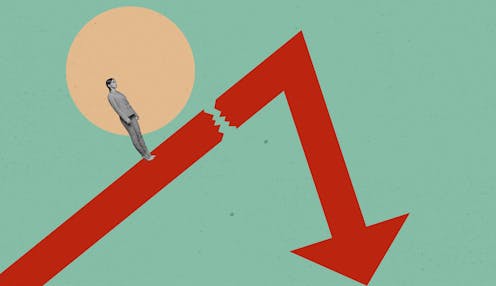
There’s been much talk recently – especially among politicians – about productivity. And for good reason: Australia’s labour productivity growth sits at a 60-year low.
To address this, Prime Minister Anthony Albanese has convened a productivity round table next month. This will coincide with the release of an interim report from the Productivity Commission, which is looking at five pillars of reform. One of these is the role of data and digital technologies, including artificial intelligence (AI).
But what do we really know about how AI impacts productivity?
What is productivity?
Put simply, productivity is how much output (goods and services) we can produce from a given amount of inputs (such as labour and raw materials). It matters because higher productivity typically translates to a higher standard of living. Productivity growth has accounted for 80% of Australia’s income growth over the past three decades.
Productivity can be thought of as individual, organisational or national.
Your individual productivity is how efficiently you manage your time and resources to complete tasks. How many emails can you respond to in an hour? How many products can you check for defects in a day?
Organisational productivity is how well an organisation achieves its goals. For example, in a research organisation, how many top-quality research papers are produced?
National productivity is the economic efficiency of a nation, often measured as gross domestic product per hour worked. It is effectively an aggregate of the other forms. But it’s notoriously difficult to track how changes in individual or organisational productivity translate into national GDP per hour worked.
AI and individual productivity
The nascent research examining the relationship between AI and individual productivity shows mixed results.
A 2025 real-world study of AI and productivity involved 776 experienced product professionals at US multinational company Procter & Gamble. The study showed that individuals randomly assigned to use AI performed as well as a team of two without. A similar study in 2023 with 750 consultants from Boston Consulting Group found tasks were 18% faster with generative AI.
A 2023 paper reported on an early generative AI system in a Fortune 500 software company used by 5,200 customer support agents. The system showed a 14% increase in the number of issues resolved per hour. For less experienced agents, productivity increased by 35%.
But AI doesn’t always increase individual productivity.
A survey of 2,500 professionals found generative AI actually increased workload for 77% of workers. Some 47% said they didn’t know how to unlock productivity benefits. The study points to barriers such as the need to verify and/or correct AI outputs, the need for AI upskilling, and unreasonable expectations about what AI can do.
A recent CSIRO study examined the daily use of Microsoft 365 Copilot by 300 employees of a government organisation. While the majority self-reported productivity benefits, a sizeable minority (30%) did not. Even those workers who reported productivity improvements expected greater productivity benefits than were delivered.
AI and organisational productivity
It’s difficult, if not impossible, to attribute changes in an organisation’s productivity to the introduction of AI. Businesses are sensitive to many social and organisational factors, any one of which could be the reason for a change in productivity.
Nevertheless, the Organisation for Economic Co-operation and Development (OECD) has estimated the productivity benefits of traditional AI – that is, machine learning applied for an industry-specific task – to be zero to 11% at the organisational level.
A 2024 summary paper cites independent studies showing increases in organisational productivity from AI in Germany, Italy and Taiwan.
In contrast, a 2022 analysis of 300,000 US firms didn’t find a significant correlation between AI adoption and productivity, but did for other technologies such as robotics and cloud computing. Likely explanations are that AI hasn’t yet had an effect on many firms, or simply that it’s too hard to disentangle the impact of AI given it’s never applied in isolation.
AI productivity increases can also sometimes be masked by additional human labour needed to train or operate AI systems. Take Amazon’s Just Walk Out technology for shops.
More generally, think about the unknown number (but likely millions) of people paid to label data for AI models.
AI and national productivity
The picture at a national level is even murkier.
Clearly, AI hasn’t yet impacted national productivity. It can be argued that technology developments take time to affect national productivity, as companies need to figure out how to use the technology and put the necessary infrastructure and skills in place.
The common narrative around AI and productivity is that AI automates mundane tasks, making us faster at doing things and giving us more time for creative pursuits. This, however, is a naive view of how work happens.
Just because you can deal with your inbox more quickly doesn’t mean you’ll spend your afternoon on the beach. The more emails you fire off, the more you’ll receive back, and the never-ending cycle continues.
Imagine a world in which AI isn’t simply about speeding up tasks but proactively slows us down, to give us space to be more innovative, and more productive. That’s the real untapped opportunity with AI.
Jon Whittle works at CSIRO which receives R&D funding from a wide range of government and industry clients.
By banning smartphones in schools, New York is joining states across the country. The bans are happening in both traditionally liberal and conservative states.
Alabama, Arkansas, Nebraska, North Dakota, Oklahoma and West Virginia all passed legislation in 2025 that requires schools to have policies that limit access to smartphones. The policies will go into effect in the 2025-2026 school year. This brings the total to 17 states, plus Washington, D.C., that have phone-free school legislation or executive orders.
I’m a professor who studies communication and culture, and while writing a book about parenting culture, I’ve noticed the narrative around smartphones and social media shifting over the past decade.
According to the Pew Research Center, 67% of American adults support banning smartphones during class time, although only 36% support banning them for the entire school day. Notably, a majority of Republican, Democratic and independent voters all support bans during class time.
More broadly, parent-led movements to limit children’s use of smartphones, social media and the internet have sprung up around the country. For example, the Phone-Free Schools Movement in Pennsylvania was launched in 2023, and Mothers Against Media Addiction started in New York in March 2024. These organizations, which empower parents to advocate in their local communities, follow in the footsteps of organizations such as Wait Until 8th in Texas and Screen Time Action Network at Fairplay in Massachusetts, which were formed in 2017.
The concerns of these parent-led organizations were reflected in the best-selling book “The Anxious Generation,” which paints a bleak picture of modern childhood as dominated by depression and anxiety brought on by smartphone addiction.
Phone-free schools are one of the four actions the book’s author, Jonathan Haidt, recommended to change course. The other three are no smartphones for children before high school, waiting until 16 for social media access, and allowing more childhood independence in the real world.
Haidt’s research team collaborated with The Harris Poll to survey Gen Z. They found that almost half of those age 18-27 wish social media had never been invented, and 21% wish smartphones had never been invented. About 40% of Gen Z respondents supported phone-free schools.
The Pew Research Center found that almost 40% of kids age 8-12 use social media, and almost 95% of kids age 13-17 use it, with nearly half of teens reporting that they use social media almost constantly.
Phone-free schools are also part of the larger trend of states and nations resisting Big Tech, the large technology companies that play a significant role in global commerce.
In May 2025, two U.S. senators introduced the Stop the Scroll Act, which would require mental health warnings on social media.
Research suggests that students are less focused in class when they have access to cellphones. isuzek/E+ via Getty Images
Although this trend of restricting use of phones in school is new, more states may adopt smartphone bans in the future. Bell-to-bell bans are viewed as especially powerful in improving academic performance.
Some research has suggested that when children have access to a smartphone, even if they do not use it, they find it harder to focus in class. Initial research has found that academic performance improves after the bans go into effect.
Test scores fell across the U.S. during the pandemic lockdown and have not returned to prepandemic levels. Some states, such as Maine and Oregon, are almost a full year behind grade level in reading. Not a single state has recovered in both math and reading.
Statewide bans free local school districts from having to create their own technology bans, which can lead to heated debates. Although a majority of adults approve of banning smartphones in class, 24% oppose it for reasons such as wanting to be able to contact their kids throughout the day and wanting parents to set the boundaries.
I signed the Wait Until 8th pledge mentioned in the article, promising not to give my kids a smartphone or social media until at least the end of 8th grade.
By banning smartphones in schools, New York is joining states across the country. The bans are happening in both traditionally liberal and conservative states.
Alabama, Arkansas, Nebraska, North Dakota, Oklahoma and West Virginia all passed legislation in 2025 that requires schools to have policies that limit access to smartphones. The policies will go into effect in the 2025-2026 school year. This brings the total to 17 states, plus Washington, D.C., that have phone-free school legislation or executive orders.
I’m a professor who studies communication and culture, and while writing a book about parenting culture, I’ve noticed the narrative around smartphones and social media shifting over the past decade.
According to the Pew Research Center, 67% of American adults support banning smartphones during class time, although only 36% support banning them for the entire school day. Notably, a majority of Republican, Democratic and independent voters all support bans during class time.
More broadly, parent-led movements to limit children’s use of smartphones, social media and the internet have sprung up around the country. For example, the Phone-Free Schools Movement in Pennsylvania was launched in 2023, and Mothers Against Media Addiction started in New York in March 2024. These organizations, which empower parents to advocate in their local communities, follow in the footsteps of organizations such as Wait Until 8th in Texas and Screen Time Action Network at Fairplay in Massachusetts, which were formed in 2017.
The concerns of these parent-led organizations were reflected in the best-selling book “The Anxious Generation,” which paints a bleak picture of modern childhood as dominated by depression and anxiety brought on by smartphone addiction.
Phone-free schools are one of the four actions the book’s author, Jonathan Haidt, recommended to change course. The other three are no smartphones for children before high school, waiting until 16 for social media access, and allowing more childhood independence in the real world.
Haidt’s research team collaborated with The Harris Poll to survey Gen Z. They found that almost half of those age 18-27 wish social media had never been invented, and 21% wish smartphones had never been invented. About 40% of Gen Z respondents supported phone-free schools.
The Pew Research Center found that almost 40% of kids age 8-12 use social media, and almost 95% of kids age 13-17 use it, with nearly half of teens reporting that they use social media almost constantly.
Phone-free schools are also part of the larger trend of states and nations resisting Big Tech, the large technology companies that play a significant role in global commerce.
In May 2025, two U.S. senators introduced the Stop the Scroll Act, which would require mental health warnings on social media.
Research suggests that students are less focused in class when they have access to cellphones. isuzek/E+ via Getty Images
Although this trend of restricting use of phones in school is new, more states may adopt smartphone bans in the future. Bell-to-bell bans are viewed as especially powerful in improving academic performance.
Some research has suggested that when children have access to a smartphone, even if they do not use it, they find it harder to focus in class. Initial research has found that academic performance improves after the bans go into effect.
Test scores fell across the U.S. during the pandemic lockdown and have not returned to prepandemic levels. Some states, such as Maine and Oregon, are almost a full year behind grade level in reading. Not a single state has recovered in both math and reading.
Statewide bans free local school districts from having to create their own technology bans, which can lead to heated debates. Although a majority of adults approve of banning smartphones in class, 24% oppose it for reasons such as wanting to be able to contact their kids throughout the day and wanting parents to set the boundaries.
I signed the Wait Until 8th pledge mentioned in the article, promising not to give my kids a smartphone or social media until at least the end of 8th grade.
During the recent conflict between Iran and Israel, Iran threatened to block the Strait of Hormuz, one of the world’s major shipping routes.
Would that be possible, and what effects would it have?
The Strait of Hormuz is a choke point at the entrance to the Persian Gulf. It is used to transport about 20% of global daily oil consumption.
Iran effectively controls this crucial shipping route because it is a coastal state bordering this narrow stretch of water. The strait is too narrow to avoid navigating waters claimed by Iran. This raises thorny legal questions about whether it is really possible for Iran to block the strait, and what recourse other states have if it does.
This geographical reality is far from new, and the legal frameworks governing international maritime activity have developed over centuries. At its heart is the lex mercatoria — the “law of merchants” — a body of transnational commercial law that emerged organically from the practices of traders operating across borders.
Within this broader framework sits the lex maritima, or customary maritime law, which has long adapted to the hazards of shipping across vast oceans.
The lex maritima originated from the shared practices of seafarers and merchants. Its purpose? To manage the unpredictable nature of maritime trade that demands coherent and stable rules.
One of the most enduring principles of this legal tradition is the idea of mare liberum, or “the free sea”, set out by Dutch jurist Hugo Grotius in 1609. He argued the high seas should remain open to all for peaceful navigation and trade. This conveniently legitimised the ambitions of European colonial powers, granting them unfettered access to global maritime routes at a time when control over sea-based trade promised immense economic and strategic advantage.
The shifting boundaries of maritime law
One of the most fundamental questions in maritime law is: where do a nation’s territorial waters end, and the high seas begin?
After the second world war, a series of conferences culminated in the United Nations Convention on the Law of the Sea (UNCLOS), where the customary 3 nautical miles (5.56km) of territorial waters states could claim as their own was extended. This narrow limit was rooted more in historical naval range – the so-called “cannon shot rule” – than in modern geopolitical or environmental realities.
In 1959, Iran took the unusual step of unilaterally extending its territorial sea to 12 nautical miles, despite not being a party to UNCLOS. Two decades later, following the 1979 Iranian Revolution and the US Embassy hostage crisis, Washington grew increasingly anxious about the security of oil flows from the Persian Gulf. These concerns intensified during the Iran-Iraq War, especially as Iran began using small islands in the Strait of Hormuz to deploy military forces and threaten commercial shipping.
UNCLOS and the new rules of the sea
One of the key compromises of UNCLOS was an extension of territorial waters for states that ratified the treaty. In exchange, UNCLOS replaced the older concept of “innocent passage” – which allowed only surface navigation through territorial seas – with the broader notion of “transit passage”. Under this regime, vessels and aircraft from other states are granted the right to travel not only on the surface, but also under the sea and through the air above straits used for international navigation.
While 169 states have ratified UNCLOS, both Iran and the United States remain notable holdouts. This means Iran does not enjoy the broader 12-nautical-mile limit recognised under UNCLOS, and the US cannot claim the agreement’s protections for transit passage through strategic choke points.
While the geopolitical and legal tensions surrounding the Strait of Hormuz may seem far removed from the world of private commerce, the global economy continues to function thanks to a powerful legal tool: the contract. Contracts offer a predictable framework that allows trade across borders without parties needing to trust one another personally.
The Strait of Hormuz is bordered by active, assertive states such as Iran, which means the potential for interstate conflict is relatively high. This doesn’t mean commercial contracts are irrelevant to the recent dispute in the Strait of Hormuz — far from it. But their influence is more indirect.
What can be learned?
Without significant political change in Tehran, it’s unlikely either Iran or the US will shift its position on adopting UNCLOS. Yet despite Iran’s repeated threats to close the strait, it has never followed through — and the US Navy continues to maintain a steady presence in the region. For now, a fragile but persistent equilibrium holds.
Belinda Clarence does not work for, consult, own shares in or receive funding from any company or organisation that would benefit from this article, and has disclosed no relevant affiliations beyond their academic appointment.
The widely held view among rugby players, coaches and officials is that headgear can’t prevent concussion. If so, why wear it? It’s hot, it can block vision and hearing, and it can be uncomfortable.
Headgear was originally designed to protect players from cuts and abrasions. But players still hope it will offer them a degree of protection against the collisions they experience in the game. Some players adopt it after previous concussions.
We’re now seeing increasing numbers of professional players opting in. The Irish men’s team, for example, field up to five players each match sporting headgear. In Japan, it’s mandatory for juniors. And more parents in New Zealand are making their children wear it, too.
The exact specifications for rugby match kit – boots, shorts, shoulder pads and
headgear – are regulated through World Rugby’s Law 4 and Regulation 12. In 2019, the governing body launched a trial enabling players to wear headgear with new technical specifications in training and matches.
The specifications have meant manufacturers can take advantage of novel “isotropic” materials that can potentially reduce the impact forces experienced by players.
Conventional headgear is composed of soft foams that flatten when a player’s head collides with the ground or another player. As such, they can only minimally absorb those collision forces.
Isotropic materials behave differently. They can absorb impacts from multiple directions and may offer a level of protection against the effects on a player’s head of a tackle or other collision event.
Given these changes, and in light of recent research, we may need to change the narrative around rugby headgear: while it may not prevent concussion, it might reduce the total contact “burden” experienced by players in a game and over a whole season. And this could have benefits for long-term brain health.
Impacts across seasons and careers
Contact in rugby – through tackles, at the breakdown, and in scrums and lineouts – leads to players experiencing a number of collisions or “head acceleration events”. This contact is most commonly head to ground, head to body or head to head.
By having players use “smart” mouthguards with embedded micro-accelerometers and gyroscopes to capture head movements, researchers can now measure each collision and each player’s contact load in a game – and potentially over a career.
A player’s total contact load is found by adding together the magnitude of the impacts they experience in a game. These are measured as “peak linear accelerations” or “peak rotational accelerations”.
While past research and media attention has focused on concussion, it has become clear the total contact burden in training and matches – the total “sub-concussive knocks” through head acceleration events – may be as important, if not more so.
One of our own research projects involved following 40 under-16 players wearing smart mouthguards for all training and matches across one season. Peak Linear accelerations are measured as a g-force (g). Activities such as such as running, jumping and shaking the head would measure under 8g, for example, whereas heading a soccer ball might measure 31g.
The results of our study showed the players differed greatly in their cumulative exposure over a whole season, from 300g to nearly 14,000g. These differences would be amplified further over an entire rugby career.
Some of the variation is likely due to a player’s team position, with loose forwards having a greater burden than others. But it also seems some players just enjoy the contact aspects of the game more than others.
Rugby is an impact sport: the Ireland and England women’s teams clash in 2025. Getty Images
Potential benefits of new headgear materials
Researcher Helen Murray at the University of Auckland has highlighted the need for more research into the burden of collisions, rather than just concussions, over a rugby career. In particular, we need to know more about its effect on future brain health.
We hope to contribute to this by following our existing cohort of players through their careers. In the meantime, our research has examined the potential of existing rugby headgear and new isotropic materials to mitigate peak accelerations in rugby collisions.
Using the field data collected from male and female players over the past four seasons, we have designed laboratory testing protocols to compare the conventional and newer materials.
The results suggest the new forms of headgear do have the potential to reduce the impact burden for players.
We found 55–90% of head acceleration events do involve direct contact with the head. As such, collision-mitigation headgear could be beneficial. And our laboratory testing produced an estimated 30% reduction in peak linear accelerations with the headgear compared to without.
The nature of concussion is complex and related to the size of an impact as well as its direction and angle. For instance, we observed the concussions experienced by the junior players occurred between 12g and 62g – well below the male threshold of 70g requiring professional players to be removed from the field for a head injury assessment.
Currently, it seems unlikely headgear can prevent concussion. But it does appear new headgear materials could significantly reduce the total impact burden for players during their careers. And this may help safeguard their future brain health.
Nick Draper receives funding from the Health Research Council, Cure Kids, the Neurological Foundation, Canterbury Medical Research Foundation, Pacific Radiology Group, the Maurice and Phyllis Paykel Trust, and the UC Foundation.
This article was first published in The Conversation UK’s World Affairs Briefing email newsletter. Sign up to receive weekly analysis of the latest developments in international relations, direct to your inbox.
It was revealing this week to read reports of Benjamin Netanyahu’s meeting with Donald Trump (his third White House visit since Trump’s inauguration in January). There was no sense that the US president upped the pressure on the Israeli prime minister to soften Israel’s conditions in order to secure a ceasefire. Instead the pair appears to have discussed the prospect of moving large numbers of Palestinians out of the Gaza Strip to countries what would, as Netanyahu put it, “give Palestinians a better future”.
If Israel’s defence minister, Israel Katz, has his way, the future for those Palestinians who want to stay put does indeed look pretty bleak. And the 57,000 people who, according to figures collated by the Hamas-run Gaza health ministry, have lost their lives since the Israeli assault on Gaza began back in October 2023, have no future at all.
But the plan for the future of Gazan Palestinians that Katz unveiled this week will horrify many too. It involves the construction of a “humanitarian city” at Rafah, close to the Egyptian border at the very southern end of the Strip. Under the plan, people entering the city will be searched for weapons and checked for affiliation to Hamas. Once in, they will not be allowed to leave, except to depart from Gaza altogether.
Sign up to receive our weekly World Affairs Briefing newsletter from The Conversation UK. Every Thursday we’ll bring you expert analysis of the big stories in international relations.
This immediately prompted critics to accuse the Israeli government of ethnic cleansing. James Sweeney, an expert in human rights and international law at the University of Lancaster, believes that, if Israel were to carry out Katz’s plan, there would be strong case against political and military leaders for war crimes and crimes against humanity. He argues that the plan amounts at the very least to the forcible transfer of civilians prohibited under the Geneva conventions and the Rome statute, which underpins the International Criminal Court (ICC).
The snag, as Sweeney sees it, is going to be enforcing international law. While there is an ICC warrant out for the arrests of Netanyahu and his former defence minister, Yoav Gallant, the Israeli prime minister was able to visit Washington without fear of being apprehended. The US doesn’t recognise the ICC and, indeed, the prosecutor that issued the warrant against Netanyahu and Gallant is now subject to US sanctions.
Of course, what happens in Gaza tends to reverberate throughout the region. If hundreds of thousands of Palestinian citizens are moved out of Gaza, it’s likely to be to one of the neighbouring countries. When the idea of a Trump Riviera was first mooted earlier this year, the US president said the Palestinian population could be rehomed in Egypt or Jordan – something both those countries pushed back against with alacrity.
And the powerful Gulf States, which Trump was keen to woo as business partners when he made a tour of the region in May, are also deeply concerned about Israel’s conduct of its military campaign in Gaza. Geopolitics aside, their populations are broadly sympathetic to the Palestinian people, so a plan to force them out of their homes is unacceptable for Gulf leaders.
Scott Lucas, an expert in Middle East politics at University College Dublin, gives us a broader view of the region. He describes what he calls two “kaleidoscope moments” when one event has changed the entire region. The first was the Hamas attack of October 7. This brought to an abrupt end the process of normalisation of relations between Israel and Saudi Arabia. The second was the 12-day war between Israel and Iran, which has further isolated Israel. Lucas believes for there to be any hope of regional stability and the furthering of Israeli relations with the rest of the region, the war in Gaza must end.
Ali Mamouri, a Middle East scholar at Australia’s Deakin University doesn’t believe there’s much chance of this happening any time soon. Part of this is political: Netanyahu still depends on the far-right elements of his coalition represented by national security minister Itamar Ben-Gvir and finance minister, Bezalel Smotrich. They remain steadfastly opposed to even a ceasefire and want to see Israel expel Palestinians by hook or by crook.
Also, by prolonging the war, Netanyahu can keep delaying his corruption trial (incidentally, Donald Trump has called for the charges to be dropped altogether).
And the idea of full statehood for Palestine remains anathema for Israel, as Netanyahu made clear this week talking with journalists after his meeting with Trump when he made clear his insistence that far from pulling Israeli troops out of Gaza, Israel would keep full control of all security matters there: “Now, people will say: ‘It’s not a complete state, it’s not a state.’ We don’t care,” he said.
Mansour concludes: “The coming weeks will reveal whether Israel chooses the path of compromise and coexistence, or continues down a road that forecloses the possibility of lasting peace.”
Just as the picture remains bleak in Gaza, the prospects for peace remain very slim in Ukraine. Although given Donald Trump’s mercurial approach to foreign affairs, it’s also fair to say that anything is possible.
This week the US president decided to recommence US arms supplies to Ukraine, having previously frozen military aid (although he insists this was done by his defense secretary, Pete Hegseth, and that he was “blindsided” by the move). His relationship with Putin appears to have soured – for the present at least. He said: “We get a lot of bullshit thrown at us by Putin, if you want to know the truth. He’s very nice all of the time, but it turns out to be meaningless.”
And at the most recent Nato summit in The Hague on June 25, Trump put his signature to a declaration that Russia poses “long-term threat … to Euro-Atlantic security” and that Nato member states retain “their enduring sovereign commitments to provide support to Ukraine”.
But Stefan Wolff, an expert in international security at the University of Birmingham, believes that Nato’s European members cannot bank on the US as a reliable long-term partner. There are few signs that the US is pressuring Russia to compromise on its maximalist aims, which remain unchanged since it invaded Ukraine in February 2022. So Russia remains the most urgent threat to European security. And it’s a threat that Europe will need to prepare to confront, if necessary without US assistance.
But there are signs that many European countries are preparing to do just that, Wolff writes. Increased commitments to defence spending are a strong start. As he concludes: “They will not turn Europe into a military heavyweight overnight. But they will buy time to do so.”
Understandably, much of the reporting of the war in Ukraine has focused on the human tragedy unfolding in the war-torn country: the enormous casualty list on both sides, civilians killed or forced from their homes in the fighting, and the Ukrainian citizens forced to live under Russian occupation.
But a new film, which premiered recently at the Tribeca film festival, looks at War Through the Eyes of Animals. Janine Natalya Clark, an expert in transitional justice at the University of Birmingham, has done similar. Clark interviewed a number of Ukrainian natural scientists including botanists, ornithologists, herpetologists (who study reptiles and amphibians) and a marine biologist. She asked them to make sound recordings in their area to reflect on how the war is affecting Ukraine’s flora and fauna.
What emerged was extraordinary and reflects how the conflict has affected the natural world in both positive and negative ways. Clark believes that this information will be invaluable when it comes to rebuilding Ukraine and in securing justice and reparations for the damage done – not just to humans, but to Ukraine’s animals and the habitats in which they live.
In Russia, meanwhile, a controversial measure introduced by the Putin government is dividing public opinion. In some parts of the country, schoolgirls who become pregnant are being paid more than 100,000 roubles (nearly £900) for giving birth and raising their babies.
Jannifer Mathers, a Russia expert at Aberystwyth University, looks at the rise of pronatalism in the face of declining populations and finds it’s not just an issue in Russia, but for many other countries as well, including the US.
Source: The Conversation (Au and NZ) – By Treena Clark, Chancellor’s Indigenous Research Fellow, Faculty of Design and Society, University of Technology Sydney
Aboriginal and Torres Strait Islander readers are advised this article contains images of deceased people.
First Nations garments have always held deep meaning. What we wear tells stories about culture, Country and community.
From the moment of invasion, clothing and adornment were removed and used to erase our cultural presence. But resistance never stopped.
Today, First Nations designers, artists and community members continue to reclaim garments as acts of survival, empowerment and self-determination.
Cultural practices like cloak-making and adornment are linked to wellbeing. They restore pride, connect to ancestors and Country, and build community.
First Nations fashion designers and artists create exquisite items that represent culture, speak back to colonisation, and contribute to healing.
A shared experience
Like so many others, what I wear is deeply personal. I have my dad’s old Aboriginal rugby guernsey. He wore it for years. Now I wear it. It’s a piece of him I get to carry.
It’s a part of what links me to my research in understanding First Nations fashion and style as living expressions of who we are.
I had the chance to yarn with 20 Aboriginal Knowledge Holders from Tarntanya (Adelaide), Naarm (Melbourne) and Warrane (Sydney) about their fashion and style choices.
Like many of the people I spoke to in this study, we use First Nations fashion and style as a way to stay connected to culture and community and express identity and resistance.
Fashion as connection and solidarity
For many of the Knowledge Holders I spoke with, wearing First Nations clothing and adornment connects them to culture and community.
It becomes a way to share who they are and stand together in a world that has tried to silence and erase them.
The Knowledge Holders wear everything from subtle pins and badges to bold hoodies, t-shirts and merch with Aboriginal flag motifs and slogans. Some choose delicate shawls or clothing with cultural artworks.
As one Knowledge Holder put it, it’s “a contribution, a brick in the wall” that helps the building of identity and belonging.
For mob living off-Country in cities or overseas, wearing culture becomes an important way to stay connected.
This sense of connection can also show up in the most ordinary places.
Several Knowledge Holders shared how wearing an Aboriginal shirt in places like the supermarket often sparks a moment of connection. Sometimes they approach others, sometimes they’re the ones approached.
Fashion as pride and cultural practice
For most of the Knowledge Holders, wearing First Nations clothing affirms their Aboriginality and gives them a sense of pride.
For some, it’s about proudly showing who they are, especially in a society where racism still exists. That pride runs through generations.
Some talked about how they weren’t always allowed to show their First Nations identity openly, but now they can wear cultural clothing freely, all of the time.
The Knowledge Holders wear First Nations fashions at work, in shops, when travelling overseas, at graduations and especially at cultural events or protests.
Another Knowledge Holder shared how fashion filled a gap, giving First Nations people the words and symbols to express their culture and identity.
This Knowledge Holder declared, “fashion helped the pride come out”.
Others shared that even though wearing these clothes can mean dealing with racism or ignorance, they still choose to show that pride.
Fashion as identity and protest
For many of the Knowledge Holders, First Nations fashion and style is a way to strengthen their identity, share culture and protest.
They talked about wearing protest clothing as a clear political statement, especially at marches, NAIDOC events or on Invasion Day.
For many, clothing is how they show who they are, both to themselves and to others.
One Knowledge Holder said
if I don’t wear something Indigenous, they wouldn’t know that I was.
Some pointed out that First Nations fashion and style can be an important sign for them, especially if they feel they “pass” as non-Indigenous or look ethnically ambiguous.
But not all Knowledge Holders use fashion to show their identity. One told me they only wear First Nations clothing in solidarity with others, not as personal expression.
There’s more to learn and do
First Nations fashion and style is so much more than just clothing. It’s memory, resistance and a story we carry on our bodies.
As one of the Knowledge Holders put it:
we wasn’t allowed to be proud of it. Now we can wear [an Aboriginal] t-shirt whenever, all day every day.
That says it all. But there’s still work to do. We need to keep learning and understanding about all the different layers and identities that shape these experiences.
There is more research to be done to include more voices, like those of diverse genders and sexualities, Torres Strait Islanders and regional fashion scenes.
And it’s not just about research. We need more policies, more exhibitions, more programs and more platforms that celebrate First Nations fashion and style.
Treena Clark has received funding through the University of Technology Sydney Chancellor’s Indigenous Research Fellowship scheme.
US President Donald Trump’s proposed tariffs on Australia’s pharmaceutical exports to the United States has raised alarm among industry and government leaders.
There are fears that, if implemented, the tariffs could cost the Australian economy up to A$2.8 billion. That’s both in direct exports and as inputs to third countries that produce drugs also hit by tariffs.
The proposed tariffs come amid growing pressure from pharmaceutical lobby groups in the US for Trump to use trade negotiations as a tool to make changes to the Pharmaceutical Benefits Scheme (PBS) and raise Australian drug prices.
In response, Treasurer Jim Chalmers stated the government would not compromise the integrity of the PBS to do a deal with the Trump administration. Nationals Senator Bridget McKenzie also confirmed bipartisan support for the PBS.
Our largest export market for pharmaceuticals
The US is Australia’s biggest pharmaceutical export market, accounting for 38% of total Australian pharmaceutical exports and valued at $2.2 billion last year.
About 87% of exports to the US consist of blood plasma products, mainly from manufacturing giant CSL. These are used for transfusions in a range of medical and surgical situations.
In a submission to the US Commerce Department, which is reviewing the sector, CSL called for tariffs to be phased in over five years, and for an exemption for certain biotech equipment.
Trump floated proposed tariffs potentially as high as 200%. But he also said these would not be imposed for “about a year, a year and a half” to allow negotiations to take place.
It helps reduce the cost of essential medications, ensuring access to treatments for a wide range of medical conditions. Medicines included on the PBS are subsidised by the government, with the patient making a capped co-payment. More than 900 medicines were listed on the scheme in 2023–24, costing the government $17.7 billion.
Decisions to list medications on the PBS are made by the health minister based on recommendations from the Pharmaceutical Benefits Advisory Committee. The committee evaluates the clinical effectiveness, safety, cost-effectiveness (“value for money”) and estimated financial impact of new medications.
If approved, the PBS uses this information to negotiate directly with pharmaceutical companies, helping to keep prices affordable.
How does the US system compare?
This contrasts with the US system, which operates more under free-market principles. In the US, pharmaceuticals are subsidised through private health insurance or government programs such as Medicaid. Neither directly negotiates with pharmaceutical companies.
The fragmented nature of the US system enables pharmaceutical companies to maintain higher prices, as there is no central authority to enforce cost controls. Studies have shown that prices for pharmaceuticals in the US are, on average, 2.78 times those in 33 other countries.
In addition, in the US pharmaceutical companies are granted extensive patent protections. These provide exclusive rights to sell their drugs for a certain period.
This exclusivity often leads to monopolistic pricing practices, as generic competitors are barred from entering the market until the patent expires.
In Australia, patents also exist. But the PBS mitigates their impact by negotiating prices and promoting the use of cost-effective alternatives, such as generics, once they become available.
Industry lobbying
US pharmaceutical industry bodies have long criticised the PBS. They claim the scheme “undervalues new innovative medicines by setting prices based on older inferior medicines and generics, and through use of low and outdated monetary thresholds per year of life gained from clinically proven treatments”.
The slow process to list drugs on the PBS has also attracted criticism. The advisory committee meets only three times a year, with resources currently being stretched beyond capacity.
In response to these criticisms, the Australian government commissioned a review, which was completed in 2024. It provided 50 recommendations to ensure Australians can continue to access effective, safe and affordable medicines in an equitable and timely way.
The government has established an advisory group to work on implementing these recommendations. However, it is unclear whether proposed changes will appease the powerful US pharmaceutical industry.
I am responsible for evaluating new health technologies for consideration of government subsidy through the Pharmaceutical Benefits Scheme (PBS) and Medicare Benefits Schedule (MBS)
US President Donald Trump’s proposed tariffs on Australia’s pharmaceutical exports to the United States has raised alarm among industry and government leaders.
There are fears that, if implemented, the tariffs could cost the Australian economy up to A$2.8 billion. That’s both in direct exports and as inputs to third countries that produce drugs also hit by tariffs.
The proposed tariffs come amid growing pressure from pharmaceutical lobby groups in the US for Trump to use trade negotiations as a tool to make changes to the Pharmaceutical Benefits Scheme (PBS) and raise Australian drug prices.
In response, Treasurer Jim Chalmers stated the government would not compromise the integrity of the PBS to do a deal with the Trump administration. Nationals Senator Bridget McKenzie also confirmed bipartisan support for the PBS.
Our largest export market for pharmaceuticals
The US is Australia’s biggest pharmaceutical export market, accounting for 38% of total Australian pharmaceutical exports and valued at $2.2 billion last year.
About 87% of exports to the US consist of blood plasma products, mainly from manufacturing giant CSL. These are used for transfusions in a range of medical and surgical situations.
In a submission to the US Commerce Department, which is reviewing the sector, CSL called for tariffs to be phased in over five years, and for an exemption for certain biotech equipment.
Trump floated proposed tariffs potentially as high as 200%. But he also said these would not be imposed for “about a year, a year and a half” to allow negotiations to take place.
It helps reduce the cost of essential medications, ensuring access to treatments for a wide range of medical conditions. Medicines included on the PBS are subsidised by the government, with the patient making a capped co-payment. More than 900 medicines were listed on the scheme in 2023–24, costing the government $17.7 billion.
Decisions to list medications on the PBS are made by the health minister based on recommendations from the Pharmaceutical Benefits Advisory Committee. The committee evaluates the clinical effectiveness, safety, cost-effectiveness (“value for money”) and estimated financial impact of new medications.
If approved, the PBS uses this information to negotiate directly with pharmaceutical companies, helping to keep prices affordable.
How does the US system compare?
This contrasts with the US system, which operates more under free-market principles. In the US, pharmaceuticals are subsidised through private health insurance or government programs such as Medicaid. Neither directly negotiates with pharmaceutical companies.
The fragmented nature of the US system enables pharmaceutical companies to maintain higher prices, as there is no central authority to enforce cost controls. Studies have shown that prices for pharmaceuticals in the US are, on average, 2.78 times those in 33 other countries.
In addition, in the US pharmaceutical companies are granted extensive patent protections. These provide exclusive rights to sell their drugs for a certain period.
This exclusivity often leads to monopolistic pricing practices, as generic competitors are barred from entering the market until the patent expires.
In Australia, patents also exist. But the PBS mitigates their impact by negotiating prices and promoting the use of cost-effective alternatives, such as generics, once they become available.
Industry lobbying
US pharmaceutical industry bodies have long criticised the PBS. They claim the scheme “undervalues new innovative medicines by setting prices based on older inferior medicines and generics, and through use of low and outdated monetary thresholds per year of life gained from clinically proven treatments”.
The slow process to list drugs on the PBS has also attracted criticism. The advisory committee meets only three times a year, with resources currently being stretched beyond capacity.
In response to these criticisms, the Australian government commissioned a review, which was completed in 2024. It provided 50 recommendations to ensure Australians can continue to access effective, safe and affordable medicines in an equitable and timely way.
The government has established an advisory group to work on implementing these recommendations. However, it is unclear whether proposed changes will appease the powerful US pharmaceutical industry.
I am responsible for evaluating new health technologies for consideration of government subsidy through the Pharmaceutical Benefits Scheme (PBS) and Medicare Benefits Schedule (MBS)
Source: The Conversation – USA (2) – By Hatim Sharif, Professor of Civil and Environmental Engineering, The University of Texas at San Antonio
A Kerrville, Texas, resident watches the flooded Guadalupe River on July 4, 2025.Eric Vryn/Getty Images
Texas Hill Country is known for its landscapes, where shallow rivers wind among hills and through rugged valleys. That geography also makes it one of the deadliest places in the U.S. for flash flooding.
In the early hours of July 4, 2025, a flash flood swept through an area of Hill Country dotted with summer camps and small towns about 70 miles northwest of San Antonio. More than 120 people died in the flooding. The majority of them were in Kerr County, including more than two dozen girls and counselors at one summer camp, Camp Mystic. Dozens of people were still unaccounted for a week later.
The flooding began with a heavy downpour, with more than 10 inches of rain in some areas, that sent water sheeting off the hillsides and into creeks. The creeks poured into the Guadalupe River.
A river gauge at Hunt, Texas, near Camp Mystic, showed how quickly the river flooded: Around 3 a.m. on July 4, the Guadalupe River was rising about 1 foot every 5 minutes at the gauge, National Weather Service data shows. By 4:30 a.m., it had risen more than 20 feet. As the water moved downstream, it reached Kerrville, where the river rose even faster.
Flood expert Hatim Sharif, a hydrologist and civil engineer at the University of Texas at San Antonio, explains what makes this part of the country, known as Flash Flood Alley, so dangerous.
What makes Hill Country so prone to flooding?
Texas as a whole leads the nation in flood deaths, and by a wide margin. A colleague and I analyzed data from 1959 to 2019 and found 1,069 people had died in flooding in Texas over those six decades. The next highest total was in Louisiana, with 693.
Many of those flood deaths have been in Hill County. It’s part of an area known as Flash Flood Alley, a crescent of land that curves from near Dallas down to San Antonio and then westward.
The hills are steep, and the water moves quickly when it floods. This is a semi-arid area with soils that don’t soak up much water, so the water sheets off quickly and the shallow creeks can rise fast.
When those creeks converge on a river, they can create a surge of water that wipes out homes and washes away cars and, unfortunately, anyone in its path.
Hill Country has seen some devastating flash floods. In 1987, heavy rain in western Kerr County quickly flooded the Guadalupe River, triggering a flash flood similar to the one in 2025. Ten teenagers being evacuated from a camp died in the rushing water.
San Antonio, at the eastern edge of Hill Country, was hit with a flash flood on June 12, 2025, that killed 13 people whose cars were swept away by high water from a fast-flooding creek near an interstate ramp in the early morning.
The escarpment is a line of cliffs and steep hills created by a geologic fault. When warm air from the Gulf rushes up the escarpment, it condenses and can dump a lot of moisture. That water flows down the hills quickly, from many different directions, filling streams and rivers below.
The same effect can contribute to flash flooding in San Antonio, where the large amount of paved land and lack of updated drainage to control runoff adds to the risk.
What can be done to improve flash flood safety?
First, it’s important for people to understand why flash flooding happens and just how fast the water can rise and flow. In many arid areas, dry or shallow creeks can quickly fill up with fast-moving water and become deadly. So people should be aware of the risks and pay attention to the weather.
Improving flood forecasting, with more detailed models of the physics and water velocity at different locations, can also help.
Probabilistic forecasting, for example, can provide a range of rainfall scenarios, enabling authorities to prepare for worst-case scenarios. A scientific framework linking rainfall forecasts to the local impacts, such as streamflow, flood depth and water velocity, could also help decision-makers implement timely evacuations or road closures.
Education is particularly essential for drivers. One to two feet of moving water can wash away a car. People may think their trucks and SUVs can go through anything, but fast-moving water can flip a truck and carry it away.
This article, originally published July 5, 2025, has been updated with the death toll rising.
Hatim Sharif does not work for, consult, own shares in or receive funding from any company or organization that would benefit from this article, and has disclosed no relevant affiliations beyond their academic appointment.
Source: The Conversation (Au and NZ) – By James Laurenceson, Director and Professor, Australia-China Relations Institute (UTS:ACRI), University of Technology Sydney
Prime Minister Anthony Albanese leaves for China on Saturday, confident most Australians back the government’s handling of relations with our most important economic partner and the leading strategic power in Asia.
Albanese’s domestic critics have lambasted him for meeting Chinese leader Xi Jinping before United States President Donald Trump. They are also aggrieved at his refusal to label China a security threat.
But neither criticism really stacks up.
An Albanese-Trump meeting would have happened last month on the sidelines of a G7 gathering in Canada. It was Trump who left early, standing up more leaders than just Albanese.
Nor is Albanese the first Australian prime minister to meet a Chinese president before an American one. His predecessor Tony Abbott caught up with Xi a few weeks after coming to office in 2013, before he had a chance to meet President Barack Obama.
‘Friends, not foes’
Meanwhile, polling indicates just one in five Australians see the relationship with China first and foremost as “a threat to be confronted”. Rather, a clear two-thirds majority see it as “a complex relationship to be managed”.
Albanese is also regarded as more competent than his opposition counterpart in handling Australia’s foreign policy generally – and better at managing the China relationship specifically.
The prime minister’s Chinese hosts also have an incentive to ensure his visit is a successful one.
In the past fortnight, China’s ambassador in Canberra, Xiao Qian, has penned opinion pieces in two of Australia’s biggest media outlets, insisting Australia and China are “friends, not foes” and touting the “comprehensive turnaround” in bilateral ties since Labor won government in May 2022.
Beijing and Washington view each other as their geopolitical priority. Beijing can make it harder for Washington to enlist security allies such as Canberra in this rivalry by maintaining its own strong and constructive bilateral ties with Australia.
And quite apart from the competition with the US, China relied on Australia last year as its fifth largest import source.
Plenty of complaints
None of this is to say Albanese’s visit will be easy, because Australia-China relations are rarely smooth.
Canberra continues to have many complaints about China’s international behaviour.
For example, Foreign Minister Penny Wong recently signed a joint statement with her counterparts in Washington, Tokyo and New Delhi expressing “serious concerns regarding dangerous and provocative actions” by China in the East and South China Seas, and the “abrupt constriction […] of key supply chains”.
Wong has also said the government remains “appalled” by the treatment of Australians imprisoned in China, including Dr Yang Jun, who is facing espionage charges he strongly denies.
Defence Minister Richard Marles has voiced Canberra’s alarm at Beijing’s “no limits agreement” with Moscow, and claimed China has
engaged in the biggest conventional military build-up since the end of the second world war.
However, this assessment is contested by independent Australian analysts.
Beijing also has plenty of complaints. They include Canberra’s ongoing pursuit of closer military cooperation with the US and UK through the AUKUS pact.
There is also the commitment to forcing the sale of the lease to operate the Port of Darwin that is currently held by a Chinese company.
Reliable trading partner
Albanese has already made clear his visit to China will have a strong economic focus.
While grappling with security challenges, any Australian government, Labor or Coalition, must face the reality that last year, local companies sold more to China – worth A$196 billion – than our next four largest markets combined.
China is also, by far, Australia’s biggest supplier, putting downward pressure on the cost of living.
Research produced by Curtin University, commissioned by the Australia-China Business Council, finds trade with China increases disposable income of the average Australian household by $2,600, or 4.6% per person.
In an ideal world, Australia would have a more diversified trading mix.
But again, any Australian government or business must grapple with the reality that obvious major alternative markets, like the US, are not only less interested in local goods and services, but are walking away from their past trade commitments.
This also explains Alabese’s response when he was asked in April if he would support Trump’s trade war against China:
It would be extraordinary if the Australian response was “thank you” and we will help to further hurt our economy
Likewise, Trade Minister Don Farrell is adamant Australia’s interests will determine the Albanese government’s choices, not “what the Americans may or may not want”.
We don’t want to do less business with China, we want to do more business with China.
Deeper trade ties with Asia, including China, are not just about making a buck. Wong has stressed the national security implications of a strong economic relationship:
[It is] an investment in our security. Stability and prosperity are mutually reinforcing.
All of this means Albanese’s six-day visit to China is shaping up to be time well spent.
James Laurenceson does not work for, consult, own shares in or receive funding from any company or organisation that would benefit from this article, and has disclosed no relevant affiliations beyond their academic appointment.
There’s been much talk recently – especially among politicians – about productivity. And for good reason: Australia’s labour productivity growth sits at a 60-year low.
To address this, Prime Minister Anthony Albanese has convened a productivity round table next month. This will coincide with the release of an interim report from the Productivity Commission, which is looking at five pillars of reform. One of these is the role of data and digital technologies, including artificial intelligence (AI).
But what do we really know about how AI impacts productivity?
What is productivity?
Put simply, productivity is how much output (goods and services) we can produce from a given amount of inputs (such as labour and raw materials). It matters because higher productivity typically translates to a higher standard of living. Productivity growth has accounted for 80% of Australia’s income growth over the past three decades.
Productivity can be thought of as individual, organisational or national.
Your individual productivity is how efficiently you manage your time and resources to complete tasks. How many emails can you respond to in an hour? How many products can you check for defects in a day?
Organisational productivity is how well an organisation achieves its goals. For example, in a research organisation, how many top-quality research papers are produced?
National productivity is the economic efficiency of a nation, often measured as gross domestic product per hour worked. It is effectively an aggregate of the other forms. But it’s notoriously difficult to track how changes in individual or organisational productivity translate into national GDP per hour worked.
AI and individual productivity
The nascent research examining the relationship between AI and individual productivity shows mixed results.
A 2025 real-world study of AI and productivity involved 776 experienced product professionals at US multinational company Procter & Gamble. The study showed that individuals randomly assigned to use AI performed as well as a team of two without. A similar study in 2023 with 750 consultants from Boston Consulting Group found tasks were 18% faster with generative AI.
A 2023 paper reported on an early generative AI system in a Fortune 500 software company used by 5,200 customer support agents. The system showed a 14% increase in the number of issues resolved per hour. For less experienced agents, productivity increased by 35%.
But AI doesn’t always increase individual productivity.
A survey of 2,500 professionals found generative AI actually increased workload for 77% of workers. Some 47% said they didn’t know how to unlock productivity benefits. The study points to barriers such as the need to verify and/or correct AI outputs, the need for AI upskilling, and unreasonable expectations about what AI can do.
A recent CSIRO study examined the daily use of Microsoft 365 Copilot by 300 employees of a government organisation. While the majority self-reported productivity benefits, a sizeable minority (30%) did not. Even those workers who reported productivity improvements expected greater productivity benefits than were delivered.
AI and organisational productivity
It’s difficult, if not impossible, to attribute changes in an organisation’s productivity to the introduction of AI. Businesses are sensitive to many social and organisational factors, any one of which could be the reason for a change in productivity.
Nevertheless, the Organisation for Economic Co-operation and Development (OECD) has estimated the productivity benefits of traditional AI – that is, machine learning applied for an industry-specific task – to be zero to 11% at the organisational level.
A 2024 summary paper cites independent studies showing increases in organisational productivity from AI in Germany, Italy and Taiwan.
In contrast, a 2022 analysis of 300,000 US firms didn’t find a significant correlation between AI adoption and productivity, but did for other technologies such as robotics and cloud computing. Likely explanations are that AI hasn’t yet had an effect on many firms, or simply that it’s too hard to disentangle the impact of AI given it’s never applied in isolation.
AI productivity increases can also sometimes be masked by additional human labour needed to train or operate AI systems. Take Amazon’s Just Walk Out technology for shops.
More generally, think about the unknown number (but likely millions) of people paid to label data for AI models.
AI and national productivity
The picture at a national level is even murkier.
Clearly, AI hasn’t yet impacted national productivity. It can be argued that technology developments take time to affect national productivity, as companies need to figure out how to use the technology and put the necessary infrastructure and skills in place.
The common narrative around AI and productivity is that AI automates mundane tasks, making us faster at doing things and giving us more time for creative pursuits. This, however, is a naive view of how work happens.
Just because you can deal with your inbox more quickly doesn’t mean you’ll spend your afternoon on the beach. The more emails you fire off, the more you’ll receive back, and the never-ending cycle continues.
Imagine a world in which AI isn’t simply about speeding up tasks but proactively slows us down, to give us space to be more innovative, and more productive. That’s the real untapped opportunity with AI.
Jon Whittle works at CSIRO which receives R&D funding from a wide range of government and industry clients.
The Australian Competition & Consumer Commission (ACCC) has fined Bupa A$35 million for unlawfully rejecting thousands of health insurance claims over more than five years.
Between May 2018 and August 2023 Bupa incorrectly rejected claims from patients who had multiple medical procedures, with at least one of those procedures covered under their health insurance policy.
Instead of paying the portion of the treatment that was covered, Bupa’s automated systems wrongly rejected the entire claim.
Each tier has a minimum set of “clinical categories”. These are groups of hospital treatments that must be covered.
For example, basic hospital cover only has three mandatory inclusions: rehabilitation, hospital psychiatric services and palliative care. But this is “restricted” cover, meaning patients will often still have to pay substantial out-of-pocket costs for these services.
Basic cover is entry-level cover, mainly for people who want to avoid the Lifetime Health Cover loading and the Medicare Levy Surcharge. These are both ways of encouraging people to take up private health insurance while young and keeping it, especially people on higher incomes.
At the other end of the scale is gold cover, which includes unrestricted cover for all defined clinical categories, including pregnancy and birth.
You can generally change your level of cover at any time. When you upgrade to include new services or increase benefits for existing services, you will need to serve new waiting periods for those new or increased benefits.
A common waiting period is 12 months for pre-existing conditions (any ailment, illness or condition that you had signs or symptoms of during the six months before upgrading, even if undiagnosed), and for pregnancy and birth-related services. But there is generally only a two-month waiting period for psychiatric care, rehabilitation or palliative care, even if it’s for a pre-existing condition.
It’s a good idea to review your policy every two years because your health needs and financial circumstances can change.
How much do companies pay out?
The proportion of premiums that are paid out to cover medical claims is known as the “average payout ratio”. And this has been about 84–86% over most of the past 20 years.
This does not mean your health insurer will pay out 84–86% of your individual claim. This national average accounts for the percentage of all premiums in any one year, across all insurers, that’s paid out in claims.
That’s because for-profit health insurers have pressure to deliver profits to shareholders and have incentives to minimise payouts and control costs.
If not properly managed, these incentives may result in higher out-of-pocket expenses and denied claims.
Why has my claim been rejected?
Common reasons for claims to be rejected include:
the policy excluded or restricted the clinical category
the waiting period was not served
incorrect information (for example, a doctor billed an incorrect item number)
what’s known as “mixed coverage” (as in the Bupa scandal), where not everything in a claim is covered, but the entire claim is declined.
What if I think there’s an error?
If your health insurance company refuses your claim, you can request a detailed explanation in writing.
If you believe your claim has been incorrectly denied, you can make a formal complaint directly with the insurer. For this you need to check your policy documents, and gather supporting evidence. This may include detailed invoices, medical reports, referral letters and correct item numbers.
If you are not satisfied with the outcome of the health fund’s internal review, or the fund doesn’t respond with the specific time-frame (for instance, 30–45 days), you can escalate your complaint.
You can get in touch with the Commonwealth Ombudsman (phone: 1300 362 072). This provides a free, independent complaint handling service for a range of consumer issues, including health insurance.
The Bupa scandal, along with ongoing concerns about transparency and rising out-of-pocket costs, highlights the need for policy reforms to better protect consumers.
The government should require health insurers and health-care providers to give clear estimates of all potential out-of-pocket costs for a procedure before it happens. This would avoid unexpected bills and help consumers make informed decisions about their health care.
Yuting Zhang has received funding from the Australian Research Council (future fellowship project ID FT200100630), Department of Veterans’ Affairs, the Victorian Department of Health, National Health and Medical Research Council and Eastern Melbourne Primary Health Network. In the past, Professor Zhang has received funding from several US institutes including the US National Institutes of Health, Commonwealth fund, Agency for Healthcare Research and Quality, and Robert Wood Johnson Foundation. She has not received funding from for-profit industry including the private health insurance industry.
Source: The Conversation (Au and NZ) – By Andrew Lensen, Senior Lecturer in Artificial Intelligence, Te Herenga Waka — Victoria University of Wellington
The government’s newly unveiled National AI Strategy is all about what its title says: “Investing with Confidence”. It tells businesses that Aotearoa New Zealand is open for AI use, and that our “light touch” approach won’t get in their way.
The question now is whether the claims made for AI by Minister of Science, Innovation and Technology Shane Reti – that it will help boost productivity and enable the economy to grow by billions of dollars – can be justified.
Generative AI – the kind powering ChatGPT, CoPilot and Google’s video generator Veo 3 – is certainly earning money. In its latest funding round in April, OpenAI was valued at US$300 billion.
Nvidia, which makes the hardware that powers AI technology, just became the first publicly traded company to surpass a $4 trillion market valuation. It’d be great if New Zealand could get a slice of that pie.
New Zealand doesn’t have the capacity to build new generative AI systems, however. That takes tens of thousands of NVIDIA’s chips, costing many millions of dollars that only big tech companies or large nation states can afford.
What New Zealand can do is build new systems and services around these models, either by fine-tuning them, or using them as part of a bigger software system or service.
The government isn’t offering any new money to help companies do this. Its AI strategy is about reducing barriers, providing regulatory guidance, building capacity and ensuring adaption happens responsibly.
But there aren’t many barriers to begin with. The regulatory guidance contained in the strategy essentially says “we won’t regulate”. Existing laws are said to be “technology-neutral” and therefore sufficient.
As for building capacity, the country’s tertiary sector is more under-funded than ever, with universities cutting courses and staff. Humanities research into AI ethics is also ineligible for government funding as it doesn’t contribute to economic growth.
A relaxed regulatory regime
The issue of responsible adoption is perhaps of most concern. The 42-page “Responsible AI Guidance for Businesses” document, released alongside the strategy, contains useful material on issues such as detecting bias, measuring model accuracy, and human oversight. But it is just that – guidance – and entirely voluntary.
This puts New Zealand among the most relaxed nations when it comes to AI regulation, along with Japan and Singapore. At the other end is the European Union, which enacted its comprehensive AI Act in 2024, and has stood fast against lobbying to delay legislative rollout.
The relaxed approach is interesting in light of New Zealand being ranked third-to-last out of 47 countries in a recent survey of trust in AI. In another survey from last year, 66% of New Zealanders reported being nervous about the impacts of AI.
Some of the nervousness can be explained by AI being a new technology with well documented examples of inappropriate use, intentional or not. Deepfakes as a form of cyber bulling have become a major concern. Even the ACT Party, not generally in favour of more regulation, wants to criminalise the creation and sharing of non-consensual, sexually explicit deepfakes.
Generative image, video and music creation is reducing the demand for creative workers – even though it is their very work that was used to train the AI models.
But there are other, more subtle issues, too. AI systems learn from data. If that data is biased, then those systems will learn to be biased, too.
New Zealanders are right to be anxious about the prospect of private sector companies denying them jobs, entry to supermarkets or a bank loan because of something in their pasts. Because modern deep learning models are so complex and impenetrable, it can be impossible to determine how an AI system made a decision.
And what of the potential for AI to be used online to mislead voters and discredit the democratic process, as the New York Times has reported may have occurred already in at least 50 cases?
Managing risk the European way
The strategy is essentially silent on all of these issues. It also doesn’t mention Te Tiriti o Waitangi/Treaty of Waitangi. Even Google’s AI summary tells me this is the nation’s founding document, laying the groundwork for Māori and the Crown to coexist.
Allowing these systems to be imported and deployed in Aotearoa New Zealand in sensitive applications – healthcare or justice, for example – without any regulation or oversight risks worsening inequalities even further.
“Unacceptable risk” – the likes of social scoring (where individuals’ daily activities are monitored and scored for their societal benefit) and AI hacking – is outright banned.
High-risk systems, such as uses for employment or transportation infrastructure, require strict obligations, including risk assessments and human oversight.
Limited and minimal risk applications – the biggest category by far – imposes very little red tape on companies.
This feels like a mature approach New Zealand might emulate. It wouldn’t stymie productivity much – unless companies were doing something risky. In which case, the 66% of New Zealanders who are nervous about AI might well agree it’s worth slowing down and getting it right.
Andrew Lensen receives government funding from the Ministry of Business, Innovation, and Employment through contestable academic research funds. He is the co-director of LensenMcGavin AI, a consultancy specialising in the responsible uptake of AI in Aotearoa.
People pray before Republican vice presidential nominee J.D. Vance at a town hall hosted by Lance Wallnau on Sept. 28, 2024, in Monroeville, Pa.AP Photo/Rebecca Droke
The NAR is a loosely organized but influential charismatic Christian movement that shares similarities with Pentecostalism, especially in its belief that God actively communicates with believers through the Holy Spirit. Unlike traditional Pentecostalism, however, the organization emphasizes modern-day apostles and prophets as authoritative leaders tasked with transforming society and ushering in God’s kingdom on Earth. Prayer, prophecy and worship are defined not only as acts of devotion but as strategic tools for advancing believers’ vision of government and society.
After the shooting, the Christ for the Nations Institute issued a statement “unequivocally” denouncing “any and all forms of violence and extremism.” It stated: “Our organization’s mission is to educate and equip students to spread the Gospel of Jesus Christ through compassion, love, prayer, service, worship, and value for human life.”
But the shooting has drawn attention to the school and the larger Christian movement it belongs to. One of the most important aspects of NAR teachings today is what is called “the Seven Mountain Mandate.”
The Seven Mountain Mandate calls on Christians to gain influence, or “take dominion,” over seven key areas of culture: religion, family, education, government, media, business and the arts.
The Seven Mountain concept was originally proposed in 1975 by evangelical leader Bill Bright, the founder of Campus Crusade for Christ. Now known as “Cru,” the Campus Crusade for Christ was founded as a global ministry in 1951 to promote Christian evangelism, especially on college campuses.
Since 1996, Bill Johnson, a senior leader of Bethel Church, and Johnny Enlow, a self-described prophet and Seven Mountain advocate, among others, have taken the original idea of the Seven Mountain Mandate and reshaped it into a more aggressive, political and spiritually militant approach. Spiritual militancy reflects an aggressive, us-vs.-them mindset that blurs the line between faith and authoritarianism, promoting dominion over society in the name of spiritual warfare.
Their version doesn’t just aim to influence culture; it frames the effort as a spiritual battle to reclaim and reshape the nation according to their vision of God’s will.
Lance Wallnau, another Christian evangelical preacher, televangelist, speaker and author, has promoted dominion theology since the early 2000s. During the 2020 U.S. presidential election, Wallnau, along with several prominent NAR figures, described Donald Trump as anointed by God to reclaim the “mountain” of government from demonic control.
In their book “Invading Babylon: The 7 Mountain Mandate,” Wallnau and Johnson explicitly call for Christian leadership as the only antidote to perceived moral decay and spiritual darkness.
NAR-aligned leaders have framed electoral contests as struggles between “godly” candidates and those under the sway of “satanic” influence.
Similarly, NAR prophet Cindy Jacobs has repeatedly emphasized the need for “spiritual warfare” in schools to combat what she characterizes as “demonic ideologies” such as sex education, LGBTQ+ inclusion or discussions of systemic racism.
In the NAR worldview, cultural change is not merely political or social but considered a supernatural mission; opponents are not simply wrong but possibly under the sway of demonic influence. Elections become spiritual battles.
This belief system views pluralism as weakness, compromise as betrayal, and coexistence as capitulation. Frederick Clarkson, a senior research analyst at Political Research Associates, a progressive think tank based in Somerville, Massachusetts, defines the Seven Mountain Mandate as “the theocratic idea that Christians are called by God to exercise dominion over every aspect of society by taking control of political and cultural institutions.”
The call to “take back” the culture is not metaphorical but literal, and believers are encouraged to see themselves as soldiers in a holy war to dominate society. Some critics argue that NAR’s call to “take back” culture is about literal domination, but this interpretation is contested.
Many within the movement see the language of warfare as spiritually focused on prayer, evangelism and influencing hearts and minds. Still, the line between metaphor and mandate can blur, especially when rhetoric about “dominion” intersects with political and cultural action. That tension is part of an ongoing debate both within and outside the movement.
At the same time, the Seven Mountain Mandate doesn’t depend on centralized leadership or formal institutions. It spreads organically through social networks, social media – notably podcasts and livestreams – and revivalist meetings and workshops.
André Gagné, a theologian and author of “American Evangelicals for Trump: Dominion, Spiritual Warfare, and the End Times,” writes about the ways in which the mandate spreads by empowering local leaders and believers. Individuals are authorized – often through teachings on spiritual warfare, prophetic gifting, and apostolic leadership – to see themselves as agents of divine transformation in society, called to reclaim the “mountains,” such as government, media and education, for God’s kingdom.
This approach, Gagné explains, allows different communities to adapt the action mandate to their unique cultural, political and social contexts. It encourages individuals to see themselves as spiritual warriors and leaders in their domains – whether in business, education, government, media or the arts.
The framing of the Seven Mountain Mandate as a divinely inspired mission, combined with the movement’s emphasis on direct spiritual experiences and a specific interpretation of scripture, can create an environment where questioning the mandate is perceived as challenging God’s authority.
Slippery slope
These beliefs have increasingly fused with nationalist rhetoric and conspiracy theories.
The ‘Appeal to Heaven’ flags symbolize the belief that people have the right to appeal directly to God’s authority when they think the government has failed. Paul Becker/Becker1999 via Flickr, CC BY
A powerful example of NAR political rhetoric in action is the rise and influence of the “Appeal to Heaven” flags. For those in the New Apostolic Reformation, these flags symbolize the belief that when all earthly authority fails, people have the right to appeal directly to God’s authority to justify resistance.
To be clear, its leaders are not calling for violence but rather for direct political engagement and protest. For some believers, however, the calls for “spiritual warfare” may become a slippery slope into justification for violence, as in the case of the alleged Minnesota shooter.
Understanding the Seven Mountain Mandate is essential for grasping the dynamics of contemporary efforts to align government and culture with a particular vision of Christian authority and influence.
Art Jipson does not work for, consult, own shares in or receive funding from any company or organization that would benefit from this article, and has disclosed no relevant affiliations beyond their academic appointment.
When aggressive ant species come in contact, deadly conflicts ensueG. Chomicki
In the middle of the South Pacific, a group of Fijian plants have solved a problem that has long puzzled scientists: How can an organism cooperate with multiple partners that are in turn competing for the same resources? The solution turns out to be simple – compartmentalization.
Imagine an apartment building where unfriendly neighbors might clash if they run into each other, but smart design keeps everyone peacefully separated. In our new research published in the journal Science, we show how certain plants build specialized structures that allow multiple aggressive ant species to live side by side inside them without ever meeting.
Ants and plants cooperate in Fijian rainforest
Squamellaria plants are epiphytes – meaning they don’t have roots attached to the ground, and instead grow on another plant for physical support. They live high up in the rainforest canopy, in the South Pacific.
Because they don’t have direct access to the soil’s nutrients, Squamellaria plants have evolved an original strategy to acquire what they need: In a mutually beneficial relationship, they grow structures that appeal to ants looking for a place to live. This kind of long-term relationship between species – whether helpful or harmful – is called symbiosis.
Here’s how it works in this case. The base of the Squamellaria plant stem forms a swollen, hollow structure called a domatium – a perfect place for ants to live. Domatia gradually enlarge to the size of a soccer ball, containing ever more plant-made houses ready for ants to move into. Each apartment can house a colony made up of thousands of ants.
A multicompartment Squamellaria (S. tenuiflora) in its natural habitat: rainforests in Fiji. This large plant likely contains a dozen or more compartments. G. Chomicki
The relationship between the ants and the plants is mutualistic, meaning both parties benefit. The ants gain a nice sturdy and private nest space, while the plants gain essential nutrients. They obtain nitrogen and phosphorus from the ants’ feces and from detritus – including dead insects, plant bits and soil – that the ants bring inside the domatium.
However, tropical rainforest canopies are battlegrounds for survival. Ants compete fiercely for nesting space, taking over any hollow branch or space under tree bark. Any Squamellaria ant house would thus be at risk of being colonized and taken over by other incoming ants, disrupting the existing partnership.
Until now, it was unclear how the cooperative relationships between ants and plants remain stable in this competitive environment.
Walls keep the peace
Our first hint about what keeps the peace in the Squamellaria real estate came when we discovered several ant species living in the same plant domatium. This finding just didn’t make sense. How could aggressively competing ant species live together?
We investigated the structure of domatia using computed-tomography scanning, which revealed an interesting internal architecture. Each plant domatium is divided into distinct compartments, with thick walls isolating each unit. Independent entrances prevent direct contact between the inhabitants of different units. The walls safeguard the peace as they prevent encounters between different ant species.
A 3D model of a Squamellaria tenuiflora domatiium based on CT-scanning data reveals its compartmentalization. Each color-coded cavity is a distinct ‘ant apartment,’ isolated of the others, but connected to the outside. S. Renner & G. Chomicki
Back in the lab, when we removed the ant apartments’ walls, placing inhabitants in contact with their neighbors, deadly fights broke out between ant species. The compartmentalized architecture is thus critical in preventing symbiont “wars” and maintaining the stability of the plant’s partnership with all the ants that call it home. By minimizing deadly conflicts that could harm the ants it hosts, this strategy ensures that the plant retains access to sufficient nutrients provided by the ants.
This research reveals a new mechanism that solves a long-standing riddle – the stability of symbioses involving multiple unrelated partners. Scientists hadn’t previously discovered aggressive animal symbionts living together inside a single plant host. Our study reveals for the first time how simple compartmentalization is a highly effective way to reduce conflict, even in the most extreme cases. The ant colonies are living side by side, but not really together.
What’s next
The key to conflict-free living of multipartner symbioses discovered in these Fijian plants – compartmentalization – is likely important in other multispecies partnerships. However, it remains unknown whether compartmentalization is widespread in nature. Research on cooperation between species has long focused on pairwise interactions. Our new insights suggest a need to reinvestigate other multispecies mutualistic symbioses to see how they maintain stability.
Guillaume Chomicki receives funding from UKRI.
Susanne S. Renner received previous funding from the German Research Foundation (DFG)
When aggressive ant species come in contact, deadly conflicts ensueG. Chomicki
In the middle of the South Pacific, a group of Fijian plants have solved a problem that has long puzzled scientists: How can an organism cooperate with multiple partners that are in turn competing for the same resources? The solution turns out to be simple – compartmentalization.
Imagine an apartment building where unfriendly neighbors might clash if they run into each other, but smart design keeps everyone peacefully separated. In our new research published in the journal Science, we show how certain plants build specialized structures that allow multiple aggressive ant species to live side by side inside them without ever meeting.
Ants and plants cooperate in Fijian rainforest
Squamellaria plants are epiphytes – meaning they don’t have roots attached to the ground, and instead grow on another plant for physical support. They live high up in the rainforest canopy, in the South Pacific.
Because they don’t have direct access to the soil’s nutrients, Squamellaria plants have evolved an original strategy to acquire what they need: In a mutually beneficial relationship, they grow structures that appeal to ants looking for a place to live. This kind of long-term relationship between species – whether helpful or harmful – is called symbiosis.
Here’s how it works in this case. The base of the Squamellaria plant stem forms a swollen, hollow structure called a domatium – a perfect place for ants to live. Domatia gradually enlarge to the size of a soccer ball, containing ever more plant-made houses ready for ants to move into. Each apartment can house a colony made up of thousands of ants.
A multicompartment Squamellaria (S. tenuiflora) in its natural habitat: rainforests in Fiji. This large plant likely contains a dozen or more compartments. G. Chomicki
The relationship between the ants and the plants is mutualistic, meaning both parties benefit. The ants gain a nice sturdy and private nest space, while the plants gain essential nutrients. They obtain nitrogen and phosphorus from the ants’ feces and from detritus – including dead insects, plant bits and soil – that the ants bring inside the domatium.
However, tropical rainforest canopies are battlegrounds for survival. Ants compete fiercely for nesting space, taking over any hollow branch or space under tree bark. Any Squamellaria ant house would thus be at risk of being colonized and taken over by other incoming ants, disrupting the existing partnership.
Until now, it was unclear how the cooperative relationships between ants and plants remain stable in this competitive environment.
Walls keep the peace
Our first hint about what keeps the peace in the Squamellaria real estate came when we discovered several ant species living in the same plant domatium. This finding just didn’t make sense. How could aggressively competing ant species live together?
We investigated the structure of domatia using computed-tomography scanning, which revealed an interesting internal architecture. Each plant domatium is divided into distinct compartments, with thick walls isolating each unit. Independent entrances prevent direct contact between the inhabitants of different units. The walls safeguard the peace as they prevent encounters between different ant species.
A 3D model of a Squamellaria tenuiflora domatiium based on CT-scanning data reveals its compartmentalization. Each color-coded cavity is a distinct ‘ant apartment,’ isolated of the others, but connected to the outside. S. Renner & G. Chomicki
Back in the lab, when we removed the ant apartments’ walls, placing inhabitants in contact with their neighbors, deadly fights broke out between ant species. The compartmentalized architecture is thus critical in preventing symbiont “wars” and maintaining the stability of the plant’s partnership with all the ants that call it home. By minimizing deadly conflicts that could harm the ants it hosts, this strategy ensures that the plant retains access to sufficient nutrients provided by the ants.
This research reveals a new mechanism that solves a long-standing riddle – the stability of symbioses involving multiple unrelated partners. Scientists hadn’t previously discovered aggressive animal symbionts living together inside a single plant host. Our study reveals for the first time how simple compartmentalization is a highly effective way to reduce conflict, even in the most extreme cases. The ant colonies are living side by side, but not really together.
What’s next
The key to conflict-free living of multipartner symbioses discovered in these Fijian plants – compartmentalization – is likely important in other multispecies partnerships. However, it remains unknown whether compartmentalization is widespread in nature. Research on cooperation between species has long focused on pairwise interactions. Our new insights suggest a need to reinvestigate other multispecies mutualistic symbioses to see how they maintain stability.
Guillaume Chomicki receives funding from UKRI.
Susanne S. Renner received previous funding from the German Research Foundation (DFG)
Source: The Conversation – USA – By Cassandra Burke Robertson, Professor of Law and Director of the Center for Professional Ethics, Case Western Reserve University
New American citizens recite the Oath of Allegiance during a naturalization ceremony in Miami on Aug. 17, 2018.AP Photo/Wilfredo Lee
While a recent Justice Department memo prioritizes national security cases, it directs the department to “maximally pursue denaturalization proceedings in all cases permitted by law and supported by the evidence” across 10 broad priority categories.
Denaturalization is different from deportation, which removes noncitizens from the country. With civil denaturalization, the government files a lawsuit to strip people’s U.S. citizenship after they have become citizens, turning them back into noncitizens who can then be deported.
The government can only do this in specific situations. It must prove someone “illegally procured” citizenship by not meeting the requirements, or that they lied or hid important facts during the citizenship process.
The Trump administration’s “maximal enforcement” approach means pursuing any case where evidence might support taking away citizenship, regardless of priority level or strength of evidence. As our earlier research documented, this has already led to cases like that of Baljinder Singh, whose citizenship was revoked based on a name discrepancy that could easily have resulted from a translator’s error rather than intentional fraud.
A brief history
For most of American history, taking away citizenship has been rare. But it increased dramatically during the 1940s and 1950s during the Red Scare period characterized by intense suspicion of communism. The United States government targeted people it thought were communists or Nazi supporters. Between 1907 and 1967, over 22,000 Americans lost their citizenship this way.
Everything changed in 1967 when the Supreme Court decided Afroyim v. Rusk. The court said the government usually cannot take away citizenship without the person’s consent. It left open only cases involving fraud during the citizenship process.
After this decision, denaturalization became extremely rare. From 1968 to 2013, fewer than 150 people lost their citizenship, mostly war criminals who had hidden their past.
Sen. Joseph McCarthy appears at a March 1950 hearing on his charges of communist infiltration at the State Department. AP Photo/Herbert K. White
How the process works
In criminal lawsuits, defendants get free lawyers if they can’t afford one. They get jury trials. The government must prove guilt “beyond a reasonable doubt” – the highest standard of proof.
People facing denaturalization get no free lawyer, meaning poor defendants often face the government alone. There’s no jury trial – just a judge deciding whether someone deserves to remain American. The burden of proof is lower – “clear and convincing evidence” instead of “beyond a reasonable doubt.” Most important, there’s no time limit, so the government can go back decades to build cases.
The Supreme Court has called citizenship a fundamental right. Chief Justice Earl Warren in 1958 described it as the “right to have rights.”
In our reading of the law, taking away such a fundamental right through civil procedures that lack basic constitutional protection – no right to counsel for those who can’t afford it, no jury trial, and a lower burden of proof – seems to violate the due process of law required by the Constitution when the government seeks to deprive someone of their rights.
The bigger problem is what citizenship-stripping policy does to democracy.
When the government can strip citizenship from naturalized Americans for decades-old conduct through civil procedures with minimal due process protection – pursuing cases based on evidence that might not meet criminal standards – it undermines the security and permanence that citizenship is supposed to provide. This creates a system where naturalized citizens face ongoing vulnerability that can last their entire lives, potentially chilling their full participation in American democracy.
The Justice Department memo establishes 10 priority categories for denaturalization cases. They range from national security threats and war crimes to various forms of fraud, financial crimes and, most importantly, any other cases it deems “sufficiently important to pursue.” This “maximal enforcement” approach means pursuing not just clear cases of fraud, but also any case where evidence might support taking away citizenship, no matter how weak or old the evidence is.
This creates fear throughout immigrant communities.
About 20 million naturalized Americans now must worry that any mistake in their decades-old immigration paperwork could cost them their citizenship.
A two-tier system
This policy effectively creates two different types of American citizens. Native-born Americans never have to worry about losing their citizenship, no matter what they do. But naturalized Americans face ongoing vulnerability that can last their entire lives.
This has already happened. A woman who became a naturalized citizen in 2007 helped her boss with paperwork that was later used in fraud. She cooperated with the FBI investigation, was characterized by prosecutors as only a “minimal participant,” completed her sentence, and still faced losing her citizenship decades later because she didn’t report the crime on her citizenship application – even though she hadn’t been charged at the time.
A woman receives a U.S. flag after passing her citizenship interview in Newark, N.J., on May 25, 2016. AP Photo/Julio Cortez
The Justice Department’s directive to “maximally pursue” cases across 10 broad categories – combined with the first Trump administration’s efforts to review over 700,000 naturalization files – represents an unprecedented expansion of denaturalization efforts.
The policy will almost certainly face legal challenges on constitutional grounds, but the damage may already be done. When naturalized citizens fear their status could be revoked, it undermines the security and permanence that citizenship is supposed to provide.
The Supreme Court, in Afroyim v. Rusk, was focused on protecting existing citizens from losing their citizenship. The constitutional principle behind that decision – that citizenship is a fundamental right which can’t be arbitrarily taken away by whoever happens to be in power – applies equally to how the government handles denaturalization cases today.
The Trump administration’s directive, combined with court procedures that lack basic constitutional protections, risks creating a system that the Afroyim v. Rusk decision sought to prevent – one where, as the Supreme Court said, “A group of citizens temporarily in office can deprive another group of citizens of their citizenship.”
The authors do not work for, consult, own shares in or receive funding from any company or organization that would benefit from this article, and have disclosed no relevant affiliations beyond their academic appointment.
Source: The Conversation – USA – By Cassandra Burke Robertson, Professor of Law and Director of the Center for Professional Ethics, Case Western Reserve University
New American citizens recite the Oath of Allegiance during a naturalization ceremony in Miami on Aug. 17, 2018.AP Photo/Wilfredo Lee
While a recent Justice Department memo prioritizes national security cases, it directs the department to “maximally pursue denaturalization proceedings in all cases permitted by law and supported by the evidence” across 10 broad priority categories.
Denaturalization is different from deportation, which removes noncitizens from the country. With civil denaturalization, the government files a lawsuit to strip people’s U.S. citizenship after they have become citizens, turning them back into noncitizens who can then be deported.
The government can only do this in specific situations. It must prove someone “illegally procured” citizenship by not meeting the requirements, or that they lied or hid important facts during the citizenship process.
The Trump administration’s “maximal enforcement” approach means pursuing any case where evidence might support taking away citizenship, regardless of priority level or strength of evidence. As our earlier research documented, this has already led to cases like that of Baljinder Singh, whose citizenship was revoked based on a name discrepancy that could easily have resulted from a translator’s error rather than intentional fraud.
A brief history
For most of American history, taking away citizenship has been rare. But it increased dramatically during the 1940s and 1950s during the Red Scare period characterized by intense suspicion of communism. The United States government targeted people it thought were communists or Nazi supporters. Between 1907 and 1967, over 22,000 Americans lost their citizenship this way.
Everything changed in 1967 when the Supreme Court decided Afroyim v. Rusk. The court said the government usually cannot take away citizenship without the person’s consent. It left open only cases involving fraud during the citizenship process.
After this decision, denaturalization became extremely rare. From 1968 to 2013, fewer than 150 people lost their citizenship, mostly war criminals who had hidden their past.
Sen. Joseph McCarthy appears at a March 1950 hearing on his charges of communist infiltration at the State Department. AP Photo/Herbert K. White
How the process works
In criminal lawsuits, defendants get free lawyers if they can’t afford one. They get jury trials. The government must prove guilt “beyond a reasonable doubt” – the highest standard of proof.
People facing denaturalization get no free lawyer, meaning poor defendants often face the government alone. There’s no jury trial – just a judge deciding whether someone deserves to remain American. The burden of proof is lower – “clear and convincing evidence” instead of “beyond a reasonable doubt.” Most important, there’s no time limit, so the government can go back decades to build cases.
The Supreme Court has called citizenship a fundamental right. Chief Justice Earl Warren in 1958 described it as the “right to have rights.”
In our reading of the law, taking away such a fundamental right through civil procedures that lack basic constitutional protection – no right to counsel for those who can’t afford it, no jury trial, and a lower burden of proof – seems to violate the due process of law required by the Constitution when the government seeks to deprive someone of their rights.
The bigger problem is what citizenship-stripping policy does to democracy.
When the government can strip citizenship from naturalized Americans for decades-old conduct through civil procedures with minimal due process protection – pursuing cases based on evidence that might not meet criminal standards – it undermines the security and permanence that citizenship is supposed to provide. This creates a system where naturalized citizens face ongoing vulnerability that can last their entire lives, potentially chilling their full participation in American democracy.
The Justice Department memo establishes 10 priority categories for denaturalization cases. They range from national security threats and war crimes to various forms of fraud, financial crimes and, most importantly, any other cases it deems “sufficiently important to pursue.” This “maximal enforcement” approach means pursuing not just clear cases of fraud, but also any case where evidence might support taking away citizenship, no matter how weak or old the evidence is.
This creates fear throughout immigrant communities.
About 20 million naturalized Americans now must worry that any mistake in their decades-old immigration paperwork could cost them their citizenship.
A two-tier system
This policy effectively creates two different types of American citizens. Native-born Americans never have to worry about losing their citizenship, no matter what they do. But naturalized Americans face ongoing vulnerability that can last their entire lives.
This has already happened. A woman who became a naturalized citizen in 2007 helped her boss with paperwork that was later used in fraud. She cooperated with the FBI investigation, was characterized by prosecutors as only a “minimal participant,” completed her sentence, and still faced losing her citizenship decades later because she didn’t report the crime on her citizenship application – even though she hadn’t been charged at the time.
A woman receives a U.S. flag after passing her citizenship interview in Newark, N.J., on May 25, 2016. AP Photo/Julio Cortez
The Justice Department’s directive to “maximally pursue” cases across 10 broad categories – combined with the first Trump administration’s efforts to review over 700,000 naturalization files – represents an unprecedented expansion of denaturalization efforts.
The policy will almost certainly face legal challenges on constitutional grounds, but the damage may already be done. When naturalized citizens fear their status could be revoked, it undermines the security and permanence that citizenship is supposed to provide.
The Supreme Court, in Afroyim v. Rusk, was focused on protecting existing citizens from losing their citizenship. The constitutional principle behind that decision – that citizenship is a fundamental right which can’t be arbitrarily taken away by whoever happens to be in power – applies equally to how the government handles denaturalization cases today.
The Trump administration’s directive, combined with court procedures that lack basic constitutional protections, risks creating a system that the Afroyim v. Rusk decision sought to prevent – one where, as the Supreme Court said, “A group of citizens temporarily in office can deprive another group of citizens of their citizenship.”
The authors do not work for, consult, own shares in or receive funding from any company or organization that would benefit from this article, and have disclosed no relevant affiliations beyond their academic appointment.
Neoliberal economic and political ideology upholds entrepreneurship, individualism, free trade, open markets, minimal government intervention and reduced public services for citizens.
As my doctoral research examines, international students in Ontario’s colleges of applied arts and technology face barriers related to neoliberal restructuring. Drawing on interviews with students and front-line staff, my study examines experiences across five key themes: pre-arrival, housing insecurity, pandemic survival, precarious labour and future aspirations.
Through these challenges, the resilience and drive of international students to build community reveal powerful forms of everyday resistance.
This has been seen through their front-line work during the pandemic, their persistent pursuit of education and their collective efforts to challenge marginalization. Their stories are vital in shaping Canada’s social, economic and educational fabric.
Neoliberal policies are presented as naturally occurring or unavoidable; however, this framing prioritizes market principles over social protections and often masks the deeper political and social dynamics.
Education as a product serving the job market
Neoliberal values have reshaped the purpose and practice of higher education. The problem with this market-driven approach is it often prioritizes individual gain and profit over social equity and the public good. This shift aligns learning with market-oriented approaches.
This shift is evident when policymakers and institutions prioritize competition, performance, metrics and individual achievement — often at the expense of collaboration, critical thinking and shared goals.
COVID-19 pandemic
The COVID-19 pandemic highlighted the effects of neoliberal ideology in higher education, revealing both the precarity of post-secondary finance and living conditions for many international students.
When colleges and universities faced pandemic closures and uncertain enrolment, international students came under scrutiny as learners who pay high fees. They contribute more than $21 billion annually to the Canadian economy and pay an average of five times more than domestic students.
At the same time, this situation revealed broader tendencies rooted in the neoliberal market logic.
During the pandemic, the federal government acknowledged how it has positioned international students as a flexible, commodified labour resource integral to the Canadian economy and essential services. For example, in April 2020, Immigration, Refugees and Citizenship Canada announced it would “temporarily lift the 20 hour per week work restriction on study permit holders working off-campus during their academic session, provided they are working in an essential service or function.”
While international student contributions are vital, this framing begs deeper questions around the protection of international students’ labour rights, student well-being and potential exploitation.
Following these efforts, nationwide protests erupted in August 2024 when 70,000 international student graduates faced possible deportation due to tightened immigration rules. Students set up encampments outside the Prince Edward Island legislative assembly for three months to protest the 25 per cent cut in permanent resident nominations, which left many students in limbo.
A notable aspect of this activism was the solidarity shown from labour organizations and people across the country. Laura Walton, president of the Ontario Federation of Labour, joined the protests in solidarity, stating: “Your right is our fight.”
Collective organizing and calls for action are powerful acts of resistance that transcend the neoliberal ideology of individualism. Through petitions and protests, international students demonstrate a profound commitment to their education and aspirations.
As Canada continues to welcome international students, and post-secondary institutions, governments and public sector organizations navigate turbulent economic times, it’s essential to uphold the rights of international students.
International students’ resilience offers a valuable lesson about the human capacity to reframe challenges and persist. Students and citizens across the country have a role in celebrating their contributions and building bridges to foster more resilient communities.
Emilda Thavaratnam does not work for, consult, own shares in or receive funding from any company or organisation that would benefit from this article, and has disclosed no relevant affiliations beyond their academic appointment.
Using CRISPR gene-editing technology, genetic changes can be created precisely and efficiently without introducing foreign genetic material. If approved, these pigs would be the first gene-edited food animals available for sale in Canadian markets. My research examines how including the public in decision-making around emerging applications of genomics can help mitigate potential harms.
These pigs are resistant to porcine reproductive and respiratory syndrome (PRRS), a horrible and sometimes fatal disease that affects pigs worldwide. PRRS has significant economic, food security and animal welfare implications.
This approval came more than 25 years after the genetically modified fish was created by scientists at Memorial University in Newfoundland. The approval and commercialization of AquAdvantage salmon faced strong public opposition on both sides of the border, including protests, supermarket boycotts and court battles. In 2024, the company that produced AquAdvantage salmon announced that it was shutting down its operations.
Others insist that stringent government regulation is necessary for gene editing to identify potential problems and ensure that laws keep up with industry and scientific ambition. Regulation plays a vital role in minimizing risk, encouraging public involvement and building trust.
Social science research has, for decades, demonstrated that resistance to biotechnology is not because of the public’s lack of knowledge, as is often argued by biotechnology proponents. Public resistance to biotechnology is better understood as a rejection of potential harms imposed by governments and industry without public input and consent.
Ethical, moral, cultural and political concerns
At present, little opportunity exists for public engagement in Canadian assessments of gene-edited animals.
Similar to the U.S., Canada does not have specific gene technology regulation. Rather, the federal government relies on pre-existing environmental and food safety legislation. Canadian regulatory agencies use a risk, novelty and product-based approach to assess animal biotechnology. From a regulatory standpoint, distinctions between technical processes — like transgenic modification versus gene editing — are less important than the safety of the final product.
The Canadian government has recently updated its federal environmental and health regulations. This includes introducing mandatory public consultations for animals (vertebrates, specifically) created using biotechnology.
Even with these changes, there’s still room for improvement. Public engagement is limited to consultations conducted within a short time frame. Interested parties are invited to provide scientific information about potential risks of animal biotechnology to human health or the environment, but comments that address ethical, moral, cultural or political concerns are not taken into consideration.
More broadly, regulatory and academic debates about the gene editing of animals are largely informed by scientists and industry proponents with considerably less input from the public, Indigenous communities and social sciences and humanities researchers.
Consulting the public
From a social standpoint, the process by which gene editing is assessed matters as much as the safety of the final product. Inclusive public engagement is essential to ensure that the production of gene-edited food animals aligns with societal needs and values.
Important questions should be addressed: Who will reap the benefits of gene-editing techniques? Who will bear the costs and harms? What are the potential implications, including hard-to-anticipate social and political changes? How should decision-making proceed to ensure that Canadians have sufficient opportunities for input?
Currently, for the gene-edited pigs, members of the public can submit comments to the government until July 20, 2025.
Public reactions to previous biotech food animals in Canada — including AquAdvantage salmon and the EnviroPig — show that lack of inclusive engagement can contribute to the rejection of animal biotechnology.
Gwendolyn Blue receives funding from the Social Sciences and Humanities Research Council. She is a member of Gene Editing for Food Security and Environmental Sustainability, a multi-university consortium based at McGill University, and funded by the Natural Sciences and Engineering Research Council of Canada.
As companies face pressure to increase productivity, many are calling workers back to the office — even though there is limited evidence that return-to-office policies actually improve innovation or performance.
In cities like Toronto and Vancouver, where many major companies are headquartered, this is putting pressure on people to live near expensive downtown areas.
Since early 2025, return-to-office policies have added to Canada’s housing stress. The Royal Bank of Canada, for instance, now requires staff in the office four days a week, and Amazon ended remote work in January. While rents haven’t jumped yet, similar policies in the U.S. have already pushed up demand, and may be a sign of what’s to come.
In response, many companies are pushing return-to-office as the answer. RBC CEO Dave McKay endorsed a return to the office back in 2023, saying that “the absence of working together” has hurt innovation and productivity.
Housing in Canada is often viewed in two ways. One treats it as a commodity, where prices follow supply and demand. In this view, policies focus on increasing supply and offering market incentives. The other sees housing as a public need and a basic right, and calls for government action to ensure affordability and stability.
In practice, market forces can undermine policies designed to meet housing needs and ensure affordability. In Toronto, for example, developers resisted inclusionary zoning rules that require or encourage developers to include a certain percentage of affordable housing units within new residential developments. Instead, they delayed projects or chose to build high-end condos in different zones.
This tension between housing as a commodity and housing as a public good is central to Canada’s current housing strategy. Prime Minister Mark Carney’s government has pledged to build 500,000 new homes annually by 2035 using tools like public lands, modular housing and tax incentives.
While this supply-focused strategy targets long-term housing needs, it must also account for today’s complex economic realities such as inflation, increasing unemployment and economic stagnation due to lagging productiviy.
Without tackling affordability and access directly, building more homes alone won’t be enough.
Rising home prices and rents have played a major role in driving inflation. In Canada’s Consumer Price Index, shelter makes up about 29 per cent of overall household spending. (Organization for Economic Co-operation and Development), CC BY
The real foundation of a productive economy
Return-to-office policies often focus too much on one thing: how much each worker produces. But that narrow view of productivity ignores what really supports good work: access to affordable housing, time for training and flexibility to relocate for better job opportunities.
To address productivity challenges, companies should invest in job-specific training, digital skills and ongoing learning to help employees adapt to new tools and processes, and the should offer more flexibility. What workers need most are affordable homes, shorter commutes and real opportunities to grow — not added stress and rising costs.
Dilara Baysal does not work for, consult, own shares in or receive funding from any company or organisation that would benefit from this article, and has disclosed no relevant affiliations beyond their academic appointment.
As companies face pressure to increase productivity, many are calling workers back to the office — even though there is limited evidence that return-to-office policies actually improve innovation or performance.
In cities like Toronto and Vancouver, where many major companies are headquartered, this is putting pressure on people to live near expensive downtown areas.
Since early 2025, return-to-office policies have added to Canada’s housing stress. The Royal Bank of Canada, for instance, now requires staff in the office four days a week, and Amazon ended remote work in January. While rents haven’t jumped yet, similar policies in the U.S. have already pushed up demand, and may be a sign of what’s to come.
In response, many companies are pushing return-to-office as the answer. RBC CEO Dave McKay endorsed a return to the office back in 2023, saying that “the absence of working together” has hurt innovation and productivity.
Housing in Canada is often viewed in two ways. One treats it as a commodity, where prices follow supply and demand. In this view, policies focus on increasing supply and offering market incentives. The other sees housing as a public need and a basic right, and calls for government action to ensure affordability and stability.
In practice, market forces can undermine policies designed to meet housing needs and ensure affordability. In Toronto, for example, developers resisted inclusionary zoning rules that require or encourage developers to include a certain percentage of affordable housing units within new residential developments. Instead, they delayed projects or chose to build high-end condos in different zones.
This tension between housing as a commodity and housing as a public good is central to Canada’s current housing strategy. Prime Minister Mark Carney’s government has pledged to build 500,000 new homes annually by 2035 using tools like public lands, modular housing and tax incentives.
While this supply-focused strategy targets long-term housing needs, it must also account for today’s complex economic realities such as inflation, increasing unemployment and economic stagnation due to lagging productiviy.
Without tackling affordability and access directly, building more homes alone won’t be enough.
Rising home prices and rents have played a major role in driving inflation. In Canada’s Consumer Price Index, shelter makes up about 29 per cent of overall household spending. (Organization for Economic Co-operation and Development), CC BY
The real foundation of a productive economy
Return-to-office policies often focus too much on one thing: how much each worker produces. But that narrow view of productivity ignores what really supports good work: access to affordable housing, time for training and flexibility to relocate for better job opportunities.
To address productivity challenges, companies should invest in job-specific training, digital skills and ongoing learning to help employees adapt to new tools and processes, and the should offer more flexibility. What workers need most are affordable homes, shorter commutes and real opportunities to grow — not added stress and rising costs.
Dilara Baysal does not work for, consult, own shares in or receive funding from any company or organisation that would benefit from this article, and has disclosed no relevant affiliations beyond their academic appointment.
Neoliberal economic and political ideology upholds entrepreneurship, individualism, free trade, open markets, minimal government intervention and reduced public services for citizens.
As my doctoral research examines, international students in Ontario’s colleges of applied arts and technology face barriers related to neoliberal restructuring. Drawing on interviews with students and front-line staff, my study examines experiences across five key themes: pre-arrival, housing insecurity, pandemic survival, precarious labour and future aspirations.
Through these challenges, the resilience and drive of international students to build community reveal powerful forms of everyday resistance.
This has been seen through their front-line work during the pandemic, their persistent pursuit of education and their collective efforts to challenge marginalization. Their stories are vital in shaping Canada’s social, economic and educational fabric.
Neoliberal policies are presented as naturally occurring or unavoidable; however, this framing prioritizes market principles over social protections and often masks the deeper political and social dynamics.
Education as a product serving the job market
Neoliberal values have reshaped the purpose and practice of higher education. The problem with this market-driven approach is it often prioritizes individual gain and profit over social equity and the public good. This shift aligns learning with market-oriented approaches.
This shift is evident when policymakers and institutions prioritize competition, performance, metrics and individual achievement — often at the expense of collaboration, critical thinking and shared goals.
COVID-19 pandemic
The COVID-19 pandemic highlighted the effects of neoliberal ideology in higher education, revealing both the precarity of post-secondary finance and living conditions for many international students.
When colleges and universities faced pandemic closures and uncertain enrolment, international students came under scrutiny as learners who pay high fees. They contribute more than $21 billion annually to the Canadian economy and pay an average of five times more than domestic students.
At the same time, this situation revealed broader tendencies rooted in the neoliberal market logic.
During the pandemic, the federal government acknowledged how it has positioned international students as a flexible, commodified labour resource integral to the Canadian economy and essential services. For example, in April 2020, Immigration, Refugees and Citizenship Canada announced it would “temporarily lift the 20 hour per week work restriction on study permit holders working off-campus during their academic session, provided they are working in an essential service or function.”
While international student contributions are vital, this framing begs deeper questions around the protection of international students’ labour rights, student well-being and potential exploitation.
Following these efforts, nationwide protests erupted in August 2024 when 70,000 international student graduates faced possible deportation due to tightened immigration rules. Students set up encampments outside the Prince Edward Island legislative assembly for three months to protest the 25 per cent cut in permanent resident nominations, which left many students in limbo.
A notable aspect of this activism was the solidarity shown from labour organizations and people across the country. Laura Walton, president of the Ontario Federation of Labour, joined the protests in solidarity, stating: “Your right is our fight.”
Collective organizing and calls for action are powerful acts of resistance that transcend the neoliberal ideology of individualism. Through petitions and protests, international students demonstrate a profound commitment to their education and aspirations.
As Canada continues to welcome international students, and post-secondary institutions, governments and public sector organizations navigate turbulent economic times, it’s essential to uphold the rights of international students.
International students’ resilience offers a valuable lesson about the human capacity to reframe challenges and persist. Students and citizens across the country have a role in celebrating their contributions and building bridges to foster more resilient communities.
Emilda Thavaratnam does not work for, consult, own shares in or receive funding from any company or organisation that would benefit from this article, and has disclosed no relevant affiliations beyond their academic appointment.
Using CRISPR gene-editing technology, genetic changes can be created precisely and efficiently without introducing foreign genetic material. If approved, these pigs would be the first gene-edited food animals available for sale in Canadian markets. My research examines how including the public in decision-making around emerging applications of genomics can help mitigate potential harms.
These pigs are resistant to porcine reproductive and respiratory syndrome (PRRS), a horrible and sometimes fatal disease that affects pigs worldwide. PRRS has significant economic, food security and animal welfare implications.
This approval came more than 25 years after the genetically modified fish was created by scientists at Memorial University in Newfoundland. The approval and commercialization of AquAdvantage salmon faced strong public opposition on both sides of the border, including protests, supermarket boycotts and court battles. In 2024, the company that produced AquAdvantage salmon announced that it was shutting down its operations.
Others insist that stringent government regulation is necessary for gene editing to identify potential problems and ensure that laws keep up with industry and scientific ambition. Regulation plays a vital role in minimizing risk, encouraging public involvement and building trust.
Social science research has, for decades, demonstrated that resistance to biotechnology is not because of the public’s lack of knowledge, as is often argued by biotechnology proponents. Public resistance to biotechnology is better understood as a rejection of potential harms imposed by governments and industry without public input and consent.
Ethical, moral, cultural and political concerns
At present, little opportunity exists for public engagement in Canadian assessments of gene-edited animals.
Similar to the U.S., Canada does not have specific gene technology regulation. Rather, the federal government relies on pre-existing environmental and food safety legislation. Canadian regulatory agencies use a risk, novelty and product-based approach to assess animal biotechnology. From a regulatory standpoint, distinctions between technical processes — like transgenic modification versus gene editing — are less important than the safety of the final product.
The Canadian government has recently updated its federal environmental and health regulations. This includes introducing mandatory public consultations for animals (vertebrates, specifically) created using biotechnology.
Even with these changes, there’s still room for improvement. Public engagement is limited to consultations conducted within a short time frame. Interested parties are invited to provide scientific information about potential risks of animal biotechnology to human health or the environment, but comments that address ethical, moral, cultural or political concerns are not taken into consideration.
More broadly, regulatory and academic debates about the gene editing of animals are largely informed by scientists and industry proponents with considerably less input from the public, Indigenous communities and social sciences and humanities researchers.
Consulting the public
From a social standpoint, the process by which gene editing is assessed matters as much as the safety of the final product. Inclusive public engagement is essential to ensure that the production of gene-edited food animals aligns with societal needs and values.
Important questions should be addressed: Who will reap the benefits of gene-editing techniques? Who will bear the costs and harms? What are the potential implications, including hard-to-anticipate social and political changes? How should decision-making proceed to ensure that Canadians have sufficient opportunities for input?
Currently, for the gene-edited pigs, members of the public can submit comments to the government until July 20, 2025.
Public reactions to previous biotech food animals in Canada — including AquAdvantage salmon and the EnviroPig — show that lack of inclusive engagement can contribute to the rejection of animal biotechnology.
Gwendolyn Blue receives funding from the Social Sciences and Humanities Research Council. She is a member of Gene Editing for Food Security and Environmental Sustainability, a multi-university consortium based at McGill University, and funded by the Natural Sciences and Engineering Research Council of Canada.
Superman was the very first superhero. He debuted in Action Comics issue #1 which was released in June 1938. Over time, the character has been assigned multiple nicknames: “The Man of Steel”, “The Man of Tomorrow” and “The Big Blue Boy Scout”. However, in his first appearance in ravaged Depression-era America, the byline used to announce Superman’s debut was: “The Champion of the Oppressed”.
Created by the sons of Jewish immigrants, writer Jerry Siegel and artist Joe Shuster, Superman is an example of youthful male wish fulfilment: an all-powerful figure dressed like a circus strong man, who uses brawn to right wrongs. However, Siegel and Shuster’s initial version of the character was a more flawed character.
Appearing in a 1933 fanzine, Siegel’s prose story The Reign of the Superman with accompanying illustrations by Shuster, featured a reckless scientist whose hubris is punished when he creates the telepathic “super man” by experimenting on a drifter plucked from the poverty lines. Echoing Mary Shelley’s Frankenstein, the creator is dispatched by his creation.
Looking for something good? Cut through the noise with a carefully curated selection of the latest releases, live events and exhibitions, straight to your inbox every fortnight, on Fridays. Sign up here.
Siegel and Shuster had some early success selling stories to National Allied Publications, the forerunner of DC Comics. At this time, comic books were mainly collections of newspaper cartoons – the “funnies” – pasted together to create more portable anthologies. They featured the escapades of characters like Popeye and Little Orphan Annie.
Inspired by the heroic tales of derring do of pulp fiction adventurers such as Johnston McCulley’s Zorro (1919) and Philip Wylie’s 1930 science fiction novel Gladiator, Siegel and Shuster further developed their Superman character. They transformed him into a hero and added the now familiar cape and “S” logo.
Having no luck selling their superhero to the newspapers, they eventually sold the rights to Superman to DC Comics, where Superman achieved huge success. Within a year, there was a syndicated newspaper strip and a spin-off Superman comic book featuring the first superhero with their own exclusive title. Along with extensive merchandising, there was a 1940 radio show, followed by an animation series in 1941, with the inevitable live action serial in 1948.
In this early example of a property crossing multiple media platforms, Superman’s apparent appeal lay with the fantastical aspects, as he battled mad scientists, criminal masterminds and giant dinosaurs.
But in the early issues, Superman’s enemies were noticeably more earthbound and reflected the concerns of an audience reeling from the effects of the Great Depression. In an early story, War in Sante Monte, Superman confronts a corrupt Washington lobbyist, Alex Greer, who is bribing a greedy senator. It transpires that Greer represents an arms dealer who is profiteering by manipulating both sides in an overseas war.
In a later tale, Superman Battles Death Underground, our hero challenges the owner of a dangerous mine who is cutting corners with safety precautions.
In 1932 Siegel’s father, a tailor, died following the attempted robbery of the family shop – so it is no surprise that Superman had a low tolerance for crime and its causes. In the story Superman in the Slums, dated January 1939, the social commentary is plain. When teenager Frankie Marello is sentenced to reform school, Superman acknowledges the impact of the boy’s social environment:
It’s these slums – your poor living conditions – if there was only some way I could remedy it!
His solution is to raze the dilapidated buildings to the ground, forcing the authorities to replace them with modern cheap-rental apartments. In creating new construction work, here is Superman’s extreme version of President Franklin D. Roosevelt’s New Deal.
In the 1998 forward to Superman: The Action Comics Archives Volume 2, former DC Comics editor Paul Kupperberg comments this is a Superman “who fought (mainly) guys in suits out to screw over the little guy”. The form that the fight took is of interest, for this Superman has no time for niceties or due process, as he gleefully intimidates and bullies anyone who gets in his way.
A man caught beating his wife is thrown into a wall and warned that there is plenty more where that came from. The corrupt lobbyist is dangled over power cables until he reveals who he is working for. Any police officers that attempt to obstruct Superman’s personal quest for justice are brushed aside with annoyance.
Refining Superman
Through his appearances on mainstream radio and cinema, Superman softened and became more patient. In popular culture, concerns about the depression and social injustice shifted to efforts to encourage a national consensus as the United States moved to a war footing in the early 1940s.
The new Superman film appears to be maintaining that image. In the trailer, actor David Corenswet’s Superman tackles various super-villains and a destructive Kaiju (a Godzilla-like skyscraper-sized monster) – although there is the suggestion that behind them all is the corrupt industrialist, Lex Luthor.
The trailer for the latest Superman film.
Fittingly, it is in the pages of comic books that a more progressive, militant representation of Superman has emerged. In 2024 DC rebooted its familiar superheroes with its new grittier “Absolute” universe.
Jason Aaron and Rafa Sandoval’s Absolute Superman comic (2024) emphasises the character’s status as an isolated blue-collar immigrant from the doomed planet of Krypton. This is a youthful, less seasoned Superman who is quick to anger and less likely to pull his punches. Their interpretation is closer to Superman’s early vigilante roots, including a storyline where he liberates the workers in a Brazilian mine from the clutches of exploitative big business.
Perhaps – in the comic books at least – the Champion of the Oppressed has finally returned.
This article features references to books that have been included for editorial reasons, and may contain links to bookshop.org. If you click on one of the links and go on to buy something from bookshop.org The Conversation UK may earn a commission.
John Caro does not work for, consult, own shares in or receive funding from any company or organisation that would benefit from this article, and has disclosed no relevant affiliations beyond their academic appointment.