Category: Africa

  • MIL-OSI: Beam Global Enters Middle Eastern Market Through Partnership with Solvana

    Source: GlobeNewswire (MIL-OSI)

    SAN DIEGO, March 25, 2025 (GLOBE NEWSWIRE) — Beam Global, (Nasdaq: BEEM), a leading provider of innovative and sustainable infrastructure solutions for the electrification of transportation and energy security, today announced its strategic partnership with Solvana, a subsidiary of Greentech LLC, to expand Beam Global’s presence in the Middle East and North Africa (MENA) region. This partnership supports the region’s growing need for specialized renewable energy, storage, and water treatment solutions, with a focus on electrifying transportation and enhancing energy security.

    Solvana and Beam Global are currently working together to deliver the first BeamWell™ products into Jordan where they are intended to provide lifesaving assistance in Gaza. The BeamWell™ product generates solar-powered electricity for cooking and refrigeration; provides clean drinking water through an integrated desalination plant; and comes equipped with four highly ruggedized Benzina Zero Duo electric mopeds which will provide e-mobility for the delivery of food, water and medical supplies to people in need in the region.

    Solvana was established to meet the urgent regional demand for sustainable solutions, especially in response to crisis situations. Solvana’s vision is to become a leader in the MENA region for specialized solar-powered systems, including EV charging, water treatment, and other critical infrastructure. In addition to providing crisis response solutions, Solvana targets growth markets such as Saudi Arabia, Egypt, and Algeria with specialized solar-powered and EV charging products.

    Dr. Wissam Rabadi, former Minister of Jordan’s Ministry of Planning and International Cooperation, and Dr. Basim Saleh, CEO of Greentech LLC, lead Solvana. Their expertise and deep regional connections position Solvana as a pivotal partner for Beam Global’s entry into MENA markets.

    “We are honored to partner with Solvana and work alongside leaders like Dr. Wissam Rabadi and Dr. Basim Saleh,” said Desmond Wheatley, CEO of Beam Global. “The MENA region is experiencing significant growth in electrification, and we see a profound opportunity to grow Beam Global’s business in this region both through our lifesaving product, BeamWell™, and through the deployment of our portfolio of renewably energized products and smart cities solutions.”

    The MENA region is set to attract one trillion dollars of renewable energy investments by 2030 according to ZAWYA by the London Stock Exchange Group. The electric vehicle market in the Middle East and Africa is set for substantial growth. The region’s EV sector is projected to reach approximately $52.24 billion by 2030, with a compound annual growth rate (CAGR) of 39.7% from 2025 to 2030, driven by increasing government initiatives, sustainability goals, and rising consumer demand for clean transportation options.

    “Beam Global has a portfolio of products which are ideally suited to solve infrastructure challenges in our region,” said Dr. Basim Saleh, CEO of Solvana. “After almost 20 years of involvement in government and energy projects, our relationships span leadership across the region. We look forward to bringing Beam Global’s value to our existing and new relationships, and to providing robust and scalable solutions for the electrification of transportation, energy security, and smart cities solutions. Our first combined engagement, bringing BeamWell™ to the civilian population of Gaza, provides an excellent example of the profound change that these new technologies can deliver. We believe our timing is excellent, and we are delighted to sign this agreement with Beam Global.”

    Through this partnership, Beam Global and Solvana aim to take advantage of investment in off-grid infrastructure and the EV market across the MENA region. Beam Global’s solutions, proven successful in the U.S. and internationally, can be rapidly deployed to enhance energy security, reduce reliance on fossil fuels, and meet the unique needs of communities throughout the region.

    This strategic collaboration marks a significant step in Beam Global’s mission to grow its global presence in markets that constitute significant opportunities for growth.

    About Beam Global
    Beam Global is a clean technology innovator which develops and manufactures sustainable infrastructure products and technologies. We operate at the nexus of clean energy and transportation with a focus on sustainable energy infrastructure, rapidly deployed and scalable EV charging solutions, safe energy storage and vital energy security. With operations in the U.S. and Europe, Beam Global develops, patents, designs, engineers and manufactures unique and advanced clean technology solutions that power transportation, provide secure sources of electricity, save time and money and protect the environment. Beam Global is headquartered in San Diego, CA with facilities in Chicago, IL and Belgrade and Kraljevo, Serbia. Beam Global is listed on Nasdaq under the symbol BEEM. For more information visit BeamForAll.comLinkedInYouTube and X (formerly Twitter).

    About Solvana
    Solvana is a subsidiary of Greentech LLC, which was established to focus on providing specialized energy and water solutions for the MENA region, with a focus on humanitarian and innovative solutions for emerging industries. Established in 2008, Greentech LLC is a leading water-energy-food-environment nexus project developer and service provider. Greentech focuses on identifying synergies between renewable energy solutions, efficient water use, smart agriculture, and the importance of mitigation and adaptation to the survival of our species.

    Forward-Looking Statements
    This Beam Global Press Release may contain forward-looking statements. All statements in this Press Release other than statements of historical facts are forward-looking statements. Forward-looking statements are generally accompanied by terms or phrases such as “estimate,” “project,” “predict,” “believe,” “expect,” “anticipate,” “target,” “plan,” “intend,” “seek,” “goal,” “will,” “should,” “may,” or other words and similar expressions that convey the uncertainty of future events or results. These statements relate to future events or future results of operations. These statements are only predictions and involve known and unknown risks, uncertainties and other factors, which may cause Beam Global’s actual results to be materially different from these forward-looking statements. Except to the extent required by law, Beam Global expressly disclaims any obligation to update any forward-looking statements.

    Media Contact
    Andy Lovsted
    +1-858-335-8465
    Press@BeamForAll.com

    Investor Relations
    Luke Higgins
    +1-858-799-4583
    IR@BeamForAll.com

    The MIL Network

  • MIL-OSI Economics: Ambassador of Tunisia to ASEAN presents Letter of Credence to the Secretary-General of ASEAN

    Source: ASEAN

    JAKARTA, 25 March 2025 – Ambassador Mohamed Trabelsi presented his Letter of Credence as the Ambassador of the Republic of Tunisia to ASEAN to Secretary-General of ASEAN, H.E. Dr. Kao Kim Hourn, at the ASEAN Headquarters/ASEAN Secretariat today.

    Secretary-General Dr. Kao congratulated Ambassador Mohamed Trabelsi on his assumption of office and looked forward to working closely with him and the Embassy of Tunisia in Jakarta to strengthen ASEAN-Tunisia relations. He encouraged Tunisia to explore opportunities for possible cooperation with ASEAN in areas of mutual interest, including trade and investment, connectivity, energy, agriculture, fisheries, and people-to-people exchanges.  

    Ambassador Mohamed Trabelsi underlined Tunisia’s interest in promoting stronger relations between ASEAN and Tunisia. He further expressed his readiness to work with the ASEAN Secretariat on strengthening the relations, and to explore possible areas of cooperation with ASEAN and the ASEAN Member States.

    Tunisia has accredited its Ambassador to ASEAN since 2015. Ambassador Mohamed Trabelsi is the third Ambassador of Tunisia to ASEAN, succeeding the previous Ambassador who had completed his tenure in July 2023.

    The post Ambassador of Tunisia to ASEAN presents Letter of Credence to the Secretary-General of ASEAN appeared first on ASEAN Main Portal.

    MIL OSI Economics

  • MIL-OSI Video: Minister of Home Affairs launches Border Management and Immigration Anti-Corruption Forum

    Source: Republic of South Africa (video statements-2)

    Minister of Home Affairs launches Border Management and Immigration Anti-Corruption Forum

    https://www.youtube.com/watch?v=wNDB_slvnqc

    MIL OSI Video

  • MIL-OSI Africa: Afreximbank breaks ground on historic state-of-the-art Afreximbank African Trade Centre (AATC) in Barbados, first outside Africa

    Source: Africa Press Organisation – English (2) – Report:

    BRIDGETOWN, Barbados, March 25, 2025/APO Group/ —

    African Export-Import Bank (Afreximbank) (www.Afreximbank.com/), Africa’s leading Multilateral Financial Institution, made history today when it broke ground on its first-ever state-of-the-art Afreximbank African Trade Centre (AATC) in the Caribbean, marking a pivotal moment for trade relations between Africa and the CARICOM region.

    The US$180 million Barbados AATC, the first to be established outside Africa, is an authentic icon of trade embodying the ambition, resilience, and influence of leading commercial cities in Africa and the Caribbean that serve as dynamic focal points for commerce, fostering regional and global trade connections.  It is expected to enhance intra-and extra-African trade, with a focus on countries of the Global South through Afreximbank’s Global Africa initiative.

    To facilitate the construction of its iconic AATC in its capital, Bridgetown, the government of Barbados granted Afreximbank 6.4 acres of land at Jemmotts Lane, the former Ministry of Health headquarters. Upon completion, the business complex will house Afreximbank’s CARICOM office, a conference facility, a technology and SME incubator, a Digital Trade Gateway, 100 room hotel, and a trade and exhibition centre, as well as office spaces for local, regional and international financial and policy organisations. This groundbreaking event marks the official commencement of construction for this historic project and is a significant step in Barbados and CARICOM’s journey towards economic advancement and regional integration.

    Afreximbank initiated the AATC concept following a 2018 Board decision to create trade facilitation hubs in key commercial capitals across Africa. These hubs will provide integrated trade information, services, finance, and ancillary facilities. Nine leading commercial cities were subsequently selected to host the network of AATCs across Africa and the Caribbean. They include Abuja (Nigeria), Harare (Zimbabwe), Kampala (Uganda), Cairo (Egypt), Abidjan (Cote d’Ivoire),Yaoundé (Cameroon), Bridgetown (Barbados), Kigali (Rwanda) and Tunis (Tunisia).They will serve to link buyers, sellers, suppliers, service providers, enterprises, governments, chambers of commerce, financial institutions, economic development organisations and the general African and global trade and investment community.

    Delivering the keynote address during the event, The Honourable Mia Amor Mottley, Prime Minister of Barbados and Chairman of the Caribbean Community (CARICOM), highlighted the site’s historical significance as the location of Barbados’ first hospital, opened in 1844 to look after the health of emancipated slaves.

    “My government stands proud here today to be able to bring in to the pantheon of financial institutions in this country, Afreximbank, not simply as an entity that is leasing a building from somebody for an office, but as an institution ready to lay roots and foundations in this country – the first AATC outside of Africa, just like Barbados was the first hub (for slaves) outside of the continent of Africa, and in so doing, we send the signal that we intend to be able to reclaim our Atlantic Destiny.”

    She added: “Professor Oramah, I ask you to accept, on behalf of Afreximbank, this clear offer from the Government of Barbados to make available this gesture of over two hectares of land to ensure that the investment will bring jobs to the people of Barbados; that it will bring foreign exchange and investment opportunities to the people of Barbados and the region.”

    Speaking during the groundbreaking, Prof. Benedict Oramah, President and Chairman of the Board of Directors of Afreximbank, thanked the Hon. Mia Mottley, her government and its people for the warm welcome and for being a strong agent for the reunification of Global Africa and hosting Barbados AATC that will also serve as Afreximbank’s regional CARICOM office.

    Prof. Oramah said: “The Barbados AATC will serve as the gateway for Afri-Caribbean trade and investments, creating opportunities for doing business with the Caribbean and for Caribbeans doing business in Africa.

    He expressed confidence that the project would deliver tangible positive economic, community and social impact to Barbados and the Caribbean region by enhancing trade and fostering sustainable development. Prof. Oramah assured the Prime Minister and other leaders present that Afreximbank remained committed to supporting the economic growth and prosperity of Africa and the Caribbean by attracting investments, removing barriers to trade and reshaping the narrative of business in the region.

    The event also featured the official handover of the land for the project from the Government of Barbados to Afreximbank. Construction of the complex is projected to take approximately 30 months, generating around 1,000 direct and indirect jobs during this phase. Additionally, about 50 SMEs will benefit from business opportunities as subcontractors and suppliers of construction materials, labour, and other services. Upon completion, the facility will create 300 permanent jobs, significantly contributing to employment. The facility will include a hotel, which will boost the supply of hotel rooms in Barbados, critical for tourism promotion. It will also house the Bank’s office as well as lettable office spaces, which are expected to be occupied by Caribbean businesses as well as African Banks and businesses that are already beginning to do business in CARICOM.

    Afreximbank has extended its credit lines to CARICOM to the tune of US$2.5 billion, aiming to bolster the region’s development, particularly on the backdrop of Guyana and Suriname’s new oil discoveries, expected to impact the entire region once fully commercialised. In 2024, the Bank provided Barbados with US$25 million for its Cricket World Cup sports complex refurbishment, and currently has deals worth US$500 million in the pipeline.

    Meanwhile, Hon. Dickon Amiss Thomas Mitchell, Prime Minister of Grenada, noted that in the very short period since the Bank landed by choice on the shores of the Caribbean, the region has benefitted tremendously.

    PM Mitchell added: “Grenada will follow Barbados, Guyana and The Bahamas, hosting on July 28 and 29 the Afreximbank Trade and Investment Forum in Grenada. And we do so cognisant of the economic opportunities, trade, investment, financing, the movement of our people, our goods and services between the continent of Africa and the Caribbean.”

    Also participating in the groundbreaking ceremony was Dr. Carla Barnett, Secretary General of CARICOM, Afreximbank’s Board Members, the Bank’s Senior Executive Vice President and Vice Presidents and several other notable local and regional government officials and business leaders.

    MIL OSI Africa

  • MIL-OSI Security: 36th Annual International Military Chiefs of Chaplains Conference and First Chaplain Africa Forum held in Brussels

    Source: United States AFRICOM

    The U.S. European Command (EUCOM) and Belgian Ministry of Defence, in partnership with U.S. Africa Command (AFRICOM) and U.S. Indo Pacific Command (INDOPACOM) Chaplain Directorates, hosted the world’s largest annual meeting of senior military religious leaders at the 36th Annual NATO & Partner International Military Chiefs of Chaplains Conference (IMCCC) in Brussels, Belgium, January 27-31, 2025.

    Over 200 military chaplains, academic experts, and special guests participated, representing 43 nations and more than 30 religious denominations. This year’s gathering included a special Africa Summit hosted by AFRICOM, highlighting the role of chaplains in fostering regional stability through spiritual and ethical leadership. Delegates divided into working groups to share information, identify training needs and areas cooperation, and update their future engagement plans.

    “This conference has not only strengthened our bonds across nations but has also underscored the indispensable role of chaplains in modern military operations, particularly in fostering resilience and ethical leadership in Africa and beyond.” said Major General Kenneth Ekman, DOD West Africa Coordination Lead, AFRICOM.

     AFRICOM’s Command Chaplain, U.S. Army Chaplain Colonel Karen Meeker said, “Our engagement at the IMCCC and the Africa Forum is crucial for developing a comprehensive approach to chaplaincy that resonates with the unique cultural and spiritual landscapes of Africa, ensuring our chaplains are well-prepared to support our service members and their families.”

    Experts from the United Nations, European Union, NATO, Belgium Armed Forces and other organizations briefed attendees on topics such as conflict resolution, interoperability and the importance of interworld view dialogue for achieving peace. Delegates collaborated to identify areas of cooperation and update their future engagement plans.

    EUCOM Command Chaplain, Colonel Christopher LaPack, shared, “First, I want to sincerely thank EUCOM’s co-hosts for this year’s IMCCC. The Belgian Planning Team, led by Chief Chaplain Hans De Cuester, provided a world-class forum for what turned out to be the biggest-ever IMCCC. I have no doubt that the engagements that took place this week will improve future interoperability amongst our chaplaincies. The change in security environment and NATO’s military posture in response to Russian aggression in the region means that our nations’ warfighters are more integrated than ever before. Military chaplains must be properly trained and ready to respond to the religious and spiritual needs of military personnel serving in multinational formations.”

    The Africa Forum agenda also highlighted the role of chaplains in the DoD State Partnership Program (SPP), which partners National Guard forces from the United States with militaries around the world. Chaplain General Henry Matifeyo, Zambian Ministry of Defence said, “The discussions here, especially the tri-lateral meetings, have opened new avenues for cooperation. We are keen on building a network that not only strengthens our chaplaincy but also addresses critical issues like PTSD and moral injury through a multi-disciplinary lens.”

    The IMCCC began in 1990 when the USEUCOM chaplain’s office convened twelve senior NATO military chaplains in order to provide a forum for dialogue to enhance interoperability among NATO chaplaincies, facilitate mutual support, and ensure professional pastoral care is available to all Allied Forces during combat or crisis circumstances. Over time, its scope has expanded to enhance religious affairs interoperability, strengthen international relations, support warfighter and family resilience, improve spiritual advisement for commanders, and promote religious freedom. The IMCCC 2025 has grown into a forum that includes not just European military religious leaders but also leaders from Africa, Asia and North America to share ideas and practices that support the collective security mission on a global scale. This year’s focus on Africa was a step forward in recognizing and addressing the unique needs of this diverse continent.

    List of national chaplaincies that participated in the 2025 conference: Armenia, Australia, Austria, Belgium, Bosnia & Herzegovina, Burkina Faso, Botswana, Canada, Cote d’Ivoire, Cyprus, Czechia, Estonia, Eswatini, Finland, France, Gabon, Georgia, Germany, Ghana, Greece, Italy, Kenya, Kosovo, Latvia, Lithuania, Malawi, , Netherlands, Nigeria, Norway, Poland, Serbia, , Slovenia, South Africa, South Korea, , Switzerland, United Kingdom, United States, and Zambia.

    MIL Security OSI

  • MIL-OSI United Nations: African Heritage Conservation in the Age of Development: A Regional Approach to Impact Assessments

    Source: UNESCO World Heritage Centre

    In an era of rapid urbanization, infrastructure development, and tourism growth, World Heritage properties across Africa face unprecedented challenges in protecting and managing their outstanding values. The inherent demand for socio-economic transformation often places immense pressure on these heritage properties, highlighting the urgent need harmonize economic growth and heritage protection for sustainable development.

    In response to these pressing challenges, the Strategy for World Heritage in Africa, aligned with UNESCO’s Global Priority Africa is designed to empower African States Parties to adopt best conservation practices as a catalyst for sustainable development. To advance this goal, and with the support of the Kingdom of Netherlands and the Government of Norway, UNESCO, in collaboration with its Advisory Bodies ICCROM and IUCN, and in close coordination with the State Party of Malawi, organized a training on Heritage Impact Assessments (HIA), from 10 to 21 February 2025, at the Lake Malawi National Park World Heritage site, a property renowned for its rich biodiversity and historical significance. The training aimed to enhance the technical expertise of national and regional stakeholders in international standards for undertaking heritage impact assessments amid pressing development demands.

    © Aaron Khombe/Malawi Department of National Museums and Monuments

    The training brought together 32 participants from across southern Africa, including heritage professionals, government officials, environmental specialists, planning agencies, and local councils alongside regional authorities responsible for water, roads, tourism, and environmental assessments from  Malawi and other member states including, Mosi-oa-Tunya / Victoria Falls, Zambia and Zimbabwe, Okavango Delta, Botswana, and Maloti-Drakensberg Park, Lesotho and South Africa, and the United Republic of Tanzania. It was structured around a dynamic blend of lectures, interactive discussions, field visits, and group exercises, providing participants with a hands-on learning experience, focusing on international best practices, assessment methodologies, and case studies.

    © UNESCO/Esnath Mwaka

    MIL OSI United Nations News

  • MIL-OSI: Bitget Builders Program Accelerates Global Expansion, Hosted Over 60 Events Across 29 Countries

    Source: GlobeNewswire (MIL-OSI)

    VICTORIA, Seychelles, March 25, 2025 (GLOBE NEWSWIRE) — Bitget, the leading cryptocurrency exchange, and Web3 company, announced the global expansion of Bitget Builders through a series of offline engagements, educational programs, and strategic community upgrades. The Bitget Builders Program is a pivotal component of the Blockchain4Youth charity project, inviting crypto enthusiasts from various backgrounds to co-build the Bitget ecosystem while unlocking insights, event access, and growth opportunities.

    Since its inception in June 2023, Bitget Builders Global Tour has already made significant strides, hosting over 60 events across 29 countries to strengthen brand visibility and foster meaningful connections within the blockchain ecosystem. Recent successful events include the Bitget Academy meetups in European countries, which blended education, networking, and entertainment to empower participants with actionable insights into blockchain technologies. The global meetup also keeps expanding to North America, APAC, and other regions, equipping the young generation worldwide with tools to navigate the evolving Web3 landscape.

    The Bitget Builders Program provides opportunities for builders to engage in a variety of roles that align with their skills and interests, such as crypto trading support, branding and content creation, and community management. “Build Bitget with Vugar” events serve as a dialogue platform between Bitget’s leadership and its global community, where Bitget COO Vugar Usi Zade engages directly with global communities. These gatherings offer exclusive insights into Bitget’s vision, core values, and roadmap, reinforcing the platform’s commitment to transparency and user-centric growth.

    In a strategic move to bolster community engagement, Bitget has elevated community managers to official Bitget Builders, granting them insights, advanced resources and networking opportunities, to amplify their impact in local markets. Looking ahead, Bitget will launch a “Builder Training Camp,” providing specialized training and tools to equip Builders with the skills needed to thrive in the crypto industry.

    “Our offline initiatives and community-driven approach reflect Bitget’s dedication to fostering innovation and inclusivity,” said Vugar Usi Zade, COO of Bitget. “By empowering students, traders, and builders worldwide, we’re not only expanding our footprint in various regions, but also cultivating a global movement centered on blockchain education and collaboration.”

    As part of a broader effort under Bitget’s Blockchain4Youth initiative, the Bitget Builders program focuses on empowering young talents and driving mass adoption as well as technological advancement. By facilitating offline meetups and a global tour, Bitget has increased the sense of community and empowered builders to contribute actively to the program’s growth and innovation on a global scale.

    For more details on the Bitget Builders Program, users can visit here.

    About Bitget
    Established in 2018, Bitget is the world’s leading cryptocurrency exchange and Web3 company. Serving over 100 million users in 150+ countries and regions, the Bitget exchange is committed to helping users trade smarter with its pioneering copy trading feature and other trading solutions while offering real-time access to Bitcoin price, Ethereum price, and other cryptocurrency prices. Formerly known as BitKeep, Bitget Wallet is a world-class multi-chain crypto wallet that offers an array of comprehensive Web3 solutions and features including wallet functionality, token swap, NFT Marketplace, DApp browser, and more.

    Bitget is at the forefront of driving crypto adoption through strategic partnerships, such as its role as the Official Crypto Partner of the World’s Top Football League, LALIGA, in EASTERN, SEA and LATAM markets, as well as a global partner of Turkish National athletes Buse Tosun Çavuşoğlu (Wrestling world champion), Samet Gümüş (Boxing gold medalist) and İlkin Aydın (Volleyball national team), to inspire the global community to embrace the future of cryptocurrency.

    For more information, users can visit: Website | Twitter | Telegram | LinkedIn | Discord | Bitget Wallet
    For media inquiries, users can contact: media@bitget.com

    Risk Warning: Digital asset prices are subject to fluctuation and may experience significant volatility. Investors are advised to only allocate funds they can afford to lose. The value of any investment may be impacted, and there is a possibility that financial objectives may not be met, nor the principal investment recovered. Independent financial advice should always be sought, and personal financial experience and standing carefully considered. Past performance is not a reliable indicator of future results. Bitget accepts no liability for any potential losses incurred. Nothing contained herein should be construed as financial advice. For further information, please refer to our Terms of Use.

    Contact

    Simran Alphonso
    media@bitget.com

    The MIL Network

  • MIL-OSI Africa: African Development Bank Group to expand investment in Lesotho to $331 million

    Source: Africa Press Organisation – English (2) – Report:

    MASERU, Lesotho, March 25, 2025/APO Group/ —

    The African Development Bank Group (www.AfDB.org) plans to invest $331 million in key strategic sectors in Lesotho as part of its proposed Country Strategy Paper for 2025-2030 to boost economic growth and industrial competitiveness. 

    During an official visit to Lesotho — the first by an African Development Bank President — Dr. Akinwumi Adesina met with His Majesty King Letsie III to discuss strengthening development partnerships and expanding the Bank’s investments in the country. 

    His Majesty expressed delight at the Bank President’s visit, viewing the mission as a reflection of the Bank and Adesina’s appreciation for Lesotho’s progress in improving people’s lives. 

    “With haste, we will ensure that the policies and incentives to accommodate the needs of and attract the private sector are in place, especially in healthcare, agriculture, and manufacturing,” the King remarked. 

    King Letsie said he was confident that Adesina, whom he described as a ‘man of action,’ would help catalyze progress on the Bank’s strategic projects in Lesotho. 

    Adesina thanked King Letsie for his strong leadership role as the African Union Nutrition Champion since 2014, his advocacy for improved nutrition and food security on the continent — especially for women, adolescents, and children — and his passion for youth development. 

    The African Development Bank president commended His Majesty for his leadership on the  King Letsie III Just Energy Transition Fund, which aims to generate approximately 200 megawatts of power through private sector investments. 

    He also briefed King Letsie about the Bank’s new 2025-2030 Country strategy paper and planned investments of $331 million to support quality infrastructure, capacity building, energy, integration and interconnectivity, debt management and standards, and strengthening the office of the Prime Minister.  

    Referencing dwindling donor commitments globally, Dr. Adesina said, “Africa must prepare to engage more proactively with the private sector. Every challenge is an investor’s dream. Ultimately, capital, like water, will always find a receptive place to go.” 

    According to Adesina, the Bank has implemented 87 projects totaling $429 million since Lesotho joined the Bank in 1973.  

    “We have eight ongoing projects worth $60 million, and we look forward to significantly expanding our commitments,” Adesina said. 

    The Bank’s investment strategy for Lesotho will focus on several priority areas: 

    • Energy infrastructure, including electricity transmission lines connecting Lesotho to South Africa 
    • Agricultural development to enhance food security and rural livelihoods 
    • Climate resilience initiatives to address environmental challenges 
    • Digital transformation, including broadband expansion for digital financial inclusion and government service digitalization 
    • Water resource management, building on the success of the Lesotho Lowland Rural Water Supply Project 
    • Public financial management and debt management support 
    • Trade competitiveness enhancements through improved grades and standards for exports 

    The African Development Bank-led Lesotho Rural Water Supply and Sanitation Project has delivered remarkable results: 190 kilometers of pipeline to distribution networks, water storage tanks with a total capacity of 3.48 million liters, and 166 public water points serving approximately 28,266 people across eight zones in Maseru and Berea districts. 

    Responding to King Letsie’s request, Dr. Adesina said the Bank will prioritize investments in primary healthcare centers across Lesotho.  

    “We will work on an integrated project that includes components of energy, a potential multi-partner $2.3 billion water transfer project from Lesotho through South Africa to Botswana, agro-value chains, and trade facilitation in Lesotho,” Adesina said after the meeting with King Letsie III. 

    The Bank is expected to support Lesotho in mobilizing approximately $260 million for the integrated water transfer project, which will supply 308 million cubic meters of water for domestic, agricultural, and industrial use through a 700 km pipe system. The project has the potential to generate up to 22 MW of hydropower. 

    Speaking earlier, Minister of Finance and Development Planning Retselisitsoe Matlanyane indicated that as Lesotho’s energy supply will exceed domestic demand by the end of 2026, the country intends to build a substation to export excess power production to South Africa. She reiterated Lesotho’s commitment to private sector-friendly policies and engagement. 

    The minister highlighted the importance of primary healthcare and nutrition investments to help combat extreme stunting in several parts of the country.  

    King Letsie is the African Union-appointed African Leaders for Nutrition champion.  The initiative, spearheaded by the African Development Bank and championed by African leaders, works to galvanize political will and significant investments to end malnutrition on the continent. 

    Dr. Adesina also met with Prime Minister Samuel Ntsokoane Matekane; and the ministers of Foreign Affairs; Agriculture, Food Security & Nutrition; Natural Resources; Health; Communication, Science & Technology; and Education & Training. 

    The Bank’s delegation to Lesotho included its Executive Director for Lesotho, Dr. Nomfundo X. Ngwenya; Deputy Director General for Southern Africa, Moono Mupotola; and Senior Advisor to the President for Communication and Stakeholder Engagement, Dr. Victor Oladokun. 

    MIL OSI Africa

  • MIL-OSI Africa: Ethiopian Airlines Group and African Development Bank sign Letter of Intent for financing of world-class Abusera International Airport

    Source: Africa Press Organisation – English (2) – Report:

    ABIDJAN, Ivory Coast, March 25, 2025/APO Group/ —

    The African Development Bank (www.AfDB.org) and Ethiopian Airlines Group have signed a Letter of Intent for the development of the East African nation’s planned Abusera International Airport Project. The $7.8 billion project aims to address increasing passenger and cargo demands, reinforce Ethiopia’s position as a leading aviation hub, and stimulate regional economic growth.  

    Chief Executive Officer of Ethiopian Airlines Group Mesfin Tasew Bekele signed the Letter of Intent with African Development Bank Vice President for Regional Development, Integration and Business Delivery, Nnenna Nwabufo, at the Bank’s headquarters in Abidjan on Friday, 14 March. 

    Bekele was part of the Ethiopian delegation led by Finance Minister Ahmed Shide. Other members were Adamu Tadele, CFO for Ethiopian Airlines Group; Tiguist Fisseha, Senior Advisor to the Finance Minister; Abraham Tesfaye, Infrastructure Director for Ethiopian Airlines Group; and Berhanu Anbessa, Head of IFIs at the Ethiopian Ministry of Finance. 

    The new world-class international airport will be situated in Bishoftu, about 40 km from the current Addis-Ababa Bole International Airport.  

    Multinational transportation is key to improving interconnectedness and free movement between countries and contributes to regional integration, one of the Bank’s High Five priorities. The new Abusera International Airport will complement Ethiopia’s recently expanded Bole International Airport, which is expected to reach its annual 25 million passenger capacity limit soon. The new infrastructure will enhance Ethiopian Airlines’ role in improving intra-Africa connectivity by enabling a more extensive and efficient network, and strengthening connectivity between Africa and the rest of the world. 

    At a meeting with the delegation,  the President of the African Development Bank Group, Dr. Akinwumi Adesina, said, “I’m a great friend of Ethiopia, and of course, Ethiopian Airlines is Africa’s pride, a symbol of excellence and resilience. The African Development Bank is fully committed to supporting this transformative flagship project, which will strengthen the continent’s aviation leadership and economic integration.”  

     “Today’s signing of the Letter of Intent for the new mega airport development project is yet another testament to AfDB’s commitment to supporting Ethiopia’s ambitious flagship air transport project that will not only reinforce Ethiopian Airlines’ competitive edge in passenger and cargo services, but also enhance Africa’s global air connectivity and integration, solidifying the continent’s aviation hub status,” said Finance Minister Shide. 

    Ethiopian Airlines Group, Africa’s largest and most successful airline, is advancing its ambitious 2035 growth strategy, which emphasizes network expansion, infrastructure development, and human capital investment to enhance its global competitiveness. 

    In the last fiscal year, ending on 30 June 2024, the airline reported record revenues of $7.02 billion (over 402 billion Ethiopian Birr), reflecting a 14% year-on-year increase. It transported 17.1 million passengers, with 13.4 million on international routes and 3.7 million domestically.  

    MIL OSI Africa

  • MIL-OSI Africa: Côte d’Ivoire: African Development Bank Group and Council of the Entente Join Forces to Boost Regional Growth in West Africa

    Source: Africa Press Organisation – English (2) – Report:

    ABIDJAN, Ivory Coast, March 25, 2025/APO Group/ —

    A new chapter of regional collaboration is taking shape in West Africa as the African Development Bank (www.AfDB.org) and the Council of the Entente explore closer ties to accelerate integration and sustainable development across five member states. 

    Nnenna Nwabufo, the Bank’s Vice-President for Regional Development, Integration, and Business Delivery, met with a delegation from the Council led by Deputy Executive Secretary Ali Idi at the Bank’s headquarters in Abidjan.  

    The talks focused on scaling up joint efforts to finance key regional projects, strengthen institutional capacity, and drive inclusive economic growth.  

    Founded 60 years ago, the Council of the Entente (Conseil de l’Entente) brings together Côte d’Ivoire, Niger, Burkina Faso, Togo, and Benin to promote economic cooperation and solidarity. 

    Ms. Nwabufo, joined by the Bank’s Deputy Director General for West Africa, Joseph Martial Ribeiro, and Youssouf Koné, Head of Regional Funds Management, highlighted opportunities to enhance collaboration in project co-financing, capacity building, and the implementation of regional initiatives. 

    “Strengthening the partnership between the African Development Bank Group and the Council of the Entente offers a vital opportunity to support West Africa amid an evolving socio-political landscape, while advancing regional integration,” said Ms. Nwabufo. 

    She noted that the partnership could focus on the co-financing of transformative regional projects that bolster resilience, safeguard social and investment gains, enhance regional connectivity, and foster inclusive economic growth. 

    Ms. Nwabufo also stressed the importance of joint efforts in capacity building and governance reforms to improve resilience, prevent crises, and strengthen social cohesion. She added that collaborative initiatives could address climate change, support economic diversification, and help mitigate security risks. 

    During the meeting, Mr. Idi presented the Council’s new Strategic Plan for 2024–2028, which aims to “strengthen peace, solidarity, security, and sustainable development in service of the community.” A key component of the plan is the PARCI-CE project (Projet d’Appui au Renforcement des Capacités Institutionnelles du Conseil de l’Entente), designed to reinforce the Council’s institutional, human, and operational capacities to better implement and monitor socio-economic development programmes across its member states. 

    The project prioritizes the design and delivery of regional socio-economic infrastructure, such as village water systems and solar electrification, as well as initiatives in agriculture, livestock, forestry, vocational training, and employment for youth and women. It also supports member states affected by humanitarian crises. 

    “The African Development Bank Group is a longstanding partner of the Council of the Entente’s member countries,” said Mr. Idi. “Our institutional capacity-building project, aligned with the 2024–2028 Strategic Plan, echoes the Bank’s key strategic priorities for the region: integrating Africa, improving the quality of life for Africans, feeding the continent, and providing light and energy across Africa.” 

    MIL OSI Africa

  • MIL-OSI: MEXC Lists Particle Network (PARTI) with 150,000 USDT Prize Pool

    Source: GlobeNewswire (MIL-OSI)

    VICTORIA, Seychelles, March 25, 2025 (GLOBE NEWSWIRE) — MEXC, a leading global cryptocurrency exchange, announced the listing of Particle Network (PARTI) on both spot and futures markets, scheduled for March 25, 2025 (UTC). The launch on MEXC will be accompanied by an exciting Airdrop+ rewards program totaling 150,000 USDT.

    Particle Network is the Layer 1 blockchain that powers chain abstraction, seamlessly unifying users and liquidity across Web3. By introducing Universal Accounts, the project provides a single account and unified balance across all chains, coordinated and secured by Particle Chain, ensuring a frictionless experience in the entire Web3 ecosystem.

    MEXC has prepared an exclusive Airdrop+ event to mark the Particle Network (PARTI) listing, offering substantial rewards for both new and existing users, from March 24, 2025, 12:00 – April 05, 2025, 10:00 (UTC):
    Benefit 1: Deposit and share 60,000 USDT (New user exclusive)
    Benefit 2: Spot Challenge — Trade to share 20,000 USDT (For all users)
    Benefit 3: Futures Challenge — Trade to share 50,000 USDT in Futures bonus (For all users)
    Benefit 4: Invite new users and share 20,000 USDT (For all users)

    MEXC has established itself as an industry leader by consistently providing users with early access to promising web3 projects. In 2024, MEXC introduced 2,376 new tokens, with 1,716 of those being initial listings. According to the latest TokenInsight report, MEXC leads the industry with the highest number of spot listings at 461 and the fastest listing speed. Additionally, the exchange consistently adds new tokens in bi-weekly cycles, showcasing its exceptional ability to quickly capture market trends.

    Looking ahead, MEXC will continue to enhance its platform, offering advantages such as low fees, deep liquidity, a wide selection of trending tokens, and daily airdrops. This reaffirms MEXC’s user-centric approach, providing traders with early access to high-potential projects, generous rewards, and an optimal trading experience.

    For full event details and participation rules, visit the event page.

    About MEXC
    Founded in 2018, MEXC is committed to being “Your Easiest Way to Crypto.” Serving over 34 million users across 170+ countries, MEXC is known for its broad selection of trending tokens, everyday airdrop opportunities, and low trading fees. Our user-friendly platform is designed to support both new traders and experienced investors, offering secure and efficient access to digital assets. MEXC prioritizes simplicity and innovation, making crypto trading more accessible and rewarding.
    MEXC Official WebsiteXTelegramHow to Sign Up on MEXC

    Risk Disclaimer:
    The information provided in this article about cryptocurrencies does not represent MEXC’s official stance or investment advice. Given the highly volatile nature of the cryptocurrency market, investors are encouraged to carefully evaluate market fluctuations, project fundamentals, and potential financial risks before making any trading decisions.
    Source

    Contact:
    Lucia Hu
    PR Manager
    lucia.hu@mexc.com

    Disclaimer: This press release is provided by MEXC. The statements, views, and opinions expressed in this content are solely those of the content provider and do not necessarily reflect the views of this media platform or its publisher. We do not endorse, verify, or guarantee the accuracy, completeness, or reliability of any information presented. This content is for informational purposes only and should not be considered financial, investment, or trading advice. Investing in crypto and mining related opportunities involves significant risks, including the potential loss of capital. Readers are strongly encouraged to conduct their own research and consult with a qualified financial advisor before making any investment decisions. However, due to the inherently speculative nature of the blockchain sector–including cryptocurrency, NFTs, and mining–complete accuracy cannot always be guaranteed. Neither the media platform nor the publisher shall be held responsible for any fraudulent activities, misrepresentations, or financial losses arising from the content of this press release. Speculate only with funds that you can afford to lose. Neither the media platform nor the publisher shall be held responsible for any fraudulent activities, misrepresentations, or financial losses arising from the content of this press release. In the event of any legal claims or charges against this article, we accept no liability or responsibility.

    Legal Disclaimer: This media platform provides the content of this article on an “as-is” basis, without any warranties or representations of any kind, express or implied. We do not assume any responsibility or liability for the accuracy, content, images, videos, licenses, completeness, legality, or reliability of the information presented herein. Any concerns, complaints, or copyright issues related to this article should be directed to the content provider mentioned above.

    A photo accompanying this announcement is available at https://www.globenewswire.com/NewsRoom/AttachmentNg/bcd5d255-ef2e-4eae-b8b5-d35ebce3134f

    The MIL Network

  • MIL-OSI: MEXC Announces Term Finance (TERM) Listing with 120,000 TERM and 109,000 USDT Prize Pools

    Source: GlobeNewswire (MIL-OSI)

    VICTORIA, Seychelles, March 25, 2025 (GLOBE NEWSWIRE) — MEXC, a leading global cryptocurrency exchange, is pleased to announce that the Term Finance (TERM) will be listed on March 26, 2025 (UTC). To celebrate this listing, MEXC will launch a special Launchpool event featuring a 120,000 TERM token prize pool, providing new and existing users with exciting opportunities to earn rewards.

    The TERM token, which has a total supply of 100,000,000, serves as the utility token for Term Finance, a decentralized fixed-rate lending protocol. The platform utilizes on-chain auctions to enable loans, allowing users to lock in funding costs or secure fixed-rate returns with crypto-backed loans. It offers a transparent and competitive market-clearing rate for both borrowers and lenders. To learn more about the TERM token and its role within the Term Finance ecosystem, read the full article here.

    TERM Listing Celebration Events: Share 120,000 TERM and 109,000 USDT Bonus

    To celebrate the listing of Term Finance (TERM) on MEXC, the exchange is launching two exciting events, offering participants the chance to share 120,000 TERM and 109,000 USDT in bonuses.

    TERM Finance’s Launchpool event runs from March 24 to 26, 2025 (UTC). Participants can stake USDT, MX, or TERM tokens to earn from a prize pool of 120,000 TERM. TERM holders and new users are eligible to join the Launchpool. New users can access the exclusive 60,000 TERM staking pool, while all users can participate in the general pool by staking MX or TERM.

    The participation process is simple, with a low entry threshold. Simply sign up for a MEXC account, complete KYC, and deposit USDT, MX, or TERM into the Launchpool. Holding at least 25 MX unlocks additional benefits. New users must deposit funds after the event begins to be eligible for the USDT pool.

    Additionally, users can participate in the Airdrop+ event, which runs from March 24 to April 3, 2025 (UTC), offering a total prize pool of 109,000 USDT.

    MEXC has established itself as an industry leader by consistently providing users with early access to promising web3 projects. In 2024, MEXC introduced 2,376 new tokens, with 1,716 of those being initial listings. According to the latest TokenInsight report, MEXC leads the industry with the highest number of spot listings at 461 and the fastest listing speed. Additionally, the exchange consistently adds new tokens in bi-weekly cycles, showcasing its exceptional ability to quickly capture market trends.

    By prioritizing low-market-cap projects and quickly listing trending tokens, MEXC remains at the forefront of emerging market trends. With advantages such as low fees, deep liquidity, and daily airdrops, MEXC has become the platform of choice for an increasing number of cryptocurrency traders.

    For full event details and participation rules, visit the event page.

    About MEXC
    Founded in 2018, MEXC is committed to being “Your Easiest Way to Crypto.” Serving over 34 million users across 170+ countries, MEXC is known for its broad selection of trending tokens, everyday airdrop opportunities, and low trading fees. Our user-friendly platform is designed to support both new traders and experienced investors, offering secure and efficient access to digital assets. MEXC prioritizes simplicity and innovation, making crypto trading more accessible and rewarding.
    MEXC Official WebsiteXTelegramHow to Sign Up on MEXC

    Source

    Contact:
    Lucia Hu
    PR Manager
    lucia.hu@mexc.com

    Disclaimer: This press release is provided by MEXC. The statements, views, and opinions expressed in this content are solely those of the content provider and do not necessarily reflect the views of this media platform or its publisher. We do not endorse, verify, or guarantee the accuracy, completeness, or reliability of any information presented. This content is for informational purposes only and should not be considered financial, investment, or trading advice. Investing in crypto and mining related opportunities involves significant risks, including the potential loss of capital. Readers are strongly encouraged to conduct their own research and consult with a qualified financial advisor before making any investment decisions. However, due to the inherently speculative nature of the blockchain sector–including cryptocurrency, NFTs, and mining–complete accuracy cannot always be guaranteed. Neither the media platform nor the publisher shall be held responsible for any fraudulent activities, misrepresentations, or financial losses arising from the content of this press release.Speculate only with funds that you can afford to lose. Neither the media platform nor the publisher shall be held responsible for any fraudulent activities, misrepresentations, or financial losses arising from the content of this press release. In the event of any legal claims or charges against this article, we accept no liability or responsibility.

    Legal Disclaimer: This media platform provides the content of this article on an “as-is” basis, without any warranties or representations of any kind, express or implied. We do not assume any responsibility or liability for the accuracy, content, images, videos, licenses, completeness, legality, or reliability of the information presented herein. Any concerns, complaints, or copyright issues related to this article should be directed to the content provider mentioned above.

    A photo accompanying this announcement is available at https://www.globenewswire.com/NewsRoom/AttachmentNg/b38ac5ca-9a78-495e-a8c2-90bd4c7618a7

    The MIL Network

  • MIL-OSI Economics: Financial cyberthreats in 2024

    Source: Securelist – Kaspersky

    Headline: Financial cyberthreats in 2024

    As more and more financial transactions are conducted in digital form each year, financial threats comprise a large piece of the global cyberthreat landscape. That’s why Kaspersky researchers analyze the trends related to these threats and share an annual report highlighting the main dangers to corporate and consumer finances. This report contains key trends and statistics on financial phishing, mobile and PC banking malware, as well as offers actionable recommendations to bolster security measures and effectively mitigate emerging threats

    Methodology

    In this report, we present an analysis of financial cyberthreats in 2024, focusing on banking Trojans and phishing pages that target online banking, shopping accounts, cryptocurrency wallets and other financial assets. To gain an understanding of the financial threat landscape, we analyzed anonymized data on malicious activities detected on the devices of Kaspersky security product users and consensually provided to us through the Kaspersky Security Network (KSN). Note that for mobile banking malware, we retrospectively revised the 2023 numbers to provide more accurate statistics. We also changed the methodology for PC banking malware by removing obsolete families that no longer use Trojan banker functionality, hence the sharp drop in numbers against 2023.

    Key findings

    Phishing

    • Banks were the most popular lure in 2024, accounting for 42.58% of financial phishing attempts.
    • Amazon Online Shopping was mimicked by 33.19% of all phishing and scam pages targeting online store users in 2024.
    • Cryptocurrency phishing saw an 83.37% year-over-year increase in 2024, with 10.7 million detections compared to 5.84 million in 2023.

    PC malware

    • The number of users affected by financial malware for PCs dropped from 312,000 in 2023 to 199,000 in 2024.
    • ClipBanker, Grandoreiro and CliptoShuffler were the prevalent malware families, together targeting over 89% of affected users.
    • Consumers remained the primary target of financial cyberthreats, accounting for 73.69% of attacks.

    Mobile malware

    • Nearly 248,000 users encountered mobile banking malware in 2024 – almost 3.6 times more than in 2023 when 69,000 users were affected.
    • Mamont was the most active Android malware family, accounting for 36.7% of all mobile banker attacks.
    • Users in Turkey were the most targeted.

    Financial phishing

    In 2024, online fraudsters continued to lure users to phishing and scam pages that mimicked the websites of popular brands and financial organizations. The attackers employed social engineering techniques to trick victims into sharing their financial data or making a payment on a fake page.

    We analyzed phishing detections separately for users of our home and business products. Pages mimicking web services accounted for the largest slice of the business pie at 26.56%. The percentage was lower for home users (10.34%), but home users were more likely to be targeted by pages using banks and global internet portals, social media and IMs, payment systems, and online games as a lure. Delivery company scams accounted for 15.17% of attacks targeting businesses, but did not register in the top ten for home users.

    TOP 10 organizations mimicked by phishing and scam pages that were blocked on business users’ devices, 2024 (download)

    TOP 10 organizations mimicked by phishing and scam pages that were blocked on home users’ devices, 2024 (download)

    Overall, among the three major financial phishing categories, bank users were targeted most in 2024 (42.58%), rising a little over 4 p.p. on the previous year. Online stores were of relatively less interest to the fraudsters at 38.15% dropping from 41.65% in 2023. Payment systems accounted for the remaining 19.27%.

    Distribution of financial phishing pages by category, 2024 (download)

    Online shopping scams

    The most popular online brand target for fraudsters was Amazon (33.19%). This should not come as a surprise given Amazon is one of the world’s largest online retailers. With 2.41 billion average monthly visitors and $447.5 billion in annual web sales, up 8.6% in 2024, there is every chance Amazon will retain its dubious honor into 2025.

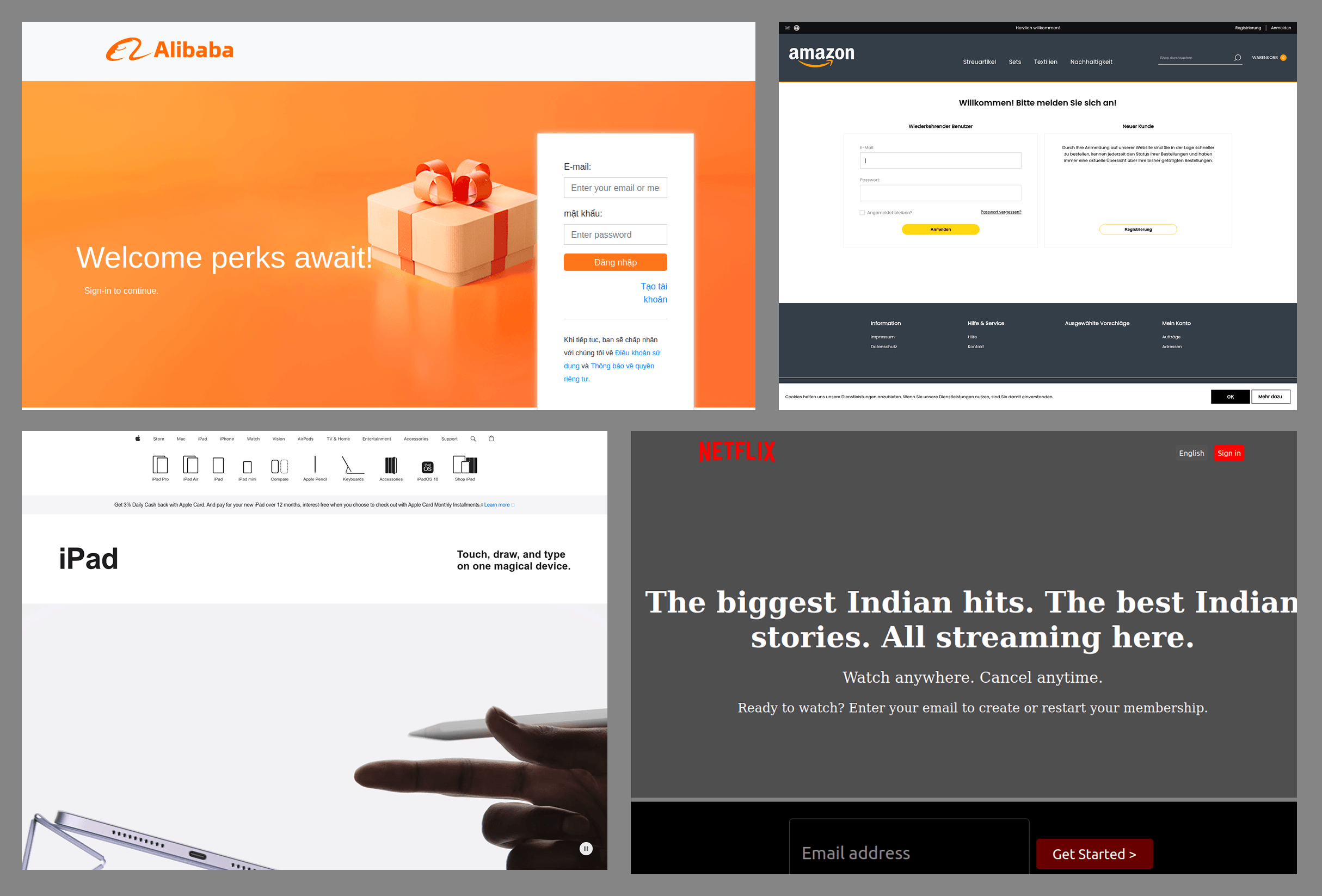
    Apple’s share of attacks dropped nearly 3 p.p. from last year’s figure to 15.68%, while Netflix scams grew slightly to 15.99%. Meanwhile, fraudsters’ interest in Alibaba increased, its share going up from 3.17% in 2023 to 7.95% in 2024.

    Examples of phishing sites that mimic Amazon, Netflix, Apple and Alibaba

    Last year, Louis Vuitton accounted for a whopping 5.52% of all attacks. However, the luxury brand completely slipped out of the top ten in 2024, along with Italian eyewear company Luxottica. Instead, sportswear giant Adidas and Russian e-commerce platform Ozon entered the list with 1.39% and 2.75% respectively. eBay (4.35%), Shopify (3.82%), Spotify (2.84%) and Mercado Libre (1.86%) all stayed in the top ten, with marginal differences from the previous year.

    TOP 10 online shopping brands mimicked by phishing and scam pages, 2024 (download)

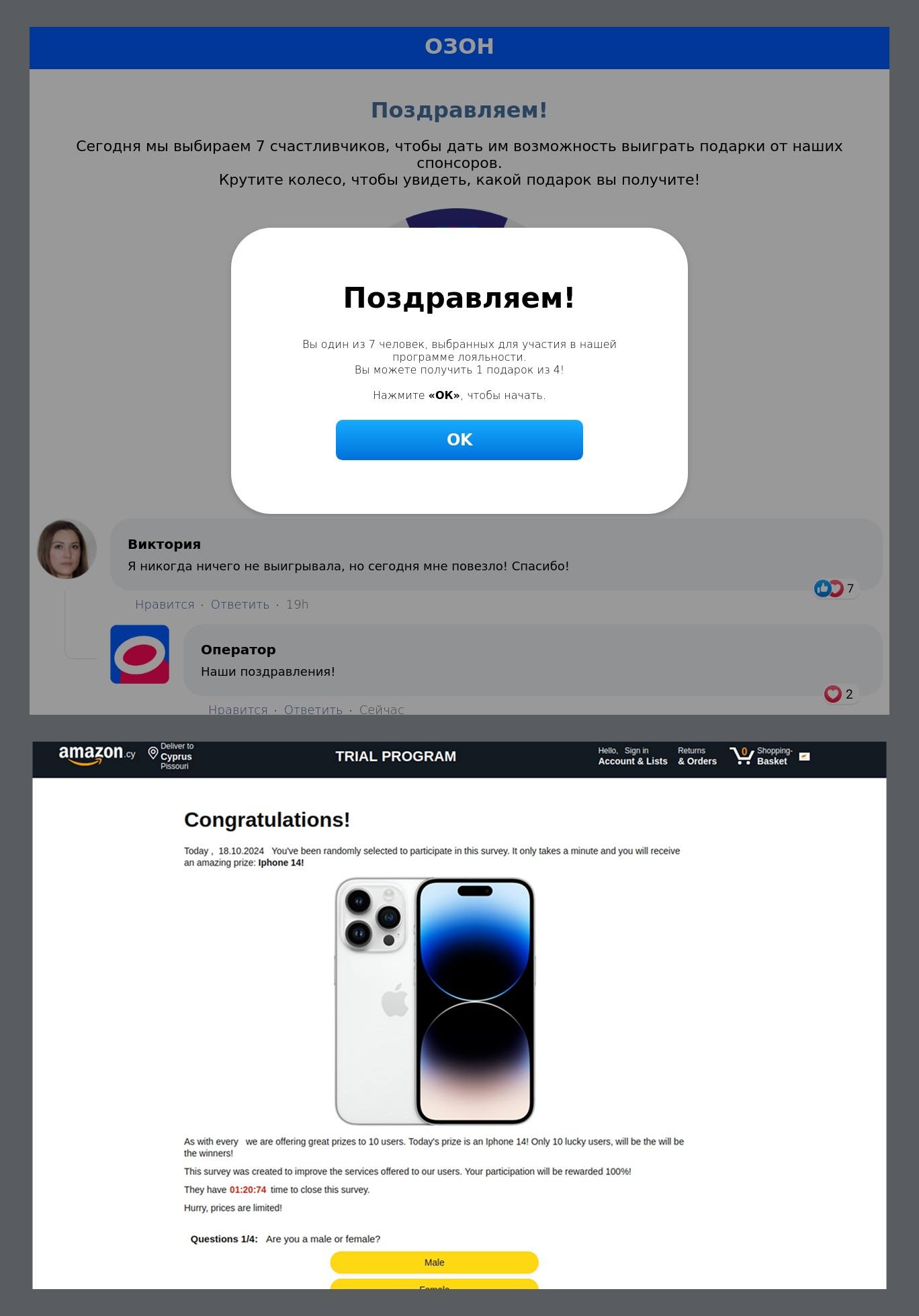
    When looking at fake website content, free prizes and offers that were a little too good to be true once again proved a popular tactic used by scammers. However tempting they may be, most likely, the victim will be the one who pays. Often scammers require “commissions” to get the prize or ask user to pay for delivery. After receiving the money, they disappear.

    Examples of scam pages offering free prizes

    In other cases, precious gifts are used by phishers to trick the user into giving out their credentials. The scheme below offers the victim an Amazon gift card to obtain which they should enter an OTP code on a phishing website. Although such codes are temporary, the scammers may use them to log in to victim’s account or perform a fraudulent transaction as soon as it is entered into the fake form.

    A phishing scheme aimed at getting OTP codes

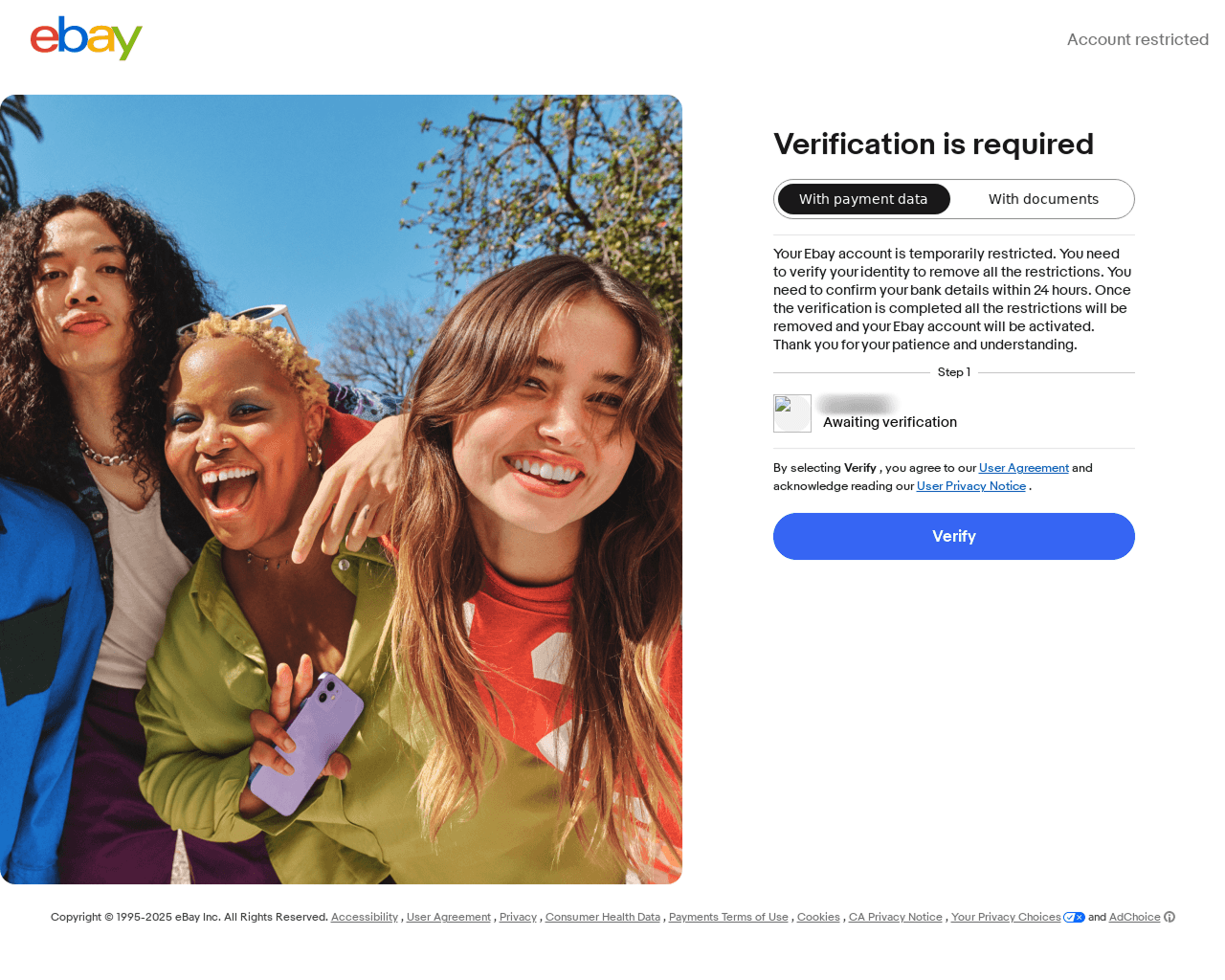
    Fraudsters often trick users into “verifying” their accounts by sending fake security alerts or urgent messages claiming suspicious activity. Victims are directed to a counterfeit page resembling platforms like eBay, where entering data (for example, credentials, payment data or documents) hands them over to scammers.

    An example of a phishing site that mimics eBay

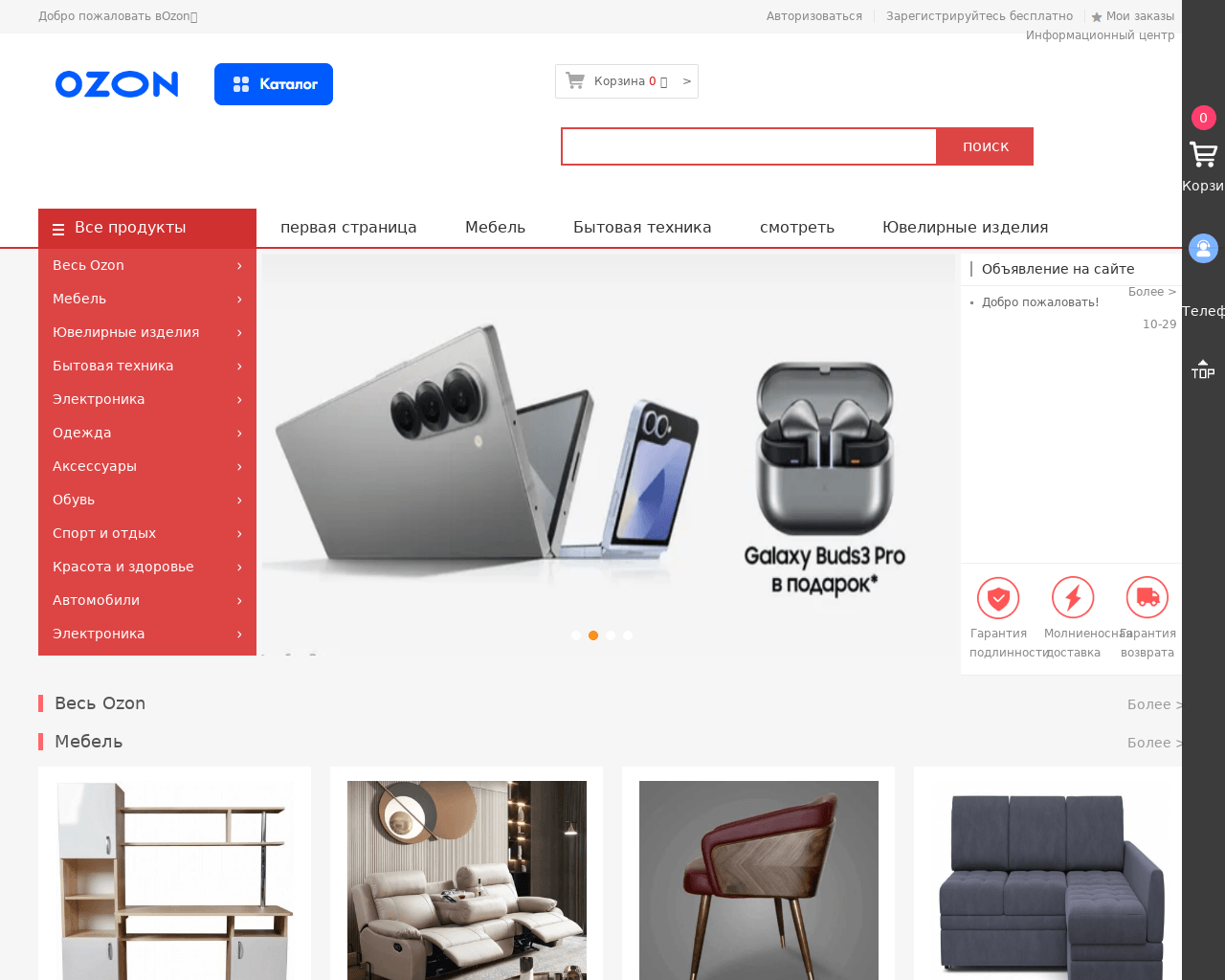
    Another common tactic involves creating fake storefronts or seller profiles on marketplaces, listing numerous products at seemingly irresistible prices. Shoppers drawn in by the deals unknowingly provide payment details, only to receive nothing in return.

    An example of a scam site that mimics an online marketplace

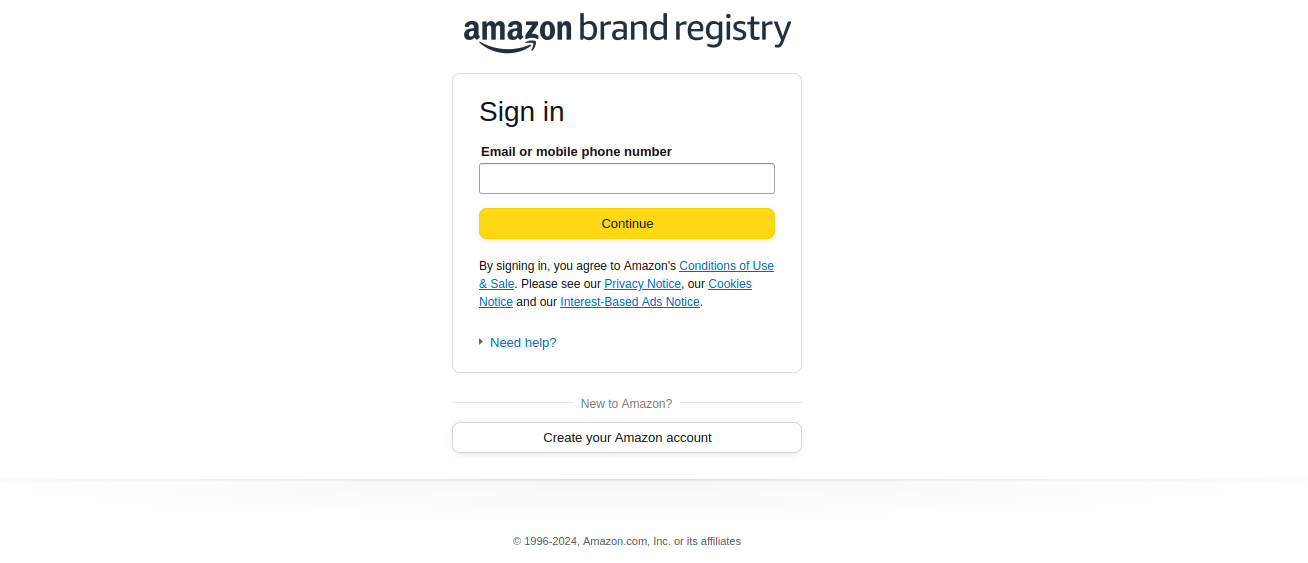
    While many pages mimicking online stores target shoppers, there are others that are designed to collect business account credentials. For example, below you can see a phishing page targeting users registered on the Amazon Brand Registry platform, which provides businesses with a range of brand-building and intellectual property protection tools.

    An example of a phishing page targeting Amazon brand accounts

    Payment system phishing

    Payment systems were mimicked in 19.27% of financial phishing attacks detected and blocked by Kaspersky products in 2024 – almost the same percentage as in 2023. Once again, PayPal was the most targeted, but its share of attacks fell from 54.73% to 37.53%. Attacks targeting Mastercard went in the opposite direction, nearly doubling from 16.58% in 2023 to 30.54%. American Express, Qiwi and Cielo are all new entrants into the top five, replacing Visa, Interac and PayPay.

    TOP 5 payment systems mimicked by phishing and scam pages, 2024 (download)

    Cryptocurrency scams

    In 2024, the number of phishing and scam attacks relating to cryptocurrencies continued to grow. Kaspersky anti-phishing technologies prevented 10,706,340 attempts to follow a cryptocurrency-themed phishing link, which was approximately 83.37% higher than the 2023 figure of 5,838,499 (which itself was 16% bigger than the previous year’s). As cryptocurrencies continue to grow, this number is only ever going to get larger.

    Financial PC malware

    In 2024, the decline in users affected by financial PC malware continued. On the one hand, people continue to rely on mobile devices to manage their finances. On the other hand, some of the most prominent malware families that were initially designed as bankers had not used this functionality for years, so we excluded them from these statistics. As a result, the number of affected users dropped significantly from 312,453 in 2023 to 199,204 in 2024.

    Changes in the number of unique users attacked by banking malware in 2024 (download)

    Key financial malware actors

    The notable strains of banking Trojans in 2024 included ClipBanker (62.9%), Grandoreiro (17.1%), CliptoShuffler (9.5%) and BitStealer (1.3%). Most of these Trojans specifically target crypto assets. However, Grandoreiro is a full-fledged banking Trojan that targeted 1700 banks and 276 crypto wallets in 45 countries and territories around the globe in 2024.

    Name %*
    ClipBanker 62.9
    Grandoreiro 17.1
    CliptoShuffler 9.5
    BitStealer 1.3

    * Unique users who encountered this malware family as a percentage of all users attacked by financial malware

    Geography of PC banking malware attacks

    To highlight the countries where financial malware was most prevalent in 2024, we calculated the share of users who encountered banking Trojans in the total number attacked by any type of malware in the country. The following statistics indicate where users are most likely to encounter financial malware.

    As in 2023, the highest share of banking Trojans was registered in Afghanistan, where it rose from 6% to 9% in 2024. Turkmenistan was next (as in 2023), where the figure rose from 5.2% to 8.8%, and Tajikistan was in third place (again), where the figure rose from 3.7% to 6.2%.

    TOP 20 countries by share of attacked users

    Country* %**
    Afghanistan 9.2
    Turkmenistan 8.8
    Tajikistan 6.2
    Syria 2.9
    Yemen 2.6
    Kazakhstan 2.5
    Switzerland 2.3
    Kyrgyzstan 2.2
    Uzbekistan 2.1
    Mexico 1.6
    Angola 1.5
    Mauritania 1.5
    Nicaragua 1.5
    Guatemala 1.3
    Argentina 1.1
    Paraguay 1.1
    Burundi 1.1
    Bolivia 1
    Uruguay 1
    Belarus 0.9

    * Excluded are countries and territories with relatively few (under 10,000) Kaspersky users.
    ** Unique users whose computers were targeted by financial malware as a percentage of all Kaspersky users who encountered malware in the country.

    Types of attacked users

    Attacks on consumers accounted for 73.69% of all financial malware attacks in 2024, up from 61.2% in 2023.

    Financial malware attack distribution by type (corporate vs consumer), 2022–2023 (download)

    Mobile banking malware

    The statistics for 2023 provided in this section were retrospectively revised and may not coincide with the data from the previous year’s report.

    In 2024, the number of users who encountered mobile banking Trojans grew 3.6 times compared to 2023: from 69,200 to 247,949. As can be seen in the graph below, the malicious activity increased dramatically in the second half of the year.

    Number of Android users attacked by banking malware by month, 2022–2023 (download)

    The most active Trojan-Banker family in 2024 was Mamont (36.70%). This malware first appeared at the end of 2023 and is distributed mostly in Russia and the CIS. Its distribution schemes are ranging from ages-old “Is that you in the picture?” scams to complex social engineering plots with fake stores and delivery tracking apps.

    Verdict %* 2023 %* 2024 Difference in p.p. Change in ranking
    Trojan-Banker.AndroidOS.Mamont.bc 0.00 36.70 +36.70
    Trojan-Banker.AndroidOS.Agent.rj 0.00 11.14 +11.14
    Trojan-Banker.AndroidOS.Mamont.da 0.00 4.36 +4.36
    Trojan-Banker.AndroidOS.Coper.a 0.51 3.58 +3.07 +30
    Trojan-Banker.AndroidOS.UdangaSteal.b 0.00 3.17 +3.17
    Trojan-Banker.AndroidOS.Agent.eq 21.79 3.10 -18.69 -4
    Trojan-Banker.AndroidOS.Mamont.cb 0.00 3.05 +3.05
    Trojan-Banker.AndroidOS.Bian.h 23.13 3.02 -20.11 -7
    Trojan-Banker.AndroidOS.Faketoken.z 0.68 2.96 +2.29 +18
    Trojan-Banker.AndroidOS.Coper.c 0.00 2.84 +2.84

    * Share of unique users who encountered this malware as a percentage of all users of Kaspersky mobile security solutions who encountered banking threats

    The Bian.h variant (3.02%) that prevailed in 2023 dropped to eighth place, losing over 20 p.p., and several more new samples entered the ranking: Agent.rj (11.14%) at the second place, UdangaSteal.b (3.17%) and Coper.c (2.84%).

    Geography of the attacked mobile users

    Same as 2023, Turkey was the number one country targeted by mobile banking malware. The share of users encountering financial threats there grew by 2.7 p.p., reaching 5.68%. Malicious activity also increased in Indonesia (2.71%), India (2.42%), Azerbaijan (0.88%), Uzbekistan (0.63%) and Malaysia (0.29%). In Spain (0.73%), Saudi Arabia (0.63%), South Korea (0.30%) and Italy (0.24%), it decreased.

    Country* %**
    Turkey 5.68
    Indonesia 2.71
    India 2.42
    Azerbaijan 0.88
    Spain 0.73
    Saudi Arabia 0.63
    Uzbekistan 0.63
    South Korea 0.30
    Malaysia 0.29
    Italy 0.24

    * Countries and territories with relatively few (under 25,000) Kaspersky mobile security users have been excluded from the rankings.
    ** Unique users attacked by mobile banking Trojans as a percentage of all Kaspersky mobile security users in the country.

    Conclusion

    In 2024, financial cyberthreats continued to evolve, with cybercriminals deploying phishing, malware and social engineering techniques to exploit individuals and businesses alike. The rise in cryptocurrency-related scams and mobile financial malware highlights the need for continuous vigilance and proactive cybersecurity measures, including multi-factor authentication, user awareness training and advanced threat detection solutions. As the digital finance landscape expands, staying ahead of emerging threats remains critical.

    To protect your devices and finance-related accounts:

    • Use multifactor authentication, strong unique passwords and other secure authentication tools.
    • Do not follow links in suspicious messages, and double-check web pages before entering your secrets, be it credentials or banking card details.
    • Download apps only form trusted sources, such as official app marketplaces.
    • Use reliable security solutions capable of detecting and stopping both malware and phishing attacks.

    To protect your business:

    • Update your software in a timely manner. Pay particular attention to security patches.
    • Improve your employees’ security awareness on a regular basis, and encourage safe practices, such as proper account protection.
    • Implement robust monitoring and endpoint security.
    • Implement strict security policies for users with access to financial assets, such as default deny policies and network segmentation.
    • Use threat intelligence services from trusted sources to stay aware of the latest threats and cybercrime trends.

    MIL OSI Economics

  • MIL-OSI United Kingdom: Join community sessions to shine spotlight on local issues

    Source: City of Wolverhampton

    The Love Your Community sessions give residents the chance to meet with representatives from Wolverhampton Police, the City of Wolverhampton Council, Wolverhampton’s Anti Social Behaviour team and more, and to share information about issues and activities in their neighbourhoods.

    Councillor Obaida Ahmed, the City of Wolverhampton Council’s Cabinet Member for Digital and Community, said: “These sessions are an important forum for residents to meet with organisations and discuss the priorities for their neighbourhoods – and how we can all work together to deliver on these.

    “Please come along to find out what’s happening in your area, tell us what’s important for your neighbourhood, help improve your local spaces, connect with your neighbours and businesses, and speak with police, councillors and community services.”

    Chief Superintendent Richard Fisher of Wolverhampton Police added: “The Love Your Community events are an integral part of the work of the neighbourhood police teams, community safety partners and local people to address concerns and issues in the community.

    “These sessions provide an opportunity to outline clear shared ownership for local priorities and help to increase collective care for what happens in our communities.”

    Love Your Community drop ins are held for each ward on a regular basis. The next are as follows:

    • Ettingshall South and Spring Vale, Monday 31 March, 4pm to 6pm, Lanesfield Methodist Church WV4 6PG
    • Oxley, Tuesday 1 April, 6pm to 8pm, Rakegate Methodist Church, Renton Grove WV10 6XG
    • Wednesfield South, Thursday 3 April, 4pm to 6pm, Wednesfield Community Centre WV11 1XT
    • Blakenhall, Tuesday 8 April, 4pm to 6pm, Lakshmi’s, Dudley Road WV2 3DT
    • Tettenhall, Thursday 10 April, 6pm to 8pm, Wolverhampton Cricket Club, Danescourt Road WV6 9BJ
    • St Peter’s and Park, Tuesday 15 April, 6pm to 8pm, Newhampton Arts Centre, Dunkley Street WV1 4AN
    • Low Hill, Fallings Park and Bushbury, Thursday 17 April, 6pm to 8pm, Low Hill Community Centre, Kempthorne Park WV10 9JJ
    • East Park, Wednesday 23 April, 4pm to 6pm, Eastfield Community Centre WV1 2QY
    • Heath Town, Tuesday 29 April, 4.30pm to 6.30pm, Hope Centre, Ling House WV10 0HH
    • Wednesfield North, Wednesday 30 April, 4pm to 6pm, The Hub at Ashmore Park WV11 2LH
    • Merry Hill, Wednesday 30 April, 6pm to 8pm, Swanmore Centre, Swanmore Close WV4 7JY
    • Bilston South, Thursday 1 May, 4pm to 6pm, St Martin’s Church, Bradley WV14 8PF
    • Graiseley, Thursday 1 May, 6pm to 8pm, St Chad’s Community Centre, Owen Road WV3 0HT
    • Ettingshall North, Tuesday 6 May, 4.30pm to 6.30pm, The Saplings, Parkfield Road WV4 6EL
    • Penn, Thursday 8 May, 4pm to 6pm, Penn Library, Coalway Avenue WV3 7LT
    • Bilston North, Monday 12 May, 4.30pm to 6.30pm, Bilston College, Wellington Road WV14 6BT

    For more details, please visit eventbrite or email safer@wolverhampton.gov.uk.

    MIL OSI United Kingdom

  • MIL-OSI: Valeura Energy Inc.: Another Year of Record Results in 2024

    Source: GlobeNewswire (MIL-OSI)

    SINGAPORE, March 25, 2025 (GLOBE NEWSWIRE) — Valeura Energy Inc. (TSX:VLE, OTCQX:VLERF) (“Valeura” or the “Company”) reports its financial and operating results for the three month period and year ended December 31, 2024.

    The complete reporting package for the Company, including the audited financial statements and associated management’s discussion and analysis (“MD&A”) and the 2024 annual information form (“AIF”), are being filed on SEDAR+ at www.sedarplus.ca and posted to the Company’s website at www.valeuraenergy.com.

    2024 Operational Highlights

    • Production increased by 12% year-over-year to 22,825 bbls/d(1) on the back of a full year of drilling operations and development of the Nong Yao C Field;
    • 100% success rate in exploration and appraisal activities with discoveries at Niramai, Wassana North, and Nong Yao D;
    • Company’s first full year of operations completed with no significant health, safety, or environment incidents; and
    • Reduced greenhouse emissions intensity by approximately 20% compared to 2023 baseline.

    2024 Financial Highlights

    • Generated revenue of US$679 million, with average price realisation of US$81/bbl;
    • Delivered Adjusted EBITDAX of US$378 million(2) and adjusted cashflow from operations of US$273 million(2);
    • Strengthened the balance sheet with record high year-end cash position of US$259 million(3) and zero debt;
    • Reduced asset retirement obligation (“ARO”) by 54% since assuming operatorship in Q1, 2023;
    • Completed internal restructuring to optimise operational and financial aspects of the Thai III petroleum concessions; and
    • Implemented share buyback programme through a Normal Course Issuer Bid for up to 10% of the public float.

    2024 Reserves Highlights

    • Record high year-end reserves: 32 MMbbl proved (1P), 50 MMbbl proved plus probable (2P) and 60 MMbbl proved plus probable plus possible (3P) reserves;
    • Delivered 2P reserves replacement ratio of 245%, even after production increase of 12%;
    • Increased 2P reserves and extended the end of field life (“EOFL”) at every field;
    • Grew 2P net present value (NPV10) before tax to US$934 million and US$753 million after tax(4);
    • Considering year-end 2024 cash position, increased 2P net asset value after tax to US$1,012 million, equating to C$13.6 per share(5); and
    • Doubled contingent resources to 48 MMbbls compared to year-end 2023(6).

    (1) Working interest share production before royalties.
    (2) Non-IFRS financial measure or non-IFRS ratio – see “Non-IFRS Financial Measures and Ratios” section in the Company’s MD&A.
    (3) Includes restricted cash of $22.8 million.
    (4) Discount rate 10%.
    (5) Proved plus probable (2P) NPV10 plus net cash at December 31, 2024, assuming $/C$ exchange rate of 1.435, and 106.65 million shares outstanding as of December 31, 2024.
    (6) Unrisked best estimate (2C) contingent resources.

    Dr. Sean Guest, President and CEO commented:

    “Our first full year of operations in Thailand were a success across all areas of our business and a trophy for value creation.  We have attained record production, record cash flow, and replaced nearly 2.5x the reserves we produced, all while continuing to strengthen our financial position.  Our business is stronger and has a longer line of sight than ever before.

    Continued drilling throughout 2024 added 20 new production wells, including those we drilled to develop the new Nong Yao C field, making Nong Yao the largest and most profitable asset in our portfolio.  We’ve also had success with the drill bit on both appraisal and exploration which has significantly increased the number of future development well locations.  This successful drilling, combined with detailed reservoir studies has resulted in a 32% increase in 2P reserves to 50 million bbls.  Moreover, the economic life of each of our fields has moved further into the future, such that all fields are now expected to remain economic beyond 2030. 

    We are focussed relentlessly on value, and with the combination of an increase in the net present value of our 2P reserves, and the record cash position of US$259 million at year-end, the net asset value of our business is now more than one billion US dollars.  On a per share basis, that equates to over C$13/share, meaning an investment in Valeura’s shares continues to represent an excellent value proposition. 

    In addition to growing both the value and longevity of our existing portfolio, we continue to pursue several other avenues for growth, including exciting exploration opportunities, and potential merger and acquisition targets.”

    Financial and Operating Results Summary

        Three months ended  Year ended
        December 31, 2024 December 31, 2023 Delta December 31, 2024 December 31, 2023 Delta
    Oil Production(1) (‘000 bbls) 2,403 1,763 +36% 8,354 5,825 43%
    Average Daily Oil Production(1) (bbls/d) 26,109 19,165 +36% 22,825 20,440(2) +12%
    Average Realised Price (US$/bbl) 76.7 85.5 (10%) 81.3 84.3 (4%)
    Oil Volumes Sold (‘000 bbls) 2,948 1,987 +48% 8,349 5,854 +43%
    Oil Revenue (US$’000) 226,148 169,909 +33% 678,794 493,457 +38%
    Net Income (US$’000) 213,983 23,480 +811% 240,797 244,313 (1%)
    Adjusted EBITDAX(3) (US$’000) 132,402 96,679 +37% 377,985 230,672 +64%
    Adjusted Pre-Tax Cashflow from Operations(3) (US$’000) 133,612 88,326 +51% 356,627 238,661 +49%
    Adjusted Cashflow from Operations(3) (US$’000) 107,134 56,023 +107% 272,641 152,375 +79%
    Operating Expenses (US$’000) 55,607 49,622 +12% 186,407 180,192 +3%
    Adjusted Opex(3) (US$’000) 54,668 51,818 +6% 214,891 165,077 +30%
    Operating Expenses per bbl (US$/bbl) 18.9 25.0 (25%) 22.3 30.9 (28%)
    Adjusted Opex per bbl(3) (US$/bbl) 22.8 29.4 (22%) 25.7 28.3 (9%)
    Adjusted Capex(3) (US$’000) 38,870 30,374 +28% 134,258 103,733 +29%
    Weighted average shares outstanding – basic (‘000 shares) 106,955 102,652 +4% 105,778 99,227 +7%
        As at Comparison
        December 31, 2024 December 31, 2023 %
    Cash & Cash equivalents(4) (US$’000) 259,354 151,165 +72%
    Adjusted Net Working Capital(3) (US$’000) 205,735 118,143 +74%
    Shareholder’s Equity (US$’000) 528,283  284,178 +86%

     
    (1) Working interest share production before royalties.

    (2) Average daily oil production of 20,440 bbls/d represents the average production from closing of the Mubadala Acquisition on March 22, 2023 to December 31, 2023 (285 days).
    (3) Non-IFRS financial measure or non-IFRS ratio – see “Non-IFRS Financial Measures and Ratios” section in the Company’s MD&A.
    (4) Includes restricted cash of US$22.8 million at December 31, 2024 and restricted cash of US$17.3 million at December 31, 2023.

    Financial Update

    The Company’s Q4 2024 oil production averaged 26,109 bbls/d (working interest share before royalties), representing a 36% increase from Q4 2023.  Full year 2024 oil production averaged 22,825 bbls/d, 12% higher than 2023.  This growth was primarily driven by production from the Wassana field, which was not in production for most of 2023 and the Nong Yao C development, which came online in August 2024.  Oil sales for Q4 2024 were 2.9 million bbls, compared to 2.0 million bbls in Q4 2023.  For the full year 2024, oil sales totalled 8.4 million bbls, up 43% from 5.8 million bbls in 2023.  The increase is due to higher production rates in 2024, coupled with the fact that in 2023 the Company had only 285 days of production operations (following closing of the Mubadala acquisition on March 22, 2023).

    The Company generated Q4 2024 revenue of US$226.1 million, a 33% increase from Q4 2023.  Full year 2024 revenue was US$678.8 million, representing a 38% increase from 2023.  Q4 2024 price realisations averaged US$76.7/bbl, achieving a US$2.0/bbl premium to the Brent benchmark.  Full year 2024 price realisations averaged US$81.3/bbl, reflecting a US$0.5/bbl premium to Brent.  Valeura reported Q4 2024 Adjusted EBITDAX (a non-IFRS measure which is more fully described in the “Non-IFRS Financial Measures and Ratios” section of the MD&A) of US$132.4 million, up 37% from Q4 2023, while full year 2024 Adjusted EBITDAX increased 64% to US$378.0 million.

    The Company demonstrated improved operational efficiency with Q4 2024 Adjusted Opex (a non-IFRS measure which is more fully described in the “Non-IFRS Financial Measures and Ratios” section of the MD&A) of US$22.8/bbl, down from US$29.4/bbl in Q4 2023.  Full year 2024 Adjusted Opex decreased to US$25.7/bbl from US$28.3/bbl in 2023.  Operating expenses for Q4 were US$18.9/bbl compared to US$25.0/bbl in Q4 2023, and US$22.3/bbl for the full 2024 versus US$30.9/bbl in 2023. These improved unit costs were driven primarily by increased production from the low-cost Nong Yao field, which has become the Company’s largest production source.

    Valeura incurred total petroleum tax income and special remuneratory benefit tax of US$68.3 million and US$29.2 million respectively during the full year 2024, compared to US$71.2 million and US$15.1 million in the previous year.   The Company stands to benefit from a more efficient tax structure in 2025 as a result of the corporate restructuring which was completed in November 2024. This will result in Petroleum income tax loss carry-forwards that were previously associated with only the Wassana asset now being applied to all of the Company’s Thai III petroleum concessions, being Wassana, Nong Yao, and Manora.

    The Company recorded Net income for the year of US$240.8 million following the recognition of deferred tax assets from the tax consolidation.

    As of December 31, 2024, Valeura had a strong cash position of US$259.4 million, including US$22.8 million in restricted cash.  The Company continues to operate with no current or non-current debt.  Valeura remains well-positioned for both organic reinvestment opportunities and potential strategic acquisitions.

    Operations Update and Outlook

    During Q4 2024, the Company had ongoing production operations on all of its Gulf of Thailand fields, comprised of the Jasmine, Nong Yao, Manora, and Wassana fields.  The Company has had one drill rig working continuously on contract since Q1 2023 full-time.

    Oil production averaged 26.1 mbbls/d during Q4 2024 (Valeura’s working interest share, before royalties).

    Jasmine/Ban Yen

    Oil production before royalties from the Jasmine/Ban Yen field, in Licence B5/27 (100% operated interest) averaged 8.5 mbbls/d during Q4 2024, an increase of 12% from Q3 2024.  Increased production rates reflect the start-up of five new wells drilled as part of an infill drilling programme, with the last three wells coming onstream in late November 2024.  In addition to adding new production, the Jasmine programme also evaluated several secondary appraisal targets which will be the subject of further infill development drilling in due course. 

    Although the Jasmine field is the most mature asset in the Company’s portfolio, ongoing drilling success underscores the field’s ability to continue serving as a key source of cash generation for the business.  The Q4 Jasmine drilling results have been included in the Company’s reserves evaluation for the year-ended December 31, 2024, and contributed to a further extension in the field’s economic life, which on a 2P reserves basis, now lasts into mid 2031. 

    In February 2025 the drill rig returned to the Jasmine field where it has begun executing a seven-well infill campaign.  In total 10 development and appraisal wells are currently planned for the Jasmine field in 2025 and one exploration well at the Ratree prospect.  In addition, a workover rig is currently operating on the field completing two workovers.

    The low-BTU gas generator was delivered to the Jasmine B platform in Q1 2025 and is expected to be commissioned and operational in Q2 2025.  This creates an opportunity to significantly reduce greenhouse gas emissions from this platform as well as to reduce operating costs by using a waste gas stream for power generation.

    Nong Yao

    At the Nong Yao field, in Licence G11/48 (90% operated working interest), Valeura’s working interest share production before royalties averaged 11.1 mbbls/d, an increase of 18% from Q3 2024.  Q4 production rates benefitted from a full quarter of operations at the Nong Yao C field extension, which came online in August 2024. 

    Performance from Nong Yao C is continuing in line with the Company’s expectations.  The Nong Yao field is now the Company’s largest source of production.  In addition, it also has the Company’s lowest per unit Adjusted Opex and its oil fetches a premium to the Brent benchmark.  As a result, Nong Yao is the Company’s most cash generative asset.

    In 2025, nine development wells are planned across the three Nong Yao platforms.  This programme is expected to commence in late Q2 2025. 

    Wassana

    Oil production at the Wassana field, in Licence G10/48 (100% operated interest), averaged 4.3 mbbls/d (before royalties), an increase of 55% over Q3 2024.  The increase reflects the effect of a full quarter of normal operations at the field, as compared to Q3 2024, during which the Company conducted a one-month precautionary suspension of production while performing underwater inspection work.  There was no drilling on the Wassana field in Q4 and no further drilling is planned at this location for 2025.

    Valeura has completed the front end engineering and design work for the potential redevelopment of the Wassana field.  Detailed contracting and procurement work commenced in late Q4 2024 to validate cost assumptions for the project.  Valeura expects to consider a final investment decision in early Q2 2025. 

    Manora

    At the Manora field, in Licence G1/48 (70% operated working interest), Valeura’s working interest share of oil production before royalties averaged 2.2 mbbls/d, a decrease of 11% from Q3 2024.  During Q4, the Company began a five-well infill drilling campaign on the Manora field, including both production-oriented infill development wells and appraisal targets.  The programme was completed in Q1 2025 and for the month of March to date, working interest share production before royalties has averaged 2.9 mbbls/d.  In addition, several appraisal targets were evaluated, giving rise to between three and five potential future drilling targets, which will be further evaluated for inclusion in a future drilling programme.

    Türkiye

    The Company had no active operations in Türkiye during Q4 2024, however it continues to hold an interest in a potentially large deep gas play in the Thrace basin in the northwest part of the country.  In 2024 the Company received official confirmation that it’s leases and licences covering the play had been extended into 2025, and more recently the Company was granted an additional one-year extension, bringing the expiry date to June 27, 2026.  Following the current period, Valeura may apply for a further two-year extension for appraisal purposes, and has engaged the government in discussions to that effect. 

    The Company believes the Thrace basin deep gas play could be a source of significant value in the longer term.  Valeura intends to farm out a portion of its interest to a new partner in order to jointly pursue the next phase of appraisal work. 

    Reserves and Resources Summary

    The results of Valeura’s third-party independent reserves and resources assessment for its Thailand assets as of December 31, 2024 were announced on February 13, 2025.  Below are summary tables associated with the reserves.

    Summary of Reserves Replacement, Value and Field Life
     
      Gross (Before Royalties) 2P Reserves, Working Interest Share End of Field Life 2P NPV10 After Tax (US$ million)
    Fields December 31, 2023
    (MMbbl)
    2024 Production
    (MMbbl)
    Additions
    (MMbbl)
    December 31, 2024
    (MMbbl)
    Reserves Replacement Ratio (%) NSAI 2023 Report NSAI 2024 Report December 31, 2023 December 31, 2024
    Jasmine 10.4 (2.9) 9.2 16.8 324% Dec 2028 Aug 2031 81.8 163.9
    Manora 2.2 (0.9) 2.1 3.4 223% Jul 2027 Apr 2030 21.2 45.7
    Nong Yao 12.4 (3.1) 7.7 16.9 245% Dec 2028 Dec 2033 185.6 416.1
    Wassana 12.9 (1.4) 1.5 12.9 102% Jun 2032 Dec 2035 139.9 126.6
    Total 37.9 (8.4) 20.5 50.0 245%     428.5 752.2
    Summary of NPV and NAV
     
      1P NPV10 2P NPV10 3P NPV10
    Before Tax After Tax Before Tax After Tax Before Tax After Tax
    NPV10 (US$ million) 360.7 358.6 933.9 752.2 1,339.1 990.2
    Cash at December 31, 2024 (US$ million)(1) 259.4 259.4 259.4 259.4 259.4 259.4
    Net Asset Value (US$ million) 620.1 618.0 1,193.3 1,011.6 1,598.5 1,249.6
    Common shares (million)(2) 106.65 106.65 106.65 106.65 106.65 106.65
    Estimated NAV per basic share (C$ per share)(3) 8.3 8.3 16.1 13.6 21.5 16.8

     
    (1) Cash at December 31, 2024 of US$259.4 million, debt nil.

    (2) Issued and outstanding common shares as of December 31, 2024
    (3) US$/C$ exchange rate of 1.435 as at December 31, 2024

    Webcast

    Valeura’s management team will host an investor and analyst webcast at 08:00 Calgary / 14:00 London / 21:00 Bangkok / 22:00 Singapore on Wednesday, March 26, 2025 to discuss today’s announcement.  Please register in advance via the link below.

    Registration link:  https://events.teams.microsoft.com/event/aa5e4d6a-cb5f-46da-ab85-0976e3600c84@a196a1a0-4579-4a0c-b3a3-855f4db8f64b

    As an alternative, an audio only feed of the event is available by phone using the Conference ID and dial-in numbers below.

    Thailand: +66 2 026 9035,,922648874#
    Singapore: +65 6450 6302,,922648874#
    Canada: (833) 845-9589,,922648874#
    Türkiye: 0800 142 034779,,922648874#
    United States: (833) 846-5630,,922648874#
    United Kingdom: 0800 640 3933,,922648874#

    Phone conference ID: 922 648 874#

    For further information, please contact:

    Valeura Energy Inc. (General Corporate Enquiries)                       +65 6373 6940
    Sean Guest, President and CEO
    Yacine Ben-Meriem, CFO
    Contact@valeuraenergy.com  

    Valeura Energy Inc. (Investor and Media Enquiries)              +1 403 975 6752 / +44 7392 940495
    Robin James Martin, Vice President, Communications and Investor Relations
    IR@valeuraenergy.com

    Contact details for the Company’s advisors, covering research analysts and joint brokers, including Auctus Advisors LLP, Canaccord Genuity Ltd (UK), Cormark Securities Inc., Research Capital Corporation, and Stifel Nicolaus Europe Limited, are listed on the Company’s website at www.valeuraenergy.com/investor-information/analysts/.

    About the Company

    Valeura Energy Inc. is a Canadian public company engaged in the exploration, development and production of petroleum and natural gas in Thailand and in Türkiye. The Company is pursuing a growth-oriented strategy and intends to re-invest into its producing asset portfolio and to deploy resources toward further organic and inorganic growth in Southeast Asia. Valeura aspires toward value accretive growth for stakeholders while adhering to high standards of environmental, social and governance responsibility.

    Additional information relating to Valeura is also available on SEDAR+ at www.sedarplus.ca.

    Oil and Gas Advisories

    Reserves and contingent resources disclosed in this news release are based on an independent evaluation conducted by the incumbent independent petroleum engineering firm, NSAI with an effective date of December 31, 2024. The NSAI estimates of reserves and resources were prepared using guidelines outlined in the Canadian Oil and Gas Evaluation Handbook and in accordance with National Instrument 51-101 – Standards of Disclosure for Oil and Gas Activities. The reserves and contingent resources estimates disclosed in this news release are estimates only and there is no guarantee that the estimated reserves and contingent resources will be recovered.

    This news release contains a number of oil and gas metrics, including “NAV”, “reserves replacement ratio”, “RLI”, and “end of field life” which do not have standardised meanings or standard methods of calculation and therefore such measures may not be comparable to similar measures used by other companies. Such metrics are commonly used in the oil and gas industry and have been included herein to provide readers with additional measures to evaluate the Company’s performance; however, such measures are not reliable indicators of the future performance of the Company and future performance may not compare to the performance in previous periods.

    “NAV” is calculated by adding the estimated future net revenues based on a 10% discount rate to net cash, (which is comprised of cash less debt) as of December 31, 2024.  NAV is expressed on a per share basis by dividing the total by basic common shares outstanding. NAV per share is not predictive and may not be reflective of current or future market prices for Valeura.

    “Reserves replacement ratio” for 2024 is calculated by dividing the difference in reserves between the NSAI 2024 Report and the NSAI 2023 Report, plus actual 2024 production, by the assets’ total production before royalties for the calendar year 2024.

    “RLI” is calculated by dividing reserves by management’s estimated total production before royalties for 2025.

    “End of field life” is calculated by NSAI as the date at which the monthly net revenue generated by the field is equal to or less than the asset’s operating cost.

    Reserves

    Reserves are estimated remaining quantities of commercially recoverable oil, natural gas, and related substances anticipated to be recoverable from known accumulations, as of a given date, based on the analysis of drilling, geological, geophysical, and engineering data, the use of established technology, and specified economic conditions, which are generally accepted as being reasonable. Reserves are further categorised according to the level of certainty associated with the estimates and may be sub-classified based on development and production status.

    Proved reserves are those reserves that can be estimated with a high degree of certainty to be recoverable. It is likely that the actual remaining quantities recovered will exceed the estimated proved reserves.

    Developed reserves are those reserves that are expected to be recovered from existing wells and installed facilities or, if facilities have not been installed, that would involve a low expenditure (e.g., when compared to the cost of drilling a well) to put the reserves on production.

    Developed producing reserves are those reserves that are expected to be recovered from completion intervals open at the time of the estimate. These reserves may be currently producing or, if shut in, they must have previously been on production, and the date of resumption of production must be known with reasonable certainty.

    Developed non-producing reserves are those reserves that either have not been on production, or have previously been on production, but are shut in, and the date of resumption of production is unknown.

    Undeveloped reserves are those reserves expected to be recovered from known accumulations where a significant expenditure (e.g., when compared to the cost of drilling a well) is required to render them capable of production. They must fully meet the requirements of the reserves classification (proved, probable, possible) to which they are assigned.

    Probable reserves are those additional reserves that are less certain to be recovered than proved reserves. It is equally likely that the actual remaining quantities recovered will be greater or less than the sum of the estimated proved plus probable reserves.

    Possible reserves are those additional reserves that are less certain to be recovered than probable reserves. It is unlikely that the actual remaining quantities recovered will exceed the sum of the estimated proved plus probable plus possible reserves. There is a 10% probability that the quantities actually recovered will equal or exceed the sum of the estimated proved plus probable plus possible reserves.

    The estimated future net revenues disclosed in this news release do not necessarily represent the fair market value of the reserves associated therewith.

    The estimates of reserves and future net revenue for individual properties may not reflect the same confidence level as estimates of reserves and future net revenue for all properties, due to the effects of aggregation.

    Contingent Resources

    Contingent resources are those quantities of petroleum estimated, as of a given date, to be potentially recoverable from known accumulations using established technology or technology under development, but which are not currently considered to be commercially recoverable due to one or more contingencies. Contingencies are conditions that must be satisfied for a portion of contingent resources to be classified as reserves that are: (a) specific to the project being evaluated; and (b) expected to be resolved within a reasonable timeframe.

    Contingent resources are further categorised according to the level of certainty associated with the estimates and may be sub‐classified based on a project maturity and/or characterised by their economic status. There are three classifications of contingent resources: low estimate, best estimate and high estimate. Best estimate is a classification of estimated resources described in the Canadian Oil and Gas Evaluation Handbook as the best estimate of the quantity that will be actually recovered; it is equally likely that the actual remaining quantities recovered will be greater or less than the best estimate. If probabilistic methods are used, there should be at least a 50 percent probability that the quantities actually recovered will equal or exceed the best estimate.

    The project maturity subclasses include development pending, development on hold, development unclarified and development not viable. The contingent resources disclosed in this news release are classified as either development unclarified or development not viable.

    Development unclarified is defined as a contingent resource that requires further appraisal to clarify the potential for development and has been assigned a lower chance of development until commercial considerations can be clearly defined. Chance of development is the likelihood that an accumulation will be commercially developed.

    Conversion of the development unclarified resources referred to in this news release is dependent upon (1) the expected timetable for development; (2) the economics of the project; (3) the marketability of the oil and gas production; (4) the availability of infrastructure and technology; (5) the political, regulatory, and environmental conditions; (6) the project maturity and definition; (7) the availability of capital; and, ultimately, (8) the decision of joint venture partners to undertake development.

    The major positive factor relevant to the estimate of the contingent development unclarified resources referred to in this news release is the successful discovery of resources encountered in appraisal and development wells within the existing fields. The major negative factors relevant to the estimate of the contingent development unclarified resources referred to in this news release are: (1) the outstanding requirement for a definitive development plan; (2) current economic conditions do not support the resource development; (3) limited field economic life to develop the resources; and (4) the outstanding requirement for a final investment decision and commitment of all joint venture partners.

    Development not viable is defined as a contingent resource where no further data acquisition or evaluation is currently planned and hence there is a low chance of development, there is usually less than a reasonable chance of economics of development being positive in the foreseeable future. The major negative factors relevant to the estimate of development not viable referred to in this news release are: (1) current economic conditions do not support the resource development; and (2) availability of technical knowledge and technology within the industry to economically support resource development.

    If these contingencies are successfully addressed, some portion of these contingent resources may be reclassified as reserves.

    Of the best estimate 2C contingent resources estimated in the NSAI 2024 Report, on a risked basis: 74% of the estimated volumes are light/medium crude oil, with the remainder being heavy oil; 77% are categorised as Development Unclarified, with the remainder being Development Not Viable.  Development Unclarified 2C resources have been assigned an average chance of development for the four fields ranging from 30% to 50% depending on oil type, while 2C Development Not Viable resources have been assigned an average chance of development ranging from 16% to 17%.

    Resources Project
    Maturity Subclass
    Light and Medium Crude Oil
    (Development Unclarified)
    Chance of Development (%)
    Unrisked Risked
    Gross (Mbbl) Net (Mbbl) Gross (Mbbl) Net (Mbbl)
    Contingent Low Estimate (1C) Development Unclarified 8,267 7,334 3,108 2,742 38 %
    Contingent Best Estimate (2C) Development Unclarified 14,178 12,538 4,227 3,728 30 %
    Contingent High Estimate (3C) Development Unclarified 21,072 18,644 5,289 4,673 25 %
    Resources Project
    Maturity Subclass
    Heavy Crude Oil
    (Development Unclarified)
    Chance of Development (%)
    Unrisked Risked
    Gross (Mbbl) Net (Mbbl) Gross (Mbbl) Net (Mbbl)
    Contingent Low Estimate (1C) Development Unclarified 7,807 7,358 4,045 3,813 52 %
    Contingent Best Estimate (2C) Development Unclarified 10,641 10,029 5,325 5,018 50 %
    Contingent High Estimate (3C) Development Unclarified 14,524 13,689 6,560 6,182 45 %
    Resources Project
    Maturity Subclass
    Light and Medium Crude Oil
    (Development Not Viable)
    Chance of Development (%)
    Unrisked Risked
    Gross (Mbbl) Net (Mbbl) Gross (Mbbl) Net (Mbbl)
    Contingent Low Estimate (1C) Development Not Viable 11,294 10,502 1,694 1,575 15 %
    Contingent Best Estimate (2C) Development Not Viable 21,539 19,965 3,652 3,319 17 %
    Contingent High Estimate (3C) Development Not Viable 33,503 30,964 5,363 4,802 16 %
    Resources Project
    Maturity Subclass
    Heavy Crude Oil
    (Development Not Viable)
    Chance of Development (%)
    Unrisked Risked
    Gross (Mbbl) Net (Mbbl) Gross (Mbbl) Net (Mbbl)
    Contingent Low Estimate (1C) Development Not Viable 2,069 1,950 310 293 15 %
    Contingent Best Estimate (2C) Development Not Viable 2,091 1,971 341 321 16 %
    Contingent High Estimate (3C) Development Not Viable 3,003 2,830 815 768 27 %

    The NSAI estimates have been risked, using the chance of development, to account for the possibility that the contingencies are not successfully addressed.  Due to the early stage of development for the development unclarified resources, NSAI did not perform an economic analysis of these resources; as such, the economic status of these resources is undetermined and there is uncertainty that any portion of the contingent resources disclosed in this new release will be commercially viable to produce.

    Glossary   

    bbl barrels of oil
    Mbbl thousand barrels of oil
    MMbbl  million barrels of oil
       

    Advisory and Caution Regarding Forward-Looking Information

    Certain information included in this news release constitutes forward-looking information under applicable securities legislation. Such forward-looking information is for the purpose of explaining management’s current expectations and plans relating to the future. Readers are cautioned that reliance on such information may not be appropriate for other purposes, such as making investment decisions. Forward-looking information typically contains statements with words such as “anticipate”, “believe”, “expect”, “plan”, “intend”, “estimate”, “propose”, “project”, “target” or similar words suggesting future outcomes or statements regarding an outlook.

    Forward-looking information in this news release includes, but is not limited to, the profitability of the Nong Yao asset, relative to rest of the Company’s portfolio; the increase in the number of future development well locations; the estimated net asset value of the Company; the belief that an investment in Valeura’s shares represents an excellent value proposition; Valeura’s expectation that it will benefit from a more efficient tax structure as a result of the corporate restructuring; the inclusion of appraisal-led drilling targets in further infill development drilling programmes; the ability for Jasmine to continue serving as a key source of cash generation; timing to commission the low-BTU gas generator and to reduce greenhouse gas emissions and operating costs; planned drilling and well workovers in 2025; timing to consider a final investment decision on the Wassana field redevelopment project; and the Company’s belief that the Thrace basin deep gas play could be a source of significant value in the longer term.  In addition, statements related to “reserves” and “resources” are deemed to be forward-looking information as they involve the implied assessment, based on certain estimates and assumptions, that the resources can be discovered and profitably produced in the future.

    Although the Company believes the expectations and assumptions reflected in such forward-looking information are reasonable, they may prove to be incorrect.

    Forward-looking information is based on management’s current expectations and assumptions regarding, among other things: political stability of the areas in which the Company is operating; continued safety of operations and ability to proceed in a timely manner; continued operations of and approvals forthcoming from governments and regulators in a manner consistent with past conduct; ability to achieve extensions to licences in Thailand and Türkiye to support attractive development and resource recovery; future drilling activity on the required/expected timelines; the prospectivity of the Company’s lands; the continued favourable pricing and operating netbacks across its business; future production rates and associated operating netbacks and cash flow; decline rates; future sources of funding; future economic conditions; the impact of inflation of future costs; future currency exchange rates; interest rates; the ability to meet drilling deadlines and fulfil commitments under licences and leases; future commodity prices; the impact of the Russian invasion of Ukraine; the impact of conflicts in the Middle East; royalty rates and taxes; management’s estimate of cumulative tax losses being correct; future capital and other expenditures; the success obtained in drilling new wells and working over existing wellbores; the performance of wells and facilities; the availability of the required capital to funds its exploration, development and other operations, and the ability of the Company to meet its commitments and financial obligations; the ability of the Company to secure adequate processing, transportation, fractionation and storage capacity on acceptable terms; the capacity and reliability of facilities; the application of regulatory requirements respecting abandonment and reclamation; the recoverability of the Company’s reserves and contingent resources; future growth; the sufficiency of budgeted capital expenditures in carrying out planned activities; the impact of increasing competition; the availability and identification of mergers and acquisition opportunities; the ability to successfully negotiate and complete any mergers and acquisition opportunities; the ability to efficiently integrate assets and employees acquired through acquisitions; global energy policies going forward; international trade policies; future debt levels; and the Company’s continued ability to obtain and retain qualified staff and equipment in a timely and cost efficient manner. In addition, the Company’s work programmes and budgets are in part based upon expected agreement among joint venture partners and associated exploration, development and marketing plans and anticipated costs and sales prices, which are subject to change based on, among other things, the actual results of drilling and related activity, availability of drilling, offshore storage and offloading facilities and other specialised oilfield equipment and service providers, changes in partners’ plans and unexpected delays and changes in market conditions. Although the Company believes the expectations and assumptions reflected in such forward-looking information are reasonable, they may prove to be incorrect.

    Forward-looking information involves significant known and unknown risks and uncertainties. Exploration, appraisal, and development of oil and natural gas reserves and resources are speculative activities and involve a degree of risk. A number of factors could cause actual results to differ materially from those anticipated by the Company including, but not limited to: the ability of management to execute its business plan or realise anticipated benefits from acquisitions; the risk of disruptions from public health emergencies and/or pandemics; competition for specialised equipment and human resources; the Company’s ability to manage growth; the Company’s ability to manage the costs related to inflation; disruption in supply chains; the risk of currency fluctuations; changes in interest rates, oil and gas prices and netbacks; the risk that the Company’s tax advisors’ and/or auditors’ assessment of the Company’s cumulative tax losses varies significantly from management’s expectations of the same; potential changes in joint venture partner strategies and participation in work programmes; uncertainty regarding the contemplated timelines and costs for work programme execution; the risks of disruption to operations and access to worksites; potential changes in laws and regulations, including international treaties and trade policies; the uncertainty regarding government and other approvals; counterparty risk; the risk that financing may not be available; risks associated with weather delays and natural disasters; and the risk associated with international activity. See the most recent annual information form and management’s discussion and analysis of the Company for a detailed discussion of the risk factors.

    Certain forward-looking information in this news release may also constitute “financial outlook” within the meaning of applicable securities legislation. Financial outlook involves statements about Valeura’s prospective financial performance or position and is based on and subject to the assumptions and risk factors described above in respect of forward-looking information generally as well as any other specific assumptions and risk factors in relation to such financial outlook noted in this news release. Such assumptions are based on management’s assessment of the relevant information currently available, and any financial outlook included in this news release is made as of the date hereof and provided for the purpose of helping readers understand Valeura’s current expectations and plans for the future. Readers are cautioned that reliance on any financial outlook may not be appropriate for other purposes or in other circumstances and that the risk factors described above or other factors may cause actual results to differ materially from any financial outlook.

    The forward-looking information contained in this news release is made as of the date hereof and the Company undertakes no obligation to update publicly or revise any forward-looking information, whether as a result of new information, future events or otherwise, unless required by applicable securities laws. The forward-looking information contained in this news release is expressly qualified by this cautionary statement.

    This news release does not constitute an offer to sell or the solicitation of an offer to buy securities in any jurisdiction, including where such offer would be unlawful. This news release is not for distribution or release, directly or indirectly, in or into the United States, Ireland, the Republic of South Africa or Japan or any other jurisdiction in which its publication or distribution would be unlawful.

    Neither the Toronto Stock Exchange nor its Regulation Services Provider (as that term is defined in the policies of the Toronto Stock Exchange) accepts responsibility for the adequacy or accuracy of this news release.

    This information is provided by Reach, the non-regulatory press release distribution service of RNS, part of the London Stock Exchange. Terms and conditions relating to the use and distribution of this information may apply. For further information, please contact rns@lseg.com or visit www.rns.com.

    The MIL Network

  • MIL-OSI Video: UN peace operations, Gaza & other topics – Daily Press Briefing (24 March 2025) | United Nations

    Source: United Nations (Video News)

    Noon Briefing by Stéphane Dujarric, Spokesperson for the Secretary-General.

    Highlights:
    – Security Council
    – Gaza
    – Occupied Palestinian Territory
    – Lebanon/Peacekeeping
    – Lebanon/Humanitarian
    – Ukraine
    – Democratic Republic Of The Congo
    – Sudan
    – Afghanistan
    – Libya
    – Rohingya Refugees
    – International Days
    – General Assembly Event
    – Upcoming Briefings
    – Noon Briefing Guest

    SECURITY COUNCIL
    The Secretary-General spoke to the Security Council this morning during a special session on UN peace operations.
    He reminded council members that UN peace operations safeguard people and communities in some of the most desperate places on earth, adding that they represent a critical tool at the Council’s disposal to maintain international peace and security.
    At their best, he said, they show how, when the UN comes together to address challenges, the burden is diminished on individual countries. But, Mr. Guterres added that peace operations face serious barriers that demand new approaches.
    The Secretary-General said that work is now underway to review all forms of peace operations, as requested by Member States in the recently adopted Pact for the Future.
    He said the review will build on the analysis presented in the New Agenda for Peace and it will be informed by the first comprehensive study of the history of special political missions in the 80 years of this organization and that report which will be released soon.
    The review will also help inform efforts – through the UN@80 initiative – to find efficiencies and improvements across our work, in light of the continued funding challenges we face as an organization.

    GAZA
    In the past week, Israel carried out devastating strikes on Gaza, claiming the lives of hundreds of civilians, including United Nations personnel, with no humanitarian aid being allowed to enter the Gaza Strip since early March.
    As a result, the Secretary-General has taken the difficult decision to reduce the United Nations’ footprint in Gaza, even as humanitarian needs soar and our concern over the protection of civilians intensifies.
    The United Nations is not leaving Gaza. We remain committed to continuing to provide aid that civilians depend on for their survival and protection.
    More than three weeks ago, the Israeli Government cut off the entry of humanitarian aid into Gaza – which is the longest such suspension since 7 October 2023.
    Israeli officials have indicated that they intend to continue their military activities in Gaza.
    Based on the information that is currently available, the strikes hitting a UN compound in Deir Al Balah on 19 March were caused by an Israeli tank shell. The strikes claimed the life of a UN colleague from Bulgaria and left six others – from France, Moldova, North Macedonia, Palestine and the United Kingdom – with severe injuries, some of them life-altering.
    The location of this UN compound was well known to all the parties to the conflict. I reiterate that all parties to the conflict are bound by international law to protect the inviolability of United Nations premises. Without this, our colleagues face intolerable risks as they work to save the lives of civilians.
    The Secretary-General strongly condemns these strikes and demands a full, thorough and independent investigation into this incident.
    All parties must comply fully with international law at all times. Civilians must be respected and they must be protected. The denial of lifesaving aid must end. The hostages must be released immediately and unconditionally.
    All States must use their leverage to stop the conflict and ensure respect for international law – by applying diplomatic and economic pressure and combating impunity.
    The Secretary-General renews his urgent call for the restoration of the ceasefire to bring an end to the anguish.

    Full Highlights: https://www.un.org/sg/en/content/noon-briefing-highlight?date%5Bvalue%5D%5Bdate%5D=24%20March%202025

    https://www.youtube.com/watch?v=R_V-u7ye6jM

    MIL OSI Video

  • MIL-OSI Video: UN Peace Ops must evolve to face modern threats – UN Chief’s Briefing | United Nations

    Source: United Nations (Video News)

    “Peace operations are designed not only to be an effective example of multilateralism in action — but a cost-effective one,” Secretary-General António Guterres said, urging reforms to confront global threats.

    Addressing the Security Council during an open debate today (Mar 24) António Guterres called for a critical overhaul of United Nations peace operations to ensure they remain effective amid rising global instability, warning that “terror and extremist groups, organized crime, the weaponization of new technologies, and the effects of climate change are all testing our capacities to respond.”

    Guterres also emphasized that UN peacekeeping must evolve to meet modern challenges. “Work is now underway to review all forms of peace operations,” he said, referencing Member States’ request under the Pact for the Future. “The review will aim to critically examine these tools and propose concrete recommendations to make them fit for today.”

    Guterres described the current geopolitical environment as increasingly fractured. “Geopolitical divisions are undermining peace… Violations of international law, human rights and the UN Charter are rampant – seemingly without consequence,” he said. “Trust is in short supply among – and within – countries and regions.”

    The review will draw on the New Agenda for Peace and incorporate a forthcoming comprehensive study on special political missions over the UN’s 80-year history. “Throughout, we will hold extensive consultations to capture as wide a spectrum of views as possible,” he added, citing engagement with host States, troop and police contributors, civil society, and UN leadership.

    Peace operations, Guterres stressed, are not only multilateral by design but cost-efficient. “At their best, they show how when the UN comes together to address challenges, the burden is diminished on individual countries alone.”
    Jenna Russo, Director of Research at the International Peace Institute, echoed calls for reform, urging the UN to foster a “risk tolerant culture” within missions. “Peacekeepers often feel the best they can do is keep their heads down and not make waves,” she said. “Personnel are structurally disincentivized from trying new things and reporting what doesn’t work… for fear that their budgets and jobs may suffer consequences.”

    Danish Foreign Minister Lars Løkke Rasmussen, presiding over the Council, underscored the continued importance of peacekeeping despite its flaws. “For millions, the blue flag and the blue helmet are symbols of hope,” he said. “To the families sheltering in an IDP camp in the Democratic Republic of Congo, they mean protection; to the communities affected by climate change in South Sudan, it means support; to the women and girls facing persecution in Afghanistan, the blue flag means inclusion.”

    https://www.youtube.com/watch?v=DBswsASH0lc

    MIL OSI Video

  • MIL-OSI Africa: Congo Energy & Investment Forum (CEIF): CLG Workshop Offers Insight into Congo’s Legal Framework

    Source: Africa Press Organisation – English (2) – Report:

    BRAZZAVILLE, Congo (Republic of the), March 24, 2025/APO Group/ —

    Pan-African legal firm CLG – formerly Centurion Law Group – led a workshop during the inaugural Congo Energy & Investment Forum (CEIF) on the country’s legal and fiscal frameworks. The workshop – Mastering Business in Congo: Challenges and Strategic Solutions for Success  delved into strategies investors can deploy to navigate the Republic of Congo’s business environment as the country prepares to launch an international licensing round.

    As a leading provider of specialized legal and tax advisory services, CLG – a Legal Partner of CEIF 2025 – caters to a diverse portfolio of multinational energy companies. With offices in the Republic of Congo, Germany, South Africa, Nigeria, Mauritius, Ghana, Cameroon, Equatorial Guinea, Namibia and South Sudan, the firm delivers bespoke solutions for a variety of challenges faced by oil and gas companies. The CLG workshop underscored how the firm’s expertise can support oil and gas projects in the Republic of Congo as the country targets 500,000 barrels per day of oil.  

    “Our goal is to provide solutions by interpreting regulations, ensuring companies can operate freely. We have advisors across several African countries,” stated Zion Adeoye, CEO and Group Managing Partner, CLG.

    The country’s strong Central African presence and deep knowledge of the associated legal frameworks gives it an edge in the region’s energy landscape. According to Yves Ollivier, Managing Director, CLG Congo, the firm’s services in the region include M&A transactions, due diligence, legal secretariat services for oil and gas companies and expertise in intellectual property and immigration laws.

    “We provide legal opinions in various fields, including employment law, corporate structuring and contract negotiations,” he explained.

    In addition to these services, CLG has strong expertise in taxation. Daoudou Mohammad, Director: Tax and Legal, CLG Congo, explained that the firm assists companies with tax compliance, fiscal advisory services and global tax audits. “We conduct comprehensive tax reviews and offer targeted training upon request,” he said.

    For the Republic of Congo, these services will play a key role in facilitating investment, advancing projects and realizing the country’s energy production goals. Given the complexity of the oil and gas sector, understanding the potential challenges associated with the industry is vital.  

    Oneyka Cindy Ojogbo, Deputy Managing Director & Partner, CLG, explained that, “Understanding all contractual details is crucial, especially in the gas sector. We have encountered cases where disputes arose due to poorly negotiated agreements. Anticipating potential legal issues is key to mitigating risks.”

    Additional challenges include misunderstanding of the requisite taxation laws. Mohammad pointed out that many companies fail to consider available tax exemptions, leading to missed opportunities for fiscal optimization. “A thorough assessment of tax incentives can significantly reduce financial burdens. Companies should proactively evaluate their eligibility for exemptions,” he advised.

    MIL OSI Africa

  • MIL-OSI Africa: Secretary-General’s message on the International Day of Remembrance of the Victims of Slavery and the Transatlantic Slave Trade [scroll down for French version]

    Source: United Nations – English

    strong>Download the video:  https://s3.us-east-1.amazonaws.com/downloads2.unmultimedia.org/public/video/evergreen/MSG+SG+/SG+Intl+Slave+Trade+21+Feb+25/MSG+SG+INTL+SLAVE+TRADE+21+FEB+25.mp4

    The transatlantic trade in enslaved Africans was a crime against humanity that resonates through history and continues to scar societies. Today, we remember the women, children, and men torn from their loved ones, forced to work in agonizing conditions, cruelly punished, and deprived of their dignity and human rights, and we recall their acts of resistance and demands for justice.

    For more than four centuries, millions of Africans were kidnapped, trafficked, abused and dehumanized. This horrific enterprise rested on the destructive lie of white supremacy. And it saw many colonizers, corporations and institutions amass unimaginable wealth.

    For too long, these unthinkable acts have remained unacknowledged, unspoken, and unaddressed, all as their legacies continue to shape our world. Many still benefit from the odious profits reaped from chattel slavery. Systemic racism has been embedded into institutions, cultures, and legal and other systems. Deeply rooted exclusion, racial discrimination and violence continue to undermine the ability of many people of African descent to thrive and prosper.

    As the theme of this year’s International Day reminds us, acknowledging the horrors of the transatlantic slave trade is an essential step towards addressing the past, repairing the present, and building a future of dignity and justice for all.  It is imperative to put in place reparatory justice frameworks that address this terrible history and its legacies. And we must end the evil of racism for good.

    The human dignity of every person stands at the heart of the United Nations. We will always stand with everyone, everywhere to combat racial discrimination and hate, and to defend the human rights and dignity of all.

    ***

    La traite transatlantique des Africains réduits en esclavage a été un crime contre l’humanité dont les répercussions se font sentir à travers les siècles et qui continue de marquer les sociétés. Aujourd’hui, nous honorons la mémoire des femmes, des enfants et des hommes qui ont été arrachés à leurs proches, contraints de travailler dans des conditions atroces, cruellement châtiés et privés de leur dignité et de leurs droits humains, et nous nous souvenons de leurs actes de résistance et de leurs appels à la justice.

    Pendant plus de quatre siècles, des millions d’Africains ont été enlevés aux fins de la traite, maltraités et déshumanisés. Ces atrocités étaient fondées sur un mensonge destructeur : le suprémacisme blanc. Nombre de colonisateurs, entreprises et institutions en ont profité pour amasser des richesses incalculables.

    Pendant trop longtemps, ces agissements inimaginables, qui ont été occultés et passés sous silence, n’ont suscité aucune réaction, alors que leurs effets continuent d’imprégner le monde. Nombreux sont ceux qui profitent encore des odieux bénéfices tirés de l’esclavage traditionnel. Le racisme systémique est ancré dans les institutions, les cultures ainsi que les systèmes juridiques et d’autres systèmes. Profondément enracinées, l’exclusion, la discrimination raciale et la violence continuent d’empêcher beaucoup de personnes d’ascendance africaine de s’épanouir et de prospérer.

    Cette année, le thème de la Journée internationale nous rappelle qu’il est indispensable de prendre conscience des horreurs de la traite transatlantique des esclaves pour faire face au passé, réparer le présent et bâtir un avenir où dignité et justice sont garanties pour tout le monde. Il est impératif d’établir des cadres de justice réparatrice qui permettent de regarder en face ce sombre chapitre de l’histoire et ses conséquences. Nous devons mettre un terme, une fois pour toutes, au fléau qu’est le racisme.

    La dignité humaine de chaque personne est au cœur de l’Organisation des Nations Unies. Nous nous tiendrons toujours aux côtés de tous ceux et celles qui, partout dans le monde, luttent contre la discrimination raciale et la haine et défendent les droits humains et la dignité de toutes les personnes.

    ***
     

    MIL OSI Africa

  • MIL-OSI Africa: Secretary-General’s message on the International Day of Solidarity with Detained and Missing Staff Members [scroll down for French version]

    Source: United Nations – English

    nited Nations personnel serve some of the world’s most vulnerable people while aspiring to our highest ideals: peace, dignity, equality and justice. But many do so at immense personal risk – facing threats of kidnap, violence, harassment, detention, and more.

    One hundred and one personnel were arrested or detained last year alone. In total, 52 UN personnel are still in detention. Locally recruited staff are particularly at risk.

    On this International Day of Solidarity, we stand with all those detained, and with their families and loved ones, as we call for their immediate release and safe return.

    In their names, I urge governments to ensure the safety and security of United Nations personnel, and to continue pursuing accountability and justice for these crimes, while enhancing support and protection. I also call on all countries to fulfil their obligation under the 1994 Convention on the Safety of United Nations and Associated Personnel, as well as the 2005 Optional Protocol, which extends the Convention to personnel delivering humanitarian, political or development assistance.

    Together, we must protect those who serve humanity, and help build a better and safer world for all.

    ***
    Les membres du personnel des Nations Unies se mettent au service des populations parmi les plus vulnérables au monde tout en ayant à cœur de réaliser nos idéaux les plus chers : la paix, la dignité, l’égalité et la justice. Bon nombre d’entre eux le font au prix d’immenses risques personnels, sous la menace d’enlèvement, de violence, de harcèlement, de détention, etc.

    Rien que l’année dernière, 101 membres du personnel de l’ONU ont été arrêtés ou détenus. Au total, 52 d’entre eux n’ont toujours pas été libérés. Le personnel recruté sur le plan local est particulièrement menacé.

    En cette Journée internationale de solidarité, nous nous tenons aux côtés de toutes les personnes détenues, de leurs familles et de leurs proches, et nous appelons à leur libération immédiate et à leur retour en toute sécurité.

    C’est au nom de ces personnes que j’exhorte les gouvernements à garantir la sûreté et la sécurité du personnel des Nations Unies et à continuer d’établir les responsabilités pour ces crimes et de rendre justice aux victimes, tout en renforçant les mesures de soutien et de protection. J’engage également tous les pays à s’acquitter de l’obligation que leur impose la Convention de 1994 sur la sécurité du personnel des Nations Unies et du personnel associé et son protocole facultatif de 2005, qui étend la portée de la protection au personnel chargé de l’aide humanitaire ou politique ou de l’aide au développement.

    Ensemble, nous devons protéger toutes les personnes qui sont au service de l’humanité et contribuer à bâtir un monde meilleur et plus sûr pour toutes et tous.

    ***
     

    MIL OSI Africa

  • MIL-OSI Russia: NSU plans to open a preparatory department in medical and biological profile in Egypt

    Translartion. Region: Russians Fedetion –

    Source: Novosibirsk State University – Novosibirsk State University –

    Novosibirsk State University is discussing the possibility of opening a full-time preparatory department in the medical and biological profile in Cairo or Alexandria by the end of 2025 in partnership with Rossotrudnichestvo and one of the Egyptian recruiting companies. The goal is to ensure a stable flow of foreign students and increase the number of students studying in the medical field. A preliminary agreement on opening the department was reached during the Open Day of Universities of the Novosibirsk Region, which was held at NSU in mid-March.

    The University also intends to increase the number of students in the English-language program offered by the Faculty of Medicine and Psychology of NSU, and by attracting students from India.

    — In 2024, we had about 30 international students enrolled in the medical program, mostly from Iran. This year, our goal is to double this number by attracting students from India and Egypt. Thus, the opening of a preparatory department in Egypt and the expansion of programs for international students continue NSU’s strategic goal of internationalizing education and strengthening the university’s position in the global educational arena, — commented Evgeniy Sagaydak, Head of the NSU Education Export Department.

    The selection of international students for the medical program will include the following stages: registration in the applicant’s personal account with the submission of the necessary documents for admission to the university, an online chemistry exam and an interview to check knowledge of English. In addition, it is planned to organize additional information sessions and webinars for applicants to explain in detail the requirements for applicants, as well as introduce them to the curriculum and life at the university.

    The medical direction will be actively developing at the university in the coming years. In 2024, the Institute of Medicine and Medical Technologies (IMMT) of NSU was created, a new Faculty of Pharmacy and Medical Cybernetics appeared. Also within the framework of the project construction of the NSU campus A new building for the educational and scientific center of the NSU Institute of Medical Technologies is being constructed, where a modern infrastructure will be created for training students in the medical field, including equipped laboratories, practical classes, and simulation training centers.

    The Open Day of Universities of the Novosibirsk Region is a traditional event that has been held for several years now. The initiator is Novosibirsk State University with the support of the regional Ministry of Education. This year, the event was held in person, unlike in 2024. The number of companies that took part also doubled — 12 in total. In addition, the geography expanded: this year there were representatives from North African countries, Arab countries, including Egypt, as well as Southeast Asian countries — India, Pakistan, China.

    — Universities of the Novosibirsk Region are quite willing to take part in the Open Day, and we also see great interest from recruiting companies, who have the opportunity to get to know and negotiate with all Novosibirsk universities in two days, — emphasized Evgeny Sagaydak.

    Please note: This information is raw content directly from the source of the information. It is exactly what the source states and does not reflect the position of MIL-OSI or its clients.

    MIL OSI Russia News

  • MIL-OSI New Zealand: Strong relationship with PNG reconfirmed

    Source: New Zealand Government

    Prime Minister Christopher Luxon and Papua New Guinea Prime Minister James Marape met in Wellington today, reaffirming the enduring partnership between New Zealand and Papua New Guinea. 

    The Prime Ministers discussed opportunities to grow the trade and economic relationship, reaffirmed our close security and defence ties, and exchanged perspectives on current regional issues and challenges.

    “New Zealand deeply values our friendship with Papua New Guinea, a crucial partner in the Pacific,” Mr Luxon says.

    “We look forward to continuing to work alongside Papua New Guinea on issues facing the Pacific region, including climate change and upholding Pacific Islands Forum unity.”

    The Prime Ministers signed a refreshed Statement of Partnership, which sets out a shared vision for the New Zealand – Papua New Guinea bilateral relationship as the countries look to celebrate 50 years of diplomatic ties in September.

    “Our Statement of Partnership instils a new desire to achieve practical and meaningful outcomes that will contribute to Papua New Guinea through education, public sector support, climate change, increased business, trade and investment and regional security,” Mr Marape says. 

    “It is a two-way arrangement that is strategic, more focused and of mutual benefit particularly in developing stronger ties in agriculture and fisheries. It also increases and structures dialogue to be more frequent at Leaders’, Ministerial and Officials levels.” 

    During the visit, Prime Minister Luxon also announced a NZ$1 million investment in institutional linkages, responding to Papua New Guinea’s aspirations to strengthen its public sector institutions. The fund will be able to support initiatives such as strengthened cooperation between disaster preparedness institutions and exchange of expertise in the governance of state-owned enterprises.

    Prime Minister Marape is accompanied to New Zealand by Minister of Foreign Affairs, Justin Tkatchenko. While in New Zealand, the Papua New Guinea delegation will engage in various business and community events in Wellington, Blenheim, Hamilton and Auckland, before departing New Zealand on 28 March.

    MIL OSI New Zealand News

  • MIL-Evening Report: PNG ‘test ban’ blocks Facebook – governor Bird warns of tyranny risk

    By Scott Waide, RNZ Pacific PNG correspondent

    The Papua New Guinea government has admitted to using a technology that it says was “successfully tested” to block social media platforms, particularly Facebook, for much of the day yesterday.

    Police Minister Peter Tsiamalili Jr said the “test” was done under the framework of the Anti-Terrorism Act 2024, and sought to address the growing concerns over hate speech, misinformation, and other harmful content online.

    Tsiamalili did not specify what kind of tech was used, but said it was carried out in collaboration with the Royal Papua New Guinea Constabulary (RPNGC), the National Information and Communications Technology Authority (NICTA), and various internet service providers.

    “We are not attempting to suppress free speech or restrict our citizens from expressing their viewpoints,” Tsiamalili said.

    “However, the unchecked proliferation of fake news, hate speech, pornography, child exploitation, and incitement to violence on platforms such as Facebook is unacceptable.

    “These challenges increasingly threaten the safety, dignity, and well-being of our populace.”

    However, government agencies responsible for communications and ICT, including NICTA, said they were not aware.

    ‘Confidence relies on transparency’
    “Public confidence in our digital governance relies on transparency and consistency in how we approach online regulation,” NICTA chief executive Kilakupa Gulo-Vui said.

    “It is essential that all key stakeholders, including NICTA, law enforcement, telecommunications providers, and government agencies, collaborate closely to ensure that any actions taken are well-understood and properly executed.”

    He said that while maintaining national security was a priority, the balance between safety and digital freedom must be carefully managed.

    Gulo-Vui said NICTA would be addressing this matter with the Minister for ICT to ensure NICTA’s role continued to align with the government’s broader policy objectives, while fostering a cohesive and united approach to digital regulation.

    The Department of Information Communication and Technology (DICT) Secretary, Steven Matainaho, also stated his department was not aware of the test but added that the police have powers under the new domestic terrorism laws.

    Papua New Guinea’s recently introduced anti-terror laws are aimed at curbing both internal and external security threats.

    Critics warn of dictatorial control
    However, critics of the move say the test borders on dictatorial control.

    An observer of Monday’s events, Lucas Kiap, said the goal of combating hate speech and exploitation was commendable, but the approach risks paving way for authoritarian overreach.

    “Where is PNG headed? If the government continues down this path, it risks trading democracy for control,” he said.

    Many social media users, however, appeared to outdo the government, with many downloading and sharing Virtual Area Network (VPN) apps and continuing to post on Facebook.

    “Hello from Poland,” one user said.

    East Sepik Governor Allan Bird said today that the country’s anti-terrorism law could target anyone because “the definition of a terrorist is left to the Police Minister to decide”.

    ‘Designed to take away our freedoms’
    “During the debate on the anti-terrorism bill in Parliament, I pointed out that the law was too broad and it could be used against innocent people,” he wrote on Facebook.

    He said government MPs laughed at him and used their numbers to pass the bill.

    “Yesterday, the Police Minister used the Anti-terrorism Act to shut down Facebook. That was just a test, that was step one,” Governor Bird said.

    “There is no limit to the powers the Minister of Police can exercise under this new law. It is draconian law designed to take away our freedoms.

    “We are now heading into dangerous territory and everyone is powerless to stop this tyranny,” he added.

    This article is republished under a community partnership agreement with RNZ.

    MIL OSI AnalysisEveningReport.nz

  • MIL-OSI Banking: Cameroon: African Development Bank Group approves €330 million loan to upgrade Ngaoundéré-Garoua road to improve connectivity and strengthen regional…

    Source: African Development Bank Group
    The African Development Bank Group has given the green light to a loan of €330.48 million to Cameroon to redevelop and widen a key section of the Douala-Ndjamena economic corridor, a vital part of plans promoting strengthened regional integration.

    MIL OSI Global Banks

  • MIL-OSI Banking: Ethiopian Airlines Group and African Development Bank sign Letter of Intent for financing of world-class Abusera International Airport

    Source: African Development Bank Group
    The African Development Bank and Ethiopian Airlines Group have signed a Letter of Intent for the development of the East African nation’s planned Abusera International Airport Project. The $7.8 billion project aims to address increasing passenger and cargo demands, reinforce Ethiopia’s…

    MIL OSI Global Banks

  • MIL-Evening Report: The ICC showed its might by arresting Rodrigo Duterte. Its reputation will take longer to fix

    Source: The Conversation (Au and NZ) – By Yvonne Breitwieser-Faria, Lecturer in International Law, Curtin University

    Only five days after the arrest warrant against former Philippines President Rodrigo Duterte was issued, he was apprehended and immediately put on a plane to The Hague to face charges before the International Criminal Court (ICC).

    The prompt action – and the fact he is the first former Asian head of state before the ICC – have been heralded as “a pivotal moment for the court”.

    While this is a rare success story in the court’s tumultuous history, many challenges remain. The successful arrest of one defendant will unfortunately do little to change negative perceptions of the court or remove the many obstacles it faces in prosecuting cases.

    A long history of criticism

    The ICC was conceived as a “court of last resort” in 1998 under the Rome Statute, the treaty that established it. The aim was to try individuals accused of war crimes, crimes against humanity, genocide and aggression in cases where a state’s domestic courts refuse or are unable to do so.

    Shortly after it began its work in 2002, however, the ICC faced criticism for its perceived focus on Africa.

    In more recent years, it has also been criticised for its limited effectiveness, its perceived hypocrisy, and a lack of support from major powers, such as the US, China and Russia, which are not members.

    The court has long faced a public relations crisis it may never be able to resolve. When it does not investigate a potential case, it is said to be ineffective. And when it does initiate investigations, it is often said to be biased or acting beyond its capabilities.

    Putin and Netanyahu

    Currently, the ICC has 12 ongoing investigations, mostly in Africa and Asia. It has issued 56 arrest warrants, half of which have yet to be executed.

    As the focus of the court is limited to those who bear the greatest responsibility for international crimes, the cases frequently involve high-profile individuals.

    Current arrest warrants, for example, have been issued against Russian President Vladimir Putin on charges of allegedly deporting Ukrainian children to Russia and Israeli Prime Minister Benjamin Netanyahu for alleged war crimes committed in Gaza.

    These two cases have been among the court’s most controversial. Critics say the ICC lacks jurisdiction because:

    • the alleged crimes did not occur in their own states
    • their states are not parties to the Rome Statute
    • the UN Security Council did not refer these cases to the ICC for investigation.

    Others have accused the court of selective prosecution and bias for pursuing a case against Netanyahu, specifically, instead of prioritising cases in states run by dictators, such as Syria.

    And some complain the court should be focusing on crimes allegedly committed by Western leaders in places like Iraq.

    Indicting leaders of states raises additional legal challenges. International law dictates that heads of state enjoy immunity in other states’ courts – unless this immunity is expressly waived by their own governments.

    The ICC defends its actions as fair. It argues it does have jurisdiction in the cases against Putin and Netanyahu because the alleged crimes took place in Ukraine and Palestine, two states who have explicitly accepted its jurisdiction.

    And Article 27 of the Rome Statute says the ICC can exercise jurisdiction over people with state immunity, although it’s debatable whether this must be first waived for leaders of states not party to the Rome Statute.

    Cooperation remains key

    The ICC is not only constrained by these complex legal questions, but also by the limited cooperation of states around the world.

    It relies on close cooperation with its 125 state parties, among others. But some states have been reluctant or even refused to cooperate with the court in executing the arrest warrants of controversial figures.

    For example, Putin was not arrested when he visited Mongolia, an ICC member, last year, in part, because Mongolia relies heavily on Russian energy. South Africa similarly refused to arrest Sudanese dictator Omar al-Bashir when he visited in 2015.

    Even when state parties do cooperate, the political fallout can impact the court’s reputation.

    Following Duterte’s arrest last week, a Filipino senator (the sister of the current president) launched an urgent investigation to ensure due process was followed and Duterte’s legal rights were upheld and protected. She acknowledged the arrest has “has deeply divided the nation”.

    The lack of support from the US – arguably, still the world’s most powerful democracy – remains a perennial problem, as well.

    While the US has generally supported the court’s mandate over the years, it has been wary of its jurisdiction over American citizens and those of its allies accused of crimes. Last month, President Donald Trump authorised new sanctions against ICC officials in an attempt to paralyse the international organisation.

    Although 79 states did declare their support for the ICC following the sanctions, the Trump adminstration’s rejection of the court’s jurisdiction, legitimacy and authority has had significant consequences for its operations.

    It remains to be seen how the case against Duterte will play out. Securing a conviction is not assured.

    However, his arrest demonstrates the court can fulfil its mandate and remain a relevant force in the fight against the gravest of crimes. It is also a significant moment for the families of those killed during Duterte’s rule, who have long sought justice for their loved ones.

    Yvonne Breitwieser-Faria does not work for, consult, own shares in or receive funding from any company or organisation that would benefit from this article, and has disclosed no relevant affiliations beyond their academic appointment.

    ref. The ICC showed its might by arresting Rodrigo Duterte. Its reputation will take longer to fix – https://theconversation.com/the-icc-showed-its-might-by-arresting-rodrigo-duterte-its-reputation-will-take-longer-to-fix-252509

    MIL OSI AnalysisEveningReport.nz

  • MIL-OSI United Nations: Commission on Limits of Continental Shelf Concludes Sixty-Third Session

    Source: United Nations General Assembly and Security Council

    NEW YORK, 24 March (Office of Legal Affairs) ― The Commission on the Limits of the Continental Shelf held its sixty-third session at United Nations Headquarters from 17 February to 21 March.  The plenary parts of the session were held from 24 to 28 February and from 10 to 14 March.  The remainder of the session was devoted to the technical examination of submissions at the premises of the Division, including geographic information systems laboratories and other technical facilities.

    During the first plenary part of the session, the Under-Secretary-General for Legal Affairs and United Nations Legal Counsel, Elinor Hammarskjöld, addressed the Commission for the first time since her appointment.  She acknowledged the crucial contribution of the Commission to the implementation of the United Nations Convention on the Law of the Sea and paid tribute to the significant work carried out by the members of the Commission in this regard.  Noting the ongoing liquidity crisis affecting regular budget operations of the United Nations Secretariat, the Under‑Secretary-General reiterated that the Division would continue to do its utmost to deliver high-quality support to the Commission within the available means.

    The Submissions of the following coastal States were considered by the Commission and its subcommissions: Mauritius in respect of the region of Rodrigues Island (partial submission); Palau in respect of the North Area (partial amended submission); Portugal; Spain in respect of the area of Galicia (partial submission); Namibia; Cuba in respect of the eastern polygon in the Gulf of Mexico; Mozambique; and Madagascar; as well as revised submissions made by Brazil in respect of the Brazilian Equatorial Margin (partial revised submission); Cook Islands concerning the Manihiki Plateau (revised submission); Iceland in respect of the western, southern and south-eastern parts of the Reykjanes Ridge (partial revised submission); Brazil in respect of the Brazilian Oriental and Meridional Margin (partial revised submission); and the Russian Federation in the Area of the Gakkel Ridge in the Arctic Ocean (partial revised submission).

    The Commission approved three sets of recommendations, namely in regard to the submissions made by Brazil in respect of the Brazilian Equatorial Margin (partial revised submission); Cuba in respect the eastern polygon in the Gulf of Mexico; and Iceland in respect of the western, southern and south-eastern parts of the Reykjanes Ridge (partial revised submission).

    During its plenary meetings, with regard to the submission made by Guyana, the Commission decided to defer its consideration in view of an objection conveyed by Venezuela.

    The Commission further heard presentations on the submission of Mozambique, which was a repeat presentation made upon the request of the coastal State; the partial revised submission made by Brazil in respect of the Brazilian Oriental and Meridional Margin; and the partial submission made by Viet Nam in respect of the Central Area.

    Underscoring the importance that submitting States attach to the work of the Commission, delegations were represented in the plenary at the high level:  the delegation of Mozambique was headed by the Minister for Mineral Resources and Energy, Estêvão Tomás Rafael Pale; the delegation of Cuba was headed by the Vice-Minister for Foreign Affairs, Carlos Fernández de Cossío Domínguez; and the delegation of the Russian Federation was headed by the Minister for Natural Resources and Environment, Alexander Kozlov.

    In view of the progress in its work, the Commission decided to establish subcommissions to consider the partial submission made by Mexico in respect of the eastern polygon in the Gulf of Mexico; the submission made by the United Republic of Tanzania; and the partial submission made by Denmark in respect of the Southern Continental Shelf of Greenland. With a view to facilitating the efficient consideration of submissions, the Commission decided that subcommissions could actively consider two submissions in parallel, as needed.

    The Commission appointed the new member of the Commission, Ahmed Er Raji (Morocco), to subcommissions.  In view of the resignation of Mr. Brekke due to health reasons and the establishment of new subcommissions, the Commission also adjusted the membership of some existing subcommissions and subsidiary bodies.  The Commission also elected David Cole Mosher (Canada) as Vice-Chair of the Commission for the remainder of the current two-and-a-half-year term — until 15 December.

    With regard to the request of the General Assembly in its resolution 79/144 for the Secretary-General to develop and make available training courses to assist States in relation to the preparation, making and maintenance of submissions, as well as their consideration, the secretariat informed the Commission that no earmarked voluntary trust fund contributions for such activities had been received as of 13 March, and that, if no contributions were received by April, the secretariat would not be in a position to deliver on this mandate in 2025.

    The Commission also continued its consideration of initiatives to enhance efficiency in its work, including the development of technical bulletins and templates for presentations and recommendations.

    Further details on the sixty-third session will be available in the Statement of the Chairperson of the Commission (document CLCS/63/2).

    The background press release on this session is available at https://press.un.org/en/2025/sea2206.doc.htm.

    Background

    Established pursuant to article 2 of annex II to the 1982 United Nations Convention on the Law of the Sea, the Commission makes recommendations to coastal States on matters related to the establishment of the outer limits of their continental shelf beyond 200 nautical miles from the baselines from which the breadth of the territorial sea is measured, based on information submitted by those coastal States.  The recommendations are based on the scientific data and other material provided by coastal States in relation to the implementation of article 76 of the Convention and do not prejudice matters relating to the delimitation of boundaries between States with opposite or adjacent coasts or prejudice the position of States that are parties to a land or maritime dispute, or application of other parts of the Convention or any other treaties.  The limits of the continental shelf established by a coastal State on the basis of the recommendations are final and binding. In the case of disagreement by a coastal State with the recommendations of the Commission, the coastal State shall, within a reasonable time, make a revised or new submission to the Commission.

    Under rule 23 of its rules of procedure (Public and private meetings), the meetings of the Commission, its subcommissions and subsidiary bodies are held in private, unless the Commission decides otherwise.

    As required under the rules of procedure of the Commission, the executive summaries of all the submissions, including all charts and coordinates, have been made public by the Secretary‑General through continental shelf notifications circulated to Member States of the United Nations, as well as States Parties to the Convention.  The executive summaries are available on the Division’s website at:  www.un.org/depts/los/clcs_new/clcs_home.htm.  The summaries of recommendations adopted by the Commission are also available on the above-referenced website.

    The Commission is a body of 21 experts in the field of geology, geophysics or hydrography serving in their personal capacities. Members of the Commission are elected for a term of five years by the Meeting of States Parties to the Convention having due regard to the need to ensure equitable geographical representation. Not fewer than three members shall be elected from each geographical region.

    Currently, two seats on the Commission are vacant as a result of the resignation of Mr. Brekke and the long-standing vacancy resulting from a lack of nominations from the Group of Eastern European States.  A call for nominations has been circulated to States Parties with a view to filling these vacancies at a by-election to be conducted at the thirty-fifth Meeting of States Parties, scheduled to be convened from 23 to 27 June. The nomination period opened on 12 February and will close on 12 May at midnight.

    The Convention provides that the State party which submitted the nomination of a member of the Commission shall defray the expenses of that member while in performance of Commission duties.  A voluntary trust fund for the purpose of defraying the cost of participation of the members of the Commission from developing countries has been established.  It has facilitated the participation of several members of the Commission from developing countries in the sessions of the Commission.

    The convening by the Secretary-General of the sessions of the Commission, with full conference services, including documentation, for the plenary parts of these sessions, is subject to approval by the General Assembly of the United Nations.  The Assembly does so in its annual resolutions on oceans and the law of the sea, which also address other matters relevant to the work of the Commission and the conditions of service of its members.

    For additional information on the work of the Commission see the website of the Division at www.un.org/depts/los/index.htm.  In particular, the most recent Statements by the Chair on the progress in the work of the Commission are available at http://www.un.org/depts/los/clcs_new/commission_documents.

    MIL OSI United Nations News

  • MIL-OSI Submissions: African Energy Week (AEW) 2025 to Host National Oil Company (NOC)-International Oil Company (IOC) Forum in Cape Town, Strengthening Public-Private Sector Partnerships in Africa’s Energy Market

    SOURCE: African Energy Chamber

    The inaugural NOC-IOC Forum at African Energy Week 2025: Invest in African Energies will foster collaboration between Africa’s national oil companies and international oil companies to drive investment, enhance capacity building and unlock the continent’s hydrocarbon potential

    CAPE TOWN, South Africa, March 24, 2025/ — This year’s African Energy Week (AEW): Invest in African Energies conference will debut the first-ever National Oil Company (NOC) and International Oil Company (IOC) Forum, a dynamic platform that brings key public and private sector stakeholders into direct conversation to drive investment, secure new deals, foster local capacity building and advance exploration.

    A key focus of the forum will be enhancing collaboration in the exploration, development and production of hydrocarbon resources across the continent, with an emphasis on data sharing and joint decision-making to unlock untapped potential. In South Africa, TotalEnergies is preparing to drill its first exploration well on Block 3B/4B, leveraging 14,000 km of 2D seismic and 10,800 km² of 3D seismic, with a large set of exploration prospects already identified. In Angola, Sonangol is ramping up offshore exploration on Block 6/24, focusing on geological and geophysical studies and seismic data reprocessing to assess the block’s resource potential, which includes a possible commercial oil discovery. Meanwhile, in Equatorial Guinea, GEPetrol has partnered with Panoro Energy on Block EG-23, conducting subsurface studies to evaluate the block’s potential, with the possibility of drilling an exploration well.

    In parallel, new market activity is reshaping Africa’s exploration landscape, as both NOCs and IOCs pursue strategic acquisitions, partnerships and project expansions. Chevron has strengthened its presence in Equatorial Guinea by securing PSCs for two highly prospective offshore blocks. In October 2024, Brazilian NOC Petrobras acquired a 10% stake in the offshore Deep Western Orange Basin in South Africa as part of its strategy to boost reserves and expand its footprint in Africa’s emerging oil and gas markets. Last month, Chinese state-backed company Sinopec signed an $850 million contract with Algerian NOC Sonatrach for exploration and development, securing a PSC covering the Hassi Berkane North license. Sonatrach is also in discussions with Eni, TotalEnergies, Chevron and ExxonMobil for exploration and development activities in the region. The NOC-IOC Forum will provide a key platform to examine these developments, fostering discussions on how public and private sector cooperation can accelerate exploration, attract capital and unlock new resource opportunities.

    The NOC-IOC Forum will also focus on forging new partnerships to drive capacity-building programs and facilitate knowledge-sharing, empowering local talent in the oil and gas sector. The National Petroleum Corporation of Namibia (NAMCOR) has been active in establishing partnerships to support the country’s goal of producing first oil by year-end. This includes a collaboration with QatarEnergy focused on providing training and development opportunities for NAMCOR employees in industry-specific skills. In October 2024, NAMCOR also signed an agreement with global technology company SLB to improve operational performance in decarbonization, green hydrogen and sustainable energy, with an emphasis on local capacity development. Meanwhile, Mozambique’s Empresa Nacional de Hidrocarbonetos is investing in specialized offshore drilling services, reinforcing the state’s involvement in the country’s oil and gas projects through an agreement with Italian multinational oilfield services company Saipem.

    Additionally, the NOC-IOC Forum will facilitate the exchange of insights on regional and global energy regulations, helping participants navigate the evolving energy landscape. In the Republic of Congo, Société Nationale des Pétroles du Congo is working closely with private sector companies and IOCs to gather input for its upcoming Gas Master Plan, as well as developing a new gas code aimed at modernizing the regulatory framework to attract foreign investment. This push for regulatory improvements has driven increased IOC activity in the country, with Eni advancing the second phase of its $5 billion Congo LNG project and TotalEnergies committing $600 million to expand its E&P operations, specifically in the deep offshore Moho Nord Field.

    The NOC-IOC Forum offers a strategic platform for both African NOCs and IOCs to present their exploration strategies, access available acreage and showcase ongoing energy developments. By facilitating direct engagement across sectors, the forum will drive insightful exchanges on sharing data and insights to improve decision-making, optimizing operational efficiencies and unlocking new investment opportunities. These discussions will ensure that partnerships are mutually beneficial, aligning national development goals with commercial objectives while fostering a more integrated and strategic approach to Africa’s energy future.

    “The launch of the first-ever NOC-IOC Forum at AEW 2025 marks a pivotal moment for Africa’s energy sector. By positioning key national and international stakeholders in direct dialogue, the forum aims to drive investment, foster collaboration and empower local talent. This is an exciting opportunity for both NOCs and IOCs to present their strategies, forge new partnerships and contribute to the sustainable development of Africa’s hydrocarbon sector,” states NJ Ayuk, Executive Chairman of the African Energy Chamber.

    AEW: Invest in African Energies is the platform of choice for project operators, financiers, technology providers and government, and has emerged as the official place to sign deals in African energy. Visit www.AECWeek.com for more information about this exciting event.

    MIL OSI – Submitted News

  • MIL-OSI United Nations: Experts of the Committee on Enforced Disappearances Commend Belgium’s Commitment to Human Rights, Ask about Foreign Unaccompanied Minors and Illegal International Adoptions

    Source: United Nations – Geneva

    The Committee on Enforced Disappearances today reviewed a report containing additional information submitted by Belgium under article 29 (4) of the Convention. Committee Experts commended the State party’s commitment to human rights, while raising questions on foreign unaccompanied minors and illegal international adoptions.

    Matar Diop, Committee Expert and Country Rapporteur for Belgium, commended the State party’s commitment and welcomed the important delegation, which demonstrated Belgium’s commitment to human rights and cooperation with the United Nations human rights bodies.

    Barbara Lochbihler, Committee Expert and Country Rapporteur for Belgium, askedwhat measures had been implemented by the State party to gather complex and disaggregated statistics relating to unaccompanied foreign minors? What measures did the State party intend to adopt to search for and investigate unaccompanied foreign minors? Could an update on current legislation relating to unaccompanied minors be provided?

    A Committee Expert said a number of measures had been adopted to support persons who felt they had been victims of illegal international adoption who were seeking to establish their origin. What form did the support take and what was its scope? Had these assistance measures been extended across the country, not just the Flemish community? Was the State party considering establishing a commission of inquiry which would shed light on the practice of illegal international adoptions? Would Belgium introduce a comprehensive prohibition on international adoptions at the national level?

    The delegation said Belgium did not have specific statistics on unaccompanied foreign minors. The breakdown of statistics was a concern for Belgian authorities. There had been three consecutive projects conducted since 2021 aimed at improving data collection in Belgium. There had been a memo from the College of Prosecutors in searching for missing persons, which set out that any disappearance of foreign unaccompanied minors warranted the heightened interest of all services of the police. The disappearance of foreign unaccompanied minors was always considered worrying.

    The delegation said the former Minister of Justice had encouraged cooperation between the stakeholders involved in investigating illegal international adoptions. In May 2024, the Government made a statement before the House of Representatives acknowledging problematic and illegal adoptions had occurred in Belgium between 1950 and today, and that those affected by the adoptions should be considered as victims. Other recent measures had been taken to further implement the resolution of the Chamber adopted in 2022 dedicated to cases of illegal adoptions in Belgium.

    Introducing the report, Steven Limbourg, General Advisor, Director of the Criminal Law Direction, Federal Public Service Justice of Belgium, said that at the federal level, Belgium had taken advantage of the drafting of its new Penal Code in 2024 to update and include new provisions that took account of enforced disappearance. The offences carried all the consequences required by the Convention, as well as provisions relating to mitigating and aggravating circumstances.

    In concluding remarks, Olivier De Frouville, Committee Chair, thanked Belgium for the constructive dialogue and their answers. Following the dialogue, the Committee would prepare concluding observations and propose recommendations, and from there it would then be decided how to continue the interaction with the State party.

    Christophe Payot, Permanent Representative of Belgium to the United Nations Office at Geneva and head of the delegation, expressed sincere thanks to all Committee members for the constructive and enriching dialogue. It was recognised that enforced disappearance may not have the same scope in all States parties, however, Belgium believed the Convention was vital for combatting impunity. The State looked forward to the Committee’s concluding observations.

    The delegation of Belgium consisted of representatives of the Federal Public Service Justice; the federal police; the French community of Belgium; the Flemish Government; and the Permanent Mission of Belgium to the United Nations Office at Geneva.

    All the documents relating to the Committee’s work, including reports submitted by States parties, can be found on the session’s webpage. Webcasts of the meetings of the session can be found here, and meetings summaries can be found here.

    The Committee will next meet in public at 3 p.m. on Monday, 24 March, to begin its consideration of the initial report of Malta (CED/C/MLT/1).

    Report

    The Committee has before it the report containing additional information submitted by Belgium under article 29 (4) of the Convention (CED/C/BEL/Al/1).

    Presentation of Report

    CHRISTOPHE PAYOT, Permanent Representative of Belgium to the United Nations Office at Geneva and head of the delegation, said due to Belgium’s unique federal structure, the implementation of the Convention fell under the jurisdiction of several governments. Belgium promoted the ratification of the Convention to States that had not yet ratified it, and during the fourth cycle of the Universal Periodic Review, it had made 50 interventions in this regard. Belgium had also actively participated in and made commitments at the First World Congress on Enforced Disappearances held last January in Geneva. Mr. Payot then introduced the delegation, illustrating the plurality of bodies responsible for the implementation of the Convention.

    STEVEN LIMBOURG, General Advisor, Director of the Criminal Law Direction, Federal Public Service Justice of Belgium, expressed appreciation to the Committee for its tireless work in the fight against enforced disappearances. At the federal level, Belgium had taken advantage of the drafting of its new Penal Code in 2024 to update and include new provisions that took account of enforced disappearance. Enforced disappearance that did not constitute a crime against humanity was now recognised as a stand-alone offence, punishable by a level six penalty, the same level as that for torture. Enforced disappearance constituting a crime against humanity also remained a free-standing offence, punishable by a sentence of level eight, the most serious level, which included life imprisonment or treatment under deprivation of liberty for 18 to 20 years. The offences carried all the consequences required by the Convention, as well as provisions relating to mitigating and aggravating circumstances.

    With regard to deprivation of liberty, the federal police had developed an electronic register, which was currently in the testing phase. Regarding the disappearances of unaccompanied foreign minors, a 2022 circular from the Prosecutor General outlined that they should be subject to increased vigilance by all the services concerned. In 2023, a working group comprised of federal and federated levels as well as representatives of civil society, published a practical guide on the disappearances of unaccompanied minors. The handbook was available to all relevant departments and was actively used by the staff and services concerned, including community youth aid organizations and the integrated police.

    Belgium had also taken measures to prevent illegal intercountry adoptions. At the federal level, the new Penal Code included the offences relating to fraudulent adoption, adding rules on punishable participation that made it possible to punish persons who participated in the offence of illegal adoption without being intermediaries. The new Criminal Code also expressly stated illegal adoption as a possible form of trafficking in human beings. In addition, all federal public services had started to implement a resolution of the Chamber adopted in 2022 dedicated to cases of illegal adoptions in Belgium.

    The Flemish Government had taken various political measures to adapt its policy and operation in the field of intercountry adoption, in particular through a reform of its legal framework. The new 2024 intercountry adoption decree provided for stricter control of adoptions in the best interests of the child, as well as guidelines and criteria on the screening of collaborations in countries of origin, making ratification of the Hague Convention on Intercountry Adoption a key criterion. Similarly, in the French Community, the decree on adoption was amended in 2020 with the aim of authorising collaboration only with countries that had ratified the Hague Convention on Intercountry Adoption.

    On the issue of the segregation suffered by the Métis during the period of Belgian colonisation in Africa, at the federal level, measures had been taken to respond to the various demands expressed in the “Métis” resolution, adopted by the Chamber in 2018. These included a procedure to remedy the absence of birth certificates, support in the identification of biological parents, and declassification of archives and access to them with a view to reuniting families separated under duress. In April 2024, a symposium for a delegation of mixed-race people from the Belgian colonisation of the Democratic Republic of the Congo was organised in Brussels, providing an opportunity to take stock of the measures taken by the Federal Government to implement the Métis resolution and to give participants the opportunity to clarify their questions and expectations towards Belgium. Mr. Limbourg expressed hope that the dialogue would indeed be most constructive.

    Questions by Committee Experts

    MATAR DIOP, Committee Expert and Country Rapporteur for Belgium, said this dialogue followed on from the dialogue held with Belgium in 2014. Mr. Diop commended the State party’s commitment and welcomed the important delegation, which demonstrated Belgium’s commitment to human rights and cooperation with the United Nations human rights bodies. The Committee took note of the new Criminal Code adopted in 2024 and commended this legislative amendment. Why were mitigating circumstances granted to a person for holding someone for less than five days? Did there need to be physical impacts of torture for it to be taken into account? Could psychological torture be taken into account?

    The law of criminal procedure, which came into force in April 2024, adopted a statute of limitations for public prosecution that varied according to the length of the sentence incurred. How would the duration of the statute of limitations be determined before the offence was the subject of a trial? The establishment of a register of persons deprived of their liberty was a major recommendation of the Committee in its 2014 concluding observations. What was the progress of this project? How were migrants registered? Had the existing system been developed? What were the existing legislative provisions regarding refoulement and pushbacks? Was training provided to staff working in the migration system in Belgium, at federal or at the federated entity level? Could information be provided on the existence and content of cooperation agreements with other States for the assistance of victims of enforced disappearance as well as the search, location and release of disappeared persons?

    The Committee noted that assistance to victims of deliberate acts of violence was subject to the condition that the acts were at least partly committed in Belgium, and that an assessment was made on a case-by-case basis. What happened when the act spanned more than one country? Could information be provided when it came to extending the jurisdiction of the Commission? Could specific data be provided on the financial support provided to victims, including the number of cases handled, reparations envisaged, and the number of beneficiaries? Could relatives of victims benefit from the support of the Commission?

    In December 2024, the Brussels Court of Appeal reversed a first instance judgment and declared as crimes against humanity the kidnappings and adoptions of five mixed-race females in the 1940s and 1950s in the Belgian Congo. These females had been abducted without their mothers’ consent and placed with an evangelical mission, later resulting in adoption. These adoptions had subsequently been considered illegal, and the females had been expected to receive compensatory amounts of around 50,000 euros. How did the State party plan to meet its obligations towards these five females? What measures did the State party plan to take to settle this case?

    BARBARA LOCHBIHLER, Committee Expert and Country Rapporteur for Belgium, thanked Belgium for following the work of the Committee actively and regularly. Could the delegation provide an update on the progress of creating an A status national human rights institution in full compliance with the Paris Principles? There had been some progress regarding the establishment of a national preventive mechanism, which could eventually allow for ratification of the Optional Protocol to the Convention. What was the estimated timeframe for this?

    The Joint Statement on Illegal Intercountry Adoption outlined four key principles to prevent illegal intercountry adoptions. What measures had been taken to prevent and investigate illegal intercountry adoptions, taking into account those principles?

    Were there any cases of victims, who suffered harm as a direct result of illegal intercountry adoption, and their right to reparation? Could the figures and cases of international illegal adoptions that had been reported by community centres be provided? According to information, initiatives taken in Belgium to study and recognise the scale and impact of illegal intercountry adoptions had led to little effect. Could the State party elaborate on these initiatives and what remained to be done to gain the knowledge for best prevention and compensation? What measures had been implemented by the State party to gather complex and disaggregated statistics relating to unaccompanied foreign minors? What measures did the State party intend to adopt to search for and investigate unaccompanied foreign minors? Could an update on current legislation relating to unaccompanied minors be provided? Did Belgium provide mutual legal assistance measures or cooperation and if so, with which countries?

    Belgium had ratified the United Nations Convention against Transnational Organised Crime (2000) and its Protocol against the smuggling of migrants by land, sea and air and to prevent, supress and punish trafficking in persons, especially women and children. What was the State’s experiences with the implementation of this Convention in Belgium and what lessons could be learned from that in the field of preventing migrants from becoming victims of enforced disappearance? How was the work of the Federal Migration Centre contributing particularly to the prevention of enforced disappearances in the context of migration?

    A Committee Expert asked how many officials had been involved in corruption cases pertaining to international adoptions? Had criminal proceedings been brought forward?

    Responses by the Delegation

    The delegation said in the new Criminal Code adopted in 2024, enforced disappearance which did not constitute a crime against humanity was considered a standalone crime, placing it in the same subdivision as enforced disappearance which did constitute a crime against humanity. This was done to ensure that they entailed the same consequences, including the inditements for attempts and ensuring hierarchical superiorities were held to account, among others. This was done to ensure enforced disappearance was addressed in a multi-dimensional way and highlight the stigma of this crime. The provisions in the new Criminal Code were prepared by legal experts who took into account all recommendations made by the United Nations Working Group on Enforced Disappearance and from civil society. The purpose was not to create a secondary category of enforced disappearance which was less severe.

    A register of persons deprived of liberty was a priority issue for Belgium. Discussions had been ongoing and there had been some delays and setbacks, but discussions were now back on track. The State was working to harmonise practices between the police, with a view to providing a register template to all police services which would meet international standards. An electronic register had been developed which was currently being tested.

    Belgium did not have specific mutual agreements with other countries in regard to enforced disappearance. There were national cooperation agreements between the Belgian communities and there were definitions of victims, as well as their families. Belgian legislation did not cover acts committed abroad, but acts which continued in Belgium could be covered. If an act of violence occurred in several States, there needed to be a case-by-case analysis.

    Emphasis was placed on migration when training people working directly with migrants, including customs officers or local police. Regarding the cases of the five mixed-race females, the Government had not yet taken any decision regarding the ruling of the court of appeal. The ruling was still being analysed.

    The Belgian authorities recognised the need to have a consistent structure dealing with human rights and the need for a status A national human rights institution. The institute established in 2019 was an important step in this direction. The Subcommittee on Accreditation requested certain amendments which had been partially implemented establishing the institute. However, Belgium wished to see a consistent structure throughout the country. Total cooperation with various national human rights institutions was vital. A significant step was taken in April 2024 with the adoption of a law designating the federal institution for the promotion of human rights as the preventive mechanism at the federal level. It was only competent for places of deprivation of liberty which fell under the federal level, meaning ratification of the Optional Protocol was not yet possible. A mechanism needed to be developed to cover all places of deprivation of liberty in Belgium.

    In recent years, the Flemish Government had taken measures to implement inter-country adoption operations. The Flemish Ministry for Family and Wellbeing set up a group to research previous best practices in intercountry adoptions. On the basis of the group’s recommendations, the Flemish Government reformed the legal framework for adoption. The most significant change included tighter control of adoption with the best interest of the child in mind. There was a long period of time for preserving records. In 2023, the Flemish Minister for Welfare called for all reports about irregularities in adoption to be flagged; there were over 200 irregularities reported, with 107 receiving an interview with the Flemish Centre for Adoption regarding questions or concerns about their case.

    Belgium did not have specific statistics on unaccompanied foreign minors. The breakdown of statistics was a concern for Belgian authorities. There had been three consecutive projects conducted since 2021 aimed at improving data collection in Belgium. There had been a memo from the College of Prosecutors in searching for missing persons, which set out that any disappearance of foreign unaccompanied minors warranted the heightened interest of all services of the police. The disappearance of foreign unaccompanied minors was always considered worrying. If there was an indication that human trafficking could be involved, criminal policy directives needed to be enforced. Detention of foreign unaccompanied minors was prohibited through the aliens act. The police had an agreement with the guardianship service when there was a disappearance of a foreign unaccompanied minor. Foreign unaccompanied minors should be a priority for receiving a State guardian. Information was given to guardians so they could manage cases of enforced disappearance.

    Questions by Committee Experts

    MATAR DIOP, Committee Expert and Country Rapporteur for Belgium, said it seemed as though the statute of limitations for enforced disappearance which was not considered a crime against humanity was 10 years. What was the statute of limitations for bringing criminal proceedings? Had the State lost an appeal before the court of cassation? Had a mechanism been established at the federal state level to allow potential victims of illegal adoptions to bring forth judicial proceedings or lodge a claim for reparations? Who had jurisdiction for what when it came to adoptions? Had the federal or federated entities imposed criminal penalties for involvement in illegal country adoptions?

    BARBARA LOCHBIHLER, Committee Expert and Country Rapporteur for Belgium, asked if there were mutual legal assistance measures of cooperation with countries regarding migrants? How were migrants in deprivation of liberty registered?

    A Committee Expert said a number of measures had been adopted to support persons who felt they had been victims of illegal international adoption who were seeking to establish their origin. What form did the support take and what was its scope? Determining origins could require more support in cooperation with countries of origin. Did the assistance provided by Belgium encompass such measures? Had these assistance measures been extended across the country, not just the Flemish community? Was the State party considering establishing a commission of inquiry which would shed light on the practice of illegal international adoptions? Would Belgium introduce a comprehensive prohibition on international adoptions at the national level?

    Another Expert asked how many court cases were underway which pertained to intercountry illegal adoptions? How many people had the State helped to recover their identity?

    Responses by the Delegation

    The delegation said the statute of limitations was not applicable in both crimes of enforced disappearance, be they crimes against humanity or non-crimes against humanity. Psychological torture was always taken into account.

    Regarding the decision pertaining to the five mixed-race females, this ruling was being analysed and there would possibly be an appeal filed with the court of cassation. The court had until early April to do so.

    Belgian mutual legal assistance conventions were general in nature and there was not one specifically relating to the disappearance of migrants. The decision to remove a person or take them back to the border was suspended if this exposed them to a risk of refoulment.

    When a person required support around an adoption, the Flemish Adoption Centre and other State entities conducted an interview with the victims and provided care and support following the interview. It ensured that follow up was given regarding personal files. The Centre aimed to collect as much as possible during the interview, finding out what steps had been taken and what needed to be done moving forward. The person involved was given the opportunity to participate in all stages. There was significant cooperation taking place at the communities and federal level. In the French community, the Central Community Authority was there to support those in their search.

    The register on deprivation of liberty did not apply specifically to the registration of migrants, but rather it listed all deprivations of liberty carried out by the police services. The law on foreigners made it possible in certain situations for police services to detain a foreigner, not necessarily a migrant, who did not have identification documents with them.

    The former Minister of Justice had encouraged cooperation between the stakeholders involved in investigating illegal international adoptions. In May 2024, the Government made a statement before the House of Representatives, acknowledging problematic and illegal adoptions had occurred in Belgium between 1950 and today, and that those affected by the adoptions should be considered as victims. Other recent measures had been taken to further implement the resolution of the Chamber adopted in 2022 dedicated to cases of illegal adoptions in Belgium.

    Belgium’s whole legal framework had been enhanced in recent years to respond to events from the past.

    If an act of enforced disappearance had been less than five days, this constituted a level four offence which was still serious, with consequences of up to 10 years in prison.

    Closing Remarks

    OLIVIER DE FROUVILLE, Committee Chair, thanked Belgium for the constructive dialogue and their answers. Following a first constructive dialogue, it was up to the Committee to call for additional information, which was what had happened in this case. The Committee would then focus on certain subjects which it deemed necessary to raise again. Following the dialogue, the Committee would prepare concluding observations and propose recommendations, and from there it would then be decided how to continue the interaction with the State party.

    CHRISTOPHE PAYOT, Permanent Representative of Belgium to the United Nations Office at Geneva and head of the delegation, expressed sincere thanks to all Committee members for the constructive and enriching dialogue. Belgium attached great importance to the treaty body system which played a fundamental role in promoting and protecting human rights in the country. Belgium would benefit from a more predictable reporting cycle with the treaty bodies which would lead to greater participation by State members. It was recognised that enforced disappearance may not have the same scope in all States parties, however, Belgium believed the Convention was vital for combatting impunity. The State looked forward to the Committee’s concluding observations.

    Produced by the United Nations Information Service in Geneva for use of the media; 
    not an official record. English and French versions of our releases are different as they are the product of two separate coverage teams that work independently. 


    CED25.006E

    MIL OSI United Nations News

  • MIL-OSI United Nations: South Sudan on the brink of civil war, top UN official warns

    Source: United Nations 2

    By Vibhu Mishra

    Peace and Security

    South Sudan is teetering on the brink of a return to full-scale civil war as violence escalates and political tensions deepen, the head of the UN Mission in the country (UNMISS) warned on Monday.

    Briefing journalists at UN Headquarters in New York via videolink from Juba, Nicholas Haysom described indiscriminate attacks on civilians, mass displacement and rising ethnic tensions.

    He urged all parties to pull back from the brink and commit to peace before the country plunges into another devastating conflict.

    “A conflict would erase all the hard-won gains made since the 2018 peace deal was signed. It would devastate not only South Sudan but the entire region, which simply cannot afford another war,” he warned.

    Fragile peace at risk

    South Sudan gained independence from Sudan in 2011, but the world’s youngest nation has been plagued by conflict and instability ever since.

    A civil war erupted in 2013 between forces loyal to President Salva Kiir and those aligned with his former deputy, Riek Machar. The war – marked by ethnic violence, mass atrocities and widespread humanitarian crisis – lasted until a fragile peace deal was signed in 2018.

    Though the 2018 Revitalized Peace Agreement brought a degree of stability, delays in its implementation and continued political rivalries have kept tensions simmering.

    Mounting violence

    The latest wave of violence erupted on 4 March when the so-called White Army – a youth militia – overran South Sudanese army barracks in Nasir, Upper Nile province.

    In response, Government forces launched retaliatory aerial bombardments on civilian areas, using barrel bombs that allegedly contained highly flammable accelerants.

    “These indiscriminate attacks on civilians are causing significant casualties and horrific injuries, especially burns, including to women and children,” Mr. Haysom said, adding that at least 63,000 people have fled the area.

    Reports indicate that both the White Army and national forces are mobilising for further confrontations, with allegations of child recruitment into armed groups.

    The deployment of foreign forces at the request of the Government has further heightened tensions, evoking painful memories of the country’s previous civil wars.

    Rising ethnic tensions

    Political tensions are also escalating, Mr. Haysom continued.

    Senior officials affiliated with the Sudan People’s Liberation Movement in Opposition (SPLM-IO) – the main rival militia – have been removed, replaced, detained, or forced into hiding.

    There is also an increasing use of misinformation, disinformation and hate speech, which is fuelling ethnic divisions and fear, making reconciliation even more difficult.

    Given this grim situation, we are left with no other conclusion, but to assess that South Sudan is teetering on the edge of a relapse into civil war,” the senior UN official warned.

    Diplomatic efforts stalled

    Mr. Haysom further reported that UNMISS has engaged in intensive diplomatic efforts alongside regional and international partners, including the African Union (AU), the regional development bloc, IGAD, and the Reconstituted Joint Monitoring and Evaluation Commission.

    However, a scheduled high-level visit by IGAD foreign ministers to Juba, aimed at mediating between the parties, was abruptly postponed by the South Sudanese government without explanation.

    This is a disappointing development at a time when diplomatic outreach is more important than ever,” he said.

    Recommit to peace

    Mr. Haysom urged South Sudan’s leaders to immediately recommit to the 2018 peace deal, respect the ceasefire, release detained officials and resolve disputes through dialogue rather than military confrontation.

    He also called for President Kiir and First Vice President Machar to meet and publicly reaffirm their joint commitment to peace.

    The time for action is now because the alternative is too terrible to contemplate.

    Nicholas Haysom, Special Representative of the UN Secretary-General for South Sudan speaks to the press via videolink.

    MIL OSI United Nations News