Source: Africa Press Organisation – English (2) – Report:
CAPE TOWN, South Africa, January 27, 2025/APO Group/ —
African Mining Week (AMW) 2025, taking place in Cape Town from October 1-3, will center on the theme, From Extraction to Beneficiation: Unlocking Africa’s Mineral Wealth. The event will highlight initiatives aimed at enhancing Africa’s mineral value chains and promoting local processing to drive economic growth.
Research indicates that Africa could generate up to $2 billion in additional mining revenue and create up to 3.8 million jobs by 2030 through expanded manufacturing of value-added mining products. As Africa’s premier mining platform, AMW 2025 will convene global investors, policymakers and industry leaders to explore opportunities in Africa’s midstream and downstream sectors, featuring panel discussions, project showcases and high-level deal signings.
Africa stands as a global leader in mining, home to unparalleled reserves of the minerals essential for shaping the future of technology and industry. To harness this vast potential, African Mining Week will serve as a premier platform for exploring the full spectrum of mining opportunities across the continent. The event is held alongside the African Energy Week: Invest in African Energies 2025 conference (https://AECWeek.com/) from October 1-3, offering delegates access to the full scope of energy, mining and finance leaders in Cape Town. Sponsors, exhibitors and delegates can learn more bycontactingsales@energycapitalpower.com
Africa’s push for local mineral processing is gathering momentum. In Zimbabwe, a ban on raw lithium exports implemented in 2022 has resulted in over $1 billion in processing investments. Key projects include the Rwizi Rukuru refinery, Shengxiang Investments’ lithium processing facility in Goromonzi, and Chengxin Lithium’s Sabi Star Mine concentrator, all contributing to domestic processing capacity. Similarly, Tanzania’s recent ban on raw lithium exports is driving international investment into value-added projects, while Nigeria has partnered with Avatar New Energy to establish a 400,000-ton-per-day lithium refinery launched in 2024.
Ghana has also made headway with the inauguration of the Royal Ghana Gold Refinery last August, which represents its first facility for refining gold for export and aligns with the nation’s strategy to drive economic growth through value addition. Guinea is collaborating with Emirates Global Aluminium to establish an alumina refinery, leveraging its substantial mineral resources.
South Africa remains a leader in mineral beneficiation, utilizing its resources and industrial expertise to advance downstream processing. Key projects include the Thaba Joint Venture, set to begin production in early 2025, with an annual target of 13,000 ounces of platinum group metals and 400,000 tons of metallurgical-grade chrome concentrate from tailings and run-of-mine deposits. Meanwhile, the $4.5 billion KwaZulu-Natal Titanium Beneficiation Complex, led by Nyanza Light Metals, aims to produce 80,000 tons of titanium dioxide annually, reinforcing South Africa’s position in advanced mineral processing.
AMW 2025 will be held alongside the African Energy Week: Invest in African Energies 2025 conference, offering delegates access to key players across mining, energy, and finance industries. Together, these events will provide unparalleled opportunities for collaboration and investment, driving Africa’s vision for value-added mining development.
Source: United Kingdom – Executive Government & Departments
A study published in Nature Medicine estimates heat and cold related deaths in Europe as a result of climate change.
Dr Garyfallos Konstantinoudis, Lecturer at the Grantham Institute – Climate Change and the Environment, Imperial College London, said:
Is this good quality research? Are the conclusions backed up by solid data?
“The study is of high quality, offering a thorough assessment of future scenarios regarding net changes in temperature-related mortality, factoring in various climate, demographic, and adaptation scenarios. Its conclusions are strongly supported by solid data. However, it’s important to note that the applicability of these results is primarily limited to European urban settings.”
What does this study add to our understanding of heat/cold deaths after climate change? Was there doubt before now that on balance deaths would increase in Europe with warmer temperatures?
“Previous estimates based on historical data have suggested that for every heat-related death, there are roughly 10 cold-related deaths. This raises important questions about the net impact of temperature changes due to anthropogenic climate change. This new study underscores a crucial point: without any adaptation to temperature, projections suggest that temperature-related deaths are likely to increase overall, with heat-related deaths surpassing cold-related ones. A related study in Europe also highlighted the significance of mitigation efforts in shaping this net effect, noting that in the most extreme scenarios, mitigation could lead to a positive outcome, balancing the impact of temperature change (https://www.thelancet.com/journals/lanplh/article/PIIS2542-5196(21)00150-9/fulltext).”
What does the study tell us about excess heat deaths even under relatively optimistic scenarios?
“In the most optimistic scenario—warming is kept below 2°C—while assuming no adaptation to heat, heat-related deaths are projected to outnumber cold-related deaths by 12 per 100,000 person years in 2050-2054. By the end of the century, this gap is expected to widen, with heat-related deaths potentially exceeding cold-related deaths by 50 per 100,000 person years.
“It is clear a hotter world is a more dangerous world. With every fraction of a degree of warming, we will also face increased spread of mosquito-transmitted disease and more intense extreme weather, among other threats to human health.”
Dr Luke Parsons, Applied Climate Modeling Scientist, Global Science, The Nature Conservancy, said:
“I appreciate that this study used different temperature-mortality relationships for different age groups, because we know that different age groups in different locations can respond differently to temperature extremes.
“Additionally, these researchers derived local temperature-mortality relationships and did not extrapolate spatially to grossly different geographies- for example, many studies have tried to estimate global temperature-related mortality changes under warming, but we these studies often lack data for most of Africa (outside of South Africa) and many other countries, so studies often have to make very broad assumptions about how people will react to temperatures without concrete local health data to validate form relationships.
“Despite these strengths, something I worry about that I didn’t see addressed in this paper:
“Heat waves are often associated with increases in deaths, but many studies also find increased deaths in cold times of year, concluding that cold season deaths are due to colder temperatures; therefore, as the globe warms and the cold season becomes warmer, we should see decreases in deaths. However, a variety of other factors could lead to cold-season deaths (such as respiratory infections during the cold season)- if we are indeed over-counting cold-season deaths and their potential reductions in a warmer world, the net impacts of increasing temperatures could result in even larger numbers of early deaths than studies like this estimate. However, we also don’t know how humans will react to the heat- as far as I can tell, these studies don’t take into account migration (for example, do people leave exceedingly hot areas in southern Europe in a warmer world?) or other possible factors- although they do try to account for potential adaptation.
“Additionally, as the authors acknowledge, the health data are aggregated to the city level, and within cities, people can respond quite differently in disparate neighborhoods to temperature extremes depending on social networks, income, housing, and other factors. We have this problem with health data in the US often as well- to keep data anonymous, it is often aggregated, but then we lose really important local information about how more and less vulnerable areas within cities are being impacted by climate change.”
Dr Matthew Maley, Lecturer in Environmental Ergonomics at Loughborough University, said:
Is this good quality research? Are the conclusions backed up by solid data?
“The study should be commended for accounting for variations in demographics (i.e. age) whilst presenting various future climate change scenarios in various adaptation scenarios.”
What does this study add to our understanding of heat/cold deaths after climate change? Was there doubt before now that on balance deaths would increase in Europe with warmer temperatures?
“This study confirms a consistent trend of increasing heat-related deaths, particularly under high-warming scenarios. The study also extends what we know by including European regions not included in previous studies.”
The study focuses on a relatively low mitigation and adaptation scenario – (SSP3-7.0) – can you comment on this? How likely/unlikely is it considered to be?
“It’s certainly a pessimistic scenario but one that could be our reality given current emission trajectories and failure to achieve our international climate change goals.”
What does the study tell us about excess heat deaths even under relatively optimistic scenarios?
“The more optimistic scenarios (SSP1-2.6 and SSP2-4.5) predict an increase in heat-related deaths, though to a lesser extent than SSP3-7.0. This emphasises that adaptation measures must accompany mitigation efforts to manage heat-related health impacts effectively.”
The study suggests that a significant amount of these deaths could be reduced with adaptation. In the cities where the largest death tolls are predicted (Barcelona, Rome, Naples, Madrid, Milan, Athens), what kinds of adaptation measures would be most effective?
“Effective adaptation measures for these Mediterranean cities could include:
Increase green space to enhance urban ventilation and implement reflective building materials.
Develop early warning systems akin to storm warning systems.
Targeted interventions for vulnerable populations (e.g. older adults).
Encourage behaviour change (e.g. advise to not go outdoors in peak temperatures).”
Dr Christopher Callahan, Postdoctoral Scholar in Earth System Science, Stanford University, said:
“This study is an impressive synthesis of heat- and cold-related mortality across Europe. While climate change may reduce cold-related deaths in winter, these results are unambiguous that increased heat-related mortality will outweigh these potential benefits, with an escalating death toll for every degree of global warming.
“One limitation of this study is that their numbers only account for about 40% of the population of the countries analyzed. The total death toll of climate change in these countries is likely substantially greater than these numbers indicate.
“One of the scenarios the authors examine is SSP3-7.0, which is a scenario of relatively high warming. While the most extreme emissions scenarios appear less likely today than previously, we should not discount the potential for very high levels of warming even given current climate policy. Many countries are on track to miss their stated emissions targets, and the rise of the second Trump administration in the United States may impede further progress on emissions reductions.”
Dr Raquel Nunes, Assistant Professor in Health and Environment at the University of Warwick Medical School, said:
“The findings of this study have serious implications for public health. As climate change leads to more extreme heat events, the number of heat-related deaths is expected to rise, putting additional pressure on healthcare systems. Vulnerable groups, such as older adults, those with chronic illnesses, and low-income communities, will be at the highest risk. Without strong adaptation measures, public health systems could struggle to cope with the increased demand for emergency services and hospital admissions.
“To protect public health, governments and policymakers need to invest in early warning systems, public education campaigns, and infrastructure improvements to help individuals stay cool and safe. Health professionals must also be trained to recognise and respond to heat-related illnesses. Additionally, social policies that provide support for vulnerable populations, such as access to cooling centres and affordable healthcare, will be essential in reducing the impact of extreme temperatures.
“This study highlights the urgent need for a coordinated public health response to climate change, focusing on prevention, preparedness, and adaptation to reduce future health risks. A significant proportion of current and future heat-related illnesses and deaths is preventable. What is essential now is the development and implementation of policies and actions aimed at minimising both morbidity and mortality.”
Prof Tim Osborn, Director of the Climatic Research Unit, University of East Anglia (UEA), said:
“Cold weather and hot weather kill tens of thousands of people across Europe every year. Climate change is bringing less severe cold weather but more frequent hot weather, but it isn’t yet known if that means more or fewer people will die from temperature-related deaths in future. The clear finding of this new research is that the net effect of climate change will be more temperature-related deaths in future. Put bluntly, the increase in hot weather will kill more people than the decrease in cold weather will save.”
“While this new study isn’t the final say on the matter, and more research will certainly refine and could still change the overall prediction of future temperature-related deaths, it does break new ground by scrutinizing people’s vulnerability to extreme temperatures by age and by city to a much better level of detail than previous work. This extra level of detail ought to make the new study’s results more reliable.”
“This study also confirms two more general features about climate change. First, the harm from climate change impacts people very unevenly (in this case, with far greater increases in temperature-related deaths predicted for southern Europe than for northern Europe, where milder winters may even reduce the number of deaths). Second, we can greatly reduce the harm from climate change by adaptation — making changes that increase our resilience to extreme weather — but these adaptations are far more successful if we also limit the amount of climate change that we are faced with by accelerating the move away from fossil fuels as our primary energy source.”
Prof Simon Gosling, Professor of Climate Risks & Environmental Modelling at University of Nottingham, said:
“This is a high quality study that uses established modelling methods. It shows an increase in the overall number of deaths from temperature due to future global warming could be avoided if society makes big adaptations to heat. However, we are talking about a really big level of adaptation here – a level where the risk of dying from the heat is half of what it is nowadays. The models aren’t specific about how such a high level of adaptation could be achieved in reality. The way that this might be seen in the real world is through a combination of societal adjustments – in our cities, our homes, public services and work environments. Examples include increasing the amount of green spaces in our cities to help keep them cool, providing cooling centres where people can get relief from the heat, changing our work environments and work policies so that people are at less risk from heat stress at work, and by ensuring the people most vulnerable to heat are cared for and protected. There are some great examples of how this is starting to happen, but it’s a challenge that society has to rise to and achieve at scale, because this study very clearly shows that without high levels of adaptation, we are looking at an overall increase in deaths due to temperature in the future. Reducing global warming is also really important – lowering greenhouse gas emissions will help to significantly lessen the blow on society if we don’t achieve the high levels of adaptation needed to avoid an increase in deaths in the future.”
‘Estimating future heat-related and cold-related mortality under climate change, demographic and adaptation scenarios in 854 European cities’ by Pierre Masselot et al. was published in Nature Medicine at 16:00 UK time on Monday 27 January 2025.
DOI: 10.1038/s41591-024-03452-2
Declared interests
Professor Tim Osborn: No interests to declare.
For all other experts, no reply to our request for DOIs was received.
Jointly organised by City of Wolverhampton Council and Interfaith Wolverhampton, the event honoured the victims of Holocaust, Nazi persecution and other genocides recognised by the UK government such as Bosnia, Rwanda, Cambodia, Darfur and the Yazidi genocide.
This year’s theme, for a better future, served as a reminder that people must not forget the past and learn to ensure they take the correct actions to build a more inclusive and fairer society. This year’s event also marked the 80th anniversary of the liberation of Auschwitz concentration camp and the 30th anniversary of the genocide in Bosnia, bringing people from across the city to reflect on the lessons of the past and to hear stories of survivors through advocates.
The ceremony featured an address from His Majesty’s Deputy Lieutenant of West Midlands, Rajinder Mann OBE, and the Mayor of Wolverhampton Councillor Linda Leach who spoke about the importance of the memorial day, and its relevance to Wolverhampton.
Powerful readings shared by community members and representatives of the council highlighted the ongoing fight against prejudice and discrimination, while a wreath laying and reading of the Kaddish Prayer provided moments for reflection and remembrance.
Mayor Councillor Leach said: “Holocaust Memorial Day 2025 is both a call to reflection and a call to action. Together, we remember the darkest chapters in human history, the Holocaust, the genocide in Bosnia, and others like them.
“I am inspired by the courage of those who share their stories, stories of survival, of loss and of hope. These voices guide us in our efforts to ensure that future generations understand the devastating consequences of hatred and division.”
The event concluded with a blessing by the Bishop of Wolverhampton Tim Wambunya. More pictures from the event can be found at Flickr.
St Albans Mayor Councillor Jamie Day hosted an annual service to commemorate victims of the Holocaust and other genocides.
The civic event took place on Sunday 26 January at St Albans Masorti Synagogue on the eve of Holocaust Memorial Day
It was an occasion to remember the six million Jews murdered during the Holocaust, the millions of other persecuted people killed by the Nazis and later genocides in Cambodia, Rwanda and elsewhere.
Local rabbis participated in the programme which featured moving stories about Holocaust survivors, including from Auschwitz survivor Kitty Hart-Moxon.
The High Sheriff of Hertfordshire, Annie Brewster, and St Albans MP, Daisy Cooper, both read eyewitness testimonies while the Lord Lieutenant of Hertfordshire, Robert Voss, made a moving address.
Two Year 13 pupils from Roundwood Park School in Harpenden talked about what they have learned from studying the Holocaust, and from participating in the Holocaust Educational Trust’s Lessons from Auschwitz programme.
There was music including a violin solo and a string quartet along with a performance of a song written by Viktor Ullmann.
Towards the end of the service, a candle was lit by the Lord Lieutenant in memory of those who perished in the Holocaust and other genocides, followed by a minute’s silence.
Holocaust Memorial Day falls every year on 27 January, the date of the liberation of the Auschwitz-Birkenau concentration camp. This year marked the 80th anniversary of the event in 1945.
The theme of this year’s Holocaust Memorial Day is the importance of remembering and learning from the Holocaust and more recent genocides For A Better Future.
Cllr Day, Mayor of St Albans City and District, said:
Our commemoration service was one of many thousands held around the world.
It was a very moving and emotional experience and I thank everyone who took part in this important occasion.
It was great to see our community stand together and honour the millions of people who lost their lives, showing their opposition to prejudice and hatred.
More than 6 million Syrians have fled the country since 2011, when an uprising against the regime of Bashar Assad transformed into a 13-year civil war. Most ended up in neighboring countries such as Turkey, Lebanon, Jordan, Iraq and Egypt, while a sizable minority wound up in Europe. But the overthrow of the Assad regime in late 2024 by opposition forces led by the Islamist group Hayat Tahrir al-Sham has seemingly opened a window for their return, and tens of thousands of former refugees have since made the decision to go back to their homeland.
How many and who decides to go back, and the circumstances under which they reintegrate into Syrian society, will have enormous implications for both Syria and the countries they resettled in. It also provides an opportunity for migration scholarslike ourselves to better understand what happens when refugees finally return home.
Previous research has shown that Syrian refugees who are trying to decide whether to return are motivated more by conditions in Syria than by policy decisions where they’ve resettled. But individual experiences also play an important role. Counterintuitively, refugees who have been exposed to violence during the Syrian civil war are actually more tolerant of and better at assessing the risk of returning to Syria, research has shown.
But such research was conducted while Assad was still in power, and it has only been several weeks since Assad fell. As a result, it’s unclear how many Syrians will decide to go back. After all, the current government is transitional, and the country is not fully unified.
The risk of return
In the month after Assad’s fall, about 125,000 Syrians headed home, primarily from Turkey, Jordan and Lebanon. But for the majority of those yet to return, important questions and considerations remain.
First and foremost, what will governance look like under the transitional government? So far, Hayat Tahrir al-Sham’s rule under Ahmed al-Sharaa has suggested the group will embrace inclusivity toward Syria’s diverse array of ethnic and religious minorities. Even so, some observers worry about the group’s prior connections to militant Islamist groups, including al-Qaida.
Syrians debating whether to return home must also confront the economic devastation wrought by years of war, government mismanagement and corruption, and international sanctions placed on the Assad regime.
Sanctions blocking the entry of medications and equipment, along with Assad’s bombing of infrastructure throughout the war, have crippled the country’s medical system.
In 2024, 16.7 million Syrians – more than half the country’s population – were in need of essential humanitarian assistance, even as very little was available. In early 2025, the U.S. announced that it was extending a partial, six-month reprieve of sanctions to allow humanitarian groups to provide basic services such as water, sanitation and electricity.
But rebuilding the country’s infrastructure will take much longer, and Syrian refugees will have to weigh whether they are better off remaining in their host countries. This is especially true for those who have worked to build new lives over a long period in exile from Syria.
The caretaker Syrian government will also have to address the issue of property restitution. Many individuals may want to return home only if they indeed have a home to return to. And the policy of forced property transfers and the settlement by Alawite and minority groups allied to the Assad regime in former Sunni areas vacated during the war complicates the issue.
Continued welcome in Europe?
Since the start of the civil war, approximately 1.3 million Syrians have sought protection in Europe, the majority of them arriving in 2015 and 2016 and settling in countries such as Germany and Sweden. As of December 2023, 780,000 individuals still held refugee status and subsidiary protection – an additional form of international protection – with the remainder having received either long-term residency or citizenship.
Subsidiary protection was granted to those who didn’t meet the stringent requirements for refugee status under the Geneva Conventions – which requires a well-founded fear of persecution based on race, religion, nationality, political opinion or membership of a particular social group – but “would face a real risk of suffering serious harm” if returned to their countries of origin.
Recognition rates for Syrians have remained consistently high between 2015 and 2023, but the breakdown between subsidiary protection and refugee status has fluctuated over the years, with 81% receiving refugee status in 2015 versus 68% receiving subsidiary protection in 2023.
For Syrians in the EU who hold refugee status or subsidiary protection, as well as for those with pending asylum claims, the future is very uncertain. In accordance with the Geneva Conventions, EU law allows governments to revoke, end or refuse to renew their status if the reason to offer protection has ceased, which many countries believe is the case after Assad’s fall.
Since then, at least 12 European countries have suspended asylum applications of Syrian nationals. Some nations, such as Austria, have threatened to implement a program of “orderly return and deportation.”
Conditions in Turkey and Lebanon
A much larger number of Syrians obtained protection in neighboring countries, namely Turkey (2.9 million), Lebanon (755,000) and Jordan (611,000), though estimates of unregistered Syrians are much higher. In Turkey, which hosts the largest number of Syrian refugees, Syrians are afforded only temporary protection status.
In theory, this status allows them access to work, health care and education. But in practice, Syrian refugees in Turkey have not always been able to enjoy these rights. Coupled with anti-immigrant sentiments worsened by the 2023 earthquake and presidential election, life has remained difficult for many.
And while Turkish President Recep Tayyip Erdogan has publicly stated that Syrians should return home according to their own timeline, his previous scapegoating of the refugee population indicates that he may ultimately like to see them returned – especially as many in Turkey now believe Syrian refugees have no reason to stay in the country.
Syrians in Lebanon, which hosts the largest number of Syrian refugees per capita, face even greater economic and legal challenges. The country is not a signatory to the Geneva Conventions, and its stringent domestic asylum law has granted residency to only 17% of the more than a million Syrians who live in the country.
Lebanon has been pressuring Syrian refugees to leave the country for years through policies of marginalization and forced deportation, which have intensified in recent months with a government scheme to deport Syrians not registered with the United Nations. As of 2023, 84% of Syrian families were living in extreme poverty. Their vulnerability was exacerbated by the recent conflict between Hezbollah and Israel in Lebanon, which led 425,000 Syrians to escape war once again and return to Syria even though conditions at the time were not safe.
Testing the water
Offering go-and-see visits – whereby one member of a family is allowed to return to a home country to evaluate the situation and subsequently permitted to reenter the host country without losing their legal status – is the norm in many refugee situations. The policy is being used at present for Ukrainians in Europe and was used in the past for Bosnian and South Sudanese refugees.
The same policy could serve Syrian refugees now – indeed, Turkey recently implemented such a plan. But above all, we believe returns to Syria should be voluntary, not forced. Getting the conditions right for returning refugees will have enormous implications for rebuilding the country and keeping the peace – or not – in the years to come.
The authors do not work for, consult, own shares in or receive funding from any company or organization that would benefit from this article, and have disclosed no relevant affiliations beyond their academic appointment.
Water that comes straight from natural sources, dubbed “raw water,” is gaining popularity. Raw water advocates reject public water supplies, including tap water, because they don’t enjoy the taste or believe it’s unsafe and depleted of vital minerals.
On the surface, raw water might seem alluring – the natural surroundings may look beautiful, and the water may look clean and taste refreshing. But unlike tap or commercially bottled water, raw water is not evaluated for safety. This leaves the people who drink it vulnerable to infectious microbes or potentially other toxic contaminants.
I’m a microbiology researcher studying infectious diseases. From a public health perspective, clarifying misconceptions about tap water and the health hazards of raw water can protect consumers and curtail the spread of infectious diseases.
A short history of public drinking water
Archaeological evidence suggests that humans have long associated dirty water with negative health outcomes. As early as 1500 BCE, ancient Egyptians added a binding agent to their water to clump contaminants together for easy removal.
Two major developments in the mid-1800s showed why impure water is dangerous. First, physician John Snow traced a deadly cholera outbreak to contaminated water from London’s Broad Street pump. Second, Louis Pasteur advanced the germ theory of disease, which postulated that microbes can cause illness. Pasteur established that consumable liquids like raw water and milk can harbor disease-causing pathogens.
Physician John Snow’s 1854 map of cholera cases in London, highlighted in black, clustered around a contaminated pump. John Snow/Wellcome Collection
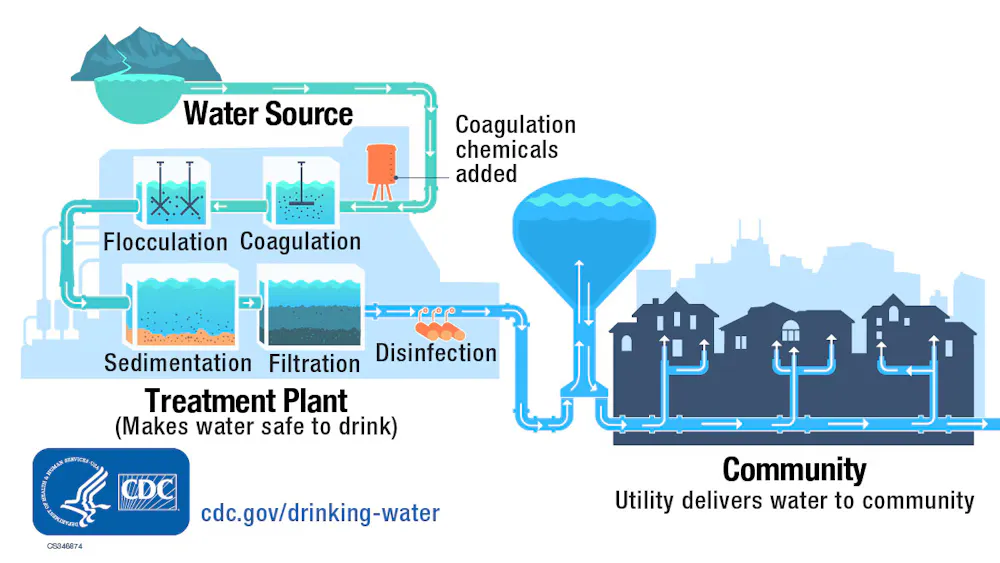
Today, the process of cleaning water begins with the same steps employed by the ancient Egyptians, followed by extensive filtration to get rid of debris as well as most germs and chemicals. Chlorine is added to kill lingering pathogens, including those that may reside in the service pipes carrying the water to the faucet. Beginning in the 1940s, a small amount of fluoride was added as an inexpensive, safe and effective means to improve dental health.
People who champion raw water claim it has health benefits, such as essential minerals and beneficial bacteria called probiotics, that are stripped from tap water. Let’s unpack each of these claims.
Water dissolves bits of soil and rock at its source; therefore, its mineral content depends on the local geology. Areas with a lot of limestone, like the Midwest, have water that is higher in calcium. Water from deeper in the ground may have higher mineral content since it passes through more rock on its way to the surface.
The idea that tap water is depleted of essential minerals is not true, as these nutrients are too small to be excluded by the filtration process. Test kits can determine the mineral content of your water, and if you find it lacking, mineral supplements can be added. Experts suggest, however, that most minerals you need come from your diet, not water.
Some also claim that raw water contains probiotics that are removed from tap water. The amount of probiotics in water would also vary by location, and the notion that health-promoting bacteria reside in raw water has not been proved.
There are no studies associating raw water with any health benefit. Anecdotal claims about smoother skin or increased energy are likely to be placebo effects. Even the idea that raw water tastes better might be more psychological than physiological – a 2018 study showed that most people preferred tap water over bottled water in a blind taste test.
Risks of drinking raw water
Raw water carries the risk of serious gastrointestinal infection from a wide variety of pathogens.
Tap water undergoes several treatment steps before it reaches your faucet. CDC
Carriers of diarrheal infections can transmit them to others if they swim in public pools or fail to properly wash their hands before touching others or preparing food. Norovirus is particularly durable and can survive on surfaces for days, increasing chances of it infecting someone else.
Raw water can also contain algae that release toxins causing abdominal issues and damage to the brain and nervous system.
The Environmental Protection Agency routinely screens for nearly 100 contaminants to ensure tap water is safe. In contrast, raw water remains untested, unregulated and untreated, leaving its safety to drink in question. In terms of risks and benefits, there are no demonstrated health benefits from drinking raw water, but clear evidence that you may be exposing yourself to harmful infectious and toxic contaminants.
Bill Sullivan receives funding from the National Institutes of Health.
Source: The Conversation – UK – By Martha McGill, Honorary Research Fellow, Historian of Supernatural Beliefs, University of Warwick
In the fourth century BC, an unknown – but clearly disgruntled – schemer from the Greek city of Antioch had a curse tablet made. Inscribed on a thin piece of lead and deposited in a well, the tablet called for a “thunder-and-lightning-hurling” god to “strike, bind, bind together Babylas the greengrocer”.
Around 1,400 years later, an Anglo-Saxon charm advised on how to protect a field. The secret was to take a piece of turf from each corner and anoint it with a mixture of oil, honey, yeast, milk from the animals on the land, pieces of the trees and plants on the land, and water consecrated to the god Thunor.
In 17th-century England, the antiquarian Elias Ashmole hoped an astrological talisman would expel vermin from his house. Meanwhile, the diarist Samuel Pepys cured his upset stomach by purchasing a new hare’s foot. In 19th-century New Orleans, the Louisiana Creole woman Marie Laveau became famous for her healing, clairvoyance and work as a voodoo priestess, which she displayed in public gatherings at Congo Square.
These are among the many fascinating snippets discussed in Liz Williams’s new book, Compendium of the Occult: Arcane Artefacts, Magic Rituals and Sacred Symbolism. Looking at western occult traditions from ancient times to the present day, the book explores how human societies have sought power, protection and insight from gods and stars, spells and amulets, sacred places and seductively enigmatic organisations.
Looking for something good? Cut through the noise with a carefully curated selection of the latest releases, live events and exhibitions, straight to your inbox every fortnight, on Fridays. Sign up here.
The book is made up of 65 short articles, grouped into six sections: the origins of western occultism; divination, rituals and rites; charms and talismans; curses and hexes; secret societies; and sites of significance.
Many of the articles cover several centuries, meaning there is no scope for detailed analysis. However, Williams strikes an effective balance between general overview and colourful examples. She is sensitive to differences in perspective, noting the competing explanations for phenomena such as dowsing or Ouija boards.
She also acknowledges the complexities of reconstructing past beliefs and practices from imperfect surviving evidence, although occasionally unreliable source material is not sufficiently interrogated. The book accepts too readily, for example, the questionable story that Louis XIV’s mistress Madame de Montespan arranged “black masses” in which she used the blood of babies to summon the devil.
Magic and maladies
Compendium of the Occult is handsomely bound, pleasingly laid out and beautifully illustrated. There are images of ancient clay tablets crisscrossed with incantations, witch bottles stuffed with nails and urine, voodoo dolls, mummies, skulls, books, statues, artworks and protective amulets in the shape of jaunty phalluses.
The book accepts too readily that Louis XIV’s mistress Madame de Montespan used the blood of babies to summon the devil. Wiki Commons
Some of the printing causes confusion, however. “Gold dots” on the timelines are difficult to see, as is the introduction’s small white text on black pages. The dating of some entries lacks obvious logic: “palmistry” is dated from the 5th to the 1st century BC, even though the article stretches to the 20th century, and other practices get the vaguer label “ancient times to the present day”. But these are minor quibbles.
More significantly, the book’s geographical remit is limited. The introduction refers to occult traditions in “the west”, but Britain is a particular focal point. Williams discusses eight “sites of significance”, of which three (Glastonbury, Avebury and Stonehenge) can be found within a 75-mile span in England.
She does cover ancient Egypt and Mesopotamia; there is an entry on voodoo; there are references to the influences of Arabic astrologers, and occasional mentions of practices in east Asia. But more engagement with occult traditions from beyond Europe, particularly in modern times, would have enhanced the volume and better justified the ambitious title.
A 1660 illustration of Claudius Ptolemy’s geocentric model of the Universe, from Compendium of the Occult. Wikimedia Commons
All the same, this is a rich and appealing book. Humankind’s inventiveness in conceptualising the workings of the world emerges with force. Much magic is underpinned by a belief that the everything is interwoven: the earth corresponds to the skies, the microcosm of the human body to the macrocosm of the universe.
Williams quotes the physician and polymath Cornelius Agrippa (1486-1535), who described how a square inscribed with numbers, stamped on a silver plate at the right hour, could call on Jupiter to bring the owner wealth and peace. If printed on coral, it could destroy evil spells.
Material objects, plants, numbers and heavenly bodies are drawn into a symbiotic relationship, and invested with the power to reshape human lives. Agrippa’s plates reflect an enduring desire to situate humankind in relation to the environment, and impose meaning and harmony on a chaotic cosmos.
Martha McGill does not work for, consult, own shares in or receive funding from any company or organisation that would benefit from this article, and has disclosed no relevant affiliations beyond their academic appointment.
When I drive my car on weekends, I emit greenhouse gases – but not enough to change the global climate on my own. But when I, my neighbours and hundreds of millions of other people drive, fly, eat meat and embark on countless other activities that generate greenhouse gas emissions, we raise the Earth’s temperature.
This is what we might call a collective harm problem, where the acts of many together lead to harmful outcomes, but no discrete act by any one person can solve it. Debates on how to fight climate change generally settle on the need for collective action ~ but does that make personal efforts inconsequential, even pointless?
If a single pro-environment lifestyle change – like one person giving up their SUV or cutting out meat in favour of plant-based foods – will not turn the tide of global climate change on its own, it’s reasonable to feel there is little that “doing your bit” can achieve. This mindset is disempowering.
Fortunately, it is not the only way of responding to the challenge. African philosophers have a different way of looking at it.
Individual contributions are not pointless
Studies assessing public willingness to contribute to climate action show that people will act even at a personal cost, given the right motivations. The urgent task for philosophers and environmentalists is to provide them with those motivations. This is where African philosophy is helpful.
By African philosophy, I mean critical reflections on basic questions about the world – spanning the nature of knowledge, existence, morality, meaning and truth, from the perspective of African philosophers.
I am a philosopher who studies the problem of what appear to be collectively insignificant individual actions. There is a concept from African philosophy that I think is helpful to understand this: “complementarity”.
Complementarity denotes a relationship of interdependence among all entities – plants, animals, rivers, humans – in an interconnected community of living and non-living things. As a framework for understanding the world, it holds that everything within the human and non-human environment exists in a relationship of mutual dependence. Everything is connected to everything else. No entity can exist and flourish in isolation.
To that extent, the flourishing of one person depends on and influences the flourishing of other things in the world – including other people and animals as companions, the plants and soil which provide food for survival, rivers and oceans that are a source of water, and the Sun which gives the energy that sustains life on Earth.
Complementarity has been used by African philosophers like Jonathan Chimakonam, Aïda Terblanché-Greeff, Diana-Abasi Ibanga and Kevin Gary Behrens to develop environmental philosophies based on shared relationships. According to these philosophers, a view of the world based on complementarity neither foregrounds nor diminishes humans. Rather, it sketches a relationship of equals defined by the mutual participation of all.
This thinking is averse to hierarchy. No individual can claim to have more value than another. Anything that exists serves as an important part of the environment and matters equally, whether alone or collectively. Complementarity holds that the relationships that unite individual things can extend to prove the value of every contribution, no matter its size.
And so, complementarity rejects the argument that anything you do to help the climate is pointless. Driving my car is not an action that exists in isolation. My emissions are interconnected with other aspects of the environment.
Similarly, individual climate-positive actions occur in relation to others taken globally, so it is a mistake to assume such actions are pointless. Rather, their relation to other actions makes them not just practically useful but necessary, to make a difference at the level of communities and globally.
According to this African concept, the race to reduce greenhouse gas emissions is a complementary effort. And so, do not be discouraged from taking your own step in this direction.
Patrick Effiong Ben receives funding from the AHRC North West Consortium Doctoral Training Partnership (NWCDTP).
Source: United Kingdom – Executive Government & Departments
Scotland Office Minister Kirsty McNeill marked Holocaust Memorial Day by urging Scots to “unite in the stand against hatred, intolerance and prejudice”
Minister McNeill was shown around the Scottish Jewish Heritage Centre, located within Garnethill Synagogue, by manager Kerry Patterson and Lionel Most, chair of the centre.
This year’s Holocaust Memorial Day (HMD) is the 80th anniversary since the liberation of the Nazi concentration and death camp, Auschwitz-Birkenau.
Events are taking place across Scotland, the UK and worldwide to remember the six million Jewish men, women and children who were murdered in the Holocaust, other victims of Nazi persecution and those who died in subsequent genocides.
Increasing education about the danger of discrimination and preventing the spread of hatred is a key objective of the activity.
The UK Government is committed to supporting all communities so they can live and worship safely – and through the Plan for Change will deliver a decade of national renewal, providing opportunity for all.
Among the events in Scotland, Minister McNeill visited the Scottish Jewish Heritage Centre and Garnethill Synagogue in Glasgow ahead of HMD.
Here she heard more about the community’s history and vast contributions to life in Scotland, the venue’s Holocaust education programmes and modern day antisemitism challenges.
Here a captivated audience heard Gillian describe the story of how her parents met in Glasgow after they were brought to the city in 1939, aged 15, through Kindertransport – a rescue operation that moved Jewish children from Nazi-controlled Europe to safety in Britain.
Both her parents deservedly received honours for their services to Holocaust education and Gillian now continues their legacy by shining a light on Jewish life across Scotland.
Minister McNeill said:
The annual Holocaust Memorial Day is a moment for us all to pause, reflect, and remember the six million Jews murdered during the Holocaust. It also commemorates other victims of Nazi persecution, those who died in more recent genocides, and educates about the importance of continuing to unite in the stand against hatred, intolerance and prejudice.
For the past 200 years the Jewish community has made a significant contribution to life in Scotland, a nation which I’m proud to say played a key role in providing sanctuary to so many refugees. It was a privilege to meet community leaders at the Scottish Jewish Heritage Centre and Garnethill Synagogue and hear of their excellent work. My conversations with them and Gillian Field fill me with hope that the horrors of the past will never be forgotten and that love and respect continue to be the values by which our diverse range of Scottish communities enjoy their lives.
To mark HMD communities and organisations from across the UK are taking part in events including ones by the Holocaust Memorial Day Trust – the charity established and funded by the UK Government to promote and support HMD.
HMD also commemorates the victims of more recent genocides of Rwanda, Srebrenica, and acts of genocide in Cambodia and against the Yazidi people.
The BBC is marking HMD with programmes across tv, radio and online, as well as full coverage of the Auschwitz Ceremony from Poland and commemorative events across the UK.
Further information
The Scottish Jewish Heritage Centre, located within Garnethill Synagogue, houses Scotland’s Jewish Archive Centre and tells the story of Jewish life in Scotland.
Garnethill Synagogue, opened in 1879, is Scotland’s oldest purpose-built synagogue and is Category A listed.
The centre plays a vital role in Holocaust education and preserving the memories of Jewish refugees who made Scotland their home.
Minister McNeill was shown around the synagogue and centre by manager Kerry Patterson and Lionel Most, chair of the centre.
Source: United Kingdom – Executive Government & Departments
UK Minister for Africa Lord Collins announces support to extend electricity access to millions across Africa.
Minister for Africa Lord Collins announces support to extend electricity access to millions across Africa.
New deal between British International Investment and UK cleantech company MOPO will connect over a million people across the DRC to renewable energy sources, delivering on the Plan for Change by unleashing the power of British technological innovation.
UK partnership with the African Development Bank will also channel private sector capital into African clean energy.
Millions more people across Africa will have access to clean power thanks to UK investment, Africa Minister Lord Collins has announced.
This comes as UK Special Representative for Climate Rachel Kyte attends the Mission 300 Africa Energy Summit today [27 January] in Dar Es Salaam, Tanzania.
The UK is one of the largest investors in clean energy in Africa and is working in partnership to support the Mission 300 initiative, which aims to expand electricity access to 300 million people in Africa by 2030. Half of Africa’s population – 600 million people – lack vital access to electricity.
Lord Collins is announcing a £5.3 million new deal between British International Investment (BII), the UK’s development finance institution, and UK cleantech firm MOPO.
This investment will enable MOPO to expand its pay-per-use battery rental operations in the DRC where over 80% of the population lack access to electricity. It demonstrates how UK companies are unlocking new opportunities for growth and positive impact that the clean energy transition has to offer in the UK and beyond.
Lord Collins will also announce new UK support of £8.5 million towards the African Development Bank’s Sustainable Energy Fund for Africa (SEFA) to build on existing efforts between the UK and African partners to connect millions of people across the continent with clean, reliable power.
Today’s announcement will unlock private sector investment in renewable energy projects including clean cooking and energy efficiency.
The support, which will be delivered as part of the UK’s Africa Regional Climate and Nature Programme (ARCAN), will accelerate renewable energy adoption and improve energy efficiency, developing solar-powered mini-grids in rural communities and providing technical assistance for large-scale renewable energy projects.
Minister for Africa Lord Collins of Highbury said:
The UK has set a landmark goal to be the first major economy to deliver clean power by 2030, and through our Plan for Change we’ll harness technology to transform the UK into a clean energy superpower. We want to leverage this ambition with our African partners to power green growth, eradicate poverty and tackle climate change.
Connecting the continent to clean, reliable energy is vital, and UK support is helping ensure millions are getting the access they need to prosper through planet-friendly solutions. This will also allow us to deepen our partnerships across Africa, sharing expertise, finance and innovation.
These announcements from Lord Collins show how the UK Government is delivering on the Plan for Change, which will transform the UK into a clean energy superpower, cutting bills and guaranteeing our energy independence, while championing clean technology innovation overseas and generating opportunities for investment and jobs in British businesses.
Speaking at the summit, the UK’s Special Representative on Climate, Rachel Kyte, said:
Reliable, affordable and clean energy is the cornerstone of economic growth and development. Clean energy, through modern grids and distributed renewable energy offers an opportunity for inclusive growth. Helping end energy poverty supports growth, builds resilience and puts countries on a pathway that helps our common challenge of fighting climate change. The UK is working with partners across Africa to connect millions of people in the region with cleaner and more efficient power. That is why I’m pleased to be at this summit, supporting Mission 300 and reaffirming our commitment to our shared sustainable development goals especially in Africa.
At the summit, the UK’s Special Representative for Climate will set out how the UK is deepening our partnerships with African nations and multilateral institutions to fuel the clean energy revolution and stimulate growth whilst tackling the climate emergency.
Leslie Maasdorp, BII CEO said:
At BII we want to use our distinctive position, and track record, to create more early-stage solutions that help expand access to energy for more Africans. This is demonstrated through our investment in MOPO, which is expected to reach over a million people in DRC where energy access is limited.
More broadly, we welcome the partnership of African governments, as well as other institutions like the African Development Bank, in making that ambition a reality.
Today’s announcements at the Dar Es Salaam summit also reinforce the long-standing UK-Tanzania partnership.
Tanzania was one of the first countries to sign up to the first mission of the UK’s Global Clean Power Alliance. The two countries are working together to boost the global clean energy transition, whilst furthering trade opportunities that will create jobs and deliver economic growth.
Notes to Editors:
BII is playing its part in the overall ecosystem to meet the goals of Mission 300. Today, BII’s investments provide clean energy to over 26 million people across sub-Saharan Africa and it has ambitions to do more.
MOPO installs hundreds of solar powered hubs which rent MOPO batteries to customers in regions far from the main grid. MOPO was supported in its early stages to develop its technology, business model and partnerships through the FCDO’s Transforming Energy Access programme.
The ADB funding will be delivered through the Sustainable Energy Fund for Africa (SEFA) and will provide concessional finance and technical assistance to mobilise finance from the private sector into innovate, clean energy projects. Investments made by SEFA with support from the UK and other donors is expected to create 1.3 million new electricity connections in Africa.
The Africa Regional Climate and Nature Programme (ARCAN) is part of the UK’s wider £11.6bn International Climate Finance commitment. Other projects include the Climate Adaptation and Resilience research programme (CLARE), FSD Africa and FSD Africa investments, and Cooperation in International Waters in Africa (CIWA).
Foreign Secretary David Lammy will co-host the FCDO’s annual Holocaust Memorial Day reception with the Israeli Embassy today
Foreign Secretary will co-host a reception with the Embassy of Israel in the Foreign Office today
David Lammy will meet Holocaust survivor Janine Webber, who survived Nazi persecution in occupied Poland.
Senior UK delegation including HMTK will join world leaders at Auschwitz-Birkenau commemoration ceremony in Poland
The Foreign Secretary will today co-host a reception with the Her Excellency the Ambassador of Israel to the United Kingdom to mark Holocaust Memorial Day and the 80th anniversary of the liberation of Auschwitz-Birkenau concentration camp.
Prior to the commemoration, the Foreign Secretary will meet Holocaust survivor Janine Webber BEM, who survived the Holocaust as child in occupied Poland, enduring the tragic loss of her parents and brother at the hands of the Nazis.
The commemoration will showcase innovative approaches to Holocaust education. These include Testimony 360, a virtual reality programme preserving survivor testimonies for future generations, and ‘In Their Footsteps’, a powerful exhibition featuring 3D-printed shoes that symbolise Holocaust remembrance.
Foreign Secretary David Lammy is expected to say:
Never again’ is a solemn promise, which we owe to the victims, but also which we must uphold for our own sake and for the sake of future generations.
We need Holocaust remembrance. Holocaust education. Action against antisemitism.
It is how we build a better future for all.
A high-level UK delegation, including senior government officials, His Majesty The King and Holocaust survivors, will join world leaders today at the Auschwitz-Birkenau commemoration ceremony in Poland today.
As part of the UK’s commitment to Holocaust remembrance, the Prime Minister pledged at least £2.2 million in September to continue to fund the Holocaust Educational Trust’s Lessons from Auschwitz project, enabling UK students to visit Auschwitz and learn about the history of the Holocaust.
Background
Holocaust Memorial Day is marked annually on 27 January. As set out by the Holocaust Memorial Day Trust, the Holocaust is central to Holocaust Memorial Day and we remember the six million Jews murdered during the Holocaust. It also commemorates the millions more people murdered through the Nazi persecution of other groups and in the more recent genocides of Rwanda, Srebrenica, and acts of genocide in Cambodia and against the Yazidi people.
The UK currently holds the presidency of the International Holocaust Remembrance Alliance, until 28 February.
Kinshasa (Agenzia Fides) – “It was a terrible night,” local sources told Fides from Goma, the capital of North Kivu, in the east of the Democratic Republic of Congo, which was conquered today, January 27, by the rebels of the M23 movement. In the Munzenze prison, where about 3,000 prisoners are held, there were hellish scenes. “Throughout the night, as the rebels approached, the prisoners started a revolt. The guards shot indiscriminately. Around 8 in the morning, the prisoners began to jump from the roof of the prison and escape. All the prisoners escaped. We do not know if it was the officers themselves who opened the doors of the prison; the fact is that it is now empty” report our sources.“At dawn, M23 troops entered the city, and now the fighting is concentrated in the airport area,” Fides sources add. Congolese troops of the FARDC (Armed Forces of the Democratic Republic of Congo) surrendered at dawn on January 27. The Congolese authorities have confirmed the death of the military governor of the province, Péter Cirimwami, after several contradictory reports on his fate (see Fides, 24/1/2025). The defeat of the FARDC also represents a failure for the international community, which had deployed in North Kivu the blue helmets of MONUSCO (UN Mission in the DRC) and soldiers from the force of the Southern African Development Community (SADC) Mission in the Democratic Republic of Congo (SAMIDRC). At least nine South African soldiers from SAMIDRC, along with three Malawian and one Uruguayan MONUSCO blue helmets, have lost their lives in the fighting in recent hours. Some FARDC soldiers and pro-government militiamen from Wazalendo have surrendered to MONUSCO, complying with the demands of the M23, which claims to have control of traffic in Lake Kivu, thus blocking the possibility of escape through its waters. On the international level, while the Kinshasa government rejected the mediation proposed by Turkish President Recep Tayyip Erdogan (see Fides, 24/1/2025), Kenyan President William Ruto has announced an extraordinary summit of the East African Community (EAC) “in the next 48 hours”, with the participation of the Heads of State of the DRC and Rwanda, the latter indicated as a sponsor of the M23. (L.M.) (Agenzia Fides, 25/1/2025)
Share:
Source: Africa Press Organisation – English (2) – Report:
ABIDJAN, Ivory Coast, January 27, 2025/APO Group/ —
By Kevin Kariuki, Vice President for Power, Energy, Climate, and Green Growth at the African Development Bank Group (www.AfDB.org/en)
Across Africa, nearly 600 million people live in energy poverty, deprived of reliable access to electricity—a fundamental prerequisite for modern life. This staggering statistic represents more than just a lack of power. Significantly, it translates to limited opportunities for education, healthcare, gender equality, and economic growth. Mission 300, a bold initiative championed by the African Development Bank Group and the World Bank Group in collaboration with key partners, seeks to change this narrative by providing first time electricity access to 300 million Africans by 2030. A key milestone in this effort, branded Mission 300, is the Africa Energy Summit scheduled for Dar es Salaam, 27/28 January 2025.
The Significance of Energy Access
Energy is the engine of development. Without affordable, reliable, and sustainable electricity, Africa cannot achieve its developmental aspirations or secure its rightful place in the global economy. Energy access is the cornerstone of economic transformation, opening doors to education, healthcare, and income generation. Moreover, it fosters gender equality by reducing the time women spend on labour and time-intensive tasks such as cooking with traditional fuels or collecting for firewood. Mission 300’s success is therefore not just about electrification; it is about saving and empowering lives as well as communities. It is also about reducing greenhouse gas emissions and safeguarding biodiversity.
Yet, the path ahead is daunting. At the current pace of electrification, coupled with Africa’s rapid population growth, the number of people living without access to electricity could remain largely unchanged. Action is therefore an imperative, and Mission 300 provides the roadmap to achieve universal energy access by 2030, consistent with the United Nations’ Sustainable Development Goal 7 and the African Union’s Agenda 2063.
The Role of Mission 300
Mission 300 will invest in new and rehabilitation of generation capacity, transmission systems, including intra- and regional interconnections, as well as distribution grids to build robust and reliable power systems. It will be complemented by reforms in the energy sector to ensure affordability and sustainability of electricity service, and financially viable utilities while partnerships with the private sector will assist in mobilizing funding at the required speed and scale
In addition to providing electricity access from interconnected power systems, through Mission 300’s transformative vision, mini-grids, and stand-alone solar home systems will be prioritized to provide electricity to underserved regions and communities, including in fragile and remote areas where extending the interconnected grid is impracticable. These Distributed Renewable Energy (DRE) solutions are amenable to easy and speedy roll-out, cost-effective, modular, sustainable, and can ensure that no community is left behind in the Mission 300 journey. DRE solutions are projected to account for more that 50% of new connections by 2030.
A Defining Moment: The Africa Energy Summit
The upcoming Africa Energy Summit in Dar es Salaam will be a pivotal moment in Mission 300 journey. Hosted by the Government of the United Republic of Tanzania, the African Union, the African Development Bank Group, the World Bank Group, as well as the African Union, the summit will bring together over 25 Heads of State and Governments, Heads of international Organisation, including Banks, energy experts, and private sector leaders to forge a common path toward universal energy access.
The principal outcomes of the summit comprise of the adoption of the Dar es Salaam Energy Declaration by the entire continent and twelve country energy compacts co-created between countries and the Mission 300 partners. The Dar es Salaam Energy Declaration will outline commitments to reforms and actions necessary to achieve Mission 300 while twelve country energy compacts, will expound on the principles of the Dar es Salaam Energy Declaration to establish tangible country specific actions and measures for accelerated electricity access such as least-cost power expansion plans, providing last-mile access through grid and distributed renewables, building financially viable energy systems, regional interconnection and promotion of private sector participation in the energy sector. The twelve countries that will submit energy compacts account for almost half of the global population without access to electricity.
Another important outcome will be the enlisting of additional partners to the Mission 300 bus. Several partners are expected to announce additional financial resources and technical assistance in furtherance of the Mission 300 goal.
Why Now?
Firstly, is the unity of purpose and visionary leadership of African Development Bank Group and the World Bank Group Presidents that has led to the forging of a structured approach to definitively address the electricity deficit problem in Africa, in collaboration with other development partners.
Secondly, the continent is blessed with abundant energy resources, including renewable energy, such as 60% of the world’s best solar potential, of which only a tiny proportion has been harnessed.
Thirdly the cost of renewable energy technology, particularly wind and solar, has reduced dramatically in the recent past making electricity generation from these sources cost competitive compared to sources of conventional power. Moreover, access to information communication technology, and digitization thereof, currently enables payment platforms that support distributed renewable energy solution.
When combined, the foregoing provides unprecedented opportunities for addressing the continent’s energy access deficit while also espousing a low-carbon growth trajectory, to support Africa’s climate goals.
A Call to Action
Mission 300 is more than an energy initiative; it is a moral imperative. It represents a collective commitment to uplift millions from poverty, foster inclusive economic growth, and create a resilient, green future. But its success hinges on robust support from all stakeholders—governments, development partners, the private sector, and civil society. Together, we must prioritize reforms, mobilize investments, and leverage partnerships to transform Africa’s energy landscape.
Let us seize this defining moment. The Africa Energy Summit must not just a platform for discussion on energy. It must constitute a watershed moment for energy access in Africa. Let us therefore work to actualize Mission 300 and literally light up the lives of millions, thereby creating lasting change that will evoke enormous pride on future generations.
In conclusion, “the road ahead may be challenging, but it is also filled with opportunity. With determination, innovation, and collaboration, we can achieve universal energy access in Africa. This is our moment to make history.”
Source: Africa Press Organisation – English (2) – Report:
DAR ES SALAAM, Tanzania, January 27, 2025/APO Group/ —
African heads of state, business leaders, and development partners will converge tomorrow in Dar es Salaam, Tanzania, for the Mission 300 Africa Energy Summit where they will commit to ambitious reforms and actions to expand access to reliable, affordable, and sustainable electricity to 300 million people in Africa by 2030.
Mission 300 is an unprecedented collaboration between the African Development Bank, the World Bank Group, and global partners to address Africa’s electricity access gap using new technology and innovative financing. Nearly 600 million Africans lack electricity, which is crucial for development and job creation.
Several heads of state and government from Africa will join more than 1,000 other participants—with strong representation from the private sector—at the January 27-28 summit. Together, they will chart Africa’s course toward universal access to energy.
This week’s summit is expected to yield two significant outcomes: the Dar es Salaam Energy Declaration, outlining commitments and practical actions from African governments to reform the energy sector, and the first set of National Energy Compacts, which will serve as blueprints with country-specific targets and timelines for implementation of critical reforms.
In the first phase, 12 countries will present their energy compacts: Chad, Côte d’Ivoire, the Democratic Republic of Congo, Liberia, Madagascar, Malawi, Mauritania, Niger, Nigeria, Senegal, Tanzania, and Zambia. Other African countries are expected to develop their compacts in subsequent phases.
The partnerships forged and commitments made by the continent’s leaders and changemakers gathering in Dar es Salaam this week will shape the continent’s journey toward achieving universal energy access, transforming millions of lives, and driving sustainable development and job creation.
Vatican City (Agenzia Fides) – “The salvation Jesus bestows on us is not yet fully realized. We know this. Yet wars, injustice, pain and death will not have the final word. The Gospel never disappoints”.In St. Peter’s Basilica in the Vatican, Pope Francis presided over the Holy Mass on the occasion of the VI Sunday of the Word of God, established in 2019 by the Pontiff himself. The Celebration also marked the conclusion of the three-day event dedicated to the Jubilee of the world of Communication.When we hear the Gospel, the words of God, the Pope suggested, “it is not simply a matter of listening to or understanding them, no. They must reach our hearts and bring about what I said, “amazement”. The word of God always amazes us; it always renews us. It enters our hearts and always renews us”. In fact, “the whole Bible speaks of Christ and his work, which the Spirit makes present and active in our lives and in history. When we read the Scriptures, when we pray and study them, we do not simply receive information about God; we receive his Spirit, who reminds us of all that Jesus said and did. In this way, our hearts, inflamed by faith, wait in hope for the coming of God”.“Let us respond with ardor to the joyful announcement of Christ! The Lord, in fact, did not speak to us as silent listeners, but as witnesses, calling us to evangelize at all times and in all places”, concluded the Pope who then conferred the ministry of Lector to forty lay men and women, from various nations: 4 from Albania, 3 from Argentina, 5 from Austria, 1 from Bolivia, 4 from Brazil, 5 from the Philippines, 1 from Iceland, 6 from Italy, 5 from Mexico, 1 from Poland, 5 from Slovenia.According to the rite, each of them received a copy of the Nova Vulgata Bible: “We are grateful to them and we pray for them. We are all praying for you. Let us commit ourselves to bringing the good news to the poor, proclaiming release to captives and recovery of sight to the blind, letting the oppressed go free and announcing the year of the Lord’s favour”.After the celebration, the Pontiff appeared in St. Peter’s Square for the Angelus prayer. And on the eve of the International Day of Commemoration in memory of the victims of the Holocaust, which this year coincides with the 80th anniversary of the liberation of the Auschwitz concentration camp, Pope Francis recalled the horrors of the Shoah, during which “many Christians also died, including numerous martyrs. The horror of the extermination of millions of Jews and people of other faiths during those years can neither be forgotten nor denied”.The Pontiff then turned his thoughts to the ongoing conflict in Sudan, which “is causing the most serious humanitarian crisis in the world, with dramatic consequences in South Sudan too. I am close to the peoples of both countries and I invite them to fraternity, solidarity, to avoid any kind of violence and not to allow themselves to be exploited. I renew my appeal to those who are at war in Sudan for them to put an end to hostilities and to agree to sit at the negotiating table. I urge the international community to do all it can to get the necessary humanitarian aid to the displaced people and to help the belligerents find paths to peace soon”.The Pope also drew attention to the situation in Colombia, in particular in the Catatumbo region, “where clashes between armed groups have claimed many civilian lives and displaced more than thirty thousand people. I express my closeness to them and pray for them”, added the Bishop of Rome, who did not forget that today is World Leprosy Day: “I encourage all those who work on behalf of those afflicted by this disease to continue their efforts, also helping those who heal to be reintegrated into society. May they not be marginalized!” (F.B.) (Agenzia Fides, 26/1/2025)
Share:
UN President Donald Trump’s idea of mass expulsion of Palestinians in Gaza to Jordan and Egypt has been dismissed by analysts as unaccepable “ethnic cleansing” and rejected by the governments of both neigbouring countries.
Middle East analyst Mouin Rabbani, a nonresident research fellow at the Middle East Council on Global Affairs and commentator specialising in Palestinian affairs and the Arab-Israeli conflict, said the US and Israel would “fail” over such a plan.
President Trump’s suggestion had been to “clean out” Gaza and move 1.5 million Palestinians to Jordan and Egypt.
“Even if [President Trump] applies pressure on Jordan and Egypt, I think their leaderships will recognise the price of going along with Trump is going to be much greater than the price of resisting him — in terms of the survival of their leaderships for participating in something like this,” Rabbani told Al Jazeera, referring to Trump’s plan as “ethnic cleansing”.
The rebuttals to the Trump idea came as Gaza experienced an historic day with jubilant scenes as tens of thousands of Palestinians crossed the so-called Netzarim Corridor to return home in the north showing their determination to survive under the 15-month onslaught by Israel’s military.
Al Jazeera journalist Tamer al-Misshal said it was a “significant and historic moment” for the Palestinians.
“It’s the first time since 1948 those who have been forced out of their homes and land managed to get back — despite the destruction and despite the genocide,” he said.
He quoted one Palestinian man who returned as saying he would erect a tent on his destroyed home, “which is much better than being forcibly displaced from Gaza”.
Al-Misshal noted Hamas recently said 18 more Israeli captives were alive and would be returned each Saturday in exchange for Palestinian prisoners over the next few weeks.
He said the next main step was to get the Rafah land crossing opened so aid could flow and thousands of badly wounded Palestinians could get medical treatment abroad.
‘Blanket refusal’
Analyst Mouin Rabbani . . . “Israel is not going to succeed in ethnically cleansing the Gaza Strip after a war.” Image: Middle East Council on Global Affairs
Analyst Mouin Rabbani told Al Jazeera about the Trump displacement idea: “This isn’t going to happen because Israel is not going to succeed in ethnically cleansing the Gaza Strip after a war, after having failed to do so during a war.”
When former US Secretary of State Antony Blinken went on a tour of Arab states to promote this idea late last year, he had been met with a “blanket refusal”, Rabbani added.
Meanwhile, in Tel Aviv Prime Minister Benjamin Netanyahu was feeling the heat from his coalition partners over the ceasefire deal who view the Israeli leader as succumbing to US demands, the analyst said.
“I think there’s a kind of a mix of personal, political and ideological factors at play,” Rabbani said.
“Day of victory” . . . How Al Jazeera reported the return of Palestinians to north Gaza today. Image: AJ screenshot APR
“But ultimately, I think the key relationship to look at here is not that between Netanyahu and his coalition partners, or between Israelis and Palestinians, but between Washington and Israel — because Washington is the one calling the shots, and Israel has no choice but to comply.”
A senior Hamas official, Basem Naim, has described the “return” day as “the most important day in the current history of this conflict”.
He said that Israel was “for the first time” obliged to allow Palestinians to return to their houses after being forced “by the resistance”, in a similar way that it was “forced to release” Palestinian prisoners.
Al Jazeera’s Hani Mahmoud reporting on the “Day of Return” for Palestinians going back to north Gaza. Image: AJ screenshot APR
‘Very symbolic day’ in conflict “This is, I think, a very symbolic day,” he said. “This is a very important day in how to approach this conflict with the Israelis, which language they understand.”
Naim also reaffirmed Hamas’s commitment to the ceasefire agreement and said the group was “ready to do the maximum to give this deal a chance to succeed”.
He also accused Netanyahu and the Israeli government of playing “dirty games” in a bid to “sabotage the deal”.
It “rejected any infringement on those inalienable rights, whether by settlement or annexation of land, or by the depopulation of that land of its people through displacement, encouraged transfer or the uprooting of Palestinians from their land, whether temporarily or long-term.”
The 1948 Nakba . . . more than 750,000 Palestinians were forced to leave their homeland and become exiles in neighbouring states and in Gaza. Many dream of their UN-recognised right to return. Image: Wikipedia
Retail central bank digital currency (CBDC) development projects continue to face significant hurdles before achieving large-scale implementation. Key challenges include ensuring system interoperability with existing payment methods and currencies worldwide, addressing privacy concerns in advanced economies, and overcoming infrastructure limitations in emerging economies, according to GlobalData, a leading data and analytics company.
GlobalData’s latest report, “The State of Central Bank Digital Currencies in 2025 and Beyond,” highlights that retail CBDCs fail to address real consumer needs or pain points meaningfully. Furthermore, they offer no clear tangible benefits that would drive user adoption.
Blandina Szalay, Banking and Payments Analyst at GlobalData, comments: “The very limited uptake of CBDC in countries where it fully launched – in the Bahamas, Jamaica, the Eastern Caribbean Currency Union, and Nigeria – can be attributed to the lack of compelling incentives for consumers to switch to CBDCs from the payment methods they are already used to.”
With habit and convenience being the dominant factors influencing payment tool choices globally for both in-person and online payments, central banks will require either robust incentive schemes or mandates to achieve a widespread adoption of their digital currencies. In countries already operating CBDCs, consumers have expressed that using CBDCs and their associated wallets has introduced additional friction to existing payment processes without offering sufficient benefits. Critics from other CBDC-piloting countries echo these sentiments.
Szalay continues: “Achieving critical mass in CBDC adoption, however, will be necessary to reap any advantages initially proposed by central banks. These could include driving domestic payment system innovation, improving cross-border payment efficiencies, fostering financial inclusion, and newfound financial and monetary stability in emerging economies by formalizing their economies via CBDC.”
Most recently, the Bank of England (BoE) unveiled its digital pound lab, a testing sandbox aimed at addressing key challenges such as interoperability, or absence of clear use cases and lack of viable business models. These issues are set to be tackled throughout 2025, before the decision on a wider launch is made.
Szalay concludes: “As national governments keep allocating resources towards their ongoing CBDC projects, they should also consider the level of their citizens’ openness and willingness to use the central bank’s digital currency in their everyday lives. Should incentives prove insufficient, and governments have to turn to mandates, it will only reinforce critics’ concerns that CBDCs are a tool for asserting domestic and international control.”
VICTORIA, Seychelles, Jan. 27, 2025 (GLOBE NEWSWIRE) — MEXC, a leading global cryptocurrency exchange, has provided over $414 million through its Insurance Fund Account to cover deficits that occur when users’ losses during liquidation exceed their available margin as of January 23, 2025. This impressive figure underscores MEXC’s commitment to asset security and risk mitigation. Combined with Proof of Reserve, MEXC offers traders robust protection against extreme market fluctuations.
How MEXC’s Insurance Fund Account Mitigates Risk for Traders The MEXC Insurance Fund Account, launched in November 2024, is specifically designed to protect traders from extreme market fluctuations, such as those experienced during a bull run, where rapid price swings can lead to a user’s account value to dip below the required margin level, triggering a liquidation. Should the liquidation price be worse than expected, resulting in losses that exceed than the available margin (a scenario known as bankruptcy), the Insurance Fund steps in to cover these excess losses, thus facilitating a smoother liquidation process.
The fund is continually replenished by surpluses generated from liquidation orders executed at better-than-expected prices, ensuring its stability and ongoing protection during periods of high volatility.
In line with its commitment to transparency, MEXC provides users with direct access to both current and historical insurance fund amounts for various cryptocurrencies on the platform.
In addition, MEXC provides Proof of Reserve to ensure asset safety and maintain transparency for its users. This allows users to trade with confidence, free from concerns about withdrawal runs. The reserve rates are updated every two months. As of Dec 1, 2024, the latest reserve rates for various cryptocurrencies are as follows:
USDT: 104.52%
USDC: 116.52%
BTC: 105.88%
ETH: 105.65%
By offering high leverage alongside an Insurance Fund Account and Reserve Rate exceeding 100%, MEXC ensures multiple layers of protection to safeguard traders’ positions and ensure asset security.
The Go-To Platform for Seamless Crypto Trading In addition to implementing robust safety measures to ensure a secure trading environment, the platform offers a variety of features and services designed to enhance the user experience. These features help traders minimize costs and maximize returns. MEXC is committed to empowering traders by enabling investments across the widest range of assets, ensuring safe and seamless transactions regardless of market conditions.
M – Most Trending Tokens: MEXC is known for its rapid token listings and diverse selection of popular tokens, helping users capitalize on emerging opportunities. To date, over 3,000 tokens have been listed on the platform.
E – Everyday Airdrops: MEXC makes it easy for users to engage in daily airdrop events and receive substantial rewards without complex procedures. In 2024, the platform completed 2,293 airdrop events, distributing over $136 million in rewards.
X – Xtremely Low Fees: MEXC offers highly competitive trading fees, helping users reduce costs and maximize their growth potential.
C – Comprehensive Liquidity: Backed by strong liquidity and market depth, MEXC ensures the efficient and seamless execution of every transaction, minimizing slippage even during volatile conditions.
These features have helped MEXC attract over 30 million users across over 170 countries, establishing it as the platform of choice for an increasing number of traders around the world.
About MEXC Founded in 2018, MEXC is committed to being “Your Easiest Way to Crypto”. Serving over 30 million users across 170+ countries, MEXC is known for its broad selection of trending tokens, frequent airdrop opportunities, and low trading fees. Our user-friendly platform is designed to support both new traders and experienced investors, offering secure and efficient access to digital assets. MEXC prioritizes simplicity and innovation, making crypto trading more accessible and rewarding.
Risk Disclaimer: The information provided in this article about cryptocurrencies does not represent MEXC’s official stance or investment advice. Given the highly volatile nature of the cryptocurrency market, investors are encouraged to carefully evaluate market fluctuations, project fundamentals, and potential financial risks before making any trading decisions.
Trade unions are critical to protecting and promoting human rights including economic, social, and cultural rights and the right to be free from discrimination.
First, they play a key role through negotiations with employers and collective action in supporting workers’ rights. In so doing, unions balance the scales of power, ensuring that workers are in a position to advocate for their rights, and holding those who run wealthy and powerful companies to account.
Second, the benefits of trade unions go far beyond the workplace. Unions are the fuel that keeps the fires of social justice and people power burning so that workers’ rights are respected and protected by law. Throughout history, unions have been the driving force behind calls on governments and employers to acknowledge and prevent human rights abuses that are connected to their business operations. They also ensure laws are adopted and reformed to better respect and protect the rights of workers.
Marking the one-year anniversary since the International Court of Justice (ICJ) found plausible risk that Israel is committing genocide in Gaza (Sunday 26 January), Amnesty International said the UK government’s disregard for its legal obligations to prevent genocide had contributed to Israel’s impunity and risked British complicity in serious crimes against international law.
Amnesty is calling on the UK government to take urgent and meaningful steps to prevent Israel’s genocidal acts against Palestinians in Gaza, as it is obligated to do as a State Party to the Genocide Convention.
The landmark case at the ICJ was brought by South Africa and the court’s judges ordered provisional measures to protect Palestinians from further harm, however these were dismissed by Israel. Amnesty’s own analysis concluded that Israel is engaged in committing genocide in a comprehensive report published last year and it continues to do so.
Sacha Deshmukh, Amnesty International UK’s Chief Executive, said:
“The UK government should have taken heed of this extremely significant ICJ ruling the day it was announced. UK inaction and disregard for its international obligations to prevent genocide contributed to Israel’s impunity and risked British complicity in serious crimes against international law.
“The genocide against the Palestinian people is a matter of law and evidence, not opinion. Prime Minister Keir Starmer must accept the UK’s obligations to prevent Israel’s genocide against Palestinians in Gaza and help ensure there is justice and accountability.
“To avoid the risk of itself being complicit in genocide, the UK should have ended all arms transfers to Israel long ago and committed full support to the ICJ and other important international accountability mechanisms. The UK should take those steps urgently now.
“The staggering number of Palestinian civilians killed, the colossal scale of physical destruction, the blocking of life-saving aid before the ceasefire, and the stream of dehumanising and racist anti-Palestinian rhetoric from Israeli officials, provide the clear evidential basis for genocidal intent, as defined by law, in Israel’s actions in Gaza.
“The UK government must fulfil its duties to stop genocidal acts even when committed by an ally and show clearly that it is UK policy that Palestinian lives matter as much as any other human life.”
Evidence of genocide
In December 2024, Amnesty’s International’s research found sufficient basis to conclude that Israel has committed – and is continuing to commit – genocide against Palestinians in the occupied Gaza Strip.
The 296-page report - ‘You Feel Like You Are Subhuman’: Israel’s Genocide Against Palestinians in Gaza - documents how, during its military offensive launched in the wake of the deadly Hamas-led attacks in southern Israel on 7 October 2023, Israel has unleashed hell and destruction on Palestinians in Gaza brazenly, continuously and with total impunity. Amnesty examined Israel’s acts in Gaza closely and in their totality, taking into account their recurrence and simultaneous occurrence, and both their immediate impact and their cumulative and mutually-reinforcing consequences. Amnesty considered the scale and severity of the casualties and destruction over time, and also analysed public statements by officials – finding that prohibited acts were often announced or called for in the first place by high-level officials in charge of the war efforts.
As a state party to the Genocide Convention, the UK has a legal obligation to use all reasonable means to help prevent genocide and be consistent when supporting international law – just as it has done when calling out crimes carried out by Russian forces.
Briefing by Joyce Msuya, Assistant Secretary-General for Humanitarian Affairs and Deputy Emergency Relief Coordinator, on the humanitarian situation in the Democratic Republic of the Congo.
—
The crisis in eastern DRC is at a dangerous point: The situation is deteriorating rapidly, and if hostilities spill into Goma – a densely populated urban center – the impact on civilians could be devastating.
More than 21 million people already need aid across the country – one of the highest numbers worldwide. Approximately 1 million people had already sought refuge in neighboring countries. The escalation in the east threatens to make a critical humanitarian situation even worse.
—
Council members, to address this escalating humanitarian crisis before the situation worsens further, I have three asks to the Council:
First, I urge this Council and all Member States to leverage their influence to ensure that international humanitarian law is respected by all parties.
Civilians must be protected. IDP sites and medical facilities must be protected. Rapid, unimpeded, and safe humanitarian access to those in need must be facilitated.
Second, since we are at the start of the year and many funding sources remain unavailable or delayed for various reasons, adequate funding is essential to enable and sustain urgent humanitarian action. In light of the scale and severity of the current situation, we are allocating US $ 17 million from the Central Emergency Response Fund for immediate life-saving interventions. However, let’s be clear: Additional resources are urgently
needed.
Third, I urge the Council and all Member States to use their influence to end the hostilities.
The scale of suffering in the DRC demands urgent attention. The plight of the country’s women, men and children cannot continue to go unnoticed.
LYON, France – An international counter-terrorism operation in East Africa has led to the arrest of 37 suspects and the seizure of both small arms and heavy weapons. Those arrested include suspected members of ISIS, Al Shabaab and several foreign terrorist fighters.
Arrests were made across eight East African countries during a joint INTERPOL and AFRIPOL operation (November-December 2024) aimed at identifying and arresting suspects with links to terrorism and strengthening key border controls.
In Kenya, police arrested 17 people including two suspected ISIS members, several foreign terrorist fighters and others involved in terrorism financing, radicalization and propaganda.
Police in the Democratic Republic of Congo arrested four alleged members of the Allied Democratic Forces (ADF) and two associates. Forces also seized and destroyed a missile and anti-tank device abandoned by suspected terrorists.
In Somalia, authorities arrested three people, including a suspected bomb maker for an Amniyaat unit of Al-Shabaab who had been planting Improvised Explosive Devices, targeting law enforcement and the military. Another of the detained suspects was an Al Shabaab operative who is believed to have attacked several police checkpoints with hand grenades.
Law enforcement in Tanzania arrested an alleged member of ISIS Mozambique, as well as a Ugandan national who was attempting to join a terrorist group in Mozambique as a foreign terrorist fighter.
Prior to the operation, each participating country prepared an operational plan, gathering intelligence on terror-related targets, including individuals and their known locations. INTERPOL and AFRIPOL consolidated and analysed this information and shared it with all participating countries, facilitating a significant exchange of criminal intelligence.
During the tactical phase of the operation each country carried out strategic investigations and raids. Police received on-the-ground support from INTERPOL and AFRIPOL officers, who provided coordination, logistics and real-time data analysis.
Cyril Gout, INTERPOL’s Acting Executive Director of Police Services, said:
“East Africa’s complex landscape, marked by political instability, porous borders, and socioeconomic challenges, continues to provide an environment conducive to terrorist activity. As these groups seek to expand their reach beyond traditional areas of operation, it is essential that law enforcement agencies work together to stay ahead of these evolving threats. These positive results demonstrate the power of international collaboration in the fight against terrorism.”
Ambassador Jalel Chelba, Acting Executive Director of AFRIPOL, said:
“Tackling terrorism and organized crime demands a unified and forward-thinking strategy that addresses both immediate risks and the deeper vulnerabilities that enable them. This operation highlights the critical role of international cooperation and the exchange of intelligence in disrupting criminal networks and curbing their reach. AFRIPOL is dedicated to supporting Member States, enhancing regional partnerships, and fostering resilience to promote lasting safety and stability across Africa.”
Border security: A critical line of defense against terrorism
To bolster border security, frontline officers at land, air and port border points were trained and equipped with INTERPOL Mobile Devices (IMDs), giving them real-time access to INTERPOL’s databases. These contain personal and criminal history information in addition to details of around 135,000 foreign terrorist fighters, as well as millions of records of lost and stolen travel documents, which are a key asset for terrorist mobility.
More than 88,000 checks were made against INTERPOL databases
Frontline officers were trained in the use of INTERPOL Mobile Devices
Passport check in Somalia
Over the course of the five-day border security operation, more than 88,000 checks were made against INTERPOL databases, resulting in the detection of 15 individuals subject to INTERPOL Notices and Diffusions related to crimes such as fraud, rape, murder, armed robbery, money laundering and crimes against children. Overall, the reinforced border controls led to 32 arrests for a broad range of crimes.
The successful cooperation between eight countries, INTERPOL and AFRIPOL highlights the importance of a comprehensive approach to combating terrorism, a threat that remains a major concern for the safety and security of the region.
Note to editors
The operation was delivered under the framework of the ISPA programme, funded by the German Federal Foreign Office, to support AFRIPOL in strengthening its position as the lead institution in Africa for preventing and combating transnational organized crime, terrorism and cybercrime.
Source: The Conversation – Indonesia – By Aswin Ariyanto Azis, Head of department of Politics, Government, and International Relations of Universitas Brawijaya, Universitas Brawijaya
Ilustrasi-ilustrasi bendera negara anggota BRICS dan mitra.justit/Shutterstock
Indonesia’s decision to pursue membership in BRICS – an emerging economy bloc comprising Brazil, Russia, India, China, and South Africa – signals that President Prabowo Subianto is steering foreign policy in a direction contrasting with his predecessors.
Since BRICS is an alternative to Western-dominated organisations, many observers scrutinised and questioned Indonesia’s nonalignment commitment. However, Foreign Minister Sugiono argued that BRICS aligns with Indonesia’s ‘free and active’ foreign policy, allowing Indonesia to collaborate widely without aligning too closely with any single bloc.
For Sugiono, joining BRICS means paving the way to advance the new government’s goals of food security, energy independence, poverty alleviation, and human capital development. The bloc offers access to funding, technology, and trade opportunities to tackle key challenges in those sectors. BRICS, with its emphasis on fairness and cooperation, supports Indonesia’s vision for a more inclusive and sustainable future.
The shift from Retno’s OECD focus to Sugiono’s BRICS approach reflects at least two visions. First, Indonesia seeks to reassess its strategic position as the leading economy in Southeast Asia. Second, the country seeks to switch from its nonalignment stance to multi-alignment. The later will help navigate partnerships with both developed and emerging economies, balancing traditional alliances with new opportunities.
Joining BRICS can amplify Indonesia’s influence in its already strong ties with each of the member countries and unlock opportunities beyond one-on-one partnerships.
Fear of missing out
Indonesia’s pivot to BRICS reflects both its relationship with major powers, such as China and the US, and regional pressures.
Neighbouring countries Malaysia and Thailand have recently expressed interest in BRICS, creating a sense of competition within Southeast Asia. Both countries joining the bloc could erode Indonesia’s leadership and influence in the region, especially in affecting global affairs.
As its de facto leader, Indonesia has historically championed initiatives like the South China Sea Code of Conduct and Myanmar’s peace process. Its G20 presidency further underscored its role as a mediator between global powers.
Joining BRICS ahead of its regional peers ensures that Indonesia maintains its leadership position in ASEAN. For Prabowo’s administration, BRICS offers a platform to advance Indonesia’s interests in maritime security, economic growth, and global governance. It is a strategic move beyond an economic decision to amplify its voice on global issues and prevent fellow Southeast Asian countries from overtaking it in shaping the bloc’s agenda.
Bold (but not one) direction
Indonesia’s BRICS membership announcement highlights the new administration’s foreign policy ambitions, centred on two key shifts: adopting a multi-alignment strategy and strengthening its ‘good neighbour’ policy.
Prabowo envisions engaging with all nations, fostering friendly relations while opposing oppression. This approach resonates with Indonesia’s historical commitment to sovereignty and equality in international relations.
By joining BRICS, Indonesia avoids taking sides and instead diversifies its partnerships to maximise benefits. This multi-aligned approach enables active participation in BRICS discussions on multilateral reform.
Such collaborations reduce reliance on Western financial systems and enhance Indonesia’s autonomy. Ultimately, these strategic directions position Indonesia as a sovereign and dynamic player capable of balancing global relationships while advancing its own priorities.
What about the OECD?
This move does not mean the OECD is off the table for Indonesia. Instead, Prabowo’s approach reflects a dual-track strategy that values both alliances for their respective benefits.
The OECD remains a long-term objective to enhance Indonesia’s economic governance and regulatory standards. It serves the goal of providing the country with stable relationships within the Western economic framework. Meanwhile, BRICS offers an immediate avenue for Indonesia to deepen ties with equivalent economies and actively shape policies that impact the Global South.
Sugiono’s statement in Kazan emphasised Indonesia’s commitment to engaging in other forums, including the G20 and OECD discussions. It highlighted the country’s flexibility in international alliances.
This dual-track strategy reinforces Indonesia’s role as a bridge between developed and developing nations, maximising the benefits of both alliances without sacrificing its autonomy.
What’s next for Indonesia?
Indonesia’s decision to join BRICS marks a significant evolution in its foreign policy. By participating in BRICS, Indonesia positions itself as a critical player in global discussions on economic reform and development, asserting its voice within a multi-polar world order.
Indonesia is charting a path that balances traditional alliances with emerging opportunities, reinforcing its role as a dynamic, independent player on the world stage.
Aswin Ariyanto Azis tidak bekerja, menjadi konsultan, memiliki saham, atau menerima dana dari perusahaan atau organisasi mana pun yang akan mengambil untung dari artikel ini, dan telah mengungkapkan bahwa ia tidak memiliki afiliasi selain yang telah disebut di atas.
Tunisian security units have dismantled a drug trafficking network in the northern Ariana province, private radio station Mosaique FM reported on Saturday.
“On Friday, the security units dismantled a drug trafficking network, led by two brothers and operating in the Ettadhamen City,” said the radio.
After a raid on his home, the security units arrested a man, while his brother and other members of the network remain at large.
During the operation, three kilograms of marijuana, 2,100 ecstasy pills, and 150 grams of cocaine were seized.
The Tunisian government has taken a strong stance against drug trafficking. Recent nationwide operations have led to the arrest of hundreds of suspects.
Iraqi Prime Minister Mohammed Shia’al-Sudani and Omani Foreign Minister Sayyid Badr Albusaidi met in Baghdad on Saturday to discuss ways to enhance bilateral relations.
They underscored the importance of strengthening ties between the two nations and enhancing bilateral economic and trade exchanges, particularly in the oil derivatives sector, a statement by al-Sudani’s media office said.
The meeting also addressed the latest developments in the region, particularly the situation in Syria, with both sides emphasizing the need to coordinate positions among Arab countries to solidify stability, the statement said.
Their discussions also touched on the conflict in Gaza, efforts to support the Palestinian people, and the necessity of consolidating the ceasefire in Lebanon, it said.
A ceasefire agreement in the Gaza Strip is imminent, with most of its terms already agreed upon, a senior official from the Palestinian Islamic Jihad movement said on Saturday.
The official, who required anonymity, said the proposed agreement outlines a gradual cessation of hostilities and the withdrawal of Israeli forces from the Gaza Strip, with the final deal also including a comprehensive prisoner-for-hostage exchange and a permanent end to the war between Hamas and Israel.
Although some contentious points are still being negotiated, they are not expected to be a major obstacle to reaching a final agreement, added the official.
The source also expressed optimism that the agreement would be finalized before the end of the year, as long as Israel does not impose new conditions.
There is political will from all parties to reach a lasting resolution to the Gaza conflict, which has persisted for over 14 months, according to the official.
The ongoing negotiations, mediated by Egypt and Qatar with the participation of the United States, are based on a plan introduced by the United States in May to end the war, which began on Oct. 7, 2023, after Hamas’s attack on southern Israel that resulted in about 1,200 deaths.
Source: Africa Press Organisation – English (2) – Report:
BRAZZAVILLE, Congo (Republic of the), January 27, 2025/APO Group/ —
The inaugural Congo Energy & Investment Forum 2025, scheduled for March 24-26 in Brazzaville, will bring together global energy leaders and policymakers to explore the Republic of Congo’s energy sector. The forum will feature high-level technical sessions, focusing on the latest investment opportunities, regulatory reforms and key developments in oil, gas and power generation.
Key technical presentations will focus on the structure of Congo’s gas market, providing insight into the country’s efforts to capitalize on its natural gas reserves. With the implementation of the Gas Master Plan and the introduction of a new Gas Code, Congo is creating a more attractive investment climate for gas-to-power projects and the development of a national gas company. These sessions will explore opportunities for monetizing stranded gas resources and developing infrastructure to meet growing demand, positioning Congo as a potential regional hub for gas production with lucrative opportunities for both local and international stakeholders.
The inaugural Congo Economic and Investment Forum, set for March 24-26, 2025, in Brazzaville, under the patronage of President Denis Sassou Nguesso and supported by the Ministry of Hydrocarbons and Société National des Pétroles du Congo, will bring together international investors and local stakeholders to explore national and regional energy and infrastructure opportunities. The event will explore the latest gas-to-power projects and provide updates on ongoing expansions across the country.
As the country works to transform its energy sector, the forum will also feature key discussions on its legal and regulatory frameworks for gas market development. These sessions will offer valuable insights into recent reforms designed to attract foreign investment and enhance energy infrastructure. With Congo aiming to double oil production by 2027 and expand electricity generation, discussions will address how the new Gas Code and other reforms are streamlining energy exploration and production, creating a more transparent and attractive environment for international investors.
A unique technical workshop at CEIF 2025 will focus on Congo’s partnerships with Kazakhstan and Azerbaijan in energy sector development. By comparing Congo’s gas market to successful models in these countries, the session will highlight the importance of international collaboration in boosting energy production, technology transfer and capacity building. With multi-sectoral agreements already signed, the workshop will explore how these partnerships are enhancing Congo’s oil and gas infrastructure, positioning the country as a competitive player in the global energy market.
In a session dedicated to floating LNG (FLNG) technology, CEIF 2025 will showcase the country’s flagship Congo LNG Project – a game-changer for the country’s natural gas industry. The Nguya FLNG vessel, launched in 2024 with a capacity of 3 million tons per year, will play a critical role in liquefying Congo’s gas for export. This workshop will delve into the technical aspects of FLNG, its benefits for Congo’s energy infrastructure and its broader implications for the country’s natural gas export potential.
CEIF 2025 will also feature two workshops focused on offshore exploration in Congo’s prolific oil and gas fields. The “Expanding the Congo/Angola Basin” session will explore the growing collaboration between Congo and Angola to develop reserves in the Lower Congo Basin, where companies like ExxonMobil, TotalEnergies and Chevron are expanding production. The “Deepwater Congo” session will focus on deepwater oil projects, providing an in-depth look at production techniques, technological advancements and how new fields will drive Congo’s oil output.
Additional technical sessions will focus on Congo’s marginal fields and the country’s growing gas-to-power generation potential. Marginal fields in Congo present new opportunities for smaller independent operators, while ongoing and planned projects aimed at leveraging the country’s natural gas reserves for domestic electricity generation are set to meet rising energy demand and improve energy access.
Source: Africa Press Organisation – English (2) – Report:
Download logo
In an unprecedented move, the Office of the President hosted the first-ever public viewing of the Christmas decorations at State House grounds and gardens, drawing a crowd of over 1,500 on Saturday, December 21, from 7 PM to 11 PM.
Visitors of all ages flocked to the gates, eager to experience the State House grounds illuminated in dazzling festive splendour. Children were especially thrilled, delighting not only in the magical light displays but also in the showcase of vehicles on site.
The evening’s highlight was the appearance of President Wavel Ramkalawan and First Lady Mrs. Linda Ramkalawan, who personally welcomed attendees and shared season’s greetings with guests.
The event, programmed over two evenings, December 21 and 22, received overwhelming enthusiasm from the public. With such resounding success, the ‘Christmas Open Day’ is set to become a beloved annual tradition in future festive seasons at State House.
Distributed by APO Group on behalf of State House Seychelles.
CHISINAU, Republic of Moldova, Dec. 22, 2024 (GLOBE NEWSWIRE) — The collaboration between FunEasyLearn and The Time + Tide Foundation brought free language education to girls in Madagascar. The main focus was on students from remote areas with limited access to schooling. As part of the initiative, students received new tablets and free access to the FunEasyLearn app. The scope is for the girls to learn languages and improve their digital skills for better academic and professional opportunities.
Empowering Girls through Language Education
Through its participation, FunEasyLearn reiterates its commitment to making a long-lasting impact in language education. Language skills can unlock higher education and better employment for those in developing regions of South Africa. That can be particularly important for girls who face additional challenges in accessing quality education.
Co-founder & CEO of FunEasyLearn, Diana Andronic, commented: “We are honored to be working with the Time + Tide Foundation to support girls in Madagascar through language education. The initiative complements our mission to make language learning accessible to anyone, regardless of age and background. Language skills can be crucial in areas where education holds the key to a brighter future.”
The initiative has already yielded promising results. Teachers reported a boost in student engagement and academic performance. Although the girls mainly use tablets to learn French, educators encourage them to learn English and browse other language courses. Although the girls mainly use tablets to learn French, educators encourage them to learn English too and browse other language courses.
The app provides a solution for schools experiencing teacher shortages. FunEasyLearn provides students with a personalized language learning experience and real-time feedback. It also helps teachers to better address students’ needs due to the detailed statistics. The feature allows schools to improve student performance despite a shortage of human resources.
About FunEasyLearn
FunEasyLearn is an award-winning language-learning app trusted by millions of learners worldwide. The app caters to people of all ages who are willing to learn languages or improve their vocabulary. From children driven by curiosity to adults motivated to add new skills to their resumes, FunEasyLearn offers a supportive environment for learning. The dedicated Child Mode adjusts the content so that it’s suitable for children under 13. That makes it appealing for educators, schools, and corporate environments alike.
With 34 language courses available in 62 native languages, learners can explore vocabulary tailored to their specific needs. The game-based approach and simplified navigation ensure an enjoyable experience regardless of a user’s technical background. Over 320 useful topics and subtopics offer a smooth transition through 10 proficiency levels aligned with the CEFR (Common European Framework of Reference for Languages).
Website: www.funeasylearn.com For media inquiries, please contact support@funeasylearn.com