NewzIntel.com

    • Checkout Page
    • Contact Us
    • Default Redirect Page
    • Frontpage
    • Home-2
    • Home-3
    • Lost Password
    • Member Login
    • Member LogOut
    • Member TOS Page
    • My Account
    • NewzIntel Alert Control-Panel
    • NewzIntel Latest Reports
    • Post Views Counter
    • Privacy Policy
    • Public Individual Page
    • Register
    • Subscription Plan
    • Thank You Page

Category: Asia Pacific

  • MIL-OSI Asia-Pac: WAM!: India’s Manga & Anime Boom

    Source: Government of India

    Posted On: 07 APR 2025 9:54AM by PIB Delhi

    Resham Talwar had always believed in the power of voice. As a visually challenged artist, she knew that her voice carried more than just words, it carried emotion, expression, and the ability to bring characters to life. She didn’t let her disability define her. Instead, she carved a space for herself in the highly competitive world of voice acting. Winning the Voice Acting category at WAVES Anime & Manga Contest (WAM!) in Delhi elevated her journey, proving her artistry could break through any barrier. Resham’s expertise in radio jockeying, voice-overs, and audio editing had already proven her capabilities, but WAM!! put her on a bigger stage. Her talent resonated with industry leaders, opening doors that had remained closed for far too long. It’s stories like hers that highlight why WAM!! isn’t just a competition, it’s a movement that’s shaking up the creative industry.

    This dynamic initiative, organised by the Ministry of Information & Broadcasting in collaboration with the Media & Entertainment Association of India (MEAI), aims to harness India’s growing enthusiasm for anime and manga by providing a platform for creators to showcase their talent. WAM!! encourages artists to develop localised adaptations of popular Japanese styles, catering to both Indian and global audiences, with opportunities for publishing, distribution, and industry exposure that foster artistic expression and nurture emerging talent. The competition will feature state-level contests across 11 cities, culminating in a grand national finale at World Audio Visual Entertainment Summit (WAVES) 2025 in Mumbai.

    WAM! is a cornerstone of the broader WAVES 2025, an ambitious event set to unfold at the Jio World Centre in Mumbai from 1st to 4th May. WAVES aims to position India as a global powerhouse in media and entertainment, drawing inspiration from iconic gatherings like Davos and Cannes. It’s a first-of-its-kind summit, uniting films, OTT platforms, gaming, comics, digital media, AI, and the burgeoning AVGC-XR (Animation, Visual Effects, Gaming, Comics, and Extended Reality) sector under one roof. With India’s media and entertainment industry poised for massive growth, targeting a $50 billion market by 2029, WAVES is set to be the catalyst that propels the nation to the forefront of global storytelling.

    At the heart of WAVES lies the Create in India Challenges (CIC), a series of competitions designed to unearth and nurture talent across diverse creative fields. Season 1 of CIC has already sparked a frenzy, attracting over 77,000 entries, including more than 500 participants from 35 countries. From this vast pool, over 725 top creators will converge at the grand finale during WAVES 2025, showcasing their work and vying for global recognition. The challenges celebrate India’s rich tapestry of regional storytelling, reflecting the country’s linguistic and cultural diversity. WAM!!, as one of the standout initiatives under CIC, zeroes in on the anime and manga domains, offering a stage for both amateurs and professionals to shine. It’s a movement that not only discovers hidden gems but also bridges the gap between raw talent and industry opportunity, transforming dreams into tangible careers.

    To appreciate why WAM!! matters, it’s helpful to explore what manga and anime are, especially for people in India. Manga is simply a type of comic book or graphic novel that started in Japan. It’s like the comics you might read, but it covers all sorts of stories, think exciting adventures, sweet love tales, spooky horrors, or magical fantasies. What makes manga special is its look: the characters often have big, lively eyes and the drawings can be super simple or packed with detail, depending on the story. Unlike most books, you read manga from right to left, and it usually starts as short pieces in magazines before being put together into books called “tankōbon.” Anime, on the other hand, is like manga brought to life—it’s the cartoon version you watch on a screen, with movement and voices added to the same kinds of stories. There’s something for everyone: ‘shonen’ is for young boys and full of action and friendship, ‘shojo’ is for young girls and focuses on romance, ‘seinen’ is for grown-up men with deeper or darker ideas, and ‘josei’ is for adult women with everyday life or love stories that feel real.

    In India, manga and anime have become incredibly popular over the last ten years, thanks to how easy they are to find and the excited fans who love them. There are around 180 million anime fans in the country, making India the second-biggest anime market in the world, just behind China. These fans are expected to play a huge part in making anime even more popular globally, driving 60% of its growth. Shows like “Naruto,” “Dragon Ball,” “One Piece,” “Attack on Titan,” and “My Hero Academia” have become huge hits, winning over massive followings across India and showing just how much people here love these stories.

    The anime market in India was worth $1,642.5 million in 2023, and it’s set to grow to $5,036.0 million by 2032. Platforms like Netflix, Amazon Prime Video, Crunchyroll, and Disney+ Hotstar have made it simple for people to watch anime, adding subtitles so Indian viewers can enjoy them. Manga is also getting easier to find, with e-commerce giants like Amazon and Flipkart selling these comic books, and some special shops popping up too. Yet, despite this boom, India faces a critical shortage of skilled talent in the anime and manga industry, a gap that WAM is determined to bridge by fostering homegrown creators.

    Resham’s win is just one of many amazing stories coming out of WAM!. Take Angel Yadav, a high school student from Sunbeam Varuna in Varanasi, who stunned judges in the Manga (Student Category) at WAM Varanasi. Her artwork impressed Vaibhavi Studio in Kolkata so much that they offered her a job, showing that even young people can make a big impact in this field. Another success is Randeep Singh, a professional manga artist who entered WAM! Bhubaneswar. The judges loved his work, calling it good enough to be printed, and while he keeps working on his own manga, he’s already getting paid projects from Vaibhavi Studio. These examples show how WAM! changes lives, helping people turn their love for creating into real careers, with big names in the industry supporting them along the way.

    The support for WAM! extends far beyond individual triumphs, drawing in some of the biggest names in the business. Srikkanth Konatham, Director of BOB Pictures, has pledged to attend every future WAM! event, eager to scout talent ready to hit the ground running. Navin Miranda of ToonSutra is offering distribution deals in the webtoon space to winners, while Rajeswari Roy from eTV Bal Bharat is providing pitching opportunities in anime. Nilesh Patel, founder of central India’s largest animation studio, has gone further, promising placements for winners and internships for finalists. This industry backing isn’t just lip service, it’s a lifeline, ensuring that WAM! participants don’t just compete but thrive in a competitive global market.

    What sets WAM! apart is its ability to democratise creativity. It’s a platform where a visually challenged voice actor like Resham can stand shoulder-to-shoulder with a teenage manga artist like Angel or a seasoned professional like Randeep. As part of WAVES 2025, WAM! is more than a contest, it’s a revolution, reshaping how India’s creative talents are discovered, nurtured, and celebrated. With the summit on the horizon, the world will watch as India’s storytellers, rooted in a legacy of folklore and now embracing modern mediums like anime and manga, take centre stage. For Resham and countless others, WAM! isn’t just a win, it’s the beginning of a legacy, one that promises to burn brighter with every passing year.

    Source: Ministry of Information and Broadcasting

    WAM!: India’s Manga & Anime Boom

    ****

    Santosh Kumar/ Ritu Kataria/ Saurabh Kalia

    (Release ID: 2119648) Visitor Counter : 64
    MIL OSI Asia Pacific News –

    April 7, 2025
  • MIL-OSI Asia-Pac: NSO, India Unveils Digital Innovations to Strengthen Statistical System

    Source: Government of India

    Posted On: 07 APR 2025 9:13AM by PIB Delhi

    Ministry of Statistics and Programme Implementation (MOSPI) launched a revamped Microdata Portal during the recently held Conference of State Government Ministers, marking a significant step in enhancing data accessibility, user experience, and the integration of advanced technologies in the Official Statistical System. The new portal, which serves as a centralized repository for extensive statistical data collected from national surveys and economic census overcomes technological limitations faced by the previous portal. In collaboration with the World Bank Technology Team, MOSPI has adopted a modern, scalable technology stack that not only ensures compliance with the latest security standards but also supports a responsive design and data access mechanism. The portal can be accessed at https://microdata.gov.in/.

    On this occasion the web site of National Statistical System Training Academy was also launched. It will facilitate ease of access of information regarding capacity building initiative of the ministry by making them available at one place. The website can be accessed at www.nssta.gov.in.The portal & the website have been developed in-house by Data Informatics & Innovation Division of the ministry.

    MoSPI also presented a Proof of Concept (PoC) for an AI/ML-based classification tool designed to ease the use of the National Industrial Classification (NIC) in production of official statistics. The tool leverages natural language processing to allow stakeholders to enter text queries, subsequently suggesting the top five relevant NIC codes. This innovation not only reduces manual effort but also increases the productivity of enumerators, leading to more accurate data collection and ultimately better planning and policy-making. This has been the outcome of the recently concluded Hackathon organized by the ministry.

    The launch of these portals and website along with innovative AI-driven tools underscores commitment of the ministry to leverage the latest technological advancements for data management leading to strengthening of the statistical system. These initiatives are set to foster a more data-driven approach to policymaking, ensuring that government interventions are both precise and context-specific, ultimately contributing to goal of Viksit Bharat.

    ***

    Samrat/Allen

    (Release ID: 2119641) Visitor Counter : 51

    MIL OSI Asia Pacific News –

    April 7, 2025
  • MIL-OSI Asia-Pac: 18th National Seminar on National Sample Surveys: “Critical Insights through Research and Emerging Trends in latest Survey Findings”

    Source: Government of India

    Posted On: 07 APR 2025 9:12AM by PIB Delhi

    The National Statistics Office (NSO), Ministry of Statistics & Programme Implementation (MoSPI) organizes National Seminars at regular intervals following the release of survey reports based on data collected in the National Sample Surveys. The seminar serves as an academic platform where experts, researchers, academia, and government officials from various institutions present and discuss research papers based on the survey findings. So far, seventeen (17) National Seminars have been organized in reputed institutes and universities across the country.

    Continuing this tradition, the 18th National Seminar on survey results of  NSS 78th  Round: Multiple indicator Survey, 79th Round: Comprehensive Annual Modular Survey (CAMS) and Survey on Ayush, Annual Survey of Unincorporated Sector Enterprises (ASUSE), Household Consumption Expenditure Survey (HCES), and Annual Survey of Industries (ASI) is being organized by the National Statistics Office (NSO), Ministry of Statistics & Programme Implementation (MoSPI), Government of India at Goa University, Panaji, Goa, on the 8th and 9th  of April 2025.

    The seminar will be inaugurated by Director General (NSS) and the Vice-Chancellor of Goa University will grace the occasion. Distinguished members of various expert Committees under whose guidance the survey instruments were finalised will also honour the event with their presence and participation in the discussions.

    The event will host 225 participants, including researchers, academicians, policymakers, and other stakeholders. The event will also be attended by the experts from international organizations, experts from private survey agencies and professors/scholars from renowned institutions.

    For the 18th National Seminar around 40 research papers were received from Assistant Professors, Research scholars & students of various universities/colleges of across India, in-service and retired officers of Indian Statistical Service, other Government officers of different State /Central Govt. departments, researchers, data users etc.. Following a thorough evaluation by the Paper Selection Committee, 14 papers have been shortlisted for presentation. The seminar will comprise five technical sessions, during which these selected papers will be presented. The presentations will be based on survey findings related to the aforementioned key thematic areas of the seminar.

    The seminar will present research papers which broadly cover emerging topics of current importance, including ICT skills inequality, financial inclusion, the impact of health insurance, digital competency among youth, and insights into the platform economy, particularly app-based cab services and delivery services, all based on NSS survey data. Topics related to consumption patterns across household types, and AYUSH utilization, productivity in informal economies related to the unincorporated sector and industries will also be covered.

    The papers titled “Predicting an NSS Indicator Value: A Machine Learning Approach” , “A neural network approach to identify features associated with multidimensional poverty in rural India”, utilise advanced computational techniques to analyze large datasets, uncover patterns, and make predictions or classifications across various fields.

    Apart from the research papers, a session on presentations by the Stakeholder Ministries/Private survey agencies on utility of National Sample Survey data is also included in the proceedings of the seminar. The seminar aims to facilitate informed discussions, policy recommendations, and data-driven insights on these critical topics, contributing to evidence-based policymaking and governance.

    Participants are encouraged to join this significant event through open registration. The registration link is provided below:

    https://docs.google.com/forms/d/e/1FAIpQLSea7ooVF5HGOs0__FRZ6KmPE1wcMCIgWAu2EDtcIbALXPomvQ/viewform?usp=header

    For those unable to attend in person, the event will be streamed live on YouTube. Watch it on the official MoSPI YouTube Channel here: https://www.youtube.com/@GoIStats.

    For more information about National Sample Surveys and Reports, please visit the MoSPI website at www.mospi.gov.in.

    ****

    Samrat/ Allen

    (Release ID: 2119640) Visitor Counter : 50

    MIL OSI Asia Pacific News –

    April 7, 2025
  • MIL-OSI Asia-Pac: Prime Minister reaffirms commitment to build a healthier world on World Health Day

    Source: Government of India

    Posted On: 07 APR 2025 9:07AM by PIB Delhi

    The Prime Minister, Shri Narendra Modi has reaffirmed commitment to build a healthier world on World Health Day. Shri Modi said that government will keep focusing on healthcare and invest in different aspects of people’s well-being. Good health is the foundation of every thriving society.

    The Prime Minister wrote on X;

    “On World Health Day, let us reaffirm our commitment to building a healthier world. Our Government will keep focusing on healthcare and invest in different aspects of people’s well-being. Good health is the foundation of every thriving society!”


    On World Health Day, let us reaffirm our commitment to building a healthier world. Our Government will keep focusing on healthcare and invest in different aspects of people’s well-being. Good health is the foundation of every thriving society! pic.twitter.com/2XEpVmPza9

    — Narendra Modi (@narendramodi) April 7, 2025


    ***

    MJPS/ST

    (Release ID: 2119639) Visitor Counter : 89

    MIL OSI Asia Pacific News –

    April 7, 2025
  • MIL-OSI Asia-Pac: Airport Authority appoints next CEO

    Source: Hong Kong Government special administrative region

    The Board of Airport Authority Hong Kong (AA) endorsed on March 31, 2025, the appointment of Mrs Vivian Cheung Kar-fay as the next Chief Executive Officer (CEO) of the AA for three years with effect from today (April 7). The appointment has been approved by the Chief Executive.

    The Secretary for Transport and Logistics, Ms Mable Chan, extends a warm welcome to Mrs Cheung as she takes up the position of CEO of the AA. She said, “I trust that under Mrs Cheung’s leadership, the AA will continue to strengthen the leading position of Hong Kong International Airport as an international aviation hub and promote the long-term development of the airport, including leveraging the immerse opportunities brought by the Three-Runway System, transforming the airport into a world-leading Airport City, integrating with the development of the Guangdong-Hong Kong-Macao Greater Bay Area through enhanced intermodal connectivity, and promoting continuous innovation for excellence in aviation. The Government will continue to work closely with the AA to take our aviation industry to new heights.”

    ​Under the Airport Authority Ordinance, the appointment of the CEO of the AA requires the Chief Executive’s approval.

    MIL OSI Asia Pacific News –

    April 7, 2025
  • MIL-OSI USA: At Yellowstone’s edge: The Beartooth Mountains and the Stillwater Complex

    Source: US Geological Survey

    Yellowstone Caldera Chronicles is a weekly column written by scientists and collaborators of the Yellowstone Volcano Observatory. This week’s contribution is from Stanley Mordensky, geologist with the U.S. Geological Survey.

    Granite Peak (center) as seen from the north flank of Tempest Mountain. Note: The photographer did not approach this mountain goat. Instead, the mountain goat, which has likely learned to associate human behavior as a source of sodium (a common problem throughout the region), approached the photographer. USGS photo by Stanley Mordensky, August 2020.

    Before any volcanic material could erupt at what is now Yellowstone National Park, the Yellowstone hotspot had to melt through a diverse sequence of rocks including Absaroka volcanic deposits (53 to 43 million years old), Mesozoic (251 to 65 million years old) and Paleozoic (542 to 251 million years old) sedimentary rocks, and crystalline granites and gneisses (4 to 2 billion years old). These older rocks, which were brought to the Earth’s surface by the flat-slab subduction during the Laramide Orogeny—a mountain building event about 70 to 40 million years ago—are visible throughout the region, including in the Beartooth Mountains. 

    The Beartooth Mountains are renowned for allowing visitors to drive amidst alpine tundra and towering peaks soaring above 3,650 meters (12,000 feet), including Montana’s highest point, Granite Peak, which reaches an elevation of 3,900 meters (12,799 feet) along the Beartooth Highway (US 212). Although the high elevation elicits many to celebrate the Beartooth Mountains as the “Top of the World”, the age of the rocks in these mountains creates even greater distinction—some of these crystalline rocks constitute not just the oldest rocks of the Greater Yellowstone Ecosystem, but the second oldest rocks yet found in North America and the third oldest in the world.

    Map of the geologic domains of the Greater Yellowstone Ecosystem (GYE). Boundaries are approximate.

    The Beartooth Mountains consist of four distinct blocks of rock: 1) the South Snowy Block; 2) the North Snowy Block; 3) the Plateau Block; and 4) the Stillwater Block. The South Snowy Block is found along the northern boundary of Yellowstone National Park. The North Snowy Block defines the northeastern side of Paradise Valley and extends east to, and is separated from, the Plateau Block by the Mill Creek-Stillwater Fault System. The Stillwater Block shares its southern boundary with the northern extent of the North Snowy and Plateau blocks. The North Snowy, Plateau, and especially South Snowy blocks are probably buried in part by younger Absaroka volcanism. 

    The South Snowy and North Snowy blocks are composed of metamorphosed oceanic sedimentary deposits and igneous rocks ranging from 2.8 to 2.5 billion years old and indicate the presence of an ancient ocean basin. Much like the South Snowy and North Snowy blocks, the Plateau Block is composed of metamorphosed sedimentary rock, but the Plateau Block appears to be older in age than the Snowy blocks. At Quad Creek, where the Beartooth Highway climbs up to the Beartooth Mountains from the east, age estimates of some zircon crystals are as old as 3.96 billion years. Only two other places in the world (western Australia and northern Canada) have ages older than this. By way of comparison, the youngest Yellowstone caldera-forming eruption is 0.016 % the age of the oldest dated zircon crystals in the Beartooth Mountains.

    The Stillwater Block shares some qualities with the South Snowy, North Snowy, and Plateau Blocks, like having > 2.5 billion year old crystalline rock, but the Stillwater Block also has the notable distinction of hosting an exceptionally large volume of crystalized magma called the Stillwater Complex.  The complex intruded into the crystalline rock around 2.7 billion years ago. The magma crystallized as layers, earning a special classification as a geologic formation  known as a layered mafic intrusion. Large layered mafic intrusions often host important ore types. The Stillwater Block contains the nation’s largest reserves of platinum, palladium, and chromium. Because of its distinction of having some of the highest-grade metal ore deposits in the world, as well as containing some remarkable layered igneous features, the International Union of Geological Sciences (IUGS) designated the Stillwater Complex as a ‘key place with geological elements and/or processes of international scientific relevance, used as a reference, and/or with a substantial contribution to the development of geological sciences through history’, a distinction held by only 99 other locations around the world.

    View of Twin Peaks (left-most prominent peak), Mt. Hague (second-left-most prominent peak), and Mt. Wood East (second-right-most prominent peak, center of frame) from the appropriately named Frozen to Death Plateau (a sub-region of the Beartooth Plateau Block). The Bull Lake and Pinedale glaciations carved the valley walls and plateau tables to become steep and smooth. USGS photo by Stanley Mordensky, August 2020.

    That was a lot of information to take in, so let us summarize the geologic story of the Beartooth Mountains. 

    1. Between about 3.96 and 3 billion years ago, erosion from ancient granites deposited sediment into ancient basins.
    2. Between about 3 to 2.5 billion years ago, those sedimentary deposits were buried to great depths (> 20 km, or 12 miles), where most of the buried rock recrystallized and metamorphosed as the gneisses and granites we see today. Some of the ancient granite, like the zircon crystals, survived the metamorphism intact.
    3. Over the next 2+ billion years, tectonic forces moved the recrystallized gneisses and granites as blocks of rock within the Earth’s subsurface. During this time, these blocks were subject to varying degrees of magmatic intrusions, the most significant of which created the Stillwater Complex and its high-grade ore.
    4. Uplift, most recently during the Laramide Orogeny about 70 to 40 million years ago, eventually raised and repositioned these blocks of crystalline rock to their present configuration.

    Most recently, the Bull Lake (about 150,000 years ago) and Pinedale (20,000–15,000 years ago) glaciation events sculpted the terrain, giving us the Beartooth Mountains we recognize today.

    So if you want to take a trip back in time—wayyyyyy back in time!—check out the Beartooth Mountains!

    MIL OSI USA News –

    April 7, 2025
  • MIL-OSI: Bitget Chief of Legal’s Open Letter Highlights Expansion and Regulatory Compliance Plans

    Source: GlobeNewswire (MIL-OSI)

    VICTORIA, Seychelles, April 07, 2025 (GLOBE NEWSWIRE) — Bitget, the leading cryptocurrency exchange and Web3 company, has published an open letter by its Chief Legal Officer, Hon Ng, which highlights the exchange’s efforts in global regulatory compliance and expansion. The CEX continues to grow in the global crypto market by securing regulatory approvals and expanding its operations. With a strong focus on compliance, Bitget is navigating evolving regulatory landscapes with over eight licenses obtained while ensuring that users have access to a secure and transparent trading environment.

    Hon Ng, Chief Legal Officer at Bitget, has addressed the company’s strategic direction in an open letter, providing plans to grow Bitget’s regulatory standing across multiple jurisdictions. His statements show the importance of regulatory dialogues and highlight upcoming initiatives that will shape the platform’s future.

    “The regulatory environment surrounding digital assets is becoming more defined, and Bitget is taking proactive steps to work alongside authorities to ensure responsible growth. Compliance is not an obligation it’s a necessity; it’s about setting a standard for the industry and building a sustainable ecosystem for users,” said Hon Ng, Chief Legal Officer at Bitget.

    Bitget has already secured registrations and approvals in several key markets, including Australia, Italy, Poland, Lithuania, the UK, the Czech Republic, and El Salvador. These achievements align with the company’s strategy of working within legal frameworks and supporting initiatives that promote advanced security and user protection. The legal and compliance teams are working closely to obtain additional licenses in jurisdictions that will further enhance the platform’s accessibility and credibility.

    One of the primary objectives for the upcoming year is to refine the company’s compliance protocols. A strong Know Your Customer (KYC) process is being implemented to optimize user verification while adhering to anti-money laundering and counter-terrorism financing regulations. In parallel, Bitget is investing in advanced transaction monitoring tools to detect and prevent illicit activity, ensuring that all operations adhere to the highest standards of financial integrity.

    Collaboration with regulators and law enforcement agencies remains a key aspect of Bitget’s compliance efforts. The company has established direct communication channels with authorities to facilitate transparent reporting and improve response times in cases of suspicious activity. By adopting new technological solutions, Bitget aims to enhance global cooperation while safeguarding user privacy.

    In addition to regulatory advancements, Bitget is focused on introducing innovative products that align with compliance requirements. Bitget is already building even stronger user protection, risk management features, and enhanced security measures that strengthen the platform’s durability and credibility. This is in line with the company’s targets of maintaining a secure, compliant, and user-centric trading platform.

    As part of its commitment to responsible operations, Bitget strictly adheres to international sanctions controls. Users from restricted regions are prohibited from accessing the platform, ensuring that all activities remain within legal boundaries. A dedicated compliance team continuously monitors global regulatory developments to adjust policies as needed.

    Bitget’s legal and compliance strategy is designed to adapt to the rapidly changing digital asset landscape. With regulatory discussions evolving worldwide, the company is prepared to adjust its framework to align with new policies and emerging industry standards. The legal team remains engaged in conversations with policymakers to contribute to the responsible development of crypto regulations.

    “Compliance is a continuous process that requires foresight and collaboration. Our goal here is simple: we comply, expand, operate, and grow. Our focus remains on making crypto accessible to everyone globally, and each license and approval is a step closer to it,” added Ng.

    Bitget’s ongoing expansion and compliance efforts reaffirm its role as a leading player in the crypto market. By staying ahead of regulatory changes and implementing rigorous security measures, the company indeed plans to keep its title of being one of the top most trusted crypto exchanges globally.

    About Bitget

    Established in 2018, Bitget is the world’s leading cryptocurrency exchange and Web3 company. Serving over 100 million users in 150+ countries and regions, the Bitget exchange is committed to helping users trade smarter with its pioneering copy trading feature and other trading solutions, while offering real-time access to Bitcoin price, Ethereum price, and other cryptocurrency prices. Formerly known as BitKeep, Bitget Wallet is a world-class multi-chain crypto wallet that offers an array of comprehensive Web3 solutions and features including wallet functionality, token swap, NFT Marketplace, DApp browser, and more.

    Bitget is at the forefront of driving crypto adoption through strategic partnerships, such as its role as the Official Crypto Partner of the World’s Top Football League, LALIGA, in EASTERN, SEA and LATAM markets, as well as a global partner of Turkish National athletes Buse Tosun Çavuşoğlu (Wrestling world champion), Samet Gümüş (Boxing gold medalist) and İlkin Aydın (Volleyball national team), to inspire the global community to embrace the future of cryptocurrency.

    For more information, visit: Website | Twitter | Telegram | LinkedIn | Discord | Bitget Wallet

    For media inquiries, please contact: media@bitget.com

    Risk Warning: Digital asset prices are subject to fluctuation and may experience significant volatility. Investors are advised to only allocate funds they can afford to lose. The value of any investment may be impacted, and there is a possibility that financial objectives may not be met, nor the principal investment recovered. Independent financial advice should always be sought, and personal financial experience and standing carefully considered. Past performance is not a reliable indicator of future results. Bitget accepts no liability for any potential losses incurred. Nothing contained herein should be construed as financial advice. For further information, please refer to our Terms of Use.

    A photo accompanying this announcement is available at https://www.globenewswire.com/NewsRoom/AttachmentNg/3ce89060-7391-4f7b-8779-f290efb24dc4

    The MIL Network –

    April 7, 2025
  • MIL-OSI: Trident Deepens Partnership with Democratic Republic of Congo for Digital Identity System

    Source: GlobeNewswire (MIL-OSI)

    SINGAPORE, April 07, 2025 (GLOBE NEWSWIRE) — Trident Digital Tech Holdings Ltd (NASDAQ: TDTH) (“Trident” or the “Company”), a Singapore-based leader in digital transformation, technology optimization, and Web 3.0 activation, today announced progress in its pioneering public-private partnership (PPP) with the Democratic Republic of Congo (DRC). This follows a series of engagements in the country during a recent delegation led by Soon Huat Lim, Founder, Chairman, and Chief Executive Officer of Trident, showcasing the transformative potential of the Company’s digital identification technology.

    On March 15th, 2025, a significant moment took place in Kinshasa as H.E. Augustin Kibassa Maliba, DRC Minister of Posts, Telecommunications, and Digital Technology, initiated the validation phase of the collaboration. At the event, Minister Kibassa detailed the government’s commitment to driving the initiative forward, including embedding the technology into public and private services, launching a nationwide awareness and training program, enhancing technological infrastructure with sovereign cloud systems and secure data centers, and promoting local innovation by empowering startups and digital stakeholders to strengthen the digital ecosystem.

    Caption: Trident CEO Soon Huat Lim at the project validation work launch in Kinshasa, DRC, on March 15, 2025.

    Mr. Lim joined the event and highlighted the transformative power of this secure digital identity solution: “This initiative will transform all sectors of our economy by reducing identity fraud and cybercrime to protect our digital future, revolutionizing public administration through less bureaucracy and greater transparency, accelerating financial inclusion by providing millions of unbanked citizens access to banking services and digital payments, facilitating student identification, online learning, and academic verification in education, and enabling better healthcare access with secure medical records.”

    With validation efforts underway, Trident and the DRC government are set to deploy a secure, inclusive digital identity system that promises transformative opportunities for Congolese citizens, delivering significant impact such as the creation of over 30,000 direct and indirect jobs in digital technology, cybersecurity, administration, and services; a 40% increase in financial inclusion, enabling millions to access banking and digital services; a 50% reduction in administrative delays to enhance the efficiency and accessibility of public services; stimulation of economic growth through facilitated cross-border trade and investment; and, improved social protection and public services via secure digital identification for healthcare, education, and social assistance.

    Minister Kibassa reinforced this outlook, emphasizing the project’s profound significance. He noted that this stands as a revolutionary step toward enhancing governance, inclusion, and transparency, serving as a vital foundation for economic transformation under the leadership of His Excellency President Félix Tshisekedi and Her Excellency Prime Minister Judith Suminwa, according to Minister Kibassa’s remarks.

    “Thanks to the cutting-edge technologies such as Web 3.0 blockchain, artificial intelligence, biometrics, and zero-knowledge proofs, Trident will redefine trust in digital interactions. This is more than a tool—it’s a catalyst for transformation across the nation and the continent,” adds Lim.

    Throughout his visit in the DRC, Lim also met with government officials, local innovators, and business leaders to foster collaboration and cultivate the digital ecosystem. He reaffirmed Trident’s commitment to empowering Congolese startups and digital enterprises, ensuring the project drives local economic growth while establishing the DRC as a leader in Africa’s digital revolution.

    About Trident Digital Tech Holdings Ltd
    Trident Digital Tech Holdings Ltd (NASDAQ: TDTH), headquartered in Singapore, is a global leader in digital optimization, technology services, and Web 3.0 activation. The Company delivers cutting-edge digital solutions to enhance client experiences and promote digital adoption. Its flagship product, Tridentity, is a blockchain-based identity platform offering secure single sign-on authentication for integrated third-party systems across industries. Designed with unparalleled security features, Tridentity protects sensitive data and mitigates threats, heralding a new era of trust in the global digital landscape. Beyond Tridentity, Trident aims to lead Web 3.0 activation worldwide, connecting businesses to reliable, tailored, and optimized technological platforms.

    Media Relations

    Brad Burgess, SVP
    ICR, LLC
    Email: Brad.Burgess@icrinc.com

    A photo accompanying this announcement is available at https://www.globenewswire.com/NewsRoom/AttachmentNg/0f9be26d-abe5-42cf-8cd9-51768931bbe8

    The MIL Network –

    April 7, 2025
  • MIL-OSI Russia: Polytechnics’ reports recognized as the best at the conference of young scientists

    Translartion. Region: Russians Fedetion –

    Source: Peter the Great St Petersburg Polytechnic University – Peter the Great St Petersburg Polytechnic University –

    The XXVII Conference of Young Scientists “Navigation and Traffic Control” with international participation was held in Saint Petersburg. At the conference, Polytechnic University was successfully represented by 4th-year students Nikolay Kiz and Georgy Makarov from the Institute of Mechanical Engineering, Materials and Transport of SPbPU, studying in the field of “Mechatronics and Robotics”.

    The conference was held at the State Scientific Center of the Russian Federation JSC Concern TsNII Elektropribor and brought together students and postgraduates from Russia, Belarus, Kazakhstan, China, Vietnam and Syria. The program featured more than 120 reports, divided into nine sections.

    Students of the Higher School of Automation and Robotics Nikolay Kiz and Georgy Makarov spoke in the sections “Integrated inertial and satellite systems” and “Artificial intelligence technologies in navigation and traffic control problems”. Nikolay presented a report on the topic “Research and development of a calibration algorithm for a four-diode sensor for the orientation of a small spacecraft”, and Georgy – “Detection of road obstacles on a digital terrain model”. Following the conference, their work was recognized as the best in the sections.

    For Georgy and me, this conference was the first such experience, so the result surprised us both. It is very nice that the experts appreciated our reports. This experience will certainly help in the upcoming defense of the diploma work, so the presentation at the conference can be considered excellent training, – Nikolay noted.

    The conference of young scientists marked the beginning of my scientific career. Nikolay and I really liked the level of organization on the part of the Central Research Institute “Elektropribor”, the involvement of the participants. All the reports were informative and interesting. Winning in the nomination will serve as a good incentive to conduct further research in satellite systems and artificial intelligence, – said Georgy.

    Please note: This information is raw content directly from the source of the information. It is exactly what the source states and does not reflect the position of MIL-OSI or its clients.

    MIL OSI Russia News –

    April 7, 2025
  • MIL-OSI Australia: Meet the team keeping Canberra’s memorial parks beautiful

    Source: Northern Territory Police and Fire Services

    Heather and Michael manage the gardens of the places Canberrans go to honour and remember the lives of their loved ones.

    If you’ve experienced loss, it’s likely there are strangers who made an impact on this period of your life.

    Kind emergency services staff, compassionate healthcare workers and caring funeral directors can make a big difference.

    But something you might not have considered are the people who take care of the spaces where loved ones rest. The workers who carefully and respectfully plan and maintain the places that Canberrans go to grieve and remember.

    Michael and Heather are horticulturalists who maintain Canberra Memorial Parks, including Gungahlin Cemetery and Crematorium and Woden Cemetery.

    “We’re creating an environment that is part of a sacred place that people go,” Heather said.

    “Potentially for some people it’s one of their worst days or times, so there’s an opportunity for us to in some tiny way try and make that better.”

    From a horticultural point of view, working on the Memorial Parks is multifaceted.

    “We manage a lot of plantings. We’ve got a lot of high-care gardens, which have a lot of input,” Heather said.

    This can include:

    • pest and disease management
    • formative pruning
    • weed management
    • planning.

    “We take things into account like being culturally aware,” Michael said.

    “There’s lots of different plants and there are plants that aren’t native to Australia. But they’re still beautiful and very significant to many people. When someone sees those plants that may make them think of home and that may make them feel a bit more comfortable.”

    Creating and maintaining a space that provides comfort is key for both Michael and Heather. As Canberra locals, they are keenly aware of the impact that the Memorial Parks have on their community.

    “You drive through the gate and you just have that inbuilt job satisfaction,” Heather said.

    “You know that you’re part of something that is important to the local community and their family members, as well as local residents that spend time here and cherish the area.”

    “I don’t just come to work for the money,” Michael said.

    “I come to work because I love what I do. I love the people I work with. I love maintaining and creating an environment that helps families and loved ones when they want to come to the cemetery. They feel comfortable. They see it’s well maintained.”


    Get ACT news and events delivered straight to your inbox, sign up to our email newsletter:


    MIL OSI News –

    April 7, 2025
  • MIL-OSI Australia: Empowering women to drive change in electrical trades

    Source: Northern Territory Police and Fire Services

    Two of the scholarship recipients: Daisy Goodwin and Rachel Waterworth.

    Canberra Institute of Technology (CIT) and Brighte have announced three recipients of their Brighte Pathways: Women in Sustainable Energy scholarships.

    The scholarships aim to support the growth of the ACT’s sustainable energy sector, address skills shortages and give young women pathways to success in what can be a heavily male-dominated industry.

    Each scholarship is for a woman who has demonstrated commitment to the industry and is valued at $2250.

    They are available to women studying full- or part-time, enrolling or intending to enrol in any of the following courses:

    • Certificate III in Automotive Electric Vehicle Technology
    • Certificate III in Electro-technology Electrician · Battery Storage Systems · Grid Connected Photovoltaic Power Systems
    • Certificate III in Air Conditioning and Refrigeration
    • Certificate III in Electronics and Communications
    • Training in Insulation Installation.

    Christine Robertson, Interim Chief Executive Officer of CIT, said the program underpins the Institute’s commitment to fostering gender diversity and sustainability in the renewable energy sector.

    “Through this partnership, we are empowering women to pursue careers in renewable energy and contributing to the growth and innovation of the industry. We are also addressing the skills shortages prevalent in electrification industries,” she said.

    Barriers to becoming a trade professional include lack of exposure and experience to trade vocations and previous stereotypes of gender-associated work.

    “The scholarship funds can be used to cover student fees and purchase recommended equipment for their studies. Additionally, Brighte will cover the Solar Accreditation Australia costs for eligible female CIT students awarded financial scholarships,” Christine said.

    Brighte Founder and CEO Katherine McConnell said we are facing an industry shortage of tradespeople needed to help Australia hit its renewable energy targets.

    “Through our partnership with CIT, we are proud to support the development of our apprentices and create opportunities for these women to thrive in this dynamic and rapidly growing industry.

    “It is so important for us to do our part to ensure that the training pathways are there for young women to enter the industry and help us achieve the growth needed to ensure Australia’s sustainable future,” she said.

    Brighte is the exclusive administrator for the ACT Government’s Sustainable Household Scheme (SHS) as well as the accompanying Solar for Apartments scheme.

    Over the past two years, more than 18,500 installations have been completed with the scheme generating more than 300 GWh of energy.

    CIT will offer more renewable energy scholarships in 2024 to encourage the uptake of renewable energy training.

    Find out more on the CIT website.


    Get ACT news and events delivered straight to your inbox, sign up to our email newsletter:


    MIL OSI News –

    April 7, 2025
  • MIL-Evening Report: Antarctica’s hidden threat: meltwater under the ice sheet amplifies sea-level rise

    Source: The Conversation (Au and NZ) – By Chen Zhao, ARC DECRA Senior Research Fellow, Institute for Marine and Antarctic Studies, University of Tasmania

    LouieLea, Shutterstock

    One of the biggest challenges in predicting Antarctica’s deeply uncertain future is understanding exactly what’s driving its ice loss.

    A vast network of lakes and streams lies beneath the thick ice sheet. This water can lubricate the ice, allowing it to slide more rapidly toward the ocean.

    Our new research shows “subglacial water” plays a far larger role in Antarctic ice loss than previously thought. If it’s not properly accounted for, future sea-level rise may be vastly underestimated.

    Including the effects of evolving subglacial water in ice sheet models can triple the amount of ice flowing to the ocean. This adds more than two metres to global sea levels by 2300, with potentially enormous consequences for coastal communities worldwide.

    How hidden lakes threaten Antarctic Ice Sheet stability. (European Space Agency)

    Understanding the role of subglacial water

    Subglacial water forms when the base of the ice sheet melts. This occurs either due to friction from the movement of the ice, or geothermal heat from the bedrock below.

    The presence of subglacial water enables ice to slide over the bedrock more easily. It can also cause further melting under ice shelves, leading to even faster ice loss.

    So it’s crucial to understand how much subglacial water is generated and where it goes, as well as its effect on ice flow and further melting.

    But subglacial water is largely invisible. Being hidden underneath an ice sheet more than two kilometres deep makes it incredibly difficult to observe.

    Scientists can drill boreholes through hundreds to thousands of metres of ice to get to it. But that’s an expensive and logistically challenging process.

    Alternatively, they can use ice-penetrating radar to “see” through the ice. Another technique called laser altimetry examines changes in the height of the ice at the surface. Bulges might appear when lakes under the ice sheet fill, or disappear when they empty.

    More than 140 active subglacial lakes have been identified beneath Antarctica over the past two decades. These discoveries provide valuable insights. But vast regions — especially in East Antarctica — remain unexplored. Little is known about the connections between these lakes.

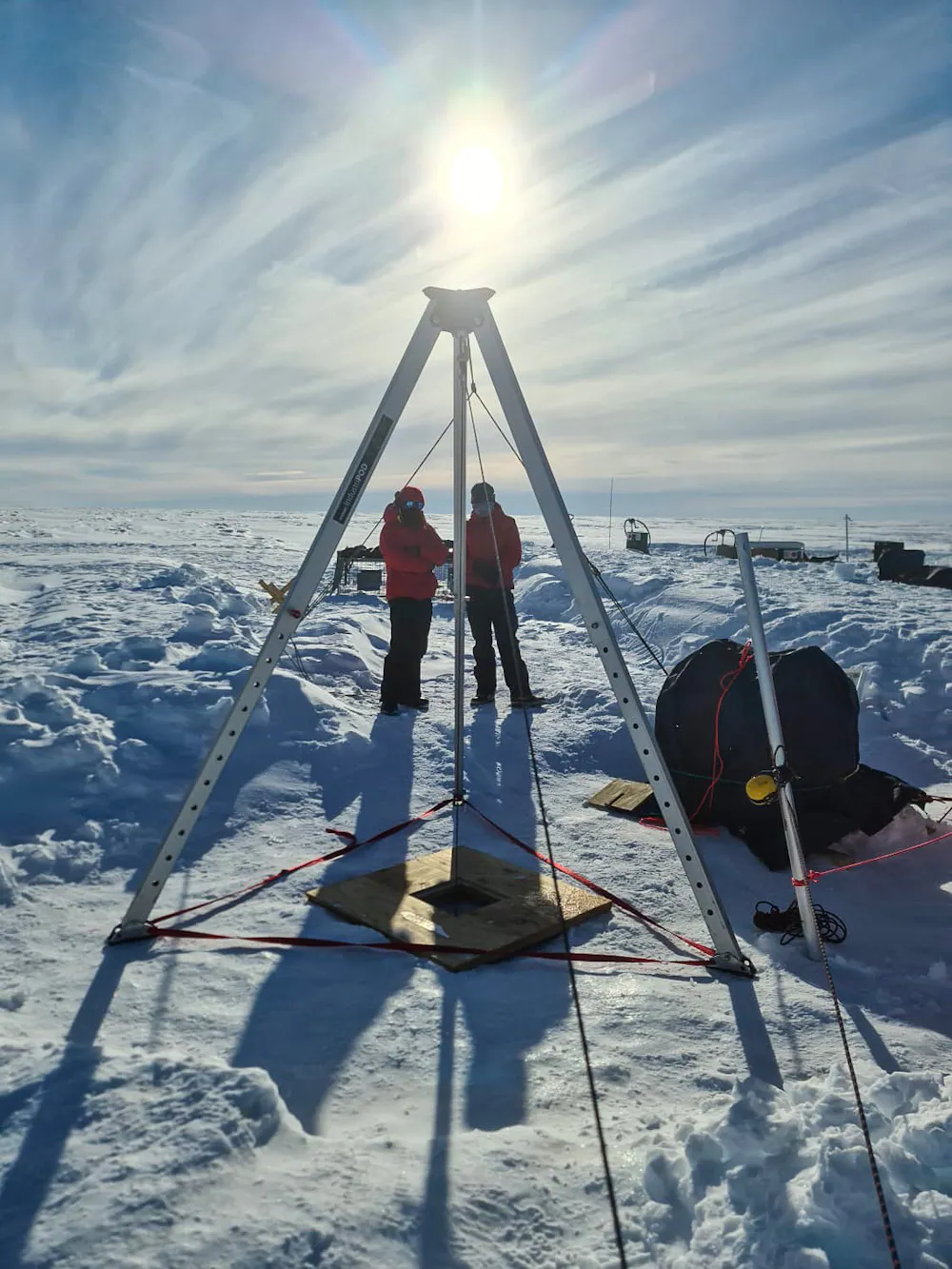
    Hot water drilling at Shackleton Ice Shelf, East Antarctica.
    Duanne White, University of Canberra/Australian Antarctic Division

    What we did and what we found

    We used computer simulations to predict the influence of subglacial water on ice sheet behaviour.

    We used two computer models:

    • an advanced ice sheet model that simulates how the ice sheet flows and responds to climate.
    • a specialised hydrology model that predicts subglacial water production and flow.

    Then we explored how different assumptions about subglacial water pressure affect ice sheet dynamics. Specifically, we compared scenarios where water pressure was allowed to change over time against scenarios where it remained constant.

    When the effects of changing subglacial water pressure were included in the model, the amount of ice flowing into the ocean under future climate nearly tripled.

    These findings suggest many existing sea-level rise projections may be too low, because they do not fully account for the dynamic influence of subglacial water.

    Our research highlights the urgent need to incorporate subglacial water dynamics into these models. Otherwise we risk significantly underestimating the rate and magnitude of future sea-level rise.

    We simulated subglacial water pressure across Antarctica, revealing vulnerable regions potentially influenced by subglacial water, and mapped both active (blue) and stable (yellow) subglacial lakes and subglacial water channels (black lines).
    Zhao, C., et al, 2025. Nature Communications.

    In the video below, the moving dark lines show where grounded ice begins to float. The left panel is a scenario where subglacial water is not included in the ice sheet model and the right panel is a scenario that includes the effects of evolving subglacial water.

    Simulated Antarctic ice velocity over 1995–2300, using the Elmer/Ice model of ice sheets.

    A looming threat

    Failing to account for subglacial water means global sea-level rise projections are underestimated by up to two metres by 2300.

    A two-metre rise would put many coastal cities in extreme danger and potentially displace millions of people. The economic damage could reach trillions of dollars, damaging vital infrastructure and reshaping coastlines worldwide.

    It also means the timing of future tipping points are underestimated too. This is the point at which the ice sheet mass loss becomes much more rapid and likely irreversible. In our study, most regions cross this threshold much earlier, some as soon as 2050. This is deeply concerning.

    The way forward

    Understanding Antarctica’s hidden water system is challenging. The potential for rapid, catastrophic and irreversible ice loss remains.

    More observations are needed to improve our models, particularly from remote regions such as East Antarctica. Continuing to gather information from boreholes, ice-penetrating radar and satellites will help us better understand how the underside of the ice sheet behaves. These techniques can then be combined with computer simulations to enable more accurate projections of future ice loss and sea-level rise.

    Our new research shows integrating subglacial water dynamics into ice sheet models is a top priority. Understanding this hidden threat is crucial as the world grapples with the consequences of global warming especially rising seas.

    Chen Zhao is the recipient of an Australian Research Council Discovery Early Career Researcher Award. Dr Zhao is affiliated with Australian Antarctic Program Partnership (AAPP), at the Institute of Marine and Antarctic Studies (IMAS), University of Tasmania, supported under the Antarctic Science Collaboration Initiative program.

    Ben Galton-Fenzi is also affiliated with Australian Antarctic Program Partnership (AAPP), at the Institute of Marine and Antarctic Studies (IMAS), supported under the Antarctic Science Collaboration Initiative program, and the Australian Centre for Excellence in Antarctic Science, supported under the Australian Research Council Special Research Initiative, both based at the University of Tasmania.

    – ref. Antarctica’s hidden threat: meltwater under the ice sheet amplifies sea-level rise – https://theconversation.com/antarcticas-hidden-threat-meltwater-under-the-ice-sheet-amplifies-sea-level-rise-250780

    MIL OSI Analysis – EveningReport.nz –

    April 7, 2025
  • MIL-OSI Economics: F-16 fighter jet deal bolsters Philippines air defense amid rising regional tensions, says GlobalData

    Source: GlobalData

    In a significant step toward strengthening the air defense capabilities of the Philippines, the US government has approved the potential sale of 20 F-16 fighter jets valued at approximately $5.6 billion. This acquisition will enhance the Philippine Air Force’s ability to safeguard its airspace, improve regional security, and boost interoperability with allied forces in the Indo-Pacific, says GlobalData, a leading data and analytics company.

    GlobalData’s report, “The Global Military Fixed-Wing Aircraft Market 2025-2035,” reveals that the Philippines will be spending about $5.1 billion on procuring various types of aircrafts over the next 10 years. Out of which, 79% will be directed towards the procurement of combat aircrafts.

    Udayini Aakunoor, Aerospace & Defense Analyst at GlobalData, comments: “Amid the growing geopolitical tensions in the South China Sea, F-16s are expected to serve as a deterrent against potential security threats while reinforcing the country’s territorial defense. The advanced air-to-air and air-to-ground capabilities of the combat-proven F-16 aircraft will allow the Philippine Air Force to conduct more effective patrols, intercept potential threats, and respond to any incursions into its airspace.”

    This procurement aligns with the Philippines’ strategic goal of deepening defense ties with the US. The two countries have maintained a long-standing military partnership, reinforced through the Enhanced Defense Cooperation Agreement (EDCA) and frequent joint military exercises. The F-16’s compatibility with US and NATO-standard weaponry, combined with joint military exercises such as Balikatan, ensures that the Philippines can operate seamlessly alongside allied air forces in the event of a regional security crisis.

    Aakunoor concludes: “With the F-16 acquisition, the Philippines is poised to make significant strides in modernizing its air force under the long-term Horizon 3 military modernization program, equipping the aircraft fleet with the necessary capabilities such as advanced avionics and precision-guided munitions to address current and future security challenges in the Indo-Pacific region. This development underscores the country’s commitment to strengthening its military readiness and strategic partnerships in an increasingly contested geopolitical landscape in the region.”

    MIL OSI Economics –

    April 7, 2025
  • MIL-OSI Economics: Malaysia credit and charge card payments market to grow by 6.8% in 2025, forecasts GlobalData

    Source: GlobalData

    Malaysia credit and charge card payments market to grow by 6.8% in 2025, forecasts GlobalData

    Posted in Banking

    Malaysia’s credit and charge card payments market is expected to register a growth of 6.8% to reach MYR245.7 billion ($53.7 billion) in 2025. This growth will be driven by the rising consumer spending and increasing consumer preference for cashless transactions, reveals GlobalData, a leading data and analytics company.

    GlobalData’s Payment Cards Analytics reveals that credit and charge card payment value in Malaysia registered a growth of 7.9% in 2024, driven by the rise in consumer spending. The value is forecast to register a compound annual growth rate (CAGR) of 5.5% between 2025 and 2029 to reach MYR304.3 billion ($66.5 billion) in 2029.

    Kartik Challa, Senior Banking and Payments Analyst at GlobalData, comments: “Credit and charge cards were the most preferred payment cards in Malaysia, accounting for 59.7% of total card payment value in 2024. This was mainly driven by the rewards, discounts, cashback, and interest-free installment facilities offered with these cards, as well as developing payment infrastructure and a growing e-commerce market.”

    Malaysians are increasingly using credit and charge cards for payments, with the frequency of payments per card standing at 82.8 times in 2024, much higher compared to 37.7 times for debit cards. This figure is anticipated to further rise to 107.1 by 2029.

    Challa adds: “This is driven by banks offering flexible repayment options and value-added benefits such as cashback, reward points, discounts, and installment facilities. CIMB Malaysia offers ‘0% Easy Pay,’ allowing customers to pay for purchases in monthly interest free installment of up to 36 months at more than 1,000 participating merchants.”

    Growing POS terminalization has been another key driver for the rise of credit and charge cards in Malaysia. The number of POS terminals per million inhabitants in Malaysia stood at 27,693 in 2024, which is higher compared to its peers such as Thailand (13,507), Indonesia (8,142), India (6,964) and Vietnam (5,988), though there is significant room for further expansion of POS infrastructure.

    Rising e-commerce payments are also contributing to the growth in credit and charge card usage. According to GlobalData’s E-Commerce Analytics, credit and charge cards are one of the most preferred payment methods for online payments, with 17.1% share in 2024.

    Moreover, banks in Malaysia offer debt consolidation option to credit card holders, which will further help boost usage. For instance, UOB offers the UOB Bank Transfer program, which allows customers to consolidate their outstanding credit card balances from other banks. The program is designed to help credit card holders to manage their debt and avoid default by offering lower interest rate and extended repayment terms.

    Challa concludes: “The Malaysian credit and charge card market is poised for sustained growth over the next five years, driven by the economic recovery, growing consumer preference for electronic payments, a rising middle-class and young working population, and growth in e-commerce payments. However, challenges such as global trade war between major countries, and geopolitical uncertainty remain obstacles to the market.”

    *GlobalData’s 2024 Financial Services Consumer Survey was carried out in Q2 2024. Approximately 67,292 respondents aged 18+ were surveyed across 41 countries.

    MIL OSI Economics –

    April 7, 2025
  • MIL-OSI Economics: Asian equities lead global sell-off after US-China trade dispute escalates, says GlobalData

    Source: GlobalData

    Asian equities lead global sell-off after US-China trade dispute escalates, says GlobalData

    Posted in Business Fundamentals

    Following the announcement of President Donald Trump’s sweeping tariffs across the world coupled with China’s retaliatory measures;

    Murthy Grandhi, Company Profiles Analyst at GlobalData, a leading data and analytics company, offers his view:

    “Global financial markets were rocked on Monday (07 April 2025) by a widespread sell-off, as escalating recession fears and a sudden tariff standoff between the US and China sent shockwaves across major economies. Asian equities suffered their worst rout in years, plunging to multi-year lows in a day marked by panic and uncertainty.

    “The market meltdown was sparked by the US administration’s surprise imposition of sweeping tariffs on Chinese imports, swiftly countered by Beijing’s retaliatory levies. The renewed trade war fears have reignited concerns of a global economic slowdown, shattering already fragile investor confidence. Consequently, the ripple effects are being felt far beyond their borders—roiling emerging markets, disrupting global supply chains, and eroding capital markets’ resilience

    “Japan’s Nikkei 225 and the broader Topix index both plunged sharply, with all constituents in the red, prompting a brief halt in futures trading as circuit breakers kicked in. Hong Kong’s Hang Seng endured one of its steepest declines in recent years, while China’s CSI300 and Shanghai Composite also witnessed significant losses, driven by sharp selloffs in major tech names like Alibaba and Tencent.

    “The downturn rippled across Asia—South Korea’s Kospi, Singapore’s benchmark, and Taiwan’s equity markets all faced steep declines. Markets in Malaysia and the Philippines followed suit, adding to the region-wide sell-off. India was not spared either, with the Sensex and Nifty 50 tumbling and wiping out trillions in investor wealth in a single session. All 30 Sensex stocks closed in the red, with Tata Steel, Tata Motors, and major IT firms among the biggest drags.

    “Meanwhile, US futures signalled further pain ahead following Friday’s steep losses, where the S&P 500, Nasdaq, and Dow each shed nearly 6%.

    “GlobalData believes the path forward hinges on policy clarity and diplomatic engagement. While China may remain an outlier in near-term negotiations, signs of constructive trade talks with other key economies could help restore investor confidence. Historically, markets have shown a capacity to rebound strongly when geopolitical risks subside or when policy responses appear measured. As such, even modest diplomatic progress or tariff rollbacks could serve as catalysts for a broad-based recovery in global equities.”

    MIL OSI Economics –

    April 7, 2025
  • MIL-OSI Australia: Canberra in focus on Gardening Australia

    Source: Northern Territory Police and Fire Services

    Volunteer Carol can spot a caterpillar at ten paces, even if it is hidden under the husk of a corn cob.

    The popular Gardening Australia program will have a distinctly Canberra flavour on Friday 17 May.

    ABC TV’s gardening flagship will air a story featuring two ACT schools, several students and much-loved volunteer Carol Quashie-Williams, scientist in residence at both Farrer Primary and Namadgi School.

    As a CSIRO STEM Professional in Schools, Carol has enriched the lives of thousands of young people during two decades of volunteering.

    She teaches life skills in gardening, nutrition, cooking and teamwork, with lessons in biology, chemistry, earth and environmental science, physics, maths, literacy and art sprouting here and there.

    An agricultural and environmental scientist and entomologist, Carol can spot a caterpillar at ten paces, even if it is hidden under the husk of a corn cob.

    Namadgi School Principal Gareth Richards says Carol’s way of engaging the kids means her presence is felt whether she is on site or not.

    “Even when she’s not at school, the kids are still carrying on with activities she’s taught them,” he said.

    “We’ll see them walking around the garden with magnifying glasses in hand, inspecting bugs they find along the way. She has a lasting impact on our students’ lives.”

    Another legacy of Carol’s involvement is professional growth and development.

    “She builds the capacity of our staff. Working shoulder to shoulder with Carol they have picked up expertise they’ve been able to go on to share with our students,” Gareth said.

    Named Volunteer of the Year at the 2019 ACT Public Education Awards, Carol started volunteering when her own children were at school and found it so rewarding she continued after they had left.

    With a day job in the Department of Agriculture, Fisheries and Forestry, she says her involvement in the schools program enables her to maintain her pest surveillance and diagnostic and science communication skills.

    “I enjoy inspiring the next generation of scientists and gardeners and love the enthusiasm of the students when working outside and in the environment centres,” she said.

    ‘My Garden Path – Carol STEM’ airs on Gardening Australia this Friday 17 May at 7:30pm (repeated Sunday 1:30pm, or catch up via iView or the Gardening Australia website).


    Get ACT news and events delivered straight to your inbox, sign up to our email newsletter:


    MIL OSI News –

    April 7, 2025
  • MIL-OSI United Kingdom: UK assistance reaches 15,000 people after Myanmar earthquake, with further £10 million pledged

    Source: United Kingdom – Executive Government & Departments 3

    Press release

    UK assistance reaches 15,000 people after Myanmar earthquake, with further £10 million pledged

    The UK is now providing up to £25 million for vital humanitarian assistance in Myanmar.

    Minister for the Indo-Pacific Catherine West visiting the Disasters Emergency Committee (DEC) offices in London.

    • the UK has bolstered its support to Myanmar earthquake, allocating a further £10 million to the ongoing humanitarian response 
    • this brings the UK total to up to £25 million of support, including up to £5 million to match donations to the Disasters Emergency Committee appeal and £10 million announced on 29 March
    • UK-funded supplies are already reaching areas devastated by the quake, helping over 15,000 people so far

    Lifesaving support for those directly affected by the severe earthquake in Myanmar will now go even further, with the UK now providing up to £25 million for vital humanitarian assistance. 

    The increase is the result of an additional £10 million of UK funding directed towards the humanitarian response. 

    It comes as UK Minister for the Indo-Pacific, Catherine West, this afternoon (4 April) visited the offices of the Disasters Emergency Committee (DEC) in London, to hear about the realities of delivering aid to the most vulnerable across Myanmar. 

    The UK has already pledged to aid match every pound donated by the British public to the DEC appeal, up to £5 million. 

    UK funds, delivered through partners on the ground, are already helping to provide immediate support to the most vulnerable areas and people, including first aid, emergency and trauma care and primary healthcare, food, water, shelter and hygiene kits.

    The additional £10 million directed to the response will provide a further boost to these efforts, saving lives and supporting livelihoods across Myanmar. No UK support goes to the Myanmar regime.

    Catherine West, Minister for the Indo-Pacific, said:

    Even before this earthquake struck, Myanmar was already facing one of the world’s biggest humanitarian crises after four years of conflict.

    It is right that we step up to help. The rapid UK response means lifesaving supplies are already reaching those worst-affected by the quake – and new funding will enable partners on the ground to reach even more people in need.

    We thank the British public who continue to generously support the Myanmar people through the DEC appeal.

    The Foreign, Commonwealth and Development Office (FCDO) works with a network of specialist partner organisations to deliver targeted support on the ground. This means UK support is able to reach those most in need, despite the challenges of operating in Myanmar.

    The UK government has a strong track record of providing humanitarian assistance in Myanmar, with total UK support since the 2021 military coup standing at over £170 million. Our modern approach to aid not only supports some of the world’s most vulnerable people but also helps address global challenges from health to migration, ultimately contributing to the UK’s security and prosperity.

    In addition to humanitarian assistance, the FCDO continues to provide consular assistance to British nationals in both Myanmar and Thailand, which was also affected by last week’s earthquake.

    Background

    Funding the UK has committed to the Myanmar earthquake response includes:

    • an initial package of up to £10m to support the emergency response
    • £5 million to match donations to the Disasters Emergency Committee public appeal for Myanmar, launched Thursday 3 April
    • a further £10 million funding directed for humanitarian assistance, announced today 

    UK humanitarian support for Myanmar’s citizens will not support Myanmar’s military regime.

    Media enquiries

    Email newsdesk@fcdo.gov.uk

    Telephone 020 7008 3100

    Contact the FCDO Communication Team via email (monitored 24 hours a day) in the first instance, and we will respond as soon as possible.

    Share this page

    The following links open in a new tab

    • Share on Facebook (opens in new tab)
    • Share on Twitter (opens in new tab)

    Updates to this page

    Published 4 April 2025

    MIL OSI United Kingdom –

    April 7, 2025
  • MIL-OSI China: Yunnan team finishes Myanmar quake mission

    Source: China State Council Information Office 2

    A rescue and medical team from Yunnan province arrives at the Kunming Changshui International Airport in Kunming, southwest China’s Yunnan province, April 6, 2025. [Photo/Xinhua]
    A 37-member rescue and medical team from southwest China’s Yunnan province returned from Myanmar on Sunday afternoon, after completing their earthquake relief work.
    A 7.9-magnitude quake struck Myanmar on March 28. At around 6:30 a.m. Beijing time on March 29, the team from Yunnan province, which borders Myanmar, took off from Kunming — Yunnan’s capital city — to the quake-stricken areas in Myanmar boarding a flight, carrying with them life detectors, seismic warning systems, portable satellite telephones and drones.
    As the first Chinese rescue team to arrive in Myanmar, they immediately joined forces with local firefighters and rescuers to carry out rescue and medical operations in the severely-affected Naypyidaw, which lasted for over 150 hours.
    At 5 a.m. March 30 local time, the team, joined by local forces, rescued an elderly person who had been trapped for nearly 40 hours at a local hospital.
    A China Media Group report said on Wednesday that more than 500 Chinese rescue workers were in Myanmar for rescue and relief missions, all together. As of Thursday, Chinese rescue teams had successfully saved nine survivors from the quake-affected areas.

    MIL OSI China News –

    April 7, 2025
  • MIL-OSI New Zealand: Name release: Aircraft crash, Hastings

    Source: New Zealand Police (National News)

    Police can now name the man who died following an aircraft crash in Hastings on Sunday 6 April.

    He was 71-year-old Grant Bruce Jarden, of Hastings.

    Our thoughts are with his family and friends at this difficult time.

    The incident has been referred to the Civil Aviation Authority.

    ENDS

    Issued by Police Media Centre

    MIL OSI New Zealand News –

    April 7, 2025
  • MIL-OSI Asia-Pac: Virtual asset policy to be updated

    Source: Hong Kong Information Services

    Financial Secretary Paul Chan

    As a city where East meets West and tradition intertwines with innovation, we are proud to host you to collectively chart the course of Web3.

    As a technology, blockchain is displaying its vast potential, significantly increasing transaction efficiency, lowering costs and enhancing market transparency. Today, we are witnessing a marked increase in the institutional adoption of Web3, with traditional banks, asset managers and brokers increasingly integrating digital assets into their offerings.

    As more jurisdictions embrace cryptocurrencies, the market has been energised with optimism, marked by a bullish trend over the past year or so.

    But beyond finance and the enthusiasm on cryptocurrency, we all agree that blockchain can bring real benefits to the people. For example, ReFi (regenerative finance) is gaining traction. Tokenised carbon credits enable the transparent tracking of emissions reductions, reinforcing trust in voluntary carbon markets.

    Meanwhile, the convergence of Web3 and AI is unlocking new frontiers. In finance, decentralised AI algorithms enhance credit assessments, audit smart contracts with greater precision, and deliver hyper-personalised investment strategies. Beyond finance, this synergy streamlines supply chains, revolutionises healthcare data management, and creates new immersive gaming experiences. Web3 and AI are transforming businesses and public services, driving innovation and efficiency at every turn.

    HK: driving Web3 innovation

    Allow me to take a few minutes to talk about Web3 in Hong Kong, our attitude and approach towards Web3, and our role in this global transformation.

    Hong Kong is pro-Web3. Over two years ago, we published a high-level policy statement on the development of virtual assets, affirming our commitment to a dynamic Web3 ecosystem. Central to this is the principle of the “same activity, same risk, same regulation” approach. Through a balanced and pro-innovation regulatory approach, we seek to maintain a level playing field for market participants and encourage innovative activities in this space.

    We have been walking the talk, and have delivered a number of initiatives. We were among the first in the world to have established clear licensing frameworks for virtual asset trading platforms, or VATPs. Indeed, the Securities & Futures Commission has already issued 10 VATP licences. We have also authorised VA (virtual asset) spot ETFs (exchange-traded funds) last year, and Hong Kong now hosts the largest VA ETF market in the Asia Pacific, bridging traditional finance with crypto innovation.

    Meanwhile, legislation for stablecoin regulation is set for imminent passage. My colleagues at the Financial Services & the Treasury Bureau and the Hong Kong Monetary Authority (HKMA) are working hard to get the relevant licensing regime to go live within this year.

    The Government will also conduct consultations on the licensing regimes of over-the-counter trading services and custodian services for VAs. This will solidify Hong Kong’s comprehensive regulatory architecture.

    Let me make clear that Hong Kong’s approach to Web3 is not simply about regulation. We aim to strike a balance, ensuring market integrity without stifling innovation. After all, innovation entails risks. The lesson we have learnt is that we need to put it under a balanced regulatory framework so as to enable the sector to grow in a responsible and sustainable manner.

    One essential element in our regulatory regime is sandboxes, such as the HKMA’s Project Ensemble. Project Ensemble allows innovators to test various use cases, such as tokenised real-world assets, with early regulatory feedback. This signifies our pro-innovation approach, as we put regulators and innovators in a co-creation process.

    Later this year, we will unveil a second policy statement on the development of virtual assets. It will cover how to make use of Web3 to fast-track the development of traditional financial services, empower the real economy and strengthen the application of digital asset technologies.

    A few thoughts on Web3

    Now, looking ahead, allow me to share a few thoughts we consider important for the future development and success of Web3.

    First, it is the very vision of Web3 to enable more equitable use of the Internet, and make transactions more efficient and less costly. Innovation is core to this goal, and regulators should adopt a technology-neutral approach. It would only be counterproductive if jurisdictions or regulatory authorities favour particular types of cryptocurrencies, or rule out technologies or applications at the outset. Markets, not mandates, should decide which innovations prevail.

    Second, we all know Web3’s true potential lies well beyond digital assets or cryptocurrencies. Combined with AI, it can be a valuable tool to optimise impact investments, promote inclusive finance, support decarbonisation initiatives, advance sustainable development goals, and more. The global Web3 community should and can strengthen collaboration to support these worthy causes.

    Finally, it is essential that new technologies be developed and applied responsibly. AI, for instance, is evolving at speeds that are unexpectedly faster. Decentralised networks bring enormous benefits, but when coupled with AI, challenges such as algorithmic bias, deepfakes and cybersecurity require attention and co-operation at the regional and global levels. Here in Hong Kong, we advocate for suitable guardrails – frameworks that protect investors, consumers and users while encouraging innovation activities. We support a multi-stakeholder approach where governments, regulators and market players across different territories and regions come together to drive forward the sustainable development of Web3.

    Concluding remarks

    Ladies and gentlemen, to secure a promising and successful future for Web3, we need not just technological innovation, but also a common will to harness creativity and innovation for the benefit of the people. Let me assure you that Hong Kong is committed to this goal. We are here to collaborate with innovators and entrepreneurs from around the world, pushing the boundaries of what is possible, and leveraging the transformative power of Web3 for the greater good.

    Financial Secretary Paul Chan gave these remarks at the Hong Kong Web3 Festival on April 7.

    MIL OSI Asia Pacific News –

    April 7, 2025
  • MIL-OSI Economics: Lexus presents exhibitions at the 2025 Milan Design Week

    Source: Toyota

    Headline: Lexus presents exhibitions at the 2025 Milan Design Week

    Lexus has unveiled its latest design innovations at Milan Design Week 2025, the world’s largest design event. Hosted in the heart of the Tortona District at Superstudio Piu’s Daylight Space, the exhibition features “A-Un”, an immersive installation created in collaboration with Japanese creatives, and “Discover Together”, an interactive exhibition showcasing next-generation designers following the legacy of the Lexus Design Award. The exhibition will be open to the public until April 13, 2025.

    MIL OSI Economics –

    April 7, 2025
  • MIL-OSI China: Asian stocks tumble amid US tariff concerns

    Source: China State Council Information Office

    Stock markets across the Asia-Pacific traded sharply lower on Monday as financial turmoil sparked by the US “reciprocal tariffs” escalated recession fears worldwide.

    Hong Kong’s Hang Seng Index dropped 2,445.19 points, or 10.7 percent, to end at 20,404.62 points in Monday’s morning session. The retreat widened from 9.28 percent at opening.

    This came on top of losses in Japan, where the benchmark Nikkei stock index shed 2,843.48 points, or 8.42 percent, in the first 15 minutes of trading, the lowest intraday level since October 2023.

    “Japanese stocks are unlikely to stop declining unless US stocks cease falling further,” said Yutaka Miura, senior technical analyst at Mizuho Securities Co.

    The circuit breaker was triggered for Nikkei stock futures, temporarily halting trading due to the sharp fall.

    South Korea’s benchmark Korea Composite Stock Price Index (KOSPI) lost 103.57 points, or 4.2 percent, to 2,361.85 as of 11:20 am.

    Due to the sharp decline, the bourse operator placed a sidecar order at 9:12 am, pausing program buying for five minutes, after the KOSPI 200 index fell more than 5 percent for over one minute.

    It was the first sidecar order for program buying since August 2024, according to local reports.

    The KOSPI plummeted as investors sold off stocks in response to increasing concerns about a recession after the US government revealed “reciprocal tariffs” last week, said analysts here.

    Stocks in Singapore dipped over 7 percent at the start of Monday due to concerns about a global trade conflict following several countries mulling to respond to US tariffs.

    The Straits Times Index plunged 7.37 percent, or 281.84 points, to 3,544.02 as Asian markets fell sharply.

    Meanwhile, Indian shares declined at the beginning of trading on Monday, with the key Nifty index dropping over 3 percent.

    The Nifty 50, representing the biggest Indian firms on the national stock exchange, was down 3.55 percent.

    The Nifty IT, comprising India’s leading information technology firms, which consider the United States their largest market, was down 5.53 percent.

    Local media house The Times of India called Monday’s loss a “bloodbath”.

    Australian blue-chip shares dived 6 percent when trading commenced on Monday, due to financial chaos triggered by the US tariffs in global markets.

    A benchmark index of the nation’s top 200 publicly traded firms dropped over 6 percent after the market opened, as the repercussions of the US tariffs continued to unsettle investors.

    The Australian government was “preparing for further uncertain times”, according to Prime Minister Anthony Albanese on Monday. “You can’t change global events. What you can do is prepare for them,” he told reporters.

    On Wednesday, US President Donald Trump declared a 10 percent baseline tariff on imports from all trading partners and imposed higher rates on specific ones, with the decision provoking sharp criticism from economists, trade experts and foreign governments who view it as a misguided effort to utilize tariffs as a crude tool to tackle intricate trade disparities.

    MIL OSI China News –

    April 7, 2025
  • MIL-OSI Asia-Pac: New airport CEO appointed

    Source: Hong Kong Information Services

    The Chief Executive today approved the immediate three-year appointment of Vivian Cheung as the Airport Authority’s (AA) Chief Executive Officer.

    Congratulating Mrs Cheung as she takes office, Secretary for Transport & Logistics Mable Chan said: ‘’I trust that under Mrs Cheung’s leadership, the AA will continue to strengthen the leading position of Hong Kong International Airport as an international aviation hub and promote the long-term development of the airport.”

    Ms Chan highlighted various aspects of the airport’s development going forward, including the immense opportunities brought by the Three-Runway System, the airport’s transformation into a world-leading Airport City, integration with the Greater Bay Area through enhanced intermodal connectivity, and promoting continuous innovation in the aviation sector overall.

    She added that the Government will continue to work closely with the AA to take the city’s aviation industry to new heights.

    MIL OSI Asia Pacific News –

    April 7, 2025
  • MIL-OSI Australia: Trauma-informed training to support young Canberrans

    Source: Northern Territory Police and Fire Services


    As part of ACT Government’s ‘One Government, One Voice’ program, we are transitioning this website across to our . You can access everything you need through this website while it’s happening.

    Skip to content


    Released 04/04/2025

    The ACT Government is delivering on its election commitment to support children and young people needing trauma-informed care and support.

    Trauma affects many children and young people in the ACT, and health practitioners across our health sector are often the first in a position to help and offer support.

    Almost 50 staff across the ACT Government and the health sector have this week undertaken training as part of the latest cohort for a 16-week program delivered by training provider Emerging Minds.

    The training, delivered as part of the Youth At Risk Project, supports staff working with young people to understand how to identify and respond to young people who have experienced trauma, and work collaboratively across services to ensure a coordinated approach to care.

    Minister for Mental Health Rachel Stephen-Smith said the ACT Government is committed to upskilling health workers to provide mental health support and understand the impact of trauma on people’s lives.

    ‘The ACT Government is continuing to build on our commitments to supporting children and young people who need specialised trauma support and care,” Minister Stephen-Smith said.

    ‘The Trauma-Informed Practice Training Program will build a resilient and responsive health sector capable of addressing the complex needs of children and young people who have experienced trauma.

    ‘By investing in this training, we are empowering our health workforce with the knowledge and confidence to provide the compassionate care children and young people deserve.’

    The ACT Government has invested $200,000 into the Trauma-Informed Practice Training Program as part of its commitment to supporting children and young people.

    An evaluation report into the effectiveness of the training from the program’s first cohort, which ran from August to October 2024, showed positive results, with participants reporting improvements in their ability to apply trauma-informed approaches in their work with children, young people, and families.

    The Youth at Risk Project is jointly funded by the Australian and ACT Governments to improve the ACT sector response to young people presenting with complex needs and trauma.

    – Statement ends –

    Rachel Stephen-Smith, MLA | Media Releases

    «ACT Government Media Releases | «Minister Media Releases

    MIL OSI News –

    April 7, 2025
  • MIL-OSI: Capgemini to establish AI Center of Excellence in Egypt to accelerate AI-driven innovation for global clients

    Source: GlobeNewswire (MIL-OSI)

    Press contact:
    Mollie Mellows
    Tel.: + 44 (0)7342 709384
    E-mail: mollie.mellows@capgemini.com

    Capgemini to establish AI Center of Excellence in Egypt to accelerate AI-driven innovation for global clients

    Cairo, April 7, 2025 – Capgemini today announced it will establish an AI Center of Excellence (CoE) in Egypt focused on accelerating the generative and agentic AI transformation journeys of clients worldwide. Through this new cutting-edge AI hub, Capgemini will invest in research and development, collaborate with local academic institutions, and leverage technology partnerships to help accelerate client adoption of AI at scale. This initiative bolsters Capgemini’s strong ties with Egypt as a strategic innovation hub for global organizations. It also further cements Capgemini’s leadership in AI, reinforcing its commitment to developing talent, leveraging strategic industry partnerships, and accelerating AI-driven innovation to unlock significant value for clients.

    Capgemini is committed to driving continued growth and innovation in Egypt. By the end of 2025, it plans to double the number of employees in the country, reaching approximately 1200 highly talented professionals in the fields of digital transformation and innovation.

    The new AI hub will house a diverse team of architects, data scientists, product engineers, and project managers, expert in delivering transformative projects from business operations and design to engineering. Clients will benefit from the advantages of time zone alignment, multi-lingual skills, and ease of travel to this conveniently located Global Delivery Center.

    “The AI Center of Excellence in this strategic location allows us to support our clients in scaling AI within their own businesses, ensuring they remain at the forefront of innovation,” said Aiman Ezzat, CEO of Capgemini, on the occasion of the France-Egypt Investment Forum. “By investing in the region’s impressive talent and establishing this dedicated AI hub, we are not only fostering significant technological advancements but also creating a robust ecosystem for AI development. Our clients will benefit from enhanced service delivery, industry-specific solutions, and the unique advantages of being supported from Egypt.”

    With implementation starting in May 2025, the new AI hub will apply Capgemini’s deep industry-specific expertise to develop intelligent agents that are bespoke to highly regulated industries, such as energy, life sciences and aerospace. It is designed for clients to explore, design and implement cutting-edge technologies that can optimize operations and strategically transform their business, including supply chain and product innovation. By applying advanced algorithms and machine learning techniques, Capgemini will help clients across Europe, America, the Middle East, and Asia elevate customer experience to a strategic value driver.

    Hossam Seifeldin, CEO of Capgemini in Egypt, said “Egypt is experiencing an impressive growth trajectory, fueled by digitalization and exceptional talent in AI. I am excited to build on the strong foundation we have established in the region. Doubling our workforce and establishing this new AI Center of Excellence will not only drive cutting-edge innovation but also create valuable opportunities for local talent to thrive in a global arena.”

    About Capgemini

    Capgemini is a global business and technology transformation partner, helping organizations to accelerate their dual transition to a digital and sustainable world, while creating tangible impact for enterprises and society. It is a responsible and diverse group of 340,000 team members in more than 50 countries. With its strong over 55-year heritage, Capgemini is trusted by its clients to unlock the value of technology to address the entire breadth of their business needs. It delivers end-to-end services and solutions leveraging strengths from strategy and design to engineering, all fueled by its market leading capabilities in AI, generative AI, cloud and data, combined with its deep industry expertise and partner ecosystem. The Group reported 2024 global revenues of €22.1 billion.

    Get The Future You Want | www.capgemini.com

    Attachment

    • 04_07_Egypt AI Center of Excellence

    The MIL Network –

    April 7, 2025
  • MIL-OSI: Himax Technologies, Inc. Schedules First Quarter 2025 Financial Results Conference Call on Thursday, May 8, 2025, at 8:00 AM EDT

    Source: GlobeNewswire (MIL-OSI)

    TAINAN, Taiwan, April 07, 2025 (GLOBE NEWSWIRE) — Himax Technologies, Inc. (Nasdaq: HIMX) (“Himax” or “Company”), a leading supplier and fabless manufacturer of display drivers and other semiconductor products, today announced that it will hold a conference call with investors and analysts on Thursday, May 8, 2025, at 8:00 a.m. US Eastern Daylight Time and 8:00 p.m. Taiwan Time to discuss the Company’s first quarter 2025 financial results.

    HIMAX TECHNOLOGIES, INC. FIRST QUARTER 2025 EARNINGS CONFERENCE CALL

    DATE:     Thursday, May 8, 2025
    TIME:     U.S.         8:00 a.m. EDT
          Taiwan    8:00 p.m.

    Toll Free Dial-in Number (Audio Only):                                              

    Hong Kong 2112-1444
    Taiwan 0080-119-6666
    Australia 1-800-015-763
    Canada 1-877-252-8508
    China (1) 4008-423-888
    China (2) 4006-786-286
    Singapore 800-492-2072
    UK 0800-068-8186
    United States (1) 1-800-811-0860
    United States (2) 1-866-212-5567

    Dial-in Number (Audio Only):  

    Taiwan Domestic Access 02-3396-1191
    International Access +886-2-3396-1191
    Participant PIN Code:   3300508 #


    If you choose to attend the call by dialing in via phone, please enter the Participant PIN Code 3300508 # after the call is connected. A replay of the webcast will be available beginning two hours after the call on www.himax.com.tw. This webcast can be accessed by clicking on this link or visiting Himax’s website, where it will remain available until May 8, 2026. 

    About Himax Technologies, Inc.

    Himax Technologies, Inc. (NASDAQ: HIMX) is a leading global fabless semiconductor solution provider dedicated to display imaging processing technologies. The Company’s display driver ICs and timing controllers have been adopted at scale across multiple industries worldwide including TVs, PC monitors, laptops, mobile phones, tablets, automotive, ePaper devices, industrial displays, among others. As the global market share leader in automotive display technology, the Company offers innovative and comprehensive automotive IC solutions, including traditional driver ICs, advanced in-cell Touch and Display Driver Integration (TDDI), local dimming timing controllers (Local Dimming Tcon), Large Touch and Display Driver Integration (LTDI) and OLED display technologies. Himax is also a pioneer in tinyML visual-AI and optical technology related fields. The Company’s industry-leading WiseEyeTM Ultralow Power AI Sensing technology which incorporates Himax proprietary ultralow power AI processor, always-on CMOS image sensor, and CNN-based AI algorithm has been widely deployed in consumer electronics and AIoT related applications. Himax optics technologies, such as diffractive wafer level optics, LCoS microdisplays and 3D sensing solutions, are critical for facilitating emerging AR/VR/metaverse technologies. Additionally, Himax designs and provides touch controllers, OLED ICs, LED ICs, EPD ICs, power management ICs, and CMOS image sensors for diverse display application coverage. Founded in 2001 and headquartered in Tainan, Taiwan, Himax currently employs around 2,200 people from three Taiwan-based offices in Tainan, Hsinchu and Taipei and country offices in China, Korea, Japan, Germany, and the US. Himax has 2,603 patents granted and 389 patents pending approval worldwide as of March 31, 2025.

    http://www.himax.com.tw

    Forward Looking Statements

    Factors that could cause actual events or results to differ materially from those described in this conference call include, but are not limited to, the effect of the Covid-19 pandemic on the Company’s business; general business and economic conditions and the state of the semiconductor industry; market acceptance and competitiveness of the driver and non-driver products developed by the Company; demand for end-use applications products; reliance on a small group of principal customers; the uncertainty of continued success in technological innovations; our ability to develop and protect our intellectual property; pricing pressures including declines in average selling prices; changes in customer order patterns; changes in estimated full-year effective tax rate; shortage in supply of key components; changes in environmental laws and regulations; changes in export license regulated by Export Administration Regulations (EAR); exchange rate fluctuations; regulatory approvals for further investments in our subsidiaries; our ability to collect accounts receivable and manage inventory and other risks described from time to time in the Company’s SEC filings, including those risks identified in the section entitled “Risk Factors” in its Form 20-F for the year ended December 31, 2024 filed with the SEC, as may be amended.

    Company Contacts:

    Eric Li, Chief IR/PR Officer
    Himax Technologies, Inc.
    Tel: +886-6-505-0880
    Fax: +886-2-2314-0877
    Email: hx_ir@himax.com.tw
    www.himax.com.tw

    Karen Tiao, Investor Relations
    Himax Technologies, Inc.
    Tel: +886-2-2370-3999
    Fax: +886-2-2314-0877
    Email: hx_ir@himax.com.tw
    www.himax.com.tw

    Mark Schwalenberg, Director
    Investor Relations – US Representative
    MZ North America
    Tel: +1-312-261-6430
    Email:  HIMX@mzgroup.us
    www.mzgroup.us

    The MIL Network –

    April 7, 2025
  • MIL-Evening Report: Do I need another COVID booster? Which one should I choose? Can I get it with my flu shot?

    Source: The Conversation (Au and NZ) – By Paul Griffin, Professor, Infectious Diseases and Microbiology, The University of Queensland

    Tijana Simic/Shutterstock

    Australians are being urged to roll up their sleeves for a flu vaccine amid rising cases of influenza.

    It’s an opportune time to think about other vaccines too, particularly because some vaccines can be given at the same time as the flu vaccine.

    One is the COVID vaccine.

    Should you get another COVID shot?

    More than five years since COVID was declared a pandemic, we hear much less about this virus. But it’s still around.

    In 2024 there were 4,953 deaths involving COVID. This is nearly 20% lower than in 2023, but still nearly five times that of influenza (1,002).

    Vaccines, which do a very good job at reducing the chances of severe COVID, remain an important tool in our ongoing battle against the virus.

    Case numbers don’t tell us as much about COVID anymore as fewer people are testing. But based on other ways we monitor the virus, such as cases in ICU and active outbreaks in residential aged care homes, there have essentially been two peaks a year over recent years – one over summer and one over winter.

    This doesn’t mean we can predict exactly when another wave will happen, but it’s inevitable and may well be within the next few months. So it’s worth considering another COVID vaccine if you’re eligible.

    Who can get one, and when?

    There are several risk factors for more severe COVID, but some of the most important include being older or immunocompromised. For this reason, people aged 75 and older are recommended to receive a COVID booster every six months.

    In the slightly younger 65 to 74 age bracket, or adults aged 18 to 64 who are immunocompromised, booster doses are recommended every 12 months, but people are eligible every six months.

    Healthy adults under 65 are eligible for a booster dose every 12 months.

    Healthy children aren’t recommended to receive boosters but those who are severely immunocompromised may be eligible.

    What COVID shots are currently available?

    We’ve seen multiple types of COVID vaccines since they first became available about four years ago. Over time, different vaccines have targeted different variants as the virus has evolved.

    While some vaccine providers may still offer other options, such as the older booster that targeted the Omicron variant XBB.1.5, the recent JN.1 booster is the most up-to-date and best option.

    This is a relatively recently updated version to improve protection against some of the newer strains of COVID that are circulating. The new booster only became available in Australia in late 2024.

    This booster, as the name suggests, targets a subvariant called JN.1. Although JN.1 has not been the dominant subvariant in Australia for some time, this shot is still expected to provide good protection against circulating subvariants, including new subvariants such as LP.8.1, which is descended from JN.1.

    While it’s great we have an updated booster available, unfortunately uptake remains poor. Only 17.3% of people 75 and over had received a COVID vaccine in the six months to March.

    COVID vaccine uptake has been poor recently.
    Steve Heap/Shutterstock

    Getting a flu and COVID shot together

    Data from more than 17,000 people who completed a survey after receiving the JN.1 booster shows that while 27% reported at least one adverse event following vaccination, the majority of these were mild, such as local pain or redness or fatigue.

    Only 4% of people reported an impact on their routine activities following vaccination, such as missing school or work.

    If you choose to get the flu vaccine and the COVID vaccine at the same time, they’ll usually be given in different arms. There shouldn’t be a significant increase in side effects. What’s more, getting both shots at the same time doesn’t reduce your immune response against either vaccine.

    Now is the ideal time to get your flu vaccine. If you’re eligible for a COVID booster as well, getting both vaccines at the same time is safe and can be very convenient.

    We’re conducting trials in Australia, as are scientists elsewhere, of combined vaccines. One day these could allow vaccination against COVID and flu in a single shot – but these are still a way off.

    If you’re not sure about your eligibility or have any questions about either vaccine, discuss this with your GP, specialist of pharmacist. Australian state and federal government websites also provide reliable information.

    Paul Griffin has been the principal investigator on many vaccine clinical trials and received speaker honoraria and been a member of medical advisory boards for vaccine manufacturers. He is also a scientific advisory board member and director of the immunisation coalition.

    – ref. Do I need another COVID booster? Which one should I choose? Can I get it with my flu shot? – https://theconversation.com/do-i-need-another-covid-booster-which-one-should-i-choose-can-i-get-it-with-my-flu-shot-252914

    MIL OSI Analysis – EveningReport.nz –

    April 7, 2025
  • MIL-OSI: Lumissil’s Green PHY Solution Selected to Support Arrow Electronics in the new EVSE Reference Design Project

    Source: GlobeNewswire (MIL-OSI)

    MILPITAS, Calif., April 07, 2025 (GLOBE NEWSWIRE) — Lumissil Microsystems, an analog/mixed-signal solution provider, has been selected by Arrow Electronics to support their new Electric Vehicle Supply Equipment (EVSE) reference design, aimed at simplifying development and accelerating time to market for ISO 15118-compliant charging solutions.

    The reference design integrates the CG5317 Green PHY modem from Lumissil with a complete ISO 15118 software stack, providing manufacturers with a ready-to-use hardware and software solution that reduces development complexity. With Arrow’s extensive industry expertise, the reference design helps EVSE manufacturers shorten engineering cycles, ensuring a faster path to compliance with vehicle-to-grid (V2G) communication standards.

    “As demand for robust and secure EV charging infrastructure grows, manufacturers need solutions that reduce development risks and accelerate deployment,” said Nadav Katsir at Lumissil Microsystems. “Arrow’s selection of CG5317 for their EVSE reference design helps underscore its industry-leading performance, giving customers a streamlined path to developing ISO 15118-compliant charging solutions.”

    By leveraging CG5317’s proven PLC capabilities and a pre-integrated software stack, the reference design eliminates challenges related to firmware development, compliance testing, and hardware-software compatibility. This enables EVSE manufacturers to focus on differentiation while bringing products to market faster.

    The EVSE reference design is available to OEMs, Tier 1 suppliers, and EVSE developers looking to accelerate ISO 15118 adoption. For more details, visit https://www.arrow.com/en/research-and-events/articles/arrow-electronics-released-their-own-vehicle-to-grid-communication-software-stack

    About Lumissil Microsystems
    Lumissil Microsystems specializes in analog/mixed-signal products for automotive, Communications, industrial, and consumer markets. Lumissil’s primary products are LED drivers for low to mid-power RGB color mixing and high-power lighting applications. Other products include audio, sensors, high-speed wire communications, optical networking, and application specific microcontrollers. Lumissil Microsystems has worldwide offices in the US, Taiwan, Japan, Singapore, mainland China, Europe, Hong Kong, India, Israel, and Korea. Website: https://www.lumissil.com  

    Contact:
    Raphi Zadicario
    rzadicario@lumissil.com 

    The MIL Network –

    April 7, 2025
  • MIL-Evening Report: Financial markets are tanking. Here’s why it’s best not to panic

    Source: The Conversation (Au and NZ) – By Luke Hartigan, Lecturer in Economics, University of Sydney

    Financial markets around the world have been slammed by the Trump adminstration’s sweeping tariffs on its trading partners, and China’s swift retaliation.

    Share markets have posted their biggest declines since the COVID pandemic hit in 2020, as fears of US recession surged. Iron ore, copper, oil, gold and the Australian dollar have all tumbled.

    On Wall Street, leading indices have fallen around 10% since the tariffs were announced, while the tech-heavy Nasdaq is down 20% from its recent peak. European and Asian markets have also slumped.

    In Australia, the key S&P/ASX 200 slid another 4.2% on Monday to levels last seen in December 2023, taking its three-day losses since the announcement to more than 7%.


    Why are markets reacting so badly?

    Financial markets reacted so negatively because the tariffs were much larger than expected. They represent the biggest upheaval in global trade in 80 years.

    Many traders were hoping the tariffs would be used mainly as a bargaining tool. But comments by US President Donald Trump that markets may need to “take medicine” seem to suggest otherwise.

    The tariffs are expected to weaken economic growth in the US as consumers pare back spending on more expensive imports, while businesses shelve investment plans. Leading US bank JP Morgan has put the chance of a US recession as high as 60%.

    This comes at a time when the US economy was already looking fragile. The highly regarded GDPNow model developed by the Atlanta Federal Reserve Bank indicates US March quarter GDP will fall 2.8%, and that was before the tariff announcement.

    Worries about global growth

    Fears of a recession in the United States and the potential for a global downturn has led to a broad sell-off in commodity prices, including iron ore, copper and oil. Further, the Australian dollar, which is seen as a barometer for risk, has fallen below 60 US cents in local trading – its lowest level since 2009.

    While the direct impact of tariffs on Australia is expected to be modest (with around 6% of our exports going to US), the indirect impact could be substantial. China, Japan and South Korea together take more than 50% of Australia’s exports, and all have been hit with significantly higher tariffs.

    Treasurer Jim Chalmers said on Monday that the direct impact on the Australian economy would be “manageable”.

    The full effect on Australia will depend on how other countries respond, and whether we can redirect trade to other markets.

    The rapid decline in the Australian dollar will help offset some of the negative effects associated with a global downturn and the fall in commodity prices.

    We can also expect some interest-rate relief. Economists are now predicting three further interest rate cuts by the Reserve Bank, starting in May. This brings economists into line with financial market forecasts.


    Read more:
    US tariffs will upend global trade. This is how Australia can respond


    Hang in there, markets will recover

    Watching equity markets tumble so dramatically can be unsettling for any investor. However, it is important to note that equity markets have experienced many downturns over the past 125 years due to wars, pandemics, financial crises and recessions. But these market impacts have generally been temporary.


    History suggests that over the long term, equity prices continue to rise, supported by growing economies and rising incomes.

    The key thing for investors to remember is to not panic. Now is not the time to decide to switch your superannuation or other investments to cash. This risks missing the next upswing while also crystallising any current losses.

    For example, despite the steep market sell-off in March 2020 as the first COVID lockdowns came into effect, the Australian share market had completely recovered those losses by June 2021.

    It is good practice for investors to regularly reassess their risk profile to make sure it is right for their current stage of life. This means reducing the allocation to riskier assets as investors get closer to retirement age, while also maintaining a cash buffer to avoid having to sell assets during more turbulent periods such as now.

    Super funds are exposed to global risks

    The current sell-off has highlighted a potential issue facing the superannuation industry.

    So much of our superannuation is now invested in global equity markets, mostly in the US, because Australia’s superannuation savings pool – at more than A$4 trillion – has outgrown the investment opportunities available in Australia.

    Another issue facing the superannuation industry is the growth of cyber attacks, with several funds targeted in a recent attack. Given the massive size of the assets held by some funds, it would seem they need to improve their security to be on par with that of the banking system.

    Luke Hartigan receives funding from the Australian Research Council.

    – ref. Financial markets are tanking. Here’s why it’s best not to panic – https://theconversation.com/financial-markets-are-tanking-heres-why-its-best-not-to-panic-253929

    MIL OSI Analysis – EveningReport.nz –

    April 7, 2025
  • MIL-OSI Australia: Gardening tips from Canberra’s greenest thumb

    Source: Northern Territory Police and Fire Services

    Andrew Forster was head gardener at Floriade for over 20 years.

    As a garden city, Canberra has its fair share of green thumbs. If anyone has a claim to being Canberra’s best gardener, it’s Andrew Forster.

    As the head gardener at Floriade for over 20 years, and now Northside Operations manager for City Services, Andrew knows a thing or two about gardening.

    Here, Andrew shares his best tips for Canberra gardeners over autumn and winter.

    Plan and prepare

    Andrew says that the cooler months are the ideal time to plan your garden.

    “Get yourself an A3 piece of paper and do a mud map of your yard, adding in north, south, east and west,” he said.

    Think about what you’d like to grow and consider where in the garden it would be best to plant.

    “Veggie gardens need a good sunny location,” he said.

    “Autumn is a good time to have a look around our streets at the deciduous trees.”

    Assessing what is growing well in your neighbourhood will give you an idea of what will thrive in your yard.

    “Winter is a good time of the year to tidy up the garden and prepare garden beds for spring plantings.”

    Look for inspiration

    Beyond your suburb, Andrew says it’s a good idea to check out other gardens. Some of his favourite spots for garden inspiration include:

    • local gardening centres
    • Floriade
    • the Australian National Botanic Gardens
    • open days at CIT Bruce
    • open gardens when they are advertised
    • the National Arboretum Canberra to see the bonsai display and the different forests that are growing.

    Do your research

    Before investing in plants, it pays to do a little research.

    “Your local garden centre is a good spot to go to if you’re a novice or if, like me, you’re a visual person and need to see something in the flesh,” he said.

    He also suggests tuning into the Canberra Saturday Breakfast show on ABC radio from 8:30am.

    “If you haven’t been to the Melbourne International Flower and Garden Show, have a look at the website,” he said.

    “The bulb suppliers are there, there are some ideas for landscaping and lots of other horticultural talks.”

    Consider bulbs

    Andrew says bulbs are his favourite thing to grow in Canberra.

    “You can mostly plant and leave them,” he said.

    “If you haven’t seen miniature cyclamens before and have a deciduous tree, have a look at the different species (such a cyclamen persicum or cyclamen coum) and you can create a fairy garden.

    “Another good tip is mixing small bulbs grape hyacinths with tritelia (star flower) under a tree and letting them naturalise. They can escape into other areas so if you don’t want that, don’t plant them.”

    Rather than simply browsing catalogues and garden centres for bulbs, Andrew suggests considering local garden clubs, buy, swap and sell groups or asking family, friends and neighbours.

    Think about your soil

    According to Andrew, the type of soil that you have will largely depend on where you live in Canberra.

    He suggests testing the pH of your soil to see if it is acid or alkaline. Some plants like acid soils, others like alkaline but most thrive with a pH of around 5.5 to 6.5, he says.

    If you’re looking to take your home garden up a notch, there are a few things Andrew say make all the difference:

    • time in the garden (additional watering or watering systems when required)
    • maintenance, including weeding, pruning, and integrated pest control
    • having a good understanding of planting locations and the types of plants suitable for a cool climate.

    Get ACT news and events delivered straight to your inbox, sign up to our email newsletter:


    MIL OSI News –

    April 7, 2025
←Previous Page
1 … 877 878 879 880 881 … 1,669
Next Page→
NewzIntel.com

NewzIntel.com

MIL Open Source Intelligence

  • Blog
  • About
  • FAQs
  • Authors
  • Events
  • Shop
  • Patterns
  • Themes

Twenty Twenty-Five

Designed with WordPress