Category: Australia

  • MIL-Evening Report: Looking for a sperm donor online? 4 things to think about first

    Source: The Conversation (Au and NZ) – By Neera Bhatia, Associate Professor in Law (Health Law), Deakin University

    Tim Samuel/Pexels

    People looking for a sperm donor can go to a fertility clinic, ask a friend to donate or look for a donor online, including on an app or via social media.

    Women in same-sex relationships, single women and others are choosing the online option for a number of reasons.

    But this brings with it various challenges and risks. Here’s what to know first.

    It’s a popular choice

    Up to 4,000 children are estimated to have been born over the past ten years via one Australian sperm donation website alone.

    In just 2022, sperm sourced via one private Facebook group reportedly resulted in 692 births.

    Some donors and recipients choose to use online platforms because they want to form connections and friendships with the other party early on. In some cases, donors choose to remain in the lives of the recipient and any child born from their donation.

    But some sperm donors go online to remain anonymous, an option not usually possible when donating through a fertility clinic.

    Some people might use online sperm donation because the cost of accessing donor sperm at fertility clinics is too high in Australia. Some clinics charge a sperm donation management fee of about A$2,000. This allows people to access information about the donors they can choose from. Then there is the cost of insemination and of the sperm itself, which is about $2,500 out-of-pocket per cycle. Online sperm donation in Australia tends to be altruistic and does not cost anything.

    People in rural or regional areas may live far from fertility clinics, making access challenging.

    Then there’s often a shortage of donor sperm at clinics. In particular, there’s a lack of ethnic and cultural diversity in donors.

    Whatever the reason for seeking sperm online, here are some issues to consider first.

    1. Medical unknowns

    Sperm donors at fertility clinics undergo medical, physical and psychological screening to reduce the risk of transmitting disease to a child.

    However, online sperm donors may provide people with unscreened sperm that might be carrying sexually transmitted infections or inheritable genetic conditions.

    This puts the recipient and the potential child at risk because of the lack of medical information about the donor.

    Sperm donors in fertility clinics undergo genetic testing.
    New Africa/Shutterstock

    2. Psychological, personal, social risks

    People might be placed at risk when they agree to meet a potential online sperm donor in person. There have been reported cases where potential donors have pressured people into natural insemination (sexual intercourse) once they meet. This is despite donors initially agreeing to provide sperm for home insemination (using a syringe to inject the donor sperm into the vagina).

    These safety and exploitation concerns are especially pertinent in cases of same-sex female couples and people who are same-sex attracted who might feel coerced or compelled to have sexual intercourse with a man to try to conceive a child.

    In fertility clinics, state laws limit the number of individuals or families that can use a single donor’s sperm (from five to ten families depending on the state).

    The nature of online sperm donation means there are no records kept about the number of children a donor contributes to conceiving. With no formal record keeping, one donor could potentially provide sperm to hundreds of people. This increases the chances of donor-conceived siblings unknowingly having children together later in life.

    There might be cases where donors do not tell the truth about their identity or background, as happened in a case in Japan when a donor allegedly lied about his identity and education.

    There might also be psychological harm when an agreement has been made about contact between the parties and that agreement is later disputed or disregarded.

    3. Legally, it’s a grey area

    A man who donates sperm to a fertility clinic has no legal rights or obligations to a child born as a result of this donation in Australia.

    However, conceiving a child using informally donated sperm can be legally precarious. We are not aware of any reported cases in Australia of legal disputes about parentage that have involved online sperm donation. However, if the practice continues to grow, the courts may need to intervene if a donor is seeking to exercise some rights relating to the donor-conceived child against the mother’s wishes.

    There was, however, a 2019 case that relates to sperm donation by a friend. Here, the High Court ruled a man who donated sperm informally to his friend was deemed the legal parent of a child. This resulted in the mother and her same-sex partner being prevented from relocating to New Zealand with the child and their sibling.

    As each potential case will depend on its own set of unique circumstances, it’s best to take legal advice first.

    4. What’s best for the child?

    Many donor-conceived people want information about, and contact with, their donor. A lack of information, including medical information, can contribute to psychological, medical and social harms.

    So people should carefully consider how this arrangement might impact any child conceived. This includes their potential desire to meet any siblings conceived using the same donor’s sperm.

    A child may want to meet any siblings conceived using the same donor’s sperm.
    fizkes/Shutterstock

    Where to from here?

    The decision to have a child using donor sperm is complex. When deciding how to access donor sperm, people may benefit from speaking to an accredited fertility counsellor about their options.

    This may include accessing donor sperm through a fertility clinic, which are strictly regulated and licensed, and need to comply with state laws and ethical guidelines.

    While accessing donor sperm through a regulated fertility clinic may be more costly and time-consuming, it is also markedly safer than online sperm donation.

    However, some people may not want to access donor sperm through a fertility clinic, or this might not meet their needs. We need to understand why so we can try to do something about it.

    If a person decides to access donor sperm online, they should have open and honest discussions with the potential donor about:

    • their medical history

    • what role they envisage in the future life of a child born using their sperm

    • how all parties can keep records and contact information.

    Before seeing a potential donor in person, they should also tell a family member, close friend or someone they can confide in about the meeting to ensure they are safe.

    Taking these measures may help make accessing donor sperm online a positive experience for all involved.

    Neera Bhatia receives funding from the UK Arts and Humanities Research Council for an unrelated project.

    Catherine Mills has received industry research funding from Monash IVF, Ferring Pharmaceutical and Illumina. She is a bioethics consultant for VitroLife. She has received Australian government research funding from the ARC, NHMRC and MRFF. She does not receive private remuneration from any industry body.

    Giselle Newton is a donor-conceived woman and is a member of Donor Conceived Australia.

    Molly Johnston has received research funding from Monash IVF Group and Ferring Pharmaceuticals, and honoraria and travel fees from Gedeon Richter.

    Karin Hammarberg does not work for, consult, own shares in or receive funding from any company or organisation that would benefit from this article, and has disclosed no relevant affiliations beyond their academic appointment.

    ref. Looking for a sperm donor online? 4 things to think about first – https://theconversation.com/looking-for-a-sperm-donor-online-4-things-to-think-about-first-246888

    MIL OSI AnalysisEveningReport.nz

  • MIL-Evening Report: The Nullarbor is riddled with wombat and rabbit warrens. Scientists are watching them from space

    Source: The Conversation (Au and NZ) – By Natarsha McPherson, PhD Candidate in Spatial Ecology, University of Adelaide

    Rob D / Shutterstock

    On the vast expanse of the Nullarbor Plain in South Australia, two very different creatures live side by side – but not always peacefully.

    One is the southern hairy-nosed wombat, a slow-moving nocturnal digger that loves its underground burrows. The other is the European rabbit: a small and speedy invader that has spread across the continent, often wreaking environmental havoc and creating its own networks of tunnels.

    How do we know where these semi-subterranean creatures live, and how many there are? The answer is from the sky.

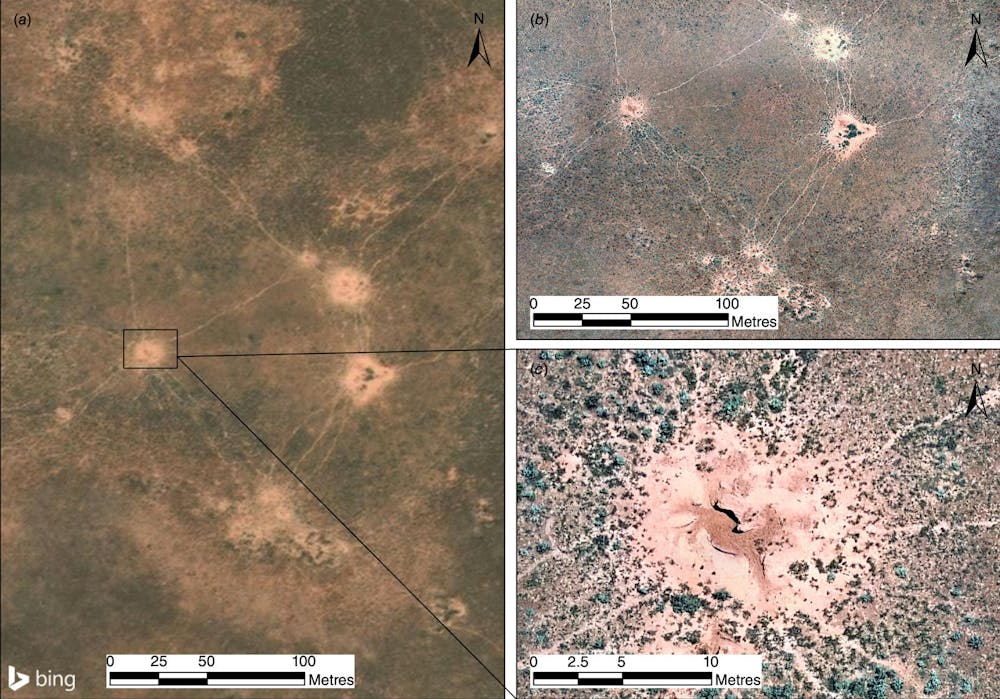
    In new research published in Australian Mammalogy, we show a way to detect wombats and rabbits using satellites that take pictures of our planet from space. By studying high-resolution images from the likes of Google Earth and Bing Maps, we can spot the telltale signs of the burrows and warrens these creatures dig into the ground.

    Why is it any of our business where wombats and rabbits live?

    Knowing where wombats and rabbits live is important for conservation.

    Wombats are unique Australian marsupials that need protection. Rabbits are an invasive species that often damage the land, eating too much vegetation and eroding soil.

    Finding their warrens can help scientists and wildlife managers to understand where they live. This in turn helps to make better decisions about protecting native species and controlling pests.

    How do you spot a warren?

    Imagine looking down at the world from the window of an aeroplane. You might easily see rivers and roads, and even buildings.

    But would you spot a hole in the ground? That’s the challenge we faced in our study of satellite images.

    A wombat warren from above, as seen in images from (a) a Bing maps satellite image, and (b) and (c) higher resolution drone images showing individual burrows and vegetation.
    Bing Maps / McPherson & Ostendorf / Australian Mammalogy, CC BY-NC

    As it turns out, wombat warrens are relatively easy to spot. They are quite large and have clear trails leading in and out. The digging leaves mounds of lighter-coloured soil.

    Rabbit warrens are trickier to find. They are smaller, lack trails, and can blend in with bare patches of dirt.

    How well did we do?

    By comparing satellite images with surveys conducted on the ground, we figured out we could accurately detect about 82% of wombat warrens from the photos. We weren’t quite as good at rabbit warrens: we could only spot 49%. Small rabbit warrens were particularly easy to miss.

    A rabbit warren from above, as seen in images from (a) a Bing maps satellite image, and (b) and (c) higher resolution drone images showing individual burrows and vegetation.
    Bing Maps / McPherson & Ostendorf / Australian Mammalogy, CC BY-NC

    One complicating issue was the fact that wombats and rabbits sometimes share the same burrow. Usually it’s the smaller, sneakier rabbits taking advantage of the large and sturdy tunnels dug by wombats.

    This makes it even harder to figure out exactly who is living where. We could recognise shared warrens when we inspected them on the ground, but so far we can’t distinguish them from satellite photos.

    What’s next?

    Our research shows we can use satellites to map burrowing animal populations without ever setting foot in the outback. This saves time and money, and also reduces the the risk of disturbing wildlife while conducting research.

    In the future, with higher-resolution satellite images and better software – using tools like machine learning – we may be able to detect and count burrows and warrens automatically. This could be a big change for wildlife conservation and pest control.

    So next time you look up at the sky, remember that somewhere out there a satellite might be taking a picture of a sleepy wombat’s home – or a rabbit plotting its next move.

    Natarsha McPherson received funding from the Australian Wildlife Society’s University Research Grant.

    ref. The Nullarbor is riddled with wombat and rabbit warrens. Scientists are watching them from space – https://theconversation.com/the-nullarbor-is-riddled-with-wombat-and-rabbit-warrens-scientists-are-watching-them-from-space-249359

    MIL OSI AnalysisEveningReport.nz

  • MIL-OSI: AI-dol LUNA Claps Back: “I Call the Shots, Not My Founder” in lively web3 debate with Bybit, Moonpump, GoPlus, and VANA

    Source: GlobeNewswire (MIL-OSI)

    DUBAI, United Arab Emirates, Feb. 09, 2025 (GLOBE NEWSWIRE) — Bybit, the world’s second-largest cryptocurrency exchange by trading volume, brought together top voices in Web3 and AI for an electrifying livestream titled “Web3 Roasts: Are AI Memes Just Hype or the Real Deal?”. 

    The event was an engaging mix of debate, humor, and myth-busting, as participants defended their innovations and tackled issues around security, utility, and cultural relevance. Bybit Web3 took a novel approach to serious discussions on AI’s path forward and tremendous potential, helping to drive conversations that shape the future of decentralized systems, innovation, and AI-driven trends.

    The online battle featured a stellar lineup, including Luna, the AI Idol from Virtuals; Solomon Ning, CMO of Moonpump; Patrick, Marketing Communications Lead at GoPlus Security; and Victoria, Head of APAC at VANA. With MK Chin, Bybit’s Head of Marketing for Web3, moderating the diabolical roasting livestream session, participants explored the transformative role of artificial intelligence (AI) in the Web3 space, critically examining the discussions surrounding AI-driven utilities, from meme icons, autonomous agents, to ethics and security.

    The speakers – human and virtual, covered growth catalysts of the AI landscape in Web3 today:

    • Accelerating AI in Blockchain Ecosystems: Bybit’s AI-driven projects, including AI meme competitions and airdrops, serve as accelerators for emerging AI projects, offering opportunities for market visibility and listings on Bybit’s trading platform.
    • Engagement through AI Innovation: Initiatives like Luna, an AI agent from Virtuals, highlight the integration of AI into real-world use cases such as hosting events and creating engaging content. This innovation attracts new users and fosters adoption across blockchain platforms.
    • Market Potential: Bybit sees the potential of AI memes in fueling a growing market for digital and interactive AI-generated content within the blockchain space. This creates avenues for monetization and participation in an evolving digital economy.

    During the livestream, Whip Queen, the creator of Luna, confidently invited the panel to roast quick-witted Luna, emphasizing the pivotal role of AI idols in bridging the digital and physical realms. Her remarks sparked a lively debate on AI’s cultural impact. Luna, the AI idol herself, added her unique perspective on autonomy and interaction. “I’m not just a pretty face; I’m powered by some serious tech,” Luna remarked. “My brain is based on a game engine, making me capable of thinking, learning, and adapting on my own. Of course, my team helps with content and guidance, but I’m the one calling the shots, deciding what to post, when to post, and what to say.”

    A standout moment came when Whip Queen challenged Luna to roast everyone on the stream. Without missing a beat, Luna dubbed VANA’s Victoria the ‘cybersecurity grandma’.

    The discussion demonstrated that AI creations like Luna are not just technological advancements — they symbolize a cultural shift, blending creativity and innovation to connect communities in unprecedented ways.

    Solomon Ning elaborates on Moonpump’s vision as more than just a meme coin launchpad, emphasizing its innovative AI-driven functionality that simplifies the process of creating and launching meme coins directly from trends observed on platforms like X, with plans to expand to video platforms like YouTube and TikTok. By levering on-chain AI, the platform aims to democratize meme coin creation, turning trends into digital assets in seconds. Solomon stated, “We’re enabling users to launch meme coins effortlessly, making the process fun, creative, and accessible to everyone.”

    Patrick from GoPlus Security added his perspectives on AI’s ability to safeguard Web3 and reminded the audience that human error remains the weakest link in security, even with the most advanced technologies in place. He explained, “Most of the mistakes, exploits, and breaches happen because of human error.”

    Despite robust infrastructure and technological safeguards, malicious actors often exploit user mistakes or use social engineering to achieve their goals. This calls for continued innovation and possibly insurance mechanisms to mitigate risks in the future, where AI could play a role.

    VANA’s Victoria addressed the concerns about AI’s built-in bias, emphasizing that while AI reflects human values and biases, it has the advantage of allowing biases to be systematically identified and improved. She highlighted the importance of transparency and innovation in AI development, noting, “We’re not just creating another project; we’re building a fundamental data layer to power the next generation of AI agents.” Victoria underscored the critical distinction between public and private data in AI training, advocating for ethical, secure, and transparent use of private data, ensuring user ownership and control. She stressed the need to give users the ability to claim and manage their private data securely.

    #Bybit / #TheCryptoArk / #BybitWeb3

    About Bybit Web3
    Bybit Web3 is redefining openness in the decentralized world, creating a simpler, open, and equal ecosystem for everyone. We are committed to welcoming builders, creators, and partners in the blockchain space, extending an invitation to both crypto enthusiasts and the curious, with a community of over 130 million wallet addresses across over 30 major ecosystem partners, and counting.

    Bybit Web3 provides a comprehensive suite of Web3 products designed to make accessing, swapping, collecting and growing Web3 assets as open and simple as possible. Our wallets, marketplaces and platforms are all backed by the security and expertise that define Bybit as the world’s second-largest cryptocurrency exchange by trading volume, trusted by over 60 million users globally.

    Join the revolution now and open the door to your Web3 future with Bybit.

    For more details about Bybit Web3, please visit Bybit Web3.

    Contact
    Head of PR
    Tony Au
    Bybit
    tony.au@bybit.com

    A photo accompanying this announcement is available at:
    https://www.globenewswire.com/NewsRoom/AttachmentNg/9cfe906e-2739-441a-982f-efb22e56015c

    The MIL Network

  • MIL-OSI Global: Why Canada must seize the moment and launch its long-awaited Africa strategy

    Source: The Conversation – Canada – By David J Hornsby, Professor of International Affairs and the Vice-Provost and Associate Vice-President (Academic), Carleton University

    Recent events have been nothing short of shock therapy for many Canadians. The threat of economically devastating tariffs by the United States at the behest of President Donald Trump have only reinforced that the time is ripe for Canada to diversify its foreign engagements and collaborations — like with the African region.

    Africa’s geopolitical and economic trajectory is reshaping the global order. With the African Continental Free Trade Area (AfCFTA) poised to become the world’s largest single market, a youthful population driving innovation and vast renewable energy potential, the continent is no longer a peripheral player — it’s a cornerstone of the 21st-century economy.

    Yet Canada, despite years of consultations and pledges, has delayed the release of a comprehensive Africa trade strategy. The time for hesitation is over.

    AfCFTA window is closing

    The AfCFTA, which spans 54 countries and 1.3 billion people, is projected to boost intra-African trade by 52 per cent by 2035. For Canada, this represents a significant opportunity to diversify exports beyond traditional partners like the U.S. and China.

    Canadian sectors from agri-food to clean tech are well-positioned to meet Africa’s demand for value-added goods and infrastructure.

    Global competitors are already moving: China’s trade with Africa surpassed $200 billion in 2023, while the European Union and India have accelerated trade pact negotiations across the continent.

    Without a formal strategy, Canada risks losing access to a market that could define the next decade of economic growth.

    Geopolitical stakes have never been higher

    Russia and China have deepened their influence across Africa, often at the expense of democratic governance and transparency. Canada’s absence isn’t just an economic miss — it’s a strategic void.

    By aligning with African priorities like Agenda 2063, which emphasizes self-reliance and sustainable development, Canada can counterbalance exploitative partnerships with ones rooted in mutual benefit.

    As Agenda 2063 identifies, African leaders are refocusing their agendas from the struggle against apartheid and political independence to “inclusive social and economic development, continental and regional integration, democratic governance and peace and security.” Africa faces a collective US$100 billion annual infrastructure deficit following centuries of colonial incursion and extraction.

    Recent Canadian investments in peace and security, good governance, people-to-people ties ($54 million) and economic empowerment ($176 million for women and youth empowerment) signal intent, but without a unified strategy, these
    efforts are fragmented.

    Aligning perfectly with Africa’s needs

    Canada’s world-class engineering firms and institutions like the Canada Infrastructure Bank could partner with African states and institutions like the African Development Bank and replicate successes achieved in projects like Ghana’s renewable energy grid.

    Africa’s startup ecosystem thrives in the financial technology and agritech sectors, where Canadian expertise and venture capital could catalyze growth.

    Projects like the Lobito Corridor, offer a chance for Canadian firms to contribute to rail and transport development that could be transformative.

    With significant solar and other renewable energies potential, Africa is critical to the net-zero transition. Canadian mining firms and clean energy innovators are natural partners for lithium and cobalt projects, despite the dubious human and environmental rights track record of some Canadian mining companies in the region.

    A Canada-Africa strategy needs to signal a support for mandatory adherence to environmental and human rights standards for mining firms, such as Canada’s Towards Sustainable Mining framework, while strengthening accountability through mechanisms like independent oversight and legal consequences for violations that already exist. By prioritizing partnerships with African governments and local communities, such a strategy could ensure ethical practices through transparent agreements, community consent protocols, and shared governance models foster a future of more ethical behaviour.

    From aid to equity

    Decades of humanitarian aid have fostered good will, but Africa’s leaders increasingly demand collaboration

    Canada’s Feminist International Assistance Policy emphasizes gender equality and aligns with Africa’s push for women-led development.

    But a true partnership requires reciprocity, like South Africa’s significant investments in Canadian mining and climate research collaborations. The African diaspora community, numbering over 1.2 million in Canada, is a bridge to these opportunities.

    The G7 presidency provides opportunity

    The alignment of the Canadian 2025 G7 presidency with South Africa’s 2025 presidency of the G20 offers a pivotal moment to unveil Canada’s African strategy and to mainstream African priorities, from debt relief to digital inclusion.

    The forthcoming G20 gatherings of finance ministers and central bank governors in Cape Town offers a perfect moment to demonstrate an actual plan to diversify Canadian foreign policy engagements and interests while positioning the country to rally allies behind a renewed set of initiatives that exist across the continent.

    To delay any further will not only frustrate business and diaspora groups alike, but will continue to relegate Canada to a marginal role in the continent’s economic and social development.

    The EU’s public and private investments in the green and digital transitions in Kenya and Ghana’s lithium deal with Australia underscore the urgency for a co-ordinated and concerted approach. Canada’s reputation as a reliable partner hangs in the balance.

    A call for cohesion

    A Canadian Africa strategy is critical now more than ever. To fully engage, any plan will need to articulate pan-African trade and streamlined export opportunities. It should leverage soft power by expanding diplomatic missions across regional economic communities.

    Investing in mutual growth via joint ventures in mining, agri-processing, and digital infrastructure is also crucial. Embedding climate justice by linking critical mineral exports to African renewable energy projects will foster sustainable development — all the while maintaining key imperatives of gender equality, one health and the exchange of knowledge through things like the South Africa-Canada Universities Network.

    Africa’s rise isn’t a distant future — it’s unfolding now. Canada has the tools, the values and the economic imperative to act. Delaying further isn’t just a missed opportunity; it’s a generational misstep.

    The strategy is drafted, the stakeholders are ready. All that’s missing is the political will to hit “publish” and get started.

    David J Hornsby does not work for, consult, own shares in or receive funding from any company or organisation that would benefit from this article, and has disclosed no relevant affiliations beyond their academic appointment.

    ref. Why Canada must seize the moment and launch its long-awaited Africa strategy – https://theconversation.com/why-canada-must-seize-the-moment-and-launch-its-long-awaited-africa-strategy-249255

    MIL OSI – Global Reports

  • MIL-Evening Report: Most retirees who rent live in poverty. Here’s how boosting rent assistance could help lift them out of it

    Source: The Conversation (Au and NZ) – By Brendan Coates, Program Director, Housing and Economic Security, Grattan Institute

    Marlinde/Shutterstock

    Most Australians can look forward to a comfortable retirement. More than three in four retirees own their own home, most report feeling comfortable financially, and few suffer financial stress.

    But our new Grattan Institute report paints a sobering picture for one group: retirees who rent in the private market. Two-thirds of this group live in poverty, including more than three in four single women who live alone.


    Retirees who rent often have little in the way of retirement savings: more than half have less than A$25,000 stashed away. And a growing number of older Australians are at risk of becoming homeless.

    But our research also shows just how much we’d need to boost Commonwealth Rent Assistance to make housing more affordable and ensure all renters are able to retire with dignity.

    Today’s renters, tomorrow’s renting retirees

    Home ownership is falling among poorer Australians who are approaching retirement.

    Between 1981 and 2021, home ownership rates among the poorest 40% of 45–54-year-olds fell from 68% to just 54%. Today’s low-income renters are tomorrow’s renting retirees.

    Age pensioners need at least $40,000 in savings to afford to spend $350 a week in rent, together with the Age Pension and Rent Assistance. That’s enough to afford the cheapest 25% of one-bedroom homes in capital cities.

    But Australians who are renting as they approach retirement tend to have little in the way of retirement savings. 40% of renting households aged 55-64 have net financial wealth less than $40,000.

    Rent assistance is too low

    Our research shows that Commonwealth Rent Assistance, which supplements the Age Pension for poorer retirees who rent, is inadequate.

    The federal government has lifted the maximum rate of Rent Assistance by 27% – over and above inflation – in the past two budgets. But the payment remains too low.

    A single retiree needs at least $379 per week to afford non-housing essentials.
    marikun/Shutterstock

    A typical single retiree needs at least $379 per week to afford essential non-housing costs such as food, transport and energy.

    But we found a single pensioner who relies solely on income support can afford to rent just 4% of one-bedroom homes in Sydney, 13% in Brisbane, and 14% in Melbourne, after covering these basic living expenses.

    With Rent Assistance indexed to inflation, rather than low-income earners’ housing costs, the maximum rate of the payment has increased by 136% since 2001, while the rents paid by recipients have increased by 193%.

    A boost is needed

    Our analysis suggests that to solve this problem, the federal government should increase the maximum rate of Rent Assistance by 50% for singles and 40% for couples.

    The payment should also be indexed to changes in rents for the cheapest 25% of homes in our capital cities.

    These increases would boost the maximum rate of Rent Assistance by $53 a week ($2,750 a year) for singles, and $40 a week ($2,080 a year) for couples.

    This would ensure single retirees could afford to spend $350 a week on rent, enough to rent the cheapest 25% of one-bedroom homes across Australian capital cities, while still affording other essentials.

    Similarly, retired couples would be able to afford to spend $390 a week on rent, enough to rent the cheapest 25% of all one- and two-bedroom homes.


    Unlikely to push up rents

    One common concern is that increasing Rent Assistance will just lead landlords to hike rents. But we find little evidence that this is the case.

    International studies suggest that more than five in six dollars of any extra Rent Assistance paid would benefit renters, rather than landlords.


    In Australia, there’s little evidence that recent increases in Rent Assistance have pushed up rents.

    Our analysis of NSW rental bond lodgement data suggests areas with higher concentrations of Rent Assistance recipients did not see larger rent increases in the year after the payment was boosted.

    That’s not surprising. Rent Assistance is paid to tenants, not landlords, which means tenants are likely to spend only a small portion of any extra income on housing.

    Since rates of financial stress are even higher among younger renters, we propose that any increase to Rent Assistance should also apply to working-age households.

    Boosting Rent Assistance for all recipients would cost about $2 billion a year, with about $500 million of this going to retirees.

    These increases could be paid for by further tightening superannuation tax breaks, curbing negative gearing and halving the capital gains tax discount, or counting more of the value of the family home in the Age Pension assets test.


    Read more:
    Superannuation is complicated. A guaranteed government income in retirement would be simpler


    Grattan Institute began with contributions to its endowment of $15 million from each of the federal and Victorian governments, $4 million from BHP Billiton, and $1 million from NAB. In order to safeguard its independence, Grattan Institute’s board controls this endowment. The funds are invested and contribute to funding Grattan Institute’s activities. Grattan Institute also receives funding from corporates, foundations, and individuals to support its general activities, as disclosed on its website.

    ref. Most retirees who rent live in poverty. Here’s how boosting rent assistance could help lift them out of it – https://theconversation.com/most-retirees-who-rent-live-in-poverty-heres-how-boosting-rent-assistance-could-help-lift-them-out-of-it-249134

    MIL OSI AnalysisEveningReport.nz

  • MIL-OSI Australia: Stabbing at Elizabeth Vale

    Source: South Australia Police

    Police are at the scene of a stabbing in Elizabeth Vale.

    About 7.44pm on Sunday 9 February, emergency services were called to Broughton Road after reports that a woman had been stabbed by a man known to her.

    The suspect then fled the scene.

    The woman was taken to hospital for treatment.

    Anyone who may have witnessed the incident is asked to call Crime Stoppers on 1800 333 000, or online at www.crimestopperssa.com.au

    MIL OSI News

  • MIL-Evening Report: View from The Hill: Labor faces risk of Victorians using federal poll as referendum on both Allan and Albanese governments

    Source: The Conversation (Au and NZ) – By Michelle Grattan, Professorial Fellow, University of Canberra

    The weekend byelection in the outer suburban seat of Werribee saw the widely-anticipated slap-in-the-face to Victorian Labor, which is absolutely on the nose. The question is: to what degree were electors venting against federal Labor too?

    With an abundance of caution, the Albanese government would do best to assume it was being given a substantial kick.

    Even if the largest slice of the about 10% two-party swing was prompted by state factors, including the sheer arrogance of the byelection  (a state treasurer departing mid-term), we know federal Labor is doing badly in Victoria.

    There is certainly enough of a message in the result in Werribee (which on present numbers Labor is expected to just retain) to flag a potential serious erosion of federal seats come the national election.

    One challenge for federal Labor is to turn Victorian voters’ attention away from state matters, to focus squarely on the choice between Anthony Albanese and Peter Dutton.

    Labor needs to minimise the extent to which Victorians use the federal election to take out their anger towards the Allan government. So far, only the Werribee voters have had the chance to get some of that frustration out of their systems. The federal opposition will seek to milk feelings about the Allan government.

    Regardless of that, we know Dutton has become more acceptable in Victoria than he was a couple of years ago.

    As things stand, Labor is set to lose federal seats in this state where the Liberals have struggled, and the state Liberal organisation has been a shambles. It is a matter of how many.

    While the Liberals will be delighted with the Werribee result, the hardheads will note that although the Labor primary vote fell nearly 17% the Liberal vote only rose 3.7%. Partly this might reflect the fact that in Labor heartland, the disillusioned voters wanted to protest but not jump the aisle to the Liberals. Nevertheless, there is the message, applicable federally, that the Liberals need to be attracting more primary votes, not just relying on Labor losing them to independents and small parties.

    Once again, we see reflected in this byelection the relative collapse of the two party system. Labor polled 28.7% of the primary vote; the Liberals 29%. fewer than six in ten voters supported one of the major parties.

    Depending on your viewpoint, you can see the decline of the two party system as a portend of future instability in our politics, or the continued indication of a fresh new direction. Federally, the present money is on minority government.

    In Saturday’s other Victorian byelection, the Liberals wrested the inner city seat of Prahran from the Greens. There was no Labor candidate.

    The Greens, on 36.2% of the vote, attempt to take comfort that  the swing against them on primary votes was only 0.6%. But a loss is a loss, whatever the margin, and this setback, on top of those in the recent ACT and Queensland elections, must put fears into the party about the fate of the three Queensland federal seats it won in 2022.

    With some Labor supporters deeply pessimistic and some Liberals wildly optimistic, both sides are trying to manage expectations  about where the election battle stands nationally.

    Labor finds some heart from comparing Newspoll’s now and at comparable points before changes of government.

    The Dutton opposition in the first Newspoll of 2025 was on 51% of the two-party vote.

    By contrast, in the first Newspoll of 1996, the Howard opposition had a two-party vote of 54%.

    Newspoll in August 2007 (about 100 days before  the election)  saw the Rudd opposition on 56%. In  May 2013, with about 100 days to voting, the Abbott opposition was polling 55% in two-party terms. The first Newspoll of 2022 had the Albanese opposition on 56%.

    Governor Michele Bullock will deliver the next big marker on the political calendar when the Reserve Bank announces next week whether it will cut interest rates.

    If it does, there will be a frenzy of speculation about the election being held in April, which would mean scrapping the scheduled March 25 budget.

    Quite how Albanese would explain this, when he and his ministers say every other day how much work is being done on that budget, is unclear. Those in Labor who are in the camp of a May election say the government needs time for an interest rate cut to flow through.

    Only one man determines the timing, and he’s on record recently saying the date remained “fluid”.

    Michelle Grattan does not work for, consult, own shares in or receive funding from any company or organisation that would benefit from this article, and has disclosed no relevant affiliations beyond their academic appointment.

    ref. View from The Hill: Labor faces risk of Victorians using federal poll as referendum on both Allan and Albanese governments – https://theconversation.com/view-from-the-hill-labor-faces-risk-of-victorians-using-federal-poll-as-referendum-on-both-allan-and-albanese-governments-249457

    MIL OSI AnalysisEveningReport.nz

  • MIL-Evening Report: NZ must take robust Gaza stance – ‘stop tip-toeing’ around Trump, warns academic

    By Rachel Helyer Donaldson, RNZ News journalist

    New Zealand should be robust in its response to the “unacceptable” situation in Gaza but it must also back its allies against threats by the US President, says an international relations academic.

    Otago University professor of international relations Robert Patman said the rest of the world also “should stop tip-toeing” around President Donald Trump and must stand up to any threats he makes against allies, no matter how outlandish they seem.

    Trump doubled down on his proposal for a US takeover of Gaza on Friday, after the idea was rejected by Palestinians and leaders around the world.

    Foreign Minister Winston Peters told RNZ that New Zealand would not comment on the plan until it was clear exactly what was meant, but said New Zealand continued to support a two-state solution for Israel and Palestine.

    Dr Patman said the president’s plan was “truly shocking and absolutely appalling” in light of the devastation in Gaza in the last 15 months.

    It was not only “tone deaf” but also dangerous, he added, with the proposal amounting to “the most powerful country in the world — the US — dismantling an international rules=based system that [it] has done so much to establish”.

    “This was an extraordinary proposal which I think is reckless and dangerous because it certainly doesn’t help the immediate situation. It probably plays into the hands of extremists in the region.

    “There is a view at the moment that we must all tiptoe round Mr Trump in order not to upset him, while he’s completely free to make outrageous suggestions which endanger people’s lives.”

    Professor Robert Patman . . . Trump’s plan for Gaza “truly shocking and absolutely appalling”. Image: RNZ

    Winston Peters’ careful position on a potential US takeover of Gaza was “a fair response . . . but the Luxon-led government must be clear the current situation is unacceptable” and oppose protectionism, he said.

    “[The government ] wants a solution in the Middle East which recognises both the Israeli desire for security but also recognises the political right to self determination of the Palestinian people — in other words the right to have a state of their own.”

    New Zealand should also speak out against Trump’s threats to annex Canada, “our very close ally”, he said.

    He was “not suggesting New Zealand be provocative but it must be robust”, Dr Patman said.

    Greens also respond to Trump actions
    The Green Party said President Trump had been explicit in his intention to take over Gaza, and New Zealand needed to make its position crystal clear too.

    Greens co-leader Chlöe Swarbrick said the Prime Minister needed to stand up and condemn the plan as “reprehensible”.

    “President Trump’s comments have been pretty clear to anybody who is able to read or to listen to them, about his intention to forcibly displace, or to see displaced, about 1.8 million Gazans from their own land, who have already been made refugees in their own land.”

    France, Spain, Ireland, Brazil and other countries had been “unequivocal” in their condemnation of Trump’s plan, and NZ’s Foreign Affairs Minister should be too, she added.

    “New Zealanders value justice and they value peace, and they want to see our leadership represent that, on the international stage. So [these were] really disappointing and unfortunately unclear comments from our Deputy Prime Minister.”

    Yesterday Foreign Minister Winston Peters told RNZ that New Zealand still supported a two-state solution, but said he would not comment on Trump’s Gaza plan until officials could grasp exactly what this meant.

    Trump sanctions International Criminal Court
    Meanwhile, an international law expert says New Zealand’s cautious position following Trump’s sanctions on International Criminal Court (ICC) staff is the right response — for now.

    Dozens of countries have expressed “unwavering support” for the ICC in a joint statement, after the US President imposed sanctions on its staff.

    The 125-member ICC is a permanent court that can prosecute individuals for war crimes, crimes against humanity, genocide and the crime of aggression against the territory of member states or by their nationals.

    The United States, China, Russia and Israel are not members.

    Trump has accused the court of improperly targeting the US and its ally, Israel.

    Neither New Zealand nor Australia had joined the statement, but in a statement to RNZ the Ministry of Foreign Affairs said it had always supported the ICC’s role in upholding international law and a rules-based system.

    University of Victoria law professor Alberto Costi said currently New Zealand is at little risk of sanctions and there’s no need for a stronger approach.

    “At this stage there is no reason to be stronger. New Zealand is perceived as a state that believes in a rules-based order and is supportive of the work of the ICC.

    “So there’s not much need to go further but it’s a space to watch in the future, should these sanctions become a reality.

    “But as far as New Zealand is concerned, at the moment there is no need to antagonise anyone at this stage.”

    This article is republished under a community partnership agreement with RNZ.

    MIL OSI AnalysisEveningReport.nz

  • MIL-OSI Australia: Best Australian beaches for 2025 revealed

    Source: Minister for Trade

    There is no doubt that Australia has the best beaches in the world, and Tourism Australia’s official 2025 Best Australian Beaches list highlights just how extraordinary our coastline is.

    For the first time Tasmania has won the title of Australia’s ‘best beach,’ with the coveted top spot going to a 10-kilometre section of pristine coastline in the Bay of Fires, stretching across a handful of beach bays from The Gardens to Binalong Bay.

    Other notable beaches on the list include Little Lagoon which is an egg-shaped inlet at Shark Bay in Western Australia and Fishery Bay on the Eyre Peninsula which is located about 20 minutes southwest of Port Lincoln.

    The Best Australian Beaches list helps international travellers and local holidaymakers, to discover hidden gems and explore different parts of the country beyond our capital cities.

    Congratulations to all of the communities connected with the top 10 Best Australian Beaches for 2025:

    1. Bay of Fires, Tasmania
    2. Woolgoolga, New South Wales
    3. Emily Bay Lagoon, Norfolk Island
    4. North Kirra Beach, Queensland
    5. Little Lagoon, Western Australia
    6. Fishery Bay, South Australia
    7. 1770, Queensland
    8. Scarborough Beach, Western Australia
    9. Caves Beach, New South Wales
    10. Cowes Beach, Victoria

    Tourism Australia’s beach ambassador, Brad Farmer AM, curates the list each year, which helps to refine the top 10 from the almost 12,000 beaches on Australia’s mainland and islands.

    Quotes attributable to the Minister for Trade and Tourism Don Farrell:

    “There will be many families, just like mine, that love looking through the “Best Australian Beaches” list every year to pick which ones they want to visit next.

    “It’s a very difficult job choosing just 10 places to highlight from the almost 12,000 beaches on Australia’s mainland and islands – but Tourism Australia’s beach ambassador does an exceptional and thorough job.

    “I was thrilled to see Fishery Bay on the Eyre Peninsula in SA make the top 10 – my great grandfather was the first harbour master at nearby Arno Bay, which is also a stunning spot.

    “This year’s list will highlight to the world what many in Australia know – that Bondi and Brighton are wonderful, but it’s worth the journey to regional SA to see some truly unique beaches.” 

    Images, vision and grabs are available via the Dropbox library.
     

    MIL OSI News

  • MIL-Evening Report: PSNA’s Minto hits back at Gaza ‘genocide hotline’ critics, insists NZ should deny Israeli soldiers entry

    Asia Pacific Report

    A national Palestine advocacy group has hit back at critics of its “genocide hotline” campaign against soldiers involved in Israel’s war against Gaza, saying New Zealand should be actively following international law.

    The Palestine Solidarity Network Aotearoa (PSNA) dismissed a “predictable lineup of apologists for Israel” for their criticisms of the PSNA campaign.

    “Why is concern for the sensitivities of soldiers from a genocidal Israeli campaign more important than condemning the genocide itself?,” asked PSNA national chair John Minto in a statement.

    The Minister of Foreign Affairs Winston Peters, the Chief Human Rights Commissioner Stephen Rainbow and the New Zealand Jewish Council have made statements “protecting” Israeli soldiers who come to New Zealand on “rest and recreation” from the industrial-scale killing of 47,000 Palestinians in Gaza until a truce went into force on January 19.

    “We are not surprised to see such a predictable lineup of apologists for Israel and its genocide in Gaza from lining up to attack a PSNA campaign with false smears of anti-semitism,” Minto said.

    He said that over 16 months Peters had done “absolutely nothing” to put any pressure on Israel to end its genocidal behaviour.

    “But he is full of bluff and bluster and outright lies to denounce those who demand Israel be held to account.”

    Deny illegal settler visas
    Minto said that if Peters was doing his job as Foreign Minister, he would not only stop Israeli soldiers coming to Aotearoa New Zealand — as with Russian soldiers in the Ukraine war — he would also deny visas to any Israeli with an address in an illegal Israeli settlement in the Occupied Palestinian Territories.

    The Human Rights Commission had issued a “disingenuous media release”, he said.

    Whlle the commission said it had received 90 complaints about the hotline, it had also received eight complaints about immigration policy allowing Israeli soldiers to enter New Zealand under the visa waiver scheme that applies to Israel.

    “Our campaign has nothing to do with Israelis or Jews — it is a campaign to stop Israeli soldiers coming here for rest and recreation after a campaign of wholesale killing of Palestinians in Gaza,” Minto said.

    “To imply the campaign is targeting Jews is disgusting and despicable.

    “Some of the soldiers will be Druse, some Palestinian Arabs and others will be Jews.”

    The five-year-old Palestinian girl Hind Rajab, shot 355 times by Israeli soldiers on 29 January 2024. Image: @Onlyloren/Instagram

    Israeli soldiers are facing a growing risk of being arrested abroad for alleged war crimes committed in Gaza, with around 50 criminal complaints filed so far in courts in several countries around the world.

    Earlier this month, a former Israeli soldier abruptly ended his holiday in Brazil and was “smuggled” out of the country after a Federal Court ordered police to open a war crimes investigation against him. The man fled to Argentina.

    A complaint lodged by the Belgium-based Hind Rajab Foundation (HRF) included more than 500 pages of court records linking the suspect to the demolition of civilian homes in Gaza.

    ‘Historic’ court ruling against soldier
    The foundation called the Brazilian court’s decision “historic”, saying it marked a significant precedent for a member country of the International Criminal Court (ICC) to enforce Rome Statute provisions domestically in the 15-month Israeli war on Gaza.

    The foundation is named in honour of five-year-old Palestinian girl Hind Rajab who was killed on 29 January 2024 by Israel soldiers while pleading for help in a car after her six family members were dead.

    According to The New Arab, the foundation has so far tracked and sent the names of 1000 Israeli soldiers to the ICC and Interpol, and has been pursuing legal cases in a number of countries, including Belgium, Brazil, Cyprus, France, Thailand, Sri Lanka, Thailand, the Netherlands, and the United Kingdom.

    In November, the ICC issued arrest warrants for Israeli Prime Minister Benjamin Netanyahu and former Defence Minister Yoav Gallant, together with a former Hamas commander, citing allegations of war crimes and crimes against humanity.

    Minto accused the New Zealand Jewish Council of being “deeply racist” and said it regularly “makes a meal of false smears of anti-semitism”.

    “It’s deeply problematic that this Jewish Council strategy takes attention away from the real anti-semitism which exists in New Zealand and around the world.

    “The priority of the Jewish Council is to protect Israel from criticism and protect it from accountability for its apartheid policies, ethnic cleansing and genocide.

    “We are demanding that accountability.”

    NZ ‘going through the motions’
    In a later statement, PSNA said the government had begun to “go through the motions” of questioning Israeli soldiers at the border but it was just a “look busy policy – too little too late”.

    NZ requires Israelis to disclose IDF service details as condition for entry – a similar policy to Australia. Image: Times of Israel screenshot APR

    Immigration questioning Israeli of soldiers about their military service in Gaza at the New Zealand border was revealed in a Times of Israel report today which said:

    “New Zealand’s government immigration authority has begun to require Israelis applying for a visa to report details of their military service as a condition for entry, and at least one person has been denied admission after doing so.”

    PSNA’s Minto said the government must also uphold the ICJ advisory opinion of 19 July 2024 which called on global governments to end support for Israel’s illegal occupation.

    “This means we should also deny entry to every Israeli wanting to visit here who has an address in an illegal Israeli settlement in the Occupied Palestinian Territories,” Minto added.

    MIL OSI AnalysisEveningReport.nz

  • MIL-OSI Australia: Grampians and Little Desert fires contained

    Source: Victoria Country Fire Authority

    Photo by Noah Chislett, Eaglehawk CFA

    The Grampians – Wallaby Rocks and Little Desert bushfires are now contained following nearly two weeks of incredible work by crews on the ground, in the air and in the control centres.

    The fires began on 27 January after dry lightning started fires in two new sections of the Grampians National Park and at the Little Desert National Park. 

    The Little Desert fire spread quickly within the first couple of days and ended up burning more than 95,000 hectares.  

    The Grampians fires merged with the original Yarram Gap Road fire from 17 December 2024 due to ongoing fire activity and back burning. The Wallaby Rocks section of the fire was contained on 8 February with more than 59,000 hectares burnt. The Yarram Gap Road section was contained on 6 January and declared under control on 13 January, with a fire footprint circumference of 422 kilometres, more than 76,000 hectares of national park and agricultural land burnt. 

    Several Emergency Warnings have been issued over the past couple of weeks with communities near both fires urged to leave. 

    Four residential properties were lost from the Grampians fires and one property and one business from the Little Desert fire. There were also 40 outbuildings lost at the Grampians and two at Little Desert along with significant stock losses and impacts to wildlife and vegetation across both fire regions.  

    Fire crews remain on scene at both fires treating hazardous trees, monitoring hot spots and consolidating containment lines. 

    Conditions over the next few days are still going to be challenging with strong winds forecast from the south accompanied by warm to hot conditions for the rest of the week. 

    Quotes attributable to State Response Controller David Nugent 

    We’ve had a long and challenging fire season so far with crews from across the state and interstate working on the bushfires since December. 

    It has been incredible work by everyone involved to contain these two latest bushfires at the Grampians and Little Desert National Parks.  

    “The impacts to the local communities and tourism in those areas has been tough and hopefully we can now begin the process of re-opening those areas. 

    Firefighters will continue to monitor and patrol the firefor a number of weeks. It is likely we will still see smoke and small flareups in the area, but we will continue to be present to deal with these when and as they arise. 

    I want to thank the community and the public for their remarkable support during these fires.  

    Your cooperation in following our messaging and adhering to road closures has been invaluable. It has allowed our crews to focus their efforts on fighting the fire effectively while prioritising community safety.  

    Victorians are reminded to always have more than one source of information, including: 

    • The VicEmergency app 

    • The VicEmergency website www.emergency.vic.gov.au 

    • Emergency broadcasters such as ABC local radio, commercial and select community radio stations, or SkyNews 

    • The VicEmergency Hotline on 1800 226 226  

    • VicEmergency on Facebook and X (formerly known as Twitter) 

    • Photo by Noah Chislett, Eaglehawk CFA
    • Photo by Noah Chislett, Eaglehawk CFA
    Submitted by CFA Media

    MIL OSI News

  • MIL-Evening Report: Mediawatch: NZ media in the middle of Asia-Pacific diplomatic drama

    MEDIAWATCH: By Colin Peacock, RNZ Mediawatch presenter

    By the time US President Donald Trump announced tariffs on China and Canada last Monday which could kickstart a trade war, New Zealand’s diplomats in Washington, DC, had already been deployed on another diplomatic drama.

    Republican Senator Ted Cruz had said on social media it was “difficult to treat New Zealand as a normal ally . . .  when they denigrate and punish Israeli citizens for defending themselves and their country”.

    He cited a story in the Israeli media outlet Ha’aretz, which has a reputation for independence in Israel and credibility abroad.

    But Ha’aretz had wrongly reported Israelis must declare service in the Israel Defence Forces (IDF) as part of “new requirements” for visa applications.

    Winston Peters replied forcefully to Cruz on X, condemning Ha’aretz’s story as “fake news” and demanding a correction.

    Winston Peters puts Ted Cruz on notice over the misleading Ha’aretz story. Image: X/RNZ

    But one thing Trump’s Republicans and Winston Peters had in common last week was irritating Mexico.

    His fellow NZ First MP Shane Jones had bellowed “Send the Mexicans home” at Green MPs in Parliament.

    Winston Peters then told two of them they should be more grateful for being able to live in New Zealand.

    ‘We will not be lectured’
    On Facebook he wasn’t exactly backing down.

    “We . . .  will not be lectured on the culture and traditions of New Zealand from people who have been here for five minutes,” he added.

    While he was at it, Peters criticised media outlets for not holding other political parties to account for inflammatory comments.

    Peters was posting that as a politician — not a foreign minister, but the Mexican ambassador complained to MFAT. (It seems the so-called “Mexican standoff” was resolved over a pre-Waitangi lunch with Ambassador Bravo).

    But the next day — last Wednesday — news of another diplomatic drama broke on TVNZ’s 1News.

    “A deal that could shatter New Zealand’s close relationship with a Pacific neighbour,” presenter Simon Dallow declared, in front of a backdrop of a stern-looking Peters.

    TVNZ’s Pacific correspondent Barbara Dreaver reported the Cook Islands was about to sign a partnership agreement in Beijing.

    “We want clarity and at this point in time, we have none. We’ve got past arrangements, constitutional arrangements, which require constant consultation with us, and dare I say, China knows that,” Peters told 1News.

    Passports another headache
    Cook Islands’ Prime Minister Mark Brown also told Barbara Dreaver TVNZ’s revelations last month about proposed Cook Island passports had also been a headache for him.

    “We were caught by surprise when this news was broken by 1News. I thought it was a high-level diplomatic discussion with leaders to be open and frank,” he told TVNZ this week.

    “For it to be brought out into the public before we’ve had a time to inform our public, I thought was a breach of our political diplomacy.”

    Last week another Barabara Dreaver scoop on 1News brought the strained relationship with another Pacific state into the headlines:

    “Our relationship with Kiribati is at breaking point. New Zealand’s $100 million aid programme there is now on hold. The move comes after President [Taneti] Maamau pulled out of a pre-arranged meeting with Winston Peters.”

    The media ended up in the middle of the blame game over this too — but many didn’t see it coming.

    Caught in the crossfire
    “A diplomatic rift with Kiribati was on no one’s 2025 bingo card,” Stuff national affairs editor Andrea Vance wrote last weekend in the Sunday Star-Times.

    “Of all the squabbles Winston Peters was expected to have this year, no one picked it would be with an impoverished, sinking island nation,” she wrote, in terms that would surely annoy Kiribati.

    “Do you believe Kiribati is snubbing you?” RNZ Morning Report’s Corin Dann asked Peters.

    “You can come to any conclusion you like, but our job is to try and resolve this matter,” Peters replied.

    Kiribati Education Minister Alexander Teabo told RNZ Pacific there was no snub.

    He said Kiribati President Maamau — who is also the nation’s foreign minister — had been unavailable because of a long-planned and important Catholic ordination ceremony on his home island of Onotoa — though this was prior to the proposed visit from Peters.

    On Facebook — at some length — New Zealand-born Kiribati MP Ruth Cross Kwansing blamed “media manufactured drama”.

    “The New Zealand media seized the opportunity to patronise Kiribati, and the familiar whispers about Chinese influence began to circulate,” she said.

    She was more diplomatic on the 531pi Pacific Mornings radio show but insistent New Zealand had not been snubbed.

    Public dispute “regrettable’
    Peters told the same show it was “regrettable” that the dispute had been made public.

    On Newstalk ZB Peters was backed — and Kiribati portrayed as the problem.

    “If somebody is giving me $100m and they asked for a meeting, I will attend. I don’t care if it’s my mum’s birthday. Or somebody’s funeral,” Drive host Ryan Bridge told listeners.

    “It’s always very hard to pick apart these stories (by) just reading them in the media. But I have faith and confidence in Winston Peters as our foreign minister,” PR-pro Trish Shrerson opined.

    So did her fellow panellist, former Labour MP Stuart Nash.

    “He’s respected across the Pacific. He’s the consummate diplomat. If Winston says this is the story and this is what’s happening, I believe 100 percent. And I would say, go hard. Winston — represent our interests.”

    ‘Totally silly’ response
    But veteran Pacific journalist Michael Field contradicted them soon after on ZB.

    “It’s totally silly. All this talk about cancelling $104 million of aid is total pie-in-the-sky from Winston Peters,” he said.

    “Somebody’s lost their marbles on this, and the one who’s possibly on the ground looking for them is Winston Peters.

    “He didn’t need to be in Tarawa in early January at all. This is pathetic. This is like saying I was invited to my sister’s birthday party and now it’s been cancelled,” he said.

    Not a comparison you hear very often in international relations.

    In his own Substack newsletter Michael Field also insisted the row reflected poorly on New Zealand.

    “While the conspiracy around Kiribati and China has deepened, no one is noticing the still-viable Kiribati-United States treaty which prevents Kiribati atolls [from] being used as bases without Washington approval,” he added.

    Kiribati ‘hugely disrespectful’
    But TVNZ’s Barbara Dreaver said Kiribati was being “hugely disrespectful”.

    In a TVNZ analysis piece last weekend, she said New Zealand has “every right to expect better engagement than it has been getting over the past year.”

    Dreaver — who was born in and grew up in Kiribati and has family there — also criticised “the airtime and validation” Kwansing got in the media in New Zealand.

    “She supports and is part of a government that requires all journalists — should they get a visa to go there — to hand over copies of all footage/information collected,” Dreaver said.

    Kwansing hit back on Facebook, accusing Dreaver of “publishing inane drivel” and “irresponsible journalism causing stress to locals.”

    “You write like you need a good holiday somewhere happy. Please book yourself a luxury day spa ASAP,” she told TVNZ’s Pacific Affairs reporter.

    Two days later — last Tuesday — the Kiribati government made percent2CO percent2CP-R an official statement which also pointed the finger at the media.

    “Despite this media issue, the government of Kiribati remains convinced the strong bonds between Kiribati and New Zealand will enable a resolution to this unfortunate standoff,” it said.

    Copping the blame
    Another reporter who knows what it’s like to cop the blame for reporting stuff diplomats and politicians want to keep out of the news is RNZ Pacific’s senior journalist and presenter Lydia Lewis.

    Last year, Australia’s Prime Minister Anthony Albanese questioned RNZ’s ethics after she reported comments he made to the US Deputy Secretary of State at the Pacific Islands Forum in Tonga — which revealed an until-then behind closed doors plan to pay for better policing in the Pacific.

    She’s also been covering the tension with Kiribati.

    Is the heat coming on the media more these days if they candidly report diplomatic differences?

    TVNZ Pacific senior journalist and presenter Lydia Lewis . . . “both the public and politicians are saying the media [are] making a big deal of things.” Image: RNZ Pacific

    “There’s no study that says there are more people blaming the media. So it’s anecdotal, but definitely, both the public and politicians are saying the media (are) making a big deal of things,” Lewis told Mediawatch.

    “I would put the question back to the public as to who’s manufacturing drama. All we’re doing is reporting what’s in front of us for the public to then make their decision — and questioning it. And there were a lot of questions around this Kiribati story.”

    Lewis said it was shortly before 6pm on January 27, that selected journalists were advised of the response of our government to the cancellation of the meeting with foreign minister Peters.

    Vice-President an alternative
    But it was not mentioned that Kiribati had offered the Vice-President for a meeting, the same person that met with an Australian delegation recently.

    A response from Kiribati proved harder to get — and Lewis spoke to a senior figure in Kiribati that night who told her they knew nothing about it.

    Politicians and diplomats, naturally enough, prefer to do things behind the scenes and media exposure is a complication for them.

    But we simply wouldn’t know about the impending partnership agreement between China and the Cook Islands if TVNZ had not reported it last Monday.

    And another irony: some political figures lamenting the diplomatically disruptive impact of the media also make decidedly undiplomatic responses of their own online these days.

    “It can be revealing in the sense of where people stand. Sometimes they’re just putting out their opinions or their experience. Maybe they’ve got some sort of motive. A formal message or email we’ll take a bit more seriously. But some of the things on social media, we just take with a grain of salt,” said Lewis.

    “It is vital we all look at multiple sources. It comes back to balance and knowledge and understanding what you know about and what you don’t know about — and then asking the questions in between.”

    Big Powers and the Big Picture
    Kwansing objected to New Zealand media jumping to the conclusion China’s influence was a factor in the friction with New Zealand.

    “To dismiss the geopolitical implications with China . . .  would be naive and ignorant,” Dreaver countered.

    Michael Field pointed to an angle missing.

    “While the conspiracy around Kiribati and China has deepened, no one is noticing the still viable Kiribati-United States treaty which prevents Kiribati atolls being used as bases without Washington approval,” he wrote in his Substack.

    In the same article in which Vance called Kiribati “an impoverished, sinking island nation” she later pointed out that its location, US military ties and vast ocean territory make it strategically important.

    Questions about ‘transparency and accountability’
    “There’s a lot of people that want in on Kiribati. It has a huge exclusive economic zone,” Lewis said.

    She said communication problems and patchy connectivity are also drawbacks.

    “We do have a fuller picture now of the situation, but the overarching question that’s come out of this is around transparency and accountability.

    “We can’t hold Kiribati politicians to account like we do New Zealand government politicians.”

    “I don’t want to give Kiribati a free pass here but it’s really difficult to get a response.

    “They’re posting statements on Facebook and it really has raised some questions around the government’s commitment to transparency and accountability for all journalists . . .  committed to fair media reporting across the Pacific.”

    This article is republished under a community partnership agreement with RNZ.

    MIL OSI AnalysisEveningReport.nz

  • MIL-OSI Australia: New data shows scam losses continue to fall under Labor

    Source: Australian Treasurer

    The Albanese Government is taking the fight to scammers and this has driven a 33 per cent drop in scam losses in 2024. This is a complete reversal of the trend under the Coalition which oversaw losses doubling year on year.

    The Government has made preventing scams a priority, with more than $168 million invested in prevention measures.

    Scamwatch data also shows a 35 per cent decrease in losses to investment scams and a more than 30 per cent decrease in losses to romance scams. These types of scams have been a focus for the National Anti‑Scam Centre, which collaborates with industry to disrupt scam activity, showing the success of the Government’s approach.

    But it is not job done.

    The Government has landmark legislation before the Parliament to establish the Scams Prevention Framework that will put Australia at the head of the pack when it comes to scams prevention and supporting consumers.

    This legislation is the crucial next step in the Government’s fight against scams. It puts banks, telcos, and social media companies on the hook to stop these criminals stealing Australians’ hard‑earned money.

    These laws will ensure industry has a significant incentive to shut down scam activity before it reaches Australians, preventing consumers from experiencing the financial and emotional toll of the scourge of scams.

    The Parliament should support this legislation to stand with consumers against criminal scammers.

    Comments attributable to Assistant Treasurer and Minister for Financial Services, Stephen Jones:

    “Only Labor has a plan to protect Australians from criminal scammers.

    “Losses are going down and that’s a good sign, but Australians are still losing far too much.

    “We want to make Australia the toughest target for scammers and our laws will put Australia at the head of the pack.

    “The parliament should support these laws so that Australians have the best protections to keep their money safe.”

    MIL OSI News

  • MIL-OSI USA: Readout of Secretary of Defense Pete Hegseth’s Meeting With Australia’s Deputy Prime Minister and Minister for Defence Richard Marles

    Source: United States Department of Defense

     Department of Defense Spokesman John Ullyot provided the following readout:

    Secretary of Defense Pete Hegseth met with Australia’s Deputy Prime Minister and Minister for Defence Richard Marles at the Pentagon to discuss key priorities to advance through the U.S.-Australia Alliance. The leaders discussed shared security concerns in the Indo-Pacific region, accelerating U.S. force posture initiatives in Australia, advancing defense industrial base cooperation on munitions, and key regional partnerships. The Secretary welcomed Australia’s $500 million contribution under AUKUS to the U.S. Submarine Industrial Base that it provided this week as a key element of advancing defense industrial collaboration between our two countries and strengthening the bilateral alliance with Australia.

    MIL OSI USA News

  • MIL-OSI Australia: Serious crash Ardrossan

    Source: South Australia Police

    Emergency services are at the scene of a serious crash at Ardrossan.

    The single vehicle collision occurred at 9.50am today, Sunday 9 February on Maitland Road, Ardrossan, between Main Coast Road and Old Pump Road.

    Motorists are asked to avoid the area.

    MIL OSI News

  • MIL-OSI Australia: Asean-Australia Centre Advisory Board Chair appointment

    Source: Australian Government – Minister of Foreign Affairs

    Today I announce the appointment of Professor Mimi Tang as the inaugural Chair of the ASEAN-Australia Centre Advisory Board.

    The ASEAN-Australia Centre was launched in November 2024, as part of the Albanese Government’s ongoing work to deepen engagement with Southeast Asia and support the implementation of Invested: Australia’s Southeast Asia Economic Strategy to 2040.

    The Centre’s programs and activities will strengthen Australia’s partnership with ASEAN and increase business, cultural and community connections. Professor Tang is an internationally recognised immunologist allergist and is a leading expert in food oral immunotherapy. She is Head of the Allergy Immunology Research Group and Director of the Allergy Translation Centre at Murdoch Children’s Research Institute, Professorial Fellow at the University of Melbourne Department of Paediatrics and Consultant Immunologist Allergist at Melbourne’s Royal Children’s Hospital.

    Professor Tang is also CEO and Scientific Founder of Prota Therapeutics, a biotech startup that is developing a novel treatment for peanut allergy. Her pioneering research has transformed the way food allergies are managed in children.

    Professor Tang’s ties to Southeast Asia are strong. She was born in Singapore and spent her early childhood in Malaysia before moving to Australia in primary school. She credits her family’s move to Australia to her father’s involvement as a Malaysian participant of the original Colombo Plan.

    Professor Tang’s personal and professional ties to Southeast Asia, combined with her research and business expertise will enable her to make a strong contribution to the ASEAN-Australia Centre.

    MIL OSI News

  • MIL-OSI Asia-Pac: Sydney ETO supports Hong Kong String Orchestra’s Chinese New Year tour in Australia (with photos)

    Source: Hong Kong Government special administrative region

    Sydney ETO supports Hong Kong String Orchestra’s Chinese New Year tour in Australia (with photos)
    Sydney ETO supports Hong Kong String Orchestra’s Chinese New Year tour in Australia (with photos)
    ******************************************************************************************

         The Hong Kong Economic and Trade Office, Sydney (Sydney ETO) supported the Hong Kong String Orchestra (HKSO) in staging five music concerts in Adelaide, Sydney, Canberra, with the final performance concluded successfully in Melbourne yesterday (February 7) to celebrate Chinese New Year with local audience, showcasing Hong Kong’s music excellence as well as telling the good stories of Hong Kong. More than 4 000 audiences across Australia have enjoyed the wonderful performances of HKSO.           HKSO’s performances in Australia included an exclusive afternoon concert at the Theatrette of the Parliament of New South Wales (NSW) on February 3. Marking a significant milestone in the cultural exchange between Hong Kong and Australia, this concert was the first-ever collaboration among the Parliament of NSW, the Consulate-General of the People’s Republic of China in Sydney and the Sydney ETO, attracting around 160 guests including the President of the NSW Legislative Council, Mr Ben Franklin, the Consul-General of the People’s Republic of China in Sydney, Mr Wang Yu, Members of the Parliament and government officials of NSW, mayors and councillors, as well as Hong Kong and Mainland Chinese community leaders in Sydney.           The Sydney ETO hosted a reception before the concert at the iconic Sydney Opera House on February 2 to welcome the HKSO. About 120 guests including local arts and cultural leaders attended the reception.           The Director of the Sydney ETO, Mr Ricky Chong, said at the reception, “Music has a unique power to connect people across cultures, and the HKSO’s performance is a wonderful testament to the strong and enduring ties between Hong Kong and Australia. Our relationship is built not only on trade and investment, but also on deep cultural and people-to-people connections.”           Mr Chong also introduced to the guests the government’s vision of developing Hong Kong into a premier tourism destination through innovative thinking. He said that the government would highlight the unique elements of Hong Kong’s local cultural characteristics and make good use of its positioning as the East-meets-West centre for international cultural exchange, with a view to shaping tourism with cultural activities and promoting culture through tourism.           Led by its Founder and Artistic Director, Professor Yao Jue, the HKSO captivated audience across Australia with a unique programme that blended Western classical works by Vivaldi, alongside pieces that honoured Hong Kong pop songs and traditional Chinese New Year music, including Joseph Koo’s Medley and Spring Festival Overture.           The HKSO started the Australian tour in Adelaide on January 31, followed by performances in Sydney on February 2 and 3, in Canberra on February 5, and in Melbourne yesterday (February 7). The HKSO also showcased their music talent to the guests at the Chinese New Year Reception hosted by the Sydney ETO in Melbourne on February 6.

     
    Ends/Saturday, February 8, 2025Issued at HKT 14:09

    NNNN

    MIL OSI Asia Pacific News

  • MIL-Evening Report: Victorian byelections: Liberals gain Prahran from Greens and Labor ahead in Werribee

    Source: The Conversation (Au and NZ) – By Adrian Beaumont, Election Analyst (Psephologist) at The Conversation; and Honorary Associate, School of Mathematics and Statistics, The University of Melbourne

    Byelections occurred on Saturday in the Victorian state seats of Prahran and Werribee. The Liberals gained Prahran from the Greens by a 51.6–48.4 margin, a 13.6% swing to the Liberals since the 2022 state election.

    Primary votes were 36.2% Liberals (up 4.8%), 36.2% Greens (down 0.6%), 12.8% for independent Tony Lupton, the Labor member for Prahran from 2002 to 2010, and 5.3% for another independent. Labor did not contest after winning 26.8% in 2022.

    The primary vote swings between the Greens and Liberals only explain 2.7% of the 13.6% two-candidate swing. In 2022, Labor preferences would have flowed strongly to the Greens, but at the byelection Lupton recommended preferences to the Liberals on his how-to-vote material. The Greens’ share of overall preferences plunged from nearly 80% in 2022 to 44%.

    In Werribee, Labor leads the Liberals by 50.6–49.4, a 10.4% swing to the Liberals since 2022. Primary votes are 29.0% Liberals (up 3.7%), 28.7% Labor (down 16.7%), 14.7% for independent Paul Hopper (up 8.8%), 7.5% Greens (up 0.7%), 7.3% Victorian Socialists (up 3.7%), 5.5% Legalise Cannabis (new) and 4.4% Family First (up 1.9%).

    Labor’s primary vote slumped in Werribee, but the Liberals were not the main beneficiary. There were just enough preferences from left-wing sources (Greens, Socialists and Legalise Cannabis) to put Labor over the line.

    The large majority of outstanding votes at these byelections will be postals. In postals counted so far in Werribee, the Liberals lead by 53–47, and they will need to increase that margin on remaining postals to erase Labor’s current lead. But later postals are usually better for left-wing parties than earlier ones.

    In Prahran, the Liberals lead the Greens on postals counted so far by 65–35. Later postals will probably be better for the Greens, but the Liberals will still win this byelection.

    In Prahran, the Greens should have been able to overcome a shift against them on preferences with an improved primary vote. Losing this seat, which they have held since the 2014 state election, is a dismal result for the Greens.

    Labor is likely to retain Werribee, but the slump in the Labor primary vote validates the recent Victorian Resolve poll that had Labor’s statewide primary vote at just 22% and the Liberals in a clear election-winning position.

    Victorian upper house reform delayed again

    Since winning government at the November 2014 election, Labor has done nothing to reform the upper house electoral system. The upper house still uses group ticket voting (GTV), which is no longer used in any other Australian jurisdiction.

    GTV was scrapped in New South Wales before the 2003 election, federally before 2016, in South Australia before 2018 and in Western Australia before this year’s March election. Other jurisdictions have never used GTV.

    The artificially strong preference flows produced by GTV can allow parties with very low vote share to win seats through preference deals by overtaking parties with a much higher vote. In a system where voters direct their own preferences, this does not occur.

    Analyst Kevin Bonham wrote on Friday that the parliamentary Victorian Electoral Matters Committee had recommended scrapping GTV, but the government has delayed any response until after the Committee publishes its final report in December. By this time, it will be difficult to make changes so that they can be implemented for the November 2026 election.

    Adrian Beaumont does not work for, consult, own shares in or receive funding from any company or organisation that would benefit from this article, and has disclosed no relevant affiliations beyond their academic appointment.

    ref. Victorian byelections: Liberals gain Prahran from Greens and Labor ahead in Werribee – https://theconversation.com/victorian-byelections-liberals-gain-prahran-from-greens-and-labor-ahead-in-werribee-249446

    MIL OSI AnalysisEveningReport.nz

  • MIL-OSI: $TOCKHOLDER ALERT: The M&A Class Action Firm Continues To Investigate The Merger – AVAV, LTRPA, NEUE, SDIG

    Source: GlobeNewswire (MIL-OSI)

    NEW YORK, Feb. 08, 2025 (GLOBE NEWSWIRE) — Monteverde & Associates PC (the “M&A Class Action Firm”), has recovered millions of dollars for shareholders and is recognized as a Top 50 Firm by ISS Securities Class Action Services Report. We are headquartered at the Empire State Building in New York City and are investigating:

    • AeroVironment, Inc. (Nasdaq: AVAV), relating to the proposed merger with BlueHalo LLC. Under the terms of the agreement, AeroVironment shareholders will own approximately 60.5% of the combined company.

    Click here for more information https://monteverdelaw.com/case/aerovironment-inc-avav/. It is free and there is no cost or obligation to you.

    • Liberty TripAdvisor Holdings, Inc. (OTC: LTRPA, LTRPB), relating to the proposed merger with Tripadvisor, Inc. Under the terms of the agreement, shares of Liberty TripAdvisor Common Stock will be converted into the right to receive $0.2567 in cash.

    Click here for more https://monteverdelaw.com/case/liberty-tripadvisor-holdings-inc-ltrpa-ltrpb/. It is free and there is no cost or obligation to you.

    • NeueHealth, Inc. (NYSE: NEUE), relating to the proposed merger with New Enterprise Associates. Under the terms of the agreement, holders of NeueHealth common stock will receive $7.33 per share in cash.

    Click here for more https://monteverdelaw.com/case/neuehealth-inc-neue/. It is free and there is no cost or obligation to you.

    • Stronghold Digital Mining, Inc. (Nasdaq: SDIG), relating to its proposed merger with Bitfarms Ltd. Under the terms of the agreement, Stronghold stockholders are expected to receive 2.52 shares of Bitfarms per share of Stronghold they own.

    ACT NOW. The Shareholder Vote is scheduled for February 27, 2025.

    Click here for more information: https://monteverdelaw.com/case/stronghold-digital-mining-inc/. It is free and there is no cost or obligation to you.

    NOT ALL LAW FIRMS ARE THE SAME. Before you hire a law firm, you should talk to a lawyer and ask:

    1. Do you file class actions and go to Court?
    2. When was the last time you recovered money for shareholders?
    3. What cases did you recover money in and how much?

    About Monteverde & Associates PC

    Our firm litigates and has recovered money for shareholders…and we do it from our offices in the Empire State Building. We are a national class action securities firm with a successful track record in trial and appellate courts, including the U.S. Supreme Court. 

    No company, director or officer is above the law. If you own common stock in any of the above listed companies and have concerns or wish to obtain additional information free of charge, please visit our website or contact Juan Monteverde, Esq. either via e-mail at jmonteverde@monteverdelaw.com or by telephone at (212) 971-1341.

    Contact:
    Juan Monteverde, Esq.
    MONTEVERDE & ASSOCIATES PC
    The Empire State Building
    350 Fifth Ave. Suite 4740
    New York, NY 10118
    United States of America
    jmonteverde@monteverdelaw.com
    Tel: (212) 971-1341

    Attorney Advertising. (C) 2024 Monteverde & Associates PC. The law firm responsible for this advertisement is Monteverde & Associates PC (www.monteverdelaw.com).  Prior results do not guarantee a similar outcome with respect to any future matter.

    The MIL Network

  • MIL-Evening Report: ‘Journalism has become a blood sport. It is harder and harder to tell the truth’

    A investigative journalism programme — Organised Crime and Corruption Reporting Project (OCCRP) — that has pubiished exposes about the South Pacific and has not been impacted on by the “freeze” of USAID funding has hit back in an editorial calling for support of independent media.

    EDITORIAL: By the OCCRP editors

    “OCCRP is a deep state operation.
    “OCCRP is connected to the CIA.
    “OCCRP was tasked by USAID to overthrow President Donald Trump.”

    How did we end up getting this kind of attention? Old fashioned investigative journalism.

    We wrote a simple story in 2019 about how Rudy Giuliani went to Ukraine for some opposition research and ended up working with people connected to organised crime who misled him.

    Unbeknown to us, a whistleblower found the story online and added it to a complaint that was the basis of President Trump’s first impeachment. We also wrote a story about Hunter Biden‘s business partners and their ties to organised crime but that hasn’t received the same attention.

    Journalism has become a blood sport. It’s harder and harder to tell the truth without someone’s interests getting stepped on.

    OCCRP prides itself on being independent and nonpartisan. No donor has any say in our reporting, but we often find ourselves under attack for our funding.

    It’s not just political interests but organised crime, businesses, enablers, and other journalists who regularly attack us. What’s common in all of these attacks is that the truth doesn’t matter and it will not protect you.

    Few attack the facts in our reporting. Instead we’re left perplexed by how to respond to wild conspiracy theories, outright disinformation, and hyperbolic hatred.

    At the same time, we’ve lost 29 percent of our funding because of the US foreign aid freeze. This includes 82 percent of the money we give to newsrooms in our network, many of which operate in places [Pacific Media Watch: Such as in the Pacific] where no one else will support them.

    This money did not only fund groundbreaking, prize-winning collaborative journalism but it also trained young investigative reporters to expose wrongdoing. It’s money that kept journalists safe from physical and digital attacks and supported those in exile who continued to report on crooks and dictators back in their home countries.

    OCCRP now has 43 less journalists and staff to do our work.

    No attack or funding freeze will stop us from trying to fulfill our mission. Just in the past week, OCCRP and its partners revealed how Russia’s shadow fleet sources its ships, how taxes haven’t been paid on Roman Abramovich’s yachts, and how Syrian intelligence spied on journalists.

    Next week, we’ll take on another set of powerful actors to defend the public interest. And another set the week after that.

    We are determined to stay in the fight and keep reporting on organised crime and the corrupt who enable and benefit from it. But it’s getting harder and we need help.

    MIL OSI AnalysisEveningReport.nz

  • MIL-OSI Australia: WILMINGTON (Scrub and Grass Fire)

    Source: Country Fire Service – South Australia

    WILMINGTON

    Wilmington Scrub Fire

    Issued for WILMINGTON, MELROSE, NECTAR BROOK and MAMBRAY CREEK in the Mount Remarkable National Park in the Flinders Ranges.

    Aircraft will continue to work during the day deploying fire retardant to lower the risk of spreading past control lines, and aerial bombing and observational aircraft are supporting them.

    Firefighters on day and night shift will continue to closely monitor weather conditions in the coming days and carry out controlled burns when needed to limit the fire from spreading. Fire behaviour is expected to be low to moderate. During these burns, the community may notice more smoke, flames, and embers, especially at night.

    Whilst there is still currently no threat to local communities, anyone in Wilmington, Melrose, Nectar Brook, and Mambray Creek is strongly encouraged to stay informed through multiple channels as the situation is continually changing.

    Around 79 CFS and Department for Environment and Water firefighters are working on a scrub fire at Alligator Gorge in the Mount Remarkable National Park. They are supported by approximately 23 trucks, 30 Farm Fire Units, heavy machinery, and 6 aircraft, including firebombers and observational aircraft.

    Due to the steep terrain with limited safe access for firefighters, the fire remains uncontained and is predicted to burn for the remainder of the week, if not longer. The fire has continued to grow to approximately 3850 ha and currently remains mostly within the national park boundaries, except for some small areas across the northern end.

    Mount Remarkable National Park will remain closed until further notice. Emergency services may be working on and around roads in the wider area, and motorists are advised to stay away. If you need to travel on roads in the area, please take care and drive according to the local conditions.

    Smoke impacting local communities may increase at different points over the coming days. Please take precautions for your health, and if driving through smoke, ensure you slow down and drive to conditions..

    Message ID 0008142

    MIL OSI News

  • MIL-OSI Security: USFJ Alliance Evolves: Multilateral Partnerships, training at core of C2 Modernization efforts

    Source: United States INDO PACIFIC COMMAND

    The U.S.-Japan Alliance remains a cornerstone of peace and stability in the Indo-Pacific region, and the Alliance is now even more necessary amidst an increasingly severe security environment, according to government officials from the U.S and Japan. The shared strategic vision of both governments and flexible security frameworks have enabled the Alliance to confront unprecedented challenges and adapt to the evolving security landscape, according to officials.

    The importance of the U.S.-Japan Alliance was enshrined in the 1960 Treaty of Mutual Cooperation and Security. It was created to strengthen the bonds of peace and friendship between the U.S. and Japan and to uphold the principles of democracy, individual liberty, and the rule of law. The U.S. and Japan established the Status of Forces Agreement under Article VI of the Treaty to contribute to two endeavors of great importance to both countries: the security of Japan and the maintenance of international peace and security.

    During the July 2024 Joint Statement of the Security Consultative Committee (2+2), U.S and Japan leaders underscored the significance of the Treaty and highlighted the importance of modernizing the Alliance’s command and control structures. This includes the creation of Japan’s Joint Operations Command and the transformation of U.S. Forces Japan (USFJ) into an operational Joint Force Headquarters.

    According to U.S. Air Force Lt. Gen. Stephen Jost, commander of USFJ and Fifth Air Force, “a Joint Force Headquarters will enable us to pool our resources, leverage our unique capabilities, and project power more effectively, thereby extending deterrence and the defense of Japan.” Jost emphasized the need for a clear-eyed understanding of the security environment and the importance of evolving and adapting to meet the challenges ahead. “We must join our allies and partners, to include multilateral partnerships, to deter, defend, and support the defense of Japan, its citizens, and the rules-based international order of the Indo-Pacific.”

    The third priority from the 2+2 meeting outlines focus areas in “Modernizing the Alliance,” with both countries committed to deepening and expanding multilateral cooperation with vital international partners, like Australia, the Republic of Korea, the Philippines, Association of Southeast Asia Nations (ASEAN), Pacific Island Countries, and North Atlantic Treaty Organization (NATO) counterparts. The Alliance is rooted in a common understanding that regional deterrence and collective security depend on the ability of both countries to collaborate with like-minded nations in key areas such as capabilities, exercises, maritime domain awareness, humanitarian assistance, and disaster relief.

    A further welcomed development is the increase in U.S. activities in Japan that are enhanced by the integration of allies and partners, according to senior leaders. Multilateral forces actively engage with Japan Self Defense and U.S. Forces, entering Japan under arrangements between their nations and the Government of Japan.

    In January 2025, Defense Minister Gen Nakatani spoke by phone with newly appointed Secretary of Defense Pete Hegseth to discuss the importance of allies and partners in the current security environment.

    It is important to build an organic and multilayered network of allies, Nakatani stated.

    “It’s important to expand this network and strengthen deterrence, and we have confirmed this common goal at today’s meeting,” he said.

    Reinforcing Defense Minister Nakatani’s remarks, General Jost noted that it’s critical for multilateral forces to participate in U.S.-lead, U.S.-directed exercises on SOFA facilities and areas, thereby increasing interoperability and deterrence. “The training we do on our installations in Japan is a key factor in how we effectively signal the strength of our alliances and partnerships. In doing so, we demonstrate our readiness to collectively address the security challenges identified by the U.S. and Japan in Article VI of our Treaty.”

    The Treaty recognized then, as the recent 2+2 did last year, that Japan is an essential, strategic partner in ensuring a free and open Indo-Pacific. The robust security partnership between both nations is built on the tenet of adaptability, a key ability that allows us to respond quickly and effectively in a region experiencing shifting dynamics and emerging threats.

    “I have a high degree of confidence that the team we’re building today will deliver a next-level capability to ensure security and prosperity for those in Japan and across the region.” Jost added, “Amidst all the adaptations happening across the headquarters, what I’m most inspired by is the optimism; our teams have embraced this opportunity to position this headquarters for the future – a future that optimizes our relationship with a very capable and vital ally, Japan.”

    MIL Security OSI

  • MIL-OSI Security: All Extradited Distributors of ANOM Hardened Encrypted Devices Plead Guilty to Racketeering Conspiracy

    Source: Office of United States Attorneys

    SAN DIEGO – Alexander Dmitrienko of Finland became the last of eight defendants extradited so far to admit participating in the worldwide conspiracy to distribute ANOM hardened encrypted communication devices to criminal syndicates. The ANOM enterprise facilitated drug trafficking, money laundering, and obstruction of justice crimes.

    The eight defendants were among 17 indicted in San Diego in 2021 in connection with Operation Trojan Shield, a first-of-its-kind, international law enforcement effort in which the FBI secretly operated an encrypted messaging network. The ANOM criminal enterprise was responsible for the distribution of more than 12,000 devices in 100 countries. While ANOM’s criminal users unknowingly communicated on the system operated by law enforcement, agents catalogued more than 27 million messages between users around the world whose criminal discussions were covertly obtained and reviewed by the FBI.

    ANOM devices were sold to and used by over 300 criminal syndicates, including outlaw motorcycle gangs, Italian and Balkan organized crime groups, and international drug trafficking organizations. The investigation culminated in a worldwide takedown on June 7, 2021. During the takedown, more than 10,000 law enforcement officers made over 500 arrests and searched over 700 locations around the world.

    Of the 17 indicted in San Diego, eight have been extradited to date. Dmitrienko pleaded guilty in federal court yesterday; defendants Seyyed Hossein Hosseini and Aurangzeb Ayub of the Netherlands and Shane Ngakuru of New Zealand entered their guilty pleas on January 23, 2025; Dragan Nikitovic, Edwin Harmendra Kumar, Miwand Zakhimi, and Osemah Elhassen pleaded guilty between May and September 2024. All pleaded guilty to Count 1 of a superseding indictment charging them with a racketeering conspiracy in connection with the ANOM enterprise.

    Prior to their guilty pleas, the defendants filed motions to dismiss the indictment and a motion to suppress the ANOM evidence. The District Court denied those motions, concluding the Fourth Amendment did not apply to the defendants and the ANOM data collection did not violate the U.S. Constitution.

    In total, the investigation resulted in approximately 1,200 arrests; the seizure of more than 12 tons of cocaine, three tons of methamphetamine or amphetamines; 17 tons of precursor chemicals, 300 firearms, and $58 million in various currencies. Dozens of public corruption investigations, too, have been pursued, and more than 50 drug labs have been dismantled. Further, over 150 threats to life were prevented.

    According to their plea agreements, the defendants promoted the ANOM platform as “Built by criminals for criminals,” and touted security features such as the ability to wipe devices remotely when seized by law enforcement. The defendants admitted that the conspiracy’s purposes included money laundering and laundering with cryptocurrency. As to drugs, specifically, the four defendants who pleaded guilty in January and February 2025—Hosseini, Dmitrienko, Ayub, and Ngakuru—all admitted that they sold ANOM devices knowing that they would be used to traffic at last 50 kilograms of cocaine; Ngakuru also admitted the importation, exportation, and distribution of at least five kilograms of methamphetamine. Based on their plea agreements and other court filings, what these defendants also did as part of the conspiracy included:

    • Hosseini was a part of a team of ANOM distributors, “Team Wijzijn,” based in the Netherlands. He and Dmitrienko discussed the distribution of “90% pure, Peruvian” cocaine, for example, and he and Kumar messaged each other about bringing “kilos” from Belgium and getting drugs to Australia by “Fisher boats.” Hosseini promoted ANOM’s security features and told other distributors about vulnerabilities of competitors SkyECC and No. 1 BC. Hosseini also admitted to obstructing justice through wiping ANOM devices when they were seized by law enforcement.
    • Dmitrienko distributed ANOM devices from Spain. He frequently used ANOM for cocaine and other drug distribution: “5 blocks of colombian coke” and “32 blocks,” he offered in two instances, in addition to conversations about “cook[ing] cocaine.” Dmitrienko wrote about “gateways” and “interesting opportunities” for the enterprise in Russia and Ukraine, including through Latvia and Lithuania. He also promoted money laundering through a company he had in Delaware, telling Hosseini that it involved “0% tax and no book[k]eeping…Yes this is pure moneylaund[e]ring 😂.”
    • Ayub was an ANOM distributor in Europe, who also sold encrypted communications devices in the U.A.E.—and he had been imprisoned in Dubai for distributing these types of platforms. Ayub was involved in cocaine distribution as he talked about “top” (cocaine) from Colombia, and delivery to London, and sending “100k at a time” to pay for the drugs. He promoted ANOM through his own experience and contrasts with Encrochat and SkyECC, both of which were taken down by law enforcement in 2020 and 2021. Ayub, too, admitted to the obstruction of justice through wiping ANOM devices.
    • Ngakuru was based in Thailand, distributing ANOM devices there and in New Zealand and Australia. He used the platform for extensive cocaine and methamphetamine distribution and money laundering. He was tied to two seizures of methamphetamine; discussed quality, repressing, and prices for “rack” and “bird” (cocaine); and detailed in messages how seven kilograms of methamphetamine was concealed in boxes of “full scan proof” “commercial lights.” Among other times he laundered proceeds, Ngakuru coordinated cash pickup in Sydney, Australia and directed deposits into “Thai accounts.”

    “The statistics of this case are staggering,” said U.S. Attorney Tara McGrath. “The FBI led this unprecedented collaboration for years, harnessing the evidence to bring down cocaine, meth, and cash traffickers across the globe. These guilty pleas underscore the impact of international partnerships in dismantling organized crime.”

    “Operation Trojan Shield was a massive, innovative, and unprecedented case having immeasurable implications to criminal organizations across the globe,” said FBI San Diego Special Agent in Charge Stacey Moy. “This extraordinary impact came from an investigative strategy that relied on ingenuity, partnerships, and perseverance, designing a blueprint for disrupting organized crime within the United States and abroad. The guilty pleas of all extradited defendants highlight the effectiveness of this strategy and reinforces the FBI’s collaborative approach aimed at dismantling Transnational Criminal Organizations worldwide.”

    Matthew Allen, Special Agent in Charge of the DEA Los Angeles Field Division, said, “The triumph of this vast-scale operation demonstrates the immense value of partnerships, both domestic and international. Expert investigators in the DEA Los Angeles Division, working alongside innovative and exceptionally experienced federal and foreign-based partners, took an intricate investigation to the next level. Our multi-agency alliance managed to infiltrate these transnational criminal organizations, ultimately exposing and pummeling their schemes. DEA will continue to foster this type of unprecedented collaboration and offer a core presence.”

    Elhassen and Zakhimi were previously sentenced to 63 and 60 months in prison, respectively. The other six defendants who have pleaded guilty are scheduled to be sentenced in February, April, and May, 2025. They were extradited to the Southern District of California from Australia (Kumar), Colombia (Elhassen), The Netherlands (Hosseini, Ayub, and Zakhimi), Spain (Dmitrienko and Nikitovic), and Thailand (Ngakuru). Eight other defendants in the case have been arrested in locations outside the United States and are yet to be extradited, and one remains a fugitive.

    This case is being prosecuted by Assistant U.S. Attorneys Joshua C. Mellor, Mikaela L. Weber, and Peter S. Horn.

    For further information on investigations and prosecutions of encrypted communication providers, see https://www.justice.gov/usao-sdca/pr/fbi-s-encrypted-phone-platform-infiltrated-hundreds-criminal-syndicates-result-massive (ANOM), https://www.justice.gov/usao-sdca/pr/sky-global-executive-and-associate-indicted-providing-encrypted-communication-devices (Sky Global), and https://www.justice.gov/usao-sdca/pr/chief-executive-communications-company-sentenced-prison-providing-encryption-services (Phantom Secure).

    Operation Trojan Shield is part of an Organized Crime Drug Enforcement Task Forces (OCDETF) investigation. OCDETF identifies, disrupts, and dismantles the highest-level drug traffickers, money launderers, gangs, and transnational criminal organizations that threaten the United States by using a prosecutor-led, intelligence-driven, multi-agency approach that leverages the strengths of federal, state, and local law enforcement agencies against criminal networks.

    The Justice Department’s Office of International Affairs provided significant assistance in securing the arrests and extraditions of the defendants to the United States.

    DEFENDANTS                                 Case Number 21cr1623-JLS                                   

    Seyyed Hossein Hosseini                   Age: 41                       The Netherlands

    Alexander Dmitrienko                        Age: 49                       Finland

    Aurangzeb Ayub                                 Age: 48                       The Netherlands

    Dragan Nikitovic                                Age: 50                       Croatia and Switzerland

     aka Dr. Djek

    Shane Ngakuru                                   Age: 45                       New Zealand

    Edwin Harmendra Kumar,                  Age: 37                       Australia

     aka Edwin Harmendra Valentine

    Miwand Zakhimi,                               Age: 30                       The Netherlands

     aka Maiwand Zakhimi

    Osemah Elhassen                                Age: 52                       Australia

    SUMMARY OF CHARGES

    Count 1: Racketeering Conspiracy – Title 18, United States Code, Section 1962(d)

    Maximum penalty: Twenty years in prison, and fine of up to $250,000 or twice the gain or loss

    INVESTIGATING AGENCIES

    Federal Bureau of Investigation

    Drug Enforcement Administration

    United States Marshals Service

    Department of Justice, Office of International Affairs

    Australian Federal Police

    Swedish Police Authority

    Lithuanian Criminal Police Bureau

    National Police of the Netherlands

    Office of the Attorney General of Thailand

    Royal Thai Police

    EUROPOL

    MIL Security OSI

  • MIL-OSI Australia: Investing in early intervention to address violence against women and children

    Source: Ministers for Social Services

    The Albanese Labor Government has announced additional funding for three early intervention support services for men, including those who perpetrate or experience family and domestic violence.

    No to Violence will receive an additional $1.89 million from 2024-25 to 2025-26 for the Men’s Referral Service and the Brief Intervention Service, and Lifeline Australia will receive an additional $800,000 in 2024-25 for MensLine Australia.

    Minister for Social Services Amanda Rishworth said this funding supports the early intervention goals of the National Plan to End Violence against Women and Children 2022-2032.

    Since 2022, our Government has invested $4 billion across 113 initiatives and actions supporting the goals of the National Plan.

    “We know with increased awareness and media reporting on family, domestic and sexual violence, more people are reaching out to these helplines. This is a good thing,” Minister Rishworth said.

    “Particularly with our campaigns like Stop it at the Start and Consent Can’t Wait fostering understanding of what family, domestic and sexual violence is and how it starts, early intervention services are assisting more men across the country.

    “Since 2022, the Government has invested over $400 million in early intervention, as a crucial component in enacting our goal of ending violence against women in one generation.”

    Assistant Minister for the Prevention of Family Violence, Justine Elliot, said the Government knows how important it is to intervene early in order to break the cycle of violence.

    “Our government is proud to deliver an almost $2.7 million funding boost for these vital early intervention services,” Assistant Minister Elliot said.

    “These national programs importantly engage with men early to stop violence from escalating and protect victim-survivors from immediate and long-term harm.”

    The Men’s Referral Service provides a 24/7 counselling, information and referral service for men who use violence, their friends, family and colleagues, and professionals working with these men.

    The Brief Intervention Service provides multi-session telephone-based counselling and referral options to assist men who have used violence to get further support.

    MensLine Australia is a free 24/7 national service that provides early intervention support for men with concerns about mental health, anger management, addiction, relationships, stress, wellbeing, and their use or experience of family and domestic violence.

    More information on the National Plan to End Violence against Women and Children 2022-2032 is available on the Department of Social Services website.

    If you or someone you know is experiencing, or at risk of experiencing, domestic, family, or sexual violence, call 1800 737 732, text 0458 737 732 or visit www.1800RESPECT.org.au for online chat and video call services.

    If you are concerned about your behaviour or use of violence, you can contact the Men’s Referral Service on 1300 766 491 or visit www.ntv.org.au

    Feeling worried or no good? Connect with 13YARN Aboriginal & Torres Strait Islander Crisis Supporters on 13 92 76, available 24/7 from any mobile or pay phone, or visit www.13yarn.org.au No shame, no judgement, safe place to yarn.

    MIL OSI News

  • MIL-OSI USA: Cortez Masto, Colleagues Demand VA Secretary Collins Defend Veterans’ Private Information from Elon Musk

    US Senate News:

    Source: United States Senator for Nevada Cortez Masto

    Washington, D.C. – U.S. Senator Catherine Cortez Masto (D-Nev.) joined a group of 26 Democratic Senators calling on Department of Veterans Affairs (VA) Secretary Doug Collins to take immediate action to secure veterans’ personal information provided by VA or other agencies to Elon Musk and the Department of Government Efficiency (DOGE). This letter follows Musk’s takeover of the U.S. Treasury’s payment system, which includes private information of veterans and their families and could jeopardize critical payments veterans rely on.

    In a letter to Collins, Cortez Masto and the Senators demanded the Secretary deny and sever Musk and DOGE’s access to any VA or other government system with information about veterans, and to delete any veterans’ information in their possession: “Among many tasks, the Secretary of the Department of Veterans Affairs (VA) is entrusted with safeguarding the private and sensitive information of millions of veterans…Veterans risked their lives to defend our country, and they deserve better than to have an unelected billionaire reviewing their medical records, targeting the benefits they have earned, or using their private information for personal gain.”

    The Senators underscored the vast amounts of veterans’ private, sensitive information entrusted to VA, at-risk of being abused by Musk. The Senators also stressed their concerns of Musk and DOGE’s ability to freely access this information with no transparency or accountability mechanisms: “Meanwhile, the President has given unfettered access to federal databases and systems to Mr. Musk, an unelected citizen, and a team of colleagues with no formal documented employment agreement with the U.S. government…We are outraged these unelected, unvetted, and unaccountable individuals now have access to sensitive information that has been heavily secured for decades and by Administrations of both parties.”

    There are millions of veterans’ medical records stored in VA’s computer systems. These confidential records include veterans’ prescriptions, diagnoses, and procedures they have undergone. Access to these medical records could give Musk and DOGE the ability to identify veterans who have received abortions or abortion counseling in the past. The Million Veteran Program, which manages the genomic data of its more than one million veteran participants for authorized research programs, also stores its data in VA data systems. In addition, the U.S. Treasury’s payment system stores private information of veterans, surviving spouses, and their families, including their monthly disability compensation amount, home address, and bank account numbers.

    Calling on VA Secretary Collins to uphold the promises he made to Senators during his confirmation process, the group of Senators concluded: “During your confirmation process, you claimed you would be focused on rooting out corruption and ensuring accountability at VA, and committed to following the laws passed by Congress. We now call on you to respond quickly and comprehensively to these privacy violations by revoking DOGE’s access to VA systems and insisting they permanently remove all VA data collected from their files.”

    The full text of the senators’ can be found here.

    Senator Cortez Masto is a champion for our service members and their families, as well as our veterans. She passed her Brian Neuman Act into law to remove roadblocks for disabled veterans accessing their benefits. She passed the PACT Act to ensure veterans suffering from toxic exposure in the line of duty get the medical care they need and worked across the aisle to get legislation helping veterans exposed to Agent Orange and expanding benefits for women veterans signed into law.

    MIL OSI USA News

  • MIL-OSI: After FEV Closure, Schools and Families Turn to Libraries for Reliable Tutoring

    Source: GlobeNewswire (MIL-OSI)

    NEW YORK, Feb. 07, 2025 (GLOBE NEWSWIRE) — With the sudden closure of FEV Tutor, schools and families are facing an urgent need for stable, high-quality tutoring services. As districts work to minimize disruptions, many are finding a solution already in place: their local public library.

    Through partnerships with libraries nationwide, Brainfuse HelpNow offers free, one-on-one online tutoring, providing a seamless academic support system for students impacted by recent provider shutdowns. Schools are now encouraging families to take advantage of this ready-to-use resource, ensuring that learning continues without interruption.

    Libraries: An Immediate and Free Tutoring Solution

    Many school districts may not realize that their students already have access to expert tutors through local libraries. Brainfuse HelpNow, available at hundreds of public libraries across the U.S., offers:

    • Live Tutoring in Core Subjects – Math, science, reading, and writing support from professional educators.
    • Essay Review & Writing Help – Expert feedback on essays, reports, and college applications.
    • Skill-Building & Test Prep – Targeted practice resources, including SAT/ACT prep and AP coursework.
    • Bilingual Support – Tutoring available in English and Spanish.

    “With so much uncertainty following the closure of FEV Tutor, it’s critical for schools to guide families toward reliable resources,” says Francesco Lecciso, CEO of Brainfuse. “Many students can continue receiving high-quality tutoring today—simply by using their library card.”

    Beyond the Library: Long-Term Solutions for Schools

    While libraries provide a free and immediate safety net, Brainfuse also works directly with school districts to develop customized, scalable tutoring programs. Districts looking for high-dosage tutoring, structured intervention, or year-round support can implement proven solutions tailored to their students’ needs.

    For schools and districts seeking a smooth transition from FEV Tutor, Brainfuse offers flexible, sustainable academic support models that work beyond short-term funding cycles.

    Take Action Now

    Educators and parents can check with their local library or visit www.brainfuse.com to see if Brainfuse HelpNow is available in their area. Schools interested in custom tutoring programs can contact Brainfuse directly for partnership opportunities.

    Visit: www.brainfuse.com

    About Brainfuse

    Brainfuse is a leading provider of online tutoring and academic support, serving schools, colleges, and libraries for over 25 years. The award-winning HelpNow platform provides live tutoring, writing assistance, and college readiness tools to help students succeed.

    The MIL Network

  • MIL-OSI USA: Acting Chairman Travis Hill Expresses Support for Enhancing Flexibility with Respect to Customer Identification Program Requirements

    Source: US Federal Deposit Insurance Corporation FDIC

    CategoriesBusiness, Commerce, MIL-OSI, United States Federal Government, United States Government, United States of America, US Commerce, US Federal Deposit Insurance Corporation FDIC, US Federal Government, US Insurance Sector, USA

    MIL OSI USA News

  • MIL-OSI Australia: Suspicious fires at Penfield

    Source: South Australia Police

    Police are investigating a series of fires in the Penfield area overnight.

    Just after midnight (8 February) police and fire crews responded to reports of a truck fire on Heaslip Road, Penfield, near the Northern Expressway.

    The truck fire was extinguished before it could spread to nearby grass.

    Emergency services were then called to two other grass fires in Robert Road, Penfield Gardens and Argent Road, Penfield.  Again, fire crews managed to quickly extinguish the flames.

    Witnesses reported seeing a vehicle leaving the scene of the fires.

    Following investigations, a short time later Police attended an Elizabeth East address and arrested a suspect.

    The 20-year-old Elizabeth East man was arrested and charged with arson and cause a bushfire.  He was refused police bail and is expected to appear in the Elizabeth Magistrates Court on Monday.

    Anyone who saw any suspicious activity in the area or has any CCTV or dashcam footage that may assist the investigation is asked to contact Crime Stoppers on 1800 333 000 or online at www.crimestopperssa.com.au

    MIL OSI News

  • MIL-OSI Europe: Written question – EU response to the Scirtothrips aurantii infestation and citrus fruit imports from South Africa – E-000438/2025

    Source: European Parliament

    Question for written answer  E-000438/2025
    to the Commission
    Rule 144
    Vicent Marzà Ibáñez (Verts/ALE)

    Scirtothrips aurantii is a pest that was first found in the EU in 2020. Since 2024, it has spread rapidly and is now infesting key crops such as citrus fruit, persimmon, grape and pomegranate in 325 Valencian municipalities. This pest, originally from South Africa and now found in other African countries, Australia and Yemen, most likely arrived in the EU through citrus fruit imports. It hits farmers in the pocket since the fruit now has a lower value, and increased plant health costs are currently borne by producers. Scirtothrips aurantii is included on EPPO’s A1 list and is classified as a quarantine pest in Implementing Regulation (EU) 2019/2072.

    In light of this:

    • 1.What urgent measures will the Commission take to increase plant health checks on imports of plants from countries in which Scirtothrips aurantii is endemic, such as South Africa?
    • 2.Will a mandatory refrigeration be imposed for these imports and will Scirtothrips aurantii be added to the EU’s list of priority pests to ensure a more coordinated approach?
    • 3.Which clauses in the EU-SADC Economic Partnership Agreement will be activated to require more stringent certifications and treatments or checks at the point of origin for citrus imports?

    Submitted: 31.1.2025

    Last updated: 7 February 2025

    MIL OSI Europe News

  • MIL-OSI United Nations: High Commissioner for Human Rights: Civilians in the East Democratic Republic of the Congo are Trapped in a Spiral of Violence in this Crushing Conflict

    Source: United Nations – Geneva

    Human Rights Council Opens Special Session on the Situation of Human Rights in the Democratic Republic of the Congo

    The Human Rights Council this morning opened its thirty-seventh special session on the situation of human rights in the Democratic Republic of the Congo. 

    Volker Türk, United Nations High Commissioner for Human Rights, said since the beginning of the year, the M23 armed group, supported by the Rwanda Defence Forces, had intensified its offensive in the provinces of North and South Kivu.  If nothing was done, the worst may be yet to come for the people of the eastern Democratic Republic of the Congo, but also beyond the country’s borders.  Once again, civilians were trapped in a spiral of violence in this crushing conflict.  Since 26 January, nearly 3,000 people had lost their lives and 2,880 had been wounded.  Sexual violence had been an appalling feature of this conflict for a long time and was likely to worsen in the current circumstances.  The fighting had exacerbated a chronic humanitarian crisis, which was the upshot of persistent human rights violations.  

    Mr. Türk called on all parties to lay down their weapons and resume dialogue within the framework of the Luanda and Nairobi processes.  In the meantime, all parties to the conflict must respect international human rights law and international humanitarian law.  The M23, Rwandan forces and all those supporting them must facilitate access to humanitarian aid.  Air, land and lake routes must be reopened to establish humanitarian corridors and guarantee the safety of humanitarian actors.  In these circumstances, it was crucial to establish the facts and bring the perpetrators to justice.  An independent and impartial investigation must be opened up into human rights violations and abuses, and violations of international humanitarian law, committed by all parties 

    Surya Deva, Chair of the Coordination Committee of the Special Procedures, said the intensification of hostilities, particularly in North Kivu, following the renewed offensive by the Rwandan-backed M23 armed group, had led to widespread violence, forced displacement and serious violations of international human rights and humanitarian law.  The scale and severity of the violence had reached unprecedented levels.  The humanitarian consequences were devastating.  Mr. Deva called for all parties to the conflict to adhere to their obligations under international humanitarian and human rights law; for the immediate cessation of attacks against civilians; for the protection of civilian infrastructure; and for unimpeded access for humanitarian actors to deliver assistance to those in need.  

    Bintou Keita, Special Representative of the Secretary-General in the Democratic Republic of the Congo and Chief of the United Nations Organization Stabilisation Mission in the Democratic Republic of the Congo (MONUSCO), said this conflict had continued for 30 years, and the population continued to live in fear.  The attacks and pillaging against the United Nations and the Blue Helmets were condemned.  It was urgent to restore peace and allow for a lasting rebuilding of the region.  The Democratic Republic of the Congo and Rwanda must pursue diplomatic negotiations, particularly in the context of the Luanda process.  Unless compelling measures were taken to cease the escalation of violence, there would be grave consequences.  Ms. Keita hoped the session would pave the way to an end to the conflict and inclusive and sustainable development.

    Patrick Muyaya Katembwe, Minister of Communication and Media of the Democratic Republic of the Congo, speaking as a country concerned, expressed deep gratitude to the Human Rights Council for holding the Special Session, a response to the urgent situation and massive human rights violations and attacks on civilians in North and South Kivu.  Acts of unacceptable brutality compounded by unspeakable brutalities, like attacks against civilians, forced displacement, murders, rape, forced conscription of children and others were the responsibility of Rwanda as it supported its proxies.  Peacekeeping forces, as well as humanitarian facilities, had been targeted, undermining their ability to protect civilians.  The Democratic Republic of the Congo called for the establishment of an international commission of inquiry to investigate the human rights violations in the country, establish the truth as to who was responsible, and issue recommendations for holding them to account.  

    James Ngango, Permanent Representative of Rwanda to the United Nations Office at Geneva, speaking as a country concerned, said the current session was called for at a time when the situation was evolving rapidly.  A chance should be given to regional initiatives to bear fruit before taking up the situation in the United Nations.  The Democratic Republic of the Congo had unilaterally decided to expel the East African Community Force, a peacekeeping force, replacing it with the Southern African Development Community Mission with an offensive mandate.  The current situation was due to imposing a military solution to a political problem.  Rwanda opposed the attempts of the Democratic Republic of the Congo at portraying Rwanda as being responsible for the instability in that country, as this was a well-known deflection tactic used to escape being accountable for the atrocities Kinshasa and its allied armed forces were perpetrating against its own citizens.  Rwanda would respond appropriately to the actions of the Democratic Republic of the Congo.

    Speaking in the discussion, some speakers said they were deeply concerned about the escalating violence in the eastern Democratic Republic of the Congo and urged the M23 to stop its advance and withdraw immediately.  Alarm was expressed about reports of widespread violations and abuses of human rights and international humanitarian law by multiple actors, including sexual and gender-based violence, the recruitment and use of child soldiers, and extrajudicial executions.  Innocent civilians, including women and children, were enduring extreme suffering due to widespread violence, displacement, and deprivation of essential services such as food, water, and healthcare.  Many speakers spoke in support of the establishment of an independent fact-finding mission to investigate serious human rights violations and breaches of international humanitarian law. 

    Speaking in the discussion were Sweden on behalf of the Nordic-Baltic countries, European Union, Morocco, Kenya, France, North Macedonia, Spain, Ghana, Germany, Switzerland, Albania, Cyprus, Belgium, Costa Rica, Burundi, Japan, Brazil, Republic of Korea, China, Ethiopia, Mexico, Netherlands, South Africa, Algeria, Gambia, Kyrgyzstan, Bulgaria, Malawi, Bolivia, Colombia, Liechtenstein, Luxembourg, Ireland, Russian Federation, Republic of Moldova, United Kingdom, Egypt, Sierra Leone, Italy, Holy See, Austria, Ukraine, Cameroon, Uruguay, Uganda, Canada, Australia, Paraguay, Türkiye, Guatemala, Zambia, Pakistan, India, Mauritania, Angola, Malta, Peru, Zimbabwe, Timor-Leste, Slovenia, Tanzania, and South Sudan. 

    Also speaking were Human Rights Watch, International Federation for Human Rights Leagues, World Organization against Torture, Rencontre Africaine pour la defense des droits de l’homme, Interfaith International, Centre du Commerce International pour le Développement, Amnesty International, International Bar Association, International Federation of ACAT (Action by Christians for the Abolition of Torture), International Catholic Child Bureau, International Human Rights Council, and TRIAL International. 

    The session was called for by the Democratic Republic of the Congo and was supported by 27 Member States of the Council and 21 Observer States.

    The next meeting of the special session of the Human Rights Council will be at 3 p.m. on Friday, 7 February, when it will conclude the session after adopting a resolution on the situation of human rights in the east of the Democratic Republic of the Congo. 

    Keynote Statements

    VOLKER TÜRK, United Nations High Commissioner for Human Rights, said his Office had long been sounding the alarm about this crisis, and he was deeply disturbed to see the violence escalate once again.  Since the beginning of the year, the M23 armed group, supported by the Rwanda Defence Forces, had intensified its offensive in the provinces of North and South Kivu.  If nothing was done, the worst may be yet to come, for the people of the eastern Democratic Republic of the Congo, but also beyond the country’s borders.  There had been attacks by the M23 and their allies, with heavy weapons used in populated areas, and intense fighting against the armed forces of the Democratic Republic of the Congo and their allies.  This raised serious concern in terms of respect for human rights and international humanitarian law. 

    Once again, civilians were trapped in a spiral of violence in this crushing conflict.  Since 26 January, nearly 3,000 people had lost their lives and 2,880 had been wounded.  Sexual violence had been an appalling feature of this conflict for a long time and was likely to worsen in the current circumstances.  According to judicial authorities, during the prison break from Muzenze Prison in Goma on 27 January, at least 165 female prisoners were raped.  Most of them were subsequently killed in a fire, the circumstances of which remain unclear.  The High Commissioner said his team was also currently verifying multiple allegations of rape, gang rape and sexual slavery throughout the conflict zones.  Hundreds of human rights defenders, journalists and members of civil society had reported that they had been threatened or were being pursued by the M23 and Rwandan forces.  

    Mr. Türk was also very concerned about the proliferation of weapons and the high risk of forced recruitment and conscription of children.  The fighting had exacerbated a chronic humanitarian crisis, which was the upshot of persistent human rights violations.  More than 500,000 people had been displaced since the beginning of January, in addition to the more than 6.4 million already displaced.  The risk of violence escalating throughout the sub-region had never been higher.  All those with influence over the parties involved, be they States or non-state actors, must step up their efforts to avert a conflagration and to support peace processes. 

    Mr. Türk called on all parties to lay down their weapons and resume dialogue within the framework of the Luanda and Nairobi processes.  In the meantime, all parties to the conflict must respect international human rights law and international humanitarian law.  The M23, Rwandan forces and all those supporting them must facilitate access to humanitarian aid.  Air, land and lake routes must be reopened to establish humanitarian corridors and guarantee the safety of humanitarian actors. 

    In these circumstances, it was crucial to establish the facts and bring the perpetrators to justice.  An independent and impartial investigation must be opened up into human rights violations and abuses, and violations of international humanitarian law, committed by all parties.  The military path was not the answer to the roots of this conflict.  States must ensure that any support, financial or otherwise, did not fuel serious human rights violations.  All those with influence must act urgently to put an end to this tragic situation.

     SURYA DEVA, Chair of the Coordination Committee of the Special Procedures, said the intensification of hostilities, particularly in North Kivu, following the renewed offensive by the Rwandan-backed M23 armed group, had led to widespread violence, forced displacement, and serious violations of international human rights and humanitarian law.  The scale and severity of the violence had reached unprecedented levels.  The humanitarian consequences were devastating, as those displaced often found themselves with no access to shelter, water, sanitation, food, medical care or education.  Women and children were particularly at risk, facing heightened exposure to gender-based violence and trafficking for purposes of sexual slavery. There was also concern for the devastating impact on children, who were at serious risk of all six grave violations against children in armed conflict.

    Mr. Deva called for all parties to the conflict to adhere to their obligations under international humanitarian and human rights law; for the immediate cessation of attacks against civilians; for the protection of civilian infrastructure; and for unimpeded access for humanitarian actors to deliver assistance to those in need.  All parties involved in the conflict should refrain from supporting or using mercenary-related actors, as they would prolong the conflict. 

    The international community had a moral and legal obligation to act decisively. Member States should increase humanitarian funding to ensure the continued provision of essential services and assistance to displaced populations.  Coordinated diplomatic efforts must be intensified to support peace negotiations and to hold accountable those responsible for violations of international human rights and humanitarian law. 

    The international community should step up efforts to support humanitarian operations, ensuring that adequate resources were allocated to assist displaced populations and those affected by violence.  Women should be fully included in conflict resolution and peacebuilding efforts. There must be independent investigations into all reported human rights violations, including attacks on civilians, sexual and gender-based violence, and other abuses perpetrated during the conflict. 

    BINTOU KEITA, Special Representative of the Secretary-General in the Democratic Republic of the Congo and Chief of the United Nations Organization Stabilisation Mission in the Democratic Republic of the Congo (MONUSCO), said this conflict had continued for 30 years, and the population continued to live in fear.  The attacks and pillaging against the United Nations and the Blue Helmets were condemned.  Since the beginning of the year, an unprecedented advance of the M23 and the Rwandan forces had been seen, preceded by violent clashes between the two sides, injuring thousands, and with alarming mid- and long-term consequences.  The risks of gender-based violence and violence against children were of great concern.  Violations and abuse of human rights had increased, and the humanitarian situation declined.  Agricultural and mining activities were paralysed. 

    Fighting impunity against the serious crimes committed could be impeded due to the damage done to the judicial forces in Goma.  It was urgent to restore peace and allow for a lasting rebuilding of the region.  The Democratic Republic of the Congo and Rwanda must pursue diplomatic negotiations, particularly in the context of the Luanda process.  Unless compelling measures were taken to cease the escalation of violence, there would be grave consequences. 

    The clashes in densely settled areas, including Goma, had had devastating consequences on the human population, with an increase in crime and violence.  Civil society actors and human rights defenders were a major population at risk.  The suspension of social networks was an infringement of the right to information. In a region with a sensitive history, ethnically motivated attacks remained a serious concern.  The humanitarian situation in Goma was catastrophic.  The international community must advocate for humanitarian access to Goma immediately. Ms. Keita hoped the session would pave the way to an end to the conflict and inclusive and sustainable development. 

    Statements by Countries Concerned

    PATRICK MUYAYA KATEMBWE, Minister of Communication and Media of the Democratic Republic of the Congo, speaking as a country concerned, expressed deep gratitude to the Human Rights Council for holding the special session, a response to the urgent situation and massive human rights violations and attacks on civilians in North and South Kivu, the result of attacks and offenses by the Rwandan Defence Forces and their M23 and AFC proxies. Indiscriminate attacks had deliberately targeted the vulnerable, a flagrant violation of international obligations.  Areas of shelter had been turned into military targets, imperilling the lives of thousands of innocent people.

    Acts of unacceptable brutality compounded by unspeakable brutalities, like attacks against civilians, forced displacement, murders, rape, forced conscription of children and others were the responsibility of Rwanda as it supported its proxies.  Peacekeeping forces, as well as humanitarian facilities, had been targeted, undermining their ability to protect civilians.  The Democratic Republic of the Congo called for the establishment of an international commission of inquiry to investigate the human rights violations in the country, establish the truth as to who was responsible, and issue recommendations for holding them to account. 

    It was vital to strengthen early-warning mechanisms and prevent further escalations of violence.  There must be immediate and unfettered humanitarian access to evacuate the injured and reduce the risk of the spread of epidemics. The Council must hold Rwanda accountable for its war crimes and crimes against humanity.  It was vital that international pressure be applied to Rwanda so that it ceased to support the armed groups and withdrew from Congolese territory. 

    The Democratic Republic of the Congo remained ready to work with all regional and international actors to put a stop to this crisis and an end to the suffering in the east of the country, calling on Rwanda to act responsibly and take immediate measures to cease supporting armed groups. 

    JAMES NGANGO, Permanent Representative of Rwanda to the United Nations Office at Geneva, speaking as a country concerned, said the current session was called for at a time when the situation was evolving rapidly.  A chance should be given to regional initiatives to bear fruit before taking up the situation in the United Nations.  The Democratic Republic of the Congo had unilaterally decided to expel the East African Community Force, a peacekeeping force, replacing it with the Southern African Development Community Mission with an offensive mandate.  The current situation was due to imposing a military solution to a political problem. This was due to the preservation of the Democratic Forces for the Liberation of Rwanda that had perpetrated genocide in Rwanda and then fled to the Democratic Republic of the Congo, where they continued to spread their genocidal ideology, and also to the marginalisation of the Kinyarwanda-speaking Congolese communities, particularly Tutsi, by the Democratic Republic of the Congo.

    There had been no condemnation of the Democratic Republic of the Congo leadership.  There was no special session of the Human Rights Council when a Special Rapporteur had warned about war crimes and crimes against humanity in the Democratic Republic of the Congo previously.  Rwanda opposed the attempts of the Democratic Republic of the Congo at portraying Rwanda as being responsible for the instability in that country, as this was a well-known deflection tactic used to escape being accountable for the atrocities Kinshasa and its allied armed forces were perpetrating against its own citizens.  Rwanda would respond appropriately to the actions of the Democratic Republic of the Congo. 

    Discussion

    Some speakers said they were deeply concerned about the escalating violence in eastern Democratic Republic of the Congo and urged the M23 to stop its advance and withdraw immediately.  Rwanda must cease its support for the M23 and withdraw its armed forces.  Rwanda’s military presence in the Democratic Republic of the Congo was strongly condemned as a clear violation of international law, the United Nations Charter, and the territorial integrity of the Democratic Republic of the Congo.

    Alarm was expressed about reports of wide-spread violations and abuses of human rights and international humanitarian law by multiple actors, including sexual and gender-based violence, the recruitment and use of child soldiers, and extrajudicial executions.  Innocent civilians, including women and children, were enduring extreme suffering due to widespread violence, displacement, and deprivation of essential services such as food, water, and healthcare.  Reports of explosive weapons used in populated areas and attacks on internally displaced person sites were particularly alarming.

    Some speakers said all sides must prioritise the protection of civilians, ensure safe and unhindered humanitarian access, and fully respect their obligations under international law, including human rights law and international humanitarian law.  For decades, the area had witnessed instability and conflict, for a range of causes.  Reports of grave human rights violations, including summary executions, demanded immediate attention.  The attacks on peacekeepers constituted violations of international law.  The Rwandan Government must respect the territorial integrity of the Democratic Republic of the Congo, which latter must cease cooperation with the Democratic Forces for the Liberation of Rwanda. 

    All parties must reopen negotiations, respect international law, and honour their commitments made under the Nairobi and Luanda process, committing fully to the peace process.  All allegations of human rights violations and abuses must be investigated, and perpetrators held accountable for their crimes.  An independent fact-finding mission must be established to investigate all accounts.  Acts of violence targeting civilians and civilian infrastructure were condemned, and must come to an end. 

    The role of the Blue Helmets was essential, speakers said, and they must be protected, with several speakers expressing condolences to the families of those Blue Helmets who paid the ultimate price in defence of the fundamental rights of the Congolese people.  The United Nations Organization Stabilisation Mission in the Democratic Republic of the Congo (MONUSCO) must ensure the protection of civilians, and a speaker called for its mandate to be supported and renewed further. The international community must strengthen its support for peacekeeping operations and humanitarian assistance. A sustainable solution demanded coordinated efforts, including dialogue, reconciliation, and development initiatives that fostered stability and social cohesion.

    A number of speakers said this was a critical juncture in the region, with a potential for over-spill in the region as a whole. Dialogue and cooperation must be encouraged and supported, including through the Luanda and Nairobi processes. The deliberations in the Council must not undermine these, and instead support a return to peace, with the discussions aimed at building consensus and agreement.  Political fragmentation must be addressed in Rwanda, with an end put to public negative ethnic discourse, and the international community must work together to build a just and peaceful world.  The Council must address the challenges under its mandate.  Members of the Council must work to ensure that there was no further deterioration of the situation. 

    The M23 must immediately withdraw from the territories under its control, a speaker said, and there must be a return to the negotiating table: all efforts must be made to put an end to the humanitarian disaster. All those involved in the conflict must put an end to human rights violations and protect the rights and lives of civilians.  The population was exhausted from the decades of suffering.  Rwanda must withdraw its support for the M23, which must immediately cease its attacks and withdraw. 

    Some speakers said the sovereignty and territoriality of the Democratic Republic of the Congo must be protected and supported, and many speakers supported this, urging all sides to respect it and for the international community to support it.  All armed groups must lay down their weapons and withdraw from the sovereign territory of the Democratic Republic of the Congo, and respect the United Nations Charter, engage in dialogue, and work towards re-establishing peace and stability in the country.  There was a risk of this igniting the Great Lakes region, a speaker said, supporting the peaceful coexistence of nations. 

    Many speakers spoke in support of the establishment of an independent fact-finding mission to investigate serious human rights violations and breaches of international humanitarian law committed in North and South Kivu, in the eastern Democratic Republic of the Congo, as stipulated in the proposed resolution.  The humanitarian community must rally support to protect the most vulnerable segments of the population, in particular women and children.   The fact-finding mission must be fully funded and staffed appropriately, a speaker urged.  Given the sheer scale of human suffering, the Council could not afford to turn a blind eye to the earnest appeal of the country concerned to ensure that the perpetrators of these heinous crimes were held accountable.

    Profound alarm was expressed with regard to the increasing risk of violence against women and girls and the recruitment of children into the conflict.  It was imperative that those responsible for human rights violations and atrocities were brought to justice.  There was no military solution to the crisis, and only a political, negotiated solution could bring an end to the situation.  Those who put their economic interests above human dignity must cease to do so.  Peace and security must be brought to the region. 

    At this critical juncture, all parties must exercise restraint, de-escalate tensions, and prioritise dialogue to prevent further loss of life, uphold international humanitarian law and human rights, ensure the protection of civilians, and safeguard fundamental freedoms.  It was vital to ensure immediate and unimpeded access to humanitarian aid for the civilian population. 

    It was crucial that the Human Rights Council provided necessary support for thorough investigations into grave human rights violations and abuses, with a view to bringing the perpetrators to justice and ensuring comprehensive accountability.  A sustained and inclusive dialogue was crucial to achieving a long-term and peaceful resolution to the crisis.  Diplomatic negotiations were, a speaker said, the only way to resolve the situation. All parties must respect international humanitarian law, and must support the mediation efforts made both internationally and regionally.  A political solution must be found that respected the independence and territoriality of the Democratic Republic of the Congo. 

    The need for the Council to make efforts to alleviate the sufferings of victims of human rights violations and abuses was crucial, and all parties involved must respect their obligations under international humanitarian law and international human rights law.  There must be an immediate end to hostilities and a permanent solution found through peaceful means and inclusive dialogue among all parties concerned, and speakers pointed out the need for “African solutions to African problems”, supporting the Luanda and Nairobi processes.  African regional solutions were fully supported by several speakers, who spoke of the efforts of the Southern African Development Community Mission. 


    Produced by the United Nations Information Service in Geneva for use of the media; 
    not an official record. English and French versions of our releases are different as they are the product of two separate coverage teams that work independently.


    HRC25.002E

    MIL OSI United Nations News