The exercise, which featured over 175 aircraft, spanned several locations — including California, Hawaii, Florida and Guam — and included participants from the U.S. as well as the Royal Air Force, Royal Australian Air Force and Royal Canadian Air Force. The exercise was designed to execute Agile Combat Employment, advance communication as well as command and control tactics and simulate realistic operations in a contested environment.
“Bamboo Eagle provides us an opportunity to align with the warrior ethos mentality,” said Lt. Col. Joseph Manglitz, 393rd Expeditionary Bomb Squadron commander. “It’s one thing to train at home — and we train hard at home — but it’s even better to bring a subset of our base on the road here and work together to generate air power alongside the rest of the combat air force and our allies.”
Participants engaged in a series of complex missions designed to simulate the ever-evolving challenges of modern warfare.
“From the perspective of the B-2, this exercise was a real test,” Manglitz said. “And when we’re able to overcome challenges and succeed in these simulated combat environments, that really bolsters this idea of warrior ethos within each and every one of us.”
Back on the ground, maintenance teams worked around the clock to support the distributed operations and ensure that all aircraft remained mission-ready amid the demanding operational tempo.
“It’s a tough job, and sometimes it’s a thankless job, but the maintenance crews do it anyway,” said 1st Lt. Benjamin Brooks, a maintenance officer assigned to the 366th Maintenance Squadron. “They’re out in the sun sweating, and it makes me really proud to be able to lead people who are so willing to get the job done and who have so much pride in the work they do.”
The multinational nature of the exercise provided additional opportunities for cross-service learning and integration, bringing interoperability to a new level.
“During Bamboo Eagle the E-7A crews had a number of opportunities to integrate with U.S. command and control entities,” said RAAF Flt. Lt. Jacob Rolfey, an Air Battle Manager aboard the E-7A Wedgetail. “Based on our previous integration, a number of the tactics and procedures that we have in place are similar, but here at Bamboo Eagle, because of the differences with Agile Combat Employment, we were able to gain a common understanding of how to do this with limited information and still execute effectively.”
Adding to that collaborative spirit, multinational leaders emphasized the exercise’s role in sharpening dynamic operational capabilities.
“Bamboo Eagle tested our ability to integrate the tactical effects we trained to in Red Flag from dispersed forces and under distributed command and control,” said RAF Gp. Capt. Guy Lefroy, UK detachment commander. “Throughout the exercise we developed our people’s ability to dynamically deliver air power through empowerment, effective risk management and innovation, ultimately sharpening our individual, service and collective international capabilities to deliver battle-winning effects.”
Bamboo Eagle 25-1 provided an advanced, multi-domain and realistic training environment aimed at preparing the U.S. and allied forces for the evolving demands of modern warfare.
MNEK emphasizes multilateral maritime cooperation and disaster response protocols. The exercise takes place in conjunction with the International Maritime Security Symposium (IMSS), the largest international symposium organized by the Indonesian Navy. The theme of this year’s IMSS is “Addressing Maritime Security Challenges with Technology and Cooperation.”
“I am proud of what the U.S. Pacific Fleet and our joint force can generate in terms of military power, our ability to synchronize in all domains, and do all of that with our allies and partners,” said Adm. Steve Koehler, commander, U.S. Pacific Fleet, during his presentation at the IMSS. “We will continue to be a reliable maritime partner for all like-minded nations and their citizens in support of a free and open Indo-Pacific. We do so with unity of purpose, and with a powerful and resolute force.”
The Arleigh Burke-class guided-missile destroyer USS Dewey (DDG 105), as well as a P-8A Poseidon aircraft from Commander, Task Force 72, are representing U.S. Navy forces in the exercise.
The theme for this year’s MNEK is “Maritime Partnership for Peace and Stability.” The theme is designed to encourage multinational naval forces coordination to strengthen Humanitarian Assistance and Disaster Relief (HA/DR), establish civil-military linkage, and enhance a mutual understanding and interoperability toward affected regions.
During a six-day harbor phase, the exercise will include international military workshops on infrastructure repairs and emergency medical response, as well as community outreach and cultural exchanges. That will be followed by a sea phase, during which participating ships and aircraft will conduct coordinated maneuvering and search-and-rescue training.
Komodo 2025 is the fifth iteration of the exercise, which was first held in 2014.
Dewey operates under Destroyer Squadron (DESRON) 15, the U.S. Navy’s largest forward-deployed destroyer squadron and U.S. 7th Fleet’s principal surface force.
U.S. 7th Fleet is the U.S. Navy’s largest forward-deployed numbered fleet, and routinely interacts and operates with allies and partners in preserving a free and open Indo-Pacific region.
This visit was part of Exercise Pacific Steller 2025, a Multi-Large Deck Event (MLDE) in the Philippine Sea involving ships from U.S. Navy Carrier Strike Group (CSG) ONE, French CSG, and the Japan Maritime Self-Defense Force. This exercise is designed to advance coordination and cooperation between French, Japanese and U.S. maritime forces. It simultaneously demonstrates capabilities in multi-domain operations, promotes a shared dedication to regional stability, and highlights the U.S. Navy’s enduring power projection capability.
“Professionalism is making the extremely difficult look routine and easy when it is not, and you are example of that,” said Adm. Koehler while addressing the crew via the shipboard announcing system. “Our professional militaries do amazing things together on a regular basis, and Pacific Steller is another example of that. Your historic 2025 deployment highlights your ability to integrate and operate alongside like-minded partners to continue to deter aggression in the Indo-Pacific.”
Our allies and partners are one of our greatest strengths and a key strategic advantage. When we operate alongside one another during exercises such as Pacific Steller, we are advancing a shared vision of a free, open, and secure Indo-Pacific.
“During Pacific Steller, you are carrying out an extraordinary mission in the literal sense,” said Adm. Vaujour, “by the length of the deployment, by the extension we are carrying out today to this Philippine Sea, from the home port of Toulon to more than 6,500 nautical miles and then by the level of integration we are achieving with our American and Japanese partners.”
MLDEs are conducted in a manner that is consistent with international law and with due regard to the safety of navigation and the rights and interests of other states.
Participating large-deck ships include the Nimitz-class aircraft carrier USS Carl Vinson (CVN 70), the French carrier FS Charles de Gaulle, and Japan’s Izumo-class multi-functional destroyer JS Kaga (DDH-184).
CSG-1 consists of Vinson, embarked staffs of CSG-1 and Destroyer Squadron (DESRON) one, Carrier Air Wing 2 (CVW-2), the Ticonderoga-class guided-missile cruiser USS Princeton (CG 59), and Arleigh Burke-class guided-missile destroyers USS Sterett (DDG 104) and USS William P. Lawrence (DDG 110).
CVW-2 is composed of nine squadrons flying the F-35C Lightning II, F/A-18E/F Super Hornets, EA-18G Growler, E-2D Advanced Hawkeye, CMV-22 Osprey and MH-60R/S Seahawks.
CSG-1 is operating in the U.S. 7th Fleet area of operations. U.S. 7th Fleet is the U.S. Navy’s largest forward-deployed numbered fleet and routinely interacts and operates with allies and partners in preserving a secure and prosperous Indo-Pacific region.
French CSG consists of Charles De Gaulle, its embarked French Strike Force staff and carrier air wing, an air-defense destroyer, multi-mission frigates, a supply ship, an attack submarine, and a detachment of Atlantique 2 maritime patrol aircraft.
The French carrier air wing flies the Rafale Marine (F4) fighter aircraft, E-2C Hawkeye, and Dauphin, Caiman Marine, and Panther helicopters.
French CSG is currently engaged in Mission CLEMENCEAU 25, sailing alongside its allies and strategic partners to promote a free, open and stable Indo-Pacific for the benefit of French populations, interests, and those of their regional partners, within the framework of international law.
For more news from CSG-1 and Vinson visit: https://www.dvidshub.net/unit/CSG1, https://www.dvidshub.net/unit/CVN70
Aero India’s biennial airshow was held at Yelahanka Air Force Station, which hosted over 50,000 attendees. The air show also served as an exposition of emerging technologies, hosting nearly 800 exhibitors and more than 900 national and international manufacturers showcasing cutting-edge technological advances serving aerospace.
While deployed at Andersen Air Force Base, Guam, to lead Bomber Task Force 25-1, the 34 EBS forward-deployed to Bengaluru to conduct four flyovers on Feb. 11 and Feb. 13 over Yelahanka Air Force Station. The flyovers helped to demonstrate U.S. airpower projection and readiness in the Indo-Pacific region.
“In 2023, the 34th EBS Thunderbirds participated in Aero India. Having the opportunity to do it again this year is a true honor for not only the Thunderbirds, but for team Ellsworth,’’ said Lt. Col. Robert Wasil, 34th expeditionary bomb squadron commander. “The participation is a testament of our commitment to strengthen partnerships with India. We look forward to future opportunities to grow our relationship with the Indian Air Force and to furthering our involvement in the Indo-Pacific region.”
India is a Major Defense Partner leader and drives regional growth and development across the Indo-Pacific. With worldwide support, the air show showcased a variety of dynamic aircraft assets from the U.S. Air Force, Allies and partners. Collectively serving aerial demonstrations and static displays to its attendees.
The U.S.’ partnership with India to participate in the air shows the past decade continues to allow both countries, and their Allies and partners to strengthen military-to-military relationships in training, capabilities, and maintenance goals. This event underscores the importance of the U.S.-India partnership and commitment to a free and open Indo-Pacific.
Naval and air forces of the Chinese People’s Liberation Army Southern Theater Command on Tuesday tracked, monitored and warned off a Philippine C-208 aircraft from the territorial airspace over China’s Huangyan Dao in accordance with the law and regulations, a Chinese military spokesperson said. “Without the approval of the Chinese government, the Philippine aircraft illegally intruded into Chinese airspace,” according to Tian Junli, spokesperson for the theater command, who added that the Philippine side had also spread false narratives. The acts of the Philippine side severely violated China’s sovereignty as well as international law and Chinese law, Tian noted. Huangyan Dao is China’s inherent territory, and the Philippines’ attempts to assert illegal territorial claims through military provocations and mislead international understandings through agitation and hyping will ultimately prove futile, according to the spokesperson. Forces of the theater command remain on high alert to resolutely safeguard national sovereignty and security as well as peace and stability in the South China Sea, Tian said.
Source: People’s Republic of China – State Council News
BEIJING, Feb. 18 — China’s first helicopter airborne magnetotelluric detection system has been successfully applied to a plateau railway construction project, the Chinese Academy of Sciences’ Aerospace Information Research Institute (AIR) said on Tuesday.
Researchers have used the system to conduct geological surveys of high-altitude regions with extremely cold temperatures, complex terrain and harsh environments, providing critical data support for the project.
Airborne magnetotelluric detection technology involves the use of aircraft-mounted high-sensitivity magnetic field sensors to capture subsurface electromagnetic response signals generated by Earth’s natural magnetic fields, said Huang Ling, an associate researcher at AIR.
Data inversion is then applied to map underground features such as faults, fissures, groundwater and mineral resources, Huang said.
Airborne magnetotelluric detection has advantages such as rapid deployment capabilities, high resolution imagery and broad coverage, making it a vital tool for resource exploration and engineering surveys.
It is particularly suited to underground detection in challenging environments where human access is limited, such as plateaus, forests, deserts and swamps.
To develop China’s first helicopter-borne system of this kind, the AIR research team has overcome a series of core technical challenges, including those related to high-sensitivity magnetic sensors, high-dynamic-range signal receivers and stabilized aerial payload platforms. The system’s technical specifications have met advanced international standards.
During a nearly two-month survey in harsh, high-altitude and extremely cold conditions, the research team completed more than 30 flights covering over 5,000 kilometers.
“We will continue advancing the iterative development and technological innovation of this system to support national major engineering projects and mineral resource exploration,” Huang said.
In the north of South Kivu province, MSF continues to provide support to various departments in Minova General Referral Hospital, three other health centers in Minova health zone, and Numbi health center. These are areas where there are still thousands of displaced people.
Marcus Bachmann, MSF head of programs for South Kivu province, breaks down the current situation on the ground.
While the hotspot of the conflict has been North Kivu, neighboring South Kivu province has also long been receiving displaced people and has been touched by the violence. In the first three weeks of 2025, with the intensification of the conflict, MSF-supported health structures in northern South Kivu received more than 315 injured patients.
In late January, M23 took control of Numbi in the highlands of northern South Kivu, and of Minova, by the shores of Lake Kivu. Following the takeover of Goma, North Kivu’s capital, the group continued making quick advances in South Kivu. Last week, they captured the strategic towns of Kalehe and Kavumu.
The city has been quite empty, with hardly any traffic, and very few people walking in the streets, as many residents opted to stay at home and others left town. The situation is still volatile.
Marcus Bachmann, MSF head of programs for South Kivu province
Over the weekend, M23 fighters progressively entered Bukavu, South Kivu’s capital and one of the most populated cities in eastern DRC, as FARDC troops and allied forces reportedly withdrew from the town. Major armed clashes haven’t taken place in Bukavu, but there has been widespread looting and shootings amid the chaos. The city has been quite empty, with hardly any traffic, and very few people walking in the streets, as many residents opted to stay at home and others left town. The situation is still volatile.
We were not running regular medical activities in Bukavu, but we have offices to coordinate activities in the province. However, we have now started to support four hospitals in the city to deal with big influxes of injured and to reinforce capacity for treating victims and survivors of sexual violence.
By Monday, February 17, our supported hospitals in Bukavu had already received 48 injured patients with wounds from gunshots and shrapnel, as a result of the violence that has taken place over the last few days. In one of the hospitals, they received 42 of these patients; all the injured were civilians, including 11 people under 18 years of age, and 16 of them were women.
In the north of South Kivu province, MSF continues to provide support to various departments of Minova General Referral Hospital, three other health centers in Minova health zone, and Numbi health center. These are areas where there are still thousands of displaced people.
What to know about the intensified conflict in DR Congo
In Uvira, further south in South Kivu province, where our teams have been providing care for patients with mpox in recent months, the situation has also become quite concerning. Fighting has been reported on the road from Bukavu to Uvira, and the general hospital there is receiving dozens of injured people, including civilians.
We are closely assessing the situation and exploring ways to scale up our emergency efforts to respond to the humanitarian needs of people in areas around Minova, Bukavu, and Uvira.
As thousands of people have been crossing the border from South Kivu into Burundi to seek refuge in the province of Cibitoke, MSF has immediately dispatched a team to assess the urgent needs and provide emergency assistance in cooperation with the Burundian authorities. MSF’s priority is to support access to primary health care through mobile clinics, improve sanitation and access to water, and fight epidemics such as measles and cholera.
Thousands of people fleeing the fighting in the DR Congo have crossed the border into Burundi in recent days. In cooperation with Burundian authorities, MSF has sent a team to the province of Cibitoke to assess needs and provide emergency assistance.
The priority for MSF teams in Burundi will be to help people access primary health care through mobile clinics, improve access to water and prevent the risk of epidemics such as measles and cholera.
What are the main concerns about the situation in South Kivu?
The spread of violence and armed clashes, as well as related logistic constraints such as the closure of airports and lake navigation routes, is affecting our ability to provide medical care in various parts of northern South Kivu province. We urge all the parties to the conflict to ensure the protection of civilians, humanitarian workers, and medical infrastructure and personnel in all areas affected by the conflict.
Due to the volatility of the situation, there is a risk of humanitarian needs exacerbating, particularly among communities that have been displaced for a long time.
We are also concerned about the potential surge in outbreaks of diseases, such as cholera. Our teams are prepared to respond if needed, including providing safe drinking water to communities.
Source: United States Senator for Minnesota Amy Klobuchar
WASHINGTON — U.S. Senator Amy Klobuchar (D-MN), Ranking Member of the Senate Agriculture Committee, joined Senators Deb Fischer (R-NE), Tammy Duckworth (D-IL) and 11 other Senators to introduce bipartisan legislation to make E15 available year-round. The Nationwide Consumer and Fuel Retailer Choice Act of 2025 would enable the year-round, nationwide sale of ethanol blends higher than 10 percent, helping to lower fuel prices and provide certainty in fuel markets for farmers and consumers.
“I have long pushed to make E15 available year-round because investing in affordable, readily-available biofuels produced in the U.S. is good for drivers and farmers alike,” said Klobuchar. “By ensuring consumers can access E15 gasoline throughout the year, our bipartisan legislation will lower prices at the pump, support farmers, benefit our broader economy, and reduce our dependence on foreign oil. It’s critical that we diversify our fuel supply and invest in affordable energy solutions. I look forward to working with Senators Fischer and Duckworth to pass this bipartisan bill.”
“It’s time to once and for all solidify President Trump’s pledge to allow the sale of year-round E15—giving America’s producers and consumers the certainty they deserve. My bill will put an end to years of patchwork regulations and finally make nationwide, year-round E15 a reality. I look forward to working with my colleagues in the House and the Senate, as well as with President Trump, to get this bill signed into law,” said Fischer.
“For our country to remain a global energy leader, we must continue to invest in renewable and clean energy so we can decrease our emissions and dependence on foreign oil,” said Duckworth. “Producing less expensive fuel choices like E15 that can be sold year-round would help lower gas prices, protect the environment, support our farmers and drive economic opportunity throughout the Midwest. I’m proud to join Senator Fischer in reintroducing our bipartisan legislation that would do just that.”
Additional cosponsors of this bipartisan bill include U.S. Senators Shelley Moore Capito (R-WV), John Thune (R-SD), Pete Ricketts (R-NE), Dick Durbin (D-IL), Jerry Moran (R-KS), Chuck Grassley (R-IA), Roger Marshall (R-KS), Tammy Baldwin (D-WI), Joni Ernst (R-IA), Tina Smith (D-MN), and Mike Rounds (R-SD). Representatives Adrian Smith (R-NE) and Angie Craig (D-MN) lead companion legislation in the House.
Renewable Fuels Association, Growth Energy, American Petroleum Institute, National Corn Growers Association, National Farmer Union, and National Association of Convenience Stores endorsed the legislation.
Klobuchar has long been a strong advocate for investing in renewable fuel infrastructure, increasing American biofuel production, and upholding the Clean Air Act’s RFS.
In 2023, Klobuchar and Grassley led a bipartisan letter urging the EPA to strengthen the RFS by maintaining the blending requirements for 2023; denying all pending Small Refinery Exemptions (SREs); eliminating proposed retroactive cuts to the renewable volume obligations (RVOs); and setting RFS volumes at the statutory levels.
In February 2024, Klobuchar and Senators John Thune (R-SD) and Tammy Duckworth (D-IL) led a group of 40 bipartisan members of Congress urging the Biden Administration to act quickly to ensure that the model used to determine eligibility for Sustainable Aviation Fuel (SAF) tax credits unlocks the potential held by farmers, ethanol producers, and airlines to reduce carbon emissions from aviation.
In January 2024, Klobuchar, along with Senators Jerry Moran (R-KS), Joni Ernst (R-IA), Tammy Duckworth (D-IL.) and Chuck Grassley (R-IA) introduced the Farm to Fly Act. This legislation would help accelerate the production and development of sustainable aviation fuel (SAF) through existing U.S. Department of Agriculture (USDA) programs and allow further growth for alternative fuels to be used in the aviation sector, creating new markets for American farmers.
In June 2021, Klobuchar announced the introduction of a package of bipartisan bills to expand the availability of low-carbon renewable fuels, incentivize the use of higher blends of biofuels, and reduce greenhouse gas emissions.
In 2021, Klobuchar and Senator Joni Ernst (R-IA) reintroduced the bipartisan Renewable Fuel Infrastructure Investment and Market Expansion Act to create a renewable fuel infrastructure grant program and streamline regulatory requirements to help fuel retailers sell higher blends of ethanol.
Source: United States Senator for Rhode Island Jack Reed
PROVIDENCE, RI — Hundreds of Federal Aviation Administration (FAA) employees are in the process of being fired — not because of their performance or because they weren’t delivering critical services for taxpayers — but as part of the Trump Administration’s and billionaire Elon Musk’s partisan mass terminations of federal workers.
U.S. Senator Jack Reed (D-RI), a member of the Appropriations subcommittee that oversees FAA funding, says FAA staffing decisions should be based on the agency’s mission-critical needs, not partisan whims.
Senator Reed says Trump’s shortsighted mass-firing of new FAA employees will have a ripple effect, leading to understaffing at the FAA now and in the future, which could then cause airports to slow down air traffic to match staffing levels.
“Our air traffic control system is already overtaxed and firing these dedicated FAA professionals will make it harder to keep the traveling public safe. There should be an FAA hiring push right now, not a mass-firing purge. FAA staffing shortages can have a detrimental impact on air travel and operations. Understaffing in control towers leads to more planes on the ground and flight delays. Every member of Congress should be calling on President Trump and Elon Musk to strengthen, not weaken the FAA’s workforce,” said Reed.
Air traffic controllers at the nation’s 313 air traffic control locations across the country help safeguard more than 45,000 flights and 2.9 million airline passengers nationwide per day.
The Trump administration has begun firing hundreds of the FAA’s most recent hirees — known as ‘probationary workers’ during their first year or two of public service — who were sent termination emails over the weekend and could be barred from entering their FAA job sites on Tuesday.
According to the Associated Press, the impacted workers include personnel hired for FAA radar, landing and navigational aid maintenance. Many of these workers are veterans, as the FAA continuously recruits employees with prior air traffic experience from the military and private industry.
The Trump Administration’s FAA purge comes after he fired all the members of the Aviation Security Advisory Committee, a panel mandated by Congress that is charged with examining safety issues at airlines and airports around the country.
Air traffic control is one of the most specialized and skilled professions in the federal government. Air traffic controllers work in towers at airports and radar rooms at FAA facilities nationwide. Their job is to separate planes, navigate them through weather, and ensure that everyone reaches their respective destinations safely.
Dr. Jitendra Singh Inaugurates India’s First “Open-Air Art Wall Museum” at Mausam Bhawan depicting and celebrating the 150 years of milestone journey of the India Meteorological Department (IMD) Mausam Bhawan Art Showcase 38 Murals Depicting IMD’s Meteorological Legacy and Impact
Union Minister Hails IMD’s 150-Year Legacy, Unveils Artistic Tribute to Weather Science
Posted On: 18 FEB 2025 7:02PM by PIB Delhi
Union Minister of State (Independent Charge) for Science and Technology; Earth Sciences and Minister of State for PMO, Department of Atomic Energy, Department of Space, Personnel, Public Grievances and Pensions, Dr. Jitendra Singh inaugurated India’s first “Open Air Art Wall Museum” a unique open-air art museum at “Mausam Bhawan” today, depicting and celebrating the 150 years of milestone journey of the India Meteorological Department (IMD).
The initiative, developed in collaboration with “Delhi Street Art”, transforms the walls of IMD’s headquarters on Lodhi Road into a vibrant visual narrative of India’s meteorological advancements, history, and the impact of weather science on society.
Speaking at the inauguration ceremony, Dr. Jitendra Singh lauded the IMD’s enduring contribution to India’s socio-economic development by providing timely and accurate weather forecasts. “For 150 years, the India Meteorological Department has stood at the forefront of meteorological research, leveraging cutting-edge technology to address the challenges of a dynamic climate. This artistic endeavor further extends IMD’s outreach by visually engaging the public with the story of weather science,” he said.
Union Minister Dr. Jitendra Singh speaking after inaugurating India’s first “Open Air Art Museum” at Mausam Bhawan, New Delhi.
The “Mausam Bhawan” special art showcase features 38 unique murals depicting India’s meteorological history, the evolution of weather forecasting, and its impact on agriculture, disaster management, and everyday life. The artwork illustrates crucial meteorological events, advancements in technology such as satellites and radars, and the role of IMD in safeguarding lives through early warnings for cyclones, monsoons, and extreme weather conditions.
Dr. Jitendra Singh commended the creativity of Delhi Street Art and its founder Late Yogesh Saini, whose vision transformed public spaces into artistic expressions. “Art is a powerful medium, and this project beautifully bridges science and creativity to communicate complex meteorological phenomena in a way that resonates with people of all ages,” he added.
Dr. Jitendra Singh emphasized that IMD’s pioneering efforts in meteorology have not only contributed to disaster risk reduction but have also played a crucial role in enhancing economic activities, particularly in sectors such as agriculture, aviation, and marine industries. “The accuracy and timeliness of IMD’s forecasts have empowered farmers, fishermen, and policymakers to make informed decisions, reinforcing India’s resilience against climate uncertainties,” he noted.
Dr. M. Ravichandran, Secretary, Ministry of Earth Sciences, highlighted that the artistic initiative reflects IMD’s innovative approach to public engagement. “By presenting scientific knowledge through art, we can foster greater awareness about the significance of meteorology in daily life,” he said.
The murals also pay tribute to India’s literary and cultural heritage by incorporating historical references such as Kalidasa’sMeghaduta and the legendary musical prowess of Tansen, who is believed to have influenced weather with his ragas. Other panels depict India’s diverse climatic zones, weather-related safety guidelines, and the scientific evolution of meteorology.
Mayuri Saini, Director of Delhi Street Art, expressed gratitude for the opportunity to contribute to IMD’s legacy. “This project is more than just an art installation; it is a tribute to the journey of IMD and its impact on every citizen’s life. It also honors the memory of our founder, Mr. Yogesh Saini, whose passion for transforming urban landscapes through art continues to inspire us.”
Dr. Jitendra Singh reiterated that the government remains committed to strengthening India’s meteorological capabilities with continued investments in research, technology, and infrastructure. He acknowledged the efforts of IMD’s scientists and the artistic team in creating an initiative that not only educates but also inspires.
Modeling properties of thunderstorm discharges Researchers report detailed physical properties of different types of corona discharges, including single- and multi-pulse blue discharges linked to powerful but short-lived electrical bursts near the tops of clouds. These details provide a reference for further investigation into the physical mechanisms behind these discharges and their role in the initiation of lightning, an important problem in lightning physics. An ESA (European Space Agency) instrument used to study thunderstorms, Atmosphere-Space Interactions Monitor (ASIM) provides insights into their role in Earth’s atmosphere and climate, including mechanisms behind the creation of lightning. Understanding how thunderstorms and lightning disturb the upper atmosphere could improve atmospheric models along with climate and weather predictions. These high-altitude discharges also affect aircraft and spacecraft safety.
Evaluating effects of climate change on oceans Researchers conclude that the space station’s ECOSTRESS instrument yields highly accurate sea surface temperature data. Given the instrument’s global coverage and high spatial resolution, these data have potential use in studies of biological and physical oceanography to evaluate regional and local effects of climate change. ECOSTRESS resolves oceanographic features not detectable in imagery from NOAA’s Visible Infrared Imaging Radiometer Suite satellite, and has open-ocean coverage, unlike Landsat. Satellites are a fundamental tool to measure sea surface temperatures, which are rising across all oceans due to atmospheric warming induced by climate change.
Describing a gamma ray burst Researchers report detailed observations and analysis of emissions from an exceptionally bright gamma ray burst (GRB), 210619B, detected by the station’s ASIM and other satellite and ground-based instruments. These observations could be useful in determining various properties of GRBs and how they change during different phases. Believed to be generated by the collapse of massive stars, GRBs are the brightest, most explosive transient electromagnetic events in the universe. ASIM can observe thunderstorm discharges difficult to observe from the ground. It has a mode where a detected event triggers observation and onboard storage of data.
Tasmania has been burning for more than two weeks, with no end in sight. Almost 100,000 hectares of bushland in the northwest has burned to date. This includes the Tarkine rainforest and alpine ecosystems of Cradle Mountain that may never recover.
The situation has taken emergency services and land management agencies by surprise. The seasonal bushfire outlook for summer 2024 suggested Tasmania’s fire risk was nothing out of the ordinary. The state was also well prepared for bushfire fighting, particularly with specialised aircraft.
But this fire season has turned out to be anything but typical. Firefighting capacity has been stretched to the limit and interstate crews have been called in.
An official inquiry into the bushfires will no doubt be held, given the substantial social, economic and environmental harm – as well as the sizeable costs associated with fighting the fires from the air in remote and rugged landscapes.
Nonetheless, important lessons are emerging from these fires, which speak to the broader, worsening threat as the climate changes.
Understanding the impacts of the fires
Fortunately, direct economic losses from theses fires have been limited so far, despite significant disruption associated with evacuation and road closures. Tourism operators and honey producers have been hardest hit.
The fires caused brief but substantial smoke pollution across the state, placing a range of people with medical conditions at risk.
The full environmental effects and the benefits of prescribed burning are yet to be evaluated. Nonetheless, there is grave concern about damage to unique rainforests and alpine ecosystems. If sufficiently dry the organic soils, or peats, that supports forests and treeless areas in western Tasmania are also vulnerable to combustion.
We undertook a preliminary estimate of how much highly fire-sensitive vegetation – plant communities that will take more than 50 years to recover – may have burned. This involved comparing the current bushfire boundaries or footprint, based on satellite data and field reconnaissance, to vegetation mapping used for various purposes including fire management. We put the figure at 19,716 hectares of vegetation. However, it’s possible not all of this burned and islands of unburned vegetation persist within the broad fire boundary.
Our estimation includes 10,419 hectares of temperate rainforest (10% of the fire area) and 462 hectares of alpine vegetation (0.45% of the fire area). Neither of these vegetation types can readily tolerate fire.
Our analysis suggests about half of fire-affected rainforest areas have been previously burned by fires since 1982 (48%) and some small areas have burned twice (5%). Recurrent fires in rainforest can result in permanent loss of this vegetation. Just how much damage has been done will require further assessment.
Current area affected by bushfires in northwestern Tasmania, comparing data from Geoscience Australia on bushfire boundaries and Land Information Services Tasmania on vegetation. Note, not all of the shaded area has burned. Grant Williamson
Emergence of new fire patterns
The number of fires ignited by lightning have increased in Tasmania since the 1990s. When the lightning occurs in storms without much rain, or where the rain evaporates before it hits the ground, it’s known as dry lightning.
Concerningly, in the last decade two other major dry lightning fire events have occurred,
likely a signal of a change in fire activity. As a result, fires are burning into areas that historically are rarely affected by fire, damaging the natural values of the Tasmanian wilderness.
This event could not be predicted
Going into summer, experts were concerned that soils across western Tasmania were particularly dry. This increased the fire risk in the seasonal outlook.
The recent rapid fire growth in Tasmania was caused by the unusual combination of regional drying (including dry soils), an extreme lightning storm and subsequent strong winds.
But the sequence of events that caused this fire to take off could not have been predicted more than a week ahead. That’s because it is impossible to predict lightning and windstorms outside the seven-day window of weather forecasts.
What’s more, our research shows it is currently not possible to reliably predict which lightning strikes will start fire.
By February 12, more than a dozen fires had burned around 50,000 hectares in the state’s northwest. NASA Earth Observatory
Rapid attack and fire suppression have practical limits
Massive lightning storms that ignite multiple fires overwhelm the capacity of firefighters to locate and immediately extinguish all the flames.
Unfavourable weather conditions caused the west coast fires to rapidly grow. Firefighting shifted from attempts to extinguish the fire to instead contain its spread. This involved techniques such as targeted waterbombing, back burning and building fire breaks.
These approaches have been successful in some cases, notably the deployment of retardant drops to contain the Canning Peak fire, saving extensive stands of conifer rainforest. But suppression efforts were imperfect, as the loss of a private tourist facility hut on the Overland Track has demonstrated.
Managing these massive fires demands triage – making difficult choices about where to direct firefighting effort. Effective triage requires a detailed understanding of the location of areas of high economic, cultural and environmental value. High-quality mapping of these sites and involvement of specialists in the broader decision-making process is essential.
The Tasmanian government does have maps and expertise to guide triage, but there are calls for more investment to protect the region’s ecological values. This is particularly important for small, localised sites vulnerable to fire, such as groves of ancient Huon pine.
Fires continue to burn in Tasmania’s west, putting wilderness areas at risk (7.30)
Broader lessons for fire fighting
Dry lightning storms are hard to predict, extraordinarily difficult to contain, and can cause substantial economic, social and environmental harms.
Technology alone – such as that which combines satellites, artificial intelligence, drones and water bombers – is not enough to eliminate these fires. What’s needed is a diverse portfolio of approaches, involving a combination of:
reducing fuel loads by prescribed burning
firefighting that is carefully targeted using high quality data
expertise embedded in firefighting teams.
Researchers and fire managers must also identify the best strategies for prescribed burning to reduce bushfire risk while protecting areas of high economic, conservation and cultural value.
Climate change will bring more frequent monster fires – and fighting them demands a broad suite of investment.
David Bowman is an Australian Research Council Laureate Fellow and also receives funding from the New South Wales Bushfire and Natural Hazards Research Centre, and Natural Hazards Research Australia.
Grant Williamson receives funding from the NSW Bushfire and Natural Hazards Research Centre, and Natural Hazards Research Australia.
In the north of South Kivu province, MSF continues to provide support to various departments in Minova General Referral Hospital, three other health centers in Minova health zone, and Numbi health center. These are areas where there are still thousands of displaced people.
Marcus Bachmann, MSF head of programs for South Kivu province, breaks down the current situation on the ground.
While the hotspot of the conflict has been North Kivu, neighboring South Kivu province has also long been receiving displaced people and has been touched by the violence. In the first three weeks of 2025, with the intensification of the conflict, MSF-supported health structures in northern South Kivu received more than 315 injured patients.
In late January, M23 took control of Numbi in the highlands of northern South Kivu, and of Minova, by the shores of Lake Kivu. Following the takeover of Goma, North Kivu’s capital, the group continued making quick advances in South Kivu. Last week, they captured the strategic towns of Kalehe and Kavumu.
The city has been quite empty, with hardly any traffic, and very few people walking in the streets, as many residents opted to stay at home and others left town. The situation is still volatile.
Marcus Bachmann, MSF head of programs for South Kivu province
Over the weekend, M23 fighters progressively entered Bukavu, South Kivu’s capital and one of the most populated cities in eastern DRC, as FARDC troops and allied forces reportedly withdrew from the town. Major armed clashes haven’t taken place in Bukavu, but there has been widespread looting and shootings amid the chaos. The city has been quite empty, with hardly any traffic, and very few people walking in the streets, as many residents opted to stay at home and others left town. The situation is still volatile.
We were not running regular medical activities in Bukavu, but we have offices to coordinate activities in the province. However, we have now started to support four hospitals in the city to deal with big influxes of injured and to reinforce capacity for treating victims and survivors of sexual violence.
By Monday, February 17, our supported hospitals in Bukavu had already received 48 injured patients with wounds from gunshots and shrapnel, as a result of the violence that has taken place over the last few days. In one of the hospitals, they received 42 of these patients; all the injured were civilians, including 11 people under 18 years of age, and 16 of them were women.
In the north of South Kivu province, MSF continues to provide support to various departments of Minova General Referral Hospital, three other health centers in Minova health zone, and Numbi health center. These are areas where there are still thousands of displaced people.
What to know about the intensified conflict in DR Congo
In Uvira, further south in South Kivu province, where our teams have been providing care for patients with mpox in recent months, the situation has also become quite concerning. Fighting has been reported on the road from Bukavu to Uvira, and the general hospital there is receiving dozens of injured people, including civilians.
We are closely assessing the situation and exploring ways to scale up our emergency efforts to respond to the humanitarian needs of people in areas around Minova, Bukavu, and Uvira.
As thousands of people have been crossing the border from South Kivu into Burundi to seek refuge in the province of Cibitoke, MSF has immediately dispatched a team to assess the urgent needs and provide emergency assistance in cooperation with the Burundian authorities. MSF’s priority is to support access to primary health care through mobile clinics, improve sanitation and access to water, and fight epidemics such as measles and cholera.
Thousands of people fleeing the fighting in the DR Congo have crossed the border into Burundi in recent days. In cooperation with Burundian authorities, MSF has sent a team to the province of Cibitoke to assess needs and provide emergency assistance.
The priority for MSF teams in Burundi will be to help people access primary health care through mobile clinics, improve access to water and prevent the risk of epidemics such as measles and cholera.
What are the main concerns about the situation in South Kivu?
The spread of violence and armed clashes, as well as related logistic constraints such as the closure of airports and lake navigation routes, is affecting our ability to provide medical care in various parts of northern South Kivu province. We urge all the parties to the conflict to ensure the protection of civilians, humanitarian workers, and medical infrastructure and personnel in all areas affected by the conflict.
Due to the volatility of the situation, there is a risk of humanitarian needs exacerbating, particularly among communities that have been displaced for a long time.
We are also concerned about the potential surge in outbreaks of diseases, such as cholera. Our teams are prepared to respond if needed, including providing safe drinking water to communities.
Source: Federal Bureau of Investigation (FBI) State Crime News
MISSOULA — A Kalispell man who admitted to aiming a laser pointer at an aircraft was sentenced today to two and one-half years in prison, to be followed by three years of supervised release, U.S. Attorney Jesse Laslovich said.
The defendant, Nolan Wayne Hamman, 32, pleaded guilty in October 2024 to aiming a laser pointer at an aircraft.
U.S. District Judge Dana L. Christensen presided.
In court documents, the government alleged that on Nov. 25, 2023, a flight instructor operating a plane over Kalispell called 911 to report a person shining a laser pointer at her plane while she was flying with a minor student. Flathead County Sheriff’s Office deputies responded and located Hamman on the ground with the laser pointer. Hamman admitted to shining the laser at the plane while it was in flight. Further, Hamman engaged in this behavior over several months, and evidence demonstrated he pursued these planes because he believed they were tracking him. Hamman’s actions continually endangered multiple pilots, including two juveniles, and the safety of those on the ground in the Kalispell area.
The U.S. Attorney’s Office prosecuted the case. The FBI’s Montana Regional Violent Crime Task Force, Federal Aviation Administration, Flathead County Sheriff’s Office and Kalispell Police Department conducted the investigation.
Source: The Conversation – UK – By Kshitij Sabnis, Lecturer in Aerospace Engineering, Queen Mary University of London
The US aerospace company Boom Supersonic recently announced it has successfully tested its latest aircraft, the XB-1. The company is developing a larger plane and aims to begin passenger flights at supersonic (faster than sound) speed within the next five years, and claims it already has orders from a handful of airlines.
However, with ever-increasing scrutiny on the environmental consequences of flying, it is important to consider how supersonic aviation may affect the industry’s ability to meet its ambitious net zero by 2050 target.
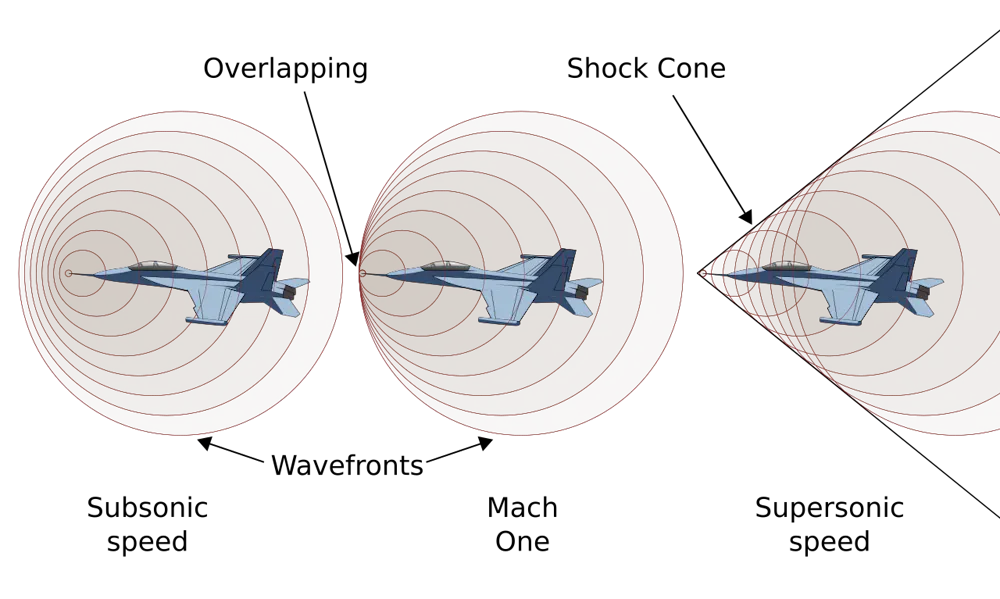
The latest test flight represents an important stage in the development of supersonic aircraft that minimise their characteristic “sonic boom” – the considerable noise generated as the shock waves travelling along with a supersonic aircraft pass over people on the ground.
Boom Supersonic has carefully designing the aircraft shape to reduce this noise pollution. It did this by exploiting a phenomenon known as “Mach cutoff”, where air temperatures in the atmosphere cause shock waves to reflect upwards rather than towards the ground.
Supersonic aircraft won’t receive certification to fly over land if they are too noisy, and overland flights are essential for their commercial viability. Indeed, failing to receive such certification limited Concorde’s routes to London-New York and Paris-New York, ultimately contributing to its demise. These recent noise improvements pave the way for Boom Supersonic to progress its larger 80-seat supersonic airliner, Overture. If all goes to plan, Overture will cruise at 1.7 times the speed of sound and could fly from London to New York in just 3.5 hours.
Other organisations working on supersonic flight are making similar progress. US firm Spike Aerospace is developing a smaller business jet, for instance, while Nasa and defence and aerospace firm Lockheed Martin plan to begin test flying their supersonic X-59 later this year. There is every indication that planes like these are on their way back, more than two decades after Concorde last took to the skies.
Concorde’s maiden flight back in 1969. It flew commercially between 1976 and 2003. Andre Cros / wiki, CC BY-SA
Shock waves increase aerodynamic drag
The key to understanding the environmental effects of supersonic aircraft is that, whenever its speed exceeds the speed of sound, shock waves form around the aircraft. These shock waves significantly increase the aerodynamic drag, and so more fuel needs to be burned to compensate for the drag force. Indeed, it is estimated that up to ten times more fuel needs to be burned by a supersonic aircraft compared to the equivalent subsonic airplane for every passenger mile.
The cost of this extra fuel is why typical aircraft speeds have remained pretty constant at around 85% of the speed of sound for several decades. It also leads to greater greenhouse gas emissions – as much as five to seven times more than subsonic aircraft.
In fact, the situation may be even more stark. Supersonic aircraft tend to fly at high altitudes (Concorde flew at 60,000ft (18km) rather than the 40,000ft (12km) typical for most passenger jets) to take advantage of lower turbulence levels. This means their emissions tend to remain in the atmosphere for longer.
Supersonic and sustainable?
There are considerable efforts to align supersonic aircraft development with the aviation industry’s environmental ambitions. For instance, the new engines designed by Boom Supersonic are powered entirely by “sustainable aviation fuels” (Saf) which are direct replacements for traditional jet fuels that are made from renewable raw materials, often used cooking oil or crop residues. Due to its exclusive use of Saf, the Overture is advertised as having a zero-carbon footprint.
A concept image of the Overture, the plane Boom Supersonic ultimately wants to build. Boom Supersonic, CC BY-SA
In reality, the situation is more complex. Saf is often produced from edible crops and has been linked to deforestation – the total land required to power all of commercial aviation in this way is impractically immense.
To address this longer-term problem, it is necessary to look towards alternative fuel sources. While hydrogen or electric power is being developed for regular aircraft, for now they aren’t developed enough to ensure a plane reaches supersonic speeds. Instead, one possibility is e-kerosene, a synthetic fuel generated from hydrogen and carbon dioxide using renewable electricity.
Despite all these technological advances, a supersonic aircraft still cannot beat physics. Shock waves, and their associated drag, will still exist. So, a single supersonic aircraft will still produce considerably more carbon emissions than its subsonic counterpart.
Beyond carbon emissions, contrails also have an effect. These are thin clouds of water vapour produced by aircraft exhausts, which can trap heat in the atmosphere the same way as greenhouse gases. These contrails are thought to have twice the impact of carbon emissions, or perhaps even more, so it is essential to take their effects into account. For now, we simply don’t know enough about contrails, especially at much higher altitudes, to definitively say how supersonic aircraft will affect the environment.
Given the costs involved, supersonic aircraft will account for only a very small percentage of aircraft worldwide. The overall impact on the environment, in comparison to the tens of thousands of subsonic aircraft currently in operation, will be moderate.
There is perhaps one environmental upside. The research and development activity making supersonic aviation more environmentally friendly (such as developments in fuel and propulsion technology) will likely yield technologies that transfer to subsonic aircraft too. This should help to address the much broader problem of environmental damage caused by the aviation industry as a whole.
Don’t have time to read about climate change as much as you’d like?
Kshitij Sabnis does not work for, consult, own shares in or receive funding from any company or organisation that would benefit from this article, and has disclosed no relevant affiliations beyond their academic appointment.
Source: The Conversation – UK – By Kshitij Sabnis, Lecturer in Aerospace Engineering, Queen Mary University of London
The US aerospace company Boom Supersonic recently announced it has successfully tested its latest aircraft, the XB-1. The company is developing a larger plane and aims to begin passenger flights at supersonic (faster than sound) speed within the next five years, and claims it already has orders from a handful of airlines.
However, with ever-increasing scrutiny on the environmental consequences of flying, it is important to consider how supersonic aviation may affect the industry’s ability to meet its ambitious net zero by 2050 target.
The latest test flight represents an important stage in the development of supersonic aircraft that minimise their characteristic “sonic boom” – the considerable noise generated as the shock waves travelling along with a supersonic aircraft pass over people on the ground.
Boom Supersonic has carefully designing the aircraft shape to reduce this noise pollution. It did this by exploiting a phenomenon known as “Mach cutoff”, where air temperatures in the atmosphere cause shock waves to reflect upwards rather than towards the ground.
Supersonic aircraft won’t receive certification to fly over land if they are too noisy, and overland flights are essential for their commercial viability. Indeed, failing to receive such certification limited Concorde’s routes to London-New York and Paris-New York, ultimately contributing to its demise. These recent noise improvements pave the way for Boom Supersonic to progress its larger 80-seat supersonic airliner, Overture. If all goes to plan, Overture will cruise at 1.7 times the speed of sound and could fly from London to New York in just 3.5 hours.
Other organisations working on supersonic flight are making similar progress. US firm Spike Aerospace is developing a smaller business jet, for instance, while Nasa and defence and aerospace firm Lockheed Martin plan to begin test flying their supersonic X-59 later this year. There is every indication that planes like these are on their way back, more than two decades after Concorde last took to the skies.
Concorde’s maiden flight back in 1969. It flew commercially between 1976 and 2003. Andre Cros / wiki, CC BY-SA
Shock waves increase aerodynamic drag
The key to understanding the environmental effects of supersonic aircraft is that, whenever its speed exceeds the speed of sound, shock waves form around the aircraft. These shock waves significantly increase the aerodynamic drag, and so more fuel needs to be burned to compensate for the drag force. Indeed, it is estimated that up to ten times more fuel needs to be burned by a supersonic aircraft compared to the equivalent subsonic airplane for every passenger mile.
The cost of this extra fuel is why typical aircraft speeds have remained pretty constant at around 85% of the speed of sound for several decades. It also leads to greater greenhouse gas emissions – as much as five to seven times more than subsonic aircraft.
In fact, the situation may be even more stark. Supersonic aircraft tend to fly at high altitudes (Concorde flew at 60,000ft (18km) rather than the 40,000ft (12km) typical for most passenger jets) to take advantage of lower turbulence levels. This means their emissions tend to remain in the atmosphere for longer.
Supersonic and sustainable?
There are considerable efforts to align supersonic aircraft development with the aviation industry’s environmental ambitions. For instance, the new engines designed by Boom Supersonic are powered entirely by “sustainable aviation fuels” (Saf) which are direct replacements for traditional jet fuels that are made from renewable raw materials, often used cooking oil or crop residues. Due to its exclusive use of Saf, the Overture is advertised as having a zero-carbon footprint.
A concept image of the Overture, the plane Boom Supersonic ultimately wants to build. Boom Supersonic, CC BY-SA
In reality, the situation is more complex. Saf is often produced from edible crops and has been linked to deforestation – the total land required to power all of commercial aviation in this way is impractically immense.
To address this longer-term problem, it is necessary to look towards alternative fuel sources. While hydrogen or electric power is being developed for regular aircraft, for now they aren’t developed enough to ensure a plane reaches supersonic speeds. Instead, one possibility is e-kerosene, a synthetic fuel generated from hydrogen and carbon dioxide using renewable electricity.
Despite all these technological advances, a supersonic aircraft still cannot beat physics. Shock waves, and their associated drag, will still exist. So, a single supersonic aircraft will still produce considerably more carbon emissions than its subsonic counterpart.
Beyond carbon emissions, contrails also have an effect. These are thin clouds of water vapour produced by aircraft exhausts, which can trap heat in the atmosphere the same way as greenhouse gases. These contrails are thought to have twice the impact of carbon emissions, or perhaps even more, so it is essential to take their effects into account. For now, we simply don’t know enough about contrails, especially at much higher altitudes, to definitively say how supersonic aircraft will affect the environment.
Given the costs involved, supersonic aircraft will account for only a very small percentage of aircraft worldwide. The overall impact on the environment, in comparison to the tens of thousands of subsonic aircraft currently in operation, will be moderate.
There is perhaps one environmental upside. The research and development activity making supersonic aviation more environmentally friendly (such as developments in fuel and propulsion technology) will likely yield technologies that transfer to subsonic aircraft too. This should help to address the much broader problem of environmental damage caused by the aviation industry as a whole.
Don’t have time to read about climate change as much as you’d like?
Kshitij Sabnis does not work for, consult, own shares in or receive funding from any company or organisation that would benefit from this article, and has disclosed no relevant affiliations beyond their academic appointment.
End-of-Mission press releases include statements of IMF staff teams that convey preliminary findings after a visit to a country. The views expressed in this statement are those of the IMF staff and do not necessarily represent the views of the IMF’s Executive Board. Based on the preliminary findings of this mission, staff will prepare a report that, subject to management approval, will be presented to the IMF’s Executive Board for discussion and decision.
The Maldives’ economy is expected to grow by 5 percent in 2025, driven by robust tourism activity. Nevertheless, macroeconomic imbalances have continued to widen and risks are tilted to the downside.
The immediate policy priority is to restore sustainable public finance and debt. Broad-based fiscal reforms and a comprehensive debt strategy, alongside well-calibrated monetary and macro-financial policies, are urgently needed.
Reforms to strengthen climate resilience, improve the business climate and governance, and enhance skill developments will support stronger external competitiveness and strong, sustainable, and inclusive growth.
Washington, DC: An International Monetary Fund (IMF) mission, led by Ms. Piyaporn Sodsriwiboon, visited Malé during February 3 – 16, 2025, to discuss recent economic developments, the outlook, and the country’s policy priorities in the context of the 2025 Article IV consultation.
At the end of the mission, Ms. Sodsriwiboon issued the following statement:
“Thanks to the Maldives’ strong tourism base, growth has held up well. Real GDP growth is projected at 5 percent in 2025, and the opening of airport terminal expansion would ease supply-side bottleneck for tourism and help sustain growth momentum over the medium term. Inflation is expected to rise to 2.3 percent in 2025, partially due to higher import duties. There is large uncertainty around the forecasts and risks are tilted to the downside.
“External vulnerabilities remain, amid a persistently large current account deficit and pressures on foreign exchange reserves. The overall fiscal deficits and public debt are projected to stay elevated, calling for urgent policy adjustment. Over the medium term, the Maldives is highly vulnerable to climate change risks, due to sea level risk, floods and the degradation of its natural capital.
“The Maldives is navigating a pivotal moment to urgently restoring macroeconomic stability and debt sustainability. The Government of Maldives has assumed its homegrown fiscal reform agenda, importantly with the discontinuation of exceptional use of Maldives Monetary Authority (MMA) advances and the passage of Fiscal Responsibility Act and Public Debt Management Act. Swift implementation of expenditure reform measures as outlined in the 2025 Budget would be key to reduce imbalances in an orderly manner and restore economic stability.
“In addition to the revenue mobilization measures enacted by the government, there is the need for more urgent and stronger fiscal consolidation. Holistic expenditure rationalization is necessary to restrain excessive spending, while improving spending efficiency and protecting priority social spending. Subsidy reforms, which phase out untargeted subsidies and roll out well-targeted direct income transfers to vulnerable households, should be introduced as envisaged in the 2025 Budget. The reprioritization and rationalization of public sector investment program (PSIP) is critically necessary to address immediate fiscal challenges. Building on recent progress, the reforms of state-owned enterprises (SOEs) and Aasandha-healthcare reforms should be continued. Strengthening the public financial framework is critical to enhance fiscal policy credibility and effectiveness. A comprehensive debt strategy would also help restore debt sustainability and improve debt management.
“A coordinated tightening of the policy mix would effectively help address macroeconomic vulnerabilities. The MMA’s commitment to resume active monetary operations is a welcome step in this regard. Should inflationary or external pressures intensify, the MMA should stand ready to further tighten monetary policy. Heightened systemic risks from bank-sovereign nexus call for tighter macroprudential policies and vigilant financial sector oversight. Prudent foreign exchange reserve management, alongside the necessary macroeconomic adjustments that include substantial and immediate fiscal adjustments as well as stricter monetary and macroprudential policies to address economic imbalances effectively, would help safeguard the exchange rate peg.
“Given the Maldives’ threats to climate change, integrating climate sensitivity into public financial and investment management processes is essential for tackling climate-related challenges and mobilizing additional climate finance. Structural reforms aimed at improving the business environment and governance, expanding trade and investment, and enhancing skill development remain crucial for sustaining robust and inclusive growth.
“The IMF team would like to thank the Maldivian authorities for their hospitality and constructive discussions. Meetings were held with Finance Minister M. Zameer, Governor A. Munawar, and other senior officials, as well as representatives from the private sector and development partners.”
End-of-Mission press releases include statements of IMF staff teams that convey preliminary findings after a visit to a country. The views expressed in this statement are those of the IMF staff and do not necessarily represent the views of the IMF’s Executive Board. Based on the preliminary findings of this mission, staff will prepare a report that, subject to management approval, will be presented to the IMF’s Executive Board for discussion and decision.
The Maldives’ economy is expected to grow by 5 percent in 2025, driven by robust tourism activity. Nevertheless, macroeconomic imbalances have continued to widen and risks are tilted to the downside.
The immediate policy priority is to restore sustainable public finance and debt. Broad-based fiscal reforms and a comprehensive debt strategy, alongside well-calibrated monetary and macro-financial policies, are urgently needed.
Reforms to strengthen climate resilience, improve the business climate and governance, and enhance skill developments will support stronger external competitiveness and strong, sustainable, and inclusive growth.
Washington, DC: An International Monetary Fund (IMF) mission, led by Ms. Piyaporn Sodsriwiboon, visited Malé during February 3 – 16, 2025, to discuss recent economic developments, the outlook, and the country’s policy priorities in the context of the 2025 Article IV consultation.
At the end of the mission, Ms. Sodsriwiboon issued the following statement:
“Thanks to the Maldives’ strong tourism base, growth has held up well. Real GDP growth is projected at 5 percent in 2025, and the opening of airport terminal expansion would ease supply-side bottleneck for tourism and help sustain growth momentum over the medium term. Inflation is expected to rise to 2.3 percent in 2025, partially due to higher import duties. There is large uncertainty around the forecasts and risks are tilted to the downside.
“External vulnerabilities remain, amid a persistently large current account deficit and pressures on foreign exchange reserves. The overall fiscal deficits and public debt are projected to stay elevated, calling for urgent policy adjustment. Over the medium term, the Maldives is highly vulnerable to climate change risks, due to sea level risk, floods and the degradation of its natural capital.
“The Maldives is navigating a pivotal moment to urgently restoring macroeconomic stability and debt sustainability. The Government of Maldives has assumed its homegrown fiscal reform agenda, importantly with the discontinuation of exceptional use of Maldives Monetary Authority (MMA) advances and the passage of Fiscal Responsibility Act and Public Debt Management Act. Swift implementation of expenditure reform measures as outlined in the 2025 Budget would be key to reduce imbalances in an orderly manner and restore economic stability.
“In addition to the revenue mobilization measures enacted by the government, there is the need for more urgent and stronger fiscal consolidation. Holistic expenditure rationalization is necessary to restrain excessive spending, while improving spending efficiency and protecting priority social spending. Subsidy reforms, which phase out untargeted subsidies and roll out well-targeted direct income transfers to vulnerable households, should be introduced as envisaged in the 2025 Budget. The reprioritization and rationalization of public sector investment program (PSIP) is critically necessary to address immediate fiscal challenges. Building on recent progress, the reforms of state-owned enterprises (SOEs) and Aasandha-healthcare reforms should be continued. Strengthening the public financial framework is critical to enhance fiscal policy credibility and effectiveness. A comprehensive debt strategy would also help restore debt sustainability and improve debt management.
“A coordinated tightening of the policy mix would effectively help address macroeconomic vulnerabilities. The MMA’s commitment to resume active monetary operations is a welcome step in this regard. Should inflationary or external pressures intensify, the MMA should stand ready to further tighten monetary policy. Heightened systemic risks from bank-sovereign nexus call for tighter macroprudential policies and vigilant financial sector oversight. Prudent foreign exchange reserve management, alongside the necessary macroeconomic adjustments that include substantial and immediate fiscal adjustments as well as stricter monetary and macroprudential policies to address economic imbalances effectively, would help safeguard the exchange rate peg.
“Given the Maldives’ threats to climate change, integrating climate sensitivity into public financial and investment management processes is essential for tackling climate-related challenges and mobilizing additional climate finance. Structural reforms aimed at improving the business environment and governance, expanding trade and investment, and enhancing skill development remain crucial for sustaining robust and inclusive growth.
“The IMF team would like to thank the Maldivian authorities for their hospitality and constructive discussions. Meetings were held with Finance Minister M. Zameer, Governor A. Munawar, and other senior officials, as well as representatives from the private sector and development partners.”
Governor Kathy Hochul today announced that $32.6 million has been awarded to improve seven locations under the Focused Attraction of Shovel-Ready Tracts New York grant program, administered by Empire State Development. First announced by the Governor in February 2022, FAST NY is designed to prepare and develop sites across the state to further New York’s shovel-readiness and increase its attractiveness to large employers and high-tech manufacturing companies. To date, FAST NY has awarded nearly $233 million to 32 sites, with locations in every region across Upstate New York, and Governor Hochul has proposed an additional $100 million for this proven program in her 2026 Executive Budget.
“FAST NY is a valuable tool that attracts strategic industries that invest in our communities and bring good paying jobs to New York State,” Governor Hochul said. “We have experienced first hand that shovel ready sites are an important factor when businesses are looking to expand and companies like Micron, Wolfspeed, Edwards Vacuum, and fairlife have chosen New York State because of our investments in site readiness. FAST NY is helping New York be a competitor on a global stage for the world’s best companies.”
Empire State Development President, CEO and Commissioner Hope Knight said, “FAST NY is a forward-thinking initiative that enhances the state’s appeal to major employers in high-growth industries by helping communities prepare and develop sites to accelerate New York’s shovel-readiness. Each site selected for a FAST NY investment has tremendous potential to ignite projects that generate jobs and stimulate regional economic development across New York.”
The latest awardees are:
Albany Port District Commission (Capital Region) – $18.79 million: This project at the Port of Albany’s 85-acre Beacon Island expansion site will allow for utility infrastructure work, including installation of a high-voltage substation, a sanitary wastewater treatment plant, and the intake lines and pump station package for fire protection system. Additionally, it will support the remaining earthwork at the site. This fully graded 85-acre site with access to 115Kv power lines and the navigable Hudson River presents a unique asset to manufacturers of a variety of large-scale components.
Buffalo and Erie County Land Development Corporation (Western New York) – $11.5 million: This infrastructure improvement project at the former Evans-Angola airport will support the establishment of the Erie County Agribusiness Park. The grant will support utility infrastructure work, including roadway and sewer improvements, and power and gas transmission extensions, plus a substation. The former airport has been defunct for over 25 years and the new agribusiness park will focus on attracting food and agricultural processing businesses to the region, and expanding available markets for local farms.
Town of Clifton Park (Capital Region) – $1 million: This infrastructure improvement project at the Synergy Technology Park will extend the site’s water infrastructure by providing a secondary water line. This will increase capacity to the park and support future site development and expansion for industrial, manufacturing and distribution operations.
Orange County Industrial Development Agency (Mid-Hudson) – $500,000: This pre-development project at the Roseton Development site will induce advancement of environmental studies including a Generic Environmental Impact Statement and State Environmental Quality Review, plus engineering and site design. The site provides unique assets, including direct access to existing power transmission, rail, heavy infrastructure, and existing maritime infrastructure with direct access to the Hudson River, and will focus on targeting offshore wind supply chain companies.
Fulton County Center for Regional Growth (Mohawk Valley) – $434,700: This pre-development project will induce the advancement of engineering fees and studies that will determine costs for the development of infrastructure at Johnstown Commerce Park, including roads, utilities, site analysis, and environmental investigation. This site is located directly across from the current Johnstown Industrial Park, which is currently at capacity. The site, which was previously awarded a FAST NY grant, expects to produce five major industrial development projects, resulting in the creation of approximately 200 jobs.
Hamburg Development Corporation (Western New York) – $250,000: This pre-development project will allow for shovel-ready advancement of the Crossroads site, including environmental impact and traffic studies. The site is adjacent to the former Ford stamping plant and is zoned industrial, with direct proximity to significant water, sewer, natural gas and power lines. Pre-permitting this site will expedite development and improve speed to market for advanced manufacturing projects in the region.
Wayne County Industrial Development Agency (Finger Lakes) – $100,000: This pre-development project will enable studies to evaluate water and sewer treatment and delivery infrastructure, with a focus on Lyons Industrial Park and additional industrial parks located along the Route 31 corridor spanning east to west through the southern end of the county. These parks were recently identified via a feasibility study, conducted to evaluate potential areas for future industrial development.
This year, Governor Hochul proposed $100 million for additional rounds of FAST NY in her FY26 Executive Budget. The program helps to diversify New York State’s economy while generating new investments for businesses, communities and job creation. Last year, Governor Hochul secured an additional $100 million in funding through the FY25 State Budget for the FAST NY program.
FAST NY grants are awarded for pre-development activities and infrastructure investments to develop sites that will attract many eligible industries —including high-tech manufacturing, semiconductors, clean-tech renewable energy, life sciences, agribusiness, optics, transportation equipment, materials processing, industrial machinery manufacturing and other advanced manufacturing. These sites can also be used for interstate distribution and logistics. For more information, or to apply for a FAST NY grant, visit esd.ny.gov/fast-ny.
Headline: Press Release: Zion Oil & Gas Announces Renewed Operations Underway for MJ-01 Well Testing & Recompletion Project in Israel
Zion Oil & Gas Announces Renewed Operations Underway for MJ-01 Well Testing & Recompletion Project in Israel
Current Unit Program Ends on February 28
DALLAS, Texas, and CAESAREA, Israel, February 18, 2025
DALLAS, Texas, and CAESAREA, Israel, February 18, 2025 – Zion Oil & Gas, Inc. (OTC: ZNOG) is pleased to announce a significant operational milestone as work resumes on the recompletion of the Megiddo-Jezreel 1 (MJ-01) well in Israel. This marks a crucial phase in Zion’s ongoing efforts to unlock Israel’s onshore energy potential.
Operations Update: Crews on the Ground and Progress Underway
Zion’s rig crew arrived in Israel on February 15, 2025, and has commenced critical maintenance and preparatory work. The rig, which was safely “warm stacked” in September, is undergoing necessary maintenance procedures, including fluid changes, lubrication and greasing, and mechanical, electrical, and safety audits to ensure peak functionality.
Following maintenance, the team will begin drilling out the temporary plug at approximately 1,100 meters. This phase is expected to take 2-3 weeks, paving the way for the subsequent well recompletion and testing operations. Once the plug is removed, Zion will proceed with setting a permanent plug at the deeper part of the well to isolate the targeted zones of interest for testing.
Global Coordination & Logistics
Zion Oil & Gas has successfully navigated complex logistical challenges to ensure the timely delivery of essential equipment. Resources are currently enroute from across the globe, including India, Romania, Germany, the Netherlands, the UAE, the United States, and Tanzania. This unprecedented international cooperation underscores the dedication and perseverance of Zion’s team and partners.
“As we move forward with this phase of operations, we are witnessing God’s provision in extraordinary ways,” said Monty Kness, VP of Operations. “The ability to coordinate a project of this scale, with equipment and expertise sourced from multiple continents, is a testament to both our team’s determination and the global support behind our mission.”
Security and Site Preparedness
Zion has maintained continuous security at the MJ-01 site, ensuring a stable and secure operational environment. Additionally, commercial air travel into Israel has steadily resumed, further supporting logistical operations.
“Our focus remains on safety, precision, and execution,” said Zion CEO Rob Dunn. “With boots on the ground and critical equipment in motion, we are committed to seeing this project through knowing God has directed our steps forward.”
Completion Timeline & Next Steps
With all necessary equipment expected to be on-site by mid-March, barring unforeseen circumstances Zion anticipates its well completion and testing operations should be nearing completion in Q2 2025. The team remains confident in its planned operations and will continue to provide updates as milestones are achieved.
Final Opportunity: Unit Program Closing February 28, 2025
Zion Oil & Gas reminds investors that the current Unit Program will close on February 28, 2025. This is the final opportunity to participate before the program concludes.
For every $250.00 UNIT purchased, investors receive:
– Common stock based on the high-low average sale price on OTCQB: ZNOG for the day of purchase (or the next trading day if purchased after 4:00 PM EST).
– 50 Warrants with an exercise price of $0.25 each.
– 50 Additional Warrants for those enrolled in Automatic Monthly Investments (AMI) at $50/month or more (one-time only).
– Warrants are exercisable for 12 months from March 31, 2025, to March 31, 2026.
To learn more, click HERE.
Faith & Perseverance
John Brown, Zion’s Founder and Chairman, expressed gratitude for the unwavering support from shareholders and believers in its mission. “We remain steadfast in our calling, knowing that each step forward is guided by the Lord. As we embark on this critical phase of operations, we are encouraged by His promises and the faithfulness of our supporters.”
About Zion Oil & Gas, Inc.
Zion Oil & Gas, a U.S. public company traded on OTCQB: ZNOG, is dedicated to exploring for oil and gas onshore in Israel under its Megiddo Valleys License 434 which covers approximately 75,000 acres.
For more information, visit www.zionoil.com.
“The end of a matter is better than its beginning, and patience is better than pride.”
Eccl 7:8 NIV
“Bless the Lord, O my soul, and forget not all his benefits, who forgives all your iniquity, who heals all your diseases, who redeems your life from the pit, who crowns you with steadfast love and mercy, who satisfies you with good so that your youth is renewed like the eagle’s.”
Ps 103:2-5 ESV
FORWARD-LOOKING STATEMENTS: Statements in this communication that are not historical fact, including, but not limited to, statements regarding Zion’s operations and the results therefrom, including testing and completion; Zion’s ability to discover and produce oil in commercial quantities; Zion’s ability to continue as a going concern; operational risks in ongoing exploration efforts; regulatory approvals needed for exploration within our license and the rig’s operation; the effect, if any, of the uncertainties associated with wars and skirmishes between Israel and other organizations and/or countries, and liquidity for shareholders on the OTC market are forward-looking statements as defined in the “Safe Harbor” provisions of the Private Securities Litigation Reform Act of 1995. These forward-looking statements are based on assumptions that are subject to significant known and unknown risks, uncertainties, and other unpredictable factors, many of which are described in Zion’s periodic reports filed with the SEC and are beyond Zion’s control. These risks could cause Zion’s actual performance to differ materially from the results predicted by these forward-looking statements. These risks and uncertainties include, but are not limited to, those described in Item 1A in Zion’s Annual Report on Form 10-K, which is expressly incorporated herein by reference, and other factors as may periodically be described in Zion’s filings with the SEC. Zion can give no assurance that the expectations reflected in these statements will prove to be correct and assumes no responsibility to update these statements.
MNEK emphasizes multilateral maritime cooperation and disaster response protocols. The exercise takes place in conjunction with the International Maritime Security Symposium (IMSS), the largest international symposium organized by the Indonesian Navy. The theme of this year’s IMSS is “Addressing Maritime Security Challenges with Technology and Cooperation.”
“I am proud of what the U.S. Pacific Fleet and our joint force can generate in terms of military power, our ability to synchronize in all domains, and do all of that with our allies and partners,” said Adm. Steve Koehler, commander, U.S. Pacific Fleet, during his presentation at the IMSS. “We will continue to be a reliable maritime partner for all like-minded nations and their citizens in support of a free and open Indo-Pacific. We do so with unity of purpose, and with a powerful and resolute force.”
The Arleigh Burke-class guided-missile destroyer USS Dewey (DDG 105), as well as a P-8A Poseidon aircraft from Commander, Task Force 72, are representing U.S. Navy forces in the exercise.
The theme for this year’s MNEK is “Maritime Partnership for Peace and Stability.” The theme is designed to encourage multinational naval forces coordination to strengthen Humanitarian Assistance and Disaster Relief (HA/DR), establish civil-military linkage, and enhance a mutual understanding and interoperability toward affected regions.
During a six-day harbor phase, the exercise will include international military workshops on infrastructure repairs and emergency medical response, as well as community outreach and cultural exchanges. That will be followed by a sea phase, during which participating ships and aircraft will conduct coordinated maneuvering and search-and-rescue training.
Komodo 2025 is the fifth iteration of the exercise, which was first held in 2014.
Dewey operates under Destroyer Squadron (DESRON) 15, the U.S. Navy’s largest forward-deployed destroyer squadron and U.S. 7th Fleet’s principal surface force.
U.S. 7th Fleet is the U.S. Navy’s largest forward-deployed numbered fleet, and routinely interacts and operates with allies and partners in preserving a free and open Indo-Pacific region.
Source: The Conversation – UK – By Chee Meng Tan, Assistant Professor of Business Economics, University of Nottingham
The US state department has removed a highly symbolic phrase from its routine update on Taiwan. Its previous briefings said: “We do not support Taiwan independence.” This disappeared on February 13 2025.
That’s not all. Donald Trump’s new government also stated on the same day that it advocated a peaceful and coercion free resolution to the Sino-Taiwan issue and opposes unilateral changes to the status quo from either side. These may seem like small tweaks to previous US positions, but they are sending a big signal to China.
Beijing is concerned that the changes in the state department’s factsheet suggest that Trump’s government may be taking a stronger tack than was expected in being prepared to defend, or throw support behind, the island of Taiwan.
The issue for China is that it sees Taiwan as a breakaway province, which it believes should return to Beijing’s orbit. Many Taiwanese see it as a separate state.
China hasn’t ruled out the use of force to make Taiwan part of the republic and has even sent warplanes to defend the Taiwan Strait in the past week. China claims the waterway between the island and the mainland as its own, though this is disputed under the United Nations convention on the law of the sea.
Beijing will be concerned that Washington’s updated wording on Taiwan might mean that the US is less likely to stand idly by if China invades the island than it might have expected. But what’s also interesting is why the US is warming up to Taiwan despite how aggrieved Trump has been by how Taiwan has “stolen” the semiconductor industry from the US.
Trump’s eye on business
Given Trump’s transactional, or business-first approach, towards politics, it is hardly surprising that Washington’s updated statement of support on Taiwan’s independence may be aimed towards enhancing US rather than Taiwanese interests.
Many in Trump’s second cabinet such as Secretary of State Marco Rubio and National Security Advisor Mike Waltz are China hawks who view Beijing as a national security threat and advocate a more aggressive stance towards China. One major US concern is China’s growing influence in Asia, which challenges US influence within the region.
Trump announces more tariffs on China in his first weeks in office.
While Washington still appears to tip its hat towards a one-China policy, its updated statement on Taiwanese independence suggests that the US might adopt an aggressive approach to any move by Beijing. The US’s watching brief on the China-Taiwan conflict will mean Beijing will have to think hard before taking any measures towards reclaiming the island right now.
A weakened Beijing?
China’s president, Xi Jinping, had hoped to win international hearts and minds through the Belt and Road Initiative, its global trade plan to build an international network of countries receiving Chinese investment. But as China’s own economy is weakened by a real estate crisis that started in 2021, the aim of showing Xi’s success through economic means is not working out as hoped.
The other avenue for Xi to enhance his reputation as leader is to bring Taiwan back into the Chinese fold. Since the Chinese Communist party came to power in 1949, various Chinese leaders have made reunification with Taiwan a long-term goal. So, if Xi could return Taiwan to China, he could be hailed domestically as one of the greatest leaders the country has ever seen.
If China’s plan to reunify with Taiwan was already a major challenge, Washington’s altered stance on Taiwan independence and overt opposition towards coercion or the use of force makes this task even more difficult for Beijing. This could weaken Xi’s image and undermine his rule further (and may of course be part of Trump’s agenda).
Prepped for the negotiation table
The US and China had spent years in trade negotiations before US tariffs were imposed on China during Trump’s first term, culminating in the phase one deal in January 2020. Trump has already announced an extra 10% of tariffs on Chinese goods in his first month in office.
It is plausible that these statements on Taiwan are aimed at enhancing Washington’s bargaining power in the burgeoning China-US trade war.
In 2016, Trump accused China of “raping” the US with unfair trade policies, and imposed tariffs of up to 25% on Chinese goods coming into the US. During his 2024 presidential campaign trail, Trump went as far as to suggests that tariffs on Chinese goods could go as high as 60%.
Higher tariffs are bad news for China since the country relies heavily on exports for economic growth, especially on high tech “new three” products – electric vehicles, lithium batteries and solar panels – to recover its ailing economy.
However, if Beijing is forced to retreat from Taiwan, Xi might have to fall back heavily on the economy to maintain political legitimacy. When that happens, Beijing could be forced to offer concessions to the Americans, such as buying more US products, and to address how subsidies are used to aid Chinese firms to the detriment of US businesses in China.
Overall, it’s likely that someone on Trump’s team has thought about all the implications of tweaking its Taiwan stance, and sees it as working out well for the US economy and, potentially, the Trump government overall. Taiwan is just a pawn in the game.
Chee Meng Tan does not work for, consult, own shares in or receive funding from any company or organisation that would benefit from this article, and has disclosed no relevant affiliations beyond their academic appointment.
A Coast Guard MH-60T Jayhawk helicopter aircrew from Air Station Borinquen rescued a man from crashing waves on an isolated rock formation along the northern cliff face near Playa Esperanza in Manatí, Monday. “This rescue is a testament to the intentional and continuous training we conduct at Air Station Borinquen to intervene on someone’s worst day and bring them to safety,” said Lt. Luke M. Dewhirst, Coast Guard MH-60T Jayhawk aircraft commander for the case. “I am incredibly proud of the safe and efficient work by the crew of 6038, as well as the expert coordination by our operations watchstander and personnel at Sector San Juan; amazing teamwork by all. We are always thankful for the opportunity to assist people in need.”
For more breaking news follow us on Twitter and Facebook.
Marcus Bachmann, Médecins Sans Frontières (MSF) head of programmes for South Kivu province, explains the situation in this part of eastern Democratic Republic of Congo (DRC) as the conflict evolves.
While the hotspot of the conflict between M23/AFC and Congolese armed forces (FARDC) and their respective allies has been North Kivu, neighbouring South Kivu province has also long been receiving displaced people and touched by the violence. In the first three weeks of 2025, with the intensification of the conflict, MSF supported health structures in northern South Kivu received more than 315 injured patients.
In late January, M23 took control of Numbi, in the highlands of northern South Kivu, and of Minova, by the shores of Lake Kivu. Following the takeover of Goma, North Kivu’s capital, the group continued making quick advances in South Kivu. Last week, they captured the strategic towns of Kalehe and Kavumu.
Over the weekend, M23 fighters progressively entered Bukavu, South Kivu’s capital and one of the most populated cities in eastern DRC, as FARDC troops and allied forces reportedly withdrew from the town. Major armed clashes haven’t taken place in Bukavu, but there has been widespread looting and shootings amid the chaos. The city has been quite empty, with hardly any traffic, and very few people walking in the streets, as many residents opted to stay at home and others left the town. The situation is still volatile.
What is MSF doing in response?
We were not running regular medical activities in Bukavu, but we have offices to coordinate activities in the province. However, we have now started support to four hospitals in the city to deal with big influxes of injured, and to reinforce capacity for treating victims and survivors of sexual violence.
By Monday 17 February, our supported hospitals in Bukavu had already received 48 injured patients with wounds from gunshots and shrapnel, as a result of the violence that has taken place over the last few days. In one of the hospitals, they received 42 of these patients; all the injured were civilians, including 11 people under 18 years of age, and 16 of them were women.
In the north of South Kivu province, MSF continues to provide support to various departments of Minova General Referral hospital, three other health centres in Minova health zone, and Numbi health centre. These are areas where there are still thousands of displaced people.
In Uvira, further south in South Kivu province, where our teams have been providing care for patients with mpox in recent months, the situation has also become quite concerning. Fighting has been reported on the road leading from Bukavu to Uvira, and the general hospital there is receiving dozens of injured people, including civilians.
We are closely assessing the situation and exploring ways to scale up our emergency efforts to respond to the humanitarian needs of people in areas around Minova, Bukavu, and Uvira.
As thousands of people have been crossing the border from South Kivu into Burundi to seek refuge in the province of Cibitoke, MSF immediately dispatched a team to assess the urgent needs and provide emergency assistance in cooperation with the Burundian authorities. MSF’s priority is to support access to basic healthcare through mobile clinics, improve sanitation and access to water, and fight epidemics such as measles and cholera.
What are your main concerns?
The spread of violence and armed clashes, as well as related logistic constraints such as the closure of airports and lake navigation routes, is affecting our ability to provide medical care in various parts of northern South Kivu province. We urge all the parties to the conflict to ensure the protection of civilians, humanitarian workers, and medical infrastructure and personnel in all areas affected by the conflict
Due to the volatility of the situation, there is a risk of humanitarian needs exacerbating, particularly among communities that have been displaced for a long time.
We are also concerned about the potential surge in outbreaks of diseases, such as cholera. Our teams are prepared to respond if needed, including providing safe drinking water to communities.
You could also be interested in
Democratic Republic of Congo
Assistance needed for people leaving and staying in Goma following weeks of violence
Press Release13 Feb 2025
Democratic Republic of Congo
MSF appeals for humanitarian access in Goma as casualties seek medical care
Headline: Thales and Sopra Steria announce strategic partnership enabling digital transformation of European Air Traffic Management
Share this article
Thales and Sopra Steria form a strategic partnership to drive the digital transformation of the Air Traffic Management (ATM) ecosystem in Europe.
The two companies will develop and offer a digital platform– OpenSky Platform – and associated services to support greener aviation.
This ultra-secure, open-architecture platform offers long-term flexibility and interoperability for ANSPs (Air Navigation Service Providers) in Europe. This initiative by Thales and Sopra Steria supports the objectives of the latestEuropean Air Traffic Management Master Planto harmonize flight operations in Europe.
Paris, FRANCE – February 18, 2025 – Thales (Euronext Paris: HO), a global high technology leader, and Sopra Steria (Euronext Paris: SOP), a major player in the European Tech sector, announce a new multiyear partnership, which will lead the digital transformation of the Air Traffic Management (ATM) industry in Europe. The two players will combine their industrial and digital expertise in ATM to offer Thales’ OpenSky Platform, a safe, secure digital platform, together with associated services to support sustainable aviation and modernise European ATM. Through its dedicated aerospace organisation, Aeroline, Sopra Steria will support Air Navigation Service Providers (ANSPs) with digital transformation challenges.
The new version of the European ATM Master Plans aims to drive the digital transformation of ATM in Europe. The Thales and Sopra Steria strategic partnership will support this new strategic direction for Europe, as well as enabling the migration to a new service delivery model for ANSPs.
ATM systems need to support the continuous growth of air traffic, support ANSPs offer more sustainable aviation services, and be compliant with the latest safety and cybersecurity standards and requirements. This can be done by using open architectures and interfaces, to ensure that ANSPs have access to best-of-breed components, applications and systems over the long-term.
Adopting open architectures in ATM enhances interoperability between third-party systems, drives cost efficiencies and facilitates the seamless integration of new technologies. The Thales OpenSky Platform is a fully open, cyber-secure platform which ensures that ANSPs are able to benefit from this digital transformation, without compromising the safety and security of ATM solutions.
Thales and Sopra Steria aim to innovate together, in order to support the current and future challenges and transformation strategies of air traffic management.
“This partnership aligns perfectly with Thales’ ambition to support the digital transformation of ATM in Europe. Achieving this transformation requires a strong focus on the resilience and cybersecurity of our platforms. Through this strategic partnership, Thales is extending its cybersecurity expertise and end-to-end digital transformation capabilities in the ATM sector.” said Christian Rivierre, VP Airspace Mobility Solutions, Thales.
“This partnership with Thales enables us to offer our customers innovative, high-performance and secure solutions for air traffic management, by combining our air traffic management development strategy, as well as recognised expertise and assets throughout Europe.” commented Xavier PECQUET, member of Sopra Steria’s Executive Board and Director of Aeroline.
About Thales
Thales (Euronext Paris: HO) is a global leader in advanced technologies specialized in three business domains: Defence & Security, Aerospace, and Cyber & Digital.
It develops products and solutions that help make the world safer, greener and more inclusive.
The Group invests close to €4 billion a year in Research & Development, particularly in key innovation areas such as AI, cybersecurity, quantum technologies, cloud technologies and 6G.
Thales has close to 81,000 employees in 68 countries. In 2023, the Group generated sales of €18.4 billion.
About Sopra Steria
Sopra Steria, one of Europe’s leading players in the field of technology, with 52,000* employees in nearly 30 countries, is recognised for its consulting, services and digital solutions. It helps its customers drive their digital transformation and achieve tangible, lasting benefits. The Group provides a global response to the competitiveness challenges of large companies and organisations, combining in-depth knowledge of business sectors and technologies with a collaborative approach. Sopra Steria puts people at the heart of what it does and is committed to helping its customers make the most of digital technology to build a positive future. In 2023, the Group generated revenue of €5.8 billion.
*Revalued following the disposal of Sopra Banking Software in September 2024.
The world is how we shape
Sopra Steria (SOP) is listed on Euronext Paris (Compartment A) – ISIN Code: FR0000050809
The Government announced today the latest round of the Talent List update, adding nine professions to the list, which increases the coverage to 60 professions with local talent shortages, starting from March 1.
The newly added professions are from the industry segments of financial services, innovation and technology, legal and dispute resolution services as well as aviation and shipping.
They include accountants, financial professionals with Islamic market experience, experienced professionals in commodities trading, experienced systems architects, patent professionals, legal knowledge engineers, ship surveyors, professionals in green shipping and aircraft maintenance engineers.
Outside talent who meet the eligibility criteria for relevant professions can enjoy immigration facilitation when applying under the Quality Migrant Admission Scheme, the General Employment Policy and the Admission Scheme for Mainland Talents & Professionals.
In reviewing the list, the Government considered whether talent of the professions concerned are readily available in the local employment market and cannot be nurtured by local training in good time.
Those interested in the admission schemes can submit applications online.
Source: Hong Kong Government special administrative region
Government updates Talent List to tie in with development into high value-added and diversified economy Government updates Talent List to tie in with development into high value-added and diversified economy ******************************************************************************************
The Government announced today (February 18) that the latest round of the Talent List update has been completed. The new Talent List (see Annex) will take effect from March 1 (Saturday) and cover 60 professions with local talent shortages. Outside talents who meet the eligibility criteria for relevant professions can enjoy immigration facilitation when applying under the Quality Migrant Admission Scheme (QMAS), the General Employment Policy (GEP) and the Admission Scheme for Mainland Talents and Professionals (ASMTP). Following the update, the Talent List will include nine newly added professions from the industry segments of financial services (accountants, financial professionals with Islamic market experience and experienced professionals in commodities trading), innovation and technology (experienced systems architects and patent professionals), legal and dispute resolution services (legal knowledge engineers) and aviation and shipping (ship surveyors, professionals in green shipping and aircraft maintenance engineers). The Chief Executive announced in his Policy Address last year that the Government will update the Talent List in early 2025 to include top talents and professionals required for the development of industries related to the “eight centres” with a view to generating new impetus for their growth. The Labour and Welfare Bureau and relevant bureaux and departments updated the professions covered in the Talent List after careful consideration and in consultation with stakeholders including industry organisations of various sectors, major business chambers, the Human Resources Planning Commission and the Labour Advisory Board. A Government spokesman said, “In reviewing the Talent List, the Government has considered whether talents of the professions concerned are readily available in the local employment market and whether the talents in demand cannot be nurtured by local training in good time. This round of update has also included emerging industries, as well as some professional occupations identified in the 2023 Manpower Projection announced last November as being in demand in the coming five years, requiring academic qualifications at degree level or above.” The updated List, detailed specifications of individual professions and the guidance note for applying under applicable admission schemes have been uploaded to the dedicated website (www.talentlist.gov.hk) and the website of Hong Kong Talent Engage (www.hkengage.gov.hk). Those interested in submitting applications for the admission schemes can visit the electronic application platform of the Immigration Department (www.immd.gov.hk/eng/services/index.html#tab_b_1) and submit applications. The Government drew up the first List in 2018 with a view to attracting high-quality talent in an effective and focused manner. The List has been reviewed and expanded in 2021 and 2023 respectively to cover the talents that Hong Kong needs most. Under the GEP and the ASMTP, employers who seek to fill vacancies falling under the professions on the List are not required to provide proof to substantiate their difficulties in local recruitment when making applications, thus shortening the time to recruit outside talents. Furthermore, since the revamp of the QMAS that took effect on November 1 last year, eligible applicants who meet the requirements of the List will be favourably considered under the General Points Test of the QMAS after assessment.
Ends/Tuesday, February 18, 2025Issued at HKT 17:00
Lufthansa Airlines is further expanding its premium service for its passengers.
In cooperation with the technology provider AirPortr, Lufthansa Airlines is now offering all travelers departing from Frankfurt a new and innovative baggage collection and check-in service. The offer is as simple as it is convenient: guests can have their suitcases and bags picked up at home or at their hotel. The luggage is then sealed, brought securely to the airport and checked in there. Travelers receive real-time updates via a personalized tracking link and a digital baggage tag receipt. Passengers can therefore travel to the airport without having to carry heavy check-in luggage and go straight to the security checkpoint – they only collect their luggage again at their destination.
The new premium service saves time, is convenient and makes it easier to travel, especially by public transport.
Interested guests can now book the new offer on lufthansa.com up to 36 hours before departure. It is available to customers from the greater Frankfurt, Mannheim, Heidelberg, Hanau, Aschaffenburg, Wiesbaden, Mainz, Darmstadt and Bensheim areas. Further expansion is planned in the near future. The service is available from as little as 25 euros, with prices varying depending on location and pick-up time.
“We aim to continuously improve the overall travel experience of our guests and further expand our premium services – both during the flight and on the ground,” says Heiko Reitz, Chief Customer Officer Lufthansa Airlines. “With the new pick-up and check-in service, we are offering our passengers another exclusive service that is unique in Germany. We are making the journey easier from the very first minute.”
Source: United States Navy (Logistics Group Western Pacific)
Issued by: on
SINGAPORE (Jan. 23, 2025) Capt. James Bach, right, Chief of Staff, Navy Expeditionary Logistics Support Group, delivers a command capabilities brief to staff and personnel assigned to Commander, Logistics Group Western Pacific/ Task Force 73 (COMLOGWESTPAC/CTF 73), during a scheduled visit to Sembawang Naval Installation, Jan. 23, 2025. COMLOG WESTPAC supports deployed surface units and aircraft carriers, along with regional Allies and partners, to facilitate patrols in the South China Sea, participation in naval exercises and responses to natural disasters. (U.S. Navy photo by Mass Communication Specialist 2nd Class Moises Sandoval/Released)