NewzIntel.com

    • Checkout Page
    • Contact Us
    • Default Redirect Page
    • Frontpage
    • Home-2
    • Home-3
    • Lost Password
    • Member Login
    • Member LogOut
    • Member TOS Page
    • My Account
    • NewzIntel Alert Control-Panel
    • NewzIntel Latest Reports
    • Post Views Counter
    • Privacy Policy
    • Public Individual Page
    • Register
    • Subscription Plan
    • Thank You Page

Category: Aviation

  • MIL-OSI Asia-Pac: Prime Minister addresses the 14th India-France CEOs Forum

    Source: Government of India (2)

    Categories24-7, Asia Pacific, Government of India, India, MIL OSI

    Post navigation

    Prime Minister’s Office

    Prime Minister addresses the 14th India-France CEOs Forum

    Posted On: 12 FEB 2025 12:16AM by PIB Delhi

    Prime Minister Shri Narendra Modi and the President of France, H.E. Mr. Emmanuel Macron jointly addressed the 14th India-France CEOs Forum today in Paris. The forum brought together CEOs from a diverse group of companies from both sides, focusing on sectors such as defence, aerospace, critical and emerging technologies, infrastructure, advanced manufacturing, artificial intelligence, life-sciences, wellness and lifestyle, and food and hospitality.

    Prime Minister in his address noted the expanding India-France business and economic collaboration and the impetus it has provided to the strategic partnership between the two countries. He highlighted India’s attractiveness as a favored global investment destination, based on its stable polity and predictable policy ecosystem. Talking of the reforms announced in the recent budget, PM noted that the insurance sector was now open for 100% FDI and civil nuclear energy sector for private participation with focus on SMR and AMR technologies; customs rate structure was rationalized; and simplified income tax code was being brought in to enhance Ease of Living. Referring to the government’s commitment to continue ushering in reforms, he noted that a high-level committee for regulatory reforms had been constituted to establish trust based economic governance. In the same spirit, more than 40,000 compliances had been rationalized in the last few years.

    Prime Minister invited French companies to look at the immense opportunities offered by the India growth story, in the defense, energy, highway, civil aviation, space, healthcare, fintech and sustainable development sectors. Underlining global appreciation and interest in India’s skills, talent and innovation and in its newly launched AI, Semiconductor, Quantum, Critical Minerals and Hydrogen missions, he called upon French enterprises to partner India for mutual growth and prosperity. He outlined the importance of active engagement in these sectors, reaffirming the commitment of both nations to fostering innovation, investment, and technology-driven partnerships. Full remarks of Prime Minister may be seen here

    External Affairs Minister Dr. S. Jaishankar, alongside the Minister for Europe and Foreign Affairs of France, H.E. Jean-Noël Barrot, and the Minister of the Economy, Finance, and Industrial and Digital Sovereignty of France, H.E. Eric Lombard also addressed the Forum.

    5. CEOs from both sides who attended the meeting were:

    Indian Side:

      Company Name(Sector) Name and Designation

    1

    Jubiliant Foodsworks/Jubiliant Life Sciences, Food and Beverage

    Hari Bhartia, Co-Chairman and Director

    2.

    CII

    Chandrajit Banerjee, Director General

    3.

    Titagarh Rail Systems Limited (TRSL), Railways and Infrastructure

    Umesh Chowdhary, Vice Chairman and Managing Director

    4.

    Bharat Light & Power Private Limited, (Renewable Energy)

    Tejpreet Chopra, President & CEO

    5.

    P Mafatlal Group, Textiles and Industrial Products

    Vishad Mafatlal, Chairman

    6.

    boat, Consumer Electronics (Wearables)

    Aman Gupta, Co-Founder

    7.

    Dalit Indian Chamber of Commerce & Industry (DICCI), Business Advocacy and Inclusion

    Milind Kamble, Founder/Chairman

    8.

    Skyroot Aerospace, Aerospace & Space and Technology

    Pawan Kumar Chandana,Co-Founder

    9.

    Agnikul, Aerospace & Space and Technology

    Srinath Ravichandran, Co-Founder & CEO

    10.

    Tata Advanced Systems Ltd, Aerospace and Defense

    Sukaran Singh, Managing Director

    11

    UPL Group, Agrochemical and Agribusiness

    Vikram Shroff, Vice Chairman and Co-CEO

    12.

    Sula Vineyards, Food and Beverage

    Rajeev Samant, CEO

    13.

    Dynamatic Technologies Ltd, Aerospace & Defence, and Engineering

    Udayant Malhoutra, CEO & Managing Director

    14.

    Tata Consulting Engineers (TCE), Engineering and Consulting

    Amit Sharma, Managing Director & CEO

    15.

    Nykaa, Cosmetics and consumer goods

    Falguni Nayyar,CEO

    French Side:

      Company Name(Sector) Name and Designation

    1

    Air Bus, Aerospace & Defence

    Guillaume Faury, CEO

    2.

    Air Liquide, Chemicals, Health care, Engineering

    François Jackow, CEO & a member of the Board of Directors of the Air Liquide Group

    3.

    BlaBlaCar, Transport, Services

    Nicolas Brusson, CEO & Co-Founder

    4

    Capgemini Group, Information Technology, Engineering

    Aiman Ezzat, CEO

    5

    Danone, Food & Beverages

    Antoine de SAINT-AFFRIQUE, CEO

    6

    EDF, Energy, Power

    Luc Rémont, Chairman &CEO

    7

    Egis Group, Architecture Construction Engineering

    Laurent Germain,CEO

    8.

    Engie Group, Energy, Renewable Energy

    Catherine MacGregor, CEO & Board Member of ENGIE.

    9

    L’Oréal, Cosmetics & Consumer Goods

    Nicolas Hieronimus, CEO & Member of Board of Directors

    10

    Mistral AI, Artificial Intelligence

    Arthur Mensch, CEO & Co-Founder

    11

    Naval Group, Defence, Shipbuilding, Engineering

    Pierre Eric Pommellet, Chairman & CEO

    12.

    Pernod Ricard, Alcohol Beverages, FMCG

    Alexandre Ricard, Chairman & CEO

    13

    Safran, Aerospace & Defence

    Olivier Andriès, CEO

    14.

    Servier, Pharmaceuticals, Health care

    Olivier Laureau, President & CEO

    15

    Total Energies SE, Energy

    PATRICK Pouyanné, Chairman & CEO

    16

    Vicat, Construction

    Guy Sidos, Chairman & CEO


    ****

    MJPS/SR

    (Release ID: 2102056)

    MIL OSI Asia Pacific News –

    February 12, 2025
  • MIL-OSI Asia-Pac: Aero India 2025: CEOs Rountable receives unprecedent response with the participation of 116 global CEOs

    Source: Government of India (2)

    Aero India 2025: CEOs Rountable receives unprecedent response with the participation of 116 global CEOs

    Announcements made regarding plans for investments, collaborations and setting-up of development centres & Centre of Excellence

    Posted On: 11 FEB 2025 8:53PM by PIB Delhi

    The CEOs Rountable, which was graced by Raksha Mantri Shri Rajnath Singh on the opening day of 15th Aero India on February 10, 2025, received an unprecedent response with the participation of 116 global CEOs. Many foreign as well as Indian Original Equipment Manufacturers (OEMs) made announcements regarding their plans for investments, collaborations and setting-up of development centres & Centre of Excellence etc. These include:


    • Announcement by Ultra Maritime & Bharat Dynamics Limited for signing of an initial contract for the co-production of US specification
    • Announcement by Bharat Forge for their plan for the manufacturing of Landing Gear for certain commercial aircrafts 100% in the country.
    • Announcement by Safran, France & Bharat Electronics Limited for their partnership for co-production of Hammer missile in India.


    Fifty eight (58) foreign OEMs including John Cockerill (Belgium), Airbus (France), Ultra Maritime (USA), GNT (South Korea), Mitsubishi (Japan), Safran (France), Liebherr Aerospace (France), L3Harris Technologies Inc. (USA), Thales (France), Lockheed Martin (USA), Martin Baker (UK) attended the Roundtable. The Indian OEMs included Bharat Forge Ltd, Adani Defence & Aerospace, Mahindra Defence Systems Ltd, Ashok Leyland Defence and Defence Public Sector Undertakings.

    During the meeting, Raksha Mantri invited the global OEMs to utilise the opportunities offered by the expanding Indian defence ecosystem and find targeted solutions & counter measures to the challenges emerging due to the volatile geopolitical landscape of today.

    The event was organised on the theme E.D.G.E i.e. ‘Enabling Defence Cooperation through Global Engagement’, based on  Business Centric Technology Development, Joint Ventures, Manufacturing Excellence Hubs, Industry Led Capacity Building, Joint Ventures, Co-Development & Co-Production and Technology Transfer.

    During the event, Raksha Mantri also inaugurated ‘Defence Testing Portal (DTP)’ and released a booklet on ‘Defence Testing Capabilities’ of the Directorate General of Quality Assurance (DGQA). DTP will enhance ease of doing business in defence testing by improving the visibility of defence testing infrastructure and improved transparency and accountability in conduct of defence tests. The booklet will serve as a guiding document for defence manufacturers and acts as a ready reckoner during important stages of defence procurement and delivery processes.

    A short film highlighting the robust Indian defence ecosystem and vividly capturing the remarkable evolution and strides of India’s Aerospace & Defence Sector, was showcased as a powerful testament to our unwavering commitment and bold vision for the future.

    *******

    VK/SPS/Savvy

    (Release ID: 2102023) Visitor Counter : 88

    MIL OSI Asia Pacific News –

    February 12, 2025
  • MIL-OSI Asia-Pac: Technology has transformed the nature of warfare; India must stay abreast with latest advancements: Raksha Rajya Mantri during DRDO seminar at Aero India 2025

    Source: Government of India (2)

    Technology has transformed the nature of warfare; India must stay abreast with latest advancements: Raksha Rajya Mantri during DRDO seminar at Aero India 2025

    35 Licensing Agreements for Transfer of Technology for 19 cutting-edge tech handed over to 32 Industries during the event

    Posted On: 11 FEB 2025 6:22PM by PIB Delhi

    “As technology has transformed the nature of warfare from conventional to unconventional & asymmetric, India must stay abreast with the latest advancements,” said Raksha Rajya Mantri Shri Sanjay Seth while addressing a DRDO seminar in Bengaluru on February 11, 2025. Raksha Rajya Mantri lauded the efforts of DRDO, industry, including MSMEs & start-ups, and academia in making the country self-reliant in defence manufacturing. He urged them to come out with more latest innovations and contribute in realising the vision of Viksit Bharat by 2047.

    The seminar ‘DRDO-Industry Synergy towards Viksit Bharat: Make in India, Make for the World’ was organised on the sidelines of 15th Aero India. During the event, 35 Licensing Agreements for Transfer of Technology (LATOT) for 19 niche technologies of 16 DRDO laboratories were handed over to 32 Industries to nurture indigenous technologies in the defence sector and increase awareness among prospective customers in India & abroad.

    Raksha Mantri also released the revised DRDO policy for Transfer of Technology (ToT). The policy aims to further streamline the ToT process from DRDO to industries, granting them easier access to latest technologies & DRDO expertise, while enhancing the ease of doing business for SMEs in Defence R&D. He also released the updated compendium titled ‘DRDO Products for Export’ consisting of more than 200 products/systems showcasing India’s cutting-edge defence capabilities to friendly nations.

    An Airworthiness Policy Framework – IMAP-23 was also released during the function. This document provides a paradigm shift in the certification procedure of the military aviation sector by capturing emergent requirements of Indian Industry. An Airworthiness Certification Kit was also released. It is a comprehensive compilation of policy documents and templates to enable easy appreciation of certification requirements by industries.

    During the event, Exchange of Tripartite MoU took place among Centre for Military Airworthiness and Certification, Defence Institute of Advanced Technology and the Aeronautical Society of India on Designated Engineer Representative implementation. The MoU will facilitate training engineers towards undertaking certification tasks.

    Defence industries, government agencies, delegations from friendly nations and defence attachés participated in the seminar. It included presentations from scientists and leading experts on export of defence products from India. The event also marked a panel discussion on ‘Opportunities for Industries in Defence Export’.

    *****

    VK/Savvy

    (Release ID: 2101894) Visitor Counter : 21

    MIL OSI Asia Pacific News –

    February 12, 2025
  • MIL-OSI USA: Following Deadly DCA Collision, Virginia & Maryland Lawmakers Request Answers From FAA

    US Senate News:

    Source: United States Senator for Commonwealth of Virginia Mark R Warner
    WASHINGTON – U.S. Sens. Mark R. Warner and Tim Kaine (both D-VA) and Sens. Chris Van Hollen and Angela Alsobrooks (both D-MD), along with U.S. Reps. Don Beyer, Gerald Connolly, Suhas Subramanyam (all D-VA), Jamie Raskin (D-MD), and Delegate Eleanor Holmes Norton (D-DC) today requested answers and commitments from the Federal Aviation Administration (FAA) on its plans to protect the flying public in the wake of the January 29 collision between an Army helicopter and an American Airlines airplane. In the letter, the lawmakers applauded the precautionary safety measures put in place by the FAA, as well as the agency’s collaboration with the National Transportation Safety Board’s (NTSB) investigation into the causes and factors behind the collision. They also stressed the need to carefully review existing protocols to ensure that flight operations do not simply return to business as usual.
    The lawmakers also expressed serious concern with potential interference with the FAA by the so-called Department of Government Efficiency (DOGE), which has caused mayhem across the government, from attempting to push out nonpartisan civil servants, to reportedly accessing the U.S. Treasury’s payment system, as well as systems at the Department of Veterans Affairs (VA).
    “While we applaud FAA for early actions taken to bolster safety, recent actions indicate that your agency is inviting inexperienced individuals with intense partisan leanings into a process that should be objective and expert driven,” wrote the lawmakers, citing an Elon Musk tweet. “We are extremely concerned that an ad hoc team of individuals lacking any expertise, exposure, certifications, or knowledge of aviation operations being invited, or inserting themselves, to make ‘rapid’ changes to our nation’s air traffic systems. This the wrong course of action to take.”
    They continued, “We want the safest skies in the world, and any efforts to weaken standards will not be tolerated. Aviation safety is not an area to “move fast and break things”. Proven, methodical, and deliberate action is what is called for when any changes are considered to safety. We express in the strongest possible terms our alarm at allowing Musk’s cadre of unvetted, untrained, and unaccountable individuals the ability to make changes to complicated and sensitive FAA policies at a time when serious and knowledgeable people should be in charge.”
    Stressing the need to prioritize safety and to base any future measures on the knowledge of aviation experts, the lawmakers requested answers to the following questions:
    The FAA’s current restrictions on helicopter flights at National Airport are tied to the release of NTSB’s preliminary report. What factors will FAA consider as it reassesses the need for extending or modifying the restrictions? Please provide details on, and documentation sufficient to substantiate, additional safety measures that are being contemplated and/or will be proposed to deconflict or otherwise improve safety in the air space over National Airport. 
    As you assess the need for additional measures, will you commit to consulting recognized aviation experts – both in and out of the federal government – to identify requirements or operational changes for civil and military aviation in the National Capital Region?
    On February 4, less than one week from the incident, reports emerged that FAA directed its personnel to cease participating in Federal advisory or aviation rulemaking committees. Were FAA personnel directed to cease participating in these committees?
    If true, please describe the rationale for such a decision and provide documentation sufficient to substantiate any directives received from other Federal government officials, other individuals acting under the direction of the President, or who are otherwise asserting a legal authority to direct or influence decision-making at the FAA.
    On February 5, 2025, Elon Musk and Secretary Duffy each announced that DOGE would “upgrade our aviation system”.
    Were you informed of this decision in advance of either social media posting?
    What engagement have you had with DOGE at this time?
    What engagement has been discussed or is planned for the future?
    Do you have knowledge of what comprises the “rapid safety upgrades” Musk tweeted about?
    Do you commit to timely report to Congress any actions that the FAA is directed to undertake at the direction of the President, DOGE, or by the Office of the Secretary of Transportation regarding any aspect of aviation safety?
    Do you commit to providing the public with details about what recommendations DOGE staff and representatives provide to you in relation to aviation safety? Will you notify Congress if you elect to follow through on any recommendations provided to you by DOGE staff and representatives?
    In your prior experience at FAA, has any special government employee been directed or otherwise empowered to influence FAA officials on safety decisions?
    Will you commit the full cooperation and support of the FAA to the NTSB investigation and to swiftly implement its recommendations?
    Will you commit to examining the communication processes and protocols between FAA, the U.S. Department of Defense, and other stakeholders that are used during aviation operations in and around National Airport and the National Capital Region?
    Will you commit to working with the U.S. Department of Defense to evaluate training protocols for required missions in the National Capital Region, particularly those around National Airport and during high-traffic periods, and enact any modifications needed to reduce risk?
    Will you commit to briefing us on the implementation of changes to the slot (i.e., high density) rule included in the 2024 FAA Reauthorization Act, given that the first of the routes authorized under that legislation will become operational this week?
    A copy of the letter is available here and below.
    Dear Mr. Rocheleau: 
    In the aftermath of the January 29, 2025 mid-air collision between a Mitsubishi Heavy Industries (MHI) RJ Aviation (Bombardier) CRJ700 and a Sikorsky UH-60 Black Hawk helicopter at Ronald Reagan Washington National Airport (“National Airport”), we write to request information from the Federal Aviation Administration (FAA) on plans to protect the public during the investigations and once the investigations are complete. As the National Transportation Safety Board (NTSB) investigation into the causes and factors behind the collision is carried out, the FAA should identify and implement immediate steps to improve safety for aviation industry personnel, the flying public, and the communities that surround National Airport. 
    As we mourn the victims of this tragedy, we must work together to ensure that collisions like this one do not happen again in honor of the memory of those lost. We applaud the FAA’s decision to restrict helicopter traffic near National Airport until the NTSB preliminary report is released and to pause of the use of two of the smaller runways at the airport. Your collaboration thus far with the NTSB as it carries out an independent, fact-based, and thorough investigation into this incident is appreciated. While the NTSB works to complete their investigation, it is crucial that we thoroughly review and scrutinize the protocols that govern flight operations near the airspace over National Airport, and ensure that we are not simply restarting “normal” operations. This is of further importance in light of the FAA’s steps to ensure airspace safety after Congress’s decision last year to add additional traffic to this airspace.
    While we applaud FAA for early actions taken to bolster safety, recent actions indicate that your agency is inviting inexperienced individuals with intense partisan leanings into a process that should be objective and expert driven. On February 5, 2025, Elon Musk announced via X (formerly known as Twitter) that “With the support of President @realDonaldTrump, the @DOGE team will aim to make rapid safety upgrades to the air traffic control system. Just a few days ago, the FAA’s primary aircraft safety notification system failed for several hours!” Transportation Secretary Sean Duffy, also on X, stated “Big News – Talked to the DOGE team. They are going to plug in to help upgrade our aviation system.”
    We are extremely concerned that an ad hoc team of individuals lacking any expertise, exposure, certifications, or knowledge of aviation operations being invited, or inserting themselves, to make “rapid” changes to our nation’s air traffic systems. This the wrong course of action to take. 
    We want the safest skies in the world, and any efforts to weaken standards will not be tolerated. Aviation safety is not an area to “move fast and break things”. Proven, methodical, and deliberate action is what is called for when any changes are considered to safety. We express in the strongest possible terms our alarm at allowing Musk’s cadre of unvetted, untrained, and unaccountable individuals the ability to make changes to complicated and sensitive FAA policies at a time when serious and knowledgeable people should be in charge.
    Safety must not be compromised, and FAA’s actions must be based on knowledgeable and accountable experts. Given our shared goal of promoting safety along with our expressed concerns about how DOGE’s involvement could jeopardize that safety, we request your attention and response to the following questions:
     The FAA’s current restrictions on helicopter flights at National Airport are tied to the release of NTSB’s preliminary report. What factors will FAA consider as it reassesses the need for extending or modifying the restrictions? Please provide details on, and documentation sufficient to substantiate, additional safety measures that are being contemplated and/or will be proposed to deconflict or otherwise improve safety in the air space over National Airport.
    As you assess the need for additional measures, will you commit to consulting recognized aviation experts – both in and out of the federal government – to identify requirements or operational changes for civil and military aviation in the National Capital Region?
    On February 4, less than one week from the incident, reports emerged that FAA directed its personnel to cease participating in Federal advisory or aviation rulemaking committees. Were FAA personnel directed to cease participating in these committees?
    If true, please describe the rationale for such a decision and provide documentation sufficient to substantiate any directives received from other Federal government officials, other individuals acting under the direction of the President, or who are otherwise asserting a legal authority to direct or influence decision-making at the FAA.
    On February 5, 2025, Elon Musk and Secretary Duffy each announced that DOGE would “upgrade our aviation system”
    Were you informed of this decision in advance of either social media posting?
    What engagement have you had with DOGE at this time?
    What engagement has been discussed or is planned for the future?
    Do you have knowledge of what comprises the “rapid safety upgrades” Musk tweeted about?
    Do you commit to timely report to Congress any actions that the FAA is directed to undertake at the direction of the President, DOGE, or by the Office of the Secretary of Transportation regarding any aspect of aviation safety?
    Do you commit to providing the public with details about what recommendations DOGE staff and representatives provide to you in relation to aviation safety? Will you notify Congress if you elect to follow through on any recommendations provided to you by DOGE staff and representatives?
    In your prior experience at FAA, has any special government employee been directed or otherwise empowered to influence FAA officials on safety decisions?
    Will you commit the full cooperation and support of the FAA to the NTSB investigation and to swiftly implement its recommendations?
    Will you commit to examining the communication processes and protocols between FAA, the U.S. Department of Defense, and other stakeholders that are used during aviation operations in and around National Airport and the National Capital Region?
    Will you commit to working with the U.S. Department of Defense to evaluate training protocols for required missions in the National Capital Region, particularly those around National Airport and during high-traffic periods, and enact any modifications needed to reduce risk?
    Will you commit to briefing us on the implementation of changes to the slot (i.e., high density) rule included in the 2024 FAA Reauthorization Act, given that the first of the routes authorized under that legislation will become operational this week?
    In addition to the above questions, we request that you provide us with a briefing on FAA’s implementation of critical aviation safety and air traffic controller tower staffing provisions in the 2024 FAA Reauthorization Act and on the implementation of Section of 502 of that Act.
    We look forward to your swift response and to working together for the best interests of the public, the National Capital Region, and the United States of America.

    MIL OSI USA News –

    February 12, 2025
  • MIL-OSI Video: UK Airports and Economic Growth – Transport Committee

    Source: United Kingdom UK Parliament (video statements)

    Will airports expansion drive regional economic growth?

    Whether expanding airports in the south east of England can benefit the rest of the UK economy will be the focus of a Transport Committee evidence session.

    MPs will question Aviation Minister Mike Kane MP and a senior Department for Transport official, following a panel with economists and industry experts.

    It comes after the Government recently announced support for a third runway at Heathrow and proposed expansions at Gatwick, Luton and other airports.

    Witnesses may be asked to consider economic factors linked to airport expansion such as: the tourism industry, tax revenues generated, the UK’s large aircraft manufacturing sector, increased capacity for air freight, and catalytic effects on other businesses.

    The New Economics Foundation, which is represented among witnesses in this session, has said it has been “some time” since the Government has assessed the “marginal economic impact” that airports expansion may have. The think tank has also pointed to varying methods of calculating the net economic impact that increased air travel has on the UK economy. For example, whether greater outbound travel by Brits could see a larger proportion of consumer spending happen abroad rather than at home, and to what extent that is offset by money spent in the UK from international tourists.

    Heathrow has itself previously said that expansion would mean growing its workforce of 28,600 people to over 100,000. The cross-party Committee will question a representative of Frontier Economics, a think tank commissioned by Heathrow Airport to look into the potential economic benefits of building a third runway.

    There will also be questions about the capacity of airports around the UK, whether they are surpassing or failing to meet demand, forecasts on future demand, and the role that larger ‘hub’ airports could play with smaller regional ones – a ‘hub and spoke’ model.

    The Minister and DfT will be asked to explain how airport expansion will fit into a wider national strategy for the aviation sector, and how air travel strategically links with other transport networks such as roads and railways.

    https://www.youtube.com/watch?v=b8EHcgHCdkI

    MIL OSI Video –

    February 12, 2025
  • MIL-OSI Security: Defense News: USNS Kanawha awarded Navy Unit Commendation for efforts while deployed to U.S. Central Command

    Source: United States Navy

    The crew earned the NUC for their efforts during the ship’s recent deployment to the U.S. Central Command’s area of responsibility.

    “Despite being caught off guard by the sudden deployment, the crew of USNS Kanawha rose to the challenge as Military Sealift Command has done for the past 75 years, answering the call of duty with professionalism and dedication,” said First Officer Anthony Canseco, USNS Kanawha’s Officer-in-Charge. “Operating in a contested environment, we quickly adapted to heightened threats, ensuring vital fuel deliveries to U.S. and allied forces in the region.”

    “The crew’s resilience and commitment underscored MSC’s longstanding tradition of supporting global naval operations, even in the most demanding circumstances,” he added.

    The NUC is awarded to any ship, aircraft or other unit of the Navy or Marine Corps that has distinguished itself by outstanding heroism in action against enemy forces and is the second highest unit award in the U.S. Navy; behind the Presidential Unit Citation.

    Portions of the NUC citation Kanawha’s crew earned read as follows:

    “The Secretary of the Navy takes great pleasure in presenting the Navy Unit Commendation to U.S. Central Command set forth in the following: for outstanding performance in action against terrorist forces from October 19, 2023 to May 30, 2024. The personnel of U.S. Central Command (CENTCOM) and its operational forces combatted highly kinetic and asymmetric threats regional stability,” the citation reads.

    “They protected vital global commerce through two strategic maritime chokepoints, defended key allies and partners, deterred aggression, and forged partnerships founded in trust and unity of effort against violations of international law,” it continued. “They provided a crucial naval presence in the region at a pivotal moment in history.”

    While deployed Kanawha safely executed, without incident, 111 at-sea replenishments, delivering more than 30 million gallons of marine diesel fuel and aviation fuel, along with 4,696,274 gallons of marine grade oil, transferred 3,389 critical cargo pallets, and transported five personnel while supporting 14 U.S. Navy ships and 12 allied ships from six countries.

    “For the crew of USNS Kanawha, receiving the Navy Unit Commendation is a profound honor that recognizes their hard work, dedication, and the sacrifices they have made,” according to Canseco. “Spending months away from family, friends, and loved ones, they have endured long hours and challenging conditions to ensure mission success in a contested environment. This award is not just a symbol of their excellence in service, but also a tribute to the personal sacrifices they have made to support the fleet and protect vital maritime routes.”

    USNS Kanawha was forward deployed for 264 days and traveled 55,539 nautical miles.
    “While the time away is never easy, this recognition reinforces their commitment to duty and the proud legacy of Military Sealift Command in answering the nation’s call,” Canseco stated.

    In addition to the NUC, specific crewmembers received individual awards for outstanding performance during the deployment.

    The following Kanawha CIVMARs were awarded the Navy Civilian Service Commendation Medal, which is an award presented to civilian government employees who go above and beyond in their work: First Officer Anthony J. Canseco, Operations Chief Nicholas Petrone, Chief Engineer Able C. Reyes, 1st Engineer Alexander Bacalso, Cargo Engineer Hesham Mohamed and Deck Machinist Gerardo B. Gonzales.

    “The crew is excited to be recognized today and the morale of the crew is really high too,” said Third Mate Alexander Robinson, one of the Kanawha CIVMARs recognized during the ceremony. “We were deployed on a short notice to for a difficult deployment and it was nice to have USNS Kanawha credited just as USNS Supply recently was.”

    In addition, multiple Kanawha CIVMARs were presented the Navy Civilian Service Achievement Medal for outstanding performance during the deployment.

    Ship Bosun Theo Niang, Cargo Bosun Heberito Santos, Able Seaman Previn R. Byrd Jr, Able Seaman William R. Stephens, Third Officer Alexander Robinson, Bosun David Generette, Able Seaman Atiya Wooden, Chief Electrician Randy A. Rosero and Engine Utilityman Ardrian T. Lincoln were awarded Navy Civilian Achievement Medals.

    The Navy Civilian Service Achievement Medal is awarded to Department of the Navy and U.S. Marine Corps civilians who, while serving in a capacity within the Navy or Marine Corps, are to be recognized for sustained performance or specific achievement of a superlative nature at the equivalent level of the Navy and Marine Corps Achievement Medal awarded to military personnel.

    Canseco offered some advice for CIVMARs who will be sailing in a contested environment.

    “For CIVMARs deployed to a contested environment, preparation and adaptability are key,” Canseco said. “Stay informed on the latest threat assessments and operational procedures and always follow security protocols to ensure both personal safety and mission success.”

    “Trust in your training, your shipmates, and the expertise of the Navy and MSC leadership to navigate challenges effectively. Mental resilience is just as important as physical readiness—remain focused, stay vigilant, and lean on the camaraderie of your crew. Above all, remember that your role is critical to sustaining naval operations,” he added.

    Kanawha is part of MSC’s Combat Logistics Force (CLF) who are the supply lines to U.S. Navy ships at-sea. These ships provide virtually everything that Navy ships require to remain on station at sea including fuel, food, fleet ordnance, dry cargo, spare parts, mail and other supplies. CLF ships enable the Navy fleet to remain at sea and combat ready for extended periods.

    MIL Security OSI –

    February 12, 2025
  • MIL-OSI: StormFisher Hydrogen Secures US$50 million Commitment from Hy24 to Deliver Pipeline of Clean Fuel Production Projects in North America

    Source: GlobeNewswire (MIL-OSI)

    • The investment will accelerate StormFisher Hydrogen’s current project pipeline deployment, including several facilities in the U.S. and Canada, with a total renewable capacity of up to 1.8 GW by 2030.
    • Hy24, investing through their Clean Hydrogen Infrastructure Fund, is entering directly into the North American market, contributing to the advancement of clean fuel deployment in the region while supporting StormFisher Hydrogen’s export ambitions to European and Asian markets.

    HOUSTON, Feb. 11, 2025 (GLOBE NEWSWIRE) — StormFisher Hydrogen, a leading developer and producer of clean fuels, announces today it has secured a US$50 million commitment from Hy24’s Clean Hydrogen Infrastructure Fund, the world’s leading low-carbon hydrogen asset manager. This strategic partnership will accelerate StormFisher Hydrogen’s pipeline of clean fuel production projects in North America, helping them to reach final investment decisions (FID) and catalyzing the transition to low carbon energy solutions.

    “We are pleased to make our first direct investment in North America to support the growth of StormFisher Hydrogen,” said Pierre-Etienne Franc, co-founder and CEO of Hy24. “The company can leverage its energy platform approach, strong offtaker strategy, and a favorable international regulatory landscape to deploy its robust pipeline of e-Fuels projects and drive its export ambitions to European and Asian markets. These clean energy solutions present a significant opportunity for North America in its pursuit of energy security, economic growth, and its trade and continued leadership in the sector.”

    StormFisher Hydrogen’s current project pipeline includes several facilities located across the United States (Texas, Kansas, Minnesota) and Canada (Ontario region). Together, they will have the capacity to convert up to 1.8 gigawatts (GW) of renewable energy from solar and wind into RFNBO e-Fuels (renewable fuel of non-biological origin), such as green hydrogen, e-Methanol, green ammonia, and e-Methane. The company’s most advanced project located in North Texas, U.S. is expected to reach FID in early 2026 and will have an e-Methanol production capacity of more than 120,000 tonnes per year.

    “This collaboration with Hy24 enables us to advance projects in our pipeline and reinforces our role as a leader in project development,” said Judson Whiteside, President and CEO of StormFisher Hydrogen. “We bring a lot of value and long-term jobs to the communities we are developing in, while increasing molecule exports to Europe and Asia. With cutting-edge energy infrastructure and highly skilled workforce, the United States is poised to lead the global low-carbon fuels market. Our projects strengthen America’s position in the energy transition while enhancing domestic energy resilience and independence.”

    StormFisher Hydrogen will make a significant contribution to the development of North America’s e-Fuel production capacity, which is critical for decarbonizing hard-to-abate industries such as maritime, aviation, and chemicals. It will also help establish the United States as a key supplier to the global market while reinforcing the country’s leadership in the energy sector.

    With previous investment from ARC Financial Corp.’s ARC Energy Transition Fund and this new investment from Hy24, StormFisher Hydrogen is expected to deploy several billion dollars of capital over the next decade. The company’s clean fuel production facilities will have material economic benefits for local communities, creating approximately 50 permanent high-quality, full-time jobs per site.

    “We are thrilled to partner with Hy24,” said Brian Boulanger, CEO of ARC Financial Corp. “Their deep expertise and sectoral focus in the hydrogen and e-Fuel space will be instrumental in accelerating StormFisher Hydrogen’s mission to lead in clean fuel development. With the management team’s proven track record in developing major projects, ARC Financial Corp.’s extensive North American investment experience, and Hy24’s global reach, we are well-positioned to deliver low-carbon hydrogen-derived products to our industrial customers at scale.”

    About StormFisher Hydrogen

    StormFisher Hydrogen develops and operates facilities that produce e-Fuels through the sourcing of renewable electricity to produce green hydrogen and the sourcing and use of carbon dioxide from industrial point sources. StormFisher Hydrogen works with hard-to-abate sectors such as transportation (maritime/aviation), heavy industry, and gas utility companies, as well as traditional methanol users seeking clean fuel solutions to support long-term decarbonization goals.

    About Hy24

    The Clean H2 Infra Fund is managed by Hy24, a 50/50 joint venture between Ardian, a world leading private investment house, and FiveT Hydrogen, a clean hydrogen investment pureplay. The world’s largest clean hydrogen infrastructure fund results from the initiative of Air Liquide, TotalEnergies and VINCI Concessions, combined with the one of Plug Power, Chart Industries and Baker Hughes, which were sharing a common objective to accelerate the development of the hydrogen sector. The fund is now up and running with €2 billion of allocations. With strong industrial and financial expertise at its core, Hy24 will have a unique capacity to accelerate the scaling up of hydrogen solutions along the whole value chain: production, conversion, storage, supply, and usage. Hy24 will support large early stage and strategic projects into becoming essential energy infrastructures. The infrastructure fund managed by Hy24 complies with Article 9 of the European regulation on sustainability-related disclosures in the financial services sector (SFDR). Hy24 is an alternative investment fund manager regulated by the French Autorité des marchés financiers under the number GP-202171. The Clean H2 Infra Fund is dedicated to professional investors and not commercialized in the United States of America.

    About ARC Financial Corp.

    Founded in 1989, ARC Financial Corp. is committed to building high-performing businesses that address the world’s energy and sustainability needs. To date, ARC has raised C$6.4 billion across eleven energy-focused funds since the launch of its private equity business in 1997, having invested capital in more than 180 companies across the energy landscape. ARC’s newest fund, ARC Energy Fund 10, is focused on infrastructure development and energy services & manufacturing opportunities in energy transition. For more information, please visit www.arcfinancial.com

    Press Contacts

    StormFisher Hydrogen
    Karen Hamill, Director, Communications Strategy Group
    khamill@wearecsg.com, W: https://stormfisher.com

    Hy24
    Elizabeth Adams, Senior Managing Director, FTI Consulting
    Hy24@fticonsulting.com, W: https://hy24partners.com

    The MIL Network –

    February 12, 2025
  • MIL-OSI: Wesco To Double Number of Stores Using Mashgin AI-Powered Checkout

    Source: GlobeNewswire (MIL-OSI)

    PALO ALTO, Calif., Feb. 11, 2025 (GLOBE NEWSWIRE) — After a highly successful initial deployment, Wesco convenience stores will expand its use of Mashgin’s AI-powered checkout technology to over 20 locations, Mashgin, the AI-powered checkout company, announced today.

    Mashgin’s AI technology eliminates checkout lines, creating a more efficient and customer-friendly shopping experience for stores, particularly during peak transaction times. The kiosks use computer vision to instantly ring up items, without the need to scan barcodes. Customers simply place their items down and are ready to pay. The kiosk can identify multiple items simultaneously in seconds with nearly 100% accuracy.

    During the Wesco pilot program, Mashgin kiosks accelerated nearly half a million transactions at over 10 Wesco locations with a median transaction time of 18.7 seconds. Customers at the Wesco stores were able to get back on the road quicker, and Wesco associates were able to attend to other tasks around the store faster.

    “Our customers have quickly taken to love Mashgin’s machines – and we’ve loved working with them,” said Nancy Westgate-Sytsema, Co-President of Wesco. “Both the technology and the team are extremely responsive, exactly what we look for in a technology partner.”

    Wesco’s expansion will benefit from Mashgin’s integration with Verifone’s Commander system, which seamlessly connects the AI checkout kiosks to key store systems for payment, loyalty, fuel, and more.

    “Wesco is enhancing its already fantastic customer experience with this expanded adoption of Mashgin’s technology,” said Jack Hogan, SVP of Partnerships at Mashgin. “Convenience store customers are looking for a quick and efficient buying experience, and by leveraging computer vision technology, a vast database of retail items, and a dedicated support team, Mashgin enables this experience for Wesco and its customers. We’re looking forward to serving and helping expand Wesco’s retail capabilities.”

    Mashgin kiosks are in place at over 4,000 locations globally, including over 3,000 convenience stores, 145 professional stadiums and arenas, 100 hospitals, and 50 airports.

    Mashgin will continue to innovate checkout experiences by implementing advanced technologies that benefit retailers and their customers. To learn more, visit www.mashgin.com.

    About Mashgin:

    Mashgin is the world’s fastest checkout system, powered by AI and computer vision. By eliminating barcode scanning, Mashgin allows customers to simply place items on the tray, pay, and be on their way in under 10 seconds. With checkout speeds up to four times faster than traditional systems, Mashgin not only enhances customer satisfaction but also boosts revenue for retailers by reducing wait times and streamlining operations. Founded in 2014 and headquartered in Palo Alto, California, Mashgin is a privately held company backed by NEA, Matrix Partners, Susa Ventures, and Y Combinator. Follow Mashgin on LinkedIn or learn more about Mashgin at www.mashgin.com.

    Press Contact:
    Quinn Trask
    104 West on behalf of Mashgin
    Quinn.Trask@104west.com

    A photo accompanying this announcement is available at https://www.globenewswire.com/NewsRoom/AttachmentNg/2e6a718a-551d-421d-973f-30cdf4f92c62

    The MIL Network –

    February 12, 2025
  • MIL-OSI Global: NOAA’s vast public weather data powers the local forecasts on your phone and TV – a private company alone couldn’t match it

    Source: The Conversation – USA – By Christine Wiedinmyer, Associate Director for Science at CIRES, University of Colorado Boulder

    A forecaster monitors incoming data for Hurricane Irma in 2017 at the National Hurricane Center, part of the NOAA. Matt McClain/The Washington Post via Getty Images

    When a hurricane or tornado starts to form, your local weather forecasters can quickly pull up maps tracking its movement and showing where it’s headed. But have you ever wondered where they get all that information?

    The forecasts can seem effortless, but behind the scenes, a vast network of satellites, airplanes, radar, computer models and weather analysts are providing access to the latest data – and warnings when necessary. This data comes from analysts at the National Oceanic and Atmospheric Administration, known as NOAA, and its National Weather Service.

    Atmospheric scientists Christine Wiedinmyer and Kari Bowen, who is a former National Weather Service forecaster, explained NOAA’s central role in most U.S. weather forecasts.

    When people see a weather report on TV, what went on at NOAA to make that forecast possible?

    A lot of the weather information Americans rely on starts with real-time data collected by NOAA satellites, airplanes, weather balloons, radar and maritime buoys, as well as weather stations around the world.

    All of that information goes into the agency’s computers, which process the data to begin defining what’s going on in different parts of the atmosphere.

    NOAA forecasters use computer models that simulate physics and the behavior of the atmosphere, along with their own experience and local knowledge, to start to paint a picture of the weather – what’s coming in a few minutes or hours or days. They also use that data to project seasonal conditions out over weeks or months.

    NOAA’s data comes from many sources to provide a more complete picture of developing climate and weather conditions. Communities and economies rely on that constantly updated information.
    NOAA

    When severe weather is on the way, the agency issues the official alerts you’ll see in the news and on your phone.

    All of this analysis happens before the information reaches private weather apps and TV stations.

    No matter who you are, you can freely access that data and the analyses. In fact, a large number of private companies use NOAA data to create fancy maps and other weather products that they sell.

    It would be extremely difficult to do all of that without NOAA.

    The agency operates a fleet of 18 satellites that are packed with instruments dedicated to observing weather phenomena essential to predicting the weather, from how hot the land surface is to the water content of the atmosphere. Some are geostationary satellites which sit high above different parts of the U.S. measuring weather conditions 24/7. Others orbit the planet. Many of these are operated as part of partnerships with NASA or the Air Force.

    Some private companies are starting to invest in satellites, but it would take an enormous amount of money to replicate the range of instrumentation and coverage that NOAA has in place. Satellites only last so long and take time to build, so NOAA is continually planning for the future, and using its technical expertise to develop new instruments and computer algorithms to interpret the data.

    NOAA’s low earth orbiting satellites circle the planet from pole to pole and across the equator 14 times a day to provide a full picture of the year twice a day. The agency also has geostationary satellites that provide continuous coverage over the U.S.
    NOAA

    Maritime buoys are another measuring system that would be difficult to replicate. Over 1,300 buoys across oceans around the world measure water temperature, wind and wave height – all of which are essential for coastal warnings, as well as long-term forecasts.

    Weather observation has been around a long time. President Ulysses S. Grant created the first national weather service in the War Department in 1870. It became a civilian service in 1880 under the Department of Agriculture and is now in the Commerce Department. The information its scientists and technologists produce is essential for safety and also benefits people and industries in a lot of ways.

    Could a private company create forecasts on its own without NOAA data?

    It would be difficult for one company to provide comprehensive weather data in a reliable way that is also accessible to the entire public.

    Some companies might be able to launch their own satellite, but one satellite only gives you part of the picture. NOAA’s weather observation network has been around for a long time and collects data from points all over the U.S. and the oceans. Without that robust data, computer models and the broad network of forecasters and developers, forecasting also becomes less reliable.

    Analyzing that data is also complex. You’re not going to be able to take satellite data, run a model on a standard laptop and suddenly have a forecast.

    And there’s a question of whether a private company would want to take on the legal risk of being responsible for the nation’s forecasts and severe weather warnings.

    Neil Jacobs, nominated to oversee NOAA, explains why the agency is essential for accurate national weather forecasting, and why private companies might not want to take on the legal risk on their own.

    NOAA is taxpayer-funded, so it is a public good – its services provide safety and security for everyone, not just those who can pay for it.

    If weather data was only available at a price, one town might be able to afford the weather information necessary to protect its residents, while a smaller town or a rural area across the state might not. If you’re in a tornado-prone area or coastal zone, that information can be the difference between life or death.

    Is climate data and research into the changing climate important for forecasts?

    The Earth’s systems – its land, water and the atmosphere – are changing, and we have to be able to assess how those changes will impact weather tomorrow, in two weeks and far into the future.

    Rising global temperatures affect weather patterns. Dryness can fuel wildfires. Forecasts have to take the changing climate into account to be accurate, no matter who is creating the forecast.

    Drought is an example. The dryness of the Earth controls how much water gets exchanged with the atmosphere to form clouds and rainfall. To have an accurate weather prediction, we need to know how dry things are at the surface and how that has changed over time. That requires long-term climate information.

    NOAA doesn’t do all of this by itself – who else is involved?

    NOAA partners with private sector, academia, nonprofits and many others around the world to ensure that everyone has the best information to produce the most robust weather forecasts. Private weather companies and media also play important roles in getting those forecasts and alerts out more widely to the public.

    A lot of businesses rely on accuracy from NOAA’s weather data and forecasts: aviation, energy companies, insurance, even modern tractors’ precision farming equipment. The agency’s long-range forecasts are essential for managing state reservoirs to ensure enough water is saved and to avoid flooding.

    The government agency can be held accountable in a way private businesses are not because it answers to Congress. So, the data is trustworthy, accessible and developed with the goal to protect public safety and property for everyone. Could the same be said if only for-profit companies were producing that data?

    Christine Wiedinmyer is the CIRES Associate Director for Science. CIRES is a CU Boulder research institute that has a cooperative agreement (grant) with NOAA called the Cooperative Institute for Earth Systems Research and Data Science, CIESRDS. Wiedinmyer’s funding is primarily from NOAA, which supports more than 400 CIRES CU Boulder employees.

    Kari Bowen is the Science and Administration Manager. CIRES is a CU Boulder research institute with a cooperative agreement (grant) with NOAA called the Cooperative Institute for Earth Systems Research and Data Science, CIESRDS. Bowen’s funding is from NOAA, which supports more than 400 CIRES CU Boulder employees.

    – ref. NOAA’s vast public weather data powers the local forecasts on your phone and TV – a private company alone couldn’t match it – https://theconversation.com/noaas-vast-public-weather-data-powers-the-local-forecasts-on-your-phone-and-tv-a-private-company-alone-couldnt-match-it-249451

    MIL OSI – Global Reports –

    February 12, 2025
  • MIL-OSI Security: Defense News: U.S. 6th Fleet embarks flagship USS Mount Whitney

    Source: United States Navy

    During a simulated at-sea period, or fast cruise, the staff and Mount Whitney’s military-civilian combined crew exercised normal underway conditions and the battle rhythm required to sustain fleet-wide distributed maritime operations.

    “We demonstrated we could run our Maritime Operations Center effectively from our flagship,” said Vice Adm. J.T. Anderson, commander of U.S. 6th Fleet. “Our staff’s ability to deploy anytime while still commanding thousands of Sailors, ships, submarines and aircraft across two areas of operation is what makes our headquarters one of the most flexible, mobile, and active warfighting platforms in the U.S. military.”

    USS Mount Whitney is 6th Fleet’s primary warfighting platform and the only place where the commander can simultaneously command U.S. forces and NATO forces. Its command and control systems allow designated staff to enable an array of naval and joint operations while at sea, including rapid maritime response; planning, coordinating, and directing the employment of forces to maintain mission readiness; building working relationships with Allies and partners; protecting U.S. citizens and U.S. interests; and deterring hostile forces in European and African theaters.

    The three-day embark coincided with the U.S. 6th Fleet’s anniversary. Sixth Fleet was established Feb. 12, 1950 with the responsibility for the Mediterranean, marking 75 years of service.

    U.S. Sixth Fleet, headquartered in Naples, Italy, conducts a full spectrum of joint and naval operations, often in concert with Allies, in order to advance security and stability in Europe and Africa.

    MIL Security OSI –

    February 12, 2025
  • MIL-OSI United Kingdom: Welsh and UK Government Ministers visit GE Aerospace to Highlight Support for Welsh Aerospace Sector

    Source: United Kingdom – Government Statements

    • English
    • Cymraeg

    Wales Office Minister Nia Griffith MP and Welsh Government Cabinet Secretary for Economy Rebecca Evans MS, met with engineers, apprentices, and senior management to discuss ambitions of both Welsh and UK Governments to drive innovation and sustainability in the aerospace sector. 

    Wales Office Minister Nia Griffith MP with GE Aerospace apprentices.

    Wales Office Minister Nia Griffith MP today visited GE Aerospace’s world-class maintenance, repair, and overhaul (MRO) facility in Nantgarw, to reaffirm the UK Government’s commitment to supporting high-skilled jobs, cutting-edge innovation, and economic growth in Wales as part of its forthcoming Industrial Strategy.

    Joined by Rebecca Evans MS, Welsh Government Cabinet Secretary for Economy, Ministers met with engineers, apprentices, and senior management to discuss how GE Aerospace’s investment in its MRO capabilities aligns with the broader ambitions of both Welsh and UK Governments to drive innovation and sustainability in the aerospace sector. 

    With more than 1,300 employees, GE Aerospace’s Nantgarw site is one of the largest and most advanced engine MRO facilities in the world, servicing engines for global airlines, including the GE90 and CFM56, and playing a key role in supporting sustainable aviation. With Welsh Government financial support, Nantgarw will also be home to the GE9X engine upon int entry into service.

    As part of its long-term commitment to Wales, GE Aerospace recently announced a multi-million-pound investment in its Nantgarw MRO facility, further strengthening its capabilities and ensuring it remains a global leader in engine maintenance and repair. The investment is part of GE Aerospace’s global, multiyear $1 billion MRO spending surge that was announced last Autumn.

    The visit follows the Chancellor’s recent Aerospace Technology Institute (ATI) funding announcement, which provides significant UK Government support for research into next-generation aviation technologies, reinforcing the UK’s leadership in the industry.

    Dame Nia Griffith MP, Parliamentary Under Secretary of State for Wales said:

    The UK’s aerospace sector is a cornerstone of our economy, and Wales plays a critical role in its success. 

    Our Industrial Strategy is a vital part of achieving our number one mission of growing the economy, and we are committed to seeing that companies like GE Aerospace get the support and investment they need to remain at the forefront of innovation in a highly competitive sector, in order to help us achieve that economic growth.

    The recent ATI funding announcement further demonstrates our commitment to developing greener, more efficient aviation technologies while securing high-quality jobs for the future.

    Steve Edwards, Managing Director at GE Aerospace’s site in Wales said:

    The Wales team is proud to provide world-class MRO services for our global airline customers. While we continue to focus on safety, quality, delivery and cost in that order, we are equally excited about the future. Looking ahead, our site will become the new overhaul home for the GE9X engine, the largest the most powerful commercial aircraft engine ever built. 

    Government support, including initiatives such as the Aerospace Growth Partnership along with long term funding for the Aerospace Technology Institute, will continue to provide companies such as GE Aerospace the confidence to grow, invest and mature new technologies and capabilities in the UK. 

    Rebecca Evans MS, Cabinet Secretary for Economy, Energy and Planning said:

    Wales is a centre of excellence for aerospace-related manufacturing and maintenance activities, and this world-leading facility by GE Aerospace is another feather in the cap for our thriving aerospace sector.

    Our £5m funding contribution has helped equip the facility and the current workforce to upskill, while developing the next generation of aircraft engineers through training and apprenticeships. This means high-value employment opportunities for people living in the surrounding communities.

    The visit underscored the strong partnership between industry and government in driving innovation and investment, ensuring that companies such as GE Aerospace and the wider aerospace sector remain at the forefront of the UK and Welsh Governments’ industrial strategies.

    Share this page

    The following links open in a new tab

    • Share on Facebook (opens in new tab)
    • Share on Twitter (opens in new tab)

    Updates to this page

    Published 11 February 2025

    MIL OSI United Kingdom –

    February 12, 2025
  • MIL-OSI Economics: Thales and Bharat Dynamics Ltd Agree on Initial Supply of Man Portable Air Defence systems to India

    Source: Thales Group

    Headline: Thales and Bharat Dynamics Ltd Agree on Initial Supply of Man Portable Air Defence systems to India

    11 Feb 2025

    Share this article

    • Thales and Bharat Dynamics Limited (BDL) will provide a first supply of Laser Beam Riding MANPAD (LBRM) Very Short Range Air Defence (VSHORAD) Missiles and launchers to the Indian Ministry of Defence. This is a major success, following on from the signing of the Partnership Agreement in 2021 between Thales and BDL to work on the LBRM, with the support of the Indian and UK Governments.
    • This agreement will improve India’s Air Defence capabilities to enable them to enhance their national security with a highly accurate and countermeasure-resistant up-to-date technology.
    • LBRM, manufactured up to 60% in India, are short-range, man-portable, air-defence systems and optimised to provide defence against air threats, including fixed-wing Fighter Ground Attack aircraft and late unmasking Attack Helicopters, as well as drones.
    ©Thales

    Bengaluru, 10 February 2025: Thales and Bharat Dynamics Limited (BDL) are proud to announce the signing of an initial supply of Laser Beam Riding Man Portable Air Defence systems (LBRM) in response to a requirement set out by the Indian Government to support India’s air defence capabilities.

    This initial supply of High Velocity Missiles (STARStreak) and launchers will be delivered this year and represents the first time that India has received this latest VSHORAD capability. This step confirms the foundation of a long-term collaboration and manufacturing partnership between Thales and BDL. In the spirit of the ‘Make in India’ initiative, this partnership will serve the current and future requirements of the Indian Ministry of Defence.

    Thales, together with BDL, is committed to the transfer of technology (ToT) of battle proven capabilities to India to equip the Indian Armed Forces.

    This contract represents the first major agreement since the establishment of the United Kingdom’s Defence Partnership-India, a bespoke programme office breaking down barriers to trade and offering government-to-government contracting, where appropriate, further solidifying the defence and security relationship between the two nations. This contract also reflects Thales’ long-term partnership of 70+ years with India, serving as a testimony to its continued growth.

    A production partnership with India will also increase UK production at the Thales Belfast site, where LBRM is designed.

    Lord Vernon Coaker, Minister of State for Defence, said: “This exciting collaboration is just one of the ways that we are growing our defence relationship and partnership with India. While supporting India’s air defence capability and global security, this agreement also demonstrates defence as an engine for growth and delivers on the government’s Plan for Change.”

    “This is a momentous occasion for all the stakeholders involved in the development of LBRM Air Defence solutions. It signifies the beginning of an exciting chapter in our collaboration with BDL, contributing to the Aatmanirbhar Bharat vision. The UK-India strategic partnership finds renewed strength through this contract, which is poised to make a significant impact in the domain of air defence in India.” declared Pascale Sourisse, President & CEO, Thales International.

    “We are pleased to take our collaboration with Thales to this next significant step, enhancing our contribution to the defence ecosystem and our ability to support existing and future LBRM Air Defence customers. This initiative aligns perfectly with our Government’s ‘Make in India,’ ‘ease of doing business,’ and ‘Aatmanirbhar Bharat’ programmes, giving a major boost to the local industry through partnerships with global organisations like Thales.” said Cmde A Madhavarao (retd.), Chairman and Managing Director, Bharat Dynamics Limited.

    “The signing of this contract with BDL and Thales to support India’s air defence capability is a huge stride forward in strengthening our partnership with India. I am proud to see that Thales’ expertise in the domain of Air defence will bring vital, battle proven capabilities to India.” said Phil Siveter, CEO of Thales in the UK.

    About LBRM

    High Velocity Missiles (STARStreak) are a truly versatile, complex weapon system. Designed for very short-range air defence, they are the fastest missiles in their class at Mach >3.0. They are best suited to address late unmasking threats such as fixed and rotary wing targets, Unmanned Aerial Systems (UAS) and pop-up attack helicopters.

    Thales is a world leader in the provision of Air Defence solutions and in particular of complex weapon systems and has been a trusted partner of forces in this field for more than 60 years.

    About Thales

    Thales (Euronext Paris: HO) is a global leader in advanced technologies specialized in three business domains: Defence & Security, Aerospace, and Cyber & Digital.

    It develops products and solutions that help make the world safer, greener and more inclusive.

    The Group invests close to €4 billion a year in Research & Development, particularly in key innovation areas such as AI, cybersecurity, quantum technologies, cloud technologies and 6G.

    Thales has close to 81,000 employees in 68 countries. In 2023, the Group generated sales of €18.4 billion.

    About BDL

    BDL, right from its inception in the year 1970, has been in the forefront of Defence Technology to manufacture state of the art, cost-effective Missile systems, underwater weapons and allied defence equipment to the Indian Armed Forces. With the domain expertise, BDL participates in the indigenously developed missile programs by DRDO, ToT from Foreign OEMs or co-developed using in house R&D and manufactures the world class products for the domestic and international market.

    About Thales in India

    Present in India since 1953, Thales is headquartered in Noida and has other operational offices and sites spread across Delhi, Bengaluru and Mumbai, among others. Over 2200 employees are working with Thales and its joint ventures in India. Since the beginning, Thales has been playing an essential role in India’s growth story by sharing its technologies and expertise in Defence, Aerospace and Cyber & Digital markets. Thales has two engineering competence centres in India – one in Noida focused on Cyber & Digital business, while the one in Bengaluru focuses on hardware, software and systems engineering capabilities for both the civil and defence sectors, serving global needs.

    PRESS CONTACTS

    Bharat Dynamics Ltd

    Homnidhi Sharma

    +91 94939 84976

    bdlbd-pr@bdl-india.in

    Thales, Group Media Relations

    Defence

    Camille Heck

    +33 6 73 78 33 63

    camille.heck@thalesgroup.com

    Thales, Communications in India

    Pawandeep Kaur

    +91 9990098828

    pawandeep.kaur@thalesgroup.com

    MIL OSI Economics –

    February 12, 2025
  • MIL-OSI Asia-Pac: Raksha Mantri invites global community to co-develop & co-produce advanced systems in India

    Source: Government of India (2)

    Raksha Mantri invites global community to co-develop & co-produce advanced systems in India

    Present global security scenario demands innovative approaches & stronger partnerships: Shri Rajnath Singh at Defence Ministers’ Conclave

    “India does not believe in transactional relationships; Its approach emphasises mutual capacity building, prosperity and security of partner nations”

    “Our commitment extends beyond Indian Ocean Region, it serves as a blueprint for fostering global partnerships on equality, trust, mutual respect & adherence to international law”

    Posted On: 11 FEB 2025 3:55PM by PIB Delhi

    Raksha Mantri Shri Rajnath Singh has exhorted the global community to join India in the co-development and co-production of advanced systems, emphasising that the present global security scenario demands innovative approaches & stronger partnerships. He was addressing the Defence Ministers’ Conclave ‘Building Resilience through International Defence and Global Engagement (BRIDGE)’, organised as part of the 15th Aero India in Bengaluru, Karnataka on February 11, 2025. The event witnessed the participation of over 162 delegates from 81 countries, including 15 Defence Ministers, 11 Deputy Defence Ministers, 15 Permanent Secretaries, and 17 Service Chiefs.

    “Increasing number of conflicts, new power plays, new methods & means of weaponisation, growing role of non-state actors and the emergence of disruptive technologies have made the world order more fragile. The distinction between border security and internal security is getting blurred as hybrid warfare has the ability to target critical national infrastructure even during peace time. Cyberspace and Outer space are challenging the established definition of sovereignty,” said Raksha Mantri.

    Shri Rajnath Singh added that disruptive technologies such as Al, quantum technologies, hypersonic and directed energy are transforming the character of warfare, creating new vulnerabilities. He stressed that these changes would have a deep impact on future warfare, forcing reassessment of the capabilities required to meet the challenges.

    Raksha Mantri pointed out that international order and peace cannot be ensured from a position of weakness, and the Government of India, under Prime Minister Shri Narendra Modi, is leaving no stone unturned to transform defence capabilities. “We have put in place a conducive policy regime which encourages investment and production of an entire range of modern state-of-the-art land, maritime & air systems. India’s emergence as a global hub for R&D and innovation in defence is a testament to our capabilities and aspirations,” he said.

    Shri Rajnath Singh said India possesses a vibrant defence start-up ecosystem which has the third largest number of unicorns in the world. He highlighted the unparalleled opportunities for collaboration offered by the thriving Indian aerospace and defence sectors, supported by a significant R&D base and an entrepreneurial spirit. “Our skill base enables us to produce at highly competitive costs. India is committed to share state-of-the-art defence equipment, hardware, services, and technology with our friends and partners,” he told the Defence Ministers and other foreign delegates.

    Raksha Mantri voiced India’s vision of peace, security and development, which is inclusive & collaborative, stating that it is guided by Prime Minister Shri Narendra Modi’s dynamic five ‘S’ approach: Samman (Respect), Samvaad (Dialogue), Sahyog (Cooperation), Shanti (Peace) and Samriddhi (Prosperity). These principles, he added, form the cornerstone of India’s international engagements and resonate strongly in today’s world, which is increasingly witnessing divisions.

    Shri Rajnath Singh asserted that India has embraced the vision of  ‘Security and Growth for All in the Region (SAGAR)’ for the Indian Ocean Region (IOR), focussing on key areas such as maritime security, economic development and blue economy. He added that India’s collaborative efforts in combating non-traditional threats such as piracy, terrorism, illegal & unregulated fishing, and climate-related challenges underline the commitment for global cooperative action beyond IOR. “Our commitment extends beyond IOR and serves as a blueprint for fostering global partnerships built on equality, trust, mutual respect, and adherence to international law,” he said.

    Raksha Mantri laid stress on the fact that India does not believe in transactional relationships or imposing solutions, and its approach emphasises on mutual capacity building, prosperity and security for the sovereignty of partner nations. He stated that the aim is to empower its partners to chart their own paths, through support that aligns with their national priorities. He described equitable partnership as the foundation of defence collaboration, whether it involves supplying Indian-made ships and aircraft, sharing expertise or conducting joint training programmes.

    Shri Rajnath Singh highlighted that India’s position as a preferred partner for defence exports is reinforced by its adherence to quality, reliability, and commitment to the specific needs of partners. “Our defence industry is well-equipped to meet diverse requirements from cutting-edge technology to cost-effective solutions. We take pride in offering customised support that strengthens the capabilities of our partner nations, enabling them to address their security challenges effectively,” he said.

    Raksha Mantri termed the BRIDGE initiative as the commitment to transforming dialogue into actionable outcomes, fostering partnerships that are resilient, adaptable, and forward-looking. Challenges ranging from terrorism and cyber-crime to humanitarian crises and climate-induced disasters transcend borders, and they demand a united response.

    During the meeting, the Defence Ministers lauded the efforts of Department of Defence Production, Ministry of Defence for organising Aero India and providing an opportunity to world-class manufacturers for showcasing latest innovations and technologies under one roof. They appreciated the concept of BRIDGE which promises to work for peace and prosperity for all. They expressed their willingness to work with India for their defence and other requirements, reaffirming their commitment to further deepen the ties with New Delhi.

    The delegates conveyed their desire for Transfer of Technology and co-development & co-production of latest equipment and products, terming India as a partner in resilient supply chain. They acknowledged India’s role in peacekeeping and its efforts towards upgrading the capabilities of many countries in various fields, including defence, health and education.

    Shared security concerns also figured during the deliberations, with the Ministers unanimously agreeing to avoid armed conflict, describing it as anti-people and anti-development. Various challenges such as illegal drug trafficking, illicit fishing, terrorism and cybercrime were discussed, with the nations pledging to fight together against these menaces. They collectively agreed to move forward together with the idea of ‘One Earth, One Family, One Future’, which was the theme of India’s G20 Presidency.

    Delivering the closing remarks, Raksha Rajya Mantri Shri Sanjay Seth expressed gratitude to the attending dignitaries for their participation. He thanked the Defence Ministers, senior officials, and distinguished guests for their engagement and contributions to the conclave. He emphasised the spirit of collaboration embodied by the theme BRIDGE and expressed optimism for continuing existing partnerships while exploring new areas of mutual prosperity through cooperation.

    Secretary (Defence Production) Shri Sanjeev Kumar delivered the welcome address.

    Chief of Defence Staff General Anil Chauhan, Chief of the Naval Staff Admiral Dinesh K Tripathi, Chief of the Army Staff General Upendra Dwivedi, Chief of the Air Staff Air Chief Marshal AP Singh, Defence Secretary Shri Rajesh Kumar Singh and Secretary, Department of Defence R&D and Chairman DRDO Dr Samir V Kamat were also among the dignitaries present on the occasion.

    The conclave provided a platform to discuss key aspects such as defence capacity building through investment, joint ventures & co-production, collaboration in R&D, training & technological advancements in AI & space, Maritime security cooperation and strategic partnerships.

    ****

    VK/SPS/Savvy

    (Release ID: 2101749) Visitor Counter : 75

    MIL OSI Asia Pacific News –

    February 12, 2025
  • MIL-OSI Europe: MOTION FOR A RESOLUTION on the escalation of violence in the eastern Democratic Republic of the Congo – B10-0127/2025

    Source: European Parliament

    Ingeborg Ter Laak, Michael Gahler, Lukas Mandl, Sebastião Bugalho, Wouter Beke
    on behalf of the PPE Group

    B10‑0127/2025

    European Parliament resolution on the escalation of violence in the eastern Democratic Republic of the Congo

    (2025/2553(RSP))

    The European Parliament,

    – having regard to its previous resolutions on the Democratic Republic of the Congo (DRC) and the Great Lakes Region,

    – having regard to the Council conclusions of 20 February 2023 entitled ‘A renewed EU Great Lakes Strategy: Supporting the transformation of the root causes of instability into shared opportunities’,

    – having regard to the statement of 25 January 2025 by the High Representative of the Union for Foreign Affairs and Security Policy on behalf of the EU on the latest escalation in eastern DRC,

    – having regard to the Memorandum of Understanding of 26 October 2023 on sustainable raw materials between the EU and the Democratic Republic of the Congo,

    – having regard to the Memorandum of Understanding of 19 February 2023 on Sustainable Raw Materials Value Chains between the EU and Rwanda,

    – having regard to the letter of 27 December 2024 from the Group of Experts on the Democratic Republic of the Congo to the President of the UN Security Council,

    – having regard to the press statement by the UN Security Council of 26 January 2025 on the situation in Democratic Republic of Congo,

    – having regard to UN Security Council Resolution 1533 (2004) of 12 March 2004,

    – having regard to Rule 136(2) of its Rules of Procedure,

    A. whereas for decades the resource-rich and multi-ethnic eastern region of the DRC has been plagued by violence, war and unimaginable human suffering; whereas the long-term consequences of the terrible 1994 Rwandan genocide against the Tutsi are still fuelling violence, hatred and forced displacements today;

    B. whereas on 27 January 2025 the roughly 2 000-soldier-strong rebel group M23 gained control of Goma, the capital of the DRC region of North Kivu and a central hub with two million inhabitants; whereas numerous UN reports have confirmed the presence of 3 000-4 000 Rwandan soldiers in the DRC who are cooperating with the M23 and are taking part in combat operations; whereas on 6 February 2025 the M23 reiterated that it wanted to ‘liberate all of the Congo’ in its first public meeting as its fighters advanced towards South Kivu;

    C. whereas there have been numerous UN reports about the illegal smuggling of minerals from the DRC to Rwanda, which then sells these minerals on the international market, claiming that they originate from Rwanda; whereas Rwandan exports of gold and coltan have risen sharply in recent years;

    D. whereas numerous UN Group of Experts reports have documented that Rwanda is supporting the M23 rebel military group; whereas Rwanda has even sent numerous soldiers into the DRC; whereas in 2012 the M23 briefly captured Goma, but Rwanda ended its support for the rebel force due to international pressure and a cut in development funding;

    E. whereas, since the resurgence of the M23, the already very dire humanitarian situation has further deteriorated, with a total lack of humanitarian assistance, forced evictions from camps for internally displaced people and increased violence against innocent civilians, including a large increase in sexual violence against girls and women;

    F. whereas after a ceasefire that lasted several years, the M23 fighters took up arms again at the end of 2021; whereas martial law has been in force since 2021 in eastern DRC and the civilian government has been replaced by the military;

    G. whereas, before this latest episode in the crisis, 800 000 internally displaced people were already in overcrowded sites for displaced people around Goma; whereas over 6.4 million people were already displaced throughout the country before the current escalation (of which 2.9 million were new displacements in 2024 alone);

    H. whereas for decades the central DRC Government has not been able to ensure complete control over the vast territory of the DRC, particularly in eastern DRC; whereas more than 100 rebel groups have exploited this vacuum and are often supported by neighbouring countries to ensure access to the many natural resources in eastern DRC, among other reasons; whereas the rebel groups often recruit child soldiers in a blatant violation of international law and assault on humanity;

    I. whereas the conflict is fuelled by the smuggling of minerals, such as tin, tungsten, coltan (tantalum), gold and diamonds, which are often mined in inhumane conditions; whereas armed groups control mining areas and smuggling routes, whereas gold and coltan, in particular, are transported across the border to Rwanda (and Uganda) and from there sold on as ‘conflict-free’ raw materials; whereas the DRC Government estimates that it loses USD 1 billion a year in revenue from raw materials illegally taken out of the country; whereas in addition to state and rebel actors from outside the DRC, many Congolese actors from the security sector are also part of these complex interdependencies;

    J. whereas on 8 February 2025 at a joint summit in Tanzania’s capital Dar es Salaam, the regional blocs of southern Africa, the Southern African Development Community (SADC), and eastern Africa, the East African Community (EAC), called for an immediate and unconditional ceasefire, demanded the withdrawal of uninvited foreign armed forces from the DRC territory, urged all warring parties to hold peace talks within five days, and demanded the reopening of Goma airport and other key routes to facilitate humanitarian aid; whereas the African Union is set to address the matter at a meeting in Addis Ababa on 14 February 2025; whereas other mediation efforts are ongoing, notably by France, which aims to bring all actors to the negotiation table;

    K. whereas the EU and Rwanda Memorandum of Understanding on Sustainable Raw Materials Value Chains is focused on the advancement of due diligence and traceability, cooperation in fighting against the illegal trafficking of raw materials and alignment with international environmental, social and governance standards; whereas the EU has a similar memorandum of understanding with the DRC and other countries in the region;

    L. whereas Rwanda has repeatedly claimed that the DRC is supporting rebels from the Democratic Forces for the Liberation of Rwanda (FDLR), an extremist group who aim to overthrow the government in Rwanda; whereas the FDLR is also accused of guerrilla attacks and assaults on civilians, such as the assassination of the late Italian Ambassador Luca Attanasio in 2021; whereas the government in Kinshasa published a declaration at the end of 2023 stating that all soldiers cooperating with the FDLR would be arrested; whereas Rwanda claims that the DRC Government is not militarily capable of providing full security in the east of its country;

    M. whereas Uganda and the DRC have been cooperating in many ways, including in their efforts to fight terrorism in the region; whereas this has led to an increased Ugandan presence in eastern DRC, which has also resulted in increased illegal transfers of minerals from eastern DRC to Uganda;

    N. whereas a private Romanian security company and a small number of independent military trainers had been active on the side of the DRC Government from the beginning of 2023, but largely withdrew in the midst of intensified fighting in late January 2025;

    O. whereas the United Nations Organization Stabilization Mission in the Democratic Republic of the Congo (Monusco) has been trying to stabilise eastern DRC since 1999; whereas the SADC Mission in the Democratic Republic of Congo has been deployed since December 2023, with 2 100 soldiers from Tanzania and Malawi and 2 900 soldiers from South Africa;

    P. whereas public sentiment in Kinshasa against perceived inaction by the international community led to attacks on and the looting of the diplomatic missions of France, Belgium, the Netherlands, the United States, Rwanda, Uganda, Kenya and the United Nations, as well as civil society organisations;

    Q. whereas the EU is trying to intensify its presence in the region, including through its recent support for the ‘Green Corridor Kivu-Kinshasa’ programme via a Global Gateway initiative, which aims to help establish a sustainable 2 600 km corridor connecting eastern DRC to Kinshasa and the Atlantic Coast, covering 540 000 km2;

    R. whereas the Commission announced new humanitarian support for the DRC, with an initial amount of EUR 60 million for 2025; whereas the EU is a major donor to the humanitarian response in the DRC and has provided over EUR 272 million in humanitarian assistance since early 2023;

    S. whereas the DRC has been a clear critic of Russia’s illegal war of aggression against Ukraine and has supported numerous resolutions at the UN and other international forums condemning the Russian war of aggression and expansion;

    T. whereas the Council appointed Johan Borgstam as the EU Special Representative for the Great Lakes Region on 1 September 2024;

    1. Strongly condemns the breaches of the sovereignty and territorial integrity of eastern DRC by the rebels of the M23 and Rwanda;

    2. Urges the Rwandan Government to withdraw its troops from DRC territory, the presence of whom is a clear violation of international law and the UN Charter, and cease cooperation with the M23 rebels; underlines that the territorial integrity of the DRC must be respected;

    3. Calls on all regional actors to cease their support to the numerous rebel groups; demands therefore that both the M23 and FDLR groups, among others, be dissolved; underlines that, as well as Rwanda and the DRC, all regional actors have a special responsibility in this regard;

    4. Recalls that only an inclusive and regional approach will be able to address and tackle the multifaceted long-standing problems in the region; strongly welcomes the joint SADC and EAC peace summit in Dar es Salaam on 8 February 2025; reiterates in this regard its full support to the Luanda and Nairobi processes and calls on all Great Lake countries, in particular the DRC and Rwanda, to urgently pursue negotiations in these frameworks; emphasises that any solution must also address the root causes of the conflict, including, but not limited to, the illicit trafficking of natural resources; underlines that regional organisations, such as the African Union, the SADC and the EAC, must play a central role in all of these efforts; underlines as well that a lasting solution requires a reform of the DRC security sector, with a better organised DRC army and administration;

    5. Expresses concern over the lack of coherence in the EU response to the Great Lakes Region’s crises and calls on the Council to reassess the implementation of its renewed EU Great Lakes strategy; recalls that the EU and its special representative for the region are ready to assist all mediation efforts; urges the EU to cooperate with other actors on the ground, in particular Monusco, to ensure the protection of civilians in eastern DRC;

    6. Is appalled by the shocking use of sexual violence as a tool of repression and weapon of war in eastern DRC, as well as the unacceptable recruitment of child soldiers by the various rebel groups; demands that these matters be addressed by the international community without delay; strongly reiterates that any attack against UN-mandated forces is inexcusable and might be considered a war crime;

    7. Is outraged by the humanitarian catastrophe and lack of humanitarian assistance and expresses its concern that the crisis will further deteriorate unless immediate action is taken, including improved humanitarian access and improvements to the sanitary situation; is deeply concerned about the humanitarian situation of hundreds of thousands, if not millions, of displaced people in eastern DRC and in the DRC as a whole; underlines that all countries in the region have a legal and moral obligation to ensure the safety of international aid workers on their territories; underlines that Rwanda has a special responsibility to facilitate humanitarian access to the region;

    8. Expresses its condolences to all the victims of the recent violence and expresses its gratitude to the numerous aid workers who, despite the very difficult and challenging conditions, continue to provide much-needed support to the population;

    9. Reiterates its condemnation of hate speech and xenophobia, as well as ethnic-based politics; underlines that all those responsible for sustaining armed conflict, instability and insecurity in the DRC must be held accountable;

    10. Calls for an urgent increase in the overall EU support budget for the region, in particular given the unknown future engagement of the US Government;

    11. Expresses its strong concern about the increasing presence of disinformation campaigns; condemns in particular efforts by Russia to foster anti-Western sentiments through the dissemination of fake news about Western players on social media;

    12. Calls on the Commission to urgently review its engagement with Rwanda and prepare a set of possible measures with clear pathways towards implementation in case the Rwandan Government does not swiftly reverse its policies, including, among others, a possible suspension of bilateral assistance and a halt of the Memorandum of Understanding on Sustainable Raw Materials Value Chains;

    13. Calls on the Member States to consider the adoption of additional restrictive measures against natural or legal persons, entities or bodies that sustain, support or benefit from the armed conflict, instability or insecurity in the DRC, as well as those responsible for inciting violence, or exploiting the armed conflict, instability and insecurity in the DRC, including through the illicit exploitation and trade of natural resources;

    14. Urges the Vice-President of the Commission / High Representative of the Union for Foreign Affairs and Security Policy and the Member States to immediately cease military assistance to the Rwandan armed forces via the European Peace Facility;

    15. Expresses its concern about the increasing presence of Chinese actors in the mining sector of the DRC and the region acting without respect for economic and social responsibilities; recalls that European industries and companies in the region will only have long-term security of supply if a long-lasting and peaceful solution to the conflict is found;

    16. Strongly condemns the attack on diplomatic institutions of the EU, its Member States and civil society organisations, such as political foundations in Kinshasa, and underlines that the protection of civilians and diplomatic staff must be guaranteed; demands that those responsible be brought to justice;

    17. Instructs its President to forward this resolution to the Council, the Commission, the Vice-President of the Commission / High Representative of the Union for Foreign Affairs and Security Policy and the Governments of Burundi, the Democratic Republic of the Congo, Ethiopia, Kenya, Malawi, Mozambique, Rwanda, Zambia, Tanzania, Uganda, Zimbabwe and South Africa, as well as the secretariats of Monusco, the SADC and the EAC.
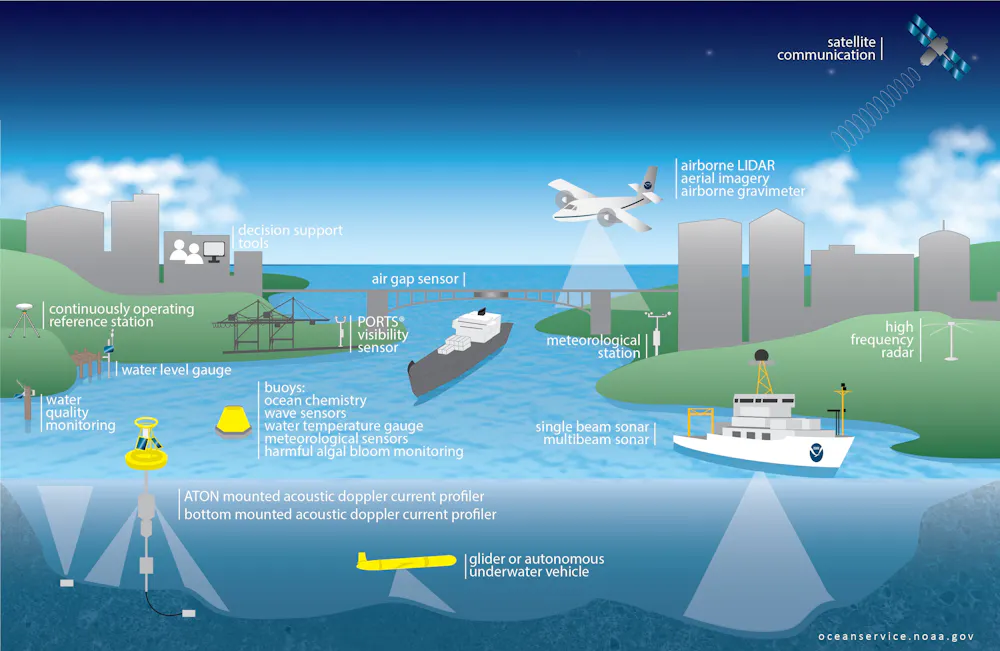

     

    MIL OSI Europe News –

    February 12, 2025
  • MIL-OSI Europe: Written question – Follow-up on State aid for airports, commercial aviation and rail in Portugal – E-000450/2025

    Source: European Parliament

    Question for written answer  E-000450/2025
    to the Commission
    Rule 144
    Adrian-George Axinia (ECR)

    The Commission’s answer to our question E-001390/2024 on State aid for the new Alcochete airport in Portugal basically stated that it was unaware of any State aid having been granted[1].

    Portuguese media recently reported on large tax benefits to state-owned airline TAP Air Portugal, which is soon due to be privatised. This follows EUR 3.28 million in State aid during the COVID-19 pandemic, which has not yet been reimbursed.

    In August the Portuguese Government announced a subsidised EUR 20 per month national rail pass. This seems to infringe every competition rule, undermining the economics of private railway operators.

    The Portuguese Government may be grossly distorting competition in the European airport, commercial aviation and railway sectors, setting bad precedents and potentially impacting the large neighbouring Spanish market, in particular.

    The mission letter to the new Executive Vice-President responsible for the competition portfolio clearly states that she ‘should preserve the level playing field while pursuing further simplification of State Aid, prioritising work on the most distortive aids.’

    State aid cannot be overlooked. It is the Commission’s duty to proactively scrutinise and enforce EU policies.

    Therefore:

    Given the many worrying signs, what scrutiny is being exercised over State aid for Lisbon’s new airport in Alcochete, for the privatisation of TAP Air Portugal and for Portuguese railways?

    Submitted: 3.2.2025

    • [1] https://www.europarl.europa.eu/doceo/document/E-10-2024-001390-ASW_EN.html.
    Last updated: 11 February 2025

    MIL OSI Europe News –

    February 12, 2025
  • MIL-OSI Europe: MOTION FOR A RESOLUTION on the escalation of violence in the eastern Democratic Republic of the Congo – B10-0129/2025

    Source: European Parliament

    Sara Matthieu, Marie Toussaint, Mounir Satouri, Nicolae Ştefănuță, Saskia Bricmont, Majdouline Sbai, David Cormand, Ville Niinistö, Catarina Vieira, Erik Marquardt, Ignazio Roberto Marino
    on behalf of the Verts/ALE Group

    B10‑0129/2025

    European Parliament resolution on the escalation of violence in the eastern Democratic Republic of the Congo

    (2025/2553(RSP))

    The European Parliament,

    – having regard to its previous resolutions on the Democratic Republic of the Congo (DRC),

    – having regard to the UN Report of the Mapping Exercise documenting the most serious violations of human rights and international humanitarian law committed within the territory of the Democratic Republic of the Congo between March 1993 and June 2003, of August 2010,

    – having regard to Regulation (EU) 2017/821 of the European Parliament and of the Council of 17 May 2017 laying down supply chain due diligence obligations for Union importers of tin, tantalum and tungsten, their ores, and gold originating from conflict-affected and high-risk areas (Conflict Minerals Regulation)[1],

    – having regard to the Partnership Agreement between the EU and its Member States, of the one part, and the Members of the Organisation of African, Caribbean and Pacific States, of the other part (the Samoa Agreement),

    – having regard to the African Charter on Human and Peoples’ Rights, which was adopted on 27 June 1981 and entered into force on 21 October 1986,

    – having regard to the Constitution of the Democratic Republic of the Congo, adopted on 18 February 2006,

    – having regard to the Universal Declaration of Human Rights,

    – having regard to the UN Charter,

    – having regard to Rule 136(2) of its Rules of Procedure,

    A. whereas the March 23 Movement (M23) rebel group captured the towns of Minova on 21 January 2025, Sake on 23 January 2025 and Goma, the capital of the North Kivu region in the DRC, on 27 January 2025; whereas this constitutes a brutal violation of the territorial integrity of the DRC; whereas indiscriminate attacks with explosive weapons have increased in recent weeks in densely populated areas of North Kivu, including displacement camps and other highly populated areas near Goma; whereas unlawful killings, rapes and other apparent war crimes, as well as forced labour, forced recruitment and other abusive practices have reportedly been committed by M23 with the support of the Rwandan military;

    B. whereas the UN Group of Experts on the DRC established estimates, pursuant to UN Security Council Resolution 1533 (2004), that between 3 000 and 4 000 Rwandan army troops are on the ground in the DRC, and considers that the deployment of the Rwandan Defence Force (RDF) violates the sovereignty and territorial integrity of the DRC, and that Rwanda’s de facto control and direction of M23 operations also renders Rwanda liable for the actions of M23;

    C. whereas the UN Group of Experts on the DRC concluded that M23 and other armed groups are involved in illegal mineral exploitation and smuggling in the eastern DRC, and that ‘at least 150 tons of coltan’ have been fraudulently exported to Rwanda and mixed with Rwandan production, leading to the largest contamination of mineral supply chains in the Great Lakes region recorded to date;

    D. whereas the resurgence of M23 relates to the deterioration of the security situation in the eastern DRC over the past year, with other armed groups, and at times government soldiers, committing widespread violence, unlawful killings and other grave abuses, putting civilians at greater risk;

    E. whereas the DRC has one of the highest rates of internal displacement in the world; whereas many women and children live in precarious conditions and are being exposed to the risk of harassment, assault or sexual exploitation; whereas displaced populations often receive no basic life-saving services and are at risk of malnutrition and disease; whereas cities that host internally displaced people in precarious circumstances, such as Bunia, are also targets of attack by different militias, causing great distress to the displaced communities and to the local population; whereas there is a reported high risk of the spread of Mpox in Goma, due to the dire humanitarian situation;

    F. whereas the deputy head of the UN peacekeeping force based in Goma has reported on the widespread rape and killing of women inmates in Goma’s Munzenze prison, and the DRC’s Minister for Human Rights Chantal Chambu Mwavit estimates that 163 women were burned alive in the prison; whereas the UN Human Rights Office reported that only between 9 and 13 female inmates, ‘all of whom had also been raped’, survived the blaze;

    G. whereas the security situation in the eastern DRC has dramatically deteriorated in recent weeks and humanitarian access is blocked in the territories illegally occupied since January 2025 by M23;

    H. whereas the Luanda Process, which was relaunched in July 2024 and is being facilitated by Angola, aims to mediate between the DRC and Rwanda regarding the conflict in the eastern DRC;

    I. whereas the UN and the DRC agreed on the withdrawal of the UN Organization Stabilization Mission in the DRC (MONUSCO) in mid-2024, leading to a degradation of the security situation and affecting civilians, who were left exposed to human rights abuses by state security forces and armed actors;

    J. whereas the M23 and Rwandan forces have obligations to civilians under international humanitarian law, including protecting and facilitating access to humanitarian assistance, and permitting freedom of movement;

    K. whereas the International Criminal Court (ICC) investigations into the DRC have focused on alleged war crimes and crimes against humanity committed mainly in the eastern DRC, in the Ituri region and the North Kivu and South Kivu Provinces, since 1 July 2002; whereas the DRC made a second referral to the ICC in May 2023 concerning allegations of crimes committed in North Kivu since 1 January 2022;

    L. whereas the coltan extraction zone in Rubaya in the DRC, controlled by M23, accounts for 15 % of the global supply of tantalum and, as a result, Rwanda recorded a 50 % increase in its coltan exports in 2023, becoming the world’s leading exporter – far exceeding its national production capacity;

    M. whereas the Commission and the Rwandan Government signed on 19 February 2024 a memorandum of understanding (MoU) on sustainable raw materials value chains, which anticipates the adoption of an implementation roadmap, opening the door to the EU financing of strategic projects;

    N. whereas this MoU clearly anticipates the risk of importing conflict minerals from the DRC into the EU market by requiring Rwanda to enforce ‘measures to intercept smuggled minerals entering the country and to repatriate them to the country of origin’;

    O. whereas the EU has not made its cooperation with Rwanda on sustainable raw materials value chains conditional on the country joining the Extractive Industries Transparency Initiative (EITI), while the DRC is a member of the initiative, thereby creating disparities between transparency requirements on minerals from both countries;

    P. whereas Parliament, unlike the Council, was not given the opportunity by the Commission to share its political assessment of the decision to negotiate an MoU with Rwanda, or to provide technical feedback on the draft MoU;

    Q. whereas on 18 December 2024, the DRC filed criminal complaints against Apple subsidiaries in France and Belgium, accusing the tech firm of using conflict minerals in its supply chain;

    R. whereas the DRC Foreign Affairs Minister Thérèse Kayikwamba Wagner and Nobel Prize laureate Denis Mukwege briefed Parliament on 5 February 2025 on the occupation of the eastern DRC and the dire humanitarian impact on the local population and internally displaced people; whereas women are particularly at risk, in these circumstances, of being victims of sexual abuse and rape; whereas the hospitals in Goma lack sufficient sanitary equipment and hundreds of patients are waiting to undergo life-saving surgery;

    S. whereas a joint summit of the East African Community and the Southern African Development Community took place on 8 February 2025 in Dar es Salaam, Tanzania, calling for the disengagement of Rwanda’s forces from the DRC and for the urgent provision of humanitarian assistance to the eastern DRC; whereas the Foreign Affairs Council of the Council of the EU is expected to exchange views on the situation in the DRC on 24 February 2025;

    1. Is concerned by findings in the recent reports of the UN Group of Experts on the DRC established pursuant to Security Council Resolution 1533 (2004) concerning the DRC, and fully supports their recommendations;

    2. Condemns the fact that the RDF has deployed troops to the eastern DRC and has provided direct military support to M23, helping it to expand control in the eastern DRC; condemns the fact that Congolese army units have supported armed groups implicated in serious abuses in the fighting with M23;

    3. Calls for a quick resumption of negotiations within the Luanda Process in order to find a lasting, peaceful and political solution, and urges all sides to fully honour their engagements within the Luanda Process, specifically the ceasefire agreed on 30 July 2024, the neutralisation of the Democratic Forces for the Liberation of Rwanda and the M23 rebel groups, as well as the withdrawal of the RDF from the territory of the DRC; calls for the EU to have an active role in the diplomatic efforts to de-escalate the conflict, advocating for an immediate ceasefire and a renewed commitment to dialogue, with the protection of civilians at the core of negotiations, in particular women and children;

    4. Deplores the fact that fighting and the shelling of medical infrastructure in and around Goma has severely limited the delivery of humanitarian aid to those in need; calls on all neighbouring countries, particularly Rwanda, to facilitate access of humanitarian equipment and personnel to all areas occupied by the rebel groups in the eastern DRC, including through the reopening of Goma airport and of borders; highlights the precarious situation that women and girls face and calls on M23 to lift all restrictions on humanitarian interventions aimed at addressing and preventing gender-based violence and conflict-related sexual violence;

    5. Calls on the UN Human Rights Council to create an independent mandate to investigate abuses by all parties to the current conflict as soon as possible;

    6. Commends the Prosecutor of the ICC’s announcement that the ICC will continue to investigate alleged crimes committed by any person, irrespective of affiliation or nationality; is highly concerned about the fragile situation of the ICC, which is already undermining its crucial work in bringing justice to victims of the most serious crimes worldwide; reiterates the EU’s unwavering support for the ICC and calls on the Council and the Commission to fulfil their obligations to ensure the functioning and effectiveness of the ICC;

    7. Calls on the Commission to continue supporting anti-corruption efforts and the strengthening of governance in the DRC;

    8. Calls on the Commission and the Council to impose targeted sanctions against relevant senior M23 and other armed group commanders, army leaders and senior officials, particularly the individuals identified by the recent reports of the UN Group of Experts on the DRC as responsible for, or complicit in, recent serious human rights abuses by their forces, or those for which they have command responsibility, such as Rwanda’s major generals Eugene Nkubito, Ruki Karusisi and Emmy Ruvusha;

    9. Exhorts the Commission and the Member States to take measures to ensure that support through the European Peace Facility for the deployment of Rwandan troops in northern Mozambique remains exclusively dedicated to the fight against terrorism in Mozambique and does not, directly or indirectly, support the abusive military operations in the eastern DRC;

    10. Expresses regret that the Commission did not present the draft or seek feedback from Parliament in the preparation process of the MoU with Rwanda on sustainable raw materials value chains; regrets that the Council and Parliament were not treated equally in the drafting process of the MoU; highlights the importance of improving the early engagement of the Commission with Parliament in the drafting process of future MoUs;

    11. Calls on the Commission and the Member States to suspend the application of the MoU between the Commission and Rwanda on sustainable raw materials value chains, and freeze any decision to select any project in Rwanda as a strategic project under the Critical Raw Materials Act[2], and to temporarily halt cooperation with Rwanda in the context of the EU’s Global Gateway initiative; calls on the Commission to render the future re-activation of cooperation on sustainable raw materials value chains conditional upon Rwanda joining the EITI, which the DRC is already part of;

    12. Calls for the EU, Rwanda’s neighbouring countries and Rwanda’s main trading partners to put in place a trade embargo for all minerals, including processed minerals, exported from Rwanda, until a definitive withdrawal of the RDF and rebel group supported by Rwanda from the territory of the DRC;

    13. Calls on the Commission and the Member States to swiftly adopt an export ban of weapons from the EU to Rwanda and for the immediate suspension of any further military and security assistance to Rwanda until the territorial integrity of the DRC is restored;

    14. Calls on the Commission and the Member States to ensure a strong enforcement of the current Conflict Minerals Regulation, and for the Commission to swiftly propose a revision to the EU rules, with the aim of ensuring that the highest standards of traceability and transparency are met for each and every mineral imported into the EU, in particular from the DRC and Rwanda, to review accordingly the current import thresholds currently anticipated in the Regulation, and to enhance anti-circumvention and enforcement provisions regarding sanctions;

    15. Instructs its President to forward this resolution to the Council, the Commission, the Vice-President of the Commission / High Representative of the Union for Foreign Affairs and Security Policy, the European External Action Service, the governments and parliaments of the Member States, and the authorities of the Democratic Republic of the Congo and of Rwanda.


    MIL OSI Europe News –

    February 12, 2025
  • MIL-OSI Europe: MOTION FOR A RESOLUTION on the escalation of violence in eastern Democratic Republic of the Congo – B10-0109/2025

    Source: European Parliament

    B10‑0109/2025

    European Parliament resolution on the escalation of violence in eastern Democratic Republic of the Congo

    (2025/2553(RSP))

    The European Parliament,

    – having regard to its previous resolutions on the Democratic Republic of the Congo (DRC),

    – having regard to the statement by the High Representative of the Union for Foreign Affairs and Security Policy on behalf of the EU of 25 January 2025 on the latest escalation in eastern DRC,

    – having regard to the statement by G7 foreign ministers of 2 February 2025 on the escalation of violence in the eastern Democratic Republic of the Congo,

    – having regard to the press statement of the UN Security Council of 26 January 2025 on the situation in the Democratic Republic of the Congo,

    – having regard to the special session of the UN Human Rights Council of 7 February 2025 on the human rights situation in the east of the Democratic Republic of the Congo,

    – having regard to the communiqué of the Peace and Security Council of the African Union of 28 January 2025 on the recent developments in the eastern Democratic Republic of Congo,

    – having regard to the Convention on the Elimination of all Forms of Discrimination against Women (CEDAW) of 18 December 1979,

    – having regard to the Partnership Agreement of 15 November 2023 between the European Union and its Member States, of the one part, and the Members of the Organisation of African, Caribbean and Pacific States, of the other part[1],

    – having regard to Rule 136(2) of its Rules of Procedure,

    A. whereas in January 2025, the armed rebel group M23, backed by Rwandan forces, further advanced in the eastern DRC and seized the regional capital city of Goma; whereas violence between rebel groups and the Congolese army increased sharply, causing a high number of civilian casualties; whereas an estimated 3 000 deaths occurred during the offensive on Goma;

    B. whereas M23 announced a unilateral ceasefire to begin on 4 February 2025; whereas fighting has continued nonetheless; whereas there are reports that the mining town of Nyabibwe in South Kivu has been captured by M23; whereas M23 leaders have declared their intention to continue advancing in the DRC;

    C. whereas the latest advances of M23 mark an alarming escalation of the devastating conflict in the eastern DRC and have further destabilised the country; whereas the region has been plagued by decades of cyclical violence, causing a security and humanitarian crisis; whereas a ceasefire brokered in 2024 did not hold;

    D. whereas there are estimated to be around 100 separate armed groups operating in eastern DRC; whereas the largest of the foreign armed groups is the Democratic Forces for the Liberation of Rwanda (FDLR);

    E. whereas the seizing of Goma has led to significant displacement of civilians; whereas an estimated 700 000 people have been displaced since early January 2025; whereas thousands of Congolese people had previously fled to the city to escape violence and have been further driven from camps for internally displaced people into makeshift tents or forced to sleep out in the open; whereas the safety of internally displaced people is now seriously threatened, with women and girls suffering disproportionately;

    F. whereas eastern DRC was already the centre of one of the largest humanitarian crises in the world; whereas thousands of people are facing shortages of food, medicine and drinking water; whereas hospitals are overwhelmed and there is limited electricity and running water in Goma; whereas there are rapidly growing levels of malnutrition, particularly among children; whereas access for humanitarian assistance is restricted and Goma airport remains closed;

    G. whereas sanitary conditions, notably in camps for internally displaced people, are extremely concerning; whereas experts are warning of the risks of widespread outbreaks of diseases, including cholera and mpox; whereas in January 2025 the Commission announced an increase of EUR 60 million in EU humanitarian assistance to the DRC;

    H. whereas instances of gender-based and sexual violence, including the use of rape as a weapon of war, are staggeringly high; whereas the UN reported that more than 165 women were raped and that most were later burned alive during a jailbreak in Goma following the M23 advance on the city; whereas the current spike in rape and assault in eastern DRC follows decades of widespread sexual violence perpetuated against generations of Congolese women;

    I. whereas the seizure of Goma triggered violent protests in Kinshasa, with dozens of protesters attacking embassies and calling on the international community to halt the advancement of M23;

    J. whereas the UN mission Monusco has been deployed in the DRC since 2010; whereas President Tshisekedi announced a deadline of December 2024 for all Monusco peacekeeping troops to leave the DRC; whereas this withdrawal was put on hold and the mandate of the mission extended to December 2025;

    K. whereas the conflict in the DRC is at risk of regional spillover; whereas a peacekeeping deployment from the East African Community Regional Forces (EACRF) withdrew in 2023; whereas the Southern African Development Community deployed a peacekeeping mission to the DRC in December 2023 with troops from South Africa, Tanzania and Malawi; whereas at least 20 peacekeepers were killed during the M23 advance on Goma; whereas on 6 February 2025, Malawi announced the withdrawal of its troops from this mission;

    L. whereas it is widely acknowledged that Rwanda is active in the conflict in eastern DRC, including through its de-facto control of M23, to which it supplies weapons, logistical support and troops; whereas UN experts estimate there are between 3 000 and 4 000 Rwandan troops operating with M23;

    M. whereas North Kivu is a resource-rich region, with vast supplies of critical raw materials including cobalt, gold and tin, which are necessary for the global digital and energy transition; whereas Goma is a major transport and trading hub for the export of minerals; whereas the UN estimates that around 120 tonnes of coltan is being moved by M23 to Rwanda each month; whereas UN experts further estimate that M23 is financed by around EUR 288 000 per month generated through its control of the mineral trade in the DRC;

    N. whereas the EU has formed raw materials partnerships with several countries, including the DRC and Rwanda; whereas the EU signed a memorandum of understanding (MoU) on sustainable raw materials value chains with Rwanda on 19 February 2024 to promote sustainable and responsible production of critical minerals; whereas the MoU is underpinned with a roadmap for joint action; whereas the Rwanda-EU roadmap has not yet been developed, and roadmaps are not made public; whereas parliamentary scrutiny of the development and implementation of the MoU is lacking;

    O. whereas the MoU commits Rwanda to aligning with international standards by joining the Extractive Industries Transparency Initiative; whereas Rwanda has not done so to date; whereas under the EU Critical Raw Materials Act, the Commission is currently assessing applications for strategic projects with partner countries to increase EU capacity and supply;

    1. Expresses deep concern at the alarming escalation of violence and the seizure of Goma; deplores the loss of life and the sexual violence perpetrated against women and girls; expresses its sympathy with the people of the Democratic Republic of the Congo;

    2. Underlines the urgent need for the stabilisation of the country and the implementation of an immediate ceasefire; calls on M23 to halt its territorial advances, notably to refrain from any further advancement into South Kivu and to withdraw from the territory of the DRC, and for all parties to observe a cessation of violence;

    3. Calls on all state actors, including the governments of the DRC and Rwanda, to cease any cooperation with armed groups, including M23 and FDLR;

    4. Is extremely concerned by the critical humanitarian situation in the country; calls for the creation of a humanitarian corridor and for all parties, including armed groups operating in eastern DRC, to allow and facilitate humanitarian access; emphasises that humanitarian workers must be able to operate safely to deliver life-saving assistance to Congolese civilians; stresses that this is a central obligation under international humanitarian law, and that perpetrators violating these obligations should be held to account;

    5. Welcomes the increased humanitarian support pledged by the EU, but notes that this still falls far short of satisfying the basic needs for food, water, medical assistance and shelter in eastern DRC, especially in the light of the recent termination of support from the United States Agency for International Development; calls on the Commission and the international community to significantly step up financial support for urgent and life-saving assistance;

    6. Urges the Government of the DRC to work with the international community to address the displacement crisis and provide shelter, sanitation and support for internally displaced people, including increased protection for the safety of all displaced people, notably women and girls;

    7. Deplores the endemic sexual and gender-based violence committed against women and girls in the region; underlines that abuse of women and girls escalates into conflict, and that sexual violence is used as a weapon of war; reiterates that sexual violence is a war crime, and those responsible must be held accountable; urges the European External Action Service (EEAS), Member States and the Government of the DRC to take immediate action to prevent sexual violence and improve care for survivors, including by adapting the national legal framework to guarantee access to medical abortion care;

    8. Draws attention to the health needs of pregnant women, notably those who are displaced and out of reach of medical support; calls on the EEAS and Member States to further prioritise the disbursement of humanitarian support for women and girls in the region;

    9. Calls on M23 to allow the immediate reopening of Goma International Airport; underlines that this is essential for the delivery of humanitarian assistance and the evacuation of injured people;

    10. Recognises the contribution made by peacekeeping forces from Monusco and the Southern African Development Community mission, as well as the past contribution by the EACRF; offers its condolences for the peacekeepers who have lost their lives; reiterates its support for the continuation of Monusco’s mandate;

    11. Underlines that a lasting peace must be found through a return to political processes and cooperation; calls on the Government of the DRC and all armed groups to commit to the Nairobi Process for resumed national dialogue;

    12. Regrets that there has long been a lack of accountability for human rights violations in eastern DRC; urges the UN Human Rights Council to create an independent mandate for the investigation of human rights abuses in the region; considers that this should contribute to efforts to hold perpetrators of human rights violations to account;

    13. Calls on the President and Government of Rwanda to respond to calls from the international community to withdraw their support for M23 and prevent any further destabilisation in the DRC; urges Rwanda to ensure that the advance of M23 is halted and that all M23 and Rwandan troops are withdrawn from eastern DRC; underlines that the territorial integrity of the DRC must be respected; calls on the Vice-President of the Commission / High Representative of the Union for Foreign Affairs and Security Policy and the governments of the Member States to raise these urgent concerns with Rwanda at the highest levels;

    14. Calls on the Commission to suspend the MoU on sustainable raw materials and value chains; further calls on the Commission to undertake an immediate assessment of the feasibility of implementing the MoU in the light of the widespread evidence of illegal mineral smuggling and financing of M23; calls for the conclusions of such an assessment to be presented to Parliament as soon as possible; notes that parliamentary oversight and civil society involvement in the signing and implementation of raw material MoUs and roadmaps is essential for an inclusive process with adequate scrutiny, and must become part of the MoU;

    15. Stresses that effective implementation of the MoU with Rwanda can only be made in good faith if both parties commit to increasing due diligence and traceability, and tackling illegal trafficking; stresses that this is currently not the case; urges Rwanda to join the Extractive Industries Transparency Initiative as an essential first step towards implementing the commitments outlined in the MoU;

    16. Calls on the Commission to suspend any proposals for strategic projects with Rwanda that are currently under consideration in the framework of the Critical Raw Materials Act and the Global Gateway initiative; notes that strategic projects must be implemented sustainably and in compliance with human rights and due diligence standards, something which cannot be guaranteed currently;

    17. Stresses the importance of a return to regional dialogue to deescalate the conflict; urges the authorities of the DRC and Rwanda to resume the Luanda peace process;

    18. Instructs its President to forward this resolution to the Vice-President of the Commission / High Representative of the Union for Foreign Affairs and Security Policy, the Council, the Commission, the African Union, the Southern African Development Community, the East African Community, the President, Government and Parliament of Rwanda, and the President, Government and Parliament of the Democratic Republic of the Congo.


    MIL OSI Europe News –

    February 12, 2025
  • MIL-OSI Asia-Pac: DRDO showcases indigenously developed state-of-the-art technologies and systems, working models and innovations at Aero India 2025

    Source: Government of India

    DRDO showcases indigenously developed state-of-the-art technologies and systems, working models and innovations at Aero India 2025

    Full-scale model of India’s first 5.5 Gen stealth aircraft Advanced Medium Combat Aircraft (AMCA) is on display

    Seminar on ‘DRDO Industry Synergy towards Viksit Bharat: Make in India – Make for World’ to foster industry engagement, promote self-reliance in defence and provide boost to defence exports

    Posted On: 11 FEB 2025 10:47AM by PIB Delhi

                Defence Research and Development Organisation (DRDO) with an endeavour to integrate various stakeholders of defence R&D ecosystem in the country, is participating in the 15thedition of Aero India during February 10-14, 2025 at the Air Force Station Yelahanka, Bengaluru. It will feature indigenously developed state-of-the-art technologies and systems, working models and innovations in all formats, i.e., Indoor Pavilion, Outdoor Displays, India Pavilion and Flying display.

    DRDO for the first time is showcasing a full-scale model of India’s first 5.5 Gen stealth aircraft Advanced Medium Combat Aircraft (AMCA) equipped with cutting-edge features at the India Pavilion. This Pavilion at Aero India 2025 will showcase India’s commitment to its Make-in-India initiative by displaying indigenous defence manufacturing capabilities and cutting-edge technologies ready for the global stage. The pavilion exemplifies the combined strength of India’s private industries, Defence PSUs, start-ups, and DRDO.

    Apart from this, visitors to this Pavilion will gain insight from 16 other DRDO developed products and technologies being displayed such as Twin Engine Deck Based Fighter (TEDBF); LCA Mk-2 Model; Air Droppable Container (ADC) -150; Advanced Light Weight Torpedo; Kaveri Derivate Aero Engine without afterburner , Naval Anti-ship missile – Medium Range and various other missiles.

                DRDO indoor pavilion at Hall-D at Aero India is meticulously divided into 9 themes, encompassing core areas of defence innovation. The themes are: ‘Airborne Surveillance Solutions’, ‘Naval Warfare’, ‘Next-Generation Missile Systems’, ‘Supremacy in the Skies – ADA’s 5th Gen Leap’, ‘Unmanned Aerial Systems’, ‘RadarScape: Mapping the Invisible’, ‘Maritime Sentinel: A New Era of Surveillance & Safety’, ‘Sensors Suite for Fighter Aircraft’ and ‘Rakshak’. The Pavilion is displaying over 330 products which are categorised into 14 technology zones. It will provide an in-depth exploration of key defence areas, namely Advanced Materials & Composites; Surveillance & Reconnaissance Technology; Antenna & Microwave Technology; Soldier Support Systems; Combat Aircraft Technology; Corporate Directorates; Micro Electronic Devices, Computational Systems and Cyber Security; Land Systems & Munitions; Missile Technology; Next-Gen Combat Vehicles & Tactical Mobility; Photonics, Laser and Quantum Technology; Electronic Warfare & Communication; Simulation & Training Technology; and Aero Propulsion Technology. The indoor pavilion is also displaying the products developed under Technology Development Fund (TDF) Scheme being executed by DRDO.

    The outdoor segment of DRDO pavilion is designed to demonstrate the real-world application of cutting-edge defence technologies featuring full-scale model of QRSAM Mobile Launcher Vehicle, Akash NG Launcher; Archer UAV 1:1 (Rustom-1); Air Droppable Survival and Rescue Kit (SARK); Emergency Escape Parachute System for Air Crew (EEPSA); Military Combat Parachute System (MCPS); Vehicle Mounted Jammer; Anti UAV (JAU) Entity of Project DHARASHAKTI, and VHF Radar. The demonstration of Dornier aircraft’s midlife upgrade is one of the main highlights of DRDO’s participation at the Aero Show. The upgraded Dornier is showcasing enhanced avionics, better fuel efficiency, advanced radar systems, enhanced manoeuvrability, integrated surveillance systems, and improved electronic warfare capabilities, reinforcing its role as a dependable asset of the Indian Air Force.

    DRDO will conduct a seminar with the theme ‘DRDO Industry Synergy towards Viksit Bharat: Make in India – Make for World’ at Hall No. 2 on February 11, 2025. The seminar will foster industry engagement, promote self-reliance in defence and provide a boost to defence exports. Members of Academia, Indian Private Industry, StartUps, PSUs, and DRDO will participate in this seminar. Raksha Mantri, Shri Rajnath Singh will inaugurate the event and will release the Revised Policy for ToT, DRDO Policy for Harnessing Innovative Startups in Defence R&D and Compendium of DRDO Products for Export. During the seminar, Handing Over of Licensing Agreement for Transfer of Technology (LATOT) to Industries will also take place. At the event, Secretary DDR&D and Chairman DRDO Dr. Samir V Kamat will chair a panel discussion on Opportunities for Industries in Defence Export to foster a collaborative environment for enhancing defence exports.

    Under the banner of Aero India 2025, an Indigenisation & Valedictory event themed as ‘SAMARTHYA’ will be organised on February 12 by Department of Defence Production (DDP), to recognise and felicitate the contributors of Indigenously developed cutting edge technologies. Five DRDO developed products have been recognised to be showcased and Team leader of these products will be felicitated by the Raksha Mantri.   The details are:

    1. Shri Y Dilip, Director ADE Bengaluru for Computerised Pilot Selection System (CPSS)
    2. Dr MSY Siva Prasad, PD RudraM II, RCI Hyderabad
    3. Ms M Backialakshmi, CABS Bengaluru for Automatic Dependent Surveillance Broadcast (ADS-B) Receiver
    4. Smt T Sirisha, RCI, for Naval Anti-Ship Missile–Short Range
    5. Shri Vishal Dwivedi, CFEES Delhi for Fire Wire for Integrated Fire Detection and Suppression System for BMP, T-72 and T-90.

    As a prelude to Aero India, DRDO also organised the 15th edition of the Biennial Aero India International Seminar in association with the Aeronautical Society of India (AeSI) during February 8-9, 2025 in Bengaluru. The theme of the seminar was ‘Futuristic Aerospace Technologies: Challenges in Design Validation’, covering emerging trends in futuristic aerospace technologies and military airworthiness & certification: challenges in design and testing. This seminar provided valuable insights about cutting-edge technologies, a platform to explore collaborative research opportunities and forge strategic partnerships, while advancing the future of aerospace and defence technologies.

    DRDO’s exhibition at Aero India 2025 is an excellent opportunity for the Indian aerospace community to foster the cause of indigenous development of military systems and technologies with the spirit of self-reliance & national pride. Working towards the vision of Samarth and Shashakt Bharat, DRDO is developing the indigenous capabilities of the country by equipping the Armed Forces with state-of-the-art technologies/equipment, and bolstering the defence sector through collaboration with the private sector.

    *****

    VK/SR/KB

    (Release ID: 2101598) Visitor Counter : 76

    MIL OSI Asia Pacific News –

    February 12, 2025
  • MIL-OSI Economics: Qatar Airways YouTube ads showcase innovation, strategic partnerships, and enhanced passenger experiences, reveals GlobalData

    Source: GlobalData

    Qatar Airways YouTube ads showcase innovation, strategic partnerships, and enhanced passenger experiences, reveals GlobalData

    Posted in Business Fundamentals

    Qatar Airways’ YouTube advertising campaigns for the last six months (August 2024 to January 2025) focus on strategic collaborations, technological advancements, and enhancing passenger experiences. The airline leverages major global events, sports sponsorships and cutting-edge inflight technology to engage diverse audiences. By emphasizing seamless connectivity, luxury offerings, and exclusive partnerships, the campaigns appeal to sports enthusiasts, high-end travelers, and those seeking convenience. This approach reflects Qatar Airways’ commitment to elevating the travel experience and expanding its global presence, according to the Global Ads Platform of GlobalData, a leading data and analytics company.

    Sagar Kishor, Ads Analyst at GlobalData, comments: “Qatar Airways’ advertising campaign highlights its strategy of leveraging partnerships with prominent events like Formula 1 and the UEFA Champions League, while also showcasing innovations such as Starlink Wi-Fi and ORYX ONE. The ads emphasized the airline’s focus on enhancing both in-flight and on-ground experiences, aiming to enhance global connectivity and cultural engagement. By showcasing diverse destinations and highlighting the potential for unique travel experiences, the campaign aims to inspire and appeal to those seeking meaningful adventures and a comprehensive journey.”

    Below are the key focus areas of Qatar Airways’ advertisements, revealed by GlobalData’s Global Ads Platform:

    Technological innovation: Qatar Airways consistently showcases its adoption of new technologies, including Starlink-powered Wi-Fi, which is described as offering “the fastest Wi-Fi in the sky.” The airline also highlights advancements in aircraft design and passenger comfort, such as the Qsuite 2.0, aiming to provide a seamless and connected travel experience.

    Strategic partnerships: The airline’s collaborations with prominent sporting events and organizations, such as Formula 1, the UEFA Champions League, and FIFA, are prominently featured. These partnerships are used to associate Qatar Airways with excitement, global reach, and high performance, increasing overall brand visibility.

    In-flight entertainment: The airline emphasizes its exclusive entertainment offerings, such as the “Pit Stop” series on ORYX ONE, showcasing high-quality in-flight content that enhances the overall passenger experience. This approach highlights Qatar Airways’ commitment to providing a comprehensive and enjoyable travel journey.

    Human connection and personalization: The “Cabin Crew Essentials” and “Star in Your Own Adventure” advertisements focus on relatable stories and individual experiences. This approach fosters a sense of connection with the audience, positioning Qatar Airways as an enabler of personal journeys and meaningful moments.

    Destination promotion and global reach: Qatar Airways’ ads highlight its global reach with seamless connections to over 170 destinations, showcasing cultural landmarks from Texas, Italy, and Qatar. This positions the airline as a gateway to enriching travel experiences, promoting tourism, cultural exploration, and major events.

    MIL OSI Economics –

    February 12, 2025
  • MIL-Evening Report: Albanese government looking to acquire Rex Airlines if buyer can’t be found

    Source: The Conversation (Au and NZ) – By Michelle Grattan, Professorial Fellow, University of Canberra

    The Albanese government will on Wednesday announce it is willing, as a last resort, to purchase the collapsed Rex Airlines, in its latest bid to prop up aviation services to regional and remote areas.

    As the administrators work on the second attempt to sell Rex, the  government will say that, in the first instance, it will work with shortlisted bidders on potential support to maximise the prospects of a sale. The initial attempt to sell Rex failed last year.

    What support will be offered  will be conditional on bidders committing to provide an “ongoing, reasonable level of service to regional and remote communities”. Assistance must also represent value for taxpayers’ money and there would have to be assurances from the potential buyer of good governance.

    While the government is not a bidder in the sale process now underway and hopes that will be successful, if there is no result, it will go down an alternative route.

    “In the event there is no sale, the Albanese government will undertake necessary work, in consultation with relevant state governments, on contingency options, including preparations necessary for potential Commonwealth acquisition.”

    The government is also providing an extension to the exemption from the “use it or lose it” test for REX regional flight slots at Sydney airport. This will ensure its access to those slots until October 24 next year.

    REX went into voluntary administration last year. An attempt (now abandoned) to compete on capital city routes had proved disastrous for it.

    The Federal government has provided it with extensive support to keep it in the air on regional routes while its future is being determined.

    This has included $80 million in a loan to the administrator to keep regional flights operating until June 30, as well as a buyout of $50 million debt from its biggest creditor, PAGAC Regulus Holdings Limited. The government is now Rex’s largest creditor.

    Prime Minister Albanese said: “We are working collaboratively with the administrators of REX to ensure that regional services continue beyond June 2025, including looking at what support the Commonwealth can provide.

    “Regional Australians can be assured that our government will continue to fight to ensure these regional airfare remain available.”

    Transport minister Catherine King said: “When markets fail or struggle to deliver for regional communities the government has a role to ensure people do not miss out on opportunities, education and critical connections.”

    When speaking about the future of the airline last month, opposition transport spokeswoman Bridget McKenzie declined to say whether the Coalition would support nationalisation of Rex.

    Until the 1990s the federal government owned Qantas and one of the two major domestic airlines.

    Michelle Grattan does not work for, consult, own shares in or receive funding from any company or organisation that would benefit from this article, and has disclosed no relevant affiliations beyond their academic appointment.

    – ref. Albanese government looking to acquire Rex Airlines if buyer can’t be found – https://theconversation.com/albanese-government-looking-to-acquire-rex-airlines-if-buyer-cant-be-found-249594

    MIL OSI Analysis – EveningReport.nz –

    February 12, 2025
  • MIL-OSI Russia: Yuri Trutnev visited industrial enterprises of Komsomolsk-on-Amur

    Translartion. Region: Russians Fedetion –

    Source: Government of the Russian Federation – An important disclaimer is at the bottom of this article.

    Yuri Trutnev visited industrial enterprises of Komsomolsk-on-Amur

    February 11, 2025

    Yuri Trutnev visited industrial enterprises of Komsomolsk-on-Amur

    February 11, 2025

    Yuri Trutnev visited industrial enterprises of Komsomolsk-on-Amur

    February 11, 2025

    Previous news Next news

    Yuri Trutnev visited industrial enterprises of Komsomolsk-on-Amur

    As part of his working visit to Khabarovsk Krai, Deputy Prime Minister and Presidential Plenipotentiary Representative in the Far Eastern Federal District Yuri Trutnev visited the enterprises of PJSC UAC in Komsomolsk-on-Amur – the Komsomolsk-on-Amur Aviation Plant named after Yuri Gagarin (KnAAZ) and the production center of PJSC Yakovlev, where the Superjet-100 is assembled, and also visited the investment site for the production of the Baikal aircraft and got acquainted with the work of the Amur Shipbuilding Plant of USC. The Deputy Prime Minister was accompanied on his trip by the Governor of Khabarovsk Krai Dmitry Demeshin.

    At KnAAZ, Yuri Trutnev inspected a new titanium alloy processing shop, an assembly line, including a final assembly shop for Su-35S and Su-57 aircraft, and the construction of new flight test station facilities. The implementation of the project to build facilities and new industrial capacities at KnAAZ are necessary to increase the serial production of fifth-generation aircraft. The Deputy Prime Minister was shown areas where work is being carried out within the framework of cooperation: on the import-substituting Superjet-100 and MS-21.

    In the technocomplex of the production center of PAO Yakovlev, Yuri Trutnev was shown the first line in Russia for the production of doors for the import-substituted version of the Superjet – previously, these units were manufactured abroad. Doors manufactured on the new line meet the most modern aviation safety standards. A specialization center for the production of doors for other Russian civil aircraft is being created on the basis of the technocomplex.

    In the final assembly shop, the director of the production center Andrey Soynov spoke about the current work and prospects of the enterprise. The center, which employs more than 1 thousand people, is preparing for the serial production of fully import-substituted Superjet-100 aircraft. The production modernization program provides for the expansion of the final assembly shop to organize a straight-through conveyor and the construction of a new hangar for the flight test station. The production capacity of the updated enterprise will be at least 20 Superjet-100 aircraft per year.

    “The supply of domestic aircraft for air transportation in the Far East is our priority task. We, like no one else, understand the need to connect the cities of our region. The Yakovlev company has already concluded an agreement on the supply of Superjets to the Aurora airline, and we will make every effort to fulfill this order,” Andrey Soynov emphasized.

    As part of his trip to Komsomolsk-on-Amur, Yuri Trutnev visited an investment site being created for a comprehensive center for the development of regional and unmanned aviation production and the production of the Baikal light multipurpose aircraft. The construction of a production building for the assembly of the Baikal aircraft with the necessary engineering infrastructure is being carried out on the advanced development area in close proximity to the Dzyomgi airfield and the facilities of the United Aircraft Corporation (UAC). Work on the site is scheduled to be completed by the end of 2025. Construction of facilities for the production of the Baikal light aircraft began in January 2024. The project is being implemented on the instructions of President of the country Vladimir Putin and as part of the long-term development plan for Komsomolsk-on-Amur, the activities of which are included in the city’s master plan. Currently, the zero cycle work on the formation of the land plot is being completed, and the pouring of foundations continues. The total area of buildings and structures will be almost 10.4 thousand square meters. m. The complex will produce up to 20 aircraft per year. 80 jobs will be created.

    The developer of the Baikal aircraft is the Ural Works of Civil Aviation (UZGA). The aircraft will be manufactured by UZGA subsidiary Spetsaviatekhnika LLC, a resident of the Khabarovsk priority development area. It is planned that Baikal will be equipped with a domestic VK-800 engine. This aircraft is being created to improve the transport accessibility of remote regions of Russia and to develop local air routes. The key parameters of the aircraft were determined in accordance with the requirements of regional airlines: 2 tons of payload, flight range of 1.5 thousand km, cruising speed of 300 km/h.

    Yuri Trutnev also got acquainted with the work of the Amur Shipyard of USC, one of the largest shipbuilding enterprises in the Far East. During the inspection, the Deputy Prime Minister visited the slipway shop. The management of the enterprise reported on the orders under construction and prospective orders. The Deputy Prime Minister got acquainted with the progress of construction of the new dock-pontoon “Amurets” of project 65911, which is being built for the plant’s own needs as part of the USC dock program.

    The dock-pontoon was laid down in June 2023. Its main purpose is to ensure the removal of factory orders from the workshop and their transfer to the outfitting pier. The company has completed a large amount of work on the construction. On the dock-pontoon, the hull of which is currently being assembled on an open slipway, the assembly joints of the first three blocks have been thoroughly welded and presented to the register, and all assembly work on the fourth has been completed. In March, when the average daily temperature rises to normal, welding work on the dock-pontoon will resume, and the docking of the order hull will continue.

    The plant’s production program includes the construction of a floating transport dock for the transfer of plant orders to the outfitting base in Vladivostok and the reconstruction of the dockside unit of the plant’s outfitting complex. This will allow the enterprise to build a promising line of ships and vessels of greater width and tonnage than is currently possible, and to transport orders to the delivery base in Primorye using its own resources.

    Yuri Trutnev discussed with the General Director of the Amur Shipyard of USC Mikhail Borovsky the issues of the enterprise’s workload in terms of placing orders on the Amur Shipyard’s slipways for the development and maintenance of the oil and gas shelf – supply vessels and ice-class rescue vessels. The plant already has experience in building such orders: in 2018 and 2020, the plant built and handed over to the customer (OOO Gazprom Flot) two supply vessels for work with semi-submersible floating units. The built vessels belong to the highest class of automation and are capable of performing a wide range of tasks – from transporting goods and people to eliminating the consequences of natural disasters and extinguishing fires.

    At the commissioning base of the Amur Shipyard of USC, work is underway to prepare for testing the multifunctional emergency rescue vessel with a capacity of 7 MW, the Kerch Strait, which is being built to operate in high latitudes and has a sufficient margin of safety for sailing in freezing non-Arctic seas.

    “I always come to Komsomolsk-on-Amur with pleasure, because it is a working city. This is a city that protects our country. In this city, wonderful fighters are created, ships are built. We see how the work of the Amur Shipyard has changed. Previously, the enterprise had unresolved issues. And now, when the CEO reports that the enterprise is fully paying off its debts, that it is fully loaded with orders, this is, of course, great. This is good for Khabarovsk Krai, and for Komsomolsk-on-Amur, and for our entire country. The aircraft plant is fully loaded. Much remains to be done for small and large aviation. Work is going well on the Superjet-100 and fighters. We do not forget that we have debts to people for the construction of social facilities in Komsomolsk-on-Amur. And work in this direction will be accelerated. Now I have given a number of instructions and expect that the pace of work will be increased. The administration made a number of mistakes, including in the selection of contractors, but these miscalculations are of no interest to anyone. The main thing is that people get what they expect. We are trying to do this,” Yuri Trutnev summed up the results of his trip to Komsomolsk-on-Amur.

    Please note: This information is raw content directly from the source of the information. It is exactly what the source states and does not reflect the position of MIL-OSI or its clients.

    MIL OSI Russia News –

    February 11, 2025
  • MIL-Evening Report: Whether we carve out an exemption or not, Trump’s latest tariffs will still hit Australia

    Source: The Conversation (Au and NZ) – By Scott French, Senior Lecturer in Economics, UNSW Sydney

    US President Donald Trump and Prime Minister Anthony Albanese have stated an exemption for Australia from Trump’s executive order placing 25% tariffs on all steel and aluminium imported into the US is “under consideration”. But prospects remain uncertain.

    Albanese would do well to secure an exemption using similar arguments as then-Prime Minister Malcolm Turnbull did in 2018.

    If Australia cannot obtain a carve-out from the tariffs, the main group affected will be the Australian producers of steel and aluminium. But the size of the hit they will take is difficult to predict.

    Regardless of whether Australia gets an exemption, the world economy – and Australians – will be affected by Trump’s latest round of tariffs.

    Producers will be hit

    If ultimately imposed by the US, these tariffs will make steel and aluminium produced in Australia more expensive for US manufacturers relative to domestically produced alternatives. This will certainly result in reduced demand for the Australian products.

    However, three factors will help limit the effects:

    1. The price of metals produced in the US will rise

    It will take time to ramp up US production to fill the gap of reduced imports, and the extra production will likely come from less efficient domestic producers. This means that US manufacturers will continue to buy imported metals, despite the higher prices.

    2. The US is not a huge market for Australian steel and aluminium

    Australia produced A$113 billion of primary and fabricated metal in the 2022-23 financial year, according to the ABS.

    By comparison, less than $1 billion of steel and aluminium was exported to the US in 2023, according to data from UN Comtrade, consisting of about $500 million of aluminium and less then $400 million of steel. Exports to the US account for about 10% of Australia’s total exports of these metals.

    3. Major markets

    If major markets such as China and the European Union enact retaliatory tariffs on US metals, this could make Australian metals more competitive in these markets.

    Some stand to benefit

    While workers in Australian steel and aluminium plants will be watching the news with trepidation, some of Australia’s biggest manufacturing companies may be less concerned.

    For example, BlueScope Steel has significant US steel operations, and saw its share price increase on news of the tariffs.

    US-based Alcoa, which owns alumina refineries in Western Australia and an aluminium smelter in Victoria, will also expect to see its US operations benefit.

    And Rio Tinto will be most concerned about its substantial Canadian operations. Its Canadian hub is responsible for close to half of its global aluminium production.

    Demand for iron ore could fall

    The US tariffs will also have wider ranging effects on the Australian economy, regardless of whether Australia’s products are directly targeted.

    While aluminium is Australia’s top manufacturing export, it still makes up only about 1% of total exports, and steel makes up less than half that.

    Iron ore, by contrast, makes up more than 20% of Australia’s exports, with aluminium ores making up an additional 1.5%.

    This means the effect of the tariffs on demand for the raw materials to make steel and aluminium may have the largest detrimental effect on the Australian economy.

    Because the tariffs will make steel and aluminium more expensive to US manufacturers, they will seek to reduce their use of them. This means global demand for the metals, and the ores used to produce them, will decline.

    Investors appear to be betting on this, with shares of Australian miners like Rio Tinto and BHP falling since Trump announced the tariffs.

    Imported goods will become more expensive

    Many of the things Australians buy are likely to get more expensive.

    All US products that use steel and aluminium at any stage of the production process will also become more expensive. Tariffs will raise the cost of steel and aluminium for US manufacturers, both directly and by reducing overall productivity in the US.

    About 11% of Australia’s imports come from the US. And about half of this consists of machinery, vehicles, aircraft, and medical instruments, which typically contain steel and aluminium. Further, these goods are used by manufacturers around the world to produce and transport many of the other things Australians buy.

    Scott French does not work for, consult, own shares in or receive funding from any company or organisation that would benefit from this article, and has disclosed no relevant affiliations beyond their academic appointment.

    – ref. Whether we carve out an exemption or not, Trump’s latest tariffs will still hit Australia – https://theconversation.com/whether-we-carve-out-an-exemption-or-not-trumps-latest-tariffs-will-still-hit-australia-249493

    MIL OSI Analysis – EveningReport.nz –

    February 11, 2025
  • MIL-OSI USA: Biofabricating human tissues enhanced through use of gallium

    Source: US Government research organizations

    The manufacturing technique known as 3D printing, now being used everywhere, from aircraft manufacturers to public libraries, has never been more affordable or accessible. Biomedical engineering has particularly benefited from 3D printing as prosthetic devices can be produced and tested more rapidly than ever before. However, 3D printing still faces challenges when printing living tissues, partly due to their complexity and fragility.

    Now, with support from the U.S. National Science Foundation, a research team at Boston University (BU) and the Wyss Institute at Harvard University has pioneered the use of gallium, a metal that can be molded at room temperature, to create tissue structures in various shapes and sizes.

    This innovative approach to fabrication, engineered sacrificial capillary pumps for evacuation (ESCAPE), was highlighted in a recent study published in Nature, where the team used gallium casts to mold biomaterials. The scaffolds left behind by these casts are then filled with cells cultured to form tissue structures. Vascular structures were some of the first produced using ESCAPE, particularly because of the challenges faced due to blood vessel complexity. Few techniques exist to build large (millimeter-scale) and small (micrometer-scale) structures in scaffolds made of natural materials, making this multiscale fabrication capability a novel approach.

    “ESCAPE can be used on several tissue architectures, but we started with vascular forms because blood vessel networks feature many different length scales,” said Christopher Chen, director of BU’s Biological Design Center and senior author on the study. Chen is also the deputy director of CELL-MET, an NSF Engineering Research Center at BU funded by a $34 million award from NSF, and co-principal investigator on the award for the NSF Science and Technology Center for Engineering MechanoBiology at the University of Pennsylvania. “Our blood vessel demonstrations include trees with many branches, including dead ends and portions that experience fluid flow. This allows us to model a range of healthy structures as well as diseased abnormalities.”

    Following the success of reproducing capillary structures, researchers are hopeful these methods can be used to generate distinct tissue structures found in organs. The reliability of these ESCAPE designs will also be tested using computational modeling, further expanding the types of material reproduced using the process.

    Credit: Subramanian Sundaram, Boston University and Wyss Institute, Harvard University

    A metallic (gallium) cast used to model networks of blood vessels and lymphatic vessels that come in close proximity but not in direct contact. The gallium structure is used as a sacrificial cast to mold soft materials into complex structures in the ESCAPE process.

    “CELL-MET allows engineers, student trainees and medical professionals and their patients to collaborate across a broad innovation ecosystem,” said Randy Duran, the lead NSF program director for the CELL-MET award. “Using systems engineering, the team has developed a novel method of fabricating structures such as blood vessels that must be produced at scales ranging from microscopic capillaries to much larger blood vessels, all within centimeter-scale heart patches that will have a broad impact on human health.”

    MIL OSI USA News –

    February 11, 2025
  • MIL-OSI Security: USAF and USMC Work With Allies and Partners to Enhance Capabilities for CN25

    Source: United States INDO PACIFIC COMMAND

    ANDERSEN AIR FORCE BASE, Guam   –  

    Aircraft from the United States Air Force along with our Allies and Partners line the runway at Andersen Air Force Base in Guam for Cope North 25. CN25 aims to enhance the capabilities of partner air forces through training, exercises, and knowledge sharing.

    With Allies and Partners taking to the skies of Guam this week for the start of CN25, the main focus of the exercise is the integration and flight operations with the F-35A Lightning and F-35B Lightning II from all three participating nations: Japanese Air Self Defense Force, Royal Australian Air Force, and the United States.

    “Exercise Cope North [25] will be the showcase for the true integration of 5th gen capability,” said RAAF GPCAPT Darryl Porter, Australian Task Force commander. “Most significantly with this being the first training exercise under the trilateral memorandum of intent signed by Japan, Australia, and the U.S., following the defense minister meeting last year.”

    Following the influx of participating fighters and refuelers, CN25 kicked off with a welcoming brief and academics where the commanders of the participating nations took the stage to address military members and civilian participants of the exercise.

    JASDF Col. Takeshi Okubo, flight group commander, 3rd Air Wing, addressed the attending participants by stressing the importance of a unified partnership to deter conflict.

    “We train together and fight together,” said Okubo. “And together we are an active deterrence to conflict.”

    With the idea of deterring conflict and achieving regional security, an emphasis on shared knowledge of 5th generation fighters has taken the spotlight in achieving these objectives. CN25 fosters the exchange of information and refining shared tactics, techniques, and procedures.

    “When you have many different nations flying the same aircraft, it’s important to train together so that we learn small differences between how each nation employs, maintains, and C2’s [command and control] those airplanes,” said Schuck. “We’ll never learn those differences without actually exercising together. And the reason that 5th generation is so important is that 5th generation fighters are the forward edge of our fighting force, especially in the Indo-Pacific, so it’s important to practice together with all the nations that fly them.”

    With two weeks left in the exercise, USAF and its representing commander are eager for the opportunity to learn with its Allies and Partners, with Schuck saying, “I’m happy to be here and represent the commander of PACAF to our foreign partners and Allies in order to strengthen our resolve, strengthen our alliance in the Pacific and hopefully lead to a stronger fighting force and a more open and freer Indo-Pacific.”

    For over 45 years, Cope North has conducted exercises in the Pacific between the U.S. and allied forces, focusing on several aspects of defense and interoperability throughout the Indopacific. As with past iterations, CN25 maintains a dedication to realistic combat training for the success of air and space operations.

    MIL Security OSI –

    February 11, 2025
  • MIL-OSI: Odysight.ai Announces the Pricing of $21.5 Million Public Offering and Uplisting to the Nasdaq Capital Market

    Source: GlobeNewswire (MIL-OSI)

    Odysight.ai common stock to begin trading on Nasdaq Tuesday, February 11, 2025, under the symbol “ODYS”

    OMER, Israel, Feb. 10, 2025 (GLOBE NEWSWIRE) — Odysight.ai Inc. (Nasdaq: ODYS) (“Odysight.ai” or the “Company”), a pioneering developer of AI systems for Predictive Maintenance (PdM) and Condition-Based Monitoring (CBM), today announced the pricing of a public offering of 3,307,692 shares of its common stock at a price to the public of $6.50 per share. The sole book-running manager of the offering will have a 30-day option to purchase up to an additional 496,153 shares of common stock from Odysight.ai at the public offering price, less underwriting discounts and commissions.

    Odysight.ai’s common stock has been approved for listing and is expected to begin trading on the Nasdaq Capital Market under the symbol “ODYS” on Tuesday, February 11, 2025.

    The offering is expected to close on February 12, 2025, subject to customary closing conditions.

    The gross proceeds to Odysight.ai from the offering, before deducting underwriting discounts and commissions and estimated offering expenses, are expected to be approximately $21.5 million. Odysight.ai intends to use the net proceeds from this offering for expanded research and development, increased sales and marketing, working capital and other general corporate purposes.

    The Benchmark Company, LLC is acting as sole book-running manager for the offering.

    A registration statement relating to these securities has been filed with the U.S. Securities and Exchange Commission, and became effective on February 10, 2025. The proposed offering will be made only by means of a prospectus. Copies of the final prospectus, when available, may be obtained from The Benchmark Company, LLC, 150 East 58th St., 17th Floor, New York, NY 10155, by telephone: (212) 312-6700, or by email at prospectus@benchmarkcompany.com.

    This press release shall not constitute an offer to sell or the solicitation of an offer to buy these securities, nor shall there be any sale of these securities in any state or jurisdiction in which such offer, solicitation or sale would be unlawful prior to registration or qualification under the securities laws of any such state or jurisdiction.

    About Odysight.ai 

    Odysight.ai is pioneering the Predictive Maintenance (PdM) and Condition Based Monitoring (CBM) markets with its visualization and AI platform. Providing video sensor-based solutions for critical systems in the aviation, transportation, and energy industries, Odysight.ai leverages proven visual technologies and products from the medical industry. Odysight.ai’s unique video-based sensors, embedded software, and AI algorithms are being deployed in hard-to-reach locations and harsh environments across a variety of PdM and CBM use cases. Odysight.ai’s platform allows maintenance and operations teams visibility into areas which are inaccessible under normal operation, or where the operating ambience is not suitable for continuous real-time monitoring.

    We routinely post information that may be important to investors in the Investors section of our website. For more information, please visit: https://www.odysight.ai or follow us on Twitter, LinkedIn and YouTube.

    Forward-Looking Statements

    Information set forth in this news release contains forward-looking statements within the meaning of safe harbor provisions of the Private Securities Litigation Reform Act of 1995 relating to future events or our future performance. All statements contained in this press release that do not relate to matters of historical fact should be considered forward-looking statements, including, but not limited to, statements regarding the completion of the offering, the satisfaction of customary closing conditions related to the offering and the intended use of net proceeds from the offering. In some cases, you can identify forward-looking statements by terminology such as “may,” “should,” “expects,” “plans,” “anticipates,” “believes,” “estimates,” “predicts,” “potential” or “continue” or the negative of these terms or other comparable terminology. Those statements are based on information we have when those statements are made or our management’s current expectation and are subject to risks and uncertainties that could cause actual performance or results to differ materially from those expressed in or suggested by the forward- looking statements. Factors that may affect our results, performance, circumstances or achievements include, but are not limited to the following: (i) market acceptance of our existing and new products, including those that utilize our micro Odysight.ai technology or offer Predictive Maintenance and Condition Based Monitoring applications, (ii) lengthy product delays in key markets, (iii) an inability to secure regulatory approvals for the sale of our products, (iv) intense competition in the medical device and related industries from much larger, multinational companies, (v) product liability claims, product malfunctions and the functionality of Odysight.ai’s solutions under all environmental conditions, (vi) our limited manufacturing capabilities and reliance on third-parties for assistance, (vii) an inability to establish sales, marketing and distribution capabilities to commercialize our products, (viii) an inability to attract and retain qualified personnel, (ix) our efforts to obtain and maintain intellectual property protection covering our products, which may not be successful, (x) our reliance on a single customer that accounts for a substantial portion of our revenues, (xi) our reliance on single suppliers for certain product components, including for miniature video sensors which are suitable for our Complementary Metal Oxide Semiconductor technology products, (xii) the fact that we will need to raise additional capital to meet our business requirements in the future and that such capital raising may be costly, dilutive or difficult to obtain, (xiii) the impact of computer system failures, cyberattacks or deficiencies in our cybersecurity, (xiv) the fact that we conduct business in multiple foreign jurisdictions, exposing us to foreign currency exchange rate fluctuations, logistical, global supply chain and communications challenges, burdens and costs of compliance with foreign laws and political and economic instability in each jurisdiction and (xv) political, economic and military instability in Israel, including the impact of Israel’s war against Hamas and Hezbollah. These and other important factors discussed in Odysight.ai’s Annual Report on Form 10-K filed with the Securities and Exchange Commission (“SEC”) on March 26, 2024 and our other reports filed with the SEC could cause actual results to differ materially from those indicated by the forward-looking statements made in this press release. Except as required under applicable securities legislation, Odysight.ai undertakes no obligation to publicly update or revise forward-looking information.

    Investor Relations Contact:
    Miri Segal
    MS-IR LLC
    msegal@ms-ir.com

    Company Contact:
    Einav Brenner, CFO
    info@odysight.ai

    The MIL Network –

    February 11, 2025
  • MIL-OSI Australia: Airservices Australia announces first round of Uncrewed Aircraft Systems Service Suppliers

    Source: Airservices Australia

    Airservices Australia has announced the first round of Uncrewed Aircraft Systems (UAS) Service Suppliers (USS) to connect to the new Flight Information Management System (FIMS), the data-sharing platform that will enable drones and other uncrewed aircraft to be seamlessly incorporated into Australian airspace. 

    Following a Request for Proposal in late 2024 seeking specialist USS technology providers to collaborate with Airservices, Australian owned and operated AvSoft and Yarra Drones, along with United States based OneSky, have been selected to participate in the first round of technical integration with the FIMS.  

    The FIMS will be at the core of Australia’s Uncrewed Aircraft Systems Traffic Management (UTM) ecosystem. It will enable Airservices to share flight information between air traffic control, traditional aircraft, and uncrewed airspace users. 

    With over 60 million drones predicted to be utilising Australian airspace by 2043, delivering the UTM ecosystem through cross government and industry collaboration will ensure a safe, efficient and harmonised airspace for both uncrewed and conventional aircraft.  

    In the lead up to Airservices’ FIMS going live in late 2025 and beyond, these partnerships will also play a critical role in collectively delivering cutting edge, digital UTM solutions for drone operators as industry providers integrate their platforms with the FIMS.  

    Supported by Airservices’ strategic partner Frequentis Australasia and the Civil Aviation Safety Authority (CASA), the USS onboarding and integration process involves working together on end-to-end testing of FIMS capabilities, assuring technical and regulatory requirements and empowering the burgeoning uncrewed industry to thrive.  

    Airservices Australia Head of Transformation Uncrewed Services Integration, Luke Gumley, said this was a major milestone in developing the UTM ecosystem in Australia. 

    “We’re thrilled to be supporting the first cohort of UAS Service Suppliers and extend a warm welcome to OneSky, AvSoft and Yarra Drones as the expertise and experience they bring to the table is invaluable,” Luke said. 

    “We look forward to partnering with more USS through future onboarding rounds next year, which will benefit from the preliminary work we do with the first cohort. 

    “The forward leaning policy and regulatory frameworks, coupled with the collaboration between Airservices and industry in delivering open market UTM services connected to FIMS, positions Australia as a leader in enabling safe and sustainable growth of the drone and emerging aviation industries.” 

    For further information on Airservices’ work to support Australia’s UTM ecosystem visit our website. 


    About Airservices
    Airservices Australia is a government-owned organisation responsible for safely and efficiently managing air traffic in 11 per cent of the world’s airspace, as well as the provision of aviation rescue fire fighting services at Australia’s busiest airports. We are regulated by the Civil Aviation Safety Authority and work closely with our customers and industry to support the long-term growth of the aviation industry.

    MIL OSI News –

    February 11, 2025
  • MIL-OSI USA: NASA Scientists & Historian Named AAAS 2022 Fellows

    Source: NASA

    Four individuals with NASA affiliations have been named 2022 fellows by the American Association for the Advancement of Science (AAAS) in recognition of their scientifically and socially distinguished achievements in the scientific enterprise.
    Election as a Fellow by the AAAS Council honors members whose efforts on behalf of the advancement of science or its applications in service to society have distinguished them among their peers and colleagues. The 2022 Fellows class includes 508 scientists, engineers, and innovators spanning 24 scientific disciplines.
    Rita Sambruna from NASA’s Goddard Space Flight Center in Greenbelt, Maryland, was recognized in the AAAS Section on Astronomy, and Jennifer Wiseman, also from Goddard, was recognized in the AAAS Section on Physics. Dorothy Peteet of NASA’s Goddard Institute for Space Studies (GISS) in New York was honored in the AAAS section on Earth Science. Erik Conway of NASA’s Jet Propulsion Laboratory (JPL) in southern California was honored for distinguished contributions and public outreach to the history of science and understanding of contemporary science and science policy.

    Rita Sambruna
    Dr. Rita Sambruna is the acting deputy director of the Science and Exploration Directorate and the deputy director of the Astrophysics Division at Goddard. She also promotes increased participation of underrepresented groups in science.
    She worked with a team to position Goddard to lead the decadal top priority missions. She led a team to set into place a vision for a Multi-Messenger Astrophysics Science Support Center at Goddard, to lead the astrophysics community in reaping the most from NASA- and ground-based observations of celestial sources.  
    She came to Goddard in 2005 to work on multiwavelength observations of jets using the Fermi Gamma-ray Space Telescope and other NASA capabilities. From 2010 to 2020 she worked at NASA Headquarters, Washington, as a program scientist for astrophysics. Her research interests include relativistic jets, physics of compact objects, supermassive black holes in galaxies, and multiwavelength and multi-messenger astrophysics.
    In December 2022, Sambruna was awarded the Honorary Fellowship of the Royal Astronomical Society (RAS) as an internationally acclaimed astrophysicist who embodies the RAS mission in promoting the advancement of science, the increased participation of historically underrepresented groups in astronomy, and a broad interest in astronomy. In 2019 she was awarded the NASA Extraordinary Achievement Medal for her leadership on the 2020 Astrophysics Decadal Survey studies. She was named Fellow of the American Physical Society in 2020 and a Fellow of the American Astronomical Society in 2021.

    Jennifer Wiseman
    Dr. Jennifer Wiseman is a senior astrophysicist at Goddard and a Senior Fellow at Goddard, where she serves as the senior project scientist for the Hubble Space Telescope. Her primary responsibility is to ensure that the Hubble mission is as scientifically productive as possible. Previously, Wiseman headed Goddard’s Laboratory for Exoplanets and Stellar Astrophysics. She started her career at NASA in 2003 as the program scientist for Hubble and several other astrophysics missions at NASA Headquarters. 
    Wiseman’s scientific expertise is centered on the study of star-forming regions in our galaxy using a variety of tools, including radio, optical, and infrared telescopes. She has a particular interest in dense interstellar gas cloud cores, embedded protostars, and their related outflows as active ingredients of cosmic nurseries where stars and their planetary systems are born. In addition to research in astrophysics, Wiseman is also interested in science policy and public science outreach and engagement. She has served as a congressional science fellow of the American Physical Society, an elected councilor of the American Astronomical Society, and a public dialogue leader for AAAS. She enjoys giving talks on the excitement of astronomy and scientific discovery, and has appeared in many science and news venues, including The New York Times, The Washington Post, NOVA, and National Public Radio.

    Dorothy Peteet
    Dr. Dorothy M. Peteet is a senior research scientist at GISS and an adjunct professor at Columbia University. She directs the Paleoecology Division of the New Core Lab at Lamont Doherty Earth Observatory (LDEO) of Columbia.
    In collaboration with GISS climate modelers and LDEO geochemists, she is studying conditions of the Late Pleistocene and Holocene that are archived in sediments from lakes and wetlands. Peteet documents past changes in vegetation, derived from analyses of pollen and spores, plant and animal macrofossils, carbon, and charcoal embedded in sediments. Her research provides local and regional records of ancient vegetational and climate history. One recent focus has been the sequestration of carbon in northern peatlands and coastal marshes: ecosystems that are now vulnerable to climate change and potentially substantial releases of carbon back into the atmosphere.
    Peteet also has performed climate modeling experiments to test hypotheses concerning the last glacial maximum and abrupt climate change. She is interested in climate sensitivity and in how past climate changes and ecological shifts might provide insights on future climate change. 

    Erik Conway
    Erik Conway has served as the historian at JPL since 2004. Prior to that, he was a contract historian at NASA’s Langley Research Center in Hampton, Virginia. He is a historian of science and technology, and has written histories of atmospheric science, supersonic transportation, aviation infrastructure, Mars exploration, and climate change denial.
    He is the author of nine books, most recently, “A History of Near-Earth Objects Research” (NASA, 2022), and “The Big Myth” (Bloomsbury, 2023). His book “Merchants of Doubt” with Naomi Oreskes was awarded the Helen Miles Davis and Watson Davis prize from the History of Science Society. He received a Guggenheim Fellowship in 2018 and the Athelstan Spilhaus Award from the American Geophysical Union in 2016.
    AAAS noted that these honorees have gone above and beyond in their respective disciplines. They bring a broad diversity of perspectives, innovation, curiosity, and passion that will help sustain the scientific field today and into the future. Many of these individuals have broken barriers to achieve successes in their given disciplines.
    AAAS is the world’s largest general scientific society and publisher of the Science family of journals.
    For information about NASA and agency programs, visit: https://www.nasa.gov

    MIL OSI USA News –

    February 11, 2025
  • MIL-OSI USA: Euclid Discovers Einstein Ring in Our Cosmic Backyard

    Source: NASA

    Euclid, an ESA (European Space Agency) mission with NASA contributions, has made a surprising discovery in our cosmic backyard: a phenomenon called an Einstein ring.
    An Einstein ring is light from a distant galaxy bending to form a ring that appears aligned with a foreground object. The name honors Albert Einstein, whose general theory of relativity predicts that light will bend and brighten around objects in space.
    In this way, particularly massive objects like galaxies and galaxy clusters serve as cosmic magnifying glasses, bringing even more distant objects into view. Scientists call this gravitational lensing.
    Euclid Archive Scientist Bruno Altieri noticed a hint of an Einstein ring among images from the spacecraft’s early testing phase in September 2023.
    “Even from that first observation, I could see it, but after Euclid made more observations of the area, we could see a perfect Einstein ring,” Altieri said. “For me, with a lifelong interest in gravitational lensing, that was amazing.”
    The ring appears to encircle the center of a well-studied elliptical galaxy called NGC 6505, which is around 590 million light-years from Earth in the constellation Draco. That may sound far, but on the scale of the entire universe, NGC 6505 is close by. Thanks to Euclid’s high-resolution instruments, this is the first time that the ring of light surrounding the galaxy has been detected.  
    Light from a much more distant bright galaxy, some 4.42 billion light-years away, creates the ring in the image. Gravity distorted this light as it traveled toward us. This faraway galaxy hasn’t been observed before and doesn’t yet have a name. 
    “An Einstein ring is an example of strong gravitational lensing,” explained Conor O’Riordan, of the Max Planck Institute for Astrophysics, Germany, and lead author of the first scientific paper analyzing the ring. “All strong lenses are special, because they’re so rare, and they’re incredibly useful scientifically. This one is particularly special, because it’s so close to Earth and the alignment makes it very beautiful.” 
    Einstein rings are a rich laboratory for scientists to explore many mysteries of the universe. For example, an invisible form of matter called dark matter contributes to the bending of light into a ring, so this is an indirect way to study dark matter. Einstein rings are also relevant to the expansion of the universe because the space between us and these galaxies — both in the foreground and the background — is stretching. Scientists can also learn about the background galaxy itself.
    “I find it very intriguing that this ring was observed within a well-known galaxy, which was first discovered in 1884,” said Valeria Pettorino, ESA Euclid project scientist. “The galaxy has been known to astronomers for a very long time. And yet this ring was never observed before. This demonstrates how powerful Euclid is, finding new things even in places we thought we knew well. This discovery is very encouraging for the future of the Euclid mission and demonstrates its fantastic capabilities.” 

    By exploring how the universe has expanded and formed over its cosmic history, Euclid will reveal more about the role of gravity and the nature of dark energy and dark matter. Dark energy is the mysterious force that appears to be causing the universe’s expansion. The space telescope will map more than a third of the sky, observing billions of galaxies out to 10 billion light-years. It is expected to find around 100,000 strong gravitational lenses.  
    “Euclid is going to revolutionize the field with all this data we’ve never had before,” added O’Riordan.  
    Although finding this Einstein ring is an achievement, Euclid must look for a different, less visually obvious type of gravitational lensing called “weak lensing” to help fulfil its quest of understanding dark energy. In weak lensing, background galaxies appear only mildly stretched or displaced. To detect this effect, scientists will need to analyze billions of galaxies.
    Euclid launched from Cape Canaveral, Florida, July 1, 2023, and began its detailed survey of the sky Feb. 14, 2024. The mission is gradually creating the most extensive 3D map of the universe yet. The Einstein ring find so early in its mission indicates Euclid is on course to uncover many more secrets of the universe. 
    More About Euclid
    Euclid is a European mission, built and operated by ESA, with contributions from NASA. The Euclid Consortium — consisting of more than 2,000 scientists from 300 institutes in 15 European countries, the United States, Canada, and Japan — is responsible for providing the scientific instruments and scientific data analysis. ESA selected Thales Alenia Space as prime contractor for the construction of the satellite and its service module, with Airbus Defence and Space chosen to develop the payload module, including the telescope. Euclid is a medium-class mission in ESA’s Cosmic Vision Programme.
    Three NASA-supported science teams contribute to the Euclid mission. In addition to designing and fabricating the sensor-chip electronics for Euclid’s Near Infrared Spectrometer and Photometer (NISP) instrument, NASA’s Jet Propulsion Laboratory led the procurement and delivery of the NISP detectors as well. Those detectors, along with the sensor chip electronics, were tested at NASA’s Detector Characterization Lab at Goddard Space Flight Center in Greenbelt, Maryland. The Euclid NASA Science Center at IPAC (ENSCI), at Caltech in Pasadena, California, will archive the science data and support U.S.-based science investigations. JPL is a division of Caltech.
    Media Contacts
    Elizabeth LandauHeadquarters, Washington202-358-0845elandau@nasa.gov
    Calla CofieldJet Propulsion Laboratory, Pasadena, Calif.626-808-2469calla.e.cofield@jpl.nasa.gov

    MIL OSI USA News –

    February 11, 2025
  • MIL-OSI Asia-Pac: India and EFTA Strengthen Economic Ties with the Inauguration of the India-EFTA Desk

    Source: Government of India

    India and EFTA Strengthen Economic Ties with the Inauguration of the India-EFTA Desk

    India-EFTA Desk will function as a single-window mechanism to provide support to EFTA businesses looking to invest, expand, or establish operations in India

    Business Roundtable Witnessed Participation from Over 100 Companies from India and EFTA Nations

    Posted On: 10 FEB 2025 6:27PM by PIB Delhi

    India and the European Free Trade Association (EFTA) – comprising Switzerland, Norway, Iceland, and Liechtenstein – have taken a significant step towards deeper economic collaboration with the inauguration of the India-EFTA Desk. This initiative follows the recently concluded India-EFTA Trade and Economic Partnership Agreement (TEPA), which positions EFTA as the first European bloc to formalize a trade pact with India. Union Minister for Commerce and Industry, Shri Piyush Goyal hailed TEPA as a landmark agreement, emphasizing India’s growing role in global trade. “This desk will serve as the bridge between businesses on both sides, ensuring transparency, trust, and ease of doing business,” he stated. He underscored India’s ambition to surpass $100 billion in EFTA investments, highlighting the country’s commitment to fostering equitable and mutually beneficial trade relationships.

    The India-EFTA Desk will provide structured support to EFTA businesses looking to invest, expand, or establish operations in India. High-ranking dignitaries from all four EFTA nations attended the launch, reaffirming their commitment to strengthening economic ties.

    Switzerland’s State Secretary for Economic Affairs, Ms. Helene Budliger Artieda, described TEPA as a “new chapter for investment promotion and cooperation,” citing over CHF 10 billion in Swiss FDI that has created 146,000+ jobs in India, particularly in manufacturing. She projected a surge in investments across precision industries, chemicals, food processing, and pharmaceuticals, suggesting that an Invest India office in Switzerland could further drive investment flows.

    Norway’s State Secretary of Trade and Industry, Mr. Tomas Norvoll, likened TEPA to an airport, with the EFTA Desk serving as the landing strip for businesses. He noted that Norwegian companies in India have doubled in the last decade, with sovereign wealth fund assets reaching $31.4 billion.

    Iceland’s Permanent Secretary for Foreign Affairs, Mr. Martin Eyjolfsson, called TEPA “the most significant trade agreement EFTA has signed in decades,” reinforcing India’s role as a key economic partner for Europe. He highlighted growing cooperation in renewable energy, seafood, and pharmaceuticals, positioning TEPA as a stabilizing force amid global economic uncertainty.

    Liechtenstein’s Minister of External Affairs, Education, and Sport, Ms. Dominique Hasler, emphasized the Desk’s role in facilitating high-value manufacturing and innovation-driven industries. She pointed to Hilti’s success in India and expressed optimism that TEPA would encourage more Liechtenstein-based firms to expand.

    The India-EFTA Desk will drive investment in renewable energy, life sciences, engineering, and digital transformation. Secretary, DPIIT, Shri Amardeep Singh Bhatia, noted that TEPA will spur joint ventures, SME collaborations, and technology partnerships, with the Desk streamlining regulatory navigation for EFTA businesses.

    Union Minister of State, Shri Jitin Prasada, highlighted EFTA’s strategic importance to India’s development goals, citing Norway’s expertise in green shipping, Switzerland’s advancements in rail networks, Iceland’s leadership in geothermal energy, and Liechtenstein’s high-value manufacturing. He also pointed to research collaborations between IITs and the Arctic University of Norway, demonstrating TEPA’s broader scope beyond trade.

    Following the Desk’s inauguration, a high-level Business Roundtable chaired by Shri Piyush Goyal convened to explore opportunities and address trade challenges. Discussions identified key sectors, including seafood & maritime, energy, financial services, pharmaceuticals, engineering, and food processing.

    Looking ahead, the India-EFTA Desk will serve as the primary channel for fostering continuous business-government dialogue. The Indian government has pledged to work closely with EFTA partners to unlock TEPA’s full potential. Concluding the discussions, Shri Piyush Goyal called TEPA a “model agreement” and reaffirmed India’s readiness to build a robust future with EFTA, stating: “India is ready when you are. Let’s build this future together.”

    With the official inauguration of the EFTA Desk, India and EFTA have entered a new era of economic cooperation, ensuring that businesses from both regions thrive in an era of sustainable and innovation-driven growth.

    ***

    Abhishek Dayal/Abhijith Narayanan/Asmitabha Manna

    (Release ID: 2101431) Visitor Counter : 65

    MIL OSI Asia Pacific News –

    February 11, 2025
  • MIL-OSI Asia-Pac: Raksha Mantri Shri Rajnath Singh exhorts global OEMs to use the opportunities offered by the Indian defence ecosystem to find solutions to today’s challenges

    Source: Government of India

    Raksha Mantri Shri Rajnath Singh exhorts global OEMs to use the opportunities offered by the Indian defence ecosystem to find solutions to today’s challenges

    Stresses on the need to adopt & improve solutions constantly amidst the fragile global security situation

    “Govt is taking all steps to equip the Armed Forces & make the nation ‘Aatmanirbhar’ in defence”

    Posted On: 10 FEB 2025 5:30PM by PIB Delhi

    Raksha Mantri Shri Rajnath Singh has invited the global Original Equipment Manufacturers (OEMs) to utilise the opportunities offered by the expanding Indian defence ecosystem and find targeted solutions & counter measures to the challenges emerging due to the volatile geopolitical landscape of today. He was addressing the CEOs Roundtable organised as part of Aero India 2025 in Bengaluru, Karnataka on February 10, 2025. Raksha Mantri stated that amidst the fragile global security situation, where rules-based order is being challenged and technologies are creating new opportunities & vulnerabilities, there is a need to adopt & improve solutions constantly.

    “Today, the nature of communication and data sharing in military operations is getting much more complex. The reliance on space-based navigation systems, communication and surveillance implies that such assets would have to be integrated in our operational plans. The use of drones in recent conflicts indicate that the future would depend on the integrated efforts of manned, unmanned and autonomous warfare systems. Hence, our defence manufacturing has to focus on creating counter measures for these emerging challenges,” said Shri Rajnath Singh.

    Citing great Indian strategist Kautilya, Raksha Mantri said: “We have the moral responsibility to protect our people and territory in a hostile atmosphere. To achieve this, we are taking all necessary steps to equip our Armed Forces and making the country self-reliant in defence manufacturing through the establishment of a strong, efficient, resilient and future-ready defence industrial ecosystem,” he said.

    Shri Rajnath Singh asserted that the Government of India, led by Prime Minister Shri Narendra Modi, has put in place transparent & industry-friendly regulations, processes and policies. He emphasised that the opportunities provided by the Indian defence ecosystem are driven by the policies of self-reliance in defence production, facilitated by a conducive policy regime.

    Raksha Mantri enumerated the transformative steps taken by the Government to make the domestic defence industry an important component of the national economy in order to facilitate India’s transition from a developing to a developed country by 2047. “We have allowed FDI upto 75% through the Automatic Route for companies seeking new defence license, while upto 100% is also allowed under Government approval route. A total of 46 Joint Ventures and Companies have been given foreign investment approval in the defence sector till date,” he said.

    Shri Rajnath Singh added that more than 250 MoUs have, so far, been signed for the establishment of industrial units in the Defence Industrial Corridors set-up in Uttar Pradesh and Tamil Nadu. He mentioned about the Defence Testing Infrastructure Scheme introduced to provide financial assistance to the Aerospace and Defence sector for setting up 6-8 greenfield Testing and Certification facilities. The Defence Exim Portal has made the export authorisation process seamless. “As a testimony to the emergence of India as a defence export nucleus, India has seen 31 times growth in the export of products in the last 10 years as compared to Financial Year 2013-14,” he said.

    Raksha Mantri described the issuance of Positive Indigenisation Lists as a clear indicator to the Government’s intent to support the industry in its self-reliance pursuit. He added that for innovation projects in the defence sector, over 500 start-ups & MSMEs are presently working under the aegis of Innovations for Defence Excellence (iDEX). “Our overall ease of doing business environment has improved tremendously. This is showing great results as India has the 3rd largest start-up ecosystem in the world today; this is expected to witness Year on Year growth of 10-12%. We possess a young generation of highly-skilled workforce, which constantly updates itself in the face of the fast-changing ecosystem of the world. You must not miss the opportunity to leverage the advantages of this ecosystem,” he told the over 100 CEOs, both domestic and foreign, present on the occasion.

    Shri Rajnath Singh described the CEOs Roundtable as a platform where the idea of making India self-reliant in defence production would take root, germinate and blossom into full scale reality. It reflects the serious intent of the Government to team with the best organisations around the world in the spirit of cooperation. The essence of this conclave is to explore how to join hands to make India a leading defence manufacturer and service provider at the global scale, he said.

    The theme of the Roundtable was ‘Enabling Defence Cooperation through Global Engagement (EDGE)’. OEMs from 19 countries (USA, France, Russia, South Korea, UK, Japan, Israel & Brazil etc), 35 Indian (Larsen & Toubro, Bharat Forge Ltd, Adani Defence & Aerospace, Mahindra Defence Systems Ltd, BrahMos Aerospace & Ashok Leyland Defence) and 16 Defence DPSUs attended the event.

    Major foreign OEMs including Airbus (France), Ultra Maritime (USA), GNT (South Korea), John Cockerill Defence (UK), Mitsubishi (Japan), Rafael Advanced Defense System (Israel), Safran (France) and Liebherr Aerospace (France) highlighted their future plans, Joint Ventures, collaborations, partnerships with Indian companies for production of spares parts, development of aero-engines, setting up of Maintenance, Repair and Operations facilities and establishment of R&D facilities.

    Raksha Rajya Mantri Shri Sanjay Seth, Chief of Defence Staff General Anil Chauhan, Chief of the Army Staff General Upendra Dwivedi, Chief of the Naval Staff Admiral Dinesh K Tripathi, Chief of the Air Staff Air Chief Marshal AP Singh, Defence Secretary Shri Rajesh Kumar Singh, Secretary (Defence Production) Shri Sanjeev Kumar, Secretary, Department of Defence R&D and Chairman DRDO Dr Samir V Kamat were among those who attended the CEOs Roundtable.

    ****

    VK/SPS/Savvy

    (Release ID: 2101387) Visitor Counter : 55

    MIL OSI Asia Pacific News –

    February 11, 2025
←Previous Page
1 … 134 135 136 137 138 … 185
Next Page→
NewzIntel.com

NewzIntel.com

MIL Open Source Intelligence

  • Blog
  • About
  • FAQs
  • Authors
  • Events
  • Shop
  • Patterns
  • Themes

Twenty Twenty-Five

Designed with WordPress