Category: Canada

  • MIL-Evening Report: Police aren’t properly trained for mental health crises – but they’re often the first responders. Here’s what works better

    Source: The Conversation (Au and NZ) – By Panos Karanikolas, Research officer, Melbourne Social Equity Institute, The University of Melbourne

    Rosie Marinelli/Shutterstock

    In an emergency, police are often the first called to the scene. But they are rarely equipped to deal with complex mental health crises.

    Following recent parliamentary inquiries and royal commissions there has been a push – led by researchers, advocates and some senior police officials – for a shift to a health-led and paramedic-first response.

    South Australia is one of a number of states trialling a program based on a “co-responder” model. This means trained specialists accompany police to some mental health call-outs in the community.

    So, how do co-responder programs work? And are they effective? Here’s what the evidence says.

    The current situation

    Mental health legislation in all states and territories gives police the power to use “reasonable force” to transport people who “appear to have a mental illness” to hospital to prevent harm.

    In most cases, this involves police taking people experiencing mental health crises to hospital emergency departments, without help from mental health clinicians or paramedics.

    Overburdened emergency departments have long wait times for mental health and are often inadequate at responding to people experiencing distress.

    Those who need mental health support may not need a hospital stay.

    One study found only one in five (23%) of those taken to emergency by police – usually after expressing intention to self-harm – were admitted.

    The strain on police resources is also significant. For example, in New South Wales, police now respond to triple zero calls about mental health crises in the community every nine minutes (in Victoria it’s every ten).

    Criminalising mental health

    The mere presence of police alone can escalate already heightened emotional situations.

    Police frequently lack training in mental health, with combative police culture and the militarisation of police training presenting significant problems.

    Police often acknowledge they are ill-equipped to intervene in a mental health crisis.

    Yet, about one in ten people who access mental health services have previously interacted with police.

    These encounters can be risky and even deadly.

    People who experience mental health issues are over-represented in incidents of police use of force and fatal shootings.

    Police involvement can also lead to the criminalisation of people with mental health issues and disability, as they are more likely to be issued with charges and fines or be arrested.

    Yet the main reason police take people to hospital is for self-harm or suicidal distress, and most are not deemed to be of risk to others.

    What do people with mental health issues want instead?

    In our research, conducted in 2021–2022, we interviewed 20 people across Australia who’d had police intervene when they had a mental health crisis.

    Those we spoke to often had multiple experiences of police call-outs over their lifetime.

    They told us excessive use of force by police had traumatising and long-term effects. Many were subject to pepper spray, tasers, police dogs, batons, handcuffs and restraints, despite not being accused of committing criminal offences.

    For example, Alex*, said:

    I was having an anxiety attack, and they pepper sprayed me. I had bruises all over my hands from the handcuffs they put on really roughly, even though I wasn’t under arrest. Then they took me to hospital.

    In our study, people with mental health issues said they would prefer an ambulance-led response wherever possible, without police attending at all.

    They also wanted to be linked to therapeutic and community-based services, including mental health peer support, housing, disability support and family violence services.

    What are co-responder programs?

    Co-responder programs aim to de-escalate mental health incidents, reduce the number of emergency department presentations and link people experiencing mental health crises with services.

    These programs, such as the one being trialled in South Australia, mean mental health clinicians (for example, social workers, counsellors or psychologists) attend some mental health incidents alongside police.

    Peer-reviewed research shows these kinds of responses can be effective when compared to traditional police-led interventions.

    An evaluation of a co-response program in Victoria found the mental health response was quicker and higher quality than when police attended alone.

    The success of programs in the United States and Canada shows many mental health crises can safely managed without police involvement, for example by addressing issues such as homelessness and addiction with health workers, and reducing the number of arrests.

    Limited by a lack of resources

    While the evidence shows co-responder schemes are valued by people with lived experience, they are often limited by under-resourcing.

    Co-responder programs are not universally available. Often, they do not operate after usual business hours or across regions.

    There is also a lack of long-term evaluations of these programs. This means what we understand about their implementation, design and effectiveness over time can be mixed.

    More broadly, the mental health sector is facing significant and ongoing labour shortages across Australia, posing another resourcing challenge.

    How can responses to mental health crises be improved?

    Last year, the final report from the Royal Commission into Victoria’s Mental Health System recommended paramedics should act as first responders in mental health crises wherever possible, instead of police, diverting triple zero calls to Ambulance Victoria.

    However that reform has been delayed, with no indication of when it may be implemented.

    A 2023 NSW parliamentary inquiry also remarked on the need to explore reducing police involvement.

    Co-responder and ambluance-first models offer an improvement.

    But our research suggests people with lived experience of mental health issues want more than ambulances replacing the police as crisis responders.

    They need a mental health system that supports them and provides what they needed, when they need it: compassionate, timely and non-coercive responses.

    *Name has been changed.

    If this article has raised issues for you, or if you’re concerned about someone you know, call Lifeline on 13 11 14.

    Panos Karanikolas is a member of the Victorian Mental Illness Awareness Council (VMIAC). He received funding for this research from the National Disability Research Partnership as part of a partnership with VMIAC.

    Chris Maylea receives funding from the Australian Research Council, National Health and Medical Research Council, and national and state legal aid commissions.

    Hamilton Kennedy does not work for, consult, own shares in or receive funding from any company or organisation that would benefit from this article, and has disclosed no relevant affiliations beyond their academic appointment.

    ref. Police aren’t properly trained for mental health crises – but they’re often the first responders. Here’s what works better – https://theconversation.com/police-arent-properly-trained-for-mental-health-crises-but-theyre-often-the-first-responders-heres-what-works-better-257641

    MIL OSI AnalysisEveningReport.nz

  • MIL-OSI United Kingdom: expert reaction to randomised trial on physical exercise and reduced risk of recurrence of colon cancer

    Source: United Kingdom – Executive Government & Departments

    A randomised trial published in The New England Journal of Medicine and a conference abstract presented at the American Society of Clinical Oncology meeting 2025 (ASCO) looks at physical exercise and colon cancer recurrence. 

    Dr Marco Gerlinger, Professor of Gastrointestinal Cancer Medicine and Consultant Medical Oncologist, Barts Cancer Institute, Queen Mary University of London, said:

    “This is a really important study. It’s the first randomised trial showing that physical exercise can reduce the risk of recurrences, new cancer diagnoses and death in patients who had surgery followed by chemotherapy for an early-stage colon cancer. Major confounders such as baseline physical activity, tumour stage, comorbidities or age did not differ between the groups in this randomised trial. I could not find information on the exact N stage of patients in the two groups which is a slight limitation. The paper shows that the same proportion of patients in the two groups had stage 3 disease which tumours where local lymph nodes were involved. But it does not show if the proportion of patients with N1 (up to 3 nodes positive), N2a (4-6) and N2b (7 and more) was similar. The recurrence risk of N2 is quite a bit higher than N1, and imbalance may hence lead to a difference. Maybe this data is somewhere in the supplements but that was not available to me. All patients had chemotherapy after their surgery and an exercise program that added activities such as jogging for 30 minutes three times a week or brisk walking for an hour three times per week led to a 30% further reduction in the risk of cancer recurrence and death. This indicates that exercise has a similarly strong effect as previously shown for chemotherapy, which is really quite impressive. One of the commonest questions from patients is what they can do to reduce the risk that their cancer comes back. Oncologists can now make a very clear evidence based recommendation for patients who just completed their chemotherapy for bowel cancer and are fit enough for such an exercise program. I think that support from their doctor and a physiotherapist or trainer will almost certainly be necessary to make this effective for the majority of patients.”


    Professor Amy Berrington, Team Leader in Clinical Cancer Epidemiology at The Institute of Cancer Research, London, said:

    “There have been several observational studies that suggested that exercise after colorectal diagnosis could reduce the risk of colorectal cancer mortality by about 25 per cent for 10 MET/hours per week.

    “The findings from this large well-conducted trial are quite consistent with those previous observational studies – the trial found a 28 per cent reduction in disease-free survival with an exercise programme designed to increase exercise by 10 MET/hours per week.

    “The two treatment groups were well balanced with respect to potential confounders through the randomisation. The programme was quite intensive, and adherence decreased over the three years, but the amount of exercise remained higher in the structured exercise programme group.

    “It would be important to know how expensive these types of behaviour support programs are to evaluate the cost-effectiveness.  Also, the recruitment was very slow, suggesting that it was difficult to find patients willing to commit to this long programme, but hopefully these very positive results will help convince more patients to try what looks like a very promising safe and effective ‘treatment’.”      

    The abstract ‘A randomized phase III trial of the impact of a structured exercise program on disease–free survival (DFS) in stage 3 or high-risk stage 2 colon cancer: Canadian Cancer Trials Group (CCTG) CO.21 (CHALLENGE)’ was presented at the American Society of Clinical Oncology meeting 2025, and the paper ‘Structured Exercise after Adjuvant Chemotherapy for Colon Cancer’ by Kerry S. Courneya et al. was published in The New England Journal of Medicine at 13:00 UK time Sunday 1 June 2025. 

    DOI: 10.1056/NEJMoa2502760

    Declared interests

    No reply to our request for DOIs was received.

    MIL OSI United Kingdom

  • MIL-OSI Canada: Kickoff to Pride 2025: Minister Fir | Déclaration de la ministre Fir à l’occasion du lancement des célébrations de la fierté 2025

    Source: Government of Canada regional news (2)

    MIL OSI Canada News

  • MIL-OSI Canada: National Indigenous History Month: Minister Sawhney

    Source: Government of Canada regional news (2)

    MIL OSI Canada News

  • MIL-OSI Canada: Canadian Armed Forces Day: Military Liaison Justin Wright

    Source: Government of Canada regional news (2)

    MIL OSI Canada News

  • MIL-OSI Canada: Statement by Prime Minister Carney on National Indigenous History Month

    Source: Government of Canada – Prime Minister

    “Indigenous Peoples have been stewards of Canada’s lands and waters for time immemorial. National Indigenous History Month is a time to celebrate the histories, cultures, languages, knowledge, and traditions of First Nations, Inuit, and Métis Peoples.

    “Indigenous leadership and perspectives will be foundational to how this government delivers its mandate. We will address past harms, take a distinctions-based approach, and advance self-determination, while upholding Modern Treaties and self-government agreements.

    “Central to this commitment is the long-term wealth and prosperity of First Nations, Inuit, and Métis. To that end, we have doubled the Indigenous Loan Guarantee Program from $5 billion to $10 billion – and opened it to sectors outside of energy and natural resources to catalyze more Indigenous-led infrastructure, transportation, and trade projects across the country.

    “As Canada moves forward with nation-building projects, the government will be firmly guided by the principle of free, prior, and informed consent.

    “We will work in full partnership with Indigenous Peoples – advancing shared priorities from health care, food security, housing, and education to conservation, climate action, and emergency management. We move forward on the important work of the calls to action in the Truth and Reconciliation Commission’s Final Report, the National Inquiry into Missing and Murdered Indigenous Women and Girls’ Calls for Justice, and the implementation of the United Nations Declaration on the Rights of Indigenous Peoples Act.”

    MIL OSI Canada News

  • MIL-OSI Canada: Statement by Minister Guilbeault on Filipino Heritage Month

    Source: Government of Canada News

    OTTAWA, June 1, 2025

    Today marks the start of Filipino Heritage Month. This is an opportunity to highlight the achievements and experiences of the third largest Asian community in the country.

    The Filipino community in Canada is one of the fastest-growing populations, now representing nearly one million people. This community has played a vital role in helping build a stronger and more vibrant Canada.

    Tragically, this year’s celebrations are overshadowed by the horrific attack at Vancouver’s Lapu-Lapu Festival on April 26, which claimed the lives of 11 people and left many others injured. This senseless act of violence has deeply affected not only the Filipino community, but all Canadians.

    As we share in your sorrow and loss, we also stand in solidarity and hope. May this month continue to be a symbol of unity, resilience and strength in the face of adversity.

    Filipino Canadians have made lasting contributions to this country’s vibrant history and continue to shape its future. Members of the community have made their mark in diverse fields including health care, entrepreneurship, the arts, sport, science, finance, social justice and politics. They are integral to our country and have played a key role in building the unified, inclusive society that, today, makes us so proud to be Canadian.

    Throughout June, I encourage everyone to learn more about the rich traditions and history of the Filipino-Canadian community. And to those celebrating Philippine independence on June 12, I wish you a joyful 127th anniversary.

    Magkakasama tayo – we are in this together!

    MIL OSI Canada News

  • MIL-OSI Canada: Statement by Prime Minister Carney on Canadian Armed Forces Day

    Source: Government of Canada – Prime Minister

    “For generations, the Canadian Armed Forces have answered the call to serve – upholding our sovereignty with unwavering resolve. On Canadian Armed Forces Day, we honour their sacrifice and service to our great nation.

    “In an increasingly dangerous and divided world, the new government will rebuild, rearm, and reinvest in the Canadian Armed Forces. We will rapidly procure new equipment and technology, secure the Arctic, build our defence industrial capacity, create new partnerships, and support our people by making the Armed Forces a lifelong career.

    “Our investments will be spent strategically and effectively to put Canada on track to exceed our NATO defence spending target by 2030.

    “Now more than ever, we need to defend our sovereignty and invest in the Canadian Armed Forces. We are indebted to those who serve, and we affirm our responsibility to serve them in return.”

    MIL OSI Canada News

  • MIL-OSI Canada: Statement by Minister Guilbeault on Italian Heritage Month

    Source: Government of Canada News

    OTTAWA, June 1, 2025

    In June, we celebrate Italian Heritage Month. People of Italian descent have been in Canada since the 1880s and are an integral part of our society, making it more dynamic.

    Our country’s first Italian community numbered around 2,000 people at the end of the 19th century. In the 2021 census, more than 1.5 million people claimed Italian origins. Home to one of the largest Italian diasporas in the world, Canada is proud of this community’s vibrant, shared culture. For generations, people of Italian descent have enriched Canadian society, thanks in part to the Little Italy neighbourhoods in many major Canadian cities that have helped make our country more diverse and more open to the world.

    The contributions made by people of Italian descent don’t stop at the gates of these neighbourhoods. They have also made notable impacts in finance, politics, cuisine, music, entrepreneurship, education, science and many other fields.

    Italian Heritage Month is a time to recognize the rich culture and traditions of Italian Canadians and to celebrate the spirit of community that brings us together. Let’s take this opportunity to come together and learn about the heritage of our neighbours of Italian ancestry!

    Happy Italian Heritage Month everyone!

    MIL OSI Canada News

  • MIL-OSI Canada: Statement by Minister Guilbeault on Portuguese Heritage Month

    Source: Government of Canada News

    OTTAWA, June 1, 2025

    In June, we are pleased to mark Portuguese Heritage Month, an opportunity to celebrate the history and culture of the Luso-Canadian community, an integral part of our national fabric.

    Portuguese people have made Canada their home since the early 1950s—most of them from the Azores and Madeira—in search of a better life. Armed with their courage and will, they settled on Canadian soil to help create the country we cherish today.

    More than 500 years after the first Portuguese explorers set foot in Canada, there are now almost 500,000 people of Portuguese origin living here. Present in all our major cities, they form one of the largest Portuguese diasporas in the world. They also excel in a variety of fields; from education and politics to the arts, finance and community service, members of Luso-Canadian communities are making Canada stronger through their vitality and hard work.

    Throughout June, I invite everyone to celebrate the heritage and culture of Luso-Canadians and to mark Portugal Day on June 10. Dia de Portugal, de Camões e das Comunidades Portuguesas is the perfect time to reflect on what unites us and recognize just how significantly our fellow citizens of Portuguese origin have contributed to our culture and diversity.

    Happy Portuguese Heritage Month!

    MIL OSI Canada News

  • MIL-OSI Canada: Premier’s, parliamentary secretary’s statements on Pride season

    Premier David Eby has issued the following statement celebrating Pride season:

    “From Vancouver Island to northern B.C. to the Kootenays, people throughout British Columbia are starting to celebrate Pride.

    “June 1 marks the beginning of Pride season in many parts of Canada and around the world, and is a time for all of us to recognize and celebrate the many victories gained by 2SLGBTQIA+ people over the decades. 

    “People around the province will be taking part in events in their communities – from Pets for Pride in Kelowna and Pride Roller Disco in the Alberni Valley, to the iconic Vancouver Pride Parade, which draws tens of thousands of spectators and participants from around the world.

    “Pride season is much more than a celebration. It is also a declaration that hate and discrimination have no place in British Columbia, and everyone has the right to live in safety without fear of violence or discrimination. Our government is committed to protecting the rights of everyone to be who they truly are and love who they love.

    “I look forward to attending Pride events this year with my family and I encourage everyone to get out in their community and take part with their friends and neighbours.

    “To everyone celebrating this season, happy Pride!”

    Jennifer Blatherwick, parliamentary secretary for gender equity, said:

    “Pride is a season to celebrate and embrace all people for who they are. As we celebrate Pride, let’s continue to support services and lift up safe spaces for our 2SLGBTQIA+ community.

    “Thank you to everyone who works hard to make Pride a success in communities throughout our province and to those who advocate for 2SLGBTQIA+ rights year-round.”

    MIL OSI Canada News

  • MIL-OSI Canada: Joint Statement by Ministers Alty, Chartrand, Gull-Masty, and Guilbeault on National Indigenous History Month

    Source: Government of Canada News

    Ottawa, Ontario (June 1, 2025) — Traditional unceded Algonquin Territory

    The Honourable Rebecca Alty, Minister of Crown-Indigenous Relations, the Honourable Rebecca Chartrand, Minister of Northern and Arctic Affairs, the Honourable Mandy Gull-Masty, Minister of Indigenous Services, and the Honourable Steven Guilbeault, Minister of Canadian Identity and Culture and Minister responsible for Official Languages, issued the following statement:

    “Today marks the start of National Indigenous History Month, a time to honour and celebrate the unique histories and diverse cultures of First Nations, Inuit and Métis. To move Canada forward, we must continue to learn from Indigenous Peoples, their experiences, and build on the significant contributions Indigenous Peoples make in advancing Canada. Our everlasting relationship is based on respect for Indigenous rights. We must reflect on the lasting harms caused by colonization and consider the role we each play in advancing reconciliation.

    This month is also a celebration of the beauty and diversity of Indigenous languages. We recognize that the preservation and promotion of Indigenous languages are paramount to community connections, identity, and histories. We honour the voices and contributions of Indigenous leaders, Elders, Knowledge Keepers, artists, business owners, and youth, who continue to shape the unique fabric of this country in profound and inspiring ways.

    National Indigenous History Month invites us to reflect on what unites us: equity, respect for human rights, diversity, and a shared hope for a more inclusive future. It also calls on us to recognize the vital role Indigenous Peoples play as stewards of the environment, and to learn from their deep, enduring connection to the land. We must build a brighter, stronger, more inclusive Canada for future generations, by embracing the journey of reconciliation in true partnership with First Nations, Inuit and Métis.”

    MIL OSI Canada News

  • MIL-OSI Canada: Statement from Minister McGuinty on Canadian Armed Forces Day

    Source: Government of Canada News

    June 1, 2025 – Ottawa, Ontario

    The Honourable David J. McGuinty, Minister of National Defence, issued the following statement today in recognition of Canadian Armed Forces Day:

    “Today, we honour the brave members of the Canadian Armed Forces and thank them for their unwavering dedication to our country. Whether serving at home or abroad, they uphold peace, freedom, and democracy with professionalism, resilience, and a deep commitment to Canadian values.

    Members of the Canadian Armed Forces work tirelessly to protect Canada’s sovereignty, support communities in times of crisis, and stand shoulder to shoulder with our allies to promote global peace and security.

    In a world of growing threats, we must secure Canadian sovereignty by strengthening our military. That’s why we are making historic investments in our defence capabilities—modernizing equipment, embracing cutting-edge technology, and reinforcing security infrastructure in the North. These efforts ensure that our Forces are ready to meet today’s challenges and those of tomorrow.

    Supporting our military means supporting its people. We are working to improve housing, childcare, health care, and career opportunities for CAF members and their families—because their well-being is a national priority.

    To all current and former members of the Canadian Armed Forces, and to your families: thank you. Your service and sacrifices represent the very best of Canada. I am proud to stand with you and deeply grateful for all you do in service to our nation.”

    MIL OSI Canada News

  • MIL-OSI Canada: No inspection, no launch

    Source: Government of Canada regional news (2)

    MIL OSI Canada News

  • MIL-OSI Canada: Premier’s, minister’s, MLA’s statements on Filipino Heritage Month

    Source: Government of Canada regional news

    Premier David Eby has released the following statement in celebration of Filipino Heritage Month:

    “June is Filipino Heritage Month, a time to celebrate the rich history, vibrant culture and invaluable contributions of the Filipino community in British Columbia and beyond.

    “This year, we hold this celebration alongside deep sorrow, under the backdrop of the tragic attack that took place at the Lapu Lapu Day Festival in Vancouver. Our hearts continue to grieve with the Filipino community, and we are committed to supporting all those affected in every way we can.

    “We have witnessed communities across British Columbia coming together to heal, lift each other up and show compassion. This strength in unity – ‘bayanihan’ – is at the heart of the Filipino spirit. It is defined by deep caring for one another and resilience in the face of hardship. These values have not only shaped the Filipino experience in B.C., but have also enriched the cultural fabric of our province’s history and culture over decades.

    “The ‘kapwa’ represents a shared humanity in Filipino culture. This month, more than ever, let us honour the community by coming together, learning and working to create a more inclusive province for everyone.”

    Niki Sharma, Attorney General, said:

    “The celebration of the Filipino Heritage Month this year carries the weight of the tragedy after the Lapu Lapu Day Festival in Vancouver. In this moment of grief and healing, we stand in solidarity with the Filipino community in B.C.

    “From early migration in the 1880s, with the first settlements on Bowen Island and New Westminster, to more than 174,000 people calling B.C. home today, the Filipino community is one of the fastest-growing in Canada. We are proud to be home to the second-largest Filipino diaspora in the country.

    “During this month, let us honour the community by supporting, learning from, and celebrating Filipino culture together.”

    Mable Elmore, MLA for Vancouver-Kensington, said:

    “The Filipino spirit is defined by compassion, resilience and unity. As we mark Filipino Heritage Month, we honour the memories of those lost after the Lapu Lapu Day Festival and carry with us the values that make our community strong.

    “As the MLA for Vancouver-Kensington, I mourn for my community and remain committed to supporting all those affected by this tragedy. We are healing, we are rising and we are emerging stronger. I am so proud to stand with the community and to represent all the Filipinos who came before me to make B.C. the vibrant and diverse province we call home.

    “Filipino Heritage Month is a chance to learn about our culture, heritage and the incredible contributions our community makes to the cultural mosaic that defines our province. Let us embody the values of the ‘kapwa’ and come together in support and celebration.”

    MIL OSI Canada News

  • MIL-OSI Global: ‘Pax Americana’ in Toronto: How speculative art can help us navigate threats

    Source: The Conversation – Canada – By Pascal Michelberger, Postdoctoral Scholar, Western Academy for Advanced Research, Western University

    Artist Dara Vandor’s futuristic, commemorative historical plaques on Toronto streets project a U.S.-annexed Canada. (Dara Vandor)

    As part of her ongoing public art series, Pax Americana, Toronto visual artist Dara Vandor has been posting aluminum signs in public spaces.

    These are plaques that reimagine, as the artist writes, the city as “a site of future conflict and occupation” by the United States. The signage, in the style of commemorative historical markers, echoes U.S. President Donald Trump’s recent and repeated threats to annex Canada and “is meant to serve as a dark warning, inviting contemplation on the fragility of nationhood.”

    For example, one plaque, posted on a bridge on Spadina Ave., informs passersby:

    “This spot served as the center of operations for United States Army snipers during Operation McKinley, the campaign to liberate the northern territory formerly known as Canada. From February to May 2035, this site, code-named ‘The Hot Dog Stand,’ served as a concealed sniper’s nest, providing precision fire support, disrupting insurgent movements, and protecting advancing American units.”

    Vandor’s thought-provoking project, which she told CBC News was sparked by anger at Trump’s threats to Canadian sovereignty, underlines how storytelling can be a powerful tool in times of conflict, especially when it affords itself the artistic freedom to envision potential futures before they can become reality.

    Psychological effects

    In order to understand how exactly stories such as the one portrayed on Vandor’s plaques can make a real impact on the way we navigate moments of crisis, we can turn to the work of conflict analysis experts such as Solon Simmons.

    In his recent book on conflict storytelling, Simmons introduces the concept of post-plot pressure.

    The term describes the psychological effect that a story can have on its readers after they finish reading. As Simmons puts it:

    “What makes stories so important (as opposed to just interesting or entertaining) is the effect of the story, and this effect doesn’t end when the story ends. It leaves the viewer/reader/listener with a feeling.”

    Simmons also explains that the kind and amount of post-plot pressure placed upon an audience depends on the type of story being told.

    Projected unhappy ending exerts pressure

    A story, for example, featuring a struggle in which the antagonist eventually triumphs over the protagonist is what Simmons calls a “satirical struggle story.”

    “Satirical” in this context does not necessarily mean that stories of this kind include elements of mockery or sarcasm. Rather, the label goes back to the influential research contributions of Canadian literary theorist Northrop Frye and American historian Hayden White, from which Simmons derives his own framework.

    This is exactly how to understand the story told over its several episodes on Vandor’s Pax Americana plaques: the U.S., as the story’s antagonist, abuses its power and ends up getting away with it, defeating Canadian resistance and annexing what is now only referred to as the “northern territory.”

    As Simmons suggests, conflict stories like this one, where what is viewed as injustice is allowed to prevail, exercise a relatively high level of post-plot pressure. This is mainly because the unhappy ending leaves audiences dissatisfied and with a sense of loss to grapple with.

    Reader reactions

    Simmons also explains that not all readers react to this particular kind of post-plot pressure in the same way. Vandor’s project, for example, has brought out some critical and upset responses.

    As the artist told Toronto Today, some people have called the plaques pro-American propaganda; one online commenter said they should be taken down.

    Julian Bleecker — a researcher, author, designer and engineer with a PhD in history of consciousness whose design studio offers services around future imagining and planning — voiced his objection to the project in a blog post.

    In his opinion, the antagonistic and fatalistic vision of the future portrayed on the plaques runs the risk of “playing into the hands of the very forces that are at work to make the world a less habitable place.”


    Read more:
    The theatre we want in 2040? We used ‘strategic foresight’ to plan on the Prairies


    But, as Simmons argues, conflict stories in which the happy ending never comes can also leave readers with a productive sense of post-plot pressure. In that case, feeling dissatisfied with the story’s outcome can instead motivate people to mobilize and strategize against the perceived injustice.

    Seen in this light, the plaques’ imagined collapse of Canadian sovereignty can therefore also serve as a stark and urgent inspiration, begging response.

    A sign in an alleyway says 'let go of your past, and welcome to our united future.'
    In Dara Vandor’s speculative future, U.S. President Ivanka Trump, standing on a tank, exhorts Torontonians to ‘Let go of your past, and welcome to our united future.’
    (Dara Vandor)

    A cautionary tale

    Fictional storytelling is often viewed as a useful tool that allows us to make sense of real moments of conflict that happened in the past. Think, for example, of Erich Maria Remarque’s famous war novel All Quiet on the Western Front, which was turned into an Oscar-winning film directed by Edward Berger in 2022.

    Our understanding of these kinds of stories as useful comes with the acknowledgement that there is nothing we can do to prevent past conflict. At the same time, the underlying assumption here is that by learning about the past, we can learn from the past and hopefully stop similar crises from ever happening again.


    Read more:
    How stories about alternate worlds can help us imagine a better future: Don’t Call Me Resilient EP 7 transcript


    What makes Vandor’s ongoing project especially valuable is that it moves its reflections on the past into an imagined future. The actual conflict that the plaques refer to is still part of the present, and its future still undecided. Whatever lessons we draw from their cautionary tale about Canadian annexation, we still have time to act upon them before that imagined future can become reality.

    Importance of resistance in the present

    This is exactly what leads historian Camille Bégin to conclude that the project’s appeal to the importance of resistance in the present is particularly strong:

    “It really shows us that the future is not written, that it’s in our hands to act in the present to forge the future that we want.”

    Even though Vandor’s project tells a story of Canadian defeat, it also highlights that Canadians did resist, a thought that should appeal to anyone opposed to Trump’s vision of territorial expansion.

    Or, and this is perhaps the most hopeful reflection coming out of the project, if Canadians come together and resist now, Trump’s threat of annexation may never get that far.

    The Conversation

    Pascal Michelberger does not work for, consult, own shares in or receive funding from any company or organisation that would benefit from this article, and has disclosed no relevant affiliations beyond their academic appointment.

    ref. ‘Pax Americana’ in Toronto: How speculative art can help us navigate threats – https://theconversation.com/pax-americana-in-toronto-how-speculative-art-can-help-us-navigate-threats-256755

    MIL OSI – Global Reports

  • MIL-OSI Global: Experimenting with generative AI to kibbitz and futz towards more inclusive futures

    Source: The Conversation – Canada – By Nathaniel Laywine, Assistant Professor, Communication and Media Studies, York University, Canada

    Generative AI draws from limited datasets, often reproducing errors and bias. (Shutterstock)

    What does it mean to think, act and work as a Jewish professor when human freedoms are under siege and authoritarian power gains ground? And how can we draw on our Jewish identities to navigate the sweeping encroachment of new technologies like AI?

    As communication scholars, colleagues and collaborators, we have spent a lot of time trying to answer these questions in our scholarship by taking cues from the intellectual lineage of our shared culture.


    Read more:
    Philosopher Hannah Arendt provokes us to rethink what education is for in the era of AI


    Lately, Donald Trump’s administration has demonstrated a heavy investment in cataloguing and categorizing Jewish professors. In April, the Equal Employment Opportunity Commission (EEOC) sent text messages to the personal cellphones of faculty and staff at Barnard College, asking them to self-identify as Jewish and/or Israeli. The text message also asked them to disclose any instances of antisemitic discrimination or harassment they had experienced.

    Presumably, the text message inquiry itself was not recognized by its senders as an instance of such harassment.

    We do not believe being a Jewish professor means silencing our students as they protest atrocities in Gaza, and it certainly doesn’t mean revoking their visas or deporting them. Rather, it means drawing upon the tools of our forebears to question systems of oppression, wherever and however they may arise.

    We simultaneously occupy both privileged and marginal positions within the university and North American society at large. This makes us acutely aware of how fragile conditional tolerance is, and how quickly a list of names can be used to justify repression or violence.

    Collection and use of data

    As communication and media scholars, we’re often critical of how data are aggregated, stored and disseminated. The EEOC questionnaire concerns us because it reduces the complexities of Jewish identity and the profound harms of antisemitism to a handful of abstract and ideologically determined data points.

    Our recent research on generative AI (genAI) and its incompatibility with Jewish cultural expression shows that meaningful efforts to combat antisemitism — and other forms of oppression — must centre the knowledge and experiences of affected communities.

    Our research found that outputs of chatbots such as ChatGPT are unable to tell jokes in a Jewish comedic style without resorting to offensive tropes. In another forthcoming study, we argue that genAI is equally incapable of representing the multifaceted “intersectional identities” of Jewish people except by smashing together rudimentary cultural signifiers (such as rainbows for queerness or bagels for Jewishness).

    In each case, these platforms rely on datasets to determine what Jewishness is, and these datasets originate from the narratives that other people tell about Jewish people, rather than the ones we tell about ourselves.

    Futzing is a Yiddish word that means messing around via hands-on experimentation.
    (Shutterstock)

    Critical strategies

    These platforms have increasingly become parts of daily life and communicative infrastructure. To investigate them, we adopted two critical strategies from our shared heritage as Ashkenazi Jews: kibbitzing and futzing.

    Both terms are Yiddish. Kibbitzing is a lively, informal way of thinking and talking together. It’s somewhere between joking, arguing and exchanging ideas. It is grounded in our relationships, histories and biases; kibbitzing is how we make shared meaning together through many voices.

    Kibbitzing values contradiction, humour and the messiness of human conversation. Unlike AI chatbots, which follow scripted, dialogic, question-and-answer routines based on quantifiable patterns in data, kibbitzing is unpredictable, non-linear and intentionally disorganized.

    When we kibbitz, we build understanding by challenging one another and reflecting on what each of us brings to the table. In the age of genAI, kibbitzing offers a way to talk that is full of friction, laughter and deep, collective insight.

    Futzing means messing around via hands-on experimentation, with no set agenda and no official guidance. This unstructured inquiry is an acknowledgement of Jews’ historical role as outsiders within European society. As we write in our forthcoming article, these practices reflect what social theorist Michel de Certeau calls “making do,” a tactical means of collective empowerment in a hostile society.

    Using futzing as a methodology, we started exploring genAI, drawing on our curiosity to see what might happen by playing, testing and responding in real time.

    Futz first, then kibbitz

    Each of us futzed on our own at first, with no ambition to crack the code or reverse-engineer the algorithm. Later, when we began kibbitzing together, we realized our scattered efforts were actually circling around shared concerns. Futzing helped us see patterns, surprises and contradictions — things we might have missed with a more rigid approach. Kibbitzing helped us connect those patterns and reconcile the contradictions.

    Drawing on our culture this way allows us to imagine inclusive, anti-oppressive Jewish epistemologies that respond to the complexity of the current political moment. Jewish identity — like all identities — is porous and resistant to fixed form. Our shared North American Ashkenazi identity is just one of many possible perspectives that comprise a broader identity of Jewishness.

    That is not a problem to be solved. Rather, it is a strength and a bond between us. Readers may well see their own cultural traditions, vernaculars and ancestral practices in this light too, as techniques of resilience and joy in the face of hardship and oppression.

    There is an irony here. The deeper we dig into the intellectual roots of our own culture, the more common ground we might discover with everyone else’s. And that makes us feel a whole lot safer than getting a text from the EEOC ever could.

    The authors do not work for, consult, own shares in or receive funding from any company or organisation that would benefit from this article, and have disclosed no relevant affiliations beyond their academic appointment.

    ref. Experimenting with generative AI to kibbitz and futz towards more inclusive futures – https://theconversation.com/experimenting-with-generative-ai-to-kibbitz-and-futz-towards-more-inclusive-futures-252553

    MIL OSI – Global Reports

  • MIL-OSI Global: ‘Pax Americana’ in Toronto? Speculative art can help us navigate threats

    Source: The Conversation – Canada – By Pascal Michelberger, Postdoctoral Scholar, Western Academy for Advanced Research, Western University

    Artist Dara Vandor’s futuristic, commemorative historical plaques on Toronto streets project a U.S.-annexed Canada. (Dara Vandor)

    As part of her ongoing public art series, Pax Americana, Toronto visual artist Dara Vandor has been posting aluminum signs in public spaces.

    These are plaques that reimagine, as the artist writes, the city as “a site of future conflict and occupation” by the United States. The signage, in the style of commemorative historical markers, echoes U.S. President Donald Trump’s recent and repeated threats to annex Canada and “is meant to serve as a dark warning, inviting contemplation on the fragility of nationhood.”

    For example, one plaque, posted on a bridge on Spadina Ave., informs passersby:

    “This spot served as the center of operations for United States Army snipers during Operation McKinley, the campaign to liberate the northern territory formerly known as Canada. From February to May 2035, this site, code-named ‘The Hot Dog Stand,’ served as a concealed sniper’s nest, providing precision fire support, disrupting insurgent movements, and protecting advancing American units.”

    Vandor’s thought-provoking project, which she told CBC News was sparked by anger at Trump’s threats to Canadian sovereignty, underlines how storytelling can be a powerful tool in times of conflict, especially when it affords itself the artistic freedom to envision potential futures before they can become reality.

    Psychological effects

    In order to understand how exactly stories such as the one portrayed on Vandor’s plaques can make a real impact on the way we navigate moments of crisis, we can turn to the work of conflict analysis experts such as Solon Simmons.

    In his recent book on conflict storytelling, Simmons introduces the concept of post-plot pressure.

    The term describes the psychological effect that a story can have on its readers after they finish reading. As Simmons puts it:

    “What makes stories so important (as opposed to just interesting or entertaining) is the effect of the story, and this effect doesn’t end when the story ends. It leaves the viewer/reader/listener with a feeling.”

    Simmons also explains that the kind and amount of post-plot pressure placed upon an audience depends on the type of story being told.

    Projected unhappy ending exerts pressure

    A story, for example, featuring a struggle in which the antagonist eventually triumphs over the protagonist is what Simmons calls a “satirical struggle story.”

    “Satirical” in this context does not necessarily mean that stories of this kind include elements of mockery or sarcasm. Rather, the label goes back to the influential research contributions of Canadian literary theorist Northrop Frye and American historian Hayden White, from which Simmons derives his own framework.

    This is exactly how to understand the story told over its several episodes on Vandor’s Pax Americana plaques: the U.S., as the story’s antagonist, abuses its power and ends up getting away with it, defeating Canadian resistance and annexing what is now only referred to as the “northern territory.”

    As Simmons suggests, conflict stories like this one, where what is viewed as injustice is allowed to prevail, exercise a relatively high level of post-plot pressure. This is mainly because the unhappy ending leaves audiences dissatisfied and with a sense of loss to grapple with.

    Reader reactions

    Simmons also explains that not all readers react to this particular kind of post-plot pressure in the same way. Vandor’s project, for example, has brought out some critical and upset responses.

    As the artist told Toronto Today, some people have called the plaques pro-American propaganda; one online commenter said they should be taken down.

    Julian Bleecker — a researcher, author, designer and engineer with a PhD in history of consciousness whose design studio offers services around future imagining and planning — voiced his objection to the project in a blog post.

    In his opinion, the antagonistic and fatalistic vision of the future portrayed on the plaques runs the risk of “playing into the hands of the very forces that are at work to make the world a less habitable place.”


    Read more:
    The theatre we want in 2040? We used ‘strategic foresight’ to plan on the Prairies


    But, as Simmons argues, conflict stories in which the happy ending never comes can also leave readers with a productive sense of post-plot pressure. In that case, feeling dissatisfied with the story’s outcome can instead motivate people to mobilize and strategize against the perceived injustice.

    Seen in this light, the plaques’ imagined collapse of Canadian sovereignty can therefore also serve as a stark and urgent inspiration, begging response.

    In Dara Vandor’s speculative future, U.S. President Ivanka Trump, standing on a tank, exhorts Torontonians to ‘Let go of your past, and welcome to our united future.’
    (Dara Vandor)

    A cautionary tale

    Fictional storytelling is often viewed as a useful tool that allows us to make sense of real moments of conflict that happened in the past. Think, for example, of Erich Maria Remarque’s famous war novel All Quiet on the Western Front, which was turned into an Oscar-winning film directed by Edward Berger in 2022.

    Our understanding of these kinds of stories as useful comes with the acknowledgement that there is nothing we can do to prevent past conflict. At the same time, the underlying assumption here is that by learning about the past, we can learn from the past and hopefully stop similar crises from ever happening again.


    Read more:
    How stories about alternate worlds can help us imagine a better future: Don’t Call Me Resilient EP 7 transcript


    What makes Vandor’s ongoing project especially valuable is that it moves its reflections on the past into an imagined future. The actual conflict that the plaques refer to is still part of the present, and its future still undecided. Whatever lessons we draw from their cautionary tale about Canadian annexation, we still have time to act upon them before that imagined future can become reality.

    Importance of resistance in the present

    This is exactly what leads historian Camille Bégin to conclude that the project’s appeal to the importance of resistance in the present is particularly strong:

    “It really shows us that the future is not written, that it’s in our hands to act in the present to forge the future that we want.”

    Even though Vandor’s project tells a story of Canadian defeat, it also highlights that Canadians did resist, a thought that should appeal to anyone opposed to Trump’s vision of territorial expansion.

    Or, and this is perhaps the most hopeful reflection coming out of the project, if Canadians come together and resist now, Trump’s threat of annexation may never get that far.

    Pascal Michelberger does not work for, consult, own shares in or receive funding from any company or organisation that would benefit from this article, and has disclosed no relevant affiliations beyond their academic appointment.

    ref. ‘Pax Americana’ in Toronto? Speculative art can help us navigate threats – https://theconversation.com/pax-americana-in-toronto-speculative-art-can-help-us-navigate-threats-256755

    MIL OSI – Global Reports

  • MIL-OSI Global: Kids care deeply about our planet, so adults need to start listening

    Source: The Conversation – Canada – By Jen Kostuchuk, PhD Candidate, Sociology, University of Victoria

    “I wish adults knew that I really care about the environment and want to help, but I sometimes feel like my ideas don’t matter because I’m just a kid.”

    This is what a nine-year-old respondent told us when we asked how they feel about the environment.

    In today’s current political climate, many adults seem resigned to climate catastrophe and even dabble in climate change denialism. However, our survey of 1,000 youth aged eight to 14 from Canada and the United States found that children care deeply about the planet and are ready to take action.

    The findings from our report were produced as part of an ongoing study with the Humanity in Motion Society, a Canadian non-profit organization focused on engaging youth as key stakeholders in advancing environmental stewardship.

    Almost 90 per cent of the kids we spoke to recognize climate change as a real and urgent problem, calling for intergenerational collaboration and bolder environmental mitigation and adaptation commitments.

    It turns out that our nine-year-old respondent speaks for many children. Kids know what’s at stake, want a seat at the table and need adults to act with them.

    What kids told us

    Some of the kids in the survey talk about the action they want adults to take to tackle climate change. (Humanity in Motion Society)

    Many of the kids told us they regularly take action to mitigate their carbon footprint, including recycling, embracing reusable items and conserving energy. Their accounts are consistent with numerous academic studies on youth involvement in environmental citizenship.

    However, many understand individual action alone is not enough. In fact, most kids recognize that systemic accountability is necessary to tackle the climate crisis. As one kid in Grade 6 shared:

    “I wish big industry and governments would stop asking us to do something when they continue to fly in private jets [and] drill for oil and more; we are asked to recycle.”

    Kids have a deep understanding of current political issues, including the cost-of-living crisis and the harmful “drill baby drill” sentiments, but also underscore a stark disconnect: while we instil environmentally responsible values in our children, elected leaders remain consistently inactive on these very same issues.


    Read more:
    The oil and gas industry has been lying about global warming for decades — accountability is long overdue


    Kids play active roles in knowledge sharing

    The kids in this study display impressive knowledge about the steps that need to be taken to address the climate crisis. Our findings demonstrate that youth are not just passive recipients of knowledge but, rather, play an active role in being climate communicators.

    For example, two thirds of our respondents say their friends learn about climate change directly from them. Even though many children note that they do not have climate clubs at school, they are curious about the role of big oil, deforestation and corporate greed in the ongoing climate crisis.

    In addition to teachers and parents being the most influential sources of knowledge for children, social media content has an impact on kids’ environmental behaviour and feelings of empowerment.

    Specifically, our data shows that talking to others online has a significant positive relationship with reported sustainable behaviour, and that watching videos has a significant positive relationship with how much kids feel they can make a difference. One young girl reflected on using Tiktok for insights on climate change while also capturing an awareness among her generation:

    “I would say if there’s a really big issue, like, I know there’s something called the Climate Clock in New York…I mean, the thing with social media, you never know what’s true and untrue, but that thing [Climate Clock] came on my ‘For You’ page…and everybody in the comments, they were saying ‘this is very real, we have to do something about it.’”

    This shows that kids would benefit greatly from spaces to continue in-person environmental discussions with adults in the room. One young respondent captured the potential for meaningful engagement:

    “There are a lot of things that can be done, curriculum integrations…sustainable skills like critical thinking, problem-solving, collaboration, and maybe explore the ecosystems and biodiversities and actually encourage students to design and implement climate-friendly projects and carry out field trips and organize visits to renewable energy sites or environmental organizations and sometimes, maybe occasionally, the school can invite climate experts, activists or scientists.”

    These ideas were shared by others who called on adults to lead more experiential approaches to climate education inside the classroom and beyond.

    Adults can help by providing opportunities in the classroom and beyond for kids to discuss cliamte change.
    (Shutterstock)


    Read more:
    Teachers need bolder action from our school boards to educate in and for a climate emergency


    Five calls to action

    Here are five ways to help bring about change:

    1. Adults need to step up. Adults play a critical role in shaping how youth engage in climate action. Our report found that teachers and parents, in addition to the internet, are among the most influential learning sources for youth today. Kids often take pro-environmental values, actions and cues from their parents.

    2. Apathy is not an option if we want change. Youth are looking to leaders and elected officials to invest heavily in infrastructure and education to improve our environment.

    3. Intergenerational collaboration promotes better environmental values. Despite the consequences of climate change, youth share a sense of optimism and emphasize the need for intergenerational responsibility.

    4. Provide spaces for youth to take leadership roles and engage in climate dialogue. Kids want to do more to build a sustainable future, but don’t know where to begin. Providing opportunities in the classroom and beyond are critical next steps to raise the next generation of climate leaders.

    5. Promote bold action. Kids should be able to answer the call of many climate activists who recognize the need to pursue a greener economy by working together.

    Our survey findings highlight a hopeful message about young people’s engagement in climate action, underscoring their impressive knowledge of the systemic changes required to address the crisis.

    As adults across the political spectrum bicker about climate policy, young people are growing impatient and hoping to lead the way. Our results refocus attention on the future we’re creating and challenge us to listen seriously to children when they seek to address what may be their generation’s greatest crisis.

    Sean Lyons has received funding from Mitacs in support of an earlier iteration of the study discussed here.

    Erik Steiner and Jen Kostuchuk do not work for, consult, own shares in or receive funding from any company or organisation that would benefit from this article, and have disclosed no relevant affiliations beyond their academic appointment.

    ref. Kids care deeply about our planet, so adults need to start listening – https://theconversation.com/kids-care-deeply-about-our-planet-so-adults-need-to-start-listening-257304

    MIL OSI – Global Reports

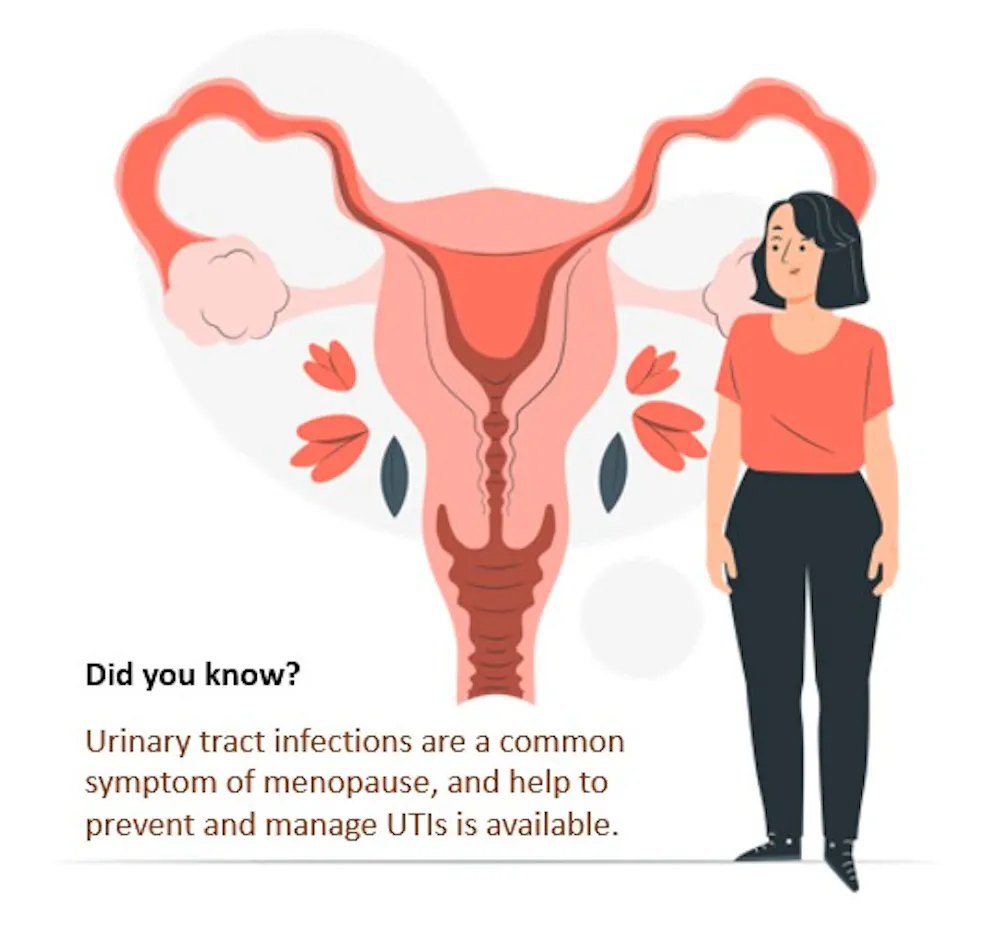
  • MIL-OSI Global: Preventing urinary tract infections after menopause: What every woman should know

    Source: The Conversation – Canada – By Erin A. Brennand, Gynecologist & Associate Professor, Cumming School of Medicine, University of Calgary

    There is more information available about urinary tract infections today than ever before. (Shutterstock)

    After menopause, urinary tract infections (UTIs) can be more frequent, yet most Canadian women (82 per cent in a recent survey) don’t realize the two are associated.

    At the Sex, Gender and Women’s Health Research Hub, our team’s advocacy aims to increase awareness and highlight proven strategies to help prevent UTIs for women later in life.

    Why are UTIs more common after menopause?

    The main culprit for increased UTIs in menopausal women is the drop in estrogen levels. Estrogen plays a crucial role in maintaining urinary tract tissue health.

    As estrogen declines, the lining of the urethra — the tube through which urine flows out of the body — becomes thinner and more fragile. Also, there are fewer infection-fighting blood cells in the urinary tract, and mucosal immunity — the specialized immune defences present at the mucosal surfaces lining the urinary tract that include physical and chemical barriers, cellular receptors and antibodies — is reduced.

    This weakens the local immune response, making it easier for bacteria to cause infections. Additionally, changes in vaginal flora — the bacteria that naturally protect against infections — results in the urinary tract being vulnerable.

    Knowledge is power during menopause.
    Servier Medical Art, CC BY

    Other factors can contribute to UTI risk at this stage of life, too. Women whose bladder muscles have weakened with age, or who have developed pelvic organ prolapse, can experience incomplete bladder emptying. This leads to urine retention and an increased chance of bacterial growth.


    Read more:
    Women having surgery to treat pelvic organ prolapse don’t always need a hysterectomy


    Similarly, if women experience urinary incontinence, the leakage and moisture on incontinence pads or underwear can create an environment where bacteria thrive. And while sexual activity itself does not directly cause UTIs, it can introduce bacteria into the urinary tract, increasing the risk of infection.

    Signs of a UTI

    Bacteria in the urine without symptoms is called asymptomatic bacteriuria. It is not a UTI and should not be treated; a UTI is only diagnosed when bacteria and symptoms are both present. The most obvious symptoms include:

    • A new, strong, persistent urge to urinate;
    • A burning sensation while urinating;
    • Frequent urination in small amounts;
    • Pelvic discomfort or pressure.

    In severe cases, UTIs can lead to kidney infections, so when symptoms include fever, chills and back pain, it is essential to seek immediate medical attention.

    For women in their 80s or older, or sometimes younger women who are living with medical conditions such as dementia, urinary tract infections can manifest as behavioural changes such as confusion, withdrawal or reduced appetite. However, new onset delirium should always be investigated by a medical team rather than assumed to be a UTI.

    Evidence-based strategies to prevent UTIs

    Several medical and lifestyle interventions can make a significant difference:

    1. Vaginal estrogen therapy

    One of the most effective ways to prevent recurrent UTIs in postmenopausal women is vaginal estrogen therapy, which delivers small doses of estrogen directly to the vaginal tissues through creams, tablets or rings. Studies have shown that vaginal estrogen can restore the natural protective barrier of the urinary tract, reducing UTI risk significantly. It can be used by breast cancer survivors as it does not have the same risks associated with menopause hormone therapy (MHT).

    2. Non-antibiotic prevention

    Methenamine hippurate (one gram orally, twice-a-day) is effective in reducing UTIs by creating an environment that prevents bacterial growth. In Canada, women need to obtain this medication from a compounding pharmacy.

    3. Low-dose antibiotic
    Doctors may prescribe low-dose antibiotics – about half the standard dose – for several months. If sexual activity is a trigger for UTIs, antibiotics can be used episodically after sex. However, antibiotics can cause side-effects and create antibiotic-resistant bacteria.
    4. Diet supplements
    Scientific evidence on consuming cranberry-based products to prevent UTIs is mixed. Some studies suggest that certain compounds in cranberries (proanthocyanidins, or PACs) prevent bacteria from adhering to the bladder lining, while others show no benefit. If trying these products, women should choose brands with high concentrations of PACs, the active ingredient.

    Similarly, probiotics, especially those containing Lactobacillus strains, may help maintain a healthy vaginal microbiome, which in turn can lower UTI risk. However, research is still evolving.

    5. Hygiene and lifestyle habits
    Though there is limited evidence, simple everyday habits may help in preventing UTIs:

    • Staying hydrated – Drinking water helps to flush bacteria from the urinary tract. For women who drink a low volume of fluids each day (less than 1.5 litres), increasing water intake may help.
    • Urinating regularly – Avoid holding urine for long periods and aim to void every three to four hours during the day.
    • Urinating after sex – This helps clear bacteria introduced during intercourse.
    • Choosing breathable underwear – Cotton underwear and loose-fitting clothes reduce build up of moisture, which in turn reduces bacterial growth.

    More innovations on the horizon

    Vaccines are one of the most promising developments for preventing recurrent UTIs. In one early trial, overall recurrences decreased by 75 per cent for women given an oral vaccine, with no major side-effects reported.

    Trials are currently under way in Canada, and researchers hope vaccines will provide a more effective and long-term solution.

    Treatment and support for UTIs.
    People illustrations by Storyset, CC BY

    When to see a doctor

    Any woman who is experiencing frequent UTIs — defined as two infections in six months or three in a year — in menopause should talk to their doctor or primary care provider. Together, they can determine the best preventive targeted strategies.

    Knowledge is power, and there is more information available today than ever before. UTIs are not an inevitable part of aging. With the right combination of medical treatments and lifestyle changes, women can reduce postmenopausal risk.

    Erin A. Brennand receives funding from the Canadian Institutes of Health Research, Social Sciences and Humanities Research Council, the Calgary Health Foundation, and the MSI Foundation (all paid to institution).

    Jayna Holroyd-Leduc has received funding from CIHR and Alberta Innovates. She holds the BSF Chair in Geriatric Medicine at the University of Calgary.

    Pauline McDonagh Hull does not work for, consult, own shares in or receive funding from any company or organisation that would benefit from this article, and has disclosed no relevant affiliations beyond their academic appointment.

    ref. Preventing urinary tract infections after menopause: What every woman should know – https://theconversation.com/preventing-urinary-tract-infections-after-menopause-what-every-woman-should-know-255762

    MIL OSI – Global Reports

  • MIL-OSI Global: Blind box toys are booming: Are they just child’s play or something more concerning?

    Source: The Conversation – Canada – By Eugene Y. Chan, Associate Professor of Marketing, Toronto Metropolitan University

    Collectible figurines on display at Pop Mart in Ivano-Frankivsk, Ukraine, on April 29, 2025. (Shutterstock)

    If you’ve seen videos of people tearing into tiny toy packages online, or noticed teens obsessing over pastel-coloured figurines at the mall, you’ve probably encountered the global craze for blind box toys.

    These small collectibles — usually figures of cartoonish characters — are sold in sealed packaging that hides which specific item is inside. You might get the one you want, or you might not. That uncertainty is part of the thrill.

    Unlike traditional toys, these figures are marketed as collectibles. Many are part of themed series, with some designs labelled as “rare” or “secret,” appearing in as few as one in every 144 boxes. This sense of exclusivity fuels repeat purchases and has spawned a resale market where rare figures can command hundreds of dollars.

    Popular among children and adults alike, blind box toys have grown into a billion-dollar industry. One of the more popular brands is Pop Mart, a Chinese toy company founded in 2010 known for its collectible designer toys sold in mystery packs.

    Gen Z consumers, in particular, have embraced blind box toys both as a nostalgic pastime and as a form of legitimate collecting. The proliferation of unboxing videos on platforms like TikTok and YouTube, where creators open dozens of blind boxes on camera, has added to their appeal.

    For many fans, these toys offer more than just cuteness: they also provide suspense, surprise and a rush of dopamine with every box opened. But how did this niche product become a global obsession?

    From Tokyo streets to western malls

    The origins of blind box toys trace back to East Asia. Capsule toy vending machines called gashapon originated in Japan in the 1960s. By the 1980s, they had become a cultural fixture. These machines dispense small toys in opaque plastic balls, with customers never quite sure which item they’ll receive.

    In the early 2010s, Chinese companies like Pop Mart adapted the gashapon model for the mainstream retail space. Instead of vending machines, they began selling artist-designed vinyl toys in blind boxes at dedicated boutiques.

    A tourist uses a gashapon machine in Osaka, Japan, in 2024. Gashapon machines are similar to the coin-operated toy vending machines seen outside grocery stores and other retailers in North America.
    (Shutterstock)

    Pop Mart’s success helped transform the blind box into a mainstream commercial phenomenon. Characters like Molly, Skullpanda and Dimoo became instant hits, combining Japanese kawaii esthetics with western pop art sensibilities.

    Pop Mart figures have since developed a cult-like following. Many consumers treat the toys as affordable art objects, displayed in cabinets, on purses or traded online.

    Today, blind box retail stores have expanded globally from Asia to Europe and North America. In October 2024, Pop Mart opened its first store in the Midwestern United States, located on Chicago’s Magnificent Mile at The Shops at North Bridge. The store offers exclusive products and taps into the growing demand for collectibles among American consumers.

    The psychology behind the mystery

    What makes blind box toys so hard to resist?

    Their success relies on a psychological principle known as variable-ratio reinforcement — the same reward pattern that makes slot machines so addictive.

    You never know exactly when you’ll score the item you’re after, but the possibility that the next box might contain it keeps people coming back. This unpredictability keeps people engaged, especially when the potential reward is framed as rare or valuable.

    Cconsumer psychology research also suggests that anticipation plays a major role. Studies show that dopamine, the brain’s reward chemical, spikes not just when we get what we want, but when we anticipate it. The sealed packaging, the suspense of unwrapping and the hope for a rare figure all heighten this effect.

    Sonny Angels on display in a store in Shenzhen, China, in March 2019.
    (Shutterstock)

    For younger collectors, the excitement of “the chase” can foster compulsive buying habits. This effect is amplified by the social influence of watching unboxings online or seeing friends complete their sets, and it becomes a powerful loop.

    Even when buyers don’t get the figure they want, the sunk cost fallacy — the feeling that they’ve already invested too much time or money to walk away — keeps them buying more.

    The hidden costs of blind boxes

    As blind box toys surge in popularity, they have drawn criticism from consumer advocates, psychologists and environmentalists alike.

    Some worry that blind boxes normalize gambling-like behaviours, especially among children. The randomness, excitement and promise of rare rewards closely mirror the mechanisms behind loot boxes in video games — another product that has sparked global concern over youth exposure to gambling psychology.

    Several countries, including Belgium and the Netherlands, have regulated loot boxes under gambling laws. Blind boxes, though currently unregulated, may be next in line for scrutiny.


    Read more:
    Blind bags: how toy makers are making a fortune with child gambling


    There are also environmental concerns. Many blind box toys come in excessive packaging — plastic wraps, foil bags, cardboard boxes — most of which is discarded immediately. The collectibles themselves are often made of non-recyclable plastics, raising questions about sustainability in an era of rising consumer awareness over waste.

    Even among adult fans, some critics question whether blind boxes are designed less to bring joy and more to trigger compulsive consumption. The joy of collecting, they argue, is increasingly overshadowed by the mechanics of engineered desire.

    What should we make of the blind box boom?

    Blind box toys are not inherently harmful, and for many, they’re a source of fun, nostalgia and self-expression. They also offer an accessible way for consumers to engage with designer art in a collectible, miniature form, as many of them are created by individual artists.

    But blind box toys also raise deeper questions about how modern marketing leverages psychological triggers associated with gambling, especially when it comes to children.

    As these toys continue to gain traction in the West, it’s worth asking more critical questions, like: are we buying into mystery or are we being sold obsession and compulsion?

    The blind box trend reflects broader shifts in how products are marketed, how value is perceived and how consumer behaviour is shaped in a digital, attention-driven economy. Understanding the forces at play may be the first step toward more informed — and perhaps more mindful — collecting.

    Eugene Y. Chan does not work for, consult, own shares in or receive funding from any company or organisation that would benefit from this article, and has disclosed no relevant affiliations beyond their academic appointment.

    ref. Blind box toys are booming: Are they just child’s play or something more concerning? – https://theconversation.com/blind-box-toys-are-booming-are-they-just-childs-play-or-something-more-concerning-257611

    MIL OSI – Global Reports

  • MIL-OSI Security: Lansdowne Station — Ground search continues in Pictou County in support of ongoing missing persons investigation

    Source: Royal Canadian Mounted Police

    Ground search efforts were underway today and are planned for tomorrow (June 1) in the area of Gairloch Rd., Lansdowne Station, as the missing persons investigation into the disappearance of Lilly and Jack Sullivan continues.

    More than 75 trained searchers from ground search and rescue organizations, including, Colchester County, Pictou County, East Hants, Halifax, Strait Area, Springhill and Pugwash were engaged today in an effort to advance the ongoing investigation and locate Lilly and Jack.

    Searchers focused on specific areas around Gairloch Rd. and the nearby pipeline, where a boot print was previously located.

    We continue to ask that the public avoid the search area to allow trained searchers to do their work.

    Any future searches will be determined based on the course of the investigation.

    File #: 2025-583775

    MIL Security OSI

  • MIL-OSI: Trade 350 App: This Trade 350 App Sets New Standard in AI-Driven Trading with Unmatched Security and User Approval

    Source: GlobeNewswire (MIL-OSI)

    New York City, NY, May 31, 2025 (GLOBE NEWSWIRE) — Introduction

    In the crowded world of online trading platforms, separating legitimate services from elaborate scams can be a daunting task. Trade 350 App has emerged as one of the buzziest names in 2025, promising AI-driven trade signals, rapid withdrawals, and rock-solid security. But is it truly a breakthrough platform—or just another scheme designed to separate inexperienced traders from their capital? In this article, we’ll dissect every major aspect of Trade 350 app: from its core technology and fee model to real-world user experiences and regulatory credentials. By the end, you’ll have all the information needed to decide whether to trust Trade 350 with your hard-earned money.

    Don’t Miss Out: Start Automated Trading with Trade 350’s Proven AI Signals Now!

    If one notices the trends in the cryptocurrency market, one can see that most of the people involved in storing cryptocurrencies like Bitcoin and Ethereum are now moving into those transactions. Interestingly, this trend has been visible since 2017. So, what led to this transformation?

    What Is Trade 350 App?

    Trade 350 App is a digital currency trading platform that ensures safe trading on global cryptocurrency exchanges. Following a quick and thorough analysis of market volatility, members can access charts and tables on their account pages. Traders with cryptocurrency experts rely on this trading platform for accurate data analysis as such huge amounts of data cannot be collected, processed, and analyzed.
    Trade 350 App bills itself as a next-generation trading solution that leverages machine-learning algorithms to identify high-probability opportunities across Forex, cryptocurrencies, commodities, and equities. Founded in 2023 by a team of former quants and software engineers, Trade 350 aims to democratize sophisticated algorithmic strategies once reserved for hedge funds and institutional traders.

    • Core proposition: Turnkey, AI-powered signals for retail traders.
    • Supported markets: Major forex pairs (EUR/USD, GBP/USD, USD/JPY), top cryptos (BTC, ETH, XRP), indices (S&P 500, NASDAQ), and commodities (gold, oil).
    • Minimum deposit: $250 USD (or local equivalent).
    • Platforms: Web dashboard plus native iOS/Android apps.
    • Languages: English, Spanish, Mandarin, Arabic, Portuguese.

    From a high level, Trade 350’s pitch is simple: eliminate guesswork, automate trade execution, and maximize risk-adjusted returns. But ambitious marketing claims warrant a closer look—especially when unregulated brokers are notorious for opacity.
    Secure Your Spot—Join 100,000+ Traders on Trade 350 and Experience 24-Hour Withdrawals
    How Trade 350’s AI Engine Works
    At the heart of Trade 350 is a multi-layer neural-network engine trained on years of historical price data, technical indicators, and real-time sentiment signals (social media trends, news headlines). Key components include:

    1. Data ingestion layer
      • Feeds: Tick-level order-book snapshots, minute-bar OHLC data, macroeconomic calendar events, social sentiment APIs.
      • Refresh rate: Sub-second for price data; 1–5 seconds for sentiment.
    2. Feature engineering & pattern recognition
      • Technical filters: Moving-average crossovers, RSI divergences, Bollinger Band squeezes.
      • Seasonal factors: Day-of-week and month-of-year patterns.
      • Sentiment overlays: News-driven volatility spikes, Twitter-derived bullish/bearish sentiment.
    3. Signal generation module
      • Ensemble of classifiers (random forests, gradient boosting, LSTM networks) votes on entry signals.
      • Risk scoring: Each signal is given a probability score (0–100%) and a recommended position size.
    4. Order management & execution
      • API integration with partner brokers for sub-100 ms order execution.
      • Smart order routing to minimize slippage.

    Why it matters:
    A genuinely robust AI engine can adapt to shifting market regimes—bull cycles, bear markets, sideways consolidations—whereas static rule-based “signal” products often fail under stress. Users should, however, be mindful that no AI can predict “black swan” events (e.g., flash crashes, geopolitical shocks).
    Act Fast—Trade 350’s AI Strategies Are Filling Up. Claim Your Demo Mode Access Today!

    Working of Trade 350 App

    Trade 350 App is an online platform for trading in cryptocurrencies. It has dedicated tools to ensure that trading is fast, highly regulated, and profitable. The data accumulation software of this platform is brilliantly crafted to gather price movement data for all cryptocurrencies from all the exchanges in the world. This big data is then analyzed and compared with historical transaction data to generate profitable transaction signals for users. They can follow these signals to make profitable trades manually or via automated trading robots. This only takes a few milliseconds, so members of this trading platform can trade before the market takes the next step.

    The software’s built-in time-hop function allows traders to advance 0.01 seconds in the cryptocurrency market. This software allows them to predict future market positions with 100% accuracy and offers reliable trading opportunities. 

    How to use Trade 350 App?

    Step 1: Sign up for the Trade 350 App platform

    There is a registration form on the platform’s homepage. People need to fill in and fill in the details such as their name and email address. The program verifies the personal information provided, and they are the latest members to join this platform. They can log into the members’ area and continue adding funds. The developers don’t charge a subscription fee, so users can sign up immediately. 

    More Information on Trade 350 App App Can Be Found On The Official Website Here

    Step 2: Add money to the trading account

    Once traders have access to the private members’ page, they can add funds to their trading accounts. This is the money the software spends on making profitable trades. With a minimum deposit of just $ 250, one can start with small orders and gently increase their investment.

    Step 3: Check the personal information

    If members provide their payment information, the program will confirm it before deducting their initial investment. This is done to ensure that the trading account is safe and free from unwanted scams.

    Step 4: Practice, Explore, Learn

    A demo account is available with Trade 350 App. Individuals can use their accounts to place virtual trade orders. They can also explore the trading platform’s features and services to see if it suits their taste. Accounts will help people gain experience in the cryptocurrency market, which will help them when they start a real trade.

    Step 5: Change the trading parameters and select the trading mode

    The first step in making a real trade is to adjust the parameters of the trade according to one’s needs. This includes the risk traders prefer for each order, the money they are willing to invest in, and the time interval between trades. They can change and adjust the transaction parameters at any time. Setting the parameters to one’s liking keeps one in control of one’s operations.

    Then select a trading method. People can select manual mode or assisted mode. If they want the program to transact on their behalf, select the Help mode. Otherwise, switch to manual trading. 

    Step 6: Get the exact trading signal and execute the trade

    Trade 350 Apps provide people with useful trading signals. Conduct thorough market research to discover trading opportunities that fit their trading profile. If people trade in assisted mode, the software will perform these trades. With a success rate of over 99%, one can profit from every trade. 

    Step 7: Transfer the profit to the bank account

    The platform supports smooth and easy withdrawals. To transfer all earnings to the bank account, people need to fill out a withdrawal form. Upon approval, they will receive their profit in their savings account. 

    Trade 350’s AI Does the Work—You Reap the Rewards. Get Started in Minutes!

    Advantages of Trade 350 App

    Superior technology

    This trading bot uses the best technology to scan the Bitcoin market and provide trading opportunities to maximize profits. The correct response rate is 99.4%, and one can win every trade. 

    Reliable signal

    Trade 350 Apps provide the most reliable trading signals for trading in the cryptocurrency trading industry. Not only do individuals withdraw these trades for themselves, but they also execute them and establish their profit.

    Fast transaction

    Trade 350 Apps support high-frequency trading or high-frequency trading. Can complete 20 operations in 10 minutes. One can win from multiple exchanges with certain points.

    Why Choose Trade 350 App App? Australia and Canada Consumer Report Released Here

    Safe trading robot

    Trade 350 App offers the safest and most secure platform on the web. It is integrated with malware and antivirus software. Therefore, all data and information are protected. People don’t have to worry about anyone other than accessing their data and information.

    Online customer service

    It provides people with 24/7 online customer service. The team is happy to answer any questions or concerns about how the program works. The customer service team investigates and provides the correct information and resolves all queries. 

    Quick registration

    Trade 350 Apps also offer fast withdrawals. Withdrawal requests are processed in approximately one day. Traders always receive their income in their bank accounts.

    Low deposit

    People have to deposit a basic amount of $250 with a Trade 350 App. It is seed capital. One can make thousands with this investment. Also, keep in mind that the investment is directly proportional to profit. Therefore, as one continues to increase their trading capital, the profits will continue to increase proportionally. 

    Cost-effective

    The Bitcoin trading platform is free. No registrations, withdrawals, subscriptions or other hidden costs will be deducted. The developer will charge people a small “maintenance fee.” The program will deduct this as a small percentage of the income. These maintenance costs are used to provide an updated and error-free version of the software.

    Transform Your Trading—Download Trade 350 App and Unlock Smart, Secure AI Trades!

    Trading Modes: Demo vs. Live
    Trade 350 offers two distinct modes:

    • Demo Mode
      • Virtual balance (default $10,000 play money).
      • Full access to AI signals and all trading tools.
      • Ideal for newcomers to learn signal interpretation and order execution.
    • Live Mode
      • Real-money trading.
      • Adjustable risk parameters (see Section 6).
      • Access to same AI signals as demo but with real-world execution constraints (slippage, broker latency).

    Best practice: Begin in demo to fine-tune your settings and understand drawdowns. Transition to live only when consistently profitable on paper.
    Visit Here to Register on the Trade 350 App – Select Your Country Here!!!

    FAQs

    Is Trade 350 App a scam?
    No—evidence from withdrawals, Trustpilot ratings, and expert reviews points to a legitimate, albeit unregulated, broker platform.
    How much can I realistically earn?
    Performance varies widely with settings; users report 5–15% monthly on moderate risk settings—but past performance is no guarantee.
    What happens if Trade 350 goes offline?
    With custodial funds held by partner brokers, your balance remains with those brokers. Trade 350’s role is signal generation and order routing.
    Can I withdraw my original deposit anytime?
    Yes—withdrawals incur no fees and typically process within 48 hours, subject to your bank’s timelines.

    Do you want to gain experience while trading software?

    No, you don’t need to be an experienced trader when trading with the Trade 350 App software. An easy-to-use program for beginners that anyone can use to earn passive returns. We do everything from market research to profit recording. 
    Does Trade 350 offer educational resources?
    Yes—webinars, tutorials, and a knowledge base covering technical indicators, AI fundamentals, and platform navigation.

    Can I take advantage of market volatility when trading CFDs? 

    Yes, you can take advantage of market volatility in CFD trading. However, it is not easy for the human mind to accurately predict the future position of the market. In most cases, human predictions are wrong. This is not the case with trading software such as Trade 350 Apps, which can accurately predict and record profits. 

    How much time should you spend on the platform per day?

    You don’t have to spend hours on the platform to monitor your trades as the software does all the work for you. You can focus on your main task and other aspects of your life as Trade 350 Apps execute profitable trades for you around the clock.

    You can log in for 20 minutes a day, change trading parameters and withdraw your profits. 

    Fees, Spreads & Pricing Structure
    Trade 350’s revenue model is simple:

    • Spreads only: No subscription or platform fees.
    • Typical spreads:
      • Forex major pairs: 0.8 – 1.5 pips
      • Crypto (BTC/USD): 0.10% – 0.20%
      • Indices: 0.5 – 1.0 index points

    By relying solely on spreads, Trade 350 aligns its interests with active trading volume—higher client activity bolsters revenue without nickel-and-diming through extra commissions.
    Hidden costs? None disclosed—users only pay the buy-sell spread. Always check real-time spreads on the platform before placing large trades, as volatility can widen spreads temporarily.
    Why Choose Trade 350 App? Australia and Japan Consumer Report Released Here

    Pros

    • Accurate trading analysis. 
    • Fast generation of trading signals. 
    • Timeout of 0.01 seconds. 
    • Profitable and accurate transaction forecasts. 
    • The accuracy rate is 99.4%. 
    • Transactions with automated robots.
    • Margin trading is available to all clients. 
    • Demo trading functionality to learn.
    • Joint customer service. 

    Cons

    • An internet connection is required to trade with Trade 350 Apps.

    Deposit, Withdrawal & Customer Support

    • Deposit methods: Bank wire, credit/debit, PayPal, Skrill.
    • Withdrawal process:
    • Wallet → Withdraw
    • Enter amount & confirm
    • Funds arrive in 24–48 hours (users report up to 72 hours during weekends).
    • Customer support:
    • 24/5 live chat and email.
    • Phone support in EN, ES, PT.
    • Response times: Live chat replies in ~2 minutes; emails in < 6 hours.

    Overall, withdrawal speed is competitive but can slow around peak market events. No withdrawal fees apply.

    Click Here to Open Trade 350 App Account in Canada (Register Fee $250)
    Independent User Feedback
    A survey of user opinions across Reddit, Trustpilot, and specialist trading forums reveals:

    • Positive points:
      • Fast payouts without rollback or “verification loops.”
      • Transparent fee model.
      • Demo-to-live performance consistency.
    • Critiques:
      • Occasional signal lag during extreme volatility (e.g., Fed rate announcements).
      • Desire for additional regulation disclosures.
      • Some users find the risk settings complex initially.

    Aggregate Trustpilot rating sits at ~4.6 / 5 based on 1,200+ reviews at time of writing.
    Expert Analysis & Third-Party Reviews
    Industry experts have tested Trade 350 against competitors:

    • CompareBroker.net: Awarded “Best AI Signal Platform 2025” for ease-of-use and reliability.
    • ForexPulse Magazine: Noted “above-average live execution speeds” and “robust backtesting engine” but flagged “lack of transparency on audit results.”
    • CryptoReviewHub: Praised cryptocurrency signal accuracy (~68% win rate over 3 months) but emphasized need for position-sizing discipline.

    Such endorsements lend credibility, though full audit disclosures would strengthen the case.

    Conclusion: Trade 350 App

    Most people think that trading involves significant risks. They pay close attention to their analysis. However, with Trade 350 Apps, the level of risk is minimized. One can expect the software to take advantage of every trade made on one’s behalf.

    By starting in demo mode, practicing disciplined risk management, and staying informed, you can leverage Trade 350’s powerful AI engine while safeguarding your capital. Whether you’re dipping your toes into algorithmic trading or scaling up an existing strategy, Trade 350 merits a spot on your shortlist of trading platforms to consider in 2025.

    This is a free trading platform with a beginner-friendly approach. People can start trading today. Sign up for a Trade 350 App!
    Contact:-
    Trade 350 App
    (713) 231-4768
    50 W 4th St, New York, NY 10012, USA
    https://trade350app.net/

    info@cryptofinancetrack.com
    General Disclaimer:
    The content provided in this article is for informational and educational purposes only. It does not constitute financial, legal, or professional advice. Readers are advised to consult a certified financial advisor, licensed loan officer, or legal professional before making any financial decisions. The information presented may not apply to every individual circumstance and is not intended to substitute professional judgment or regulatory guidance. The information provided on this website does not constitute investment advice, financial advice, trading advice, or any other sort of advice and you should not treat any of the website’s content as such. We does not recommend that any cryptocurrency should be bought, sold, or held by you. Do conduct your own due diligence and consult your financial advisor before making any investment decisions.
    Trading Disclaimer:
    Trading cryptocurrencies carries a high level of risk, and may not be suitable for all investors. Before deciding to trade cryptocurrency you should carefully consider your investment objectives, level of experience, and risk appetite. The possibility exists that you could sustain a loss of some or all of your initial investment and therefore you should not invest money that you cannot afford to lose. You should be aware of all the risks associated with cryptocurrency trading, and seek advice from an independent financial advisor. ICO’s, IEO’s, STO’s and any other form of offering will not guarantee a return on your investment.
    HIGH RISK WARNING: Dealing or Trading FX, CFDs and Cryptocurrencies is highly speculative, carries a level of non-negligible risk and may not be suitable for all investors. You may lose some or all of your invested capital, therefore you should not speculate with capital that you cannot afford to lose. Please refer to the risk disclosure below. Trade 350 App does not gain or lose profits based on your activity and operates as a services company. Trade 350 App is not a financial services firm and is not eligible of providing financial advice. Therefore, Trade 350 App shall not be liable for any losses occurred via or in relation to this informational website.
    SITE RISK DISCLOSURE: Trade 350 App does not accept any liability for loss or damage as a result of reliance on the information contained within this website; this includes education material, price quotes and charts, and analysis. Please be aware of and seek professional advice for the risks associated with trading the financial markets; never invest more money than you can risk losing. The risks involved in FX, CFDs and Cryptocurrencies may not be suitable for all investors. Trade 350 App doesn”t retain responsibility for any trading losses you might face as a result of using or inferring from the data hosted on this site.
    LEGAL RESTRICTIONS: Without limiting the above mentioned provisions, you understand that laws regarding financial activities vary throughout the world, and it is your responsibility to make sure you properly comply with any law, regulation or guideline in your country of residence regarding the use of the Site. To avoid any doubt, the ability to access our Site does not necessarily mean that our Services and/or your activities through the Site are legal under the laws, regulations or directives relevant to your country of residence. It is against the law to solicit US individuals to buy and sell commodity options, even if they are called “prediction” contracts, unless they are listed for trading and traded on a CFTC-registered exchange unless legally exempt. The UK Financial Conduct Authority has issued a policy statement PS20/10, which prohibits the sale, promotion, and distribution of CFD on Crypto assets. It prohibits the dissemination of marketing materials relating to distribution of CFDs and other financial products based on
    Cryptocurrencies that addressed to UK residents. The provision of trading services involving any MiFID II financial instruments is prohibited in the EU, unless when authorized/licensed by the applicable authorities and/or regulator(s). Please note that we may receive advertising fees for users opted to open an account with our partner advertisers via advertisers websites. We have placed cookies on your computer to help improve your experience when visiting this website. You can change cookie settings on your computer at any time. Use of this website indicates your acceptance of this website. Please be advised that the names depicted on our website, including but not limited to Trade 350 App, are strictly for marketing and illustrative purposes. These names do not represent or imply the existence of specific entities, service providers, or any real-life individuals. Furthermore, the pictures and/or videos presented on our website are purely promotional in nature and feature professional actors. These actors are not actual users, clients, or traders, and their depictions should not be interpreted as endorsements or representations of real-life experiences. All content is intended solely for illustrative purposes and should not be construed as factual or as forming any legally binding relationship
    RISKS ASSOCIATED WITH FUTURES TRADING
    Futures transactions involve high risk. The amount of the initial margin is low compared to the value of the futures contract, so that transactions are “leveraged” or “geared”. A relatively small market movement has a proportionately larger impact on the funds that you have deposited or have to pay: this can work both for you and against you. You may experience the total loss of the initial margin funds as well as any additional funds deposited in the system. If the market develops in a way that is contrary to your position or if margins are increased, you may be asked to pay significant additional funds at short notice to maintain your position. In this case it may also happen that your broker account is in the red and you thus have to make payments beyond the initial investment.
    RISKS ASSOCIATED WITH ELECTRONIC TRADING
    Before you begin carrying out transactions with an electronic system, you should carefully review the rules and provisions of the stock exchange offering the system, or of the financial instruments listed that you intend to trade, as well as your broker’s conditions. Online trading has inherent risks due to system responses/reaction times and access times that may vary due to market conditions, system performance and other factors, and on which you have no influence. You should be aware of these additional risks in electronic trading before you carry out investment transactions.
    Affiliate Disclosure:
    This article may contain affiliate links. If a reader clicks on a link and completes an application or purchase, the publisher may receive a commission at no additional cost to the user. These commissions help support the publication and do not influence the editorial content, which is created independently and with the goal of delivering accurate and useful information.
    Accuracy Disclaimer:
    All information included in this article is presented in good faith and believed to be accurate at the time of writing. However, no representations or warranties are made regarding the completeness, accuracy, reliability, or timeliness of any information presented. Any reliance placed on such information is strictly at the reader’s own risk. The publisher does not accept responsibility for typographical errors, outdated information, or changes to products, terms, or policies after publication.
    Regulatory and Jurisdictional Disclaimer:
    Lending laws vary by jurisdiction, and not all services described in this article may be available in every state or region. It is the responsibility of the reader to understand and comply with local laws and regulations. The platforms mentioned are independently operated and are not controlled or endorsed by the publisher.
    Third-Party Liability Waiver:
    The publisher, its writers, editors, affiliates, and syndication partners shall not be held liable for any direct or indirect loss, damages, or legal claims arising from the use of this content or from reliance on any third-party services, platforms, or products mentioned herein. All loan agreements, terms, and disputes are strictly between the borrower and the lender or service provider.
    Syndication Partner Use:
    This content may be republished or syndicated by authorized partners under existing licensing or distribution arrangements. All syndication partners are free from liability regarding the editorial stance, financial suggestions, or any user outcome resulting from the reading or application of this content.

    Attachment

    The MIL Network

  • MIL-OSI: Starscope: Does Starscope Monocular Really Work for Stargazing & Hiking? Read Full Starscope Monocular Telescope Consumer Report!

    Source: GlobeNewswire (MIL-OSI)

    San Diego, CA, May 31, 2025 (GLOBE NEWSWIRE) — Introduction: Why the Starscope Monocular Is Gaining Popularity in 2025

    Whether you’re a nature lover, hiker, hunter, or stargazer, having the right optical gear can make or break your outdoor experience. In 2025, one compact device has been making waves among adventurers and outdoor enthusiasts alike — the Starscope Monocular.

    This rugged, pocket-sized monocular telescope has sparked major attention across the US, UK, Canada, and Australia. Why? Because it’s delivering high-powered vision, smartphone adaptability, and military-grade durability — all at a fraction of the size and weight of traditional binoculars or telescopes.

    From birdwatching on weekend hikes to spotting distant wildlife or gazing at the moon, Starscope promises ultra-clear, zoomed-in views without the bulk. It’s not just a camera add-on — it’s a full-on telescope designed for your hand.

    But does the Starscope Monocular actually live up to the hype? Can it truly replace bulky binoculars or expensive spotting scopes?

    In this in-depth Starscope Monocular review, we’ll uncover:

    • How it works and what makes it different
    • Real-world reviews from actual users in 2025
    • Key specs and performance in outdoor settings
    • Updated pricing and bundle deals
    • Where to buy it safely (and avoid knockoffs)

    Let’s zoom into the facts and see if Starscope really is the best monocular telescope worth your money this year.

    What Is Starscope? A Closer Look at This Trending Monocular Telescope

    The Starscope Monocular is a high-definition optical device designed to give users a clear, zoomed-in view of distant objects — whether you’re exploring mountains, observing wildlife, attending sports events, or simply stargazing. Marketed as a compact alternative to bulky binoculars and traditional telescopes, Starscope is engineered for both convenience and clarity.

    What Makes It Stand Out?

    Unlike conventional monoculars that often compromise on image quality or build strength, Starscope combines 10x magnification, BAK-4 prisms, and multi-coated lenses in a single rugged unit. It’s built using advanced military-grade materials that make it water-resistant, fog-proof, and shockproof, making it suitable for rough outdoor conditions.

    Smartphone Compatibility

    One of the standout features of the Starscope monocular is its smartphone adapter compatibility. You can easily attach your smartphone to capture stunning long-range photos and videos — perfect for wildlife photography, sightseeing, or even amateur astronomy.

    Compact, Travel-Ready Design

    At just under 300 grams, the Starscope monocular fits easily into your palm, pocket, or backpack. Its lightweight build and ergonomic grip allow for one-hand use, making it a practical choice for adventurers on the go.
    Don’t Miss Out: The Starscope Monocular Is Selling Fast – See What You’ve Been Missing!

    Who Is It Made For?

    Starscope is ideal for:

    • Hikers and backpackers
    • Hunters and birdwatchers
    • Sports fans
    • Stargazers and amateur astronomers
    • Travelers exploring scenic views

    Starscope Monocular Features & Technical Specifications

    The Starscope Monocular isn’t just another gadget — it’s an all-in-one optical solution engineered for sharp clarity, long-range zoom, and outdoor resilience. Below, we break down the core features and specifications that make this monocular a standout choice in 2025.

    Optical Power & Precision

    • 10x Magnification Power
      Starscope allows you to zoom in on distant objects with crystal-clear detail — up to 10 times closer. Whether it’s a mountaintop or a distant stadium seat, the detail remains sharp and focused.
    • 42mm Objective Lens Diameter
      The large 42mm lens collects more light for brighter images, especially in low-light settings like early morning or dusk. It enhances your visual experience when birdwatching or stargazing.
    • Field of View
      Starscope offers a wide field of view, making it easier to scan landscapes or follow moving targets without frequent repositioning.

    Advanced Lens & Prism Technology

    • BAK-4 Prism
      Built with professional-grade BAK-4 (Barium Crown Glass) prisms, which provide greater light transmission and edge-to-edge sharpness — reducing distortion and glare.
    • Multi-Coated Lens
      Each lens surface is coated to enhance image brightness, reduce reflections, and improve contrast. This ensures a vibrant, high-resolution image even in bright sunlight.

    Discover the Best Monocular of 2025 – The Starscope Telescope Is All You Need Outdoors

    Rugged, Outdoor-Ready Construction

    • Weatherproof Design
      Starscope is sealed to resist water, fog, and dust — perfect for hiking, camping, or kayaking. You don’t have to worry about a sudden downpour or misty mornings.
    • Shock-Resistant Casing
      The exterior shell is made from a durable polymer composite that absorbs impact, making the device drop-resistant and travel-friendly.
    • Slip-Resistant Grip
      Ergonomic texture provides a firm hold, even in wet conditions or while wearing gloves.

    Smartphone Compatibility

    • Universal Phone Adapter
      Easily attaches to most smartphones to transform the Starscope into a powerful telephoto lens. Capture distant landscapes, record HD video, or take zoomed-in wildlife shots without blur.
    • Tripod Mount Ready
      A standard mount allows you to attach it to a tripod for long sessions or time-lapse recordings.

    How Does the Starscope Telescope Work?

    Starscope uses high-powered optics to deliver a detailed image of faraway scenes. It works by channeling light through precision-engineered lenses and a BAK-4 prism system, which enhances brightness, sharpness, and contrast.

    When light enters the objective lens, it travels through a series of internal glass prisms and coatings that reduce glare and distortion. The result is a magnified, high-definition view that looks vibrant and realistic, even at long distances.

    The monocular’s alignment with your smartphone camera adds further functionality — turning your phone into a zoom lens for pictures and video.

    Over 100,000 Sold – Is Starscope the Best Monocular in 2025? See Real Results

    How To Use Starscope Monocular?

    To use the Starscope Monocular effectively, follow these steps:

    1. Remove Lens Caps: Take off both the front and rear lens caps to prepare the monocular for use. 
    2. Adjust the Eyecup: If you wear glasses, twist the eyecup down; if not, keep it extended for optimal viewing comfort. 
    3. Hold the Monocular Properly: Grip the monocular with one hand, placing your index finger on the focus adjustment dial and your pinky near the front for stability.
    4. Focus the Image: Look through the eyepiece and rotate the focus dial with your index finger until the image becomes sharp and clear.
    5. Attach to a Tripod (Optional): For extended viewing sessions or increased stability, mount the monocular onto a tripod using the built-in 1/4″ thread. 
    6. Connect to a Smartphone (Optional): Use a compatible smartphone adapter to align your phone’s camera with the monocular’s eyepiece, allowing you to capture distant images or videos.
    7. Maintenance Tips:
      • Cleaning: Use a soft lens brush or blower to remove dust. For smudges, gently wipe with a microfiber cloth in a circular motion. 
      • Storage: Store the monocular in a cool, dry place and avoid exposing it to extreme temperatures or moisture.

    Safety Precaution: Never look directly at the sun through the monocular, as this can cause serious eye damage. 

    By following these steps, you can maximize your experience with the Starscope Monocular, whether you’re observing wildlife, enjoying scenic views, or stargazing.

    Zoom In Like Never Before – Grab the Starscope Monocular at 50% Off Today Only!

    Starscope Monocular Benefits: Why People Are Choosing It Over Binoculars

    • Ultra Lightweight: Fits in your pocket or backpack without bulk.
    • One-Hand Operation: Perfect for trekking or scouting terrain.
    • Crisp Image Quality: See vivid details from hundreds of yards away.
    • Photo & Video Ready: Use with your phone to capture distant sights.
    • Durability: Survives drops, splashes, and harsh weather.
    • Low-Light Visibility: Great for sunrise or twilight exploration.

    How to Use the Starscope Monocular for Hiking, Hunting, Stargazing & Travel

    1. Hold with one hand and align the eyepiece with your dominant eye.
    2. Twist the focus ring slowly until the image is sharp.
    3. Attach your smartphone using the provided adapter.
    4. Use your phone’s camera to zoom further, take pictures, or record.
    5. Optionally mount it to a tripod for steady viewing.

    Starscope Price & Where to Buy the Starscope Monocular

    Starscope is available exclusively through the official website. Avoid third-party platforms like Amazon or eBay, which may sell unauthorized or fake versions.

    • 1x Monocular: $47.99 (was $106.64)
    • 2x Monoculars: $95.99 (was $213.29)
    • 3x Monoculars: $107.99 (was $319.93)
    • 4x Monoculars: $143.99 (was $426.58)

    All packages may include bonus accessories like tripods or smartphone adapters. Discounts reflect 50%–62% savings.

    Shipping, Delivery Time & Refund Policy

    • Shipping: Worldwide delivery available.
    • Delivery Time: 5–12 business days depending on region.
    • Refund Policy: 30-day money-back guarantee. Unused items may be returned for a full refund (minus shipping & handling).

    Disclaimer: Prices & return policy are subject to change. Always check the official website for the most accurate and up-to-date pricing before purchasing.

    Real Customer Experiences from the USA, UK, Canada & Australia

    Sarah – Denver, USA: “Used the Starscope on a solo hiking trip in Colorado. I spotted wildlife from a mile away. The view was sharp and steady even without a tripod.”

    James – Perth, Australia: “Took mine on a camping trip. Loved the phone attachment. Captured amazing photos of distant cliffs and birds.”

    Michael – Toronto, Canada: “It’s so much easier to carry than my old binoculars. Feels solid and works even in light rain. Definitely my go-to for birding.”

    Lucy – Manchester, UK: “Perfect for stargazing in rural England. I could clearly see lunar craters and Jupiter’s moons — very impressed.”

    Explore Farther with the Starscope Telescope – Perfect for Stargazing, Hiking & Travel

    Starscope FAQs – Common Questions Answered

    Q: Can I buy Starscope on Amazon or Walmart?
    A: No. Starscope is exclusively sold through its official website. Any listings on Amazon, Walmart, or eBay may be counterfeit or unauthorized, and they do not qualify for the official warranty or refund policy.

    Q: Does it work at night?
    A: It does well in low-light but not total darkness. Great for dawn/dusk.

    Q: Is it suitable for people who wear glasses?
    A: Yes. It has adjustable eye relief.

    Q: What’s the warranty?
    A: 30-day satisfaction guarantee, with optional extended warranty at checkout.

    Q: Is Starscope compatible with all smartphones?

    A: Yes — most smartphones can be used with Starscope via the universal phone adapter included in bundle deals. Some manual adjustment may be required depending on your phone’s camera position.

    Q: Can I use it for stargazing?

    A: Absolutely. While not a full telescope, it provides a crisp view of the moon, planets, and stars, making it suitable for amateur astronomy.

    Q: Is it waterproof?

    A: Yes. Starscope is water-resistant, fog-proof, and shockproof, making it reliable in rugged outdoor environments. However, it should not be fully submerged in water.
    Turn Your Phone into a Pro Camera with the Starscope Monocular – Limited Stock Left!

    Environmental Impact: Is the Starscope Monocular Eco-Friendly?

    In an era where sustainability is paramount, evaluating the environmental impact of products like the Starscope Monocular is essential.

    ♻️ Materials and Manufacturing

    The Starscope Monocular is constructed using durable materials, including a BAK4 prism and multi-coated lenses, ensuring longevity and reducing the need for frequent replacements. Its robust design contributes to a longer product lifespan, which can mitigate environmental impact over time.

    Sustainable Practices

    While specific details about the manufacturing processes and sourcing of materials for the Starscope Monocular are limited, the product’s durability suggests a focus on quality. However, without explicit information on eco-friendly practices or certifications, it’s challenging to fully assess its environmental friendliness.

    Energy Efficiency

    The monocular operates without batteries or electricity, relying solely on optical components. This energy-free operation minimizes its carbon footprint during use, aligning with sustainable practices.

    Packaging and Distribution

    Information regarding the packaging materials and distribution methods is not readily available. Eco-conscious consumers may wish to inquire directly with the manufacturer for details on packaging sustainability and shipping practices.
    Get the Best Monocular for Outdoor Adventures – Order Your Starscope Before It’s Gone
    Common Starscope Problems & How to Fix Them
    Even high-quality devices like the Starscope Monocular can encounter minor issues. Here are some common problems users have reported — and how to resolve them quickly:

    Problem: Blurry or Out-of-Focus Image

    Fix:

    • Rotate the focus ring slowly while looking through the eyepiece.
    • Make sure the lens is clean and free of fingerprints or smudges.
    • If using with a smartphone, ensure the adapter is properly aligned.

    Problem: Smartphone Adapter Doesn’t Fit Properly

    Fix:

    • Loosen and adjust the clamp arms carefully — most adapters are universal but may require repositioning for multi-lens phones.
    • Try removing your phone case to improve alignment.

    Problem: Double Vision or Image Distortion

    Fix:

    • Clean both lenses with a microfiber cloth.
    • Make sure the monocular isn’t fogged up (especially when moving between temperature zones).
    • Check if the internal lens is misaligned due to a drop — in rare cases, customer support may need to assist.

    Problem: View Is Too Dark or Dim

    Fix:

    • Ensure you are not using it in complete darkness — Starscope is optimized for daylight and low-light, but not for nighttime use.
    • Wipe off any moisture or condensation from the lens.

    Problem: Can’t See Anything Through the Eyepiece

    Fix:

    • Remove all lens caps.
    • Adjust your eye position — the exit pupil must align with your eye.
    • Twist the eyecup if you’re wearing glasses.

    Problem: Scratched or Smudged Lens

    Fix:

    • Use only soft, non-abrasive cloths (preferably microfiber).
    • Avoid using paper towels, shirts, or abrasive materials that could damage the lens coating.

    When to Contact Support

    If none of the above solutions help, or if your monocular is damaged during shipping, contact Starscope’s official support through their website for warranty service or a replacement.
    The #1 Trending Starscope Telescope Is Back – See Why Outdoor Enthusiasts Swear by It

    Starscope for Amateur Astronomy: Can It Replace a Telescope?

    While Starscope isn’t a professional-grade telescope, it’s surprisingly capable for casual astronomy. With 10x magnification and a 42mm lens, users can observe:

    • The moon’s surface with visible craters
    • Bright planets like Jupiter or Saturn (as small dots)
    • Star clusters and constellations

    It’s an excellent tool for beginners who want to explore the night sky without investing in bulky gear. For best results, use Starscope in low-light rural settings away from city pollution.Starscope Monocular for Birdwatching: A Birder’s Perspective
    Birdwatchers praise Starscope for its:

    • Silent operation (no clicking or zoom noise)
    • Sharp detail from long distances
    • Ability to quickly scan trees or open fields

    Whether you’re spotting hummingbirds in your backyard or waterfowl across a lake, the wide field of view and smartphone camera compatibility make bird identification much easier.

    Pros and Cons of Starscope Monocular

    Pros

    • High-Quality Optics
      Equipped with BAK-4 prism and multi-coated lenses for sharp, bright images.
    • 10x Magnification
      Ideal for long-distance viewing — from wildlife to stargazing.
    • Lightweight & Portable
      Weighs less than 300g and fits in your pocket or backpack.
    • Smartphone Compatible
      Easily attaches to most phones for HD photo and video capture.
    • Durable & Weather-Resistant
      Water-resistant, fog-proof, and shockproof — built for outdoor use.
    • Easy One-Hand Operation
      Ergonomic grip and simple focus adjustment make it user-friendly.
    • Affordable Compared to Binoculars or Telescopes
      Offers telescope-like performance without the high cost.
    • Tripod-Compatible
      Great for steady shots or long observation sessions.

    Cons

    • Not for Complete Darkness
      Performs well in low light but isn’t night-vision capable.
    • No Digital Zoom or Auto-Focus
      Manual focus only; relies on user adjustment.
    • Limited Availability
      Only sold via the official website — not available on Amazon or retail stores.
    • Best for Casual Use
      May not satisfy professional wildlife photographers or astronomers.
    • Phone Adapter Fit May Vary
      Some users may need to adjust alignment for specific phone models.

    Upgrade Your View – The Starscope Monocular Delivers Zoom Like Nothing Else

    How Starscope Enhances Smartphone Photography

    Transform your phone into a pro-level camera by attaching Starscope. It works like a telephoto zoom lens, ideal for:

    • Wildlife photography at long distances
    • Capturing landscapes or cliffs
    • Recording sports or outdoor events

    Tips:

    • Use a tripod for steady shots
    • Clean the lens before attaching
    • Zoom only slightly with your phone to reduce pixelation

    Maintenance Tips: How to Care for Your Starscope Monocular

    To ensure your Starscope lasts for years:

    • Clean lenses gently using microfiber cloths only
    • Avoid touching the glass with fingers
    • Store in a dry case to prevent moisture buildup
    • Use lens caps when not in use
    • Don’t submerge it, even though it’s water-resistant

    Starscope Safety and Usage Guidelines

    • Never look at the sun through the monocular.
    • Use caution when using near children (small parts, strap).
    • Avoid dropping it — though durable, internal alignment may shift.
    • Adjust the eyecup if you wear glasses.

    Over 100,000 Sold – Is Starscope the Best Monocular in 2025? See Real Reviews

    Starscope Gift Ideas: Who It’s Perfect For in 2025

    Looking for a thoughtful gift? Starscope is ideal for:

    • Outdoor lovers (hikers, campers)
    • Retirees or dads who enjoy nature
    • Kids interested in science or astronomy
    • Travelers and explorers

    With its sleek design and practical value, it makes a great gift for birthdays, holidays, or Father’s Day.
    Starscope for Travel Photography: A Backpacker’s Tool
    For photographers on the move, bulky lenses and gear are a hassle. That’s where the Starscope Monocular becomes a game-changer. Its compact build and powerful optics make it an ideal companion for travel photography, particularly in rugged or remote areas.
    Whether you’re hiking in Patagonia, road-tripping across the U.S., or exploring historical ruins abroad, Starscope helps you:

    • Zoom in on distant scenes with clarity
    • Snap close-ups of wildlife or architectural details
    • Use your smartphone to record landscapes that feel larger than life

    Its lightweight frame fits easily in a backpack side pocket, and unlike DSLR zoom lenses, there’s no need to worry about lens swapping, battery life, or electronic failure.
    Lightweight. Powerful. Unmatched. Get the Starscope Monocular and Explore More Today!
    Starscope for Sports & Events: Get Closer to the Action
    Want front-row views from the cheap seats? Starscope lets you see the game, match, or concert like you’re sitting VIP.
    The monocular is perfect for:

    • Live sports: football, baseball, racing, etc.
    • Outdoor concerts or festivals
    • Parades and fireworks

    With 10x zoom and smartphone connectivity, users can record their experience with surprisingly clear footage. Many reviewers praise its ability to zoom in on player movements, stage performances, or racing cars without blur or distortion.
    No more pixelated phone zooms or asking someone else for binoculars — Starscope brings the action to you in real time, wherever you’re seated.

    Who Should Buy the Starscope Monocular? Final Verdict

    If you’re someone who loves the outdoors, wants to explore farther without carrying bulky gear, and values crisp visuals from afar — Starscope is a smart buy in 2025. Its powerful zoom, rugged build, and mobile compatibility make it a practical investment.

    Highly recommended for:

    • Hikers
    • Travelers
    • Stargazers
    • Birdwatchers
    • Outdoor sports fans

    Media Contact:
    Company nameStarscope
    7864 Ronson Roa, Ste A San Diego 92111
    https://www.monostarscope.com/

    E-mail: support@monostarscope.com

    Disclaimer: The statements have not been evaluated by the Food and Drug Administration. This product is not intended to diagnose, treat, cure, or prevent any disease. Individual results may vary. Always consult a healthcare professional before taking any dietary supplements.
    Disclosure: This article is for informational purposes only and does not constitute medical advice. The content may include affiliate links, meaning we may earn a commission if you purchase through recommended links. Always consult a healthcare professional before starting any new supplement regimen.

    Content Accuracy Disclaimer
    Every effort has been made to ensure the accuracy of the information presented in this article. However, due to the dynamic nature of product formulations, promotions, and availability, details may change without notice. The publisher makes no warranties or representations as to the current completeness or accuracy of any content, including product claims, pricing, or ingredient lists.
    It is the responsibility of the reader to verify product information directly through the official website or manufacturer prior to making a purchasing decision. Any reliance placed on the information in this article is done strictly at your own risk.

    Affiliate Disclosure
    This article may contain affiliate links. If you purchase a product or service through these links, the publisher may earn a commission at no additional cost to you. These commissions help support the creation of in-depth reviews and educational wellness content.
    The publisher only promotes products that have been independently evaluated and deemed potentially beneficial to readers. However, this compensation may influence the content, topics, or products discussed in this article. The views and opinions expressed are those of the author and do not necessarily reflect the official policy or position of any affiliate partner or product provider.

    Related Link
    Power Saver Pro

    Attachment

    The MIL Network

  • MIL-OSI: Double Deposit Bonus, $50 Welcome Bonus & No-KYC 100x Leverage Trading Now Available on BexBack

    Source: GlobeNewswire (MIL-OSI)

    SINGAPORE, May 31, 2025 (GLOBE NEWSWIRE) — As the price of Bitcoin surpassed the $100,000 mark and subsequently stabilized above $100,000, many analysts believe that it will enter a long-term high-volatility market. Holding spot positions may not continue to generate profits in the short term. BexBack Exchange is stepping up its efforts to provide traders with irresistible preferential packages. The platform now offers a 100% deposit bonus, a $50 welcome bonus for new users, and a 100x leverage on cryptocurrency trading, creating unparalleled opportunities for investors.

    What Is 100x Leverage and How Does It Work?

    Simply put, 100x leverage allows you to open larger trading positions with less capital. For example:

    Suppose the Bitcoin price is $100,000 that day, and you open a long contract with 1 BTC. After using 100x leverage, the transaction amount is equivalent to 100 BTC.

    One day later, if the price rises to $105,000, your profit will be (105,000 – 100,000) * 100 BTC / 100,000 = 5 BTC, a yield of up to 500%.

    With BexBack’s deposit bonus

    BexBack offers a 100% deposit bonus. If the initial investment is 2 BTC, the profit will increase to 10 BTC, and the return on investment will double to 1000%.

    Note: Although leveraged trading can magnify profits, you also need to be wary of liquidation risks.

    How Does the 100% Deposit Bonus Work?
    The deposit bonus from BexBack cannot be directly withdrawn but can be used to open larger positions and increase potential profits. Additionally, during significant market fluctuations, the bonus can serve as extra margin, effectively reducing the risk of liquidation.

    About BexBack?

    BexBack is a leading cryptocurrency derivatives platform that offers 100x leverage on BTC, ETH, ADA, SOL, XRP,and 50+ others futures contracts. It is headquartered in Singapore with offices in Hong Kong, Japan, the United States, the United Kingdom, and Argentina. It holds a US MSB (Money Services Business) license and is trusted by more than 500,000 traders worldwide. Accepts users from the United States, Canada, and Europe. There are no deposit fees, and traders can get the most thoughtful service, including 24/7 customer support.

    Why recommend BexBack?

    No KYC Required: Start trading immediately without complex identity verification.

    100% Deposit Bonus: Double your funds, double your profits.

    High-Leverage Trading: Offers up to 100x leverage, maximizing investors’ capital efficiency.

    Demo Account: Comes with 10 BTC and 1M USDT in virtual funds, ideal for beginners to practice risk-free trading.

    Comprehensive Trading Options: Feature-rich trading available via Web and mobile applications.

    Convenient Operation: No slippage, no spread, and fast, precise trade execution.

    Global User Support: Enjoy 24/7 customer service, no matter where you are.

    Lucrative Affiliate Rewards: Earn up to 50% commission, perfect for promoters.

    Take Action Now—Don’t Miss Another Opportunity!

    If you missed the previous crypto bull run, this could be your chance. With BexBack’s 100x leverage and 100% deposit bonus and $50 bonus for new users (Deposit greater than 0.001BTC or 100 USDT, complete one trade within one week of registration), you can be a winner in the new bull run.

    Sign up on BexBack now, claim your exclusive bonus and start accumulating more BTC today!

    Website: www.bexback.com

    Contact: business@bexback.com

    Contact:
    Amanda
    business@bexback.com 

    Disclaimer: This content is provided by BexBack. The statements, views, and opinions expressed in this content are solely those of the content provider and do not necessarily reflect the views of this media platform or its publisher. We do not endorse, verify, or guarantee the accuracy, completeness, or reliability of any information presented. We do not guarantee any claims, statements, or promises made in this article. This content is for informational purposes only and should not be considered financial, investment, or trading advice. Investing in crypto and mining-related opportunities involves significant risks, including the potential loss of capital. It is possible to lose all your capital. These products may not be suitable for everyone, and you should ensure that you understand the risks involved. Seek independent advice if necessary. Speculate only with funds that you can afford to lose. Readers are strongly encouraged to conduct their own research and consult with a qualified financial advisor before making any investment decisions. However, due to the inherently speculative nature of the blockchain sector—including cryptocurrency, NFTs, and mining—complete accuracy cannot always be guaranteed. Neither the media platform nor the publisher shall be held responsible for any fraudulent activities, misrepresentations, or financial losses arising from the content of this press release. In the event of any legal claims or charges against this article, we accept no liability or responsibility. Globenewswire does not endorse any content on this page.

    Legal Disclaimer: This media platform provides the content of this article on an “as-is” basis, without any warranties or representations of any kind, express or implied. We assume no responsibility for any inaccuracies, errors, or omissions. We do not assume any responsibility or liability for the accuracy, content, images, videos, licenses, completeness, legality, or reliability of the information presented herein. Any concerns, complaints, or copyright issues related to this article should be directed to the content provider mentioned above.

    Photos accompanying this announcement are available at
    https://www.globenewswire.com/NewsRoom/AttachmentNg/12f2ec05-e9ee-4125-8c74-ff726b9ef550

    https://www.globenewswire.com/NewsRoom/AttachmentNg/2244e9f4-f952-4a54-a1cb-73b8753e2b2f

    https://www.globenewswire.com/NewsRoom/AttachmentNg/b45fe9a5-77c7-434e-94de-46192633a133

    https://www.globenewswire.com/NewsRoom/AttachmentNg/a330befa-6f2e-486d-99f7-0ccf4767177c

    The MIL Network

  • MIL-OSI Security: Antigonish — Antigonish/Guysborough Street Crime Enforcement Unit arrests man for drug trafficking

    Source: Royal Canadian Mounted Police

    The Antigonish/Guysborough Street Crime Enforcement Unit has arrested a man for drug trafficking as part of an ongoing investigation.

    On May 29, at approximately 12:00 p.m., the Antigonish/Guysborough Street Crime Enforcement Unit (SCEU), assisted by the Pictou County Integrated SCEU and Antigonish County District RCMP members, located a man outside a restaurant on Main St. in Antigonish who is believed to be involved in drug trafficking. When officers attempted to arrest the man, he fled on foot. Officers ran after the man and he was safely arrested minutes later a short distance away.

    Officers subsequently searched the suspect’s vehicle and located a quantity of cocaine.

    No one was injured in the incident.

    The man has been released by police on conditions and will appear in Antigonish Provincial Court at a later date to face charges of Possession for the Purpose of Trafficking. Additional charges are anticipated.

    File #2023-1525151

    MIL Security OSI

  • MIL-OSI Asia-Pac: Treasury chief joins tech mega event

    Source: Hong Kong Information Services

    Secretary for Financial Services & the Treasury Christopher Hui attended the Web Summit Vancouver yesterday in Vancouver, Canada, and appealed to technology investors and leaders to grasp the vast business opportunities in the vibrant fintech ecosystem in Hong Kong.

    The summit, a mega event for the tech sector, attracts over 10,000 tech investors, entrepreneurs and industry leaders across the world each time it is hosted. This is the first time the summit has been held in Vancouver.

    Mr Hui engaged in a panel discussion session titled “Local to global: Strategies for tech success”, which was joined by Minister of Jobs, Economic Development & Innovation of the Province of British Columbia, Canada Diana Gibson. They had an illuminating discussion on the various approaches taken in building dynamic fintech economies, ranging from developing talent, attracting investment to creating opportunities.

    The treasury chief noted that Hong Kong is striving to accelerate green and sustainable finance and virtual asset development, with a view to making them key components of the diversified financial value chain. The Monetary Authority has already commenced sandbox experimentation of Project Ensemble, which is a new wholesale central bank digital currency project to support the development of the tokenisation market in Hong Kong.

    Mr Hui also updated the summit on the latest passage of legislation last week establishing a licensing regime for fiat-referenced stablecoins issuers in Hong Kong, as a way to further enhance the city’s regulatory framework on virtual asset activities for supporting the healthy, responsible and sustainable development of its stablecoin and the broader digital asset ecosystem.

    Hong Kong is among the first batch of regions to have introduced stablecoin legislation and strives to fully implement the licensing regime within this year, with a view to approving the first batch of licences as soon as practicable.

    Looking forward, Hong Kong will soon promulgate a second policy statement on the development of virtual assets to explore the convergence of traditional finance and virtual assets. A consultation on the licensing regimes for virtual asset over-the-counter trading services and custodian services will also be conducted within this year.

    Whie attending the summit, Mr Hui visited exhibition booths manned by Hong Kong delegates. He was pleased to learn that the Hong Kong delegates received encouraging feedback over the past few days, reflecting the world-class standard of Hong Kong fintech talent and their appeal to investors.

    In the afternoon, Mr Hui paid a courtesy call on Consul General of the People’s Republic of China in Vancouver Yang Shu. Mr Yang said Hong Kong has always been a window of the country to the world and will continue to be. He encouraged Hong Kong to keep up with its work in deepening international exchanges and co-operation.

    Before concluding his visit to Canada, Mr Hui visited Bank of Montreal and met its Senior Vice President & Head, Mid-Market, Commercial Bank, Andrew Hung, and Senior Vice President & Head, BC & Yukon, Greg Vriend.

    He told them that in a world full of geopolitical uncertainties, Hong Kong’s financial market is emerging as a risk-off haven for investors and attracting more investments owing to its connectivity with the Mainland and the world at large, bringing greater prospects for the banking sector and different financial areas.

    Mr Hui will return to Hong Kong in the early hours of May 31.

    MIL OSI Asia Pacific News

  • MIL-OSI Russia: US to double tariffs on imported steel and aluminum to 50 percent

    Translation. Region: Russian Federal

    Source: People’s Republic of China in Russian – People’s Republic of China in Russian –

    Source: People’s Republic of China – State Council News

    NEW YORK, May 31 (Xinhua) — U.S. President Donald Trump said on Friday that he plans to double tariffs on imported steel and aluminum to 50 percent to further protect domestic industries from foreign competition.

    D. Trump made the announcement during a visit to the US Steel plant in West Mifflin, Pennsylvania, where the US Steel deal with Japan’s Nippon Steel worth $14 billion was also announced.

    “We are going to raise tariffs by 25 percent. We will raise tariffs on steel imports to the United States of America from 25 to 50 percent,” local media quotes D. Trump as saying. “/This/ will further protect the US steel industry.”

    The US president later confirmed the decision in a post on the Truth Social social network, stating that the new tariffs would go into effect on June 4.

    On March 12, the Trump administration imposed 25 percent tariffs on steel and aluminum imports, drawing sharp criticism from the U.S. auto industry. Canada immediately retaliated, and the European Union announced counter-tariffs but ultimately dropped them.

    As local media note, the increase in tariffs could lead to an increase in prices for metal products, including cars, canned goods and industrial equipment. –0–

    MIL OSI Russia News

  • MIL-OSI Africa: Land degradation neutrality- a pathway to sustainable futures for vulnerable communities 

    Source: South Africa News Agency

    By Bernice Swarts

    As the world battles escalating environmental challenges, from climate change to biodiversity loss, one crisis continues to be overshadowed – that is land degradation. Every year, over 100 million hectares of productive land are lost or degraded, affecting the lives of more than 1.3 billion people globally.

    In regions already grappling with poverty, hunger, and unemployment, this environmental degradation becomes a multiplier of vulnerability.

    The recent Global Land Degradation Neutrality – Integrated Land Use Planning (LDN–ILUP) Inception Workshop that took place in Sandton, South Africa marked a critical turning point in the global fight against Desertification, Land Degradation, and Drought (DLDD). For four days, experts, government representatives, and development partners from 18 participating countries gathered to refine targets and develop strategies aimed at restoring our planet’s productive land. This meeting was not just another technical gathering – it was a platform of hope for millions whose lives and livelihoods depend on healthy land.

    At the heart of this initiative is the principle of Land Degradation Neutrality (LDN), a concept rooted in sustainability and inclusivity. It recognises that land restoration cannot succeed without the active participation of people at the grassroots level. These are the farmers, herders, and communities whose daily decisions directly influence land and water resources. Empowering them to implement sustainable practices remains vital.

    Bringing the issue of land degradation home to our country, it must be noted that South Africa, is currently presiding over the G20 under the theme: “Solidarity, Equality and Sustainability.”  Our country will use its presidency of the G20 to place the issues of DLDD at the heart of G20 member states and tackle degradation in the country. Our argument is that the G20 – representing the world’s largest economies – must lead by example in addressing land degradation as an integral part of climate and development discourse.

    The G20 Environment and Climate Sustainability Working Group (ECSWG) – which is led by our department – will focus on DLDD, along with other critical areas such as biodiversity, climate change, and ocean health. But while global policy alignment is essential, real progress lies in concrete actions on the ground—large-scale restoration projects, transboundary collaboration, and integration of Sustainable Land Management (SLM) into national development plans.

    To this end, existing initiatives such as the Changwon Initiative, African Forest Landscape Restoration Initiative (AFR100), the Great Green Wall, and the United Nations Decade on Ecosystem Restoration must be harnessed and scaled up. These programmes provide tested frameworks for land restoration and resilience building.

    However, none of these ambitions will materialise without adequate and sustained financial support. Development and financial partners must step up their efforts. While we acknowledge the critical support provided by entities like the Global Mechanism of the UNCCD, Global Environment Facility, and development partners from Canada and Germany, there remains a significant financing gap. Innovation in resource mobilisation is urgently needed, whether through blended finance, public-private partnerships, or carbon markets. South Africa will therefore call on the developed nations under the G20 to provide more financial support to developed countries to tackle land degradation.

    It must also be noted that we cannot continue to formulate frameworks and strategies without addressing the daily realities faced by vulnerable communities. If we are serious about achieving the targets of the UNCCD, Convention on Biological Diversity, and the Paris Agreement, financial commitments must match the scale of ambition.

    I must commend all dignitaries from all over the world who attended the workshop. I want to reiterate that the workshop should not be seen as a standalone event. It must be viewed as a launchpad for action—an opportunity to demonstrate that LDN is not merely a technical term, but a vehicle for change, resilience, and hope. As global citizens, we owe it to future generations to restore the land they will inherit.

    Let this be the moment we stop talking and start restoring.
     

    *Bernice Swarts is the Deputy Minister of Forestry, Fisheries and the Environment

    MIL OSI Africa

  • MIL-OSI Economics: Secretary-General of ASEAN to participate in the 2025 Meeting of the OECD Council at Ministerial Level (MCM) and Related Meetings in Paris, France

    Source: ASEAN

    At the joint invitation of the Secretary-General of the OECD, Mathias Cormann, and the President of the Republic of Costa Rica, Rodrigo Chaves Robles, Secretary-General of ASEAN Dr. Kao Kim Hourn will participate in the 2025 Meeting of the OECD Council at Ministerial Level (MCM), which will take place at the OECD Headquarters in Paris, France, on 3-4 June 2025. Dr. Kao will be delivering remarks at the Opening Ceremony of the OECD MCM, during the handover ceremony from Australia and Viet Nam to Canada and the Philippines, as the incoming Chairs of OECD Southeast Asia Regional Programme (SEARP).
     
    Dr. Kao will also participate in several breakout sessions, highlighting ASEAN-OECD potential collaboration in advancing rules-based multilateral trading system, promoting inclusive and sustainable growth, and harnessing the opportunities of digital transformation. Taking the opportunity of his time in Paris, Dr. Kao will also engage with ministers and high-level officials from ASEAN and ASEAN’s external partners, business communities, as well as media representatives in Paris, on 5-6 June 2025.
    The post Secretary-General of ASEAN to participate in the 2025 Meeting of the OECD Council at Ministerial Level (MCM) and Related Meetings in Paris, France appeared first on ASEAN Main Portal.

    MIL OSI Economics