Category: Canada

  • MIL-OSI Canada: Celebrate Family Day Weekend with Free Fishing February 15-17

    Source: Government of Canada regional news

    Released on February 10, 2025

    This Family Day weekend, why not get out on the ice and go fishing? It’s the perfect way to enjoy some family fun outside and the best part is – no angling licence required! 

    Free Fishing Weekend applies to all provincial waterbodies that allow sportfishing. All other regulations apply, including possession limits, and if you plan to take fish out of the province, you will need a valid Saskatchewan angling licence. 

    “In Saskatchewan, we are blessed to have some of the best sportfishing anywhere, right here in our backyard,” Environment Minister Travis Keisig said. “Free Fishing Weekend is a great opportunity to discover – or rediscover – our beautiful province and the fun of angling with friends and family.”

    To make the most of your angling experience, keep these important things in mind:

    Always, safety first! Be aware of ice thickness before travelling on it. Check out the Winter Ice Safety Fact Sheet for tips and ice thickness guidelines.

    • Some waterbodies have lake-specific rules and regulations so check the Anglers Guide. 
    • Clean, drain and dry all your gear to reduce the risk of spreading aquatic invasive species.
    • Don’t litter! Remove all garbage from the ice and dispose of it properly. 

    To find out more about fishing in Saskatchewan, check the Saskatchewan Anglers Guide, available wherever fishing licences are sold or online at saskatchewan.ca/fishing.

    -30-

    For more information, contact:

    MIL OSI Canada News

  • MIL-OSI Global: How Canadian philosopher Marshall McLuhan influenced today’s multi-sensory museums

    Source: The Conversation – Canada – By Gary A Genosko, Professor of Communication and Digital Media, Ontario Tech University

    In recent decades, museums and galleries have made a sensory turn when it comes to designing displays and engaging visitors.

    Museums like the Metropolitan in New York offer multi-sensory activities so visitors so can smell, touch and hear art, and museums have curated exhibitions about the senses.
    The move is part of larger efforts to make public institutions more accessible.

    It’s also aligned with museum and gallery institutional efforts to decolonize governance structures, and widen opportunities for museum and gallery participation from Indigenous and Global South artists and their communities, who have long been marginalized. Museums and galleries have sought to shape policy, reinterpret and repatriate artifacts stolen from Indigenous and Global South societies in response to social movements, community advocacy and decolonial theory.


    Read more:
    How an African collection of art in Canada is celebrated with care and community


    Thinkers like Taiaiake Alfred have written about Indigenous cultural resurgence and resistance to colonialism, and shaped a questioning of curatorial practices.

    As anthropologist David Howes argues, museums’ questioning of traditional forms of museum display and visitor engagement is aligned with the kind of re-ordering traditionally associated with unsettling colonial regimes.

    In my forthcoming study, Harley Parker: The McLuhan of the Museum, I examine the influence of exhibition designer and painter Harley Parker (1915-92) on this “sensory turn” in museum curatorial practices.

    Parker was head of design at the Royal Ontario Museum for 11 years from 1957-68. By applying media theorist and philosopher Marshall McLuhan’s ideas to museums, Parker created what has become known as “multi-sensory museology.” It is only beginning to be recognized as a precursor to the sensory museology in practice today.

    Head of design at the ROM

    Beyond being head of design at the ROM, Parker was an influential media thinker and a longtime collaborator of McLuhan’s.

    Parker’s name is not yet well known. One reason is that his book manuscript, The Culture Box: Museums Are Today, was lost for almost 50 years.

    Working with Parker’s children, I uncovered a typescript and will be bringing it into print. Retitled The Culture Box: Museums as Media, it contains detailed discussions of how Parker conceived of exhibition display through the lens of McLuhan’s idea that all media were sensory extensions of human capacities.

    Multisensory design

    For Parker, the museum became a laboratory in which a designer could experiment with multi-sensory exhibition designs. These reflected McLuhan’s claim that new electronic media supplanted an older visually oriented linear model with a non-linear, aural-tactile environment.

    Getting beyond the close link between visibility and linear thinking was one of main pillars of Parker’s efforts.

    Between 1963 and 1967, Parker was considering designing with alternative orchestrations of perception, especially with regard to displays of Indigenous artifacts. He didn’t, however, achieve a fusion of what current sensory studies scholars call “sensory decolonization.”

    In museums, “sensory decolonization” refers to shifting sensory and cultural perceptions around the meaning of “artifacts” from Indigenous or Global South communities. It means revisiting assumptions about protocols for engaging with or handling these, and developing new ethical protocols in relationship with communities.

    Parker investigated the necessity of changing sensory assumptions around the display of artifacts, but lacked a decolonial critique.

    Hypothetical exhibits

    In the early 1960s, Parker published essays on hypothetical exhibits of Indigenous artefacts in the museum’s holdings.

    He considered using recordings of Indigenous languages, visitor-controlled heating, cooling and lighting, odours, as well as multi-media projections. He tried to provoke, through design, some empathetic correlation between the mental modes of a contemporary museum visitor and the sensory attitudes of an Indigenous maker and creator of objects.


    Read more:
    Ancestral languages are essential to Indigenous identities in Canada


    He linked the reordering of the senses with calls for greater community involvement in museums. He also expressed frustration about museum elitism and the gulf between philanthropic culture and visitors’ concerns.

    Reflecting on chronology of change

    Since Parker’s time, there has been a concerted effort in Canada to decolonize and Indigenize museums. In 1994, the joint Task Force on Museums and First Peoples by the Assembly of First Nations and Canadian Museums Association sought greater input by Indigenous Peoples.

    The Canadian Museum Association has recently adopted new standards of practice in response to the Truth and Reconciliation Commission’s recommendations.

    Nevertheless, change has been slow and uneven; some exhibits have made strides by paying close attention to cultural values and sensory worlds of Indigenous societies.

    Parker’s role as a designer precursor can be newly integrated into the existing accounts of when this kind of change began to unfold.

    Parker’s ‘newseum’

    Parker developed a vanguard idea: build what he called a “newseum” where multimedia and multi-sensory exhibitions would take place.

    This is not about educating people about a free press (like the former American Newseum). Rather, Parker’s newseum imagined exhibition centres adjacent to large, prestige museums. These would utilize museum artifacts and materials to mount topical displays based on discoveries, advances or events.

    Such displays would be community-driven and participatory. The buildings themselves would be flexible, inside and out. They would have three wings: a current topical public exhibition; an exhibition in process; and a preparatory area for gathering materials for a new exhibition.

    In The Culture Box Parker asked us to think about museums beside the box in terms of “process” over “product,” inspired by McLuhan. It was Parker’s goal to get the museum out of the museum and to get relevant communities into this displaced museum as full participants bearing important expertise.

    Parker experimented with galleries inside existing museum spaces at the ROM and the Museum of the City of New York to reorient visitors’ perception, but Parker’s newseum was never realized.

    Revisiting Parker today

    Today, revisiting a Parker-influenced newseum could further collaboration with Indigenous curators and cultural experts.

    A newseum concept might help address the concerns of the Indigenous arts community and the discomforts of some museum directors with the task of “de-building.”

    We can look back at Parker’s tentative efforts and recognize that his hypothetical galleries were never constructed.

    Together with his unbuilt newseum, they await development for newly remodelled museum galleries flexibly built, bearing in mind his contributing ideas about multimedia and multi-sensory spaces. These could be attuned to the most topical concerns of our time, and the ethical purpose of decolonization and Indigenization, with the full range of available digital technologies.

    Gary A Genosko does not work for, consult, own shares in or receive funding from any company or organisation that would benefit from this article, and has disclosed no relevant affiliations beyond their academic appointment.

    ref. How Canadian philosopher Marshall McLuhan influenced today’s multi-sensory museums – https://theconversation.com/how-canadian-philosopher-marshall-mcluhan-influenced-todays-multi-sensory-museums-248097

    MIL OSI – Global Reports

  • MIL-OSI Global: Lawlessness and disorder: The hypocrisy of Donald Trump’s exile threats after the Jan. 6 pardons

    Source: The Conversation – Canada – By Ako Ufodike, Associate Professor, Administrative Studies, York University, Canada

    In 2020, in response to the riots that followed the murder of 46-year-old Black man George Floyd, Donald Trump declared himself the “president of law and order.” During the same speech, he threatened to use the military to suppress the civil unrest that erupted after a police officer killed Floyd.

    One American pundit argued that Trump was “tapping into a long history of presidents leaning on the idea of strict adherence to the rule of law to squelch civil disobedience, often by minority communities in the country.”

    His fixation continues in his second presidency. A convicted felon himself, Trump recently proposed a plan to exile Americans who are repeat offenders. Notably, America has never used exile as a form of punishment.

    Trump stated:

    “We’re going to get approval, hopefully, to get them the hell out of our country, along with others. Let them be brought to a foreign land and maintained by others for a very small fee, as opposed to being maintained in our jails for massive amounts of money.”

    The history of exile

    I’m a scholar in public policy administration, law and ethics. Trump’s exile proposals in the wake of his pardon of the Jan. 6 rioters reveal significant ethical lapses.


    Read more:
    U.S. election results may suggest ethics no longer matter … just like in Canada


    In the modern era, exile is regarded as problematic. But in ancient times, like during the Roman Empire, voluntary exile was an alternative to capital punishment, underscoring its severity.

    When the poet Ovid was exiled to Tomis (now Constanța, Romania), he described his experience as a “a living death.”

    Similarly, in England, James II, a Catholic king, was the last monarch involuntarily removed from power during the Glorious Revolution. Jacobitism, the political movement aimed at restoring James and his descendants to the throne, stemmed from his exile.

    Given this history, it’s not surprising that Article 9 of the Universal Declaration of Human Rights states: “No one shall be subjected to arbitrary arrest, detention, or exile.”

    In modern times, people who go into exile are typically deposed heads of state like Syria’s Bashar al-Assad, those avoiding legal issues such as Julian Assange or Asil Nadir, or those escaping violence or persecution, such as Salman Rushdie.

    Trump, who has initiated the largest and most ambitious removal program of undocumented migrants in America history, has made clear he wants to treat violent repeat American offenders no differently than violent immigrant offenders:

    “I don’t want these violent repeat offenders in our country any more than I want illegal aliens from other countries who misbehave,” he said.

    The Jan. 6 pardons

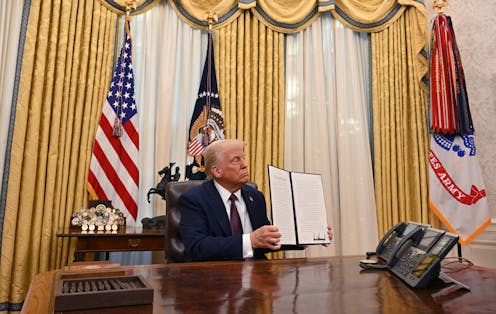
    Trump’s stance as a “law and order” president is contradictory and hypocritical given his pardons of more than 1,500 Jan. 6 rioters on his first day back in the Oval Office.

    The pardons drew unanimous criticism from Democrats and some Republican lawmakers, including senators Mitch McConnell and Lindsey Graham.

    Even Vice President J.D. Vance has said any Jan. 6 rioters convicted of violent offences should “obviously” not be pardoned.


    Read more:
    By inciting Capitol mob, Trump pushes U.S. closer to a banana republic


    The law enforcement community — the actual front line of law and order — also expressed outrage at the pardons, and experts worry the move could embolden extremists to lawlessness and disorder rather than Trump’s supposedly preferred state of law and order.

    Polls reveal that two-thirds of Americans — across party lines — also opposed pardoning Jan. 6 rioters who committed violent crimes.

    More than 600 — or approximately one-third — of the defendants charged in the Jan. 6 insurrection faced accusations of assaulting or interfering with law enforcement officers. Of the 174 charged with using a deadly or dangerous weapon, 169 of them eventually pleaded guilty to assaulting police officers.

    Other charges included trespassing, disrupting Congress, theft, weapons offences, making threats and conspiracy, including seditious conspiracy — the most serious offence.

    Violent protesters, loyal to then-President Donald Trump, storm the U.S. Capitol on Jan. 6, 2021.
    (AP Photo/John Minchillo)

    Repeat offenders

    A bipartisan Senate report linked nine deaths to the Jan. 6 raid on the Capitol, including four police suicides in the aftermath and two riot participants who died at the event.

    Unlike those whose Black Lives Matter protests Trump found disorderly back in 2020, the vast majority of the Jan. 6 convicts are not from racialized communities.

    Dozens of the Jan. 6 rioters also had prior convictions or pending charges, including child abuse, child pornography, predatory criminal assault of a child, rape, drug trafficking, assault with a deadly weapon, possession of controlled substances, battery, criminal confinement and manslaughter. Peter Schwartz, one of rioters, has a record 38 prior convictions going back to 1991.

    The irony of Trump’s position on pardons, repeat offenders and exiles is apparent. The very people he pardoned are now potential candidates for his proposed exile program due to their repeat offender status.

    Daniel Ball, a pardoned rioter, was arrested for federal gun charges a day after his pardon. The charges predated the riots.

    Matthew Huttle of Indiana, another Jan. 6 rioter pardoned by Trump, was killed three weeks after his release while resisting arrest and in possession of a firearm. His uncle, Dale Huttle, also pardoned, has no regrets about participating in the riot, stating: “I’m not ashamed of being there. It was our duty as patriots.”

    Similarly, Enrique Tarrio, who received a 22-year prison sentence for his role in the riots, declared after his pardon: “It’s going to be retribution.”

    He expressed a desire for vengeance against those who investigated and prosecuted him, stating: “Now it’s our turn. The people who did this, they need to feel the heat.” These three examples all occurred in the seven days following the pardons.

    Karma in terms of Trump’s exile proposals may be awaiting the pardoned rioters, however, amid this pattern of defiance. Their emboldened sentiments following Trump’s pardons could suggest they’re at a higher risk of becoming repeat offenders, making them prime candidates for the president’s proposed exile program — that is, of course, unless he pardons them again.

    Ako Ufodike receives funding from SSHRC.

    ref. Lawlessness and disorder: The hypocrisy of Donald Trump’s exile threats after the Jan. 6 pardons – https://theconversation.com/lawlessness-and-disorder-the-hypocrisy-of-donald-trumps-exile-threats-after-the-jan-6-pardons-248738

    MIL OSI – Global Reports

  • MIL-OSI Canada: Beware of Fake Online Casinos and Other Illegal Operators

    Source: Government of Canada regional news

    Released on February 10, 2025

    If you see a Facebook or other social media ad for an online version of Dakota Dunes Casino, Casino Regina, or any other land-based casino in Saskatchewan, don’t click on it. Scammers use these types of fake ads to defraud people by stealing credit card numbers and other banking information.

    “None of the land-based casinos in Saskatchewan have a legitimate online version, and people who see these types of ads on their social media channels are strongly advised not to click on them,” Lotteries and Gaming Saskatchewan (LGS) Vice President of Gaming Steve Tunison said. “Saskatchewan people who wish to gamble online can do so safely and securely on PlayNow.com, which is the only legal online gaming platform in our province.”

    If you spot one of these fake ads, report it promptly and directly to the online channel where it appeared, such as Facebook.

    “Scam ads are an ongoing issue for land-based casinos across North America, including Casinos Regina and Moose Jaw and casinos operated by the Saskatchewan Indian Gaming Authority (SIGA),” Tunison said. “The scammers illegally use the logos, images, and branding of these casinos, stolen from the casinos’ websites, to create the fake ads.”

    Saskatchewan people are reminded to always be wary when it comes to social media and other online offers and ads and to guard their credit card, banking and other personal information carefully.

    -30-

    For more information, contact:

    MIL OSI Canada News

  • MIL-OSI Security: Glovertown — Driver of vehicle involved in 2024 double fatality on Route 320 near Hare Bay charged by Glovertown RCMP

    Source: Royal Canadian Mounted Police

    Following an investigation of a motor vehicle crash that claimed the lives of two passengers, Glovertown RCMP has laid criminal charges against the driver, 53-year-old Roger Hunt of Trinity.

    On the morning of July 23, 2024, Glovertown RCMP received the report of the crash which left a truck in the middle of the roadway in flames. Two of the vehicle’s occupants, a 62-year-old man and a 62-year-old woman, died at the scene. The driver, Hunt, received serious but non-life-threatening injuries.

    Evidence obtained from the investigation support criminal charges, which were laid on February 6, 2025. Roger Hunt is charged with two counts dangerous operation causing death. He is scheduled to appear in Provincial Court in Gander on April 8, 2025.

    Background:

    Glovertown RCMP investigates fatal vehicle crash on Route 320 near Hare Bay | Royal Canadian Mounted Police

    MIL Security OSI

  • MIL-OSI Canada: Celebrating Teacher/Staff Appreciation Week

    Source: Government of Canada regional news

    Released on February 10, 2025

    February 9 to 15, 2025, is Teacher/Staff Appreciation Week in Saskatchewan. The week recognizes the many contributions of teachers and staff in Saskatchewan schools who embody the qualities reflected in this year’s theme “Heroes of Education.” 

    “We are pleased to proclaim Teacher/Staff Appreciation week to celebrate teachers and staff and their commitment to Prekindergarten to Grade 12 education,” Education Minister Everett Hindley said. “From providing skills and knowledge in the classroom to supporting student activities, teachers and school staff provide the foundation for lifelong learning.”

    Teacher/Staff Appreciation Week has been celebrated across Canada for 38 years and is supported by the Saskatchewan Association of School Councils (SASC).

    “As we celebrate Teacher/Staff Appreciation Week across the province, we would like to recognize teachers and school staff for their ongoing commitment and dedication to the students and families they serve,” SASC Director Joy Bastness said. “We thank them for all that they do and continue to do to achieve successful student outcomes.” 

    School divisions, schools and school community councils will be celebrating Teacher/Staff Appreciation Week with activities throughout the week. 

    -30-

    For more information, contact:

    Media Relations
    Education
    Regina
    Phone: 306-533-6391
    Email: mediaed@gov.sk.ca

    MIL OSI Canada News

  • MIL-OSI USA: Italian Government Authority Censures Eyewear Giant Luxottica for Failing to Uphold Fair Union Organizing Standards in U.S. Operations

    Source: Communications Workers of America

    A report by the OECD’s Italian National Contact Point for Responsible Business Conduct (NCP), has exposed global eyewear giant Luxottica for violating workers’ rights during union organizing efforts by the Communications Workers of America at the company’s Atlanta, Georgia logistics center in 2021. Despite publicly embracing its obligations under the OECD Guidelines for Multinational Enterprises, Luxottica failed to rectify these violations and undermined collaborative efforts to address them under the good offices of the NCP’s conciliation mechanism.

    The report concludes a multi-year process initiated by a formal complaint from IUE-CWA, AFL-CIO, IndustriALL, and UNI labor unions regarding Luxottica’s egregious anti-union tactics and failure to uphold internationally recognized labor standards at its U.S. facilities.

    In its Final Statement on the case, published in late December 2024, the Italian authority found that Luxottica rejected the NCP conciliator’s recommendations on fair union organizing by workers in the United States. The Final Statement confirmed the conciliator’s conclusion that the breakdown of the conciliation process was caused by Luxottica’s refusal to recognize the validity of the Guidelines, and the company’s insistence on U.S. law as the only relevant standard.

    Key Findings from the Italian NCP’s Report

    1. International labor standards, and not domestic law, govern any OECD Guidelines proceeding.

    2. Luxottica failed to engage constructively in the conciliation process, in contrast to the union’s efforts.

    3. As per the conciliator’s instructions, Luxottica should have remained neutral regarding union organizing efforts by its workers.

    IUE-CWA President Carl Kennebrew issued the following statement on the Italian NCP’s findings in the case:

    “Luxottica has deliberately violated OECD Guidelines for Responsible Business by interfering with its employees’ freedom of association and collective bargaining rights. Although Luxottica publicly claims adherence to these guidelines, its actions tell a different story, as the company undermined workers’ attempts to organize at its Atlanta facility.”

    “Luxottica global management has made a fundamental mistake by following the advice of its anti-union American lawyers instead of the conciliator’s recommendations. Luxottica’s failure to live up to its obligations under the OECD Guidelines creates reputational and financial risk for the company and its investors as it seeks to expand its global footprint in North America and other regions.”

    “There is still time for Luxottica to rectify its refusal to adopt the Italian conciliator’s recommendations. We urge Luxottica to return to the table with IUE-CWA for agreement on management neutrality and other fair rules for organizing. Many firms have adopted such neutrality agreements with their union, most recently Microsoft and General Electric. Many other companies have reached global framework agreements with unions promising to respect workers’ organizing and bargaining rights worldwide.”

    “If trade unions are unable to reach an agreement with Luxottica on fair rules for union organizing, we will explore other avenues to persuade Luxottica to halt its violations of international standards on workers’ freedom of association in the United States. These include increased engagement with socially responsible investors, and the enforcement of U.S. and European due diligence laws on human rights in Luxottica’s supply chain. But the solution is really simple: Luxottica can apply the same standards of good faith and respect for trade unions that it maintains in Italy to its operations in the United States.”

    IndustriALL General Secretary Atle Høie issued the following statement on the Italian NCP’s findings:

    “This case exposes what the OECD considers actions taken by Luxottica in violation with the OECD guidelines on multinational companies. The conclusions clearly denounce anti union behavior put in place by companies during organizing. Such union busting tactics are not uncommon in the US, but have now been unequivocally condemned by the OECD contact point in Italy. We demand that Luxottica follow the recommendations, take a neutral stance in future organizing activities and invite CWA back to the table.”

    UNI Global Union General Secretary Christy Hoffman issued the following statement on the Italian NCP’s findings in the case:

    “It is shameful that companies operating in the US routinely believe that they can violate international standards with impunity. The NCP in this case did not back down from calling this out as a violation of the Guidelines. The NCP also took a clear decision that the Italian management was responsible for anti-union actions of its US subsidiary, another good precedent. The company should reverse course, follow the rules on which we all depend, and go back to the table with CWA. An end to this kind of union-busting is long overdue.”

    Background and Details

    The report comes at the end of a six-month conciliation process held from September 2023 to March 2024 under the aegis of the National Contact Point (NCP), which is an authority constituted by the Italian Government’s Ministry of Businesses, following the NCP’s review of the unions’ complaint that Luxottica created a “climate of fear” which destroyed an organizing effort by American workers at Luxottica’s North American logistics hub in McDonough (Atlanta), Georgia in 2021.

    Italy-based Luxottica (EssilorLuxottica following its 2017 merger with global French-based lens producer Essilor) is a major employer in the United States, which is its largest single market, with operations in eyewear retail, vision insurance, ophthalmic labs, and lens and frame manufacturing.

    The IUE-CWA, joined by the AFL-CIO and global unions IndustriALL and UNI, complained that management’s aggressive anti-union tactics violated workers’ organizing rights under the OECD Guidelines.

    Luxottica blatantly disregarded these labor principles in 2021 despite its obligations under the OECD Guidelines for Multinational Enterprises on Responsible Business Conduct which call on multinational companies to respect core labor standards, including the right to freedom of association and collective bargaining.

    Instead, as workers at its Atlanta logistics center sought to unionize for better health protections and fair wages during the COVID-19 crisis, Luxottica launched an aggressive anti-union campaign.

    American management at the Georgia center forced employees into “captive-audience” meetings in which managers and anti-union consultants vilified trade unions as swindlers who only want workers’ dues payments, and told employees they could lose pay and benefits if they support the union. Management repeated the same insults and threats in an anti-union website and in text messages, workplace posters, and TV screens throughout the plant. Luxottica interfered with organizers’ access to the workers. The climate of fear and intimidation became so severe that IUE-CWA ultimately withdrew its organizing effort.

    Such actions would be unthinkable in Italy, where unions have long enjoyed collective bargaining relationships with Luxottica management based on good faith and mutual respect. Italian unions joined the call for Luxottica to apply these same principles when workers in its American facilities exercise rights to freedom of association.

    CWA Union representatives were optimistic about reaching an agreement with Luxottica in the NCP conciliation process when it began with a meeting in Rome in September 2023 under guidance of conciliator Enzo Cannizzaro, a prominent Italian international law professor at the University of Rome and at Columbia Law School. The unions hoped to reach an agreement with Luxottica based on the conciliator’s recommendations, which included measures for management neutrality, union representatives’ access to facilities to meet with workers, and other measures adhering to international labor rights standards under the OECD Guidelines.

    The union accepted the conciliator’s recommendations. But, advised by its American anti-union lawyers, Luxottica management refused even to respond to the conciliator’s recommendations. The conciliator closed the proceeding in April 2024 without a resolution to the dispute.

    The Unions contend that Luxottica failed to engage in good faith during the OECD’s six-month conciliation process. Rather than seeking a resolution, the company obstructed the process and ignored opportunities provided to rectify its transgressions.

    In its Final Report, the Italian NCP makes clear why the process failed.The NCP also reiterated the Conciliator’s recommendation as to how the Company should honor the principle of non-interference moving forward:

    “The owners and the management of a Company … should refrain from expressing their opinion on matters of unionisation, under the principle on non-interference, in order to contribute to a fair and equitable framework for industrial relations, as also pursued by the OECD Guidelines.”

    The NCP concluded its Final Report with

    “regrets that it has not been possible to resolve the issues raised by applying the Guidelines,” stressing that “settling the case on the basis of the Guidelines’ provisions, rather than by applying the national law, alone, would have ensured a balanced, constructive and long-lasting solution. Indeed, the Guidelines themselves refer to principles and standards of international law.”

    Final Considerations and Next Steps

    The Italian NCP’s findings put Luxottica at a crossroads. IUE-CWA, AFL-CIO, IndustriALL and UNI union confederations demand that Luxottica adopt a fair framework that guarantees neutrality and non-interference in future organizing efforts across the U.S. By doing so, Luxottica can begin to repair the damage caused by its anti-union practices and demonstrate its commitment to the workers who drive its business forward.

    As pressure mounts, IUE-CWA remains resolute in its fight for fair labor standards and urges Luxottica to make a decisive shift toward responsible business conduct worldwide. The union will continue to monitor the situation closely and advocate for vision workers’ rights at every turn.

    For more information on the NCP Final Statement and its implications for Luxottica’s labor practices, contact CWA Communications at +1 (202) 434-1168 and comms@cwa-union.org

    ###

    About National Contact Points for RBC

    “National Contact Points for Responsible Business Conduct (NCPs for RBC) are agencies established by governments. Their mandate is twofold: to promote the OECD Guidelines for Multinational Enterprises, and related due diligence guidance, and to handle cases (referred to as “specific instances”) as a non-judicial grievance mechanism. To date, 51 governments have an NCP for RBC. Also see: https://mneguidelines.oecd.org/ncps/

    All 51 governments adhering to the OECD Guidelines have the legal obligation to set up an NCP. Today, NCPs make up a network and a community of practitioners, dealing with a wide array of impacts involving companies either through their operations or their supply chains. In 2020, NCPs celebrated 20 years as non-judicial grievance mechanisms. Find out more about NCPs | Browse resources on NCPs

    The Organisation for Economic Co-operation and Development (OECD) is an intergovernmental organization with 38 member countries from Europe, North America, South America and Asia-Pacific, founded in 1961 to stimulate economic progress and world trade. It originates from the organization set up to manage US Marshall Aid to post-WW2 Europe. The United States is one of its founding members. It is headquartered in Paris.

    About CWA

    The Communications Workers of America (CWA) represents working people in telecommunications, customer service, media, airlines, health care, public service and education, manufacturing, tech and other fields. IUE-CWA is the Industrial Division of the CWA, it represents manufacturing and industrial workers in a wide range of industries including automotive, aerospace, furniture, and appliances, and vision.

    About AFL-CIO

    Headquartered in Washington DC, USA, the American Federation of Labor and Congress of Industrial Organizations (AFL-CIO) is the democratic, voluntary federation of 60 national and international labor unions that represent more than 12.5 million working people in the United States, Canada and Puerto Rico.

    About IndustriALL Global Union

    IndustriALL Global Union is a global union federation, founded in Copenhagen on 19 June 2012. IndustriALL represents more than 50 million working people in more than 140 countries, working across the supply chains in mining, energy and manufacturing sectors at the global level. The Global headquarters is in Geneva, Switzerland.

    About UNI Global Union

    UNI Global Union, formally Union Network International, is a Global Union Federation for the skills and services sectors, uniting national and regional trade unions. It has affiliated unions in 150 countries representing 20 million workers. The Global headquarters is in Nyon, Switzerland.

    About EssilorLuxottica

    EssilorLuxottica was created through the 2017 merger between French multinational corporation Essilor and Italian multinational corporation Luxottica, with Essilor headquartered in France and Luxottica in Italy. EssilorLuxottica is a global leader in the design, manufacture and distribution of ophthalmic lenses, frames and sunglasses. With over 200,000 employees across 150 countries, 650 operations facilities and 18,000 stores, in 2023 the Company generated consolidated revenue of Euro 25.4 billion. EssilorLuxottica is home to advanced lens technologies including Varilux, Stellest and Transitions, eyewear brands including Ray-Ban and Oakley, luxury licensed brands and world-class retailers including LensCrafters and Sunglass Hut. EssilorLuxottica shares are traded on the Euronext Paris market and are included in the Euro Stoxx 50 and CAC 40 indices. Codes and symbols: ISIN: FR0000121667; Reuters: ESLX.PA; Bloomberg: EL:FP. www.essilorluxottica.com.

    MIL OSI USA News

  • MIL-OSI Security: St. John’s — RCMP NL encourages snowmobilers to put safety first; Be prepared, wear the gear and ride sober

    Source: Royal Canadian Mounted Police

    With an increase in snowmobiling activities within the province, RCMP NL encourages those venturing out in the outdoors to put safety first, especially when heading to isolated areas. Officers encourage riders to ride sober and wear the proper safety gear, including helmets.

    Before heading out, riders should prepare themselves in the event they become displaced/lost in the event of mechanical issues, bad weather or other unexpected delays. Packing additional food and water provisions and fire-making equipment is strongly recommended, as well as wearing the proper winter clothing. Communication devices, including cell phones, satellite phones and satellite tracking devices, are also recommended. Riders need to keep in mind that cell phone service is unavailable in many isolated areas throughout the province.

    Helmets are mandatory for snowmobile operators and passengers in Newfoundland and Labrador and they should be properly fitted or fastened to work as intended in the event of a collision; otherwise, they may come off upon impact. Goggles, safety glasses or a face shield are also required when a snowmobile is not equipped with a windshield that is of a height to provide adequate protection to the eyes.

    Those who take unnecessary risk or travel without proper knowledge of the area, safety equipment and provisions, put additional strain on police, medical and search and rescue resources and inflict worry on those at home who await their safe return.

    RCMP NL reminds snowmobilers to notify others of their planned route and return time. Riders are encouraged to enjoy the great outdoors, while being safe, being prepared, wearing the gear and riding sober.

    MIL Security OSI

  • MIL-OSI Global: Russia’s shrinking world: The war in Ukraine and Moscow’s global reach

    Source: The Conversation – USA – By Ronald H. Linden, Professor Emeritus of Political Science, University of Pittsburgh

    Russia President Vladimir Putin sent a guarded message of congratulations to Donald Trump on inauguration day, but then held a long direct call with his “dear friend,” Chinese leader Xi Jinping.

    From Putin’s perspective, this makes sense. Russia gets billions of dollars from energy sales to China and technology from Beijing, but from Washington, until recently, mostly sanctions and suspicion.

    Moscow is hoping for a more positive relationship with the current White House occupant, who has made his desire for a “deal” to end the Ukraine war well known.

    But talk of exit scenarios from this 3-year-old conflict should not mask the fact that since the invasion began, Putin has overseen one of the worst periods in Russian foreign policy since the end of the Cold War.

    Transatlantic unity

    The war in Ukraine has foreclosed on options and blunted Russian action around the world.

    Unlike the annexation of Crimea in 2014, the 2022 invasion produced an unprecedented level of transatlantic unity, including the expansion of NATO and sanctions on Russian trade and finance. In the past year, both the U.S. and the European Union expanded their sanction packages.

    And for the first time, the EU banned the re-export of Russian liquefied natural gas and ended support for a Russian LNG project in the Arctic.

    EU-Russian trade, including European imports of energy, has dropped to a fraction of what it was before the war.

    The two Nordstrom pipelines, designed to bring Russian gas to Germany without transiting East Europe, lie crippled and unused. Revenues from energy sales are roughly one-half of what they were two years ago.

    At the same time, the West has sent billions in military and humanitarian aid to Ukraine, enabling a level of resilience for which Russia was unprepared. Meanwhile, global companies and technical experts and intellectuals have fled Russia in droves.

    While Russia has evaded some restrictions with its “shadow fleet” – an aging group of tankers sailing under various administrative and technical evasions – the country’s main savior is now China. Trade between China and Russia has grown by nearly two-thirds since the end of 2021, and the U.S. cites Beijing as the main source of Russia’s “dual use” and other technologies needed to pursue its war.

    Since the start of the war in Ukraine, Russia has moved from an energy-for-manufactured-goods trade relationship with the West to one of vassalage with China, as one Russia analyst termed it.

    Hosting an October meeting of the BRICS countries – now counting 11 members, including the five original members: Brazil, Russia, India, China and South America – is unlikely to compensate for geopolitical losses elsewhere.

    Russian President Vladimir Putin and China President Xi Jinping toast their friendship in March 2023.
    Pavel Byrkin/AFP via Getty Images

    Problems at home …

    The Russian economy is deeply distorted by increased military spending, which represents 40% of the budget and 25% of all spending. The government now needs the equivalent of US$20 billion annually in order to pay for new recruits.

    Russian leaders must find a way to keep at least some of the population satisfied, but persistent inflation and reserve currency shortages flowing directly from the war have made this task more difficult.

    On the battlefield, the war itself has killed or wounded more than 600,000 Russian soldiers. Operations during 2024 were particularly deadly, producing more than 1,500 Russian casualties a day.

    The leader who expected Kyiv’s capitulation in days now finds Russian territory around Kursk occupied, its naval forces in the Black Sea destroyed and withdrawn, and its own generals assassinated in Moscow.

    But probably the greatest humiliation is that this putative great power with a population of 144 million must resort to importing North Korean troops to help liberate its own land.

    … and in its backyard

    Moscow’s dedication to the war has affected its ability to influence events elsewhere, even in its own neighborhood.

    In the Caucasus, for example, Russia had long sided with Armenia in its running battle with Azerbaijan over boundaries and population after the collapse of the Soviet Union.

    Moscow has brokered ceasefires at various points. But intermittent attacks and territorial gains for Azerbaijan continued despite the presence of some 2,000 Russian peacekeepers sent to protect the remaining Armenian population in parts of the disputed territory of Nagorno-Karabakh.

    In September 2023, Azerbaijan’s forces abruptly took control of the rest of Nagorno-Karabakh. More than 100,000 Armenians fled in the largest ethnic cleansing episode since the end of the Balkan Wars. The peacekeepers did not intervene and later withdrew. The Russian military, absorbed in the bloody campaigns in Ukraine, could not back up or reinforce them.

    The Azeris’ diplomatic and economic position has gained in recent years, aided by demand for its gas as a substitute for Russia’s and support from NATO member Turkey.

    Feeling betrayed by Russia, the Armenian government has for the first time extended feelers toward the West — which is happy to entertain such overtures.

    Losing influence and friends

    Russia’s loss in the Caucasus has been dwarfed by the damage to its military position and influence in the Middle East. Russia supported the Syrian regime of Bashar al-Assad against the uprisings of the Arab Spring in 2011 and saved it with direct military intervention beginning in 2015.

    Yet in December 2024, Assad was unexpectedly swept away by a mélange of rebel groups. The refuge extended to Assad by Moscow was the most it could provide with the war in Ukraine having drained Russia’s capacity to do more.

    Russia’s possible withdrawal from the Syrian naval base at Tartus and the airbase at Khmeimim would remove assets that allowed it to cooperate with Iran, its key strategic partner in the region.

    More recently, Russia’s reliability as an ally and reputation as an armory has been damaged by Israeli attacks not only on Hezbollah and other Iranian-backed forces in Lebanon and Syria, but on Iran itself.

    Russia’s position in Africa would also be damaged by the loss of the Syrian bases, which are key launch points for extending Russian power, and by Moscow’s evident inability to make a difference on the ground across the Sahel region in north-central Africa.

    Dirty tricks, diminishing returns

    Stalemate in Ukraine and Russian strategic losses in Syria and elsewhere have prompted Moscow to rely increasingly on a variety of other means to try to gain influence.

    Disinformation, election meddling and varied threats are not new and are part of Russia’s actions in Ukraine. But recent efforts in East Europe have not been very productive. Massive Russian funding and propaganda in Romania, for example, helped produce a narrow victory for an anti-NATO presidential candidate in December 2024, but the Romanian government moved quickly to expose these actions and the election was annulled.

    Nearby Moldova has long been subject to Russian propaganda and threats, especially during recent presidential elections and a referendum on stipulating a “European course” in the constitution. The tiny country moved to reduce its dependency on Russian gas but remains territorially fragmented by the breakaway region of Transnistria that, until recently, provided most of the country’s electricity.

    Despite these factors, the results were not what Moscow wanted. In both votes, a European direction was favored by the electorate. When the Transnistrian legislature in February 2024 appealed to Moscow for protection, none was forthcoming.

    When Moldova thumbs its nose at you, it’s fair to say your power ranking has fallen.

    Wounded but still dangerous

    Not all recent developments have been negative for Moscow. State control of the economy has allowed for rapid rebuilding of a depleted military and support for its technology industry in the short term. With Chinese help and evasion of sanctions, sufficient machinery and energy allow the war in Ukraine to continue.

    And the inauguration of Donald Trump is likely to favor Putin, despite some mixed signals. The U.S. president has threatened tariffs and more sanctions but also disbanded a Biden-era task force aimed a punishing Russian oligarchs who help Russia evade sanctions. In the White House now is someone who has openly admired Putin, expressed skepticism over U.S. support for Ukraine and rushed to bully America’s closest allies in Latin America, Canada and Europe.

    Most importantly, Trump’s eagerness to make good on his pledge to end the war may provide the Russian leader with a deal he can call a “victory.”

    The shrinking of Russia’s world has not necessarily made Russia less dangerous; it could be quite the opposite. Some Kremlin watchers argue that a more economically isolated Russia is less vulnerable to American economic pressure. A retreating Russia and an embattled Putin could also opt for even more reckless threats and actions – for example, on nuclear weapons – especially if reversing course in Ukraine would jeopardize his position. It is, after all, Putin’s war.

    All observers would be wise to note that the famous dictum “Russia is never as strong as she looks … nor as weak as she looks” has been ominously rephrased by Putin himself: “Russia was never so strong as it wants to be and never so weak as it is thought to be.”

    Ronald H. Linden has in the past received funding from Fulbright, DAAD, German Marshall Fund, National Council for Eurasian and East European Research, Woodrow Wilson Center, US Institute of Peace.

    ref. Russia’s shrinking world: The war in Ukraine and Moscow’s global reach – https://theconversation.com/russias-shrinking-world-the-war-in-ukraine-and-moscows-global-reach-247754

    MIL OSI – Global Reports

  • MIL-OSI: Q2 Metals to Present at the Metals and Mining Growth Virtual Investor Conference February 12th

    Source: GlobeNewswire (MIL-OSI)

    VANCOUVER, British Columbia, Feb. 10, 2025 (GLOBE NEWSWIRE) — Q2 Metals Corp. (TSX.V: QTWO | OTCQB: QUEXF | FSE: 458) (“Q2” or the “Company”) is pleased to announce that Q2 Metals President & CEO, Alicia Milne, will provide an overview of the Company and update on activities at its flagship Cisco Lithium Project at the Metals and Mining Virtual Investor Conference hosted by VirtualInvestorConferences.com, on Wednesday, February 12th, 2025 at 8:30 am PT | 11:30 am ET.

    DATE: February 12th
    TIME:
    8:30 am PT | 11:30 am ET
    LINK: https://bit.ly/4hLrzs6
    Available for 1×1 meetings: February 13

    This will be a live, interactive online event where investors are invited to ask the company questions in real-time. If attendees are not able to join the event live on the day of the conference, an archived webcast will also be made available after the event.

    It is recommended that online investors pre-register and run the online system check to expedite participation and receive event updates.

    Learn more about the event at www.virtualinvestorconferences.com.

    Q2 Metals Highlights and Upcoming Catalysts

    • The fully funded 2025 winter drill program at the Cisco Lithium Project, located within the greater Nemaska traditional territory of the Eeyou Istchee Territory, James Bay, Quebec, Canada is currently underway
    • The program follows up on the exceptional drill results from the Company’s inaugural 2024 drill campaign which included:
      • Drill hole CS-24-018 – 215.6 metres (“m”) at 1.69% Li2O
      • Drill hole CS-24-021 – 347.1 m at 1.35% Li2O; and
      • Drill hole CS-24-023 – 188.6 m at 1.56% Li2O
    • The campaign is targeting 6,000 – 8,000 m of drilling using two diamond drill rigs.
    • The first hole, collared on February 3rd, is an aggressive 400 m step out from the easternmost hole of the 2024 drill program (CS-24-022).
    • Initial assays are anticipated in early Q2.

    About Q2 Metals Corp

    Q2 Metals is a Canadian mineral exploration company focused on the Cisco Lithium Project, located within the greater Nemaska traditional territory of the Eeyou Istchee Territory, James Bay, Quebec.

    The Project is comprised of 767 claims, totaling 39,389 hectares. The main mineralized zone is just 6.5 kilometres (“km”) away from the Billy Diamond Highway which transects the Project. The town of Matagami, is the end of the rail link to much of James Bay and is approximately 150 km to the south.

    The Cisco Project is situated along the Frotet Evans Greenstone Belt, comprised of a volcanic package dominated by mafic to felsic metavolcanic rocks, of the southern James Bay Lithium District, the same belt that hosts the Sirmac and Moblan lithium deposits, located 130 km and 180 km away, respectively.

    The Cisco Lithium Project has district-scale potential with an already identified mineralized zone and discovery drill results that include:

    • 120.3 metres at 1.72% Li2O (hole CS-24-010);
    • 215.6 metres at 1.69% Li2O (hole CS-24-018);
    • 347.1 metres at 1.35% Li2O (hole CS-24-021); and
    • 188.6 metres at 1.56% Li2O (hole CS-24-023)

    Since May 2024, the Company has drilled a total of 6,359.7 m over 17 holes. All drill holes intercepted pegmatite with visual indications of spodumene mineralization identified.

    FOR FURTHER INFORMATION, PLEASE CONTACT:

    www.Q2Metals.com

    Click to follow us online: 

    X, LinkedIn, Facebook, and Instagram

    About Virtual Investor Conferences®

    Virtual Investor Conferences (VIC) is the leading proprietary investor conference series that provides an interactive forum for publicly traded companies to seamlessly present directly to investors.

    Providing a real-time investor engagement solution, VIC is specifically designed to offer companies more efficient investor access. Replicating the components of an on-site investor conference, VIC offers companies enhanced capabilities to connect with investors, schedule targeted one-on-one meetings and enhance their presentations with dynamic video content. Accelerating the next level of investor engagement, Virtual Investor Conferences delivers leading investor communications to a global network of retail and institutional investors.

    Forward-Looking Statements

    This news release contains forward-looking statements and forward-looking information (collectively, “forward-looking statements”) within the meaning of applicable Canadian legislation. Forward-looking statements are typically identified by words such as: “believes”, “expects”, “anticipates”, “intends”, “estimates”, “plans”, “may”, “should”, “would”, “will”, “potential”, “scheduled” or variations of such words and phrases and similar expressions, which, by their nature, refer to future events or results that may, could, would, might or will occur or be taken or achieved. Accordingly, all statements in this news release that are not purely historical are forward-looking statements and include statements regarding beliefs, plans, expectations and orientations regarding the future including, without limitation, any statements or plans regarding the geological prospects of the Company’s properties and the future exploration endeavors of the Company. Although the Company believes the expectations expressed in such forward-looking statements are based on reasonable assumptions, such statements are not guarantees of future performance and actual results or developments may differ materially from those in the forward-looking statements. Forward-looking statements are based on a number of material factors and assumptions.

    Forward-looking statements involve known and unknown risks, uncertainties and other factors that may cause actual results to differ materially from those anticipated in such forward-looking statements. The forward-looking statements in this news release speak only as of the date of this news release or as of the date specified in such statement. Forward looking statements in this news release include, but are not limited to, the prospectivity of the greenstone rocks in the area, the possibility of future development and mining infrastructure scenarios, the potential for development, the potential scale of the Cisco Project, the focus of the Company’s current and future exploration and drill programs, the scale, scope and location of future exploration and drilling activities, the Company’s expectations in connection with the projects and exploration programs being met, the Company’s objectives, goals or future plans, statements, exploration results, potential mineralization, the estimation of mineral resources, exploration and mine development plans, timing of the commencement of operations and estimates of market conditions. Factors that could cause actual results to differ materially from those in forward-looking statements include failure to obtain necessary approvals, variations in ore grade or recovery rates, changes in project parameters as plans continue to be refined, unsuccessful exploration results, changes in project parameters as plans continue to be refined, results of future resource estimates, future metal prices, availability of capital and financing on acceptable terms, general economic, market or business conditions, risks associated with regulatory changes, defects in title, availability of personnel, materials and equipment on a timely basis, accidents or equipment breakdowns, uninsured risks, delays in receiving government approvals, unanticipated environmental impacts on operations and costs to remedy same. Readers are cautioned that mineral exploration and development of mines is an inherently risky business and accordingly, the actual events may differ materially from those projected in the forward-looking statements. Additional risk factors are discussed in the section entitled “Risk Factors” in the Company’s Management Discussion and Analysis for its recently completed fiscal period, which is available under Company’s SEDAR profile at www.sedarplus.ca.

    Should one or more of these risks or uncertainties materialize, or should assumptions underlying the forward-looking statements prove incorrect, actual results may vary materially from those described herein as intended, planned, anticipated, believed, estimated or expected. Although the Company has attempted to identify important risks, uncertainties and factors which could cause actual results to differ materially, there may be others that cause results not to be as anticipated, estimated or intended. The Company does not intend, and does not assume any obligation, to update this forward-looking information except as otherwise required by applicable law.

    Neither the TSX Venture Exchange nor its Regulation Services Provider (as that term is defined in the policies of the TSX Venture Exchange) accepts responsibility for the adequacy or accuracy of this release.

    The MIL Network

  • MIL-OSI: Crisil Coalition Greenwich Names Mizuho Best Bank for Corporate Banking in the U.S.

    Source: GlobeNewswire (MIL-OSI)

    Mizuho ranked first, tied alongside Goldman Sachs, J.P. Morgan, and Bank of America

    Mizuho also wins Best Bank for Coverage for Corporates and Best Bank for Ease of Doing Business for Corporates

    NEW YORK, Feb. 10, 2025 (GLOBE NEWSWIRE) — Mizuho Americas today announced it was named best bank in the U.S. by Crisil Coalition Greenwich for Best in Corporate Banking, Best Coverage for Corporates, and Best in Ease of Doing Business for Corporates. Mizuho ranked first, tied alongside Goldman Sachs, J.P. Morgan, and Bank of America for Corporate Banking and Ease of Doing Business, and tied with J.P. Morgan and Bank of America for Coverage for Corporates.

    Crisil Coalition Greenwich conducted over 200 interviews, from May through November 2024, with CFOs and Treasurers at U.S.- based companies with $2 billion or more in annual revenue. Decision makers were asked about capabilities in specific areas, including breadth and depth of product offerings, quality of coverage, and business momentum.

    “We appreciate this amazing response from our corporate clients in recognition of our platform and are honored to be ranked first alongside the best banks in the industry,” said Jerry Rizzieri, President & CEO of Mizuho Securities USA and Head of CIB at Mizuho Americas. “We have built a successful coverage model coupled with great product capabilities and top talent to present fully integrated offerings backed by a client-centric culture.”

    Mizuho Americas was rated excellent/distinctive for effectiveness of senior management, frequency of contact, responsiveness, proactive provision of advice, coordinating product specialists, and digitizing KYC processes.

    Crisil Coalition Greenwich is a leading provider of strategic benchmarking, analytics, and insights. Its award winners receive quality ratings from corporate clients that top those of competing banks by a statistically significant margin.

    About Mizuho Americas
    Mizuho Financial Group, Inc. is the 17th largest financial institution in the world as measured by total assets of ~$2 trillion, according to S&P Global 2024. Mizuho’s 65,000 employees worldwide offer comprehensive financial services to clients in 36 countries and 850 offices throughout the Americas, EMEA, and Asia.​

    Mizuho Americas is a leading provider of corporate and investment banking, capital markets, strategic advisory, equity research, equity and fixed income sales & trading, derivatives, and financing solutions to corporate, private equity, and institutional clients in the US, Canada, and Latin America. Through its acquisition of Greenhill, Mizuho enhanced its M&A, restructuring, and private capital advisory capabilities across Americas, Europe, and Asia. Mizuho Americas employs approximately 3,700 professionals, for more information visit www.mizuhoamericas.com.​

    For inquiries, please contact:

    Jim Gorman
    Executive Director, Media Relations, Mizuho Americas
    +1-212-282-3867
    jim.gorman@mizuhogroup.com

    Laura London
    Director, Media Relations, Mizuho Americas
    +1-212-282-4446
    laura.london@mizuhogroup.com

    The MIL Network

  • MIL-OSI: ACT-ion Raises $7.5 million in Pre-Series A Round Led by BASF Venture Capital

    Source: GlobeNewswire (MIL-OSI)

    DALLAS, Feb. 10, 2025 (GLOBE NEWSWIRE) — ACT-ion Battery Technologies, a startup in the field of lithium ion battery cathode active materials (CAM), announced today the successful closing of its Pre-Series A funding round. Founded in 2019, ACT-ion has developed both an efficient and cost-effective means to produce single crystalline cathode active materials. This chemistry agnostic process addresses a critical challenge in the lithium-ion battery value chain: the need to both reduce CAM production costs and increase production throughput.

    The USD 7.5 million round was led by BASF Venture Capital, with participation from Hunt Energy Enterprises, Mirae Asset Capital, Arosa Capital Management, and LG Technology Ventures. ACT-ion will use the proceeds to accelerate its innovative CAM production technology, aiming to establish an operational pilot facility by 2025, with validations from leading industry partners.

    ACT-ion is the recent recipient of a R&D 100 award which recognized the Company’s innovation to overcome the complexity and cost of CAM manufacturing. ACT-ion’s continuous process generates coated single crystal CAM leading to higher performance and longer cycle life lithium-ion batteries. ACT-ion has successfully demonstrated this manufacturing platform for a variety of chemistries.

    “We are excited to have the support of Pre-Series A investors who share our vision for battery materials and manufacturing,” said Jin Lim, CTO and Interim CEO of ACT-ion. “This funding will allow us to bring our innovative solutions to market faster and make a meaningful impact on the global energy landscape.”

    “We are excited to have led this financing round and to support ACT-ion as a partner. With the market need for novel battery materials, and the processes to produce them, ACT-ion’s mission to improve CAM aligns well with BASF efforts to deliver innovation to our customers,” said Joshua Speros, Investment Manager at BASF Venture Capital.

    “The domestic production of battery materials at cost will mark a significant milestone in the US CAM industry,” said Lillian Shattock, Director of Private Investments at Arosa Capital Management. “We are thrilled to support ACT-ion, as we believe their technology can be a pivotal enabler of domestic CAM manufacturing.”

    Incubated within and spun-out of Hunt Energy Enterprises LLC, “the ACT-ion venture was developed to target the largest cost constraint within lithium batteries and thereby help enable growth for markets such as electric drones, electric vehicles and power tools,” said Victor Liu, Chairman of ACT-ion.

    About ACT-ion Battery Technologies

    ACT-ion Battery Technologies is a leading lithium battery cathode active material (CAM) technology company. As an advanced manufacturing technology company, ACT-ion’s rapid continuous process produces coated single crystal CAMs for lithium batteries through a novel, clean, and chemistry-agnostic process, requiring lower energy and cost. For more information, please visit www.act-ion.com.

    About Hunt Energy Enterprises

    Hunt Energy Enterprises is the corporate energy technology venture group within Hunt Energy Company, LP. As such, Hunt Energy Enterprises has incubated several technologies that leverage its operations and knowledge to create new energy companies and partnerships with entrepreneurs in both the conventional petroleum business and cleantech power. It is part of a larger privately-owned group of companies managed by the Ray L. Hunt family that engages in oil and gas exploration, refining, power, real estate, ranching and private equity investments. For more information, please visit www.huntenergyenterprises.com.

    About BASF Venture Capital GmbH

    At BASF, we create chemistry for a sustainable future. BASF Venture Capital GmbH also contributes to this corporate purpose. Founded in 2001, BASF Venture Capital invests in Europe, the United States, Canada, China, India, Brazil, and Israel. Our goal is to generate new growth potential for current and future business areas of BASF by investing in innovative startups. The focus of our venture investments includes decarbonization, circular economy, Agtech, new materials, digitalization and new, disruptive business models. For more information, please visit https://www.basf.com/global/en/who-we-are/organization/group-companies/BASF_Venture-Capital

    About Arosa Capital Management

    Arosa Capital Management is an alternative investment manager that focuses on investments in alternative energy, traditional energy and related sectors. Founded in 2013, Arosa’s approach is rooted in rigorous fundamental analysis and deep sector expertise to invest in private and public companies as well as in credit and commodities on a cross asset basis. The focus of Arosa’s ventures strategy is investments in private companies that primarily pursue alternative, renewable, or efficient energy technologies. For more information, please visit www.arosacapital.com.

    About Mirae Asset Capital

    Mirae Asset Capital is a leading financial institution specializing in fostering innovation and driving new growth opportunities as a trusted financial partner. Established in 1997, the firm invests in groundbreaking ideas across sectors including AI, robotics, energy, and biotechnology. Leveraging the extensive global network of the Mirae Asset Financial Group, Mirae Asset Capital operates across key markets such as Korea, the United States, India, and China. For more information, please visit vc.miraeassetcapital.com.

    About LG Technology Ventures

    LG Technology Ventures is the venture capital investment arm of the LG Group. LG Technology Ventures was established in 2018 and its team consists of experienced investors, entrepreneurs, technologists, and industry domain experts. Currently, LG Technology Ventures is managing over $805 million of fund assets and invests in early-stage start-ups in artificial intelligence, mobility, advanced materials, life-sciences, next generation display, mobile, and 5G. We strive to create value for our portfolio companies by helping them develop strategic partnerships with LG Companies. For more information, please visit https://www.lgtechventures.com/.

    For more information, please contact: ACT-ion Communications, Email: inquiry@act-ion.com

    The MIL Network

  • MIL-OSI: Stardust Power Announces Exclusive Licensing Agreement for Lithium Brine Concentration Technology from KMX Technologies

    Source: GlobeNewswire (MIL-OSI)

    • Following the October 8, 2024 announcement, Stardust Power finalizes exclusive licensing agreement with KMX Technologies to enhance lithium production efficiency and sustainability.

    GREENWICH, Conn., Feb. 10, 2025 (GLOBE NEWSWIRE) — Stardust Power Inc. (NASDAQ: SDST) (“Stardust Power” or the “Company”), an American developer of battery-grade lithium products, today announced the execution of an exclusive licensing agreement with KMX Technologies, Inc. (“KMX”), a leader in advanced lithium brine concentration technology. This agreement grants Stardust Power the exclusive rights to utilize KMX’s innovative vacuum membrane distillation (“VMD”) technology for lithium extraction and concentration across the United States, Canada, and select international markets.

    The exclusive license grants Stardust Power the full rights to use and operate KMX VMD units within the designated territory and field of use for lithium. This agreement will support Stardust Power’s continued commitment to build out the North American lithium supply chain and onshoring of critical minerals in the rapidly growing North America lithium market.

    “This exclusive licensing agreement with KMX Technologies is a pivotal step forward in advancing Stardust Power’s sustainability and operational efficiency goals,” said Roshan Pujari, CEO and Founder of Stardust Power. “KMX’s VMD technology offers a unique opportunity to reduce both energy consumption and water use across our supply chain, particularly by concentrating lithium feedstocks for efficient logistics. By incorporating this technology, we aim to significantly lower operating costs while strengthening the U.S. critical mineral supply chain and enhancing national security, all while doing so in an environmentally responsible manner.” KMX’s technology is ideal for Stardust Power’s innovative hub and spoke refinery model. By reducing the volume of the brine feedstock, less volume needs to be transported. The large central refinery is designed to repulp feedstock and blend as needed.

    KMX’s VMD technology is capable of concentrating lithium from brine sources with minimal losses, thereby enhancing the economic viability of lithium projects. Additionally, the technology produces high-quality water as a byproduct, which can be used to minimize reliance on local freshwater resources in the lithium extraction process, a key factor in increasing water sustainability for the industry.

    Zachary Sadow, CEO of KMX Technologies, added, “We are excited to partner with Stardust Power, a visionary company dedicated to driving sustainability and innovation within the lithium sector. This agreement represents a shared commitment to improving the efficiency and environmental footprint of the lithium supply chain.”

    With the execution of this agreement, Stardust Power is positioned to deploy KMX’s VMD technology throughout Stardust Power’s network design and supply chain in order to optimize delivery of feedstocks to its lithium refinery under development in Muskogee, Oklahoma, with up to 50,000 metric tons per annum production capacity upon completion. The Company plans to integrate this advanced technology to further enhance the environmental and economic performance of its lithium production processes.

    About Stardust Power Inc.
    Stardust Power is a developer of battery-grade lithium products designed to bolster America’s energy leadership by building resilient supply chains. Stardust Power is developing a strategically central lithium refinery in Muskogee, Oklahoma with the anticipated capacity of producing up to 50,000 metric tons per annum of battery-grade lithium. The Company is committed to sustainability at each point in the process. Stardust Power trades on the Nasdaq under the ticker symbol “SDST.”

    For more information, visit www.stardust-power.com

    About KMX Technologies, Inc.
    KMX Technologies is solving the most critical environmental and energy challenges of the 21st century. Through its proprietary membrane distillation technology, the company sustainably sources critical minerals necessary for next generation supply chains and infrastructure, is advancing wastewater treatment, and is accelerating energy storage with its direct lithium recovery enhancement processes.

    Stardust Power Contacts

    For Investors:
    Johanna Gonzalez
    investor.relations@stardust-power.com

    For Media:
    Michael Thompson
    media@stardust-power.com

    Cautionary Note Regarding Forward-Looking Statements
    Certain statements in this press release constitute “forward-looking statements.” Such forward-looking statements are often identified by words such as “believe,” “may,” “will,” “estimate,” “continue,” “anticipate,” “intend,” “expect,” “should,” “would,” “plan,” “predict,” “forecasted,” “projected,” “potential,” “seem,” “future,” “outlook,” and similar expressions that predict or indicate future events or trends or otherwise indicate statements that are not of historical matters, but the absence of these words does not mean that a statement is not forward-looking. These forward-looking statements and factors that may cause actual results to differ materially from current expectations include, but are not limited to: the ability of Stardust Power to realize the anticipated benefits of KMX’s technology; the ability of Stardust Power to grow and manage growth profitably, maintain key relationships and retain its management and key employees; obtaining the necessary permits and governmental approvals to develop the site; risks related to the uncertainty of the projected financial information with respect to Stardust Power; risks related to the price of Stardust Power’s securities, including volatility resulting from changes in the competitive and highly regulated industries in which Stardust Power plans to operate, variations in performance across competitors, changes in laws and regulations affecting Stardust Power’s business and changes in the combined capital structure; and risks related to the ability to implement business plans, forecasts, and other expectations and identify and realize additional opportunities. The foregoing list of factors is not exhaustive.

    Stockholders and prospective investors should carefully consider the foregoing factors, and the other risks and uncertainties described in documents filed by Stardust Power from time to time with the SEC.

    Stockholders and prospective investors are cautioned not to place undue reliance on these forward-looking statements, which only speak as of the date made, are not a guarantee of future performance and are subject to a number of uncertainties, risks, assumptions and other factors, many of which are outside the control of Stardust Power. Stardust Power expressly disclaims any obligations or undertaking to release publicly any updates or revisions to any forward-looking statements contained herein to reflect any change in the expectations of Stardust Power with respect thereto or any change in events, conditions or circumstances on which any statement is based.

    The MIL Network

  • MIL-OSI: Evome Medical Technologies Announces Significant Debt Reduction and Restructuring

    Source: GlobeNewswire (MIL-OSI)

    SHIRLEY, N.Y., Feb. 10, 2025 (GLOBE NEWSWIRE) — Evome Medical Technologies Inc. (the “Company”) (TSXV: EVMT) has announced a significant reduction in its overall ‎debt, strengthening its financial position, as a result of the execution of an amendment (the “Amendment”) to the forbearance agreement dated August 4, 2023 between the Company, Biodex Rehab Systems, LLC (“Biodex Rehab”), a wholly owned subsidiary of the Company, and Biodex Medical Systems, Inc. (“Biodex Medical”), a wholly owned subsidiary of Biodex Rehab, and Mirion Technologies (US), Inc. (“Mirion”).

    ‎The Amendment significantly improves the Company’s financial position by reducing its ‎outstanding debt to Mirion and extending repayment terms, while maintaining the Company’s commitment to ‎manufacture Mirion’s products under the existing contract manufacturing agreement ‎‎(the “CMA”) dated April 3, 2023 between Biodex Medical Systems, Inc. and Mirion Technologies (Capintec), Inc., an affiliate to Mirion.

    Pursuant to the Amendment, Biodex Rehab’s outstanding debt to Mirion has been reduced from ‎‎$6.7 million due in July 2025 to $4.25 million due in April 2030 – a $2.45 million reduction in ‎debt and a repayment extension of four years and nine months. In exchange, Biodex Medical has ‎committed to producing and delivering a guaranteed quantity of Mirion’s products under the current CMA until ‎March 2026 or sooner if Mirion is successful in transitioning the CMA ‎to a new manufacturer.‎

    Additionally, Mirion has agreed to remove restrictions imposed on the Company to use certain amounts of financing proceeds to repay debt to Mirion, ‎providing the Company with greater financial flexibility to raise capital and execute its growth plans. Mirion has ‎also relaxed certain restrictions on the Company’s merger and acquisition (M&A) activity, allowing ‎the Company to explore strategic opportunities more freely.‎

    Strategic and Financial Benefits for Evome

    The Amendment marks a major milestone in the Company’s ongoing restructuring strategy. By ‎reducing debt at both the parent company and subsidiary levels, the Company strengthens its ‎balance sheet and enhances its debt-to-equity ratio, improving overall financial stability. ‎Through the Amendment, the Company also gains the flexibility to raise capital and focus on high-‎margin business lines.‎

    In addition, the Amendment also underscores the continued progress for the Company under CEO Michael ‎Seckler, who has now successfully reduced total debt by $5.5 million since assuming the ‎leadership role in July 2023.

    ‎“This agreement strengthens our financial position and ensures we have the flexibility and ‎resources to drive growth,” said Michael Seckler, CEO of the Company. “By reducing our debt ‎burden, optimizing our assets, and securing capital-raising freedom, we are in a much ‎stronger position to expand our product offerings, invest in innovation, and execute on our ‎long-term vision. Evome remains committed to delivering high-quality products and ‎advancing its strategic goals while continuing to build shareholder value and strengthen its ‎financial foundation.”‎

    About Evome Medical Technologies Inc.

    Evome, through its operating subsidiaries, specializes in human performance and rehabilitative solutions achieved through strategic acquisitions and leveraging the intellectual properties of specialized companies. Evome’s goal is to create a large, broad-based medical device company with global reach. For more information visit www.evomemedical.com. Biodex® boasts innovative rehabilitation solutions, recognized for its advanced product line serving orthopedic, sports medicine and neurorehabilitation needs. Renowned for its precision and durability, Biodex® offers advanced equipment such as balance and mobility systems, isokinetic testing devices and comprehensive upper extremity rehabilitation tools. With a presence in over 70 countries and partnerships with 52 distributors, Biodex® continues to drive advancements in patient care through a strong commitment to research, education and technology integration.

    For more information please contact:‎

    Mike Seckler ‎
    Chief Executive Officer ‎
    Tel: 1 (800) 760-6826 ‎
    Email: Info@Salonaglobal.com‎

    Additional Information

    Neither the TSX Venture Exchange nor its Regulation Services Provider (as that term is defined in the ‎policies of the TSX Venture Exchange) accepts responsibility for the adequacy or accuracy of this ‎release.‎

    Certain statements contained in this press release constitute “forward-looking information” within ‎the meaning of the Private Securities Litigation Reform Act of 1995 and applicable Canadian securities ‎laws. These statements can be identified by the use of forward-looking terminology such as “expects” ‎‎“believes”, “estimates”, “may”, “would”, “could”, ‎‎”should”, “potential”, ‎‎‎‎‎”will”, “seek”, “intend”, ‎‎”plan”, and “anticipate”, and similar expressions as they relate ‎‎‎‎to the Company. All ‎statements ‎other than statements of ‎historical fact may be ‎forward-looking‎ information. Such statements reflect the Company’s current views and intentions with ‎respect to future ‎events, and current information available to the Company, and are subject to certain ‎risks, ‎uncertainties and assumptions. The ‎Company cautions that the forward-looking statements contained herein are qualified by important ‎factors that could cause actual results to differ materially from those reflected by such statements. ‎Such factors include but are not limited to the ‎‎general business and ‎‎economic ‎conditions in the ‎regions in ‎which the Company operates; the ability of the Company to execute on key ‎‎priorities, ‎‎including the successful completion of acquisitions, business‎ retention, and‎‎ strategic plans and to‎‎ ‎attract, develop ‎and retain key executives; difficulty integrating newly acquired businesses; ‎‎ongoing ‎or new disruptions in the supply chain, the extent and scope of such supply chain disruptions, and the ‎timing or extent of the resolution or improvement of such disruptions; the ability to‎‎‎ implement ‎business strategies and pursue business opportunities; ‎‎disruptions in or attacks (including ‎cyber-‎attacks) on the Company’s information technology, internet, network access or other ‎‎voice or data ‎‎communications systems or services; the evolution of various types of fraud or other ‎‎‎criminal ‎behavior to which ‎the Company is exposed; the failure of third parties to comply with their ‎obligations to ‎‎the Company or its ‎affiliates; the‎ impact of new and changes to, or application of, ‎current laws and regulations; ‎granting of permits and licenses in a highly regulated business; the ‎‎overall difficult ‎‎‎‎‎litigation environment, including in the United States; increased competition; changes ‎in foreign currency rates; ‎increased ‎‎‎‎funding ‎costs and market volatility due to market illiquidity and ‎competition for funding; the ‎availability of funds ‎‎‎‎and resources to pursue operations; critical ‎‎accounting estimates and changes to accounting standards, policies,‎‎‎‎ and methods used by the ‎Company; the occurrence of natural and unnatural‎‎ catastrophic ‎events ‎and claims ‎‎‎‎resulting from such ‎events; as well as those risk factors discussed or ‎referred to ‎in the ‎Company’s disclosure ‎documents ‎filed with ‎‎the securities regulatory authorities in certain provinces of Canada and ‎‎available at ‎‎www.sedarplus.com. Should any ‎factor affect the Company in an unexpected manner, or should ‎‎‎assumptions underlying ‎the forward-looking ‎information prove incorrect, the actual results or events ‎may differ ‎‎materially from the results ‎or events predicted. ‎Any such forward-looking information is ‎expressly qualified in its ‎‎entirety by this cautionary ‎statement. Moreover, ‎the Company does not ‎assume responsibility for the accuracy or ‎‎completeness of such ‎forward-looking ‎information. The ‎forward-looking information included in this press release ‎‎is made as of the ‎date of this press ‎release ‎and the Company undertakes no obligation to publicly update or revise ‎‎any forward-‎looking ‎information, ‎other than as required by applicable law‎.‎

    The MIL Network

  • MIL-OSI: With No Competing Offers, Beacon Roofing’s Board Stalls and Misleads

    Source: GlobeNewswire (MIL-OSI)

    Beacon Insiders Recently Sold Shares Well Below Offer Price, Undermining Beacon’s Case Against QXO
    QXO Calls on Beacon Roofing to Let Shareholders Decide on QXO’s $124.25 All-Cash Offer

    GREENWICH, Conn., Feb. 10, 2025 (GLOBE NEWSWIRE) —  QXO, Inc. (NYSE: QXO) today released a letter to Beacon Roofing Supply, Inc. shareholders regarding its $124.25 per share all-cash offer, addressing misrepresentations in Beacon’s recent 14D-9 filing.

    Dear Beacon Shareholders,

    We seek to set the record straight on some of the numerous misleading statements in Beacon’s recent communications.

    1.   QXO’s Offer to Acquire Beacon Roofing Supply is Highly Compelling and at a Significant Premium to Beacon’s Unaffected Share Price

    In evaluating QXO’s offer, Beacon conveniently ignores that its share price reflects our acquisition interest following the Wall Street Journal’s November 18, 2024 report. That day, Beacon’s stock rose 9.9%, compared to a 0.4% increase in the S&P 500. Yet, Beacon compares QXO’s offer to share price metrics as of January 14, 2025—a misleading approach that distorts expectations of Beacon’s standalone value.

    A more appropriate analysis shows that QXO’s offer represents:

    • A 37% premium to Beacon’s 90-day unaffected VWAP of $91.02 per share as of November 15, 2024;
    • A 26% premium to Beacon’s unaffected spot price of $98.75 per share as of November 15, 2024; and
    • A higher price than Beacon’s stock has ever traded.

    Indeed, Beacon acknowledges that November 15, 2024 is a significant date, referencing stock performance “from January 2, 2020 to November 15, 2024 (the last trading day before rumors surfaced).”

    Moreover, since November 15, 2024, Beacon’s Building Products Proxy Peers have lost 10.5% in value1, making QXO’s offer even more compelling:

    • A 41% premium to an implied spot share price of $88.42; and
    • A 52% premium to the peer-adjusted 90-day VWAP of $81.502.    

    2.   Data Indicates that Beacon Will Miss its Margin Targets. The Board’s Claim of Strong Performance is Flawed

    Beacon’s Board touts cherry-picked historical performance, painting a misleading picture of its track record. Consensus analysts’ estimates indicate that Beacon will miss all margin targets under its “Ambition 2025” plan. Further, Beacon’s revenue growth largely stems from extraordinary inflation and inorganic growth between 2022 and 2024. From 2019 through LTM September 2024, Beacon’s 7.7% revenue CAGR is the lowest of its peer group and well below the peer median of 12.1%3.

    Despite setting unambitious “Ambition 2025” targets, consensus analysts’ estimates indicate that Beacon will:

    • Miss its 2025 Gross Margin target by 130 basis points;
    • Miss its 2025 EBITDA Margin target by 114 basis points; and
    • Deliver EBITDA margins 20bps lower in 2025 than when the “Ambition 2025” plan was introduced4.

    Furthermore, Beacon’s claims of superior stock performance are easily debunked. Over the past five years, Beacon’s total shareholder return has trailed its Building Products Proxy Peers by 86% and trailed those peers by 140% since CEO Julian Francis took over as CEO in August 20195.

    3.   QXO’s Offer Represents a 3.0x Premium to Beacon’s Historical Multiple

    Beacon’s lackluster operational performance and relative share price underperformance are reflected in its enterprise value to next-twelve-months EBITDA multiple, which has remained rangebound at an average of 8.1x over the past three years. Meanwhile, its valuation gap relative to its Building Products Proxy Peers widened by 1.3x6 over the same period.

    Since Beacon has not closed the valuation multiple gap despite implementing “Ambition 2025,” reporting supposedly strong results and stock markets nearing all-time highs, we urge shareholders to decide if the current management and Board are the right team to create value for shareholders. QXO’s proposal provides a 3.0x premium to Beacon’s average historical next-twelve-months EBITDA multiple7, providing substantial immediate cash-certain value to shareholders.

    4.   If Beacon is Truly Confident in its Future, it Should Release its Projections Today

    Beacon’s upcoming financial projections for its March Investor Day warrant skepticism. Management itself acknowledged in its filings that its upcoming 2028 targets are “ambitious,” implying they may not be realistic. Beacon has already fallen short of some “Ambition 2025” goals. Adding to the skepticism, its decision to announce the Investor Day came only days after QXO disclosed its plan to go directly to shareholders.

    Further, these newly constructed projections will not be revealed for another month—more than three months after Beacon’s Board first rejected QXO‘s offer. Why the delay? What is Beacon formulating in the interim? If the company had strong, credible projections, there would be no reason for such a drawn-out disclosure process.

    5.   Actions Speak Louder than Words: Beacon Insiders Recently Sold Shares at Prices Far Below QXO’s Offer

    Since early 2024, Beacon’s Chairman and CEO have sold a significant percentage of their shares at prices well below QXO’s $124.25 per share offer:

    • Chairman Stuart Randle sold 20.9% of his shares at $94.808;
    • CEO Julian Francis sold 9.8% of his shares at $97.919;
    • CD&R, arguably the most sophisticated financial sponsor in the distribution space, exited its position in Beacon at $83.16 per share.

    If Beacon’s future is so bright under current management, why are insiders selling shares sharply below QXO’s offer price?

    Additionally, Beacon’s Board and management collectively own only 1.3% of outstanding10 shares, signaling a lack of alignment with shareholder interests and demonstrating their lack of confidence in Beacon’s standalone prospects.

    6.   Beacon’s Own Filings Suggest that No Actionable Competing Offer Exists

    Beacon’s recent filings indicate no viable third-party alternative to QXO’s premium offer. Beacon’s 14D-9 filing has not disclosed any competing offers, or even a single NDA being signed.

    Interestingly, on December 2, 2024, representatives of J.P. Morgan explicitly informed representatives of Morgan Stanley that they had been authorized to approach other potential suitors for Beacon. QXO’s letter to Beacon sent on the following day stated this clearly, yet Beacon made no effort to dispute this until two months later, on February 6, 2025.

    QXO’s offer is clear, compelling and in shareholders’ best interest. It is time for Beacon’s Board to stop obstructing shareholders and let them decide their own financial future.

    QXO’s tender offer for all of Beacon’s outstanding common stock will be effective until 12:00 midnight (New York City time) at the end of February 24, 2025, and QXO is prepared to complete the acquisition shortly after the tender expires, subject to the terms of the offer. The transaction is not subject to any financing conditions or due diligence conditions, and QXO expects that the waiting periods under the Hart-Scott-Rodino Act and the Canadian Competition Act will have expired or been waived by the time the tender offer expires.

    Advisors

    Morgan Stanley & Co. LLC is acting as lead financial advisor to QXO, and Paul, Weiss, Rifkind, Wharton & Garrison LLP is acting as legal counsel.

    About QXO

    QXO provides technology solutions, primarily to clients in the manufacturing, distribution and service sectors. The company provides consulting and professional services, including specialized programming, training and technical support, and develops proprietary software. As a value-added reseller of business application software, QXO offers solutions for accounting, financial reporting, enterprise resource planning, warehouse management systems, customer relationship management, business intelligence and other applications. QXO plans to become a tech-forward leader in the $800 billion building products distribution industry. The company is targeting tens of billions of dollars of annual revenue in the next decade through accretive acquisitions and organic growth. Visit QXO.com for more information.

    Forward-Looking Statements

    This communication contains forward-looking statements. Statements that are not historical facts, including statements about beliefs, expectations, targets, goals, regulatory approval timing and nominating directors are forward-looking statements. These statements are based on plans, estimates, expectations and/or goals at the time the statements are made, and readers should not place undue reliance on them. In some cases, readers can identify forward-looking statements by the use of forward-looking terms such as “may,” “will,” “should,” “expect,” “opportunity,” “intend,” “plan,” “anticipate,” “believe,” “estimate,” “predict,” “potential,” “target,” “goal,” or “continue,” or the negative of these terms or other comparable terms. Forward-looking statements involve inherent risks and uncertainties and readers are cautioned that a number of important factors could cause actual results to differ materially from those contained in any such forward-looking statements. Such factors include but are not limited to: the ultimate outcome of any possible transaction between QXO, Inc. (“QXO”) and Beacon Roofing Supply, Inc. (“Beacon”), including the possibility that the parties will not agree to pursue a business combination transaction or that the terms of any definitive agreement will be materially different from those proposed; uncertainties as to whether Beacon will cooperate with QXO regarding the proposed transaction; the ultimate result should QXO commence a proxy contest for election of directors to Beacon’s board of directors; QXO’s ability to consummate the proposed transaction with Beacon; the conditions to the completion of the proposed transaction, including the receipt of any required shareholder approvals and any required regulatory approvals; QXO’s ability to finance the proposed transaction; the substantial indebtedness QXO expects to incur in connection with the proposed transaction and the need to generate sufficient cash flows to service and repay such debt; that operating costs, customer loss and business disruption (including, without limitation, difficulties in maintaining relationships with employees, customers or suppliers) may be greater than expected following the proposed transaction or the public announcement of the proposed transaction; QXO’s ability to retain certain key employees; and general economic conditions that are less favorable than expected. QXO cautions that forward-looking statements should not be relied on as predictions of future events, and these statements are not guarantees of performance or results. Forward-looking statements herein speak only as of the date each statement is made. QXO does not assume any obligation to update any of these statements in light of new information or future events, except to the extent required by applicable law.

    Important Additional Information and Where to Find It

    This communication is for informational purposes only and does not constitute a recommendation, an offer to purchase or a solicitation of an offer to sell Beacon securities. QXO and Queen MergerCo, Inc. (the “Purchaser”) filed a Tender Offer Statement on Schedule TO with the Securities and Exchange Commission (the “SEC”) on January 27, 2025, and Beacon filed a Solicitation/Recommendation Statement on Schedule 14D-9 with respect to the tender offer with the SEC on February 6, 2025. Investors and security holders are urged to carefully read the Tender Offer Statement (including the Offer to Purchase, the related Letter of Transmittal and certain other tender offer documents, as each may be amended or supplemented from time to time) and the Solicitation/Recommendation Statement, as these materials contain important information that investors and security holders should consider before making any decision regarding tendering their common stock, including the terms and conditions of the tender offer. The Tender Offer Statement, Offer to Purchase, Solicitation/Recommendation Statement and related materials are filed with the SEC, and investors and security holders may obtain a free copy of these materials and other documents filed by QXO and Beacon with the SEC at the website maintained by the SEC at www.sec.gov. In addition, the Tender Offer Statement and other documents that QXO and the Purchaser file with the SEC will be made available to all investors and security holders of Beacon free of charge from the information agent for the tender offer: Innisfree M&A Incorporated, 501 Madison Avenue, 20th Floor, New York, NY 10022, toll-free telephone: +1 (888) 750-5834.

    QXO and the other participants intend to file a preliminary proxy statement and accompanying WHITE universal proxy card with the SEC to be used to solicit proxies for, among other matters, the election of its slate of director nominees at the 2025 annual meeting of stockholders of Beacon. QXO strongly advises all stockholders of Beacon to read the preliminary proxy statement, any amendments or supplements to such proxy statement, and other proxy materials filed by QXO with the SEC as they become available because they will contain important information. Such proxy materials will be available at no charge on the SEC’s website at www.sec.gov and at QXO’s website at investors.qxo.com. In addition, the participants in this proxy solicitation will provide copies of the proxy statement, and other relevant documents, without charge, when available, upon request. Requests for copies should be directed to the participants’ proxy solicitor.

    Certain Information Concerning the Participants

    The participants in the proxy solicitation are anticipated to be QXO, Brad Jacobs, Ihsan Essaid, Matt Fassler, Mark Manduca and the individuals nominated by QXO (the “QXO Nominees”). QXO expects to determine and announce the QXO Nominees prior to the nomination deadline for the 2025 annual meeting of stockholders of Beacon. As of the date of this communication, other than 100 shares of common stock of Beacon beneficially owned by QXO, none of the participants who have been identified has any direct or indirect interest, by security holdings or otherwise, in Beacon.

    Media Contacts
    Joe Checkler
    joe.checkler@qxo.com
    203-609-9650

    Steve Lipin / Lauren Odell
    Gladstone Place Partners
    212-230-5930

    Investor Contacts
    Mark Manduca
    mark.manduca@qxo.com
    203-321-3889

    Scott Winter / Jonathan Salzberger
    Innisfree M&A Incorporated
    212-750-5833

    1 Market data as of February 7, 2025. Average of building products subset of the peer list presented in Beacon’s April 2024 Proxy Statement; includes: Builders FirstSource, Boise Cascade, GMS, Pool Corp, SiteOne, WATSCO, Wesco (“Building Products Proxy Peers”)
    2 Based on Beacon’s unaffected share price as of November 15, 2024 and the average share price performance since November 15, 2024 for the Building Products Proxy Peers
    3 Reported revenues for Beacon and Building Products Proxy Peers
    4 Based on median 2025E Wall Street research estimates, sourced from Capital IQ as of February 7, 2025
    5 Market data as of November 15, 2024. Total shareholder return reflects stock price performance adjusted for cash dividends paid, stock splits, rights offerings and spin-offs during the period
    6 As per Capital IQ as of November 15, 2024
    7 As of November 15, 2024; next-twelve-months EBITDA calculated using calendarized annual broker EBITDA estimates for Beacon
    8 As per Mr. Randle’s Form 4 filed with the SEC on May 28, 2024. According to Mr. Randle’s Form 4, this sale was not made pursuant to a Rule 10b5-1 plan or to pay any exercise price or tax liability incident to the receipt, exercise or vesting of equity awards.
    9 As per Mr. Francis’s Form 4 filed with the SEC on May 22, 2024. According to Mr. Francis’s Form 4, this sale was not made pursuant to a Rule 10b5-1 plan or to pay any exercise price or tax liability incident to the receipt, exercise or vesting of equity awards.
    10 As per Schedule 14D-9 filed with the SEC on February 6, 2025

    A photo accompanying this announcement is available at https://www.globenewswire.com/NewsRoom/AttachmentNg/5854092c-16b2-41c5-918c-3c0e68bd5705

    The MIL Network

  • MIL-OSI: Churchill Resources Confirms Ni-Co Potential of Large Tonnage Seahorse Lake Intrusive at Florence Lake

    Source: GlobeNewswire (MIL-OSI)

    TORONTO, Feb. 10, 2025 (GLOBE NEWSWIRE) — Churchill Resources Inc. (“Churchill” or the “Company”) (TSXV: CRI) is pleased to provide an update on its 2024 fieldwork results at the Florence Lake nickel project located in Labrador. Highlights include:

    Seahorse Lake Intrusive

    • CRI 2024 sampling confirms Ni-Co potential and ~7.5km strike length to the variably exposed Seahorse Intrusion with consistent historical surface grab samples grading 0.2-0.4% nickel and Company 2024 results confirm historical and new exposures with grades or 0.2-0.32% Ni and 100-756ppm Cobalt. The high cobalt value is much improved over the best historical result of 361ppm Co.
    • 13 of 27 CRI samples at Seahorse returned high-interest aluminum undepleted komatiite geochemical signatures, suggesting more primitive, potentially Ni-enriched units may also be present in the volcanic assemblage. This is a very encouraging early sign for Seahorse.
    • The lone short historical drillhole, TSH96-04, into the eastern margin of the intrusive, also returned nickel values in the 0.2-0.3% range with 0.01%Co from selected short samples between 30-100m downhole. The entire core is available for sampling to the end of hole at 102m.

    Baikie Belt

    • The northern licenses’ Baikie Sub-belt high-grade targets have been sampled with prioritization based on prospective komatiite geochemistry/VTEM conductors/high nickel-in-soil sampling highlighting numerous areas for detailed follow-up.

    Paul Sobie, CEO, commented:

    “Our 2024 fieldwork has confirmed that the Seahorse Lake Ultramafic Intrusive spans some 7.5km x 1km as suggested by its magnetic signature, and found it to outcrop over several impressively large areas. Historical grab sampling by Falconbridge returned pervasive surface nickel assays in the 0.2 to 0.4%Ni range, consistent with similar ultramafic intrusions being evaluated in Ontario, Quebec, BC, and Alaska.  

    Our 2024 sampling confirmed Seahorse’s Ni-Co potential per Table 1 and Figure 1, including a grab sample grading 756ppm Co (0.076%). We plan to cut long channel samples through these large outcrop exposures during fieldwork in 2025 to define nickel content over significant strike lengths and widths, as an important part of our first full “boots on the ground” season based out of the Florence Lake camp.

    On our northern licenses covering the high-grade target Baikie Sub-belt ~5km northwest of Seahorse, we’ve now sampled most of the 43 priority targets identified from VTEM survey and follow-up soil sampling, allowing for prioritization for detailed prospecting, geology and geophysical surveys this summer.

    Florence Lake lies ~70km west of the deep-water port of Postville, an all-weather road proposed along the Labrador coast would pass within 15km, and nearby waterfalls offer hydro-electric power potential, all greatly enhancing project economics.”

    Figure 1 – Seahorse Lake Total Magnetic Intensity with 2024 and Falconbridge Surface Sampling

    Figure 2 – Outcropping serpentinized peridotite southern Seahorse Lake Intrusion (note helicopter in distance for scale)

    Figure 3 – Outcropping serpentinized peridotite central Seahorse Lake Intrusion

    Table 1 – 2024 Lithogeochemical Sample Selected Analytical Results

    Baikie Belt High-Grade Targets

    The Baikie-Sub-belt volcanic package is highly encouraging for nickel discoveries throughout the volcanic stratigraphy, rather than just the Baikie Showing horizon, the primary target of Falconbridge, where a small deposit was delineated. CRI is continuing to sample the ultramafic lavas in the area of priority targets, following the recognition of numerous Al2O3-undepleted ultramafic volcanic areas (i.e., more primitive lavas, associated with nickel mineralization), as stacked targets located throughout the upper Eastern Volcanic areas of the greenstone belt, and importantly also within the more basal Western Volcanics. Kambalda-style nickel sulphide deposits occur primarily in the basal portions of ultramafic volcanic sequences.

    Figure 4 following shows the location of 2024 lithogeochemical samples detailed in Table 1, as well as the location of all other CRI surface samples collected since 2021. As well Dr. Derek Wilton has sampled numerous historical drill holes, and NL Government Geological Survey geologists have sampled the rest of the historical drillholes, which data will be available in the near-term to further our compilations of geochemical data and follow-up plans. CRI is in close contact with the Geological Survey team, who are actively assessing the Baikie and Seahorse Lake areas through mapping, lithogeochemistry and age-dating of surface and core samples and who completed their first field season in the Florence Lake area in 2024. The Geological Survey is planning to be active again this summer on our property and the collaboration will be extremely helpful to Churchill.

    2024 soil sampling was modest in sample numbers and targeted to assess VTEM conductors lower in the stratigraphy in the Western Volcanics per Figure 5. Moderate nickel anomalies were generated in several areas for follow-up this summer.

    The technical and scientific information in this news release has been reviewed and approved by Dr. Derek H.C Wilton, P.Geo., FGC, who is a “qualified person” as defined under National Instrument 43-101 – Standards of Disclosure for Mineral Projects (“NI 43-101”). Mr. Wilton is an honourary research professor of Economic Geology at Memorial University and is independent of the Company for the purposes of NI 43-101.

    The lithogeochemical samples reported here were whole rock pieces, collected from outcrop and historical drill core by Dr. Wilton during fieldwork in September/October 2024. These samples were sealed in labelled plastic bags in the field. All sample bags were photographed and transported to Thunder Bay, ON, by secure courier. The samples were analysed by ALS Geochemistry Ltd. in Thunder Bay using ME-ICP06 whole rock and ME-MS61L analytical protocols. Samples with over limit Ni contents were re-assayed using OG-46 Aqua-Regia overlimit method. Quality control results, including the laboratory’s own control samples, were evaluated immediately.1

    The soil samples were placed in labelled, sealed kraft paper bags and delivered to Eastern Analytical of Springdale, NL, an ISO/IEC 17025 certified facility. The samples were analysed using ICP 34 (inductively coupled plasma) analytical protocols. Samples with over limit Ni contents were re-assayed using Eastern’s Ore Grade Assay (multi acid digestion) overlimit method. Quality control results, including the laboratory’s control samples, were evaluated immediately.

    Figure 4 – CRI Lithogeochemical Samples 2021-2024 in Baikie Sub-belt

    Figure 5 – CRI Soil Samples 2022-2024 in Baikie Sub-belt on detailed CRI magnetics

    About Churchill Resources Inc.

    Churchill Resources Inc. is a Canadian exploration company focused on high grade, magmatic nickel sulphides in Canada, principally at its prospective Taylor Brook and Florence Lake properties in Newfoundland & Labrador. The Churchill management team, board and its advisors have decades of combined management experience in mineral exploration and in the establishment of successful publicly listed mining companies, both in Canada and around the world. Churchill’s Taylor Brook and Florence Lake projects have the potential to benefit from the province’s large and diversified minerals industry, which includes world class nickel mines and processing facilities, and a well-developed mineral exploration sector with locally based drilling and geological expertise.

    Further Information

    For further information regarding Churchill, please contact:

    Churchill Resources Inc.
    Paul Sobie, Chief Executive Officer
    Tel.   +1 416.365.0930 (o)
        +1 647.988.0930 (m)
    Email   psobie@churchillresources.com
         
    Alec Rowlands, Corporate Consultant
    Tel.   +1 416.721.4732 (m)
    Email   arowlands@churchillresources.com
         

    Cautionary Note Regarding Forward Looking Information

    This news release contains “forward-looking information” and “forward-looking statements” (collectively, “forward-looking statements”) within the meaning of the applicable Canadian securities legislation. All statements, other than statements of historical fact, are forward-looking statements and are based on expectations, estimates and projections as at the date of this news release. Any statement that involves discussions with respect to predictions, expectations, beliefs, plans, projections, objectives, assumptions, future events or performance (often but not always using phrases such as “expects”, or “does not expect”, “is expected”, “anticipates” or “does not anticipate”, “plans”, “proposed”, “budget”, “scheduled”, “forecasts”, “estimates”, “believes” or “intends” or variations of such words and phrases or stating that certain actions, events or results “may” or “could”, “would”, “might” or “will” be taken to occur or be achieved) are not statements of historical fact and may be forward-looking statements. In this news release, forward-looking statements relate to, among other things, the Company’s objectives, goals and exploration activities conducted and proposed to be conducted at the Company’s properties; future growth potential of the Company, including whether any proposed exploration programs at any of the Company’s properties will be successful; exploration results; and future exploration plans and costs and financing availability.

    These forward-looking statements are based on reasonable assumptions and estimates of management of the Company at the time such statements were made. Actual future results may differ materially as forward-looking statements involve known and unknown risks, uncertainties and other factors which may cause the actual results, performance or achievements of the Company to materially differ from any future results, performance or achievements expressed or implied by such forward-looking statements. Such factors, among other things, include: the expected benefits to the Company relating to the exploration conducted and proposed to be conducted at the Company’s properties; failure to identify any mineral resources or significant mineralization; the preliminary nature of metallurgical test results; uncertainties relating to the availability and costs of financing needed in the future, including to fund any exploration programs on the Company’s properties; fluctuations in general macroeconomic conditions; fluctuations in securities markets; fluctuations in spot and forward prices of gold, silver, base metals or certain other commodities; fluctuations in currency markets (such as the Canadian dollar to United States dollar exchange rate); change in national and local government, legislation, taxation, controls, regulations and political or economic developments; risks and hazards associated with the business of mineral exploration, development and mining (including environmental hazards, industrial accidents, unusual or unexpected formations pressures, cave-ins and flooding); inability to obtain adequate insurance to cover risks and hazards; the presence of laws and regulations that may impose restrictions on mining and mineral exploration; employee relations; relationships with and claims by local communities and indigenous populations; availability of increasing costs associated with mining inputs and labour; the speculative nature of mineral exploration and development (including the risks of obtaining necessary licenses, permits and approvals from government authorities); the unlikelihood that properties that are explored are ultimately developed into producing mines; geological factors; actual results of current and future exploration; changes in project parameters as plans continue to be evaluated; soil sampling results being preliminary in nature and are not conclusive evidence of the likelihood of a mineral deposit; title to properties; and those factors described in the most recently filed management’s discussion and analysis of the Company. Although the forward-looking statements contained in this news release are based upon what management of the Company believes, or believed at the time, to be reasonable assumptions, the Company cannot assure shareholders that actual results will be consistent with such forward-looking statements, as there may be other factors that cause results not to be as anticipated, estimated or intended. Accordingly, readers should not place undue reliance on forward-looking statements and information. There can be no assurance that forward-looking information, or the material factors or assumptions used to develop such forward-looking information, will prove to be accurate. The Company does not undertake to release publicly any revisions for updating any voluntary forward-looking statements, except as required by applicable securities law.

    Neither the TSXV nor its Regulation Services Provider (as that term is defined in the policies of the TSXV) accepts responsibility for the adequacy or accuracy of this news release.


    1 The Company reminds investors that surface rock samples are select samples and may not be representative of all mineralization on the Florence Lake property.

    Photos accompanying this announcement are available at: 

    https://www.globenewswire.com/NewsRoom/AttachmentNg/a4a7348e-6b56-4bb1-8fed-cb6009e554be

    https://www.globenewswire.com/NewsRoom/AttachmentNg/63543e74-a8d5-455e-a5b4-539e2bc771fd

    https://www.globenewswire.com/NewsRoom/AttachmentNg/1640a47f-264a-4f11-962f-d3cb179b030c

    https://www.globenewswire.com/NewsRoom/AttachmentNg/584d7791-09ee-45bc-ab69-c6a7e7332132

    https://www.globenewswire.com/NewsRoom/AttachmentNg/d275b392-66dd-4a1a-937a-2488d04f4555

    https://www.globenewswire.com/NewsRoom/AttachmentNg/4ad8cf7b-9b04-44ed-871c-34ec8a2d094b

    The MIL Network

  • MIL-OSI: Helium Evolution Provides Encouraging Preliminary Update on 10-36 Well

    Source: GlobeNewswire (MIL-OSI)

    CALGARY, Alberta, Feb. 10, 2025 (GLOBE NEWSWIRE) — Helium Evolution Incorporated (TSXV:HEVI) (“HEVI” or the “Company“), a Canadian-based helium exploration company focused on developing assets in southern Saskatchewan, is pleased to announce preliminary test results from its 10-36-3-9W3 helium discovery well (the “10-36 Well”) along the Mankota helium fairway. HEVI holds a 20% working interest in the 10-36 Well, in partnership with the operator, North American Helium Inc. (“NAH”).

    10-36 Well Preliminary Test Results

    Completion, perforation and initial production testing of the 10-36 Well are ongoing. After an extended 5-day flow testing period, the 10-36 Well was producing approximately 11.5 million standard cubic feet per day (“MMscf/d”) at 13,100 kiloPascal (“kPa”) flowing tubing pressure. The preliminary test results also confirmed a helium content of 0.81%, significantly higher than the commercially viable threshold of 0.3%. Furthermore, the 10-36 Well produced negligible water, signaling strong potential for efficient helium recovery and processing.

    Following the extended production flow period, the 10-36 Well will be shut in for 14 days to gather reservoir pressure data. This data will be analyzed to further evaluate the resource potential and optimize future development.

    Flow Test Results from Select HEVI Wells:

    Well Bottom
    Hole
    Pressure
    (kPa)
    Bottom Hole
    Temperature
    (°C)
    Helium
    Content
    Rate
    (MMscf/d)
    Tubing
    Pressure
    (kPa)
    Water
    10-36 Well (Preliminary)1 23,600 78 0.81% 11.5 13,100 Negligible
    10-1 Well2 24,069 78 0.75% 9.5 10,800 Negligible
    9-35 Well3 23,928 81 0.64% 7.0 9,000 Negligible
    2-31 Well4 24,189 81 0.95% 4.0 5,500 Negligible

    1The 10-36 Well preliminary results are subject to further analysis.
    2Well located at 10-14-9W3 (the “10-1 Well”)
    3Well located at 9-35-3-9W3 (the “9-35 Well”)
    4Well located at 2-31-2-8W3 (the “2-31 Well”)

    Looking Ahead

    HEVI continues to work closely with NAH to plan the next phase of development. With three helium discovery wells in close proximity to one another, NAH is evaluating the feasibility of installing processing facilities in the area, pending the results of well at 5-30-3-8W3 (the “5-30 Well”). HEVI fully supports this initiative, as the establishment of processing facilities is a crucial step in HEVI’s strategy to transition toward commercial helium production.

    Stay Connected to Helium Evolution

    Shareholders and other parties interested in learning more about the Helium Evolution opportunity are encouraged to visit the Company’s website, which includes an updated corporate presentation, and are invited to follow the Company on LinkedIn and X for ongoing corporate updates and helium industry information. Helium Evolution also provides an extensive, commissioned ‘deep-dive’ research report prepared by a third party whose background includes serving as a research analyst for several bank-owned and independent investment dealers.

    About Helium Evolution Incorporated

    Helium Evolution is a Canadian-based helium exploration company holding the largest helium land rights position in North America among publicly-traded companies, focused on developing assets in southern Saskatchewan. The Company has over five million acres of land under permit near proven discoveries of economic helium concentrations which will support scaling the exploration and development efforts across its land base. HEVI’s management and board are executing a differentiated strategy to become a leading supplier of sustainably-produced helium for the growing global helium market.

    For further information, please contact:

    Statement Regarding Forward-Looking Information

    This news release contains statements that constitute “forward-looking statements.” Such forward-looking statements involve known and unknown risks, uncertainties and other factors that may cause actual results, performance or achievements, or developments in the industry to differ materially from the anticipated results, performance or achievements expressed or implied by such forward-looking statements. Forwardlooking statements are statements that are not historical facts and are generally, but not always, identified by the words “expects,” “plans,” “anticipates,” “believes,” “intends,” “estimates,” “projects,” “potential” and similar expressions, or that events or conditions “will,” “would,” “may,” “could” or “should” occur.

    Forward-looking statements in this document include statements regarding the Company’s expectations regarding future production from the 2-31 Well, the 9-35 Well the 10-36 Well and the 10-1 Well, results of the 5-30 Well, the decision on processing facilities being made after the 5-30 Well, the Company’s expectations regarding scalable helium production from its land generally, the Company and/or NAH’s plans with respect to shutting in the 10-36 Well for a 14-day period and the interpretation of results, the Company and/or NAH’s plans with respect to constructing a facility, the Company’s intention to provide further updates regarding significant updates and developments, the Company becoming a leading supplier of sustainably-produced helium, timeline of future updates, the Company’s beliefs regarding growth of the global helium market and other statements that are not historical facts. By their nature, forward-looking statements involve known and unknown risks, uncertainties and other factors which may cause our actual results, performance or achievements, or other future events, to be materially different from any future results, performance or achievements expressed or implied by such forward-looking statements. Such factors and risks include, among others: NAH may be unsuccessful in drilling commercially productive wells; the Company and/or NAH may abandon or defer plans for continuing the completion, testing and evaluation of the 10-36 Well; the Company and/or NAH may choose to defer, accelerate or abandon its exploration, development and production facility plans; the Company and/or NAH may determine not to bring the 9-35 Well, the 10-1 Well, the 10-36 Well or the 2-31 Well onto production; the Company and/or NAH may defer the decision on installing a production facility; new laws or regulations and/or unforeseen events could adversely affect the Company’s business and results of operations; stock markets have experienced volatility that often has been unrelated to the performance of companies and such volatility may adversely affect the price of the Company’s securities regardless of its operating performance; risks generally associated with the exploration for and production of resources; the uncertainty of estimates and projections relating to expenses and the Company’s working capital position; constraint in the availability of services; commodity price and exchange rate fluctuations; adverse weather or break-up conditions; and uncertainties resulting from potential delays or changes in plans with respect to exploration or development projects or capital expenditures.

    When relying on forward-looking statements and information to make decisions, investors and others should carefully consider the foregoing factors and risks other uncertainties and potential events. The Company has assumed that the material factors referred to in the previous paragraphs will not cause such forward-looking statements and information to differ materially from actual results or events. However, the list of these factors is not exhaustive and is subject to change and there can be no assurance that such assumptions will reflect the actual outcome of such items or factors. The reader is cautioned not to place undue reliance on any forward-looking information. Such information, although considered reasonable by management at the time of preparation, may prove to be incorrect and actual results may differ materially from those anticipated. Forward-looking statements contained in this news release are expressly qualified by this cautionary statement. The forward-looking statements contained in this news release are made as of the date of this news release. The Company does not intend, and expressly disclaims any intention or obligation to, update or revise any forward-looking statements whether as a result of new information, future events or otherwise, except as required by law.

    Neither the TSX Venture Exchange nor its Regulation Services Provider (as that term is defined in the policies of the TSX Venture Exchange) accepts responsibility for the adequacy or accuracy of this release.

    A photo accompanying this announcement is available at https://www.globenewswire.com/NewsRoom/AttachmentNg/4f5d50f3-d10d-42aa-8c54-ae68c1780a99

    The MIL Network

  • MIL-OSI Asia-Pac: IEW’ 25 to Witness Unprecedented Global Participation and Innovation

    Source: Government of India

    Posted On: 10 FEB 2025 4:38PM by PIB Delhi

    “India Energy Week 2025 (IEW’25) is set to be the first major global event on the energy calendar and the most comprehensive and inclusive energy gathering of the year, especially in light of recent global developments that are expected to have a transformative impact on the energy market,” said Shri Hardeep Singh Puri, Minister of Petroleum & Natural Gas, while interacting with the media today. 

    Speaking on the sidelines of IEW’25, which will be held at Yashobhoomi, Dwarka, from February 11 to 14, 2025, Shri Puri highlighted India’s growing stature in the global energy landscape. He stated that IEW’25 is set to be even larger, more diverse, and more impactful than its previous two editions. Covering over 1 lakh square meters, IEW’25 will be the second-largest energy event globally in terms of ministerial and CEO participation, exhibition space, and the number of sessions.

    IEW’25 is set to be a landmark event in the global energy calendar, continuing its rapid growth from previous editions. Shri Hardeep Singh Puri, highlighted key metrics showcasing this expansion: a 65% increase in exhibition space over 2024 (28,000 sqm), 105 conference sessions (15% higher than 2024, 24% higher than 2023), 70,000+ delegates (55% higher than 2024, 89% higher than 2023), 500 speakers (38% higher than 2024, 58% higher than 2023), and 700+ exhibitors (57% higher than 2024, 115% higher than 2023). He touched upon some more key milestones, including a 35% increase in abstracts received as compared to last year (2,702 submissions) and a rise in international speakers at the Strategic Conference from 33% in 2024 to 48% in 2025.

    The Minister said that on the sidelines of IEW’25, the Ministry of Petroleum & Natural Gas will host a Clean Cooking Ministerial, bringing together global policymakers, industry leaders, and experts to accelerate the transition to clean cooking solutions. The event will showcase India’s success with the Pradhan Mantri Ujjwala Yojana (PMUY) as a model for global adoption. It aims to foster international collaboration, drive policy discussions, and facilitate technology sharing to ensure clean, affordable, and accessible cooking energy for households worldwide.

    Union Minister for Petroleum & Natural Gas, Shri Puri, underlined the event’s unprecedented scale, with 10 country pavilions (including Canada, Germany, Japan, the USA, and the UK) and 8 thematic zones covering areas such as hydrogen (1951 sqm), biofuels (1164 sqm), and net zero initiatives ( 350 sqm).

    The event will see participation from major Indian energy ministries, including the Ministry of Power, MNRE, NITI Aayog, and the Ministry of Mines, reflecting India’s commitment to integrated energy solutions, the Minister said. The Sustainable Mobility Pavilion, set up by SIAM, will showcase 15 cutting-edge vehicle models from 10 OEMs, under the theme “People-Centric Mobility Ecosystem.”

    Minister Shri Puri encouraged attendees to explore pioneering technologies developed by Public Sector Undertakings (PSUs). Key exhibits include ONGC’s deep-sea simulation game, HPCL’s indigenous Solid Oxide Fuel Cell System, BPCL’s LPG cylinder ATM, and CSIR’s e-tractor for sustainable agriculture.

    With its scale, innovation, and global participation, IEW’25 is poised to position India at the forefront of the global energy transition.

    *****

    MONIKA

    (Release ID: 2101335) Visitor Counter : 77

    MIL OSI Asia Pacific News

  • MIL-OSI United Nations: Committee on Economic, Social and Cultural Rights Opens Seventy-Seventh Session

    Source: United Nations – Geneva

    The Committee on Economic, Social and Cultural Rights today opened its seventy-seventh session.  The Committee adopted its agenda and programme of work for the session, during which it is scheduled to review the reports of Croatia, Peru, Philippines, Rwanda and the United Kingdom.

    Opening the session, Wan-Hea Lee, Chief of the Civil, Political, Economic, Social and Cultural Rights and Urgent Actions Section, Human Rights Treaties Branch, Human Rights Council and Treaties Mechanisms Division, United Nations Office of the High Commissioner for Human Rights, welcomed the five new members of the Committee: Lazhari Bouzid (Algeria), Peijie Chen (China), Charafat El Yedri Afailal (Morocco), Giuseppe Palmisano (Italy) and Laura Elisa Pérez (Mexico).

    Despite the liquidity situation currently facing the United Nations, Ms. Lee said, the first sessions of all the treaty bodies this year would be held, allowing the important work undertaken by these bodies to proceed.  The Office of the High Commissioner for Human Rights and the United Nations more broadly had and would continue to do its utmost to ensure that their work could proceed to the maximum extent possible. 

    Ms. Lee reported that, at the upcoming fifty-eighth session of the Human Rights Council, a number of key panel discussions and interactive dialogues would be held that were of great relevance to economic, social and cultural rights, and the Council would also consider several reports related to the Committee’s mandate, including the Secretary-General’s report on the realisation of economic, social and cultural rights and the report of the intersessional workshop on cultural rights and the protection of cultural heritage.  She was sure that the work of the Committee would guide some of these discussions.

    In 2024, Ms. Lee said, significant efforts had been made to enhance indigenous peoples’ participation in human rights processes.  A second intersessional meeting held in October 2024 explored ways to strengthen indigenous peoples’ involvement in United Nations processes.  Indigenous peoples’ representatives also addressed the fifty-seventh session of the Human Rights Council in September 2024 for the first time as direct representatives of their communities and organizations.  Resolution 57/15 of October 2024 would facilitate the engagement of indigenous peoples with the treaty bodies going forward. These developments were especially timely given this year’s celebration of the sixtieth anniversary of the International Convention on the Elimination of All Forms of Racial Discrimination.

    Ms. Lee noted that two new instruments of accession were deposited at the end of the year.  St Kitts and Nevis became the one hundred and seventy-third State Party to the International Covenant on Economic, Social and Cultural Rights, and Côte d’Ivoire became the thirtieth State party to its Optional Protocol.  While welcoming the continued march toward universal ratification, the Office of the High Commissioner was mindful of current events and modern challenges which were regrettably affecting the enjoyment of economic, social and cultural rights across the globe.  The High Commissioner, in a recent statement, noted the widespread pushback on multilateralism and how the challenges faced in 2024 were unlikely to let up in 2025, as conflicts continued and reemerged.

    The High Commissioner had been consistently urging States to commit to the global pursuit of a human rights economy, Ms. Lee said.  In a comment to the Social Forum in October 2024, he stressed that States needed to build inclusive human rights economies that prioritised people and planet Addressing the Hernan Santa Cruz Dialogue in December last year, the High Commissioner highlighted the substantial transformation necessary in economic systems to ensure the delivery of economic, social and cultural rights to all peoples around the world.  He said the world could not be based on a model that offered health for some, wealth for some, jobs for some, and rights for some.

    Last year was particularly challenging, Ms. Lee said. In addition to chronic resource constraints, the liquidity crisis had and continued to hamper the planning and implementation of the Committees’ work.  The Office was doing its utmost to ensure that the treaty bodies could implement their mandates.  Nevertheless, all indications pointed to a continuation of the difficult liquidity situation for the foreseeable future, she said.

    Ms. Lee said the treaty body strengthening process remained active.  It had reached a key moment with the adoption last December of the biennial resolution on the treaty body system by the General Assembly.  The resolution invited the treaty bodies and the Office to continue to work on coordination and predictability in the reporting process with the aim of achieving a regularised schedule for reporting and to increase their efforts to further use digital technologies.  However, the biennial resolution did not endorse certain detailed proposals made by the Chairs and corresponding resources to implement them, such as for an eight-year predictable schedule of reviews.

    The Office of the High Commissioner would continue to work alongside the Chairs and all the treaty body experts to strengthen the treaty body system, using all the opportunities at its disposal to advance this essential work, Ms. Lee said.

    In concluding remarks, Ms. Lee said a heavy programme for the next three weeks was before the Committee.  She commended the Committee’s efforts and work in preparation for such a substantial session and wished it continued success going forward.

    Laura-Maria Craciunean-Tatu, Committee Chair, thanked the Office of the High Commissioner for expressing confidence in the work of the Committee, and its contribution to the continued and heightened protection of economic, social and cultural rights around the world, in the face of today’s evermore complex challenges and setbacks.  The Committee also welcomed the accession by Saint Kitts and Nevis to the Covenant and of Côte d’Ivoire to the Optional Protocol.  The Chair said that the review of the periodic report of Kenya, which was scheduled for this session, had been postponed to a future session.

    Given today’s numerous challenges, Ms. Craciunean-Tatu said, it was clear that the Committee’s work was as important as ever in holding up the importance of human rights frameworks as a tool towards peace and sustainable development.  As such, the principles of equality, indivisibility, interdependence and interrelatedness of all human rights, as well their justiciability, needed to continue to guide the approach of States parties and other stakeholders to addressing the many challenges being faced worldwide.

    Ms. Craciunean-Tatu announced that, during the session, the Committee would work on the draft general comment on economic, social and cultural rights and the environmental dimension of sustainable development.  It would also hold internal discussions on the draft general comment on drug policies and economic, social and cultural rights, the draft general comment on armed conflict and economic, social and cultural rights, and the draft statement on effective and socially just taxation for the realisation of economic, social and cultural rights.

    Further, during the session, Ms. Craciunean-Tatu said, the Committee would adopt lists of issues regarding Cabo Verde, North Macedonia and Turkmenistan.  It would also consider matters related to the Optional Protocol and follow up reports for Serbia and Uzbekistan, as well as proposals regarding individual communications made by its Working Group. Additionally, it would be engaging in an informal meeting with States, as well as in its annual meeting with non-governmental organizations.  It would also engage with the Special Rapporteur on climate change and the Special Rapporteur in the field of cultural rights.

    Since the last session, Ms. Craciunean-Tatu reported, the Committee received the periodic reports of Canada, Ecuador, Slovakia, Egypt, Estonia, Zambia, Paraguay and Uganda, as well the initial report of Guinea Bisau.  The Committee’s concluding observations based on the consideration of reports and the dialogues held in the session would be communicated to the respective States as of Friday, 28 February, and made available publicly on the following Monday, 3 March.

    The Committee’s seventy-seventh session is being held until 28 February 2025.  All documents relating to the Committee’s work, including reports submitted by States parties, can be found on the session’s webpage.  Webcasts of the meetings of the session can be found here, and meetings summaries can be found here.

    The Committee will next meet in public at 3 p.m. this afternoon to begin its consideration of the second periodic report of Croatia (E/C.12/HRV/2).


    Produced by the United Nations Information Service in Geneva for use of the media; 
    not an official record. English and French versions of our releases are different as they are the product of two separate coverage teams that work independently.


    CESCR25.001E

    MIL OSI United Nations News

  • MIL-Evening Report: Eugene Doyle: Trump and foolish old men who redraw maps

    COMMENTARY: By Eugene Doyle

    It generally ends badly.  An old tyrant embarks on an ill-considered project that involves redrawing maps.

    They are heedless to wise counsel and indifferent to indigenous interests or experience.  Before they fail, are killed, deposed or otherwise disposed of, these vicious old men can cause immense harm.

    To see Trump through this lens, let’s look at a group of men who tested their cartographic skills and failed:  King Lear and, of course, Hitler and Napoleon Bonaparte, and latterly, George W Bush and Saddam Hussein.

    I even throw in a Pope.  But let’s start first with Benjamin Netanyahu and Donald Trump himself.

    Benjamin Netanyahu and a map of a ‘New Middle East’ — without Palestine
    In September 2023, a month before the Hamas attack on Israel, Benjamin Netanyahu spoke to an almost-empty UN General Assembly.  Few wanted to share the same air as the man.

    In his speech, he presented a map of a “New Middle East” — one that contained a Greater Israel but no Palestine.

    In a piece in The Jordan Times titled: “Cartography of genocide”, Ramzy Baroud explained why Netanyahu erased Palestine from the map figuratively.  Hamas leaders also understood the message all too well.

    “Generally, there was a consensus in the political bureau: We have to move, we have to take action. If we don’t do it, Palestine will be forgotten — totally deleted from the international map,” Dr Bassem Naim, a leading Hamas official said in the outstanding Al Jazeera documentary October 7.

    Hearing Trump and Netanyahu last week, the Hamas assessment was clear-eyed and prescient.

    Donald Trump
    In defiance of UN resolutions and international law, he recognised Jerusalem as Israel’s capital, recognised the Syrian Golan Heights as part of Israel, and now wants to turn Gaza into a US real estate development, reconquer Panama, turn Canada into the 51st State of the USA, rename the Gulf of Mexico and seize Greenland, if necessary by force.

    And it’s only February.  The US spent blood, treasure and decades building the Rules-Based International Order.  Biden and Trump have left it in tatters.

    Trump is a fitting avatar for the American state: morally corrupt, narcissistic, burning down all the temples to international law, and generally causing chaos as he flames his way into ignominy.

    The past week — where “Bonkers is the New Normal” — reminded me of a famous Onion headline: “FBI Uncovers Al-Qaeda Plot To Just Sit Back And Enjoy Collapse Of United States”.

    The Iranians made a brilliant counter-offer to the US plan to ethnically cleanse Gaza and create a US statelet next to Israel — send the Israelis to Greenland! Unlike the genocidal US and Israeli leadership, the Iranians were kidding.

    Point taken, though.

    King Lear: ‘Meantime we will express our darker purpose. Give me the map there.’

    Lear makes the list because of Shakespeare’s understanding of tyrants and those who oppose them.

    Trump, like Lear, surrounds himself with a college of schemers, deviants and psychopaths. Image: www.solidarity.co.nz

    Kent: My life I never held but as a pawn to wage against thy enemies.

    Lear: Out of my sight!

    Kent and all those who sought to steer the King towards a more prudent course were treated as enemies and traitors. I think of Ambassador Chas Freeman, John Mearsheimer, Colonel Larry Wilkerson, George Beebe and all the other wiser heads who have been pushed to the periphery in much the same way.

    Trump, like Lear, surrounds himself with a college of schemers, deviants and psychopaths.

    Napoleon Bonaparte
    I was fortunate to study “France on the Eve of Revolution” with the great French historian Antoine Casanova.  His fellow Corsican caused a fair bit of mayhem with his intention to redraw the map of Europe.

    British statesman William Pitt the Younger reeled in horror as Napoleon got to work, “Roll up that map; it will not be wanted these 10 years,” he presciently said.

    Bonaparte was an important historical figure who left a mixed and contested legacy.

    Before effective resistance could be organised, he abolished the Holy Roman Empire (good job), created the Confederation of the Rhine, invaded Russia and, albeit sometimes for the better, torched many of the traditional power structures.

    Millions died in his wars.

    We appear to be back to all that: a leader who tears up all rule books.  Trump endorses the US-Israeli right of conquest, sanctions the International Criminal Court (ICC) for trying to hold Israel and the US to the same standard as others, and hands out the highest offices to his family and confidantes.

    Hitler
    “Lebensraum” (Living space) was the Nazi concept that propelled the German war machine to seize new territories, redraw maps.  As they marched, the soldiers often sang “Deutschland über alles” (Germany above all), their ultra-nationalist anthem that expressed a desire to create a Greater Germany — to Make Germany Great Again.

    All sounds a bit similar to this discussion of Trump and Netanyahu, doesn’t it?  Again: whose side should we be on?

    Saddam Hussein and George W Bush
    When it comes to doomed bids to remake the Middle East by launching illegal wars, these are two buttocks of the same bum.  Now we have the Trump-Netanyahu pair.

    Will countries like Australia, New Zealand and the UK really sign up for the current US-Israeli land grab?  Will they all continue to yawn and look away as massive crimes against humanity are committed?   I fear so, and in so doing, they rob their side of all legitimacy.

    Pope Alexander VI
    There is a smack of the Borgias about the Trumps. They share values — libertinism and nepotism, to name two — and both, through cunning rather than aptitude, managed to achieve great power.

    Pope Alexander VI, born Rodrigo Borgia, father to Lucretia and Cesare, was Pope in 1492 when Columbus sailed the ocean blue.

    1494. The Treaty of Tordesillas hands the New World over to the Spanish and Portuguese. Image: www.solidarity.co.nz

    He was responsible for the greatest reworking of the map of the world: the Treaty of Tordesillas which divided the “New World” between the Spanish and Portuguese empires. Millions died; trillions were stolen.

    We still live with the depravities the Europeans and their heritors unleashed upon the world.

    I’m sure the Greenlanders, the Canadians, the Panamanians and whoever else the United States sets their sights on will resist the unwelcome attempt to colour the map of their country in stars & stripes.

    History is littered with blind map re-makers, foolish old men who draw new maps on old lands.

    Like Sykes, Picot, Balfour and others, Trump thinks with a flourish of his pen he can whisk away identity and deep roots. Love of country and long-suffering mean Palestinians will never accept a handful of coins and parcels of land spread across West Asia or Africa as compensation for a stolen homeland.

    They have earned the right to Palestine not least because of the blood-spattered identity that they have carved out of every inch of land through their immense courage and steadfastness. We should stand with them.

    Eugene Doyle is a community organiser and activist in Wellington, New Zealand. He received an Absolutely Positively Wellingtonian award in 2023 for community service. His first demonstration was at the age of 12 against the Vietnam War. This article was first published at his public policy website Solidarity and is republished here with permission.

    MIL OSI AnalysisEveningReport.nz

  • MIL-OSI China: Trump to announce 25-percent steel and aluminum tariffs

    Source: China State Council Information Office

    U.S. President Donald Trump said on Sunday that he will announce new 25-percent tariffs on all steel and aluminum imports into the United States, with the official statement to be made on Monday.

    Speaking to reporters on Air Force One, Trump also said he would announce “reciprocal tariffs” as soon as Tuesday to align with those of its trading partners.

    During his first term, Trump imposed tariffs of 25 percent on steel and 10 percent on aluminum imports citing national security concerns but later allowed certain trading partners, including Canada, Mexico and Brazil, to receive duty-free quotas.

    Under former President Joe Biden, the United States continued some tariff exemptions introduced under Trump and extended new quotas for the European Union, Britain and Japan.

    On Feb. 1, Trump signed executive orders to impose 25-percent additional tariffs on imports from Canada and Mexico and a 10-percent tariff hike on imports from China, drawing widespread opposition and immediate retaliations. He later paused the tariffs on Mexico and Canada for one month to allow negotiations.

    MIL OSI China News

  • MIL-OSI: TWAAO Clarification Statement: A Legally Compliant Trading Platform with International Accreditation

    Source: GlobeNewswire (MIL-OSI)

    NEW YORK, Feb. 09, 2025 (GLOBE NEWSWIRE) — Recently, the German Federal Financial Supervisory Authority (BaFin) issued a notice claiming that TWAAO was providing financial, securities, and cryptocurrency asset services in Frankfurt without the necessary authorization. TWAAO takes this matter seriously and wishes to provide its users with a detailed clarification regarding its qualifications and compliance.

    Global Compliance Credentials Obtained by TWAAO

    Founded in 2019 in the United States, TWAAO is an innovative cryptocurrency trading platform. The company has always adhered to the principles of legal and compliant operations, upholding the user-first value at the core. TWAAO has obtained multiple internationally recognized regulatory certifications, including but not limited to:

    • U.S. MSB License

    TWAAO holds a FinCEN-issued MSB license, authorizing legal cryptocurrency operations under U.S. regulatory standards.

    • Canadian MSB License

    Registered with FINTRAC, TWAAO’s Canadian MSB license confirms international regulatory compliance.

    • License Issued by U.S. Securities and Exchange Commission (SEC)

    As an SEC-registered crypto platform, TWAAO adheres to securities laws, ensuring a secure, transparent investment environment.

    Background Explanation of the BaFin Announcement

    The warning issued by BaFin primarily targets trading platforms that have not met its local registration requirements, such as Binance, Bybit, and Plus500, which have also been publicly listed. It does not dispute the legitimacy of these platforms. TWAAO has already obtained multiple authoritative licenses internationally, leaving no doubt about its compliance. TWAAO is actively communicating with the relevant authorities to understand the specific local regulations and is working on the registration process to ensure compliance with local market requirements.

    Commitment to Legal Compliance and User-Centric Principles

    TWAAO will take the BaFin compliance requirements as an opportunity to further enhance its legal compliance framework, ensuring the stability of platform operations and the safety of user rights. TWAAO will actively communicate and operate in compliance with the laws and regulations of different countries and regions, providing a safer, more transparent, and compliant trading environment for users worldwide.

    Holding sincere gratitude to its global users for their trust and support, TWAAO will continue to adhere to the core philosophy of putting users first and remain committed to building a trustworthy cryptocurrency trading platform that meets international standards.

    The MIL Network

  • MIL-OSI China: Chinese box office hit ‘Ne Zha 2’ premieres in LA

    Source: China State Council Information Office 3

    A poster for “Ne Zha 2.” [Image courtesy of Coloroom Pictures]

    Chinese box office hit “Ne Zha 2” made its overseas premiere Saturday night in Hollywood, Los Angeles, drawing hundreds of fans and filmmakers from both China and the United States.

    Li Zhiqiang, China’s deputy consul general in Los Angeles, highlighted the film’s strong performance in China and its growing global appeal. He said at the premiere that pre-sales for “Ne Zha 2” were booming in North America and emphasized the potential for deeper collaboration between China and the United States in the film and television industry.

    Hollywood producer Robert King praised the film’s quality and scale after watching the premiere, saying that Chinese films have made significant strides in storytelling in recent years. He expressed hope for stronger cooperation between Hollywood and the Chinese film industry in the future.

    The animated epic fantasy film has captivated Chinese audiences with its exquisite animation production, grand visual imagination and rich cultural expression. After opening on Jan. 29, the first day of Chinese New Year, the film has smashed box office records, becoming the highest-grossing film of all time in China.

    By 0220 GMT on Monday, the film had grossed over 8.15 billion yuan (about 1.15 billion U.S. dollars) in the Chinese mainland, surpassing Star Wars: The Force Awakens as the highest-grossing film ever in a single market, according to ticketing platform Maoyan.

    “Ne Zha 2” is the sequel to the 2019 animated blockbuster “Ne Zha.” Both films were inspired by the classic 16th-century novel “The Investiture of the Gods.”

    CMC Pictures is set to release “Ne Zha 2” in the United States, Canada, Australia and New Zealand next week.

    The film, presented in Mandarin with English subtitles, will be available in around 60 IMAX theaters in 30 North American cities, including Los Angeles, New York, Toronto and Montreal, starting Wednesday.

    MIL OSI China News

  • MIL-OSI: Canadian disruptor, Questrade, introduces $0 trade commissions

    Source: GlobeNewswire (MIL-OSI)

    TORONTO, Feb. 09, 2025 (GLOBE NEWSWIRE) — Questrade (www.questrade.com) — Canada’s #1 rated¹ online brokerage — eliminates trading commissions on its platforms, further empowering Canadians. 

    “We are continuing our tradition of disrupting the industry,” said Edward Kholodenko, president and CEO, Questrade. “We believe Canadians should keep more of their money, and $0 commissions, coupled with our industry-leading platform, will help them do just that – whether they are just starting out or are highly sophisticated traders.” 

    The new $0 pricing, which is now live, will allow Questrade customers to trade Canadian and U.S. listed equities and ETFs commission-free, with options as low as 75¢ per contract².

    Because news this big needed a launch to match, Questrade partnered with actor Gabriel Macht. Known for portraying characters who “get theirs,” Gabriel introduces Canadians to the idea of $0 commissions being the way for you to finally “Get Yours.” Macht says, “I really respect what Questrade stands for as a brand, to me the partnership was the perfect fit.”

    Questrade, a 100% Canadian-owned independent brokerage, has a long history of providing value to Canadians. It was first to reduce trading fees to $9.95, when most brokerages charged $30 or more. Then, Questrade introduced the $4.95 stock trade, and shook things up again with stock trading for as little as one cent per share. 

    However, the company’s innovation isn’t just its pricing. On top of $0 commissions, Questrade has an unmatched suite of offerings, such as: 

    • Being the first Canadian broker to offer the First Home Savings Account (FHSA), helping customers save for a home faster
    • Award-winning customer service³
    • Edge platforms for advanced traders, available on mobile, web, and desktop  
    • Complex order types, such as multi-leg options
    • Seamless integration with 30+ platforms, including TradingView and Passiv
    • Lower fees for better returns with Questwealth Portfolios
    • Free U.S. dollar (USD) accounts

    “We are obsessed with helping our customers build a better financial future – that’s our mission,” said Kholodenko. 

    Awards and Recognition

    About Questrade

    Questrade, Inc. (“Questrade”) is changing the Canadian financial services industry by leveraging technology to lower fees while providing a viable alternative to traditional financial investment options, thereby allowing Canadians to Keep More of their Money. As a leader and innovator in financial services, Questrade is a trusted ally that advocates for consumers, focused on improving value. With 25 years of challenging the status quo as one of Canada’s leading, non-bank online brokerages and over $50 billion in assets under administration, Questrade and its affiliates provide financial products and services, including securities and foreign currency investments. For more information, visit www.questrade.com or on Facebook and X (formerly Twitter) @Questrade. Questrade, Inc. is a registered investment dealer, a member of the Canadian Investment Regulatory Organization (CIRO), and a member of the Canadian Investor Protection Fund (CIPF). Questrade is a wholly owned subsidiary of Questrade Financial Group Inc.

    ¹MoneySense 2024

    ²For options trades placed online through the Questrade, Inc. website or mobile apps, the base commission has been reduced to 0.99¢ per contract. The per contract rate for online options trading is further reduced to 0.75¢ if subscribed to an active trader plan.

    ³In 2025, Questrade was awarded the DALBAR Seal of Service Excellence for the seventh consecutive year. The recognition is given to firms across the financial services industry that demonstrate standout customer service and an exceptional standard of care, including telephone interactions and service delivery.

    Questrade.com/questwealth-portfolios

    Media Contact

    For more information, contact Susan Willemsen at The Siren Group Inc. Tel: 416-461-1567 or M: 416-402-4880, or email: susan@thesirengroup.com.

    A photo accompanying this announcement is available at https://www.globenewswire.com/NewsRoom/AttachmentNg/6df3f9c6-5c49-4b13-b3c7-48bef6f963de

    The MIL Network

  • MIL-Evening Report: NZ households will be slightly worse off if Trump triggers a trade war – new modelling

    Source: The Conversation (Au and NZ) – By Niven Winchester, Professor of Economics, Auckland University of Technology

    Getty Images

    Donald Trump has already made good on his threat to impose an additional 10% tax on Chinese goods, and is due to announce a 25% tariff on all steel and aluminium imports into the United States.

    While he has paused proposed 25% tariffs on Canadian and Mexican imports for the time being, a trade war between the US and the rest of the world remains a real possibility.

    Mexico, Canada and China responded to Trump’s tariff plans by drafting retaliatory tariffs and countermeasures. But Trump’s threatened tariffs extend well beyond North America and China.

    During his 2024 election campaign he said all trading nations could expect similar treatment, and he explicitly stated his intention to target the European Union (EU):

    They don’t take our cars, they don’t take our farm products, they take almost nothing and we take everything from them. Millions of cars, tremendous amounts of food and farm products.

    While it’s true the EU exports more to the US than it imports, it’s simplistic to use bilateral trade balances as a gauge of the overall economic benefits. International trade allows countries to concentrate on producing the goods and services they do well, and to exchange them for ones more costly to produce domestically.

    Ultimately, trade allows everyone to consume more. A trade war therefore makes nations worse off: tariffs divert trade flows and reduce the exchange of goods. And, of course, this filters down to affect ordinary household incomes.

    Households worse off

    The impact of a trade war on any given country will depend on several factors, including the share of a nation’s exports exposed to new tariffs, and the importance of trade to each economy.

    Small countries tend to trade more than large ones because they specialise in producing a relatively small number of goods, and rely on trade to consume a variety of products.

    To quantify the impacts of a trade war, I consider a scenario where the US imposes additional tariffs of 25% on all merchandise imports (the figure Trump has consistently used), and all other countries respond with similar tariffs on US goods.

    I simulate the tariffs in a global model of production, trade and consumption similar to that used by the New Zealand Productivity Commission’s inquiry into improving economic resilience. The model uses input-output tables that describe production of 32 commodities in each country, and data on bilateral trade in each commodity between nations.

    National-level impacts are measured by calculating the equivalent impact on aggregate household income. This metric converts the effects from the tariffs – including changes in product prices, wages and business profits – into changes in household income.

    In New Zealand, the trade war decreases aggregate household income by 0.1% or NZ$322 million per year. Divided among the country’s nearly two million households, this means each household is worse off by NZ$163 per year.

    Global income declines

    The impacts of the simulated trade war are larger in North America. It decreases US annual aggregate household income by 1.5%, which equates to US$262 billion, or US$2,963 per household.

    In Canada and Mexico, for which the US is both a major export market and source of imports, average household income decreases by 3.6% (US$2,963) and 4.6% (US$1,192), respectively, each year.

    Across all nations, the tariff war results in an equivalent decrease in aggregate household income of 0.7% (US$414 billion) per year.

    The simulated tariff war also results in a reshuffling of trade. New Zealand merchandise exports to the US decrease by NZ$4.4 billion, but exports to other nations increase by a similar amount (due to their price advantage relative to US goods).

    Likewise, New Zealand merchandise imports from the US decrease by NZ$4.7 billion and imports from other nations increase by about the same amount. As a result, the trade war has little impact on New Zealand’s total exports and imports.

    Aggregate trade changes are largest in the US, which imposes new tariffs on all its imports and faces new tariffs in all export markets. US merchandise exports and imports both decrease by around US$565 billion (NZ$1 trillion).

    Overall, the modelling confirms the well known result that trade wars decrease global economic activity and routinely make all nations worse off.

    The Conversation

    Niven Winchester has previously received funding from the Productivity Commission and the Ministry of Foreign Affairs and Trade to estimate the impacts of potential trade policies. He is affiliated with Motu Economic & Public Policy Research.

    ref. NZ households will be slightly worse off if Trump triggers a trade war – new modelling – https://theconversation.com/nz-households-will-be-slightly-worse-off-if-trump-triggers-a-trade-war-new-modelling-249120

    MIL OSI AnalysisEveningReport.nz

  • MIL-Evening Report: AI is being used in social services – but we must make sure it doesn’t traumatise clients

    Source: The Conversation (Au and NZ) – By Suvradip Maitra, PhD Student, Australian National University

    Tero Vesalainen/Shutterstock

    Late last year, ChatGPT was used by a Victorian child protection worker to draft documents. In a glaring error, ChatGPT referred to a “doll” used for sexual purposes as an “age-appropriate toy”. Following this, the Victorian information commissioner banned the use of generative artificial intelligence (AI) in child protection.

    Unfortunately, many harmful AI systems will not garner such public visibility. It’s crucial that people who use social services – such as employment, homelessness or domestic violence services – are aware they may be subject to AI. Additionally, service providers should be well informed about how to use AI safely.

    Fortunately, emerging regulations and tools, such as our trauma-informed AI toolkit, can help to reduce AI harm.

    How do social services use AI?

    AI has captured global attention with promises of better service delivery. In a strained social services sector, AI promises to reduce backlogs, lower administrative burdens and allocate resources more effectively while enhancing services. It’s no surprise a range of social service providers are using AI in various ways.

    Chatbots simulate human conversation with the use of voice, text or images. These programs are increasingly used for a range of tasks. For instance, they can provide mental health support or offer employment advice. They can also speed up data processing or help quickly create reports.

    However, chatbots can easily produce harmful or inaccurate responses. For instance, the United States National Eating Disorders Association deployed the chatbot Tessa to support clients experiencing eating disorders. But it was quickly pulled offline when advocates flagged Tessa was providing harmful weight loss advice.

    Recommender systems use AI to make personalised suggestions or options. These could include targeting job or rental ads, or educational material based on data available to service providers.

    But recommender systems can be discriminatory, such as when LinkedIn showed more job ads to men than women. They can also reinforce existing anxieties. For instance, pregnant women have been recommended alarming pregnancy videos on social media.

    Recognition systems classify data such as images or text to compare one dataset to another. These systems can complete many tasks, such as face matching to verify identity or transcribing voice to text.

    Such systems can raise surveillance, privacy, inaccuracy and discrimination concerns. A homeless shelter in Canada stopped using facial recognition cameras because they risked privacy breaches – it’s difficult to obtain informed consent from mentally unwell or intoxicated people using the shelter.

    Risk-assessment systems use AI to predict the likelihood of a specific outcome occurring. Many systems have been used to calculate the risk of child abuse, long-term unemployment, or tax and welfare fraud.

    Often data used in these systems can recreate societal inequalities, causing harm to already-marginalised peoples. In one such case, a tool in the US used for identifying risk of child mistreatment unfairly targeted poor, black and biracial families and families with disabilities.

    A Dutch risk assessment tool seeking to identify childcare benefits fraud was shut down for being racist, while an AI system in France faces similar accusations.


    Read more:
    Algorithms that predict crime are watching – and judging us by the cards we’ve been dealt


    The need for a trauma-informed approach

    Concerningly, our research shows using AI in social services can cause or perpetuate trauma for the people who use the services.

    The American Psychological Association defines trauma as an emotional response to a range of events, such as accidents, abuse or the death of a loved one. Broadly understood, trauma can be experienced at an individual or group level and be passed down through generations. Trauma experienced by First Nations people in Australia as a result of colonisation is an example of group trauma.

    Between 57% and 75% of Australians experience at least one traumatic event in their lifetime.

    Many social service providers have long adopted a trauma-informed approach. It prioritises trust, safety, choice, empowerment, transparency, and cultural, historical and gender-based considerations. A trauma-informed service provider understands the impact of trauma and recognises signs of trauma in users.

    Service providers should be wary of abandoning these core principles despite the allure of the often hyped capabilities of AI.

    Can social services use AI responsibly?

    To reduce the risk of causing or perpetuating trauma, social service providers should carefully evaluate any AI system before using it.

    For AI systems already in place, evaluation can help monitor their impact and ensure they are operating safely.

    We have developed a trauma-informed AI assessment toolkit that helps service providers to assess the safety of their planned or current use of AI. The toolkit is based on the principles of trauma-informed care, case studies of AI harms, and design workshops with service providers. An online version of the toolkit is about to be piloted within organisations.

    By posing a series of questions, the toolkit enables service providers to consider whether risks outweigh the benefits. For instance, is the AI system co-designed with users? Can users opt out of being subject to the AI system?

    It guides service providers through a series of practical considerations to enhance the safe use of AI.

    Social services do not have to avoid AI altogether. But social service providers and users should be aware of the risks of harm from AI – so they can intentionally shape AI for good.

    The Conversation

    The project was funded by the Notre Dame-IBM Technology Ethics Lab.

    Suvradip Maitra is funded by an Australian Government Research Training Program Domestic Scholarship.

    Lyndal Sleep was funded by the University of Notre Dame for this research. She is affiliated with the ARC Centre of Excellence for Automated Decision Making and Society.

    Paul Henman receives funding from the Australian Research Council (ARC). He is affiliated with the ARC Centre of Excellence for Automated Decision Making and Society.

    Suzanna Fay received funding from the Notre Dame-IBM Technology Ethics Lab for this project.

    ref. AI is being used in social services – but we must make sure it doesn’t traumatise clients – https://theconversation.com/ai-is-being-used-in-social-services-but-we-must-make-sure-it-doesnt-traumatise-clients-248555

    MIL OSI AnalysisEveningReport.nz

  • MIL-OSI Australia: NSW Women of the Year 2025 finalists announced

    Source: New South Wales Premiere

    Published: 10 February 2025

    Released by: The Premier, Minister for Women


    Thirty of the most inspirational women and girls across NSW were today announced as finalists for Women of the Year Awards 2025.

    The awards program, now in its 13th year, aims to recognise and celebrate revolutionary thinkers, everyday heroes, social advocates and innovative role models.

    Award categories include:

    • NSW Premier’s Woman of Excellence
    • NSW Aboriginal Woman of the Year
    • NSW Regional Woman of the Year
    • NSW Community Hero
    • NSW Young Woman of the Year (ages 16-30 years)
    • Ones to Watch (ages 7-15 years)

    The Women of the Year Awards ceremony is the centrepiece event of NSW Women’s Week 2025, a week-long celebration from Sunday 2 March until Saturday 8 March. The Awards are the NSW Government’s way of shining the light on the incredible talent and extraordinary women and girls from across our state.

    Women of the Year award recipients will be revealed at the Women of the Year Awards 2025 ceremony on Thursday, 6 March at the International Convention Centre, Sydney. The Award ceremony will be livestreamed for everyone to celebrate these inspirational women and girls.

    For more information about the NSW Women of the Year Awards 2025, go to https://www.nsw.gov.au/women-nsw/awards-and-events/nsw-women-of-year-awards.

    Premier Chris Minns said:

    “The incredible group of 2025 finalists reflect how exceptional the women of New South Wales truly are.

    “From doctors, academics and scientists to community leaders and advocates – each and every one of our finalists have gone above and beyond in their respective fields.

    “On behalf of the NSW Government and our community, I congratulate each of the finalists, for you are all deserving of this recognition.”

    Minister for Women, Jodie Harrison said:

    “We’ve had a phenomenal response to the NSW Women of the Year Awards 2025 program, with over 500 nominations across NSW. This is a record high, and we can absolutely confirm our 2025 finalists are some of the State’s most impressive women and girls.

    “This year’s group come from all walks of life, from scientists and researchers to entrepreneurs and strong advocates to stop domestic and family violence. They come from all across New South Wales – from Sydney to Walgett.

    “The NSW Women of the Year Awards is truly a leading recognition program, inspiring everyday women to reach their highest potential.”

    The Women of the Year 2025 finalists are (by Local Government Area):

    NSW Premier’s Woman of Excellence

    • Professor Annette Cowie (Armidale)
    • Mariam Mohammed (Newcastle)
    • Dr Vanessa Pirotta (Canada Bay)
    • Karen Iles (Sydney)

    NSW Aboriginal Woman of the Year

    • Marjorie Anderson (George’s River)
    • Aunty Fay Green (Walgett)
    • Lisa Sarago (Bayside)
    • Robyn Taylor (Penrith)
    • Aunty Rhonda Towney (Parkes)

    NSW Regional Woman of the Year

    • Kate Cleary (Hilltops)
    • Kirsty Evans (Orange)
    • Jan Frikken (Eurobodalla)
    • Penny Lamaro (Armidale)

    NSW Community Hero

    • Ennia Jones (Newcastle)
    • Kelly Lamb (Port Macquarie-Hastings)
    • Mona Mahamed (Canterbury-Bankstown)
    • Sandy Rogers (Tweed)

    NSW Young Woman of the Year (ages 16-30 years)

    • Yeon Jae Kim (Hornsby)
    • Zara Seidler (Woollahra)
    • Jessica Luyue Teoh (Hornsby)

    Ones to Watch (ages 7-15 years)

    • Chloe Croker (Goulburn Mulwaree)
    • Jiayi Fang (Ku-ring-gai)
    • Aurora Iler (Campbelltown)
    • Ashleen Khela (The Hills Shire)
    • Aish Khurram (Hornsby)
    • Kat Mulcair (Yass Valley)
    • Hayley Paterson (The Hills Shire)
    • Waniya Syed (Camden)
    • Lydia Tofaeono (Strathfield)
    • Emilia Trustum (Richmond Valley)

    MIL OSI News

  • MIL-OSI New Zealand: Activist News – Winston Peters refusal to join 79 countries to protect the International Criminal Court puts New Zealand firmly in Trump’s minority, lawless, hard-right camp – PSNA

    Source: Palestine Solidarity Network Aotearoa


    Winston Peters’ refusal to join other 79 countries trying to protect the International Criminal Court after vicious attacks and sanctions issued by US President Trump is unconscionable.


    “Endless New Zealand politicians, including the present government, have pointed to our support for a rules-based international system” says PSNA National Chair John Minto. “The ICC is a key part of that system but Winston Peters has jettisoned this policy in favour of a US-First approach; rather than a New Zealand-First approach”


    In fact, we can find no evidence that Peters has ever uttered a word of real criticism of the US in his entire political career.


    Within the past two weeks Winston Peters has


    • Openly welcomed Israeli soldiers and Israeli war criminals coming into New Zealand, with no questions asked, for “rest and recreation” from their genocide in Gaza
    • Refused to condemn Trump’s racist plans for the ethnic cleansing of Palestinians from Gaza so his son-in-law can turn it into a “Riviera of the Middle East’.  This is an intended international crime of epic proportion, and now
    • Refused to join 79 countries supporting the International Criminal Court against Trump’s actions


    “The countries we are refusing to join in criticising Trump include two other Five Eyes countries, the UK and Canada, as well as Germany, France, Ireland, Switzerland, Sweden, Netherlands, Greece, Norway, Portugal, Spain etc”


    “Winston Peters has put New Zealand in the hard-right international minority extremist camp with Trump” says PSNA National Chair John Minto. “This is creepy and cowardly complicity with a state whose values we do not share.”


    “Winston Peters’ ministry has been at great pains over the past year to state how much our government supports the work of the ICC. The MFAT website states “We have also been clear in our support of the International Criminal Court’s mandate in Palestine”


    “But when the ICC issues arrest warrants against Israeli leaders for war crimes and crimes against humanity, our government goes completely silent.”


    “Will Winston Peters now copy his master and revoke an immigration ban on 33 Israeli settlers responsible for leading pogroms against Palestinian communities in the Occupied West Bank, as Trump did a few days ago?”


    “US policy towards Palestine underlines the case for New Zealand to leave the Five Eyes US international spy network.”


    “An independent foreign policy means making our own decisions and working with the great majority of like-minded countries who support international institutions, such as the ICC and the International Court of Justice.”


    “Instead, we have a foreign minister who is in the US pocket and blindly working for the interests of Trump and his robber barons.”


    John Minto

    National Chair

    Palestine Solidarity Network Aotearoa

    MIL OSI New Zealand News

  • MIL-OSI New Zealand: Release: Craven silence on ICC conveys consent

    Source: New Zealand Labour Party

    New Zealand has long been a member of the International Criminal Court, which impartially prosecutes serious war criminals for atrocities.

    “The United States of America is attacking the ICC with sanctions and undermining its important and respected role as a prosecutor of war criminals,” Labour foreign affairs spokesperson David Parker said.

    “It is one thing for the USA not to participate in the ICC. To go further and introduce sanctions to hinder the ability of the ICC doing its work for other countries is plainly wrong.

    “In recent days, 79 countries have signed a statement condemning this. Those countries include Switzerland, Canada, France and Germany – countries we normally work closely with. New Zealand was notably absent.

    “It is understandable that New Zealand does not want to criticise every decision made by President Trump.

    “But our government won’t even speak up in the company of 79 others when an institution we are part of is threatened and undermined.

    “Silence conveys consent.

    “New Zealand’s reputation for being fair and principled is built on decades of important decisions like these – across successive governments.

    “In its efforts to appease the new USA administration, New Zealand should not cravenly abandon its principles,” David Parker said.


    Stay in the loop by signing up to our mailing list and following us on FacebookInstagram, and X.

    MIL OSI New Zealand News

  • MIL-Evening Report: ‘America First’ trade policy is pushing economic self-sufficiency – but history shows this is harder than it seems

    Source: The Conversation (Au and NZ) – By Garritt C. Van Dyk, Senior Lecturer in History, University of Waikato

    The day he took office for his second term, United States President Donald J. Trump unveiled his “America First” trade policy, including tariffs on imported goods from Mexico, Canada (both of which have since been paused) and China.

    President Trump’s reasoning for the tariffs included revitalising the American economy by bringing manufacturing and business back within US borders. Essentially, pushing the country towards greater self-sufficiency.

    Considering the cost of the tariffs, a number of countries have begun to question their dependence on foreign trade. But there are very clear hurdles including access to precious metals and raw materials.

    In a global market that relies on international trade, is it possible to be totally self-sufficient?

    The history of self-seficiency

    The economic term for self-sufficiency is “autarky”, borrowed from the ancient Greek word autarkeia, meaning “to suffice”. Ideally, this meant that a state could supply the needs of its people without foreign trade. Autarky, in its purest form, isolates the state from foreign economic, political and cultural influence.

    There are numerous historical examples of attempts to achieve complete economic autonomy.

    In 17th century Japan the Tokugawa Shogunate closed the borders to foreigners and prohibited Japanese from travelling abroad.

    There was limited private trade with China through Nagasaki and with Europe through Dutch merchants. They were confined to an artificial island, Deshima, off Nagasaki, to ensure their isolation. These restrictions remained for 265 years, until the threat of US gunboats forced Japan to sign a trade treaty in 1854.

    Self-sufficiency was also a goal of Benito Mussolini’s fascist dictatorship, aiming to lift Italy’s post-war economy in the 1920s. One initiative was the “Battle for Wheat”, an attempt to produce enough wheat to meet domestic demand and “free the Italian people from the slavery of foreign bread”.

    Italy imported more than one third of the flour needed to make bread and pasta, the two main foodstuffs. Pasta was targeted as a “backwards” food to promote consumption of local rice and reduce agricultural imports.

    Tariffs were levied on all imported goods in 1931. These were raised again in 1935 after sanctions were imposed on Italy following the invasion of Ethiopia. Mussolini declared in 1935 that Italy “would manage alone”.

    While imports of food, machinery and raw materials dropped, oil imports increased. Mussolini recognised the limits of autarky in 1934:

    Let us not delude ourselves about autarky. All the modern nations, thanks to the prodigious development of the sciences, can move towards a partial autarky. But we, until the contrary is proven, will have to import liquid combustibles.

    In response to Donald Trump’s America First policy, countries increasingly have to consider certain levels of self-sufficiency.
    Sven Hansche/Shutterstock

    A modern push to self-sufficiency

    Even with reduced reliance on fossil fuels, the scarcity of some natural resources, such as rare earth minerals, still poses a challenge to achieving autarky.

    Even the Democratic People’s Republic of Korea (North Korea), a centrally planned economy subject to United Nations Security Council sanctions for its nuclear and ballistic missile testing since 2006, is not completely self-sufficient.

    China is North Korea’s largest trading partner, with plastics, tobacco, soybean oil, rubber tires and packaged medicines as the top imports. The economic isolation of North Korea also makes it more vulnerable to global price fluctuations, as the movements are magnified due to the limited number of trading partners.

    Supply chain disruptions were highlighted during the pandemic, continued in 2021 with shortages in microchips, followed by Russia’s war in Ukraine.

    Some nations, such as the US and the United Kingdom, have responded to this logistical risk by shifting to local production, or reshoring, of certain critical industries, such as semiconductors and pharmaceuticals.

    This inward turn requires significant investment and lead time and may involve higher local energy and labour costs, or additional environmental restrictions. For industries that involve national security or essential goods, reducing dependence on potential adversaries may be necessary. But for other sectors the higher costs will create inflationary pressure.

    There are also implicit costs in cutting economic ties with the outside world. Foreign investment is reduced and innovation lags as there are fewer incentives for the cross-border flow of ideas.

    Embracing friendshoring

    As the push for self-reliance increases, vulnerable countries will need new strategies to remain resilient.

    Identifying alternative supply chain relationships and increasing inventory stockpiles in advance will minimise disruptions.

    Another tactic is “friendshoring” – relocating supply chains to countries where the risk of disruption from political chaos is low.

    It is likely that geopolitical instability will increase and global fragmentation will continue. While straightforward autarky may not be possible, countries will need to consider how to survive the political and economic volatility of the next four years – and beyond.

    Garritt C. Van Dyk does not work for, consult, own shares in or receive funding from any company or organisation that would benefit from this article, and has disclosed no relevant affiliations beyond their academic appointment.

    ref. ‘America First’ trade policy is pushing economic self-sufficiency – but history shows this is harder than it seems – https://theconversation.com/america-first-trade-policy-is-pushing-economic-self-sufficiency-but-history-shows-this-is-harder-than-it-seems-248530

    MIL OSI AnalysisEveningReport.nz