Category: Canada

  • MIL-OSI Canada: Expanding cardiac services in southern Alberta

    Source: Government of Canada regional news

    Alberta’s government is working to ensure Albertans living in southern Alberta have access to the cardiac services and care they need close to home. The planning work for a cardiac catheterization laboratory in Lethbridge has been underway since 2022 and is now complete. Alberta Health is moving the project forward to the next stage, which will define the project’s scope, schedule, budget and associated impacts.

    “Residents in southern Alberta should not have to travel for comprehensive cardiac care. Expanding services and building a new cardiac catheterization lab will help residents access the services and treatments they need close to home.”

    Adriana LaGrange, Minister of Health

    Earlier this year, Alberta Health Services submitted a needs assessment for cardiac services in southern Alberta. Typically, the next step in the process would be to develop a business case to assess options to address the identified needs and gaps; however, the needs assessment for this project identified solutions within existing facilities and it was determined the project could advance to functional programming. This will expedite the project timelines by up to one year. 

    To date, government has approved $2 million to support project planning.

    “Alberta Infrastructure is proud to work with our partner ministries to streamline project planning. We are looking forward to delivering the new cardiac catheterization lab at the Chinook Regional Hospital in a timely and cost-effective manner to improve access to vital cardiac services for residents in southern Alberta.”

    Pete Guthrie, Minister of Infrastructure

    The completed functional program will be used to inform capital funding discussions and decisions for future budget preparations.

    Quick facts

    • Compared with the provincial average, residents of southern Alberta are 30 per cent more likely to die from cardiac-related disease.
    • The submitted needs assessment recommended the construction of new intensive care units at Chinook Regional Hospital and Medicine Hat Regional Hospital, and the development of interventional cardiac services in Lethbridge.
    • The Health Facilities Capital Program Manual provides an overview of the provincial health capital planning process.
      • Project stages include clinical services plan, needs assessment, business case, functional program, and design and construction.  

    Related information

    • Health Facilities Capital Program Manual

    Related news

    • Expanding cardiac care at Chinook Regional Hospital (April 12, 2023)

    MIL OSI Canada News

  • MIL-OSI Canada: Media Accreditation for the Ministerial Conference on the Human Dimension of Ukraine’s Peace Formula

    Source: Government of Canada News

    The Honourable Mélanie Joly, Minister of Foreign Affairs, announced that Canada, together with co-organizers Norway and Ukraine, will host the Ministerial Conference on the Human Dimension of Ukraine’s 10-Point Peace Formula on October 30-31, 2024.

    October 22, 2024 – The Honourable Mélanie Joly, Minister of Foreign Affairs, announced that Canada, together with co-organizers Norway and Ukraine, will host the Ministerial Conference on the Human Dimension of Ukraine’s 10-Point Peace Formula on October 30-31, 2024.

    Media representatives who wish to cover the visit must obtain media accreditation.

    The media accreditation process is open to journalists (print, radio, television, news agencies and online media) who are on assignment with a bona fide media organization.

    Individuals performing journalistic functions who do not work for a media organization and are unable to provide a letter of assignment will have to provide proof of recent publications under the applicant’s by-line that can be readily found in the public realm and under a bona fide media organization.

    Government officials, representatives, or observers will not be accredited as media.

    To apply, please complete the form here and include all requested documentation. The registration code for media is: c&Dw8sbLRQ@M

    Only applications that include all requested information will be considered.

    The application period will close on October 29, 2024 at 15:30 PM ET. Once the application process is closed, there will be no further opportunity to apply for accreditation. Please note that accreditation does not guarantee access to all events during the visit.

    MIL OSI Canada News

  • MIL-OSI Canada: Applications are now open for business growth and artificial intelligence projects

    Source: Government of Canada News

    Eligible southern Ontario businesses and organizations can now apply for support to grow, innovate and diversify, including targeted investments for artificial intelligence projects.

    Eligible southern Ontario businesses and organizations can now apply for support to grow, innovate and diversify, including targeted investments for artificial intelligence projects

    October 22, 2024 – Ottawa, Ontario   

    The Federal Economic Development Agency for Southern Ontario (FedDev Ontario) works with businesses and organizations to support strong and inclusive economic growth throughout Canada’s most populous region.

    Today, the Honourable Filomena Tassi, Minister responsible for the Federal Economic Development Agency for Southern Ontario, announced that the fall intake is open for eligible small- and medium-sized businesses, and the organizations that support them, for projects that support business growth and artificial intelligence (AI).

    FedDev Ontario is delivering the national Regional Artificial Intelligence Initiative (RAII) in southern Ontario. Support is available for projects that accelerate the development of the AI sector in the region and for businesses and organizations to adopt or integrate AI to improve operational efficiency, productivity and competitiveness.

    Targeted regional support is available for projects that help businesses grow, innovate and diversify so they can launch new products, compete in a changing marketplace, or reach new customers. Not-for-profit and community economic development organizations can apply for funding to support businesses, grow economic networks and strengthen the economic resilience of our communities.

    Applications for all initiatives are being accepted until December 20, 2024. For more information and to apply, visit the FedDev Ontario website. Indigenous businesses and organizations are encouraged to contact the Agency’s dedicated team at 1-877-553-5507 or visit Funding and support for Indigenous businesses and organizations.

    Edward Hutchinson
    Press Secretary
    Office of the Minister responsible for the Federal Economic Development Agency for Southern Ontario
    Edward.Hutchinson@feddevontario.gc.ca

    MIL OSI Canada News

  • MIL-OSI Canada: The H.R. MacMillan Space Centre in Vancouver shines bright with new federal funding

    Source: Government of Canada News

    News release

    VANCOUVER, October 22, 2024

    Cultural institutions inspire curiosity and wonder, strengthening community connections and creating opportunities to explore diverse perspectives.

    Today, Taleeb Noormohamed, Parliamentary Secretary to the Minister of Canadian Heritage, announced an investment of $350,000 in the H.R. MacMillan Space Centre Society. He made this announcement on behalf of the Honorable Pascale St-Onge, Minister of Canadian Heritage.

    This funding, provided through the Canada Cultural Spaces Fund, will allow the H.R. MacMillan Space Centre Society to upgrade and modernize its Planetarium Star Theatre, and support the purchase and installation of new state-of-the-art equipment, including projectors and computers.

    This specialized technology will enable the Space Centre to offer more innovative and creative programming, develop a broader range of content, and encourage collaboration across cultural and technological sectors, given the many community organizations that also use the Planetarium Star Theatre.

    The H.R. MacMillan Space Centre Society is also exploring exciting possibilities for the theatre in spatial computing, virtual reality and augmented reality, expanding the impact of this investment beyond hardware replacement.

    Quotes

    “For more than half a century, the H.R. MacMillan Space Centre has inspired generations of British Columbians to look to the skies, cementing a love of science and space education for visitors of all ages and backgrounds. This funding ensures that the Planetarium Star Theatre will remain at the forefront of innovation, captivating audiences with high-quality programming and experiences. It is not only an investment in creativity and vision, but also in the future of learning. I am over the moon that Canadian Heritage is a partner in this important modernization project.”

    —The Honourable Pascale St-Onge, Minister of Canadian Heritage

    “The improvements to the Planetarium Star Theatre will not only elevate visitor experiences, but expand the horizons of possibility, transforming how we engage with science, culture and technology. With upgraded projectors and computers, the H.R. MacMillan Space Centre can continue to share the wonders of our planet and the cosmos without technological restriction. This project reflects our government’s commitment to supporting vibrant and accessible cultural spaces that enrich our communities.”

    —Taleeb Noormohamed, Parliamentary Secretary to the Minister of Canadian Heritage

    “As the H.R. MacMillan Space Centre embarks on an exciting new chapter, we are profoundly grateful to Canadian Heritage for its crucial support for the Planetarium Star Theatre upgrades. This funding arrives at a pivotal moment, with advancements in space science and technology accelerating, and Vancouver emerging as a dynamic hub for technology and innovation. Our revitalized dome will not only inspire future innovators but also serve as an immersive platform for storytelling, celebrating the shared history with our Host First Nations. We look forward to fostering vibrant cross-disciplinary partnerships in this remarkable journey ahead.”

    —Lorraine Lowe, Executive Director, H.R. MacMillan Space Centre

    Quick facts

    • The H.R. MacMillan Space Centre Society oversees the operations and management of the H.R. MacMillan Space Centre, located in Vanier Park in Vancouver. The Space Centre opened in 1968 and welcomes more than 145,000 visitors every year.  The organization shares its facility with the Museum of Vancouver.

    • The Planetarium Star Theatre is the H.R. MacMillan Space Centre’s main attraction and features a dome screen that provides a 360-degree immersive experience. As the largest theatre of its kind in British Columbia, it can seat up to 230 guests.

    • The Canada Cultural Spaces Fund supports improvements to the physical conditions for arts, heritage, culture and creative innovation. The Fund also supports renovation and construction projects, the acquisition of specialized equipment and feasibility studies related to cultural spaces.

    Associated links

    Contacts

    For more information (media only), please contact:

    Charles Thibault-Béland
    Press Secretary
    Office of the Minister of Canadian Heritage
    charles.thibault-beland@pch.gc.ca

    Media Relations
    Canadian Heritage
    1-819-994-9101
    1-866-569-6155
    media@pch.gc.ca

    MIL OSI Canada News

  • MIL-OSI Canada: Businesses can now apply to Regional Artificial Intelligence Initiative in the Prairie provinces

    Source: Government of Canada News (2)

    Government of Canada invests $200 million to help businesses adopt AI and bring new technologies and solutions to market

    October 22, 2024 – Edmonton, Alberta – PrairiesCan

    Artificial Intelligence (AI) represents a transformational opportunity for Canadian businesses. To ensure that Canada stays at the forefront of innovation, the Government of Canada is making strategic investments that will help drive AI adoption across the country. This includes $200 million over five years for Canada’s regional development agencies, including PrairiesCan, to deliver the Regional Artificial Intelligence Initiative (RAII) to help businesses bring new AI technologies to market and speed up AI adoption in sectors across the country.

    Today, the Honourable Dan Vandal, Minister responsible for PrairiesCan, announced that businesses and organizations can now apply for the new initiative in the Prairie provinces.

    The funding will support eligible businesses to take their AI projects and technologies from the lab to the marketplace. Funding is also available to not for profits organizations supporting businesses to develop, demonstrate and commercialize their AI applications and solutions.

    Applications are being accepted until December 31, 2028. For more information on eligibility criteria and eligible costs, or to apply to the Regional Artificial Intelligence Initiative, visit the PrairiesCan web page.

    MIL OSI Canada News

  • MIL-OSI Global: ‘Nobody Wants This’ amps laughs about intermarriage in Judaism but intended humour hurts

    Source: The Conversation – Canada – By Celia E. Rothenberg, Associate Professor, Department of Religious Studies, McMaster University

    Kristen Bell and Adam Brody star in ‘Nobody Wants This.’ (Netflix)

    Netflix’s new rom-com Nobody Wants This debuted with great success: it occupied the No. 1 spot on Netflix’s Top 10 list for two weeks. It has been praised by a range of critics for its humour, “millennial magic” and pitch-perfect casting.

    Nobody Wants This presents viewers with a mix of classic stereotypes of both Jewish women and men, and the contemporary issue of intermarriage — marriage of two partners who are members of different religions — in Jewish communities.

    It revolves around a young, ambitious rabbi, Noah (Adam Brody), who falls in love with a non-Jewish woman, Joanne (Kristen Bell).

    Joanne and her sister Morgan (Justine Lupe) produce a podcast that features frank, spontaneous talk about sex and relationships, a discursive foil for Rabbi Noah’s carefully composed and tame sermons.

    The show is loosely inspired by creator Erin Foster’s own life as an agnostic woman who fell in love with her husband, Simon Tikhman, a Jewish man. Tikhman, although not a rabbi, wanted to marry a Jewish woman, leading Foster to convert to Judaism. Her conversion and involvement in her Jewish family led to the creation of Nobody Wants This.

    Foster has said she wanted to shed positive light on Jewish culture and her experiences of being brought into it.

    From my perspective as a scholar who has examined aspects of Jewish life and practice in North America, the problem is that Foster’s good intentions fall flat at best, and at worst, could hurt the very people Foster has joined.

    The character Joanne and her sister Morgan produce a podcast which features frank, spontaneous talk about sex and relationships.
    (Netflix)

    Stereotypes of women

    Quickly following the accolades, criticism of the show has particularly focused on its problematic stereotypes of Jewish women. Jessica Radloff wrote in Glamour that after watching two episodes she called her mom and said (speaking of Jewish women), “we come off as controlling, marriage-hungry women who want to plan dinner parties and alienate anyone who doesn’t share those same dreams.” Jessica Grose in the New York Times argues that nearly all the Jewish women in Nobody Wants This are “manipulative, spoiled and selfish.”

    Nobody Wants This reflects long-standing and popular Jewish stereotypes consistently featured in American films – the meddling matriarch, pampered princess and neurotic nebbish – stereotypes that have proven to be widely appealing and thus quite profitable.

    Rabbi Noah’s mother, Bina, is not only the meddling matriarch extreme version, but also a hypocrite who refuses to accept Joanne’s hostess gift when they first meet — a lovely charcuterie tray — because it contains pork (prosciutto). Joanne later discovers Bina secretly stuffing the prosciutto into her mouth.

    Noah’s ex-girlfriend, sister-in-law and their friends seem the epitome of pampered princesses, or JAPs (Jewish American Princesses) — one-dimensional characters who exclude Joanne from their social circle, often appearing overly concerned with jewelry or solely focused on husbands, children and social lives.

    The rabbi

    Foster has said the character of a weed-smoking Rabbi Noah defies stereotypes of a rabbi, yet he can equally be seen to echo the neurotic nebbish, an American Jewish man who is “emasculated, insecure, passive, … romantically obsessed with Gentile women.”

    While Rabbi Noah might be called “hot rabbi” at his Jewish summer camp by teen girls, he works to appease his mother’s demands, he can’t (really) play basketball and he won’t commit to his long-term Jewish girlfriend (who eventually finds his hidden engagement ring and gives it to herself).

    Foster has said these characters are “not, in my opinion, Jewish stereotypes. They’re comedic points of view,” and has also pointed to the show’s sensitive female characters, such as a female rabbi who welcomes Joanne. Present in the writer’s room, Foster noted, were Jewish women, including converts, as well as men with a variety of Jewish backgrounds.

    Rabbi Steve Leder, former senior rabbi of Wilshire Boulevard Temple in Los Angeles was also a consultant on the show.

    Trailer for ‘Nobody Wants This.’

    Perhaps there is some room for comedy here, but the timing is less than ideal. Antisemitism is at a new level of ferocity in the United States and around the world.

    Stereotypes, however potentially humorous, can create, affirm or increase prejudice and distorted understandings of Jews and Jewish life.

    Religious intermarriage

    And what of intermarriage, the seemingly most pressing issue standing between Rabbi Noah and Joanne?

    Is intermarriage so unimaginable, impractical and undesirable for rabbis and their congregants to navigate? There are rabbis who work within liberal streams of Judaism who are not only not opposed to intermarriage, but also in intermarriages themselves.

    Rabbi Gershon Winkler, a formerly Orthodox rabbi who left Orthodoxy and now identifies as independent, points to Jewish precedent for such marriages: the Biblical and Talmudic figures of Moses, Eliezer the High Priest, Joshua, Boaz and Rabbi Akiva who were all married to non-Jews.

    Intermarried rabbis exist within Humanist, Reform (Rabbi Noah’s most likely affiliation), Jewish Renewal and Reconstructionist Jewish movements, although not within Conservative and Orthodox streams.

    Statistics about intermarriage in the U.S. demonstrate quite a varied portrait of Jewish life: overall, 42 per cent of American Jewish adults have a non-Jewish spouse; among those who married after 2010, intermarriage rates reach 61 per cent. Of non-Orthodox Jews, 72 per cent are intermarried, while 98 per cent of Orthodox Jews report their spouse is Jewish.

    In real life, harmful stereotypes of Jews persist, while intermarriage in Jewish communities, lived by many couples and families in the U.S. and beyond, is a nuanced and rich reality reflecting many factors.

    Nobody Wants This makes for a successful and profitable rom-com that hurts some while others laugh.

    Celia E. Rothenberg does not work for, consult, own shares in or receive funding from any company or organisation that would benefit from this article, and has disclosed no relevant affiliations beyond their academic appointment.

    ref. ‘Nobody Wants This’ amps laughs about intermarriage in Judaism but intended humour hurts – https://theconversation.com/nobody-wants-this-amps-laughs-about-intermarriage-in-judaism-but-intended-humour-hurts-241070

    MIL OSI – Global Reports

  • MIL-OSI Global: What are you really eating? 1 in 5 seafood products in our study were mislabelled

    Source: The Conversation – Canada – By Matthew R. J. Morris, Associate Professor of Biology, Ambrose University

    If you eat seafood, you could be unknowingly consuming an endangered species without realizing it due to fish mislabelling. Mislabelling is a worldwide issue, and it occurs when the species of fish you think you’re buying is not the one you actually receive.

    Tracing fish from capture to table is logistically complex, as fish products often pass through multiple countries. Along the way, products can be misidentified as another species or intentionally renamed to make more profit.

    For instance, a cheap fish like tilapia may be given the name of a more expensive fish, like red snapper, or an endangered species might be passed off as a better-faring alternative.

    Seafood mislabelling not only threatens vulnerable marine populations, but makes it harder for people to make informed, ethical choices about the food they eat.

    Searching for mislabelling in Calgary

    To investigate this issue in Canada, our recent research paper examined mislabelling and ambiguous market names in invertebrate and finfish products — fish with fins, like cod, salmon and tuna — in Calgary between 2014 and 2020. This was the first study of its kind in Canada to compare shellfish to finfish.

    University students sampled 347 finfish product and 109 shellfish — including shrimp, octopus and oysters — from Calgary restaurants and grocery stores. These samples were then genetically tested using a species-specific marker called a DNA barcode.

    In Canada, the Canadian Food Inspection Agency maintains a Fish List that provides the acceptable common names for the labelling of fish in Canada.

    A seafood product was considered mislabelled if it was sold using a name not found on the Fish List for the DNA-identified species. For instance, there is only one species that can be sold under the name salmon: Atlantic salmon. If sockeye salmon was sold as salmon without any other qualifier, it was considered mislabelled.

    Seafood mislabelling not only threatens vulnerable marine populations, but makes it harder for people to make informed, ethical choices about the food they eat.
    (Shutterstock)

    1 in 5 seafood products were mislabelled

    We discovered that mislabelling is running rampant in Calgary, and that certain product names are more likely to hide species of conservation concern. The result: one in five finfish, and one in five shellfish, were not as advertised. These results fell within the predicted global rates of seafood mislabelling.

    It was not difficult for students to stumble upon examples of mislabelling. Notable findings include:

    • 100 per cent of snapper and red snapper products were mislabelled. They were either tilapia (79 per cent) or a species of rockfish or snapper that cannot be sold under those names (21 per cent).
    • Nine salmon products were determined to be rainbow trout, which are cheaper.
    • Three Pacific cod were determined to be Atlantic cod, which are listed as vulnerable by the International Union for Conservation of Nature.
    • Two eel products were determined to be the critically endangered European eel.
    • Cuttlefish, squid and octopus were often mislabelled as one another.

    Some products, however, fared better than others. All Atlantic salmon, basa, halibut, mackerel, sockeye salmon and Pacific white shrimp were as advertised.

    Mislabelling hurts

    Calgary’s mislabelled seafoods has far-reaching and well-documented implications for public health, conservation and the economy.

    For instance, one student purchased “white tuna” at an all-you-can-eat sushi buffet that turned out to be escolar. Escolar is sometimes called the “laxative of the sea” for the effects its fatty acids can have on digestion. People have landed in the hospital because of this fish.

    Several examples of mislabelling involved substituting an expensive product for a cheaper species: tilapia for snapper, rainbow trout for Atlantic salmon. While companies in places like Miami and Mississippi have faced fines for such fraudulent practices, the global nature of fisheries makes legal action difficult.


    Read more:
    Confusion at the fish counter: How to eat fish responsibly


    European eel are critically endangered, yet students found this species twice in the Calgary market. There is a global black market for European eel and a Canadian company was fined in 2021 for illegally importing them.

    Although red snapper is faring poorly in the wild, replacing it with tilapia is not helping snapper conservation. Instead it provides an illusion of snapper abundance.

    The situation is even murkier when it comes to invertebrates like shrimp, squid and octopus. Unfortunately, so little is known about their conservation status that we couldn’t assess their risks.

    The study found that 100 per cent of snapper and red snapper products were mislabelled.
    (Shutterstock)

    What you can do

    If you eat seafood, there is a chance you could be misled as a consumer and end up eating threatened species. You can reduce these possibilities by doing the following:

    1. Purchase whole, head-on finfish whenever possible, as they are harder to mislabel.

    2. Purchase seafood products that are certified sustainable, as these have been shown to have lower rates of mislabelling.

    3. Purchase products that clearly name the exact species being purchased.

    4. Write to your MPs in support for laws seeking to trace fish from boat to table — Canada has improved its regulations, but it can do better.

    This will require that you brush up on your fish identification skills, but it’s a small price to pay for protecting our fish, saving on groceries and limiting unexpected and urgent trips to the restroom.

    Ambiguous names hide protected species

    To help vendors, the Fish List permits the use of ambiguous names, meaning the same name can be applied to multiple species. Snapper could refer to 96 different species, tuna to 14, cod to two. This helps vendors when related species are difficult to tell apart and is expected to reduce mislabelling.

    We noticed that seafood products with ambiguous names were just as likely to be mislabelled as those with precise names. We wondered: which is worse for conservation, mislabelling or ambiguous names? After all, tuna could legally include yellowfin tuna (least concern) or southern bluefin tuna (endangered).

    A statistical test found that ambiguous names were more important than mislabelling in hiding threatened species. This is a good thing, because it suggests there is a way consumers can help.

    Just as you wouldn’t go to a restaurant and order a “mammal sandwich,” why settle for “fish and chips?” If we as consumers can vote with our wallets by buying Pacific cod instead of cod, or yellowfin tuna instead of tuna, we can be more confident that we aren’t eating the ocean’s equivalent of the giant panda.

    Matthew R. J. Morris received funding from Internationalization at Home in Science Education (i@Home) for this research.

    ref. What are you really eating? 1 in 5 seafood products in our study were mislabelled – https://theconversation.com/what-are-you-really-eating-1-in-5-seafood-products-in-our-study-were-mislabelled-240891

    MIL OSI – Global Reports

  • MIL-OSI Security: Enfield — Update: RCMP/HRP Integrated Criminal Investigation Division continues investigation into suspicious deaths

    Source: Royal Canadian Mounted Police

    The RCMP/HRP Integrated Criminal Investigation Division is continuing its investigation into the deaths of two adults who were found deceased at a residence on Rockcliffe Dr. in Enfield on October 18.

    Working with the Nova Scotia Medical Examiner Service, it has been determined that a 60-year-old woman died as a result of homicide and the death of a 61-year-old man was due to self-inflicted injuries.

    The two people were known to one another. Our thoughts are with their loved ones and the community at this difficult time.

    In consideration of the Privacy Act and out of respect for the families, the RCMP/HRP Integrated Criminal Investigation Division will not be releasing any further details.

    The ongoing investigation is being led by the RCMP/HRP Integrated Criminal Investigation Division with assistance from RCMP Halifax Regional Detachment, Nova Scotia RCMP Forensic Identification Services, and the Nova Scotia Medical Examiner Service.

    MIL Security OSI

  • MIL-OSI Banking: Grandoreiro, the global trojan with grandiose ambitions

    Source: Securelist – Kaspersky

    Headline: Grandoreiro, the global trojan with grandiose ambitions

    Grandoreiro is a well-known Brazilian banking trojan — part of the Tetrade umbrella — that enables threat actors to perform fraudulent banking operations by using the victim’s computer to bypass the security measures of banking institutions. It’s been active since at least 2016 and is now one of the most widespread banking trojans globally.

    INTERPOL and law enforcement agencies across the globe are fighting against Grandoreiro, and Kaspersky is cooperating with them, sharing TTPs and IoCs. However, despite the disruption of some local operators of this trojan in 2021 and 2024, and the arrest of gang members in Spain, Brazil, and Argentina, they’re still active. We now know for sure that only part of this gang was arrested: the remaining operators behind Grandoreiro continue attacking users all over the world, further developing new malware and establishing new infrastructure.

    Every year we observe new Grandoreiro campaigns targeting financial entities, using new tricks in samples with low detection rates by security solutions. The group has evolved over the years, expanding the number of targets in every new campaign we tracked. In 2023, the banking trojan targeted 900 banks in 40 countries — in 2024, the newest versions of the trojan targeted 1,700 banks and 276 crypto wallets in 45 countries and territories, located on all continents of the world. Asia and Africa have finally joined the list of its targets, making it a truly global financial threat. In Spain alone, Grandoreiro has been responsible for fraudulent activities amounting to 3.5 million euros in profits, according to conservative estimates — several failed attempts could have yielded beyond 110 million euros for the criminal organization.

    In this article, we will detail how Grandoreiro operates, its evolution over time, and the new tricks adopted by the malware, such as the usage of 3 DGAs (domain generation algorithm) in its C2 communications, the adoption of ciphertext stealing encryption (CTS), and mouse behavior tracking, aiming to bypass anti-fraud solutions. This evolution culminates with the appearance of lighter, local versions, now focused on Mexico, positioning the group as a challenge for the financial sector, law enforcement agencies and security solutions worldwide.

    Grandoreiro: One malware, many operators, fragmented versions

    Grandoreiro is a banking trojan of Brazilian origin that has been active since at least 2016. Grandoreiro is written in the Delphi programming language, and there are many versions, indicating that different operators are involved in developing the malware.

    Since 2016, we have seen the threat actors behind Grandoreiro operations regularly improving their techniques to stay unmonitored and active for a longer time. In 2020, Grandoreiro started to expand its attacks in Latin America and later in Europe with great success, focusing its efforts on evading detection using modular installers.

    Grandoreiro generally operates as Malware-as-a-Service, although it’s slightly different from other banking trojan families. You won’t find an announcement on underground forums selling the Grandoreiro package — it seems that access to the source-code or builders of the trojan is very limited, only for trusted partners.

    After the arrests of some operators, Grandoreiro split its codebase into lighter versions, with fewer targets. These fragmented versions of the trojan are a reaction to the recent law enforcement operations. This discovery is supported by the existence of two distinct codebases in simultaneous campaigns: newer samples featuring updated code, and older samples which rely on the legacy codebase, now targeting only users in Mexico — customers of around 30 banks.

    2022 and 2023 campaigns

    Grandoreiro campaigns commonly start with a phishing email written in the target country language. For example, the emails distributed in most of Latin America are in Spanish. However, we also saw the use of Google Ads (malvertising) in some Grandoreiro campaigns to drive users to download the initial stage of infection.

    Phishing emails use different lures to make the victim interact with the message and download the malware. Some messages refer to a pending phone bill, others mimic a tax notification, and son. In early 2022 campaigns, the malicious email included an attached PDF. As soon as the PDF is opened, the victim is prompted with a blurred image except for a part containing “Visualizar Documento” (“View Document” in Spanish). When the victim clicks the button, they are redirected to a malicious web page which prompts them to download a ZIP file. Since May 2022, Grandoreiro campaigns include a malicious link inside the email body that redirects the victim to a website that then downloads a malicious ZIP archive on the victim’s machine. These ZIP archives commonly contain two files: a legitimate file and a Grandoreiro loader, which is responsible for downloading, extracting and executing the final Grandoreiro payload.

    The Grandoreiro loader is delivered in the form of a Windows Installer (MSI) file that extracts a dynamic link library (DLL) file and executes a function embedded in the DLL. The function will do nothing if the system language is English, but otherwise the final payload is downloaded. Most likely, this means that the analyzed versions didn’t target English-speaking countries. There have also been other cases where a VBS file is used instead of the DLL to execute the final payload.

    Grandoreiro recent infection flow

    As for the malware itself, in August 2022 campaigns, the final payload was an incredibly big 414 MB portable executable file disguised with a PNG extension (which is later renamed to EXE dynamically by the loader). It masked itself as an ASUS driver using the ASUS icon and was signed with an “ASUSTEK DRIVER ASSISTANTE” digital certificate.

    In 2023 campaigns, Grandoreiro used samples with rather low detection rates. Initially, we identified three samples related to these campaigns, compiled in June 2023. All of them were portable executables, 390 MB big, with the original name “ATISSDDRIVER.EXE” and internal name “ATIECLXX.EXE”. The main purpose of these samples is to monitor the victims’ visits to financial institution websites and steal their credentials. The malware also allows threat actors to remotely control the victim machines and perform fraudulent transactions within them.

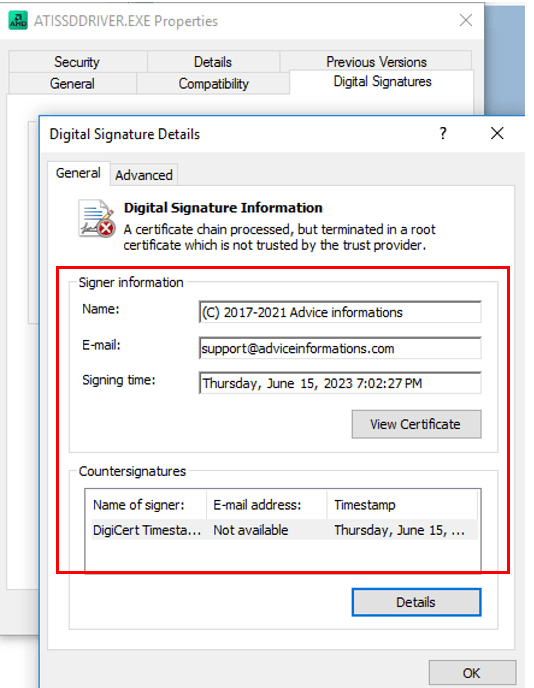
    In the campaign involving the discussed samples, the malware tries to impersonate an AMD External Data SSD driver and is signed with an “Advice informations” digital certificate in order to appear legitimate and evade detection.

    Implant impersonating AMD driver

    Digital certificate used by Grandoreiro malware

    In both cases, the malware is an executable that registers itself to be launched with Windows. However, it is worth noting that in the majority of Grandoreiro attacks, a DLL sideloading technique is employed, using legitimate binaries that are digitally signed to run the malware.

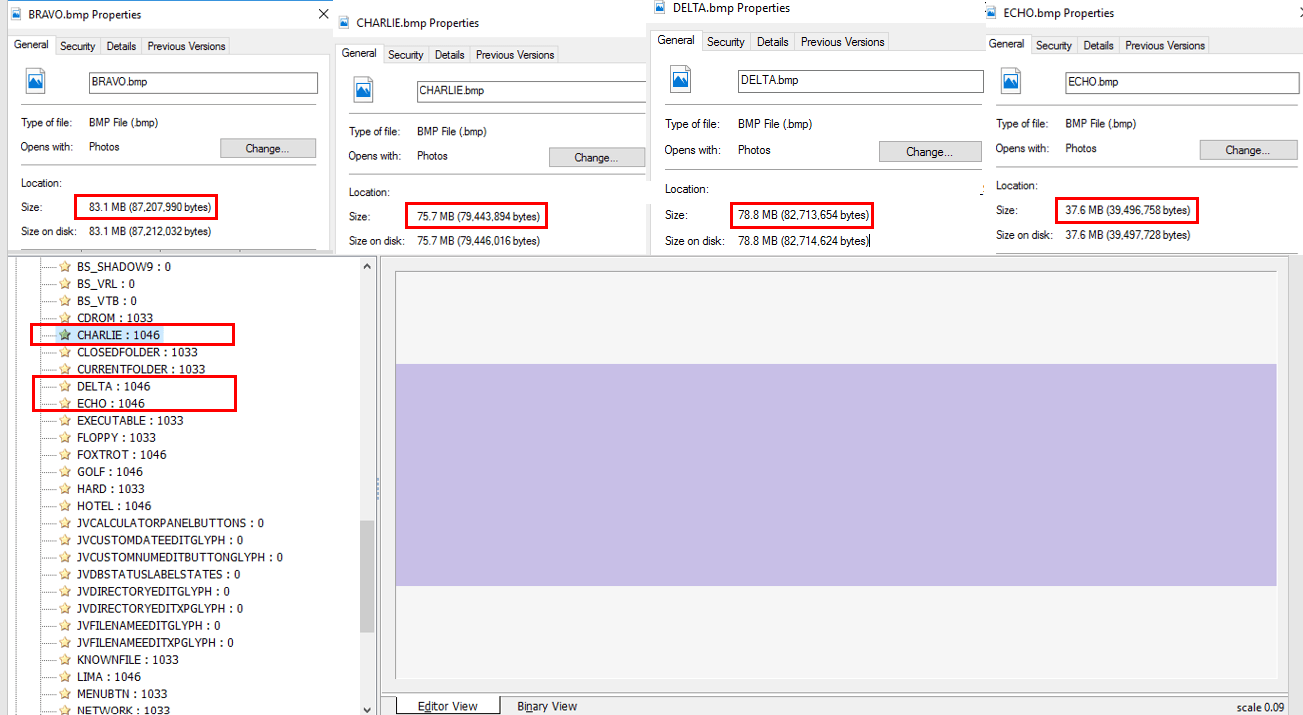
    The considerable size of the executables can be explained by the fact that Grandoreiro utilizes a binary padding technique to inflate the size of the malicious files as a way to evade sandboxes. To achieve this, the attackers add multiple BMP images to the resource section of the binary. In the example below, the sample included several big images. The sizes of the highlighted images are around 83.1 MB, 78.8 MB, 75.7 and 37.6 MB. However, there are more of them in the binary, and together all the images add ~376 MB to the file.

    Binary padding used by Grandoreiro

    In both 2022 and 2023 campaigns, Grandoreiro used a well-known XOR-based string encryption algorithm that is shared with other Brazilian malware families. The difference is the encryption key. For Grandoreiro, some magic values were the following:

    Date Encryption key
    March 2022 F5454DNBVXCCEFD3EFMNBVDCMNXCEVXD3CMBKJHGFM
    March 2022 XD3CMBKJCEFD3EFMF5454NBVDNBVXCCMNXCEVDHGFM
    August 2022 BVCKLMBNUIOJKDOSOKOMOI5M4OKYMKLFODIO
    June 2023 B00X02039AVBJICXNBJOIKCVXMKOMASUJIERNJIQWNLKFMDOPVXCMUIJBNOXCKMVIOKXCJ
    UIHNSDIUJNRHUQWEBGYTVasuydhosgkjopdf

    The various checks and validations aimed at avoiding detection and complicating malware analysis were also changed in the 2022 and 2023 versions. In contrast with the older Grandoreiro campaigns, we found that some of the tasks that were previously executed by the final payload are now implemented in the first stage loader. These tasks include security checks, anti-debugging techniques, and more. This represents a significant change from previous campaigns.

    One of these tasks is the use of the geolocation service http://ip-api.com/json to gather the target’s IP address location data. In a campaign reported in May 2023 by Trustwave, this task is performed by a JScript code embedded in an MSI installer before the delivery of the final payload.

    There are numerous other checks that have been transferred into the loader, although some of them are still present in the banking trojan itself. Grandoreiro gathers host information such as operating system version, hostname, display monitor information, keyboard layout, current time and date, time zone, default language and mouse type. Then the malware retrieves the computer name and compares it against the following strings that correspond to known sandboxes:

    • WIN-VUA6POUV5UP;
    • Win-StephyPC3;
    • difusor;
    • DESTOP2457;
    • JOHN-PC.

    Computer name validation

    It also collects the username and verifies if it matches with the “John” or “WORK” strings. If any of these validations match, the malware stops its execution.

    Grandoreiro includes detection of tools commonly used by security analysts, such as regmon.exe, procmon.exe, Wireshark, and so on. The process list varies across the malware versions, and it was significantly expanded in 2024, so we’ll share the full list later in this post. The malware takes a snapshot of currently executing processes in the system using the CreateToolhelp32Snapshot() Windows API and goes through the process list using Process32FirstW() and Process32NextW(). If any of the analysis tools exists in the system, the malware execution is terminated.

    Grandoreiro also checks the directory in which it is being executed. If the execution paths are D:programming or D:script, it terminates itself.

    Another anti-debugging technique implemented in the trojan involves checking for the presence of a virtual environment by reading data from the I/O Port “0x5658h” (VX) and looking for the VMWare magic number 0x564D5868. The malware also uses the IsDebuggerPresent() function to determine whether the current process is being executed in the context of a debugger.

    Last but not least, Grandoreiro searches for anti-malware solutions such as AVAST, Bitdefender, Nod32, Kaspersky, McAfee, Windows Defender, Sophos, Virus Free, Adaware, Symantec, Tencent, Avira, ActiveScan and CrowdStrike. It also looks for banking security software, such as Topaz OFD and Trusteer.

    In terms of the core functionality, some Grandoreiro samples check whether the following programs are installed:

    • CHROME.EXE;
    • MSEDGE.EXE;
    • FIREFOX.EXE;
    • IEXPLORE.EXE;
    • OUTLOOK.EXE;
    • OPERA.EXE;
    • BRAVE.EXE;
    • CHROMIUM.EXE;
    • AVASTBROWSER.EXE;
    • VeraCrypt;
    • Nortonvpn;
    • Adobe;
    • OneDrive;
    • Dropbox.

    If any of these is present on the system, the malware stores their names to further monitor user activity in them.

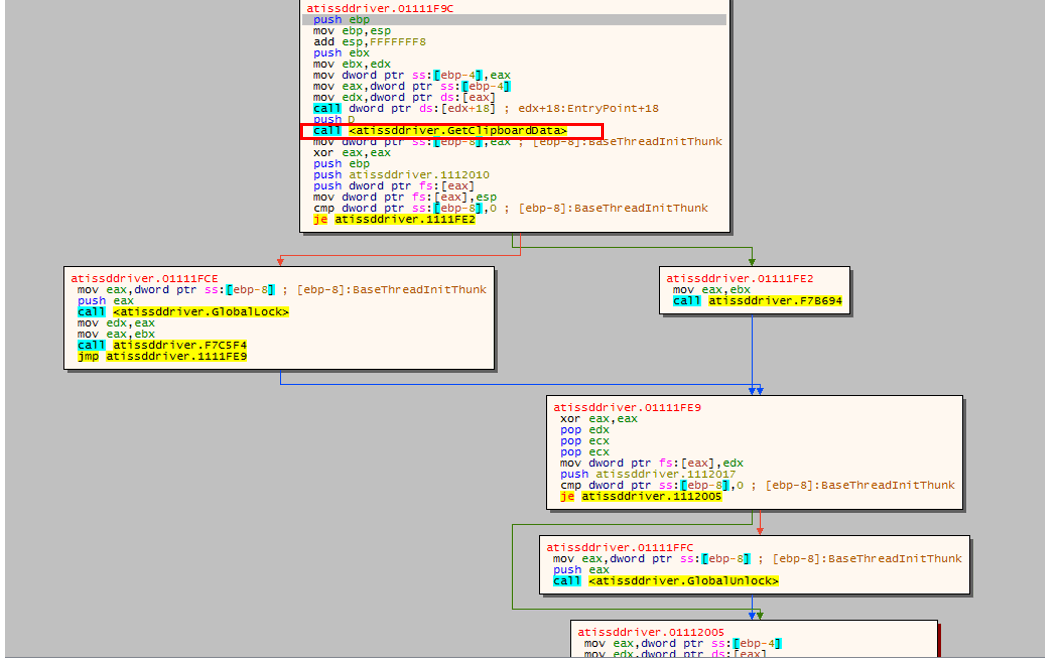
    Grandoreiro also checks for crypto wallets installed on the infected machine. The malware includes a clipboard replacer for crypto wallets, monitoring the user’s clipboard activity and replacing the clipboard data with the threat actor keys.

    Clipboard replacer

    2024 campaigns

    During a certain period of time in February 2024, a few days after the announcement of the arrest of some of the gang’s operators in Brazil, we observed a significant increase in emails detected by spam traps. There was a notable prevalence of Grandoreiro-themed messages masquerading as Mexican CFDI communications. Mexican CFDI, short for “Comprobante Fiscal Digital por Internet” is an electronic invoicing system administered by the Mexican Tax Authority (SAT — Servicio de Administración Tributaria). It facilitates the creation, transmission, and storage of digital tax documents, mandatory for businesses in Mexico to record transactions for tax purposes.

    In our investigation, we have acquired 48 samples associated not only with this instance but also with various other campaigns.

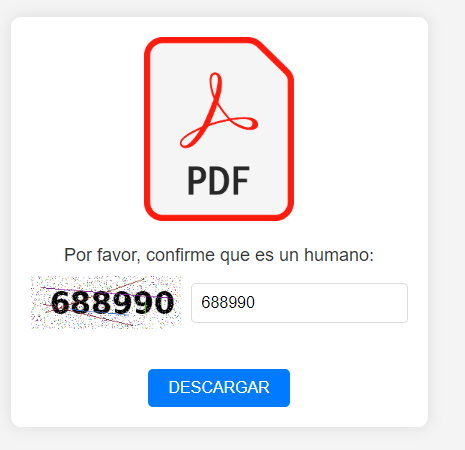
    Notably, this new campaign added a new sandbox detection mechanism, namely a CAPTCHA before the execution of the main payload, as a way to avoid the automatic analysis used by some companies:

    Grandoreiro anti-sandbox CAPTCHA

    It is worth noting that in the 2024 Grandoreiro campaigns, the new sandbox evasion code has been implemented in the downloader. Although the main sample still has anti-sandbox functionality too, if a sandbox is detected, it is simply not downloaded. Besides that, the new version also added detection of many tools to its arsenal, aiming to avoid analysis. Here is whole list of analysis tools detected by the newest versions:

    regmon.exe hopper.exe nessusd.exe OmniPeek.exe
    procmon.exe jd-gui.exe PacketSled.exe netmon.exe
    filemon.exe canvas.exe prtg.exe colasoft.exe
    Wireshark.exe pebrowsepro.exe cain.exe netwitness.exe
    ProcessHacker.exe gdb.exe NetworkAnalyzerPro.exe netscanpro.exe
    PCHunter64.exe scylla.exe OmniPeek.exe packetanalyzer.exe
    PCHunter32.exe volatility.exe netmon.exe packettotal.exe
    JoeTrace.exe cffexplorer.exe colasoft.exe tshark.exe
    ollydbg.exe angr.exe netwitness.exe windump.exe
    ida.exe pestudio.exe netscanpro.exe PRTG Probe.exe
    x64dbg.exe die.exe packetanalyzer.exe NetFlowAnalyzer.exe
    cheatengine.exe ethereal.exe packettotal.exe SWJobEngineWorker2x64.exe
    ollyice.exe Capsa.exe tshark.exe NetPerfMonService.exe
    fiddler.exe tcpdump.exe windump.exe SolarWinds.DataProcessor.exe
    devenv.exe NetworkMiner.exe PRTG Probe.exe ettercap.exe
    radare2.exe smartsniff.exe NetFlowAnalyzer.exe apimonitor.exe
    ghidra.exe snort.exe SWJobEngineWorker2x64.exe apimonitor-x64.exe
    frida.exe pcap.exe NetPerfMonService.exe apimonitor-x32.exe
    binaryninja.exe SolarWinds.NetPerfMon.exe SolarWinds.DataProcessor.exe x32dbg.exe
    cutter.exe nmap.exe ettercap.exe x64dbg.exe
    scylla.exe apimonitor.exe PCHunter64.exe x96dbg.exe
    volatility.exe apimonitor-x64.exe PCHunter32.exe fakenet.exe
    cffexplorer.exe apimonitor-x32.exe JoeTrace.exe hexworkshop.exe
    angr.exe x32dbg.exe ollydbg.exe Dbgview.exe
    pestudio.exe x64dbg.exe ida.exe sysexp.exe
    die.exe x96dbg.exe x64dbg.exe vmtoolsd.exe
    ethereal.exe fakenet.exe cheatengine.exe dotPeek.exe
    Capsa.exe hexworkshop.exe ollyice.exe procexp64.exe
    tcpdump.exe Dbgview.exe fiddler.exe procexp64a.exe
    NetworkMiner.exe sysexp.exe devenv.exe procexp.exe
    smartsniff.exe vmtoolsd.exe radare2.exe cheatengine.exe
    snort.exe dotPeek.exe ghidra.exe ollyice.exe
    pcap.exe procexp64.exe frida.exe pebrowsepro.exe
    cain.exe procexp64a.exe binaryninja.exe gdb.exe
    nmap.exe procexp.exe cutter.exe Wireshark.exe
    nessusd.exe regmon.exe hopper.exe ProcessHacker.exe
    PacketSled.exe procmon.exe jd-gui.exe SolarWinds.NetPerfMon.exe
    prtg.exe filemon.exe canvas.exe NetworkAnalyzerPro.exe

    These are some RAT features that we found in this version:

    • Auto-update feature allows newer versions of the malware to be deployed to the victim’s machine;
    • Sandbox/AV detection, still present in the main module, which includes more tools than previous versions;
    • Keylogger feature;
    • Ability to select country for listing victims;
    • Banking security solutions detection;
    • Checking geolocation information to ensure it runs in the target country;
    • Monitoring Outlook emails for specific keywords;
    • Ability to use Outlook to send spam emails.

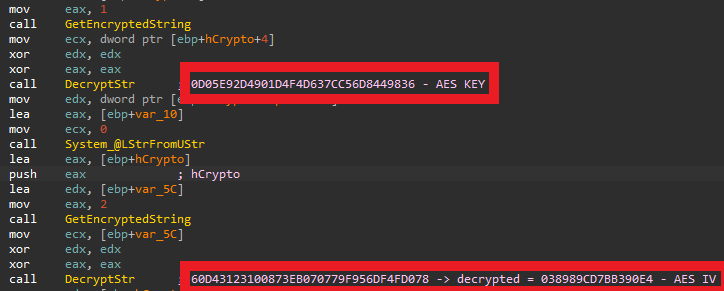
    In terms of static analysis protection, in 2024 versions, Grandoreiro has implemented enhanced encryption measures. Departing from its previous reliance on commonly shared encryption algorithms found in other malware, Grandoreiro has now adopted a multi-layered encryption approach. The decryption process in the newer versions is the following. Initially, the string undergoes deobfuscation through a simple replacement algorithm. Following this, Grandoreiro employs the encryption algorithm based on XOR and conditional subtraction typically utilized by Brazilian malware; however, it differs from them by incorporating a lengthy, 140759-byte string instead of smaller magic strings we saw in 2022 and 2023 samples. Subsequently, the decrypted string undergoes base64 decoding before being subjected to decryption via the AES-256 algorithm. Notably, the AES key and IV are encrypted within Grandoreiro’s code. Upon completion of all these steps, the decrypted string is successfully recovered.

    Grandoreiro AES key and IV

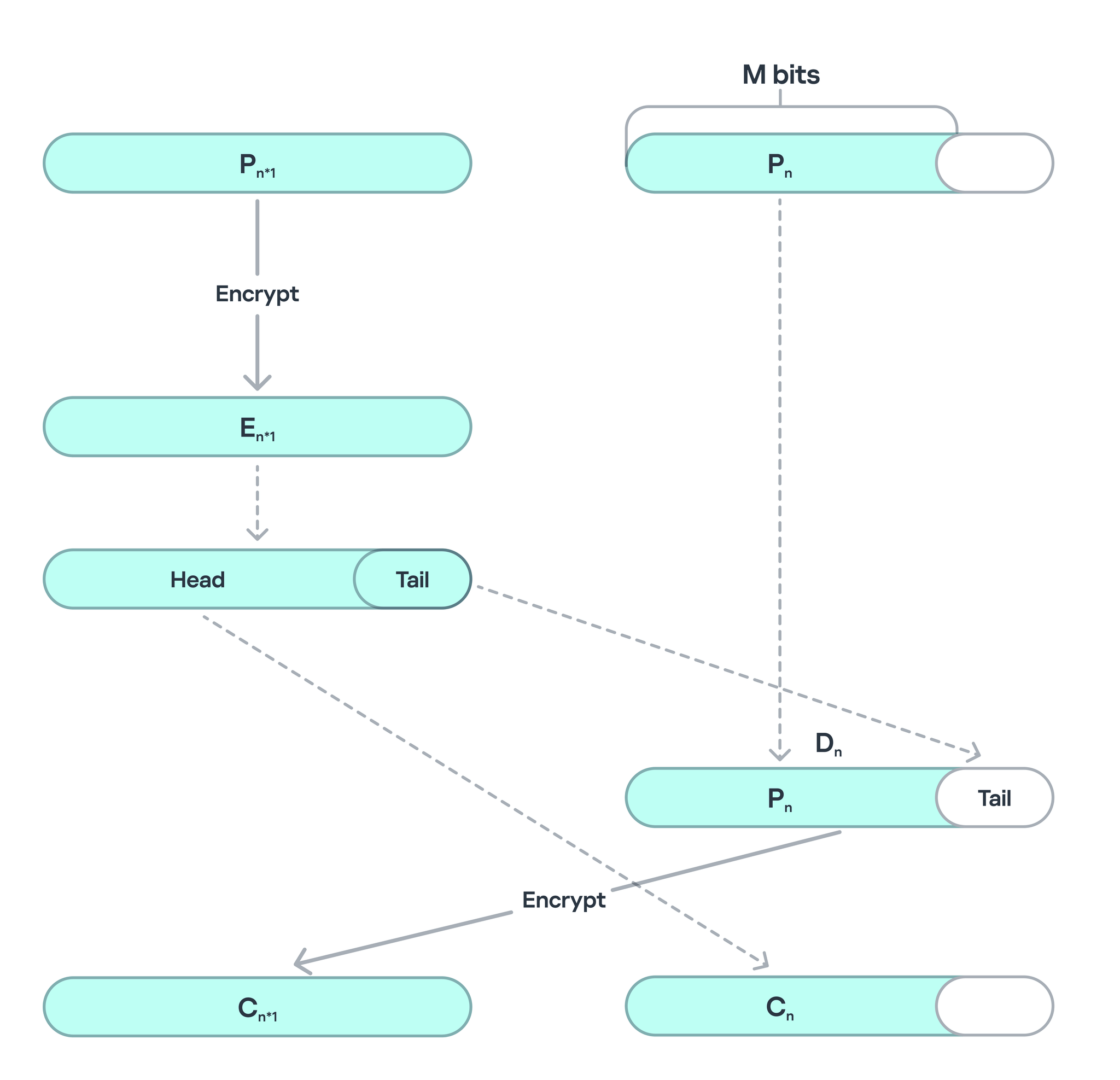
    In newer samples, Grandoreiro upgraded yet again the encryption algorithm using AES with CTS, or Ciphertext Stealing, a specialized encryption mode used when the plaintext is not a multiple of the block size, which in this case is the 128-bit (16-byte) block size used by AES. Unlike more common padding schemes, such as PKCS#7, where the final block is padded with extra bytes to ensure it fits a full block, CTS operates without padding. Instead, it manipulates the final partial block of data by encrypting the last full block and XORing its output with the partial block. This allows encryption of any arbitrary-length input without adding extra padding bytes, preserving the original size of the data.

    ECB Encryption Steps for CTS

    In the case of Grandoreiro, the malware’s encryption routine does not add standard padding to incomplete blocks of data. Their main goal is to complicate analysis: it takes time to figure out that CTS was used, and then more time to implement decryption in this mode, which makes the extraction and obfuscation of strings more complicated. This marks the first time this particular method has been observed in a malware sample.

    As the threat actors continue to evolve their techniques, changing the encryption in every iteration of the malware, the use of CTS in malware may signal a shift toward more advanced encryption practices.

    Local versions: old meets new

    In a recent campaign, our analysis has revealed the existence of an older variant of the malware that utilizes legacy encryption keys, outdated algorithms, and a simplified structure, but which runs in parallel to the campaign using the new code. This variant targets fewer banks — about 30 financial institutions, mainly from Mexico. This analysis clearly indicates that another developer, likely with access to older source code, is conducting new campaigns using the legacy version of the malware.

    How they steal your money

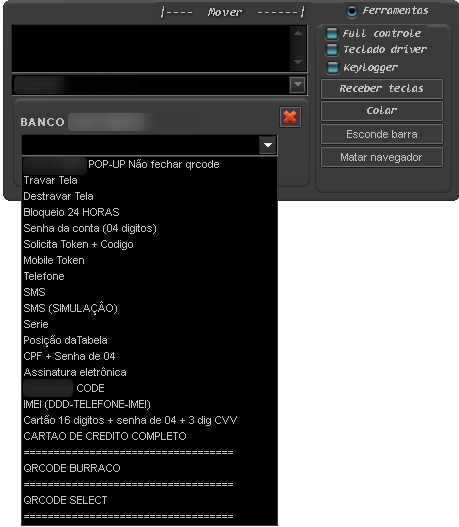
    Operators behind Grandoreiro are equipped with a wide variety of remote commands, including an option to lock the user screen and present a custom image (overlay) to ask the victim for extra information. These are usually OTPs (one-time passwords), transaction passwords or tokens received by SMS, sent by financial institutions.

    A new tactic that we have discovered in the most recent versions found in July 2024 and later suggests that the malware is capturing user input patterns, particularly mouse movements, to bypass machine learning-based security systems. Two specific strings found in the malware — “GRAVAR_POR_5S_VELOCIDADE_MOUSE_CLIENTE_MEDIA” (“Record for 5 seconds the client’s average mouse speed”) and “Medição iniciada, aguarde 5 segundos!” (“Measurement started, please wait 5 seconds!”) — indicate that Grandoreiro is monitoring and recording the user’s mouse activity over a short period. This behavior appears to be an attempt to mimic legitimate user interactions in order to evade detection by anti-fraud systems and security solutions that rely on behavioral analytics. Modern cybersecurity tools, especially those powered by machine learning algorithms, analyze user’s behavior to distinguish between human users and bots or automated malware scripts. By capturing and possibly replaying these natural mouse movement patterns, Grandoreiro could trick these systems into identifying the activity as legitimate, thus bypassing certain security controls.

    This discovery highlights the continuous evolution of malware like Grandoreiro, where attackers are increasingly incorporating tactics designed to counter modern security solutions that rely on behavioral biometrics and machine learning.

    To perform the cash-out in the victim’s account, Grandoreiro operators’ options are to transfer money to the account of local money mules, using transfer apps, buy cryptocurrency or gift cards, or even going to an ATM. Usually, they search for money mules in Telegram channels, paying $200 to $500 USD per day:

    Grandoreiro operator looking for money mules

    Infrastructure

    The newest Grandoreiro version uses 3 Domain Generation Algorithms (DGAs), generating valid domains for command and control (C2) communications. The algorithm uses the current daytime to select strings of predefined lists and concatenates them with a magic key to create the final domain.

    By dynamically generating unique domain names based on various input data, the algorithm complicates traditional domain-based blocking strategies. This adaptability allows the malicious actors to maintain persistent command-and-control communications, even when specific domains are identified and blacklisted, requiring security solutions to base their protection not on a fixed list of domains, but on an algorithm for generating them.

    Since early 2022, Grandoreiro leverages a known Delphi component shared among different malware families named RealThinClient SDK to remotely access victim machines and perform fraudulent actions. This SDK is a flexible and modular framework for building reliable and scalable Windows HTTP/HTTPS applications with Delphi. By using RealThinClient SDK, the program can handle thousands of active connections in an efficient multithreaded manner.

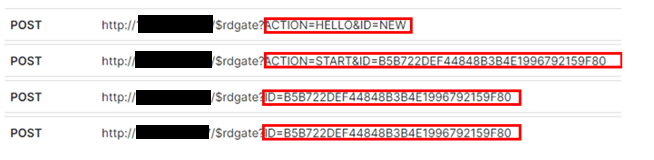
    Grandoreiro C2 Communication

    Operator tool

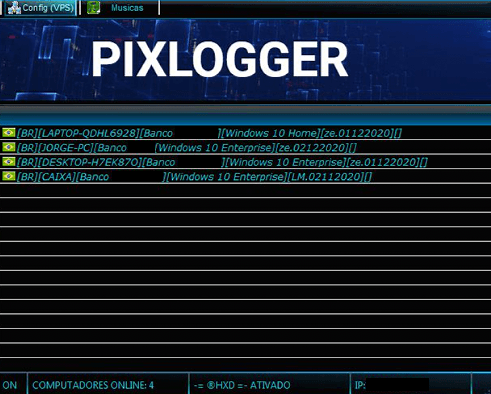
    Grandoreiro’s Operator is the tool that allows the cybercriminal to remotely access and control the victim’s machine. It’s a Delphi-based software that lists its victims whenever they start browsing a targeted financial institution website.

    Grandoreiro’s Operator tool

    Once the cybercriminal chooses a victim to operate on, they will be presented with the following screen, seen in the image below, which allows many commands to be executed and visualizes the victim’s desktop.

    Grandoreiro’s Operator commands

    Cloud VPS

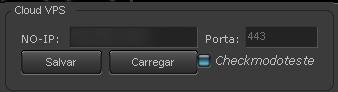
    One overlooked feature of the Grandoreiro malware is what is called “Cloud VPS” by the attackers — it allows cybercriminals to set up a gateway computer between the victim’s machine and the malware operator, thus hiding the cybercriminal’s real IP address.

    This is also used by them to make investigation harder, as the first thing noted is the gateway’s IP address. When requesting a seizure, an investigator just finds the gateway module. Meanwhile, the criminal has already set up a new gateway somewhere else and new victims connect to the new one through its DGA.

    Grandoreiro Cloud VPS

    Victims and targets

    The Grandoreiro banking trojan is primed to steal the credentials accounts for 1,700 financial institutions, located in 45 countries and territories. After decrypting the strings of the malware, we can see the targeted banks listed separated by countries/territories. This doesn’t mean that Grandoreiro will target a specific bank from the list; it means it is ready to steal credentials and act, if there is a local partner or money mule who can operationalize and complete the action. The banks targeted by Grandoreiro are located in Algeria, Angola, Antigua and Barbuda, Argentina, Australia, Bahamas, Barbados, Belgium, Belize, Brazil, Canada, Cayman Islands, Chile, Colombia, Costa Rica, Dominican Republic, Ecuador, Ethiopia, France, Ghana, Haiti, Honduras, India, Ivory Coast, Kenya, Malta, Mexico, Mozambique, New Zealand, Nigeria, Panama, Paraguay, Peru, Philippines, Poland, Portugal, South Africa, Spain, Switzerland, Tanzania, Uganda, United Kingdom, Uruguay, USA, and Venezuela. It’s important to note that the list of targeted banks and institutions tend to slightly change from one version to another.

    From January to October 2024, our solutions blocked more than 150,000 infections impacting more than 30,000 users worldwide, a clear sign the group is still very active. According to our telemetry, the countries most affected by Grandoreiro infections are Mexico, Brazil, Spain, and Argentina, among many others.

    Conclusion

    We understand how difficult it is to eradicate a malware family, but it is possible to impede their operation with the cooperation of law enforcement agencies and the private sector — modern financial cybercrime can and must be fought.

    Brazilian banking trojans are already an international threat; they’re filling the gaps left by Eastern European gangs who have migrated into ransomware. We know that in some countries, internet banking is declining on desktops, forcing Grandoreiro to target companies and government entities who are still using operating in that way.

    The threat actors behind the Grandoreiro banking malware are continuously evolving their tactics and malware to successfully carry out attacks against their targets and evade security solutions. Kaspersky continues to cooperate with INTERPOL and other agencies around the world to fight the Grandoreiro threat among internet banking users.

    This threat is detected by Kaspersky products as HEUR:Trojan-Banker.Win32.Grandoreiro, Trojan-Downloader.OLE2.Grandoreiro, Trojan.PDF.Grandoreiro and Trojan-Downloader.Win32.Grandoreiro.

    For more information, please contact: crimewareintel@kaspersky.com

    Indicators of Compromise

    Host based
    f0243296c6988a3bce24f95035ab4885
    dd2ea25752751c8fb44da2b23daf24a4
    555856076fad10b2c0c155161fb9384b
    49355fd0d152862e9c8e3ca3bbc55eb0
    43eec7f0fecf58c71a9446f56def0240
    150de04cb34fdc5fd131e342fe4df638
    b979d79be32d99824ee31a43deccdb18

    MIL OSI Global Banks

  • MIL-OSI Canada: Statement by Minister Sean Fraser on status of Negotiations with Provinces and Territories to Address Encampments

    Source: Government of Canada News

    As much progress as Canada makes to solve the housing crisis, it will not be over as long as there are people living in tents.

    As much progress as Canada makes to solve the housing crisis, it will not be over as long as there are people living in tents.

    On September 18, 2024, I sent a letter to each province and territory asking them to partner with the federal government to urgently find shelter for those experiencing homelessness or living in encampments. In the letter, we offered millions of dollars in additional funding in exchange for partnering with us and matching our contributions.

    The funding on offer is the $250 million we announced to address the urgent issue of encampments and unsheltered homelessness in Budget 2024. This is in addition to federal investments through the:

    • Reaching Home program to prevent and reduce homelessness;
    • Affordable Housing Fund and bilateral agreements under the National Housing Strategy to build affordable and supportive housing;
    • Co-operative Housing Development Program to support growth in the co-op sector;
    • Apartment Construction Loan Program to build more rental homes in the market for middle-class Canadians; and
    • Housing Accelerator Fund to help cities make it easier to build more homes, faster.

    One month has passed since we made the offer. To date, the following provinces have not formally responded to us to help find homes for those in need, and end encampments in their respective jurisdictions:

    • Alberta
    • Ontario
    • Saskatchewan

    While some have since entered election periods, there was ample engagement before the letter was sent, and there is no longer time to wait as the weather gets colder. In these cases – along with any others who do not take quick action  – we are now approaching municipalities directly to work with them, urgently.

    If a province or territory partners with us, they will be able to select the communities that will get funding from us. Should they wish to forego a partnership with us, we will rely on the best available data to inform our decisions.

    We will approach five cities first given their readiness to quickly adopt cost-matched responses. They are: Calgary, Edmonton, Toronto, Regina, and Saskatoon. This list is not exhaustive, as we will be approaching more communities that have demonstrated an ability to quickly respond to encampments.

    No one level of government can tackle the housing crisis, or support those in need, alone. I am disappointed that these provincial governments are not willing to partner with us, as it means we cannot support as many communities as we would have been able to had they come to the table with funding and solutions. But, let me be clear: we will no longer wait for them to muster the political will to act as winter gets closer and lives are put at risk. 

    MIL OSI Canada News

  • MIL-OSI Security: O-Chi-Chak-Ko-Sipi First Nation — Ste. Rose du Lac RCMP investigating homicide

    Source: Royal Canadian Mounted Police

    On October 21, 2024, at 1:00 am, Ste. Rose du Lac RCMP responded to a report of a shooting in O-Chi-Chak-Ko-Sipi First Nation (Crane River).

    Officers attended to a residence in the community and located a 35-year-old male suffering from a gunshot wound. They assisted two residents with life-saving measures until EMS arrived but the victim succumbed to his injuries and was pronounced deceased on scene.

    A few hours after the shooting, a 14-year-old male youth from the community, approached officers on scene and turned himself in to police in relation to this homicide.

    On October 21, the 14-year-old male was charged with 2nd Degree Murder and remanded into custody.

    Ste. Rose du Lac RCMP, along with RCMP Major Crime Services and RCMP Forensic Identification Services, continue to investigate.

    MIL Security OSI

  • MIL-OSI Security: Yellowknife — Yellowknife RCMP respond to armed robbery

    Source: Royal Canadian Mounted Police

    On the evening of October 1st, Yellowknife RCMP responded to a report of an armed robbery. Two male subjects were reported to have approached a victim as they were exiting their vehicle and demanded the keys while brandishing a knife. The subjects then fled in the vehicle.

    The vehicle and suspects remain at large.

    The stolen vehicle is described as a 2017 Mercedes Benz C-Class sedan, silver in color, bearing NT licence plate 368137.

    One suspect, who reportedly concealed his face, is described as being a black male of very thin build, approximately 5’11” tall wearing black pants and a grey or black coat.

    The second suspect is described as being a black male of medium build, approximately 5’8″ tall, with hair styled into corn rows.

    Anyone with information on the whereabouts of the vehicle or suspects is asked not to approach, but to contact the Yellowknife RCMP at 669-1111 or Crime Stoppers at http://www.p3tips.com. In the event of an emergency call, 911.

    MIL Security OSI

  • MIL-OSI Security: Yellowknife — Yellowknife RCMP investigating vandalized police, municipal enforcement vehicles

    Source: Royal Canadian Mounted Police

    On September 29th, 2024, it was discovered that four Municipal enforcement vehicles and one marked RCMP police vehicle had been spray painted at City Hall and the RCMP detachment respectively. A lone subject appears to have been responsible for all five vandalized vehicles.

    The matter remains under investigation at this time. No arrests have been made.

    Anyone who has information is asked to contact the Yellowknife RCMP at 669-1111 or Crime Stoppers at http://www.p3tips.com. In the event of an emergency call, 911.

    MIL Security OSI

  • MIL-OSI Security: Norman Wells — Norman Wells RCMP charge second suspect in weekend assaults

    Source: Royal Canadian Mounted Police

    On September 22nd, 2024, Norman Wells RCMP responded to an altercation at a residence in the community which resulted in serious injuries and involved the use of weapons. A press release was issued on September 24th, 2024 detailing that officers had taken 23-year-old Teagan Sutherland into custody in relation to the matter.

    Since the issuing of the aforementioned press release, Norman Wells RCMP have now charged a second suspect in the altercation, 24-year-old Dallas McCauley, with the following:

    • Breaking and entering with intent, contrary to section 348(1)(a) of the Criminal Code
    • Aggravated assault, contrary to section 268(2) of the Criminal Code
    • Disguised with intent to commit an offence, contrary to section 351(2) of the Criminal Code
    • Possession of a weapon for a dangerous purpose (2 counts), contrary to section 88(1) of the Criminal Code

    A warrant has been issued for the arrest of McCauley, who is believed to be hiding in the community.

    At the time of the altercation, McCauley was already subject to an arrest warrant for prior offences, including Uttering threats and Failure to comply with a probation order.

    Norman Wells RCMP are asking anyone with information on McCauley’s whereabouts not to approach him and to contact the detachment at 587-1111 or Crimestoppers at http://www.p3tips.com.

    MIL Security OSI

  • MIL-OSI Security: Hay River — Hay River RCMP dismantle illicit cannabis grow

    Source: Royal Canadian Mounted Police

    In August of 2024, Hay River RCMP officers responded to a call for service at a residence in Hay River. While in attendance at the residence, officers noted a large number of cannabis plants on the property.

    On September 6th, 2024, after receiving judicial authorization, officers attended the residence again and executed a search warrant under the authority of the Cannabis Act. 40 cannabis plants were seized, ten times what is currently permitted under the Cannabis Act.

    A 70-year-old Hay River man has been charged with possessing more than four cannabis plants, contrary to section 8(1) of the Cannabis Act, and will appear in court at a later date.

    MIL Security OSI

  • MIL-OSI Canada: CRTC adds Uvagut TV to basic TV package in Canada

    Source: Government of Canada News

    Today, the CRTC approved the addition of Uvagut TV, a channel offered by the Nunavut Independent Television Network, to the basic TV package in Canada.

    October 22, 2024—Ottawa–Gatineau—Canadian Radio-television and Telecommunications Commission (CRTC)

    Today, the CRTC approved the addition of Uvagut TV, a channel offered by the Nunavut Independent Television Network, to the basic TV package in Canada.

    Uvagut TV primarily offers programming in Inuktut, which will provide Inuit communities, who previously lacked access, with culturally relevant content. This addition also enriches the diversity of programming available to all Canadians.

    The CRTC received more than 5,000 comments from the public in support of the addition of an Inuit television service to the basic TV package.

    Importantly, Uvagut TV will be included in the basic TV package without increasing its maximum monthly cost of $25.

    Associated links

    General Inquiries
    Telephone: 819-997-0313
    Toll free: 1-877-249-CRTC (2782)
    TTY: 819-994-0423

    MIL OSI Canada News

  • MIL-OSI Security: Norman Wells — Norman wells RCMP respond to serious assaults

    Source: Royal Canadian Mounted Police

    On September 22nd, 2024, Norman Wells RCMP received a report that a person had been stabbed at a residence. Officers attended the location and confirmed a person had been the victim of a stabbing.

    Further investigation revealed a significant altercation had occurred at the residence and another person had been both shot with a crossbow and bear-sprayed. Both victims were transported out of the community for treatment.

    Police subsequently located and took 23-year-old Teagan Sutherland into custody in relation to the matter. He has been charged with:

    • Breaking and Entering with Intent, contrary to section 348(1)(a) of the Criminal Code
    • Disguised with intent to commit an offence, contrary to section 351(2) of the Criminal Code
    • Uttering threats against a person (2 counts), contrary to section 264.1(1)(a) of the Criminal Code
    • Possession of a weapon for a dangerous purpose, contrary to section 88(1) of the Criminal Code
    • Aggravated Assault, contrary to section 268(2) of the Criminal Code

    At the time of his arrest, Sutherland had an active warrant for his arrest and was already facing charges from a prior incident on September 11th, 2024. They are as follows:

    • Breaking and Entering with Intent, contrary to section 348(1)(a) of the Criminal Code
    • Disguised with intent to commit an offence (2 counts), contrary to section 351(2) of the Criminal Code
    • Possession of a weapon for a dangerous purpose (2 counts), contrary to section 88(1) of the Criminal Code.
    • Assault with a weapon (2 counts), contrary to section 267(a) of the Criminal Code
    • Uttering threats against a person, contrary to section 264.1(1)(a) of the Criminal Code

    Sutherland has appeared before a Justice of the Peace on all charges and was remanded into custody to appear again on September 25th, 2024

    Investigation into this matter remains ongoing at this time.

    Norman Wells RCMP are aware that several people witnessed this event and are asking those witnesses to contact the Norman Wells detachment at 587-1111 or Crimestoppers at http://www.p3tips.com.

    MIL Security OSI

  • MIL-OSI USA: DOD, German Ministry of Defence Enter Into Security of Supply Arrangement

    Source: United States Department of Defense

    The Department of Defense (DoD) entered into a bilateral, non-binding Security of Supply Arrangement (SOSA) with the Federal Ministry of Defence for the Federal Republic of Germany (DEU MOD). The arrangement will enable both the U.S. and Germany to acquire the industrial resources they need to quickly meet defense requirements, resolve unanticipated disruptions that challenge defense capabilities, and promote supply chain resiliency.

    The SOSA was signed on October 22, 2024 by Under Secretary of Defense for Acquisition and Sustainment, Dr. William LaPlante, on behalf of the United States and the Head of the Directorate-General for Equipment within the Federal Ministry of Defence, Vice Admiral Carsten Stawitzki, on behalf of Germany in Brussels, Belgium.

    “This SOSA is an important step forward and further strengthens the robust defense partnership between Germany and the United States,” said Dr. LaPlante.

    Through this arrangement, the U.S. and Germany commit intent to support one another’s priority delivery requests for procurement of critical national defense resources. The U.S. will provide Germany some assurances under the U.S. Defense Priorities and Allocations System, with program determinations by the DoD and rating authorizations by the Department of Commerce. Germany will in turn establish a government-industry Code of Conduct with its industrial base, in which German firms will voluntarily agree to make every reasonable effort to provide the U.S. with priority support. Participation in this Code of Conduct is made voluntarily.

    SOSAs are an important mechanism for DoD to strengthen interoperability and are a proven supply chain tool for enabling a resilient, global defense ecosystem for the U.S. and key partners and allies. The arrangements institute working groups, establish communication mechanisms, streamline DoD processes, and proactively act to allay anticipated supply chain issues in peacetime, emergency, and armed conflict.

    Germany is the nineteenth SOSA partner of the United States. Other SOSA signatories include Australia, Canada, Denmark, Estonia, Finland, India, Israel, Italy, Japan, Latvia, Lithuania, the Netherlands, Norway, Singapore, Spain, South Korea, Sweden, and the United Kingdom. For more information on SOSAs, visit: https://www.businessdefense.gov/security-of-supply.html

    About the Office of the Assistant Secretary of Defense for Industrial Base Policy (OASD (IBP):

    The OASD IBP works with domestic and international partners to forge and sustain a robust, secure, and resilient industrial base enabling the warfighter, now and in the future.

    MIL OSI USA News

  • MIL-OSI Security: Yukon — The Yukon RCMP wishes to inform the public of the arrest of the alleged perpetrator of the offences committed in Mayo (Yukon)

    Source: Royal Canadian Mounted Police

    Yukon RCMP would like to advise the public that the perpetrator believed to have committed the offences in Mayo, Yukon related to the home invasion and sexualized assault, including the stolen vehicle, has been arrested. The stolen vehicle was located. More details will be released at a later date. Mayo RCMP would like to thank the public for all their assistance with this investigation.

    Our thoughts are with the victim at this time. Please consider the following supports available in the Yukon if you or someone you know may be in need.

    SART: The Yukon’s Sexualized Assault Response Team (SART) provides a safe and confidential network of services focused on the needs and choices of individuals. SART is available to people of all genders, ages, and sexual orientations who have experienced sexualized assault.

    Website: https://yukon.ca/en/sartyukon/home

    Phone: 1-844-967-7275 (available 24/7)

    Victim Services: Victim Services provides services and help for victims of sexualized violence and all other crimes, regardless of whether or not the victim has reported the crime, a charge has been laid, or there has been a conviction.

    Website: https://yukon.ca/en/legal-and-social-supports/supports-victims-crime/find-out-about-victim-services

    MIL Security OSI

  • MIL-OSI Security: U.S. 7th Fleet Destroyer and The Royal Canadian Navy Conduct Bilateral Transit in the Taiwan Strait

    Source: United States INDO PACIFIC COMMAND

    The Arleigh Burke-class guided-missile destroyer USS Higgins (DDG 76) and Royal Canadian Navy Halifax-class frigate HMCS Vancouver (FFH 331) conducted a routine Taiwan Strait transit on Oct. 20 (local time) through waters where high-seas freedom of navigation and overflight apply in accordance with international law. The ship transited through a high seas corridor in the Strait that is beyond the territorial sea of any coastal state. Higgins and Vancouver’s transit through the Taiwan Strait demonstrated the United States’ and Canada’s commitment to upholding freedom of navigation for all nations as a principle. The international community’s navigational rights and freedoms in the Taiwan Strait should not be limited. The United States rejects any assertion of sovereignty or jurisdiction that is inconsistent with freedoms of navigations, overflight, and other lawful uses of the sea and air.

    MIL Security OSI

  • MIL-OSI Security: Mings Bight — Missing person: Help the RCMP find Barry Everett Pinksen

    Source: Royal Canadian Mounted Police

    Springdale RCMP is asking for the public’s assistance in locating 54-year-old Barry Everett Pinksen who was last seen yesterday evening in Mings Bight.

    Pinksen is described as 5’10 and approximately 180 lbs. He has hazel eyes and is balding. Pinksen was last seen wearing army green camo pants and a multi-coloured shirt.

    At this time, investigators believe Pinksen may be driving a blue Honda Civic with Newfoundland and Labrador licence plate JOV042.

    When someone goes missing, it has deep and far-reaching impacts for the person and those who know them. We ask that people spread the word through social media respectfully.

    Anyone with information on the whereabouts of Barry Everett Pinksen is asked to contact the Springdale RCMP at 709-673-3864 or your local police. To remain anonymous, call Newfoundland and Labrador Crime Stoppers, toll-free, at 1-800-222-TIPS (8477), submit a secure web tip at http://www.nlcrimestoppers.com, or use the P3 Tips app.

    File #: 2024-1547863

    MIL Security OSI

  • MIL-OSI Global: B.C. election tells the tale of two British Columbias divided along ideological fault lines

    Source: The Conversation – Canada – By Philip Resnick, Professor Emeritus, Political Science, University of British Columbia

    The British Columbia election has turned out to be a nail-biter. Throughout the four-week campaign, the polls predicted a very close race between the incumbent NDP led by David Eby and a newly rejuvenated Conservative Party under the leadership of John Rustad. Those polls turned out to be accurate as no clear winner has emerged in the hours after British Columbians cast their ballots.

    The B.C. Liberal Party, a right-of-centre amalgam of Liberal and Conservative voters federally that had ruled the province between 2001-2017, disappeared from the scene, resulting in a political realignment — New Democrats vs. Conservatives — and matching what has become the norm in Canada’s three other western provinces.

    As I write this, the NDP leads or is elected in 46 seats, the Conservatives in 45, with the Green Party’s two elected members holding the balance of power. The results are so close in several ridings that it may be at least another week for outstanding mail ballots to come in and recounts to occur before knowing the definitive result.

    Parallels to previous elections

    In one way, the 2024 election is a repeat of the 2017 vote, when the B.C. Liberals and the NDP were just two seats apart. The Greens threw their three seats behind the NDP to pave the way for an NDP government. The same may well prove to be the case this time around once the dust has settled.

    In another way, this election is reminiscent of 1952, when a newly led Social Credit party under W.A.C. Bennett came out of nowhere to topple the old-line Liberal and Conservative parties, edge out the CCF (the Co-operative Commonwealth Federation) — predecessor to today’s NDP — by a single seat and go on to rule the province for a full 20 years.


    Read more:
    How the British Columbia election is being haunted by the ghosts of 1952


    In 1951, Bennett had broken with his party, the Conservatives, to sit as an Independent MLA. Rustad had been turfed out of his party, the B.C. Liberals, to sit as an Independent MLA, before assuming the leadership of a B.C.’s dormant Conservative Party. The Conservatives had not held a seat in the provincial legislature for almost 50 years, and had last won a provincial election in 1928.

    Yet in 2024, with 43.5 per cent of the popular vote compared to the NDP’s 44.5 per cent, Rustad’s party is a major contender for power.

    Geographical and ideological divides

    What the election results ultimately show is that there are two British Columbias. The NDP tends to dominate on the coast, with a clear majority of the seats in the Lower Mainland and on Vancouver Island. The Conservatives dominate the B.C. Interior of the province, with a fair sprinkling of suburban seats in the Lower Mainland as well.

    Beyond the geographical divide lies a deeper ideological one. In some ways it parallels the old divide between a more free-enterprise oriented party and one with a stronger commitment to the welfare state. Rustad said as much in his speech on election night. But there is more to the story than that.

    The NDP, after all, has become much more of a centrist party than it was previously, in particular when it governed the province under Dave Barrett between 1972 and 1975.

    It’s no accident that in the 2024 election, no small number of federal Liberal supporters voiced their support for the NDP rather than the Conservatives. With respect to issues like gun control, protection of the environment, reconciliation with Indigenous Peoples or vaccine mandates during pandemics, their views align more closely with the NDP than the Conservatives.

    The Conservatives, on the other hand, spoke to the frustrations many British Columbians feel in terms of the housing affordability crisis, the serious shortcomings in the province’s health-care system and the toxic drug crisis in B.C. cities. Eby admitted as much in his own election night speech.

    The B.C. Conservatives’ call for change echoed what federal Conservative Leader Pierre Poilievre has been saying at the federal level. Not surprisingly, support for the Conservatives provincially closely matches for support for the federal Conservatives in the province.

    Governing from the centre

    British Columbia is clearly polarized politically, a phenomenon we’re seeing even more distinctly south of the border and in various European countries.

    The task of governing from the centre — on the assumption that the NDP and Greens reach a confidence-and-supply agreement — may therefore prove a more challenging one than before due to a much empowered Conservative opposition.

    But had the Conservatives won a clear mandate to govern, they would have faced significant opposition from the more liberal-minded sections of the population given some of the party’s hard-line positions on unabashed resource development, Indigenous reconciliation and the role of private versus public providers in the health-care system.

    Such is the state of play in Canada’s westernmost province.

    Philip Resnick does not work for, consult, own shares in or receive funding from any company or organisation that would benefit from this article, and has disclosed no relevant affiliations beyond their academic appointment.

    ref. B.C. election tells the tale of two British Columbias divided along ideological fault lines – https://theconversation.com/b-c-election-tells-the-tale-of-two-british-columbias-divided-along-ideological-fault-lines-241767

    MIL OSI – Global Reports

  • MIL-OSI Canada: Small Business Week: Parliamentary Secretary Yao

    Source: Government of Canada regional news

    “Small businesses are the backbone of Alberta’s economy, driving innovation, creating jobs and enriching our local communities.

    “Small businesses make up about 95 per cent of all businesses and employ almost 35 per cent of all private sector employees across the province, a testament to the entrepreneurial and innovative spirit of Albertans.

    “Almost 19 per cent, or one out of every five Albertans, are starting or have recently opened a business. The impact of small businesses is far-reaching. Their contributions matter deeply to their neighbours, families, friends and communities who support them.

    “Small Business Week gives us all the opportunity to celebrate the hard work and dedication of our entrepreneurial community. They employ hundreds of thousands of hard-working Albertans across the province and their ingenuity, hard work and creativity spurs new economic opportunities for Alberta. The simple fact is: when small businesses thrive, so does Alberta.

    “In honour of Small Business Week, I encourage everyone to take this opportunity to shop local, support Alberta’s entrepreneurs and celebrate the business landscape that makes our province so unique.

    “Working alongside our business community, we can build a more prosperous future for our province.”

    Related information

    • Small business resources

    MIL OSI Canada News

  • MIL-OSI Security: Turtleford — Turtleford RCMP seek public assistance locating missing 33-year-old man

    Source: Royal Canadian Mounted Police

    Turtleford RCMP is seeking the public’s assistance to help locate 33-year-old Kristian Klassan. Kristian was last seen Friday at a residence in Turtleford. He may be in the Macklin/Unity or Turtleford areas, but this is not confirmed.

    Kristian is described as being 6’1″ tall with a slim build, blue eyes and he shaved his head since the attached photo was taken, so he currently has no hair. He was last seen wearing a red shirt with a Fireball logo on it, tan pants, blue runners and baseball hat. He has a black sleeve tattoo on his left arm. He may be driving a silver 2002 Nissan Pathfinder with SK license 443 NKC and a missing front bumper.

    If you have seen Kristian or know where he is, contact Turtleford RCMP at 310-RCMP. Information can also be submitted anonymously by contacting Saskatchewan Crime Stoppers at 1-800-222-TIPS (8477) or http://www.saskcrimestoppers.com.

    MIL Security OSI

  • MIL-OSI Security: Chiasson Office  — Have you seen this stolen ATV?

    Source: Royal Canadian Mounted Police

    The Lamèque RCMP is asking for the public’s help to locate a stolen all-terrain vehicle (ATV) from Chiasson Office, N.B.

    The theft is believed to have occurred sometime between October 11, 2024, and the afternoon of October 14, 2024, at a residence on Chiasson Road, in Chiasson Office.

    The ATV is described as a grey 2012 Can-Am Outlander 650 Max XT with New Brunswick licence plate YE2884, and vehicle identification number 3JBEPXJ18CJ000464.

    If you have seen the ATV since the night of October 11, or if you have information that could help further the investigation, please contact the Lamèque RCMP at 506-344-2006. Information can also be provided anonymously through Crime Stoppers at 1-800-222-TIPS (8477), by downloading the secure P3 Mobile App, or by Secure Web Tips at http://www.crimenb.ca.

    MIL Security OSI

  • MIL-OSI Canada: Governments helping fruit sector seek new opportunities

    Source: Government of Canada News (2)

    News release

    $4.4 million investment enabling fruit growers to meet consumer demand

    Oct. 21, 2024 – Toronto, Ontario  –  Agriculture and Agri-Food Canada

    The governments of Canada and Ontario are helping 128 apple, tender fruit, and table grape producers grow more popular and hardy varieties of produce. The Growing Future Opportunities Initiative, with funding through the Sustainable Canadian Agricultural Partnership (Sustainable CAP), is supporting these projects through a $4.4 million investment.

    Growers are replanting more than 94 acres of apples and more than 60 acres of tender fruit and table grapes. The range of fruit varieties being planted are considered by the sector to have greater appeal with changing consumer tastes, and are more resilient to increase yield, improve hardiness, and enhance resistance to pests and diseases. This includes fruits such as Coral Star and Summer Serenade peaches and Gala and Honeycrisp apples.

    The Growing Future Opportunities Initiative is a 3-year, $8 million initiative providing eligible fruit producers with cost-share funding to purchase vines or trees of popular fruit varieties. Applications are still being accepted for tender fruit, table grapes and wine grapes. Under the Growing Future Opportunities Initiative, eligible producers can receive 75% of cost-share funding for plants.

    The Sustainable CAP is a 5-year, $3.5-billion investment by federal, provincial and territorial governments to strengthen competitiveness, innovation, and resiliency of Canada’s agriculture, agri‐food and agri‐based products sector. This includes $1 billion in federal programs and activities and a $2.5-billion commitment that is cost-shared 60% federally and 40% provincially/territorially for programs that are designed and delivered by provinces and territories. 

    Quotes

    “Ontario’s fruit producers are vitally important to Canada’s agriculture sector. The Growing Future Opportunities Initiative will help them stay competitive and increase their resiliency, while ensuring folks have access to the locally grown fruit they enjoy.”

    – The Honourable Lawrence MacAulay, Minister of Agriculture and Agri-Food. 

    “In its first year, the Growing Future Opportunities Initiative is already helping Ontario fruit producers to be more competitive, so they can provide and market more popular products for consumers to enjoy,” said Rob Flack, Ontario Minister of Agriculture, Food and Agribusiness. “Supporting agri-food production is part of our Grow Ontario Strategy, and it’s helping to drive economic growth in Ontario’s $50 billion agri-food sector.”

    – Rob Flack, Ontario Minister of Agriculture, Food and Agribusiness

    Quick facts

    • Agricorp is delivering the Growing Future Opportunities Initiative

    • The Growing Future Opportunities Initiative is helping Ontario reach the goals outlined in the Grow Ontario Strategy, which include increasing the consumption and production of food grown and prepared in the province by 30% by 2032.

    • Building sector capacity and growth through realizing the potential of value-added agri-food and agri-products were among the top priorities set for Sustainable CAP by the federal-provincial-territorial agricultural ministers in The Guelph Statement.

    • For more information about OMAFA programs and services, contact the Agricultural Information Contact Centre (AICC) by phone at 1-877-424-1300 or by email at ag.info.omafa@ontario.ca.

    Associated links

    Contacts

    For media:

    Annie Cullinan
    Director of Communications
    Office of the Minister of Agriculture and Agri-Food
    annie.cullinan@agr.gc.ca

    Media Relations
    Agriculture and Agri-Food Canada
    Ottawa, Ontario
    613-773-7972
    1-866-345-7972
    aafc.mediarelations-relationsmedias.aac@agr.gc.ca
    Follow us on Twitter, Facebook, Instagram, and LinkedIn
    Web: Agriculture and Agri-Food Canada

    Makena Mahoney
    Minister’s Office
    Makena.Mahoney@ontario.ca

    Meaghan Evans
    Communications Branch
    OMAFRA.media@ontario.ca

    MIL OSI Canada News

  • MIL-OSI Canada: Competition Bureau seeks information from market participants on property controls to advance investigations

    Source: Government of Canada News

    Competition Bureau seeks information from market participants on property controls to advance investigations October 21, 2024 – GATINEAU, QC, Competition Bureau

    Bureau is examining whether property controls imposed by grocery retailers are harming competition 

    October 21, 2024 – GATINEAU, QC, Competition Bureau

    The Competition Bureau is inviting market participants to provide input about the use of property controls in the Canadian grocery industry.

    The Bureau is examining whether property controls imposed by grocery retailers are harming competition. Property controls may shield grocery stores from competition by preventing businesses from opening a retail food store or by limiting the products competitors can sell. As a result, consumers may be denied the benefits of competition, including: lower prices, better quality and more choice. 

    The call-out aims to gather information on the use of property controls in the grocery industry as a whole, and to inform the Bureau’s ongoing investigations into Sobeys and Loblaw. Areas of interest include:

    • any instances where property controls have prevented domestic or international grocers or food retailers from opening a store in Canada,
    • any instances where property controls have restricted the operations of a food retailer by, for example, limiting the sale of specific food products, and
    • the benefits and drawbacks of property controls for food retailers, landowners or landlords.

    The Bureau encourages market participants in the food retail and real estate sectors to confidentially share their experiences by emailing ControlesdePropriete-PropertyControls@cb-bc.gc.ca. For more information on how to submit information, please visit the Call-out for information about property controls in the Canadian grocery industry web page.

    The Competition Bureau is an independent law enforcement agency that protects and promotes competition for the benefit of Canadian consumers and businesses. Competition drives lower prices and innovation while fueling economic growth.

    MIL OSI Canada News

  • MIL-OSI: Real Matters to Announce Fourth Quarter and Fiscal 2024 Financial Results on November 21, 2024

    Source: GlobeNewswire (MIL-OSI)

    TORONTO, Oct. 21, 2024 (GLOBE NEWSWIRE) — Real Matters Inc. (“Real Matters”), a leading network management services provider for the mortgage lending and insurance industries, will announce its fourth quarter and fiscal 2024 financial results via news release on Thursday, November 21, 2024, before market open.

    Conference Call and Webcast         
    A conference call to review the results will take place at 10:00 a.m. (ET) on Thursday, November 21, 2024, hosted by Chief Executive Officer Brian Lang and Chief Financial Officer Rodrigo Pinto. An accompanying slide presentation will be posted to the Investor Relations section of our website shortly before the call.

    To access the call:

    • Participant Local (Toronto): (416) 764-8624
    • Participant Toll Free Dial-In Number: (888) 259-6580
    • Conference ID: 77493257

    To listen to the live webcast of the call:

    The webcast will be archived and a transcript of the call will be available in the Investor Relations section of our website following the call.

    About Real Matters
    Real Matters is a leading network management services provider for the mortgage lending and insurance industries. Real Matters’ platform combines its proprietary technology and network management capabilities with tens of thousands of independent qualified field professionals to create an efficient marketplace for the provision of mortgage lending and insurance industry services. Our clients include top 100 mortgage lenders in the U.S. and some of the largest banks and insurance companies in Canada. We are a leading independent provider of residential real estate appraisals to the mortgage market and a leading independent provider of title and mortgage closing services in the U.S. Headquartered in Markham (ON), Real Matters has principal offices in Buffalo (NY) and Middletown (RI). Real Matters is listed on the Toronto Stock Exchange under the symbol REAL. For more information, visit http://www.realmatters.com.

    For more information:
    Lyne Beauregard
    Vice President, Investor Relations and Corporate Communications
    Real Matters
    lbeauregard@realmatters.com
    416.994.5930

    The MIL Network

  • MIL-OSI Economics: Opioid addiction market to reach $2.4 billion in 8MM by 2033, forecasts GlobalData

    Source: GlobalData

    Opioid addiction market to reach $2.4 billion in 8MM by 2033, forecasts GlobalData

    Posted in Pharma

    The opioid addiction market across the eight major markets (8MM*) is poised to grow at a compound annual growth rate (CAGR) of 1.8% from $2.0 billion in 2023 to $2.4 billion in 2033, according to GlobalData, a leading data and analytics company.

    GlobalData’s latest report “Opioid Addiction: Opportunity Assessment and Forecast,” reveals that growth will primarily be driven by an increase in diagnosed prevalent cases, as well as an increase in treatment rates and the introduction of four late-stage pipeline products – cannabidiol, mazindol controlled release (CR), probenecid, and TRV-734.

    Jos Opdenakker, Neurology Analyst at GlobalData, comments: “Of the four late-stage pipeline products, three of them (cannabidiol, mazindol CR, and probenecid) are non-opioids. Cannabidiol and mazindol CR are expected to be used as potential adjunctive treatments in addition to the standard of care in the treatment of opioid use disorder, driving an increase in the OUD market. Probenecid is indicated for the treatment of OWS and is expected to take market share from existing OWS agents.”

    GlobalData forecasts that the late-stage pipeline products could drive combined sales of approximately $171.4 million in the 8MM by 2033. Trevena’s TRV-734 will be the most promising pipeline product, indicated for the treatment of opioid withdrawal syndrome (OWS).

    According to GlobalData forecasts, TRV-734 could generate global sales of approximately $77.6 million by 2033. It has the potential to see strong uptake due to its position as a partial mu-opioid receptor agonist. This means that it has the potential to elicit the partial effects of opioids but not the full effect, and this could limit some of the distressing side effects and potentially prevent withdrawal associated with existing opioid-based treatments.

    Opdenakker adds: “While the OUD pipeline agents will bring new mechanisms to market, they are unlikely to become first line treatments. The need for effective non-opioid treatments that do not target the mu receptor, which could potentially replace opioids as first-line therapies, remains.”

    Opdenakker continues: “The overall opioid addiction market is expected to experience growth until 2033; however, continued generic erosion will be an important barrier. Generic erosion is expected to be particularly significant in the US opioid addiction market.”

    In 2023, the US represented the largest market for opioid addiction, with 74.1% of the 8MM sales, due to its larger patient population and the high price of medications. Although the US is expected to remain the largest market for opioid addiction at the end of the forecast period, its proportion of global sales is expected to fall to 70.5% in 2033.

    The decline in the contribution of  the US opioid addiction market will be fueled by the patent expiries of Indivior’s extended-release formulation of buprenorphine, Sublocade, which was the top-selling drug in the opioid addiction market in 2023, Alkermes’ Vivitrol (naltrexone ER), Braeburn’s long-acting buprenorphine product, Brixadi and Orexo US’ Zubsolv (buprenorphine), all of which will expire throughout the forecast period, resulting in sales erosion amongst the key OUD therapies.

    Opdenakker concludes: “Although the impending entry of numerous generic products will act as a major barrier to growth and the introduction of the late-stage pipeline products is limited in their potential to generate significant revenues to counter the generic erosion, the increase in diagnosed prevalence, treatment rates, and general awareness surrounding opioid addiction will continue to act as the main drivers of growth across the 8MM.”

    *8MM- US, France, Germany, Italy, Spain, UK, Canada, and Australia

    MIL OSI Economics

  • MIL-OSI Economics: Moody’s Corporation Reports Results for Third Quarter 2024

    Source: Moody’s

    Headline: Moody’s Corporation Reports Results for Third Quarter 2024

    Moody’s Corporation (NYSE: MCO) today announced results for the third quarter 2024, and provided an updated outlook for full year 2024.

    The Third Quarter 2024 Earnings Release and other earnings materials can be found on the Moody’s IR website at ir.moodys.com. In addition, the Earnings Release will be furnished with the Securities and Exchange Commission (SEC) on a Form 8-K and will be available on the SEC website at http://www.sec.gov.

    “Moody’s record-breaking revenue performance in the third quarter is a testament to our unwavering status as the Agency of Choice for our customers and our actions to prime the business for durable future growth,” said Rob Fauber, President and Chief Executive Officer of Moody’s. “In parallel, we delivered strong recurring revenue growth in our analytics business, driven by investments and innovation that enhance our offerings and empower our customers with the insights necessary to navigate the complexities of an increasingly dynamic risk environment.”

    Teleconference Details:

    Date and Time

    October 22, 2024, at 11:30 a.m. ET

    Webcast

    The webcast and its replay can be accessed through Moody’s Investor Relations website, ir.moodys.com within “Events & Presentations”.

    Dial In

    U.S. and Canada

    +1-888-596-4144

    Other callers

    +1-646-968-2525

    Passcode

    515 6491

    Dial In Replay

    A replay will be available immediately after the call on October 22, 2024 and until November 21, 2024.

    U.S. and Canada

    +1-800-770-2030

    Other callers

    +1-609-800-9909

    Confirmation code

    515 6491

    For further information, please contact Investor Relations at ir@moodys.com.

    ABOUT MOODY’S

    In a world shaped by increasingly interconnected risks, Moody’s (NYSE:MCO) data, insights, and innovative technologies help customers develop a holistic view of their world and unlock opportunities. With a rich history of experience in global markets and a diverse workforce of approximately 16,000 across more than 40 countries, Moody’s gives customers the comprehensive perspective needed to act with confidence and thrive.

    Source: Moody’s Corporation Investor Relations

    MIL OSI Economics