Category: Child Poverty

  • BRICS nations support India’s bid to host COP 33; call for stronger climate action

    Source: Government of India

    Source: Government of India (4)

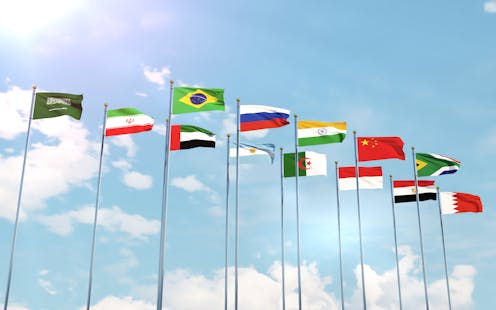
    Leaders of the BRICS nations on Sunday welcomed India’s candidacy to host the 33rd Conference of the Parties (COP 33) of the United Nations Framework Convention on Climate Change (UNFCCC) in 2028.

    In a joint declaration at the 17th BRICS Summit, the leaders said, “We express our full support to the Presidency of the United Nations Framework Convention on Climate Change (UNFCCC) COP-30, which will take place in Belém, Brazil, highlighting the importance of action and cooperation on all pillars of the UNFCCC as applicable, considering each country’s membership and commitments thereunder. We also underscore our full commitment to a successful COP30 that will catalyze progress in implementing the UNFCCC and its Paris Agreement. We welcome India’s candidacy to host COP 33 in 2028.”

    The declaration reiterated the commitment of BRICS countries to remain united in pursuing the goals of the UNFCCC and called on all countries to uphold their existing commitments under the UNFCCC and the Paris Agreement. It urged intensified efforts in mitigation, adaptation, and providing support to developing nations, reflecting equity and the principle of common but differentiated responsibilities.

    The BRICS leaders called for a stronger global response to climate change, linking it to sustainable development and poverty eradication. They endorsed the BRICS Climate Leadership Agenda as a pledge to advance solutions that support development priorities while accelerating implementation of the UNFCCC and the Paris Agreement.

    The joint statement also highlighted the critical role of forests in conserving biodiversity, regulating water cycles, combating desertification, and serving as carbon sinks. It noted the United for Our Forests initiative and India’s proposal to form an international Big Cats Alliance, encouraging cooperation among BRICS countries on conservation efforts.

    The leaders stressed the urgent need to reform the governance of the Global Environment Facility (GEF) to ensure fairer representation and easier access to resources for developing countries, including Indigenous peoples and local communities.

    The declaration praised Brazil’s BRICS Chairship in 2025 and expressed full support for India’s Chairship in 2026 and the hosting of the 18th BRICS Summit.

    Prime Minister Narendra Modi, along with other leaders, attended the 17th BRICS Summit held in Rio de Janeiro on Sunday. Brazil took over the BRICS Chairship on January 1, 2025, under the theme ‘Strengthening Global South Cooperation for More Inclusive and Sustainable Governance.

    ANI

  • MIL-OSI USA: Congressman Raja Krishnamoorthi, Colleagues Introduce Bipartisan Bill to Expand Access to Mental Health Services for Children in Schools

    Source: United States House of Representatives – Congressman Raja Krishnamoorthi (8th District of Illinois)

    WASHINGTON – Today, Congressman Raja Krishnamoorthi (D-IL) introduced the Connecting Students with Mental Health Services Act, bipartisan legislation with the goal of aiding schools in connecting students with the mental health services needed to succeed and thrive. Students and young people continue to face unprecedented mental health challenges inside and outside of school, with pressure and stress impacting Americans across the country. Congressman Krishnamoorthi’s legislation seeks to ensure all students, particularly those in underserved communities and under-resourced school districts, have access to appropriate and timely care. Joining Congressman Krishnamoorthi in introducing this bipartisan bill are Congressman Brian Fitzpatrick (R-PA), Congressman Greg Landsman (D-OH), Congressman Mike Lawler (R-NY), and Congresswoman Janelle Bynum (D-OR).

    “Our school systems are lifelines of support when young people need mental health care and don’t know where to turn,” Congressman Krishnamoorthi said. “Currently, most American school districts are unequipped to support our children, but our Connecting Students with Mental Health Services Act will fill in the gaps and connect young people with the mental health services they need. By investing in the mental health of America’s future generations, we are setting all students up for success, regardless of their background or where they live.”

    “The youth mental health crisis is one of the defining challenges of our time, and schools cannot tackle it without real support,” Congressman Fitzpatrick said. “The Connecting Students to Mental Health Services Act delivers targeted, high-impact resources—especially for underserved communities—to ensure students get the care they need. As Co-Chair of the Bipartisan Mental Health and Substance Use Disorder Task Force, my priority is to advance solutions like this that strengthen our system and ensure every student has a clear path to support, stability, and success.”

    “Getting students better access to mental health resources is so important,” Congressman Landsman said. “As a former teacher and the son of teachers, I’ve seen firsthand what’s happening in our classrooms – and know how much more we can do. Expanding access to care in our schools, especially through telehealth, will give our students what they need to be stronger and healthier. And when it’s easier to connect with professionals to work through what they’re facing, they’re in a much better position to succeed in school and life.”

    “Students across the country are facing a growing mental health crisis, and we have a responsibility to ensure they’re not navigating it alone. The Connecting Students with Mental Health Services Act will help break down barriers to care, especially for students in rural and underserved communities, by expanding access to telehealth in our schools. I’m proud to join Rep. Krishnamoorthi and our colleagues in delivering resources for our students and schools,” Congressman Lawler said.

    “As a mom of four, I know how essential providing mental health services to students is to their success. We need to make sure we are investing in America’s youth, and that starts with making sure they can succeed in the classroom,” Congresswoman Bynum said. “That’s why I’m so proud to introduce the Connecting Students with Mental Health Services Act which takes important steps towards providing this vital care to our students in rural and high-poverty areas, ensuring they have the resources they need to thrive now and for generations to come.”

    The legislation would support partnerships between public schools and community-based mental health providers by:

    • Establishing a grant program through the Department of Education to fund school-based mental health coordination initiatives;
    • Supporting the hiring and training of school mental health professionals and liaisons;
    • Helping schools create referral pathways to community providers and expand access to tele-mental health options.

    The legislation has been endorsed by leading mental health and education organizations, including the School Superintendents Association (AASA), National Association of Secondary School Principals, National Association of Elementary School Principals, and National Association of Social Workers.

    The full text of the bill is available here.

    MIL OSI USA News

  • MIL-OSI United Kingdom: Parents urged to read more to boost children’s life chances

    Source: United Kingdom – Executive Government & Departments

    Press release

    Parents urged to read more to boost children’s life chances

    Education Secretary urges parents to swap scrolling with reading as she launches a National Year of Reading for 2026 to boost kids’ literacy and life chances.

    The Education Secretary is calling on parents to lead by example and make reading a daily habit to help reverse the decline in reading for pleasure, to help give kids the best start in life as part of the Plan for Change.

    The call comes as the Department for Education and National Literacy Trust join forces to launch a National Year of Reading, starting in January 2026 to kick start a reading revolution. It will reverse the trend as just one in three aged 8 to 18 said they enjoyed reading in their free time in 2025.  

    Bringing together parents, schools, libraries, businesses and literacy experts, the campaign aims to foster a love of reading for pleasure in children and young people, ensuring all children get the best start in life.   

    Reading for pleasure isn’t just a hobby. It’s linked to a range of benefits including stronger writing skills, improved wellbeing and confidence, and even higher future earnings, with new data showing those proficient in reading and writing in primary school earn £65,000 more over their lifetime.  

    The government inherited a system which is holding too many children back from future success with over a quarter leaving primary school not meeting the expected standard in reading. This grows to 40% and 59% respectively for children from white-working class backgrounds and those with special educational needs.   

    The Year will build on the action already underway to drive high and rising standards in literacy including investing £27.7 million to support the teaching of reading and writing in primary school and targeted support for struggling readers in secondary school, as well as the ongoing curriculum and assessment review.     

    The campaign contributes to the government’s driving mission to break the link between a child’s background and what they go on to achieve and comes as the Education Secretary sets out her vision for ensuring every child gets the best possible start in life and starts school ready to learn including by boosting early literacy skills through the expansion of the government’s network of English Hubs.  

    Education Secretary, Bridget Phillipson said:  

    As someone whose love of reading was sparked in childhood, I know just how powerful books can be in shaping young lives.   

    Reading holds the keys to so much of children’s education, so the decline in reading for pleasure among young people should sound alarm bells loud and clear.   

    This can’t be just a government mission. It needs to be a national one. So, it’s time for all of us to play our part, put our phones down and pick up a book.

    When parents take the time to read with their children early on, they lay the foundations for strong literacy skills, helping kids to be school ready. By making reading a daily habit, even just 10 minutes a day, we can help give kids the best start in life, as part of the Plan for Change.

    To kick start the reading revolution this summer, the National Literacy Trust will distribute over 72,000 new books to children in areas with the highest rates of child poverty to support positive reading habits at home.  

    This comes during the Summer Reading Challenge to ensure more children have the opportunity to take part and build a love of reading over the break.   

    CEO of the National Literacy Trust, Jonathan Douglas, said:  

    At a time when we are witnessing the lowest levels of reading enjoyment and daily reading in a generation, we are delighted to be working with the government to deliver the National Year of Reading 2026 – a bold, society-wide campaign to reimagine how we understand, support and promote reading. Reading is the foundation of a successful life – the key to unlocking potential, strengthening social cohesion, enhancing wellbeing and boosting skills.  

    The National Year of Reading 2026 presents an opportunity to join forces across sectors and redefine reading as a powerful, contemporary activity for a generation. Working closely with schools, families, libraries, communities and partners across the country, we will make reading a shared national mission – because every child, no matter their background, deserves the best start in life and every adult deserves to get the best out of life.

    The campaign will be packed full of exciting school and community events and activities supported by a dedicated website, backed by over 30 organisations so far including Premier League, Julia Rausing Trust, Arts Council England, the Very Group and a range of publishers.  

    Clare Sumner, Chief Policy and Social Impact Officer at the Premier League said:   

    The Premier League has worked alongside the National Literacy Trust for nearly 25 years, using the power of football to inspire children across England and Wales to develop a love of reading from a young age. Through our Premier League Primary Stars and Premier League Inspires education programmes we continue to support children and young people aged five to 18. Since 2017, we have provided over 350,000 free books to schools and a range of free curriculum-linked resources using children’s passion for football to engage them in learning. We look forward to working alongside the National Literacy Trust and the Department for Education to engage young people as part of the National Year of Reading.

    CEO of the Publishers Association, Dan Conway, said:    

    Publishers are proud to be working with the government and partners to help transform lives through reading. A wide range of publishers of all sizes have contributed financially and the whole publishing industry is ready to get behind this campaign to ensure it sparks lasting behaviour change. This is a once in a generation opportunity for us to work with the government and make a huge difference for the benefit of society. Reading for enjoyment is the best indicator of a child’s future success and brings a huge number of benefits from supporting mental health, helping develop empathy and encouraging children to explore their interests independently.

    Karen Napier MBE, CEO, The Reading Agency said:

    The Reading Agency is delighted to be here in the No 10 Garden to champion this year’s Story Garden Summer Reading Challenge, which brings together the magic of nature and the joy of books. It is a wonderful moment to celebrate the power of stories to spark imaginations across the country.  

    We believe every child deserves access to the transformative power of reading, and that journey begins in the library this summer. Sign up for this free, fun way to keep children reading all summer long.  

    With 26 years of evidence behind it and with the National Year of Reading approaching, we look forward to everyone building on the 15 million reading journeys already started through this life-changing programme.

    Simon Fourmy, Director of The Julia Rausing Trust, said:

    The National Year of Reading 2026 is an exciting campaign that builds on the Trust’s longstanding support of literacy initiatives. It will encourage people across the UK to engage with books, bringing opportunities to develop essential skills and a life-long love of reading. The Julia Rausing Trust is proud to be an early funder, and we encourage others to join us in supporting this important campaign.

    The Education Secretary will address businesses and leading literacy advocates tomorrow (7 July 2025) at No.10 to rally further support ahead of the National Year of Reading.

    DfE media enquiries

    Central newsdesk – for journalists 020 7783 8300

    Updates to this page

    Published 6 July 2025

    MIL OSI United Kingdom

  • MIL-OSI Africa: Child labour numbers rise in homes where adults are jobless – South African study

    Source: The Conversation – Africa – By Derek Yu, Professor, Economics, University of the Western Cape

    Child labour is a big concern across the world. It is particularly acute in countries in the global south, where it is estimated that about 160 million children are engaged in child labour, about 87 million of them in sub-Saharan Africa.

    A range of countries have sought to outlaw child labour because it denies children their childhood as well as physical and mental development.

    In South Africa data on the work activities of children aged between 7 and 17 years are collected in the Survey of Activities of Young People, conducted by Statistics South Africa. Despite the survey having taken place four times (1999, 2010, 2015 and 2019), the dataset has been seriously under-used. There has hardly been any comprehensive research done on the state of South Africa’s child labour and child work activities.

    In a recently published study we looked at child labour activities in the country. We compared the 2010, 2015 and 2019 Survey of Activities of Young People.

    We first looked at personal and geographical characteristics of children, such as their gender, ethnic group and province of residence. We went on to look at their work activities, as well as the relationship (if any) between adults’ employment status and the probability of children from the same households having to work.

    The reason we chose to look at the relationship between child labour and work activities of adults is that South Africa has an extremely high level of unemployment. At the end of 2024 the unemployment rate was 31.8%.

    The Basic Conditions of Employment Act, which was passed in 1997, bans the employment of children until the last school day of the year when they turn 15 years old. Nonetheless, as some adult household members struggle to find work successfully, it is possible that child members of households are exploited to help the households survive financially.

    Two striking and alarming findings stand out from the study.

    First, the fewer adults were employed in a household, the more likely it was that children in the household were working. Secondly, the presence of child labour in the household had a discouraging impact on the adult members’ job-seeking action.

    The first key finding implies that if adults were employed, children might not be working. The second implies that jobless adult members most likely relied on the (illegal) income earned by the child labour, discouraging the adults from seeking work actively.

    The number of children working in South Africa has dropped from 778,000 in 2010 to 577,000 in 2019. This downward trend implies the success of South African legislation in prohibiting child labour over the years. But, we conclude, laws and regulations are not enough. In South Africa, the enforcement as well as the public awareness and understanding of the child labour related legislation must be improved to safeguard children.

    Thus, a coordinated programme of action by the government is important to bring all stakeholders into the fight against child labour and unemployment of the working-age population.

    About the survey

    The Survey of Activities of Young People was first introduced in 1999 by Statistics South Africa, two years after the 1997 legislation that banned child labour. However, since the 1999 survey was not linked to the Labour Force Survey and the 1999 survey questions were asked very differently from the 2010, 2015 and 2019 waves, we decided to exclude the 1999 survey wave from the analysis. Hence, we focus on examining the 2010, 2015 and 2019 results, notably because these three waves of data about young people are linked to the Labour Force Survey data taking place in the same year.

    This makes it possible to investigate the relationship between the employment status of child and adult household members.

    The 2019 survey findings show that, if a household had no employed adult members, the probability of the child from the same household ending up as child labour was 6.5%.

    If the household had one employed adult member, child labour probability dropped to 4.7%. Lastly, if the household had at least two employed adult members, child labour likelihood decreased further to 2.7%.

    Using the same 2019 data, we found that if a household had no child involved in labour, the probability of an adult member from the same household seeking work in the labour market was 60%. Adult members’ labour force participation rate from households where at least once child worked as child labour was much lower at 44%.

    Looking at other child labour statistics, we found that the majority (90%) of working children were Africans; above 60% were in the illegal age cohort of 7-14 years; and most were living in the rural areas of KwaZulu-Natal, Gauteng and Eastern Cape.

    In addition, 98% of them were still attending school while working as child labour.

    Lastly, most child labour worked 1-5 hours per week in elementary occupations in the wholesale and retail industry. The top three reasons for children working were “to obtain pocket money”, “to assist family with money” and “duty to help family”.

    The road ahead

    Some children spent many hours on household chores (which is not classified as child labour, strictly speaking). Parents, employers and the community must be educated about the dangers of long hours on domestic chores and even child labour.

    The government should consolidate its infrastructure development programmes, especially the delivery of electricity, water and sanitation in areas where children spend time on domestic chores. These actions will shorten the duration of child household chores and allow children more time for school activities. The surveys used for the study did not include questions about specific activities children were involved in. They only asked if the child was involved in chores such as cleaning, cooking and looking after elderly members.

    It is also worthwhile if questions relating to child labour are included in the child questionnaire of the National Income Dynamics Study (the only national panel data survey in South Africa) to more thoroughly investigate whether child labour is a short-term or long-term phenomenon, and whether there is any relationship between poverty (and receipt of social grants) and child labour incidence.

    Lastly, it has been six years since the Survey of Activities of Young People was last conducted. It is time for Statistics South Africa to collect the latest data on the state of child labour in the country.

    This article is based on a journal article which the writers co-authored with Clinton Herwel (Economics Masters student at the University of the Western Cape).

    – Child labour numbers rise in homes where adults are jobless – South African study
    – https://theconversation.com/child-labour-numbers-rise-in-homes-where-adults-are-jobless-south-african-study-259398

    MIL OSI Africa

  • MIL-OSI Submissions: Child labour numbers rise in homes where adults are jobless – South African study

    Source: The Conversation – Africa – By Derek Yu, Professor, Economics, University of the Western Cape

    Child labour is a big concern across the world. It is particularly acute in countries in the global south, where it is estimated that about 160 million children are engaged in child labour, about 87 million of them in sub-Saharan Africa.

    A range of countries have sought to outlaw child labour because it denies children their childhood as well as physical and mental development.

    In South Africa data on the work activities of children aged between 7 and 17 years are collected in the Survey of Activities of Young People, conducted by Statistics South Africa. Despite the survey having taken place four times (1999, 2010, 2015 and 2019), the dataset has been seriously under-used. There has hardly been any comprehensive research done on the state of South Africa’s child labour and child work activities.

    In a recently published study we looked at child labour activities in the country. We compared the 2010, 2015 and 2019 Survey of Activities of Young People.

    We first looked at personal and geographical characteristics of children, such as their gender, ethnic group and province of residence. We went on to look at their work activities, as well as the relationship (if any) between adults’ employment status and the probability of children from the same households having to work.

    The reason we chose to look at the relationship between child labour and work activities of adults is that South Africa has an extremely high level of unemployment. At the end of 2024 the unemployment rate was 31.8%.

    The Basic Conditions of Employment Act, which was passed in 1997, bans the employment of children until the last school day of the year when they turn 15 years old. Nonetheless, as some adult household members struggle to find work successfully, it is possible that child members of households are exploited to help the households survive financially.

    Two striking and alarming findings stand out from the study.

    First, the fewer adults were employed in a household, the more likely it was that children in the household were working. Secondly, the presence of child labour in the household had a discouraging impact on the adult members’ job-seeking action.

    The first key finding implies that if adults were employed, children might not be working. The second implies that jobless adult members most likely relied on the (illegal) income earned by the child labour, discouraging the adults from seeking work actively.

    The number of children working in South Africa has dropped from 778,000 in 2010 to 577,000 in 2019. This downward trend implies the success of South African legislation in prohibiting child labour over the years. But, we conclude, laws and regulations are not enough. In South Africa, the enforcement as well as the public awareness and understanding of the child labour related legislation must be improved to safeguard children.

    Thus, a coordinated programme of action by the government is important to bring all stakeholders into the fight against child labour and unemployment of the working-age population.

    About the survey

    The Survey of Activities of Young People was first introduced in 1999 by Statistics South Africa, two years after the 1997 legislation that banned child labour. However, since the 1999 survey was not linked to the Labour Force Survey and the 1999 survey questions were asked very differently from the 2010, 2015 and 2019 waves, we decided to exclude the 1999 survey wave from the analysis. Hence, we focus on examining the 2010, 2015 and 2019 results, notably because these three waves of data about young people are linked to the Labour Force Survey data taking place in the same year.

    This makes it possible to investigate the relationship between the employment status of child and adult household members.

    The 2019 survey findings show that, if a household had no employed adult members, the probability of the child from the same household ending up as child labour was 6.5%.

    If the household had one employed adult member, child labour probability dropped to 4.7%. Lastly, if the household had at least two employed adult members, child labour likelihood decreased further to 2.7%.

    Using the same 2019 data, we found that if a household had no child involved in labour, the probability of an adult member from the same household seeking work in the labour market was 60%. Adult members’ labour force participation rate from households where at least once child worked as child labour was much lower at 44%.

    Looking at other child labour statistics, we found that the majority (90%) of working children were Africans; above 60% were in the illegal age cohort of 7-14 years; and most were living in the rural areas of KwaZulu-Natal, Gauteng and Eastern Cape.

    In addition, 98% of them were still attending school while working as child labour.

    Lastly, most child labour worked 1-5 hours per week in elementary occupations in the wholesale and retail industry. The top three reasons for children working were “to obtain pocket money”, “to assist family with money” and “duty to help family”.

    The road ahead

    Some children spent many hours on household chores (which is not classified as child labour, strictly speaking). Parents, employers and the community must be educated about the dangers of long hours on domestic chores and even child labour.

    The government should consolidate its infrastructure development programmes, especially the delivery of electricity, water and sanitation in areas where children spend time on domestic chores. These actions will shorten the duration of child household chores and allow children more time for school activities. The surveys used for the study did not include questions about specific activities children were involved in. They only asked if the child was involved in chores such as cleaning, cooking and looking after elderly members.

    It is also worthwhile if questions relating to child labour are included in the child questionnaire of the National Income Dynamics Study (the only national panel data survey in South Africa) to more thoroughly investigate whether child labour is a short-term or long-term phenomenon, and whether there is any relationship between poverty (and receipt of social grants) and child labour incidence.

    Lastly, it has been six years since the Survey of Activities of Young People was last conducted. It is time for Statistics South Africa to collect the latest data on the state of child labour in the country.

    This article is based on a journal article which the writers co-authored with Clinton Herwel (Economics Masters student at the University of the Western Cape).

    The authors do not work for, consult, own shares in or receive funding from any company or organisation that would benefit from this article, and have disclosed no relevant affiliations beyond their academic appointment.

    ref. Child labour numbers rise in homes where adults are jobless – South African study – https://theconversation.com/child-labour-numbers-rise-in-homes-where-adults-are-jobless-south-african-study-259398

    MIL OSI

  • MIL-OSI China: Chinese vice premier underlines sci-tech innovation in agriculture, healthcare

    Source: People’s Republic of China – State Council News

    GUANGZHOU, July 5 — Chinese Vice Premier Liu Guozhong has called for accelerating sci-tech innovation in the fields of agriculture and healthcare, and enhancing the independent innovation capabilities of medicines and medical devices.

    Liu, also a member of the Political Bureau of the Communist Party of China Central Committee, made the remarks during a research trip to south China’s Guangdong Province from Thursday to Saturday.

    He emphasized that it is essential to focus on the urgent needs of the industry and target key areas such as seed industry, agricultural machinery, forage, and planting and breeding technologies.

    Liu called for speeding up the transformation of agricultural sci-tech achievements, actively supporting the intelligent agriculture, vigorously developing the deep processing of agricultural products, and strengthening the employment guidance and skills training to help the people who have been lifted out of poverty and rural workers maintain stable employment.

    Efforts should also be made to encourage enterprises, hospitals and research institutions to focus on the cutting-edge and “bottleneck” technologies of medicines and medical devices and strengthen the in-depth integration of industry, academia, research and application, Liu said.

    MIL OSI China News

  • MIL-OSI United Kingdom: Government revives family services, supporting 500,000 more kids

    Source: United Kingdom – Executive Government & Departments

    Press release

    Government revives family services, supporting 500,000 more kids

    Up to 1,000 Best Start Family Hubs to be rolled out across the country to provide wide-ranging help for families, such as parenting and early development.

    Parents across the country will benefit from greater support to make family life easier on their doorstep, as the government rolls out ‘Best Start Family Hubs’ across every local authority – relieving pressure on parents and giving half a million more children the very best start in life.

    Postcodes shouldn’t dictate the support available, but one in four families with children under five cannot access local children’s centres or Family Hubs, rising to one in three lower income families. This means thousands of parents cut off from vital community support networks and specialist services – left to navigate the challenges of parenthood alone – as well as a devastating impact on children’s life chances, with early development, wellbeing and future attainment all in jeopardy.  

    Best Start Family Hubs will act as a one stop shop for parents seeking a range of support, including on difficulty breastfeeding, housing issues or children’s early development and language, reassuring families that they have convenient access to support in their local area or can be efficiently connected to specialist local services.

    Rolling out in every local authority by April 2026, Hubs will offer interventions and courses which work for parents – such as stay and play groups which help parents connect or sessions which help manage children’s emotional needs – while providing a single point of access for services across health, education, and wellbeing.

    Backed by over £500 million, the rollout will help transform the existing Family Hubs and Start for Life programme and create up to 1,000 hubs across the country by the end of 2028. This includes areas currently without any access to support hubs – from Warrington and Leeds to Reading and Somerset.

    Sure Start revolutionised family and community services, with research showing that children who lived within a short distance of a Sure Start centre for their first five years were 0.9 percentage points more likely to achieve five good GCSEs at grades age 16. 

    Plans launched today will draw on lessons learned from the legacy programme, as well as build on infrastructure from the current Family Hubs and Start for Life programme. It complements work already underway to make family life easier and alleviate the burden on parents, including by expanding government-funded childcare to 30-hours, increasing the reach of school-based nurseries, and rolling out free breakfast clubs in every primary school to support working parents.

    Education Secretary, Bridget Phillipson said:

    It’s the driving mission of this government to break the link between a child’s background and what they go on to achieve – our new Best Start Family Hubs will put the first building blocks of better life chances in place for more children.

    I saw firsthand how initiatives like Sure Start helped level the playing field in my own community, transforming the lives of children by putting in place family support in the earliest years of life, and as part of our Plan for Change, we’re building on its legacy for the next generation of children.

    Making sure hard-working parents are able to benefit from more early help is a promise made, and promise kept – delivering a lifeline of consistent support across the nation, ensuring health, social care and education work in unison to ensure all children get the very best start in life.

    Hubs will also act as a ‘front door’ to local family help workers for vulnerable families – providing a single point of entry to join-up universal services and children’s social care, ensuring early help before issues escalate. 

    This forms a key plank of the government’s direction setting ‘Giving Every Child the Best Start in Life’ strategy to be published tomorrow, making sure parents don’t have to battle complex systems to access basic parenting, health and family services.

    Health and Social Care Secretary Wes Streeting said:

    Every child – no matter their background – deserves the best start in life. I know what it’s like to grow up in a family where work is low-paid and insecure, and I know the power of a good support network.

    That’s why, as part of our Plan for Change, rolling out these Best Start Family Hubs are so vital – one stop shops offering parents not only crucial connections with other families but also the health, education and wellbeing support they need.

    By bringing together early support services and investing £500 million in children’s development, we’re taking preventative action that will improve lives and reduce pressure on the NHS – a key part of our 10 Year Health Plan.

    Best Start Family Hubs will help families with services like:

    • Activities for children aged 0-5
    • Birth registration
    • Debt and welfare advice
    • Domestic abuse support
    • Early language support
    • Health Visiting
    • Housing support
    • Infant Feeding Support
    • Mental health services
    • Midwifery/maternity services
    • Nutrition and weight management
    • Oral health improvement
    • Parenting Support
    • Reducing Parental Conflict
    • SEND support and services
    • Stop smoking support
    • Substance (alcohol/drug) misuse support
    • Support for separating and separated parents
    • Youth services

    To further streamline the path to support, a new Best Start digital service will also be launched to enable parents to access evidence-based guidance within seconds.

    The digital platform will provide advice on a range of topics and connect parents to their local Best Start Family Hub, as well as link to the NHS App – making sure these services are at the centre of every community, whether on- or off-line.

    Anna Feuchtwang, CEO, National Children’s Bureau

    The Prime Minister’s Plan for Change set out his ambition to improve outcomes in early childhood. Now the government has put its money where its mouth is and committed to rolling out Best Start Family Hubs in every local authority.

    With indications of a funding boost for babies and young children already included in the 10 Year Health plan, I am delighted to see children and families being given clear priority in government spending decisions. We hope to see a similar priority being given to the early years workforce in the Best Start in Life Strategy published tomorrow.”    

    It comes as the government has already confirmed it will launch a new data tool for schools to assess whether there is more they can do in reception year to get children ready for year 1, and that every council will be expected to play its part with an individual statutory target for school readiness in their area.

    The Hubs will be open to all, making a particular difference to the most vulnerable families and helping tackle the stain of child poverty ahead of the ambitious strategy due to be launched by the government’s Child Poverty Taskforce.

    ‘Giving Every Child the Best Start in Life’ also outlines the key role local authorities will play to drive improvements in the number of children achieving a good level of development by 5 years old.

    Local authorities will build on their existing work with families, young children and babies, to develop ambitious local plans for meeting their 2028 target.

    DfE media enquiries

    Central newsdesk – for journalists 020 7783 8300

    Updates to this page

    Published 6 July 2025

    MIL OSI United Kingdom

  • MIL-OSI United Nations: ‘A spirit of oneness’: Cooperatives cultivating peace in South Sudan

    Source: United Nations 2

    “Cooperatives are a system that enables the South Sudanese to improve their livelihoods, but at the same time also contributes to the economy… this is the only way for South Sudan to move out of poverty,” said Louis Bagare project manager of cooperatives at the Food and Agriculture Organization (FAO) in South Sudan.

    He was speaking ahead of the International Day of Cooperatives, which is celebrated every 5 July, and which highlights how cooperatives enable people to provide for their basic needs in contexts where individuals working alone is insufficient.

    A path to peace

    In South Sudan, the potential of cooperatives extends beyond economic empowerment.

    © FAO/Daniel Chaplin

    A farmer in South Sudan tills her land.

     “Cooperatives are one of the avenues that can bring peace and stability to South Sudan,” said Mr. Bagare.

    For over a decade, South Sudan has faced many intersecting challenges. Following its independence in 2011, a civil war broke out, concluding in 2018 with a peace agreement. But this peace is more fragile than ever.

    Looting and intercommunal violence, mainly perpetrated by young people, continues to be an ever-present concern for many communities which already face catastrophic food insecurity and continual climate shocks.

    In this context, cooperatives provide a ray of hope.

    “Cooperatives really changed the mindset of our people and brought stability to the country,” said Deng William Achiek, director for rural producers in South Sudan’s Ministry of Agriculture and Food Security.

    But what is it about cooperatives that may usher in a lasting peace?

    A voluntary and democratic group

    Cooperatives are voluntary economic organizations in which members share in the risk, work and income.

    “A cooperative is a democratic, social association of people who, as individuals, cannot improve their status of living and social status … But once they come together in a cooperative, then, they can raise the standard of their living,” said Oneil Yosia Damia, the Director-General for Cooperative Development in South Sudan.

    © FAO/Daniel Chaplin

    A cooperative of women farmers in South Sudan has been trained in seed production by FAO.

    FAO’s Louis Bagare believes that this sort of democratic approach to governance at a local level will trickle up to the national level and encourage more widespread buy-in to a democratic form of governance across South Sudan.

    Income, not guns

    In addition to providing a model of democratic governance, cooperatives also enable economic growth and development, providing communities — especially young people — a viable and sustainable alternative to looting.

    “When, especially the youth, are engaged in productive activities that generate income, they will not have the interest to pick a gun to go and fight or to rob and loot,” Mr. Bagare said. 

    In South Sudan, the communities which form cooperatives often do not have enough individual resources to maintain a sustainable livelihood, a reality which pushes youth towards violent looting for survival.

    “When [community members] work together, when they bring ideas together, when they bring resources together, it is much easier for them to overcome their livelihood challenges,” Mr. Bagare said.

    Mr. Bagare also explained that banks are more willing to invest in groups and organizations like FAO are more likely to provide support to cooperatives. But ultimately, the goal is that this will not be long-term.

    “The focus is on building their capacity so that they can be able to create lives,” Mr. Bagare said.

    A historic structure in the world’s youngest country

    In South Sudan, there are cooperatives of every shape and size. Overwhelmingly, these cooperatives are agricultural but some also produce soap, bread and textiles. The history of South Sudan is populated with examples of this type of work.

    “Cooperatives are not something which has come from nowhere. It has been part of the culture of South Sudan,” Mr. Bagare said.

    Mr. Daima referred to the “golden era” of cooperatives which existed before the civil war in 2011. He said that his office within the Ministry of Agriculture and Food Security is working diligently to get back to that time.

    “I want our cooperatives to be as busy as bees. This is the spirit of oneness, of unity,” Mr. Daima said.

    Mr. Bagare hopes for a future in South Sudan where cooperatives become a part of every economic sector — not just agriculture.

    “If we are able to work together, we can become better people tomorrow. But the moment that we continue to only fight with each other, we will continue to destroy ourselves.”

    MIL OSI United Nations News

  • MIL-OSI United Nations: Syrians heading home find few of the basics needed to survive

    Source: United Nations MIL OSI

    Hopes rose last week in Damascus when fuel prices dropped instantly following Donald Trump’s move to end punitive sanctions.

    But after more than 13 years of civil war that ended with the fall of the Assad regime last December, ordinary Syrians face an exhausting list of other problems.

    These include an absence of housing – caused by bomb damage on a scale with Gaza – unreliable access to electricity, clean water, healthcare and work.

    Refugee agency call

    Since last December, half a million Syrians have returned home, many for the first time since the war began, according to the UN refugee agency, UNHCR.  

    “We must ensure that people who return can stay and thrive: that is also why the lifting of sanctions is crucial, as reconstruction is urgently needed,” said High Commissioner Filippo Grandi, in an online message.

    Today, transitional authorities govern Syria under President Ahmad al-Sharaa.  

    ‘Destroyed at all levels’

    But the once-prosperous country remains scarred – “the infrastructure in Syria is almost completely destroyed at all levels,” said Hail Khalaf, Officer-in-Charge for Syria at the UN International Organization for Migration (IOM).

    Mr. Khalaf, who spoke to UN News from the capital Damascus where electricity only comes on for four hours a day, confirmed that the protracted war had impacted Syrian society in its entirety – not least education.

    “The impact of the removal of US sanctions on Syria was observed very quickly on the daily lives of Syrians,” he said. “There was an instant drop in fuel prices in Syria the moment the removal of sanctions was announced.”

    “We hope that the American government will expedite the removal of the Caesar Act,” he stressed, referring to the sanctions package against the former Syrian Government signed into law by the first Trump administration in 2019.

    Dilapidated economy 

    Those returning to Syria and looking for a job in the agricultural sector in particular are confronted with an industry in shambles, IOM said in a report.

    Farmers make up the great majority of those who were internally displaced by the fighting to camps. Most – 88 per cent – say they cannot work the soil again, as most farms are either operating at half-capacity or unable to function at all, according to IOM’s Displacement Tracking Matrix.

    “The country is exhausted, and the economy is also exhausted,” explained Mr. Khalaf.

    Today, more than 90 per cent of Syria’s population lives below the poverty line as of December 2024, according to UNHCR data.

    The war uprooted around 7.4 million people inside Syria and at least six million are refugees, mainly in neighboring countries including Türkiye, Lebanon and Jordan, the UN agency noted.

    Working at a loss

    The national currency – the Syrian lira – has been exponentially devalued by the conflict.

    Before the war, one US dollar was equivalent to 50 Syrian lira. Today it is worth about 9,000 Syrian lira – leaving livelihoods in disarray.  

    “Most Syrians do not earn enough,” Mr. Khalaf explained. “In the public sector, most employees earn approximately $35 to $40 a month, which is not even enough for transportation between work and home.”

    Missing paper trail

    Gaps in civil documentation also complicate people’s ability to claim housing and land rights.

    Damaged public infrastructure has also fuelled outbreaks of waterborne diseases, vaccine-preventable illnesses and malnutrition, aid teams have warned.

    “Syrians are resilient and innovative, but they need significant help to rebuild their communities and their lives,” insisted IOM Director General Amy Pope.  

    In a bid to help, UN agencies including IOM are working with the Syrian Government to “find a formula for action” and “sustainable solutions” for all returnees so that they can rebuild their lives again.

    MIL OSI United Nations News

  • MIL-OSI United Nations: Over 60 per cent of the Arab world still outside the banking system

    Source: United Nations MIL OSI

    Even more impressively, the number of Egyptian women with an account increased by 260 per cent, though gender gaps do remain.

    But how you widen financial inclusion overall is a question the Arab region is currently grappling with.

    A new report from the UN Economic and Social Commission in Western Asia (UNESCWA) published on Thursday highlights the challenge.

    Nearly 64 per cent of adults in the 22 countries in the Arab region are still without an account – or “unbanked” – a higher number than all other regions of the world and significantly higher than the 24 per cent global average.

    The report warns that this level of financial exclusion will negatively impact economic opportunities and the region’s ability to meet Sustainable Development Goals (SDGs) by 2030.

    “The Arab region cannot afford to treat financial services as a luxury. Without inclusive finance, we cannot hope to lift people out of poverty, support small businesses, or achieve equitable growth,” said ESCWA’s Mario Jales, lead author of the report.

    The digital divide within the divide’

    The report finds that women and disabled people have even less access to financial services – only 29 per cent of women and 21 per cent of disabled people in the region have an account.

    Similarly, rural communities and younger and older people also experience lower rates of inclusion in the banking system.

    The report also highlighted that access to loans for small and medium-sized businesses is worryingly low, reducing entrepreneurial and other income-producing activities.

    In addition to gender disparities, there are variations within the Arab region – 81 per cent of people in low-income countries do not have access to an account in comparison to 67 per cent in middle-income countries and 23 per cent in the high-income bracket. 

    © FAO/Pedro Costa Gomes

    As of 2024, 69 percent of Egyptian women have bank accounts, a large increase from 2016.

    Models of success

    Given that regional rates of financial inclusion remain so low, how do countries work to improve them?

    The basis of Egypt’s success was the implementation of a comprehensive national strategy to promote financial inclusion, a strategy which actively worked to target underserved communities, ESCWA points out.

    For example, in Egypt, 22 per cent of ATMs in the country have now been equipped with accessibility features including brighter lighting and Braille keyboards.

    Other countries in the region have also implemented national strategies which include targeted initiatives.

    Jordan, which has the second widest gender gap in the region, implemented a Microfund for Women to provide loans for income-generating activities. There are now 60 branches across the country, serving 133,000 borrowers, 95 per cent of whom are women.

    Moreover, some banks in the region have worked to implement financial literacy classes and others have worked to tailor their services to underserved communities including by lowering minimum deposits.

    The report concludes that an expansion of all these activities – national policymaking which targets underserved communities and private bank activities which lower barriers to entry and support financial literacy – will be essential in improving financial inclusion.

    The path forward exists, but it requires political will, targeted investment and a whole-of-society approach,” the report concludes.

    MIL OSI United Nations News

  • MIL-OSI United Nations: From border control to belonging: How host communities gain from empowering refugees

    Source: United Nations MIL OSI b

    In 2024, 122 million people were forcibly displaced — a number expected to rise in the coming years, according to Bob Rae, President of the UN Economic and Social Council (ECOSOC), addressing a meeting on the pressing issue in New York on Thursday.

    As population movements become much more complex due to wars disproportionately impacting civilians, climate disasters, hunger and poverty, 70 per cent of refugees live in low to middle-income countries.

    Refugee rights

    International responses to refugee flows are becoming increasingly politicised, especially as aid is decreasing.

    Rather than focusing on addressing the root causes of such crises, the Global North has focused on border management and the control of refugee flows, “often at the expense of the rights of people on the move,” Filippo Grandi, Head of the UN refugee agency (UNHCR) told the ECOSOC gathering.

    According to Mr. Grandi, although border management is an important aspect of national government response to the refugee crisis, the emphasis should rather be on making refugees feel more integrated within host communities.

    Inclusion of refugees translates to freedom of movement, access to basic services such as healthcare, education, work opportunities, and valid documentation that allows them to work and contribute.

    Representatives from Colombia and Mauritania joined a meeting convened by Mr. Rae to talk about better ways to help refugees and the communities that host them, while also finding long-term solutions to the forced displacement crisis.

    Both Colombia and Mauritania have welcomed thousands of refugees into their countries, and outlined the positive impact refugees have had on their countries.

    Temporary Protection Status in Colombia

    In 2021, Colombia adopted a Temporary Protection Status (TPS) programme for Venezuelan refugees.

    Today, 2.5 million Venezuelans in Colombia have valid documentation, which provides them access to public services, legal employment, and education.

    TPS has not only allowed them to regain dignity and security, but it has also helped Colombia regulate refugee flows.

    Human rights at the fore in Mauritania

    For over a decade, Mauritania has been hosting large numbers of refugees, most of them from neighbouring Mali.

    Committed to upholding the human rights of both refugees and host communities, Mauritania recognises refugees as citizens, providing them with the right to education, healthcare, employment, and legal protection.

    Mauritania is working to improve refugee livelihoods while simultaneously enhancing the capacity of host communities by emphasising the role refugees have in local development.

    By investing in the resilience of host communities and social cohesion, Mauritania ensures both refugees and host communities live in dignity.

    MIL OSI United Nations News

  • MIL-OSI United Nations: Global action needed as progress stalls on disability-inclusive development goals

    Source: United Nations MIL OSI

    “The message is stark: persons with disabilities face higher poverty, greater unemployment, deeper food and health insecurity and more limited access to education, jobs, and digital technologies,” said Amina Mohammed.

    But action is underway.

    The 18th Session of the Conference of States Parties to the Convention on the Rights of Persons with Disabilities (COSP18) will focus on enhancing public awareness of the rights and contributions of persons with disabilities for social development.

    Progressive roots

    Chair of the Committee on the Rights of Persons with Disabilities, Kim Mi-Yeon, underscored the importance of the Convention on the Rights of Persons with Disabilities, now 20 years old, even amid growing global challenges.

    The CRPD is the most progressive human rights treaty of the 21st century…It marked a decisive shift – from medical and charity models to a rights-based approach – and affirms the duty to dismantle structural and gender-based discrimination,” said Ms. Kim.  

    Even with the ongoing UN liquidity crisis, he highlighted the momentum across the world for bolstering rights, including the International Forum on Disability Employment in Korea.  

    Gaining momentum

    The social development agenda aims to continue building momentum for disability rights and social development ahead of two major upcoming events: the Second World Summit for Social Development in November and the Fourth International Conference on Financing for Development later this month, FFD4, taking place in the Spanish city of Sevilla.

    This week’s agenda

    From Tuesday to Thursday, the conference will feature speeches by UN and civil society leaders, a public debate on the rights and contributions of persons with disabilities and three roundtables.

    The roundtables will explore financing for disability-inclusive development, harnessing artificial intelligence for inclusion and advancing the rights of Indigenous persons with disabilities

    Government officials, civil society representatives, UN agencies, and experts will share strategies and best practices throughout the event. 

    MIL OSI United Nations News

  • MIL-OSI United Nations: Development is ‘the first line of defence against conflict,’ Guterres tells Security Council

    Source: United Nations MIL OSI

    Ambassadors met to debate how poverty, inequality, and underdevelopment are fuelling conflict and instability, at a time when hostilities are increasing and demand for humanitarian aid is rising as resources dwindle.  

    Every dollar spent on prevention could save up to $103 in conflict-related costs, according to the International Monetary Fund (IMF). 

    Sustainable development critical

    Conflicts are proliferating and lasting longer, said Mr. Guterres. At the same time the global economy is slowing and trade tensions are rising, as aid budgets are being slashed while military spending soars. 

    He warned that if current trends continue, two thirds of the world’s poor will live in conflict-affected or fragile countries by the end of this decade. 

    “The message is clear,” he said.  “The farther a country is from sustainable and inclusive development, the closer it is to instability, and even conflict.”

    UN Photo/Evan Schneider

    Secretary-General António Guterres briefs the Security Council meeting on Poverty, Underdevelopment, and Conflict.

    Give peace a (fighting) chance

    The Secretary-General highlighted how the UN has worked to advance the three pillars of peace, development and human rights.  

    These efforts began with its establishment 80 years ago and continue today, “guided by the simple principle that prevention is the best cure for instability and conflict, and there is no better preventive measure than investing in development,” he said.

    “Development gives peace a fighting chance. It’s the first line of defence against conflict. But right now, we’re losing ground,” he said, noting that “the engine of development is sputtering.”

    World falling short

    Currently, two-thirds of the targets under the Sustainable Development Goals (SDGs) are lagging 10 years after adoption. 

    “The world is falling short by over $4 trillion annually in the resources developing countries need to deliver on these promises by 2030,” he added.

    Furthermore, “developing countries are being battered and bruised by limited fiscal space, crushing debt burdens and skyrocketing prices.”

    Fix the ‘engine’

    The Secretary-General pointed to the fourth Conference on Financing for Development, which begins next week in Spain, as an important moment “to fix and strengthen this essential engine.”

    He called for renewed commitments towards securing public and private finance for the areas of greatest need, providing urgent relief for debt-laden countries, and reforming the outdated global financial architecture.

    The Council debate “could not be more prescient,” said Kanni Wignaraja, the UN Development Programme’s (UNDP) Assistant Secretary-General and Regional Director for Asia and the Pacific.

    Break the cycle

    Global human development has stalled just as violent conflicts have surged to levels not seen in eight decades, she said, before presenting three priorities for investment to help break the cycle, including protecting household economies.

    “In fragile settings, where peace and security have been shattered, development that goes directly to the local level becomes the first line of peoples’ defence and survival. And their hope for recovery,” she said.

    “From these local economies – where livelihoods are restored, water and electricity can flow again, women’s businesses in particular reopen, farmers can trade food, and there is basic finance to allow markets to stay afloat – from this, comes the resources to build back broken capabilities and resilience.”

    Address systemic imbalances

    The Chairperson of the African Union (AU) Commission, Mahmoud Youssouf Ali, recalled how the continent loses billions of dollars annually to conflict, which could be channeled into schools, hospitals, infrastructure and innovation.

    He said the international community must also acknowledge that poverty and underdevelopment “are not confined within national borders” but are global challenges that require global response.

    “If we are to uphold international peace and security, we must address the systemic imbalances – economic, political, and institutional – that continue to fuel deprivation, exclusion, and instability across regions,” he said.

    In this regard, the AU called for enhanced support to African-led peace operations, particularly those deployed in regions where poverty and underdevelopment are deeply entrenched. 

    Collective action required

    The debate was convened by Guyana, which holds the rotating Council presidency this month.

    The country’s Foreign Minister, Hugh Todd, remarked that with the world “at a critical juncture where the interlinkages between peace, security and development have never been more pronounced,” collective and decisive action is required.

    He cautioned against “prioritizing only political solutions in conflicts where poverty and underdevelopment feature prominently,” as creating conditions for socio-economic stability and well-being are also critical for peace.

    Mr. Todd urged countries to address issues such as lack of access to education, underemployment, exclusion, and greater participation of women and youth.

    “Currently, the global youth population is the highest in history, with most young people concentrated in developing countries,” he said.

    “For us to harness their full potential, they must be given adequate economic opportunities and be involved in decision making on peace and security.” 

    MIL OSI United Nations News

  • MIL-OSI United Nations: Civilian deaths in conflict are surging, warns UN human rights office

    Source: United Nations MIL OSI

    At least 48,384 individuals – mostly civilians – were killed in 2024, based on casualties recorded by OHCHR.

    “Behind every statistic is a story. Behind every data point, a person,” said UN rights chief Volker Türk.

    This alarming rise in civilian deaths exposes major failures to protect some of the most vulnerable in both peacetime and conflict situations, “painting a picture of a global human rights landscape in need of urgent action,” he said.

    Human rights defenders

    Just over 500 of those killed in 2024 were human rights defenders, with the number of journalists killed also rising by 10 per cent, comparing 2023 to 2024.

    The level of targeting of human rights defenders and journalists remained alarmingly high: at least one human rights defender, journalist, or trade unionist was killed or forcibly disappeared every 14 hours.

    Detentions of rights defenders was most widespread in northern Africa, central, southern and western Asia. Killings were most prevalent in Latin America and the Caribbean.

    Alarming rise in deaths of women and children

    Violence against children and women in armed conflicts has been devastating over the past two years.

    Between 2023 and 2024, approximately four times more children and women were killed in armed conflicts than during 2021–2022.

    Women reported experiencing gender-based discrimination at more than twice the rate of men, and the poorest households were hardest hit, perpetuating cycles of poverty and inequality.

    Discrimination does not exist in isolation,” said Mr Türk, as OHCHR’s findings revealed widespread and compounding discrimination, with nearly one in three persons with disabilities reporting having experienced discrimination, compared to fewer than one in five without disabilities.

    MIL OSI United Nations News

  • MIL-OSI United Nations: Germany’s Annalena Baerbock elected President of the 80th General Assembly

    Source: United Nations MIL OSI

    She assumes the role at a challenging time, with ongoing conflicts, faltering development goals, mounting financial pressures, and the upcoming selection of the next Secretary-General.

    Ms. Baerbock received 167 votes following the secret ballot. Fourteen delegations abstained.

    She becomes the first woman from the Western European group to hold the post and the fifth woman overall to lead the General Assembly. The presidency rotates among the world body’s five regional groups.

    At 44 years, Ms. Baerbock is also one of the youngest leaders to secure the top job.

    Crucial juncture

    Ms. Baerbock’s election comes at a critical juncture for the multilateral system, spearheaded by the United Nations.

    With the Security Council deadlocked – especially on moves to help end the wars in Ukraine and Gaza – the Assembly has become a vital forum for diplomatic engagement and consensus-building, even without binding authority on peace and security issues.

    As conflicts rage, the Assembly has passed a series of resolutions calling for ceasefires, humanitarian access and the protection of civilians.

    Many now see the Assembly as an essential platform for accountability and maintaining international focus on intractable crises, especially through the “Veto Initiative” adopted in 2022 which ensures that issues blocked by permanent members on the Security Council are debated in the Assembly as a priority.

    A power wielded by the five permanent members – China, France, Russia, the United Kingdom, and the United States – a veto (or negative vote) can block Council action even when all other members support a motion.

    Pledge to be an honest broker

    In her acceptance speech, President-elect Baerbock acknowledged the current global challenges and pledged to serve as “an honest broker and a unifier” for all 193 Member States, emphasising her theme of “Better Together.”

    She outlined three priorities for her presidency: making the Organization more efficient and effective; advancing the 2030 Agenda for Sustainable Development; and making the Assembly a “truly inclusive forum”.

    She called for a UN “that embraces everyone. I see the diversity of the General Assembly as our strength. This is the place where all nations come together and where every country has a seat and a voice.”

    She also highlighted the importance of promoting gender equality, multilingualism, and engagement with civil society and youth.

    UN Video | Annalena Baerbock elected to lead 80th session of the UN General Assembly

    UN80 initiative

    Ms. Baerbock also touched on the UN80 initiative, which was launched by Secretary-General António Guterres in March.

    The UN80 Initiative should not be a mere cost-cutting exercise,” she said, stressing the need for bold ambition and readiness to take difficult decisions.

    Our common goal is a strong, focused, nimble and fit-for-purpose organization. One that is capable of realising its core objectives – we need a United Nations that delivers on peace, development and justice.”

    A career defined by multilateralism

    In congratulating Ms. Baerbock, current President Philemon Yang described her as a leader defined by “an unwavering commitment to multilateralism”, praising her “Better Together” vision.

    Mr. Yang, who steered the Assembly through a year marked by the Summit of the Future and persistent global crises, expressed confidence in her ability to build trust and foster dialogue across divides.

    Secretary-General António Guterres said Mr. Yang’s successor was taking the gavel amid a “difficult and uncertain moment for the multilateral system,” noting she was only the fifth woman to lead the body.

    The UN chief warned that “conflicts, climate catastrophe, poverty and inequality continue to challenge the human family,” and called on the Assembly to unite in forging common solutions.

    UN Photo/Eskinder Debebe

    Annalena Baerbock, President-elect of the eightieth session of the UN General Assembly, speaks to the media following her election.

    The world parliament

    The General Assembly remains the UN’s most representative body, where each Member State has an equal voice – and an equal say in decisions.

    While its resolutions are non-binding, the GA – as the acronym goes in New York – helps define global diplomatic norms, convenes dialogues on worldwide challenges and holds the Security Council to account.

    The 80th session, starting 9 September, is expected to be pivotal – not only for sheer number and intensity of crises ongoing – but for advancing long-term reforms, including the UN80 initiative and the selection of the next Secretary-General before his term ends in 2026.

    MIL OSI United Nations News

  • MIL-OSI United Nations: International aid: ‘The money isn’t coming back anytime soon’, Fletcher warns

    Source: United Nations MIL OSI

    UN News: You have said that policymakers who signed off on aid cuts should come to Afghanistan to see the effect they’re having on the population. You said the effect of aid cuts is that millions die. Do you use this kind of blunt language when you’re talking to these policymakers in private?

    Tom Fletcher: Yes, I do. Of course, there is a bit of a time lag before you really see the impact of the cuts, but here, 400 clinics closed in the last few weeks. That has a real-world impact and it’s become much more real for me on this trip.

    I’ve just come from a meeting with NGOs, and they’re laying off half their staff. The local NGO’s that we’re keen to protect in the midst of all this, have been the hardest hit.

    We try and find different ways to communicate this in slightly gentler terms, but ultimately, of course, people will die as a result of these cuts.

    That’s the great tragedy at the heart of it now.

    UN News: How do the politicians respond?

    I think there are broadly two camps here. You’ve got politicians who are doing this really reluctantly, forced to make really tough decisions because their economies are struggling and because of pressures from taxpayers to do things differently. They know the importance of humanitarian efforts and they’re very sad about the choices they’re having to make.

    Then there is another group of politicians who, I fear, celebrate, certainly in their public messages. They seem to boast about – and take credit for – aid cuts. That’s the group that I would love to bring to sit with a mother who has lost her child because she was forced to cycle pregnant to a hospital three hours away.

    You show leadership on the world stage by being out there helping countries to deal with these challenges at source. I don’t know which of those arguments work with which constituencies, so we have to adapt and be creative in how we make the case.

    We also have to be firm in defending what we do and take pride in the fact that the humanitarian community has taken millions out of poverty and saved hundreds of millions of lives.

    UN News: You’ve become the UN emergency relief chief at a particularly tough time, in terms of ensuring the UN’s ability to help the most vulnerable. In February you announced 20 per cent cuts to your department. How will you make those cuts in a way that doesn’t make the job even harder?

    Tom Fletcher: It’s rough. Really brutal choices are being made and the sector will probably shrink by one third. The money that’s been cut isn’t going to come back anytime soon, and there may be more funding cuts ahead.

    We will be looking for new partners, and trying to convince the sceptics to bring the private sector in and change the public conversation around solidarity. We have to work with the money that we have, not the money that we need or the money that we wish we had.

    I’m really positive about the way that Marco Rubio, the US Secretary of State, has talked about the need to protect life-saving aid 

    Dialogue is going on, I’m not giving up and I’m really positive about the way that Marco Rubio, the US Secretary of State, has talked about the need to protect life-saving aid. I really want to get into that conversation with him and see what his vision is for America’s role in saving lives around the world.

    UN News: Given the current situation, are we going to have to completely rethink what aid entails and how it’s funded?

    Tom Fletcher: We’re going to have to change. We have to preserve the best of what we’ve learnt and have confidence in what we’ve delivered so far, but we’re going through a process now that we call the “humanitarian reset”.

    First of all, we’re becoming smaller and we’re trying to do that in a way that does as little damage as possible and minimises the hit to the essential life-saving work we do.

    Alongside that, we’re becoming more efficient and smarter. I launched on my first day in office, a big efficiency drive across the sector.

    The IASC, the body that coordinates our sector, has backed that up and actually taken it to the next level in terms of taking the layers out of the system and making sure we end the turf wars and focus on what we each do well, the extra value we bring, and ensure that we do much more at a local level, close to the communities we serve.

    The UN relief chief Tom Fletcher, visits a hospital in Kandahar, Afghanistan.

    UN News: Do many Member States still believe in the importance of international aid?

    Tom Fletcher: Absolutely. A number of donors are staying solid despite the funding crises that they’re all facing. We’ve got new donors emerging and growing. I’ve been in The Gulf, and I was in China last week, and engagement there is deepening.

    We’ve got new donors emerging, and engagement is deepening

    We’ve got more innovative ideas about how to bring in the private sector and also I believe really strongly in the role of individuals in finding ways to ensure that we’re reaching wider movement beyond governments and Member States.

    UN News: Returning to Afghanistan, the de facto authorities [The Taliban] have severely reduced access to education and employment prospects for women and girls. Are you able to have a constructive discussion about this with the regime?

    Tom Fletcher: Yes, we are. There are two really core issues here for us. One is the role of women in humanitarian work: we simply cannot deliver without them. They are brilliant, brilliant colleagues, we rely on them completely and we couldn’t be here without them.

    And the second is the wider issue around rights for women and girls, including education and the fact that millions of girls have had that right stolen from them over the last three years.

    These are difficult conversations, but I come at this as a former diplomat, as someone who believes in dialogue, who believes in respect and trust and listening, and in recognizing that we have different cultures, different traditions, different heritages and different beliefs that I don’t hold.

    Tom Fletcher, the UN humanitarian meets women at an economic development programme in Afghanistan.

    UN News: Before you began this job, did you have a goal in mind, that you want to achieve before the end of your mandate as the head of humanitarian affairs?

    Tom Fletcher: The average head of OCHA lasts about three years, they burn through us pretty quickly. The travel schedule is very hectic and you’re dealing with the world’s worst crises so there’s a bit of wear and tear along the way.

    It’s our job to save hundreds of millions of lives and to define everything we do against that yardstick

    So, my number one objective was to survive as long as possible, because I think it’s traumatic for an organization to get new people in, train them and have them up and running. Being around for a period of time, learning from the organization and from those we serve, and then putting that into action is a serious objective in itself.

    I did come into it with an objective around the reform of the humanitarian sector, well before Donald Trump, Elon Musk and others started talking about efficiency and prioritization and cuts. I do believe that we can do this much more effectively and much closer to those we serve and so I was already determined to deliver that.

    And then thirdly, the big one is ultimately about saving lives. I believe it’s our job to save hundreds of millions of lives and to define everything we do against that yardstick. 

    MIL OSI United Nations News

  • MIL-OSI United Nations: Myanmar on the ‘path to self-destruction’ if violence does not end

    Source: United Nations 2-b

    Since then, “there has been no end to the violence, even though thousands have been killed and thousands more injured,” said UN Special Envoy to Myanmar, Julie Bishop, on Tuesday, briefing the General Assembly.

    “I have stressed consistently that without a ceasefire, a de-escalation of violence and a focus on the needs of the people, there can be no inclusive lasting peace,” she said.

    Call for ceasefire

    Having spoken with survivors among the rubble of homes, hospitals and schools, Ms. Bishop said they “wanted the fighting to end so they could live in peace,” as armed clashes continue to obstruct the aid and reconstruction effort.

    Although some parties to the conflict have announced ceasefires, “they have largely not been observed,” she said.

    Reiterating her call for an end to hostilities she said civilian protection “must be the priority and inclusive and sustainable peace a shared goal.”

    Without an end to the violence she said Myanmar would continue on “the path to self-destruction.”

    Contested elections

    Ms. Bishop warned that unless there is an end to the violence and an inclusive and transparent electoral process, all that could result from any election – which the junta is planning to contest – would be “greater resistance and instability.”

    “It is inconceivable how an election could be inclusive,” she said, with so many political leaders still being held by the regime.

    Ms. Bishop also reiterated the UN’s call for the release of all arbitrary prisoners, including democratically elected leaders Win Myint and Aung San Suu Kyi.

    Rohingya’s plight

    With up to 80 per cent living in poverty, the situation of the mostly Muslim Rohingya minority in both Myanmar and Bangladesh remains dire.

    Caught in the crossfire between the Myanmar military and the Arakan Army, Rohingya civilians in their historic homeland of Rakhine State are being subjected to forced recruitment and other abuse.

    As aid dwindles, Rohingyas living in Bangladesh’s Cox’s Bazar face real consequences, including cuts to food rations and education.  

    “A viable future for Myanmar must ensure safety, accountability, and opportunity for all its communities, including Rohingya, and must address the root causes of conflict, discrimination and disenfranchisement in all its forms,” said Ms. Bishop. 

    MIL OSI United Nations News

  • MIL-OSI United Nations: World News in Brief: Global growth slows, deadly Ukraine attacks, Haiti hurricane hunger risk, legal migration for refugees

    Source: United Nations 4

    Growth is projected to weaken to 2.3 per cent, or nearly half a percentage point lower than expected at the start of the year, according to the Global Economic Prospects report.

    “The global outlook is predicated on tariff rates close to those of late May prevailing,” it said.

    “Accordingly, pauses to previously announced tariff hikes between the United States and its trading partners are assumed to persist.”

    Although a global recession is not expected, average global growth is on track to be the slowest of any decade since the 1960s.

    Poor countries suffer

    Growth forecasts are being slashed in nearly 70 per cent of all economies, with the poorest countries most affected.

    In most developing countries, nearly 60 per cent, growth should average 3.8 per cent in 2025 before reaching an average 3.9 per cent in the following two years – more than a percentage lower than the average in the 2010s.

    The slowdown will impact efforts by developing countries in areas such as job creation, poverty reduction and closing income gaps with richer economies.

    “The world economy today is once more running into turbulence. Without a swift course correction, the harm to living standards could be deep,” said Indermit Gill, Senior Vice President and Chief Economist.

    The report calls for rebuilding trade relations as “economic cooperation is better than any of the alternatives – for all parties,” he said.

    Countries are also urged to improve business climates and to promote employment by ensuring workers are equipped with necessary skills.

    At least three dead in new Russian drone assault on Ukrainian cities 

    A massive new wave of Russian drone attacks has killed at least three civilians and left Kyiv, Odesa and Zaporizhzhia engulfed in clouds of thick smoke, aid teams said on Tuesday. 

    The attack was reportedly one of the largest since Russia’s full-scale invasion more than three years ago.

    In an online update, the UN aid coordinating office, OCHA, said that a maternity ward in Odesa had come under fire, causing injuries and widespread damage to homes. 

    Another terrible night

    The UN Children’s Fund, UNICEF, underscored the impact of the violence on civilians, citing 16-year-old Sonya from Kyiv in an online post. “It was a terrible night,” she said. “The sounds were so frightening – a buzzing sound that was getting closer and explosions every five minutes.”

    Russia has intensified its airstrikes on Ukraine in recent days. 

    According to Moscow, it stepped up its bombing campaign in retaliation for Ukraine’s surprise drone attacks deep inside Russian territory last week codenamed operation spiderweb.

    Amid the ongoing conflict, UN humanitarian teams and partners continue to work to help civilians in cities across Ukraine.

    They provide first aid, protection services, food, construction materials and other support including counselling and legal advice.

    Haiti: Hurricane season is here, but there are no food supplies

    The World Food Programme (WFP) has reported that for the first time ever, it has no prepositioned food supplies in Haiti for the hurricane season, which lasts from June to November. 

    WFP also said staffers do not have the financial resources to respond quickly to an emergency weather event in the country. 

    Other UN agencies have prepositioned water and sanitation kits for 100,000 and health supplies for 20,000 people. However, these are not sufficient, especially in the absence of food, to meet needs during an emergency. 

    “The current lack of contingency stocks and operational funds leaves Haiti’s most at-risk communities dangerously unprotected at a time of heightened vulnerability,” Deputy Spokesperson Farhan Haq said in a briefing Tuesday. 

    Famine-like conditions

    Food insecurity and malnutrition are already rampant, with over half the population facing acute hunger. Haiti is one of five countries worldwide which is experiencing famine-like conditions. 

    Continuing armed violence by gangs in the capital and in other regions has displaced over one million people, compounding the hunger crisis and limiting access to other basic services such as clean water and health care. 

    UN agencies in the country estimate that they will need $908 million to continue providing life-saving resources in Haiti, but currently, they have only received $78 million in emergency support. 

    Refugees find hope through legal migration

    Nearly one million refugees from eight countries with high asylum recognition rates were granted entry permits to 38 destination countries between 2019 and 2023, according to a new report from UN refugee agency, UNHCR, and the Organisation for Economic Co-operation and Development (OECD), Safe Pathways for Refugees

    These permits were issued through existing systems for work, study, or family reunification.

    “Refugees are using the same legal channels that millions rely on every day,” said Ruven Menikdiwela, UNHCR’s Assistant High Commissioner for Protection. 

    “We don’t need new systems – just safer access to the ones already in place.”

    In 2023 alone, nearly 255,000 permits were issued, marking a 14 per cent increase from 2022 and the highest number recorded since tracking began in 2010. 

    Countries such as Germany, Canada, the United States, the United Kingdom and Sweden have played a leading role. 

    UNHCR is urging States to remove obstacles for refugees and integrate them into regular migration systems. It also calls for stronger partnerships to expand access to legal pathways amid growing displacement and strained asylum systems. 

    MIL OSI United Nations News

  • MIL-OSI United Nations: The world pledged to end child labour by 2025: So why are 138 million kids still working?

    Source: United Nations 4

    There are 10,000 children in Madagascar who, like Tenasoa, work in the largely unregulated mica industry. The silicate is used in paints, car parts, and cosmetics – to add a “shimmer” effect. 

    Alongside parents and grandparents, these children toil in dangerous conditions, inhaling harmful dust particles and entering structurally unsound tunnels. Many of them have dropped out of school – if they ever went at all. 

    If we don’t work, we don’t eat,” Soja, Tenasoa’s grandfather, said. “It’s very simple. Men, women and children must all work to survive.”

    In 2015, the United Nations set a goal to end child labour worldwide by 2025 but progress has been slow and halting, according to the Child Labour Report released on Wednesday by the International Labour Organization (ILO) and the UN Children’s Fund (UNICEF).

    The report estimates that 138 million children – a 12 million decrease from 2020 – are still engaged in child labour, leading both ILO and UNICEF to call for the rapid acceleration of progress.

    The findings of our report offer hope and show that progress is possible … But we must not be blindsided by the fact that we still have a long way to go,” ILO Director-General Gilbert F. Houngbo said.

    Hazardous work

    Since 2000, the number of children in child labour has been reduced by over 100 million, a promising decrease which proves that the world has a “blueprint” to end child labour. Much work remains, however.

    “Far too many children continue to toil in mines, factories or fields, often doing hazardous work to survive,” said Catherine Russell, Executive Director of UNICEF.

    Child labour does not refer to all work done by children. Rather, it is work which deprives children of their childhood and is often dangerous to their health and development.

    It is important to understand that [child labour] is not household chores, it is not children helping their parents around the house…We are talking about work that is oftentimes hazardous,” Benjamin Smith, an ILO child labour expert, told UN News.

    Of the 138 million children in child labour, 54 million work in hazardous conditions, including mines.

    Honorine, aged 13, is one of these children. She works from 10am to 5pm every day in a gravel quarry in Benin. Paid by the number of buckets of gravel she collects, she is saving her wages, hoping to train to be a hairdresser one day.

    © UNICEF/Arun Roisri

    A young boy in Thailand takes a break while working in intense heat as a labourer.

    Behind the statistics

    The report notes that child labour is intergenerational. Children in child labour systems often struggle to access education, something which in turn compromises their future opportunities and creates a cycle of poverty and deprivation.

    Federico Blanco, ILO expert and lead author of the Child Labour Report, noted that it is important to think of child labour as not just statistical.

    “Behind every number, let’s remind ourselves that there is a child whose right to education, protection and decent future is being denied,” Mr Blanco said.

    Nur, a 13-year-old Rohingya refugee in Bangladesh, was pulled out of school by his parents in order to help support his family financially. A case worker at a nearby UNICEF-funded centre identified Nur and convinced his family to put him back into school.

    “I once dreamt of becoming a teacher. I thought I would never be able to become one. But now I feel that I can learn and become a teacher like I always wanted to,” Nur said.

    ‘A holistic approach’

    In the report, UNICEF and ILO called for integrated policy solutions which work across governmental sectors, addressing the problem from an educational, economic and social perspective.

    The report also highlighted that ending child labour cannot be accomplished without also thinking about the conditions that drive families to send their children to work – namely, poverty.

    Upholding parents’ rights – including the right to collectively bargain, the right to safe work – is also key for ending child labour.

    “The ILO looks at [child labour] in quite a holistic way because it is just as important [for] tackling child labour to make sure that the adults have good working conditions because poverty is really at the heart of child labour,” Mr Smith said.

    Taking a country-driven approach is especially important due to regional disparities in child labour – the report noted that while all regions saw decreased numbers, Sub-Saharan Africa accounts for two-thirds of child labour worldwide.

    Childhood dreams – underfunded and unfulfilled

    Attempts to end child labour face significant headwinds as a result of funding shortages.

    “Global funding cuts threaten to roll back hard-earned gains. We must recommit to ensuring that children are in classrooms and playgrounds, not at work,” Ms. Russell said.

    Adwara, aged 10, dreams of being in class. He attended school for a few years and tried to balance work and school but with eight siblings, helping support his family was non-negotiable. Eventually, his teacher told him not to return – he was missing too much school.

    Now, he works in a gold mine in Ethiopia, earning approximately $35 per day: “I’d like to go to school,” he said. “I’d like to become someone.”

    MIL OSI United Nations News

  • MIL-OSI United Nations: Record hunger in Haiti amid rising needs

    Source: United Nations 2-b

    The UN agency is sounding the alarm following the release of the latest Integrated Food Security Phase Classification (IPC) report, which uses a scale from 1 to 5 to assess conditions.

    It reveals that more than half the Haitian population, a record 5.7 million people, are projected to experience acute food insecurity through June.

    Of this number, just over two million are projected to face emergency level hunger (IPC phase 4).  

    About 8,400 are expected to face catastrophe (IPC Phase 5), the most critical level of food insecurity where people experience an extreme lack of food, severe acute malnutrition and risk of starvation. 

    Families on the run

    Haiti continues to be in the grip of heavily armed gangs, particularly in the capital Port-au-Prince, and the violence has forced over one million people to flee to safety.

    Displaced families are sheltering in schools and public buildings in overcrowded and unsanitary conditions with limited access to clean food, water and healthcare.

    WFP and partners have scaled up operations, reaching more than 1.3 million people to date this year, including a record one million people in March – the highest number assisted in one month.

    Critical funding needs

    However, needs are outpacing resources and WFP urgently needs $53.7 million to continue its lifesaving operations over the next six months.

    “Right now, we’re fighting to just hold the line on hunger,” said Wanja Kaaria, WFP Country Director in Haiti.

    “To keep pace with the growing crisis, we call on the international community to provide urgent support – and above all, the country needs peace.”

    WFP is providing emergency assistance as well as long-term support to internally displaced people. It has supplied 740,000 hot meals to more than 112,000 recently displaced people so far this year, as well as cash for food and support to prevent malnutrition among children. 

    Moreover, it has secured unprecedented access to areas controlled by armed groups, delivering lifesaving food to several hard-to-reach communities.

    WFP also manages the United Nations Humanitarian Air Service (UNHAS) which continues to serve as a vital lifeline, ensuring that aid workers and supplies reach communities in need.

    Children going hungry

    Meanwhile, the UN Children’s Fund (UNICEF) warned that over one million boys and girls in Haiti are facing critical levels of food insecurity.

    Overall, UNICEF estimates that 2.85 million children – or one quarter of all children in the country – are facing consistently high levels of food insecurity.

    “We are looking at a scenario where parents can no longer provide care and nutrition to their children as a result of ongoing violence, extreme poverty, and a persistent economic crisis,” said Geeta Narayan, UNICEF Representative in Haiti. 

    Health system strained

    Furthermore, with food insecurity on the rise, Haiti is also confronting a growing public health emergency.  

    Across the country health services are under immense pressure. Less than half of health facilities in the capital city are fully operational, and two out three of the major public hospitals are out of commission.

    The impact on children is severe, UNICEF said, with healthcare and lifesaving treatment becoming increasingly inaccessible – putting children at greater risk of various forms of malnutrition and preventable disease. 

    UNICEF added that in much of the country, armed violence has restricted children’s access to food. With worsening food insecurity and unrest, the crisis has resulted in a nutrition crisis for families.  

    The UN agency and partners have treated over 4,600 children with severe acute malnutrition so far in 2025, but this represents less than four per cent of the 129,000 children projected to need life-saving treatment this year. 

    UNICEF noted that funding shortfalls are constraining humanitarian response as needs intensify, with a childhood nutrition programme facing a critical 70 per cent funding gap. 

    MIL OSI United Nations News

  • MIL-OSI United Nations: Climate crisis driving surge in gender-based violence, UN study finds

    Source: United Nations 4

    That is the warning from a new issue brief by the UN Spotlight Initiative, which finds that climate change is intensifying the social and economic stresses that are fuelling increased levels of violence against women and girls.

    The brief explains that extreme weather, displacement, food insecurity, and economic instability are key factors increasing the prevalence and severity of gender-based violence.

    These impacts hit hardest in fragile communities, where women already face entrenched inequalities and are more vulnerable to assault.

    Every 1°C rise in global temperature is associated with a 4.7 per cent increase in intimate partner violence (IPV), the study cites. In a 2°C warming scenario, 40 million more women and girls are likely to experience IPV each year by 2090. In a 3.5°C scenario, that number more than doubles.

    The Spotlight Initiative is the United Nations high-impact initiative to end violence against women and girls. Its latest findings emphasise that climate solutions must address rights, safety, and justice if they are to be effective or sustainable.

    UNIC Mexico/Eloísa Farrera

    A ‘shadow pandemic’

    Gender-based violence is already a global epidemic, the report outlines. Over one billion women — at least one in three — have experienced physical, sexual, or psychological abuse in their lifetime. These figures are likely underestimated, as only around seven per cent of survivors file a formal report to police or medical services.

    The Spotlight Initiative identifies a pattern of increased violence in the aftermath of climate disasters.

    In 2023 alone, 93.1 million people were affected by weather-related disasters and earthquakes, while an estimated 423 million women experienced intimate partner violence. As climate shocks become more frequent and severe, the risk of violence is projected to rise dramatically.

    For example, one study highlighted in the report found a 28 per cent increase in femicide during heatwaves.

    Other consequences include higher rates of child marriage, human trafficking, and sexual exploitation, especially in the wake of displacement caused by floods, droughts, or desertification.

    © WFP/Mehedi Rahman

    Marginalized communities

    The burden of this crisis is not evenly distributed. Women and girls living in poverty — including smallholder farmers and those in informal urban settlements — face heightened vulnerability.

    Women who are Indigenous, disabled, elderly, or part of the LGBTQ+ community also experience overlapping risks, with limited access to services, shelters, or protections.

    In sub-Saharan Africa, projections show that intimate partner violence could nearly triple from 48 million women in 2015 to 140 million by 2060 if temperatures rise by 4°C. However, under a scenario that limits warming to 1.5°C, the share of women affected could decrease from 24 percent in 2015 to 14 percent in 2060.

    The report also draws attention to the growing threats against women environmental human rights defenders. Many face harassment, defamation, physical assault, or worse for speaking out against destructive land use or extractive industries.

    In Guatemala, women who reported illegal logging were forcibly evicted and had their homes burned. In the Philippines, those opposing mining operations have faced abduction and deadly violence.

    © UNICEF/Anderson Flores

    An urgent call for gender-inclusive climate policy

    Despite the urgency of this issue, only 0.04 per cent of climate-related development assistance focuses primarily on gender equality. The report argues that this gap represents a critical failure to recognize how gender-based violence – or GBV – determines climate resilience and justice.

    The Spotlight Initiative calls for GBV prevention to be integrated into all levels of climate policy, from local strategies to international funding mechanisms.

    Examples from countries like Haiti, Vanuatu, Liberia, and Mozambique have shown how programmes can be designed to simultaneously address violence and build climate resilience.

    These include re-training midwives who had previously performed female genital mutilation to access alternative livelihoods through climate-smart agriculture, ensuring that disaster response includes GBV services, and supporting mobile health clinics in disaster zones.

    The report stresses that effective climate action must prioritize safety, equity, and the leadership of women and girls.

    Ending violence against women and girls, the report concludes, is not only a human rights imperative — it is essential to achieving a just, sustainable, and climate-resilient future.

    MIL OSI United Nations News

  • MIL-OSI Analysis: Employers are failing to insure the working class – Medicaid cuts will leave them even more vulnerable

    Source: The Conversation – USA (3) – By Sumit Agarwal, Assistant Professor of Internal Medicine, University of Michigan

    The Congressional Budget Office estimates that 7.8 million Americans across the U.S. will lose their coverage through Medicaid – the public program that provides health insurance to low-income families and individuals – under the multitrillion-dollar domestic policy package that President Donald Trump signed into law on July 4, 2025.

    That includes 247,000 to 412,000 of my fellow residents of Michigan based on the House Reconciliation Bill in early June. There are similarly deep projected cuts within the Senate version of the legislation, which Trump signed.
    Many of these people are working Americans who will lose Medicaid because of the onerous paperwork involved with the proposed work requirements.

    They won’t be able to get coverage in the Affordable Care Act Marketplaces after losing Medicaid. Premiums and out-of-pocket costs are likely to be too high for those making less than 100% to 138% of the federal poverty level who do not qualify for health insurance marketplace subsidies. Funding for this program is also under threat.

    And despite being employed, they also won’t be able to get health insurance through their employers because it is either too expensive or not offered to them. Researchers estimate that coverage losses will lead to thousands of medically preventable deaths across the country because people will be unable to access health care without insurance.

    I am a physician, health economist and policy researcher who has cared for patients on Medicaid and written about health care in the U.S. for over eight years. I think it’s important to understand the role of Medicaid within the broader insurance landscape. Medicaid has become a crucial source of health coverage for low-wage workers.

    A brief history of Medicaid expansion.

    Michigan removed work requirements from Medicaid

    A few years ago, Michigan was slated to institute Medicaid work requirements, but the courts blocked the implementation of that policy in 2020. It would have cost upward of US$70 million due to software upgrades, staff training, and outreach to Michigan residents enrolled in the Medicaid program, according to the Michigan Department of Health and Human Services.

    Had it gone into effect, 100,000 state residents were expected to lose coverage within the first year.

    The state took the formal step of eliminating work requirements from its statutes earlier this year in recognition of implementation costs being too high and mounting evidence against the policy’s effectiveness.

    When Arkansas instituted Medicaid work requirements in 2018, there was no increase in employment, but within months, thousands of people enrolled in the program lost their coverage. The reason? Many people were subjected to paperwork and red tape, but there weren’t actually that many people who would fail to meet the criteria of the work requirements. It is a recipe for widespread coverage losses without meeting any of the policy’s purported goals.

    Work requirements, far from incentivizing work, paradoxically remove working people from Medicaid with nowhere else to go for insurance.

    Shortcomings of employer-sponsored insurance

    Nearly half of Americans get their health insurance through their employers.

    In contrast to a universal system that covers everyone from cradle to grave, an employer-first system leaves huge swaths of the population uninsured. This includes tens of millions of working Americans who are unable to get health insurance through their employers, especially low-income workers who are less likely to even get the choice of coverage from their employers.

    Over 80% of managers and professionals have employer-sponsored health coverage, but only 50% to 70% of blue-collar workers in service jobs, farming, construction, manufacturing and transportation can say the same.

    There are some legal requirements mandating employers to provide health insurance to their employees, but the reality of low-wage work means many do not fall under these legal protections.

    For example, employers are allowed to incorporate a waiting period of up to 90 days before health coverage begins. The legal requirement also applies only to full-time workers. Health coverage can thus remain out of reach for seasonal and temporary workers, part-time employees and gig workers.

    Even if an employer offers health insurance to their low-wage employees, those workers may forego it because the premiums and deductibles are too high to make it worth earning less take-home pay.

    To make matters worse, layoffs are more common for low-wage workers, leaving them with limited options for health insurance during job transitions. And many employers have increasingly shed low-wage staff, such as drivers and cleaning staff, from their employment rolls and contracted that work out. Known as the fissuring of the workplace, it allows employers of predominately high-income employees to continue offering generous benefits while leaving no such commitment to low-wage workers employed as contractors.

    Medicaid fills in gaps

    Low-income workers without access to employer-sponsored insurance had virtually no options for health insurance in the years before key parts of the Affordable Care Act went into effect in 2014.

    Research my coauthors and I conducted showed that blue-collar workers have since gained health insurance coverage, cutting the uninsured rate by a third thanks to the expansion of Medicaid eligibility and subsidies in the health insurance marketplaces. This means low-income workers can more consistently see doctors, get preventive care and fill prescriptions.

    Further evidence from Michigan’s experience has shown that Medicaid can help the people it covers do a better job at work by addressing health impairments. It can also improve their financial well-being, including fewer problems with debt, fewer bankruptcies, higher credit scores and fewer evictions.

    Premiums and cost sharing in Medicaid are minimal compared with employer-sponsored insurance, making it a more realistic and accessible option for low-income workers. And because Medicaid is not tied directly to employment, it can promote job mobility, allowing workers to maintain coverage within or between jobs without having to go through the bureaucratic complexity of certifying work.

    Of course, Medicaid has its own shortcomings. Payment rates to providers are low relative to other insurers, access to doctors can be limited, and the program varies significantly by state. But these weaknesses stem largely from underfunding and political hostility – not from any intrinsic flaw in the model. If anything, Medicaid’s success in covering low-income workers and containing per-enrollee costs points to its potential as a broader foundation for health coverage.

    The current employer-based system, which is propped up by an enormous and regressive tax break for employer-sponsored insurance premiums, favors high-income earners and contributes to wage stagnation. In my view, which is shared by other health economists, a more public, universal model could better cover Americans regardless of how someone earns a living.

    Over the past six decades, Medicaid has quietly stepped into the breach left by employer-sponsored insurance. Medicaid started as a welfare program for the needy in the 1960s, but it has evolved and adapted to fill the needs of a country whose health care system leaves far too many uninsured.

    This article was updated on July 4, 2025, to reflect Trump signing the bill into law.

    The Conversation

    Sumit Agarwal does not work for, consult, own shares in or receive funding from any company or organization that would benefit from this article, and has disclosed no relevant affiliations beyond their academic appointment.

    ref. Employers are failing to insure the working class – Medicaid cuts will leave them even more vulnerable – https://theconversation.com/employers-are-failing-to-insure-the-working-class-medicaid-cuts-will-leave-them-even-more-vulnerable-259256

    MIL OSI Analysis

  • MIL-OSI United Nations: Shaping a better world at Expo 2025 in Japan

    Source: United Nations MIL OSI

    The UN is taking part alongside more than 150 countries and organizations at the global gathering, which carries the forward-looking theme: Designing Future Society for Our Lives.

    The UN Pavilion is divided into four areas; a timeline in the first area explains the history of the UN and its agencies, whilst the second – the so-called orb room – outlines the organization’s diverse range of work through a series of everyday objects displayed on the walls.

    An immersive video in the third area offers a glimpse into what a future world could look like if development takes place in a sustainable way, while the fourth is a rotating exhibition which highlights specific agencies.

    Here’s what some visitors to the UN Pavilion thought about their experience.

    UN News/Daniel Dickinson

    Kaneko Sayaka (left) and her sister hold up displays promoting the SDGs.

    Kaneko Sayaka: I liked the video as I felt I was in a forest surrounded by trees and animals. It showed me that protecting the environment is very important.

    Mikako Takeuchi: I was sucked into the immersive experience of the video presentation. It was really engaging and, although it explained the problems the world faces, it also presented the solutions and provided hope.

    UN News/Daniel Dickinson

    Phil Malone (left) and his companion visit the UN Pavilion.

    Phil Malone: The message of the immersive video about sustainability and people’s rights and responsibilities towards the environment was clear and easily understandable by both young and older audiences.

    It is difficult to explain the Sustainable Development Goals (SDGs) in a short video, although I think a Japanese audience is generally knowledgeable about the goals. The SDGs are highlighted by institutions across Japan, and I have only ever seen this level of promotion in certain African countries where I have worked for an agriculture-focused development organization.

    UN News/Daniel Dickinson

    The SDGs are frequently promoted by the private sector in Japan, in this case in Tokyo, the capital city.

    Tomoyuki Kadokura: I learnt a lot about the SDGs from the interactive quiz while I was queuing to get into the pavilion. In Japan, we concentrate more on the goals which focus on the environment and sustainable consumption, so I was keen to learn more about the other goals, for example poverty and human rights, which do not get a lot of attention here.

    I was also surprised by the number of UN agencies that are working on the SDGs.

    UN News/Daniel Dickinson

    Agaka Sato (left) and Takato Ishida explore the orb room in the UN Pavilion.

    Takato Ishida: At school we learn about the SDGs, so many Japanese people are interested in the goals, but I didn’t realize that progress towards them was so slow in many parts of the world.

    I enjoyed the special projects section which highlighted the role that UN volunteers are playing across the world in supporting sustainable development.

    Agaka Sato: I did not know there were so many different UN agencies and learnt a lot about them through the interactive display of objects in the orb room.

    The touch screen which explains the role of these agencies is linked to the objects lining the wall of the room. I think it is fun for young children to make the link between objects like telephones, guns and health kits and the work of the UN.

    Masako Yukita: The UN Pavilion made me consider what changes people need to make to contribute to the SDGs and world peace. When I get home, I will think about what more I can do as an individual. 

    MIL OSI United Nations News

  • MIL-OSI United Nations: Report reveals significant rise in civilian casualties and rights violations in Ukraine

    Source: United Nations MIL OSI

    It covers the period from 1 December 2024 to 31 May 2025, during which 986 civilians were killed and 4,807 injured – a 37 per cent increase compared to the same period the previous year.

    The war in Ukraine – now in its fourth year – is becoming increasingly deadly for civilians,” said Danielle Bell, Head of the UN Human Rights Monitoring Mission in Ukraine (HRMMU).

    “We continue to document patterns of violence that are inconsistent with obligations under international humanitarian law.”

    Concern over use of short-range drones

    Most casualties occurred in areas under Ukrainian Government control, primarily due to Russian attacks using long-range explosive weapons in populated areas and short-range drones near frontline locations.

    Nearly half of all casualties were caused by missiles, loitering munitions and air-dropped bombs in densely populated areas. At least three attacks involved the use of missiles with fragmentation warheads which detonated above ground and scattered fragments across large open areas, killing and injuring many civilians at once.

    The use of short-range drones is driving the rise in civilian casualties, the report said. OHCHR verified that 207 civilians were killed and 1,365 injured in these attacks.

    Among the deadliest incidents was a Russian drone strike on a civilian bus transporting employees of a mining company to work in the Dnipropetrovsk region. Eight women and two men were killed, and 57 people were injured.

    “The high number of civilian casualties from the use of short-range drones, which allow operators to see their targets in real time, raises grave concerns,” Ms. Bell said.

    Our findings strongly suggest a failure to distinguish between civilian and military targets, and to take all feasible precautions to verify the military nature of those targets – or worse, an intentional decision not to.

    During the same period, Russian forces struck at least five hospitals directly. Some of the attacks used multiple loitering munitions, suggesting potential deliberate targeting of the hospitals in violation of international humanitarian law.

    Prisoners of war

    Serious violations against prisoners of war (POWs) also remain a major concern, according to the report. OHCHR documented credible allegations that at least 35 Ukrainian POWs and one Russian POW were executed during the reporting period.

    Staff interviewed 117 recently released Ukrainian POWs and two detained medical personnel, nearly all of whom described being tortured and ill-treated in captivity. This included severe beatings, electric shocks, sexual violence, dog attacks, and deliberate humiliation, often carried out by personnel wearing balaclavas to conceal their identities.

    Ms. Bell said the continued brutalization of Ukrainian prisoners of war is not only inhumane, but a serious violation of international law.

    These are not isolated incidents – they point to well-documented patterns of widespread and systematic torture that demand urgent and unambiguous accountability, and measures toward prevention,” she said.

    Meanwhile, more than half of the Russian POWs and third-country nationals held by Ukraine also reported abuse – including torture, ill-treatment, threats, and internment in unofficial facilities – which mostly occurred in transit places before arrival at official places of internment.

    Rights concerns in Russian-occupied areas

    The report highlights ongoing human rights concerns with Ukrainian civilians unlawfully detained by Russian authorities, predominantly in occupied territory. People who have been released described torture, ill-treatment, and dire conditions of detention.

    Ukrainians in occupied territory faced increased coercion to adopt Russian citizenship. OHCHR documented over 16,000 homes listed by Russian occupation authorities as potentially “abandoned” and therefore at risk of being confiscated.

    Displaced residents faced severe legal and logistical obstacles, as well as security risks, to reclaim their property.

    Ukrainian children recruited

    Another issue covered in the report is the recruitment and use of Ukrainian children “for sabotage activities of increasing gravity against Ukrainian military objectives.”

    The children reportedly were recruited by unidentified actors, likely affiliated with Russia, according to Ukrainian law enforcement authorities. Some of these youngsters were killed or injured, while others are facing prosecution after being enticed via social media to commit arson or plant explosives.

    “Using children to commit acts of sabotage or violence exploits their vulnerability and endangers their lives,” Ms. Bell said. “It compounds their suffering by exposing them to violence, coercion, and harsh legal consequences.

    OHCHR also voiced concern over the situation of older people, mainly women, as well as persons with disabilities, who remain at disproportionate risk, particularly in frontline areas.

    Many are unable to evacuate due to poverty and limited housing options, while those who can often face long stays in shelters that lack appropriate facilities, or they are placed in institutional settings due to the absence of suitable alternatives.

    MIL OSI United Nations News

  • MIL-OSI United Nations: Scam centres are a ‘human rights crisis’, independent experts warn

    Source: United Nations MIL OSI

    It’s believed that hundreds of thousands of trafficked individuals of various nationalities are forced to carry out fraud in the centres located across Cambodia, Myanmar, Laos, the Philippines and Malaysia.

    The situation has reached the level of a humanitarian and human rights crisis,” said right experts Tomoya Obokata, Siobhán Mullally and Vitit Muntarbhorn. They stressed that thousands of released victims remain stranded in inhumane conditions at the Myanmar-Thailand border.

    The underground operations are often linked to criminal networks that recruit victims globally, putting them to work in facilities principally in Cambodia, Myanmar, Laos, the Philippines and Malaysia.  

    Many victims are kidnapped and sold to other fraudulent operations, said the rights experts who are known as Special Rapporteurs, reporting to the Human Rights Council. They are not UN staff and work in an independent capacity.

    They noted that workers are not freed unless a ransom is paid by their families and that if they try to escape, they are often tortured or killed with total impunity and with corrupt government officials complicit.  

    “Once trafficked, victims are deprived of their liberty and subjected to torture, ill treatment, severe violence and abuse including beatings, electrocution, solitary confinement and sexual violence,” the Special Rapporteurs said.

    ‘Address the drivers of cyber-criminality’

    The rights experts added that access to food and clean water is limited and that living conditions are often cramped and unsanitary.

    The experts urged Southeast Asian countries, as well as the countries of origin of the trafficked workers, to provide help more quickly and increase efforts to protect victims and prevent the scams from taking place.  

    This should include efforts that “go beyond surface-level public awareness campaigns” and which address the drivers of forced cyber-criminality – poverty, lack of access to reasonable work conditions, education and healthcare.

    Other recommendations to governments included addressing the insufficient regular migration options that push people into the arms of people traffickers.

    Tomoya Obokata, Special Rapporteur on contemporary forms of slavery, including its causes and consequences; Siobhán Mullally, Special Rapporteur on trafficking in persons, and Vitit Muntarbhorn, Special Rapporteur on the situation of human rights in Cambodia, are neither staff members of the UN nor paid by the global organization. 

    Proliferation of scam farms post-pandemic

    The dark inner workings of scam farms were revealed in a UN News investigation last year which found that they had proliferated following the coronavirus“>COVID-19 pandemic.

    “Southeast Asia is the ground zero for the global scamming industry,” said Benedikt Hofmann, from the UN agency to combat drugs and crime, UNODC

    “Transnational organised criminal groups that are based in this region are masterminding these operations and profiting most from them,” said Mr. Hofmann, Deputy Regional Representative for Southeast Asia and the Pacific, at a Philippines scam farm that was shut down by the authorities in March 2024. 

    When UN News gained access to the compound, it was found to have housed 700 workers who were “basically fenced off from the outside world,” Mr. Hofmann explained.

    “All their daily necessities are met. There are restaurants, dormitories, barbershops and even a karaoke bar. So, people don’t actually have to leave and can stay here for months.” 

    Escaping was a near-impossible task and came at a hefty price.

    “Some have been tortured and been subjected to unimaginable violence on a daily basis as punishment for wanting to leave or for failing to reach their daily quota in terms of money scammed from victims,” the UNODC official insisted.

    “There are multiple types of victims, the people who are being scammed around the world, but also the people who are trafficked here held against their will and who are exposed to violence.” 

    MIL OSI United Nations News

  • MIL-OSI China: Global strategists, decision-makers address key security, development issues at Beijing peace forum

    Source: People’s Republic of China – State Council News

    Ex-President of the European Council Herman van Rompuy speaks at the 13th World Peace Forum in Beijing, capital of China, July 3, 2025. More than 1,200 guests from 86 countries and regions have gathered in Beijing to exchange views on maintaining global peace and addressing conflicts at the ongoing 13th World Peace Forum. (Xinhua)

    The 13th World Peace Forum in Beijing, which ended on Friday, saw experts, strategists and statespersons from across the globe exchanging views in the Chinese capital, with their focus on solving some of the most pressing issues threatening world peace.

    Themed “advancing global peace and prosperity: shared responsibility, benefit and achievement,” the forum, which ran from July 2 to 4, was hosted by Tsinghua University and the Chinese People’s Institute of Foreign Affairs.

    ADDRESSING PAN-SECURITIZATION

    Pan-securitization was the focus of discussion in one plenary of the forum, where participants shared views on how certain countries continuously expand the boundaries of “security.” From the perspective of Cui Tiankai, Chinese ambassador to the United States from 2013 to 2021, the key promoters of pan-securitization are also prominent disruptors of global security.

    The reason why these countries now feel insecure is that many other countries are no longer tolerating their unilateral, hegemonic behavior, said Cui.

    The solution, he stated, is to act based on the vision of common, comprehensive, cooperative and sustainable security, where no country is excluded or targeted. “It is not only necessary to address some security issues at the superficial level, but also to pay attention to the deep-seated factors and root causes of security problems,” he added.

    Former Singaporean Foreign Minister George Yeo Yong-Boon, meanwhile, highlighted the role of morality in resolving the pan-securitization conundrum.

    “If we don’t have peace in our heart, then no matter how clever our diplomats are, we cannot achieve world peace,” he said, adding that it is important to develop a new sense of what is moral. He also noted that in this regard, the Chinese proposal of building a human community with shared future is a moral necessity.

    GREATER EMPHASIS ON MULTILATERALISM

    Throughout the forum, a recurring view in the speeches and dialogues of all participants was that global peace and security should not be only in the hands of major powers. Middle powers, as well as countries of the Global South, should also have a say in this matter.

    Global South countries share a common experience of colonialism and imperialism oppression, and have mutual goals such as poverty alleviation, reduction of inequality and greater participation in international affairs, said Shivshankar Menon, who served as the national security advisor to the prime minister of India from 2012 to 2014.

    In the meantime, due to expansion of the geopolitical space, the current lack of order in the world has given Global South countries the room to try to achieve their goals, said Menon. This means the fragmented security order in various regions is both a challenge and an opportunity for the Global South.

    Expressing a similar view, former Republic of Korea (ROK) Foreign Minister Kim Sung-hwan spoke of the role of middle powers in moderating major power disputes. He noted that middle powers do not seek hegemony, and have certain strengths and sincere desires to encourage everyone to cooperate and solve problems.

    Taking the case of northeast Asia as an example, Kim said cooperation between Japan, the ROK and China is of great significance. He expressed belief that enhancement of this trilateral cooperation endeavor can reduce the risk of confrontation between China and the United States.

    POSITIVE OUTLOOK ON CHINA-EU RELATIONS

    With a summit marking the 50th anniversary of diplomatic ties between China and the European Union (EU) drawing near, some participants at the 13th World Peace Forum also held positive views on the development of China-EU relations.

    Former President of the European Council Herman Van Rompuy, who called for more dialogues between countries, governments and peoples in his address to the forum, expressed optimism regarding an upcoming China-EU summit.

    Earlier, Chinese Foreign Minister Wang Yi confirmed the summit as one of the important events China will hold to mark the 50th anniversary of the establishment of China-EU diplomatic relations.

    “Hopefully, dialogue can bring about a return to realism, and a move away from ideological or nationalist models,” Van Rompuy said in the speech.

    His opinions on China-EU relations was echoed by Shi Mingde, former Chinese ambassador to Germany. When speaking at a panel discussion focusing on China-Europe ties, Shi reiterated that China-Europe relations should not be affected by a third country.

    “The upcoming China-EU summit will be a valuable opportunity where both sides can reflect on the achievements we made over the past 50 years, and take a closer look at the problems at hand,” said Shi. “Chinese and European leaders have not met for quite some time, so the fact that the summit will be held is in and of itself a success.”

    MIL OSI China News

  • MIL-OSI China: Global strategists, decision-makers address key security, development issues at Beijing peace forum

    Source: People’s Republic of China – State Council News

    Ex-President of the European Council Herman van Rompuy speaks at the 13th World Peace Forum in Beijing, capital of China, July 3, 2025. More than 1,200 guests from 86 countries and regions have gathered in Beijing to exchange views on maintaining global peace and addressing conflicts at the ongoing 13th World Peace Forum. (Xinhua)

    The 13th World Peace Forum in Beijing, which ended on Friday, saw experts, strategists and statespersons from across the globe exchanging views in the Chinese capital, with their focus on solving some of the most pressing issues threatening world peace.

    Themed “advancing global peace and prosperity: shared responsibility, benefit and achievement,” the forum, which ran from July 2 to 4, was hosted by Tsinghua University and the Chinese People’s Institute of Foreign Affairs.

    ADDRESSING PAN-SECURITIZATION

    Pan-securitization was the focus of discussion in one plenary of the forum, where participants shared views on how certain countries continuously expand the boundaries of “security.” From the perspective of Cui Tiankai, Chinese ambassador to the United States from 2013 to 2021, the key promoters of pan-securitization are also prominent disruptors of global security.

    The reason why these countries now feel insecure is that many other countries are no longer tolerating their unilateral, hegemonic behavior, said Cui.

    The solution, he stated, is to act based on the vision of common, comprehensive, cooperative and sustainable security, where no country is excluded or targeted. “It is not only necessary to address some security issues at the superficial level, but also to pay attention to the deep-seated factors and root causes of security problems,” he added.

    Former Singaporean Foreign Minister George Yeo Yong-Boon, meanwhile, highlighted the role of morality in resolving the pan-securitization conundrum.

    “If we don’t have peace in our heart, then no matter how clever our diplomats are, we cannot achieve world peace,” he said, adding that it is important to develop a new sense of what is moral. He also noted that in this regard, the Chinese proposal of building a human community with shared future is a moral necessity.

    GREATER EMPHASIS ON MULTILATERALISM

    Throughout the forum, a recurring view in the speeches and dialogues of all participants was that global peace and security should not be only in the hands of major powers. Middle powers, as well as countries of the Global South, should also have a say in this matter.

    Global South countries share a common experience of colonialism and imperialism oppression, and have mutual goals such as poverty alleviation, reduction of inequality and greater participation in international affairs, said Shivshankar Menon, who served as the national security advisor to the prime minister of India from 2012 to 2014.

    In the meantime, due to expansion of the geopolitical space, the current lack of order in the world has given Global South countries the room to try to achieve their goals, said Menon. This means the fragmented security order in various regions is both a challenge and an opportunity for the Global South.

    Expressing a similar view, former Republic of Korea (ROK) Foreign Minister Kim Sung-hwan spoke of the role of middle powers in moderating major power disputes. He noted that middle powers do not seek hegemony, and have certain strengths and sincere desires to encourage everyone to cooperate and solve problems.

    Taking the case of northeast Asia as an example, Kim said cooperation between Japan, the ROK and China is of great significance. He expressed belief that enhancement of this trilateral cooperation endeavor can reduce the risk of confrontation between China and the United States.

    POSITIVE OUTLOOK ON CHINA-EU RELATIONS

    With a summit marking the 50th anniversary of diplomatic ties between China and the European Union (EU) drawing near, some participants at the 13th World Peace Forum also held positive views on the development of China-EU relations.

    Former President of the European Council Herman Van Rompuy, who called for more dialogues between countries, governments and peoples in his address to the forum, expressed optimism regarding an upcoming China-EU summit.

    Earlier, Chinese Foreign Minister Wang Yi confirmed the summit as one of the important events China will hold to mark the 50th anniversary of the establishment of China-EU diplomatic relations.

    “Hopefully, dialogue can bring about a return to realism, and a move away from ideological or nationalist models,” Van Rompuy said in the speech.

    His opinions on China-EU relations was echoed by Shi Mingde, former Chinese ambassador to Germany. When speaking at a panel discussion focusing on China-Europe ties, Shi reiterated that China-Europe relations should not be affected by a third country.

    “The upcoming China-EU summit will be a valuable opportunity where both sides can reflect on the achievements we made over the past 50 years, and take a closer look at the problems at hand,” said Shi. “Chinese and European leaders have not met for quite some time, so the fact that the summit will be held is in and of itself a success.”

    MIL OSI China News

  • MIL-OSI Analysis: The Learning Refuge: How women-led community efforts help refugees resettle in Cyprus

    Source: The Conversation – Canada – By Suzan Ilcan, Professor of Sociology & University Research Chair, University of Waterloo

    A grassroots organization in Paphos, Cyprus, is bringing women together to address the needs of refugees in the city. (Shutterstock)

    Since 2015, the Republic of Cyprus (ROC) has seen a steady rise in migrant arrivals and asylum applications, primarily from people from Middle Eastern and African countries like Syria, the Democratic Republic of Congo and Cameroon.

    But many asylum-seekers face significant challenges. Refugees formally in the asylum system are often denied residency permits, which means they face persistent insecurity, poverty and isolation

    These conditions are compounded by restrictive and limited services for asylum-seekers. This deepens the precarity and exclusion refugees face within a political and economic system that treats them more like economic burdens than as human beings with rights who need help.

    In response to these institutional failures, citizens, volunteers and refugees themselves have begun to build grassroots networks of care and solidarity in the ROC and beyond to support refugee communities.

    In 2022 and 2023, we conducted interviews with women volunteers and refugees affiliated with The Learning Refuge, a civil society organization in the city of Paphos in southwest Cyprus that cultivates dialogue and collaboration among these two diverse groups.

    Women-led initiatives

    Many displaced people first arrive on the island of Cyprus through the Turkish Republic of Northern Cyprus (TRNC). However, the absence of a functioning asylum system or international legal protections leaves them in limbo.

    With no viable path to status in the TRNC, most cross the Green Line that bifurcates Cyprus into the ROC, where European Union asylum frameworks exist but remain limited in practice.

    Women-led community-building is often a response to the negative effects of inadequate state support and humanitarian aid for refugees. In Cyprus, this situation leaves many refugees without access to sufficient food, satisfactory health care, accommodation, employment, clothing and language training. In this current environment, refugees are increasingly experiencing insecure and fragile situations, especially women.

    In Cyprus, as in many other countries, a variety of community-building efforts are important responses to limited or restricted state support and humanitarian aid for refugees.

    Women-led efforts offer opportunities to deliver educational activities and establish networks, and to help improve the welfare and social protection of refugee women, however imperfectly.

    These and other similar efforts highlight how women refugees and volunteers can mobilize to foster dialogue and collaboration.

    The Learning Refuge

    Founded in 2015, The Learning Refuge began as community meetings in a city park. The organization then used space from a nearby music venue to conduct support activities, and later, established itself in a dedicated building.

    Organizations like The Learning Refuge emerged to address the limited state support and humanitarian assistance services available to refugees.

    a sign reading Learning Refuge next to a doorway
    The Learning Refuge cultivates dialogue and collaboration among a diverse group of community volunteers.
    (Suzan Ilcan)

    As Syrian families began arriving in Paphos in 2015, local mothers started working with Syrian children, assisting them with homework, providing skills-training opportunities and language classes.

    The Learning Refuge cultivates dialogue and collaboration among a diverse group of community volunteers, including schoolteachers, artists, musicians, local residents, refugees and other migrants.

    With the aid of 20 volunteers, the loosely organized groups provide women refugees with material support and resources to enhance collective activities, including art and music projects, while also engaging in educational and friendship activities.

    While modest in scale, the organization has formed partnerships with local and international organizations, including Caritas Cyprus, UNHCR-Cyprus and the Cyprus Refugee Council to extend its outreach to various refugee groups.

    The organization has also launched creative initiatives aimed at cultivating additional inclusive civic spaces. One such effort, “Moms and Babies Day,” was developed in response to the rising number of single mothers from Africa arriving on the island. These women often face poverty and isolation, and struggle with language barriers.

    These efforts highlight how grassroots responses — especially those led by women — can offer partial but vital educational and emotional support to refugees struggling to find their footing in a new country.

    Negotiated belonging

    Through participation in The Learning Refuge, refugee women in Paphos engage in a dynamic process of negotiated belonging, navigating challenges like language barriers, gendered isolation, domestic violence and poverty while contributing to broader community-building efforts.

    For example, Maryam, a Syrian woman and mother of three, told us how The Learning Refuge helped her children establish friendships and learn Greek. She also highlighted that it helped her form close ties with volunteers and other Syrian women living in Cyprus, and find paid work in the city.

    The volunteers and women refugees participating in The Learning Refuge’s activities emphasized not only their capacity to develop new forms of belonging and solidarity; they also help reshape communal knowledge and generate supportive spaces for women from various backgrounds.

    Our research shows that women-led community-building is an effective, though short-term, response to insufficient state support and humanitarian aid systems that leave many refugees in precarious situations.

    In varying degrees, these efforts offer women and their families spaces to learn and cultivate new relationships, and foster collective projects and better visions of resettlement and refuge.

    The Conversation

    Suzan Ilcan receives funding from the Social Sciences and Humanities Council of Canada.

    Seçil Daǧtaș receives funding from Social Sciences and Humanities Research Council of Canada.

    ref. The Learning Refuge: How women-led community efforts help refugees resettle in Cyprus – https://theconversation.com/the-learning-refuge-how-women-led-community-efforts-help-refugees-resettle-in-cyprus-252682

    MIL OSI Analysis

  • MIL-OSI Analysis: Indonesia’s BRICS agenda: 2 reasons Prabowo’s foreign policy contrasts with Jokowi’s

    Source: The Conversation – Indonesia – By Aswin Ariyanto Azis, Head of department of Politics, Government, and International Relations of Universitas Brawijaya, Universitas Brawijaya

    Ilustrasi-ilustrasi bendera negara anggota BRICS dan mitra. justit/Shutterstock

    Indonesia’s decision to pursue membership in BRICS – an emerging economy bloc comprising Brazil, Russia, India, China, and South Africa – signals that President Prabowo Subianto is steering foreign policy in a direction contrasting with his predecessors.

    During Joko “Jokowi” Widodo’s two-term administration, then-former Foreign Minister Retno Marsudi led efforts to integrate Indonesia’s economy with Western institutions by working to secure membership with the OECD.

    Since BRICS is an alternative to Western-dominated organisations, many observers scrutinised and questioned Indonesia’s nonalignment commitment. However, Foreign Minister Sugiono argued that BRICS aligns with Indonesia’s ‘free and active’ foreign policy, allowing Indonesia to collaborate widely without aligning too closely with any single bloc.

    For Sugiono, joining BRICS means paving the way to advance the new government’s goals of food security, energy independence, poverty alleviation, and human capital development. The bloc offers access to funding, technology, and trade opportunities to tackle key challenges in those sectors. BRICS, with its emphasis on fairness and cooperation, supports Indonesia’s vision for a more inclusive and sustainable future.

    The shift from Retno’s OECD focus to Sugiono’s BRICS approach reflects at least two visions. First, Indonesia seeks to reassess its strategic position as the leading economy in Southeast Asia. Second, the country seeks to switch from its nonalignment stance to multi-alignment. The later will help navigate partnerships with both developed and emerging economies, balancing traditional alliances with new opportunities.

    Joining BRICS can amplify Indonesia’s influence in its already strong ties with each of the member countries and unlock opportunities beyond one-on-one partnerships.

    Fear of missing out

    Indonesia’s pivot to BRICS reflects both its relationship with major powers, such as China and the US, and regional pressures.

    Neighbouring countries Malaysia and Thailand have recently expressed interest in BRICS, creating a sense of competition within Southeast Asia. Both countries joining the bloc could erode Indonesia’s leadership and influence in the region, especially in affecting global affairs.

    Through ASEAN, Indonesia has sought to act as a regional stabiliser and mediator amid rising polarisation between the West and China.

    As its de facto leader, Indonesia has historically championed initiatives like the South China Sea Code of Conduct and Myanmar’s peace process. Its G20 presidency further underscored its role as a mediator between global powers.

    This ‘fear of missing out’ has spurred Indonesia’s interest in BRICS.

    Joining BRICS ahead of its regional peers ensures that Indonesia maintains its leadership position in ASEAN. For Prabowo’s administration, BRICS offers a platform to advance Indonesia’s interests in maritime security, economic growth, and global governance. It is a strategic move beyond an economic decision to amplify its voice on global issues and prevent fellow Southeast Asian countries from overtaking it in shaping the bloc’s agenda.

    Bold (but not one) direction

    Indonesia’s BRICS membership announcement highlights the new administration’s foreign policy ambitions, centred on two key shifts: adopting a multi-alignment strategy and strengthening its ‘good neighbour’ policy.

    Prabowo envisions engaging with all nations, fostering friendly relations while opposing oppression. This approach resonates with Indonesia’s historical commitment to sovereignty and equality in international relations.

    Indonesia has traditionally adhered to a nonalignment principle. This virtue has aided the country navigating major power blocs without binding itself to any single alliance. However, the current geopolitical climate – marked by intensifying tensions between global powers, regional conflicts, and intricate challenges – demands a more flexible and strategic approach.

    By joining BRICS, Indonesia avoids taking sides and instead diversifies its partnerships to maximise benefits. This multi-aligned approach enables active participation in BRICS discussions on multilateral reform.

    Prabowo’s ‘good neighbour policy’ further underscores the importance of maintaining positive relations with all countries. It empowers developing nations and advocates for a more equitable global order and economic system. This strategy also facilitates Indonesia’s resilience by fostering partnerships in food and energy security, poverty alleviation, and human capital development.

    Such collaborations reduce reliance on Western financial systems and enhance Indonesia’s autonomy. Ultimately, these strategic directions position Indonesia as a sovereign and dynamic player capable of balancing global relationships while advancing its own priorities.

    What about the OECD?

    This move does not mean the OECD is off the table for Indonesia. Instead, Prabowo’s approach reflects a dual-track strategy that values both alliances for their respective benefits.

    The OECD remains a long-term objective to enhance Indonesia’s economic governance and regulatory standards. It serves the goal of providing the country with stable relationships within the Western economic framework. Meanwhile, BRICS offers an immediate avenue for Indonesia to deepen ties with equivalent economies and actively shape policies that impact the Global South.

    Sugiono’s statement in Kazan emphasised Indonesia’s commitment to engaging in other forums, including the G20 and OECD discussions. It highlighted the country’s flexibility in international alliances.

    This dual-track strategy reinforces Indonesia’s role as a bridge between developed and developing nations, maximising the benefits of both alliances without sacrificing its autonomy.

    What’s next for Indonesia?

    Indonesia’s decision to join BRICS marks a significant evolution in its foreign policy. By participating in BRICS, Indonesia positions itself as a critical player in global discussions on economic reform and development, asserting its voice within a multi-polar world order.

    Indonesia is charting a path that balances traditional alliances with emerging opportunities, reinforcing its role as a dynamic, independent player on the world stage.

    The Conversation

    Aswin Ariyanto Azis tidak bekerja, menjadi konsultan, memiliki saham, atau menerima dana dari perusahaan atau organisasi mana pun yang akan mengambil untung dari artikel ini, dan telah mengungkapkan bahwa ia tidak memiliki afiliasi selain yang telah disebut di atas.

    ref. Indonesia’s BRICS agenda: 2 reasons Prabowo’s foreign policy contrasts with Jokowi’s – https://theconversation.com/indonesias-brics-agenda-2-reasons-prabowos-foreign-policy-contrasts-with-jokowis-242920

    MIL OSI Analysis

  • MIL-OSI Analysis: TikTok in Egypt: where rich and poor meet – and the state watches everything

    Source: The Conversation – Africa – By Gabriele Cosentino, Assistant Professor, American University in Cairo

    After being released from detention in 2011, Egyptian engineer and activist Wael Ghonim told the media:

    If you want to liberate a society, all you need is the internet.

    He’d been taken into custody for his role in the revolution that toppled the regime of Hosni Mubarak. Part of the success of this unprecedented popular uprising was due to the role of social media in mobilising citizens around a common political cause.

    In 2025, after a decade under the repressive government of Abdel Fattah el-Sisi, it’s fair to say that little has remained of Ghonim’s vision. Social media use in Egypt is closely guarded by the authorities to detect signs of opposition. Citizens are routinely detained, even for the slightest criticism of the government.

    In 2018 Egypt introduced a new law, apparently to curb the problem of online misinformation and disinformation. This law is, in reality, often used to stifle dissent. Egyptians today operate within unclear boundaries of what is permissible to say online. The result is widespread self-censorship for fear of arrest.

    As a scholar of political communication and new media I’ve written books on global social media. I teach students about the social and political impact of digital and social media in Egypt. The video sharing platform TikTok is a frequent subject in my classes because it reveals both the liberating and the repressive effects of social media use in Egypt.

    TikTok stands out for its ability to create viral videos and sudden micro-celebrities. This has made it a lightning rod for government crackdowns. But it has also connected people across socio-economic divides and bred a lively new cultural and political debate – one that’s not as easy for the government to police.

    TikTok in Egypt

    Since 2020, TikTok has become immensely popular in Egypt, with an estimated 33 million users over 18 years old.

    While TikTok hasn’t taken on the explicit political dimension that Facebook or Twitter did over a decade ago, it has already become the theatre of a series of incidents that have landed its users in the crosshairs of the authorities. This has exposed political rifts and tensions.

    Most of the incidents are related to the ability of TikTok to work as a “virality engine” – even users with few followers can gain a sudden and sometimes problematic celebrity.

    But while Egyptian authorities have evidently been cracking down on TikTok users, there have been no concrete plans to ban the platform. In fact, some government branches have used it to advance their own initiatives. The Ministry of Youth and Sports, for example, signed an agreement with TikTok to launch the Egyptian TikTok Creator Hub, designed to educate youth on using social media responsibly.

    Women targeted

    Since 2020, Egyptian authorities have arrested TikTok users under charges ranging from the violation of family values to the spread of false information and allegations of belonging to terrorist organisations. Most of these TikTokers didn’t post explicit sexual or political content, making the charges against them appear exaggerated. These cases suggest the authorities are closely monitoring the platform, following strict moral and political considerations.

    The most high profile cases have involved young women, most notably Haneen Hossam and Mawada Eladham, who were arrested in 2020 for violating family values. Article 25 of Egypt’s anti-cybercrime law states that content “violating the family principles and values upheld by Egyptian society may be punished by a minimum of six months’ imprisonment and/or a fine”. It leaves the definition of family values purposefully vague.

    Observers have noted that this vagueness has allowed the law to be applied in a range of different cases. More than a dozen women have faced similar charges, endured pretrial detention and been handed lengthy prison sentences.

    The arbitrary nature of many of the charges suggests a possible deeper motive: policing the presence of young women in digital spaces where they can gain influence and financial independence outside traditional family or work structures.

    TikTok has given ordinary users in Egypt unprecedented visibility, in some cases allowing them to challenge social norms, often through humour. This appears to have unsettled authorities, who appear to have sought to send a message to the broader population.

    Arrests

    TikTok-related arrests have not been limited to family values. In 2022, three users were arrested for criticising rising food prices. They were charged with spreading fake news, despite the fact that inflation in Egypt was rising sharply.

    In 2023, a parody skit of a fake jail visit by a TikToker went viral. The creators were arrested and charged with belonging to a terror organisation, spreading fake news and misusing social media.


    Read more:
    Why some governments fear even teens on TikTok


    Such arrests indicate that TikTok content that touches on politically sensitive matters, even in jest, is posing a new type of challenge for the Egyptian government. The state is particularly concerned with viral content that might bring attention to its poor human rights record. This includes notoriously bad conditions in jails.

    ‘Egypt’ and ‘Masr’

    At the same time, the platform is proving able to connect people from very different social and economic backgrounds, as it is seen to do globally.

    Egypt is very hierarchical. Small, affluent elite groups live in a separate and secluded socio-economic reality from the majority of the population. Thirty percent of Egyptians live under the poverty line.

    On TikTok, the more privileged, cosmopolitan section of society is referred to as “Egypt”. The poor and disenfranchised are “Masr” (مصر), the Arabic word for Egypt.

    TikTok is aimed at generating viral content more than it is a networking site, like Facebook, that’s based on pre-existing social connections. The result is a virtual common space where the two sides can interact in new ways. This engenders unique social and cultural dynamics also observed in other countries.


    Read more:
    TikTok in Kenya: the government wants to restrict it, but my study shows it can be useful and empowering


    “Egypt” watches “Masr” create all kinds of content – from singing and dancing routines to live begging. “Masr” gets to peek into the otherwise inaccessible world of the wealthy.

    In the current climate of an economic crisis, this divide can be glaring. While most Egyptians are struggling with inflation, the cost of living and unemployment, the wealthy flaunt their lifestyles on TikTok.

    When wealthy TikTokers post content complaining about relatively petty issues like a long wait for valet parking at a luxury restaurant or boast about their weekly allowance, it reveals their disconnect from the everyday hardships faced by the less privileged.

    Users are able to comment freely on each other’s videos, sharing their unvarnished opinions. A student boasting about their weekly allowance of 3,000 EGP (US$60) might be told, “This is some people’s monthly salary.”

    Political consequences

    Since it first appeared in 2020, TikTok in Egypt has evolved from a platform mainly geared towards silly and entertaining content by teenagers. It’s become an outlet for people of all ages interested in gathering information, keeping abreast of current trends and events, and also a space for political engagement, especially on the issue of Palestine.


    Read more:
    Young Nigerians are flocking to TikTok – why it’s a double-edged sword


    There hasn’t been an obvious politicisation of TikTok in Egypt yet and there might never be, given the strict policing by authorities. But TikTok’s ability to expose divisions in Egyptian society and connect citizens across demographic cleavages could potentially have unexpected political consequences in the near future.

    Shahd Atef contributed to the research for this article

    The Conversation

    Gabriele Cosentino does not work for, consult, own shares in or receive funding from any company or organisation that would benefit from this article, and has disclosed no relevant affiliations beyond their academic appointment.

    ref. TikTok in Egypt: where rich and poor meet – and the state watches everything – https://theconversation.com/tiktok-in-egypt-where-rich-and-poor-meet-and-the-state-watches-everything-253278

    MIL OSI Analysis