Category: China

  • MIL-OSI China: China’s draft law prohibits arbitrary fines on private enterprises

    Source: People’s Republic of China – State Council News

    BEIJING, Feb. 24 — Chinese lawmakers on Monday began deliberations on the draft private economy promotion law, which adds new provisions prohibiting arbitrary fees and fines on private enterprises.

    The draft law was submitted on Monday to an ongoing session of the Standing Committee of the National People’s Congress, China’s top legislature, for a second reading. The first reading took place in December 2024.

    The draft bans the forced collection of funds or material donations from private enterprises and specifies that multiple inspection items of the same inspection target should be consolidated whenever possible or included within the scope of cross-departmental joint inspections.

    The second draft also includes provisions requiring the State Council and local people’s governments at or above the county level to regularly report to the standing committees of the people’s congresses of their corresponding level on the promotion of the private economy.

    It also requires relevant industry associations and chambers of commerce to fulfill their coordinating and self-regulatory roles in accordance with laws, regulations, and their charters. They are expected to promptly reflect industry demands and provide services in areas such as information consulting, training, market expansion, rights protection, and dispute resolution for private companies and entrepreneurs, per the draft.

    MIL OSI China News

  • MIL-OSI China: Xi says bilateral ties show China, Russia good neighbors, true friends

    Source: China State Council Information Office

    Chinese President Xi Jinping said on Monday that history and reality show that China and Russia are good neighbors that cannot be moved away, and true friends who share weal and woe, support each other and achieve common development.

    He made the remarks when having a phone conversation with Russian President Vladimir Putin at the latter’s request.

    Xi said the two leaders had a video meeting before the Chinese Spring Festival during which they made plans for the development of China-Russia relations throughout the year and strengthened coordination on a series of major international and regional issues.

    Various departments from both countries are steadily advancing cooperation in all fields in accordance with the consensus reached by the two leaders, including carrying out activities to commemorate the 80th anniversary of the victory of the Chinese People’s War of Resistance against Japanese Aggression and the 80th anniversary of the victory of World Anti-Fascist War, Xi said.

    Xi said China-Russia ties enjoy strong internal driving force and unique strategic value, adding that the relationship does not target any third party nor would it be influenced by any third party. The development strategies and foreign policies of China and Russia are for the long-term, he said.

    Despite changes in the international situation, China-Russia relations will proceed with ease, which will help each other’s development and revitalization, and inject stability and positive energy into international relations, he said.

    Xi stressed that at the beginning of the overall escalation of the Ukraine crisis, he put forward the “four-should” and other basic proposals for resolving the crisis.

    In September last year, China and Brazil, together with some countries of the Global South, set up the Group of Friends for Peace on the Ukraine crisis to create an atmosphere and accumulate conditions for promoting the political settlement of the crisis, Xi noted.

    China is happy to see Russia and relevant parties make positive efforts to defuse the Ukraine crisis, he said. 

    MIL OSI China News

  • MIL-OSI China: Shanghai rolls out three-year plan to promote tourism

    Source: People’s Republic of China – State Council News

    SHANGHAI, Feb. 24 — East China’s Shanghai Municipality has introduced a three-year action plan starting in 2025 to promote the high-quality development of the city’s tourism industry.

    The action plan has six aspects covering 21 key tasks, all aimed at establishing Shanghai as China’s primary entry point for inbound tourism and a world-renowned tourist city.

    The plan highlights the development of world-class theme parks, an international cruise tourism resort, and an eco-tourism hub, along with the deepening integration of culture and tourism.

    Technology and investment will play an even bigger role in the development of tourism-related consumption scenarios, according to the action plan.

    Official data showed that the number of annual tourists to Shanghai has surpassed 300 million in recent years.

    During the 2025 Chinese New Year holiday, Shanghai welcomed 17.78 million visitors, a year-on-year increase of 6.08 percent.

    MIL OSI China News

  • MIL-OSI United Kingdom: UK announces largest sanctions package against Russia since 2022

    Source: United Kingdom – Executive Government & Departments

    Press release

    UK announces largest sanctions package against Russia since 2022

    Three years on from President Putin’s full-scale invasion of Ukraine, the UK has today imposed over 100 new sanctions directly targeting those who continue to aid the invasion.

    • 107 new sanctions announced as UK unleashes our largest sanctions package since the early days of the invasion. 

    • Milestone package targets Russian military supply chains, revenues fuelling Putin’s illegal war, and Kleptocrats driving profits for the Kremlin. 

    • Strengthening Ukraine’s hand will help to build a secure and prosperous Europe and UK – a foundation of the government’s Plan for Change.

    Today’s measures will target funds going into Putin’s war chest and propping up Russia’s kleptocratic system.   

    As the Prime Minister said last week, we are facing a once in a generation moment for the collective security of our continent.  The UK is working with our Allies to put Ukraine in the best position to achieve peace through strength. Today’s action is a further step towards this.  

    The sanctions will also target Russia’s military machine, entities in third countries who support it and the fragile supply networks that it relies on.   

    Targets include:  

    • Producers and suppliers of machine tools, electronics and dual-use goods for Russia’s military, including microprocessors used in weapons systems. These are based in a range of third countries including Central Asian states, Turkey, Thailand, India and China, which is the largest supplier of critical goods for Russia’s military.  

    • North Korean Defence Minister No Kwang Chol and other North Korean generals and senior officials complicit in deploying over 11,000 DPRK forces to Russia. Putin is using DPRK forces as cannon fodder; DPRK has suffered over 4,000 casualties.  

    • 13 Russian targets, including LLC Grant-Trade, its owner Marat Mustafaev and his sister Dinara Mustafaeva, who have used the company to funnel advanced European technology into Russia to support its illegal war.  

    For the first time, we are also using new powers to target foreign financial institutions supporting Russia’s war machine.  We are sanctioning the Kyrgyzstan-based OJSC Keremet Bank, disrupting Russia’s use of the international financial system to support its war efforts.

    Foreign Secretary, David Lammy said:

    Today’s action, the largest in almost three years, underscores the UK’s commitment to Ukraine.    

    Every military supply line disrupted, every rouble blocked, and every enabler of Putin’s aggression exposed is a step towards a just and lasting peace, and towards security and prosperity in the UK as a part of this government’s Plan for Change. 

    Lasting peace will only be achieved through strength. That is why we are focused on putting Ukraine in the strongest possible position.      

    As the world marks the grim milestone of Putin’s full-scale invasion entering its fourth year, we cannot and will not turn our backs on Ukraine in their fight for our shared security.

    Keeping the country safe is the Government’s first priority and an integral part of the Prime Minister’s Plan for Change. Sanctions against Russia’s military machine and the revenues fuelling it will improve the chances of a just and lasting peace in Ukraine, which will benefit security and prosperity in the UK.  

    The new sanctions will put further pressure on Putin’s energy revenues, the most vital source of funding for his illegal invasion. They include specification of another 40 ‘shadow fleet’ ships carrying Russian oil. These vessels have collectively carried more than $5 billion worth of Russian oil and oil products in the last six months alone. The specifications bring the total number of oil tankers sanctioned by the UK to 133 – the highest of any nation in Europe.  

    Finally, we are sanctioning 14 ‘New Kleptocrats’, some of whom are fronting up strategic sectors of Russia’s economy.  Among them are Roman Trotsenko, one of the wealthiest men in Russia, worth £2.2 billion.  

    After three years of the full-scale invasion, Ukrainians continue to defend their country and way of life with ingenuity and courage. They have shown that with the right support they can defend themselves against Russian aggression. Today’s action will strengthen Ukraine’s hand at a critical time in their fight for our shared security.

    Background

    Updates to this page

    Published 24 February 2025

    MIL OSI United Kingdom

  • MIL-OSI United Kingdom: Speech: PM remarks at a meeting convened by President Zelenskyy to mark three years since the full-scale invasion of Ukraine: 24 February 2025

    Source: United Kingdom – Prime Minister’s Office 10 Downing Street

    Speech

    PM remarks at a meeting convened by President Zelenskyy to mark three years since the full-scale invasion of Ukraine: 24 February 2025

    Prime Minister Keir Starmer delivered a speech this morning at a meeting of world leaders to mark three years since the full-scale invasion of Ukraine.

    Thank you very much – colleagues, let me start with Volodymyr and saying on this day of all days, I want to pay tribute to your leadership Volodymyr. And friends – it’s right that we mark this grim anniversary together. For three years we have been united in opposition to Russia’s barbaric invasion. And for three years we have been full of admiration for the incredible response of the Ukrainian people.

    Their voices must be must at the heart of the drive for peace. And I want to be clear – I hear them. I think of the soldiers and civilians that I met in Kyiv just a few weeks ago in the ICU, in the burns unit… The witnesses to the horror of Bucha… The school children I met living under constant bombardment… The soldiers training in the UK, bound for the frontline… Their voices echo in my ears – They inform the decisions I take – and the peace that I believe we must see.

    So I have a very simple, clear message today: the UK is with you. Today and every day. From His Majesty the King… To the NHS workers volunteering in hospitals in Ukraine… To the communities that took Ukrainian refugees to their heart. And that’s why I signed our 100-year partnership with President Zelenskyy last month – Because we believe in Ukraine’s fight today, and the country’s incredible potential to thrive in the years to come.

    This is a time for unity. In this crucial moment as talks begin – we must work together to shape the outcome.

    Russia does not hold all the cards in this war… Because the Ukrainians have the courage to defend their country… Because Russia’s economy is in trouble… And because they have now lost the best of their land forces and their Black Sea Fleet in this pointless invasion. So we must increase the pressure even further to deliver an enduring peace, not just a pause in fighting. We can do that in three ways.

    First, by stepping up our military support to Ukraine. The UK is doing that… Providing £4.5bn in military aid this year – more than ever before. We’re doing more than ever to train Ukrainian troops, helping Ukraine to mobilise even further… And we’re proud to have taken on the leadership of the Ukraine Defence Contact Group.

    Secondly, we must keep dialling up the economic pressure… To get Putin to a point where he is ready not just to talk, but to make concessions. So today we’re announcing the UK’s largest package of sanctions since the early days of the war… Going after Russia’s shadow fleet… And going after companies in China and elsewhere who are sending military components.
    Later today I will be discussing further steps with the G7 – And I am clear that the G7 should be ready to take on more risk – Including on the oil price cap… Sanctioning Russia’s oil giants… And going after the banks that are enabling the evasion of sanctions.

    Third, we must bring our collective strength to the peace effort.
    President Trump has changed the global conversation over the last few weeks. And it has created an opportunity. Now, we must get the fundamentals right.

    If we want peace to endure, Ukraine must have a seat at the table… And any settlement must be based on a sovereign Ukraine… Backed up with strong security guarantees. The UK is ready and willing to support this with troops on the ground – With other Europeans, and with the right conditions in place.
    And ultimately a US backstop will be vital to deter Russia from launching another invasion in just a few years’ time.

    So we will do everything we can to get the best outcome for Ukraine – and for us all. Let me close with one of those voices I mentioned earlier – A patient called Petro, from the burns unit I visited in Kyiv. He said to me… “If Ukraine fails, Europe will be next.” That is what’s at stake here. That is why we will always stand with Ukraine, and with our allies… Against this aggression… And for a just and lasting peace. Slava Ukraini.

    Updates to this page

    Published 24 February 2025

    MIL OSI United Kingdom

  • MIL-OSI United Kingdom: PM remarks at a meeting convened by President Zelenskyy to mark three years since the full-scale invasion of Ukraine: 24 February 2025

    Source: United Kingdom – Executive Government & Departments

    Speech

    PM remarks at a meeting convened by President Zelenskyy to mark three years since the full-scale invasion of Ukraine: 24 February 2025

    Prime Minister Keir Starmer delivered a speech this morning at a meeting of world leaders to mark three years since the full-scale invasion of Ukraine.

    Thank you very much – colleagues, let me start with Volodymyr and saying on this day of all days, I want to pay tribute to your leadership Volodymyr. And friends – it’s right that we mark this grim anniversary together. For three years we have been united in opposition to Russia’s barbaric invasion. And for three years we have been full of admiration for the incredible response of the Ukrainian people.

    Their voices must be must at the heart of the drive for peace. And I want to be clear – I hear them. I think of the soldiers and civilians that I met in Kyiv just a few weeks ago in the ICU, in the burns unit… The witnesses to the horror of Bucha… The school children I met living under constant bombardment… The soldiers training in the UK, bound for the frontline… Their voices echo in my ears – They inform the decisions I take – and the peace that I believe we must see.

    So I have a very simple, clear message today: the UK is with you. Today and every day. From His Majesty the King… To the NHS workers volunteering in hospitals in Ukraine… To the communities that took Ukrainian refugees to their heart. And that’s why I signed our 100-year partnership with President Zelenskyy last month – Because we believe in Ukraine’s fight today, and the country’s incredible potential to thrive in the years to come.

    This is a time for unity. In this crucial moment as talks begin – we must work together to shape the outcome.

    Russia does not hold all the cards in this war… Because the Ukrainians have the courage to defend their country… Because Russia’s economy is in trouble… And because they have now lost the best of their land forces and their Black Sea Fleet in this pointless invasion. So we must increase the pressure even further to deliver an enduring peace, not just a pause in fighting. We can do that in three ways.

    First, by stepping up our military support to Ukraine. The UK is doing that… Providing £4.5bn in military aid this year – more than ever before. We’re doing more than ever to train Ukrainian troops, helping Ukraine to mobilise even further… And we’re proud to have taken on the leadership of the Ukraine Defence Contact Group.

    Secondly, we must keep dialling up the economic pressure… To get Putin to a point where he is ready not just to talk, but to make concessions. So today we’re announcing the UK’s largest package of sanctions since the early days of the war… Going after Russia’s shadow fleet… And going after companies in China and elsewhere who are sending military components.
    Later today I will be discussing further steps with the G7 – And I am clear that the G7 should be ready to take on more risk – Including on the oil price cap… Sanctioning Russia’s oil giants… And going after the banks that are enabling the evasion of sanctions.

    Third, we must bring our collective strength to the peace effort.
    President Trump has changed the global conversation over the last few weeks. And it has created an opportunity. Now, we must get the fundamentals right.

    If we want peace to endure, Ukraine must have a seat at the table… And any settlement must be based on a sovereign Ukraine… Backed up with strong security guarantees. The UK is ready and willing to support this with troops on the ground – With other Europeans, and with the right conditions in place.
    And ultimately a US backstop will be vital to deter Russia from launching another invasion in just a few years’ time.

    So we will do everything we can to get the best outcome for Ukraine – and for us all. Let me close with one of those voices I mentioned earlier – A patient called Petro, from the burns unit I visited in Kyiv. He said to me… “If Ukraine fails, Europe will be next.” That is what’s at stake here. That is why we will always stand with Ukraine, and with our allies… Against this aggression… And for a just and lasting peace. Slava Ukraini.

    Updates to this page

    Published 24 February 2025

    MIL OSI United Kingdom

  • MIL-OSI Africa: Mergers and Acquisitions (M&As) Reflect Growing Global Interest in African Mining

    Source: Africa Press Organisation – English (2) – Report:

    CAPE TOWN, South Africa, February 24, 2025/APO Group/ —

    International mining stakeholders are increasing their access to Africa’s mineral resources through joint ventures, acquisitions and stakes in local projects. Meanwhile, African countries and operators are leveraging these partnerships to enhance capital, accelerate project development and meet ambitious production targets.

    The upcoming African Mining Week (AMW), taking place in Cape Town this October, will spotlight mergers and acquisitions (M&A), offering African projects a platform to showcase opportunities and providing global investors the stage to present growth strategies for Africa’s expanding mining sector.

    Recent research by the Economist Intelligence Unit indicates that foreign investment in Africa’s mining industry is poised for significant growth in 2025, building on strong momentum established in 2024. Several key transactions highlight this trend. Earlier this month, UK-based Altona Rare Earths finalized its acquisition of an 85% stake in Botswana’s Sesana Copper-Silver Project from Ignate Minerals, committing significant capital to accelerate exploration and mine development. In December 2024, Australian mining firm Patriot Lithium acquired a 90% stake in Zambia’s Kitumba Copper Large Scale Exploration License from Newlight Nominees Zambia, enabling increased funding for exploration and production activities. Similarly, in October 2024, Jubilee Metals, a UK-based company, acquired Project G, its second open-pit copper asset in Zambia, as part of a strategy to boost investments and raise copper output to 25,000 tons per year.

    Recent M&A activity in Africa’s mining sector is reshaping the industry, improving operational efficiencies and creating new pathways for innovation and technology transfer. For African nations, these investments bring new opportunities for job creation, infrastructure development and access to global markets, fueling economic growth. Additionally, the influx of foreign capital and expertise enhances local capabilities, enabling African countries to harness their natural resources more effectively while addressing challenges like underdeveloped supply chains and limited financing for exploration.

    In South Africa, M&A activity reached $10 billion between June 2023 and 2024, with 32 deals closed, compared to 24 year-on-year, according to PwC. Among the notable deals, Kenya’s Marula Mining secured a 51% stake in South Africa’s Mansera Kruisrivier Cobalt Holding Company in July 2024, funding feasibility and aerial studies to advance the project. Meanwhile, China’s Baowu Steel Group acquired stakes in Guinea’s Simandou Project, the world’s largest untapped iron ore deposit, in June 2024. In Mali, Ganfeng Lithium secured an operational stake in the Goulamina Lithium Mine in a $342.7-million deal with Australia’s Leo Lithium in May 2024. The UAE-based International Resource Holdings also entered the market, acquiring Zambia’s Mopani Copper Mines for $1.1 billion in May 2024, enhancing exploration and production capabilities at one of the country’s largest copper facilities.

    As African nations focus on boosting mineral production to drive economic growth, M&A activity is expected to intensify, with global partners seeking greater stakes in the continent’s abundant resources. Against this backdrop, the upcoming AMW will play a crucial role in shaping Africa’s M&A landscape by facilitating project showcases, fostering partnerships and advancing deal signings that will define the future of the mining sector.

    African Mining Week serves as a premier platform for exploring the full spectrum of mining opportunities across Africa. The event is held alongside the African Energy Week: Invest in African Energy 2025 conference (https://AECWeek.com/) from October 1 -3. in Cape Town. Sponsors, exhibitors and delegates can learn more by contacting sales@energycapitalpower.com

    MIL OSI Africa

  • MIL-OSI Global: Ukraine war: Trump is not trying to appease Putin – he has a vision of a new US-China-Russia order

    Source: The Conversation – UK – By Stefan Wolff, Professor of International Security, University of Birmingham

    There has been much and justified focus on the implications of a likely deal between US president Donald Trump and his Russian counterpart Vladimir Putin and the overwhelmingly negative consequences this will have for Ukraine and Europe. But if Trump and Putin make a deal, there is much more at stake than Ukraine’s future borders and Europe’s relationship with the US.

    As we are nearing the third anniversary of Russia’s full-scale invasion, Ukraine’s future is more in doubt than it has ever been since February 2022. For once, analogies to Munich in 1938 are sadly appropriate. This is not because of a mistaken belief that Putin can be appeased, but rather because great powers, once again, make decisions on the fate of weaker states and without them in the room.

    Similar to the pressure that Czechoslovakia experienced from both Germany and its supposed allies France and Britain in 1938, Ukraine is now under pressure from Russia on the battlefield and the US both diplomatically and economically. Trump and his team are pushing hard for Ukraine to make territorial concessions to Russia and accept that some 20% of Ukrainian lands under Russia’s illegal occupation are lost. In addition, Trump demands that Ukraine compensate the United States for past military support by handing over half of its mineral and rare earth resources.

    The American refusal to provide tangible security guarantees not only for Ukraine but also for allied Nato troops if they were deployed to Ukraine as part of a ceasefire or peace agreement smacks of the Munich analogy. Not only did France and Britain at the time push Czechoslovakia to cede the ethnic German-majority Sudetenland to Nazi Germany. They also did nothing when Poland and Hungary also seized parts of the country. And they failed to respond when Hitler – a mere six months after the Munich agreement – broke up what was left of Czechoslovakia by creating a Slovak puppet state and occupying the remaining Czech lands.

    There is every indication that Putin is unlikely to stop in or with Ukraine. And it is worth remembering that the second world war started 11 months after Neville Chamberlain thought he had secured “peace in our time”.

    The Munich analogy may not carry that far, however. Trump is not trying to appease Putin because he thinks, as Chamberlain and Daladier did in 1938, that he has weaker cards than Putin. What seems to drive Trump is a more simplistic view of the world in which great powers carve out spheres of influence in which they do not interfere.

    The state of the conflict in Ukraine, February 20 2025.
    Institute for the Study of War

    The problem for Ukraine and Europe in such a world order is that Ukraine is certainly not considered by anyone in Trump’s team as part of an American zone of influence, and Europe is at best a peripheral part of it.

    Trump-eye lens on the world

    For Trump, this isn’t really about Ukraine or Europe but about re-ordering the international system in a way that fits his 19th-century view of the world in which the US lives in splendid isolation and virtually unchallenged in the western hemisphere. In this world view, Ukraine is the symbol of what was wrong with the old order. Echoing the isolationism of Henry Cabot, Trump’s view is that the US has involved itself into too many different foreign adventures where none of its vital interests were at stake.

    Echoing Putin’s talking points, the war against Ukraine no longer is an unjustified aggression but was, as Trump has now declared, Kyiv’s fault. Ukraine has become the ultimate test that the liberal international order failed to pass.

    The war against Ukraine clearly is a symbol of the failure of the liberal international order, but hardly its sole cause. In the hands of Trump and Putin it has become the tool to deal it a final blow. But while the US and Russia, in their current political configurations, may have found it easy to bury the existing order, they will find it much harder to create a new one.

    The push-back from Ukraine and key European countries may seem inconsequential for now, but even without the US, the EU and Nato have strong institutional roots and deep pockets. For all the justified criticism of the mostly aspirational responses from Europe so far, the continent is built on politically and economically far stronger foundations than Russia and the overwhelming majority of its people have no desire to emulate the living conditions in Putin’s want-to-be empire.

    Nor will Trump and Putin be able to rule the world without China. A deal between them may be Trump’s idea of driving a wedge between Moscow and Beijing, but this is unlikely to work given Russia’s dependence on China and China’s rivalry with the US.

    If Trump makes a deal with Xi as well, for example over Chinese territorial claims in the South China Sea, let alone over Taiwan, all he would achieve is further retrenchment of the US to the western hemisphere. This would leave Putin and Xi to pursue their own, existing deal of a no-limits partnership unimpeded by an American-led counter-weight.

    From the perspective of what remains of the liberal international order and its proponents, a Putin-Xi deal, too, has an eerie parallel in history – the short-lived Hitler-Stalin pact of 1939. Only this time, there is little to suggest that the Putin-Xi alliance will break down as quickly.

    Stefan Wolff is a past recipient of grant funding from the Natural Environment Research Council of the UK, the United States Institute of Peace, the Economic and Social Research Council of the UK, the British Academy, the NATO Science for Peace Programme, the EU Framework Programmes 6 and 7 and Horizon 2020, as well as the EU’s Jean Monnet Programme. He is a Trustee and Honorary Treasurer of the Political Studies Association of the UK and a Senior Research Fellow at the Foreign Policy Centre in London.

    ref. Ukraine war: Trump is not trying to appease Putin – he has a vision of a new US-China-Russia order – https://theconversation.com/ukraine-war-trump-is-not-trying-to-appease-putin-he-has-a-vision-of-a-new-us-china-russia-order-249979

    MIL OSI – Global Reports

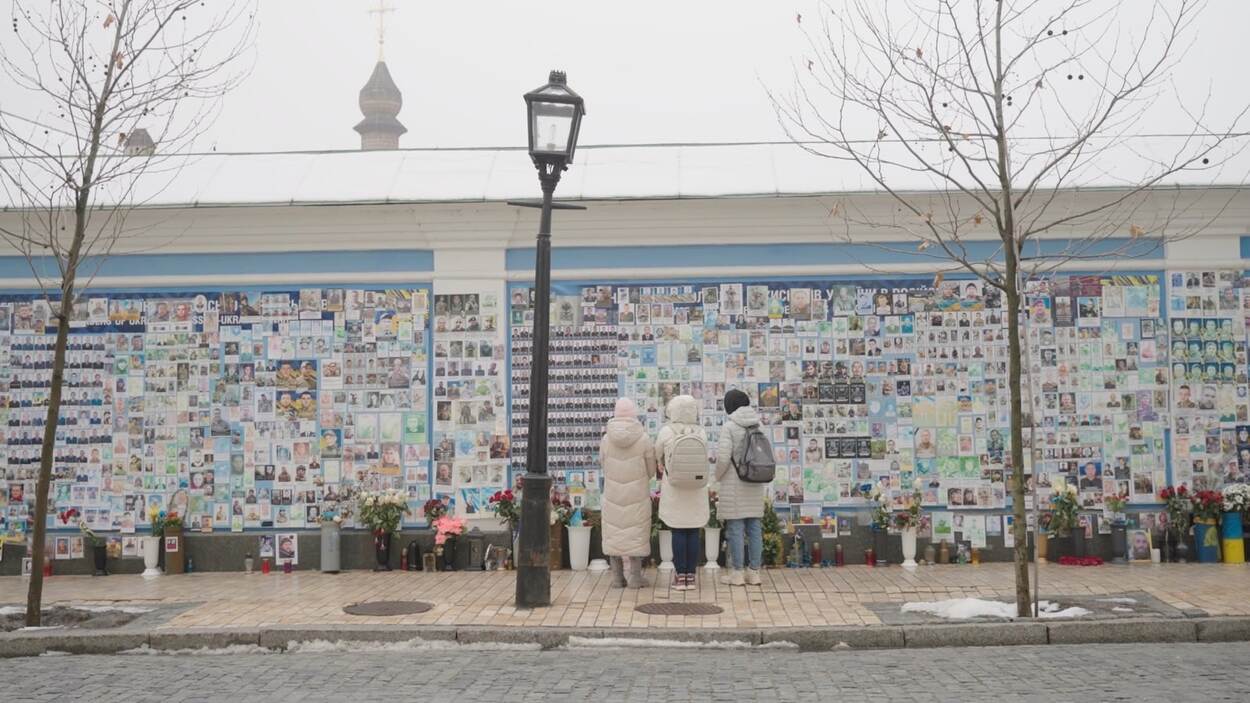
  • MIL-OSI Europe: After three years of war, the Netherlands continues to support Ukraine

    Source: Government of the Netherlands

    On 24 February 2022 Russia launched its full-scale invasion of Ukraine. For three years the Ukrainian people have been fighting for their lives and for their liberty. This article explains why supporting Ukraine remains important – to the whole of Europe.

    Enlarge image
    Wall of Remembrance of the Fallen for Ukraine, in the center of Kyiv.

    Why the Netherlands continues to support Ukraine:

    For the Ukrainian people

    Russia has caused devastation to the daily lives of millions of Ukrainians. Many Ukrainian towns and villages have been completely destroyed. In the areas occupied by Russia, Ukrainians have suffered violence at the hands of Russian soldiers. They have been murdered, tortured and raped. Ukrainian children have also been abducted. With international support, Ukrainians have been defending their country for three years.

    Russia started the war. And Russia could end it at any time.

    For the security of Europe as a whole

    Russia’s aggression is about more than Ukraine. President Putin has spoken publicly about a conflict with ‘the West’. And Russia is stepping up its efforts to undermine European countries. This includes cyberattacks, sabotage, election interference and spreading fake news.

    In other words: by defending itself against Russia, Ukraine is fighting for the security of Europe as a whole. That’s another reason why it’s important to support Ukraine. A Russian victory in Ukraine will not bring an end to the danger. And the costs for Europe will end up being much higher. Europe may have to deal with even more Russian cyberattacks or other kinds of attacks. And with more Ukrainian refugees who are unable to return home.

    For a world in which aggression is not rewarded

    A Russian victory would have consequences for the whole world. It would send a signal to Russia and to China, North Korea and Iran that aggression will be rewarded. And that brute strength is more important than international rules and agreements. That could lead to even more wars.

    Peace through strength, not war through weakness.

    Ukraine must be able to defend itself. And Russia must be made to pay a high price for its aggression. That is why the government is continuing to provide unwavering support to Ukraine. To help secure a positive outcome to the war, based on the idea of: achieving peace by showing strength, not risking further war by showing weakness.

    Dutch support for Ukraine

    The Netherlands continues to support Ukraine. It is for example providing:

    • Military supportequipment, such as munitions, F-16 aircraft and anti-aircraft systems. The Netherlands is also providing training to Ukrainian military personnel.
    • Sanctions against Russia: the sanctions imposed by EU member states are hurting the Russian economy. That makes it harder and more expensive for Russia to keep the war going.
    • Justice for Ukraine: working to ensure that war crimes do not go unpunished and that people who have suffered damage, loss or injury in the war receive compensation.
    • Reconstruction: support to repair damage where it is most needed: water mains, roads, hospitals and the electrical grid. This support is crucial so that Ukraine can continue to function.
    • Humanitarian aid: helping international, Dutch and Ukrainian organisations to provide emergency goods, ensure the availability of drinking water, medicine and food, provide protection, and assist civilian victims.
    • Protection of Ukrainian cultural heritage: Russia is deliberately attacking cultural targets in Ukraine, in an attempt to erase Ukraine’s culture and identity. The Netherlands is supporting Ukraine in the protection of its cultural heritage.
    • Other support: the Netherlands is also helping Ukraine by providing support in areas like healthcare, psychosocial care for victims, agriculture and cybersecurity.

    MIL OSI Europe News

  • MIL-OSI New Zealand: Deputy PM visit harnesses huge interest in NZ in the Gulf

    Source: New Zealand Government

    Deputy Prime Minister Winston Peters has completed a successful visit to the Gulf region today, focused on building economic growth opportunities and conducting strategic foreign policy discussions. 

    “The Gulf is an exciting, fast-developing region with much promise for New Zealand,” Mr Peters says. 

    “We chose to come to the Gulf at this time to help harness the huge attention for New Zealand generated by Kiwi athletes Joseph Parker and James McDonald. 

    “New Zealand as a trade-dependent country can and should be doing more to attract investment and collaboration with the Gulf, building on the high-quality trade agreements we have in place. 

    “We have focused on generating investment and collaboration in areas as diverse as our racing and meat sectors and via work in Antarctica and the Pacific,” Mr Peters says 

    “Our discussions over the past few days have enabled us to explore commercial opportunities for New Zealand businesses and hear on-the-ground perspectives about some of the world’s most pressing and fast-moving foreign policy challenges.” 

    Minister Peters held formal discussions with the Foreign Ministers of United Arab Emirates and Saudi Arabia, HH Sheikh Abdullah bin Zayed bin Sultan Al Nahyan and HH Prince Faisal bin Farhan al Saud, as well as with Adel al Jubeir, Saudi Arabia’s Minister of State for Foreign Affairs. 

    “The United Arab Emirates and Saudi Arabia are both serious and highly influential actors in the Middle East and globally, whose societies are rapidly transforming. 

    “Whether it’s on Gaza, Ukraine, US/Russia relations, defence spending or myriad other regional and global issues, Saudi Arabia and the UAE are influential, pragmatic and engaged players – and New Zealand benefits from working with and talking to them closely.” 

    While in UAE, Mr Peters witnessed the signing of a cooperation arrangement between Antarctica NZ and the Emirates Polar Programme and while in Saudi Arabia announced the reinvigoration of negotiations towards a Double Taxation Agreement. 

    While in Saudi Arabia, he also paid respects during Founding Day commemorations, witnessed Kiwi boxer Joseph Parker’s knockout victory over Martin Bakole and attended the 2025 Saudi Cup – the world’s richest horse race meeting, at which Kiwi jockey James McDonald was runner-up. 

    Mr Peters’ visits were the first by a New Zealand Foreign Minister to Saudi Arabia since 2017 and to UAE since 2021.   

    Minister Peters leaves the Middle East today for North Asia, for programmes in China, Mongolia and South Korea.

    MIL OSI New Zealand News

  • MIL-OSI Asia-Pac: Speech by SITI at Cisco Engage Greater Bay Area Summit (English only)

    Source: Hong Kong Government special administrative region

         Following is the speech by the Secretary for Innovation, Technology and Industry, Professor Sun Dong, at the Cisco Engage Greater Bay Area Summit today (February 24):
     
    Dave (President of Cisco Asia Pacific, Japan and Greater China, Mr Dave West), Jacqueline (Senior Vice President & General Manager, Customer Experience, Cisco Asia Pacific, Japan and Greater China, Ms Jacqueline Guichelaar), Ming (Vice President & Chief Executive Officer of Cisco Greater China, Mr Ming Wong), Iris (General Manager of Cisco Hong Kong, Macau and South China, Ms Iris Feng), distinguished speakers, ladies and gentlemen,
     
         Good morning. It is my great pleasure to be here today at the Cisco Engage Greater Bay Area event, a dynamic platform for exploring the exciting opportunities and innovative solutions that lie ahead in this vibrant region.   
     
         I am delighted to learn that today’s event brings more than 20 visionary speakers and some 400 tech industry leaders and experts from home and abroad, a true testament to Hong Kong’s ability to attract the world’s top talent and innovative ideas.
     
         Today’s theme, “Go beyond”, perfectly captures the spirit of Cisco’s success over the past 40 years. It is also a call to action, urging us to push the boundaries of what is possible and explore new horizons to achieve our shared vision of developing Hong Kong into an international innovation and technology (I&T) centre.
     
         Hong Kong has long been recognised as a super connector, bridging the dynamic markets of Mainland China with the rest of the world. The Hong Kong Special Administrative Region Government is fully committed to creating a robust I&T ecosystem and a business-friendly environment where I&T enterprises and start-ups can grow and thrive here, and make impactful contributions to the local and global economy and society. Proactive initiatives, such as the development of the Hetao Hong Kong Park and the new I&T land in San Tin Technopole, will provide new impetus to our I&T development. We welcome more international I&T enterprises like Cisco to set foot in Hong Kong and leverage Hong Kong’s unique advantages as an ideal gateway for businesses aiming to tap into the vast markets of Mainland China and the Asia-Pacific region.  
      
         To construct a sustainable I&T ecosystem, the close collaboration among government, industry, academia, research and investment sectors is crucial. Last year, Cisco collaborated with Cyberport to jointly build an AI Lab, and I am pleased to learn that it has achieved some remarkable results. As one of the world’s largest technology companies specialising in IT network, cyber security and cloud computing, Cisco has long been a solid player in the ICT (information and communications technology) industry, supporting Hong Kong to become a leading digital hub in the region. I look forward to witnessing more successful partnership between Cisco and other stakeholders in Hong Kong’s I&T industry.
     
         The digital landscape is evolving at an unprecedented pace, presenting both challenges and opportunities. Together, let us continue to embrace the spirit of “going beyond”, and navigate the complexities of the digital age. 
     
         Wish you all a great day. Thank you.

    MIL OSI Asia Pacific News

  • MIL-OSI China: China woos American tourists with diverse options at LA travel show

    Source: China State Council Information Office

    The largest travel show in the United States, the annual Los Angeles Travel & Adventure Show, concluded Sunday, with the China booth showcasing the country’s rich cultural heritage and diverse winter travel attractions to American visitors.

    The two-day event was held at the Los Angeles Convention Center. The China booth, themed on Chinese New Year culture and ice and snow tourism, drew immense attention with visually engaging travel guides and colorful products, offering a wide range of travel options to visitors.

    The booth was hosted by the China National Tourist Office in Los Angeles, in collaboration with China’s three major airlines and local tour operators. Air China, China Eastern Airlines, and China Southern Airlines showcased their flight routes and promotional offers.

    “As American tourists show increasing interest in immersive cultural experiences and winter tourism, the impressive presence of the China booth highlights the vitality of China’s tourist attractions and extends a warm invitation to the world, welcoming more visitors to embark on a journey to China,” Wu Dawei, director of the China National Tourist Office in Los Angeles, told Xinhua.

    With service optimization in place to make trips to China much easier, cheaper and smoother, Air China will deepen cooperation with the L.A. China tourist office and local travel agencies to expand flight routes in support of China’s 240-hour visa-free transit policy, contributing to China-U.S. tourism and cultural exchanges, said Peng Lei, general manager of Air China North America.

    Among the visitors, a travel enthusiast named John Wei said he had visited China multiple times since 2013 and was impressed by the country’s beautiful nature and the warm and friendly people.

    Another visitor, Olufemi, expressed his interest in China’s 240-hour visa-free transit policy, saying he would research it online for future travel planning.

    Maggie Lin, a representative from an L.A.-based travel agency, said that although some Americans initially may have concerns about the travel environment and safety in China, the feedback after visiting is overwhelmingly positive, with many sharing their experiences on social media or recommending trips to China to friends and families.

    Over 450 top travel destinations, tour companies, cruise lines, and travel providers from around the world took part in this year’s event.

    As always, the show allows visitors to explore a multitude of the newest vacation options from top destinations worldwide and consult experts to help personalize and book their trips. 

    MIL OSI China News

  • MIL-OSI China: China mulls law revision to promote development of civil aviation

    Source: China State Council Information Office

    Chinese lawmakers on Monday started deliberating a draft revision to the civil aviation law, amid efforts to safeguard territorial airspace sovereignty and civil aviation rights, and promote the sector’s high-quality development.

    The draft was submitted to an ongoing session of the National People’s Congress Standing Committee for the first reading.

    Consisting of 15 chapters and 255 articles, the draft makes comprehensive amendments to the existing civil aviation law. Key revisions include enhancing the safety of civil aviation, requiring civil airports to have the capability to prevent and address threats from unmanned aerial vehicles, and fine-tuning the entry criteria for public air transport enterprises and commercial general aviation companies.

    One highlight is the development of general aviation and the low-altitude economy. China will accelerate the building of infrastructure for general aviation, enrich its services and develop civil airports, while also ensuring that the reasonable demand for airspace of the low-altitude economy are met, the draft says.

    The revised draft also contains provisions regarding the protection of passenger rights, the alignment with relevant international regulations, and supervision and regulation of activities related to civil aviation.

    The current civil aviation law came into force on March 1, 1996, and has undergone six amendments since then. 

    MIL OSI China News

  • MIL-OSI China: China’s business community opposes US overstretching national security concept, hindering economic, trade exchanges

    Source: China State Council Information Office

    China’s business community strongly opposes the United States overstretching the concept of national security and hindering bilateral economic and trade exchanges, the China Council for the Promotion of International Trade (CCPIT) said Monday.

    A spokesperson for the CCPIT made the remarks in response to a query about the “America First Investment Policy” memorandum.

    The United States is not only restricting investment from China in sectors from technology, critical infrastructure, healthcare, agriculture, energy to raw materials through security reviews, but also using economic sanctions and financial audits to strengthen controls over investment in China in terms of industry scope, investment types and funding sources, the spokesperson said.

    The spokesperson warned that if implemented, these measures would severely affect normal business operations, undermine international economic and trade order, and disrupt the security and stability of global industrial and supply chains.

    The spokesperson urged the U.S. side to respect the laws of market economy and the principle of fair competition, clarify the boundaries of national security in economic and trade fields, and lift restrictions on two-way investments between China and the United States, so as to create a sound environment for mutually beneficial and win-win cooperation between the two countries’ business communities.

    MIL OSI China News

  • MIL-OSI China: China’s tech hub Shenzhen to launch 10B yuan fund to accelerate AI industry growth

    Source: China State Council Information Office

    A robotic whale shark swims in a tank at Xiaomeisha Sea World in Shenzhen, south China’s Guangdong Province, Sept. 22, 2024. [Photo/Xinhua]

    The south China tech hub of Shenzhen will launch a 10 billion yuan (about 1.39 billion U.S. dollars) industry fund to support the development of artificial intelligence (AI) and robotics, focusing on AI software, hardware and embodied intelligence, local authorities said Sunday.

    The fund is part of the city’s broader push to strengthen its position as a global hub for AI innovation.

    City officials revealed the plan at a press conference, announcing an additional 4.5 billion yuan in funding to be raised this year. This funding will cover up to 60 percent of computing power costs for businesses, with a maximum of 10 million yuan per enterprise, provided through vouchers and subsidies.

    Shenzhen’s AI ambitions go beyond financial support. The city plans to expand its AI application base with an additional 100 scenarios set to roll out in 2025, focusing on sectors like municipal sanitation, emergency response and health care. This follows the introduction of nearly 200 AI-powered application scenarios already in place across the city.

    Shenzhen aims to create a highly systematic, complete and collaborative innovation ecosystem, accelerate the development of a globally influential industrial and technological innovation center, and build itself into a city of innovation, said Zhang Lin, director of the Shenzhen municipal bureau of science and technology innovation.

    Shenzhen, once a small fishing village in Guangdong Province, has transformed into one of China’s most dynamic and innovative cities. It is home to more than 2,200 AI companies and boasts a comprehensive AI industry chain that spans from smart chips and algorithm frameworks to large models and software-hardware applications, according to data from the Shenzhen AI industry office.

    Data from iResearch, an industry research and consulting institute, indicates that China’s AI industry is projected to reach 811 billion yuan by 2028, with emerging sectors such as AI and robotics poised to unlock significant market potential and development opportunities.

    MIL OSI China News

  • MIL-OSI: KingSpec Honored as Newegg’s “2025 Partner of the Year”

    Source: GlobeNewswire (MIL-OSI)

    SHENZHEN, China, Feb. 24, 2025 (GLOBE NEWSWIRE) — Shenzhen KingSpec Electronics Technology Co., Ltd. (KingSpec) has been awarded the prestigious “EGGIE AWARD – 2025 Partner of the Year” by Newegg. Newegg is a premier global e-commerce platform specializing in computer hardware, electronics, and tech products. It is recognized as a trusted marketplace for tech enthusiasts, offering high-quality products and exceptional customer service worldwide. This recognition celebrates KingSpec’s excellence in product quality, technological innovation, and the strong, long-term partnership with Newegg that has driven mutual success.

    Founded in 2007, KingSpec has made significant strides in the solid-state drive (SSD) industry. The company has invested heavily in SSD technology development since 2008, continuously upgrading its production processes to meet the growing demands of global markets and consistently providing customers with high-quality products. With strong industry alliances and a proven track record, KingSpec has established itself as a leading force in the storage solutions market. Its products have earned global certifications, including CE, FCC, RoHS, and REACH, underscoring their reliability and compliance with international standards.

    KingSpec’s XG7000 and P3 Series SSDs have gained popularity on Newegg for their exceptional performance. The XG7000 NVMe PCIe 4.0 SSD delivers ultra-fast read and write speeds, making it a top choice for gamers and high-performance users. The P3 Series 2.5 inch SATA SSD delivers exceptional performance, offering users a noticeable boost in speed, durability, and efficiency for seamless computing experiences.

    The “2025 Partner of the Year” award is a testament to KingSpec’s unwavering commitment to innovation and quality. Moving forward, KingSpec will continue to enhance its product offerings and strengthen its collaborations, helping shape the future of storage solutions worldwide.

    A photo accompanying this announcement is available at https://www.globenewswire.com/NewsRoom/AttachmentNg/439fb22b-23ba-4f65-afaa-15adbbb8e32d

    Contact: 
    Email: info@kingspec.com 

    The MIL Network

  • MIL-Evening Report: China didn’t violate any rules with its live-fire naval exercises. So, why are Australia and NZ so worried?

    Source: The Conversation (Au and NZ) – By Donald Rothwell, Professor of International Law, Australian National University

    In recent days, the Chinese Navy conducted two live-fire military exercises in waters near Australia and New Zealand, sparking concern in both countries.

    The Albanese government lodged a diplomatic protest with Beijing. China responded by saying it was “deeply surprised and strongly dissatisfied” by Australia’s response.

    What exactly happened?

    The presence of the People’s Liberation Army Navy (or PLA Navy) ships was well known. Australia’s Department of Defence put out a media release on February 13 indicating it was “aware” of the three ships operating to the northeast of Australia.

    Over the next week, the ships gradually made their way along Australia’s east coast through its exclusive economic zone in the Tasman Sea, which extends 200 nautical miles (370km) from a country’s coastline.

    On February 21, the PLA Navy gave short notice of its intent to conduct a possible live-fire exercise in the high seas between Australia and New Zealand. The next day, the ships conducted a second live-fire exercise. A live fire exercise can take many forms, such as using live rounds against stationary sea targets or the testing of new weapons systems.“

    Once Australia and New Zealand received China’s notification of its exercises, a maritime and air exclusion zone was created in the vicinity of the Chinese ships, and trans-Tasman commercial flights were diverted.

    Both exercises took place in “international waters”, which means no country has sovereignty over them. Neither Canberra nor Wellington contested China’s right to conduct these exercises, as the 1982 United Nations Convention on the Law of the Sea places no constraints on high-seas military operations.

    The United States, for example, has conducted such high-seas weapons tests in the past, causing Qantas flights across the Pacific to be occasionally diverted.

    If they were legal, why were Australia and NZ upset?

    Australian Defence Minister Richard Marles was critical of the short notice China gave both countries of its intention to use live rounds of ammunition.

    Typically, Marles said, standard protocol is to provide between 12 to 24 hours notice of such exercises. This allows enough time to warn other ships in the area and for airlines to divert their flights.

    However, because the exercises took place in the high seas, the protocol is more ambiguous. This became the key point of differentiation with China. Beijing could argue its warships are under no legal obligation to tell anyone what they are doing on the high seas. As Defence Ministry spokesman Wu Qian said,

    China’s actions are in full compliance with international law and international practices, and will not affect aviation flight safety.

    This is also the first instance of China conducting Tasman Sea military exercises. As such, it poses a challenge for how Australia and New Zealand should respond to future Chinese conduct.

    The PLA Navy has been sailing more frequently around the Australian coast and has observed Australian military exercises conducted with defence partners, such as Exercise Talisman Sabre in 2023.

    Why did China conduct the exercises here?

    This is an important question since China could have just as easily conducted these exercises closer to its own shores.

    Part of the answer lies in China having the capacity and capability to project its military force far beyond its own shores.

    These types of activities are also important intelligence gathering exercises. Each Chinese Navy visit will give it more experience in waters where it does not frequently sail, while also gauging how Australia and New Zealand respond.

    Given the increasing cooperation between China and some Pacific Island nations, such as the Cook Islands and Solomon Islands, we should expect the Chinese Navy will become a more frequent visitor to the region.

    What can Australia and NZ do about it?

    As Australia and New Zealand are strong supporters of the rules-based international order on which the law of the sea is based, there is very little they can legally do to obstruct China. Nevertheless, three options are available.

    First, enhanced air and naval surveillance of China’s activities in these waters is legally permissible. Constantly shadowing the PLA Navy in the South Pacific, though, would be a drain on stretched defence resources.

    Both countries would also need to ensure their navies are not in the line of fire to avoid an accident that could spiral into a major conflict.

    Second, Australia and New Zealand could work though bodies such as the International Maritime Organization and International Civil Aviation Organization to settle on agreed practices on how much advance notification is required for high seas live-fire tests.

    Finally, both countries could push for negotiations on a regional “naval code of conduct”. Similar codes have been agreed upon by both China and the US in the past. Incidents like this could prove to be a catalyst for more.

    The South Pacific will increasingly be a strategically contested maritime space. Australia and New Zealand frequently deploy their navies for humanitarian operations in neighbouring Pacific states and engage in exercises with their military partners. The US Navy is also becoming more active in the Pacific Ocean and South China Sea to counter China, as are the navies of other nations, such as the United Kingdom, France and Japan.

    With the potential for these various navies to be operating at the same time in the region, negotiating some basic “rules of the sea” would be a prudent and a helpful confidence-building measure to avoid a potential conflagration.

    Donald Rothwell receives funding from Australian Research Council.

    ref. China didn’t violate any rules with its live-fire naval exercises. So, why are Australia and NZ so worried? – https://theconversation.com/china-didnt-violate-any-rules-with-its-live-fire-naval-exercises-so-why-are-australia-and-nz-so-worried-250618

    MIL OSI AnalysisEveningReport.nz

  • MIL-OSI China: Zelensky says ‘ready’ to resign to exchange peace

    Source: China State Council Information Office

    Ukrainian President Volodymyr Zelensky speaks to the media before a European Council summit in Brussels, Belgium, June 27, 2024. [Photo/Xinhua]

    Ukrainian President Volodymyr Zelensky voiced readiness Sunday to step down in exchange for peace in Ukraine and the country’s admission to NATO.

    “If there is peace for Ukraine, if my resignation is really necessary, I am ready. I would exchange it for NATO if such conditions are proposed. Immediately,” Zelensky told a press conference in Kiev.

    Kiev is seeking alternative security guarantees, including the EU membership for economic security guarantees and the external financing of the 800,000-strong Ukrainian army if Ukraine is not admitted to NATO, Zelensky said.

    The Ukrainian leader said he will insist on clear security guarantees for Ukraine in the minerals deal with the United States.

    MIL OSI China News

  • MIL-OSI China: Announcement on Open Market Operations No.36 [2025]

    Source: Peoples Bank of China

    Announcement on Open Market Operations No.36 [2025]

    (Open Market Operations Office, February 24, 2025)

    In order to keep the liquidity adequate in the banking system, the People’s Bank of China conducted reverse repo operations in the amount of RMB292.5 billion through quantity bidding at a fixed interest rate on February 24, 2025.

    Details of the Reverse Repo Operations

    Maturity

    Volume

    Rate

    7 days

    RMB292.5 billion

    1.50%

    Date of last update Nov. 29 2018

    2025年02月24日

    MIL OSI China News

  • MIL-OSI China: Domestic marques snatching up market share

    Source: China State Council Information Office

    Chinese carmakers have continued their strong performance, capturing a larger share of the world’s largest automotive market.

    According to figures from the China Association of Automobile Manufacturers, sales of Chinese-branded cars in January surged to 1.45 million units, accounting for a remarkable 68 percent of the total passenger vehicle market.

    This represents an 8 percentage point increase from the same period of 2024, highlighting the growing dominance of Chinese manufacturers amid intensifying competition.

    The strong growth of Chinese brands comes at a time when the domestic automotive sector is undergoing a transformation, driven largely by the popularity of new energy vehicles.

    Chen Shihua, deputy secretary-general of the CAAM, said that the performance of Chinese brands had far outpaced the broader market, which saw an increase of 0.8 percent in January year-on-year.

    The modest growth was primarily the result of a smaller number of working days in the month because of the Spring Festival holiday and a shopping spree in December when carmakers lavished buyers with discounts and other benefits to push their whole-year sales.

    In January, seven out of the 10 bestselling carmakers in the country were Chinese; Geely topped the chart, followed by BYD and Changan.

    BYD, China’s largest NEV manufacturer, led the charge in the domestic market, reporting more than 296,000 vehicle deliveries in January alone, a 47.5 percent year-on-year increase.

    The carmaker’s focus on both EVs and hybrid vehicles has made it a formidable competitor in the global car market, where it is increasingly seen as a leader in electric mobility.

    Startup Xpeng delivered 30,350 vehicles in January, up 267.9 percent year-on-year.

    The figures are in stark contrast with the performance of international carmakers, who have faced more challenges in capturing market share.

    GAC Toyota, a Chinese joint venture of Toyota, delivered 15,123 vehicles in January, down 57.14 percent year-on-year.

    SAIC Volkswagen, China’s first extant automotive joint venture, saw its sales slide to 75,150 units in January, a 20.94 percent fall from the same month of 2024. Dongfeng Peugeot Citroen sold a mere 3,888 units, a 39.4 percent fall.

    The rise of Chinese brands is being observed in the premium vehicle sector as well. The M9 SUV from Aito, an NEV brand codeveloped by Huawei and Seres, has been the best-selling model priced above 500,000 yuan ($68,833) in China for 10 months in a row.

    Some new outlets of its growing dealership network used to sell premium vehicles from such brands as Audi.

    Analysts say the wide variety and cutting-edge features of such vehicles have convinced car buyers that Chinese brands outshine global rivals when it comes to NEVs.

    Also, China’s push for technological innovation in areas like autonomous driving and battery development has allowed homegrown manufacturers to leapfrog traditional carmakers in key segments.

    As foreign brands face pressure to keep pace with China’s technological advancements, the dominance of domestic carmakers is likely to grow.

    The elimination phase has begun and many car manufacturers are struggling to “beat the count”, said analysts from consulting firm McKinsey.

    “Those which cannot come up with decent electric vehicles in one or two years, and those which are deep in the red but cannot offer a convincing strategy to go green, will be forced to leave the race,” they said.

    MIL OSI China News

  • MIL-OSI China: Ancient Greek vessel returned home from US museum

    Source: China State Council Information Office 3

    An ancient Greek artifact has been returned to its homeland following a repatriation ceremony at the Greek embassy in Washington, local media reported on Sunday.

    The 12-cm-tall Attic black-figure lekythos – a vessel used for oil storage – depicts a battle between a Giant and Athena, the goddess of wisdom and warfare in Greek mythology, as well as the patron of Athens.

    Dating from between 630 and 500 B.C., according to Greece’s Culture Ministry, the artifact carries significant historic and cultural value.

    Greek archaeologists confirmed that it was excavated in 1910 from a tomb at the ancient cemetery of Kerameikos in Athens, near the Acropolis. The vessel was removed from a Greek museum under unclear circumstances between 1936 and 1973, as noted in the Greek ministry’s archives. It later came into the possession of the Glencairn Museum in the U.S. state of Pennsylvania, having been donated by an individual who purchased it at a Sotheby’s auction in New York in 1973.

    During the ceremony, Greek Culture Minister Lina Mendoni expressed gratitude on behalf of the government and people to the Glencairn Museum for facilitating the artifact’s return. The repatriation was initiated by the museum’s Board of Directors as part of a review of the origins of its collections. 

    MIL OSI China News

  • MIL-OSI China: Pakistan keen to welcome Chinese cinema ‘Ne Zha 2’

    Source: China State Council Information Office 3

    This photo taken on Feb. 13, 2025 shows a poster for the Chinese animated film “Ne Zha 2” at a cinema in Chaoyang District of Beijing. [Photo/Xinhua]

    Pakistani audiences are eagerly awaiting the release of the Chinese animated blockbuster “Ne Zha 2,” and efforts are underway to bring the film to cinemas in Pakistan, a leading distributor said.

    In an interview with Xinhua, Sheikh Amjad Rashid, chairman of Pakistan’s film distribution company, Distribution Club, said that on public demand, they are in contact with the film’s distributors to introduce “Ne Zha 2” to Pakistani cinemas.

    “Ne Zha 2” has dethroned Disney’s 2024 picture “Inside Out 2” to become the highest-grossing animated movie of all time globally.

    “The young generation in Pakistan is already a fan of Chinese actors, singers, dramas, and games, but despite this, Chinese films have yet to make their mark in our cinemas,” he said. “With ‘Ne Zha 2’ receiving global acclaim, this is the right time to introduce Chinese cinema to Pakistan.”

    The film has already captured audiences worldwide with its gripping storytelling, high-quality animation, and stunning visual effects, and it will be interesting for the Pakistani audience to watch the masterpiece of Chinese animation, showcasing the country’s growing prowess in the global film industry, said Rashid.

    “We have distributed over 400 movies in Pakistan, and among foreign films, animated movies have performed exceptionally well. Given its strong storyline, breathtaking animation, and world-class visual effects, we expect ‘Ne Zha 2’ to be a massive success in Pakistan,” he added.

    He noted that Pakistan does not produce enough films annually to meet domestic demand, and the restriction on the release of Bollywood films in local cinemas has left a vacuum in the country’s cinema industry.

    “Chinese films can be a great option to fill this gap. The overwhelming interest in ‘Ne Zha 2’ among Pakistani audiences proves that Chinese films have strong potential in our market,” he said.

    He mentioned that he recently visited China twice, where he signed agreements with Chinese distributors to bring Chinese content to Pakistan, adding that the release of the animated blockbuster will mark the beginning of this collaboration.

    “We are fully prepared to release the movie in English and dub it in Urdu to ensure it reaches a wider audience,” he added.

    Talking about the deep-rooted Pakistan-China friendship, Rashid stressed that people-to-people contacts between the two countries have significantly strengthened over the years.

    “Due to our longstanding friendship with China and the presence of thousands of Pakistani students and professionals who have lived in China, Chinese culture is already familiar here. Introducing ‘Ne Zha 2’ will be an important step in strengthening cinematic ties between the two countries,” he said.

    The cultural exchange through cinema will enhance mutual understanding between the two nations, just as Chinese dramas and music have gained popularity in Pakistan, he noted.

    Rashid added that while Pakistani films have been screened in China, it is time for more Chinese movies to be released in Pakistan, fostering stronger people-to-people connections.

    “As Pakistan-China relations continue to flourish, cultural exchanges through cinema will help bring the people of both countries even closer,” he said. 

    MIL OSI China News

  • MIL-OSI China: ‘Ne Zha 2’ fuels China’s travel boom and merchandise craze

    Source: China State Council Information Office 3

    A fan poses for photos with a statue of Nezha, the main character from “Ne Zha 2,” at the Gazelle Digital Cultural and Creative Valley in Chengdu, southwest China’s Sichuan Province, Feb. 8, 2025. [Photo/Xinhua]

    The phenomenal success of the Chinese animated blockbuster “Ne Zha 2” is driving a surge in cultural tourism and merchandise sales, with visitors flocking to destinations associated with the film or its mythological tale, while Ne Zha-themed products are flying off the shelves.

    As Chinese films like “Ne Zha 2” gain international recognition, they not only showcase the country’s rich culture to global audiences but also appear to inspire more travelers to experience China firsthand.

    “I want to let my daughter watch it (“Ne Zha 2″). I think she’ll like it,” said Coy Amanda Paige, a traveler from the United States.

    French visitor Courel Benedicte praised the quality of “Ne Zha 2,” calling it a great choice for young audiences. “What is interesting is the way how the Chinese culture is actually emphasized through the different characters,” she said.

    Domestically, “Ne Zha 2” is dominating the box office, commanding 76.3 percent of February’s total revenue, which exceeded 15 billion yuan (around $2.07 billion) as of Feb. 22.

    Amid the film’s success, many scenic spots across China are offering free or discounted admission with a “Ne Zha 2” movie ticket. Examples include the Laojieling scenic spot in Henan Province, a site steeped in Ne Zha legends, and Li Jing’s Former Residence in Shaanxi Province, the historic estate of Tang Dynasty General Li Jing, the real-life prototype for Ne Zha’s father in mythology, among many other tourist destinations.

    The film’s popularity has also ignited massive demand for Ne Zha-themed merchandise, with themed items such as blind-box figurines and popcorn buckets selling out rapidly.

    E-commerce data shows that since February, searches for Ne Zha merchandise on Chinese online shopping platform Taobao have surpassed 10 million, with a peak of over 800,000 users searching in a single day. As of Feb. 22, total sales of Ne Zha merchandise have exceeded 240 million yuan (around $33 million).

    To meet the demand, officially licensed manufacturers are working around the clock. One model toy company in Hunan Province has even established a dedicated “Ne Zha Express” production line that ships an average of 250,000 figurines a day across China.

    Beyond the domestic market, the company is in talks with copyright holders to expand sales to overseas markets such as North America and Southeast Asia, where interest is growing rapidly.

    Industry analysts predict that revenue from Ne Zha-themed merchandise and collectibles could rival the film’s total box-office earnings.

    As of noon on Feb. 23 Beijing Time, “Ne Zha 2” has amassed a total box office of 13.5 billion yuan (around $1.86 billion), including pre-sales and overseas earnings, according to online movie platform data. The film is now the highest-grossing animated film globally and ranks among the top 8 highest-grossing films of all time.

    MIL OSI China News

  • MIL-OSI China: AI coming to primary and secondary schools to maximize learning by machine

    Source: China State Council Information Office 3

    “Confucius, does the phrase ‘To learn and constantly review what one has learned, isn’t that a delight?’ mean that we should frequently review our lessons?”

    In a fourth-grade classroom at Xinyilu Primary School, Qinhuangdao, Hebei province, a student posed this question to a virtual figure on the screen. The digital “Confucius”, dressed in traditional attire, nodded gently and replied, “Indeed. By revisiting what one has learned, one can gain new insights.”

    With the integration of artificial intelligence-powered virtual teaching assistants, historical figures can now come to life in classrooms, providing students with an interactive learning experience.

    The deep integration of AI and education will bring about major changes to education and the way schools are organized, says Xue Lan, dean of the Schwarzman College at Tsinghua University. “As a personalized learning hub, AI offers limitless possibilities.”

    The Tianjin Huiwen Middle School has gone through three stages of AI exploration in education.

    In 2017, it organized a sci-tech club to engage a small group of students interested in AI, allowing them to try out for robotics and other competitions. By 2022, the school was determined to broaden the reach of its AI education programs.

    It specially created sci-tech innovation courses covering robots, drones and the annual robot competition, RoboMaster, to expand the variety of AI education.

    AI has now been integrated into daily teaching at the school, and serves as a teaching assistant bringing new experiences to traditional education.

    The development of AI education at Huiwen is similar to other schools in China. Educators widely acknowledge AI’s transformative impact on classroom efficiency.

    “As part of our school’s digital transformation, every classroom is now equipped with smart interactive boards and AI-powered virtual assistants, enabling real-time human-machine interaction,” says Principal Yao Hairong of Xinyilu Primary School. “This not only enhances teaching efficiency but also significantly boosts students’ learning engagement.”

    Many parents believe that AI-driven learning makes lessons more engaging and increases interest.

    A mother of a fifth-grade student, surnamed Li, says that AI has sparked her daughter’s interest in making PowerPoint slides and generating AI templates.

    “I hope she will be inspired by this and get to know computer technologies,” says Li.

    Teachers and parents have also shown concern about the use of AI in the study.

    “AI-generated teaching material still has its limitations,” says Ni Lili, a teacher at Xinyilu Primary School. “Presentations, speeches and supplementary materials produced by AI often lack personalization and do not fully reflect a teacher’s particular style.

    “Additionally, AI-generated images and multimedia content sometimes do not align precisely with the given descriptions, requiring manual adjustment,” she says.

    Parents also expressed concerns that excessive reliance on AI may weaken problem-solving abilities.

    “When my child encounters a difficult question, her first instinct is to ask AI for the answer instead of thinking through the problem herself,” Li says.

    Education experts emphasize that AI should serve as a tool to support student thinking rather than as a substitute for independent reasoning.

    “AI in education should focus on guided learning, helping students develop problem-solving skills, rather than simply providing answers,” one expert says.

    In February 2024, 184 schools were chosen as pilot centers to explore the philosophies, models and programs of AI education. The goal is to develop exemplary cases and experience that can be promoted on a larger scale.

    In order to support the integration of AI into basic education, the Ministry of Education issued a directive in late 2024 outlining key objectives for advancing AI in primary and secondary education.

    The plan aims to establish a structured AI curriculum, promote AI-driven teaching and assessment, and achieve full AI education in primary and secondary schools by 2030, equipping students with AI literacy and practical skills.

    MIL OSI China News

  • MIL-OSI China: Israel launches new airstrike in Lebanon

    Source: China State Council Information Office

    Israel’s military said on Sunday evening it launched a new wave of airstrikes in southern Lebanon, targeting Hezbollah sites despite a ceasefire agreement.

    In a statement, the military said it struck infrastructure containing weapons, where “Hezbollah activity was identified.”

    It accused Hezbollah of conducting military operations in southern Lebanon in violation of agreements between Israel and Lebanon.

    Lebanon’s state-run National News Agency (NNA) reported that “the Israeli enemy launched two drone strikes on Wadi Zibqin in the western sector of southern Lebanon.”

    The agency added that the Israeli forces also dropped flares over the Al-Dar area, located in the central sector of the southern border region.

    Earlier in the day, according to the NNA, Israeli warplanes carried out several airstrikes in eastern and southern Lebanon.

    A Syrian girl was injured in the strikes and has been sent to the Lebanese-Italian Hospital for treatment, according to the NNA.

    Also on Sunday, Israel released photos and videos of the assassination of Hezbollah’s former leader, Hassan Nasrallah, on Sept. 27, 2024. Aerial strike footage showed multiple bombs hitting an underground bunker in Beirut’s southern suburbs where Nasrallah was staying.

    The videos were released as thousands in Beirut attended Nasrallah’s funeral the same day.

    During the ceremony, Israeli warplanes patrolled the skies over Beirut, Israeli Defense Minister Israel Katz said.

    “The Israeli Air Force jets currently flying over Beirut during Hassan Nasrallah’s funeral are sending a clear message: Whoever threatens to destroy Israel and attacks Israel — this will be their fate,” Katz said.

    MIL OSI China News

  • MIL-OSI China: Trump ‘confident’ about striking deal to end Ukraine conflict soon: White House

    Source: China State Council Information Office

    U.S. President Donald Trump returns to the White House via Marine One in Washington, D.C., the United States, Feb. 22, 2025. [Photo/Xinhua]

    U.S. President Donald Trump has expressed confidence that Washington can successfully negotiate the end of the Ukraine conflict “this week,” White House Press Secretary Karoline Leavitt said Saturday.

    “The president, his team are very much focused on continuing negotiations with both sides of this war to end the conflict, and the president is very confident we can get it done this week,” Leavitt was quoted by top U.S. political website “The Hill” as saying on the South Lawn after returning from the Conservative Political Action Conference.

    Leavitt also said that Treasury Secretary Scott Bessent has been involved in discussions about a proposed deal with the Ukrainians to harness raw minerals.

    “When it comes to the critical minerals, this is an important piece for the president. It’s very important for the president, because it will recoup American tax dollars,” Leavitt said, according to “The Hill” report.

    Meanwhile, the Speaker of Ukraine’s Parliament has said that the Ukrainian government will start working in earnest from the beginning of next week to conclude an agreement on earth minerals and security assurances with the United States, according to reports from Ukraine.

    Ruslan Stefanchuk, who is close to Ukrainian President Volodymyr Zelenskyy, said Friday that the Ukrainian government will have an expert team start from Monday working toward signing an agreement with the United States.

    MIL OSI China News

  • MIL-OSI China: Chongqing promotes high-quality development of private sector

    Source: People’s Republic of China – State Council News

    Chongqing promotes high-quality development of private sector

    Updated: February 24, 2025 10:08 Xinhua
    Workers operate at a production line of Chongqing Hwasdan Machinery Manufacturing Co., Ltd. in southwest China’s Chongqing Municipality, Feb. 22, 2025. In recent years, the local government has launched a series of policies for the high-quality development of the city’s private sector, covering areas such as technological innovation, market expansion and financial support. In 2024, the economic value added of Chongqing’s private sector reached 1.98 trillion yuan (about 273 billion U.S. dollars). [Photo/Xinhua]
    A worker operates at a workshop of Chongqing Honggang Numerical Control Machine Tool Co., Ltd. in southwest China’s Chongqing Municipality, Feb. 22, 2025. [Photo/Xinhua]
    A saleswoman promotes agricultural machines via livestreaming at an exhibition hall of Chongqing Hwasdan Machinery Manufacturing Co., Ltd. in southwest China’s Chongqing Municipality, Feb. 22, 2025. [Photo/Xinhua]
    Workers operate at a production line of Chongqing Hwasdan Machinery Manufacturing Co., Ltd. in southwest China’s Chongqing Municipality, Feb. 22, 2025. [Photo/Xinhua]
    A worker operates at a production line of Chongqing Hwasdan Machinery Manufacturing Co., Ltd. in southwest China’s Chongqing Municipality, Feb. 22, 2025. [Photo/Xinhua]
    Workers operate at a workshop of Chongqing Hwasdan Machinery Manufacturing Co., Ltd. in southwest China’s Chongqing Municipality, Feb. 22, 2025. [Photo/Xinhua]
    Workers operate at a workshop of Chongqing Honggang Numerical Control Machine Tool Co., Ltd. in southwest China’s Chongqing Municipality, Feb. 22, 2025. [Photo/Xinhua]

    MIL OSI China News

  • MIL-OSI China: Tech to play growing role in agriculture

    Source: People’s Republic of China – State Council News

    China’s Ministry of Agriculture and Rural Affairs has issued new guidelines outlining 10 key areas for agricultural technology innovation from 2024 to 2028, focusing on breeding new crop varieties, improving arable land quality, developing green and low-carbon agriculture and promoting rural development.

    The guidelines call for the development of rapid soil testing technologies to support smart agriculture, alongside a digital soil information system, a multidimensional soil monitoring network, and farmland evaluation and early warning platforms.

    Innovation in green and low-carbon agriculture should focus on controlling agricultural non-point source pollution, advancing climate-adaptive farming and promoting ecological circular agriculture, the document states.

    “The overall level of China’s agricultural science and technology innovation has advanced to the global forefront, with the contribution rate of agricultural science and technology progress surpassing 63 percent,” Zhang Xingwang, vice-minister of agriculture and rural affairs, said at a news conference in January.

    To improve farmland quality and safeguard food security, efforts will focus on building a robust technology system for farmland conservation and restoring degraded land, including black soil and saline-alkali land.

    “In 2024, over 400 million mu (26.67 million hectares) of black soil was restored, and a nationwide ‘physical examination’ of soil was conducted, with 3.11 million samples collected from 2.87 million sites,” Zhang said.

    Chen Bangxun, director of the ministry’s development and planning department, said China will strengthen the protection and use of arable land and water resources, promote clean agricultural production, launch pilot projects in green and circular farming, and integrate ecological practices into agricultural industries.

    The guidelines also call for more technology-driven solutions to improve rural living conditions, develop sustainable rural industries and enhance rural governance.

    Modern agricultural and rural development models should be tailored to regional economic conditions in the eastern, central, western and northeastern parts of the country, the document states.

    Key digital technologies should be developed to improve rural governance, expand healthcare access and extend agricultural industrial chains. The integration and sharing of information and data should be promoted to accelerate rural digital transformation.

    “The key to agricultural modernization lies in the modernization of agricultural science and technology,” Zhang said.

    “Next, we will enhance the agricultural science and technology innovation system, nurture leading and fast-growing agricultural technology enterprises, accelerate the application of scientific achievements and provide strong technological support for building a strong agricultural nation,” he said.

    MIL OSI China News

  • MIL-OSI China: Shanghai unveils measures to reduce operational costs for enterprises

    Source: People’s Republic of China – State Council News

    Shanghai has announced the continuation of a comprehensive set of measures aimed at reducing operational costs to bolster the business environment and support the development of enterprises. The announcement was made during a news conference hosted by the Shanghai Municipal Development and Reform Commission on Friday.

    The measures, comprising a total of 21 items, will remain in effect until Dec 31 this year and are designed to address the diverse needs of enterprises across various sectors. They focus on five key aspects: levies, employees, energy usage, financing and penalties, with the overarching goal of alleviating financial burdens and enhancing the competitiveness of businesses operating in Shanghai.

    In the realm of taxation, Shanghai will uphold the national policy on structural tax cuts and extend the 50 percent tax and fee reductions for low-profit enterprises, small businesses and individually-owned businesses. Additionally, enterprises aligned with the city’s industrial development will benefit from tax exemptions on property tax, while the exploration of pilot preferential policies for offshore trade stamp tax will be intensified.

    The city also unveiled a significant initiative to support female employees, with maternity leave subsidies being the focal point of the announcement. Enterprises that meet the specific criteria will be eligible to claim a 50 percent reimbursement for social insurance fees paid during a female employees’ maternity leave and childcare leave.

    Furthermore, Shanghai aims to reduce energy costs for enterprises based in industrial parks, offering discounts on electricity, natural gas and water usage. The continuation of off-peak electricity price adjustments for weekends and major holidays will further contribute to cost savings for businesses in the city.

    In a bid to ease financial burdens, particularly for small and medium-sized enterprises (SMEs), Shanghai will enhance credit support to stabilize financing costs, with a particular focus on tech-oriented firms. Start-ups will have increased access to loans, and SMEs will benefit from loan interest relief, alongside the implementation of a seamless loan renewal mechanism for micro and small enterprises.

    MIL OSI China News