NewzIntel.com

    • Checkout Page
    • Contact Us
    • Default Redirect Page
    • Frontpage
    • Home-2
    • Home-3
    • Lost Password
    • Member Login
    • Member LogOut
    • Member TOS Page
    • My Account
    • NewzIntel Alert Control-Panel
    • NewzIntel Latest Reports
    • Post Views Counter
    • Privacy Policy
    • Public Individual Page
    • Register
    • Subscription Plan
    • Thank You Page

Category: Climate Change

  • MIL-OSI Australia: Stay safe this Christmas and enjoy a happy New Year

    Source: Northern Territory Police and Fire Services

    A message from Police Commissioner Michael Murphy APM

    As Christmas morning 2024 draws near, our thoughts turn to a day etched into Darwin’s history: 50 years ago, the fury of Cyclone Tracy tore through this city, leaving devastation in its wake and testing the grit and determination of all Territorians.

    On that fateful morning in 1974, Tracy battered our shores with winds so ferocious they forever changed the landscape – and the psyche – of our community. Yet, out of the wreckage, Darwin rose stronger, prouder, and more united than ever before.

    That spirit of resilience still lives on today. In the face of any emergency – be it a cyclone, flood, bushfire, or other crisis – your Northern Territory Police Force stands ready and willing to step forward and protect all who call this place home. Through rigorous planning, training, and preparation, we remain unwavering in our commitment to the safety and wellbeing of Territorians.

    This Christmas, as we pause to remember the hardships endured in 1974, we also celebrate the extraordinary unity that carried us through. It is that same sense of togetherness that will guide us whenever danger looms anywhere in the Territory. From the lessons of Cyclone Tracy, we know there is no storm we cannot weather if we stand shoulder to shoulder.

    So, as you gather with loved ones this festive season, reflect on the legacy of a city rebuilt, and on the courage it took to get us here. And know this: the NT Police Force will be here to safeguard our community – ready to act swiftly and decisively, no matter what comes our way.

    On Behalf of the Northern Territory Police Force, enjoy a safe and Merry Christmas and a happy New Year.

    MIL OSI News –

    January 27, 2025
  • MIL-Evening Report: Rabuka reveals details of 1987 coup navy ‘secret weapons mission’

    By Litia Cava, FBC News multimedia journalist

    Fiji Prime Minister Sitiveni Rabuka has revealed how arms and ammunition used to conduct the 1987 military coup were secretly brought into Fiji on board a naval survey ship.

    Speaking at the commissioning of a new research vessel for the Lands and Mineral Resources Ministry on Friday, Rabuka described the strategic measures taken to ensure the weapons reached Fiji undetected.

    He recounted that during preparations for his coup against Dr Timoçi Bavadra’s Labour government of 1987, Fiji lacked sufficient arms and ammunition.

    “I realised that we didn’t have enough weapons and ammunition in Fiji to do what I wanted to do. So I sent a very quick message to the captain who was there to pick up the ship and surprised him by asking that, get that ship commissioned in Singapore before you sail back to Fiji.”

    Rabuka explained the decision, saying the commissioning had allowed the ship to fly a naval flag, ensuring it would avoid inspection at international ports.

    He said the ship’s captain was instructed to load arms and ammunition en route which were successfully brought back to Fiji.

    The Prime Minister said the measures were necessary at the time to achieve what needed to be done.

    Rare glimpse of tactics
    His remarks offered a rare glimpse into the behind-the-scenes tactics of 1987, highlighting the extent of planning and resourcefulness involved.

    Rabuka’s comments were made during the launch of a state-of-the-art research vessel which will serve as a floating laboratory for marine geological studies and coastal surveys.

    The vessel is equipped with advanced tools to map the ocean floor, study tectonic activity and support communities affected by climate change.

    The Prime Minister said the new vessel marked a significant step in understanding Fiji’s marine ecosystem.

    He also spoke about the importance of integrating scientific research with traditional knowledge to address critical issues such as climate change and sustainable resource management.

    The PM said there was a need for informed planning to prevent disasters, referencing the recent earthquake in Vanuatu.

    Rabuka said early geological surveys could have guided city planners and engineers in designing structures that mitigate damage from such events.

    The new vessel is expected to provide critical insights into the ocean’s mysteries while contributing to Fiji’s resilience against climate-related challenges.

    Fiji’s President celebrates birthday with military
    Meanwhile, earlier today members of the Republic of Fiji Military Forces (RFMF) gathered at State House to celebrate the 71st birthday of Fiji’s President and Commander-in-Chief, Ratu Naiqama Lalabalavu.

    The celebration was led by the Commander of the Fiji Navy, Humphrey Tawake, with senior officers. It was marked by a march by officers and the RFMF band. adding a ceremonial and heartfelt touch to the happy occasion.

    On behalf of the commander of the RFMF who is away on official leave, Commander Tawake extended birthday wishes to the Head of State.

    President Lalabalavu praised the dedication of the RFMF in upholding law and order.

    “The strength of our nation lies in our collective efforts, and since assuming office, I have witnessed the vital role you play in ensuring peace and stability,” he said.

    MIL OSI Analysis – EveningReport.nz –

    January 27, 2025
  • MIL-OSI Global: How global inequality hinders climate action

    Source: The Conversation – UK – By Susan Ann Samuel, PhD Candidate, School of Politics and International Studies, University of Leeds

    Leaders from around the globe are meeting in Davos. Michael Derrer Fuchs/Shutterstock

    World leaders have gathered for the World Economic Forum annual meeting in Davos, Switzerland. One of their main goals is to align their responses to geopolitical shocks such as floods and wildfires that hamper trade, investment and more.

    The meeting also supposedly aims to find ways to stimulate economic growth to improve living standards, foster a just and inclusive energy transition, achieve security and cooperation amidst conflicts, and accelerate the economic response to an “intelligent age” of AI.

    But, a new report from Oxfam International, published on the first day of the meeting in Davos, highlights how global inequality is more rampant than ever. The report, written by a team of policy campaigners and inequality research advisers outlines how billionaire wealth rose sharply in 2024 worldwide, with the pace of the increase three times faster than in 2023.

    The World Economic Forum lists extreme weather as one of the top global risks. But, as world leaders convene in Davos, the high-profile anti-climate stances of some of them stand in stark opposition to any meaningful progress for climate action.

    The Oxfam report highlights the exploitation involved in creating and sustaining wealth and outlines how, as inequalities deepen, vulnerable communities are disproportionately affected. The most vulnerable – overwhelmingly women, people of colour, Indigenous groups and low-wage workers – are caught in a cycle of insufficient wages, limited services and minimal political influence.

    The report also highlights how wealth inequality is often intertwined with historical processes of extraction — both within countries (for example, through weak labour protections that lowers wages) and between countries (through trade, finance, and resource exploitation).

    The climate connection

    Other research has also shown how inequality is deeply interwoven with climate breakdown. Each crisis exacerbates the other. Historically, the richest nations – and within them, the wealthiest people – have contributed the most to greenhouse gas emissions.

    Meanwhile, lower-income countries that bear little responsibility for global heating suffer the most. These countries, already burdened by debt and systemic inequality, have fewer resources to protect communities from extreme weather, crop failures and infrastructure damage. This makes day-to-day survival a struggle for billions.

    When climate change exacerbates existing inequalities, marginalised communities are denied basic human rights. For instance, droughts reduce crop yields and deplete water sources, so more people — often women and children — have to ration supplies or go without. This directly infringes on their rights to food, safe drinking water and sanitation.

    In these ways, without climate action, the warming planet threatens to widen inequalities by affecting the poorest people most severely. A 2020 World Bank report estimated that an additional 68 to 135 million people could be pushed into poverty by 2030 because of climate change. French researchers identified that climate change also slows down the economic catch-up of poorer countries.


    Read more:
    Extreme weather has already cost vulnerable island nations US$141 billion – or about US$2,000 per person


    The reality on the ground is bleak. Floods in Pakistan displaced thousands and affected more than 33 million people in 2023. That’s ten times more than the total population of Los Angeles where, when the recent wildfires struck, 170,000 people had to be evacuated.

    Around the world, climate movements continue. Law suits that demand climate action are transforming governance. High-level negotiations like the UN’s annual climate summit carry on seeking progress, although the processes could be improved to accelerate change.

    What can Davos do? World leaders need to look at how wealth and power can be redistributed (reparations for climate damages is one way to do this) and low-income, climate-vulnerable nations can be better represented in global decision-making.

    Without this kind of change, there’s a risk climate action will perpetuate the same structural imbalances that first enabled environmental exploitation. Only by tackling both climate injustice and economic inequality together can the world prevent further climate disasters and ensure a more equitable future.


    Don’t have time to read about climate change as much as you’d like?

    Get a weekly roundup in your inbox instead. Every Wednesday, The Conversation’s environment editor writes Imagine, a short email that goes a little deeper into just one climate issue. Join the 40,000+ readers who’ve subscribed so far.


    Susan Ann Samuel receives funding from the University of Leeds, for her PhD research.

    – ref. How global inequality hinders climate action – https://theconversation.com/how-global-inequality-hinders-climate-action-247841

    MIL OSI – Global Reports –

    January 27, 2025
  • MIL-OSI Global: Repression of climate and environmental protest is intensifying across the world

    Source: The Conversation – UK – By Oscar Berglund, Senior Lecturer in International Public and Social Policy, University of Bristol

    Climate and environmental protest is being criminalised and repressed around the world. The criminalisation of such protest has received a lot of attention in certain countries, including the UK and Australia. But there have not been any attempts to capture the global trend – until now.

    We recently published a report, with three University of Bristol colleagues, which shows this repression is indeed a global trend – and that it is becoming more difficult around the world to stand up for climate justice.

    This criminalisation and repression spans the global north and south, and includes more and less democratic countries. It does, however, take different forms.

    Our report distinguishes between climate and environmental protest. The latter are campaigns against specific environmentally destructive projects – most commonly oil and gas extraction and pipelines, deforestation, dam building and mining. They take place all around the world.

    Climate protests are aimed at mitigating climate change by decreasing carbon emissions, and tend to make bigger policy or political demands (“cut global emissions now” rather than “don’t build this power plant”). They often take place in urban areas and are more common in the global north.

    Four ways to repress activism

    The intensifying criminalisation and repression is taking four main forms.

    1. Anti-protest laws are introduced

    Anti-protest laws may give the police more powers to stop protest, introduce new criminal offences, increase sentence lengths for existing offences, or give policy impunity when harming protesters. In the 14 countries we looked at, we found 22 such pieces of legislation introduced since 2019.

    2. Protest is criminalised through prosecution and courts

    This can mean using laws against climate and environmental activists that were designed to be used against terrorism or organised crime. In Germany, members of Letzte Generation (Last Generation), a direct action group in the mould of Just Stop Oil, were charged in May 2024 with “forming a criminal organisation”. This section of the law is typically used against mafia organisations and had never been applied to a non-violent group.

    In the Philippines, anti-terrorism laws have been used against environmentalists who have found themselves unable to return to their home islands.

    Criminalising protest can also mean lowering the threshold for prosecution, preventing climate activists from mentioning climate change in court, and changing other court processes to make guilty verdicts more likely. Another example is injunctions that can be taken out by corporations against activists who protest against them.

    3. Harsher policing

    This stretches from stopping and searching to surveillance, arrests, violence, infiltration and threatening activists. The policing of activists is carried out not just by state actors like police and armed forces, but also private actors including private security, organised crime and corporations.

    In Germany, regional police have been accused of collaborating with an energy giant (and its private fire brigade) to evict coal mine protesters, while private security was used extensively in policing anti-mining activists in Peru.

    4. Killings and disappearances

    Lastly, in the most extreme cases, environmental activists are murdered. This is an extension of the trend for harsher policing, as it typically follows threats by the same range of actors. We used data from the NGO Global Witness to show this is increasingly common in countries including Brazil, Philippines, Peru and India. In Brazil, most murders are carried out by organised crime groups while in Peru, it is the police force.

    Protests are increasing

    To look more closely at the global picture of climate and environmental protest – and the repression of it – we used the Armed Conflicts Location Event database. This showed us that climate protests increased dramatically in 2018-2019 and have not declined since. They make up on average about 4% of all protest in the 81 countries that had more than 1,000 protests recorded in the 2012-2023 period:

    Climate protests increased sharply in the late 2010s in the 14 countries studied. (Data is smoothed over five months; number of protests is per country per month.)
    Berglund et al; Data: ACLED, CC BY-SA

    This second graph shows that environmental protest has increased more gradually:

    Environmental protests in the same 14 countries.
    Data: ACLED, CC BY-SA

    We used this data to see what kind of repression activists face. By looking for keywords in the reporting of protest events, we found that on average 3% of climate and environmental protests face police violence, and 6.3% involve arrests. But behind these averages are large differences in the nature of protest and its policing.

    A combination of the presence of protest groups like Extinction Rebellion, who often actively seek arrests, and police forces that are more likely to make arrests, mean countries such as Australia and the UK have very high levels of arrest. Some 20% of Australian climate and environmental protests involve arrests, against 17% in the UK – with the highest in the world being Canada on 27%.

    Meanwhile, police violence is high in countries such as Peru (6.5%) and Uganda (4.4%). France stands out as a European country with relatively high levels of police violence (3.2%) and low levels of arrests (also 3.2%).

    In summary, while criminalisation and repression does not look the same across the world, there are remarkable similarities. It is increasing in a lot of countries, it involves both state and corporate actors, and it takes many forms.

    This repression is taking place in a context where states are not taking adequate action on climate change. By criminalising activists, states depoliticise them. This conceals the fact these activists are ultimately right about the state of the climate and environment – and the lack of positive government action in these areas.

    Oscar Berglund is a member of the Green Party. The report this article is based on was written with Christina Pantazis, Chris Rossdale and Roxana Pessoa Cavalcanti.

    Tie Franco Brotto does not work for, consult, own shares in or receive funding from any company or organisation that would benefit from this article, and has disclosed no relevant affiliations beyond their academic appointment.

    – ref. Repression of climate and environmental protest is intensifying across the world – https://theconversation.com/repression-of-climate-and-environmental-protest-is-intensifying-across-the-world-246379

    MIL OSI – Global Reports –

    January 27, 2025
  • MIL-OSI USA: Facilities for Family Entertainment Reconstructed with FEMA Funds

    Source: US Federal Emergency Management Agency

    Headline: Facilities for Family Entertainment Reconstructed with FEMA Funds

    Facilities for Family Entertainment Reconstructed with FEMA Funds

    Guaynabo, PUERTO RICO — To have family entertainment spaces where people can enjoy safe places to gather, especially during the holiday season, is part of Puerto Rico’s integral recovery. That’s why the Federal Emergency Management Agency (FEMA) obligated $3.1 million to repair the Southern Coast Boardwalk in Juana Díaz, and the floating dock and gazebos in Ceiba.“These recreational areas provide spaces for families to share. They benefit their residents as well as all local and international visitors who enjoy their cultural and gastronomic offering, in addition to promoting the economy of the municipalities,” said Federal Disaster Recovery Coordinator José Baquero.According to Carimelys Alvarado, the Culture, Arts and Tourism director for the municipality of Juana Díaz, the boardwalk located in the Camboya community has great tourist value, as well as merchants and fisherfolk who contribute directly to economic development. Besides having gastronomic alternatives, they also host musical and family events. The boardwalk was established in 2000 and it welcomes up to 500 people during the weekends.“This is one of our great contributions to the economy, culture and tourism. As natives from Juana Díaz, this project was like a diamond for us. I remember the inauguration, when we got goosebumps because our coast is so important. This project marks an emphasis on our economic development,” Alvarado said.For the merchants, the repairs have meant receiving more customers, encouraged by how beautiful the facilities are now. This was confirmed by business owner Rubén Figueroa Ortiz. “This boardwalk repair has benefited us a lot, especially the businesses. Now we have a higher attendance. I am the oldest merchant here, with many years of service, and I feel very proud to have this opportunity right now,” he added.Some of the already completed repairs with an allocation of nearly $2.9 million include the replacement of aluminum panels, repairs to the asphalt surface, concrete piers and sidewalks, exterior electrical outlets, lighting fixtures and stairs, and the installation of a concrete retaining wall in the waterfront boardwalk area.Mitigation measures were carried out with nearly $937,000 within the same allocation. For example, a geotextile filter fabric was added to prevent internal erosion; the piles were reinforced to make them resistant to strong waves and protect them from corrosion; and the wooden decking was replaced with PVC to increase its durability.The director of the Juana Díaz Recovery Office, José Plata, said that this project is one of the most important that the municipality has been able to complete after the impact of the hurricanes, “especially for the community, as part of its culture and traditions.”On the other hand, in Ceiba, the dock and the gazebos located at the Villa Pesquera on Los Machos Beach offer a sustainable alternative to maximize space for fisherfolk without damaging marine ecosystems, according to the director of the Municipal Office of Emergency Management, Eddie García.“Its innovative design allows it to adapt to the water level, reducing the environmental impact. In addition, it combines aquatic activities with a perfect setting for social and cultural events. You can enjoy a restaurant and kiosks with fresh seafood, typical Puerto Rican food and live music, as well as kayaking, paddleboarding and recreational fishing,” García added.The high-density plastic floating dock built in 2015 extends into the ocean and receives between 75 and 500 visitors per week. Both were severely damaged and dismantled by high winds and storm surge during Hurricane María.With an obligation of nearly $226,000, the municipality has already completed repairs to the pier and the 16 wooden gazebos in front of the beach ―dated from 1995― are in the planning phase. Part of the work included the replacement of the pier, the access and the replacement of the gazebos’ bases and roofs. As part of the hazard mitigation measures, the gazebos will be reinforced with anticyclonic anchoring and additional anchoring for the roofs at a cost of nearly $2,000.One of its regular visitors is Ana López, who uses the dock ramp for her boat. López describes it as “a meeting point for the fishing community and a unique tourist attraction that promotes the responsible enjoyment of natural resources, while strengthening the area’s cultural and economic identity.”Meanwhile, the executive director of the Central Office for Recovery, Reconstruction and Resiliency (COR3), Manuel A. Laboy Rivera, said that “recreational and sports facilities are an important element in the communities, as they promote the training of our athletes and foster the economic development of various sectors. These projects in Juana Díaz and Ceiba are in addition to another 1,236 works with investments totaling $446.6 million that are under construction in the 78 municipalities. Meanwhile, citizens already enjoy 970 completed works around the island representing $187.5 million. We reaffirm our commitment to continue assisting them in the execution of another 832 recreational facilities that are in the design or construction acquisition stage.”FEMA has allocated over $34.5 billion for Puerto Rico’s recovery from Hurricane María. Of this total funding, about $1.4 billion are earmarked for nearly 2,200 park and recreational facility projects throughout the island. For more information about Puerto Rico’s recovery,  visit fema.gov/disaster/4339, fema.gov/disaster/4473 and recovery.pr. Follow us on our social media at Facebook.com/FEMAPuertoRico, Facebook.com/COR3pr and Twitter @COR3pr.
    manuel.deleon
    Mon, 12/23/2024 – 11:33

    MIL OSI USA News –

    January 27, 2025
  • MIL-OSI USA: 2024 in Review: Highlighting the Best of Landsat

    Source: US Geological Survey

    What makes Landsat so valuable is its unmatched record, with more than 50 years of data about Earth’s land surface. And it’s all open to the public at no cost. This vital resource continues to monitor change in the world’s land masses and water resources.  

    This year, international reports echoed the message that Landsat is among the most impactful, quality-driven Earth observation imaging programs. Scroll down to read about two such reports. 

    Landsat data has long provided opportunities for improved monitoring and management of all of Earth’s landforms and ecosystems. From delicate mangroves and freshwater wetlands to mountainous forests damaged by fire and landmasses and ice sheets from pole to pole. Landsat is an invaluable resource, helping land managers and scientists evaluate the changes to land surfaces, and then determine the best step forward to mitigate or influence future land change. 

    Scroll through the stories below to learn how applying Landsat data enabled scientists to advance research in 2024. 

    Landsat’s reputation for top quality Earth observation capabilities helps strengthen the partnerships the USGS maintains with longstanding international collaborators. This year, important new agreements were signed relating to the future of Earth observation and the next Landsat mission. These partnerships are made possible by the Landsat 2030 International Partnership Initiative that was announced in late 2023. 

    Scroll down to read more about the new agreements, see highlights from a visiting international ambassador, and learn how international cooperators and their ground station operators keep informed about Landsat.

    Spectral band comparisons between Landsat 8 and Landsat 9 , with those of Landsat Next. Click to enlarge. 

    The new Landsat Next mission will help unlock new opportunities for research studies relating to water quality, crop production and plant stress, climate and snow dynamics, soil health and other essential environmental variables.

    A significant milestone for the Landsat Next mission this year is the selection of a contractor to design, build, test, and deliver the sensors that will be on board the Landsat Next mission’s constellation of 3 identical satellites. Each sensor will collect Earth observation data in 26 spectral bands with high resolution. Overall, the constellation will collect about 20 times more data than Landsat 8 or Landsat 9.  

    Visit the links below to hear a podcast and view webpages to learn more about the Landsat Next mission. 

    After 25 years of orbiting around the Earth more than 132,000 times, the Landsat 7 mission is nothing short of legendary. The Enhanced Thematic Mapper Plus sensor onboard the satellite captured over 3.3 million images. Move the slider back and forth on the image below to see the massive growth of the Las Vegas area from 1999 to 2024. The 2024 image marks the satellite’s 25th anniversary and stands as a tribute to Landsat 7’s quarter-century legacy of Earth observation.

    Landsat 7 images of Las Vegas: July 4, 1999, and May 28, 2024. 
    Click to view full size graphic. 

    Landsat 7 satellite images continue to support studies of how land is used and how it has changed across urban, agriculture, forest, snow, and ice-covered areas around the globe, as well as natural and manmade disasters. 

    The magnitude and impact that Landsat 7 brought to scientists and those interested in studying the Earth’s landmasses are summarized in this graphic. 

    Read the USGS News release about the Landsat 7 mission. 


    Events captured by Landsat 7

    Landsat 7 witnessed events that changed the landscape on Earth slowly, such as the expanding Las Vegas urban sprawl shown above. Some of the significant events that changed the Earth much faster include the 2001 World Trade Center attack, the aftermath of Hurricane Katrina in 2005, and the Deepwater Horizon Oil Slick in the Gulf of Mexico in 2010.   

    The images and podcasts linked below provide just a glimpse into the 25 years of Landsat 7. From its launch in 1999 to sending down its final science mission data in 2024, this historic mission helped us appreciate and better understand Earth’s land surfaces. 

    MIL OSI USA News –

    January 27, 2025
  • MIL-OSI USA: Welch Priorities for Vermont’s Flood-Impacted Communities to Become Law as Part of Bipartisan Water Resources Development Act 

    US Senate News:

    Source: United States Senator Peter Welch (D-Vermont)

    WASHINGTON, D.C. – This week, the biennial, bipartisan Water Resources Development Act of 2024 was advanced by the Senate. The bill contains several of U.S. Senator Peter Welch’s (D-Vt.) priorities for flood-impacted communities. It now heads to President Biden’s desk for his signature.  
    “The Water Resources Development Act will help repair and strengthen Vermont’s flood-impacted infrastructure, protect our watersheds, and make our communities more resilient to extreme weather. Now more than ever, we need to support the Army Corps of Engineers as they work with our communities and the State to protect our communities from flooding,” said Senator Welch. “I look forward to President Biden signing this bipartisan bill, and I thank my colleagues Bernie and Becca for their partnership in getting these Vermont-focused priorities over the finish line.” 
    The Water Resources Development Act of 2024 (WRDA 2024) authorizes the U.S. Army Corps of Engineers to perform vital projects including flood control, water navigation, and ecosystem restoration. Senator Welch’s priorities for Vermont in the bill include: 

    Lowering the Non-Federal Cost-Share of the Lake Champlain Watershed Environmental Assistance Program for Vermont: With this legislation, the cost share will be 10% non-federal for underserved communities, down from 35%. This change will make the program more affordable to the towns that most need it.  

    Lowering the State of Vermont Cost-Share for Work on the Waterbury, Wrightsville, and East Barre Dams: The cost share for the three dams would be lowered to roughly 7.1% non-federal, down from 35% for East Barre and Wrightsville. (This cost share adjustment was achieved for Waterbury in the 2022 WRDA reauthorization.) Wrightsville’s dam was nearly breached in the July 2023 floods, and this change will make projects on these three dams more affordable for the state of Vermont in the future.  

    Authorizing a New Flood Control Study of the Winooski River: This bill will authorize a new flood control study of the Winooski River watershed, which would examine how to make the Winooski River and neighboring communities along the river more resilient to future floods and other climate change-fueled natural disasters.   

    Reauthorizing the Aquatic Plant Control Program: The Aquatic Plant Control Research Program is valuable to Vermont’s efforts to combat the spread of water chestnut, a nonnative plant that has threatened to disrupt ecosystems and water access in Lake Champlain. Reauthorization ensures the state can continue using the program in years to come.  

    MIL OSI USA News –

    January 27, 2025
  • MIL-OSI Canada: Government of Yukon and Government of Canada announce new investments to make heat pumps more affordable for Yukoners

    Source: Government of Canada regional news

    Government of Yukon and Government of Canada announce new investments to make heat pumps more affordable for Yukoners
    zaburke
    December 19, 2024 – 2:45 pm

    This is a joint news release between the Government of Yukon and the Government of Canada.

    The Government of Canada and the Government of Yukon are partnering to help Yukoners switch to smart electric heating systems, making life more affordable while reducing greenhouse gas emissions.

    Today, Member of Parliament for the Yukon, Brendan Hanley on behalf of Minister of Energy and Natural Resources Jonathan Wilkinson and Minister of Environment and Climate Change Steven Guilbeault, announced a federal investment of $1.4 million from the Federal Oil to Heat Pump Affordability program (OHPA) and $287,000 from Canada’s Low Carbon Economy Fund (LCEF). Yukon Minister of Energy, Mines and Resources John Streicker announced that the Government of Yukon will provide an additional $700,000 in territorial funding towards further helping low-to-middle-income households cover the cost of purchasing and installing a heat pump. 

    Heat pumps are one of the best ways for homeowners to save money on energy bills and combat climate change. They are two to three times more efficient than other electric home heating sources, providing greater savings for homeowners while reducing energy consumption for utilities and power grids.

    As part of the Government of Yukon’s Affordable Heap Pump Program, eligible Yukon homeowners can receive 100 percent of the cost to purchase and install a heat pump to a maximum of $24,000. Additionally, homeowners can receive an upfront payment of $250 to add high-efficiency heat pumps in homes currently heated with oil. Homeowners using other energy sources, such as propane or electric baseboards, could also be eligible for cold climate heat pump rebates funded by LCEF and the Government of Yukon.

    Through these investments, the governments of Canada and Yukon are helping Yukoners access energy-efficient heat pumps, save on their energy bills and reduce their carbon emissions to protect the environment. 
     

    Our government believes that we can save money and our planet at the same time. Through Our Clean Future, our government committed to helping Yukoners transition from fossil fuels to smart electric heating systems like heat pumps. I’m pleased that these new investments will help make life more affordable for Yukoners while reducing our territory’s greenhouse gas emissions. 

    Minister of Energy, Mines and Resources John Streicker

    Making the switch to more energy-efficient heating systems can help Canadians save thousands on their energy bills, reduce their energy use and decrease their carbon footprint. That’s why we are strengthening the Oil to Heat Pump Affordability program and ensuring that families are in the Yukon supported in making the switch from heating oil to an efficient heat pump. 

    Minister of Energy and Natural Resources Jonathan Wilkinson

    Yukoners face some of the coldest temperatures in Canada and need reliable, affordable heating systems to stay warm. This is now truer than ever as climate change is making weather increasingly unpredictable.  Heat pumps have shown to be an efficient way to heat homes reducing emissions, protecting the environment and helping Canadians save on their utility bills. That’s why we are investing in programs like this that support the transition and get us closer to our emission reduction goals.

    Minister of Environment and Climate Change Steven Guilbeault

    Transitioning to energy-efficient heating systems offers Canadians and Yukoners the opportunity to save money on more-efficient home energy systems. The Oil to Heat Pump Affordability program will ensure that families in the Yukon receive the necessary support to switch from heating oil to efficient heat pumps, which will benefit local installers and businesses while also helping ease northern Canada’s pathway to home heating that is less expensive and more environmentally friendly.

    Member of Parliament for Yukon, Brendan Hanley

    Quick facts
    • The federal government’s Oil to Heat Pump Affordability program was first introduced in November 2022 as a $250 million investment in a new stream within the Canada Greener Homes Initiative. On February 22, 2023, the program was opened to pre-registration and was fully launched in late March 2023, with the first grants being issued shortly thereafter.

    • Introduced in October 2023, the federal government announced working with provinces and territories on co-delivery agreements including an upfront payment of $250 for eligible applicants through the Canada Heat Pump Bonus.

    • Every year, on average, a household participating in the Oil to Heat Pump Affordability program saves $1,337 on energy costs and 2.78 tonnes in greenhouse gas reductions.

    • The federal government currently has OHPA program co-delivery arrangements in place with British Columbia, Newfoundland and Labrador, Nova Scotia and Prince Edward Island. Active discussions are underway with other provinces and territories to deliver new, strengthened OHPA co-delivery agreements to make heat pumps even more affordable for Canadians across the country. In jurisdictions without co-delivery arrangements, oil-heated households can continue to apply to the national program to receive up to $10,000 in federal OHPA funding for switching to electric heat pumps.

    • The federal government’s Oil to Heat Pump Affordability program has received over 29,000 applications to date nationally.

    • Under Budget 2024, the Government of Canada is taking numerous steps to make life more affordable for Canadians while addressing climate change. This includes the Canada Greener Homes Affordability Program, which will support the direct installation of energy efficiency retrofits for Canadian households with low to median incomes.

    • Yukoners who participate in the Affordable Heat Pump Program (the Yukon’s version of the federal government’s Oil to Heat Pump Affordability program) may retain their pre-existing heating sources as backup systems for periods of extreme cold.

    Media contact

    Media Relations 
    Natural Resources Canada 
    343-292-6096 
    media@nrcan-rncan.gc.ca 

    Joanna Sivasankaran
    Director of Communications
    Office of the Minister of Energy
    and Natural Resources
    joanna.sivasankaran@nrcan-rncan.gc.ca 

    Laura Seeley
    Cabinet Communications
    867-332-7627
    laura.seeley@yukon.ca 

    Kate Erwin 
    Energy, Mines and Resources 
    867-667-7627
    kate.erwin@yukon.ca 
     

    News release #:
    Related information:
    Yukon affordable heat pump program
    Oil to heat pump affordability program
    Low carbon economy fund
    Canada greener homes initiative
    Canada green building strategy

    MIL OSI Canada News –

    January 27, 2025
  • MIL-OSI Video: How do we make the green transition fair for everyone?

    Source: World Economic Forum (video statements)

    A sustainable future is not just about going green—it’s about fairness, equity, and ensuring no one is left behind.

    From empowering workers with green skills to addressing economic inequalities, the Equitable Transition Initiative brings leaders together to create a future that’s both sustainable and fair.

    Watch our film and learn more about how we’re making this vision a reality at the Equitable Transition Initiative:
    : https://initiatives.weforum.org/equitable-transition-initiative/home

    The World Economic Forum is the International Organization for Public-Private Cooperation. The Forum engages the foremost political, business, cultural and other leaders of society to shape global, regional and industry agendas. We believe that progress happens by bringing together people from all walks of life who have the drive and the influence to make positive change.

    World Economic Forum Website ► http://www.weforum.org/
    Facebook ► https://www.facebook.com/worldeconomicforum/
    YouTube ► https://www.youtube.com/wef
    Instagram ► https://www.instagram.com/worldeconomicforum/ 
    Twitter ► https://twitter.com/wef
    LinkedIn ► https://www.linkedin.com/company/world-economic-forum
    TikTok ► https://www.tiktok.com/@worldeconomicforum
    Flipboard ► https://flipboard.com/@WEF

    #InclusiveGrowth #ClimateAction #EnergyTransition #GreenSkills #wef25

    https://www.youtube.com/watch?v=7oZ3TmhLZv8

    MIL OSI Video –

    January 27, 2025
  • MIL-OSI United Kingdom: New trees for Central Park golf course

    Source: City of Plymouth

    More than 1,000 new trees are set to be planted in Central Park this Winter.

    The planting plan, which also includes nearly 9,000m² of wildflower meadow, is set around the ever-popular Central Park Golf Course.

    Among the plans are new standard trees, orchard trees, fruiting hedgerows and whips. Additional seating, interpretation boards, and wildlife homes are also included.

    The plans have been developed by the golf course management team and will be delivered in partnership with the Plymouth and South Devon Community Forest and the Council’s Green Communities team.

    A consultation on the plans has started, with park users able to feedback on the plans online and in person at the golf shack and also in the Meadow Café.

    Councillor Tom Briars-Delve, Cabinet Member for the Environment and Climate Change, said: “This is an exciting scheme, offering loads of different types of planting and species to support a broad mix of biodiversity, resulting in benefits for both people and nature.

    “It has been co-developed in partnership with the team who run the golf business. They have been really proactive in the design, providing improvements for their customers and wider park users. I’m sure, when everything is established, this planting will be a fantastic addition to Central Park.”

    Jez Wilmot, Golf Course Manager, said: “We’re so grateful to be a part of this project and really excited for the first trees to be planted.

    “We have been the tenants of the cafe and course for nearly nine years and during that time have made several improvements to enhance the look and playability of the course.

    “But we have limited knowledge and resources, which is why we approached the Council and having worked with the teams from the Community Forest and Green Communities, we’ve been able to form a plan and turn what we once only dream about into a reality.

    “All feedback on the plans is welcome and we look forward to speaking to people about the park we love.”

    Residents and park users can feed back on the plans in persons at the golf shack and also in the Meadow Café. The consultation runs until 3 January.

    An online form is also available at: https://forms.gle/3nLBzpwruM2oN8MF7

    The feedback will be collated and fed into the final designs before planting begins in the new year. The Council’s Green Communities team will be involved in much of the planting, with plenty of opportunities for volunteers to get their hands dirty.

    This scheme is part of a wider programme of planting across Plymouth delivered by the Plymouth and South Devon Community Forest.

    Find out more

    MIL OSI United Kingdom –

    January 27, 2025
  • MIL-OSI Canada: Prime Minister announces changes to the Ministry

    Source: Government of Canada – Prime Minister

    The Prime Minister, Justin Trudeau, today announced changes to the Ministry. The new Ministry will deliver on what matters most to Canadians: making life more affordable and growing the economy.

    Building on the work done since 2015 to invest in Canadians, the team will continue to move forward on housing, child care, and school food while working to put more money back in people’s pockets.

    The changes to the Ministry are as follows:

    • Anita Anand becomes Minister of Transport and Internal Trade
    • Gary Anandasangaree becomes Minister of Crown-Indigenous Relations and Northern Affairs and Minister responsible for the Canadian Northern Economic Development Agency
    • Steven MacKinnon becomes Minister of Employment, Workforce Development and Labour
    • Ginette Petitpas Taylor becomes President of the Treasury Board

    The Prime Minister also welcomed the following new members to the Ministry:

    • Rachel Bendayan becomes Minister of Official Languages and Associate Minister of Public Safety
    • Élisabeth Brière becomes Minister of National Revenue
    • Terry Duguid becomes Minister of Sport and Minister responsible for Prairies Economic Development Canada
    • Nate Erskine-Smith becomes Minister of Housing, Infrastructure and Communities
    • Darren Fisher becomes Minister of Veterans Affairs and Associate Minister of National Defence
    • David J. McGuinty becomes Minister of Public Safety
    • Ruby Sahota becomes Minister of Democratic Institutions and Minister responsible for the Federal Economic Development Agency for Southern Ontario
    • Joanne Thompson becomes Minister of Seniors

    These new ministers will work with all members of Cabinet to deliver real, positive change for Canadians. They join the following ministers remaining in their portfolio:

    • Terry Beech, Minister of Citizens’ Services
    • Bill Blair, Minister of National Defence
    • François-Philippe Champagne, Minister of Innovation, Science and Industry
    • Jean-Yves Duclos, Minister of Public Services and Procurement and Quebec Lieutenant
    • Karina Gould, Leader of the Government in the House of Commons
    • Steven Guilbeault, Minister of Environment and Climate Change
    • Patty Hajdu, Minister of Indigenous Services and Minister responsible for the Federal Economic Development Agency for Northern Ontario
    • Mark Holland, Minister of Health
    • Ahmed Hussen, Minister of International Development
    • Gudie Hutchings, Minister of Rural Economic Development and Minister responsible for the Atlantic Canada Opportunities Agency
    • Marci Ien, Minister for Women and Gender Equality and Youth
    • Mélanie Joly, Minister of Foreign Affairs
    • Kamal Khera, Minister of Diversity, Inclusion and Persons with Disabilities
    • Dominic LeBlanc, Minister of Finance and Intergovernmental Affairs
    • Diane Lebouthillier, Minister of Fisheries, Oceans and the Canadian Coast Guard
    • Lawrence MacAulay, Minister of Agriculture and Agri-Food
    • Soraya Martinez Ferrada, Minister of Tourism and Minister responsible for the Economic Development Agency of Canada for the Regions of Quebec
    • Marc Miller, Minister of Immigration, Refugees and Citizenship
    • Mary Ng, Minister of Export Promotion, International Trade and Economic Development
    • Harjit S. Sajjan, President of the King’s Privy Council for Canada and Minister of Emergency Preparedness and Minister responsible for the Pacific Economic Development Agency of Canada
    • Ya’ara Saks, Minister of Mental Health and Addictions and Associate Minister of Health
    • Pascale St-Onge, Minister of Canadian Heritage
    • Jenna Sudds, Minister of Families, Children and Social Development
    • Rechie Valdez, Minister of Small Business
    • Arif Virani, Minister of Justice and Attorney General of Canada
    • Jonathan Wilkinson, Minister of Energy and Natural Resources

    Quote

    “Our team is focused on the things that matter most to you – making life more affordable, growing the economy, and creating good jobs for the middle class. Together, we will keep building a strong future for the middle class, and for all Canadians.”

    Quick Facts

    • Since 2015, the Ministry has made real progress for the middle class and those working hard to join it – from lifting hundreds of thousands of children out of poverty with the Canada Child Benefit to delivering on our promise of $10-a-day child care and the National School Food Program.
    • With the changes announced today, the Ministry retains a total of 38 ministers, in addition to the Prime Minister. In keeping with the precedent set in 2015, there is an equal number of women and men.
    • The Cabinet is the central decision-making forum in government, responsible for its administration and the establishment of its policy. Its members are each responsible for individual portfolios or departments.

    Associated Link

    MIL OSI Canada News –

    January 27, 2025
  • MIL-OSI USA: Mountain Gateway Museum Opens Temporary Location

    Source: US State of North Carolina

    Headline: Mountain Gateway Museum Opens Temporary Location

    Mountain Gateway Museum Opens Temporary Location
    jejohnson6
    Fri, 12/20/2024 – 11:27

    The Mountain Gateway Museum has opened to the public at its temporary location at 78-C Catawba Ave., in Old Fort. Repairs have begun to the museum and grounds following damage from Hurricane Helene. The museum operates Tuesday-Saturday from 9 a.m.-5 p.m., and is closed Sundays and Mondays and all state holidays.

    At the new location, a permanent exhibit on what makes Western N.C. unique to the rest of the state has been installed. From the people who live here to the fauna, flora, agriculture, and more, guests can learn what makes this region special. Visitors also can view a temporary exhibit, “A Place at the Polls,” to learn about the evolution of voting rights in North Carolina.

    For more information, or if you need to contact us, please call us at our new phone number, 828-785-9528, or email us at mgm@dncr.nc.gov.

    About Mountain Gateway Museum
    A regional branch of the North Carolina Museum of History in Raleigh, the Mountain Gateway Museum & Heritage Center (MGM) is the westernmost facility in the N.C. Department of Natural & Cultural Resources’ Division of State History Museums.

    Nestled at the foot of the Blue Ridge Mountains along the banks of historic Mill Creek in downtown Old Fort (McDowell County), the museum uses artifacts, exhibitions, educational programs, living history demonstrations, and special events to teach people about the rich history and cultural heritage of the state’s mountain region, from its original inhabitants through early settlement and into the 20th century.

    As part of its education outreach mission, MGM also assists non-profit museums and historic sites in 38 western NC counties with exhibit development & fabrication, genealogical research, photography archives, traveling exhibitions, and consultations.

    About the North Carolina Department of Natural and Cultural Resources
    The N.C. Department of Natural and Cultural Resources (DNCR) manages, promotes, and enhances the things that people love about North Carolina – its diverse arts and culture, rich history, and spectacular natural areas. Through its programs, the department enhances education, stimulates economic development, improves public health, expands accessibility, and strengthens community resiliency.
    The department manages over 100 locations across the state, including 27 historic sites, seven history museums, two art museums, five science museums, four aquariums, 35 state parks, four recreation areas, dozens of state trails and natural areas, the North Carolina Zoo, the State Library, the State Archives, the N.C. Arts Council, the African American Heritage Commission, the American Indian Heritage Commission, the State Historic Preservation Office, the Office of State Archaeology, the Highway Historical Markers program, the N.C. Land and Water Fund, and the Natural Heritage Program. For more information, please visit www.dncr.nc.gov.
    Dec 19, 2024

    MIL OSI USA News –

    January 27, 2025
  • MIL-OSI USA: Three Business Students Attend Top International Climate Conference: A Once-In-A-Lifetime Experience

    Source: US State of Connecticut

    Junior Chapal Bhavsar is interested in big, sustainable-technology projects, including the creation of climate-friendly power plants, and is eager to use his finance knowledge to find ways to fund their construction.

    As one of 14 UConn students, and five faculty and staff, to attend the United Nation’s Climate Change Conference (COP 29) in Baku, Azerbaijan last month, Bhavsar met many people—including some international power figures—who share his ideology.

    “At COP, I wanted to connect with people in the business space. I went in with an open mind and was happy to talk to anyone. I was in the room with the Minister of Energy of Azerbaijan and with a Saudi delegation working on a clean-energy pipeline. It was fascinating to talk about how financing is changing in the sector, with private industry replacing government entities to advance these projects.’’

    “Perhaps the highlight was being able to connect with the U.S. Ambassador to Azerbaijan, Mark Libby,’’ Bhavsar said. “He’s from Southbury and I grew up in Danbury, so we had that in common. I was excited to connect with someone who is so key in the climate-protection movement, a top guy who is very successful. He invited us to a roundtable where he answered all kinds of questions.’’

    Bhavsar was joined by two other UConn business students, senior Jackie Flaherty, who is majoring in marketing and urban and community studies and minoring in geographic information science; and senior Naiiya Patel, who is studying accounting, with minors in philosophy, and social responsibility and impact in business. All three are members of the UConn Honors program.

    ‘Committed to Purposeful Change’

    Arminda Kamphausen, director for Global & Sustainability Initiatives at the School of Business, said the COP 29 conference offered students an extraordinary experience. UConn business students have been participating since 2021.

    “This once-in-a-lifetime experience ticks all the boxes: international travel, cultural awareness, and growth through exposure to and interaction with critical real-world issues,’’ she said. “The conversations I have had with these students since their return underscores the importance of experiential learning to a complete education. I am so glad we prioritize that here at the UConn School of Business.’’

    “The conversations also reinforce my hope in this generation of young people who are committed to purposeful change and positive impact. Experiences like this give them the tools they need to do just that,’’ she said.

    Kamphausen said the UConn Office of Sustainability deserves credit for its work to make this adventure happen, and particularly for its ability to arrange for our students to enter the exclusive arena where the most meaningful negotiations occur.

    Sustainable Initiatives That Could Apply to Gampel

    Patel enjoyed the conference and said one of the highlights for her was having the opportunity to meet the former President of Finland, Tarja Halonen. She told Halonen how much she enjoyed her presentation on the importance of a greener future and need to act decisively.

    “It was very cool; I never expected to meet someone so important,’’ Patel said.

    Patel said she arrived at COP 29 thinking that she would focus on youth impact and teaching, but found many other interests there as well.

    “The themes covered so many fascinating topics from water security to biodiversity to transportation and tourism. It felt so cool because so much of it could be applied right here at UConn,’’ she said.

    Patel was intrigued by a presentation from an executive with the Liverpool soccer team, who talked about initiatives to keep the facility and the patron experience more sustainable and climate friendly.

    “I thought it would be a great match at UConn and perhaps we could adopt some of those ideas at Gampel,’’ she said. “It was an interesting conference and I didn’t expect that much access to information nor to be around so many important people. Every day there were new panels and an amazing schedule of events. I loved the freedom to seek the information that was of most interest to me.’’

    Patel’s professional interests include business, sustainability and education. She hopes to work for one of the Big 4 accounting firms, and said having knowledge about climate-change initiatives will be an advantage in securing her first job and advancing in the industry.

    Flaherty Built New Network of Friends, Colleagues

    Flaherty has worked in the Office of Sustainability in various capacities since she came to UConn.

    “My interest began senior year in high school when I took environmental science and human geography courses,’’ she said. “I really enjoy both communicating information and working with people.’’

    The trip to COP 29 was particularly enjoyable for Flaherty, who hasn’t traveled extensively. She loved both the food and the people. “I also enjoyed meeting representatives from around the world and hearing their perspectives,’’ she said.

    She hopes to work in sustainable urban planning or communications following graduation.

    “This will be such a nice experience to talk about in my future career. I’m so grateful to UConn to have offered this opportunity. It is so important going forward in my career to have had this experience,’’ she said. “I also found a great new network of UConn friends to build both professional relationships and friendships.’’

    One of the things that surprised her was seeing oil companies and other lobbyists at the event.

    Flaherty and her peers both wished that the conference had generated more substantial change, as the 2015 COP agreement did, resulting in the Paris Agreement. But only about 20 percent of the original finance goals were adopted at the conference.

    “At first, I was very disappointed in the outcome. But now I think it is important to focus on what we can do in our communities and to push local leaders to advocate and pressure for national initiatives and investments,’’ Flaherty said.

    “Regardless of some frustrations, it was a once-in-a-lifetime experience to be able to interact with people from around the world and it was tremendously eye-opening,’’ she added.

    Bhavsar, a Fulbright scholar with a particular interest in banking and analyst roles, said he still felt optimistic after the event. “Its important that we make progress. It can always be better but it is a big step to make and build connections,’’ he said. “I think these nations are on the right track and moving in the right direction.’’

    Bhavsar said he will long remember the people he met at the conference and in the country, visiting a palace, a fire temple, a mosque and exploring Baku.

    “UConn support helped us attend COP but also have a tremendous cultural experience as well,’’ he said. “I met one guy who went home and got his brother, who spoke English and could translate for us. We all went out for tea! The Azerbaijani people are very, very nice.’’

    MIL OSI USA News –

    January 27, 2025
  • MIL-OSI Global: Climate, migration and conflict mix to create ‘deadly’ intense tropical storms like Chido

    Source: The Conversation – UK – By Liz Stephens, Professor of Climate Risks and Resilience, University of Reading

    Cyclone Chido was an “intense tropical cyclone”, equivalent to a category 4 hurricane in the Atlantic. It made landfall in Mayotte, a small island lying to the north-west of Madagascar on December 14, generating wind gusts approaching 155mph (250km/hr). Later on, it hit Mozambique, East Africa with the same ferocity.

    This storm skirted north of Madagascar and affected the Comoros archipelago before making landfall in Mozambique. It is well within the range of what is expected for this part of the Indian Ocean. But this region has experienced an increase in the most intense tropical cyclones in recent years. This, alongside its occurrence so early in the season, can be linked to increases in ocean temperatures as a result of climate change.

    News of the effects of tropical cyclone Chido in Mayotte, Mozambique and Malawi continues to emerge. Current estimates suggest 70% of Mayotte’s population have been affected, with over 50,000 homes in Mozambique partially or completely destroyed.

    Ongoing conflict in Mozambique and undocumented migration to Mayotte will have played a key role in the number of deaths and the infrastructure damage.

    Assessing how these cyclones characteristics are changing across southern Africa is part of the research we are involved in. Our team also studies how to build resilience to cyclones where conflict, displacement and migration magnify their effects.

    A human-made disaster?

    The risk that tropical cyclones pose to human life is exacerbated by socioeconomic issues. Migrants on Mayotte, many of whom made perilous journeys to escape conflict in countries such as the Democratic Republic of Congo, now make up more than half of the island’s population.

    Precarious housing and the undocumented status of many residents reportedly made the disaster more deadly, as people feared evacuation would lead them to the police. On islands with poor infrastructure such as Mayotte, there is often simply nowhere safe to go. It takes many days for the power network and drinking water supply to be restored.

    The situation is particularly complex in Mozambique. The ongoing conflict and terrorist violence, coupled with cyclones, including Kenneth in 2019, has caused repeated evacuations and worsening living conditions. Cabo Delgado and Nampula in the far north of Mozambique, the provinces most affected by both Chido and the conflict, rank among the poorest and most densely populated in the country due to limited education, scarce livelihood options and an influx of people displaced by violence.

    As of June 2024, more than half a million people remained without permanent homes in the region, many living in displacement camps. That number is likely to rise significantly after Chido.

    Compounding the crisis, Chido’s landfall so early in the cyclone season meant that the usual technical and financial preparations were not yet fully ramped up, with low stock levels delaying the timely delivery of aid. Unrest following elections in November hampered preparations further, cutting the flow of resources and personnel needed for anticipatory action and early response.

    Tropical cyclones in a warmer world

    Warmer sea surface temperatures not only provide more fuel for stronger storms, but may also expand the regions at risk of tropical cyclones.

    The Indian Ocean is warming faster than the global average, and is experiencing a staggering increase in the proportion of storms reaching the intensity of Chido.

    Climate simulations predict that storms will continue getting stronger as we further warm our world, and could even lead to an unprecedented landfall as far south as the Mozambican capital, Maputo.

    Scientists carry out attribution studies to determine how climate change contributed to specific events. Scientists undertaking rapid attribution studies of Chido have found that the ocean surface temperatures along the path of the storm were 1.1°C warmer than they would have been without climate change. So, temperatures this warm were made more than 50 times more likely by climate change. Another study focusing on Chido itself concluded that the cyclone’s winds were 5% faster due to global heating caused by burning fossil fuels, enough to bump it from a category 3 to a category 4 storm.

    Intense winds are not the only hazard. Scientists are confident that tropical cyclones will dump more rain as a result of climate change. A trend towards slower-moving storms has been observed, causing more of that rain to accumulate in a single location, resulting in floods.

    Cyclone Freddy delivered a year’s worth of rain to southern Malawi in just four days in March 2023. Storm surges, exacerbated by sea level rise, also raise the scale of flooding, as in the devastating Cyclone Idai in March 2019. An increase in the number of storms that rapidly intensify, as Chido did before landfall in Mayotte has also been linked to climate change, which makes it harder to provide early warnings.

    To improve resilience to future cyclones, conflict, migration and social dynamics must be considered alongside climate change, without this, displaced and migrant communities will continue to be the most affected by the risks that climate change poses.


    Don’t have time to read about climate change as much as you’d like?

    Get a weekly roundup in your inbox instead. Every Wednesday, The Conversation’s environment editor writes Imagine, a short email that goes a little deeper into just one climate issue. Join the 40,000+ readers who’ve subscribed so far.


    Liz Stephens also works for the Red Cross Red Crescent Climate Centre, where she works as the Science Lead. She receives funding from the Foreign, Commonwealth & Development Office (FCDO) and the International Development Research Centre in Canada, as part of the CLARE (CLimate Adaptation and REsilience) research programme. Liz holds advisory positions within the Red Cross Red Crescent Movement, for the European Commission’s Global Flood Awareness System, the Anticipation Hub and the African Risk Capacity

    I work for a university which has interest on publications around disasters and climate change. I am part of a research consortium (REPRESA) funded by IDRC to research cyclones in Southern Africa region

    Dan Green does not work for, consult, own shares in or receive funding from any company or organisation that would benefit from this article, and has disclosed no relevant affiliations beyond their academic appointment.

    – ref. Climate, migration and conflict mix to create ‘deadly’ intense tropical storms like Chido – https://theconversation.com/climate-migration-and-conflict-mix-to-create-deadly-intense-tropical-storms-like-chido-246219

    MIL OSI – Global Reports –

    January 27, 2025
  • MIL-OSI USA: FEMA Awards $1 Billion in Public Assistance Funds Following Hurricane Milton

    Source: US Federal Emergency Management Agency 2

    FEMA Awards $1 Billion in Public Assistance Funds Following Hurricane Milton

    TALLAHASSEE, Fla. – FEMA has obligated over $1 billion in Public Assistance funds to aid Florida’s recovery from Hurricane Milton. Reaching this milestone, in just over two months after the hurricane’s major disaster declaration on Oct. 11, has never been done before in Florida. This rapid response highlights the partnership with the State of Florida to aid local governments’ efforts to help communities recover.These funds include costs that the state and local jurisdictions spent on debris removal and emergency protective measures. As of Dec. 20, the state of Florida has removed 37.4 million cubic yards of debris, which equals to more than 228,000 tractor trailers loads.FEMA’s Public Assistance program provides reimbursement to state and local government agencies for the costs of emergency response, debris removal and restoration of disaster-damaged public facilities and infrastructure. Houses of worship and certain private nonprofit organizations may also be eligible for FEMA Public Assistance. The deadline to apply for Public Assistance funds is Dec. 20, 2024.For the latest information about Hurricane Milton recovery, visit fema.gov/disaster/4834. For Hurricane Helene, visit fema.gov/disaster/4828. For Hurricane Debby, visit fema.gov/disaster/4806. Follow FEMA on X at x.com/femaregion4 and on Facebook at facebook.com/fema.###FEMA’s mission is helping people before, during, and after disasters. FEMA is committed to ensuring disaster assistance is accomplished equitably, without discrimination on the grounds of race, color, nationality, sex, sexual orientation, religion, age, disability, English proficiency, or economic status. Any disaster survivor or member of the public may contact the FEMA Office of Civil Rights if they feel that they have a complaint of discrimination. FEMA’s Office of Civil Rights can be contacted at FEMA-OCR@fema.dhs.gov or toll-free at 833-285-7448.
    sixto.valentin…
    Fri, 12/20/2024 – 14:53

    MIL OSI USA News –

    January 27, 2025
  • MIL-OSI Africa: Chad: New EUR 28 million African Development Bank-funded solar project to boost Chad’s energy access

    Source: Africa Press Organisation – English (2) – Report:

    ABIDJAN, Ivory Coast, December 20, 2024/APO Group/ —

    The Board of Directors of the African Development Bank Group (www.AfDB.org) has approved funding worth EUR 28 million to build solar power plants in Gassi and Lamadji, Chad. This is part of the Bank’s Desert to Power program to increase energy access across Africa.

    The funding includes EUR 20 million in direct support, combining a loan and a grant from the Sustainable Energy Fund for Africa, plus EUR 8 million in financial guarantees. These guarantees are split equally between the African Development Fund and the Green Climate Fund, which both contribute EUR 4 million each to support this clean energy project.

    This important project is part Chad’s Desert to Power plan. It will increase power supply by 20% and pave the way for the country’s energy transition from expensive, polluting fuel-based power to clean energy. The project will build two solar power plants in the outskirts of N’Djamena, each able to produce 15-megawatt peak of electricity. It also includes new power stations, connection lines, and a 6-megawatt-hour battery system to store energy for when the sun isn’t shining. The total project cost is estimated at EUR 41 million. The Bank’s financing is in addition to financing expected from other Development Finance Institutions (DFIs).

    Kevin Kariuki, Vice President of the Power, Energy, Climate, and Green Growth complex at the African Development Bank, said: “The Gassi and Lamadji solar project is a landmark development that underscores Chad’s strong commitment to the transition to renewable energy under the Desert to Power Initiative, and the Bank’s continued commitment to supporting transformative, clean energy projects across the continent. This project not only facilitates the Government of Chad’s efforts to increase access to energy through renewable energy but also drives local economic growth and strengthens the country’s energy security.”

    Wale Shonibare, the Bank’s Director of the Energy Financial Solutions, Policy, and Regulations department, added, “As a pioneering solar project in Chad, this initiative exemplifies the scale of renewable energy potential in the Sahel region. It demonstrates how strong partnerships and the Bank’s deployment of its suite of instruments and innovative solutions can advance the energy transition and foster sustainable economic development.”

    The solar plants are expected to generate 61 gigawatt-hours of clean, reliable, and affordable energy each year responding to Chad’s energy deficit. This will reduce carbon dioxide emissions by 49,000 tons each year, helping Chad meet its climate change commitments under the Paris Agreement. The project will create 200 jobs during construction, with special opportunities for women and young people and 34 permanent jobs during operation. The project will generate revenue for the national treasury through taxes, reduce fuel subsidies, and improve the country’s balance of payments by reducing energy imports. 

    Aligned with the Bank’s Ten-Year Strategy, the New Deal on Energy for Africa, and its High 5 objective of “Light Up and Power Africa,” the Gassi and Lamadji Solar PV project reinforces Chad’s commitment to increase energy access through renewable energy. It also supports the African Development Bank’s mission to promote sustainable, inclusive, and resilient energy development across Africa.

    MIL OSI Africa –

    January 27, 2025
  • MIL-OSI Africa: Madagascar: African Development Fund approves a grant of over $9 million to strengthen protection and sustainable use systems for natural capital and ecosystems

    Source: Africa Press Organisation – English (2) – Report:

    ABIDJAN, Ivory Coast, December 20, 2024/APO Group/ —

    The Board of Directors of the African Development Fund (https://apo-opa.co/4iITWIP) – the African Development Bank Group’s (www.AfDB.org) concessional financing window – approved a donation of $9.42 million to Madagascar to implement climate resilience through the Preservation of Biodiversity in National Parks Project.

    The grant, agreed on 18 December 2024 in Abidjan, comes from the Climate Action Window (https://apo-opa.co/3VOUrYa), a mechanism of the Fund, created during the 16th replenishment round to help combat the significant shortage of climate finance in Africa. The window is split into three sub-windows – adaptation, mitigation and technical assistance – and is aimed at the least developed countries on the continent.

    The project aims to strengthen the resilience of agricultural protection system value chains and preserve and ensure the sustainable use of natural capital and ecosystems to increase Madagascar’s resilience to climate change. It plans to develop the capacity of communities living alongside the national parks to adapt to climate change, develop and refurbish access roads to ensure the parks are accessible in every season, build sustainable conservation infrastructure, provide water from boreholes and micro-dams, and construct public primary schools, along with five basic health centres to benefit local communities.

    Furthermore, the project will help secure the land in the protected areas concerned and support the local economy through income-generating activities. The various support activities, particularly training and awareness-raising campaigns, will help establish a sense of responsibility among the direct beneficiaries in how they carry out development initiatives.

    “The project is targeting direct investment in climate-smart agriculture to improve agricultural production, the conservation of natural habitats and ecosystems, the development of socioeconomic infrastructure, and the participation of local people, by creating job opportunities to improve their livelihoods,” commented Adam Amoumoun, head of the African Development Bank’s Country Office for Madagascar.

    “Activities to conserve and maintain protected areas will have a positive impact in terms of reducing carbon emissions in the three intervention areas; this will be incorporated into a study on implementing contractual payment mechanisms for ecosystem services and the development of a carbon market,” he added.

    The project’s direct intervention area covers three national parks – Lokobe, Nosy Hara and Andringitra – and surrounding areas. Three other national parks – Montagne d’Ambre, Ankarafantsika and Analamazaotra Mantadia – will benefit from the training and capacity-building component for young people and women.

    MIL OSI Africa –

    January 27, 2025
  • MIL-OSI Europe: Text adopted – Amendment of Annex VI – Powers and responsibilities of the standing committees – P10_TA(2024)0064 – Wednesday, 18 December 2024 – Strasbourg

    Source: European Parliament

    The European Parliament,

    –  having regard to the proposal from the Conference of Presidents,

    –  having regard to its decision of 15 January 2014 on the powers and responsibilities of the standing committees(1),

    –  having regard to Rules 212, 218 and 219 of its Rules of Procedure,

    1.  Decides to set up a standing committee on Security and Defence and that the subcommittee on Security and Defence shall cease to exist; decides that the responsibilities of the committee on Foreign Affairs shall be amended accordingly;

    2.  Decides that the standing committee on Security and Defence shall be responsible for EU security and EU defence integration and cooperation including the issues related to the European Defence Agency, the permanent structured cooperation, the scrutiny of the common security and defence policy (CSDP), European Defence Industry and European defence industry funding where it contributes to the objectives of CSDP and related defence-exclusive measures of the European Union;

    3.  Decides to set up a standing committee on Public Health and that the subcommittee on Public Health shall cease to exist; decides that the name and the responsibilities of the committee on the Environment, Public Health and Food Safety shall be amended accordingly;

    4.  Decides that Annex VI to its Rules of Procedure is amended as follows:

    (1)  in Part I, paragraph 1, point 1 is replaced by the following:”‘1. the common foreign and security policy (CFSP);’”

    (2)  the following Part is inserted:”‘Ia. Committee on Security and Defence

    Committee responsible for the promotion, implementation and monitoring of the common security and defence policy (CSDP) and related defence-exclusive measures of the Union as envisaged in Article 42(2) of the Treaty on European Union, including:

       1. the developments threatening the territorial integrity of the Union and its Member States and the security of Union citizens;
       2. the capabilities and assets for civilian and military CSDP missions outside the Union, complementary measures under the European Peace Facility (EPF) as well as other budget lines and financial instruments directly supporting or contributing to the CSDP framework;
       3. the implementation and regular review of strategic defence decisions and policies;
       4. the progressive framing of a common Union defence policy leading to a Common Defence Union and the alignment of CSDP instruments with other Union financial instruments, legislation and policies;
       5. the capabilities to monitor and counter hybrid threats from outside the Union – including foreign information manipulation and interference (FIMI), cyber-defence, and related issues such as the protection of space assets, and the security of defence related critical infrastructure – within the limits of the CSDP and related defence-exclusive measures of the Union;
       6. the defence capabilities, preparedness and resilience of the Union and its Member States, including defence-specific research, development and innovation, joint production and life-cycle management;
       7. the measures, activities and instruments related to Union defence industrial integration and cooperation in pursuit of a single market for defence;
       8. the military mobility infrastructure relevant to the defence readiness of the Union and its Member States and the capacities to protect that infrastructure from foreign threats, except in relation to TEN-T-related projects and dual-use transport infrastructure, where, when appropriate, advice shall be provided to the responsible Committee on Transport and Tourism;
       9. the parliamentary oversight of defence-specific institutional Union structures and agencies, in particular:

       – the Directorate-General of the EU Military Staff,
       – the European Security and Defence College,
       – the European Defence Agency (EDA),
       – the Permanent Structured Cooperation (PESCO),
       – the EU Satellite Centre within the limits of the CSDP and in establishing the European Defence Union, and
       – the European External Action Service CSDP structure;
       10. initiatives, programmes and policies insofar as they aim to strengthen the European defence technological and industrial base and consolidate defence industrial cooperation aimed for exclusively military use by Member States and relevant Union capacities;
       11. defence-specific international agreements, depending on their content and scope, on security and defence, the external dimension of counter-terrorism, cyber defence, arms exports and control, disarmament and non-proliferation;
       12. relations with the Union’s security and defence partners, including NATO, the UN Department of Peace Operations, the Organization for Security and Co-operation in Europe (OSCE), and other international organisations, and with inter-parliamentary bodies for matters falling under the responsibility of the Committee on Security and Defence;
       13. political oversight and coordination with the work of the delegation for relations with the NATO Parliamentary Assembly and the possible future delegations with competences in the field of security and defence;
       14. multilateral frameworks for security, arms exports and control and non-proliferation issues, the external dimension of counter-terrorism, good practices to improve the effectiveness of security and defence, and the Union legal and institutional developments in those fields within the limits of the CSDP and related defence-exclusive measures of the Union;
       15. joint consultations, meetings and conferences on a regular basis to exchange information with the Council, the European External Action Service, and the Commission within the remit of the competences of the Committee on Security and Defence.’

    ”

    (3)  Part VIII is replaced by the following:”‘VIII. Committee on the Environment, Climate and Food Safety

    Committee responsible for:

       1. environmental and climate policy and protection measures, in particular concerning:

       (a) climate change, adaptation, resilience and preparedness,
       (b) environmental policy for the protection of public health,
       (c) air, soil and water pollution, waste management and recycling, noise levels and the protection of biodiversity,
       (d) chemicals, dangerous substances and preparations, pesticides and maximum residue levels, and cosmetics,
       (e) sustainable development,
       (f) international and regional measures and agreements aimed at protecting the environment,
       (g) restoration of environmental damage,
       (h) civil protection,
       (i) the European Environment Agency and the European Chemicals Agency;
       2. food safety issues, including in particular:

       (a) the labelling and safety of foodstuffs,
       (b) veterinary legislation concerning protection against risks to human health; public health checks on foodstuffs and food production systems,
       (c) the European Food Safety Authority and the Commission’s Directorate for Health and Food Audits and Analysis.’

    ”

    (4)  the following Part is inserted:”‘VIIIa. Committee on Public Health

    Committee responsible for public health matters related to:

       1. pharmaceuticals and medical devices;
       2. programmes and specific actions in the field of public health;
       3. health crisis preparedness and response;
       4. mental health and patients’ rights;
       5. health aspects of bioterrorism;
       6. the European Medicines Agency and the European Centre for Disease Prevention and Control;
       7. relations with the World Health Organization concerning the above matters.’

    ”

    5.  Decides that the standing committee on Security and Defence shall have 43 members and that the standing committee on Public Health shall have 43 members;

    6.  Decides that the standing committee on Security and Defence committee shall cooperate with other committees, guided by the principle of good and sincere cooperation, notably with the Committee on Foreign Affairs;

    7.  Decides, with reference to the decisions of the Conference of Presidents of 30 June 2019 and 9 January 2020 relating to the composition of committee and subcommittee bureaux, that the bureaux of the standing committee on Security and Defence and of the standing committee on Public Health may each consist of up to four vice-chairs;

    8.  Decides that this decision will enter into force on the first day of the next part-session;

    9.  Instructs its President to forward this decision to the Council and the Commission, for information.

    (1) OJ C 482, 23.12.2016, p. 160.

    MIL OSI Europe News –

    January 27, 2025
  • MIL-OSI Europe: France: EIB and Rhône department sign first finance contract for lower secondary school construction and refurbishment

    Source: European Investment Bank

    • The EIB will provide a 25-year loan of €45 million for seven collèges (lower secondary schools) in the department.
    • The collèges will be highly energy efficient following the work, reducing their carbon footprint and making operating cost savings.
    • This is the first time the EIB has lent funds to the Rhône department in France.

    The European Investment Bank (EIB) and the Rhône department have signed a 25-year, €45 million finance contract to help modernise educational facilities and adapt them to local demand, with a view to improving the quality of secondary-level education in the area.

    With this funding, the department will be able to improve the quality of the infrastructure of seven new or refurbished collèges. The project also includes investments in digital equipment and the refurbishment of schoolyards.

    The collèges will be highly energy efficient following the work, enabling energy use reduction goals to be achieved and making operating cost savings. Climate change adaptation measures will also be included.

    This project is fully in line not only with the department’s education efforts (2025 New Collèges Plan), but also with the green transition set out in its low-carbon strategy.

    The project focuses on the construction, reconstruction or refurbishment of collèges. It will enable the department to support the adaptation of its network of educational facilities to local demand. This investment will make school infrastructure more resilient to climate risk and school buildings more energy efficient. The work carried out will include a wide range of solutions to adapt to global warming, such as sunshades, rainwater retention systems to supply water for toilet facilities in particular, and permeable soil solutions.

    The project will benefit around 4 020 students enrolled in the department’s lower secondary schools (20% of all students in the department’s collèges). Around 30 000 m2 of educational facilities will be built, expanded or refurbished as part of this project.

    EIB Vice-President Ambroise Fayolle said: “Investing in education is a priority for the EIB, the EU bank. We are very pleased with the trust placed in us by the Rhône department, which we are supporting for the first time in the financing of its public infrastructure. This project will also contribute to the low-carbon transition of collèges through improved energy efficiency and reduced operating costs.”

    Christophe Guilloteau, president of the Rhône department, said: “We are delighted to sign this maiden financing contract with the EIB, which will enable us to carry out the ambitious educational infrastructure projects of our Rhône Bâtisseur programme, such as the 2025 New Collèges Plan.”

    Background information

    About the European Investment Bank (EIB)

    The European Investment Bank (ElB) is the long-term lending institution of the European Union, owned by its Member States. It finances investments that contribute to EU policy objectives. In the education sector, which is one of its priorities, the EIB financed investment projects in France in 2023 to the tune of more than €900 million, a figure that has risen sharply. The EIB finances education infrastructure from nursery schools to higher education in both the public and private sectors. In secondary education, it recently financed school construction and refurbishment projects for lower secondary schools in six departments and for upper secondary schools in the Brittany and Île-de-France regions. In higher education, it financed refurbishment projects on the campuses of CentraleSupélec in Saclay, École Polytechnique in Palaiseau and INSEAD in Fontainebleau.

    About the Rhône department

    The department’s policy regarding collèges relates both to education itself and to work in schools. The educational aspect concerns pupils in the 33 public collèges and the 19 private collèges under contract in the Rhône department (upkeep, catering and maintenance), adaptation to changes in numbers (location and size of collèges, prospective students, allocation of schools by catchment area, transitional measures), development of cross-cutting and multidisciplinary educational actions in the collèges, and also covers the 12 training centres for young people in the Rhône department (environment, sustainable development, food, health, law, ensuring memory of past events, sport, culture). In this context, the department is carrying out major refurbishment work and constructing public collèges to provide the best learning conditions for young people and the best working conditions for all staff and the educational community in the Rhône department.

    MIL OSI Europe News –

    January 27, 2025
  • MIL-OSI USA: 2024: NASA Armstrong Prepares for Future Innovative Research Efforts

    Source: NASA

    [embedded content]
    NASA/Quincy Eggert

    NASA’s Armstrong Flight Research Center in Edwards, California, is preparing today for tomorrow’s mission. Supersonic flight, next generation aircraft, advanced air mobility, climate changes, human exploration of space, and the next innovation are just some of the topics our researchers, engineers, and mission support teams focused on in 2024.
    NASA Armstrong began 2024 with the public debut of the X-59 quiet supersonic research aircraft. Through the unique design of the X-59, NASA aims to reduce the sonic boom to make it much quieter, potentially opening the future to commercial supersonic flight over land. Throughout the first part of the year, NASA and international researchers studied air quality across Asia as part of a global effort to better understand the air we breathe. Later in the year, for the first time, a NASA-funded researcher conducted an experiment aboard a commercial suborbital rocket, studying how changes in gravity during spaceflight affect plant biology.
    Here’s a look at more NASA Armstrong accomplishments throughout 2024:

    Our simulation team began work on NASA’s X-66 simulator, which will use an MD-90 cockpit and allow pilots and engineers to run real-life scenarios in a safe environment.
    NASA Armstrong engineers completed and tested a model of a truss-braced wing design, laying the groundwork for improved commercial aircraft aerodynamics.
    NASA’s Advanced Air Mobility mission and supporting projects worked with industry partners who are building innovative new aircraft like electric air taxis. We explored how these new designs may help passengers and cargo move between and inside cities efficiently. The team began testing with a custom virtual reality flight simulator to explore the air taxi ride experience. This will help designers create new aircraft with passenger comfort in mind. Researchers also tested a new technology that will help self-flying aircraft avoid hazards.
    A NASA-developed computer software tool called OVERFLOW helped several air taxi companies predict aircraft noise and aerodynamic performance. This tool allows manufacturers to see how new design elements would perform, saving the aerospace industry time and money.
    Our engineers designed a camera pod with sensors at NASA Armstrong to help advance computer vision for autonomous aviation and flew this pod at NASA’s Kennedy Space Center in Florida.
    NASA’s Quesst mission marked a major milestone with the start of tests on the engine that will power the quiet supersonic X-59 experimental aircraft.
    In February and March, NASA joined international researchers in Asia to investigate pollution sources. The now retired DC-8 and NASA Langley Gulfstream III aircraft collected air measurements over the Philippines, South Korea, Malaysia, Thailand, and Taiwan. Combined with ground and satellite observations, these measurements continue to enrich global discussions about pollution origins and solutions.
    The Gulfstream IV joined NASA Armstrong’s fleet of airborne science platforms. Our teams modified the aircraft to accommodate a next-generation science instrument that will collect terrain information of the Earth in a more capable, versatile, and maintainable way.
    The ER-2 and the King Air supported the development of spaceborne instruments by testing them in suborbital settings. On the Plankton, Aerosol, Cloud, ocean Ecosystem Postlaunch Airborne eXperiment mission (PACE-PAX), the ER-2 validated data collected by the PACE satellite about the ocean, atmosphere, and surfaces.
    Operating over several countries, researchers onboard NASA’s C-20A collected data and images of Earth’s surface to understand global ecosystems, natural hazards, and land surface changes. Following Hurricane Milton, the C-20A flew over affected areas to collect data that could help inform disaster response in the future.
    We also tested nighttime precision landing technologies that safely deliver spacecraft to hazardous locations with limited visibility.
    With the goal to improve firefighter safety, NASA, the U.S. Forest Service, and industry tested a cell tower in the sky. The system successfully provided persistent cell coverage, enabling real-time communication between firefighters and command posts.
    Using a 1960s concept wingless, powered aircraft design, we built and tested an atmospheric probe to better and more economically explore giant planets.
    NASA Armstrong hosted its first Ideas to Flight workshop, where subject matter experts shared how to accelerate research ideas and technology development through flight.

    These are just some of NASA Armstrong’s many innovative research efforts that support NASA’s mission to explore the secrets of the universe for the benefit of all.

    MIL OSI USA News –

    January 27, 2025
  • MIL-OSI USA: Governor Cooper Volunteers in Buncombe County, Thanks Volunteer Organizations Involved in Relief Efforts

    Source: US State of North Carolina

    Headline: Governor Cooper Volunteers in Buncombe County, Thanks Volunteer Organizations Involved in Relief Efforts

    Governor Cooper Volunteers in Buncombe County, Thanks Volunteer Organizations Involved in Relief Efforts
    mseets
    Fri, 12/20/2024 – 16:00

    Today, Governor Roy Cooper volunteered at the Asheville Buncombe Community Christian Ministry (ABCCM) Servant Leadership Center and thanked volunteer organizations involved in relief efforts. The Governor was joined by Asheville Buncombe Community Christian Ministry Chief Operating Officer Brandon Wilson, United Way of Asheville and Buncombe County President and CEO Dan Leroy and leaders from various volunteer organizations across North Carolina.

    “Western North Carolina will continue to need help for years, and state government coordination with volunteer groups has been one of the most effective ways to recover and rebuild,” said Governor Cooper. “We are determined to succeed and we are deeply grateful for the volunteers who continue to work tirelessly in our communities.”

    “On behalf of WNC we are honored to have Governor Cooper visit and work alongside ABCCM, the churches, and our community during Hurricane Helene relief efforts,” said Asheville Buncombe Community Christian Ministry Chief Operating Officer Brandon Wilson. “His collaboration and presence today participating with our community partners packing food boxes has exemplified his leadership as Governor and wish him the best in his next chapter.”

    “During this holiday season, despite so much tragedy and loss, it’s important to take a moment to celebrate the extraordinary cooperation and service of countless nonprofit organizations, churches, businesses, government agencies and volunteers that has made Western North Carolina’s response to Helene so remarkable,” said United Way of Asheville and Buncombe County President and CEO Dan Leroy. “Our ability to recover from this horrific disaster, and come out the other side even stronger, will depend directly on our ability to work together. This is what United Way has always been—and will always be—about.”

    Governor Cooper established the state’s disaster relief fund to raise donations to help western North Carolina rebuild. $16.8 million has been raised for the NC Disaster Relief Fund to help with Hurricane Helene recovery.

    Governor Cooper has continued to support significant investments in Western North Carolina. In November, Governor Cooper traveled to Washington D.C. with a delegation to request more than $25 billion in federal funding for Helene recovery.

    ###

    Dec 20, 2024

    MIL OSI USA News –

    January 27, 2025
  • MIL-OSI United Nations: Amid Growing Strength of Terrorist Groups in Sahel, West Africa, Senior Official Urges Security Council to Scale Up Support within Regional Frameworks

    Source: United Nations General Assembly and Security Council

    In a region grappling with escalating threats due to violent non-State actors, civic restrictions, political transitions and heightened humanitarian needs, the head of UN efforts in West Africa and the Sahel called on the Security Council for scaled up support within regional frameworks, as speakers welcomed small signs of progress on the democratic front.

    Leonardo Santos Simão, Special Representative of the Secretary-General and Head of the United Nations Office for West Africa and the Sahel (UNOWAS), presenting the latest Secretary-General’s report (document S/2024/871), reported that he just attended the 15 December Economic Community of West African States (ECOWAS) Summit, where Heads of State took note of the decision of Burkina Faso, Mali and Niger to withdraw from the organization.  ECOWAS responded with an offer of six months for dialogue to encourage those countries to remain, he added.  Regional leaders unanimously acknowledge insecurity as the region’s most urgent concern, with terrorists becoming increasingly aggressive, and utilizing sophisticated weaponry, including drones, he said, also drawing attention the spread, beyond the Sahel, of violent extremism and organized crime to northern Benin and Togo, and the Gulf of Guinea countries.

    To address such threats, he called for the Council to scale up support within regional frameworks.  While the announced operationalization of the ECOWAS Standby Force is a positive step, the Group of Five for the Sahel (G5 Sahel) joint force has ceased operations, and the Accra Initiative is undergoing restructuring, to model the Multinational Joint Task Force, “the primary security cooperation mechanism in the Lake Chad Basin region, and the only functioning platform for cooperation on regional security in West Africa and the Sahel”.  He went on to highlight a trip in November to Chad with Special Representative Abdou Abarry, Head of the United Nations Regional Office for Central Africa (UNOCA), during which they met the Lake Chad Basin Commission as well as a camp for internally displaced persons — of whom the country presently hosts 2 million, amid severe flooding, with the worsening humanitarian situation in other countries leading to further displacement.  In this context, he urged support for the underfunded humanitarian appeal, which is less than 50 per cent funded.  Addressing climate resilience, he spotlighted meetings held between stakeholders to discuss the transboundary management of water at the 2024 UN Climate Change Conference in Baku, and welcomed the visit, in December, of the Council’s informal expert group on climate change, peace and security to the Lake Chad Basin region.

    On human rights issues, he deplored the closing of 8,200 schools in the region, due to insecurity and expressed concern about persisting human rights violations and civic restrictions in Guinea and Central Sahel.  However, he welcomed progress in fighting impunity, citing the conviction of those responsible for the 2009 Guinea stadium massacre.  Detailing progress in the region on the democratic front, he noted his visit to Ghana during the presidential and legislative elections; as well as taking note of legislative elections in Senegal on 17 November, Côte d’Ivoire on track to its 2025 presidential elections and Liberia making progress in democratic consolidation.  However, in Guinea-Bissau, the parliamentary elections planned for November 2024 have been postponed sine die, he said, also pointing out that, in the Gambia, 2025 will be a critical year for the adoption of constitutional reforms, due to a political environment in which consensus has eroded.

    The Council also heard from Levinia Addae-Mensah, Executive Director, West Africa Network for Peacebuilding, a network encompassing 750 civil society organizations across the region, who described a “heightened security threat profile”, leading to expanding zones of instability and ungoverned spaces in the region, due to recent democratic transformations and security challenges stemming from the growing strength of terrorist and violent extremist groups in the Sahel and some coastal States.  Citing data from the group’s early warning system indicates that 76 per cent of armed attacks occurred around tri-border communities with inadequate State presence, she pointed out that “cascaded negative effects” of such dynamics led to challenges, including the closing of 12,000 schools, exacerbating the vulnerability of girls to early marriage, female genital mutilation and trafficking.

    Despite these challenges, she took note of positive trends, including progress towards democratic governance in Liberia, Senegal and Ghana; strengthened early warning systems and response mechanisms; and development of national and local infrastructures for peace.  Despite the shrinking of civic spaces, her organization is strengthening resilience through initiatives, such as Security Consultative Committees, which it introduced in Mali, she said, pointing out that such “a dichotomous reality” underscores the value of organic approaches to peacebuilding.  In closing, she highlighted processes that presented opportunities to reset approaches to addressing threats in the region, including the 2025 review of United Nations Peacebuilding Architecture and the Africa Facility to Support Inclusive Transitions.

    In the ensuing discussion, many speakers echoed concerns about the security situation in the region, with several urging support for regional security initiatives. Among them was the representative of Sierra Leone, co-penholder on the file, speaking also for Algeria, Guyana and Mozambique, who urged predictable funding for regional security mechanisms, spotlighting the importance of the Multinational Joint Task Force in fighting terrorist groups in the Lake Chad Basin, and the potential of a fully operationalized Accra Initiative in addressing security threats, including the recruitment and radicalization of young people in the region.

    Switzerland’s delegate called for a holistic approach to security, stressing that insecurity also hinders the improvement of the socioeconomic and humanitarian situation in the region.  Voicing alarm about the persistence and spread of armed conflict, terrorism and violent extremism, she said:  “It is necessary to engage in actions to maintain and promote dialogue and social cohesion, and to tackle the root causes of fragility.”

    The representative of the Republic of Korea concurred, pointing out that the “lack of coordinated regional responses and fragmented counter-terrorism efforts heighten the risk of terrorist expansion across the Central Sahel and into coastal States”.  He therefore encouraged ECOWAS and regional States to foster effective collaboration to counter terrorism and transnational organized crime, an appeal echoed by the representative of Japan.

    Also on the security front, the United Kingdom underscored that “private military security companies — like the Wagner Group and Africa Corps — are not the answer”.  Rather, these entities have a track record of worsening existing conflicts and undermining long-term development and stability.  On the deteriorating humanitarian situation in the region, he called for more humanitarian access, highlighting his Government’s support for more than 16 million people in the Sahel since 2019.

    Similarly, the representative of the United States, Council President for December, speaking in her national capacity, warned that, amid Governments’ struggle to reclaim control over territory, leaders who engage in heavy-handed counter-terrorism tactics, while neglecting to address the drivers of marginalization, are only worsening the security situation.

    However, the Russian Federation’s delegate countered that the fractious security situation “is the heavy burden of the consequences of the military aggression waged by Western countries against Libya — a burden borne, to this day, by all States in the region”.  Long-term stability in the Sahel requires the international community to support Mali, Niger and Burkina Faso “who stand at the forefront of the fight against pan-African terrorist groups”, she added, also stressing that the Council should respect the decision by members of the Alliance of Sahel States to leave ECOWAS.

    Meanwhile, China’s delegate called for the international community to “maintain necessary patience” with countries in transition and provide them with “small constructive support”. Countries in the region must foster collective security and continuously enhance counter-terrorism cooperation, he said.  To that end, his country, as announced at the Beijing Summit of the Forum on China-Africa Cooperation in September, will provide expertise and support to the African Centre for the Study and Research on Terrorism and United Nations Office of Counter-Terrorism Programme Office for Counter-Terrorism and Training in Africa.

    Malta’s delegate was among several speakers highlighting democratic concerns, welcoming Ghana’s introduction of a 40 to 50 per cent target of women in elected and appointed positions.  However, she urged transitional Governments to adhere to previously agreed electoral timelines, pointing to postponed elections in Guinea-Bissau and Burkina Faso, as well as similar negative trends in the Gambia and Nigeria.

    Addressing the humanitarian picture, Guyana’s representative, also speaking for Switzerland, as the Council’s informal co-focal points on conflict and hunger, noted that, according to the UN Office for the Coordination of Humanitarian Affairs, 48.6  million people throughout the region were projected to experience food insecurity in the “critical June and August lean period”, mainly due to worsening security conditions in Burkina Faso, Mali, Niger and Nigeria.  She called for increased international support, particularly in capacity-building; respect for international humanitarian law to protect humanitarian personnel, as well as objects indispensable to civilian survival; and a comprehensive overview that acknowledges the interrelated nature of existing and emerging challenges, including food insecurity.

    Many delegates drew attention to the exacerbating impact of climate change on the regional humanitarian situation, including Ecuador’s representative, who called on the international community to intensify its efforts in providing aid, and Slovenia’s delegate, who warned that:  “Crop failures, combined with the local grievances and ongoing instability create a fertile ground for recruitment by extremist armed groups.”  In this context, she echoed the Secretary-General’s call for countries in the region and ECOWAS to develop conflict-sensitive climate adaptation plans as part of comprehensive peacebuilding strategies.

    France’s representative concurred, observing that, by making access to resources difficult, climate change impacts “are an additional hurdle in West Africa”.  France has therefore renewed its support to regional climate, peace and security mechanisms to address these challenges.  He added that improving the situation in the region requires a peaceful political climate, common commitment by all actors to pursue dialogue, a return to constitutional order and universal respect for human rights and the freedoms of association and expression.

    NEW – Follow real-time meetings coverage on our LIVE blog.

    MIL OSI United Nations News –
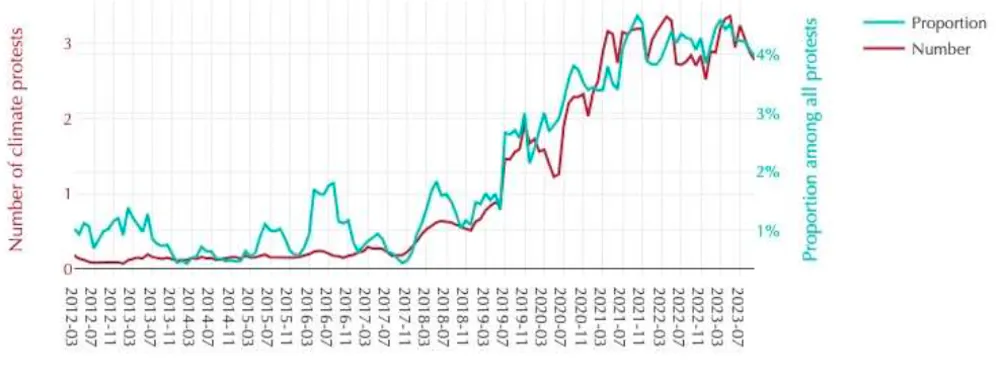
    January 27, 2025
  • MIL-OSI United Kingdom: Complete ban on bee killing pesticides moves forward

    Source: United Kingdom – Executive Government & Departments 2

    • Government sets out plans to end the use of toxic neonicotinoid pesticides that threaten vital pollinators

    A bee on a purple flower

    • Important step forward in delivering on election commitment to safeguarding bees, butterflies and the wider environment  

    A complete ban on use of bee-killing neonicotinoid pesticides has moved a step closer today (Saturday 21 December), as the government sets out its plans to deliver a key election pledge.   

    Despite being banned from general use in the UK, the last government authorised the use of neonicotinoids every year for the last four years in England via a process known as emergency authorisation.     

    Neonicotinoids are extremely toxic to pollinators. Even at doses that are not directly fatal to bees they can cause cognitive problems impacting foraging abilities and the productivity of hives. The chemicals can also persist in the soil creating a further risk to bees.  

    Bees and other pollinators are crucial to the agricultural economy with the economic benefits of pollination to crop production in the UK estimated at £500 million annually.  

    The Government has set out its next steps, including identifying legislative options that would legally prevent the future use of three specific neonicotinoids – clothianidin, imidacloprid and thiamethoxam – entirely, taking full account of the importance of pollinators. 

    Environment Minister Emma Hardy said:    

    “We are delivering on our promise to ban toxic bee-killing pesticides and ending the long-term decline of our wildlife.  

    “A healthy environment is vital to our food and economic security. Protecting bees by stopping the use of damaging neonicotinoids is an important step in supporting the long-term health of our environment and waterways, and our farming sector.”     

    The move comes ahead of the publication of a new UK National Action Plan (NAP), which will set how pesticides can be used sustainably.  

    Ensuring that our food production is sustainable is key to the long-term health of the agricultural sector, as well as the nation’s food security. The Government’s Plan for Change is built on the strong foundation of a stable economy.  

    The Government commitment to farmers remains steadfast and we are fully committed to supporting farmers to protect their crops in more sustainable ways. There has already been progress in this space, including research into new virus-resistant varieties of sugar beet and new alternative pesticide sprays, and we will continue to support this work. 

    The announcement today builds on the swift action the Government has taken to recover nature more widely. This includes committing to a rapid review of the Environmental Improvement Plan and new delivery plans to meet targets on air quality, the circular economy and water. In the first few months of this government, legislation was introduced to put failing water companies under special measures to curb pollution in our waterways and a Flood Resilience Taskforce was introduced to speed up the creation of nature-based solutions, like planting trees to protect communities against the impact of extreme weather.    

    NOTES TO EDITORS:   

    • The legal requirements for emergency authorisations have not changed today and any applications for 2025 will be considered under the law as it stands.   

    • The Neonicotinoids Policy Statement applies to England only.

    • The UK Government will look to work with the devolved governments to seek a shared and consistent way forward.   

    • £5 billion was set aside in the Budget for farming over two years, including the single biggest amount of money ever allocated for sustainable food production and nature recovery.

    • The full Neonicotinoids Policy Statement can be found here

    Share this page

    The following links open in a new tab

    • Share on Facebook (opens in new tab)
    • Share on Twitter (opens in new tab)

    Updates to this page

    Published 21 December 2024

    MIL OSI United Kingdom –

    January 27, 2025
  • MIL-OSI Canada: Minister’s statement on new appointments to BC Hydro board of directors

    Source: Government of Canada regional news

    Adrian Dix, Minister of Energy and Climate Solutions, has released the following statement in response to new appointments made to the BC Hydro board of directors on Friday, Dec. 20, 2024:

    “Premier David Eby has tasked me with moving our Province’s clean-energy agenda forward and achieving our CleanBC climate goals. In doing so, it’s critical that we keep BC Hydro rates affordable for British Columbians and that people and businesses have access to the power they need, when they need it. That’s why I am taking action to ensure we have the knowledge, experience and skill set on BC Hydro’s board of directors to make sure this happens.

    “I wish to extend a warm welcome to Glen Clark as the new chair of the board at BC Hydro, and Merran Smith, Brynn Bourke and Don Kayne as new directors. Collectively, you bring an exceptional depth of leadership, corporate and energy experience that will be a tremendous asset as we continue to advance our clean energy mandate in future.

    “I would also like to express my sincere gratitude to outgoing chair Lori Wanamaker, who has demonstrated exemplary leadership through a challenging time at BC Hydro as we have faced the unprecedented impacts of climate change.

    “To the outgoing BC Hydro board directors, Daryl Fields, Irene Lanzinger, Amanda Hobson and Victoria McMillan, each of you has contributed your time, energy and passion to incredibly important affairs at BC Hydro and you have served responsibly and with integrity. I wish you all the best.”

    Learn More:

    To learn more about the new appointments, visit: https://news.gov.bc.ca/releases/2024ECS0073-001679

    Media Contacts

    Tania Venn

    Communications Director
    Ministry of Energy and Climate Solutions
    Tania.venn@gov.bc.ca

    https://news.gov.bc.ca/31873

    MIL OSI Canada News –

    January 27, 2025
  • MIL-OSI Security: Air National Guard Defender Completes Jungle Agile Employment Course

    Source: United States INDO PACIFIC COMMAND

    GUAM  –  

    Did you know that roughly one-third, or 500 million acres, of the U.S. is forest? And did you know that Puerto Rico’s El Yunque National Forest is the only tropical rainforest in the U.S. that is considered a jungle? By definition, a forest has many tall trees and can usually be traveled by humans, while a jungle is usually dense and overgrown with a tropical or humid climate.

    So why did a Security Forces Specialist assigned to the 148th Fighter Wing, Minnesota Air National Guard, travel to the pacific to participate in the Air Forces’ new Jungle Agile Employment Course?

    An instructor and planner for the Air National Guard’s Cold Weather Operations Course at Camp Ripley Training Center, Minn., Master Sgt. Ian Nickila, “wanted to learn the finer details of operating and surviving in the jungle climate.”

    The 10-day JACE course, attended by 22 service members from the Air Force, Army, and Marines, was planned and executed by the 36th Contingency Response Group and the 736th Security Forces Squadron, Anderson Air Force Base, Guam. The CRG mission is to advise, defend, construct, connect, and operate. The 736th is creating training to help Airmen produce a rapid Air Base Opening during Humanitarian Assistance or Disaster Relief mission.

    “The core purpose of the course is to prepare airmen who will execute future Agile Combat Employment operations, at small spokes skills necessary to survive if support is interrupted or delayed, will be vital” said Capt. Wyatt Huff, Operations Officer with the 736th Security Forces Squadron and lead course developer.

    The JACE contained survival-based curriculum to include survival, navigation, force protection, and mobility skills. Students collected and purified food and water, trained on cliffside rappelling, knot tying, building hasty shelters, and fire starting.

    “On day one, Nickila stood out as an avid outdoorsman and his desire to share his skills was of great benefit to his classmates,” said Huff.

    The three-day field training exercise included agile combat employment concepts, allowing Nickila and his classmates to practice operations with speed, scope, and complexity found in recent campaigns.

    While in the field, the class attendees “were hunted by the course planners, or CADRE, so we built hasty shelters to sleep in,” said Nickila.

    The physically grueling course taught Nickila “the importance of water,” he said. “I’ve always known I need water but determining how much I need and how much I wanted to carry in my ruck was a challenge.” Nickila filled a camelback, a canteen, and Nalgene bottle three times a day, and still fought dehydration. “I realized if I was struggling, that others would be, so finding an abundant and consistent water source is vital to operating in the jungle.”

    Nickila, a 2005 graduate of Duluth Denfeld High School, joined the Air National Guard prior to his senior year of high school. “After September 11th, I knew I wanted to join the military,” said Nickila. “I talked to all types of recruiters. My father’s Army unit was activated at the 148th during Operation Noble Eagle; he convinced me that Security Forces would be a good fit.”

    Since joining, Nickila has deployed to Manas Air Base, Kyrgyzstan; Eskan Village Compound, Saudi Arabia; Thumrait Air Base, Oman; Al Udeid Air Base, Qatar; and Amahd al-Jaber Air Air Base, Kuwait in addition to participating several specialized training exercises.

    “Having ‘Defenders” with diverse training backgrounds is a key to our future success,” said 148th Security Forces Operations Superintendent, Senior Master Sgt. Ben Nyen. “Ian has extensive experience in the Middle East and has always stepped up to increase his knowledge base. As a person who winter camps for fun, the Cold Weather Operations Course was a great opportunity for him to show his skills an instructor. Now he can teach the opposing lessons learned at the JACE course to our squadron.”

    Bibliography

    U.S. Department of Agriculture Forest Service (2013). By the Numbers. Retrieved from By the Numbers | US Forest Service

    U.S. Air Force (2021). U.S. Air Force Doctrine Note 1-21, Agile Combat Employment (2021, Dec. 21). Retrieved from https://www.af.mil/Portals/1/documents/Force%20Management/AFDN_1-21_ACE.pdf

    MIL Security OSI –

    January 27, 2025
  • MIL-Evening Report: Trump has fired a major cyber security investigations body. It’s a risky move

    Source: The Conversation (Au and NZ) – By Toby Murray, Professor of Cybersecurity, School of Computing and Information Systems, The University of Melbourne

    Before the end of its first full day of operations, the new Trump administration gutted all advisory panels for the Department of Homeland Security. Among these was the well-respected Cyber Safety Review Board, or CSRB.

    While this change hasn’t received as much notice as Trump’s massive announcement about AI, it has potentially significant implications for cyber security. The CSRB is an important source of information for governments and businesses trying to protect themselves from cyber threats.

    This change also throws into doubt the board’s current activities. These include an ongoing investigation into the Salt Typhoon cyber attacks which began as early as 2022 and are still keeping cyber defenders busy, attributed to hackers in China.

    Salt Typhoon has been described as the “worst telecommunications hack” in US history. Among other activities, the hackers obtained call records data made by high-profile individuals and even the contents of phone calls and text messages. The phones of then presidential nominee Donald Trump were reportedly among those targeted.

    What does the Cyber Safety Review Board do?

    The board was established three years ago by the Biden administration. Roughly speaking, its job is the cyberspace equivalent of government air traffic investigation bodies such as the US National Transportation Safety Board, or the Australian Transport Safety Bureau.

    The CSRB investigates major cyber security incidents. Its job is to determine their causes and recommend ways government and businesses can better protect themselves, including on how to prevent similar incidents in future.

    Its members include global cyber security luminaries from industry, such as cyber executives from Google and Microsoft, and US government leaders from several departments and agencies concerned with security.

    The US CSRB has previously published three major reports. Its first covered the infamous 2021 Log4j vulnerability, described at the time as the “single biggest, most critical vulnerability ever”. (A vulnerability is a weakness in a computer system that cyber criminals can exploit.)

    The board’s most recent published investigation involved a very sophisticated hacking campaign that targeted Microsoft’s cloud email services in 2023. As a result, hackers even gained access to the emails of various US government agencies.

    Cyber security experts widely consider the CSRB as a positive thing. Late last year, Australia even committed to establish its own version, the Cyber Incident Review Board.

    At the time of writing, it’s unclear whether the CSRB will continue – perhaps with different membership – or whether its activities will cease entirely.

    Either way, the decision to fire the board’s members has significant security implications. It comes at a moment in history when cyber threats have never been more severe.

    What is Salt Typhoon?

    The CSRB has been investigating the Salt Typhoon hacking campaign. Salt Typhoon is the name Microsoft assigned to a sophisticated group of hackers believed to be operated by China’s Ministry of State Security. The ministry is somewhat like a combination of an intelligence agency and a secret police service.

    Salt Typhoon is best known for hacking into several US telecommunication companies, first reported in August 2024. In December, it came to light Salt Typhoon’s telco hacks may also have impacted countries beyond the US. American, Australian, Canadian and New Zealand authorities also jointly issued public guidance to organisations to help defend against Salt Typhoon.

    Salt Typhoon reportedly targeted prominent figures, including political leaders. The hackers’ goal appears to have been to collect intelligence, rather than cause damage.

    For example, it has been reported Salt Typhoon collected a list of all phone calls made near Washington DC, which could help them determine who was talking to whom in the US capital.

    Salt Typhoon also reportedly obtained a list of phone numbers wiretapped by the US Justice Department. This confirmed the fears of many people opposed to the government’s powers to lawfully wiretap citizens’ phones.

    It is unclear why the hackers obtained that information. Some have speculated it would identify which of their own operatives were being monitored by US law enforcement.

    To say the Salt Typhoon revelations created waves in government and cyber security circles is putting it mildly. Telecommunications are critical infrastructure, as well as highly valuable targets for intelligence collection.

    The idea that foreign spies could burrow so deeply into the communication fabric of the US was unprecedented and disturbing.

    In October 2024 the CSRB was tasked with investigating Salt Typhoon’s activities.

    An uncertain future

    With the board now fired, the future of the Salt Typhoon investigation remains unclear.

    A thorough and impartial investigation of the Salt Typhoon hacks, had it been allowed to run, was likely to have delivered highly valuable cyber security lessons. Those lessons are important for both US companies and those in Australia, which have also been the targets of Chinese intelligence collection.

    The future of the CSRB itself is now also in question. The board and its overseas equivalents serve a vital role in promoting cyber information-sharing that helps to improve best practices.

    It is imperative these bodies are staffed with a diverse collection of impartial experts, able to carry out their work free from government and corporate interference.

    It remains to be seen whether dissolving the current CSRB will be a gift to Chinese hackers (as some have claimed), or simply a speed bump in the evolution of the board.

    Toby Murray is the Director of the Defence Science Institute, which receives Commonwealth and State government funding. Toby receives research funding from the Australian government and has previously received funding from the US Department of Defense, Facebook and Google.

    – ref. Trump has fired a major cyber security investigations body. It’s a risky move – https://theconversation.com/trump-has-fired-a-major-cyber-security-investigations-body-its-a-risky-move-248106

    MIL OSI Analysis – EveningReport.nz –

    January 27, 2025
  • MIL-OSI China: New wildfire in Los Angeles scorches over 10,000 acres

    Source: China State Council Information Office

    A fast-moving brush fire erupted Wednesday in Los Angeles County, and has burned over 10,000 acres (40 sq km) by Wednesday night, according to the California Department of Forestry and Fire Protection (Cal Fire).

    The blaze, dubbed Hughes Fire, broke out around 11:00 a.m. local time in the area of Lake Hughes Road near Castaic Lake, about 80 km northwest of downtown Los Angeles. It quickly expanded to over 8,000 acres (32 sq km) in less than 6 hours, and had crossed the county line to the neighboring Venture County.

    As of Wednesday night, the fire is 14 percent contained, according to Cal Fire. No structures have been reported damaged or destroyed, Los Angeles County Fire Department Chief Anthony Marrone told a press briefing Wednesday evening.

    Approximately 31,000 residents in the area are under evacuation orders, while 23,000 are under evacuation warnings, said Los Angeles County Sheriff Robert Luna.

    “We have over 4,000 firefighting personnel assigned to the incident,” Marrone said. “The situation remains dynamic and the fire remains a difficult fire to contain, although we are getting the upper hand,” he said.

    Students from middle and elementary schools in the Castaic community were evacuated on Wednesday afternoon, and the Castaic Regional Sports Complex was also under a mandatory evacuation order, which was used by firefighters as a command post.

    The Pitchess Detention Center in Castaic evacuated 476 inmates to the nearby North County Correctional Facility.

    The National Weather Service (NWS) Los Angeles warned Wednesday afternoon that high winds were expected to continue in Southern California throughout the afternoon and overnight, further inhibiting firefighting efforts against the wildfires raging in the region.

    “DANGEROUS FIRE WEATHER environment thru Friday, peaking on Thursday. Any new fires can grow fast and out of control. Stay aware of your surroundings,” NWS Los Angeles warned.

    The entirety of Angeles National Forest is closed to the general public through Friday, according to the U.S. Forest Service.

    Los Angeles County has been inundated with deadly blazes this month. The Palisades and Eaton fires, the largest ones in the most populous county of the United States, have killed 28 people, sparked numerous mandatory evacuations, and destroyed thousands of structures.

    MIL OSI China News –

    January 27, 2025
  • MIL-OSI China: Europe gravitates to greater self-reliance as Trump begins new term

    Source: China State Council Information Office

    This photo taken on Dec. 18, 2024 shows a view of the Voelklingen Ironworks in Saarland, Germany. [Photo/Xinhua]

    U.S. President Donald Trump’s first days in the White House have sent ripples of unease through Europe. Accusing the EU of unfair treatment, Trump has vowed to impose tariffs to address trade imbalances.

    In response, French President Emmanuel Macron and German Chancellor Olaf Scholz met in Paris on Wednesday, describing Trump as “a challenge” for Europe while stressing Europe’s strength and unity.

    Trump’s policies are poised to affect not just U.S.-Europe trade relations but also Europe’s territorial integrity, defense priorities and economic outlook.

    “President Trump’s initial statements and executive orders put transatlantic relations under pressure, not only because of their unpredictability, but also because raw power seems to be more important than legality and international cooperation,” said Philippe Monnier, former executive director of the Greater Geneva Berne Area’s Economic Development Agency.

    Bleak economic outlook

    The specter of U.S. tariffs on EU imports threatens to send shockwaves through the European economy. Although many EU countries have taken lessons from Trump’s first term and braced themselves for such scenarios, the potential impact remains significant.

    Yannis Stournaras, governor of the Bank of Greece, warned that the projected eurozone economic growth of 1.1 percent in 2025 could decline by 0.5 percentage point within two years if the United States imposes 10-percent tariffs.

    The effects are expected to be more pronounced in European economies with substantial exports to the United States. Export-oriented countries like Germany are likely to bear the brunt first.

    Germany’s exports to America could decline by 10-15 percent in the long term, potentially reducing its GDP by 0.3 percent, said Moritz Schularick, president of the Kiel Institute for the World Economy. “It might not sound like much, but we’ve barely had any growth beyond that level recently.”

    “Trump isn’t concerned with the interests of the Old Continent. He just wants to squeeze more money out of Europeans,” Francois Heisbourg, special advisor at the International Institute for Strategic Studies, told Austrian newspaper Der Standard.

    Italy, a close U.S. ally notwithstanding, is also expected to face challenges. With its significant trade surplus with the United States and relatively low defense spending, Italy is likely to be targeted by Trump’s tariff policies, according to the Italian Institute for International Political Studies.

    Speaking at the Handelsblatt Energy Summit in Berlin on Tuesday, German Vice Chancellor and Economy Minister Robert Habeck said that while Germany should engage with the new government under Trump with “an outstretched hand… We should not crawl in submission.”

    He warned that Germany is ready with countermeasures should tariffs be imposed. “We do not need to be pushed around.”

    Valdis Dombrovskis, the EU’s economy commissioner, also affirmed the EU’s readiness to respond in “a proportionate way” to any U.S. actions.

    Monnier cautioned that strained transatlantic ties could escalate further.

    Pushback in Europe

    On top of trade, Trump’s decision to withdraw from the Paris Climate Agreement and the World Health Organization (WHO) has deepened rifts with his European counterparts, who remain strong advocates of climate action and global health initiatives.

    Addressing the 54th annual meeting of the World Economic Forum in Davos on Tuesday, European Commission President Ursula von der Leyen said: “The world is not at a single inflection point; it is at multi-inflection points.” She reaffirmed the EU’s commitment to the Paris Climate Agreement and urged countries to “deepen global collaboration more than ever before.”

    In an interview on Tuesday with Bel RTL, a local media outlet, Belgian Foreign Minister Bernard Quintin voiced concerns over Trump’s isolationist tendencies, viewing them as a culmination of a longstanding trend of U.S. unilateralism.

    Critics argue that Trump’s withdrawals allow the United States to evade its financial responsibilities toward global climate protection and public health initiatives.

    “This is certainly not a good sign for international climate protection” if the United States is not included, climate researcher Niklas Hoehne from the NewClimate Institute told Germany’s dpa news agency, saying such moves made global climate achievements “more difficult.”

    An analysis by Climate Action Tracker, a Berlin-based non-profit climate science and policy institute, estimates that the U.S. withdrawal alone could add 0.04 degree Celsius to global warming by the end of the century.

    Europe’s sense of urgency

    Trump’s “America First” agenda has galvanized European leaders to advocate for greater autonomy from Washington.

    In the realm of defense, Macron has called for a reevaluation of Europe’s defense spending. He said on Monday that Europe’s military budgets of billions of euros should not be directed toward purchasing American weapons.

    A report on Europe’s future competitiveness authored by Mario Draghi, former Italian prime minister and former European Central Bank president, revealed that between June 2022 and June 2023, nearly two-thirds of the EU’s defense spending was directed to U.S. companies.

    During a joint press conference with Scholz on Wednesday, Macron stressed the need for Europeans “to play their full part in consolidating a united, strong and sovereign Europe.” France and Germany should ensure that Europe is capable of defending its interests while maintaining transatlantic ties, he said.

    The recent revelation of Trump’s interest in acquiring Greenland, an autonomous territory of Denmark, has further alarmed European nations.

    French Foreign Minister Jean-Noel Barrot has warned of the resurgence of “might makes right” policies, calling on Europe to bolster its strength. Speaking to France Inter radio recently, Barrot noted that Greenland is a “territory of the European Union and of Europe.”

    “It is undoubtedly no way that the European Union would let other nations of the world, whoever they are, attack its sovereign borders,” he said.

    Schularick, the Kiel Institute president, said: “What is certain is that Trump is more interested in deals than in a rules-based global economy. The era of faster globalization, lower tariffs and dispute resolution within the framework of the World Trade Organization is now temporarily over.”

    “Europeans cannot remain passive at the risk of disappearing tomorrow,” Jordan Bardella, president of France’s National Rally party and member of the European Parliament, said at the European Parliament on Tuesday.

    With Trump’s comeback, Europe faces a critical juncture — whether to remain tethered to Washington or chart its own course in the face of renewed challenges.

    “The EU needs to make changes, and this is a good opportunity to get rid of its dependence on Washington and implement its own independent policies by cooperating with other countries in Asia, South America and Africa,” said Croatian political analyst Robert Frank.

    MIL OSI China News –

    January 27, 2025
  • MIL-OSI Economics: ADB, Ayala Sign $100 Million Financing Deal to Support Electric Mobility in the Philippines

    Source: Asia Development Bank

    MANILA, PHILIPPINES (27 January 2025) — The Asian Development Bank (ADB) has signed a financing package of up to $100 million to support Ayala Corporation’s contributions to the development of an electric mobility ecosystem in the Philippines. This funding will be used to procure and install electric vehicle charging stations (EVCS) and to purchase electric vehicles for commercial distribution.

    The package includes a concessional loan from the Canadian Climate and Nature Fund for the Private Sector in Asia (CANPA). ADB’s financing, along with the concessional loan, will be used to develop a network of EVCS in the Philippines. This blended financing features an innovative pricing structure aimed at accelerating deployment of EVCS infrastructure. A portion of the ADB financing will be allocated to procure electric vehicles from leading manufacturers for distribution across the country.

    “This project is a significant step towards a sustainable and low-carbon future for the Philippines,” said ADB Country Director for the Philippines Pavit Ramachandran. “By fostering the development of a robust electric mobility ecosystem, we are not only addressing critical environmental challenges such as air pollution, but also driving economic growth through the creation of green jobs, enhancing energy security, and promoting inclusive and resilient urban development.”

    Electric vehicle (EV) development is still nascent in the Philippines. High initial costs, limited charging infrastructure, and evolving technologies have posed significant barriers to adoption of EVs in the country. But the Philippine government’s Electric Vehicle Industry Development Act and various tax incentives are helping create a more favorable environment for the growth of the EV sector.

    The creation of an EVCS network is crucial for electric vehicles to become more popular. The EVCS to be set up with the ADB financing package will address gaps in EV charging infrastructure, thereby facilitating faster adoption of electric vehicles.

    “This innovative blended financing comes at an opportune time as Ayala, through ACMobility, continues to ramp up its electric mobility investments. As we help build a comprehensive EV ecosystem for the Philippines, we wish to thank like-minded institutional partners like ADB for helping us expand our electric mobility initiatives, accelerate our contribution to the Philippines’ climate goals, and reaffirm our purpose of building businesses that enable people to thrive,” said ACMobility’s President and CEO Jaime Alfonso Zobel de Ayala.

    Established in 2024, CANPA is a trust fund managed by ADB, supported by a commitment of Can$360 million from the Government of Canada. The fund builds on the success of the two previous funds, namely the Canadian Climate Fund for the Private Sector in Asia II (CFPS II) and its predecessor CFPS. CANPA aims to support private-sector projects in Asia and the Pacific that focus on climate and nature-based solutions, while also promoting gender equality.

    Ayala Corporation is one of the Philippines’ largest and most enduring conglomerates. With a diverse portfolio that includes real estate, banking, telecommunications, and renewable energy, the company is well-positioned to lead the development of the electric mobility ecosystem in the Philippines. Key to Ayala’s growing sustainable business portfolio is its access to innovative financing options such as blended finance, which is supported by public, private and philanthropic funds.

    ADB is committed to achieving a prosperous, inclusive, resilient, and sustainable Asia and the Pacific, while sustaining its efforts to eradicate extreme poverty. Established in 1966, it is owned by 69 members—49 from the region. 

    MIL OSI Economics –

    January 27, 2025
  • MIL-OSI USA: Council to Assess the Federal Emergency Management Agency

    US Senate News:

    Source: The White House
    By the authority vested in me as President by the Constitution and the laws of the United States of America, it is hereby ordered as follows:
    Section 1.  Purpose and Policy.  The Federal responses to Hurricane Helene and other recent disasters demonstrate the need to drastically improve the Federal Emergency Management Agency’s (“FEMA’s) efficacy, priorities, and competence, including evaluating whether FEMA’s bureaucracy in disaster response ultimately harms the agency’s ability to successfully respond.  Despite obligating nearly $30 billion in disaster aid each of the past three years, FEMA has managed to leave vulnerable Americans without the resources or support they need when they need it most.
    There are serious concerns of political bias in FEMA.  Indeed, at least one former FEMA responder has stated that FEMA managers directed her to avoid homes of individuals supporting the campaign of Donald J. Trump for President.  And it has lost mission focus, diverting limited staff and resources to support missions beyond its scope and authority, spending well over a billion dollars to welcome illegal aliens.
    Americans deserve an immediate, effective, and impartial response to and recovery from disasters.  FEMA therefore requires a full-scale review, by individuals highly experienced at effective disaster response and recovery, who shall recommend to the President improvements or structural changes to promote the national interest and enable national resilience.
    Sec. 2.  Establishment.  (a)  There is hereby established the Federal Emergency Management Agency Review Council (“Council”).
    (b)  The Council shall be composed of not more than 20 members.  The Secretary of Homeland Security and the Secretary of Defense shall be members of the Council.  The remaining members shall include relevant agency heads and distinguished individuals and representatives from sectors outside of the Federal Government appointed by the President.  These non-Federal members shall have diverse perspectives and expertise in disaster relief and assistance, emergency preparedness, natural disasters, Federal-State relationships, and budget management.
    (c)  The Secretary of Homeland Security and the Secretary of Defense shall serve as Co-Chairs of the Council.  The Co-Chairs may designate up to two Vice Chairs of the Council from among the non-Federal members of the Council, to support the Co-Chairs in the leadership and organization of the Council.
    Sec. 3.  Functions.  (a)  The Council shall advise the President, through the Assistant to the President for National Security Affairs, the Assistant to the President for Homeland Security, and the Director of the Office of Management and Budget, on the existing ability of FEMA to capably and impartially address disasters occurring within the United States and shall advise the President on all recommended changes related to FEMA to best serve the national interest.
    (b)  The Council shall meet regularly and shall:
    (i)   respond to requests from the President, through the Assistant to the President for National Security Affairs, the Assistant to the President for Homeland Security Affairs, the Director of the Office of Management and Budget, or the Co-Chairs for information, analysis, evaluation, or advice;
    (ii)  solicit information and ideas from a broad range of stakeholders, including Americans affected by natural disasters; the research community; the private sector; State, local, and Tribal governments; foundations; and nonprofit organizations;
    (c)  The Council shall produce a report for the President that includes the following:
    (i)     An assessment of the adequacy of FEMA’s response to disasters during the previous 4 years, including sufficiency of staffing;
    (ii)    A comparison of the FEMA responses with State, local, and private sector responses — including timeliness of response, supplies provided, efficacy, and services (including communications and electricity) provided — during the same period;
    (iii)   An account of the commentary and debate about the role and operation of FEMA in our Federal system and about the functioning of disaster relief, assistance, and preparedness in the United States;
    (iv)    The historical background of other periods in the Nation’s history both before FEMA was part of DHS and before FEMA existed and methods by which disaster aid and relief were then provided;
    (v)     The traditional role of States and their coordination with the Federal Government in securing the life, liberty, and property of their citizens in preparation for, during, and after disasters;
    (vi)    An evaluation of whether FEMA can serve its functions as a support agency, providing supplemental Federal assistance, to the States rather than supplanting State control of disaster relief;
    (vii)   Other recommended improvements to FEMA in the current statutory structure; and
    (viii)  An analysis of the principal arguments in the public debate for and against FEMA reform, including an appraisal of the merits and legality of particular reform proposals.
    (d)  The Council shall solicit public comment, including other expert views, to ensure that its work is informed by a broad spectrum of ideas.
    (e)  The Council shall hold its first public meeting within 90 days of the date of this order and submit its report to the President within 180 days of the date of the Council’s first public meeting.
    Sec. 4.  Administration.  (a)  The heads of executive departments and agencies shall, to the extent permitted by law, provide the Council with information concerning disaster preparedness and relief matters when requested by the Council Co-Chairs and as required for the purpose of carrying out the Council’s functions.
    (b)  In consultation with the Co-Chairs, the Council is authorized to create standing subcommittees and ad hoc groups, including technical advisory groups, to assist the Council and provide preliminary information directly to the Council.
    (c)  The Department of Homeland Security shall provide such funding and administrative and technical support as the Council may require, to the extent permitted by law and as authorized by existing appropriations.
    (d)  Members of the Council shall serve without any compensation for their work on the Council, but may receive travel expenses, including per diem in lieu of subsistence, as authorized by law for persons serving intermittently in the government service (5 U.S.C. 5701-5707).
    (e)  Insofar as the Federal Advisory Committee Act, as amended (5 U.S.C. App.), may apply to the Council, any functions of the President under that Act, except that of reporting to the Congress, shall be performed by the Secretary of Homeland Security, in accordance with the guidelines and procedures established by the Administrator of General Services.
    Sec. 5.  Termination.  The Council shall terminate 1 year from the date of this order unless extended by the President.
    Sec. 6.  General Provisions.  (a)  Nothing in this order shall be construed to impair or otherwise affect:
    (i)   the authority granted by law to an executive department or agency, or the head thereof; or
    (ii)  the functions of the Director of the Office of Management and Budget relating to budgetary, administrative, or legislative proposals.
    (b)  This order shall be implemented consistent with applicable law and subject to the availability of appropriations.
    (c)  This order is not intended to, and does not, create any right or benefit, substantive or procedural, enforceable at law or in equity by any party against the United States, its departments, agencies, or entities, its officers, employees, or agents, or any other person.
    THE WHITE HOUSE,
        January 24, 2025.

    MIL OSI USA News –

    January 27, 2025
←Previous Page
1 … 173 174 175 176 177 … 238
Next Page→
NewzIntel.com

NewzIntel.com

MIL Open Source Intelligence

  • Blog
  • About
  • FAQs
  • Authors
  • Events
  • Shop
  • Patterns
  • Themes

Twenty Twenty-Five

Designed with WordPress