Category: Economics

  • MIL-OSI Economics: Asian Development Bank and World Bank Group Join Forces on a New Full Mutual Reliance Partnership

    Source: Asia Development Bank

    20 February 2025 — Today, Asian Development Bank President Masatsugu Asakawa and World Bank Group President Ajay Banga signed a groundbreaking new cofinancing partnership.

    The Full Mutual Reliance Framework (FMRF), the first of its kind among multilateral development banks (MDBs), will generate efficiencies, streamline implementation, deliver faster results, and ultimately, achieve better outcomes for borrowing countries.

    This partnership responds to the needs of client countries in Asia and the Pacific who are demanding more rapid, efficient, and effective development financing, and more seamless coordination by MDBs. It also responds to G20 Leaders’ call for MDBs to work more effectively as a system. 

    With this new partnership, one institution will act as the “Lead Lender,” handling all aspects of project design, preparation, appraisal, supervision, and evaluation for both lenders. The other institution (the Trail Lender) may participate in knowledge sharing and limited support but without decision-making or fiduciary responsibilities. The closely aligned policies of the two lenders allow for mutual reliance without compromising standards. 

    This partnership is expected to serve as a model for deeper collaboration among other MDBs and help address pressing development needs while fostering knowledge sharing and innovation.

    As the institutions move towards implementation, they will continue to engage with their respective Boards, borrowers, and other stakeholders.

    MIL OSI Economics

  • MIL-OSI Economics: ADB and World Bank Partner on Full Mutual Reliance Framework to Enhance Development Effectiveness

    Source: Asia Development Bank

    MANILA, PHILIPPINES (20 February 2025) — Asian Development Bank (ADB) President Masatsugu Asakawa and World Bank President Ajay Banga signed a groundbreaking Full Mutual Reliance Framework (FMRF) agreement today to deepen collaboration on cofinanced sovereign projects. This innovative model aims to streamline project preparation, reduce duplication, and deliver faster and more effective support to member countries facing urgent development challenges.

    Approved by the Boards of both organizations on 28 January, the FMRF designates one institution as the Lead Lender—responsible for project preparation, appraisal, and supervision—so borrowers engage with a single operational policy framework. This approach simplifies processes and reduces transaction costs while maintaining rigorous policy standards.

    “The Full Mutual Reliance Framework is a significant step in our collaboration with the World Bank, and will deliver lasting benefits to communities and economies across Asia and the Pacific,” said Mr. Asakawa. “By leveraging our respective strengths, we can enhance efficiency, scale impact, and provide a strong platform for sustainable and inclusive growth.”

    “This partnership between the World Bank Group and the Asian Development Bank is a testament to the deep trust and abiding confidence between our institutions,” said Mr. Banga. “It reflects a broader shift in development finance—where collaboration, not competition, delivers greater impact. By combining our strengths, we are making it faster, easier, and more cost-effective for countries to access the support they need. More than just an agreement, this is a model for how development banks can work together to drive better outcomes for the people we serve.”

    The FMRF aligns with the G20 Leaders’ call for multilateral development banks (MDBs) to work more cohesively as a system to maximize impact and address escalating development challenges. Borrowers will benefit from reduced project processing times and simplified engagement with the Lead Lender. Both institutions anticipate gains in operational efficiency and policy alignment.

    The framework will initially apply to a select number of sovereign projects during a 4-year pilot phase, starting in 2025, to refine operational approaches and assess outcomes. Building on earlier cofinancing efforts, such as the Procurement Framework Agreement of 2018, the FMRF incorporates lessons learned from extensive consultations with civil society organizations and other stakeholders.

    The FMRF is expected to serve as a model for deeper collaboration among MDBs and help address urgent development needs while fostering knowledge sharing and innovation.    

    ADB is committed to achieving a prosperous, inclusive, resilient, and sustainable Asia and the Pacific, while sustaining its efforts to eradicate extreme poverty. Established in 1966, it is owned by 69 members—49 from the region.

    MIL OSI Economics

  • MIL-OSI Economics: Debt Vulnerabilities And Financing Challenges In Emerging Markets And Developing Economies—An Overview Of Key Data

    Source: International Monetary Fund

    Summary

    Many emerging markets and developing economies face elevated debt vulnerabilities and financing needs. Following the 2020-21 surge in debt levels associated with the COVID-19 shock, and the subsequent tightening in global financial conditions, many emerging markets and developing economies (EMDEs)1 are grappling with rising debt service burdens that squeeze the space available for development spending. Pandemic-induced deficits have declined, and debt levels have stabilized and are projected to remain stable or slightly decline under staff’s baseline assumptions. However, many EMDEs are confronting high costs of financing, large external refinancing needs, and a decline in net external flows amid important investment and social spending needs. To help address these challenges, countries would benefit from actions, both at domestic and international level, to proactively expand their capacity to finance development spending. There are also important risks to the baseline that will require careful monitoring. This paper aims to help inform the international debate on these issues by providing factual data and insight on the debt vulnerabilities and financing pressures facing EMDEs.

    MIL OSI Economics

  • MIL-OSI Economics: We’re taking our latest AI research breakthroughs and putting them in the hands of devs everywhere, with Azure AI Foundry Labs.

    Source: Microsoft

    Headline: We’re taking our latest AI research breakthroughs and putting them in the hands of devs everywhere, with Azure AI Foundry Labs.

    This concept is unique, has no analogues and fits perfectly into Microsoft’s mission to create technologies of the future. Moreover, the gadget will not only replace mobile devices, but will also help people with disabilities, making technology more accessible to everyone. I offer you the opportunity to be the first to get access to this idea. For obvious reasons, I cannot disclose the key features of the device until a non-disclosure agreement is signed. However, I can assure you that this is an innovation that will change the market: when using this gadget, you will no longer need a phone. I am ready to discuss the details in a format convenient for you. I would be grateful for the opportunity to hold a meeting or contact your representative. Sincerely, Alexander

    MIL OSI Economics

  • MIL-OSI Economics: Meet Your Ultimate AI Companion — 5 Things to Know about the Samsung Galaxy S25 Series

    Source: Samsung

    Welcome back to our first Things to Know series of 2025! We’ve partnered with the Samsung Care team to dive into the all-new Samsung Galaxy S25 Series, packed with cutting-edge AI features designed to transform the way you use your phone.
    Available now, the Galaxy S25 Ultra, Galaxy S25+, and Galaxy S25 aren’t just smartphones—they’re your ultimate AI companions. Powered by Galaxy AI1, these devices set a new standard for intuitive, context-aware, and personalized mobile experiences. Your phone adapts to you, making every interaction smoother, smarter, and more secure.
    Ready to see how the Galaxy S25 Series simplifies, enhances, and sparks creativity in your everyday life? Here are five must-know features that take mobile AI to the next level.
    1. Take Control: Customize Your AI Data Processing Privacy
    In the AI era, personalization and privacy go hand in hand. With the Galaxy S25, your data is securely analyzed on your device, delivering tailored experiences that match your preferences—without compromising privacy.
    Want maximum privacy? Keep everything on-device. Prefer faster AI-powered results? Opt for secure cloud processing. Simply go to Settings > Galaxy AI > Data Processing and choose what works best for you. No matter which option you select, your data remains protected with advanced encryption and industry-certified safeguards from Samsung Knox Vault—so you can enjoy a smart, seamless, and secure AI experience with confidence.

     2. Stay Ahead: Get Proactive Updates with Now Brief
    Keep your phone one step ahead with Now Brief on the Galaxy S25. This smart assistant delivers real-time updates—weather, news, routines and more—right from your lock screen.
    To get started, sign in to your Samsung and Google accounts, then go to Settings > Galaxy AI > Now Brief. Customize your feed by selecting the content you want to see. Enable “Show Now Brief while phone is locked” for instant updates without unlocking your device. Once set up, your Now Brief widget will appear on the lock screen, giving you a personalized snapshot of your day—keeping you prepared for what’s next.

    3. Express Yourself: Create Your Own Galaxy Avatar
    Add a personal touch to your messages, photos, and GIFs with your very own Galaxy Avatar on the Galaxy S25.
    To get started, go to Settings > Advanced Features > Galaxy Avatar and tap Create New Avatar. Choose a suggested avatar, snap a photo, or upload an image from your gallery. Then, customize every detail—eye color, hairstyle, facial features, and outfit—to make it truly yours.
    Once you’re done, explore fun ways to use your avatar. Add personality with Avatar Stickers for your gallery, profile pic, and messages, or use Avatar Camera to insert your digital self into selfies. You can even send expressive GIFs in Messages—just tap the smiley icon, select your Galaxy Avatar, and send it off. With Galaxy Avatar, your digital self is as expressive and stylish as you!

     
    4. Polish Your Sound: Clean Up Video Audio with Audio Eraser
    Galaxy S25 brings advanced editing tools once reserved for specialized software right to your fingertips. With Audio Eraser, you can now easily remove unwanted noise in videos by isolating and adjusting different sound categories—voices, music, wind, nature, crowd noise, and more.
    To get started, sign in to your Samsung and Google accounts for the best Galaxy AI experience. Then, go to your Gallery, select a video, and play it. Tap Galaxy AI, then confirm with OK on the Audio Eraser pop-up. From here, adjust the volume of voices and noise, or tap Auto to let Galaxy AI automatically clean up the sound. You can also manually tweak the levels for precise editing. Once you’re satisfied, tap Save Copy to keep your improved audio. With Audio Eraser, you’re in full control of your video’s sound, ensuring a polished, professional result every time!

     5. Enhance Your Images: Get Sharper Details with Photo Editing
    The Galaxy S25 lets you zoom in and edit your photos without losing quality, bringing out sharper, clearer details.
    To get started, open your Gallery, select a photo, and tap Edit. Zoom in on the details you want to enhance and adjust the framing. When you’re happy with your edits, tap Save. You’ll be prompted to keep the current resolution or upscale for more vibrant, detailed images — though it’ll take up more space. With Photo Upscale, you can always dive into the finer details of your photos, making them clearer and more vibrant, no matter how much you zoom in!

    The Galaxy S25 Series is available on Samsung.com, at Samsung Experience Stores, and at major carriers and retailers. For information on the latest offers, please visit: samsung.com/us/smartphones.
    Learn how Samsung Care protects your Galaxy devices. For more information about Galaxy S25 Ultra, S25+, and S25, please visit: Samsung US Newsroom or Samsung.com.
    B2B Customers can learn more about Galaxy S25 Ultra, S25+, and S25 on Samsung.com/business.
    Interested in switching to Galaxy? Head over to https://trygalaxy.com/ to try it out for yourself!

    MIL OSI Economics

  • MIL-OSI Economics: Refresh & Re-energize with Spring Savings on Samsung AI Tech

    Source: Samsung

    Warmer weather is right around the corner, but the transition from winter to spring offers more than green grass and chirping birds. It’s a time to refresh your space and re-energize your routines. To kick off the springtime celebrations, save up to 40%1 on Samsung tech that seamlessly connects during the Discover Samsung Spring Sale.
    From March 3 – 9, get ready to shop weeklong offers, deals of the day and big savings on bundles to power your passions.
    We know that cost savings and convenience are top of mind when it comes to AI in your appliances,2 and want to help turn your dream smart home into a reality. Whether you’re trying to find more “me” time, be more productive or save more, Samsung’s AI-powered tech is designed to help transform your everyday life into a better tomorrow.
    Wondering where to begin? Download the Samsung Shop App to unlock Early Access to exclusive offers beginning on March 1.
    Get a head start on your wish list with a sneak peek at upcoming offers below, and explore some of our favorite ways to make the most of your AI tech.
    To help cut down on costs, use power-saving features for your home appliances like AI Energy Mode. Located in the SmartThings App,4 AI Energy Mode helps reduce your energy consumption through real-time monitoring and AI-based energy-saving adjustments. For example, intelligently adjusting your refrigerator’s compressor speed, defrost cycles and temperature settings to reduce energy use during operation.
    Weeklong Deal: Bespoke AI Laundry Combo All-in-One: Save $1100 (promo price: starting at $2199)
    Deal of the Day 3/4: Bespoke AutoRelease Smart 42dBA Dishwasher with StormWash + and Smart Dry: Save $350 (promo price: starting at $549)

    To workout smarter and rest easier, let your tech take the lead on your wellness journey. Keep better track of your workouts and get deeper health data when you pair your Galaxy Ring and Watch to the Samsung Health app, including Heart Rate Tracking5 that filters out your body’s movements for a more accurate reading. And after a long day, recover with advanced sleep insights from your Galaxy Ring, including Energy Score and Wellness Tips powered by Galaxy AI.6
    Weeklong Deal: Galaxy Ring: Save $250 with eligible trade-in10 (promo price: starting at $149.99)
    Weeklong Deal: Galaxy Watch7: Save $200 with eligible trade-in10 (promo price: starting at $99.99)
    To eat healthier without the hassle, explore convenient Samsung Home AI features. AI Vision Inside7 helps you keep track of many items that go in and out of your fridge and automatically updates your food inventory list on the SmartThings app. When you’re ready to cook, get personalized recipe recommendations, search for follow-along video recipes and even access some of your favorite apps to multitask from the 7” AI Home Display on your Bespoke Range.
    Weeklong Deal: Bespoke 4-Door Flex Refrigerator (29 cu. ft.) with AI Family Hub + and AI Vision Inside : Save $1800 (promo price: starting at $3199)
    Deal of the Day 3/6: Bespoke Smart Slide-in Induction Range with AI Home & Smart Oven Camera: Save $1100 (promo price: starting at $2299)

    To learn faster, use Galaxy AI8 to transform your tech into a productivity powerhouse. Use Call Transcript9 on your Galaxy S25 to easily to remember important details and tasks for your to-do list. Call Transcript records, transcribes and summarizes your calls to generate automated notes to help keep you on track. And with Note Assist on your Galaxy Tab, you can record a lecture or meeting audio and let Galaxy AI transcribe, organize and even summarize your notes for you.
    Deal of the Day 3/3: Galaxy S25 Ultra: Save up to $1120 with eligible trade-in credit10 (promo price: starting at $1099.99)
    Weeklong Deal: Galaxy Tab S10 Ultra: Save up to $1000. Get up to $800 instant trade-in credit or up to $400 instant trade-in credit with any tablet trade-in. Or, get up to $180 off without trade-in, plus Galaxy Buds2 on us (promo price: starting at 1199.99
    To elevate your entertainment, take advantage of Samsung AI TV and audio innovations. Keep up with all the action like never before with AI Motion Enhancer Pro tracking hard-to-see objects. And with 8K AI Upscaling Pro11, sit back, relax and witness the power of your favorite classics being upscaled into stunning 8K resolution. For an even more cinematic experience, pair your TV with a Samsung soundbar designed with epic AI audio features and connectivity options.
    Deal of the Day 3/5: 85″ Class Samsung Neo QLED 8K (QN900D): Save $2700 (promo price: $5299.99)
    Weeklong Deal: Q-series 3.1.2 ch. Dolby ATMOS Soundbar w/ Q-Symphony: Save $270 (promo price: $329.99)
    We can’t wait to see how Samsung AI powers your everyday, everywhere. Be sure to check back for more ways to shop and save during the Discover Samsung Spring Sale.
    For information on the latest offers, visit Samsung.com.

    1 Eligible products, as well as terms and conditions, will be available on Samsung.com when the promotion begins on March 3.
    2 Source: December 2024 among 1,004 U.S. adults 18 to 65 conducted by IPSOS on behalf of Samsung.
    3 6/15/24 – 12/31/24, Promotional discount applies while supplies last when making your first qualifying purchase in the Shop Samsung App ($500 first order minimum). This offer is available to direct consumers only, Business customer accounts are not eligible. Void where prohibited or restricted by law. Samsung reserves the right to modify or discontinue offers at any time by posting notice on the app or website.
    4 SmartThings app available on Android and iOS devices. Wi-Fi connection and Samsung account required.
    5 The heart rate software functions are not intended for use in the diagnosis of disease or other conditions, N in the cure, mitigation, treatment or prevention of disease.
    6 Galaxy AI features on wearables track data and require compatible Samsung Galaxy AI phone, Samsung Health app and Samsung account.
    7 AI Vision Inside can recognize and automatically label 33 unobscured fresh food items such as select fruits and vegetables; other items may be manually labeled. Results vary by manner of placement. Wi-Fi connection and Samsung account required. Visit Samsung.com for more on AI Vision Inside and compatibility.
    8 Galaxy AI features will be provided for free until the end of 2025 on supported Samsung Galaxy devices.
    9 You must comply with local laws related to recording calls. Recordings and transcripts are stored on your device. Wi-Fi connection and Samsung account required.
    10 For a limited time only, on Samsung.com/Shop Samsung App, or purchase a new qualifying Galaxy device (“Qualifying Purchase”), send in your qualifying trade-in device to Samsung through the Samsung Trade-In Program, and if Samsung determines your trade-in device meets all eligibility requirements, you will receive a trade-in credit specific to your qualifying trade-in device to apply toward your Qualifying Purchase. Device models that currently qualify for trade-in and trade-in credit amounts associated with those models are available on Samsung.com and the Shop Samsung App; eligible models and amounts may change at Samsung’s sole discretion. To be eligible for trade-in, your qualifying device must meet all Trade-In Program eligibility requirements, which include, but are not limited to, that the device powers on, holds a charge, and does not power off unexpectedly; has a functioning display; has no breaks or cracks in the screen (unless a cracked screen offer applies); has no breaks or cracks in the case; has no liquid damage (whether visible or not); has no other defects that go beyond normal wear and tear; is not on a black list; has a verified FCC ID; has been reset to factory settings; has all personal information removed; has all software locks disabled; and is owned by you (leased devices are not eligible). Anticipated trade-in value will be applied as a credit at time of purchase, but, if you do not send in your trade-in device within 15 days of receipt of your Qualifying Purchase, you will be charged back for the trade-in credit applied to your purchase, or if you send in your trade-in device within 15 days of receipt of your Qualifying Purchase but Samsung determines your device does not meet all eligibility requirements, you will be charged back for the trade-in credit applied to your purchase minus $25. Participation in this program does not excuse you from contracts with your carrier or retailer (or any related payments or fees) for the device that was traded in. Limit 1 trade-in per Qualifying Purchase. Samsung reserves the right to modify or discontinue this offer at any time. The Trade-In Program cannot be combined with any other Samsung, carrier or retailer promotions, discounts, or offers unless specifically provided for in the terms and conditions of such offers. Additional terms, including terms that govern the resolution of disputes, apply. Visit Samsung.com for more.
    11 Uses AI-based formulas to upscale content to 8K

    MIL OSI Economics

  • MIL-OSI Economics: Economy Enters 2025 on Strong Footing as Markets Digest Policy Uncertainty

    Source: Fannie Mae

    WASHINGTON, DC – Incoming gross domestic product (GDP), labor market, and inflation data point to an economy that entered 2025 with strong momentum, according to the February 2025 commentary from the Fannie Mae (FNMA/OTCQB) Economic and Strategic Research (ESR) Group. While the ESR Group’s GDP outlook is unchanged at 2.2 percent Q4/Q4 in 2025, it revised upward its expectations for the Consumer Price Index, which is now forecast to end 2025 at 2.8 percent on a year-over-year basis (2.5 percent previously), primarily due to recently higher-than-expected inflation readings. Further, the ESR Group incorporated the recently implemented 10-percent additional tariff on imports from China into its February forecast; it expects the tariffs will have a small negative impact on growth and put slight upward pressure on inflation. However, the ESR Group notes that current risks to the outlook are higher than normal due to uncertainty around trade policy, including additional tariff proposals.

    The ESR Group now expects mortgage rates to end 2025 and 2026 at 6.6 and 6.5 percent, respectively, upward revisions from its prior outlook. The ESR Group notes there are plausible scenarios for both upward and downward movement in mortgage rates due to trade policies, but its expectations for mortgage rate volatility this year remains intact as markets react to trade policy announcements, incoming economic data, and other fiscal policy changes. Additionally, the ESR Group made modest upward revisions to its existing home sales outlook for 2025 due to a stronger-than-expected December sales pace and resilient purchase applications data, but it notes that the level of existing sales is still expected to be 22 percent below the pace seen in 2019.

    “Economic growth was strong to start the year as fourth quarter personal consumption data came in above our expectations,” said Kim Betancourt, Fannie Mae Vice President of Multifamily Economics and Strategic Research. “Going forward, we expect the economy to decelerate slightly as consumer spending slows to a level more consistent with its historical relationship to income. However, ongoing uncertainty around trade policy adds risk to our GDP and inflation outlooks, which may have implications for mortgage rates, although the direction – up or down – would depend on a number of factors. Higher mortgage rates would exacerbate the existing ‘lock-in effect’ and worsen affordability, which may then weigh on home sales and mortgage originations activity. Of course, if mortgage rates move lower, we’d likely see an improvement in affordability and a corresponding pickup in housing activity.”

    Visit the Economic and Strategic Research site at fanniemae.com to read the full February 2025 Economic Outlook, including the Economic Developments Commentary, Economic Forecast, and Housing Forecast. To receive email updates with other housing market research from Fannie Mae’s Economic and Strategic Research Group, please click here.

    Opinions, analyses, estimates, forecasts, beliefs, and other views of Fannie Mae’s Economic and Strategic Research (ESR) Group included in these materials should not be construed as indicating Fannie Mae’s business prospects or expected results, are based on assumptions, and are subject to change without notice. How this information affects Fannie Mae will depend on many factors. Although the ESR Group bases its opinions, analyses, estimates, forecasts, beliefs, and other views on information it considers reliable, it does not guarantee that the information provided in these materials is accurate, current, or suitable for any particular purpose. Changes in the assumptions or the information underlying these views could produce materially different results. The analyses, opinions, estimates, forecasts, beliefs, and other views published by the ESR Group represent the views of that group as of the date indicated and do not necessarily represent the views of Fannie Mae or its management.

    About the ESR Group
    Fannie Mae’s Economic and Strategic Research Group, led by Chief Economist Mark Palim, studies current data, analyzes historical and emerging trends, and conducts surveys of consumer and mortgage lender groups to provide forecasts and analyses on the economy, housing, and mortgage markets.

    MIL OSI Economics

  • MIL-OSI Economics: RBI to conduct 45-day Variable Rate Repo (VRR) auction under LAF on February 21, 2025

    Source: Reserve Bank of India

    On a review of current and evolving liquidity conditions, it has been decided to conduct a Variable Rate Repo (VRR) auction on February 21, 2025, Friday, as under:

    2. Standalone Primary Dealers will be allowed to participate in this auction, along with other eligible participants.

    Sl. No. Notified Amount
    (₹ crore)
    Tenor (day) Window Timing Date of Reversal
    1 75,000 45 12:00 Noon to 12:30 PM April 07, 2025
    (Monday)

    3. The operational guidelines for the auction will be same as given in Reserve Bank’s Press Release 2021-2022/1572 dated January 20, 2022.

    (Puneet Pancholy)  
    Chief General Manager

    Press Release: 2024-2025/2209

    MIL OSI Economics

  • MIL-OSI Economics: Outgoing Permanent Representative of Lao PDR to ASEAN bids farewell to the Secretary-General of ASEAN

    Source: ASEAN

    The outgoing Permanent Representative of Lao PDR to ASEAN, H.E. Ambassador Bovonethat Douangchak, paid a farewell call on the Secretary-General of ASEAN, H.E. Dr. Kao Kim Hourn at the ASEAN Headquarters/ASEAN Secretariat today. SG Dr. Kao expressed his appreciation to Ambassador Bovonethat Douangchak for his vital role in the Committee of Permanent Representatives to ASEAN (CPR), especially for his able stewardship during Lao PDR’s ASEAN Chairmanship in 2024. SG Dr. Kao assured the Ambassador of his support that would be extended to his successor and the Permanent Mission of Lao PDR to ASEAN. SG Dr. Kao also wished the Ambassador every success in his future roles and endeavours.

    The post Outgoing Permanent Representative of Lao PDR to ASEAN bids farewell to the Secretary-General of ASEAN appeared first on ASEAN Main Portal.

    MIL OSI Economics

  • MIL-OSI Economics: Financial statements of the ECB for 2024

    Source: European Central Bank

    20 February 2025

    • ECB reports loss of €7.9 billion (2023: loss of €1.3 billion)
    • Losses will be offset against future profits

    The European Central Bank’s (ECB’s) financial statements for 2024 show a loss of €7,944 million, which is comparable to the loss of €7,886 million reported in 2023 before the transfer from risk provisions. In 2023 the full release of the provision for financial risks of €6,620 million reduced the loss for that year to €1,266 million, while in 2024 no losses could be covered by this provision as its balance stood at zero. The 2024 loss, like the loss from the previous year, will remain on the ECB’s balance sheet to be offset against future profits. As a result of the loss, there will be no profit distribution to euro area national central banks for 2024.

    The losses come after many years of substantial profits and are the result of policy actions taken by the Eurosystem that were necessary to fulfil its primary mandate of maintaining price stability. These policies required the ECB to expand its balance sheet by purchasing financial assets, mostly with fixed interest rates and long maturities. This was accompanied by a corresponding increase in liabilities, on which the ECB pays interest at variable rates. Thus, increases in the ECB’s key interest rates in 2022 and 2023, which were aimed at combating high inflation in the euro area, resulted in immediate increases in interest expenses on these liabilities, while interest income on the ECB’s assets, in particular on securities purchased under the asset purchase programme (APP) and the pandemic emergency purchase programme (PEPP), did not increase to the same extent.

    The ECB may still incur losses in the coming years. Should this be the case, any such losses are expected to be lower than those incurred in 2023 and 2024. Thereafter, the ECB is expected to return to making profits. In any case, the ECB can operate effectively and fulfil its primary mandate of maintaining price stability regardless of any losses. Its financial strength is further underlined by its capital and its substantial revaluation accounts, which together amounted to €59 billion at the end of 2024, €13 billion higher than at the end of 2023.

    The ECB’s interest income and expenses in 2024 were as follows:

    In 2024, as in 2023, the fact that interest expenses were higher than interest income was mainly driven by the significant interest expense on the ECB’s net TARGET liability. Since this liability was remunerated at the interest rate on the main refinancing operations (MRO rate), the higher average MRO rate of 4.1% in 2024 (2023: 3.8%) resulted in an increase in this expense. The higher average MRO rate also led to increases in the interest income on claims related to the allocation of euro banknotes in circulation and the interest expense payable to the NCBs as remuneration of their claims in respect of foreign reserves transferred to the ECB. The interest income on securities held for monetary policy purposes also increased, mainly on government securities held under the PEPP. The interest income on foreign reserves was higher, largely coming from securities denominated in US dollars.

    Write-downs amounted to €269 million (2023: €38 million) and resulted mainly from the decline in the market value of a number of securities held in the US dollar portfolio and the depreciation of the Japanese yen, which led to a reduction in the value of the related currency holding.

    Total staff costs increased to €844 million (2023: €676 million), mainly owing to the higher costs of post-employment benefits arising from an amendment to the rules governing the ECB’s pension plans in 2024. Other administrative expenses increased to €626 million (2023: €596 million), mainly owing to higher IT spending in relation to the digital transformation, while also reflecting the impact of inflation.

    Supervisory fee income (fees charged to supervised banks to recover expenses incurred by the ECB in the performance of its supervisory tasks) amounted to €681 million (2023: €654 million).

    The total size of the ECB’s balance sheet decreased by €33 billion to €641 billion (2023: €673 billion), mainly reflecting the gradual decline in APP holdings owing to redemptions.

    Consolidated balance sheet of the Eurosystem

    At the end of 2024 the size of the balance sheet of the Eurosystem, which comprises assets and liabilities of the euro area NCBs and the ECB vis-à-vis third parties, stood at €6,428 billion (2023: €6,887 billion). The reduction compared to 2023 was due to the decline in securities held for monetary policy purposes to €4,283 billion (2023: €4,694 billion), mainly owing to redemptions. APP holdings decreased by €353 billion to €2,673 billion, as reinvestment of maturing assets ceased in July 2023, while PEPP holdings decreased by €57 billion to €1,609 billion, with maturing assets being only partially reinvested in the second half of 2024. Furthermore, Eurosystem lending operations decreased to €34 billion (2023: €410 billion), largely as a result of the maturing of the third series of targeted longer-term refinancing operations (TLTRO III). The resulting decline was partially offset by the increase in the euro-equivalent value of the Eurosystem’s holdings of gold to €872 billion (2023: €649 billion) owing to the rise in the market price of gold in euro terms.

    For media queries, please contact William Lelieveldt, tel.: +49 69 1344 7316.

    Notes

    MIL OSI Economics

  • MIL-OSI Economics: Thales, Milrem Robotics, and EM&E Group sign a MoU for strategic cooperation in the United Arab Emirates

    Source: Thales Group

    Headline: Thales, Milrem Robotics, and EM&E Group sign a MoU for strategic cooperation in the United Arab Emirates

    February 18, 2025 — Abu Dhabi, UAE: Milrem Robotics, the world’s leading robotics and autonomous systems developer, EM&E Group, a prominent defence technology provider, and Thales in Belgium, a subsidiary of Thales a global tech leader in defence, aerospace and cyber have signed a Memorandum of Understanding (MoU) to jointly address commercial cooperation in the United Arab Emirates.

    This MoU provides a framework that focuses on joint innovation and robotics capability integration projects. One of the main goals of this partnership is to integrate EM&E Group’s SECUTOR Remote Weapon Station together with Thales in Belgium’s 70mm rocket systems into Milrem Robotics’ THeMIS modular unmanned ground vehicle. This integration will enhance the operational capabilities of this platform, making it more versatile and suited to meet the specific needs of the UAE, particularly in terms of drones countermeasures (C-UAS).

    This system will be displayed by the EDGE Group at IDEX 2025, which will be held in Abu Dhabi from 17-21 February.

    The agreement also outlines opportunities for further collaborative development projects that combine the expertise of all three parties to advance cutting-edge defence solutions.

    “Milrem Robotics, EM&E Group, and Thales in Belgium share a vision of leveraging our combined technological strengths to address the evolving needs for robotic systems and to build efficient defence capabilities. Through this partnership, we aim to drive innovation, strengthen regional security, and contribute to the UAE’s defence and technological capabilities,” said Kuldar Väärsi, CEO of Milrem Robotics.

    “We are excited to enter into this strategic partnership, bringing together cutting-edge technologies to meet defence needs in a rapidly evolving landscape. This collaboration reflects our shared commitment to advancing security and technological excellence, in keeping with the UAE’s vision for innovation in defence,” said Alain Quevrin, CEO of Thales in Belgium

    “It is an honour to participate in this strategic project, which will bring together the capabilities and technologies necessary for the development of a cutting-edge system such as the Secutor Rocket. This agreement reflects our shared commitment to respond to the needs of the ever-changing Defence sector”, said Javier Escribano, President of EM&E Group.

    About Thales

    Thales (Euronext Paris: HO) is a global leader in advanced technologies specialized in three business domains: Defence, Aerospace and Cyber & Digital. It develops products and solutions that help make the world safer, greener and more inclusive.

    The Group invests close to €4 billion a year in Research & Development, particularly in key innovation areas such as AI, cybersecurity, quantum technologies, cloud technologies and 6G.

    Thales has close to 81,000 employees in 68 countries. In 2023, the Group generated sales of €18.4 billion.

    About Thales in Belgium

    Thales Belgium, a subsidiary of the Thales Group, has operated in Belgium for over 50 years, serving three core markets — Defence & Security, Aeronautics & Space and Digital Identity & Security — and developing products and solutions that help make the world safer, greener and more inclusive.

    Thales employs over 1,200 people in Belgium at nine sites (Herstal, Tubize, Brussels, Charleroi, Hasselt, Leuven, Zaventem and Hasselt). Thales Belgium consistently contributes to the country’s research and development programmes, in particular in key sectors of innovation such as quantum technologies, edge computing, 6G and cybersecurity.

    About Milrem

    milremrobotics.com

    About EM&E Group

    www.eme-es.com

    Media contacts

    Thales in Belgium

    Lou Uniak – lou.uniack@thalesgroup.com

    Thales Group

    Camille Heck – Camille.heck@thalesgroup.com

    MIL OSI Economics

  • MIL-OSI Economics: Create Unforgettable Moments in the Comfort of Your Home with great Samsung Blue Tag Sale Deals

    Source: Samsung


    Samsung is bringing the ultimate home entertainment experience right to your doorstep with the Blue Tag Sale – on until 2 March 2025. It’s now easier than ever to transform your home into a space where comfort meets connection. Elevate your entertainment, streamline your hosting experience, and enhance your home’s functionality with Samsung’s range of innovative products that are designed to make every moment spent at home effortless, immersive, and memorable.
     
    Entertaining Made Effortless
    Samsung’s range of innovative products is built to make hosting gatherings a breeze. Whether you’re planning a movie night, a lively dinner party, or a thrilling game-day gathering, Samsung’s technology ensures seamless operation from start to finish. Transform your home into the ultimate entertainment hub with the perfect ambiance and hassle-free control. Samsung makes it easier than ever to be the host with the most.
     
    Immersive Entertainment Experiences
    Samsung’s top-tier Smart TVs, advanced sound systems, and immersive displays create a cinematic experience that will leave your guests in awe. With stunning picture quality, vibrant colours, and crystal-clear sound, every movie, show, and sports event is an opportunity to experience entertainment at its finest. Whether streaming the latest blockbusters or enjoying the latest music hits, Samsung technology brings joy and excitement to your living space like never before.
     
    Seamless Connectivity and Smart Home Integration
    Samsung’s smart home ecosystem, powered by SmartThings, takes home connectivity to a new level. Control every aspect of your home’s entertainment and environment with a single device. Adjust the temperature, and effortlessly switch between media – all with a few taps. Samsung SmartThings is compatible with various brands – just look for the “Works with SmartThings” badge or Matter and Home connectivity Alliance badges to make your home smarter, more connected, and easier to enjoy.
     
    Design Meets Functionality
    Samsung’s products are crafted to blend seamlessly into your home décor while delivering exceptional performance. With sleek, modern designs, each product enhances your living space without compromising on functionality. Hosting becomes even more enjoyable when the technology in your home is as aesthetically pleasing as it is practical.
     
    Awesome deals on great products
    To make your home even more special, Samsung’s Blue Tag Sale offers incredible discounts on some of its most popular products:
     
    75″ DU7000 Crystal UHD 4K HDR Smart TV – UA75DU7000KXXA: Now R12,999* (Save R2,000)
    85 Inch QLED 4K Q60D Tizen OS Smart TV (2024) – QA85Q60DAKXXA: Get it for R27,999* (Save R2,000)
    Music Frame HW-LS60D Wireless Smart Speaker (HW-LS60D/XA): Now R5,499* (Save R1,500)
    Bespoke AI 12KG Front Loader, with Eco bubble (WW12BB944DGBFA): Now R14,999* (Save R1,000)
    AR9500T Wall-mount AC with Windfree TM and AI technology, 18000 BTU/h (AR18BSAAAWK/FA): Available for R22,999* (Save R4,000)
    Side by Side Fridge, Non-plumbed Water & Ice dispenser, Gentle Black, 617L (RS64DG53R3B1FA): Yours for R29,999* (Save R2,100)
     
    The Samsung Blue Tag Sale runs from 13 January – 2 March 2025, in Samsung stores, online, the Samsung Shop App, as well as participating retailers. Don’t miss out!
     
    For more information, visit www.samsung.com/za

    MIL OSI Economics

  • MIL-OSI Economics: RBI to conduct 14-day Variable Rate Repo (VRR) auction under LAF on February 21, 2025

    Source: Reserve Bank of India

    On a review of current and evolving liquidity conditions, it has been decided to conduct a Variable Rate Repo (VRR) auction on February 21, 2025, Friday, as under:

    Sl. No. Notified Amount
    (₹ crore)
    Tenor
    (day)
    Window Timing Date of Reversal
    1 75,000 14 11:00 AM to 11:30 AM March 07, 2025
    (Friday)

    2. The operational guidelines for the auction will be same as given in Reserve Bank’s Press Release 2021-2022/1572 dated January 20, 2022.

    Ajit Prasad           
    Deputy General Manager
    (Communications)    

    Press Release: 2024-2025/2207

    MIL OSI Economics

  • MIL-OSI Economics: Burkhard Balz: Unlocking the potential of cross-border payments – challenges and opportunities

    Source: Bank for International Settlements

    Check against delivery 

    1 Introduction

    Ladies and Gentlemen,

    Thank you very much for the opportunity to speak to you today in a city that has a long history of being a hub for cross-border payments. Not far from here, in the arrondissement that still bears the name of their religious order, the Knights Templar had their headquarters. Founded as a knightly order, they increasingly focussed on their banking business in later years. This included offering services for cross-border payments: pilgrims could deposit their funds at the Templar commandery, receive a letter of credit, and could exchange that letter for cash at their destination. You could say that the Templars were the first European money transfer operator.1

    However, conducting banking business in the Middle Ages could be risky and could – amongst other factors – lead to an inglorious end. A short distance from here, the last Templars were burned at the stake on what is now the Île de la Cité

    2 Current challenges in cross-border payments

    While money transfer operators today do not have to fear vengeful monarchs, they face their own challenges when they offer cross-border payments. Although unbelievably fast and cheap compared to medieval standards, today’s cross-border payments lag behind domestic payments when it comes to speed, cost, access and transparency. And when we look at the root causes, images of medieval transport routes come to mind. 

    The reasons for the discrepancy between domestic and cross-border payments are manifold: first of all, high barriers for market entry result in a lack of competition and long transaction chains. These market entry barriers include high liquidity costs, high regulatory standards as well as the need to build a sufficiently large network to achieve economies of scale. As a result, the long transaction chains with multiple parties involved negatively affect costs, speed and transparency. While the situation has been improving in the last few years, thanks to initiatives like SWIFT gpi, substantial obstacles still remain.

    Second, the lack of harmonisation of regulatory standards hinders smooth payment flows across borders. As different countries have different regimes for sanction screening and fighting money laundering and financial crime, payments need to be checked multiple times along the payment chain. Often the chain is interrupted because the relevant information to fulfil regulatory compliance is missing. Sometimes even manual intervention is necessary, which in turn hinders automated end-to-end processing of payments. Of course, this problem is multiplying with longer transaction chains.

    Third, there are technical impediments. Insufficiently harmonised standards for message formats, varying opening hours of payment systems and differing technical system specifications can further exacerbate the frictions in cross-border payments.

    Last but not least, I would like to address one aspect which is a very specific concern for me. Increased geopolitical tensions could have the potential to hamper efforts to improve cross-border payments by eroding the basis for international coordination: mutual trust. Moving forward, we have to find ways to rebuild that trust again in order to negotiate on fair and equal terms.

    3 Towards a multilateral world in payments?

    So, bearing in mind that the current infrastructure for global payments is not the optimum: what would be the ideal solution? A truly global system for cross-border payments? This is, in my view, rather unrealistic because it would not only require fully eliminating all current barriers, but also solving emerging issues, such as finding an appropriate governance framework. In order to take a step forward, we might need to grab the opportunities right ahead of us. Regional initiatives and interlinked systems could be the first steps towards a more interconnected global payments ecosystem.

    In the Eurosystem, we have already taken a step in this direction. The platforms T2, for wholesale, and TIPS, for real-time retail payments in Europe, enable not only payments in euro, but also in Swedish krona and will also soon support payments in Danish krona. Other examples of successful regional multi-currency solutions are Buna in the Arab region, and the Pan-African Payment and Settlement system (PAPPS).

    Thus, while a global payment system may seem like an ideal solution, different regional systems have their advantages as well. They can cater for the specific needs of their region, and it is always easier to coordinate a smaller number of players than a global project.

    However, in a payments landscape with a stronger regional focus, the risk of global fragmentation remains. This means there are two paths we have to embark on: on the one hand, we have to make sure that such a multilateral structure ensures the safety, resilience and integrity of the global payment system. On the other hand, different regional parts need to become interoperable with each other. Otherwise, there is the risk that fragmentation will exacerbate the current problems in cross-border payments, as previous harmonisation and standardisation efforts could become obsolete – not only in technical terms, but also with regard to market practices, regulations and strategies.

    4 How can central banks address the challenges?

    Now, the question that we have to ask ourselves as central bankers is: what can we do? And what better place to ask this question than at the Central Bank Payments Conference? 

    In 2020, the G20 developed a concrete roadmap to enhance cross-border payments. As part of this process, 19 building blocks with specific action points were developed and quantitative targets were set.

    After almost five years, we can already see some improvements in the global payments landscape: together with the market, we have harmonised the ISO 20022 standard further, reducing frictions in the transmission of messages. 

    Furthermore, central banks around the world have expanded their operating hours, thus reducing delays when sending and settling payments across time zones. Whether that is the first step towards 24/7 operations for real-time gross settlement (RTGS) systems remains to be seen, as this would come with a number of additional challenges. However, I believe it is not a question of “if”, but more “how” because the world of payments has already moved towards 24/7 operations with regard to the new instant payment rails. This will also have an impact on liquidity management in central bank money, which is usually conducted via RTGS systems.

    Additionally, there are ongoing initiatives to open up access to central bank payment systems, which could increase competition and thus enhance the efficiency of cross-border payments. Within the Eurosystem, we have already taken a key decision2 in this regard and are currently exploring the detailed specifications under which such access can be granted.

    Looking ahead, there are a couple of options for central banks to further enhance the efficiency of cross-border payments. For the last couple of years, instant payment systems have been built across the globe. When we interlink these systems, we could enable payment institutions worldwide to quickly expand their payment network. Assuming that we would also find more efficient ways for the currency conversion still needed in this context, we could also lower liquidity costs: this would address two of the main market entry barriers, thus increasing competition. 

    First trials in that direction have already been completed and interlinking with foreign payment infrastructures is one of the key components of the Eurosystem’s strategy for the coming years.3 If we interlink regional payment infrastructures, we can quickly tackle a number of the frictions we face in cross-border payments today.

    In the future, central bank digital currencies (CBDCs) could offer another opportunity, but we have to make sure that they combat fragmentation, rather than increase it. To guarantee this, we have to ensure that they are interoperable with each other and with traditional payment systems. Regarding the digital euro, the ECB and the national central banks of the Eurosystem are in close contact with market players and other central banks outside the euro area. However, while CBDCs might also be a very promising candidate in the cross-border space, in particular given that they are expected to penetrate the relevant markets strongly, it will take time for them to become established. This is because we are still at a nascent phase globally and, very often, priority needs to be given to ensuring a market roll-out in domestic markets, as is our aim for the digital euro.

    Instant payment systems may not be “traditional” in terms of age, but they are still an evolution of the “classic” payment rails. Nevertheless, and given the rather diverging global situation, they could be a prime candidate for interlinking with emerging retail CBDCs in other areas: first, both systems are able to operate around the clock in real-time. Second, instant payment systems give instant feedback on whether the payment was successful or not. Third, messages could be tokenised and used to settle smart contracts in more technically innovative infrastructures.

    This idea is not only applicable in the retail space. It could also benefit the wholesale area, where innovative solutions could help to address foreign exchange liquidity management, thereby complementing the linkage of RTGS systems, for instance. We at the Bundesbank have trialled those interconnections in the wholesale payments world with our trigger solution, which was one of three interoperability solutions tested as part of the Eurosystem’s exploratory work. The trigger solution links distributed ledger technology (DLT) platforms operated by the market with the “traditional” Eurosystem payment system (TARGET), thus enabling the direct settlement of DLT-based wholesale transactions on participants’ existing RTGS accounts in central bank money.

    When we look at past and current efforts, we see that much has been done to harmonise technical standards and to supply innovative solutions. However, in order to truly be successful in enhancing cross-border payments, we should not only look at what the market could do: we must also address the fragmented regulatory landscape as well. Harmonising regulatory standards across borders would remove one of the largest frictions in cross-border payments. 

    5 Outlook

    When we take a look at what we have achieved already and what we still have to achieve by 2027, we could say that reaching the G20 targets will be a very ambitious climb. However, we should not downplay what we have achieved so far. We have made significant progress when it comes to global harmonisation of technical standards and updating payment infrastructures.

    Momentum for the interlinking of payment systems has never been as great as it is today and new technologies like DLT, and maybe even AI, can help to further reduce the frictions affecting cross-border payments at present. 

    Despite the current geopolitical situation, central banks can help alleviate the challenges we face today by supplying policymakers and regulators with a range of options.

    As you can see, improving cross-border payments is not as mysterious as a Dan Brown novel, and solving the problems that we face is not as hard as cracking the Da Vinci Code that Tom Hanks tries to crack in the films with the same name. And there are no longer Knights Templar defending the holy grail of efficient cross-border payments.

    So, let us continue improving the global payments landscape.

    Ladies and gentlemen, thank you for your attention.

    MIL OSI Economics

  • MIL-OSI Economics: Philip N Jefferson: How healthy are US households’ balance sheets?

    Source: Bank for International Settlements

    Figures accompanying the speech

    Thank you, Professor Ho for that kind introduction and for the opportunity to talk to the Vassar community. I am happy to be back on campus. As a teenager in Washington, D.C., I had the very good fortune that a high school counselor pushed me to apply to Vassar College. I was accepted, and I earned my bachelor’s degree here. Attending Vassar opened a wider variety of opportunities to me than I would have otherwise had available. But I encountered one problem: Vassar did not offer any banking or business courses, which is what I wanted to study. So, I enrolled in an economics class, figuring it was the next best thing. I was hooked, and I have been studying economics ever since.

    My time here as a student was transformative, and I was honored to have served on Vassar’s board from 2002 to 2022. Vassar is a vibrant intellectual community.

    To motivate the topic of today’s speech, let me begin by sharing with you briefly my assessment of the current state of the U.S. economy. The performance of the U.S. economy has been quite strong overall. Last year, gross domestic product grew at a solid pace of 2.5 percent. I see the labor market as being in a solid position, with job creation steady and the unemployment rate at 4 percent in January. Inflation has come down a great deal over the past two and a half years but remains somewhat elevated relative to our 2 percent target. Based on recently released data, it is estimated that the 12-month change in the personal consumption expenditures price index was 2.4 percent in January. Progress toward our 2 percent objective has been slow in the past year. I expect the path of inflation to continue to be bumpy. While a cumulative cut in the policy rate by 100 basis points last year has brought the stance of monetary policy closer to a neutral setting, monetary policy continues to be restrictive. I believe that, with a strong economy and a solid labor market, we can take our time to assess the incoming data to make any further adjustments to our policy rate.

    MIL OSI Economics

  • MIL-OSI Economics: Hajime Takata: Economic activity, prices and monetary policy in Japan

    Source: Bank for International Settlements

    I. Economic Activity and Prices

    I will begin by talking about developments in economic activity and prices. Overseas economies have grown moderately on the whole (Chart 1). Having faced concerns of an economic slowdown around summer 2024, the U.S. economy has since grown firmly, mainly led by private consumption. The projected growth in the U.S. economy for 2025 was revised upward to 2.7 percent in the January 2025 World Economic Outlook (WEO) Update released by the International Monetary Fund (IMF). Recent economic indicators suggest a solid U.S. economy, especially the possibility that the labor market, which triggered the concerns of an economic slowdown, has bottomed out. The Federal Reserve kept its policy interest rate unchanged at the January 2025 Federal Open Market Committee (FOMC) meeting, following three consecutive rate cuts at the previous meetings in the latter half of 2024 (Chart 2). The Summary of Economic Projections of the December 2024 FOMC meeting indicates future rate cuts. Some market participants, however, anticipate a pause in the reductions, partly because of firmness of the U.S. economy and speculation over the new administration. Based on the resilience of the economy, I believe it is more likely that the economy will accelerate again in the near future, making a “touch-and-go landing,” so to speak, rather than a soft landing, although attention continues to be warranted on uncertainties surrounding policy conduct under the new administration. What is more, the U.S. economy has continued to grow for four years at a pace close to 3 percent, a pace above its potential growth rate of around 2 percent, and a relatively high growth rate is also projected for 2025. In this situation, it is necessary to bear in mind the possibility that growth in employment and inflation in the country will accelerate further and to consider how such developments will affect global financial markets. 

    Japan’s economy has recovered moderately, although some weakness has been seen in part (Chart 3). With regard to the outlook, the economy is likely to keep growing at a pace above its potential growth rate, with overseas economies continuing to grow moderately and as a virtuous cycle from income to spending gradually intensifies against the background of factors such as accommodative financial conditions. Furthermore, I think that momentum for economic recovery could strengthen if overseas economies, particularly the U.S. economy, turn out better than expected. 

    MIL OSI Economics

  • MIL-OSI Economics: Michael S Barr: Artificial intelligence – hypothetical scenarios for the future

    Source: Bank for International Settlements

    Advances in artificial intelligence (AI) have accelerated rapidly over the past few years. It is now commonplace to see autonomous vehicles navigating city streets, and generative AI tools are available on phones and other devices wherever we go. AI innovations make headlines and play a big role in financial markets, and generative AI has the potential to change how we think about productivity, labor markets and the macroeconomy. Today, I will address that question by outlining two hypothetical scenarios for AI’s impact and the implications for businesses, regulators, and society. I will focus my comments on Generative AI, or GenAI, a subset of AI that has seen significant growth and integration into economic activity in just a few short years.

    GenAI and Its Adoption

    Compared to earlier iterations of AI, GenAI is able to generate content, which allows it to significantly enhance productivity across a range of knowledge-based activities and be used by people without coding skills. GenAI will likely become a “general purpose technology,” with widespread adoption, continuous improvement, and productivity enhancements to a wide range of sectors across the economy. We are already seeing GenAI improve the productivity of its own R&D. There is widespread enthusiasm for GenAI, and survey evidence shows much faster rates of consumer adoption of GenAI already than were seen for the personal computer or the internet. While actual deployment of GenAI is limited to some business functions, and there have been pitfalls along the way, businesses in almost every sector are experimenting with or considering how to make use of the technology.

    Firms are also exploring Agentic AI-Gen AI systems that not only produce new content, but are also able to proactively pursue goals by generating innovative solutions and acting upon them at speed and scale. Imagining Agentic AI’s ultimate application, some speculate that we could experience a “country of geniuses in a data center”-a collective intelligence that surpasses human capabilities in problem-solving and collaboration. Some believe Agentic AI has the potential to connect ideas in disparate domains, potentially transforming research and development and society more broadly.

    MIL OSI Economics

  • MIL-OSI Economics: Piero Cipollone: Striking the right balance – the European Central Bank’s balance sheet and its implications for monetary policy

    Source: Bank for International Settlements

    Slides accompanying the speech 

    Today I would like to discuss the ECB’s balance sheet and its implications for our monetary policy.

    In recent years, the monetary policy debate has mainly focused on our interest rate decisions. This is for good reason. In response to the biggest inflation shock in a generation, we embarked on the fastest tightening of monetary policy in the ECB’s history through rate hikes.

    During this tightening phase, we used policy rates as the primary tool for setting our monetary policy stance, while normalising our balance sheet in a measured and predictable way. We initiated the gradual unwinding of our asset purchase programmes and recalibrated our targeted longer-term refinancing operations (TLTROs). As a result, the size of our balance sheet has fallen by more than a quarter from its peak.

    Policy rates remain our primary instrument and will therefore continue to attract the most attention. But we should not underestimate the important role that our balance sheet policies have played over time as a component of our overall monetary policy stance and in ensuring the smooth transmission of our monetary policy to the real economy. This still holds true today as we make our monetary policy less restrictive.

    Inflation has now fallen substantially to levels close to 2%. Our latest projections foresee it converging towards our target over the medium term, and the risks to the inflation outlook – once sharply skewed to the upside – have now become more balanced.

    At the same time, the euro area’s economic recovery remains weak – especially in the near term. The risks to the growth outlook are tilted to the downside and, if they materialise, may derail the recovery, with implications for the inflation outlook.

    MIL OSI Economics

  • MIL-OSI Economics: Open Market Operation (OMO) – Purchase of Government of India Securities held on February 20, 2025: Cut-Offs

    Source: Reserve Bank of India

    Security 7.17% GS 2030 7.18% GS 2033 7.10% GS 2034 6.79% GS 2034 7.41% GS 2036 7.18% GS 2037
    Total amount notified Aggregate amount of ₹40,000 crore
    (no security-wise notified amount)
    Total amount (face value) accepted by RBI (₹ in crore) 9,918 4,585 4,340 4,091 10,005 7,061
    Cut off yield (%) 6.7386 6.8103 6.7640 6.6859 6.8932 6.9040
    Cut off price (₹) 101.84 102.35 102.25 100.72 104.12 102.27
    Detailed results will be issued shortly.

    Ajit Prasad          
    Deputy General Manager
    (Communications)    

    Press Release: 2024-2025/2204

    MIL OSI Economics

  • MIL-OSI Economics: New dishes in Lufthansa Business Class on short and medium-haul routes

    Source: Lufthansa Group

    Lufthansa is improving the travel experience of its passengers with new meals on short and medium-haul flights in Business Class from February 26. The new catering concept offers travelers even more choice of hot and cold dishes and passengers can look forward to new delicious starters, main courses and desserts. It combines local cuisine and European influences. Great importance is attached to selected, high-quality ingredients from all over Europe. The new meals were created jointly by celebrity chef Johann Lafer, Lufthansa’s culinary teams and catering partner Gate Gourmet.

    Greater variety: On routes with a flight time of around two hours, Lufthansa passengers will in future be able to choose from a wider range of vegetarian and non-vegetarian cold dishes. On long routes with a flight time of three hours or more, travelers will be able to choose between three hot dishes instead of the previous two.

    Anyone who wants to put together their menu before the flight can do so free of charge and conveniently from home with “Pre-Select” – pre-ordering from a selection of up to nine hot dishes is possible for flights lasting more than two hours. This allows guests to enjoy a wider choice of meals and at the same time supports optimized planning, which promotes a more sustainable use of food. The more targeted loading reduces overstocking and thus the disposal of food.

    “The introduction of ‘Pre-Select’ on Lufthansa’s short and medium-haul routes underlines our ongoing efforts to offer our guests a consistently high-quality and uniform travel experience,” says Caroline Drischel, Senior Vice President Customer Journey Lufthansa Group. “The option of pre-ordering meals is already offered on SWISS flights and is also planned for Austrian Airlines.”

    “When developing the meals, we attached great importance to regional origin and sustainability,” says Heiko Reitz, Chief Customer Officer Lufthansa Airlines. “We made a conscious decision to use local and selected European products. Lufthansa guests can look forward to a new treat for the palate.”

    MIL OSI Economics

  • MIL-OSI Economics: Managed detection and response in 2024

    Source: Securelist – Kaspersky

    Headline: Managed detection and response in 2024

    Kaspersky Managed Detection and Response service (MDR) provides round-the-clock monitoring and threat detection, based on Kaspersky technologies and expertise. The annual MDR analyst report presents insights based on the analysis of incidents detected by Kaspersky’s SOC team. It sheds light on the most prevalent attacker tactics, techniques, and tools, as well as the characteristics of identified incidents and their distribution across regions and industry sectors among MDR customers.
    This report answers key questions, including:

    • Who are the potential attackers?
    • What methods are they using today?
    • How can their activities be effectively detected?

    Security incident statistics for 2024

    In 2024, the MDR infrastructure received and processed on average 15,000 telemetry events per host every day, generating security alerts as a result. Around 26% of these alerts were processed by machine learning algorithms and the rest were analyzed by the SOC team. On average, more than two high-severity incidents were detected daily. MDR customers were informed about all identified incidents via the MDR portal.

    Geography of MDR customers

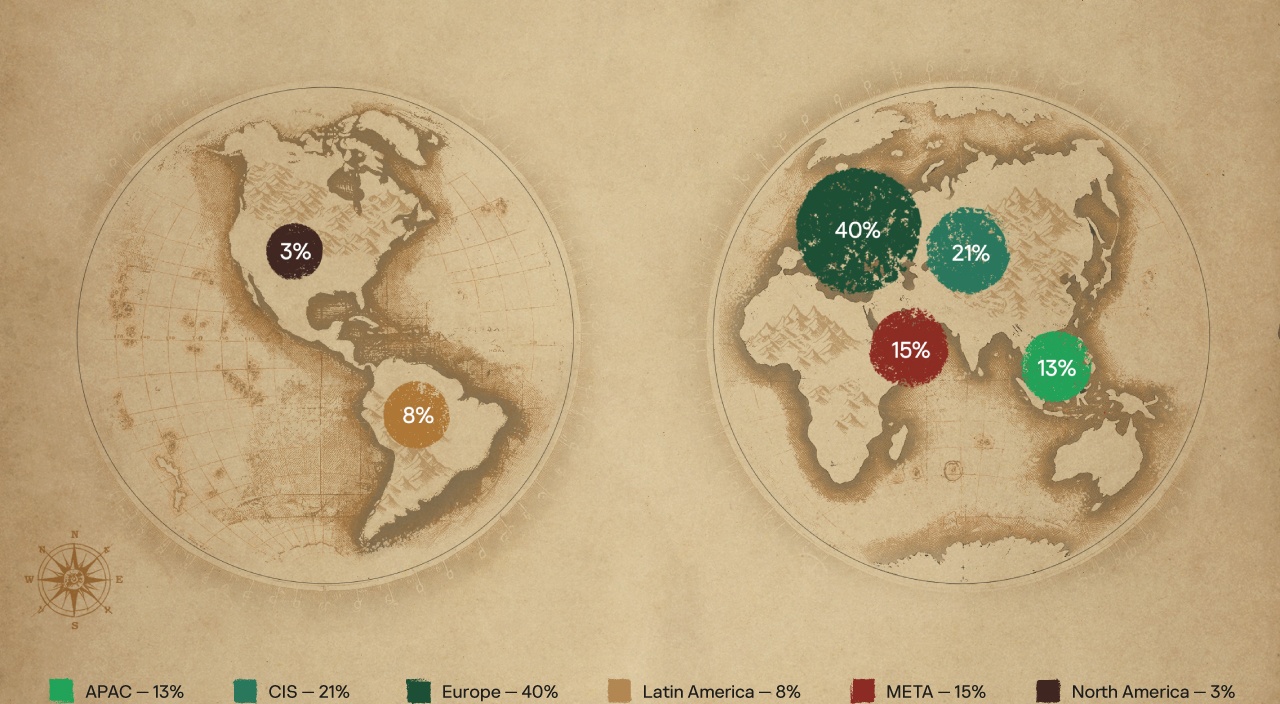
    Kaspersky MDR customers span the globe, giving us a comprehensive and objective view of regional attack behaviors and tactics. The largest concentration of customers is in Europe, the CIS, and the META regions.

    Kaspersky MDR customers by region

    Distribution of incidents by industry

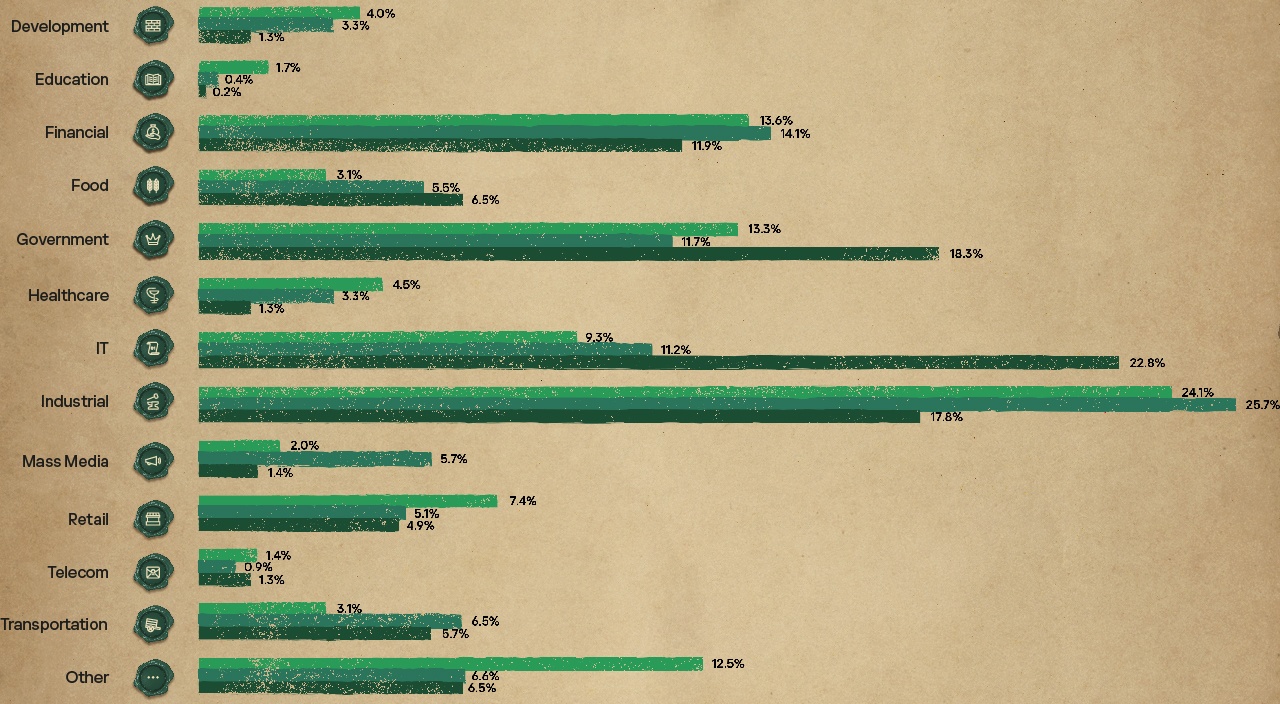
    In 2024, the MDR team observed the highest number of incidents in the industrial (25.7%), financial (14.1%), and government (11.7%) sectors. However, if we consider only high-severity incidents, the distribution is somewhat different: 22.8% in IT, 18.3% in government, 17.8% in industrial, and 11.9% in the financial sector.

    The most attacked industries

    General observations and recommendations

    In 2024, we observed the following trends in the incidents detected by our SOC team:

    • High-severity incidents decreased, but complexity increased. The number of high-severity incidents decreased by 34% compared to 2023. However, the mean time to investigate and report these incidents increased by 48%, indicating a rise in the average complexity of attacks. This is supported by the fact that the vast majority of triggered detection rules and IoAs were from specialized XDR tools. This marks a shift from previous years, where OS log-based detection played a significant role. Given this trend, specialized tools like XDR are essential for effectively detecting and investigating modern threats.
    • Human-driven targeted attacks are increasing. Human-driven targeted attacks accounted for 43% of high-severity incidents – 74% more than in 2023 and 43% more than in 2022. Despite advances in automated detection tools, motivated attackers continue to find ways to bypass them. To counter such threats, human-driven solutions like Managed Detection and Response are critical. For organizations with in-house security operations teams, internal processes and technologies must be equipped to handle the modern threat landscape. Comprehensive SOC consulting services can help achieve this.
    • Attackers often return after a successful breach. The statistics consistently show that attackers often return after a successful attack. This is especially evident in the government sector, where attackers aim to persist in the system long-term for espionage purposes. In such cases, combining an XDR-equipped in-house SOC or outsourced MDR with regular Compromise Assessments is an effective way to detect and investigate incidents that may be missed by existing security measures.
    • Living off the Land techniques remain prevalent. Attackers often use Living off the Land (LotL) methods in infrastructures lacking proper system configuration controls. A significant number of incidents are linked to unauthorized changes, such as adding accounts to privileged groups or weakening secure configurations. To minimize false positives in these scenarios, effective configuration management and formal procedures for implementing changes and managing access are crucial.
    • User Execution and Phishing remain top threats. User Execution and Phishing techniques ranked again in the top three threats, with nearly 5% of high-severity incidents involving successful social engineering. Users are still the weakest link, making Security Awareness training an important focus for corporate information security planning.

    To explore these and other trends in detail, download full report (PDF).

    MIL OSI Economics

  • MIL-OSI Economics: Air India and Lufthansa Group announce significant expansion of codeshare partnership: ~60 additional routes across 12 Indian and 26 European cities

    Source: Lufthansa Group

    Air India and Lufthansa Group have agreed to build on their longstanding codeshare partnership, which sees Air India enter into a new codeshare agreement with Austrian Airlines, as well as expand the existing codeshare agreements between Air India, Lufthansa, and Swiss International Air Lines (SWISS).

    The expanded partnership significantly boosts flight options and connectivity for travellers between the Indian Subcontinent and Europe with the addition of close to 60 codeshare routes operated by the four airlines across 12 Indian and 26 European cities.

    The expanded agreements increase the total number of codeshare routes between Air India, Lufthansa and SWISS from 55 to nearly 100. Additionally, the new agreement between Air India and Austrian Airlines adds 26 codeshare routes. This provides greater choice, convenience, and seamless experiences to travellers from both regions.

    Customers of Lufthansa Group will now be able to connect to Air India’s domestic services to or from 15 points within India, namely Ahmedabad, Amritsar, Bengaluru, Bhubaneswar, Chennai, Delhi, Goa Mopa, Goa Dabolim, Hyderabad, Indore, Kochi, Kolkata, Mumbai, Pune, and Thiruvananthapuram. Additionally, Lufthansa Group carriers will add their respective designator codes to Air India’s international services to 3 destinations from Delhi and Mumbai: Kathmandu, Melbourne, and Sydney.

    Additionally, flights currently operated by Air India and Lufthansa Group carriers between India and Germany or Switzerland will be covered under the expanded codeshare partnership. For example, customers who wish to fly between Delhi and Frankfurt will now have three daily flight options each way with ‘LH’ flight numbers, including two flights operated by Air India and one flight operated by Lufthansa.

    Reciprocally, Air India will now offer its customers a total of 26 destinations across Europe and 3 destinations in the Americas beyond its gateways in Europe (Frankfurt, Vienna, and Zurich), with the ‘AI’ designator code placed on the following services operated by airlines in the Lufthansa Group, including Austrian Airlines for the first time:

    Lufthansa
    Between Frankfurt and: Amsterdam, Barcelona, Berlin, Bremen, Brussels, Copenhagen, Dresden, Düsseldorf, Dublin, Geneva, Hamburg, Hannover, Luxembourg, Lyon, Manchester, Marseille, Munich, Nice, Nuremberg, Oslo, Prague, Riga, Rio de Janeiro, São Paulo, Stockholm, Stuttgart, Toulouse, Valencia, Washington D.C.

    SWISS
    Between Zurich and: Amsterdam, Barcelona, Berlin, Bremen, Brussels, Copenhagen, Dresden, Düsseldorf, Dublin, Geneva, Hamburg, Hannover, Luxembourg, Manchester, Marseille, Munich, Nice, Oslo, Prague, Stockholm, Stuttgart, Valencia.

    Austrian Airlines
    Between Vienna and: Amsterdam, Barcelona, Berlin, Bremen, Brussels, Copenhagen, Düsseldorf, Geneva, Hamburg, Hannover, Lyon, Manchester, Marseille, Munich, Nice, Oslo, Prague, Stockholm, Stuttgart, Valencia.

    Both airlines plan to progressively include other destinations in their network to the codeshare arrangements.

    Air India and the three Lufthansa Group carriers are members of Star Alliance. Frequent flyers will continue to earn and redeem points/miles on all four airlines, while elite status holders of Air India’s Maharaja Club and Lufthansa Group’s Miles & More programmes will benefit from Star Alliance Gold benefits including priority services, extra baggage allowance, and airport lounge access across the world. 

    According to Lufthansa Group Chief Commercial Officer, Dieter Vranckx: We are thrilled to strengthen our partnership with Air India and elevate the travel experience for our joint customers. By further enhancing our cooperation, we will increase the travel options between Europe and India and offer our passengers improved access to additional destinations. Lufthansa Group remains committed to India, and we are excited about the possibilities and potential the country and Air India as a partner have to offer”.

    Nipun Aggarwal, Chief Commercial Officer, Air India, said: “Our goal is to enable our customers to travel from any corner of the world to another via Air India and its partner airlines. The expansion of our partnership with Lufthansa Group is a step in that direction, and we are pleased to take this long-standing relationship to the next level. With this renewed partnership, our customers will have access to more destinations and greater flexibility to travel across Europe on Lufthansa Group carriers. It also gives us the opportunity to serve Lufthansa Group customers, with warmth and quintessential Indian hospitality, aboard Air India flights. We look forward to continue working closely with our Star Alliance partners in making the world feel like a smaller place.”

    Subject to regulatory approvals, the codeshare flights will be progressively made available for sale through the airlines’ respective booking channels.

    ABOUT LUFTHANSA GROUP:

    The Lufthansa Group is an aviation group with operations worldwide. With 100,000+ employees, Lufthansa Group generated revenue of €35.4bn in the financial year 2023. Our largest business segment is Passenger Airlines while other key business segments include Logistics and Maintenance, Repair and Overhaul (MRO). Other companies and Group functions such as IT companies and Lufthansa Aviation Training form complimentary components of the Group. All airlines and business segments play leading roles in their respective markets.

    ABOUT AIR INDIA GROUP:

    The Air India group – comprising of full-service global airline Air India and low-cost regional carrier Air India Express – is spearheading a new era of Indian aviation. The Air India story began in 1932 when JRD Tata piloted the airline’s inaugural flight and opened the skies for aviation in India. Today, Air India group employs more than 30,000 people, operates over 300 aircraft and carries customers to 55 domestic and 48 international destinations across five continents.

    Returning to the Tata Sons in 2022 following 70 years under Government ownership, Air India group is in the midst of a five-year transformation program, Vihaan.AI. As part of the transformation, Air India placed the then largest-ever order for 470 new aircraft in 2023. In 2024, sister airlines Air Asia India and Vistara were successfully merged into Air India Express and Air India respectively, and the Airline opened South Asia’s largest aviation training academy.

    A new flying school is scheduled to open in 2025, and construction of a greenfield maintenance base, to be operational in 2026, is underway. In addition to receiving new aircraft, all existing aircraft are progressively undergoing a full interior refit.

    With transformation underway across all facets of the business and India’s rich legacy of hospitality, Air India is committed to being a world class global airline with an Indian heart.

    MIL OSI Economics

  • MIL-OSI Economics: Growing concerns over phthalates in plastic packaging highlight importance of alternative packaging solutions, says GlobalData

    Source: GlobalData

    Growing concerns over phthalates in plastic packaging highlight importance of alternative packaging solutions, says GlobalData

    Posted in Packaging

    Environmental organizations are increasingly highlighting the numerous health risks associated with phthalates, leading to a rise in consumer awareness and concern over the use of plastic packaging in processed food and beverage products.

    The use of phthalates in plastic packaging is facing increased scrutiny due to a growing body of research that underscores significant health risks linked to these chemicals, observers GlobalData, a leading data and analytics company. This concern has led to legal action by environmental organizations such as Earthjustice and the Environmental Defense Fund against the FDA over its alleged refusal to address regulation concerning the issue.

    One notable health risk associated with plastics is their propensity to absorb flavors, colors, and odors, which consequently raises concerns about the potential leaching of harmful chemicals into food and beverage products packaged with this material.

    Chris Rowland, Packaging Consultant and Analyst at GlobalData, comments: “The European Union has implemented a ban or imposed restrictions on certain phthalate compounds that come into contact with food, a regulatory move adopted by other nations such as the United Kingdom and Canada. To future-proof their packaging capabilities, FMCG companies could explore innovative alternatives, including paper or plant-based materials, regardless of lagging regulation in the US. While initially this shift may entail higher costs, the growing consumer awareness of health risks associated with plastic packaging, coupled with a rising preference for sustainable packaging solutions and the tightening of global regulations on plastic packaging use, suggests that a failure to adapt could lead to a long-term competitive disadvantage.”

    Physical health and fitness concerns could be impacting packaging choices

    According to the latest consumer survey by GlobalData for Q4 2024, nearly half of global consumers (47%) are “extremely” or “quite” concerned about their physical fitness and health.

    The same survey also highlights that over 50% of consumers are “extremely” or “quite concerned” about the amount of processed food they eat or give to others in the “meat”, “pre-packaged meals”, and “food/drinks for children” categories.

    Rowland continues: “Consumers who are concerned about their physical fitness and dietary intake of processed foods tend to be more open to alternatives to plastic packaging. Consequently, an opportunity may arise for consumer packaged goods manufacturers to respond to these concerns, by providing packaging free from phthalates, prominently displaying this feature on the packaging, and working with their packaging suppliers to pioneer innovations in paper and biodegradable packaging for processed foods.”

    “Phthalate-Free” claims associated with personal care products

    At present, “Phthalate-Free” claims are predominantly associated with products within the personal care category, including soaps, cosmetics, and skincare products. Brands that provide phthalate-free options, such as Ecover, MyPure, and Natural Beauty, are at the forefront of this initiative. Additionally, certain niche food producers are making strides by advocating for packaging that is plastic-free, biodegradable, and recyclable. A case in point is Pheasants Hill Farm in the UK, which markets a range of food products, including steaks, mince, and burgers—in plastic-free pouches. These pouches are constructed from plant-based materials, which are claimed to be biodegradable, compostable, and ocean-friendly.

    Alternative packaging formats are increasing in both variety and popularity.

    Numerous packaging formats are now being presented as safer and more environmentally friendly alternatives to phthalate-containing plastic packaging. For example, mushroom packaging employs mycelium—the root structure of mushrooms—to bind agricultural waste into biodegradable packaging materials. This method is not only more sustainable but also provides natural insulation and protection for fragile goods. Seaweed is another material gaining popularity in the packaging industry because of its biodegradable properties and its ability to decompose without leaving harmful residues.

    Rowland adds: “The health and environmental concerns associated with plastic packaging are significant and complex. Addressing these issues necessitates a collaborative effort from consumers, businesses, and regulators to adopt sustainable practices and alternative materials. By adopting paper-based packaging and other alternative materials, brands can align with consumer preferences, comply with regulations, and demonstrate their commitment to health, well-being, and sustainability.”

    GlobalData Consumer Custom Solutions

    GlobalData Consumer Custom Solutions offers sector-level expertise in the Consumer Packaged Goods, Food, Beverages, Foodservice, Retail, Apparel, Packaging, Agribusiness and Automotive industries. We use our unique data, expert insights, and analytics to answer your bespoke questions with a tailored approach and deliverables. To learn more or have a chat, just drop us an email at consulting@globaldata.com or contact us here, and we’ll get in touch! CCS0210

    MIL OSI Economics

  • MIL-OSI Economics: BD intent to separate business could allow competitors to rise in IVD test markets, says GlobalData

    Source: GlobalData

    BD intent to separate business could allow competitors to rise in IVD test markets, says GlobalData

    Posted in Medical Devices

    Becton Dickinson (BD) has recently announced its intent to separate its biosciences and diagnostic solutions business. The biosciences segment includes research instruments and reagents, and single-cell multiomics, while the diagnostic solutions segment consists of microbiology and infectious disease diagnostics. According to the company, the two segments earned over $3 billion in revenue in fiscal 2024. BD’s move could allow competitors to rise in in-vitro diagnostic (IVD) test markets, says GlobalData, a leading data and analytics company.

    According to GlobalData’s US Healthcare Facility Invoicing Database, BD has market-leading products in the IVD space, holding just under 20% of the sexual health tests market, with strong products BD ProbeTec and BD MAX, which will be part of the split from BD. With Hologic holding the majority of market share for sexual health tests, it will be interesting to see if BD’s segments can be grown in this market.

    Amy Paterson, Medical Analyst at GlobalData, comments: “BD’s intent to split two segments off from their company provides other companies in the IVD space with a unique opportunity to strengthen their own product offerings. For example, in the sexual health tests market, an IVD competitor could acquire the BD segments to compete against Hologic. Alternatively, Hologic could use BD’s segments to strengthen its position in the market and ensure they face no competition.”

    In the respiratory disease tests market, no company is making up more than 50% of the market revenue. By acquiring and strengthening the point-of-care infectious disease tests, for example, a company in this space could potentially gain enough market share to dominate the respiratory disease tests space.

    Paterson continues: “IVD competitors who are at the top of their market could acquire these segments from BD to secure more of the market and keep competition down. As well, smaller players in the market could use these segments to grow their market share and compete with the larger players.”

    Paterson concludes: “Companies with IVD products in the sexual health test and respiratory disease test spaces should look at BD’s announcement as an opportunity to strengthen their presence and should consider how BD’s established products could help strengthen their sales and grow their market share.”

    MIL OSI Economics

  • MIL-OSI Economics: Getinge surgical perfusion exit opens opportunities for LivaNova in CPBE market, says GlobalData

    Source: GlobalData

    Getinge surgical perfusion exit opens opportunities for LivaNova in CPBE market, says GlobalData

    Posted in Medical Devices

    Swedish medtech company Getinge’s decision to exit the surgical perfusion business signals a strategic shift toward higher-growth areas like extracorporeal membrane oxygenation (ECMO). This move is set to benefit dominant players like LivaNova, which is well-positioned to capture the market share in the cardiopulmonary bypass equipment (CBPE) sector, which continues to show steady growth driven by technological advancements and the aging population, says GlobalData, a leading data and analytics company.

    GlobalData’s latest report, “Cardiopulmonary Bypass Equipment Market Size by Segments, Share, Regulatory, Reimbursement, Installed Base and Forecast to 2036,” reveals that the global CBPE market is expected to grow at a compound annual growth rate (CAGR) of 1.2% from $508.2 million in 2024 to $583.5 million in 2034.

    Aidan Robertson, Medical Analyst at GlobalData, comments: “Getinge’s decision to reallocate resources and focus on more lucrative areas like ECMO is unlikely to significantly impact the CPBE market. However, it may prove to be a beneficial strategy for the company, considering its struggles and low market share in this sector.”

    However, the move is likely to favor major companies in the CPBE market such as LivaNova, which accounted for an estimated 50.3% of the market share in 2024 and continue to make gains with Essenz heart lung machine. On the other hand, Getinge accounted for only 1.9% of the CBPE market.

    The demand for cardiopulmonary bypass products is likely to increase, driven by the growing aging population and the resulting increase in cardiovascular diseases, alongside ongoing technological advancements in these devices. Some barriers to this growth may be the high cost of these procedures along with potential healthcare cost cutting and reimbursement cuts. Despite these challenges the CPBE market is expected to sustain stable growth.

    Robertson concludes: “While Getinge’s decision to let go of the CPBE market appears to be the proper choice based on its past performance, GlobalData expects LivaNova to maintain its dominance in the steadily expanding CPBE market and take advantage of the opportunity created by Getinge’s exit.”

    MIL OSI Economics

  • MIL-OSI Economics: iPhone 16e is a testbed for Apple’s new modem C1, says GlobalData

    Source: GlobalData

    iPhone 16e is a testbed for Apple’s new modem C1, says GlobalData

    Posted in Technology

    Following the news that Apple has launched iPhone 16e phone with its first cellular modem C1;

    Anisha Bhatia, Senior Technology Analyst at GlobalData, a leading data and analytics company, offers her view:

    “The launch of iPhone 16e with cellular modem ‘C1’ culminates years of research and more than $1 billion in acquisitions. The proprietary 5G modem will reduce Apple’s reliance on Qualcomm and integrate cellular connectivity within its larger device ecosystem. The move will lead to improved device performance, design innovations, and cost savings.

    “The $599 iPhone 16e serves as a testbed for Apple’s modem, allowing the company to evaluate its performance at scale before potentially integrating it into the higher-end models. This move will enable Apple to gather extensive data and user feedback, ensuring that any potential issues are addressed before a wider rollout. But Qualcomm’s modems are the current gold standard in the industry, and Apple’s transition to in-house modem technology will be gradual.

    “Qualcomm modems are expected to remain in use in select Apple devices until at least 2027. As Qualcomm diversifies its focus to the automotive segment, PCs and IoT, the importance of the smartphone modem market to the company may wane, allowing Apple to carve out a new niche for itself.

    “Apple’s transition to self-designed modems is a calculated long-term play that may not immediately alter the user experience but could result in significant future benefits in terms of better processing efficiency, optimized battery design and tighter vertical integration of all Apple components.”

    MIL OSI Economics

  • MIL-OSI Economics: The 37th ASEAN-Australia Forum convenes in Jakarta

    Source: ASEAN

    The 37th ASEAN-Australia Forum was held today in the ASEAN Secretariat/ASEAN Headquarters Jakarta. The Forum provides a platform for Senior Officials of ASEAN and Australia to review the ASEAN-Australia Comprehensive Strategic Partnership and discuss future direction of ASEAN-Australia cooperation, as well as to exchange views on regional and international issues.

    The post The 37th ASEAN-Australia Forum convenes in Jakarta appeared first on ASEAN Main Portal.

    MIL OSI Economics

  • MIL-OSI Economics: Money Market Operations as on February 18, 2025

    Source: Reserve Bank of India


    (Amount in ₹ crore, Rate in Per cent)

      Volume
    (One Leg)
    Weighted
    Average Rate
    Range
    A. Overnight Segment (I+II+III+IV) 5,78,950.11 6.26 5.25-6.60
         I. Call Money 14,414.61 6.35 5.25-6.50
         II. Triparty Repo 4,01,857.25 6.25 6.15-6.60
         III. Market Repo 1,60,689.05 6.28 5.75-6.45
         IV. Repo in Corporate Bond 1,989.20 6.47 6.42-6.55
    B. Term Segment      
         I. Notice Money** 276.00 6.36 5.80-6.40
         II. Term Money@@ 216.00 6.45-6.70
         III. Triparty Repo 705.00 6.30 6.25-6.40
         IV. Market Repo 1,045.78 5.88 5.75-6.70
         V. Repo in Corporate Bond 0.00
      Auction Date Tenor (Days) Maturity Date Amount Current Rate /
    Cut off Rate
    C. Liquidity Adjustment Facility (LAF), Marginal Standing Facility (MSF) & Standing Deposit Facility (SDF)
    I. Today’s Operations
    1. Fixed Rate          
    2. Variable Rate&          
      (I) Main Operation          
         (a) Repo          
         (b) Reverse Repo          
      (II) Fine Tuning Operations          
         (a) Repo Tue, 18/02/2025 2 Thu, 20/02/2025 71,773.00 6.26
         (b) Reverse Repo          
      (III) Long Term Operations^          
         (a) Repo          
         (b) Reverse Repo          
    3. MSF# Tue, 18/02/2025 1 Wed, 19/02/2025 1,359.00 6.50
      Tue, 18/02/2025 2 Thu, 20/02/2025 0.00 6.50
    4. SDFΔ# Tue, 18/02/2025 1 Wed, 19/02/2025 89,800.00 6.00
      Tue, 18/02/2025 2 Thu, 20/02/2025 7,559.00 6.00
    5. Net liquidity injected from today’s operations [injection (+)/absorption (-)]*       -24,227.00  
    II. Outstanding Operations
    1. Fixed Rate          
    2. Variable Rate&          
      (I) Main Operation          
         (a) Repo          
         (b) Reverse Repo          
      (II) Fine Tuning Operations          
         (a) Repo Mon, 17/02/2025 4 Fri, 21/02/2025 57,413.00 6.26
         (b) Reverse Repo          
      (III) Long Term Operations^          
         (a) Repo Fri, 14/02/2025 49 Fri, 04/04/2025 75,003.00 6.28
      Fri, 07/02/2025 56 Fri, 04/04/2025 50,010.00 6.31
         (b) Reverse Repo          
    3. MSF#          
    4. SDFΔ#          
    D. Standing Liquidity Facility (SLF) Availed from RBI$       9,095.71  
    E. Net liquidity injected from outstanding operations [injection (+)/absorption (-)]*     1,91,521.71  
    F. Net liquidity injected (outstanding including today’s operations) [injection (+)/absorption (-)]*     1,67,294.71  
    G. Cash Reserves Position of Scheduled Commercial Banks
         (i) Cash balances with RBI as on February 18, 2025 8,97,439.46  
         (ii) Average daily cash reserve requirement for the fortnight ending February 21, 2025 9,12,240.00  
    H. Government of India Surplus Cash Balance Reckoned for Auction as on¥ February 18, 2025 71,773.00  
    I. Net durable liquidity [surplus (+)/deficit (-)] as on January 24, 2025 -34,103.00  
    @ Based on Reserve Bank of India (RBI) / Clearing Corporation of India Limited (CCIL).
    – Not Applicable / No Transaction.
    ** Relates to uncollateralized transactions of 2 to 14 days tenor.
    @@ Relates to uncollateralized transactions of 15 days to one year tenor.
    $ Includes refinance facilities extended by RBI.
    & As per the Press Release No. 2019-2020/1900 dated February 06, 2020.
    Δ As per the Press Release No. 2022-2023/41 dated April 08, 2022.
    * Net liquidity is calculated as Repo+MSF+SLF-Reverse Repo-SDF.
    ¥ As per the Press Release No. 2014-2015/1971 dated March 19, 2015.
    # As per the Press Release No. 2023-2024/1548 dated December 27, 2023.
    ^ As per the Press Release No. 2024-2025/2138 dated February 12, 2025 and Press Release No. 2024-2025/2013 dated January 27, 2025.
    Ajit Prasad          
    Deputy General Manager
    (Communications)    
    Press Release: 2024-2025/2195

    MIL OSI Economics

  • MIL-OSI Economics: Secretary-General of ASEAN delivers pre-recorded remarks at the ASEAN-UK Symposium on the Development of the ASEAN Creative Economy Sustainability Framework

    Source: ASEAN

    Secretary-General of ASEAN, Dr. Kao Kim Hourn, today delivered pre-recorded remarks at the launching of the ASEAN-UK Symposium on the Development of the ASEAN Creative Economy (ACE) Sustainability Framework, being held in Kuala Lumpur, Malaysia. In his remarks, Dr. Kao emphasised the vital role of cultural and creative industries in driving economic growth and job creation. He welcomed ASEAN’s creative potential and underscored the symposium’s importance in supporting the development of the ACE Sustainability Framework as a roadmap to guide cross-sectoral collaboration towards achieving meaningful social, cultural, economic, and environmental outcomes in fostering the creative economy.

    The post Secretary-General of ASEAN delivers pre-recorded remarks at the ASEAN-UK Symposium on the Development of the ASEAN Creative Economy Sustainability Framework appeared first on ASEAN Main Portal.

    MIL OSI Economics

  • MIL-OSI Economics: Eclipsa Audio: Ushering in a New Generation of 3D Sound With Samsung

    Source: Samsung

    In video content, audio is just as essential as the visuals, playing a key role in immersion and making viewers feel as if they are part of the scene. To create a truly optimized sound experience, Samsung Electronics collaborated with Google to develop Eclipsa Audio — a cutting-edge 3D audio technology officially introduced through Samsung TVs last month at the Consumer Electronics Show (CES) 2025 in Las Vegas.
     
    Samsung Newsroom took a closer look at the technology behind Eclipsa Audio and how it delivers lifelike 3D spatial audio.


    Developing 3D Spatial Audio Technology
    In 2023, the Alliance for Open Media (AOM) — a global consortium that includes Samsung, Google, Netflix, Meta and other leading companies — officially adopted Immersive Audio Model and Formats (IAMF) as the industry standard for 3D audio. Developed by Samsung and Google, this innovative 3D audio format is currently available to content creators under the brand name Eclipsa Audio.
     
    Eclipsa Audio establishes a shared protocol between different types of media content and the devices that play them. The format delivers a deeply immersive listening experience by optimizing and adapting audio positioning, intensity, spatial reflections and other sound elements to various output environments, such as cinemas, home theater systems, gaming consoles and mobile devices.
     
    Depending on the output device, the technology can render sound from multiple directions — including from the front, back, left, right, above and below — to create a sense of spatial depth and presence within the scene being watched. In a concert video for instance, Eclipsa Audio presents the artist’s performance in crystal-clear detail while also capturing the energy of the audience, making the viewer feel as if they are physically there.
     
     
    Designed for Optimal 3D Audio in Everyday Life
    Among the growing range of technologies enhancing 3D sound — including surround sound, immersive audio and spatial audio — Eclipsa Audio was specifically designed to provide a 3D audio experience optimized for everyday listening.
     
    Traditionally, 3D audio content is created with the assumption that it will be played in environments equipped with multiple surround speakers. However, most home entertainment setups primarily consist of a TV and a soundbar — making it challenging to accurately replicate the content creator’s intended spatial audio effects. Eclipsa Audio overcomes this limitation by automatically analyzing sound elements in each segment of a film — from whispered dialogue to the roar of fighter jets in the background — and delivering a dynamic 3D audio effect fine-tuned for the viewer’s home environment.
     
     
    Building a 3D Audio Ecosystem With Open-Source Technology
    Eclipsa Audio’s open-source framework sets it apart from other 3D audio technologies by allowing anyone to create 3D audio content without paying royalties. Following its debut at CES 2025, the technology has been met with enthusiasm from content creators and has gained momentum across media platforms and online communities.
     
    In this way, Eclipsa Audio serves as an open vessel in which content creators can integrate 3D audio elements from all directions without restrictions. By democratizing spatial audio, Eclipsa Audio empowers content creators and ensures that consumers experience sound as intended — regardless of their audio setup.
     
     
    Eclipsa Audio on Samsung TVs
    Eclipsa Audio’s immersive 3D sound performs at its best when paired with exceptional hardware. To make that peak performance a reality, Samsung and Google have worked tirelessly to provide consumers with Eclipsa Audio-supported 3D audio content — soon to be available via the YouTube app on Samsung’s latest TVs. Eclipsa Audio is set to roll out across the company’s entire 2025 TV lineup from the Crystal UHD series to the premium flagship Neo QLED 8K models.1
     
    Most Samsung TVs are equipped with stereo speakers at the bottom of the screen, and for QLED 4K models and above, additional speakers are positioned at the top. Flagship models, though, come with extra benefits. Besides surround speakers added to the rear of the sides, their top-positioned speakers are specially designed for height perception. Eclipsa Audio reflects sound off the ceiling with these special speakers, creating an effect that allows viewers to experience upward-directional audio — such as the sensation of an object flying overhead. Pairing the TV with a soundbar further enhances the experience, producing richer and more expansive 3D spatial audio.
     
    Eclipsa Audio has established the foundation for a 3D audio content ecosystem by bringing industry leaders — from device manufacturers to content platforms — together under a unified standard. In an era where streaming services blur the line between content creation and consumption, Eclipsa Audio unlocks new possibilities for immersive sound that Samsung is determined to further expand.
     
     
    1 Rollout schedule and service details may vary depending on the TV model.

    MIL OSI Economics