Category: Economics

  • MIL-OSI Economics: No one becomes a clinician to do paperwork, but it’s becoming a bigger and bigger administrative burden, taking time and attention away from actually treating and supporting patients. That’s why we’re introducing Microsoft Dragon Copilot, the industry’s first AI assistant for clinical workflow. Check it out.

    Source: Microsoft

    Headline: No one becomes a clinician to do paperwork, but it’s becoming a bigger and bigger administrative burden, taking time and attention away from actually treating and supporting patients. That’s why we’re introducing Microsoft Dragon Copilot, the industry’s first AI assistant for clinical workflow. Check it out.

    No one becomes a clinician to do paperwork, but it’s becoming a bigger and bigger administrative burden, taking time and attention away from actually treating and supporting patients. That’s why we’re introducing Microsoft Dragon Copilot, the industry’s first AI assistant for clinical workflow. Check it out: https://lnkd.in/gNxEaRuf

    MIL OSI Economics

  • MIL-OSI Economics: Samsung and GRUBBRR Promise Results or Clients Don’t Pay With New Guarantee Initiative

    Source: Samsung

    Samsung and GRUBBRR, the leader in self-ordering technology, are proud to announce their latest initiative, the GRUBBRR Guarantee. With this bold move, GRUBBRR is demonstrating its commitment to driving results for clients by offering a guarantee on the return on investment (ROI) of its solutions and demonstrating why it’s a top choice in the digital ordering space. Samsung and GRUBBRR are confident in the power of their kiosk technology to deliver positive results that they’re willing to back it up with a guarantee: Sign up for GRUBBRR’s services before May 1, 2025, and the companies will GUARANTEE an ROI. During any month in which the Samsung Kiosk powered by GRUBBRR does not generate an ROI, customers’ Software-as-a-Service (SaaS) fee for that month will be waived.
    How it works:
    Sign-Up deadline: Register for GRUBBRR’s services by May 1, 2025, to qualify for the guarantee.
    Guarantee activation: The GRUBBRR Guarantee takes effect after customers’ first three months of service.
    Guaranteed ROI: If the Samsung Kiosk powered by GRUBBRR does not generate an ROI during any month, customers’ SaaS fee that month will be waived.
    Client requirements: To ensure the success of this initiative, participating clients must share their Point-of-Sale (POS) data weekly and implement GRUBBRR’s proven playbook.

    “At GRUBBRR, we believe in the transformative impact our technology can have on our clients’ businesses,” said Sam Zietz, CEO of GRUBBRR. “Our Guarantee spotlights our confidence in our software as well as our commitment to delivering real results for clients. Our technology is designed to optimize business operations, and our teams are dedicated to ensuring success. We have proven that we have what it takes to help businesses with smoother transactions while improving the speed of service and customer satisfaction.”
    Driving confidence in restaurant technology
    The GRUBBRR Guarantee highlights the company’s dedication to creating real value for its customers. Samsung self-ordering kiosks and GRUBBRR’s automation solutions are designed to streamline operations, reduce wait times, increase order accuracy and ultimately drive higher revenue for businesses in the restaurant industry.
    By offering this guarantee, Samsung and GRUBBRR aim to eliminate the risk for businesses looking to adopt new technology while providing the tools they need to enhance operational efficiency and boost profitability.
    While GRUBBRR’s solutions are compatible with a variety of hardware, the Samsung Kiosk stands out as a cutting-edge, all-in-one self-ordering solution. Featuring a 24-inch high-definition touch screen, QR code/barcode scanner, receipt printer and an EMV terminal cradle, the Samsung Kiosk offers a seamless integration of functionality and design, enhancing the customer experience while driving operational efficiency. This collaboration reflects both companies’ commitments to delivering premium solutions that exceed client expectations.

    “At Samsung, we’re committed to pushing the boundaries of innovation to drive business success,” said Sara Grofcsik, Head of Sales, Display Division, Samsung Electronics America. “Our partnership with GRUBBRR and the launch of the GRUBBRR Guarantee are a testament to our shared vision of empowering businesses with solutions that improve customer experiences and deliver measurable results for our retail customers.”
    Why the GRUBBRR Guarantee matters:
    Risk-free investment: Businesses can adopt Samsung and GRUBBRR technology with confidence, knowing a guarantee backs them.
    Proven strategy: GRUBBRR’s playbook and data-driven approach ensure clients are well-positioned for success.
    Commitment to client success: Samsung and GRUBBRR focus on delivering measurable results that impact the bottom line.
    To learn more about how the Samsung Kiosk is shaping the future of self-service, please visit https://www.samsung.com/us/business/displays/interactive/kiosk/.
    To learn more about the GRUBBRR Guarantee, visit https://grubbrr.com/grubbrr-guarantee/.

    MIL OSI Economics

  • MIL-OSI Economics: Huawei Li Peng: Maximizing 5G Network Value in the Age of AI Mar 03, 2025

    Source: Huawei

    Headline: Huawei Li Peng: Maximizing 5G Network Value in the Age of AI
    Mar 03, 2025

    [Barcelona, Spain, March 3, 2025] At MWC Barcelona 2025, Li Peng, Huawei’s Corporate Senior Vice President and President of ICT Sales & Service, delivered a keynote on how carriers can make the most of AI to fully unleash the value of their networks. Li predicts that symbiosis between 5G-A and AI technologies will stimulate double-digit growth in both DOU (data of usage) and ARPU (average revenue per user) from mobile subscribers.
    “We’re rapidly entering a fully intelligent world. Intelligent applications are spreading everywhere, placing new demands on networks,” said Li. “By embracing and evolving 5G, we can unlock the infinite potential of mobile networks. Huawei is willing and ready to work with carriers and industry partners around the world to promote digital enablement, reinforce network foundations, and bring AI to all. Together, we can shape the D.N.A. for an intelligent world.”
    AI is changing human-machine interaction, driving different requirements for latency
    With advancements in AI, HMI (human-machine interaction) is evolving from simple text-based communications to voice, gestures, and more multi-modal interactions. As a result, HMI is more real-time and convenient than ever, giving rise to a new wave of innovative applications. For example, people can interact more naturally with their devices using AI-powered voice assistants. On cloud phones, AI-powered avatars can provide visual feedback as well, creating a more personal experience for services like health monitoring, making the mobile experience far more accessible and productive for different groups of users.
    To support applications like these, however, networks need to be able to provide guaranteed latency, which will require ongoing evolution from 5G NSA, to 5G SA, and eventually 5G-A. Carriers can also adopt innovative technologies like CUPS (Control and User Plane Separation) and GBR (Guaranteed Bit Rate) to reduce basic latency and ensure differentiated, deterministic latency for specific scenarios.
    AI-enabled content production and distribution is raising the bar for upload & download speeds
    Li went on to note that AI will transform how content is produced and distributed. For example, AIGC technology makes it possible to generate hour-long 2D and 3D videos with a single click. Meanwhile, AI recommendations are more targeted than ever, allowing the distribution of more personalized content to broader audiences across the Internet. Both of these trends will cause network traffic to surge over the next five years, placing unprecedented demands on networks. To keep up, carriers will need more spectrum, greater network capacity, and much larger uplink and downlink bandwidth.
    Diverse AI services will need experience-centric network coverage
    Both AI-powered cloud and mobile devices are making intelligent services more accessible, and the industry will see growing demand for experience-centric network coverage. According to third-party data, cloud phones and cloud drives will be used by over one billion people by 2030, each of whom will need fast access to cloud computing power. In addition, intelligent in-vehicle applications will require full coverage across cities, highways, and the countryside to provide a continuous and reliable mobility experience.
    Moving forward, meeting these demands will require ongoing progress in network deployment, from rapid expansion of 5G NSA networks to 5G SA networks for a more seamless indoor/outdoor experience, and eventually to experience-centric 5G-A networks. This will help carriers expand network coverage and ensure a smooth experience for tens of billions of new connections for people, and hundreds of billions of new IoT connections between things.
    Growing network complexity will drive evolution towards application-oriented O&M
    AI will bring more complex application scenarios and a more diverse range of experience requirements. From a networking perspective, this will drive a shift from traditional, resource-oriented O&M to a more application-oriented approach.
    Some carriers are already developing O&M systems based on AI agents. For operations enablement, these AI agents can use digital twins to predict personalized needs for individual users, helping shorten service time-to-market from days to minutes. For network maintenance, AI agents with self-learning capabilities can predict and locate faults in seconds, increasing troubleshooting efficiency by 30%. And for network optimization, digital sandboxes can simulate the traffic of real-world applications, allowing AI agents to analyze traffic patterns and optimize networks 24/7 based on application needs.
    Early-movers are scaling up 5G-A deployment to boost monetization in the age of AI
    “New network capabilities will give rise to new business models,” continued Li. “Carriers can go beyond monetizing traffic and start monetizing experience itself.”
    Right now, carriers around the world are actively exploring new ways to monetize experience based on multiple factors like speed, latency, and VIP benefits. They have launched custom services for business travelers, live streamers, and AI cloud phone users. And some are already expanding into the B2B2C market by exposing network capabilities through Open APIs.
    For example, Chinese carriers are working with over 100 industries, including insurance and catering companies, to provide AI New Calling services through Open APIs. This has helped them increase income from industry customers by a factor of 10.
    “The opportunities are huge,” concluded Li. “And the time to act is now. Pioneers are already scaling up fast in over 200 cities around the world. They’re taking solid steps forward, unlocking incredible new value.”
    MWC Barcelona 2025 is held from March 3 to March 6 in Barcelona, Spain. During the event, Huawei will showcase its latest products and solutions at stand 1H50 in Fira Gran Via Hall 1.
    In 2025, commercial 5G-Advanced deployment will accelerate, and AI will help carriers reshape business, infrastructure, and O&M. Huawei is actively working with carriers and partners around the world to accelerate the transition towards an intelligent world.
    For more information, please visit: https://carrier.huawei.com/en/events/mwc2025

    MIL OSI Economics

  • MIL-OSI Economics: Huawei’s Yang Chaobin: AI-Centric Network Solution Helps Carriers Seize AI Opportunities

    Source: Huawei

    Headline: Huawei’s Yang Chaobin: AI-Centric Network Solution Helps Carriers Seize AI Opportunities

    [Barcelona, Spain, March 3, 2025] At the Huawei Product & Solution Launch during MWC Barcelona 2025, Yang Chaobin, Huawei’s Director of the Board and CEO of the ICT Business Group, launched the company’s AI-Centric Network solution.
    According to Yang, the emergence of high-quality, low-cost, and open-source AI models will give rise to a wide range of new innovation in applications and accelerate the advent of an intelligent world.
    Advancements in AI will transform society at three levels. It will enable a truly individualized experience for consumers, drive intelligent collaboration in organizations, and lay the groundwork for more inclusive intelligence for everyone.
    Yang Chaobin, Huawei’s Director of the Board and CEO of the ICT Business Group, speaking at the Huawei Product & Solution Launch

    As for the ICT industry, while evolving technology and a more diverse range of application scenarios will create unprecedented growth opportunities, they will also raise the bar for network infrastructure. To make the most of these opportunities, carriers need to make sweeping breakthroughs in network bandwidth, latency, coverage, and O&M.
    “Huawei’s AI-Centric Network solution is designed to address these needs,” said Yang. “It revolutionizes network capabilities to enable all-domain connectivity. It will power a shift towards application-oriented O&M, and will reshape telecom service and business models to take full advantage of new opportunities presented by AI.”
    AI-centric networks – A four-layered approach
    Yang expanded on the challenges carriers face moving forward, explaining how Huawei’s solution can help them better prepare for a surge of new AI-powered applications.
    All-domain connectivity. With more in-depth collaboration between AI and networks, carriers will be able to optimize resource orchestration for routing, bandwidth, and so on. This will provide intelligent applications with universal network access, ultra-high uplink and downlink, and SLA assurance.
    Application-oriented O&M. Advances in AI applications will give rise to more complex service scenarios and massively diverse experience requirements. This will necessitate a shift from traditional, resource-oriented network O&M to a more application-oriented approach. Huawei’s Telecom Foundation Model supports predictive and proactive O&M, experience optimization based on application-level awareness, and tailored, more fine-grained operations. Carriers will be able to significantly enhance the efficiency of network O&M while taking user experience to entirely new levels.
    Enhanced AI-to-X services. At the individual user level, AI-centric networks can deliver the right experience for different AI scenarios by assigning the exact levels of bandwidth, latency, and reliability needed. At the organizational level, they can break through bottlenecks in capacity and response times configured for person-to-person interactions, evolving networks to support person-to-agent and even agent-to-agent interactivity. And at the societal level, AI-centric networks will enable ubiquitous connectivity to speed up AI adoption in public services like education and healthcare, providing more inclusive value for communities around the world.
    Innovative business models. Finally, different experience requirements will give carriers the opportunity to explore new business models that monetize a broader range of metrics. Essentially, AI-centric networks will allow carriers to go beyond traditional traffic-based monetization and start monetizing experience itself. This will unleash the full potential of connectivity and open up new revenue streams.
    “We need to join hands and work together across the telecom industry,” Yang Chaobin concluded. “By exposing network capabilities, collaborating with different industries, and engaging in scenario-specific innovation, we can make the most of new growth opportunities in the age of AI, and bring the world one step closer to a brighter, more intelligent future.”
    MWC Barcelona 2025 is held from March 3 to March 6 in Barcelona, Spain. During the event, Huawei will showcase its latest products and solutions at stand 1H50 in Fira Gran Via Hall 1.
    In 2025, commercial 5G-Advanced deployment will accelerate, and AI will help carriers reshape business, infrastructure, and O&M. Huawei is actively working with carriers and partners around the world to accelerate the transition towards an intelligent world.
    For more information, please visit: https://carrier.huawei.com/en/events/mwc2025

    MIL OSI Economics

  • MIL-OSI Economics: Huawei Li Peng: Maximizing 5G Network Value in the Age of AI

    Source: Huawei

    Headline: Huawei Li Peng: Maximizing 5G Network Value in the Age of AI

    [Barcelona, Spain, March 3, 2025] At MWC Barcelona 2025, Li Peng, Huawei’s Corporate Senior Vice President and President of ICT Sales & Service, delivered a keynote on how carriers can make the most of AI to fully unleash the value of their networks. Li predicts that symbiosis between 5G-A and AI technologies will stimulate double-digit growth in both DOU (data of usage) and ARPU (average revenue per user) from mobile subscribers.
    “We’re rapidly entering a fully intelligent world. Intelligent applications are spreading everywhere, placing new demands on networks,” said Li. “By embracing and evolving 5G, we can unlock the infinite potential of mobile networks. Huawei is willing and ready to work with carriers and industry partners around the world to promote digital enablement, reinforce network foundations, and bring AI to all. Together, we can shape the D.N.A. for an intelligent world.”
    AI is changing human-machine interaction, driving different requirements for latency
    With advancements in AI, HMI (human-machine interaction) is evolving from simple text-based communications to voice, gestures, and more multi-modal interactions. As a result, HMI is more real-time and convenient than ever, giving rise to a new wave of innovative applications. For example, people can interact more naturally with their devices using AI-powered voice assistants. On cloud phones, AI-powered avatars can provide visual feedback as well, creating a more personal experience for services like health monitoring, making the mobile experience far more accessible and productive for different groups of users.
    To support applications like these, however, networks need to be able to provide guaranteed latency, which will require ongoing evolution from 5G NSA, to 5G SA, and eventually 5G-A. Carriers can also adopt innovative technologies like CUPS (Control and User Plane Separation) and GBR (Guaranteed Bit Rate) to reduce basic latency and ensure differentiated, deterministic latency for specific scenarios.
    AI-enabled content production and distribution is raising the bar for upload & download speeds
    Li went on to note that AI will transform how content is produced and distributed. For example, AIGC technology makes it possible to generate hour-long 2D and 3D videos with a single click. Meanwhile, AI recommendations are more targeted than ever, allowing the distribution of more personalized content to broader audiences across the Internet. Both of these trends will cause network traffic to surge over the next five years, placing unprecedented demands on networks. To keep up, carriers will need more spectrum, greater network capacity, and much larger uplink and downlink bandwidth.
    Diverse AI services will need experience-centric network coverage
    Both AI-powered cloud and mobile devices are making intelligent services more accessible, and the industry will see growing demand for experience-centric network coverage. According to third-party data, cloud phones and cloud drives will be used by over one billion people by 2030, each of whom will need fast access to cloud computing power. In addition, intelligent in-vehicle applications will require full coverage across cities, highways, and the countryside to provide a continuous and reliable mobility experience.
    Moving forward, meeting these demands will require ongoing progress in network deployment, from rapid expansion of 5G NSA networks to 5G SA networks for a more seamless indoor/outdoor experience, and eventually to experience-centric 5G-A networks. This will help carriers expand network coverage and ensure a smooth experience for tens of billions of new connections for people, and hundreds of billions of new IoT connections between things.
    Growing network complexity will drive evolution towards application-oriented O&M
    AI will bring more complex application scenarios and a more diverse range of experience requirements. From a networking perspective, this will drive a shift from traditional, resource-oriented O&M to a more application-oriented approach.
    Some carriers are already developing O&M systems based on AI agents. For operations enablement, these AI agents can use digital twins to predict personalized needs for individual users, helping shorten service time-to-market from days to minutes. For network maintenance, AI agents with self-learning capabilities can predict and locate faults in seconds, increasing troubleshooting efficiency by 30%. And for network optimization, digital sandboxes can simulate the traffic of real-world applications, allowing AI agents to analyze traffic patterns and optimize networks 24/7 based on application needs.
    Early-movers are scaling up 5G-A deployment to boost monetization in the age of AI
    “New network capabilities will give rise to new business models,” continued Li. “Carriers can go beyond monetizing traffic and start monetizing experience itself.”
    Right now, carriers around the world are actively exploring new ways to monetize experience based on multiple factors like speed, latency, and VIP benefits. They have launched custom services for business travelers, live streamers, and AI cloud phone users. And some are already expanding into the B2B2C market by exposing network capabilities through Open APIs.
    For example, Chinese carriers are working with over 100 industries, including insurance and catering companies, to provide AI New Calling services through Open APIs. This has helped them increase income from industry customers by a factor of 10.
    “The opportunities are huge,” concluded Li. “And the time to act is now. Pioneers are already scaling up fast in over 200 cities around the world. They’re taking solid steps forward, unlocking incredible new value.”
    MWC Barcelona 2025 is held from March 3 to March 6 in Barcelona, Spain. During the event, Huawei will showcase its latest products and solutions at stand 1H50 in Fira Gran Via Hall 1.
    In 2025, commercial 5G-Advanced deployment will accelerate, and AI will help carriers reshape business, infrastructure, and O&M. Huawei is actively working with carriers and partners around the world to accelerate the transition towards an intelligent world.
    For more information, please visit: https://carrier.huawei.com/en/events/mwc2025

    MIL OSI Economics

  • MIL-OSI Economics: Come Experience the Most Natural and Personalised Mobile AI at Galaxy Studio, Gateway

    Source: Samsung

    Get ready to immerse yourself in the future of mobile AI! Samsung is bringing an electrifying and interactive experience to Gateway, Umhlanga with Galaxy Studio, from 28 February – 16 March 2025. This is your exclusive chance to explore the new, ground-breaking Galaxy S25 Series and step into the world of next-generation mobile AI.
    At Galaxy Studio, you’ll be among the first to experience the Galaxy S25 Series – a revolutionary AI-powered mobile companion designed to adapt seamlessly to your life. As per tradition, following the unveiling of a flagship series, Samsung always opens it up at studio for consumers to see it for themselves. Launched on 22 January 2025, the Galaxy S25 Series isn’t just another phone, it is like your personal assistant that learns your habits and routines, making every moment smarter, smoother, and more extraordinary.
    With the all-new One UI 7.0, the Galaxy S25 Series redefines the mobile experience. From personalised interactions to effortless task management, this phone empowers you to elevate your everyday routine. At Galaxy Studio, you’ll witness live demos showcasing how Samsung’s cutting-edge AI technology can transform your life. Watch in awe as the Galaxy S25 Series simplifies tasks, amplifies creativity, and takes your mobile experience to dazzling new heights.
    But that’s not all – Galaxy Studio is packed with exclusive hands-on opportunities. Explore the AI-powered camera features and instantly enhance your photos, capturing moments that are social media-ready. Plus, get ready for an unforgettable experience in the Nightography Booth, where you’ll feel like a DJ at your very own concert or live event, thanks to the Galaxy S25’s incredible camera capabilities.
     

    Galaxy Studio isn’t just about seeing the Galaxy S25 Series in action – it’s about feeling its transformative power. Whether you’re capturing stunning photos, organising your schedule, or discovering how AI can revolutionise your daily life, Galaxy Studio is a space where technology meets imagination.
    Don’t miss out on this one-of-a-kind experience! Avoid FOMO! Visit Galaxy Studio and witness the future of mobile technology.
    Dates: 28 February – 16 March 2025
    Location: Galaxy Studio, Gateway Theatre of Shopping, Umhlanga
    Admission: Free
    Reality TV star, businesswoman and media personality, Jojo Robison, will be making an appearance at the Galaxy Studio on Saturday, 8 March.
    For more information and updates, follow Samsung South Africa on social media – @SamsungmobileSA (X, Instagram), Samsung South Africa (Facebook).

    MIL OSI Economics

  • MIL-OSI Economics: Huawei’s Yang Chaobin: AI-Centric Network Solution Helps Carriers Seize AI Opportunities Mar 03, 2025

    Source: Huawei

    Headline: Huawei’s Yang Chaobin: AI-Centric Network Solution Helps Carriers Seize AI Opportunities
    Mar 03, 2025

    [Barcelona, Spain, March 3, 2025] At the Huawei Product & Solution Launch during MWC Barcelona 2025, Yang Chaobin, Huawei’s Director of the Board and CEO of the ICT Business Group, launched the company’s AI-Centric Network solution.
    According to Yang, the emergence of high-quality, low-cost, and open-source AI models will give rise to a wide range of new innovation in applications and accelerate the advent of an intelligent world.
    Advancements in AI will transform society at three levels. It will enable a truly individualized experience for consumers, drive intelligent collaboration in organizations, and lay the groundwork for more inclusive intelligence for everyone.
    Yang Chaobin, Huawei’s Director of the Board and CEO of the ICT Business Group, speaking at the Huawei Product & Solution Launch

    As for the ICT industry, while evolving technology and a more diverse range of application scenarios will create unprecedented growth opportunities, they will also raise the bar for network infrastructure. To make the most of these opportunities, carriers need to make sweeping breakthroughs in network bandwidth, latency, coverage, and O&M.
    “Huawei’s AI-Centric Network solution is designed to address these needs,” said Yang. “It revolutionizes network capabilities to enable all-domain connectivity. It will power a shift towards application-oriented O&M, and will reshape telecom service and business models to take full advantage of new opportunities presented by AI.”
    AI-centric networks – A four-layered approach
    Yang expanded on the challenges carriers face moving forward, explaining how Huawei’s solution can help them better prepare for a surge of new AI-powered applications.
    All-domain connectivity. With more in-depth collaboration between AI and networks, carriers will be able to optimize resource orchestration for routing, bandwidth, and so on. This will provide intelligent applications with universal network access, ultra-high uplink and downlink, and SLA assurance.
    Application-oriented O&M. Advances in AI applications will give rise to more complex service scenarios and massively diverse experience requirements. This will necessitate a shift from traditional, resource-oriented network O&M to a more application-oriented approach. Huawei’s Telecom Foundation Model supports predictive and proactive O&M, experience optimization based on application-level awareness, and tailored, more fine-grained operations. Carriers will be able to significantly enhance the efficiency of network O&M while taking user experience to entirely new levels.
    Enhanced AI-to-X services. At the individual user level, AI-centric networks can deliver the right experience for different AI scenarios by assigning the exact levels of bandwidth, latency, and reliability needed. At the organizational level, they can break through bottlenecks in capacity and response times configured for person-to-person interactions, evolving networks to support person-to-agent and even agent-to-agent interactivity. And at the societal level, AI-centric networks will enable ubiquitous connectivity to speed up AI adoption in public services like education and healthcare, providing more inclusive value for communities around the world.
    Innovative business models. Finally, different experience requirements will give carriers the opportunity to explore new business models that monetize a broader range of metrics. Essentially, AI-centric networks will allow carriers to go beyond traditional traffic-based monetization and start monetizing experience itself. This will unleash the full potential of connectivity and open up new revenue streams.
    “We need to join hands and work together across the telecom industry,” Yang Chaobin concluded. “By exposing network capabilities, collaborating with different industries, and engaging in scenario-specific innovation, we can make the most of new growth opportunities in the age of AI, and bring the world one step closer to a brighter, more intelligent future.”
    MWC Barcelona 2025 is held from March 3 to March 6 in Barcelona, Spain. During the event, Huawei will showcase its latest products and solutions at stand 1H50 in Fira Gran Via Hall 1.
    In 2025, commercial 5G-Advanced deployment will accelerate, and AI will help carriers reshape business, infrastructure, and O&M. Huawei is actively working with carriers and partners around the world to accelerate the transition towards an intelligent world.
    For more information, please visit: https://carrier.huawei.com/en/events/mwc2025

    MIL OSI Economics

  • MIL-OSI Economics: Samsung India Launches Galaxy A56 5G, Galaxy A36 5G Featuring Awesome Intelligence, All-New Design and Enhanced Durability

    Source: Samsung

    Akshay Rao, General Manager, and Aditya Babbar, Vice President, MX Business, Samsung India at the launch of Galaxy A56 5G and Galaxy A36 5G
     
    Samsung, India’s largest consumer electronics brand, today announced the launch of Galaxy A56 5G and Galaxy A36 5G with Awesome Intelligence, featuring amazing search and visual experiences to reimagine creativity. Sporting an all-new design language, the new Galaxy A series smartphones also feature enhanced durability and performance, along with robust security and privacy protection.
     
    Awesome Intelligence
    Awesome Intelligence is available on Galaxy A56 5G and Galaxy A36 5G, enabling democratization of AI for Indian consumers. Awesome Intelligence, a comprehensive mobile AI suite, brings advanced AI features including Galaxy’s fan-favourite AI features. Google’s enhanced Circle to Search makes it easier than ever to search and discover from the phone’s screen. With the recent enhancements to Circle to Search, users can also instantly search the songs they hear without switching apps. Whether it’s a song playing on social media from their phone or music that’s playing from speakers near them, just long press the navigation bar to activate Circle to Search, then tap the music button to identify the song name and artist.
     
    Awesome Intelligence also features a range of intelligent Visual editing features like Auto Trim, Best Face, Instant Slo-mo and many others. Auto-Trim and Best face are flagship-level AI features that are now getting democratized with Galaxy A56 5G. The new smartphones also come with Object Eraser, allowing users to remove unwanted distractions from photos. Moreover, Filters enables custom filter creation by extracting colours and styles from existing photos for users to apply for a unique and personalized effect depending on mood and taste.
     
    Awesome Design
    Galaxy A56 5G and Galaxy A36 5G come with an all-new design language which now forms the benchmark for Galaxy A series. The new design language features a Linear Floating Camera Module and a ‘Radiance’ inspired colour theme. Galaxy A56 5G and Galaxy A36 5G are the slimmest ever Galaxy A series devices with just 7.4mm thickness.
     
    Awesome Display
    Galaxy A56 5G and Galaxy A36 5G feature a larger display created for a high-quality, immersive viewing experience. Both devices feature a 6.7-inch FHD+ Super AMOLED display with brightness levels reaching up to 1200 nits. New stereo speakers further enhance the experience with rich, balanced sound.
     
    Awesome Camera
    Galaxy A56 5G and Galaxy A36 5G smartphones take the camera experience to a new level with a powerful triple-camera system featuring a 50MP main lens and 10-bit HDR front lens recording on Galaxy A56 5G and Galaxy A36 5G for bright and crisp selfies. Galaxy A56 5G comes with a 12MP ultra-wide lens and brings enhancements to Nightography, with Low Noise Mode making its way to the 12MP selfie camera along with additional wide camera support to capture stunning content in low-light settings.
     
    Awesome Performance
    Both models also deliver enhanced performance for seamless multi-tasking. Galaxy A56 5G is powered by the Exynos 1580 chipset and Galaxy A36 5G runs on the Snapdragon® 6 Gen 3 Mobile Platform. A larger vapor chamber in both devices helps sustain performance, ensuring smooth gameplay and video playback.
     
    Awesome Battery
    With a 5,000mAh battery, Galaxy A56 5G and Galaxy A36 5G are designed to keep up with users’ daily routines. Galaxy A56 5G and Galaxy A36 5G support 45W charging power and Super-Fast Charge 2.0 technology, delivering faster charging for extended use.
     
    Awesome Durability
     
    Galaxy A36 5G and Galaxy A56 5G feature an IP67 dust and water resistance rating. Additionally, an advanced Corning® Gorilla Victus+ Glass adds a layer of durability against scratches and cracks. Moreover, with six generations of Android OS and six years of security updates, the new Galaxy A series reinforces its focus on software longevity. These updates add additional support towards optimizing the devices’ lifecycle, ensuring users can enjoy a smooth and reliable experience for years to come.
     
    Awesome Security and Privacy
    Thanks to the integration of One UI 7 on the Galaxy A series for the first time, Samsung is further supporting robust security and privacy. With Samsung Knox Vault, the Galaxy A series provides an extra, fortified layer of device safety, transparency and user choice – ensuring sensitive data always stays protected. Equipped with the latest One UI 7 security and privacy features, Galaxy A series users benefit from holistic protection — including enhancements in Theft Detection, More Security Settings and other features.
     
    Variants, Price, Colours and Offers
    As part of the launch offers, customers purchasing Galaxy A56 5G and Galaxy A36 5G will get a free storage upgrade worth INR 3000, making it an awesome deal. Customers will get the 12GB 256GB variant at the price of the 8GB 256GB variant and the 8GB 256 GB variant at the price of the 8GB 128GB variant at no extra cost.
     

    Galaxy A56 5G

    Memory
    Price
    Net Effective Price
    Launch Offer
    Colours
    12GB 256GB
    INR 47,999
    INR 44,999
    Get 12GB 256GB variant at the price of 8GB 256GB variant
    Awesome Olive, Awesome Lightgray, Awesome Graphite
    8GB 256GB
    INR 44,999
    INR 41,999
    Get 8GB 256GB variant at the price of 8GB 128GB variant
    8GB 128GB
    INR 41,999
    INR 41,999
    NA
     

    Galaxy A36 5G

    Memory
    Price
    Net Effective Price
    Launch Offer
    Colours
    12GB 256GB
    INR 38,999
    INR 35,999
    Get 12GB 256GB variant at the price of 8GB 256GB variant
    Awesome Black, Awesome Lavender, Awesome White
    8GB 256GB
    INR 35,999
    INR 32,999
    Get 8GB 256GB variant at the price of 8GB 128GB variant
    8GB 128GB
    INR 32,999
    INR 32,999
    NA
     
     
    Galaxy A56 5G will be available in Awesome Olive, Awesome Lightgray and Awesome Graphite colours while Galaxy A36 5G will be available in Awesome Lavender, Awesome Black and Awesome White.
     
    Additional Offers
    Apart from the primary storage upgrade offer, consumers can also get Samsung Care+ one-year screen protection at just INR 999, against the original price of INR 2,999. Customers can also avail up to 18 months no cost EMI on Galaxy A56 5G and up to 16 months no cost EMI on Galaxy A36 5G. Additionally, customers will get an Amazon voucher up to INR 400 on using Samsung Wallet for select transactions.
     
    Availability
    Galaxy A56 and Galaxy A36 are now available for purchase via Samsung.com, across Samsung exclusive and partner stores, and other online platforms.

    MIL OSI Economics

  • MIL-OSI Economics: RBI imposes monetary penalty on The Magadh Central Co-operative Bank Limited, Bihar

    Source: Reserve Bank of India

    The Reserve Bank of India (RBI) has, by an order dated February 27, 2025, imposed a monetary penalty of ₹1.00 lakh (Rupees One Lakh only) on The Magadh Central Co-operative Bank Limited, Bihar (the bank) for non-compliance with certain directions issued by RBI on ‘Know your Customer (KYC)’. This penalty has been imposed in exercise of powers conferred on RBI under the provisions of Section 47A(1)(c) read with Sections 46(4)(i) and 56 of the Banking Regulation Act, 1949.

    The statutory inspection of the bank was conducted by National Bank for Agriculture and Rural Development (NABARD) with reference to its financial position as on March 31, 2024. Based on supervisory findings of non-compliance with RBI directions and related correspondence in that regard, a notice was issued to the bank advising it to show cause as to why penalty should not be imposed on it for its failure to comply with the said directions. After considering the bank’s reply to the notice, oral submissions made during the personal hearing and examination of additional submissions made by it, RBI found, inter alia, that the following charge against the bank was sustained, warranting imposition of monetary penalty:

    The bank had failed to put in place a system of carrying out periodic review of risk categorisation of accounts at least once in six months.

    This action is based on deficiency in regulatory compliance and is not intended to pronounce upon the validity of any transaction or agreement entered into by the bank with its customers. Further, imposition of this monetary penalty is without prejudice to any other action that may be initiated by RBI against the bank.

    (Puneet Pancholy)  
    Chief General Manager

    Press Release: 2024-2025/2292

    MIL OSI Economics

  • MIL-OSI Economics: Asian Development Blog: Multi-Stakeholder Solutions Needed for Women Entrepreneurs in South Asia

    Source: Asia Development Bank

    Gender-inclusive entrepreneurship in South Asia remains hindered by financial, social, and structural barriers. A holistic approach—combining access to finance, business development services, and multi-stakeholder partnerships—can accelerate women’s entrepreneurship and foster inclusive growth.

    While gender-inclusive entrepreneurship is a significant enabler of economic growth, only 18% of firms in South Asia are owned by women, compared to 34% globally. Women in the region lack capital and finance, as well as opportunities to access business networks and effectively market products and services. They have limited engagement in trade activities and with innovative solutions. 

    These challenges are compounded by structural barriers, such as social and customary norms and disproportionate household and care responsibilities that limit women’s opportunities as entrepreneurs and hinder their economic participation. 

    The following approaches, which should be tailored to distinct contexts, cultures, and levels of development, can help boost women’s entrepreneurship in South Asia:

    Create an inclusive business ecosystem: Accelerating women’s entrepreneurship in South Asia, a region with complexities and inequalities intertwined, requires development of an ecosystem of inclusive interventions and investments, policies, private sector engagement, and promoting resources that give women access to capital, skills, innovation, services and new markets.

    Access to finance for women has positive direct and indirect impact on business and economic empowerment, reducing poverty, and achieving good health and well-being. 

    Addressing only one issue in the chain of challenges cannot produce a sustainable effect; rather, adopting a holistic approach that creates an enabling environment by explicitly addressing constraints of women and promoting women’s entrepreneurship through specific actions is essential for long-term strategic changes that can support inclusive economic growth and development in South Asia. 

    Providing access to finance for women can be life changing: Limited financial resources confine women to smaller-scale business operations at the micro level in countries such as Sri Lanka, Bhutan, and Bangladesh. Challenges related to capital are often rooted in gender biases, lack of tailored financial products, absence of collateral, and limited understanding of financial institutions.

    Applying innovations in finance, more targeted approaches, including for women in more vulnerable positions, can help overcome the barriers related to social norms, mobility, and control of resources and assets. While 65% of women-led small and medium enterprises in developing countries are unserved financially, access to finance for women has positive direct and indirect impact on business and economic empowerment, reducing poverty, and achieving good health and well-being. 

    Providing targeting approaches and giving access to finance has been done in Bangladesh, India, Sri Lanka, Nepal, and Bhutan and has helped women to expand and grow their businesses. Targeting women as clients has a business case as well, offering opportunities for the private sector to capitalize on this important segment by providing tailored financial products and services.

    Offer comprehensive business development services: Because women-owned enterprises are under-financed and under-resourced in South Asia, offering non-financial services can be a driver of business growth. Business development services, such as mentoring, financial advisory, legal support, skills training, and accessing new markets and networks can be key drivers for women entrepreneurs in Bangladesh, Maldives, Sri Lanka, and other South Asian countries. 

    Providing tailored services for women in start-ups is equally important as challenges at this stage are intertwined with a lack of confidence, social norms, and expectations towards women with limited resources. While also facing other forms of discrimination (particularly, in India and Nepal), supplying women with these services can lead to more equitable access to non-financial resources and significant economic growth on local and regional levels. 

    Leverage multi-stakeholder partnerships: Development partners, governments, and private sector companies – all can play role in advancing women’s entrepreneurship in South Asia. Gender-inclusive investments by development partners, improving policy frameworks by governments, and fostering bold actions by the private sector through targeted investments and financial products can all address the gender divide in entrepreneurship. Moreover, partnerships across stakeholders can only enhance these actions. 

    The path to advancing women’s entrepreneurship and engagement of stakeholders needs to be deepened to also address often discriminatory underlying social norms and practices that hold women back. This is particularly so in South Asia, where gender disparities are intertwined with religion, caste, ethnicity, and other social exclusions that exacerbate gender inequalities.

    MIL OSI Economics

  • MIL-OSI Economics: Development Asia: Harnessing Youth and Infrastructure for Timor-Leste’s Sustainable Future

    Source: Asia Development Bank

    Timor-Leste presents a unique mix of strengths and weaknesses that shape its development trajectory.

    Youth and labor supply. The country’s youthful population is part of its strength, with a median age of 20.7 years and 64.6% of its citizens under 30. By 2037, the labor forces is expected to grow by 34.8% compared to the 2022 population. Depending on various population growth scenarios, the labor force will increase by at least 26% to 27% over the next 15 years based on the latest population census (Figure 1). This increase in the working-age labor force presents a significant opportunity to boost employment prospects and sustain higher economic growth.

    Figure 1: Supply of Labor Force

    Source: The National Institute of Statistics (INETL). 2023. Timor-Leste Population and Housing Census 2022; Author’s estimate.

    Strategic location and vibrant democracy. Geographically situated in Southeast Asia, Timor-Leste holds a strategic position at the intersection of key sea lines in the Indo-Pacific region—giving it an advantage in terms of regional investments, maritime trade, and security. Benefitted from a robust electoral process, pluralism, and civil liberties, Timor-Leste is ranked 45th out of 167 countries in the 2023 Democracy Index, surpassing the average indices of the Association of Southeast Asian Nations (ASEAN), Asia and the Pacific, and the world (Figure 2).

    Figure 2: Democracy Index

    Source: The Economist Intelligence Unit (EIU). 2024. Democracy Index 2023-Age of Conflict.

    Resource endowment and savings. The country boasts significant oil and gas reserves in the Timor Sea, especially in the Greater Sunrise gas and condensate field. In 2005, it established a petroleum fund as a sovereign wealth fund, primarily sourced from petroleum revenues from the Bayu-Undan field and investment income from the petroleum fund. By the end of 2024, the petroleum fund’s balance has reached nearly $18.3 billion, exceeding the non-petroleum gross domestic product (GDP) by more than tenfold (Figure 3).

    Figure 3: The Petroleum Fund

    Source: The Central Bank of Timor-Leste (BCTL). 2024. The Petroleum Fund Reports; Author’s estimate.

    High poverty and food and nutrition insecurity. Despite its strengths, Timor-Leste faces significant challenges with poverty and food insecurity. Issues—such as poverty rate standing at 41.8% based on the national poverty line and 48.3% when measured using the multidimensional poverty, over 62.5% of the population experiencing food insecurity, 42% of households dealing with acute food insecurity, and half of the children under five years old are stunted—represent major barriers to development. Malnutrition, reduced cognitive development, impaired learning ability, and low productivity have limited human capital development.

    Narrow economic base and high dependence on the petroleum fund. The economy remains undiversified and highly susceptible to domestic and external shocks, including disasters from natural hazards and trade fluctuations. GDP growth has been low and volatile, heavily reliant on public expenditures and the petroleum fund, projected to be depleted by 2035 based on current spending. From 2009 to 2023, the average annual real GDP growth was 2.9%, but it decelerated to just 1% over the past decade, highly correlated with the growth in budget expenditure and withdrawals from the petroleum fund (Figure 4).[1]

    Figure 4: GDP Growth and Public Spending

    Source: Ministry of Finance of Timor-Leste. 2009-2024. Budget Transparency Portal; Author’s estimate.

    Lack of competitiveness and budget deficit. The high cost of doing business stems from challenges related to connectivity, land title issues, limited electricity and clean water supply, and low labor productivity—contributing to lack of competitiveness. The underdeveloped private sector contributes to a low domestic revenue base, averaging only 12.3% over the past 15 years. In contrast, total spending has been exceedingly high, averaging 90.5% of GDP. This imbalance has resulted in a significant government budget deficit, averaging 35.4% of GDP over the same period, primarily financed through persistent and excessive withdrawals from the petroleum fund (Figure 5).[2] As of 2023, GDP per capita and gross national income per capita remained low at $1,324 and $1,294 respectively. This current economic structure underscores the urgent need for economic diversification and development of a robust private sector to ensure sustainable growth and resilience against economic shocks.

    Figure 5: Government Budget

    ESI = estimated sustainable income, GDP = gross domestic product, PF = petroleum fund.
    Source: Ministry of Finance of Timor-Leste. 2009-2024. Budget Transparency Portal; Author’s estimate.

    Infrastructure gaps and limited basic services. In addition to underdeveloped human, institutional, and private sector capacities, Timor-Leste faces significant gaps and challenges in infrastructure development and provision of basic services. The country was ranked 46th out of 50 in terms of facilities supporting regulatory compliance and institutions and infrastructure enabling business activities. Due to inadequate infrastructure connectivity, access to markets and essential services—such as healthcare, education, and clean water—is limited, particularly in rural areas where 71.4% of the population resides. Significant investment in human capital, institutional strengthening, and infrastructure and logistics is crucial to support development and improve living standards.

    Lack of policy continuity. New administrations often bring changes in policies and program orientations, along with high staff turnover in the public sector. To advance ongoing priority initiatives and achieve development goals, it is crucial to strengthen institutions and ensure policy continuity and certainty.

    Suboptimal allocation of government resources to social sectors. Over the past 15 years, the compound annual growth rate of current budget expenditures in Timor-Leste was 8.9%, significantly outpacing the 4.2% compound annual growth rate of capital expenditures. Consequently, the share of current spending in the total budget has risen to 79% in 2024 from 65% in 2009. Despite the increase, there remains a persistent misallocation of resources, particularly in health and education. This misallocation leads to intergenerational human capital issues and economic disparity. Notably, the planned spending from the veterans’ fund for 2025 is nearly double the annual healthcare budget. Education spending has remained low at 7.6% of total government expenditure, significantly below the ASEAN historical average of 13.8%. Similarly, healthcare expenditure per capita in Timor-Leste is only $59, starkly contrasted with the ASEAN average of $630.

    MIL OSI Economics

  • MIL-OSI Economics: SHIFT partners with Thales to bring eSIM capability to sustainable smartphones

    Source: Thales Group

    Headline: SHIFT partners with Thales to bring eSIM capability to sustainable smartphones

    • SHIFT, the German pioneer in sustainable and ethical handset manufacturing, has partnered with Thales, a global leader in advanced technologies, to integrate Thales’s eSIM technology for SHIFT’s next-generation smartphones.
    • SHIFT’s smartphones are becoming eSIM-enabled with Thales’s innovative solution that bridges the gap between a conventional SIM card and cutting-edge eSIM functionality: the eSIM being provided in a physical SIM format.
    • To further support SHIFT’s sustainability efforts, this innovative form factor for eSIMs is delivered with 100% recycled material, the Thales’s EcoSIM, made from recycled plastic sourced from discarded refrigerators, reducing the environmental impact and supporting a circular economy.

    SHIFT’s modular smartphones, known for their easy repairability and eco-conscious design, will now support eSIM functionality through Thales’s physical eSIM format solution. Unlike traditional eSIMs, which are soldered into the device, the Thales solution comes in a pluggable format, offering unparalleled flexibility, enabling the secure download and storage of several connectivity plans. Users can insert the eSIM into one of the phone’s SIM slots, transforming their device into an eSIM-enabled smartphone while retaining compatibility with standard SIM cards.

    Thanks to Thales’s solution, SHIFT’s customers will benefit from enhanced flexibility and convenience as they can store and switch between up to 10 connectivity plans, catering to diverse needs such as prepaid, corporate or travel connectivity plans.

    With this partnership, SHIFT and Thales are paving the way for more flexible and environmentally friendly mobile connectivity, combining Thales’s advanced connectivity expertise with SHIFT’s commitment to producing modular, repairable, and eco-conscious smartphones, setting a new standard for mobile technology.

    “At SHIFT, we believe that sustainability and innovation go hand in hand. Through our partnership with Thales, we empower our customers to experience cutting-edge connectivity, while staying true to our modular design philosophy and commitment to eco-conscious practices. This solution offers the flexibility brought by an eSIM, reducing the need for multiple physical cards, cutting down on plastic waste, and supporting more eco-friendly devices”, said Carsten Waldeck, CEO and founder of SHIFT.

    “We are proud to support SHIFT in transforming their smartphones with our programmable EcoSIM technology. This collaboration demonstrates how advanced connectivity solutions can align seamlessly with responsible goals. It positions SHIFT as a new player in the growing eSIM market, allowing them to test demand for eSIM-enabled smartphones, while maintaining their sustainable ethos”, said Eva Rudin, VP Mobile Connectivity Solutions at Thales.

    MIL OSI Economics

  • MIL-OSI Economics: Verizon announces strategic partnership with Accenture to help organizations tackle emerging cybersecurity threats

    Source: Verizon

    Headline: Verizon announces strategic partnership with Accenture to help organizations tackle emerging cybersecurity threats

    What you need to know:

    • Verizon Business and Accenture will help customers across all industries and businesses of all sizes become cyber resilient.
    • New advanced services will help companies identify security vulnerabilities and detect, respond to and recover from cyberattacks and will be integrated with Verizon’s portfolio of network solutions. 
    • The partnership will focus on the most pressing areas of risk: identity and access management (IAM), managed extended detection and response (MxDR) and cyber risk services.

    NEW YORK – To address the rapidly evolving cybersecurity landscape, Verizon Business and Accenture today announced a strategic partnership to accelerate the development and delivery of advanced cybersecurity solutions. The agreement aims to help businesses of all sizes mitigate a range of growing threats, from data breaches to phishing attacks to social engineering and beyond.

    Combining both companies’ strengths in cybersecurity and networking, the partnership will begin by offering new as-a-service capabilities including Identity and Access Management (IAM)1, Managed Extended Detection and Response (MxDR)2, as well as cyber risk services. Following this initial phase, the partnership will concentrate on co-innovating new solutions.

    “Cybersecurity is a top priority for businesses. With our decades of experience in this area, Verizon is committed to offering solutions that protect our customers and keep their data secure,” said Kyle Malady, CEO of Verizon Business. “We are seeing evolving demands from our customers and we are building out new cybersecurity capabilities. Partnering with Accenture will be key to scaling our capabilities and delivering new and innovative products to address our customers’ most pressing needs.”

    “The security landscape is growing more complex, driven by emerging technologies, geopolitical uncertainty, global data and cyber security regulations, supply chain risks, and a cyber skills gap. Businesses must prioritize resilience to stay ahead of evolving threats,” said Manish Sharma, CEO – Americas, Accenture. “Our solutions, coupled with Verizon’s core network services and deep security expertise will enable businesses to better protect their data and operations against cyber-attacks.”

    “Verizon’s targeted emphasis on security services offerings, combined with its collaboration with Accenture, enables both companies to effectively address the increasing demand for comprehensive cybersecurity solutions” noted Craig Robinson, IDC Research Vice President, Security & Trust. “This initiative will improve Verizon Business’s competitive edge and align its offerings with current market trends and customer needs”

    For more information, visit the Verizon & Accenture Partnership page.


    1 Identity and Access Management (IAM) is a security and business discipline that includes multiple technologies and business processes to help the right people or machines to access the right assets at the right time for the right reasons, while keeping unauthorized access and fraud at bay.

    2 Managed Extended Detection and Response (MXDR) delivers unified security incident detection and automated response capabilities for security infrastructure managed by a third-party security provider. MXDRs integrate threat intelligence and telemetry data (from multiple sources) with security analytics to provide contextualization and correlation of security alerts; they must also include native sensors.

    MIL OSI Economics

  • MIL-OSI Economics: Verizon declares quarterly dividend on February 28

    Source: Verizon

    Headline: Verizon declares quarterly dividend on February 28

    NEW YORK, N.Y. – The Board of Directors at Verizon Communications Inc. (NYSE, Nasdaq: VZ) today declared a quarterly dividend of 67.75 cents per outstanding share, unchanged from the previous quarter. The quarterly dividend is payable on May 1, 2025 to Verizon shareholders of record at the close of business on April 10, 2025.

    Verizon demonstrated strong performance in 2024, as it more than doubled wireless postpaid phone net additions compared to 2023, and continued to take broadband market share with Fios and fixed wireless access. The company delivered on financial guidance with impactful revenue growth and operational results and is well-positioned to meet its 2025 financial guidance and operational goals.

    “As the industry leader with 18 consecutive years of dividend increases, we see Verizon’s growth and strong performance as a testament to our continued focus on growing connections and strengthening the value of our customer relationships,” said Chairman and CEO Hans Vestberg. “We continue to advance our customer-centric strategy and our commitment to delivering the highest quality mobility, broadband and networking products and services, while maintaining our financial and operational discipline.”

    Verizon has approximately 4.2 billion shares of common stock outstanding. The company made more than $11.2 billion in cash dividend payments in 2024.

    MIL OSI Economics

  • MIL-OSI Economics: Registration opens for live screening of Arbitrator’s meeting in US-EU ripe olives dispute

    Source: WTO

    Headline: Registration opens for live screening of Arbitrator’s meeting in US-EU ripe olives dispute

    The meeting with the parties is scheduled to start at 10:00am (Geneva time) on 25 March 2025 and may continue until 5:00pm, and on 26 March, if necessary, also starting at 10:00am.
    The Arbitrator reserves the right to close the meeting to public observation at any time, on its own initiative or at the request of either party, if there is a risk of breach of confidentiality or disruption of the meeting.
    The public viewing will take place via a closed-circuit broadcast; the proceedings will be held in English only; and interpretation will not be available.
    To register, please complete the application form. Applications will be accepted until 5:00pm, Geneva time, on 17 March 2025.
    Those who have successfully registered will be informed by confirmation email on or before 19 March 2025.
    Please note that the names of registered attendees may be communicated to the parties, the European Union and the United States, at their request. Places in the viewing room reserved for the public will be allocated on a first-come first-served basis upon receipt of a completed registration form.
    All registered individuals will need to present a valid identification document (passport, driver’s licence, etc.) on-site to gain access to the viewing room.
    Please note that any form of recording or filming is strictly prohibited. Cell phones must be switched off during the meetings.
    The WTO cannot offer any support, including financial, for accommodation, flight arrangements and visas.
    ONLY THOSE WITH RESERVED SEATS WILL BE ADMITTED.

    Share

    MIL OSI Economics

  • MIL-OSI Economics: Trade and Gender Group launches new edition of equality prize, consultations on future work

    Source: WTO

    Headline: Trade and Gender Group launches new edition of equality prize, consultations on future work

    The co-chairs of the Informal Working Group (IWG) — Ambassador Clara Delgado of Cabo Verde, Ambassador Patricia Benedetti of El Salvador and Ambassador Simon Manley of the United Kingdom — looked back at key achievements in 2024. They highlighted the specific wording on trade and gender in the Abu Dhabi Ministerial Declaration WT/MIN(24)/DEC, the launch of a new trade policy tool in support of women entrepreneurs’ financial inclusion, and progress on “sharing experiences” on gender-responsive trade policy making.
    Progress was also made in integrating gender issues into the work of various WTO bodies, such as the Informal Working Group on Micro, Small and Medium-sized Enterprises (MSMEs), they added. 
    Members welcomed the co-chairs’ initiative to launch consultations on the IWG’s work plan for 2025-26, including on potential outcomes at the 14th Ministerial Conference, to be held in March 2026.
    Members also agreed to launch the second edition of the International Prize for Gender Equality in Trade to support members’ work on inclusive trade. The call for applications is now open via this form.
    Presentations
    The United Kingdom presented its work on the implementation of gender equality in free trade agreements (FTAs), including the UK-New Zealand FTA and the UK-Japan Comprehensive Economic Partnership Agreement.
    The importance of mainstreaming gender across trade agreements was highlighted. In addition, cooperation provisions are key for collecting gender-disaggregated data and for monitoring the impact of trade agreements on women, the UK said. The United Kingdom also noted that it is crucial to secure an institutional mechanism for discussing and implementing cooperation activities with stakeholders such as trade associations and women entrepreneurs. 
    Australia introduced its recently launched “International Gender Equality Strategy for a Safer and More Prosperous Indo-Pacific and the World”. Developed following consultations with over 600 stakeholders, the strategy aims to support gender equality in trade commitments at the WTO and other international and regional organizations
    Mexico reported on a recent capacity-building workshop on trade and gender organized by the countries of the Global Trade and Gender Arrangement (GTAGA) in coordination with the WTO Secretariat. Bringing together experts, government representatives, academics and women entrepreneurs, the event looked into the challenges and opportunities in mainstreaming gender into global trade.
    The International Trade Centre (ITC) provided an update on the Women Exporters in the Digital Economy (WEIDE) Fund, launched at MC13. This WTO-ITC initiative will provide grants and technical assistance regarding digital trade to support export growth in women-led businesses. Following a call for applications in September 2024, the Fund will work with a number of business support organizations to be announced  in early March.
    The WTO Secretariat provided an update on its activities, highlighting training programmes, collaborative research projects, and outreach initiatives. The Secretariat emphasized progress in capacity-building initiatives with the Latin American Integration Association, the Food and Agriculture Organization of the United Nations (FAO), and various universities. A thematic course on trade, gender and agriculture will be launched with the FAO in 2025 as a follow-up to the WTO-FAO Memorandum of Understanding signed  in 2024.
    The Trade and Gender Office also underlined its collaboration with the Secretariat of the Convention on the Elimination of All Forms of Discrimination Against Women (CEDAW) on drafting a recommendation (General Recommendation number 40) on women’s access to decision-making positions and its ongoing work.

    Share

    MIL OSI Economics

  • MIL-OSI Economics: 29th Meeting of the Standing Advisory Committee to Review the Flow of Credit to MSMEs held by Reserve Bank of India

    Source: Reserve Bank of India

    The 29th Meeting of the Standing Advisory Committee (SAC) to review the flow of credit to Micro, Small and Medium Enterprises (MSME) sector was held in Ahmedabad, on March 3, 2025, under the chairmanship of Shri Swaminathan J, Deputy Governor, Reserve Bank of India. The meeting was attended by Executive Director, RBI, Senior Officials from Ministry of MSME and Department of Financial Services, Ministry of Finance, Government of India; Chairman, SIDBI, Senior Management of major banks and NABARD, senior executives of Credit Guarantee Fund Trust for Micro and Small Enterprises, National Credit Guarantee Trustee Company Limited, Khadi & Village Industries Commission, Indian Banks’ Association, Finance Industry Development Council and MSME Associations.

    Deputy Governor, in his keynote address, underscored the pivotal role of the MSME sector in India’s economic development. He reaffirmed the Reserve Bank’s commitment to strengthening institutional credit support through initiatives like the Unified Lending Interface (ULI), the Account Aggregator framework, and the Regulatory Sandbox. Acknowledging key challenges such as financial literacy gaps, information asymmetry, and delayed payments, he stressed the need for digital solutions, alternative credit assessment models, and greater participation in platforms like TReDS. Deputy Governor emphasized the importance of fair lending practices, ensuring transparency and an empathetic approach towards MSMEs facing financial distress. He also reiterated the crucial role of MSME associations in capacity building and bridging information gaps, to help MSMEs better access credit.

    During the meeting, the SAC reviewed the flow of credit to MSMEs and deliberated on ways to address the issues related to credit gap in the sector, cash flow based lending and digital solutions for improved credit linkage, accelerating adoption of TReDS, enhancing the usage of credit guarantee schemes and proactive revival and rehabilitation of MSMEs in financial distress, among others.

    (Puneet Pancholy)  
    Chief General Manager

    Press Release: 2024-2025/2290

    MIL OSI Economics

  • MIL-OSI Economics: Mobile malware evolution in 2024

    Source: Securelist – Kaspersky

    Headline: Mobile malware evolution in 2024

    These statistics are based on detection alerts from Kaspersky products, collected from users who consented to provide statistical data to Kaspersky Security Network. The statistics for previous years may differ from earlier publications due to a data and methodology revision implemented in 2024.

    The year in figures

    According to Kaspersky Security Network, in 2024:

    • A total of 33.3 million attacks involving malware, adware or unwanted mobile software were prevented.
    • Adware, the most common mobile threat, accounted for 35% of total detections.
    • A total of 1.1 million malicious and potentially unwanted installation packages were detected, almost 69,000 of which associated with mobile banking Trojans.

    In 2024, cybercriminals launched a monthly average of 2.8 million malware, adware or unwanted software attacks targeting mobile devices. In total, Kaspersky products blocked 33,265,112 attacks in 2024.

    Attacks on Kaspersky mobile users in 2024 (download)

    At the end of 2024, we discovered a new distribution scheme for the Mamont banking Trojan, targeting users of Android devices in Russia. The attackers lured users with a variety of discounted products. The victim had to send a message to place an order. Some time later, the user received a phishing link to download malware disguised as a shipment tracking app.

    The phishing link as seen in the chat with the fraudsters

    See translation

    Your order has shipped.
    42609775
    Your order tracking code.
    You can track your order in the mobile app:
    https://.pilpesti573.ru/page/e5d565fdfd7ce
    Tracker
    To pay for your order AFTER YOU RECEIVE IT, enter your tracking code IN THE APP above and wait for your order details to load. We recommend keeping the app open while you are doing so. Loading the track code may take more than 30 minutes.

    In August 2024, researchers at ESET described a new NFC banking scam discovered in the Czech Republic. The scammers employed phishing websites to spread malicious mods of the legitimate app NFCGate. These used a variety of pretexts to persuade the victim to place a bank card next to the back of their phone for an NFC connection. The card details were leaked to the fraudsters who then made small contactless payments or withdrew money at ATMs.

    A similar scheme was later spotted in Russia, where malware masqueraded as banking and e-government apps. The SpyNote RAT was occasionally used as the malware dropper and NFC activator.

    A screenshot of the fake mobile app

    See translation

    Hold your card against the NFC contactless payment module for verification.
    Ready to scan

    Also in 2024, we detected many new preinstalled malicious apps that we assigned the generalized verdict of Trojan.AndroidOS.Adinstall. A further discovery, made in July, was the LinkDoor backdoor, also known as Vo1d, installed on Android-powered TV set-top boxes. It was located inside an infected system application com.google.android.services. The malware was capable of running arbitrary executables and downloading and installing any APKs.

    On top of the above, we discovered several apps on Google Play, each containing a malicious SDK implant named “SparkCat”, which began to spread at least as early as March 2024. Infected apps were deleted by the store in February 2025: nevertheless, our telemetry data shows that other apps containing SparkCat are distributed through unofficial sources.

    This SDK received a C2 server command with a list of keywords or dictionaries to search the gallery on the device for images to exfiltrate. Our data suggests that the Trojan was aimed at stealing recovery phrases for cryptocurrency wallets of Android users primarily in the UAE, Europe and Asia.

    It is worth noting that the same implant for iOS was delivered via the App Store, which makes it the first known OCR malware to sneak into Apple’s official marketplace. Apple removed the infected apps in February 2025.

    Mobile threat statistics

    We discovered 1,133,329 malicious and potentially unwanted installation packages in 2024. This was below the 2023 figure, but the difference was smaller than the year before. The trend in the number of new unique malware installation packages appears to be plateauing.

    Detected Android-specific malware and unwanted software installation packages in 2021–2024 (download)

    Detected packages by type

    Detected mobile apps by type in 2023 and 2024 (download)

    Adware and RiskTool apps continued to dominate the rankings of detected threats by type. The BrowserAd (22.8%), HiddenAd (20.3%) and Adlo (16%) families accounted for the largest number of new installation packages in the former category. RiskTool’s share grew largely due to an increase in the number of Fakapp pornographic apps.

    Share* of users attacked by the given type of malware or unwanted software out of all targeted Kaspersky mobile users in 2023–2024 (download)

    *The total may exceed 100% if the same users experienced multiple attack types.

    Banking Trojans gained three positions as compared with 2023 to occupy fourth place, following the usual leaders: adware, Trojans, and RiskTool.

    TOP 20 most frequently detected types of mobile malware

    Note that the malware rankings below exclude riskware and potentially unwanted apps, such as adware and RiskTool.

    Verdict %* 2023 %* 2024 Difference in p.p. Change in ranking
    Trojan.AndroidOS.Fakemoney.v 11.76 16.64 +4.88 +2
    DangerousObject.Multi.Generic. 14.82 11.13 –3.70 –1
    Trojan.AndroidOS.Triada.ga 0.00 6.64 +6.64
    Trojan-Banker.AndroidOS.Mamont.bc 0.00 5.36 +5.36
    Trojan.AndroidOS.Boogr.gsh 6.81 4.71 –2.10 –3
    Trojan.AndroidOS.Triada.fd 1.16 4.45 +3.29 +19
    DangerousObject.AndroidOS.GenericML 2.39 4.35 +1.96 +3
    Trojan-Downloader.AndroidOS.Dwphon.a 0.77 3.59 +2.82 +26
    Trojan-Spy.AndroidOS.SpyNote.bz 0.43 3.40 +2.97 +48
    Trojan-Spy.AndroidOS.SpyNote.bv 0.37 2.69 +2.32 +57
    Trojan.AndroidOS.Fakeapp.hk 0.00 2.51 +2.51
    Trojan.AndroidOS.Triada.gs 0.00 2.50 +2.50
    Trojan.AndroidOS.Triada.gn 0.00 2.02 +2.02
    Trojan-Downloader.AndroidOS.Agent.mm 1.46 1.91 +0.45 +6
    Trojan.AndroidOS.Triada.gm 0.00 1.84 +1.84
    Trojan.AndroidOS.Generic. 3.63 1.83 –1.80 –8
    Trojan.AndroidOS.Fakemoney.bw 0.00 1.82 +1.82
    Trojan-Banker.AndroidOS.Agent.rj 0.00 1.63 +1.63
    Trojan.AndroidOS.Fakemoney.bj 0.00 1.61 +1.61
    Trojan-Spy.AndroidOS.SpyNote.cc 0.06 1.54 +1.47

    * Share of unique users who encountered this malware as a percentage of all attacked Kaspersky mobile users

    Fakemoney, a family of investment and payout scam apps, showed the highest level of activity in 2024. Third-party WhatsApp mods with the Triada.ga embedded Trojan were third, following the generalized cloud-specific verdict of DangerousObject.Multi.Generic. Many other messaging app mods in the same family, namely Triada.fd, Triada.gs, Triada.gn and Triada.gm, hit the TOP 20 too.

    Mamont banking Trojans, ranking fourth by number of attacked users, gained high popularity with cybercriminals. These malicious apps come in a multitude of variants. They typically target users’ funds via SMS or USSD requests. One of them spreads under the guise of a parcel tracking app for fake online stores.

    Various malware files detected by machine learning technology ranked fifth (Trojan.AndroidOS.Boogr.gsh) and seventh (DangerousObject.AndroidOS.GenericML). They were followed by the Dwphon Trojan that came preinstalled on certain devices. The SpyNote RAT Trojans, which remained active throughout the year, occupied ninth, tenth and twentieth places.

    Region-specific malware

    This section describes malware types that mostly affected specific countries.

    Verdict Country* %**
    Trojan-Banker.AndroidOS.Agent.nw Turkey 99.58
    Trojan.AndroidOS.Piom.axdh Turkey 99.58
    Trojan-Banker.AndroidOS.BrowBot.q Turkey 99.18
    Trojan-Banker.AndroidOS.BrowBot.w Turkey 99.15
    Trojan.AndroidOS.Piom.bayl Turkey 98.72
    Trojan-Banker.AndroidOS.BrowBot.a Turkey 98.67
    Trojan-Spy.AndroidOS.SmsThief.wp India 98.63
    Trojan-Banker.AndroidOS.Rewardsteal.fa India 98.33
    Trojan.AndroidOS.Piom.bbfv Turkey 98.31
    Trojan-Banker.AndroidOS.BrowBot.n Turkey 98.14
    HackTool.AndroidOS.FakePay.c Brazil 97.99
    Backdoor.AndroidOS.Tambir.d Turkey 97.87
    Trojan.AndroidOS.Piom.bcqp Turkey 97.79
    HackTool.AndroidOS.FakePay.i Brazil 97.65
    Backdoor.AndroidOS.Tambir.a Turkey 97.62
    Trojan-Banker.AndroidOS.Coper.b Turkey 97.45
    HackTool.AndroidOS.FakePay.h Brazil 97.39
    Trojan-Spy.AndroidOS.SmsThief.ya India 97.09
    Trojan-Spy.AndroidOS.SmsThief.wm India 97.09
    Trojan-Banker.AndroidOS.Rewardsteal.hi India 96.68

    * Country where the malware was most active
    * Share of unique users who encountered the malware in the indicated country as a percentage of all Kaspersky mobile security users attacked by the malware

    Turkey and India accounted for the majority of region-specific threats in 2024. A variety of banking Trojans continued to be active in Turkey. Piom Trojans were associated with GodFather and BrowBot banker campaigns.

    Users in India were attacked by Rewardsteal bankers and a variety of SmsThief SMS spies. Our quarterly reports have covered FakePay utilities widespread in Brazil and designed to defraud sellers by imitating payment transactions.

    Mobile banking Trojans

    The number of new banking Trojan installation packages dropped again to 68,730 as compared to the previous year.

    The number of mobile banking Trojan installation packages detected by Kaspersky in 2021–2024 (download)

    The total number of banker attacks increased dramatically over 2023’s level despite the drop in the number of unique installation packages. The trend has persisted for years. This may suggest that scammers began to scale down their efforts to generate unique applications, focusing instead on distributing the same files to a maximum number of victims.

    TOP 10 mobile bankers

    Verdict %* 2023 %* 2024 Difference in p.p. Change in ranking
    Trojan-Banker.AndroidOS.Mamont.bc 0.00 36.70 +36.70
    Trojan-Banker.AndroidOS.Agent.rj 0.00 11.14 +11.14
    Trojan-Banker.AndroidOS.Mamont.da 0.00 4.36 +4.36
    Trojan-Banker.AndroidOS.Coper.a 0.51 3.58 +3.07 +30
    Trojan-Banker.AndroidOS.UdangaSteal.b 0.00 3.17 +3.17
    Trojan-Banker.AndroidOS.Agent.eq 21.79 3.10 –18.69 –4
    Trojan-Banker.AndroidOS.Mamont.cb 0.00 3.05 +3.05
    Trojan-Banker.AndroidOS.Bian.h 23.13 3.02 –20.11 –7
    Trojan-Banker.AndroidOS.Faketoken.z 0.68 2.96 +2.29 +18
    Trojan-Banker.AndroidOS.Coper.c 0.00 2.84 +2.84

    * Share of unique users who encountered this malware as a percentage of all users of Kaspersky mobile security solutions who encountered banking threats

    Conclusion

    The number of unique malware and unwanted software installation packages continued to decline year to year in 2024. However, the rate of that decline slowed down. The upward trend in mobile banking Trojan activity persisted despite the years-long decrease in unique installation packages.

    Cybercriminals kept trying to sneak malware into official app stores like Google Play, but we also discovered a fair number of diverse preinstalled malicious apps in 2024. Speaking of interesting techniques first spotted last year, the use of NFC for stealing bank card data stands out.
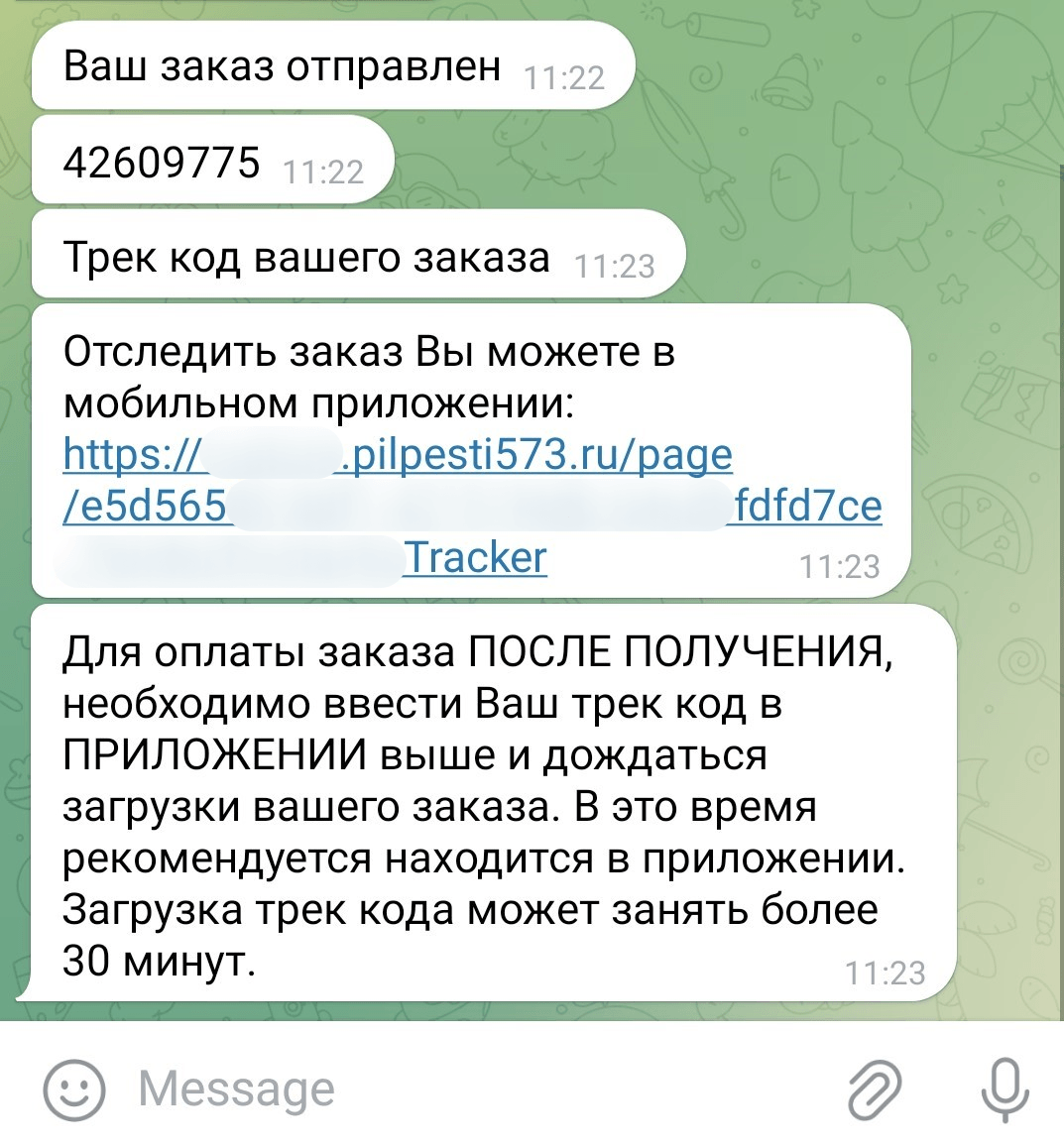

    MIL OSI Economics

  • MIL-OSI Economics: ASEAN Centre for Active Ageing and Innovation (ACAI) holds a Networking Dialogue at the ASEAN Headquarters

    Source: ASEAN

    The Permanent Mission of Thailand to ASEAN hosted the ASEAN Centre for Active Ageing and Innovation (ACAI) Networking Dialogue on 3 March 2025 at the ASEAN Secretariat in Jakarta. This event featured a briefing session led by the ACAI Executive Director, Dr. Somsak Akksilp, to raise awareness on the growing need and importance of caring for ageing populations in the region while showcasing the role of ACAI in advancing this initiative. As a platform, ACAI aims to expand its network and to explore potential as well as meaningful collaboration with the ASEAN Member States, Dialogue and Development partners, and relevant institutions. 

    The post ASEAN Centre for Active Ageing and Innovation (ACAI) holds a Networking Dialogue at the ASEAN Headquarters appeared first on ASEAN Main Portal.

    MIL OSI Economics

  • MIL-OSI Economics: Samsung India Releases “Solve for Tomorrow” Documentary Celebrating Young Innovators

    Source: Samsung

     
    Samsung India has unveiled the “Solve for Tomorrow” documentary, which captures the inspiring journeys of the young innovators from across India in shaping ideas to solve some of the pressing problems of society.
     
    The documentary highlights the creativity, ingenuity, and resilience of the winning teams – Eco Tech Innovator and METAL and their innovative yet distinct approaches to tackle one of the most pressing social issues of India – arsenic contamination of water. The documentary is now available on JioHotstar.
     
    Samsung “Solve for Tomorrow” is a STEM (Science, Technology, Engineering and Math) based competition designed to create an innovation ecosystem in the country and foster problem solving skills of young minds. No matter where the participants come from, Samsung’s flagship CSR initiative has made it a mission to nurture their creativity and vision to resolve challenges that their communities face.
     
    The third edition of this programme feature participants from remote regions of India, underlining the reach of this initiative. Sayed Safrahan Ullah Khabir of Team Eco-Tech belongs to Golaghat in Assam, while the three members of Team Metal originate from Bihar.
     
    This 40-minute documentary vividly portrays the lives of the innovators and their challenges as they solve real-world problems that affect their communities. Samsung Solve for Tomorrow helped the participants with support, guidance, resources and funding to refine their innovations and take them to the next level.

    Watch here:  https://hotstar.com/1971002864


    MIL OSI Economics

  • MIL-OSI Economics: 5G to drive APAC mobile services market during 2024-2029, forecasts GlobalData

    Source: GlobalData

    5G to drive APAC mobile services market during 2024-2029, forecasts GlobalData

    Posted in Technology

    The total mobile communications services revenue in the Asia-Pacific (APAC) region is expected to increase at a compound annual growth rate (CAGR) of 2.8% from $301.7 billion in 2024 to $346.1 billion in 2029, driven by continued rise in mobile subscriptions, as operators continue to roll out and expand their 5G networks, reveals GlobalData, a leading data and analytics company.

    GlobalData’s report, “Asia-Pacific (APAC) Mobile Broadband Market Trends and Opportunities, 2024 Update,” reveals that mobile data services will remain the largest revenue contributing segment to the overall mobile services market in the region over the forecast period, primarily driven by the expansion and increasing adoption of high-average revenue per user (ARPU) generating 5G services in the region.

    Srikanth Vaidya, Telecom Analyst at GlobalData, says: “With 5G services launched in almost all developed markets including Australia, China, Japan, Hong Kong, and South Korea, and set to be launched soon in countries like Bangladesh and Sri Lanka, the revenue prospects for mobile data services will remain strong through the forecast period.

    “Operators like Grameenphone, Robi and Teletalk in Bangladesh and Dialog and Mobitel in Sri Lanka, for instance, have conducted 5G network trails in major cities of their respective countries and are gearing up for 5G service roll outs in 2025.”

    Government support for 5G expansion will also strengthen the mobile data services market in the region. Telecom regulatory bodies and governing authorities in countries like Australia, China, India, South Korea, Japan, and Taiwan have launched national 5G strategies/action plans, outlining the vision and guidelines to establish 5G ecosystems and drive 5G coverage expansions. These action plans include supporting initiatives such as public sector investment in 5G applications, favorable tax incentives, forums for industry-government collaboration, promotion of 5G led-technological innovations, and license arrangements to enhance spectrum use and reuse.

    China will remain the largest 5G market in the world through the forecast period with 90% of its mobile subscriptions to be on 5G network by 2029, primarily driven by the telco investments and the regulator’s efforts to expand 5G service coverage to rural areas and industrial parks, and boost 5G adoption. For instance, the Ministry of Industry and Information Technology (MIIT) reported that in 2024, China had deployed 4.19 million 5G base stations, and expected to increase to 4.5 million by end of 2025, further enhancing its network capacity and reach.

    Vaidya continues: “The average monthly data usage (excluding voice-only subscriptions) in the region is forecast to increase from 25.1GB in 2024 to 48.6GB in 2029, receiving a significant boost from 5G service launches and expansions across markets. Growing consumption of online video and social media content over smartphones, on the back of data-centric service plans offered by MNOs, will also drive the growth in mobile data usage levels through the forecast period.”

    APAC has become the center of the technological race for 5G+ supremacy. South Korea, Japan, and China have gone beyond just the deployment of 5G, to the development of the wider 5G ecosystem, thereby supporting the manufacturing and IT industries in these countries and driving IoT/M2M opportunities.

    Vaidya concludes: “While mobile data segment will continue with the growth trajectory, mobile voice service revenue will decline at a CAGR of 5.7% over the forecast period, as consumers continue to migrate towards OTT/internet-based communication services.”

    MIL OSI Economics

  • MIL-OSI Economics: Asia to dominate global CDU capacity additions through 2030, forecasts GlobalData

    Source: GlobalData

    Asia to dominate global CDU capacity additions through 2030, forecasts GlobalData

    Posted in Oil & Gas

    The global conventional refining industry is anticipated to expand considerably from 2025 to 2030, fueled by increasing energy demands from emerging markets and strategic investments in refining infrastructure. Consequently, the capacity additions of crude distillation units (CDUs) are accelerating globally, with Asia projected to lead these expansions across all regions through 2030, says GlobalData, a leading data and analytics company.

    GlobalData’s latest report, “Conventional Refineries Industry to 2030 – Capacity and Capital Expenditure Outlook with Details of All Operating and Upcoming Refineries,” reveals that Asia is likely to add CDU capacity additions of 8,874 thousand barrels per day (mbd) between 2025 and 2030, followed by the Middle East and Africa with 6,213 mbd and 5,307 mbd, respectively.

    Bhargavi Gandham, Oil and Gas Analyst at GlobalData, comments: “The increasing energy demand, driven by expanding populations and economies, especially in China, India, Pakistan, and Indonesia is anticipated to propel capacity additions in CDU across Asia.”

    India is expected to witness the highest CDU capacity additions in Asia, with 2,356 mbd capacity expected to be added by 2030. The CDU expansion project at the Vadinar refinery with a capacity of 515 mbd is the largest upcoming CDU refinery in the country in terms of capacity additions during 2025-30. It is slated to begin its operations in 2026. Other notable refineries, including Haldia III, Panipat, and Paradip, are expected to contribute significant capacity additions during the outlook period.

    GlobalData identifies China as the second highest contributor to the CDU capacity additions in Asia, approximately accounting for a quarter of the region’s capacity additions by 2030. Among the upcoming CDU projects in China, Caofeidian V leads with 401 mbd of CDU capacity to be added in 2029.

    Pakistan ranks third, contributing about 15% of the region’s total CDU capacity additions during the outlook period. The Larkana refinery leads in terms of upcoming CDU capacity with 400 mbd.

    Gandham concludes: “Several Asian nations are actively investing in the modernization and expansion of their refining infrastructure, aimed at strengthening energy security and improving refining efficiency. These initiatives are expected to drive CDU capacity additions in the region.”

    MIL OSI Economics

  • MIL-OSI Economics: The Pula depreciated by 0.2 percent against the South African rand.

    Source: Bank of Botswana

    Over the twelve months period to February 2025, the nominal Pula exchange rate depreciated by 4.4 percent against the South African rand, while it appreciated by 1.1 percent against the IMF Special Drawing Rights (SDR). With respect to the SDR constituent currencies, the Pula appreciated by 3.9 percent against the euro, 0.8 percent against the Chinese renminbi and 0.3 percent against the British pound, while it depreciated by 0.4 percent against the US dollar and 0.2 percent against the Japanese yen.

    The Pula depreciated by 0.2 percent against the South African rand, while it remained relatively stable against the SDR over the one-month period to February 2025. It appreciated by 0.3 percent each against the euro and the US dollar and 0.2 percent against the Chinese renminbi, while it depreciated by 2.8 percent against the Japanese yen and 0.9 percent against the British pound.

    MIL OSI Economics

  • MIL-OSI Economics: Personnel Changes of Executive Officers and Organizational Restructuring of Panasonic Energy

    Source: Panasonic

    Headline: Personnel Changes of Executive Officers and Organizational Restructuring of Panasonic Energy

    The content in this website is accurate at the time of publication but may be subject to change without notice.Please note therefore that these documents may not always contain the most up-to-date information.Please note that German, French and Chinese versions are machine translations, so the quality and accuracy may vary.

    MIL OSI Economics

  • MIL-OSI Economics: Secretary-General of ASEAN delivers video remarks at the Networking Dialogue with the ASEAN Centre for Active Ageing and Innovation (ACAI)

    Source: ASEAN

    Secretary-General of ASEAN, Dr. Kao Kim Hourn, delivered a video message at the Networking Dialogue with the ASEAN Centre for Active Ageing and Innovation (ACAI), held at the ASEAN Headquarters/ASEAN Secretariat, Jakarta, on 3 March 2025. In his remarks, Dr. Kao congratulated Dr. Somsak Akksilp on his appointment as Executive Director of ACAI (ED/ACAI) and reaffirmed the regional commitment in preparing ASEAN as underscored by the Kuala Lumpur Declaration on Ageing: Empowering Older Persons in ASEAN in 2015. Dr. Kao added that ACAI exemplifies the ongoing cross-sectoral commitment on ageing and older people. Dr. Kao encouraged a deeper understanding of ACAI’s priority strategies and initiatives through ACAI briefing and called for collective engagement in the realisation of the Centre’s mandate and mission to promote a healthy, active, and productive ageing in ASEAN.

    The post Secretary-General of ASEAN delivers video remarks at the Networking Dialogue with the ASEAN Centre for Active Ageing and Innovation (ACAI) appeared first on ASEAN Main Portal.

    MIL OSI Economics

  • MIL-OSI Economics: Personnel Changes of Directors and Executive Officers of Panasonic Industry

    Source: Panasonic

    Headline: Personnel Changes of Directors and Executive Officers of Panasonic Industry

    The content in this website is accurate at the time of publication but may be subject to change without notice.Please note therefore that these documents may not always contain the most up-to-date information.Please note that German, French and Chinese versions are machine translations, so the quality and accuracy may vary.

    MIL OSI Economics

  • MIL-OSI Economics: Result of the Daily Variable Rate Repo (VRR) auction held on March 03, 2025

    Source: Reserve Bank of India

    Tenor 1-day
    Notified Amount (in ₹ crore) 25,000
    Total amount of bids received (in ₹ crore) 16,557
    Amount allotted (in ₹ crore) 16,557
    Cut off Rate (%) 6.26
    Weighted Average Rate (%) 6.27
    Partial Allotment Percentage of bids received at cut off rate (%) N.A.

    Ajit Prasad          
    Deputy General Manager
    (Communications)    

    Press Release: 2024-2025/2287

    MIL OSI Economics

  • MIL-OSI Economics: Money Market Operations as on February 28, 2025

    Source: Reserve Bank of India


    (Amount in ₹ crore, Rate in Per cent)

      Volume
    (One Leg)
    Weighted
    Average Rate
    Range
    A. Overnight Segment (I+II+III+IV) 6,261.85 6.33 5.25-6.80
         I. Call Money 1,111.65 6.18 5.25-6.40
         II. Triparty Repo 3,591.00 6.34 5.85-6.80
         III. Market Repo 0.00
         IV. Repo in Corporate Bond 1,559.20 6.41 6.40-6.45
    B. Term Segment      
         I. Notice Money** 17,236.23 6.38 5.15-6.65
         II. Term Money@@ 654.00 6.15-8.10
         III. Triparty Repo 3,64,113.35 6.28 6.10-6.80
         IV. Market Repo 1,50,239.19 6.30 6.00-7.31
         V. Repo in Corporate Bond 0.00
      Auction Date Tenor (Days) Maturity Date Amount Current Rate /
    Cut off Rate
    C. Liquidity Adjustment Facility (LAF), Marginal Standing Facility (MSF) & Standing Deposit Facility (SDF)
    I. Today’s Operations
    1. Fixed Rate          
    2. Variable Rate&          
      (I) Main Operation          
         (a) Repo          
         (b) Reverse Repo          
      (II) Fine Tuning Operations          
         (a) Repo Fri, 28/02/2025 3 Mon, 03/03/2025 16,258.00 6.26
         (b) Reverse Repo          
      (III) Long Term Operations^          
         (a) Repo          
         (b) Reverse Repo          
    3. MSF# Fri, 28/02/2025 1 Sat, 01/03/2025 8,103.00 6.50
      Fri, 28/02/2025 2 Sun, 02/03/2025 0.00 6.50
      Fri, 28/02/2025 3 Mon, 03/03/2025 840.00 6.50
    4. SDFΔ# Fri, 28/02/2025 1 Sat, 01/03/2025 88,267.00 6.00
      Fri, 28/02/2025 2 Sun, 02/03/2025 0.00 6.00
      Fri, 28/02/2025 3 Mon, 03/03/2025 8,971.00 6.00
    5. Net liquidity injected from today’s operations [injection (+)/absorption (-)]*       -72,037.00  
    II. Outstanding Operations
    1. Fixed Rate          
    2. Variable Rate&          
      (I) Main Operation          
         (a) Repo Fri, 21/02/2025 14 Fri, 07/03/2025 41,046.00 6.26
         (b) Reverse Repo          
      (II) Fine Tuning Operations          
         (a) Repo          
         (b) Reverse Repo          
      (III) Long Term Operations^          
         (a) Repo Fri, 21/02/2025 45 Mon, 07/04/2025 57,951.00 6.26
      Fri, 14/02/2025 49 Fri, 04/04/2025 75,003.00 6.28
      Fri, 07/02/2025 56 Fri, 04/04/2025 50,010.00 6.31
         (b) Reverse Repo          
    3. MSF#          
    4. SDFΔ#          
    D. Standing Liquidity Facility (SLF) Availed from RBI$       9,095.71  
    E. Net liquidity injected from outstanding operations [injection (+)/absorption (-)]*     2,33,105.71  
    F. Net liquidity injected (outstanding including today’s operations) [injection (+)/absorption (-)]*     1,61,068.71  
    G. Cash Reserves Position of Scheduled Commercial Banks
         (i) Cash balances with RBI as on February 28, 2025 9,33,991.34  
         (ii) Average daily cash reserve requirement for the fortnight ending March 07, 2025 9,22,740.00  
    H. Government of India Surplus Cash Balance Reckoned for Auction as on¥ February 28, 2025 16,258.00  
    I. Net durable liquidity [surplus (+)/deficit (-)] as on February 07, 2025 -1,973.00  
    @ Based on Reserve Bank of India (RBI) / Clearing Corporation of India Limited (CCIL).
    – Not Applicable / No Transaction.
    ** Relates to uncollateralized transactions of 2 to 14 days tenor.
    @@ Relates to uncollateralized transactions of 15 days to one year tenor.
    $ Includes refinance facilities extended by RBI.
    & As per the Press Release No. 2019-2020/1900 dated February 06, 2020.
    Δ As per the Press Release No. 2022-2023/41 dated April 08, 2022.
    * Net liquidity is calculated as Repo+MSF+SLF-Reverse Repo-SDF.
    ¥ As per the Press Release No. 2014-2015/1971 dated March 19, 2015.
    # As per the Press Release No. 2023-2024/1548 dated December 27, 2023.
    ^ As per the Press Release No. 2024-2025/2013 dated January 27, 2025, Press Release No. 2024-2025/2138 dated February 12, 2025, and Press Release No. 2024-2025/2209 dated February 20, 2025.
    Ajit Prasad          
    Deputy General Manager
    (Communications)    
    Press Release: 2024-2025/2286

    MIL OSI Economics

  • MIL-OSI Economics: Call for nominations for ASEAN Prize 2025 opens

    Source: ASEAN

    JAKARTA, 3 March 2025 – ASEAN officially announces the call for nominations for the ASEAN Prize 2025, today. Recognised as the region’s premier award, the ASEAN Prize honours outstanding individuals and organisations across ASEAN for their exemplary contributions and significant accomplishments, towards fostering the building of an inclusive and outward looking ASEAN Community.
     
     
    Currently in its eighth edition, the recipient of ASEAN Prize 2025 will be presented with a prestigious trophy at the 47th ASEAN Summit under Malaysia’s Chairmanship, along with a monetary award of US$20,000, in partnership with the Temasek Foundation of Singapore.
     
     
    Eligible ASEAN individuals and organisation are invited to file the application for the ASEAN Prize Submissions must be made through the National Focal Points of the respective ASEAN Member State from 3 March to 16 May 2025. Applicants are required to submit a completed ASEAN Prize 2025 nomination form, providing comprehensive details and highlighting the nominee’s future initiatives. 
     
    Applicants are encouraged to elaborate and detail their achievements that fall under the following actions:
     
    Outstanding collaboration between ASEAN Member States (AMSs);
    Outstanding collaboration between ASEAN and the world;
    Outstanding people-to-people engagement among AMSs;
    Outstanding economic integration and promotion of standards between AMSs;
    Other outstanding contributions to ASEAN Community Building;
    Applications must be accompanied by supporting documents that substantiate the nominee’s concrete contributions and achievements for the regional development. A character reference accompanying the supporting documents highlighting the nominee’s eligibility would be valuable addition. On the important note, the ASEAN Prize will not consider self-nominations and posthumous submissions.
    The Judging Committee Meeting for ASEAN Prize, chaired by Secretary-General of ASEAN Dr. Kao Kim Hourn, will convene round of intensive assessments to select this year’s recipient. The panel of judges for ASEAN Prize 2025 comprises of both former and current Secretaries-General of ASEAN.
    Since its inauguration in 2018, a total of four individuals and three organisations have been awarded with the ASEAN Prize. Last year, the ASEAN Youth Organization (AYO), a regional youth set-up based in Indonesia, was selected as the ASEAN Prize Recipient following their influential and impactful contributions to fostering cross-cultural collaborations and promoting ASEAN identity among the region’s youth. Their determination and efforts have significantly contributed to further regional community engagement, especially among ASEAN youths, and  strengthened the building of the ASEAN Community.
     
    Under Lao PDR Chairmanship, Prime Minister of the Lao PDR Sonexay Siphandone conferred the ASEAN Prize trophy to ASEAN Youth Organization during the opening ceremony of the 44th and 45th ASEAN Summit last October in Vientiane.
     
    The ASEAN Prize serves as a testament to the region’s resolute commitment to celebrate and honor the significant efforts of the individuals and organisations who have made steadfast contributions to the development of a resilient ASEAN Community, demonstrating concrete efforts in fostering regional integration, all the while forging an inclusive and stronger ASEAN identity.
    ###


    Details on the nomination and eligibility for ASEAN Prize 2025
    Nomination calls start on 3 March 2025
    The nominee must be an ASEAN citizen or an ASEAN-based organisation.
    The nominee shall submit valid/verifiable documents and highlight his/her achievement and influence on ASEAN since the launch of the ASEAN Community on 31 December 2015.
    The nominee should also share future initiatives detailing how the cited work will continue after winning the Prize.
    All nominations must be submitted to the ASEAN National Focal Point by 16 May 2025 at 5 PM, GMT+7 (Jakarta time).
    Please submit nominations to your respective National Focal Point listed below. The ASEAN Prize 2025 nomination form can be downloaded from https://asean.org/nomination-form/.
     
    ASEAN Member States
    National Focal Points for the ASEAN Prize
    Brunei Darussalam
    ASEAN-Brunei Darussalam National Secretariat Ministry of Foreign Affairs of Brunei Darussalam. Email : dept.ofasean@mfa.gov.bn
    Cambodia
    General Department of ASEAN Ministry of Foreign Affairs and International Cooperation Email: mfaic.asean@mfaic.gov.kh
    Indonesia
    Directorate of ASEAN Social and Cultural Cooperation Ministry of Foreign Affairs Email: dit.ksba@kemlu.go.id; direktoratkfa@gmail.com
    Lao PDR
    ASEAN Political-Security Community Division Lao National ASEAN Secretariat Email: aseanlaos@gmail.com
    Malaysia
    ASEAN-Malaysia National Secretariat Email: myasean@kln.gov.my
    Myanmar
    Socio-cultural Division, ASEAN-Myanmar National Secretariat, Ministry of Foreign Affairs Email: dgasean@gmail.com; amns.mofa@gmail.com
    Philippines
    ASEAN Socio-Cultural Community Division ASEAN-Philippines National Secretariat Tel.: 8344431, 8344470; Fax: 8321667 Email: asean@dfa.gov.ph
    Singapore
    ASEAN-Singapore National Secretariat Email: Mfa_asean_singapore@mfa.gov.sg
    Thailand
    Department of ASEAN Affairs, Ministry of Foreign Affairs ASEAN-Thailand National Secretariat Email: mfa1202@mfa.go.th
    Viet Nam
    ASEAN-Viet Nam National Secretariat Email: asean.mfa@mofa.gov.vn; asean.mfa.vn@gmail.com
     
    The Association of Southeast Asian Nations (ASEAN) was established on 8 August 1967 and constitutes ten Member States: Brunei Darussalam, Cambodia, Indonesia, Lao PDR, Malaysia, Myanmar, Philippines, Singapore, Thailand, and Viet Nam. On 31 December 2015, the ASEAN Community was formally established. The ASEAN Secretariat is based in Jakarta, Indonesia.
     
    Temasek Foundation supports a diverse range of programmes that uplift lives and communities in Singapore and beyond. Temasek Foundation’s programmes, made possible through philanthropic endowments gifted by Temasek, strive towards achieving positive outcomes for individuals and communities now, and for generations to come.
    Collectively, Temasek Foundation’s programmes strengthen social resilience, foster international exchange and regional capabilities, advance science,and protect the planet. For more information, visit www.temasekfoundation.org.sg.

    MIL OSI Economics

  • MIL-OSI Economics: African Development Bank reiterates commitment to bold action on energy and climate finance at 2025 Finance in Common Summit

    Source: African Development Bank Group

    Energy access and sustainable finance took center stage at the 2025 Finance in Common Summit, where two roundtable discussions addressed critical financing gaps and highlighted pathways to achieving universal energy access in Africa. 

    During the discussions, the African Development Bank reiterated its commitment to unlocking investment for Africa’s energy future and scaling climate financing as part of its recently-launch Mission 300 initiative, in anticipation of COP30.

    With 600 million people in Sub-Saharan Africa still without electricity, the urgency of addressing energy access cannot be overstated. The first roundtable convened Local Finance Institutions (LFIs), national and local governments, utilities, and private sector leaders to explore solutions to financing constraints. Participants shared best practices, tackled investment bottlenecks, and discussed innovative de-risking mechanisms for energy projects.

    “LFIs are the lifeblood of our economies, possessing a unique understanding of local contexts, needs, and opportunities,” noted African Development Bank Vice President, Nnenna Nwabufo, who moderated the session. “They are essential for mobilizing the necessary capital, fostering local entrepreneurship, and scaling sustainable energy projects.”

    While significant progress has been made in expanding energy access across Africa, major challenges remain. In January 2025, the Mission 300 Energy Summit generated strong political momentum, with 48 African Heads of State committing to accelerating policy reforms, and 12 countries presenting National Energy Compacts outlining clear targets for energy access.

    Backed by the World Bank, the African Development Bank and other development partners, Mission 300  aims to provide  300 million Africans with electricity access by 2030. “This ambitious goal is within reach, but it demands concerted action, innovative financing solutions, and strong partnerships,” emphasized Nwabufo.

    However, financing remains a major bottleneck, particularly for last-mile connectivity and off-grid solutions. Public development banks and local finance institutions play a pivotal role in mobilizing the estimated $170 billion needed to achieve universal access. “Traditional financing models often fall short in meeting the specific needs of local communities and small-scale energy projects…this is where LFIs, with their local expertise, can make a transformative difference,” Nwabufo added.

    Private funds such as the Gaia Energy Impact, a venture capital firm dedicated to renewable energy, are crucial for financing early-stage innovation and making projects investment-ready to attract more capital. “However, de-risking tools provided by public institutions, such as concessional funding, blended finance and guarantees, play a major role in leveraging private capital,” explained Hélène Demaegdt, President and Founder, of the impact fund.

    A united vision for the future of energy access

    The second roundtable shifted focus to Latin America and the Caribbean (LAC), where development banks have been at the forefront of climate finance. Experts from sovereign wealth funds, vertical funds, and private investors joined key institutional players to explore pathways for scaling sustainable financing.

    With COP30 on the horizon, panelists emphasized the importance of a robust taxonomy to attract global capital. Brazil’s pioneering efforts—through initiatives like the Brazil Climate and Ecological Transformation Investment Platform (BIP) and Eco Invest Brazil—served as a model for emerging markets.

    “As we move to COP30 we are committed to doubling down on looking at all sources of revenues and pulling all levers,” said Tatiana Rosito, Secretary for International Affairs for Brazil’s Ministry of Finance.

    Discussions reinforced the necessity of blended finance models, philanthropic support, and sovereign wealth funds to bridge the climate adaptation and mitigation financing gap. The session set the stage for deeper engagements leading up to COP30, ensuring that emerging markets secure the capital needed for a just energy transition.

    “COP30 will be a defining moment for Africa and the world. We cannot afford another cycle of pledges without action,” insisted Nwabufo.

    “This needs to be an accountability COP,” echoed Mafalda Duarte, Executive Director of the Green Climate Fund. “We need less big announcements but more giving a sense of trust and confidence that we will focus deliberately on critical partnerships, implementation and results.”

    Duarte also emphasized the need to broaden the investor base beyond multilateral development banks. “We know that the private investors are not doing as much as they could and should, so should be included as part of a more integrated narrative.”

    “We must demonstrate that finance will not remain a barrier to Africa’s sustainable future but a catalyst for shared prosperity. It is not just about securing financing for Africa’s climate goals; it is about demonstrating that investing in Africa’s climate resilience is smart economics, benefitting both Africa and the global economy,” Nwabufo affirmed.

    MIL OSI Economics