Category: Economy

  • MIL-OSI Global: States that impose severe prison sentences accomplish the opposite of what they say they want

    Source: The Conversation – USA – By John Leverso, Assistant Professor of Criminal Justice, University of Cincinnati

    Prison doors close, but for most people convicted of crimes, they eventually open again. Hans Neleman/Stone via Getty Images

    Across the U.S., tough-on-crime policies are surging again, despite research showing they do little to reduce crime, particularly violent offenses.

    Before the early 1990s, people who were sentenced to 10 years in prison might be released after serving roughly half that long. That’s because of policies that allowed incarcerated individuals to earn credit for good behavior or, in some states, to avoid losing credits they already held toward an early release. These so-called “good time” policies were created by states to encourage good behavior and rehabilitation and to reduce prison overcrowding.

    But in the 1990s, when national politics was focused on crime rates, Congress encouraged states to adopt so-called “truth-in-sentencing” laws, which required people to serve at least 85% of their prison sentence.

    As research highlighted the inefficacy and unintended consequences of these laws, states rolled them back or modified them, mostly by partially repealing them or reducing the severity of mandatory sentences.

    Some efforts to roll back harsh sentencing rules continue: In Illinois, traditionally a leader in criminal justice reform, one bill that would soften truth-in-sentencing requirements has stalled, though another was introduced in January 2025.

    But in many other states, truth-in-sentencing laws and other similar laws that impose longer sentences are making a comeback, particularly for violent crimes.

    Since 2023, Louisiana, Arkansas, South Dakota and Tennessee have passed truth-in-sentencing laws. North Dakota is now considering similar legislation. In November 2024, Colorado voters required people convicted of violent crimes to serve higher percentages of their sentences, which is a similar move, though it didn’t bear the “truth-in-sentencing” label.

    A personal lens on the topic

    These laws have real effects on real people.

    In 1998, I was sentenced to 22 years in the Illinois Department of Corrections for a gang-related violent crime I committed as a juvenile. I served just 11 of those years under a long-standing policy that allowed individuals to serve half their sentence with good behavior.

    But if I had been arrested just 100 days later, a truth-in-sentencing law would have taken effect, and I would have had to serve the full 22 years.

    Eleven years is a long time. Since my release in 2012, I’ve earned a bachelor’s degree, a master’s degree and a Ph.D. I’m now a college professor, author, husband and father.

    If I had been required to serve my full sentence, I would have been released in 2023, older and with fewer opportunities for education, rehabilitation and rebuilding my life.

    Instead of being able to start my education at the age of 30, I would have entered the world in my forties, making it much harder to pursue a decade of schooling to become a professor. The delay would have also made it harder to start a family, forcing me to balance career-building with the difficulties of having children later in life.

    Incarcerated graduates, who finished various educational and vocational programs in prison, wait for the start of their graduation ceremony in May 2023.
    AP Photo/Jae C. Hong

    Not deterring crime

    Supporters of truth-in-sentencing laws say they are intended to increase accountability for wrongdoing and deter crime. The logic can seem reasonably intuitive: If people know they will receive a harsher punishment, they will be less likely to commit particular crimes.

    But research finds that those are not the results. There is no compelling evidence that punitive sentencing policies discourage individuals from engaging in criminal activity.

    And states without truth-in-sentencing laws have seen their crime rates fall to roughly the same degree as states that have the laws.

    Harming society at large

    Research also finds that truth-in-sentencing laws cause far-reaching harms to people convicted of crimes and to society at large, undermining both rehabilitation and public safety.

    Because truth-in-sentencing laws focus on deterrence, they do not address the causes of criminal behavior, such as poverty and childhood trauma.

    These laws also make prisons less safe: They remove incentives for people in prison to follow the rules, get an education, participate in psychotherapy or otherwise engage in positive activities while behind bars.

    The vast majority of incarcerated people – six out of every seven inmates – are released into society again. Under truth-in-sentencing laws, they emerge from prison less prepared to follow the laws than they would have been if they had access to educational programs, therapy and an incentive structure that encouraged rehabilitation while incarcerated.

    A study in Georgia, for instance, found that after stricter sentencing requirements were enacted, inmates subject to the new rules committed more disciplinary infractions and participated in fewer rehabilitation programs in prison. And once released, they were more likely to commit new crimes than released inmates who had not been subject to the stricter sentences.

    Costing taxpayers dearly

    Additionally, the financial burden of these laws is significant.

    For example, Arkansas’ truth-in-sentencing law, passed in 2023, is projected to cost the state’s taxpayers at least US$160 million over the next decade to pay for increased prison capacity and staffing.

    Instead of deterring crime, truth-in-sentencing laws lock more people up for longer periods of time without addressing the underlying factors, which strains already overburdened correctional systems.

    These laws also disproportionately affect people of color, exacerbating systemic inequities in the criminal justice system.

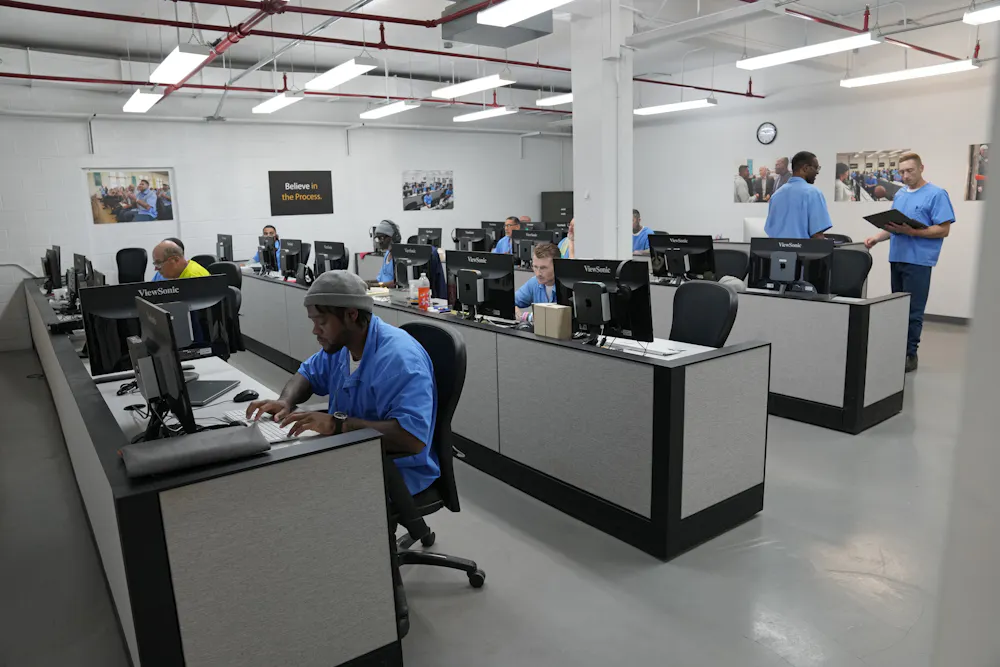
    These people incarcerated in a California prison are learning computer programming.
    AP Photo/Eric Risberg

    A different path

    For me, the possibility of earning good-time credit was a powerful motivator to engage in rehabilitative activities and regain lost time after disciplinary infractions.

    When I began my sentence, Illinois law allowed people to receive a 50% reduction in their sentence through good-time credit: I might need to serve only half of my original 22-year sentence, and be released after 11 years, if I maintained good behavior.

    Breaking the rules would cost credit, extending my time in prison beyond that 50% mark. Early in my sentence, I broke the rules and was placed in isolation – also called segregation or restrictive housing, in a cell for 24 hours a day, except for six hours of exercise a week – for a total of 18 months, resulting in a significant loss of my good-time credit. As a result, instead of serving 11 years, my expected time in prison increased to approximately 12.5 years.

    This setback was a turning point. I knew that my actions had directly affected the length of time I would have to spend in prison. I became determined to earn back my lost time. I focused on staying out of trouble, earning my GED, completing my associate degree and enrolling in available programs. I was able to regain my time credit and had to serve only 11 years.

    Under today’s truth-in-sentencing laws, none of this would have been possible. I would have been required to serve my full sentence, regardless of whether I chose to change, rehabilitate or prepare for life after prison. The ability to reduce my sentence through good behavior and educational achievement gave me a tangible incentive to turn my life around, an opportunity that truth-in-sentencing laws eliminate.

    A way forward

    By contrast, investing in rehabilitation not only improves outcomes for those incarcerated but also makes communities safer by reducing the cycle of crime.

    Research shows that in-prison rehabilitation programs – particularly those centered on education and vocational training programs and social-support services such as housing help, mental health care and job placement assistance – reduce recidivism rates. While in prison, people are held accountable while also having opportunities to grow and learn, preparing for successful reintegration into society after their release.

    I believe that in the overwhelming majority of people in prison, there is potential for redemption – but that potential is most likely to emerge when they have opportunities to learn and grow and receive benefits for making changes in their lives.

    Unfortunately, many states are choosing to spend millions locking up more people for longer periods – while giving them less opportunity to improve themselves and their lives, reducing their potential for change and safe, productive reintegration into society upon release.

    John Leverso does not work for, consult, own shares in or receive funding from any company or organization that would benefit from this article, and has disclosed no relevant affiliations beyond their academic appointment.

    ref. States that impose severe prison sentences accomplish the opposite of what they say they want – https://theconversation.com/states-that-impose-severe-prison-sentences-accomplish-the-opposite-of-what-they-say-they-want-247550

    MIL OSI – Global Reports

  • MIL-OSI Global: Cutting Medicaid and federal programs are among 4 key Trump administration policy changes that could make life harder for disabled people

    Source: The Conversation – USA – By Matthew Borus, Assistant Professor, Department of Social Work, Binghamton University, State University of New York

    Disabled people’s employment rights and access to free health care are among the policy issues that the Trump administration is aiming to change. Catherine McQueen/Moment/Getty Images

    While policy debates on immigration, abortion and other issues took center stage in the 2024 presidential election, the first months of the Trump administration have also signaled major changes in federal disability policy.

    An estimated 20% to 25% of Americans have a disability of some kind, including physical, sensory, psychological and intellectual disabilities.

    Disability experts, myself included, fear that the Trump administration is creating new barriers for disabled people to being hired at a job, getting a quality education and providing for basic needs, including health insurance.

    Here are four key areas of disability policy to watch over the coming years.

    People hold signs at a protest in June 2024 demanding subway elevator reliability for disabled people in New York.
    Erik McGregor/LightRocket via Getty Images

    1. Rights at work

    The Americans with Disabilities Act, which became law in 1990, requires that employers with more than 15 employees not discriminate against otherwise qualified candidates on the basis of their disability. It also requires that employers provide reasonable accommodations to disabled workers. This means, for instance, that a new or renovated workplace should have accessible entrances so that a worker who uses a wheelchair can enter.

    Despite these protections, I have spoken to many disabled workers in my research who are reluctant to ask for accommodations for fear that a supervisor might think that they were too demanding or not worth continuing to employ.

    Trump’s actions in his first days in office have likely reinforced such fears.

    In one of the many executive orders Trump signed on Jan. 20, 2025, he called for the relevant government agencies to terminate what he called “all discriminatory programs,” including all diversity, equity, inclusion and accessibility policies, programs and activities that Trump deems “immoral.”

    The next day, Trump put workers in federal DEIA and accessibility positions on administrative leave.

    The following week, a tragic plane crash outside Washington, D.C., killed 67 people. Trump, without any evidence, blamed the crash on unidentified disabled workers in the Federal Aviation Administration, enumerating a wide and seemingly unrelated list of disabilities that, in his mind, meant that workers lacked the “special talent” to work at the FAA.

    Advocates quickly pushed back, pointing out that disabled workers meet all qualifications for federal and private sector jobs they are hired to perform.

    2. The federal workforce

    Many government disability programs have complex rules designed to limit the number of people who qualify for support.

    For instance, I study supplemental security income, a federal program that provides very modest cash support – on average, totaling US$697 a month in 2024 – to 7.4 million people who are disabled, blind or over 65 if they also have very low income and assets.

    It can take months or even years for someone to go through the process to initially document their disability and finances and show they qualify for SSI. Once approved, many beneficiaries want to make sure they don’t accidentally put their benefits at risk in situations where they are working very limited hours, for example.

    To get answers, they can go to a Social Security office or call an agency phone line. But there are already not enough agency workers to process applications or answer questions quickly. I spoke in 2022 with more than 10 SSI beneficiaries who waited on hold for hours while they tried to get more information about their cases, only to receive unclear or conflicting information.

    Such situations may grow even more severe, as Trump and billionaire Elon Musk try to eliminate large numbers of federal employee positions. So far, tens of thousands of federal workers have been laid off from their jobs in 2025. More layoffs may be coming – on Feb. 12, 2025, Trump instructed federal agency heads to prepare for further “large-scale reductions in force.”

    At the same time, multiple Social Security Administration offices have also been marked for closure since January 2025. An overall effect of these changes will be fewer workers to answer questions from disabled citizens.

    3. Educational opportunities

    Students with disabilities, like all students, are legally entitled to a free public education. This right is guaranteed under the Individuals with Disabilities Education Act, passed in 1975. IDEA is enforced by the federal Education Department.

    But Trump is reportedly in the process of dismantling the Education Department, with the goal of eventually closing it. It is not clear what this will mean for Individuals with Disabilities in Education Act enforcement, but one possibility is laid out in the Project 2025 Mandate for Leadership, a policy blueprint with broad support in Trump’s administration.

    Project 2025 proposes that Individuals with Disabilities in Education Act funds “should be converted into a no-strings formula block grant.” Block grants are a funding structure by which federal funds are reduced and each state is given a lump sum rather than designating the programs the funds will support. In practice, this can mean that states divert the money to other programs or policy areas, which can create opportunities for funds to be misused.

    With block grants, local school districts would be subject to less federal oversight meant to ensure that they provide every student with an adequate education. Families who already must fight to ensure that their children receive the schooling they deserve will be put on weaker footing if the federal government signals that states can redirect the money as they wish.

    4. Health care

    Before President Barack Obama signed the Affordable Care Act into law in 2010, many disabled people lived with the knowledge that an insurer could regard a disability as a preexisting condition and thereby deny them coverage or charge more for their insurance.

    The ACA prohibited insurance companies from charging more or denying coverage based on preexisting conditions.

    Republicans have long opposed the ACA, with House Speaker Mike Johnson promising before the 2024 election to pursue an agenda of “No Obamacare.”

    About 15 million disabled people have health insurance through Medicaid, a federal health insurance program that covers more than 74 million low-income people. But large Medicaid cuts are also on the Republican agenda.

    These deep cuts might include turning Medicaid into another block grant. They could also partly take the form of imposing work requirements for Medicaid beneficiaries, which could serve as grounds on which to disqualify people from receiving benefits.

    While proponents of work requirements often claim that disabled people will be exempt, research shows that many will still lose health coverage, and that Medicaid coverage itself often supports people who are working.

    Medicaid is also a crucial source of funding for home- and community-based services, including personal attendants who help many people perform daily activities and live on their own. This helps disabled people live independently in their communities, rather than in institutional settings. Notably, Project 2025 points to so-called “nonmedical” services covered under Medicaid as part of the program’s “burden” on states.

    When home- and community-based services are unavailable, some disabled people have no options but to move into nursing homes. One recent analysis found that nursing homes housed roughly 210,000 long-term residents under age 65 with disabilities. Many nursing facilities are understaffed, which contributed to the brutal toll of the COVID-19 pandemic in nursing homes.

    In response to both the pandemic and years of advocacy, the Biden administration mandated higher staffing ratios at nursing homes receiving Medicare and Medicaid reimbursement. But Republicans are eyeing repealing that rule, according to Politico’s reporting.

    U.S. Sen. Maggie Hassan, a Democrat, right, speaks during a press conference in Washington, D.C., on Feb. 19, 2025, on efforts to protect Medicaid from cuts.
    Nathan Poser/Anadolu via Getty Images

    Daunting task

    Tracking potential changes to disability policy is a complicated endeavor. There is no federal department of disability policy, for example.

    Instead, relevant laws and programs are spread throughout what we often think of as separate policy areas. So while disability policy includes obvious areas such as the Americans with Disabilities Act, it is also vitally relevant in areas such as immigration and emergency response.

    These issues of health care, education and more could impact millions of lives, but they are far from the only ones where Trump administration changes threaten to harm disabled people.

    Different programs have their own definitions of disability, which people seeking assistance must work to keep track of.

    This was a daunting task in 2024. Now it may become even more difficult.

    Matthew Borus received funding in the past from ARDRAW, a small grant program for graduate students working on disability research. The program was run by Policy Research, Inc. and funded by the Social Security Administration. The opinions and conclusions expressed here are solely the author’s.

    ref. Cutting Medicaid and federal programs are among 4 key Trump administration policy changes that could make life harder for disabled people – https://theconversation.com/cutting-medicaid-and-federal-programs-are-among-4-key-trump-administration-policy-changes-that-could-make-life-harder-for-disabled-people-244458

    MIL OSI – Global Reports

  • MIL-OSI: Rightworks cloud and security platform chosen for AICPA’s Member Discount Program

    Source: GlobeNewswire (MIL-OSI)

    NASHUA, N.H., Feb. 26, 2025 (GLOBE NEWSWIRE) — Rightworks, the only intelligent cloud service provider of solutions purpose-built for accounting firms and professionals, today announced it has been selected to join AICPA’s Member Discount Program. The collaboration provides AICPA members with exclusive discounts on Rightworks WISP and Total Security solutions, empowering firms and small businesses to stay ahead of security threats and achieve mandatory industry compliance throughout the year.

    “Rightworks has a decades-long track record of delivering comprehensive and easy-to-use solutions built specifically for the accounting profession and their clients,” said Michael Cerami, EVP of CPA.com, the business and technology subsidiary of the AICPA. “We look forward to connecting AICPA members with solutions that offer a strong and layered security approach.”

    The newest addition makes Rightworks the only intelligent cloud service provider of solutions purpose-built for accounting firms and professionals in the AICPA Member Discount Program. More than 400,000 AICPA members now get a 15% discount on Rightworks comprehensive security solutions, which include:

    Rightworks WISP

    • A custom security strategy: Strengthen internal processes with a tailored Written Information Security Plan (WISP)
    • Expert assistance: Rightworks security professionals will build a comprehensive WISP, saving billable hours so your firm can focus on serving clients
    • Regulatory compliance: WISPs are mandated by the IRS and the FTC Safeguards Rule and are required to renew a Preparer Tax Identification Number (PTIN) each year
    • Eliminate security gaps: Create a clear roadmap for strengthening your firm’s security posture

    Rightworks Total Security

    • Stronger protection: Includes device security, automatic backups, a VPN and a password manager
    • Staff training: Equips teams with security awareness training to mitigate risks from phishing and cyberattacks
    • A comprehensive solution: Addresses firms’ security and compliance challenges in one offering

    “Maintaining a robust security strategy and ensuring compliance with industry standards are among the top challenges for firms every year,” said Joel Hughes, CEO of Rightworks. “We are proud to join AICPA’s discount program to help empower the members of the world’s largest association representing CPAs with solutions that offer protection against reputational and financial damage.”

    The AICPA Member Discount Program provides savings on products and services its members use every day, such as travel, technology, office supplies, shipping and more.

    Click here for more information on AICPA member discounts.

    Connect with Rightworks
    Visit our newsroom; read our blog; and follow us on LinkedIn, Facebook and Instagram.

    About Rightworks
    Rightworks enables accounting firms and businesses to significantly simplify operations and expand their value to clients via our award-winning intelligent cloud and learning resources. This is possible with Rightworks OneSpace, the only secure cloud environment purpose-built for the accounting and tax profession, and Rightworks Academy, the premier community for firm optimization, growth and professional development. The Academy offers access to thought leadership, events, peer communities and extensive learning resources. Founded in 2002, we’ve grown to serve over 10,000 accounting firms in the US—from single practitioners to Top 10 firms. For more information, please visit rightworks.com or follow us on LinkedIn, Facebook and Instagram.

    A photo accompanying this announcement is available at https://www.globenewswire.com/NewsRoom/AttachmentNg/a3d94458-39e1-42e1-bf61-7f7515be063b

    The MIL Network

  • MIL-OSI: Traliant announces new series of ethics and compliance courses to better protect organizations from legal risk

    Source: GlobeNewswire (MIL-OSI)

    NEW YORK, Feb. 26, 2025 (GLOBE NEWSWIRE) — Traliant, a leader in online compliance training, today announced a new series of courses to help organizations uphold ethics and compliance standards in today’s globalized marketplace. The three courses ─ Anti-Bribery Anti-Corruption, Avoiding Conflicts of Interest, and Economic Sanctions ─ are designed to equip employees with the knowledge to make more informed decisions and protect organizations from risks tied to unethical or illegal practices.

    Maintaining a strong reputation as both a business partner and employer is essential for an organization’s success and growth. Earning stakeholders’ trust requires fostering a workplace culture rooted in ethical conduct and compliance, guided by a clear code of conduct. Employees must understand the laws, regulations, and ethical standards that impact their organization and daily responsibilities.

    “Without proper training, employees may unknowingly engage in transactions or business relationships that violate laws, leading to severe consequences such as fines, operational restrictions and reputational damage.” said Mike Dahir, CEO of Traliant. “It’s every employers’ responsibility to equip employees with the knowledge to navigate these challenging scenarios and positively contribute to their company’s reputation as a brand.”

    Traliant’s Global Anti-Bribery Anti-Corruption (ABAC) training helps learners understand the laws and regulations related to bribery and corruption and to develop strategies for preventing these practices in the workplace. The training, which is compliant with the legal obligations under the Foreign Corrupt Practices Act (FCPA), covers topics such as how to avoid criminal bribery, identify foreign officials, distinguish between bribery and extortion, and report suspicious activity.

    Conflicts of interest are another area that can erode trust in a company and lead to legal issues and penalties. By giving employees an understanding of what conflicts of interest are and why they must be avoided, Traliant’s Avoiding Conflicts of Interest training helps ensure that employees make decisions based on what is best for the company and are empowered to speak up about any potential conflicts.

    Economic sanctions impact global business operations, and employees play a vital role in ensuring organizational compliance and preventing violations that could lead to legal penalties, financial losses and reputational damage. Traliant’s Economic Sanctions training enables employees to understand the fundamentals of sanctions, including what key areas, entities and individuals are subject to U.S. sanctions. It also helps employees recognize warning signs of potential violations and provides guidance on seeking compliance support.

    To learn more about Traliant, visit: https://www.traliant.com/.

    About Traliant
    Traliant, a leader in compliance training, is on a mission to help make workplaces better, for everyone. Committed to a customer promise of “compliance you can trust, training you will love,” Traliant delivers continuously compliant online courses, backed by an unparalleled in-house legal team, with engaging, story-based training designed to create truly enjoyable learning experiences.

    Traliant supports over 14,000 organizations worldwide with a library of curated essential courses to broaden employee perspectives, achieve compliance and elevate workplace culture, including sexual harassment traininginclusion trainingcode of conduct training, and many more.  

    Backed by PSG, a leading growth equity firm, Traliant holds a coveted position on Inc.’s 5000 fastest-growing private companies in America for four consecutive years, along with numerous awards for its products and workplace culture. For more information, visit http://www.traliant.com and follow us on LinkedIn.

    Contact
    Reagan Bennet
    traliant@v2comms.com 

    The MIL Network

  • MIL-OSI: Šiaulių Bankas Group Results for the Year 2024

    Source: GlobeNewswire (MIL-OSI)

    • Financial targets. Šiaulių Bankas Group demonstrated strong performance and successfully achieved all its financial targets for 2024, delivering on its guidance
    • Profit. Šiaulių Bankas Group earned a record net profit of €78.8 million
    • Loan portfolio. The loan portfolio grew by 17% year-on-year to over €3.4 billion
    • Deposits. The deposit portfolio grew by 12% over the year to almost €3.6 billion at the end of 2024
    • Fee & commission income. Net fee and commission income grew by 44% year-on-year to over €29 million
    • Dividends. Šiaulių Bankas Group intends to propose a distribution of 50% of its 2024 net profit, or €0.061 dividend per share
    • Share buybacks. Will allocate up to 5% of the 2024 net profit for own share buybacks
    • Rebranding. A rebranding of Šiaulių Bankas will be proposed for the upcoming shareholders’ meeting

    “In 2024, we have successfully integrated INVL’s retail business into Šiaulių Bankas Group, updated our long-term vision and strategy, and initiated a business transformation that we believe will bring greater value to our customers, shareholders, and society.

    While launching strategic projects such as the replacement of the core banking platform and rebranding preparation, we maintained high profitability and service quality, effectively managing risk and costs.

    The successful implementation of our first international bond issuances and the updated dividend policy demonstrate our commitment to efficient capital utilization and delivering high returns to shareholders during the transformation period,” says Vytautas Sinius, CEO of Šiaulių Bankas.

    Šiaulių Bankas Group earned an unaudited net profit of €78.8 million in 2024 which is 5% more than in 2023. Operating profit before allowance for impairment losses and income tax amounted to €107.3 million, a 3% decrease compared to operating profit of €111.0 million in 2023.

    Net interest income grew by 2% year-on-year to €160.2 million, while net fee and commission income grew by 44% to over €29 million. The latter increased 11% in the last quarter of 2024 alone, compared to Q3 2024.

    All loan book segments grew during the year, with the total loan portfolio increasing by 17% (€503 million) to €3.43 billion. New credit agreements worth €1.5 billion were signed during the year, 14% more than in 2023 (€1.3 billion).

    The quality of the loan portfolio remains strong, with provisions of €11.3 million made in 2024, €4 million less than in 2023. The Cost of Risk (CoR) of the loan portfolio for year 2024 was 0.35% (0.54% for the 2023).

    The deposit portfolio grew by 12% since the beginning of the year (€383 million) and exceeded €3.5 billion at the end of the year. The amount of term deposits grew by 22% (€348 million) to over €1.9 billion during the year and their share in the total deposit portfolio increased by 5 percentage points to 54%.

    The bank’s capital structure was enhanced by an additional issue of Tier 1 (AT1) bonds of €50 million in the fourth quarter. All issuances made in 2024 have significantly strengthened and diversified the capital base, which allows for continued rapid growth while ensuring high returns for investors.

    The Bank’s Management Board, taking into the account the updated dividend policy, the bank’s strong performance in 2024, its robust capital position, and the favourable outlook for the operating environment, has decided to propose a dividend of 50% of the 2024 net profit (€0.061 per share) for approval at the Bank’s Annual General Meeting.

    Šiaulių Bankas has repurchased own shares worth €10.2 million and is planning to continue with buyback programmes, in line with the existing the European Central Bank’s (ECB’s) authorisation granted on 15th August 2024. The bank will also propose to allocate up to 5% of its 2024 net profit for the share buybacks for the capital reduction purpose, and to grant shares as part of the deferred variable remuneration for the employees of the Šiaulių Bankas Group.

    The group’s cost/income ratio (C/I) was 49.0%1 (41.2%1 in 2023) and the return on equity (RoE) was 14.0% (15.5% in 2023) at the end of the year. The capital and liquidity position remained strong and prudential ratios are being met by a wide margin. The capital adequacy ratio (CAR) stood at 22.8%2 and the liquidity coverage ratio (LCR) at 232%2.

    Income Statement (€’m) FY2024 FY2023 % ∆
           
    Net Interest Income 160.2 156.9 2%
    Net Fee & Commission Income 29.1 20.3 44%
    Other Income 34.4 19.3 78%
    Total Revenue 223.7 196.5 14%
           
    Salaries and Related Expenses (49.5) (36.2) 37%
    Other Operating Expenses (66.9) (49.3) 36%
    Total Operating Expenses (116.4) (85.5) 36%
           
    Operating Profit 107.3 111.0 (3%)
    Allowance for Impairment Losses (10.9) (15.2) (28%)
    Income Tax Expense (17.7) (20.4) (13%)
           
    Net Profit 78.8 75.4 5%
           
    Balance Sheet Metrics (€’m) Dec 2024 Dec 2023 % ∆
           
    Loans 3 435 2 932 17%
    Total Assets 4 923 4 808 2%
    Deposits 3 561 3 178 12%
    Equity 585 543 8%
           
    Assets under Management3 1,977 1,556 27%
    Assets under Custody 1,936 1,943 0%
           
    Key Ratios FY2024 FY2023
           
    Net Interest Margin (NIM) 3.3% 4.2% -93bps
    Cost-to-Income ratio (C/I)1 49.0% 41.2% +779bps
    Return on Equity (RoE) 14.0% 15.5% -146bps
    Cost of Risk (CoR) 0.3% 0.5% -19bps
    Capital Adequacy Ratio (CAR)2 22.8% 22.4% +36bps
             

    Overview of Business Segments

    Corporate Client Segment

    Šiaulių Bankas has significantly increased the volume of corporate financing over the year – in 12 months new corporate financing agreements worth of €960 million were signed in 2024, 29% increase compared to previous year. In the 2024 the portfolio has grown by 20% (€308 million) to over €1.8 billion. Growth has been well-diversified across several strategic sectors, including manufacturing, retail, and renewable energy. A favourable business environment has encouraged investment and created additional opportunities for expansion.

    Šiaulių Bankas continued its commitments to promote sustainability and signed amendments to the Pre-financing and Contingent loan agreements with the European Investment Bank (EIB) concluded in 2016 to increase the Bank’s investment up to €255 million from €195 million – to finance the modernization programme of multi-apartment buildings in Lithuania.

    Private Client Segment

    In 2024, Šiaulių Bankas has successfully implemented key strategic initiatives that strengthened its market position and ensured sustainable growth. The successful integration of INVL retail business was a major accomplishment, which enabled the bank to expand its service offering and provide customers with even more opportunities. The implementation of new core banking platform is on track, promising a greater efficiency and an improves customer experience.

    To strengthen its image and further meet the expectations of its customers, Šiaulių Bankas has also started preparations for the rebranding. A rebranding of Šiaulių Bankas will be proposed for the upcoming shareholders’ meeting.

    The volume of new mortgage contracts in 2024 increased by 21% year-on-year to €213 million. In 2024 the mortgage portfolio has grown by 17% (€136 million) reaching €0.9 billion. The volume of new consumer loan contracts increased by 5% year-on-year to €232 million. Since the beginning of 2024, the consumer loan portfolio has grown by 19% (€57 million) to over €0.35 billion.

    Investment Client Segment

    The bank has remained active in the local corporate bond market, originating €42 million in corporate bonds across 10 issuances for its clients in Q4 2024. Total corporate bond issuance for the year reached €227 million. According to Nasdaq Baltics, Šiaulių Bankas is leading security issuer in Lithuania and the Baltic States and maintains the largest share of securities trading on the Lithuanian stock exchange.

    Šiaulių Bankas demonstrated strong performance in asset management business in 2024. Client assets under management (AuM) reached €1.46 billion and grew by €277 million year-on-year. Growth was driven by new client investment flows and investment performance. In 2024, Šiaulių Bankas asset management company, earned €164.4 million for Tier II pension fund clients and €19.8 million for Tier III clients. In total, the profit generated for clients during the year was €184.2 million.

    SB Alternative Investment Fund III, providing new investment opportunities for Lithuanian retail investors, has enjoyed a successful launch, attracting over €6 million in 2024. Distribution of units of the investment fund is ongoing.

    The Life Insurance segment also showed steady growth, Risk Under Management (RUM) reaching EUR 1.7 billion in the fourth quarter, EUR 174 million more than a year ago.

    1after eliminating the impact of the client portfolio of SB Draudimas
    2preliminary data
    3includes Asset Management and Modernisation Funds AuM

    Šiaulių Bankas invites shareholders, investors, analysts and all interested parties to a webinar presentation of the financial results and highlights for the 2024. The webinar will start on 27 February 2025 at 8.30 am (EET). The webinar will be held in English. Please register here. Please find attached the information that will be presented at the webinar.

    If you would like to receive Šiaulių Bankas’ news for investors directly to your inbox, subscribe to our newsletter.

    Additional information:
    Tomas Varenbergas
    Head of Investment Management Division
    tomas.varenbergas@sb.lt

    Attachments

    The MIL Network

  • MIL-OSI: Relm Insurance and Liva Group Empower Innovation and Entrepreneurship in Web3 and AI Through Strategic Insurance Partnership

    Source: GlobeNewswire (MIL-OSI)

    • Liva and Relm focus on businesses in high-growth innovative sectors often not covered by traditional insurance products.
    • From digital asset insurance to AI-related risk management and solutions, the partnership ensures businesses operating in these industries can secure the coverage they need to thrive.
    • Partnership will initially support companies in the UAE and Bahrain, with plans to extend services to Oman, Saudi Arabia, and other key markets in MENA.

    Dubai, UAE, Feb. 26, 2025 (GLOBE NEWSWIRE) — Liva Group, a leading insurance group operating across the GCC, and Relm Insurance — the only insurer dedicated to dedicated to emerging sectors — today signed a strategic partnership aimed at empowering innovation and entrepreneurship in emerging sectors such as digital assets, biotech, and AI.

    The union will deliver tailored insurance solutions that address the unique and complex needs of tech companies.

    The partnership was formally signed by Martin Rueegg, CEO of Liva Group, and Joseph Ziolkowski, Global CEO and Founder of Relm Insurance, at DIFC AI Campus as part of DFS Dialogues. DFS Dialogues are exclusive strategic conversations that take place in invite-only gatherings in the lead-up to the Dubai FinTech Summit.

    Whether they’re start-ups or established players, firms in emerging sectors often struggle to get the right insurance due to a lack of understanding of their industries’ rapidly evolving landscape, which stifles innovation and deters investment. By combining Liva Group’s deep market knowledge with Relm’s deep expertise in specialised insurance, the partnership will provide unparalleled support to these companies, empowering them to tackle complex challenges and seize new opportunities.

    The alliance will initially support companies in the UAE and Bahrain, with plans to extend services to Oman, Saudi Arabia, and other key markets in MENA, supporting the region’s development as a leader in digital transformation, AI innovation, and blockchain technology.

    Martin Rueegg, Group CEO of Liva Group, said: “Sectors such as digital assets and AI are critical to the next phase of growth in this region. We believe that unlocking their full potential requires fostering an environment where creativity, collaboration, and innovation can thrive. At Liva, we recognise that technology is a key enabler of this transformation. By leveraging data-driven insights and digital solutions, we are not only improving customer experiences but also enhancing our ability to anticipate and respond to evolving market needs. A key aspect of this is providing entrepreneurs and investors with the confidence to embrace new challenges and explore fresh ideas. This mission is at the heart of our partnership with Relm.”

    Joseph Ziolkowski, Global CEO & Founder of Relm Insurance, added: “Our priority is to support clients and brokers by providing the insurance solutions tailored for innovative businesses in this region. This collaboration enables brokers to offer their clients the security they need to thrive in complex and dynamic sectors.”

    Operating through its Dubai-based affiliate, Relm Insurance holds a Category 4 licence issued by the Dubai Financial Services Authority (DFSA). With its new headquarters in DIFC and regulation under the Bermuda Monetary Authority, Relm is well-positioned to provide its specialised insurance solutions in the region.

    -ENDS-

    About Liva Group

    Liva is an insurance group operating across the GCC, founded on the belief that insurance is a pillar that supports both personal and professional lives. As one of the pioneering insurance players in the region, Liva’s team of 1,200 employees is dedicated to offering products and services centred on customer needs, empowering individuals, businesses, and communities to thrive. Serving more than 1.5 million customers, Liva has a strong and growing presence in the United Arab Emirates, Oman, Kingdom of Saudi Arabia, Kuwait, and Bahrain across motor, home travel, health, life, and commercial insurance, as well owning subsidiaries such as NSSPL (India) and Inayah TPA (UAE), supporting its long-term strategy to scale and diversify the business. The word “Liva” signifies “protection” or “life”, reflecting the Group’s commitment to protecting what matters most to its people, its partners, and, most of all, its customers.

    About Relm Insurance

    Relm Insurance Ltd. (Relm) is a Bermuda-domiciled specialty insurance carrier that supports emerging industries driving innovation and next-generation technologies. Launched in 2019, Relm offers a wide range of insurance products to high-growth markets, including digital assets, blockchain, AI, biotech, and the space economy. With a Financial Stability Rating of ‘A, Exceptional’ from Demotech, Relm is widely recognised for its industry expertise and solutions-driven approach, making it a trusted risk partner for businesses operating at the frontier of technological innovation.

    Media Contacts

    Sarah Abdelbary
    Brunswick Group
    sabdelbary@brunswickgroup.com

    Reannah Smith  
    Luna PR  
    reannah@lunapr.io

    The MIL Network

  • MIL-OSI: Ataccama Recognized in BARC Data Intelligence Platform Report 2025

    Source: GlobeNewswire (MIL-OSI)

    BOSTON, Feb. 26, 2025 (GLOBE NEWSWIRE) — Ataccama, the data trust company, today announced it has been named a challenger in the 2025 BARC Data Intelligence Platform Report. The report, which evaluates leading vendors in data intelligence, highlights Ataccama’s ability to unify critical capabilities—data cataloging, lineage, governance, quality, observability, and master data management—into a seamless, all-in-one platform. Ataccama enables organizations to eliminate complexity, ensure data reliability, and drive strategic data and AI initiatives with confidence.

    “As organizations modernize their technology stacks to enhance products, services, and business models, data silos hinder access and trust across the enterprise,” said Mike McKee, CEO of Ataccama. “Ataccama ONE simplifies this complexity, allowing organizations to organize, understand, and improve their data. This is especially important in highly regulated industries like financial services and insurance, where compliance is stringent, or in sectors like manufacturing, burdened by legacy systems. By creating a unified source of truth, businesses can streamline discovery, enhance efficiency, and demonstrate the value of their data investments. Our recognition by BARC underscores our commitment to unlocking the transformative potential of high-quality data.”

    The BARC report commends Ataccama for its integrated, in-house developed platform, which allows businesses to build scalable governance frameworks and ensure trust in their data assets. With advanced features—such as metadata refinement, automated data quality checks, and intuitive self-service tools—Ataccama simplifies complex data landscapes, fosters collaboration, and reduces risks tied to data quality issues or regulatory non-compliance.

    The report evaluates capabilities like metadata refinement and automated workflows within the data intelligence domain. While these are critical components, data intelligence is a subset of the broader concept of data trust. Ataccama ONE extends beyond the scope of the BARC evaluation by offering end-to-end capabilities, including governance, lineage, observability, master data management, all supported by ONE AI for automation of data tasks to save time for data teams. This comprehensive approach helps organizations establish resilient systems that support enterprise-wide trust, compliance, and innovation.

    “Trusted, high-quality data forms the backbone of successful data-driven organizations,” said Timm Grosser, Senior Analyst for Data and Analytics at BARC. “Platforms like Ataccama ONE address the critical need for unified data governance, quality, and cataloging by integrating advanced AI and active metadata. This allows enterprises to eliminate silos, ensure regulatory compliance, and make informed decisions, positioning them for long-term success.”

    Ataccama’s recognition as a Challenger reflects its ability to meet evolving market needs with innovative solutions, while its roadmap prioritizes AI-enhanced features and self-service capabilities to further empower organizations.

    To learn more about Ataccama ONE unified data trust platform, visit https://www.ataccama.com/platform

    About Ataccama
    Ataccama enables organizations to accelerate business initiatives with high quality data they trust using Ataccama ONE, a unified data trust platform. Combining data quality, lineage, observability, governance, and master data management in a single solution, Ataccama supports hundreds of organizations around the world to increase revenue, decrease costs, and mitigate risk. Ataccama was one of only three software companies to be recognized by Gartner as a Market Leader for Augmented Data Quality in 2024. Learn more at www.ataccama.com.

    The MIL Network

  • MIL-OSI: Advocus Strengthens Leadership Team, Marking 60 Years of Advocacy

    Source: GlobeNewswire (MIL-OSI)

    CHICAGO, Feb. 26, 2025 (GLOBE NEWSWIRE) — Chicago-based title insurance underwriter Advocus, celebrating its 60th anniversary, announced today a series of strategic leadership additions that will enable the company to continue driving growth and advancing its mission in 2025 and beyond.

    Peter J. Birnbaum moves from CEO to Executive Chairman, where he will support both local and national markets while mentoring and guiding the organization into the future. Since its founding, Advocus (formerly Attorneys’ Title Guaranty Fund, Inc. or ATG) has championed the role of attorneys in the title industry, ensuring legal professionals remain integral to real estate transactions.

    Jill Cadwell joins Advocus as national President following 39 years in the title industry, including leadership roles at ServiceLink, PCN Network, and Radian. At Radian, she led a 400+ person team, scaled revenue over 200% in two years, and spearheaded the implementation of a digital processing platform that set a new industry standard. Recognized as a HousingWire Woman of Influence, Cadwell’s track record of fostering growth and modernization makes her a key figure in Advocus’ national expansion.

    “As the industry continues to evolve, I’m excited to help shape the future of title services by blending technology, operational expertise, and a commitment to attorney-driven advocacy,” Cadwell said. “Advocus is uniquely positioned to redefine excellence in the market, and I look forward to building on its legacy while driving forward-looking solutions for our partners and clients.”

    Lynne Crotty, has been named Chief Operating Officer at Advocus, bringing a wealth of expertise in national expansion, operational efficiency, and team development. Her career trajectory, from the mailroom to the boardroom, is a testament to her industry knowledge and dedication.

    “Advocus has a long-standing commitment to excellence and attorney-driven advocacy, and I’m eager to build on that foundation,” Crotty said. “As we expand our reach and enhance our operational capabilities, my focus will be on streamlining efficiencies, fostering a strong team culture, and ensuring we deliver best-in-class service to our partners and clients nationwide.”

    Birnbaum added, “This new leadership team brings fresh energy and strategic vision to propel Advocus forward while staying true to our mission. Together, we will continue advocating for attorneys and ensuring consumers receive the trusted guidance they need in their most significant financial transactions.”

    Advocus’ 2022 merger with Rate, Inc. (formerly Guaranteed Rate) provided a national platform for growth, accelerating its expansion into Arizona, Connecticut, Georgia, Massachusetts, and Washington, D.C., alongside its existing presence in Florida, Illinois, Michigan, South Carolina, Texas, and Wisconsin. As Advocus celebrates this milestone anniversary, the company remains committed to innovation, attorney advocacy, and delivering best-in-class title services nationwide.

    About Advocus National Title Insurance Company
    Advocus is a national provider of title insurance and settlement services. Founded in 1964 on the belief that every consumer deserves legal representation and advocacy, Advocus is dedicated to preserving the attorney’s role in real estate transactions and offering attorney-led underwriting expertise. With a growing presence in markets across the United States, Advocus continues to set the standard for excellence in the title insurance industry. For more information, visit www.advocus.com.

    Media Contact:
    Aimee Miller
    aimee@broadsheetcomms.com

    The MIL Network

  • MIL-OSI: Introducing Lineos, AI Powered by insightsoftware: Transforming Finance Workflows With Actionable Insights

    Source: GlobeNewswire (MIL-OSI)

    RALEIGH, N.C., Feb. 26, 2025 (GLOBE NEWSWIRE) — insightsoftware, the most comprehensive provider of solutions for the Office of the CFO, today announced the launch of Lineos, a suite of AI-driven capabilities designed to enhance insightsoftware’s financial planning and analysis (FP&A), accounting, and operations products. Lineos supports finance professionals by simplifying complex data into actionable insights, addressing real-world challenges, and enabling confident decision-making.

    Manual processes and repetitive tasks continue to burden finance teams, consuming time and increasing the risk of errors. Many organizations spend more than 30 hours monthly on top-level reporting. According to Gartner, 81% of CFOs plan to increase AI investments in 2025—a sign of growing confidence in AI’s ability to transform financial operations. Lineos helps navigate this shift by automating tasks, uncovering trends, and delivering actionable insights—all within the systems teams already trust.

    “While finance teams recognize the potential of AI, many struggle to make it meaningful,” said Lee An Schommer, Chief Product Officer and General Manager, ERP Reporting & BI at insightsoftware. “CFOs are challenging their teams to boost productivity with AI, but finding a starting point can be difficult. At insightsoftware, we are dedicated to the Office of the CFO, delivering AI solutions that tackle real-world challenges like report generation. With Lineos, we empower finance teams with an AI-powered ‘line of sight’ into their data, enabling confident, data-driven decision-making.”

    How Lineos Empowers Finance Professionals:

    • Saves Time: Lineos takes care of tedious, manual tasks, such as summarizing comments, building and refining complex reports, and recommending pre-built content, so finance teams can focus on the big picture.
    • Reveals Patterns: Lineos uncovers hidden trends like spending patterns from general ledger data to help identify cost-saving opportunities, surfaces actionable insights from ESG data to boost sustainability ratings, and simplifies month-end close by consolidating comments across subsidiaries and departments, enabling faster, smarter decision-making.
    • Simplifies Workflows: Lineos uses Natural Language Query (NLQ) to enable effortless report creation, seamlessly integrates with existing systems, and reduces the need for heavy IT involvement, driving greater productivity and innovation.

    Lineos features work together to simplify processes, enabling finance teams to shift focus from managing data to driving insights and delivering value. Built on the insightsoftware Platform, Lineos capabilities fit into the workflows that finance teams already use, meaning there’s no steep learning curve or added complexity. Prioritizing security and privacy, it ensures data is protected at every step, enabling organizations to maintain reliable and secure business operations.

    Find out more about how Lineos can help finance teams bypass time-consuming manual processes and deliver insights sooner here.

    About insightsoftware
    insightsoftware is a global provider of comprehensive solutions for the Office of the CFO. We believe an actionable business strategy begins and ends with accessible financial data. With solutions across financial planning and analysis (FP&A), accounting, and operations, we transform how teams operate, empowering leaders to make timely and informed decisions. With data at the heart of everything we do, insightsoftware enables automated processes, delivers trusted insights, boosts predictability, and increases productivity. Learn more at insightsoftware.com.

    Media Contacts
    Inkhouse for insightsoftware
    insightsoftware@inkhouse.com

    Daniel Tummeley
    Corporate Communications Manager
    PR@insightsoftware.com

    The MIL Network

  • MIL-OSI: Havila Shipping ASA: Fourth quarter 2024 accounts / Preliminary 2024 accounts

    Source: GlobeNewswire (MIL-OSI)

    Summary

    Freight revenues were NOK 148.0 million in Q4 2024, at the same level as the corresponding period last year and an increase of NOK 7.1 million compared to the previous quarter. 

    The average rate is higher this quarter than the previous quarter, and utilization is on same level as the previous quarter. Operating expenses were NOK 87.7 million in Q4 2024, a decrease compared to Q4 2023 of NOK 1.6 million and an increase compared to the previous quarter of NOK 6.5 million.

    The company achieved an operating income before depreciation of NOK 68.2 million in Q4 2024, compared with NOK 72.9 million in Q4 2023.

    No impairment charges or reversals of previous impairment charges were made in the fourth quarter. In the fourth quarter last year, previous impairment charges were reversed by NOK 400.0 million.

    Value adjustment of the company’s debt amounted to NOK – 19.5 million in the fourth quarter compared to NOK – 478.7 million in the corresponding period last year.

    Profit before tax was NOK 2.6 million in Q4 2024, compared with NOK   28.7 million in Q4 2023.

    Three banks and the owners of two bond loans chose settlement as per the restructuring agreement as of 31/12/24. Interest-bearing debt of NOK 500 million was settled through refinancing.

    At the same time, non-interest-bearing debt of NOK 522 million was converted into 123,281,190 shares in the company.

    Havila Holding simultaneously converted NOK 46 million of the liquidity loan into 128,111,385 shares in the company to maintain its ownership interest of 50.96% of the shares.

    The fair value of converted debt to equity amounted to NOK 299 million.

    The group had as of 31/12/24 14 vessels operated from Fosnavåg, six for external owners.

    The fleet utilization in Q4 2024 was 92 %.

    Result for 4 quarter 2024

    • Total operating income amounted to NOK 155.9 million (NOK 162.2 million).
    • Total operating expenses were NOK 87.7 million (NOK 89.3 million). 
    • Operating profit before depreciation was NOK 68.2 million (NOK 72.9 million).
    • Depreciation was NOK 39.0 million (NOK 24.2 million).
    • Net financial items were NOK – 23.4 million (NOK – 478.8 million) whereof value adjustment of debt was NOK – 19.5 million (NOK – 478.7 million).
    • The profit before tax was NOK 2.6 million (NOK – 28.7 million).

    Result 2024

    • Total operating income amounted to NOK 585.1 million (NOK 912.2 million whereof NOK 215.0 million was gain on sale of fixed assets).
    • Total operating expenses were NOK 324.8 million (NOK 431.2 million).
    • The operating profit before depreciation was NOK 260.3 million (NOK 488.1 million).
    • Depreciation was NOK 146.3 million (NOK 131.6 million).
    • Reversal of impairment charge of fixed assets was NOK 154.0 million (NOK 865.0 million).
    • Net financial items were NOK – 255.7 million (NOK – 1,105.3 million), whereof value adjustment of debt NOK – 249.5 million (NOK – 1,080.8 million).
    • The profit before tax was NOK 10.4 million (NOK 113.1 million).

    Balance and liquidity per 31/12/24

    Total current assets amounted to NOK 278.8 million on 31/12/24, whereof bank deposits were NOK 147.6 million (whereof NOK 9.8 million restricted cash related to withholding tax). On 31/12/23,

    total current assets amounted to NOK 280.4 million, whereof bank deposits amounted to NOK 97.7 million (of this NOK 10.4 million restricted cash related to withholding tax).

    Net cash flow from operations was per 31/12/24 NOK 229.6 million (NOK 95.8 million). Cash flow from investing activities was NOK – 32.8 million NOK – 22.3 million).

    Payment of loan instalments and lease liabilities constituted a net change from financing activities of NOK – 150.6 million (NOK – 127.6 million).  As of 31/12/24, the book value of the fleet is NOK 1,173.6 million.

    As of 31/12/24, total long-term debt in the balance sheet amounted to NOK 499.6 million. This consist of loans provided by the sister company Havila Finans AS.

    All debt to credit institutions is recognized as short-term debt in the balance sheet per 31/12/24. Total fair value of this debt amounts to NOK 326.7 million and consist of interest-bearing debt

    of NOK 143.6 million and non-interest-bearing debt NOK 183.1 million. In addition, the fair market value of the convertible liquidity loan is NOK 176.1 million. Accrued interests amounts to NOK 2.0 million. 

    As of 31/12/24, nominal value of interest-bearing debt was NOK 151.5 million, and nominal value of non-interest-bearing debt was NOK 616.3 million. All nominal interest-bearing debt is in NOK.

    Fleet

    Havila Shipping ASA operates today 14 vessels,
    10 PSV
    – Four owned externally
    – One owned 50% and not consolidated
    3 Subsea
    – One owned externally
    – One hired out on bareboat contract
    1 RRV (bareboat)

    Man-years

    Havila Shipping ASA employed in 2024 402 seamen on the company’s vessels and vessels on management, in addition to 14 man-years in the administration.

    Contacts:

    Chief Executive Officer Njål Sævik, +47 909 35 722
    Chief Financial Officer Arne Johan Dale, +47 909 87 706

    This information is subject to the disclosure requirements pursuant to Section 5-12 the Norwegian Securities Trading Act

    Attachment

    The MIL Network

  • MIL-OSI Economics: Michael S Barr: Managing financial crises

    Source: Bank for International Settlements

    Thank you for the opportunity to speak to you today. I note that the objectives of the Program on Financial Stability include “supporting the world’s financial authorities in refining proven crises management tools and strategies.” Speaking as a representative of one of those authorities, I thought I would further the program’s goals by focusing these remarks on the principles and practice of crisis management. I am favored in that task with what one might call the luck of having been regularly confronted with crises in each of my three stints as a public servant, over a career divided between government and academia. In noting how often my arrival in government was accompanied by crisis, it might be reasonable to wonder if this is correlation or causation.

    Kidding aside, crisis management is central to all management because it demands the very best from managers when it is most needed. Anyone who spends time in government can expect that some of the most memorable and challenging experiences will be managing through tough situations, when the answers to problems are unclear but the mission of the organization comes into acute focus. The financial system is in a perpetual state balancing risk and reward. Sometimes the system falls out of balance, and vulnerabilities turn into stress or even crisis. This moment is when it is crucial to mitigate spillovers from the financial system that can hurt businesses and households and wreak havoc on the economy at large.

    Some of the most important features of modern economies were developed to prevent and mitigate financial crises. The first central banks, and eventually the Federal Reserve, were created to provide stable currencies and banking systems in support of the long-term stability of the provision of credit necessary to foster growth and rising living standards. Regulation of financial markets, regulation and supervision of banks, federal deposit insurance, and laws to protect investors, consumers, and businesses were developed over time to promote both financial stability and durable economic growth. I have spoken previously about how monetary policy and financial stability are inextricably linked and how the tools we use to conduct monetary policy and support financial stability work together.

    MIL OSI Economics

  • MIL-OSI Economics: Abdul Rasheed Ghaffour: Transforming banking and advancing sustainability

    Source: Bank for International Settlements

    Since its inception 58 years ago, ASEAN has evolved to become a significant force in global trade, investment and diplomacy. ASEAN now stands as the world’s fourth-largest economic bloc, with an estimated GDP of USD4.13 trillion.1 Looking ahead to 2025, ASEAN is poised for another strong year. GDP is expected to grow by 4.7%,2 significantly outperforming the global average. Much has been said about ASEAN’s pivotal role in global supply chains, our geopolitical neutrality and our strategic location for global trade. However, ASEAN’s driver for sustainable economic growth also comes from within: robust domestic consumption from a youthful demographic, strong growth of individual member states and increasing regional integration. In 2023, for example, intra-ASEAN trade accounted for 21.5% of the region’s total trade in goods.

    Let me touch briefly on Malaysia’s growth outlook. After a strong performance last year, Malaysia is expected to record steady growth going into 2025 despite the challenging global environment. The diversified export structure will help cushion against external demand shocks. But, more importantly, key factors within the economy, particularly the robust expansion in investment activity and resilient household spending, will be important to drive growth this year. Exports are also expected to continue expanding with support from tech upcycle and forthcoming tourist arrivals. We acknowledge that the growth outlook is highly subject to risks from trade and investment restrictions. However, growth could potentially be higher from greater spillovers from the tech upcycle, more robust tourism activities and faster implementation of investment projects in the country.

    The financial sector lies at the core of ASEAN’s progress over the years. The sector acts as the central engine to our economy, facilitating financial flows within ASEAN. Indeed, over the last few decades, we have made progress in facilitating regional capital flows, connecting our payment infrastructure and introducing a framework to support the integration of our banking system through the ASEAN Banking Integration Framework (ABIF). However, the potential for intra-ASEAN investments remains untapped, and there is still much to be done to achieve regional regulatory coherence. My vision is for the financial sector to become the critical enabler for the next phase of economic integration under the ASEAN Economic Community (AEC) 2045. This would require the sector to strategically harness the three driving forces: funding, technology and talent.

    Mobilising funds to unlock new growth sectors, bridge financing gap and drive sustainable growth for ASEAN

    Let’s start with funding, which is a crucial driver of ASEAN economic growth. ASEAN is facing significant funding gaps that demand our urgent attention. Let me share a few examples. The Asian Development Bank reports that ASEAN economies will need infrastructure investments of at least USD2.8 trillion from 2023 to 2030 to sustain economic growth, reduce poverty and respond to climate change. Key projects in the region that require large financing include the ASEAN Power Grid, which is pivotal to advancing the region’s climate and energy security agenda, and various ASEAN highway and railway projects, such as the Asian Highway Network, which are cornerstones of regional economic development and integration. Our micro, small, and medium enterprises (MSMEs) also face a daunting financing gap, exceeding USD300 billion annually.3

    These figures underscore the urgent need for strategic investments and collaborative efforts to secure a resilient and sustainable future for ASEAN. This need is even more pressing in a region where over 90% of all social infrastructure development has traditionally relied on public resources,4 and public funding faces increasing constraints. How, then, can the financial sector step in as a catalyst to crowd in diverse sources of funding and facilitate long-term investments to ensure sustainable economic expansion and build more resilient supply chains and communities?

    This is where blended finance, the strategic use of public, private, and philanthropic finance sources and development finance, can be a critical tool to mobilise additional private capital flows toward sustainable development in ASEAN. The financial sector is pivotal in advancing blended finance to meet funding gaps in ASEAN, by enabling acceptable risk-taking levels based on various funding sources. This approach leverages the willingness of development finance and philanthropic funders, including sovereign funds within ASEAN to assume greater risk exposure, utilising tools like partial credit guarantees to attract additional investors. Multilateral development banks and development finance institutions play a critical role by offering concessional financing and technical assistance, which supports local companies in accessing capital markets and structuring deals, thereby encouraging participation by private financial institutions through co-funding arrangements.

    I also believe that this is an opportunity for Islamic finance to demonstrate its unique role and impact. In recent years, Islamic finance has gained momentum within the ASEAN region. It offers alternative solutions to conventional financial structures through the use of risk sharing and social finance instruments that can be mobilised towards the development of productive economic sectors such as healthcare, transportation and green sectors. Notably, the deployment of blended capital using instruments such as waqf and zakat in Malaysia and a few neighbouring countries such as Indonesia and Brunei have significantly contributed to financial inclusion for the underserved and strengthened support for the MSMEs. An example of this is Malaysia’s iTEKAD initiative, a social blended finance programme for low-income microentrepreneurs that provides social and commercial funding, which comes together with training and mentorship to empower them in generating sustainable income. In the capital market structure, Islamic finance has also been mobilised for infrastructure, climate and green projects. In Malaysia, for example, a total of USD56 billion of sukuk was issued in 2023 to fund real economic sectors with a high concentration in renewable energy and green real estate.

    Embracing innovative financing structures will involve navigating various complexities that demand careful consideration, collaboration and adaptation. Hence, advancing capacity building within the financial sector is very crucial. In Malaysia, the Joint Committee on Climate Change (JC3) continues to serve as a key focal point in supporting the financial preparedness for climate change. As part of Malaysia’s ASEAN Chairmanship in 2025, Bank Negara Malaysia is committed to supporting the region’s transition efforts. During the ASEAN Finance Ministers and Governors Meeting week from 7 to 10 April this year in Kuala Lumpur, we will host several side events to advance these discussions. These events include a closed-door investor roundtable focused on innovative financing solutions for sizeable ASEAN green and transition projects, as well as pitching sessions on sustainable ASEAN Projects. We invite the financial industry to contribute and participate in these events.

    Responsible deployment of technology in financial services is key to maximise its potential while minimising risk

    Ladies and gentlemen,

    There is an immense potential for ASEAN to also leverage technology. This is the second point. With a median age of about 30 and a substantial portion under 35,5 ASEAN’s population is digitally proficient. Indeed, the adoption of digital financial services can be a game-changer in addressing challenges within the region, which include to better serve the needs of large unbanked and underbanked populations in our region.

    The outlook for digital financial services in ASEAN is very bright. Through innovations such as mobile wallets, digital payments and micro-lending, digital finance is expanding access to financial services for individuals who previously had limited options. These services are not just filling gaps – they are creating new pathways to financial inclusion, thereby allowing individuals to save, invest and access credit with unprecedented ease.

    While digital financial services hold tremendous promise, it comes with its own set of risks. Today’s technological advances are progressing at an unprecedented pace, making our response to these developments very crucial. For financial institutions, deployment of technology must be done thoughtfully and responsibly with holistic consideration of the impacts and value to the broader environment and community. This unwavering commitment to enhance financial services and preserve consumer confidence includes addressing cybersecurity risks, strengthening climate resilience, promoting financial literacy and ensuring that digital financial services are secure and accessible to all segments of society.

    As regulators, our commitment is for our policies to strike a balance between embracing technological innovation and, at the same time, preserving financial stability. Our Regulatory Sandbox allows for experimentation and contributes to the recalibration of regulatory policies such as eKYC. We also adapt our regulations to welcome new players into the market, those that have strong value propositions on inclusion, as demonstrated by the issuance of our licensing and regulatory framework for digital banks and digital insurers and takaful operators.

    Investing in talent strategies that not only creates a more agile and adaptive workforce, but also paves the way for regional talent mobility

    Let me move on to the third point. At the heart of economic growth and development lies talent. ASEAN is blessed with a vibrant, young and dynamic workforce. To capitalise on this potential, the financial sector will need to create an environment that nurtures the next generation of leaders and innovators in finance who carry a unique ASEAN identity – one that is not only tech-savvy, but also adept at navigating the complexities of regional regulations and global economic shifts while championing social equity and environmental sustainability.

    I would like to also take this opportunity to share Malaysia’s efforts in developing talent in our financial sector. In July last year, the industry launched the Financial Sector Future Skills Framework, and this is to empower individuals to take charge of their professional development, while creating new talent pipelines and succession pools. I reiterate the call I made during the launch of the framework for the industry to work closely with training institutes, professional bodies and industry associations to ensure that training programmes meet the established quality assurance standards and set high standards in new skill areas.

    Complementing this is a dynamic talent development hub, offering tailored learning programmes and certifications. For example, the Financial Sector Talent Enrichment Programme (FSTEP) targets fresh graduates interested in launching their career in financial services, while globally recognised financial certifications are available for seasoned professionals.

    Malaysia is also home to regional research and learning hubs such as the SEACEN Centre and is recognised globally as a leader in Islamic finance. With a multitude of well-established talent development institutions and capacity-building providers in Islamic finance, we offer a fertile ground for nurturing specialised skills and thought leadership in this field.

    To truly capitalise on the large working-age population in ASEAN, we need to go beyond domestic efforts. Financial institutions across the region should pursue collaborative initiatives that enhance talent mobility, such as through mutual recognition of qualifications and expertise sharing. ABIF can also be leveraged to intensify efforts to promote greater regulatory coherence through capacity-building initiatives. By doing so, we can improve connectivity across ASEAN markets, paving the way for a more integrated and resilient future for the region.

    In closing, today’s discourse reaffirms the financial sector’s commitment to turning AEC 2045 into a reality. The challenge lies in ensuring that the ASEAN financial sector has the capacity to do so by mobilising funds, leveraging technology, and developing regional talent.

    As I conclude my speech, I leave you with a thought from Peter Drucker: ‘The best way to predict the future is to create it.’ Together, let’s create a future where the financial sector empowers ASEAN’s growth and integration. On that note, I wish you all productive discussions during the rest of the Summit.


    MIL OSI Economics

  • MIL-OSI Economics: Joachim Nagel: Presentation of the Deutsche Bundesbank’s Annual Report 2024

    Source: Bank for International Settlements

    Check against delivery 

    1 Welcome

    Ladies and gentlemen, 

    I would like to welcome you to our press conference, at which we will present our annual accounts.

    First Deputy Governor Sabine Mauderer will explain our annual accounts to you in more detail in just a few moments. 

    To begin, however, I would like to take a look at current developments in economic activity and prices. I will then explain what conclusions I draw for our monetary policy stance. And, at the end of my statement, I will present the most important figures from our profit and loss account.

    2 Need for economic policy action in Germany

    Two days on from the snap Bundestag election, the election results are at the focus of attention among the media and the public as a whole.

    There is a clear government mandate and a likely option for a coalition. In view of this, I hope that a new government will be formed swiftly.

    I am sure that all of the parties involved are cognisant of their responsibility: Germany needs an effective government as soon as possible. A government that uses smart economic policy to enable the economy to get back on track. That puts the German economy on a path to higher growth. By ensuring greater certainty of planning and improving supply-side conditions.

    MIL OSI Economics

  • MIL-OSI Economics: Sabine Mauderer: Presentation of the Deutsche Bundesbank’s Annual Report 2024

    Source: Bank for International Settlements

    Check against delivery 

    1 Introduction

    Ladies and gentlemen,

    A warm welcome to you from me as well. 

    Before we start looking at the 2024 annual accounts together in a few minutes, allow me to make a few introductory remarks.

    The President has already said it: the monetary policy measures of the past few years are still having an effect. They are also reflected on central banks’ balance sheets. 

    As you know, the Bundesbank started making provision for the increased financial risks early on, in the annual accounts for 2016. These risks materialised yet again in 2024. 

    On balance, the Bundesbank posted losses of around €19.8 billion in 2024, after a loss of €21.6 billion in the previous year. In 2023, however, we recorded a net distributable profit of zero because we used all of our provision for general risk and some of our reserves to offset losses. For 2024, remaining reserves totalling €0.7 billion were still available to offset some of the loss. The Bank is thus reporting an accumulated loss of €19.2 billion for 2024.

    Let me share three important messages:

    1. We have reached the peak of the losses.
    2. Net equity has climbed to more than €250 billion.
    3. There is a revaluation reserve of over €260 billion for the gold.

    MIL OSI Economics

  • MIL-OSI Global: How tourism and fish farming can thrive together

    Source: The Conversation – UK – By Mausam Budhathoki, Postdoctoral Researcher, Institute of Aquaculture, University of Stirling

    The tourism and aquaculture sectors have been working together in Oban, on Scotland’s west coast. Rab Woods/Shutterstock

    In many coastal regions, tourism and fish farms are vital industries that drive economic growth. Yet, they often compete for space, raising concerns about how to balance these two sectors without compromising the environment or local livelihoods.

    In Oban, on the west coast of Scotland, the twin industries of tourism and aquaculture are learning to coexist – and even thrive together. Coastal communities can face economic challenges due to the seasonal nature of tourism as well as often limited job options. Their reliance on coastal resources, which are increasingly affected by environmental changes, can heighten the difficulties.

    Aquaculture in high-income countries hasn’t always had the best reputation. Public perception can be negative due to concerns about the environmental impact and resource use. But when it’s practised sustainably, aquaculture can in fact help meet global food demands and contribute to the UN’s sustainable development goals, a blueprint for economic growth that’s equitable and environmentally aware.

    Our recent study explored how tourists perceive aquaculture during their holiday and whether exposure to fish farms influences their willingness to consume locally farmed seafood. The results suggest that integrating aquaculture and tourism can increase awareness of sustainable seafood and create economic opportunities.

    Oban’s coastline is home to salmon farms, shellfish cultivation, including mussels and oysters, and new seaweed farms. All of these sit in waters popular for marine tours. The tours attract visitors eager to learn more about local wildlife and history. But, aquaculture often faces criticism due to its impact on the landscape and marine ecosystems.

    This tension is not unique to Oban. Across Europe, aquaculture growth has stagnated despite its potential to improve food security and sustainability. Regulatory challenges and conflicts over space are significant hurdles. This is especially true in coastal communities where the acceptance and support of the community – known as a “social licence to operate” – is crucial.

    But our study offers a promising solution: aquaculture–tourism integration. By showcasing aquaculture as part of the tourism experience, Oban can educate visitors, encourage greater acceptance of sustainable farming practices and boost the local economy.

    What tourists think about aquaculture

    We surveyed 200 tourists on marine tours in Oban to understand how they view aquaculture. The responses revealed three main types of tourists. These are those with multiple motivations (visitors drawn by nature, socialising and learning); “relaxers” (tourists seeking rest and relaxation, often with little previous knowledge of aquaculture); and outgoing nature enthusiasts (active travellers who value wildlife and environmental conservation).

    Despite their different motivations, most tourists responded positively to seeing fish farms during their tours. The most notable shift was among the “relaxers”, who were more interested in eating locally farmed seafood after learning about sustainable farming practices. This shows how education and direct experience can reshape the way seafood production is perceived.

    Aquaculture sites are often viewed as eyesores, but our findings show that when framed as part of local culture, they can actually enrich the tourist experience. Tourists appreciated learning about sustainable seafood production as the boats approached floating net cages and began to view aquaculture as a positive part of the community.

    Marine tours could include stops at aquaculture sites to let visitors see the operation, hear from farmers and even sample the products. This would present an opportunity to engage tourists and encourage a connection with the industry – potentially building trust with the public.

    A successful hybrid venture in the seas around Rhodes, Greece.

    This kind of integration offers several advantages. First, it can drive economic growth by attracting tourists interested in sustainable food and environmental practices. This can create a new revenue stream for both the aquaculture and tourism sectors. For example, a small farm on the Greek island of Rhodes partners with a diving centre to offer marine biology tours and dives around its site. Visitors learn about sustainable aquaculture and swim with sea bream in net pens, exploring how these practices support environmental conservation.

    Beyond the economic benefits, it can also raise environmental awareness. As tourists learn about sustainable seafood farming, they are more likely to support more environmentally friendly food production in general.

    By understanding how aquaculture contributes to food security, public perceptions could shift, leading to broader acceptance of aquaculture as a solution for global food challenges. And positive experiences of aquaculture not only shift perceptions but also make it easier for operators to win support from the community and encourage a more responsible approach to farming practices. However, it’s important that these efforts are honest and truly focused on environmental and social responsibility.

    While many of the benefits are clear, there are challenges. Both aquaculture and tourism can damage the environment. Tourism can lead to habitat disruption and pollution, while poorly managed aquaculture can affect water quality and marine biodiversity.

    But when farms are regularly visited as part of tourism activities such as boat tours or guided farm visits, there is a greater incentive to maintain high environmental standards. Nonetheless, careful planning and regulation are essential to ensure both sectors operate sustainably without harming ecosystems.

    Another challenge is the aesthetic impact of aquaculture, a common issue with industrial food production. Fish farms inevitably alter coastal landscapes, but operators can choose design solutions that balance production needs with preserving the outlook.

    Finally, competition for resources and space can lead to conflicts between tourism and aquaculture. Coastal communities must manage these demands carefully to ensure both sectors can thrive. This requires collaboration between tourism operators and aquaculture farmers to prevent clashes over infrastructure and resources.

    Oban’s successful integration of aquaculture and tourism offers a model that can could be replicated by coastal communities globally. But barriers, such as the remoteness of some farms or regulatory requirements, may limit feasibility. However, by transforming fish farms into educational attractions, Oban demonstrates how sustainable practices can benefit both sectors.

    With a focus on cooperation, education and responsible farming, an integrated approach between tourism operators and aquaculture companies could strengthen the reputation of local seafood. Ultimately, it offers a sustainable model for coastal communities.

    Mausam Budhathoki receives funding from the EATFISH project, funded by the European Union’s Horizon 2020 Research and Innovation Programme (Grant 956697).

    Dave Little receives funding from EATFISH project, funded by the European Union’s Horizon 2020 Research and Innovation Programme (Grant 956697).

    ref. How tourism and fish farming can thrive together – https://theconversation.com/how-tourism-and-fish-farming-can-thrive-together-249835

    MIL OSI – Global Reports

  • MIL-OSI Global: Starmer announces aid cuts to fund defence – but Britain’s days as an aid superpower are already long over

    Source: The Conversation – UK – By Balazs Szent-Ivanyi, Reader in Politics and International Relations and Deputy Director Aston Centre for Europe, Aston University

    Keir Starmer’s announcement that the UK will cut foreign aid in order to fund more defence spending seems like smart politics. With the US’s commitment to European security in question, it is clear that European countries, including the UK, need to spend more on defence.

    The US president, Donald Trump, with whom the prime minister is meeting on Thursday, has long called out Europeans for free-riding on America’s security guarantee. Credible promises of more British defence spending (including on American kit) may also deter Trump from introducing tariffs on UK imports.

    Building up the UK’s and Europe’s defence capabilities comes with a hefty price tag, and finding the money is tricky. The UK economy has weak growth prospects, and Labour has made a pledge not to increase taxes “on working people”. This leaves budget cuts in other areas as the only approach. The government seems to have decided that cutting foreign aid may be the least painful option for voters.


    Want more politics coverage from academic experts? Every week, we bring you informed analysis of developments in government and fact check the claims being made.

    Sign up for our weekly politics newsletter, delivered every Friday.


    Foreign aid has generally been seen as an area of government spending which has relatively weak groups of domestic supporters. Charities and companies that directly benefit from aid spending through government contracts are a smallish group, and many receive funding from several sources.

    Hostility to aid among the general public is relatively high. According to a 2024 survey by the British Foreign Policy Group, 46% of Britons surveyed thought that UK aid should not return to its previous high of 0.7% of gross national income (GNI), or should be cut even further below the 0.5% at the time of that survey.

    A frequent argument made by successive British governments is that aid, by targeting poverty and conflict, can address the root causes of migration. The public, however, is sceptical about aid’s ability to reduce irregular migration or make the UK safer.


    Read more:
    Why many policies to lower migration actually increase it


    Although Labour voters are more positive about aid’s benefits, it is unlikely that the government would see any major electoral harm from reductions to the aid budget.

    Where aid is really used

    While cutting aid may be a smart move politically, it will have longer-term consequences for the UK’s global influence and its ability to achieve positive change in the world. Many charities were quick to point this out, arguing that it will hurt the lives of the poorest across the world.

    Aid is now set to shrink from 0.5% of GNI to 0.3%, which implies the UK will still have a substantial aid programme. On average, rich countries spent 0.37% of their GNI on aid in 2023 – not much more than what the UK will spend now.

    In practice, however, 23% of the British aid budget in 2023 was made up by Home Office spending on housing refugees in the UK. This is unlikely to decline quickly, even though the government has said it aims to reduce it. A further 34% consisted of contributions to multilateral organisations like the United Nations and World Bank. While there is scope to cut some of this, large savings are difficult without the UK leaving some organisations.

    Given these two fixed items, very little will remain for “genuine” development programmes in partner countries – the kind of funding that is actually visible as UK aid.


    Read more:
    The UK spent a third of its international aid budget on refugees in the UK – what it’s paying for, and why it’s a problem


    Such a small genuine aid programme will undoubtedly mean lower development impact and lower British influence. But the UK’s standing and soft power, particularly in poorer countries, was already in tatters well before Starmer’s announcement.

    The merger between the Foreign Office and Department for International Development in 2020, followed by budget cuts and the re-allocation of aid to the Home Office, has destroyed the UK’s reputation as an “aid superpower” and champion of the global poor.

    Across-the-board cuts have even devastated programmes which the UK has declared as priority areas, such as support for women and girls. Some would argue that after these cuts, the UK did not have much of a reputation left to lose.

    But this story of UK aid is not unique. Indeed, the world has entered a new era of aid fatigue. The populist right portrays aid as wasteful and ineffective, as shown by the Trump administration’s dismantling of the US Agency for International Development.


    Read more:
    USAID’s freeze has thrust the entire global aid system into uncertainty


    Many Africans see aid as a neocolonial enterprise aimed at spreading western ideologies, a sentiment often echoed by the progressive left. Western countries themselves are increasingly open about their selfish reasons for providing aid, such as boosting business, while many non-western donors have emerged as alternatives.

    It is not a surprise that the west’s influence in the world has waned, as evidenced by its failure to build a global anti-Russia coalition following the invasion of Ukraine.

    The UK will need to adapt to these realities. Designing a smarter and highly targeted aid programme, perhaps from the ground up, is now more important than ever to rebuild Britain’s reputation.

    Balazs Szent-Ivanyi does not work for, consult, own shares in or receive funding from any company or organisation that would benefit from this article, and has disclosed no relevant affiliations beyond their academic appointment.

    ref. Starmer announces aid cuts to fund defence – but Britain’s days as an aid superpower are already long over – https://theconversation.com/starmer-announces-aid-cuts-to-fund-defence-but-britains-days-as-an-aid-superpower-are-already-long-over-250873

    MIL OSI – Global Reports

  • MIL-OSI: The Now Corporation’s (OTC: NWPN) M Love Vintage Holdings Inc. to Sponsor Polo Hamptons 2025, Continuing Legacy of Excellence in Fashion and Lifestyle

    Source: GlobeNewswire (MIL-OSI)

    PASADENA, Calif., Feb. 26, 2025 (GLOBE NEWSWIRE) — The Now Corporation (OTC: NWPN) (“The Company”), through its wholly owned subsidiary M Love Vintage Holdings Inc., is proud to announce its sponsorship of Polo Hamptons 2025, the prestigious annual polo match and cocktail party set to take place in Bridgehampton, NY, on July 19 and July 26, 2025.

    Building upon a legacy that began with Chuck’s Vintage, a beloved brand known for its influence among fashion elites and celebrities, M Love Vintage Holdings Inc. is now poised to redefine luxury vintage fashion with an upcoming production line catering to designers. This sponsorship reinforces the brand’s deep-rooted connection to high fashion, exclusivity, and cultural sophistication.

    The Polo Hamptons 2025 event, produced by Social Life Magazine, attracts a distinguished audience of high-net-worth individuals, tastemakers, and luxury lifestyle influencers. This setting provides an unparalleled platform for M Love Vintage Holdings Inc. to engage with the fashion industry’s top designers, influencers, and potential collaborators as it launches its new branding and logo.

    “We are excited to continue the legacy of Chuck’s Vintage through M Love Vintage Holdings Inc., bringing a fresh perspective to classic American style while honoring the vision of our brand’s origins,” said Alfredo Papadakis, CEO of The Now Corporation. “The Polo Hamptons event is the perfect venue to introduce our new production line, connect with industry leaders, and reinforce our commitment to timeless fashion and quality craftsmanship.”

    Stay tuned for more updates as M Love Vintage Holdings Inc. unveils its latest designs and brand evolution.

    About The Now Corporation:
    The Now Corporation (OTC: NWPN) is committed to advancing clean energy solutions through its subsidiary, Green Rain Solar Inc. Green Rain Solar focuses on urban rooftop solar installations and grid-connected power solutions, targeting markets with high energy costs. By combining state-of-the-art solar and battery technologies, The Now Corporation is dedicated to driving innovation and sustainability in renewable energy sector.

    Legal Notice Regarding Forward-Looking Statements
    This press release contains forward-looking information within the meaning of Section 27A of the Securities Act of 1933 and Section 21E of the Securities Exchange Act of 1934 and is subject to the safe harbor created by those sections. This material contains statements about expected future events and/or financial results that are forward- looking in nature and subject to risks and uncertainties. This includes the possibility that the business outlined in this press release may not be concluded due to unforeseen technical, installation, permitting, or other challenges. Such forward-looking statements involve risks, uncertainties, and other factors that may cause the actual results, performance, or achievements of The Now Corporation to differ materially from those expressed herein. Except as required under U.S. federal securities laws, The Now Corporation undertakes no obligation to publicly update any forward-looking statements as a result of new information, future events, or otherwise.

    For press inquiries, please contact:
    Michael Cimino
    Michael@pubcopr.com

    Photos accompanying this announcement are available at:
    https://www.globenewswire.com/NewsRoom/AttachmentNg/08464db0-434a-4820-bde5-eb8ca165697f

    https://www.globenewswire.com/NewsRoom/AttachmentNg/e73d07de-641c-4862-b963-32e26eff151b

    https://www.globenewswire.com/NewsRoom/AttachmentNg/85d34959-3aa8-4a4b-b6ef-9737c8d08448

    The MIL Network

  • MIL-OSI: Alto Ingredients, Inc. to Release Fourth Quarter and Year-end 2024 Financial Results on March 5, 2025

    Source: GlobeNewswire (MIL-OSI)

    PEKIN, Ill., Feb. 26, 2025 (GLOBE NEWSWIRE) — Alto Ingredients, Inc. (NASDAQ: ALTO) a leading producer and distributor of specialty alcohols, renewable fuels and essential ingredients, announced it will release its fourth quarter and year-end 2024 financial results after the close of market on Wednesday, March 5, 2025.

    Management will host a conference call at 2:00 p.m. Pacific Time / 5:00 p.m. Eastern Time and will deliver prepared remarks via webcast followed by a question-and-answer session. How to participate:

    • To listen to the webcast, visit the Alto Ingredients website.
    • To receive a number and unique PIN by email, register here.
    • To dial directly twenty minutes prior to the scheduled call time, dial (833) 630-0017 domestically and (412) 317-1806 internationally. Please ask to join Alto Ingredients.

    The webcast will be archived for replay on the Alto Ingredients website for one year. In addition, a telephonic replay will be available at 8:00 p.m. Eastern Time on Wednesday, March 5, 2025, through 8:00 p.m. Eastern Time on Wednesday, March 12, 2025. To access the replay, please dial (877) 344-7529. International callers should dial 00-1 412-317-0088. The pass code will be 5306551.

    About Alto Ingredients, Inc.
    Alto Ingredients, Inc. (NASDAQ: ALTO) is a leading producer and distributor of specialty alcohols, renewable fuels and essential ingredients. Leveraging the unique qualities of its facilities, the company serves customers in a wide range of consumer and commercial products in the Health, Home & Beauty; Food & Beverage; Industry & Agriculture; Essential Ingredients; and Renewable Fuels markets. For more information, please visit www.altoingredients.com.

    Media and Company IR Contact:
    Michael Kramer, Alto Ingredients, Inc., 916-403-2755 Investorrelations@altoingredients.com

    IR Agency Contact:
    Kirsten Chapman, Alliance Advisors Investor Relations, 415-433-3777
    Investorrelations@altoingredients.com 

    The MIL Network

  • MIL-OSI: Turbo Energy Unveils SUNBOX Home Lite, the Next Generation in AI-Optimized, All-In-One Solar Energy Storage Solution for Residential Installations Throughout Spain

    Source: GlobeNewswire (MIL-OSI)

    VALENCIA, Spain, Feb. 26, 2025 (GLOBE NEWSWIRE) — Turbo Energy, S.A. (NASDAQ:TURB) (“Turbo Energy” or the “Company”), a global provider of leading-edge, AI-optimized solar energy storage technologies and solutions, today proudly announced official market launch of the Company’s latest innovation in smart photovoltaic energy storage tailored for smaller residential installations – the SUNBOX Home Lite.

    Turbo Energy and Solar360 Introduce SUNBOX Home Lite, the Latest Innovation in All-In-One Solar Energy Storage Solutions

    SUNBOX Home Lite combines the sleek design and robust functionality of the original SUNBOX Home with a focus on homes requiring less than 15kh of solar energy storage. This cutting edge innovation is supported by Turbo Energy’s state-of-the-art cloud-based SaaS solution, which leverages Artificial Intelligence to provide intelligent data collection, optimized stored energy management and predictive analytics which provide real-time insight into weather and electricity price forecasts, solar panel performance, energy consumption and material cost savings opportunities.

    Turbo Energy has shipped 100 units to Solar360, which are available for immediate installation. A longstanding valued partner of Turbo Energy, Solar360, a joint venture of Repsol and Telefónica España, is engaged in the photovoltaic self-consumption business offering comprehensive solutions for individual customers; communities of neighbors; and companies, both SMEs and large corporations, through solar panel installations. In addition to the reach of its channels and its strength in operations and distribution, Telefónica contributes its technological expertise and IoT capabilities to provide differential optimization in the market. Repsol brings its experience in self-consumption and multi-energy in Spain, allowing them to offer customers a specific electricity rate that complements photovoltaic installations.

    Commenting on the launch of SUNBOX Home Lite, Alberto Jimenez, Director General del Segmento Masivo of Solar360, stated, “We chose Turbo Energy because it is a Spain-based company offering the industry’s most cutting-edge solar energy storage solutions – optimized with Artificial Intelligence. With the addition of SUNBOX Home Lite to Solar360’s growing line of Turbo Energy innovations, we are now empowered to address customer demand from smaller homeowners for solar energy storage solutions that have been specifically configured to satisfy their reduced energy storage requirements without having to sacrifice product quality, ease of installation and use and unmatched functionality.”

    Mariano Soria, Turbo Energy Chief Executive Officer, added, “We are excited to launch SUNBOX Home Lite in collaboration with Solar360. Since entering the self-consumption solar energy market, Solar360 has grown rapidly, demonstrating that it understands how to read the needs of its customers and earning the reputation of being a true expert in the area of photovoltaic installations.”

    Continuing, Soria said, “The market introduction of SUNBOX Home Lite not only enhances our Company’s growing line of proprietary all-in-one product offerings, but also reinforces our commitment to making affordable, sustainable energy accessible to every household. This is yet another testament to our mission of providing solutions that not only meet, but consistently exceed, the expectations of our customers and business partners. As a result, SUNBOX Home Lite is expected to measurably contribute to Turbo’s future growth and further extend and enhance our Company’s industry reputation as a customer-centric innovator of smart photovoltaic storage solutions.”

    About Turbo Energy, S.A.

    Founded in 2013, Turbo Energy is a globally recognized pioneer of proprietary solar energy storage technologies and solutions managed through Artificial Intelligence. Turbo Energy’s elegant all-in-one and scalable, modular energy storage systems empower residential, commercial and industrial users expanding across Europe, North America and South America to materially reduce dependence on traditional energy sources, helping to lower electricity costs, provide peak shaving and uninterruptible power supply and realize a more sustainable, energy-efficient future. A testament to the Company’s commitment to innovation and industry disruption, Turbo Energy’s introduction of its flagship SUNBOX represents one of the world’s first high performance, competitively priced, all-in-one home solar energy storage systems, which also incorporates patented EV charging capability and powerful AI processes to optimize solar energy management. Turbo Energy is a proud subsidiary of publicly traded Umbrella Global Energy, S.A., a vertically integrated, global collective of solar energy-focused companies. For more information, please visit www.turbo-e.com.

    Forward-Looking Statements

    Statements in this press release about future expectations, plans and prospects, as well as any other statements regarding matters that are not historical facts, may constitute “forward-looking statements” within the meaning of The Private Securities Litigation Reform Act of 1995. Forward-looking statements are neither historical facts nor assurances of future performance. Instead, they are based only on current beliefs, expectations and assumptions regarding the future of the business of the Company, future plans and strategies, projections, anticipated events and trends, the economy and other future conditions. The words “anticipate,” “believe,” “continue,” “could,” “estimate,” “expect,” “intend,” “may,” “plan,” “potential,” “predict,” “project,” “should,” “target,” “will,” “would” and similar expressions are intended to identify forward-looking statements, although not all forward-looking statements contain these identifying words. Because forward-looking statements relate to the future, they are subject to inherent uncertainties, risks and changes in circumstances that are difficult to predict and many of which are outside of our control, including the risks described in our registration statements and annual report under the heading “Risk Factors” as filed with the Securities and Exchange Commission. Actual results and financial condition may differ materially from those indicated in the forward-looking statements. Therefore, you should not rely on any of these forward-looking statements. Any forward-looking statements contained in this press release speak only as of the date hereof, and Turbo Energy, S.A. specifically disclaims any obligation to update any forward-looking statement, whether as a result of new information, future events or otherwise.

    For more information, please contact:
    At Turbo Energy, S.A.
    Dodi Handy, Director of Communications
    Phone: 407-960-4636
    Email: dodihandy@turbo-e.com

    Attachment

    The MIL Network

  • MIL-OSI United Kingdom: New Council Tax Reduction Scheme more equitable to support those in need

    Source: City of Salford

    Salford City Council’s Council proposals to make significant changes to its Council Tax Reduction (CTR) scheme are now approved and come into effect on 1 April 2025.

    Council Tax Reduction (CTR) is the way that councils help households on low incomes to pay their council tax bill. Residents were consulted on the proposals for the new scheme which will play a vital role in alleviating financial pressures for vulnerable households.

    The new, fairer and more flexible income-banded scheme in place for 2025/26 only assesses on income available to pay general bills. It uses Universal Credit notifications from the Department for Work and Pensions as the main way to determine household eligibility for CTR. 

    This change reduces the burden on the claimant, minimising the risk of them missing out on support and aligns with the move of most benefits to Universal Credit.

    Lead Member for Finance, Support Services and Regeneration, Jack Youd, said: “We’re proud to have created a more equitable scheme which targets support to those in need, in line with our priority to tackle poverty and inequality. 

    “Our new scheme uses the Universal Credit breakdown to identify those with the lowest income available for general expenses and bills so the assessment of eligibility is fair across all claims and household types. 

    “Providing different income bands for different household make-ups recognises differences in expense levels as well as capacities and limitations for earning and accessing more income. This creates more stability in the amount of support a household will receive.

    “By simplifying the eligibility and assessment criteria and enabling the claim to be driven by the Universal Credit claim, we can provide more certainty to recipients. 

    It also helps us get on the front foot with early intervention and prevention of debt in line with the council’s anti-poverty strategy.”

    Visit www.salford.gov.uk/counciltaxreduction for more information about the new scheme.

    Share this


    Date published
    Wednesday 26 February 2025

    Press and media enquiries

    MIL OSI United Kingdom

  • MIL-OSI: GraniteShares Expands YieldBOOST Family with Launch of YSPY and TQQY ETFs

    Source: GlobeNewswire (MIL-OSI)

    New YieldBOOST ETFs Seek To Provide Yields Available From Options Linked To S&P 500 And Nasdaq 100 ETFs 

    NEW YORK, Feb. 26, 2025 (GLOBE NEWSWIRE) — GraniteShares, a leading ETF issuer known for its distinctive investment solutions, today announced the expansion of its innovative YieldBOOST ETF family with the launch of the GraniteShares YieldBOOST SPY ETF (NASDAQ: YSPY) and the GraniteShares YieldBOOST QQQ ETF (NASDAQ: TQQY). These new ETFs offer investors a differentiated approach to generating yield from options and exposure to the Direxion Daily S&P 500® Bull 3x Shares (SPXL) and ProShares UltraPro® QQQ (TQQQ) respectively.

    Unlike traditional yield-focused strategies that rely primarily on selling calls, the YieldBOOST ETFs utilize a unique options-based methodology which includes selling put options designed to maximize income potential while maintaining exposure to the underlying ETFs. YSPY and TQQY provide “enhanced yield” opportunities for investors seeking income-generating alternatives in today’s evolving market landscape.

    “Investors are increasingly looking for differentiated yield solutions while the outlook for interest rates remains uncertain” said Will Rhind, Founder and CEO of GraniteShares. “With the success of our YieldBOOST ETF family, we are excited to introduce YSPY and TQQY, offering an innovative, income-focused solution for investors seeking current income and exposure to the ProShares UltraPro® QQQ (TQQQ) and Direxion Daily S&P 500® Bull 3x Shares (SPXL).”

    A New Approach to Income Generation

    The GraniteShares YieldBOOST ETFs provide access to:

    • Primary Objective: Both Funds’ primary investment objective is to seek current income.
    • Secondary Objective:
      • The GraniteShares YieldBOOST SPY ETF’s secondary investment objective is to seek exposure to the Direxion Daily S&P 500® Bull 3x Shares (SPXL) subject to a limit on potential investment gains.
      • The GraniteShares YieldBOOST QQQ ETF’s secondary investment objective is to seek exposure to the ProShares UltraPro® QQQ (TQQQ) subject to a limit on potential investment gains.
    • Enhanced Yield Strategy: Unlike traditional covered call strategies, these YieldBOOST ETFs employ a distinctive options framework utilizing put option selling to optimize income potential.
    • High Conviction Execution: Staying true to GraniteShares’ ethos of high-conviction ETF solutions, YSPY and TQQY attempt to deliver differentiated strategies tailored to income-seeking investors.

    The launch of YSPY and TQQY marks another step in GraniteShares’ commitment to providing innovative ETF solutions that align with investor demand for high-yielding strategies in today’s market environment.

    For more information on the new GraniteShares YieldBOOST ETFs, visit www.graniteshares.com.

    About GraniteShares

    GraniteShares is an entrepreneurial ETF provider focused on high-conviction investment solutions. The firm offers a range of innovative ETFs spanning leveraged, inverse, and high-yield strategies, empowering investors with differentiated tools for portfolio construction. Founded in 2016, GraniteShares has grown rapidly by delivering cutting-edge solutions tailored to modern market needs. For more information, visit www.graniteshares.com.

    A call option is a financial contract that gives the buyer the right, but not the obligation, to purchase a specific asset at a predetermined price (strike price) within a specified time frame, potentially profiting from price increases while limiting downside risk.

    An option is a sophisticated financial instrument that grants the holder the right, but not the obligation, to buy (call) or sell (put) an underlying asset at a predetermined price within a specific timeframe, enabling strategic leverage and risk management in volatile markets.

    A covered call strategy is a conservative options trading technique where an investor, who owns shares of a particular stock, sells call options on those same shares, potentially generating additional income through option premiums while limiting upside potential if the stock price surpasses the option’s strike price.

    Contact

    Name: GraniteShares

    Phone: 844-476-8747

    Web Address: https://www.graniteshares.com

    Email: info@graniteshares.com

    RISK FACTORS AND IMPORTANT INFORMATION

    This material must be preceded or accompanied by a Prospectus. Carefully consider the Fund’s investment objectives risk factors, charges and expenses before investing. Please read the prospectus before investing.

    Link to Prospectus: https://graniteshares.com/media/etodfmyu/grsh-yb-prospectus-tsyy.pdf

    Shares are bought and sold at market price (not NAV) and are not individually redeemed from the ETF. There can be no guarantee that an active trading market for ETF shares will develop or be maintained, or that their listing will continue or remain unchanged. Buying or selling ETF shares on an exchange may require the payment of brokerage commissions and frequent trading may incur brokerage costs that detract significantly from investment returns.

    An investment in the Fund involves risk, including the possible loss of principal. The Fund is non-diversified and includes risks associated with the Fund concentrating its investments in a particular industry, sector, or geographic region which can result in increased volatility. The use of derivatives such as option contracts and swaps are subject to market risks that may cause their price to fluctuate over time. Risks of the Fund include Risk of the Underlying ETF, Derivatives Risk, Affiliate Fund Risk, Counterparty Risk, Price Participation Risk, Distribution Risk, NAV Erosion Risk, Put Writing Strategy Risk, Option Market Liquidity Risk. These and other risks can be found in the prospectus.

    This information is not an offer to sell or a solicitation of an offer to buy shares of any Funds to any person in any jurisdiction in which an o er, solicitation, purchase or sale would be unlawful under the securities laws of such jurisdiction. Please consult your tax advisor about the tax consequences of an investment in Fund shares, including the possible application of foreign, state, and local tax laws. You could lose money by investing in the ETFs. There can be no assurance that the investment objective of the Funds will be achieved. None of the Funds should be relied upon as a complete investment program.

    The Fund is distributed by ALPS Distributors, Inc, which is not affiliated with GraniteShares or any of its affiliates. ©2025 GraniteShares Inc. All rights reserved. GraniteShares, GraniteShares Trusts, and the GraniteShares logo are registered and unregistered trademarks of GraniteShares Inc., in the United States and elsewhere. All other marks are the property of their respective owners

    The MIL Network

  • MIL-OSI: Freename partners with Chiliz: .CHZ Domains Are Here

    Source: GlobeNewswire (MIL-OSI)

    Zurich, Switzerland, Feb. 26, 2025 (GLOBE NEWSWIRE) — Freename is pleased to announce a strategic partnership with Chiliz, a leading blockchain platform for sports and fan engagement. Through this collaboration, Freename has launched .CHZ domains, offering exclusive benefits to CHZ stakers and Scoville NFT holders.

    This partnership represents a significant step in expanding the Web3 ecosystem, providing blockchain and sports enthusiasts with the opportunity to establish their digital identities. Additionally, it creates new avenues for a broader audience—including cryptocurrency users, digital creators, resellers, and investors—to engage with a highly secure Ethereum-powered environment, interact with on-chain decentralized applications (dApps), and seamlessly exchange ERC-20 tokens.

    The First Sport-Focused Top-Level Domain  

    Arguably, .CHZ is an eagerly awaited domain where sports fans can create unique digital identities and build a highly secure sports community. “Sports enthusiasts, fans, and Web3 users need digital identities that reflect their passion and establish their presence in the digital world,” said Gherardo Varani, Head of Business Development at Freename.

    This Freename–Chiliz partnership aims to set the tone for sports enthusiasts who want to stay updated on their favorite sports. With the integration of Chiliz—the leading blockchain for sports and fan engagement—this vision is becoming a reality. In addition to incorporating the Chiliz blockchain into its portfolio, Freename has launched the first-ever sport-focused TLD, .CHZ, which is expected to attract thousands of fans to the Chiliz network.

    Beyond sports, .CHZ will also appeal to individuals exploring the decentralized space, offering them new opportunities to engage. “.CHZ is the first sport-focused top-level domain, built for those who live and breathe sports—whether as fans, collectors, or digital creators,” Gherardo added.

    Exclusive Benefits of Minting .CHZ Domains

    The basic purpose of the .CHZ domains is to provide custom Web3 identities for the Chiliz community, crypto users, and domain investors. Ensuring maximum value for your purchases, Freename provides exceptional discounts and benefits on the acquisition of .CHZ TLDs and domains

    These benefits are specifically meant for Chiliz network users, including CHZ stakers and Scoville NFT holders.

    For CHZ Stakers

    If you’re already minting on the Chiliz blockchain, the .CHZ domains will diversify your portfolio. Oftentimes, these domains can be resold at much higher prices in the future.  

    CHZ stakers can save more on buying .CHZ domains from Freename. To qualify for this offer, you must have a staking balance of 1,000 CHZ or more. 

    Qualified users can get a discount between $30 – $100 and a free-of-cost renewal for up to five years (based on your staking balance).  

    • If you’re staking between 1,000 and 10,000 CHZ, you will receive a 2-year domain renewal along with a $30 coupon.  
    • Those staking in the 10,001 – 50,000 CHZ bracket will receive a $75 coupon and a 3-year domain renewal
    • And if you’re staking above 50,000 CHZ, you will receive a $100 coupon with a 5-year domain renewal upon checkout.

    Simply verify your status at checkout and claim your reward.

    Scoville NFT Holders

    Scoville NFT Holders can integrate .CHZ domains into their digital wallet or link their NFT collection, leveraging them in more ways than one. They can also transfer domains minted on other blockchains to the Chiliz blockchain. 

    For Scoville NFT holders, Freename offers $10 off on buying the .CHZ domains. Adding more to savings, these domains come with 2-year domain renewal.

    The Chiliz Chain

    Chiliz Chain is a stand-alone, layer-1, EVM compatible blockchain that leverages a Proof of Staked Authority (PoSA) mechanism. This mechanism grants authority through staking tokens.

    Over the years, the blockchain has been used to mint Fan Tokens for popular teams like Paris Saint-Germain FC, Juventus. You can also find Fan Tokens related to Motorsports, Tennis, European Football, and more!

    At present, the blockchain boasts more than 70 officially licensed Fan Tokens, serving more than 2 million Fan Token wallets across the globe. 

    What You Can Do with Your .CHZ Domain

    The .CHZ domain is your gateway to the decentralized webspace. You can get access to millions of users via Chiliz Fan Tokens and scale your business. You can also feature your dApps on chain and expand your growth quickly. 

    Some of the major benefits of the .CHZ domain are listed below:

    Name Your Wallet with Your Favorite .CHZ Domain

    You can choose a relevant .CHZ domain name and integrate it into your wallet to give it a unique, concise and memorable identity. Instead of the long string address, a wallet with a unique name is far easier to remember, helping other users to locate you easily.  

    Use It as Your Main Digital Identity

    You can integrate a single .CHZ domain to multiple digital identities, including NFTs, Smart Contracts, Tokens and Metaverse real estate. Not only will it help you manage your portfolio, but also maximize your assets’ security.

    Send and Receive Crypto Payments

    Your .CHZ domain can also serve you in sending and receiving crypto payments without intermediaries. In addition to the robust security powered by PoSA mechanism, you get a high level of privacy provided by your .CHZ domain.

    Set Custom Records for Multi-chain Compatibility

    Your .CHZ domains are capable of storing any form of digital assets, be it coins, tokens, or NFTs. Moreover, these domains offer multi-chain compatibility, enabling you to set custom records across different blockchains.  

    Build and Browse Web3 Websites

    Last but not the least, your .CHZ domain, like other decentralized domains, will serve the basic purpose of building web3 sites. That’s right, you can create a website, online store, or portal similar to the web2 space, allowing visitors to surf through your content and buy your products or services. 

    Buy Your .CHZ Domain Now!

    By integrating the leading sport-focused blockchain into its portfolio, Freename offers you a lucrative opportunity to connect with millions of sports fans. Whether you’re a developer, data analyst, designer or a die-hard sports fan, you can get access to the blockchain ecosystem using your .CHZ domain. Join the web3 bandwagon today and Buy Your Web3 Domain!

    Disclaimer: The information provided in this press release is not a solicitation for investment, nor is it intended as investment advice, financial advice, or trading advice. It is strongly recommended you practice due diligence, including consultation with a professional financial advisor, before investing in or trading cryptocurrency and securities.

    The MIL Network

  • MIL-OSI: SINTX Technologies Announces $5 Million Private Placement Priced At-the-Market under Nasdaq Rules

    Source: GlobeNewswire (MIL-OSI)

    Salt Lake City, Utah, Feb. 26, 2025 (GLOBE NEWSWIRE) — SINTX Technologies, Inc., (“SINTX” or the “Company”) (Nasdaq: SINT), a leader in advanced ceramics for medical applications, today announced that it has, pursuant to a securities purchase agreement with institutional and accredited investors dated February 20, 2025, issued and sold 1,449,287 shares of common stock (or pre-funded warrants in lieu therof) at a purchase price of $3.45 per share (or pre-funded warrant in lieu thereof) in a private placement priced at-the-market under Nasdaq rules. In addition, the Company issued to the investors in the offering unregistered warrants (the “warrants”) to purchase up to an aggregate of 1,449,287 shares of common stock. The warrants are exercisable immediately at an exercise price of $3.32 per share and will expire five and one-half years from the date of issuance. The offering closed on February 25, 2025.

    H.C. Wainwright & Co. acted as the exclusive placement agent for the offering.

    The aggregate gross proceeds to the Company from the private placement were approximately $5 million before deducting placement agent fees and other offering expenses payable by the Company. The Company intends to use the net proceeds from the offering for working capital purposes.

    The shares of common stock, pre-funded warrants and warrants described above were offered in a private placement under Section 4(a)(2) of the Securities Act of 1933, as amended (the “Act”) and Regulation D promulgated thereunder and, along with the shares of common stock underlying the pre-funded warrants and warrants, have not been registered under the Act or applicable state securities laws. Accordingly, the shares of common stock, the pre-funded warrants, the warrants and the shares of common stock underlying the pre-funded warrants and warrants may not be offered or sold in the United States absent registration with the Securities and Exchange Commission (“SEC”) or an applicable exemption from such registration requirements. The securities were offered only to accredited investors. Pursuant to a registration rights agreement, the Company has agreed to file one or more registration statements with the SEC covering the resale of the shares of common stock and the shares issuable upon exercise of the pre-funded warrants and warrants.

    This press release shall not constitute an offer to sell or the solicitation of an offer to buy these securities, nor shall there be any sale of these securities in any state or jurisdiction in which such offer, solicitation or sale would be unlawful prior to registration or qualification under the securities laws of any such state or jurisdiction.

    About SINTX Technologies, Inc.

    Located in Salt Lake City, Utah, SINTX Technologies is an advanced ceramics company that develops and commercializes materials, components, and technologies for medical and technical applications. SINTX is a global leader in the research, development, and manufacturing of silicon nitride, and its products have been implanted in humans since 2008. Over the past several years, SINTX has utilized strategic acquisitions and alliances to enter into new markets.

    For more information on SINTX Technologies or its materials platform, visit www.sintx.com.

    Forward-Looking Statements

    This press release contains forward-looking statements within the meaning of the Private Securities Litigation Reform Act of 1995 that are subject to a number of risks and uncertainties. Forward-looking statements can be identified by words such as: “anticipate,” “believe,” “project,” “estimate,” “expect,” “strategy,” “future,” “likely,” “may,” “should,” “will” and similar references to future periods. Examples of forward-looking statements include, among others, statements we make regarding the anticipated use of proceeds from offering. Readers are cautioned not to place undue reliance on the forward-looking statements, which speak only as of the date on which they are made and reflect management’s current estimates, projections, expectations and beliefs. Because forward-looking statements relate to the future, they are subject to inherent uncertainties, risks and changes in circumstances that are difficult to predict and many of which are outside of our control. Our actual results and financial condition may differ materially from those indicated in the forward-looking statements. Important factors that could cause our actual results and financial condition to differ materially from those indicated in the forward-looking statements include, among others, difficulties in commercializing ceramic technologies and development of new product opportunities. A discussion of other risks and uncertainties that could cause our actual results and financial condition to differ materially from those indicated in the forward-looking statements can be found in SINTX’s Risk Factors disclosure in its Annual Report on Form 10-K, filed with the SEC on March 27, 2024, and in SINTX’s other filings with the SEC. SINTX undertakes no obligation to publicly revise or update the forward-looking statements to reflect events or circumstances that arise after the date of this report, except as required by law.

    Business and Media Inquiries for SINTX:
    SINTX Technologies
    801.839.3502
    IR@sintx.com

    The MIL Network

  • MIL-OSI: Diamond Equity Research Initiates Coverage on ConnectM Technology Solutions, Inc. (NASDAQ: CNTM)

    Source: GlobeNewswire (MIL-OSI)

    New York, NY, Feb. 26, 2025 (GLOBE NEWSWIRE) — Diamond Equity Research, a leading equity research firm with a focus on small capitalization public companies has initiated coverage of ConnectM Technology Solutions, Inc. (NASDAQ: CNTM). The in-depth 32-page initiation report includes detailed information on the ConnectM Technology Solutions’ business model, services, industry overview, financials, valuation, management profile, and risks.

    The full research report is available below.

    ConnectM Technologies Inc. Initiation Report

    Highlights from the report include:            

                                      
    •    Diversified Innovative AI-Powered Platform Driving Scalable and Recurring Revenue Streams: At the core of ConnectM’s strategy lies its proprietary Energy Intelligence Network (EIN), which integrates AI-powered heat pumps, EV solutions, and distributed energy systems. The platform enables efficient cross-selling across diverse verticals, thereby enhancing customer lifetime value and lowering acquisition costs. This results in predictable, high-margin revenue streams derived from product sales, software subscriptions, and managed services agreements.

    •    Pioneering Leadership in the $2 Trillion Electrification Transformation: ConnectM is strategically positioned at the forefront of the global shift from fossil fuels to renewable energy, tapping into a $2 trillion electrification market. Its early mover advantage is strengthened by a robust 10-patent IP portfolio and over 120,000 connected assets that drive powerful network effects and data intelligence. This pioneering stance not only differentiates ConnectM but also establishes a solid foundation for sustainable long-term growth.

    •    Robust, Vertically Integrated Business Model Fueling Consistent High Growth: ConnectM has achieved 20 consecutive quarters of revenue growth, with a current run rate projected at $26 million and break-even cash flow expected by 2025. Its vertically integrated approach, encompassing product design, AI technology, and owned service networks, minimizes dependence on third-party providers. Moreover, a shared revenue model with service partners further amplifies potential profitability while mitigating operational risks.

    •    Strategic Acquisitions Accelerating Synergistic Market Expansion: The company has strategically augmented its market presence through targeted acquisitions, including MHz Invensys, projected to contribute $15 million in revenue by 2027. Additional acquisitions, such as DeliveryCircle and Green Energy Gains, have significantly strengthened its foothold in last-mile logistics and building electrification. This well-defined M&A pipeline is potentially set to unlock further synergistic growth opportunities across the smart energy solutions landscape.

    •    Solid Financial Foundations Supported by Strong Institutional Backing: ConnectM benefits from robust institutional support, with shareholders as of recent filings including Cowen, Geode Capital, Polar Asset, and Jane Street, while insiders hold a significant 33% stake. The company’s de-leveraged balance sheet, achieved by a recent conversion of $13.7 million in debt to equity, reinforces its financial resilience. Furthermore, the secured $25 million in strategic financing positions ConnectM for continued expansion and technological innovation.

    •    Capturing Exponential Growth Prospects Amid Robust Market Tailwinds: The electrification of buildings, transportation, and distributed energy systems is still in its early stages, offering substantial exponential growth potential. AI-powered heat pumps, a key component of the EIN, represent an opportunity comparable to the EV market but with superior potential margins of 30–40% and lower competition. These favorable market tailwinds are expected to drive sustained demand and accelerate ConnectM’s expansion trajectory.

    •    Valuation: ConnectM is targeting the $2 trillion energy transition with its AI-powered Energy Intelligence Network (EIN), optimizing electrification, distributed energy networks, and smart mobility. Its platform-driven strategy positions it for accelerated growth, operational efficiency, and sustained profitability. We have assessed ConnectM’s valuation using a blended approach, incorporating discounted cash flow (DCF) and comparable company analyses. Under our DCF approach, we assumed a 12.5% discount rate and a terminal growth rate of 1.5% to estimate the present value of projected free cash flows. For the comparable company analysis, we utilized the EV/Revenue multiple of similar renewable energy products and technology companies to establish a market-based valuation benchmark. By integrating both these approaches, we have arrived at a valuation of $3.25 per share contingent on successful execution by the company.

    About ConnectM Technology Solutions, Inc.  

    ConnectM Technology Solutions, Inc. is a vertically integrated holding company based in Marlborough, MA that provides digital platforms and services for electrification and decarbonization across the U.S., offering solutions for solar energy, HVAC, EV integration, and smart energy management.  

    About Diamond Equity Research

    Diamond Equity Research is a leading equity research and corporate access firm focused on small capitalization companies. Diamond Equity Research is an approved sell-side provider on major institutional investor platforms.

    For more information, visit https://www.diamondequityresearch.com

    Disclosures:

    Diamond Equity Research LLC is being compensated by ConnectM Technology Solutions, Inc. for producing research materials regarding ConnectM Technology Solutions, Inc. and its securities, which is meant to subsidize the high cost of creating the report and monitoring the security, however the views in the report reflect that of Diamond Equity Research. All payments are received upfront and are billed for research engagement. As of 02/26/25 the issuer had paid us $17,500 (as part of $35,000 annual contract payable in three upfront installment payments for the first year of coverage), which commenced on 01/30/25 with the second and third installment of $8,750 due in the following two three-months period. Diamond Equity Research LLC may be compensated for non-research related services, including presenting at Diamond Equity Research investment conferences, press releases and other additional services. The non-research related service cost is dependent on the company, but usually does not exceed $5,000. The issuer has not paid us for non-research related services as of 02/26/2025. Issuers are not required to engage us for these additional services. Additional fees may have accrued since then. Although Diamond Equity Research company sponsored reports are based on publicly available information and although no investment recommendations are made within our company sponsored research reports, given the small capitalization nature of the companies we cover we have adopted an internal trading procedure around the public companies by whom we are engaged, with investors able to find such policy on our website public disclosures page. This report and press release do not consider individual circumstances and does not take into consideration individual investor preferences. Statements within this report may constitute forward-looking statements, these statements involve many risk factors and general uncertainties around the business, industry, and macroeconomic environment. Investors need to be aware of the high degree of risk in small capitalization equities including the complete loss of their investment. Investors can find various risk factors in the initiation report and in the respective financial filings for ConnectM Technology Solutions, Inc. Please review initiation report attached for full disclosure page.  

    Attachment

    The MIL Network

  • MIL-OSI: Diamond Equity Research Releases Update Note on ProPhase Labs Inc. (NASDAQ: PRPH)

    Source: GlobeNewswire (MIL-OSI)

    New York, NY, Feb. 26, 2025 (GLOBE NEWSWIRE) — Diamond Equity Research, a leading equity research firm with a focus on small capitalization public companies has released an Update Note on ProPhase Labs Inc. (NASDAQ: PRPH). The update note includes information on ProPhase’s business model, services offered, industry outlook, financial results, management commentary, and risks.

    The update note is available below. 

    ProPhase Labs February 2025 Update Note


    Highlights from the note include:   

    • ProPhase Labs Accelerates Potential Liquidity Generation with $50M+ COVID-19 Receivable Recovery and Strategic Genomics Asset Sale: In a concerted effort to strengthen its financial position and catalyze immediate liquidity generation, ProPhase Labs has advanced two major initiatives designed to strengthen its balance sheet and drive long-term value creation. The company is aggressively pursuing the recovery of uncollected COVID-19 testing receivables through its collaboration with Crown Medical Collections. This initiative targets over $150 million in outstanding claims from more than 1,100 insurance companies, leveraging the mandates of the Cares Act, which require insurers to honor valid COVID-19 claims regardless of network or plan status. Crown Medical Collections, with a robust track record of recovering over $3 billion in claims, estimates that ProPhase could net in excess of $50 million, a figure that is notably more than triple the company’s current market capitalization, with material cash flows potentially commencing as early as mid-2025. Concurrently, the company is exploring strategic alternatives that include the potential sale of its high-value genomics assets, such as Nebula Genomics and DNA Complete, to further unlock immediate cash. Nebula Genomics, a leading direct-to-consumer whole genome sequencing provider with an extensive customer base of over 65,000 sequenced individuals, has recently seen market validation in its sector, reinforcing the asset’s strategic importance. By aligning these initiatives, ProPhase Labs aims to generate critical working capital, streamline its operational focus on core growth areas, and enhance its competitive positioning in the biotechnology, genomics, and consumer products space.
    • ProPhase Labs Appoints Stu Hollenshead as Chief Operating Officer to Drive Consumer Health Strategy: ProPhase Labs has announced the appointment of Stu Hollenshead as Chief Operating Officer, a key hire that highlights the company’s focus on expanding its consumer-centered health and wellness product portfolio. In his new role, Hollenshead will lead the company’s efforts to accelerate direct-to-consumer growth by leveraging his extensive expertise in subscription models, digital marketing, audience monetization, and strategic business development. His proven track record from previous positions at Barstool Sports, where he played an instrumental role in driving record revenue and audience expansion, positions him well to scale ProPhase Labs’ consumer initiatives. This appointment comes at a pivotal time as the company prepares to update shareholders on significant progress in its accounts receivables, explores strategic alternatives for assets such as Nebula Genomics and DNA Complete, and implements further cost-cutting measures. In addition, following the successful sale of Pharmaloz Manufacturing, the former COO has transitioned to a consulting role focused on advancing the BE-Smart esophageal cancer test, with additional validation efforts underway in collaboration with The Mayo Clinic. Hollenshead’s dual role at ProPhase Labs and as CEO of 10PM Curfew, a rapidly growing digital platform reaching over 70 million women, further demonstrates his ability to build scalable, consumer-first initiatives. Overall, his leadership is expected to enhance operational efficiency, unlock new revenue streams, and strengthen the company’s position as a leader in science-backed health solutions in an increasingly competitive wellness landscape.
    • ProPhase Labs Explores Telehealth Partnerships and Strengthens DTC Infrastructure to Drive Growth: ProPhase Labs outlined a series of strategic moves designed to capitalize on its direct-to-consumer multi-media expertise while expanding into telehealth partnerships for prescription drugs. Following the appointment of its new Chief Operating Officer, the company is now engaging with potential telehealth partners that operate extensive physician networks and offer prescription drug services. ProPhase plans to leverage its established marketing infrastructure, originally built to support healthcare OTC dietary supplements and genomics testing, in collaboration with 10PM Curfew to create a significant impact on growth. Additionally, the company dispelled rumors of an investment bank-led capital raise, clarifying that it is pursuing a revolving line of credit as interim financing until either a sale of Nebula Genomics is completed or new litigation-driven accounts receivable begin to generate cash, an initiative that could potentially net over $50 million by mid-year. ProPhase also expressed confidence in maintaining its NASDAQ listing, with anticipated inflows in the latter half of 2025 opening multiple pathways for the common stock to surpass $1 per share without the need for a reverse split.

    About ProPhase Labs Inc.

    ProPhase Labs, Inc. (Nasdaq: PRPH) is a diversified diagnostic, genomics, and biotech company seeking to leverage its CLIA lab services to provide whole genome sequencing and research directly to consumers and build a genomics database to be used for further research. The company also offers the ProPhase Supplements line of dietary supplements, which are distributed in food, drug, and retailer stores.

    About Diamond Equity Research

    Diamond Equity Research is a leading equity research and corporate access firm focused on small capitalization companies. Diamond Equity Research is an approved sell-side provider on major institutional investor platforms.

    For more information, visit https://www.diamondequityresearch.com.

    Disclosures:

    Diamond Equity Research LLC is being compensated by Prophase Labs Inc. for producing research materials regarding Prophase Labs Inc. and its securities, which is meant to subsidize the high cost of creating the report and monitoring the security, however the views in the report reflect that of Diamond Equity Research. All payments are received upfront and are billed for research engagement. As of 02/25/25 the issuer had paid us $112,500 for our research services which commenced 03/21/23, and is billed annually upfront, consisting of $35,000 for the annual subscription in the first year and $35,000 in the second year (in two $17,500 installments for six month consecutive periods paid upfront) and $2,500 for additional one-time research work for the first year coverage and $20,000 for a research report on a subsidiary of Prophase Labs Inc. and $20,000 for another research report on a subsidiary of Prophase Labs Inc. Diamond Equity Research LLC may be compensated for non- research related services, including presenting at Diamond Equity Research investment conferences, press releases and other additional services. The non-research related service cost is dependent on the company, but usually do not exceed $5,000. The issuer has paid us for non-research-related services as of 02/25/25 consisting of $2,500 for attending a virtual conference. Issuers are not required to engage us for these services. Although Diamond Equity Research company sponsored reports are based on publicly available information and although no investment recommendations are made within our company sponsored research reports, given the small capitalization nature of the companies we cover we have adopted an internal trading procedure around the public companies by whom we are engaged, with investors able to find such policy on our website public disclosures page. This report and press release do not consider individual circumstances and does not take into consideration individual investor preferences. Statements within this report may constitute forward-looking statements, these statements involve many risk factors and general uncertainties around the business, industry, and macroeconomic environment. Investors need to be aware of the high degree of risk in small capitalization equities including the complete loss of their investment. Investors can find various risk factors in the initiation report and in the respective financial filings for ProPhase Labs Inc. Please review report attached for full disclosure page. 

    Contact:
    Diamond Equity Research
    research@diamondequityresearch.com

    Attachment

    The MIL Network

  • MIL-OSI: Intermex Reports Fourth-Quarter and Full-Year Results

    Source: GlobeNewswire (MIL-OSI)

    Company delivers ~10% EPS growth in 2024

    Company to Host Conference Call Today at 9 a.m. ET

    MIAMI, Feb. 26, 2025 (GLOBE NEWSWIRE) — International Money Express, Inc. (NASDAQ: IMXI) (“Intermex” or the “Company”), one of the nation’s leading omnichannel money transfer services to Latin America and the Caribbean, today reported operating results for the fourth quarter and full-year 2024.

    Financial performance highlights for the full-year:

    • Revenues of $658.6 million
    • Net income of $58.8 million
    • Diluted EPS of $1.79 per share
    • Adjusted Diluted EPS of $2.14 per share
    • Adjusted EBITDA of $121.3 million

    Financial performance highlights for the fourth quarter of 2024:

    • Revenues of $164.8 million
    • Net income of $15.4 million
    • Diluted EPS of $0.49 per share
    • Adjusted Diluted EPS of $0.57 per share
    • Adjusted EBITDA of $30.9 million

    Bob Lisy, Chairman, President, and CEO of Intermex, stated “We have delivered another year of strong EPS growth and continued providing solid operating results for our shareholders. As a highly efficient provider of the premium product at retail, we are now turning our attention to invest and expand our high margin digital business. We continue to be a highly profitable operator, and a strong generator of cash. At this afternoon’s Investor Day, we look forward to sharing our 2025 plan which will scale our digital business while continuing to leverage the strength of the underlying retail model we have built.”

    The Company also reported that, consistent with the recommendation of its independent Strategic Alternatives Committee (“SAC”), the Board of Directors (“Board”) has unanimously determined to suspend the Company’s previously announced assessment of strategic alternatives.

    The Board conducted the review of strategic alternatives through the SAC, composed solely of independent members of the Board. The SAC, along with its independent financial advisor, Lazard Freres, the Company’s financial advisor, FT Partners, and the assistance of its independent legal counsel, evaluated a comprehensive range of strategic alternatives to maximize stockholder value and held discussions with a wide array of strategic and financial investors since the process was announced in November of 2024 regarding potential alternatives, including a sale or merger of the Company and other transactions. The robust strategic review did not, however, result in a definitive offer at a price that offered a superior alternative to the long-term stockholder value potentially created by Intermex’s current business model and its strategic plan, which includes a significant investment to increase the revenue from the Company’s digital services.

    Accordingly, after considering views of Company stockholders, significant internal discussion and consultation with external financial and legal advisors, and the recommendation of the SAC, the Board concluded that the best interests of all stockholders are served by continuing to focus on the execution of the Company’s strategic plan, including opportunities to drive growth and enhance value as an independent public company.   As such, the Board has suspended the review process. The Intermex’s Board and management team are committed to maximizing stockholder value and remain open to all opportunities to achieve this objective.

    Mr. Lisy commented, “Since becoming a public company, we have built Intermex into one of the nation’s leading omnichannel money transfer services to Latin America and expanded our reach to additional markets while consistently generating strong and recurring bottom line results and free cash generated.   We are committed to building upon that foundation of success, which has been driven by our retail service offerings, by applying our cash resources and liquidity to invest in the expansion of our digital services and products that offer the potential for increased revenue and wider margins.   In addition, we have ample financial resources and flexibility to provide liquidity to our stockholders through share repurchases under our previously authorized share repurchase program.

    Our 2025 guidance reflects a large and aggressive investment on digital customer capture, along with additional staff and marketing to bolster our profitable, cash-generating retail engine. We will discuss how these – and the political and macro backdrop – impact our outlook at our Investor Day later this afternoon.”

    Financial Results for full-year 2024 (all comparisons are to the full-year 2023)
    Revenues remained relatively flat at $658.6 million, primarily due to slowing of the overall remittance market growth to Latin America, partially offset by our continued growth of our agent base and of our digital offering. Total principal sent from remittance activity decreased slightly by approximately 0.8% to $24.4 billion. Foreign exchange gains increased by 1.1% primarily due to improved foreign currency spreads.

    The Company reported net income of $58.8 million, a decrease of 1.2%. Diluted earnings per share were $1.79, an increase of 9.8%. The decrease in net income was driven primarily by the items noted above for revenues, partly offset by lower services charges from agents and banks. Lower salaries and benefits and income tax provision also positively impacted net income. The Company also incurred $1.8 million in transaction costs for the full year, primarily legal and professional fees incurred in relation to the evaluation of strategic alternatives. Diluted earnings per share was positively impacted by the reduction in share count from the Company’s stock repurchases.

    Adjusted net income totaled $70.4 million, a decrease of 0.8%. Adjusted diluted earnings per share totaled $2.14, an increase of 9.7%. Adjusted net income and adjusted diluted earnings per share were impacted by the items noted above, adjusted for certain items detailed in the reconciliation tables below. Adjusted diluted earnings per share was positively impacted by the reduction in share count from the Company’s stock repurchases.

    Adjusted EBITDA increased 1.1% to $121.3 million, attributable to the higher net effect of the adjusting items detailed in the reconciliation tables below following the consolidated financial statements.

    Fourth Quarter 2024 Financial Results (all comparisons are to the Fourth Quarter 2023)
    Total revenues for the Company were $164.8 million, down 4.1% versus last year due to slowing of the overall remittance market growth to Latin America – especially in retail. Revenue was positively impacted by 48.3% growth in revenues for digitally-sent money transfers. The Company’s user base generated 14.8 million money transfer transactions, down 3.2% from last year. The total principal amount transferred for the period was $6.1 billion, down 1.6%.

    Net income was $15.4 million, a decrease of 12.1%. Diluted earnings per share was $0.49, the same as in the prior year. The decrease in net income was driven primarily by the items noted above for revenues, partly offset by the same items noted above for the full year. The Company also incurred $1.7 million in transaction costs in the fourth quarter alone, primarily legal and professional fees incurred in relation to the evaluation of strategic alternatives. Diluted earnings per share was positively impacted by the reduction in share count from the Company’s stock repurchases.

    Adjusted net income decreased 10.6% to $17.8 million, and adjusted diluted earnings per share was $0.57, an increase of 1.8%. Adjusted net income and adjusted diluted earnings per share were impacted by the items noted above, adjusted for certain items detailed in the reconciliation tables below. Adjusted diluted earnings per share was positively impacted by the reduction in share count from the Company’s stock repurchases.

    Adjusted EBITDA decreased 7.2% to $30.9 million, driven primarily by business operating results discussed above.

    Adjusted and other non-GAAP measures discussed above and elsewhere in this press release are defined below under the heading, Non-GAAP Measures.

    Other Items
    The Company ended the fourth quarter of 2024 with $130.5 million in cash and cash equivalents. Net free cash generated for the fourth quarter of 2024 was $4.5 million, down from the fourth quarter of 2023, mainly due to the acquisition of the Amigo Paisano brands (“Amigo Paisano”) for $12.0 million and the $1.7 million in transaction costs incurred in the fourth quarter. The decrease in year-over-year net free cash generated reflects the fourth quarter factors mentioned above, the impact of assets placed into service as a result of the Company’s move to its new U.S. headquarters facility, and the impact of costs incurred in relation to business restructuring of the Company’s acquisitions.

    The Company repurchased 1,025,821 shares of its common stock for $20.2 million during the fourth quarter of 2024 through its share repurchase program and $63.2 million remains currently available for future share repurchases under the share repurchase program. During the full-year 2024, the Company purchased 3,765,320 shares for $75.1 million, which repurchases are expected to resume in the current quarter.

    In the year ended December 31, 2024, the Company incurred restructuring costs of approximately $3.1 million. The charges were primarily related to the Company’s foreign operations and constituted reorganizing the workforce, streamlining operational processes, and integrating technology.

    Guidance
    The Company provides the following full-year and first quarter guidance:

    Full-year 2025:

    • Revenue of $657.5 million to $677.5 million
    • Diluted EPS of $1.76 to $1.91
    • Adjusted Diluted EPS of $2.09 to $2.26
    • Adjusted EBITDA of $113.8 million to $117.3 million

    First quarter 2025:

    • Revenue of $145.5 million to $149.9 million
    • Diluted EPS of $0.32 to $0.34
    • Adjusted Diluted EPS of $0.40 to $0.43
    • Adjusted EBITDA of $23.3 million to $24.0 million

    The above guidance does not reflect an estimate of transaction costs related to the now suspended process to review strategic alternatives.

    Non-GAAP Measures
    Adjusted Net Income, Adjusted Earnings per Share, Adjusted EBITDA, Adjusted EBITDA Margin and Net Free Cash Generated, each a Non-GAAP financial measure, are the primary metrics used by management to evaluate the financial performance of our business. We present these Non-GAAP financial measures because we believe they are frequently used by analysts, investors, and other interested parties to evaluate companies in our industry. Furthermore, we believe they are helpful in highlighting trends in our operating results, because certain of such measures exclude, among other things, the effects of certain transactions that are outside the control of management, while other measures can differ significantly depending on long-term strategic decisions regarding capital structure, the jurisdictions in which we operate and capital investments.

    Adjusted Net Income is defined as Net Income adjusted to add back certain charges and expenses, such as non-cash amortization of intangible assets resulting from business acquisition transactions, non-cash compensation costs, and other items outlined in the reconciliation table below, as these charges and expenses are not considered a part of our core business operations and are not an indicator of ongoing future Company performance.

    Adjusted Earnings per Share – Basic and Diluted is calculated by dividing Adjusted Net Income by GAAP weighted-average common shares outstanding (basic and diluted).

    Adjusted EBITDA is defined as Net Income before depreciation and amortization, interest expense, income taxes, and adjusted to add back certain charges and expenses, such as non-cash compensation costs and other items outlined in the reconciliation table below, as these charges and expenses are not considered a part of our core business operations and are not an indicator of ongoing future Company performance.

    Adjusted EBITDA Margin is calculated by dividing Adjusted EBITDA by Revenues.

    Net Free Cash Generated is defined as Net Income before provision for credit losses and depreciation and amortization adjusted to add back certain non-cash charges and expenses, such as non-cash compensation costs, and reduced by cash used in investing activities and servicing of our debt obligations.

    Adjusted Net Income, Adjusted Earnings per Share, Adjusted EBITDA, Adjusted EBITDA Margin, and Net Free Cash Generated are non-GAAP financial measures and should not be considered as an alternative to operating income, net income, net income margin or earnings per share, as a measure of operating performance or cash flows, or as a measure of liquidity. Non-GAAP financial measures are not necessarily calculated the same way by different companies and should not be considered a substitute for or superior to U.S. GAAP.

    Reconciliations of Net Income, the Company’s closest GAAP measure, to Adjusted Net Income, Adjusted EBITDA, and Net Free Cash Generated, as well as a reconciliation of Earnings per Share (Basic and Diluted) to Adjusted Earnings per Share (Basic and Diluted) and Net Income Margin to Adjusted EBITDA Margin, are outlined in the tables below following the consolidated financial statements. A quantitative reconciliation of projected Adjusted EBITDA and Adjusted Diluted EPS to the most comparable GAAP measure is not available without unreasonable efforts because of the inherent difficulty in forecasting and quantifying the amounts necessary under GAAP guidance for operating or other adjusted items including, without limitation, costs and expenses related to acquisitions and other transactions, share-based compensation, tax effects of certain adjustments and losses related to legal contingencies or disposal of assets. For the same reasons, we are unable to address the probable significance of the unavailable information.

    Investor and Analyst Conference Call / Presentation
    Intermex will host a conference call and webcast presentation at 9:00 a.m. Eastern Time today. Interested parties are invited to join the discussion and gain firsthand knowledge about Intermex’s financial performance and operational achievements through the following channels:

    • A live broadcast of the conference call may be accessed via the Investor Relations section of Intermex’s website at https://investors.intermexonline.com/.
    • To participate in the live conference call via telephone, please register HERE. Upon registering, a dial-in number and unique PIN will be provided to join the conference call.
    • Following the conference call, an archived webcast of the call will be available for one year on Intermex’s website at https://investors.intermexonline.com/.

    Safe Harbor Compliance Statement for Forward-Looking Statements
    This press release contains certain “forward-looking statements” within the meaning of the Private Securities Litigation Reform Act of 1995, as amended, which reflect our current views concerning certain events that are not historical facts but could have an effect on our future performance, including but without limitation, statements regarding our plans, objectives, financial performance, business strategies, projected results of operations, restructuring initiatives and expectations for the Company. Such forward-looking statements include all statements regarding the Board’s evaluation of strategic alternatives, including exploring options for a potential sale in a private transaction. These statements may include and be identified by words or phrases such as, without limitation, “would,” “will,” “should,” “expects,” “believes,” “anticipates,” “continues,” “could,” “may,” “might,” “plans,” “possible,” “potential,” “predicts,” “projects,” “forecasts,” “intends,” “assumes,” “estimates,” “approximately,” “shall,” “our planning assumptions,” “future outlook,” “currently,” “target,” “guidance,” and similar expressions (including the negative and plural forms of such words and phrases). These forward-looking statements are based largely on information currently available to our management and our current expectations, assumptions, plans, estimates, judgments, projections about our business and our industry, and macroeconomic conditions, and are subject to various risks, uncertainties, estimates, contingencies, and other factors, many of which are outside our control, that could cause actual results to differ materially from those expressed or implied by such forward-looking statements and could materially adversely affect our business, financial condition, results of operations, cash flows, and liquidity. Such factors include, among others: potential adverse effects on the Company’s stock price from the suspension of the Company’s strategic alternatives evaluation process; our success in expanding customer acceptance of our digital services and infrastructure, as well as developing, introducing and marketing new digital and other products and services; new technology or competitors that disrupt the current money transfer and payment ecosystem, including the introduction of new digital platforms; loss of, or reduction in business with, key sending agents; our ability to effectively compete in the markets in which we operate; economic factors such as inflation, the level of economic activity, recession risks and labor market conditions, as well as volatility in market interest rates; international political factors, including ongoing hostilities in Ukraine and the Middle East, political instability, tariffs, including the effects of tariffs on domestic markets and industrial activity and employment, border taxes or restrictions on remittances or transfers from the outbound countries in which we operate or plan to operate; volatility in foreign exchange rates that could affect the volume of consumer remittance activity and/or affect our foreign exchange related gains and losses; changes in applicable laws and regulations; changes in immigration laws and their enforcement, including its effects on the level of immigrant employment and earning potential; consumer confidence in our brands and in consumer money transfers generally; expansion into new geographic markets or product markets; our ability to successfully execute, manage, integrate and obtain the anticipated financial benefits of key acquisitions and mergers; the ability of our risk management and compliance policies, procedures and systems to mitigate risk related to transaction monitoring; consumer fraud and other risks relating to the authenticity of customers’ orders or the improper or illegal use of our services by consumers, sending agents or digital partners; cybersecurity-attacks or disruptions to our information technology, computer network systems, data centers and mobile devices applications; our ability to maintain favorable banking and paying agent relationships necessary to conduct our business; bank failures, sustained financial illiquidity, or illiquidity at the clearing, cash management or custodial financial institutions with which we do business; changes to banking industry regulation and practice; credit risks from our agents, digital partners and the financial institutions with which we do business; our ability to recruit and retain key personnel; our ability to maintain compliance with applicable laws and regulatory requirements, including those intended to prevent use of our money remittance services for criminal activity, those related to data and cybersecurity protection, and those related to new business initiatives; enforcement actions and private litigation under regulations applicable to money remittance services; changes in tax laws in the countries in which we operate; our ability to protect intellectual property rights; our ability to satisfy our debt obligations and remain in compliance with our credit facility requirements; public health conditions, responses thereto and the economic and market effects thereof; the use of third-party vendors and service providers; weakness in U.S. or international economic conditions; and other economic, business, and/or competitive factors, risks and uncertainties, including those described in the “Risk Factors” and other sections of periodic reports and other filings that we file with the Securities and Exchange Commission. Accordingly, we caution investors and all others not to place undue reliance on any forward-looking statements. Any forward-looking statement speaks only as of the date such statement is made and we undertake no obligation to update any of the forward-looking statements.

    About International Money Express, Inc.
    Founded in 1994, Intermex applies proprietary technology enabling consumers to send money from the United States, Canada, Spain, Italy, the United Kingdom and Germany to more than 60 countries. The Company provides the digital movement of money through a network of agent retailers in the United States, Canada, Spain, Italy, the United Kingdom and Germany; Company-operated stores; our mobile apps; and the Company’s websites. Transactions are fulfilled and paid through thousands of retail and bank locations around the world. Intermex is headquartered in Miami, Florida, with international offices in Puebla, Mexico, Guatemala City, Guatemala, London, England, and Madrid, Spain. For more information about Intermex, please visit www.intermexonline.com.

    Alex Sadowski
    Investor Relations Coordinator
    ir@intermexusa.com
    tel. 305-671-8000

    Consolidated Balance Sheets
     
        December 31,   December 31,
    (in thousands of dollars)   2024   2023
    ASSETS   (Unaudited)    
    Current assets:        
    Cash and cash equivalents   $ 130,503   $ 239,203
    Accounts receivable, net of allowance of $3,546 and $2,610, respectively     107,077     155,237
    Prepaid wires, net     49,205     28,366
    Prepaid expenses and other current assets     10,998     10,068
    Total current assets     297,783     432,874
             
    Property and equipment, net     50,354     31,656
    Goodwill     55,195     53,986
    Intangible assets, net     26,847     18,143
    Other assets     32,198     40,153
    Total assets   $ 462,377   $ 576,812
             
    LIABILITIES AND STOCKHOLDERS’ EQUITY        
    Current liabilities:        
    Current portion of long-term debt, net   $   $ 7,163
    Accounts payable     19,520     36,507
    Wire transfers and money orders payable, net     85,044     125,042
    Accrued and other liabilities     47,434     54,661
    Total current liabilities     151,998     223,373
             
    Long-term liabilities:        
    Debt, net     156,623     181,073
    Lease liabilities, net     18,582     22,670
    Deferred tax liability, net     250     659
    Total long-term liabilities     175,455     204,402
             
    Stockholders’ equity:        
    Total stockholders’ equity     134,924     149,037
    Total liabilities and stockholders’ equity   $ 462,377   $ 576,812
             
    Consolidated Statements of Income
     
      Three Months Ended December 31,   Year Ended December 31,
    (in thousands of dollars, except for per share data) 2024   2023   2024   2023   2022
      (Unaudited)   (Unaudited)        
    Revenues:                  
    Wire transfer and money order fees, net $ 137,443   $ 145,185   $ 554,801   $ 561,540   $ 469,162
    Foreign exchange gain, net   21,843     23,669     88,944     87,908     72,920
    Other income   5,472     2,929     14,904     9,287     4,723
    Total revenues   164,758     171,783     658,649     658,735     546,805
                       
    Operating expenses:                  
    Service charges from agents and banks   106,317     110,882     428,968     430,865     364,804
    Salaries and benefits   16,010     18,606     68,247     70,203     52,224
    Other selling, general and administrative expenses   12,010     11,181     47,894     47,652     34,394
    Restructuring costs   322     69     3,060     1,214    
    Transaction costs   1,733     33     1,819     445     3,005
    Depreciation and amortization   3,664     3,355     13,645     12,866     9,470
    Total operating expenses   140,056     144,126     563,633     563,245     463,897
                       
    Operating income   24,702     27,657     95,016     95,490     82,908
                       
    Interest expense   2,748     2,783     11,745     10,426     5,629
                       
    Income before income taxes   21,954     24,874     83,271     85,064     77,279
                       
    Income tax provision   6,569     7,375     24,450     25,549     19,948
                       
    Net income $ 15,385   $ 17,499   $ 58,821   $ 59,515   $ 57,331
                       
    Earnings per common share:                  
    Basic $ 0.50   $ 0.51   $ 1.81   $ 1.67   $ 1.52
    Diluted $ 0.49   $ 0.49   $ 1.79   $ 1.63   $ 1.48
                       
    Weighted-average common shares outstanding:                  
    Basic   30,998,252     34,638,245     32,430,755     35,604,582     37,733,047
    Diluted   31,406,360     35,426,435     32,850,497     36,429,714     38,625,390
                                 
    Reconciliation from Net Income to Adjusted Net Income
     
      Three Months Ended December 31,   Year Ended December 31,
    (in thousands of dollars, except for per share data) 2024   2023   2024   2023   2022
      (Unaudited)   (Unaudited)
                       
    Net income $ 15,385     $ 17,499     $ 58,821     $ 59,515     $ 57,331  
                       
    Adjusted for:                  
    Share-based compensation (a)   186       1,894       7,043       8,111       7,118  
    Restructuring costs (b)   322       69       3,060       1,214        
    Transaction costs (c)   1,733       34       1,819       445       3,005  
    Legal contingency settlement (d)               (570 )            
    Loss on bank closure (e)                           1,583  
    Other charges and expenses (f)   308       294       1,239       1,850       1,141  
    Amortization of intangibles (g)   926       1,178       3,820       4,740       4,102  
    Income tax benefit related to adjustments (h)   (1,047 )     (1,042 )     (4,820 )     (4,914 )     (4,376 )
    Adjusted net income $ 17,813     $ 19,926     $ 70,412     $ 70,961     $ 69,904  
                       
    Adjusted earnings per common share:                  
    Basic $ 0.57     $ 0.58     $ 2.17     $ 1.99     $ 1.85  
    Diluted $ 0.57     $ 0.56     $ 2.14     $ 1.95     $ 1.81  
                                           
    (a) Represents share-based compensation relating to equity awards granted primarily to employees and independent directors of the Company.
     
    (b) Represents primarily severance, write-off of assets and, legal and professional fees related to the execution of restructuring plans.
     
    (c) Represents primarily financial advisory, professional and legal fees related to business acquisition transactions and strategic alternatives.
     
    (d) Represents a gain contingency related to a legal settlement.
     
    (e) Represents losses related to the closure of a financial institution in Mexico during 2021.
     
    (f) Represents primarily loss on disposal of fixed assets.
     
    (g) Represents the amortization of intangible assets that resulted from business acquisition transactions.
     
    (h) Represents the current and deferred tax impact of the taxable adjustments to Net Income using the Company’s blended federal and state tax rate for each period. Relevant tax-deductible adjustments include all adjustments to Net Income.
     
    Reconciliation from GAAP Basic Earnings per Share to Adjusted Basic Earnings per Share
     
      Three Months Ended December 31,   Year Ended December 31,
      2024   2023   2024   2023
      (Unaudited)   (Unaudited)
    GAAP Basic Earnings per Share $ 0.50     $ 0.51     $ 1.81     $ 1.67  
    Adjusted for:              
    Share-based compensation   0.01       0.05       0.22       0.23  
    Restructuring costs   0.01             0.09       0.03  
    Transaction costs   0.06             0.06       0.01  
    Legal contingency settlement               (0.02 )      
    Other charges and expenses   0.01       0.01       0.04       0.05  
    Amortization of intangibles   0.03       0.03       0.12       0.13  
    Income tax benefit related to adjustments   (0.03 )     (0.03 )     (0.15 )     (0.14 )
    Non-GAAP Adjusted Basic Earnings per Share $ 0.57     $ 0.58     $ 2.17     $ 1.99  
     
    The table above may contain slight summation differences due to rounding
     
    Reconciliation from GAAP Diluted Earnings per Share to Adjusted Diluted Earnings per Share
     
      Three Months Ended December 31,   Year Ended December 31,
      2024   2023   2024   2023
      (Unaudited)   (Unaudited)
    GAAP Diluted Earnings per Share $ 0.49     $ 0.49     $ 1.79     $ 1.63  
    Adjusted for:              
    Share-based compensation   0.01       0.05       0.21       0.22  
    Restructuring costs   0.01             0.09       0.03  
    Transaction costs   0.06             0.06       0.01  
    Legal contingency settlement               (0.02 )      
    Other charges and expenses   0.01       0.01       0.04       0.05  
    Amortization of intangibles   0.03       0.03       0.12       0.13  
    Income tax benefit related to adjustments   (0.03 )     (0.03 )     (0.15 )     (0.13 )
    Non-GAAP Adjusted Diluted Earnings per Share $ 0.57     $ 0.56     $ 2.14     $ 1.95  
     
    The table above may contain slight summation differences due to rounding
     
    Reconciliation from Net Income to Adjusted EBITDA
     
      Three Months Ended December 31,   Year Ended December 31,
    (in thousands of dollars) 2024   2023   2024   2023   2022
      (Unaudited)   (Unaudited)
    Net income $ 15,385   $ 17,499   $ 58,821     $ 59,515   $ 57,331
                       
    Adjusted for:                  
    Interest expense   2,748     2,783     11,745       10,426     5,629
    Income tax provision   6,568     7,375     24,450       25,549     19,948
    Depreciation and amortization   3,664     3,355     13,645       12,866     9,470
    EBITDA   28,365     31,012     108,661       108,356     92,378
    Share-based compensation (a)   186     1,894     7,043       8,111     7,118
    Restructuring costs (b)   322     69     3,060       1,214    
    Transaction costs (c)   1,733     34     1,819       445     3,005
    Legal contingency settlement (d)           (570 )        
    Loss on bank closure (e)                     1,583
    Other charges and expenses (f)   308     294     1,239       1,850     1,141
    Adjusted EBITDA $ 30,914   $ 33,303   $ 121,252     $ 119,976   $ 105,225
     
    (a) Represents share-based compensation relating to equity awards granted primarily to employees and independent directors of the Company.
     
    (b) Represents primarily severance, write-off of assets, and legal and professional fees related to the execution of restructuring plans.
     
    (c) Represents primarily financial advisory, professional and legal fees related to business acquisition transactions and strategic alternatives.
     
    (d) Represents a gain contingency related to a legal settlement.
     
    (e) Represents losses related to the closure of a financial institution in Mexico during 2021.
     
    (f) Represents primarily loss on disposal of fixed assets.
     
    Reconciliation from Net Income Margin to Adjusted EBITDA Margin
     
      Three Months Ended December 31,   Year Ended December 31,
      2024   2023   2024   2023
      (Unaudited)   (Unaudited)
    Net Income Margin 9.3 %   10.2 %   8.9 %   9.0 %
    Adjusted for:              
    Interest expense 1.7 %   1.6 %   1.8 %   1.6 %
    Income tax provision 4.0 %   4.3 %   3.7 %   3.9 %
    Depreciation and amortization 2.2 %   2.0 %   2.1 %   2.0 %
    EBITDA Margin 17.2 %   18.1 %   16.5 %   16.4 %
    Share-based compensation 0.1 %   1.1 %   1.1 %   1.2 %
    Restructuring costs 0.2 %   %   0.5 %   0.2 %
    Transaction costs 1.1 %   %   0.3 %   0.1 %
    Legal contingency settlement %   %   (0.1 )%   %
    Other charges and expenses 0.2 %   0.2 %   0.2 %   0.3 %
    Adjusted EBITDA Margin 18.8 %   19.4 %   18.4 %   18.2 %
     
    The table above may contain slight summation differences due to rounding
     
    Reconciliation of Net Income to Net Free Cash Generated
     
      Three Months Ended December 31,   Year Ended December 31,
    (in thousands of dollars) 2024   2023   2024   2023   2022
      (Unaudited)   (Unaudited)
                       
    Net income for the period $ 15,385     $ 17,499     $ 58,821     $ 59,515     $ 57,331  
                       
    Depreciation and amortization   3,664       3,355       13,645       12,866       9,470  
    Share-based compensation   186       1,894       7,043       8,111       7,118  
    Provision for credit losses   1,375       1,227       6,411       4,997       2,572  
    Cash used in investing activities   (16,087 )     (5,092 )     (43,946 )     (18,280 )     (12,529 )
    Term loan pay-downs         (1,641 )     (3,281 )     (5,469 )     (4,375 )
                       
    Net free cash generated during the period $ 4,523     $ 17,242     $ 38,693     $ 61,740     $ 59,587  

    The MIL Network

  • MIL-OSI: January 2025: ELFA CapEx Finance Index Shows Demand Pulled Forward from Jan. to Dec.

    Source: GlobeNewswire (MIL-OSI)

    • FORECAST: Growth in new business volumes suggests durable goods orders will contract by 3.8% in January.
    • Total new business volume (NBV) rose by $9.3 billion seasonally adjusted, a decline of 17.8% from December to January among surveyed ELFA member companies.
    • NBV year-to-date contracted by 6.4% from 2023 to 2024 on a seasonally adjusted basis, and the year-over-year change declined by 10.6% on a non-seasonally adjusted basis.
    • Charge-offs (losses) dropped to 0.46%, the second decline in as many months.

    WASHINGTON, Feb. 26, 2025 (GLOBE NEWSWIRE) — “The latest CFI release showed that equipment demand was pulled forward from January to December, which caused volumes to underperform last month. Much of the overall decline came from the banking sector, which had a stellar yearend and a soft start to 2025. I expect conditions to normalize going forward, but risks to the outlook linger,” said Leigh Lytle, President and CEO at ELFA. “Global economic and political uncertainty remains elevated, which could weigh on equipment demand later this year as businesses decide to pause investment until tensions subside. As both aging receivables and charge-offs showed, the industry is well prepared for an extended period of uncertainty, or whatever else may be thrown its way in 2025.”

    New business volume growth dropped. NBV growth experienced its largest one-month drop on record, falling by 17.8% from December to January. While the percentage decline was sharp, the dollar amount of new business was only at its lowest since March 2023. New activity at banks and captives both experienced a monthly drop of more than 30%, while financing at independents grew by almost 9%. The dollar amount of new business was still above its monthly average from January through November of 2024, while new activity at captives declined to its lowest level since January 2017.

    Headcounts continue to decline. Employment in the equipment finance industry contracted for the third straight month, with the 12-month change dropping 3.5%. Employment at banks and captives continued to decline, while job gains at independents slowed.

    Credit approvals jump. The average credit approval rate increased to 75.9% in January, up 1.6 percentage points, the largest increase since October 2023. The rates for banks, captives, and independents all rose.

    Financial conditions remain healthy. Charge-offs dropped for the second consecutive month to 0.46%. The January decline brings the rate to just above levels experienced in the ten months prior to the November increase. Aging receivables over 30 days ticked up to 2.2% but remained low.

    “Despite macro-economic and political uncertainty, we anticipate companies will still look for creative financing solutions,” said Mitch Rice, CEO of Commercial Capital Company. “They’re seeking greater flexibility and simplified, frictionless processes to address their evolving needs. Recognizing this demand, the industry is undergoing a widespread focus on technological enhancement to deliver more efficient and effective solutions and services. We’re embracing this shift when it comes to process automation and utilizing artificial intelligence.”

    Industry Confidence
    The Monthly Confidence Index from ELFA’s affiliate, the Equipment Leasing & Finance Foundation, eased to 66.9 in February, as respondents grew slightly more pessimistic about conditions over the next four months.

    About ELFA’s CFI
    The CapEx Finance Index (CFI), formerly the Monthly Leasing and Finance Index (MLFI-25), is the only near-real-time index that reflects capex, or the volume of commercial equipment financed in the U.S. It is released monthly from Washington, D.C., one day before the U.S. Department of Commerce’s durable goods report. This financial indicator complements reports like the Institute for Supply Management Index, providing a comprehensive view of productive assets in the U.S. economy—equipment produced, acquired and financed. The CFI consists of two years of business activity data from 25 participating companies. For more details, including methodology and participants, visit www.elfaonline.org/CFI.

    About ELFA
    The Equipment Leasing and Finance Association (ELFA) represents financial services companies and manufacturers in the $1 trillion U.S. equipment finance sector. ELFA’s 575 member companies provide essential financing that helps businesses acquire the equipment they need to operate and grow. Learn how equipment finance contributes to businesses’ success, U.S. economic growth, manufacturing and jobs at www.elfaonline.org.

    Follow ELFA:
    X: @ELFAonline
    LinkedIn: https://www.linkedin.com/company/115191 

    Media/Press Contact: Catherine Lockwood, PR Manager, ELFA, catherine@360livemedia.com

    A photo accompanying this announcement is available at https://www.globenewswire.com/NewsRoom/AttachmentNg/2b1a6575-a70f-4708-933c-8bc9d27c716f

    The MIL Network

  • MIL-OSI: iAnthus Expands Presence in Florida with New GrowHealthy Dispensary in Jacksonville

    Source: GlobeNewswire (MIL-OSI)

    NEW YORK and TORONTO, Feb. 26, 2025 (GLOBE NEWSWIRE) — iAnthus Capital Holdings, Inc. (“iAnthus” or the “Company”) (CSE: IAN, OTCQB: ITHUF), which owns, operates and partners with regulated cannabis operations across the United States, has announced the opening of its first GrowHealthy dispensary in Jacksonville, Florida, it’s 21st statewide.

    “This opening has been a long time in the making, and it was an incredible experience to welcome Jacksonville patients into our new store,” said Kelly Heinichen, Vice President of Retail Operations at iAnthus. “We’re excited to build strong relationships with the local community and provide the exceptional service, high quality medical products, and flower genetic diversity that patients have come to expect from GrowHealthy.”

    Designed with patient experience in mind, the new Jacksonville dispensary features tethered bud displays, allowing patients to visually examine products without needing an associate’s assistance. Customers can also use magnifying glasses to inspect plant trichomes – an essential factor in medicinal cannabis – to identify the flower best suited to their needs. The grand opening of the store was held on February 21 and saw strong patient turnout and enthusiastic engagement with these features.

    “Medicinal cannabis is an essential tool for almost one million Floridians managing conditions such as chronic pain and sleep disturbances,” said Richard Proud, CEO of iAnthus. “Expanding access to safe, tested cannabis products is at the heart of GrowHealthy’s mission, and we’re proud to now serve the Jacksonville community. This is another milestone for the Company and aligns with our ‘smart growth’ and ‘strong margins’ strategy by expanding in a core market like Florida.”

    The Growhealthy dispensary is located at 12041 Beach Blvd., Jacksonville, Florida.

    About iAnthus

    iAnthus owns and operates licensed cannabis cultivation, processing and dispensary facilities throughout the United States. For more information, visit www.iAnthus.com.

    Forward Looking Statements
    Statements in this news release contain forward-looking statements. These forward-looking statements are made on the basis of the current beliefs, expectations and assumptions of management, are not guarantees of performance and are subject to significant risks and uncertainty. These forward-looking statements should, therefore, be considered in light of various important factors, including those set forth in Company’s reports that it files from time to time with the United States Securities and Exchange Commission (the “SEC”) and the Canadian securities regulators which you should review including, but not limited to, the Company’s Annual Report on Form 10-K filed with the SEC. When used in this news release, words such as “will,” could,” plan,” estimate,” expect,” intend,” may,” potential,” believe, “should” and similar expressions, are forward-looking statements. Forward-looking statements may include, without limitation, statements relating to the Company’s financial performance, business development and results of operations.

    These forward-looking statements should not be relied upon as predictions of future events, and the Company cannot assure you that the events or circumstances discussed or reflected in these statements will be achieved or will occur. If such forward-looking statements prove to be inaccurate, the inaccuracy may be material. You should not regard these statements as a representation or warranty by the Company or any other person that it will achieve its objectives and plans in any specified timeframe, or at all. You are cautioned not to place undue reliance on these forward-looking statements, which speak only as of the date of this news release. The Company disclaims any obligation to publicly update or release any revisions to these forward-looking statements, whether as a result of new information, future events or otherwise, after the date of this news release or to reflect the occurrence of unanticipated events, except as required by law.

    Neither the Canadian Securities Exchange nor the SEC has reviewed, approved or disapproved the content of this news release.

    The MIL Network

  • MIL-OSI Asia-Pac: Union Minister Dr. Jitendra Singh Reviews Research Facilities at CSIR-IMTECH, Chandigarh, inspects Microbe Repository and takes update on ongoing projects

    Source: Government of India (2)

    Union Minister Dr. Jitendra Singh Reviews Research Facilities at CSIR-IMTECH, Chandigarh, inspects Microbe Repository and takes update on ongoing projects

    Dr. Jitendra Singh launches New Tulip Garden & Agri-Startups at CSIR-IHBT, Palampur

    From 50 to 9,000 Startups: India Emerges as Global Biotech Innovation Hub- Dr. Jitendra Singh

    Floriculture Mission Expands to 1,000 Hectares, Generating ₹80 Crores for Farmers

    Science and Technology Minister Dr. Singh Inaugurates Key projects at CSIR-IHBT, Palampur

    Posted On: 26 FEB 2025 5:54PM by PIB Delhi

    CHANDIGARH, February 26: Union Minister of State (Independent Charge) for Science and Technology, Dr. Jitendra Singh, inspected Microbe Repository and other facilities at the CSIR-Institute of Microbial Technology (CSIR-IMTECH) here and also took an update on the ongoing projects in the institute.

    During the review, Dr. Jitendra Singh highlighted that microbial technology is a crucial pillar of biotechnology, emphasizing its growing significance in shaping the next generation industrial revolution.

    Dr. Jitendra Singh credited Prime Minister Narendra Modi for the groundbreaking New BioE3 Policy, which places a renewed focus on biomanufacturing and bio foundries. He underscored India’s rapid progress in the biotech sector, stating, “India’s bioeconomy has witnessed an extraordinary surge from $10 billion in 2014 to over $130 billion in 2024, with projections to reach $300 billion by 2030.”

    The Minister also recalled the recent launch of India’s first indigenous antibiotic, Nafithromycin, developed to combat resistant infections. He noted that the number of biotech startups in India has grown exponentially from just 50 in 2014 to nearly 9,000 today, solidifying India’s position as a global hub for biotech innovation. Furthermore, he informed that India now ranks third in the Asia-Pacific region and 12th globally in bio-manufacturing, underscoring the increasing importance of CSIR-IMTECH in driving pioneering research in microbial genetics, infectious diseases, fermentation technology, environmental microbiology, and bioinformatics.

    CSIR-IMTECH, a premier research institute in microbial biotechnology, hosts a repository of over 14,000 microbial strains through its Microbial Type Culture Collection and Gene Bank (MTCC). This national repository not only provides authenticated cultures to researchers and industries but also supports key regulatory authorities, including IPC, BIS, and NBA, in microbe-related concerns. The institute is at the forefront of harnessing microbial resources for scientific and industrial applications, addressing unmet needs in healthcare, pharmaceuticals, agriculture, and environmental sciences.

    Connecting virtually with CSIR-Institute of Himalayan Bioresource Technology (CSIR-IHBT), Palampur, Dr. Singh inaugurated several new facilities and participated in critical scientific discussions. He joined the EMBO Workshop on High Elevation Plant Adaptation in a Changing Climate (HEPACC) and the Industry, Farmer & Academia (IFA) Meet, emphasizing that such initiatives reflect the Government of India’s commitment to scientific advancement, economic empowerment, and sustainable agriculture.

    Dr. Jitendra Singh also virtually inaugurated a New Tulip Garden at Palampur in Himachal Pradesh, commending the CSIR-IHBT Palampur team for their scientific interventions that have enabled wider tulip cultivation even in other seasons, a model that can be replicated in other regions. Additionally, he launched products developed by agri-startups that have been supported by the institute, fostering innovation in the agricultural sector.

    Dr. Jitendra Singh lauded CSIR-IHBT for leading multiple national missions, including: CSIR Floriculture Mission – Expanded floriculture to 1,000 hectares, benefiting 3,800 farmers across Himachal Pradesh, Punjab, Haryana, Uttarakhand, and Ladakh, generating an income of ₹80 crore. Aroma Mission. Millet Mission. Immunity Mission. Waste to Wealth Mission. Phenome India-CSIR Health Cohort Knowledgebase. CSIR Precision Agriculture Mission

    The Minister also inaugurated state-of-the-art facilities, including Autonomous Green House, Heeng Seed Production Centre, Heeng QPM Facility, Ornamental Bulb Processing Facility and Phyto-Analytical Facility.

    Additionally, he laid the foundation stone for the Phyto factory Facility and dedicated a Cement Concrete Road from Floriculture Junction to Chandpur R&D Farm.

    Dr. Jitendra Singh emphasized that by integrating scientific research, industry collaboration, and government policies, the rich biodiversity of Himalayan states can be harnessed for economic prosperity, benefiting farmers and advancing India’s scientific ecosystem.

    ****

    NKR/PSM

    (Release ID: 2106459) Visitor Counter : 76

    MIL OSI Asia Pacific News

  • MIL-OSI Asia-Pac: ‘Fiscal balance is clear target’

    Source: Hong Kong Information Services

    Financial Secretary Paul Chan today said that by putting up a fiscal consolidation programme in the 2025-26 Budget, the Government is taking specific steps towards the right direction of achieving fiscal balance.

    At the Budget press conference this afternoon, Mr Chan pointed out that the consolidation plan is able to increase government revenue without impairing the city’s competitiveness. Moreover, expenditure growth is contained in order to reach fiscal balance.

    “That is why, in the coming few years, up to 2027-28 cumulatively, we will be able to slash public government expenditure by about 7% and also cut the civil service establishment.”

    Separately, the finance chief remarked that the Government has no plan to introduce any form of goods and services tax, or sales tax. As he responded to reporters’ questions, he also explained the Government’s considerations when formulating revenue measures.

    “One is the competitiveness of Hong Kong in terms of attracting investment and talent.

    “Secondly, if we are to increase revenue, we will try to minimise the impact on the average citizen.”

    MIL OSI Asia Pacific News