Category: Education

  • MIL-OSI Global: Post-sepsis syndrome: when the body recovers but the brain doesn’t

    Source: The Conversation – UK – By Steven W. Kerrigan, Professor of Precision Therapeutics, School of Pharmacy and Biomolecular Sciences, RCSI University of Medicine and Health Sciences

    A 3D rendering of the life-threatening condition sepsis Love Employee/Shutterstock

    Sepsis is a life-threatening condition triggered by the body’s extreme response to infection. It causes widespread inflammation, which can lead to tissue damage, organ failure and death.

    Thanks to modern medicine, survival rates have improved dramatically. But for many who survive, the battle isn’t over when they leave hospital. Instead, they enter a new and often overlooked phase of recovery marked by lingering, life-altering effects.

    Post-sepsis syndrome (PSS) affects up to half of all sepsis survivors and can persist for months or even years. It’s a complex mix of physical, cognitive and psychological symptoms. People may seem physically recovered yet struggle with overwhelming fatigue, chronic pain, muscle weakness and disrupted sleep.

    The most profound impacts, however, often show up in the brain. Many sepsis survivors experience cognitive problems that mirror those seen in traumatic brain injury or early dementia. These can include memory lapses, difficulty concentrating, slower thinking and impaired decision-making.


    Get your news from actual experts, straight to your inbox. Sign up to our daily newsletter to receive all The Conversation UK’s latest coverage of news and research, from politics and business to the arts and sciences.


    For some, these challenges are manageable. For others, they’re severe enough to interfere with work, education or independent living.

    One major culprit appears to be the body’s own inflammatory response. During sepsis, the immune system floods the body with inflammatory molecules – a so-called “cytokine storm”. This can damage the blood-brain barrier, allowing harmful substances and immune cells into the brain. The resulting neuroinflammation and oxygen deprivation can injure brain cells and disrupt normal function.

    Hidden psychological toll

    Anyone who survives sepsis can develop PSS, but some are more vulnerable than others. Risk factors include: older age, which increases the likelihood of cognitive decline; long ICU stays or the use of a ventilator, which can contribute to physical and mental complications; pre-existing mental health or cognitive conditions; and more severe inflammatory responses during sepsis, which are linked to lasting damage.

    Children are also at risk, as they may experience developmental or emotional challenges that affect their learning and social development for years.

    Many sepsis survivors go on to experience post-traumatic stress disorder (PTSD), anxiety or depression. These issues can be triggered by the trauma of a near-death experience, prolonged sedation, invasive treatments, or time spent in intensive care units (ICUs) – often while cut off from family and friends.

    In fact, “ICU delirium”, which affects up to 80% of patients on ventilators, has been strongly associated with long-term cognitive and psychological impairment. Sepsis survivors who experience this often recall vivid, terrifying hallucinations during their ICU stay. These memories can haunt them more than the physical illness itself.

    The recovery gap

    One of the biggest challenges for sepsis survivors is the lack of follow-up care. Unlike heart attack or stroke recovery, which typically involves coordinated rehabilitation, post-sepsis care is often fragmented. Patients can be discharged without a recovery plan and left to navigate a confusing and lonely road back to health.

    What’s needed are multidisciplinary post-sepsis clinics, where patients can access neurologists, psychologists, rehab specialists and social workers all under one roof. Early support, both psychological and cognitive, can dramatically improve long-term outcomes.

    Sepsis doesn’t just take a toll on survivors – it affects families, communities and healthcare systems. Many survivors cannot return to work, require ongoing care, and face financial hardship. In the US, sepsis costs an estimated US$60 billion annually (£50.8 billion), much of it spent on post-acute care and readmissions.

    A 2016 film inspired by the true story of Tom Ray, who lost his arms, legs and part of his face to sepsis.

    There’s also a growing concern that sepsis may raise the risk of long-term neurodegenerative diseases such as Alzheimer’s. More research is needed, but the links between inflammation, brain damage and cognitive decline are becoming harder to ignore.


    Read more:
    Thirty years on, our research linking viral infections with Alzheimer’s is finally getting the attention it deserves


    Globally, there is progress in helping people survive sepsis. But we must also ensure that sepsis survivors thrive afterwards.

    Here’s what I believe needs to happen now: encourage greater awareness of PSS among clinicians, patients and families; integrate post-sepsis care into chronic disease and rehabilitation programs; and generate more funding to research how and why PSS develops – and how to prevent or treat it.

    People recovering from sepsis often rely heavily on loved ones who need better support themselves. Survivors also need clearer, kinder help to get back to work and school, or just back to the everyday routines that once felt normal.

    Surviving sepsis is a triumph of modern medicine – but what comes after is still a neglected frontier. For too many, life after sepsis means battling invisible wounds that affect the brain, body and soul. Recognising, researching and responding to PSS isn’t just a clinical need – it’s a moral obligation. Survivors deserve more than survival. They deserve a chance to truly recover.

    Steven W. Kerrigan receives funding from Research Ireland, Health Research Board of Ireland, Irish Research Council and Enterprise Ireland. The author wishes to thank Liam Casey, a sepsis survivor, for his contribution to this article and for sharing his lived experience of PSS.

    ref. Post-sepsis syndrome: when the body recovers but the brain doesn’t – https://theconversation.com/post-sepsis-syndrome-when-the-body-recovers-but-the-brain-doesnt-256139

    MIL OSI – Global Reports

  • MIL-OSI Canada: Expansion of Mental Health Capacity Building Program to Support More Students

    Source: Government of Canada regional news

    Released on May 14, 2025

    Today, Education Minister Everett Hindley and Mental Health and Addictions Minister Lori Carr announced an expansion of the Mental Health Capacity Building (MHCB) program to five more Saskatchewan schools in support of student mental health and wellbeing. 

    The five additional schools selected through an application-based process include Bedford Road Collegiate in Saskatoon, Rossignol High School in Île-à-la-Crosse, Martensville High School, Holy Rosary High School in Lloydminster and Swift Current Composite High School.

    This fall, the program will be in place in 24 schools in 19 school divisions

    “The Mental Health Capacity Building program is helping young people learn how to manage their emotions, anxiety and increase awareness of mental health and where they can find additional support,” Hindley said. “We are pleased to expand this program to reach more students and school communities across Saskatchewan.”

    “We know that early interventions and access to support is important for students and families who are experiencing mental health concerns,” Carr said. “Expanding the Mental Health Capacity Building program delivers on our commitment under the province’s Action Plan for Mental Health and Addictions.” 

    The Ministry of Education works collaboratively with the Ministry of Health and the Saskatchewan Health Authority to deliver this program. The Ministry of Education 2025-26 budget included additional funding of $1.6 million for the MHCB program, bringing the total investment to $4.6 million this year.

    School divisions that receive funding for the program deliver mental health promotion and prevention programming, build capacity in others who work with children, youth and families and support students through connection to community resources and supports. 

    “We are pleased to see the introduction of this program at Bedford Road Collegiate,” Saskatoon Public Schools’ Superintendent of Education Colleen Norris said. “By embedding mental health supports directly into our schools, we have the ability to create a culture where students feel safe, supported, and empowered to thrive—not just academically, but emotionally and socially as well.”

    “The Mental Health Capacity Building initiative is important for our division,” Île-à-la-Crosse Director of Education Sharon Hoffman said. “Building capacity for mental health in our staff and students is critical in our community as we have high rates of mental health issues. Our hope is this initiative will provide the knowledge, skills and supports for our students to grow into healthy young adults.”

    Under Saskatchewan’s Action Plan for Mental Health and Addictions, the Government of Saskatchewan is committed to further expanding the MHCB program to all 27 school divisions by 2028.

    Additional information on the program is available on Saskatchewan.ca.

    -30-

    For more information, contact:

    MIL OSI Canada News

  • MIL-OSI: Oak Valley Community Bank Named One of Central Valley’s Best Places to Work

    Source: GlobeNewswire (MIL-OSI)

    OAKDALE, Calif., May 14, 2025 (GLOBE NEWSWIRE) — Oak Valley Community Bank, a wholly-owned subsidiary of Oak Valley Bancorp (NASDAQ: OVLY) is pleased to announce that it was named by Best Companies Group as one of 2025 Best Places to Work: Central Valley. At the same time, OVCB was recognized by Opportunity Stanislaus for “Growing the Economy” by increasing their workforce by 10% or more throughout 2024.

    “Being named one of the Best Places to Work in the Central Valley for the second time is a true honor and a meaningful reflection of who we are as an organization. This recognition speaks to the environment we’ve worked hard to create: one that prioritizes growth, values each individual, and fosters a culture of excellence from the inside out. What truly sets us apart is our deep-rooted service culture. Our team consistently goes beyond expectations, creating experiences that build trust, strengthen relationships, and turn customers into lifelong advocates. That level of care doesn’t just happen – it’s driven by a team that believes in our mission and takes pride in their work every day. I want to express my heartfelt gratitude to our employees. Your commitment to our customers, our communities, and to one another is the reason we continue to grow and succeed. This award belongs to each of you,” stated Chris Courtney, CEO.

    Best Places to Work: Central Valley is a survey and recognition program dedicated to celebrating those employers locally who excel at creating quality jobs and environments where employees are happy to work. As a research-driven program from Best Companies Group, Best Places to Work examines a company’s practices, programs, and benefits and surveys employees for their perspective. All companies that participated in the 2025 Best Places to Work: Central Valley program receive an in-depth evaluation identifying strengths and weaknesses according to their employees. In turn, this report can be used in developing or enhancing employee retention and recruitment programs.

    We are honored to be recognized with this year’s Best Places to Work recipients; Black Water Consulting Engineers, DeHart Plumbing, Heating & Air, E- Technologies Group, Grimbleby Coleman, Haggerty Construction, IT Solutions/Currie, One Digital, Reed Family Companies, Stanislaus County Office of Education, The Wonderful Company, and Westwood Professional Services.

    Best Places to Work: Central Valley is brought to you by Opportunity Stanislaus. For more information on Best Places to Work: Central Valley visit www.bestplacestoworkcentralvalley.com.

    About Opportunity Stanislaus
    Opportunity Stanislaus is a local economic development organization focused on improving the economic vitality of Stanislaus County. To do so, they help local entrepreneurs start and grow businesses and work to attract innovative companies to the county. For more information visit www.opportunitystanislaus.com.

    About Oak Valley Community Bank
    Oak Valley Bancorp operates Oak Valley Community Bank & their Eastern Sierra Community Bank division, through which it offers a variety of loan and deposit products to individuals and small businesses. They currently operate through 18 conveniently located branches: Oakdale, Turlock, Stockton, Patterson, Ripon, Escalon, Manteca, Tracy, Sacramento, Roseville, two branches in Sonora, three branches in Modesto, and three branches in their Eastern Sierra division, which includes Bridgeport, Mammoth Lakes, and Bishop. The company will open its 19th branch location in Lodi later this year. For more information visit www.ovcb.com.

    Contact: Chris Courtney/Rick McCarty
    Phone: (209) 848-BANK (2265)
    Toll Free (866) 844-7500
    www.ovcb.com

    The MIL Network

  • MIL-OSI United Kingdom: Fear and Fascination: a Gothic Exhibition A new exhibition at the University of Aberdeen invites visitors to meet ghosts, vampires and the supernatural as they step into a world of Gothic terror and explore how Gothic literature used fear to both terrify and excite readers.

    Source: University of Aberdeen

    Frankenstein artworkA new exhibition at the University of Aberdeen invites visitors to meet ghosts, vampires and the supernatural as they step into a world of Gothic terror and explore how Gothic literature used fear to both terrify and excite readers.
    Opening in the Sir Duncan Rice Library on May 19, 2025, the exhibition explores why we are so intrigued and excited by things that scare us. Using the rich collection of eighteenth and nineteenth century Gothic literature cared for by University Collections, the exhibition highlights how the genre explores transgressive themes through their tales of monsters and villains.
    Visitors will see early editions of key Gothic novels including Castle of Otranto (first published 1764), The Picture of Dorian Gray (1890), and M. R. James’s Ghost Stories of an Antiquary (1904). These texts, and many more on display, are used to explore how fields such as queer theory and Postcolonial readings have brought new meanings to these stories that have fascinated audiences since their publication.
    An immersive space highlights the tropes used by authors to evoke a sense of fear in readers and will allow those who visit to get creative and explore the darker side of their imaginations, creating Gothic plots and stories. A cosy Victorian reading provides space to settle down and enjoy a good book, while Old Aberdeen Library will also have a selection of Gothic writing available to check out and read at home.
    Curator Christina Mackenzie said: “Gothic literature has an enduring appeal as shown by the popularity of many of these texts centuries after they were written.
    “This has been such a fun and revealing exhibition to work on and we’ve really tried to explore that throughout – the way these texts tell scary stories on the surface, but have been reinterpreted over time to question the monstrosity of the ‘monsters’.”
    ‘Fear & Fascination’ will be accompanied by a rich events programme, kicking off with Sophie Coulombeau’s talk Brothers & Lovers: Frances Burney and the Gothicon 29 May.
    ‘Fear and Fascination: A Gothic Exhibition’ will be open in the Sir Duncan Rice Library Gallery, Bedford Road, Aberdeen AB24 3AA, 11am-7pm Mon-Fri, 1pm-4pm Sat & Sun, from 19 May to 7 December 2025.
    Enquiries: uoacollections@abdn.ac.uk
    See https://www.abdn.ac.uk/collections/whats-on/ for further details of the exhibition and events programme.

    MIL OSI United Kingdom

  • MIL-OSI USA: Governor Lamont Applauds House Approval of Legislation on Smartphones in Schools

    Source: US State of Connecticut

    (HARTFORD, CT) – Governor Ned Lamont is applauding the Connecticut House of Representatives for approving legislation on Tuesday that requires all school districts statewide to adopt a policy on the use of smartphones by students in K-12 public schools as part of an effort to promote distraction-free learning in the digital age.

    The legislation, which is included in section five of House Bill 7009, as amended, directs local and regional boards of education to use the policy guidance document crafted by the Connecticut State Department of Education in the development of their local smartphone policies. Districts will be required to adopt a policy in time for the start of the 2026-2027 school year and continue having an approved policy each school year thereafter.

    “Young people learn best when they are actively listening to classroom instruction and interacting with their teachers and peers, not swiping, clicking, and scrolling,” Governor Lamont said. “In this day and age when technology is causing addictions and distracting people from developing social skills in interpersonal communication, school districts should have policies that promote a healthy balance on the use of personal devices. The state has developed guidance that provides a clear framework, and this legislation requires each school district to review that document and adopt their own local policies on this issue. I applaud the bipartisan members of the Connecticut House of Representatives for approving this legislation, especially the leadership of Education Committee co-chair Representative Jennifer Leeper, and I urge the Senate to pass it in concurrence with the House so that I can sign it into law.”

    The legislation will next be transmitted to the Senate for its consideration. That chamber must approve the bill by the end of the 2025 Regular Session, which concludes on June 4.


    MIL OSI USA News

  • MIL-OSI Asia-Pac: MOFA strongly refutes Chinese leader Xi’s misrepresentation of historical facts and UNGA Resolution 2758 in signed article

    Source: Republic of China Taiwan

    May 8, 2025  
    No. 144  

    In a signed article titled “Learning from History to Build Together a Brighter Future,” published in the Russian Gazette on May 7, Chinese leader Xi Jinping misrepresented historical and legal facts regarding the Cairo Declaration, the Potsdam Proclamation, and United Nations General Assembly (UNGA) Resolution 2758. His preposterous narrative, which distorted reality and deviated from the truth, constitutes a malicious attempt to deceive and mislead the international community and to erase the sovereignty of the Republic of China (Taiwan). The Ministry of Foreign Affairs (MOFA) expresses strong displeasure at and condemnation of these false claims. 
     
    MOFA reiterates that the 1943 Cairo Declaration, the Potsdam Proclamation, and other instruments with legal effect under international law all confirmed the sovereignty of the Republic of China over Taiwan. At the time, the People’s Republic of China did not even exist. How then could these instruments have “all affirmed China’s sovereignty over Taiwan”? The PRC played no role in the fight against Japan during World War II, nor was it invited to the signing of the San Francisco Peace Treaty. Therefore, the PRC is in no position to make any claim concerning “part of the postwar international order.” 
     
    The status of Taiwan, Penghu, and other islands appertaining or belonging to Taiwan was addressed during and after World War II in a series of legal instruments, including the Cairo Declaration, the Potsdam Proclamation, the Japanese Instrument of Surrender, the San Francisco Peace Treaty, and the 1952 Treaty of Peace between the ROC and Japan. Furthermore, the Potsdam Proclamation, the Japanese Instrument of Surrender, the San Francisco Peace Treaty, and the Treaty of Peace between the ROC and Japan all drew on the Cairo Declaration, which explicitly laid out a legal obligation that Taiwan and the islands appertaining or belonging to it (including the Diaoyutai Islands) should be restored to the Republic of China.
     
    MOFA also reaffirms that UNGA Resolution 2758 made no mention of Taiwan anywhere in its text and, therefore, could not have stated that Taiwan is a part of the PRC. It did not grant legal authority to the PRC to represent Taiwan or the Taiwanese people in the UN and its specialized agencies. By mischaracterizing this resolution, the Chinese government not only ignores historical facts but also violates principles of international law. China and its leaders have relentlessly tried to mislead the international community into accepting its “one China principle.” They have falsely claimed that Taiwan is part of the PRC and that the resolution has authorized China to represent Taiwan in the UN system. These are all attempts to erase the objective reality that the Republic of China (Taiwan) is a sovereign country and to terminate Taiwan’s pursuit of its legitimate right to participate in the UN system.
     
    MOFA urges the international community to oppose China’s continuing effort to distort historical facts and misrepresent UNGA Resolution 2758 in order to change the status quo that neither side of the Taiwan Strait is subordinate to the other. It calls on nations worldwide to jointly condemn China for again resorting to blatant provocations and attempting to undermine the status quo. MOFA emphasizes that the Republic of China (Taiwan) is an independent, sovereign country and that Taiwan has never been a part of the PRC. It reiterates that neither democratic Taiwan nor authoritarian China being subordinate to the other is the status quo across the Taiwan Strait and that this is a long-standing, internationally recognized, and objective fact. Only the democratically elected government of Taiwan has the right to represent the 23.5 million people of Taiwan in the UN system and the international arena. China has no right to interfere. (E)

    MIL OSI Asia Pacific News

  • MIL-OSI China: MOFA strongly refutes Chinese leader Xi’s misrepresentation of historical facts and UNGA Resolution 2758 in signed article

    Source: Republic of Taiwan – Ministry of Foreign Affairs

    May 8, 2025  

    No. 144  

    In a signed article titled “Learning from History to Build Together a Brighter Future,” published in the Russian Gazette on May 7, Chinese leader Xi Jinping misrepresented historical and legal facts regarding the Cairo Declaration, the Potsdam Proclamation, and United Nations General Assembly (UNGA) Resolution 2758. His preposterous narrative, which distorted reality and deviated from the truth, constitutes a malicious attempt to deceive and mislead the international community and to erase the sovereignty of the Republic of China (Taiwan). The Ministry of Foreign Affairs (MOFA) expresses strong displeasure at and condemnation of these false claims. 


    MOFA reiterates that the 1943 Cairo Declaration, the Potsdam Proclamation, and other instruments with legal effect under international law all confirmed the sovereignty of the Republic of China over Taiwan. At the time, the People’s Republic of China did not even exist. How then could these instruments have “all affirmed China’s sovereignty over Taiwan”? The PRC played no role in the fight against Japan during World War II, nor was it invited to the signing of the San Francisco Peace Treaty. Therefore, the PRC is in no position to make any claim concerning “part of the postwar international order.” 


    The status of Taiwan, Penghu, and other islands appertaining or belonging to Taiwan was addressed during and after World War II in a series of legal instruments, including the Cairo Declaration, the Potsdam Proclamation, the Japanese Instrument of Surrender, the San Francisco Peace Treaty, and the 1952 Treaty of Peace between the ROC and Japan. Furthermore, the Potsdam Proclamation, the Japanese Instrument of Surrender, the San Francisco Peace Treaty, and the Treaty of Peace between the ROC and Japan all drew on the Cairo Declaration, which explicitly laid out a legal obligation that Taiwan and the islands appertaining or belonging to it (including the Diaoyutai Islands) should be restored to the Republic of China.


    MOFA also reaffirms that UNGA Resolution 2758 made no mention of Taiwan anywhere in its text and, therefore, could not have stated that Taiwan is a part of the PRC. It did not grant legal authority to the PRC to represent Taiwan or the Taiwanese people in the UN and its specialized agencies. By mischaracterizing this resolution, the Chinese government not only ignores historical facts but also violates principles of international law. China and its leaders have relentlessly tried to mislead the international community into accepting its “one China principle.” They have falsely claimed that Taiwan is part of the PRC and that the resolution has authorized China to represent Taiwan in the UN system. These are all attempts to erase the objective reality that the Republic of China (Taiwan) is a sovereign country and to terminate Taiwan’s pursuit of its legitimate right to participate in the UN system.


    MOFA urges the international community to oppose China’s continuing effort to distort historical facts and misrepresent UNGA Resolution 2758 in order to change the status quo that neither side of the Taiwan Strait is subordinate to the other. It calls on nations worldwide to jointly condemn China for again resorting to blatant provocations and attempting to undermine the status quo. MOFA emphasizes that the Republic of China (Taiwan) is an independent, sovereign country and that Taiwan has never been a part of the PRC. It reiterates that neither democratic Taiwan nor authoritarian China being subordinate to the other is the status quo across the Taiwan Strait and that this is a long-standing, internationally recognized, and objective fact. Only the democratically elected government of Taiwan has the right to represent the 23.5 million people of Taiwan in the UN system and the international arena. China has no right to interfere. (E)

    MIL OSI China News

  • MIL-Evening Report: Two lizard-like creatures crossed tracks 355 million years ago. Today, their footprints yield a major discovery

    Source: The Conversation (Au and NZ) – By John Long, Strategic Professor in Palaeontology, Flinders University

    Marcin Ambrozik

    The emergence of four-legged animals known as tetrapods was a key step in the evolution of many species today – including humans.

    Our new discovery, published today in Nature, details ancient fossil footprints found in Australia that upend the early evolution timeline of all tetrapods. It also suggests major parts of the story could have played out in the southern supercontinent of Gondwana.

    This fossil trackway whispers that we have been looking for the origin of modern tetrapods in the wrong time, and perhaps the wrong place.

    The first feet on land

    Tetrapods originated a long time ago in the Devonian period, when strange lobe-finned fishes began to haul themselves out of the water, probably around 390 million years ago.

    This ancestral stock later split into two main evolutionary lines. One led to modern amphibians, such as frogs and salamanders. The other led to amniotes, whose eggs contain amniotic membranes protecting the developing foetus.

    Today, amniotes include all reptiles, birds and mammals. They are by far the most successful tetrapod group, numbering more than 27,000 species of reptiles, birds and mammals.

    They have occupied every environment on land, have conquered the air, and many returned to the water in spectacularly successful fashion. But the fossil record shows the earliest members of this amniote group were small and looked rather like lizards. How did they emerge?

    The oldest known tetrapods have always been thought to be primitive fish-like forms like Acanthostega, barely capable of moving on land.

    Acanthostega, an early tetrapod that lived about 365 million years ago, was a member of the ancestral stock that gave rise to amphibians and amniotes.
    The authors

    Most scientists agree amphibians and amniotes separated at the start of the Carboniferous period, about 355 million years ago. Later in the period, the amniote lineage split further into the ancestors of mammals and reptiles-plus-birds.

    Now, this tidy picture falls apart.

    A curious trackway

    Key to our discovery is a 35 centimetre wide sandstone slab from Taungurung country, near Mansfield in eastern Victoria.

    The slab is covered with the footprints of clawed feet that can only belong to early amniotes, most probably reptiles. It pushes back the origin of the amniotes by at least 35 million years.

    Mansfield slab, dated between 359-350 million years old, showing positions of early reptile tracks.
    The authors

    Despite huge variations in size and shape, all amniotes have certain features in common. For one, if we have limbs with fingers and toes, these are almost always tipped with claws – or nails, in the case of humans.

    In other tetrapod groups, real claws don’t occur. Even claw-like, hardened toe tips seen in some amphibians are extremely rare.

    Claws usually leave obvious marks in footprints, providing a clue to whether a fossil footprint was made by an amniote.

    Close up showing the oldest known tracks with hooked claws from Mansfield, Victoria. Left, photo; right, optical scan.
    The authors

    The oldest clawed tracks

    The previous oldest fossil record of reptiles is based on footprints and bones from North America and Europe around 318 million years ago.

    The oldest record of reptile-like tracks in Europe is from Silesia in Poland, a new discovery also revealed in our paper. They are around 328 million years old.

    However, the Australian slab is much older than that, dated to between 359 and 350 million years old. It comes from the earliest part of the Carboniferous rock outcropping along the Broken River (Berrepit in the Taungurung language of the local First Nations people).

    This area has long been known for yielding many kinds of spectacular fossil fishes that lived in lakes and large rivers. Now, for the first time, we catch a glimpse of life on the riverbank.

    Fossil hunters search the Carboniferous red sandstone in the Mansfield area of Victoria. Such outcrops recently yielded the trackways of the world’s oldest reptile.
    John Long

    Two trackways of fossil footprints cross the slab’s upper surface, one of them overstepping an isolated footprint facing the opposite direction. The surface is covered with dimples made by raindrops, recording a brief shower just before the footprints were made. This proves the creatures were moving about on dry land.

    All the footprints show claw marks, some in the form of long scratches where the foot has been dragged along.

    The shape of the feet matches that of known early reptile tracks, so we are confident the footprints belong to an amniote. Our short animation below gives a reconstruction of the ancient environment around Mansfield 355 million years ago, and shows how the tracks were made.

    A short animation showing the creature making the tracks and its scientific significance. By Flinders University and Monkeystack Productions.

    Rewriting the timeline

    This find has a massive impact on the origin timeline of all tetrapods.

    If amniotes had already evolved by the earliest Carboniferous, as our fossil shows, the last common ancestor of amniotes and amphibians has to lie much further back in time, in the Devonian period.

    We can estimate the timing of the split by comparing the relative lengths of different branches in DNA-based family trees of living tetrapods. It suggests the split took place in the late Devonian, maybe as far back as 380 million years ago.

    This implies the late Devonian world was populated not just by primitive fish-like tetrapods, and intermediate “fishapods” like the famous Tiktaalik, but also by advanced forms including close relatives of the living lineages. So why haven’t we found their bones?

    The location of our slab provides a clue.

    Big evolutionary questions

    All other records of Carboniferous amniotes have come from the northern hemisphere ancient landmass called Euramerica that incorporated present-day North America and Europe. Euramerica also produced the great majority of Devonian tetrapod fossils.

    The new Australian fossils come from Gondwana, a gigantic southern continent that also contained Africa, South America, Antarctica and India.

    In all of this vast landmass, which stretched from the southern tropics down across the South Pole, our little slab is currently the only tetrapod fossil from the earliest part of the Carboniferous.

    The Devonian record is scarcely much better. The Gondwana fossil record of early tetrapods is shockingly incomplete, with enormous gaps that could conceal – well, just about anything.

    This find now raises a big evolutionary question. Did the first modern tetrapods, our own distant ancestors, emerge in the temperate Devonian landscapes of southern Gondwana, long before they spread to the sun-baked semi-deserts and steaming swamps of equatorial Euramerica?

    It’s quite possible. Only more fieldwork, bringing to light new discoveries of Devonian and Carboniferous fossils from the old Gondwana continents, might one day answer that question.


    We acknowledge the Taungurung people of Mansfield area where this scientific work has taken place.

    John Long receives funding from the Australian Research Council.

    Grzegorz Niedzwiedzki receives funding from the Swedish Research Council and the European Research Council.

    Per Ahlberg receives funding from the European Research Council and the Knut & Alice Wallenberg Foundation.

    ref. Two lizard-like creatures crossed tracks 355 million years ago. Today, their footprints yield a major discovery – https://theconversation.com/two-lizard-like-creatures-crossed-tracks-355-million-years-ago-today-their-footprints-yield-a-major-discovery-254301

    MIL OSI AnalysisEveningReport.nz

  • MIL-Evening Report: Newly discovered frog species from 55 million years ago challenges evolutionary tree

    Source: The Conversation (Au and NZ) – By Roy M. Farman, Adjunct Associate Lecturer, School of Biological, Earth and Environmental Sciences, UNSW Sydney

    Australian Green Tree Frog (_Litoria caerulea_). indrabone/iNaturalist, CC BY-NC

    Australian tree frogs today make up over one third of all known frog species on the continent. Among this group, iconic species such as the green tree frog (Litoria caerulea) and the green and golden bell frog (Litoria aurea), are both beloved for their vivid colours and distinctive calls.

    In the Early Eocene epoch, 55 million years ago, Australia’s tree frogs were hopping across the Australian continent from one billabong to the next through a forested corridor that also extended back across Antarctica to South America. These were the last remnants of ancient supercontinent Gondwana.

    In new research published today in the Journal of Vertebrate Paleontology, we identify Australia’s earliest known species of tree frog – one that once hopped and croaked around an ancient lake near the town of Murgon in south-eastern Queensland.

    This research demonstrates tree frogs were present in Australia 30 million years earlier than previously thought, living alongside Australia’s earliest known snakes, songbirds and marsupials.

    A common ancestor

    Tree frogs (Pelodryadidae) have expanded discs on their fingers and toes enabling them to climb trees. Despite their name, however, they are known to occupy a wide range of habitats, from fast-flowing streams to ephemeral ponds.

    Australia’s previously earliest tree frogs were recovered from Late Oligocene (about 26 million years old) and Early Miocene (23 million years old) fossil deposits. Late Oligocene frog fossils were found at Kangaroo Well in the Northern Territory and Lake Palankarinna in South Australia. They were also recently found in many deposits from the Riversleigh World Heritage Area in Queensland.

    Artist’s reconstruction of the new species Litoria tylerantiqua (right) and previously described species Platyplectrum casca (left).
    Samantha Yabsley

    It has long been known that South American tree frogs and Australian tree frogs shared a common Gondwanan ancestor. What is unknown is when this common ancestor lived.

    Based on some molecular data, it has been estimated that the two groups separated from this common ancestor as recent as 32.9 million years ago.

    A diverse fossil deposit

    Our new study was based on frog fossils from a deposit near the town of Murgon, located on the traditional lands of the Waka Waka people of south-eastern Queensland. These fossils accumulated some 55 million years ago. This was between the time when a colossal meteorite took out the non-flying dinosaurs and the time when Australia broke free from the rest of Gondwana to become an isolated continent.

    CT scans of preserved frogs were used to compare the three-dimensional shape of the fossil bones with those of living species.
    Roy Farman/UNSW Sydney

    As well as ancient frog fossils, the Early Eocene freshwater clay deposit also contains fossils of ancient bats, marsupials, snakes, non-marine birds and potentially the world’s oldest songbirds.

    We used CT scans of frogs preserved in ethanol from Australian museum collections to compare the three-dimensional shape of the fossil bones with those of living species. This method is called three-dimensional geometric morphometrics. It has only been used on fossil frogs once before.

    Using these new methods, we can unravel the relationships of these fossils to all other groups of frogs – both living and extinct.

    Pushing back the evolutionary tree

    From its diagnostic ilium (one of three paired pelvic bones), we identified a new species of Litoria from the family Pelodryadidae. We named this species Litoria tylerantiqua in honour of the late Michael Tyler, a renowned Australian herpetologist globally celebrated for his research on frogs and toads.

    Litoria tylerantiqua joins the only other Murgon frog discovered so far, the ground-dwelling Platyplectrum casca, as the oldest frogs known from Australia. Both species have living relatives in Australia and New Guinea. This demonstrates the remarkable resilience over time of some of Australia’s most fragile creatures.

    Our new research provides crucial new understanding that helps to calibrate molecular clock studies. This is a method scientists use to estimate when different species split from a common ancestor based on the calculated rate of genetic change over time.

    Our research indicates the separation of Australian tree frogs and South American tree frogs is at minimum 55 million years ago. This pushes back the estimated molecular separation time for these groups by 22 million years.

    Three left sided ilia (pelvic fossil bones) which collectively provided the diagnostic information needed to identify the new species.
    UNSW Sydney/Roy Farman

    New insights to help endangered species

    Unravelling the deep-time changes in the diversity and evolution of the ancestors of today’s living animals can provide important new insights into the way these groups have responded in the past to previous challenges. These challenges include former natural cycles of climate change.

    The more we know about the fossil record, the more likely we will better anticipate future responses to similar challenges, including human-induced climate change.

    This is especially important for critically endangered species such as the Southern Corroboree Frog and Baw Baw Frog. Now restricted to alpine habitats in New South Wales and Victoria, they are at serious risk of extinction due to global warming.

    Roy M. Farman received funding from the Research Training Program through the University of New South Wales.

    Mike Archer has received funding from the Australian Research Council, the Australian Geographic Society, the National Geographic Society, the Riversleigh Society Inc and private funding from Phil Creaser (the CREATE Fund in UNSW), K. and M. Pettit, D. and A. Jeanes and other benefactors.

    ref. Newly discovered frog species from 55 million years ago challenges evolutionary tree – https://theconversation.com/newly-discovered-frog-species-from-55-million-years-ago-challenges-evolutionary-tree-256573

    MIL OSI AnalysisEveningReport.nz

  • MIL-OSI USA: Kennedy touts Louisiana successes in education, backs Pres. Trump’s call to return power to states

    US Senate News:

    Source: United States Senator John Kennedy (Louisiana)

    Watch Kennedy’s comments here.
    WASHINGTON – Sen. John Kennedy (R-La.) welcomed President Trump’s plan to return the issue of education to the states and argued that Louisiana provides a strong example of how states can improve education throughout the country in a speech on the U.S. Senate floor.
    Key excerpts of the speech are below:
    “I am not saying Louisiana’s scores are perfect. I am not saying that, but it is undeniable that we are on the right track. We are. We stayed open, for the most part, during the pandemic. We have trained our teachers. We have established standards. You can’t go to the fourth grade until you can read. We have implemented parental choice.”
    . . .
    “The key to Louisiana’s future is not the price of oil. It is not what the unemployment rate is. It is not who the senator is or who the governor is. It is education.
    “The status quo in America isn’t working. We didn’t make it any better as a result of our behavior with respect to the pandemic, and we are behind, but we can catch up if we just do the right things. One of those things is returning education to the states. 
    “I hope we do dismantle the Department of Education. It is basically a conduit for money—except that money goes through the Department of Education and the 4,000 employees there, and they all put a condition on the money as if they knew what was best for each state. They don’t. We ought to dismantle the Department of Education and send that money directly to the states.”
    Watch Kennedy’s speech here.

    MIL OSI USA News

  • MIL-OSI United Kingdom: expert reaction to systematic review and meta- analysis on GLP-1 receptor agonists and mental health

    Source: United Kingdom – Executive Government & Departments

    A systematic review published in JAMA Psychiatry looks at weight loss drugs (GLP-1 receptor agonists) and mental health.

    Prof Stella Chan, Charlie Waller Chair in Evidence-based Psychological Treatment, University of Reading, said:

    “This is a robustly conducted systematic review and meta-analysis, reporting the encouraging findings that these drugs improve quality of life in patients with obesity and diabetes. While it is positive to note that the drugs do not appear to increase the risk for psychiatric illnesses, as the authors noted, the findings were primarily based on clinical trials that excluded patients with psychiatric symptoms and that the range of mental health outcomes was limited. As such, the findings should be taken to indicate preliminary evidence that these drugs are safe, but that more research is needed to draw definitive conclusions.”


    Dr Paul Keedwell, Consultant Psychiatrist and Fellow of the Royal College of Psychiatrists, said:

    “This study helps to settle an ongoing debate about how popular weight-loss drugs like Wegovy and Mounjaro might affect mental health. By analysing data from over 100,000 people in well-run clinical trials, the researchers found no signs that these drugs increase the risk of depression, anxiety, or suicidal thoughts. 

    “Rather, some people reported feeling slightly better emotionally while taking them—likely because of the benefits of weight loss and improved physical health. This is consistent with a previous review which indicated a mood boosting effect of these drugs.

    “However, there is an important caveat. By design, people with a history of mental health problems were invariably excluded from the studies that were analysed. So the findings may not apply to everyone.

    “There have been some case reports where people with previous depression or anxiety said the drugs made their symptoms worse, possibly by affecting parts of the brain linked to pleasure and motivation.

    “A large study based on 160,000 real-world medical records showed that people taking GLP-1 drugs were nearly twice as likely to experience depression, anxiety, or suicidal thoughts compared to those not taking them. The difference was that people with a history of mental health problems were not excluded.

    “So for most people, these drugs seem mentally safe—and may even help mood—but for those with a history of mental illness, there may be a risk. More research is needed, and anyone with past mental health issues should speak with a doctor before starting them.”


    ‘Glucagon-Like Peptide 1 Receptor Agonists and Mental Health’ by Aueliane C. S. Pierret et al. was published in JAMA Psychiatry at 16:00 UK time on Wednesday 14 May. 


    DOI: 10.1001/jamapsychiatry.2025.0679


    Declared interests

    Prof Stella Chan: No conflict of Interest.

    Dr Paul Keedwell: No conflicts of interest.

    MIL OSI United Kingdom

  • MIL-OSI Global: M&S cyberattacks used a little-known but dangerous technique – and anyone could be vulnerable

    Source: The Conversation – UK – By Hossein Abroshan, Senior Lecturer, School of Computing and Information Science, Anglia Ruskin University

    The cyberattack that has targeted Marks & Spencer’s (M&S) is the latest in a growing wave of cases involving something called sim-swap fraud. While the full technical details remain under investigation, a report in the Times suggests that cyber attackers used this method to access M&S internal systems, possibly by taking control of an employee’s mobile number and convincing IT staff to reset critical login credentials.

    Sim-swap fraud is not a new phenomenon, but it is becoming increasingly dangerous
    and more prevalent. According to CIFAS, the UK’s national fraud prevention service, Sim-swap incidents have surged from under 300 in 2022 to almost 3,000 in 2023. What had been mainly a risk to cryptocurrency investors or online influencers is now much more prevalent.

    This form of cyberattack shows how major companies and ordinary people can be compromised through a tactic that exploits human factors, such as trust and how we have built our digital identities around mobile phones.

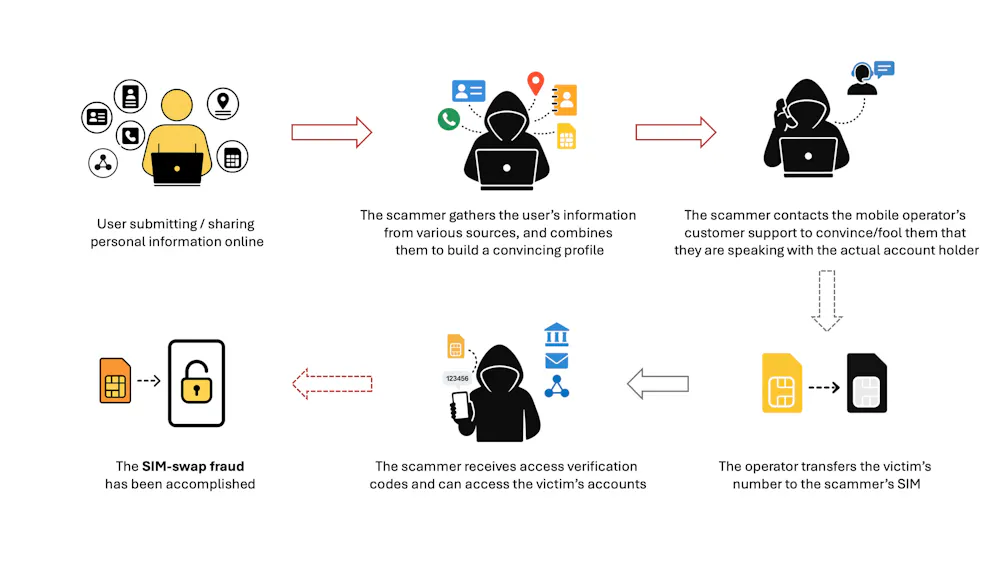
    Sim-swap fraud begins when a scammer convinces a mobile operator to transfer a victim’s number to a new sim card, or even an esim (one that’s embedded in the device), under the scammer’s control.

    This can be done over the phone, through an online chat, or even with the help of a
    bribed insider. Once the number is transferred, all calls and texts intended for the victim are redirected to the scammer. This includes those crucial verification codes used for logging into email, banking, messaging apps such as WhatsApp, and government services such as HMRC.

    This alone would be dangerous. But what makes sim-swap fraud so influential is
    that the cyber scammer often already has access to a patchwork of personal data
    about their target. That information may have been collected from data breaches,
    phishing attacks, low-reputation websites, or even the victim’s social media.

    People often underestimate the extent to which they reveal themselves online: a birthday posted on Instagram, a phone number included in a job posting, or a home address used in an online giveaway. Scammers combine this data to build a convincing profile, enough to fool a mobile operator’s customer service staff into believing they’re talking to the real account holder.

    How the sim-swap fraud works

    Once the scammer gains control of a number, the consequences are extensive.
    Attackers can access sensitive information, including personal documents and
    request and receive password reset links for the user’s other accounts. They can log in to WhatsApp or Telegram accounts, read private messages, impersonate the user, and even contact friends or family members to conduct further scams.

    The victims might see false messages posted in their names or fraudulent transactions made from their accounts. This can lead to financial loss, reputation damage, as well as emotional and mental health issues on the part of the victims.

    In the case of M&S, attackers apparently used this access to manipulate internal
    processes and gain access to sensitive systems. This highlights a broader risk:
    many companies still rely on phone numbers as a secondary verification method for
    staff, making their systems vulnerable to the same cyberattack used against
    individuals.

    How sim-Swap fraud works.
    Hossein Abroshan

    Reducing the risk

    While real-time detection of mobile number hijacking remains difficult, taking specific steps can significantly reduce the likelihood of being targeted and victimised. People should avoid sharing personal data unnecessarily, especially across multiple platforms and, very importantly, on unknown or untrusted websites.

    Many attackers don’t obtain all the necessary information from a single source. Instead, they collect it incrementally, using public profiles, marketing databases and past leaks to form a comprehensive picture.

    Being mindful of where you share your phone number, birthday or other identifiers can make it harder for others to impersonate you. It is also crucial to learn how phishing works and how to recognise it, so you will not submit your sensitive information to phishing or fake websites.

    Avoiding SMS-based authentication, where possible, is another key step. Many
    services now support authenticator apps, such as Google Authenticator, Microsoft Authenticator, Due or Authy, which are not tied to your mobile number. For mobile
    accounts themselves, setting up a unique pin or password to your account, which
    must be provided to authorise any changes, can add an extra layer of protection. This makes it harder for someone to initiate a sim swap without that code. However, users alone cannot fulfil this duty.

    Mobile network operators must strengthen identity verification practices, moving beyond basic questions about names and addresses that can be easily gathered or guessed. Banks and other financial institutions should reconsider using SMS or, at the very least, SMS-only as the default method for sensitive authentication. And companies, particularly those handling personal data or financial assets, need to train their IT and customer service teams to recognise the signs of identity based attacks.

    Sim-swap fraud is effective not because it’s highly technical, but because it exploits our trust in phone numbers for identity verification. The M&S case and similar examples show how fragile that trust can be – and why securing our mobile identities is no longer optional.

    Hossein Abroshan does not work for, consult, own shares in or receive funding from any company or organisation that would benefit from this article, and has disclosed no relevant affiliations beyond their academic appointment.

    ref. M&S cyberattacks used a little-known but dangerous technique – and anyone could be vulnerable – https://theconversation.com/mands-cyberattacks-used-a-little-known-but-dangerous-technique-and-anyone-could-be-vulnerable-256739

    MIL OSI – Global Reports

  • MIL-OSI USA: Congresswoman Tenney Celebrates the Passage of the One Big Beautiful Bill from the Ways and Means Markup

    Source: United States House of Representatives – Congresswoman Claudia Tenney (NY-22)

    Washington, DC – Congresswoman Claudia Tenney (NY-24) today released the following statement on the passage of “The One, Big, Beautiful Bill” from the House Ways and Means Committee Markup.

    “Today, the House Ways and Means Committee voted to advance our portion of the One, Big, Beautiful Bill to deliver on President Trump’s America First agenda. This landmark legislation makes several aspects of the 2017 Trump Tax Cuts permanent, including reduced tax rates for individuals and families, the doubled standard deduction, and the doubled child tax credit. Not only did we extend this tax relief for families and prevent a 25% tax hike on taxpayers in NY-24, but we also made permanent the 199A Small Business Deduction that was set to expire at the end of 2025, protecting 40,720 small businesses in NY-24 from being hit with a 43.4% tax rate. While this legislation did not include all of my initiatives, including the New Markets Tax Credit, Technology for Energy Security, BASIC Act, Susan Muffley Act, the High-Quality Charter Schools Act and various other legislative priorities, I understand that individual priorities do not take precedence over ensuring that American families, workers, and businesses do not face the largest tax hike in the history of our country. House Republicans are moving ahead with President Trump’s One, Big, Beautiful Bill, working to solidify the promises we made to the American people by strengthening our economy and providing direct tax relief to families, farmers, and small businesses in rural America,” said Congresswoman Tenney.

    Highlights of this portion of the One, Big, Beautiful Bill include language to:

    • Make the 2017 Trump Tax Cuts permanent, preventing a 25% tax hike on taxpayers in NY-24.
    • Renew and make permanent the 199A small business deduction critical for the success of Main Street.
    • Save the average American family $1,700, the equivalent of 9 weeks of groceries.
    • Establish Savings Accounts for newborns.
    • Increase the university endowment tax.
    • Repeal the 1099-K gig worker reporting threshold, which would require Venmo, PayPal, and gig transactions over $600 to be reported to the IRS.
    • Enhance the Opportunity Zone program to create over $100 billion in new investments in 10 years.
    • Deliver on President Trump’s no tax on tips priority.
    • Create 6 million jobs for American workers.
    • Extend and expand the doubled Death Tax Exemption for 2 million family-owned farms.
    • Modernize and enhance the Low Income Housing Tax Credit, a critical tool to help address our nation’s ongoing housing shortage.
    • Terminate the tax-exempt status of terrorist-supporting organizations.

    ###

    MIL OSI USA News

  • MIL-OSI USA: ICE removes Chinese national convicted of photographing military installations

    Source: US Immigration and Customs Enforcement

    PHILADELPHIA — U.S. Immigration and Customs Enforcement Philadelphia removed Fengyun Shi, a citizen of China with a final order of removal, to China on May 7. ICE’s Office of the Principal Legal Advisor designated Shi as a national security risk based on his conviction for use of an aircraft for the unlawful photographing of designated military installations.

    “The removal of Fengyun Shi reflects ICE’s steadfast dedication to protecting the American people and upholding national security. His unlawful actions posed a significant risk to sensitive military installations, and his removal ensures that he is no longer a threat to the nation,” said acting ERO Philadelphia Field Office Director Brian McShane. “ICE will continue to enforce immigration laws with the highest priority placed on safeguarding the United States and its citizens.”

    On Aug. 11, 2021, U.S. Customs and Border Protection admitted Shi to the United States at the San Francisco International Airport in San Francisco, California, as an F-1 nonimmigrant for the duration of his status as an agricultural engineering graduate student at the University of Minnesota.

    The FBI arrested Shi in San Francisco on Jan. 18, 2024, for prohibited operation of an unmanned aircraft system, violation of national defense airspace, and photography of defense installations after an investigation revealed Shi utilized a commercial drone to take photographs of U.S. naval bases in the Norfolk, Virginia, area.

    The U.S. Department of State terminated Shi’s F-1 nonimmigrant visa due to his pending criminal charges on Jan. 25, 2024, and on Feb. 7, 2024, the University of Minnesota terminated him from the Student and Exchange Visitor Program.

    The U.S. District Court for the Eastern District of Virginia’s Newport News Division convicted Shi for use of an aircraft for the unlawful photographing of designated installation without authorization on Oct. 2, 2024. He was sentenced to six months of incarceration and one year of supervised release.

    ERO Philadelphia encountered Shi at Federal Correctional Institution Allenwood in White Deer, Pennsylvania, and lodged an immigration detainer against him on Nov. 13, 2024.

    On March 7, ERO Philadelphia arrested Shi upon his release from FCI-ALS and detained him at the Clinton County Correctional Facility in McElhatten, Pennsylvania. On the same date, ERO Philadelphia served him with a notice to appear charging removability pursuant to Section 237 of the Immigration and Nationality Act.

    On March 24, an immigration judge in Elizabeth, New Jersey, ordered Shi removed from the United States to China.

    Members of the public with information can report crimes or suspicious activity by dialing the ICE Tip Line at 866-DHS-2-ICE (866-347-2423) or by completing ICE’s online tip form.

    Learn more about ICE Philadelphia’s mission to increase public safety in our Pennsylvania, Delaware and West Virginia communities on X at @EROPhiladelphia.

    MIL OSI USA News

  • MIL-OSI Banking: APEC Education Ministers Issue Joint Statement Jeju, Republic of Korea | 14 May 2025 Issued by the 7th APEC Education Ministerial Meeting APEC Education Ministers have issued a joint statement reaffirming the central role of education in promoting sustainable economic growth and regional prosperity amid accelerating digital transformation.

    Source: APEC – Asia Pacific Economic Cooperation

    APEC Education Ministers have issued a joint statement reaffirming the central role of education in promoting sustainable economic growth and regional prosperity amid accelerating digital transformation.

    Gathering in Jeju under the theme “Bridging Educational Gaps and Promoting Sustainable Growth in the Era of Digital Transformation: Innovate, Connect, Prosper,” ministers emphasized the importance of regional cooperation to strengthen digital learning infrastructure, enhance education quality and equip learners with the skills needed to navigate a rapidly evolving technological landscape.

    The joint statement highlights the potential of artificial intelligence and emerging technologies to improve learning outcomes through personalized education. Ministers acknowledged that AI-powered tools—such as adaptive learning platforms—can help students address knowledge gaps and build strong academic foundations. To support this shift, they stressed the need to build teachers’ digital competencies through professional development and peer learning.

    Ministers encouraged greater collaboration across APEC economies to expand access to digital resources, share best practices, and develop policies that promote educational innovation. They reaffirmed support for initiatives under the APEC Education Strategy (2016–2030), the Arequipa Goals and the La Serena Roadmap to advance educational opportunities for all.

    The joint statement also further recognized the role of Technical and Vocational Education and Training (TVET) and lifelong learning in helping learners build future-ready skills and adapt to the changing demands of the digital economy.

    Read the Joint Statement of the 7th APEC Education Ministerial Meeting “Bridging Educational Gaps and Promoting Sustainable Growth in the Era of Digital Transformation: Innovate, Connect, Prosper

    Read the Chair’s Statement on the 7th APEC Human Resources Development Ministerial Meeting APEC Korea 2025


    For more information or media inquiries, please contact:
    [email protected]

    MIL OSI Global Banks

  • MIL-OSI Russia: The Institute of Distance Education of the State University of Management invites you to the Open Day

    Translation. Region: Russian Federal

    Source: State University of Management – Official website of the State –

    On May 17, 2025, the Open Day of the Institute of Distance Education of the State University of Management will be held.

    We invite those who want to obtain higher education without leaving work, applicants planning to enroll in the 2025-2026 academic year, school graduates and working specialists to take part.

    At the meeting, the institute’s teachers will talk about the training formats, bachelor’s and master’s degree programs, admission requirements, and tuition fees.

    In addition, the event participants will learn about employment opportunities and meet teachers, students and the Student Council of the Fine Arts Department of the State University of Management.

    Enroll in the Institute of Distance Education of the State University of Management and become part of a professional community of more than 14,000 graduates of the institute. Get a quality education at the leading management university in the country, combining study with work.

    Pre-registration is required via the link. It is recommended to have your passport with you to enter the university grounds.

    We are waiting for everyone on May 17, 2025 at 11:00 at the State University of Management.

    Subscribe to the tg channel “Our State University” Announcement date: 05/17/2025

    Please note: This information is raw content directly from the source of the information. It is exactly what the source states and does not reflect the position of MIL-OSI or its clients.

    MIL OSI Russia News

  • MIL-OSI Russia: Universities of China and Belarus Open Joint Educational Center

    Translation. Region: Russian Federal

    Source: People’s Republic of China in Russian –

    Source: People’s Republic of China – State Council News

    BEIJING, May 14 (Xinhua) — A joint education center founded with the participation of the Yanka Kupala State University of Grodno (GSU) in Belarus opened at Xinjiang Normal University (XPU) on Wednesday, the university’s website reported.

    The opening ceremony of the center was attended by the secretary of the SPU party committee Jiang Haijun and the rector of GSU Irina Kiturko.

    The parties noted the growing interest of Belarusian residents in the Chinese language and expressed hope for intensified cooperation in the area of teacher and student exchanges, joint scientific research and teaching Chinese as a foreign language.

    Irina Kiturko stated that GSU considers SPU as an important partner for cooperation and wishes to make joint efforts to create a Confucius Institute in Belarus.

    The SPU, located in Urumqi, the capital of the Xinjiang Uyghur Autonomous Region in northwest China, was founded in 1978 and has so far facilitated the opening of three Confucius Institutes in Kyrgyzstan and Tajikistan. -0-

    MIL OSI Russia News

  • MIL-OSI USA: ‘This Bill Will Starve Families’: In Agriculture Committee Markup, Pingree Slams GOP for Gutting Anti-Hunger Programs

    Source: United States House of Representatives – Congresswoman Chellie Pingree (1st District of Maine)

    Last night in the House Agriculture Committee markup of the partisan reconciliation bill, Congresswoman Chellie Pingree (D-Maine) spoke out against Republicans’ proposal to slash $300 billion from the Supplemental Nutrition Assistance Program (SNAP). In her opening remarks, Pingree questioned how leaving Americans with fewer tools to feed their families affordably and healthily, further straining our health care system and driving up costs for everyone, will “Make America Healthy Again.” 

    [embedded content]
    Pingree’s full opening remarks are available here and copied below.

    The Committee will reconvene today to debate amendments. Tune in live here. 

    +++

    Thank you very much, Mr. Chair. 

    I’m fortunate to have served on this committee for more than a decade. During that time, I’ve had the opportunity and the great privilege to work on bipartisan Farm Bills that are designed to strengthen our agricultural sector, to support our farmers, and to help hungry people access food. So, I am deeply disappointed that we’re sitting here tonight not doing that but debating a bill that will gut the single largest anti-hunger program in America.

    Frankly, I can’t believe we are trying to shove the Farm Bill into the reconciliation process, stripping this committee of the chance of a truly bipartisan Farm Bill. 

    And let’s not sugarcoat what this bill is. It’s a $300 billion assault on struggling families, seniors, children, and veterans, all to fund tax breaks for billionaires and corporations. 

    The average SNAP benefit is $6 a day, $6 a day. That is barely enough to buy a loaf of bread or a gallon of milk. And if this bill passes, some of the most vulnerable people in America will be denied even that. Make no mistake, this will lead to more kids going to bed hungry, more seniors skipping meals to afford their medicine, and more parents forced to sacrifice their own nutrition so their kids can eat.

     In my state, 175,000 people rely on SNAP to put food on the table, including over 36,000 children and 6,300 veterans. That’s tens of thousands of Mainers who stand to lose their benefits under this proposal. 1 in 5 children in Maine struggles with food insecurity. That’s 1 in 5. And it’s not just individuals who will suffer. The bill threatens the very businesses that keep our rural communities alive.

    More than 1,500 retailers in Maine – grocery stores, corner markets, and mom and pop shops – rely on SNAP sales to stay open. When you cut SNAP, you don’t just take food off the table, you rip the economic rug out from under those businesses in the communities they support. 

    And then there’s the unfunded mandate that this bill dumps on Maine. My Republican colleagues call this “cost shifting,” but they are forcing states to pay at least 5% – and in many cases, much more of the cost – of supporting SNAP. So, let’s just call that what it really is: a backdoor way of sending this program into a death spiral, pushing the blame for the inevitable wave of hunger and hardship under governors and state legislatures.

    It cuts programs like the National Education, Obesity and Prevention Grant program, commonly known as Snap Ed. Snap ed helps families make their SNAP dollars stretch further. It teaches people how to make nutritious meals using SNAP funds. In Maine, this program has reached nearly 20,000 people with free classes and cooking, budgeting, and healthy eating. Eliminating these services will leave families with fewer tools to feed their families affordably and healthily, further straining our health care system and driving up costs for everyone.

    Tell me, is this really making America healthy again? 

    This … bill is not about reducing “waste” or fixing “fraud” or finding errors. It’s all about sacrificing the health and well-being of the most vulnerable, most vulnerable amongst us, so that billionaires like Elon Musk can get even richer. It’s about taking food out of the hands of hungry children, cutting off lifelines to families in need, and shattering the basic safety net that millions of Americans rely on.

    We should be writing a Farm Bill that supports our local farmers, strengthens rural economies, and ensures that no one in this country goes hungry. Instead, this proposal sacrifices families and communities for short term political win. 

    So, for me tonight, I’m a no. Tomorrow I’m a no. Every day from now until whenever my Republican colleagues come to their senses and do what right is right for America and for the people who are their constituents, I will stay a no on this bill.

    Thank you. I yield back.

    ###

    MIL OSI USA News

  • MIL-OSI USA: HARRISBURG – Shapiro Administration to Announce Student Winners of Lyme Disease Art Contest, Remind Public to Take Proper Tick Precautions While Outdoors

    Source: US State of Pennsylvania

    May 15, 2025Harrisburg, PA

    ADVISORY – HARRISBURG – Shapiro Administration to Announce Student Winners of Lyme Disease Art Contest, Remind Public to Take Proper Tick Precautions While Outdoors

    The Shapiro Administration officials from the Departments of Health (DOH), Environmental Protection (DEP), and Conservation and Natural Resources (DCNR) will announce the student winners of the 2025 Lyme disease art contest.

    Pennsylvania students in grades first through sixth were encouraged to enter the contest by submitting a poster or video about avoiding exposure to ticks based on the theme “Protect. Check. Remove.” There are 27 students who will be recognized for their submissions to the art poster and video submission categories from across the Commonwealth.

    WHO:
    Special Advisor to the Secretary of Health, Dr. Robert Bonacci
    DEP Policy Director High Garst
    DCNR Executive Policy Specialist Ali Bowling
    Student art contest winners, teachers, and parents

    WHEN:
    May 15, at 11:00 AM

    WHERE:
    Pennsylvania Capitol Building
    Main Rotunda
    501 North 3rd Street
    Harrisburg, PA 17120

    VISUAL:
    A tick mascot, student award winners, student artwork, tick-borne disease resources.

    MEDIA RSVP:
    Media interested in attending must RSVP with the name of the reporter and photojournalist to ra-dhpressoffice@pa.gov.

    MIL OSI USA News

  • MIL-OSI Russia: GUU has opened a new Telegram channel for searching and posting vacancies

    Translation. Region: Russian Federal

    Source: State University of Management – Official website of the State –

    The State University of Management has opened a new Telegram channel for the Center for Interaction with Alumni and Career Development (CIECD).

    The channel was created for prompt interaction and expansion of opportunities for publishing vacancies from partner companies and employment of graduates and students of the State University of Management.

    The pinned post contains links where you can post a vacancy or resume.

    We inform you that by filling out the form you agree to the posting on the Internet of data falling under the Federal Law of 27.07.2006 No. 152-FZ “On Personal Data”.

    The channel already has offers for internships, permanent jobs, invitations to a career forum, business camp, and IT school.

    Subscribe and publish your vacancies and resumes.

    Subscribe to the TG channel “Our GUU” Date of publication: 05/14/2025

    Telegram channel of the Center for Interaction with Alumni and Career Development (CIECD).

    The channel was created for prompt interaction and expansion of opportunities for publishing vacancies from partner companies and employment of graduates and students of the State University of Management….

    ” data-yashareImage=”https://guu.ru/wp-content/uploads/ЦВВиРК.jpg” data-yashareLink=”https://guu.ru/%d0%b3%d1%83%d1%83-%d0%be%d1%82%d0%ba%d1%80%d1%8b%d0%bb-%d0%bd%d0%be%d0%b2%d1%8b%d0%b9-telegram-%d0%ba%d0%b0%d0%bd%d0%b0%d0%bb-%d0%b4%d0%bb%d1%8f-%d0%bf%d0%be%d0%b8%d1%81%d0%ba%d0%b0-%d0%b8-%d1%80/”>

    Please note: This information is raw content directly from the source of the information. It is exactly what the source states and does not reflect the position of MIL-OSI or its clients.

    MIL OSI Russia News

  • MIL-OSI Africa: Southern Africa’s rangelands do many jobs, from feeding cattle to storing carbon: a review of 60 years of research

    Source: The Conversation – Africa – By Kevin Kirkman, Professor of Grassland Science, University of KwaZulu-Natal

    South Africa’s rangelands have always had great value for the country. These areas offer more than just grazing for livestock. They provide services like purifying water, storing carbon and conserving biodiversity.

    The grassland biome (28%), along with the savanna (32.5%) and the Nama-Karoo (19.5%), are collectively referred to as rangelands. They make up almost 80% of the land area of South Africa.

    Their ecological services haven’t always been fully appreciated. Research into rangelands has evolved in response to environmental changes, human needs and scientific discoveries.

    Commercial livestock production was the main concern when academics, researchers and practitioners met for the first congress of the Grassland Society of Southern Africa in 1966. Less than 15% of South Africa’s land surface area is arable. The only agricultural production possible on the balance of the land is livestock production from natural rangeland. Livestock production is thus a cornerstone of agriculture and food production in South Africa.

    Six decades on, the Grassland Society has reflected – through a special issue of its journal, the African Journal of Range and Forage Science – on how it has tackled research challenges and adapted to shifting perceptions of rangelands.

    Research has explored aspects of global change, bush encroachment and other changes in rangeland composition and function. Land transformation is another research area. Peri-urban sprawl, open-cast mining, timber plantations and other developments reduce and fragment rangeland. The result is increased pressure on the remaining, intact rangelands.

    Widening scope

    A review of research over the 60 years shows that early efforts focused mainly on forage production to support livestock industries. Research topics included rotational grazing and burning, as well as reinforcing rangelands by adding nutrients, forage grasses and legumes.

    By the 1980s, it became clear that rangelands offered more than just grazing – they were vital ecosystems.

    Rangelands in southern Africa span diverse climates and landscapes, from arid deserts to moist mountains. Kevin Kirkman, Author provided (no reuse)

    In the early 1990s, around the onset of democracy in South Africa, local researchers became part of global conversations around rangeland ecology. In doing so, they started to use the international terminology, instead of the old Dutch-derived word “veld”.

    This shift was not just about geography, but about scope. Rangelands were increasingly seen as multifaceted ecosystems critical in the fight against climate change. Increasing temperatures, increasing atmospheric carbon dioxide levels and changing rainfall patterns pose a threat to all ecosystems. Understanding the response of rangelands is increasingly important in devising management strategies to adapt to these changes.

    Scientists expanded their attention to preserving soil health, restoring degraded landscapes, and maintaining biodiversity. Issues like overgrazing, soil erosion and invasive species gained recognition in southern Africa. Degradation of rangelands in South Africa was first highlighted in the mid 1700s, and became a “mainstream” issue in the 1930s. Replacing a diverse group of wild animals with a single species of grazer, such as cattle, is the reason generally given for degradation. Fire has also been linked to it (often unfairly).

    The Grassland Society responded by promoting ideas like adaptive grazing management (making decisions in response to conditions, rather than following a recipe approach). It also encouraged integrating indigenous knowledge with scientific research to create more sustainable and resilient land-use systems. This has helped shape land management practices across the region.

    Rangelands are dynamic, especially in the Karoo, where vegetation cover can shift dramatically in response to rainfall and grazing. Justin du Toit, Author provided (no reuse)

    Many southern African rangelands face the challenge of balancing grazing with biodiversity conservation. Research on conservation agriculture and integrating livestock and wildlife systems is helping farmers and conservationists to find common ground. Wildlife, both in the conservation and the game production contexts, plays a critical role in South Africa’s economy. Tourism is one of the major contributors.

    Land management is particularly important in the Mediterranean-climate regions of South Africa, where poor crop farming practices have damaged soil health. The research is guiding the development of more sustainable farming systems focused on soil regeneration and biodiversity.

    A key indicator of ecosystem degradation is a decline in grassland forbs (herbaceous plants that are not grasses). They are highly sensitive to grazing pressure. So the role of wildflowers in ecosystem health and animal wellbeing has also become an important research area.

    Climate change, fire suppression and overgrazing drive woody plant encroachment, where grasslands are turning into shrublands. This calls for integrated management approaches that consider fire, grazing and even controlled rewilding.

    Fire is a natural element in many grassland ecosystems, and research has helped advance understanding of how it can be monitored and controlled to reduce risks while promoting healthy rangelands.

    People and grasslands

    Grazing contrast. Justin du Toit

    Rangeland management has important social dimensions. Research is addressing issues such as land tenure, governance, community management systems on communal rangelands and indigenous knowledge in management decisions. These topics are essential for creating sustainable solutions that account for people’s livelihoods and needs.

    In addition to these ecological, social and management advances, the Grassland Society of Southern Africa has worked to develop the next generation of rangeland scientists and practitioners. Through its congresses, workshops and journal publications, the society continues to foster dialogue across disciplines and communities. Its 60th congress will be held in July 2025.

    – Southern Africa’s rangelands do many jobs, from feeding cattle to storing carbon: a review of 60 years of research
    – https://theconversation.com/southern-africas-rangelands-do-many-jobs-from-feeding-cattle-to-storing-carbon-a-review-of-60-years-of-research-254736

    MIL OSI Africa

  • MIL-OSI Africa: Light is the science of the future – the Africans using it to solve local challenges

    Source: The Conversation – Africa – By Andrew Forbes, Professor, University of the Witwatersrand

    Light is all around us, essential for one of our primary senses (sight) as well as life on Earth itself. It underpins many technologies that affect our daily lives, including energy harvesting with solar cells, light-emitting-diode (LED) displays and telecommunications through fibre optic networks.

    The smartphone is a great example of the power of light. Inside the box, its electronic functionality works because of quantum mechanics. The front screen is an entirely photonic device: liquid crystals controlling light. The back too: white light-emitting diodes for a flash, and lenses to capture images.

    We use the word photonics, and sometimes optics, to capture the harnessing of light for new applications and technologies. Their importance in modern life is celebrated every year on 16 May with the International Day of Light.

    Scientists on the African continent, despite the resource constraints they work under, have made notable contributions to photonics research. Some of these have been captured in a recent special issue of the journal Applied Optics. Along with colleagues in this field from Morocco and Senegal, we introduced this collection of papers, which aims to celebrate excellence and show the impact of studies that address continental issues.

    A spotlight on photonics in Africa

    Africa’s history in formal optics stems back thousands of years, with references to lens design already recorded in ancient Egyptian writings.

    In more recent times, Africa has contributed to two Nobel prizes based on optics. Ahmed Zewail (Egyptian born) watched the ultrafast processes in chemistry with lasers (1999, Nobel Prize for Chemistry) and Serge Harouche (Moroccan born) studied the behaviour of individual particles of light, photons (2012, Nobel Prize for Physics).

    Unfortunately, the African optics story is one of pockets of excellence. The highlights are as good as anywhere else, but there are too few of them to put the continent on the global optics map. According to a 2020 calculation done for me by the Optical Society of America, based on their journals, Africa contributes less than 1% to worldwide journal publications with optics or photonics as a theme.

    Yet there are great opportunities for meeting continental challenges using optics. Examples of areas where Africans can innovate are:

    • bridging the digital divide with modern communications infrastructure

    • optical imaging and spectroscopy for improvements in agriculture and monitoring climate changes

    • harnessing the sun with optical materials for clean energy

    • bio-photonics to solve health issues

    • quantum technologies for novel forms of communicating, sensing, imaging and computing.

    The papers in the special journal issue touch on a diversity of continent-relevant topics.

    One is on using optics to communicate across free-space (air) even in bad weather conditions. This light-based solution was tested using weather data from two African cities, Alexandria in Egypt and Setif in Algeria.

    Another paper is about tiny quantum sources of quantum entanglement for sensing. The authors used diamond, a gem found in South Africa and more commonly associated with jewellery. Diamond has many flaws, one of which can produce single photons as an output when excited. The single photon output was split into two paths, as if the particle went both left and right at the same time. This is the quirky notion of entanglement, in this case, created with diamonds. If an object is placed in any one path, the entanglement can detect it. Strangely, sometimes the photons take the left-path but the object is in the right-path, yet still it can be detected.


    Read more: Quantum entanglement: what it is, and why physicists want to harness it


    One contributor proposes a cost-effective method to detect and classify harmful bacteria in water.

    New approaches in spectroscopy (studying colour) for detecting cell health; biosensors to monitor salt and glucose levels in blood; and optical tools for food security all play their part in optical applications on the continent.

    Another area of African optics research that has important applications is the use of optical fibres for sensing the quality of soil and its structural integrity. Optical fibres are usually associated with communication, but a modern trend is to use the existing optical fibre already laid to sense for small changes in the environment, for instance, as early warning systems for earthquakes. The research shows that conventional fibre can also be used to tell if soil is degrading, either from lack of moisture or some physical shift in structure (weakness or movement). It is an immediately useful tool for agriculture, building on many decades of research.

    The diverse range of topics in the collection shows how creative researchers on the continent are in using limited resources for maximum impact. The high orientation towards applications is probably also a sign that African governments want their scientists to work on solutions to real problems rather than purely academic questions. A case in point is South Africa, which has a funded national strategy (SA QuTI) to turn quantum science into quantum technology and train the workforce for a new economy.

    Towards a brighter future

    For young science students wishing to enter the field, the opportunities are endless. While photonics has no discipline boundaries, most students enter through the fields of physics, engineering, chemistry or the life sciences. Its power lies in the combination of skills, blending theoretical, computational and experimental, that are brought to bear on problems. At a typical photonics conference there are likely to be many more industry participants than academics. That’s a testament to its universal impact in new technologies, and the employment opportunities for students.

    The last century was based on electronics and controlling electrons. This century will be dominated by photonics, controlling photons.

    Professor Zouheir Sekkat of University Mohamed V, Rabat, and director of the Pole of Optics and Photonics within MAScIR of University Mohamed VI Polytechnic Benguerir, Morocco, contributed to this article.

    – Light is the science of the future – the Africans using it to solve local challenges
    – https://theconversation.com/light-is-the-science-of-the-future-the-africans-using-it-to-solve-local-challenges-256031

    MIL OSI Africa

  • MIL-OSI Global: Southern Africa’s rangelands do many jobs, from feeding cattle to storing carbon: a review of 60 years of research

    Source: The Conversation – Africa – By Kevin Kirkman, Professor of Grassland Science, University of KwaZulu-Natal

    South Africa’s rangelands have always had great value for the country. These areas offer more than just grazing for livestock. They provide services like purifying water, storing carbon and conserving biodiversity.

    The grassland biome (28%), along with the savanna (32.5%) and the Nama-Karoo (19.5%), are collectively referred to as rangelands. They make up almost 80% of the land area of South Africa.

    Their ecological services haven’t always been fully appreciated. Research into rangelands has evolved in response to environmental changes, human needs and scientific discoveries.

    Commercial livestock production was the main concern when academics, researchers and practitioners met for the first congress of the Grassland Society of Southern Africa in 1966. Less than 15% of South Africa’s land surface area is arable. The only agricultural production possible on the balance of the land is livestock production from natural rangeland. Livestock production is thus a cornerstone of agriculture and food production in South Africa.

    Six decades on, the Grassland Society has reflected – through a special issue of its journal, the African Journal of Range and Forage Science – on how it has tackled research challenges and adapted to shifting perceptions of rangelands.

    Research has explored aspects of global change, bush encroachment and other changes in rangeland composition and function. Land transformation is another research area. Peri-urban sprawl, open-cast mining, timber plantations and other developments reduce and fragment rangeland. The result is increased pressure on the remaining, intact rangelands.

    Widening scope

    A review of research over the 60 years shows that early efforts focused mainly on forage production to support livestock industries. Research topics included rotational grazing and burning, as well as reinforcing rangelands by adding nutrients, forage grasses and legumes.

    By the 1980s, it became clear that rangelands offered more than just grazing – they were vital ecosystems.

    In the early 1990s, around the onset of democracy in South Africa, local researchers became part of global conversations around rangeland ecology. In doing so, they started to use the international terminology, instead of the old Dutch-derived word “veld”.

    This shift was not just about geography, but about scope. Rangelands were increasingly seen as multifaceted ecosystems critical in the fight against climate change. Increasing temperatures, increasing atmospheric carbon dioxide levels and changing rainfall patterns pose a threat to all ecosystems. Understanding the response of rangelands is increasingly important in devising management strategies to adapt to these changes.

    Scientists expanded their attention to preserving soil health, restoring degraded landscapes, and maintaining biodiversity. Issues like overgrazing, soil erosion and invasive species gained recognition in southern Africa. Degradation of rangelands in South Africa was first highlighted in the mid 1700s, and became a “mainstream” issue in the 1930s. Replacing a diverse group of wild animals with a single species of grazer, such as cattle, is the reason generally given for degradation. Fire has also been linked to it (often unfairly).

    The Grassland Society responded by promoting ideas like adaptive grazing management (making decisions in response to conditions, rather than following a recipe approach). It also encouraged integrating indigenous knowledge with scientific research to create more sustainable and resilient land-use systems. This has helped shape land management practices across the region.

    Many southern African rangelands face the challenge of balancing grazing with biodiversity conservation. Research on conservation agriculture and integrating livestock and wildlife systems is helping farmers and conservationists to find common ground. Wildlife, both in the conservation and the game production contexts, plays a critical role in South Africa’s economy. Tourism is one of the major contributors.

    Land management is particularly important in the Mediterranean-climate regions of South Africa, where poor crop farming practices have damaged soil health. The research is guiding the development of more sustainable farming systems focused on soil regeneration and biodiversity.

    A key indicator of ecosystem degradation is a decline in grassland forbs (herbaceous plants that are not grasses). They are highly sensitive to grazing pressure. So the role of wildflowers in ecosystem health and animal wellbeing has also become an important research area.

    Climate change, fire suppression and overgrazing drive woody plant encroachment, where grasslands are turning into shrublands. This calls for integrated management approaches that consider fire, grazing and even controlled rewilding.

    Fire is a natural element in many grassland ecosystems, and research has helped advance understanding of how it can be monitored and controlled to reduce risks while promoting healthy rangelands.

    People and grasslands

    Rangeland management has important social dimensions. Research is addressing issues such as land tenure, governance, community management systems on communal rangelands and indigenous knowledge in management decisions. These topics are essential for creating sustainable solutions that account for people’s livelihoods and needs.

    In addition to these ecological, social and management advances, the Grassland Society of Southern Africa has worked to develop the next generation of rangeland scientists and practitioners. Through its congresses, workshops and journal publications, the society continues to foster dialogue across disciplines and communities. Its 60th congress will be held in July 2025.

    Kevin Kirkman receives funding from the National Research Foundation.

    Helga van der Merwe receives funding from the National Research Foundation.

    Craig Morris does not work for, consult, own shares in or receive funding from any company or organisation that would benefit from this article, and has disclosed no relevant affiliations beyond their academic appointment.

    ref. Southern Africa’s rangelands do many jobs, from feeding cattle to storing carbon: a review of 60 years of research – https://theconversation.com/southern-africas-rangelands-do-many-jobs-from-feeding-cattle-to-storing-carbon-a-review-of-60-years-of-research-254736

    MIL OSI – Global Reports

  • MIL-OSI Global: Light is the science of the future – the Africans using it to solve local challenges

    Source: The Conversation – Africa – By Andrew Forbes, Professor, University of the Witwatersrand

    Light-based technologies have wide practical applications. Wikimedia Commons, CC BY

    Light is all around us, essential for one of our primary senses (sight) as well as life on Earth itself. It underpins many technologies that affect our daily lives, including energy harvesting with solar cells, light-emitting-diode (LED) displays and telecommunications through fibre optic networks.

    The smartphone is a great example of the power of light. Inside the box, its electronic functionality works because of quantum mechanics. The front screen is an entirely photonic device: liquid crystals controlling light. The back too: white light-emitting diodes for a flash, and lenses to capture images.

    We use the word photonics, and sometimes optics, to capture the harnessing of light for new applications and technologies. Their importance in modern life is celebrated every year on 16 May with the International Day of Light.

    Scientists on the African continent, despite the resource constraints they work under, have made notable contributions to photonics research. Some of these have been captured in a recent special issue of the journal Applied Optics. Along with colleagues in this field from Morocco and Senegal, we introduced this collection of papers, which aims to celebrate excellence and show the impact of studies that address continental issues.

    A spotlight on photonics in Africa

    Africa’s history in formal optics stems back thousands of years, with references to lens design already recorded in ancient Egyptian writings.

    In more recent times, Africa has contributed to two Nobel prizes based on optics. Ahmed Zewail (Egyptian born) watched the ultrafast processes in chemistry with lasers (1999, Nobel Prize for Chemistry) and Serge Harouche (Moroccan born) studied the behaviour of individual particles of light, photons (2012, Nobel Prize for Physics).

    Unfortunately, the African optics story is one of pockets of excellence. The highlights are as good as anywhere else, but there are too few of them to put the continent on the global optics map. According to a 2020 calculation done for me by the Optical Society of America, based on their journals, Africa contributes less than 1% to worldwide journal publications with optics or photonics as a theme.

    Yet there are great opportunities for meeting continental challenges using optics. Examples of areas where Africans can innovate are:

    • bridging the digital divide with modern communications infrastructure

    • optical imaging and spectroscopy for improvements in agriculture and monitoring climate changes

    • harnessing the sun with optical materials for clean energy

    • bio-photonics to solve health issues

    • quantum technologies for novel forms of communicating, sensing, imaging and computing.

    The papers in the special journal issue touch on a diversity of continent-relevant topics.

    One is on using optics to communicate across free-space (air) even in bad weather conditions. This light-based solution was tested using weather data from two African cities, Alexandria in Egypt and Setif in Algeria.

    Another paper is about tiny quantum sources of quantum entanglement for sensing. The authors used diamond, a gem found in South Africa and more commonly associated with jewellery. Diamond has many flaws, one of which can produce single photons as an output when excited. The single photon output was split into two paths, as if the particle went both left and right at the same time. This is the quirky notion of entanglement, in this case, created with diamonds. If an object is placed in any one path, the entanglement can detect it. Strangely, sometimes the photons take the left-path but the object is in the right-path, yet still it can be detected.


    Read more:
    Quantum entanglement: what it is, and why physicists want to harness it


    One contributor proposes a cost-effective method to detect and classify harmful bacteria in water.

    New approaches in spectroscopy (studying colour) for detecting cell health; biosensors to monitor salt and glucose levels in blood; and optical tools for food security all play their part in optical applications on the continent.

    Another area of African optics research that has important applications is the use of optical fibres for sensing the quality of soil and its structural integrity. Optical fibres are usually associated with communication, but a modern trend is to use the existing optical fibre already laid to sense for small changes in the environment, for instance, as early warning systems for earthquakes. The research shows that conventional fibre can also be used to tell if soil is degrading, either from lack of moisture or some physical shift in structure (weakness or movement). It is an immediately useful tool for agriculture, building on many decades of research.

    The diverse range of topics in the collection shows how creative researchers on the continent are in using limited resources for maximum impact. The high orientation towards applications is probably also a sign that African governments want their scientists to work on solutions to real problems rather than purely academic questions. A case in point is South Africa, which has a funded national strategy (SA QuTI) to turn quantum science into quantum technology and train the workforce for a new economy.

    Towards a brighter future

    For young science students wishing to enter the field, the opportunities are endless. While photonics has no discipline boundaries, most students enter through the fields of physics, engineering, chemistry or the life sciences. Its power lies in the combination of skills, blending theoretical, computational and experimental, that are brought to bear on problems. At a typical photonics conference there are likely to be many more industry participants than academics. That’s a testament to its universal impact in new technologies, and the employment opportunities for students.

    The last century was based on electronics and controlling electrons. This century will be dominated by photonics, controlling photons.

    Professor Zouheir Sekkat of University Mohamed V, Rabat, and director of the Pole of Optics and Photonics within MAScIR of University Mohamed VI Polytechnic Benguerir, Morocco, contributed to this article.

    The authors do not work for, consult, own shares in or receive funding from any company or organisation that would benefit from this article, and have disclosed no relevant affiliations beyond their academic appointment.

    ref. Light is the science of the future – the Africans using it to solve local challenges – https://theconversation.com/light-is-the-science-of-the-future-the-africans-using-it-to-solve-local-challenges-256031

    MIL OSI – Global Reports

  • MIL-OSI USA: Congressman Issa Congratulates 2025 Congressional Art Competition Winner from Murrieta

    Source: United States House of Representatives – Congressman Darrell Issa (CA-50)

    ESCONDIDO, CA – Today, Congressman Darrell Issa (CA-48) announced that Murrieta Valley High School student Connor Main is the winner of the 2025 Congressional Art Competition for California’s 48th District. Connor’s winning entry is entitled The Dire Wolf.

    “Connor’s piece immediately struck me as uniquely creative and serves as a representation of CA-48’s brightest high school artists. I’m eager for it to be celebrated in our local community and presented in the U.S. Capitol, where it will be on display for the year ahead,” said Rep. Issa.

    Connor is a freshman in high school, and the artwork is constructed solely from charcoal pencils. His parents have expressed their pride in Connor’s work being honored by Congressman Issa in the US Capitol. 

    Connor’s art instructor, Jessica Hoxmeier, stated that the freshman spent countless hours to painstakingly complete every detail of the piece. 

    The runner-up submission was painted by Murrietta Valley High School Junior Hannah Maronde entitled Progress of Patience. Hannah’s work will be displayed in Congressman Issa’s office in Washington, D.C. for guests to enjoy when visiting. 

    Congressman Issa’s office received dozens of creative and inspiring submissions from throughout the region, including watercolors, photographs, drawings, and original paintings.

    Each spring, the Congressional Institute sponsors a nationwide high school student art competition to encourage and recognize artistic talent throughout the country. Students from the 48th Congressional District submit entries for consideration and the winning entry is displayed in the U.S. Capitol for one year. Additionally, the winner is invited to a celebratory reception in Washington, D.C

    MIL OSI USA News

  • MIL-OSI USA: Ciscomani Hosts Send Off Ceremony for U.S. Service Academy Appointees

    Source: United States House of Representatives – Congressman Juan Ciscomani (Arizona)

    TUCSON, AZ — U.S. Congressman Juan Ciscomani honored more than 20 students from across Arizona’s 6th Congressional District for achieving one of our country’s most prestigious academic honors: an appointment to a United States Service Academy. 

    “You are the best of the best and the brightest of the bright,” Ciscomani told the students Friday at a “send-off” reception he hosted to recognize their achievement. “We celebrate your success and take great comfort in knowing that you are our country’s next generation of military leaders.” 

    Each of the students received an appointment to a service academy from Ciscomani after competing in a rigorous and highly selective nomination process. Each student was interviewed by a members of selection board who then recommended their nomination to the congressman and were invited to apply for admission to a service academy. They then had to be accepted by a service academy. 

    “It’s easier to get into an Ivy League university than it is a service academy,” Ciscomani told the students

    Joining the students at the reception were their proud parents, the selection board and members of The Friday Pilots, a local group of retired military pilots who meet for lunch every Friday. 

    “We’re passing the torch from one generation of military leaders to the next,” Ciscomani said. “Our country is a land of liberty because of the bravery and sacrifice of people like The Friday Pilots. It will remain a land of liberty because of students like this.”  

    Each of the students received a Certificate of Congressional Recognition and a challenge coin from Ciscomani, as well as a challenge coin from The Friday Pilots. Additional photos of the event can be viewed here.  

    “Nominating these outstanding high school students to one of our nation’s prestigious service academies is truly one of my greatest honors as a member of Congress,” said Ciscomani. “These young men and women represent the very best our community has to offer and have repeatedly demonstrated exceptional leadership qualities, academic excellence and a heartfelt commitment to serving our great nation. Their patriotism and dedication are an inspiration, and I look forward to seeing all their great contributions as the next generation of military leaders.” 

    Ciscomani congratulates the following students for their appointments: 

    • Aleksandria Gabbard, Marana High School, U.S. Naval Academy 

    • Brodie Hendrick, Arizona State University Prep Digital and Falcon Foundation Scholarship recipient, U.S. Air Force Academy 

    • Sonia Donkeng, Mica Mountain High School, U.S. Air Force Academy 

    • Kyle Dowe, Catalina Foothills High School, U.S. Naval Academy 

    • Jose Chafin, Walden Grove High School, U.S. Merchant Marine Academy 

    • Nathan Poulton, Mountain View High School, U.S. Air Force Academy 

    • Mason Rustand, Sabino High School, U.S. Military Academy 

    • Hector Lepley, Tombstone High School, U.S. Merchant Marine Academy 

    • Collin Skaret, Marana High School, U.S. Air Force Academy Prep School 

    • Conner Swigert, Home School, U.S. Air Force Academy 

    • Andres Taylor, Marana High School, U.S. Merchant Marine Academy 

    • Austin Thompson, Basis Oro Valley High School and Falcon Foundation Scholarship recipient, U.S. Air Force Academy 

    • Luke Villareal, Mountain View High School, U.S. Naval Academy 

    • Nathan Whitworth, Buena High School, U.S. Merchant Marine Academy 

    • Gavin Yewell, Canyon Del Oro High School and Falcon Foundation Scholarship recipient, U.S. Air Force Academy 

    • Gavin Dean, Pusch Ridge Christian Academy, U.S. Military Academy 

    • Emma Lindsey, Catalina Foothills High School and Falcon Foundation Scholarship recipient, U.S. Air Force Academy 

    • Hayden Picton, Pusch Ridge Christian Academy, U.S. Air Force Academy 

    • Isabella Gorkowski, Bishop Gorman High School, U.S. Naval Academy 

    • Ethan Venghaus, Kwajalein High School U.S. Marshall Islands, U.S. Military Academy 

    ### 

    MIL OSI USA News

  • MIL-OSI United Kingdom: Preston’s Mayor, Councillor Phil Crowe, bids farewell

    Source: City of Preston

    14 May 2025

    Today, Councillor Philip Crowe, the 696th Mayor of Preston, steps down from his role, making way for Councillor Sue Whittam, who will proudly take on the title of Madam Mayor. 

    “It’s been an honour and a privilege to serve as Mayor of Preston.” 

    To mark the occasion, Councillor Crowe will address fellow councillors and guests at the Mayor Making ceremony in the Council Chamber at Preston Town Hall. 

    Reflecting on his time as Mayor, Councillor Crowe has shared many memorable highlights, from unveiling the Feathers McGraw statue and opening the new Animate Leisure Complex, to meeting famous faces like Nick Park and Paddy McGuinness, and attending the unforgettable Radio 2 in the Park event, where he made a guest appearance on stage in front of thousands with Radio 2 DJ Sara Cox.

    Speaking fondly about that weekend, Councillor Crowe said: 

    “That was brilliant — I was dying to see the Pet Shop Boys. We were taken to this huge tent, filled with screens, surrounded by police, fire and rescue, the ambulance service, and Preston City Council.  

    “Then the head of security announced, ‘Ladies and gentlemen, the Mayor and Mayoress of Preston,’ and everyone stood up. It was incredible.” 

    Throughout his mayoral year, Councillor Crowe has championed several charities, including Furniture for Education Worldwide (FEW), Let’s Grow Preston, and Disability Equality North West.

    He is especially proud of his ongoing work with FEW in The Gambia. 

    Reflecting on his time as Mayor, Councillor Crowe said: 

    “Every day has brought a new highlight. The number of people who volunteer in Preston is phenomenal. In addition to my mayoral duties, I’m also honoured to serve as Honorary President of St Catherine’s Hospice, which alone has more than 600 volunteers.” 

    Though his mayoral chapter is ending, Councillor Crowe will continue to serve as a councillor and remain committed to supporting his community. 

    Councillor Crowe added: 

    “I never imagined becoming a councillor, let alone the Mayor. It’s been an honour and a privilege to represent the city I love.”


    MIL OSI United Kingdom

  • MIL-OSI United Kingdom: Cllr Carmine Grimshaw appointed new Lord Mayor of Manchester

    Source: City of Manchester

    Miles Platting and Newton Heath councillor Carmine Grimshaw has been appointed the new Lord Mayor of Manchester following a meeting of the full today (14 May). 

    A lifelong Mancunian, Carmine’s journey from the streets of Ancoats to the halls of local government is a testament to his dedication, resilience, and unwavering commitment to the community.  

    Born and raised in Ancoats, Carmine grew up in a close-knit family, experiencing first hand the transformative changes in the city. He attended Saint Michael’s RC Primary School and later Saint Luke’s Secondary School in Beswick before embarking on his career as a sewing machine mechanic.  

    Following the closure of his employer Raffles & Co in the 1980s, he transitioned into street trading, earning his license in 1983 and becoming a familiar presence on Thomas Street in what is now known as the Northern Quarter. His advocacy for fellow traders led to the formation of the Manchester Street Traders Association in 1990, reinforcing his commitment to safeguarding local businesses.  

    Throughout the years, Carmine has continually worked to support Manchester’s communities. His tenure as chair of the A-5 Off-Licence Forum shows his concerns for responsible licensing and community safety.

    He and his twin brother Brian opened a convenience store in Newton Heath in 1993. The ambitious move was made possible with the help of their friend and former Lord Mayor the late Cllr Hugh Barrett and was a further nod to his service to the local community.  

    In 2012, his passion for civic engagement led him to public office, where he has tirelessly represented the residents of Miles Platting and Newton Heath for more than a decade. His leadership on various committees, including the Neighbourhoods and Communities Committee and the Licensing Policy Committee, has been instrumental in shaping policies that benefit Manchester’s citizens.  

    Throughout his tenure as Lord Mayor, Carmine will have the support of Lady Mayoress, Elaine Grimshaw and a Consort, Councillor June Hitchen. 

    Carmine is the proud father of twin sons, Carmine and Louis, along with youngest son, Jack, as well as three grandchildren, Zara and twins Honey and Rico. 

    MIL OSI United Kingdom

  • MIL-OSI United Kingdom: ‘Life and legacy’ of Spitfire designer Reginald Mitchell to be celebrated on 130th anniversary of his birth

    Source: City of Stoke-on-Trent

    Published: Wednesday, 14th May 2025

    The “life and legacy” of Reginald Mitchell will be celebrated in a day of events on the 130th anniversary of his birth.

    The Supermarine Spitfire designer was born on 20 May 1895 in Kidsgrove and moved to Normacot shortly after he was born.   

    Invited guests will gather in the Potteries Museum & Art Gallery at 10.30am on Tuesday 20 May for an event to remember his lasting contribution to engineering and the aeronautical industry.   

    A host of speakers have been arranged, including Julian Mitchell, Reginald’s great nephew and Paul Beaver, Trustee of the National Spitfire Project and the author of Spitfire People, Spitfire Evolution and Mitchell – Father of the Spitfire. 

    The event is by invitation and tickets are limited. Residents of Stoke-on-Trent can request tickets by contacting karen.convey@stoke.gov.uk 

    In the afternoon, the staff at the Reginald Mitchell pub in Hanley have organised an event for guests and veterans including the Tri-Services.  

    The team at the JD Wetherspoon pub on Parliament Row is inviting veterans to attend from 2.30pm to 4.30pm and enjoy a hot drink and a slice of a large Spitfire cake being made for the occasion.  

    Mr Mitchell will host a quiz for customers from 4.30pm with the winning team receiving a 12-piece vintage prints dinner set from Churchill China, the same tableware used by Wetherspoons, valued at over £150. 

    The pub will have a display of aeroplanes designed by children from Reginald Mitchell Primary School. The bar will be stocked with a range of beer featuring names all linked to aviation and the city’s centenary.   

    Guests will be encouraged to make paper aeroplanes to take part in a fun competition for charity. Entrants will launch their plane off the top bar balcony to see which one flies the furthest. Entry is £2 with proceeds going to the Young Lives vs Cancer charity.   

    A series of events to celebrate Reginal Mitchell’s birthday week are planned in the pub.   

    Cllr Steve Watkins, Deputy Lord Mayor of Stoke-on-Trent, said: “This special day will look back at the life of Reginald Mitchell and how his work has inspired generations of engineers since he passed away at 42. He and his team led the world in aircraft design. It’s part of our centenary celebrations and will tell his story and look at how his legacy is encouraging young engineers to take up a career in the industry today.  

    “It’s been great to work with the staff at the Reginald Mitchell pub who are making plans to mark this occasion throughout the week with other events.  They’re keen to encourage veterans to pop in and enjoy a chat and catch-up over tea and cake while learning more about Reginald.” 

    Julian Mitchell said: “130 years on and RJ is still making a real impact on our local community and beyond. Celebrating his engineering genius and design creativity is at the heart of our Operation Spitfire for Schools project. 

    “We’re helping students understand what is possible in their futures and highlight examples of local people who have done amazing things.” 

    Debbie Whittingham, Regional Manager and Employee Director at JD Wetherspoons, said: “It is fantastic to have the opportunity to join in the celebrations for both the centenary of Stoke-on-Trent and Reginald Mitchell’s birthday celebrations. The Reginald Mitchell is a beautiful and historic building, and we are very proud to be able to honour his name and legacy. 

    “We’re looking forward to welcoming everyone to share a fun week of events and to celebrate this legend of a man. We want to show our pride in Stoke-on-Trent and its incredible legacy to the world as one of the great cities of the industrial revolution.  

    “This was thanks to the creative, hardworking and spirited people of this city who made it all happen.” 

    Events in The Reginald Mitchell pub  

    • Monday 19 May: 7pm – History talk with local social media star ‘Jenna the Red Haired Stokie’. Small charge, all going to charity.  
    • Wednesday 21 May: 11am –  History talk in the upstairs bar area from local historian Mervyn Edwards. £5 entry ‘The lost pubs of Hanley’. ‘Why were they built and how did they survive so long?  Who were the landlords and patrons associated with them – and how many do you remember?’  
    • 7pm – Film night. Battle of Britain to be shown on the big screen with a 1940s fancy dress competition. Prize for the best dressed.  
    • Thursday 22 May: 7pm-9pm Pottery in the Pub. A pottery workshop hosted by the Clay Rooms. £30 per person (£5 going to Young Lives vs Cancer charity). Visit theclayrooms.co.uk to book. Free tea and coffee. 

    MIL OSI United Kingdom

  • MIL-OSI USA: Rep. Peters Calls out Republican Cuts to Clean Energy and Fossil Fuel Favoritism in Tax Plan

    Source: United States House of Representatives – Congressman Scott Peters (52nd District of California)

    [embedded content]

    Washington, D.C. – Today, during the Energy and Commerce Committee’s consideration of the Republican tax plan, which will kick 13.7 million people off their healthcare, Representative Scott Peters (CA-50) called out provisions that will make it easier to build polluting coal power plants and cut back on investments in clean energy technologies.

    Watch Rep. Peters’ opening statement against the Republican tax plan here.

    Speaking on the Republican plan, Rep. Peters said, “Last Congress, my Republican colleagues were insistent that we should have an all-of-the-above energy strategy, one that leveraged our natural resources, unleashed American innovation, and cut through bureaucratic red tape. Which is why I am confused that we are considering a reconciliation bill that picks winners and losers, and elevates expensive, outdated, and inefficient sources like coal over cheap American-made energy like solar, wind, and storage.”


    He continued, “Why does this bill provide government-backed insurance to coal plants, as the President of the United States single-handedly kills hundreds if not thousands of clean energy jobs across the country by illegally targeting projects and weaponizing the permitting process?”

    And he concluded, “We need to face reality; we can’t build anything in America anymore. North America has built about 7 gigawatts of interregional transmission since 2014, with less than half of that in the U.S. In that same time frame, South America has built 22 gigawatts, Europe has built 44 gigawatts, and China has built 260. There is a growing bipartisan coalition for permitting reform. Whether it’s forest management, electric transmission, or building housing, I have reached across the aisle and found success in moving solutions forward. Many of us have voiced our desire to work in a bipartisan way to make America more energy dominant. Now is the time to put our money where our mouth is, and focus on durable, common-sense, and all-of-the-above policies that provide certainty for industry and consumers.”

    CA-50 Medicaid Facts:

    • 156,100 people in the district rely on Medicaid for health coverage—that’s 20 percent of all district residents.
      • 34,700 children in the district are covered by Medicaid.
      • 17,700 seniors in the district are covered by Medicaid.
      • 64,900 adults in the district have Medicaid coverage through Medicaid expansion—that includes pregnant women who are able to access prenatal care sooner because of Medicaid expansion, parents, caretakers, veterans, people with substance use disorder and mental health treatment needs, and people with chronic conditions and disabilities.
    • At least five hospitals in the district had negative operating margins in 2022. These hospitals would be especially hard-hit by cuts to Medicaid. For example:
      • Scripps Mercy Hospital had a negative 25.3 percent operating margin—and nearly 22 percent of its revenue came from Medicaid.
      • Sharp Coronado Hospital had a negative 3.5 percent operating margin—and over 36 percent of its revenue came from Medicaid.
      • University of California San Diego Medical Center had a negative 2.4 percent operating margin—and nearly 19 percent of its revenue came from Medicaid.
    • There are 54 health center delivery sites in the district that serve 529,944 patients.
    • Those health centers and patients rely on Medicaid—statewide, 69 percent of health center patients rely on Medicaid for coverage.
    • Health centers will not be able to stay open and provide the same care that they do today, with more uninsured and underinsured patients. They are already operating on thin margins—in 2023, nationally, nearly half of health centers had negative operating margins.
    • Medicaid cuts put health centers at risk, including:
      • Family Health Centers of San Diego
      • Neighborhood Healthcare
      • North County Health Project
      • San Diego American Indian Health Centers
      • St. Vincent De Paul Village

    Read Rep. Peters full remarks below:

    Last Congress, my Republican colleagues were insistent that we should have an all-of-the-above energy strategy, one that leveraged our natural resources, unleashed American innovation, and cut through bureaucratic red tape.

    Which is why I am confused that we are considering a reconciliation bill that picks winners and losers, and elevates expensive, outdated, and inefficient sources like coal over cheap American-made energy like solar, wind, and storage.

    Why does this bill expedite permitting for natural gas pipelines – an undeniably important component of our energy system – while completely ignoring transmission lines, without which we would not be able to meet a single kilowatt of energy demand?

    Why does this bill provide government-backed insurance to coal plants, as the President of the United States single-handedly kills hundreds, if not thousands, of clean energy jobs across the country by illegally targeting projects and weaponizing the permitting process?

    This entire Congress, my Republican colleagues have focused almost exclusively on our need to build baseload power to meet energy demand from data centers, manufacturing, and AI. 

    However, when they have an opportunity to ensure this baseload power can move from where it’s generated to where it will be used, my Republican colleagues have not only chosen to completely ignore the problem, but are rescinding funds to make it easier to build out the energy infrastructure we need to reduce costs and keep the lights on.

    We need to face reality; we can’t build anything in America anymore. North America has built about 7 gigawatts of interregional transmission since 2014, with less than half of that in the U.S. In that same time frame, South America has built 22 gigawatts, Europe has built 44 gigawatts, and China has built 260.

    There is a growing bipartisan coalition for permitting reform. Whether it’s forest management, electric transmission, or building housing, I have reached across the aisle and found success in moving solutions forward.

    Many of us have voiced our desire to work in a bipartisan way to make America more energy dominant. Now is the time to put our money where our mouth is, and focus on durable, common-sense, and all-of-the-above policies that provide certainty for industry and consumers. 

    This bill, however, doesn’t come anywhere close to meeting the moment. It isn’t real permitting reform, it doesn’t make us energy dominant, and it only makes things more uncertain for industry, for Americans, and for our future.

    Instead of making it easier to build everything, once again we are cutting off our feet in the race to energy resilience. This is the definition of picking winners and losers. And this not the way we will achieve a resilient, energy-abundant future.

    ###

    MIL OSI USA News