World leaders have gathered for the World Economic Forum annual meeting in Davos, Switzerland. One of their main goals is to align their responses to geopolitical shocks such as floods and wildfires that hamper trade, investment and more.
The meeting also supposedly aims to find ways to stimulate economic growth to improve living standards, foster a just and inclusive energy transition, achieve security and cooperation amidst conflicts, and accelerate the economic response to an “intelligent age” of AI.
But, a new report from Oxfam International, published on the first day of the meeting in Davos, highlights how global inequality is more rampant than ever. The report, written by a team of policy campaigners and inequality research advisers outlines how billionaire wealth rose sharply in 2024 worldwide, with the pace of the increase three times faster than in 2023.
The World Economic Forum lists extreme weather as one of the top global risks. But, as world leaders convene in Davos, the high-profile anti-climate stances of some of them stand in stark opposition to any meaningful progress for climate action.
The Oxfam report highlights the exploitation involved in creating and sustaining wealth and outlines how, as inequalities deepen, vulnerable communities are disproportionately affected. The most vulnerable – overwhelmingly women, people of colour, Indigenous groups and low-wage workers – are caught in a cycle of insufficient wages, limited services and minimal political influence.
The report also highlights how wealth inequality is often intertwined with historical processes of extraction — both within countries (for example, through weak labour protections that lowers wages) and between countries (through trade, finance, and resource exploitation).
The climate connection
Other research has also shown how inequality is deeply interwoven with climate breakdown. Each crisis exacerbates the other. Historically, the richest nations – and within them, the wealthiest people – have contributed the most to greenhouse gas emissions.
Meanwhile, lower-income countries that bear little responsibility for global heating suffer the most. These countries, already burdened by debt and systemic inequality, have fewer resources to protect communities from extreme weather, crop failures and infrastructure damage. This makes day-to-day survival a struggle for billions.
When climate change exacerbates existing inequalities, marginalised communities are denied basic human rights. For instance, droughts reduce crop yields and deplete water sources, so more people — often women and children — have to ration supplies or go without. This directly infringes on their rights to food, safe drinking water and sanitation.
In these ways, without climate action, the warming planet threatens to widen inequalities by affecting the poorest people most severely. A 2020 World Bank report estimated that an additional 68 to 135 million people could be pushed into poverty by 2030 because of climate change. French researchers identified that climate change also slows down the economic catch-up of poorer countries.
The reality on the ground is bleak. Floods in Pakistan displaced thousands and affected more than 33 million people in 2023. That’s ten times more than the total population of Los Angeles where, when the recent wildfires struck, 170,000 people had to be evacuated.
Around the world, climate movements continue. Law suits that demand climate action are transforming governance. High-level negotiations like the UN’s annual climate summit carry on seeking progress, although the processes could be improved to accelerate change.
What can Davos do? World leaders need to look at how wealth and power can be redistributed (reparations for climate damages is one way to do this) and low-income, climate-vulnerable nations can be better represented in global decision-making.
Without this kind of change, there’s a risk climate action will perpetuate the same structural imbalances that first enabled environmental exploitation. Only by tackling both climate injustice and economic inequality together can the world prevent further climate disasters and ensure a more equitable future.
Don’t have time to read about climate change as much as you’d like?
Source: People’s Republic of China – State Council News
Traditional Chinese art of Cangxian Lion Dance well passed on in Hebei
Updated: December 23, 2024 13:53Xinhua
Students interact with a lion dancer from Cangxian County at a primary school in Cangzhou City, north China’s Hebei Province, Dec. 20, 2024. Cangxian Lion Dance is a unique folk art with a long history, which was inscribed into the national intangible cultural heritage list in 2008. Thanks to the policy and funding support of local authorities in recent years, the traditional art has been well passed on. There are nine registered lion dance teams and nearly 1,000 performers in the county. [Photo/Xinhua]Trainees practice lion dance at a training base in Cangxian County, north China’s Hebei Province, Dec. 20, 2024. [Photo/Xinhua]A student interacts with a lion dancer from Cangxian County at a primary school in Cangzhou City, north China’s Hebei Province, Dec. 20, 2024. [Photo/Xinhua]A trainee practices lion dance at a training base in Cangxian County, north China’s Hebei Province, Dec. 20, 2024. [Photo/Xinhua]A teacher instructs trainees to practice lion dance at a training base in Cangxian County, north China’s Hebei Province, Dec. 20, 2024. [Photo/Xinhua]A teacher instructs trainees to practice lion dance at a training base in Cangxian County, north China’s Hebei Province, Dec. 20, 2024. [Photo/Xinhua]In this aerial drone photo, trainees practice lion dance at a training base in Cangxian County, north China’s Hebei Province, Dec. 20, 2024. [Photo/Xinhua]Trainees practice lion dance at a training base in Cangxian County, north China’s Hebei Province, Dec. 20, 2024. [Photo/Xinhua]A lion dancer from Cangxian County instructs students to practice lion dance at a primary school in Cangzhou City, north China’s Hebei Province, Dec. 20, 2024. [Photo/Xinhua]
Issued for Onkaparinga Hills near Woodcroft in the southern Mount Lofty Ranges.
Warning level Watch and Act – Leave Now
Action Leave now. This bushfire may threaten your safety. Check that the path is clear and go to a safer place. Do not enter this area as conditions are dangerous.
The ONKAPARINGA HILLS bushfire is uncontrolled. This scrub fire is burning in a North easterly direction towards Education Road, Armata Road, Humber Court, Rudge Close, Forest Drive, Vaucluse Drive, Evandale Circuit and Mcharg Road, Chandlers Hill . Conditions are continually changing.
For updates, check the CFS website at cfs.sa.gov.au or phone the Information Hotline on 1800 362 361.
Drilling completed on the second well in the Shenandoah South Pilot Project, Shenandoah S2-4H
23 December 2024 – Falcon Oil & Gas Ltd. (TSXV: FO, AIM: FOG) is pleased to announce that the Shenandoah S2-4H (“SS4H”) horizontal well was successfully drilled, cased and cemented to a measured depth of 6,452 metres (21,169 feet) in exploration permit 98 in the Beetaloo Sub-basin, Northern Territory, Australia with Falcon Oil & Gas Australia Limited’s (“Falcon Australia”) joint venture partner, Tamboran (B2) Pty Limited (“Tamboran B2”).
Data from the SS4H well has indicated strong gas shows and a continuation of the high-quality shale and rock properties observed in the Shenandoah South 1H and Shenandoah South 2H (“SS2H ST1”) locations with no faulting observed along the entire 3,048-metre (10,000 foot) lateral section.
The Liberty Energy (NYSE: LBRT) stimulation equipment and sand has been mobilized to location ahead of the stimulation campaign, which is planned to commence in early 1Q 2025, with IP30 flow test from both SS2H ST1 and SS4H expected to be released in 1Q 2025.
Philip O’Quigley, CEO of Falcon commented: “The completion of the SS4H well is another milestone in the development of the Beetaloo Sub-basin and we will look forward to the upcoming stimulation campaign and updating the market as operations progress.”
Ends.
CONTACT DETAILS:
Falcon Oil & Gas Ltd.
+353 1 676 8702
Philip O’Quigley, CEO
+353 87 814 7042
Anne Flynn, CFO
+353 1 676 9162
Cavendish Capital Markets Limited(NOMAD & Broker)
Neil McDonald / Adam Rae
+44 131 220 9771
This announcement has been reviewed by Dr. Gábor Bada, Falcon Oil & Gas Ltd’s Technical Advisor. Dr. Bada obtained his geology degree at the Eötvös L. University in Budapest, Hungary and his PhD at the Vrije Universiteit Amsterdam, the Netherlands. He is a member of AAPG.
About Falcon Oil & Gas Ltd.
Falcon Oil & Gas Ltd is an international oil & gas company engaged in the exploration and development of unconventional oil and gas assets, with the current portfolio focused in Australia. Falcon Oil & Gas Ltd is incorporated in British Columbia, Canada and headquartered in Dublin, Ireland.
Falcon Oil & Gas Australia Limited is a c. 98% subsidiary of Falcon Oil & Gas Ltd.
Falcon Oil & Gas Australia Limited (Falcon Australia)
22.5%
Tamboran (B2) Pty Limited
77.5%
Total
100.0%
Shenandoah South Pilot Project -2 Drilling Space Units – 46,080 acres1
Company
Interest
Falcon Oil & Gas Australia Limited (Falcon Australia)
5.0%
Tamboran (B2) Pty Limited
95.0%
Total
100.0%
1Subject to the completion of the SS2HST1and SS4H wells on the Shenandoah South pad 2.
About Tamboran (B2) Pty Limited Tamboran (B1) Pty Limited (“Tamboran B1”) is the 100% holder of Tamboran (B2) Pty Limited, with Tamboran B1 being a 50:50 joint venture between Tamboran Resources Corporation and Daly Waters Energy, LP.
Tamboran Resources Corporation, is a natural gas company listed on the NYSE (TBN) and ASX (TBN). Tamboran is focused on playing a constructive role in the global energy transition towards a lower carbon future, by developing the significant low CO2 gas resource within the Beetaloo Basin through cutting-edge drilling and completion design technology as well as management’s experience in successfully commercialising unconventional shale in North America.
Bryan Sheffield of Daly Waters Energy, LP is a highly successful investor and has made significant returns in the US unconventional energy sector in the past. He was Founder of Parsley Energy Inc. (“PE”), an independent unconventional oil and gas producer in the Permian Basin, Texas and previously served as its Chairman and CEO. PE was acquired for over US$7 billion by Pioneer Natural Resources Company.
Advisory regarding forward-looking statements Certain information in this press release may constitute forward-looking information. Any statements that are contained in this news release that are not statements of historical fact may be deemed to be forward-looking information. Forward-looking information typically contains statements with words such as “may”, “will”, “should”, “expect”, “intend”, “plan”, “anticipate”, “believe”, “estimate”, “projects”, “dependent”, “consider” “potential”, “scheduled”, “forecast”, “outlook”, “budget”, “hope”, “suggest”, “support” “planned”, “approximately”, “potential” or the negative of those terms or similar words suggesting future outcomes. In particular, forward-looking information in this press release includes, but is not limited to, information relating to the drilling the SS4H well to a total measured depth of 6,452 metres, the indication of strong gas shows and a continuation of the high-quality shale and rock properties observed in the Shenandoah South 1H and SS2H ST1 locations, stimulation planned to commence in early 1Q 2025 with IP30 flow test from both SS2H ST1 and SS4H expected to be released in 1Q 2025.
This information is based on current expectations that are subject to significant risks and uncertainties that are difficult to predict. The risks, assumptions and other factors that could influence actual results include risks associated with fluctuations in market prices for shale gas; risks related to the exploration, development and production of shale gas reserves; general economic, market and business conditions; substantial capital requirements; uncertainties inherent in estimating quantities of reserves and resources; extent of, and cost of compliance with, government laws and regulations and the effect of changes in such laws and regulations; the need to obtain regulatory approvals before development commences; environmental risks and hazards and the cost of compliance with environmental regulations; aboriginal claims; inherent risks and hazards with operations such as mechanical or pipe failure, cratering and other dangerous conditions; potential cost overruns, drilling wells is speculative, often involving significant costs that may be more than estimated and may not result in any discoveries; variations in foreign exchange rates; competition for capital, equipment, new leases, pipeline capacity and skilled personnel; the failure of the holder of licenses, leases and permits to meet requirements of such; changes in royalty regimes; failure to accurately estimate abandonment and reclamation costs; inaccurate estimates and assumptions by management and their joint venture partners; effectiveness of internal controls; the potential lack of available drilling equipment; failure to obtain or keep key personnel; title deficiencies; geo-political risks; and risk of litigation.
Readers are cautioned that the foregoing list of important factors is not exhaustive and that these factors and risks are difficult to predict. Actual results might differ materially from results suggested in any forward-looking statements. Falcon assumes no obligation to update the forward-looking statements, or to update the reasons why actual results could differ from those reflected in the forward-looking statements unless and until required by securities laws applicable to Falcon. Additional information identifying risks and uncertainties is contained in Falcon’s filings with the Canadian securities regulators, which filings are available at www.sedarplus.com, including under “Risk Factors” in the Annual Information Form.
Any references in this news release to initial production rates are useful in confirming the presence of hydrocarbons; however, such rates are not determinative of the rates at which such wells will continue production and decline thereafter and are not necessarily indicative of long-term performance or ultimate recovery. While encouraging, readers are cautioned not to place reliance on such rates in calculating the aggregate production for Falcon. Such rates are based on field estimates and may be based on limited data available at this time.
Neither the TSX Venture Exchange nor its Regulation Services Provider (as that term is defined in the policies of the TSX Venture Exchange) accepts responsibility for the adequacy or accuracy of this release.
Source: The Conversation – Indonesia – By Alfi Rahman, Lecturer at Faculty of Social and Political Sciences, Universitas Syiah Kuala, Director of Research Center for Social and Cultural Studies (PRISB) Universitas Syiah Kuala, and Researcher at Tsunami and Disaster Mitigation Research Center (TDMRC), Universitas Syiah Kuala
Simelulue men gather to perform ‘nandong,’ a traditional local song.(Jihad fii Sabilillah/Youtube), CC BY
20 years have passed since the Aceh tsunami, leaving deep scars on Indonesia, especially for those directly affected. Aceh was also recovering from a three-decade armed conflict between the Free Aceh Movement and the national government
Throughout December 2024, The Conversation Indonesia, in collaboration with academics, is publishing a special edition honouring the 20 years of efforts to rebuild Aceh. We hope this series of articles preserves our collective memory while inspiring reflection on the journey of recovery and peace in the land of ‘Serambi Makkah.’
This remarkable survival was credited to a local wisdom called smong — their term for tsunamis in the Simeulue language — that taught them to read nature’s warning signs and escape to safety.
Two decades after the 2004 disaster, our research shows that this life-saving knowledge is transforming, reflecting broader social shifts and information and communication technology development. It is no longer told only through nafi-nafi (oral storytelling) but adapting to new channels, from traditional songs to pop music and even into children’s names.
From tradition to transformation
Our study – spanning from 2016 to 2023 and involving interviews with 18 participants – captures how smong evolves over time. Smong, for instance, finds its way to nandong, Simeulue’s traditional songs that now incorporate lyrics about the life-saving local wisdom. A local artist said:
After the 2004 tsunami, we adapted the smong story into nandong. This became a new way to convey the ‘smong’ message, ensuring it remains relevant and easy to remember.
One popular nandong lyric goes:
Linon uwak-uwakmo (The earthquake rocks you like a cradle)
Elaik kedang-kedangmo (Thunder beats like a drum)
Kilek suluh-suluhmo (Lightning flashes like your lamp)
Smong dumek-dumekmo (The tsunami is your bathing water).
Video containing song or ‘nandong’ about ‘smong’
But even as Simeulue’s younger generation embraced modern influences, smong kept up. Local artists began creating pop songs in Devayan, one of the island’s local languages. The catchy tunes brought smong into classrooms, as a 23-year-old local testified:
I first heard a ‘smong’ song at school. The lyrics were simple but clear. They told me exactly what to do if a tsunami came.
A children’s tale telling a stort about ‘smong’
Smong as a symbol of resilience
Today, smong is more than a safety warning; it symbolises the island’s strength and identity. In some families, smong even lives on in names.
One grandmother named her grandson “Putra Smong” (smong’s son) as a tribute, saying
His name reminds us of the wisdom that saved our lives.
The challenge of preservation
Despite its transformation, preserving the smong narrative faces challenges that risk eroding this customary knowledge.
The biggest challenge is the shift in lifestyle and culture among Simeulue’s youth. Today’s younger generation is more familiar with digital technology than oral traditions. A mother said:
In the past, our elders would tell ‘smong’ stories every evening after Maghrib (dusk) prayers. Now, children are too busy with their gadgets.
Another major challenge is the declining use of local languages such as Devayan, Sigulai, and Lekon in daily conversations. Since smong originates from these languages, preserving it relies on their continued use.
Our observation concludes that the transmission of smong narratives remains sporadic. Its spread often depends on individual or small group initiatives and sometimes awaits external interventions.
Without concrete efforts, the smong narrative risks fading and being forgotten by future generations. A local activist stated:
I once proposed building a ‘smong’ monument to remind the younger generation, but the idea has yet to be realised.
Hope for continuity: Bridging tradition and modernity
The elders of Simeulue firmly believe that smong is a heritage that must be safeguarded. An 80-year-old community elder expressed his hope for future generations to keep smong alive.
As long as the ‘smong’ story exists, we will remain safe. But if this story is lost, we will lose our most precious wisdom and treasure.
To keep smong alive, educators and community leaders are looking to the future. Some propose integrating smong into school curriculum, ensuring every child knows its lessons. A teacher said.
‘Smong’ isn’t just a story. It’s a life-saving guide that must be passed on to every generation.
Technology can also be an important means of preserving the native understa. Digital videos, disaster simulations, and interactive storytelling could bring smong to a tech-savvy audience, making it relevant today.
As we hope these approaches will bridge the old tradition with modern needs, smong transformation highlights that it is not just a relic from the past. Its narrative must evolve to adapt to the times, ensuring its treasured knowledge remains alive amid social changes.
In the face of ongoing disaster threats, particularly in Indonesia’s Ring of Fire, smong offers a valuable lesson on how preserving local wisdom can form the foundation for disaster preparedness.
Alfi Rahman receives funding from the Ministry of Education, Culture, Research and Technology of Indonesia for this research (grant number 0168/E5/PG.02.00.PL/2023 and 094/E5/PG.02.00.PL/2024).
Muzayin Nazaruddin tidak bekerja, menjadi konsultan, memiliki saham, atau menerima dana dari perusahaan atau organisasi mana pun yang akan mengambil untung dari artikel ini, dan telah mengungkapkan bahwa ia tidak memiliki afiliasi selain yang telah disebut di atas.
Source: State University of Management – Official website of the State –
From December 16 to 18, the 1st Congress of the Council of Student Universities and Scientific Organizations under the Ministry of Science and Higher Education of the Russian Federation was held within the walls of the State University of Management, where our university acted as the operator.
The congress was held to build effective activities of the new Council. More than 100 representatives of universities from all over the country gathered to jointly develop an action plan for the next year.
On the first day of the congress, the participants were greeted by the Deputy Head of the Ministry of Education and Science of the Russian Federation Olga Petrova and the Vice-Rector of the State University of Management Pavel Pavlovsky.
As part of the project, activists and leaders of Russia developed a roadmap for the Council, exchanged experiences, improved their skills, listened to lectures and attended master classes.
The participants were able to listen to a lecture on legislation in the field of youth policy and student self-government, discuss the possibilities of cooperation between the Council and the All-Russian public-state movement of children and youth “Movement of the First”, meet with a representative of the Administration of the President of the Russian Federation and the Presidium of the Council of Vice-Rectors for Youth Policy and Educational Activities under the Ministry of Education and Science of Russia at the site of the National Center “Russia” and discuss the possibilities of joint work.
On the final day of the congress, the election of the Council’s leadership took place and a meeting was held with the leadership of the Ministry of Science and Higher Education of the Russian Federation and honorary guests.
It should be noted that the Student Council is an advisory and consultative body that takes into account the opinions of representatives of universities and scientific organizations from all over the country. The Council was selected from September 20 to November 1 by representatives of the Ministry of Education and Science of Russia, the Russian Union of Youth, and the Student Coordination Council of the All-Russian Trade Union of Education from more than 700 competitive applications.
Subscribe to the TG channel “Our GUU” Date of publication: 23.12.2024
Please note: This information is raw content directly from the source of the information. It is exactly what the source states and does not reflect the position of MIL-OSI or its clients.
Attendees take part in the Caijing Annual Dialogue 2024 in Beijing, Dec. 20, 2024. [Photo by Yang Chuanli/China.org.cn]
The Caijing Annual Dialogue 2024, organized by Caijing Magazine, was held in Beijing on Dec. 20. Themed “The Power of Navigating Changes,” the event focused on topics such as expanding domestic demand and boosting China’s capital markets.
In the current international context, the Russia-Ukraine conflict remains unresolved, and geopolitical tensions in the Middle East continue to escalate. Notably, the re-election of Donald Trump has introduced new uncertainties to the global political and economic landscape, as well as to China-U.S. relations.
Numerous experts gathered at the dialogue to analyze the opportunities present in the current economic climate.
Yao Jingyuan, a researcher at the Counsellors’ Office of the State Council, emphasized the critical importance of expanding domestic demand and leveraging China’s vast domestic market for economic development. He elaborated, “China possesses the world’s largest domestic demand market, which lays a solid foundation for sustained economic growth and strong support in addressing external challenges.”
Zhang Bin, deputy director of the Institute of World Economics and Politics at the Chinese Academy of Social Sciences, highlighted the importance of comprehensively expanding domestic demand. He noted the enormous potential for investments aimed at improving people’s livelihoods and enhancing their quality of life.
The current overcapacity in manufacturing reflects a need for quality improvement rather than just surplus quantity, Zhang said, and therefore public investment should be focused more toward public service projects. For instance, there are substantial gaps in infrastructure related to culture, entertainment, health care services and sports facilities, which are critical to people’s quality of life, he said. Meanwhile, although the financial sector holds a significant share of GDP, it still falls short in supporting small- and medium-sized enterprises and high-risk services, which are areas that require improvements in service supply.
Professor Li Daokui, dean of the Academic Center for Chinese Economic Practice and Thinking at Tsinghua University, made an optimistic forecast of an “economic temperature rise” for China’s economy in 2025. He pointed out three main aspects where China’s economy holds immense potential. First, the country’s demographic advantage brings enormous market potential. Second, the national savings rate at 40% is among the highest globally, providing a stable source of funding for the investments needed for economic growth, making it one of the key drivers of sustained economic development. Third, the research and development capabilities in applied research are robust.
Although some countries have advantages in original achievements, Li explained that China, with its substantial number of engineering and technical graduates — 4.4 million annually, more than the total of similar talent in other countries — demonstrates strong competitiveness in the application and transformation of technological innovations, driving high-quality economic development.
Li also emphasized that China’s economic policy will clearly focus on restoring growth rates and initiating a new growth cycle in 2025. He said, “We scholars should take on the responsibility to collaboratively strive in 2025 to promote stronger, faster and more effective policy adjustments, enabling the economic climate to swiftly shift from cold to warm, with expectations for continuous economic growth in 2026 and 2027.”
Source: United Kingdom – Executive Government & Departments
A study published in Wiley Cancer looks at the link between drinking coffee or tea and risk of head and neck cancer.
Dr Ben O’Leary, Clinician Scientist at The Institute of Cancer Research, London, and Deputy Director of The International Centre for Recurrent Head & Neck Cancer at The Royal Marsden Hospital, said:
“Studies like this look at very large groups of people to see if there are differences between people who developed a particular type of cancer and people who didn’t.
“They can be useful to explore ideas about personal characteristics or lifestyle choices that might be related to cancer, but it is very difficult and usually impossible to fully disentangle why you see the associations that you do.
“As the investigators highlight, more work would be needed to achieve a more detailed understanding. This would be needed before any advice or recommendations could be made.”
Prof Tom Sanders, Professor emeritus of Nutrition and Dietetics, King’s College London (KCL), said:
“This review reports the association between coffee (ordinary and decaffeinated) and tea drinking with risk of head and neck cancers. The overall conclusion is that the consumption of these beverages is associated with a slightly lower risk of cancer at these sites.
“An important limitation is that this review is based on observational studies and not randomized controlled trials. So we cannot say from this study that drinking these beverages will lower risk of these cancers. In observational studies, it is very difficult to totally eliminate confounding effects, for example, of tobacco and alcohol from the statistical analyses. Consequently, people who drink a lot of coffee and tea may be more likely to avoid other harmful behaviours such as drinking alcohol and using tobacco and so may be at a lower risk of these cancers for other reasons.
“In conclusion, the findings may be reassuring for coffee and ordinary tea drinkers because some previous studies have suggested that drinking certain hot beverages, particularly the South American herbal tea maté, is associated with a slightly increased risk of oral and throat cancer.”
‘Coffee and tea consumption and the risk of head and neck cancer: An updated pooled analysis in the International Head and Neck Cancer Epidemiology Consortium’ by Timothy Nguyen et al. was published in Wiley Cancer at 08:01 UK time on Monday 23 December 2024.
DOI: 10.1002/cncr.35620
Declared interests
Dr Ben O’Leary: previous or current funding from MRC/Wellcome/NIHR/CRUK, is on the editorial board for Clinical Oncology, and is an examiner for the Royal College of Radiologists.
Prof Tom Sanders: “Member of the Science Committee British Nutrition Foundation. Honorary Nutritional Director HEART UK.
Before my retirement from King’s College London in 2014, I acted as a consultant to many companies and organisations involved in the manufacture of what are now designated ultraprocessed foods.
I used to be a consultant to the Breakfast Cereals Advisory Board of the Food and Drink Federation.
I used to be a consultant for aspartame more than a decade ago.
When I was doing research at King’ College London, the following applied: Tom does not hold any grants or have any consultancies with companies involved in the production or marketing of sugar-sweetened drinks. In reference to previous funding to Tom’s institution: £4.5 million was donated to King’s College London by Tate & Lyle in 2006; this funding finished in 2011. This money was given to the College and was in recognition of the discovery of the artificial sweetener sucralose by Prof Hough at the Queen Elizabeth College (QEC), which merged with King’s College London. The Tate & Lyle grant paid for the Clinical Research Centre at St Thomas’ that is run by the Guy’s & St Thomas’ Trust, it was not used to fund research on sugar. Tate & Lyle sold their sugar interests to American Sugar so the brand Tate & Lyle still exists but it is no longer linked to the company Tate & Lyle PLC, which gave the money to King’s College London in 2006.”
The boys, aged 8 and 5, who are both adopted via Adoption@Heart, the adoption agency for the Black Country, came up with the idea after hearing about how many children would normally go without presents over the festive period.
The children said: “We are lucky as we have so many toys, and we want to make other children smile too, especially at Christmas.”
The boy’s mother said: “We believe every child deserves joy and love, no matter their circumstances. These toys are donated to bring smiles to the faces of less fortunate children, spreading hope and kindness to those who need it most.”
The family, who also donated to the children of Wolverhampton last year, were once again touched by the generosity of their boys and got in touch with their social worker at Adoption@Heart to see how they could coordinate the donation. On speaking to their friends about the children’s offer, 3 other families also decided to get involved, providing sacksful of presents for children across Wolverhampton.
The boys’ mother said: “As adoptive parents, we feel incredibly blessed to share smiles and joy with our sons every day. Each year, alongside other school parents, we honour the memory of our sons’ dear friend who passed away in 2021 by giving back in this meaningful way.
“Equally, we all wanted to install these values with our boys. To be grateful for what they have, to be charitable, to look after those more in need and to share.”
The gifts have been donated to Graiseley Family Hub for distribution to children in need in Wolverhampton this Christmas. The Hub provides support and activities for families with children 0 to 18 years, including support such as parenting, housing, benefits, training and employment.
Councillor Jacqui Coogan, the City of Wolverhampton Council’s Cabinet Member for Children, Young People and Education, said: “I am touched by this simple act of kindness which will make all the difference to our children in need, not just because of the gifts themselves, but because of the selfless nature of the young people and families who are donating gifts.
“I would like to take this opportunity to send them a heartfelt thank you from all at our Family Hubs.”
The family decided to start their adoption journey 10 years ago after being unable to have children.
The boy’s mother said: “The adoption process was smooth, and we never really had any issues.
“We adopted our eldest when he was 8 months old, and never planned on having a second child. However, as he got older, we could see when we took him out, he would be playing on his own.
“We then decided on a sibling for him, and his brother joined our family when he was 7 months old.
“They together are so close, and absolutely love each other to bits. It’s the best thing we ever did, giving us our perfect family.”
Adoption@Heart is the regional adoption agency for the Black Country, providing adoption services for the City of Wolverhampton Council, Walsall Council, Dudley Metropolitan Borough Council and Sandwell Children’s Trust.
Lots of people can adopt, whether they are single, living together, married, a same sex couple, in employment or not working, or already have children or not. Potential adopters must legally be a UK resident and have been so for at least 12 months, as well as being aged 21 or over. They should be able to provide a stable home for a child until adulthood and beyond.
Adoption@Heart is currently holding virtual information events online every fortnight. They are the perfect place for those who are ready to start their adoption journey or would like more information. Details of future events are available at Adoption@Heart. For further information, call 01902 553818 or email info@adoptionatheart.org.uk
Subjects on offer in 2025 include Access to Higher Education, English, Maths, CELTA (Certificate in Teaching English to Speakers of Other Languages), Health and Social Care, Computer and Digital Skills, Childcare and Teaching, Cake Decorating, Arts Crafts and Creative Media, Floristry and much more.
To find out more, visit one of the open days at the City Learning Quarter, Foyer Building, Old Hall Street, Wolverhampton on Wednesday 15 January from 10am to 1pm or Thursday 16 January from 4 to 7pm.
Councillor Chris Burden, the City of Wolverhampton Council’s Cabinet Member for City Development, Jobs and Skills, said: “If you’re serious about success in 2025, why not start your journey with Adult Education Wolverhampton?
“Every year thousands of people from across the city take classes with Adult Education Wolverhampton, and you can join them on the path to further study, employment, a new job, a promotion or better health and wellbeing.
“You may have a clear idea about the course you wish to join, or you may be unsure of your future direction. Whatever your situation, our friendly and knowledgeable staff will be available to help guide you onto a programme of study, at the right level and which suits your needs, interests and ambitions, so please get in touch or join us on one of the open days to find out more.”
The 2025 course offer is now live for enquiries and applications; visit Adult Education Wolverhampton to find out more and to sign up. For general information and advice call the Student Services team on 01902 558180 or email enquiries@aes.wolverhampton.gov.uk.
Source: Peter the Great St Petersburg Polytechnic University – Peter the Great St Petersburg Polytechnic University –
On December 20, the Polytechnic University hosted a strategic session entitled “Big Challenges of Large Universities: How to Manage a Large-Scale Educational Organization in the Context of Rapid Changes.” Representatives of the country’s leading universities discussed proposals to the Ministry of Science and Higher Education of the Russian Federation for more effective involvement of large universities to achieve the national goals of the Russian Federation.
The participants of the strategic session were greeted by the rector of SPbPU Andrey Rudskoy.
It is very pleasant that, despite the pre-New Year bustle, many universities responded to our proposal to discuss pressing issues of managing large educational organizations. One of our main tasks is to strengthen the contribution to the development of the country, to the creation of a new Russian independent economy. It is very important for the heads of large mega-universities to share their experience and developments, – Andrey Rudskoy emphasized.
The Ministry of Science and Higher Education of the Russian Federation was represented by Deputy Director of the Department for Coordination of Activities of Educational Organizations, Konstantin Bogonosov.
The topic of the round table is important for the ministry and the country as a whole, because in modern conditions large universities face a huge number of challenges. In the context of globalization and integration, the presence of large, strong universities that are capable of providing high quality education and science is becoming critical. Such universities should play a significant role in the development and transformation of not only education, but also science and production. Holding such events will allow sharing best practices, identifying common vectors and strengthening the integration of universities among themselves, – noted Konstantin Bogonosov.
The plenary session was moderated by Irina Karelina, Vice President of the HSE University and Executive Director of the Global Universities Association. She outlined the main issues for discussion: “The Main Challenge of Managing a Large University: Balance between Centralization and Decentralization”, “The Challenge of Diversity in the Context of Digital Transformation of a Large University”, “Financial and HR Management for Large Organizations: What Strategies Contribute to the Development of the University as a Whole”. The heads of the country’s leading universities shared their opinions: SPbPU, KFU, HSE, Bauman Moscow State Technical University, RTU MIREA, Sechenov University, SPbGUPTD, UrFU and PNRPU.
Irina Karelina gave a report on “The ‘Big’ University in the National Agenda.” First Vice-Rector for Economics and Strategic Development of UrFU Daniil Sandler gave a report on “How Large Universities Can Survive in Priority. Three Nuances.”
The experience of the Polytechnic University was shared by the acting vice-rector for promising projects of SPbPU, the head of the program “Priority-2030” at the Polytechnic University Maria Vrublevskaya. She told about the challenges that large universities in Russia face, what contribution they make to the development of an integrated system of science and higher education, and how they work with focus and management system.
A large university is a great responsibility to the country, the industry, to everyone it inevitably influences due to its scale. Large universities perform a very serious social mission. Today, we have consolidatedly confirmed that we, large universities, must be given the opportunity to strengthen our contribution to development through additional resources, communication channels, access to personnel, through autonomy and freedom to choose our priorities. I am grateful to everyone who found the time and opportunity to participate in the discussion, and I look forward to seeing all the guests at the Polytechnic again, – shared Maria Vrublevskaya.
The experts continued their work in parallel groups. The conversation was moderated by PNRPU Vice-Rector for Priority Projects Pavel Volegov and Director of the SPbGUPTD Project Office Maxim Ermachkov. The participants discussed the main problems in managing large universities and the specifics of implementing their development programs, and also formulated proposals to improve the quality of university management systems.
Please note: This information is raw content directly from the source of the information. It is exactly what the source states and does not reflect the position of MIL-OSI or its clients.
Source: State University Higher School of Economics – State University Higher School of Economics –
“Both technologies are used to treat chronic pain syndromes such as migraine, neuropathic pain, phantom pain. The technologies have also proven themselves in the treatment of depression, anxiety disorders, post-traumatic stress disorder and other mental conditions. Stimulation of certain areas of the brain can normalize neurochemical balance and improve mood. Moreover, TMS and TES are used to restore motor and cognitive functions after a stroke. Stimulation of damaged areas of the brain promotes neuroplasticity and compensation for lost functions.”
Please note: This information is raw content directly from the source of the information. It is exactly what the source states and does not reflect the position of MIL-OSI or its clients.
Source: United Kingdom – Executive Government & Departments
Experts commented on the Government’s plans to completely ban neonicotinoids.
Dr Philip Donkersley, Senior Researcher in Ecology and Evolution at Lancaster University, said:
Is this evidence-based?
“The hazards posed by neonicotinoid pesticides to pollinators have been established by a number of high impact research articles for nearly a decade. There is no question that restricting their use can have significant benefits to both domesticated and wild pollinators.”
How significant a change is this to the rules we have currently?
“There are no significant changes to current policy, which will be of benefit to farmers, giving them at least the entirety of 2025 to change their pest management plans accordingly is a good thing for farmers. Current policy in the UK to allow neonic use under specific conditions has arguably failed, given that the conditions have been consistently met since the policy was adopted (i.e. It was entirely legislative, not functional). Going forward, a policy of absolute moratorium brings us closer in line with European standards.”
Why are neonics still used, and what will farmers need to use instead?
“Neonics are used because of their ease of application, high efficacy and availability from suppliers. Some farmers may argue a moratorium will drive them to using more hazardous pesticides, like the pyrethroids, however with proper government guidance, a policy basis and direct financial support, a drive towards regenerative agricultural methods, combined with natural enemy protections and integrated pest management practices will be as good, if not better for the farm finances, productivity, and environmental sustainability. We know this works from both European and global farming communities – massively reducing pesticide use brings back natural enemies like spiders, parasitoid wasps, lacewings etc, which in turn kill off pest species.”
What will be the effect on pollinators and crops?
“With any restriction of pesticide use, there will be a lag period, where the environment on the farm needs to recover, the farm productivity will be damaged due to sudden increases in pest abundance. However, over the long term, we see a gradual increase in pollinator health and farm finances. Governments should direct support farms during this period in order to safely permit them and their business to make the transition towards a more regenerative farming practice.”
Prof Giles Budge, Modelling Evidence and Policy Research Group, Newcastle University, said:
“I would welcome any legislation that protects our managed and unmanaged pollinator communities. However, as a society we must always consider the costs and benefits of any policy change. Sometimes new policies that are well meaning may have unintended consequences to the sustainability of our food production system, as well as our insect communities. Oilseed rape is a great example. Seed-coated neonicotinoids were banned from use on oilseed rape without time to formulate a clear plan for what alternatives might be available to manage both aphid and cabbage stem flea beetle pests.
“The story has positive and negative outcomes. First, the abruptness of the ban led to disruptive innovation in the industry, and seed companies were quick to produce cultivated varieties of oilseed rape which are resistant to turnip yellows virus, the main reason for controlling the aphid. However, many farmers switched to using multiple pyrethroid sprays to save their oilseed rape crops from damage by cabbage stem flea beetles. Pyrethroid sprays were ineffective against cabbage stem flea beetles, which were resistant, but highly effective against non-target insects. Crops were lost and the planted area of oilseed rape has dropped. Fewer planted oilseed rape crops has removed an important source of pollen and nectar for our pollinators, and challenged the farming community to find alternative crops and ways of working.
“The outcome for food production is that we have moved from a net surplus of oilseed rape production, where we exported, to a need to import oilseed rape into the UK in order to meet our needs. Our food security has been compromised, and the irony is that some oilseed rape imports are grown in countries where the use of neonicotinoid seat coatings has continued! A policy that sought to protect our pollinators has seemingly moved the problem abroad, impacted our farming community, and decreased our food security.
“I reiterate that I would welcome any legislation that protects our managed and unmanaged pollinator communities, but we need to ensure our farmers can continue to grow our food in a sustainable way. We need to take ownership of any issues with the sustainability of our food production, but we also need to ensure that our farmers have access to viable and sustainable solutions.”
Prof Linda Field, Emeritus Fellow, Protecting Crops and the Environment, Rothamsted Research, said:
“On the face of it, this would seem to be a measure that will help bees and other pollinators that can potentially be affected by neonicotinoids. However, this effect may be small given that bees do not forage in sugar beet crops, where the previous emergency authorisation has been applied.
“It should also be borne on mind that if neonicotinoids are not used in sugar beet in the UK, then the aphid that carries virus disease in this crop can’t be controlled, as it is resistant to alternative insecticides. This is very likely to result in reduced production of beet sugar and the need for more imports of cane sugar.
“The impacts of pesticide and pesticide stewardship requires broad farm-system landscape assessment. A single intervention is inevitably linked to many other factors that ultimately dictate any net gain or loss on biodiversity.”
Prof Dave Goulson, Professor of Biology (Evolution, Behaviour and Environment), University of Sussex, said:
“It is refreshing to see that the new government is sticking by its commitment to end all use of “bee killing pesticides”, by which it means the three neonicotinoids imidacloprid, thiamethoxam and clothianidin.
“These chemicals have been banned from agricultural use in all the EU and the UK since 2018. Until 2023 Europe allowed “emergency authorizations” in special circumstances, but these are now illegal in Europe. However, for the last four years the previous UK government granted emergency authorisation for the use of thiamethoxam on sugar beet. In doing so they ignored the science and went against the clear advice of the Health & Safety Executive and Expert Committee on Pesticides.
“Farmer across Europe grow sugar beet successfully without neonics. Only the UK has been allowing them, becoming the dirty man of Europe. Let’s hope this is finally coming to an end.
“By way of background, neonics are highly potent neurotoxins, lethal to bees and all other insects at miniscule doses. They are often used as seed dressing, but only about 5% of the chemical is absorbed by the crop. The rest pollutes the soil and soil water. Neonics are highly persistent, so soils remain contaminated for years. Neonics leach from soil into streams, harming aquatic life. They are also sucked up from the soil by hedgerow wildflowers and farm trees, contaminating all parts of the plant including pollen and nectar, and hence poisoning pollinators. This is why the EU introduced a ban on neonics in 2018, after prolonged evaluation of all the evidence by EFSA.
“Let’s not forget that sugar is very bad for us (diabetes, obesity etc.). We have been poisoning our soils, streams and bees to grow a product that makes us ill. Healthy crops could be grown on the land used for sugar beet. Government could extend sugar taxes to reduce our consumption.”
Dr Katie Powell, Butterfly Conservation Postdoctoral Researcher and British Ecological Society English Policy Group committee member, said:
Is this evidence-based?
“Yes. There is ample evidence that neonicotinoids have devastating lethal and sub-lethal effects on wildlife, both directly and indirectly through being passed through the food chain. Although the current method of applying neonicotinoids for emergency use is through seed-coatings, which is supposedly directed at target species (namely aphids), ‘beneficial’ insects feed on these target species and so non-target organisms – like ladybirds and hoverflies – are inadvertently exposed to neonicotinoids. Insects feeding on the pest species that are targeted by neonicotinoids include some pollinating insects such as hoverflies. Also, flowering plants grown near to neonicotinoid coated seeds, or subsequently grown in soil used to grow sugar beet where seeds have been treated, can carry through the pesticide to pollinators like bees at a later stage. This can then have population-level consequences and contribute to their decline. As well as this, leaching and accumulation of neonicotinoids from treated seeds into soils and waterways occurs, impacting the development of soil organisms and aquatic wildlife.”
What will farmers need to use instead?
“The worry is that farmers will turn to the use of boom spraying using other approved pesticides; this should not be what farmers turn to as an alternative, as this may be equally damaging to insects and other wildlife when applied in a non-targeted way. Approaches like Integrated Pest Management (IPM) and the development of genetic approaches to pest resistance and virus forecasting need to be further developed to replace widespread pesticide use. The government should plough research into these approaches to support farmers after the ban.”
What will be the effect on pollinators?
“The ban should have a positive effect on pollinators in the long-term, as well as benefits for lots of other insects like pest-controlling ladybirds and parasitic wasps which will have a chance to recover from the toxic effects of neonicotinoids. These beneficial insects naturally keep the pests that neonicotinoids aim to control in check through predating on them. Some of these beneficial predator species are also pollinators. Insect (and pollinator) declines are caused by a range of interacting factors, made worse by unsustainable use of pesticides. To bolster against population crashes and build resilience in populations against other drivers like extreme weather events, it is crucial to remove as many drivers of decline as possible and for habitat to be improved in order to support species of insect, including bees, butterflies and moths. As populations start to recover from low levels due to their living conditions being improved, there is a greater chance they will be robust against other drivers like climate change.”
Declared interests
Giles Budge: “I declare no personal interest.”
Katie Powell: “I am involved in a campaign with Butterfly Conservation on this topic.”
For all other experts, no reply to our request for DOIs was received.
Source: Peter the Great St Petersburg Polytechnic University – Peter the Great St Petersburg Polytechnic University –
During their studies at the university, the dormitory becomes a second home for many students. Many stay here for holidays and vacations, so it is so important to create a joyful New Year mood for the kids. In all the dormitory buildings, they decorate Christmas trees, halls, buildings and courtyards.
The administration has prepared a gift for the residents. On New Year’s Eve, admission to all SPbPU dormitories will be free for university students. This will allow the guys to celebrate 2025 in the company of friends!
Let all the doors of our dormitories be open on New Year’s Eve to meet your classmates and fellow students. New Year is a bright holiday that you want to celebrate with your loved ones and friends. Let your New Year’s Eve be cheerful, bright and memorable, – said the director of the Student City Vyacheslav Olshevsky.
Well, what New Year would be complete without tangerines! “Tangerine Boom” is a real fun event where kids are treated to tangerines and congratulated on the holiday. It is organized by the administration of the Student City, the Directorate of Cultural Programs and Youth Creativity, PROF and the United Student Council of Dormitories.
Please note: This information is raw content directly from the source of the information. It is exactly what the source states and does not reflect the position of MIL-OSI or its clients.
Source: State University of Management – Official website of the State –
Last year, on the initiative of the rector’s advisor Sergey Chuev, for the 105th anniversary of the State University of Management, the Scientific Library of the State University of Management launched the project “Department Weeks in the Scientific Library”. Every two weeks, the departments, replacing each other, organized conferences, round tables, discussions, quests, book presentations in their areas of activity and other events.
“Department Weeks” attracted the attention of both the staff and students of the State University of Management, as well as guests of the Scientific Library, creating an atmosphere of lively exchange of knowledge and ideas. This happened, among other things, thanks to the work of the head of the information and bibliographic department Olga Fomakina and the chief bibliographer Olga Korshunova, who with special attention and care selected literature for exhibitions of the works of the department scientists. Their professionalism and creative approach made the project not only popular, but also a real scientific event. In total, 1,180 books were presented at the exhibitions. Each exhibit was not just a book, but a window into the world of scientific discoveries and achievements, arousing genuine interest and inspiration in all visitors.
This academic year, the following departments presented their achievements:
Department of Philosophy (September 9–22); Department of Mathematical Methods in Economics and Management (September 23–October 6); Department of Economics and Management in Construction (October 7–20); Department of Physical Education (October 21–November 3); Department of Public and Municipal Administration (November 4–17); Department of Environmental Management (November 18–December 1); Department of Management in International Business and Tourism Industry (December 2–15).
The Department of Philosophy participated in the project twice. In September, a tour of the Scientific Library was organized for students of the Institute of Personnel Management, Social and Business Communications. Candidate of Cultural Studies, senior lecturer of the department Liana Popova introduced them to the teaching aids, monographs and other publications of the department.
The Department of Mathematical Methods in Economics and Management held a tour for first-year students of the educational program “Business Mathematics and Data Analysis”. Deputy Head of the Department, PhD in Economics, Associate Professor Inna Kramarenko introduced them to the works of the department’s scientists, including the works of the head of the department Olga Pisareva and the founder of the department Vasily Dudorin.
The Department of Economics and Management in Construction organized a round table for its employees and students studying in the educational programs implemented by the department, “Scientific and educational potential of the department as a basis for developing competencies.” The head of the department, candidate of economic sciences, associate professor, corresponding member of the REA Olga Astafieva gave a welcoming speech, outlining the development trajectories of the implemented educational programs in the bachelor’s and master’s programs. Senior lecturer Yuri Tikhonov introduced the participants to the history of the department, famous scientists and important textbooks that have become the main ones in their disciplines. Professor of the department, candidate of economic sciences, professor Tatyana Shemyakina discussed with students the importance of books in the modern educational process.
Teachers of the Department of Physical Education Ekaterina Gracheva, Denis Kokorev and Dmitry Savchenko organized a lecture for first-year students on the topic of “Physical Activity in a Student’s Life”, discussed in detail the basics of a healthy lifestyle and its components and talked about the physiological processes that occur in the human body under the influence of various types of physical activity. The participants of the event talked about why physical activity is important, how it affects a person’s mental health and mental performance and what consequences a sedentary lifestyle leads to. For students of the 1st-3rd years, a lecture “Stress and Health” was held on the possible consequences of stress on human health and the necessary skills to increase stress resistance in a student’s daily routine. The lecture was given by Associate Professor of the Department, Candidate of Pedagogical Sciences, Associate Professor Irina Merkulova. The event was prepared and organized by Associate Professor of the Department, Candidate of Pedagogical Sciences, Associate Professor Tatyana Siverkina and Senior Lecturer Tatyana Vedishcheva.
The Department of Public and Municipal Administration participated in the project for the third time. As part of the “Department Weeks” in November, senior lecturer of the department Elena Yamchuk held a round table on the specifics of managing joint-stock companies with state participation. An open lesson with 2nd-year students of the “Public and Municipal Administration” program on working with the “ConsultantPlus” system as part of studying the discipline “State Regulation of the Economy” was held with the participation of professor of the department, doctor of economic sciences, associate professor Nadezhda Matveeva. The head of the department, adviser to the rector’s office, candidate of historical sciences, associate professor Sergey Chuev and deputy head of the department, associate professor of the department, candidate of economic sciences Mikhail Polyakov organized an open assessment of the knowledge of 4th-year students of the “Public and Municipal Administration” program, accompanied by experts from the National Accreditation Council for Business and Management Education. Mikhail Polyakov also held a foresight session with 4th year students on the topic: “Increasing the level of investment attractiveness of small towns” and a strategic session on the topic: “The role of public organizations in the interaction of civil society and politics in the social sphere”.
The Department of Nature Management, with the active participation of Candidate of Technical Sciences, Associate Professor Ekaterina Shamaeva, enthusiastically prepared an exhibition of scientific works of its employees and books devoted to issues of nature management. Of particular interest was the series of publications on national security issues “Russia’s Security. Legal, Socio-Economic and Scientific-Technical Aspects”, presented by Doctor of Technical Sciences, Professor, Honored Scientist of the Russian Federation Yakov Vishnyakov.
The project ended with events of the Department of Management in International Business and Tourism Industry.
On December 6, in the Scientific Library, Associate Professor of the Department, Candidate of Psychological Sciences, Associate Professor Svetlana Grishaeva held a Discussion Club “Doing Russian Business with Chinese Partners” with 3rd-year students of the Management program of the International Business educational program. The participants discussed effective communication strategies with partners and China, including existing barriers and stereotypes about the specifics of working with Chinese businessmen, worked out cases of various situations of interaction between Chinese and Russian partners and considered typical mistakes in building Russian-Chinese business.
On December 7, at the Boiling Point of the State University of Management, senior lecturer of the department Anna Firsova organized a business game “Creating Inclusive Tourist Routes” for 4th-year students majoring in “Hotel Business” of the educational program “Hotel and Restaurant Business”. Students, divided into teams, developed a tourist route for a certain category of tourists (for example, for people with limited mobility, vision, hearing, cognitive impairment) based on a study of the needs of the selected category of tourists and determining the main points of the route that should be accessible and interesting for them. As a result of the presentation of the developed routes, student teams selected the best tourist routes that can be implemented in real inclusive tourism projects.
On December 11, in the Scientific Library, senior lecturer of the department Anna Zbarskaya held a seminar in English “Cross-cultural aspects in the hospitality industry”, which was dedicated to the importance of studying the cultures of different countries and the formation of cultural intelligence for successful business communications. Third-year students of the “Hotel Business” program of the “Hotel and Restaurant Business” discussed the main theoretical issues related to cross-cultural communications, including such concepts as culture, models and types of cultures, culture shock, etc., presented their results of the analysis of different countries and their cultures, considered strategies for effective intercultural communication and ways to overcome cross-cultural problems during negotiations and doing business in the hotel industry.
The Scientific Library of the State University of Management congratulates everyone on the upcoming holidays and looks forward to seeing everyone at its events in the New Year!
Subscribe to the TG channel “Our GUU” Date of publication: 23.12.2024
Please note: This information is raw content directly from the source of the information. It is exactly what the source states and does not reflect the position of MIL-OSI or its clients.
Source: State University of Management – Official website of the State –
Good pre-New Year news for students of the State University of Management living in Dormitory No. 6 – work on the installation of the internal fire-fighting water supply system and the input unit of the building’s water supply system has been completed.
The work was carried out from August to December 2024. The technical condition of the pipelines and shut-off valves of the internal fire-fighting water supply (IFW) before the work was carried out was assessed as unsatisfactory, the IFW was not in operation and was in a pre-emergency condition.
As a result of the work performed, all six VPV risers, as well as the upper and lower spills of the building, were replaced, a Modular Fire Extinguishing Pumping Station and a Modular Water Supply Pumping Station were installed.
The internal fire water supply system is installed using modern BLOCKFIRE plastic pipelines, the service life of which is more than 50 years.
All work was carried out in accordance with the requirements of regulatory documents in the field of fire safety.
The installed and commissioned internal fire water supply system ensures the safety of residents and staff in the event of a fire, which is a priority for the State University of Management.
However, we strongly recommend that you follow all fire safety rules during the New Year holidays and beyond.
Subscribe to the TG channel “Our GUU” Date of publication: 23.12.2024
Please note: This information is raw content directly from the source of the information. It is exactly what the source states and does not reflect the position of MIL-OSI or its clients.
Source: The Conversation – UK – By Bingbing Ge, Lecturer in the Department of Entrepreneurship and Strategy, Lancaster University
While most agree that HBO’s hit fantasy show House of the Dragon (HotD) might be an interesting dive into the chaos of the Middle Ages, less has been said about its lessons for the contemporary business world.
Though modern laws make sibling rivalries much more civilised (siblings don’t usually kill each other, nor do they have dragons), there are still many similarities between throne-claiming and today’s family battles over business leadership – especially when multiple siblings are involved.
As a lecturer in entrepreneurship and strategy, I use the show – a prequel to Game of Thrones that sees siblings fighting to inherit their father’s throne – to illustrate the complications in family business succession.
When succession of leadership in a business becomes an issue, it is important for the family to be clear about their direction. Important, and often difficult, conversations around which legacy, as well as the methods to achieve it, need to be agreed by all family members.
The issue of succession is known to contribute to tension in famous family businesses, as seen with the Murdoch family. As one of the most prevalent forms of business worldwide, family businesses could certainly try to avoid conflict – and, in HotD’s case, a kingdom dispute – if successions were handled more carefully.
In the show, King Viserys I Targaryen, played by Paddy Considine, is not a bad ruler, but when it came to succession planning there was so much more he could have done. By the time he had announced his daughter Rhaenyra (played by Emma D’Arcy) as heir, it was perceived that this decision was taken out of desperation, due to there being no male heir.
Succession planning.
Family business leaders typically have a stronger sense of ownership of the firm than non-family employees, which sometimes leads them to keep hold of leadership. While this is human nature, it is important for family business leaders, like kings are to their kingdoms, to remember their responsibility to the businesses’ prosperity and stability and to have a clear Plan B.
The accession of an heir in a family business often sparks wide discussions, like in the case of Alexandre Arnault of luxury goods conglomerate LVMH. He was recently appointed at just 32 years old as deputy CEO of the group’s wines and spirits business Moët Hennessy. In the case of the heir Rhaenyra in HotD, her half-brother challenged her legitimacy to the throne, with strong support from stakeholders, (that is to say, the lords in the show) who believed that a son would make a more legitimate heir.
In a family business, successors often need to legitimise their position and get the senior managers (like the lords in HotD), employees, and other stakeholders like customers (the “smallfolk” in the show), to accept the transition.
While there are different stages of succession, research has shown that it extends far beyond the business arena to affect the lives of family members, with conflict spilling into other areas.
In a family where everyone gets on, a succession can bind the next generations together – to the point where they might even quit jobs with other companies to carry on the family dream. But HotD portrays a dysfunctional family and intense sibling rivalry, as is also the case in another TV show, Succession.
In HotD, the king’s first son Aegon (played by Tom Glynn-Carney) was groomed to be fearful and even hateful of his half-sister Rhaenyra and her children. The dysfunctional family life went on to haunt the children when succession discussions arose.
The Targaryen family in HotD was divided by goals – with Viserys’ and Rheanyra’s side aiming to continue the Targaryen reign, and the king’s second wife Alicent (played by Olivia Cooke) and Aegon’s side trying to maintain primogeniture (where succession goes to the first-born child) and purity in the bloodline. Competing goals are often paradoxical and can be unsettling for stakeholders in family businesses.
The role of women
In the show, there are instances where the roles and desires of female characters are marginalised. The role of women in family businesses has also traditionally been overlooked.
But female family business members are often more important than their titles in the business suggest, where their role in the family in maintaining traditions, values and harmony are sometimes more central.
HotD demonstrates how the sometimes quieter female voices can influence the succession through the use of a variety of strong female characters. This is a helpful resource to illustrate how females might influence strategic decisions in family businesses.
Women’s influence in the family and its business can sometimes go unrecognised. This could be particularly tricky in situations where multiple siblings (and even wives) are in competition, like the Majid Al Futtaim (MAF) retail and leisure empire, where ten family members had claims on the estate.
Sibling rivalries and the challenge of female legitimacy in family business succession take centre-stage in HotD. The complex dynamics between heirs vying for power and the struggles faced by women in leadership roles echo the real-world tensions that often unfold in family-owned businesses.
Viewers may be immersed in the sweeping political dramas of Westeros, but at the same time the series offers important contemporary lessons in managing family legacies, power struggles and succession planning.
Bingbing Ge does not work for, consult, own shares in or receive funding from any company or organisation that would benefit from this article, and has disclosed no relevant affiliations beyond their academic appointment.
Donald Trump’s return to the White House has sparked fears about the future for women’s rights in the US. Trump has a long history of misogyny and has boasted about his role in shaping the court that overturned women’s constitutional right to an abortion in 2022. His victory thus, unsurprisingly, sparked a reaction.
Following November’s election, some American women encouraged each other to delete dating apps, sign up for self-defence classes, and get on birth control. Others drew attention to 4B, a radical feminist movement founded in South Korea that has seen some women refuse to marry, have children, engage in romance, or participate in sexual relationships with men.
The movement, which first came about in the 2010s as a response to the misogyny that is pervasive across South Korean society, went viral on social media in the aftermath of Trump’s election, especially in the US. It takes its name from its four defining tenets: bihon (no marriage), bichulsan (no childbirth), biyeonae (no dating), and bisex (no sex).
Feminist activism in South Korea is not new, but it only gained wide popularity and support over the past decade. In 2016, a woman was killed at a public toilet near the Gangnam subway station in the country’s capital, Seoul, by a stranger who told the police he committed the crime because he had been “belittled by women” many times in the past. The tragic event sparked mass public mourning and prompted backlash against misogyny across the nation.
The #MeToo movement, which has highlighted sexual harassment and abuse around the world, took hold in South Korea the following year. This started with allegations of rape, assault and sexually predatory behaviour against renowned Korean filmmaker Kim Ki-duk and actor Cho Jae-hyeon.
Kim responded to South Korea’s state broadcaster MBC, where the accusations were first made, by saying, “I never tried to satisfy my personal desires using my status as a film director,” and claimed that he only engaged in “consensual sexual relationships”. Cho pledged his innocence, saying: “The things I see in news are so different from truth.” And, in January 2021, the Seoul Central District Court ruled in his favour.
But allegations quickly spread to the political arena. Ahn Hee-jung, the governor of the western province of South Chungcheong resigned in 2018 after his secretary publicly accused him of repeatedly raping her. Ahn was sentenced to three-and-a-half years in prison for sexual assault.
The former mayor of Seoul, Park Won-soon, was then found dead in 2020 after an apparent suicide one day after his secretary filed a complaint against him with the police over sexual harassment. More than 500,000 people signed a petition calling on the government not to use public money for Park’s five-day state funeral.
Sexual violence in South Korea is not exclusive to influential figures. Thousands of people in South Korea – the vast majority of whom are female – have fallen victim to illicit filming in public places over the past decade. Between 2011 and 2017, there was a fivefold increase in the number of people identified by the police for illicit filming, from 1,300 to 5,300. South Korea’s former president, Moon Jae-in, said in May 2024 that spy cams had become a “part of daily life”.
Many of these clips are subsequently shared on adult websites. A report by international non-governmental organisation Human Rights Watch in 2021 found that the anguish caused by this crime was so severe that it led to depression and suicidal thoughts among the affected women and girls. It was out of this deep-seated misogyny that South Korea’s 4B movement was born.
The 4B movement took root at a time when South Korea was undergoing its own reckoning with gender violence and inequality. But, in my position as a researcher of online political participation and activism, I see it as also entwined in a broader societal movement in which a generation of South Koreans in their 20s and 30s have given up on numerous things. This includes not only dating, marriage and childbearing, but also employment, home ownership, and, in general, hope for their future.
This sense of hopelessness can be traced to the aftermath of the Asian financial crisis in 1997, when economic reforms were implemented to increase the flexibility of the labour market. Since then, a growing number of South Korean citizens have found themselves unable to find secure employment, which has led a growing number of young people to give up entirely on searching for a job.
These feelings of hopelessness have manifested in gender conflict online. Many young men see themselves as victims of the achievements of South Korea’s feminist movements over the past two decades, particularly the abolition of the country’s military service bonus point system in 1999. This system granted men who had completed their mandatory military service an additional 3% to 5% in public official recruitment exams.
South Korean politicians have weaponised this growing resentment, and have used sexism and misogyny for electoral gain. South Korea’s now suspended current president, Yoon Suk Yeol, won the presidential election in 2022, in part thanks to his efforts to consolidate the support of aggrieved young male voters. During his campaign, Yoon promised to abolish the ministry of gender equality and family, accusing it of treating men like “potential sex criminals”.
There are certainly aspects of this trend of giving up that are specific to South Korea. But it also resonates across many advanced industrialised societies that are becoming increasingly unequal. Societal conflicts are being compounded by growing economic divides in an increasingly polarised world.
Youngmi Kim receives funding from the Royal Society of Edinburgh (‘Arts and culture-led mobilization in Leith and Gamcheon’) and the Academy of Korean Studies (‘Consolidating the Scottish Centre for Korean Studies at the University of Edinburgh’).
Source: The Conversation – UK – By Oscar Berglund, Senior Lecturer in International Public and Social Policy, University of Bristol
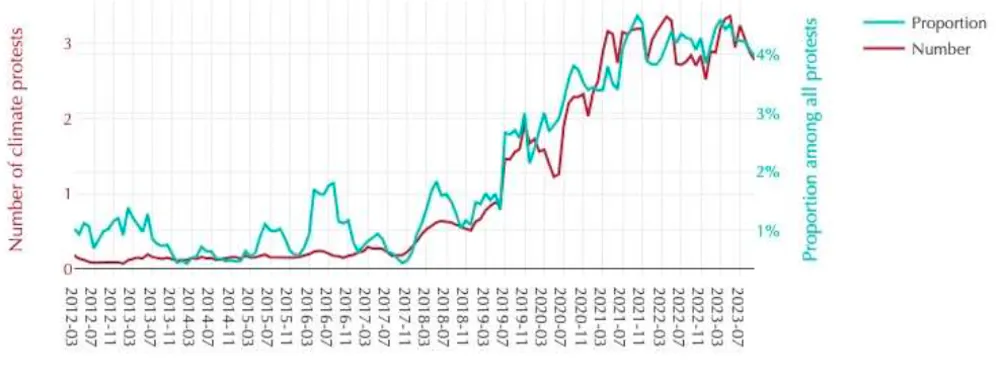
Climate and environmental protest is being criminalised and repressed around the world. The criminalisation of such protest has received a lot of attention in certain countries, including the UK and Australia. But there have not been any attempts to capture the global trend – until now.
We recently published a report, with three University of Bristol colleagues, which shows this repression is indeed a global trend – and that it is becoming more difficult around the world to stand up for climate justice.
This criminalisation and repression spans the global north and south, and includes more and less democratic countries. It does, however, take different forms.
Our report distinguishes between climate and environmental protest. The latter are campaigns against specific environmentally destructive projects – most commonly oil and gas extraction and pipelines, deforestation, dam building and mining. They take place all around the world.
Climate protests are aimed at mitigating climate change by decreasing carbon emissions, and tend to make bigger policy or political demands (“cut global emissions now” rather than “don’t build this power plant”). They often take place in urban areas and are more common in the global north.
Four ways to repress activism
The intensifying criminalisation and repression is taking four main forms.
1. Anti-protest laws are introduced
Anti-protest laws may give the police more powers to stop protest, introduce new criminal offences, increase sentence lengths for existing offences, or give policy impunity when harming protesters. In the 14 countries we looked at, we found 22 such pieces of legislation introduced since 2019.
2. Protest is criminalised through prosecution and courts
This can mean using laws against climate and environmental activists that were designed to be used against terrorism or organised crime. In Germany, members of Letzte Generation (Last Generation), a direct action group in the mould of Just Stop Oil, were charged in May 2024 with “forming a criminal organisation”. This section of the law is typically used against mafia organisations and had never been applied to a non-violent group.
Criminalising protest can also mean lowering the threshold for prosecution, preventing climate activists from mentioning climate change in court, and changing other court processes to make guilty verdicts more likely. Another example is injunctions that can be taken out by corporations against activists who protest against them.
3. Harsher policing
This stretches from stopping and searching to surveillance, arrests, violence, infiltration and threatening activists. The policing of activists is carried out not just by state actors like police and armed forces, but also private actors including private security, organised crime and corporations.
In Germany, regional police have been accused of collaborating with an energy giant (and its private fire brigade) to evict coal mine protesters, while private security was used extensively in policing anti-mining activists in Peru.
4. Killings and disappearances
Lastly, in the most extreme cases, environmental activists are murdered. This is an extension of the trend for harsher policing, as it typically follows threats by the same range of actors. We used data from the NGO Global Witness to show this is increasingly common in countries including Brazil, Philippines, Peru and India. In Brazil, most murders are carried out by organised crime groups while in Peru, it is the police force.
Protests are increasing
To look more closely at the global picture of climate and environmental protest – and the repression of it – we used the Armed Conflicts Location Event database. This showed us that climate protests increased dramatically in 2018-2019 and have not declined since. They make up on average about 4% of all protest in the 81 countries that had more than 1,000 protests recorded in the 2012-2023 period:
Climate protests increased sharply in the late 2010s in the 14 countries studied. (Data is smoothed over five months; number of protests is per country per month.) Berglund et al; Data: ACLED, CC BY-SA
This second graph shows that environmental protest has increased more gradually:
Environmental protests in the same 14 countries. Data: ACLED, CC BY-SA
We used this data to see what kind of repression activists face. By looking for keywords in the reporting of protest events, we found that on average 3% of climate and environmental protests face police violence, and 6.3% involve arrests. But behind these averages are large differences in the nature of protest and its policing.
A combination of the presence of protest groups like Extinction Rebellion, who often actively seek arrests, and police forces that are more likely to make arrests, mean countries such as Australia and the UK have very high levels of arrest. Some 20% of Australian climate and environmental protests involve arrests, against 17% in the UK – with the highest in the world being Canada on 27%.
Meanwhile, police violence is high in countries such as Peru (6.5%) and Uganda (4.4%). France stands out as a European country with relatively high levels of police violence (3.2%) and low levels of arrests (also 3.2%).
In summary, while criminalisation and repression does not look the same across the world, there are remarkable similarities. It is increasing in a lot of countries, it involves both state and corporate actors, and it takes many forms.
This repression is taking place in a context where states are not taking adequate action on climate change. By criminalising activists, states depoliticise them. This conceals the fact these activists are ultimately right about the state of the climate and environment – and the lack of positive government action in these areas.
Oscar Berglund is a member of the Green Party. The report this article is based on was written with Christina Pantazis, Chris Rossdale and Roxana Pessoa Cavalcanti.
Tie Franco Brotto does not work for, consult, own shares in or receive funding from any company or organisation that would benefit from this article, and has disclosed no relevant affiliations beyond their academic appointment.
Source: The Conversation – UK – By Gulshanara (Rumy) Begum, Senior Lecturer in Nutrition & Exercise Science, University of Westminster
Red meat has been a part of diets worldwide since early man. It is an excellent source of protein, vitamins (such as B vitamins) and minerals (such as iron and zinc).
However, red meat has long been associated with increasing the risk of heart disease, cancer and early death. What may not be so well known is the link between red meat consumption and type 2 diabetes.
A paper published in the Lancet in September 2024 highlighted this link to type 2 diabetes using data from the Americas, the Mediterranean, Europe, south-east Asia and the Western Pacific (20 countries included).
This recent study, with nearly 2 million participants, found that high consumption of unprocessed red meat, such as beef, lamb and pork, and processed meat, such as bacon, salami and chorizo, increased the incidence of type 2 diabetes.
The researchers also highlighted a link between the consumption of poultry and the incidence of type 2 diabetes, but the link was weaker and varied across the populations.
Insulin is a hormone produced by the pancreas, a small leaf-shaped gland that sits behind the stomach and just in front of the spine. Insulin helps blood glucose enter cells, which stops levels from rising in the blood.
In type 2 diabetes, due to our body not having enough insulin or inability to use the insulin (also referred to as “insulin resistance” or “impaired insulin sensitivity”), blood glucose reaches high levels, causing symptoms such as extreme thirst, increased need to pass urine and feelings of tiredness. Long-term health issues include nerve damage, foot problems and heart disease.
The underlying mechanisms linking red meat intake with type 2 diabetes are unclear. Mechanisms could relate to the function of the pancreas, insulin sensitivity or a combination of the two.
Research has also shown that a high protein intake from animal sources (compared to vegetarian sources) can increase the risk of type 2 diabetes, possibly due to the high levels of branched-chain amino acids (BCAA) in animal protein.
BCAA include the amino acids leucine, isoleucine and valine. In a small study, short-term BCAA infusions increased insulin resistance in humans. Similar findings were shown in larger human studies.
High levels of plasma BCAA can have various origins. These connections between red meat, BCAA, insulin resistance and type 2 diabetes are worth exploring further.
Another potential mechanism involves gut microbiota, the collection of microbes in our gut.
Our microbiota metabolises choline (a water-soluble essential nutrient) and L-carnitine (an amino acid found naturally in food), both of which are abundant in red meat, producing trimethylamine. Increased trimethylamine has been associated with a higher risk of developing type 2 diabetes.
How we cook meat may also add to this conundrum. Cooking meat at high temperatures, such as grilling and barbecuing, can produce harmful compounds called “advanced glycation end products”.
These compounds can damage cells due to oxidative stress (caused by unstable atoms called free radicals), lead to inflammation (which can be damaging if it occurs in healthy tissues or lasts too long) and insulin resistance.
Red meat is a great source of iron. But some studies have shown long-term iron intake or iron overload, particularly haem iron (iron from animal-based sources), may increase the risk of type 2 diabetes.
Eat less red meat
According to a World Health Organization report, in the last 50 years, global consumption of all types of meat has increased. In some wealthy countries, such as the UK, red meat consumption appears to be stable or declining. Although there is a lot of variation in meat consumption between and within countries.
With the winter holidays around the corner and the festive gatherings in full swing, reducing red meat consumption will be difficult, especially for those who really like the taste. So enjoy these moments without worrying, and where possible, try to consume fibre-rich vegetables with red meat.
Small steps can be taken to reduce your red meat intake by having smaller portions or choosing a day in the week that is meat free (meat-free Mondays, say), or substituting some (or all) of the meat in recipes with chicken, fish, beans, lentils or the like.
And for those days you do eat red meat, try poaching, steaming or stewing it – it’s healthier than grilling or barbecuing.
Gulshanara (Rumy) Begum does not work for, consult, own shares in or receive funding from any company or organisation that would benefit from this article, and has disclosed no relevant affiliations beyond their academic appointment.
Source: The Conversation – UK – By Elisa Bertolini, Associate Professor of Comparative Public Law, Bocconi University
San Marino is one of four microstates with very distinct constitutional arrangements.Shutterstock/kavalenkava
Continental Europe is home to four microstates with populations of between 30,000 and 80,000 people: Andorra, on the border between France and Spain; Liechtenstein, nestled between Switzerland and Austria; Monaco, which sits on the French Riviera; and San Marino, which is surrounded by northern Italy.
These states have existed since the medieval period and their tiny size has enabled them to develop and maintain singular constitutional arrangements. They have all developed original solutions to the problems of state architecture, many of which survive today.
All four of these microstates participate in the Council of Europe (Europe’s human rights organisation) and have therefore had to modernise to meet international standards of governance. This includes the independence of the judiciary.
However, all four have also implemented these reforms without altering their institutional identity. Their commitment to preserving their distinctiveness from other countries prevents wider reform to their institutions. For them, the protection of national tradition and identity is a form of self-preservation rather than a mere expression of ideology.
The distinctiveness of the four microstates lies in the survival of institutional arrangements that can no longer to be found practically anywhere else in the world. In the principalities of Liechtenstein and Monaco, for example, the monarchy still has a central role in the constitution.
Unlike in most European states with a monarchy, in Liechtenstein and Monaco, the royal head of state continues to exercise meaningful power. Andorra and San Marino, meanwhile, operate under a dual head of state arrangement. They effectively have two monarchs.
Institutional arrangements in these principalities has been shaped by their diminutive size, both in terms of territory and population, and their geographical location. And these arrangements have survived since the middle ages because they have become their identity. While national tradition is an ideological debate in other nations, in these, preserving the past is a survival mechanism.
Liechtenstein and Monaco
Liechtenstein and Monaco are constitutional monarchies of the kind that offer substantial power to the royal family. Everything is organised around a prince, who exercises the executive power. Contemporary monarchies in the western legal tradition generally have a ceremonial king or queen but the executive power is held by an elected government. Liechtenstein and Monaco have maintained their historical organisation of government, centred on a very powerful monarch.
Although his powers are not unlimited, in Monaco, the prince is not even accountable to the parliament for the powers he does hold. Liechtenstein’s prince enjoys even more powers, including the right to appoint half of the members of the constitutional court.
However, the prince of Liechtenstein’s sovereign power is held in partnership with the people of Liechtenstein. The institutional architecture is built as to allow a system of checks and balances between the prince and the people.
Since a 2003 constitutional amendment, for example, the people can table a motion of no-confidence in the prince if more than 1,500 citizens are in agreement to do so, which triggers a referendum on confidence in him. The same number of citizens can mount an initiative to abolish the monarchy entirely, should they choose to do so.
Andorra and San Marino
The principality of Andorra should more properly be called co-principality, because of its co-princes arrangement. One of the princes is the bishop of Urgell – from Catalonia – and the other is the president of the French Republic (and previously the French king or emperor). So another Andorran peculiarity is that neither of the princes are Andorran nationals.
Following a 1993 reform that established a fully fledged constitution, neither prince holds sovereign power. Their present constitutional role is almost entirely ceremonial. However, concerns remain over the fact that they are not nationals of the state and that the heads of state are selected neither by the Andorran people nor by their representatives. The historical reason for a foreign head of state is the geographical location of Andorra – wedged between Catalonia and France. Allowing itself to be put under this double sovereignty was a guarantee of survival.
San Marino also has a two-headed state but both leaders, called the Captains Regent, are Sammarinese nationals. They are elected by the Grand and General Council (the Sammarinese legislative body) and their distinctive trait is that they serve only a six-month term of office.
The reason for such a short tenure is that San Marino has a population of just under 34,000 people. Everyone knows everyone else, which is a situation that can be detrimental to the independence of elective offices.
Captains Regent can’t shore up enough power in their short time in office to be able to overthrow the republic. The Captains Regent were first established in 1243, shortly before a number of Italian republics were overthrown by wealthy families. One of the reasons why San Marino has been able to survive is because it has prevented one family from being more powerful than the others for centuries.
Microstates are, therefore, not like Europe’s regular-sized states. They have distinctive institutional architectures – and often for understandable reasons.
Elisa Bertolini does not work for, consult, own shares in or receive funding from any company or organisation that would benefit from this article, and has disclosed no relevant affiliations beyond their academic appointment.
Source: Peter the Great St Petersburg Polytechnic University – Peter the Great St Petersburg Polytechnic University –
The international congress of Russian-national (Slavic) universities on youth policy and educational activities has concluded in Moscow.
The event was organized by the Ministry of Science and Higher Education of the Russian Federation and MIREA – Russian Technological University (the basic organization of the CIS member states for work with youth).
The congress was held for the first time. It brought together rectors and vice-rectors of universities, heads of educational work departments, and leaders of student public associations. The participants represented the Belarusian-Russian University, the Kyrgyz-Russian Slavic University, the Russian-Armenian (Slavic) University, the Russian-Tajik (Slavic) University, and Russian partner universities – Peter the Great St. Petersburg Polytechnic University and the Siberian Federal University. The SPbPU delegation included Vice-Rector for Youth Policy and Communication Technologies Maxim Pasholikov, Head of the Youth Policy Department Ivan Khlamov, Deputy Director of the SPbPU History Museum Tatyana Novitskaya, specialist of the Center for Youth Trajectories Sofia Romanova, and head of the public institute “Adapters” Elizaveta Zhak.
At the strategic session, experts discussed existing experience, practices and projects, as well as modern challenges faced by Slavic universities in implementing youth policy and educational activities. The plenary discussion, which was held in the format of an open dialogue, was attended by Deputy Minister of Science and Higher Education of the Russian Federation Olga Petrova and Deputy Head of the Presidential Administration for Cross-Border Cooperation Sergei Malenko.
The congress also included a presentation of the educational work system and youth policy areas of RTU MIREA, a training seminar, and the opening of the All-Russian Congress on Youth Policy and Educational Activities. Participants learned about the educational work system and youth policy areas of the Plekhanov Russian University of Economics, the possibilities of including Slavic universities in the activities of student scientific societies, and projects of the Rosmolodezh ecosystem, the Russian Society “Knowledge”, and the ANO “Russia – Country of Opportunities”.
On the final day, the experts were presented with the system of educational work and youth policy areas of RUDN named after Patrice Lumumba, the activities of the psychological service of the university using the example of MIPT, and projects of the Association of Volunteer Centers, in which Slavic universities can participate.
Head of the Department of Assessment and Methodology of the ANO “Russia – Country of Opportunities” Alexandra Vaza noted that the Kyrgyz-Russian Slavic University became the first foreign university to begin systematic work with the presidential platform of the RSV. KRSU students received the same opportunities for self-realization as millions of young people in Russia.
The Competence Center opened at the university has become a provider of assessment and development of “soft skills” of students and teachers. The Polytechnic University in St. Petersburg, which has unique experience of working with ambassadors and in the field of graduate employment, has been very helpful in this activity. In addition, the center has become a single entry point to the projects of the presidential platform. KRSU students are active participants in the competitions “TopBLOG”, “Profrazvitie” and “Drugoe Delo”. In 2025, work in this direction will continue, because we strive for each student to be able to realize their potential and become a sought-after specialist in the labor market, – said Alexandra Vaza.
The final meeting was chaired by Artem Fomin, Head of the Department of International Youth Cooperation and Tourism of the Department of State Youth Policy and Educational Activities of the Ministry of Education and Science of Russia. Representatives of Slavic universities presented draft roadmaps for the further development of youth policy and educational activities in their universities in 2025-2026. Russian partners — representatives of Peter the Great St. Petersburg Polytechnic University and the Siberian Federal University — presented proposals for joint projects. On behalf of MIREA — Russian Technological University, Vice-Rector Grigory Petushkov voiced proposals for cooperation.
Please note: This information is raw content directly from the source of the information. It is exactly what the source states and does not reflect the position of MIL-OSI or its clients.
For some people, loneliness can feel overwhelming, especially during winter, but small steps toward connection can make a significant difference. Research shows that micro conversations with strangers can help improve wellbeing and reduce feelings of loneliness.
This explains why in the UK, the new charity Happy to Chat is trying to encourage people to talk to each other when out and about. In Sweden, a similar scheme – the Say Hi campaign – was also launched in winter 2023 to promote small talks among people in their neighbourhoods.
Most studies on the benefits of talking to strangers have focused on younger people, leaving a big question mark over how older adults experience these everyday interactions. Yet, this is a group that could stand to benefit the most. The World Health Organization estimates that one in four older adults face social isolation, which can seriously affect their health, happiness, and even how long they live.
Our research shows that most older people in the UK have a positive attitude towards the idea of small talk when out and about. They see it as being neighbourly, an act of kindness, a way to brighten someone else’s day. Popular spots for these chats include bright, public spaces, like shopping centres, garden centres, libraries, community events, university campuses, or even while waiting for public transport.
Feeling confident is important; it’s not just about starting a conversation or keeping it going. It’s also about feeling safe and in control. That confidence isn’t the same for everyone, though. Older women, in particular, were more concerned about potential challenges such as personal safety or dealing with an awkward or uncomfortable chat.
A safe and secure environment can make all the difference in their choice of whether to engage in small talk when out and about. So, it is important that we all make an effort in creating a friendly environment, combating loneliness together through small and meaningful conversations. With that in mind, here are five ways to beat loneliness this winter and build those much needed connections.
1. Join the ‘happy to chat’ movement
A simple conversation can go a long way in making both you and others feel more connected. The “happy to chat” initiative in the UK encourages people to sit at designated benches or wear ‘happy to chat’ badges that signal their openness to friendly talks with those passing by. Our research shows that these badges work wonders as ice breakers, making it easier to strike up a conversation. Whether you’re at a park, garden centre, café, or on public transport, a little small talk can brighten your day and build a sense of community.
2. Volunteer for a local charity
Giving back not only benefits others but can also create a sense of purpose and connection. Many organisations seek extra hands during the winter, especially for holiday drives, food banks or programmes supporting older people. Volunteering is a great way to meet like-minded people while spreading warmth and joy.
3. Take part in community activities
From Christmas carol singing to craft workshops and winter walks, your local area is probably buzzing with events this season. Joining in these activities is a natural way to socialise and meet new people. Have a look at your community centre or local general practitioners notice boards. Neighbourhood gatherings or shared hobbies make connecting with others feel effortless and fun.
4. Stay active and embrace the outdoors
Exercise has proven mental health benefits, including reducing feelings of loneliness. Bundle up and take a brisk walk in the park, or join a local fitness class or walking group, where you can enjoy the fresh air while having small talks with others. Outdoor winter activities like ice skating may not be everyone’s cup of tea, but having a visit to seasonal markets can also provide opportunities to interact with others.
5. Reconnect with friends and family
The holiday season is a perfect time to reach out to loved ones or people you may have lost in touch with. But don’t forget that loneliness can be all year around. Drop a postcard to say hello, schedule a call or meet-ups, even if it’s just for a quick coffee. If you can’t meet in person, virtual gatherings can still help you feel connected and cared for.
What is not recommended?
Although pets can provide companionship, they require long-term commitment, time and care. Getting a pet solely to combat loneliness during the winter isn’t a good idea.
Pets are for life, not just for the holiday season, and taking on this responsibility without careful thought can lead to challenges for both you and the animal. Instead, consider alternative ways to connect, like volunteering at an animal shelter or spending time with friends who have pets.
Loneliness can feel overwhelming, especially during winter, but small steps toward connection can make a significant difference. By reaching out to others and engaging in your community, you can transform this season into one of warmth, companionship and joy. Sometimes, all it takes is a simple smile or a friendly conversation to turn someone’s day around – including your own.
Christina Victor receives funding from ESRC, Dunhill Medical Trust, Wellcome Trust, Alzheimer’s Society, NIHR
Dorothy Yen does not work for, consult, own shares in or receive funding from any company or organisation that would benefit from this article, and has disclosed no relevant affiliations beyond their academic appointment.
Source: The Conversation – UK – By Christopher Holliday, Senior Lecturer in Liberal Arts and Visual Cultures Education, Department of Interdisciplinary Humanities, King’s College London
A new Wallace and Gromit adventure, Vengeance Most Fowl (2024), premieres on BBC One and Netflix this Christmas Day. It’s been nearly 20 years since the last feature film about Yorkshire’s favourite eccentric inventor and his above-intelligent pet dog, The Curse of the Were-Rabbit (2005).
Aardman’s latest Christmas instalment marks the reappearance of Feathers McGraw, the mysterious and silent penguin villain from The Wrong Trousers (1993). It also represents the latest outing for the Bristol-based company’s signature stop-motion “claymation” style – which is both a symbol of the studio’s enduring relationship to craft, and a vital element of Aardman’s international identity as an animation powerhouse.
A new era of artificial intelligence is threatening to transform the boundaries of what we understand as art. So it is significant that one of this year’s most highly anticipated festive films celebrates the skill and spirit of handmade animation.
Looking for something good? Cut through the noise with a carefully curated selection of the latest releases, live events and exhibitions, straight to your inbox every fortnight, on Fridays. Sign up here.
Aardman was founded in 1972. Over the last 50 years, the studio has cultivated a durable and worldwide reputation as a pioneer of animation as a handmade, craft-based art form.
Both before and after its feature-film debut, Chicken Run (2000), the studio’s stop-motion approach was refined across an extensive range of animated projects and commissions. These included short films like Creature Comforts (1990), the first Aardman production to win an Academy Award, as well as an array of television idents, music videos and advertising campaigns.
Such has been Aardman’s longstanding connection to claymation that when the Newplast company shut down in March 2023, sparking rumours of a shortage of its famous modelling clay, the studio issued a statement denying it was running out of materials, while assuring fans it would find a new supplier for future projects.
The trailer for Wallace and Gromit: Vengeance Most Fowl.
Aardman’s animated productions have been a staple of Christmas film and television since Wallace and Gromit creator Nick Park’s 30-minute short The Wrong Trousers debuted on Boxing Day 1993.
So much so, in fact, that Aardman proclaims that it is “proud to be synonymous with Christmas”. The many television specials featuring old and new Aardman characters include the 30-minute Netflix Christmas shorts Shaun The Sheep: A Flight Before Christmas (2021) and Robin Robin (2021), as well as multiple “cracking” Christmas advertising campaigns.
Despite a defining investment in the creative potential of claymation, the studio has occasionally dipped a toe into the the world of digital technology. A brief foray into computer-animated filmmaking in the early 2000s with Flushed Away (2006) and Arthur Christmas (2011) marked an ultimately short-lived creative partnership with DreamWorks Animation and Sony Pictures.
While Aardman’s involvement with these renowned Hollywood companies pushed the studio away from its house style and ushered in a new kind of big-screen humour, in design at least, these films retained their quintessential Aardman “look”. But though these characters appeared firmly from the Aardman stable (particularly in their recognisably exaggerated smiles), their animated perfection demonstrated the pristine visuals increasingly afforded by sophisticated computer graphics.
Clearly, much like Wallace, Aardman animators aren’t immune to the thrill of technological innovation. But they have still largely maintained their claymation methods of production, to instil in audiences the many pleasures of doing things by hand.
The glimpse of fingerprints accidentally pressed into the modelling clay, coupled with the jerky movements of their plasticine characters, emphasises that Aardman methods remain far removed from modern technology. Craft and the handmade are therefore as much business strategies as they are aesthetic choices, deployed to sell the Aardman brand around the world.
After a hiatus of almost 20 years, the imminent return of Wallace and Gromit to British screens seems a pointed reflection on the virtues of the handmade, against the acceleration of AI within the film industry.
With Vengeance Most Fowl telling the story of a rogue automatic garden gnome, Aardman is seemingly questioning a future built from computerised (and potentially dangerous) automation. By preserving the artisanal and anchoring its very British charm once again to the hand-crafted, slightly imperfect models that populate these stop-motion animated worlds, it seems that, for Aardman at least, computers are not always what they are cracked up to be.
Christopher Holliday does not work for, consult, own shares in or receive funding from any company or organisation that would benefit from this article, and has disclosed no relevant affiliations beyond their academic appointment.
What does a baby know about right and wrong? A foundational finding in moral psychology suggested that even infants have a moral sense, preferring “helpers” over “hinderers” before uttering their first word. Now, nearly 20 years later, a study that tried to replicate these findings calls this result into question.
In the original study, Kiley Hamlin and her colleagues showed a puppet show to six- and ten-month-old babies. During the show, the babies would see a character — which was really just a shape with googly eyes — struggling to reach the top of a hill.
Next, a new character would either help the struggling individual reach the top (acting as a “helper”) or push the character back down to the bottom of the hill (acting as a “hinderer”).
By gauging babies’ behaviour — specifically, watching how their eyes moved during the show and whether they preferred to hold a specific character after the show ended — it seemed that the infants had basic moral preferences. Indeed, in the first study, 88% of the ten-month-olds – and 100% of the six-month-olds – chose to reach for the helper.
Kiley Hamlin explains the helper-hinderer experiment.
But psychology, and developmental psychology, in particular, is no stranger to replicability concerns (when it is difficult or impossible to reproduce the results of a scientific study). After all, the original study sampled only a few dozen infants.
This isn’t the fault of the researchers; it’s just really hard to collect data from babies. But what if it was possible to run the same study again — with say, hundreds or even thousands of babies? Would researchers find the same result?
This is the chief aim of ManyBabies, a consortium of developmental psychologists spread around the world. By combining resources across individual research labs, ManyBabies can robustly test findings in developmental science, like Hamlin’s original “helper-hinderer” effect. And as of last month, the results are in.
With a final sample of 567 babies, tested in 37 research labs across five continents, babies did not show evidence of an early-emerging moral sense. Across the ages tested, babies showed no preference for the helpful character.
Blank slate?
John Locke, an English philosopher argued that the human mind is a “tabula rasa” or “blank slate”. Everything that we, as humans, know comes from our experiences in the world. So should people take the most recent ManyBabies result as evidence of this? My answer, however underwhelming, is “perhaps”.
This is not the first attempted replication of the helper-hinderer effect (nor is it the first “failure to replicate”). In fact, there have been a number of successful replications. It can be hard to know what underlies differences in results. For example, a previous “failure” seemed to come from the characters’ “googly eyes” not being oriented the right way.
The ManyBabies experiment also had an important change in how the “show” was presented to infants. Rather than a puppet show performed live to baby participants, researchers instead presented a video with digital versions of the characters. This approach has its strengths. For example, ensuring that the exact same presentation occurs across every trial, in every lab. But it could also shift how babies engage with the show and its characters.
I appreciated the recent remarks made by Michael Frank, founder of the ManyBabies consortium, on social network BlueSky: “Some people will jump to the interpretation that [the results of ManyBabies] shows that the original finding was incorrect (and hence that the other replications were incorrect as well, and the earlier non-replications were right). This [is] one possibility – but we shouldn’t be so quick to jump to conclusions.”
Rather, we can take this finding for exactly what it is: a well-executed large investigation (senior-authored by Kiley Hamlin herself) of the hypothesis that infants prefer helpers over hinderers. In this instance, the hypothesis was not supported.
This could be because, underneath it all, Locke was right. Perhaps the babies tested hadn’t had enough time in the world to learn “right from wrong”, so they wouldn’t make any distinction between a helpful character and a harmful one. Or perhaps there’s something more complicated going on. Only more science, with many, many more babies, will tell us.
At the very least, a question mark now hangs over one of the most famous experiments in developmental psychology.
Madeline G. Reinecke does not work for, consult, own shares in or receive funding from any company or organisation that would benefit from this article, and has disclosed no relevant affiliations beyond their academic appointment.
For parents, carers and teachers, it’s often tempting to base our thinking on a child’s development around what we understand as “normal”. Much of the time we do this without thinking, describing a child as “doing well” in one subject and “behind” in another.
Whenever we make this sort of comparison, we have some sort of mental benchmark or yardstick in our head: for example, a toddler should be able to climb on furniture by age two. Increasingly, child development researchers are arguing that the same thing happens in child development research — the study of how behaviours and abilities such as language develop.
Many of the studies that claim to research child development either implicitly, or explicitly, claim that their findings are universal.
There could be many reasons for this. Sometimes there’s a temptation to oversell conclusions, sometimes it might be the way findings are interpreted by readers or the media. The upshot is that what’s been found in one group of children is then taken as the standard — the yardstick against which future research is compared.
Most of the research into how children develop comes from wealthier, western countries, in particular the US, the UK, the Netherlands, Germany and France. Chances are, if you’ve heard of milestones in child development, they were developed in one of these countries.
This is so much so that it can be challenging to do basic research on child development in developing countries, as peers and reviewers will ask for or demand comparisons to western populations to put findings from these regions in context. Of course without realising it, these peers and reviewers have set up western children as a norm.
Most of the existing academic research on child development comes from western countries. Olesia Bilkei/Shutterstock
But is it fair to make these comparisons? One of the tricky things about researching child development is that it occurs within a cultural and social context it can’t be removed from. But this context is often messy. Differences in physical environment, parenting styles, location, climate and so on all interact to shape how children grow.
Besides these differences, there is individual variation as well. These could be, for instance, curiosity, shyness and neurodiversity, which can all frame how a child shapes their own learning environment.
Take for example the field of motor development in infancy – the study of
how children learn to move. Many parents in particular might be familiar with charts showing when they can expect their child to sit, crawl, stand and run. The existence of these charts make it seem pretty universal, and often a child’s motor development is judged accordingly.
This makes sense. Early research was preoccupied with finding out what was normal, and it makes sense to try to support children who might be at risk of falling behind. The timing and order investigated back then led to the norms and scales we still use today.
Is something like motor development timing universal? It’s easy to imagine that it might be. When there are no physical or cognitive barriers we all learn to sit and stand, so on the surface it seems fair to say this could be.
But it turns out that the context that children develop in plays a huge role even
in something as seemingly universal as this. In countries and
cultures where babies routinely receive firm massages from caregivers, such as in Jamaica, motor development is accelerated. It’s clear that a norm developed in one culture might not translate well to another.
Beyond norms
It’s clear to see that the problems highlighted above are not unique to motor development. In areas like language development or social development the cultural component is even more compelling.
There is simply no way of understanding these elements of child development without also understanding the context in which they take place. Every child is developing within a context and however normal our own culture feels to us, there is no objective context-free norm that we can compare other children to. That is, to say, we should embrace the mess.
If we think of normal child development as being something that just happens, researchers miss out on understanding the dynamics of development itself. But worse, educators and caregivers might not realise development is something we can act upon, and miss an opportunity to enact change.
An important part of seeing child development as being intertwined with culture is that it doesn’t just mean collecting data from other cultures, but involving local communities and research perspectives. Understanding communities means listening to them, empowering them and making space for them to have a voice.
Moving beyond a western-centric understanding of child development won’t just benefit researchers and lead to more accurate science, but hopefully benefit everyone working with children around the world.
The authors do not work for, consult, own shares in or receive funding from any company or organisation that would benefit from this article, and have disclosed no relevant affiliations beyond their academic appointment.
Source: State University Higher School of Economics – State University Higher School of Economics –
On December 19, the award ceremony for the winners of the annual HSE Faculty of Law “Best in Law” competition took place. This year, one of the main events of the country’s legal community was held in an unusual format, combining jurisprudence and art.
Faculty of Law, National Research University Higher School of Economics
This year’s winners of the competition include Deputy Speaker of the State Duma Boris Chernyshov (nominated for “Best Strategic Partnership”), writer Alexander Tsypkin (nominated for “Law in Art” – for creating a lyrical female image of a lawyer in the TV series “What Should a Woman Do If…”), First Vice President of Gazprombank Ekaterina Salugina-Sorokova (nominated for “Best in the Alumni Community”), retired Chairman of the Supreme Arbitration Court of the Russian Federation Anton Ivanov, as well as representatives of the teaching staff and students.
“I have warm student memories of HSE University – it is my alma mater. We all remain a big family, so receiving such an award from the faculty is especially valuable. Developing strategic partnerships with educational institutions continues to be one of the key tasks of the state: in this way, we not only attract the best young personnel, but also strengthen the training of lawyers, and the HSE Law Faculty is the undisputed leader in the quality of education,” said Deputy Speaker of Parliament Boris Chernyshov.
The winners and guests were treated not only to the ceremony itself, but also to excursions into the history of painting. Paintings from the collection of the Pushkin Museum, a partner of the HSE Faculty of Law, emphasized the theme of each nomination.
The awards were presented by the Dean of the Faculty of the National Research University Higher School of Economics Vadim Vinogradov, Vice-Rectors of the HSE Irina Martusevich and Alexey Koshel, First Deputy Chairman of the Council of the Federation of the Russian Federation Andrey Yatskin, Deputy Chairman of VEB.RF Daniil Algulyan, Deputy Head of the Federal Service for Supervision in Education and Science Sergey Rukavishnikov, Managing Director of the Legal Department of Sberbank PJSC Nadezhda Tretyakova and others.
“It is always a pleasure to reward the best, especially since the competition for the honorary title of “Best in Law” is high. Over the past few years, we have managed to build strong partnerships with representatives of government institutions, businesses, and cultural institutions at the faculty: this way, we not only enrich our own expertise, but also demonstrate in practice what impressive results can be achieved through joint work,” added Vadim Vinogradov, Dean of the HSE Faculty of Law.
Please note: This information is raw content directly from the source of the information. It is exactly what the source states and does not reflect the position of MIL-OSI or its clients.
It is part of City of Wolverhampton Council’s citywide strategy to identify solutions for 4,100 out-dated homes built by old, non-traditional construction methods.
Keon Homes has, through the council’s housing framework, been appointed as the construction partner for the new homes on the Lincoln Green Estate and are expected to start on site in late spring.
The first wave of demolition of the ageing bungalows continues across the estate on Alleston Road, Grosvenor Road, Lincoln Green and School Lane – and in the Wood End and Portobello areas of the city. Work on planning applications for new homes in the other two locations are ongoing.
All of the old bungalows have been declared defective under the 1985 Housing Act – and suffer from a number of issues including failing structural elements, leaking and poorly insulated roofs, very poor thermal efficiency, and wet rot in the floor.
The council has therefore taken the decision to replace the properties before they have an adverse effect on tenants’ health and wellbeing.
The new, modern housing will also provide a greater ability to adapt properties to meet tenants’ needs, something which has been difficult to achieve in the out-dated properties due to their structural limitations.
The overall non-traditional housing stock replacement programme is being managed on behalf of the council by Wolverhampton Homes and follows extensive and ongoing consultation with residents.
City of Wolverhampton Council Deputy Leader and Cabinet Member for City Housing, Councillor Steve Evans, said: “The non-traditional built properties are in such poor structural condition that they can no longer be economically and satisfactorily maintained.
“For the safety and comfort of our residents, we are delivering better homes in the long term that they can make their own in the same location.
“We will continue talking with all those affected and have engaged with all tenants, who are relishing the prospect of moving into brand new homes. They understand the absolute necessity to remove these out-dated bungalows and replace them with new modern homes.
“It is a key priority of our council plan to ensure we provide good homes in well-connected neighbourhoods for all our residents.”
A flagship regeneration project in Stoke-on-Trent is already having a major impact on the local economy with job opportunities secured for almost 200 people.
Social impact developers Capital&Centric are working in partnership with Stoke-on-Trent City Council to develop Goods Yard.
The former train station site, which was neglected for many years, is being transformed into a vibrant canalside neighbourhood boasting 174 brand new homes for rent and 30,000 sq ft of commercial space which will be used for leisure, retail and workspace.
Already, the development – which is on track for completion in spring 2025 – has added £63 million to the local economy and created job opportunities for 190 workers from the area – 107 of which are local to Stoke-on-Trent.
Down the line there will be even more opportunities created at Goods Yard with approximately 237 local jobs set to be created in leisure and hospitality and an estimated annual employment impact of £5.4 million.
It is all part of a joint mission by Capital&Centric and the council to deliver positive social value from the regeneration project.
Since starting on site contractors Bowmer + Kirkland have engaged with nearly 3,000 students from schools and colleges across Stoke-on-Trent, highlighting a range of careers in the construction industry.
Ajmal Muhammed from Stoke-on-Trent College successfully completed a placement with B+K and has since been accepted onto a degree apprenticeship programme as a trainee quantity surveyor.
Ajmal was given the opportunity to work at Goods Yard after attending Capital&Centric’s Regeneration Brainery event, a pioneering initiative which aims to get more diverse young people into property careers.
Ajmal, who lives in Tunstall, said: “I was offered an apprenticeship with B+K after smashing my interview and getting the results I needed from college, I got a distinction star and two distinctions.
“I’ve been here a few months now and my favourite part of the site is The Vaults, I’ve just never seen anything like it before it’s really interesting.
“I will be helping to finish the Goods Yard which is really exciting, then once it’s complete I’ll be moving onto another B+K project. I have just started at Salford University too where I am working towards becoming a Chartered Surveyor.”
Councillor Finlay Gordon-McCusker, cabinet member for transport, infrastructure and regeneration at Stoke-on-Trent City Council, said: “Ajmal is really enthusiastic about being able to work on this landmark development, and it is great that he has been given the opportunity to hone his skills on a major regeneration project in his home city.
“Goods Yard is a first-of-its-kind scheme for Stoke-on-Trent but it’s far greater than bricks and mortar. It’s great to see the social benefits coming to fruition with a number of successful apprenticeships and local people employed during construction.
“We’re very pleased to be working with Capital&Centric and B+K who both prioritise local impact. We’ll also see many more jobs and opportunities once Goods Yard is complete next year, making a real difference to people and the local economy.”
Tom Wilmot, joint managing director at Capital&Centric, said: “Regeneration is not just about creating new spaces for people to live, work and hang out. Making sure the benefits are felt locally is just as important and takes time and effort.
“From the apprentices on site to the work we’ve done with young people through Regeneration Brainery we’ve made sure social value sits at the heart of the development.”
Mona Baig, social value co-ordinator at Bowmer + Kirkland said: “We are pleased to have achieved our social value targets on the Goods Yard project. Engaging positively within the community is of utmost importance to us.
“Stoke-on-Trent offers a wide range of diverse talents for which we have been happy to provide and facilitate opportunities for on this major local project.
“We hope our continued engagement with job seekers, young people and local charities within the Stoke-on-Trent and Staffordshire area will create a long-term positive impact to the local community. With thanks to our supply chain partners, we look forward to continuing our support within the local area.”
MORE than 20 artists from across the East Midlands are celebrating their success at Leicester’s Open exhibition.
The annual exhibition recognises the talent of local artists of all ages, with prizes awarded to the paintings, sculptures, textiles, prints and photographs that have been selected by a panel of judges, with the awards generously supported by local sponsors.
Amongst the winners was Susan Isaac (pictured), who wins this year’s Attenborough Prize.
Landscape artist Susan won the prestigious prize for her work Balance and Counterbalance (mixed media on canvas).
It’s the second time that Newark-based Susan has won The Attenborough Prize, having previously won it in 2022.
“I was astonished and absolutely delighted to be presented with the Attenborough Prize,” she said.
“I am so grateful to the selectors and judges and everyone involved in putting on this wonderful annual exhibition – one that I’ve been pleased to be involved with since first applying in 2015.
“Balance and Counterbalance emerged from a recent visit to Blaenavon Ironworks, now part of a World Heritage Site and close to my late father’s coal-mining family home in nearby Llanbradach.
“The painting depicts a tower for a water balanced lift, used to convey raw materials and pig iron between the different levels of the site. I am always mindful, when visiting such sites, of a strong sense of the wounds inflicted on the land as well as on the iron workers and the miners who inhabited the communities here, both above and below ground, and of the power of the natural world to restore some kind of equilibrium.”
Jewellery designer Christine Pearson – who’s based in Leicester – won the Leicester Museums & Galleries’ Development Trust Prize (adult category) for Shell Collection – a wooden box containing10 kiln-fired enamel on copper brooches.
Describing the work, Christine said it depicted “fantasmagorical (sic) creatures from the little-known oceans surrounding the ancient seaport of Leicester.”
Writing on Facebook, she added: “I’m so thrilled to have won the Leicester Museums and Galleries Trust Prize at the Leicester Open exhibition!
“My box of enamelled shells was inspired from years of looking at Victorian collections in museums and old houses, and childhood memories of my Grandad’s shell collection, which he kept in a home-made cardboard box.”
The other winners in the adult category were as follows:
Art House award: Carol Pairaudeau for Type/Write
CVAN East Midlands award: Sarah Mason for A Labradoodle’s Lazy Afternoon
LCB Depot awards: Moya Acton for Nocturn, Katie Richards for Bernadette, Emma Peers for What’s Your Thread Length?
Leicester Gallery (De Montfort University) award: Emma Peers for What’s Your Thread Length?
Leicester Print Workshop award: Katerina Luchkova for Reflections of the City
Phoenix award: Klara Simandi for Textile Flowers
In the young people’s category, the Attenborough awards were presented to Hattie Weller (aged 18) for The Brutality of Life – a collection of clay pieces; Mahi Ghait (aged 15) for Meadow (acrylic painted paper on canvas); Lewis Holmes (aged 9), for Look Closer (acrylic paint on canvas, which comes with its own magnifying glass).
Other winners in the young people’s category were:
Arch Creative award: Tom Hudson for Waiting
Art House award: Toby Cross for Phonebox
Curve award: Elina Roman for Plastic Island
De Montfort Hall award: Nada Rhimin for Dance Dance Dance
Leicester Lo-Fi Photography award: Anfisa Denysenko for Architectural Composition
Leicester Print Workshop award: Henry Dampney for Black and White
Phoenix awards: Oriel Birks for A Little Owl Looks; Ayah Riyaazi for Self Portrait
Soft Touch Arts award: Lina Rehab for Afternoon Repose
Leicester Museums & Galleries Development Trust awards: Tom Hudson for Waiting (16-18 category); Oriel Birks for A Little Owl Looks (11-15 category); Vincent Parker for Arc de Triomphe (5-10 category).
Open: The People’s Exhibition features works by more than 200 local artists and makers – from complete beginners to seasoned professionals.
All the paintings, sculptures, textiles, prints and photographs on display have been created by artists aged 19 and over who live or study in Leicester, Leicestershire, Rutland, Derbyshire, Lincolnshire, Nottinghamshire or Northamptonshire.
Work by young artists aged five to 18 is also on display, with a number of schools in the region also participating.
The Open exhibition at Leicester Museum & Art Gallery runs until Friday 31 January 2025.
Admission is free of charge.
All the artworks on display are available to buy, with prices starting at £50, and purchased pieces can be collected from the museum from Saturday 1 February.